

Poems in this topic
Relationships and Family
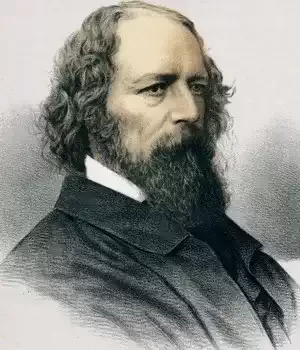
Alfred Lord Tennyson
Spring
Spring
Birds' love and birds' song
Flying here and there,
Birds' songand birds' love
And you with gold for hair!
Birds' songand birds' love
Passing with the weather,
Men's song and men's love,
To love once and forever.
Men's love and birds' love,
And women's love and men's!
And you my wren with a crown of gold,
You my queen of the wrens!
You the queen of the wrens -We'll
be birds of a feather,
I'll be King of the Queen of the wrens,
And all in a nest together.
Birds' love and birds' song
Flying here and there,
Birds' songand birds' love
And you with gold for hair!
Birds' songand birds' love
Passing with the weather,
Men's song and men's love,
To love once and forever.
Men's love and birds' love,
And women's love and men's!
And you my wren with a crown of gold,
You my queen of the wrens!
You the queen of the wrens -We'll
be birds of a feather,
I'll be King of the Queen of the wrens,
And all in a nest together.
480
Alfred Lord Tennyson
Spring
Spring
Birds' love and birds' song
Flying here and there,
Birds' songand birds' love
And you with gold for hair!
Birds' songand birds' love
Passing with the weather,
Men's song and men's love,
To love once and forever.
Men's love and birds' love,
And women's love and men's!
And you my wren with a crown of gold,
You my queen of the wrens!
You the queen of the wrens -We'll
be birds of a feather,
I'll be King of the Queen of the wrens,
And all in a nest together.
Birds' love and birds' song
Flying here and there,
Birds' songand birds' love
And you with gold for hair!
Birds' songand birds' love
Passing with the weather,
Men's song and men's love,
To love once and forever.
Men's love and birds' love,
And women's love and men's!
And you my wren with a crown of gold,
You my queen of the wrens!
You the queen of the wrens -We'll
be birds of a feather,
I'll be King of the Queen of the wrens,
And all in a nest together.
480
Alfred Lord Tennyson
Summer Night
Summer Night
NOW sleeps the crimson petal, now the white;
Nor waves the cypress in the palace walk;
Nor winks the gold fin in the porphyry font:
The firefly wakens: waken thou with me.
Now droops the milk-white peacock like a ghost,
And like a ghost she glimmers on to me.
Now lies the Earth all Danaë to the stars,
And all thy heart lies open unto me.
Now slides the silent meteor on, and leaves
A shining furrow, as thy thoughts in me.
Now folds the lily all her sweetness up,
And slips into the bosom of the lake:
So fold thyself, my dearest, thou, and slip
Into my bosom and be lost in me.
NOW sleeps the crimson petal, now the white;
Nor waves the cypress in the palace walk;
Nor winks the gold fin in the porphyry font:
The firefly wakens: waken thou with me.
Now droops the milk-white peacock like a ghost,
And like a ghost she glimmers on to me.
Now lies the Earth all Danaë to the stars,
And all thy heart lies open unto me.
Now slides the silent meteor on, and leaves
A shining furrow, as thy thoughts in me.
Now folds the lily all her sweetness up,
And slips into the bosom of the lake:
So fold thyself, my dearest, thou, and slip
Into my bosom and be lost in me.
530
Alfred Lord Tennyson
Sir Galahad
Sir Galahad
MY good blade carves the casques of men,
My tough lance thrusteth sure,
My strength is as the strength of ten,
Because my heart is pure.
The shattering trumpet shrilleth high,
The hard brands shiver on the steel,
The splinter'd spear-shafts crack and fly,
The horse and rider reel:
They reel, they roll in clanging lists,
And when the tide of combat stands,
Perfume and flowers fall in showers,
That lightly rain from ladies' hands.
How sweet are looks that ladies bend
On whom their favours fall !
For them I battle till the end,
To save from shame and thrall:
But all my heart is drawn above,
My knees are bow'd in crypt and shrine:
I never felt the kiss of love,
Nor maiden's hand in mine.
More bounteous aspects on me beam,
Me mightier transports move and thrill;
So keep I fair thro' faith and prayer
A virgin heart in work and will.
When down the stormy crescent goes,
A light before me swims,
Between dark stems the forest glows,
I hear a noise of hymns:
Then by some secret shrine I ride;
I hear a voice but none are there;
The stalls are void, the doors are wide,
The tapers burning fair.
Fair gleams the snowy altar-cloth,
The silver vessels sparkle clean,
The shrill bell rings, the censer swings,
And solemn chaunts resound between.
Sometimes on lonely mountain-meres
I find a magic bark;
I leap on board: no helmsman steers:
I float till all is dark.
A gentle sound, an awful light !
Three arngels bear the holy Grail:
With folded feet, in stoles of white,
On sleeping wings they sail.
Ah, blessed vision! blood of God!
My spirit beats her mortal bars,
As down dark tides the glory slides,
And star-like mingles with the stars.
When on my goodly charger borne
Thro' dreaming towns I go,
The cock crows ere the Christmas morn,
The streets are dumb with snow.
The tempest crackles on the leads,
And, ringing, springs from brand and mail;
But o'er the dark a glory spreads,
And gilds the driving hail.
I leave the plain, I climb the height;
No branchy thicket shelter yields;
But blessed forms in whistling storms
Fly o'er waste fens and windy fields.
A maiden knight--to me is given
Such hope, I know not fear;
I yearn to breathe the airs of heaven
That often meet me here.
I muse on joy that will not cease,
Pure spaces clothed in living beams,
Pure lilies of eternal peace,
Whose odours haunt my dreams;
And, stricken by an angel's hand,
This mortal armour that I wear,
This weight and size, this heart and eyes,
Are touch'd, are turn'd to finest air.
The clouds are broken in the sky,
And thro' the mountain-walls
A rolling organ-harmony
Swells up, and shakes and falls.
Then move the trees, the copses nod,
Wings flutter, voices hover clear:
'O just and faithful knight of God!
Ride on ! the prize is near.'
So pass I hostel, hall, and grange;
By bridge and ford, by park and pale,
All-arm'd I ride, whate'er betide,
Until I find the holy Grail.
MY good blade carves the casques of men,
My tough lance thrusteth sure,
My strength is as the strength of ten,
Because my heart is pure.
The shattering trumpet shrilleth high,
The hard brands shiver on the steel,
The splinter'd spear-shafts crack and fly,
The horse and rider reel:
They reel, they roll in clanging lists,
And when the tide of combat stands,
Perfume and flowers fall in showers,
That lightly rain from ladies' hands.
How sweet are looks that ladies bend
On whom their favours fall !
For them I battle till the end,
To save from shame and thrall:
But all my heart is drawn above,
My knees are bow'd in crypt and shrine:
I never felt the kiss of love,
Nor maiden's hand in mine.
More bounteous aspects on me beam,
Me mightier transports move and thrill;
So keep I fair thro' faith and prayer
A virgin heart in work and will.
When down the stormy crescent goes,
A light before me swims,
Between dark stems the forest glows,
I hear a noise of hymns:
Then by some secret shrine I ride;
I hear a voice but none are there;
The stalls are void, the doors are wide,
The tapers burning fair.
Fair gleams the snowy altar-cloth,
The silver vessels sparkle clean,
The shrill bell rings, the censer swings,
And solemn chaunts resound between.
Sometimes on lonely mountain-meres
I find a magic bark;
I leap on board: no helmsman steers:
I float till all is dark.
A gentle sound, an awful light !
Three arngels bear the holy Grail:
With folded feet, in stoles of white,
On sleeping wings they sail.
Ah, blessed vision! blood of God!
My spirit beats her mortal bars,
As down dark tides the glory slides,
And star-like mingles with the stars.
When on my goodly charger borne
Thro' dreaming towns I go,
The cock crows ere the Christmas morn,
The streets are dumb with snow.
The tempest crackles on the leads,
And, ringing, springs from brand and mail;
But o'er the dark a glory spreads,
And gilds the driving hail.
I leave the plain, I climb the height;
No branchy thicket shelter yields;
But blessed forms in whistling storms
Fly o'er waste fens and windy fields.
A maiden knight--to me is given
Such hope, I know not fear;
I yearn to breathe the airs of heaven
That often meet me here.
I muse on joy that will not cease,
Pure spaces clothed in living beams,
Pure lilies of eternal peace,
Whose odours haunt my dreams;
And, stricken by an angel's hand,
This mortal armour that I wear,
This weight and size, this heart and eyes,
Are touch'd, are turn'd to finest air.
The clouds are broken in the sky,
And thro' the mountain-walls
A rolling organ-harmony
Swells up, and shakes and falls.
Then move the trees, the copses nod,
Wings flutter, voices hover clear:
'O just and faithful knight of God!
Ride on ! the prize is near.'
So pass I hostel, hall, and grange;
By bridge and ford, by park and pale,
All-arm'd I ride, whate'er betide,
Until I find the holy Grail.
695
Alfred Lord Tennyson
Now Sleeps the Crimson Petal
Now Sleeps the Crimson Petal
Now sleeps the crimson petal, now the white;
Nor waves the cypress in the palace walk;
Nor winks the gold fin in the porphyry font;
The firefly wakens, waken thou with me.
Now droops the milk-white peacock like a ghost,
And like a ghost she glimmers on to me.
Now lies the Earth all Danae to the stars,
And all thy heart lies open unto me.
Now slides the silent meteor on, and leaves
A shining furrow, as thy thoughts, in me.
Now folds the lily all her sweetness up,
And slips into the bosom of the lake.
So fold thyself, my dearest, thou, and slip
Into my bosom and be lost in me.
Now sleeps the crimson petal, now the white;
Nor waves the cypress in the palace walk;
Nor winks the gold fin in the porphyry font;
The firefly wakens, waken thou with me.
Now droops the milk-white peacock like a ghost,
And like a ghost she glimmers on to me.
Now lies the Earth all Danae to the stars,
And all thy heart lies open unto me.
Now slides the silent meteor on, and leaves
A shining furrow, as thy thoughts, in me.
Now folds the lily all her sweetness up,
And slips into the bosom of the lake.
So fold thyself, my dearest, thou, and slip
Into my bosom and be lost in me.
451
Alfred Lord Tennyson
Merlin And Vivien
Merlin And Vivien
A storm was coming, but the winds were still,
And in the wild woods of Broceliande,
Before an oak, so hollow, huge and old
It looked a tower of ivied masonwork,
At Merlin's feet the wily Vivien lay.
For he that always bare in bitter grudge
The slights of Arthur and his Table, Mark
The Cornish King, had heard a wandering voice,
A minstrel of Caerlon by strong storm
Blown into shelter at Tintagil, say
That out of naked knightlike purity
Sir Lancelot worshipt no unmarried girl
But the great Queen herself, fought in her name,
Sware by her--vows like theirs, that high in heaven
Love most, but neither marry, nor are given
In marriage, angels of our Lord's report.
He ceased, and then--for Vivien sweetly said
(She sat beside the banquet nearest Mark),
'And is the fair example followed, Sir,
In Arthur's household?'--answered innocently:
'Ay, by some few--ay, truly--youths that hold
It more beseems the perfect virgin knight
To worship woman as true wife beyond
All hopes of gaining, than as maiden girl.
They place their pride in Lancelot and the Queen.
So passionate for an utter purity
Beyond the limit of their bond, are these,
For Arthur bound them not to singleness.
Brave hearts and clean! and yet--God guide them--young.'
Then Mark was half in heart to hurl his cup
Straight at the speaker, but forbore: he rose
To leave the hall, and, Vivien following him,
Turned to her: 'Here are snakes within the grass;
And you methinks, O Vivien, save ye fear
The monkish manhood, and the mask of pure
Worn by this court, can stir them till they sting.'
And Vivien answered, smiling scornfully,
'Why fear? because that fostered at THY court
I savour of thy--virtues? fear them? no.
As Love, if Love is perfect, casts out fear,
So Hate, if Hate is perfect, casts out fear.
My father died in battle against the King,
My mother on his corpse in open field;
She bore me there, for born from death was I
Among the dead and sown upon the wind--
And then on thee! and shown the truth betimes,
That old true filth, and bottom of the well
Where Truth is hidden. Gracious lessons thine
And maxims of the mud! "This Arthur pure!
Great Nature through the flesh herself hath made
Gives him the lie! There is no being pure,
My cherub; saith not Holy Writ the same?"--
If I were Arthur, I would have thy blood.
Thy blessing, stainless King! I bring thee back,
When I have ferreted out their burrowings,
The hearts of all this Order in mine hand-Ay--
so that fate and craft and folly close,
Perchance, one curl of Arthur's golden beard.
To me this narrow grizzled fork of thine
Is cleaner-fashioned--Well, I loved thee first,
That warps the wit.'
Loud laughed the graceless Mark,
But Vivien, into Camelot stealing, lodged
Low in the city, and on a festal day
When Guinevere was crossing the great hall
Cast herself down, knelt to the Queen, and wailed.
'Why kneel ye there? What evil hath ye wrought?
Rise!' and the damsel bidden rise arose
And stood with folded hands and downward eyes
Of glancing corner, and all meekly said,
'None wrought, but suffered much, an orphan maid!
My father died in battle for thy King,
My mother on his corpse--in open field,
The sad sea-sounding wastes of Lyonnesse--
Poor wretch--no friend!--and now by Mark the King
For that small charm of feature mine, pursued--
If any such be mine--I fly to thee.
Save, save me thou--Woman of women--thine
The wreath of beauty, thine the crown of power,
Be thine the balm of pity, O Heaven's own white
Earth-angel, stainless bride of stainless King--
Help, for he follows! take me to thyself!
O yield me shelter for mine innocency
Among thy maidens!
Here her slow sweet eyes
Fear-tremulous, but humbly hopeful, rose
Fixt on her hearer's, while the Queen who stood
All glittering like May sunshine on May leaves
In green and gold, and plumed with green replied,
'Peace, child! of overpraise and overblame
We choose the last. Our noble Arthur, him
Ye scarce can overpraise, will hear and know.
Nay--we believe all evil of thy Mark--
Well, we shall test thee farther; but this hour
We ride a-hawking with Sir Lancelot.
He hath given us a fair falcon which he trained;
We go to prove it. Bide ye here the while.'
She past; and Vivien murmured after 'Go!
I bide the while.' Then through the portal-arch
Peering askance, and muttering broken-wise,
As one that labours with an evil dream,
Beheld the Queen and Lancelot get to horse.
'Is that the Lancelot? goodly--ay, but gaunt:
Courteous--amends for gauntness--takes her hand--
That glance of theirs, but for the street, had been
A clinging kiss--how hand lingers in hand!
Let go at last!--they ride away--to hawk
For waterfowl. Royaller game is mine.
For such a supersensual sensual bond
As that gray cricket chirpt of at our hearth--
Touch flax with flame--a glance will serve--the liars!
Ah little rat that borest in the dyke
Thy hole by night to let the boundless deep
Down upon far-off cities while they dance--
Or dream--of thee they dreamed not--nor of me
These--ay, but each of either: ride, and dream
The mortal dream that never yet was mine--
Ride, ride and dream until ye wake--to me!
Then, narrow court and lubber King, farewell!
For Lancelot will be gracious to the rat,
And our wise Queen, if knowing that I know,
Will hate, loathe, fear--but honour me the more.'
Yet while they rode together down the plain,
Their talk was all of training, terms of art,
Diet and seeling, jesses, leash and lure.
'She is too noble' he said 'to check at pies,
Nor will she rake: there is no baseness in her.'
Here when the Queen demanded as by chance
'Know ye the stranger woman?' 'Let her be,'
Said Lancelot and unhooded casting off
The goodly falcon free; she towered; her bells,
Tone under tone, shrilled; and they lifted up
Their eager faces, wondering at the strength,
Boldness and royal knighthood of the bird
Who pounced her quarry and slew it. Many a time
As once--of old--among the flowers--they rode.
But Vivien half-forgotten of the Queen
Among her damsels broidering sat, heard, watched
And whispered: through the peaceful court she crept
And whispered: then as Arthur in the highest
Leavened the world, so Vivien in the lowest,
Arriving at a time of golden rest,
And sowing one ill hint from ear to ear,
While all the heathen lay at Arthur's feet,
And no quest came, but all was joust and play,
Leavened his hall. They heard and let her be.
Thereafter as an enemy that has left
Death in the living waters, and withdrawn,
The wily Vivien stole from Arthur's court.
She hated all the knights, and heard in thought
Their lavish comment when her name was named.
For once, when Arthur walking all alone,
Vext at a rumour issued from herself
Of some corruption crept among his knights,
Had met her, Vivien, being greeted fair,
Would fain have wrought upon his cloudy mood
With reverent eyes mock-loyal, shaken voice,
And fluttered adoration, and at last
With dark sweet hints of some who prized him more
Than who should prize him most; at which the King
Had gazed upon her blankly and gone by:
But one had watched, and had not held his peace:
It made the laughter of an afternoon
That Vivien should attempt the blameless King.
And after that, she set herself to gain
Him, the most famous man of all those times,
Merlin, who knew the range of all their arts,
Had built the King his havens, ships, and halls,
Was also Bard, and knew the starry heavens;
The people called him Wizard; whom at first
She played about with slight and sprightly talk,
And vivid smiles, and faintly-venomed points
Of slander, glancing here and grazing there;
And yielding to his kindlier moods, the Seer
Would watch her at her petulance, and play,
Even when they seemed unloveable, and laugh
As those that watch a kitten; thus he grew
Tolerant of what he half disdained, and she,
Perceiving that she was but half disdained,
Began to break her sports with graver fits,
Turn red or pale, would often when they met
Sigh fully, or all-silent gaze upon him
With such a fixt devotion, that the old man,
Though doubtful, felt the flattery, and at times
Would flatter his own wish in age for love,
And half believe her true: for thus at times
He wavered; but that other clung to him,
Fixt in her will, and so the seasons went.
Then fell on Merlin a great melancholy;
He walked with dreams and darkness, and he found
A doom that ever poised itself to fall,
An ever-moaning battle in the mist,
World-war of dying flesh against the life,
Death in all life and lying in all love,
The meanest having power upon the highest,
And the high purpose broken by the worm.
So leaving Arthur's court he gained the beach;
There found a little boat, and stept into it;
And Vivien followed, but he marked her not.
She took the helm and he the sail; the boat
Drave with a sudden wind across the deeps,
And touching Breton sands, they disembarked.
And then she followed Merlin all the way,
Even to the wild woods of Broceliande.
For Merlin once had told her of a charm,
The which if any wrought on anyone
With woven paces and with waving arms,
The man so wrought on ever seemed to lie
Closed in the four walls of a hollow tower,
From which was no escape for evermore;
And none could find that man for evermore,
Nor could he see but him who wrought the charm
Coming and going, and he lay as dead
And lost to life and use and name and fame.
And Vivien ever sought to work the charm
Upon the great Enchanter of the Time,
As fancying that her glory would be great
According to his greatness whom she quenched.
There lay she all her length and kissed his feet,
As if in deepest reverence and in love.
A twist of gold was round her hair; a robe
Of samite without price, that more exprest
Than hid her, clung about her lissome limbs,
In colour like the satin-shining palm
On sallows in the windy gleams of March:
And while she kissed them, crying, 'Trample me,
Dear feet, that I have followed through the world,
And I will pay you worship; tread me down
And I will kiss you for it;' he was mute:
So dark a forethought rolled about his brain,
As on a dull day in an Ocean cave
The blind wave feeling round his long sea-hall
In silence: wherefore, when she lifted up
A face of sad appeal, and spake and said,
'O Merlin, do ye love me?' and again,
'O Merlin, do ye love me?' and once more,
'Great Master, do ye love me?' he was mute.
And lissome Vivien, holding by his heel,
Writhed toward him, slided up his knee and sat,
Behind his ankle twined her hollow feet
Together, curved an arm about his neck,
Clung like a snake; and letting her left hand
Droop from his mighty shoulder, as a leaf,
Made with her right a comb of pearl to part
The lists of such a board as youth gone out
Had left in ashes: then he spoke and said,
Not looking at her, 'Who are wise in love
Love most, say least,' and Vivien answered quick,
'I saw the little elf-god eyeless once
In Arthur's arras hall at Camelot:
But neither eyes nor tongue--O stupid child!
Yet you are wise who say it; let me think
Silence is wisdom: I am silent then,
And ask no kiss;' then adding all at once,
'And lo, I clothe myself with wisdom,' drew
The vast and shaggy mantle of his beard
Across her neck and bosom to her knee,
And called herself a gilded summer fly
Caught in a great old tyrant spider's web,
Who meant to eat her up in that wild wood
Without one word. So Vivien called herself,
But rather seemed a lovely baleful star
Veiled in gray vapour; till he sadly smiled:
'To what request for what strange boon,' he said,
'Are these your pretty tricks and fooleries,
O Vivien, the preamble? yet my thanks,
For these have broken up my melancholy.'
And Vivien answered smiling saucily,
'What, O my Master, have ye found your voice?
I bid the stranger welcome. Thanks at last!
But yesterday you never opened lip,
Except indeed to drink: no cup had we:
In mine own lady palms I culled the spring
That gathered trickling dropwise from the cleft,
And made a pretty cup of both my hands
And offered you it kneeling: then you drank
And knew no more, nor gave me one poor word;
O no more thanks than might a goat have given
With no more sign of reverence than a beard.
And when we halted at that other well,
And I was faint to swooning, and you lay
Foot-gilt with all the blossom-dust of those
Deep meadows we had traversed, did you know
That Vivien bathed your feet before her own?
And yet no thanks: and all through this wild wood
And all this morning when I fondled you:
Boon, ay, there was a boon, one not so strange--
How had I wronged you? surely ye are wise,
But such a silence is more wise than kind.'
And Merlin locked his hand in hers and said:
'O did ye never lie upon the shore,
And watch the curled white of the coming wave
Glassed in the slippery sand before it breaks?
Even such a wave, but not so pleasurable,
Dark in the glass of some presageful mood,
Had I for three days seen, ready to fall.
And then I rose and fled from Arthur's court
To break the mood. You followed me unasked;
And when I looked, and saw you following me still,
My mind involved yourself the nearest thing
In that mind-mist: for shall I tell you truth?
You seemed that wave about to break upon me
And sweep me from my hold upon the world,
My use and name and fame. Your pardon, child.
Your pretty sports have brightened all again.
And ask your boon, for boon I owe you thrice,
Once for wrong done you by confusion, next
For thanks it seems till now neglected, last
For these your dainty gambols: wherefore ask;
And take this boon so strange and not so strange.'
And Vivien answered smiling mournfully:
'O not so strange as my long asking it,
Not yet so strange as you yourself are strange,
Nor half so strange as that dark mood of yours.
I ever feared ye were not wholly mine;
And see, yourself have owned ye did me wrong.
The people call you prophet: let it be:
But not of those that can expound themselves.
Take Vivien for expounder; she will call
That three-days-long presageful gloom of yours
No presage, but the same mistrustful mood
That makes you seem less noble than yourself,
Whenever I have asked this very boon,
Now asked again: for see you not, dear love,
That such a mood as that, which lately gloomed
Your fancy when ye saw me following you,
Must make me fear still more you are not mine,
Must make me yearn still more to prove you mine,
And make me wish still more to learn this charm
Of woven paces and of waving hands,
As proof of trust. O Merlin, teach it me.
The charm so taught will charm us both to rest.
For, grant me some slight power upon your fate,
I, feeling that you felt me worthy trust,
Should rest and let you rest, knowing you mine.
And therefore be as great as ye are named,
Not muffled round with selfish reticence.
How hard you look and how denyingly!
O, if you think this wickedness in me,
That I should prove it on you unawares,
That makes me passing wrathful; then our bond
Had best be loosed for ever: but think or not,
By Heaven that hears I tell you the clean truth,
As clean as blood of babes, as white as milk:
O Merlin, may this earth, if ever I,
If these unwitty wandering wits of mine,
Even in the jumbled rubbish of a dream,
Have tript on such conjectural treachery--
May this hard earth cleave to the Nadir hell
Down, down, and close again, and nip me flat,
If I be such a traitress. Yield my boon,
Till which I scarce can yield you all I am;
And grant my re-reiterated wish,
The great proof of your love: because I think,
However wise, ye hardly know me yet.'
And Merlin loosed his hand from hers and said,
'I never was less wise, however wise,
Too curious Vivien, though you talk of trust,
Than when I told you first of such a charm.
Yea, if ye talk of trust I tell you this,
Too much I trusted when I told you that,
And stirred this vice in you which ruined man
Through woman the first hour; for howsoe'er
In children a great curiousness be well,
Who have to learn themselves and all the world,
In you, that are no child, for still I find
Your face is practised when I spell the lines,
I call it,--well, I will not call it vice:
But since you name yourself the summer fly,
I well could wish a cobweb for the gnat,
That settles, beaten back, and beaten back
Settles, till one could yield for weariness:
But since I will not yield to give you power
Upon my life and use and name and fame,
Why will ye never ask some other boon?
Yea, by God's rood, I trusted you too much.'
And Vivien, like the tenderest-hearted maid
That ever bided tryst at village stile,
Made answer, either eyelid wet with tears:
'Nay, Master, be not wrathful with your maid;
Caress her: let her feel herself forgiven
Who feels no heart to ask another boon.
I think ye hardly know the tender rhyme
Of "trust me not at all or all in all."
I heard the great Sir Lancelot sing it once,
And it shall answer for me. Listen to it.
"In Love, if Love be Love, if Love be ours,
Faith and unfaith can ne'er be equal powers:
Unfaith in aught is want of faith in all.
"It is the little rift within the lute,
That by and by will make the music mute,
And ever widening slowly silence all.
"The little rift within the lover's lute
Or little pitted speck in garnered fruit,
That rotting inward slowly moulders all.
"It is not worth the keeping: let it go:
But shall it? answer, darling, answer, no.
And trust me not at all or all in all."
O Master, do ye love my tender rhyme?'
And Merlin looked and half believed her true,
So tender was her voice, so fair her face,
So sweetly gleamed her eyes behind her tears
Like sunlight on the plain behind a shower:
And yet he answered half indignantly:
'Far other was the song that once I heard
By this huge oak, sung nearly where we sit:
For here we met, some ten or twelve of us,
To chase a creature that was current then
In these wild woods, the hart with golden horns.
It was the time when first the question rose
About the founding of a Table Round,
That was to be, for love of God and men
And noble deeds, the flower of all the world.
And each incited each to noble deeds.
And while we waited, one, the youngest of us,
We could not keep him silent, out he flashed,
And into such a song, such fire for fame,
Such trumpet-glowings in it, coming down
To such a stern and iron-clashing close,
That when he stopt we longed to hurl together,
And should have done it; but the beauteous beast
Scared by the noise upstarted at our feet,
And like a silver shadow slipt away
Through the dim land; and all day long we rode
Through the dim land against a rushing wind,
That glorious roundel echoing in our ears,
And chased the flashes of his golden horns
Till they vanished by the fairy well
That laughs at iron--as our warriors did--
Where children cast their pins and nails, and cry,
"Laugh, little well!" but touch it with a sword,
It buzzes fiercely round the point; and there
We lost him: such a noble song was that.
But, Vivien, when you sang me that sweet rhyme,
I felt as though you knew this cursd charm,
Were proving it on me, and that I lay
And felt them slowly ebbing, name and fame.'
And Vivien answered smiling mournfully:
'O mine have ebbed away for evermore,
And all through following you to this wild wood,
Because I saw you sad, to comfort you.
Lo now, what hearts have men! they never mount
As high as woman in her selfless mood.
And touching fame, howe'er ye scorn my song,
Take one verse more--the lady speaks it--this:
'"My name, once mine, now thine, is closelier mine,
For fame, could fame be mine, that fame were thine,
And shame, could shame be thine, that shame were mine.
So trust me not at all or all in all."
'Says she not well? and there is more--this rhyme
Is like the fair pearl-necklace of the Queen,
That burst in dancing, and the pearls were spilt;
Some lost, some stolen, some as relics kept.
But nevermore the same two sister pearls
Ran down the silken thread to kiss each other
On her white neck--so is it with this rhyme:
It lives dispersedly in many hands,
And every minstrel sings it differently;
Yet is there one true line, the pearl of pearls:
"Man dreams of Fame while woman wakes to love."
Yea! Love, though Love were of the grossest, carves
A portion from the solid present, eats
And uses, careless of the rest; but Fame,
The Fame that follows death is nothing to us;
And what is Fame in life but half-disfame,
And counterchanged with darkness? ye yourself
Know well that Envy calls you Devil's son,
And since ye seem the Master of all Art,
They fain would make you Master of all vice.'
And Merlin locked his hand in hers and said,
'I once was looking for a magic weed,
And found a fair young squire who sat alone,
Had carved himself a knightly shield of wood,
And then was painting on it fancied arms,
Azure, an Eagle rising or, the Sun
In dexter chief; the scroll "I follow fame."
And speaking not, but leaning over him
I took his brush and blotted out the bird,
And made a Gardener putting in a graff,
With this for motto, "Rather use than fame."
You should have seen him blush; but afterwards
He made a stalwart knight. O Vivien,
For you, methinks you think you love me well;
For me, I love you somewhat; rest: and Love
Should have some rest and pleasure in himself,
Not ever be too curious for a boon,
Too prurient for a proof against the grain
Of him ye say ye love: but Fame with men,
Being but ampler means to serve mankind,
Should have small rest or pleasure in herself,
But work as vassal to the larger love,
That dwarfs the petty love of one to one.
Use gave me Fame at first, and Fame again
Increasing gave me use. Lo, there my boon!
What other? for men sought to prove me vile,
Because I fain had given them greater wits:
And then did Envy call me Devil's son:
The sick weak beast seeking to help herself
By striking at her better, missed, and brought
Her own claw back, and wounded her own heart.
Sweet were the days when I was all unknown,
But when my name was lifted up, the storm
Brake on the mountain and I cared not for it.
Right well know I that Fame is half-disfame,
Yet needs must work my work. That other fame,
To one at least, who hath not children, vague,
The cackle of the unborn about the grave,
I cared not for it: a single misty star,
Which is the second in a line of stars
That seem a sword beneath a belt of three,
I never gazed upon it but I dreamt
Of some vast charm concluded in that star
To make fame nothing. Wherefore, if I fear,
Giving you power upon me through this charm,
That you might play me falsely, having power,
However well ye think ye love me now
(As sons of kings loving in pupilage
Have turned to tyrants when they came to power)
I rather dread the loss of use than fame;
If you--and not so much from wickedness,
As some wild turn of anger, or a mood
Of overstrained affection, it may be,
To keep me all to your own self,--or else
A sudden spurt of woman's jealousy,--
Should try this charm on whom ye say ye love.'
And Vivien answered smiling as in wrath:
'Have I not sworn? I am not trusted. Good!
Well, hide it, hide it; I shall find it out;
And being found take heed of Vivien.
A woman and not trusted, doubtless I
Might feel some sudden turn of anger born
Of your misfaith; and your fine epithet
Is accurate too, for this full love of mine
Without the full heart back may merit well
Your term of overstrained. So used as I,
My daily wonder is, I love at all.
And as to woman's jealousy, O why not?
O to what end, except a jealous one,
And one to make me jealous if I love,
Was this fair charm invented by yourself?
I well believe that all about this world
Ye cage a buxom captive here and there,
Closed in the four walls of a hollow tower
From which is no escape for evermore.'
Then the great Master merrily answered her:
'Full many a love in loving youth was mine;
I needed then no charm to keep them mine
But youth and love; and that full heart of yours
Whereof ye prattle, may now assure you mine;
So live uncharmed. For those who wrought it first,
The wrist is parted from the hand that waved,
The feet unmortised from their ankle-bones
Who paced it, ages back: but will ye hear
The legend as in guerdon for your rhyme?
'There lived a king in the most Eastern East,
Less old than I, yet older, for my blood
Hath earnest in it of far springs to be.
A tawny pirate anchored in his port,
Whose bark had plundered twenty nameless isles;
And passing one, at the high peep of dawn,
He saw two cities in a thousand boats
All fighting for a woman on the sea.
And pushing his black craft among them all,
He lightly scattered theirs and brought her off,
With loss of half his people arrow-slain;
A maid so smooth, so white, so wonderful,
They said a light came from her when she moved:
And since the pirate would not yield her up,
The King impaled him for his piracy;
Then made her Queen: but those isle-nurtured eyes
Waged such unwilling though successful war
On all the youth, they sickened; councils thinned,
And armies waned, for magnet-like she drew
The rustiest iron of old fighters' hearts;
And beasts themselves would worship; camels knelt
Unbidden, and the brutes of mountain back
That carry kings in castles, bowed black knees
Of homage, ringing with their serpent hands,
To make her smile, her golden ankle-bells.
What wonder, being jealous, that he sent
His horns of proclamation out through all
The hundred under-kingdoms that he swayed
To find a wizard who might teach the King
Some charm, which being wrought upon the Queen
Might keep her all his own: to such a one
He promised more than ever king has given,
A league of mountain full of golden mines,
A province with a hundred miles of coast,
A palace and a princess, all for him:
But on all those who tried and failed, the King
Pronounced a dismal sentence, meaning by it
To keep the list low and pretenders back,
Or like a king, not to be trifled with--
Their heads should moulder on the city gates.
And many tried and failed, because the charm
Of nature in her overbore their own:
And many a wizard brow bleached on the walls:
And many weeks a troop of carrion crows
Hung like a cloud above the gateway towers.'
And Vivien breaking in upon him, said:
'I sit and gather honey; yet, methinks,
Thy tongue has tript a little: ask thyself.
The lady never made UNWILLING war
With those fine eyes: she had her pleasure in it,
And made her good man jealous with good cause.
And lived there neither dame nor damsel then
Wroth at a lover's loss? were all as tame,
I mean, as noble, as the Queen was fair?
Not one to flirt a venom at her eyes,
Or pinch a murderous dust into her drink,
Or make her paler with a poisoned rose?
Well, those were not our days: but did they find
A wizard? Tell me, was he like to thee?
She ceased, and made her lithe arm round his neck
Tighten, and then drew back, and let her eyes
Speak for her, glowing on him, like a bride's
On her new lord, her own, the first of men.
He answered laughing, 'Nay, not like to me.
At last they found--his foragers for charms--
A little glassy-headed hairless man,
Who lived alone in a great wild on grass;
Read but one book, and ever reading grew
So grated down and filed away with thought,
So lean his eyes were monstrous; while the skin
Clung but to crate and basket, ribs and spine.
And since he kept his mind on one sole aim,
Nor ever touched fierce wine, nor tasted flesh,
Nor owned a sensual wish, to him the wall
That sunders ghosts and shadow-casting men
Became a crystal, and he saw them through it,
And heard their voices talk behind the wall,
And learnt their elemental secrets, powers
And forces; often o'er the sun's bright eye
Drew the vast eyelid of an inky cloud,
And lashed it at the base with slanting storm;
Or in the noon of mist and driving rain,
When the lake whitened and the pinewood roared,
And the cairned mountain was a shadow, sunned
The world to peace again: here was the man.
And so by force they dragged him to the King.
And then he taught the King to charm the Queen
In such-wise, that no man could see her more,
Nor saw she save the King, who wrought the charm,
Coming and going, and she lay as dead,
And lost all use of life: but when the King
Made proffer of the league of golden mines,
The province with a hundred miles of coast,
The palace and the princess, that old man
Went back to his old wild, and lived on grass,
And vanished, and his book came down to me.'
And Vivien answered smiling saucily:
'Ye have the book: the charm is written in it:
Good: take my counsel: let me know it at once:
For keep it like a puzzle chest in chest,
With each chest locked and padlocked thirty-fold,
And whelm all this beneath as vast a mound
As after furious battle turfs the slain
On some wild down above the windy deep,
I yet should strike upon a sudden means
To dig, pick, open, find and read the charm:
Then, if I tried it, who should blame me then?'
And smiling as a master smiles at one
That is not of his school, nor any school
But that where blind and naked Ignorance
Delivers brawling judgments, unashamed,
On all things all day long, he answered her:
'Thou read the book, my pretty Vivien!
O ay, it is but twenty pages long,
But every page having an ample marge,
And every marge enclosing in the midst
A square of text that looks a little blot,
The text no larger than the limbs of fleas;
And every square of text an awful charm,
Writ in a language that has long gone by.
So long, that mountains have arisen since
With cities on their flanks--thou read the book!
And ever margin scribbled, crost, and crammed
With comment, densest condensation, hard
To mind and eye; but the long sleepless nights
Of my long life have made it easy to me.
And none can read the text, not even I;
And none can read the comment but myself;
And in the comment did I find the charm.
O, the results are simple; a mere child
Might use it to the harm of anyone,
And never could undo it: ask no more:
For though you should not prove it upon me,
But keep that oath ye sware, ye might, perchance,
Assay it on some one of the Table Round,
And all because ye dream they babble of you.'
And Vivien, frowning in true anger, said:
'What dare the full-fed liars say of me?
THEY ride abroad redressing human wrongs!
They sit with knife in meat and wine in horn!
THEY bound to holy vows of chastity!
Were I not woman, I could tell a tale.
But you are man, you well can understand
The shame that cannot be explained for shame.
Not one of all the drove should touch me: swine!'
Then answered Merlin careless of her words:
'You breathe but accusation vast and vague,
Spleen-born, I think, and proofless. If ye know,
Set up the charge ye know, to stand or fall!'
And Vivien answered frowning wrathfully:
'O ay, what say ye to Sir Valence, him
Whose kinsman left him watcher o'er his wife
And two fair babes, and went to distant lands;
Was one year gone, and on returning found
Not two but three? there lay the reckling, one
But one hour old! What said the happy sire?'
A seven-months' babe had been a truer gift.
Those twelve sweet moons confused his fatherhood.'
Then answered Merlin, 'Nay, I know the tale.
Sir Valence wedded with an outland dame:
Some cause had kept him sundered from his wife:
One child they had: it lived with her: she died:
His kinsman travelling on his own affair
Was charged by Valence to bring home the child.
He brought, not found it therefore: take the truth.'
'O ay,' said Vivien, 'overtrue a tale.
What say ye then to sweet Sir Sagramore,
That ardent man? "to pluck the flower in season,"
So says the song, "I trow it is no treason."
O Master, shall we call him overquick
To crop his own sweet rose before the hour?'
And Merlin answered, 'Overquick art thou
To catch a loathly plume fallen from the wing
Of that foul bird of rapine whose whole prey
Is man's good name: he never wronged his bride.
I know the tale. An angry gust of wind
Puffed out his torch among the myriad-roomed
And many-corridored complexities
Of Arthur's palace: then he found a door,
And darkling felt the sculptured ornament
That wreathen round it made it seem his own;
And wearied out made for the couch and slept,
A stainless man beside a stainless maid;
And either slept, nor knew of other there;
Till the high dawn piercing the royal rose
In Arthur's casement glimmered chastely down,
Blushing upon them blushing, and at once
He rose without a word and parted from her:
But when the thing was blazed about the court,
The brute world howling forced them into bonds,
And as it chanced they are happy, being pure.'
'O ay,' said Vivien, 'that were likely too.
What say ye then to fair Sir Percivale
And of the horrid foulness that he wrought,
The saintly youth, the spotless lamb of Christ,
Or some black wether of St Satan's fold.
What, in the precincts of the chapel-yard,
Among the knightly brasses of the graves,
And by the cold Hic Jacets of the dead!'
And Merlin answered careless of her charge,
'A sober man is Percivale and pure;
But once in life was flustered with new wine,
Then paced for coolness in the chapel-yard;
Where one of Satan's shepherdesses caught
And meant to stamp him with her master's mark;
And that he sinned is not believable;
For, look upon his face!--but if he sinned,
The sin that practice burns into the blood,
And not the one dark hour which brings remorse,
Will brand us, after, of whose fold we be:
Or else were he, the holy king, whose hymns
Are chanted in the minster, worse than all.
But is your spleen frothed out, or have ye more?'
And Vivien answered frowning yet in wrath:
'O ay; what say ye to Sir Lancelot, friend
Traitor or true? that commerce with the Queen,
I ask you, is it clamoured by the child,
Or whispered in the corner? do ye know it?'
To which he answered sadly, 'Yea, I know it.
Sir Lancelot went ambassador, at first,
To fetch her, and she watched him from her walls.
A rumour runs, she took him for the King,
So fixt her fancy on him: let them be.
But have ye no one word of loyal praise
For Arthur, blameless King and stainless man?'
She answered with a low and chuckling laugh:
'Man! is he man at all, who knows and winks?
Sees what his fair bride is and does, and winks?
By which the good King means to blind himself,
And blinds himself and all the Table Round
To all the foulness that they work. Myself
Could call him (were it not for womanhood)
The pretty, popular cause such manhood earns,
Could call him the main cause of all their crime;
Yea, were he not crowned King, coward, and fool.'
Then Merlin to his own heart, loathing, said:
'O true and tender! O my liege and King!
O selfless man and stainless gentleman,
Who wouldst against thine own eye-witness fain
Have all men true and leal, all women pure;
How, in the mouths of base interpreters,
From over-fineness not intelligible
To things with every sense as false and foul
As the poached filth that floods the middle street,
Is thy white blamelessness accounted blame!'
But Vivien, deeming Merlin overborne
By instance, recommenced, and let her tongue
Rage like a fire among the noblest names,
Polluting, and imputing her whole self,
Defaming and defacing, till she left
Not even Lancelot brave, nor Galahad clean.
Her words had issue other than she willed.
He dragged his eyebrow bushes down, and made
A snowy penthouse for his hollow eyes,
And muttered in himself, 'Tell HER the charm!
So, if she had it, would she rail on me
To snare the next, and if she have it not
So will she rail. What did the wanton say?
"Not mount as high;" we scarce can sink as low:
For men at most differ as Heaven and earth,
But women, worst and best, as Heaven and Hell.
I know the Table Round, my friends of old;
All brave, and many generous, and some chaste.
She cloaks the scar of some repulse with lies;
I well believe she tempted them and failed,
Being so bitter: for fine plots may fail,
Though harlots paint their talk as well as face
With colours of the heart that are not theirs.
I will not let her know: nine tithes of times
Face-flatterer and backbiter are the same.
And they, sweet soul, that most impute a crime
Are pronest to it, and impute themselves,
Wanting the mental range; or low desire
Not to feel lowest makes them level all;
Yea, they would pare the mountain to the plain,
To leave an equal baseness; and in this
Are harlots like the crowd, that if they find
Some stain or blemish in a name of note,
Not grieving that their greatest are so small,
Inflate themselves with some insane delight,
And judge all nature from her feet of clay,
Without the will to lift their eyes, and see
Her godlike head crowned with spiritual fire,
And touching other worlds. I am weary of her.'
He spoke in words part heard, in whispers part,
Half-suffocated in the hoary fell
And many-wintered fleece of throat and chin.
But Vivien, gathering somewhat of his mood,
And hearing 'harlot' muttered twice or thrice,
Leapt from her session on his lap, and stood
Stiff as a viper frozen; loathsome sight,
How from the rosy lips of life and love,
Flashed the bare-grinning skeleton of death!
White was her cheek; sharp breaths of anger puffed
Her fairy nostril out; her hand half-clenched
Went faltering sideways downward to her belt,
And feeling; had she found a dagger there
(For in a wink the false love turns to hate)
She would have stabbed him; but she found it not:
His eye was calm, and suddenly she took
To bitter weeping like a beaten child,
A long, long weeping, not consolable.
Then her false voice made way, broken with sobs:
'O crueller than was ever told in tale,
Or sung in song! O vainly lavished love!
O cruel, there was nothing wild or strange,
Or seeming shameful--for what shame in love,
So love be true, and not as yours is--nothing
Poor Vivien had not done to win his trust
Who called her what he called her--all her crime,
All--all--the wish to prove him wholly hers.'
She mused a little, and then clapt her hands
Together with a wailing shriek, and said:
'Stabbed through the heart's affections to the heart!
Seethed like the kid in its own mother's milk!
Killed with a word worse than a life of blows!
I thought that he was gentle, being great:
O God, that I had loved a smaller man!
I should have found in him a greater heart.
O, I, that flattering my true passion, saw
The knights, the court, the King, dark in your light,
Who loved to make men darker than they are,
Because of that high pleasure which I had
To seat you sole upon my pedestal
Of worship--I am answered, and henceforth
The course of life that seemed so flowery to me
With you for guide and master, only you,
Becomes the sea-cliff pathway broken short,
And ending in a ruin--nothing left,
But into some low cave to crawl, and there,
If the wolf spare me, weep my life away,
Killed with inutterable unkindliness.'
She paused, she turned away, she hung her head,
The snake of gold slid from her hair, the braid
Slipt and uncoiled itself, she wept afresh,
And the dark wood grew darker toward the storm
In silence, while his anger slowly died
Within him, till he let his wisdom go
For ease of heart, and half believed her true:
Called her to shelter in the hollow oak,
'Come from the storm,' and having no reply,
Gazed at the heaving shoulder, and the face
Hand-hidden, as for utmost grief or shame;
Then thrice essayed, by tenderest-touching terms,
To sleek her ruffled peace of mind, in vain.
At last she let herself be conquered by him,
And as the cageling newly flown returns,
The seeming-injured simple-hearted thing
Came to her old perch back, and settled there.
There while she sat, half-falling from his knees,
Half-nestled at his heart, and since he saw
The slow tear creep from her closed eyelid yet,
About her, more in kindness than in love,
The gentle wizard cast a shielding arm.
But she dislinked herself at once and rose,
Her arms upon her breast across, and stood,
A virtuous gentlewoman deeply wronged,
Upright and flushed before him: then she said:
'There must now be no passages of love
Betwixt us twain henceforward evermore;
Since, if I be what I am grossly called,
What should be granted which your own gross heart
Would reckon worth the taking? I will go.
In truth, but one thing now--better have died
Thrice than have asked it once--could make me stay--
That proof of trust--so often asked in vain!
How justly, after that vile term of yours,
I find with grief! I might believe you then,
Who knows? once more. Lo! what was once to me
Mere matter of the fancy, now hath grown
The vast necessity of heart and life.
Farewell; think gently of me, for I fear
My fate or folly, passing gayer youth
For one so old, must be to love thee still.
But ere I leave thee let me swear once more
That if I schemed against thy peace in this,
May yon just heaven, that darkens o'er me, send
One flash, that, missing all things else, may make
My scheming brain a cinder, if I lie.'
Scarce had she ceased, when out of heaven a bolt
(For now the storm was close above them) struck,
Furrowing a giant oak, and javelining
With darted spikes and splinters of the wood
The dark earth round. He raised his eyes and saw
The tree that shone white-listed through the gloom.
But Vivien, fearing heaven had heard her oath,
And dazzled by the livid-flickering fork,
And deafened with the stammering cracks and claps
That followed, flying back and crying out,
'O Merlin, though you do not love me, save,
Yet save me!' clung to him and hugged him close;
And called him dear protector in her fright,
Nor yet forgot her practice in her fright,
But wrought upon his mood and hugged him close.
The pale blood of the wizard at her touch
Took gayer colours, like an opal warmed.
She blamed herself for telling hearsay tales:
She shook from fear, and for her fault she wept
Of petulancy; she called him lord and liege,
Her seer, her bard, her silver star of eve,
Her God, her Merlin, the one passionate love
Of her whole life; and ever overhead
Bellowed the tempest, and the rotten branch
Snapt in the rushing of the river-rain
Above them; and in change of glare and gloom
Her eyes and neck glittering went and came;
Till now the storm, its burst of passion spent,
Moaning and calling out of other lands,
Had left the ravaged woodland yet once more
To peace; and what should not have been had been,
For Merlin, overtalked and overworn,
Had yielded, told her all the charm, and slept.
Then, in one moment, she put forth the charm
Of woven paces and of waving hands,
And in the hollow oak he lay as dead,
And lost to life and use and name and fame.
Then crying 'I have made his glory mine,'
And shrieking out 'O fool!' the harlot leapt
Adown the forest, and the thicket closed
Behind her, and the forest echoed 'fool.'
A storm was coming, but the winds were still,
And in the wild woods of Broceliande,
Before an oak, so hollow, huge and old
It looked a tower of ivied masonwork,
At Merlin's feet the wily Vivien lay.
For he that always bare in bitter grudge
The slights of Arthur and his Table, Mark
The Cornish King, had heard a wandering voice,
A minstrel of Caerlon by strong storm
Blown into shelter at Tintagil, say
That out of naked knightlike purity
Sir Lancelot worshipt no unmarried girl
But the great Queen herself, fought in her name,
Sware by her--vows like theirs, that high in heaven
Love most, but neither marry, nor are given
In marriage, angels of our Lord's report.
He ceased, and then--for Vivien sweetly said
(She sat beside the banquet nearest Mark),
'And is the fair example followed, Sir,
In Arthur's household?'--answered innocently:
'Ay, by some few--ay, truly--youths that hold
It more beseems the perfect virgin knight
To worship woman as true wife beyond
All hopes of gaining, than as maiden girl.
They place their pride in Lancelot and the Queen.
So passionate for an utter purity
Beyond the limit of their bond, are these,
For Arthur bound them not to singleness.
Brave hearts and clean! and yet--God guide them--young.'
Then Mark was half in heart to hurl his cup
Straight at the speaker, but forbore: he rose
To leave the hall, and, Vivien following him,
Turned to her: 'Here are snakes within the grass;
And you methinks, O Vivien, save ye fear
The monkish manhood, and the mask of pure
Worn by this court, can stir them till they sting.'
And Vivien answered, smiling scornfully,
'Why fear? because that fostered at THY court
I savour of thy--virtues? fear them? no.
As Love, if Love is perfect, casts out fear,
So Hate, if Hate is perfect, casts out fear.
My father died in battle against the King,
My mother on his corpse in open field;
She bore me there, for born from death was I
Among the dead and sown upon the wind--
And then on thee! and shown the truth betimes,
That old true filth, and bottom of the well
Where Truth is hidden. Gracious lessons thine
And maxims of the mud! "This Arthur pure!
Great Nature through the flesh herself hath made
Gives him the lie! There is no being pure,
My cherub; saith not Holy Writ the same?"--
If I were Arthur, I would have thy blood.
Thy blessing, stainless King! I bring thee back,
When I have ferreted out their burrowings,
The hearts of all this Order in mine hand-Ay--
so that fate and craft and folly close,
Perchance, one curl of Arthur's golden beard.
To me this narrow grizzled fork of thine
Is cleaner-fashioned--Well, I loved thee first,
That warps the wit.'
Loud laughed the graceless Mark,
But Vivien, into Camelot stealing, lodged
Low in the city, and on a festal day
When Guinevere was crossing the great hall
Cast herself down, knelt to the Queen, and wailed.
'Why kneel ye there? What evil hath ye wrought?
Rise!' and the damsel bidden rise arose
And stood with folded hands and downward eyes
Of glancing corner, and all meekly said,
'None wrought, but suffered much, an orphan maid!
My father died in battle for thy King,
My mother on his corpse--in open field,
The sad sea-sounding wastes of Lyonnesse--
Poor wretch--no friend!--and now by Mark the King
For that small charm of feature mine, pursued--
If any such be mine--I fly to thee.
Save, save me thou--Woman of women--thine
The wreath of beauty, thine the crown of power,
Be thine the balm of pity, O Heaven's own white
Earth-angel, stainless bride of stainless King--
Help, for he follows! take me to thyself!
O yield me shelter for mine innocency
Among thy maidens!
Here her slow sweet eyes
Fear-tremulous, but humbly hopeful, rose
Fixt on her hearer's, while the Queen who stood
All glittering like May sunshine on May leaves
In green and gold, and plumed with green replied,
'Peace, child! of overpraise and overblame
We choose the last. Our noble Arthur, him
Ye scarce can overpraise, will hear and know.
Nay--we believe all evil of thy Mark--
Well, we shall test thee farther; but this hour
We ride a-hawking with Sir Lancelot.
He hath given us a fair falcon which he trained;
We go to prove it. Bide ye here the while.'
She past; and Vivien murmured after 'Go!
I bide the while.' Then through the portal-arch
Peering askance, and muttering broken-wise,
As one that labours with an evil dream,
Beheld the Queen and Lancelot get to horse.
'Is that the Lancelot? goodly--ay, but gaunt:
Courteous--amends for gauntness--takes her hand--
That glance of theirs, but for the street, had been
A clinging kiss--how hand lingers in hand!
Let go at last!--they ride away--to hawk
For waterfowl. Royaller game is mine.
For such a supersensual sensual bond
As that gray cricket chirpt of at our hearth--
Touch flax with flame--a glance will serve--the liars!
Ah little rat that borest in the dyke
Thy hole by night to let the boundless deep
Down upon far-off cities while they dance--
Or dream--of thee they dreamed not--nor of me
These--ay, but each of either: ride, and dream
The mortal dream that never yet was mine--
Ride, ride and dream until ye wake--to me!
Then, narrow court and lubber King, farewell!
For Lancelot will be gracious to the rat,
And our wise Queen, if knowing that I know,
Will hate, loathe, fear--but honour me the more.'
Yet while they rode together down the plain,
Their talk was all of training, terms of art,
Diet and seeling, jesses, leash and lure.
'She is too noble' he said 'to check at pies,
Nor will she rake: there is no baseness in her.'
Here when the Queen demanded as by chance
'Know ye the stranger woman?' 'Let her be,'
Said Lancelot and unhooded casting off
The goodly falcon free; she towered; her bells,
Tone under tone, shrilled; and they lifted up
Their eager faces, wondering at the strength,
Boldness and royal knighthood of the bird
Who pounced her quarry and slew it. Many a time
As once--of old--among the flowers--they rode.
But Vivien half-forgotten of the Queen
Among her damsels broidering sat, heard, watched
And whispered: through the peaceful court she crept
And whispered: then as Arthur in the highest
Leavened the world, so Vivien in the lowest,
Arriving at a time of golden rest,
And sowing one ill hint from ear to ear,
While all the heathen lay at Arthur's feet,
And no quest came, but all was joust and play,
Leavened his hall. They heard and let her be.
Thereafter as an enemy that has left
Death in the living waters, and withdrawn,
The wily Vivien stole from Arthur's court.
She hated all the knights, and heard in thought
Their lavish comment when her name was named.
For once, when Arthur walking all alone,
Vext at a rumour issued from herself
Of some corruption crept among his knights,
Had met her, Vivien, being greeted fair,
Would fain have wrought upon his cloudy mood
With reverent eyes mock-loyal, shaken voice,
And fluttered adoration, and at last
With dark sweet hints of some who prized him more
Than who should prize him most; at which the King
Had gazed upon her blankly and gone by:
But one had watched, and had not held his peace:
It made the laughter of an afternoon
That Vivien should attempt the blameless King.
And after that, she set herself to gain
Him, the most famous man of all those times,
Merlin, who knew the range of all their arts,
Had built the King his havens, ships, and halls,
Was also Bard, and knew the starry heavens;
The people called him Wizard; whom at first
She played about with slight and sprightly talk,
And vivid smiles, and faintly-venomed points
Of slander, glancing here and grazing there;
And yielding to his kindlier moods, the Seer
Would watch her at her petulance, and play,
Even when they seemed unloveable, and laugh
As those that watch a kitten; thus he grew
Tolerant of what he half disdained, and she,
Perceiving that she was but half disdained,
Began to break her sports with graver fits,
Turn red or pale, would often when they met
Sigh fully, or all-silent gaze upon him
With such a fixt devotion, that the old man,
Though doubtful, felt the flattery, and at times
Would flatter his own wish in age for love,
And half believe her true: for thus at times
He wavered; but that other clung to him,
Fixt in her will, and so the seasons went.
Then fell on Merlin a great melancholy;
He walked with dreams and darkness, and he found
A doom that ever poised itself to fall,
An ever-moaning battle in the mist,
World-war of dying flesh against the life,
Death in all life and lying in all love,
The meanest having power upon the highest,
And the high purpose broken by the worm.
So leaving Arthur's court he gained the beach;
There found a little boat, and stept into it;
And Vivien followed, but he marked her not.
She took the helm and he the sail; the boat
Drave with a sudden wind across the deeps,
And touching Breton sands, they disembarked.
And then she followed Merlin all the way,
Even to the wild woods of Broceliande.
For Merlin once had told her of a charm,
The which if any wrought on anyone
With woven paces and with waving arms,
The man so wrought on ever seemed to lie
Closed in the four walls of a hollow tower,
From which was no escape for evermore;
And none could find that man for evermore,
Nor could he see but him who wrought the charm
Coming and going, and he lay as dead
And lost to life and use and name and fame.
And Vivien ever sought to work the charm
Upon the great Enchanter of the Time,
As fancying that her glory would be great
According to his greatness whom she quenched.
There lay she all her length and kissed his feet,
As if in deepest reverence and in love.
A twist of gold was round her hair; a robe
Of samite without price, that more exprest
Than hid her, clung about her lissome limbs,
In colour like the satin-shining palm
On sallows in the windy gleams of March:
And while she kissed them, crying, 'Trample me,
Dear feet, that I have followed through the world,
And I will pay you worship; tread me down
And I will kiss you for it;' he was mute:
So dark a forethought rolled about his brain,
As on a dull day in an Ocean cave
The blind wave feeling round his long sea-hall
In silence: wherefore, when she lifted up
A face of sad appeal, and spake and said,
'O Merlin, do ye love me?' and again,
'O Merlin, do ye love me?' and once more,
'Great Master, do ye love me?' he was mute.
And lissome Vivien, holding by his heel,
Writhed toward him, slided up his knee and sat,
Behind his ankle twined her hollow feet
Together, curved an arm about his neck,
Clung like a snake; and letting her left hand
Droop from his mighty shoulder, as a leaf,
Made with her right a comb of pearl to part
The lists of such a board as youth gone out
Had left in ashes: then he spoke and said,
Not looking at her, 'Who are wise in love
Love most, say least,' and Vivien answered quick,
'I saw the little elf-god eyeless once
In Arthur's arras hall at Camelot:
But neither eyes nor tongue--O stupid child!
Yet you are wise who say it; let me think
Silence is wisdom: I am silent then,
And ask no kiss;' then adding all at once,
'And lo, I clothe myself with wisdom,' drew
The vast and shaggy mantle of his beard
Across her neck and bosom to her knee,
And called herself a gilded summer fly
Caught in a great old tyrant spider's web,
Who meant to eat her up in that wild wood
Without one word. So Vivien called herself,
But rather seemed a lovely baleful star
Veiled in gray vapour; till he sadly smiled:
'To what request for what strange boon,' he said,
'Are these your pretty tricks and fooleries,
O Vivien, the preamble? yet my thanks,
For these have broken up my melancholy.'
And Vivien answered smiling saucily,
'What, O my Master, have ye found your voice?
I bid the stranger welcome. Thanks at last!
But yesterday you never opened lip,
Except indeed to drink: no cup had we:
In mine own lady palms I culled the spring
That gathered trickling dropwise from the cleft,
And made a pretty cup of both my hands
And offered you it kneeling: then you drank
And knew no more, nor gave me one poor word;
O no more thanks than might a goat have given
With no more sign of reverence than a beard.
And when we halted at that other well,
And I was faint to swooning, and you lay
Foot-gilt with all the blossom-dust of those
Deep meadows we had traversed, did you know
That Vivien bathed your feet before her own?
And yet no thanks: and all through this wild wood
And all this morning when I fondled you:
Boon, ay, there was a boon, one not so strange--
How had I wronged you? surely ye are wise,
But such a silence is more wise than kind.'
And Merlin locked his hand in hers and said:
'O did ye never lie upon the shore,
And watch the curled white of the coming wave
Glassed in the slippery sand before it breaks?
Even such a wave, but not so pleasurable,
Dark in the glass of some presageful mood,
Had I for three days seen, ready to fall.
And then I rose and fled from Arthur's court
To break the mood. You followed me unasked;
And when I looked, and saw you following me still,
My mind involved yourself the nearest thing
In that mind-mist: for shall I tell you truth?
You seemed that wave about to break upon me
And sweep me from my hold upon the world,
My use and name and fame. Your pardon, child.
Your pretty sports have brightened all again.
And ask your boon, for boon I owe you thrice,
Once for wrong done you by confusion, next
For thanks it seems till now neglected, last
For these your dainty gambols: wherefore ask;
And take this boon so strange and not so strange.'
And Vivien answered smiling mournfully:
'O not so strange as my long asking it,
Not yet so strange as you yourself are strange,
Nor half so strange as that dark mood of yours.
I ever feared ye were not wholly mine;
And see, yourself have owned ye did me wrong.
The people call you prophet: let it be:
But not of those that can expound themselves.
Take Vivien for expounder; she will call
That three-days-long presageful gloom of yours
No presage, but the same mistrustful mood
That makes you seem less noble than yourself,
Whenever I have asked this very boon,
Now asked again: for see you not, dear love,
That such a mood as that, which lately gloomed
Your fancy when ye saw me following you,
Must make me fear still more you are not mine,
Must make me yearn still more to prove you mine,
And make me wish still more to learn this charm
Of woven paces and of waving hands,
As proof of trust. O Merlin, teach it me.
The charm so taught will charm us both to rest.
For, grant me some slight power upon your fate,
I, feeling that you felt me worthy trust,
Should rest and let you rest, knowing you mine.
And therefore be as great as ye are named,
Not muffled round with selfish reticence.
How hard you look and how denyingly!
O, if you think this wickedness in me,
That I should prove it on you unawares,
That makes me passing wrathful; then our bond
Had best be loosed for ever: but think or not,
By Heaven that hears I tell you the clean truth,
As clean as blood of babes, as white as milk:
O Merlin, may this earth, if ever I,
If these unwitty wandering wits of mine,
Even in the jumbled rubbish of a dream,
Have tript on such conjectural treachery--
May this hard earth cleave to the Nadir hell
Down, down, and close again, and nip me flat,
If I be such a traitress. Yield my boon,
Till which I scarce can yield you all I am;
And grant my re-reiterated wish,
The great proof of your love: because I think,
However wise, ye hardly know me yet.'
And Merlin loosed his hand from hers and said,
'I never was less wise, however wise,
Too curious Vivien, though you talk of trust,
Than when I told you first of such a charm.
Yea, if ye talk of trust I tell you this,
Too much I trusted when I told you that,
And stirred this vice in you which ruined man
Through woman the first hour; for howsoe'er
In children a great curiousness be well,
Who have to learn themselves and all the world,
In you, that are no child, for still I find
Your face is practised when I spell the lines,
I call it,--well, I will not call it vice:
But since you name yourself the summer fly,
I well could wish a cobweb for the gnat,
That settles, beaten back, and beaten back
Settles, till one could yield for weariness:
But since I will not yield to give you power
Upon my life and use and name and fame,
Why will ye never ask some other boon?
Yea, by God's rood, I trusted you too much.'
And Vivien, like the tenderest-hearted maid
That ever bided tryst at village stile,
Made answer, either eyelid wet with tears:
'Nay, Master, be not wrathful with your maid;
Caress her: let her feel herself forgiven
Who feels no heart to ask another boon.
I think ye hardly know the tender rhyme
Of "trust me not at all or all in all."
I heard the great Sir Lancelot sing it once,
And it shall answer for me. Listen to it.
"In Love, if Love be Love, if Love be ours,
Faith and unfaith can ne'er be equal powers:
Unfaith in aught is want of faith in all.
"It is the little rift within the lute,
That by and by will make the music mute,
And ever widening slowly silence all.
"The little rift within the lover's lute
Or little pitted speck in garnered fruit,
That rotting inward slowly moulders all.
"It is not worth the keeping: let it go:
But shall it? answer, darling, answer, no.
And trust me not at all or all in all."
O Master, do ye love my tender rhyme?'
And Merlin looked and half believed her true,
So tender was her voice, so fair her face,
So sweetly gleamed her eyes behind her tears
Like sunlight on the plain behind a shower:
And yet he answered half indignantly:
'Far other was the song that once I heard
By this huge oak, sung nearly where we sit:
For here we met, some ten or twelve of us,
To chase a creature that was current then
In these wild woods, the hart with golden horns.
It was the time when first the question rose
About the founding of a Table Round,
That was to be, for love of God and men
And noble deeds, the flower of all the world.
And each incited each to noble deeds.
And while we waited, one, the youngest of us,
We could not keep him silent, out he flashed,
And into such a song, such fire for fame,
Such trumpet-glowings in it, coming down
To such a stern and iron-clashing close,
That when he stopt we longed to hurl together,
And should have done it; but the beauteous beast
Scared by the noise upstarted at our feet,
And like a silver shadow slipt away
Through the dim land; and all day long we rode
Through the dim land against a rushing wind,
That glorious roundel echoing in our ears,
And chased the flashes of his golden horns
Till they vanished by the fairy well
That laughs at iron--as our warriors did--
Where children cast their pins and nails, and cry,
"Laugh, little well!" but touch it with a sword,
It buzzes fiercely round the point; and there
We lost him: such a noble song was that.
But, Vivien, when you sang me that sweet rhyme,
I felt as though you knew this cursd charm,
Were proving it on me, and that I lay
And felt them slowly ebbing, name and fame.'
And Vivien answered smiling mournfully:
'O mine have ebbed away for evermore,
And all through following you to this wild wood,
Because I saw you sad, to comfort you.
Lo now, what hearts have men! they never mount
As high as woman in her selfless mood.
And touching fame, howe'er ye scorn my song,
Take one verse more--the lady speaks it--this:
'"My name, once mine, now thine, is closelier mine,
For fame, could fame be mine, that fame were thine,
And shame, could shame be thine, that shame were mine.
So trust me not at all or all in all."
'Says she not well? and there is more--this rhyme
Is like the fair pearl-necklace of the Queen,
That burst in dancing, and the pearls were spilt;
Some lost, some stolen, some as relics kept.
But nevermore the same two sister pearls
Ran down the silken thread to kiss each other
On her white neck--so is it with this rhyme:
It lives dispersedly in many hands,
And every minstrel sings it differently;
Yet is there one true line, the pearl of pearls:
"Man dreams of Fame while woman wakes to love."
Yea! Love, though Love were of the grossest, carves
A portion from the solid present, eats
And uses, careless of the rest; but Fame,
The Fame that follows death is nothing to us;
And what is Fame in life but half-disfame,
And counterchanged with darkness? ye yourself
Know well that Envy calls you Devil's son,
And since ye seem the Master of all Art,
They fain would make you Master of all vice.'
And Merlin locked his hand in hers and said,
'I once was looking for a magic weed,
And found a fair young squire who sat alone,
Had carved himself a knightly shield of wood,
And then was painting on it fancied arms,
Azure, an Eagle rising or, the Sun
In dexter chief; the scroll "I follow fame."
And speaking not, but leaning over him
I took his brush and blotted out the bird,
And made a Gardener putting in a graff,
With this for motto, "Rather use than fame."
You should have seen him blush; but afterwards
He made a stalwart knight. O Vivien,
For you, methinks you think you love me well;
For me, I love you somewhat; rest: and Love
Should have some rest and pleasure in himself,
Not ever be too curious for a boon,
Too prurient for a proof against the grain
Of him ye say ye love: but Fame with men,
Being but ampler means to serve mankind,
Should have small rest or pleasure in herself,
But work as vassal to the larger love,
That dwarfs the petty love of one to one.
Use gave me Fame at first, and Fame again
Increasing gave me use. Lo, there my boon!
What other? for men sought to prove me vile,
Because I fain had given them greater wits:
And then did Envy call me Devil's son:
The sick weak beast seeking to help herself
By striking at her better, missed, and brought
Her own claw back, and wounded her own heart.
Sweet were the days when I was all unknown,
But when my name was lifted up, the storm
Brake on the mountain and I cared not for it.
Right well know I that Fame is half-disfame,
Yet needs must work my work. That other fame,
To one at least, who hath not children, vague,
The cackle of the unborn about the grave,
I cared not for it: a single misty star,
Which is the second in a line of stars
That seem a sword beneath a belt of three,
I never gazed upon it but I dreamt
Of some vast charm concluded in that star
To make fame nothing. Wherefore, if I fear,
Giving you power upon me through this charm,
That you might play me falsely, having power,
However well ye think ye love me now
(As sons of kings loving in pupilage
Have turned to tyrants when they came to power)
I rather dread the loss of use than fame;
If you--and not so much from wickedness,
As some wild turn of anger, or a mood
Of overstrained affection, it may be,
To keep me all to your own self,--or else
A sudden spurt of woman's jealousy,--
Should try this charm on whom ye say ye love.'
And Vivien answered smiling as in wrath:
'Have I not sworn? I am not trusted. Good!
Well, hide it, hide it; I shall find it out;
And being found take heed of Vivien.
A woman and not trusted, doubtless I
Might feel some sudden turn of anger born
Of your misfaith; and your fine epithet
Is accurate too, for this full love of mine
Without the full heart back may merit well
Your term of overstrained. So used as I,
My daily wonder is, I love at all.
And as to woman's jealousy, O why not?
O to what end, except a jealous one,
And one to make me jealous if I love,
Was this fair charm invented by yourself?
I well believe that all about this world
Ye cage a buxom captive here and there,
Closed in the four walls of a hollow tower
From which is no escape for evermore.'
Then the great Master merrily answered her:
'Full many a love in loving youth was mine;
I needed then no charm to keep them mine
But youth and love; and that full heart of yours
Whereof ye prattle, may now assure you mine;
So live uncharmed. For those who wrought it first,
The wrist is parted from the hand that waved,
The feet unmortised from their ankle-bones
Who paced it, ages back: but will ye hear
The legend as in guerdon for your rhyme?
'There lived a king in the most Eastern East,
Less old than I, yet older, for my blood
Hath earnest in it of far springs to be.
A tawny pirate anchored in his port,
Whose bark had plundered twenty nameless isles;
And passing one, at the high peep of dawn,
He saw two cities in a thousand boats
All fighting for a woman on the sea.
And pushing his black craft among them all,
He lightly scattered theirs and brought her off,
With loss of half his people arrow-slain;
A maid so smooth, so white, so wonderful,
They said a light came from her when she moved:
And since the pirate would not yield her up,
The King impaled him for his piracy;
Then made her Queen: but those isle-nurtured eyes
Waged such unwilling though successful war
On all the youth, they sickened; councils thinned,
And armies waned, for magnet-like she drew
The rustiest iron of old fighters' hearts;
And beasts themselves would worship; camels knelt
Unbidden, and the brutes of mountain back
That carry kings in castles, bowed black knees
Of homage, ringing with their serpent hands,
To make her smile, her golden ankle-bells.
What wonder, being jealous, that he sent
His horns of proclamation out through all
The hundred under-kingdoms that he swayed
To find a wizard who might teach the King
Some charm, which being wrought upon the Queen
Might keep her all his own: to such a one
He promised more than ever king has given,
A league of mountain full of golden mines,
A province with a hundred miles of coast,
A palace and a princess, all for him:
But on all those who tried and failed, the King
Pronounced a dismal sentence, meaning by it
To keep the list low and pretenders back,
Or like a king, not to be trifled with--
Their heads should moulder on the city gates.
And many tried and failed, because the charm
Of nature in her overbore their own:
And many a wizard brow bleached on the walls:
And many weeks a troop of carrion crows
Hung like a cloud above the gateway towers.'
And Vivien breaking in upon him, said:
'I sit and gather honey; yet, methinks,
Thy tongue has tript a little: ask thyself.
The lady never made UNWILLING war
With those fine eyes: she had her pleasure in it,
And made her good man jealous with good cause.
And lived there neither dame nor damsel then
Wroth at a lover's loss? were all as tame,
I mean, as noble, as the Queen was fair?
Not one to flirt a venom at her eyes,
Or pinch a murderous dust into her drink,
Or make her paler with a poisoned rose?
Well, those were not our days: but did they find
A wizard? Tell me, was he like to thee?
She ceased, and made her lithe arm round his neck
Tighten, and then drew back, and let her eyes
Speak for her, glowing on him, like a bride's
On her new lord, her own, the first of men.
He answered laughing, 'Nay, not like to me.
At last they found--his foragers for charms--
A little glassy-headed hairless man,
Who lived alone in a great wild on grass;
Read but one book, and ever reading grew
So grated down and filed away with thought,
So lean his eyes were monstrous; while the skin
Clung but to crate and basket, ribs and spine.
And since he kept his mind on one sole aim,
Nor ever touched fierce wine, nor tasted flesh,
Nor owned a sensual wish, to him the wall
That sunders ghosts and shadow-casting men
Became a crystal, and he saw them through it,
And heard their voices talk behind the wall,
And learnt their elemental secrets, powers
And forces; often o'er the sun's bright eye
Drew the vast eyelid of an inky cloud,
And lashed it at the base with slanting storm;
Or in the noon of mist and driving rain,
When the lake whitened and the pinewood roared,
And the cairned mountain was a shadow, sunned
The world to peace again: here was the man.
And so by force they dragged him to the King.
And then he taught the King to charm the Queen
In such-wise, that no man could see her more,
Nor saw she save the King, who wrought the charm,
Coming and going, and she lay as dead,
And lost all use of life: but when the King
Made proffer of the league of golden mines,
The province with a hundred miles of coast,
The palace and the princess, that old man
Went back to his old wild, and lived on grass,
And vanished, and his book came down to me.'
And Vivien answered smiling saucily:
'Ye have the book: the charm is written in it:
Good: take my counsel: let me know it at once:
For keep it like a puzzle chest in chest,
With each chest locked and padlocked thirty-fold,
And whelm all this beneath as vast a mound
As after furious battle turfs the slain
On some wild down above the windy deep,
I yet should strike upon a sudden means
To dig, pick, open, find and read the charm:
Then, if I tried it, who should blame me then?'
And smiling as a master smiles at one
That is not of his school, nor any school
But that where blind and naked Ignorance
Delivers brawling judgments, unashamed,
On all things all day long, he answered her:
'Thou read the book, my pretty Vivien!
O ay, it is but twenty pages long,
But every page having an ample marge,
And every marge enclosing in the midst
A square of text that looks a little blot,
The text no larger than the limbs of fleas;
And every square of text an awful charm,
Writ in a language that has long gone by.
So long, that mountains have arisen since
With cities on their flanks--thou read the book!
And ever margin scribbled, crost, and crammed
With comment, densest condensation, hard
To mind and eye; but the long sleepless nights
Of my long life have made it easy to me.
And none can read the text, not even I;
And none can read the comment but myself;
And in the comment did I find the charm.
O, the results are simple; a mere child
Might use it to the harm of anyone,
And never could undo it: ask no more:
For though you should not prove it upon me,
But keep that oath ye sware, ye might, perchance,
Assay it on some one of the Table Round,
And all because ye dream they babble of you.'
And Vivien, frowning in true anger, said:
'What dare the full-fed liars say of me?
THEY ride abroad redressing human wrongs!
They sit with knife in meat and wine in horn!
THEY bound to holy vows of chastity!
Were I not woman, I could tell a tale.
But you are man, you well can understand
The shame that cannot be explained for shame.
Not one of all the drove should touch me: swine!'
Then answered Merlin careless of her words:
'You breathe but accusation vast and vague,
Spleen-born, I think, and proofless. If ye know,
Set up the charge ye know, to stand or fall!'
And Vivien answered frowning wrathfully:
'O ay, what say ye to Sir Valence, him
Whose kinsman left him watcher o'er his wife
And two fair babes, and went to distant lands;
Was one year gone, and on returning found
Not two but three? there lay the reckling, one
But one hour old! What said the happy sire?'
A seven-months' babe had been a truer gift.
Those twelve sweet moons confused his fatherhood.'
Then answered Merlin, 'Nay, I know the tale.
Sir Valence wedded with an outland dame:
Some cause had kept him sundered from his wife:
One child they had: it lived with her: she died:
His kinsman travelling on his own affair
Was charged by Valence to bring home the child.
He brought, not found it therefore: take the truth.'
'O ay,' said Vivien, 'overtrue a tale.
What say ye then to sweet Sir Sagramore,
That ardent man? "to pluck the flower in season,"
So says the song, "I trow it is no treason."
O Master, shall we call him overquick
To crop his own sweet rose before the hour?'
And Merlin answered, 'Overquick art thou
To catch a loathly plume fallen from the wing
Of that foul bird of rapine whose whole prey
Is man's good name: he never wronged his bride.
I know the tale. An angry gust of wind
Puffed out his torch among the myriad-roomed
And many-corridored complexities
Of Arthur's palace: then he found a door,
And darkling felt the sculptured ornament
That wreathen round it made it seem his own;
And wearied out made for the couch and slept,
A stainless man beside a stainless maid;
And either slept, nor knew of other there;
Till the high dawn piercing the royal rose
In Arthur's casement glimmered chastely down,
Blushing upon them blushing, and at once
He rose without a word and parted from her:
But when the thing was blazed about the court,
The brute world howling forced them into bonds,
And as it chanced they are happy, being pure.'
'O ay,' said Vivien, 'that were likely too.
What say ye then to fair Sir Percivale
And of the horrid foulness that he wrought,
The saintly youth, the spotless lamb of Christ,
Or some black wether of St Satan's fold.
What, in the precincts of the chapel-yard,
Among the knightly brasses of the graves,
And by the cold Hic Jacets of the dead!'
And Merlin answered careless of her charge,
'A sober man is Percivale and pure;
But once in life was flustered with new wine,
Then paced for coolness in the chapel-yard;
Where one of Satan's shepherdesses caught
And meant to stamp him with her master's mark;
And that he sinned is not believable;
For, look upon his face!--but if he sinned,
The sin that practice burns into the blood,
And not the one dark hour which brings remorse,
Will brand us, after, of whose fold we be:
Or else were he, the holy king, whose hymns
Are chanted in the minster, worse than all.
But is your spleen frothed out, or have ye more?'
And Vivien answered frowning yet in wrath:
'O ay; what say ye to Sir Lancelot, friend
Traitor or true? that commerce with the Queen,
I ask you, is it clamoured by the child,
Or whispered in the corner? do ye know it?'
To which he answered sadly, 'Yea, I know it.
Sir Lancelot went ambassador, at first,
To fetch her, and she watched him from her walls.
A rumour runs, she took him for the King,
So fixt her fancy on him: let them be.
But have ye no one word of loyal praise
For Arthur, blameless King and stainless man?'
She answered with a low and chuckling laugh:
'Man! is he man at all, who knows and winks?
Sees what his fair bride is and does, and winks?
By which the good King means to blind himself,
And blinds himself and all the Table Round
To all the foulness that they work. Myself
Could call him (were it not for womanhood)
The pretty, popular cause such manhood earns,
Could call him the main cause of all their crime;
Yea, were he not crowned King, coward, and fool.'
Then Merlin to his own heart, loathing, said:
'O true and tender! O my liege and King!
O selfless man and stainless gentleman,
Who wouldst against thine own eye-witness fain
Have all men true and leal, all women pure;
How, in the mouths of base interpreters,
From over-fineness not intelligible
To things with every sense as false and foul
As the poached filth that floods the middle street,
Is thy white blamelessness accounted blame!'
But Vivien, deeming Merlin overborne
By instance, recommenced, and let her tongue
Rage like a fire among the noblest names,
Polluting, and imputing her whole self,
Defaming and defacing, till she left
Not even Lancelot brave, nor Galahad clean.
Her words had issue other than she willed.
He dragged his eyebrow bushes down, and made
A snowy penthouse for his hollow eyes,
And muttered in himself, 'Tell HER the charm!
So, if she had it, would she rail on me
To snare the next, and if she have it not
So will she rail. What did the wanton say?
"Not mount as high;" we scarce can sink as low:
For men at most differ as Heaven and earth,
But women, worst and best, as Heaven and Hell.
I know the Table Round, my friends of old;
All brave, and many generous, and some chaste.
She cloaks the scar of some repulse with lies;
I well believe she tempted them and failed,
Being so bitter: for fine plots may fail,
Though harlots paint their talk as well as face
With colours of the heart that are not theirs.
I will not let her know: nine tithes of times
Face-flatterer and backbiter are the same.
And they, sweet soul, that most impute a crime
Are pronest to it, and impute themselves,
Wanting the mental range; or low desire
Not to feel lowest makes them level all;
Yea, they would pare the mountain to the plain,
To leave an equal baseness; and in this
Are harlots like the crowd, that if they find
Some stain or blemish in a name of note,
Not grieving that their greatest are so small,
Inflate themselves with some insane delight,
And judge all nature from her feet of clay,
Without the will to lift their eyes, and see
Her godlike head crowned with spiritual fire,
And touching other worlds. I am weary of her.'
He spoke in words part heard, in whispers part,
Half-suffocated in the hoary fell
And many-wintered fleece of throat and chin.
But Vivien, gathering somewhat of his mood,
And hearing 'harlot' muttered twice or thrice,
Leapt from her session on his lap, and stood
Stiff as a viper frozen; loathsome sight,
How from the rosy lips of life and love,
Flashed the bare-grinning skeleton of death!
White was her cheek; sharp breaths of anger puffed
Her fairy nostril out; her hand half-clenched
Went faltering sideways downward to her belt,
And feeling; had she found a dagger there
(For in a wink the false love turns to hate)
She would have stabbed him; but she found it not:
His eye was calm, and suddenly she took
To bitter weeping like a beaten child,
A long, long weeping, not consolable.
Then her false voice made way, broken with sobs:
'O crueller than was ever told in tale,
Or sung in song! O vainly lavished love!
O cruel, there was nothing wild or strange,
Or seeming shameful--for what shame in love,
So love be true, and not as yours is--nothing
Poor Vivien had not done to win his trust
Who called her what he called her--all her crime,
All--all--the wish to prove him wholly hers.'
She mused a little, and then clapt her hands
Together with a wailing shriek, and said:
'Stabbed through the heart's affections to the heart!
Seethed like the kid in its own mother's milk!
Killed with a word worse than a life of blows!
I thought that he was gentle, being great:
O God, that I had loved a smaller man!
I should have found in him a greater heart.
O, I, that flattering my true passion, saw
The knights, the court, the King, dark in your light,
Who loved to make men darker than they are,
Because of that high pleasure which I had
To seat you sole upon my pedestal
Of worship--I am answered, and henceforth
The course of life that seemed so flowery to me
With you for guide and master, only you,
Becomes the sea-cliff pathway broken short,
And ending in a ruin--nothing left,
But into some low cave to crawl, and there,
If the wolf spare me, weep my life away,
Killed with inutterable unkindliness.'
She paused, she turned away, she hung her head,
The snake of gold slid from her hair, the braid
Slipt and uncoiled itself, she wept afresh,
And the dark wood grew darker toward the storm
In silence, while his anger slowly died
Within him, till he let his wisdom go
For ease of heart, and half believed her true:
Called her to shelter in the hollow oak,
'Come from the storm,' and having no reply,
Gazed at the heaving shoulder, and the face
Hand-hidden, as for utmost grief or shame;
Then thrice essayed, by tenderest-touching terms,
To sleek her ruffled peace of mind, in vain.
At last she let herself be conquered by him,
And as the cageling newly flown returns,
The seeming-injured simple-hearted thing
Came to her old perch back, and settled there.
There while she sat, half-falling from his knees,
Half-nestled at his heart, and since he saw
The slow tear creep from her closed eyelid yet,
About her, more in kindness than in love,
The gentle wizard cast a shielding arm.
But she dislinked herself at once and rose,
Her arms upon her breast across, and stood,
A virtuous gentlewoman deeply wronged,
Upright and flushed before him: then she said:
'There must now be no passages of love
Betwixt us twain henceforward evermore;
Since, if I be what I am grossly called,
What should be granted which your own gross heart
Would reckon worth the taking? I will go.
In truth, but one thing now--better have died
Thrice than have asked it once--could make me stay--
That proof of trust--so often asked in vain!
How justly, after that vile term of yours,
I find with grief! I might believe you then,
Who knows? once more. Lo! what was once to me
Mere matter of the fancy, now hath grown
The vast necessity of heart and life.
Farewell; think gently of me, for I fear
My fate or folly, passing gayer youth
For one so old, must be to love thee still.
But ere I leave thee let me swear once more
That if I schemed against thy peace in this,
May yon just heaven, that darkens o'er me, send
One flash, that, missing all things else, may make
My scheming brain a cinder, if I lie.'
Scarce had she ceased, when out of heaven a bolt
(For now the storm was close above them) struck,
Furrowing a giant oak, and javelining
With darted spikes and splinters of the wood
The dark earth round. He raised his eyes and saw
The tree that shone white-listed through the gloom.
But Vivien, fearing heaven had heard her oath,
And dazzled by the livid-flickering fork,
And deafened with the stammering cracks and claps
That followed, flying back and crying out,
'O Merlin, though you do not love me, save,
Yet save me!' clung to him and hugged him close;
And called him dear protector in her fright,
Nor yet forgot her practice in her fright,
But wrought upon his mood and hugged him close.
The pale blood of the wizard at her touch
Took gayer colours, like an opal warmed.
She blamed herself for telling hearsay tales:
She shook from fear, and for her fault she wept
Of petulancy; she called him lord and liege,
Her seer, her bard, her silver star of eve,
Her God, her Merlin, the one passionate love
Of her whole life; and ever overhead
Bellowed the tempest, and the rotten branch
Snapt in the rushing of the river-rain
Above them; and in change of glare and gloom
Her eyes and neck glittering went and came;
Till now the storm, its burst of passion spent,
Moaning and calling out of other lands,
Had left the ravaged woodland yet once more
To peace; and what should not have been had been,
For Merlin, overtalked and overworn,
Had yielded, told her all the charm, and slept.
Then, in one moment, she put forth the charm
Of woven paces and of waving hands,
And in the hollow oak he lay as dead,
And lost to life and use and name and fame.
Then crying 'I have made his glory mine,'
And shrieking out 'O fool!' the harlot leapt
Adown the forest, and the thicket closed
Behind her, and the forest echoed 'fool.'
502
Alfred Lord Tennyson
Marriage Morning
Marriage Morning
Light, so low upon earth,
You send a flash to the sun.
Here is the golden close of love,
All my wooing is done.
Oh, the woods and the meadows,
Woods where we hid from the wet,
Stiles where we stay'd to be kind,
Meadows in which we met!
Light, so low in the vale
You flash and lighten afar,
For this is the golden morning of love,
And you are his morning start.
Flash, I am coming, I come,
By meadow and stile and wood,
Oh, lighten into my eyes and heart,
Into my heart and my blood!
Heart, are you great enough
For a love that never tires?
O' heart, are you great enough for love?
I have heard of thorns and briers,
Over the meadow and stiles,
Over the world to the end of it
Flash for a million miles.
Light, so low upon earth,
You send a flash to the sun.
Here is the golden close of love,
All my wooing is done.
Oh, the woods and the meadows,
Woods where we hid from the wet,
Stiles where we stay'd to be kind,
Meadows in which we met!
Light, so low in the vale
You flash and lighten afar,
For this is the golden morning of love,
And you are his morning start.
Flash, I am coming, I come,
By meadow and stile and wood,
Oh, lighten into my eyes and heart,
Into my heart and my blood!
Heart, are you great enough
For a love that never tires?
O' heart, are you great enough for love?
I have heard of thorns and briers,
Over the meadow and stiles,
Over the world to the end of it
Flash for a million miles.
462
Alfred Lord Tennyson
Lilian
Lilian
I
Airy, Fairy Lilian,
Flitting, fairy Lilian,
When I ask her if she love me,
Claps her tiny hands above me,
Laughing all she can;
She 'll not tell me if she love me,
Cruel little Lilian.
II
When my passion seeks
Pleasance in love-sighs,
She, looking thro' and thro' me
Thoroughly to undo me,
Smiling, never speaks:
So innocent-arch, so cunning-simple,
From beneath her gathered wimple
Glancing with black-bearded eyes,
Till the lightning laughters dimple
The baby-roses in her cheeks;
Then away she flies.
III
Prythee weep, May Lilian!
Gaiety without eclipse
Whearieth me, May Lilian;
Thro' my every heart it thrilleth
When from crimson-threaded lips
Silver-treble laughter trilleth:
Prythee weep, May Lilian!
IV
Praying all I can,
If prayers will not hush thee,
Airy Lilian,
Like a rose-leaf I will crush thee,
Fairy Lilian.
I
Airy, Fairy Lilian,
Flitting, fairy Lilian,
When I ask her if she love me,
Claps her tiny hands above me,
Laughing all she can;
She 'll not tell me if she love me,
Cruel little Lilian.
II
When my passion seeks
Pleasance in love-sighs,
She, looking thro' and thro' me
Thoroughly to undo me,
Smiling, never speaks:
So innocent-arch, so cunning-simple,
From beneath her gathered wimple
Glancing with black-bearded eyes,
Till the lightning laughters dimple
The baby-roses in her cheeks;
Then away she flies.
III
Prythee weep, May Lilian!
Gaiety without eclipse
Whearieth me, May Lilian;
Thro' my every heart it thrilleth
When from crimson-threaded lips
Silver-treble laughter trilleth:
Prythee weep, May Lilian!
IV
Praying all I can,
If prayers will not hush thee,
Airy Lilian,
Like a rose-leaf I will crush thee,
Fairy Lilian.
503
Alfred Lord Tennyson
Lucretius
Lucretius
Lucilla, wedded to Lucretius, found
Her master cold; for when the morning flush
Of passion and the first embrace had died
Between them, tho' he loved her none the less,
Yet often when the woman heard his foot
Return from pacings in the field, and ran
To greet him with a kiss, the master took
Small notice, or austerely, for his mind
Half buried in some weightier argument,
Or fancy-borne perhaps upon the rise
And long roll of the hexameter -- he past
To turn and ponder those three hundred scrolls
Left by the Teacher, whom he held divine.
She brook'd it not, but wrathful, petulant
Dreaming some rival, sought and found a witch
Who brew'd the philtre which had power, they said
To lead an errant passion home again.
And this, at times, she mingled with his drink,
And this destroy'd him; for the wicked broth
Confused the chemic labor of the blood,
And tickling the brute brain within the man's
Made havoc among those tender cells, and check'd
His power to shape. He loathed himself, and once
After a tempest woke upon a morn
That mock'd him with returning calm, and cried:
"Storm in the night! for thrice I heard the rain
Rushing; and once the flash of a thunderbolt -Methought
I never saw so fierce a fork -Struck
out the streaming mountain-side, and show'd
A riotous confluence of watercourses
Blanching and billowing in a hollow of it,
Where all but yester-eve was dusty-dry.
"Storm, and what dreams, ye holy Gods, what dreams!
For thrice I waken'd after dreams. Perchance
We do but recollect the dreams that come
Just ere the waking. Terrible: for it seem'd
A void was made in Nature, all her bonds
Crack'd; and I saw the flaring atom-streams
And torrents of her myriad universe,
Ruining along the illimitable inane,
Fly on to clash together again, and make
Another and another frame of things
For ever. That was mine, my dream, I knew it -Of
and belonging to me, as the dog
With inward yelp and restless forefoot plies
His function of the woodland; but the next!
I thought that all the blood by Sylla shed
Came driving rainlike down again on earth,
And where it dash'd the reddening meadow, sprang
No dragon warriors from Cadmean teeth,
For these I thought my dream would show to me,
But girls, Hetairai, curious in their art,
Hired animalisms, vile as those that made
The mulberry-faced Dictator's orgies worse
Than aught they fable of the quiet Gods.
And hands they mixt, and yell'd and round me drove
In narrowing circles till I yell'd again
Half-suffocated, and sprang up, and saw -Was
it the first beam of my latest day?
"Then, then, from utter gloom stood out the
The breasts of Helen, and hoveringly a sword
Now over and now under, now direct,
Pointed itself to pierce, but sank down shamed
At all that beauty; and as I stared, a fire,
The fire that left a roofless Ilion,
Shot out of them, and scorch'd me that I woke.
"Is this thy vengeance, holy Venus, thine,
Because I would not one of thine own doves,
Not even a rose, were offered to thee? thine,
Forgetful how my rich proemion makes
Thy glory fly along the Italian field,
In lays that will outlast thy deity?
"Deity? nay, thy worshippers. My tongue
Trips, or I speak profanely. Which of these
Angers thee most, or angers thee at all?
Not if thou be'st of those who, far aloof
From envy, hate and pity, and spite and scorn,
Live the great life which all our greatest fain
Would follow, centred in eternal calm.
"Nay, if thou canst,
Goddess, like ourselves
Touch, and be touch'd, then would I cry to thee
To kiss thy Mavors, roll thy tender arms
Round him, and keep him from the lust of blood
That makes a steaming slaughter-house of Rome.
"Ay, but I meant not thee; I meant riot her
Whom all the pines of Ida shook to see
Slide from that quiet heaven of hers, and tempt
The Trojan, while his neatherds were abroad
Nor her that o'er her wounded hunter wept
Her deity false in human-amorous tears;
Nor whom her beardless apple-arbiter
Decided fairest. Rather, O ye Gods,
Poet-like, as the great Sicilian called
Calliope to grace his golden verse -Ay,
and this Kypris also -- did I take
That popular name of thine to shadow forth
The all-generating powers and genial heat
Of Nature, when she strikes thro' the thick blood
Of cattle, and light is large, and lambs are glad
Nosing the mother's udder, and the bird
Makes his heart voice amid the blaze of flowers;
Which things appear the work of mighty Gods.
"The Gods! and if I go my work is left
Unfinish'd -- if I go. The Gods, who haunt
The lucid interspace of world and world,
Where never creeps a cloud, or moves a wind,
Nor ever falls the least white star of mow
Nor ever lowest roll of thunder moans,
Nor sound of human sorrow mounts to mar
Their sacred everlasting calm! and such,
Not all so fine, nor so divine a calm
Not such, nor all unlike it, man may gain
Letting his own life go. The Gods, the Godsl
If all be atoms, how then should the Gods
Being atomic not be dissoluble,
Not follow the great law? My master held
That Gods there are, for all men so believe.
I prest my footsteps into his, and meant
Surely to lead my Memmius in a train
Of fiowery clauses onward to the proof
That Gods there are, and deathless. Meant? I meant?
I have forgotten what I meant, my mind
Stumbles, and all my faculties are lamed.
"Look where another of our Gods, the Sun
Apollo, Delius, or of older use
All-seeing Hyperion -- what you will -Has
mounted yonder; since he never sware,
Except his wrath were wreak'd on wretched man,
That he would only shine among the dead
Hereafter -- tales! for never yet on earth
Could dead flesh creep, or bits of roasting ox
Moan round the spit -- nor knows he what he sees;
King of the East altho' he seem, and girt
With song and flame and fragrance, slowly lifts
His golden feet on those empurpled stairs
That climb into the windy halls of heaven
And here he glances on an eye new-born,
And gets for greeting but a wail of pain;
And here he stays upon a freezing orb
That fain would gaze upon him to the last;
And here upon a yellow eyelid fallen
And closed by those who mourn a friend in vain,
Not thankful that his troubles are no more.
And me, altho' his fire is on my face
Blinding, he sees not, nor at all can tell
Whether I mean this day to end myself.
Or lend an ear to Plato where he says,
That men like soldiers may not quit the post
Allotted by the Gods. But he that holds
The Gods are careless, wherefore need he care
Greatly for them, nor rather plunge at once,
Being troubled, wholly out of sight, and sink
Past earthquake -- ay, and gout and stone, that break
Body toward death, and palsy, death-in-life,
And wretched age -- and worst disease of all,
These prodigies of myriad nakednesses,
And twisted shapes of lust, unspeakable,
Abominable, strangers at my hearth
Not welcome, harpies miring every dish,
The phantom husks of something foully done,
And fleeting thro' the boundless universe,
And blasting the long quiet of my breast
With animal heat and dire insanity?
"How should the mind, except it loved them, clasp
These idols to herself? or do they fly
Now thinner, and now thicker, like the flakes
In a fall of snow, and so press in, perforce
Of multitude, as crowds that in an hour
Of civic tumult jam the doors, and bear
The keepers down, and throng, their rags and the
The basest, far into that council-hall
Where sit the best and stateliest of the land?
³Can I not fling this horror off me again,
Seeing with how great ease Nature can smile
Balmier and nobler from her bath of storm,
At random ravage? and how easily
The mountain there has cast his cloudy slough,
Now towering o'er him in serenest air,
A mountain o'er a mountain, -- ay, and within
All hollow as the hopes and fears of men?
"But who was he that in the garden snared
Picus and Faunus, rustic Gods? a tale
To laugh at -- more to laugh at in myself -For
look! what is it? there? yon arbutus
Totters; a noiseless riot underneath
Strikes through the wood, sets all the tops quivering -- ;
The mountain quickens into Nymph and Faun,
And here an Oread -- how the sun delights
To glance and shift about her slippery sides,
And rosy knees and supple roundedness,
And budded bosom-peaks -- who this way runs
Before the rest! -- a satyr, a satyr, see,
Follows; but him I proved impossible
Twy-natured is no nature. Yet he draws
Nearer and nearer, and I scan him now
Beastlier than any phantom of his kind
That ever butted his rough brother-brute
For lust or lusty blood or provender.
I hate, abhor, spit, sicken at him; and she
Loathes him as well; such a precipitate heel,
Fledged as it were with Mercury's ankle-wing,
Whirls her to me -- ;but will she fling herself
Shameless upon me? Catch her, goatfoot! nay,
Hide, hide them, million-myrtled wilderness,
And cavern-shadowing laurels, hide! do I wish -What?
-- ;that the bush were leafless? or to whelm
All of them in one massacre? O ye Gods
I know you careless, yet, behold, to you
From childly wont and ancient use I call -I
thought I lived securely as yourselves -No
lewdness, narrowing envy, monkey-spite,
No madness of ambition, avarice, none;
No larger feast than under plane or pine
With neighbors laid along the grass, to take
Only such cups as left us friendly-warm,
Affirming each his own philosophy
Nothing to mar the sober majesties
Of settled, sweet, Epicurean life.
But now it seems some unseen monster lays
His vast and filthy hands upon my will,
Wrenching it backward into his, and spoils
My bliss in being; and it was not great,
For save when shutting reasons up in rhythm,
Or Heliconian honey in living words,
To make a truth less harsh, I often grew
Tired of so much within our little life
Or of so little in our little life -Poor
little life that toddles half an hour
Crown'd with a flower or two, and there an end -And
since the nobler pleasure seems to fade,
Why should I, beastlike as I find myself,
Not manlike end myself? -- our privilege -- ;
What beast has heart to do it? And what man
What Roman would be dragg'd in triumph thus?
Not I; not he, who bears one name with her
Whose death-blow struck the dateless doom of kings,
When, brooking not the Tarquin in her veins,
She made her blood in sight of Collatine
And all his peers, flushing the guiltless air,
Spout from the maiden fountain in her heart.
And from it sprang the Commonwealth, which breaks
As I am breaking now!
"And therefore now
Let her, that is the womb and tomb of all
Great Nature, take, and forcing far apart
Those blind beginnings that have made me man,
Dash them anew together at her will
Thro' all her cycles -- into man once more,
Or beast or bird or fish, or opulent flower.
But till this cosmic order everywhere
Shatter'd into one earthquake m one day
Cracks all to pieces, -- and that hour perhaps
Is not so far when momentary man
Shall seem no more a something to himself,
But he, his hopes and hates, his homes and fanes
And even his bones long laid within the grave,
The very sides of the grave itself shall pass,
Vanishing, atom and void, atom and void,
Into the unseen for ever, -- till that hour,
My golden work in which I told a truth
That stays the rolling Ixionian wheel,
And numbs the Fury's ringlet-snake, and plucks
The mortal soul from out immortal hell
Shall stand. Ay, surely; then it fails at last
And perishes as I must, for O Thou
Passionless bride, divine Tranquillity,
Yearn'd after by the wisest of the wise
Who fail to find thee, being as thou art
Without one pleasure and without one pain,
Howbeit I know thou surely must be mine
Or soon or late, yet out of season, thus
I woo thee roughly, for thou carest not
How roughly men may woo thee so they win -- ;
Thus -- thus -- the soul flies out and dies in the air
With that he drove the knife into his side.
She heard him raging, heard him fall, ran in,
Beat breast, tore hair, cried out upon herself
As having fail'd in duty to him, shriek'd
That she but meant to win him back, fell on him
Clasp'd, kiss'd him, wail'd. He answer'd, "Care not thou!
Thy duty? What is duty? Fare thee well!"
Lucilla, wedded to Lucretius, found
Her master cold; for when the morning flush
Of passion and the first embrace had died
Between them, tho' he loved her none the less,
Yet often when the woman heard his foot
Return from pacings in the field, and ran
To greet him with a kiss, the master took
Small notice, or austerely, for his mind
Half buried in some weightier argument,
Or fancy-borne perhaps upon the rise
And long roll of the hexameter -- he past
To turn and ponder those three hundred scrolls
Left by the Teacher, whom he held divine.
She brook'd it not, but wrathful, petulant
Dreaming some rival, sought and found a witch
Who brew'd the philtre which had power, they said
To lead an errant passion home again.
And this, at times, she mingled with his drink,
And this destroy'd him; for the wicked broth
Confused the chemic labor of the blood,
And tickling the brute brain within the man's
Made havoc among those tender cells, and check'd
His power to shape. He loathed himself, and once
After a tempest woke upon a morn
That mock'd him with returning calm, and cried:
"Storm in the night! for thrice I heard the rain
Rushing; and once the flash of a thunderbolt -Methought
I never saw so fierce a fork -Struck
out the streaming mountain-side, and show'd
A riotous confluence of watercourses
Blanching and billowing in a hollow of it,
Where all but yester-eve was dusty-dry.
"Storm, and what dreams, ye holy Gods, what dreams!
For thrice I waken'd after dreams. Perchance
We do but recollect the dreams that come
Just ere the waking. Terrible: for it seem'd
A void was made in Nature, all her bonds
Crack'd; and I saw the flaring atom-streams
And torrents of her myriad universe,
Ruining along the illimitable inane,
Fly on to clash together again, and make
Another and another frame of things
For ever. That was mine, my dream, I knew it -Of
and belonging to me, as the dog
With inward yelp and restless forefoot plies
His function of the woodland; but the next!
I thought that all the blood by Sylla shed
Came driving rainlike down again on earth,
And where it dash'd the reddening meadow, sprang
No dragon warriors from Cadmean teeth,
For these I thought my dream would show to me,
But girls, Hetairai, curious in their art,
Hired animalisms, vile as those that made
The mulberry-faced Dictator's orgies worse
Than aught they fable of the quiet Gods.
And hands they mixt, and yell'd and round me drove
In narrowing circles till I yell'd again
Half-suffocated, and sprang up, and saw -Was
it the first beam of my latest day?
"Then, then, from utter gloom stood out the
The breasts of Helen, and hoveringly a sword
Now over and now under, now direct,
Pointed itself to pierce, but sank down shamed
At all that beauty; and as I stared, a fire,
The fire that left a roofless Ilion,
Shot out of them, and scorch'd me that I woke.
"Is this thy vengeance, holy Venus, thine,
Because I would not one of thine own doves,
Not even a rose, were offered to thee? thine,
Forgetful how my rich proemion makes
Thy glory fly along the Italian field,
In lays that will outlast thy deity?
"Deity? nay, thy worshippers. My tongue
Trips, or I speak profanely. Which of these
Angers thee most, or angers thee at all?
Not if thou be'st of those who, far aloof
From envy, hate and pity, and spite and scorn,
Live the great life which all our greatest fain
Would follow, centred in eternal calm.
"Nay, if thou canst,
Goddess, like ourselves
Touch, and be touch'd, then would I cry to thee
To kiss thy Mavors, roll thy tender arms
Round him, and keep him from the lust of blood
That makes a steaming slaughter-house of Rome.
"Ay, but I meant not thee; I meant riot her
Whom all the pines of Ida shook to see
Slide from that quiet heaven of hers, and tempt
The Trojan, while his neatherds were abroad
Nor her that o'er her wounded hunter wept
Her deity false in human-amorous tears;
Nor whom her beardless apple-arbiter
Decided fairest. Rather, O ye Gods,
Poet-like, as the great Sicilian called
Calliope to grace his golden verse -Ay,
and this Kypris also -- did I take
That popular name of thine to shadow forth
The all-generating powers and genial heat
Of Nature, when she strikes thro' the thick blood
Of cattle, and light is large, and lambs are glad
Nosing the mother's udder, and the bird
Makes his heart voice amid the blaze of flowers;
Which things appear the work of mighty Gods.
"The Gods! and if I go my work is left
Unfinish'd -- if I go. The Gods, who haunt
The lucid interspace of world and world,
Where never creeps a cloud, or moves a wind,
Nor ever falls the least white star of mow
Nor ever lowest roll of thunder moans,
Nor sound of human sorrow mounts to mar
Their sacred everlasting calm! and such,
Not all so fine, nor so divine a calm
Not such, nor all unlike it, man may gain
Letting his own life go. The Gods, the Godsl
If all be atoms, how then should the Gods
Being atomic not be dissoluble,
Not follow the great law? My master held
That Gods there are, for all men so believe.
I prest my footsteps into his, and meant
Surely to lead my Memmius in a train
Of fiowery clauses onward to the proof
That Gods there are, and deathless. Meant? I meant?
I have forgotten what I meant, my mind
Stumbles, and all my faculties are lamed.
"Look where another of our Gods, the Sun
Apollo, Delius, or of older use
All-seeing Hyperion -- what you will -Has
mounted yonder; since he never sware,
Except his wrath were wreak'd on wretched man,
That he would only shine among the dead
Hereafter -- tales! for never yet on earth
Could dead flesh creep, or bits of roasting ox
Moan round the spit -- nor knows he what he sees;
King of the East altho' he seem, and girt
With song and flame and fragrance, slowly lifts
His golden feet on those empurpled stairs
That climb into the windy halls of heaven
And here he glances on an eye new-born,
And gets for greeting but a wail of pain;
And here he stays upon a freezing orb
That fain would gaze upon him to the last;
And here upon a yellow eyelid fallen
And closed by those who mourn a friend in vain,
Not thankful that his troubles are no more.
And me, altho' his fire is on my face
Blinding, he sees not, nor at all can tell
Whether I mean this day to end myself.
Or lend an ear to Plato where he says,
That men like soldiers may not quit the post
Allotted by the Gods. But he that holds
The Gods are careless, wherefore need he care
Greatly for them, nor rather plunge at once,
Being troubled, wholly out of sight, and sink
Past earthquake -- ay, and gout and stone, that break
Body toward death, and palsy, death-in-life,
And wretched age -- and worst disease of all,
These prodigies of myriad nakednesses,
And twisted shapes of lust, unspeakable,
Abominable, strangers at my hearth
Not welcome, harpies miring every dish,
The phantom husks of something foully done,
And fleeting thro' the boundless universe,
And blasting the long quiet of my breast
With animal heat and dire insanity?
"How should the mind, except it loved them, clasp
These idols to herself? or do they fly
Now thinner, and now thicker, like the flakes
In a fall of snow, and so press in, perforce
Of multitude, as crowds that in an hour
Of civic tumult jam the doors, and bear
The keepers down, and throng, their rags and the
The basest, far into that council-hall
Where sit the best and stateliest of the land?
³Can I not fling this horror off me again,
Seeing with how great ease Nature can smile
Balmier and nobler from her bath of storm,
At random ravage? and how easily
The mountain there has cast his cloudy slough,
Now towering o'er him in serenest air,
A mountain o'er a mountain, -- ay, and within
All hollow as the hopes and fears of men?
"But who was he that in the garden snared
Picus and Faunus, rustic Gods? a tale
To laugh at -- more to laugh at in myself -For
look! what is it? there? yon arbutus
Totters; a noiseless riot underneath
Strikes through the wood, sets all the tops quivering -- ;
The mountain quickens into Nymph and Faun,
And here an Oread -- how the sun delights
To glance and shift about her slippery sides,
And rosy knees and supple roundedness,
And budded bosom-peaks -- who this way runs
Before the rest! -- a satyr, a satyr, see,
Follows; but him I proved impossible
Twy-natured is no nature. Yet he draws
Nearer and nearer, and I scan him now
Beastlier than any phantom of his kind
That ever butted his rough brother-brute
For lust or lusty blood or provender.
I hate, abhor, spit, sicken at him; and she
Loathes him as well; such a precipitate heel,
Fledged as it were with Mercury's ankle-wing,
Whirls her to me -- ;but will she fling herself
Shameless upon me? Catch her, goatfoot! nay,
Hide, hide them, million-myrtled wilderness,
And cavern-shadowing laurels, hide! do I wish -What?
-- ;that the bush were leafless? or to whelm
All of them in one massacre? O ye Gods
I know you careless, yet, behold, to you
From childly wont and ancient use I call -I
thought I lived securely as yourselves -No
lewdness, narrowing envy, monkey-spite,
No madness of ambition, avarice, none;
No larger feast than under plane or pine
With neighbors laid along the grass, to take
Only such cups as left us friendly-warm,
Affirming each his own philosophy
Nothing to mar the sober majesties
Of settled, sweet, Epicurean life.
But now it seems some unseen monster lays
His vast and filthy hands upon my will,
Wrenching it backward into his, and spoils
My bliss in being; and it was not great,
For save when shutting reasons up in rhythm,
Or Heliconian honey in living words,
To make a truth less harsh, I often grew
Tired of so much within our little life
Or of so little in our little life -Poor
little life that toddles half an hour
Crown'd with a flower or two, and there an end -And
since the nobler pleasure seems to fade,
Why should I, beastlike as I find myself,
Not manlike end myself? -- our privilege -- ;
What beast has heart to do it? And what man
What Roman would be dragg'd in triumph thus?
Not I; not he, who bears one name with her
Whose death-blow struck the dateless doom of kings,
When, brooking not the Tarquin in her veins,
She made her blood in sight of Collatine
And all his peers, flushing the guiltless air,
Spout from the maiden fountain in her heart.
And from it sprang the Commonwealth, which breaks
As I am breaking now!
"And therefore now
Let her, that is the womb and tomb of all
Great Nature, take, and forcing far apart
Those blind beginnings that have made me man,
Dash them anew together at her will
Thro' all her cycles -- into man once more,
Or beast or bird or fish, or opulent flower.
But till this cosmic order everywhere
Shatter'd into one earthquake m one day
Cracks all to pieces, -- and that hour perhaps
Is not so far when momentary man
Shall seem no more a something to himself,
But he, his hopes and hates, his homes and fanes
And even his bones long laid within the grave,
The very sides of the grave itself shall pass,
Vanishing, atom and void, atom and void,
Into the unseen for ever, -- till that hour,
My golden work in which I told a truth
That stays the rolling Ixionian wheel,
And numbs the Fury's ringlet-snake, and plucks
The mortal soul from out immortal hell
Shall stand. Ay, surely; then it fails at last
And perishes as I must, for O Thou
Passionless bride, divine Tranquillity,
Yearn'd after by the wisest of the wise
Who fail to find thee, being as thou art
Without one pleasure and without one pain,
Howbeit I know thou surely must be mine
Or soon or late, yet out of season, thus
I woo thee roughly, for thou carest not
How roughly men may woo thee so they win -- ;
Thus -- thus -- the soul flies out and dies in the air
With that he drove the knife into his side.
She heard him raging, heard him fall, ran in,
Beat breast, tore hair, cried out upon herself
As having fail'd in duty to him, shriek'd
That she but meant to win him back, fell on him
Clasp'd, kiss'd him, wail'd. He answer'd, "Care not thou!
Thy duty? What is duty? Fare thee well!"
496
Alfred Lord Tennyson
Lancelot And Elaine
Lancelot And Elaine
Elaine the fair, Elaine the loveable,
Elaine, the lily maid of Astolat,
High in her chamber up a tower to the east
Guarded the sacred shield of Lancelot;
Which first she placed where the morning's earliest ray
Might strike it, and awake her with the gleam;
Then fearing rust or soilure fashioned for it
A case of silk, and braided thereupon
All the devices blazoned on the shield
In their own tinct, and added, of her wit,
A border fantasy of branch and flower,
And yellow-throated nestling in the nest.
Nor rested thus content, but day by day,
Leaving her household and good father, climbed
That eastern tower, and entering barred her door,
Stript off the case, and read the naked shield,
Now guessed a hidden meaning in his arms,
Now made a pretty history to herself
Of every dint a sword had beaten in it,
And every scratch a lance had made upon it,
Conjecturing when and where: this cut is fresh;
That ten years back; this dealt him at Caerlyle;
That at Caerleon; this at Camelot:
And ah God's mercy, what a stroke was there!
And here a thrust that might have killed, but God
Broke the strong lance, and rolled his enemy down,
And saved him: so she lived in fantasy.
How came the lily maid by that good shield
Of Lancelot, she that knew not even his name?
He left it with her, when he rode to tilt
For the great diamond in the diamond jousts,
Which Arthur had ordained, and by that name
Had named them, since a diamond was the prize.
For Arthur, long before they crowned him King,
Roving the trackless realms of Lyonnesse,
Had found a glen, gray boulder and black tarn.
A horror lived about the tarn, and clave
Like its own mists to all the mountain side:
For here two brothers, one a king, had met
And fought together; but their names were lost;
And each had slain his brother at a blow;
And down they fell and made the glen abhorred:
And there they lay till all their bones were bleached,
And lichened into colour with the crags:
And he, that once was king, had on a crown
Of diamonds, one in front, and four aside.
And Arthur came, and labouring up the pass,
All in a misty moonshine, unawares
Had trodden that crowned skeleton, and the skull
Brake from the nape, and from the skull the crown
Rolled into light, and turning on its rims
Fled like a glittering rivulet to the tarn:
And down the shingly scaur he plunged, and caught,
And set it on his head, and in his heart
Heard murmurs, 'Lo, thou likewise shalt be King.'
Thereafter, when a King, he had the gems
Plucked from the crown, and showed them to his knights,
Saying, 'These jewels, whereupon I chanced
Divinely, are the kingdom's, not the King's--
For public use: henceforward let there be,
Once every year, a joust for one of these:
For so by nine years' proof we needs must learn
Which is our mightiest, and ourselves shall grow
In use of arms and manhood, till we drive
The heathen, who, some say, shall rule the land
Hereafter, which God hinder.' Thus he spoke:
And eight years past, eight jousts had been, and still
Had Lancelot won the diamond of the year,
With purpose to present them to the Queen,
When all were won; but meaning all at once
To snare her royal fancy with a boon
Worth half her realm, had never spoken word.
Now for the central diamond and the last
And largest, Arthur, holding then his court
Hard on the river nigh the place which now
Is this world's hugest, let proclaim a joust
At Camelot, and when the time drew nigh
Spake (for she had been sick) to Guinevere,
'Are you so sick, my Queen, you cannot move
To these fair jousts?' 'Yea, lord,' she said, 'ye know it.'
'Then will ye miss,' he answered, 'the great deeds
Of Lancelot, and his prowess in the lists,
A sight ye love to look on.' And the Queen
Lifted her eyes, and they dwelt languidly
On Lancelot, where he stood beside the King.
He thinking that he read her meaning there,
'Stay with me, I am sick; my love is more
Than many diamonds,' yielded; and a heart
Love-loyal to the least wish of the Queen
(However much he yearned to make complete
The tale of diamonds for his destined boon)
Urged him to speak against the truth, and say,
'Sir King, mine ancient wound is hardly whole,
And lets me from the saddle;' and the King
Glanced first at him, then her, and went his way.
No sooner gone than suddenly she began:
'To blame, my lord Sir Lancelot, much to blame!
Why go ye not to these fair jousts? the knights
Are half of them our enemies, and the crowd
Will murmur, "Lo the shameless ones, who take
Their pastime now the trustful King is gone!"'
Then Lancelot vext at having lied in vain:
'Are ye so wise? ye were not once so wise,
My Queen, that summer, when ye loved me first.
Then of the crowd ye took no more account
Than of the myriad cricket of the mead,
When its own voice clings to each blade of grass,
And every voice is nothing. As to knights,
Them surely can I silence with all ease.
But now my loyal worship is allowed
Of all men: many a bard, without offence,
Has linked our names together in his lay,
Lancelot, the flower of bravery, Guinevere,
The pearl of beauty: and our knights at feast
Have pledged us in this union, while the King
Would listen smiling. How then? is there more?
Has Arthur spoken aught? or would yourself,
Now weary of my service and devoir,
Henceforth be truer to your faultless lord?'
She broke into a little scornful laugh:
'Arthur, my lord, Arthur, the faultless King,
That passionate perfection, my good lord--
But who can gaze upon the Sun in heaven?
He never spake word of reproach to me,
He never had a glimpse of mine untruth,
He cares not for me: only here today
There gleamed a vague suspicion in his eyes:
Some meddling rogue has tampered with him--else
Rapt in this fancy of his Table Round,
And swearing men to vows impossible,
To make them like himself: but, friend, to me
He is all fault who hath no fault at all:
For who loves me must have a touch of earth;
The low sun makes the colour: I am yours,
Not Arthur's, as ye know, save by the bond.
And therefore hear my words: go to the jousts:
The tiny-trumpeting gnat can break our dream
When sweetest; and the vermin voices here
May buzz so loud--we scorn them, but they sting.'
Then answered Lancelot, the chief of knights:
'And with what face, after my pretext made,
Shall I appear, O Queen, at Camelot, I
Before a King who honours his own word,
As if it were his God's?'
'Yea,' said the Queen,
'A moral child without the craft to rule,
Else had he not lost me: but listen to me,
If I must find you wit: we hear it said
That men go down before your spear at a touch,
But knowing you are Lancelot; your great name,
This conquers: hide it therefore; go unknown:
Win! by this kiss you will: and our true King
Will then allow your pretext, O my knight,
As all for glory; for to speak him true,
Ye know right well, how meek soe'er he seem,
No keener hunter after glory breathes.
He loves it in his knights more than himself:
They prove to him his work: win and return.'
Then got Sir Lancelot suddenly to horse,
Wroth at himself. Not willing to be known,
He left the barren-beaten thoroughfare,
Chose the green path that showed the rarer foot,
And there among the solitary downs,
Full often lost in fancy, lost his way;
Till as he traced a faintly-shadowed track,
That all in loops and links among the dales
Ran to the Castle of Astolat, he saw
Fired from the west, far on a hill, the towers.
Thither he made, and blew the gateway horn.
Then came an old, dumb, myriad-wrinkled man,
Who let him into lodging and disarmed.
And Lancelot marvelled at the wordless man;
And issuing found the Lord of Astolat
With two strong sons, Sir Torre and Sir Lavaine,
Moving to meet him in the castle court;
And close behind them stept the lily maid
Elaine, his daughter: mother of the house
There was not: some light jest among them rose
With laughter dying down as the great knight
Approached them: then the Lord of Astolat:
'Whence comes thou, my guest, and by what name
Livest thou between the lips? for by thy state
And presence I might guess thee chief of those,
After the King, who eat in Arthur's halls.
Him have I seen: the rest, his Table Round,
Known as they are, to me they are unknown.'
Then answered Sir Lancelot, the chief of knights:
'Known am I, and of Arthur's hall, and known,
What I by mere mischance have brought, my shield.
But since I go to joust as one unknown
At Camelot for the diamond, ask me not,
Hereafter ye shall know me--and the shield--
I pray you lend me one, if such you have,
Blank, or at least with some device not mine.'
Then said the Lord of Astolat, 'Here is Torre's:
Hurt in his first tilt was my son, Sir Torre.
And so, God wot, his shield is blank enough.
His ye can have.' Then added plain Sir Torre,
'Yea, since I cannot use it, ye may have it.'
Here laughed the father saying, 'Fie, Sir Churl,
Is that answer for a noble knight?
Allow him! but Lavaine, my younger here,
He is so full of lustihood, he will ride,
Joust for it, and win, and bring it in an hour,
And set it in this damsel's golden hair,
To make her thrice as wilful as before.'
'Nay, father, nay good father, shame me not
Before this noble knight,' said young Lavaine,
'For nothing. Surely I but played on Torre:
He seemed so sullen, vext he could not go:
A jest, no more! for, knight, the maiden dreamt
That some one put this diamond in her hand,
And that it was too slippery to be held,
And slipt and fell into some pool or stream,
The castle-well, belike; and then I said
That IF I went and IF I fought and won it
(But all was jest and joke among ourselves)
Then must she keep it safelier. All was jest.
But, father, give me leave, an if he will,
To ride to Camelot with this noble knight:
Win shall I not, but do my best to win:
Young as I am, yet would I do my best.'
'So will ye grace me,' answered Lancelot,
Smiling a moment, 'with your fellowship
O'er these waste downs whereon I lost myself,
Then were I glad of you as guide and friend:
And you shall win this diamond,--as I hear
It is a fair large diamond,--if ye may,
And yield it to this maiden, if ye will.'
'A fair large diamond,' added plain Sir Torre,
'Such be for queens, and not for simple maids.'
Then she, who held her eyes upon the ground,
Elaine, and heard her name so tost about,
Flushed slightly at the slight disparagement
Before the stranger knight, who, looking at her,
Full courtly, yet not falsely, thus returned:
'If what is fair be but for what is fair,
And only queens are to be counted so,
Rash were my judgment then, who deem this maid
Might wear as fair a jewel as is on earth,
Not violating the bond of like to like.'
He spoke and ceased: the lily maid Elaine,
Won by the mellow voice before she looked,
Lifted her eyes, and read his lineaments.
The great and guilty love he bare the Queen,
In battle with the love he bare his lord,
Had marred his face, and marked it ere his time.
Another sinning on such heights with one,
The flower of all the west and all the world,
Had been the sleeker for it: but in him
His mood was often like a fiend, and rose
And drove him into wastes and solitudes
For agony, who was yet a living soul.
Marred as he was, he seemed the goodliest man
That ever among ladies ate in hall,
And noblest, when she lifted up her eyes.
However marred, of more than twice her years,
Seamed with an ancient swordcut on the cheek,
And bruised and bronzed, she lifted up her eyes
And loved him, with that love which was her doom.
Then the great knight, the darling of the court,
Loved of the loveliest, into that rude hall
Stept with all grace, and not with half disdain
Hid under grace, as in a smaller time,
But kindly man moving among his kind:
Whom they with meats and vintage of their best
And talk and minstrel melody entertained.
And much they asked of court and Table Round,
And ever well and readily answered he:
But Lancelot, when they glanced at Guinevere,
Suddenly speaking of the wordless man,
Heard from the Baron that, ten years before,
The heathen caught and reft him of his tongue.
'He learnt and warned me of their fierce design
Against my house, and him they caught and maimed;
But I, my sons, and little daughter fled
From bonds or death, and dwelt among the woods
By the great river in a boatman's hut.
Dull days were those, till our good Arthur broke
The Pagan yet once more on Badon hill.'
'O there, great lord, doubtless,' Lavaine said, rapt
By all the sweet and sudden passion of youth
Toward greatness in its elder, 'you have fought.
O tell us--for we live apart--you know
Of Arthur's glorious wars.' And Lancelot spoke
And answered him at full, as having been
With Arthur in the fight which all day long
Rang by the white mouth of the violent Glem;
And in the four loud battles by the shore
Of Duglas; that on Bassa; then the war
That thundered in and out the gloomy skirts
Of Celidon the forest; and again
By castle Gurnion, where the glorious King
Had on his cuirass worn our Lady's Head,
Carved of one emerald centered in a sun
Of silver rays, that lightened as he breathed;
And at Caerleon had he helped his lord,
When the strong neighings of the wild white Horse
Set every gilded parapet shuddering;
And up in Agned-Cathregonion too,
And down the waste sand-shores of Trath Treroit,
Where many a heathen fell; 'and on the mount
Of Badon I myself beheld the King
Charge at the head of all his Table Round,
And all his legions crying Christ and him,
And break them; and I saw him, after, stand
High on a heap of slain, from spur to plume
Red as the rising sun with heathen blood,
And seeing me, with a great voice he cried,
"They are broken, they are broken!" for the King,
However mild he seems at home, nor cares
For triumph in our mimic wars, the jousts--
For if his own knight cast him down, he laughs
Saying, his knights are better men than he--
Yet in this heathen war the fire of God
Fills him: I never saw his like: there lives
No greater leader.'
While he uttered this,
Low to her own heart said the lily maid,
'Save your own great self, fair lord;' and when he fell
From talk of war to traits of pleasantry--
Being mirthful he, but in a stately kind--
She still took note that when the living smile
Died from his lips, across him came a cloud
Of melancholy severe, from which again,
Whenever in her hovering to and fro
The lily maid had striven to make him cheer,
There brake a sudden-beaming tenderness
Of manners and of nature: and she thought
That all was nature, all, perchance, for her.
And all night long his face before her lived,
As when a painter, poring on a face,
Divinely through all hindrance finds the man
Behind it, and so paints him that his face,
The shape and colour of a mind and life,
Lives for his children, ever at its best
And fullest; so the face before her lived,
Dark-splendid, speaking in the silence, full
Of noble things, and held her from her sleep.
Till rathe she rose, half-cheated in the thought
She needs must bid farewell to sweet Lavaine.
First in fear, step after step, she stole
Down the long tower-stairs, hesitating:
Anon, she heard Sir Lancelot cry in the court,
'This shield, my friend, where is it?' and Lavaine
Past inward, as she came from out the tower.
There to his proud horse Lancelot turned, and smoothed
The glossy shoulder, humming to himself.
Half-envious of the flattering hand, she drew
Nearer and stood. He looked, and more amazed
Than if seven men had set upon him, saw
The maiden standing in the dewy light.
He had not dreamed she was so beautiful.
Then came on him a sort of sacred fear,
For silent, though he greeted her, she stood
Rapt on his face as if it were a God's.
Suddenly flashed on her a wild desire,
That he should wear her favour at the tilt.
She braved a riotous heart in asking for it.
'Fair lord, whose name I know not--noble it is,
I well believe, the noblest--will you wear
My favour at this tourney?' 'Nay,' said he,
'Fair lady, since I never yet have worn
Favour of any lady in the lists.
Such is my wont, as those, who know me, know.'
'Yea, so,' she answered; 'then in wearing mine
Needs must be lesser likelihood, noble lord,
That those who know should know you.' And he turned
Her counsel up and down within his mind,
And found it true, and answered, 'True, my child.
Well, I will wear it: fetch it out to me:
What is it?' and she told him 'A red sleeve
Broidered with pearls,' and brought it: then he bound
Her token on his helmet, with a smile
Saying, 'I never yet have done so much
For any maiden living,' and the blood
Sprang to her face and filled her with delight;
But left her all the paler, when Lavaine
Returning brought the yet-unblazoned shield,
His brother's; which he gave to Lancelot,
Who parted with his own to fair Elaine:
'Do me this grace, my child, to have my shield
In keeping till I come.' 'A grace to me,'
She answered, 'twice today. I am your squire!'
Whereat Lavaine said, laughing, 'Lily maid,
For fear our people call you lily maid
In earnest, let me bring your colour back;
Once, twice, and thrice: now get you hence to bed:'
So kissed her, and Sir Lancelot his own hand,
And thus they moved away: she stayed a minute,
Then made a sudden step to the gate, and there--
Her bright hair blown about the serious face
Yet rosy-kindled with her brother's kiss--
Paused by the gateway, standing near the shield
In silence, while she watched their arms far-off
Sparkle, until they dipt below the downs.
Then to her tower she climbed, and took the shield,
There kept it, and so lived in fantasy.
Meanwhile the new companions past away
Far o'er the long backs of the bushless downs,
To where Sir Lancelot knew there lived a knight
Not far from Camelot, now for forty years
A hermit, who had prayed, laboured and prayed,
And ever labouring had scooped himself
In the white rock a chapel and a hall
On massive columns, like a shorecliff cave,
And cells and chambers: all were fair and dry;
The green light from the meadows underneath
Struck up and lived along the milky roofs;
And in the meadows tremulous aspen-trees
And poplars made a noise of falling showers.
And thither wending there that night they bode.
But when the next day broke from underground,
And shot red fire and shadows through the cave,
They rose, heard mass, broke fast, and rode away:
Then Lancelot saying, 'Hear, but hold my name
Hidden, you ride with Lancelot of the Lake,'
Abashed young Lavaine, whose instant reverence,
Dearer to true young hearts than their own praise,
But left him leave to stammer, 'Is it indeed?'
And after muttering 'The great Lancelot,
At last he got his breath and answered, 'One,
One have I seen--that other, our liege lord,
The dread Pendragon, Britain's King of kings,
Of whom the people talk mysteriously,
He will be there--then were I stricken blind
That minute, I might say that I had seen.'
So spake Lavaine, and when they reached the lists
By Camelot in the meadow, let his eyes
Run through the peopled gallery which half round
Lay like a rainbow fallen upon the grass,
Until they found the clear-faced King, who sat
Robed in red samite, easily to be known,
Since to his crown the golden dragon clung,
And down his robe the dragon writhed in gold,
And from the carven-work behind him crept
Two dragons gilded, sloping down to make
Arms for his chair, while all the rest of them
Through knots and loops and folds innumerable
Fled ever through the woodwork, till they found
The new design wherein they lost themselves,
Yet with all ease, so tender was the work:
And, in the costly canopy o'er him set,
Blazed the last diamond of the nameless king.
Then Lancelot answered young Lavaine and said,
'Me you call great: mine is the firmer seat,
The truer lance: but there is many a youth
Now crescent, who will come to all I am
And overcome it; and in me there dwells
No greatness, save it be some far-off touch
Of greatness to know well I am not great:
There is the man.' And Lavaine gaped upon him
As on a thing miraculous, and anon
The trumpets blew; and then did either side,
They that assailed, and they that held the lists,
Set lance in rest, strike spur, suddenly move,
Meet in the midst, and there so furiously
Shock, that a man far-off might well perceive,
If any man that day were left afield,
The hard earth shake, and a low thunder of arms.
And Lancelot bode a little, till he saw
Which were the weaker; then he hurled into it
Against the stronger: little need to speak
Of Lancelot in his glory! King, duke, earl,
Count, baron--whom he smote, he overthrew.
But in the field were Lancelot's kith and kin,
Ranged with the Table Round that held the lists,
Strong men, and wrathful that a stranger knight
Should do and almost overdo the deeds
Of Lancelot; and one said to the other, 'Lo!
What is he? I do not mean the force alone--
The grace and versatility of the man!
Is it not Lancelot?' 'When has Lancelot worn
Favour of any lady in the lists?
Not such his wont, as we, that know him, know.'
'How then? who then?' a fury seized them all,
A fiery family passion for the name
Of Lancelot, and a glory one with theirs.
They couched their spears and pricked their steeds, and thus,
Their plumes driven backward by the wind they made
In moving, all together down upon him
Bare, as a wild wave in the wide North-sea,
Green-glimmering toward the summit, bears, with all
Its stormy crests that smoke against the skies,
Down on a bark, and overbears the bark,
And him that helms it, so they overbore
Sir Lancelot and his charger, and a spear
Down-glancing lamed the charger, and a spear
Pricked sharply his own cuirass, and the head
Pierced through his side, and there snapt, and remained.
Then Sir Lavaine did well and worshipfully;
He bore a knight of old repute to the earth,
And brought his horse to Lancelot where he lay.
He up the side, sweating with agony, got,
But thought to do while he might yet endure,
And being lustily holpen by the rest,
His party,--though it seemed half-miracle
To those he fought with,--drave his kith and kin,
And all the Table Round that held the lists,
Back to the barrier; then the trumpets blew
Proclaiming his the prize, who wore the sleeve
Of scarlet, and the pearls; and all the knights,
His party, cried 'Advance and take thy prize
The diamond;' but he answered, 'Diamond me
No diamonds! for God's love, a little air!
Prize me no prizes, for my prize is death!
Hence will I, and I charge you, follow me not.'
He spoke, and vanished suddenly from the field
With young Lavaine into the poplar grove.
There from his charger down he slid, and sat,
Gasping to Sir Lavaine, 'Draw the lance-head:'
'Ah my sweet lord Sir Lancelot,' said Lavaine,
'I dread me, if I draw it, you will die.'
But he, 'I die already with it: draw-Draw,'--
and Lavaine drew, and Sir Lancelot gave
A marvellous great shriek and ghastly groan,
And half his blood burst forth, and down he sank
For the pure pain, and wholly swooned away.
Then came the hermit out and bare him in,
There stanched his wound; and there, in daily doubt
Whether to live or die, for many a week
Hid from the wide world's rumour by the grove
Of poplars with their noise of falling showers,
And ever-tremulous aspen-trees, he lay.
But on that day when Lancelot fled the lists,
His party, knights of utmost North and West,
Lords of waste marches, kings of desolate isles,
Came round their great Pendragon, saying to him,
'Lo, Sire, our knight, through whom we won the day,
Hath gone sore wounded, and hath left his prize
Untaken, crying that his prize is death.'
'Heaven hinder,' said the King, 'that such an one,
So great a knight as we have seen today--
He seemed to me another Lancelot--
Yea, twenty times I thought him Lancelot--
He must not pass uncared for. Wherefore, rise,
O Gawain, and ride forth and find the knight.
Wounded and wearied needs must he be near.
I charge you that you get at once to horse.
And, knights and kings, there breathes not one of you
Will deem this prize of ours is rashly given:
His prowess was too wondrous. We will do him
No customary honour: since the knight
Came not to us, of us to claim the prize,
Ourselves will send it after. Rise and take
This diamond, and deliver it, and return,
And bring us where he is, and how he fares,
And cease not from your quest until ye find.'
So saying, from the carven flower above,
To which it made a restless heart, he took,
And gave, the diamond: then from where he sat
At Arthur's right, with smiling face arose,
With smiling face and frowning heart, a Prince
In the mid might and flourish of his May,
Gawain, surnamed The Courteous, fair and strong,
And after Lancelot, Tristram, and Geraint
And Gareth, a good knight, but therewithal
Sir Modred's brother, and the child of Lot,
Nor often loyal to his word, and now
Wroth that the King's command to sally forth
In quest of whom he knew not, made him leave
The banquet, and concourse of knights and kings.
So all in wrath he got to horse and went;
While Arthur to the banquet, dark in mood,
Past, thinking 'Is it Lancelot who hath come
Despite the wound he spake of, all for gain
Of glory, and hath added wound to wound,
And ridden away to die?' So feared the King,
And, after two days' tarriance there, returned.
Then when he saw the Queen, embracing asked,
'Love, are you yet so sick?' 'Nay, lord,' she said.
'And where is Lancelot?' Then the Queen amazed,
'Was he not with you? won he not your prize?'
'Nay, but one like him.' 'Why that like was he.'
And when the King demanded how she knew,
Said, 'Lord, no sooner had ye parted from us,
Than Lancelot told me of a common talk
That men went down before his spear at a touch,
But knowing he was Lancelot; his great name
Conquered; and therefore would he hide his name
From all men, even the King, and to this end
Had made a pretext of a hindering wound,
That he might joust unknown of all, and learn
If his old prowess were in aught decayed;
And added, "Our true Arthur, when he learns,
Will well allow me pretext, as for gain
Of purer glory."'
Then replied the King:
'Far lovelier in our Lancelot had it been,
In lieu of idly dallying with the truth,
To have trusted me as he hath trusted thee.
Surely his King and most familiar friend
Might well have kept his secret. True, indeed,
Albeit I know my knights fantastical,
So fine a fear in our large Lancelot
Must needs have moved my laughter: now remains
But little cause for laughter: his own kin--
Ill news, my Queen, for all who love him, this!--
His kith and kin, not knowing, set upon him;
So that he went sore wounded from the field:
Yet good news too: for goodly hopes are mine
That Lancelot is no more a lonely heart.
He wore, against his wont, upon his helm
A sleeve of scarlet, broidered with great pearls,
Some gentle maiden's gift.'
'Yea, lord,' she said,
'Thy hopes are mine,' and saying that, she choked,
And sharply turned about to hide her face,
Past to her chamber, and there flung herself
Down on the great King's couch, and writhed upon it,
And clenched her fingers till they bit the palm,
And shrieked out 'Traitor' to the unhearing wall,
Then flashed into wild tears, and rose again,
And moved about her palace, proud and pale.
Gawain the while through all the region round
Rode with his diamond, wearied of the quest,
Touched at all points, except the poplar grove,
And came at last, though late, to Astolat:
Whom glittering in enamelled arms the maid
Glanced at, and cried, 'What news from Camelot, lord?
What of the knight with the red sleeve?' 'He won.'
'I knew it,' she said. 'But parted from the jousts
Hurt in the side,' whereat she caught her breath;
Through her own side she felt the sharp lance go;
Thereon she smote her hand: wellnigh she swooned:
And, while he gazed wonderingly at her, came
The Lord of Astolat out, to whom the Prince
Reported who he was, and on what quest
Sent, that he bore the prize and could not find
The victor, but had ridden a random round
To seek him, and had wearied of the search.
To whom the Lord of Astolat, 'Bide with us,
And ride no more at random, noble Prince!
Here was the knight, and here he left a shield;
This will he send or come for: furthermore
Our son is with him; we shall hear anon,
Needs must hear.' To this the courteous Prince
Accorded with his wonted courtesy,
Courtesy with a touch of traitor in it,
And stayed; and cast his eyes on fair Elaine:
Where could be found face daintier? then her shape
From forehead down to foot, perfect--again
From foot to forehead exquisitely turned:
'Well--if I bide, lo! this wild flower for me!'
And oft they met among the garden yews,
And there he set himself to play upon her
With sallying wit, free flashes from a height
Above her, graces of the court, and songs,
Sighs, and slow smiles, and golden eloquence
And amorous adulation, till the maid
Rebelled against it, saying to him, 'Prince,
O loyal nephew of our noble King,
Why ask you not to see the shield he left,
Whence you might learn his name? Why slight your King,
And lose the quest he sent you on, and prove
No surer than our falcon yesterday,
Who lost the hern we slipt her at, and went
To all the winds?' 'Nay, by mine head,' said he,
'I lose it, as we lose the lark in heaven,
O damsel, in the light of your blue eyes;
But an ye will it let me see the shield.'
And when the shield was brought, and Gawain saw
Sir Lancelot's azure lions, crowned with gold,
Ramp in the field, he smote his thigh, and mocked:
'Right was the King! our Lancelot! that true man!'
'And right was I,' she answered merrily, 'I,
Who dreamed my knight the greatest knight of all.'
'And if I dreamed,' said Gawain, 'that you love
This greatest knight, your pardon! lo, ye know it!
Speak therefore: shall I waste myself in vain?'
Full simple was her answer, 'What know I?
My brethren have been all my fellowship;
And I, when often they have talked of love,
Wished it had been my mother, for they talked,
Meseemed, of what they knew not; so myself--
I know not if I know what true love is,
But if I know, then, if I love not him,
I know there is none other I can love.'
'Yea, by God's death,' said he, 'ye love him well,
But would not, knew ye what all others know,
And whom he loves.' 'So be it,' cried Elaine,
And lifted her fair face and moved away:
But he pursued her, calling, 'Stay a little!
One golden minute's grace! he wore your sleeve:
Would he break faith with one I may not name?
Must our true man change like a leaf at last?
Nay--like enow: why then, far be it from me
To cross our mighty Lancelot in his loves!
And, damsel, for I deem you know full well
Where your great knight is hidden, let me leave
My quest with you; the diamond also: here!
For if you love, it will be sweet to give it;
And if he love, it will be sweet to have it
From your own hand; and whether he love or not,
A diamond is a diamond. Fare you well
A thousand times!--a thousand times farewell!
Yet, if he love, and his love hold, we two
May meet at court hereafter: there, I think,
So ye will learn the courtesies of the court,
We two shall know each other.'
Then he gave,
And slightly kissed the hand to which he gave,
The diamond, and all wearied of the quest
Leapt on his horse, and carolling as he went
A true-love ballad, lightly rode away.
Thence to the court he past; there told the King
What the King knew, 'Sir Lancelot is the knight.'
And added, 'Sire, my liege, so much I learnt;
But failed to find him, though I rode all round
The region: but I lighted on the maid
Whose sleeve he wore; she loves him; and to her,
Deeming our courtesy is the truest law,
I gave the diamond: she will render it;
For by mine head she knows his hiding-place.'
The seldom-frowning King frowned, and replied,
'Too courteous truly! ye shall go no more
On quest of mine, seeing that ye forget
Obedience is the courtesy due to kings.'
He spake and parted. Wroth, but all in awe,
For twenty strokes of the blood, without a word,
Lingered that other, staring after him;
Then shook his hair, strode off, and buzzed abroad
About the maid of Astolat, and her love.
All ears were pricked at once, all tongues were loosed:
'The maid of Astolat loves Sir Lancelot,
Sir Lancelot loves the maid of Astolat.'
Some read the King's face, some the Queen's, and all
Had marvel what the maid might be, but most
Predoomed her as unworthy. One old dame
Came suddenly on the Queen with the sharp news.
She, that had heard the noise of it before,
But sorrowing Lancelot should have stooped so low,
Marred her friend's aim with pale tranquillity.
So ran the tale like fire about the court,
Fire in dry stubble a nine-days' wonder flared:
Till even the knights at banquet twice or thrice
Forgot to drink to Lancelot and the Queen,
And pledging Lancelot and the lily maid
Smiled at each other, while the Queen, who sat
With lips severely placid, felt the knot
Climb in her throat, and with her feet unseen
Crushed the wild passion out against the floor
Beneath the banquet, where all the meats became
As wormwood, and she hated all who pledged.
But far away the maid in Astolat,
Her guiltless rival, she that ever kept
The one-day-seen Sir Lancelot in her heart,
Crept to her father, while he mused alone,
Sat on his knee, stroked his gray face and said,
'Father, you call me wilful, and the fault
Is yours who let me have my will, and now,
Sweet father, will you let me lose my wits?'
'Nay,' said he, 'surely.' 'Wherefore, let me hence,'
She answered, 'and find out our dear Lavaine.'
'Ye will not lose your wits for dear Lavaine:
Bide,' answered he: 'we needs must hear anon
Of him, and of that other.' 'Ay,' she said,
'And of that other, for I needs must hence
And find that other, wheresoe'er he be,
And with mine own hand give his diamond to him,
Lest I be found as faithless in the quest
As yon proud Prince who left the quest to me.
Sweet father, I behold him in my dreams
Gaunt as it were the skeleton of himself,
Death-pale, for lack of gentle maiden's aid.
The gentler-born the maiden, the more bound,
My father, to be sweet and serviceable
To noble knights in sickness, as ye know
When these have worn their tokens: let me hence
I pray you.' Then her father nodding said,
'Ay, ay, the diamond: wit ye well, my child,
Right fain were I to learn this knight were whole,
Being our greatest: yea, and you must give it--
And sure I think this fruit is hung too high
For any mouth to gape for save a queen's--
Nay, I mean nothing: so then, get you gone,
Being so very wilful you must go.'
Lightly, her suit allowed, she slipt away,
And while she made her ready for her ride,
Her father's latest word hummed in her ear,
'Being so very wilful you must go,'
And changed itself and echoed in her heart,
'Being so very wilful you must die.'
But she was happy enough and shook it off,
As we shake off the bee that buzzes at us;
And in her heart she answered it and said,
'What matter, so I help him back to life?'
Then far away with good Sir Torre for guide
Rode o'er the long backs of the bushless downs
To Camelot, and before the city-gates
Came on her brother with a happy face
Making a roan horse caper and curvet
For pleasure all about a field of flowers:
Whom when she saw, 'Lavaine,' she cried, 'Lavaine,
How fares my lord Sir Lancelot?' He amazed,
'Torre and Elaine! why here? Sir Lancelot!
How know ye my lord's name is Lancelot?'
But when the maid had told him all her tale,
Then turned Sir Torre, and being in his moods
Left them, and under the strange-statued gate,
Where Arthur's wars were rendered mystically,
Past up the still rich city to his kin,
His own far blood, which dwelt at Camelot;
And her, Lavaine across the poplar grove
Led to the caves: there first she saw the casque
Of Lancelot on the wall: her scarlet sleeve,
Though carved and cut, and half the pearls away,
Streamed from it still; and in her heart she laughed,
Because he had not loosed it from his helm,
But meant once more perchance to tourney in it.
And when they gained the cell wherein he slept,
His battle-writhen arms and mighty hands
Lay naked on the wolfskin, and a dream
Of dragging down his enemy made them move.
Then she that saw him lying unsleek, unshorn,
Gaunt as it were the skeleton of himself,
Uttered a little tender dolorous cry.
The sound not wonted in a place so still
Woke the sick knight, and while he rolled his eyes
Yet blank from sleep, she started to him, saying,
'Your prize the diamond sent you by the King:'
His eyes glistened: she fancied 'Is it for me?'
And when the maid had told him all the tale
Of King and Prince, the diamond sent, the quest
Assigned to her not worthy of it, she knelt
Full lowly by the corners of his bed,
And laid the diamond in his open hand.
Her face was near, and as we kiss the child
That does the task assigned, he kissed her face.
At once she slipt like water to the floor.
'Alas,' he said, 'your ride hath wearied you.
Rest must you have.' 'No rest for me,' she said;
'Nay, for near you, fair lord, I am at rest.'
What might she mean by that? his large black eyes,
Yet larger through his leanness, dwelt upon her,
Till all her heart's sad secret blazed itself
In the heart's colours on her simple face;
And Lancelot looked and was perplext in mind,
And being weak in body said no more;
But did not love the colour; woman's love,
Save one, he not regarded, and so turned
Sighing, and feigned a sleep until he slept.
Then rose Elaine and glided through the fields,
And past beneath the weirdly-sculptured gates
Far up the dim rich city to her kin;
There bode the night: but woke with dawn, and past
Down through the dim rich city to the fields,
Thence to the cave: so day by day she past
In either twilight ghost-like to and fro
Gliding, and every day she tended him,
And likewise many a night: and Lancelot
Would, though he called his wound a little hurt
Whereof he should be quickly whole, at times
Brain-feverous in his heat and agony, seem
Uncourteous, even he: but the meek maid
Sweetly forbore him ever, being to him
Meeker than any child to a rough nurse,
Milder than any mother to a sick child,
And never woman yet, since man's first fall,
Did kindlier unto man, but her deep love
Upbore her; till the hermit, skilled in all
The simples and the science of that time,
Told him that her fine care had saved his life.
And the sick man forgot her simple blush,
Would call her friend and sister, sweet Elaine,
Would listen for her coming and regret
Her parting step, and held her tenderly,
And loved her with all love except the love
Of man and woman when they love their best,
Closest and sweetest, and had died the death
In any knightly fashion for her sake.
And peradventure had he seen her first
She might have made this and that other world
Another world for the sick man; but now
The shackles of an old love straitened him,
His honour rooted in dishonour stood,
And faith unfaithful kept him falsely true.
Yet the great knight in his mid-sickness made
Full many a holy vow and pure resolve.
These, as but born of sickness, could not live:
For when the blood ran lustier in him again,
Full often the bright image of one face,
Making a treacherous quiet in his heart,
Dispersed his resolution like a cloud.
Then if the maiden, while that ghostly grace
Beamed on his fancy, spoke, he answered not,
Or short and coldly, and she knew right well
What the rough sickness meant, but what this meant
She knew not, and the sorrow dimmed her sight,
And drave her ere her time across the fields
Far into the rich city, where alone
She murmured, 'Vain, in vain: it cannot be.
He will not love me: how then? must I die?'
Then as a little helpless innocent bird,
That has but one plain passage of few notes,
Will sing the simple passage o'er and o'er
For all an April morning, till the ear
Wearies to hear it, so the simple maid
Went half the night repeating, 'Must I die?'
And now to right she turned, and now to left,
And found no ease in turning or in rest;
And 'Him or death,' she muttered, 'death or him,'
Again and like a burthen, 'Him or death.'
But when Sir Lancelot's deadly hurt was whole,
To Astolat returning rode the three.
There morn by morn, arraying her sweet self
In that wherein she deemed she looked her best,
She came before Sir Lancelot, for she thought
'If I be loved, these are my festal robes,
If not, the victim's flowers before he fall.'
And Lancelot ever prest upon the maid
That she should ask some goodly gift of him
For her own self or hers; 'and do not shun
To speak the wish most near to your true heart;
Such service have ye done me, that I make
My will of yours, and Prince and Lord am I
In mine own land, and what I will I can.'
Then like a ghost she lifted up her face,
But like a ghost without the power to speak.
And Lancelot saw that she withheld her wish,
And bode among them yet a little space
Till he should learn it; and one morn it chanced
He found her in among the garden yews,
And said, 'Delay no longer, speak your wish,
Seeing I go today:' then out she brake:
'Going? and we shall never see you more.
And I must die for want of one bold word.'
'Speak: that I live to hear,' he said, 'is yours.'
Then suddenly and passionately she spoke:
'I have gone mad. I love you: let me die.'
'Ah, sister,' answered Lancelot, 'what is this?'
And innocently extending her white arms,
'Your love,' she said, 'your love--to be your wife.'
And Lancelot answered, 'Had I chosen to wed,
I had been wedded earlier, sweet Elaine:
But now there never will be wife of mine.'
'No, no,' she cried, 'I care not to be wife,
But to be with you still, to see your face,
To serve you, and to follow you through the world.'
And Lancelot answered, 'Nay, the world, the world,
All ear and eye, with such a stupid heart
To interpret ear and eye, and such a tongue
To blare its own interpretation--nay,
Full ill then should I quit your brother's love,
And your good father's kindness.' And she said,
'Not to be with you, not to see your face--
Alas for me then, my good days are done.'
'Nay, noble maid,' he answered, 'ten times nay!
This is not love: but love's first flash in youth,
Most common: yea, I know it of mine own self:
And you yourself will smile at your own self
Hereafter, when you yield your flower of life
To one more fitly yours, not thrice your age:
And then will I, for true you are and sweet
Beyond mine old belief in womanhood,
More specially should your good knight be poor,
Endow you with broad land and territory
Even to the half my realm beyond the seas,
So that would make you happy: furthermore,
Even to the death, as though ye were my blood,
In all your quarrels will I be your knight.
This I will do, dear damsel, for your sake,
And more than this I cannot.'
While he spoke
She neither blushed nor shook, but deathly-pale
Stood grasping what was nearest, then replied:
'Of all this will I nothing;' and so fell,
And thus they bore her swooning to her tower.
Then spake, to whom through those black walls of yew
Their talk had pierced, her father: 'Ay, a flash,
I fear me, that will strike my blossom dead.
Too courteous are ye, fair Lord Lancelot.
I pray you, use some rough discourtesy
To blunt or break her passion.'
Lancelot said,
'That were against me: what I can I will;'
And there that day remained, and toward even
Sent for his shield: full meekly rose the maid,
Stript off the case, and gave the naked shield;
Then, when she heard his horse upon the stones,
Unclasping flung the casement back, and looked
Down on his helm, from which her sleeve had gone.
And Lancelot knew the little clinking sound;
And she by tact of love was well aware
That Lancelot knew that she was looking at him.
And yet he glanced not up, nor waved his hand,
Nor bad farewell, but sadly rode away.
This was the one discourtesy that he used.
So in her tower alone the maiden sat:
His very shield was gone; only the case,
Her own poor work, her empty labour, left.
But still she heard him, still his picture formed
And grew between her and the pictured wall.
Then came her father, saying in low tones,
'Have comfort,' whom she greeted quietly.
Then came her brethren saying, 'Peace to thee,
Sweet sister,' whom she answered with all calm.
But when they left her to herself again,
Death, like a friend's voice from a distant field
Approaching through the darkness, called; the owls
Wailing had power upon her, and she mixt
Her fancies with the sallow-rifted glooms
Of evening, and the moanings of the wind.
And in those days she made a little song,
And called her song 'The Song of Love and Death,'
And sang it: sweetly could she make and sing.
'Sweet is true love though given in vain, in vain;
And sweet is death who puts an end to pain:
I know not which is sweeter, no, not I.
'Love, art thou sweet? then bitter death must be:
Love, thou art bitter; sweet is death to me.
O Love, if death be sweeter, let me die.
'Sweet love, that seems not made to fade away,
Sweet death, that seems to make us loveless clay,
I know not which is sweeter, no, not I.
'I fain would follow love, if that could be;
I needs must follow death, who calls for me;
Call and I follow, I follow! let me die.'
High with the last line scaled her voice, and this,
All in a fiery dawning wild with wind
That shook her tower, the brothers heard, and thought
With shuddering, 'Hark the Phantom of the house
That ever shrieks before a death,' and called
The father, and all three in hurry and fear
Ran to her, and lo! the blood-red light of dawn
Flared on her face, she shrilling, 'Let me die!'
As when we dwell upon a word we know,
Repeating, till the word we know so well
Becomes a wonder, and we know not why,
So dwelt the father on her face, and thought
'Is this Elaine?' till back the maiden fell,
Then gave a languid hand to each, and lay,
Speaking a still good-morrow with her eyes.
At last she said, 'Sweet brothers, yesternight
I seemed a curious little maid again,
As happy as when we dwelt among the woods,
And when ye used to take me with the flood
Up the great river in the boatman's boat.
Only ye would not pass beyond the cape
That has the poplar on it: there ye fixt
Your limit, oft returning with the tide.
And yet I cried because ye would not pass
Beyond it, and far up the shining flood
Until we found the palace of the King.
And yet ye would not; but this night I dreamed
That I was all alone upon the flood,
And then I said, "Now shall I have my will:"
And there I woke, but still the wish remained.
So let me hence that I may pass at last
Beyond the poplar and far up the flood,
Until I find the palace of the King.
There will I enter in among them all,
And no man there will dare to mock at me;
But there the fine Gawain will wonder at me,
And there the great Sir Lancelot muse at me;
Gawain, who bad a thousand farewells to me,
Lancelot, who coldly went, nor bad me one:
And there the King will know me and my love,
And there the Queen herself will pity me,
And all the gentle court will welcome me,
And after my long voyage I shall rest!'
'Peace,' said her father, 'O my child, ye seem
Light-headed, for what force is yours to go
So far, being sick? and wherefore would ye look
On this proud fellow again, who scorns us all?'
Then the rough Torre began to heave and move,
And bluster into stormy sobs and say,
'I never loved him: an I meet with him,
I care not howsoever great he be,
Then will I strike at him and strike him down,
Give me good fortune, I will strike him dead,
For this discomfort he hath done the house.'
To whom the gentle sister made reply,
'Fret not yourself, dear brother, nor be wroth,
Seeing it is no more Sir Lancelot's fault
Not to love me, than it is mine to love
Him of all men who seems to me the highest.'
'Highest?' the father answered, echoing 'highest?'
(He meant to break the passion in her) 'nay,
Daughter, I know not what you call the highest;
But this I know, for all the people know it,
He loves the Queen, and in an open shame:
And she returns his love in open shame;
If this be high, what is it to be low?'
Then spake the lily maid of Astolat:
'Sweet father, all too faint and sick am I
For anger: these are slanders: never yet
Was noble man but made ignoble talk.
He makes no friend who never made a foe.
But now it is my glory to have loved
One peerless, without stain: so let me pass,
My father, howsoe'er I seem to you,
Not all unhappy, having loved God's best
And greatest, though my love had no return:
Yet, seeing you desire your child to live,
Thanks, but you work against your own desire;
For if I could believe the things you say
I should but die the sooner; wherefore cease,
Sweet father, and bid call the ghostly man
Hither, and let me shrive me clean, and die.'
So when the ghostly man had come and gone,
She with a face, bright as for sin forgiven,
Besought Lavaine to write as she devised
A letter, word for word; and when he asked
'Is it for Lancelot, is it for my dear lord?
Then will I bear it gladly;' she replied,
'For Lancelot and the Queen and all the world,
But I myself must bear it.' Then he wrote
The letter she devised; which being writ
And folded, 'O sweet father, tender and true,
Deny me not,' she said--'ye never yet
Denied my fancies--this, however strange,
My latest: lay the letter in my hand
A little ere I die, and close the hand
Upon it; I shall guard it even in death.
And when the heat is gone from out my heart,
Then take the little bed on which I died
For Lancelot's love, and deck it like the Queen's
For richness, and me also like the Queen
In all I have of rich, and lay me on it.
And let there be prepared a chariot-bier
To take me to the river, and a barge
Be ready on the river, clothed in black.
I go in state to court, to meet the Queen.
There surely I shall speak for mine own self,
And none of you can speak for me so well.
And therefore let our dumb old man alone
Go with me, he can steer and row, and he
Will guide me to that palace, to the doors.'
She ceased: her father promised; whereupon
She grew so cheerful that they deemed her death
Was rather in the fantasy than the blood.
But ten slow mornings past, and on the eleventh
Her father laid the letter in her hand,
And closed the hand upon it, and she died.
So that day there was dole in Astolat.
But when the next sun brake from underground,
Then, those two brethren slowly with bent brows
Accompanying, the sad chariot-bier
Past like a shadow through the field, that shone
Full-summer, to that stream whereon the barge,
Palled all its length in blackest samite, lay.
There sat the lifelong creature of the house,
Loyal, the dumb old servitor, on deck,
Winking his eyes, and twisted all his face.
So those two brethren from the chariot took
And on the black decks laid her in her bed,
Set in her hand a lily, o'er her hung
The silken case with braided blazonings,
And kissed her quiet brows, and saying to her
'Sister, farewell for ever,' and again
'Farewell, sweet sister,' parted all in tears.
Then rose the dumb old servitor, and the dead,
Oared by the dumb, went upward with the flood--
In her right hand the lily, in her left
The letter--all her bright hair streaming down--
And all the coverlid was cloth of gold
Drawn to her waist, and she herself in white
All but her face, and that clear-featured face
Was lovely, for she did not seem as dead,
But fast asleep, and lay as though she smiled.
That day Sir Lancelot at the palace craved
Audience of Guinevere, to give at last,
The price of half a realm, his costly gift,
Hard-won and hardly won with bruise and blow,
With deaths of others, and almost his own,
The nine-years-fought-for diamonds: for he saw
One of her house, and sent him to the Queen
Bearing his wish, whereto the Queen agreed
With such and so unmoved a majesty
She might have seemed her statue, but that he,
Low-drooping till he wellnigh kissed her feet
For loyal awe, saw with a sidelong eye
The shadow of some piece of pointed lace,
In the Queen's shadow, vibrate on the walls,
And parted, laughing in his courtly heart.
All in an oriel on the summer side,
Vine-clad, of Arthur's palace toward the stream,
They met, and Lancelot kneeling uttered, 'Queen,
Lady, my liege, in whom I have my joy,
Take, what I had not won except for you,
These jewels, and make me happy, making them
An armlet for the roundest arm on earth,
Or necklace for a neck to which the swan's
Is tawnier than her cygnet's: these are words:
Your beauty is your beauty, and I sin
In speaking, yet O grant my worship of it
Words, as we grant grief tears. Such sin in words
Perchance, we both can pardon: but, my Queen,
I hear of rumours flying through your court.
Our bond, as not the bond of man and wife,
Should have in it an absoluter trust
To make up that defect: let rumours be:
When did not rumours fly? these, as I trust
That you trust me in your own nobleness,
I may not well believe that you believe.'
While thus he spoke, half turned away, the Queen
Brake from the vast oriel-embowering vine
Leaf after leaf, and tore, and cast them off,
Till all the place whereon she stood was green;
Then, when he ceased, in one cold passive hand
Received at once and laid aside the gems
There on a table near her, and replied:
'It may be, I am quicker of belief
Than you believe me, Lancelot of the Lake.
Our bond is not the bond of man and wife.
This good is in it, whatsoe'er of ill,
It can be broken easier. I for you
This many a year have done despite and wrong
To one whom ever in my heart of hearts
I did acknowledge nobler. What are these?
Diamonds for me! they had been thrice their worth
Being your gift, had you not lost your own.
To loyal hearts the value of all gifts
Must vary as the giver's. Not for me!
For her! for your new fancy. Only this
Grant me, I pray you: have your joys apart.
I doubt not that however changed, you keep
So much of what is graceful: and myself
Would shun to break those bounds of courtesy
In which as Arthur's Queen I move and rule:
So cannot speak my mind. An end to this!
A strange one! yet I take it with Amen.
So pray you, add my diamonds to her pearls;
Deck her with these; tell her, she shines me down:
An armlet for an arm to which the Queen's
Is haggard, or a necklace for a neck
O as much fairer--as a faith once fair
Was richer than these diamonds--hers not mine--
Nay, by the mother of our Lord himself,
Or hers or mine, mine now to work my will--
She shall not have them.' Saying which
she seized,
And, through the casement standing wide for heat,
Flung them, and down they flashed, and smote the stream.
Then from the smitten surface flashed, as it were,
Diamonds to meet them, and they past away.
Then while Sir Lancelot leant, in half disdain
At love, life, all things, on the window ledge,
Close underneath his eyes, and right across
Where these had fallen, slowly past the barge.
Whereon the lily maid of Astolat
Lay smiling, like a star in blackest night.
But the wild Queen, who saw not, burst away
To weep and wail in secret; and the barge,
On to the palace-doorway sliding, paused.
There two stood armed, and kept the door; to whom,
All up the marble stair, tier over tier,
Were added mouths that gaped, and eyes that asked
'What is it?' but that oarsman's haggard face,
As hard and still as is the face that men
Shape to their fancy's eye from broken rocks
On some cliff-side, appalled them, and they said
'He is enchanted, cannot speak--and she,
Look how she sleeps--the Fairy Queen, so fair!
Yea, but how pale! what are they? flesh and blood?
Or come to take the King to Fairyland?
For some do hold our Arthur cannot die,
But that he passes into Fairyland.'
While thus they babbled of the King, the King
Came girt with knights: then turned the tongueless man
From the half-face to the full eye, and rose
And pointed to the damsel, and the doors.
So Arthur bad the meek Sir Percivale
And pure Sir Galahad to uplift the maid;
And reverently they bore her into hall.
Then came the fine Gawain and wondered at her,
And Lancelot later came and mused at her,
And last the Queen herself, and pitied her:
But Arthur spied the letter in her hand,
Stoopt, took, brake seal, and read it; this was all:
'Most noble lord, Sir Lancelot of the Lake,
I, sometime called the maid of Astolat,
Come, for you left me taking no farewell,
Hither, to take my last farewell of you.
I loved you, and my love had no return,
And therefore my true love has been my death.
And therefore to our Lady Guinevere,
And to all other ladies, I make moan:
Pray for my soul, and yield me burial.
Pray for my soul thou too, Sir Lancelot,
As thou art a knight peerless.'
Thus he read;
And ever in the reading, lords and dames
Wept, looking often from his face who read
To hers which lay so silent, and at times,
So touched were they, half-thinking that her lips,
Who had devised the letter, moved again.
Then freely spoke Sir Lancelot to them all:
'My lord liege Arthur, and all ye that hear,
Know that for this most gentle maiden's death
Right heavy am I; for good she was and true,
But loved me with a love beyond all love
In women, whomsoever I have known.
Yet to be loved makes not to love again;
Not at my years, however it hold in youth.
I swear by truth and knighthood that I gave
No cause, not willingly, for such a love:
To this I call my friends in testimony,
Her brethren, and her father, who himself
Besought me to be plain and blunt, and use,
To break her passion, some discourtesy
Against my nature: what I could, I did.
I left her and I bad her no farewell;
Though, had I dreamt the damsel would have died,
I might have put my wits to some rough use,
And helped her from herself.'
Then said the Queen
(Sea was her wrath, yet working after storm)
'Ye might at least have done her so much grace,
Fair lord, as would have helped her from her death.'
He raised his head, their eyes met and hers fell,
He adding,
'Queen, she would not be content
Save that I wedded her, which could not be.
Then might she follow me through the world, she asked;
It could not be. I told her that her love
Was but the flash of youth, would darken down
To rise hereafter in a stiller flame
Toward one more worthy of her--then would I,
More specially were he, she wedded, poor,
Estate them with large land and territory
In mine own realm beyond the narrow seas,
To keep them in all joyance: more than this
I could not; this she would not, and she died.'
He pausing, Arthur answered, 'O my knight,
It will be to thy worship, as my knight,
And mine, as head of all our Table Round,
To see that she be buried worshipfully.'
So toward that shrine which then in all the realm
Was richest, Arthur leading, slowly went
The marshalled Order of their Table Round,
And Lancelot sad beyond his wont, to see
The maiden buried, not as one unknown,
Nor meanly, but with gorgeous obsequies,
And mass, and rolling music, like a queen.
And when the knights had laid her comely head
Low in the dust of half-forgotten kings,
Then Arthur spake among them, 'Let her tomb
Be costly, and her image thereupon,
And let the shield of Lancelot at her feet
Be carven, and her lily in her hand.
And let the story of her dolorous voyage
For all true hearts be blazoned on her tomb
In letters gold and azure!' which was wrought
Thereafter; but when now the lords and dames
And people, from the high door streaming, brake
Disorderly, as homeward each, the Queen,
Who marked Sir Lancelot where he moved apart,
Drew near, and sighed in passing, 'Lancelot,
Forgive me; mine was jealousy in love.'
He answered with his eyes upon the ground,
'That is love's curse; pass on, my Queen, forgiven.'
But Arthur, who beheld his cloudy brows,
Approached him, and with full affection said,
'Lancelot, my Lancelot, thou in whom I have
Most joy and most affiance, for I know
What thou hast been in battle by my side,
And many a time have watched thee at the tilt
Strike down the lusty and long practised knight,
And let the younger and unskilled go by
To win his honour and to make his name,
And loved thy courtesies and thee, a man
Made to be loved; but now I would to God,
Seeing the homeless trouble in thine eyes,
Thou couldst have loved this maiden, shaped, it seems,
By God for thee alone, and from her face,
If one may judge the living by the dead,
Delicately pure and marvellously fair,
Who might have brought thee, now a lonely man
Wifeless and heirless, noble issue, sons
Born to the glory of thine name and fame,
My knight, the great Sir Lancelot of the Lake.'
Then answered Lancelot, 'Fair she was, my King,
Pure, as you ever wish your knights to be.
To doubt her fairness were to want an eye,
To doubt her pureness were to want a heart--
Yea, to be loved, if what is worthy love
Could bind him, but free love will not be bound.'
'Free love, so bound, were fre st,' said the King.
'Let love be free; free love is for the best:
And, after heaven, on our dull side of death,
What should be best, if not so pure a love
Clothed in so pure a loveliness? yet thee
She failed to bind, though being, as I think,
Unbound as yet, and gentle, as I know.'
And Lancelot answered nothing, but he went,
And at the inrunning of a little brook
Sat by the river in a cove, and watched
The high reed wave, and lifted up his eyes
And saw the barge that brought her moving down,
Far-off, a blot upon the stream, and said
Low in himself, 'Ah simple heart and sweet,
Ye loved me, damsel, surely with a love
Far tenderer than my Queen's. Pray for thy soul?
Ay, that will I. Farewell too--now at last--
Farewell, fair lily. "Jealousy in love?"
Not rather dead love's harsh heir, jealous pride?
Queen, if I grant the jealousy as of love,
May not your crescent fear for name and fame
Speak, as it waxes, of a love that wanes?
Why did the King dwell on my name to me?
Mine own name shames me, seeming a reproach,
Lancelot, whom the Lady of the Lake
Caught from his mother's arms--the wondrous one
Who passes through the vision of the night--
She chanted snatches of mysterious hymns
Heard on the winding waters, eve and morn
She kissed me saying, "Thou art fair, my child,
As a king's son," and often in her arms
She bare me, pacing on the dusky mere.
Would she had drowned me in it, where'er it be!
For what am I? what profits me my name
Of greatest knight? I fought for it, and have it:
Pleasure to have it, none; to lose it, pain;
Now grown a part of me: but what use in it?
To make men worse by making my sin known?
Or sin seem less, the sinner seeming great?
Alas for Arthur's greatest knight, a man
Not after Arthur's heart! I needs must break
These bonds that so defame me: not without
She wills it: would I, if she willed it? nay,
Who knows? but if I would not, then may God,
I pray him, send a sudden Angel down
To seize me by the hair and bear me far,
And fling me deep in that forgotten mere,
Among the tumbled fragments of the hills.'
So groaned Sir Lancelot in remorseful pain,
Not knowing he should die a holy man.
Elaine the fair, Elaine the loveable,
Elaine, the lily maid of Astolat,
High in her chamber up a tower to the east
Guarded the sacred shield of Lancelot;
Which first she placed where the morning's earliest ray
Might strike it, and awake her with the gleam;
Then fearing rust or soilure fashioned for it
A case of silk, and braided thereupon
All the devices blazoned on the shield
In their own tinct, and added, of her wit,
A border fantasy of branch and flower,
And yellow-throated nestling in the nest.
Nor rested thus content, but day by day,
Leaving her household and good father, climbed
That eastern tower, and entering barred her door,
Stript off the case, and read the naked shield,
Now guessed a hidden meaning in his arms,
Now made a pretty history to herself
Of every dint a sword had beaten in it,
And every scratch a lance had made upon it,
Conjecturing when and where: this cut is fresh;
That ten years back; this dealt him at Caerlyle;
That at Caerleon; this at Camelot:
And ah God's mercy, what a stroke was there!
And here a thrust that might have killed, but God
Broke the strong lance, and rolled his enemy down,
And saved him: so she lived in fantasy.
How came the lily maid by that good shield
Of Lancelot, she that knew not even his name?
He left it with her, when he rode to tilt
For the great diamond in the diamond jousts,
Which Arthur had ordained, and by that name
Had named them, since a diamond was the prize.
For Arthur, long before they crowned him King,
Roving the trackless realms of Lyonnesse,
Had found a glen, gray boulder and black tarn.
A horror lived about the tarn, and clave
Like its own mists to all the mountain side:
For here two brothers, one a king, had met
And fought together; but their names were lost;
And each had slain his brother at a blow;
And down they fell and made the glen abhorred:
And there they lay till all their bones were bleached,
And lichened into colour with the crags:
And he, that once was king, had on a crown
Of diamonds, one in front, and four aside.
And Arthur came, and labouring up the pass,
All in a misty moonshine, unawares
Had trodden that crowned skeleton, and the skull
Brake from the nape, and from the skull the crown
Rolled into light, and turning on its rims
Fled like a glittering rivulet to the tarn:
And down the shingly scaur he plunged, and caught,
And set it on his head, and in his heart
Heard murmurs, 'Lo, thou likewise shalt be King.'
Thereafter, when a King, he had the gems
Plucked from the crown, and showed them to his knights,
Saying, 'These jewels, whereupon I chanced
Divinely, are the kingdom's, not the King's--
For public use: henceforward let there be,
Once every year, a joust for one of these:
For so by nine years' proof we needs must learn
Which is our mightiest, and ourselves shall grow
In use of arms and manhood, till we drive
The heathen, who, some say, shall rule the land
Hereafter, which God hinder.' Thus he spoke:
And eight years past, eight jousts had been, and still
Had Lancelot won the diamond of the year,
With purpose to present them to the Queen,
When all were won; but meaning all at once
To snare her royal fancy with a boon
Worth half her realm, had never spoken word.
Now for the central diamond and the last
And largest, Arthur, holding then his court
Hard on the river nigh the place which now
Is this world's hugest, let proclaim a joust
At Camelot, and when the time drew nigh
Spake (for she had been sick) to Guinevere,
'Are you so sick, my Queen, you cannot move
To these fair jousts?' 'Yea, lord,' she said, 'ye know it.'
'Then will ye miss,' he answered, 'the great deeds
Of Lancelot, and his prowess in the lists,
A sight ye love to look on.' And the Queen
Lifted her eyes, and they dwelt languidly
On Lancelot, where he stood beside the King.
He thinking that he read her meaning there,
'Stay with me, I am sick; my love is more
Than many diamonds,' yielded; and a heart
Love-loyal to the least wish of the Queen
(However much he yearned to make complete
The tale of diamonds for his destined boon)
Urged him to speak against the truth, and say,
'Sir King, mine ancient wound is hardly whole,
And lets me from the saddle;' and the King
Glanced first at him, then her, and went his way.
No sooner gone than suddenly she began:
'To blame, my lord Sir Lancelot, much to blame!
Why go ye not to these fair jousts? the knights
Are half of them our enemies, and the crowd
Will murmur, "Lo the shameless ones, who take
Their pastime now the trustful King is gone!"'
Then Lancelot vext at having lied in vain:
'Are ye so wise? ye were not once so wise,
My Queen, that summer, when ye loved me first.
Then of the crowd ye took no more account
Than of the myriad cricket of the mead,
When its own voice clings to each blade of grass,
And every voice is nothing. As to knights,
Them surely can I silence with all ease.
But now my loyal worship is allowed
Of all men: many a bard, without offence,
Has linked our names together in his lay,
Lancelot, the flower of bravery, Guinevere,
The pearl of beauty: and our knights at feast
Have pledged us in this union, while the King
Would listen smiling. How then? is there more?
Has Arthur spoken aught? or would yourself,
Now weary of my service and devoir,
Henceforth be truer to your faultless lord?'
She broke into a little scornful laugh:
'Arthur, my lord, Arthur, the faultless King,
That passionate perfection, my good lord--
But who can gaze upon the Sun in heaven?
He never spake word of reproach to me,
He never had a glimpse of mine untruth,
He cares not for me: only here today
There gleamed a vague suspicion in his eyes:
Some meddling rogue has tampered with him--else
Rapt in this fancy of his Table Round,
And swearing men to vows impossible,
To make them like himself: but, friend, to me
He is all fault who hath no fault at all:
For who loves me must have a touch of earth;
The low sun makes the colour: I am yours,
Not Arthur's, as ye know, save by the bond.
And therefore hear my words: go to the jousts:
The tiny-trumpeting gnat can break our dream
When sweetest; and the vermin voices here
May buzz so loud--we scorn them, but they sting.'
Then answered Lancelot, the chief of knights:
'And with what face, after my pretext made,
Shall I appear, O Queen, at Camelot, I
Before a King who honours his own word,
As if it were his God's?'
'Yea,' said the Queen,
'A moral child without the craft to rule,
Else had he not lost me: but listen to me,
If I must find you wit: we hear it said
That men go down before your spear at a touch,
But knowing you are Lancelot; your great name,
This conquers: hide it therefore; go unknown:
Win! by this kiss you will: and our true King
Will then allow your pretext, O my knight,
As all for glory; for to speak him true,
Ye know right well, how meek soe'er he seem,
No keener hunter after glory breathes.
He loves it in his knights more than himself:
They prove to him his work: win and return.'
Then got Sir Lancelot suddenly to horse,
Wroth at himself. Not willing to be known,
He left the barren-beaten thoroughfare,
Chose the green path that showed the rarer foot,
And there among the solitary downs,
Full often lost in fancy, lost his way;
Till as he traced a faintly-shadowed track,
That all in loops and links among the dales
Ran to the Castle of Astolat, he saw
Fired from the west, far on a hill, the towers.
Thither he made, and blew the gateway horn.
Then came an old, dumb, myriad-wrinkled man,
Who let him into lodging and disarmed.
And Lancelot marvelled at the wordless man;
And issuing found the Lord of Astolat
With two strong sons, Sir Torre and Sir Lavaine,
Moving to meet him in the castle court;
And close behind them stept the lily maid
Elaine, his daughter: mother of the house
There was not: some light jest among them rose
With laughter dying down as the great knight
Approached them: then the Lord of Astolat:
'Whence comes thou, my guest, and by what name
Livest thou between the lips? for by thy state
And presence I might guess thee chief of those,
After the King, who eat in Arthur's halls.
Him have I seen: the rest, his Table Round,
Known as they are, to me they are unknown.'
Then answered Sir Lancelot, the chief of knights:
'Known am I, and of Arthur's hall, and known,
What I by mere mischance have brought, my shield.
But since I go to joust as one unknown
At Camelot for the diamond, ask me not,
Hereafter ye shall know me--and the shield--
I pray you lend me one, if such you have,
Blank, or at least with some device not mine.'
Then said the Lord of Astolat, 'Here is Torre's:
Hurt in his first tilt was my son, Sir Torre.
And so, God wot, his shield is blank enough.
His ye can have.' Then added plain Sir Torre,
'Yea, since I cannot use it, ye may have it.'
Here laughed the father saying, 'Fie, Sir Churl,
Is that answer for a noble knight?
Allow him! but Lavaine, my younger here,
He is so full of lustihood, he will ride,
Joust for it, and win, and bring it in an hour,
And set it in this damsel's golden hair,
To make her thrice as wilful as before.'
'Nay, father, nay good father, shame me not
Before this noble knight,' said young Lavaine,
'For nothing. Surely I but played on Torre:
He seemed so sullen, vext he could not go:
A jest, no more! for, knight, the maiden dreamt
That some one put this diamond in her hand,
And that it was too slippery to be held,
And slipt and fell into some pool or stream,
The castle-well, belike; and then I said
That IF I went and IF I fought and won it
(But all was jest and joke among ourselves)
Then must she keep it safelier. All was jest.
But, father, give me leave, an if he will,
To ride to Camelot with this noble knight:
Win shall I not, but do my best to win:
Young as I am, yet would I do my best.'
'So will ye grace me,' answered Lancelot,
Smiling a moment, 'with your fellowship
O'er these waste downs whereon I lost myself,
Then were I glad of you as guide and friend:
And you shall win this diamond,--as I hear
It is a fair large diamond,--if ye may,
And yield it to this maiden, if ye will.'
'A fair large diamond,' added plain Sir Torre,
'Such be for queens, and not for simple maids.'
Then she, who held her eyes upon the ground,
Elaine, and heard her name so tost about,
Flushed slightly at the slight disparagement
Before the stranger knight, who, looking at her,
Full courtly, yet not falsely, thus returned:
'If what is fair be but for what is fair,
And only queens are to be counted so,
Rash were my judgment then, who deem this maid
Might wear as fair a jewel as is on earth,
Not violating the bond of like to like.'
He spoke and ceased: the lily maid Elaine,
Won by the mellow voice before she looked,
Lifted her eyes, and read his lineaments.
The great and guilty love he bare the Queen,
In battle with the love he bare his lord,
Had marred his face, and marked it ere his time.
Another sinning on such heights with one,
The flower of all the west and all the world,
Had been the sleeker for it: but in him
His mood was often like a fiend, and rose
And drove him into wastes and solitudes
For agony, who was yet a living soul.
Marred as he was, he seemed the goodliest man
That ever among ladies ate in hall,
And noblest, when she lifted up her eyes.
However marred, of more than twice her years,
Seamed with an ancient swordcut on the cheek,
And bruised and bronzed, she lifted up her eyes
And loved him, with that love which was her doom.
Then the great knight, the darling of the court,
Loved of the loveliest, into that rude hall
Stept with all grace, and not with half disdain
Hid under grace, as in a smaller time,
But kindly man moving among his kind:
Whom they with meats and vintage of their best
And talk and minstrel melody entertained.
And much they asked of court and Table Round,
And ever well and readily answered he:
But Lancelot, when they glanced at Guinevere,
Suddenly speaking of the wordless man,
Heard from the Baron that, ten years before,
The heathen caught and reft him of his tongue.
'He learnt and warned me of their fierce design
Against my house, and him they caught and maimed;
But I, my sons, and little daughter fled
From bonds or death, and dwelt among the woods
By the great river in a boatman's hut.
Dull days were those, till our good Arthur broke
The Pagan yet once more on Badon hill.'
'O there, great lord, doubtless,' Lavaine said, rapt
By all the sweet and sudden passion of youth
Toward greatness in its elder, 'you have fought.
O tell us--for we live apart--you know
Of Arthur's glorious wars.' And Lancelot spoke
And answered him at full, as having been
With Arthur in the fight which all day long
Rang by the white mouth of the violent Glem;
And in the four loud battles by the shore
Of Duglas; that on Bassa; then the war
That thundered in and out the gloomy skirts
Of Celidon the forest; and again
By castle Gurnion, where the glorious King
Had on his cuirass worn our Lady's Head,
Carved of one emerald centered in a sun
Of silver rays, that lightened as he breathed;
And at Caerleon had he helped his lord,
When the strong neighings of the wild white Horse
Set every gilded parapet shuddering;
And up in Agned-Cathregonion too,
And down the waste sand-shores of Trath Treroit,
Where many a heathen fell; 'and on the mount
Of Badon I myself beheld the King
Charge at the head of all his Table Round,
And all his legions crying Christ and him,
And break them; and I saw him, after, stand
High on a heap of slain, from spur to plume
Red as the rising sun with heathen blood,
And seeing me, with a great voice he cried,
"They are broken, they are broken!" for the King,
However mild he seems at home, nor cares
For triumph in our mimic wars, the jousts--
For if his own knight cast him down, he laughs
Saying, his knights are better men than he--
Yet in this heathen war the fire of God
Fills him: I never saw his like: there lives
No greater leader.'
While he uttered this,
Low to her own heart said the lily maid,
'Save your own great self, fair lord;' and when he fell
From talk of war to traits of pleasantry--
Being mirthful he, but in a stately kind--
She still took note that when the living smile
Died from his lips, across him came a cloud
Of melancholy severe, from which again,
Whenever in her hovering to and fro
The lily maid had striven to make him cheer,
There brake a sudden-beaming tenderness
Of manners and of nature: and she thought
That all was nature, all, perchance, for her.
And all night long his face before her lived,
As when a painter, poring on a face,
Divinely through all hindrance finds the man
Behind it, and so paints him that his face,
The shape and colour of a mind and life,
Lives for his children, ever at its best
And fullest; so the face before her lived,
Dark-splendid, speaking in the silence, full
Of noble things, and held her from her sleep.
Till rathe she rose, half-cheated in the thought
She needs must bid farewell to sweet Lavaine.
First in fear, step after step, she stole
Down the long tower-stairs, hesitating:
Anon, she heard Sir Lancelot cry in the court,
'This shield, my friend, where is it?' and Lavaine
Past inward, as she came from out the tower.
There to his proud horse Lancelot turned, and smoothed
The glossy shoulder, humming to himself.
Half-envious of the flattering hand, she drew
Nearer and stood. He looked, and more amazed
Than if seven men had set upon him, saw
The maiden standing in the dewy light.
He had not dreamed she was so beautiful.
Then came on him a sort of sacred fear,
For silent, though he greeted her, she stood
Rapt on his face as if it were a God's.
Suddenly flashed on her a wild desire,
That he should wear her favour at the tilt.
She braved a riotous heart in asking for it.
'Fair lord, whose name I know not--noble it is,
I well believe, the noblest--will you wear
My favour at this tourney?' 'Nay,' said he,
'Fair lady, since I never yet have worn
Favour of any lady in the lists.
Such is my wont, as those, who know me, know.'
'Yea, so,' she answered; 'then in wearing mine
Needs must be lesser likelihood, noble lord,
That those who know should know you.' And he turned
Her counsel up and down within his mind,
And found it true, and answered, 'True, my child.
Well, I will wear it: fetch it out to me:
What is it?' and she told him 'A red sleeve
Broidered with pearls,' and brought it: then he bound
Her token on his helmet, with a smile
Saying, 'I never yet have done so much
For any maiden living,' and the blood
Sprang to her face and filled her with delight;
But left her all the paler, when Lavaine
Returning brought the yet-unblazoned shield,
His brother's; which he gave to Lancelot,
Who parted with his own to fair Elaine:
'Do me this grace, my child, to have my shield
In keeping till I come.' 'A grace to me,'
She answered, 'twice today. I am your squire!'
Whereat Lavaine said, laughing, 'Lily maid,
For fear our people call you lily maid
In earnest, let me bring your colour back;
Once, twice, and thrice: now get you hence to bed:'
So kissed her, and Sir Lancelot his own hand,
And thus they moved away: she stayed a minute,
Then made a sudden step to the gate, and there--
Her bright hair blown about the serious face
Yet rosy-kindled with her brother's kiss--
Paused by the gateway, standing near the shield
In silence, while she watched their arms far-off
Sparkle, until they dipt below the downs.
Then to her tower she climbed, and took the shield,
There kept it, and so lived in fantasy.
Meanwhile the new companions past away
Far o'er the long backs of the bushless downs,
To where Sir Lancelot knew there lived a knight
Not far from Camelot, now for forty years
A hermit, who had prayed, laboured and prayed,
And ever labouring had scooped himself
In the white rock a chapel and a hall
On massive columns, like a shorecliff cave,
And cells and chambers: all were fair and dry;
The green light from the meadows underneath
Struck up and lived along the milky roofs;
And in the meadows tremulous aspen-trees
And poplars made a noise of falling showers.
And thither wending there that night they bode.
But when the next day broke from underground,
And shot red fire and shadows through the cave,
They rose, heard mass, broke fast, and rode away:
Then Lancelot saying, 'Hear, but hold my name
Hidden, you ride with Lancelot of the Lake,'
Abashed young Lavaine, whose instant reverence,
Dearer to true young hearts than their own praise,
But left him leave to stammer, 'Is it indeed?'
And after muttering 'The great Lancelot,
At last he got his breath and answered, 'One,
One have I seen--that other, our liege lord,
The dread Pendragon, Britain's King of kings,
Of whom the people talk mysteriously,
He will be there--then were I stricken blind
That minute, I might say that I had seen.'
So spake Lavaine, and when they reached the lists
By Camelot in the meadow, let his eyes
Run through the peopled gallery which half round
Lay like a rainbow fallen upon the grass,
Until they found the clear-faced King, who sat
Robed in red samite, easily to be known,
Since to his crown the golden dragon clung,
And down his robe the dragon writhed in gold,
And from the carven-work behind him crept
Two dragons gilded, sloping down to make
Arms for his chair, while all the rest of them
Through knots and loops and folds innumerable
Fled ever through the woodwork, till they found
The new design wherein they lost themselves,
Yet with all ease, so tender was the work:
And, in the costly canopy o'er him set,
Blazed the last diamond of the nameless king.
Then Lancelot answered young Lavaine and said,
'Me you call great: mine is the firmer seat,
The truer lance: but there is many a youth
Now crescent, who will come to all I am
And overcome it; and in me there dwells
No greatness, save it be some far-off touch
Of greatness to know well I am not great:
There is the man.' And Lavaine gaped upon him
As on a thing miraculous, and anon
The trumpets blew; and then did either side,
They that assailed, and they that held the lists,
Set lance in rest, strike spur, suddenly move,
Meet in the midst, and there so furiously
Shock, that a man far-off might well perceive,
If any man that day were left afield,
The hard earth shake, and a low thunder of arms.
And Lancelot bode a little, till he saw
Which were the weaker; then he hurled into it
Against the stronger: little need to speak
Of Lancelot in his glory! King, duke, earl,
Count, baron--whom he smote, he overthrew.
But in the field were Lancelot's kith and kin,
Ranged with the Table Round that held the lists,
Strong men, and wrathful that a stranger knight
Should do and almost overdo the deeds
Of Lancelot; and one said to the other, 'Lo!
What is he? I do not mean the force alone--
The grace and versatility of the man!
Is it not Lancelot?' 'When has Lancelot worn
Favour of any lady in the lists?
Not such his wont, as we, that know him, know.'
'How then? who then?' a fury seized them all,
A fiery family passion for the name
Of Lancelot, and a glory one with theirs.
They couched their spears and pricked their steeds, and thus,
Their plumes driven backward by the wind they made
In moving, all together down upon him
Bare, as a wild wave in the wide North-sea,
Green-glimmering toward the summit, bears, with all
Its stormy crests that smoke against the skies,
Down on a bark, and overbears the bark,
And him that helms it, so they overbore
Sir Lancelot and his charger, and a spear
Down-glancing lamed the charger, and a spear
Pricked sharply his own cuirass, and the head
Pierced through his side, and there snapt, and remained.
Then Sir Lavaine did well and worshipfully;
He bore a knight of old repute to the earth,
And brought his horse to Lancelot where he lay.
He up the side, sweating with agony, got,
But thought to do while he might yet endure,
And being lustily holpen by the rest,
His party,--though it seemed half-miracle
To those he fought with,--drave his kith and kin,
And all the Table Round that held the lists,
Back to the barrier; then the trumpets blew
Proclaiming his the prize, who wore the sleeve
Of scarlet, and the pearls; and all the knights,
His party, cried 'Advance and take thy prize
The diamond;' but he answered, 'Diamond me
No diamonds! for God's love, a little air!
Prize me no prizes, for my prize is death!
Hence will I, and I charge you, follow me not.'
He spoke, and vanished suddenly from the field
With young Lavaine into the poplar grove.
There from his charger down he slid, and sat,
Gasping to Sir Lavaine, 'Draw the lance-head:'
'Ah my sweet lord Sir Lancelot,' said Lavaine,
'I dread me, if I draw it, you will die.'
But he, 'I die already with it: draw-Draw,'--
and Lavaine drew, and Sir Lancelot gave
A marvellous great shriek and ghastly groan,
And half his blood burst forth, and down he sank
For the pure pain, and wholly swooned away.
Then came the hermit out and bare him in,
There stanched his wound; and there, in daily doubt
Whether to live or die, for many a week
Hid from the wide world's rumour by the grove
Of poplars with their noise of falling showers,
And ever-tremulous aspen-trees, he lay.
But on that day when Lancelot fled the lists,
His party, knights of utmost North and West,
Lords of waste marches, kings of desolate isles,
Came round their great Pendragon, saying to him,
'Lo, Sire, our knight, through whom we won the day,
Hath gone sore wounded, and hath left his prize
Untaken, crying that his prize is death.'
'Heaven hinder,' said the King, 'that such an one,
So great a knight as we have seen today--
He seemed to me another Lancelot--
Yea, twenty times I thought him Lancelot--
He must not pass uncared for. Wherefore, rise,
O Gawain, and ride forth and find the knight.
Wounded and wearied needs must he be near.
I charge you that you get at once to horse.
And, knights and kings, there breathes not one of you
Will deem this prize of ours is rashly given:
His prowess was too wondrous. We will do him
No customary honour: since the knight
Came not to us, of us to claim the prize,
Ourselves will send it after. Rise and take
This diamond, and deliver it, and return,
And bring us where he is, and how he fares,
And cease not from your quest until ye find.'
So saying, from the carven flower above,
To which it made a restless heart, he took,
And gave, the diamond: then from where he sat
At Arthur's right, with smiling face arose,
With smiling face and frowning heart, a Prince
In the mid might and flourish of his May,
Gawain, surnamed The Courteous, fair and strong,
And after Lancelot, Tristram, and Geraint
And Gareth, a good knight, but therewithal
Sir Modred's brother, and the child of Lot,
Nor often loyal to his word, and now
Wroth that the King's command to sally forth
In quest of whom he knew not, made him leave
The banquet, and concourse of knights and kings.
So all in wrath he got to horse and went;
While Arthur to the banquet, dark in mood,
Past, thinking 'Is it Lancelot who hath come
Despite the wound he spake of, all for gain
Of glory, and hath added wound to wound,
And ridden away to die?' So feared the King,
And, after two days' tarriance there, returned.
Then when he saw the Queen, embracing asked,
'Love, are you yet so sick?' 'Nay, lord,' she said.
'And where is Lancelot?' Then the Queen amazed,
'Was he not with you? won he not your prize?'
'Nay, but one like him.' 'Why that like was he.'
And when the King demanded how she knew,
Said, 'Lord, no sooner had ye parted from us,
Than Lancelot told me of a common talk
That men went down before his spear at a touch,
But knowing he was Lancelot; his great name
Conquered; and therefore would he hide his name
From all men, even the King, and to this end
Had made a pretext of a hindering wound,
That he might joust unknown of all, and learn
If his old prowess were in aught decayed;
And added, "Our true Arthur, when he learns,
Will well allow me pretext, as for gain
Of purer glory."'
Then replied the King:
'Far lovelier in our Lancelot had it been,
In lieu of idly dallying with the truth,
To have trusted me as he hath trusted thee.
Surely his King and most familiar friend
Might well have kept his secret. True, indeed,
Albeit I know my knights fantastical,
So fine a fear in our large Lancelot
Must needs have moved my laughter: now remains
But little cause for laughter: his own kin--
Ill news, my Queen, for all who love him, this!--
His kith and kin, not knowing, set upon him;
So that he went sore wounded from the field:
Yet good news too: for goodly hopes are mine
That Lancelot is no more a lonely heart.
He wore, against his wont, upon his helm
A sleeve of scarlet, broidered with great pearls,
Some gentle maiden's gift.'
'Yea, lord,' she said,
'Thy hopes are mine,' and saying that, she choked,
And sharply turned about to hide her face,
Past to her chamber, and there flung herself
Down on the great King's couch, and writhed upon it,
And clenched her fingers till they bit the palm,
And shrieked out 'Traitor' to the unhearing wall,
Then flashed into wild tears, and rose again,
And moved about her palace, proud and pale.
Gawain the while through all the region round
Rode with his diamond, wearied of the quest,
Touched at all points, except the poplar grove,
And came at last, though late, to Astolat:
Whom glittering in enamelled arms the maid
Glanced at, and cried, 'What news from Camelot, lord?
What of the knight with the red sleeve?' 'He won.'
'I knew it,' she said. 'But parted from the jousts
Hurt in the side,' whereat she caught her breath;
Through her own side she felt the sharp lance go;
Thereon she smote her hand: wellnigh she swooned:
And, while he gazed wonderingly at her, came
The Lord of Astolat out, to whom the Prince
Reported who he was, and on what quest
Sent, that he bore the prize and could not find
The victor, but had ridden a random round
To seek him, and had wearied of the search.
To whom the Lord of Astolat, 'Bide with us,
And ride no more at random, noble Prince!
Here was the knight, and here he left a shield;
This will he send or come for: furthermore
Our son is with him; we shall hear anon,
Needs must hear.' To this the courteous Prince
Accorded with his wonted courtesy,
Courtesy with a touch of traitor in it,
And stayed; and cast his eyes on fair Elaine:
Where could be found face daintier? then her shape
From forehead down to foot, perfect--again
From foot to forehead exquisitely turned:
'Well--if I bide, lo! this wild flower for me!'
And oft they met among the garden yews,
And there he set himself to play upon her
With sallying wit, free flashes from a height
Above her, graces of the court, and songs,
Sighs, and slow smiles, and golden eloquence
And amorous adulation, till the maid
Rebelled against it, saying to him, 'Prince,
O loyal nephew of our noble King,
Why ask you not to see the shield he left,
Whence you might learn his name? Why slight your King,
And lose the quest he sent you on, and prove
No surer than our falcon yesterday,
Who lost the hern we slipt her at, and went
To all the winds?' 'Nay, by mine head,' said he,
'I lose it, as we lose the lark in heaven,
O damsel, in the light of your blue eyes;
But an ye will it let me see the shield.'
And when the shield was brought, and Gawain saw
Sir Lancelot's azure lions, crowned with gold,
Ramp in the field, he smote his thigh, and mocked:
'Right was the King! our Lancelot! that true man!'
'And right was I,' she answered merrily, 'I,
Who dreamed my knight the greatest knight of all.'
'And if I dreamed,' said Gawain, 'that you love
This greatest knight, your pardon! lo, ye know it!
Speak therefore: shall I waste myself in vain?'
Full simple was her answer, 'What know I?
My brethren have been all my fellowship;
And I, when often they have talked of love,
Wished it had been my mother, for they talked,
Meseemed, of what they knew not; so myself--
I know not if I know what true love is,
But if I know, then, if I love not him,
I know there is none other I can love.'
'Yea, by God's death,' said he, 'ye love him well,
But would not, knew ye what all others know,
And whom he loves.' 'So be it,' cried Elaine,
And lifted her fair face and moved away:
But he pursued her, calling, 'Stay a little!
One golden minute's grace! he wore your sleeve:
Would he break faith with one I may not name?
Must our true man change like a leaf at last?
Nay--like enow: why then, far be it from me
To cross our mighty Lancelot in his loves!
And, damsel, for I deem you know full well
Where your great knight is hidden, let me leave
My quest with you; the diamond also: here!
For if you love, it will be sweet to give it;
And if he love, it will be sweet to have it
From your own hand; and whether he love or not,
A diamond is a diamond. Fare you well
A thousand times!--a thousand times farewell!
Yet, if he love, and his love hold, we two
May meet at court hereafter: there, I think,
So ye will learn the courtesies of the court,
We two shall know each other.'
Then he gave,
And slightly kissed the hand to which he gave,
The diamond, and all wearied of the quest
Leapt on his horse, and carolling as he went
A true-love ballad, lightly rode away.
Thence to the court he past; there told the King
What the King knew, 'Sir Lancelot is the knight.'
And added, 'Sire, my liege, so much I learnt;
But failed to find him, though I rode all round
The region: but I lighted on the maid
Whose sleeve he wore; she loves him; and to her,
Deeming our courtesy is the truest law,
I gave the diamond: she will render it;
For by mine head she knows his hiding-place.'
The seldom-frowning King frowned, and replied,
'Too courteous truly! ye shall go no more
On quest of mine, seeing that ye forget
Obedience is the courtesy due to kings.'
He spake and parted. Wroth, but all in awe,
For twenty strokes of the blood, without a word,
Lingered that other, staring after him;
Then shook his hair, strode off, and buzzed abroad
About the maid of Astolat, and her love.
All ears were pricked at once, all tongues were loosed:
'The maid of Astolat loves Sir Lancelot,
Sir Lancelot loves the maid of Astolat.'
Some read the King's face, some the Queen's, and all
Had marvel what the maid might be, but most
Predoomed her as unworthy. One old dame
Came suddenly on the Queen with the sharp news.
She, that had heard the noise of it before,
But sorrowing Lancelot should have stooped so low,
Marred her friend's aim with pale tranquillity.
So ran the tale like fire about the court,
Fire in dry stubble a nine-days' wonder flared:
Till even the knights at banquet twice or thrice
Forgot to drink to Lancelot and the Queen,
And pledging Lancelot and the lily maid
Smiled at each other, while the Queen, who sat
With lips severely placid, felt the knot
Climb in her throat, and with her feet unseen
Crushed the wild passion out against the floor
Beneath the banquet, where all the meats became
As wormwood, and she hated all who pledged.
But far away the maid in Astolat,
Her guiltless rival, she that ever kept
The one-day-seen Sir Lancelot in her heart,
Crept to her father, while he mused alone,
Sat on his knee, stroked his gray face and said,
'Father, you call me wilful, and the fault
Is yours who let me have my will, and now,
Sweet father, will you let me lose my wits?'
'Nay,' said he, 'surely.' 'Wherefore, let me hence,'
She answered, 'and find out our dear Lavaine.'
'Ye will not lose your wits for dear Lavaine:
Bide,' answered he: 'we needs must hear anon
Of him, and of that other.' 'Ay,' she said,
'And of that other, for I needs must hence
And find that other, wheresoe'er he be,
And with mine own hand give his diamond to him,
Lest I be found as faithless in the quest
As yon proud Prince who left the quest to me.
Sweet father, I behold him in my dreams
Gaunt as it were the skeleton of himself,
Death-pale, for lack of gentle maiden's aid.
The gentler-born the maiden, the more bound,
My father, to be sweet and serviceable
To noble knights in sickness, as ye know
When these have worn their tokens: let me hence
I pray you.' Then her father nodding said,
'Ay, ay, the diamond: wit ye well, my child,
Right fain were I to learn this knight were whole,
Being our greatest: yea, and you must give it--
And sure I think this fruit is hung too high
For any mouth to gape for save a queen's--
Nay, I mean nothing: so then, get you gone,
Being so very wilful you must go.'
Lightly, her suit allowed, she slipt away,
And while she made her ready for her ride,
Her father's latest word hummed in her ear,
'Being so very wilful you must go,'
And changed itself and echoed in her heart,
'Being so very wilful you must die.'
But she was happy enough and shook it off,
As we shake off the bee that buzzes at us;
And in her heart she answered it and said,
'What matter, so I help him back to life?'
Then far away with good Sir Torre for guide
Rode o'er the long backs of the bushless downs
To Camelot, and before the city-gates
Came on her brother with a happy face
Making a roan horse caper and curvet
For pleasure all about a field of flowers:
Whom when she saw, 'Lavaine,' she cried, 'Lavaine,
How fares my lord Sir Lancelot?' He amazed,
'Torre and Elaine! why here? Sir Lancelot!
How know ye my lord's name is Lancelot?'
But when the maid had told him all her tale,
Then turned Sir Torre, and being in his moods
Left them, and under the strange-statued gate,
Where Arthur's wars were rendered mystically,
Past up the still rich city to his kin,
His own far blood, which dwelt at Camelot;
And her, Lavaine across the poplar grove
Led to the caves: there first she saw the casque
Of Lancelot on the wall: her scarlet sleeve,
Though carved and cut, and half the pearls away,
Streamed from it still; and in her heart she laughed,
Because he had not loosed it from his helm,
But meant once more perchance to tourney in it.
And when they gained the cell wherein he slept,
His battle-writhen arms and mighty hands
Lay naked on the wolfskin, and a dream
Of dragging down his enemy made them move.
Then she that saw him lying unsleek, unshorn,
Gaunt as it were the skeleton of himself,
Uttered a little tender dolorous cry.
The sound not wonted in a place so still
Woke the sick knight, and while he rolled his eyes
Yet blank from sleep, she started to him, saying,
'Your prize the diamond sent you by the King:'
His eyes glistened: she fancied 'Is it for me?'
And when the maid had told him all the tale
Of King and Prince, the diamond sent, the quest
Assigned to her not worthy of it, she knelt
Full lowly by the corners of his bed,
And laid the diamond in his open hand.
Her face was near, and as we kiss the child
That does the task assigned, he kissed her face.
At once she slipt like water to the floor.
'Alas,' he said, 'your ride hath wearied you.
Rest must you have.' 'No rest for me,' she said;
'Nay, for near you, fair lord, I am at rest.'
What might she mean by that? his large black eyes,
Yet larger through his leanness, dwelt upon her,
Till all her heart's sad secret blazed itself
In the heart's colours on her simple face;
And Lancelot looked and was perplext in mind,
And being weak in body said no more;
But did not love the colour; woman's love,
Save one, he not regarded, and so turned
Sighing, and feigned a sleep until he slept.
Then rose Elaine and glided through the fields,
And past beneath the weirdly-sculptured gates
Far up the dim rich city to her kin;
There bode the night: but woke with dawn, and past
Down through the dim rich city to the fields,
Thence to the cave: so day by day she past
In either twilight ghost-like to and fro
Gliding, and every day she tended him,
And likewise many a night: and Lancelot
Would, though he called his wound a little hurt
Whereof he should be quickly whole, at times
Brain-feverous in his heat and agony, seem
Uncourteous, even he: but the meek maid
Sweetly forbore him ever, being to him
Meeker than any child to a rough nurse,
Milder than any mother to a sick child,
And never woman yet, since man's first fall,
Did kindlier unto man, but her deep love
Upbore her; till the hermit, skilled in all
The simples and the science of that time,
Told him that her fine care had saved his life.
And the sick man forgot her simple blush,
Would call her friend and sister, sweet Elaine,
Would listen for her coming and regret
Her parting step, and held her tenderly,
And loved her with all love except the love
Of man and woman when they love their best,
Closest and sweetest, and had died the death
In any knightly fashion for her sake.
And peradventure had he seen her first
She might have made this and that other world
Another world for the sick man; but now
The shackles of an old love straitened him,
His honour rooted in dishonour stood,
And faith unfaithful kept him falsely true.
Yet the great knight in his mid-sickness made
Full many a holy vow and pure resolve.
These, as but born of sickness, could not live:
For when the blood ran lustier in him again,
Full often the bright image of one face,
Making a treacherous quiet in his heart,
Dispersed his resolution like a cloud.
Then if the maiden, while that ghostly grace
Beamed on his fancy, spoke, he answered not,
Or short and coldly, and she knew right well
What the rough sickness meant, but what this meant
She knew not, and the sorrow dimmed her sight,
And drave her ere her time across the fields
Far into the rich city, where alone
She murmured, 'Vain, in vain: it cannot be.
He will not love me: how then? must I die?'
Then as a little helpless innocent bird,
That has but one plain passage of few notes,
Will sing the simple passage o'er and o'er
For all an April morning, till the ear
Wearies to hear it, so the simple maid
Went half the night repeating, 'Must I die?'
And now to right she turned, and now to left,
And found no ease in turning or in rest;
And 'Him or death,' she muttered, 'death or him,'
Again and like a burthen, 'Him or death.'
But when Sir Lancelot's deadly hurt was whole,
To Astolat returning rode the three.
There morn by morn, arraying her sweet self
In that wherein she deemed she looked her best,
She came before Sir Lancelot, for she thought
'If I be loved, these are my festal robes,
If not, the victim's flowers before he fall.'
And Lancelot ever prest upon the maid
That she should ask some goodly gift of him
For her own self or hers; 'and do not shun
To speak the wish most near to your true heart;
Such service have ye done me, that I make
My will of yours, and Prince and Lord am I
In mine own land, and what I will I can.'
Then like a ghost she lifted up her face,
But like a ghost without the power to speak.
And Lancelot saw that she withheld her wish,
And bode among them yet a little space
Till he should learn it; and one morn it chanced
He found her in among the garden yews,
And said, 'Delay no longer, speak your wish,
Seeing I go today:' then out she brake:
'Going? and we shall never see you more.
And I must die for want of one bold word.'
'Speak: that I live to hear,' he said, 'is yours.'
Then suddenly and passionately she spoke:
'I have gone mad. I love you: let me die.'
'Ah, sister,' answered Lancelot, 'what is this?'
And innocently extending her white arms,
'Your love,' she said, 'your love--to be your wife.'
And Lancelot answered, 'Had I chosen to wed,
I had been wedded earlier, sweet Elaine:
But now there never will be wife of mine.'
'No, no,' she cried, 'I care not to be wife,
But to be with you still, to see your face,
To serve you, and to follow you through the world.'
And Lancelot answered, 'Nay, the world, the world,
All ear and eye, with such a stupid heart
To interpret ear and eye, and such a tongue
To blare its own interpretation--nay,
Full ill then should I quit your brother's love,
And your good father's kindness.' And she said,
'Not to be with you, not to see your face--
Alas for me then, my good days are done.'
'Nay, noble maid,' he answered, 'ten times nay!
This is not love: but love's first flash in youth,
Most common: yea, I know it of mine own self:
And you yourself will smile at your own self
Hereafter, when you yield your flower of life
To one more fitly yours, not thrice your age:
And then will I, for true you are and sweet
Beyond mine old belief in womanhood,
More specially should your good knight be poor,
Endow you with broad land and territory
Even to the half my realm beyond the seas,
So that would make you happy: furthermore,
Even to the death, as though ye were my blood,
In all your quarrels will I be your knight.
This I will do, dear damsel, for your sake,
And more than this I cannot.'
While he spoke
She neither blushed nor shook, but deathly-pale
Stood grasping what was nearest, then replied:
'Of all this will I nothing;' and so fell,
And thus they bore her swooning to her tower.
Then spake, to whom through those black walls of yew
Their talk had pierced, her father: 'Ay, a flash,
I fear me, that will strike my blossom dead.
Too courteous are ye, fair Lord Lancelot.
I pray you, use some rough discourtesy
To blunt or break her passion.'
Lancelot said,
'That were against me: what I can I will;'
And there that day remained, and toward even
Sent for his shield: full meekly rose the maid,
Stript off the case, and gave the naked shield;
Then, when she heard his horse upon the stones,
Unclasping flung the casement back, and looked
Down on his helm, from which her sleeve had gone.
And Lancelot knew the little clinking sound;
And she by tact of love was well aware
That Lancelot knew that she was looking at him.
And yet he glanced not up, nor waved his hand,
Nor bad farewell, but sadly rode away.
This was the one discourtesy that he used.
So in her tower alone the maiden sat:
His very shield was gone; only the case,
Her own poor work, her empty labour, left.
But still she heard him, still his picture formed
And grew between her and the pictured wall.
Then came her father, saying in low tones,
'Have comfort,' whom she greeted quietly.
Then came her brethren saying, 'Peace to thee,
Sweet sister,' whom she answered with all calm.
But when they left her to herself again,
Death, like a friend's voice from a distant field
Approaching through the darkness, called; the owls
Wailing had power upon her, and she mixt
Her fancies with the sallow-rifted glooms
Of evening, and the moanings of the wind.
And in those days she made a little song,
And called her song 'The Song of Love and Death,'
And sang it: sweetly could she make and sing.
'Sweet is true love though given in vain, in vain;
And sweet is death who puts an end to pain:
I know not which is sweeter, no, not I.
'Love, art thou sweet? then bitter death must be:
Love, thou art bitter; sweet is death to me.
O Love, if death be sweeter, let me die.
'Sweet love, that seems not made to fade away,
Sweet death, that seems to make us loveless clay,
I know not which is sweeter, no, not I.
'I fain would follow love, if that could be;
I needs must follow death, who calls for me;
Call and I follow, I follow! let me die.'
High with the last line scaled her voice, and this,
All in a fiery dawning wild with wind
That shook her tower, the brothers heard, and thought
With shuddering, 'Hark the Phantom of the house
That ever shrieks before a death,' and called
The father, and all three in hurry and fear
Ran to her, and lo! the blood-red light of dawn
Flared on her face, she shrilling, 'Let me die!'
As when we dwell upon a word we know,
Repeating, till the word we know so well
Becomes a wonder, and we know not why,
So dwelt the father on her face, and thought
'Is this Elaine?' till back the maiden fell,
Then gave a languid hand to each, and lay,
Speaking a still good-morrow with her eyes.
At last she said, 'Sweet brothers, yesternight
I seemed a curious little maid again,
As happy as when we dwelt among the woods,
And when ye used to take me with the flood
Up the great river in the boatman's boat.
Only ye would not pass beyond the cape
That has the poplar on it: there ye fixt
Your limit, oft returning with the tide.
And yet I cried because ye would not pass
Beyond it, and far up the shining flood
Until we found the palace of the King.
And yet ye would not; but this night I dreamed
That I was all alone upon the flood,
And then I said, "Now shall I have my will:"
And there I woke, but still the wish remained.
So let me hence that I may pass at last
Beyond the poplar and far up the flood,
Until I find the palace of the King.
There will I enter in among them all,
And no man there will dare to mock at me;
But there the fine Gawain will wonder at me,
And there the great Sir Lancelot muse at me;
Gawain, who bad a thousand farewells to me,
Lancelot, who coldly went, nor bad me one:
And there the King will know me and my love,
And there the Queen herself will pity me,
And all the gentle court will welcome me,
And after my long voyage I shall rest!'
'Peace,' said her father, 'O my child, ye seem
Light-headed, for what force is yours to go
So far, being sick? and wherefore would ye look
On this proud fellow again, who scorns us all?'
Then the rough Torre began to heave and move,
And bluster into stormy sobs and say,
'I never loved him: an I meet with him,
I care not howsoever great he be,
Then will I strike at him and strike him down,
Give me good fortune, I will strike him dead,
For this discomfort he hath done the house.'
To whom the gentle sister made reply,
'Fret not yourself, dear brother, nor be wroth,
Seeing it is no more Sir Lancelot's fault
Not to love me, than it is mine to love
Him of all men who seems to me the highest.'
'Highest?' the father answered, echoing 'highest?'
(He meant to break the passion in her) 'nay,
Daughter, I know not what you call the highest;
But this I know, for all the people know it,
He loves the Queen, and in an open shame:
And she returns his love in open shame;
If this be high, what is it to be low?'
Then spake the lily maid of Astolat:
'Sweet father, all too faint and sick am I
For anger: these are slanders: never yet
Was noble man but made ignoble talk.
He makes no friend who never made a foe.
But now it is my glory to have loved
One peerless, without stain: so let me pass,
My father, howsoe'er I seem to you,
Not all unhappy, having loved God's best
And greatest, though my love had no return:
Yet, seeing you desire your child to live,
Thanks, but you work against your own desire;
For if I could believe the things you say
I should but die the sooner; wherefore cease,
Sweet father, and bid call the ghostly man
Hither, and let me shrive me clean, and die.'
So when the ghostly man had come and gone,
She with a face, bright as for sin forgiven,
Besought Lavaine to write as she devised
A letter, word for word; and when he asked
'Is it for Lancelot, is it for my dear lord?
Then will I bear it gladly;' she replied,
'For Lancelot and the Queen and all the world,
But I myself must bear it.' Then he wrote
The letter she devised; which being writ
And folded, 'O sweet father, tender and true,
Deny me not,' she said--'ye never yet
Denied my fancies--this, however strange,
My latest: lay the letter in my hand
A little ere I die, and close the hand
Upon it; I shall guard it even in death.
And when the heat is gone from out my heart,
Then take the little bed on which I died
For Lancelot's love, and deck it like the Queen's
For richness, and me also like the Queen
In all I have of rich, and lay me on it.
And let there be prepared a chariot-bier
To take me to the river, and a barge
Be ready on the river, clothed in black.
I go in state to court, to meet the Queen.
There surely I shall speak for mine own self,
And none of you can speak for me so well.
And therefore let our dumb old man alone
Go with me, he can steer and row, and he
Will guide me to that palace, to the doors.'
She ceased: her father promised; whereupon
She grew so cheerful that they deemed her death
Was rather in the fantasy than the blood.
But ten slow mornings past, and on the eleventh
Her father laid the letter in her hand,
And closed the hand upon it, and she died.
So that day there was dole in Astolat.
But when the next sun brake from underground,
Then, those two brethren slowly with bent brows
Accompanying, the sad chariot-bier
Past like a shadow through the field, that shone
Full-summer, to that stream whereon the barge,
Palled all its length in blackest samite, lay.
There sat the lifelong creature of the house,
Loyal, the dumb old servitor, on deck,
Winking his eyes, and twisted all his face.
So those two brethren from the chariot took
And on the black decks laid her in her bed,
Set in her hand a lily, o'er her hung
The silken case with braided blazonings,
And kissed her quiet brows, and saying to her
'Sister, farewell for ever,' and again
'Farewell, sweet sister,' parted all in tears.
Then rose the dumb old servitor, and the dead,
Oared by the dumb, went upward with the flood--
In her right hand the lily, in her left
The letter--all her bright hair streaming down--
And all the coverlid was cloth of gold
Drawn to her waist, and she herself in white
All but her face, and that clear-featured face
Was lovely, for she did not seem as dead,
But fast asleep, and lay as though she smiled.
That day Sir Lancelot at the palace craved
Audience of Guinevere, to give at last,
The price of half a realm, his costly gift,
Hard-won and hardly won with bruise and blow,
With deaths of others, and almost his own,
The nine-years-fought-for diamonds: for he saw
One of her house, and sent him to the Queen
Bearing his wish, whereto the Queen agreed
With such and so unmoved a majesty
She might have seemed her statue, but that he,
Low-drooping till he wellnigh kissed her feet
For loyal awe, saw with a sidelong eye
The shadow of some piece of pointed lace,
In the Queen's shadow, vibrate on the walls,
And parted, laughing in his courtly heart.
All in an oriel on the summer side,
Vine-clad, of Arthur's palace toward the stream,
They met, and Lancelot kneeling uttered, 'Queen,
Lady, my liege, in whom I have my joy,
Take, what I had not won except for you,
These jewels, and make me happy, making them
An armlet for the roundest arm on earth,
Or necklace for a neck to which the swan's
Is tawnier than her cygnet's: these are words:
Your beauty is your beauty, and I sin
In speaking, yet O grant my worship of it
Words, as we grant grief tears. Such sin in words
Perchance, we both can pardon: but, my Queen,
I hear of rumours flying through your court.
Our bond, as not the bond of man and wife,
Should have in it an absoluter trust
To make up that defect: let rumours be:
When did not rumours fly? these, as I trust
That you trust me in your own nobleness,
I may not well believe that you believe.'
While thus he spoke, half turned away, the Queen
Brake from the vast oriel-embowering vine
Leaf after leaf, and tore, and cast them off,
Till all the place whereon she stood was green;
Then, when he ceased, in one cold passive hand
Received at once and laid aside the gems
There on a table near her, and replied:
'It may be, I am quicker of belief
Than you believe me, Lancelot of the Lake.
Our bond is not the bond of man and wife.
This good is in it, whatsoe'er of ill,
It can be broken easier. I for you
This many a year have done despite and wrong
To one whom ever in my heart of hearts
I did acknowledge nobler. What are these?
Diamonds for me! they had been thrice their worth
Being your gift, had you not lost your own.
To loyal hearts the value of all gifts
Must vary as the giver's. Not for me!
For her! for your new fancy. Only this
Grant me, I pray you: have your joys apart.
I doubt not that however changed, you keep
So much of what is graceful: and myself
Would shun to break those bounds of courtesy
In which as Arthur's Queen I move and rule:
So cannot speak my mind. An end to this!
A strange one! yet I take it with Amen.
So pray you, add my diamonds to her pearls;
Deck her with these; tell her, she shines me down:
An armlet for an arm to which the Queen's
Is haggard, or a necklace for a neck
O as much fairer--as a faith once fair
Was richer than these diamonds--hers not mine--
Nay, by the mother of our Lord himself,
Or hers or mine, mine now to work my will--
She shall not have them.' Saying which
she seized,
And, through the casement standing wide for heat,
Flung them, and down they flashed, and smote the stream.
Then from the smitten surface flashed, as it were,
Diamonds to meet them, and they past away.
Then while Sir Lancelot leant, in half disdain
At love, life, all things, on the window ledge,
Close underneath his eyes, and right across
Where these had fallen, slowly past the barge.
Whereon the lily maid of Astolat
Lay smiling, like a star in blackest night.
But the wild Queen, who saw not, burst away
To weep and wail in secret; and the barge,
On to the palace-doorway sliding, paused.
There two stood armed, and kept the door; to whom,
All up the marble stair, tier over tier,
Were added mouths that gaped, and eyes that asked
'What is it?' but that oarsman's haggard face,
As hard and still as is the face that men
Shape to their fancy's eye from broken rocks
On some cliff-side, appalled them, and they said
'He is enchanted, cannot speak--and she,
Look how she sleeps--the Fairy Queen, so fair!
Yea, but how pale! what are they? flesh and blood?
Or come to take the King to Fairyland?
For some do hold our Arthur cannot die,
But that he passes into Fairyland.'
While thus they babbled of the King, the King
Came girt with knights: then turned the tongueless man
From the half-face to the full eye, and rose
And pointed to the damsel, and the doors.
So Arthur bad the meek Sir Percivale
And pure Sir Galahad to uplift the maid;
And reverently they bore her into hall.
Then came the fine Gawain and wondered at her,
And Lancelot later came and mused at her,
And last the Queen herself, and pitied her:
But Arthur spied the letter in her hand,
Stoopt, took, brake seal, and read it; this was all:
'Most noble lord, Sir Lancelot of the Lake,
I, sometime called the maid of Astolat,
Come, for you left me taking no farewell,
Hither, to take my last farewell of you.
I loved you, and my love had no return,
And therefore my true love has been my death.
And therefore to our Lady Guinevere,
And to all other ladies, I make moan:
Pray for my soul, and yield me burial.
Pray for my soul thou too, Sir Lancelot,
As thou art a knight peerless.'
Thus he read;
And ever in the reading, lords and dames
Wept, looking often from his face who read
To hers which lay so silent, and at times,
So touched were they, half-thinking that her lips,
Who had devised the letter, moved again.
Then freely spoke Sir Lancelot to them all:
'My lord liege Arthur, and all ye that hear,
Know that for this most gentle maiden's death
Right heavy am I; for good she was and true,
But loved me with a love beyond all love
In women, whomsoever I have known.
Yet to be loved makes not to love again;
Not at my years, however it hold in youth.
I swear by truth and knighthood that I gave
No cause, not willingly, for such a love:
To this I call my friends in testimony,
Her brethren, and her father, who himself
Besought me to be plain and blunt, and use,
To break her passion, some discourtesy
Against my nature: what I could, I did.
I left her and I bad her no farewell;
Though, had I dreamt the damsel would have died,
I might have put my wits to some rough use,
And helped her from herself.'
Then said the Queen
(Sea was her wrath, yet working after storm)
'Ye might at least have done her so much grace,
Fair lord, as would have helped her from her death.'
He raised his head, their eyes met and hers fell,
He adding,
'Queen, she would not be content
Save that I wedded her, which could not be.
Then might she follow me through the world, she asked;
It could not be. I told her that her love
Was but the flash of youth, would darken down
To rise hereafter in a stiller flame
Toward one more worthy of her--then would I,
More specially were he, she wedded, poor,
Estate them with large land and territory
In mine own realm beyond the narrow seas,
To keep them in all joyance: more than this
I could not; this she would not, and she died.'
He pausing, Arthur answered, 'O my knight,
It will be to thy worship, as my knight,
And mine, as head of all our Table Round,
To see that she be buried worshipfully.'
So toward that shrine which then in all the realm
Was richest, Arthur leading, slowly went
The marshalled Order of their Table Round,
And Lancelot sad beyond his wont, to see
The maiden buried, not as one unknown,
Nor meanly, but with gorgeous obsequies,
And mass, and rolling music, like a queen.
And when the knights had laid her comely head
Low in the dust of half-forgotten kings,
Then Arthur spake among them, 'Let her tomb
Be costly, and her image thereupon,
And let the shield of Lancelot at her feet
Be carven, and her lily in her hand.
And let the story of her dolorous voyage
For all true hearts be blazoned on her tomb
In letters gold and azure!' which was wrought
Thereafter; but when now the lords and dames
And people, from the high door streaming, brake
Disorderly, as homeward each, the Queen,
Who marked Sir Lancelot where he moved apart,
Drew near, and sighed in passing, 'Lancelot,
Forgive me; mine was jealousy in love.'
He answered with his eyes upon the ground,
'That is love's curse; pass on, my Queen, forgiven.'
But Arthur, who beheld his cloudy brows,
Approached him, and with full affection said,
'Lancelot, my Lancelot, thou in whom I have
Most joy and most affiance, for I know
What thou hast been in battle by my side,
And many a time have watched thee at the tilt
Strike down the lusty and long practised knight,
And let the younger and unskilled go by
To win his honour and to make his name,
And loved thy courtesies and thee, a man
Made to be loved; but now I would to God,
Seeing the homeless trouble in thine eyes,
Thou couldst have loved this maiden, shaped, it seems,
By God for thee alone, and from her face,
If one may judge the living by the dead,
Delicately pure and marvellously fair,
Who might have brought thee, now a lonely man
Wifeless and heirless, noble issue, sons
Born to the glory of thine name and fame,
My knight, the great Sir Lancelot of the Lake.'
Then answered Lancelot, 'Fair she was, my King,
Pure, as you ever wish your knights to be.
To doubt her fairness were to want an eye,
To doubt her pureness were to want a heart--
Yea, to be loved, if what is worthy love
Could bind him, but free love will not be bound.'
'Free love, so bound, were fre st,' said the King.
'Let love be free; free love is for the best:
And, after heaven, on our dull side of death,
What should be best, if not so pure a love
Clothed in so pure a loveliness? yet thee
She failed to bind, though being, as I think,
Unbound as yet, and gentle, as I know.'
And Lancelot answered nothing, but he went,
And at the inrunning of a little brook
Sat by the river in a cove, and watched
The high reed wave, and lifted up his eyes
And saw the barge that brought her moving down,
Far-off, a blot upon the stream, and said
Low in himself, 'Ah simple heart and sweet,
Ye loved me, damsel, surely with a love
Far tenderer than my Queen's. Pray for thy soul?
Ay, that will I. Farewell too--now at last--
Farewell, fair lily. "Jealousy in love?"
Not rather dead love's harsh heir, jealous pride?
Queen, if I grant the jealousy as of love,
May not your crescent fear for name and fame
Speak, as it waxes, of a love that wanes?
Why did the King dwell on my name to me?
Mine own name shames me, seeming a reproach,
Lancelot, whom the Lady of the Lake
Caught from his mother's arms--the wondrous one
Who passes through the vision of the night--
She chanted snatches of mysterious hymns
Heard on the winding waters, eve and morn
She kissed me saying, "Thou art fair, my child,
As a king's son," and often in her arms
She bare me, pacing on the dusky mere.
Would she had drowned me in it, where'er it be!
For what am I? what profits me my name
Of greatest knight? I fought for it, and have it:
Pleasure to have it, none; to lose it, pain;
Now grown a part of me: but what use in it?
To make men worse by making my sin known?
Or sin seem less, the sinner seeming great?
Alas for Arthur's greatest knight, a man
Not after Arthur's heart! I needs must break
These bonds that so defame me: not without
She wills it: would I, if she willed it? nay,
Who knows? but if I would not, then may God,
I pray him, send a sudden Angel down
To seize me by the hair and bear me far,
And fling me deep in that forgotten mere,
Among the tumbled fragments of the hills.'
So groaned Sir Lancelot in remorseful pain,
Not knowing he should die a holy man.
728
Alfred Lord Tennyson
In Memoriam A. H. H.: 126. Love is and was my Lord and King
In Memoriam A. H. H.: 126. Love is and was my Lord and King
Love is and was my Lord and King,
And in his presence I attend
To hear the tidings of my friend,
Which every hour his couriers bring.
Love is and was my King and Lord,
And will be, tho' as yet I keep
Within his court on earth, and sleep
Encompass'd by his faithful guard,
And hear at times a sentinel
Who moves about from place to place,
And whispers to the worlds of space,
In the deep night, that all is well.
Love is and was my Lord and King,
And in his presence I attend
To hear the tidings of my friend,
Which every hour his couriers bring.
Love is and was my King and Lord,
And will be, tho' as yet I keep
Within his court on earth, and sleep
Encompass'd by his faithful guard,
And hear at times a sentinel
Who moves about from place to place,
And whispers to the worlds of space,
In the deep night, that all is well.
439
Alfred Lord Tennyson
Guinevere
Guinevere
Queen Guinevere had fled the court, and sat
There in the holy house at Almesbury
Weeping, none with her save a little maid,
A novice: one low light betwixt them burned
Blurred by the creeping mist, for all abroad,
Beneath a moon unseen albeit at full,
The white mist, like a face-cloth to the face,
Clung to the dead earth, and the land was still.
For hither had she fled, her cause of flight
Sir Modred; he that like a subtle beast
Lay couchant with his eyes upon the throne,
Ready to spring, waiting a chance: for this
He chilled the popular praises of the King
With silent smiles of slow disparagement;
And tampered with the Lords of the White Horse,
Heathen, the brood by Hengist left; and sought
To make disruption in the Table Round
Of Arthur, and to splinter it into feuds
Serving his traitorous end; and all his aims
Were sharpened by strong hate for Lancelot.
For thus it chanced one morn when all the court,
Green-suited, but with plumes that mocked the may,
Had been, their wont, a-maying and returned,
That Modred still in green, all ear and eye,
Climbed to the high top of the garden-wall
To spy some secret scandal if he might,
And saw the Queen who sat betwixt her best
Enid, and lissome Vivien, of her court
The wiliest and the worst; and more than this
He saw not, for Sir Lancelot passing by
Spied where he couched, and as the gardener's hand
Picks from the colewort a green caterpillar,
So from the high wall and the flowering grove
Of grasses Lancelot plucked him by the heel,
And cast him as a worm upon the way;
But when he knew the Prince though marred with dust,
He, reverencing king's blood in a bad man,
Made such excuses as he might, and these
Full knightly without scorn; for in those days
No knight of Arthur's noblest dealt in scorn;
But, if a man were halt or hunched, in him
By those whom God had made full-limbed and tall,
Scorn was allowed as part of his defect,
And he was answered softly by the King
And all his Table. So Sir Lancelot holp
To raise the Prince, who rising twice or thrice
Full sharply smote his knees, and smiled, and went:
But, ever after, the small violence done
Rankled in him and ruffled all his heart,
As the sharp wind that ruffles all day long
A little bitter pool about a stone
On the bare coast.
But when Sir Lancelot told
This matter to the Queen, at first she laughed
Lightly, to think of Modred's dusty fall,
Then shuddered, as the village wife who cries
`I shudder, some one steps across my grave;'
Then laughed again, but faintlier, for indeed
She half-foresaw that he, the subtle beast,
Would track her guilt until he found, and hers
Would be for evermore a name of scorn.
Henceforward rarely could she front in hall,
Or elsewhere, Modred's narrow foxy face,
Heart-hiding smile, and gray persistent eye:
Henceforward too, the Powers that tend the soul,
To help it from the death that cannot die,
And save it even in extremes, began
To vex and plague her. Many a time for hours,
Beside the placid breathings of the King,
In the dead night, grim faces came and went
Before her, or a vague spiritual fear--
Like to some doubtful noise of creaking doors,
Heard by the watcher in a haunted house,
That keeps the rust of murder on the walls--
Held her awake: or if she slept, she dreamed
An awful dream; for then she seemed to stand
On some vast plain before a setting sun,
And from the sun there swiftly made at her
A ghastly something, and its shadow flew
Before it, till it touched her, and she turned--
When lo! her own, that broadening from her feet,
And blackening, swallowed all the land, and in it
Far cities burnt, and with a cry she woke.
And all this trouble did not pass but grew;
Till even the clear face of the guileless King,
And trustful courtesies of household life,
Became her bane; and at the last she said,
`O Lancelot, get thee hence to thine own land,
For if thou tarry we shall meet again,
And if we meet again, some evil chance
Will make the smouldering scandal break and blaze
Before the people, and our lord the King.'
And Lancelot ever promised, but remained,
And still they met and met. Again she said,
`O Lancelot, if thou love me get thee hence.'
And then they were agreed upon a night
(When the good King should not be there) to meet
And part for ever. Vivien, lurking, heard.
She told Sir Modred. Passion-pale they met
And greeted. Hands in hands, and eye to eye,
Low on the border of her couch they sat
Stammering and staring. It was their last hour,
A madness of farewells. And Modred brought
His creatures to the basement of the tower
For testimony; and crying with full voice
`Traitor, come out, ye are trapt at last,' aroused
Lancelot, who rushing outward lionlike
Leapt on him, and hurled him headlong, and he fell
Stunned, and his creatures took and bare him off,
And all was still: then she, `The end is come,
And I am shamed for ever;' and he said,
`Mine be the shame; mine was the sin: but rise,
And fly to my strong castle overseas:
There will I hide thee, till my life shall end,
There hold thee with my life against the world.'
She answered, `Lancelot, wilt thou hold me so?
Nay, friend, for we have taken our farewells.
Would God that thou couldst hide me from myself!
Mine is the shame, for I was wife, and thou
Unwedded: yet rise now, and let us fly,
For I will draw me into sanctuary,
And bide my doom.' So Lancelot got her horse,
Set her thereon, and mounted on his own,
And then they rode to the divided way,
There kissed, and parted weeping: for he past,
Love-loyal to the least wish of the Queen,
Back to his land; but she to Almesbury
Fled all night long by glimmering waste and weald,
And heard the Spirits of the waste and weald
Moan as she fled, or thought she heard them moan:
And in herself she moaned `Too late, too late!'
Till in the cold wind that foreruns the morn,
A blot in heaven, the Raven, flying high,
Croaked, and she thought, `He spies a field of death;
For now the Heathen of the Northern Sea,
Lured by the crimes and frailties of the court,
Begin to slay the folk, and spoil the land.'
And when she came to Almesbury she spake
There to the nuns, and said, `Mine enemies
Pursue me, but, O peaceful Sisterhood,
Receive, and yield me sanctuary, nor ask
Her name to whom ye yield it, till her time
To tell you:' and her beauty, grace and power,
Wrought as a charm upon them, and they spared
To ask it.
So the stately Queen abode
For many a week, unknown, among the nuns;
Nor with them mixed, nor told her name, nor sought,
Wrapt in her grief, for housel or for shrift,
But communed only with the little maid,
Who pleased her with a babbling heedlessness
Which often lured her from herself; but now,
This night, a rumour wildly blown about
Came, that Sir Modred had usurped the realm,
And leagued him with the heathen, while the King
Was waging war on Lancelot: then she thought,
`With what a hate the people and the King
Must hate me,' and bowed down upon her hands
Silent, until the little maid, who brooked
No silence, brake it, uttering, `Late! so late!
What hour, I wonder, now?' and when she drew
No answer, by and by began to hum
An air the nuns had taught her; `Late, so late!'
Which when she heard, the Queen looked up, and said,
`O maiden, if indeed ye list to sing,
Sing, and unbind my heart that I may weep.'
Whereat full willingly sang the little maid.
`Late, late, so late! and dark the night and chill!
Late, late, so late! but we can enter still.
Too late, too late! ye cannot enter now.
`No light had we: for that we do repent;
And learning this, the bridegroom will relent.
Too late, too late! ye cannot enter now.
`No light: so late! and dark and chill the night!
O let us in, that we may find the light!
Too late, too late: ye cannot enter now.
`Have we not heard the bridegroom is so sweet?
O let us in, though late, to kiss his feet!
No, no, too late! ye cannot enter now.'
So sang the novice, while full passionately,
Her head upon her hands, remembering
Her thought when first she came, wept the sad Queen.
Then said the little novice prattling to her,
`O pray you, noble lady, weep no more;
But let my words, the words of one so small,
Who knowing nothing knows but to obey,
And if I do not there is penance given--
Comfort your sorrows; for they do not flow
From evil done; right sure am I of that,
Who see your tender grace and stateliness.
But weigh your sorrows with our lord the King's,
And weighing find them less; for gone is he
To wage grim war against Sir Lancelot there,
Round that strong castle where he holds the Queen;
And Modred whom he left in charge of all,
The traitor--Ah sweet lady, the King's grief
For his own self, and his own Queen, and realm,
Must needs be thrice as great as any of ours.
For me, I thank the saints, I am not great.
For if there ever come a grief to me
I cry my cry in silence, and have done.
None knows it, and my tears have brought me good:
But even were the griefs of little ones
As great as those of great ones, yet this grief
Is added to the griefs the great must bear,
That howsoever much they may desire
Silence, they cannot weep behind a cloud:
As even here they talk at Almesbury
About the good King and his wicked Queen,
And were I such a King with such a Queen,
Well might I wish to veil her wickedness,
But were I such a King, it could not be.'
Then to her own sad heart muttered the Queen,
`Will the child kill me with her innocent talk?'
But openly she answered, `Must not I,
If this false traitor have displaced his lord,
Grieve with the common grief of all the realm?'
`Yea,' said the maid, `this is all woman's grief,
That SHE is woman, whose disloyal life
Hath wrought confusion in the Table Round
Which good King Arthur founded, years ago,
With signs and miracles and wonders, there
At Camelot, ere the coming of the Queen.'
Then thought the Queen within herself again,
`Will the child kill me with her foolish prate?'
But openly she spake and said to her,
`O little maid, shut in by nunnery walls,
What canst thou know of Kings and Tables Round,
Or what of signs and wonders, but the signs
And simple miracles of thy nunnery?'
To whom the little novice garrulously,
`Yea, but I know: the land was full of signs
And wonders ere the coming of the Queen.
So said my father, and himself was knight
Of the great Table--at the founding of it;
And rode thereto from Lyonnesse, and he said
That as he rode, an hour or maybe twain
After the sunset, down the coast, he heard
Strange music, and he paused, and turning--there,
All down the lonely coast of Lyonnesse,
Each with a beacon-star upon his head,
And with a wild sea-light about his feet,
He saw them--headland after headland flame
Far on into the rich heart of the west:
And in the light the white mermaiden swam,
And strong man-breasted things stood from the sea,
And sent a deep sea-voice through all the land,
To which the little elves of chasm and cleft
Made answer, sounding like a distant horn.
So said my father--yea, and furthermore,
Next morning, while he past the dim-lit woods,
Himself beheld three spirits mad with joy
Come dashing down on a tall wayside flower,
That shook beneath them, as the thistle shakes
When three gray linnets wrangle for the seed:
And still at evenings on before his horse
The flickering fairy-circle wheeled and broke
Flying, and linked again, and wheeled and broke
Flying, for all the land was full of life.
And when at last he came to Camelot,
A wreath of airy dancers hand-in-hand
Swung round the lighted lantern of the hall;
And in the hall itself was such a feast
As never man had dreamed; for every knight
Had whatsoever meat he longed for served
By hands unseen; and even as he said
Down in the cellars merry bloated things
Shouldered the spigot, straddling on the butts
While the wine ran: so glad were spirits and men
Before the coming of the sinful Queen.'
Then spake the Queen and somewhat bitterly,
`Were they so glad? ill prophets were they all,
Spirits and men: could none of them foresee,
Not even thy wise father with his signs
And wonders, what has fallen upon the realm?'
To whom the novice garrulously again,
`Yea, one, a bard; of whom my father said,
Full many a noble war-song had he sung,
Even in the presence of an enemy's fleet,
Between the steep cliff and the coming wave;
And many a mystic lay of life and death
Had chanted on the smoky mountain-tops,
When round him bent the spirits of the hills
With all their dewy hair blown back like flame:
So said my father--and that night the bard
Sang Arthur's glorious wars, and sang the King
As wellnigh more than man, and railed at those
Who called him the false son of Gorlos:
For there was no man knew from whence he came;
But after tempest, when the long wave broke
All down the thundering shores of Bude and Bos,
There came a day as still as heaven, and then
They found a naked child upon the sands
Of dark Tintagil by the Cornish sea;
And that was Arthur; and they fostered him
Till he by miracle was approven King:
And that his grave should be a mystery
From all men, like his birth; and could he find
A woman in her womanhood as great
As he was in his manhood, then, he sang,
The twain together well might change the world.
But even in the middle of his song
He faltered, and his hand fell from the harp,
And pale he turned, and reeled, and would have fallen,
But that they stayed him up; nor would he tell
His vision; but what doubt that he foresaw
This evil work of Lancelot and the Queen?'
Then thought the Queen, `Lo! they have set her on,
Our simple-seeming Abbess and her nuns,
To play upon me,' and bowed her head nor spake.
Whereat the novice crying, with clasped hands,
Shame on her own garrulity garrulously,
Said the good nuns would check her gadding tongue
Full often, `and, sweet lady, if I seem
To vex an ear too sad to listen to me,
Unmannerly, with prattling and the tales
Which my good father told me, check me too
Nor let me shame my father's memory, one
Of noblest manners, though himself would say
Sir Lancelot had the noblest; and he died,
Killed in a tilt, come next, five summers back,
And left me; but of others who remain,
And of the two first-famed for courtesy--
And pray you check me if I ask amiss-
But pray you, which had noblest, while you moved
Among them, Lancelot or our lord the King?'
Then the pale Queen looked up and answered her,
`Sir Lancelot, as became a noble knight,
Was gracious to all ladies, and the same
In open battle or the tilting-field
Forbore his own advantage, and the King
In open battle or the tilting-field
Forbore his own advantage, and these two
Were the most nobly-mannered men of all;
For manners are not idle, but the fruit
Of loyal nature, and of noble mind.'
`Yea,' said the maid, `be manners such fair fruit?'
Then Lancelot's needs must be a thousand-fold
Less noble, being, as all rumour runs,
The most disloyal friend in all the world.'
To which a mournful answer made the Queen:
`O closed about by narrowing nunnery-walls,
What knowest thou of the world, and all its lights
And shadows, all the wealth and all the woe?
If ever Lancelot, that most noble knight,
Were for one hour less noble than himself,
Pray for him that he scape the doom of fire,
And weep for her that drew him to his doom.'
`Yea,' said the little novice, `I pray for both;
But I should all as soon believe that his,
Sir Lancelot's, were as noble as the King's,
As I could think, sweet lady, yours would be
Such as they are, were you the sinful Queen.'
So she, like many another babbler, hurt
Whom she would soothe, and harmed where she would heal;
For here a sudden flush of wrathful heat
Fired all the pale face of the Queen, who cried,
`Such as thou art be never maiden more
For ever! thou their tool, set on to plague
And play upon, and harry me, petty spy
And traitress.' When that storm of anger brake
From Guinevere, aghast the maiden rose,
White as her veil, and stood before the Queen
As tremulously as foam upon the beach
Stands in a wind, ready to break and fly,
And when the Queen had added `Get thee hence,'
Fled frighted. Then that other left alone
Sighed, and began to gather heart again,
Saying in herself, `The simple, fearful child
Meant nothing, but my own too-fearful guilt,
Simpler than any child, betrays itself.
But help me, heaven, for surely I repent.
For what is true repentance but in thought--
Not even in inmost thought to think again
The sins that made the past so pleasant to us:
And I have sworn never to see him more,
To see him more.'
And even in saying this,
Her memory from old habit of the mind
Went slipping back upon the golden days
In which she saw him first, when Lancelot came,
Reputed the best knight and goodliest man,
Ambassador, to lead her to his lord
Arthur, and led her forth, and far ahead
Of his and her retinue moving, they,
Rapt in sweet talk or lively, all on love
And sport and tilts and pleasure, (for the time
Was maytime, and as yet no sin was dreamed,)
Rode under groves that looked a paradise
Of blossom, over sheets of hyacinth
That seemed the heavens upbreaking through the earth,
And on from hill to hill, and every day
Beheld at noon in some delicious dale
The silk pavilions of King Arthur raised
For brief repast or afternoon repose
By couriers gone before; and on again,
Till yet once more ere set of sun they saw
The Dragon of the great Pendragonship,
That crowned the state pavilion of the King,
Blaze by the rushing brook or silent well.
But when the Queen immersed in such a trance,
And moving through the past unconsciously,
Came to that point where first she saw the King
Ride toward her from the city, sighed to find
Her journey done, glanced at him, thought him cold,
High, self-contained, and passionless, not like him,
`Not like my Lancelot'--while she brooded thus
And grew half-guilty in her thoughts again,
There rode an armd warrior to the doors.
A murmuring whisper through the nunnery ran,
Then on a sudden a cry, `The King.' She sat
Stiff-stricken, listening; but when armd feet
Through the long gallery from the outer doors
Rang coming, prone from off her seat she fell,
And grovelled with her face against the floor:
There with her milkwhite arms and shadowy hair
She made her face a darkness from the King:
And in the darkness heard his armd feet
Pause by her; then came silence, then a voice,
Monotonous and hollow like a Ghost's
Denouncing judgment, but though changed, the King's:
`Liest thou here so low, the child of one
I honoured, happy, dead before thy shame?
Well is it that no child is born of thee.
The children born of thee are sword and fire,
Red ruin, and the breaking up of laws,
The craft of kindred and the Godless hosts
Of heathen swarming o'er the Northern Sea;
Whom I, while yet Sir Lancelot, my right arm,
The mightiest of my knights, abode with me,
Have everywhere about this land of Christ
In twelve great battles ruining overthrown.
And knowest thou now from whence I come--from him
From waging bitter war with him: and he,
That did not shun to smite me in worse way,
Had yet that grace of courtesy in him left,
He spared to lift his hand against the King
Who made him knight: but many a knight was slain;
And many more, and all his kith and kin
Clave to him, and abode in his own land.
And many more when Modred raised revolt,
Forgetful of their troth and fealty, clave
To Modred, and a remnant stays with me.
And of this remnant will I leave a part,
True men who love me still, for whom I live,
To guard thee in the wild hour coming on,
Lest but a hair of this low head be harmed.
Fear not: thou shalt be guarded till my death.
Howbeit I know, if ancient prophecies
Have erred not, that I march to meet my doom.
Thou hast not made my life so sweet to me,
That I the King should greatly care to live;
For thou hast spoilt the purpose of my life.
Bear with me for the last time while I show,
Even for thy sake, the sin which thou hast sinned.
For when the Roman left us, and their law
Relaxed its hold upon us, and the ways
Were filled with rapine, here and there a deed
Of prowess done redressed a random wrong.
But I was first of all the kings who drew
The knighthood-errant of this realm and all
The realms together under me, their Head,
In that fair Order of my Table Round,
A glorious company, the flower of men,
To serve as model for the mighty world,
And be the fair beginning of a time.
I made them lay their hands in mine and swear
To reverence the King, as if he were
Their conscience, and their conscience as their King,
To break the heathen and uphold the Christ,
To ride abroad redressing human wrongs,
To speak no slander, no, nor listen to it,
To honour his own word as if his God's,
To lead sweet lives in purest chastity,
To love one maiden only, cleave to her,
And worship her by years of noble deeds,
Until they won her; for indeed I knew
Of no more subtle master under heaven
Than is the maiden passion for a maid,
Not only to keep down the base in man,
But teach high thought, and amiable words
And courtliness, and the desire of fame,
And love of truth, and all that makes a man.
And all this throve before I wedded thee,
Believing, "lo mine helpmate, one to feel
My purpose and rejoicing in my joy."
Then came thy shameful sin with Lancelot;
Then came the sin of Tristram and Isolt;
Then others, following these my mightiest knights,
And drawing foul ensample from fair names,
Sinned also, till the loathsome opposite
Of all my heart had destined did obtain,
And all through thee! so that this life of mine
I guard as God's high gift from scathe and wrong,
Not greatly care to lose; but rather think
How sad it were for Arthur, should he live,
To sit once more within his lonely hall,
And miss the wonted number of my knights,
And miss to hear high talk of noble deeds
As in the golden days before thy sin.
For which of us, who might be left, could speak
Of the pure heart, nor seem to glance at thee?
And in thy bowers of Camelot or of Usk
Thy shadow still would glide from room to room,
And I should evermore be vext with thee
In hanging robe or vacant ornament,
Or ghostly footfall echoing on the stair.
For think not, though thou wouldst not love thy lord,
Thy lord hast wholly lost his love for thee.
I am not made of so slight elements.
Yet must I leave thee, woman, to thy shame.
I hold that man the worst of public foes
Who either for his own or children's sake,
To save his blood from scandal, lets the wife
Whom he knows false, abide and rule the house:
For being through his cowardice allowed
Her station, taken everywhere for pure,
She like a new disease, unknown to men,
Creeps, no precaution used, among the crowd,
Makes wicked lightnings of her eyes, and saps
The fealty of our friends, and stirs the pulse
With devil's leaps, and poisons half the young.
Worst of the worst were that man he that reigns!
Better the King's waste hearth and aching heart
Than thou reseated in thy place of light,
The mockery of my people, and their bane.'
He paused, and in the pause she crept an inch
Nearer, and laid her hands about his feet.
Far off a solitary trumpet blew.
Then waiting by the doors the warhorse neighed
At a friend's voice, and he spake again:
`Yet think not that I come to urge thy crimes,
I did not come to curse thee, Guinevere,
I, whose vast pity almost makes me die
To see thee, laying there thy golden head,
My pride in happier summers, at my feet.
The wrath which forced my thoughts on that fierce law,
The doom of treason and the flaming death,
(When first I learnt thee hidden here) is past.
The pang--which while I weighed thy heart with one
Too wholly true to dream untruth in thee,
Made my tears burn--is also past--in part.
And all is past, the sin is sinned, and I,
Lo! I forgive thee, as Eternal God
Forgives: do thou for thine own soul the rest.
But how to take last leave of all I loved?
O golden hair, with which I used to play
Not knowing! O imperial-moulded form,
And beauty such as never woman wore,
Until it became a kingdom's curse with thee--
I cannot touch thy lips, they are not mine,
But Lancelot's: nay, they never were the King's.
I cannot take thy hand: that too is flesh,
And in the flesh thou hast sinned; and mine own flesh,
Here looking down on thine polluted, cries
"I loathe thee:" yet not less, O Guinevere,
For I was ever virgin save for thee,
My love through flesh hath wrought into my life
So far, that my doom is, I love thee still.
Let no man dream but that I love thee still.
Perchance, and so thou purify thy soul,
And so thou lean on our fair father Christ,
Hereafter in that world where all are pure
We two may meet before high God, and thou
Wilt spring to me, and claim me thine, and know
I am thine husband--not a smaller soul,
Nor Lancelot, nor another. Leave me that,
I charge thee, my last hope. Now must I hence.
Through the thick night I hear the trumpet blow:
They summon me their King to lead mine hosts
Far down to that great battle in the west,
Where I must strike against the man they call
My sister's son--no kin of mine, who leagues
With Lords of the White Horse, heathen, and knights,
Traitors--and strike him dead, and meet myself
Death, or I know not what mysterious doom.
And thou remaining here wilt learn the event;
But hither shall I never come again,
Never lie by thy side; see thee no more--
Farewell!'
And while she grovelled at his feet,
She felt the King's breath wander o'er her neck,
And in the darkness o'er her fallen head,
Perceived the waving of his hands that blest.
Then, listening till those armd steps were gone,
Rose the pale Queen, and in her anguish found
The casement: `peradventure,' so she thought,
`If I might see his face, and not be seen.'
And lo, he sat on horseback at the door!
And near him the sad nuns with each a light
Stood, and he gave them charge about the Queen,
To guard and foster her for evermore.
And while he spake to these his helm was lowered,
To which for crest the golden dragon clung
Of Britain; so she did not see the face,
Which then was as an angel's, but she saw,
Wet with the mists and smitten by the lights,
The Dragon of the great Pendragonship
Blaze, making all the night a steam of fire.
And even then he turned; and more and more
The moony vapour rolling round the King,
Who seemed the phantom of a Giant in it,
Enwound him fold by fold, and made him gray
And grayer, till himself became as mist
Before her, moving ghostlike to his doom.
Then she stretched out her arms and cried aloud
`Oh Arthur!' there her voice brake suddenly,
Then--as a stream that spouting from a cliff
Fails in mid air, but gathering at the base
Re-makes itself, and flashes down the vale--
Went on in passionate utterance:
`Gone--my lord!
Gone through my sin to slay and to be slain!
And he forgave me, and I could not speak.
Farewell? I should have answered his farewell.
His mercy choked me. Gone, my lord the King,
My own true lord! how dare I call him mine?
The shadow of another cleaves to me,
And makes me one pollution: he, the King,
Called me polluted: shall I kill myself?
What help in that? I cannot kill my sin,
If soul be soul; nor can I kill my shame;
No, nor by living can I live it down.
The days will grow to weeks, the weeks to months
The months will add themselves and make the years,
The years will roll into the centuries,
And mine will ever be a name of scorn.
I must not dwell on that defeat of fame.
Let the world be; that is but of the world.
What else? what hope? I think there was a hope,
Except he mocked me when he spake of hope;
His hope he called it; but he never mocks,
For mockery is the fume of little hearts.
And blessd be the King, who hath forgiven
My wickedness to him, and left me hope
That in mine own heart I can live down sin
And be his mate hereafter in the heavens
Before high God. Ah great and gentle lord,
Who wast, as is the conscience of a saint
Among his warring senses, to thy knights--
To whom my false voluptuous pride, that took
Full easily all impressions from below,
Would not look up, or half-despised the height
To which I would not or I could not climb--
I thought I could not breathe in that fine air
That pure severity of perfect light--
I yearned for warmth and colour which I found
In Lancelot--now I see thee what thou art,
Thou art the highest and most human too,
Not Lancelot, nor another. Is there none
Will tell the King I love him though so late?
Now--ere he goes to the great Battle? none:
Myself must tell him in that purer life,
But now it were too daring. Ah my God,
What might I not have made of thy fair world,
Had I but loved thy highest creature here?
It was my duty to have loved the highest:
It surely was my profit had I known:
It would have been my pleasure had I seen.
We needs must love the highest when we see it,
Not Lancelot, nor another.'
Here her hand
Grasped, made her vail her eyes: she looked and saw
The novice, weeping, suppliant, and said to her,
`Yea, little maid, for am I not forgiven?'
Then glancing up beheld the holy nuns
All round her, weeping; and her heart was loosed
Within her, and she wept with these and said,
`Ye know me then, that wicked one, who broke
The vast design and purpose of the King.
O shut me round with narrowing nunnery-walls,
Meek maidens, from the voices crying "shame."
I must not scorn myself: he loves me still.
Let no one dream but that he loves me still.
So let me, if you do not shudder at me,
Nor shun to call me sister, dwell with you;
Wear black and white, and be a nun like you,
Fast with your fasts, not feasting with your feasts;
Grieve with your griefs, not grieving at your joys,
But not rejoicing; mingle with your rites;
Pray and be prayed for; lie before your shrines;
Do each low office of your holy house;
Walk your dim cloister, and distribute dole
To poor sick people, richer in His eyes
Who ransomed us, and haler too than I;
And treat their loathsome hurts and heal mine own;
And so wear out in almsdeed and in prayer
The sombre close of that voluptuous day,
Which wrought the ruin of my lord the King.'
She said: they took her to themselves; and she
Still hoping, fearing `is it yet too late?'
Dwelt with them, till in time their Abbess died.
Then she, for her good deeds and her pure life,
And for the power of ministration in her,
And likewise for the high rank she had borne,
Was chosen Abbess, there, an Abbess, lived
For three brief years, and there, an Abbess, past
To where beyond these voices there is peace.
Queen Guinevere had fled the court, and sat
There in the holy house at Almesbury
Weeping, none with her save a little maid,
A novice: one low light betwixt them burned
Blurred by the creeping mist, for all abroad,
Beneath a moon unseen albeit at full,
The white mist, like a face-cloth to the face,
Clung to the dead earth, and the land was still.
For hither had she fled, her cause of flight
Sir Modred; he that like a subtle beast
Lay couchant with his eyes upon the throne,
Ready to spring, waiting a chance: for this
He chilled the popular praises of the King
With silent smiles of slow disparagement;
And tampered with the Lords of the White Horse,
Heathen, the brood by Hengist left; and sought
To make disruption in the Table Round
Of Arthur, and to splinter it into feuds
Serving his traitorous end; and all his aims
Were sharpened by strong hate for Lancelot.
For thus it chanced one morn when all the court,
Green-suited, but with plumes that mocked the may,
Had been, their wont, a-maying and returned,
That Modred still in green, all ear and eye,
Climbed to the high top of the garden-wall
To spy some secret scandal if he might,
And saw the Queen who sat betwixt her best
Enid, and lissome Vivien, of her court
The wiliest and the worst; and more than this
He saw not, for Sir Lancelot passing by
Spied where he couched, and as the gardener's hand
Picks from the colewort a green caterpillar,
So from the high wall and the flowering grove
Of grasses Lancelot plucked him by the heel,
And cast him as a worm upon the way;
But when he knew the Prince though marred with dust,
He, reverencing king's blood in a bad man,
Made such excuses as he might, and these
Full knightly without scorn; for in those days
No knight of Arthur's noblest dealt in scorn;
But, if a man were halt or hunched, in him
By those whom God had made full-limbed and tall,
Scorn was allowed as part of his defect,
And he was answered softly by the King
And all his Table. So Sir Lancelot holp
To raise the Prince, who rising twice or thrice
Full sharply smote his knees, and smiled, and went:
But, ever after, the small violence done
Rankled in him and ruffled all his heart,
As the sharp wind that ruffles all day long
A little bitter pool about a stone
On the bare coast.
But when Sir Lancelot told
This matter to the Queen, at first she laughed
Lightly, to think of Modred's dusty fall,
Then shuddered, as the village wife who cries
`I shudder, some one steps across my grave;'
Then laughed again, but faintlier, for indeed
She half-foresaw that he, the subtle beast,
Would track her guilt until he found, and hers
Would be for evermore a name of scorn.
Henceforward rarely could she front in hall,
Or elsewhere, Modred's narrow foxy face,
Heart-hiding smile, and gray persistent eye:
Henceforward too, the Powers that tend the soul,
To help it from the death that cannot die,
And save it even in extremes, began
To vex and plague her. Many a time for hours,
Beside the placid breathings of the King,
In the dead night, grim faces came and went
Before her, or a vague spiritual fear--
Like to some doubtful noise of creaking doors,
Heard by the watcher in a haunted house,
That keeps the rust of murder on the walls--
Held her awake: or if she slept, she dreamed
An awful dream; for then she seemed to stand
On some vast plain before a setting sun,
And from the sun there swiftly made at her
A ghastly something, and its shadow flew
Before it, till it touched her, and she turned--
When lo! her own, that broadening from her feet,
And blackening, swallowed all the land, and in it
Far cities burnt, and with a cry she woke.
And all this trouble did not pass but grew;
Till even the clear face of the guileless King,
And trustful courtesies of household life,
Became her bane; and at the last she said,
`O Lancelot, get thee hence to thine own land,
For if thou tarry we shall meet again,
And if we meet again, some evil chance
Will make the smouldering scandal break and blaze
Before the people, and our lord the King.'
And Lancelot ever promised, but remained,
And still they met and met. Again she said,
`O Lancelot, if thou love me get thee hence.'
And then they were agreed upon a night
(When the good King should not be there) to meet
And part for ever. Vivien, lurking, heard.
She told Sir Modred. Passion-pale they met
And greeted. Hands in hands, and eye to eye,
Low on the border of her couch they sat
Stammering and staring. It was their last hour,
A madness of farewells. And Modred brought
His creatures to the basement of the tower
For testimony; and crying with full voice
`Traitor, come out, ye are trapt at last,' aroused
Lancelot, who rushing outward lionlike
Leapt on him, and hurled him headlong, and he fell
Stunned, and his creatures took and bare him off,
And all was still: then she, `The end is come,
And I am shamed for ever;' and he said,
`Mine be the shame; mine was the sin: but rise,
And fly to my strong castle overseas:
There will I hide thee, till my life shall end,
There hold thee with my life against the world.'
She answered, `Lancelot, wilt thou hold me so?
Nay, friend, for we have taken our farewells.
Would God that thou couldst hide me from myself!
Mine is the shame, for I was wife, and thou
Unwedded: yet rise now, and let us fly,
For I will draw me into sanctuary,
And bide my doom.' So Lancelot got her horse,
Set her thereon, and mounted on his own,
And then they rode to the divided way,
There kissed, and parted weeping: for he past,
Love-loyal to the least wish of the Queen,
Back to his land; but she to Almesbury
Fled all night long by glimmering waste and weald,
And heard the Spirits of the waste and weald
Moan as she fled, or thought she heard them moan:
And in herself she moaned `Too late, too late!'
Till in the cold wind that foreruns the morn,
A blot in heaven, the Raven, flying high,
Croaked, and she thought, `He spies a field of death;
For now the Heathen of the Northern Sea,
Lured by the crimes and frailties of the court,
Begin to slay the folk, and spoil the land.'
And when she came to Almesbury she spake
There to the nuns, and said, `Mine enemies
Pursue me, but, O peaceful Sisterhood,
Receive, and yield me sanctuary, nor ask
Her name to whom ye yield it, till her time
To tell you:' and her beauty, grace and power,
Wrought as a charm upon them, and they spared
To ask it.
So the stately Queen abode
For many a week, unknown, among the nuns;
Nor with them mixed, nor told her name, nor sought,
Wrapt in her grief, for housel or for shrift,
But communed only with the little maid,
Who pleased her with a babbling heedlessness
Which often lured her from herself; but now,
This night, a rumour wildly blown about
Came, that Sir Modred had usurped the realm,
And leagued him with the heathen, while the King
Was waging war on Lancelot: then she thought,
`With what a hate the people and the King
Must hate me,' and bowed down upon her hands
Silent, until the little maid, who brooked
No silence, brake it, uttering, `Late! so late!
What hour, I wonder, now?' and when she drew
No answer, by and by began to hum
An air the nuns had taught her; `Late, so late!'
Which when she heard, the Queen looked up, and said,
`O maiden, if indeed ye list to sing,
Sing, and unbind my heart that I may weep.'
Whereat full willingly sang the little maid.
`Late, late, so late! and dark the night and chill!
Late, late, so late! but we can enter still.
Too late, too late! ye cannot enter now.
`No light had we: for that we do repent;
And learning this, the bridegroom will relent.
Too late, too late! ye cannot enter now.
`No light: so late! and dark and chill the night!
O let us in, that we may find the light!
Too late, too late: ye cannot enter now.
`Have we not heard the bridegroom is so sweet?
O let us in, though late, to kiss his feet!
No, no, too late! ye cannot enter now.'
So sang the novice, while full passionately,
Her head upon her hands, remembering
Her thought when first she came, wept the sad Queen.
Then said the little novice prattling to her,
`O pray you, noble lady, weep no more;
But let my words, the words of one so small,
Who knowing nothing knows but to obey,
And if I do not there is penance given--
Comfort your sorrows; for they do not flow
From evil done; right sure am I of that,
Who see your tender grace and stateliness.
But weigh your sorrows with our lord the King's,
And weighing find them less; for gone is he
To wage grim war against Sir Lancelot there,
Round that strong castle where he holds the Queen;
And Modred whom he left in charge of all,
The traitor--Ah sweet lady, the King's grief
For his own self, and his own Queen, and realm,
Must needs be thrice as great as any of ours.
For me, I thank the saints, I am not great.
For if there ever come a grief to me
I cry my cry in silence, and have done.
None knows it, and my tears have brought me good:
But even were the griefs of little ones
As great as those of great ones, yet this grief
Is added to the griefs the great must bear,
That howsoever much they may desire
Silence, they cannot weep behind a cloud:
As even here they talk at Almesbury
About the good King and his wicked Queen,
And were I such a King with such a Queen,
Well might I wish to veil her wickedness,
But were I such a King, it could not be.'
Then to her own sad heart muttered the Queen,
`Will the child kill me with her innocent talk?'
But openly she answered, `Must not I,
If this false traitor have displaced his lord,
Grieve with the common grief of all the realm?'
`Yea,' said the maid, `this is all woman's grief,
That SHE is woman, whose disloyal life
Hath wrought confusion in the Table Round
Which good King Arthur founded, years ago,
With signs and miracles and wonders, there
At Camelot, ere the coming of the Queen.'
Then thought the Queen within herself again,
`Will the child kill me with her foolish prate?'
But openly she spake and said to her,
`O little maid, shut in by nunnery walls,
What canst thou know of Kings and Tables Round,
Or what of signs and wonders, but the signs
And simple miracles of thy nunnery?'
To whom the little novice garrulously,
`Yea, but I know: the land was full of signs
And wonders ere the coming of the Queen.
So said my father, and himself was knight
Of the great Table--at the founding of it;
And rode thereto from Lyonnesse, and he said
That as he rode, an hour or maybe twain
After the sunset, down the coast, he heard
Strange music, and he paused, and turning--there,
All down the lonely coast of Lyonnesse,
Each with a beacon-star upon his head,
And with a wild sea-light about his feet,
He saw them--headland after headland flame
Far on into the rich heart of the west:
And in the light the white mermaiden swam,
And strong man-breasted things stood from the sea,
And sent a deep sea-voice through all the land,
To which the little elves of chasm and cleft
Made answer, sounding like a distant horn.
So said my father--yea, and furthermore,
Next morning, while he past the dim-lit woods,
Himself beheld three spirits mad with joy
Come dashing down on a tall wayside flower,
That shook beneath them, as the thistle shakes
When three gray linnets wrangle for the seed:
And still at evenings on before his horse
The flickering fairy-circle wheeled and broke
Flying, and linked again, and wheeled and broke
Flying, for all the land was full of life.
And when at last he came to Camelot,
A wreath of airy dancers hand-in-hand
Swung round the lighted lantern of the hall;
And in the hall itself was such a feast
As never man had dreamed; for every knight
Had whatsoever meat he longed for served
By hands unseen; and even as he said
Down in the cellars merry bloated things
Shouldered the spigot, straddling on the butts
While the wine ran: so glad were spirits and men
Before the coming of the sinful Queen.'
Then spake the Queen and somewhat bitterly,
`Were they so glad? ill prophets were they all,
Spirits and men: could none of them foresee,
Not even thy wise father with his signs
And wonders, what has fallen upon the realm?'
To whom the novice garrulously again,
`Yea, one, a bard; of whom my father said,
Full many a noble war-song had he sung,
Even in the presence of an enemy's fleet,
Between the steep cliff and the coming wave;
And many a mystic lay of life and death
Had chanted on the smoky mountain-tops,
When round him bent the spirits of the hills
With all their dewy hair blown back like flame:
So said my father--and that night the bard
Sang Arthur's glorious wars, and sang the King
As wellnigh more than man, and railed at those
Who called him the false son of Gorlos:
For there was no man knew from whence he came;
But after tempest, when the long wave broke
All down the thundering shores of Bude and Bos,
There came a day as still as heaven, and then
They found a naked child upon the sands
Of dark Tintagil by the Cornish sea;
And that was Arthur; and they fostered him
Till he by miracle was approven King:
And that his grave should be a mystery
From all men, like his birth; and could he find
A woman in her womanhood as great
As he was in his manhood, then, he sang,
The twain together well might change the world.
But even in the middle of his song
He faltered, and his hand fell from the harp,
And pale he turned, and reeled, and would have fallen,
But that they stayed him up; nor would he tell
His vision; but what doubt that he foresaw
This evil work of Lancelot and the Queen?'
Then thought the Queen, `Lo! they have set her on,
Our simple-seeming Abbess and her nuns,
To play upon me,' and bowed her head nor spake.
Whereat the novice crying, with clasped hands,
Shame on her own garrulity garrulously,
Said the good nuns would check her gadding tongue
Full often, `and, sweet lady, if I seem
To vex an ear too sad to listen to me,
Unmannerly, with prattling and the tales
Which my good father told me, check me too
Nor let me shame my father's memory, one
Of noblest manners, though himself would say
Sir Lancelot had the noblest; and he died,
Killed in a tilt, come next, five summers back,
And left me; but of others who remain,
And of the two first-famed for courtesy--
And pray you check me if I ask amiss-
But pray you, which had noblest, while you moved
Among them, Lancelot or our lord the King?'
Then the pale Queen looked up and answered her,
`Sir Lancelot, as became a noble knight,
Was gracious to all ladies, and the same
In open battle or the tilting-field
Forbore his own advantage, and the King
In open battle or the tilting-field
Forbore his own advantage, and these two
Were the most nobly-mannered men of all;
For manners are not idle, but the fruit
Of loyal nature, and of noble mind.'
`Yea,' said the maid, `be manners such fair fruit?'
Then Lancelot's needs must be a thousand-fold
Less noble, being, as all rumour runs,
The most disloyal friend in all the world.'
To which a mournful answer made the Queen:
`O closed about by narrowing nunnery-walls,
What knowest thou of the world, and all its lights
And shadows, all the wealth and all the woe?
If ever Lancelot, that most noble knight,
Were for one hour less noble than himself,
Pray for him that he scape the doom of fire,
And weep for her that drew him to his doom.'
`Yea,' said the little novice, `I pray for both;
But I should all as soon believe that his,
Sir Lancelot's, were as noble as the King's,
As I could think, sweet lady, yours would be
Such as they are, were you the sinful Queen.'
So she, like many another babbler, hurt
Whom she would soothe, and harmed where she would heal;
For here a sudden flush of wrathful heat
Fired all the pale face of the Queen, who cried,
`Such as thou art be never maiden more
For ever! thou their tool, set on to plague
And play upon, and harry me, petty spy
And traitress.' When that storm of anger brake
From Guinevere, aghast the maiden rose,
White as her veil, and stood before the Queen
As tremulously as foam upon the beach
Stands in a wind, ready to break and fly,
And when the Queen had added `Get thee hence,'
Fled frighted. Then that other left alone
Sighed, and began to gather heart again,
Saying in herself, `The simple, fearful child
Meant nothing, but my own too-fearful guilt,
Simpler than any child, betrays itself.
But help me, heaven, for surely I repent.
For what is true repentance but in thought--
Not even in inmost thought to think again
The sins that made the past so pleasant to us:
And I have sworn never to see him more,
To see him more.'
And even in saying this,
Her memory from old habit of the mind
Went slipping back upon the golden days
In which she saw him first, when Lancelot came,
Reputed the best knight and goodliest man,
Ambassador, to lead her to his lord
Arthur, and led her forth, and far ahead
Of his and her retinue moving, they,
Rapt in sweet talk or lively, all on love
And sport and tilts and pleasure, (for the time
Was maytime, and as yet no sin was dreamed,)
Rode under groves that looked a paradise
Of blossom, over sheets of hyacinth
That seemed the heavens upbreaking through the earth,
And on from hill to hill, and every day
Beheld at noon in some delicious dale
The silk pavilions of King Arthur raised
For brief repast or afternoon repose
By couriers gone before; and on again,
Till yet once more ere set of sun they saw
The Dragon of the great Pendragonship,
That crowned the state pavilion of the King,
Blaze by the rushing brook or silent well.
But when the Queen immersed in such a trance,
And moving through the past unconsciously,
Came to that point where first she saw the King
Ride toward her from the city, sighed to find
Her journey done, glanced at him, thought him cold,
High, self-contained, and passionless, not like him,
`Not like my Lancelot'--while she brooded thus
And grew half-guilty in her thoughts again,
There rode an armd warrior to the doors.
A murmuring whisper through the nunnery ran,
Then on a sudden a cry, `The King.' She sat
Stiff-stricken, listening; but when armd feet
Through the long gallery from the outer doors
Rang coming, prone from off her seat she fell,
And grovelled with her face against the floor:
There with her milkwhite arms and shadowy hair
She made her face a darkness from the King:
And in the darkness heard his armd feet
Pause by her; then came silence, then a voice,
Monotonous and hollow like a Ghost's
Denouncing judgment, but though changed, the King's:
`Liest thou here so low, the child of one
I honoured, happy, dead before thy shame?
Well is it that no child is born of thee.
The children born of thee are sword and fire,
Red ruin, and the breaking up of laws,
The craft of kindred and the Godless hosts
Of heathen swarming o'er the Northern Sea;
Whom I, while yet Sir Lancelot, my right arm,
The mightiest of my knights, abode with me,
Have everywhere about this land of Christ
In twelve great battles ruining overthrown.
And knowest thou now from whence I come--from him
From waging bitter war with him: and he,
That did not shun to smite me in worse way,
Had yet that grace of courtesy in him left,
He spared to lift his hand against the King
Who made him knight: but many a knight was slain;
And many more, and all his kith and kin
Clave to him, and abode in his own land.
And many more when Modred raised revolt,
Forgetful of their troth and fealty, clave
To Modred, and a remnant stays with me.
And of this remnant will I leave a part,
True men who love me still, for whom I live,
To guard thee in the wild hour coming on,
Lest but a hair of this low head be harmed.
Fear not: thou shalt be guarded till my death.
Howbeit I know, if ancient prophecies
Have erred not, that I march to meet my doom.
Thou hast not made my life so sweet to me,
That I the King should greatly care to live;
For thou hast spoilt the purpose of my life.
Bear with me for the last time while I show,
Even for thy sake, the sin which thou hast sinned.
For when the Roman left us, and their law
Relaxed its hold upon us, and the ways
Were filled with rapine, here and there a deed
Of prowess done redressed a random wrong.
But I was first of all the kings who drew
The knighthood-errant of this realm and all
The realms together under me, their Head,
In that fair Order of my Table Round,
A glorious company, the flower of men,
To serve as model for the mighty world,
And be the fair beginning of a time.
I made them lay their hands in mine and swear
To reverence the King, as if he were
Their conscience, and their conscience as their King,
To break the heathen and uphold the Christ,
To ride abroad redressing human wrongs,
To speak no slander, no, nor listen to it,
To honour his own word as if his God's,
To lead sweet lives in purest chastity,
To love one maiden only, cleave to her,
And worship her by years of noble deeds,
Until they won her; for indeed I knew
Of no more subtle master under heaven
Than is the maiden passion for a maid,
Not only to keep down the base in man,
But teach high thought, and amiable words
And courtliness, and the desire of fame,
And love of truth, and all that makes a man.
And all this throve before I wedded thee,
Believing, "lo mine helpmate, one to feel
My purpose and rejoicing in my joy."
Then came thy shameful sin with Lancelot;
Then came the sin of Tristram and Isolt;
Then others, following these my mightiest knights,
And drawing foul ensample from fair names,
Sinned also, till the loathsome opposite
Of all my heart had destined did obtain,
And all through thee! so that this life of mine
I guard as God's high gift from scathe and wrong,
Not greatly care to lose; but rather think
How sad it were for Arthur, should he live,
To sit once more within his lonely hall,
And miss the wonted number of my knights,
And miss to hear high talk of noble deeds
As in the golden days before thy sin.
For which of us, who might be left, could speak
Of the pure heart, nor seem to glance at thee?
And in thy bowers of Camelot or of Usk
Thy shadow still would glide from room to room,
And I should evermore be vext with thee
In hanging robe or vacant ornament,
Or ghostly footfall echoing on the stair.
For think not, though thou wouldst not love thy lord,
Thy lord hast wholly lost his love for thee.
I am not made of so slight elements.
Yet must I leave thee, woman, to thy shame.
I hold that man the worst of public foes
Who either for his own or children's sake,
To save his blood from scandal, lets the wife
Whom he knows false, abide and rule the house:
For being through his cowardice allowed
Her station, taken everywhere for pure,
She like a new disease, unknown to men,
Creeps, no precaution used, among the crowd,
Makes wicked lightnings of her eyes, and saps
The fealty of our friends, and stirs the pulse
With devil's leaps, and poisons half the young.
Worst of the worst were that man he that reigns!
Better the King's waste hearth and aching heart
Than thou reseated in thy place of light,
The mockery of my people, and their bane.'
He paused, and in the pause she crept an inch
Nearer, and laid her hands about his feet.
Far off a solitary trumpet blew.
Then waiting by the doors the warhorse neighed
At a friend's voice, and he spake again:
`Yet think not that I come to urge thy crimes,
I did not come to curse thee, Guinevere,
I, whose vast pity almost makes me die
To see thee, laying there thy golden head,
My pride in happier summers, at my feet.
The wrath which forced my thoughts on that fierce law,
The doom of treason and the flaming death,
(When first I learnt thee hidden here) is past.
The pang--which while I weighed thy heart with one
Too wholly true to dream untruth in thee,
Made my tears burn--is also past--in part.
And all is past, the sin is sinned, and I,
Lo! I forgive thee, as Eternal God
Forgives: do thou for thine own soul the rest.
But how to take last leave of all I loved?
O golden hair, with which I used to play
Not knowing! O imperial-moulded form,
And beauty such as never woman wore,
Until it became a kingdom's curse with thee--
I cannot touch thy lips, they are not mine,
But Lancelot's: nay, they never were the King's.
I cannot take thy hand: that too is flesh,
And in the flesh thou hast sinned; and mine own flesh,
Here looking down on thine polluted, cries
"I loathe thee:" yet not less, O Guinevere,
For I was ever virgin save for thee,
My love through flesh hath wrought into my life
So far, that my doom is, I love thee still.
Let no man dream but that I love thee still.
Perchance, and so thou purify thy soul,
And so thou lean on our fair father Christ,
Hereafter in that world where all are pure
We two may meet before high God, and thou
Wilt spring to me, and claim me thine, and know
I am thine husband--not a smaller soul,
Nor Lancelot, nor another. Leave me that,
I charge thee, my last hope. Now must I hence.
Through the thick night I hear the trumpet blow:
They summon me their King to lead mine hosts
Far down to that great battle in the west,
Where I must strike against the man they call
My sister's son--no kin of mine, who leagues
With Lords of the White Horse, heathen, and knights,
Traitors--and strike him dead, and meet myself
Death, or I know not what mysterious doom.
And thou remaining here wilt learn the event;
But hither shall I never come again,
Never lie by thy side; see thee no more--
Farewell!'
And while she grovelled at his feet,
She felt the King's breath wander o'er her neck,
And in the darkness o'er her fallen head,
Perceived the waving of his hands that blest.
Then, listening till those armd steps were gone,
Rose the pale Queen, and in her anguish found
The casement: `peradventure,' so she thought,
`If I might see his face, and not be seen.'
And lo, he sat on horseback at the door!
And near him the sad nuns with each a light
Stood, and he gave them charge about the Queen,
To guard and foster her for evermore.
And while he spake to these his helm was lowered,
To which for crest the golden dragon clung
Of Britain; so she did not see the face,
Which then was as an angel's, but she saw,
Wet with the mists and smitten by the lights,
The Dragon of the great Pendragonship
Blaze, making all the night a steam of fire.
And even then he turned; and more and more
The moony vapour rolling round the King,
Who seemed the phantom of a Giant in it,
Enwound him fold by fold, and made him gray
And grayer, till himself became as mist
Before her, moving ghostlike to his doom.
Then she stretched out her arms and cried aloud
`Oh Arthur!' there her voice brake suddenly,
Then--as a stream that spouting from a cliff
Fails in mid air, but gathering at the base
Re-makes itself, and flashes down the vale--
Went on in passionate utterance:
`Gone--my lord!
Gone through my sin to slay and to be slain!
And he forgave me, and I could not speak.
Farewell? I should have answered his farewell.
His mercy choked me. Gone, my lord the King,
My own true lord! how dare I call him mine?
The shadow of another cleaves to me,
And makes me one pollution: he, the King,
Called me polluted: shall I kill myself?
What help in that? I cannot kill my sin,
If soul be soul; nor can I kill my shame;
No, nor by living can I live it down.
The days will grow to weeks, the weeks to months
The months will add themselves and make the years,
The years will roll into the centuries,
And mine will ever be a name of scorn.
I must not dwell on that defeat of fame.
Let the world be; that is but of the world.
What else? what hope? I think there was a hope,
Except he mocked me when he spake of hope;
His hope he called it; but he never mocks,
For mockery is the fume of little hearts.
And blessd be the King, who hath forgiven
My wickedness to him, and left me hope
That in mine own heart I can live down sin
And be his mate hereafter in the heavens
Before high God. Ah great and gentle lord,
Who wast, as is the conscience of a saint
Among his warring senses, to thy knights--
To whom my false voluptuous pride, that took
Full easily all impressions from below,
Would not look up, or half-despised the height
To which I would not or I could not climb--
I thought I could not breathe in that fine air
That pure severity of perfect light--
I yearned for warmth and colour which I found
In Lancelot--now I see thee what thou art,
Thou art the highest and most human too,
Not Lancelot, nor another. Is there none
Will tell the King I love him though so late?
Now--ere he goes to the great Battle? none:
Myself must tell him in that purer life,
But now it were too daring. Ah my God,
What might I not have made of thy fair world,
Had I but loved thy highest creature here?
It was my duty to have loved the highest:
It surely was my profit had I known:
It would have been my pleasure had I seen.
We needs must love the highest when we see it,
Not Lancelot, nor another.'
Here her hand
Grasped, made her vail her eyes: she looked and saw
The novice, weeping, suppliant, and said to her,
`Yea, little maid, for am I not forgiven?'
Then glancing up beheld the holy nuns
All round her, weeping; and her heart was loosed
Within her, and she wept with these and said,
`Ye know me then, that wicked one, who broke
The vast design and purpose of the King.
O shut me round with narrowing nunnery-walls,
Meek maidens, from the voices crying "shame."
I must not scorn myself: he loves me still.
Let no one dream but that he loves me still.
So let me, if you do not shudder at me,
Nor shun to call me sister, dwell with you;
Wear black and white, and be a nun like you,
Fast with your fasts, not feasting with your feasts;
Grieve with your griefs, not grieving at your joys,
But not rejoicing; mingle with your rites;
Pray and be prayed for; lie before your shrines;
Do each low office of your holy house;
Walk your dim cloister, and distribute dole
To poor sick people, richer in His eyes
Who ransomed us, and haler too than I;
And treat their loathsome hurts and heal mine own;
And so wear out in almsdeed and in prayer
The sombre close of that voluptuous day,
Which wrought the ruin of my lord the King.'
She said: they took her to themselves; and she
Still hoping, fearing `is it yet too late?'
Dwelt with them, till in time their Abbess died.
Then she, for her good deeds and her pure life,
And for the power of ministration in her,
And likewise for the high rank she had borne,
Was chosen Abbess, there, an Abbess, lived
For three brief years, and there, an Abbess, past
To where beyond these voices there is peace.
520
Alfred Lord Tennyson
Geraint And Enid
Geraint And Enid
O purblind race of miserable men,
How many among us at this very hour
Do forge a life-long trouble for ourselves,
By taking true for false, or false for true;
Here, through the feeble twilight of this world
Groping, how many, until we pass and reach
That other, where we see as we are seen!
So fared it with Geraint, who issuing forth
That morning, when they both had got to horse,
Perhaps because he loved her passionately,
And felt that tempest brooding round his heart,
Which, if he spoke at all, would break perforce
Upon a head so dear in thunder, said:
'Not at my side. I charge thee ride before,
Ever a good way on before; and this
I charge thee, on thy duty as a wife,
Whatever happens, not to speak to me,
No, not a word!' and Enid was aghast;
And forth they rode, but scarce three paces on,
When crying out, 'Effeminate as I am,
I will not fight my way with gilded arms,
All shall be iron;' he loosed a mighty purse,
Hung at his belt, and hurled it toward the squire.
So the last sight that Enid had of home
Was all the marble threshold flashing, strown
With gold and scattered coinage, and the squire
Chafing his shoulder: then he cried again,
'To the wilds!' and Enid leading down the tracks
Through which he bad her lead him on, they past
The marches, and by bandit-haunted holds,
Gray swamps and pools, waste places of the hern,
And wildernesses, perilous paths, they rode:
Round was their pace at first, but slackened soon:
A stranger meeting them had surely thought
They rode so slowly and they looked so pale,
That each had suffered some exceeding wrong.
For he was ever saying to himself,
'O I that wasted time to tend upon her,
To compass her with sweet observances,
To dress her beautifully and keep her true'--
And there he broke the sentence in his heart
Abruptly, as a man upon his tongue
May break it, when his passion masters him.
And she was ever praying the sweet heavens
To save her dear lord whole from any wound.
And ever in her mind she cast about
For that unnoticed failing in herself,
Which made him look so cloudy and so cold;
Till the great plover's human whistle amazed
Her heart, and glancing round the waste she feared
In ever wavering brake an ambuscade.
Then thought again, 'If there be such in me,
I might amend it by the grace of Heaven,
If he would only speak and tell me of it.'
But when the fourth part of the day was gone,
Then Enid was aware of three tall knights
On horseback, wholly armed, behind a rock
In shadow, waiting for them, caitiffs all;
And heard one crying to his fellow, 'Look,
Here comes a laggard hanging down his head,
Who seems no bolder than a beaten hound;
Come, we will slay him and will have his horse
And armour, and his damsel shall be ours.'
Then Enid pondered in her heart, and said:
'I will go back a little to my lord,
And I will tell him all their caitiff talk;
For, be he wroth even to slaying me,
Far liefer by his dear hand had I die,
Than that my lord should suffer loss or shame.'
Then she went back some paces of return,
Met his full frown timidly firm, and said;
'My lord, I saw three bandits by the rock
Waiting to fall on you, and heard them boast
That they would slay you, and possess your horse
And armour, and your damsel should be theirs.'
He made a wrathful answer: 'Did I wish
Your warning or your silence? one command
I laid upon you, not to speak to me,
And thus ye keep it! Well then, look--for now,
Whether ye wish me victory or defeat,
Long for my life, or hunger for my death,
Yourself shall see my vigour is not lost.'
Then Enid waited pale and sorrowful,
And down upon him bare the bandit three.
And at the midmost charging, Prince Geraint
Drave the long spear a cubit through his breast
And out beyond; and then against his brace
Of comrades, each of whom had broken on him
A lance that splintered like an icicle,
Swung from his brand a windy buffet out
Once, twice, to right, to left, and stunned the twain
Or slew them, and dismounting like a man
That skins the wild beast after slaying him,
Stript from the three dead wolves of woman born
The three gay suits of armour which they wore,
And let the bodies lie, but bound the suits
Of armour on their horses, each on each,
And tied the bridle-reins of all the three
Together, and said to her, 'Drive them on
Before you;' and she drove them through the waste.
He followed nearer; ruth began to work
Against his anger in him, while he watched
The being he loved best in all the world,
With difficulty in mild obedience
Driving them on: he fain had spoken to her,
And loosed in words of sudden fire the wrath
And smouldered wrong that burnt him all within;
But evermore it seemed an easier thing
At once without remorse to strike her dead,
Than to cry 'Halt,' and to her own bright face
Accuse her of the least immodesty:
And thus tongue-tied, it made him wroth the more
That she COULD speak whom his own ear had heard
Call herself false: and suffering thus he made
Minutes an age: but in scarce longer time
Than at Caerleon the full-tided Usk,
Before he turn to fall seaward again,
Pauses, did Enid, keeping watch, behold
In the first shallow shade of a deep wood,
Before a gloom of stubborn-shafted oaks,
Three other horsemen waiting, wholly armed,
Whereof one seemed far larger than her lord,
And shook her pulses, crying, 'Look, a prize!
Three horses and three goodly suits of arms,
And all in charge of whom? a girl: set on.'
'Nay,' said the second, 'yonder comes a knight.'
The third, 'A craven; how he hangs his head.'
The giant answered merrily, 'Yea, but one?
Wait here, and when he passes fall upon him.'
And Enid pondered in her heart and said,
'I will abide the coming of my lord,
And I will tell him all their villainy.
My lord is weary with the fight before,
And they will fall upon him unawares.
I needs must disobey him for his good;
How should I dare obey him to his harm?
Needs must I speak, and though he kill me for it,
I save a life dearer to me than mine.'
And she abode his coming, and said to him
With timid firmness, 'Have I leave to speak?'
He said, 'Ye take it, speaking,' and she spoke.
'There lurk three villains yonder in the wood,
And each of them is wholly armed, and one
Is larger-limbed than you are, and they say
That they will fall upon you while ye pass.'
To which he flung a wrathful answer back:
'And if there were an hundred in the wood,
And every man were larger-limbed than I,
And all at once should sally out upon me,
I swear it would not ruffle me so much
As you that not obey me. Stand aside,
And if I fall, cleave to the better man.'
And Enid stood aside to wait the event,
Not dare to watch the combat, only breathe
Short fits of prayer, at every stroke a breath.
And he, she dreaded most, bare down upon him.
Aimed at the helm, his lance erred; but Geraint's,
A little in the late encounter strained,
Struck through the bulky bandit's corselet home,
And then brake short, and down his enemy rolled,
And there lay still; as he that tells the tale
Saw once a great piece of a promontory,
That had a sapling growing on it, slide
From the long shore-cliff's windy walls to the beach,
And there lie still, and yet the sapling grew:
So lay the man transfixt. His craven pair
Of comrades making slowlier at the Prince,
When now they saw their bulwark fallen, stood;
On whom the victor, to confound them more,
Spurred with his terrible war-cry; for as one,
That listens near a torrent mountain-brook,
All through the crash of the near cataract hears
The drumming thunder of the huger fall
At distance, were the soldiers wont to hear
His voice in battle, and be kindled by it,
And foemen scared, like that false pair who turned
Flying, but, overtaken, died the death
Themselves had wrought on many an innocent.
Thereon Geraint, dismounting, picked the lance
That pleased him best, and drew from those dead wolves
Their three gay suits of armour, each from each,
And bound them on their horses, each on each,
And tied the bridle-reins of all the three
Together, and said to her, 'Drive them on
Before you,' and she drove them through the wood.
He followed nearer still: the pain she had
To keep them in the wild ways of the wood,
Two sets of three laden with jingling arms,
Together, served a little to disedge
The sharpness of that pain about her heart:
And they themselves, like creatures gently born
But into bad hands fallen, and now so long
By bandits groomed, pricked their light ears, and felt
Her low firm voice and tender government.
So through the green gloom of the wood they past,
And issuing under open heavens beheld
A little town with towers, upon a rock,
And close beneath, a meadow gemlike chased
In the brown wild, and mowers mowing in it:
And down a rocky pathway from the place
There came a fair-haired youth, that in his hand
Bare victual for the mowers: and Geraint
Had ruth again on Enid looking pale:
Then, moving downward to the meadow ground,
He, when the fair-haired youth came by him, said,
'Friend, let her eat; the damsel is so faint.'
'Yea, willingly,' replied the youth; 'and thou,
My lord, eat also, though the fare is coarse,
And only meet for mowers;' then set down
His basket, and dismounting on the sward
They let the horses graze, and ate themselves.
And Enid took a little delicately,
Less having stomach for it than desire
To close with her lord's pleasure; but Geraint
Ate all the mowers' victual unawares,
And when he found all empty, was amazed;
And 'Boy,' said he, 'I have eaten all, but take
A horse and arms for guerdon; choose the best.'
He, reddening in extremity of delight,
'My lord, you overpay me fifty-fold.'
'Ye will be all the wealthier,' cried the Prince.
'I take it as free gift, then,' said the boy,
'Not guerdon; for myself can easily,
While your good damsel rests, return, and fetch
Fresh victual for these mowers of our Earl;
For these are his, and all the field is his,
And I myself am his; and I will tell him
How great a man thou art: he loves to know
When men of mark are in his territory:
And he will have thee to his palace here,
And serve thee costlier than with mowers' fare.'
Then said Geraint, 'I wish no better fare:
I never ate with angrier appetite
Than when I left your mowers dinnerless.
And into no Earl's palace will I go.
I know, God knows, too much of palaces!
And if he want me, let him come to me.
But hire us some fair chamber for the night,
And stalling for the horses, and return
With victual for these men, and let us know.'
'Yea, my kind lord,' said the glad youth, and went,
Held his head high, and thought himself a knight,
And up the rocky pathway disappeared,
Leading the horse, and they were left alone.
But when the Prince had brought his errant eyes
Home from the rock, sideways he let them glance
At Enid, where she droopt: his own false doom,
That shadow of mistrust should never cross
Betwixt them, came upon him, and he sighed;
Then with another humorous ruth remarked
The lusty mowers labouring dinnerless,
And watched the sun blaze on the turning scythe,
And after nodded sleepily in the heat.
But she, remembering her old ruined hall,
And all the windy clamour of the daws
About her hollow turret, plucked the grass
There growing longest by the meadow's edge,
And into many a listless annulet,
Now over, now beneath her marriage ring,
Wove and unwove it, till the boy returned
And told them of a chamber, and they went;
Where, after saying to her, 'If ye will,
Call for the woman of the house,' to which
She answered, 'Thanks, my lord;' the two remained
Apart by all the chamber's width, and mute
As two creatures voiceless through the fault of birth,
Or two wild men supporters of a shield,
Painted, who stare at open space, nor glance
The one at other, parted by the shield.
On a sudden, many a voice along the street,
And heel against the pavement echoing, burst
Their drowse; and either started while the door,
Pushed from without, drave backward to the wall,
And midmost of a rout of roisterers,
Femininely fair and dissolutely pale,
Her suitor in old years before Geraint,
Entered, the wild lord of the place, Limours.
He moving up with pliant courtliness,
Greeted Geraint full face, but stealthily,
In the mid-warmth of welcome and graspt hand,
Found Enid with the corner of his eye,
And knew her sitting sad and solitary.
Then cried Geraint for wine and goodly cheer
To feed the sudden guest, and sumptuously
According to his fashion, bad the host
Call in what men soever were his friends,
And feast with these in honour of their Earl;
'And care not for the cost; the cost is mine.'
And wine and food were brought, and Earl Limours
Drank till he jested with all ease, and told
Free tales, and took the word and played upon it,
And made it of two colours; for his talk,
When wine and free companions kindled him,
Was wont to glance and sparkle like a gem
Of fifty facets; thus he moved the Prince
To laughter and his comrades to applause.
Then, when the Prince was merry, asked Limours,
'Your leave, my lord, to cross the room, and speak
To your good damsel there who sits apart,
And seems so lonely?' 'My free leave,' he said;
'Get her to speak: she doth not speak to me.'
Then rose Limours, and looking at his feet,
Like him who tries the bridge he fears may fail,
Crost and came near, lifted adoring eyes,
Bowed at her side and uttered whisperingly:
'Enid, the pilot star of my lone life,
Enid, my early and my only love,
Enid, the loss of whom hath turned me wild--
What chance is this? how is it I see you here?
Ye are in my power at last, are in my power.
Yet fear me not: I call mine own self wild,
But keep a touch of sweet civility
Here in the heart of waste and wilderness.
I thought, but that your father came between,
In former days you saw me favourably.
And if it were so do not keep it back:
Make me a little happier: let me know it:
Owe you me nothing for a life half-lost?
Yea, yea, the whole dear debt of all you are.
And, Enid, you and he, I see with joy,
Ye sit apart, you do not speak to him,
You come with no attendance, page or maid,
To serve you--doth he love you as of old?
For, call it lovers' quarrels, yet I know
Though men may bicker with the things they love,
They would not make them laughable in all eyes,
Not while they loved them; and your wretched dress,
A wretched insult on you, dumbly speaks
Your story, that this man loves you no more.
Your beauty is no beauty to him now:
A common chance--right well I know it--palled--
For I know men: nor will ye win him back,
For the man's love once gone never returns.
But here is one who loves you as of old;
With more exceeding passion than of old:
Good, speak the word: my followers ring him round:
He sits unarmed; I hold a finger up;
They understand: nay; I do not mean blood:
Nor need ye look so scared at what I say:
My malice is no deeper than a moat,
No stronger than a wall: there is the keep;
He shall not cross us more; speak but the word:
Or speak it not; but then by Him that made me
The one true lover whom you ever owned,
I will make use of all the power I have.
O pardon me! the madness of that hour,
When first I parted from thee, moves me yet.'
At this the tender sound of his own voice
And sweet self-pity, or the fancy of it,
Made his eye moist; but Enid feared his eyes,
Moist as they were, wine-heated from the feast;
And answered with such craft as women use,
Guilty or guiltless, to stave off a chance
That breaks upon them perilously, and said:
'Earl, if you love me as in former years,
And do not practise on me, come with morn,
And snatch me from him as by violence;
Leave me tonight: I am weary to the death.'
Low at leave-taking, with his brandished plume
Brushing his instep, bowed the all-amorous Earl,
And the stout Prince bad him a loud good-night.
He moving homeward babbled to his men,
How Enid never loved a man but him,
Nor cared a broken egg-shell for her lord.
But Enid left alone with Prince Geraint,
Debating his command of silence given,
And that she now perforce must violate it,
Held commune with herself, and while she held
He fell asleep, and Enid had no heart
To wake him, but hung o'er him, wholly pleased
To find him yet unwounded after fight,
And hear him breathing low and equally.
Anon she rose, and stepping lightly, heaped
The pieces of his armour in one place,
All to be there against a sudden need;
Then dozed awhile herself, but overtoiled
By that day's grief and travel, evermore
Seemed catching at a rootless thorn, and then
Went slipping down horrible precipices,
And strongly striking out her limbs awoke;
Then thought she heard the wild Earl at the door,
With all his rout of random followers,
Sound on a dreadful trumpet, summoning her;
Which was the red cock shouting to the light,
As the gray dawn stole o'er the dewy world,
And glimmered on his armour in the room.
And once again she rose to look at it,
But touched it unawares: jangling, the casque
Fell, and he started up and stared at her.
Then breaking his command of silence given,
She told him all that Earl Limours had said,
Except the passage that he loved her not;
Nor left untold the craft herself had used;
But ended with apology so sweet,
Low-spoken, and of so few words, and seemed
So justified by that necessity,
That though he thought 'was it for him she wept
In Devon?' he but gave a wrathful groan,
Saying, 'Your sweet faces make good fellows fools
And traitors. Call the host and bid him bring
Charger and palfrey.' So she glided out
Among the heavy breathings of the house,
And like a household Spirit at the walls
Beat, till she woke the sleepers, and returned:
Then tending her rough lord, though all unasked,
In silence, did him service as a squire;
Till issuing armed he found the host and cried,
'Thy reckoning, friend?' and ere he learnt it, 'Take
Five horses and their armours;' and the host
Suddenly honest, answered in amaze,
'My lord, I scarce have spent the worth of one!'
'Ye will be all the wealthier,' said the Prince,
And then to Enid, 'Forward! and today
I charge you, Enid, more especially,
What thing soever ye may hear, or see,
Or fancy (though I count it of small use
To charge you) that ye speak not but obey.'
And Enid answered, 'Yea, my lord, I know
Your wish, and would obey; but riding first,
I hear the violent threats you do not hear,
I see the danger which you cannot see:
Then not to give you warning, that seems hard;
Almost beyond me: yet I would obey.'
'Yea so,' said he, 'do it: be not too wise;
Seeing that ye are wedded to a man,
Not all mismated with a yawning clown,
But one with arms to guard his head and yours,
With eyes to find you out however far,
And ears to hear you even in his dreams.'
With that he turned and looked as keenly at her
As careful robins eye the delver's toil;
And that within her, which a wanton fool,
Or hasty judger would have called her guilt,
Made her cheek burn and either eyelid fall.
And Geraint looked and was not satisfied.
Then forward by a way which, beaten broad,
Led from the territory of false Limours
To the waste earldom of another earl,
Doorm, whom his shaking vassals called the Bull,
Went Enid with her sullen follower on.
Once she looked back, and when she saw him ride
More near by many a rood than yestermorn,
It wellnigh made her cheerful; till Geraint
Waving an angry hand as who should say
'Ye watch me,' saddened all her heart again.
But while the sun yet beat a dewy blade,
The sound of many a heavily-galloping hoof
Smote on her ear, and turning round she saw
Dust, and the points of lances bicker in it.
Then not to disobey her lord's behest,
And yet to give him warning, for he rode
As if he heard not, moving back she held
Her finger up, and pointed to the dust.
At which the warrior in his obstinacy,
Because she kept the letter of his word,
Was in a manner pleased, and turning, stood.
And in the moment after, wild Limours,
Borne on a black horse, like a thunder-cloud
Whose skirts are loosened by the breaking storm,
Half ridden off with by the thing he rode,
And all in passion uttering a dry shriek,
Dashed down on Geraint, who closed with him, and bore
Down by the length of lance and arm beyond
The crupper, and so left him stunned or dead,
And overthrew the next that followed him,
And blindly rushed on all the rout behind.
But at the flash and motion of the man
They vanished panic-stricken, like a shoal
Of darting fish, that on a summer morn
Adown the crystal dykes at Camelot
Come slipping o'er their shadows on the sand,
But if a man who stands upon the brink
But lift a shining hand against the sun,
There is not left the twinkle of a fin
Betwixt the cressy islets white in flower;
So, scared but at the motion of the man,
Fled all the boon companions of the Earl,
And left him lying in the public way;
So vanish friendships only made in wine.
Then like a stormy sunlight smiled Geraint,
Who saw the chargers of the two that fell
Start from their fallen lords, and wildly fly,
Mixt with the flyers. 'Horse and man,' he said,
'All of one mind and all right-honest friends!
Not a hoof left: and I methinks till now
Was honest--paid with horses and with arms;
I cannot steal or plunder, no nor beg:
And so what say ye, shall we strip him there
Your lover? has your palfrey heart enough
To bear his armour? shall we fast, or dine?
No?--then do thou, being right honest, pray
That we may meet the horsemen of Earl Doorm,
I too would still be honest.' Thus he said:
And sadly gazing on her bridle-reins,
And answering not one word, she led the way.
But as a man to whom a dreadful loss
Falls in a far land and he knows it not,
But coming back he learns it, and the loss
So pains him that he sickens nigh to death;
So fared it with Geraint, who being pricked
In combat with the follower of Limours,
Bled underneath his armour secretly,
And so rode on, nor told his gentle wife
What ailed him, hardly knowing it himself,
Till his eye darkened and his helmet wagged;
And at a sudden swerving of the road,
Though happily down on a bank of grass,
The Prince, without a word, from his horse fell.
And Enid heard the clashing of his fall,
Suddenly came, and at his side all pale
Dismounting, loosed the fastenings of his arms,
Nor let her true hand falter, nor blue eye
Moisten, till she had lighted on his wound,
And tearing off her veil of faded silk
Had bared her forehead to the blistering sun,
And swathed the hurt that drained her dear lord's life.
Then after all was done that hand could do,
She rested, and her desolation came
Upon her, and she wept beside the way.
And many past, but none regarded her,
For in that realm of lawless turbulence,
A woman weeping for her murdered mate
Was cared as much for as a summer shower:
One took him for a victim of Earl Doorm,
Nor dared to waste a perilous pity on him:
Another hurrying past, a man-at-arms,
Rode on a mission to the bandit Earl;
Half whistling and half singing a coarse song,
He drove the dust against her veilless eyes:
Another, flying from the wrath of Doorm
Before an ever-fancied arrow, made
The long way smoke beneath him in his fear;
At which her palfrey whinnying lifted heel,
And scoured into the coppices and was lost,
While the great charger stood, grieved like a man.
But at the point of noon the huge Earl Doorm,
Broad-faced with under-fringe of russet beard,
Bound on a foray, rolling eyes of prey,
Came riding with a hundred lances up;
But ere he came, like one that hails a ship,
Cried out with a big voice, 'What, is he dead?'
'No, no, not dead!' she answered in all haste.
'Would some of your people take him up,
And bear him hence out of this cruel sun?
Most sure am I, quite sure, he is not dead.'
Then said Earl Doorm: 'Well, if he be not dead,
Why wail ye for him thus? ye seem a child.
And be he dead, I count you for a fool;
Your wailing will not quicken him: dead or not,
Ye mar a comely face with idiot tears.
Yet, since the face IS comely--some of you,
Here, take him up, and bear him to our hall:
An if he live, we will have him of our band;
And if he die, why earth has earth enough
To hide him. See ye take the charger too,
A noble one.'
He spake, and past away,
But left two brawny spearmen, who advanced,
Each growling like a dog, when his good bone
Seems to be plucked at by the village boys
Who love to vex him eating, and he fears
To lose his bone, and lays his foot upon it,
Gnawing and growling: so the ruffians growled,
Fearing to lose, and all for a dead man,
Their chance of booty from the morning's raid,
Yet raised and laid him on a litter-bier,
Such as they brought upon their forays out
For those that might be wounded; laid him on it
All in the hollow of his shield, and took
And bore him to the naked hall of Doorm,
(His gentle charger following him unled)
And cast him and the bier in which he lay
Down on an oaken settle in the hall,
And then departed, hot in haste to join
Their luckier mates, but growling as before,
And cursing their lost time, and the dead man,
And their own Earl, and their own souls, and her.
They might as well have blest her: she was deaf
To blessing or to cursing save from one.
So for long hours sat Enid by her lord,
There in the naked hall, propping his head,
And chafing his pale hands, and calling to him.
Till at the last he wakened from his swoon,
And found his own dear bride propping his head,
And chafing his faint hands, and calling to him;
And felt the warm tears falling on his face;
And said to his own heart, 'She weeps for me:'
And yet lay still, and feigned himself as dead,
That he might prove her to the uttermost,
And say to his own heart, 'She weeps for me.'
But in the falling afternoon returned
The huge Earl Doorm with plunder to the hall.
His lusty spearmen followed him with noise:
Each hurling down a heap of things that rang
Against his pavement, cast his lance aside,
And doffed his helm: and then there fluttered in,
Half-bold, half-frighted, with dilated eyes,
A tribe of women, dressed in many hues,
And mingled with the spearmen: and Earl Doorm
Struck with a knife's haft hard against the board,
And called for flesh and wine to feed his spears.
And men brought in whole hogs and quarter beeves,
And all the hall was dim with steam of flesh:
And none spake word, but all sat down at once,
And ate with tumult in the naked hall,
Feeding like horses when you hear them feed;
Till Enid shrank far back into herself,
To shun the wild ways of the lawless tribe.
But when Earl Doorm had eaten all he would,
He rolled his eyes about the hall, and found
A damsel drooping in a corner of it.
Then he remembered her, and how she wept;
And out of her there came a power upon him;
And rising on the sudden he said, 'Eat!
I never yet beheld a thing so pale.
God's curse, it makes me mad to see you weep.
Eat! Look yourself. Good luck had your good man,
For were I dead who is it would weep for me?
Sweet lady, never since I first drew breath
Have I beheld a lily like yourself.
And so there lived some colour in your cheek,
There is not one among my gentlewomen
Were fit to wear your slipper for a glove.
But listen to me, and by me be ruled,
And I will do the thing I have not done,
For ye shall share my earldom with me, girl,
And we will live like two birds in one nest,
And I will fetch you forage from all fields,
For I compel all creatures to my will.'
He spoke: the brawny spearman let his cheek
Bulge with the unswallowed piece, and turning stared;
While some, whose souls the old serpent long had drawn
Down, as the worm draws in the withered leaf
And makes it earth, hissed each at other's ear
What shall not be recorded--women they,
Women, or what had been those gracious things,
But now desired the humbling of their best,
Yea, would have helped him to it: and all at once
They hated her, who took no thought of them,
But answered in low voice, her meek head yet
Drooping, 'I pray you of your courtesy,
He being as he is, to let me be.'
She spake so low he hardly heard her speak,
But like a mighty patron, satisfied
With what himself had done so graciously,
Assumed that she had thanked him, adding, 'Yea,
Eat and be glad, for I account you mine.'
She answered meekly, 'How should I be glad
Henceforth in all the world at anything,
Until my lord arise and look upon me?'
Here the huge Earl cried out upon her talk,
As all but empty heart and weariness
And sickly nothing; suddenly seized on her,
And bare her by main violence to the board,
And thrust the dish before her, crying, 'Eat.'
'No, no,' said Enid, vext, 'I will not eat
Till yonder man upon the bier arise,
And eat with me.' 'Drink, then,' he answered. 'Here!'
(And filled a horn with wine and held it to her,)
'Lo! I, myself, when flushed with fight, or hot,
God's curse, with anger--often I myself,
Before I well have drunken, scarce can eat:
Drink therefore and the wine will change thy will.'
'Not so,' she cried, 'by Heaven, I will not drink
Till my dear lord arise and bid me do it,
And drink with me; and if he rise no more,
I will not look at wine until I die.'
At this he turned all red and paced his hall,
Now gnawed his under, now his upper lip,
And coming up close to her, said at last:
'Girl, for I see ye scorn my courtesies,
Take warning: yonder man is surely dead;
And I compel all creatures to my will.
Not eat nor drink? And wherefore wail for one,
Who put your beauty to this flout and scorn
By dressing it in rags? Amazed am I,
Beholding how ye butt against my wish,
That I forbear you thus: cross me no more.
At least put off to please me this poor gown,
This silken rag, this beggar-woman's weed:
I love that beauty should go beautifully:
For see ye not my gentlewomen here,
How gay, how suited to the house of one
Who loves that beauty should go beautifully?
Rise therefore; robe yourself in this: obey.'
He spoke, and one among his gentlewomen
Displayed a splendid silk of foreign loom,
Where like a shoaling sea the lovely blue
Played into green, and thicker down the front
With jewels than the sward with drops of dew,
When all night long a cloud clings to the hill,
And with the dawn ascending lets the day
Strike where it clung: so thickly shone the gems.
But Enid answered, harder to be moved
Than hardest tyrants in their day of power,
With life-long injuries burning unavenged,
And now their hour has come; and Enid said:
'In this poor gown my dear lord found me first,
And loved me serving in my father's hall:
In this poor gown I rode with him to court,
And there the Queen arrayed me like the sun:
In this poor gown he bad me clothe myself,
When now we rode upon this fatal quest
Of honour, where no honour can be gained:
And this poor gown I will not cast aside
Until himself arise a living man,
And bid me cast it. I have griefs enough:
Pray you be gentle, pray you let me be:
I never loved, can never love but him:
Yea, God, I pray you of your gentleness,
He being as he is, to let me be.'
Then strode the brute Earl up and down his hall,
And took his russet beard between his teeth;
Last, coming up quite close, and in his mood
Crying, 'I count it of no more avail,
Dame, to be gentle than ungentle with you;
Take my salute,' unknightly with flat hand,
However lightly, smote her on the cheek.
Then Enid, in her utter helplessness,
And since she thought, 'He had not dared to do it,
Except he surely knew my lord was dead,'
Sent forth a sudden sharp and bitter cry,
As of a wild thing taken in the trap,
Which sees the trapper coming through the wood.
This heard Geraint, and grasping at his sword,
(It lay beside him in the hollow shield),
Made but a single bound, and with a sweep of it
Shore through the swarthy neck, and like a ball
The russet-bearded head rolled on the floor.
So died Earl Doorm by him he counted dead.
And all the men and women in the hall
Rose when they saw the dead man rise, and fled
Yelling as from a spectre, and the two
Were left alone together, and he said:
'Enid, I have used you worse than that dead man;
Done you more wrong: we both have undergone
That trouble which has left me thrice your own:
Henceforward I will rather die than doubt.
And here I lay this penance on myself,
Not, though mine own ears heard you yestermorn--
You thought me sleeping, but I heard you say,
I heard you say, that you were no true wife:
I swear I will not ask your meaning in it:
I do believe yourself against yourself,
And will henceforward rather die than doubt.'
And Enid could not say one tender word,
She felt so blunt and stupid at the heart:
She only prayed him, 'Fly, they will return
And slay you; fly, your charger is without,
My palfrey lost.' 'Then, Enid, shall you ride
Behind me.' 'Yea,' said Enid, 'let us go.'
And moving out they found the stately horse,
Who now no more a vassal to the thief,
But free to stretch his limbs in lawful fight,
Neighed with all gladness as they came, and stooped
With a low whinny toward the pair: and she
Kissed the white star upon his noble front,
Glad also; then Geraint upon the horse
Mounted, and reached a hand, and on his foot
She set her own and climbed; he turned his face
And kissed her climbing, and she cast her arms
About him, and at once they rode away.
And never yet, since high in Paradise
O'er the four rivers the first roses blew,
Came purer pleasure unto mortal kind
Than lived through her, who in that perilous hour
Put hand to hand beneath her husband's heart,
And felt him hers again: she did not weep,
But o'er her meek eyes came a happy mist
Like that which kept the heart of Eden green
Before the useful trouble of the rain:
Yet not so misty were her meek blue eyes
As not to see before them on the path,
Right in the gateway of the bandit hold,
A knight of Arthur's court, who laid his lance
In rest, and made as if to fall upon him.
Then, fearing for his hurt and loss of blood,
She, with her mind all full of what had chanced,
Shrieked to the stranger 'Slay not a dead man!'
'The voice of Enid,' said the knight; but she,
Beholding it was Edyrn son of Nudd,
Was moved so much the more, and shrieked again,
'O cousin, slay not him who gave you life.'
And Edyrn moving frankly forward spake:
'My lord Geraint, I greet you with all love;
I took you for a bandit knight of Doorm;
And fear not, Enid, I should fall upon him,
Who love you, Prince, with something of the love
Wherewith we love the Heaven that chastens us.
For once, when I was up so high in pride
That I was halfway down the slope to Hell,
By overthrowing me you threw me higher.
Now, made a knight of Arthur's Table Round,
And since I knew this Earl, when I myself
Was half a bandit in my lawless hour,
I come the mouthpiece of our King to Doorm
(The King is close behind me) bidding him
Disband himself, and scatter all his powers,
Submit, and hear the judgment of the King.'
'He hears the judgment of the King of kings,'
Cried the wan Prince; 'and lo, the powers of Doorm
Are scattered,' and he pointed to the field,
Where, huddled here and there on mound and knoll,
Were men and women staring and aghast,
While some yet fled; and then he plainlier told
How the huge Earl lay slain within his hall.
But when the knight besought him, 'Follow me,
Prince, to the camp, and in the King's own ear
Speak what has chanced; ye surely have endured
Strange chances here alone;' that other flushed,
And hung his head, and halted in reply,
Fearing the mild face of the blameless King,
And after madness acted question asked:
Till Edyrn crying, 'If ye will not go
To Arthur, then will Arthur come to you,'
'Enough,' he said, 'I follow,' and they went.
But Enid in their going had two fears,
One from the bandit scattered in the field,
And one from Edyrn. Every now and then,
When Edyrn reined his charger at her side,
She shrank a little. In a hollow land,
From which old fires have broken, men may fear
Fresh fire and ruin. He, perceiving, said:
'Fair and dear cousin, you that most had cause
To fear me, fear no longer, I am changed.
Yourself were first the blameless cause to make
My nature's prideful sparkle in the blood
Break into furious flame; being repulsed
By Yniol and yourself, I schemed and wrought
Until I overturned him; then set up
(With one main purpose ever at my heart)
My haughty jousts, and took a paramour;
Did her mock-honour as the fairest fair,
And, toppling over all antagonism,
So waxed in pride, that I believed myself
Unconquerable, for I was wellnigh mad:
And, but for my main purpose in these jousts,
I should have slain your father, seized yourself.
I lived in hope that sometime you would come
To these my lists with him whom best you loved;
And there, poor cousin, with your meek blue eyes
The truest eyes that ever answered Heaven,
Behold me overturn and trample on him.
Then, had you cried, or knelt, or prayed to me,
I should not less have killed him. And so you came,--
But once you came,--and with your own true eyes
Beheld the man you loved (I speak as one
Speaks of a service done him) overthrow
My proud self, and my purpose three years old,
And set his foot upon me, and give me life.
There was I broken down; there was I saved:
Though thence I rode all-shamed, hating the life
He gave me, meaning to be rid of it.
And all the penance the Queen laid upon me
Was but to rest awhile within her court;
Where first as sullen as a beast new-caged,
And waiting to be treated like a wolf,
Because I knew my deeds were known, I found,
Instead of scornful pity or pure scorn,
Such fine reserve and noble reticence,
Manners so kind, yet stately, such a grace
Of tenderest courtesy, that I began
To glance behind me at my former life,
And find that it had been the wolf's indeed:
And oft I talked with Dubric, the high saint,
Who, with mild heat of holy oratory,
Subdued me somewhat to that gentleness,
Which, when it weds with manhood, makes a man.
And you were often there about the Queen,
But saw me not, or marked not if you saw;
Nor did I care or dare to speak with you,
But kept myself aloof till I was changed;
And fear not, cousin; I am changed indeed.'
He spoke, and Enid easily believed,
Like simple noble natures, credulous
Of what they long for, good in friend or foe,
There most in those who most have done them ill.
And when they reached the camp the King himself
Advanced to greet them, and beholding her
Though pale, yet happy, asked her not a word,
But went apart with Edyrn, whom he held
In converse for a little, and returned,
And, gravely smiling, lifted her from horse,
And kissed her with all pureness, brother-like,
And showed an empty tent allotted her,
And glancing for a minute, till he saw her
Pass into it, turned to the Prince, and said:
'Prince, when of late ye prayed me for my leave
To move to your own land, and there defend
Your marches, I was pricked with some reproof,
As one that let foul wrong stagnate and be,
By having looked too much through alien eyes,
And wrought too long with delegated hands,
Not used mine own: but now behold me come
To cleanse this common sewer of all my realm,
With Edyrn and with others: have ye looked
At Edyrn? have ye seen how nobly changed?
This work of his is great and wonderful.
His very face with change of heart is changed.
The world will not believe a man repents:
And this wise world of ours is mainly right.
Full seldom doth a man repent, or use
Both grace and will to pick the vicious quitch
Of blood and custom wholly out of him,
And make all clean, and plant himself afresh.
Edyrn has done it, weeding all his heart
As I will weed this land before I go.
I, therefore, made him of our Table Round,
Not rashly, but have proved him everyway
One of our noblest, our most valorous,
Sanest and most obedient: and indeed
This work of Edyrn wrought upon himself
After a life of violence, seems to me
A thousand-fold more great and wonderful
Than if some knight of mine, risking his life,
My subject with my subjects under him,
Should make an onslaught single on a realm
Of robbers, though he slew them one by one,
And were himself nigh wounded to the death.'
So spake the King; low bowed the Prince, and felt
His work was neither great nor wonderful,
And past to Enid's tent; and thither came
The King's own leech to look into his hurt;
And Enid tended on him there; and there
Her constant motion round him, and the breath
Of her sweet tendance hovering over him,
Filled all the genial courses of his blood
With deeper and with ever deeper love,
As the south-west that blowing Bala lake
Fills all the sacred Dee. So past the days.
But while Geraint lay healing of his hurt,
The blameless King went forth and cast his eyes
On each of all whom Uther left in charge
Long since, to guard the justice of the King:
He looked and found them wanting; and as now
Men weed the white horse on the Berkshire hills
To keep him bright and clean as heretofore,
He rooted out the slothful officer
Or guilty, which for bribe had winked at wrong,
And in their chairs set up a stronger race
With hearts and hands, and sent a thousand men
To till the wastes, and moving everywhere
Cleared the dark places and let in the law,
And broke the bandit holds and cleansed the land.
Then, when Geraint was whole again, they past
With Arthur to Caerleon upon Usk.
There the great Queen once more embraced her friend,
And clothed her in apparel like the day.
And though Geraint could never take again
That comfort from their converse which he took
Before the Queen's fair name was breathed upon,
He rested well content that all was well.
Thence after tarrying for a space they rode,
And fifty knights rode with them to the shores
Of Severn, and they past to their own land.
And there he kept the justice of the King
So vigorously yet mildly, that all hearts
Applauded, and the spiteful whisper died:
And being ever foremost in the chase,
And victor at the tilt and tournament,
They called him the great Prince and man of men.
But Enid, whom her ladies loved to call
Enid the Fair, a grateful people named
Enid the Good; and in their halls arose
The cry of children, Enids and Geraints
Of times to be; nor did he doubt her more,
But rested in her falty, till he crowned
A happy life with a fair death, and fell
Against the heathen of the Northern Sea
In battle, fighting for the blameless King.
O purblind race of miserable men,
How many among us at this very hour
Do forge a life-long trouble for ourselves,
By taking true for false, or false for true;
Here, through the feeble twilight of this world
Groping, how many, until we pass and reach
That other, where we see as we are seen!
So fared it with Geraint, who issuing forth
That morning, when they both had got to horse,
Perhaps because he loved her passionately,
And felt that tempest brooding round his heart,
Which, if he spoke at all, would break perforce
Upon a head so dear in thunder, said:
'Not at my side. I charge thee ride before,
Ever a good way on before; and this
I charge thee, on thy duty as a wife,
Whatever happens, not to speak to me,
No, not a word!' and Enid was aghast;
And forth they rode, but scarce three paces on,
When crying out, 'Effeminate as I am,
I will not fight my way with gilded arms,
All shall be iron;' he loosed a mighty purse,
Hung at his belt, and hurled it toward the squire.
So the last sight that Enid had of home
Was all the marble threshold flashing, strown
With gold and scattered coinage, and the squire
Chafing his shoulder: then he cried again,
'To the wilds!' and Enid leading down the tracks
Through which he bad her lead him on, they past
The marches, and by bandit-haunted holds,
Gray swamps and pools, waste places of the hern,
And wildernesses, perilous paths, they rode:
Round was their pace at first, but slackened soon:
A stranger meeting them had surely thought
They rode so slowly and they looked so pale,
That each had suffered some exceeding wrong.
For he was ever saying to himself,
'O I that wasted time to tend upon her,
To compass her with sweet observances,
To dress her beautifully and keep her true'--
And there he broke the sentence in his heart
Abruptly, as a man upon his tongue
May break it, when his passion masters him.
And she was ever praying the sweet heavens
To save her dear lord whole from any wound.
And ever in her mind she cast about
For that unnoticed failing in herself,
Which made him look so cloudy and so cold;
Till the great plover's human whistle amazed
Her heart, and glancing round the waste she feared
In ever wavering brake an ambuscade.
Then thought again, 'If there be such in me,
I might amend it by the grace of Heaven,
If he would only speak and tell me of it.'
But when the fourth part of the day was gone,
Then Enid was aware of three tall knights
On horseback, wholly armed, behind a rock
In shadow, waiting for them, caitiffs all;
And heard one crying to his fellow, 'Look,
Here comes a laggard hanging down his head,
Who seems no bolder than a beaten hound;
Come, we will slay him and will have his horse
And armour, and his damsel shall be ours.'
Then Enid pondered in her heart, and said:
'I will go back a little to my lord,
And I will tell him all their caitiff talk;
For, be he wroth even to slaying me,
Far liefer by his dear hand had I die,
Than that my lord should suffer loss or shame.'
Then she went back some paces of return,
Met his full frown timidly firm, and said;
'My lord, I saw three bandits by the rock
Waiting to fall on you, and heard them boast
That they would slay you, and possess your horse
And armour, and your damsel should be theirs.'
He made a wrathful answer: 'Did I wish
Your warning or your silence? one command
I laid upon you, not to speak to me,
And thus ye keep it! Well then, look--for now,
Whether ye wish me victory or defeat,
Long for my life, or hunger for my death,
Yourself shall see my vigour is not lost.'
Then Enid waited pale and sorrowful,
And down upon him bare the bandit three.
And at the midmost charging, Prince Geraint
Drave the long spear a cubit through his breast
And out beyond; and then against his brace
Of comrades, each of whom had broken on him
A lance that splintered like an icicle,
Swung from his brand a windy buffet out
Once, twice, to right, to left, and stunned the twain
Or slew them, and dismounting like a man
That skins the wild beast after slaying him,
Stript from the three dead wolves of woman born
The three gay suits of armour which they wore,
And let the bodies lie, but bound the suits
Of armour on their horses, each on each,
And tied the bridle-reins of all the three
Together, and said to her, 'Drive them on
Before you;' and she drove them through the waste.
He followed nearer; ruth began to work
Against his anger in him, while he watched
The being he loved best in all the world,
With difficulty in mild obedience
Driving them on: he fain had spoken to her,
And loosed in words of sudden fire the wrath
And smouldered wrong that burnt him all within;
But evermore it seemed an easier thing
At once without remorse to strike her dead,
Than to cry 'Halt,' and to her own bright face
Accuse her of the least immodesty:
And thus tongue-tied, it made him wroth the more
That she COULD speak whom his own ear had heard
Call herself false: and suffering thus he made
Minutes an age: but in scarce longer time
Than at Caerleon the full-tided Usk,
Before he turn to fall seaward again,
Pauses, did Enid, keeping watch, behold
In the first shallow shade of a deep wood,
Before a gloom of stubborn-shafted oaks,
Three other horsemen waiting, wholly armed,
Whereof one seemed far larger than her lord,
And shook her pulses, crying, 'Look, a prize!
Three horses and three goodly suits of arms,
And all in charge of whom? a girl: set on.'
'Nay,' said the second, 'yonder comes a knight.'
The third, 'A craven; how he hangs his head.'
The giant answered merrily, 'Yea, but one?
Wait here, and when he passes fall upon him.'
And Enid pondered in her heart and said,
'I will abide the coming of my lord,
And I will tell him all their villainy.
My lord is weary with the fight before,
And they will fall upon him unawares.
I needs must disobey him for his good;
How should I dare obey him to his harm?
Needs must I speak, and though he kill me for it,
I save a life dearer to me than mine.'
And she abode his coming, and said to him
With timid firmness, 'Have I leave to speak?'
He said, 'Ye take it, speaking,' and she spoke.
'There lurk three villains yonder in the wood,
And each of them is wholly armed, and one
Is larger-limbed than you are, and they say
That they will fall upon you while ye pass.'
To which he flung a wrathful answer back:
'And if there were an hundred in the wood,
And every man were larger-limbed than I,
And all at once should sally out upon me,
I swear it would not ruffle me so much
As you that not obey me. Stand aside,
And if I fall, cleave to the better man.'
And Enid stood aside to wait the event,
Not dare to watch the combat, only breathe
Short fits of prayer, at every stroke a breath.
And he, she dreaded most, bare down upon him.
Aimed at the helm, his lance erred; but Geraint's,
A little in the late encounter strained,
Struck through the bulky bandit's corselet home,
And then brake short, and down his enemy rolled,
And there lay still; as he that tells the tale
Saw once a great piece of a promontory,
That had a sapling growing on it, slide
From the long shore-cliff's windy walls to the beach,
And there lie still, and yet the sapling grew:
So lay the man transfixt. His craven pair
Of comrades making slowlier at the Prince,
When now they saw their bulwark fallen, stood;
On whom the victor, to confound them more,
Spurred with his terrible war-cry; for as one,
That listens near a torrent mountain-brook,
All through the crash of the near cataract hears
The drumming thunder of the huger fall
At distance, were the soldiers wont to hear
His voice in battle, and be kindled by it,
And foemen scared, like that false pair who turned
Flying, but, overtaken, died the death
Themselves had wrought on many an innocent.
Thereon Geraint, dismounting, picked the lance
That pleased him best, and drew from those dead wolves
Their three gay suits of armour, each from each,
And bound them on their horses, each on each,
And tied the bridle-reins of all the three
Together, and said to her, 'Drive them on
Before you,' and she drove them through the wood.
He followed nearer still: the pain she had
To keep them in the wild ways of the wood,
Two sets of three laden with jingling arms,
Together, served a little to disedge
The sharpness of that pain about her heart:
And they themselves, like creatures gently born
But into bad hands fallen, and now so long
By bandits groomed, pricked their light ears, and felt
Her low firm voice and tender government.
So through the green gloom of the wood they past,
And issuing under open heavens beheld
A little town with towers, upon a rock,
And close beneath, a meadow gemlike chased
In the brown wild, and mowers mowing in it:
And down a rocky pathway from the place
There came a fair-haired youth, that in his hand
Bare victual for the mowers: and Geraint
Had ruth again on Enid looking pale:
Then, moving downward to the meadow ground,
He, when the fair-haired youth came by him, said,
'Friend, let her eat; the damsel is so faint.'
'Yea, willingly,' replied the youth; 'and thou,
My lord, eat also, though the fare is coarse,
And only meet for mowers;' then set down
His basket, and dismounting on the sward
They let the horses graze, and ate themselves.
And Enid took a little delicately,
Less having stomach for it than desire
To close with her lord's pleasure; but Geraint
Ate all the mowers' victual unawares,
And when he found all empty, was amazed;
And 'Boy,' said he, 'I have eaten all, but take
A horse and arms for guerdon; choose the best.'
He, reddening in extremity of delight,
'My lord, you overpay me fifty-fold.'
'Ye will be all the wealthier,' cried the Prince.
'I take it as free gift, then,' said the boy,
'Not guerdon; for myself can easily,
While your good damsel rests, return, and fetch
Fresh victual for these mowers of our Earl;
For these are his, and all the field is his,
And I myself am his; and I will tell him
How great a man thou art: he loves to know
When men of mark are in his territory:
And he will have thee to his palace here,
And serve thee costlier than with mowers' fare.'
Then said Geraint, 'I wish no better fare:
I never ate with angrier appetite
Than when I left your mowers dinnerless.
And into no Earl's palace will I go.
I know, God knows, too much of palaces!
And if he want me, let him come to me.
But hire us some fair chamber for the night,
And stalling for the horses, and return
With victual for these men, and let us know.'
'Yea, my kind lord,' said the glad youth, and went,
Held his head high, and thought himself a knight,
And up the rocky pathway disappeared,
Leading the horse, and they were left alone.
But when the Prince had brought his errant eyes
Home from the rock, sideways he let them glance
At Enid, where she droopt: his own false doom,
That shadow of mistrust should never cross
Betwixt them, came upon him, and he sighed;
Then with another humorous ruth remarked
The lusty mowers labouring dinnerless,
And watched the sun blaze on the turning scythe,
And after nodded sleepily in the heat.
But she, remembering her old ruined hall,
And all the windy clamour of the daws
About her hollow turret, plucked the grass
There growing longest by the meadow's edge,
And into many a listless annulet,
Now over, now beneath her marriage ring,
Wove and unwove it, till the boy returned
And told them of a chamber, and they went;
Where, after saying to her, 'If ye will,
Call for the woman of the house,' to which
She answered, 'Thanks, my lord;' the two remained
Apart by all the chamber's width, and mute
As two creatures voiceless through the fault of birth,
Or two wild men supporters of a shield,
Painted, who stare at open space, nor glance
The one at other, parted by the shield.
On a sudden, many a voice along the street,
And heel against the pavement echoing, burst
Their drowse; and either started while the door,
Pushed from without, drave backward to the wall,
And midmost of a rout of roisterers,
Femininely fair and dissolutely pale,
Her suitor in old years before Geraint,
Entered, the wild lord of the place, Limours.
He moving up with pliant courtliness,
Greeted Geraint full face, but stealthily,
In the mid-warmth of welcome and graspt hand,
Found Enid with the corner of his eye,
And knew her sitting sad and solitary.
Then cried Geraint for wine and goodly cheer
To feed the sudden guest, and sumptuously
According to his fashion, bad the host
Call in what men soever were his friends,
And feast with these in honour of their Earl;
'And care not for the cost; the cost is mine.'
And wine and food were brought, and Earl Limours
Drank till he jested with all ease, and told
Free tales, and took the word and played upon it,
And made it of two colours; for his talk,
When wine and free companions kindled him,
Was wont to glance and sparkle like a gem
Of fifty facets; thus he moved the Prince
To laughter and his comrades to applause.
Then, when the Prince was merry, asked Limours,
'Your leave, my lord, to cross the room, and speak
To your good damsel there who sits apart,
And seems so lonely?' 'My free leave,' he said;
'Get her to speak: she doth not speak to me.'
Then rose Limours, and looking at his feet,
Like him who tries the bridge he fears may fail,
Crost and came near, lifted adoring eyes,
Bowed at her side and uttered whisperingly:
'Enid, the pilot star of my lone life,
Enid, my early and my only love,
Enid, the loss of whom hath turned me wild--
What chance is this? how is it I see you here?
Ye are in my power at last, are in my power.
Yet fear me not: I call mine own self wild,
But keep a touch of sweet civility
Here in the heart of waste and wilderness.
I thought, but that your father came between,
In former days you saw me favourably.
And if it were so do not keep it back:
Make me a little happier: let me know it:
Owe you me nothing for a life half-lost?
Yea, yea, the whole dear debt of all you are.
And, Enid, you and he, I see with joy,
Ye sit apart, you do not speak to him,
You come with no attendance, page or maid,
To serve you--doth he love you as of old?
For, call it lovers' quarrels, yet I know
Though men may bicker with the things they love,
They would not make them laughable in all eyes,
Not while they loved them; and your wretched dress,
A wretched insult on you, dumbly speaks
Your story, that this man loves you no more.
Your beauty is no beauty to him now:
A common chance--right well I know it--palled--
For I know men: nor will ye win him back,
For the man's love once gone never returns.
But here is one who loves you as of old;
With more exceeding passion than of old:
Good, speak the word: my followers ring him round:
He sits unarmed; I hold a finger up;
They understand: nay; I do not mean blood:
Nor need ye look so scared at what I say:
My malice is no deeper than a moat,
No stronger than a wall: there is the keep;
He shall not cross us more; speak but the word:
Or speak it not; but then by Him that made me
The one true lover whom you ever owned,
I will make use of all the power I have.
O pardon me! the madness of that hour,
When first I parted from thee, moves me yet.'
At this the tender sound of his own voice
And sweet self-pity, or the fancy of it,
Made his eye moist; but Enid feared his eyes,
Moist as they were, wine-heated from the feast;
And answered with such craft as women use,
Guilty or guiltless, to stave off a chance
That breaks upon them perilously, and said:
'Earl, if you love me as in former years,
And do not practise on me, come with morn,
And snatch me from him as by violence;
Leave me tonight: I am weary to the death.'
Low at leave-taking, with his brandished plume
Brushing his instep, bowed the all-amorous Earl,
And the stout Prince bad him a loud good-night.
He moving homeward babbled to his men,
How Enid never loved a man but him,
Nor cared a broken egg-shell for her lord.
But Enid left alone with Prince Geraint,
Debating his command of silence given,
And that she now perforce must violate it,
Held commune with herself, and while she held
He fell asleep, and Enid had no heart
To wake him, but hung o'er him, wholly pleased
To find him yet unwounded after fight,
And hear him breathing low and equally.
Anon she rose, and stepping lightly, heaped
The pieces of his armour in one place,
All to be there against a sudden need;
Then dozed awhile herself, but overtoiled
By that day's grief and travel, evermore
Seemed catching at a rootless thorn, and then
Went slipping down horrible precipices,
And strongly striking out her limbs awoke;
Then thought she heard the wild Earl at the door,
With all his rout of random followers,
Sound on a dreadful trumpet, summoning her;
Which was the red cock shouting to the light,
As the gray dawn stole o'er the dewy world,
And glimmered on his armour in the room.
And once again she rose to look at it,
But touched it unawares: jangling, the casque
Fell, and he started up and stared at her.
Then breaking his command of silence given,
She told him all that Earl Limours had said,
Except the passage that he loved her not;
Nor left untold the craft herself had used;
But ended with apology so sweet,
Low-spoken, and of so few words, and seemed
So justified by that necessity,
That though he thought 'was it for him she wept
In Devon?' he but gave a wrathful groan,
Saying, 'Your sweet faces make good fellows fools
And traitors. Call the host and bid him bring
Charger and palfrey.' So she glided out
Among the heavy breathings of the house,
And like a household Spirit at the walls
Beat, till she woke the sleepers, and returned:
Then tending her rough lord, though all unasked,
In silence, did him service as a squire;
Till issuing armed he found the host and cried,
'Thy reckoning, friend?' and ere he learnt it, 'Take
Five horses and their armours;' and the host
Suddenly honest, answered in amaze,
'My lord, I scarce have spent the worth of one!'
'Ye will be all the wealthier,' said the Prince,
And then to Enid, 'Forward! and today
I charge you, Enid, more especially,
What thing soever ye may hear, or see,
Or fancy (though I count it of small use
To charge you) that ye speak not but obey.'
And Enid answered, 'Yea, my lord, I know
Your wish, and would obey; but riding first,
I hear the violent threats you do not hear,
I see the danger which you cannot see:
Then not to give you warning, that seems hard;
Almost beyond me: yet I would obey.'
'Yea so,' said he, 'do it: be not too wise;
Seeing that ye are wedded to a man,
Not all mismated with a yawning clown,
But one with arms to guard his head and yours,
With eyes to find you out however far,
And ears to hear you even in his dreams.'
With that he turned and looked as keenly at her
As careful robins eye the delver's toil;
And that within her, which a wanton fool,
Or hasty judger would have called her guilt,
Made her cheek burn and either eyelid fall.
And Geraint looked and was not satisfied.
Then forward by a way which, beaten broad,
Led from the territory of false Limours
To the waste earldom of another earl,
Doorm, whom his shaking vassals called the Bull,
Went Enid with her sullen follower on.
Once she looked back, and when she saw him ride
More near by many a rood than yestermorn,
It wellnigh made her cheerful; till Geraint
Waving an angry hand as who should say
'Ye watch me,' saddened all her heart again.
But while the sun yet beat a dewy blade,
The sound of many a heavily-galloping hoof
Smote on her ear, and turning round she saw
Dust, and the points of lances bicker in it.
Then not to disobey her lord's behest,
And yet to give him warning, for he rode
As if he heard not, moving back she held
Her finger up, and pointed to the dust.
At which the warrior in his obstinacy,
Because she kept the letter of his word,
Was in a manner pleased, and turning, stood.
And in the moment after, wild Limours,
Borne on a black horse, like a thunder-cloud
Whose skirts are loosened by the breaking storm,
Half ridden off with by the thing he rode,
And all in passion uttering a dry shriek,
Dashed down on Geraint, who closed with him, and bore
Down by the length of lance and arm beyond
The crupper, and so left him stunned or dead,
And overthrew the next that followed him,
And blindly rushed on all the rout behind.
But at the flash and motion of the man
They vanished panic-stricken, like a shoal
Of darting fish, that on a summer morn
Adown the crystal dykes at Camelot
Come slipping o'er their shadows on the sand,
But if a man who stands upon the brink
But lift a shining hand against the sun,
There is not left the twinkle of a fin
Betwixt the cressy islets white in flower;
So, scared but at the motion of the man,
Fled all the boon companions of the Earl,
And left him lying in the public way;
So vanish friendships only made in wine.
Then like a stormy sunlight smiled Geraint,
Who saw the chargers of the two that fell
Start from their fallen lords, and wildly fly,
Mixt with the flyers. 'Horse and man,' he said,
'All of one mind and all right-honest friends!
Not a hoof left: and I methinks till now
Was honest--paid with horses and with arms;
I cannot steal or plunder, no nor beg:
And so what say ye, shall we strip him there
Your lover? has your palfrey heart enough
To bear his armour? shall we fast, or dine?
No?--then do thou, being right honest, pray
That we may meet the horsemen of Earl Doorm,
I too would still be honest.' Thus he said:
And sadly gazing on her bridle-reins,
And answering not one word, she led the way.
But as a man to whom a dreadful loss
Falls in a far land and he knows it not,
But coming back he learns it, and the loss
So pains him that he sickens nigh to death;
So fared it with Geraint, who being pricked
In combat with the follower of Limours,
Bled underneath his armour secretly,
And so rode on, nor told his gentle wife
What ailed him, hardly knowing it himself,
Till his eye darkened and his helmet wagged;
And at a sudden swerving of the road,
Though happily down on a bank of grass,
The Prince, without a word, from his horse fell.
And Enid heard the clashing of his fall,
Suddenly came, and at his side all pale
Dismounting, loosed the fastenings of his arms,
Nor let her true hand falter, nor blue eye
Moisten, till she had lighted on his wound,
And tearing off her veil of faded silk
Had bared her forehead to the blistering sun,
And swathed the hurt that drained her dear lord's life.
Then after all was done that hand could do,
She rested, and her desolation came
Upon her, and she wept beside the way.
And many past, but none regarded her,
For in that realm of lawless turbulence,
A woman weeping for her murdered mate
Was cared as much for as a summer shower:
One took him for a victim of Earl Doorm,
Nor dared to waste a perilous pity on him:
Another hurrying past, a man-at-arms,
Rode on a mission to the bandit Earl;
Half whistling and half singing a coarse song,
He drove the dust against her veilless eyes:
Another, flying from the wrath of Doorm
Before an ever-fancied arrow, made
The long way smoke beneath him in his fear;
At which her palfrey whinnying lifted heel,
And scoured into the coppices and was lost,
While the great charger stood, grieved like a man.
But at the point of noon the huge Earl Doorm,
Broad-faced with under-fringe of russet beard,
Bound on a foray, rolling eyes of prey,
Came riding with a hundred lances up;
But ere he came, like one that hails a ship,
Cried out with a big voice, 'What, is he dead?'
'No, no, not dead!' she answered in all haste.
'Would some of your people take him up,
And bear him hence out of this cruel sun?
Most sure am I, quite sure, he is not dead.'
Then said Earl Doorm: 'Well, if he be not dead,
Why wail ye for him thus? ye seem a child.
And be he dead, I count you for a fool;
Your wailing will not quicken him: dead or not,
Ye mar a comely face with idiot tears.
Yet, since the face IS comely--some of you,
Here, take him up, and bear him to our hall:
An if he live, we will have him of our band;
And if he die, why earth has earth enough
To hide him. See ye take the charger too,
A noble one.'
He spake, and past away,
But left two brawny spearmen, who advanced,
Each growling like a dog, when his good bone
Seems to be plucked at by the village boys
Who love to vex him eating, and he fears
To lose his bone, and lays his foot upon it,
Gnawing and growling: so the ruffians growled,
Fearing to lose, and all for a dead man,
Their chance of booty from the morning's raid,
Yet raised and laid him on a litter-bier,
Such as they brought upon their forays out
For those that might be wounded; laid him on it
All in the hollow of his shield, and took
And bore him to the naked hall of Doorm,
(His gentle charger following him unled)
And cast him and the bier in which he lay
Down on an oaken settle in the hall,
And then departed, hot in haste to join
Their luckier mates, but growling as before,
And cursing their lost time, and the dead man,
And their own Earl, and their own souls, and her.
They might as well have blest her: she was deaf
To blessing or to cursing save from one.
So for long hours sat Enid by her lord,
There in the naked hall, propping his head,
And chafing his pale hands, and calling to him.
Till at the last he wakened from his swoon,
And found his own dear bride propping his head,
And chafing his faint hands, and calling to him;
And felt the warm tears falling on his face;
And said to his own heart, 'She weeps for me:'
And yet lay still, and feigned himself as dead,
That he might prove her to the uttermost,
And say to his own heart, 'She weeps for me.'
But in the falling afternoon returned
The huge Earl Doorm with plunder to the hall.
His lusty spearmen followed him with noise:
Each hurling down a heap of things that rang
Against his pavement, cast his lance aside,
And doffed his helm: and then there fluttered in,
Half-bold, half-frighted, with dilated eyes,
A tribe of women, dressed in many hues,
And mingled with the spearmen: and Earl Doorm
Struck with a knife's haft hard against the board,
And called for flesh and wine to feed his spears.
And men brought in whole hogs and quarter beeves,
And all the hall was dim with steam of flesh:
And none spake word, but all sat down at once,
And ate with tumult in the naked hall,
Feeding like horses when you hear them feed;
Till Enid shrank far back into herself,
To shun the wild ways of the lawless tribe.
But when Earl Doorm had eaten all he would,
He rolled his eyes about the hall, and found
A damsel drooping in a corner of it.
Then he remembered her, and how she wept;
And out of her there came a power upon him;
And rising on the sudden he said, 'Eat!
I never yet beheld a thing so pale.
God's curse, it makes me mad to see you weep.
Eat! Look yourself. Good luck had your good man,
For were I dead who is it would weep for me?
Sweet lady, never since I first drew breath
Have I beheld a lily like yourself.
And so there lived some colour in your cheek,
There is not one among my gentlewomen
Were fit to wear your slipper for a glove.
But listen to me, and by me be ruled,
And I will do the thing I have not done,
For ye shall share my earldom with me, girl,
And we will live like two birds in one nest,
And I will fetch you forage from all fields,
For I compel all creatures to my will.'
He spoke: the brawny spearman let his cheek
Bulge with the unswallowed piece, and turning stared;
While some, whose souls the old serpent long had drawn
Down, as the worm draws in the withered leaf
And makes it earth, hissed each at other's ear
What shall not be recorded--women they,
Women, or what had been those gracious things,
But now desired the humbling of their best,
Yea, would have helped him to it: and all at once
They hated her, who took no thought of them,
But answered in low voice, her meek head yet
Drooping, 'I pray you of your courtesy,
He being as he is, to let me be.'
She spake so low he hardly heard her speak,
But like a mighty patron, satisfied
With what himself had done so graciously,
Assumed that she had thanked him, adding, 'Yea,
Eat and be glad, for I account you mine.'
She answered meekly, 'How should I be glad
Henceforth in all the world at anything,
Until my lord arise and look upon me?'
Here the huge Earl cried out upon her talk,
As all but empty heart and weariness
And sickly nothing; suddenly seized on her,
And bare her by main violence to the board,
And thrust the dish before her, crying, 'Eat.'
'No, no,' said Enid, vext, 'I will not eat
Till yonder man upon the bier arise,
And eat with me.' 'Drink, then,' he answered. 'Here!'
(And filled a horn with wine and held it to her,)
'Lo! I, myself, when flushed with fight, or hot,
God's curse, with anger--often I myself,
Before I well have drunken, scarce can eat:
Drink therefore and the wine will change thy will.'
'Not so,' she cried, 'by Heaven, I will not drink
Till my dear lord arise and bid me do it,
And drink with me; and if he rise no more,
I will not look at wine until I die.'
At this he turned all red and paced his hall,
Now gnawed his under, now his upper lip,
And coming up close to her, said at last:
'Girl, for I see ye scorn my courtesies,
Take warning: yonder man is surely dead;
And I compel all creatures to my will.
Not eat nor drink? And wherefore wail for one,
Who put your beauty to this flout and scorn
By dressing it in rags? Amazed am I,
Beholding how ye butt against my wish,
That I forbear you thus: cross me no more.
At least put off to please me this poor gown,
This silken rag, this beggar-woman's weed:
I love that beauty should go beautifully:
For see ye not my gentlewomen here,
How gay, how suited to the house of one
Who loves that beauty should go beautifully?
Rise therefore; robe yourself in this: obey.'
He spoke, and one among his gentlewomen
Displayed a splendid silk of foreign loom,
Where like a shoaling sea the lovely blue
Played into green, and thicker down the front
With jewels than the sward with drops of dew,
When all night long a cloud clings to the hill,
And with the dawn ascending lets the day
Strike where it clung: so thickly shone the gems.
But Enid answered, harder to be moved
Than hardest tyrants in their day of power,
With life-long injuries burning unavenged,
And now their hour has come; and Enid said:
'In this poor gown my dear lord found me first,
And loved me serving in my father's hall:
In this poor gown I rode with him to court,
And there the Queen arrayed me like the sun:
In this poor gown he bad me clothe myself,
When now we rode upon this fatal quest
Of honour, where no honour can be gained:
And this poor gown I will not cast aside
Until himself arise a living man,
And bid me cast it. I have griefs enough:
Pray you be gentle, pray you let me be:
I never loved, can never love but him:
Yea, God, I pray you of your gentleness,
He being as he is, to let me be.'
Then strode the brute Earl up and down his hall,
And took his russet beard between his teeth;
Last, coming up quite close, and in his mood
Crying, 'I count it of no more avail,
Dame, to be gentle than ungentle with you;
Take my salute,' unknightly with flat hand,
However lightly, smote her on the cheek.
Then Enid, in her utter helplessness,
And since she thought, 'He had not dared to do it,
Except he surely knew my lord was dead,'
Sent forth a sudden sharp and bitter cry,
As of a wild thing taken in the trap,
Which sees the trapper coming through the wood.
This heard Geraint, and grasping at his sword,
(It lay beside him in the hollow shield),
Made but a single bound, and with a sweep of it
Shore through the swarthy neck, and like a ball
The russet-bearded head rolled on the floor.
So died Earl Doorm by him he counted dead.
And all the men and women in the hall
Rose when they saw the dead man rise, and fled
Yelling as from a spectre, and the two
Were left alone together, and he said:
'Enid, I have used you worse than that dead man;
Done you more wrong: we both have undergone
That trouble which has left me thrice your own:
Henceforward I will rather die than doubt.
And here I lay this penance on myself,
Not, though mine own ears heard you yestermorn--
You thought me sleeping, but I heard you say,
I heard you say, that you were no true wife:
I swear I will not ask your meaning in it:
I do believe yourself against yourself,
And will henceforward rather die than doubt.'
And Enid could not say one tender word,
She felt so blunt and stupid at the heart:
She only prayed him, 'Fly, they will return
And slay you; fly, your charger is without,
My palfrey lost.' 'Then, Enid, shall you ride
Behind me.' 'Yea,' said Enid, 'let us go.'
And moving out they found the stately horse,
Who now no more a vassal to the thief,
But free to stretch his limbs in lawful fight,
Neighed with all gladness as they came, and stooped
With a low whinny toward the pair: and she
Kissed the white star upon his noble front,
Glad also; then Geraint upon the horse
Mounted, and reached a hand, and on his foot
She set her own and climbed; he turned his face
And kissed her climbing, and she cast her arms
About him, and at once they rode away.
And never yet, since high in Paradise
O'er the four rivers the first roses blew,
Came purer pleasure unto mortal kind
Than lived through her, who in that perilous hour
Put hand to hand beneath her husband's heart,
And felt him hers again: she did not weep,
But o'er her meek eyes came a happy mist
Like that which kept the heart of Eden green
Before the useful trouble of the rain:
Yet not so misty were her meek blue eyes
As not to see before them on the path,
Right in the gateway of the bandit hold,
A knight of Arthur's court, who laid his lance
In rest, and made as if to fall upon him.
Then, fearing for his hurt and loss of blood,
She, with her mind all full of what had chanced,
Shrieked to the stranger 'Slay not a dead man!'
'The voice of Enid,' said the knight; but she,
Beholding it was Edyrn son of Nudd,
Was moved so much the more, and shrieked again,
'O cousin, slay not him who gave you life.'
And Edyrn moving frankly forward spake:
'My lord Geraint, I greet you with all love;
I took you for a bandit knight of Doorm;
And fear not, Enid, I should fall upon him,
Who love you, Prince, with something of the love
Wherewith we love the Heaven that chastens us.
For once, when I was up so high in pride
That I was halfway down the slope to Hell,
By overthrowing me you threw me higher.
Now, made a knight of Arthur's Table Round,
And since I knew this Earl, when I myself
Was half a bandit in my lawless hour,
I come the mouthpiece of our King to Doorm
(The King is close behind me) bidding him
Disband himself, and scatter all his powers,
Submit, and hear the judgment of the King.'
'He hears the judgment of the King of kings,'
Cried the wan Prince; 'and lo, the powers of Doorm
Are scattered,' and he pointed to the field,
Where, huddled here and there on mound and knoll,
Were men and women staring and aghast,
While some yet fled; and then he plainlier told
How the huge Earl lay slain within his hall.
But when the knight besought him, 'Follow me,
Prince, to the camp, and in the King's own ear
Speak what has chanced; ye surely have endured
Strange chances here alone;' that other flushed,
And hung his head, and halted in reply,
Fearing the mild face of the blameless King,
And after madness acted question asked:
Till Edyrn crying, 'If ye will not go
To Arthur, then will Arthur come to you,'
'Enough,' he said, 'I follow,' and they went.
But Enid in their going had two fears,
One from the bandit scattered in the field,
And one from Edyrn. Every now and then,
When Edyrn reined his charger at her side,
She shrank a little. In a hollow land,
From which old fires have broken, men may fear
Fresh fire and ruin. He, perceiving, said:
'Fair and dear cousin, you that most had cause
To fear me, fear no longer, I am changed.
Yourself were first the blameless cause to make
My nature's prideful sparkle in the blood
Break into furious flame; being repulsed
By Yniol and yourself, I schemed and wrought
Until I overturned him; then set up
(With one main purpose ever at my heart)
My haughty jousts, and took a paramour;
Did her mock-honour as the fairest fair,
And, toppling over all antagonism,
So waxed in pride, that I believed myself
Unconquerable, for I was wellnigh mad:
And, but for my main purpose in these jousts,
I should have slain your father, seized yourself.
I lived in hope that sometime you would come
To these my lists with him whom best you loved;
And there, poor cousin, with your meek blue eyes
The truest eyes that ever answered Heaven,
Behold me overturn and trample on him.
Then, had you cried, or knelt, or prayed to me,
I should not less have killed him. And so you came,--
But once you came,--and with your own true eyes
Beheld the man you loved (I speak as one
Speaks of a service done him) overthrow
My proud self, and my purpose three years old,
And set his foot upon me, and give me life.
There was I broken down; there was I saved:
Though thence I rode all-shamed, hating the life
He gave me, meaning to be rid of it.
And all the penance the Queen laid upon me
Was but to rest awhile within her court;
Where first as sullen as a beast new-caged,
And waiting to be treated like a wolf,
Because I knew my deeds were known, I found,
Instead of scornful pity or pure scorn,
Such fine reserve and noble reticence,
Manners so kind, yet stately, such a grace
Of tenderest courtesy, that I began
To glance behind me at my former life,
And find that it had been the wolf's indeed:
And oft I talked with Dubric, the high saint,
Who, with mild heat of holy oratory,
Subdued me somewhat to that gentleness,
Which, when it weds with manhood, makes a man.
And you were often there about the Queen,
But saw me not, or marked not if you saw;
Nor did I care or dare to speak with you,
But kept myself aloof till I was changed;
And fear not, cousin; I am changed indeed.'
He spoke, and Enid easily believed,
Like simple noble natures, credulous
Of what they long for, good in friend or foe,
There most in those who most have done them ill.
And when they reached the camp the King himself
Advanced to greet them, and beholding her
Though pale, yet happy, asked her not a word,
But went apart with Edyrn, whom he held
In converse for a little, and returned,
And, gravely smiling, lifted her from horse,
And kissed her with all pureness, brother-like,
And showed an empty tent allotted her,
And glancing for a minute, till he saw her
Pass into it, turned to the Prince, and said:
'Prince, when of late ye prayed me for my leave
To move to your own land, and there defend
Your marches, I was pricked with some reproof,
As one that let foul wrong stagnate and be,
By having looked too much through alien eyes,
And wrought too long with delegated hands,
Not used mine own: but now behold me come
To cleanse this common sewer of all my realm,
With Edyrn and with others: have ye looked
At Edyrn? have ye seen how nobly changed?
This work of his is great and wonderful.
His very face with change of heart is changed.
The world will not believe a man repents:
And this wise world of ours is mainly right.
Full seldom doth a man repent, or use
Both grace and will to pick the vicious quitch
Of blood and custom wholly out of him,
And make all clean, and plant himself afresh.
Edyrn has done it, weeding all his heart
As I will weed this land before I go.
I, therefore, made him of our Table Round,
Not rashly, but have proved him everyway
One of our noblest, our most valorous,
Sanest and most obedient: and indeed
This work of Edyrn wrought upon himself
After a life of violence, seems to me
A thousand-fold more great and wonderful
Than if some knight of mine, risking his life,
My subject with my subjects under him,
Should make an onslaught single on a realm
Of robbers, though he slew them one by one,
And were himself nigh wounded to the death.'
So spake the King; low bowed the Prince, and felt
His work was neither great nor wonderful,
And past to Enid's tent; and thither came
The King's own leech to look into his hurt;
And Enid tended on him there; and there
Her constant motion round him, and the breath
Of her sweet tendance hovering over him,
Filled all the genial courses of his blood
With deeper and with ever deeper love,
As the south-west that blowing Bala lake
Fills all the sacred Dee. So past the days.
But while Geraint lay healing of his hurt,
The blameless King went forth and cast his eyes
On each of all whom Uther left in charge
Long since, to guard the justice of the King:
He looked and found them wanting; and as now
Men weed the white horse on the Berkshire hills
To keep him bright and clean as heretofore,
He rooted out the slothful officer
Or guilty, which for bribe had winked at wrong,
And in their chairs set up a stronger race
With hearts and hands, and sent a thousand men
To till the wastes, and moving everywhere
Cleared the dark places and let in the law,
And broke the bandit holds and cleansed the land.
Then, when Geraint was whole again, they past
With Arthur to Caerleon upon Usk.
There the great Queen once more embraced her friend,
And clothed her in apparel like the day.
And though Geraint could never take again
That comfort from their converse which he took
Before the Queen's fair name was breathed upon,
He rested well content that all was well.
Thence after tarrying for a space they rode,
And fifty knights rode with them to the shores
Of Severn, and they past to their own land.
And there he kept the justice of the King
So vigorously yet mildly, that all hearts
Applauded, and the spiteful whisper died:
And being ever foremost in the chase,
And victor at the tilt and tournament,
They called him the great Prince and man of men.
But Enid, whom her ladies loved to call
Enid the Fair, a grateful people named
Enid the Good; and in their halls arose
The cry of children, Enids and Geraints
Of times to be; nor did he doubt her more,
But rested in her falty, till he crowned
A happy life with a fair death, and fell
Against the heathen of the Northern Sea
In battle, fighting for the blameless King.
511
Alfred Lord Tennyson
Geraint And Enid
Geraint And Enid
O purblind race of miserable men,
How many among us at this very hour
Do forge a life-long trouble for ourselves,
By taking true for false, or false for true;
Here, through the feeble twilight of this world
Groping, how many, until we pass and reach
That other, where we see as we are seen!
So fared it with Geraint, who issuing forth
That morning, when they both had got to horse,
Perhaps because he loved her passionately,
And felt that tempest brooding round his heart,
Which, if he spoke at all, would break perforce
Upon a head so dear in thunder, said:
'Not at my side. I charge thee ride before,
Ever a good way on before; and this
I charge thee, on thy duty as a wife,
Whatever happens, not to speak to me,
No, not a word!' and Enid was aghast;
And forth they rode, but scarce three paces on,
When crying out, 'Effeminate as I am,
I will not fight my way with gilded arms,
All shall be iron;' he loosed a mighty purse,
Hung at his belt, and hurled it toward the squire.
So the last sight that Enid had of home
Was all the marble threshold flashing, strown
With gold and scattered coinage, and the squire
Chafing his shoulder: then he cried again,
'To the wilds!' and Enid leading down the tracks
Through which he bad her lead him on, they past
The marches, and by bandit-haunted holds,
Gray swamps and pools, waste places of the hern,
And wildernesses, perilous paths, they rode:
Round was their pace at first, but slackened soon:
A stranger meeting them had surely thought
They rode so slowly and they looked so pale,
That each had suffered some exceeding wrong.
For he was ever saying to himself,
'O I that wasted time to tend upon her,
To compass her with sweet observances,
To dress her beautifully and keep her true'--
And there he broke the sentence in his heart
Abruptly, as a man upon his tongue
May break it, when his passion masters him.
And she was ever praying the sweet heavens
To save her dear lord whole from any wound.
And ever in her mind she cast about
For that unnoticed failing in herself,
Which made him look so cloudy and so cold;
Till the great plover's human whistle amazed
Her heart, and glancing round the waste she feared
In ever wavering brake an ambuscade.
Then thought again, 'If there be such in me,
I might amend it by the grace of Heaven,
If he would only speak and tell me of it.'
But when the fourth part of the day was gone,
Then Enid was aware of three tall knights
On horseback, wholly armed, behind a rock
In shadow, waiting for them, caitiffs all;
And heard one crying to his fellow, 'Look,
Here comes a laggard hanging down his head,
Who seems no bolder than a beaten hound;
Come, we will slay him and will have his horse
And armour, and his damsel shall be ours.'
Then Enid pondered in her heart, and said:
'I will go back a little to my lord,
And I will tell him all their caitiff talk;
For, be he wroth even to slaying me,
Far liefer by his dear hand had I die,
Than that my lord should suffer loss or shame.'
Then she went back some paces of return,
Met his full frown timidly firm, and said;
'My lord, I saw three bandits by the rock
Waiting to fall on you, and heard them boast
That they would slay you, and possess your horse
And armour, and your damsel should be theirs.'
He made a wrathful answer: 'Did I wish
Your warning or your silence? one command
I laid upon you, not to speak to me,
And thus ye keep it! Well then, look--for now,
Whether ye wish me victory or defeat,
Long for my life, or hunger for my death,
Yourself shall see my vigour is not lost.'
Then Enid waited pale and sorrowful,
And down upon him bare the bandit three.
And at the midmost charging, Prince Geraint
Drave the long spear a cubit through his breast
And out beyond; and then against his brace
Of comrades, each of whom had broken on him
A lance that splintered like an icicle,
Swung from his brand a windy buffet out
Once, twice, to right, to left, and stunned the twain
Or slew them, and dismounting like a man
That skins the wild beast after slaying him,
Stript from the three dead wolves of woman born
The three gay suits of armour which they wore,
And let the bodies lie, but bound the suits
Of armour on their horses, each on each,
And tied the bridle-reins of all the three
Together, and said to her, 'Drive them on
Before you;' and she drove them through the waste.
He followed nearer; ruth began to work
Against his anger in him, while he watched
The being he loved best in all the world,
With difficulty in mild obedience
Driving them on: he fain had spoken to her,
And loosed in words of sudden fire the wrath
And smouldered wrong that burnt him all within;
But evermore it seemed an easier thing
At once without remorse to strike her dead,
Than to cry 'Halt,' and to her own bright face
Accuse her of the least immodesty:
And thus tongue-tied, it made him wroth the more
That she COULD speak whom his own ear had heard
Call herself false: and suffering thus he made
Minutes an age: but in scarce longer time
Than at Caerleon the full-tided Usk,
Before he turn to fall seaward again,
Pauses, did Enid, keeping watch, behold
In the first shallow shade of a deep wood,
Before a gloom of stubborn-shafted oaks,
Three other horsemen waiting, wholly armed,
Whereof one seemed far larger than her lord,
And shook her pulses, crying, 'Look, a prize!
Three horses and three goodly suits of arms,
And all in charge of whom? a girl: set on.'
'Nay,' said the second, 'yonder comes a knight.'
The third, 'A craven; how he hangs his head.'
The giant answered merrily, 'Yea, but one?
Wait here, and when he passes fall upon him.'
And Enid pondered in her heart and said,
'I will abide the coming of my lord,
And I will tell him all their villainy.
My lord is weary with the fight before,
And they will fall upon him unawares.
I needs must disobey him for his good;
How should I dare obey him to his harm?
Needs must I speak, and though he kill me for it,
I save a life dearer to me than mine.'
And she abode his coming, and said to him
With timid firmness, 'Have I leave to speak?'
He said, 'Ye take it, speaking,' and she spoke.
'There lurk three villains yonder in the wood,
And each of them is wholly armed, and one
Is larger-limbed than you are, and they say
That they will fall upon you while ye pass.'
To which he flung a wrathful answer back:
'And if there were an hundred in the wood,
And every man were larger-limbed than I,
And all at once should sally out upon me,
I swear it would not ruffle me so much
As you that not obey me. Stand aside,
And if I fall, cleave to the better man.'
And Enid stood aside to wait the event,
Not dare to watch the combat, only breathe
Short fits of prayer, at every stroke a breath.
And he, she dreaded most, bare down upon him.
Aimed at the helm, his lance erred; but Geraint's,
A little in the late encounter strained,
Struck through the bulky bandit's corselet home,
And then brake short, and down his enemy rolled,
And there lay still; as he that tells the tale
Saw once a great piece of a promontory,
That had a sapling growing on it, slide
From the long shore-cliff's windy walls to the beach,
And there lie still, and yet the sapling grew:
So lay the man transfixt. His craven pair
Of comrades making slowlier at the Prince,
When now they saw their bulwark fallen, stood;
On whom the victor, to confound them more,
Spurred with his terrible war-cry; for as one,
That listens near a torrent mountain-brook,
All through the crash of the near cataract hears
The drumming thunder of the huger fall
At distance, were the soldiers wont to hear
His voice in battle, and be kindled by it,
And foemen scared, like that false pair who turned
Flying, but, overtaken, died the death
Themselves had wrought on many an innocent.
Thereon Geraint, dismounting, picked the lance
That pleased him best, and drew from those dead wolves
Their three gay suits of armour, each from each,
And bound them on their horses, each on each,
And tied the bridle-reins of all the three
Together, and said to her, 'Drive them on
Before you,' and she drove them through the wood.
He followed nearer still: the pain she had
To keep them in the wild ways of the wood,
Two sets of three laden with jingling arms,
Together, served a little to disedge
The sharpness of that pain about her heart:
And they themselves, like creatures gently born
But into bad hands fallen, and now so long
By bandits groomed, pricked their light ears, and felt
Her low firm voice and tender government.
So through the green gloom of the wood they past,
And issuing under open heavens beheld
A little town with towers, upon a rock,
And close beneath, a meadow gemlike chased
In the brown wild, and mowers mowing in it:
And down a rocky pathway from the place
There came a fair-haired youth, that in his hand
Bare victual for the mowers: and Geraint
Had ruth again on Enid looking pale:
Then, moving downward to the meadow ground,
He, when the fair-haired youth came by him, said,
'Friend, let her eat; the damsel is so faint.'
'Yea, willingly,' replied the youth; 'and thou,
My lord, eat also, though the fare is coarse,
And only meet for mowers;' then set down
His basket, and dismounting on the sward
They let the horses graze, and ate themselves.
And Enid took a little delicately,
Less having stomach for it than desire
To close with her lord's pleasure; but Geraint
Ate all the mowers' victual unawares,
And when he found all empty, was amazed;
And 'Boy,' said he, 'I have eaten all, but take
A horse and arms for guerdon; choose the best.'
He, reddening in extremity of delight,
'My lord, you overpay me fifty-fold.'
'Ye will be all the wealthier,' cried the Prince.
'I take it as free gift, then,' said the boy,
'Not guerdon; for myself can easily,
While your good damsel rests, return, and fetch
Fresh victual for these mowers of our Earl;
For these are his, and all the field is his,
And I myself am his; and I will tell him
How great a man thou art: he loves to know
When men of mark are in his territory:
And he will have thee to his palace here,
And serve thee costlier than with mowers' fare.'
Then said Geraint, 'I wish no better fare:
I never ate with angrier appetite
Than when I left your mowers dinnerless.
And into no Earl's palace will I go.
I know, God knows, too much of palaces!
And if he want me, let him come to me.
But hire us some fair chamber for the night,
And stalling for the horses, and return
With victual for these men, and let us know.'
'Yea, my kind lord,' said the glad youth, and went,
Held his head high, and thought himself a knight,
And up the rocky pathway disappeared,
Leading the horse, and they were left alone.
But when the Prince had brought his errant eyes
Home from the rock, sideways he let them glance
At Enid, where she droopt: his own false doom,
That shadow of mistrust should never cross
Betwixt them, came upon him, and he sighed;
Then with another humorous ruth remarked
The lusty mowers labouring dinnerless,
And watched the sun blaze on the turning scythe,
And after nodded sleepily in the heat.
But she, remembering her old ruined hall,
And all the windy clamour of the daws
About her hollow turret, plucked the grass
There growing longest by the meadow's edge,
And into many a listless annulet,
Now over, now beneath her marriage ring,
Wove and unwove it, till the boy returned
And told them of a chamber, and they went;
Where, after saying to her, 'If ye will,
Call for the woman of the house,' to which
She answered, 'Thanks, my lord;' the two remained
Apart by all the chamber's width, and mute
As two creatures voiceless through the fault of birth,
Or two wild men supporters of a shield,
Painted, who stare at open space, nor glance
The one at other, parted by the shield.
On a sudden, many a voice along the street,
And heel against the pavement echoing, burst
Their drowse; and either started while the door,
Pushed from without, drave backward to the wall,
And midmost of a rout of roisterers,
Femininely fair and dissolutely pale,
Her suitor in old years before Geraint,
Entered, the wild lord of the place, Limours.
He moving up with pliant courtliness,
Greeted Geraint full face, but stealthily,
In the mid-warmth of welcome and graspt hand,
Found Enid with the corner of his eye,
And knew her sitting sad and solitary.
Then cried Geraint for wine and goodly cheer
To feed the sudden guest, and sumptuously
According to his fashion, bad the host
Call in what men soever were his friends,
And feast with these in honour of their Earl;
'And care not for the cost; the cost is mine.'
And wine and food were brought, and Earl Limours
Drank till he jested with all ease, and told
Free tales, and took the word and played upon it,
And made it of two colours; for his talk,
When wine and free companions kindled him,
Was wont to glance and sparkle like a gem
Of fifty facets; thus he moved the Prince
To laughter and his comrades to applause.
Then, when the Prince was merry, asked Limours,
'Your leave, my lord, to cross the room, and speak
To your good damsel there who sits apart,
And seems so lonely?' 'My free leave,' he said;
'Get her to speak: she doth not speak to me.'
Then rose Limours, and looking at his feet,
Like him who tries the bridge he fears may fail,
Crost and came near, lifted adoring eyes,
Bowed at her side and uttered whisperingly:
'Enid, the pilot star of my lone life,
Enid, my early and my only love,
Enid, the loss of whom hath turned me wild--
What chance is this? how is it I see you here?
Ye are in my power at last, are in my power.
Yet fear me not: I call mine own self wild,
But keep a touch of sweet civility
Here in the heart of waste and wilderness.
I thought, but that your father came between,
In former days you saw me favourably.
And if it were so do not keep it back:
Make me a little happier: let me know it:
Owe you me nothing for a life half-lost?
Yea, yea, the whole dear debt of all you are.
And, Enid, you and he, I see with joy,
Ye sit apart, you do not speak to him,
You come with no attendance, page or maid,
To serve you--doth he love you as of old?
For, call it lovers' quarrels, yet I know
Though men may bicker with the things they love,
They would not make them laughable in all eyes,
Not while they loved them; and your wretched dress,
A wretched insult on you, dumbly speaks
Your story, that this man loves you no more.
Your beauty is no beauty to him now:
A common chance--right well I know it--palled--
For I know men: nor will ye win him back,
For the man's love once gone never returns.
But here is one who loves you as of old;
With more exceeding passion than of old:
Good, speak the word: my followers ring him round:
He sits unarmed; I hold a finger up;
They understand: nay; I do not mean blood:
Nor need ye look so scared at what I say:
My malice is no deeper than a moat,
No stronger than a wall: there is the keep;
He shall not cross us more; speak but the word:
Or speak it not; but then by Him that made me
The one true lover whom you ever owned,
I will make use of all the power I have.
O pardon me! the madness of that hour,
When first I parted from thee, moves me yet.'
At this the tender sound of his own voice
And sweet self-pity, or the fancy of it,
Made his eye moist; but Enid feared his eyes,
Moist as they were, wine-heated from the feast;
And answered with such craft as women use,
Guilty or guiltless, to stave off a chance
That breaks upon them perilously, and said:
'Earl, if you love me as in former years,
And do not practise on me, come with morn,
And snatch me from him as by violence;
Leave me tonight: I am weary to the death.'
Low at leave-taking, with his brandished plume
Brushing his instep, bowed the all-amorous Earl,
And the stout Prince bad him a loud good-night.
He moving homeward babbled to his men,
How Enid never loved a man but him,
Nor cared a broken egg-shell for her lord.
But Enid left alone with Prince Geraint,
Debating his command of silence given,
And that she now perforce must violate it,
Held commune with herself, and while she held
He fell asleep, and Enid had no heart
To wake him, but hung o'er him, wholly pleased
To find him yet unwounded after fight,
And hear him breathing low and equally.
Anon she rose, and stepping lightly, heaped
The pieces of his armour in one place,
All to be there against a sudden need;
Then dozed awhile herself, but overtoiled
By that day's grief and travel, evermore
Seemed catching at a rootless thorn, and then
Went slipping down horrible precipices,
And strongly striking out her limbs awoke;
Then thought she heard the wild Earl at the door,
With all his rout of random followers,
Sound on a dreadful trumpet, summoning her;
Which was the red cock shouting to the light,
As the gray dawn stole o'er the dewy world,
And glimmered on his armour in the room.
And once again she rose to look at it,
But touched it unawares: jangling, the casque
Fell, and he started up and stared at her.
Then breaking his command of silence given,
She told him all that Earl Limours had said,
Except the passage that he loved her not;
Nor left untold the craft herself had used;
But ended with apology so sweet,
Low-spoken, and of so few words, and seemed
So justified by that necessity,
That though he thought 'was it for him she wept
In Devon?' he but gave a wrathful groan,
Saying, 'Your sweet faces make good fellows fools
And traitors. Call the host and bid him bring
Charger and palfrey.' So she glided out
Among the heavy breathings of the house,
And like a household Spirit at the walls
Beat, till she woke the sleepers, and returned:
Then tending her rough lord, though all unasked,
In silence, did him service as a squire;
Till issuing armed he found the host and cried,
'Thy reckoning, friend?' and ere he learnt it, 'Take
Five horses and their armours;' and the host
Suddenly honest, answered in amaze,
'My lord, I scarce have spent the worth of one!'
'Ye will be all the wealthier,' said the Prince,
And then to Enid, 'Forward! and today
I charge you, Enid, more especially,
What thing soever ye may hear, or see,
Or fancy (though I count it of small use
To charge you) that ye speak not but obey.'
And Enid answered, 'Yea, my lord, I know
Your wish, and would obey; but riding first,
I hear the violent threats you do not hear,
I see the danger which you cannot see:
Then not to give you warning, that seems hard;
Almost beyond me: yet I would obey.'
'Yea so,' said he, 'do it: be not too wise;
Seeing that ye are wedded to a man,
Not all mismated with a yawning clown,
But one with arms to guard his head and yours,
With eyes to find you out however far,
And ears to hear you even in his dreams.'
With that he turned and looked as keenly at her
As careful robins eye the delver's toil;
And that within her, which a wanton fool,
Or hasty judger would have called her guilt,
Made her cheek burn and either eyelid fall.
And Geraint looked and was not satisfied.
Then forward by a way which, beaten broad,
Led from the territory of false Limours
To the waste earldom of another earl,
Doorm, whom his shaking vassals called the Bull,
Went Enid with her sullen follower on.
Once she looked back, and when she saw him ride
More near by many a rood than yestermorn,
It wellnigh made her cheerful; till Geraint
Waving an angry hand as who should say
'Ye watch me,' saddened all her heart again.
But while the sun yet beat a dewy blade,
The sound of many a heavily-galloping hoof
Smote on her ear, and turning round she saw
Dust, and the points of lances bicker in it.
Then not to disobey her lord's behest,
And yet to give him warning, for he rode
As if he heard not, moving back she held
Her finger up, and pointed to the dust.
At which the warrior in his obstinacy,
Because she kept the letter of his word,
Was in a manner pleased, and turning, stood.
And in the moment after, wild Limours,
Borne on a black horse, like a thunder-cloud
Whose skirts are loosened by the breaking storm,
Half ridden off with by the thing he rode,
And all in passion uttering a dry shriek,
Dashed down on Geraint, who closed with him, and bore
Down by the length of lance and arm beyond
The crupper, and so left him stunned or dead,
And overthrew the next that followed him,
And blindly rushed on all the rout behind.
But at the flash and motion of the man
They vanished panic-stricken, like a shoal
Of darting fish, that on a summer morn
Adown the crystal dykes at Camelot
Come slipping o'er their shadows on the sand,
But if a man who stands upon the brink
But lift a shining hand against the sun,
There is not left the twinkle of a fin
Betwixt the cressy islets white in flower;
So, scared but at the motion of the man,
Fled all the boon companions of the Earl,
And left him lying in the public way;
So vanish friendships only made in wine.
Then like a stormy sunlight smiled Geraint,
Who saw the chargers of the two that fell
Start from their fallen lords, and wildly fly,
Mixt with the flyers. 'Horse and man,' he said,
'All of one mind and all right-honest friends!
Not a hoof left: and I methinks till now
Was honest--paid with horses and with arms;
I cannot steal or plunder, no nor beg:
And so what say ye, shall we strip him there
Your lover? has your palfrey heart enough
To bear his armour? shall we fast, or dine?
No?--then do thou, being right honest, pray
That we may meet the horsemen of Earl Doorm,
I too would still be honest.' Thus he said:
And sadly gazing on her bridle-reins,
And answering not one word, she led the way.
But as a man to whom a dreadful loss
Falls in a far land and he knows it not,
But coming back he learns it, and the loss
So pains him that he sickens nigh to death;
So fared it with Geraint, who being pricked
In combat with the follower of Limours,
Bled underneath his armour secretly,
And so rode on, nor told his gentle wife
What ailed him, hardly knowing it himself,
Till his eye darkened and his helmet wagged;
And at a sudden swerving of the road,
Though happily down on a bank of grass,
The Prince, without a word, from his horse fell.
And Enid heard the clashing of his fall,
Suddenly came, and at his side all pale
Dismounting, loosed the fastenings of his arms,
Nor let her true hand falter, nor blue eye
Moisten, till she had lighted on his wound,
And tearing off her veil of faded silk
Had bared her forehead to the blistering sun,
And swathed the hurt that drained her dear lord's life.
Then after all was done that hand could do,
She rested, and her desolation came
Upon her, and she wept beside the way.
And many past, but none regarded her,
For in that realm of lawless turbulence,
A woman weeping for her murdered mate
Was cared as much for as a summer shower:
One took him for a victim of Earl Doorm,
Nor dared to waste a perilous pity on him:
Another hurrying past, a man-at-arms,
Rode on a mission to the bandit Earl;
Half whistling and half singing a coarse song,
He drove the dust against her veilless eyes:
Another, flying from the wrath of Doorm
Before an ever-fancied arrow, made
The long way smoke beneath him in his fear;
At which her palfrey whinnying lifted heel,
And scoured into the coppices and was lost,
While the great charger stood, grieved like a man.
But at the point of noon the huge Earl Doorm,
Broad-faced with under-fringe of russet beard,
Bound on a foray, rolling eyes of prey,
Came riding with a hundred lances up;
But ere he came, like one that hails a ship,
Cried out with a big voice, 'What, is he dead?'
'No, no, not dead!' she answered in all haste.
'Would some of your people take him up,
And bear him hence out of this cruel sun?
Most sure am I, quite sure, he is not dead.'
Then said Earl Doorm: 'Well, if he be not dead,
Why wail ye for him thus? ye seem a child.
And be he dead, I count you for a fool;
Your wailing will not quicken him: dead or not,
Ye mar a comely face with idiot tears.
Yet, since the face IS comely--some of you,
Here, take him up, and bear him to our hall:
An if he live, we will have him of our band;
And if he die, why earth has earth enough
To hide him. See ye take the charger too,
A noble one.'
He spake, and past away,
But left two brawny spearmen, who advanced,
Each growling like a dog, when his good bone
Seems to be plucked at by the village boys
Who love to vex him eating, and he fears
To lose his bone, and lays his foot upon it,
Gnawing and growling: so the ruffians growled,
Fearing to lose, and all for a dead man,
Their chance of booty from the morning's raid,
Yet raised and laid him on a litter-bier,
Such as they brought upon their forays out
For those that might be wounded; laid him on it
All in the hollow of his shield, and took
And bore him to the naked hall of Doorm,
(His gentle charger following him unled)
And cast him and the bier in which he lay
Down on an oaken settle in the hall,
And then departed, hot in haste to join
Their luckier mates, but growling as before,
And cursing their lost time, and the dead man,
And their own Earl, and their own souls, and her.
They might as well have blest her: she was deaf
To blessing or to cursing save from one.
So for long hours sat Enid by her lord,
There in the naked hall, propping his head,
And chafing his pale hands, and calling to him.
Till at the last he wakened from his swoon,
And found his own dear bride propping his head,
And chafing his faint hands, and calling to him;
And felt the warm tears falling on his face;
And said to his own heart, 'She weeps for me:'
And yet lay still, and feigned himself as dead,
That he might prove her to the uttermost,
And say to his own heart, 'She weeps for me.'
But in the falling afternoon returned
The huge Earl Doorm with plunder to the hall.
His lusty spearmen followed him with noise:
Each hurling down a heap of things that rang
Against his pavement, cast his lance aside,
And doffed his helm: and then there fluttered in,
Half-bold, half-frighted, with dilated eyes,
A tribe of women, dressed in many hues,
And mingled with the spearmen: and Earl Doorm
Struck with a knife's haft hard against the board,
And called for flesh and wine to feed his spears.
And men brought in whole hogs and quarter beeves,
And all the hall was dim with steam of flesh:
And none spake word, but all sat down at once,
And ate with tumult in the naked hall,
Feeding like horses when you hear them feed;
Till Enid shrank far back into herself,
To shun the wild ways of the lawless tribe.
But when Earl Doorm had eaten all he would,
He rolled his eyes about the hall, and found
A damsel drooping in a corner of it.
Then he remembered her, and how she wept;
And out of her there came a power upon him;
And rising on the sudden he said, 'Eat!
I never yet beheld a thing so pale.
God's curse, it makes me mad to see you weep.
Eat! Look yourself. Good luck had your good man,
For were I dead who is it would weep for me?
Sweet lady, never since I first drew breath
Have I beheld a lily like yourself.
And so there lived some colour in your cheek,
There is not one among my gentlewomen
Were fit to wear your slipper for a glove.
But listen to me, and by me be ruled,
And I will do the thing I have not done,
For ye shall share my earldom with me, girl,
And we will live like two birds in one nest,
And I will fetch you forage from all fields,
For I compel all creatures to my will.'
He spoke: the brawny spearman let his cheek
Bulge with the unswallowed piece, and turning stared;
While some, whose souls the old serpent long had drawn
Down, as the worm draws in the withered leaf
And makes it earth, hissed each at other's ear
What shall not be recorded--women they,
Women, or what had been those gracious things,
But now desired the humbling of their best,
Yea, would have helped him to it: and all at once
They hated her, who took no thought of them,
But answered in low voice, her meek head yet
Drooping, 'I pray you of your courtesy,
He being as he is, to let me be.'
She spake so low he hardly heard her speak,
But like a mighty patron, satisfied
With what himself had done so graciously,
Assumed that she had thanked him, adding, 'Yea,
Eat and be glad, for I account you mine.'
She answered meekly, 'How should I be glad
Henceforth in all the world at anything,
Until my lord arise and look upon me?'
Here the huge Earl cried out upon her talk,
As all but empty heart and weariness
And sickly nothing; suddenly seized on her,
And bare her by main violence to the board,
And thrust the dish before her, crying, 'Eat.'
'No, no,' said Enid, vext, 'I will not eat
Till yonder man upon the bier arise,
And eat with me.' 'Drink, then,' he answered. 'Here!'
(And filled a horn with wine and held it to her,)
'Lo! I, myself, when flushed with fight, or hot,
God's curse, with anger--often I myself,
Before I well have drunken, scarce can eat:
Drink therefore and the wine will change thy will.'
'Not so,' she cried, 'by Heaven, I will not drink
Till my dear lord arise and bid me do it,
And drink with me; and if he rise no more,
I will not look at wine until I die.'
At this he turned all red and paced his hall,
Now gnawed his under, now his upper lip,
And coming up close to her, said at last:
'Girl, for I see ye scorn my courtesies,
Take warning: yonder man is surely dead;
And I compel all creatures to my will.
Not eat nor drink? And wherefore wail for one,
Who put your beauty to this flout and scorn
By dressing it in rags? Amazed am I,
Beholding how ye butt against my wish,
That I forbear you thus: cross me no more.
At least put off to please me this poor gown,
This silken rag, this beggar-woman's weed:
I love that beauty should go beautifully:
For see ye not my gentlewomen here,
How gay, how suited to the house of one
Who loves that beauty should go beautifully?
Rise therefore; robe yourself in this: obey.'
He spoke, and one among his gentlewomen
Displayed a splendid silk of foreign loom,
Where like a shoaling sea the lovely blue
Played into green, and thicker down the front
With jewels than the sward with drops of dew,
When all night long a cloud clings to the hill,
And with the dawn ascending lets the day
Strike where it clung: so thickly shone the gems.
But Enid answered, harder to be moved
Than hardest tyrants in their day of power,
With life-long injuries burning unavenged,
And now their hour has come; and Enid said:
'In this poor gown my dear lord found me first,
And loved me serving in my father's hall:
In this poor gown I rode with him to court,
And there the Queen arrayed me like the sun:
In this poor gown he bad me clothe myself,
When now we rode upon this fatal quest
Of honour, where no honour can be gained:
And this poor gown I will not cast aside
Until himself arise a living man,
And bid me cast it. I have griefs enough:
Pray you be gentle, pray you let me be:
I never loved, can never love but him:
Yea, God, I pray you of your gentleness,
He being as he is, to let me be.'
Then strode the brute Earl up and down his hall,
And took his russet beard between his teeth;
Last, coming up quite close, and in his mood
Crying, 'I count it of no more avail,
Dame, to be gentle than ungentle with you;
Take my salute,' unknightly with flat hand,
However lightly, smote her on the cheek.
Then Enid, in her utter helplessness,
And since she thought, 'He had not dared to do it,
Except he surely knew my lord was dead,'
Sent forth a sudden sharp and bitter cry,
As of a wild thing taken in the trap,
Which sees the trapper coming through the wood.
This heard Geraint, and grasping at his sword,
(It lay beside him in the hollow shield),
Made but a single bound, and with a sweep of it
Shore through the swarthy neck, and like a ball
The russet-bearded head rolled on the floor.
So died Earl Doorm by him he counted dead.
And all the men and women in the hall
Rose when they saw the dead man rise, and fled
Yelling as from a spectre, and the two
Were left alone together, and he said:
'Enid, I have used you worse than that dead man;
Done you more wrong: we both have undergone
That trouble which has left me thrice your own:
Henceforward I will rather die than doubt.
And here I lay this penance on myself,
Not, though mine own ears heard you yestermorn--
You thought me sleeping, but I heard you say,
I heard you say, that you were no true wife:
I swear I will not ask your meaning in it:
I do believe yourself against yourself,
And will henceforward rather die than doubt.'
And Enid could not say one tender word,
She felt so blunt and stupid at the heart:
She only prayed him, 'Fly, they will return
And slay you; fly, your charger is without,
My palfrey lost.' 'Then, Enid, shall you ride
Behind me.' 'Yea,' said Enid, 'let us go.'
And moving out they found the stately horse,
Who now no more a vassal to the thief,
But free to stretch his limbs in lawful fight,
Neighed with all gladness as they came, and stooped
With a low whinny toward the pair: and she
Kissed the white star upon his noble front,
Glad also; then Geraint upon the horse
Mounted, and reached a hand, and on his foot
She set her own and climbed; he turned his face
And kissed her climbing, and she cast her arms
About him, and at once they rode away.
And never yet, since high in Paradise
O'er the four rivers the first roses blew,
Came purer pleasure unto mortal kind
Than lived through her, who in that perilous hour
Put hand to hand beneath her husband's heart,
And felt him hers again: she did not weep,
But o'er her meek eyes came a happy mist
Like that which kept the heart of Eden green
Before the useful trouble of the rain:
Yet not so misty were her meek blue eyes
As not to see before them on the path,
Right in the gateway of the bandit hold,
A knight of Arthur's court, who laid his lance
In rest, and made as if to fall upon him.
Then, fearing for his hurt and loss of blood,
She, with her mind all full of what had chanced,
Shrieked to the stranger 'Slay not a dead man!'
'The voice of Enid,' said the knight; but she,
Beholding it was Edyrn son of Nudd,
Was moved so much the more, and shrieked again,
'O cousin, slay not him who gave you life.'
And Edyrn moving frankly forward spake:
'My lord Geraint, I greet you with all love;
I took you for a bandit knight of Doorm;
And fear not, Enid, I should fall upon him,
Who love you, Prince, with something of the love
Wherewith we love the Heaven that chastens us.
For once, when I was up so high in pride
That I was halfway down the slope to Hell,
By overthrowing me you threw me higher.
Now, made a knight of Arthur's Table Round,
And since I knew this Earl, when I myself
Was half a bandit in my lawless hour,
I come the mouthpiece of our King to Doorm
(The King is close behind me) bidding him
Disband himself, and scatter all his powers,
Submit, and hear the judgment of the King.'
'He hears the judgment of the King of kings,'
Cried the wan Prince; 'and lo, the powers of Doorm
Are scattered,' and he pointed to the field,
Where, huddled here and there on mound and knoll,
Were men and women staring and aghast,
While some yet fled; and then he plainlier told
How the huge Earl lay slain within his hall.
But when the knight besought him, 'Follow me,
Prince, to the camp, and in the King's own ear
Speak what has chanced; ye surely have endured
Strange chances here alone;' that other flushed,
And hung his head, and halted in reply,
Fearing the mild face of the blameless King,
And after madness acted question asked:
Till Edyrn crying, 'If ye will not go
To Arthur, then will Arthur come to you,'
'Enough,' he said, 'I follow,' and they went.
But Enid in their going had two fears,
One from the bandit scattered in the field,
And one from Edyrn. Every now and then,
When Edyrn reined his charger at her side,
She shrank a little. In a hollow land,
From which old fires have broken, men may fear
Fresh fire and ruin. He, perceiving, said:
'Fair and dear cousin, you that most had cause
To fear me, fear no longer, I am changed.
Yourself were first the blameless cause to make
My nature's prideful sparkle in the blood
Break into furious flame; being repulsed
By Yniol and yourself, I schemed and wrought
Until I overturned him; then set up
(With one main purpose ever at my heart)
My haughty jousts, and took a paramour;
Did her mock-honour as the fairest fair,
And, toppling over all antagonism,
So waxed in pride, that I believed myself
Unconquerable, for I was wellnigh mad:
And, but for my main purpose in these jousts,
I should have slain your father, seized yourself.
I lived in hope that sometime you would come
To these my lists with him whom best you loved;
And there, poor cousin, with your meek blue eyes
The truest eyes that ever answered Heaven,
Behold me overturn and trample on him.
Then, had you cried, or knelt, or prayed to me,
I should not less have killed him. And so you came,--
But once you came,--and with your own true eyes
Beheld the man you loved (I speak as one
Speaks of a service done him) overthrow
My proud self, and my purpose three years old,
And set his foot upon me, and give me life.
There was I broken down; there was I saved:
Though thence I rode all-shamed, hating the life
He gave me, meaning to be rid of it.
And all the penance the Queen laid upon me
Was but to rest awhile within her court;
Where first as sullen as a beast new-caged,
And waiting to be treated like a wolf,
Because I knew my deeds were known, I found,
Instead of scornful pity or pure scorn,
Such fine reserve and noble reticence,
Manners so kind, yet stately, such a grace
Of tenderest courtesy, that I began
To glance behind me at my former life,
And find that it had been the wolf's indeed:
And oft I talked with Dubric, the high saint,
Who, with mild heat of holy oratory,
Subdued me somewhat to that gentleness,
Which, when it weds with manhood, makes a man.
And you were often there about the Queen,
But saw me not, or marked not if you saw;
Nor did I care or dare to speak with you,
But kept myself aloof till I was changed;
And fear not, cousin; I am changed indeed.'
He spoke, and Enid easily believed,
Like simple noble natures, credulous
Of what they long for, good in friend or foe,
There most in those who most have done them ill.
And when they reached the camp the King himself
Advanced to greet them, and beholding her
Though pale, yet happy, asked her not a word,
But went apart with Edyrn, whom he held
In converse for a little, and returned,
And, gravely smiling, lifted her from horse,
And kissed her with all pureness, brother-like,
And showed an empty tent allotted her,
And glancing for a minute, till he saw her
Pass into it, turned to the Prince, and said:
'Prince, when of late ye prayed me for my leave
To move to your own land, and there defend
Your marches, I was pricked with some reproof,
As one that let foul wrong stagnate and be,
By having looked too much through alien eyes,
And wrought too long with delegated hands,
Not used mine own: but now behold me come
To cleanse this common sewer of all my realm,
With Edyrn and with others: have ye looked
At Edyrn? have ye seen how nobly changed?
This work of his is great and wonderful.
His very face with change of heart is changed.
The world will not believe a man repents:
And this wise world of ours is mainly right.
Full seldom doth a man repent, or use
Both grace and will to pick the vicious quitch
Of blood and custom wholly out of him,
And make all clean, and plant himself afresh.
Edyrn has done it, weeding all his heart
As I will weed this land before I go.
I, therefore, made him of our Table Round,
Not rashly, but have proved him everyway
One of our noblest, our most valorous,
Sanest and most obedient: and indeed
This work of Edyrn wrought upon himself
After a life of violence, seems to me
A thousand-fold more great and wonderful
Than if some knight of mine, risking his life,
My subject with my subjects under him,
Should make an onslaught single on a realm
Of robbers, though he slew them one by one,
And were himself nigh wounded to the death.'
So spake the King; low bowed the Prince, and felt
His work was neither great nor wonderful,
And past to Enid's tent; and thither came
The King's own leech to look into his hurt;
And Enid tended on him there; and there
Her constant motion round him, and the breath
Of her sweet tendance hovering over him,
Filled all the genial courses of his blood
With deeper and with ever deeper love,
As the south-west that blowing Bala lake
Fills all the sacred Dee. So past the days.
But while Geraint lay healing of his hurt,
The blameless King went forth and cast his eyes
On each of all whom Uther left in charge
Long since, to guard the justice of the King:
He looked and found them wanting; and as now
Men weed the white horse on the Berkshire hills
To keep him bright and clean as heretofore,
He rooted out the slothful officer
Or guilty, which for bribe had winked at wrong,
And in their chairs set up a stronger race
With hearts and hands, and sent a thousand men
To till the wastes, and moving everywhere
Cleared the dark places and let in the law,
And broke the bandit holds and cleansed the land.
Then, when Geraint was whole again, they past
With Arthur to Caerleon upon Usk.
There the great Queen once more embraced her friend,
And clothed her in apparel like the day.
And though Geraint could never take again
That comfort from their converse which he took
Before the Queen's fair name was breathed upon,
He rested well content that all was well.
Thence after tarrying for a space they rode,
And fifty knights rode with them to the shores
Of Severn, and they past to their own land.
And there he kept the justice of the King
So vigorously yet mildly, that all hearts
Applauded, and the spiteful whisper died:
And being ever foremost in the chase,
And victor at the tilt and tournament,
They called him the great Prince and man of men.
But Enid, whom her ladies loved to call
Enid the Fair, a grateful people named
Enid the Good; and in their halls arose
The cry of children, Enids and Geraints
Of times to be; nor did he doubt her more,
But rested in her falty, till he crowned
A happy life with a fair death, and fell
Against the heathen of the Northern Sea
In battle, fighting for the blameless King.
O purblind race of miserable men,
How many among us at this very hour
Do forge a life-long trouble for ourselves,
By taking true for false, or false for true;
Here, through the feeble twilight of this world
Groping, how many, until we pass and reach
That other, where we see as we are seen!
So fared it with Geraint, who issuing forth
That morning, when they both had got to horse,
Perhaps because he loved her passionately,
And felt that tempest brooding round his heart,
Which, if he spoke at all, would break perforce
Upon a head so dear in thunder, said:
'Not at my side. I charge thee ride before,
Ever a good way on before; and this
I charge thee, on thy duty as a wife,
Whatever happens, not to speak to me,
No, not a word!' and Enid was aghast;
And forth they rode, but scarce three paces on,
When crying out, 'Effeminate as I am,
I will not fight my way with gilded arms,
All shall be iron;' he loosed a mighty purse,
Hung at his belt, and hurled it toward the squire.
So the last sight that Enid had of home
Was all the marble threshold flashing, strown
With gold and scattered coinage, and the squire
Chafing his shoulder: then he cried again,
'To the wilds!' and Enid leading down the tracks
Through which he bad her lead him on, they past
The marches, and by bandit-haunted holds,
Gray swamps and pools, waste places of the hern,
And wildernesses, perilous paths, they rode:
Round was their pace at first, but slackened soon:
A stranger meeting them had surely thought
They rode so slowly and they looked so pale,
That each had suffered some exceeding wrong.
For he was ever saying to himself,
'O I that wasted time to tend upon her,
To compass her with sweet observances,
To dress her beautifully and keep her true'--
And there he broke the sentence in his heart
Abruptly, as a man upon his tongue
May break it, when his passion masters him.
And she was ever praying the sweet heavens
To save her dear lord whole from any wound.
And ever in her mind she cast about
For that unnoticed failing in herself,
Which made him look so cloudy and so cold;
Till the great plover's human whistle amazed
Her heart, and glancing round the waste she feared
In ever wavering brake an ambuscade.
Then thought again, 'If there be such in me,
I might amend it by the grace of Heaven,
If he would only speak and tell me of it.'
But when the fourth part of the day was gone,
Then Enid was aware of three tall knights
On horseback, wholly armed, behind a rock
In shadow, waiting for them, caitiffs all;
And heard one crying to his fellow, 'Look,
Here comes a laggard hanging down his head,
Who seems no bolder than a beaten hound;
Come, we will slay him and will have his horse
And armour, and his damsel shall be ours.'
Then Enid pondered in her heart, and said:
'I will go back a little to my lord,
And I will tell him all their caitiff talk;
For, be he wroth even to slaying me,
Far liefer by his dear hand had I die,
Than that my lord should suffer loss or shame.'
Then she went back some paces of return,
Met his full frown timidly firm, and said;
'My lord, I saw three bandits by the rock
Waiting to fall on you, and heard them boast
That they would slay you, and possess your horse
And armour, and your damsel should be theirs.'
He made a wrathful answer: 'Did I wish
Your warning or your silence? one command
I laid upon you, not to speak to me,
And thus ye keep it! Well then, look--for now,
Whether ye wish me victory or defeat,
Long for my life, or hunger for my death,
Yourself shall see my vigour is not lost.'
Then Enid waited pale and sorrowful,
And down upon him bare the bandit three.
And at the midmost charging, Prince Geraint
Drave the long spear a cubit through his breast
And out beyond; and then against his brace
Of comrades, each of whom had broken on him
A lance that splintered like an icicle,
Swung from his brand a windy buffet out
Once, twice, to right, to left, and stunned the twain
Or slew them, and dismounting like a man
That skins the wild beast after slaying him,
Stript from the three dead wolves of woman born
The three gay suits of armour which they wore,
And let the bodies lie, but bound the suits
Of armour on their horses, each on each,
And tied the bridle-reins of all the three
Together, and said to her, 'Drive them on
Before you;' and she drove them through the waste.
He followed nearer; ruth began to work
Against his anger in him, while he watched
The being he loved best in all the world,
With difficulty in mild obedience
Driving them on: he fain had spoken to her,
And loosed in words of sudden fire the wrath
And smouldered wrong that burnt him all within;
But evermore it seemed an easier thing
At once without remorse to strike her dead,
Than to cry 'Halt,' and to her own bright face
Accuse her of the least immodesty:
And thus tongue-tied, it made him wroth the more
That she COULD speak whom his own ear had heard
Call herself false: and suffering thus he made
Minutes an age: but in scarce longer time
Than at Caerleon the full-tided Usk,
Before he turn to fall seaward again,
Pauses, did Enid, keeping watch, behold
In the first shallow shade of a deep wood,
Before a gloom of stubborn-shafted oaks,
Three other horsemen waiting, wholly armed,
Whereof one seemed far larger than her lord,
And shook her pulses, crying, 'Look, a prize!
Three horses and three goodly suits of arms,
And all in charge of whom? a girl: set on.'
'Nay,' said the second, 'yonder comes a knight.'
The third, 'A craven; how he hangs his head.'
The giant answered merrily, 'Yea, but one?
Wait here, and when he passes fall upon him.'
And Enid pondered in her heart and said,
'I will abide the coming of my lord,
And I will tell him all their villainy.
My lord is weary with the fight before,
And they will fall upon him unawares.
I needs must disobey him for his good;
How should I dare obey him to his harm?
Needs must I speak, and though he kill me for it,
I save a life dearer to me than mine.'
And she abode his coming, and said to him
With timid firmness, 'Have I leave to speak?'
He said, 'Ye take it, speaking,' and she spoke.
'There lurk three villains yonder in the wood,
And each of them is wholly armed, and one
Is larger-limbed than you are, and they say
That they will fall upon you while ye pass.'
To which he flung a wrathful answer back:
'And if there were an hundred in the wood,
And every man were larger-limbed than I,
And all at once should sally out upon me,
I swear it would not ruffle me so much
As you that not obey me. Stand aside,
And if I fall, cleave to the better man.'
And Enid stood aside to wait the event,
Not dare to watch the combat, only breathe
Short fits of prayer, at every stroke a breath.
And he, she dreaded most, bare down upon him.
Aimed at the helm, his lance erred; but Geraint's,
A little in the late encounter strained,
Struck through the bulky bandit's corselet home,
And then brake short, and down his enemy rolled,
And there lay still; as he that tells the tale
Saw once a great piece of a promontory,
That had a sapling growing on it, slide
From the long shore-cliff's windy walls to the beach,
And there lie still, and yet the sapling grew:
So lay the man transfixt. His craven pair
Of comrades making slowlier at the Prince,
When now they saw their bulwark fallen, stood;
On whom the victor, to confound them more,
Spurred with his terrible war-cry; for as one,
That listens near a torrent mountain-brook,
All through the crash of the near cataract hears
The drumming thunder of the huger fall
At distance, were the soldiers wont to hear
His voice in battle, and be kindled by it,
And foemen scared, like that false pair who turned
Flying, but, overtaken, died the death
Themselves had wrought on many an innocent.
Thereon Geraint, dismounting, picked the lance
That pleased him best, and drew from those dead wolves
Their three gay suits of armour, each from each,
And bound them on their horses, each on each,
And tied the bridle-reins of all the three
Together, and said to her, 'Drive them on
Before you,' and she drove them through the wood.
He followed nearer still: the pain she had
To keep them in the wild ways of the wood,
Two sets of three laden with jingling arms,
Together, served a little to disedge
The sharpness of that pain about her heart:
And they themselves, like creatures gently born
But into bad hands fallen, and now so long
By bandits groomed, pricked their light ears, and felt
Her low firm voice and tender government.
So through the green gloom of the wood they past,
And issuing under open heavens beheld
A little town with towers, upon a rock,
And close beneath, a meadow gemlike chased
In the brown wild, and mowers mowing in it:
And down a rocky pathway from the place
There came a fair-haired youth, that in his hand
Bare victual for the mowers: and Geraint
Had ruth again on Enid looking pale:
Then, moving downward to the meadow ground,
He, when the fair-haired youth came by him, said,
'Friend, let her eat; the damsel is so faint.'
'Yea, willingly,' replied the youth; 'and thou,
My lord, eat also, though the fare is coarse,
And only meet for mowers;' then set down
His basket, and dismounting on the sward
They let the horses graze, and ate themselves.
And Enid took a little delicately,
Less having stomach for it than desire
To close with her lord's pleasure; but Geraint
Ate all the mowers' victual unawares,
And when he found all empty, was amazed;
And 'Boy,' said he, 'I have eaten all, but take
A horse and arms for guerdon; choose the best.'
He, reddening in extremity of delight,
'My lord, you overpay me fifty-fold.'
'Ye will be all the wealthier,' cried the Prince.
'I take it as free gift, then,' said the boy,
'Not guerdon; for myself can easily,
While your good damsel rests, return, and fetch
Fresh victual for these mowers of our Earl;
For these are his, and all the field is his,
And I myself am his; and I will tell him
How great a man thou art: he loves to know
When men of mark are in his territory:
And he will have thee to his palace here,
And serve thee costlier than with mowers' fare.'
Then said Geraint, 'I wish no better fare:
I never ate with angrier appetite
Than when I left your mowers dinnerless.
And into no Earl's palace will I go.
I know, God knows, too much of palaces!
And if he want me, let him come to me.
But hire us some fair chamber for the night,
And stalling for the horses, and return
With victual for these men, and let us know.'
'Yea, my kind lord,' said the glad youth, and went,
Held his head high, and thought himself a knight,
And up the rocky pathway disappeared,
Leading the horse, and they were left alone.
But when the Prince had brought his errant eyes
Home from the rock, sideways he let them glance
At Enid, where she droopt: his own false doom,
That shadow of mistrust should never cross
Betwixt them, came upon him, and he sighed;
Then with another humorous ruth remarked
The lusty mowers labouring dinnerless,
And watched the sun blaze on the turning scythe,
And after nodded sleepily in the heat.
But she, remembering her old ruined hall,
And all the windy clamour of the daws
About her hollow turret, plucked the grass
There growing longest by the meadow's edge,
And into many a listless annulet,
Now over, now beneath her marriage ring,
Wove and unwove it, till the boy returned
And told them of a chamber, and they went;
Where, after saying to her, 'If ye will,
Call for the woman of the house,' to which
She answered, 'Thanks, my lord;' the two remained
Apart by all the chamber's width, and mute
As two creatures voiceless through the fault of birth,
Or two wild men supporters of a shield,
Painted, who stare at open space, nor glance
The one at other, parted by the shield.
On a sudden, many a voice along the street,
And heel against the pavement echoing, burst
Their drowse; and either started while the door,
Pushed from without, drave backward to the wall,
And midmost of a rout of roisterers,
Femininely fair and dissolutely pale,
Her suitor in old years before Geraint,
Entered, the wild lord of the place, Limours.
He moving up with pliant courtliness,
Greeted Geraint full face, but stealthily,
In the mid-warmth of welcome and graspt hand,
Found Enid with the corner of his eye,
And knew her sitting sad and solitary.
Then cried Geraint for wine and goodly cheer
To feed the sudden guest, and sumptuously
According to his fashion, bad the host
Call in what men soever were his friends,
And feast with these in honour of their Earl;
'And care not for the cost; the cost is mine.'
And wine and food were brought, and Earl Limours
Drank till he jested with all ease, and told
Free tales, and took the word and played upon it,
And made it of two colours; for his talk,
When wine and free companions kindled him,
Was wont to glance and sparkle like a gem
Of fifty facets; thus he moved the Prince
To laughter and his comrades to applause.
Then, when the Prince was merry, asked Limours,
'Your leave, my lord, to cross the room, and speak
To your good damsel there who sits apart,
And seems so lonely?' 'My free leave,' he said;
'Get her to speak: she doth not speak to me.'
Then rose Limours, and looking at his feet,
Like him who tries the bridge he fears may fail,
Crost and came near, lifted adoring eyes,
Bowed at her side and uttered whisperingly:
'Enid, the pilot star of my lone life,
Enid, my early and my only love,
Enid, the loss of whom hath turned me wild--
What chance is this? how is it I see you here?
Ye are in my power at last, are in my power.
Yet fear me not: I call mine own self wild,
But keep a touch of sweet civility
Here in the heart of waste and wilderness.
I thought, but that your father came between,
In former days you saw me favourably.
And if it were so do not keep it back:
Make me a little happier: let me know it:
Owe you me nothing for a life half-lost?
Yea, yea, the whole dear debt of all you are.
And, Enid, you and he, I see with joy,
Ye sit apart, you do not speak to him,
You come with no attendance, page or maid,
To serve you--doth he love you as of old?
For, call it lovers' quarrels, yet I know
Though men may bicker with the things they love,
They would not make them laughable in all eyes,
Not while they loved them; and your wretched dress,
A wretched insult on you, dumbly speaks
Your story, that this man loves you no more.
Your beauty is no beauty to him now:
A common chance--right well I know it--palled--
For I know men: nor will ye win him back,
For the man's love once gone never returns.
But here is one who loves you as of old;
With more exceeding passion than of old:
Good, speak the word: my followers ring him round:
He sits unarmed; I hold a finger up;
They understand: nay; I do not mean blood:
Nor need ye look so scared at what I say:
My malice is no deeper than a moat,
No stronger than a wall: there is the keep;
He shall not cross us more; speak but the word:
Or speak it not; but then by Him that made me
The one true lover whom you ever owned,
I will make use of all the power I have.
O pardon me! the madness of that hour,
When first I parted from thee, moves me yet.'
At this the tender sound of his own voice
And sweet self-pity, or the fancy of it,
Made his eye moist; but Enid feared his eyes,
Moist as they were, wine-heated from the feast;
And answered with such craft as women use,
Guilty or guiltless, to stave off a chance
That breaks upon them perilously, and said:
'Earl, if you love me as in former years,
And do not practise on me, come with morn,
And snatch me from him as by violence;
Leave me tonight: I am weary to the death.'
Low at leave-taking, with his brandished plume
Brushing his instep, bowed the all-amorous Earl,
And the stout Prince bad him a loud good-night.
He moving homeward babbled to his men,
How Enid never loved a man but him,
Nor cared a broken egg-shell for her lord.
But Enid left alone with Prince Geraint,
Debating his command of silence given,
And that she now perforce must violate it,
Held commune with herself, and while she held
He fell asleep, and Enid had no heart
To wake him, but hung o'er him, wholly pleased
To find him yet unwounded after fight,
And hear him breathing low and equally.
Anon she rose, and stepping lightly, heaped
The pieces of his armour in one place,
All to be there against a sudden need;
Then dozed awhile herself, but overtoiled
By that day's grief and travel, evermore
Seemed catching at a rootless thorn, and then
Went slipping down horrible precipices,
And strongly striking out her limbs awoke;
Then thought she heard the wild Earl at the door,
With all his rout of random followers,
Sound on a dreadful trumpet, summoning her;
Which was the red cock shouting to the light,
As the gray dawn stole o'er the dewy world,
And glimmered on his armour in the room.
And once again she rose to look at it,
But touched it unawares: jangling, the casque
Fell, and he started up and stared at her.
Then breaking his command of silence given,
She told him all that Earl Limours had said,
Except the passage that he loved her not;
Nor left untold the craft herself had used;
But ended with apology so sweet,
Low-spoken, and of so few words, and seemed
So justified by that necessity,
That though he thought 'was it for him she wept
In Devon?' he but gave a wrathful groan,
Saying, 'Your sweet faces make good fellows fools
And traitors. Call the host and bid him bring
Charger and palfrey.' So she glided out
Among the heavy breathings of the house,
And like a household Spirit at the walls
Beat, till she woke the sleepers, and returned:
Then tending her rough lord, though all unasked,
In silence, did him service as a squire;
Till issuing armed he found the host and cried,
'Thy reckoning, friend?' and ere he learnt it, 'Take
Five horses and their armours;' and the host
Suddenly honest, answered in amaze,
'My lord, I scarce have spent the worth of one!'
'Ye will be all the wealthier,' said the Prince,
And then to Enid, 'Forward! and today
I charge you, Enid, more especially,
What thing soever ye may hear, or see,
Or fancy (though I count it of small use
To charge you) that ye speak not but obey.'
And Enid answered, 'Yea, my lord, I know
Your wish, and would obey; but riding first,
I hear the violent threats you do not hear,
I see the danger which you cannot see:
Then not to give you warning, that seems hard;
Almost beyond me: yet I would obey.'
'Yea so,' said he, 'do it: be not too wise;
Seeing that ye are wedded to a man,
Not all mismated with a yawning clown,
But one with arms to guard his head and yours,
With eyes to find you out however far,
And ears to hear you even in his dreams.'
With that he turned and looked as keenly at her
As careful robins eye the delver's toil;
And that within her, which a wanton fool,
Or hasty judger would have called her guilt,
Made her cheek burn and either eyelid fall.
And Geraint looked and was not satisfied.
Then forward by a way which, beaten broad,
Led from the territory of false Limours
To the waste earldom of another earl,
Doorm, whom his shaking vassals called the Bull,
Went Enid with her sullen follower on.
Once she looked back, and when she saw him ride
More near by many a rood than yestermorn,
It wellnigh made her cheerful; till Geraint
Waving an angry hand as who should say
'Ye watch me,' saddened all her heart again.
But while the sun yet beat a dewy blade,
The sound of many a heavily-galloping hoof
Smote on her ear, and turning round she saw
Dust, and the points of lances bicker in it.
Then not to disobey her lord's behest,
And yet to give him warning, for he rode
As if he heard not, moving back she held
Her finger up, and pointed to the dust.
At which the warrior in his obstinacy,
Because she kept the letter of his word,
Was in a manner pleased, and turning, stood.
And in the moment after, wild Limours,
Borne on a black horse, like a thunder-cloud
Whose skirts are loosened by the breaking storm,
Half ridden off with by the thing he rode,
And all in passion uttering a dry shriek,
Dashed down on Geraint, who closed with him, and bore
Down by the length of lance and arm beyond
The crupper, and so left him stunned or dead,
And overthrew the next that followed him,
And blindly rushed on all the rout behind.
But at the flash and motion of the man
They vanished panic-stricken, like a shoal
Of darting fish, that on a summer morn
Adown the crystal dykes at Camelot
Come slipping o'er their shadows on the sand,
But if a man who stands upon the brink
But lift a shining hand against the sun,
There is not left the twinkle of a fin
Betwixt the cressy islets white in flower;
So, scared but at the motion of the man,
Fled all the boon companions of the Earl,
And left him lying in the public way;
So vanish friendships only made in wine.
Then like a stormy sunlight smiled Geraint,
Who saw the chargers of the two that fell
Start from their fallen lords, and wildly fly,
Mixt with the flyers. 'Horse and man,' he said,
'All of one mind and all right-honest friends!
Not a hoof left: and I methinks till now
Was honest--paid with horses and with arms;
I cannot steal or plunder, no nor beg:
And so what say ye, shall we strip him there
Your lover? has your palfrey heart enough
To bear his armour? shall we fast, or dine?
No?--then do thou, being right honest, pray
That we may meet the horsemen of Earl Doorm,
I too would still be honest.' Thus he said:
And sadly gazing on her bridle-reins,
And answering not one word, she led the way.
But as a man to whom a dreadful loss
Falls in a far land and he knows it not,
But coming back he learns it, and the loss
So pains him that he sickens nigh to death;
So fared it with Geraint, who being pricked
In combat with the follower of Limours,
Bled underneath his armour secretly,
And so rode on, nor told his gentle wife
What ailed him, hardly knowing it himself,
Till his eye darkened and his helmet wagged;
And at a sudden swerving of the road,
Though happily down on a bank of grass,
The Prince, without a word, from his horse fell.
And Enid heard the clashing of his fall,
Suddenly came, and at his side all pale
Dismounting, loosed the fastenings of his arms,
Nor let her true hand falter, nor blue eye
Moisten, till she had lighted on his wound,
And tearing off her veil of faded silk
Had bared her forehead to the blistering sun,
And swathed the hurt that drained her dear lord's life.
Then after all was done that hand could do,
She rested, and her desolation came
Upon her, and she wept beside the way.
And many past, but none regarded her,
For in that realm of lawless turbulence,
A woman weeping for her murdered mate
Was cared as much for as a summer shower:
One took him for a victim of Earl Doorm,
Nor dared to waste a perilous pity on him:
Another hurrying past, a man-at-arms,
Rode on a mission to the bandit Earl;
Half whistling and half singing a coarse song,
He drove the dust against her veilless eyes:
Another, flying from the wrath of Doorm
Before an ever-fancied arrow, made
The long way smoke beneath him in his fear;
At which her palfrey whinnying lifted heel,
And scoured into the coppices and was lost,
While the great charger stood, grieved like a man.
But at the point of noon the huge Earl Doorm,
Broad-faced with under-fringe of russet beard,
Bound on a foray, rolling eyes of prey,
Came riding with a hundred lances up;
But ere he came, like one that hails a ship,
Cried out with a big voice, 'What, is he dead?'
'No, no, not dead!' she answered in all haste.
'Would some of your people take him up,
And bear him hence out of this cruel sun?
Most sure am I, quite sure, he is not dead.'
Then said Earl Doorm: 'Well, if he be not dead,
Why wail ye for him thus? ye seem a child.
And be he dead, I count you for a fool;
Your wailing will not quicken him: dead or not,
Ye mar a comely face with idiot tears.
Yet, since the face IS comely--some of you,
Here, take him up, and bear him to our hall:
An if he live, we will have him of our band;
And if he die, why earth has earth enough
To hide him. See ye take the charger too,
A noble one.'
He spake, and past away,
But left two brawny spearmen, who advanced,
Each growling like a dog, when his good bone
Seems to be plucked at by the village boys
Who love to vex him eating, and he fears
To lose his bone, and lays his foot upon it,
Gnawing and growling: so the ruffians growled,
Fearing to lose, and all for a dead man,
Their chance of booty from the morning's raid,
Yet raised and laid him on a litter-bier,
Such as they brought upon their forays out
For those that might be wounded; laid him on it
All in the hollow of his shield, and took
And bore him to the naked hall of Doorm,
(His gentle charger following him unled)
And cast him and the bier in which he lay
Down on an oaken settle in the hall,
And then departed, hot in haste to join
Their luckier mates, but growling as before,
And cursing their lost time, and the dead man,
And their own Earl, and their own souls, and her.
They might as well have blest her: she was deaf
To blessing or to cursing save from one.
So for long hours sat Enid by her lord,
There in the naked hall, propping his head,
And chafing his pale hands, and calling to him.
Till at the last he wakened from his swoon,
And found his own dear bride propping his head,
And chafing his faint hands, and calling to him;
And felt the warm tears falling on his face;
And said to his own heart, 'She weeps for me:'
And yet lay still, and feigned himself as dead,
That he might prove her to the uttermost,
And say to his own heart, 'She weeps for me.'
But in the falling afternoon returned
The huge Earl Doorm with plunder to the hall.
His lusty spearmen followed him with noise:
Each hurling down a heap of things that rang
Against his pavement, cast his lance aside,
And doffed his helm: and then there fluttered in,
Half-bold, half-frighted, with dilated eyes,
A tribe of women, dressed in many hues,
And mingled with the spearmen: and Earl Doorm
Struck with a knife's haft hard against the board,
And called for flesh and wine to feed his spears.
And men brought in whole hogs and quarter beeves,
And all the hall was dim with steam of flesh:
And none spake word, but all sat down at once,
And ate with tumult in the naked hall,
Feeding like horses when you hear them feed;
Till Enid shrank far back into herself,
To shun the wild ways of the lawless tribe.
But when Earl Doorm had eaten all he would,
He rolled his eyes about the hall, and found
A damsel drooping in a corner of it.
Then he remembered her, and how she wept;
And out of her there came a power upon him;
And rising on the sudden he said, 'Eat!
I never yet beheld a thing so pale.
God's curse, it makes me mad to see you weep.
Eat! Look yourself. Good luck had your good man,
For were I dead who is it would weep for me?
Sweet lady, never since I first drew breath
Have I beheld a lily like yourself.
And so there lived some colour in your cheek,
There is not one among my gentlewomen
Were fit to wear your slipper for a glove.
But listen to me, and by me be ruled,
And I will do the thing I have not done,
For ye shall share my earldom with me, girl,
And we will live like two birds in one nest,
And I will fetch you forage from all fields,
For I compel all creatures to my will.'
He spoke: the brawny spearman let his cheek
Bulge with the unswallowed piece, and turning stared;
While some, whose souls the old serpent long had drawn
Down, as the worm draws in the withered leaf
And makes it earth, hissed each at other's ear
What shall not be recorded--women they,
Women, or what had been those gracious things,
But now desired the humbling of their best,
Yea, would have helped him to it: and all at once
They hated her, who took no thought of them,
But answered in low voice, her meek head yet
Drooping, 'I pray you of your courtesy,
He being as he is, to let me be.'
She spake so low he hardly heard her speak,
But like a mighty patron, satisfied
With what himself had done so graciously,
Assumed that she had thanked him, adding, 'Yea,
Eat and be glad, for I account you mine.'
She answered meekly, 'How should I be glad
Henceforth in all the world at anything,
Until my lord arise and look upon me?'
Here the huge Earl cried out upon her talk,
As all but empty heart and weariness
And sickly nothing; suddenly seized on her,
And bare her by main violence to the board,
And thrust the dish before her, crying, 'Eat.'
'No, no,' said Enid, vext, 'I will not eat
Till yonder man upon the bier arise,
And eat with me.' 'Drink, then,' he answered. 'Here!'
(And filled a horn with wine and held it to her,)
'Lo! I, myself, when flushed with fight, or hot,
God's curse, with anger--often I myself,
Before I well have drunken, scarce can eat:
Drink therefore and the wine will change thy will.'
'Not so,' she cried, 'by Heaven, I will not drink
Till my dear lord arise and bid me do it,
And drink with me; and if he rise no more,
I will not look at wine until I die.'
At this he turned all red and paced his hall,
Now gnawed his under, now his upper lip,
And coming up close to her, said at last:
'Girl, for I see ye scorn my courtesies,
Take warning: yonder man is surely dead;
And I compel all creatures to my will.
Not eat nor drink? And wherefore wail for one,
Who put your beauty to this flout and scorn
By dressing it in rags? Amazed am I,
Beholding how ye butt against my wish,
That I forbear you thus: cross me no more.
At least put off to please me this poor gown,
This silken rag, this beggar-woman's weed:
I love that beauty should go beautifully:
For see ye not my gentlewomen here,
How gay, how suited to the house of one
Who loves that beauty should go beautifully?
Rise therefore; robe yourself in this: obey.'
He spoke, and one among his gentlewomen
Displayed a splendid silk of foreign loom,
Where like a shoaling sea the lovely blue
Played into green, and thicker down the front
With jewels than the sward with drops of dew,
When all night long a cloud clings to the hill,
And with the dawn ascending lets the day
Strike where it clung: so thickly shone the gems.
But Enid answered, harder to be moved
Than hardest tyrants in their day of power,
With life-long injuries burning unavenged,
And now their hour has come; and Enid said:
'In this poor gown my dear lord found me first,
And loved me serving in my father's hall:
In this poor gown I rode with him to court,
And there the Queen arrayed me like the sun:
In this poor gown he bad me clothe myself,
When now we rode upon this fatal quest
Of honour, where no honour can be gained:
And this poor gown I will not cast aside
Until himself arise a living man,
And bid me cast it. I have griefs enough:
Pray you be gentle, pray you let me be:
I never loved, can never love but him:
Yea, God, I pray you of your gentleness,
He being as he is, to let me be.'
Then strode the brute Earl up and down his hall,
And took his russet beard between his teeth;
Last, coming up quite close, and in his mood
Crying, 'I count it of no more avail,
Dame, to be gentle than ungentle with you;
Take my salute,' unknightly with flat hand,
However lightly, smote her on the cheek.
Then Enid, in her utter helplessness,
And since she thought, 'He had not dared to do it,
Except he surely knew my lord was dead,'
Sent forth a sudden sharp and bitter cry,
As of a wild thing taken in the trap,
Which sees the trapper coming through the wood.
This heard Geraint, and grasping at his sword,
(It lay beside him in the hollow shield),
Made but a single bound, and with a sweep of it
Shore through the swarthy neck, and like a ball
The russet-bearded head rolled on the floor.
So died Earl Doorm by him he counted dead.
And all the men and women in the hall
Rose when they saw the dead man rise, and fled
Yelling as from a spectre, and the two
Were left alone together, and he said:
'Enid, I have used you worse than that dead man;
Done you more wrong: we both have undergone
That trouble which has left me thrice your own:
Henceforward I will rather die than doubt.
And here I lay this penance on myself,
Not, though mine own ears heard you yestermorn--
You thought me sleeping, but I heard you say,
I heard you say, that you were no true wife:
I swear I will not ask your meaning in it:
I do believe yourself against yourself,
And will henceforward rather die than doubt.'
And Enid could not say one tender word,
She felt so blunt and stupid at the heart:
She only prayed him, 'Fly, they will return
And slay you; fly, your charger is without,
My palfrey lost.' 'Then, Enid, shall you ride
Behind me.' 'Yea,' said Enid, 'let us go.'
And moving out they found the stately horse,
Who now no more a vassal to the thief,
But free to stretch his limbs in lawful fight,
Neighed with all gladness as they came, and stooped
With a low whinny toward the pair: and she
Kissed the white star upon his noble front,
Glad also; then Geraint upon the horse
Mounted, and reached a hand, and on his foot
She set her own and climbed; he turned his face
And kissed her climbing, and she cast her arms
About him, and at once they rode away.
And never yet, since high in Paradise
O'er the four rivers the first roses blew,
Came purer pleasure unto mortal kind
Than lived through her, who in that perilous hour
Put hand to hand beneath her husband's heart,
And felt him hers again: she did not weep,
But o'er her meek eyes came a happy mist
Like that which kept the heart of Eden green
Before the useful trouble of the rain:
Yet not so misty were her meek blue eyes
As not to see before them on the path,
Right in the gateway of the bandit hold,
A knight of Arthur's court, who laid his lance
In rest, and made as if to fall upon him.
Then, fearing for his hurt and loss of blood,
She, with her mind all full of what had chanced,
Shrieked to the stranger 'Slay not a dead man!'
'The voice of Enid,' said the knight; but she,
Beholding it was Edyrn son of Nudd,
Was moved so much the more, and shrieked again,
'O cousin, slay not him who gave you life.'
And Edyrn moving frankly forward spake:
'My lord Geraint, I greet you with all love;
I took you for a bandit knight of Doorm;
And fear not, Enid, I should fall upon him,
Who love you, Prince, with something of the love
Wherewith we love the Heaven that chastens us.
For once, when I was up so high in pride
That I was halfway down the slope to Hell,
By overthrowing me you threw me higher.
Now, made a knight of Arthur's Table Round,
And since I knew this Earl, when I myself
Was half a bandit in my lawless hour,
I come the mouthpiece of our King to Doorm
(The King is close behind me) bidding him
Disband himself, and scatter all his powers,
Submit, and hear the judgment of the King.'
'He hears the judgment of the King of kings,'
Cried the wan Prince; 'and lo, the powers of Doorm
Are scattered,' and he pointed to the field,
Where, huddled here and there on mound and knoll,
Were men and women staring and aghast,
While some yet fled; and then he plainlier told
How the huge Earl lay slain within his hall.
But when the knight besought him, 'Follow me,
Prince, to the camp, and in the King's own ear
Speak what has chanced; ye surely have endured
Strange chances here alone;' that other flushed,
And hung his head, and halted in reply,
Fearing the mild face of the blameless King,
And after madness acted question asked:
Till Edyrn crying, 'If ye will not go
To Arthur, then will Arthur come to you,'
'Enough,' he said, 'I follow,' and they went.
But Enid in their going had two fears,
One from the bandit scattered in the field,
And one from Edyrn. Every now and then,
When Edyrn reined his charger at her side,
She shrank a little. In a hollow land,
From which old fires have broken, men may fear
Fresh fire and ruin. He, perceiving, said:
'Fair and dear cousin, you that most had cause
To fear me, fear no longer, I am changed.
Yourself were first the blameless cause to make
My nature's prideful sparkle in the blood
Break into furious flame; being repulsed
By Yniol and yourself, I schemed and wrought
Until I overturned him; then set up
(With one main purpose ever at my heart)
My haughty jousts, and took a paramour;
Did her mock-honour as the fairest fair,
And, toppling over all antagonism,
So waxed in pride, that I believed myself
Unconquerable, for I was wellnigh mad:
And, but for my main purpose in these jousts,
I should have slain your father, seized yourself.
I lived in hope that sometime you would come
To these my lists with him whom best you loved;
And there, poor cousin, with your meek blue eyes
The truest eyes that ever answered Heaven,
Behold me overturn and trample on him.
Then, had you cried, or knelt, or prayed to me,
I should not less have killed him. And so you came,--
But once you came,--and with your own true eyes
Beheld the man you loved (I speak as one
Speaks of a service done him) overthrow
My proud self, and my purpose three years old,
And set his foot upon me, and give me life.
There was I broken down; there was I saved:
Though thence I rode all-shamed, hating the life
He gave me, meaning to be rid of it.
And all the penance the Queen laid upon me
Was but to rest awhile within her court;
Where first as sullen as a beast new-caged,
And waiting to be treated like a wolf,
Because I knew my deeds were known, I found,
Instead of scornful pity or pure scorn,
Such fine reserve and noble reticence,
Manners so kind, yet stately, such a grace
Of tenderest courtesy, that I began
To glance behind me at my former life,
And find that it had been the wolf's indeed:
And oft I talked with Dubric, the high saint,
Who, with mild heat of holy oratory,
Subdued me somewhat to that gentleness,
Which, when it weds with manhood, makes a man.
And you were often there about the Queen,
But saw me not, or marked not if you saw;
Nor did I care or dare to speak with you,
But kept myself aloof till I was changed;
And fear not, cousin; I am changed indeed.'
He spoke, and Enid easily believed,
Like simple noble natures, credulous
Of what they long for, good in friend or foe,
There most in those who most have done them ill.
And when they reached the camp the King himself
Advanced to greet them, and beholding her
Though pale, yet happy, asked her not a word,
But went apart with Edyrn, whom he held
In converse for a little, and returned,
And, gravely smiling, lifted her from horse,
And kissed her with all pureness, brother-like,
And showed an empty tent allotted her,
And glancing for a minute, till he saw her
Pass into it, turned to the Prince, and said:
'Prince, when of late ye prayed me for my leave
To move to your own land, and there defend
Your marches, I was pricked with some reproof,
As one that let foul wrong stagnate and be,
By having looked too much through alien eyes,
And wrought too long with delegated hands,
Not used mine own: but now behold me come
To cleanse this common sewer of all my realm,
With Edyrn and with others: have ye looked
At Edyrn? have ye seen how nobly changed?
This work of his is great and wonderful.
His very face with change of heart is changed.
The world will not believe a man repents:
And this wise world of ours is mainly right.
Full seldom doth a man repent, or use
Both grace and will to pick the vicious quitch
Of blood and custom wholly out of him,
And make all clean, and plant himself afresh.
Edyrn has done it, weeding all his heart
As I will weed this land before I go.
I, therefore, made him of our Table Round,
Not rashly, but have proved him everyway
One of our noblest, our most valorous,
Sanest and most obedient: and indeed
This work of Edyrn wrought upon himself
After a life of violence, seems to me
A thousand-fold more great and wonderful
Than if some knight of mine, risking his life,
My subject with my subjects under him,
Should make an onslaught single on a realm
Of robbers, though he slew them one by one,
And were himself nigh wounded to the death.'
So spake the King; low bowed the Prince, and felt
His work was neither great nor wonderful,
And past to Enid's tent; and thither came
The King's own leech to look into his hurt;
And Enid tended on him there; and there
Her constant motion round him, and the breath
Of her sweet tendance hovering over him,
Filled all the genial courses of his blood
With deeper and with ever deeper love,
As the south-west that blowing Bala lake
Fills all the sacred Dee. So past the days.
But while Geraint lay healing of his hurt,
The blameless King went forth and cast his eyes
On each of all whom Uther left in charge
Long since, to guard the justice of the King:
He looked and found them wanting; and as now
Men weed the white horse on the Berkshire hills
To keep him bright and clean as heretofore,
He rooted out the slothful officer
Or guilty, which for bribe had winked at wrong,
And in their chairs set up a stronger race
With hearts and hands, and sent a thousand men
To till the wastes, and moving everywhere
Cleared the dark places and let in the law,
And broke the bandit holds and cleansed the land.
Then, when Geraint was whole again, they past
With Arthur to Caerleon upon Usk.
There the great Queen once more embraced her friend,
And clothed her in apparel like the day.
And though Geraint could never take again
That comfort from their converse which he took
Before the Queen's fair name was breathed upon,
He rested well content that all was well.
Thence after tarrying for a space they rode,
And fifty knights rode with them to the shores
Of Severn, and they past to their own land.
And there he kept the justice of the King
So vigorously yet mildly, that all hearts
Applauded, and the spiteful whisper died:
And being ever foremost in the chase,
And victor at the tilt and tournament,
They called him the great Prince and man of men.
But Enid, whom her ladies loved to call
Enid the Fair, a grateful people named
Enid the Good; and in their halls arose
The cry of children, Enids and Geraints
Of times to be; nor did he doubt her more,
But rested in her falty, till he crowned
A happy life with a fair death, and fell
Against the heathen of the Northern Sea
In battle, fighting for the blameless King.
511
Alfred Lord Tennyson
Gareth And Lynette
Gareth And Lynette
The last tall son of Lot and Bellicent,
And tallest, Gareth, in a showerful spring
Stared at the spate. A slender-shafted Pine
Lost footing, fell, and so was whirled away.
'How he went down,' said Gareth, 'as a false knight
Or evil king before my lance if lance
Were mine to use--O senseless cataract,
Bearing all down in thy precipitancy--
And yet thou art but swollen with cold snows
And mine is living blood: thou dost His will,
The Maker's, and not knowest, and I that know,
Have strength and wit, in my good mother's hall
Linger with vacillating obedience,
Prisoned, and kept and coaxed and whistled to--
Since the good mother holds me still a child!
Good mother is bad mother unto me!
A worse were better; yet no worse would I.
Heaven yield her for it, but in me put force
To weary her ears with one continuous prayer,
Until she let me fly discaged to sweep
In ever-highering eagle-circles up
To the great Sun of Glory, and thence swoop
Down upon all things base, and dash them dead,
A knight of Arthur, working out his will,
To cleanse the world. Why, Gawain, when he came
With Modred hither in the summertime,
Asked me to tilt with him, the proven knight.
Modred for want of worthier was the judge.
Then I so shook him in the saddle, he said,
"Thou hast half prevailed against me," said so--he--
Though Modred biting his thin lips was mute,
For he is alway sullen: what care I?'
And Gareth went, and hovering round her chair
Asked, 'Mother, though ye count me still the child,
Sweet mother, do ye love the child?' She laughed,
'Thou art but a wild-goose to question it.'
'Then, mother, an ye love the child,' he said,
'Being a goose and rather tame than wild,
Hear the child's story.' 'Yea, my well-beloved,
An 'twere but of the goose and golden eggs.'
And Gareth answered her with kindling eyes,
'Nay, nay, good mother, but this egg of mine
Was finer gold than any goose can lay;
For this an Eagle, a royal Eagle, laid
Almost beyond eye-reach, on such a palm
As glitters gilded in thy Book of Hours.
And there was ever haunting round the palm
A lusty youth, but poor, who often saw
The splendour sparkling from aloft, and thought
"An I could climb and lay my hand upon it,
Then were I wealthier than a leash of kings."
But ever when he reached a hand to climb,
One, that had loved him from his childhood, caught
And stayed him, "Climb not lest thou break thy neck,
I charge thee by my love," and so the boy,
Sweet mother, neither clomb, nor brake his neck,
But brake his very heart in pining for it,
And past away.'
To whom the mother said,
'True love, sweet son, had risked himself and climbed,
And handed down the golden treasure to him.'
And Gareth answered her with kindling eyes,
'Gold?' said I gold?--ay then, why he, or she,
Or whosoe'er it was, or half the world
Had ventured--HAD the thing I spake of been
Mere gold--but this was all of that true steel,
Whereof they forged the brand Excalibur,
And lightnings played about it in the storm,
And all the little fowl were flurried at it,
And there were cries and clashings in the nest,
That sent him from his senses: let me go.'
Then Bellicent bemoaned herself and said,
'Hast thou no pity upon my loneliness?
Lo, where thy father Lot beside the hearth
Lies like a log, and all but smouldered out!
For ever since when traitor to the King
He fought against him in the Barons' war,
And Arthur gave him back his territory,
His age hath slowly droopt, and now lies there
A yet-warm corpse, and yet unburiable,
No more; nor sees, nor hears, nor speaks, nor knows.
And both thy brethren are in Arthur's hall,
Albeit neither loved with that full love
I feel for thee, nor worthy such a love:
Stay therefore thou; red berries charm the bird,
And thee, mine innocent, the jousts, the wars,
Who never knewest finger-ache, nor pang
Of wrenched or broken limb--an often chance
In those brain-stunning shocks, and tourney-falls,
Frights to my heart; but stay: follow the deer
By these tall firs and our fast-falling burns;
So make thy manhood mightier day by day;
Sweet is the chase: and I will seek thee out
Some comfortable bride and fair, to grace
Thy climbing life, and cherish my prone year,
Till falling into Lot's forgetfulness
I know not thee, myself, nor anything.
Stay, my best son! ye are yet more boy than man.'
Then Gareth, 'An ye hold me yet for child,
Hear yet once more the story of the child.
For, mother, there was once a King, like ours.
The prince his heir, when tall and marriageable,
Asked for a bride; and thereupon the King
Set two before him. One was fair, strong, armed--
But to be won by force--and many men
Desired her; one good lack, no man desired.
And these were the conditions of the King:
That save he won the first by force, he needs
Must wed that other, whom no man desired,
A red-faced bride who knew herself so vile,
That evermore she longed to hide herself,
Nor fronted man or woman, eye to eye-Yea--
some she cleaved to, but they died of her.
And one--they called her Fame; and one,--O Mother,
How can ye keep me tethered to you--Shame.
Man am I grown, a man's work must I do.
Follow the deer? follow the Christ, the King,
Live pure, speak true, right wrong, follow the King--
Else, wherefore born?'
To whom the mother said
'Sweet son, for there be many who deem him not,
Or will not deem him, wholly proven King--
Albeit in mine own heart I knew him King,
When I was frequent with him in my youth,
And heard him Kingly speak, and doubted him
No more than he, himself; but felt him mine,
Of closest kin to me: yet--wilt thou leave
Thine easeful biding here, and risk thine all,
Life, limbs, for one that is not proven King?
Stay, till the cloud that settles round his birth
Hath lifted but a little. Stay, sweet son.'
And Gareth answered quickly, 'Not an hour,
So that ye yield me--I will walk through fire,
Mother, to gain it--your full leave to go.
Not proven, who swept the dust of ruined Rome
From off the threshold of the realm, and crushed
The Idolaters, and made the people free?
Who should be King save him who makes us free?'
So when the Queen, who long had sought in vain
To break him from the intent to which he grew,
Found her son's will unwaveringly one,
She answered craftily, 'Will ye walk through fire?
Who walks through fire will hardly heed the smoke.
Ay, go then, an ye must: only one proof,
Before thou ask the King to make thee knight,
Of thine obedience and thy love to me,
Thy mother,--I demand.
And Gareth cried,
'A hard one, or a hundred, so I go.
Nay--quick! the proof to prove me to the quick!'
But slowly spake the mother looking at him,
'Prince, thou shalt go disguised to Arthur's hall,
And hire thyself to serve for meats and drinks
Among the scullions and the kitchen-knaves,
And those that hand the dish across the bar.
Nor shalt thou tell thy name to anyone.
And thou shalt serve a twelvemonth and a day.'
For so the Queen believed that when her son
Beheld his only way to glory lead
Low down through villain kitchen-vassalage,
Her own true Gareth was too princely-proud
To pass thereby; so should he rest with her,
Closed in her castle from the sound of arms.
Silent awhile was Gareth, then replied,
'The thrall in person may be free in soul,
And I shall see the jousts. Thy son am I,
And since thou art my mother, must obey.
I therefore yield me freely to thy will;
For hence will I, disguised, and hire myself
To serve with scullions and with kitchen-knaves;
Nor tell my name to any--no, not the King.'
Gareth awhile lingered. The mother's eye
Full of the wistful fear that he would go,
And turning toward him wheresoe'er he turned,
Perplext his outward purpose, till an hour,
When wakened by the wind which with full voice
Swept bellowing through the darkness on to dawn,
He rose, and out of slumber calling two
That still had tended on him from his birth,
Before the wakeful mother heard him, went.
The three were clad like tillers of the soil.
Southward they set their faces. The birds made
Melody on branch, and melody in mid air.
The damp hill-slopes were quickened into green,
And the live green had kindled into flowers,
For it was past the time of Easterday.
So, when their feet were planted on the plain
That broadened toward the base of Camelot,
Far off they saw the silver-misty morn
Rolling her smoke about the Royal mount,
That rose between the forest and the field.
At times the summit of the high city flashed;
At times the spires and turrets half-way down
Pricked through the mist; at times the great gate shone
Only, that opened on the field below:
Anon, the whole fair city had disappeared.
Then those who went with Gareth were amazed,
One crying, 'Let us go no further, lord.
Here is a city of Enchanters, built
By fairy Kings.' The second echoed him,
'Lord, we have heard from our wise man at home
To Northward, that this King is not the King,
But only changeling out of Fairyland,
Who drave the heathen hence by sorcery
And Merlin's glamour.' Then the first again,
'Lord, there is no such city anywhere,
But all a vision.'
Gareth answered them
With laughter, swearing he had glamour enow
In his own blood, his princedom, youth and hopes,
To plunge old Merlin in the Arabian sea;
So pushed them all unwilling toward the gate.
And there was no gate like it under heaven.
For barefoot on the keystone, which was lined
And rippled like an ever-fleeting wave,
The Lady of the Lake stood: all her dress
Wept from her sides as water flowing away;
But like the cross her great and goodly arms
Stretched under the cornice and upheld:
And drops of water fell from either hand;
And down from one a sword was hung, from one
A censer, either worn with wind and storm;
And o'er her breast floated the sacred fish;
And in the space to left of her, and right,
Were Arthur's wars in weird devices done,
New things and old co-twisted, as if Time
Were nothing, so inveterately, that men
Were giddy gazing there; and over all
High on the top were those three Queens, the friends
Of Arthur, who should help him at his need.
Then those with Gareth for so long a space
Stared at the figures, that at last it seemed
The dragon-boughts and elvish emblemings
Began to move, seethe, twine and curl: they called
To Gareth, 'Lord, the gateway is alive.'
And Gareth likewise on them fixt his eyes
So long, that even to him they seemed to move.
Out of the city a blast of music pealed.
Back from the gate started the three, to whom
From out thereunder came an ancient man,
Long-bearded, saying, 'Who be ye, my sons?'
Then Gareth, 'We be tillers of the soil,
Who leaving share in furrow come to see
The glories of our King: but these, my men,
(Your city moved so weirdly in the mist)
Doubt if the King be King at all, or come
From Fairyland; and whether this be built
By magic, and by fairy Kings and Queens;
Or whether there be any city at all,
Or all a vision: and this music now
Hath scared them both, but tell thou these the truth.'
Then that old Seer made answer playing on him
And saying, 'Son, I have seen the good ship sail
Keel upward, and mast downward, in the heavens,
And solid turrets topsy-turvy in air:
And here is truth; but an it please thee not,
Take thou the truth as thou hast told it me.
For truly as thou sayest, a Fairy King
And Fairy Queens have built the city, son;
They came from out a sacred mountain-cleft
Toward the sunrise, each with harp in hand,
And built it to the music of their harps.
And, as thou sayest, it is enchanted, son,
For there is nothing in it as it seems
Saving the King; though some there be that hold
The King a shadow, and the city real:
Yet take thou heed of him, for, so thou pass
Beneath this archway, then wilt thou become
A thrall to his enchantments, for the King
Will bind thee by such vows, as is a shame
A man should not be bound by, yet the which
No man can keep; but, so thou dread to swear,
Pass not beneath this gateway, but abide
Without, among the cattle of the field.
For an ye heard a music, like enow
They are building still, seeing the city is built
To music, therefore never built at all,
And therefore built for ever.'
Gareth spake
Angered, 'Old master, reverence thine own beard
That looks as white as utter truth, and seems
Wellnigh as long as thou art statured tall!
Why mockest thou the stranger that hath been
To thee fair-spoken?'
But the Seer replied,
'Know ye not then the Riddling of the Bards?
"Confusion, and illusion, and relation,
Elusion, and occasion, and evasion"?
I mock thee not but as thou mockest me,
And all that see thee, for thou art not who
Thou seemest, but I know thee who thou art.
And now thou goest up to mock the King,
Who cannot brook the shadow of any lie.'
Unmockingly the mocker ending here
Turned to the right, and past along the plain;
Whom Gareth looking after said, 'My men,
Our one white lie sits like a little ghost
Here on the threshold of our enterprise.
Let love be blamed for it, not she, nor I:
Well, we will make amends.'
With all good cheer
He spake and laughed, then entered with his twain
Camelot, a city of shadowy palaces
And stately, rich in emblem and the work
Of ancient kings who did their days in stone;
Which Merlin's hand, the Mage at Arthur's court,
Knowing all arts, had touched, and everywhere
At Arthur's ordinance, tipt with lessening peak
And pinnacle, and had made it spire to heaven.
And ever and anon a knight would pass
Outward, or inward to the hall: his arms
Clashed; and the sound was good to Gareth's ear.
And out of bower and casement shyly glanced
Eyes of pure women, wholesome stars of love;
And all about a healthful people stept
As in the presence of a gracious king.
Then into hall Gareth ascending heard
A voice, the voice of Arthur, and beheld
Far over heads in that long-vaulted hall
The splendour of the presence of the King
Throned, and delivering doom--and looked no more--
But felt his young heart hammering in his ears,
And thought, 'For this half-shadow of a lie
The truthful King will doom me when I speak.'
Yet pressing on, though all in fear to find
Sir Gawain or Sir Modred, saw nor one
Nor other, but in all the listening eyes
Of those tall knights, that ranged about the throne,
Clear honour shining like the dewy star
Of dawn, and faith in their great King, with pure
Affection, and the light of victory,
And glory gained, and evermore to gain.
Then came a widow crying to the King,
'A boon, Sir King! Thy father, Uther, reft
From my dead lord a field with violence:
For howsoe'er at first he proffered gold,
Yet, for the field was pleasant in our eyes,
We yielded not; and then he reft us of it
Perforce, and left us neither gold nor field.'
Said Arthur, 'Whether would ye? gold or field?'
To whom the woman weeping, 'Nay, my lord,
The field was pleasant in my husband's eye.'
And Arthur, 'Have thy pleasant field again,
And thrice the gold for Uther's use thereof,
According to the years. No boon is here,
But justice, so thy say be proven true.
Accursed, who from the wrongs his father did
Would shape himself a right!'
And while she past,
Came yet another widow crying to him,
'A boon, Sir King! Thine enemy, King, am I.
With thine own hand thou slewest my dear lord,
A knight of Uther in the Barons' war,
When Lot and many another rose and fought
Against thee, saying thou wert basely born.
I held with these, and loathe to ask thee aught.
Yet lo! my husband's brother had my son
Thralled in his castle, and hath starved him dead;
And standeth seized of that inheritance
Which thou that slewest the sire hast left the son.
So though I scarce can ask it thee for hate,
Grant me some knight to do the battle for me,
Kill the foul thief, and wreak me for my son.'
Then strode a good knight forward, crying to him,
'A boon, Sir King! I am her kinsman, I.
Give me to right her wrong, and slay the man.'
Then came Sir Kay, the seneschal, and cried,
'A boon, Sir King! even that thou grant her none,
This railer, that hath mocked thee in full hall--
None; or the wholesome boon of gyve and gag.'
But Arthur, 'We sit King, to help the wronged
Through all our realm. The woman loves her lord.
Peace to thee, woman, with thy loves and hates!
The kings of old had doomed thee to the flames,
Aurelius Emrys would have scourged thee dead,
And Uther slit thy tongue: but get thee hence--
Lest that rough humour of the kings of old
Return upon me! Thou that art her kin,
Go likewise; lay him low and slay him not,
But bring him here, that I may judge the right,
According to the justice of the King:
Then, be he guilty, by that deathless King
Who lived and died for men, the man shall die.'
Then came in hall the messenger of Mark,
A name of evil savour in the land,
The Cornish king. In either hand he bore
What dazzled all, and shone far-off as shines
A field of charlock in the sudden sun
Between two showers, a cloth of palest gold,
Which down he laid before the throne, and knelt,
Delivering, that his lord, the vassal king,
Was even upon his way to Camelot;
For having heard that Arthur of his grace
Had made his goodly cousin, Tristram, knight,
And, for himself was of the greater state,
Being a king, he trusted his liege-lord
Would yield him this large honour all the more;
So prayed him well to accept this cloth of gold,
In token of true heart and felty.
Then Arthur cried to rend the cloth, to rend
In pieces, and so cast it on the hearth.
An oak-tree smouldered there. 'The goodly knight!
What! shall the shield of Mark stand among these?'
For, midway down the side of that long hall
A stately pile,--whereof along the front,
Some blazoned, some but carven, and some blank,
There ran a treble range of stony shields,--
Rose, and high-arching overbrowed the hearth.
And under every shield a knight was named:
For this was Arthur's custom in his hall;
When some good knight had done one noble deed,
His arms were carven only; but if twain
His arms were blazoned also; but if none,
The shield was blank and bare without a sign
Saving the name beneath; and Gareth saw
The shield of Gawain blazoned rich and bright,
And Modred's blank as death; and Arthur cried
To rend the cloth and cast it on the hearth.
'More like are we to reave him of his crown
Than make him knight because men call him king.
The kings we found, ye know we stayed their hands
From war among themselves, but left them kings;
Of whom were any bounteous, merciful,
Truth-speaking, brave, good livers, them we enrolled
Among us, and they sit within our hall.
But as Mark hath tarnished the great name of king,
As Mark would sully the low state of churl:
And, seeing he hath sent us cloth of gold,
Return, and meet, and hold him from our eyes,
Lest we should lap him up in cloth of lead,
Silenced for ever--craven--a man of plots,
Craft, poisonous counsels, wayside ambushings-
No fault of thine: let Kay the seneschal
Look to thy wants, and send thee satisfied--
Accursed, who strikes nor lets the hand be seen!'
And many another suppliant crying came
With noise of ravage wrought by beast and man,
And evermore a knight would ride away.
Last, Gareth leaning both hands heavily
Down on the shoulders of the twain, his men,
Approached between them toward the King, and asked,
'A boon, Sir King (his voice was all ashamed),
For see ye not how weak and hungerworn
I seem--leaning on these? grant me to serve
For meat and drink among thy kitchen-knaves
A twelvemonth and a day, nor seek my name.
Hereafter I will fight.'
To him the King,
'A goodly youth and worth a goodlier boon!
But so thou wilt no goodlier, then must Kay,
The master of the meats and drinks, be thine.'
He rose and past; then Kay, a man of mien
Wan-sallow as the plant that feels itself
Root-bitten by white lichen,
'Lo ye now!
This fellow hath broken from some Abbey, where,
God wot, he had not beef and brewis enow,
However that might chance! but an he work,
Like any pigeon will I cram his crop,
And sleeker shall he shine than any hog.'
Then Lancelot standing near, 'Sir Seneschal,
Sleuth-hound thou knowest, and gray, and all the hounds;
A horse thou knowest, a man thou dost not know:
Broad brows and fair, a fluent hair and fine,
High nose, a nostril large and fine, and hands
Large, fair and fine!--Some young lad's mystery--
But, or from sheepcot or king's hall, the boy
Is noble-natured. Treat him with all grace,
Lest he should come to shame thy judging of him.'
Then Kay, 'What murmurest thou of mystery?
Think ye this fellow will poison the King's dish?
Nay, for he spake too fool-like: mystery!
Tut, an the lad were noble, he had asked
For horse and armour: fair and fine, forsooth!
Sir Fine-face, Sir Fair-hands? but see thou to it
That thine own fineness, Lancelot, some fine day
Undo thee not--and leave my man to me.'
So Gareth all for glory underwent
The sooty yoke of kitchen-vassalage;
Ate with young lads his portion by the door,
And couched at night with grimy kitchen-knaves.
And Lancelot ever spake him pleasantly,
But Kay the seneschal, who loved him not,
Would hustle and harry him, and labour him
Beyond his comrade of the hearth, and set
To turn the broach, draw water, or hew wood,
Or grosser tasks; and Gareth bowed himself
With all obedience to the King, and wrought
All kind of service with a noble ease
That graced the lowliest act in doing it.
And when the thralls had talk among themselves,
And one would praise the love that linkt the King
And Lancelot--how the King had saved his life
In battle twice, and Lancelot once the King's--
For Lancelot was the first in Tournament,
But Arthur mightiest on the battle-field--
Gareth was glad. Or if some other told,
How once the wandering forester at dawn,
Far over the blue tarns and hazy seas,
On Caer-Eryri's highest found the King,
A naked babe, of whom the Prophet spake,
'He passes to the Isle Avilion,
He passes and is healed and cannot die'--
Gareth was glad. But if their talk were foul,
Then would he whistle rapid as any lark,
Or carol some old roundelay, and so loud
That first they mocked, but, after, reverenced him.
Or Gareth telling some prodigious tale
Of knights, who sliced a red life-bubbling way
Through twenty folds of twisted dragon, held
All in a gap-mouthed circle his good mates
Lying or sitting round him, idle hands,
Charmed; till Sir Kay, the seneschal, would come
Blustering upon them, like a sudden wind
Among dead leaves, and drive them all apart.
Or when the thralls had sport among themselves,
So there were any trial of mastery,
He, by two yards in casting bar or stone
Was counted best; and if there chanced a joust,
So that Sir Kay nodded him leave to go,
Would hurry thither, and when he saw the knights
Clash like the coming and retiring wave,
And the spear spring, and good horse reel, the boy
Was half beyond himself for ecstasy.
So for a month he wrought among the thralls;
But in the weeks that followed, the good Queen,
Repentant of the word she made him swear,
And saddening in her childless castle, sent,
Between the in-crescent and de-crescent moon,
Arms for her son, and loosed him from his vow.
This, Gareth hearing from a squire of Lot
With whom he used to play at tourney once,
When both were children, and in lonely haunts
Would scratch a ragged oval on the sand,
And each at either dash from either end--
Shame never made girl redder than Gareth joy.
He laughed; he sprang. 'Out of the smoke, at once
I leap from Satan's foot to Peter's knee--
These news be mine, none other's--nay, the King's--
Descend into the city:' whereon he sought
The King alone, and found, and told him all.
'I have staggered thy strong Gawain in a tilt
For pastime; yea, he said it: joust can I.
Make me thy knight--in secret! let my name
Be hidden, and give me the first quest, I spring
Like flame from ashes.'
Here the King's calm eye
Fell on, and checked, and made him flush, and bow
Lowly, to kiss his hand, who answered him,
'Son, the good mother let me know thee here,
And sent her wish that I would yield thee thine.
Make thee my knight? my knights are sworn to vows
Of utter hardihood, utter gentleness,
And, loving, utter faithfulness in love,
And uttermost obedience to the King.'
Then Gareth, lightly springing from his knees,
'My King, for hardihood I can promise thee.
For uttermost obedience make demand
Of whom ye gave me to, the Seneschal,
No mellow master of the meats and drinks!
And as for love, God wot, I love not yet,
But love I shall, God willing.'
And the King
'Make thee my knight in secret? yea, but he,
Our noblest brother, and our truest man,
And one with me in all, he needs must know.'
'Let Lancelot know, my King, let Lancelot know,
Thy noblest and thy truest!'
And the King-'
But wherefore would ye men should wonder at you?
Nay, rather for the sake of me, their King,
And the deed's sake my knighthood do the deed,
Than to be noised of.'
Merrily Gareth asked,
'Have I not earned my cake in baking of it?
Let be my name until I make my name!
My deeds will speak: it is but for a day.'
So with a kindly hand on Gareth's arm
Smiled the great King, and half-unwillingly
Loving his lusty youthhood yielded to him.
Then, after summoning Lancelot privily,
'I have given him the first quest: he is not proven.
Look therefore when he calls for this in hall,
Thou get to horse and follow him far away.
Cover the lions on thy shield, and see
Far as thou mayest, he be nor ta'en nor slain.'
Then that same day there past into the hall
A damsel of high lineage, and a brow
May-blossom, and a cheek of apple-blossom,
Hawk-eyes; and lightly was her slender nose
Tip-tilted like the petal of a flower;
She into hall past with her page and cried,
'O King, for thou hast driven the foe without,
See to the foe within! bridge, ford, beset
By bandits, everyone that owns a tower
The Lord for half a league. Why sit ye there?
Rest would I not, Sir King, an I were king,
Till even the lonest hold were all as free
From cursd bloodshed, as thine altar-cloth
From that best blood it is a sin to spill.'
'Comfort thyself,' said Arthur. 'I nor mine
Rest: so my knighthood keep the vows they swore,
The wastest moorland of our realm shall be
Safe, damsel, as the centre of this hall.
What is thy name? thy need?'
'My name?' she said-'
Lynette my name; noble; my need, a knight
To combat for my sister, Lyonors,
A lady of high lineage, of great lands,
And comely, yea, and comelier than myself.
She lives in Castle Perilous: a river
Runs in three loops about her living-place;
And o'er it are three passings, and three knights
Defend the passings, brethren, and a fourth
And of that four the mightiest, holds her stayed
In her own castle, and so besieges her
To break her will, and make her wed with him:
And but delays his purport till thou send
To do the battle with him, thy chief man
Sir Lancelot whom he trusts to overthrow,
Then wed, with glory: but she will not wed
Save whom she loveth, or a holy life.
Now therefore have I come for Lancelot.'
Then Arthur mindful of Sir Gareth asked,
'Damsel, ye know this Order lives to crush
All wrongers of the Realm. But say, these four,
Who be they? What the fashion of the men?'
'They be of foolish fashion, O Sir King,
The fashion of that old knight-errantry
Who ride abroad, and do but what they will;
Courteous or bestial from the moment, such
As have nor law nor king; and three of these
Proud in their fantasy call themselves the Day,
Morning-Star, and Noon-Sun, and Evening-Star,
Being strong fools; and never a whit more wise
The fourth, who alway rideth armed in black,
A huge man-beast of boundless savagery.
He names himself the Night and oftener Death,
And wears a helmet mounted with a skull,
And bears a skeleton figured on his arms,
To show that who may slay or scape the three,
Slain by himself, shall enter endless night.
And all these four be fools, but mighty men,
And therefore am I come for Lancelot.'
Hereat Sir Gareth called from where he rose,
A head with kindling eyes above the throng,
'A boon, Sir King--this quest!' then--for he marked
Kay near him groaning like a wounded bull-'
Yea, King, thou knowest thy kitchen-knave am I,
And mighty through thy meats and drinks am I,
And I can topple over a hundred such.
Thy promise, King,' and Arthur glancing at him,
Brought down a momentary brow. 'Rough, sudden,
And pardonable, worthy to be knight--
Go therefore,' and all hearers were amazed.
But on the damsel's forehead shame, pride, wrath
Slew the May-white: she lifted either arm,
'Fie on thee, King! I asked for thy chief knight,
And thou hast given me but a kitchen-knave.'
Then ere a man in hall could stay her, turned,
Fled down the lane of access to the King,
Took horse, descended the slope street, and past
The weird white gate, and paused without, beside
The field of tourney, murmuring 'kitchen-knave.'
Now two great entries opened from the hall,
At one end one, that gave upon a range
Of level pavement where the King would pace
At sunrise, gazing over plain and wood;
And down from this a lordly stairway sloped
Till lost in blowing trees and tops of towers;
And out by this main doorway past the King.
But one was counter to the hearth, and rose
High that the highest-crested helm could ride
Therethrough nor graze: and by this entry fled
The damsel in her wrath, and on to this
Sir Gareth strode, and saw without the door
King Arthur's gift, the worth of half a town,
A warhorse of the best, and near it stood
The two that out of north had followed him:
This bare a maiden shield, a casque; that held
The horse, the spear; whereat Sir Gareth loosed
A cloak that dropt from collar-bone to heel,
A cloth of roughest web, and cast it down,
And from it like a fuel-smothered fire,
That lookt half-dead, brake bright, and flashed as those
Dull-coated things, that making slide apart
Their dusk wing-cases, all beneath there burns
A jewelled harness, ere they pass and fly.
So Gareth ere he parted flashed in arms.
Then as he donned the helm, and took the shield
And mounted horse and graspt a spear, of grain
Storm-strengthened on a windy site, and tipt
With trenchant steel, around him slowly prest
The people, while from out of kitchen came
The thralls in throng, and seeing who had worked
Lustier than any, and whom they could but love,
Mounted in arms, threw up their caps and cried,
'God bless the King, and all his fellowship!'
And on through lanes of shouting Gareth rode
Down the slope street, and past without the gate.
So Gareth past with joy; but as the cur
Pluckt from the cur he fights with, ere his cause
Be cooled by fighting, follows, being named,
His owner, but remembers all, and growls
Remembering, so Sir Kay beside the door
Muttered in scorn of Gareth whom he used
To harry and hustle.
'Bound upon a quest
With horse and arms--the King hath past his time--
My scullion knave! Thralls to your work again,
For an your fire be low ye kindle mine!
Will there be dawn in West and eve in East?
Begone!--my knave!--belike and like enow
Some old head-blow not heeded in his youth
So shook his wits they wander in his prime--
Crazed! How the villain lifted up his voice,
Nor shamed to bawl himself a kitchen-knave.
Tut: he was tame and meek enow with me,
Till peacocked up with Lancelot's noticing.
Well--I will after my loud knave, and learn
Whether he know me for his master yet.
Out of the smoke he came, and so my lance
Hold, by God's grace, he shall into the mire--
Thence, if the King awaken from his craze,
Into the smoke again.'
But Lancelot said,
'Kay, wherefore wilt thou go against the King,
For that did never he whereon ye rail,
But ever meekly served the King in thee?
Abide: take counsel; for this lad is great
And lusty, and knowing both of lance and sword.'
'Tut, tell not me,' said Kay, 'ye are overfine
To mar stout knaves with foolish courtesies:'
Then mounted, on through silent faces rode
Down the slope city, and out beyond the gate.
But by the field of tourney lingering yet
Muttered the damsel, 'Wherefore did the King
Scorn me? for, were Sir Lancelot lackt, at least
He might have yielded to me one of those
Who tilt for lady's love and glory here,
Rather than--O sweet heaven! O fie upon him--
His kitchen-knave.'
To whom Sir Gareth drew
(And there were none but few goodlier than he)
Shining in arms, 'Damsel, the quest is mine.
Lead, and I follow.' She thereat, as one
That smells a foul-fleshed agaric in the holt,
And deems it carrion of some woodland thing,
Or shrew, or weasel, nipt her slender nose
With petulant thumb and finger, shrilling, 'Hence!
Avoid, thou smellest all of kitchen-grease.
And look who comes behind,' for there was Kay.
'Knowest thou not me? thy master? I am Kay.
We lack thee by the hearth.'
And Gareth to him,
'Master no more! too well I know thee, ay--
The most ungentle knight in Arthur's hall.'
'Have at thee then,' said Kay: they shocked, and Kay
Fell shoulder-slipt, and Gareth cried again,
'Lead, and I follow,' and fast away she fled.
But after sod and shingle ceased to fly
Behind her, and the heart of her good horse
Was nigh to burst with violence of the beat,
Perforce she stayed, and overtaken spoke.
'What doest thou, scullion, in my fellowship?
Deem'st thou that I accept thee aught the more
Or love thee better, that by some device
Full cowardly, or by mere unhappiness,
Thou hast overthrown and slain thy master--thou!-Dish-
washer and broach-turner, loon!--to me
Thou smellest all of kitchen as before.'
'Damsel,' Sir Gareth answered gently, 'say
Whate'er ye will, but whatsoe'er ye say,
I leave not till I finish this fair quest,
Or die therefore.'
'Ay, wilt thou finish it?
Sweet lord, how like a noble knight he talks!
The listening rogue hath caught the manner of it.
But, knave, anon thou shalt be met with, knave,
And then by such a one that thou for all
The kitchen brewis that was ever supt
Shalt not once dare to look him in the face.'
'I shall assay,' said Gareth with a smile
That maddened her, and away she flashed again
Down the long avenues of a boundless wood,
And Gareth following was again beknaved.
'Sir Kitchen-knave, I have missed the only way
Where Arthur's men are set along the wood;
The wood is nigh as full of thieves as leaves:
If both be slain, I am rid of thee; but yet,
Sir Scullion, canst thou use that spit of thine?
Fight, an thou canst: I have missed the only way.'
So till the dusk that followed evensong
Rode on the two, reviler and reviled;
Then after one long slope was mounted, saw,
Bowl-shaped, through tops of many thousand pines
A gloomy-gladed hollow slowly sink
To westward--in the deeps whereof a mere,
Round as the red eye of an Eagle-owl,
Under the half-dead sunset glared; and shouts
Ascended, and there brake a servingman
Flying from out of the black wood, and crying,
'They have bound my lord to cast him in the mere.'
Then Gareth, 'Bound am I to right the wronged,
But straitlier bound am I to bide with thee.'
And when the damsel spake contemptuously,
'Lead, and I follow,' Gareth cried again,
'Follow, I lead!' so down among the pines
He plunged; and there, blackshadowed nigh the mere,
And mid-thigh-deep in bulrushes and reed,
Saw six tall men haling a seventh along,
A stone about his neck to drown him in it.
Three with good blows he quieted, but three
Fled through the pines; and Gareth loosed the stone
From off his neck, then in the mere beside
Tumbled it; oilily bubbled up the mere.
Last, Gareth loosed his bonds and on free feet
Set him, a stalwart Baron, Arthur's friend.
'Well that ye came, or else these caitiff rogues
Had wreaked themselves on me; good cause is theirs
To hate me, for my wont hath ever been
To catch my thief, and then like vermin here
Drown him, and with a stone about his neck;
And under this wan water many of them
Lie rotting, but at night let go the stone,
And rise, and flickering in a grimly light
Dance on the mere. Good now, ye have saved a life
Worth somewhat as the cleanser of this wood.
And fain would I reward thee worshipfully.
What guerdon will ye?'
Gareth sharply spake,
'None! for the deed's sake have I done the deed,
In uttermost obedience to the King.
But wilt thou yield this damsel harbourage?'
Whereat the Baron saying, 'I well believe
You be of Arthur's Table,' a light laugh
Broke from Lynette, 'Ay, truly of a truth,
And in a sort, being Arthur's kitchen-knave!--
But deem not I accept thee aught the more,
Scullion, for running sharply with thy spit
Down on a rout of craven foresters.
A thresher with his flail had scattered them.
Nay--for thou smellest of the kitchen still.
But an this lord will yield us harbourage,
Well.'
So she spake. A league beyond the wood,
All in a full-fair manor and a rich,
His towers where that day a feast had been
Held in high hall, and many a viand left,
And many a costly cate, received the three.
And there they placed a peacock in his pride
Before the damsel, and the Baron set
Gareth beside her, but at once she rose.
'Meseems, that here is much discourtesy,
Setting this knave, Lord Baron, at my side.
Hear me--this morn I stood in Arthur's hall,
And prayed the King would grant me Lancelot
To fight the brotherhood of Day and Night--
The last a monster unsubduable
Of any save of him for whom I called--
Suddenly bawls this frontless kitchen-knave,
"The quest is mine; thy kitchen-knave am I,
And mighty through thy meats and drinks am I."
Then Arthur all at once gone mad replies,
"Go therefore," and so gives the quest to him-Him--
here--a villain fitter to stick swine
Than ride abroad redressing women's wrong,
Or sit beside a noble gentlewoman.'
Then half-ashamed and part-amazed, the lord
Now looked at one and now at other, left
The damsel by the peacock in his pride,
And, seating Gareth at another board,
Sat down beside him, ate and then began.
'Friend, whether thou be kitchen-knave, or not,
Or whether it be the maiden's fantasy,
And whether she be mad, or else the King,
Or both or neither, or thyself be mad,
I ask not: but thou strikest a strong stroke,
For strong thou art and goodly therewithal,
And saver of my life; and therefore now,
For here be mighty men to joust with, weigh
Whether thou wilt not with thy damsel back
To crave again Sir Lancelot of the King.
Thy pardon; I but speak for thine avail,
The saver of my life.'
And Gareth said,
'Full pardon, but I follow up the quest,
Despite of Day and Night and Death and Hell.'
So when, next morn, the lord whose life he saved
Had, some brief space, conveyed them on their way
And left them with God-speed, Sir Gareth spake,
'Lead, and I follow.' Haughtily she replied.
'I fly no more: I allow thee for an hour.
Lion and stout have isled together, knave,
In time of flood. Nay, furthermore, methinks
Some ruth is mine for thee. Back wilt thou, fool?
For hard by here is one will overthrow
And slay thee: then will I to court again,
And shame the King for only yielding me
My champion from the ashes of his hearth.'
To whom Sir Gareth answered courteously,
'Say thou thy say, and I will do my deed.
Allow me for mine hour, and thou wilt find
My fortunes all as fair as hers who lay
Among the ashes and wedded the King's son.'
Then to the shore of one of those long loops
Wherethrough the serpent river coiled, they came.
Rough-thicketed were the banks and steep; the stream
Full, narrow; this a bridge of single arc
Took at a leap; and on the further side
Arose a silk pavilion, gay with gold
In streaks and rays, and all Lent-lily in hue,
Save that the dome was purple, and above,
Crimson, a slender banneret fluttering.
And therebefore the lawless warrior paced
Unarmed, and calling, 'Damsel, is this he,
The champion thou hast brought from Arthur's hall?
For whom we let thee pass.' 'Nay, nay,' she said,
'Sir Morning-Star. The King in utter scorn
Of thee and thy much folly hath sent thee here
His kitchen-knave: and look thou to thyself:
See that he fall not on thee suddenly,
And slay thee unarmed: he is not knight but knave.'
Then at his call, 'O daughters of the Dawn,
And servants of the Morning-Star, approach,
Arm me,' from out the silken curtain-folds
Bare-footed and bare-headed three fair girls
In gilt and rosy raiment came: their feet
In dewy grasses glistened; and the hair
All over glanced with dewdrop or with gem
Like sparkles in the stone Avanturine.
These armed him in blue arms, and gave a shield
Blue also, and thereon the morning star.
And Gareth silent gazed upon the knight,
Who stood a moment, ere his horse was brought,
Glorying; and in the stream beneath him, shone
Immingled with Heaven's azure waveringly,
The gay pavilion and the naked feet,
His arms, the rosy raiment, and the star.
Then she that watched him, 'Wherefore stare ye so?
Thou shakest in thy fear: there yet is time:
Flee down the valley before he get to horse.
Who will cry shame? Thou art not knight but knave.'
Said Gareth, 'Damsel, whether knave or knight,
Far liefer had I fight a score of times
Than hear thee so missay me and revile.
Fair words were best for him who fights for thee;
But truly foul are better, for they send
That strength of anger through mine arms, I know
That I shall overthrow him.'
And he that bore
The star, when mounted, cried from o'er the bridge,
'A kitchen-knave, and sent in scorn of me!
Such fight not I, but answer scorn with scorn.
For this were shame to do him further wrong
Than set him on his feet, and take his horse
And arms, and so return him to the King.
Come, therefore, leave thy lady lightly, knave.
Avoid: for it beseemeth not a knave
To ride with such a lady.'
'Dog, thou liest.
I spring from loftier lineage than thine own.'
He spake; and all at fiery speed the two
Shocked on the central bridge, and either spear
Bent but not brake, and either knight at once,
Hurled as a stone from out of a catapult
Beyond his horse's crupper and the bridge,
Fell, as if dead; but quickly rose and drew,
And Gareth lashed so fiercely with his brand
He drave his enemy backward down the bridge,
The damsel crying, 'Well-stricken, kitchen-knave!'
Till Gareth's shield was cloven; but one stroke
Laid him that clove it grovelling on the ground.
Then cried the fallen, 'Take not my life: I yield.'
And Gareth, 'So this damsel ask it of me
Good--I accord it easily as a grace.'
She reddening, 'Insolent scullion: I of thee?
I bound to thee for any favour asked!'
'Then he shall die.' And Gareth there unlaced
His helmet as to slay him, but she shrieked,
'Be not so hardy, scullion, as to slay
One nobler than thyself.' 'Damsel, thy charge
Is an abounding pleasure to me. Knight,
Thy life is thine at her command. Arise
And quickly pass to Arthur's hall, and say
His kitchen-knave hath sent thee. See thou crave
His pardon for thy breaking of his laws.
Myself, when I return, will plead for thee.
Thy shield is mine--farewell; and, damsel, thou,
Lead, and I follow.'
And fast away she fled.
Then when he came upon her, spake, 'Methought,
Knave, when I watched thee striking on the bridge
The savour of thy kitchen came upon me
A little faintlier: but the wind hath changed:
I scent it twenty-fold.' And then she sang,
'"O morning star" (not that tall felon there
Whom thou by sorcery or unhappiness
Or some device, hast foully overthrown),
"O morning star that smilest in the blue,
O star, my morning dream hath proven true,
Smile sweetly, thou! my love hath smiled on me."
'But thou begone, take counsel, and away,
For hard by here is one that guards a ford--
The second brother in their fool's parable--
Will pay thee all thy wages, and to boot.
Care not for shame: thou art not knight but knave.'
To whom Sir Gareth answered, laughingly,
'Parables? Hear a parable of the knave.
When I was kitchen-knave among the rest
Fierce was the hearth, and one of my co-mates
Owned a rough dog, to whom he cast his coat,
"Guard it," and there was none to meddle with it.
And such a coat art thou, and thee the King
Gave me to guard, and such a dog am I,
To worry, and not to flee--and--knight or knave--
The knave that doth thee service as full knight
Is all as good, meseems, as any knight
Toward thy sister's freeing.'
'Ay, Sir Knave!
Ay, knave, because thou strikest as a knight,
Being but knave, I hate thee all the more.'
'Fair damsel, you should worship me the more,
That, being but knave, I throw thine enemies.'
'Ay, ay,' she said, 'but thou shalt meet thy match.'
So when they touched the second river-loop,
Huge on a huge red horse, and all in mail
Burnished to blinding, shone the Noonday Sun
Beyond a raging shallow. As if the flower,
That blows a globe of after arrowlets,
Ten thousand-fold had grown, flashed the fierce shield,
All sun; and Gareth's eyes had flying blots
Before them when he turned from watching him.
He from beyond the roaring shallow roared,
'What doest thou, brother, in my marches here?'
And she athwart the shallow shrilled again,
'Here is a kitchen-knave from Arthur's hall
Hath overthrown thy brother, and hath his arms.'
'Ugh!' cried the Sun, and vizoring up a red
And cipher face of rounded foolishness,
Pushed horse across the foamings of the ford,
Whom Gareth met midstream: no room was there
For lance or tourney-skill: four strokes they struck
With sword, and these were mighty; the new knight
Had fear he might be shamed; but as the Sun
Heaved up a ponderous arm to strike the fifth,
The hoof of his horse slipt in the stream, the stream
Descended, and the Sun was washed away.
Then Gareth laid his lance athwart the ford;
So drew him home; but he that fought no more,
As being all bone-battered on the rock,
Yielded; and Gareth sent him to the King,
'Myself when I return will plead for thee.'
'Lead, and I follow.' Quietly she led.
'Hath not the good wind, damsel, changed again?'
'Nay, not a point: nor art thou victor here.
There lies a ridge of slate across the ford;
His horse thereon stumbled--ay, for I saw it.
'"O Sun" (not this strong fool whom thou, Sir Knave,
Hast overthrown through mere unhappiness),
"O Sun, that wakenest all to bliss or pain,
O moon, that layest all to sleep again,
Shine sweetly: twice my love hath smiled on me."
What knowest thou of lovesong or of love?
Nay, nay, God wot, so thou wert nobly born,
Thou hast a pleasant presence. Yea, perchance,-
'"O dewy flowers that open to the sun,
O dewy flowers that close when day is done,
Blow sweetly: twice my love hath smiled on me."
'What knowest thou of flowers, except, belike,
To garnish meats with? hath not our good King
Who lent me thee, the flower of kitchendom,
A foolish love for flowers? what stick ye round
The pasty? wherewithal deck the boar's head?
Flowers? nay, the boar hath rosemaries and bay.
'"O birds, that warble to the morning sky,
O birds that warble as the day goes by,
Sing sweetly: twice my love hath smiled on me."
'What knowest thou of birds, lark, mavis, merle,
Linnet? what dream ye when they utter forth
May-music growing with the growing light,
Their sweet sun-worship? these be for the snare
(So runs thy fancy) these be for the spit,
Larding and basting. See thou have not now
Larded thy last, except thou turn and fly.
There stands the third fool of their allegory.'
For there beyond a bridge of treble bow,
All in a rose-red from the west, and all
Naked it seemed, and glowing in the broad
Deep-dimpled current underneath, the knight,
That named himself the Star of Evening, stood.
And Gareth, 'Wherefore waits the madman there
Naked in open dayshine?' 'Nay,' she cried,
'Not naked, only wrapt in hardened skins
That fit him like his own; and so ye cleave
His armour off him, these will turn the blade.'
Then the third brother shouted o'er the bridge,
'O brother-star, why shine ye here so low?
Thy ward is higher up: but have ye slain
The damsel's champion?' and the damsel cried,
'No star of thine, but shot from Arthur's heaven
With all disaster unto thine and thee!
For both thy younger brethren have gone down
Before this youth; and so wilt thou, Sir Star;
Art thou not old?'
'Old, damsel, old and hard,
Old, with the might and breath of twenty boys.'
Said Gareth, 'Old, and over-bold in brag!
But that same strength which threw the Morning Star
Can throw the Evening.'
Then that other blew
A hard and deadly note upon the horn.
'Approach and arm me!' With slow steps from out
An old storm-beaten, russet, many-stained
Pavilion, forth a grizzled damsel came,
And armed him in old arms, and brought a helm
With but a drying evergreen for crest,
And gave a shield whereon the Star of Even
Half-tarnished and half-bright, his emblem, shone.
But when it glittered o'er the saddle-bow,
They madly hurled together on the bridge;
And Gareth overthrew him, lighted, drew,
There met him drawn, and overthrew him again,
But up like fire he started: and as oft
As Gareth brought him grovelling on his knees,
So many a time he vaulted up again;
Till Gareth panted hard, and his great heart,
Foredooming all his trouble was in vain,
Laboured within him, for he seemed as one
That all in later, sadder age begins
To war against ill uses of a life,
But these from all his life arise, and cry,
'Thou hast made us lords, and canst not put us down!'
He half despairs; so Gareth seemed to strike
Vainly, the damsel clamouring all the while,
'Well done, knave-knight, well-stricken, O good knight-knave--
O knave, as noble as any of all the knights-
Shame me not, shame me not. I have prophesied--
Strike, thou art worthy of the Table Round--
His arms are old, he trusts the hardened skin-Strike--
strike--the wind will never change again.'
And Gareth hearing ever stronglier smote,
And hewed great pieces of his armour off him,
But lashed in vain against the hardened skin,
And could not wholly bring him under, more
Than loud Southwesterns, rolling ridge on ridge,
The buoy that rides at sea, and dips and springs
For ever; till at length Sir Gareth's brand
Clashed his, and brake it utterly to the hilt.
'I have thee now;' but forth that other sprang,
And, all unknightlike, writhed his wiry arms
Around him, till he felt, despite his mail,
Strangled, but straining even his uttermost
Cast, and so hurled him headlong o'er the bridge
Down to the river, sink or swim, and cried,
'Lead, and I follow.'
But the damsel said,
'I lead no longer; ride thou at my side;
Thou art the kingliest of all kitchen-knaves.
'"O trefoil, sparkling on the rainy plain,
O rainbow with three colours after rain,
Shine sweetly: thrice my love hath smiled on me."
'Sir,--and, good faith, I fain had added--Knight,
But that I heard thee call thyself a knave,--
Shamed am I that I so rebuked, reviled,
Missaid thee; noble I am; and thought the King
Scorned me and mine; and now thy pardon, friend,
For thou hast ever answered courteously,
And wholly bold thou art, and meek withal
As any of Arthur's best, but, being knave,
Hast mazed my wit: I marvel what thou art.'
'Damsel,' he said, 'you be not all to blame,
Saving that you mistrusted our good King
Would handle scorn, or yield you, asking, one
Not fit to cope your quest. You said your say;
Mine answer was my deed. Good sooth! I hold
He scarce is knight, yea but half-man, nor meet
To fight for gentle damsel, he, who lets
His heart be stirred with any foolish heat
At any gentle damsel's waywardness.
Shamed? care not! thy foul sayings fought for me:
And seeing now thy words are fair, methinks
There rides no knight, not Lancelot, his great self,
Hath force to quell me.'
Nigh upon that hour
When the lone hern forgets his melancholy,
Lets down his other leg, and stretching, dreams
Of goodly supper in the distant pool,
Then turned the noble damsel smiling at him,
And told him of a cavern hard at hand,
Where bread and baken meats and good red wine
Of Southland, which the Lady Lyonors
Had sent her coming champion, waited him.
Anon they past a narrow comb wherein
Where slabs of rock with figures, knights on horse
Sculptured, and deckt in slowly-waning hues.
'Sir Knave, my knight, a hermit once was here,
Whose holy hand hath fashioned on the rock
The war of Time against the soul of man.
And yon four fools have sucked their allegory
From these damp walls, and taken but the form.
Know ye not these?' and Gareth lookt and read--
In letters like to those the vexillary
Hath left crag-carven o'er the streaming Gelt-'
PHOSPHORUS,' then 'MERIDIES'--'HESPERUS'-'
NOX'--'MORS,' beneath five figures, armd men,
Slab after slab, their faces forward all,
And running down the Soul, a Shape that fled
With broken wings, torn raiment and loose hair,
For help and shelter to the hermit's cave.
'Follow the faces, and we find it. Look,
Who comes behind?'
For one--delayed at first
Through helping back the dislocated Kay
To Camelot, then by what thereafter chanced,
The damsel's headlong error through the wood--
Sir Lancelot, having swum the river-loops--
His blue shield-lions covered--softly drew
Behind the twain, and when he saw the star
Gleam, on Sir Gareth's turning to him, cried,
'Stay, felon knight, I avenge me for my friend.'
And Gareth crying pricked against the cry;
But when they closed--in a moment--at one touch
Of that skilled spear, the wonder of the world--
Went sliding down so easily, and fell,
That when he found the grass within his hands
He laughed; the laughter jarred upon Lynette:
Harshly she asked him, 'Shamed and overthrown,
And tumbled back into the kitchen-knave,
Why laugh ye? that ye blew your boast in vain?'
'Nay, noble damsel, but that I, the son
Of old King Lot and good Queen Bellicent,
And victor of the bridges and the ford,
And knight of Arthur, here lie thrown by whom
I know not, all through mere unhappiness-
Device and sorcery and unhappiness--
Out, sword; we are thrown!' And Lancelot answered, 'Prince,
O Gareth--through the mere unhappiness
Of one who came to help thee, not to harm,
Lancelot, and all as glad to find thee whole,
As on the day when Arthur knighted him.'
Then Gareth, 'Thou--Lancelot!--thine the hand
That threw me? An some chance to mar the boast
Thy brethren of thee make--which could not chance--
Had sent thee down before a lesser spear,
Shamed had I been, and sad--O Lancelot--thou!'
Whereat the maiden, petulant, 'Lancelot,
Why came ye not, when called? and wherefore now
Come ye, not called? I gloried in my knave,
Who being still rebuked, would answer still
Courteous as any knight--but now, if knight,
The marvel dies, and leaves me fooled and tricked,
And only wondering wherefore played upon:
And doubtful whether I and mine be scorned.
Where should be truth if not in Arthur's hall,
In Arthur's presence? Knight, knave, prince and fool,
I hate thee and for ever.'
And Lancelot said,
'Blessd be thou, Sir Gareth! knight art thou
To the King's best wish. O damsel, be you wise
To call him shamed, who is but overthrown?
Thrown have I been, nor once, but many a time.
Victor from vanquished issues at the last,
And overthrower from being overthrown.
With sword we have not striven; and thy good horse
And thou are weary; yet not less I felt
Thy manhood through that wearied lance of thine.
Well hast thou done; for all the stream is freed,
And thou hast wreaked his justice on his foes,
And when reviled, hast answered graciously,
And makest merry when overthrown. Prince, Knight
Hail, Knight and Prince, and of our Table Round!'
And then when turning to Lynette he told
The tale of Gareth, petulantly she said,
'Ay well--ay well--for worse than being fooled
Of others, is to fool one's self. A cave,
Sir Lancelot, is hard by, with meats and drinks
And forage for the horse, and flint for fire.
But all about it flies a honeysuckle.
Seek, till we find.' And when they sought and found,
Sir Gareth drank and ate, and all his life
Past into sleep; on whom the maiden gazed.
'Sound sleep be thine! sound cause to sleep hast thou.
Wake lusty! Seem I not as tender to him
As any mother? Ay, but such a one
As all day long hath rated at her child,
And vext his day, but blesses him asleep--
Good lord, how sweetly smells the honeysuckle
In the hushed night, as if the world were one
Of utter peace, and love, and gentleness!
O Lancelot, Lancelot'--and she clapt her hands-'
Full merry am I to find my goodly knave
Is knight and noble. See now, sworn have I,
Else yon black felon had not let me pass,
To bring thee back to do the battle with him.
Thus an thou goest, he will fight thee first;
Who doubts thee victor? so will my knight-knave
Miss the full flower of this accomplishment.'
Said Lancelot, 'Peradventure he, you name,
May know my shield. Let Gareth, an he will,
Change his for mine, and take my charger, fresh,
Not to be spurred, loving the battle as well
As he that rides him.' 'Lancelot-like,' she said,
'Courteous in this, Lord Lancelot, as in all.'
And Gareth, wakening, fiercely clutched the shield;
'Ramp ye lance-splintering lions, on whom all spears
Are rotten sticks! ye seem agape to roar!
Yea, ramp and roar at leaving of your lord!--
Care not, good beasts, so well I care for you.
O noble Lancelot, from my hold on these
Streams virtue--fire--through one that will not shame
Even the shadow of Lancelot under shield.
Hence: let us go.'
Silent the silent field
They traversed. Arthur's harp though summer-wan,
In counter motion to the clouds, allured
The glance of Gareth dreaming on his liege.
A star shot: 'Lo,' said Gareth, 'the foe falls!'
An owl whoopt: 'Hark the victor pealing there!'
Suddenly she that rode upon his left
Clung to the shield that Lancelot lent him, crying,
'Yield, yield him this again: 'tis he must fight:
I curse the tongue that all through yesterday
Reviled thee, and hath wrought on Lancelot now
To lend thee horse and shield: wonders ye have done;
Miracles ye cannot: here is glory enow
In having flung the three: I see thee maimed,
Mangled: I swear thou canst not fling the fourth.'
'And wherefore, damsel? tell me all ye know.
You cannot scare me; nor rough face, or voice,
Brute bulk of limb, or boundless savagery
Appal me from the quest.'
'Nay, Prince,' she cried,
'God wot, I never looked upon the face,
Seeing he never rides abroad by day;
But watched him have I like a phantom pass
Chilling the night: nor have I heard the voice.
Always he made his mouthpiece of a page
Who came and went, and still reported him
As closing in himself the strength of ten,
And when his anger tare him, massacring
Man, woman, lad and girl--yea, the soft babe!
Some hold that he hath swallowed infant flesh,
Monster! O Prince, I went for Lancelot first,
The quest is Lancelot's: give him back the shield.'
Said Gareth laughing, 'An he fight for this,
Belike he wins it as the better man:
Thus--and not else!'
But Lancelot on him urged
All the devisings of their chivalry
When one might meet a mightier than himself;
How best to manage horse, lance, sword and shield,
And so fill up the gap where force might fail
With skill and fineness. Instant were his words.
Then Gareth, 'Here be rules. I know but one--
To dash against mine enemy and win.
Yet have I seen thee victor in the joust,
And seen thy way.' 'Heaven help thee,' sighed Lynette.
Then for a space, and under cloud that grew
To thunder-gloom palling all stars, they rode
In converse till she made her palfrey halt,
Lifted an arm, and softly whispered, 'There.'
And all the three were silent seeing, pitched
Beside the Castle Perilous on flat field,
A huge pavilion like a mountain peak
Sunder the glooming crimson on the marge,
Black, with black banner, and a long black horn
Beside it hanging; which Sir Gareth graspt,
And so, before the two could hinder him,
Sent all his heart and breath through all the horn.
Echoed the walls; a light twinkled; anon
Came lights and lights, and once again he blew;
Whereon were hollow tramplings up and down
And muffled voices heard, and shadows past;
Till high above him, circled with her maids,
The Lady Lyonors at a window stood,
Beautiful among lights, and waving to him
White hands, and courtesy; but when the Prince
Three times had blown--after long hush--at last--
The huge pavilion slowly yielded up,
Through those black foldings, that which housed therein.
High on a nightblack horse, in nightblack arms,
With white breast-bone, and barren ribs of Death,
And crowned with fleshless laughter--some ten steps--
In the half-light--through the dim dawn--advanced
The monster, and then paused, and spake no word.
But Gareth spake and all indignantly,
'Fool, for thou hast, men say, the strength of ten,
Canst thou not trust the limbs thy God hath given,
But must, to make the terror of thee more,
Trick thyself out in ghastly imageries
Of that which Life hath done with, and the clod,
Less dull than thou, will hide with mantling flowers
As if for pity?' But he spake no word;
Which set the horror higher: a maiden swooned;
The Lady Lyonors wrung her hands and wept,
As doomed to be the bride of Night and Death;
Sir Gareth's head prickled beneath his helm;
And even Sir Lancelot through his warm blood felt
Ice strike, and all that marked him were aghast.
At once Sir Lancelot's charger fiercely neighed,
And Death's dark war-horse bounded forward with him.
Then those that did not blink the terror, saw
That Death was cast to ground, and slowly rose.
But with one stroke Sir Gareth split the skull.
Half fell to right and half to left and lay.
Then with a stronger buffet he clove the helm
As throughly as the skull; and out from this
Issued the bright face of a blooming boy
Fresh as a flower new-born, and crying, 'Knight,
Slay me not: my three brethren bad me do it,
To make a horror all about the house,
And stay the world from Lady Lyonors.
They never dreamed the passes would be past.'
Answered Sir Gareth graciously to one
Not many a moon his younger, 'My fair child,
What madness made thee challenge the chief knight
Of Arthur's hall?' 'Fair Sir, they bad me do it.
They hate the King, and Lancelot, the King's friend,
They hoped to slay him somewhere on the stream,
They never dreamed the passes could be past.'
Then sprang the happier day from underground;
And Lady Lyonors and her house, with dance
And revel and song, made merry over Death,
As being after all their foolish fears
And horrors only proven a blooming boy.
So large mirth lived and Gareth won the quest.
And he that told the tale in older times
Says that Sir Gareth wedded Lyonors,
But he, that told it later, says Lynette.
The last tall son of Lot and Bellicent,
And tallest, Gareth, in a showerful spring
Stared at the spate. A slender-shafted Pine
Lost footing, fell, and so was whirled away.
'How he went down,' said Gareth, 'as a false knight
Or evil king before my lance if lance
Were mine to use--O senseless cataract,
Bearing all down in thy precipitancy--
And yet thou art but swollen with cold snows
And mine is living blood: thou dost His will,
The Maker's, and not knowest, and I that know,
Have strength and wit, in my good mother's hall
Linger with vacillating obedience,
Prisoned, and kept and coaxed and whistled to--
Since the good mother holds me still a child!
Good mother is bad mother unto me!
A worse were better; yet no worse would I.
Heaven yield her for it, but in me put force
To weary her ears with one continuous prayer,
Until she let me fly discaged to sweep
In ever-highering eagle-circles up
To the great Sun of Glory, and thence swoop
Down upon all things base, and dash them dead,
A knight of Arthur, working out his will,
To cleanse the world. Why, Gawain, when he came
With Modred hither in the summertime,
Asked me to tilt with him, the proven knight.
Modred for want of worthier was the judge.
Then I so shook him in the saddle, he said,
"Thou hast half prevailed against me," said so--he--
Though Modred biting his thin lips was mute,
For he is alway sullen: what care I?'
And Gareth went, and hovering round her chair
Asked, 'Mother, though ye count me still the child,
Sweet mother, do ye love the child?' She laughed,
'Thou art but a wild-goose to question it.'
'Then, mother, an ye love the child,' he said,
'Being a goose and rather tame than wild,
Hear the child's story.' 'Yea, my well-beloved,
An 'twere but of the goose and golden eggs.'
And Gareth answered her with kindling eyes,
'Nay, nay, good mother, but this egg of mine
Was finer gold than any goose can lay;
For this an Eagle, a royal Eagle, laid
Almost beyond eye-reach, on such a palm
As glitters gilded in thy Book of Hours.
And there was ever haunting round the palm
A lusty youth, but poor, who often saw
The splendour sparkling from aloft, and thought
"An I could climb and lay my hand upon it,
Then were I wealthier than a leash of kings."
But ever when he reached a hand to climb,
One, that had loved him from his childhood, caught
And stayed him, "Climb not lest thou break thy neck,
I charge thee by my love," and so the boy,
Sweet mother, neither clomb, nor brake his neck,
But brake his very heart in pining for it,
And past away.'
To whom the mother said,
'True love, sweet son, had risked himself and climbed,
And handed down the golden treasure to him.'
And Gareth answered her with kindling eyes,
'Gold?' said I gold?--ay then, why he, or she,
Or whosoe'er it was, or half the world
Had ventured--HAD the thing I spake of been
Mere gold--but this was all of that true steel,
Whereof they forged the brand Excalibur,
And lightnings played about it in the storm,
And all the little fowl were flurried at it,
And there were cries and clashings in the nest,
That sent him from his senses: let me go.'
Then Bellicent bemoaned herself and said,
'Hast thou no pity upon my loneliness?
Lo, where thy father Lot beside the hearth
Lies like a log, and all but smouldered out!
For ever since when traitor to the King
He fought against him in the Barons' war,
And Arthur gave him back his territory,
His age hath slowly droopt, and now lies there
A yet-warm corpse, and yet unburiable,
No more; nor sees, nor hears, nor speaks, nor knows.
And both thy brethren are in Arthur's hall,
Albeit neither loved with that full love
I feel for thee, nor worthy such a love:
Stay therefore thou; red berries charm the bird,
And thee, mine innocent, the jousts, the wars,
Who never knewest finger-ache, nor pang
Of wrenched or broken limb--an often chance
In those brain-stunning shocks, and tourney-falls,
Frights to my heart; but stay: follow the deer
By these tall firs and our fast-falling burns;
So make thy manhood mightier day by day;
Sweet is the chase: and I will seek thee out
Some comfortable bride and fair, to grace
Thy climbing life, and cherish my prone year,
Till falling into Lot's forgetfulness
I know not thee, myself, nor anything.
Stay, my best son! ye are yet more boy than man.'
Then Gareth, 'An ye hold me yet for child,
Hear yet once more the story of the child.
For, mother, there was once a King, like ours.
The prince his heir, when tall and marriageable,
Asked for a bride; and thereupon the King
Set two before him. One was fair, strong, armed--
But to be won by force--and many men
Desired her; one good lack, no man desired.
And these were the conditions of the King:
That save he won the first by force, he needs
Must wed that other, whom no man desired,
A red-faced bride who knew herself so vile,
That evermore she longed to hide herself,
Nor fronted man or woman, eye to eye-Yea--
some she cleaved to, but they died of her.
And one--they called her Fame; and one,--O Mother,
How can ye keep me tethered to you--Shame.
Man am I grown, a man's work must I do.
Follow the deer? follow the Christ, the King,
Live pure, speak true, right wrong, follow the King--
Else, wherefore born?'
To whom the mother said
'Sweet son, for there be many who deem him not,
Or will not deem him, wholly proven King--
Albeit in mine own heart I knew him King,
When I was frequent with him in my youth,
And heard him Kingly speak, and doubted him
No more than he, himself; but felt him mine,
Of closest kin to me: yet--wilt thou leave
Thine easeful biding here, and risk thine all,
Life, limbs, for one that is not proven King?
Stay, till the cloud that settles round his birth
Hath lifted but a little. Stay, sweet son.'
And Gareth answered quickly, 'Not an hour,
So that ye yield me--I will walk through fire,
Mother, to gain it--your full leave to go.
Not proven, who swept the dust of ruined Rome
From off the threshold of the realm, and crushed
The Idolaters, and made the people free?
Who should be King save him who makes us free?'
So when the Queen, who long had sought in vain
To break him from the intent to which he grew,
Found her son's will unwaveringly one,
She answered craftily, 'Will ye walk through fire?
Who walks through fire will hardly heed the smoke.
Ay, go then, an ye must: only one proof,
Before thou ask the King to make thee knight,
Of thine obedience and thy love to me,
Thy mother,--I demand.
And Gareth cried,
'A hard one, or a hundred, so I go.
Nay--quick! the proof to prove me to the quick!'
But slowly spake the mother looking at him,
'Prince, thou shalt go disguised to Arthur's hall,
And hire thyself to serve for meats and drinks
Among the scullions and the kitchen-knaves,
And those that hand the dish across the bar.
Nor shalt thou tell thy name to anyone.
And thou shalt serve a twelvemonth and a day.'
For so the Queen believed that when her son
Beheld his only way to glory lead
Low down through villain kitchen-vassalage,
Her own true Gareth was too princely-proud
To pass thereby; so should he rest with her,
Closed in her castle from the sound of arms.
Silent awhile was Gareth, then replied,
'The thrall in person may be free in soul,
And I shall see the jousts. Thy son am I,
And since thou art my mother, must obey.
I therefore yield me freely to thy will;
For hence will I, disguised, and hire myself
To serve with scullions and with kitchen-knaves;
Nor tell my name to any--no, not the King.'
Gareth awhile lingered. The mother's eye
Full of the wistful fear that he would go,
And turning toward him wheresoe'er he turned,
Perplext his outward purpose, till an hour,
When wakened by the wind which with full voice
Swept bellowing through the darkness on to dawn,
He rose, and out of slumber calling two
That still had tended on him from his birth,
Before the wakeful mother heard him, went.
The three were clad like tillers of the soil.
Southward they set their faces. The birds made
Melody on branch, and melody in mid air.
The damp hill-slopes were quickened into green,
And the live green had kindled into flowers,
For it was past the time of Easterday.
So, when their feet were planted on the plain
That broadened toward the base of Camelot,
Far off they saw the silver-misty morn
Rolling her smoke about the Royal mount,
That rose between the forest and the field.
At times the summit of the high city flashed;
At times the spires and turrets half-way down
Pricked through the mist; at times the great gate shone
Only, that opened on the field below:
Anon, the whole fair city had disappeared.
Then those who went with Gareth were amazed,
One crying, 'Let us go no further, lord.
Here is a city of Enchanters, built
By fairy Kings.' The second echoed him,
'Lord, we have heard from our wise man at home
To Northward, that this King is not the King,
But only changeling out of Fairyland,
Who drave the heathen hence by sorcery
And Merlin's glamour.' Then the first again,
'Lord, there is no such city anywhere,
But all a vision.'
Gareth answered them
With laughter, swearing he had glamour enow
In his own blood, his princedom, youth and hopes,
To plunge old Merlin in the Arabian sea;
So pushed them all unwilling toward the gate.
And there was no gate like it under heaven.
For barefoot on the keystone, which was lined
And rippled like an ever-fleeting wave,
The Lady of the Lake stood: all her dress
Wept from her sides as water flowing away;
But like the cross her great and goodly arms
Stretched under the cornice and upheld:
And drops of water fell from either hand;
And down from one a sword was hung, from one
A censer, either worn with wind and storm;
And o'er her breast floated the sacred fish;
And in the space to left of her, and right,
Were Arthur's wars in weird devices done,
New things and old co-twisted, as if Time
Were nothing, so inveterately, that men
Were giddy gazing there; and over all
High on the top were those three Queens, the friends
Of Arthur, who should help him at his need.
Then those with Gareth for so long a space
Stared at the figures, that at last it seemed
The dragon-boughts and elvish emblemings
Began to move, seethe, twine and curl: they called
To Gareth, 'Lord, the gateway is alive.'
And Gareth likewise on them fixt his eyes
So long, that even to him they seemed to move.
Out of the city a blast of music pealed.
Back from the gate started the three, to whom
From out thereunder came an ancient man,
Long-bearded, saying, 'Who be ye, my sons?'
Then Gareth, 'We be tillers of the soil,
Who leaving share in furrow come to see
The glories of our King: but these, my men,
(Your city moved so weirdly in the mist)
Doubt if the King be King at all, or come
From Fairyland; and whether this be built
By magic, and by fairy Kings and Queens;
Or whether there be any city at all,
Or all a vision: and this music now
Hath scared them both, but tell thou these the truth.'
Then that old Seer made answer playing on him
And saying, 'Son, I have seen the good ship sail
Keel upward, and mast downward, in the heavens,
And solid turrets topsy-turvy in air:
And here is truth; but an it please thee not,
Take thou the truth as thou hast told it me.
For truly as thou sayest, a Fairy King
And Fairy Queens have built the city, son;
They came from out a sacred mountain-cleft
Toward the sunrise, each with harp in hand,
And built it to the music of their harps.
And, as thou sayest, it is enchanted, son,
For there is nothing in it as it seems
Saving the King; though some there be that hold
The King a shadow, and the city real:
Yet take thou heed of him, for, so thou pass
Beneath this archway, then wilt thou become
A thrall to his enchantments, for the King
Will bind thee by such vows, as is a shame
A man should not be bound by, yet the which
No man can keep; but, so thou dread to swear,
Pass not beneath this gateway, but abide
Without, among the cattle of the field.
For an ye heard a music, like enow
They are building still, seeing the city is built
To music, therefore never built at all,
And therefore built for ever.'
Gareth spake
Angered, 'Old master, reverence thine own beard
That looks as white as utter truth, and seems
Wellnigh as long as thou art statured tall!
Why mockest thou the stranger that hath been
To thee fair-spoken?'
But the Seer replied,
'Know ye not then the Riddling of the Bards?
"Confusion, and illusion, and relation,
Elusion, and occasion, and evasion"?
I mock thee not but as thou mockest me,
And all that see thee, for thou art not who
Thou seemest, but I know thee who thou art.
And now thou goest up to mock the King,
Who cannot brook the shadow of any lie.'
Unmockingly the mocker ending here
Turned to the right, and past along the plain;
Whom Gareth looking after said, 'My men,
Our one white lie sits like a little ghost
Here on the threshold of our enterprise.
Let love be blamed for it, not she, nor I:
Well, we will make amends.'
With all good cheer
He spake and laughed, then entered with his twain
Camelot, a city of shadowy palaces
And stately, rich in emblem and the work
Of ancient kings who did their days in stone;
Which Merlin's hand, the Mage at Arthur's court,
Knowing all arts, had touched, and everywhere
At Arthur's ordinance, tipt with lessening peak
And pinnacle, and had made it spire to heaven.
And ever and anon a knight would pass
Outward, or inward to the hall: his arms
Clashed; and the sound was good to Gareth's ear.
And out of bower and casement shyly glanced
Eyes of pure women, wholesome stars of love;
And all about a healthful people stept
As in the presence of a gracious king.
Then into hall Gareth ascending heard
A voice, the voice of Arthur, and beheld
Far over heads in that long-vaulted hall
The splendour of the presence of the King
Throned, and delivering doom--and looked no more--
But felt his young heart hammering in his ears,
And thought, 'For this half-shadow of a lie
The truthful King will doom me when I speak.'
Yet pressing on, though all in fear to find
Sir Gawain or Sir Modred, saw nor one
Nor other, but in all the listening eyes
Of those tall knights, that ranged about the throne,
Clear honour shining like the dewy star
Of dawn, and faith in their great King, with pure
Affection, and the light of victory,
And glory gained, and evermore to gain.
Then came a widow crying to the King,
'A boon, Sir King! Thy father, Uther, reft
From my dead lord a field with violence:
For howsoe'er at first he proffered gold,
Yet, for the field was pleasant in our eyes,
We yielded not; and then he reft us of it
Perforce, and left us neither gold nor field.'
Said Arthur, 'Whether would ye? gold or field?'
To whom the woman weeping, 'Nay, my lord,
The field was pleasant in my husband's eye.'
And Arthur, 'Have thy pleasant field again,
And thrice the gold for Uther's use thereof,
According to the years. No boon is here,
But justice, so thy say be proven true.
Accursed, who from the wrongs his father did
Would shape himself a right!'
And while she past,
Came yet another widow crying to him,
'A boon, Sir King! Thine enemy, King, am I.
With thine own hand thou slewest my dear lord,
A knight of Uther in the Barons' war,
When Lot and many another rose and fought
Against thee, saying thou wert basely born.
I held with these, and loathe to ask thee aught.
Yet lo! my husband's brother had my son
Thralled in his castle, and hath starved him dead;
And standeth seized of that inheritance
Which thou that slewest the sire hast left the son.
So though I scarce can ask it thee for hate,
Grant me some knight to do the battle for me,
Kill the foul thief, and wreak me for my son.'
Then strode a good knight forward, crying to him,
'A boon, Sir King! I am her kinsman, I.
Give me to right her wrong, and slay the man.'
Then came Sir Kay, the seneschal, and cried,
'A boon, Sir King! even that thou grant her none,
This railer, that hath mocked thee in full hall--
None; or the wholesome boon of gyve and gag.'
But Arthur, 'We sit King, to help the wronged
Through all our realm. The woman loves her lord.
Peace to thee, woman, with thy loves and hates!
The kings of old had doomed thee to the flames,
Aurelius Emrys would have scourged thee dead,
And Uther slit thy tongue: but get thee hence--
Lest that rough humour of the kings of old
Return upon me! Thou that art her kin,
Go likewise; lay him low and slay him not,
But bring him here, that I may judge the right,
According to the justice of the King:
Then, be he guilty, by that deathless King
Who lived and died for men, the man shall die.'
Then came in hall the messenger of Mark,
A name of evil savour in the land,
The Cornish king. In either hand he bore
What dazzled all, and shone far-off as shines
A field of charlock in the sudden sun
Between two showers, a cloth of palest gold,
Which down he laid before the throne, and knelt,
Delivering, that his lord, the vassal king,
Was even upon his way to Camelot;
For having heard that Arthur of his grace
Had made his goodly cousin, Tristram, knight,
And, for himself was of the greater state,
Being a king, he trusted his liege-lord
Would yield him this large honour all the more;
So prayed him well to accept this cloth of gold,
In token of true heart and felty.
Then Arthur cried to rend the cloth, to rend
In pieces, and so cast it on the hearth.
An oak-tree smouldered there. 'The goodly knight!
What! shall the shield of Mark stand among these?'
For, midway down the side of that long hall
A stately pile,--whereof along the front,
Some blazoned, some but carven, and some blank,
There ran a treble range of stony shields,--
Rose, and high-arching overbrowed the hearth.
And under every shield a knight was named:
For this was Arthur's custom in his hall;
When some good knight had done one noble deed,
His arms were carven only; but if twain
His arms were blazoned also; but if none,
The shield was blank and bare without a sign
Saving the name beneath; and Gareth saw
The shield of Gawain blazoned rich and bright,
And Modred's blank as death; and Arthur cried
To rend the cloth and cast it on the hearth.
'More like are we to reave him of his crown
Than make him knight because men call him king.
The kings we found, ye know we stayed their hands
From war among themselves, but left them kings;
Of whom were any bounteous, merciful,
Truth-speaking, brave, good livers, them we enrolled
Among us, and they sit within our hall.
But as Mark hath tarnished the great name of king,
As Mark would sully the low state of churl:
And, seeing he hath sent us cloth of gold,
Return, and meet, and hold him from our eyes,
Lest we should lap him up in cloth of lead,
Silenced for ever--craven--a man of plots,
Craft, poisonous counsels, wayside ambushings-
No fault of thine: let Kay the seneschal
Look to thy wants, and send thee satisfied--
Accursed, who strikes nor lets the hand be seen!'
And many another suppliant crying came
With noise of ravage wrought by beast and man,
And evermore a knight would ride away.
Last, Gareth leaning both hands heavily
Down on the shoulders of the twain, his men,
Approached between them toward the King, and asked,
'A boon, Sir King (his voice was all ashamed),
For see ye not how weak and hungerworn
I seem--leaning on these? grant me to serve
For meat and drink among thy kitchen-knaves
A twelvemonth and a day, nor seek my name.
Hereafter I will fight.'
To him the King,
'A goodly youth and worth a goodlier boon!
But so thou wilt no goodlier, then must Kay,
The master of the meats and drinks, be thine.'
He rose and past; then Kay, a man of mien
Wan-sallow as the plant that feels itself
Root-bitten by white lichen,
'Lo ye now!
This fellow hath broken from some Abbey, where,
God wot, he had not beef and brewis enow,
However that might chance! but an he work,
Like any pigeon will I cram his crop,
And sleeker shall he shine than any hog.'
Then Lancelot standing near, 'Sir Seneschal,
Sleuth-hound thou knowest, and gray, and all the hounds;
A horse thou knowest, a man thou dost not know:
Broad brows and fair, a fluent hair and fine,
High nose, a nostril large and fine, and hands
Large, fair and fine!--Some young lad's mystery--
But, or from sheepcot or king's hall, the boy
Is noble-natured. Treat him with all grace,
Lest he should come to shame thy judging of him.'
Then Kay, 'What murmurest thou of mystery?
Think ye this fellow will poison the King's dish?
Nay, for he spake too fool-like: mystery!
Tut, an the lad were noble, he had asked
For horse and armour: fair and fine, forsooth!
Sir Fine-face, Sir Fair-hands? but see thou to it
That thine own fineness, Lancelot, some fine day
Undo thee not--and leave my man to me.'
So Gareth all for glory underwent
The sooty yoke of kitchen-vassalage;
Ate with young lads his portion by the door,
And couched at night with grimy kitchen-knaves.
And Lancelot ever spake him pleasantly,
But Kay the seneschal, who loved him not,
Would hustle and harry him, and labour him
Beyond his comrade of the hearth, and set
To turn the broach, draw water, or hew wood,
Or grosser tasks; and Gareth bowed himself
With all obedience to the King, and wrought
All kind of service with a noble ease
That graced the lowliest act in doing it.
And when the thralls had talk among themselves,
And one would praise the love that linkt the King
And Lancelot--how the King had saved his life
In battle twice, and Lancelot once the King's--
For Lancelot was the first in Tournament,
But Arthur mightiest on the battle-field--
Gareth was glad. Or if some other told,
How once the wandering forester at dawn,
Far over the blue tarns and hazy seas,
On Caer-Eryri's highest found the King,
A naked babe, of whom the Prophet spake,
'He passes to the Isle Avilion,
He passes and is healed and cannot die'--
Gareth was glad. But if their talk were foul,
Then would he whistle rapid as any lark,
Or carol some old roundelay, and so loud
That first they mocked, but, after, reverenced him.
Or Gareth telling some prodigious tale
Of knights, who sliced a red life-bubbling way
Through twenty folds of twisted dragon, held
All in a gap-mouthed circle his good mates
Lying or sitting round him, idle hands,
Charmed; till Sir Kay, the seneschal, would come
Blustering upon them, like a sudden wind
Among dead leaves, and drive them all apart.
Or when the thralls had sport among themselves,
So there were any trial of mastery,
He, by two yards in casting bar or stone
Was counted best; and if there chanced a joust,
So that Sir Kay nodded him leave to go,
Would hurry thither, and when he saw the knights
Clash like the coming and retiring wave,
And the spear spring, and good horse reel, the boy
Was half beyond himself for ecstasy.
So for a month he wrought among the thralls;
But in the weeks that followed, the good Queen,
Repentant of the word she made him swear,
And saddening in her childless castle, sent,
Between the in-crescent and de-crescent moon,
Arms for her son, and loosed him from his vow.
This, Gareth hearing from a squire of Lot
With whom he used to play at tourney once,
When both were children, and in lonely haunts
Would scratch a ragged oval on the sand,
And each at either dash from either end--
Shame never made girl redder than Gareth joy.
He laughed; he sprang. 'Out of the smoke, at once
I leap from Satan's foot to Peter's knee--
These news be mine, none other's--nay, the King's--
Descend into the city:' whereon he sought
The King alone, and found, and told him all.
'I have staggered thy strong Gawain in a tilt
For pastime; yea, he said it: joust can I.
Make me thy knight--in secret! let my name
Be hidden, and give me the first quest, I spring
Like flame from ashes.'
Here the King's calm eye
Fell on, and checked, and made him flush, and bow
Lowly, to kiss his hand, who answered him,
'Son, the good mother let me know thee here,
And sent her wish that I would yield thee thine.
Make thee my knight? my knights are sworn to vows
Of utter hardihood, utter gentleness,
And, loving, utter faithfulness in love,
And uttermost obedience to the King.'
Then Gareth, lightly springing from his knees,
'My King, for hardihood I can promise thee.
For uttermost obedience make demand
Of whom ye gave me to, the Seneschal,
No mellow master of the meats and drinks!
And as for love, God wot, I love not yet,
But love I shall, God willing.'
And the King
'Make thee my knight in secret? yea, but he,
Our noblest brother, and our truest man,
And one with me in all, he needs must know.'
'Let Lancelot know, my King, let Lancelot know,
Thy noblest and thy truest!'
And the King-'
But wherefore would ye men should wonder at you?
Nay, rather for the sake of me, their King,
And the deed's sake my knighthood do the deed,
Than to be noised of.'
Merrily Gareth asked,
'Have I not earned my cake in baking of it?
Let be my name until I make my name!
My deeds will speak: it is but for a day.'
So with a kindly hand on Gareth's arm
Smiled the great King, and half-unwillingly
Loving his lusty youthhood yielded to him.
Then, after summoning Lancelot privily,
'I have given him the first quest: he is not proven.
Look therefore when he calls for this in hall,
Thou get to horse and follow him far away.
Cover the lions on thy shield, and see
Far as thou mayest, he be nor ta'en nor slain.'
Then that same day there past into the hall
A damsel of high lineage, and a brow
May-blossom, and a cheek of apple-blossom,
Hawk-eyes; and lightly was her slender nose
Tip-tilted like the petal of a flower;
She into hall past with her page and cried,
'O King, for thou hast driven the foe without,
See to the foe within! bridge, ford, beset
By bandits, everyone that owns a tower
The Lord for half a league. Why sit ye there?
Rest would I not, Sir King, an I were king,
Till even the lonest hold were all as free
From cursd bloodshed, as thine altar-cloth
From that best blood it is a sin to spill.'
'Comfort thyself,' said Arthur. 'I nor mine
Rest: so my knighthood keep the vows they swore,
The wastest moorland of our realm shall be
Safe, damsel, as the centre of this hall.
What is thy name? thy need?'
'My name?' she said-'
Lynette my name; noble; my need, a knight
To combat for my sister, Lyonors,
A lady of high lineage, of great lands,
And comely, yea, and comelier than myself.
She lives in Castle Perilous: a river
Runs in three loops about her living-place;
And o'er it are three passings, and three knights
Defend the passings, brethren, and a fourth
And of that four the mightiest, holds her stayed
In her own castle, and so besieges her
To break her will, and make her wed with him:
And but delays his purport till thou send
To do the battle with him, thy chief man
Sir Lancelot whom he trusts to overthrow,
Then wed, with glory: but she will not wed
Save whom she loveth, or a holy life.
Now therefore have I come for Lancelot.'
Then Arthur mindful of Sir Gareth asked,
'Damsel, ye know this Order lives to crush
All wrongers of the Realm. But say, these four,
Who be they? What the fashion of the men?'
'They be of foolish fashion, O Sir King,
The fashion of that old knight-errantry
Who ride abroad, and do but what they will;
Courteous or bestial from the moment, such
As have nor law nor king; and three of these
Proud in their fantasy call themselves the Day,
Morning-Star, and Noon-Sun, and Evening-Star,
Being strong fools; and never a whit more wise
The fourth, who alway rideth armed in black,
A huge man-beast of boundless savagery.
He names himself the Night and oftener Death,
And wears a helmet mounted with a skull,
And bears a skeleton figured on his arms,
To show that who may slay or scape the three,
Slain by himself, shall enter endless night.
And all these four be fools, but mighty men,
And therefore am I come for Lancelot.'
Hereat Sir Gareth called from where he rose,
A head with kindling eyes above the throng,
'A boon, Sir King--this quest!' then--for he marked
Kay near him groaning like a wounded bull-'
Yea, King, thou knowest thy kitchen-knave am I,
And mighty through thy meats and drinks am I,
And I can topple over a hundred such.
Thy promise, King,' and Arthur glancing at him,
Brought down a momentary brow. 'Rough, sudden,
And pardonable, worthy to be knight--
Go therefore,' and all hearers were amazed.
But on the damsel's forehead shame, pride, wrath
Slew the May-white: she lifted either arm,
'Fie on thee, King! I asked for thy chief knight,
And thou hast given me but a kitchen-knave.'
Then ere a man in hall could stay her, turned,
Fled down the lane of access to the King,
Took horse, descended the slope street, and past
The weird white gate, and paused without, beside
The field of tourney, murmuring 'kitchen-knave.'
Now two great entries opened from the hall,
At one end one, that gave upon a range
Of level pavement where the King would pace
At sunrise, gazing over plain and wood;
And down from this a lordly stairway sloped
Till lost in blowing trees and tops of towers;
And out by this main doorway past the King.
But one was counter to the hearth, and rose
High that the highest-crested helm could ride
Therethrough nor graze: and by this entry fled
The damsel in her wrath, and on to this
Sir Gareth strode, and saw without the door
King Arthur's gift, the worth of half a town,
A warhorse of the best, and near it stood
The two that out of north had followed him:
This bare a maiden shield, a casque; that held
The horse, the spear; whereat Sir Gareth loosed
A cloak that dropt from collar-bone to heel,
A cloth of roughest web, and cast it down,
And from it like a fuel-smothered fire,
That lookt half-dead, brake bright, and flashed as those
Dull-coated things, that making slide apart
Their dusk wing-cases, all beneath there burns
A jewelled harness, ere they pass and fly.
So Gareth ere he parted flashed in arms.
Then as he donned the helm, and took the shield
And mounted horse and graspt a spear, of grain
Storm-strengthened on a windy site, and tipt
With trenchant steel, around him slowly prest
The people, while from out of kitchen came
The thralls in throng, and seeing who had worked
Lustier than any, and whom they could but love,
Mounted in arms, threw up their caps and cried,
'God bless the King, and all his fellowship!'
And on through lanes of shouting Gareth rode
Down the slope street, and past without the gate.
So Gareth past with joy; but as the cur
Pluckt from the cur he fights with, ere his cause
Be cooled by fighting, follows, being named,
His owner, but remembers all, and growls
Remembering, so Sir Kay beside the door
Muttered in scorn of Gareth whom he used
To harry and hustle.
'Bound upon a quest
With horse and arms--the King hath past his time--
My scullion knave! Thralls to your work again,
For an your fire be low ye kindle mine!
Will there be dawn in West and eve in East?
Begone!--my knave!--belike and like enow
Some old head-blow not heeded in his youth
So shook his wits they wander in his prime--
Crazed! How the villain lifted up his voice,
Nor shamed to bawl himself a kitchen-knave.
Tut: he was tame and meek enow with me,
Till peacocked up with Lancelot's noticing.
Well--I will after my loud knave, and learn
Whether he know me for his master yet.
Out of the smoke he came, and so my lance
Hold, by God's grace, he shall into the mire--
Thence, if the King awaken from his craze,
Into the smoke again.'
But Lancelot said,
'Kay, wherefore wilt thou go against the King,
For that did never he whereon ye rail,
But ever meekly served the King in thee?
Abide: take counsel; for this lad is great
And lusty, and knowing both of lance and sword.'
'Tut, tell not me,' said Kay, 'ye are overfine
To mar stout knaves with foolish courtesies:'
Then mounted, on through silent faces rode
Down the slope city, and out beyond the gate.
But by the field of tourney lingering yet
Muttered the damsel, 'Wherefore did the King
Scorn me? for, were Sir Lancelot lackt, at least
He might have yielded to me one of those
Who tilt for lady's love and glory here,
Rather than--O sweet heaven! O fie upon him--
His kitchen-knave.'
To whom Sir Gareth drew
(And there were none but few goodlier than he)
Shining in arms, 'Damsel, the quest is mine.
Lead, and I follow.' She thereat, as one
That smells a foul-fleshed agaric in the holt,
And deems it carrion of some woodland thing,
Or shrew, or weasel, nipt her slender nose
With petulant thumb and finger, shrilling, 'Hence!
Avoid, thou smellest all of kitchen-grease.
And look who comes behind,' for there was Kay.
'Knowest thou not me? thy master? I am Kay.
We lack thee by the hearth.'
And Gareth to him,
'Master no more! too well I know thee, ay--
The most ungentle knight in Arthur's hall.'
'Have at thee then,' said Kay: they shocked, and Kay
Fell shoulder-slipt, and Gareth cried again,
'Lead, and I follow,' and fast away she fled.
But after sod and shingle ceased to fly
Behind her, and the heart of her good horse
Was nigh to burst with violence of the beat,
Perforce she stayed, and overtaken spoke.
'What doest thou, scullion, in my fellowship?
Deem'st thou that I accept thee aught the more
Or love thee better, that by some device
Full cowardly, or by mere unhappiness,
Thou hast overthrown and slain thy master--thou!-Dish-
washer and broach-turner, loon!--to me
Thou smellest all of kitchen as before.'
'Damsel,' Sir Gareth answered gently, 'say
Whate'er ye will, but whatsoe'er ye say,
I leave not till I finish this fair quest,
Or die therefore.'
'Ay, wilt thou finish it?
Sweet lord, how like a noble knight he talks!
The listening rogue hath caught the manner of it.
But, knave, anon thou shalt be met with, knave,
And then by such a one that thou for all
The kitchen brewis that was ever supt
Shalt not once dare to look him in the face.'
'I shall assay,' said Gareth with a smile
That maddened her, and away she flashed again
Down the long avenues of a boundless wood,
And Gareth following was again beknaved.
'Sir Kitchen-knave, I have missed the only way
Where Arthur's men are set along the wood;
The wood is nigh as full of thieves as leaves:
If both be slain, I am rid of thee; but yet,
Sir Scullion, canst thou use that spit of thine?
Fight, an thou canst: I have missed the only way.'
So till the dusk that followed evensong
Rode on the two, reviler and reviled;
Then after one long slope was mounted, saw,
Bowl-shaped, through tops of many thousand pines
A gloomy-gladed hollow slowly sink
To westward--in the deeps whereof a mere,
Round as the red eye of an Eagle-owl,
Under the half-dead sunset glared; and shouts
Ascended, and there brake a servingman
Flying from out of the black wood, and crying,
'They have bound my lord to cast him in the mere.'
Then Gareth, 'Bound am I to right the wronged,
But straitlier bound am I to bide with thee.'
And when the damsel spake contemptuously,
'Lead, and I follow,' Gareth cried again,
'Follow, I lead!' so down among the pines
He plunged; and there, blackshadowed nigh the mere,
And mid-thigh-deep in bulrushes and reed,
Saw six tall men haling a seventh along,
A stone about his neck to drown him in it.
Three with good blows he quieted, but three
Fled through the pines; and Gareth loosed the stone
From off his neck, then in the mere beside
Tumbled it; oilily bubbled up the mere.
Last, Gareth loosed his bonds and on free feet
Set him, a stalwart Baron, Arthur's friend.
'Well that ye came, or else these caitiff rogues
Had wreaked themselves on me; good cause is theirs
To hate me, for my wont hath ever been
To catch my thief, and then like vermin here
Drown him, and with a stone about his neck;
And under this wan water many of them
Lie rotting, but at night let go the stone,
And rise, and flickering in a grimly light
Dance on the mere. Good now, ye have saved a life
Worth somewhat as the cleanser of this wood.
And fain would I reward thee worshipfully.
What guerdon will ye?'
Gareth sharply spake,
'None! for the deed's sake have I done the deed,
In uttermost obedience to the King.
But wilt thou yield this damsel harbourage?'
Whereat the Baron saying, 'I well believe
You be of Arthur's Table,' a light laugh
Broke from Lynette, 'Ay, truly of a truth,
And in a sort, being Arthur's kitchen-knave!--
But deem not I accept thee aught the more,
Scullion, for running sharply with thy spit
Down on a rout of craven foresters.
A thresher with his flail had scattered them.
Nay--for thou smellest of the kitchen still.
But an this lord will yield us harbourage,
Well.'
So she spake. A league beyond the wood,
All in a full-fair manor and a rich,
His towers where that day a feast had been
Held in high hall, and many a viand left,
And many a costly cate, received the three.
And there they placed a peacock in his pride
Before the damsel, and the Baron set
Gareth beside her, but at once she rose.
'Meseems, that here is much discourtesy,
Setting this knave, Lord Baron, at my side.
Hear me--this morn I stood in Arthur's hall,
And prayed the King would grant me Lancelot
To fight the brotherhood of Day and Night--
The last a monster unsubduable
Of any save of him for whom I called--
Suddenly bawls this frontless kitchen-knave,
"The quest is mine; thy kitchen-knave am I,
And mighty through thy meats and drinks am I."
Then Arthur all at once gone mad replies,
"Go therefore," and so gives the quest to him-Him--
here--a villain fitter to stick swine
Than ride abroad redressing women's wrong,
Or sit beside a noble gentlewoman.'
Then half-ashamed and part-amazed, the lord
Now looked at one and now at other, left
The damsel by the peacock in his pride,
And, seating Gareth at another board,
Sat down beside him, ate and then began.
'Friend, whether thou be kitchen-knave, or not,
Or whether it be the maiden's fantasy,
And whether she be mad, or else the King,
Or both or neither, or thyself be mad,
I ask not: but thou strikest a strong stroke,
For strong thou art and goodly therewithal,
And saver of my life; and therefore now,
For here be mighty men to joust with, weigh
Whether thou wilt not with thy damsel back
To crave again Sir Lancelot of the King.
Thy pardon; I but speak for thine avail,
The saver of my life.'
And Gareth said,
'Full pardon, but I follow up the quest,
Despite of Day and Night and Death and Hell.'
So when, next morn, the lord whose life he saved
Had, some brief space, conveyed them on their way
And left them with God-speed, Sir Gareth spake,
'Lead, and I follow.' Haughtily she replied.
'I fly no more: I allow thee for an hour.
Lion and stout have isled together, knave,
In time of flood. Nay, furthermore, methinks
Some ruth is mine for thee. Back wilt thou, fool?
For hard by here is one will overthrow
And slay thee: then will I to court again,
And shame the King for only yielding me
My champion from the ashes of his hearth.'
To whom Sir Gareth answered courteously,
'Say thou thy say, and I will do my deed.
Allow me for mine hour, and thou wilt find
My fortunes all as fair as hers who lay
Among the ashes and wedded the King's son.'
Then to the shore of one of those long loops
Wherethrough the serpent river coiled, they came.
Rough-thicketed were the banks and steep; the stream
Full, narrow; this a bridge of single arc
Took at a leap; and on the further side
Arose a silk pavilion, gay with gold
In streaks and rays, and all Lent-lily in hue,
Save that the dome was purple, and above,
Crimson, a slender banneret fluttering.
And therebefore the lawless warrior paced
Unarmed, and calling, 'Damsel, is this he,
The champion thou hast brought from Arthur's hall?
For whom we let thee pass.' 'Nay, nay,' she said,
'Sir Morning-Star. The King in utter scorn
Of thee and thy much folly hath sent thee here
His kitchen-knave: and look thou to thyself:
See that he fall not on thee suddenly,
And slay thee unarmed: he is not knight but knave.'
Then at his call, 'O daughters of the Dawn,
And servants of the Morning-Star, approach,
Arm me,' from out the silken curtain-folds
Bare-footed and bare-headed three fair girls
In gilt and rosy raiment came: their feet
In dewy grasses glistened; and the hair
All over glanced with dewdrop or with gem
Like sparkles in the stone Avanturine.
These armed him in blue arms, and gave a shield
Blue also, and thereon the morning star.
And Gareth silent gazed upon the knight,
Who stood a moment, ere his horse was brought,
Glorying; and in the stream beneath him, shone
Immingled with Heaven's azure waveringly,
The gay pavilion and the naked feet,
His arms, the rosy raiment, and the star.
Then she that watched him, 'Wherefore stare ye so?
Thou shakest in thy fear: there yet is time:
Flee down the valley before he get to horse.
Who will cry shame? Thou art not knight but knave.'
Said Gareth, 'Damsel, whether knave or knight,
Far liefer had I fight a score of times
Than hear thee so missay me and revile.
Fair words were best for him who fights for thee;
But truly foul are better, for they send
That strength of anger through mine arms, I know
That I shall overthrow him.'
And he that bore
The star, when mounted, cried from o'er the bridge,
'A kitchen-knave, and sent in scorn of me!
Such fight not I, but answer scorn with scorn.
For this were shame to do him further wrong
Than set him on his feet, and take his horse
And arms, and so return him to the King.
Come, therefore, leave thy lady lightly, knave.
Avoid: for it beseemeth not a knave
To ride with such a lady.'
'Dog, thou liest.
I spring from loftier lineage than thine own.'
He spake; and all at fiery speed the two
Shocked on the central bridge, and either spear
Bent but not brake, and either knight at once,
Hurled as a stone from out of a catapult
Beyond his horse's crupper and the bridge,
Fell, as if dead; but quickly rose and drew,
And Gareth lashed so fiercely with his brand
He drave his enemy backward down the bridge,
The damsel crying, 'Well-stricken, kitchen-knave!'
Till Gareth's shield was cloven; but one stroke
Laid him that clove it grovelling on the ground.
Then cried the fallen, 'Take not my life: I yield.'
And Gareth, 'So this damsel ask it of me
Good--I accord it easily as a grace.'
She reddening, 'Insolent scullion: I of thee?
I bound to thee for any favour asked!'
'Then he shall die.' And Gareth there unlaced
His helmet as to slay him, but she shrieked,
'Be not so hardy, scullion, as to slay
One nobler than thyself.' 'Damsel, thy charge
Is an abounding pleasure to me. Knight,
Thy life is thine at her command. Arise
And quickly pass to Arthur's hall, and say
His kitchen-knave hath sent thee. See thou crave
His pardon for thy breaking of his laws.
Myself, when I return, will plead for thee.
Thy shield is mine--farewell; and, damsel, thou,
Lead, and I follow.'
And fast away she fled.
Then when he came upon her, spake, 'Methought,
Knave, when I watched thee striking on the bridge
The savour of thy kitchen came upon me
A little faintlier: but the wind hath changed:
I scent it twenty-fold.' And then she sang,
'"O morning star" (not that tall felon there
Whom thou by sorcery or unhappiness
Or some device, hast foully overthrown),
"O morning star that smilest in the blue,
O star, my morning dream hath proven true,
Smile sweetly, thou! my love hath smiled on me."
'But thou begone, take counsel, and away,
For hard by here is one that guards a ford--
The second brother in their fool's parable--
Will pay thee all thy wages, and to boot.
Care not for shame: thou art not knight but knave.'
To whom Sir Gareth answered, laughingly,
'Parables? Hear a parable of the knave.
When I was kitchen-knave among the rest
Fierce was the hearth, and one of my co-mates
Owned a rough dog, to whom he cast his coat,
"Guard it," and there was none to meddle with it.
And such a coat art thou, and thee the King
Gave me to guard, and such a dog am I,
To worry, and not to flee--and--knight or knave--
The knave that doth thee service as full knight
Is all as good, meseems, as any knight
Toward thy sister's freeing.'
'Ay, Sir Knave!
Ay, knave, because thou strikest as a knight,
Being but knave, I hate thee all the more.'
'Fair damsel, you should worship me the more,
That, being but knave, I throw thine enemies.'
'Ay, ay,' she said, 'but thou shalt meet thy match.'
So when they touched the second river-loop,
Huge on a huge red horse, and all in mail
Burnished to blinding, shone the Noonday Sun
Beyond a raging shallow. As if the flower,
That blows a globe of after arrowlets,
Ten thousand-fold had grown, flashed the fierce shield,
All sun; and Gareth's eyes had flying blots
Before them when he turned from watching him.
He from beyond the roaring shallow roared,
'What doest thou, brother, in my marches here?'
And she athwart the shallow shrilled again,
'Here is a kitchen-knave from Arthur's hall
Hath overthrown thy brother, and hath his arms.'
'Ugh!' cried the Sun, and vizoring up a red
And cipher face of rounded foolishness,
Pushed horse across the foamings of the ford,
Whom Gareth met midstream: no room was there
For lance or tourney-skill: four strokes they struck
With sword, and these were mighty; the new knight
Had fear he might be shamed; but as the Sun
Heaved up a ponderous arm to strike the fifth,
The hoof of his horse slipt in the stream, the stream
Descended, and the Sun was washed away.
Then Gareth laid his lance athwart the ford;
So drew him home; but he that fought no more,
As being all bone-battered on the rock,
Yielded; and Gareth sent him to the King,
'Myself when I return will plead for thee.'
'Lead, and I follow.' Quietly she led.
'Hath not the good wind, damsel, changed again?'
'Nay, not a point: nor art thou victor here.
There lies a ridge of slate across the ford;
His horse thereon stumbled--ay, for I saw it.
'"O Sun" (not this strong fool whom thou, Sir Knave,
Hast overthrown through mere unhappiness),
"O Sun, that wakenest all to bliss or pain,
O moon, that layest all to sleep again,
Shine sweetly: twice my love hath smiled on me."
What knowest thou of lovesong or of love?
Nay, nay, God wot, so thou wert nobly born,
Thou hast a pleasant presence. Yea, perchance,-
'"O dewy flowers that open to the sun,
O dewy flowers that close when day is done,
Blow sweetly: twice my love hath smiled on me."
'What knowest thou of flowers, except, belike,
To garnish meats with? hath not our good King
Who lent me thee, the flower of kitchendom,
A foolish love for flowers? what stick ye round
The pasty? wherewithal deck the boar's head?
Flowers? nay, the boar hath rosemaries and bay.
'"O birds, that warble to the morning sky,
O birds that warble as the day goes by,
Sing sweetly: twice my love hath smiled on me."
'What knowest thou of birds, lark, mavis, merle,
Linnet? what dream ye when they utter forth
May-music growing with the growing light,
Their sweet sun-worship? these be for the snare
(So runs thy fancy) these be for the spit,
Larding and basting. See thou have not now
Larded thy last, except thou turn and fly.
There stands the third fool of their allegory.'
For there beyond a bridge of treble bow,
All in a rose-red from the west, and all
Naked it seemed, and glowing in the broad
Deep-dimpled current underneath, the knight,
That named himself the Star of Evening, stood.
And Gareth, 'Wherefore waits the madman there
Naked in open dayshine?' 'Nay,' she cried,
'Not naked, only wrapt in hardened skins
That fit him like his own; and so ye cleave
His armour off him, these will turn the blade.'
Then the third brother shouted o'er the bridge,
'O brother-star, why shine ye here so low?
Thy ward is higher up: but have ye slain
The damsel's champion?' and the damsel cried,
'No star of thine, but shot from Arthur's heaven
With all disaster unto thine and thee!
For both thy younger brethren have gone down
Before this youth; and so wilt thou, Sir Star;
Art thou not old?'
'Old, damsel, old and hard,
Old, with the might and breath of twenty boys.'
Said Gareth, 'Old, and over-bold in brag!
But that same strength which threw the Morning Star
Can throw the Evening.'
Then that other blew
A hard and deadly note upon the horn.
'Approach and arm me!' With slow steps from out
An old storm-beaten, russet, many-stained
Pavilion, forth a grizzled damsel came,
And armed him in old arms, and brought a helm
With but a drying evergreen for crest,
And gave a shield whereon the Star of Even
Half-tarnished and half-bright, his emblem, shone.
But when it glittered o'er the saddle-bow,
They madly hurled together on the bridge;
And Gareth overthrew him, lighted, drew,
There met him drawn, and overthrew him again,
But up like fire he started: and as oft
As Gareth brought him grovelling on his knees,
So many a time he vaulted up again;
Till Gareth panted hard, and his great heart,
Foredooming all his trouble was in vain,
Laboured within him, for he seemed as one
That all in later, sadder age begins
To war against ill uses of a life,
But these from all his life arise, and cry,
'Thou hast made us lords, and canst not put us down!'
He half despairs; so Gareth seemed to strike
Vainly, the damsel clamouring all the while,
'Well done, knave-knight, well-stricken, O good knight-knave--
O knave, as noble as any of all the knights-
Shame me not, shame me not. I have prophesied--
Strike, thou art worthy of the Table Round--
His arms are old, he trusts the hardened skin-Strike--
strike--the wind will never change again.'
And Gareth hearing ever stronglier smote,
And hewed great pieces of his armour off him,
But lashed in vain against the hardened skin,
And could not wholly bring him under, more
Than loud Southwesterns, rolling ridge on ridge,
The buoy that rides at sea, and dips and springs
For ever; till at length Sir Gareth's brand
Clashed his, and brake it utterly to the hilt.
'I have thee now;' but forth that other sprang,
And, all unknightlike, writhed his wiry arms
Around him, till he felt, despite his mail,
Strangled, but straining even his uttermost
Cast, and so hurled him headlong o'er the bridge
Down to the river, sink or swim, and cried,
'Lead, and I follow.'
But the damsel said,
'I lead no longer; ride thou at my side;
Thou art the kingliest of all kitchen-knaves.
'"O trefoil, sparkling on the rainy plain,
O rainbow with three colours after rain,
Shine sweetly: thrice my love hath smiled on me."
'Sir,--and, good faith, I fain had added--Knight,
But that I heard thee call thyself a knave,--
Shamed am I that I so rebuked, reviled,
Missaid thee; noble I am; and thought the King
Scorned me and mine; and now thy pardon, friend,
For thou hast ever answered courteously,
And wholly bold thou art, and meek withal
As any of Arthur's best, but, being knave,
Hast mazed my wit: I marvel what thou art.'
'Damsel,' he said, 'you be not all to blame,
Saving that you mistrusted our good King
Would handle scorn, or yield you, asking, one
Not fit to cope your quest. You said your say;
Mine answer was my deed. Good sooth! I hold
He scarce is knight, yea but half-man, nor meet
To fight for gentle damsel, he, who lets
His heart be stirred with any foolish heat
At any gentle damsel's waywardness.
Shamed? care not! thy foul sayings fought for me:
And seeing now thy words are fair, methinks
There rides no knight, not Lancelot, his great self,
Hath force to quell me.'
Nigh upon that hour
When the lone hern forgets his melancholy,
Lets down his other leg, and stretching, dreams
Of goodly supper in the distant pool,
Then turned the noble damsel smiling at him,
And told him of a cavern hard at hand,
Where bread and baken meats and good red wine
Of Southland, which the Lady Lyonors
Had sent her coming champion, waited him.
Anon they past a narrow comb wherein
Where slabs of rock with figures, knights on horse
Sculptured, and deckt in slowly-waning hues.
'Sir Knave, my knight, a hermit once was here,
Whose holy hand hath fashioned on the rock
The war of Time against the soul of man.
And yon four fools have sucked their allegory
From these damp walls, and taken but the form.
Know ye not these?' and Gareth lookt and read--
In letters like to those the vexillary
Hath left crag-carven o'er the streaming Gelt-'
PHOSPHORUS,' then 'MERIDIES'--'HESPERUS'-'
NOX'--'MORS,' beneath five figures, armd men,
Slab after slab, their faces forward all,
And running down the Soul, a Shape that fled
With broken wings, torn raiment and loose hair,
For help and shelter to the hermit's cave.
'Follow the faces, and we find it. Look,
Who comes behind?'
For one--delayed at first
Through helping back the dislocated Kay
To Camelot, then by what thereafter chanced,
The damsel's headlong error through the wood--
Sir Lancelot, having swum the river-loops--
His blue shield-lions covered--softly drew
Behind the twain, and when he saw the star
Gleam, on Sir Gareth's turning to him, cried,
'Stay, felon knight, I avenge me for my friend.'
And Gareth crying pricked against the cry;
But when they closed--in a moment--at one touch
Of that skilled spear, the wonder of the world--
Went sliding down so easily, and fell,
That when he found the grass within his hands
He laughed; the laughter jarred upon Lynette:
Harshly she asked him, 'Shamed and overthrown,
And tumbled back into the kitchen-knave,
Why laugh ye? that ye blew your boast in vain?'
'Nay, noble damsel, but that I, the son
Of old King Lot and good Queen Bellicent,
And victor of the bridges and the ford,
And knight of Arthur, here lie thrown by whom
I know not, all through mere unhappiness-
Device and sorcery and unhappiness--
Out, sword; we are thrown!' And Lancelot answered, 'Prince,
O Gareth--through the mere unhappiness
Of one who came to help thee, not to harm,
Lancelot, and all as glad to find thee whole,
As on the day when Arthur knighted him.'
Then Gareth, 'Thou--Lancelot!--thine the hand
That threw me? An some chance to mar the boast
Thy brethren of thee make--which could not chance--
Had sent thee down before a lesser spear,
Shamed had I been, and sad--O Lancelot--thou!'
Whereat the maiden, petulant, 'Lancelot,
Why came ye not, when called? and wherefore now
Come ye, not called? I gloried in my knave,
Who being still rebuked, would answer still
Courteous as any knight--but now, if knight,
The marvel dies, and leaves me fooled and tricked,
And only wondering wherefore played upon:
And doubtful whether I and mine be scorned.
Where should be truth if not in Arthur's hall,
In Arthur's presence? Knight, knave, prince and fool,
I hate thee and for ever.'
And Lancelot said,
'Blessd be thou, Sir Gareth! knight art thou
To the King's best wish. O damsel, be you wise
To call him shamed, who is but overthrown?
Thrown have I been, nor once, but many a time.
Victor from vanquished issues at the last,
And overthrower from being overthrown.
With sword we have not striven; and thy good horse
And thou are weary; yet not less I felt
Thy manhood through that wearied lance of thine.
Well hast thou done; for all the stream is freed,
And thou hast wreaked his justice on his foes,
And when reviled, hast answered graciously,
And makest merry when overthrown. Prince, Knight
Hail, Knight and Prince, and of our Table Round!'
And then when turning to Lynette he told
The tale of Gareth, petulantly she said,
'Ay well--ay well--for worse than being fooled
Of others, is to fool one's self. A cave,
Sir Lancelot, is hard by, with meats and drinks
And forage for the horse, and flint for fire.
But all about it flies a honeysuckle.
Seek, till we find.' And when they sought and found,
Sir Gareth drank and ate, and all his life
Past into sleep; on whom the maiden gazed.
'Sound sleep be thine! sound cause to sleep hast thou.
Wake lusty! Seem I not as tender to him
As any mother? Ay, but such a one
As all day long hath rated at her child,
And vext his day, but blesses him asleep--
Good lord, how sweetly smells the honeysuckle
In the hushed night, as if the world were one
Of utter peace, and love, and gentleness!
O Lancelot, Lancelot'--and she clapt her hands-'
Full merry am I to find my goodly knave
Is knight and noble. See now, sworn have I,
Else yon black felon had not let me pass,
To bring thee back to do the battle with him.
Thus an thou goest, he will fight thee first;
Who doubts thee victor? so will my knight-knave
Miss the full flower of this accomplishment.'
Said Lancelot, 'Peradventure he, you name,
May know my shield. Let Gareth, an he will,
Change his for mine, and take my charger, fresh,
Not to be spurred, loving the battle as well
As he that rides him.' 'Lancelot-like,' she said,
'Courteous in this, Lord Lancelot, as in all.'
And Gareth, wakening, fiercely clutched the shield;
'Ramp ye lance-splintering lions, on whom all spears
Are rotten sticks! ye seem agape to roar!
Yea, ramp and roar at leaving of your lord!--
Care not, good beasts, so well I care for you.
O noble Lancelot, from my hold on these
Streams virtue--fire--through one that will not shame
Even the shadow of Lancelot under shield.
Hence: let us go.'
Silent the silent field
They traversed. Arthur's harp though summer-wan,
In counter motion to the clouds, allured
The glance of Gareth dreaming on his liege.
A star shot: 'Lo,' said Gareth, 'the foe falls!'
An owl whoopt: 'Hark the victor pealing there!'
Suddenly she that rode upon his left
Clung to the shield that Lancelot lent him, crying,
'Yield, yield him this again: 'tis he must fight:
I curse the tongue that all through yesterday
Reviled thee, and hath wrought on Lancelot now
To lend thee horse and shield: wonders ye have done;
Miracles ye cannot: here is glory enow
In having flung the three: I see thee maimed,
Mangled: I swear thou canst not fling the fourth.'
'And wherefore, damsel? tell me all ye know.
You cannot scare me; nor rough face, or voice,
Brute bulk of limb, or boundless savagery
Appal me from the quest.'
'Nay, Prince,' she cried,
'God wot, I never looked upon the face,
Seeing he never rides abroad by day;
But watched him have I like a phantom pass
Chilling the night: nor have I heard the voice.
Always he made his mouthpiece of a page
Who came and went, and still reported him
As closing in himself the strength of ten,
And when his anger tare him, massacring
Man, woman, lad and girl--yea, the soft babe!
Some hold that he hath swallowed infant flesh,
Monster! O Prince, I went for Lancelot first,
The quest is Lancelot's: give him back the shield.'
Said Gareth laughing, 'An he fight for this,
Belike he wins it as the better man:
Thus--and not else!'
But Lancelot on him urged
All the devisings of their chivalry
When one might meet a mightier than himself;
How best to manage horse, lance, sword and shield,
And so fill up the gap where force might fail
With skill and fineness. Instant were his words.
Then Gareth, 'Here be rules. I know but one--
To dash against mine enemy and win.
Yet have I seen thee victor in the joust,
And seen thy way.' 'Heaven help thee,' sighed Lynette.
Then for a space, and under cloud that grew
To thunder-gloom palling all stars, they rode
In converse till she made her palfrey halt,
Lifted an arm, and softly whispered, 'There.'
And all the three were silent seeing, pitched
Beside the Castle Perilous on flat field,
A huge pavilion like a mountain peak
Sunder the glooming crimson on the marge,
Black, with black banner, and a long black horn
Beside it hanging; which Sir Gareth graspt,
And so, before the two could hinder him,
Sent all his heart and breath through all the horn.
Echoed the walls; a light twinkled; anon
Came lights and lights, and once again he blew;
Whereon were hollow tramplings up and down
And muffled voices heard, and shadows past;
Till high above him, circled with her maids,
The Lady Lyonors at a window stood,
Beautiful among lights, and waving to him
White hands, and courtesy; but when the Prince
Three times had blown--after long hush--at last--
The huge pavilion slowly yielded up,
Through those black foldings, that which housed therein.
High on a nightblack horse, in nightblack arms,
With white breast-bone, and barren ribs of Death,
And crowned with fleshless laughter--some ten steps--
In the half-light--through the dim dawn--advanced
The monster, and then paused, and spake no word.
But Gareth spake and all indignantly,
'Fool, for thou hast, men say, the strength of ten,
Canst thou not trust the limbs thy God hath given,
But must, to make the terror of thee more,
Trick thyself out in ghastly imageries
Of that which Life hath done with, and the clod,
Less dull than thou, will hide with mantling flowers
As if for pity?' But he spake no word;
Which set the horror higher: a maiden swooned;
The Lady Lyonors wrung her hands and wept,
As doomed to be the bride of Night and Death;
Sir Gareth's head prickled beneath his helm;
And even Sir Lancelot through his warm blood felt
Ice strike, and all that marked him were aghast.
At once Sir Lancelot's charger fiercely neighed,
And Death's dark war-horse bounded forward with him.
Then those that did not blink the terror, saw
That Death was cast to ground, and slowly rose.
But with one stroke Sir Gareth split the skull.
Half fell to right and half to left and lay.
Then with a stronger buffet he clove the helm
As throughly as the skull; and out from this
Issued the bright face of a blooming boy
Fresh as a flower new-born, and crying, 'Knight,
Slay me not: my three brethren bad me do it,
To make a horror all about the house,
And stay the world from Lady Lyonors.
They never dreamed the passes would be past.'
Answered Sir Gareth graciously to one
Not many a moon his younger, 'My fair child,
What madness made thee challenge the chief knight
Of Arthur's hall?' 'Fair Sir, they bad me do it.
They hate the King, and Lancelot, the King's friend,
They hoped to slay him somewhere on the stream,
They never dreamed the passes could be past.'
Then sprang the happier day from underground;
And Lady Lyonors and her house, with dance
And revel and song, made merry over Death,
As being after all their foolish fears
And horrors only proven a blooming boy.
So large mirth lived and Gareth won the quest.
And he that told the tale in older times
Says that Sir Gareth wedded Lyonors,
But he, that told it later, says Lynette.
529
Alfred Lord Tennyson
Enoch Arden
Enoch Arden
Long lines of cliff breaking have left a chasm;
And in the chasm are foam and yellow sands;
Beyond, red roofs about a narrow wharf
In cluster; then a moulder'd church; and higher
A long street climbs to one tall-tower'd mill;
And high in heaven behind it a gray down
With Danish barrows; and a hazelwood,
By autumn nutters haunted, flourishes
Green in a cuplike hollow of the down.
Here on this beach a hundred years ago,
Three children of three houses, Annie Lee,
The prettiest little damsel in the port,
And Philip Ray the miller's only son,
And Enoch Arden, a rough sailor's lad
Made orphan by a winter shipwreck, play'd
Among the waste and lumber of the shore,
Hard coils of cordage, swarthy fishing-nets,
Anchors of rusty fluke, and boats updrawn,
And built their castles of dissolving sand
To watch them overflow'd, or following up
And flying the white breaker, daily left
The little footprint daily wash'd away.
A narrow cave ran in beneath the cliff:
In this the children play'd at keeping house.
Enoch was host one day, Philip the next,
While Annie still was mistress; but at times
Enoch would hold possession for a week:
`This is my house and this my little wife.'
`Mine too' said Philip `turn and turn about:'
When, if they quarrell'd, Enoch stronger-made
Was master: then would Philip, his blue eyes
All flooded with the helpless wrath of tears,
Shriek out `I hate you, Enoch,' and at this
The little wife would weep for company,
And pray them not to quarrel for her sake,
And say she would be little wife to both.
But when the dawn of rosy childhood past,
And the new warmth of life's ascending sun
Was felt by either, either fixt his heart
On that one girl; and Enoch spoke his love,
But Philip loved in silence; and the girl
Seem'd kinder unto Philip than to him;
But she loved Enoch; tho' she knew it not,
And would if ask'd deny it. Enoch set
A purpose evermore before his eyes,
To hoard all savings to the uttermost,
To purchase his own boat, and make a home
For Annie: and so prosper'd that at last
A luckier or a bolder fisherman,
A carefuller in peril, did not breathe
For leagues along that breaker-beaten coast
Than Enoch. Likewise had he served a year
On board a merchantman, and made himself
Full sailor; and he thrice had pluck'd a life
From the dread sweep of the down-streaming seas:
And all me look'd upon him favorably:
And ere he touch'd his one-and-twentieth May
He purchased his own boat, and made a home
For Annie, neat and nestlike, halfway up
The narrow street that clamber'd toward the mill.
Then, on a golden autumn eventide,
The younger people making holiday,
With bag and sack and basket, great and small,
Went nutting to the hazels. Philip stay'd
(His father lying sick and needing him)
An hour behind; but as he climb'd the hill,
Just where the prone edge of the wood began
To feather toward the hollow, saw the pair,
Enoch and Annie, sitting hand-in-hand,
His large gray eyes and weather-beaten face
All-kindled by a still and sacred fire,
That burn'd as on an altar. Philip look'd,
And in their eyes and faces read his doom;
Then, as their faces drew together, groan'd,
And slipt aside, and like a wounded life
Crept down into the hollows of the wood;
There, while the rest were loud in merrymaking,
Had his dark hour unseen, and rose and past
Bearing a lifelong hunger in his heart.
So these were wed, and merrily rang the bells,
And merrily ran the years, seven happy years,
Seven happy years of health and competence,
And mutual love and honorable toil;
With children; first a daughter. In him woke,
With his first babe's first cry, the noble wish
To save all earnings to the uttermost,
And give his child a better bringing-up
Than his had been, or hers; a wish renew'd,
When two years after came a boy to be
The rosy idol of her solitudes,
While Enoch was abroad on wrathful seas,
Or often journeying landward; for in truth
Enoch's white horse, and Enoch's ocean-spoil
In ocean-smelling osier, and his face,
Rough-redden'd with a thousand winter gales,
Not only to the market-cross were known,
But in the leafy lanes behind the down,
Far as the portal-warding lion-whelp,
And peacock-yewtree of the lonely Hall,
Whose Friday fare was Enoch's ministering.
Then came a change, as all things human change.
Ten miles to northward of the narrow port
Open'd a larger haven: thither used
Enoch at times to go by land or sea;
And once when there, and clambering on a mast
In harbor, by mischance he slipt and fell:
A limb was broken when they lifted him;
And while he lay recovering there, his wife
Bore him another son, a sickly one:
Another hand crept too across his trade
Taking her bread and theirs: and on him fell,
Altho' a grave and staid God-fearing man,
Yet lying thus inactive, doubt and gloom.
He seem'd, as in a nightmare of the night,
To see his children leading evermore
Low miserable lives of hand-to-mouth,
And her, he loved, a beggar: then he pray'd
`Save them from this, whatever comes to me.'
And while he pray'd, the master of that ship
Enoch had served in, hearing his mischance,
Came, for he knew the man and valued him,
Reporting of his vessel China-bound,
And wanting yet a boatswain. Would he go?
There yet were many weeks before she sail'd,
Sail'd from this port. Would Enoch have the place?
And Enoch all at once assented to it,
Rejoicing at that answer to his prayer.
So now that the shadow of mischance appear'd
No graver than as when some little cloud
Cuts off the fiery highway of the sun,
And isles a light in the offing: yet the wife--
When he was gone--the children--what to do?
Then Enoch lay long-pondering on his plans;
To sell the boat--and yet he loved her well--
How many a rough sea had he weather'd in her!
He knew her, as a horseman knows his horse--
And yet to sell her--then with what she brought
Buy goods and stores--set Annie forth in trade
With all that seamen needed or their wives--
So might she keep the house while he was gone.
Should he not trade himself out yonder? go
This voyage more than once? yea twice or thrice--
As oft as needed--last, returning rich,
Become the master of a larger craft,
With fuller profits lead an easier life,
Have all his pretty young ones educated,
And pass his days in peace among his own.
Thus Enoch in his heart determined all:
Then moving homeward came on Annie pale,
Nursing the sickly babe, her latest-born.
Forward she started with a happy cry,
And laid the feeble infant in his arms;
Whom Enoch took, and handled all his limbs,
Appraised his weight and fondled fatherlike,
But had no heart to break his purposes
To Annie, till the morrow, when he spoke.
Then first since Enoch's golden ring had girt
Her finger, Annie fought against his will:
Yet not with brawling opposition she,
But manifold entreaties, many a tear,
Many a sad kiss by day and night renew'd
(Sure that all evil would come out of it)
Besought him, supplicating, if he cared
For here or his dear children, not to go.
He not for his own self caring but her,
Her and her children, let her plead in vain;
So grieving held his will, and bore it thro'.
For Enoch parted with his old sea-friend,
Bought Annie goods and stores, and set his hand
To fit their little streetward sitting-room
With shelf and corner for the goods and stores.
So all day long till Enoch's last at home,
Shaking their pretty cabin, hammer and axe,
Auger and saw, while Annie seem'd to hear
Her own death-scaffold raising, shrill'd and rang,
Till this was ended, and his careful hand,--
The space was narrow,--having order'd all
Almost as neat and close as Nature packs
Her blossom or her seedling, paused; and he,
Who needs would work for Annie to the last,
Ascending tired, heavily slept till morn.
And Enoch faced this morning of farewell
Brightly and boldly. All his Annie's fears,
Save, as his Annie's, were a laughter to him.
Yet Enoch as a brave God-fearing man
Bow'd himself down, and in that mystery
Where God-in-man is one with man-in-God,
Pray'd for a blessing on his wife and babes
Whatever came to him: and then he said
`Annie, this voyage by the grace of God
Will bring fair weather yet to all of us.
Keep a clean hearth and a clear fire for me,
For I'll be back, my girl, before you know it.'
Then lightly rocking baby's cradle `and he,
This pretty, puny, weakly little one,-Nay--
for I love him all the better for it--
God bless him, he shall sit upon my knees
And I will tell him tales of foreign parts,
And make him merry, when I come home again.
Come Annie, come, cheer up before I go.'
Him running on thus hopefully she heard,
And almost hoped herself; but when he turn'd
The current of his talk to graver things
In sailor fashion roughly sermonizing
On providence and trust in Heaven, she heard,
Heard and not heard him; as the village girl,
Who sets her pitcher underneath the spring,
Musing on him that used to fill it for her,
Hears and not hears, and lets it overflow.
At length she spoke `O Enoch, you are wise;
And yet for all your wisdom well know I
That I shall look upon your face no more.'
`Well then,' said Enoch, `I shall look on yours.
Annie, the ship I sail in passes here
(He named the day) get you a seaman's glass,
Spy out my face, and laugh at all your fears.'
But when the last of those last moments came,
`Annie my girl, cheer up, be comforted,
Look to the babes, and till I come again,
Keep everything shipshape, for I must go.
And fear no more for me; or if you fear
Cast all your cares on God; that anchor holds.
Is He not yonder in those uttermost
Parts of the morning? if I flee to these
Can I go from Him? and the sea is His,
The sea is His: He made it.'
Enoch rose,
Cast his strong arms about his drooping wife,
And kiss'd his wonder-stricken little ones;
But for the third, sickly one, who slept
After a night of feverous wakefulness,
When Annie would have raised him Enoch said
`Wake him not; let him sleep; how should this child
Remember this?' and kiss'ed him in his cot.
But Annie from her baby's forehead clipt
A tiny curl, and gave it: this he kept
Thro' all his future; but now hastily caught
His bundle, waved his hand, and went his way.
She when the day, that Enoch mention'd, came,
Borrow'd a glass, but all in vain: perhaps
She could not fix the glass to suit her eye;
Perhaps her eye was dim, hand tremulous;
She saw him not: and while he stood on deck
Waving, the moment and the vessel past.
Ev'n to the last dip of the vanishing sail
She watch'd it, and departed weeping for him;
Then, tho' she mourn'd his absence as his grave,
Set her sad will no less to chime with his,
But throve not in her trade, not being bred
To barter, nor compensating the want
By shrewdness, neither capable of lies,
Nor asking overmuch and taking less,
And still foreboding `what would Enoch say?'
For more than once, in days of difficulty
And pressure, had she sold her wares for less
Than what she gave in buying what she sold:
She fail'd and sadden'd knowing it; and thus,
Expectant of that news that never came,
Gain'd for here own a scanty sustenance,
And lived a life of silent melancholy.
Now the third child was sickly-born and grew
Yet sicklier, tho' the mother cared for it
With all a mother's care: nevertheless,
Whether her business often call'd her from it,
Or thro' the want of what it needed most,
Or means to pay the voice who best could tell
What most it needed--howsoe'er it was,
After a lingering,--ere she was aware,--
Like the caged bird escaping suddenly,
The little innocent soul flitted away.
In that same week when Annie buried it,
Philip's true heart, which hunger'd for her peace
(Since Enoch left he had not look'd upon her),
Smote him, as having kept aloof so long.
`Surely' said Philip `I may see her now,
May be some little comfort;' therefore went,
Past thro' the solitary room in front,
Paused for a moment at an inner door,
Then struck it thrice, and, no one opening,
Enter'd; but Annie, seated with her grief,
Fresh from the burial of her little one,
Cared not to look on any human face,
But turn'd her own toward the wall and wept.
Then Philip standing up said falteringly
`Annie, I came to ask a favor of you.'
He spoke; the passion in her moan'd reply
`Favor from one so sad and so forlorn
As I am!' half abash'd him; yet unask'd,
His bashfulness and tenderness at war,
He set himself beside her, saying to her:
`I came to speak to you of what he wish'd,
Enoch, your husband: I have ever said
You chose the best among us--a strong man:
For where he fixt his heart he set his hand
To do the thing he will'd, and bore it thro'.
And wherefore did he go this weary way,
And leave you lonely? not to see the world--
For pleasure?--nay, but for the wherewithal
To give his babes a better bringing-up
Than his had been, or yours: that was his wish.
And if he come again, vext will he be
To find the precious morning hours were lost.
And it would vex him even in his grave,
If he could know his babes were running wild
Like colts about the waste. So Annie, now--
Have we not known each other all our lives?
I do beseech you by the love you bear
Him and his children not to say me nay--
For, if you will, when Enoch comes again
Why then he shall repay me--if you will,
Annie--for I am rich and well-to-do.
Now let me put the boy and girl to school:
This is the favor that I came to ask.'
Then Annie with her brows against the wall
Answer'd `I cannot look you in the face;
I seem so foolish and so broken down.
When you came in my sorrow broke me down;
And now I think your kindness breaks me down;
But Enoch lives; that is borne in on me:
He will repay you: money can be repaid;
Not kindness such as yours.'
And Philip ask'd
`Then you will let me, Annie?'
There she turn'd,
She rose, and fixt her swimming eyes upon him,
And dwelt a moment on his kindly face,
Then calling down a blessing on his head
Caught at his hand and wrung it passionately,
And past into the little garth beyond.
So lifted up in spirit he moved away.
Then Philip put the boy and girl to school,
And bought them needful books, and everyway,
Like one who does his duty by his own,
Made himself theirs; and tho' for Annie's sake,
Fearing the lazy gossip of the port,
He oft denied his heart his dearest wish,
And seldom crost her threshold, yet he sent
Gifts by the children, garden-herbs and fruit,
The late and early roses from his wall,
Or conies from the down, and now and then,
With some pretext of fineness in the meal
To save the offence of charitable, flour
From his tall mill that whistled on the waste.
But Philip did not fathom Annie's mind:
Scarce could the woman when he came upon her,
Out of full heart and boundless gratitude
Light on a broken word to thank him with.
But Philip was her children's all-in-all;
From distant corners of the street they ran
To greet his hearty welcome heartily;
Lords of his house and of his mill were they;
Worried his passive ear with petty wrongs
Or pleasures, hung upon him, play'd with him
And call'd him Father Philip. Philip gain'd
As Enoch lost; for Enoch seem'd to them
Uncertain as a vision or a dream,
Faint as a figure seen in early dawn
Down at the far end of an avenue,
Going we know not where: and so ten years,
Since Enoch left his hearth and native land,
Fled forward, and no news of Enoch came.
It chanced one evening Annie's children long'd
To go with others, nutting to the wood,
And Annie would go with them; then they begg'd
For Father Philip (as they call'd him) too:
Him, like the working bee in blossom-dust,
Blanch'd with his mill, they found; and saying to him
`Come with us Father Philip' he denied;
But when the children pluck'd at him to go,
He laugh'd, and yielding readily to their wish,
For was not Annie with them? and they went.
But after scaling half the weary down,
Just where the prone edge of the wood began
To feather toward the hollow, all her force
Fail'd her; and sighing `let me rest' she said.
So Philip rested with her well-content;
While all the younger ones with jubilant cries
Broke from their elders, and tumultuously
Down thro' the whitening hazels made a plunge
To the bottom, and dispersed, and beat or broke
The lithe reluctant boughs to tear away
Their tawny clusters, crying to each other
And calling, here and there, about the wood.
But Philip sitting at her side forgot
Her presence, and remember'd one dark hour
Here in this wood, when like a wounded life
He crept into the shadow: at last he said
Lifting his honest forehead `Listen, Annie,
How merry they are down yonder in the wood.'
`Tired, Annie?' for she did not speak a word.
`Tired?' but her face had fall'n upon her hands;
At which, as with a kind anger in him,
`The ship was lost' he said `the ship was lost!
No more of that! why should you kill yourself
And make them orphans quite?' And Annie said
`I thought not of it: but--I known not why--
Their voices make me feel so solitary.'
Then Philip coming somewhat closer spoke.
`Annie, there is a thing upon my mind,
And it has been upon my mind so long,
That tho' I know not when it first came there,
I know that it will out at last. O Annie,
It is beyond all hope, against all chance,
That he who left you ten long years ago
Should still be living; well then--let me speak:
I grieve to see you poor and wanting help:
I cannot help you as I wish to do
Unless--they say that women are so quick--
Perhaps you know what I would have you know--
I wish you for my wife. I fain would prove
A father to your children: I do think
They love me as a father: I am sure
That I love them as if they were mine own;
And I believe, if you were fast my wife,
That after all these sad uncertain years,
We might be still as happy as God grants
To any of His creatures. Think upon it:
For I am well-to-do--no kin, no care,
No burthen, save my care for you and yours:
And we have known each other all our lives,
And I have loved you longer than you know.'
Then answer'd Annie; tenderly she spoke:
`You have been as God's good angel in our house.
God bless you for it, God reward you for it,
Philip, with something happier than myself.
Can one live twice? can you be ever loved
As Enoch was? what is it that you ask?'
`I am content' he answer'd `to be loved
A little after Enoch.' `O' she cried
Scared as it were `dear Philip, wait a while:
If Enoch comes--but Enoch will not come--
Yet wait a year, a year is not so long:
Surely I shall be wiser in a year:
O wait a little!' Philip sadly said
`Annie, as I have waited all my life
I well may wait a little.' `Nay' she cried
`I am bound: you have my promise--in a year:
Will you not bide your year as I bide mine?'
And Philip answer'd `I will bide my year.'
Here both were mute, till Philip glancing up
Beheld the dead flame of the fallen day
Pass from the Danish barrow overhead;
Then fearing night and chill for Annie rose,
And sent his voice beneath him thro' the wood.
Up came the children laden with their spoil;
Then all descended to the port, and there
At Annie's door he paused and gave his hand,
Saying gently `Annie, when I spoke to you,
That was your hour of weakness. I was wrong.
I am always bound to you, but you are free.'
Then Annie weeping answer'd `I am bound.'
She spoke; and in one moment as it were,
While yet she went about her household ways,
Ev'n as she dwelt upon his latest words,
That he had loved her longer than she knew,
That autumn into autumn flash'd again,
And there he stood once more before her face,
Claiming her promise. `Is it a year?' she ask'd.
`Yes, if the nuts' he said `be ripe again:
Come out and see.' But she--she put him off--
So much to look to--such a change--a month--
Give her a month--she knew that she was bound--
A month--no more. Then Philip with his eyes
Full of that lifelong hunger, and his voice
Shaking a little like a drunkard's hand,
`Take your own time, Annie, take your own time.'
And Annie could have wept for pity of him;
And yet she held him on delayingly
With many a scarce-believable excuse,
Trying his truth and his long-sufferance,
Till half-another year had slipt away.
By this the lazy gossips of the port,
Abhorrent of a calculation crost,
Began to chafe as at a personal wrong.
Some thought that Philip did but trifle with her;
Some that she but held off to draw him on;
And others laugh'd at her and Philip too,
As simple folks that knew not their own minds;
And one, in whom all evil fancies clung
Like serpent eggs together, laughingly
Would hint a worse in either. Her own son
Was silent, tho' he often look'd his wish;
But evermore the daughter prest upon her
To wed the man so dear to all of them
And lift the household out of poverty;
And Philip's rosy face contracting grew
Careworn and wan; and all these things fell on her
Sharp as reproach.
At last one night it chanced
That Annie could not sleep, but earnestly
Pray'd for a sign `my Enoch is he gone?'
Then compass'd round by the blind wall of night
Brook'd not the expectant terror of her heart,
Started from bed, and struck herself a light,
Then desperately seized the holy Book,
Suddenly set it wide to find a sign,
Suddenly put her finger on the text,
`Under a palmtree.' That was nothing to her:
No meaning there: she closed the book and slept:
When lo! her Enoch sitting on a height,
Under a palmtree, over him the Sun:
`He is gone' she thought `he is happy, he is singing
Hosanna in the highest: yonder shines
The Sun of Righteousness, and these be palms
Whereof the happy people strowing cried
"Hosanna in the highest!"' Here she woke,
Resolved, sent for him and said wildly to him
`There is no reason why we should not wed.'
`Then for God's sake,' he answer'd, `both our sakes,
So you will wed me, let it be at once.'
So these were wed and merrily rang the bells,
Merrily rang the bells and they were wed.
But never merrily beat Annie's heart.
A footstep seem'd to fall beside her path,
She knew not whence; a whisper in her ear,
She knew not what; nor loved she to be left
Alone at home, nor ventured out alone.
What ail'd her then, that ere she enter'd, often
Her hand dwelt lingeringly on the latch,
Fearing to enter: Philip thought he knew:
Such doubts and fears were common to her state,
Being with child: but when her child was born,
Then her new child was as herself renew'd,
Then the new mother came about her heart,
Then her good Philip was her all-in-all,
And that mysterious instinct wholly died.
And where was Enoch? prosperously sail'd
The ship `Good Fortune,' tho' at setting forth
The Biscay, roughly ridging eastward, shook
And almost overwhelm'd her, yet unvext
She slipt across the summer of the world,
Then after a long tumble about the Cape
And frequent interchange of foul and fair,
She passing thro' the summer world again,
The breath of heaven came continually
And sent her sweetly by the golden isles,
Till silent in her oriental haven.
There Enoch traded for himself, and bought
Quaint monsters for the market of those times,
A gilded dragon, also, for the babes.
Less lucky her home-voyage: at first indeed
Thro' many a fair sea-circle, day by day,
Scarce-rocking, her full-busted figure-head
Stared o'er the ripple feathering from her bows:
Then follow'd calms, and then winds variable,
Then baffling, a long course of them; and last
Storm, such as drove her under moonless heavens
Till hard upon the cry of `breakers' came
The crash of ruin, and the loss of all
But Enoch and two others. Half the night,
Buoy'd upon floating tackle and broken spars,
These drifted, stranding on an isle at morn
Rich, but loneliest in a lonely sea.
No want was there of human sustenance,
Soft fruitage, mighty nuts, and nourishing roots;
Nor save for pity was it hard to take
The helpless life so wild that it was tame.
There in a seaward-gazing mountain-gorge
They built, and thatch'd with leaves of palm, a hut,
Half hut, half native cavern. So the three,
Set in this Eden of all plenteousness,
Dwelt with eternal summer, ill-content.
For one, the youngest, hardly more than boy,
Hurt in that night of sudden ruin and wreck,
Lay lingering out a three-years' death-in-life.
They could not leave him. After he was gone,
The two remaining found a fallen stem;
And Enoch's comrade, careless of himself,
Fire-hollowing this in Indian fashion, fell
Sun-stricken, and that other lived alone.
In those two deaths he read God's warning `wait.'
The mountain wooded to the peak, the lawns
And winding glades high up like ways to Heaven,
The slender coco's drooping crown of plumes,
The lightning flash of insect and of bird,
The lustre of the long convolvuluses
That coil'd around the stately stems, and ran
Ev'n to the limit of the land, the glows
And glories of the broad belt of the world,
All these he saw; but what he fain had seen
He could not see, the kindly human face,
Nor ever hear a kindly voice, but heard
The myriad shriek of wheeling ocean-fowl,
The league-long roller thundering on the reef,
The moving whisper of huge trees that branch'd
And blossom'd in the zenith, or the sweep
Of some precipitous rivulet to the wave,
As down the shore he ranged, or all day long
Sat often in the seaward-gazing gorge,
A shipwreck'd sailor, waiting for a sail:
No sail from day to day, but every day
The sunrise broken into scarlet shafts
Among the palms and ferns and precipices;
The blaze upon the waters to the east;
The blaze upon his island overhead;
The blaze upon the waters to the west;
Then the great stars that globed themselves in Heaven,
The hollower-bellowing ocean, and again
The scarlet shafts of sunrise--but no sail.
There often as he watch'd or seem'd to watch,
So still, the golden lizard on him paused,
A phantom made of many phantoms moved
Before him haunting him, or he himself
Moved haunting people, things and places, known
Far in a darker isle beyond the line;
The babes, their babble, Annie, the small house,
The climbing street, the mill, the leafy lanes,
The peacock-yewtree and the lonely Hall,
The horse he drove, the boat he sold, the chill
November dawns and dewy-glooming downs,
The gentle shower, the smell of dying leaves,
And the low moan of leaden-color'd seas.
Once likewise, in the ringing of his ears,
Tho' faintly, merrily--far and far away--
He heard the pealing of his parish bells;
Then, tho' he knew not wherefore, started up
Shuddering, and when the beauteous hateful isle
Return'd upon him, had not his poor heart
Spoken with That, which being everywhere
Lets none, who speaks with Him, seem all alone,
Surely the man had died of solitude.
Thus over Enoch's early-silvering head
The sunny and rainy seasons came and went
Year after year. His hopes to see his own,
And pace the sacred old familiar fields,
Not yet had perish'd, when his lonely doom
Came suddenly to an end. Another ship
(She wanted water) blown by baffling winds,
Like the Good Fortune, from her destined course,
Stay'd by this isle, not knowing where she lay:
For since the mate had seen at early dawn
Across a break on the mist-wreathen isle
The silent water slipping from the hills,
They sent a crew that landing burst away
In search of stream or fount, and fill'd the shores
With clamor. Downward from his mountain gorge
Stept the long-hair'd long-bearded solitary,
Brown, looking hardly human, strangely clad,
Muttering and mumbling, idiotlike it seem'd,
With inarticulate rage, and making signs
They knew not what: and yet he led the way
To where the rivulets of sweet water ran;
And ever as he mingled with the crew,
And heard them talking, his long-bounden tongue
Was loosen'd, till he made them understand;
Whom, when their casks were fill'd they took aboard:
And there the tale he utter'd brokenly,
Scarce credited at first but more and more,
Amazed and melted all who listen'd to it:
And clothes they gave him and free passage home;
But oft he work'd among the rest and shook
His isolation from him. None of these
Came from his county, or could answer him,
If question'd, aught of what he cared to know.
And dull the voyage was with long delays,
The vessel scarce sea-worthy; but evermore
His fancy fled before the lazy wind
Returning, till beneath a clouded moon
He like a lover down thro' all his blood
Drew in the dewy meadowy morning-breath
Of England, blown across her ghostly wall:
And that same morning officers and men
Levied a kindly tax upon themselves,
Pitying the lonely man, and gave him it:
Then moving up the coast they landed him,
Ev'n in that harbor whence he sail'd before.
There Enoch spoke no word to anyone,
But homeward--home--what home? had he a home?
His home, he walk'd. Bright was that afternoon,
Sunny but chill; till drawn thro' either chasm,
Where either haven open'd on the deeps,
Roll'd a sea-haze and whelm'd the world in gray;
Cut off the length of highway on before,
And left but narrow breadth to left and right
Of wither'd holt or tilth or pasturage.
On the nigh-naked tree the Robin piped
Disconsolate, and thro' the dripping haze
The dead weight of the dead leaf bore it down.
Thicker the drizzle grew, deeper the gloom;
Last, as it seem'd, a great mist-blotted light
Flared on him, and he came upon the place.
Then down the long street having slowly stolen,
His heart foreshadowing all calamity,
His eyes upon the stones, he reach'd the home
Where Annie lived and loved him, and his babes
In those far-off seven happy years were born;
But finding neither light nor murmur there
(A bill of sale gleam'd thro' the drizzle) crept
Still downward thinking `dead or dead to me!'
Down to the pool and narrow wharf he went,
Seeking a tavern which of old he knew,
A front of timber-crost antiquity,
So propt, worm-eaten, ruinously old,
He thought it must have gone; but he was gone
Who kept it; and his widow, Miriam Lane,
With daily-dwindling profits held the house;
A haunt of brawling seamen once, but now
Stiller, with yet a bed for wandering men.
There Enoch rested silently many days.
But Miriam Lane was good and garrulous,
Nor let him be, but often breaking in,
Told him, with other annals of the port,
Not knowing--Enoch was so brown, so bow'd,
So broken--all the story of his house.
His baby's death, her growing poverty,
How Philip put her little ones to school,
And kept them in it, his long wooing her,
Her slow consent, and marriage, and the birth
Of Philip's child: and o'er his countenance
No shadow past, nor motion: anyone,
Regarding, well had deem'd he felt the tale
Less than the teller: only when she closed
`Enoch, poor man, was cast away and lost'
He, shaking his gray head pathetically,
Repeated muttering `cast away and lost;'
Again in deeper inward whispers `lost!'
But Enoch yearn'd to see her face again;
`If I might look on her sweet face gain
And know that she is happy.' So the thought
Haunted and harass'd him, and drove him forth,
At evening when the dull November day
Was growing duller twilight, to the hill.
There he sat down gazing on all below;
There did a thousand memories roll upon him,
Unspeakable for sadness. By and by
The ruddy square of comfortable light,
Far-blazing from the rear of Philip's house,
Allured him, as the beacon-blaze allures
The bird of passage, till he madly strikes
Against it, and beats out his weary life.
For Philip's dwelling fronted on the street,
The latest house to landward; but behind,
With one small gate that open'd on the waste,
Flourish'd a little garden square and wall'd:
And in it throve an ancient evergreen,
A yewtree, and all round it ran a walk
Of shingle, and a walk divided it:
But Enoch shunn'd the middle walk and stole
Up by the wall, behind the yew; and thence
That which he better might have shunn'd, if griefs
Like his have worse or better, Enoch saw.
For cups and silver on the burnish'd board
Sparkled and shone; so genial was the hearth:
And on the right hand of the hearth he saw
Philip, the slighted suitor of old times,
Stout, rosy, with his babe across his knees;
And o'er her second father stoopt a girl,
A later but a loftier Annie Lee,
Fair-hair'd and tall, and from her lifted hand
Dangled a length of ribbon and a ring
To tempt the babe, who rear'd his creasy arms,
Caught at and ever miss'd it, and they laugh'd:
And on the left hand of the hearth he saw
The mother glancing often toward her babe,
But turning now and then to speak with him,
Her son, who stood beside her tall and strong,
And saying that which pleased him, for he smiled.
Now when the dead man come to life beheld
His wife his wife no more, and saw the babe
Hers, yet not his, upon the father's knee,
And all the warmth, the peace, the happiness,
And his own children tall and beautiful,
And him, that other, reigning in his place,
Lord of his rights and of his children's love,--
Then he, tho' Miriam Lane had told him all,
Because things seen are mightier than things heard,
Stagger'd and shook, holding the branch, and fear'd
To send abroad a shrill and terrible cry,
Which in one moment, like the blast of doom,
Would shatter all the happiness of the hearth.
He therefore turning softly like a thief,
Lest the harsh shingle should grate underfoot,
And feeling all along the garden-wall,
Lest he should swoon and tumble and be found,
Crept to the gate, and open'd it, and closed,
As lightly as a sick man's chamber-door,
Behind him, and came out upon the waste.
And there he would have knelt, but that his knees
Were feeble, so that falling prone he dug
His fingers into the wet earth, and pray'd.
`Too hard to bear! why did they take me hence?
O God Almighty, blessed Saviour, Thou
That didst uphold me on my lonely isle,
Uphold me, Father, in my loneliness
A little longer! aid me, give me strength
Not to tell her, never to let her know.
Help me no to break in upon her peace.
My children too! must I not speak to these?
They know me not. I should betray myself.
Never: not father's kiss for me--the girl
So like her mother, and the boy, my son.'
There speech and thought and nature fail'd a little,
And he lay tranced; but when he rose and paced
Back toward his solitary home again,
All down the long and narrow street he went
Beating it in upon his weary brain,
As tho' it were the burthen of a song,
`Not to tell her, never to let her know.'
He was not all unhappy. His resolve
Upbore him, and firm faith, and evermore
Prayer from a living source within the will,
And beating up thro' all the bitter world,
Like fountains of sweet water in the sea,
Kept him a living soul. `This miller's wife'
He said to Miriam `that you told me of,
Has she no fear that her first husband lives?'
`Ay ay, poor soul' said Miriam, `fear enow!
If you could tell her you had seen him dead,
Why, that would be her comfort;' and he thought
`After the Lord has call'd me she shall know,
I wait His time' and Enoch set himself,
Scorning an alms, to work whereby to live.
Almost to all things could he turn his hand.
Cooper he was and carpenter, and wrought
To make the boatmen fishing-nets, or help'd
At lading and unlading the tall barks,
That brought the stinted commerce of those days;
Thus earn'd a scanty living for himself:
Yet since he did but labor for himself,
Work without hope, there was not life in it
Whereby the man could live; and as the year
Roll'd itself round again to meet the day
When Enoch had return'd, a languor came
Upon him, gentle sickness, gradually
Weakening the man, till he could do no more,
But kept the house, his chair, and last his bed.
And Enoch bore his weakness cheerfully.
For sure no gladlier does the stranded wreck
See thro' the gray skirts of a lifting squall
The boat that bears the hope of life approach
To save the life despair'd of, than he saw
Death dawning on him, and the close of all.
For thro' that dawning gleam'd a kindlier hope
On Enoch thinking `after I am gone,
Then may she learn I loved her to the last.'
He call'd aloud for Miriam Lane and said
`Woman, I have a secret--only swear,
Before I tell you--swear upon the book
Not to reveal it, till you see me dead.'
`Dead' clamor'd the good woman `hear him talk!
I warrant, man, that we shall bring you round.'
`Swear' add Enoch sternly `on the book.'
And on the book, half-frighted, Miriam swore.
Then Enoch rolling his gray eyes upon her,
`Did you know Enoch Arden of this town?'
`Know him?' she said `I knew him far away.
Ay, ay, I mind him coming down the street;
Held his head high, and cared for no man, he.'
Slowly and sadly Enoch answer'd her;
`His head is low, and no man cares for him.
I think I have not three days more to live;
I am the man.' At which the woman gave
A half-incredulous, half-hysterical cry.
`You Arden, you! nay,--sure he was a foot
Higher than you be.' Enoch said again
`My God has bow'd me down to what I am;
My grief and solitude have broken me;
Nevertheless, know that I am he
Who married--but that name has twice been changed--
I married her who married Philip Ray.
Sit, listen.' Then he told her of his voyage,
His wreck, his lonely life, his coming back,
His gazing in on Annie, his resolve,
And how he kept it. As the woman heard,
Fast flow'd the current of her easy tears,
While in her heart she yearn'd incessantly
To rush abroad all round the little haven,
Proclaiming Enoch Arden and his woes;
But awed and promise-bounded she forbore,
Saying only `See your bairns before you go!
Eh, let me fetch 'em, Arden,' and arose
Eager to bring them down, for Enoch hung
A moment on her words, but then replied.
`Woman, disturb me not now at the last,
But let me hold my purpose till I die.
Sit down again; mark me and understand,
While I have power to speak. I charge you now,
When you shall see her, tell her that I died
Blessing her, praying for her, loving her;
Save for the bar between us, loving her
As when she laid her head beside my own.
And tell my daughter Annie, whom I saw
So like her mother, that my latest breath
Was spent in blessing her and praying for her.
And tell my son that I died blessing him.
And say to Philip that I blest him too;
He never meant us any thing but good.
But if my children care to see me dead,
Who hardly saw me living, let them come,
I am their father; but she must not come,
For my dead face would vex her after-life.
And now there is but one of all my blood,
Who will embrace me in the world-to-be:
This hair is his: she cut it off and gave it,
And I have borne it with me all these years,
And thought to bear it with me to my grave;
But now my mind is changed, for I shall see him,
My babe in bliss: wherefore when I am gone,
Take, give her this, for it may comfort her:
It will moreover be a token to her,
That I am he.'
He ceased; and Miriam Lane
Made such a voluble answer promising all,
That once again he roll'd his eyes upon her
Repeating all he wish'd, and once again
She promised.
Then the third night after this,
While Enoch slumber'd motionless and pale,
And Miriam watch'd and dozed at intervals,
There came so loud a calling of the sea,
That all the houses in the haven rang.
He woke, he rose, he spread his arms abroad
Crying with a loud voice `a sail! a sail!
I am saved'; and so fell back and spoke no more.
So past the strong heroic soul away.
And when they buried him the little port
Had seldom seen a costlier funeral.
Long lines of cliff breaking have left a chasm;
And in the chasm are foam and yellow sands;
Beyond, red roofs about a narrow wharf
In cluster; then a moulder'd church; and higher
A long street climbs to one tall-tower'd mill;
And high in heaven behind it a gray down
With Danish barrows; and a hazelwood,
By autumn nutters haunted, flourishes
Green in a cuplike hollow of the down.
Here on this beach a hundred years ago,
Three children of three houses, Annie Lee,
The prettiest little damsel in the port,
And Philip Ray the miller's only son,
And Enoch Arden, a rough sailor's lad
Made orphan by a winter shipwreck, play'd
Among the waste and lumber of the shore,
Hard coils of cordage, swarthy fishing-nets,
Anchors of rusty fluke, and boats updrawn,
And built their castles of dissolving sand
To watch them overflow'd, or following up
And flying the white breaker, daily left
The little footprint daily wash'd away.
A narrow cave ran in beneath the cliff:
In this the children play'd at keeping house.
Enoch was host one day, Philip the next,
While Annie still was mistress; but at times
Enoch would hold possession for a week:
`This is my house and this my little wife.'
`Mine too' said Philip `turn and turn about:'
When, if they quarrell'd, Enoch stronger-made
Was master: then would Philip, his blue eyes
All flooded with the helpless wrath of tears,
Shriek out `I hate you, Enoch,' and at this
The little wife would weep for company,
And pray them not to quarrel for her sake,
And say she would be little wife to both.
But when the dawn of rosy childhood past,
And the new warmth of life's ascending sun
Was felt by either, either fixt his heart
On that one girl; and Enoch spoke his love,
But Philip loved in silence; and the girl
Seem'd kinder unto Philip than to him;
But she loved Enoch; tho' she knew it not,
And would if ask'd deny it. Enoch set
A purpose evermore before his eyes,
To hoard all savings to the uttermost,
To purchase his own boat, and make a home
For Annie: and so prosper'd that at last
A luckier or a bolder fisherman,
A carefuller in peril, did not breathe
For leagues along that breaker-beaten coast
Than Enoch. Likewise had he served a year
On board a merchantman, and made himself
Full sailor; and he thrice had pluck'd a life
From the dread sweep of the down-streaming seas:
And all me look'd upon him favorably:
And ere he touch'd his one-and-twentieth May
He purchased his own boat, and made a home
For Annie, neat and nestlike, halfway up
The narrow street that clamber'd toward the mill.
Then, on a golden autumn eventide,
The younger people making holiday,
With bag and sack and basket, great and small,
Went nutting to the hazels. Philip stay'd
(His father lying sick and needing him)
An hour behind; but as he climb'd the hill,
Just where the prone edge of the wood began
To feather toward the hollow, saw the pair,
Enoch and Annie, sitting hand-in-hand,
His large gray eyes and weather-beaten face
All-kindled by a still and sacred fire,
That burn'd as on an altar. Philip look'd,
And in their eyes and faces read his doom;
Then, as their faces drew together, groan'd,
And slipt aside, and like a wounded life
Crept down into the hollows of the wood;
There, while the rest were loud in merrymaking,
Had his dark hour unseen, and rose and past
Bearing a lifelong hunger in his heart.
So these were wed, and merrily rang the bells,
And merrily ran the years, seven happy years,
Seven happy years of health and competence,
And mutual love and honorable toil;
With children; first a daughter. In him woke,
With his first babe's first cry, the noble wish
To save all earnings to the uttermost,
And give his child a better bringing-up
Than his had been, or hers; a wish renew'd,
When two years after came a boy to be
The rosy idol of her solitudes,
While Enoch was abroad on wrathful seas,
Or often journeying landward; for in truth
Enoch's white horse, and Enoch's ocean-spoil
In ocean-smelling osier, and his face,
Rough-redden'd with a thousand winter gales,
Not only to the market-cross were known,
But in the leafy lanes behind the down,
Far as the portal-warding lion-whelp,
And peacock-yewtree of the lonely Hall,
Whose Friday fare was Enoch's ministering.
Then came a change, as all things human change.
Ten miles to northward of the narrow port
Open'd a larger haven: thither used
Enoch at times to go by land or sea;
And once when there, and clambering on a mast
In harbor, by mischance he slipt and fell:
A limb was broken when they lifted him;
And while he lay recovering there, his wife
Bore him another son, a sickly one:
Another hand crept too across his trade
Taking her bread and theirs: and on him fell,
Altho' a grave and staid God-fearing man,
Yet lying thus inactive, doubt and gloom.
He seem'd, as in a nightmare of the night,
To see his children leading evermore
Low miserable lives of hand-to-mouth,
And her, he loved, a beggar: then he pray'd
`Save them from this, whatever comes to me.'
And while he pray'd, the master of that ship
Enoch had served in, hearing his mischance,
Came, for he knew the man and valued him,
Reporting of his vessel China-bound,
And wanting yet a boatswain. Would he go?
There yet were many weeks before she sail'd,
Sail'd from this port. Would Enoch have the place?
And Enoch all at once assented to it,
Rejoicing at that answer to his prayer.
So now that the shadow of mischance appear'd
No graver than as when some little cloud
Cuts off the fiery highway of the sun,
And isles a light in the offing: yet the wife--
When he was gone--the children--what to do?
Then Enoch lay long-pondering on his plans;
To sell the boat--and yet he loved her well--
How many a rough sea had he weather'd in her!
He knew her, as a horseman knows his horse--
And yet to sell her--then with what she brought
Buy goods and stores--set Annie forth in trade
With all that seamen needed or their wives--
So might she keep the house while he was gone.
Should he not trade himself out yonder? go
This voyage more than once? yea twice or thrice--
As oft as needed--last, returning rich,
Become the master of a larger craft,
With fuller profits lead an easier life,
Have all his pretty young ones educated,
And pass his days in peace among his own.
Thus Enoch in his heart determined all:
Then moving homeward came on Annie pale,
Nursing the sickly babe, her latest-born.
Forward she started with a happy cry,
And laid the feeble infant in his arms;
Whom Enoch took, and handled all his limbs,
Appraised his weight and fondled fatherlike,
But had no heart to break his purposes
To Annie, till the morrow, when he spoke.
Then first since Enoch's golden ring had girt
Her finger, Annie fought against his will:
Yet not with brawling opposition she,
But manifold entreaties, many a tear,
Many a sad kiss by day and night renew'd
(Sure that all evil would come out of it)
Besought him, supplicating, if he cared
For here or his dear children, not to go.
He not for his own self caring but her,
Her and her children, let her plead in vain;
So grieving held his will, and bore it thro'.
For Enoch parted with his old sea-friend,
Bought Annie goods and stores, and set his hand
To fit their little streetward sitting-room
With shelf and corner for the goods and stores.
So all day long till Enoch's last at home,
Shaking their pretty cabin, hammer and axe,
Auger and saw, while Annie seem'd to hear
Her own death-scaffold raising, shrill'd and rang,
Till this was ended, and his careful hand,--
The space was narrow,--having order'd all
Almost as neat and close as Nature packs
Her blossom or her seedling, paused; and he,
Who needs would work for Annie to the last,
Ascending tired, heavily slept till morn.
And Enoch faced this morning of farewell
Brightly and boldly. All his Annie's fears,
Save, as his Annie's, were a laughter to him.
Yet Enoch as a brave God-fearing man
Bow'd himself down, and in that mystery
Where God-in-man is one with man-in-God,
Pray'd for a blessing on his wife and babes
Whatever came to him: and then he said
`Annie, this voyage by the grace of God
Will bring fair weather yet to all of us.
Keep a clean hearth and a clear fire for me,
For I'll be back, my girl, before you know it.'
Then lightly rocking baby's cradle `and he,
This pretty, puny, weakly little one,-Nay--
for I love him all the better for it--
God bless him, he shall sit upon my knees
And I will tell him tales of foreign parts,
And make him merry, when I come home again.
Come Annie, come, cheer up before I go.'
Him running on thus hopefully she heard,
And almost hoped herself; but when he turn'd
The current of his talk to graver things
In sailor fashion roughly sermonizing
On providence and trust in Heaven, she heard,
Heard and not heard him; as the village girl,
Who sets her pitcher underneath the spring,
Musing on him that used to fill it for her,
Hears and not hears, and lets it overflow.
At length she spoke `O Enoch, you are wise;
And yet for all your wisdom well know I
That I shall look upon your face no more.'
`Well then,' said Enoch, `I shall look on yours.
Annie, the ship I sail in passes here
(He named the day) get you a seaman's glass,
Spy out my face, and laugh at all your fears.'
But when the last of those last moments came,
`Annie my girl, cheer up, be comforted,
Look to the babes, and till I come again,
Keep everything shipshape, for I must go.
And fear no more for me; or if you fear
Cast all your cares on God; that anchor holds.
Is He not yonder in those uttermost
Parts of the morning? if I flee to these
Can I go from Him? and the sea is His,
The sea is His: He made it.'
Enoch rose,
Cast his strong arms about his drooping wife,
And kiss'd his wonder-stricken little ones;
But for the third, sickly one, who slept
After a night of feverous wakefulness,
When Annie would have raised him Enoch said
`Wake him not; let him sleep; how should this child
Remember this?' and kiss'ed him in his cot.
But Annie from her baby's forehead clipt
A tiny curl, and gave it: this he kept
Thro' all his future; but now hastily caught
His bundle, waved his hand, and went his way.
She when the day, that Enoch mention'd, came,
Borrow'd a glass, but all in vain: perhaps
She could not fix the glass to suit her eye;
Perhaps her eye was dim, hand tremulous;
She saw him not: and while he stood on deck
Waving, the moment and the vessel past.
Ev'n to the last dip of the vanishing sail
She watch'd it, and departed weeping for him;
Then, tho' she mourn'd his absence as his grave,
Set her sad will no less to chime with his,
But throve not in her trade, not being bred
To barter, nor compensating the want
By shrewdness, neither capable of lies,
Nor asking overmuch and taking less,
And still foreboding `what would Enoch say?'
For more than once, in days of difficulty
And pressure, had she sold her wares for less
Than what she gave in buying what she sold:
She fail'd and sadden'd knowing it; and thus,
Expectant of that news that never came,
Gain'd for here own a scanty sustenance,
And lived a life of silent melancholy.
Now the third child was sickly-born and grew
Yet sicklier, tho' the mother cared for it
With all a mother's care: nevertheless,
Whether her business often call'd her from it,
Or thro' the want of what it needed most,
Or means to pay the voice who best could tell
What most it needed--howsoe'er it was,
After a lingering,--ere she was aware,--
Like the caged bird escaping suddenly,
The little innocent soul flitted away.
In that same week when Annie buried it,
Philip's true heart, which hunger'd for her peace
(Since Enoch left he had not look'd upon her),
Smote him, as having kept aloof so long.
`Surely' said Philip `I may see her now,
May be some little comfort;' therefore went,
Past thro' the solitary room in front,
Paused for a moment at an inner door,
Then struck it thrice, and, no one opening,
Enter'd; but Annie, seated with her grief,
Fresh from the burial of her little one,
Cared not to look on any human face,
But turn'd her own toward the wall and wept.
Then Philip standing up said falteringly
`Annie, I came to ask a favor of you.'
He spoke; the passion in her moan'd reply
`Favor from one so sad and so forlorn
As I am!' half abash'd him; yet unask'd,
His bashfulness and tenderness at war,
He set himself beside her, saying to her:
`I came to speak to you of what he wish'd,
Enoch, your husband: I have ever said
You chose the best among us--a strong man:
For where he fixt his heart he set his hand
To do the thing he will'd, and bore it thro'.
And wherefore did he go this weary way,
And leave you lonely? not to see the world--
For pleasure?--nay, but for the wherewithal
To give his babes a better bringing-up
Than his had been, or yours: that was his wish.
And if he come again, vext will he be
To find the precious morning hours were lost.
And it would vex him even in his grave,
If he could know his babes were running wild
Like colts about the waste. So Annie, now--
Have we not known each other all our lives?
I do beseech you by the love you bear
Him and his children not to say me nay--
For, if you will, when Enoch comes again
Why then he shall repay me--if you will,
Annie--for I am rich and well-to-do.
Now let me put the boy and girl to school:
This is the favor that I came to ask.'
Then Annie with her brows against the wall
Answer'd `I cannot look you in the face;
I seem so foolish and so broken down.
When you came in my sorrow broke me down;
And now I think your kindness breaks me down;
But Enoch lives; that is borne in on me:
He will repay you: money can be repaid;
Not kindness such as yours.'
And Philip ask'd
`Then you will let me, Annie?'
There she turn'd,
She rose, and fixt her swimming eyes upon him,
And dwelt a moment on his kindly face,
Then calling down a blessing on his head
Caught at his hand and wrung it passionately,
And past into the little garth beyond.
So lifted up in spirit he moved away.
Then Philip put the boy and girl to school,
And bought them needful books, and everyway,
Like one who does his duty by his own,
Made himself theirs; and tho' for Annie's sake,
Fearing the lazy gossip of the port,
He oft denied his heart his dearest wish,
And seldom crost her threshold, yet he sent
Gifts by the children, garden-herbs and fruit,
The late and early roses from his wall,
Or conies from the down, and now and then,
With some pretext of fineness in the meal
To save the offence of charitable, flour
From his tall mill that whistled on the waste.
But Philip did not fathom Annie's mind:
Scarce could the woman when he came upon her,
Out of full heart and boundless gratitude
Light on a broken word to thank him with.
But Philip was her children's all-in-all;
From distant corners of the street they ran
To greet his hearty welcome heartily;
Lords of his house and of his mill were they;
Worried his passive ear with petty wrongs
Or pleasures, hung upon him, play'd with him
And call'd him Father Philip. Philip gain'd
As Enoch lost; for Enoch seem'd to them
Uncertain as a vision or a dream,
Faint as a figure seen in early dawn
Down at the far end of an avenue,
Going we know not where: and so ten years,
Since Enoch left his hearth and native land,
Fled forward, and no news of Enoch came.
It chanced one evening Annie's children long'd
To go with others, nutting to the wood,
And Annie would go with them; then they begg'd
For Father Philip (as they call'd him) too:
Him, like the working bee in blossom-dust,
Blanch'd with his mill, they found; and saying to him
`Come with us Father Philip' he denied;
But when the children pluck'd at him to go,
He laugh'd, and yielding readily to their wish,
For was not Annie with them? and they went.
But after scaling half the weary down,
Just where the prone edge of the wood began
To feather toward the hollow, all her force
Fail'd her; and sighing `let me rest' she said.
So Philip rested with her well-content;
While all the younger ones with jubilant cries
Broke from their elders, and tumultuously
Down thro' the whitening hazels made a plunge
To the bottom, and dispersed, and beat or broke
The lithe reluctant boughs to tear away
Their tawny clusters, crying to each other
And calling, here and there, about the wood.
But Philip sitting at her side forgot
Her presence, and remember'd one dark hour
Here in this wood, when like a wounded life
He crept into the shadow: at last he said
Lifting his honest forehead `Listen, Annie,
How merry they are down yonder in the wood.'
`Tired, Annie?' for she did not speak a word.
`Tired?' but her face had fall'n upon her hands;
At which, as with a kind anger in him,
`The ship was lost' he said `the ship was lost!
No more of that! why should you kill yourself
And make them orphans quite?' And Annie said
`I thought not of it: but--I known not why--
Their voices make me feel so solitary.'
Then Philip coming somewhat closer spoke.
`Annie, there is a thing upon my mind,
And it has been upon my mind so long,
That tho' I know not when it first came there,
I know that it will out at last. O Annie,
It is beyond all hope, against all chance,
That he who left you ten long years ago
Should still be living; well then--let me speak:
I grieve to see you poor and wanting help:
I cannot help you as I wish to do
Unless--they say that women are so quick--
Perhaps you know what I would have you know--
I wish you for my wife. I fain would prove
A father to your children: I do think
They love me as a father: I am sure
That I love them as if they were mine own;
And I believe, if you were fast my wife,
That after all these sad uncertain years,
We might be still as happy as God grants
To any of His creatures. Think upon it:
For I am well-to-do--no kin, no care,
No burthen, save my care for you and yours:
And we have known each other all our lives,
And I have loved you longer than you know.'
Then answer'd Annie; tenderly she spoke:
`You have been as God's good angel in our house.
God bless you for it, God reward you for it,
Philip, with something happier than myself.
Can one live twice? can you be ever loved
As Enoch was? what is it that you ask?'
`I am content' he answer'd `to be loved
A little after Enoch.' `O' she cried
Scared as it were `dear Philip, wait a while:
If Enoch comes--but Enoch will not come--
Yet wait a year, a year is not so long:
Surely I shall be wiser in a year:
O wait a little!' Philip sadly said
`Annie, as I have waited all my life
I well may wait a little.' `Nay' she cried
`I am bound: you have my promise--in a year:
Will you not bide your year as I bide mine?'
And Philip answer'd `I will bide my year.'
Here both were mute, till Philip glancing up
Beheld the dead flame of the fallen day
Pass from the Danish barrow overhead;
Then fearing night and chill for Annie rose,
And sent his voice beneath him thro' the wood.
Up came the children laden with their spoil;
Then all descended to the port, and there
At Annie's door he paused and gave his hand,
Saying gently `Annie, when I spoke to you,
That was your hour of weakness. I was wrong.
I am always bound to you, but you are free.'
Then Annie weeping answer'd `I am bound.'
She spoke; and in one moment as it were,
While yet she went about her household ways,
Ev'n as she dwelt upon his latest words,
That he had loved her longer than she knew,
That autumn into autumn flash'd again,
And there he stood once more before her face,
Claiming her promise. `Is it a year?' she ask'd.
`Yes, if the nuts' he said `be ripe again:
Come out and see.' But she--she put him off--
So much to look to--such a change--a month--
Give her a month--she knew that she was bound--
A month--no more. Then Philip with his eyes
Full of that lifelong hunger, and his voice
Shaking a little like a drunkard's hand,
`Take your own time, Annie, take your own time.'
And Annie could have wept for pity of him;
And yet she held him on delayingly
With many a scarce-believable excuse,
Trying his truth and his long-sufferance,
Till half-another year had slipt away.
By this the lazy gossips of the port,
Abhorrent of a calculation crost,
Began to chafe as at a personal wrong.
Some thought that Philip did but trifle with her;
Some that she but held off to draw him on;
And others laugh'd at her and Philip too,
As simple folks that knew not their own minds;
And one, in whom all evil fancies clung
Like serpent eggs together, laughingly
Would hint a worse in either. Her own son
Was silent, tho' he often look'd his wish;
But evermore the daughter prest upon her
To wed the man so dear to all of them
And lift the household out of poverty;
And Philip's rosy face contracting grew
Careworn and wan; and all these things fell on her
Sharp as reproach.
At last one night it chanced
That Annie could not sleep, but earnestly
Pray'd for a sign `my Enoch is he gone?'
Then compass'd round by the blind wall of night
Brook'd not the expectant terror of her heart,
Started from bed, and struck herself a light,
Then desperately seized the holy Book,
Suddenly set it wide to find a sign,
Suddenly put her finger on the text,
`Under a palmtree.' That was nothing to her:
No meaning there: she closed the book and slept:
When lo! her Enoch sitting on a height,
Under a palmtree, over him the Sun:
`He is gone' she thought `he is happy, he is singing
Hosanna in the highest: yonder shines
The Sun of Righteousness, and these be palms
Whereof the happy people strowing cried
"Hosanna in the highest!"' Here she woke,
Resolved, sent for him and said wildly to him
`There is no reason why we should not wed.'
`Then for God's sake,' he answer'd, `both our sakes,
So you will wed me, let it be at once.'
So these were wed and merrily rang the bells,
Merrily rang the bells and they were wed.
But never merrily beat Annie's heart.
A footstep seem'd to fall beside her path,
She knew not whence; a whisper in her ear,
She knew not what; nor loved she to be left
Alone at home, nor ventured out alone.
What ail'd her then, that ere she enter'd, often
Her hand dwelt lingeringly on the latch,
Fearing to enter: Philip thought he knew:
Such doubts and fears were common to her state,
Being with child: but when her child was born,
Then her new child was as herself renew'd,
Then the new mother came about her heart,
Then her good Philip was her all-in-all,
And that mysterious instinct wholly died.
And where was Enoch? prosperously sail'd
The ship `Good Fortune,' tho' at setting forth
The Biscay, roughly ridging eastward, shook
And almost overwhelm'd her, yet unvext
She slipt across the summer of the world,
Then after a long tumble about the Cape
And frequent interchange of foul and fair,
She passing thro' the summer world again,
The breath of heaven came continually
And sent her sweetly by the golden isles,
Till silent in her oriental haven.
There Enoch traded for himself, and bought
Quaint monsters for the market of those times,
A gilded dragon, also, for the babes.
Less lucky her home-voyage: at first indeed
Thro' many a fair sea-circle, day by day,
Scarce-rocking, her full-busted figure-head
Stared o'er the ripple feathering from her bows:
Then follow'd calms, and then winds variable,
Then baffling, a long course of them; and last
Storm, such as drove her under moonless heavens
Till hard upon the cry of `breakers' came
The crash of ruin, and the loss of all
But Enoch and two others. Half the night,
Buoy'd upon floating tackle and broken spars,
These drifted, stranding on an isle at morn
Rich, but loneliest in a lonely sea.
No want was there of human sustenance,
Soft fruitage, mighty nuts, and nourishing roots;
Nor save for pity was it hard to take
The helpless life so wild that it was tame.
There in a seaward-gazing mountain-gorge
They built, and thatch'd with leaves of palm, a hut,
Half hut, half native cavern. So the three,
Set in this Eden of all plenteousness,
Dwelt with eternal summer, ill-content.
For one, the youngest, hardly more than boy,
Hurt in that night of sudden ruin and wreck,
Lay lingering out a three-years' death-in-life.
They could not leave him. After he was gone,
The two remaining found a fallen stem;
And Enoch's comrade, careless of himself,
Fire-hollowing this in Indian fashion, fell
Sun-stricken, and that other lived alone.
In those two deaths he read God's warning `wait.'
The mountain wooded to the peak, the lawns
And winding glades high up like ways to Heaven,
The slender coco's drooping crown of plumes,
The lightning flash of insect and of bird,
The lustre of the long convolvuluses
That coil'd around the stately stems, and ran
Ev'n to the limit of the land, the glows
And glories of the broad belt of the world,
All these he saw; but what he fain had seen
He could not see, the kindly human face,
Nor ever hear a kindly voice, but heard
The myriad shriek of wheeling ocean-fowl,
The league-long roller thundering on the reef,
The moving whisper of huge trees that branch'd
And blossom'd in the zenith, or the sweep
Of some precipitous rivulet to the wave,
As down the shore he ranged, or all day long
Sat often in the seaward-gazing gorge,
A shipwreck'd sailor, waiting for a sail:
No sail from day to day, but every day
The sunrise broken into scarlet shafts
Among the palms and ferns and precipices;
The blaze upon the waters to the east;
The blaze upon his island overhead;
The blaze upon the waters to the west;
Then the great stars that globed themselves in Heaven,
The hollower-bellowing ocean, and again
The scarlet shafts of sunrise--but no sail.
There often as he watch'd or seem'd to watch,
So still, the golden lizard on him paused,
A phantom made of many phantoms moved
Before him haunting him, or he himself
Moved haunting people, things and places, known
Far in a darker isle beyond the line;
The babes, their babble, Annie, the small house,
The climbing street, the mill, the leafy lanes,
The peacock-yewtree and the lonely Hall,
The horse he drove, the boat he sold, the chill
November dawns and dewy-glooming downs,
The gentle shower, the smell of dying leaves,
And the low moan of leaden-color'd seas.
Once likewise, in the ringing of his ears,
Tho' faintly, merrily--far and far away--
He heard the pealing of his parish bells;
Then, tho' he knew not wherefore, started up
Shuddering, and when the beauteous hateful isle
Return'd upon him, had not his poor heart
Spoken with That, which being everywhere
Lets none, who speaks with Him, seem all alone,
Surely the man had died of solitude.
Thus over Enoch's early-silvering head
The sunny and rainy seasons came and went
Year after year. His hopes to see his own,
And pace the sacred old familiar fields,
Not yet had perish'd, when his lonely doom
Came suddenly to an end. Another ship
(She wanted water) blown by baffling winds,
Like the Good Fortune, from her destined course,
Stay'd by this isle, not knowing where she lay:
For since the mate had seen at early dawn
Across a break on the mist-wreathen isle
The silent water slipping from the hills,
They sent a crew that landing burst away
In search of stream or fount, and fill'd the shores
With clamor. Downward from his mountain gorge
Stept the long-hair'd long-bearded solitary,
Brown, looking hardly human, strangely clad,
Muttering and mumbling, idiotlike it seem'd,
With inarticulate rage, and making signs
They knew not what: and yet he led the way
To where the rivulets of sweet water ran;
And ever as he mingled with the crew,
And heard them talking, his long-bounden tongue
Was loosen'd, till he made them understand;
Whom, when their casks were fill'd they took aboard:
And there the tale he utter'd brokenly,
Scarce credited at first but more and more,
Amazed and melted all who listen'd to it:
And clothes they gave him and free passage home;
But oft he work'd among the rest and shook
His isolation from him. None of these
Came from his county, or could answer him,
If question'd, aught of what he cared to know.
And dull the voyage was with long delays,
The vessel scarce sea-worthy; but evermore
His fancy fled before the lazy wind
Returning, till beneath a clouded moon
He like a lover down thro' all his blood
Drew in the dewy meadowy morning-breath
Of England, blown across her ghostly wall:
And that same morning officers and men
Levied a kindly tax upon themselves,
Pitying the lonely man, and gave him it:
Then moving up the coast they landed him,
Ev'n in that harbor whence he sail'd before.
There Enoch spoke no word to anyone,
But homeward--home--what home? had he a home?
His home, he walk'd. Bright was that afternoon,
Sunny but chill; till drawn thro' either chasm,
Where either haven open'd on the deeps,
Roll'd a sea-haze and whelm'd the world in gray;
Cut off the length of highway on before,
And left but narrow breadth to left and right
Of wither'd holt or tilth or pasturage.
On the nigh-naked tree the Robin piped
Disconsolate, and thro' the dripping haze
The dead weight of the dead leaf bore it down.
Thicker the drizzle grew, deeper the gloom;
Last, as it seem'd, a great mist-blotted light
Flared on him, and he came upon the place.
Then down the long street having slowly stolen,
His heart foreshadowing all calamity,
His eyes upon the stones, he reach'd the home
Where Annie lived and loved him, and his babes
In those far-off seven happy years were born;
But finding neither light nor murmur there
(A bill of sale gleam'd thro' the drizzle) crept
Still downward thinking `dead or dead to me!'
Down to the pool and narrow wharf he went,
Seeking a tavern which of old he knew,
A front of timber-crost antiquity,
So propt, worm-eaten, ruinously old,
He thought it must have gone; but he was gone
Who kept it; and his widow, Miriam Lane,
With daily-dwindling profits held the house;
A haunt of brawling seamen once, but now
Stiller, with yet a bed for wandering men.
There Enoch rested silently many days.
But Miriam Lane was good and garrulous,
Nor let him be, but often breaking in,
Told him, with other annals of the port,
Not knowing--Enoch was so brown, so bow'd,
So broken--all the story of his house.
His baby's death, her growing poverty,
How Philip put her little ones to school,
And kept them in it, his long wooing her,
Her slow consent, and marriage, and the birth
Of Philip's child: and o'er his countenance
No shadow past, nor motion: anyone,
Regarding, well had deem'd he felt the tale
Less than the teller: only when she closed
`Enoch, poor man, was cast away and lost'
He, shaking his gray head pathetically,
Repeated muttering `cast away and lost;'
Again in deeper inward whispers `lost!'
But Enoch yearn'd to see her face again;
`If I might look on her sweet face gain
And know that she is happy.' So the thought
Haunted and harass'd him, and drove him forth,
At evening when the dull November day
Was growing duller twilight, to the hill.
There he sat down gazing on all below;
There did a thousand memories roll upon him,
Unspeakable for sadness. By and by
The ruddy square of comfortable light,
Far-blazing from the rear of Philip's house,
Allured him, as the beacon-blaze allures
The bird of passage, till he madly strikes
Against it, and beats out his weary life.
For Philip's dwelling fronted on the street,
The latest house to landward; but behind,
With one small gate that open'd on the waste,
Flourish'd a little garden square and wall'd:
And in it throve an ancient evergreen,
A yewtree, and all round it ran a walk
Of shingle, and a walk divided it:
But Enoch shunn'd the middle walk and stole
Up by the wall, behind the yew; and thence
That which he better might have shunn'd, if griefs
Like his have worse or better, Enoch saw.
For cups and silver on the burnish'd board
Sparkled and shone; so genial was the hearth:
And on the right hand of the hearth he saw
Philip, the slighted suitor of old times,
Stout, rosy, with his babe across his knees;
And o'er her second father stoopt a girl,
A later but a loftier Annie Lee,
Fair-hair'd and tall, and from her lifted hand
Dangled a length of ribbon and a ring
To tempt the babe, who rear'd his creasy arms,
Caught at and ever miss'd it, and they laugh'd:
And on the left hand of the hearth he saw
The mother glancing often toward her babe,
But turning now and then to speak with him,
Her son, who stood beside her tall and strong,
And saying that which pleased him, for he smiled.
Now when the dead man come to life beheld
His wife his wife no more, and saw the babe
Hers, yet not his, upon the father's knee,
And all the warmth, the peace, the happiness,
And his own children tall and beautiful,
And him, that other, reigning in his place,
Lord of his rights and of his children's love,--
Then he, tho' Miriam Lane had told him all,
Because things seen are mightier than things heard,
Stagger'd and shook, holding the branch, and fear'd
To send abroad a shrill and terrible cry,
Which in one moment, like the blast of doom,
Would shatter all the happiness of the hearth.
He therefore turning softly like a thief,
Lest the harsh shingle should grate underfoot,
And feeling all along the garden-wall,
Lest he should swoon and tumble and be found,
Crept to the gate, and open'd it, and closed,
As lightly as a sick man's chamber-door,
Behind him, and came out upon the waste.
And there he would have knelt, but that his knees
Were feeble, so that falling prone he dug
His fingers into the wet earth, and pray'd.
`Too hard to bear! why did they take me hence?
O God Almighty, blessed Saviour, Thou
That didst uphold me on my lonely isle,
Uphold me, Father, in my loneliness
A little longer! aid me, give me strength
Not to tell her, never to let her know.
Help me no to break in upon her peace.
My children too! must I not speak to these?
They know me not. I should betray myself.
Never: not father's kiss for me--the girl
So like her mother, and the boy, my son.'
There speech and thought and nature fail'd a little,
And he lay tranced; but when he rose and paced
Back toward his solitary home again,
All down the long and narrow street he went
Beating it in upon his weary brain,
As tho' it were the burthen of a song,
`Not to tell her, never to let her know.'
He was not all unhappy. His resolve
Upbore him, and firm faith, and evermore
Prayer from a living source within the will,
And beating up thro' all the bitter world,
Like fountains of sweet water in the sea,
Kept him a living soul. `This miller's wife'
He said to Miriam `that you told me of,
Has she no fear that her first husband lives?'
`Ay ay, poor soul' said Miriam, `fear enow!
If you could tell her you had seen him dead,
Why, that would be her comfort;' and he thought
`After the Lord has call'd me she shall know,
I wait His time' and Enoch set himself,
Scorning an alms, to work whereby to live.
Almost to all things could he turn his hand.
Cooper he was and carpenter, and wrought
To make the boatmen fishing-nets, or help'd
At lading and unlading the tall barks,
That brought the stinted commerce of those days;
Thus earn'd a scanty living for himself:
Yet since he did but labor for himself,
Work without hope, there was not life in it
Whereby the man could live; and as the year
Roll'd itself round again to meet the day
When Enoch had return'd, a languor came
Upon him, gentle sickness, gradually
Weakening the man, till he could do no more,
But kept the house, his chair, and last his bed.
And Enoch bore his weakness cheerfully.
For sure no gladlier does the stranded wreck
See thro' the gray skirts of a lifting squall
The boat that bears the hope of life approach
To save the life despair'd of, than he saw
Death dawning on him, and the close of all.
For thro' that dawning gleam'd a kindlier hope
On Enoch thinking `after I am gone,
Then may she learn I loved her to the last.'
He call'd aloud for Miriam Lane and said
`Woman, I have a secret--only swear,
Before I tell you--swear upon the book
Not to reveal it, till you see me dead.'
`Dead' clamor'd the good woman `hear him talk!
I warrant, man, that we shall bring you round.'
`Swear' add Enoch sternly `on the book.'
And on the book, half-frighted, Miriam swore.
Then Enoch rolling his gray eyes upon her,
`Did you know Enoch Arden of this town?'
`Know him?' she said `I knew him far away.
Ay, ay, I mind him coming down the street;
Held his head high, and cared for no man, he.'
Slowly and sadly Enoch answer'd her;
`His head is low, and no man cares for him.
I think I have not three days more to live;
I am the man.' At which the woman gave
A half-incredulous, half-hysterical cry.
`You Arden, you! nay,--sure he was a foot
Higher than you be.' Enoch said again
`My God has bow'd me down to what I am;
My grief and solitude have broken me;
Nevertheless, know that I am he
Who married--but that name has twice been changed--
I married her who married Philip Ray.
Sit, listen.' Then he told her of his voyage,
His wreck, his lonely life, his coming back,
His gazing in on Annie, his resolve,
And how he kept it. As the woman heard,
Fast flow'd the current of her easy tears,
While in her heart she yearn'd incessantly
To rush abroad all round the little haven,
Proclaiming Enoch Arden and his woes;
But awed and promise-bounded she forbore,
Saying only `See your bairns before you go!
Eh, let me fetch 'em, Arden,' and arose
Eager to bring them down, for Enoch hung
A moment on her words, but then replied.
`Woman, disturb me not now at the last,
But let me hold my purpose till I die.
Sit down again; mark me and understand,
While I have power to speak. I charge you now,
When you shall see her, tell her that I died
Blessing her, praying for her, loving her;
Save for the bar between us, loving her
As when she laid her head beside my own.
And tell my daughter Annie, whom I saw
So like her mother, that my latest breath
Was spent in blessing her and praying for her.
And tell my son that I died blessing him.
And say to Philip that I blest him too;
He never meant us any thing but good.
But if my children care to see me dead,
Who hardly saw me living, let them come,
I am their father; but she must not come,
For my dead face would vex her after-life.
And now there is but one of all my blood,
Who will embrace me in the world-to-be:
This hair is his: she cut it off and gave it,
And I have borne it with me all these years,
And thought to bear it with me to my grave;
But now my mind is changed, for I shall see him,
My babe in bliss: wherefore when I am gone,
Take, give her this, for it may comfort her:
It will moreover be a token to her,
That I am he.'
He ceased; and Miriam Lane
Made such a voluble answer promising all,
That once again he roll'd his eyes upon her
Repeating all he wish'd, and once again
She promised.
Then the third night after this,
While Enoch slumber'd motionless and pale,
And Miriam watch'd and dozed at intervals,
There came so loud a calling of the sea,
That all the houses in the haven rang.
He woke, he rose, he spread his arms abroad
Crying with a loud voice `a sail! a sail!
I am saved'; and so fell back and spoke no more.
So past the strong heroic soul away.
And when they buried him the little port
Had seldom seen a costlier funeral.
460
Alfred Lord Tennyson
Enoch Arden
Enoch Arden
Long lines of cliff breaking have left a chasm;
And in the chasm are foam and yellow sands;
Beyond, red roofs about a narrow wharf
In cluster; then a moulder'd church; and higher
A long street climbs to one tall-tower'd mill;
And high in heaven behind it a gray down
With Danish barrows; and a hazelwood,
By autumn nutters haunted, flourishes
Green in a cuplike hollow of the down.
Here on this beach a hundred years ago,
Three children of three houses, Annie Lee,
The prettiest little damsel in the port,
And Philip Ray the miller's only son,
And Enoch Arden, a rough sailor's lad
Made orphan by a winter shipwreck, play'd
Among the waste and lumber of the shore,
Hard coils of cordage, swarthy fishing-nets,
Anchors of rusty fluke, and boats updrawn,
And built their castles of dissolving sand
To watch them overflow'd, or following up
And flying the white breaker, daily left
The little footprint daily wash'd away.
A narrow cave ran in beneath the cliff:
In this the children play'd at keeping house.
Enoch was host one day, Philip the next,
While Annie still was mistress; but at times
Enoch would hold possession for a week:
`This is my house and this my little wife.'
`Mine too' said Philip `turn and turn about:'
When, if they quarrell'd, Enoch stronger-made
Was master: then would Philip, his blue eyes
All flooded with the helpless wrath of tears,
Shriek out `I hate you, Enoch,' and at this
The little wife would weep for company,
And pray them not to quarrel for her sake,
And say she would be little wife to both.
But when the dawn of rosy childhood past,
And the new warmth of life's ascending sun
Was felt by either, either fixt his heart
On that one girl; and Enoch spoke his love,
But Philip loved in silence; and the girl
Seem'd kinder unto Philip than to him;
But she loved Enoch; tho' she knew it not,
And would if ask'd deny it. Enoch set
A purpose evermore before his eyes,
To hoard all savings to the uttermost,
To purchase his own boat, and make a home
For Annie: and so prosper'd that at last
A luckier or a bolder fisherman,
A carefuller in peril, did not breathe
For leagues along that breaker-beaten coast
Than Enoch. Likewise had he served a year
On board a merchantman, and made himself
Full sailor; and he thrice had pluck'd a life
From the dread sweep of the down-streaming seas:
And all me look'd upon him favorably:
And ere he touch'd his one-and-twentieth May
He purchased his own boat, and made a home
For Annie, neat and nestlike, halfway up
The narrow street that clamber'd toward the mill.
Then, on a golden autumn eventide,
The younger people making holiday,
With bag and sack and basket, great and small,
Went nutting to the hazels. Philip stay'd
(His father lying sick and needing him)
An hour behind; but as he climb'd the hill,
Just where the prone edge of the wood began
To feather toward the hollow, saw the pair,
Enoch and Annie, sitting hand-in-hand,
His large gray eyes and weather-beaten face
All-kindled by a still and sacred fire,
That burn'd as on an altar. Philip look'd,
And in their eyes and faces read his doom;
Then, as their faces drew together, groan'd,
And slipt aside, and like a wounded life
Crept down into the hollows of the wood;
There, while the rest were loud in merrymaking,
Had his dark hour unseen, and rose and past
Bearing a lifelong hunger in his heart.
So these were wed, and merrily rang the bells,
And merrily ran the years, seven happy years,
Seven happy years of health and competence,
And mutual love and honorable toil;
With children; first a daughter. In him woke,
With his first babe's first cry, the noble wish
To save all earnings to the uttermost,
And give his child a better bringing-up
Than his had been, or hers; a wish renew'd,
When two years after came a boy to be
The rosy idol of her solitudes,
While Enoch was abroad on wrathful seas,
Or often journeying landward; for in truth
Enoch's white horse, and Enoch's ocean-spoil
In ocean-smelling osier, and his face,
Rough-redden'd with a thousand winter gales,
Not only to the market-cross were known,
But in the leafy lanes behind the down,
Far as the portal-warding lion-whelp,
And peacock-yewtree of the lonely Hall,
Whose Friday fare was Enoch's ministering.
Then came a change, as all things human change.
Ten miles to northward of the narrow port
Open'd a larger haven: thither used
Enoch at times to go by land or sea;
And once when there, and clambering on a mast
In harbor, by mischance he slipt and fell:
A limb was broken when they lifted him;
And while he lay recovering there, his wife
Bore him another son, a sickly one:
Another hand crept too across his trade
Taking her bread and theirs: and on him fell,
Altho' a grave and staid God-fearing man,
Yet lying thus inactive, doubt and gloom.
He seem'd, as in a nightmare of the night,
To see his children leading evermore
Low miserable lives of hand-to-mouth,
And her, he loved, a beggar: then he pray'd
`Save them from this, whatever comes to me.'
And while he pray'd, the master of that ship
Enoch had served in, hearing his mischance,
Came, for he knew the man and valued him,
Reporting of his vessel China-bound,
And wanting yet a boatswain. Would he go?
There yet were many weeks before she sail'd,
Sail'd from this port. Would Enoch have the place?
And Enoch all at once assented to it,
Rejoicing at that answer to his prayer.
So now that the shadow of mischance appear'd
No graver than as when some little cloud
Cuts off the fiery highway of the sun,
And isles a light in the offing: yet the wife--
When he was gone--the children--what to do?
Then Enoch lay long-pondering on his plans;
To sell the boat--and yet he loved her well--
How many a rough sea had he weather'd in her!
He knew her, as a horseman knows his horse--
And yet to sell her--then with what she brought
Buy goods and stores--set Annie forth in trade
With all that seamen needed or their wives--
So might she keep the house while he was gone.
Should he not trade himself out yonder? go
This voyage more than once? yea twice or thrice--
As oft as needed--last, returning rich,
Become the master of a larger craft,
With fuller profits lead an easier life,
Have all his pretty young ones educated,
And pass his days in peace among his own.
Thus Enoch in his heart determined all:
Then moving homeward came on Annie pale,
Nursing the sickly babe, her latest-born.
Forward she started with a happy cry,
And laid the feeble infant in his arms;
Whom Enoch took, and handled all his limbs,
Appraised his weight and fondled fatherlike,
But had no heart to break his purposes
To Annie, till the morrow, when he spoke.
Then first since Enoch's golden ring had girt
Her finger, Annie fought against his will:
Yet not with brawling opposition she,
But manifold entreaties, many a tear,
Many a sad kiss by day and night renew'd
(Sure that all evil would come out of it)
Besought him, supplicating, if he cared
For here or his dear children, not to go.
He not for his own self caring but her,
Her and her children, let her plead in vain;
So grieving held his will, and bore it thro'.
For Enoch parted with his old sea-friend,
Bought Annie goods and stores, and set his hand
To fit their little streetward sitting-room
With shelf and corner for the goods and stores.
So all day long till Enoch's last at home,
Shaking their pretty cabin, hammer and axe,
Auger and saw, while Annie seem'd to hear
Her own death-scaffold raising, shrill'd and rang,
Till this was ended, and his careful hand,--
The space was narrow,--having order'd all
Almost as neat and close as Nature packs
Her blossom or her seedling, paused; and he,
Who needs would work for Annie to the last,
Ascending tired, heavily slept till morn.
And Enoch faced this morning of farewell
Brightly and boldly. All his Annie's fears,
Save, as his Annie's, were a laughter to him.
Yet Enoch as a brave God-fearing man
Bow'd himself down, and in that mystery
Where God-in-man is one with man-in-God,
Pray'd for a blessing on his wife and babes
Whatever came to him: and then he said
`Annie, this voyage by the grace of God
Will bring fair weather yet to all of us.
Keep a clean hearth and a clear fire for me,
For I'll be back, my girl, before you know it.'
Then lightly rocking baby's cradle `and he,
This pretty, puny, weakly little one,-Nay--
for I love him all the better for it--
God bless him, he shall sit upon my knees
And I will tell him tales of foreign parts,
And make him merry, when I come home again.
Come Annie, come, cheer up before I go.'
Him running on thus hopefully she heard,
And almost hoped herself; but when he turn'd
The current of his talk to graver things
In sailor fashion roughly sermonizing
On providence and trust in Heaven, she heard,
Heard and not heard him; as the village girl,
Who sets her pitcher underneath the spring,
Musing on him that used to fill it for her,
Hears and not hears, and lets it overflow.
At length she spoke `O Enoch, you are wise;
And yet for all your wisdom well know I
That I shall look upon your face no more.'
`Well then,' said Enoch, `I shall look on yours.
Annie, the ship I sail in passes here
(He named the day) get you a seaman's glass,
Spy out my face, and laugh at all your fears.'
But when the last of those last moments came,
`Annie my girl, cheer up, be comforted,
Look to the babes, and till I come again,
Keep everything shipshape, for I must go.
And fear no more for me; or if you fear
Cast all your cares on God; that anchor holds.
Is He not yonder in those uttermost
Parts of the morning? if I flee to these
Can I go from Him? and the sea is His,
The sea is His: He made it.'
Enoch rose,
Cast his strong arms about his drooping wife,
And kiss'd his wonder-stricken little ones;
But for the third, sickly one, who slept
After a night of feverous wakefulness,
When Annie would have raised him Enoch said
`Wake him not; let him sleep; how should this child
Remember this?' and kiss'ed him in his cot.
But Annie from her baby's forehead clipt
A tiny curl, and gave it: this he kept
Thro' all his future; but now hastily caught
His bundle, waved his hand, and went his way.
She when the day, that Enoch mention'd, came,
Borrow'd a glass, but all in vain: perhaps
She could not fix the glass to suit her eye;
Perhaps her eye was dim, hand tremulous;
She saw him not: and while he stood on deck
Waving, the moment and the vessel past.
Ev'n to the last dip of the vanishing sail
She watch'd it, and departed weeping for him;
Then, tho' she mourn'd his absence as his grave,
Set her sad will no less to chime with his,
But throve not in her trade, not being bred
To barter, nor compensating the want
By shrewdness, neither capable of lies,
Nor asking overmuch and taking less,
And still foreboding `what would Enoch say?'
For more than once, in days of difficulty
And pressure, had she sold her wares for less
Than what she gave in buying what she sold:
She fail'd and sadden'd knowing it; and thus,
Expectant of that news that never came,
Gain'd for here own a scanty sustenance,
And lived a life of silent melancholy.
Now the third child was sickly-born and grew
Yet sicklier, tho' the mother cared for it
With all a mother's care: nevertheless,
Whether her business often call'd her from it,
Or thro' the want of what it needed most,
Or means to pay the voice who best could tell
What most it needed--howsoe'er it was,
After a lingering,--ere she was aware,--
Like the caged bird escaping suddenly,
The little innocent soul flitted away.
In that same week when Annie buried it,
Philip's true heart, which hunger'd for her peace
(Since Enoch left he had not look'd upon her),
Smote him, as having kept aloof so long.
`Surely' said Philip `I may see her now,
May be some little comfort;' therefore went,
Past thro' the solitary room in front,
Paused for a moment at an inner door,
Then struck it thrice, and, no one opening,
Enter'd; but Annie, seated with her grief,
Fresh from the burial of her little one,
Cared not to look on any human face,
But turn'd her own toward the wall and wept.
Then Philip standing up said falteringly
`Annie, I came to ask a favor of you.'
He spoke; the passion in her moan'd reply
`Favor from one so sad and so forlorn
As I am!' half abash'd him; yet unask'd,
His bashfulness and tenderness at war,
He set himself beside her, saying to her:
`I came to speak to you of what he wish'd,
Enoch, your husband: I have ever said
You chose the best among us--a strong man:
For where he fixt his heart he set his hand
To do the thing he will'd, and bore it thro'.
And wherefore did he go this weary way,
And leave you lonely? not to see the world--
For pleasure?--nay, but for the wherewithal
To give his babes a better bringing-up
Than his had been, or yours: that was his wish.
And if he come again, vext will he be
To find the precious morning hours were lost.
And it would vex him even in his grave,
If he could know his babes were running wild
Like colts about the waste. So Annie, now--
Have we not known each other all our lives?
I do beseech you by the love you bear
Him and his children not to say me nay--
For, if you will, when Enoch comes again
Why then he shall repay me--if you will,
Annie--for I am rich and well-to-do.
Now let me put the boy and girl to school:
This is the favor that I came to ask.'
Then Annie with her brows against the wall
Answer'd `I cannot look you in the face;
I seem so foolish and so broken down.
When you came in my sorrow broke me down;
And now I think your kindness breaks me down;
But Enoch lives; that is borne in on me:
He will repay you: money can be repaid;
Not kindness such as yours.'
And Philip ask'd
`Then you will let me, Annie?'
There she turn'd,
She rose, and fixt her swimming eyes upon him,
And dwelt a moment on his kindly face,
Then calling down a blessing on his head
Caught at his hand and wrung it passionately,
And past into the little garth beyond.
So lifted up in spirit he moved away.
Then Philip put the boy and girl to school,
And bought them needful books, and everyway,
Like one who does his duty by his own,
Made himself theirs; and tho' for Annie's sake,
Fearing the lazy gossip of the port,
He oft denied his heart his dearest wish,
And seldom crost her threshold, yet he sent
Gifts by the children, garden-herbs and fruit,
The late and early roses from his wall,
Or conies from the down, and now and then,
With some pretext of fineness in the meal
To save the offence of charitable, flour
From his tall mill that whistled on the waste.
But Philip did not fathom Annie's mind:
Scarce could the woman when he came upon her,
Out of full heart and boundless gratitude
Light on a broken word to thank him with.
But Philip was her children's all-in-all;
From distant corners of the street they ran
To greet his hearty welcome heartily;
Lords of his house and of his mill were they;
Worried his passive ear with petty wrongs
Or pleasures, hung upon him, play'd with him
And call'd him Father Philip. Philip gain'd
As Enoch lost; for Enoch seem'd to them
Uncertain as a vision or a dream,
Faint as a figure seen in early dawn
Down at the far end of an avenue,
Going we know not where: and so ten years,
Since Enoch left his hearth and native land,
Fled forward, and no news of Enoch came.
It chanced one evening Annie's children long'd
To go with others, nutting to the wood,
And Annie would go with them; then they begg'd
For Father Philip (as they call'd him) too:
Him, like the working bee in blossom-dust,
Blanch'd with his mill, they found; and saying to him
`Come with us Father Philip' he denied;
But when the children pluck'd at him to go,
He laugh'd, and yielding readily to their wish,
For was not Annie with them? and they went.
But after scaling half the weary down,
Just where the prone edge of the wood began
To feather toward the hollow, all her force
Fail'd her; and sighing `let me rest' she said.
So Philip rested with her well-content;
While all the younger ones with jubilant cries
Broke from their elders, and tumultuously
Down thro' the whitening hazels made a plunge
To the bottom, and dispersed, and beat or broke
The lithe reluctant boughs to tear away
Their tawny clusters, crying to each other
And calling, here and there, about the wood.
But Philip sitting at her side forgot
Her presence, and remember'd one dark hour
Here in this wood, when like a wounded life
He crept into the shadow: at last he said
Lifting his honest forehead `Listen, Annie,
How merry they are down yonder in the wood.'
`Tired, Annie?' for she did not speak a word.
`Tired?' but her face had fall'n upon her hands;
At which, as with a kind anger in him,
`The ship was lost' he said `the ship was lost!
No more of that! why should you kill yourself
And make them orphans quite?' And Annie said
`I thought not of it: but--I known not why--
Their voices make me feel so solitary.'
Then Philip coming somewhat closer spoke.
`Annie, there is a thing upon my mind,
And it has been upon my mind so long,
That tho' I know not when it first came there,
I know that it will out at last. O Annie,
It is beyond all hope, against all chance,
That he who left you ten long years ago
Should still be living; well then--let me speak:
I grieve to see you poor and wanting help:
I cannot help you as I wish to do
Unless--they say that women are so quick--
Perhaps you know what I would have you know--
I wish you for my wife. I fain would prove
A father to your children: I do think
They love me as a father: I am sure
That I love them as if they were mine own;
And I believe, if you were fast my wife,
That after all these sad uncertain years,
We might be still as happy as God grants
To any of His creatures. Think upon it:
For I am well-to-do--no kin, no care,
No burthen, save my care for you and yours:
And we have known each other all our lives,
And I have loved you longer than you know.'
Then answer'd Annie; tenderly she spoke:
`You have been as God's good angel in our house.
God bless you for it, God reward you for it,
Philip, with something happier than myself.
Can one live twice? can you be ever loved
As Enoch was? what is it that you ask?'
`I am content' he answer'd `to be loved
A little after Enoch.' `O' she cried
Scared as it were `dear Philip, wait a while:
If Enoch comes--but Enoch will not come--
Yet wait a year, a year is not so long:
Surely I shall be wiser in a year:
O wait a little!' Philip sadly said
`Annie, as I have waited all my life
I well may wait a little.' `Nay' she cried
`I am bound: you have my promise--in a year:
Will you not bide your year as I bide mine?'
And Philip answer'd `I will bide my year.'
Here both were mute, till Philip glancing up
Beheld the dead flame of the fallen day
Pass from the Danish barrow overhead;
Then fearing night and chill for Annie rose,
And sent his voice beneath him thro' the wood.
Up came the children laden with their spoil;
Then all descended to the port, and there
At Annie's door he paused and gave his hand,
Saying gently `Annie, when I spoke to you,
That was your hour of weakness. I was wrong.
I am always bound to you, but you are free.'
Then Annie weeping answer'd `I am bound.'
She spoke; and in one moment as it were,
While yet she went about her household ways,
Ev'n as she dwelt upon his latest words,
That he had loved her longer than she knew,
That autumn into autumn flash'd again,
And there he stood once more before her face,
Claiming her promise. `Is it a year?' she ask'd.
`Yes, if the nuts' he said `be ripe again:
Come out and see.' But she--she put him off--
So much to look to--such a change--a month--
Give her a month--she knew that she was bound--
A month--no more. Then Philip with his eyes
Full of that lifelong hunger, and his voice
Shaking a little like a drunkard's hand,
`Take your own time, Annie, take your own time.'
And Annie could have wept for pity of him;
And yet she held him on delayingly
With many a scarce-believable excuse,
Trying his truth and his long-sufferance,
Till half-another year had slipt away.
By this the lazy gossips of the port,
Abhorrent of a calculation crost,
Began to chafe as at a personal wrong.
Some thought that Philip did but trifle with her;
Some that she but held off to draw him on;
And others laugh'd at her and Philip too,
As simple folks that knew not their own minds;
And one, in whom all evil fancies clung
Like serpent eggs together, laughingly
Would hint a worse in either. Her own son
Was silent, tho' he often look'd his wish;
But evermore the daughter prest upon her
To wed the man so dear to all of them
And lift the household out of poverty;
And Philip's rosy face contracting grew
Careworn and wan; and all these things fell on her
Sharp as reproach.
At last one night it chanced
That Annie could not sleep, but earnestly
Pray'd for a sign `my Enoch is he gone?'
Then compass'd round by the blind wall of night
Brook'd not the expectant terror of her heart,
Started from bed, and struck herself a light,
Then desperately seized the holy Book,
Suddenly set it wide to find a sign,
Suddenly put her finger on the text,
`Under a palmtree.' That was nothing to her:
No meaning there: she closed the book and slept:
When lo! her Enoch sitting on a height,
Under a palmtree, over him the Sun:
`He is gone' she thought `he is happy, he is singing
Hosanna in the highest: yonder shines
The Sun of Righteousness, and these be palms
Whereof the happy people strowing cried
"Hosanna in the highest!"' Here she woke,
Resolved, sent for him and said wildly to him
`There is no reason why we should not wed.'
`Then for God's sake,' he answer'd, `both our sakes,
So you will wed me, let it be at once.'
So these were wed and merrily rang the bells,
Merrily rang the bells and they were wed.
But never merrily beat Annie's heart.
A footstep seem'd to fall beside her path,
She knew not whence; a whisper in her ear,
She knew not what; nor loved she to be left
Alone at home, nor ventured out alone.
What ail'd her then, that ere she enter'd, often
Her hand dwelt lingeringly on the latch,
Fearing to enter: Philip thought he knew:
Such doubts and fears were common to her state,
Being with child: but when her child was born,
Then her new child was as herself renew'd,
Then the new mother came about her heart,
Then her good Philip was her all-in-all,
And that mysterious instinct wholly died.
And where was Enoch? prosperously sail'd
The ship `Good Fortune,' tho' at setting forth
The Biscay, roughly ridging eastward, shook
And almost overwhelm'd her, yet unvext
She slipt across the summer of the world,
Then after a long tumble about the Cape
And frequent interchange of foul and fair,
She passing thro' the summer world again,
The breath of heaven came continually
And sent her sweetly by the golden isles,
Till silent in her oriental haven.
There Enoch traded for himself, and bought
Quaint monsters for the market of those times,
A gilded dragon, also, for the babes.
Less lucky her home-voyage: at first indeed
Thro' many a fair sea-circle, day by day,
Scarce-rocking, her full-busted figure-head
Stared o'er the ripple feathering from her bows:
Then follow'd calms, and then winds variable,
Then baffling, a long course of them; and last
Storm, such as drove her under moonless heavens
Till hard upon the cry of `breakers' came
The crash of ruin, and the loss of all
But Enoch and two others. Half the night,
Buoy'd upon floating tackle and broken spars,
These drifted, stranding on an isle at morn
Rich, but loneliest in a lonely sea.
No want was there of human sustenance,
Soft fruitage, mighty nuts, and nourishing roots;
Nor save for pity was it hard to take
The helpless life so wild that it was tame.
There in a seaward-gazing mountain-gorge
They built, and thatch'd with leaves of palm, a hut,
Half hut, half native cavern. So the three,
Set in this Eden of all plenteousness,
Dwelt with eternal summer, ill-content.
For one, the youngest, hardly more than boy,
Hurt in that night of sudden ruin and wreck,
Lay lingering out a three-years' death-in-life.
They could not leave him. After he was gone,
The two remaining found a fallen stem;
And Enoch's comrade, careless of himself,
Fire-hollowing this in Indian fashion, fell
Sun-stricken, and that other lived alone.
In those two deaths he read God's warning `wait.'
The mountain wooded to the peak, the lawns
And winding glades high up like ways to Heaven,
The slender coco's drooping crown of plumes,
The lightning flash of insect and of bird,
The lustre of the long convolvuluses
That coil'd around the stately stems, and ran
Ev'n to the limit of the land, the glows
And glories of the broad belt of the world,
All these he saw; but what he fain had seen
He could not see, the kindly human face,
Nor ever hear a kindly voice, but heard
The myriad shriek of wheeling ocean-fowl,
The league-long roller thundering on the reef,
The moving whisper of huge trees that branch'd
And blossom'd in the zenith, or the sweep
Of some precipitous rivulet to the wave,
As down the shore he ranged, or all day long
Sat often in the seaward-gazing gorge,
A shipwreck'd sailor, waiting for a sail:
No sail from day to day, but every day
The sunrise broken into scarlet shafts
Among the palms and ferns and precipices;
The blaze upon the waters to the east;
The blaze upon his island overhead;
The blaze upon the waters to the west;
Then the great stars that globed themselves in Heaven,
The hollower-bellowing ocean, and again
The scarlet shafts of sunrise--but no sail.
There often as he watch'd or seem'd to watch,
So still, the golden lizard on him paused,
A phantom made of many phantoms moved
Before him haunting him, or he himself
Moved haunting people, things and places, known
Far in a darker isle beyond the line;
The babes, their babble, Annie, the small house,
The climbing street, the mill, the leafy lanes,
The peacock-yewtree and the lonely Hall,
The horse he drove, the boat he sold, the chill
November dawns and dewy-glooming downs,
The gentle shower, the smell of dying leaves,
And the low moan of leaden-color'd seas.
Once likewise, in the ringing of his ears,
Tho' faintly, merrily--far and far away--
He heard the pealing of his parish bells;
Then, tho' he knew not wherefore, started up
Shuddering, and when the beauteous hateful isle
Return'd upon him, had not his poor heart
Spoken with That, which being everywhere
Lets none, who speaks with Him, seem all alone,
Surely the man had died of solitude.
Thus over Enoch's early-silvering head
The sunny and rainy seasons came and went
Year after year. His hopes to see his own,
And pace the sacred old familiar fields,
Not yet had perish'd, when his lonely doom
Came suddenly to an end. Another ship
(She wanted water) blown by baffling winds,
Like the Good Fortune, from her destined course,
Stay'd by this isle, not knowing where she lay:
For since the mate had seen at early dawn
Across a break on the mist-wreathen isle
The silent water slipping from the hills,
They sent a crew that landing burst away
In search of stream or fount, and fill'd the shores
With clamor. Downward from his mountain gorge
Stept the long-hair'd long-bearded solitary,
Brown, looking hardly human, strangely clad,
Muttering and mumbling, idiotlike it seem'd,
With inarticulate rage, and making signs
They knew not what: and yet he led the way
To where the rivulets of sweet water ran;
And ever as he mingled with the crew,
And heard them talking, his long-bounden tongue
Was loosen'd, till he made them understand;
Whom, when their casks were fill'd they took aboard:
And there the tale he utter'd brokenly,
Scarce credited at first but more and more,
Amazed and melted all who listen'd to it:
And clothes they gave him and free passage home;
But oft he work'd among the rest and shook
His isolation from him. None of these
Came from his county, or could answer him,
If question'd, aught of what he cared to know.
And dull the voyage was with long delays,
The vessel scarce sea-worthy; but evermore
His fancy fled before the lazy wind
Returning, till beneath a clouded moon
He like a lover down thro' all his blood
Drew in the dewy meadowy morning-breath
Of England, blown across her ghostly wall:
And that same morning officers and men
Levied a kindly tax upon themselves,
Pitying the lonely man, and gave him it:
Then moving up the coast they landed him,
Ev'n in that harbor whence he sail'd before.
There Enoch spoke no word to anyone,
But homeward--home--what home? had he a home?
His home, he walk'd. Bright was that afternoon,
Sunny but chill; till drawn thro' either chasm,
Where either haven open'd on the deeps,
Roll'd a sea-haze and whelm'd the world in gray;
Cut off the length of highway on before,
And left but narrow breadth to left and right
Of wither'd holt or tilth or pasturage.
On the nigh-naked tree the Robin piped
Disconsolate, and thro' the dripping haze
The dead weight of the dead leaf bore it down.
Thicker the drizzle grew, deeper the gloom;
Last, as it seem'd, a great mist-blotted light
Flared on him, and he came upon the place.
Then down the long street having slowly stolen,
His heart foreshadowing all calamity,
His eyes upon the stones, he reach'd the home
Where Annie lived and loved him, and his babes
In those far-off seven happy years were born;
But finding neither light nor murmur there
(A bill of sale gleam'd thro' the drizzle) crept
Still downward thinking `dead or dead to me!'
Down to the pool and narrow wharf he went,
Seeking a tavern which of old he knew,
A front of timber-crost antiquity,
So propt, worm-eaten, ruinously old,
He thought it must have gone; but he was gone
Who kept it; and his widow, Miriam Lane,
With daily-dwindling profits held the house;
A haunt of brawling seamen once, but now
Stiller, with yet a bed for wandering men.
There Enoch rested silently many days.
But Miriam Lane was good and garrulous,
Nor let him be, but often breaking in,
Told him, with other annals of the port,
Not knowing--Enoch was so brown, so bow'd,
So broken--all the story of his house.
His baby's death, her growing poverty,
How Philip put her little ones to school,
And kept them in it, his long wooing her,
Her slow consent, and marriage, and the birth
Of Philip's child: and o'er his countenance
No shadow past, nor motion: anyone,
Regarding, well had deem'd he felt the tale
Less than the teller: only when she closed
`Enoch, poor man, was cast away and lost'
He, shaking his gray head pathetically,
Repeated muttering `cast away and lost;'
Again in deeper inward whispers `lost!'
But Enoch yearn'd to see her face again;
`If I might look on her sweet face gain
And know that she is happy.' So the thought
Haunted and harass'd him, and drove him forth,
At evening when the dull November day
Was growing duller twilight, to the hill.
There he sat down gazing on all below;
There did a thousand memories roll upon him,
Unspeakable for sadness. By and by
The ruddy square of comfortable light,
Far-blazing from the rear of Philip's house,
Allured him, as the beacon-blaze allures
The bird of passage, till he madly strikes
Against it, and beats out his weary life.
For Philip's dwelling fronted on the street,
The latest house to landward; but behind,
With one small gate that open'd on the waste,
Flourish'd a little garden square and wall'd:
And in it throve an ancient evergreen,
A yewtree, and all round it ran a walk
Of shingle, and a walk divided it:
But Enoch shunn'd the middle walk and stole
Up by the wall, behind the yew; and thence
That which he better might have shunn'd, if griefs
Like his have worse or better, Enoch saw.
For cups and silver on the burnish'd board
Sparkled and shone; so genial was the hearth:
And on the right hand of the hearth he saw
Philip, the slighted suitor of old times,
Stout, rosy, with his babe across his knees;
And o'er her second father stoopt a girl,
A later but a loftier Annie Lee,
Fair-hair'd and tall, and from her lifted hand
Dangled a length of ribbon and a ring
To tempt the babe, who rear'd his creasy arms,
Caught at and ever miss'd it, and they laugh'd:
And on the left hand of the hearth he saw
The mother glancing often toward her babe,
But turning now and then to speak with him,
Her son, who stood beside her tall and strong,
And saying that which pleased him, for he smiled.
Now when the dead man come to life beheld
His wife his wife no more, and saw the babe
Hers, yet not his, upon the father's knee,
And all the warmth, the peace, the happiness,
And his own children tall and beautiful,
And him, that other, reigning in his place,
Lord of his rights and of his children's love,--
Then he, tho' Miriam Lane had told him all,
Because things seen are mightier than things heard,
Stagger'd and shook, holding the branch, and fear'd
To send abroad a shrill and terrible cry,
Which in one moment, like the blast of doom,
Would shatter all the happiness of the hearth.
He therefore turning softly like a thief,
Lest the harsh shingle should grate underfoot,
And feeling all along the garden-wall,
Lest he should swoon and tumble and be found,
Crept to the gate, and open'd it, and closed,
As lightly as a sick man's chamber-door,
Behind him, and came out upon the waste.
And there he would have knelt, but that his knees
Were feeble, so that falling prone he dug
His fingers into the wet earth, and pray'd.
`Too hard to bear! why did they take me hence?
O God Almighty, blessed Saviour, Thou
That didst uphold me on my lonely isle,
Uphold me, Father, in my loneliness
A little longer! aid me, give me strength
Not to tell her, never to let her know.
Help me no to break in upon her peace.
My children too! must I not speak to these?
They know me not. I should betray myself.
Never: not father's kiss for me--the girl
So like her mother, and the boy, my son.'
There speech and thought and nature fail'd a little,
And he lay tranced; but when he rose and paced
Back toward his solitary home again,
All down the long and narrow street he went
Beating it in upon his weary brain,
As tho' it were the burthen of a song,
`Not to tell her, never to let her know.'
He was not all unhappy. His resolve
Upbore him, and firm faith, and evermore
Prayer from a living source within the will,
And beating up thro' all the bitter world,
Like fountains of sweet water in the sea,
Kept him a living soul. `This miller's wife'
He said to Miriam `that you told me of,
Has she no fear that her first husband lives?'
`Ay ay, poor soul' said Miriam, `fear enow!
If you could tell her you had seen him dead,
Why, that would be her comfort;' and he thought
`After the Lord has call'd me she shall know,
I wait His time' and Enoch set himself,
Scorning an alms, to work whereby to live.
Almost to all things could he turn his hand.
Cooper he was and carpenter, and wrought
To make the boatmen fishing-nets, or help'd
At lading and unlading the tall barks,
That brought the stinted commerce of those days;
Thus earn'd a scanty living for himself:
Yet since he did but labor for himself,
Work without hope, there was not life in it
Whereby the man could live; and as the year
Roll'd itself round again to meet the day
When Enoch had return'd, a languor came
Upon him, gentle sickness, gradually
Weakening the man, till he could do no more,
But kept the house, his chair, and last his bed.
And Enoch bore his weakness cheerfully.
For sure no gladlier does the stranded wreck
See thro' the gray skirts of a lifting squall
The boat that bears the hope of life approach
To save the life despair'd of, than he saw
Death dawning on him, and the close of all.
For thro' that dawning gleam'd a kindlier hope
On Enoch thinking `after I am gone,
Then may she learn I loved her to the last.'
He call'd aloud for Miriam Lane and said
`Woman, I have a secret--only swear,
Before I tell you--swear upon the book
Not to reveal it, till you see me dead.'
`Dead' clamor'd the good woman `hear him talk!
I warrant, man, that we shall bring you round.'
`Swear' add Enoch sternly `on the book.'
And on the book, half-frighted, Miriam swore.
Then Enoch rolling his gray eyes upon her,
`Did you know Enoch Arden of this town?'
`Know him?' she said `I knew him far away.
Ay, ay, I mind him coming down the street;
Held his head high, and cared for no man, he.'
Slowly and sadly Enoch answer'd her;
`His head is low, and no man cares for him.
I think I have not three days more to live;
I am the man.' At which the woman gave
A half-incredulous, half-hysterical cry.
`You Arden, you! nay,--sure he was a foot
Higher than you be.' Enoch said again
`My God has bow'd me down to what I am;
My grief and solitude have broken me;
Nevertheless, know that I am he
Who married--but that name has twice been changed--
I married her who married Philip Ray.
Sit, listen.' Then he told her of his voyage,
His wreck, his lonely life, his coming back,
His gazing in on Annie, his resolve,
And how he kept it. As the woman heard,
Fast flow'd the current of her easy tears,
While in her heart she yearn'd incessantly
To rush abroad all round the little haven,
Proclaiming Enoch Arden and his woes;
But awed and promise-bounded she forbore,
Saying only `See your bairns before you go!
Eh, let me fetch 'em, Arden,' and arose
Eager to bring them down, for Enoch hung
A moment on her words, but then replied.
`Woman, disturb me not now at the last,
But let me hold my purpose till I die.
Sit down again; mark me and understand,
While I have power to speak. I charge you now,
When you shall see her, tell her that I died
Blessing her, praying for her, loving her;
Save for the bar between us, loving her
As when she laid her head beside my own.
And tell my daughter Annie, whom I saw
So like her mother, that my latest breath
Was spent in blessing her and praying for her.
And tell my son that I died blessing him.
And say to Philip that I blest him too;
He never meant us any thing but good.
But if my children care to see me dead,
Who hardly saw me living, let them come,
I am their father; but she must not come,
For my dead face would vex her after-life.
And now there is but one of all my blood,
Who will embrace me in the world-to-be:
This hair is his: she cut it off and gave it,
And I have borne it with me all these years,
And thought to bear it with me to my grave;
But now my mind is changed, for I shall see him,
My babe in bliss: wherefore when I am gone,
Take, give her this, for it may comfort her:
It will moreover be a token to her,
That I am he.'
He ceased; and Miriam Lane
Made such a voluble answer promising all,
That once again he roll'd his eyes upon her
Repeating all he wish'd, and once again
She promised.
Then the third night after this,
While Enoch slumber'd motionless and pale,
And Miriam watch'd and dozed at intervals,
There came so loud a calling of the sea,
That all the houses in the haven rang.
He woke, he rose, he spread his arms abroad
Crying with a loud voice `a sail! a sail!
I am saved'; and so fell back and spoke no more.
So past the strong heroic soul away.
And when they buried him the little port
Had seldom seen a costlier funeral.
Long lines of cliff breaking have left a chasm;
And in the chasm are foam and yellow sands;
Beyond, red roofs about a narrow wharf
In cluster; then a moulder'd church; and higher
A long street climbs to one tall-tower'd mill;
And high in heaven behind it a gray down
With Danish barrows; and a hazelwood,
By autumn nutters haunted, flourishes
Green in a cuplike hollow of the down.
Here on this beach a hundred years ago,
Three children of three houses, Annie Lee,
The prettiest little damsel in the port,
And Philip Ray the miller's only son,
And Enoch Arden, a rough sailor's lad
Made orphan by a winter shipwreck, play'd
Among the waste and lumber of the shore,
Hard coils of cordage, swarthy fishing-nets,
Anchors of rusty fluke, and boats updrawn,
And built their castles of dissolving sand
To watch them overflow'd, or following up
And flying the white breaker, daily left
The little footprint daily wash'd away.
A narrow cave ran in beneath the cliff:
In this the children play'd at keeping house.
Enoch was host one day, Philip the next,
While Annie still was mistress; but at times
Enoch would hold possession for a week:
`This is my house and this my little wife.'
`Mine too' said Philip `turn and turn about:'
When, if they quarrell'd, Enoch stronger-made
Was master: then would Philip, his blue eyes
All flooded with the helpless wrath of tears,
Shriek out `I hate you, Enoch,' and at this
The little wife would weep for company,
And pray them not to quarrel for her sake,
And say she would be little wife to both.
But when the dawn of rosy childhood past,
And the new warmth of life's ascending sun
Was felt by either, either fixt his heart
On that one girl; and Enoch spoke his love,
But Philip loved in silence; and the girl
Seem'd kinder unto Philip than to him;
But she loved Enoch; tho' she knew it not,
And would if ask'd deny it. Enoch set
A purpose evermore before his eyes,
To hoard all savings to the uttermost,
To purchase his own boat, and make a home
For Annie: and so prosper'd that at last
A luckier or a bolder fisherman,
A carefuller in peril, did not breathe
For leagues along that breaker-beaten coast
Than Enoch. Likewise had he served a year
On board a merchantman, and made himself
Full sailor; and he thrice had pluck'd a life
From the dread sweep of the down-streaming seas:
And all me look'd upon him favorably:
And ere he touch'd his one-and-twentieth May
He purchased his own boat, and made a home
For Annie, neat and nestlike, halfway up
The narrow street that clamber'd toward the mill.
Then, on a golden autumn eventide,
The younger people making holiday,
With bag and sack and basket, great and small,
Went nutting to the hazels. Philip stay'd
(His father lying sick and needing him)
An hour behind; but as he climb'd the hill,
Just where the prone edge of the wood began
To feather toward the hollow, saw the pair,
Enoch and Annie, sitting hand-in-hand,
His large gray eyes and weather-beaten face
All-kindled by a still and sacred fire,
That burn'd as on an altar. Philip look'd,
And in their eyes and faces read his doom;
Then, as their faces drew together, groan'd,
And slipt aside, and like a wounded life
Crept down into the hollows of the wood;
There, while the rest were loud in merrymaking,
Had his dark hour unseen, and rose and past
Bearing a lifelong hunger in his heart.
So these were wed, and merrily rang the bells,
And merrily ran the years, seven happy years,
Seven happy years of health and competence,
And mutual love and honorable toil;
With children; first a daughter. In him woke,
With his first babe's first cry, the noble wish
To save all earnings to the uttermost,
And give his child a better bringing-up
Than his had been, or hers; a wish renew'd,
When two years after came a boy to be
The rosy idol of her solitudes,
While Enoch was abroad on wrathful seas,
Or often journeying landward; for in truth
Enoch's white horse, and Enoch's ocean-spoil
In ocean-smelling osier, and his face,
Rough-redden'd with a thousand winter gales,
Not only to the market-cross were known,
But in the leafy lanes behind the down,
Far as the portal-warding lion-whelp,
And peacock-yewtree of the lonely Hall,
Whose Friday fare was Enoch's ministering.
Then came a change, as all things human change.
Ten miles to northward of the narrow port
Open'd a larger haven: thither used
Enoch at times to go by land or sea;
And once when there, and clambering on a mast
In harbor, by mischance he slipt and fell:
A limb was broken when they lifted him;
And while he lay recovering there, his wife
Bore him another son, a sickly one:
Another hand crept too across his trade
Taking her bread and theirs: and on him fell,
Altho' a grave and staid God-fearing man,
Yet lying thus inactive, doubt and gloom.
He seem'd, as in a nightmare of the night,
To see his children leading evermore
Low miserable lives of hand-to-mouth,
And her, he loved, a beggar: then he pray'd
`Save them from this, whatever comes to me.'
And while he pray'd, the master of that ship
Enoch had served in, hearing his mischance,
Came, for he knew the man and valued him,
Reporting of his vessel China-bound,
And wanting yet a boatswain. Would he go?
There yet were many weeks before she sail'd,
Sail'd from this port. Would Enoch have the place?
And Enoch all at once assented to it,
Rejoicing at that answer to his prayer.
So now that the shadow of mischance appear'd
No graver than as when some little cloud
Cuts off the fiery highway of the sun,
And isles a light in the offing: yet the wife--
When he was gone--the children--what to do?
Then Enoch lay long-pondering on his plans;
To sell the boat--and yet he loved her well--
How many a rough sea had he weather'd in her!
He knew her, as a horseman knows his horse--
And yet to sell her--then with what she brought
Buy goods and stores--set Annie forth in trade
With all that seamen needed or their wives--
So might she keep the house while he was gone.
Should he not trade himself out yonder? go
This voyage more than once? yea twice or thrice--
As oft as needed--last, returning rich,
Become the master of a larger craft,
With fuller profits lead an easier life,
Have all his pretty young ones educated,
And pass his days in peace among his own.
Thus Enoch in his heart determined all:
Then moving homeward came on Annie pale,
Nursing the sickly babe, her latest-born.
Forward she started with a happy cry,
And laid the feeble infant in his arms;
Whom Enoch took, and handled all his limbs,
Appraised his weight and fondled fatherlike,
But had no heart to break his purposes
To Annie, till the morrow, when he spoke.
Then first since Enoch's golden ring had girt
Her finger, Annie fought against his will:
Yet not with brawling opposition she,
But manifold entreaties, many a tear,
Many a sad kiss by day and night renew'd
(Sure that all evil would come out of it)
Besought him, supplicating, if he cared
For here or his dear children, not to go.
He not for his own self caring but her,
Her and her children, let her plead in vain;
So grieving held his will, and bore it thro'.
For Enoch parted with his old sea-friend,
Bought Annie goods and stores, and set his hand
To fit their little streetward sitting-room
With shelf and corner for the goods and stores.
So all day long till Enoch's last at home,
Shaking their pretty cabin, hammer and axe,
Auger and saw, while Annie seem'd to hear
Her own death-scaffold raising, shrill'd and rang,
Till this was ended, and his careful hand,--
The space was narrow,--having order'd all
Almost as neat and close as Nature packs
Her blossom or her seedling, paused; and he,
Who needs would work for Annie to the last,
Ascending tired, heavily slept till morn.
And Enoch faced this morning of farewell
Brightly and boldly. All his Annie's fears,
Save, as his Annie's, were a laughter to him.
Yet Enoch as a brave God-fearing man
Bow'd himself down, and in that mystery
Where God-in-man is one with man-in-God,
Pray'd for a blessing on his wife and babes
Whatever came to him: and then he said
`Annie, this voyage by the grace of God
Will bring fair weather yet to all of us.
Keep a clean hearth and a clear fire for me,
For I'll be back, my girl, before you know it.'
Then lightly rocking baby's cradle `and he,
This pretty, puny, weakly little one,-Nay--
for I love him all the better for it--
God bless him, he shall sit upon my knees
And I will tell him tales of foreign parts,
And make him merry, when I come home again.
Come Annie, come, cheer up before I go.'
Him running on thus hopefully she heard,
And almost hoped herself; but when he turn'd
The current of his talk to graver things
In sailor fashion roughly sermonizing
On providence and trust in Heaven, she heard,
Heard and not heard him; as the village girl,
Who sets her pitcher underneath the spring,
Musing on him that used to fill it for her,
Hears and not hears, and lets it overflow.
At length she spoke `O Enoch, you are wise;
And yet for all your wisdom well know I
That I shall look upon your face no more.'
`Well then,' said Enoch, `I shall look on yours.
Annie, the ship I sail in passes here
(He named the day) get you a seaman's glass,
Spy out my face, and laugh at all your fears.'
But when the last of those last moments came,
`Annie my girl, cheer up, be comforted,
Look to the babes, and till I come again,
Keep everything shipshape, for I must go.
And fear no more for me; or if you fear
Cast all your cares on God; that anchor holds.
Is He not yonder in those uttermost
Parts of the morning? if I flee to these
Can I go from Him? and the sea is His,
The sea is His: He made it.'
Enoch rose,
Cast his strong arms about his drooping wife,
And kiss'd his wonder-stricken little ones;
But for the third, sickly one, who slept
After a night of feverous wakefulness,
When Annie would have raised him Enoch said
`Wake him not; let him sleep; how should this child
Remember this?' and kiss'ed him in his cot.
But Annie from her baby's forehead clipt
A tiny curl, and gave it: this he kept
Thro' all his future; but now hastily caught
His bundle, waved his hand, and went his way.
She when the day, that Enoch mention'd, came,
Borrow'd a glass, but all in vain: perhaps
She could not fix the glass to suit her eye;
Perhaps her eye was dim, hand tremulous;
She saw him not: and while he stood on deck
Waving, the moment and the vessel past.
Ev'n to the last dip of the vanishing sail
She watch'd it, and departed weeping for him;
Then, tho' she mourn'd his absence as his grave,
Set her sad will no less to chime with his,
But throve not in her trade, not being bred
To barter, nor compensating the want
By shrewdness, neither capable of lies,
Nor asking overmuch and taking less,
And still foreboding `what would Enoch say?'
For more than once, in days of difficulty
And pressure, had she sold her wares for less
Than what she gave in buying what she sold:
She fail'd and sadden'd knowing it; and thus,
Expectant of that news that never came,
Gain'd for here own a scanty sustenance,
And lived a life of silent melancholy.
Now the third child was sickly-born and grew
Yet sicklier, tho' the mother cared for it
With all a mother's care: nevertheless,
Whether her business often call'd her from it,
Or thro' the want of what it needed most,
Or means to pay the voice who best could tell
What most it needed--howsoe'er it was,
After a lingering,--ere she was aware,--
Like the caged bird escaping suddenly,
The little innocent soul flitted away.
In that same week when Annie buried it,
Philip's true heart, which hunger'd for her peace
(Since Enoch left he had not look'd upon her),
Smote him, as having kept aloof so long.
`Surely' said Philip `I may see her now,
May be some little comfort;' therefore went,
Past thro' the solitary room in front,
Paused for a moment at an inner door,
Then struck it thrice, and, no one opening,
Enter'd; but Annie, seated with her grief,
Fresh from the burial of her little one,
Cared not to look on any human face,
But turn'd her own toward the wall and wept.
Then Philip standing up said falteringly
`Annie, I came to ask a favor of you.'
He spoke; the passion in her moan'd reply
`Favor from one so sad and so forlorn
As I am!' half abash'd him; yet unask'd,
His bashfulness and tenderness at war,
He set himself beside her, saying to her:
`I came to speak to you of what he wish'd,
Enoch, your husband: I have ever said
You chose the best among us--a strong man:
For where he fixt his heart he set his hand
To do the thing he will'd, and bore it thro'.
And wherefore did he go this weary way,
And leave you lonely? not to see the world--
For pleasure?--nay, but for the wherewithal
To give his babes a better bringing-up
Than his had been, or yours: that was his wish.
And if he come again, vext will he be
To find the precious morning hours were lost.
And it would vex him even in his grave,
If he could know his babes were running wild
Like colts about the waste. So Annie, now--
Have we not known each other all our lives?
I do beseech you by the love you bear
Him and his children not to say me nay--
For, if you will, when Enoch comes again
Why then he shall repay me--if you will,
Annie--for I am rich and well-to-do.
Now let me put the boy and girl to school:
This is the favor that I came to ask.'
Then Annie with her brows against the wall
Answer'd `I cannot look you in the face;
I seem so foolish and so broken down.
When you came in my sorrow broke me down;
And now I think your kindness breaks me down;
But Enoch lives; that is borne in on me:
He will repay you: money can be repaid;
Not kindness such as yours.'
And Philip ask'd
`Then you will let me, Annie?'
There she turn'd,
She rose, and fixt her swimming eyes upon him,
And dwelt a moment on his kindly face,
Then calling down a blessing on his head
Caught at his hand and wrung it passionately,
And past into the little garth beyond.
So lifted up in spirit he moved away.
Then Philip put the boy and girl to school,
And bought them needful books, and everyway,
Like one who does his duty by his own,
Made himself theirs; and tho' for Annie's sake,
Fearing the lazy gossip of the port,
He oft denied his heart his dearest wish,
And seldom crost her threshold, yet he sent
Gifts by the children, garden-herbs and fruit,
The late and early roses from his wall,
Or conies from the down, and now and then,
With some pretext of fineness in the meal
To save the offence of charitable, flour
From his tall mill that whistled on the waste.
But Philip did not fathom Annie's mind:
Scarce could the woman when he came upon her,
Out of full heart and boundless gratitude
Light on a broken word to thank him with.
But Philip was her children's all-in-all;
From distant corners of the street they ran
To greet his hearty welcome heartily;
Lords of his house and of his mill were they;
Worried his passive ear with petty wrongs
Or pleasures, hung upon him, play'd with him
And call'd him Father Philip. Philip gain'd
As Enoch lost; for Enoch seem'd to them
Uncertain as a vision or a dream,
Faint as a figure seen in early dawn
Down at the far end of an avenue,
Going we know not where: and so ten years,
Since Enoch left his hearth and native land,
Fled forward, and no news of Enoch came.
It chanced one evening Annie's children long'd
To go with others, nutting to the wood,
And Annie would go with them; then they begg'd
For Father Philip (as they call'd him) too:
Him, like the working bee in blossom-dust,
Blanch'd with his mill, they found; and saying to him
`Come with us Father Philip' he denied;
But when the children pluck'd at him to go,
He laugh'd, and yielding readily to their wish,
For was not Annie with them? and they went.
But after scaling half the weary down,
Just where the prone edge of the wood began
To feather toward the hollow, all her force
Fail'd her; and sighing `let me rest' she said.
So Philip rested with her well-content;
While all the younger ones with jubilant cries
Broke from their elders, and tumultuously
Down thro' the whitening hazels made a plunge
To the bottom, and dispersed, and beat or broke
The lithe reluctant boughs to tear away
Their tawny clusters, crying to each other
And calling, here and there, about the wood.
But Philip sitting at her side forgot
Her presence, and remember'd one dark hour
Here in this wood, when like a wounded life
He crept into the shadow: at last he said
Lifting his honest forehead `Listen, Annie,
How merry they are down yonder in the wood.'
`Tired, Annie?' for she did not speak a word.
`Tired?' but her face had fall'n upon her hands;
At which, as with a kind anger in him,
`The ship was lost' he said `the ship was lost!
No more of that! why should you kill yourself
And make them orphans quite?' And Annie said
`I thought not of it: but--I known not why--
Their voices make me feel so solitary.'
Then Philip coming somewhat closer spoke.
`Annie, there is a thing upon my mind,
And it has been upon my mind so long,
That tho' I know not when it first came there,
I know that it will out at last. O Annie,
It is beyond all hope, against all chance,
That he who left you ten long years ago
Should still be living; well then--let me speak:
I grieve to see you poor and wanting help:
I cannot help you as I wish to do
Unless--they say that women are so quick--
Perhaps you know what I would have you know--
I wish you for my wife. I fain would prove
A father to your children: I do think
They love me as a father: I am sure
That I love them as if they were mine own;
And I believe, if you were fast my wife,
That after all these sad uncertain years,
We might be still as happy as God grants
To any of His creatures. Think upon it:
For I am well-to-do--no kin, no care,
No burthen, save my care for you and yours:
And we have known each other all our lives,
And I have loved you longer than you know.'
Then answer'd Annie; tenderly she spoke:
`You have been as God's good angel in our house.
God bless you for it, God reward you for it,
Philip, with something happier than myself.
Can one live twice? can you be ever loved
As Enoch was? what is it that you ask?'
`I am content' he answer'd `to be loved
A little after Enoch.' `O' she cried
Scared as it were `dear Philip, wait a while:
If Enoch comes--but Enoch will not come--
Yet wait a year, a year is not so long:
Surely I shall be wiser in a year:
O wait a little!' Philip sadly said
`Annie, as I have waited all my life
I well may wait a little.' `Nay' she cried
`I am bound: you have my promise--in a year:
Will you not bide your year as I bide mine?'
And Philip answer'd `I will bide my year.'
Here both were mute, till Philip glancing up
Beheld the dead flame of the fallen day
Pass from the Danish barrow overhead;
Then fearing night and chill for Annie rose,
And sent his voice beneath him thro' the wood.
Up came the children laden with their spoil;
Then all descended to the port, and there
At Annie's door he paused and gave his hand,
Saying gently `Annie, when I spoke to you,
That was your hour of weakness. I was wrong.
I am always bound to you, but you are free.'
Then Annie weeping answer'd `I am bound.'
She spoke; and in one moment as it were,
While yet she went about her household ways,
Ev'n as she dwelt upon his latest words,
That he had loved her longer than she knew,
That autumn into autumn flash'd again,
And there he stood once more before her face,
Claiming her promise. `Is it a year?' she ask'd.
`Yes, if the nuts' he said `be ripe again:
Come out and see.' But she--she put him off--
So much to look to--such a change--a month--
Give her a month--she knew that she was bound--
A month--no more. Then Philip with his eyes
Full of that lifelong hunger, and his voice
Shaking a little like a drunkard's hand,
`Take your own time, Annie, take your own time.'
And Annie could have wept for pity of him;
And yet she held him on delayingly
With many a scarce-believable excuse,
Trying his truth and his long-sufferance,
Till half-another year had slipt away.
By this the lazy gossips of the port,
Abhorrent of a calculation crost,
Began to chafe as at a personal wrong.
Some thought that Philip did but trifle with her;
Some that she but held off to draw him on;
And others laugh'd at her and Philip too,
As simple folks that knew not their own minds;
And one, in whom all evil fancies clung
Like serpent eggs together, laughingly
Would hint a worse in either. Her own son
Was silent, tho' he often look'd his wish;
But evermore the daughter prest upon her
To wed the man so dear to all of them
And lift the household out of poverty;
And Philip's rosy face contracting grew
Careworn and wan; and all these things fell on her
Sharp as reproach.
At last one night it chanced
That Annie could not sleep, but earnestly
Pray'd for a sign `my Enoch is he gone?'
Then compass'd round by the blind wall of night
Brook'd not the expectant terror of her heart,
Started from bed, and struck herself a light,
Then desperately seized the holy Book,
Suddenly set it wide to find a sign,
Suddenly put her finger on the text,
`Under a palmtree.' That was nothing to her:
No meaning there: she closed the book and slept:
When lo! her Enoch sitting on a height,
Under a palmtree, over him the Sun:
`He is gone' she thought `he is happy, he is singing
Hosanna in the highest: yonder shines
The Sun of Righteousness, and these be palms
Whereof the happy people strowing cried
"Hosanna in the highest!"' Here she woke,
Resolved, sent for him and said wildly to him
`There is no reason why we should not wed.'
`Then for God's sake,' he answer'd, `both our sakes,
So you will wed me, let it be at once.'
So these were wed and merrily rang the bells,
Merrily rang the bells and they were wed.
But never merrily beat Annie's heart.
A footstep seem'd to fall beside her path,
She knew not whence; a whisper in her ear,
She knew not what; nor loved she to be left
Alone at home, nor ventured out alone.
What ail'd her then, that ere she enter'd, often
Her hand dwelt lingeringly on the latch,
Fearing to enter: Philip thought he knew:
Such doubts and fears were common to her state,
Being with child: but when her child was born,
Then her new child was as herself renew'd,
Then the new mother came about her heart,
Then her good Philip was her all-in-all,
And that mysterious instinct wholly died.
And where was Enoch? prosperously sail'd
The ship `Good Fortune,' tho' at setting forth
The Biscay, roughly ridging eastward, shook
And almost overwhelm'd her, yet unvext
She slipt across the summer of the world,
Then after a long tumble about the Cape
And frequent interchange of foul and fair,
She passing thro' the summer world again,
The breath of heaven came continually
And sent her sweetly by the golden isles,
Till silent in her oriental haven.
There Enoch traded for himself, and bought
Quaint monsters for the market of those times,
A gilded dragon, also, for the babes.
Less lucky her home-voyage: at first indeed
Thro' many a fair sea-circle, day by day,
Scarce-rocking, her full-busted figure-head
Stared o'er the ripple feathering from her bows:
Then follow'd calms, and then winds variable,
Then baffling, a long course of them; and last
Storm, such as drove her under moonless heavens
Till hard upon the cry of `breakers' came
The crash of ruin, and the loss of all
But Enoch and two others. Half the night,
Buoy'd upon floating tackle and broken spars,
These drifted, stranding on an isle at morn
Rich, but loneliest in a lonely sea.
No want was there of human sustenance,
Soft fruitage, mighty nuts, and nourishing roots;
Nor save for pity was it hard to take
The helpless life so wild that it was tame.
There in a seaward-gazing mountain-gorge
They built, and thatch'd with leaves of palm, a hut,
Half hut, half native cavern. So the three,
Set in this Eden of all plenteousness,
Dwelt with eternal summer, ill-content.
For one, the youngest, hardly more than boy,
Hurt in that night of sudden ruin and wreck,
Lay lingering out a three-years' death-in-life.
They could not leave him. After he was gone,
The two remaining found a fallen stem;
And Enoch's comrade, careless of himself,
Fire-hollowing this in Indian fashion, fell
Sun-stricken, and that other lived alone.
In those two deaths he read God's warning `wait.'
The mountain wooded to the peak, the lawns
And winding glades high up like ways to Heaven,
The slender coco's drooping crown of plumes,
The lightning flash of insect and of bird,
The lustre of the long convolvuluses
That coil'd around the stately stems, and ran
Ev'n to the limit of the land, the glows
And glories of the broad belt of the world,
All these he saw; but what he fain had seen
He could not see, the kindly human face,
Nor ever hear a kindly voice, but heard
The myriad shriek of wheeling ocean-fowl,
The league-long roller thundering on the reef,
The moving whisper of huge trees that branch'd
And blossom'd in the zenith, or the sweep
Of some precipitous rivulet to the wave,
As down the shore he ranged, or all day long
Sat often in the seaward-gazing gorge,
A shipwreck'd sailor, waiting for a sail:
No sail from day to day, but every day
The sunrise broken into scarlet shafts
Among the palms and ferns and precipices;
The blaze upon the waters to the east;
The blaze upon his island overhead;
The blaze upon the waters to the west;
Then the great stars that globed themselves in Heaven,
The hollower-bellowing ocean, and again
The scarlet shafts of sunrise--but no sail.
There often as he watch'd or seem'd to watch,
So still, the golden lizard on him paused,
A phantom made of many phantoms moved
Before him haunting him, or he himself
Moved haunting people, things and places, known
Far in a darker isle beyond the line;
The babes, their babble, Annie, the small house,
The climbing street, the mill, the leafy lanes,
The peacock-yewtree and the lonely Hall,
The horse he drove, the boat he sold, the chill
November dawns and dewy-glooming downs,
The gentle shower, the smell of dying leaves,
And the low moan of leaden-color'd seas.
Once likewise, in the ringing of his ears,
Tho' faintly, merrily--far and far away--
He heard the pealing of his parish bells;
Then, tho' he knew not wherefore, started up
Shuddering, and when the beauteous hateful isle
Return'd upon him, had not his poor heart
Spoken with That, which being everywhere
Lets none, who speaks with Him, seem all alone,
Surely the man had died of solitude.
Thus over Enoch's early-silvering head
The sunny and rainy seasons came and went
Year after year. His hopes to see his own,
And pace the sacred old familiar fields,
Not yet had perish'd, when his lonely doom
Came suddenly to an end. Another ship
(She wanted water) blown by baffling winds,
Like the Good Fortune, from her destined course,
Stay'd by this isle, not knowing where she lay:
For since the mate had seen at early dawn
Across a break on the mist-wreathen isle
The silent water slipping from the hills,
They sent a crew that landing burst away
In search of stream or fount, and fill'd the shores
With clamor. Downward from his mountain gorge
Stept the long-hair'd long-bearded solitary,
Brown, looking hardly human, strangely clad,
Muttering and mumbling, idiotlike it seem'd,
With inarticulate rage, and making signs
They knew not what: and yet he led the way
To where the rivulets of sweet water ran;
And ever as he mingled with the crew,
And heard them talking, his long-bounden tongue
Was loosen'd, till he made them understand;
Whom, when their casks were fill'd they took aboard:
And there the tale he utter'd brokenly,
Scarce credited at first but more and more,
Amazed and melted all who listen'd to it:
And clothes they gave him and free passage home;
But oft he work'd among the rest and shook
His isolation from him. None of these
Came from his county, or could answer him,
If question'd, aught of what he cared to know.
And dull the voyage was with long delays,
The vessel scarce sea-worthy; but evermore
His fancy fled before the lazy wind
Returning, till beneath a clouded moon
He like a lover down thro' all his blood
Drew in the dewy meadowy morning-breath
Of England, blown across her ghostly wall:
And that same morning officers and men
Levied a kindly tax upon themselves,
Pitying the lonely man, and gave him it:
Then moving up the coast they landed him,
Ev'n in that harbor whence he sail'd before.
There Enoch spoke no word to anyone,
But homeward--home--what home? had he a home?
His home, he walk'd. Bright was that afternoon,
Sunny but chill; till drawn thro' either chasm,
Where either haven open'd on the deeps,
Roll'd a sea-haze and whelm'd the world in gray;
Cut off the length of highway on before,
And left but narrow breadth to left and right
Of wither'd holt or tilth or pasturage.
On the nigh-naked tree the Robin piped
Disconsolate, and thro' the dripping haze
The dead weight of the dead leaf bore it down.
Thicker the drizzle grew, deeper the gloom;
Last, as it seem'd, a great mist-blotted light
Flared on him, and he came upon the place.
Then down the long street having slowly stolen,
His heart foreshadowing all calamity,
His eyes upon the stones, he reach'd the home
Where Annie lived and loved him, and his babes
In those far-off seven happy years were born;
But finding neither light nor murmur there
(A bill of sale gleam'd thro' the drizzle) crept
Still downward thinking `dead or dead to me!'
Down to the pool and narrow wharf he went,
Seeking a tavern which of old he knew,
A front of timber-crost antiquity,
So propt, worm-eaten, ruinously old,
He thought it must have gone; but he was gone
Who kept it; and his widow, Miriam Lane,
With daily-dwindling profits held the house;
A haunt of brawling seamen once, but now
Stiller, with yet a bed for wandering men.
There Enoch rested silently many days.
But Miriam Lane was good and garrulous,
Nor let him be, but often breaking in,
Told him, with other annals of the port,
Not knowing--Enoch was so brown, so bow'd,
So broken--all the story of his house.
His baby's death, her growing poverty,
How Philip put her little ones to school,
And kept them in it, his long wooing her,
Her slow consent, and marriage, and the birth
Of Philip's child: and o'er his countenance
No shadow past, nor motion: anyone,
Regarding, well had deem'd he felt the tale
Less than the teller: only when she closed
`Enoch, poor man, was cast away and lost'
He, shaking his gray head pathetically,
Repeated muttering `cast away and lost;'
Again in deeper inward whispers `lost!'
But Enoch yearn'd to see her face again;
`If I might look on her sweet face gain
And know that she is happy.' So the thought
Haunted and harass'd him, and drove him forth,
At evening when the dull November day
Was growing duller twilight, to the hill.
There he sat down gazing on all below;
There did a thousand memories roll upon him,
Unspeakable for sadness. By and by
The ruddy square of comfortable light,
Far-blazing from the rear of Philip's house,
Allured him, as the beacon-blaze allures
The bird of passage, till he madly strikes
Against it, and beats out his weary life.
For Philip's dwelling fronted on the street,
The latest house to landward; but behind,
With one small gate that open'd on the waste,
Flourish'd a little garden square and wall'd:
And in it throve an ancient evergreen,
A yewtree, and all round it ran a walk
Of shingle, and a walk divided it:
But Enoch shunn'd the middle walk and stole
Up by the wall, behind the yew; and thence
That which he better might have shunn'd, if griefs
Like his have worse or better, Enoch saw.
For cups and silver on the burnish'd board
Sparkled and shone; so genial was the hearth:
And on the right hand of the hearth he saw
Philip, the slighted suitor of old times,
Stout, rosy, with his babe across his knees;
And o'er her second father stoopt a girl,
A later but a loftier Annie Lee,
Fair-hair'd and tall, and from her lifted hand
Dangled a length of ribbon and a ring
To tempt the babe, who rear'd his creasy arms,
Caught at and ever miss'd it, and they laugh'd:
And on the left hand of the hearth he saw
The mother glancing often toward her babe,
But turning now and then to speak with him,
Her son, who stood beside her tall and strong,
And saying that which pleased him, for he smiled.
Now when the dead man come to life beheld
His wife his wife no more, and saw the babe
Hers, yet not his, upon the father's knee,
And all the warmth, the peace, the happiness,
And his own children tall and beautiful,
And him, that other, reigning in his place,
Lord of his rights and of his children's love,--
Then he, tho' Miriam Lane had told him all,
Because things seen are mightier than things heard,
Stagger'd and shook, holding the branch, and fear'd
To send abroad a shrill and terrible cry,
Which in one moment, like the blast of doom,
Would shatter all the happiness of the hearth.
He therefore turning softly like a thief,
Lest the harsh shingle should grate underfoot,
And feeling all along the garden-wall,
Lest he should swoon and tumble and be found,
Crept to the gate, and open'd it, and closed,
As lightly as a sick man's chamber-door,
Behind him, and came out upon the waste.
And there he would have knelt, but that his knees
Were feeble, so that falling prone he dug
His fingers into the wet earth, and pray'd.
`Too hard to bear! why did they take me hence?
O God Almighty, blessed Saviour, Thou
That didst uphold me on my lonely isle,
Uphold me, Father, in my loneliness
A little longer! aid me, give me strength
Not to tell her, never to let her know.
Help me no to break in upon her peace.
My children too! must I not speak to these?
They know me not. I should betray myself.
Never: not father's kiss for me--the girl
So like her mother, and the boy, my son.'
There speech and thought and nature fail'd a little,
And he lay tranced; but when he rose and paced
Back toward his solitary home again,
All down the long and narrow street he went
Beating it in upon his weary brain,
As tho' it were the burthen of a song,
`Not to tell her, never to let her know.'
He was not all unhappy. His resolve
Upbore him, and firm faith, and evermore
Prayer from a living source within the will,
And beating up thro' all the bitter world,
Like fountains of sweet water in the sea,
Kept him a living soul. `This miller's wife'
He said to Miriam `that you told me of,
Has she no fear that her first husband lives?'
`Ay ay, poor soul' said Miriam, `fear enow!
If you could tell her you had seen him dead,
Why, that would be her comfort;' and he thought
`After the Lord has call'd me she shall know,
I wait His time' and Enoch set himself,
Scorning an alms, to work whereby to live.
Almost to all things could he turn his hand.
Cooper he was and carpenter, and wrought
To make the boatmen fishing-nets, or help'd
At lading and unlading the tall barks,
That brought the stinted commerce of those days;
Thus earn'd a scanty living for himself:
Yet since he did but labor for himself,
Work without hope, there was not life in it
Whereby the man could live; and as the year
Roll'd itself round again to meet the day
When Enoch had return'd, a languor came
Upon him, gentle sickness, gradually
Weakening the man, till he could do no more,
But kept the house, his chair, and last his bed.
And Enoch bore his weakness cheerfully.
For sure no gladlier does the stranded wreck
See thro' the gray skirts of a lifting squall
The boat that bears the hope of life approach
To save the life despair'd of, than he saw
Death dawning on him, and the close of all.
For thro' that dawning gleam'd a kindlier hope
On Enoch thinking `after I am gone,
Then may she learn I loved her to the last.'
He call'd aloud for Miriam Lane and said
`Woman, I have a secret--only swear,
Before I tell you--swear upon the book
Not to reveal it, till you see me dead.'
`Dead' clamor'd the good woman `hear him talk!
I warrant, man, that we shall bring you round.'
`Swear' add Enoch sternly `on the book.'
And on the book, half-frighted, Miriam swore.
Then Enoch rolling his gray eyes upon her,
`Did you know Enoch Arden of this town?'
`Know him?' she said `I knew him far away.
Ay, ay, I mind him coming down the street;
Held his head high, and cared for no man, he.'
Slowly and sadly Enoch answer'd her;
`His head is low, and no man cares for him.
I think I have not three days more to live;
I am the man.' At which the woman gave
A half-incredulous, half-hysterical cry.
`You Arden, you! nay,--sure he was a foot
Higher than you be.' Enoch said again
`My God has bow'd me down to what I am;
My grief and solitude have broken me;
Nevertheless, know that I am he
Who married--but that name has twice been changed--
I married her who married Philip Ray.
Sit, listen.' Then he told her of his voyage,
His wreck, his lonely life, his coming back,
His gazing in on Annie, his resolve,
And how he kept it. As the woman heard,
Fast flow'd the current of her easy tears,
While in her heart she yearn'd incessantly
To rush abroad all round the little haven,
Proclaiming Enoch Arden and his woes;
But awed and promise-bounded she forbore,
Saying only `See your bairns before you go!
Eh, let me fetch 'em, Arden,' and arose
Eager to bring them down, for Enoch hung
A moment on her words, but then replied.
`Woman, disturb me not now at the last,
But let me hold my purpose till I die.
Sit down again; mark me and understand,
While I have power to speak. I charge you now,
When you shall see her, tell her that I died
Blessing her, praying for her, loving her;
Save for the bar between us, loving her
As when she laid her head beside my own.
And tell my daughter Annie, whom I saw
So like her mother, that my latest breath
Was spent in blessing her and praying for her.
And tell my son that I died blessing him.
And say to Philip that I blest him too;
He never meant us any thing but good.
But if my children care to see me dead,
Who hardly saw me living, let them come,
I am their father; but she must not come,
For my dead face would vex her after-life.
And now there is but one of all my blood,
Who will embrace me in the world-to-be:
This hair is his: she cut it off and gave it,
And I have borne it with me all these years,
And thought to bear it with me to my grave;
But now my mind is changed, for I shall see him,
My babe in bliss: wherefore when I am gone,
Take, give her this, for it may comfort her:
It will moreover be a token to her,
That I am he.'
He ceased; and Miriam Lane
Made such a voluble answer promising all,
That once again he roll'd his eyes upon her
Repeating all he wish'd, and once again
She promised.
Then the third night after this,
While Enoch slumber'd motionless and pale,
And Miriam watch'd and dozed at intervals,
There came so loud a calling of the sea,
That all the houses in the haven rang.
He woke, he rose, he spread his arms abroad
Crying with a loud voice `a sail! a sail!
I am saved'; and so fell back and spoke no more.
So past the strong heroic soul away.
And when they buried him the little port
Had seldom seen a costlier funeral.
460
Alfred Lord Tennyson
Duet
Duet
1. Is it the wind of the dawn that I hear
in the pine overhead?
2. No; but the voice of the deep as it hollows
the cliffs of the land.
1. Is there a voice coming up with the
voice of the deep from the strand,
Once coming up with a Song in the
flush of the glimmering red?
2. Love that is born of the deep coming
up with the sun from the sea.
1. Love that can shape or can shatter a
life till the life shall have fled?
2. Nay, let us welcome him, Love that
can lift up a life from the dead.
1. Keep him away from the lone little isle.
Let us be, let us be.
2. Nay, let him make it his own, let him
reign in it - he, it is he,
Love that is born of the deep coming
up with the sun from the sea.
1. Is it the wind of the dawn that I hear
in the pine overhead?
2. No; but the voice of the deep as it hollows
the cliffs of the land.
1. Is there a voice coming up with the
voice of the deep from the strand,
Once coming up with a Song in the
flush of the glimmering red?
2. Love that is born of the deep coming
up with the sun from the sea.
1. Love that can shape or can shatter a
life till the life shall have fled?
2. Nay, let us welcome him, Love that
can lift up a life from the dead.
1. Keep him away from the lone little isle.
Let us be, let us be.
2. Nay, let him make it his own, let him
reign in it - he, it is he,
Love that is born of the deep coming
up with the sun from the sea.
504
Alfred Lord Tennyson
Come down, O Maid
Come down, O Maid
COME down, O maid, from yonder mountain height:
What pleasure lives in height (the shepherd sang),
In height and cold, the splendour of the hills?
But cease to move so near the Heavens, and cease
To glide a sunbeam by the blasted Pine,
To sit a star upon the sparkling spire;
And come, for Love is of the valley, come,
For Love is of the valley, come thou down
And find him; by the happy threshold, he,
Or hand in hand with Plenty in the maize,
Or red with spirted purple of the vats,
Or foxlike in the vine; nor cares to walk
With Death and Morning on the silver horns,
Nor wilt thou snare him in the white ravine,
Nor find him dropt upon the firths of ice,
That huddling slant in furrow-cloven falls
To roll the torrent out of dusky doors:
But follow; let the torrent dance thee down
To find him in the valley; let the wild
Lean-headed Eagles yelp alone, and leave
The monstrous ledges there to slope, and spill
Their thousand wreaths of dangling water-smoke,
That like a broken purpose waste in air:
So waste not thou; but come; for all the vales
Await thee; azure pillars of the hearth
Arise to thee; the children call, and I
Thy shepherd pipe, and sweet is every sound,
Sweeter thy voice, but every sound is sweet;
Myriads of rivulets hurrying thro' the lawn,
The moan of doves in immemorial elms,
And murmuring of innumerable bees.
COME down, O maid, from yonder mountain height:
What pleasure lives in height (the shepherd sang),
In height and cold, the splendour of the hills?
But cease to move so near the Heavens, and cease
To glide a sunbeam by the blasted Pine,
To sit a star upon the sparkling spire;
And come, for Love is of the valley, come,
For Love is of the valley, come thou down
And find him; by the happy threshold, he,
Or hand in hand with Plenty in the maize,
Or red with spirted purple of the vats,
Or foxlike in the vine; nor cares to walk
With Death and Morning on the silver horns,
Nor wilt thou snare him in the white ravine,
Nor find him dropt upon the firths of ice,
That huddling slant in furrow-cloven falls
To roll the torrent out of dusky doors:
But follow; let the torrent dance thee down
To find him in the valley; let the wild
Lean-headed Eagles yelp alone, and leave
The monstrous ledges there to slope, and spill
Their thousand wreaths of dangling water-smoke,
That like a broken purpose waste in air:
So waste not thou; but come; for all the vales
Await thee; azure pillars of the hearth
Arise to thee; the children call, and I
Thy shepherd pipe, and sweet is every sound,
Sweeter thy voice, but every sound is sweet;
Myriads of rivulets hurrying thro' the lawn,
The moan of doves in immemorial elms,
And murmuring of innumerable bees.
470
Alfred Lord Tennyson
Ask Me No More
Ask Me No More
Ask me no more: the moon may draw the sea;
The cloud may stoop from heaven and take the shape,
With fold to fold, of mountain or of cape;
But O too fond, when have I answer'd thee?
Ask me no more.
Ask me no more: what answer should I give?
I love not hollow cheek or faded eye:
Yet, O my friend, I will not have thee die!
Ask me no more, lest I should bid thee live;
Ask me no more.
Ask me no more: thy fate and mine are seal'd:
I strove against the stream and all in vain:
Let the great river take me to the main:
No more, dear love, for at a touch I yield;
Ask me no more.
Ask me no more: the moon may draw the sea;
The cloud may stoop from heaven and take the shape,
With fold to fold, of mountain or of cape;
But O too fond, when have I answer'd thee?
Ask me no more.
Ask me no more: what answer should I give?
I love not hollow cheek or faded eye:
Yet, O my friend, I will not have thee die!
Ask me no more, lest I should bid thee live;
Ask me no more.
Ask me no more: thy fate and mine are seal'd:
I strove against the stream and all in vain:
Let the great river take me to the main:
No more, dear love, for at a touch I yield;
Ask me no more.
343
Alfred Lord Tennyson
Œnone
Œnone
There lies a vale in Ida, lovelier
Than all the valleys of Ionian hills.
The swimming vapour slopes athwart the glen,
Puts forth an arm, and creeps from pine to pine,
And loiters, slowly drawn. On either hand
The lawns and meadow-ledges midway down
Hang rich in flowers, and far below them roars
The long brook falling thro' the clov'n ravine
In cataract after cataract to the sea.
Behind the valley topmost Gargarus
Stands up and takes the morning: but in front
The gorges, opening wide apart, reveal
Troas and Ilion's column'd citadel,
The crown of Troas. Hither came at noon
Mournful Œnone, wandering forlorn
Of Paris, once her playmate on the hills.
Her cheek had lost the rose, and round her neck
Floated her hair or seem'd to float in rest.
She, leaning on a fragment twined with vine,
Sang to the stillness, till the mountain-shade
Sloped downward to her seat from the upper cliff.
"O mother Ida, many-fountain'd Ida,
Dear mother Ida, harken ere I die.
For now the noonday quiet holds the hill:
The grasshopper is silent in the grass:
The lizard, with his shadow on the stone,
Rests like a shadow, and the winds are dead.
The purple flower droops: the golden bee
Is lily-cradled: I alone awake.
My eyes are full of tears, my heart of love,
My heart is breaking, and my eyes are dim,
And I am all aweary of my life.
"O mother Ida, many-fountain'd Ida,
Dear mother Ida, harken ere I die.
Hear me, O Earth, hear me, O Hills, O Caves
That house the cold crown'd snake! O mountain brooks,
I am the daughter of a River-God,
Hear me, for I will speak, and build up all
My sorrow with my song, as yonder walls
Rose slowly to a music slowly breathed,
A cloud that gather'd shape: for it may be
That, while I speak of it, a little while
My heart may wander from its deeper woe.
"O mother Ida, many-fountain'd Ida,
Dear mother Ida, harken ere I die.
I waited underneath the dawning hills,
Aloft the mountain lawn was dewy-dark,
And dewy-dark aloft the mountain pine:
Beautiful Paris, evil-hearted Paris,
Leading a jet-black goat white-horn'd, white-hooved,
Came up from reedy Simois all alone.
"O mother Ida, harken ere I die.
Far-off the torrent call'd me from the cleft:
Far up the solitary morning smote
The streaks of virgin snow. With down-dropt eyes
I sat alone: white-breasted like a star
Fronting the dawn he moved; a leopard skin
Droop'd from his shoulder, but his sunny hair
Cluster'd about his temples like a God's:
And his cheek brighten'd as the foam-bow brightens
When the wind blows the foam, and all my heart
Went forth to embrace him coming ere he came.
"Dear mother Ida, harken ere I die.
He smiled, and opening out his milk-white palm
Disclosed a fruit of pure Hesperian gold,
That smelt ambrosially, and while I look'd
And listen'd, the full-flowing river of speech
Came down upon my heart. `My own Œnone,
Beautiful-brow'd Œnone, my own soul,
Behold this fruit, whose gleaming rind ingrav'n
"For the most fair," would seem to award it thine,
As lovelier than whatever Oread haunt
The knolls of Ida, loveliest in all grace
Of movement, and the charm of married brows.'
"Dear mother Ida, harken ere I die.
He prest the blossom of his lips to mine,
And added 'This was cast upon the board,
When all the full-faced presence of the Gods
Ranged in the halls of Peleus; whereupon
Rose feud, with question unto whom 'twere due:
But light-foot Iris brought it yester-eve,
Delivering that to me, by common voice
Elected umpire, Herè comes to-day,
Pallas and Aphroditè, claiming each
This meed of fairest. Thou, within the cave
Behind yon whispering tuft of oldest pine,
Mayst well behold them unbeheld, unheard
Hear all, and see thy Paris judge of Gods.'
"Dear mother Ida, harken ere I die.
It was the deep midnoon: one silvery cloud
Had lost his way between the piney sides
Of this long glen. Then to the bower they came,
Naked they came to that smooth-swarded bower,
And at their feet the crocus brake like fire,
Violet, amaracus, and asphodel,
Lotos and lilies: and a wind arose,
And overhead the wandering ivy and vine,
This way and that, in many a wild festoon
Ran riot, garlanding the gnarled boughs
With bunch and berry and flower thro' and thro'.
"O mother Ida, harken ere I die.
On the tree-tops a crested peacock lit,
And o'er him flow'd a golden cloud, and lean'd
Upon him, slowly dropping fragrant dew.
Then first I heard the voice of her, to whom
Coming thro' Heaven, like a light that grows
Larger and clearer, with one mind the Gods
Rise up for reverence. She to Paris made
Proffer of royal power, ample rule
Unquestion'd, overflowing revenue
Wherewith to embellish state, 'from many a vale
And river-sunder'd champaign clothed with corn,
Or labour'd mine undrainable of ore.
Honour,' she said, 'and homage, tax and toll,
From many an inland town and haven large,
Mast-throng'd beneath her shadowing citadel
In glassy bays among her tallest towers.'
"O mother Ida, harken ere I die.
Still she spake on and still she spake of power,
'Which in all action is the end of all;
Power fitted to the season; wisdom-bred
And throned of wisdom--from all neighbour crowns
Alliance and allegiance, till thy hand
Fail from the sceptre-staff. Such boon from me,
From me, Heaven's Queen, Paris, to thee king-born,
A shepherd all thy life but yet king-born,
Should come most welcome, seeing men, in power
Only, are likest Gods, who have attain'd
Rest in a happy place and quiet seats
Above the thunder, with undying bliss
In knowledge of their own supremacy.'
"Dear mother Ida, harken ere I die.
She ceased, and Paris held the costly fruit
Out at arm's-length, so much the thought of power
Flatter'd his spirit; but Pallas where she stood
Somewhat apart, her clear and bared limbs
O'erthwarted with the brazen-headed spear
Upon her pearly shoulder leaning cold,
The while, above, her full and earnest eye
Over her snow-cold breast and angry cheek
Kept watch, waiting decision, made reply.
"`Self-reverence, self-knowledge, self-control,
These three alone lead life to sovereign power.
Yet not for power (power of herself
Would come uncall'd for) but to live by law,
Acting the law we live by without fear;
And, because right is right, to follow right
Were wisdom in the scorn of consequence.'
"Dear mother Ida, harken ere I die.
Again she said: 'I woo thee not with gifts.
Sequel of guerdon could not alter me
To fairer. Judge thou me by what I am,
So shalt thou find me fairest. Yet, indeed,
If gazing on divinity disrobed
Thy mortal eyes are frail to judge of fair,
Unbias'd by self-profit, oh! rest thee sure
That I shall love thee well and cleave to thee,
So that my vigour, wedded to thy blood,
Shall strike within thy pulses, like a God's,
To push thee forward thro' a life of shocks,
Dangers, and deeds, until endurance grow
Sinew'd with action, and the full-grown will,
Circled thro' all experiences, pure law,
Commeasure perfect freedom.' Here she ceas'd
And Paris ponder'd, and I cried, 'O Paris,
Give it to Pallas!' but he heard me not,
Or hearing would not hear me, woe is me!
"O mother Ida, many-fountain'd Ida,
Dear mother Ida, harken ere I die.
Italian Aphroditè beautiful,
Fresh as the foam, new-bathed in Paphian wells,
With rosy slender fingers backward drew
From her warm brows and bosom her deep hair
Ambrosial, golden round her lucid throat
And shoulder: from the violets her light foot
Shone rosy-white, and o'er her rounded form
Between the shadows of the vine-bunches
Floated the glowing sunlights, as she moved.
"Dear mother Ida, harken ere I die.
She with a subtle smile in her mild eyes,
The herald of her triumph, drawing nigh
Half-whisper'd in his ear, 'I promise thee
The fairest and most loving wife in Greece.'
She spoke and laugh'd: I shut my sight for fear:
But when I look'd, Paris had raised his arm,
And I beheld great Herè's angry eyes,
As she withdrew into the golden cloud,
And I was left alone within the bower;
And from that time to this I am alone,
And I shall be alone until I die.
"Yet, mother Ida, harken ere I die.
Fairest--why fairest wife? am I not fair?
My love hath told me so a thousand times.
Methinks I must be fair, for yesterday,
When I past by, a wild and wanton pard,
Eyed like the evening star, with playful tail
Crouch'd fawning in the weed. Most loving is she?
Ah me, my mountain shepherd, that my arms
Were wound about thee, and my hot lips prest
Close, close to thine in that quick-falling dew
Of fruitful kisses, thick as Autumn rains
Flash in the pools of whirling Simois!
"O mother, hear me yet before I die.
They came, they cut away my tallest pines,
My tall dark pines, that plumed the craggy ledge
High over the blue gorge, and all between
The snowy peak and snow-white cataract
Foster'd the callow eaglet--from beneath
Whose thick mysterious boughs in the dark morn
The panther's roar came muffled, while I sat
Low in the valley. Never, never more
Shall lone Œnone see the morning mist
Sweep thro' them; never see them overlaid
With narrow moon-lit slips of silver cloud,
Between the loud stream and the trembling stars.
"O mother, hear me yet before I die.
I wish that somewhere in the ruin'd folds,
Among the fragments tumbled from the glens,
Or the dry thickets, I could meet with her
The Abominable, that uninvited came
Into the fair Pele{:i}an banquet-hall,
And cast the golden fruit upon the board,
And bred this change; that I might speak my mind,
And tell her to her face how much I hate
Her presence, hated both of Gods and men.
"O mother, hear me yet before I die.
Hath he not sworn his love a thousand times,
In this green valley, under this green hill,
Ev'n on this hand, and sitting on this stone?
Seal'd it with kisses? water'd it with tears?
O happy tears, and how unlike to these!
O happy Heaven, how canst thou see my face?
O happy earth, how canst thou bear my weight?
O death, death, death, thou ever-floating cloud,
There are enough unhappy on this earth,
Pass by the happy souls, that love to live:
I pray thee, pass before my light of life,
And shadow all my soul, that I may die.
Thou weighest heavy on the heart within,
Weigh heavy on my eyelids: let me die.
"O mother, hear me yet before I die.
I will not die alone, for fiery thoughts
Do shape themselves within me, more and more,
Whereof I catch the issue, as I hear
Dead sounds at night come from the inmost hills,
Like footsteps upon wool. I dimly see
My far-off doubtful purpose, as a mother
Conjectures of the features of her child
Ere it is born: her child!--a shudder comes
Across me: never child be born of me,
Unblest, to vex me with his father's eyes!
"O mother, hear me yet before I die.
Hear me, O earth. I will not die alone,
Lest their shrill happy laughter come to me
Walking the cold and starless road of death
Uncomforted, leaving my ancient love
With the Greek woman. I will rise and go
Down into Troy, and ere the stars come forth
Talk with the wild Cassandra, for she says
A fire dances before her, and a sound
Rings ever in her ears of armed men.
What this may be I know not, but I know
That, wheresoe'er I am by night and day,
All earth and air seem only burning fire."
There lies a vale in Ida, lovelier
Than all the valleys of Ionian hills.
The swimming vapour slopes athwart the glen,
Puts forth an arm, and creeps from pine to pine,
And loiters, slowly drawn. On either hand
The lawns and meadow-ledges midway down
Hang rich in flowers, and far below them roars
The long brook falling thro' the clov'n ravine
In cataract after cataract to the sea.
Behind the valley topmost Gargarus
Stands up and takes the morning: but in front
The gorges, opening wide apart, reveal
Troas and Ilion's column'd citadel,
The crown of Troas. Hither came at noon
Mournful Œnone, wandering forlorn
Of Paris, once her playmate on the hills.
Her cheek had lost the rose, and round her neck
Floated her hair or seem'd to float in rest.
She, leaning on a fragment twined with vine,
Sang to the stillness, till the mountain-shade
Sloped downward to her seat from the upper cliff.
"O mother Ida, many-fountain'd Ida,
Dear mother Ida, harken ere I die.
For now the noonday quiet holds the hill:
The grasshopper is silent in the grass:
The lizard, with his shadow on the stone,
Rests like a shadow, and the winds are dead.
The purple flower droops: the golden bee
Is lily-cradled: I alone awake.
My eyes are full of tears, my heart of love,
My heart is breaking, and my eyes are dim,
And I am all aweary of my life.
"O mother Ida, many-fountain'd Ida,
Dear mother Ida, harken ere I die.
Hear me, O Earth, hear me, O Hills, O Caves
That house the cold crown'd snake! O mountain brooks,
I am the daughter of a River-God,
Hear me, for I will speak, and build up all
My sorrow with my song, as yonder walls
Rose slowly to a music slowly breathed,
A cloud that gather'd shape: for it may be
That, while I speak of it, a little while
My heart may wander from its deeper woe.
"O mother Ida, many-fountain'd Ida,
Dear mother Ida, harken ere I die.
I waited underneath the dawning hills,
Aloft the mountain lawn was dewy-dark,
And dewy-dark aloft the mountain pine:
Beautiful Paris, evil-hearted Paris,
Leading a jet-black goat white-horn'd, white-hooved,
Came up from reedy Simois all alone.
"O mother Ida, harken ere I die.
Far-off the torrent call'd me from the cleft:
Far up the solitary morning smote
The streaks of virgin snow. With down-dropt eyes
I sat alone: white-breasted like a star
Fronting the dawn he moved; a leopard skin
Droop'd from his shoulder, but his sunny hair
Cluster'd about his temples like a God's:
And his cheek brighten'd as the foam-bow brightens
When the wind blows the foam, and all my heart
Went forth to embrace him coming ere he came.
"Dear mother Ida, harken ere I die.
He smiled, and opening out his milk-white palm
Disclosed a fruit of pure Hesperian gold,
That smelt ambrosially, and while I look'd
And listen'd, the full-flowing river of speech
Came down upon my heart. `My own Œnone,
Beautiful-brow'd Œnone, my own soul,
Behold this fruit, whose gleaming rind ingrav'n
"For the most fair," would seem to award it thine,
As lovelier than whatever Oread haunt
The knolls of Ida, loveliest in all grace
Of movement, and the charm of married brows.'
"Dear mother Ida, harken ere I die.
He prest the blossom of his lips to mine,
And added 'This was cast upon the board,
When all the full-faced presence of the Gods
Ranged in the halls of Peleus; whereupon
Rose feud, with question unto whom 'twere due:
But light-foot Iris brought it yester-eve,
Delivering that to me, by common voice
Elected umpire, Herè comes to-day,
Pallas and Aphroditè, claiming each
This meed of fairest. Thou, within the cave
Behind yon whispering tuft of oldest pine,
Mayst well behold them unbeheld, unheard
Hear all, and see thy Paris judge of Gods.'
"Dear mother Ida, harken ere I die.
It was the deep midnoon: one silvery cloud
Had lost his way between the piney sides
Of this long glen. Then to the bower they came,
Naked they came to that smooth-swarded bower,
And at their feet the crocus brake like fire,
Violet, amaracus, and asphodel,
Lotos and lilies: and a wind arose,
And overhead the wandering ivy and vine,
This way and that, in many a wild festoon
Ran riot, garlanding the gnarled boughs
With bunch and berry and flower thro' and thro'.
"O mother Ida, harken ere I die.
On the tree-tops a crested peacock lit,
And o'er him flow'd a golden cloud, and lean'd
Upon him, slowly dropping fragrant dew.
Then first I heard the voice of her, to whom
Coming thro' Heaven, like a light that grows
Larger and clearer, with one mind the Gods
Rise up for reverence. She to Paris made
Proffer of royal power, ample rule
Unquestion'd, overflowing revenue
Wherewith to embellish state, 'from many a vale
And river-sunder'd champaign clothed with corn,
Or labour'd mine undrainable of ore.
Honour,' she said, 'and homage, tax and toll,
From many an inland town and haven large,
Mast-throng'd beneath her shadowing citadel
In glassy bays among her tallest towers.'
"O mother Ida, harken ere I die.
Still she spake on and still she spake of power,
'Which in all action is the end of all;
Power fitted to the season; wisdom-bred
And throned of wisdom--from all neighbour crowns
Alliance and allegiance, till thy hand
Fail from the sceptre-staff. Such boon from me,
From me, Heaven's Queen, Paris, to thee king-born,
A shepherd all thy life but yet king-born,
Should come most welcome, seeing men, in power
Only, are likest Gods, who have attain'd
Rest in a happy place and quiet seats
Above the thunder, with undying bliss
In knowledge of their own supremacy.'
"Dear mother Ida, harken ere I die.
She ceased, and Paris held the costly fruit
Out at arm's-length, so much the thought of power
Flatter'd his spirit; but Pallas where she stood
Somewhat apart, her clear and bared limbs
O'erthwarted with the brazen-headed spear
Upon her pearly shoulder leaning cold,
The while, above, her full and earnest eye
Over her snow-cold breast and angry cheek
Kept watch, waiting decision, made reply.
"`Self-reverence, self-knowledge, self-control,
These three alone lead life to sovereign power.
Yet not for power (power of herself
Would come uncall'd for) but to live by law,
Acting the law we live by without fear;
And, because right is right, to follow right
Were wisdom in the scorn of consequence.'
"Dear mother Ida, harken ere I die.
Again she said: 'I woo thee not with gifts.
Sequel of guerdon could not alter me
To fairer. Judge thou me by what I am,
So shalt thou find me fairest. Yet, indeed,
If gazing on divinity disrobed
Thy mortal eyes are frail to judge of fair,
Unbias'd by self-profit, oh! rest thee sure
That I shall love thee well and cleave to thee,
So that my vigour, wedded to thy blood,
Shall strike within thy pulses, like a God's,
To push thee forward thro' a life of shocks,
Dangers, and deeds, until endurance grow
Sinew'd with action, and the full-grown will,
Circled thro' all experiences, pure law,
Commeasure perfect freedom.' Here she ceas'd
And Paris ponder'd, and I cried, 'O Paris,
Give it to Pallas!' but he heard me not,
Or hearing would not hear me, woe is me!
"O mother Ida, many-fountain'd Ida,
Dear mother Ida, harken ere I die.
Italian Aphroditè beautiful,
Fresh as the foam, new-bathed in Paphian wells,
With rosy slender fingers backward drew
From her warm brows and bosom her deep hair
Ambrosial, golden round her lucid throat
And shoulder: from the violets her light foot
Shone rosy-white, and o'er her rounded form
Between the shadows of the vine-bunches
Floated the glowing sunlights, as she moved.
"Dear mother Ida, harken ere I die.
She with a subtle smile in her mild eyes,
The herald of her triumph, drawing nigh
Half-whisper'd in his ear, 'I promise thee
The fairest and most loving wife in Greece.'
She spoke and laugh'd: I shut my sight for fear:
But when I look'd, Paris had raised his arm,
And I beheld great Herè's angry eyes,
As she withdrew into the golden cloud,
And I was left alone within the bower;
And from that time to this I am alone,
And I shall be alone until I die.
"Yet, mother Ida, harken ere I die.
Fairest--why fairest wife? am I not fair?
My love hath told me so a thousand times.
Methinks I must be fair, for yesterday,
When I past by, a wild and wanton pard,
Eyed like the evening star, with playful tail
Crouch'd fawning in the weed. Most loving is she?
Ah me, my mountain shepherd, that my arms
Were wound about thee, and my hot lips prest
Close, close to thine in that quick-falling dew
Of fruitful kisses, thick as Autumn rains
Flash in the pools of whirling Simois!
"O mother, hear me yet before I die.
They came, they cut away my tallest pines,
My tall dark pines, that plumed the craggy ledge
High over the blue gorge, and all between
The snowy peak and snow-white cataract
Foster'd the callow eaglet--from beneath
Whose thick mysterious boughs in the dark morn
The panther's roar came muffled, while I sat
Low in the valley. Never, never more
Shall lone Œnone see the morning mist
Sweep thro' them; never see them overlaid
With narrow moon-lit slips of silver cloud,
Between the loud stream and the trembling stars.
"O mother, hear me yet before I die.
I wish that somewhere in the ruin'd folds,
Among the fragments tumbled from the glens,
Or the dry thickets, I could meet with her
The Abominable, that uninvited came
Into the fair Pele{:i}an banquet-hall,
And cast the golden fruit upon the board,
And bred this change; that I might speak my mind,
And tell her to her face how much I hate
Her presence, hated both of Gods and men.
"O mother, hear me yet before I die.
Hath he not sworn his love a thousand times,
In this green valley, under this green hill,
Ev'n on this hand, and sitting on this stone?
Seal'd it with kisses? water'd it with tears?
O happy tears, and how unlike to these!
O happy Heaven, how canst thou see my face?
O happy earth, how canst thou bear my weight?
O death, death, death, thou ever-floating cloud,
There are enough unhappy on this earth,
Pass by the happy souls, that love to live:
I pray thee, pass before my light of life,
And shadow all my soul, that I may die.
Thou weighest heavy on the heart within,
Weigh heavy on my eyelids: let me die.
"O mother, hear me yet before I die.
I will not die alone, for fiery thoughts
Do shape themselves within me, more and more,
Whereof I catch the issue, as I hear
Dead sounds at night come from the inmost hills,
Like footsteps upon wool. I dimly see
My far-off doubtful purpose, as a mother
Conjectures of the features of her child
Ere it is born: her child!--a shudder comes
Across me: never child be born of me,
Unblest, to vex me with his father's eyes!
"O mother, hear me yet before I die.
Hear me, O earth. I will not die alone,
Lest their shrill happy laughter come to me
Walking the cold and starless road of death
Uncomforted, leaving my ancient love
With the Greek woman. I will rise and go
Down into Troy, and ere the stars come forth
Talk with the wild Cassandra, for she says
A fire dances before her, and a sound
Rings ever in her ears of armed men.
What this may be I know not, but I know
That, wheresoe'er I am by night and day,
All earth and air seem only burning fire."
14
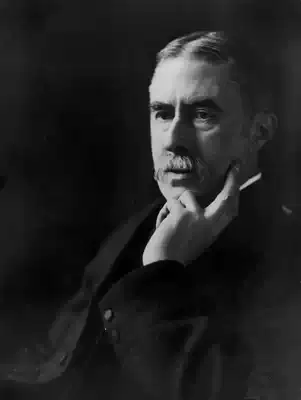
Alfred Edward Housman
You Smile Upon Your Friend To-Day
You Smile Upon Your Friend To-Day
You smile upon your friend to-day,
To-day his ills are over;
You hearken to the lover's say,
And happy is the lover.
'Tis late to hearken, late to smile,
But better late than never;
I shall have lived a little while
Before I die for ever.
You smile upon your friend to-day,
To-day his ills are over;
You hearken to the lover's say,
And happy is the lover.
'Tis late to hearken, late to smile,
But better late than never;
I shall have lived a little while
Before I die for ever.
334
Alfred Lord Tennyson
Sir Launcelot and Queen Guinevere
Sir Launcelot and Queen Guinevere
LIKE souls that balance joy and pain,
With tears and smiles from heaven again
The maiden Spring upon the plain
Came in a sun-lit fall of rain.
In crystal vapour everywhere
Blue isles of heaven laugh'd between,
And far, in forest-deeps unseen,
The topmost elm-tree gather'd green
From draughts of balmy air.
Sometimes the linnet piped his song:
Sometimes the throstle whistled strong:
Sometimes the sparhawk, wheel'd along,
Hush'd all the groves from fear of wrong:
By grassy capes with fuller sound
In curves the yellowing river ran,
And drooping chestnut-buds began
To spread into the perfect fan,
Above the teeming ground.
Then, in the boyhood of the year,
Sir Launcelot and Queen Guinevere
Rode thro' the coverts of the deer,
With blissful treble ringing clear.
She seem'd a part of joyous Spring:
A gown of grass-green silk she wore,
Buckled with golden clasps before;
A light-green tuft of plumes she bore
Closed in a golden ring.
Now on some twisted ivy-net,
Now by some tinkling rivulet,
In mosses mixt with violet
Her cream-white mule his pastern set:
And fleeter now she skimm'd the plains
Than she whose elfin prancer springs
By night to eery warblings,
When all the glimmering moorland rings
With jingling bridle-reins.
As she fled fast thro' sun and shade,
The happy winds upon her play'd,
Blowing the ringlet from the braid:
She look'd so lovely, as she sway'd
The rein with dainty finger-tips,
A man had given all other bliss,
And all his worldly worth for this,
To waste his whole heart in one kiss
Upon her perfect lips.
LIKE souls that balance joy and pain,
With tears and smiles from heaven again
The maiden Spring upon the plain
Came in a sun-lit fall of rain.
In crystal vapour everywhere
Blue isles of heaven laugh'd between,
And far, in forest-deeps unseen,
The topmost elm-tree gather'd green
From draughts of balmy air.
Sometimes the linnet piped his song:
Sometimes the throstle whistled strong:
Sometimes the sparhawk, wheel'd along,
Hush'd all the groves from fear of wrong:
By grassy capes with fuller sound
In curves the yellowing river ran,
And drooping chestnut-buds began
To spread into the perfect fan,
Above the teeming ground.
Then, in the boyhood of the year,
Sir Launcelot and Queen Guinevere
Rode thro' the coverts of the deer,
With blissful treble ringing clear.
She seem'd a part of joyous Spring:
A gown of grass-green silk she wore,
Buckled with golden clasps before;
A light-green tuft of plumes she bore
Closed in a golden ring.
Now on some twisted ivy-net,
Now by some tinkling rivulet,
In mosses mixt with violet
Her cream-white mule his pastern set:
And fleeter now she skimm'd the plains
Than she whose elfin prancer springs
By night to eery warblings,
When all the glimmering moorland rings
With jingling bridle-reins.
As she fled fast thro' sun and shade,
The happy winds upon her play'd,
Blowing the ringlet from the braid:
She look'd so lovely, as she sway'd
The rein with dainty finger-tips,
A man had given all other bliss,
And all his worldly worth for this,
To waste his whole heart in one kiss
Upon her perfect lips.
444
Alfred Edward Housman
White in the Moon the Long Road Lies
White in the Moon the Long Road Lies
White in the moon the long road lies,
The moon stands blank above;
White in the moon the long road lies
That leads me from my love.
Still hangs the hedge without a gust,
Still, still the shadows stay:
My feet upon the moonlit dust
Pursue the ceaseless way.
The world is round, so travellers tell,
And straight though reach the track,
Trudge on, trudge on, 'twill all be well,
The way will guide one back.
But ere the circle homeward hies
Far, far must it remove:
White in the moon the long road lies
That leads me from my love.
White in the moon the long road lies,
The moon stands blank above;
White in the moon the long road lies
That leads me from my love.
Still hangs the hedge without a gust,
Still, still the shadows stay:
My feet upon the moonlit dust
Pursue the ceaseless way.
The world is round, so travellers tell,
And straight though reach the track,
Trudge on, trudge on, 'twill all be well,
The way will guide one back.
But ere the circle homeward hies
Far, far must it remove:
White in the moon the long road lies
That leads me from my love.
467