

Poems in this topic
Relationships and Family
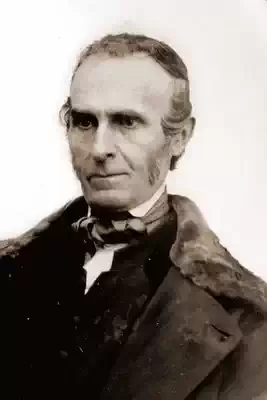
John Greenleaf Whittier
To My Sister,
To My Sister,
WITH A COPY OF 'THE SUPERNATURALISM OF NEW ENGLAND.'
Dear Sister! while the wise and sage
Turn coldly from my playful page,
And count it strange that ripened age
Should stoop to boyhood's folly;
I know that thou wilt judge aright
Of all which makes the heart more light,
Or lends one star-gleam to the night
Of clouded Melancholy.
Away with weary cares and themes!
Swing wide the moonlit gate of dreams!
Leave free once more the land which teems
With wonders and romances
Where thou, with clear discerning eyes,
Shalt rightly read the truth which lies
Beneath the quaintly masking guise
Of wild and wizard fancies.
Lo! once again our feet we set
On still green wood-paths, twilight wet,
By lonely brooks, whose waters fret
The roots of spectral beeches;
Again the hearth-fire glimmers o'er
Home's whitewashed wall and painted floor,
And young eyes widening to the lore
Of faery-folks and witches.
Dear heart! the legend is not vain
Which lights that holy hearth again,
And calling back from care and pain,
And death's funereal sadness,
Draws round its old familiar blaze
The clustering groups of happier days,
And lends to sober manhood's gaze
A glimpse of childish gladness.
And, knowing how my life hath been
A weary work of tongue and pen,
A long, harsh strife with strong-willed men,
Thou wilt not chide my turning
To con, at times, an idle rhyme,
To pluck a flower from childhood's clime,
Or listen, at Life's noonday chime,
For the sweet bells of Morning!
WITH A COPY OF 'THE SUPERNATURALISM OF NEW ENGLAND.'
Dear Sister! while the wise and sage
Turn coldly from my playful page,
And count it strange that ripened age
Should stoop to boyhood's folly;
I know that thou wilt judge aright
Of all which makes the heart more light,
Or lends one star-gleam to the night
Of clouded Melancholy.
Away with weary cares and themes!
Swing wide the moonlit gate of dreams!
Leave free once more the land which teems
With wonders and romances
Where thou, with clear discerning eyes,
Shalt rightly read the truth which lies
Beneath the quaintly masking guise
Of wild and wizard fancies.
Lo! once again our feet we set
On still green wood-paths, twilight wet,
By lonely brooks, whose waters fret
The roots of spectral beeches;
Again the hearth-fire glimmers o'er
Home's whitewashed wall and painted floor,
And young eyes widening to the lore
Of faery-folks and witches.
Dear heart! the legend is not vain
Which lights that holy hearth again,
And calling back from care and pain,
And death's funereal sadness,
Draws round its old familiar blaze
The clustering groups of happier days,
And lends to sober manhood's gaze
A glimpse of childish gladness.
And, knowing how my life hath been
A weary work of tongue and pen,
A long, harsh strife with strong-willed men,
Thou wilt not chide my turning
To con, at times, an idle rhyme,
To pluck a flower from childhood's clime,
Or listen, at Life's noonday chime,
For the sweet bells of Morning!
312
John Greenleaf Whittier
The Witch of Wenham
The Witch of Wenham
I.
Along Crane River's sunny slopes
Blew warm the winds of May,
And over Naumkeag's ancient oaks
The green outgrew the gray.
The grass was green on Rial-side,
The early birds at will
Waked up the violet in its dell,
The wind-flower on its hill.
'Where go you, in your Sunday coat,
Son Andrew, tell me, pray.'
For striped perch in Wenham Lake
I go to fish to-day.'
'Unharmed of thee in Wenham Lake
The mottled perch shall be
A blue-eyed witch sits on the bank
And weaves her net for thee.
'She weaves her golden hair; she sings
Her spell-song low and faint;
The wickedest witch in Salem jail
Is to that girl a saint.'
'Nay, mother, hold thy cruel tongue;
God knows,' the young man cried,
'He never made a whiter soul
Than hers by Wenham side.
'She tends her mother sick and blind,
And every want supplies;
To her above the blessed Book
She lends her soft blue eyes.
'Her voice is glad with holy songs,
Her lips are sweet with prayer;
Go where you will, in ten miles round
Is none more good and fair.'
'Son Andrew, for the love of God
And of thy mother, stay!'
She clasped her hands, she wept aloud,
But Andrew rode away.
'O reverend sir, my Andrew's soul
The Wenham witch has caught;
She holds him with the curled gold
Whereof her snare is wrought.
'She charms him with her great blue eyes,
She binds him with her hair;
Oh, break the spell with holy words,
Unbind him with a prayer!'
'Take heart,' the painful preacher said,
'This mischief shall not be;
The witch shall perish in her sins
And Andrew shall go free.
'Our poor Ann Putnam testifies
She saw her weave a spell,
Bare-armed, loose-haired, at full of moon,
Around a dried-up well.
''Spring up, O well!' she softly sang
The Hebrew's old refrain
(For Satan uses Bible words),
Till water flowed a-main.
'And many a goodwife heard her speak
By Wenham water words
That made the buttercups take wings
And turn to yellow birds.
'They say that swarming wild bees seek
The hive at her command;
And fishes swim to take their food
From out her dainty hand.
'Meek as she sits in meeting-time,
The godly minister
Notes well the spell that doth compel
The young men's eyes to her.
'The mole upon her dimpled chin
Is Satan's seal and sign;
Her lips are red with evil bread
And stain of unblest wine.
'For Tituba, my Indian, saith
At Quasycung she took
The Black Man's godless sacrament
And signed his dreadful book.
'Last night my sore-afflicted child
Against the young witch cried.
To take her Marshal Herrick rides
Even now to Wenham side.'
The marshal in his saddle sat,
His daughter at his knee;
'I go to fetch that arrant witch,
Thy fair playmate,' quoth he.
'Her spectre walks the parsonage,
And haunts both hall and stair;
They know her by the great blue eyes
And floating gold of hair.'
'They lie, they lie, my father dear!
No foul old witch is she,
But sweet and good and crystal-pure
As Wenham waters be.'
'I tell thee, child, the Lord hath set
Before us good and ill,
And woe to all whose carnal loves
Oppose His righteous will.
'Between Him and the powers of hell
Choose thou, my child, to-day
No sparing hand, no pitying eye,
When God commands to slay!'
He went his way; the old wives shook
With fear as he drew nigh;
The children in the dooryards held
Their breath as he passed by.
Too well they knew the gaunt gray horse
The grim witch-hunter rode
The pale Apocalyptic beast
By grisly Death bestrode.
II.
Oh, fair the face of Wenham Lake
Upon the young girl's shone,
Her tender mouth, her dreaming eyes,
Her yellow hair outblown.
By happy youth and love attuned
To natural harmonies,
The singing birds, the whispering wind,
She sat beneath the trees.
Sat shaping for her bridal dress
Her mother's wedding gown,
When lo! the marshal, writ in hand,
From Alford hill rode down.
His face was hard with cruel fear,
He grasped the maiden's hands
'Come with me unto Salem town,
For so the law commands!'
'Oh, let me to my mother say
Farewell before I go!'
He closer tied her little hands
Unto his saddle bow.
'Unhand me,' cried she piteously,
'For thy sweet daughter's sake.'
'I'll keep my daughter safe,' he said,
'From the witch of Wenham Lake.'
'Oh, leave me for my mother's sake,
She needs my eyes to see.'
'Those eyes, young witch, the crows shall peck
From off the gallows-tree.'
He bore her to a farm-house old,
And up its stairway long,
And closed on her the garret-door
With iron bolted strong.
The day died out, the night came down
Her evening prayer she said,
While, through the dark, strange faces seemed
To mock her as she prayed.
The present horror deepened all
The fears her childhood knew;
The awe wherewith the air was filled
With every breath she drew.
And could it be, she trembling asked,
Some secret thought or sin
Had shut good angels from her heart
And let the bad ones in?
Had she in some forgotten dream
Let go her hold on Heaven,
And sold herself unwittingly
To spirits unforgiven?
Oh, weird and still the dark hours passed;
No human sound she heard,
But up and down the chimney stack
The swallows moaned and stirred.
And o'er her, with a dread surmise
Of evil sight and sound,
The blind bats on their leathern wings
Went wheeling round and round.
Low hanging in the midnight sky
Looked in a half-faced moon.
Was it a dream, or did she hear
Her lover's whistled tune?
She forced the oaken scuttle back;
A whisper reached her ear
'Slide down the roof to me,' it said,
'So softly none may hear.'
She slid along the sloping roof
Till from its eaves she hung,
And felt the loosened shingles yield
To which her fingers clung.
Below, her lover stretched his hands
And touched her feet so small;
'Drop down to me, dear heart,' he said,
'My arms shall break the fall.'
He set her on his pillion soft,
Her arms about him twined;
And, noiseless as if velvet-shod,
They left the house behind.
But when they reached the open way,
Full free the rein he cast;
Oh, never through the mirk midnight
Rode man and maid more fast.
Along the wild wood-paths they sped,
The bridgeless streams they swam;
At set of moon they passed the Bass,
At sunrise Agawam.
At high noon on the Merrimac
The ancient ferryman
Forgot, at times, his idle oars,
So fair a freight to scan.
And when from off his grounded boat
He saw them mount and ride,
'God keep her from the evil eye,
And harm of witch!' he cried.
The maiden laughed, as youth will laugh
At all its fears gone by;
'He does not know,' she whispered low,
'A little witch am I.'
All day he urged his weary horse,
And, in the red sundown,
Drew rein before a friendly door
In distant Berwick town.
A fellow-feeling for the wronged
The Quaker people felt;
And safe beside their kindly hearths
The hunted maiden dwelt,
Until from off its breast the land
The haunting horror threw,
And hatred, born of ghastly dreams,
To shame and pity grew.
Sad were the year's spring morns, and sad
Its golden summer day,
But blithe and glad its withered fields,
And skies of ashen gray;
For spell and charm had power no more,
The spectres ceased to roam,
And scattered households knelt again
Around the hearths of home.
And when once more by Beaver Dam
The meadow-lark outsang,
And once again on all the hills
The early violets sprang,
And all the windy pasture slopes
Lay green within the arms
Of creeks that bore the salted sea
To pleasant inland farms,
The smith filed off the chains he forged,
The jail-bolts backward fell;
And youth and hoary age came forth
Like souls escaped from hell.
I.
Along Crane River's sunny slopes
Blew warm the winds of May,
And over Naumkeag's ancient oaks
The green outgrew the gray.
The grass was green on Rial-side,
The early birds at will
Waked up the violet in its dell,
The wind-flower on its hill.
'Where go you, in your Sunday coat,
Son Andrew, tell me, pray.'
For striped perch in Wenham Lake
I go to fish to-day.'
'Unharmed of thee in Wenham Lake
The mottled perch shall be
A blue-eyed witch sits on the bank
And weaves her net for thee.
'She weaves her golden hair; she sings
Her spell-song low and faint;
The wickedest witch in Salem jail
Is to that girl a saint.'
'Nay, mother, hold thy cruel tongue;
God knows,' the young man cried,
'He never made a whiter soul
Than hers by Wenham side.
'She tends her mother sick and blind,
And every want supplies;
To her above the blessed Book
She lends her soft blue eyes.
'Her voice is glad with holy songs,
Her lips are sweet with prayer;
Go where you will, in ten miles round
Is none more good and fair.'
'Son Andrew, for the love of God
And of thy mother, stay!'
She clasped her hands, she wept aloud,
But Andrew rode away.
'O reverend sir, my Andrew's soul
The Wenham witch has caught;
She holds him with the curled gold
Whereof her snare is wrought.
'She charms him with her great blue eyes,
She binds him with her hair;
Oh, break the spell with holy words,
Unbind him with a prayer!'
'Take heart,' the painful preacher said,
'This mischief shall not be;
The witch shall perish in her sins
And Andrew shall go free.
'Our poor Ann Putnam testifies
She saw her weave a spell,
Bare-armed, loose-haired, at full of moon,
Around a dried-up well.
''Spring up, O well!' she softly sang
The Hebrew's old refrain
(For Satan uses Bible words),
Till water flowed a-main.
'And many a goodwife heard her speak
By Wenham water words
That made the buttercups take wings
And turn to yellow birds.
'They say that swarming wild bees seek
The hive at her command;
And fishes swim to take their food
From out her dainty hand.
'Meek as she sits in meeting-time,
The godly minister
Notes well the spell that doth compel
The young men's eyes to her.
'The mole upon her dimpled chin
Is Satan's seal and sign;
Her lips are red with evil bread
And stain of unblest wine.
'For Tituba, my Indian, saith
At Quasycung she took
The Black Man's godless sacrament
And signed his dreadful book.
'Last night my sore-afflicted child
Against the young witch cried.
To take her Marshal Herrick rides
Even now to Wenham side.'
The marshal in his saddle sat,
His daughter at his knee;
'I go to fetch that arrant witch,
Thy fair playmate,' quoth he.
'Her spectre walks the parsonage,
And haunts both hall and stair;
They know her by the great blue eyes
And floating gold of hair.'
'They lie, they lie, my father dear!
No foul old witch is she,
But sweet and good and crystal-pure
As Wenham waters be.'
'I tell thee, child, the Lord hath set
Before us good and ill,
And woe to all whose carnal loves
Oppose His righteous will.
'Between Him and the powers of hell
Choose thou, my child, to-day
No sparing hand, no pitying eye,
When God commands to slay!'
He went his way; the old wives shook
With fear as he drew nigh;
The children in the dooryards held
Their breath as he passed by.
Too well they knew the gaunt gray horse
The grim witch-hunter rode
The pale Apocalyptic beast
By grisly Death bestrode.
II.
Oh, fair the face of Wenham Lake
Upon the young girl's shone,
Her tender mouth, her dreaming eyes,
Her yellow hair outblown.
By happy youth and love attuned
To natural harmonies,
The singing birds, the whispering wind,
She sat beneath the trees.
Sat shaping for her bridal dress
Her mother's wedding gown,
When lo! the marshal, writ in hand,
From Alford hill rode down.
His face was hard with cruel fear,
He grasped the maiden's hands
'Come with me unto Salem town,
For so the law commands!'
'Oh, let me to my mother say
Farewell before I go!'
He closer tied her little hands
Unto his saddle bow.
'Unhand me,' cried she piteously,
'For thy sweet daughter's sake.'
'I'll keep my daughter safe,' he said,
'From the witch of Wenham Lake.'
'Oh, leave me for my mother's sake,
She needs my eyes to see.'
'Those eyes, young witch, the crows shall peck
From off the gallows-tree.'
He bore her to a farm-house old,
And up its stairway long,
And closed on her the garret-door
With iron bolted strong.
The day died out, the night came down
Her evening prayer she said,
While, through the dark, strange faces seemed
To mock her as she prayed.
The present horror deepened all
The fears her childhood knew;
The awe wherewith the air was filled
With every breath she drew.
And could it be, she trembling asked,
Some secret thought or sin
Had shut good angels from her heart
And let the bad ones in?
Had she in some forgotten dream
Let go her hold on Heaven,
And sold herself unwittingly
To spirits unforgiven?
Oh, weird and still the dark hours passed;
No human sound she heard,
But up and down the chimney stack
The swallows moaned and stirred.
And o'er her, with a dread surmise
Of evil sight and sound,
The blind bats on their leathern wings
Went wheeling round and round.
Low hanging in the midnight sky
Looked in a half-faced moon.
Was it a dream, or did she hear
Her lover's whistled tune?
She forced the oaken scuttle back;
A whisper reached her ear
'Slide down the roof to me,' it said,
'So softly none may hear.'
She slid along the sloping roof
Till from its eaves she hung,
And felt the loosened shingles yield
To which her fingers clung.
Below, her lover stretched his hands
And touched her feet so small;
'Drop down to me, dear heart,' he said,
'My arms shall break the fall.'
He set her on his pillion soft,
Her arms about him twined;
And, noiseless as if velvet-shod,
They left the house behind.
But when they reached the open way,
Full free the rein he cast;
Oh, never through the mirk midnight
Rode man and maid more fast.
Along the wild wood-paths they sped,
The bridgeless streams they swam;
At set of moon they passed the Bass,
At sunrise Agawam.
At high noon on the Merrimac
The ancient ferryman
Forgot, at times, his idle oars,
So fair a freight to scan.
And when from off his grounded boat
He saw them mount and ride,
'God keep her from the evil eye,
And harm of witch!' he cried.
The maiden laughed, as youth will laugh
At all its fears gone by;
'He does not know,' she whispered low,
'A little witch am I.'
All day he urged his weary horse,
And, in the red sundown,
Drew rein before a friendly door
In distant Berwick town.
A fellow-feeling for the wronged
The Quaker people felt;
And safe beside their kindly hearths
The hunted maiden dwelt,
Until from off its breast the land
The haunting horror threw,
And hatred, born of ghastly dreams,
To shame and pity grew.
Sad were the year's spring morns, and sad
Its golden summer day,
But blithe and glad its withered fields,
And skies of ashen gray;
For spell and charm had power no more,
The spectres ceased to roam,
And scattered households knelt again
Around the hearths of home.
And when once more by Beaver Dam
The meadow-lark outsang,
And once again on all the hills
The early violets sprang,
And all the windy pasture slopes
Lay green within the arms
Of creeks that bore the salted sea
To pleasant inland farms,
The smith filed off the chains he forged,
The jail-bolts backward fell;
And youth and hoary age came forth
Like souls escaped from hell.
278
John Greenleaf Whittier
The Wife Of Manoah To Her Husband
The Wife Of Manoah To Her Husband
Against the sunset's glowing wall
The city towers rise black and tall,
Where Zorah, on its rocky height,
Stands like an armed man in the light.
Down Eshtaol's vales of ripened grain
Falls like a cloud the night amain,
And up the hillsides climbing slow
The barley reapers homeward go.
Look, dearest! how our fair child's head
The sunset light hath hallowed,
Where at this olive's foot he lies,
Uplooking to the tranquil skies.
Oh, while beneath the fervent heat
Thy sickle swept the bearded wheat,
I've watched, with mingled joy and dread,
Our child upon his grassy bed.
Joy, which the mother feels alone
Whose morning hope like mine had flown,
When to her bosom, over-blessed,
A dearer life than hers is pressed.
Dread, for the future dark and still,
Which shapes our dear one to its will;
Forever in his large calm eyes,
I read a tale of sacrifice.
The same foreboding awe I felt
When at the altar's side we knelt,
And he, who as a pilgrim came,
Rose, winged and glorious, through the flame.
I slept not, though the wild bees made
A dreamlike murmuring in the shade,
And on me the warm-fingered hours
Pressed with the drowsy smell of flowers.
Before me, in a vision, rose
The hosts of Israel's scornful foes,-Rank
over rank, helm, shield, and spear,
Glittered in noon's hot atmosphere.
I heard their boast, and bitter word,
Their mockery of the Hebrew's Lord,
I saw their hands His ark assail,
Their feet profane His holy veil.
No angel down the blue space spoke,
No thunder from the still sky broke;
But in their midst, in power and awe,
Like God's waked wrath, our child I saw!
A child no more!--harsh-browed and strong,
He towered a giant in the throng,
And down his shoulders, broad and bare,
Swept the black terror of his hair.
He raised his arm--he smote amain;
As round the reaper falls the grain,
So the dark host around him fell,
So sank the foes of Israel!
Again I looked. In sunlight shone
The towers and domes of Askelon;
Priest, warrior, slave, a mighty crowd
Within her idol temple bowed.
Yet one knelt not; stark, gaunt, and blind,
His arms the massive pillars twined,-An
eyeless captive, strong with hate,
He stood there like an evil Fate.
The red shrines smoked,--the trumpets pealed
He stooped,--the giant columns reeled;
Reeled tower and fane, sank arch and wall,
And the thick dust-cloud closed o'er all!
Above the shriek, the crash, the groan
Of the fallen pride of Askelon,
I heard, sheer down the echoing sky,
A voice as of an angel cry,-
The voice of him, who at our side
Sat through the golden eventide;
Of him who, on thy altar's blaze,
Rose fire-winged, with his song of praise.
'Rejoice o'er Israel's broken chain,
Gray mother of the mighty slain!
Rejoice!' it cried, 'he vanquisheth!
The strong in life is strong in death!
'To him shall Zorah's daughters raise
Through coming years their hymns of praise,
And gray old men at evening tell
Of all be wrought for Israel.
'And they who sing and they who hear
Alike shall hold thy memory dear,
And pour their blessings on thy head,
O mother of the mighty dead!'
It ceased; and though a sound I heard
As if great wings the still air stirred,
I only saw the barley sheaves
And hills half hid by olive leaves.
I bowed my face, in awe and fear,
On the dear child who slumbered near;
'With me, as with my only son,
O God,' I said, 'Thy will be done!'
Against the sunset's glowing wall
The city towers rise black and tall,
Where Zorah, on its rocky height,
Stands like an armed man in the light.
Down Eshtaol's vales of ripened grain
Falls like a cloud the night amain,
And up the hillsides climbing slow
The barley reapers homeward go.
Look, dearest! how our fair child's head
The sunset light hath hallowed,
Where at this olive's foot he lies,
Uplooking to the tranquil skies.
Oh, while beneath the fervent heat
Thy sickle swept the bearded wheat,
I've watched, with mingled joy and dread,
Our child upon his grassy bed.
Joy, which the mother feels alone
Whose morning hope like mine had flown,
When to her bosom, over-blessed,
A dearer life than hers is pressed.
Dread, for the future dark and still,
Which shapes our dear one to its will;
Forever in his large calm eyes,
I read a tale of sacrifice.
The same foreboding awe I felt
When at the altar's side we knelt,
And he, who as a pilgrim came,
Rose, winged and glorious, through the flame.
I slept not, though the wild bees made
A dreamlike murmuring in the shade,
And on me the warm-fingered hours
Pressed with the drowsy smell of flowers.
Before me, in a vision, rose
The hosts of Israel's scornful foes,-Rank
over rank, helm, shield, and spear,
Glittered in noon's hot atmosphere.
I heard their boast, and bitter word,
Their mockery of the Hebrew's Lord,
I saw their hands His ark assail,
Their feet profane His holy veil.
No angel down the blue space spoke,
No thunder from the still sky broke;
But in their midst, in power and awe,
Like God's waked wrath, our child I saw!
A child no more!--harsh-browed and strong,
He towered a giant in the throng,
And down his shoulders, broad and bare,
Swept the black terror of his hair.
He raised his arm--he smote amain;
As round the reaper falls the grain,
So the dark host around him fell,
So sank the foes of Israel!
Again I looked. In sunlight shone
The towers and domes of Askelon;
Priest, warrior, slave, a mighty crowd
Within her idol temple bowed.
Yet one knelt not; stark, gaunt, and blind,
His arms the massive pillars twined,-An
eyeless captive, strong with hate,
He stood there like an evil Fate.
The red shrines smoked,--the trumpets pealed
He stooped,--the giant columns reeled;
Reeled tower and fane, sank arch and wall,
And the thick dust-cloud closed o'er all!
Above the shriek, the crash, the groan
Of the fallen pride of Askelon,
I heard, sheer down the echoing sky,
A voice as of an angel cry,-
The voice of him, who at our side
Sat through the golden eventide;
Of him who, on thy altar's blaze,
Rose fire-winged, with his song of praise.
'Rejoice o'er Israel's broken chain,
Gray mother of the mighty slain!
Rejoice!' it cried, 'he vanquisheth!
The strong in life is strong in death!
'To him shall Zorah's daughters raise
Through coming years their hymns of praise,
And gray old men at evening tell
Of all be wrought for Israel.
'And they who sing and they who hear
Alike shall hold thy memory dear,
And pour their blessings on thy head,
O mother of the mighty dead!'
It ceased; and though a sound I heard
As if great wings the still air stirred,
I only saw the barley sheaves
And hills half hid by olive leaves.
I bowed my face, in awe and fear,
On the dear child who slumbered near;
'With me, as with my only son,
O God,' I said, 'Thy will be done!'
217
John Greenleaf Whittier
The Sisters
The Sisters
ANNIE and Rhoda, sisters twain,
Woke in the night to the sound of rain,
The rush of wind, the ramp and roar
Of great waves climbing a rocky shore.
Annie rose up in her bed-gown white,
And looked out into the storm and night.
'Hush, and hearken!' she cried in fear,
'Hearest thou nothing, sister dear?'
'I hear the sea, and the plash of rain,
And roar of the northeast hurricane.
'Get thee back to the bed so warm,
No good comes of watching a storm.
'What is it to thee, I fain would know,
That waves are roaring and wild winds blow?
'No lover of thine's afloat to miss
The harbor-lights on a night like this.'
'But I heard a voice cry out my name,
Up from the sea on the wind it came.
'Twice and thrice have I heard it call,
And the voice is the voice of Estwick Hall!'
On her pillow the sister tossed her head.
'Hall of the Heron is safe,' she said.
'In the tautest schooner that ever swam
He rides at anchor in Anisquam.
'And, if in peril from swamping sea
Or lee shore rocks, would he call on thee?'
But the girl heard only the wind and tide,
And wringing her small white hands she cried,
'O sister Rhoda, there's something wrong;
I hear it again, so loud and long.
''Annie! Annie!' I hear it call,
And the voice is the voice of Estwick Hall!'
Up sprang the elder, with eyes aflame,
'Thou liest! He never would call thy name!
'If he did, I would pray the wind and sea
To keep him forever from thee and me!'
Then out of the sea blew a dreadful blast;
Like the cry of a dying man it passed.
The young girl hushed on her lips a groan,
But through her tears a strange light shone,-
The solemn joy of her heart's release
To own and cherish its love in peace.
'Dearest!' she whispered, under breath,
'Life was a lie, but true is death.
'The love I hid from myself away
Shall crown me now in the light of day.
'My ears shall never to wooer list,
Never by lover my lips be kissed.
'Sacred to thee am I henceforth,
Thou in heaven and I on earth!'
She came and stood by her sister's bed
'Hall of the Heron is dead!' she said.
'The wind and the waves their work have done,
We shall see him no more beneath the sun.
'Little will reek that heart of thine,
It loved him not with a love like mine.
'I, for his sake, were he but here,
Could hem and 'broider thy bridal gear,
'Though hands should tremble and eyes be wet,
And stitch for stitch in my heart be set.
'But now my soul with his soul I wed;
Thine the living, and mine the dead!'
ANNIE and Rhoda, sisters twain,
Woke in the night to the sound of rain,
The rush of wind, the ramp and roar
Of great waves climbing a rocky shore.
Annie rose up in her bed-gown white,
And looked out into the storm and night.
'Hush, and hearken!' she cried in fear,
'Hearest thou nothing, sister dear?'
'I hear the sea, and the plash of rain,
And roar of the northeast hurricane.
'Get thee back to the bed so warm,
No good comes of watching a storm.
'What is it to thee, I fain would know,
That waves are roaring and wild winds blow?
'No lover of thine's afloat to miss
The harbor-lights on a night like this.'
'But I heard a voice cry out my name,
Up from the sea on the wind it came.
'Twice and thrice have I heard it call,
And the voice is the voice of Estwick Hall!'
On her pillow the sister tossed her head.
'Hall of the Heron is safe,' she said.
'In the tautest schooner that ever swam
He rides at anchor in Anisquam.
'And, if in peril from swamping sea
Or lee shore rocks, would he call on thee?'
But the girl heard only the wind and tide,
And wringing her small white hands she cried,
'O sister Rhoda, there's something wrong;
I hear it again, so loud and long.
''Annie! Annie!' I hear it call,
And the voice is the voice of Estwick Hall!'
Up sprang the elder, with eyes aflame,
'Thou liest! He never would call thy name!
'If he did, I would pray the wind and sea
To keep him forever from thee and me!'
Then out of the sea blew a dreadful blast;
Like the cry of a dying man it passed.
The young girl hushed on her lips a groan,
But through her tears a strange light shone,-
The solemn joy of her heart's release
To own and cherish its love in peace.
'Dearest!' she whispered, under breath,
'Life was a lie, but true is death.
'The love I hid from myself away
Shall crown me now in the light of day.
'My ears shall never to wooer list,
Never by lover my lips be kissed.
'Sacred to thee am I henceforth,
Thou in heaven and I on earth!'
She came and stood by her sister's bed
'Hall of the Heron is dead!' she said.
'The wind and the waves their work have done,
We shall see him no more beneath the sun.
'Little will reek that heart of thine,
It loved him not with a love like mine.
'I, for his sake, were he but here,
Could hem and 'broider thy bridal gear,
'Though hands should tremble and eyes be wet,
And stitch for stitch in my heart be set.
'But now my soul with his soul I wed;
Thine the living, and mine the dead!'
297
John Greenleaf Whittier
The Sisters
The Sisters
ANNIE and Rhoda, sisters twain,
Woke in the night to the sound of rain,
The rush of wind, the ramp and roar
Of great waves climbing a rocky shore.
Annie rose up in her bed-gown white,
And looked out into the storm and night.
'Hush, and hearken!' she cried in fear,
'Hearest thou nothing, sister dear?'
'I hear the sea, and the plash of rain,
And roar of the northeast hurricane.
'Get thee back to the bed so warm,
No good comes of watching a storm.
'What is it to thee, I fain would know,
That waves are roaring and wild winds blow?
'No lover of thine's afloat to miss
The harbor-lights on a night like this.'
'But I heard a voice cry out my name,
Up from the sea on the wind it came.
'Twice and thrice have I heard it call,
And the voice is the voice of Estwick Hall!'
On her pillow the sister tossed her head.
'Hall of the Heron is safe,' she said.
'In the tautest schooner that ever swam
He rides at anchor in Anisquam.
'And, if in peril from swamping sea
Or lee shore rocks, would he call on thee?'
But the girl heard only the wind and tide,
And wringing her small white hands she cried,
'O sister Rhoda, there's something wrong;
I hear it again, so loud and long.
''Annie! Annie!' I hear it call,
And the voice is the voice of Estwick Hall!'
Up sprang the elder, with eyes aflame,
'Thou liest! He never would call thy name!
'If he did, I would pray the wind and sea
To keep him forever from thee and me!'
Then out of the sea blew a dreadful blast;
Like the cry of a dying man it passed.
The young girl hushed on her lips a groan,
But through her tears a strange light shone,-
The solemn joy of her heart's release
To own and cherish its love in peace.
'Dearest!' she whispered, under breath,
'Life was a lie, but true is death.
'The love I hid from myself away
Shall crown me now in the light of day.
'My ears shall never to wooer list,
Never by lover my lips be kissed.
'Sacred to thee am I henceforth,
Thou in heaven and I on earth!'
She came and stood by her sister's bed
'Hall of the Heron is dead!' she said.
'The wind and the waves their work have done,
We shall see him no more beneath the sun.
'Little will reek that heart of thine,
It loved him not with a love like mine.
'I, for his sake, were he but here,
Could hem and 'broider thy bridal gear,
'Though hands should tremble and eyes be wet,
And stitch for stitch in my heart be set.
'But now my soul with his soul I wed;
Thine the living, and mine the dead!'
ANNIE and Rhoda, sisters twain,
Woke in the night to the sound of rain,
The rush of wind, the ramp and roar
Of great waves climbing a rocky shore.
Annie rose up in her bed-gown white,
And looked out into the storm and night.
'Hush, and hearken!' she cried in fear,
'Hearest thou nothing, sister dear?'
'I hear the sea, and the plash of rain,
And roar of the northeast hurricane.
'Get thee back to the bed so warm,
No good comes of watching a storm.
'What is it to thee, I fain would know,
That waves are roaring and wild winds blow?
'No lover of thine's afloat to miss
The harbor-lights on a night like this.'
'But I heard a voice cry out my name,
Up from the sea on the wind it came.
'Twice and thrice have I heard it call,
And the voice is the voice of Estwick Hall!'
On her pillow the sister tossed her head.
'Hall of the Heron is safe,' she said.
'In the tautest schooner that ever swam
He rides at anchor in Anisquam.
'And, if in peril from swamping sea
Or lee shore rocks, would he call on thee?'
But the girl heard only the wind and tide,
And wringing her small white hands she cried,
'O sister Rhoda, there's something wrong;
I hear it again, so loud and long.
''Annie! Annie!' I hear it call,
And the voice is the voice of Estwick Hall!'
Up sprang the elder, with eyes aflame,
'Thou liest! He never would call thy name!
'If he did, I would pray the wind and sea
To keep him forever from thee and me!'
Then out of the sea blew a dreadful blast;
Like the cry of a dying man it passed.
The young girl hushed on her lips a groan,
But through her tears a strange light shone,-
The solemn joy of her heart's release
To own and cherish its love in peace.
'Dearest!' she whispered, under breath,
'Life was a lie, but true is death.
'The love I hid from myself away
Shall crown me now in the light of day.
'My ears shall never to wooer list,
Never by lover my lips be kissed.
'Sacred to thee am I henceforth,
Thou in heaven and I on earth!'
She came and stood by her sister's bed
'Hall of the Heron is dead!' she said.
'The wind and the waves their work have done,
We shall see him no more beneath the sun.
'Little will reek that heart of thine,
It loved him not with a love like mine.
'I, for his sake, were he but here,
Could hem and 'broider thy bridal gear,
'Though hands should tremble and eyes be wet,
And stitch for stitch in my heart be set.
'But now my soul with his soul I wed;
Thine the living, and mine the dead!'
297
John Greenleaf Whittier
The Pumpkin
The Pumpkin
Oh, greenly and fair in the lands of the sun,
The vines of the gourd and the rich melon run,
And the rock and the tree and the cottage enfold,
With broad leaves all greenness and blossoms all gold,
Like that which o'er Nineveh's prophet once grew,
While he waited to know that his warning was true,
And longed for the storm-cloud, and listened in vain
For the rush of the whirlwind and red fire-rain.
On the banks of the Xenil the dark Spanish maiden
Comes up with the fruit of the tangled vine laden;
And the Creole of Cuba laughs out to behold
Through orange-leaves shining the broad spheres of gold;
Yet with dearer delight from his home in the North,
On the fields of his harvest the Yankee looks forth,
Where crook-necks are coiling and yellow fruit shines,
And the sun of September melts down on his vines.
Ah! on Thanksgiving day, when from East and from West,
From North and from South comes the pilgrim and guest;
When the gray-haired New Englander sees round his board
The old broken links of affection restored;
When the care-wearied man seeks his mother once more,
And the worn matron smiles where the girl smiled before;
What moistens the lip and what brightens the eye,
What calls back the past, like the rich Pumpkin pie?
Oh, fruit loved of boyhood! the old days recalling,
When wood-grapes were purpling and brown nuts were falling!
When wild, ugly faces we carved in its skin,
Glaring out through the dark with a candle within!
When we laughed round the corn-heap, with hearts all in tune,
Our chair a broad pumpkin, -- our lantern the moon,
Telling tales of the fairy who travelled like steam
In a pumpkin-shell coach, with two rats for her team!
Then thanks for thy present! none sweeter or better
E'er smoked from an oven or circled a platter!
Fairer hands never wrought at a pastry more fine,
Brighter eyes never watched o'er its baking, than thine!
And the prayer, which my mouth is too full to express,
Swells my heart that thy shadow may never be less,
That the days of thy lot may be lengthened below,
And the fame of thy worth like a pumpkin-vine grow,
And thy life be as sweet, and its last sunset sky
Golden-tinted and fair as thy own Pumpkin pie!
Oh, greenly and fair in the lands of the sun,
The vines of the gourd and the rich melon run,
And the rock and the tree and the cottage enfold,
With broad leaves all greenness and blossoms all gold,
Like that which o'er Nineveh's prophet once grew,
While he waited to know that his warning was true,
And longed for the storm-cloud, and listened in vain
For the rush of the whirlwind and red fire-rain.
On the banks of the Xenil the dark Spanish maiden
Comes up with the fruit of the tangled vine laden;
And the Creole of Cuba laughs out to behold
Through orange-leaves shining the broad spheres of gold;
Yet with dearer delight from his home in the North,
On the fields of his harvest the Yankee looks forth,
Where crook-necks are coiling and yellow fruit shines,
And the sun of September melts down on his vines.
Ah! on Thanksgiving day, when from East and from West,
From North and from South comes the pilgrim and guest;
When the gray-haired New Englander sees round his board
The old broken links of affection restored;
When the care-wearied man seeks his mother once more,
And the worn matron smiles where the girl smiled before;
What moistens the lip and what brightens the eye,
What calls back the past, like the rich Pumpkin pie?
Oh, fruit loved of boyhood! the old days recalling,
When wood-grapes were purpling and brown nuts were falling!
When wild, ugly faces we carved in its skin,
Glaring out through the dark with a candle within!
When we laughed round the corn-heap, with hearts all in tune,
Our chair a broad pumpkin, -- our lantern the moon,
Telling tales of the fairy who travelled like steam
In a pumpkin-shell coach, with two rats for her team!
Then thanks for thy present! none sweeter or better
E'er smoked from an oven or circled a platter!
Fairer hands never wrought at a pastry more fine,
Brighter eyes never watched o'er its baking, than thine!
And the prayer, which my mouth is too full to express,
Swells my heart that thy shadow may never be less,
That the days of thy lot may be lengthened below,
And the fame of thy worth like a pumpkin-vine grow,
And thy life be as sweet, and its last sunset sky
Golden-tinted and fair as thy own Pumpkin pie!
283
John Greenleaf Whittier
The Pumpkin
The Pumpkin
Oh, greenly and fair in the lands of the sun,
The vines of the gourd and the rich melon run,
And the rock and the tree and the cottage enfold,
With broad leaves all greenness and blossoms all gold,
Like that which o'er Nineveh's prophet once grew,
While he waited to know that his warning was true,
And longed for the storm-cloud, and listened in vain
For the rush of the whirlwind and red fire-rain.
On the banks of the Xenil the dark Spanish maiden
Comes up with the fruit of the tangled vine laden;
And the Creole of Cuba laughs out to behold
Through orange-leaves shining the broad spheres of gold;
Yet with dearer delight from his home in the North,
On the fields of his harvest the Yankee looks forth,
Where crook-necks are coiling and yellow fruit shines,
And the sun of September melts down on his vines.
Ah! on Thanksgiving day, when from East and from West,
From North and from South comes the pilgrim and guest;
When the gray-haired New Englander sees round his board
The old broken links of affection restored;
When the care-wearied man seeks his mother once more,
And the worn matron smiles where the girl smiled before;
What moistens the lip and what brightens the eye,
What calls back the past, like the rich Pumpkin pie?
Oh, fruit loved of boyhood! the old days recalling,
When wood-grapes were purpling and brown nuts were falling!
When wild, ugly faces we carved in its skin,
Glaring out through the dark with a candle within!
When we laughed round the corn-heap, with hearts all in tune,
Our chair a broad pumpkin, -- our lantern the moon,
Telling tales of the fairy who travelled like steam
In a pumpkin-shell coach, with two rats for her team!
Then thanks for thy present! none sweeter or better
E'er smoked from an oven or circled a platter!
Fairer hands never wrought at a pastry more fine,
Brighter eyes never watched o'er its baking, than thine!
And the prayer, which my mouth is too full to express,
Swells my heart that thy shadow may never be less,
That the days of thy lot may be lengthened below,
And the fame of thy worth like a pumpkin-vine grow,
And thy life be as sweet, and its last sunset sky
Golden-tinted and fair as thy own Pumpkin pie!
Oh, greenly and fair in the lands of the sun,
The vines of the gourd and the rich melon run,
And the rock and the tree and the cottage enfold,
With broad leaves all greenness and blossoms all gold,
Like that which o'er Nineveh's prophet once grew,
While he waited to know that his warning was true,
And longed for the storm-cloud, and listened in vain
For the rush of the whirlwind and red fire-rain.
On the banks of the Xenil the dark Spanish maiden
Comes up with the fruit of the tangled vine laden;
And the Creole of Cuba laughs out to behold
Through orange-leaves shining the broad spheres of gold;
Yet with dearer delight from his home in the North,
On the fields of his harvest the Yankee looks forth,
Where crook-necks are coiling and yellow fruit shines,
And the sun of September melts down on his vines.
Ah! on Thanksgiving day, when from East and from West,
From North and from South comes the pilgrim and guest;
When the gray-haired New Englander sees round his board
The old broken links of affection restored;
When the care-wearied man seeks his mother once more,
And the worn matron smiles where the girl smiled before;
What moistens the lip and what brightens the eye,
What calls back the past, like the rich Pumpkin pie?
Oh, fruit loved of boyhood! the old days recalling,
When wood-grapes were purpling and brown nuts were falling!
When wild, ugly faces we carved in its skin,
Glaring out through the dark with a candle within!
When we laughed round the corn-heap, with hearts all in tune,
Our chair a broad pumpkin, -- our lantern the moon,
Telling tales of the fairy who travelled like steam
In a pumpkin-shell coach, with two rats for her team!
Then thanks for thy present! none sweeter or better
E'er smoked from an oven or circled a platter!
Fairer hands never wrought at a pastry more fine,
Brighter eyes never watched o'er its baking, than thine!
And the prayer, which my mouth is too full to express,
Swells my heart that thy shadow may never be less,
That the days of thy lot may be lengthened below,
And the fame of thy worth like a pumpkin-vine grow,
And thy life be as sweet, and its last sunset sky
Golden-tinted and fair as thy own Pumpkin pie!
283
John Greenleaf Whittier
The Pennsylvania Pilgrim
The Pennsylvania Pilgrim
Prelude
I sing the Pilgrim of a softer clime
And milder speech than those brave men's who brought
To the ice and iron of our winter time
A will as firm, a creed as stern, and wrought
With one mailed hand, and with the other fought.
Simply, as fits my theme, in homely rhyme
I sing the blue-eyed German Spener taught,
Through whose veiled, mystic faith the Inward Light,
Steady and still, an easy brightness, shone,
Transfiguring all things in its radiance white.
The garland which his meekness never sought
I bring him; over fields of harvest sown
With seeds of blessing, now to ripeness grown,
I bid the sower pass before the reapers' sight.
The Pennsylvania Pilgrim
Never in tenderer quiet lapsed the day
From Pennsylvania's vales of spring away,
Where, forest-walled, the scattered hamlets lay
Along the wedded rivers. One long bar
Of purple cloud, on which the evening star
Shone like a jewel on a scimitar,
Held the sky's golden gateway. Through the deep
Hush of the woods a murmur seemed to creep,
The Schuylkill whispering in a voice of sleep.
All else was still. The oxen from their ploughs
Rested at last, and from their long day's browse
Came the dun files of Krisheim's home-bound cows.
And the young city, round whose virgin zone
The rivers like two mighty arms were thrown,
Marked by the smoke of evening fires alone,
Lay in the distance, lovely even then
With its fair women and its stately men
Gracing the forest court of William Penn,
Urban yet sylvan; in its rough-hewn frames
Of oak and pine the dryads held their claims,
And lent its streets their pleasant woodland names.
Anna Pastorius down the leafy lane
Looked city-ward, then stooped to prune again
Her vines and simples, with a sigh of pain.
For fast the streaks of ruddy sunset paled
In the oak clearing, and, as daylight failed,
Slow, overhead, the dusky night-birds sailed.
Again she looked: between green walls of shade,
With low-bent head as if with sorrow weighed,
Daniel Pastorius slowly came and said,
'God's peace be with thee, Anna!' Then he stood
Silent before her, wrestling with the mood
Of one who sees the evil and not good.
'What is it, my Pastorius?' As she spoke,
A slow, faint smile across his features broke,
Sadder than tears. 'Dear heart,' he said, 'our folk
'Are even as others. Yea, our goodliest Friends
Are frail; our elders have their selfish ends,
And few dare trust the Lord to make amends
'For duty's loss. So even our feeble word
For the dumb slaves the startled meeting heard
As if a stone its quiet waters stirred;
'And, as the clerk ceased reading, there began
A ripple of dissent which downward ran
In widening circles, as from man to man.
'Somewhat was said of running before sent,
Of tender fear that some their guide outwent,
Troublers of Israel. I was scarce intent
'On hearing, for behind the reverend row
Of gallery Friends, in dumb and piteous show,
I saw, methought, dark faces full of woe.
'And, in the spirit, I was taken where
They toiled and suffered; I was made aware
Of shame and wrath and anguish and despair!
'And while the meeting smothered our poor plea
With cautious phrase, a Voice there seemed to be,
As ye have done to these ye do to me!'
'So it all passed; and the old tithe went on
Of anise, mint, and cumin, till the sun
Set, leaving still the weightier work undone.
'Help, for the good man faileth! Who is strong,
If these be weak? Who shall rebuke the wrong,
If these consent? How long, O Lord! how long!'
He ceased; and, bound in spirit with the bound,
With folded arms, and eyes that sought the ground,
Walked musingly his little garden round.
About him, beaded with the falling dew,
Rare plants of power and herbs of healing grew,
Such as Van Helmont and Agrippa knew.
For, by the lore of Gorlitz' gentle sage,
With the mild mystics of his dreamy age
He read the herbal signs of nature's page,
As once he heard in sweet Von Merlau's' bowers
Fair as herself, in boyhood's happy hours,
The pious Spener read his creed in flowers.
'The dear Lord give us patience!' said his wife,
Touching with finger-tip an aloe, rife
With leaves sharp-pointed like an Aztec knife
Or Carib spear, a gift to William Penn
From the rare gardens of John Evelyn,
Brought from the Spanish Main by merchantmen.
'See this strange plant its steady purpose hold,
And, year by year, its patient leaves unfold,
Till the young eyes that watched it first are old.
'But some time, thou hast told me, there shall come
A sudden beauty, brightness, and perfume,
The century-moulded bud shall burst in bloom.
'So may the seed which hath been sown to-day
Grow with the years, and, after long delay,
Break into bloom, and God's eternal Yea!
'Answer at last the patient prayers of them
Who now, by faith alone, behold its stem
Crowned with the flowers of Freedom's diadem.
'Meanwhile, to feel and suffer, work and wait,
Remains for us. The wrong indeed is great,
But love and patience conquer soon or late.'
'Well hast thou said, my Anna!' Tenderer
Than youth's caress upon the head of her
Pastorius laid his hand. 'Shall we demur
'Because the vision tarrieth? In an hour
We dream not of, the slow-grown bud may flower,
And what was sown in weakness rise in power!'
Then through the vine-draped door whose legend read,
'Procul este profani!' Anna led
To where their child upon his little bed
Looked up and smiled. 'Dear heart,' she said, 'if we
Must bearers of a heavy burden be,
Our boy, God willing, yet the day shall see
'When from the gallery to the farthest seat,
Slave and slave-owner shall no longer meet,
But all sit equal at the Master's feet.'
On the stone hearth the blazing walnut block
Set the low walls a-glimmer, showed the cock
Rebuking Peter on the Van Wyck clock,
Shone on old tomes of law and physic, side
By side with Fox and Belimen, played at hide
And seek with Anna, midst her household pride
Of flaxen webs, and on the table, bare
Of costly cloth or silver cup, but where,
Tasting the fat shads of the Delaware,
The courtly Penn had praised the goodwife's cheer,
And quoted Horace o'er her home brewed beer,
Till even grave Pastorius smiled to hear.
In such a home, beside the Schuylkill's wave,
He dwelt in peace with God and man, and gave
Food to the poor and shelter to the slave.
For all too soon the New World's scandal shamed
The righteous code by Penn and Sidney framed,
And men withheld the human rights they claimed.
And slowly wealth and station sanction lent,
And hardened avarice, on its gains intent,
Stifled the inward whisper of dissent.
Yet all the while the burden rested sore
On tender hearts. At last Pastorius bore
Their warning message to the Church's door
In God's name; and the leaven of the word
Wrought ever after in the souls who heard,
And a dead conscience in its grave-clothes stirred
To troubled life, and urged the vain excuse
Of Hebrew custom, patriarchal use,
Good in itself if evil in abuse.
Gravely Pastorius listened, not the less
Discerning through the decent fig-leaf dress
Of the poor plea its shame of selfishness.
One Scripture rule, at least, was unforgot;
He hid the outcast, and betrayed him not;
And, when his prey the human hunter sought,
He scrupled not, while Anna's wise delay
And proffered cheer prolonged the master's stay,
To speed the black guest safely on his way.
Yet, who shall guess his bitter grief who lends
His life to some great cause, and finds his friends
Shame or betray it for their private ends?
How felt the Master when his chosen strove
In childish folly for their seats above;
And that fond mother, blinded by her love,
Besought him that her sons, beside his throne,
Might sit on either hand? Amidst his own
A stranger oft, companionless and lone,
God's priest and prophet stands. The martyr's pain
Is not alone from scourge and cell and chain;
Sharper the pang when, shouting in his train,
His weak disciples by their lives deny
The loud hosannas of their daily cry,
And make their echo of his truth a lie.
His forest home no hermit's cell he found,
Guests, motley-minded, drew his hearth around,
And held armed truce upon its neutral ground.
There Indian chiefs with battle-bows unstrung,
Strong, hero-limbed, like those whom Homer sung,
Pastorius fancied, when the world was young,
Came with their tawny women, lithe and tall,
Like bronzes in his friend Von Rodeck's hall,
Comely, if black, and not unpleasing all.
There hungry folk in homespun drab and gray
Drew round his board on Monthly Meeting day,
Genial, half merry in their friendly way.
Or, haply, pilgrims from the Fatherland,
Weak, timid, homesick, slow to understand
The New World's promise, sought his helping hand.
Or painful Kelpius from his hermit den
By Wissahickon, maddest of good men,
Dreamed o'er the Chiliast dreams of Petersen.
Deep in the woods, where the small river slid
Snake-like in shade, the Helmstadt Mystic hid,
Weird as a wizard, over arts forbid,
Reading the books of Daniel and of John,
And Behmen's Morning-Redness, through the Stone
Of Wisdom, vouchsafed to his eyes alone,
Whereby he read what man ne'er read before,
And saw the visions man shall see no more,
Till the great angel, striding sea and shore,
Shall bid all flesh await, on land or ships,
The warning trump of the Apocalypse,
Shattering the heavens before the dread eclipse.
Or meek-eyed Mennonist his bearded chin
Leaned o'er the gate; or Ranter, pure within,
Aired his perfection in a world of sin.
Or, talking of old home scenes, Op der Graaf
Teased the low back-log with his shodden staff,
Till the red embers broke into a laugh
And dance of flame, as if they fain would cheer
The rugged face, half tender, half austere,
Touched with the pathos of a homesick tear!
Or Sluyter, saintly familist, whose word
As law the Brethren of the Manor heard,
Announced the speedy terrors of the Lord,
And turned, like Lot at Sodom, from his race,
Above a wrecked world with complacent face
Riding secure upon his plank of grace!
Haply, from Finland's birchen groves exiled,
Manly in thought, in simple ways a child,
His white hair floating round his visage mild,
The Swedish pastor sought the Quaker's door,
Pleased from his neighbor's lips to hear once more
His long-disused and half-forgotten lore.
For both could baffle Babel's lingual curse,
And speak in Bion's Doric, and rehearse
Cleanthes' hymn or Virgil's sounding verse.
And oft Pastorius and the meek old man
Argued as Quaker and as Lutheran,
Ending in Christian love, as they began.
With lettered Lloyd on pleasant morns he strayed
Where Sommerhausen over vales of shade
Looked miles away, by every flower delayed,
Or song of bird, happy and free with one
Who loved, like him, to let his memory run
Over old fields of learning, and to sun
Himself in Plato's wise philosophies,
And dream with Philo over mysteries
Whereof the dreamer never finds the keys;
To touch all themes of thought, nor weakly stop
For doubt of truth, but let the buckets drop
Deep down and bring the hidden waters up
For there was freedom in that wakening time
Of tender souls; to differ was not crime;
The varying bells made up the perfect chime.
On lips unlike was laid the altar's coal,
The white, clear light, tradition-colored, stole
Through the stained oriel of each human soul.
Gathered from many sects, the Quaker brought
His old beliefs, adjusting to the thought
That moved his soul the creed his fathers taught.
One faith alone, so broad that all mankind
Within themselves its secret witness find,
The soul's communion with the Eternal Mind,
The Spirit's law, the Inward Rule and Guide,
Scholar and peasant, lord and serf, allied,
The polished Penn and Cromwell's Ironside.
As still in Hemskerck's Quaker Meeting, face
By face in Flemish detail, we may trace
How loose-mouthed boor and fine ancestral grace
Sat in close contrast,-the clipt-headed churl,
Broad market-dame, and simple serving-girl
By skirt of silk and periwig in curl
For soul touched soul; the spiritual treasure-trove
Made all men equal, none could rise above
Nor sink below that level of God's love.
So, with his rustic neighbors sitting down,
The homespun frock beside the scholar's gown,
Pastorius to the manners of the town
Added the freedom of the woods, and sought
The bookless wisdom by experience taught,
And learned to love his new-found home, while not
Forgetful of the old; the seasons went
Their rounds, and somewhat to his spirit lent
Of their own calm and measureless content.
Glad even to tears, he heard the robin sing
His song of welcome to the Western spring,
And bluebird borrowing from the sky his wing.
And when the miracle of autumn came,
And all the woods with many-colored flame
Of splendor, making summer's greenness tame,
Burned, unconsumed, a voice without a sound
Spake to him from each kindled bush around,
And made the strange, new landscape holy ground
And when the bitter north-wind, keen and swift,
Swept the white street and piled the dooryard drift,
He exercised, as Friends might say, his gift
Of verse, Dutch, English, Latin, like the hash
Of corn and beans in Indian succotash;
Dull, doubtless, but with here and there a flash
Of wit and fine conceit,-the good man's play
Of quiet fancies, meet to while away
The slow hours measuring off an idle day.
At evening, while his wife put on her look
Of love's endurance, from its niche he took
The written pages of his ponderous book.
And read, in half the languages of man,
His 'Rusca Apium,' which with bees began,
And through the gamut of creation ran.
Or, now and then, the missive of some friend
In gray Altorf or storied Nurnberg penned
Dropped in upon him like a guest to spend
The night beneath his roof-tree. Mystical
The fair Von Merlau spake as waters fall
And voices sound in dreams, and yet withal
Human and sweet, as if each far, low tone,
Over the roses of her gardens blown
Brought the warm sense of beauty all her own.
Wise Spener questioned what his friend could trace
Of spiritual influx or of saving grace
In the wild natures of the Indian race.
And learned Schurmberg, fain, at times, to look
From Talmud, Koran, Veds, and Pentateuch,
Sought out his pupil in his far-off nook,
To query with him of climatic change,
Of bird, beast, reptile, in his forest range,
Of flowers and fruits and simples new and strange.
And thus the Old and New World reached their hands
Across the water, and the friendly lands
Talked with each other from their severed strands.
Pastorius answered all: while seed and root
Sent from his new home grew to flower and fruit
Along the Rhine and at the Spessart's foot;
And, in return, the flowers his boyhood knew
Smiled at his door, the same in form and hue,
And on his vines the Rhenish clusters grew.
No idler he; whoever else might shirk,
He set his hand to every honest work,Farmer
and teacher, court and meeting clerk.
Still on the town seal his device is found,
Grapes, flax, and thread-spool on a trefoil ground,
With 'Vinum, Linum et Textrinum' wound.
One house sufficed for gospel and for law,
Where Paul and Grotius, Scripture text and saw,
Assured the good, and held the rest in awe.
Whatever legal maze he wandered through,
He kept the Sermon on the Mount in view,
And justice always into mercy grew.
No whipping-post he needed, stocks, nor jail,
Nor ducking-stool; the orchard-thief grew pale
At his rebuke, the vixen ceased to rail,
The usurer's grasp released the forfeit land;
The slanderer faltered at the witness-stand,
And all men took his counsel for command.
Was it caressing air, the brooding love
Of tenderer skies than German land knew of,
Green calm below, blue quietness above,
Still flow of water, deep repose of wood
That, with a sense of loving Fatherhood
And childlike trust in the Eternal Good,
Softened all hearts, and dulled the edge of hate,
Hushed strife, and taught impatient zeal to wait
The slow assurance of the better state?
Who knows what goadings in their sterner way
O'er jagged ice, relieved by granite gray,
Blew round the men of Massachusetts Bay?
What hate of heresy the east-wind woke?
What hints of pitiless power and terror spoke
In waves that on their iron coast-line broke?
Be it as it may: within the Land of Penn
The sectary yielded to the citizen,
And peaceful dwelt the many-creeded men.
Peace brooded over all. No trumpet stung
The air to madness, and no steeple flung
Alarums down from bells at midnight rung.
The land slept well. The Indian from his face
Washed all his war-paint off, and in the place
Of battle-marches sped the peaceful chase,
Or wrought for wages at the white man's side,Giving
to kindness what his native pride
And lazy freedom to all else denied.
And well the curious scholar loved the old
Traditions that his swarthy neighbors told
By wigwam-fires when nights were growing cold,
Discerned the fact round which their fancy drew
Its dreams, and held their childish faith more true
To God and man than half the creeds he knew.
The desert blossomed round him; wheat-fields rolled
Beneath the warm wind waves of green and gold;
The planted ear returned its hundred-fold.
Great clusters ripened in a warmer sun
Than that which by the Rhine stream shines upon
The purpling hillsides with low vines o'errun.
About each rustic porch the humming-bird
Tried with light bill, that scarce a petal stirred,
The Old World flowers to virgin soil transferred;
And the first-fruits of pear and apple, bending
The young boughs down, their gold and russet blending,
Made glad his heart, familiar odors lending
To the fresh fragrance of the birch and pine,
Life-everlasting, bay, and eglantine,
And all the subtle scents the woods combine.
Fair First-Day mornings, steeped in summer calm,
Warm, tender, restful, sweet with woodland balm,
Came to him, like some mother-hallowed psalm
To the tired grinder at the noisy wheel
Of labor, winding off from memory's reel
A golden thread of music. With no peal
Of bells to call them to the house of praise,
The scattered settlers through green forest-ways
Walked meeting-ward. In reverent amaze
The Indian trapper saw them, from the dim
Shade of the alders on the rivulet's rim,
Seek the Great Spirit's house to talk with Him.
There, through the gathered stillness multiplied
And made intense by sympathy, outside
The sparrows sang, and the gold-robin cried,
A-swing upon his elm. A faint perfume
Breathed through the open windows of the room
From locust-trees, heavy with clustered bloom.
Thither, perchance, sore-tried confessors came,
Whose fervor jail nor pillory could tame,
Proud of the cropped ears meant to be their shame,
Men who had eaten slavery's bitter bread
In Indian isles; pale women who had bled
Under the hangman's lash, and bravely said
God's message through their prison's iron bars;
And gray old soldier-converts, seamed with scars
From every stricken field of England's wars.
Lowly before the Unseen Presence knelt
Each waiting heart, till haply some one felt
On his moved lips the seal of silence melt.
Or, without spoken words, low breathings stole
Of a diviner life from soul to soul,
Baptizing in one tender thought the whole.
When shaken hands announced the meeting o'er,
The friendly group still lingered at the door,
Greeting, inquiring, sharing all the store
Of weekly tidings. Meanwhile youth and maid
Down the green vistas of the woodland strayed,
Whispered and smiled and oft their feet delayed.
Did the boy's whistle answer back the thrushes?
Did light girl laughter ripple through the bushes,
As brooks make merry over roots and rushes?
Unvexed the sweet air seemed. Without a wound
The ear of silence heard, and every sound
Its place in nature's fine accordance found.
And solemn meeting, summer sky and wood,
Old kindly faces, youth and maidenhood
Seemed, like God's new creation, very good!
And, greeting all with quiet smile and word,
Pastorius went his way. The unscared bird
Sang at his side; scarcely the squirrel stirred
At his hushed footstep on the mossy sod;
And, wheresoe'er the good man looked or trod,
He felt the peace of nature and of God.
His social life wore no ascetic form,
He loved all beauty, without fear of harm,
And in his veins his Teuton blood ran warm.
Strict to himself, of other men no spy,
He made his own no circuit-judge to try
The freer conscience of his neighbors by.
With love rebuking, by his life alone,
Gracious and sweet, the better way was shown,
The joy of one, who, seeking not his own,
And faithful to all scruples, finds at last
The thorns and shards of duty overpast,
And daily life, beyond his hope's forecast,
Pleasant and beautiful with sight and sound,
And flowers upspringing in its narrow round,
And all his days with quiet gladness crowned.
He sang not; but, if sometimes tempted strong,
He hummed what seemed like Altorf's Burschen-song;
His good wife smiled, and did not count it wrong.
For well he loved his boyhood's brother band;
His Memory, while he trod the New World's strand,
A double-ganger walked the Fatherland
If, when on frosty Christmas eves the light
Shone on his quiet hearth, he missed the sight
Of Yule-log, Tree, and Christ-child all in white;
And closed his eyes, and listened to the sweet
Old wait-songs sounding down his native street,
And watched again the dancers' mingling feet;
Yet not the less, when once the vision passed,
He held the plain and sober maxims fast
Of the dear Friends with whom his lot was cast.
Still all attuned to nature's melodies,
He loved the bird's song in his dooryard trees,
And the low hum of home-returning bees;
The blossomed flax, the tulip-trees in bloom
Down the long street, the beauty and perfume
Of apple-boughs, the mingling light and gloom
Of Sommerhausen's woodlands, woven through
With sun-threads; and the music the wind drew,
Mournful and sweet, from leaves it overblew.
And evermore, beneath this outward sense,
And through the common sequence of events,
He felt the guiding hand of Providence
Reach out of space. A Voice spake in his ear,
And to all other voices far and near
Died at that whisper, full of meanings clear.
The Light of Life shone round him; one by one
The wandering lights, that all-misleading run,
Went out like candles paling in the sun.
That Light he followed, step by step, where'er
It led, as in the vision of the seer
The wheels moved as the spirit in the clear
And terrible crystal moved, with all their eyes
Watching the living splendor sink or rise,
Its will their will, knowing no otherwise.
Within himself he found the law of right,
He walked by faith and not the letter's sight,
And read his Bible by the Inward Light.
And if sometimes the slaves of form and rule,
Frozen in their creeds like fish in winter's pool,
Tried the large tolerance of his liberal school,
His door was free to men of every name,
He welcomed all the seeking souls who came,
And no man's faith he made a cause of blame.
But best he loved in leisure hours to see
His own dear Friends sit by him knee to knee,
In social converse, genial, frank, and free.
There sometimes silence (it were hard to tell
Who owned it first) upon the circle fell,
Hushed Anna's busy wheel, and laid its spell
On the black boy who grimaced by the hearth,
To solemnize his shining face of mirth;
Only the old clock ticked amidst the dearth
Of sound; nor eye was raised nor hand was stirred
In that soul-sabbath, till at last some word
Of tender counsel or low prayer was heard.
Then guests, who lingered but farewell to say
And take love's message, went their homeward way;
So passed in peace the guileless Quaker's day.
His was the Christian's unsung Age of Gold,
A truer idyl than the bards have told
Of Arno's banks or Arcady of old.
Where still the Friends their place of burial keep,
And century-rooted mosses o'er it creep,
The Nurnberg scholar and his helpmeet sleep.
And Anna's aloe? If it flowered at last
In Bartram's garden, did John Woolman cast
A glance upon it as he meekly passed?
And did a secret sympathy possess
That tender soul, and for the slave's redress
Lend hope, strength, patience? It were vain to guess.
Nay, were the plant itself but mythical,
Set in the fresco of tradition's wall
Like Jotham's bramble, mattereth not at all.
Enough to know that, through the winter's frost
And summer's heat, no seed of truth is lost,
And every duty pays at last its cost.
For, ere Pastorius left the sun and air,
God sent the answer to his life-long prayer;
The child was born beside the Delaware,
Who, in the power a holy purpose lends,
Guided his people unto nobler ends,
And left them worthier of the name of Friends.
And to! the fulness of the time has come,
And over all the exile's Western home,
From sea to sea the flowers of freedom bloom!
And joy-bells ring, and silver trumpets blow;
But not for thee, Pastorius! Even so
The world forgets, but the wise angels know.
Prelude
I sing the Pilgrim of a softer clime
And milder speech than those brave men's who brought
To the ice and iron of our winter time
A will as firm, a creed as stern, and wrought
With one mailed hand, and with the other fought.
Simply, as fits my theme, in homely rhyme
I sing the blue-eyed German Spener taught,
Through whose veiled, mystic faith the Inward Light,
Steady and still, an easy brightness, shone,
Transfiguring all things in its radiance white.
The garland which his meekness never sought
I bring him; over fields of harvest sown
With seeds of blessing, now to ripeness grown,
I bid the sower pass before the reapers' sight.
The Pennsylvania Pilgrim
Never in tenderer quiet lapsed the day
From Pennsylvania's vales of spring away,
Where, forest-walled, the scattered hamlets lay
Along the wedded rivers. One long bar
Of purple cloud, on which the evening star
Shone like a jewel on a scimitar,
Held the sky's golden gateway. Through the deep
Hush of the woods a murmur seemed to creep,
The Schuylkill whispering in a voice of sleep.
All else was still. The oxen from their ploughs
Rested at last, and from their long day's browse
Came the dun files of Krisheim's home-bound cows.
And the young city, round whose virgin zone
The rivers like two mighty arms were thrown,
Marked by the smoke of evening fires alone,
Lay in the distance, lovely even then
With its fair women and its stately men
Gracing the forest court of William Penn,
Urban yet sylvan; in its rough-hewn frames
Of oak and pine the dryads held their claims,
And lent its streets their pleasant woodland names.
Anna Pastorius down the leafy lane
Looked city-ward, then stooped to prune again
Her vines and simples, with a sigh of pain.
For fast the streaks of ruddy sunset paled
In the oak clearing, and, as daylight failed,
Slow, overhead, the dusky night-birds sailed.
Again she looked: between green walls of shade,
With low-bent head as if with sorrow weighed,
Daniel Pastorius slowly came and said,
'God's peace be with thee, Anna!' Then he stood
Silent before her, wrestling with the mood
Of one who sees the evil and not good.
'What is it, my Pastorius?' As she spoke,
A slow, faint smile across his features broke,
Sadder than tears. 'Dear heart,' he said, 'our folk
'Are even as others. Yea, our goodliest Friends
Are frail; our elders have their selfish ends,
And few dare trust the Lord to make amends
'For duty's loss. So even our feeble word
For the dumb slaves the startled meeting heard
As if a stone its quiet waters stirred;
'And, as the clerk ceased reading, there began
A ripple of dissent which downward ran
In widening circles, as from man to man.
'Somewhat was said of running before sent,
Of tender fear that some their guide outwent,
Troublers of Israel. I was scarce intent
'On hearing, for behind the reverend row
Of gallery Friends, in dumb and piteous show,
I saw, methought, dark faces full of woe.
'And, in the spirit, I was taken where
They toiled and suffered; I was made aware
Of shame and wrath and anguish and despair!
'And while the meeting smothered our poor plea
With cautious phrase, a Voice there seemed to be,
As ye have done to these ye do to me!'
'So it all passed; and the old tithe went on
Of anise, mint, and cumin, till the sun
Set, leaving still the weightier work undone.
'Help, for the good man faileth! Who is strong,
If these be weak? Who shall rebuke the wrong,
If these consent? How long, O Lord! how long!'
He ceased; and, bound in spirit with the bound,
With folded arms, and eyes that sought the ground,
Walked musingly his little garden round.
About him, beaded with the falling dew,
Rare plants of power and herbs of healing grew,
Such as Van Helmont and Agrippa knew.
For, by the lore of Gorlitz' gentle sage,
With the mild mystics of his dreamy age
He read the herbal signs of nature's page,
As once he heard in sweet Von Merlau's' bowers
Fair as herself, in boyhood's happy hours,
The pious Spener read his creed in flowers.
'The dear Lord give us patience!' said his wife,
Touching with finger-tip an aloe, rife
With leaves sharp-pointed like an Aztec knife
Or Carib spear, a gift to William Penn
From the rare gardens of John Evelyn,
Brought from the Spanish Main by merchantmen.
'See this strange plant its steady purpose hold,
And, year by year, its patient leaves unfold,
Till the young eyes that watched it first are old.
'But some time, thou hast told me, there shall come
A sudden beauty, brightness, and perfume,
The century-moulded bud shall burst in bloom.
'So may the seed which hath been sown to-day
Grow with the years, and, after long delay,
Break into bloom, and God's eternal Yea!
'Answer at last the patient prayers of them
Who now, by faith alone, behold its stem
Crowned with the flowers of Freedom's diadem.
'Meanwhile, to feel and suffer, work and wait,
Remains for us. The wrong indeed is great,
But love and patience conquer soon or late.'
'Well hast thou said, my Anna!' Tenderer
Than youth's caress upon the head of her
Pastorius laid his hand. 'Shall we demur
'Because the vision tarrieth? In an hour
We dream not of, the slow-grown bud may flower,
And what was sown in weakness rise in power!'
Then through the vine-draped door whose legend read,
'Procul este profani!' Anna led
To where their child upon his little bed
Looked up and smiled. 'Dear heart,' she said, 'if we
Must bearers of a heavy burden be,
Our boy, God willing, yet the day shall see
'When from the gallery to the farthest seat,
Slave and slave-owner shall no longer meet,
But all sit equal at the Master's feet.'
On the stone hearth the blazing walnut block
Set the low walls a-glimmer, showed the cock
Rebuking Peter on the Van Wyck clock,
Shone on old tomes of law and physic, side
By side with Fox and Belimen, played at hide
And seek with Anna, midst her household pride
Of flaxen webs, and on the table, bare
Of costly cloth or silver cup, but where,
Tasting the fat shads of the Delaware,
The courtly Penn had praised the goodwife's cheer,
And quoted Horace o'er her home brewed beer,
Till even grave Pastorius smiled to hear.
In such a home, beside the Schuylkill's wave,
He dwelt in peace with God and man, and gave
Food to the poor and shelter to the slave.
For all too soon the New World's scandal shamed
The righteous code by Penn and Sidney framed,
And men withheld the human rights they claimed.
And slowly wealth and station sanction lent,
And hardened avarice, on its gains intent,
Stifled the inward whisper of dissent.
Yet all the while the burden rested sore
On tender hearts. At last Pastorius bore
Their warning message to the Church's door
In God's name; and the leaven of the word
Wrought ever after in the souls who heard,
And a dead conscience in its grave-clothes stirred
To troubled life, and urged the vain excuse
Of Hebrew custom, patriarchal use,
Good in itself if evil in abuse.
Gravely Pastorius listened, not the less
Discerning through the decent fig-leaf dress
Of the poor plea its shame of selfishness.
One Scripture rule, at least, was unforgot;
He hid the outcast, and betrayed him not;
And, when his prey the human hunter sought,
He scrupled not, while Anna's wise delay
And proffered cheer prolonged the master's stay,
To speed the black guest safely on his way.
Yet, who shall guess his bitter grief who lends
His life to some great cause, and finds his friends
Shame or betray it for their private ends?
How felt the Master when his chosen strove
In childish folly for their seats above;
And that fond mother, blinded by her love,
Besought him that her sons, beside his throne,
Might sit on either hand? Amidst his own
A stranger oft, companionless and lone,
God's priest and prophet stands. The martyr's pain
Is not alone from scourge and cell and chain;
Sharper the pang when, shouting in his train,
His weak disciples by their lives deny
The loud hosannas of their daily cry,
And make their echo of his truth a lie.
His forest home no hermit's cell he found,
Guests, motley-minded, drew his hearth around,
And held armed truce upon its neutral ground.
There Indian chiefs with battle-bows unstrung,
Strong, hero-limbed, like those whom Homer sung,
Pastorius fancied, when the world was young,
Came with their tawny women, lithe and tall,
Like bronzes in his friend Von Rodeck's hall,
Comely, if black, and not unpleasing all.
There hungry folk in homespun drab and gray
Drew round his board on Monthly Meeting day,
Genial, half merry in their friendly way.
Or, haply, pilgrims from the Fatherland,
Weak, timid, homesick, slow to understand
The New World's promise, sought his helping hand.
Or painful Kelpius from his hermit den
By Wissahickon, maddest of good men,
Dreamed o'er the Chiliast dreams of Petersen.
Deep in the woods, where the small river slid
Snake-like in shade, the Helmstadt Mystic hid,
Weird as a wizard, over arts forbid,
Reading the books of Daniel and of John,
And Behmen's Morning-Redness, through the Stone
Of Wisdom, vouchsafed to his eyes alone,
Whereby he read what man ne'er read before,
And saw the visions man shall see no more,
Till the great angel, striding sea and shore,
Shall bid all flesh await, on land or ships,
The warning trump of the Apocalypse,
Shattering the heavens before the dread eclipse.
Or meek-eyed Mennonist his bearded chin
Leaned o'er the gate; or Ranter, pure within,
Aired his perfection in a world of sin.
Or, talking of old home scenes, Op der Graaf
Teased the low back-log with his shodden staff,
Till the red embers broke into a laugh
And dance of flame, as if they fain would cheer
The rugged face, half tender, half austere,
Touched with the pathos of a homesick tear!
Or Sluyter, saintly familist, whose word
As law the Brethren of the Manor heard,
Announced the speedy terrors of the Lord,
And turned, like Lot at Sodom, from his race,
Above a wrecked world with complacent face
Riding secure upon his plank of grace!
Haply, from Finland's birchen groves exiled,
Manly in thought, in simple ways a child,
His white hair floating round his visage mild,
The Swedish pastor sought the Quaker's door,
Pleased from his neighbor's lips to hear once more
His long-disused and half-forgotten lore.
For both could baffle Babel's lingual curse,
And speak in Bion's Doric, and rehearse
Cleanthes' hymn or Virgil's sounding verse.
And oft Pastorius and the meek old man
Argued as Quaker and as Lutheran,
Ending in Christian love, as they began.
With lettered Lloyd on pleasant morns he strayed
Where Sommerhausen over vales of shade
Looked miles away, by every flower delayed,
Or song of bird, happy and free with one
Who loved, like him, to let his memory run
Over old fields of learning, and to sun
Himself in Plato's wise philosophies,
And dream with Philo over mysteries
Whereof the dreamer never finds the keys;
To touch all themes of thought, nor weakly stop
For doubt of truth, but let the buckets drop
Deep down and bring the hidden waters up
For there was freedom in that wakening time
Of tender souls; to differ was not crime;
The varying bells made up the perfect chime.
On lips unlike was laid the altar's coal,
The white, clear light, tradition-colored, stole
Through the stained oriel of each human soul.
Gathered from many sects, the Quaker brought
His old beliefs, adjusting to the thought
That moved his soul the creed his fathers taught.
One faith alone, so broad that all mankind
Within themselves its secret witness find,
The soul's communion with the Eternal Mind,
The Spirit's law, the Inward Rule and Guide,
Scholar and peasant, lord and serf, allied,
The polished Penn and Cromwell's Ironside.
As still in Hemskerck's Quaker Meeting, face
By face in Flemish detail, we may trace
How loose-mouthed boor and fine ancestral grace
Sat in close contrast,-the clipt-headed churl,
Broad market-dame, and simple serving-girl
By skirt of silk and periwig in curl
For soul touched soul; the spiritual treasure-trove
Made all men equal, none could rise above
Nor sink below that level of God's love.
So, with his rustic neighbors sitting down,
The homespun frock beside the scholar's gown,
Pastorius to the manners of the town
Added the freedom of the woods, and sought
The bookless wisdom by experience taught,
And learned to love his new-found home, while not
Forgetful of the old; the seasons went
Their rounds, and somewhat to his spirit lent
Of their own calm and measureless content.
Glad even to tears, he heard the robin sing
His song of welcome to the Western spring,
And bluebird borrowing from the sky his wing.
And when the miracle of autumn came,
And all the woods with many-colored flame
Of splendor, making summer's greenness tame,
Burned, unconsumed, a voice without a sound
Spake to him from each kindled bush around,
And made the strange, new landscape holy ground
And when the bitter north-wind, keen and swift,
Swept the white street and piled the dooryard drift,
He exercised, as Friends might say, his gift
Of verse, Dutch, English, Latin, like the hash
Of corn and beans in Indian succotash;
Dull, doubtless, but with here and there a flash
Of wit and fine conceit,-the good man's play
Of quiet fancies, meet to while away
The slow hours measuring off an idle day.
At evening, while his wife put on her look
Of love's endurance, from its niche he took
The written pages of his ponderous book.
And read, in half the languages of man,
His 'Rusca Apium,' which with bees began,
And through the gamut of creation ran.
Or, now and then, the missive of some friend
In gray Altorf or storied Nurnberg penned
Dropped in upon him like a guest to spend
The night beneath his roof-tree. Mystical
The fair Von Merlau spake as waters fall
And voices sound in dreams, and yet withal
Human and sweet, as if each far, low tone,
Over the roses of her gardens blown
Brought the warm sense of beauty all her own.
Wise Spener questioned what his friend could trace
Of spiritual influx or of saving grace
In the wild natures of the Indian race.
And learned Schurmberg, fain, at times, to look
From Talmud, Koran, Veds, and Pentateuch,
Sought out his pupil in his far-off nook,
To query with him of climatic change,
Of bird, beast, reptile, in his forest range,
Of flowers and fruits and simples new and strange.
And thus the Old and New World reached their hands
Across the water, and the friendly lands
Talked with each other from their severed strands.
Pastorius answered all: while seed and root
Sent from his new home grew to flower and fruit
Along the Rhine and at the Spessart's foot;
And, in return, the flowers his boyhood knew
Smiled at his door, the same in form and hue,
And on his vines the Rhenish clusters grew.
No idler he; whoever else might shirk,
He set his hand to every honest work,Farmer
and teacher, court and meeting clerk.
Still on the town seal his device is found,
Grapes, flax, and thread-spool on a trefoil ground,
With 'Vinum, Linum et Textrinum' wound.
One house sufficed for gospel and for law,
Where Paul and Grotius, Scripture text and saw,
Assured the good, and held the rest in awe.
Whatever legal maze he wandered through,
He kept the Sermon on the Mount in view,
And justice always into mercy grew.
No whipping-post he needed, stocks, nor jail,
Nor ducking-stool; the orchard-thief grew pale
At his rebuke, the vixen ceased to rail,
The usurer's grasp released the forfeit land;
The slanderer faltered at the witness-stand,
And all men took his counsel for command.
Was it caressing air, the brooding love
Of tenderer skies than German land knew of,
Green calm below, blue quietness above,
Still flow of water, deep repose of wood
That, with a sense of loving Fatherhood
And childlike trust in the Eternal Good,
Softened all hearts, and dulled the edge of hate,
Hushed strife, and taught impatient zeal to wait
The slow assurance of the better state?
Who knows what goadings in their sterner way
O'er jagged ice, relieved by granite gray,
Blew round the men of Massachusetts Bay?
What hate of heresy the east-wind woke?
What hints of pitiless power and terror spoke
In waves that on their iron coast-line broke?
Be it as it may: within the Land of Penn
The sectary yielded to the citizen,
And peaceful dwelt the many-creeded men.
Peace brooded over all. No trumpet stung
The air to madness, and no steeple flung
Alarums down from bells at midnight rung.
The land slept well. The Indian from his face
Washed all his war-paint off, and in the place
Of battle-marches sped the peaceful chase,
Or wrought for wages at the white man's side,Giving
to kindness what his native pride
And lazy freedom to all else denied.
And well the curious scholar loved the old
Traditions that his swarthy neighbors told
By wigwam-fires when nights were growing cold,
Discerned the fact round which their fancy drew
Its dreams, and held their childish faith more true
To God and man than half the creeds he knew.
The desert blossomed round him; wheat-fields rolled
Beneath the warm wind waves of green and gold;
The planted ear returned its hundred-fold.
Great clusters ripened in a warmer sun
Than that which by the Rhine stream shines upon
The purpling hillsides with low vines o'errun.
About each rustic porch the humming-bird
Tried with light bill, that scarce a petal stirred,
The Old World flowers to virgin soil transferred;
And the first-fruits of pear and apple, bending
The young boughs down, their gold and russet blending,
Made glad his heart, familiar odors lending
To the fresh fragrance of the birch and pine,
Life-everlasting, bay, and eglantine,
And all the subtle scents the woods combine.
Fair First-Day mornings, steeped in summer calm,
Warm, tender, restful, sweet with woodland balm,
Came to him, like some mother-hallowed psalm
To the tired grinder at the noisy wheel
Of labor, winding off from memory's reel
A golden thread of music. With no peal
Of bells to call them to the house of praise,
The scattered settlers through green forest-ways
Walked meeting-ward. In reverent amaze
The Indian trapper saw them, from the dim
Shade of the alders on the rivulet's rim,
Seek the Great Spirit's house to talk with Him.
There, through the gathered stillness multiplied
And made intense by sympathy, outside
The sparrows sang, and the gold-robin cried,
A-swing upon his elm. A faint perfume
Breathed through the open windows of the room
From locust-trees, heavy with clustered bloom.
Thither, perchance, sore-tried confessors came,
Whose fervor jail nor pillory could tame,
Proud of the cropped ears meant to be their shame,
Men who had eaten slavery's bitter bread
In Indian isles; pale women who had bled
Under the hangman's lash, and bravely said
God's message through their prison's iron bars;
And gray old soldier-converts, seamed with scars
From every stricken field of England's wars.
Lowly before the Unseen Presence knelt
Each waiting heart, till haply some one felt
On his moved lips the seal of silence melt.
Or, without spoken words, low breathings stole
Of a diviner life from soul to soul,
Baptizing in one tender thought the whole.
When shaken hands announced the meeting o'er,
The friendly group still lingered at the door,
Greeting, inquiring, sharing all the store
Of weekly tidings. Meanwhile youth and maid
Down the green vistas of the woodland strayed,
Whispered and smiled and oft their feet delayed.
Did the boy's whistle answer back the thrushes?
Did light girl laughter ripple through the bushes,
As brooks make merry over roots and rushes?
Unvexed the sweet air seemed. Without a wound
The ear of silence heard, and every sound
Its place in nature's fine accordance found.
And solemn meeting, summer sky and wood,
Old kindly faces, youth and maidenhood
Seemed, like God's new creation, very good!
And, greeting all with quiet smile and word,
Pastorius went his way. The unscared bird
Sang at his side; scarcely the squirrel stirred
At his hushed footstep on the mossy sod;
And, wheresoe'er the good man looked or trod,
He felt the peace of nature and of God.
His social life wore no ascetic form,
He loved all beauty, without fear of harm,
And in his veins his Teuton blood ran warm.
Strict to himself, of other men no spy,
He made his own no circuit-judge to try
The freer conscience of his neighbors by.
With love rebuking, by his life alone,
Gracious and sweet, the better way was shown,
The joy of one, who, seeking not his own,
And faithful to all scruples, finds at last
The thorns and shards of duty overpast,
And daily life, beyond his hope's forecast,
Pleasant and beautiful with sight and sound,
And flowers upspringing in its narrow round,
And all his days with quiet gladness crowned.
He sang not; but, if sometimes tempted strong,
He hummed what seemed like Altorf's Burschen-song;
His good wife smiled, and did not count it wrong.
For well he loved his boyhood's brother band;
His Memory, while he trod the New World's strand,
A double-ganger walked the Fatherland
If, when on frosty Christmas eves the light
Shone on his quiet hearth, he missed the sight
Of Yule-log, Tree, and Christ-child all in white;
And closed his eyes, and listened to the sweet
Old wait-songs sounding down his native street,
And watched again the dancers' mingling feet;
Yet not the less, when once the vision passed,
He held the plain and sober maxims fast
Of the dear Friends with whom his lot was cast.
Still all attuned to nature's melodies,
He loved the bird's song in his dooryard trees,
And the low hum of home-returning bees;
The blossomed flax, the tulip-trees in bloom
Down the long street, the beauty and perfume
Of apple-boughs, the mingling light and gloom
Of Sommerhausen's woodlands, woven through
With sun-threads; and the music the wind drew,
Mournful and sweet, from leaves it overblew.
And evermore, beneath this outward sense,
And through the common sequence of events,
He felt the guiding hand of Providence
Reach out of space. A Voice spake in his ear,
And to all other voices far and near
Died at that whisper, full of meanings clear.
The Light of Life shone round him; one by one
The wandering lights, that all-misleading run,
Went out like candles paling in the sun.
That Light he followed, step by step, where'er
It led, as in the vision of the seer
The wheels moved as the spirit in the clear
And terrible crystal moved, with all their eyes
Watching the living splendor sink or rise,
Its will their will, knowing no otherwise.
Within himself he found the law of right,
He walked by faith and not the letter's sight,
And read his Bible by the Inward Light.
And if sometimes the slaves of form and rule,
Frozen in their creeds like fish in winter's pool,
Tried the large tolerance of his liberal school,
His door was free to men of every name,
He welcomed all the seeking souls who came,
And no man's faith he made a cause of blame.
But best he loved in leisure hours to see
His own dear Friends sit by him knee to knee,
In social converse, genial, frank, and free.
There sometimes silence (it were hard to tell
Who owned it first) upon the circle fell,
Hushed Anna's busy wheel, and laid its spell
On the black boy who grimaced by the hearth,
To solemnize his shining face of mirth;
Only the old clock ticked amidst the dearth
Of sound; nor eye was raised nor hand was stirred
In that soul-sabbath, till at last some word
Of tender counsel or low prayer was heard.
Then guests, who lingered but farewell to say
And take love's message, went their homeward way;
So passed in peace the guileless Quaker's day.
His was the Christian's unsung Age of Gold,
A truer idyl than the bards have told
Of Arno's banks or Arcady of old.
Where still the Friends their place of burial keep,
And century-rooted mosses o'er it creep,
The Nurnberg scholar and his helpmeet sleep.
And Anna's aloe? If it flowered at last
In Bartram's garden, did John Woolman cast
A glance upon it as he meekly passed?
And did a secret sympathy possess
That tender soul, and for the slave's redress
Lend hope, strength, patience? It were vain to guess.
Nay, were the plant itself but mythical,
Set in the fresco of tradition's wall
Like Jotham's bramble, mattereth not at all.
Enough to know that, through the winter's frost
And summer's heat, no seed of truth is lost,
And every duty pays at last its cost.
For, ere Pastorius left the sun and air,
God sent the answer to his life-long prayer;
The child was born beside the Delaware,
Who, in the power a holy purpose lends,
Guided his people unto nobler ends,
And left them worthier of the name of Friends.
And to! the fulness of the time has come,
And over all the exile's Western home,
From sea to sea the flowers of freedom bloom!
And joy-bells ring, and silver trumpets blow;
But not for thee, Pastorius! Even so
The world forgets, but the wise angels know.
296
John Greenleaf Whittier
The Palatine
The Palatine
Leagues north, as fly the gull and auk,
Point Judith watches with eye of hawk;
Leagues south, thy beacon flames, Montauk!
Lonely and wind-shorn, wood-forsaken,
With never a tree for Spring to waken,
For tryst of lovers or farewells taken,
Circled by waters that never freeze,
Beaten by billow and swept by breeze,
Lieth the island of Manisees,
Set at the mouth of the Sound to hold
The coast lights up on its turret old,
Yellow with moss and sea-fog mould.
Dreary the land when gust and sleet
At its doors and windows howl and beat,
And Winter laughs at its fires of peat!
But in summer time, when pool and pond,
Held in the laps of valleys fond,
Are blue as the glimpses of sea beyond;
When the hills are sweet with the brier-rose,
And, hid in the warm, soft dells, unclose
Flowers the mainland rarely knows;
When boats to their morning fishing go,
And, held to the wind and slanting low,
Whitening and darkening the small sails show,-
Then is that lonely island fair;
And the pale health-seeker findeth there
The wine of life in its pleasant air.
No greener valleys the sun invite,
On smoother beaches no sea-birds light,
No blue waves shatter to foam more white!
There, circling ever their narrow range,
Quaint tradition and legend strange
Live on unchallenged, and know no change.
Old wives spinning their webs of tow,
Or rocking weirdly to and fro
In and out of the peat's dull glow,
And old men mending their nets of twine,
Talk together of dream and sign,
Talk of the lost ship Palatine,-
The ship that, a hundred years before,
Freighted deep with its goodly store,
In the gales of the equinox went ashore.
The eager islanders one by one
Counted the shots of her signal gun,
And heard the crash when she drove right on!
Into the teeth of death she sped
(May God forgive the hands that fed
The false lights over the rocky Head!)
O men and brothers! what sights were there!
White upturned faces, hands stretched in prayer!
Where waves had pity, could ye not spare?
Down swooped the wreckers, like birds of prey
Tearing the heart of the ship away,
And the dead had never a word to say.
And then, with ghastly shimmer and shine
Over the rocks and the seething brine,
They burned the wreck of the Palatine.
In their cruel hearts, as they homeward sped,
'The sea and the rocks are dumb,' they said
'There 'll be no reckoning with the dead.'
But the year went round, and when once more
Along their foam-white curves of shore
They heard the line-storm rave and roar,
Behold! again, with shimmer and shine,
Over the rocks and the seething brine,
The flaming wreck of the Palatine!
So, haply in fitter words than these,
Mending their nets on their patient knees
They tell the legend of Manisees.
Nor looks nor tones a doubt betray;
'It is known to us all,' they quietly say;
'We too have seen it in our day.'
Is there, then, no death for a word once spoken?
Was never a deed but left its token
Written on tables never broken?
Do the elements subtle reflections give?
Do pictures of all the ages live
On Nature's infinite negative,
Which, half in sport, in malice half,
She shows at times, with shudder or laugh,
Phantom and shadow in photograph?
For still, on many a moonless night,
From Kingston Head and from Montauk light
The spectre kindles and burns in sight.
Now low and dim, now clear and higher,
Leaps up the terrible Ghost of Fire,
Then, slowly sinking, the flames expire.
And the wise Sound skippers, though skies be fine,
Reef their sails when they see the sign
Of the blazing wreck of the Palatine!
. . . . .
'A fitter tale to scream than sing,'
The Book-man said. 'Well, fancy, then,'
The Reader answered, 'on the wing
The sea-birds shriek it, not for men,
But in the ear of wave and breeze!'
The Traveller mused: 'Your Manisees
Is fairy-land: off Narragansett shore
Who ever saw the isle or heard its name before?
''T is some strange land of Flyaway,
Whose dreamy shore the ship beguiles,
St. Brandan's in its sea-mist gray,
Or sunset loom of Fortunate Isles!'
'No ghost, but solid turf and rock
Is the good island known as Block,'
The Reader said. 'For beauty and for ease
I chose its Indian name, soft-flowing Manisees!
'But let it pass; here is a bit
Of unrhymed story, with a hint
Of the old preaching mood in it,
The sort of sidelong moral squint
Our friend objects to, which has grown,
I fear, a habit of my own.
'Twas written when the Asian plague drew near,
And the land held its breath and paled with sudden fear.'
Leagues north, as fly the gull and auk,
Point Judith watches with eye of hawk;
Leagues south, thy beacon flames, Montauk!
Lonely and wind-shorn, wood-forsaken,
With never a tree for Spring to waken,
For tryst of lovers or farewells taken,
Circled by waters that never freeze,
Beaten by billow and swept by breeze,
Lieth the island of Manisees,
Set at the mouth of the Sound to hold
The coast lights up on its turret old,
Yellow with moss and sea-fog mould.
Dreary the land when gust and sleet
At its doors and windows howl and beat,
And Winter laughs at its fires of peat!
But in summer time, when pool and pond,
Held in the laps of valleys fond,
Are blue as the glimpses of sea beyond;
When the hills are sweet with the brier-rose,
And, hid in the warm, soft dells, unclose
Flowers the mainland rarely knows;
When boats to their morning fishing go,
And, held to the wind and slanting low,
Whitening and darkening the small sails show,-
Then is that lonely island fair;
And the pale health-seeker findeth there
The wine of life in its pleasant air.
No greener valleys the sun invite,
On smoother beaches no sea-birds light,
No blue waves shatter to foam more white!
There, circling ever their narrow range,
Quaint tradition and legend strange
Live on unchallenged, and know no change.
Old wives spinning their webs of tow,
Or rocking weirdly to and fro
In and out of the peat's dull glow,
And old men mending their nets of twine,
Talk together of dream and sign,
Talk of the lost ship Palatine,-
The ship that, a hundred years before,
Freighted deep with its goodly store,
In the gales of the equinox went ashore.
The eager islanders one by one
Counted the shots of her signal gun,
And heard the crash when she drove right on!
Into the teeth of death she sped
(May God forgive the hands that fed
The false lights over the rocky Head!)
O men and brothers! what sights were there!
White upturned faces, hands stretched in prayer!
Where waves had pity, could ye not spare?
Down swooped the wreckers, like birds of prey
Tearing the heart of the ship away,
And the dead had never a word to say.
And then, with ghastly shimmer and shine
Over the rocks and the seething brine,
They burned the wreck of the Palatine.
In their cruel hearts, as they homeward sped,
'The sea and the rocks are dumb,' they said
'There 'll be no reckoning with the dead.'
But the year went round, and when once more
Along their foam-white curves of shore
They heard the line-storm rave and roar,
Behold! again, with shimmer and shine,
Over the rocks and the seething brine,
The flaming wreck of the Palatine!
So, haply in fitter words than these,
Mending their nets on their patient knees
They tell the legend of Manisees.
Nor looks nor tones a doubt betray;
'It is known to us all,' they quietly say;
'We too have seen it in our day.'
Is there, then, no death for a word once spoken?
Was never a deed but left its token
Written on tables never broken?
Do the elements subtle reflections give?
Do pictures of all the ages live
On Nature's infinite negative,
Which, half in sport, in malice half,
She shows at times, with shudder or laugh,
Phantom and shadow in photograph?
For still, on many a moonless night,
From Kingston Head and from Montauk light
The spectre kindles and burns in sight.
Now low and dim, now clear and higher,
Leaps up the terrible Ghost of Fire,
Then, slowly sinking, the flames expire.
And the wise Sound skippers, though skies be fine,
Reef their sails when they see the sign
Of the blazing wreck of the Palatine!
. . . . .
'A fitter tale to scream than sing,'
The Book-man said. 'Well, fancy, then,'
The Reader answered, 'on the wing
The sea-birds shriek it, not for men,
But in the ear of wave and breeze!'
The Traveller mused: 'Your Manisees
Is fairy-land: off Narragansett shore
Who ever saw the isle or heard its name before?
''T is some strange land of Flyaway,
Whose dreamy shore the ship beguiles,
St. Brandan's in its sea-mist gray,
Or sunset loom of Fortunate Isles!'
'No ghost, but solid turf and rock
Is the good island known as Block,'
The Reader said. 'For beauty and for ease
I chose its Indian name, soft-flowing Manisees!
'But let it pass; here is a bit
Of unrhymed story, with a hint
Of the old preaching mood in it,
The sort of sidelong moral squint
Our friend objects to, which has grown,
I fear, a habit of my own.
'Twas written when the Asian plague drew near,
And the land held its breath and paled with sudden fear.'
330
John Greenleaf Whittier
The New Wife and the Old
The New Wife and the Old
Dark the halls, and cold the feast,
Gone the bridemaids, gone the priest.
All is over, all is done,
Twain of yesterday are one!
Blooming girl and manhood gray,
Autumn in the arms of May!
Hushed within and hushed without,
Dancing feet and wrestlers' shout;
Dies the bonfire on the hill;
All is dark and all is still,
Save the starlight, save the breeze
Moaning through the graveyard trees,
And the great sea-waves below,
Pulse of the midnight beating slow.
From the brief dream of a bride
She hath wakened, at his side.
With half-uttered shriek and start,Feels
she not his beating heart?
And the pressure of his arm,
And his breathing near and warm?
Lightly from the bridal bed
Springs that fair dishevelled head,
And a feeling, new, intense,
Half of shame, half innocence,
Maiden fear and wonder speaks
Through her lips and changing cheeks.
From the oaken mantel glowing,
Faintest light the lamp is throwing
On the mirror's antique mould,
High-backed chair, and wainscot old,
And, through faded curtains stealing,
His dark sleeping face revealing.
Listless lies the strong man there,
Silver-streaked his careless hair;
Lips of love have left no trace
On that hard and haughty face;
And that forehead's knitted thought
Love's soft hand hath not unwrought.
'Yet,' she sighs, 'he loves me well,
More than these calm lips will tell.
Stooping to my lowly state,
He hath made me rich and great,
And I bless him, though he be
Hard and stern to all save me!'
While she speaketh, falls the light
O'er her fingers small and white;
Gold and gem, and costly ring
Back the timid lustre fling,Love's
selectest gifts, and rare,
His proud hand had fastened there.
Gratefully she marks the glow
From those tapering lines of snow;
Fondly o'er the sleeper bending
His black hair with golden blending,
In her soft and light caress,
Cheek and lip together press.
Ha!-that start of horror! why
That wild stare and wilder cry,
Full of terror, full of pain?
Is there madness in her brain?
Hark! that gasping, hoarse and low,
'Spare me,-spare me,-let me go!'
God have mercy!-icy cold
Spectral hands her own enfold,
Drawing silently from them
Love's fair gifts of gold and gem.
'Waken! save me!' still as death
At her side he slumbereth.
Ring and bracelet all are gone,
And that ice-cold hand withdrawn;
But she hears a murmur low,
Full of sweetness, full of woe,
Half a sigh and half a moan
'Fear not! give the dead her own!'
Ah!-the dead wife's voice she knows!
That cold hand whose pressure froze,
Once in warmest life had borne
Gem and band her own hath worn.
'Wake thee! wake thee!' Lo, his eyes
Open with a dull surprise.
In his arms the strong man folds her,
Closer to his breast he holds her;
Trembling limbs his own are meeting,
And he feels her heart's quick beating
'Nay, my dearest, why this fear?'
'Hush!' she saith, 'the dead is here!'
'Nay, a dream,-an idle dream.'
But before the lamp's pale gleam
Tremblingly her hand she raises.
There no more the diamond blazes,
Clasp of pearl, or ring of gold,'
Ah!' she sighs, 'her hand was cold!'
Broken words of cheer he saith,
But his dark lip quivereth,
And as o'er the past he thinketh,
From his young wife's arms he shrinketh;
Can those soft arms round him lie,
Underneath his dead wife's eye?
She her fair young head can rest
Soothed and childlike on his breast,
And in trustful innocence
Draw new strength and courage thence;
He, the proud man, feels within
But the cowardice of sin!
She can murmur in her thought
Simple prayers her mother taught,
And His blessed angels call,
Whose great love is over all;
He, alone, in prayerless pride,
Meets the dark Past at her side!
One, who living shrank with dread
From his look, or word, or tread,
Unto whom her early grave
Was as freedom to the slave,
Moves him at this midnight hour,
With the dead's unconscious power!
Ah, the dead, the unforgot!
From their solemn homes of thought,
Where the cypress shadows blend
Darkly over foe and friend,
Or in love or sad rebuke,
Back upon the living look.
And the tenderest ones and weakest,
Who their wrongs have borne the meekest,
Lifting from those dark, still places,
Sweet and sad-remembered faces,
O'er the guilty hearts behind
An unwitting triumph find.
Dark the halls, and cold the feast,
Gone the bridemaids, gone the priest.
All is over, all is done,
Twain of yesterday are one!
Blooming girl and manhood gray,
Autumn in the arms of May!
Hushed within and hushed without,
Dancing feet and wrestlers' shout;
Dies the bonfire on the hill;
All is dark and all is still,
Save the starlight, save the breeze
Moaning through the graveyard trees,
And the great sea-waves below,
Pulse of the midnight beating slow.
From the brief dream of a bride
She hath wakened, at his side.
With half-uttered shriek and start,Feels
she not his beating heart?
And the pressure of his arm,
And his breathing near and warm?
Lightly from the bridal bed
Springs that fair dishevelled head,
And a feeling, new, intense,
Half of shame, half innocence,
Maiden fear and wonder speaks
Through her lips and changing cheeks.
From the oaken mantel glowing,
Faintest light the lamp is throwing
On the mirror's antique mould,
High-backed chair, and wainscot old,
And, through faded curtains stealing,
His dark sleeping face revealing.
Listless lies the strong man there,
Silver-streaked his careless hair;
Lips of love have left no trace
On that hard and haughty face;
And that forehead's knitted thought
Love's soft hand hath not unwrought.
'Yet,' she sighs, 'he loves me well,
More than these calm lips will tell.
Stooping to my lowly state,
He hath made me rich and great,
And I bless him, though he be
Hard and stern to all save me!'
While she speaketh, falls the light
O'er her fingers small and white;
Gold and gem, and costly ring
Back the timid lustre fling,Love's
selectest gifts, and rare,
His proud hand had fastened there.
Gratefully she marks the glow
From those tapering lines of snow;
Fondly o'er the sleeper bending
His black hair with golden blending,
In her soft and light caress,
Cheek and lip together press.
Ha!-that start of horror! why
That wild stare and wilder cry,
Full of terror, full of pain?
Is there madness in her brain?
Hark! that gasping, hoarse and low,
'Spare me,-spare me,-let me go!'
God have mercy!-icy cold
Spectral hands her own enfold,
Drawing silently from them
Love's fair gifts of gold and gem.
'Waken! save me!' still as death
At her side he slumbereth.
Ring and bracelet all are gone,
And that ice-cold hand withdrawn;
But she hears a murmur low,
Full of sweetness, full of woe,
Half a sigh and half a moan
'Fear not! give the dead her own!'
Ah!-the dead wife's voice she knows!
That cold hand whose pressure froze,
Once in warmest life had borne
Gem and band her own hath worn.
'Wake thee! wake thee!' Lo, his eyes
Open with a dull surprise.
In his arms the strong man folds her,
Closer to his breast he holds her;
Trembling limbs his own are meeting,
And he feels her heart's quick beating
'Nay, my dearest, why this fear?'
'Hush!' she saith, 'the dead is here!'
'Nay, a dream,-an idle dream.'
But before the lamp's pale gleam
Tremblingly her hand she raises.
There no more the diamond blazes,
Clasp of pearl, or ring of gold,'
Ah!' she sighs, 'her hand was cold!'
Broken words of cheer he saith,
But his dark lip quivereth,
And as o'er the past he thinketh,
From his young wife's arms he shrinketh;
Can those soft arms round him lie,
Underneath his dead wife's eye?
She her fair young head can rest
Soothed and childlike on his breast,
And in trustful innocence
Draw new strength and courage thence;
He, the proud man, feels within
But the cowardice of sin!
She can murmur in her thought
Simple prayers her mother taught,
And His blessed angels call,
Whose great love is over all;
He, alone, in prayerless pride,
Meets the dark Past at her side!
One, who living shrank with dread
From his look, or word, or tread,
Unto whom her early grave
Was as freedom to the slave,
Moves him at this midnight hour,
With the dead's unconscious power!
Ah, the dead, the unforgot!
From their solemn homes of thought,
Where the cypress shadows blend
Darkly over foe and friend,
Or in love or sad rebuke,
Back upon the living look.
And the tenderest ones and weakest,
Who their wrongs have borne the meekest,
Lifting from those dark, still places,
Sweet and sad-remembered faces,
O'er the guilty hearts behind
An unwitting triumph find.
223
John Greenleaf Whittier
The New Wife and the Old
The New Wife and the Old
Dark the halls, and cold the feast,
Gone the bridemaids, gone the priest.
All is over, all is done,
Twain of yesterday are one!
Blooming girl and manhood gray,
Autumn in the arms of May!
Hushed within and hushed without,
Dancing feet and wrestlers' shout;
Dies the bonfire on the hill;
All is dark and all is still,
Save the starlight, save the breeze
Moaning through the graveyard trees,
And the great sea-waves below,
Pulse of the midnight beating slow.
From the brief dream of a bride
She hath wakened, at his side.
With half-uttered shriek and start,Feels
she not his beating heart?
And the pressure of his arm,
And his breathing near and warm?
Lightly from the bridal bed
Springs that fair dishevelled head,
And a feeling, new, intense,
Half of shame, half innocence,
Maiden fear and wonder speaks
Through her lips and changing cheeks.
From the oaken mantel glowing,
Faintest light the lamp is throwing
On the mirror's antique mould,
High-backed chair, and wainscot old,
And, through faded curtains stealing,
His dark sleeping face revealing.
Listless lies the strong man there,
Silver-streaked his careless hair;
Lips of love have left no trace
On that hard and haughty face;
And that forehead's knitted thought
Love's soft hand hath not unwrought.
'Yet,' she sighs, 'he loves me well,
More than these calm lips will tell.
Stooping to my lowly state,
He hath made me rich and great,
And I bless him, though he be
Hard and stern to all save me!'
While she speaketh, falls the light
O'er her fingers small and white;
Gold and gem, and costly ring
Back the timid lustre fling,Love's
selectest gifts, and rare,
His proud hand had fastened there.
Gratefully she marks the glow
From those tapering lines of snow;
Fondly o'er the sleeper bending
His black hair with golden blending,
In her soft and light caress,
Cheek and lip together press.
Ha!-that start of horror! why
That wild stare and wilder cry,
Full of terror, full of pain?
Is there madness in her brain?
Hark! that gasping, hoarse and low,
'Spare me,-spare me,-let me go!'
God have mercy!-icy cold
Spectral hands her own enfold,
Drawing silently from them
Love's fair gifts of gold and gem.
'Waken! save me!' still as death
At her side he slumbereth.
Ring and bracelet all are gone,
And that ice-cold hand withdrawn;
But she hears a murmur low,
Full of sweetness, full of woe,
Half a sigh and half a moan
'Fear not! give the dead her own!'
Ah!-the dead wife's voice she knows!
That cold hand whose pressure froze,
Once in warmest life had borne
Gem and band her own hath worn.
'Wake thee! wake thee!' Lo, his eyes
Open with a dull surprise.
In his arms the strong man folds her,
Closer to his breast he holds her;
Trembling limbs his own are meeting,
And he feels her heart's quick beating
'Nay, my dearest, why this fear?'
'Hush!' she saith, 'the dead is here!'
'Nay, a dream,-an idle dream.'
But before the lamp's pale gleam
Tremblingly her hand she raises.
There no more the diamond blazes,
Clasp of pearl, or ring of gold,'
Ah!' she sighs, 'her hand was cold!'
Broken words of cheer he saith,
But his dark lip quivereth,
And as o'er the past he thinketh,
From his young wife's arms he shrinketh;
Can those soft arms round him lie,
Underneath his dead wife's eye?
She her fair young head can rest
Soothed and childlike on his breast,
And in trustful innocence
Draw new strength and courage thence;
He, the proud man, feels within
But the cowardice of sin!
She can murmur in her thought
Simple prayers her mother taught,
And His blessed angels call,
Whose great love is over all;
He, alone, in prayerless pride,
Meets the dark Past at her side!
One, who living shrank with dread
From his look, or word, or tread,
Unto whom her early grave
Was as freedom to the slave,
Moves him at this midnight hour,
With the dead's unconscious power!
Ah, the dead, the unforgot!
From their solemn homes of thought,
Where the cypress shadows blend
Darkly over foe and friend,
Or in love or sad rebuke,
Back upon the living look.
And the tenderest ones and weakest,
Who their wrongs have borne the meekest,
Lifting from those dark, still places,
Sweet and sad-remembered faces,
O'er the guilty hearts behind
An unwitting triumph find.
Dark the halls, and cold the feast,
Gone the bridemaids, gone the priest.
All is over, all is done,
Twain of yesterday are one!
Blooming girl and manhood gray,
Autumn in the arms of May!
Hushed within and hushed without,
Dancing feet and wrestlers' shout;
Dies the bonfire on the hill;
All is dark and all is still,
Save the starlight, save the breeze
Moaning through the graveyard trees,
And the great sea-waves below,
Pulse of the midnight beating slow.
From the brief dream of a bride
She hath wakened, at his side.
With half-uttered shriek and start,Feels
she not his beating heart?
And the pressure of his arm,
And his breathing near and warm?
Lightly from the bridal bed
Springs that fair dishevelled head,
And a feeling, new, intense,
Half of shame, half innocence,
Maiden fear and wonder speaks
Through her lips and changing cheeks.
From the oaken mantel glowing,
Faintest light the lamp is throwing
On the mirror's antique mould,
High-backed chair, and wainscot old,
And, through faded curtains stealing,
His dark sleeping face revealing.
Listless lies the strong man there,
Silver-streaked his careless hair;
Lips of love have left no trace
On that hard and haughty face;
And that forehead's knitted thought
Love's soft hand hath not unwrought.
'Yet,' she sighs, 'he loves me well,
More than these calm lips will tell.
Stooping to my lowly state,
He hath made me rich and great,
And I bless him, though he be
Hard and stern to all save me!'
While she speaketh, falls the light
O'er her fingers small and white;
Gold and gem, and costly ring
Back the timid lustre fling,Love's
selectest gifts, and rare,
His proud hand had fastened there.
Gratefully she marks the glow
From those tapering lines of snow;
Fondly o'er the sleeper bending
His black hair with golden blending,
In her soft and light caress,
Cheek and lip together press.
Ha!-that start of horror! why
That wild stare and wilder cry,
Full of terror, full of pain?
Is there madness in her brain?
Hark! that gasping, hoarse and low,
'Spare me,-spare me,-let me go!'
God have mercy!-icy cold
Spectral hands her own enfold,
Drawing silently from them
Love's fair gifts of gold and gem.
'Waken! save me!' still as death
At her side he slumbereth.
Ring and bracelet all are gone,
And that ice-cold hand withdrawn;
But she hears a murmur low,
Full of sweetness, full of woe,
Half a sigh and half a moan
'Fear not! give the dead her own!'
Ah!-the dead wife's voice she knows!
That cold hand whose pressure froze,
Once in warmest life had borne
Gem and band her own hath worn.
'Wake thee! wake thee!' Lo, his eyes
Open with a dull surprise.
In his arms the strong man folds her,
Closer to his breast he holds her;
Trembling limbs his own are meeting,
And he feels her heart's quick beating
'Nay, my dearest, why this fear?'
'Hush!' she saith, 'the dead is here!'
'Nay, a dream,-an idle dream.'
But before the lamp's pale gleam
Tremblingly her hand she raises.
There no more the diamond blazes,
Clasp of pearl, or ring of gold,'
Ah!' she sighs, 'her hand was cold!'
Broken words of cheer he saith,
But his dark lip quivereth,
And as o'er the past he thinketh,
From his young wife's arms he shrinketh;
Can those soft arms round him lie,
Underneath his dead wife's eye?
She her fair young head can rest
Soothed and childlike on his breast,
And in trustful innocence
Draw new strength and courage thence;
He, the proud man, feels within
But the cowardice of sin!
She can murmur in her thought
Simple prayers her mother taught,
And His blessed angels call,
Whose great love is over all;
He, alone, in prayerless pride,
Meets the dark Past at her side!
One, who living shrank with dread
From his look, or word, or tread,
Unto whom her early grave
Was as freedom to the slave,
Moves him at this midnight hour,
With the dead's unconscious power!
Ah, the dead, the unforgot!
From their solemn homes of thought,
Where the cypress shadows blend
Darkly over foe and friend,
Or in love or sad rebuke,
Back upon the living look.
And the tenderest ones and weakest,
Who their wrongs have borne the meekest,
Lifting from those dark, still places,
Sweet and sad-remembered faces,
O'er the guilty hearts behind
An unwitting triumph find.
223
John Greenleaf Whittier
The Lumbermen
The Lumbermen
WILDLY round our woodland quarters
Sad-voiced Autumn grieves;
Thickly down these swelling waters
Float his fallen leaves.
Through the tall and naked timber,
Column-like and old,
Gleam the sunsets of November,
From their skies of gold.
O'er us, to the southland heading,
Screams the gray wild-goose;
On the night-frost sounds the treading
Of the brindled moose.
Noiseless creeping, while we're sleeping,
Frost his task-work plies;
Soon, his icy bridges heaping,
Shall our log-piles rise.
When, with sounds of smothered thunder,
On some night of rain,
Lake and river break asunder
Winter's weakened chain,
Down the wild March flood shall bear them
To the saw-mill's wheel,
Or where Steam, the slave, shall tear them
With his teeth of steel.
Be it starlight, be it moonlight,
In these vales below,
When the earliest beams of sunlight
Streak the mountain's snow,
Crisps the hoar-frost, keen and early,
To our hurrying feet,
And the forest echoes clearly
All our blows repeat.
Where the crystal Ambijejis
Stretches broad and clear,
And Millnoket's pine-black ridges
Hide the browsing deer:
Where, through lakes and wide morasses,
Or through rocky walls,
Swift and strong, Penobscot passes
White with foamy falls;
Where, through clouds, are glimpses given
Of Katahdin's sides, —
Rock and forest piled to heaven,
Torn and ploughed by slides!
Far below, the Indian trapping,
In the sunshine warm;
Far above, the snow-cloud wrapping
Half the peak in storm!
Where are mossy carpets better
Than the Persian weaves,
And than Eastern perfumes sweeter
Seem the fading leaves;
And a music wild and solemn,
From the pine-tree's height,
Rolls its vast and sea-like volume
On the wind of night;
Make we here our camp of winter;
And, through sleet and snow,
Pitchy knot and beechen splinter
On our hearth shall glow.
Here, with mirth to lighten duty,
We shall lack alone
Woman's smile and girlhood's beauty,
Childhood's lisping tone.
But their hearth is brighter burning
For our toil to-day;
And the welcome of returning
Shall our loss repay,
When, like seamen from the waters,
From the woods we come,
Greeting sisters, wives, and daughters,
Angels of our home!
Not for us the measured ringing
From the village spire,
Not for us the Sabbath singing
Of the sweet-voiced choir.
Ours the old, majestic temple,
Where God's brightness shines
Down the dome so grand and ample,
Propped by lofty pines!
Through each branch-enwoven skylight,
Speaks He in the breeze,
As of old beneath the twilight
Of lost Eden's trees!
For His ear, the inward feeling
Needs no outward tongue;
He can see the spirit kneeling
While the axe is swung.
Heeding truth alone, and turning
From the false and dim,
Lamp of toil or altar burning
Are alike to Him.
Strike, then, comrades! Trade is waiting
On our rugged toil;
Far ships waiting for the freighting
Of our woodland spoil!
Ships, whose traffic links these highlands,
Bleak and cold, of ours,
With the citron-planted islands
Of a clime of flowers;
To our frosts the tribute bringing
Of eternal heats;
In our lap of winter flinging
Tropic fruits and sweets.
Cheerly, on the axe of labor,
Let the sunbeams dance,
Better than the flash of sabre
Or the gleam of lance!
Strike! With every blow is given
Freer sun and sky,
And the long-hid earth to heaven
Looks, with wondering eye!
Loud behind us grow the murmurs
Of the age to come;
Clang of smiths, and tread of farmers,
Bearing harvest home!
Here her virgin lap with treasures
Shall the green earth fill;
Waving wheat and golden maize-ears
Crown each beechen hill.
Keep who will the city's alleys,
Take the smooth-shorn plain;
Give to us the cedarn valleys,
Rocks and hills of Maine!
In our North-land, wild and woody,
Let us still have part:
Rugged nurse and mother sturdy,
Hold us to thy heart!
Oh, our free hearts beat the warmer
For thy breath of snow;
And our tread is all the firmer
For thy rocks below.
Freedom, hand in hand with labor,
Walketh strong and brave;
On the forehead of his neighbor
No man writeth Slave!
Lo, the day breaks! old Katahdin's
Pine-trees show its fires,
While from these dim forest gardens
Rise their blackened spires.
Up, my comrades! up and doing!
Manhood's rugged play
Still renewing, bravely hewing
Through the world our way!
WILDLY round our woodland quarters
Sad-voiced Autumn grieves;
Thickly down these swelling waters
Float his fallen leaves.
Through the tall and naked timber,
Column-like and old,
Gleam the sunsets of November,
From their skies of gold.
O'er us, to the southland heading,
Screams the gray wild-goose;
On the night-frost sounds the treading
Of the brindled moose.
Noiseless creeping, while we're sleeping,
Frost his task-work plies;
Soon, his icy bridges heaping,
Shall our log-piles rise.
When, with sounds of smothered thunder,
On some night of rain,
Lake and river break asunder
Winter's weakened chain,
Down the wild March flood shall bear them
To the saw-mill's wheel,
Or where Steam, the slave, shall tear them
With his teeth of steel.
Be it starlight, be it moonlight,
In these vales below,
When the earliest beams of sunlight
Streak the mountain's snow,
Crisps the hoar-frost, keen and early,
To our hurrying feet,
And the forest echoes clearly
All our blows repeat.
Where the crystal Ambijejis
Stretches broad and clear,
And Millnoket's pine-black ridges
Hide the browsing deer:
Where, through lakes and wide morasses,
Or through rocky walls,
Swift and strong, Penobscot passes
White with foamy falls;
Where, through clouds, are glimpses given
Of Katahdin's sides, —
Rock and forest piled to heaven,
Torn and ploughed by slides!
Far below, the Indian trapping,
In the sunshine warm;
Far above, the snow-cloud wrapping
Half the peak in storm!
Where are mossy carpets better
Than the Persian weaves,
And than Eastern perfumes sweeter
Seem the fading leaves;
And a music wild and solemn,
From the pine-tree's height,
Rolls its vast and sea-like volume
On the wind of night;
Make we here our camp of winter;
And, through sleet and snow,
Pitchy knot and beechen splinter
On our hearth shall glow.
Here, with mirth to lighten duty,
We shall lack alone
Woman's smile and girlhood's beauty,
Childhood's lisping tone.
But their hearth is brighter burning
For our toil to-day;
And the welcome of returning
Shall our loss repay,
When, like seamen from the waters,
From the woods we come,
Greeting sisters, wives, and daughters,
Angels of our home!
Not for us the measured ringing
From the village spire,
Not for us the Sabbath singing
Of the sweet-voiced choir.
Ours the old, majestic temple,
Where God's brightness shines
Down the dome so grand and ample,
Propped by lofty pines!
Through each branch-enwoven skylight,
Speaks He in the breeze,
As of old beneath the twilight
Of lost Eden's trees!
For His ear, the inward feeling
Needs no outward tongue;
He can see the spirit kneeling
While the axe is swung.
Heeding truth alone, and turning
From the false and dim,
Lamp of toil or altar burning
Are alike to Him.
Strike, then, comrades! Trade is waiting
On our rugged toil;
Far ships waiting for the freighting
Of our woodland spoil!
Ships, whose traffic links these highlands,
Bleak and cold, of ours,
With the citron-planted islands
Of a clime of flowers;
To our frosts the tribute bringing
Of eternal heats;
In our lap of winter flinging
Tropic fruits and sweets.
Cheerly, on the axe of labor,
Let the sunbeams dance,
Better than the flash of sabre
Or the gleam of lance!
Strike! With every blow is given
Freer sun and sky,
And the long-hid earth to heaven
Looks, with wondering eye!
Loud behind us grow the murmurs
Of the age to come;
Clang of smiths, and tread of farmers,
Bearing harvest home!
Here her virgin lap with treasures
Shall the green earth fill;
Waving wheat and golden maize-ears
Crown each beechen hill.
Keep who will the city's alleys,
Take the smooth-shorn plain;
Give to us the cedarn valleys,
Rocks and hills of Maine!
In our North-land, wild and woody,
Let us still have part:
Rugged nurse and mother sturdy,
Hold us to thy heart!
Oh, our free hearts beat the warmer
For thy breath of snow;
And our tread is all the firmer
For thy rocks below.
Freedom, hand in hand with labor,
Walketh strong and brave;
On the forehead of his neighbor
No man writeth Slave!
Lo, the day breaks! old Katahdin's
Pine-trees show its fires,
While from these dim forest gardens
Rise their blackened spires.
Up, my comrades! up and doing!
Manhood's rugged play
Still renewing, bravely hewing
Through the world our way!
238
John Greenleaf Whittier
The Homestead
The Homestead
AGAINST the wooded hills it stands,
Ghost of a dead home, staring through
Its broken lights on wasted lands
Where old-time harvests grew.
Unploughed, unsown, by scythe unshorn,
The poor, forsaken farm-fields lie,
Once rich and rife with golden corn
And pale green breadths of rye.
Of healthful herb and flower bereft,
The garden plot no housewife keeps;
Through weeds and tangle only left,
The snake, its tenant, creeps.
A lilac spray, still blossom-clad,
Sways slow before the empty rooms;
Beside the roofless porch a sad
Pathetic red rose blooms.
His track, in mould and dust of drouth,
On floor and hearth the squirrel leaves,
And in the fireless chimney's mouth
His web the spider weaves.
The leaning barn, about to fall,
Resounds no more on husking eves;
No cattle low in yard or stall,
No thresher beats his sheaves.
So sad, so drear! It seems almost
Some haunting Presence makes its sign;
That down yon shadowy lane some ghost
Might drive his spectral kine!
O home so desolate and lorn!
Did all thy memories die with thee?
Were any wed, were any born,
Beneath this low roof-tree?
Whose axe the wall of forest broke,
And let the waiting sunshine through?
What goodwife sent the earliest smoke
Up the great chimney flue?
Did rustic lovers hither come?
Did maidens, swaying back and forth
In rhythmic grace, at wheel and loom,
Make light their toil with mirth?
Did child feet patter on the stair?
Did boyhood frolic in the snow?
Did gray age, in her elbow chair,
Knit, rocking to and fro?
The murmuring brook, the sighing breeze,
The pine's slow whisper, cannot tell;
Low mounds beneath the hemlock-trees
Keep the home secrets well.
Cease, mother-land, to fondly boast
Of sons far off who strive and thrive,
Forgetful that each swarming host
Must leave an emptier hive.
O wanderers from ancestral soil,
Leave noisome mill and chaffering store:
Gird up your loins for sturdier toil,
And build the home once more!
Come back to bayberry-scented slopes,
And fragrant fern, and ground-nut vine;
Breathe airs blown over holt and copse
Sweet with black birch and pine.
What matter if the gains are small
That life's essential wants supply?
Your homestead's title gives you all
That idle wealth can buy.
All that the many-dollared crave,
The brick-walled slaves of 'Change and mart,
Lawns, trees, fresh air, and flowers, you have,
More dear for lack of art.
Your own sole masters, freedom-willed,
With none to bid you go or stay,
Till the old fields your fathers tilled,
As manly men as they!
With skill that spares your toiling hands,
And chemic aid that science brings,
Reclaim the waste and outworn lands,
And reign thereon as kings
AGAINST the wooded hills it stands,
Ghost of a dead home, staring through
Its broken lights on wasted lands
Where old-time harvests grew.
Unploughed, unsown, by scythe unshorn,
The poor, forsaken farm-fields lie,
Once rich and rife with golden corn
And pale green breadths of rye.
Of healthful herb and flower bereft,
The garden plot no housewife keeps;
Through weeds and tangle only left,
The snake, its tenant, creeps.
A lilac spray, still blossom-clad,
Sways slow before the empty rooms;
Beside the roofless porch a sad
Pathetic red rose blooms.
His track, in mould and dust of drouth,
On floor and hearth the squirrel leaves,
And in the fireless chimney's mouth
His web the spider weaves.
The leaning barn, about to fall,
Resounds no more on husking eves;
No cattle low in yard or stall,
No thresher beats his sheaves.
So sad, so drear! It seems almost
Some haunting Presence makes its sign;
That down yon shadowy lane some ghost
Might drive his spectral kine!
O home so desolate and lorn!
Did all thy memories die with thee?
Were any wed, were any born,
Beneath this low roof-tree?
Whose axe the wall of forest broke,
And let the waiting sunshine through?
What goodwife sent the earliest smoke
Up the great chimney flue?
Did rustic lovers hither come?
Did maidens, swaying back and forth
In rhythmic grace, at wheel and loom,
Make light their toil with mirth?
Did child feet patter on the stair?
Did boyhood frolic in the snow?
Did gray age, in her elbow chair,
Knit, rocking to and fro?
The murmuring brook, the sighing breeze,
The pine's slow whisper, cannot tell;
Low mounds beneath the hemlock-trees
Keep the home secrets well.
Cease, mother-land, to fondly boast
Of sons far off who strive and thrive,
Forgetful that each swarming host
Must leave an emptier hive.
O wanderers from ancestral soil,
Leave noisome mill and chaffering store:
Gird up your loins for sturdier toil,
And build the home once more!
Come back to bayberry-scented slopes,
And fragrant fern, and ground-nut vine;
Breathe airs blown over holt and copse
Sweet with black birch and pine.
What matter if the gains are small
That life's essential wants supply?
Your homestead's title gives you all
That idle wealth can buy.
All that the many-dollared crave,
The brick-walled slaves of 'Change and mart,
Lawns, trees, fresh air, and flowers, you have,
More dear for lack of art.
Your own sole masters, freedom-willed,
With none to bid you go or stay,
Till the old fields your fathers tilled,
As manly men as they!
With skill that spares your toiling hands,
And chemic aid that science brings,
Reclaim the waste and outworn lands,
And reign thereon as kings
228
John Greenleaf Whittier
The Homestead
The Homestead
AGAINST the wooded hills it stands,
Ghost of a dead home, staring through
Its broken lights on wasted lands
Where old-time harvests grew.
Unploughed, unsown, by scythe unshorn,
The poor, forsaken farm-fields lie,
Once rich and rife with golden corn
And pale green breadths of rye.
Of healthful herb and flower bereft,
The garden plot no housewife keeps;
Through weeds and tangle only left,
The snake, its tenant, creeps.
A lilac spray, still blossom-clad,
Sways slow before the empty rooms;
Beside the roofless porch a sad
Pathetic red rose blooms.
His track, in mould and dust of drouth,
On floor and hearth the squirrel leaves,
And in the fireless chimney's mouth
His web the spider weaves.
The leaning barn, about to fall,
Resounds no more on husking eves;
No cattle low in yard or stall,
No thresher beats his sheaves.
So sad, so drear! It seems almost
Some haunting Presence makes its sign;
That down yon shadowy lane some ghost
Might drive his spectral kine!
O home so desolate and lorn!
Did all thy memories die with thee?
Were any wed, were any born,
Beneath this low roof-tree?
Whose axe the wall of forest broke,
And let the waiting sunshine through?
What goodwife sent the earliest smoke
Up the great chimney flue?
Did rustic lovers hither come?
Did maidens, swaying back and forth
In rhythmic grace, at wheel and loom,
Make light their toil with mirth?
Did child feet patter on the stair?
Did boyhood frolic in the snow?
Did gray age, in her elbow chair,
Knit, rocking to and fro?
The murmuring brook, the sighing breeze,
The pine's slow whisper, cannot tell;
Low mounds beneath the hemlock-trees
Keep the home secrets well.
Cease, mother-land, to fondly boast
Of sons far off who strive and thrive,
Forgetful that each swarming host
Must leave an emptier hive.
O wanderers from ancestral soil,
Leave noisome mill and chaffering store:
Gird up your loins for sturdier toil,
And build the home once more!
Come back to bayberry-scented slopes,
And fragrant fern, and ground-nut vine;
Breathe airs blown over holt and copse
Sweet with black birch and pine.
What matter if the gains are small
That life's essential wants supply?
Your homestead's title gives you all
That idle wealth can buy.
All that the many-dollared crave,
The brick-walled slaves of 'Change and mart,
Lawns, trees, fresh air, and flowers, you have,
More dear for lack of art.
Your own sole masters, freedom-willed,
With none to bid you go or stay,
Till the old fields your fathers tilled,
As manly men as they!
With skill that spares your toiling hands,
And chemic aid that science brings,
Reclaim the waste and outworn lands,
And reign thereon as kings
AGAINST the wooded hills it stands,
Ghost of a dead home, staring through
Its broken lights on wasted lands
Where old-time harvests grew.
Unploughed, unsown, by scythe unshorn,
The poor, forsaken farm-fields lie,
Once rich and rife with golden corn
And pale green breadths of rye.
Of healthful herb and flower bereft,
The garden plot no housewife keeps;
Through weeds and tangle only left,
The snake, its tenant, creeps.
A lilac spray, still blossom-clad,
Sways slow before the empty rooms;
Beside the roofless porch a sad
Pathetic red rose blooms.
His track, in mould and dust of drouth,
On floor and hearth the squirrel leaves,
And in the fireless chimney's mouth
His web the spider weaves.
The leaning barn, about to fall,
Resounds no more on husking eves;
No cattle low in yard or stall,
No thresher beats his sheaves.
So sad, so drear! It seems almost
Some haunting Presence makes its sign;
That down yon shadowy lane some ghost
Might drive his spectral kine!
O home so desolate and lorn!
Did all thy memories die with thee?
Were any wed, were any born,
Beneath this low roof-tree?
Whose axe the wall of forest broke,
And let the waiting sunshine through?
What goodwife sent the earliest smoke
Up the great chimney flue?
Did rustic lovers hither come?
Did maidens, swaying back and forth
In rhythmic grace, at wheel and loom,
Make light their toil with mirth?
Did child feet patter on the stair?
Did boyhood frolic in the snow?
Did gray age, in her elbow chair,
Knit, rocking to and fro?
The murmuring brook, the sighing breeze,
The pine's slow whisper, cannot tell;
Low mounds beneath the hemlock-trees
Keep the home secrets well.
Cease, mother-land, to fondly boast
Of sons far off who strive and thrive,
Forgetful that each swarming host
Must leave an emptier hive.
O wanderers from ancestral soil,
Leave noisome mill and chaffering store:
Gird up your loins for sturdier toil,
And build the home once more!
Come back to bayberry-scented slopes,
And fragrant fern, and ground-nut vine;
Breathe airs blown over holt and copse
Sweet with black birch and pine.
What matter if the gains are small
That life's essential wants supply?
Your homestead's title gives you all
That idle wealth can buy.
All that the many-dollared crave,
The brick-walled slaves of 'Change and mart,
Lawns, trees, fresh air, and flowers, you have,
More dear for lack of art.
Your own sole masters, freedom-willed,
With none to bid you go or stay,
Till the old fields your fathers tilled,
As manly men as they!
With skill that spares your toiling hands,
And chemic aid that science brings,
Reclaim the waste and outworn lands,
And reign thereon as kings
228
John Greenleaf Whittier
The Henchman
The Henchman
My lady walks her morning round,
My lady's page her fleet greyhound,
My lady's hair the fond winds stir,
And all the birds make songs for her.
Her thrushes sing in Rathburn bowers,
And Rathburn side is gay with flowers;
But ne'er like hers, in flower or bird,
Was beauty seen or music heard.
The distance of the stars is hers;
The least of all her worshippers,
The dust beneath her dainty heel,
She knows not that I see or feel.
Oh, proud and calm!-she cannot know
Where'er she goes with her I go;
Oh, cold and fair!-she cannot guess
I kneel to share her hound's caress!
Gay knights beside her hunt and hawk,
I rob their ears of her sweet talk;
Her suitors come from east and west,
I steal her smiles from every guest.
Unheard of her, in loving words,
I greet her with the song of birds;
I reach her with her green-armed bowers,
I kiss her with the lips of flowers.
The hound and I are on her trail,
The wind and I uplift her veil;
As if the calm, cold moon she were,
And I the tide, I follow her.
As unrebuked as they, I share
The license of the sun and air,
And in a common homage hide
My worship from her scorn and pride.
World-wide apart, and yet so near,
I breathe her charmed atmosphere,
Wherein to her my service brings
The reverence due to holy things.
Her maiden pride, her haughty name,
My dumb devotion shall not shame;
The love that no return doth crave
To knightly levels lifts the slave,
No lance have I, in joust or fight,
To splinter in my lady's sight
But, at her feet, how blest were I
For any need of hers to die!
My lady walks her morning round,
My lady's page her fleet greyhound,
My lady's hair the fond winds stir,
And all the birds make songs for her.
Her thrushes sing in Rathburn bowers,
And Rathburn side is gay with flowers;
But ne'er like hers, in flower or bird,
Was beauty seen or music heard.
The distance of the stars is hers;
The least of all her worshippers,
The dust beneath her dainty heel,
She knows not that I see or feel.
Oh, proud and calm!-she cannot know
Where'er she goes with her I go;
Oh, cold and fair!-she cannot guess
I kneel to share her hound's caress!
Gay knights beside her hunt and hawk,
I rob their ears of her sweet talk;
Her suitors come from east and west,
I steal her smiles from every guest.
Unheard of her, in loving words,
I greet her with the song of birds;
I reach her with her green-armed bowers,
I kiss her with the lips of flowers.
The hound and I are on her trail,
The wind and I uplift her veil;
As if the calm, cold moon she were,
And I the tide, I follow her.
As unrebuked as they, I share
The license of the sun and air,
And in a common homage hide
My worship from her scorn and pride.
World-wide apart, and yet so near,
I breathe her charmed atmosphere,
Wherein to her my service brings
The reverence due to holy things.
Her maiden pride, her haughty name,
My dumb devotion shall not shame;
The love that no return doth crave
To knightly levels lifts the slave,
No lance have I, in joust or fight,
To splinter in my lady's sight
But, at her feet, how blest were I
For any need of hers to die!
228
John Greenleaf Whittier
The Henchman
The Henchman
My lady walks her morning round,
My lady's page her fleet greyhound,
My lady's hair the fond winds stir,
And all the birds make songs for her.
Her thrushes sing in Rathburn bowers,
And Rathburn side is gay with flowers;
But ne'er like hers, in flower or bird,
Was beauty seen or music heard.
The distance of the stars is hers;
The least of all her worshippers,
The dust beneath her dainty heel,
She knows not that I see or feel.
Oh, proud and calm!-she cannot know
Where'er she goes with her I go;
Oh, cold and fair!-she cannot guess
I kneel to share her hound's caress!
Gay knights beside her hunt and hawk,
I rob their ears of her sweet talk;
Her suitors come from east and west,
I steal her smiles from every guest.
Unheard of her, in loving words,
I greet her with the song of birds;
I reach her with her green-armed bowers,
I kiss her with the lips of flowers.
The hound and I are on her trail,
The wind and I uplift her veil;
As if the calm, cold moon she were,
And I the tide, I follow her.
As unrebuked as they, I share
The license of the sun and air,
And in a common homage hide
My worship from her scorn and pride.
World-wide apart, and yet so near,
I breathe her charmed atmosphere,
Wherein to her my service brings
The reverence due to holy things.
Her maiden pride, her haughty name,
My dumb devotion shall not shame;
The love that no return doth crave
To knightly levels lifts the slave,
No lance have I, in joust or fight,
To splinter in my lady's sight
But, at her feet, how blest were I
For any need of hers to die!
My lady walks her morning round,
My lady's page her fleet greyhound,
My lady's hair the fond winds stir,
And all the birds make songs for her.
Her thrushes sing in Rathburn bowers,
And Rathburn side is gay with flowers;
But ne'er like hers, in flower or bird,
Was beauty seen or music heard.
The distance of the stars is hers;
The least of all her worshippers,
The dust beneath her dainty heel,
She knows not that I see or feel.
Oh, proud and calm!-she cannot know
Where'er she goes with her I go;
Oh, cold and fair!-she cannot guess
I kneel to share her hound's caress!
Gay knights beside her hunt and hawk,
I rob their ears of her sweet talk;
Her suitors come from east and west,
I steal her smiles from every guest.
Unheard of her, in loving words,
I greet her with the song of birds;
I reach her with her green-armed bowers,
I kiss her with the lips of flowers.
The hound and I are on her trail,
The wind and I uplift her veil;
As if the calm, cold moon she were,
And I the tide, I follow her.
As unrebuked as they, I share
The license of the sun and air,
And in a common homage hide
My worship from her scorn and pride.
World-wide apart, and yet so near,
I breathe her charmed atmosphere,
Wherein to her my service brings
The reverence due to holy things.
Her maiden pride, her haughty name,
My dumb devotion shall not shame;
The love that no return doth crave
To knightly levels lifts the slave,
No lance have I, in joust or fight,
To splinter in my lady's sight
But, at her feet, how blest were I
For any need of hers to die!
228
John Greenleaf Whittier
The Farewell
The Farewell
Of A Virginia Slave Mother To Her Daughters Sold Into Southern Bondage
Gone, gone, -- sold and gone
To the rice-swamp dank and lone.
Where the slave-whip ceaseless swings
Where the noisome insect stings
Where the fever demon strews
Poison with the falling dews
Where the sickly sunbeams glare
Through the hot and misty air;
Gone, gone, -- sold and gone,
To the rice-swamp dank and lone,
From Virginia's hills and waters;
Woe is me, my stolen daughters!
Gone, gone, -- sold and gone
To the rice-swamp dank and lone
There no mother's eye is near them,
There no mother's ear can hear them;
Never, when the torturing lash
Seams their back with many a gash
Shall a mother's kindness bless them
Or a mother's arms caress them.
Gone, gone, -- sold and gone,
To the rice-swamp dank and lone,
From Virginia's hills and waters;
Woe is me, my stolen daughters!
Gone, gone, -- sold and gone,
To the rice-swamp dank and lone,
Oh, when weary, sad, and slow,
From the fields at night they go
Faint with toil, and racked with pain
To their cheerless homes again,
There no brother's voice shall greet them
There no father's welcome meet them.
Gone, gone, -- sold and gone,
To the rice-swamp dank and lone,
From Virginia's hills and waters;
Woe is me, my stolen daughters!
Gone, gone, -- sold and gone,
To the rice-swamp dank and lone
From the tree whose shadow lay
On their childhood's place of play;
From the cool sprmg where they drank;
Rock, and hill, and rivulet bank;
From the solemn house of prayer,
And the holy counsels there;
Gone, gone, -- sold and gone,
To the rice-swamp dank and lone,
From Virginia's hills and waters;
Woe is me, my stolen daughters!
Gone, gone, -- sold and gone,
To the rice-swamp dank and lone;
Toiling through the weary day,
And at night the spoiler's prey.
Oh, that they had earlier died,
Sleeping calmly, side by side,
Where the tyrant's power is o'er
And the fetter galls no more!
Gone, gone, -- sold and gone,
To the rice-swamp dank and lone;
From Virginia's hills and waters
Woe is me, my stolen daughters!
Gone, gone, -- sold and gone,
To the rice-swamp dank and lone;
By the holy love He beareth;
By the bruised reed He spareth;
Oh, may He, to whom alone
All their cruel wrongs are known,
Still their hope and refuge prove,
With a more than mother's love.
Gone, gone, -- sold and gone,
To the rice-swamp dank and lone,
From Virginia's hills and waters;
Woe is me, my stolen daughters!
Of A Virginia Slave Mother To Her Daughters Sold Into Southern Bondage
Gone, gone, -- sold and gone
To the rice-swamp dank and lone.
Where the slave-whip ceaseless swings
Where the noisome insect stings
Where the fever demon strews
Poison with the falling dews
Where the sickly sunbeams glare
Through the hot and misty air;
Gone, gone, -- sold and gone,
To the rice-swamp dank and lone,
From Virginia's hills and waters;
Woe is me, my stolen daughters!
Gone, gone, -- sold and gone
To the rice-swamp dank and lone
There no mother's eye is near them,
There no mother's ear can hear them;
Never, when the torturing lash
Seams their back with many a gash
Shall a mother's kindness bless them
Or a mother's arms caress them.
Gone, gone, -- sold and gone,
To the rice-swamp dank and lone,
From Virginia's hills and waters;
Woe is me, my stolen daughters!
Gone, gone, -- sold and gone,
To the rice-swamp dank and lone,
Oh, when weary, sad, and slow,
From the fields at night they go
Faint with toil, and racked with pain
To their cheerless homes again,
There no brother's voice shall greet them
There no father's welcome meet them.
Gone, gone, -- sold and gone,
To the rice-swamp dank and lone,
From Virginia's hills and waters;
Woe is me, my stolen daughters!
Gone, gone, -- sold and gone,
To the rice-swamp dank and lone
From the tree whose shadow lay
On their childhood's place of play;
From the cool sprmg where they drank;
Rock, and hill, and rivulet bank;
From the solemn house of prayer,
And the holy counsels there;
Gone, gone, -- sold and gone,
To the rice-swamp dank and lone,
From Virginia's hills and waters;
Woe is me, my stolen daughters!
Gone, gone, -- sold and gone,
To the rice-swamp dank and lone;
Toiling through the weary day,
And at night the spoiler's prey.
Oh, that they had earlier died,
Sleeping calmly, side by side,
Where the tyrant's power is o'er
And the fetter galls no more!
Gone, gone, -- sold and gone,
To the rice-swamp dank and lone;
From Virginia's hills and waters
Woe is me, my stolen daughters!
Gone, gone, -- sold and gone,
To the rice-swamp dank and lone;
By the holy love He beareth;
By the bruised reed He spareth;
Oh, may He, to whom alone
All their cruel wrongs are known,
Still their hope and refuge prove,
With a more than mother's love.
Gone, gone, -- sold and gone,
To the rice-swamp dank and lone,
From Virginia's hills and waters;
Woe is me, my stolen daughters!
403
John Greenleaf Whittier
The Countess
The Countess
TO E. W.
I KNOW not, Time and Space so intervene,
Whether, still waiting with a trust serene,
Thou bearest up thy fourscore years and ten,
Or, called at last, art now Heaven's citizen;
But, here or there, a pleasant thought of thee,
Like an old friend, all day has been with me.
The shy, still boy, for whom thy kindly hand
Smoothed his hard pathway to the wonder-land
Of thought and fancy, in gray manhood yet
Keeps green the memory of his early debt.
To-day, when truth and falsehood speak their words
Through hot-lipped cannon and the teeth of swords,
Listening with quickened heart and ear intent
To each sharp clause of that stern argument,
I still can hear at times a softer note
Of the old pastoral music round me float,
While through the hot gleam of our civil strife
Looms the green mirage of a simpler life.
As, at his alien post, the sentinel
Drops the old bucket in the homestead well,
And hears old voices in the winds that toss
Above his head the live-oak's beard of moss,
So, in our trial-time, and under skies
Shadowed by swords like Islam's paradise,
I wait and watch, and let my fancy stray
To milder scenes and youth's Arcadian day;
And howsoe'er the pencil dipped in dreams
Shades the brown woods or tints the sunset streams,
The country doctor in the foreground seems,
Whose ancient sulky down the village lanes
Dragged, like a war-car, captive ills and pains.
I could not paint the scenery of my song,
Mindless of one who looked thereon so long;
Who, night and day, on duty's lonely round,
Made friends o' the woods and rocks, and knew the sound
Of each small brook, and what the hillside trees
Said to the winds that touched their leafy keys;
Who saw so keenly and so well could paint
The village-folk, with all their humors quaint,
The parson ambling on his wall-eyed roan.
Grave and erect, with white hair backward blown;
The tough old boatman, half amphibious grown;
The muttering witch-wife of the gossip's tale,
And the loud straggler levying his blackmail,-Old
customs, habits, superstitions, fears,
All that lies buried under fifty years.
To thee, as is most fit, I bring my lay,
And, grateful, own the debt I cannot pay.
. . . . . . . . . .
Over the wooded northern ridge,
Between its houses brown,
To the dark tunnel of the bridge
The street comes straggling down.
You catch a glimpse, through birch and pine,
Of gable, roof, and porch,
The tavern with its swinging sign,
The sharp horn of the church.
The river's steel-blue crescent curves
To meet, in ebb and flow,
The single broken wharf that serves
For sloop and gundelow.
With salt sea-scents along its shores
The heavy hay-boats crawl,
The long antennae of their oars
In lazy rise and fall.
Along the gray abutment's wall
The idle shad-net dries;
The toll-man in his cobbler's stall
Sits smoking with closed eyes.
You hear the pier's low undertone
Of waves that chafe and gnaw;
You start,--a skipper's horn is blown
To raise the creaking draw.
At times a blacksmith's anvil sounds
With slow and sluggard beat,
Or stage-coach on its dusty rounds
Fakes up the staring street.
A place for idle eyes and ears,
A cobwebbed nook of dreams;
Left by the stream whose waves are years
The stranded village seems.
And there, like other moss and rust,
The native dweller clings,
And keeps, in uninquiring trust,
The old, dull round of things.
The fisher drops his patient lines,
The farmer sows his grain,
Content to hear the murmuring pines
Instead of railroad-train.
Go where, along the tangled steep
That slopes against the west,
The hamlet's buried idlers sleep
In still profounder rest.
Throw back the locust's flowery plume,
The birch's pale-green scarf,
And break the web of brier and bloom
From name and epitaph.
A simple muster-roll of death,
Of pomp and romance shorn,
The dry, old names that common breath
Has cheapened and outworn.
Yet pause by one low mound, and part
The wild vines o'er it laced,
And read the words by rustic art
Upon its headstone traced.
Haply yon white-haired villager
Of fourscore years can say
What means the noble name of her
Who sleeps with common clay.
An exile from the Gascon land
Found refuge here and rest,
And loved, of all the village band,
Its fairest and its best.
He knelt with her on Sabbath morns,
He worshipped through her eyes,
And on the pride that doubts and scorns
Stole in her faith's surprise.
Her simple daily life he saw
By homeliest duties tried,
In all things by an untaught law
Of fitness justified.
For her his rank aside he laid;
He took the hue and tone
Of lowly life and toil, and made
Her simple ways his own.
Yet still, in gay and careless ease,
To harvest-field or dance
He brought the gentle courtesies,
The nameless grace of France.
And she who taught him love not less
From him she loved in turn
Caught in her sweet unconsciousness
What love is quick to learn.
Each grew to each in pleased accord,
Nor knew the gazing town
If she looked upward to her lord
Or he to her looked down.
How sweet, when summer's day was o'er,
His violin's mirth and wail,
The walk on pleasant Newbury's shore,
The river's moonlit sail!
Ah! life is brief, though love be long;
The altar and the bier,
The burial hymn and bridal song,
Were both in one short year!
Her rest is quiet on the hill,
Beneath the locust's bloom
Far off her lover sleeps as still
Within his scutcheoned tomb.
The Gascon lord, the village maid,
In death still clasp their hands;
The love that levels rank and grade
Unites their severed lands.
What matter whose the hillside grave,
Or whose the blazoned stone?
Forever to her western wave
Shall whisper blue Garonne!
O Love!--so hallowing every soil
That gives thy sweet flower room,
Wherever, nursed by ease or toil,
The human heart takes bloom!-
Plant of lost Eden, from the sod
Of sinful earth unriven,
White blossom of the trees of God
Dropped down to us from heaven!
This tangled waste of mound and stone
Is holy for thy sale;
A sweetness which is all thy own
Breathes out from fern and brake.
And while ancestral pride shall twine
The Gascon's tomb with flowers,
Fall sweetly here, O song of mine,
With summer's bloom and showers!
And let the lines that severed seem
Unite again in thee,
As western wave and Gallic stream
Are mingled in one sea!
TO E. W.
I KNOW not, Time and Space so intervene,
Whether, still waiting with a trust serene,
Thou bearest up thy fourscore years and ten,
Or, called at last, art now Heaven's citizen;
But, here or there, a pleasant thought of thee,
Like an old friend, all day has been with me.
The shy, still boy, for whom thy kindly hand
Smoothed his hard pathway to the wonder-land
Of thought and fancy, in gray manhood yet
Keeps green the memory of his early debt.
To-day, when truth and falsehood speak their words
Through hot-lipped cannon and the teeth of swords,
Listening with quickened heart and ear intent
To each sharp clause of that stern argument,
I still can hear at times a softer note
Of the old pastoral music round me float,
While through the hot gleam of our civil strife
Looms the green mirage of a simpler life.
As, at his alien post, the sentinel
Drops the old bucket in the homestead well,
And hears old voices in the winds that toss
Above his head the live-oak's beard of moss,
So, in our trial-time, and under skies
Shadowed by swords like Islam's paradise,
I wait and watch, and let my fancy stray
To milder scenes and youth's Arcadian day;
And howsoe'er the pencil dipped in dreams
Shades the brown woods or tints the sunset streams,
The country doctor in the foreground seems,
Whose ancient sulky down the village lanes
Dragged, like a war-car, captive ills and pains.
I could not paint the scenery of my song,
Mindless of one who looked thereon so long;
Who, night and day, on duty's lonely round,
Made friends o' the woods and rocks, and knew the sound
Of each small brook, and what the hillside trees
Said to the winds that touched their leafy keys;
Who saw so keenly and so well could paint
The village-folk, with all their humors quaint,
The parson ambling on his wall-eyed roan.
Grave and erect, with white hair backward blown;
The tough old boatman, half amphibious grown;
The muttering witch-wife of the gossip's tale,
And the loud straggler levying his blackmail,-Old
customs, habits, superstitions, fears,
All that lies buried under fifty years.
To thee, as is most fit, I bring my lay,
And, grateful, own the debt I cannot pay.
. . . . . . . . . .
Over the wooded northern ridge,
Between its houses brown,
To the dark tunnel of the bridge
The street comes straggling down.
You catch a glimpse, through birch and pine,
Of gable, roof, and porch,
The tavern with its swinging sign,
The sharp horn of the church.
The river's steel-blue crescent curves
To meet, in ebb and flow,
The single broken wharf that serves
For sloop and gundelow.
With salt sea-scents along its shores
The heavy hay-boats crawl,
The long antennae of their oars
In lazy rise and fall.
Along the gray abutment's wall
The idle shad-net dries;
The toll-man in his cobbler's stall
Sits smoking with closed eyes.
You hear the pier's low undertone
Of waves that chafe and gnaw;
You start,--a skipper's horn is blown
To raise the creaking draw.
At times a blacksmith's anvil sounds
With slow and sluggard beat,
Or stage-coach on its dusty rounds
Fakes up the staring street.
A place for idle eyes and ears,
A cobwebbed nook of dreams;
Left by the stream whose waves are years
The stranded village seems.
And there, like other moss and rust,
The native dweller clings,
And keeps, in uninquiring trust,
The old, dull round of things.
The fisher drops his patient lines,
The farmer sows his grain,
Content to hear the murmuring pines
Instead of railroad-train.
Go where, along the tangled steep
That slopes against the west,
The hamlet's buried idlers sleep
In still profounder rest.
Throw back the locust's flowery plume,
The birch's pale-green scarf,
And break the web of brier and bloom
From name and epitaph.
A simple muster-roll of death,
Of pomp and romance shorn,
The dry, old names that common breath
Has cheapened and outworn.
Yet pause by one low mound, and part
The wild vines o'er it laced,
And read the words by rustic art
Upon its headstone traced.
Haply yon white-haired villager
Of fourscore years can say
What means the noble name of her
Who sleeps with common clay.
An exile from the Gascon land
Found refuge here and rest,
And loved, of all the village band,
Its fairest and its best.
He knelt with her on Sabbath morns,
He worshipped through her eyes,
And on the pride that doubts and scorns
Stole in her faith's surprise.
Her simple daily life he saw
By homeliest duties tried,
In all things by an untaught law
Of fitness justified.
For her his rank aside he laid;
He took the hue and tone
Of lowly life and toil, and made
Her simple ways his own.
Yet still, in gay and careless ease,
To harvest-field or dance
He brought the gentle courtesies,
The nameless grace of France.
And she who taught him love not less
From him she loved in turn
Caught in her sweet unconsciousness
What love is quick to learn.
Each grew to each in pleased accord,
Nor knew the gazing town
If she looked upward to her lord
Or he to her looked down.
How sweet, when summer's day was o'er,
His violin's mirth and wail,
The walk on pleasant Newbury's shore,
The river's moonlit sail!
Ah! life is brief, though love be long;
The altar and the bier,
The burial hymn and bridal song,
Were both in one short year!
Her rest is quiet on the hill,
Beneath the locust's bloom
Far off her lover sleeps as still
Within his scutcheoned tomb.
The Gascon lord, the village maid,
In death still clasp their hands;
The love that levels rank and grade
Unites their severed lands.
What matter whose the hillside grave,
Or whose the blazoned stone?
Forever to her western wave
Shall whisper blue Garonne!
O Love!--so hallowing every soil
That gives thy sweet flower room,
Wherever, nursed by ease or toil,
The human heart takes bloom!-
Plant of lost Eden, from the sod
Of sinful earth unriven,
White blossom of the trees of God
Dropped down to us from heaven!
This tangled waste of mound and stone
Is holy for thy sale;
A sweetness which is all thy own
Breathes out from fern and brake.
And while ancestral pride shall twine
The Gascon's tomb with flowers,
Fall sweetly here, O song of mine,
With summer's bloom and showers!
And let the lines that severed seem
Unite again in thee,
As western wave and Gallic stream
Are mingled in one sea!
308
John Greenleaf Whittier
The Changeling ( From The Tent on the Beach )
The Changeling ( From The Tent on the Beach )
FOR the fairest maid in Hampton
They needed not to search,
Who saw young Anna favor
Come walking into church,-
Or bringing from the meadows,
At set of harvest-day,
The frolic of the blackbirds,
The sweetness of the hay.
Now the weariest of all mothers,
The saddest two years' bride,
She scowls in the face of her husband,
And spurns her child aside.
"Rake out the red coals, goodman,-For
there the child shall lie,
Till the black witch comes to fetch her
And both up chimney fly.
"It's never my own little daughter,
It's never my own," she said;
"The witches have stolen my Anna,
And left me an imp instead.
"Oh, fair and sweet was my baby,
Blue eyes, and hair of gold;
But this is ugly and wrinkled,
Cross, and cunning, and old.
"I hate the touch of her fingers,
I hate the feel of her skin;
It's not the milk from my bosom,
But my blood, that she sucks in.
"My face grows sharp with the torment;
Look! my arms are skin and bone!
Rake open the red coals, goodman,
And the witch shall have her own.
"She'll come when she hears it crying,
In the shape of an owl or bat,
And she'll bring us our darling Anna
In place of her screeching brat."
Then the goodman, Ezra Dalton,
Laid his hand upon her head:
Thy sorrow is great, O woman!
I sorrow with thee," he said.
"The paths to trouble are many
And never but one sure way
Leads out to the light beyond it:
My poor wife, let us pray."
Then he said to the great All-Father,
"Thy daughter is weak and blind;
Let her sight come back, and clothe her
Once more in her right mind.
"Lead her out of this evil shadow,
Out of these fancies wild;
Let the holy love of the mother
Turn again to her child.
"Make her lips like the lips of Mary
Kissing her blessed Son;
Let her hands, like the hands of Jesus,
Rest on her little one.
"Comfort the soul of thy handmaid,
Open her prison-door,
And thine shall be all the glory
And praise forevermore."
Then into the face of its mother
The baby looked up and smiled;
And the cloud of her soul was lifted,
And she knew her little child.
A beam of the slant west sunshine
Made the wan face almost fair,
Lit the blue eyes' patient wonder
And the rings of pale gold hair.
She kissed it on lip and forehead,
She kissed it on cheek and chink
And she bared her snow-white bosom
To the lips so pale and thin.
Oh, fair on her bridal morning
Was the maid who blushed and smiled,
But fairer to Ezra Dalton
Looked the mother of his child.
With more than a lover's fondness
He stooped to her worn young face,
And the nursing child and the mother
He folded in one embrace.
"Blessed be God!" he murmured.
"Blessed be God!" she said;
"For I see, who once was blinded,-I
live, who once was dead.
"Now mount and ride, my goodman,
As thou lovest thy own soul!
Woe's me, if my wicked fancies
Be the death of Goody Cole!"
His horse he saddled and bridled,
And into the night rode he,
Now through the great black woodland,
Now by the white-beached sea.
He rode through the silent clearings,
He came to the ferry wide,
And thrice he called to the boatman
Asleep on the other side.
He set his horse to the river,
He swam to Newbury town,
And he called up Justice Sewall
In his nightcap and his gown.
And the grave and worshipful justice
(Upon whose soul be peace!)
Set his name to the jailer's warrant
For Goodwife Cole's release.
Then through the night the hoof-beats
Went sounding like a flail;
And Goody Cole at cockcrow
Came forth from Ipswich jail.
.
FOR the fairest maid in Hampton
They needed not to search,
Who saw young Anna favor
Come walking into church,-
Or bringing from the meadows,
At set of harvest-day,
The frolic of the blackbirds,
The sweetness of the hay.
Now the weariest of all mothers,
The saddest two years' bride,
She scowls in the face of her husband,
And spurns her child aside.
"Rake out the red coals, goodman,-For
there the child shall lie,
Till the black witch comes to fetch her
And both up chimney fly.
"It's never my own little daughter,
It's never my own," she said;
"The witches have stolen my Anna,
And left me an imp instead.
"Oh, fair and sweet was my baby,
Blue eyes, and hair of gold;
But this is ugly and wrinkled,
Cross, and cunning, and old.
"I hate the touch of her fingers,
I hate the feel of her skin;
It's not the milk from my bosom,
But my blood, that she sucks in.
"My face grows sharp with the torment;
Look! my arms are skin and bone!
Rake open the red coals, goodman,
And the witch shall have her own.
"She'll come when she hears it crying,
In the shape of an owl or bat,
And she'll bring us our darling Anna
In place of her screeching brat."
Then the goodman, Ezra Dalton,
Laid his hand upon her head:
Thy sorrow is great, O woman!
I sorrow with thee," he said.
"The paths to trouble are many
And never but one sure way
Leads out to the light beyond it:
My poor wife, let us pray."
Then he said to the great All-Father,
"Thy daughter is weak and blind;
Let her sight come back, and clothe her
Once more in her right mind.
"Lead her out of this evil shadow,
Out of these fancies wild;
Let the holy love of the mother
Turn again to her child.
"Make her lips like the lips of Mary
Kissing her blessed Son;
Let her hands, like the hands of Jesus,
Rest on her little one.
"Comfort the soul of thy handmaid,
Open her prison-door,
And thine shall be all the glory
And praise forevermore."
Then into the face of its mother
The baby looked up and smiled;
And the cloud of her soul was lifted,
And she knew her little child.
A beam of the slant west sunshine
Made the wan face almost fair,
Lit the blue eyes' patient wonder
And the rings of pale gold hair.
She kissed it on lip and forehead,
She kissed it on cheek and chink
And she bared her snow-white bosom
To the lips so pale and thin.
Oh, fair on her bridal morning
Was the maid who blushed and smiled,
But fairer to Ezra Dalton
Looked the mother of his child.
With more than a lover's fondness
He stooped to her worn young face,
And the nursing child and the mother
He folded in one embrace.
"Blessed be God!" he murmured.
"Blessed be God!" she said;
"For I see, who once was blinded,-I
live, who once was dead.
"Now mount and ride, my goodman,
As thou lovest thy own soul!
Woe's me, if my wicked fancies
Be the death of Goody Cole!"
His horse he saddled and bridled,
And into the night rode he,
Now through the great black woodland,
Now by the white-beached sea.
He rode through the silent clearings,
He came to the ferry wide,
And thrice he called to the boatman
Asleep on the other side.
He set his horse to the river,
He swam to Newbury town,
And he called up Justice Sewall
In his nightcap and his gown.
And the grave and worshipful justice
(Upon whose soul be peace!)
Set his name to the jailer's warrant
For Goodwife Cole's release.
Then through the night the hoof-beats
Went sounding like a flail;
And Goody Cole at cockcrow
Came forth from Ipswich jail.
.
209
John Greenleaf Whittier
The Brown Dwarf of Rügen (From Narrative and Legendary Poems )
The Brown Dwarf of Rügen (From Narrative and Legendary Poems )
THE pleasant isle of Rügen looks the Baltic water o'er,
To the silver-sanded beaches of the Pomeranian shore;
And in the town of Rambin a little boy and maid
Plucked the meadow-flowers together and in the sea-surf played.
Alike were they in beauty if not in their degree:
He was the Amptman's first-born, the miller's child was she.
Now of old the isle of Rügen was full of Dwarfs and Trolls,
The brown-faced little Earth-men, the people without souls;
And for every man and woman in Rügen's island found
Walking in air and sunshine, a Troll was underground.
It chanced the little maiden, one morning, strolled away
Among the haunted Nine Hills, where the elves and goblins play.
That day, in barley fields below, the harvesters had known
Of evil voices in the air, and heard the small horns blown.
She came not back; the search for her in field and wood was vain:
They cried her east, they cried her west, but she came not again.
"She's down among the Brown Dwarfs," said the dream-wives wise and old,
And prayers were made, and masses said, and Rambin's church bell tolled.
Five years her father mourned her; and then John Deitrich said:
"I will find my little playmate, be she alive or dead."
He watched among the Nine Hills, he heard the Brown Dwarfs sing,
And saw them dance by moonlight merrily in a ring.
And when their gay-robed leader tossed up his cap of red,
Young Deitrich caught it as it fell, and thrust it on his head.
The Troll came crouching at his feet and wept for lack of it.
"Oh, give me back my magic cap, for your great head unfit!"
"Nay," Deitrich said; "the Dwarf who throws his charmëd cap away,
Must serve its finder at his will, and for his folly pay.
"You stole my pretty Lisbeth, and hid her in the earth;
And you shall ope the door of glass and let me lead her forth."
"She will not come; she's one of us; she's mine!" the Brown Dwarf said;
"The day is set, the cake is baked, to-morrow we shall wed."
"The fell fiend fetch thee!" Deitrich cried, "and keep thy foul tongue still.
Quick! open, to thy evil world, the glass door of the hill!"
The Dwarf obeyed; and youth and Troll down the long stairway passed,
And saw in dim and sunless light a country strange and vast.
Weird, rich, and wonderful, he saw the elfin under-land, -Its
palaces of precious stones, its streets of golden sand.
He came unto a banquet-hall with tables richly spread,
Where a young maiden served to him the red wine and the bread.
How fair she seemed among the Trolls so ugly and so wild!
Yet pale and very sorrowful, like one who never smiled!
Her low, sweet voice, her gold-brown hair, her tender blue eyes seemed
Like something he had seen elsewhere or something he had dreamed.
He looked; he clasped her in his arms; he knew the long-lost one;
"O Lisbeth! See thy playmate -- I am the Amptman's son!"
She leaned her fair head on his breast, and through her sobs she spoke:
"Oh, take me from this evil place, and from the elfin folk!
"And let me tread the grass-green fields and smell the flowers again,
And feel the soft wind on my cheek and hear the dropping rain!
"And oh, to hear the singing bird, the rustling of the tree,
The lowing cows, the bleat of sheep, the voices of the sea;
"And oh, upon my father's knee to set beside the door,
And hear the bell of vespers ring in Rambin church once more!"
He kissed her cheek, he kissed her lips; the Brown Dwarf groaned to see,
And tore his tangled hair and ground his long teeth angrily.
But Deitrich said: "For five long years this tender Christian maid
Has served you in your evil world, and well must she be paid!
"Haste! -- hither bring me precious gems, the richest in your store;
Then when we pass the gate of glass, you'll take your cap once more."
No choice was left the baffled Troll, and, murmuring, he obeyed,
And filled the pockets of the youth and apron of the maid.
They left the dreadful under-land and passed the gate of glass;
They felt the sunshine's warm caress, they trod the soft, green grass.
And when, beneath, they saw the Dwarf stretch up to them his brown
And crooked claw-like fingers, they tossed his red cap down.
Oh, never shone so bright a sun, was never sky so blue,
As hand in hand they homeward walked the pleasant meadows through!
And never sang the birds so sweet in Rambin's woods before,
And never washed the waves so soft along the Baltic shore;
And when beneath his door-yard trees the father met his child,
The bells rung out their merriest peal, the folks with joy ran wild.
And soon from Rambin's holy church the twain came forth as one,
The Amptman kissed a daughter, the miller blest a son.
John Deitrich's fame went far and wide, and nurse and maid crooned o'er
Their cradle song: "Sleep on, sleep well, the Trolls shall come no more!"
for in the haunted Nine Hills he set a cross of stone;
And Elf and Brown Dwarf sought in vain a door where door was none.
The tower he built in Rambin, fair Rügen's pride and boast,
Looked o'er the Baltic water to the Pomeranian coast;
And, for his worth ennobled, and rich beyond compare,
Count Deitrich and his lovely bride dwelt long and happy there.
THE pleasant isle of Rügen looks the Baltic water o'er,
To the silver-sanded beaches of the Pomeranian shore;
And in the town of Rambin a little boy and maid
Plucked the meadow-flowers together and in the sea-surf played.
Alike were they in beauty if not in their degree:
He was the Amptman's first-born, the miller's child was she.
Now of old the isle of Rügen was full of Dwarfs and Trolls,
The brown-faced little Earth-men, the people without souls;
And for every man and woman in Rügen's island found
Walking in air and sunshine, a Troll was underground.
It chanced the little maiden, one morning, strolled away
Among the haunted Nine Hills, where the elves and goblins play.
That day, in barley fields below, the harvesters had known
Of evil voices in the air, and heard the small horns blown.
She came not back; the search for her in field and wood was vain:
They cried her east, they cried her west, but she came not again.
"She's down among the Brown Dwarfs," said the dream-wives wise and old,
And prayers were made, and masses said, and Rambin's church bell tolled.
Five years her father mourned her; and then John Deitrich said:
"I will find my little playmate, be she alive or dead."
He watched among the Nine Hills, he heard the Brown Dwarfs sing,
And saw them dance by moonlight merrily in a ring.
And when their gay-robed leader tossed up his cap of red,
Young Deitrich caught it as it fell, and thrust it on his head.
The Troll came crouching at his feet and wept for lack of it.
"Oh, give me back my magic cap, for your great head unfit!"
"Nay," Deitrich said; "the Dwarf who throws his charmëd cap away,
Must serve its finder at his will, and for his folly pay.
"You stole my pretty Lisbeth, and hid her in the earth;
And you shall ope the door of glass and let me lead her forth."
"She will not come; she's one of us; she's mine!" the Brown Dwarf said;
"The day is set, the cake is baked, to-morrow we shall wed."
"The fell fiend fetch thee!" Deitrich cried, "and keep thy foul tongue still.
Quick! open, to thy evil world, the glass door of the hill!"
The Dwarf obeyed; and youth and Troll down the long stairway passed,
And saw in dim and sunless light a country strange and vast.
Weird, rich, and wonderful, he saw the elfin under-land, -Its
palaces of precious stones, its streets of golden sand.
He came unto a banquet-hall with tables richly spread,
Where a young maiden served to him the red wine and the bread.
How fair she seemed among the Trolls so ugly and so wild!
Yet pale and very sorrowful, like one who never smiled!
Her low, sweet voice, her gold-brown hair, her tender blue eyes seemed
Like something he had seen elsewhere or something he had dreamed.
He looked; he clasped her in his arms; he knew the long-lost one;
"O Lisbeth! See thy playmate -- I am the Amptman's son!"
She leaned her fair head on his breast, and through her sobs she spoke:
"Oh, take me from this evil place, and from the elfin folk!
"And let me tread the grass-green fields and smell the flowers again,
And feel the soft wind on my cheek and hear the dropping rain!
"And oh, to hear the singing bird, the rustling of the tree,
The lowing cows, the bleat of sheep, the voices of the sea;
"And oh, upon my father's knee to set beside the door,
And hear the bell of vespers ring in Rambin church once more!"
He kissed her cheek, he kissed her lips; the Brown Dwarf groaned to see,
And tore his tangled hair and ground his long teeth angrily.
But Deitrich said: "For five long years this tender Christian maid
Has served you in your evil world, and well must she be paid!
"Haste! -- hither bring me precious gems, the richest in your store;
Then when we pass the gate of glass, you'll take your cap once more."
No choice was left the baffled Troll, and, murmuring, he obeyed,
And filled the pockets of the youth and apron of the maid.
They left the dreadful under-land and passed the gate of glass;
They felt the sunshine's warm caress, they trod the soft, green grass.
And when, beneath, they saw the Dwarf stretch up to them his brown
And crooked claw-like fingers, they tossed his red cap down.
Oh, never shone so bright a sun, was never sky so blue,
As hand in hand they homeward walked the pleasant meadows through!
And never sang the birds so sweet in Rambin's woods before,
And never washed the waves so soft along the Baltic shore;
And when beneath his door-yard trees the father met his child,
The bells rung out their merriest peal, the folks with joy ran wild.
And soon from Rambin's holy church the twain came forth as one,
The Amptman kissed a daughter, the miller blest a son.
John Deitrich's fame went far and wide, and nurse and maid crooned o'er
Their cradle song: "Sleep on, sleep well, the Trolls shall come no more!"
for in the haunted Nine Hills he set a cross of stone;
And Elf and Brown Dwarf sought in vain a door where door was none.
The tower he built in Rambin, fair Rügen's pride and boast,
Looked o'er the Baltic water to the Pomeranian coast;
And, for his worth ennobled, and rich beyond compare,
Count Deitrich and his lovely bride dwelt long and happy there.
267
John Greenleaf Whittier
The Barefoot Boy
The Barefoot Boy
Blessings on thee, little man,
Barefoot boy, with cheek of tan!
With thy turned-up pantaloons,
And thy merry whistled tunes;
With thy red lip, redder still
Kissed by strawberries on the hill;
With the sunshine on thy face,
Through thy torn brim's jaunty grace;
From my heart I give thee joy, I
was once a barefoot boy!
Prince thou art, - the grown-up man
Only is republican.
Let the million-dollared ride!
Barefoot, trudging at his side,
Thou hast more than he can buy
In the reach of ear and eye, Outward
sunshine, inward joy:
Blessings on thee, barefoot boy!
Oh for boyhood's painless play,
Sleep that wakes in laughing day,
Health that mocks the doctor's rules,
Knowledge never learned of schools,
Of the wild bee's morning chase,
Of the wild-flower's time and place,
Flight of fowl and habitude
Of the tenants of the wood;
How the tortoise bears his shell,
How the woodchuck digs his cell,
And the ground-mole sinks his well;
How the robin feeds her young,
How the oriole's nest is hung;
Where the whitest lilies blow,
Where the freshest berries grow,
Where the ground-nut trails its vine,
Where the wood-grape's clusters shine;
Of the black wasp's cunning way,
Mason of his walls of clay,
And the architectural plans
Of gray hornet artisans!
For, eschewing books and tasks,
Nature answers all he asks;
Hand in hand with her he walks,
Face to face with her he talks,
Part and parcel of her joy, Blessings
on the barefoot boy!
Oh for boyhood's time of June,
Crowding years in one brief moon,
When all things I heard or saw,
Me, their master, waited for.
I was rich in flowers and trees,
Humming-birds and honey-bees;
For my sport the squirrel played,
Plied the snouted mole his spade;
For my taste the blackberry cone
Purpled over hedge and stone;
Laughed the brook for my delight
Through the day and through the night,
Whispering at the garden wall,
Talked with me from fall to fall;
Mine the sand-rimmed pickerel pond,
Mine the walnut slopes beyond,
Mine, on bending orchard trees,
Apples of Hesperides!
Still as my horizon grew,
Larger grew my riches too;
All the world I saw or knew
Seemed a complex Chinese toy,
Fashioned for a barefoot boy!
Oh for festal dainties spread,
Like my bowl of milk and bread;
Pewter spoon and bowl of wood,
On the door-stone, gray and rude!
O'er me, like a regal tent,
Cloudy-ribbed, the sunset bent,
Purple-curtained, fringed with gold,
Looped in many a wind-swung fold;
While for music came the play
Of the pied frogs' orchestra;
And, to light the noisy choir,
Lit the fly his lamp of fire.
I was monarch: pomp and joy
Waited on the barefoot boy!
Cheerily, then, my little man,
Live and laugh, as boyhood can!
Though the flinty slopes be hard,
Stubble-speared the new-mown sward,
Every morn shall lead thee through
Fresh baptisms of the dew;
Every evening from thy feet
Shall the cool wind kiss the heat:
All too soon these feet must hide
In the prison cells of pride,
Lose the freedom of the sod,
Like a colt's for work be shod,
Made to tread the mills of toil,
Up and down in ceaseless moil:
Happy if their track be found
Never on forbidden ground;
Happy if they sink not in
Quick and treacherous sands of sin.
Ah! that thou couldst know thy joy,
Ere it passes, barefoot boy!
Blessings on thee, little man,
Barefoot boy, with cheek of tan!
With thy turned-up pantaloons,
And thy merry whistled tunes;
With thy red lip, redder still
Kissed by strawberries on the hill;
With the sunshine on thy face,
Through thy torn brim's jaunty grace;
From my heart I give thee joy, I
was once a barefoot boy!
Prince thou art, - the grown-up man
Only is republican.
Let the million-dollared ride!
Barefoot, trudging at his side,
Thou hast more than he can buy
In the reach of ear and eye, Outward
sunshine, inward joy:
Blessings on thee, barefoot boy!
Oh for boyhood's painless play,
Sleep that wakes in laughing day,
Health that mocks the doctor's rules,
Knowledge never learned of schools,
Of the wild bee's morning chase,
Of the wild-flower's time and place,
Flight of fowl and habitude
Of the tenants of the wood;
How the tortoise bears his shell,
How the woodchuck digs his cell,
And the ground-mole sinks his well;
How the robin feeds her young,
How the oriole's nest is hung;
Where the whitest lilies blow,
Where the freshest berries grow,
Where the ground-nut trails its vine,
Where the wood-grape's clusters shine;
Of the black wasp's cunning way,
Mason of his walls of clay,
And the architectural plans
Of gray hornet artisans!
For, eschewing books and tasks,
Nature answers all he asks;
Hand in hand with her he walks,
Face to face with her he talks,
Part and parcel of her joy, Blessings
on the barefoot boy!
Oh for boyhood's time of June,
Crowding years in one brief moon,
When all things I heard or saw,
Me, their master, waited for.
I was rich in flowers and trees,
Humming-birds and honey-bees;
For my sport the squirrel played,
Plied the snouted mole his spade;
For my taste the blackberry cone
Purpled over hedge and stone;
Laughed the brook for my delight
Through the day and through the night,
Whispering at the garden wall,
Talked with me from fall to fall;
Mine the sand-rimmed pickerel pond,
Mine the walnut slopes beyond,
Mine, on bending orchard trees,
Apples of Hesperides!
Still as my horizon grew,
Larger grew my riches too;
All the world I saw or knew
Seemed a complex Chinese toy,
Fashioned for a barefoot boy!
Oh for festal dainties spread,
Like my bowl of milk and bread;
Pewter spoon and bowl of wood,
On the door-stone, gray and rude!
O'er me, like a regal tent,
Cloudy-ribbed, the sunset bent,
Purple-curtained, fringed with gold,
Looped in many a wind-swung fold;
While for music came the play
Of the pied frogs' orchestra;
And, to light the noisy choir,
Lit the fly his lamp of fire.
I was monarch: pomp and joy
Waited on the barefoot boy!
Cheerily, then, my little man,
Live and laugh, as boyhood can!
Though the flinty slopes be hard,
Stubble-speared the new-mown sward,
Every morn shall lead thee through
Fresh baptisms of the dew;
Every evening from thy feet
Shall the cool wind kiss the heat:
All too soon these feet must hide
In the prison cells of pride,
Lose the freedom of the sod,
Like a colt's for work be shod,
Made to tread the mills of toil,
Up and down in ceaseless moil:
Happy if their track be found
Never on forbidden ground;
Happy if they sink not in
Quick and treacherous sands of sin.
Ah! that thou couldst know thy joy,
Ere it passes, barefoot boy!
322
John Greenleaf Whittier
The
The
Weary of jangling noises never stilled,
The skeptic's sneer, the bigot's hate, the din
Of clashing texts, the webs of creed men spin
Round simple truth, the children grown who build
With gilded cards their new Jerusalem,
Busy, with sacerdotal tailorings
And tinsel gauds, bedizening holy things,
I turn, with glad and grateful heart, from them
To the sweet story of the Florentine
Immortal in her blameless maidenhood,
Beautiful as God's angels and as good;
Feeling that life, even now, may be divine
With love no wrong can ever change to hate,
No sin make less than all-compassionate!
Weary of jangling noises never stilled,
The skeptic's sneer, the bigot's hate, the din
Of clashing texts, the webs of creed men spin
Round simple truth, the children grown who build
With gilded cards their new Jerusalem,
Busy, with sacerdotal tailorings
And tinsel gauds, bedizening holy things,
I turn, with glad and grateful heart, from them
To the sweet story of the Florentine
Immortal in her blameless maidenhood,
Beautiful as God's angels and as good;
Feeling that life, even now, may be divine
With love no wrong can ever change to hate,
No sin make less than all-compassionate!
234
John Greenleaf Whittier
Snow-Bound: A Winter Idyl
Snow-Bound: A Winter Idyl
To the Memory of the Household It Describes
This Poem is Dedicated by the Author:
"As the Spirits of Darkness be stronger in the dark, so Good Spirits,which be Angels of
Light, are augmented not only by the Divine lightof the Sun, but also by our common
Wood Fire: and as the CelestialFire drives away dark spirits, so also this our Fire of
Wood doth thesame." -- Cor. Agrippa, Occult Philosophy,
Book I.ch. v.
"Announced by all the trumpets of the sky,
Arrives the snow, and, driving o'er the fields,
Seems nowhere to alight: the whited air
Hides hills and woods, the river and the heaven,
And veils the farm-house at the garden's end.
The sled and traveller stopped, the courier's feet
Delayed, all friends shut out, the housemates sit
Around the radiant fireplace, enclosed
In a tumultuous privacy of Storm." EMERSON, The Snow Storm.
The sun that brief December day
Rose cheerless over hills of gray,
And, darkly circled, gave at noon
A sadder light than waning moon.
Slow tracing down the thickening sky
Its mute and ominous prophecy,
A portent seeming less than threat,
It sank from sight before it set.
A chill no coat, however stout,
Of homespun stuff could quite shut out,
A hard, dull bitterness of cold,
That checked, mid-vein, the circling race
Of life-blood in the sharpened face,
The coming of the snow-storm told.
The wind blew east; we heard the roar
Of Ocean on his wintry shore,
And felt the strong pulse throbbing there
Beat with low rhythm our inland air.
Meanwhile we did our nightly chores, -Brought
in the wood from out of doors,
Littered the stalls, and from the mows
Raked down the herd's-grass for the cows;
Heard the horse whinnying for his corn;
And, sharply clashing horn on horn,
Impatient down the stanchion rows
The cattle shake their walnut bows;
While, peering from his early perch
Upon the scaffold's pole of birch,
The cock his crested helmet bent
And down his querulous challenge sent.
Unwarmed by any sunset light
The gray day darkened into night,
A night made hoary with the swarm
And whirl-dance of the blinding storm,
As zigzag, wavering to and fro,
Crossed and recrossed the wingëd snow:
And ere the early bedtime came
The white drift piled the window-frame,
And through the glass the clothes-line posts
Looked in like tall and sheeted ghosts.
So all night long the storm roared on:
The morning broke without a sun;
In tiny spherule traced with lines
Of Nature's geometric signs,
In starry flake, and pellicle,
All day the hoary meteor fell;
And, when the second morning shone,
We looked upon a world unknown,
On nothing we could call our own.
Around the glistening wonder bent
The blue walls of the firmament,
No cloud above, no earth below, -A
universe of sky and snow!
The old familiar sights of ours
Took marvellous shapes; strange domes and towers
Rose up where sty or corn-crib stood,
Or garden-wall, or belt of wood;
A smooth white mound the brush-pile showed,
A fenceless drift what once was road;
The bridle-post an old man sat
With loose-flung coat and high cocked hat;
The well-curb had a Chinese roof;
And even the long sweep, high aloof,
In its slant spendor, seemed to tell
Of Pisa's leaning miracle.
A prompt, decisive man, no breath
Our father wasted: "Boys, a path!"
Well pleased, (for when did farmer boy
Count such a summons less than joy?)
Our buskins on our feet we drew;
With mittened hands, and caps drawn low,
To guard our necks and ears from snow,
We cut the solid whiteness through.
And, where the drift was deepest, made
A tunnel walled and overlaid
With dazzling crystal: we had read
Of rare Aladdin's wondrous cave,
And to our own his name we gave,
With many a wish the luck were ours
To test his lamp's supernal powers.
We reached the barn with merry din,
And roused the prisoned brutes within.
The old horse thrust his long head out,
And grave with wonder gazed about;
The cock his lusty greeting said,
And forth his speckled harem led;
The oxen lashed their tails, and hooked,
And mild reproach of hunger looked;
The hornëd patriarch of the sheep,
Like Egypt's Amun roused from sleep,
Shook his sage head with gesture mute,
And emphasized with stamp of foot.
All day the gusty north-wind bore
The loosening drift its breath before;
Low circling round its southern zone,
The sun through dazzling snow-mist shone.
No church-bell lent its Christian tone
To the savage air, no social smoke
Curled over woods of snow-hung oak.
A solitude made more intense
By dreary-voicëd elements,
The shrieking of the mindless wind,
The moaning tree-boughs swaying blind,
And on the glass the unmeaning beat
Of ghostly finger-tips of sleet.
Beyond the circle of our hearth
No welcome sound of toil or mirth
Unbound the spell, and testified
Of human life and thought outside.
We minded that the sharpest ear
The buried brooklet could not hear,
The music of whose liquid lip
Had been to us companionship,
And, in our lonely life, had grown
To have an almost human tone.
As night drew on, and, from the crest
Of wooded knolls that ridged the west,
The sun, a snow-blown traveller, sank
From sight beneath the smothering bank,
We piled, with care, our nightly stack
Of wood against the chimney-back, -The
oaken log, green, huge, and thick,
And on its top the stout back-stick;
The knotty forestick laid apart,
And filled between with curious art
The ragged brush; then, hovering near,
We watched the first red blaze appear,
Heard the sharp crackle, caught the gleam
On whitewashed wall and sagging beam,
Until the old, rude-furnished room
Burst, flower-like, into rosy bloom;
While radiant with a mimic flame
Outside the sparkling drift became,
And through the bare-boughed lilac-tree
Our own warm hearth seemed blazing free.
The crane and pendent trammels showed,
The Turks' heads on the andirons glowed;
While childish fancy, prompt to tell
The meaning of the miracle,
Whispered the old rhyme: "Under the tree,
When fire outdoors burns merrily,
There the witches are making tea."
The moon above the eastern wood
Shone at its full; the hill-range stood
Transfigured in the silver flood,
Its blown snows flashing cold and keen,
Dead white, save where some sharp ravine
Took shadow, or the sombre green
Of hemlocks turned to pitchy black
Against the whiteness at their back.
For such a world and such a night
Most fitting that unwarming light,
Which only seemed where'er it fell
To make the coldness visible.
Shut in from all the world without,
We sat the clean-winged hearth about,
Content to let the north-wind roar
In baffled rage at pane and door,
While the red logs before us beat
The frost-line back with tropic heat;
And ever, when a louder blast
Shook beam and rafter as it passed,
The merrier up its roaring draught
The great throat of the chimney laughed;
The house-dog on his paws outspread
Laid to the fire his drowsy head,
The cat's dark silhouette on the wall
A couchant tiger's seemed to fall;
And, for the winter fireside meet,
Between the andirons' straddling feet,
The mug of cider simmered slow,
The apples sputtered in a row,
And, close at hand, the basket stood
With nuts from brown October's wood.
What matter how the night behaved?
What matter how the north-wind raved?
Blow high, blow low, not all its snow
Could quench our hearth-fire's ruddy glow.
O Time and Change! -- with hair as gray
As was my sire's that winter day,
How strange it seems, with so much gone
Of life and love, to still live on!
Ah, brother! only I and thou
Are left of all that circle now, -The
dear home faces whereupon
That fitful firelight paled and shone.
Henceforward, listen as we will,
The voices of that hearth are still;
Look where we may, the wide earth o'er,
Those lighted faces smile no more.
We tread the paths their feet have worn,
We sit beneath their orchard trees,
We hear, like them, the hum of bees
And rustle of the bladed corn;
We turn the pages that they read,
Their written words we linger o'er,
But in the sun they cast no shade,
No voice is heard, no sign is made,
No step is on the conscious floor!
Yet Love will dream, and Faith will trust,
(Since He who knows our need is just,)
That somehow, somewhere, meet we must.
Alas for him who never sees
The stars shine through his cypress-trees!
Who, hopeless, lays his dead away,
Nor looks to see the breaking day
Across the mournful marbles play!
Who hath not learned, in hours of faith,
The truth to flesh and sense unknown,
That Life is ever lord of Death,
And Love can never lose its own!
We sped the time with stories old,
Wrought puzzles out, and riddles told,
Or stammered from our school-book lore
"The Chief of Gambia's golden shore."
How often since, when all the land
Was clay in Slavery's shaping hand,
As if a far-blown trumpet stirred
The languorous sin-sick air, I heard:
"Does not the voice of reason cry,
Claim the first right which Nature gave,
From the red scourge of bondage to fly,
Nor deign to live a burdened slave!"
Our father rode again his ride
On Memphremagog's wooded side;
Sat down again to moose and samp
In trapper's hut and Indian camp;
Lived o'er the old idyllic ease
Beneath St. François' hemlock-trees;
Again for him the moonlight shone
On Norman cap and bodiced zone;
Again he heard the violin play
Which led the village dance away.
And mingled in its merry whirl
The grandam and the laughing girl.
Or, nearer home, our steps he led
Where Salisbury's level marshes spread
Mile-wide as flies the laden bee;
Where merry mowers, hale and strong,
Swept, scythe on scythe, their swaths along
The low green prairies of the sea.
We shared the fishing off Boar's Head,
And round the rocky Isles of Shoals
The hake-broil on the drift-wood coals;
The chowder on the sand-beach made,
Dipped by the hungry, steaming hot,
With spoons of clam-shell from the pot.
We heard the tales of witchcraft old,
And dream and sign and marvel told
To sleepy listeners as they lay
Stretched idly on the salted hay,
Adrift along the winding shores,
When favoring breezes deigned to blow
The square sail of the gundelow
And idle lay the useless oars.
Our mother, while she turned her wheel
Or run the new-knit stocking-heel,
Told how the Indian hordes came down
At midnight on Concheco town,
And how her own great-uncle bore
His cruel scalp-mark to fourscore.
Recalling, in her fitting phrase,
So rich and picturesque and free
(The common unrhymed poetry
Of simple life and country ways,)
The story of her early days, --
She made us welcome to her home;
Old hearths grew wide to give us room;
We stole with her a frightened look
At the gray wizard's conjuring-book,
The fame whereof went far and wide
Through all the simple country side;
We heard the hawks at twilight play,
The boat-horn on Piscataqua,
The loon's weird laughter far away;
We fished her little trout-brook, knew
What flowers in wood and meadow grew,
What sunny hillsides autumn-brown
She climbed to shake the ripe nuts down,
Saw where in sheltered cove and bay,
The ducks' black squadron anchored lay,
And heard the wild-geese calling loud
Beneath the gray November cloud.
Then, haply, with a look more grave,
And soberer tone, some tale she gave
From painful Sewel's ancient tome,
Beloved in every Quaker home,
Of faith fire-winged by martyrdom,
Or Chalkley's Journal, old and quaint, -Gentlest
of skippers, rare sea-saint! -Who,
when the dreary calms prevailed,
And water-butt and bread-cask failed,
And cruel, hungry eyes pursued
His portly presence mad for food,
With dark hints muttered under breath
Of casting lots for life or death,
Offered, if Heaven withheld supplies,
To be himself the sacrifice.
Then, suddenly, as if to save
The good man from his living grave,
A ripple on the water grew,
A school of porpoise flashed in view.
"Take, eat," he said, "and be content;
These fishes in my stead are sent
By Him who gave the tangled ram
To spare the child of Abraham."
Our uncle, innocent of books,
Was rich in lore of fields and brooks,
The ancient teachers never dumb
Of Nature's unhoused lyceum.
In moons and tides and weather wise,
He read the clouds as prophecies,
And foul or fair could well divine,
By many an occult hint and sign,
Holding the cunning-warded keys
To all the woodcraft mysteries;
Himself to Nature's heart so near
That all her voices in his ear
Of beast or bird had meanings clear,
Like Apollonius of old,
Who knew the tales the sparrows told,
Or Hermes, who interpreted
What the sage cranes of Nilus said;
A simple, guileless, childlike man,
Content to live where life began;
Strong only on his native grounds,
The little world of sights and sounds
Whose girdle was the parish bounds,
Whereof his fondly partial pride
The common features magnified,
As Surrey hills to mountains grew
In White of Selborne's loving view, -He
told how teal and loon he shot,
And how the eagle's eggs he got,
The feats on pond and river done,
The prodigies of rod and gun;
Till, warming with the tales he told,
Forgotten was the outside cold,
The bitter wind unheeded blew,
From ripening corn the pigeons flew,
The partridge drummed i' the wood, the mink
Went fishing down the river-brink.
In fields with bean or clover gray,
The woodchuck, like a hermit gray,
Peered from the doorway of his cell;
The muskrat plied the mason's trade,
And tier by tier his mud-walls laid;
And from the shagbark overhead
The grizzled squirrel dropped his shell.
Next, the dear aunt, whose smile of cheer
And voice in dreams I see and hear, -The
sweetest woman ever Fate
Perverse denied a household mate,
Who, lonely, homeless, not the less
Found peace in love's unselfishness,
And welcome wheresoe'er she went,
A calm and gracious element,
Whose presence seemed the sweet income
And womanly atmosphere of home, -Called
up her girlhood memories,
The huskings and the apple-bees,
The sleigh-rides and the summer sails,
Weaving through all the poor details
And homespun warp of circumstance
A golden woof-thread of romance.
For well she kept her genial mood
And simple faith of maidenhood;
Before her still a cloud-land lay,
The mirage loomed across her way;
The morning dew, that dries so soon
With others, glistened at her noon;
Through years of toil and soil and care,
From glossy tress to thin gray hair,
All unprofaned she held apart
The virgin fancies of the heart.
Be shame to him of woman born
Who hath for such but thought of scorn.
There, too, our elder sister plied
Her evening task the stand beside;
A full, rich nature, free to trust,
Truthful and almost sternly just,
Impulsive, earnest, prompt to act,
And make her generous thought a fact,
Keeping with many a light disguise
The secret of self-sacrifice.
O heart sore-tried! thou hast the best
That Heaven itself could give thee, -- rest,
Rest from all bitter thoughts and things!
How many a poor one's blessing went
With thee beneath the low green tent
Whose curtain never outward swings!
As one who held herself a part
Of all she saw, and let her heart
Against the household bosom lean,
Upon the motley-braided mat
Our youngest and our dearest sat,
Lifting her large, sweet, asking eyes,
Now bathed in the unfading green
And holy peace of Paradise.
Oh, looking from some heavenly hill,
Or from the shade of saintly palms,
Or silver reach of river calms,
Do those large eyes behold me still?
With me one little year ago: --
The chill weight of the winter snow
For months upon her grave has lain;
And now, when summer south-winds blow
And brier and harebell bloom again,
I tread the pleasant paths we trod,
I see the violet-sprinkled sod
Whereon she leaned, too frail and weak
The hillside flowers she loved to seek,
Yet following me where'er I went
With dark eyes full of love's content.
The birds are glad; the brier-rose fills
The air with sweetness; all the hills
Stretch green to June's unclouded sky;
But still I wait with ear and eye
For something gone which should be nigh,
A loss in all familiar things,
In flower that blooms, and bird that sings.
And yet, dear heart! remembering thee,
Am I not richer than of old?
Safe in thy immortality,
What change can reach the wealth I hold?
What chance can mar the pearl and gold
Thy love hath left in trust with me?
And while in life's late afternoon,
Where cool and long the shadows grow,
I walk to meet the night that soon
Shall shape and shadow overflow,
I cannot feel that thou art far,
Since near at need the angels are;
And when the sunset gates unbar,
Shall I not see thee waiting stand,
And, white against the evening star,
The welcome of thy beckoning hand?
Brisk wielder of the birch and rule,
The master of the district school
Held at the fire his favored place,
Its warm glow lit a laughing face
Fresh-hued and fair, where scarce appeared
The uncertain prophecy of beard.
He teased the mitten-blinded cat,
Played cross-pins on my uncle's hat,
Sang songs, and told us what befalls
In classic Dartmouth's college halls.
Born the wild Northern hills among,
From whence his yeoman father wrung
By patient toil subsistence scant,
Not competence and yet not want,
He early gained the power to pay
His cheerful, self-reliant way;
Could doff at ease his scholar's gown
To peddle wares from town to town;
Or through the long vacation's reach
In lonely lowland districts teach,
Where all the droll experience found
At stranger hearths in boarding round,
The moonlit skater's keen delight,
The sleigh-drive through the frosty night,
The rustic party, with its rough
Accompaniment of blind-man's-buff,
And whirling-plate, and forfeits paid,
His winter task a pastime made.
Happy the snow-locked homes wherein
He tuned his merry violin,
Or played the athlete in the barn,
Or held the good dame's winding-yarn,
Or mirth-provoking versions told
Of classic legends rare and old,
Wherein the scenes of Greece and Rome
Had all the commonplace of home,
And little seemed at best the odds
'Twixt Yankee pedlers and old gods;
Where Pindus-born Arachthus took
The guise of any grist-mill brook,
And dread Olympus at his will
Became a huckleberry hill.
A careless boy that night he seemed;
But at his desk he had the look
And air of one who wisely schemed,
And hostage from the future took
In trainëd thought and lore of book.
Large-brained, clear-eyed, of such as he
Shall Freedom's young apostles be,
Who, following in War's bloody trail,
Shall every lingering wrong assail;
All chains from limb and spirit strike,
Uplift the black and white alike;
Scatter before their swift advance
The darkness and the ignorance,
The pride, the lust, the squalid sloth,
Which nurtured Treason's monstrous growth,
Made murder pastime, and the hell
Of prison-torture possible;
The cruel lie of caste refute,
Old forms remould, and substitute
For Slavery's lash the freeman's will,
For blind routine, wise-handed skill;
A school-house plant on every hill,
Stretching in radiate nerve-lines thence
The quick wires of intelligence;
Till North and South together brought
Shall own the same electric thought,
In peace a common flag salute,
And, side by side in labor's free
And unresentful rivalry,
Harvest the fields wherein they fought.
Another guest that winter night
Flashed back from lustrous eyes the light.
Unmarked by time, and yet not young,
The honeyed music of her tongue
And words of meekness scarcely told
A nature passionate and bold,
Strong, self-concentred, spurning guide,
Its milder features dwarfed beside
Her unbent will's majestic pride.
She sat among us, at the best,
A not unfeared, half-welcome guest,
Rebuking with her cultured phrase
Our homeliness of words and ways.
A certain pard-like, treacherous grace
Swayed the lithe limbs and drooped the lash,
Lent the white teeth their dazzling flash;
And under low brows, black with night,
Rayed out at times a dangerous light;
The sharp heat-lightnings of her face
Presaging ill to him whom Fate
Condemned to share her love or hate.
A woman tropical, intense
In thought and act, in soul and sense,
She blended in a like degree
The vixen and the devotee,
Revealing with each freak or feint
The temper of Petruchio's Kate,
The raptures of Siena's saint.
Her tapering hand and rounded wrist
Had facile power to form a fist;
The warm, dark languish of her eyes
Was never safe from wrath's surprise.
Brows saintly calm and lips devout
Knew every change of scowl and pout;
And the sweet voice had notes more high
And shrill for social battle-cry.
Since then what old cathedral town
Has missed her pilgrim staff and gown,
What convent-gate has held its lock
Against the challenge of her knock!
Through Smyrna's plague-hushed thoroughfares,
Up sea-set Malta's rocky stairs,
Gray olive slopes of hills that hem
Thy tombs and shrines, Jerusalem,
Or startling on her desert throne
The crazy Queen of Lebanon
With claims fantastic as her own,
Her tireless feet have held their way;
And still, unrestful, bowed, and gray,
She watches under Eastern skies,
With hope each day renewed and fresh,
The Lord's quick coming in the flesh,
Whereof she dreams and prophesies!
Where'er her troubled path may be,
The Lord's sweet pity with her go!
The outward wayward life we see,
The hidden springs we may not know.
Nor is it given us to discern
What threads the fatal sisters spun,
Through what ancestral years has run
The sorrow with the woman born,
What forged her cruel chain of moods,
What set her feet in solitudes,
And held the love within her mute,
What mingled madness in the blood,
A life-long discord and annoy,
Water of tears with oil of joy,
And hid within the folded bud
Perversities of flower and fruit.
It is not ours to separate
The tangled skein of will and fate,
To show what metes and bounds should stand
Upon the soul's debatable land,
And between choice and Providence
Divide the circle of events;
But He who knows our frame is just,
Merciful and compassionate,
And full of sweet assurances
And hope for all the language is,
That He remembereth we are dust!
At last the great logs, crumbling low,
Sent out a dull and duller glow,
The bull's-eye watch that hung in view,
Ticking its weary circuit through,
Pointed with mutely warning sign
Its black hand to the hour of nine.
That sign the pleasant circle broke:
My uncle ceased his pipe to smoke,
Knocked from its bowl the refuse gray,
And laid it tenderly away;
Then roused himself to safely cover
The dull red brands with ashes over.
And while, with care, our mother laid
The work aside, her steps she stayed
One moment, seeking to express
Her grateful sense of happiness
For food and shelter, warmth and health,
And love's contentment more than wealth,
With simple wishes (not the weak,
Vain prayers which no fulfilment seek,
But such as warm the generous heart,
O'er-prompt to do with Heaven its part)
That none might lack, that bitter night,
For bread and clothing, warmth and light.
Within our beds awhile we heard
The wind that round the gables roared,
With now and then a ruder shock,
Which made our very bedsteads rock.
We heard the loosened clapboards tost,
The board-nails snapping in the frost;
And on us, through the unplastered wall,
Felt the light sifted snow-flakes fall.
But sleep stole on, as sleep will do
When hearts are light and life is new;
Faint and more faint the murmurs grew,
Till in the summer-land of dreams
They softened to the sound of streams,
Low stir of leaves, and dip of oars,
And lapsing waves on quiet shores.
Next morn we wakened with the shout
Of merry voices high and clear;
And saw the teamsters drawing near
To break the drifted highways out.
Down the long hillside treading slow
We saw the half-buried oxen go,
Shaking the snow from heads uptost,
Their straining nostrils white with frost.
Before our door the straggling train
Drew up, an added team to gain.
The elders threshed their hands a-cold,
Passed, with the cider-mug, their jokes
From lip to lip; the younger folks
Down the loose snow-banks, wrestling, rolled,
Then toiled again the cavalcade
O'er windy hill, through clogged ravine,
And woodland paths that wound between
Low drooping pine-boughs winter-weighed.
From every barn a team afoot,
At every house a new recruit,
Where, drawn by Nature's subtlest law,
Haply the watchful young men saw
Sweet doorway pictures of the curls
And curious eyes of merry girls,
Lifting their hands in mock defence
Against the snow-ball's compliments,
And reading in each missive tost
The charm with Eden never lost.
We heard once more the sleigh-bells' sound;
And, following where the teamsters led,
The wise old Doctor went his round,
Just pausing at our door to say,
In the brief autocratic way
Of one who, prompt at Duty's call,
Was free to urge her claim on all,
That some poor neighbor sick abed
At night our mother's aid would need.
For, one in generous thought and deed,
What mattered in the sufferer's sight
The Quaker matron's inward light,
The Doctor's mail of Calvin's creed?
All hearts confess the saints elect
Who, twain in faith, in love agree,
And melt not in an acid sect
The Christian pearl of charity!
So days went on: a week had passed
Since the great world was heard from last.
The Almanac we studied o'er,
Read and reread our little store
Of books and pamphlets, scarce a score;
One harmless novel, mostly hid
From younger eyes, a book forbid,
And poetry, (or good or bad,
A single book was all we had,)
Where Ellwood's meek, drab-skirted Muse,
A stranger to the heathen Nine,
Sang, with a somewhat nasal whine,
The wars of David and the Jews.
At last the floundering carrier bore
The village paper to our door.
Lo! broadening outward as we read,
To warmer zones the horizon spread
In panoramic length unrolled
We saw the marvels that it told.
Before us passed the painted Creeks,
And daft McGregor on his raids
In Costa Rica's everglades.
And up Taygetos winding slow
Rode Ypsilanti's Mainote Greeks,
A Turk's head at each saddle-bow!
Welcome to us its week-old news,
Its corner for the rustic Muse,
Its monthly gauge of snow and rain,
Its record, mingling in a breath
The wedding bell and dirge of death:
Jest, anecdote, and love-lorn tale,
The latest culprit sent to jail;
Its hue and cry of stolen and lost,
Its vendue sales and goods at cost,
And traffic calling loud for gain.
We felt the stir of hall and street,
The pulse of life that round us beat;
The chill embargo of the snow
Was melted in the genial glow;
Wide swung again our ice-locked door,
And all the world was ours once more!
Clasp, Angel of the backword look
And folded wings of ashen gray
And voice of echoes far away,
The brazen covers of thy book;
The weird palimpsest old and vast,
Wherein thou hid'st the spectral past;
Where, closely mingling, pale and glow
The characters of joy and woe;
The monographs of outlived years,
Or smile-illumed or dim with tears,
Green hills of life that slope to death,
And haunts of home, whose vistaed trees
Shade off to mournful cypresses
With the white amaranths underneath.
Even while I look, I can but heed
The restless sands' incessant fall,
Importunate hours that hours succeed,
Each clamorous with its own sharp need,
And duty keeping pace with all.
Shut down and clasp with heavy lids;
I hear again the voice that bids
The dreamer leave his dream midway
For larger hopes and graver fears:
Life greatens in these later years,
The century's aloe flowers to-day!
Yet, haply, in some lull of life,
Some Truce of God which breaks its strife,
The worldling's eyes shall gather dew,
Dreaming in throngful city ways
Of winter joys his boyhood knew;
And dear and early friends -- the few
Who yet remain -- shall pause to view
These Flemish pictures of old days;
Sit with me by the homestead hearth,
And stretch the hands of memory forth
To warm them at the wood-fire's blaze!
And thanks untraced to lips unknown
Shall greet me like the odors blown
From unseen meadows newly mown,
Or lilies floating in some pond,
Wood-fringed, the wayside gaze beyond;
The traveller owns the grateful sense
Of sweetness near, he knows not whence,
And, pausing, takes with forehead bare
The benediction of the air.
To the Memory of the Household It Describes
This Poem is Dedicated by the Author:
"As the Spirits of Darkness be stronger in the dark, so Good Spirits,which be Angels of
Light, are augmented not only by the Divine lightof the Sun, but also by our common
Wood Fire: and as the CelestialFire drives away dark spirits, so also this our Fire of
Wood doth thesame." -- Cor. Agrippa, Occult Philosophy,
Book I.ch. v.
"Announced by all the trumpets of the sky,
Arrives the snow, and, driving o'er the fields,
Seems nowhere to alight: the whited air
Hides hills and woods, the river and the heaven,
And veils the farm-house at the garden's end.
The sled and traveller stopped, the courier's feet
Delayed, all friends shut out, the housemates sit
Around the radiant fireplace, enclosed
In a tumultuous privacy of Storm." EMERSON, The Snow Storm.
The sun that brief December day
Rose cheerless over hills of gray,
And, darkly circled, gave at noon
A sadder light than waning moon.
Slow tracing down the thickening sky
Its mute and ominous prophecy,
A portent seeming less than threat,
It sank from sight before it set.
A chill no coat, however stout,
Of homespun stuff could quite shut out,
A hard, dull bitterness of cold,
That checked, mid-vein, the circling race
Of life-blood in the sharpened face,
The coming of the snow-storm told.
The wind blew east; we heard the roar
Of Ocean on his wintry shore,
And felt the strong pulse throbbing there
Beat with low rhythm our inland air.
Meanwhile we did our nightly chores, -Brought
in the wood from out of doors,
Littered the stalls, and from the mows
Raked down the herd's-grass for the cows;
Heard the horse whinnying for his corn;
And, sharply clashing horn on horn,
Impatient down the stanchion rows
The cattle shake their walnut bows;
While, peering from his early perch
Upon the scaffold's pole of birch,
The cock his crested helmet bent
And down his querulous challenge sent.
Unwarmed by any sunset light
The gray day darkened into night,
A night made hoary with the swarm
And whirl-dance of the blinding storm,
As zigzag, wavering to and fro,
Crossed and recrossed the wingëd snow:
And ere the early bedtime came
The white drift piled the window-frame,
And through the glass the clothes-line posts
Looked in like tall and sheeted ghosts.
So all night long the storm roared on:
The morning broke without a sun;
In tiny spherule traced with lines
Of Nature's geometric signs,
In starry flake, and pellicle,
All day the hoary meteor fell;
And, when the second morning shone,
We looked upon a world unknown,
On nothing we could call our own.
Around the glistening wonder bent
The blue walls of the firmament,
No cloud above, no earth below, -A
universe of sky and snow!
The old familiar sights of ours
Took marvellous shapes; strange domes and towers
Rose up where sty or corn-crib stood,
Or garden-wall, or belt of wood;
A smooth white mound the brush-pile showed,
A fenceless drift what once was road;
The bridle-post an old man sat
With loose-flung coat and high cocked hat;
The well-curb had a Chinese roof;
And even the long sweep, high aloof,
In its slant spendor, seemed to tell
Of Pisa's leaning miracle.
A prompt, decisive man, no breath
Our father wasted: "Boys, a path!"
Well pleased, (for when did farmer boy
Count such a summons less than joy?)
Our buskins on our feet we drew;
With mittened hands, and caps drawn low,
To guard our necks and ears from snow,
We cut the solid whiteness through.
And, where the drift was deepest, made
A tunnel walled and overlaid
With dazzling crystal: we had read
Of rare Aladdin's wondrous cave,
And to our own his name we gave,
With many a wish the luck were ours
To test his lamp's supernal powers.
We reached the barn with merry din,
And roused the prisoned brutes within.
The old horse thrust his long head out,
And grave with wonder gazed about;
The cock his lusty greeting said,
And forth his speckled harem led;
The oxen lashed their tails, and hooked,
And mild reproach of hunger looked;
The hornëd patriarch of the sheep,
Like Egypt's Amun roused from sleep,
Shook his sage head with gesture mute,
And emphasized with stamp of foot.
All day the gusty north-wind bore
The loosening drift its breath before;
Low circling round its southern zone,
The sun through dazzling snow-mist shone.
No church-bell lent its Christian tone
To the savage air, no social smoke
Curled over woods of snow-hung oak.
A solitude made more intense
By dreary-voicëd elements,
The shrieking of the mindless wind,
The moaning tree-boughs swaying blind,
And on the glass the unmeaning beat
Of ghostly finger-tips of sleet.
Beyond the circle of our hearth
No welcome sound of toil or mirth
Unbound the spell, and testified
Of human life and thought outside.
We minded that the sharpest ear
The buried brooklet could not hear,
The music of whose liquid lip
Had been to us companionship,
And, in our lonely life, had grown
To have an almost human tone.
As night drew on, and, from the crest
Of wooded knolls that ridged the west,
The sun, a snow-blown traveller, sank
From sight beneath the smothering bank,
We piled, with care, our nightly stack
Of wood against the chimney-back, -The
oaken log, green, huge, and thick,
And on its top the stout back-stick;
The knotty forestick laid apart,
And filled between with curious art
The ragged brush; then, hovering near,
We watched the first red blaze appear,
Heard the sharp crackle, caught the gleam
On whitewashed wall and sagging beam,
Until the old, rude-furnished room
Burst, flower-like, into rosy bloom;
While radiant with a mimic flame
Outside the sparkling drift became,
And through the bare-boughed lilac-tree
Our own warm hearth seemed blazing free.
The crane and pendent trammels showed,
The Turks' heads on the andirons glowed;
While childish fancy, prompt to tell
The meaning of the miracle,
Whispered the old rhyme: "Under the tree,
When fire outdoors burns merrily,
There the witches are making tea."
The moon above the eastern wood
Shone at its full; the hill-range stood
Transfigured in the silver flood,
Its blown snows flashing cold and keen,
Dead white, save where some sharp ravine
Took shadow, or the sombre green
Of hemlocks turned to pitchy black
Against the whiteness at their back.
For such a world and such a night
Most fitting that unwarming light,
Which only seemed where'er it fell
To make the coldness visible.
Shut in from all the world without,
We sat the clean-winged hearth about,
Content to let the north-wind roar
In baffled rage at pane and door,
While the red logs before us beat
The frost-line back with tropic heat;
And ever, when a louder blast
Shook beam and rafter as it passed,
The merrier up its roaring draught
The great throat of the chimney laughed;
The house-dog on his paws outspread
Laid to the fire his drowsy head,
The cat's dark silhouette on the wall
A couchant tiger's seemed to fall;
And, for the winter fireside meet,
Between the andirons' straddling feet,
The mug of cider simmered slow,
The apples sputtered in a row,
And, close at hand, the basket stood
With nuts from brown October's wood.
What matter how the night behaved?
What matter how the north-wind raved?
Blow high, blow low, not all its snow
Could quench our hearth-fire's ruddy glow.
O Time and Change! -- with hair as gray
As was my sire's that winter day,
How strange it seems, with so much gone
Of life and love, to still live on!
Ah, brother! only I and thou
Are left of all that circle now, -The
dear home faces whereupon
That fitful firelight paled and shone.
Henceforward, listen as we will,
The voices of that hearth are still;
Look where we may, the wide earth o'er,
Those lighted faces smile no more.
We tread the paths their feet have worn,
We sit beneath their orchard trees,
We hear, like them, the hum of bees
And rustle of the bladed corn;
We turn the pages that they read,
Their written words we linger o'er,
But in the sun they cast no shade,
No voice is heard, no sign is made,
No step is on the conscious floor!
Yet Love will dream, and Faith will trust,
(Since He who knows our need is just,)
That somehow, somewhere, meet we must.
Alas for him who never sees
The stars shine through his cypress-trees!
Who, hopeless, lays his dead away,
Nor looks to see the breaking day
Across the mournful marbles play!
Who hath not learned, in hours of faith,
The truth to flesh and sense unknown,
That Life is ever lord of Death,
And Love can never lose its own!
We sped the time with stories old,
Wrought puzzles out, and riddles told,
Or stammered from our school-book lore
"The Chief of Gambia's golden shore."
How often since, when all the land
Was clay in Slavery's shaping hand,
As if a far-blown trumpet stirred
The languorous sin-sick air, I heard:
"Does not the voice of reason cry,
Claim the first right which Nature gave,
From the red scourge of bondage to fly,
Nor deign to live a burdened slave!"
Our father rode again his ride
On Memphremagog's wooded side;
Sat down again to moose and samp
In trapper's hut and Indian camp;
Lived o'er the old idyllic ease
Beneath St. François' hemlock-trees;
Again for him the moonlight shone
On Norman cap and bodiced zone;
Again he heard the violin play
Which led the village dance away.
And mingled in its merry whirl
The grandam and the laughing girl.
Or, nearer home, our steps he led
Where Salisbury's level marshes spread
Mile-wide as flies the laden bee;
Where merry mowers, hale and strong,
Swept, scythe on scythe, their swaths along
The low green prairies of the sea.
We shared the fishing off Boar's Head,
And round the rocky Isles of Shoals
The hake-broil on the drift-wood coals;
The chowder on the sand-beach made,
Dipped by the hungry, steaming hot,
With spoons of clam-shell from the pot.
We heard the tales of witchcraft old,
And dream and sign and marvel told
To sleepy listeners as they lay
Stretched idly on the salted hay,
Adrift along the winding shores,
When favoring breezes deigned to blow
The square sail of the gundelow
And idle lay the useless oars.
Our mother, while she turned her wheel
Or run the new-knit stocking-heel,
Told how the Indian hordes came down
At midnight on Concheco town,
And how her own great-uncle bore
His cruel scalp-mark to fourscore.
Recalling, in her fitting phrase,
So rich and picturesque and free
(The common unrhymed poetry
Of simple life and country ways,)
The story of her early days, --
She made us welcome to her home;
Old hearths grew wide to give us room;
We stole with her a frightened look
At the gray wizard's conjuring-book,
The fame whereof went far and wide
Through all the simple country side;
We heard the hawks at twilight play,
The boat-horn on Piscataqua,
The loon's weird laughter far away;
We fished her little trout-brook, knew
What flowers in wood and meadow grew,
What sunny hillsides autumn-brown
She climbed to shake the ripe nuts down,
Saw where in sheltered cove and bay,
The ducks' black squadron anchored lay,
And heard the wild-geese calling loud
Beneath the gray November cloud.
Then, haply, with a look more grave,
And soberer tone, some tale she gave
From painful Sewel's ancient tome,
Beloved in every Quaker home,
Of faith fire-winged by martyrdom,
Or Chalkley's Journal, old and quaint, -Gentlest
of skippers, rare sea-saint! -Who,
when the dreary calms prevailed,
And water-butt and bread-cask failed,
And cruel, hungry eyes pursued
His portly presence mad for food,
With dark hints muttered under breath
Of casting lots for life or death,
Offered, if Heaven withheld supplies,
To be himself the sacrifice.
Then, suddenly, as if to save
The good man from his living grave,
A ripple on the water grew,
A school of porpoise flashed in view.
"Take, eat," he said, "and be content;
These fishes in my stead are sent
By Him who gave the tangled ram
To spare the child of Abraham."
Our uncle, innocent of books,
Was rich in lore of fields and brooks,
The ancient teachers never dumb
Of Nature's unhoused lyceum.
In moons and tides and weather wise,
He read the clouds as prophecies,
And foul or fair could well divine,
By many an occult hint and sign,
Holding the cunning-warded keys
To all the woodcraft mysteries;
Himself to Nature's heart so near
That all her voices in his ear
Of beast or bird had meanings clear,
Like Apollonius of old,
Who knew the tales the sparrows told,
Or Hermes, who interpreted
What the sage cranes of Nilus said;
A simple, guileless, childlike man,
Content to live where life began;
Strong only on his native grounds,
The little world of sights and sounds
Whose girdle was the parish bounds,
Whereof his fondly partial pride
The common features magnified,
As Surrey hills to mountains grew
In White of Selborne's loving view, -He
told how teal and loon he shot,
And how the eagle's eggs he got,
The feats on pond and river done,
The prodigies of rod and gun;
Till, warming with the tales he told,
Forgotten was the outside cold,
The bitter wind unheeded blew,
From ripening corn the pigeons flew,
The partridge drummed i' the wood, the mink
Went fishing down the river-brink.
In fields with bean or clover gray,
The woodchuck, like a hermit gray,
Peered from the doorway of his cell;
The muskrat plied the mason's trade,
And tier by tier his mud-walls laid;
And from the shagbark overhead
The grizzled squirrel dropped his shell.
Next, the dear aunt, whose smile of cheer
And voice in dreams I see and hear, -The
sweetest woman ever Fate
Perverse denied a household mate,
Who, lonely, homeless, not the less
Found peace in love's unselfishness,
And welcome wheresoe'er she went,
A calm and gracious element,
Whose presence seemed the sweet income
And womanly atmosphere of home, -Called
up her girlhood memories,
The huskings and the apple-bees,
The sleigh-rides and the summer sails,
Weaving through all the poor details
And homespun warp of circumstance
A golden woof-thread of romance.
For well she kept her genial mood
And simple faith of maidenhood;
Before her still a cloud-land lay,
The mirage loomed across her way;
The morning dew, that dries so soon
With others, glistened at her noon;
Through years of toil and soil and care,
From glossy tress to thin gray hair,
All unprofaned she held apart
The virgin fancies of the heart.
Be shame to him of woman born
Who hath for such but thought of scorn.
There, too, our elder sister plied
Her evening task the stand beside;
A full, rich nature, free to trust,
Truthful and almost sternly just,
Impulsive, earnest, prompt to act,
And make her generous thought a fact,
Keeping with many a light disguise
The secret of self-sacrifice.
O heart sore-tried! thou hast the best
That Heaven itself could give thee, -- rest,
Rest from all bitter thoughts and things!
How many a poor one's blessing went
With thee beneath the low green tent
Whose curtain never outward swings!
As one who held herself a part
Of all she saw, and let her heart
Against the household bosom lean,
Upon the motley-braided mat
Our youngest and our dearest sat,
Lifting her large, sweet, asking eyes,
Now bathed in the unfading green
And holy peace of Paradise.
Oh, looking from some heavenly hill,
Or from the shade of saintly palms,
Or silver reach of river calms,
Do those large eyes behold me still?
With me one little year ago: --
The chill weight of the winter snow
For months upon her grave has lain;
And now, when summer south-winds blow
And brier and harebell bloom again,
I tread the pleasant paths we trod,
I see the violet-sprinkled sod
Whereon she leaned, too frail and weak
The hillside flowers she loved to seek,
Yet following me where'er I went
With dark eyes full of love's content.
The birds are glad; the brier-rose fills
The air with sweetness; all the hills
Stretch green to June's unclouded sky;
But still I wait with ear and eye
For something gone which should be nigh,
A loss in all familiar things,
In flower that blooms, and bird that sings.
And yet, dear heart! remembering thee,
Am I not richer than of old?
Safe in thy immortality,
What change can reach the wealth I hold?
What chance can mar the pearl and gold
Thy love hath left in trust with me?
And while in life's late afternoon,
Where cool and long the shadows grow,
I walk to meet the night that soon
Shall shape and shadow overflow,
I cannot feel that thou art far,
Since near at need the angels are;
And when the sunset gates unbar,
Shall I not see thee waiting stand,
And, white against the evening star,
The welcome of thy beckoning hand?
Brisk wielder of the birch and rule,
The master of the district school
Held at the fire his favored place,
Its warm glow lit a laughing face
Fresh-hued and fair, where scarce appeared
The uncertain prophecy of beard.
He teased the mitten-blinded cat,
Played cross-pins on my uncle's hat,
Sang songs, and told us what befalls
In classic Dartmouth's college halls.
Born the wild Northern hills among,
From whence his yeoman father wrung
By patient toil subsistence scant,
Not competence and yet not want,
He early gained the power to pay
His cheerful, self-reliant way;
Could doff at ease his scholar's gown
To peddle wares from town to town;
Or through the long vacation's reach
In lonely lowland districts teach,
Where all the droll experience found
At stranger hearths in boarding round,
The moonlit skater's keen delight,
The sleigh-drive through the frosty night,
The rustic party, with its rough
Accompaniment of blind-man's-buff,
And whirling-plate, and forfeits paid,
His winter task a pastime made.
Happy the snow-locked homes wherein
He tuned his merry violin,
Or played the athlete in the barn,
Or held the good dame's winding-yarn,
Or mirth-provoking versions told
Of classic legends rare and old,
Wherein the scenes of Greece and Rome
Had all the commonplace of home,
And little seemed at best the odds
'Twixt Yankee pedlers and old gods;
Where Pindus-born Arachthus took
The guise of any grist-mill brook,
And dread Olympus at his will
Became a huckleberry hill.
A careless boy that night he seemed;
But at his desk he had the look
And air of one who wisely schemed,
And hostage from the future took
In trainëd thought and lore of book.
Large-brained, clear-eyed, of such as he
Shall Freedom's young apostles be,
Who, following in War's bloody trail,
Shall every lingering wrong assail;
All chains from limb and spirit strike,
Uplift the black and white alike;
Scatter before their swift advance
The darkness and the ignorance,
The pride, the lust, the squalid sloth,
Which nurtured Treason's monstrous growth,
Made murder pastime, and the hell
Of prison-torture possible;
The cruel lie of caste refute,
Old forms remould, and substitute
For Slavery's lash the freeman's will,
For blind routine, wise-handed skill;
A school-house plant on every hill,
Stretching in radiate nerve-lines thence
The quick wires of intelligence;
Till North and South together brought
Shall own the same electric thought,
In peace a common flag salute,
And, side by side in labor's free
And unresentful rivalry,
Harvest the fields wherein they fought.
Another guest that winter night
Flashed back from lustrous eyes the light.
Unmarked by time, and yet not young,
The honeyed music of her tongue
And words of meekness scarcely told
A nature passionate and bold,
Strong, self-concentred, spurning guide,
Its milder features dwarfed beside
Her unbent will's majestic pride.
She sat among us, at the best,
A not unfeared, half-welcome guest,
Rebuking with her cultured phrase
Our homeliness of words and ways.
A certain pard-like, treacherous grace
Swayed the lithe limbs and drooped the lash,
Lent the white teeth their dazzling flash;
And under low brows, black with night,
Rayed out at times a dangerous light;
The sharp heat-lightnings of her face
Presaging ill to him whom Fate
Condemned to share her love or hate.
A woman tropical, intense
In thought and act, in soul and sense,
She blended in a like degree
The vixen and the devotee,
Revealing with each freak or feint
The temper of Petruchio's Kate,
The raptures of Siena's saint.
Her tapering hand and rounded wrist
Had facile power to form a fist;
The warm, dark languish of her eyes
Was never safe from wrath's surprise.
Brows saintly calm and lips devout
Knew every change of scowl and pout;
And the sweet voice had notes more high
And shrill for social battle-cry.
Since then what old cathedral town
Has missed her pilgrim staff and gown,
What convent-gate has held its lock
Against the challenge of her knock!
Through Smyrna's plague-hushed thoroughfares,
Up sea-set Malta's rocky stairs,
Gray olive slopes of hills that hem
Thy tombs and shrines, Jerusalem,
Or startling on her desert throne
The crazy Queen of Lebanon
With claims fantastic as her own,
Her tireless feet have held their way;
And still, unrestful, bowed, and gray,
She watches under Eastern skies,
With hope each day renewed and fresh,
The Lord's quick coming in the flesh,
Whereof she dreams and prophesies!
Where'er her troubled path may be,
The Lord's sweet pity with her go!
The outward wayward life we see,
The hidden springs we may not know.
Nor is it given us to discern
What threads the fatal sisters spun,
Through what ancestral years has run
The sorrow with the woman born,
What forged her cruel chain of moods,
What set her feet in solitudes,
And held the love within her mute,
What mingled madness in the blood,
A life-long discord and annoy,
Water of tears with oil of joy,
And hid within the folded bud
Perversities of flower and fruit.
It is not ours to separate
The tangled skein of will and fate,
To show what metes and bounds should stand
Upon the soul's debatable land,
And between choice and Providence
Divide the circle of events;
But He who knows our frame is just,
Merciful and compassionate,
And full of sweet assurances
And hope for all the language is,
That He remembereth we are dust!
At last the great logs, crumbling low,
Sent out a dull and duller glow,
The bull's-eye watch that hung in view,
Ticking its weary circuit through,
Pointed with mutely warning sign
Its black hand to the hour of nine.
That sign the pleasant circle broke:
My uncle ceased his pipe to smoke,
Knocked from its bowl the refuse gray,
And laid it tenderly away;
Then roused himself to safely cover
The dull red brands with ashes over.
And while, with care, our mother laid
The work aside, her steps she stayed
One moment, seeking to express
Her grateful sense of happiness
For food and shelter, warmth and health,
And love's contentment more than wealth,
With simple wishes (not the weak,
Vain prayers which no fulfilment seek,
But such as warm the generous heart,
O'er-prompt to do with Heaven its part)
That none might lack, that bitter night,
For bread and clothing, warmth and light.
Within our beds awhile we heard
The wind that round the gables roared,
With now and then a ruder shock,
Which made our very bedsteads rock.
We heard the loosened clapboards tost,
The board-nails snapping in the frost;
And on us, through the unplastered wall,
Felt the light sifted snow-flakes fall.
But sleep stole on, as sleep will do
When hearts are light and life is new;
Faint and more faint the murmurs grew,
Till in the summer-land of dreams
They softened to the sound of streams,
Low stir of leaves, and dip of oars,
And lapsing waves on quiet shores.
Next morn we wakened with the shout
Of merry voices high and clear;
And saw the teamsters drawing near
To break the drifted highways out.
Down the long hillside treading slow
We saw the half-buried oxen go,
Shaking the snow from heads uptost,
Their straining nostrils white with frost.
Before our door the straggling train
Drew up, an added team to gain.
The elders threshed their hands a-cold,
Passed, with the cider-mug, their jokes
From lip to lip; the younger folks
Down the loose snow-banks, wrestling, rolled,
Then toiled again the cavalcade
O'er windy hill, through clogged ravine,
And woodland paths that wound between
Low drooping pine-boughs winter-weighed.
From every barn a team afoot,
At every house a new recruit,
Where, drawn by Nature's subtlest law,
Haply the watchful young men saw
Sweet doorway pictures of the curls
And curious eyes of merry girls,
Lifting their hands in mock defence
Against the snow-ball's compliments,
And reading in each missive tost
The charm with Eden never lost.
We heard once more the sleigh-bells' sound;
And, following where the teamsters led,
The wise old Doctor went his round,
Just pausing at our door to say,
In the brief autocratic way
Of one who, prompt at Duty's call,
Was free to urge her claim on all,
That some poor neighbor sick abed
At night our mother's aid would need.
For, one in generous thought and deed,
What mattered in the sufferer's sight
The Quaker matron's inward light,
The Doctor's mail of Calvin's creed?
All hearts confess the saints elect
Who, twain in faith, in love agree,
And melt not in an acid sect
The Christian pearl of charity!
So days went on: a week had passed
Since the great world was heard from last.
The Almanac we studied o'er,
Read and reread our little store
Of books and pamphlets, scarce a score;
One harmless novel, mostly hid
From younger eyes, a book forbid,
And poetry, (or good or bad,
A single book was all we had,)
Where Ellwood's meek, drab-skirted Muse,
A stranger to the heathen Nine,
Sang, with a somewhat nasal whine,
The wars of David and the Jews.
At last the floundering carrier bore
The village paper to our door.
Lo! broadening outward as we read,
To warmer zones the horizon spread
In panoramic length unrolled
We saw the marvels that it told.
Before us passed the painted Creeks,
And daft McGregor on his raids
In Costa Rica's everglades.
And up Taygetos winding slow
Rode Ypsilanti's Mainote Greeks,
A Turk's head at each saddle-bow!
Welcome to us its week-old news,
Its corner for the rustic Muse,
Its monthly gauge of snow and rain,
Its record, mingling in a breath
The wedding bell and dirge of death:
Jest, anecdote, and love-lorn tale,
The latest culprit sent to jail;
Its hue and cry of stolen and lost,
Its vendue sales and goods at cost,
And traffic calling loud for gain.
We felt the stir of hall and street,
The pulse of life that round us beat;
The chill embargo of the snow
Was melted in the genial glow;
Wide swung again our ice-locked door,
And all the world was ours once more!
Clasp, Angel of the backword look
And folded wings of ashen gray
And voice of echoes far away,
The brazen covers of thy book;
The weird palimpsest old and vast,
Wherein thou hid'st the spectral past;
Where, closely mingling, pale and glow
The characters of joy and woe;
The monographs of outlived years,
Or smile-illumed or dim with tears,
Green hills of life that slope to death,
And haunts of home, whose vistaed trees
Shade off to mournful cypresses
With the white amaranths underneath.
Even while I look, I can but heed
The restless sands' incessant fall,
Importunate hours that hours succeed,
Each clamorous with its own sharp need,
And duty keeping pace with all.
Shut down and clasp with heavy lids;
I hear again the voice that bids
The dreamer leave his dream midway
For larger hopes and graver fears:
Life greatens in these later years,
The century's aloe flowers to-day!
Yet, haply, in some lull of life,
Some Truce of God which breaks its strife,
The worldling's eyes shall gather dew,
Dreaming in throngful city ways
Of winter joys his boyhood knew;
And dear and early friends -- the few
Who yet remain -- shall pause to view
These Flemish pictures of old days;
Sit with me by the homestead hearth,
And stretch the hands of memory forth
To warm them at the wood-fire's blaze!
And thanks untraced to lips unknown
Shall greet me like the odors blown
From unseen meadows newly mown,
Or lilies floating in some pond,
Wood-fringed, the wayside gaze beyond;
The traveller owns the grateful sense
Of sweetness near, he knows not whence,
And, pausing, takes with forehead bare
The benediction of the air.
318
John Greenleaf Whittier
Randolph Of Roanoke
Randolph Of Roanoke
O Mother Earth! upon thy lap
Thy weary ones receiving,
And o'er them, silent as a dream,
Thy grassy mantle weaving,
Fold softly in thy long embrace
That heart so worn and broken,
And cool its pulse of fire beneath
Thy shadows old and oaken.
Shut out from him the bitter word
And serpent hiss of scorning;
Nor let the storms of yesterday
Disturb his quiet morning.
Breathe over him forgetfulness
Of all save deeds of kindness,
And, save to smiles of grateful eyes,
Press down his lids in blindness.
There, where with living ear and eye
He heard Potomac's flowing,
And, through his tall ancestral trees,
Saw autumn's sunset glowing,
He sleeps, still looking to the west,
Beneath the dark wood shadow,
As if he still would see the sun
Sink down on wave and meadow.
Bard, Sage, and Tribune! in himself
All moods of mind contrasting, The
tenderest wail of human woe,
The scorn like lightning blasting;
The pathos which from rival eyes
Unwilling tears could summon,
The stinging taunt, the fiery burst
Of hatred scarcely human!
Mirth, sparkling like a diamond shower,
From lips of life-long sadness;
Clear picturings of majestic thought
Upon a ground of madness;
And over all Romance and Song
A classic beauty throwing,
And laurelled Clio at his side
Her storied pages showing.
All parties feared him: each in turn
Beheld its schemes disjointed,
As right or left his fatal glance
And spectral finger pointed.
Sworn foe of Cant, he smote it down
With trenchant wit unsparing,
And, mocking, rent with ruthless hand
The robe Pretence was wearing.
Too honest or too proud to feign
A love he never cherished,
Beyond Virginia's border line
His patriotism perished.
While others hailed in distant skies
Our eagle's dusky pinion,
He only saw the mountain bird
Stoop o'er his Old Dominion!
Still through each change of fortune strange
Racked nerve, and brain all burning,
His loving faith in Mother-land
Knew never shade of turning;
By Britain's lakes, by Neva's tide,
Whatever sky was o'er him,
He heard her rivers' rushing sound,
Her blue peaks rose before him.
He held his slaves, yet made withal
No false and vain pretences,
Nor paid a lying priest to seek
For Scriptural defences.
His harshest words of proud rebuke,
His bitterest taunt and scorning,
Fell fire-like on the Northern brow
That bent to him in fawning.
He held his slaves; yet kept the while
His reverence for the Human;
In the dark vassals of his will
He saw but Man and Woman!
No hunter of God's outraged poor
His Roanoke valley entered;
No trader in the souls of men
Across his threshold ventured.
And when the old and wearied man
Lay down for his last sleeping,
And at his side, a slave no more,
His brother-man stood weeping,
His latest thought, his latest breath,
To Freedom's duty giving,
With failing tongue and trembling hand
The dying blest the living.
Oh, never bore his ancient State
A truer son or braver!
None trampling with a calmer scorn
On foreign hate or favor.
He knew her faults, yet never stooped
His proud and manly feeling
To poor excuses of the wrong
Or meanness of concealing.
But none beheld with clearer eye
The plague-spot o'er her spreading
None heard more sure the steps of Doom
Along her future treading.
For her as for himself he spake,
When, his gaunt frame upbracing,
He traced with dying hand 'Remorse!'
And perished in the tracing.
As from the grave where Henry sleeps,
From Vernon's weeping willow,
And from the grassy pall which hides
The Sage of Monticello,
So from the leaf-strewn burial-stone
Of Randolph's lowly dwelling,
Virginia! o'er thy land of slaves
A warning voice is swelling!
And hark! from thy deserted fields
Are sadder warnings spoken,
From quenched hearths, where thy exiled sons
Their household gods have broken.
The curse is on thee, - wolves for men,
And briers for corn-sheaves giving!
Oh, more than all thy dead renown
Were now one hero living!
O Mother Earth! upon thy lap
Thy weary ones receiving,
And o'er them, silent as a dream,
Thy grassy mantle weaving,
Fold softly in thy long embrace
That heart so worn and broken,
And cool its pulse of fire beneath
Thy shadows old and oaken.
Shut out from him the bitter word
And serpent hiss of scorning;
Nor let the storms of yesterday
Disturb his quiet morning.
Breathe over him forgetfulness
Of all save deeds of kindness,
And, save to smiles of grateful eyes,
Press down his lids in blindness.
There, where with living ear and eye
He heard Potomac's flowing,
And, through his tall ancestral trees,
Saw autumn's sunset glowing,
He sleeps, still looking to the west,
Beneath the dark wood shadow,
As if he still would see the sun
Sink down on wave and meadow.
Bard, Sage, and Tribune! in himself
All moods of mind contrasting, The
tenderest wail of human woe,
The scorn like lightning blasting;
The pathos which from rival eyes
Unwilling tears could summon,
The stinging taunt, the fiery burst
Of hatred scarcely human!
Mirth, sparkling like a diamond shower,
From lips of life-long sadness;
Clear picturings of majestic thought
Upon a ground of madness;
And over all Romance and Song
A classic beauty throwing,
And laurelled Clio at his side
Her storied pages showing.
All parties feared him: each in turn
Beheld its schemes disjointed,
As right or left his fatal glance
And spectral finger pointed.
Sworn foe of Cant, he smote it down
With trenchant wit unsparing,
And, mocking, rent with ruthless hand
The robe Pretence was wearing.
Too honest or too proud to feign
A love he never cherished,
Beyond Virginia's border line
His patriotism perished.
While others hailed in distant skies
Our eagle's dusky pinion,
He only saw the mountain bird
Stoop o'er his Old Dominion!
Still through each change of fortune strange
Racked nerve, and brain all burning,
His loving faith in Mother-land
Knew never shade of turning;
By Britain's lakes, by Neva's tide,
Whatever sky was o'er him,
He heard her rivers' rushing sound,
Her blue peaks rose before him.
He held his slaves, yet made withal
No false and vain pretences,
Nor paid a lying priest to seek
For Scriptural defences.
His harshest words of proud rebuke,
His bitterest taunt and scorning,
Fell fire-like on the Northern brow
That bent to him in fawning.
He held his slaves; yet kept the while
His reverence for the Human;
In the dark vassals of his will
He saw but Man and Woman!
No hunter of God's outraged poor
His Roanoke valley entered;
No trader in the souls of men
Across his threshold ventured.
And when the old and wearied man
Lay down for his last sleeping,
And at his side, a slave no more,
His brother-man stood weeping,
His latest thought, his latest breath,
To Freedom's duty giving,
With failing tongue and trembling hand
The dying blest the living.
Oh, never bore his ancient State
A truer son or braver!
None trampling with a calmer scorn
On foreign hate or favor.
He knew her faults, yet never stooped
His proud and manly feeling
To poor excuses of the wrong
Or meanness of concealing.
But none beheld with clearer eye
The plague-spot o'er her spreading
None heard more sure the steps of Doom
Along her future treading.
For her as for himself he spake,
When, his gaunt frame upbracing,
He traced with dying hand 'Remorse!'
And perished in the tracing.
As from the grave where Henry sleeps,
From Vernon's weeping willow,
And from the grassy pall which hides
The Sage of Monticello,
So from the leaf-strewn burial-stone
Of Randolph's lowly dwelling,
Virginia! o'er thy land of slaves
A warning voice is swelling!
And hark! from thy deserted fields
Are sadder warnings spoken,
From quenched hearths, where thy exiled sons
Their household gods have broken.
The curse is on thee, - wolves for men,
And briers for corn-sheaves giving!
Oh, more than all thy dead renown
Were now one hero living!
293