

Poems in this topic
Relationships and Family
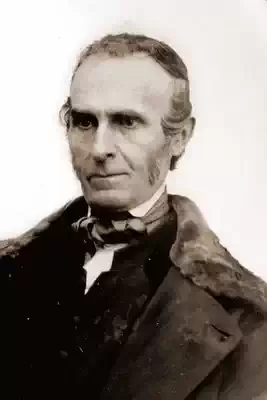
John Greenleaf Whittier
My Trust
My Trust
A picture memory brings to me
I look across the years and see
Myself beside my mother's knee.
I feel her gentle hand restrain
My selfish moods, and know again
A child's blind sense of wrong and pain.
But wiser now, a man gray grown,
My childhood's needs are better known,
My mother's chastening love I own.
Gray grown, but in our Father's sight
A child still groping for the light
To read His works and ways aright.
I wait, in His good time to see
That as my mother dealt with me
So with His children dealeth He.
I bow myself beneath His hand
That pain itself was wisely planned
I feel, and partly understand.
The joy that comes in sorrow's guise,
The sweet pains of self-sacrifice,
I would not have them otherwise.
And what were life and death if sin
Knew not the dread rebuke within,
The pang of merciful discipline?
Not with thy proud despair of old,
Crowned stoic of Rome's noblest mould!
Pleasure and pain alike I hold.
I suffer with no vain pretence
Of triumph over flesh and sense,
Yet trust the grievous providence,
How dark soe'er it seems, may tend,
By ways I cannot comprehend,
To some unguessed benignant end;
That every loss and lapse may gain
The clear-aired heights by steps of pain,
And never cross is borne in vain.
A picture memory brings to me
I look across the years and see
Myself beside my mother's knee.
I feel her gentle hand restrain
My selfish moods, and know again
A child's blind sense of wrong and pain.
But wiser now, a man gray grown,
My childhood's needs are better known,
My mother's chastening love I own.
Gray grown, but in our Father's sight
A child still groping for the light
To read His works and ways aright.
I wait, in His good time to see
That as my mother dealt with me
So with His children dealeth He.
I bow myself beneath His hand
That pain itself was wisely planned
I feel, and partly understand.
The joy that comes in sorrow's guise,
The sweet pains of self-sacrifice,
I would not have them otherwise.
And what were life and death if sin
Knew not the dread rebuke within,
The pang of merciful discipline?
Not with thy proud despair of old,
Crowned stoic of Rome's noblest mould!
Pleasure and pain alike I hold.
I suffer with no vain pretence
Of triumph over flesh and sense,
Yet trust the grievous providence,
How dark soe'er it seems, may tend,
By ways I cannot comprehend,
To some unguessed benignant end;
That every loss and lapse may gain
The clear-aired heights by steps of pain,
And never cross is borne in vain.
345
John Greenleaf Whittier
Mogg Megone - Part II.
Mogg Megone - Part II.
'Tis morning over Norridgewock, On
tree and wigwam, wave and rock.
Bathed in the autumnal sunshine, stirred
At intervals by breeze and bird,
And wearing all the hues which glow
In heaven's own pure and perfect bow,
That glorious picture of the air,
Which summer's light-robed angel forms
On the dark ground of fading storms,
With pencil dipped in sunbeams there, And,
stretching out, on either hand,
O'er all that wide and unshorn land,
Till, weary of its gorgeousness,
The aching and the dazzled eye
Rests, gladdened, on the calm blue sky, Slumbers
the mighty wilderness!
The oak, upon the windy hill,
Its dark green burthen upward heaves The
hemlock broods above its rill,
Its cone-like foliage darker still,
Against the birch's graceful stem,
And the rough walnut-bough receives
The sun upon its crowded leaves,
Each colored like a topaz gem;
And the tall maple wears with them
The coronal, which autumn gives,
The brief, bright sign of ruin near,
The hectic of a dying year!
The hermit priest, who lingers now
On the Bald Mountain's shrubless brow,
The gray and thunder-smitten pile
Which marks afar the Desert Isle,
While gazing on the scene below,
May half forget the dreams of home,
That nightly with his slumbers come, The
tranquil skies of sunny France,
The peasant's harvest song and dance,
The vines around the hillsides wreathing
The soft airs midst their clusters breathing,
The wings which dipped, the stars which shone
Within thy bosom, blue Garonne!
And round the Abbey's shadowed wall,
At morning spring and even-fall,
Sweet voices in the still air singing, The
chant of many a holy hymn, The
solemn bell of vespers ringing, And
hallowed torchlight falling dim
On pictured saint and seraphim!
For here beneath him lies unrolled,
Bathed deep in morning's flood of gold,
A vision gorgeous as the dream
Of the beautified may seem,
When, as his Church's legends say,
Borne upward in ecstatic bliss,
The rapt enthusiast soars away
Unto a brighter world than this:
A mortal's glimpse beyond the pale, A
moment's lifting of the veil!
Far eastward o'er the lovely bay,
Penobscot's clustered wigwams lay;
And gently from that Indian town
The verdant hillside slopes adown,
To where the sparkling waters play
Upon the yellow sands below;
And shooting round the winding shores
Of narrow capes, and isles which lie
Slumbering to ocean's lullaby, With
birchen boat and glancing oars,
The red men to their fishing go;
While from their planting ground is borne
The treasure of the golden corn,
By laughing girls, whose dark eyes glow
Wild through the locks which o'er them flow.
The wrinkled squaw, whose toil is done,
Sits on her bear-skin in the sun,
Watching the huskers, with a smile
For each full ear which swells the pile;
And the old chief, who nevermore
May bend the bow or pull the oar,
Smokes gravely in his wigwam door,
Or slowly shapes, with axe of stone,
The arrow-head from flint and bone.
Beneath the westward turning eye
A thousand wooded islands lie, Gems
of the waters! - with each hue
Of brightness set in ocean's blue.
Each bears aloft its tuft of trees
Touched by the pencil of the frost,
And, with the motion of each breeze,
A moment seen, - a moment lost, Changing
and blent, confused and tossed,
The brighter with the darker crossed,
Their thousand tints of beauty glow
Down in the restless waves below,
And tremble in the sunny skies,
As if, from waving bough to bough,
Flitted the birds of paradise.
There sleep Placentia's group, - and there
Pere Breteaux marks the hour of prayer;
And there, beneath the sea-worn cliff,
On which the Father's hut is seen,
The Indian stays his rocking skiff,
And peers the hemlock-boughs between,
Half trembling, as he seeks to look
Upon the Jesuit's Cross and Book.
There, gloomily against the sky
The Dark Isles rear their summits high;
And Desert Rock, abrupt and bare,
Lifts its gray turrets in the air, Seen
from afar, like some stronghold
Built by the ocean kings of old;
And, faint as smoke-wreath white and thin,
Swells in the north vast Katahdin:
And, wandering from its marshy feet,
The broad Penobscot comes to meet
And mingle with his own bright bay.
Slow sweep his dark and gathering floods,
Arched over by the ancient woods,
Which Time, in those dim solitudes,
Wielding the dull axe of Decay,
Alone hath ever shorn away.
Not thus, within the woods which hide
The beauty of thy azure tide,
And with their falling timbers block
Thy broken currents, Kennebec!
Gazes the white man on the wreck
Of the down-trodden Norridgewock, In
one lone village hemmed at length,
In battle shorn of half their strength,
Turned, like the panther in his lair,
With his fast-flowing life-blood wet,
For one last struggle of despair,
Wounded and faint, but tameless yet,
Unreaped, upon the planting lands,
The scant, neglected harvest stands:
No shout is there, - no dance, - no song:
The aspect of the very child
Scowls with a meaning sad and wild
Of bitterness and wrong.
The almost infant Norridgewock
Essays to lift the tomahawk;
And plucks his father's knife away,
To mimic, in his frightful play,
The scalping of an English foe:
Wreathes on his lip a horrid smile,
Burns, like a snake's, his small eye, while
Some bough or sapling meets his blow.
The fisher, as he drops his line,
Starts, when he sees the hazels quiver
Along the margin of the river,
Looks up and down the rippling tide,
And grasps the firelock at his side.
For Bomazeen from Tacconock
Has sent his runners to Norridgewock,
With tidings that Moulton and Harmon of York
Far up the river have come:
They have left their boats, - they have entered the wood,
And filled the depths of the solitude
With the sound of the ranger's drum.
On the brow of a hill, which slopes to meet
The flowing river, and bathe its feet, The
bare-washed rock, and the drooping grass,
And the creeping vine, as the waters pass, A
rude and unshapely chapel stands,
Built up in that wild by unskilled hands,
Yet the traveller knows it a place of prayer,
For the holy sign of the cross is there:
And should he chance at that place to be,
Of a Sabbath morn, or some hallowed day,
When prayers are made and masses are said,
Some for the living and some for the dead,
Well might that traveller start to see
The tall dark forms, that take their way
From the birch canoe, on the river-shore,
And the forest paths, to that chapel door;
And marvel to mark the naked knees
And the dusky foreheads bending there,
While, in coarse white vesture, over these
In blessing or in prayer,
Stretching abroad his thin pale hands,
Like a shrouded ghost, the Jesuit stands.
Two forms are now in that chapel dim,
The Jesuit, silent and sad and pale,
Anxiously heeding some fearful tale,
Which a stranger is telling him.
That stranger's garb is soiled and torn,
And wet with dew and loosely worn;
Her fair neglected hair falls down
O'er cheeks with wind and sunshine brown;
Yet still, in that disordered face,
The Jesuit's cautious eye can trace
Those elements of former grace
Which, half effaced, seem scarcely less,
Even now, than perfect loveliness.
With drooping head, and voice so low
That scarce it meets the Jesuit's ears, While
through her clasped fingers flow,
From the heart's fountain, hot and slow,
Her penitential tears, She
tells the story of the woe
And evil of her years.
'O father, bear with me; my heart
Is sick and death-like, and my brain
Seems girdled with a fiery chain,
Whose scorching links will never part,
And never cool again.
Bear with me while I speak, - but turn
Away that gentle eye, the while, The
fires of guilt more fiercely burn
Beneath its holy smile;
For half I fancy I can see
My mother's sainted look in thee.
'My dear lost mother! sad and pale,
Mournfully sinking day by day,
And with a hold on life as frail
As frosted leaves, that, thin and gray,
Hang feebly on their parent spray,
And tremble in the gale;
Yet watching o'er my childishness
With patient fondness, - not the less
For all the agony which kept
Her blue eye wakeful, while I slept;
And checking every tear and groan
That haply might have waked my own,
And bearing still, without offence,
My idle words, and petulance;
Reproving with a tear, - and, while
The tooth of pain was keenly preying
Upon her very heart, repaying
My brief repentance with a smile.
'O, in her meek, forgiving eye
There was a brightness not of mirth,
A light whose clear intensity
Was borrowed not of earth.
Along her cheek a deepening red
Told where the feverish hectic fed;
And yet, each fatal token gave
To the mild beauty of her face
A newer and a dearer grace,
Unwarning of the grave.
'Twas like the hue which Autumn gives
To yonder changed and dying leaves,
Breathed over by his frosty breath;
Scarce can the gazer feel that this
Is but the spoiler's treacherous kiss,
The mocking-smile of Death!
'Sweet were the tales she used to tell
When summer's eve was dear to us,
And, fading from the darkening dell,
The glory of the sunset fell
On wooded Agamenticus, When,
sitting by our cottage wall,
The murmur of the Saco's fall,
And the south-wind's expiring sighs,
Came, softly blending, on my ear,
With the low tones I loved to hear:
Tales of the pure, - the good, - the wise, The
holy men and maids of old,
In the all-sacred pages told; Of
Rachel, stooped at Haran's fountains,
Amid her father's thirsty flock,
Beautiful to her kinsman seeming
As the bright angels of his dreaming,
On Padan-aran's holy rock;
Of gentle Ruth, - and her who kept
Her awful vigil on the mountains,
By Israel's virgin daughters wept;
Of Miriam, with her maidens, singing
The song for grateful Israel meet,
While every crimson wave was bringing
The spoils of Egypt at her feet;
Of her, - Samaria's humble daughter,
Who paused to hear, beside her well,
Lessons of love and truth, which fell
Softly as Shiloh's flowing water;
And saw, beneath his pilgrim guise,
The Promised One, so long foretold
By holy seer and bard of old,
Revealed before her wondering eyes!
'Slowly she faded. Day by day
Her step grew weaker in our hall,
And fainter, at each even-fall,
He sad voice died away.
Yet on her thin, pale, lip, the while,
Sat Resignation's holy smile:
And even my father checked his tread,
And hushed his voice, beside her bed:
Beneath the calm and sad rebuke
Of her meek eye's imploring look,
The scowl of hate his brow forsook,
And in his stern and gloomy eye,
At times, a few unwonted tears
Wet the dark lashes, which for years
Hatred and pride had kept so dry.
'Calm as a child to slumber soothed,
As if an angel's hand had smoothed
The still, white features into rest,
Silent and cold, without a breath
To stir the drapery on her breast,
Pain, with its keen and poisoned fang,
The horror of the mortal pang,
The suffering look her brow had worn,
The fear, the strife, the anguish gone, She
slept at last in death!
'O, tell me, father,
can
the dead
Walk on the earth, and look on us,
And lay upon the living's head
Their blessing or their curse?
For, O, last night she stood by me,
As I lay beneath the woodland tree!'
The Jesuit crosses himself in awe, '
Jesu! what was it my daughter saw?'
'
She
came to me last night.
The dried leaves did not feel her tread;
She stood by me in the wan moonlight,
In the white robes of the dead!
Pale, and very mournfully
She bent her light form over me.
I heard no sound, I felt no breath
Breathe o'er me from that face of death:
Its blue eyes rested on my own,
Rayless and cold as eyes of stone;
Yet, in their fixed, unchanging gaze,
Something, which spoke of early days, A
sadness in their quiet glare,
As if love's smile were frozen there, Came
o'er me with an icy thrill;
O God! I feel its presence still!'
The Jesuit makes the holy sign, '
How passed the vision, daughter mine?'
'All dimly in the wan moonshine,
As a wreath of mist will twist and twine
And scatter, and melt into the light, So
scattering, - melting on my sight,
The pale, cold vision passed;
But those sad eyes were fixed on mine
Mournfully to the last.'
'God help thee, daughter, tell me why
That spirit passed before thine eye!'
'Father, I know not, save it be
That deeds of mine have summoned her
From the unbreathing sepulchre,
To leave her last rebuke with me.
Ah, woe for me! my mother died
Just at the moment when I stood
Close on the verge of womanhood,
A child in everything beside;
And when my wild heart needed most
Her gentle counsels, they were lost.
'My father lived a stormy life,
Of frequent change and daily strife;
And - God forgive him! - left his child
To feel, like him, a freedom wild;
To love the red man's dwelling-place.
The birch boat on his shaded floods,
The wild excitement of the chase
Sweeping the ancient woods,
The camp-fire, blazing on the shore
Of the still lakes, the clear stream where
The idle fisher sets his wear,
Or angles in the shade, far more
Than that restraining awe I felt
Beneath my gentle mother's care,
When nightly at her knee I knelt,
With childhood's simple prayer.
'There came a change. The wild, glad mood
Of unchecked freedom passed.
Amid the ancient solitude
Of unshorn grass and waving wood,
And waters glancing bright and fast,
A softened voice was in my ear,
Sweet as those lulling sounds and fine
The hunter lifts his head to hear,
Now far and faint, now full and near The
mumur of the wind-swept pine.
A manly form was ever nigh,
A bold, free hunter, with an eye
Whose dark, keen glance had power to wake
Both fear and love, - to awe and charm
'Twas as the wizard rattlesnake,
Whose evil glances lure to harm Whose
cold and small and glittering eye,
And brilliant coil, and changing dye,
Draw, step by step, the gazer near,
With drooping wing and cry of fear,
Yet powerless all to turn away,
A conscious, but a willing prey!
'Fear, doubt, thought, life itself, erelong
Merged in one feeling deep and strong.
Faded the world which I had known,
A poor vain shadow, cold and waste;
In the warm present bliss alone
Seemed I of actual life to taste.
Fond longings dimly understood,
The glow of passion's quickening blood,
And cherished fantasies which press
The young lip with a dream's caress, The
heart's forecast and prophecy
Took form and life before my eye,
Seen in the glance which met my own,
Heard in the soft and pleading tone,
Felt in the arms around me cast,
And warm heart-pulses beating fast.
Ah! scarcely yet to God above
With deeper trust, with stronger love,
Has prayerful saint his meek heart lent,
Or cloistered nun at twilight bent,
Than I, before a human shrine,
With heart, and soul, and mind, and form,
Knelt madly to a fellow-worm.
'Full soon, upon that dream of sin,
An awful light came bursting in.
The shrine was cold at which I knelt,
The idol of that shrine was gone;
A humbled thing of shame and guilt,
Outcast, and spurned and lone,
Wrapt in the shadows of my crime,
With withering heart and burning brain,
And tears that fell like fiery rain,
I passed a fearful time.
'There came a voice - it checked the tear In
heart and soul it wrought a change; My
father's voice was in my ear;
It whispered of revenge!
A new and fiercer feeling swept
All lingering tenderness away;
And tiger passions, which had slept
In childhood's better day,
Unknown, unfelt, arose at length
In all their own demoniac strength.
'A youthful warrior of the wild,
By words deceived, by smiles beguiled,
Of crime the cheated instrument,
Upon our fatal errands went.
Through camp and town and wilderness
He tracked his victim; and, at last,
Just when the tide of hate had passed,
And milder thoughts came warm and fast,
Exulting, at my feet he cast
The bloody token of success.
'O God! with what an awful power
I saw the buried past uprise,
And gather, in a single hour,
Its ghost-like memories!
And then I felt - alas! too late That
underneath the mask of hate,
That shame and guilt and wrong had thrown
O'er feelings which they might not own,
The heart's wild love had known no change;
And still that deep and hidden love,
With its first fondness, wept above
The victim of its own revenge!
There lay the fearful scalp, and there
The blood was on its pale brown hair!
I thought not of the victim's scorn,
I thought not of his baleful guile,
My deadly wrong, my outcast name,
The characters of sin and shame
On heart and forehead drawn;
I only saw that victim's smile, The
still, green places where we met, The
moonlit branches, dewy wet;
I only felt, I only heard
The greeting and the parting word, The
smile, - the embrace, - the tone which made
An Eden of the forest shade.
'And oh, with what a loathing eye,
With what a deadly hate, and deep,
I saw that Indian murderer lie
Before me, in his drunken sleep!
What though for me the deed was done
And words of mine had sped him on!
Yet when he murmured, as he slept,
The horrors of that deed of blood,
The tide of utter madness swept
O'er brain and bosom, like a flood.
And, father, with this hand of mine -'
'Ha! what didst thou?' the Jesuit cries,
Shuddering, as smitten with sudden pain,
And shading, with one thin hand, his eyes,
With the other he makes the holy sign.
'- I smote him as I would a worm; With
heart as steeled, with nerves as firm:
He never woke again!'
'Woman of sin and blood and shame,
Speak, - I would know that victim's name.'
'Father,' she gasped, 'a chieftain, known
As Saco's Sachem, - Mogg Megone!'
Pale priest! What proud and lofty dreams,
What keen desires, what cherished schemes,
What hopes, that time may not recall,
Are darkened by that chieftain's fall!
Was he not pledged, by cross and vow,
To lift the hatchet of his sire,
And, round his own, the Church's foe,
To light the avenging fire?
Who now the Tarrantine shall wake.
For thine and for the Church's sake?
Who summon to the scene
Of conquest and unsparing strife,
And vengeance dearer than his life,
The fiery-souled Castine?
Three backward steps the Jesuit takes, His
long, thin frame as ague shakes;
And loathing hate is in his eye,
As from his lips these words of fear
Fall hoarsely on the maiden's ear, '
The soul that sinneth shall surely die!'
She stands, as stands the stricken deer,
Checked midway in the fearful chase,
When bursts, upon his eye and ear,
The gaunt, gray robber, baying near,
Between him and his hiding-place;
While still behind, with yell and blow,
Sweeps, like a storm, the coming foe.
'Save me, O holy man!' - her cry
Fills all the void, as if a tongue,
Unseen, from rib and rafter hung,
Thrilling with mortal agony;
Her hands are clasping the Jesuit's knee,
And her eye looks fearfully into his own; '
Off, woman of sin! - nay, touch not me
With those fingers of blood; - begone!'
With a gesture of horror, he spurns the form
That writhes at his feet like a trodden worm.
Ever thus the spirit must,
Guilty in the sight of Heaven,
With a keener woe be riven,
For its weak and sinful trust
In the strength of human dust
And its anguish thrill afresh
For each vain reliance given
To the failing arm of flesh.
'Tis morning over Norridgewock, On
tree and wigwam, wave and rock.
Bathed in the autumnal sunshine, stirred
At intervals by breeze and bird,
And wearing all the hues which glow
In heaven's own pure and perfect bow,
That glorious picture of the air,
Which summer's light-robed angel forms
On the dark ground of fading storms,
With pencil dipped in sunbeams there, And,
stretching out, on either hand,
O'er all that wide and unshorn land,
Till, weary of its gorgeousness,
The aching and the dazzled eye
Rests, gladdened, on the calm blue sky, Slumbers
the mighty wilderness!
The oak, upon the windy hill,
Its dark green burthen upward heaves The
hemlock broods above its rill,
Its cone-like foliage darker still,
Against the birch's graceful stem,
And the rough walnut-bough receives
The sun upon its crowded leaves,
Each colored like a topaz gem;
And the tall maple wears with them
The coronal, which autumn gives,
The brief, bright sign of ruin near,
The hectic of a dying year!
The hermit priest, who lingers now
On the Bald Mountain's shrubless brow,
The gray and thunder-smitten pile
Which marks afar the Desert Isle,
While gazing on the scene below,
May half forget the dreams of home,
That nightly with his slumbers come, The
tranquil skies of sunny France,
The peasant's harvest song and dance,
The vines around the hillsides wreathing
The soft airs midst their clusters breathing,
The wings which dipped, the stars which shone
Within thy bosom, blue Garonne!
And round the Abbey's shadowed wall,
At morning spring and even-fall,
Sweet voices in the still air singing, The
chant of many a holy hymn, The
solemn bell of vespers ringing, And
hallowed torchlight falling dim
On pictured saint and seraphim!
For here beneath him lies unrolled,
Bathed deep in morning's flood of gold,
A vision gorgeous as the dream
Of the beautified may seem,
When, as his Church's legends say,
Borne upward in ecstatic bliss,
The rapt enthusiast soars away
Unto a brighter world than this:
A mortal's glimpse beyond the pale, A
moment's lifting of the veil!
Far eastward o'er the lovely bay,
Penobscot's clustered wigwams lay;
And gently from that Indian town
The verdant hillside slopes adown,
To where the sparkling waters play
Upon the yellow sands below;
And shooting round the winding shores
Of narrow capes, and isles which lie
Slumbering to ocean's lullaby, With
birchen boat and glancing oars,
The red men to their fishing go;
While from their planting ground is borne
The treasure of the golden corn,
By laughing girls, whose dark eyes glow
Wild through the locks which o'er them flow.
The wrinkled squaw, whose toil is done,
Sits on her bear-skin in the sun,
Watching the huskers, with a smile
For each full ear which swells the pile;
And the old chief, who nevermore
May bend the bow or pull the oar,
Smokes gravely in his wigwam door,
Or slowly shapes, with axe of stone,
The arrow-head from flint and bone.
Beneath the westward turning eye
A thousand wooded islands lie, Gems
of the waters! - with each hue
Of brightness set in ocean's blue.
Each bears aloft its tuft of trees
Touched by the pencil of the frost,
And, with the motion of each breeze,
A moment seen, - a moment lost, Changing
and blent, confused and tossed,
The brighter with the darker crossed,
Their thousand tints of beauty glow
Down in the restless waves below,
And tremble in the sunny skies,
As if, from waving bough to bough,
Flitted the birds of paradise.
There sleep Placentia's group, - and there
Pere Breteaux marks the hour of prayer;
And there, beneath the sea-worn cliff,
On which the Father's hut is seen,
The Indian stays his rocking skiff,
And peers the hemlock-boughs between,
Half trembling, as he seeks to look
Upon the Jesuit's Cross and Book.
There, gloomily against the sky
The Dark Isles rear their summits high;
And Desert Rock, abrupt and bare,
Lifts its gray turrets in the air, Seen
from afar, like some stronghold
Built by the ocean kings of old;
And, faint as smoke-wreath white and thin,
Swells in the north vast Katahdin:
And, wandering from its marshy feet,
The broad Penobscot comes to meet
And mingle with his own bright bay.
Slow sweep his dark and gathering floods,
Arched over by the ancient woods,
Which Time, in those dim solitudes,
Wielding the dull axe of Decay,
Alone hath ever shorn away.
Not thus, within the woods which hide
The beauty of thy azure tide,
And with their falling timbers block
Thy broken currents, Kennebec!
Gazes the white man on the wreck
Of the down-trodden Norridgewock, In
one lone village hemmed at length,
In battle shorn of half their strength,
Turned, like the panther in his lair,
With his fast-flowing life-blood wet,
For one last struggle of despair,
Wounded and faint, but tameless yet,
Unreaped, upon the planting lands,
The scant, neglected harvest stands:
No shout is there, - no dance, - no song:
The aspect of the very child
Scowls with a meaning sad and wild
Of bitterness and wrong.
The almost infant Norridgewock
Essays to lift the tomahawk;
And plucks his father's knife away,
To mimic, in his frightful play,
The scalping of an English foe:
Wreathes on his lip a horrid smile,
Burns, like a snake's, his small eye, while
Some bough or sapling meets his blow.
The fisher, as he drops his line,
Starts, when he sees the hazels quiver
Along the margin of the river,
Looks up and down the rippling tide,
And grasps the firelock at his side.
For Bomazeen from Tacconock
Has sent his runners to Norridgewock,
With tidings that Moulton and Harmon of York
Far up the river have come:
They have left their boats, - they have entered the wood,
And filled the depths of the solitude
With the sound of the ranger's drum.
On the brow of a hill, which slopes to meet
The flowing river, and bathe its feet, The
bare-washed rock, and the drooping grass,
And the creeping vine, as the waters pass, A
rude and unshapely chapel stands,
Built up in that wild by unskilled hands,
Yet the traveller knows it a place of prayer,
For the holy sign of the cross is there:
And should he chance at that place to be,
Of a Sabbath morn, or some hallowed day,
When prayers are made and masses are said,
Some for the living and some for the dead,
Well might that traveller start to see
The tall dark forms, that take their way
From the birch canoe, on the river-shore,
And the forest paths, to that chapel door;
And marvel to mark the naked knees
And the dusky foreheads bending there,
While, in coarse white vesture, over these
In blessing or in prayer,
Stretching abroad his thin pale hands,
Like a shrouded ghost, the Jesuit stands.
Two forms are now in that chapel dim,
The Jesuit, silent and sad and pale,
Anxiously heeding some fearful tale,
Which a stranger is telling him.
That stranger's garb is soiled and torn,
And wet with dew and loosely worn;
Her fair neglected hair falls down
O'er cheeks with wind and sunshine brown;
Yet still, in that disordered face,
The Jesuit's cautious eye can trace
Those elements of former grace
Which, half effaced, seem scarcely less,
Even now, than perfect loveliness.
With drooping head, and voice so low
That scarce it meets the Jesuit's ears, While
through her clasped fingers flow,
From the heart's fountain, hot and slow,
Her penitential tears, She
tells the story of the woe
And evil of her years.
'O father, bear with me; my heart
Is sick and death-like, and my brain
Seems girdled with a fiery chain,
Whose scorching links will never part,
And never cool again.
Bear with me while I speak, - but turn
Away that gentle eye, the while, The
fires of guilt more fiercely burn
Beneath its holy smile;
For half I fancy I can see
My mother's sainted look in thee.
'My dear lost mother! sad and pale,
Mournfully sinking day by day,
And with a hold on life as frail
As frosted leaves, that, thin and gray,
Hang feebly on their parent spray,
And tremble in the gale;
Yet watching o'er my childishness
With patient fondness, - not the less
For all the agony which kept
Her blue eye wakeful, while I slept;
And checking every tear and groan
That haply might have waked my own,
And bearing still, without offence,
My idle words, and petulance;
Reproving with a tear, - and, while
The tooth of pain was keenly preying
Upon her very heart, repaying
My brief repentance with a smile.
'O, in her meek, forgiving eye
There was a brightness not of mirth,
A light whose clear intensity
Was borrowed not of earth.
Along her cheek a deepening red
Told where the feverish hectic fed;
And yet, each fatal token gave
To the mild beauty of her face
A newer and a dearer grace,
Unwarning of the grave.
'Twas like the hue which Autumn gives
To yonder changed and dying leaves,
Breathed over by his frosty breath;
Scarce can the gazer feel that this
Is but the spoiler's treacherous kiss,
The mocking-smile of Death!
'Sweet were the tales she used to tell
When summer's eve was dear to us,
And, fading from the darkening dell,
The glory of the sunset fell
On wooded Agamenticus, When,
sitting by our cottage wall,
The murmur of the Saco's fall,
And the south-wind's expiring sighs,
Came, softly blending, on my ear,
With the low tones I loved to hear:
Tales of the pure, - the good, - the wise, The
holy men and maids of old,
In the all-sacred pages told; Of
Rachel, stooped at Haran's fountains,
Amid her father's thirsty flock,
Beautiful to her kinsman seeming
As the bright angels of his dreaming,
On Padan-aran's holy rock;
Of gentle Ruth, - and her who kept
Her awful vigil on the mountains,
By Israel's virgin daughters wept;
Of Miriam, with her maidens, singing
The song for grateful Israel meet,
While every crimson wave was bringing
The spoils of Egypt at her feet;
Of her, - Samaria's humble daughter,
Who paused to hear, beside her well,
Lessons of love and truth, which fell
Softly as Shiloh's flowing water;
And saw, beneath his pilgrim guise,
The Promised One, so long foretold
By holy seer and bard of old,
Revealed before her wondering eyes!
'Slowly she faded. Day by day
Her step grew weaker in our hall,
And fainter, at each even-fall,
He sad voice died away.
Yet on her thin, pale, lip, the while,
Sat Resignation's holy smile:
And even my father checked his tread,
And hushed his voice, beside her bed:
Beneath the calm and sad rebuke
Of her meek eye's imploring look,
The scowl of hate his brow forsook,
And in his stern and gloomy eye,
At times, a few unwonted tears
Wet the dark lashes, which for years
Hatred and pride had kept so dry.
'Calm as a child to slumber soothed,
As if an angel's hand had smoothed
The still, white features into rest,
Silent and cold, without a breath
To stir the drapery on her breast,
Pain, with its keen and poisoned fang,
The horror of the mortal pang,
The suffering look her brow had worn,
The fear, the strife, the anguish gone, She
slept at last in death!
'O, tell me, father,
can
the dead
Walk on the earth, and look on us,
And lay upon the living's head
Their blessing or their curse?
For, O, last night she stood by me,
As I lay beneath the woodland tree!'
The Jesuit crosses himself in awe, '
Jesu! what was it my daughter saw?'
'
She
came to me last night.
The dried leaves did not feel her tread;
She stood by me in the wan moonlight,
In the white robes of the dead!
Pale, and very mournfully
She bent her light form over me.
I heard no sound, I felt no breath
Breathe o'er me from that face of death:
Its blue eyes rested on my own,
Rayless and cold as eyes of stone;
Yet, in their fixed, unchanging gaze,
Something, which spoke of early days, A
sadness in their quiet glare,
As if love's smile were frozen there, Came
o'er me with an icy thrill;
O God! I feel its presence still!'
The Jesuit makes the holy sign, '
How passed the vision, daughter mine?'
'All dimly in the wan moonshine,
As a wreath of mist will twist and twine
And scatter, and melt into the light, So
scattering, - melting on my sight,
The pale, cold vision passed;
But those sad eyes were fixed on mine
Mournfully to the last.'
'God help thee, daughter, tell me why
That spirit passed before thine eye!'
'Father, I know not, save it be
That deeds of mine have summoned her
From the unbreathing sepulchre,
To leave her last rebuke with me.
Ah, woe for me! my mother died
Just at the moment when I stood
Close on the verge of womanhood,
A child in everything beside;
And when my wild heart needed most
Her gentle counsels, they were lost.
'My father lived a stormy life,
Of frequent change and daily strife;
And - God forgive him! - left his child
To feel, like him, a freedom wild;
To love the red man's dwelling-place.
The birch boat on his shaded floods,
The wild excitement of the chase
Sweeping the ancient woods,
The camp-fire, blazing on the shore
Of the still lakes, the clear stream where
The idle fisher sets his wear,
Or angles in the shade, far more
Than that restraining awe I felt
Beneath my gentle mother's care,
When nightly at her knee I knelt,
With childhood's simple prayer.
'There came a change. The wild, glad mood
Of unchecked freedom passed.
Amid the ancient solitude
Of unshorn grass and waving wood,
And waters glancing bright and fast,
A softened voice was in my ear,
Sweet as those lulling sounds and fine
The hunter lifts his head to hear,
Now far and faint, now full and near The
mumur of the wind-swept pine.
A manly form was ever nigh,
A bold, free hunter, with an eye
Whose dark, keen glance had power to wake
Both fear and love, - to awe and charm
'Twas as the wizard rattlesnake,
Whose evil glances lure to harm Whose
cold and small and glittering eye,
And brilliant coil, and changing dye,
Draw, step by step, the gazer near,
With drooping wing and cry of fear,
Yet powerless all to turn away,
A conscious, but a willing prey!
'Fear, doubt, thought, life itself, erelong
Merged in one feeling deep and strong.
Faded the world which I had known,
A poor vain shadow, cold and waste;
In the warm present bliss alone
Seemed I of actual life to taste.
Fond longings dimly understood,
The glow of passion's quickening blood,
And cherished fantasies which press
The young lip with a dream's caress, The
heart's forecast and prophecy
Took form and life before my eye,
Seen in the glance which met my own,
Heard in the soft and pleading tone,
Felt in the arms around me cast,
And warm heart-pulses beating fast.
Ah! scarcely yet to God above
With deeper trust, with stronger love,
Has prayerful saint his meek heart lent,
Or cloistered nun at twilight bent,
Than I, before a human shrine,
With heart, and soul, and mind, and form,
Knelt madly to a fellow-worm.
'Full soon, upon that dream of sin,
An awful light came bursting in.
The shrine was cold at which I knelt,
The idol of that shrine was gone;
A humbled thing of shame and guilt,
Outcast, and spurned and lone,
Wrapt in the shadows of my crime,
With withering heart and burning brain,
And tears that fell like fiery rain,
I passed a fearful time.
'There came a voice - it checked the tear In
heart and soul it wrought a change; My
father's voice was in my ear;
It whispered of revenge!
A new and fiercer feeling swept
All lingering tenderness away;
And tiger passions, which had slept
In childhood's better day,
Unknown, unfelt, arose at length
In all their own demoniac strength.
'A youthful warrior of the wild,
By words deceived, by smiles beguiled,
Of crime the cheated instrument,
Upon our fatal errands went.
Through camp and town and wilderness
He tracked his victim; and, at last,
Just when the tide of hate had passed,
And milder thoughts came warm and fast,
Exulting, at my feet he cast
The bloody token of success.
'O God! with what an awful power
I saw the buried past uprise,
And gather, in a single hour,
Its ghost-like memories!
And then I felt - alas! too late That
underneath the mask of hate,
That shame and guilt and wrong had thrown
O'er feelings which they might not own,
The heart's wild love had known no change;
And still that deep and hidden love,
With its first fondness, wept above
The victim of its own revenge!
There lay the fearful scalp, and there
The blood was on its pale brown hair!
I thought not of the victim's scorn,
I thought not of his baleful guile,
My deadly wrong, my outcast name,
The characters of sin and shame
On heart and forehead drawn;
I only saw that victim's smile, The
still, green places where we met, The
moonlit branches, dewy wet;
I only felt, I only heard
The greeting and the parting word, The
smile, - the embrace, - the tone which made
An Eden of the forest shade.
'And oh, with what a loathing eye,
With what a deadly hate, and deep,
I saw that Indian murderer lie
Before me, in his drunken sleep!
What though for me the deed was done
And words of mine had sped him on!
Yet when he murmured, as he slept,
The horrors of that deed of blood,
The tide of utter madness swept
O'er brain and bosom, like a flood.
And, father, with this hand of mine -'
'Ha! what didst thou?' the Jesuit cries,
Shuddering, as smitten with sudden pain,
And shading, with one thin hand, his eyes,
With the other he makes the holy sign.
'- I smote him as I would a worm; With
heart as steeled, with nerves as firm:
He never woke again!'
'Woman of sin and blood and shame,
Speak, - I would know that victim's name.'
'Father,' she gasped, 'a chieftain, known
As Saco's Sachem, - Mogg Megone!'
Pale priest! What proud and lofty dreams,
What keen desires, what cherished schemes,
What hopes, that time may not recall,
Are darkened by that chieftain's fall!
Was he not pledged, by cross and vow,
To lift the hatchet of his sire,
And, round his own, the Church's foe,
To light the avenging fire?
Who now the Tarrantine shall wake.
For thine and for the Church's sake?
Who summon to the scene
Of conquest and unsparing strife,
And vengeance dearer than his life,
The fiery-souled Castine?
Three backward steps the Jesuit takes, His
long, thin frame as ague shakes;
And loathing hate is in his eye,
As from his lips these words of fear
Fall hoarsely on the maiden's ear, '
The soul that sinneth shall surely die!'
She stands, as stands the stricken deer,
Checked midway in the fearful chase,
When bursts, upon his eye and ear,
The gaunt, gray robber, baying near,
Between him and his hiding-place;
While still behind, with yell and blow,
Sweeps, like a storm, the coming foe.
'Save me, O holy man!' - her cry
Fills all the void, as if a tongue,
Unseen, from rib and rafter hung,
Thrilling with mortal agony;
Her hands are clasping the Jesuit's knee,
And her eye looks fearfully into his own; '
Off, woman of sin! - nay, touch not me
With those fingers of blood; - begone!'
With a gesture of horror, he spurns the form
That writhes at his feet like a trodden worm.
Ever thus the spirit must,
Guilty in the sight of Heaven,
With a keener woe be riven,
For its weak and sinful trust
In the strength of human dust
And its anguish thrill afresh
For each vain reliance given
To the failing arm of flesh.
324
John Greenleaf Whittier
Marguerite
Marguerite
MASSACHUSETTS BAY, 1760.
THE robins sang in the orchard, the buds into
blossoms grew;
Little of human sorrow the buds and the robins
knew!
Sick, in an alien household, the poor French
neutral lay;
Into her lonesome garret fell the light of the April
day,
Through the dusty window, curtained by the spider's
warp and woof,
On the loose-laid floor of hemlock, on oaken ribs
of roof,
The bedquilt's faded patchwork, the teacups on the
stand,
The wheel with flaxen tangle, as it dropped from
her sick hand.
What to her was the song of the robin, or warm
morning light,
As she lay in the trance of the dying, heedless of
sound or sight?
Done was the work of her bands, she had eaten her
bitter bread;
The world of the alien people lay behind her dim
and dead.
But her soul went back to its child-time; she saw
the sun o'erflow
With gold the Basin of Minas, and set over
Gaspereau;
The low, bare flats at ebb-tide, the rush of the sea
at flood,
Through inlet and creek and river, from dike to
upland wood;
The gulls in the red of morning, the fish-hawk's
rise and fall,
The drift of the fog in moonshine, over the dark
coast-wall.
She saw the face of her mother, she heard the song
she sang;
And far off, faintly, slowly, the bell for vespers
rang.
By her bed the hard-faced mistress sat, smoothing
the wrinkled sheet,
Peering into the face, so helpless, and feeling the
ice-cold feet.
With a vague remorse atoning for her greed and
long abuse,
By care no longer heeded and pity too late for use.
Up the stairs of the garret softly the son of the
mistress stepped,
Leaned over the head-board, covering his face with
his hands, and wept.
Outspake the mother, who watched him sharply,
with brow a-frown
'What! love you the Papist, the beggar, the
charge of the town?'
Be she Papist or beggar who lies here, I know
and God knows
I love her, and fain would go with her wherever
she goes!
'O mother! that sweet face came pleading, for
love so athirst.
You saw but the town-charge; I knew her God's
angel at first.'
Shaking her gray head, the mistress hushed down
a bitter cry;
And awed by the silence and shadow of death
drawing nigh,
She murmured a psalm of the Bible; but closer
the young girl pressed,
With the last of her life in her fingers, the cross
to her breast.
'My son, come away,' cried the mother, her voice
cruel grown.
'She is joined to her idols, like Ephraim; let her
alone!'
But he knelt with his hand on her forehead, his
lips to her ear,
And he called back the soul that was passing
'Marguerite, do you hear?'
She paused on the threshold of Heaven; love, pity,
surprise,
Wistful, tender, lit up for an instant the cloud of
her eyes.
With his heart on his lips he kissed her, but never
her cheek grew red,
And the words the living long for he spake in the
ear of the dead.
And the robins sang in the orchard, where buds to
blossoms grew;
Of the folded hands and the still face never the
robins knew!
MASSACHUSETTS BAY, 1760.
THE robins sang in the orchard, the buds into
blossoms grew;
Little of human sorrow the buds and the robins
knew!
Sick, in an alien household, the poor French
neutral lay;
Into her lonesome garret fell the light of the April
day,
Through the dusty window, curtained by the spider's
warp and woof,
On the loose-laid floor of hemlock, on oaken ribs
of roof,
The bedquilt's faded patchwork, the teacups on the
stand,
The wheel with flaxen tangle, as it dropped from
her sick hand.
What to her was the song of the robin, or warm
morning light,
As she lay in the trance of the dying, heedless of
sound or sight?
Done was the work of her bands, she had eaten her
bitter bread;
The world of the alien people lay behind her dim
and dead.
But her soul went back to its child-time; she saw
the sun o'erflow
With gold the Basin of Minas, and set over
Gaspereau;
The low, bare flats at ebb-tide, the rush of the sea
at flood,
Through inlet and creek and river, from dike to
upland wood;
The gulls in the red of morning, the fish-hawk's
rise and fall,
The drift of the fog in moonshine, over the dark
coast-wall.
She saw the face of her mother, she heard the song
she sang;
And far off, faintly, slowly, the bell for vespers
rang.
By her bed the hard-faced mistress sat, smoothing
the wrinkled sheet,
Peering into the face, so helpless, and feeling the
ice-cold feet.
With a vague remorse atoning for her greed and
long abuse,
By care no longer heeded and pity too late for use.
Up the stairs of the garret softly the son of the
mistress stepped,
Leaned over the head-board, covering his face with
his hands, and wept.
Outspake the mother, who watched him sharply,
with brow a-frown
'What! love you the Papist, the beggar, the
charge of the town?'
Be she Papist or beggar who lies here, I know
and God knows
I love her, and fain would go with her wherever
she goes!
'O mother! that sweet face came pleading, for
love so athirst.
You saw but the town-charge; I knew her God's
angel at first.'
Shaking her gray head, the mistress hushed down
a bitter cry;
And awed by the silence and shadow of death
drawing nigh,
She murmured a psalm of the Bible; but closer
the young girl pressed,
With the last of her life in her fingers, the cross
to her breast.
'My son, come away,' cried the mother, her voice
cruel grown.
'She is joined to her idols, like Ephraim; let her
alone!'
But he knelt with his hand on her forehead, his
lips to her ear,
And he called back the soul that was passing
'Marguerite, do you hear?'
She paused on the threshold of Heaven; love, pity,
surprise,
Wistful, tender, lit up for an instant the cloud of
her eyes.
With his heart on his lips he kissed her, but never
her cheek grew red,
And the words the living long for he spake in the
ear of the dead.
And the robins sang in the orchard, where buds to
blossoms grew;
Of the folded hands and the still face never the
robins knew!
281
John Greenleaf Whittier
Leggett’s Monument
Leggett’s Monument
Yes, pile the marble o'er him! It is well
That ye who mocked him in his long stern strife,
And planted in the pathway of his life
The ploughshares of your hatred hot from hell,
Who clamored down the bold reformer when
He pleaded for his captive fellow-men,
Who spurned him in the market-place, and sought
Within thy walls, St. Tammany, to bind
In party chains the free and honest thought,
The angel utterance of an upright mind,
Well is it now that o'er his grave ye raise
The stony tribute of your tardy praise,
For not alone that pile shall tell to Fame
Of the brave heart beneath, but of the builders' shame!
Yes, pile the marble o'er him! It is well
That ye who mocked him in his long stern strife,
And planted in the pathway of his life
The ploughshares of your hatred hot from hell,
Who clamored down the bold reformer when
He pleaded for his captive fellow-men,
Who spurned him in the market-place, and sought
Within thy walls, St. Tammany, to bind
In party chains the free and honest thought,
The angel utterance of an upright mind,
Well is it now that o'er his grave ye raise
The stony tribute of your tardy praise,
For not alone that pile shall tell to Fame
Of the brave heart beneath, but of the builders' shame!
217
John Greenleaf Whittier
King Volmer and Elsie
King Volmer and Elsie
After the Danish of Christian Winter
Where, over heathen doom-rings and gray stones of the Horg,
In its little Christian city stands the church of Vordingborg,
In merry mood King Volmer sat, forgetful of his power,
As idle as the Goose of Gold that brooded on his tower.
Out spake the King to Henrik, his young and faithful squire
'Dar'st trust thy little Elsie, the maid of thy desire?'
'Of all the men in Denmark she loveth only me
As true to me is Elsie as thy Lily is to thee.'
Loud laughed the king: 'To-morrow shall bring another day,
When I myself will test her; she will not say me nay.'
Thereat the lords and gallants, that round about him stood,
Wagged all their heads in concert and smiled as courtiers should.
The gray lark sings o'er Vordingborg, and on the ancient town
From the tall tower of Valdemar the Golden Goose looks down;
The yellow grain is waving in the pleasant wind of morn,
The wood resounds with cry of hounds and blare of hunter's horn.
In the garden of her father little Elsie sits and spins,
And, singing with the early birds, her daily task, begins.
Gay tulips bloom and sweet mint curls around her garden-bower,
But she is sweeter than the mint and fairer than the flower.
About her form her kirtle blue clings lovingly, and, white
As snow, her loose sleeves only leave her small, round wrists in sight;
Below, the modest petticoat can only half conceal
The motion of the lightest foot that ever turned a wheel.
The cat sits purring at her side, bees hum in sunshine warm;
But, look! she starts, she lifts her face, she shades it with her arm.
And, hark! a train of horsemen, with sound of dog and horn,
Come leaping o'er the ditches, come trampling down the corn!
Merrily rang the bridle-reins, and scarf and plume streamed gay,
As fast beside her father's gate the riders held their way;
And one was brave in scarlet cloak, with golden spur on heel,
And, as he checked his foaming steed, the maiden checked her wheel.
'All hail among thy roses, the fairest rose to me!
For weary months in secret my heart has longed for thee!'
What noble knight was this? What words for modest maiden's ear?
She dropped a lowly courtesy of bashfulness and fear.
She lifted up her spinning-wheel; she fain would seek the door,
Trembling in every limb, her cheek with blushes crimsoned o'er.
'Nay, fear me not,' the rider said, 'I offer heart and hand,
Bear witness these good Danish knights who round about me stand.
'I grant you time to think of this, to answer as you may,
For to-morrow, little Elsie, shall bring another day.'
He spake the old phrase slyly as, glancing round his train,
He saw his merry followers seek to hide their smiles in vain.
'The snow of pearls I'll scatter in your curls of golden hair,
I'll line with furs the velvet of the kirtle that you wear;
All precious gems shall twine your neck; and in a chariot gay
You shall ride, my little Elsie, behind four steeds of gray.
'And harps shall sound, and flutes shall play, and brazen lamps shall glow;
On marble floors your feet shall weave the dances to and fro.
At frosty eventide for us the blazing hearth shall shine,
While, at our ease, we play at draughts, and drink the blood-red wine.'
Then Elsie raised her head and met her wooer face to face;
A roguish smile shone in her eye and on her lip found place.
Back from her low white forehead the curls of gold she threw,
And lifted up her eyes to his, steady and clear and blue.
'I am a lowly peasant, and you a gallant knight;
I will not trust a love that soon may cool and turn to slight.
If you would wed me henceforth be a peasant, not a lord;
I bid you hang upon the wall your tried and trusty sword.'
'To please you, Elsie, I will lay keen Dynadel away,
And in its place will swing the scythe and mow your father's hay.'
'Nay, but your gallant scarlet cloak my eyes can never bear;
A Vadmal coat, so plain and gray, is all that you must wear.'
'Well, Vadmal will I wear for you,' the rider gayly spoke,
'And on the Lord's high altar I'll lay my scarlet cloak.'
'But mark,' she said, 'no stately horse my peasant love must ride,
A yoke of steers before the plough is all that he must guide.'
The knight looked down upon his steed: 'Well, let him wander free
No other man must ride the horse that has been backed by me.
Henceforth I'll tread the furrow and to my oxen talk,
If only little Elsie beside my plough will walk.'
'You must take from out your cellar cask of wine and flask and can;
The homely mead I brew you may serve a peasant man.'
'Most willingly, fair Elsie, I'll drink that mead of thine,
And leave my minstrel's thirsty throat to drain my generous wine.'
'Now break your shield asunder, and shatter sign and boss,
Unmeet for peasant-wedded arms, your knightly knee across.
And pull me down your castle from top to basement wall,
And let your plough trace furrows in the ruins of your hall!'
Then smiled he with a lofty pride; right well at last he knew
The maiden of the spinning-wheel was to her troth. plight true.
'Ah, roguish little Elsie! you act your part full well
You know that I must bear my shield and in my castle dwell!
'The lions ramping on that shield between the hearts aflame
Keep watch o'er Denmark's honor, and guard her ancient name.
'For know that I am Volmer; I dwell in yonder towers,
Who ploughs them ploughs up Denmark, this goodly home of ours'.
'I tempt no more, fair Elsie! your heart I know is true;
Would God that all our maidens were good and pure as you!
Well have you pleased your monarch, and he shall well repay;
God's peace! Farewell! To-morrow will bring another day!'
He lifted up his bridle hand, he spurred his good steed then,
And like a whirl-blast swept away with all his gallant men.
The steel hoofs beat the rocky path; again on winds of morn
The wood resounds with cry of hounds and blare of hunter's horn.
'Thou true and ever faithful!' the listening Henrik cried;
And, leaping o'er the green hedge, he stood by Elsie's side.
None saw the fond embracing, save, shining from afar,
The Golden Goose that watched them from the tower of Valdemar.
O darling girls of Denmark! of all the flowers that throng
Her vales of spring the fairest, I sing for you my song.
No praise as yours so bravely rewards the singer's skill;
Thank God! of maids like Elsie the land has plenty still!
After the Danish of Christian Winter
Where, over heathen doom-rings and gray stones of the Horg,
In its little Christian city stands the church of Vordingborg,
In merry mood King Volmer sat, forgetful of his power,
As idle as the Goose of Gold that brooded on his tower.
Out spake the King to Henrik, his young and faithful squire
'Dar'st trust thy little Elsie, the maid of thy desire?'
'Of all the men in Denmark she loveth only me
As true to me is Elsie as thy Lily is to thee.'
Loud laughed the king: 'To-morrow shall bring another day,
When I myself will test her; she will not say me nay.'
Thereat the lords and gallants, that round about him stood,
Wagged all their heads in concert and smiled as courtiers should.
The gray lark sings o'er Vordingborg, and on the ancient town
From the tall tower of Valdemar the Golden Goose looks down;
The yellow grain is waving in the pleasant wind of morn,
The wood resounds with cry of hounds and blare of hunter's horn.
In the garden of her father little Elsie sits and spins,
And, singing with the early birds, her daily task, begins.
Gay tulips bloom and sweet mint curls around her garden-bower,
But she is sweeter than the mint and fairer than the flower.
About her form her kirtle blue clings lovingly, and, white
As snow, her loose sleeves only leave her small, round wrists in sight;
Below, the modest petticoat can only half conceal
The motion of the lightest foot that ever turned a wheel.
The cat sits purring at her side, bees hum in sunshine warm;
But, look! she starts, she lifts her face, she shades it with her arm.
And, hark! a train of horsemen, with sound of dog and horn,
Come leaping o'er the ditches, come trampling down the corn!
Merrily rang the bridle-reins, and scarf and plume streamed gay,
As fast beside her father's gate the riders held their way;
And one was brave in scarlet cloak, with golden spur on heel,
And, as he checked his foaming steed, the maiden checked her wheel.
'All hail among thy roses, the fairest rose to me!
For weary months in secret my heart has longed for thee!'
What noble knight was this? What words for modest maiden's ear?
She dropped a lowly courtesy of bashfulness and fear.
She lifted up her spinning-wheel; she fain would seek the door,
Trembling in every limb, her cheek with blushes crimsoned o'er.
'Nay, fear me not,' the rider said, 'I offer heart and hand,
Bear witness these good Danish knights who round about me stand.
'I grant you time to think of this, to answer as you may,
For to-morrow, little Elsie, shall bring another day.'
He spake the old phrase slyly as, glancing round his train,
He saw his merry followers seek to hide their smiles in vain.
'The snow of pearls I'll scatter in your curls of golden hair,
I'll line with furs the velvet of the kirtle that you wear;
All precious gems shall twine your neck; and in a chariot gay
You shall ride, my little Elsie, behind four steeds of gray.
'And harps shall sound, and flutes shall play, and brazen lamps shall glow;
On marble floors your feet shall weave the dances to and fro.
At frosty eventide for us the blazing hearth shall shine,
While, at our ease, we play at draughts, and drink the blood-red wine.'
Then Elsie raised her head and met her wooer face to face;
A roguish smile shone in her eye and on her lip found place.
Back from her low white forehead the curls of gold she threw,
And lifted up her eyes to his, steady and clear and blue.
'I am a lowly peasant, and you a gallant knight;
I will not trust a love that soon may cool and turn to slight.
If you would wed me henceforth be a peasant, not a lord;
I bid you hang upon the wall your tried and trusty sword.'
'To please you, Elsie, I will lay keen Dynadel away,
And in its place will swing the scythe and mow your father's hay.'
'Nay, but your gallant scarlet cloak my eyes can never bear;
A Vadmal coat, so plain and gray, is all that you must wear.'
'Well, Vadmal will I wear for you,' the rider gayly spoke,
'And on the Lord's high altar I'll lay my scarlet cloak.'
'But mark,' she said, 'no stately horse my peasant love must ride,
A yoke of steers before the plough is all that he must guide.'
The knight looked down upon his steed: 'Well, let him wander free
No other man must ride the horse that has been backed by me.
Henceforth I'll tread the furrow and to my oxen talk,
If only little Elsie beside my plough will walk.'
'You must take from out your cellar cask of wine and flask and can;
The homely mead I brew you may serve a peasant man.'
'Most willingly, fair Elsie, I'll drink that mead of thine,
And leave my minstrel's thirsty throat to drain my generous wine.'
'Now break your shield asunder, and shatter sign and boss,
Unmeet for peasant-wedded arms, your knightly knee across.
And pull me down your castle from top to basement wall,
And let your plough trace furrows in the ruins of your hall!'
Then smiled he with a lofty pride; right well at last he knew
The maiden of the spinning-wheel was to her troth. plight true.
'Ah, roguish little Elsie! you act your part full well
You know that I must bear my shield and in my castle dwell!
'The lions ramping on that shield between the hearts aflame
Keep watch o'er Denmark's honor, and guard her ancient name.
'For know that I am Volmer; I dwell in yonder towers,
Who ploughs them ploughs up Denmark, this goodly home of ours'.
'I tempt no more, fair Elsie! your heart I know is true;
Would God that all our maidens were good and pure as you!
Well have you pleased your monarch, and he shall well repay;
God's peace! Farewell! To-morrow will bring another day!'
He lifted up his bridle hand, he spurred his good steed then,
And like a whirl-blast swept away with all his gallant men.
The steel hoofs beat the rocky path; again on winds of morn
The wood resounds with cry of hounds and blare of hunter's horn.
'Thou true and ever faithful!' the listening Henrik cried;
And, leaping o'er the green hedge, he stood by Elsie's side.
None saw the fond embracing, save, shining from afar,
The Golden Goose that watched them from the tower of Valdemar.
O darling girls of Denmark! of all the flowers that throng
Her vales of spring the fairest, I sing for you my song.
No praise as yours so bravely rewards the singer's skill;
Thank God! of maids like Elsie the land has plenty still!
342
John Greenleaf Whittier
Kenoza Lake
Kenoza Lake
As Adam did in Paradise,
To-day the primal right we claim
Fair mirror of the woods and skies,
We give to thee a name.
Lake of the pickerel!--let no more
The echoes answer back, 'Great Pond,'
But sweet Kenoza, from thy shore
And watching hills beyond,
Let Indian ghosts, if such there be
Who ply unseen their shadowy lines,
Call back the ancient name to thee,
As with the voice of pines.
The shores we trod as barefoot boys,
The nutted woods we wandered through,
To friendship, love, and social joys
We consecrate anew.
Here shall the tender song be sung,
And memory's dirges soft and low,
And wit shall sparkle on the tongue,
And mirth shall overflow,
Harmless as summer lightning plays
From a low, hidden cloud by night,
A light to set the hills ablaze,
But not a bolt to smite.
In sunny South and prairied West
Are exiled hearts remembering still,
As bees their hive, as birds their nest,
The homes of Haverhill.
They join us in our rites to-day;
And, listening, we may hear, erelong,
From inland lake and ocean bay,
The echoes of our song.
Kenoza! o'er no sweeter lake
Shall morning break or noon-cloud sail,-No
fairer face than thine shall take
The sunset's golden veil.
Long be it ere the tide of trade
Shall break with harsh-resounding din
The quiet of thy banks of shade,
And hills that fold thee in.
Still let thy woodlands hide the hare,
The shy loon sound his trumpet-note,
Wing-weary from his fields of air,
The wild-goose on thee float.
Thy peace rebuke our feverish stir,
Thy beauty our deforming strife;
Thy woods and waters minister
The healing of their life.
And sinless Mirth, from care released,
Behold, unawed, thy mirrored sky,
Smiling as smiled on Cana's feast
The Master's loving eye.
And when the summer day grows dim,
And light mists walk thy mimic sea,
Revive in us the thought of Him
Who walked on Galilee!
As Adam did in Paradise,
To-day the primal right we claim
Fair mirror of the woods and skies,
We give to thee a name.
Lake of the pickerel!--let no more
The echoes answer back, 'Great Pond,'
But sweet Kenoza, from thy shore
And watching hills beyond,
Let Indian ghosts, if such there be
Who ply unseen their shadowy lines,
Call back the ancient name to thee,
As with the voice of pines.
The shores we trod as barefoot boys,
The nutted woods we wandered through,
To friendship, love, and social joys
We consecrate anew.
Here shall the tender song be sung,
And memory's dirges soft and low,
And wit shall sparkle on the tongue,
And mirth shall overflow,
Harmless as summer lightning plays
From a low, hidden cloud by night,
A light to set the hills ablaze,
But not a bolt to smite.
In sunny South and prairied West
Are exiled hearts remembering still,
As bees their hive, as birds their nest,
The homes of Haverhill.
They join us in our rites to-day;
And, listening, we may hear, erelong,
From inland lake and ocean bay,
The echoes of our song.
Kenoza! o'er no sweeter lake
Shall morning break or noon-cloud sail,-No
fairer face than thine shall take
The sunset's golden veil.
Long be it ere the tide of trade
Shall break with harsh-resounding din
The quiet of thy banks of shade,
And hills that fold thee in.
Still let thy woodlands hide the hare,
The shy loon sound his trumpet-note,
Wing-weary from his fields of air,
The wild-goose on thee float.
Thy peace rebuke our feverish stir,
Thy beauty our deforming strife;
Thy woods and waters minister
The healing of their life.
And sinless Mirth, from care released,
Behold, unawed, thy mirrored sky,
Smiling as smiled on Cana's feast
The Master's loving eye.
And when the summer day grows dim,
And light mists walk thy mimic sea,
Revive in us the thought of Him
Who walked on Galilee!
255
John Greenleaf Whittier
Hymn For The House Of Worship At Georgetown, Erected In Memory Of A
Hymn For The House Of Worship At Georgetown, Erected In Memory Of A
Mother
Thou dwellest not, O Lord of all
In temples which thy children raise;
Our work to thine is mean and small,
And brief to thy eternal days.
Forgive the weakness and the pride,
If marred thereby our gift may be,
For love, at least, has sanctified
The altar that we rear to thee.
The heart and not the hand has wrought
From sunken base to tower above
The image of a tender thought,
The memory of a deathless love!
And though should never sound of speech
Or organ echo from its wall,
Its stones would pious lessons teach,
Its shade in benedictions fall.
Here should the dove of peace be found,
And blessings and not curses given;
Nor strife profane, nor hatred wound,
The mingled loves of earth and heaven.
Thou, who didst soothe with dying breath
The dear one watching by Thy cross,
Forgetful of the pains of death
In sorrow for her mighty loss,
In memory of that tender claim,
O Mother-born, the offering take,
And make it worthy of Thy name,
And bless it for a mother's sake!
Mother
Thou dwellest not, O Lord of all
In temples which thy children raise;
Our work to thine is mean and small,
And brief to thy eternal days.
Forgive the weakness and the pride,
If marred thereby our gift may be,
For love, at least, has sanctified
The altar that we rear to thee.
The heart and not the hand has wrought
From sunken base to tower above
The image of a tender thought,
The memory of a deathless love!
And though should never sound of speech
Or organ echo from its wall,
Its stones would pious lessons teach,
Its shade in benedictions fall.
Here should the dove of peace be found,
And blessings and not curses given;
Nor strife profane, nor hatred wound,
The mingled loves of earth and heaven.
Thou, who didst soothe with dying breath
The dear one watching by Thy cross,
Forgetful of the pains of death
In sorrow for her mighty loss,
In memory of that tender claim,
O Mother-born, the offering take,
And make it worthy of Thy name,
And bless it for a mother's sake!
210
John Greenleaf Whittier
Hymn For The House Of Worship At Georgetown, Erected In Memory Of A
Hymn For The House Of Worship At Georgetown, Erected In Memory Of A
Mother
Thou dwellest not, O Lord of all
In temples which thy children raise;
Our work to thine is mean and small,
And brief to thy eternal days.
Forgive the weakness and the pride,
If marred thereby our gift may be,
For love, at least, has sanctified
The altar that we rear to thee.
The heart and not the hand has wrought
From sunken base to tower above
The image of a tender thought,
The memory of a deathless love!
And though should never sound of speech
Or organ echo from its wall,
Its stones would pious lessons teach,
Its shade in benedictions fall.
Here should the dove of peace be found,
And blessings and not curses given;
Nor strife profane, nor hatred wound,
The mingled loves of earth and heaven.
Thou, who didst soothe with dying breath
The dear one watching by Thy cross,
Forgetful of the pains of death
In sorrow for her mighty loss,
In memory of that tender claim,
O Mother-born, the offering take,
And make it worthy of Thy name,
And bless it for a mother's sake!
Mother
Thou dwellest not, O Lord of all
In temples which thy children raise;
Our work to thine is mean and small,
And brief to thy eternal days.
Forgive the weakness and the pride,
If marred thereby our gift may be,
For love, at least, has sanctified
The altar that we rear to thee.
The heart and not the hand has wrought
From sunken base to tower above
The image of a tender thought,
The memory of a deathless love!
And though should never sound of speech
Or organ echo from its wall,
Its stones would pious lessons teach,
Its shade in benedictions fall.
Here should the dove of peace be found,
And blessings and not curses given;
Nor strife profane, nor hatred wound,
The mingled loves of earth and heaven.
Thou, who didst soothe with dying breath
The dear one watching by Thy cross,
Forgetful of the pains of death
In sorrow for her mighty loss,
In memory of that tender claim,
O Mother-born, the offering take,
And make it worthy of Thy name,
And bless it for a mother's sake!
210
John Greenleaf Whittier
How The Robin Came
How The Robin Came
AN ALGONQUIN LEGEND.
HAPPY young friends, sit by me,
Under May's blown apple-tree,
While these home-birds in and out
Through the blossoms flit about.
Hear a story, strange and old,
By the wild red Indians told,
How the robin came to be:
Once a great chief left his son,-Well-
beloved, his only one,-When
the boy was well-nigh grown,
In the trial-lodge alone.
Left for tortures long and slow
Youths like him must undergo,
Who their pride of manhood test,
Lacking water, food, and rest.
Seven days the fast he kept,
Seven nights he never slept.
Then the young boy, wrung with pain,
Weak from nature's overstrain,
Faltering, moaned a low complaint
'Spare me, father, for I faint!'
But the chieftain, haughty-eyed,
Hid his pity in his pride.
'You shall be a hunter good,
Knowing never lack of food;
You shall be a warrior great,
Wise as fox and strong as bear;
Many scalps your belt shall wear,
If with patient heart you wait
Bravely till your task is done.
Better you should starving die
Than that boy and squaw should cry
Shame upon your father's son!'
When next morn the sun's first rays
Glistened on the hemlock sprays,
Straight that lodge the old chief sought,
And boiled sainp and moose meat brought.
'Rise and eat, my son!' he said.
Lo, he found the poor boy dead!
As with grief his grave they made,
And his bow beside him laid,
Pipe, and knife, and wampum-braid,
On the lodge-top overhead,
Preening smooth its breast of red
And the brown coat that it wore,
Sat a bird, unknown before.
And as if with human tongue,
'Mourn me not,' it said, or sung;
'I, a bird, am still your son,
Happier than if hunter fleet,
Or a brave, before your feet
Laying scalps in battle won.
Friend of man, my song shall cheer
Lodge and corn-land; hovering near,
To each wigwam I shall bring
Tidings of the corning spring;
Every child my voice shall know
In the moon of melting snow,
When the maple's red bud swells,
And the wind-flower lifts its bells.
As their fond companion
Men shall henceforth own your son,
And my song shall testify
That of human kin am I.'
Thus the Indian legend saith
How, at first, the robin came
With a sweeter life from death,
Bird for boy, and still the same.
If my young friends doubt that this
Is the robin's genesis,
Not in vain is still the myth
If a truth be found therewith
Unto gentleness belong
Gifts unknown to pride and wrong;
Happier far than hate is praise,-He
who sings than he who slays.
AN ALGONQUIN LEGEND.
HAPPY young friends, sit by me,
Under May's blown apple-tree,
While these home-birds in and out
Through the blossoms flit about.
Hear a story, strange and old,
By the wild red Indians told,
How the robin came to be:
Once a great chief left his son,-Well-
beloved, his only one,-When
the boy was well-nigh grown,
In the trial-lodge alone.
Left for tortures long and slow
Youths like him must undergo,
Who their pride of manhood test,
Lacking water, food, and rest.
Seven days the fast he kept,
Seven nights he never slept.
Then the young boy, wrung with pain,
Weak from nature's overstrain,
Faltering, moaned a low complaint
'Spare me, father, for I faint!'
But the chieftain, haughty-eyed,
Hid his pity in his pride.
'You shall be a hunter good,
Knowing never lack of food;
You shall be a warrior great,
Wise as fox and strong as bear;
Many scalps your belt shall wear,
If with patient heart you wait
Bravely till your task is done.
Better you should starving die
Than that boy and squaw should cry
Shame upon your father's son!'
When next morn the sun's first rays
Glistened on the hemlock sprays,
Straight that lodge the old chief sought,
And boiled sainp and moose meat brought.
'Rise and eat, my son!' he said.
Lo, he found the poor boy dead!
As with grief his grave they made,
And his bow beside him laid,
Pipe, and knife, and wampum-braid,
On the lodge-top overhead,
Preening smooth its breast of red
And the brown coat that it wore,
Sat a bird, unknown before.
And as if with human tongue,
'Mourn me not,' it said, or sung;
'I, a bird, am still your son,
Happier than if hunter fleet,
Or a brave, before your feet
Laying scalps in battle won.
Friend of man, my song shall cheer
Lodge and corn-land; hovering near,
To each wigwam I shall bring
Tidings of the corning spring;
Every child my voice shall know
In the moon of melting snow,
When the maple's red bud swells,
And the wind-flower lifts its bells.
As their fond companion
Men shall henceforth own your son,
And my song shall testify
That of human kin am I.'
Thus the Indian legend saith
How, at first, the robin came
With a sweeter life from death,
Bird for boy, and still the same.
If my young friends doubt that this
Is the robin's genesis,
Not in vain is still the myth
If a truth be found therewith
Unto gentleness belong
Gifts unknown to pride and wrong;
Happier far than hate is praise,-He
who sings than he who slays.
252
John Greenleaf Whittier
How The Robin Came
How The Robin Came
AN ALGONQUIN LEGEND.
HAPPY young friends, sit by me,
Under May's blown apple-tree,
While these home-birds in and out
Through the blossoms flit about.
Hear a story, strange and old,
By the wild red Indians told,
How the robin came to be:
Once a great chief left his son,-Well-
beloved, his only one,-When
the boy was well-nigh grown,
In the trial-lodge alone.
Left for tortures long and slow
Youths like him must undergo,
Who their pride of manhood test,
Lacking water, food, and rest.
Seven days the fast he kept,
Seven nights he never slept.
Then the young boy, wrung with pain,
Weak from nature's overstrain,
Faltering, moaned a low complaint
'Spare me, father, for I faint!'
But the chieftain, haughty-eyed,
Hid his pity in his pride.
'You shall be a hunter good,
Knowing never lack of food;
You shall be a warrior great,
Wise as fox and strong as bear;
Many scalps your belt shall wear,
If with patient heart you wait
Bravely till your task is done.
Better you should starving die
Than that boy and squaw should cry
Shame upon your father's son!'
When next morn the sun's first rays
Glistened on the hemlock sprays,
Straight that lodge the old chief sought,
And boiled sainp and moose meat brought.
'Rise and eat, my son!' he said.
Lo, he found the poor boy dead!
As with grief his grave they made,
And his bow beside him laid,
Pipe, and knife, and wampum-braid,
On the lodge-top overhead,
Preening smooth its breast of red
And the brown coat that it wore,
Sat a bird, unknown before.
And as if with human tongue,
'Mourn me not,' it said, or sung;
'I, a bird, am still your son,
Happier than if hunter fleet,
Or a brave, before your feet
Laying scalps in battle won.
Friend of man, my song shall cheer
Lodge and corn-land; hovering near,
To each wigwam I shall bring
Tidings of the corning spring;
Every child my voice shall know
In the moon of melting snow,
When the maple's red bud swells,
And the wind-flower lifts its bells.
As their fond companion
Men shall henceforth own your son,
And my song shall testify
That of human kin am I.'
Thus the Indian legend saith
How, at first, the robin came
With a sweeter life from death,
Bird for boy, and still the same.
If my young friends doubt that this
Is the robin's genesis,
Not in vain is still the myth
If a truth be found therewith
Unto gentleness belong
Gifts unknown to pride and wrong;
Happier far than hate is praise,-He
who sings than he who slays.
AN ALGONQUIN LEGEND.
HAPPY young friends, sit by me,
Under May's blown apple-tree,
While these home-birds in and out
Through the blossoms flit about.
Hear a story, strange and old,
By the wild red Indians told,
How the robin came to be:
Once a great chief left his son,-Well-
beloved, his only one,-When
the boy was well-nigh grown,
In the trial-lodge alone.
Left for tortures long and slow
Youths like him must undergo,
Who their pride of manhood test,
Lacking water, food, and rest.
Seven days the fast he kept,
Seven nights he never slept.
Then the young boy, wrung with pain,
Weak from nature's overstrain,
Faltering, moaned a low complaint
'Spare me, father, for I faint!'
But the chieftain, haughty-eyed,
Hid his pity in his pride.
'You shall be a hunter good,
Knowing never lack of food;
You shall be a warrior great,
Wise as fox and strong as bear;
Many scalps your belt shall wear,
If with patient heart you wait
Bravely till your task is done.
Better you should starving die
Than that boy and squaw should cry
Shame upon your father's son!'
When next morn the sun's first rays
Glistened on the hemlock sprays,
Straight that lodge the old chief sought,
And boiled sainp and moose meat brought.
'Rise and eat, my son!' he said.
Lo, he found the poor boy dead!
As with grief his grave they made,
And his bow beside him laid,
Pipe, and knife, and wampum-braid,
On the lodge-top overhead,
Preening smooth its breast of red
And the brown coat that it wore,
Sat a bird, unknown before.
And as if with human tongue,
'Mourn me not,' it said, or sung;
'I, a bird, am still your son,
Happier than if hunter fleet,
Or a brave, before your feet
Laying scalps in battle won.
Friend of man, my song shall cheer
Lodge and corn-land; hovering near,
To each wigwam I shall bring
Tidings of the corning spring;
Every child my voice shall know
In the moon of melting snow,
When the maple's red bud swells,
And the wind-flower lifts its bells.
As their fond companion
Men shall henceforth own your son,
And my song shall testify
That of human kin am I.'
Thus the Indian legend saith
How, at first, the robin came
With a sweeter life from death,
Bird for boy, and still the same.
If my young friends doubt that this
Is the robin's genesis,
Not in vain is still the myth
If a truth be found therewith
Unto gentleness belong
Gifts unknown to pride and wrong;
Happier far than hate is praise,-He
who sings than he who slays.
252
John Greenleaf Whittier
Haverhill
Haverhill
1640-1890.
O river winding to the sea!
We call the old time back to thee;
From forest paths and water-ways
The century-woven veil we raise.
The voices of to-day are dumb,
Unheard its sounds that go and come;
We listen, through long-lapsing years,
To footsteps of the pioneers.
Gone steepled town and cultured plain,
The wilderness returns again,
The drear, untrodden solitude,
The gloom and mystery of the wood!
Once more the bear and panther prowl,
The wolf repeats his hungry howl,
And, peering through his leafy screen,
The Indian's copper face is seen.
We see, their rude-built huts beside,
Grave men and women anxious-eyed,
And wistful youth remembering still
Dear homes in England's Haverhill.
We summon forth to mortal view
Dark Passaquo and Saggahew,-Wild
chiefs, who owned the mighty sway
Of wizard Passaconaway.
Weird memories of the border town,
By old tradition handed down,
In chance and change before us pass
Like pictures in a magic glass,-
The terrors of the midnight raid,
The-death-concealing ambuscade,
The winter march, through deserts wild,
Of captive mother, wife, and child.
Ah! bleeding hands alone subdued
And tamed the savage habitude
Of forests hiding beasts of prey,
And human shapes as fierce as they.
Slow from the plough the woods withdrew,
Slowly each year the corn-lands grew;
Nor fire, nor frost, nor foe could kill
The Saxon energy of will.
And never in the hamlet's bound
Was lack of sturdy manhood found,
And never failed the kindred good
Of brave and helpful womanhood.
That hamlet now a city is,
Its log-built huts are palaces;
The wood-path of the settler's cow
Is Traffic's crowded highway now.
And far and wide it stretches still,
Along its southward sloping hill,
And overlooks on either hand
A rich and many-watered land.
And, gladdening all the landscape, fair
As Pison was to Eden's pair,
Our river to its valley brings
The blessing of its mountain springs.
And Nature holds with narrowing space,
From mart and crowd, her old-time grace,
And guards with fondly jealous arms
The wild growths of outlying farms.
Her sunsets on Kenoza fall,
Her autumn leaves by Saltonstall;
No lavished gold can richer make
Her opulence of hill and lake.
Wise was the choice which led out sires
To kindle here their household fires,
And share the large content of all
Whose lines in pleasant places fall.
More dear, as years on years advance,
We prize the old inheritance,
And feel, as far and wide we roam,
That all we seek we leave at home.
Our palms are pines, our oranges
Are apples on our orchard trees;
Our thrushes are our nightingales,
Our larks the blackbirds of our vales.
No incense which the Orient burns
Is sweeter than our hillside ferns;
What tropic splendor can outvie
Our autumn woods, our sunset sky?
If, where the slow years came and went,
And left not affluence, but content,
Now flashes in our dazzled eyes
The electric light of enterprise;
And if the old idyllic ease
Seems lost in keen activities,
And crowded workshops now replace
The hearth's and farm-field's rustic grace;
No dull, mechanic round of toil
Life's morning charm can quite despoil;
And youth and beauty, hand in hand,
Will always find enchanted land.
No task is ill where hand and brain
And skill and strength have equal gain,
And each shall each in honor hold,
And simple manhood outweigh gold.
Earth shall be near to Heaven when all
That severs man from man shall fall,
For, here or there, salvation's plan
Alone is love of God and man.
O dwellers by the Merrimac,
The heirs of centuries at your back,
Still reaping where you have not sown,
A broader field is now your own.
Hold fast your Puritan heritage,
But let the free thought of the age
Its light and hope and sweetness add
To the stern faith the fathers had.
Adrift on Time's returnless tide,
As waves that follow waves, we glide.
God grant we leave upon the shore
Some waif of good it lacked before;
Some seed, or flower, or plant of worth,
Some added beauty to the earth;
Some larger hope, some thought to make
The sad world happier for its sake.
As tenants of uncertain stay,
So may we live our little day
That only grateful hearts shall fill
The homes we leave in Haverhill.
The singer of a farewell rhyme,
Upon whose outmost verge of time
The shades of night are falling down,
I pray, God bless the good old town!
1640-1890.
O river winding to the sea!
We call the old time back to thee;
From forest paths and water-ways
The century-woven veil we raise.
The voices of to-day are dumb,
Unheard its sounds that go and come;
We listen, through long-lapsing years,
To footsteps of the pioneers.
Gone steepled town and cultured plain,
The wilderness returns again,
The drear, untrodden solitude,
The gloom and mystery of the wood!
Once more the bear and panther prowl,
The wolf repeats his hungry howl,
And, peering through his leafy screen,
The Indian's copper face is seen.
We see, their rude-built huts beside,
Grave men and women anxious-eyed,
And wistful youth remembering still
Dear homes in England's Haverhill.
We summon forth to mortal view
Dark Passaquo and Saggahew,-Wild
chiefs, who owned the mighty sway
Of wizard Passaconaway.
Weird memories of the border town,
By old tradition handed down,
In chance and change before us pass
Like pictures in a magic glass,-
The terrors of the midnight raid,
The-death-concealing ambuscade,
The winter march, through deserts wild,
Of captive mother, wife, and child.
Ah! bleeding hands alone subdued
And tamed the savage habitude
Of forests hiding beasts of prey,
And human shapes as fierce as they.
Slow from the plough the woods withdrew,
Slowly each year the corn-lands grew;
Nor fire, nor frost, nor foe could kill
The Saxon energy of will.
And never in the hamlet's bound
Was lack of sturdy manhood found,
And never failed the kindred good
Of brave and helpful womanhood.
That hamlet now a city is,
Its log-built huts are palaces;
The wood-path of the settler's cow
Is Traffic's crowded highway now.
And far and wide it stretches still,
Along its southward sloping hill,
And overlooks on either hand
A rich and many-watered land.
And, gladdening all the landscape, fair
As Pison was to Eden's pair,
Our river to its valley brings
The blessing of its mountain springs.
And Nature holds with narrowing space,
From mart and crowd, her old-time grace,
And guards with fondly jealous arms
The wild growths of outlying farms.
Her sunsets on Kenoza fall,
Her autumn leaves by Saltonstall;
No lavished gold can richer make
Her opulence of hill and lake.
Wise was the choice which led out sires
To kindle here their household fires,
And share the large content of all
Whose lines in pleasant places fall.
More dear, as years on years advance,
We prize the old inheritance,
And feel, as far and wide we roam,
That all we seek we leave at home.
Our palms are pines, our oranges
Are apples on our orchard trees;
Our thrushes are our nightingales,
Our larks the blackbirds of our vales.
No incense which the Orient burns
Is sweeter than our hillside ferns;
What tropic splendor can outvie
Our autumn woods, our sunset sky?
If, where the slow years came and went,
And left not affluence, but content,
Now flashes in our dazzled eyes
The electric light of enterprise;
And if the old idyllic ease
Seems lost in keen activities,
And crowded workshops now replace
The hearth's and farm-field's rustic grace;
No dull, mechanic round of toil
Life's morning charm can quite despoil;
And youth and beauty, hand in hand,
Will always find enchanted land.
No task is ill where hand and brain
And skill and strength have equal gain,
And each shall each in honor hold,
And simple manhood outweigh gold.
Earth shall be near to Heaven when all
That severs man from man shall fall,
For, here or there, salvation's plan
Alone is love of God and man.
O dwellers by the Merrimac,
The heirs of centuries at your back,
Still reaping where you have not sown,
A broader field is now your own.
Hold fast your Puritan heritage,
But let the free thought of the age
Its light and hope and sweetness add
To the stern faith the fathers had.
Adrift on Time's returnless tide,
As waves that follow waves, we glide.
God grant we leave upon the shore
Some waif of good it lacked before;
Some seed, or flower, or plant of worth,
Some added beauty to the earth;
Some larger hope, some thought to make
The sad world happier for its sake.
As tenants of uncertain stay,
So may we live our little day
That only grateful hearts shall fill
The homes we leave in Haverhill.
The singer of a farewell rhyme,
Upon whose outmost verge of time
The shades of night are falling down,
I pray, God bless the good old town!
274
John Greenleaf Whittier
Chalkey Hall
Chalkey Hall
How bland and sweet the greeting of this breeze
To him who flies
From crowded street and red wall's weary gleam,
Till far behind him like a hideous dream
The close dark city lies
Here, while the market murmurs, while men throng
The marble floor
Of Mammon's altar, from the crush and din
Of the world's madness let me gather in
My better thoughts once more.
Oh, once again revive, while on my ear
The cry of Gain
And low hoarse hum of Traffic die away,
Ye blessed memories of my early day
Like sere grass wet with rain!
Once more let God's green earth and sunset air
Old feelings waken;
Through weary years of toil and strife and ill,
Oh, let me feel that my good angel still
Hath not his trust forsaken.
And well do time and place befit my mood
Beneath the arms
Of this embracing wood, a good man made
His home, like Abraham resting in the shade
Of Mamre's lonely palms.
Here, rich with autumn gifts of countless years,
The virgin soil
Turned from the share he guided, and in rain
And summer sunshine throve the fruits and grain
Which blessed his honest toil.
Here, from his voyages on the stormy seas,
Weary and worn,
He came to meet his children and to bless
The Giver of all good in thankfulness
And praise for his return.
And here his neighbors gathered in to greet
Their friend again,
Safe from the wave and the destroying gales,
Which reap untimely green Bermuda's vales,
And vex the Carib main.
To hear the good man tell of simple truth,
Sown in an hour
Of weakness in some far-off Indian isle,
From the parched bosom of a barren soil,
Raised up in life and power.
How at those gatherings in Barbadian vales,
A tendering love
Came o'er him, like the gentle rain from heaven,
And words of fitness to his lips were given,
And strength as from above.
How the sad captive listened to the Word,
Until his chain
Grew lighter, and his wounded spirit felt
The healing balm of consolation melt
Upon its life-long pain
How the armed warrior sat him down to hear
Of Peace and Truth,
And the proud ruler and his Creole dame,
Jewelled and gorgeous in her beauty came,
And fair and bright-eyed youth.
Oh, far away beneath New England's sky,
Even when a boy,
Following my plough by Merrimac's green shore,
His simple record I have pondered o'er
With deep and quiet joy.
And hence this scene, in sunset glory warm,-Its
woods around,
Its still stream winding on in light and shade,
Its soft, green meadows and its upland glade,-To
me is holy ground.
And dearer far than haunts where Genius keeps
His vigils still;
Than that where Avon's son of song is laid,
Or Vaucluse hallowed by its Petrarch's shade,
Or Virgil's laurelled hill.
To the gray walls of fallen Paraclete,
To Juliet's urn,
Fair Arno and Sorrento's orange-grove,
Where Tasso sang, let young Romance and Love
Like brother pilgrims turn.
But here a deeper and serener charm
To all is given;
And blessed memories of the faithful dead
O'er wood and vale and meadow-stream have shed
The holy hues of Heaven!
How bland and sweet the greeting of this breeze
To him who flies
From crowded street and red wall's weary gleam,
Till far behind him like a hideous dream
The close dark city lies
Here, while the market murmurs, while men throng
The marble floor
Of Mammon's altar, from the crush and din
Of the world's madness let me gather in
My better thoughts once more.
Oh, once again revive, while on my ear
The cry of Gain
And low hoarse hum of Traffic die away,
Ye blessed memories of my early day
Like sere grass wet with rain!
Once more let God's green earth and sunset air
Old feelings waken;
Through weary years of toil and strife and ill,
Oh, let me feel that my good angel still
Hath not his trust forsaken.
And well do time and place befit my mood
Beneath the arms
Of this embracing wood, a good man made
His home, like Abraham resting in the shade
Of Mamre's lonely palms.
Here, rich with autumn gifts of countless years,
The virgin soil
Turned from the share he guided, and in rain
And summer sunshine throve the fruits and grain
Which blessed his honest toil.
Here, from his voyages on the stormy seas,
Weary and worn,
He came to meet his children and to bless
The Giver of all good in thankfulness
And praise for his return.
And here his neighbors gathered in to greet
Their friend again,
Safe from the wave and the destroying gales,
Which reap untimely green Bermuda's vales,
And vex the Carib main.
To hear the good man tell of simple truth,
Sown in an hour
Of weakness in some far-off Indian isle,
From the parched bosom of a barren soil,
Raised up in life and power.
How at those gatherings in Barbadian vales,
A tendering love
Came o'er him, like the gentle rain from heaven,
And words of fitness to his lips were given,
And strength as from above.
How the sad captive listened to the Word,
Until his chain
Grew lighter, and his wounded spirit felt
The healing balm of consolation melt
Upon its life-long pain
How the armed warrior sat him down to hear
Of Peace and Truth,
And the proud ruler and his Creole dame,
Jewelled and gorgeous in her beauty came,
And fair and bright-eyed youth.
Oh, far away beneath New England's sky,
Even when a boy,
Following my plough by Merrimac's green shore,
His simple record I have pondered o'er
With deep and quiet joy.
And hence this scene, in sunset glory warm,-Its
woods around,
Its still stream winding on in light and shade,
Its soft, green meadows and its upland glade,-To
me is holy ground.
And dearer far than haunts where Genius keeps
His vigils still;
Than that where Avon's son of song is laid,
Or Vaucluse hallowed by its Petrarch's shade,
Or Virgil's laurelled hill.
To the gray walls of fallen Paraclete,
To Juliet's urn,
Fair Arno and Sorrento's orange-grove,
Where Tasso sang, let young Romance and Love
Like brother pilgrims turn.
But here a deeper and serener charm
To all is given;
And blessed memories of the faithful dead
O'er wood and vale and meadow-stream have shed
The holy hues of Heaven!
318
John Greenleaf Whittier
Among the Hills
Among the Hills
PRELUDE
ALONG the roadside, like the flowers of gold
That tawny Incas for their gardens wrought,
Heavy with sunshine droops the golden-rod,
And the red pennons of the cardinal-flowers
Hang motionless upon their upright staves.
The sky is hot and hazy, and the wind,
Vying-weary with its long flight from the south,
Unfelt; yet, closely scanned, yon maple leaf
With faintest motion, as one stirs in dreams,
Confesses it. The locust by the wall
Stabs the noon-silence with his sharp alarm.
A single hay-cart down the dusty road
Creaks slowly, with its driver fast asleep
On the load’s top. Against the neighboring hill,
Huddled along the stone wall’s shady side,
The sheep show white, as if a snowdrift still
Defied the dog-star. Through the open door
A drowsy smell of flowers-gray heliotrope,
And white sweet clover, and shy mignonette—
Comes faintly in, and silent chorus lends
To the pervading symphony of peace.
No time is this for hands long over-worn
To task their strength; and (unto Him be praise
Who giveth quietness!) the stress and strain
Of years that did the work of centuries
Have ceased, and we can draw our breath once more
Freely and full. So, as yon harvesters
Make glad their nooning underneath the elms
With tale and riddle and old snatch of song,
I lay aside grave themes, and idly turn
The leaves of memory’s sketch-book, dreaming o’er
Old summer pictures of the quiet hills,
And human life, as quiet, at their feet.
And yet not idly all. A farmer’s son,
Proud of field-lore and harvest craft, and feeling
All their fine possibilities, how rich
And restful even poverty and toil
Become when beauty, harmony, and love
Sit at their humble hearth as angels sat
At evening in the patriarch’s tent, when man
Makes labor noble, and his farmer’s frock
The symbol of a Christian chivalry
Tender and just and generous to her
Who clothes with grace all duty; still, I know
Too well the picture has another side,—
How wearily the grind of toil goes on
Where love is wanting, how the eye and ear
And heart are starved amidst the plenitude
Of nature, and how hard and colorless
Is life without an atmosphere. I look
Across the lapse of half a century,
And call to mind old homesteads, where no flower
Told that the spring had come, but evil weeds,
Nightshade and rough-leaved burdock in the place
Of the sweet doorway greeting of the rose
And honeysuckle, where the house walls seemed
Blistering in sun, without a tree or vine
To cast the tremulous shadow of its leaves
Across the curtainless windows, from whose panes
Fluttered the signal rags of shiftlessness.
Within, the cluttered kitchen-floor, unwashed
(Broom-clean I think they called it); the best room
Stifling with cellar damp, shut from the air
In hot midsummer, bookless, pictureless,
Save the inevitable sampler hung
Over the fireplace, or a mourning piece,
A green-haired woman, peony-cheeked, beneath
Impossible willows; the wide-throated hearth
Bristling with faded pine-boughs half concealing
The piled-up rubbish at the chimney’s back;
And, in sad keeping with all things about them,
Shrill, querulous-women, sour and sullen men,
Untidy, loveless, old before their time,
With scarce a human interest save their own
Monotonous round of small economies,
Or the poor scandal of the neighborhood;
Blind to the beauty everywhere revealed,
Treading the May-flowers with regardless feet;
For them the song-sparrow and the bobolink
Sang not, nor winds made music in the leaves;
For them in vain October’s holocaust
Burned, gold and crimson, over all the hills,
The sacramental mystery of the woods.
Church-goers, fearful of the unseen Powers,
But grumbling over pulpit-tax and pew-rent,
Saving, as shrewd economists, their souls
And winter pork with the least possible outlay
Of salt and sanctity; in daily life
Showing as little actual comprehension
Of Christian charity and love and duty,
As if the Sermon on the Mount had been
Outdated like a last year’s almanac
Rich in broad woodlands and in half-tilled fields,
And yet so pinched and bare and comfortless,
The veriest straggler limping on his rounds,
The sun and air his sole inheritance,
Laughed at a poverty that paid its taxes,
And hugged his rags in self-complacency!
Not such should be the homesteads of a land
Where whoso wisely wills and acts may dwell
As king and lawgiver, in broad-acred state,
With beauty, art, taste, culture, books, to make
His hour of leisure richer than a life
Of fourscore to the barons of old time,
Our yeoman should be equal to his home
Set in the fair, green valleys, purple walled,
A man to match his mountains, not to creep
Dwarfed and abased below them. I would fain
In this light way (of which I needs must own
With the knife-grinder of whom Canning sings,
“Story, God bless you! I have none to tell you!”)
Invite the eye to see and heart to feel
The beauty and the joy within their reach,—
Home, and home loves, and the beatitudes
Of nature free to all. Haply in years
That wait to take the places of our own,
Heard where some breezy balcony looks down
On happy homes, or where the lake in the moon
Sleeps dreaming of the mountains, fair as Ruth,
In the old Hebrew pastoral, at the feet
Of Boaz, even this simple lay of mine
May seem the burden of a prophecy,
Finding its late fulfilment in a change
Slow as the oak’s growth, lifting manhood up
Through broader culture, finer manners, love,
And reverence, to the level of the hills.
O Golden Age, whose light is of the dawn,
And not of sunset, forward, not behind,
Flood the new heavens and earth, and with thee bring
All the old virtues, whatsoever things
Are pure and honest and of good repute,
But add thereto whatever bard has sung
Or seer has told of when in trance and dream
They saw the Happy Isles of prophecy
Let Justice hold her scale, and Truth divide
Between the right and wrong; but give the heart
The freedom of its fair inheritance;
Let the poor prisoner, cramped and starved so long,
At Nature’s table feast his ear and eye
With joy and wonder; let all harmonies
Of sound, form, color, motion, wait upon
The princely guest, whether in soft attire
Of leisure clad, or the coarse frock of toil,
And, lending life to the dead form of faith,
Give human nature reverence for the sake
Of One who bore it, making it divine
With the ineffable tenderness of God;
Let common need, the brotherhood of prayer,
The heirship of an unknown destiny,
The unsolved mystery round about us, make
A man more precious than the gold of Ophir.
Sacred, inviolate, unto whom all things
Should minister, as outward types and signs
Of the eternal beauty which fulfils
The one great purpose of creation, Love,
The sole necessity of Earth and Heaven!
. . . . .
For weeks the clouds had raked the hills
And vexed the vales with raining,
And all the woods were sad with mist,
And all the brooks complaining.
At last, a sudden night-storm tore
The mountain veils asunder,
And swept the valleys clean before
The bosom of the thunder.
Through Sandwich notch the west-wind sang
Good morrow to the cotter;
And once again Chocorua’s horn
Of shadow pierced the water.
Above his broad lake Ossipee,
Once more the sunshine wearing,
Stooped, tracing on that silver shield
His grim armorial bearing.
Clear drawn against the hard blue sky,
The peaks had winter’s keenness;
And, close on autumn’s frost, the vales
Had more than June’s fresh greenness.
Again the sodden forest floors
With golden lights were checkered,
Once more rejoicing leaves in wind
And sunshine danced and flickered.
It was as if the summer’s late
Atoning for it’s sadness
Had borrowed every season’s charm
To end its days in gladness.
I call to mind those banded vales
Of shadow and of shining,
Through which, my hostess at my side,
I drove in day’s declining.
We held our sideling way above
The river’s whitening shallows,
By homesteads old, with wide-flung barns
Swept through and through by swallows,—
By maple orchards, belts of pine
And larches climbing darkly
The mountain slopes, and, over all,
The great peaks rising starkly.
You should have seen that long hill-range
With gaps of brightness riven,—
How through each pass and hollow streamed
The purpling lights of heaven,—
Rivers of gold-mist flowing down
From far celestial fountains,—
The great sun flaming through the rifts
Beyond the wall of mountains.
We paused at last where home-bound cows
Brought down the pasture’s treasure,
And in the barn the rhythmic flails
Beat out a harvest measure.
We heard the night-hawk’s sullen plunge,
The crow his tree-mates calling:
The shadows lengthening down the slopes
About our feet were falling.
And through them smote the level sun
In broken lines of splendor,
Touched the gray rocks and made the green
Of the shorn grass more tender.
The maples bending o’er the gate,
Their arch of leaves just tinted
With yellow warmth, the golden glow
Of coming autumn hinted.
Keen white between the farm-house showed,
And smiled on porch and trellis,
The fair democracy of flowers
That equals cot and palace.
And weaving garlands for her dog,
’Twixt chidings and caresses,
A human flower of childhood shook
The sunshine from her tresses.
On either hand we saw the signs
Of fancy and of shrewdness,
Where taste had wound its arms of vines
Round thrift’s uncomely rudeness.
The sun-brown farmer in his frock
Shook hands, and called to Mary
Bare-armed, as Juno might, she came,
White-aproned from her dairy.
Her air, her smile, her motions, told
Of womanly completeness;
A music as of household songs
Was in her voice of sweetness.
Not fair alone in curve and line,
But something more and better,
The secret charm eluding art,
Its spirit, not its letter;—
An inborn grace that nothing lacked
Of culture or appliance,
The warmth of genial courtesy,
The calm of self-reliance.
Before her queenly womanhood
How dared our hostess utter
The paltry errand of her need
To buy her fresh-churned butter?
She led the way with housewife pride,
Her goodly store disclosing,
Full tenderly the golden balls
With practised hands disposing.
Then, while along the western hills
We watched the changeful glory
Of sunset, on our homeward way,
I heard her simple story.
The early crickets sang; the stream
Plashed through my friend’s narration:
Her rustic patois of the hills
Lost in my free-translation.
“More wise,” she said, “than those who swarm
Our hills in middle summer,
She came, when June’s first roses blow,
To greet the early comer.
“From school and ball and rout she came,
The city’s fair, pale daughter,
To drink the wine of mountain air
Beside the Bearcamp Water.
“Her step grew firmer on the hills
That watch our homesteads over;
On cheek and lip, from summer fields,
She caught the bloom of clover.
“For health comes sparkling in the streams
From cool Chocorua stealing:
There’s iron in our Northern winds;
Our pines are trees of healing.
“She sat beneath the broad-armed elms
That skirt the mowing-meadow,
And watched the gentle west-wind weave
The grass with shine and shadow.
“Beside her, from the summer heat
To share her grateful screening,
With forehead bared, the farmer stood,
Upon his pitchfork leaning.
“Framed in its damp, dark locks, his face
Had nothing mean or common,—
Strong, manly, true, the tenderness
And pride beloved of woman.
“She looked up, glowing with the health
The country air had brought her,
And, laughing, said: ‘You lack a wife,
Your mother lacks a daughter.
“‘To mend your frock and bake your bread
You do not need a lady:
Be sure among these brown old homes
Is some one waiting ready,—
“‘Some fair, sweet girl with skilful hand
And cheerful heart for treasure,
Who never played with ivory keys,
Or danced the polka’s measure.’
“He bent his black brows to a frown,
He set his white teeth tightly.
‘’T is well,’ he said, ‘for one like you
To choose for me so lightly.
“You think, because my life is rude
I take no note of sweetness:
I tell you love has naught to do
With meetness or unmeetness.
“‘Itself its best excuse, it asks
No leave of pride or fashion
When silken zone or homespun frock
It stirs with throbs of passion.
“‘You think me deaf and blind: you bring
Your winning graces hither
As free as if from cradle-time
We two had played together.
“‘You tempt me with your laughing eyes,
Your cheek of sundown’s blushes,
A motion as of waving grain,
A music as of thrushes.
“‘The plaything of your summer sport,
The spells you weave around me
You cannot at your will undo,
Nor leave me as you found me.
“‘You go as lightly as you came,
Your life is well without me;
What care you that these hills will close
Like prison-walls about me?
“‘No mood is mine to seek a wife,
Or daughter for my mother
Who loves you loses in that love
All power to love another!
“‘I dare your pity or your scorn,
With pride your own exceeding;
I fling my heart into your lap
Without a word of pleading.’
“She looked up in his face of pain
So archly, yet so tender
‘And if I lend you mine,’ she said,
‘Will you forgive the lender?
“‘Nor frock nor tan can hide the man;
And see you not, my farmer,
How weak and fond a woman waits
Behind this silken armor?
“‘I love you: on that love alone,
And not my worth, presuming,
Will you not trust for summer fruit
The tree in May-day blooming?’
“Alone the hangbird overhead,
His hair-swung cradle straining,
Looked down to see love’s miracle,—
The giving that is gaining.
“And so the farmer found a wife,
His mother found a daughter
There looks no happier home than hers
On pleasant Bearcamp Water.
“Flowers spring to blossom where she walks
The careful ways of duty;
Our hard, stiff lines of life with her
Are flowing curves of beauty.
“Our homes are cheerier for her sake,
Our door-yards brighter blooming,
And all about the social air
Is sweeter for her coming.
“Unspoken homilies of peace
Her daily life is preaching;
The still refreshment of the dew
Is her unconscious teaching.
“And never tenderer hand than hers
Unknits the brow of ailing;
Her garments to the sick man’s ear
Have music in their trailing.
“And when, in pleasant harvest moons,
The youthful huskers gather,
Or sleigh-drives on the mountain ways
Defy the winter weather,—
“In sugar-camps, when south and warm
The winds of March are blowing,
And sweetly from its thawing veins
The maple’s blood is flowing,—
“In summer, where some lilied pond
Its virgin zone is baring,
Or where the ruddy autumn fire
Lights up the apple-paring,—
“The coarseness of a ruder time
Her finer mirth displaces,
A subtler sense of pleasure fills
Each rustic sport she graces.
“Her presence lends its warmth and health
To all who come before it.
If woman lost us Eden, such
As she alone restore it.
“For larger life and wiser aims
The farmer is her debtor;
Who holds to his another’s heart
Must needs be worse or better.
“Through her his civic service shows
A purer-toned ambition;
No double consciousness divides
The man and politician.
“In party’s doubtful ways he trusts
Her instincts to determine;
At the loud polls, the thought of her
Recalls Christ’s Mountain Sermon.
“He owns her logic of the heart,
And wisdom of unreason,
Supplying, while he doubts and weighs,
The needed word in season.
“He sees with pride her richer thought,
Her fancy’s freer ranges;
And love thus deepened to respect
Is proof against all changes.
“And if she walks at ease in ways
His feet are slow to travel,
And if she reads with cultured eyes
What his may scarce unravel,
“Still clearer, for her keener sight
Of beauty and of wonder,
He learns the meaning of the hills
He dwelt from childhood under.
“And higher, warmed with summer lights,
Or winter-crowned and hoary,
The ridged horizon lifts for him
Its inner veils of glory.
“He has his own free, bookless lore,
The lessons nature taught him,
The wisdom which the woods and hills
And toiling men have brought him:
“The steady force of will whereby
Her flexile grace seems sweeter;
The sturdy counterpoise which makes
Her woman’s life completer.
“A latent fire of soul which lacks
No breath of love to fan it;
And wit, that, like his native brooks,
Plays over solid granite.
“How dwarfed against his manliness
She sees the poor pretension,
The wants, the aims, the follies, born
Of fashion and convention.
“How life behind its accidents
Stands strong and self-sustaining,
The human fact transcending all
The losing and the gaining.
“And so in grateful interchange
Of teacher and of hearer,
Their lives their true distinctness keep
While daily drawing nearer.
“And if the husband or the wife
In home’s strong light discovers
Such slight defaults as failed to meet
The blinded eyes of lovers,
“Why need we care to ask?—who dreams
Without their thorns of roses,
Or wonders that the truest steel
The readiest spark discloses?
“For still in mutual sufferance lies
The secret of true living;
Love scarce is love that never knows
The sweetness of forgiving.
“We send the Squire to General Court,
He takes his young wife thither;
No prouder man election day
Rides through the sweet June weather.
“He sees with eyes of manly trust
All hearts to her inclining;
Not less for him his household light
That others share its shining.”
Thus, while my hostess spake, there grew
Before me, warmer tinted
And outlined with a tenderer grace,
The picture that she hinted.
The sunset smouldered as we drove
Beneath the deep hill-shadows.
Below us wreaths of white fog walked
Like ghosts the haunted meadows.
Sounding the summer night, the stars
Dropped down their golden plummets;
The pale arc of the Northern lights
Rose o’er the mountain summits,—
Until, at last, beneath its bridge,
We heard the Bearcamp flowing,
And saw across the mapled lawn
The welcome home lights glowing;—
And, musing on the tale I heard,
’T were well, thought I, if often
To rugged farm-life came the gift
To harmonize and soften;—
If more and more we found the troth
Of fact and fancy plighted,
And culture’s charm and labor’s strength
In rural homes united,—
The simple life, the homely hearth,
With beauty’s sphere surrounding,
And blessing toil where toil abounds
With graces more abounding.
PRELUDE
ALONG the roadside, like the flowers of gold
That tawny Incas for their gardens wrought,
Heavy with sunshine droops the golden-rod,
And the red pennons of the cardinal-flowers
Hang motionless upon their upright staves.
The sky is hot and hazy, and the wind,
Vying-weary with its long flight from the south,
Unfelt; yet, closely scanned, yon maple leaf
With faintest motion, as one stirs in dreams,
Confesses it. The locust by the wall
Stabs the noon-silence with his sharp alarm.
A single hay-cart down the dusty road
Creaks slowly, with its driver fast asleep
On the load’s top. Against the neighboring hill,
Huddled along the stone wall’s shady side,
The sheep show white, as if a snowdrift still
Defied the dog-star. Through the open door
A drowsy smell of flowers-gray heliotrope,
And white sweet clover, and shy mignonette—
Comes faintly in, and silent chorus lends
To the pervading symphony of peace.
No time is this for hands long over-worn
To task their strength; and (unto Him be praise
Who giveth quietness!) the stress and strain
Of years that did the work of centuries
Have ceased, and we can draw our breath once more
Freely and full. So, as yon harvesters
Make glad their nooning underneath the elms
With tale and riddle and old snatch of song,
I lay aside grave themes, and idly turn
The leaves of memory’s sketch-book, dreaming o’er
Old summer pictures of the quiet hills,
And human life, as quiet, at their feet.
And yet not idly all. A farmer’s son,
Proud of field-lore and harvest craft, and feeling
All their fine possibilities, how rich
And restful even poverty and toil
Become when beauty, harmony, and love
Sit at their humble hearth as angels sat
At evening in the patriarch’s tent, when man
Makes labor noble, and his farmer’s frock
The symbol of a Christian chivalry
Tender and just and generous to her
Who clothes with grace all duty; still, I know
Too well the picture has another side,—
How wearily the grind of toil goes on
Where love is wanting, how the eye and ear
And heart are starved amidst the plenitude
Of nature, and how hard and colorless
Is life without an atmosphere. I look
Across the lapse of half a century,
And call to mind old homesteads, where no flower
Told that the spring had come, but evil weeds,
Nightshade and rough-leaved burdock in the place
Of the sweet doorway greeting of the rose
And honeysuckle, where the house walls seemed
Blistering in sun, without a tree or vine
To cast the tremulous shadow of its leaves
Across the curtainless windows, from whose panes
Fluttered the signal rags of shiftlessness.
Within, the cluttered kitchen-floor, unwashed
(Broom-clean I think they called it); the best room
Stifling with cellar damp, shut from the air
In hot midsummer, bookless, pictureless,
Save the inevitable sampler hung
Over the fireplace, or a mourning piece,
A green-haired woman, peony-cheeked, beneath
Impossible willows; the wide-throated hearth
Bristling with faded pine-boughs half concealing
The piled-up rubbish at the chimney’s back;
And, in sad keeping with all things about them,
Shrill, querulous-women, sour and sullen men,
Untidy, loveless, old before their time,
With scarce a human interest save their own
Monotonous round of small economies,
Or the poor scandal of the neighborhood;
Blind to the beauty everywhere revealed,
Treading the May-flowers with regardless feet;
For them the song-sparrow and the bobolink
Sang not, nor winds made music in the leaves;
For them in vain October’s holocaust
Burned, gold and crimson, over all the hills,
The sacramental mystery of the woods.
Church-goers, fearful of the unseen Powers,
But grumbling over pulpit-tax and pew-rent,
Saving, as shrewd economists, their souls
And winter pork with the least possible outlay
Of salt and sanctity; in daily life
Showing as little actual comprehension
Of Christian charity and love and duty,
As if the Sermon on the Mount had been
Outdated like a last year’s almanac
Rich in broad woodlands and in half-tilled fields,
And yet so pinched and bare and comfortless,
The veriest straggler limping on his rounds,
The sun and air his sole inheritance,
Laughed at a poverty that paid its taxes,
And hugged his rags in self-complacency!
Not such should be the homesteads of a land
Where whoso wisely wills and acts may dwell
As king and lawgiver, in broad-acred state,
With beauty, art, taste, culture, books, to make
His hour of leisure richer than a life
Of fourscore to the barons of old time,
Our yeoman should be equal to his home
Set in the fair, green valleys, purple walled,
A man to match his mountains, not to creep
Dwarfed and abased below them. I would fain
In this light way (of which I needs must own
With the knife-grinder of whom Canning sings,
“Story, God bless you! I have none to tell you!”)
Invite the eye to see and heart to feel
The beauty and the joy within their reach,—
Home, and home loves, and the beatitudes
Of nature free to all. Haply in years
That wait to take the places of our own,
Heard where some breezy balcony looks down
On happy homes, or where the lake in the moon
Sleeps dreaming of the mountains, fair as Ruth,
In the old Hebrew pastoral, at the feet
Of Boaz, even this simple lay of mine
May seem the burden of a prophecy,
Finding its late fulfilment in a change
Slow as the oak’s growth, lifting manhood up
Through broader culture, finer manners, love,
And reverence, to the level of the hills.
O Golden Age, whose light is of the dawn,
And not of sunset, forward, not behind,
Flood the new heavens and earth, and with thee bring
All the old virtues, whatsoever things
Are pure and honest and of good repute,
But add thereto whatever bard has sung
Or seer has told of when in trance and dream
They saw the Happy Isles of prophecy
Let Justice hold her scale, and Truth divide
Between the right and wrong; but give the heart
The freedom of its fair inheritance;
Let the poor prisoner, cramped and starved so long,
At Nature’s table feast his ear and eye
With joy and wonder; let all harmonies
Of sound, form, color, motion, wait upon
The princely guest, whether in soft attire
Of leisure clad, or the coarse frock of toil,
And, lending life to the dead form of faith,
Give human nature reverence for the sake
Of One who bore it, making it divine
With the ineffable tenderness of God;
Let common need, the brotherhood of prayer,
The heirship of an unknown destiny,
The unsolved mystery round about us, make
A man more precious than the gold of Ophir.
Sacred, inviolate, unto whom all things
Should minister, as outward types and signs
Of the eternal beauty which fulfils
The one great purpose of creation, Love,
The sole necessity of Earth and Heaven!
. . . . .
For weeks the clouds had raked the hills
And vexed the vales with raining,
And all the woods were sad with mist,
And all the brooks complaining.
At last, a sudden night-storm tore
The mountain veils asunder,
And swept the valleys clean before
The bosom of the thunder.
Through Sandwich notch the west-wind sang
Good morrow to the cotter;
And once again Chocorua’s horn
Of shadow pierced the water.
Above his broad lake Ossipee,
Once more the sunshine wearing,
Stooped, tracing on that silver shield
His grim armorial bearing.
Clear drawn against the hard blue sky,
The peaks had winter’s keenness;
And, close on autumn’s frost, the vales
Had more than June’s fresh greenness.
Again the sodden forest floors
With golden lights were checkered,
Once more rejoicing leaves in wind
And sunshine danced and flickered.
It was as if the summer’s late
Atoning for it’s sadness
Had borrowed every season’s charm
To end its days in gladness.
I call to mind those banded vales
Of shadow and of shining,
Through which, my hostess at my side,
I drove in day’s declining.
We held our sideling way above
The river’s whitening shallows,
By homesteads old, with wide-flung barns
Swept through and through by swallows,—
By maple orchards, belts of pine
And larches climbing darkly
The mountain slopes, and, over all,
The great peaks rising starkly.
You should have seen that long hill-range
With gaps of brightness riven,—
How through each pass and hollow streamed
The purpling lights of heaven,—
Rivers of gold-mist flowing down
From far celestial fountains,—
The great sun flaming through the rifts
Beyond the wall of mountains.
We paused at last where home-bound cows
Brought down the pasture’s treasure,
And in the barn the rhythmic flails
Beat out a harvest measure.
We heard the night-hawk’s sullen plunge,
The crow his tree-mates calling:
The shadows lengthening down the slopes
About our feet were falling.
And through them smote the level sun
In broken lines of splendor,
Touched the gray rocks and made the green
Of the shorn grass more tender.
The maples bending o’er the gate,
Their arch of leaves just tinted
With yellow warmth, the golden glow
Of coming autumn hinted.
Keen white between the farm-house showed,
And smiled on porch and trellis,
The fair democracy of flowers
That equals cot and palace.
And weaving garlands for her dog,
’Twixt chidings and caresses,
A human flower of childhood shook
The sunshine from her tresses.
On either hand we saw the signs
Of fancy and of shrewdness,
Where taste had wound its arms of vines
Round thrift’s uncomely rudeness.
The sun-brown farmer in his frock
Shook hands, and called to Mary
Bare-armed, as Juno might, she came,
White-aproned from her dairy.
Her air, her smile, her motions, told
Of womanly completeness;
A music as of household songs
Was in her voice of sweetness.
Not fair alone in curve and line,
But something more and better,
The secret charm eluding art,
Its spirit, not its letter;—
An inborn grace that nothing lacked
Of culture or appliance,
The warmth of genial courtesy,
The calm of self-reliance.
Before her queenly womanhood
How dared our hostess utter
The paltry errand of her need
To buy her fresh-churned butter?
She led the way with housewife pride,
Her goodly store disclosing,
Full tenderly the golden balls
With practised hands disposing.
Then, while along the western hills
We watched the changeful glory
Of sunset, on our homeward way,
I heard her simple story.
The early crickets sang; the stream
Plashed through my friend’s narration:
Her rustic patois of the hills
Lost in my free-translation.
“More wise,” she said, “than those who swarm
Our hills in middle summer,
She came, when June’s first roses blow,
To greet the early comer.
“From school and ball and rout she came,
The city’s fair, pale daughter,
To drink the wine of mountain air
Beside the Bearcamp Water.
“Her step grew firmer on the hills
That watch our homesteads over;
On cheek and lip, from summer fields,
She caught the bloom of clover.
“For health comes sparkling in the streams
From cool Chocorua stealing:
There’s iron in our Northern winds;
Our pines are trees of healing.
“She sat beneath the broad-armed elms
That skirt the mowing-meadow,
And watched the gentle west-wind weave
The grass with shine and shadow.
“Beside her, from the summer heat
To share her grateful screening,
With forehead bared, the farmer stood,
Upon his pitchfork leaning.
“Framed in its damp, dark locks, his face
Had nothing mean or common,—
Strong, manly, true, the tenderness
And pride beloved of woman.
“She looked up, glowing with the health
The country air had brought her,
And, laughing, said: ‘You lack a wife,
Your mother lacks a daughter.
“‘To mend your frock and bake your bread
You do not need a lady:
Be sure among these brown old homes
Is some one waiting ready,—
“‘Some fair, sweet girl with skilful hand
And cheerful heart for treasure,
Who never played with ivory keys,
Or danced the polka’s measure.’
“He bent his black brows to a frown,
He set his white teeth tightly.
‘’T is well,’ he said, ‘for one like you
To choose for me so lightly.
“You think, because my life is rude
I take no note of sweetness:
I tell you love has naught to do
With meetness or unmeetness.
“‘Itself its best excuse, it asks
No leave of pride or fashion
When silken zone or homespun frock
It stirs with throbs of passion.
“‘You think me deaf and blind: you bring
Your winning graces hither
As free as if from cradle-time
We two had played together.
“‘You tempt me with your laughing eyes,
Your cheek of sundown’s blushes,
A motion as of waving grain,
A music as of thrushes.
“‘The plaything of your summer sport,
The spells you weave around me
You cannot at your will undo,
Nor leave me as you found me.
“‘You go as lightly as you came,
Your life is well without me;
What care you that these hills will close
Like prison-walls about me?
“‘No mood is mine to seek a wife,
Or daughter for my mother
Who loves you loses in that love
All power to love another!
“‘I dare your pity or your scorn,
With pride your own exceeding;
I fling my heart into your lap
Without a word of pleading.’
“She looked up in his face of pain
So archly, yet so tender
‘And if I lend you mine,’ she said,
‘Will you forgive the lender?
“‘Nor frock nor tan can hide the man;
And see you not, my farmer,
How weak and fond a woman waits
Behind this silken armor?
“‘I love you: on that love alone,
And not my worth, presuming,
Will you not trust for summer fruit
The tree in May-day blooming?’
“Alone the hangbird overhead,
His hair-swung cradle straining,
Looked down to see love’s miracle,—
The giving that is gaining.
“And so the farmer found a wife,
His mother found a daughter
There looks no happier home than hers
On pleasant Bearcamp Water.
“Flowers spring to blossom where she walks
The careful ways of duty;
Our hard, stiff lines of life with her
Are flowing curves of beauty.
“Our homes are cheerier for her sake,
Our door-yards brighter blooming,
And all about the social air
Is sweeter for her coming.
“Unspoken homilies of peace
Her daily life is preaching;
The still refreshment of the dew
Is her unconscious teaching.
“And never tenderer hand than hers
Unknits the brow of ailing;
Her garments to the sick man’s ear
Have music in their trailing.
“And when, in pleasant harvest moons,
The youthful huskers gather,
Or sleigh-drives on the mountain ways
Defy the winter weather,—
“In sugar-camps, when south and warm
The winds of March are blowing,
And sweetly from its thawing veins
The maple’s blood is flowing,—
“In summer, where some lilied pond
Its virgin zone is baring,
Or where the ruddy autumn fire
Lights up the apple-paring,—
“The coarseness of a ruder time
Her finer mirth displaces,
A subtler sense of pleasure fills
Each rustic sport she graces.
“Her presence lends its warmth and health
To all who come before it.
If woman lost us Eden, such
As she alone restore it.
“For larger life and wiser aims
The farmer is her debtor;
Who holds to his another’s heart
Must needs be worse or better.
“Through her his civic service shows
A purer-toned ambition;
No double consciousness divides
The man and politician.
“In party’s doubtful ways he trusts
Her instincts to determine;
At the loud polls, the thought of her
Recalls Christ’s Mountain Sermon.
“He owns her logic of the heart,
And wisdom of unreason,
Supplying, while he doubts and weighs,
The needed word in season.
“He sees with pride her richer thought,
Her fancy’s freer ranges;
And love thus deepened to respect
Is proof against all changes.
“And if she walks at ease in ways
His feet are slow to travel,
And if she reads with cultured eyes
What his may scarce unravel,
“Still clearer, for her keener sight
Of beauty and of wonder,
He learns the meaning of the hills
He dwelt from childhood under.
“And higher, warmed with summer lights,
Or winter-crowned and hoary,
The ridged horizon lifts for him
Its inner veils of glory.
“He has his own free, bookless lore,
The lessons nature taught him,
The wisdom which the woods and hills
And toiling men have brought him:
“The steady force of will whereby
Her flexile grace seems sweeter;
The sturdy counterpoise which makes
Her woman’s life completer.
“A latent fire of soul which lacks
No breath of love to fan it;
And wit, that, like his native brooks,
Plays over solid granite.
“How dwarfed against his manliness
She sees the poor pretension,
The wants, the aims, the follies, born
Of fashion and convention.
“How life behind its accidents
Stands strong and self-sustaining,
The human fact transcending all
The losing and the gaining.
“And so in grateful interchange
Of teacher and of hearer,
Their lives their true distinctness keep
While daily drawing nearer.
“And if the husband or the wife
In home’s strong light discovers
Such slight defaults as failed to meet
The blinded eyes of lovers,
“Why need we care to ask?—who dreams
Without their thorns of roses,
Or wonders that the truest steel
The readiest spark discloses?
“For still in mutual sufferance lies
The secret of true living;
Love scarce is love that never knows
The sweetness of forgiving.
“We send the Squire to General Court,
He takes his young wife thither;
No prouder man election day
Rides through the sweet June weather.
“He sees with eyes of manly trust
All hearts to her inclining;
Not less for him his household light
That others share its shining.”
Thus, while my hostess spake, there grew
Before me, warmer tinted
And outlined with a tenderer grace,
The picture that she hinted.
The sunset smouldered as we drove
Beneath the deep hill-shadows.
Below us wreaths of white fog walked
Like ghosts the haunted meadows.
Sounding the summer night, the stars
Dropped down their golden plummets;
The pale arc of the Northern lights
Rose o’er the mountain summits,—
Until, at last, beneath its bridge,
We heard the Bearcamp flowing,
And saw across the mapled lawn
The welcome home lights glowing;—
And, musing on the tale I heard,
’T were well, thought I, if often
To rugged farm-life came the gift
To harmonize and soften;—
If more and more we found the troth
Of fact and fancy plighted,
And culture’s charm and labor’s strength
In rural homes united,—
The simple life, the homely hearth,
With beauty’s sphere surrounding,
And blessing toil where toil abounds
With graces more abounding.
309
John Greenleaf Whittier
A Name
A Name
The name the Gallic exile bore,
St. Malo! from thy ancient mart,
Became upon our Western shore
Greenleaf for Feuillevert.
A name to hear in soft accord
Of leaves by light winds overrun,
Or read, upon the greening sward
Of May, in shade and sun.
The name my infant ear first heard
Breathed softly with a mother's kiss;
His mother's own, no tenderer word
My father spake than this.
No child have I to bear it on;
Be thou its keeper; let it take
From gifts well used and duty done
New beauty for thy sake.
The fair ideals that outran
My halting footsteps seek and find-The
flawless symmetry of man,
The poise of heart and mind.
Stand firmly where I felt the sway
Of every wing that fancy flew,
See clearly where I groped my way,
Nor real from seeming knew.
And wisely choose, and bravely hold
Thy faith unswerved by cross or crown,
Like the stout Huguenot of old
Whose name to thee comes down.
As Marot's songs made glad the heart
Of that lone exile, haply mine
May in life's heavy hours impart
Some strength and hope to thine.
Yet when did Age transfer to Youth
The hard-gained lessons of its day?
Each lip must learn the taste of truth,
Each foot must feel its way.
We cannot hold the hands of choice
That touch or shun life's fateful keys;
The whisper of the inward voice
Is more than homilies.
Dear boy! for whom the flowers are born,
Stars shine, and happy song-birds sing,
What can my evening give to morn,
My winter to thy spring!
A life not void of pure intent,
With small desert of praise or blame,
The love I felt, the good I meant,
I leave thee with my name.
The name the Gallic exile bore,
St. Malo! from thy ancient mart,
Became upon our Western shore
Greenleaf for Feuillevert.
A name to hear in soft accord
Of leaves by light winds overrun,
Or read, upon the greening sward
Of May, in shade and sun.
The name my infant ear first heard
Breathed softly with a mother's kiss;
His mother's own, no tenderer word
My father spake than this.
No child have I to bear it on;
Be thou its keeper; let it take
From gifts well used and duty done
New beauty for thy sake.
The fair ideals that outran
My halting footsteps seek and find-The
flawless symmetry of man,
The poise of heart and mind.
Stand firmly where I felt the sway
Of every wing that fancy flew,
See clearly where I groped my way,
Nor real from seeming knew.
And wisely choose, and bravely hold
Thy faith unswerved by cross or crown,
Like the stout Huguenot of old
Whose name to thee comes down.
As Marot's songs made glad the heart
Of that lone exile, haply mine
May in life's heavy hours impart
Some strength and hope to thine.
Yet when did Age transfer to Youth
The hard-gained lessons of its day?
Each lip must learn the taste of truth,
Each foot must feel its way.
We cannot hold the hands of choice
That touch or shun life's fateful keys;
The whisper of the inward voice
Is more than homilies.
Dear boy! for whom the flowers are born,
Stars shine, and happy song-birds sing,
What can my evening give to morn,
My winter to thy spring!
A life not void of pure intent,
With small desert of praise or blame,
The love I felt, the good I meant,
I leave thee with my name.
241
John Greenleaf Whittier
A Letter
A Letter
'TIS over, Moses! All is lost!
I hear the bells a-ringing;
Of Pharaoh and his Red Sea host
I hear the Free-Wills singing.*
We're routed, Moses, horse and foot,
If there be truth in figures,
With Federal Whigs in hot pursuit,
And Hale, and all the 'niggers.'
Alack! alas! this month or more
We've felt a sad foreboding;
Our very dreams the burden bore
Of central cliques exploding;
Before our eyes a furnace shone,
Where heads of dough were roasting,
And one we took to be your own
The traitor Hale was toasting!
Our Belknap brother* heard with awe
The Congo minstrels playing;
At Pittsfield Reuben Leavitt* saw
The ghost of Storrs a-praying;
And Carroll's woods were sad to see,
With black-winged crows a-darting;
And Black Snout looked on Ossipee,
New-glossed with Day and Martin.
We thought the 'Old Man of the Notch'
His face seemed changing wholly —
His lips seemed thick; his nose seemed flat;
His misty hair looked woolly;
And Coös teamsters, shrieking, fled
From the metamorphosed figure.
'Look there!' they said, 'the Old Stone Head
Himself is turning nigger!'
The schoolhouse* out of Canaan hauled
Seemed turning on its track again,
And like a great swamp-turtle crawled
To Canaan village back again,
Shook off the mud and settled flat
Upon its underpinning;
A nigger on its ridge-pole sat,
From ear to ear a-grinning.
Gray H—d heard o' nights the sound
Of rail-cars onward faring;
Right over Democratic ground
The iron horse came tearing.
A flag waved o'er that spectral train,
As high as Pittsfield steeple;
Its emblem was a broken chain;
Its motto: 'To the people!'
I dreamed that Charley took his bed,
With Hale for his physician;
His daily dose an old 'unread
And unreferred' petition.*
There Hayes and Tuck as nurses sat,
As near as near could be, man;
They leeched him with the 'Democrat;'
They blistered with the 'Freeman.'
Ah! grisly portents! What avail
Your terrors of forewarning?
We wake to find the nightmare Hale
Astride our breasts at morning!
From Portsmouth lights to Indian stream
Our foes their throats are trying;
The very factory-spindles seem
To mock us while they're flying.
The hills have bonfires; in our streets
Flags flout us in our faces;
The newsboys, peddling off their sheets,
Are hoarse with our disgraces.
In vain we turn, for gibing wit
And shoutings follow after,
As if old Kearsarge had split
His granite sides with laughter!
What boots it that we pelted out
The anti-slavery women,9
And bravely strewed their hall about
With tattered lace and trimming?
Was it for such a sad reverse
Our mobs became peacemakers,
And kept their tar and wooden horse
For Englishmen and Quakers?
For this did shifty Atherton
Make gag rules for the Great House?
Wiped we for this our feet upon
Petitions in our State House?
Plied we for this our axe of doom,
No stubborn traitor sparing,
Who scoffed at our opinion loom,
And took to homespun wearing?
Ah, Moses! hard it is to scan
These crooked providences,
Deducing from the wisest plan
The saddest consequences!
Strange that, in trampling as was meet
The nigger-men's petition,
We sprung a mine beneath our feet
Which opened up perdition.
How goodly, Moses, was the game
In which we've long been actors,
Supplying freedom with the name
And slavery with the practice!
Our smooth words fed the people's mouth,
Their ears our party rattle;
We kept them headed to the South,
As drovers do their cattle.
But now our game of politics
The world at large is learning;
And men grown gray in all our tricks
State's evidence are turning.
Votes and preambles subtly spun
They cram with meanings louder,
And load the Democratic gun
With abolition powder.
The ides of June! Woe worth the day
When, turning all things over,
The traitor Hale shall make his hay
From Democratic clover!
Who then shall take him in the law,
Who punish crime so flagrant?
Whose hand shall serve, whose pen shall draw,
A writ against that 'vagrant'?
Alas! no hope is left us here,
And one can only pine for
The envied place of overseer
Of slaves in Carolina!
Pray, Moses, give Calhoun the wink,
And see what pay he's giving!
We're practised long enough, we think,
To know the art of driving.
And for the faithful rank and file,
Who know their proper stations,
Perhaps it may be worth their while
To try the rice plantations.
Let Hale exult, let Wilson scoff,
To see us southward scamper;
The slaves, we know, are 'better off
Than laborers in New Hampshire!'
'TIS over, Moses! All is lost!
I hear the bells a-ringing;
Of Pharaoh and his Red Sea host
I hear the Free-Wills singing.*
We're routed, Moses, horse and foot,
If there be truth in figures,
With Federal Whigs in hot pursuit,
And Hale, and all the 'niggers.'
Alack! alas! this month or more
We've felt a sad foreboding;
Our very dreams the burden bore
Of central cliques exploding;
Before our eyes a furnace shone,
Where heads of dough were roasting,
And one we took to be your own
The traitor Hale was toasting!
Our Belknap brother* heard with awe
The Congo minstrels playing;
At Pittsfield Reuben Leavitt* saw
The ghost of Storrs a-praying;
And Carroll's woods were sad to see,
With black-winged crows a-darting;
And Black Snout looked on Ossipee,
New-glossed with Day and Martin.
We thought the 'Old Man of the Notch'
His face seemed changing wholly —
His lips seemed thick; his nose seemed flat;
His misty hair looked woolly;
And Coös teamsters, shrieking, fled
From the metamorphosed figure.
'Look there!' they said, 'the Old Stone Head
Himself is turning nigger!'
The schoolhouse* out of Canaan hauled
Seemed turning on its track again,
And like a great swamp-turtle crawled
To Canaan village back again,
Shook off the mud and settled flat
Upon its underpinning;
A nigger on its ridge-pole sat,
From ear to ear a-grinning.
Gray H—d heard o' nights the sound
Of rail-cars onward faring;
Right over Democratic ground
The iron horse came tearing.
A flag waved o'er that spectral train,
As high as Pittsfield steeple;
Its emblem was a broken chain;
Its motto: 'To the people!'
I dreamed that Charley took his bed,
With Hale for his physician;
His daily dose an old 'unread
And unreferred' petition.*
There Hayes and Tuck as nurses sat,
As near as near could be, man;
They leeched him with the 'Democrat;'
They blistered with the 'Freeman.'
Ah! grisly portents! What avail
Your terrors of forewarning?
We wake to find the nightmare Hale
Astride our breasts at morning!
From Portsmouth lights to Indian stream
Our foes their throats are trying;
The very factory-spindles seem
To mock us while they're flying.
The hills have bonfires; in our streets
Flags flout us in our faces;
The newsboys, peddling off their sheets,
Are hoarse with our disgraces.
In vain we turn, for gibing wit
And shoutings follow after,
As if old Kearsarge had split
His granite sides with laughter!
What boots it that we pelted out
The anti-slavery women,9
And bravely strewed their hall about
With tattered lace and trimming?
Was it for such a sad reverse
Our mobs became peacemakers,
And kept their tar and wooden horse
For Englishmen and Quakers?
For this did shifty Atherton
Make gag rules for the Great House?
Wiped we for this our feet upon
Petitions in our State House?
Plied we for this our axe of doom,
No stubborn traitor sparing,
Who scoffed at our opinion loom,
And took to homespun wearing?
Ah, Moses! hard it is to scan
These crooked providences,
Deducing from the wisest plan
The saddest consequences!
Strange that, in trampling as was meet
The nigger-men's petition,
We sprung a mine beneath our feet
Which opened up perdition.
How goodly, Moses, was the game
In which we've long been actors,
Supplying freedom with the name
And slavery with the practice!
Our smooth words fed the people's mouth,
Their ears our party rattle;
We kept them headed to the South,
As drovers do their cattle.
But now our game of politics
The world at large is learning;
And men grown gray in all our tricks
State's evidence are turning.
Votes and preambles subtly spun
They cram with meanings louder,
And load the Democratic gun
With abolition powder.
The ides of June! Woe worth the day
When, turning all things over,
The traitor Hale shall make his hay
From Democratic clover!
Who then shall take him in the law,
Who punish crime so flagrant?
Whose hand shall serve, whose pen shall draw,
A writ against that 'vagrant'?
Alas! no hope is left us here,
And one can only pine for
The envied place of overseer
Of slaves in Carolina!
Pray, Moses, give Calhoun the wink,
And see what pay he's giving!
We're practised long enough, we think,
To know the art of driving.
And for the faithful rank and file,
Who know their proper stations,
Perhaps it may be worth their while
To try the rice plantations.
Let Hale exult, let Wilson scoff,
To see us southward scamper;
The slaves, we know, are 'better off
Than laborers in New Hampshire!'
279
John Donne
Woman's Constancy
Woman's Constancy
Now thou hast loved me one whole day,
Tomorrow when thou leav'st, what wilt thou say?
Wilt thou then antedate some new-made vow?
Or say that now
We are not just those persons which we were?
Or, that oaths made in reverential fear
Of love, and his wrath, any may forswear?
Or, as true deaths, true marriages untie,
So lovers' contracts, images of those,
Bind but till sleep, death's image, them unloose?
Or your own end to justify,
For having purposed change, and falsehood, you
Can have no way but falsehood to be true?
Vain lunatic, against these 'scapes I could
Dispute, and conquer, if I would,
Which I abstain to do,
For by tomorrow, I may think so too.
Now thou hast loved me one whole day,
Tomorrow when thou leav'st, what wilt thou say?
Wilt thou then antedate some new-made vow?
Or say that now
We are not just those persons which we were?
Or, that oaths made in reverential fear
Of love, and his wrath, any may forswear?
Or, as true deaths, true marriages untie,
So lovers' contracts, images of those,
Bind but till sleep, death's image, them unloose?
Or your own end to justify,
For having purposed change, and falsehood, you
Can have no way but falsehood to be true?
Vain lunatic, against these 'scapes I could
Dispute, and conquer, if I would,
Which I abstain to do,
For by tomorrow, I may think so too.
304
John Donne
Twickenham Garden
Twickenham Garden
BLASTED with sighs, and surrounded with tears,
Hither I come to seek the spring,
And at mine eyes, and at mine ears,
Receive such balms as else cure every thing.
But O ! self-traitor, I do bring
The spider Love, which transubstantiates all,
And can convert manna to gall ;
And that this place may thoroughly be thought
True paradise, I have the serpent brought.
'Twere wholesomer for me that winter did
Benight the glory of this place,
And that a grave frost did forbid
These trees to laugh and mock me to my face ;
But that I may not this disgrace
Endure, nor yet leave loving, Love, let me
Some senseless piece of this place be ;
Make me a mandrake, so I may grow here,
Or a stone fountain weeping out my year.
Hither with crystal phials, lovers, come,
And take my tears, which are love's wine,
And try your mistress' tears at home,
For all are false, that taste not just like mine.
Alas ! hearts do not in eyes shine,
Nor can you more judge women's thoughts by tears,
Than by her shadow what she wears.
O perverse sex, where none is true but she,
Who's therefore true, because her truth kills me.
BLASTED with sighs, and surrounded with tears,
Hither I come to seek the spring,
And at mine eyes, and at mine ears,
Receive such balms as else cure every thing.
But O ! self-traitor, I do bring
The spider Love, which transubstantiates all,
And can convert manna to gall ;
And that this place may thoroughly be thought
True paradise, I have the serpent brought.
'Twere wholesomer for me that winter did
Benight the glory of this place,
And that a grave frost did forbid
These trees to laugh and mock me to my face ;
But that I may not this disgrace
Endure, nor yet leave loving, Love, let me
Some senseless piece of this place be ;
Make me a mandrake, so I may grow here,
Or a stone fountain weeping out my year.
Hither with crystal phials, lovers, come,
And take my tears, which are love's wine,
And try your mistress' tears at home,
For all are false, that taste not just like mine.
Alas ! hearts do not in eyes shine,
Nor can you more judge women's thoughts by tears,
Than by her shadow what she wears.
O perverse sex, where none is true but she,
Who's therefore true, because her truth kills me.
365
John Donne
Twickenham Garden
Twickenham Garden
BLASTED with sighs, and surrounded with tears,
Hither I come to seek the spring,
And at mine eyes, and at mine ears,
Receive such balms as else cure every thing.
But O ! self-traitor, I do bring
The spider Love, which transubstantiates all,
And can convert manna to gall ;
And that this place may thoroughly be thought
True paradise, I have the serpent brought.
'Twere wholesomer for me that winter did
Benight the glory of this place,
And that a grave frost did forbid
These trees to laugh and mock me to my face ;
But that I may not this disgrace
Endure, nor yet leave loving, Love, let me
Some senseless piece of this place be ;
Make me a mandrake, so I may grow here,
Or a stone fountain weeping out my year.
Hither with crystal phials, lovers, come,
And take my tears, which are love's wine,
And try your mistress' tears at home,
For all are false, that taste not just like mine.
Alas ! hearts do not in eyes shine,
Nor can you more judge women's thoughts by tears,
Than by her shadow what she wears.
O perverse sex, where none is true but she,
Who's therefore true, because her truth kills me.
BLASTED with sighs, and surrounded with tears,
Hither I come to seek the spring,
And at mine eyes, and at mine ears,
Receive such balms as else cure every thing.
But O ! self-traitor, I do bring
The spider Love, which transubstantiates all,
And can convert manna to gall ;
And that this place may thoroughly be thought
True paradise, I have the serpent brought.
'Twere wholesomer for me that winter did
Benight the glory of this place,
And that a grave frost did forbid
These trees to laugh and mock me to my face ;
But that I may not this disgrace
Endure, nor yet leave loving, Love, let me
Some senseless piece of this place be ;
Make me a mandrake, so I may grow here,
Or a stone fountain weeping out my year.
Hither with crystal phials, lovers, come,
And take my tears, which are love's wine,
And try your mistress' tears at home,
For all are false, that taste not just like mine.
Alas ! hearts do not in eyes shine,
Nor can you more judge women's thoughts by tears,
Than by her shadow what she wears.
O perverse sex, where none is true but she,
Who's therefore true, because her truth kills me.
365
John Donne
To The Countess Of Bedford I
To The Countess Of Bedford I
MADAM—
Reason is our soul's left hand, faith her right ;
By these we reach divinity, that's you ;
Their loves, who have the blessing of your light,
Grew from their reason ; mine from fair faith grew.
But as, although a squint left-handedness
Be ungracious, yet we cannot want that hand ;
So would I—not to increase, but to express
My faith—as I believe, so understand.
Therefore I study you first in your saints,
Those friends whom your election glorifies ;
Then in your deeds, accesses and restraints,
And what you read, and what yourself devise.
But soon the reasons why you're loved by all,
Grow infinite, and so pass reason's reach ;
Then back again to implicit faith I fall,
And rest on that the Catholic voice doth teach—
That you are good ; and not one heretic
Denies it ; if he did, yet you are so ;
For rocks, which high to sense deep-rooted stick,
Waves wash, not undermine, nor overthrow.
In everything there naturally grows
A balsamum to keep it fresh and new,
If 'twere not inured by extrinsic blows ;
Your birth and beauty are this balm in you.
But you, of learning, and religion,
And virtue, and such ingredients, have made
A mithridate, whose operation
Keeps off, or cures, what can be done or said.
Yet this is not your physic, but your food,
A diet fit for you ; for you are here
The first good angel, since the world's frame stood,
That ever did in woman's shape appear.
Since you are then God's masterpiece, and so
His factor for our loves, do as you do ;
Make your return home gracious, and bestow
This life on that ; so make one life of two.
For, so God help me, I would not miss you there,
For all the good which you can do me here.
MADAM—
Reason is our soul's left hand, faith her right ;
By these we reach divinity, that's you ;
Their loves, who have the blessing of your light,
Grew from their reason ; mine from fair faith grew.
But as, although a squint left-handedness
Be ungracious, yet we cannot want that hand ;
So would I—not to increase, but to express
My faith—as I believe, so understand.
Therefore I study you first in your saints,
Those friends whom your election glorifies ;
Then in your deeds, accesses and restraints,
And what you read, and what yourself devise.
But soon the reasons why you're loved by all,
Grow infinite, and so pass reason's reach ;
Then back again to implicit faith I fall,
And rest on that the Catholic voice doth teach—
That you are good ; and not one heretic
Denies it ; if he did, yet you are so ;
For rocks, which high to sense deep-rooted stick,
Waves wash, not undermine, nor overthrow.
In everything there naturally grows
A balsamum to keep it fresh and new,
If 'twere not inured by extrinsic blows ;
Your birth and beauty are this balm in you.
But you, of learning, and religion,
And virtue, and such ingredients, have made
A mithridate, whose operation
Keeps off, or cures, what can be done or said.
Yet this is not your physic, but your food,
A diet fit for you ; for you are here
The first good angel, since the world's frame stood,
That ever did in woman's shape appear.
Since you are then God's masterpiece, and so
His factor for our loves, do as you do ;
Make your return home gracious, and bestow
This life on that ; so make one life of two.
For, so God help me, I would not miss you there,
For all the good which you can do me here.
340
John Donne
To The Earl Of Doncaster
To The Earl Of Doncaster
SEE, sir, how, as the sun's hot masculine flame
Begets strange creatures on Nile's dirty slime,
In me your fatherly yet lusty rhyme
—For these songs are their fruits—have wrought the same.
But though th' engend'ring force from which they came
Be strong enough, and Nature doth admit
Seven to be born at once ; I send as yet
But six ; they say the seventh hath still some maim.
I choose your judgment, which the same degree
Doth with her sister, your invention, hold,
As fire these drossy rhymes to purify,
Or as elixir, to change them to gold.
You are that alchemist, which always had
Wit, whose one spark could make good things of bad.
SEE, sir, how, as the sun's hot masculine flame
Begets strange creatures on Nile's dirty slime,
In me your fatherly yet lusty rhyme
—For these songs are their fruits—have wrought the same.
But though th' engend'ring force from which they came
Be strong enough, and Nature doth admit
Seven to be born at once ; I send as yet
But six ; they say the seventh hath still some maim.
I choose your judgment, which the same degree
Doth with her sister, your invention, hold,
As fire these drossy rhymes to purify,
Or as elixir, to change them to gold.
You are that alchemist, which always had
Wit, whose one spark could make good things of bad.
336
John Donne
The Will
The Will
Before I sigh my last gasp, let me breathe,
Great Love, some legacies ; I here bequeath
Mine eyes to Argus, if mine eyes can see ;
If they be blind, then, Love, I give them thee ;
My tongue to Fame ; to ambassadors mine ears ;
To women, or the sea, my tears ;
Thou, Love, hast taught me heretofore
By making me serve her who had twenty more,
That I should give to none, but such as had too much before.
My constancy I to the planets give ;
My truth to them who at the court do live ;
My ingenuity and openness,
To Jesuits ; to buffoons my pensiveness ;
My silence to any, who abroad hath been ;
My money to a Capuchin :
Thou, Love, taught'st me, by appointing me
To love there, where no love received can be,
Only to give to such as have an incapacity.
My faith I give to Roman Catholics ;
All my good works unto the Schismatics
Of Amsterdam ; my best civility
And courtship to an University ;
My modesty I give to soldiers bare ;
My patience let gamesters share :
Thou, Love, taught'st me, by making me
Love her that holds my love disparity,
Only to give to those that count my gifts indignity.
I give my reputation to those
Which were my friends ; mine industry to foes ;
To schoolmen I bequeath my doubtfulness ;
My sickness to physicians, or excess ;
To nature all that I in rhyme have writ ;
And to my company my wit :
Thou, Love, by making me adore
Her, who begot this love in me before,
Taught'st me to make, as though I gave, when I do but restore.
To him for whom the passing-bell next tolls,
I give my physic books ; my written rolls
Of moral counsels I to Bedlam give ;
My brazen medals unto them which live
In want of bread ; to them which pass among
All foreigners, mine English tongue :
Though, Love, by making me love one
Who thinks her friendship a fit portion
For younger lovers, dost my gifts thus disproportion.
Therefore I'll give no more, but I'll undo
The world by dying, because love dies too.
Then all your beauties will be no more worth
Than gold in mines, where none doth draw it forth ;
And all your graces no more use shall have,
Than a sun-dial in a grave :
Thou, Love, taught'st me by making me
Love her who doth neglect both me and thee,
To invent, and practise this one way, to annihilate all three.
Before I sigh my last gasp, let me breathe,
Great Love, some legacies ; I here bequeath
Mine eyes to Argus, if mine eyes can see ;
If they be blind, then, Love, I give them thee ;
My tongue to Fame ; to ambassadors mine ears ;
To women, or the sea, my tears ;
Thou, Love, hast taught me heretofore
By making me serve her who had twenty more,
That I should give to none, but such as had too much before.
My constancy I to the planets give ;
My truth to them who at the court do live ;
My ingenuity and openness,
To Jesuits ; to buffoons my pensiveness ;
My silence to any, who abroad hath been ;
My money to a Capuchin :
Thou, Love, taught'st me, by appointing me
To love there, where no love received can be,
Only to give to such as have an incapacity.
My faith I give to Roman Catholics ;
All my good works unto the Schismatics
Of Amsterdam ; my best civility
And courtship to an University ;
My modesty I give to soldiers bare ;
My patience let gamesters share :
Thou, Love, taught'st me, by making me
Love her that holds my love disparity,
Only to give to those that count my gifts indignity.
I give my reputation to those
Which were my friends ; mine industry to foes ;
To schoolmen I bequeath my doubtfulness ;
My sickness to physicians, or excess ;
To nature all that I in rhyme have writ ;
And to my company my wit :
Thou, Love, by making me adore
Her, who begot this love in me before,
Taught'st me to make, as though I gave, when I do but restore.
To him for whom the passing-bell next tolls,
I give my physic books ; my written rolls
Of moral counsels I to Bedlam give ;
My brazen medals unto them which live
In want of bread ; to them which pass among
All foreigners, mine English tongue :
Though, Love, by making me love one
Who thinks her friendship a fit portion
For younger lovers, dost my gifts thus disproportion.
Therefore I'll give no more, but I'll undo
The world by dying, because love dies too.
Then all your beauties will be no more worth
Than gold in mines, where none doth draw it forth ;
And all your graces no more use shall have,
Than a sun-dial in a grave :
Thou, Love, taught'st me by making me
Love her who doth neglect both me and thee,
To invent, and practise this one way, to annihilate all three.
314
John Donne
To His Mistress Going to Bed
To His Mistress Going to Bed
Come, Madam, come, all rest my powers defy,
Until I labour, I in labour lie.
The foe oft-times having the foe in sight,
Is tired with standing though they never fight.
Off with that girdle, like heaven's zone glistering,
But a far fairer world encompassing.
Unpin that spangled breastplate which you wear,
That th' eyes of busy fools may be stopped there.
Unlace yourself, for that harmonious chime
Tells me from you, that now 'tis your bed time.
Off with that happy busk, which I envy,
That still can be, and still can stand so nigh.
Your gown going off, such beauteous state reveals,
As when from flowery meads th' hill's shadow steals.
Off with that wiry coronet and show
The hairy diadem which on you doth grow;
Now off with those shoes, and then safely tread
In this love's hallowed temple, this soft bed.
In such white robes heaven's angels used to be
Received by men; thou angel bring'st with thee
A heaven like Mahomet's paradise; and though
Ill spirits walk in white, we easily know
By this these angels from an evil sprite,
Those set our hairs, but these our flesh upright.
License my roving hands, and let them go
Before, behind, between, above, below.
O my America, my new found land,
My kingdom, safeliest when with one man manned,
My mine of precious stones, my empery,
How blessed am I in this discovering thee!
To enter in these bonds, is to be free;
Then where my hand is set, my seal shall be.
Full nakedness, all joys are due to thee
As souls unbodied, bodies unclothed must be,
To taste whole joys. Gems which you women use
Are like Atlanta's balls, cast in men's views,
That when a fool's eye lighteth on a gem,
His earthly soul may covet theirs, not them.
Like pictures, or like books' gay coverings made
For laymen, are all women thus arrayed;
Themselves are mystic books, which only we
Whom their imputed grace will dignify
Must see revealed. Then since I may know,
As liberally, as to a midwife, show
Thyself: cast all, yea, this white linen hence,
Here is no penance, much less innocence.
To teach thee, I am naked first, why then
What needst thou have more covering than a man.
Come, Madam, come, all rest my powers defy,
Until I labour, I in labour lie.
The foe oft-times having the foe in sight,
Is tired with standing though they never fight.
Off with that girdle, like heaven's zone glistering,
But a far fairer world encompassing.
Unpin that spangled breastplate which you wear,
That th' eyes of busy fools may be stopped there.
Unlace yourself, for that harmonious chime
Tells me from you, that now 'tis your bed time.
Off with that happy busk, which I envy,
That still can be, and still can stand so nigh.
Your gown going off, such beauteous state reveals,
As when from flowery meads th' hill's shadow steals.
Off with that wiry coronet and show
The hairy diadem which on you doth grow;
Now off with those shoes, and then safely tread
In this love's hallowed temple, this soft bed.
In such white robes heaven's angels used to be
Received by men; thou angel bring'st with thee
A heaven like Mahomet's paradise; and though
Ill spirits walk in white, we easily know
By this these angels from an evil sprite,
Those set our hairs, but these our flesh upright.
License my roving hands, and let them go
Before, behind, between, above, below.
O my America, my new found land,
My kingdom, safeliest when with one man manned,
My mine of precious stones, my empery,
How blessed am I in this discovering thee!
To enter in these bonds, is to be free;
Then where my hand is set, my seal shall be.
Full nakedness, all joys are due to thee
As souls unbodied, bodies unclothed must be,
To taste whole joys. Gems which you women use
Are like Atlanta's balls, cast in men's views,
That when a fool's eye lighteth on a gem,
His earthly soul may covet theirs, not them.
Like pictures, or like books' gay coverings made
For laymen, are all women thus arrayed;
Themselves are mystic books, which only we
Whom their imputed grace will dignify
Must see revealed. Then since I may know,
As liberally, as to a midwife, show
Thyself: cast all, yea, this white linen hence,
Here is no penance, much less innocence.
To teach thee, I am naked first, why then
What needst thou have more covering than a man.
301
John Donne
The Sun Rising
The Sun Rising
Busy old fool, unruly Sun,
Why dost thou thus,
Through windows, and through curtains, call on
us?
Must to thy motions lovers' seasons run?
Saucy pedantic wretch, go chide
Late schoolboys, and sour prentices,
Go tell court-huntsmen that the king will ride,
Call country ants to harvest offices,
Love, all alike, no season knows, nor clime,
Nor hours, days, months, which are the rags of
time.
Thy beams, so reverend and strong
Why shouldst thou think?
I could eclipse and cloud them with a wink,
But that I would not lose her sight so long:
If her eyes have not blinded thine,
Look, and tomorrow late, tell me
Whether both the'Indias of spice and mine
Be where thou leftst them, or lie here with me.
Ask for those kings whom thou saw'st yesterday,
And thou shalt hear: 'All here in one bed lay.'
She'is all states, and all princes I,
Nothing else is.
Princes do but play us; compar'd to this,
All honour's mimic, all wealth alchemy.
Thou, sun, art half as happy'as we,
In that the world's contracted thus;
Thine age asks ease, and since thy duties be
To warm the world, that's done in warming us.
Shine here to us, and thou art everywhere;
This bed thy centre is, these walls, thy sphere.
Busy old fool, unruly Sun,
Why dost thou thus,
Through windows, and through curtains, call on
us?
Must to thy motions lovers' seasons run?
Saucy pedantic wretch, go chide
Late schoolboys, and sour prentices,
Go tell court-huntsmen that the king will ride,
Call country ants to harvest offices,
Love, all alike, no season knows, nor clime,
Nor hours, days, months, which are the rags of
time.
Thy beams, so reverend and strong
Why shouldst thou think?
I could eclipse and cloud them with a wink,
But that I would not lose her sight so long:
If her eyes have not blinded thine,
Look, and tomorrow late, tell me
Whether both the'Indias of spice and mine
Be where thou leftst them, or lie here with me.
Ask for those kings whom thou saw'st yesterday,
And thou shalt hear: 'All here in one bed lay.'
She'is all states, and all princes I,
Nothing else is.
Princes do but play us; compar'd to this,
All honour's mimic, all wealth alchemy.
Thou, sun, art half as happy'as we,
In that the world's contracted thus;
Thine age asks ease, and since thy duties be
To warm the world, that's done in warming us.
Shine here to us, and thou art everywhere;
This bed thy centre is, these walls, thy sphere.
453
John Donne
The Paradox
The Paradox
No Lover saith, I love, nor any other
Can judge a perfect Lover;
Hee thinkes that else none can, nor will agree
That any loves but hee;
I cannot say I'lov'd. for who can say
Hee was kill'd yesterday?
Lover withh excesse of heat, more yong than old,
Death kills with too much cold;
Wee dye but once, and who lov'd last did die,
Hee that saith twice, doth lye:
For though hee seeme to move, and stirre a while,
It doth the sense beguile.
Such life is like the light which bideth yet
When the lights life is set,
Or like the heat, which fire in solid matter
Leave behinde, two houres after.
Once I lov's and dy'd; and am now become
Mine Epitaph and Tombe.
Here dead men speake their last, and so do I;
Love-slaine, loe, here I lye.
No Lover saith, I love, nor any other
Can judge a perfect Lover;
Hee thinkes that else none can, nor will agree
That any loves but hee;
I cannot say I'lov'd. for who can say
Hee was kill'd yesterday?
Lover withh excesse of heat, more yong than old,
Death kills with too much cold;
Wee dye but once, and who lov'd last did die,
Hee that saith twice, doth lye:
For though hee seeme to move, and stirre a while,
It doth the sense beguile.
Such life is like the light which bideth yet
When the lights life is set,
Or like the heat, which fire in solid matter
Leave behinde, two houres after.
Once I lov's and dy'd; and am now become
Mine Epitaph and Tombe.
Here dead men speake their last, and so do I;
Love-slaine, loe, here I lye.
378