

Poems in this topic
Relationships and Family
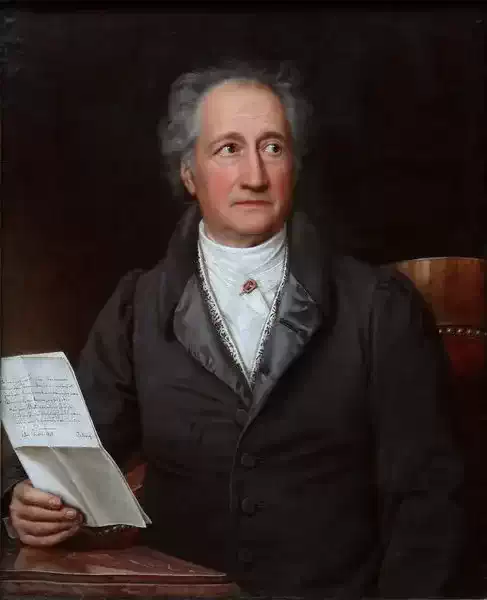
Johann Wolfgang von Goethe
November Song
November Song
To the great archer--not to him
To meet whom flies the sun,
And who is wont his features dim
With clouds to overrun--
But to the boy be vow'd these rhymes,
Who 'mongst the roses plays,
Who hear us, and at proper times
To pierce fair hearts essays.
Through him the gloomy winter night,
Of yore so cold and drear,
Brings many a loved friend to our sight,
And many a woman dear.
Henceforward shall his image fair
Stand in yon starry skies,
And, ever mild and gracious there,
Alternate set and rise.
To the great archer--not to him
To meet whom flies the sun,
And who is wont his features dim
With clouds to overrun--
But to the boy be vow'd these rhymes,
Who 'mongst the roses plays,
Who hear us, and at proper times
To pierce fair hearts essays.
Through him the gloomy winter night,
Of yore so cold and drear,
Brings many a loved friend to our sight,
And many a woman dear.
Henceforward shall his image fair
Stand in yon starry skies,
And, ever mild and gracious there,
Alternate set and rise.
377
Johann Wolfgang von Goethe
New Love, New Life
New Love, New Life
HEART! my heart! what means this feeling?
What oppresseth thee so sore?
What strange life is o'er me stealing!
I acknowledge thee no more.
Fled is all that gave thee gladness,
Fled the cause of all thy sadness,
Fled thy peace, thine industry-
Ah, why suffer it to be?
Say, do beauty's graces youthful,
Does this form so fair and bright,
Does this gaze, so kind, so truthful,
Chain thee with unceasing might?
Would I tear me from her boldly,
Courage take, and fly her coldly,
Back to her. I'm forthwith led
By the path I seek to tread.
By a thread I ne'er can sever,
For 'tis 'twined with magic skill,
Doth the cruel maid for ever
Hold me fast against my will.
While those magic chains confine me,
To her will I must resign me.
Ah, the change in truth is great!
Love! kind love! release me straight!
HEART! my heart! what means this feeling?
What oppresseth thee so sore?
What strange life is o'er me stealing!
I acknowledge thee no more.
Fled is all that gave thee gladness,
Fled the cause of all thy sadness,
Fled thy peace, thine industry-
Ah, why suffer it to be?
Say, do beauty's graces youthful,
Does this form so fair and bright,
Does this gaze, so kind, so truthful,
Chain thee with unceasing might?
Would I tear me from her boldly,
Courage take, and fly her coldly,
Back to her. I'm forthwith led
By the path I seek to tread.
By a thread I ne'er can sever,
For 'tis 'twined with magic skill,
Doth the cruel maid for ever
Hold me fast against my will.
While those magic chains confine me,
To her will I must resign me.
Ah, the change in truth is great!
Love! kind love! release me straight!
407
Johann Wolfgang von Goethe
Night Song
Night Song
WHEN on thy pillow lying,
Half listen, I implore,
And at my lute's soft sighing,
Sleep on! what wouldst thou more?
For at my lute's soft sighing
The stars their blessings pour
On feelings never-dying;
Sleep on! what wouldst thou more?
Those feelings never-dying
My spirit aid to soar
From earthly conflicts trying;
Sleep on! what wouldst thou more?
From earthly conflicts trying
Thou driv'st me to this shore;
Through thee I'm thither flying,--
Sleep on! what wouldst thou more?
Through thee I'm hither flying,
Thou wilt not list before
In slumbers thou art lying:
Sleep on! what wouldst thou more?
WHEN on thy pillow lying,
Half listen, I implore,
And at my lute's soft sighing,
Sleep on! what wouldst thou more?
For at my lute's soft sighing
The stars their blessings pour
On feelings never-dying;
Sleep on! what wouldst thou more?
Those feelings never-dying
My spirit aid to soar
From earthly conflicts trying;
Sleep on! what wouldst thou more?
From earthly conflicts trying
Thou driv'st me to this shore;
Through thee I'm thither flying,--
Sleep on! what wouldst thou more?
Through thee I'm hither flying,
Thou wilt not list before
In slumbers thou art lying:
Sleep on! what wouldst thou more?
471
Johann Wolfgang von Goethe
Morning Lament
Morning Lament
OH thou cruel deadly-lovely maiden,
Tell me what great sin have I committed,
That thou keep'st me to the rack thus fasten'd,
That thou hast thy solemn promise broken?
'Twas but yestere'en that thou with fondness
Press'd my hand, and these sweet accents murmured:
"Yes, I'll come, I'll come when morn approacheth,
Come, my friend, full surely to thy chamber."
On the latch I left my doors, unfasten'd,
Having first with care tried all the hinges,
And rejoic'd right well to find they creak'd not.
What a night of expectation pass'd I!
For I watch'd, and ev'ry chime I number'd;
If perchance I slept a few short moments,
Still my heart remain'd awake forever,
And awoke me from my gentle slumbers.
Yes, then bless'd I night's o'erhanging darkness,
That so calmly cover'd all things round me;
I enjoy'd the universal silence,
While I listen'd ever in the silence,
If perchance the slightest sounds were stirring.
"Had she only thoughts, my thoughts resembling,
Had she only feelings, like my feelings,
She would not await the dawn of morning.
But, ere this, would surely have been with me."
Skipp'd a kitten on the floor above me,
Scratch'd a mouse a panel in the corner,
Was there in the house the slightest motion,
Ever hoped I that I heard thy footstep,
Ever thought I that I heard thee coming.
And so lay I long, and ever longer,
And already was the daylight dawning,
And both here and there were signs of movement.
"Is it yon door? Were it my door only!"
In my bed I lean'd upon my elbow,
Looking tow'rd the door, now half-apparent,
If perchance it might not be in motion.
Both the wings upon the latch continued,
On the quiet hinges calmly hanging.
And the day grew bright and brighter ever;
And I heard my neighbour's door unbolted,
As he went to earn his daily wages,
And ere long I heard the waggons rumbling,
And the city gates were also open'd,
While the market-place, in ev'ry corner,
Teem'd with life and bustle and confusion.
In the house was going now and coming
Up and down the stairs, and doors were creaking
Backwards now, now forwards,--footsteps clatter'd
Yet, as though it were a thing all-living,
From my cherish'd hope I could not tear me.
When at length the sun, in hated splendour.
Fell upon my walls, upon my windows,
Up I sprang, and hasten'd to the garden,
There to blend my breath, so hot and yearning,
With the cool refreshing morning breezes,
And, it might be, even there to meet thee:
But I cannot find thee in the arbour,
Or the avenue of lofty lindens.
OH thou cruel deadly-lovely maiden,
Tell me what great sin have I committed,
That thou keep'st me to the rack thus fasten'd,
That thou hast thy solemn promise broken?
'Twas but yestere'en that thou with fondness
Press'd my hand, and these sweet accents murmured:
"Yes, I'll come, I'll come when morn approacheth,
Come, my friend, full surely to thy chamber."
On the latch I left my doors, unfasten'd,
Having first with care tried all the hinges,
And rejoic'd right well to find they creak'd not.
What a night of expectation pass'd I!
For I watch'd, and ev'ry chime I number'd;
If perchance I slept a few short moments,
Still my heart remain'd awake forever,
And awoke me from my gentle slumbers.
Yes, then bless'd I night's o'erhanging darkness,
That so calmly cover'd all things round me;
I enjoy'd the universal silence,
While I listen'd ever in the silence,
If perchance the slightest sounds were stirring.
"Had she only thoughts, my thoughts resembling,
Had she only feelings, like my feelings,
She would not await the dawn of morning.
But, ere this, would surely have been with me."
Skipp'd a kitten on the floor above me,
Scratch'd a mouse a panel in the corner,
Was there in the house the slightest motion,
Ever hoped I that I heard thy footstep,
Ever thought I that I heard thee coming.
And so lay I long, and ever longer,
And already was the daylight dawning,
And both here and there were signs of movement.
"Is it yon door? Were it my door only!"
In my bed I lean'd upon my elbow,
Looking tow'rd the door, now half-apparent,
If perchance it might not be in motion.
Both the wings upon the latch continued,
On the quiet hinges calmly hanging.
And the day grew bright and brighter ever;
And I heard my neighbour's door unbolted,
As he went to earn his daily wages,
And ere long I heard the waggons rumbling,
And the city gates were also open'd,
While the market-place, in ev'ry corner,
Teem'd with life and bustle and confusion.
In the house was going now and coming
Up and down the stairs, and doors were creaking
Backwards now, now forwards,--footsteps clatter'd
Yet, as though it were a thing all-living,
From my cherish'd hope I could not tear me.
When at length the sun, in hated splendour.
Fell upon my walls, upon my windows,
Up I sprang, and hasten'd to the garden,
There to blend my breath, so hot and yearning,
With the cool refreshing morning breezes,
And, it might be, even there to meet thee:
But I cannot find thee in the arbour,
Or the avenue of lofty lindens.
375
Johann Wolfgang von Goethe
Mignon
Mignon
Do you know the land where the lemon-trees grow,
in darkened leaves the gold-oranges glow,
a soft wind blows from the pure blue sky,
the myrtle stands mute, and the bay-tree high?
Do you know it well?
It’s there I’d be gone,
to be there with you, O, my beloved one!
Do you know the house? It has columns and beams,
there are glittering rooms, the hallway gleams,
and figures of marble looking at me?
‘What have they done, child of misery?
Do you know it well?
It’s there I’d be gone,
to be there with you, O my true guardian!
Do you know the clouded mountain mass?
The mule picks its way through the misted pass,
and dragons in caves raise their ancient brood,
and the cliffs are polished smooth by the flood;
Do you know it well?
It’s there I would be gone!
It’s there our way leads! Father, we must go on!
Do you know the land where the lemon-trees grow,
in darkened leaves the gold-oranges glow,
a soft wind blows from the pure blue sky,
the myrtle stands mute, and the bay-tree high?
Do you know it well?
It’s there I’d be gone,
to be there with you, O, my beloved one!
Do you know the house? It has columns and beams,
there are glittering rooms, the hallway gleams,
and figures of marble looking at me?
‘What have they done, child of misery?
Do you know it well?
It’s there I’d be gone,
to be there with you, O my true guardian!
Do you know the clouded mountain mass?
The mule picks its way through the misted pass,
and dragons in caves raise their ancient brood,
and the cliffs are polished smooth by the flood;
Do you know it well?
It’s there I would be gone!
It’s there our way leads! Father, we must go on!
365
Johann Wolfgang von Goethe
May
May
LIGHT and silv'ry cloudlets hover
In the air, as yet scarce warm;
Mild, with glimmer soft tinged over,
Peeps the sun through fragrant balm.
Gently rolls and heaves the ocean
As its waves the bank o'erflow.
And with ever restless motion
Moves the verdure to and fro,
Mirror'd brightly far below.
What is now the foliage moving?
Air is still, and hush'd the breeze,
Sultriness, this fullness loving,
Through the thicket, from the trees.
Now the eye at once gleams brightly,
See! the infant band with mirth
Moves and dances nimbly, lightly,
As the morning gave it birth,
Flutt'ring two and two o'er earth.
LIGHT and silv'ry cloudlets hover
In the air, as yet scarce warm;
Mild, with glimmer soft tinged over,
Peeps the sun through fragrant balm.
Gently rolls and heaves the ocean
As its waves the bank o'erflow.
And with ever restless motion
Moves the verdure to and fro,
Mirror'd brightly far below.
What is now the foliage moving?
Air is still, and hush'd the breeze,
Sultriness, this fullness loving,
Through the thicket, from the trees.
Now the eye at once gleams brightly,
See! the infant band with mirth
Moves and dances nimbly, lightly,
As the morning gave it birth,
Flutt'ring two and two o'er earth.
315
Johann Wolfgang von Goethe
May Song II
May Song II
BETWEEN wheatfield and corn,
Between hedgerow and thorn,
Between pasture and tree,
Where's my sweetheart
Tell it me!
Sweetheart caught I
Not at home;
She's then, thought I.
Gone to roam.
Fair and loving
Blooms sweet May;
Sweetheart's roving,
Free and gay.
By the rock near the wave,
Where her first kiss she gave,
On the greensward, to me,--
Something I see!
Is it she?
BETWEEN wheatfield and corn,
Between hedgerow and thorn,
Between pasture and tree,
Where's my sweetheart
Tell it me!
Sweetheart caught I
Not at home;
She's then, thought I.
Gone to roam.
Fair and loving
Blooms sweet May;
Sweetheart's roving,
Free and gay.
By the rock near the wave,
Where her first kiss she gave,
On the greensward, to me,--
Something I see!
Is it she?
500
Johann Wolfgang von Goethe
Joy And Sorrow
Joy And Sorrow
As a fisher-boy I fared
To the black rock in the sea,
And, while false gifts I prepared.
Listen'd and sang merrily,
Down descended the decoy,
Soon a fish attack'd the bait;
One exultant shout of joy,-
And the fish was captured straight.
Ah! on shore, and to the wood
Past the cliffs, o'er stock and stone,
One foot's traces I pursued,
And the maiden was alone.
Lips were silent, eyes downcast
As a clasp-knife snaps the bait,
With her snare she seized me fast,
And the boy was captured straight.
Heav'n knows who's the happy swain
That she rambles with anew!
I must dare the sea again,
Spite of wind and weather too.
When the great and little fish
Wail and flounder in my net,
Straight returns my eager wish
In her arms to revel yet!
As a fisher-boy I fared
To the black rock in the sea,
And, while false gifts I prepared.
Listen'd and sang merrily,
Down descended the decoy,
Soon a fish attack'd the bait;
One exultant shout of joy,-
And the fish was captured straight.
Ah! on shore, and to the wood
Past the cliffs, o'er stock and stone,
One foot's traces I pursued,
And the maiden was alone.
Lips were silent, eyes downcast
As a clasp-knife snaps the bait,
With her snare she seized me fast,
And the boy was captured straight.
Heav'n knows who's the happy swain
That she rambles with anew!
I must dare the sea again,
Spite of wind and weather too.
When the great and little fish
Wail and flounder in my net,
Straight returns my eager wish
In her arms to revel yet!
425
Johann Wolfgang von Goethe
Joy And Sorrow
Joy And Sorrow
As a fisher-boy I fared
To the black rock in the sea,
And, while false gifts I prepared.
Listen'd and sang merrily,
Down descended the decoy,
Soon a fish attack'd the bait;
One exultant shout of joy,-
And the fish was captured straight.
Ah! on shore, and to the wood
Past the cliffs, o'er stock and stone,
One foot's traces I pursued,
And the maiden was alone.
Lips were silent, eyes downcast
As a clasp-knife snaps the bait,
With her snare she seized me fast,
And the boy was captured straight.
Heav'n knows who's the happy swain
That she rambles with anew!
I must dare the sea again,
Spite of wind and weather too.
When the great and little fish
Wail and flounder in my net,
Straight returns my eager wish
In her arms to revel yet!
As a fisher-boy I fared
To the black rock in the sea,
And, while false gifts I prepared.
Listen'd and sang merrily,
Down descended the decoy,
Soon a fish attack'd the bait;
One exultant shout of joy,-
And the fish was captured straight.
Ah! on shore, and to the wood
Past the cliffs, o'er stock and stone,
One foot's traces I pursued,
And the maiden was alone.
Lips were silent, eyes downcast
As a clasp-knife snaps the bait,
With her snare she seized me fast,
And the boy was captured straight.
Heav'n knows who's the happy swain
That she rambles with anew!
I must dare the sea again,
Spite of wind and weather too.
When the great and little fish
Wail and flounder in my net,
Straight returns my eager wish
In her arms to revel yet!
425
Johann Wolfgang von Goethe
It Is Good
It Is Good
IN Paradise while moonbeams play'd,
Jehovah found, in slumber deep,
Adam fast sunk; He gently laid
Eve near him,--she, too, fell asleep.
There lay they now, on earth's fair shrine,
God's two most beauteous thoughts divine.--
When this He saw, He cried:--'Tis Good!!!
And scarce could move from where He stood.
No wonder, that our joy's complete
While eye and eye responsive meet,
When this blest thought of rapture moves us--
That we're with Him who truly loves us,
And if He cries:--Good, let it be!
'Tis so for both, it seems to me.
Thou'rt clasp'd within these arms of mine,
Dearest of all God's thoughts divine!
IN Paradise while moonbeams play'd,
Jehovah found, in slumber deep,
Adam fast sunk; He gently laid
Eve near him,--she, too, fell asleep.
There lay they now, on earth's fair shrine,
God's two most beauteous thoughts divine.--
When this He saw, He cried:--'Tis Good!!!
And scarce could move from where He stood.
No wonder, that our joy's complete
While eye and eye responsive meet,
When this blest thought of rapture moves us--
That we're with Him who truly loves us,
And if He cries:--Good, let it be!
'Tis so for both, it seems to me.
Thou'rt clasp'd within these arms of mine,
Dearest of all God's thoughts divine!
357
Johann Wolfgang von Goethe
In A Word
In A Word
THUS to be chain'd for ever, can I bear?
A very torment that, in truth, would be.
This very day my new resolve shall see.-I'll
not go near the lately-worshipp'd Fair.
Yet what excuse, my heart, can I prepare
In such a case, for not consulting thee?
But courage! while our sorrows utter we
In tones where love, grief, gladness have a share.
But see! the minstrel's bidding to obey,
Its melody pours forth the sounding lyre,
Yearning a sacrifice of love to bring.
Scarce wouldst thou think it--ready is the lay;
Well, but what then? Methought in the first fire
We to her presence flew, that lay to sing.
THUS to be chain'd for ever, can I bear?
A very torment that, in truth, would be.
This very day my new resolve shall see.-I'll
not go near the lately-worshipp'd Fair.
Yet what excuse, my heart, can I prepare
In such a case, for not consulting thee?
But courage! while our sorrows utter we
In tones where love, grief, gladness have a share.
But see! the minstrel's bidding to obey,
Its melody pours forth the sounding lyre,
Yearning a sacrifice of love to bring.
Scarce wouldst thou think it--ready is the lay;
Well, but what then? Methought in the first fire
We to her presence flew, that lay to sing.
296
Johann Wolfgang von Goethe
Hermann And Dorothea - VIII. Melpomene
Hermann And Dorothea - VIII. Melpomene
HERMANN AND DOROTHEA.
So tow'rd the sun, now fast sinking to rest, the two walk'd together,
Whilst he veil'd himself deep in clouds which thunder portended.
Out-of his veil now here, now there, with fiery glances
Beaming over the plain with rays foreboding and lurid.
'May this threatening weather,' said Hermann, 'not bring to us shortly
Hail and violent rain, for well does the harvest now promise.'
And they both rejoiced in the corn so lofty and waving,
Well nigh reaching the heads of the two tall figures that walk'd there.
Then the maiden spoke to her friendly leader as follows
'Generous youth, to whom I shall owe a kind destiny shortly,
Shelter and home, when so many poor exiles must weather the tempest,
In the first place tell me all about your good parents,
Whom I intend to serve with all my soul from hence-forward;
Knowing one's master, 'tis easier far to give satisfaction,
By rememb'ring the things which he deems of the highest importance,
And on which he has set his heart with the greatest decision.
Tell me, then, how best I can win your father and mother.'
Then the good and sensible youth made answer as follows
'You are indeed quite right, my kind and excellent maiden,
To begin by asking about the tastes of my parents!
For I have hitherto striven in vain to satisfy Father,
When I look'd after the inn, as well as my regular duty,
Working early and late in the field, and tending the vineyard.
Mother indeed was contented; she knew how to value my efforts;
And she will certainly hold you to be an excellent maiden,
If you take care of the house, as though the dwelling your own were.
But my father's unlike her; he's fond of outward appearance.
Gentle maiden, deem me not cold and void of all feeling,
If I disclose my father's nature to you, who're a stranger.
Yes, such words have never before escaped, I assure von
Out of my mouth, which is little accustom'd to babble and chatter;
But you have managed to worm all my secrets from out of my bosom.
Well, my worthy father the graces of life holds in honour,
Wishes for outward signs of love, as well as of rev'rence,
And would doubtless be satisfied with an inferior servant
Who understood this fancy, and hate a better, who did not.'
Cheerfully she replied, with gentle movement increasing
Through the darkening path the speed at which she was walking:
I in truth shall hope to satisfy both of your parents,
For your mother's character my own nature resembles,
And to external graces have I from my youth been accustom'd.
Our old neighbours, the French, in their earlier days laid much stress on
Courteous demeanour; 'twas common alike to nobles and burghers,
And to peasants, and each enjoin'd it on all his acquaintance.
in the same way, on the side of the Germans, the children were train'd up
Every morning, with plenty of kissing of hands and of curtsies,
To salute their parents, and always to act with politeness.
All that I have learnt, and all I have practised since childhood,
All that comes from my heart,--I will practise it all with the old man.
But on what terms shall I--I scarcely dare ask such a question,--
Be with yourself, the only son, and hereafter my master?'
Thus she spoke, and at that moment they came to the peartree.
Down from the skies the moon at her full was shining in glory;
Night had arrived, and the last pale gleam of the sunset had vanish'd.
So before them were lying, in masses all heap'd up together,
Lights as clear as the day, and shadows of night and of darkness.
And the friendly question was heard by Hermann with pleasure,
Under the shade of the noble tree at the spot which he loved so
Which that day had witness'd his tears at the fate of the exile.
And whilst they sat themselves down, to take a little repose there,
Thus the loving youth spoke, whilst he seized the hand of the maiden
'Let your heart give the answer, and always obey what it tells you!'
But he ventured to say no more, however propitious
Was the moment; he feard that a No would be her sole answer,
Ah! and he felt the ring on her finger, that sorrowful token.
So by the side of each other they quietly sat and in silence,
But the maiden began to speak, and said, 'How delightful
Is the light of the moon! The clearness of day it resembles.
Yonder I see in the town the houses and courtyards quite plainly,
In the gable a window; methinks all the panes I can reckon.'
'That which you see,' replied the youth, who spoke with an effort,
'That is our house down to which I now am about to conduct you,
And that window yonder belongs to my room in the attic,
Which will probably soon be yours, as we're making great changes.
All these fields are ours, and ripe for the harvest to-morrow;
Here in the shade we are wont to rest, enjoying our meal-time.
But let us now descend across the vineyard and garden,
For observe how the threatening storm is hitherward rolling,
Lightening first, and then eclipsing the beautiful full moon.'
So the pair arose, and wauder'd down by the corn-field,
Through the powerful corn, in the nightly clearness rejoicing;
And they reach'd the vineyard, and through its dark shadows proceeded.
So he guided her down the numerous tiers of the flat stones
Which, in an unhewn state, served as steps to the walk through the foliage.
Slowly she descended, and placed her hands on his shoulders;
And, with a quivering light, the moon through the foliage o'erlook'd them,
Till by storm-clouds envelop'd, she left the couple in darkness.
Then the strong youth supported the maiden, who on him was leaning;
She, however, not knowing the path, or observing the rough steps,
Slipp'd as she walk'd, her foot gave way, and she well nigh was falling.
Hastily held out his arm the youth with nimbleness thoughtful,
And held up his beloved one; she gently sank on his shoulders,
Breast was press'd against breast, and cheek against cheek, and so stood he
Fix'd like a marble statue, restrained by a firm resolution;
He embraced her no closer, thoughall her weight he supported;
So he felt his noble burden, the warmth of her bosom,
And her balmy breath, against his warm lips exhaling,
Bearing with manly feelings the woman's heroical greatness.
But she conceal'd the pain which she felt, and jestingly spoke thus
'It betokens misfortune,--so scrupulous people inform us,--
For the foot to give way on entering a house, near the threshold.
I should have wish'd, in truth, for a sign of some happier omen!
Let us tarry a little, for fear your parents should blame you
For their limping servant, and you should be thought a bad landlord.'
HERMANN AND DOROTHEA.
So tow'rd the sun, now fast sinking to rest, the two walk'd together,
Whilst he veil'd himself deep in clouds which thunder portended.
Out-of his veil now here, now there, with fiery glances
Beaming over the plain with rays foreboding and lurid.
'May this threatening weather,' said Hermann, 'not bring to us shortly
Hail and violent rain, for well does the harvest now promise.'
And they both rejoiced in the corn so lofty and waving,
Well nigh reaching the heads of the two tall figures that walk'd there.
Then the maiden spoke to her friendly leader as follows
'Generous youth, to whom I shall owe a kind destiny shortly,
Shelter and home, when so many poor exiles must weather the tempest,
In the first place tell me all about your good parents,
Whom I intend to serve with all my soul from hence-forward;
Knowing one's master, 'tis easier far to give satisfaction,
By rememb'ring the things which he deems of the highest importance,
And on which he has set his heart with the greatest decision.
Tell me, then, how best I can win your father and mother.'
Then the good and sensible youth made answer as follows
'You are indeed quite right, my kind and excellent maiden,
To begin by asking about the tastes of my parents!
For I have hitherto striven in vain to satisfy Father,
When I look'd after the inn, as well as my regular duty,
Working early and late in the field, and tending the vineyard.
Mother indeed was contented; she knew how to value my efforts;
And she will certainly hold you to be an excellent maiden,
If you take care of the house, as though the dwelling your own were.
But my father's unlike her; he's fond of outward appearance.
Gentle maiden, deem me not cold and void of all feeling,
If I disclose my father's nature to you, who're a stranger.
Yes, such words have never before escaped, I assure von
Out of my mouth, which is little accustom'd to babble and chatter;
But you have managed to worm all my secrets from out of my bosom.
Well, my worthy father the graces of life holds in honour,
Wishes for outward signs of love, as well as of rev'rence,
And would doubtless be satisfied with an inferior servant
Who understood this fancy, and hate a better, who did not.'
Cheerfully she replied, with gentle movement increasing
Through the darkening path the speed at which she was walking:
I in truth shall hope to satisfy both of your parents,
For your mother's character my own nature resembles,
And to external graces have I from my youth been accustom'd.
Our old neighbours, the French, in their earlier days laid much stress on
Courteous demeanour; 'twas common alike to nobles and burghers,
And to peasants, and each enjoin'd it on all his acquaintance.
in the same way, on the side of the Germans, the children were train'd up
Every morning, with plenty of kissing of hands and of curtsies,
To salute their parents, and always to act with politeness.
All that I have learnt, and all I have practised since childhood,
All that comes from my heart,--I will practise it all with the old man.
But on what terms shall I--I scarcely dare ask such a question,--
Be with yourself, the only son, and hereafter my master?'
Thus she spoke, and at that moment they came to the peartree.
Down from the skies the moon at her full was shining in glory;
Night had arrived, and the last pale gleam of the sunset had vanish'd.
So before them were lying, in masses all heap'd up together,
Lights as clear as the day, and shadows of night and of darkness.
And the friendly question was heard by Hermann with pleasure,
Under the shade of the noble tree at the spot which he loved so
Which that day had witness'd his tears at the fate of the exile.
And whilst they sat themselves down, to take a little repose there,
Thus the loving youth spoke, whilst he seized the hand of the maiden
'Let your heart give the answer, and always obey what it tells you!'
But he ventured to say no more, however propitious
Was the moment; he feard that a No would be her sole answer,
Ah! and he felt the ring on her finger, that sorrowful token.
So by the side of each other they quietly sat and in silence,
But the maiden began to speak, and said, 'How delightful
Is the light of the moon! The clearness of day it resembles.
Yonder I see in the town the houses and courtyards quite plainly,
In the gable a window; methinks all the panes I can reckon.'
'That which you see,' replied the youth, who spoke with an effort,
'That is our house down to which I now am about to conduct you,
And that window yonder belongs to my room in the attic,
Which will probably soon be yours, as we're making great changes.
All these fields are ours, and ripe for the harvest to-morrow;
Here in the shade we are wont to rest, enjoying our meal-time.
But let us now descend across the vineyard and garden,
For observe how the threatening storm is hitherward rolling,
Lightening first, and then eclipsing the beautiful full moon.'
So the pair arose, and wauder'd down by the corn-field,
Through the powerful corn, in the nightly clearness rejoicing;
And they reach'd the vineyard, and through its dark shadows proceeded.
So he guided her down the numerous tiers of the flat stones
Which, in an unhewn state, served as steps to the walk through the foliage.
Slowly she descended, and placed her hands on his shoulders;
And, with a quivering light, the moon through the foliage o'erlook'd them,
Till by storm-clouds envelop'd, she left the couple in darkness.
Then the strong youth supported the maiden, who on him was leaning;
She, however, not knowing the path, or observing the rough steps,
Slipp'd as she walk'd, her foot gave way, and she well nigh was falling.
Hastily held out his arm the youth with nimbleness thoughtful,
And held up his beloved one; she gently sank on his shoulders,
Breast was press'd against breast, and cheek against cheek, and so stood he
Fix'd like a marble statue, restrained by a firm resolution;
He embraced her no closer, thoughall her weight he supported;
So he felt his noble burden, the warmth of her bosom,
And her balmy breath, against his warm lips exhaling,
Bearing with manly feelings the woman's heroical greatness.
But she conceal'd the pain which she felt, and jestingly spoke thus
'It betokens misfortune,--so scrupulous people inform us,--
For the foot to give way on entering a house, near the threshold.
I should have wish'd, in truth, for a sign of some happier omen!
Let us tarry a little, for fear your parents should blame you
For their limping servant, and you should be thought a bad landlord.'
384
Johann Wolfgang von Goethe
Hermann And Dorothea - VIII. Melpomene
Hermann And Dorothea - VIII. Melpomene
HERMANN AND DOROTHEA.
So tow'rd the sun, now fast sinking to rest, the two walk'd together,
Whilst he veil'd himself deep in clouds which thunder portended.
Out-of his veil now here, now there, with fiery glances
Beaming over the plain with rays foreboding and lurid.
'May this threatening weather,' said Hermann, 'not bring to us shortly
Hail and violent rain, for well does the harvest now promise.'
And they both rejoiced in the corn so lofty and waving,
Well nigh reaching the heads of the two tall figures that walk'd there.
Then the maiden spoke to her friendly leader as follows
'Generous youth, to whom I shall owe a kind destiny shortly,
Shelter and home, when so many poor exiles must weather the tempest,
In the first place tell me all about your good parents,
Whom I intend to serve with all my soul from hence-forward;
Knowing one's master, 'tis easier far to give satisfaction,
By rememb'ring the things which he deems of the highest importance,
And on which he has set his heart with the greatest decision.
Tell me, then, how best I can win your father and mother.'
Then the good and sensible youth made answer as follows
'You are indeed quite right, my kind and excellent maiden,
To begin by asking about the tastes of my parents!
For I have hitherto striven in vain to satisfy Father,
When I look'd after the inn, as well as my regular duty,
Working early and late in the field, and tending the vineyard.
Mother indeed was contented; she knew how to value my efforts;
And she will certainly hold you to be an excellent maiden,
If you take care of the house, as though the dwelling your own were.
But my father's unlike her; he's fond of outward appearance.
Gentle maiden, deem me not cold and void of all feeling,
If I disclose my father's nature to you, who're a stranger.
Yes, such words have never before escaped, I assure von
Out of my mouth, which is little accustom'd to babble and chatter;
But you have managed to worm all my secrets from out of my bosom.
Well, my worthy father the graces of life holds in honour,
Wishes for outward signs of love, as well as of rev'rence,
And would doubtless be satisfied with an inferior servant
Who understood this fancy, and hate a better, who did not.'
Cheerfully she replied, with gentle movement increasing
Through the darkening path the speed at which she was walking:
I in truth shall hope to satisfy both of your parents,
For your mother's character my own nature resembles,
And to external graces have I from my youth been accustom'd.
Our old neighbours, the French, in their earlier days laid much stress on
Courteous demeanour; 'twas common alike to nobles and burghers,
And to peasants, and each enjoin'd it on all his acquaintance.
in the same way, on the side of the Germans, the children were train'd up
Every morning, with plenty of kissing of hands and of curtsies,
To salute their parents, and always to act with politeness.
All that I have learnt, and all I have practised since childhood,
All that comes from my heart,--I will practise it all with the old man.
But on what terms shall I--I scarcely dare ask such a question,--
Be with yourself, the only son, and hereafter my master?'
Thus she spoke, and at that moment they came to the peartree.
Down from the skies the moon at her full was shining in glory;
Night had arrived, and the last pale gleam of the sunset had vanish'd.
So before them were lying, in masses all heap'd up together,
Lights as clear as the day, and shadows of night and of darkness.
And the friendly question was heard by Hermann with pleasure,
Under the shade of the noble tree at the spot which he loved so
Which that day had witness'd his tears at the fate of the exile.
And whilst they sat themselves down, to take a little repose there,
Thus the loving youth spoke, whilst he seized the hand of the maiden
'Let your heart give the answer, and always obey what it tells you!'
But he ventured to say no more, however propitious
Was the moment; he feard that a No would be her sole answer,
Ah! and he felt the ring on her finger, that sorrowful token.
So by the side of each other they quietly sat and in silence,
But the maiden began to speak, and said, 'How delightful
Is the light of the moon! The clearness of day it resembles.
Yonder I see in the town the houses and courtyards quite plainly,
In the gable a window; methinks all the panes I can reckon.'
'That which you see,' replied the youth, who spoke with an effort,
'That is our house down to which I now am about to conduct you,
And that window yonder belongs to my room in the attic,
Which will probably soon be yours, as we're making great changes.
All these fields are ours, and ripe for the harvest to-morrow;
Here in the shade we are wont to rest, enjoying our meal-time.
But let us now descend across the vineyard and garden,
For observe how the threatening storm is hitherward rolling,
Lightening first, and then eclipsing the beautiful full moon.'
So the pair arose, and wauder'd down by the corn-field,
Through the powerful corn, in the nightly clearness rejoicing;
And they reach'd the vineyard, and through its dark shadows proceeded.
So he guided her down the numerous tiers of the flat stones
Which, in an unhewn state, served as steps to the walk through the foliage.
Slowly she descended, and placed her hands on his shoulders;
And, with a quivering light, the moon through the foliage o'erlook'd them,
Till by storm-clouds envelop'd, she left the couple in darkness.
Then the strong youth supported the maiden, who on him was leaning;
She, however, not knowing the path, or observing the rough steps,
Slipp'd as she walk'd, her foot gave way, and she well nigh was falling.
Hastily held out his arm the youth with nimbleness thoughtful,
And held up his beloved one; she gently sank on his shoulders,
Breast was press'd against breast, and cheek against cheek, and so stood he
Fix'd like a marble statue, restrained by a firm resolution;
He embraced her no closer, thoughall her weight he supported;
So he felt his noble burden, the warmth of her bosom,
And her balmy breath, against his warm lips exhaling,
Bearing with manly feelings the woman's heroical greatness.
But she conceal'd the pain which she felt, and jestingly spoke thus
'It betokens misfortune,--so scrupulous people inform us,--
For the foot to give way on entering a house, near the threshold.
I should have wish'd, in truth, for a sign of some happier omen!
Let us tarry a little, for fear your parents should blame you
For their limping servant, and you should be thought a bad landlord.'
HERMANN AND DOROTHEA.
So tow'rd the sun, now fast sinking to rest, the two walk'd together,
Whilst he veil'd himself deep in clouds which thunder portended.
Out-of his veil now here, now there, with fiery glances
Beaming over the plain with rays foreboding and lurid.
'May this threatening weather,' said Hermann, 'not bring to us shortly
Hail and violent rain, for well does the harvest now promise.'
And they both rejoiced in the corn so lofty and waving,
Well nigh reaching the heads of the two tall figures that walk'd there.
Then the maiden spoke to her friendly leader as follows
'Generous youth, to whom I shall owe a kind destiny shortly,
Shelter and home, when so many poor exiles must weather the tempest,
In the first place tell me all about your good parents,
Whom I intend to serve with all my soul from hence-forward;
Knowing one's master, 'tis easier far to give satisfaction,
By rememb'ring the things which he deems of the highest importance,
And on which he has set his heart with the greatest decision.
Tell me, then, how best I can win your father and mother.'
Then the good and sensible youth made answer as follows
'You are indeed quite right, my kind and excellent maiden,
To begin by asking about the tastes of my parents!
For I have hitherto striven in vain to satisfy Father,
When I look'd after the inn, as well as my regular duty,
Working early and late in the field, and tending the vineyard.
Mother indeed was contented; she knew how to value my efforts;
And she will certainly hold you to be an excellent maiden,
If you take care of the house, as though the dwelling your own were.
But my father's unlike her; he's fond of outward appearance.
Gentle maiden, deem me not cold and void of all feeling,
If I disclose my father's nature to you, who're a stranger.
Yes, such words have never before escaped, I assure von
Out of my mouth, which is little accustom'd to babble and chatter;
But you have managed to worm all my secrets from out of my bosom.
Well, my worthy father the graces of life holds in honour,
Wishes for outward signs of love, as well as of rev'rence,
And would doubtless be satisfied with an inferior servant
Who understood this fancy, and hate a better, who did not.'
Cheerfully she replied, with gentle movement increasing
Through the darkening path the speed at which she was walking:
I in truth shall hope to satisfy both of your parents,
For your mother's character my own nature resembles,
And to external graces have I from my youth been accustom'd.
Our old neighbours, the French, in their earlier days laid much stress on
Courteous demeanour; 'twas common alike to nobles and burghers,
And to peasants, and each enjoin'd it on all his acquaintance.
in the same way, on the side of the Germans, the children were train'd up
Every morning, with plenty of kissing of hands and of curtsies,
To salute their parents, and always to act with politeness.
All that I have learnt, and all I have practised since childhood,
All that comes from my heart,--I will practise it all with the old man.
But on what terms shall I--I scarcely dare ask such a question,--
Be with yourself, the only son, and hereafter my master?'
Thus she spoke, and at that moment they came to the peartree.
Down from the skies the moon at her full was shining in glory;
Night had arrived, and the last pale gleam of the sunset had vanish'd.
So before them were lying, in masses all heap'd up together,
Lights as clear as the day, and shadows of night and of darkness.
And the friendly question was heard by Hermann with pleasure,
Under the shade of the noble tree at the spot which he loved so
Which that day had witness'd his tears at the fate of the exile.
And whilst they sat themselves down, to take a little repose there,
Thus the loving youth spoke, whilst he seized the hand of the maiden
'Let your heart give the answer, and always obey what it tells you!'
But he ventured to say no more, however propitious
Was the moment; he feard that a No would be her sole answer,
Ah! and he felt the ring on her finger, that sorrowful token.
So by the side of each other they quietly sat and in silence,
But the maiden began to speak, and said, 'How delightful
Is the light of the moon! The clearness of day it resembles.
Yonder I see in the town the houses and courtyards quite plainly,
In the gable a window; methinks all the panes I can reckon.'
'That which you see,' replied the youth, who spoke with an effort,
'That is our house down to which I now am about to conduct you,
And that window yonder belongs to my room in the attic,
Which will probably soon be yours, as we're making great changes.
All these fields are ours, and ripe for the harvest to-morrow;
Here in the shade we are wont to rest, enjoying our meal-time.
But let us now descend across the vineyard and garden,
For observe how the threatening storm is hitherward rolling,
Lightening first, and then eclipsing the beautiful full moon.'
So the pair arose, and wauder'd down by the corn-field,
Through the powerful corn, in the nightly clearness rejoicing;
And they reach'd the vineyard, and through its dark shadows proceeded.
So he guided her down the numerous tiers of the flat stones
Which, in an unhewn state, served as steps to the walk through the foliage.
Slowly she descended, and placed her hands on his shoulders;
And, with a quivering light, the moon through the foliage o'erlook'd them,
Till by storm-clouds envelop'd, she left the couple in darkness.
Then the strong youth supported the maiden, who on him was leaning;
She, however, not knowing the path, or observing the rough steps,
Slipp'd as she walk'd, her foot gave way, and she well nigh was falling.
Hastily held out his arm the youth with nimbleness thoughtful,
And held up his beloved one; she gently sank on his shoulders,
Breast was press'd against breast, and cheek against cheek, and so stood he
Fix'd like a marble statue, restrained by a firm resolution;
He embraced her no closer, thoughall her weight he supported;
So he felt his noble burden, the warmth of her bosom,
And her balmy breath, against his warm lips exhaling,
Bearing with manly feelings the woman's heroical greatness.
But she conceal'd the pain which she felt, and jestingly spoke thus
'It betokens misfortune,--so scrupulous people inform us,--
For the foot to give way on entering a house, near the threshold.
I should have wish'd, in truth, for a sign of some happier omen!
Let us tarry a little, for fear your parents should blame you
For their limping servant, and you should be thought a bad landlord.'
384
Johann Wolfgang von Goethe
Hermann And Dorothea - IX. Urania
Hermann And Dorothea - IX. Urania
CONCLUSION.
O YE Muses, who gladly favour a love that is heartfelt,
Who on his way the excellent youth have hitherto guided,
Who have press'd the maid to his bosom before their betrothal,
Help still further to perfect the bonds of a couple so loving,
Drive away the clouds which over their happiness hover!
But begin by saying what now in the house has been passing.
For the third time the mother impatiently enter'd the chamber
Where the men were sitting, which she had anxiously quitted,
Speaking of the approaching storm, and the loss of the moon's light,
Then of her son's long absence, and all the perils that night brings.
Strongly she censured their friends for having so soon left the youngster,
For not even addressing the maiden, or seeking to woo her.
'Make not the worst of the mischief,' the father peevishly answer'd;
'For you see we are waiting ourselves, expecting the issue.'
But the neighbour sat still, and calmly address'd them as follows:-'
In uneasy moments like these, I always feel grateful
To my late father, who when I was young all seeds of impatience
In my mind uprooted, and left no fragment remaining,
And I learnt how to wait, as well as the best of the wise men.
'Tell us what legerdemain he employ'd,' the pastor made answer.
'I will gladly inform you, and each one may gain by the lesson,'
Answer'd the neighbour. 'When I was a boy, I was standing one Sunday
In a state of impatience, eagerly waiting the carriage
Which was to carry us out to the fountain under the lime-trees;
But it came not; I ran like a weasel now hither, now thither,
Up and down the stairs, and from the door to the window;
Both my hands were prickling, I scratch'd away at the tables,
Stamping and trotting about, and scarcely refrain'd I from crying.
All this the calm man composedly saw; but finally when I
Carried my folly too far, by the arm he quietly took me,
Led me up to the window, and used this significant language
'See you up yonder the joiner's workshop, now closed for the Sunday?
'Twill be re-open'd to-morrow, and plane and saw will be working.
Thus will the busy hours be pass'd from morning till evening.
But remember this: the rimming will soon be arriving,
When the master, together with all his men, will be busy
In preparing and finishing quickly and deftly your coffin,
And they will carefully bring over here that house made of boards, which
Will at length receive the patient as well as impatient,
And which is destined to carry a roof that's unpleasantly heavy.
All that he mention'd I forthwith saw taking place in my mind's eye,
Saw the boards join'd together, and saw the black cover made ready,
Patiently then I sat, and meekly awaited the carriage.
And I always think of the coffin whenever I see men
Running about in a state of doubtful and wild expectation.'
Smilingly answered the pastor:--'Death's stirring image is neither
Unto the wise a cause of alarm,--or an end to the pious.
Back into life it urges the former, and teaches him action,
And, for the weal of the latter, it strengthens his hope in affliction.
Death is a giver of life unto both. Your father did wrongly
When to the sensitive boy he pointed out death in its own form.
Unto the youth should be shown the worth of a noble and ripen'd
Age, and unto the old man, youth, that both may rejoice in
The eternal circle, and life may in life be made perfect!'
Here the door was open'd. The handsome couple appear'd there,
And the friends were amazed, the loving parents astonish'd
At the form of the bride, the form of the bridegroom resembling.
Yes! the door appear'd too small to admit the tall figures
Which now cross'd the threshold, in company walking together.
To his parents Hermann presented her, hastily saying:-'
Here is a maiden just of the sort you are wishing to have here,
Welcome her kindly, dear father! she fully deserves it, and you too,
Mother dear, ask her questions as to her housekeeping knowledge,
That you may see how well she deserves to form one of our party.'
Then he hastily took on one side the excellent pastor,
Saying:--' Kind sir, I entreat you to help me out of this trouble
Quickly, and loosen the knot, whose unravelling I am so dreading;
For I have not ventured to woo as my bride the fair maiden,
But she believes she's to be a maid in the house, and I fear me
She will in anger depart, as soon as we talk about marriage.
But it must be decided at once! no longer in error
Shall she remain, and I no longer this doubt can put up with.
Hasten and once more exhibit that wisdom we all hold in honour.'
So the pastor forthwith turn'd round to the rest of the party,
But the maiden's soul was, unhappily, troubled already
By the talk of the father, who just had address'd her as follows,
Speaking good humour'dly, and in accents pleasant and lively
'Yes, I'm well satisfied, child! I joyfully see that my son has
Just as good taste as his father, who in his younger days show'd it,
Always leading the fairest one out in the dance, and then lastly
Taking the fairest one home as his wife--'twas your dear little mother!
For by the bride whom a man selects, we may easily gather
What kind of spirit his is, and whether he knows his own value.
But you will surely need but a short time to form your decision,
For I verily think he will find it full easy to follow.'
Hermann but partially heard the words; the whole of his members
Inwardly quivered, and all the circle were suddenly silent.
But the excellent maiden, by words of such irony wounded,
(As she esteem'd them to be) and deeply distress'd in her spirit,
Stood, while a passing flush from her cheeks as far as her neck was
Spreading, but she restrain'd herself, and collected her thoughts soon;
Then to the old man she said, not fully concealing her sorrow
'Truly I was not prepared by your son for such a reception,
When he described his father's nature,--that excellent burgher,
And I know I am standing before you, a person of culture,
Who behaves himself wisely to all, in a suitable manner.
But it would seem that you feel not pity enough for the poor thing
Who has just cross'd your threshold, prepared to enter your service
Else you would not seek to point out, with ridicule bitter,
How far removed my lot from your son's and that of yourself is.
True, with a little bundle, and poor, I have enter'd your dwelling,
Which it is the owner's delight to furnish with all things.
But I know myself well, and feel the whole situation.
Is it generous thus to greet me with language so jeering,
Which was well nigh expelled me the house, when just on the threshold?'
Hermann uneasily moved about, and signed to the pastor
To interpose without delay, and clear up the error.
Quickly the wise man advanced to the spot, and witness'd the maiden's
Silent vexation and tearful eyes and scarce-restrain'd sorrow.
Then his spirit advised him to solve not at once the confusion,
But, on the contrary, prove the excited mind of the maiden.
So, in words framed to try her, the pastor address'd her as follows:-'
Surely, my foreign maiden, you did not fully consider,
When you made up your mind to serve a stranger so quickly,
What it really is to enter the house of a master;
For a shake of the hand decides your fate for a twelvemonth,
And a single word Yes to much endurance will bind you.
But the worst part of the service is not the wearisome habits,
Nor the bitter toil of the work, which seems never-ending;
For the active freeman works hard as well as the servant.
But to suffer the whims of the master, who blames you unjustly,
Or who calls for this and for that, not knowing his own mind,
And the mistress's violence, always so easily kindled,
With the children's rough and supercilious bad manners,--
This is indeed hard to bear, whilst still fulfilling your duties
Promptly and actively, never becoming morose or ill-natured;
Yet for such work you appear little fit, for already the father's
Jokes have offended you deeply; yet nothing more commonly happens
Than to tease a maiden about her liking a youngster.'
Thus he spoke, and the maiden felt the weight of his language,
And no more restrain'd herself; mightily all her emotions
Show'd themselves, her bosom heaved, and a deep sigh escaped her,
And whilst shedding burning tears, she answer'd as follows:-'
Ne'er does the clever man, who seeks to advise us in sorrow,
Think how little his chilling words our hearts can deliver
From the pangs which an unseen destiny fastens upon us.
You are happy and merry. How then should a jest ever wound you?
But the slightest touch gives torture to those who are suff'ring.
Even dissimulation would nothing avail me at present.
Let me at once disclose what later would deepen my sorrow,
And consign me perchance to agony mute and consuming.
Let me depart forthwith! No more in this house dare I linger;
I must hence and away, and look once more for my poor friends
Whom I left in distress, when seeking to better my fortunes.
This is my firm resolve; and now I may properly tell you
That which had else been buried for many a year in my bosom.
Yes, the father's jest has wounded me deeply, I own it,
Not that I'm proud and touchy, as ill becometh a servant,
But because in truth in my heart a feeling has risen
For the youth, who to-day has fill'd the part of my Saviour.
For when first in the road he left me, his image remain'd still
Firmly fix'd in my mind; and I thought of the fortunate maiden
Whom, as his betroth'd one, he cherish'd perchance in his bosom.
And when I found him again at the well, the sight of him charm'd me
Just as if I had-seen an angel descending from heaven.
And I follow'd him willingly, when as a servant he sought me,
But by my heart in truth I was flatter'd (I need must confess it),
As I hitherward came, that I might possibly win him,
If I became in the house an indispensable pillar.
But, alas, I now see the dangers I well nigh fell into,
When I bethought me of living so near a silently-loved one.
Now for the first time I feel how far removed a poor maiden
Is from a richer youth, however clever she may be.
I have told you all this, that you my heart may mistake not,
Which an event that in thought I foreshadow has wounded already.
For I must have expected, my secret wishes concealing,
That, ere much time had elapsed, I should see him bringing his bride home.
And how then could I have endured my hidden affliction!
Happily I am warn'd in time, and out of my bosom
Has my secret escaped, whilst curable still is the evil.
But no more of the subject! I now must tarry no longer
In this house, where I now am standing in pain and confusion,
All my foolish hopes and my feelings freely confessing.
Not the night which, with sinking clouds, is spreading around us,
Not the rolling thunder (I hear it already) shall stop me,
Not the falling rain, which outside is descending in torrents,
Not the blustering storm. All this I had to encounter
In that sorrowful flight, while the enemy follow'd behind Us.
And once more I go on my way, as I long have been wont to,
Seized by the whirlpool of time, and parted from all that I care for.
So farewell! I'll tarry no longer. My fate is accomplish'd!'
Thus she spoke, and towards the door she hastily turn'd her,
Holding under her arm the bundle she brought when arriving.
But the mother seized by both of her arms the fair maiden,
Clasping her round the body, and cried with surprise and amazement
'Say, what signifies this? These fruitless tears, what denote they?
No, I'll not leave you alone! You're surely my dear son's betroth'd one!'
But the father stood still, and show'd a great deal of reluctance,
Stared at the weeping girl, and peevishly spoke then as follows
'This, then, is all the indulgence my friends are willing to give me,
That at the close of the day the most unpleasant thing happens!
For there is nothing I hate so much as the tears of a woman,
And their passionate cries, set up with such heat and excitement,
Which a little plain sense would show to be utterly needless.
Truly, I find the sight of these whimsical doings a nuisance.
Matters must shift for themselves; as for me, I think it is bed-time.'
So he quickly turn'd round, and hasten'd to go to the chamber
Where the marriage-bed stood, in which he slept for the most part.
But his son held him back, and spoke in words of entreaty
'Father, don't go in a hurry, and be not amniote with the maiden!
I alone have to bear the blame of all this confusion,
Which our friend has increased by his unexpected dissembling.
Speak then, honour'd Sir! for to you the affair I confided;
Heap not up pain and annoyance, but rather complete the whole matter;
For I surely in future should not respect you so highly,
If you play practical jokes, instead of displaying true wisdom.'
Thereupon the worthy pastor smilingly answer'd
'What kind of wisdom could have extracted the charming confession
Of this good maiden, and so have reveal'd all her character to us?
Is not your care converted at once to pleasure and rapture?
Speak out, then, for yourself! Why need explanations from others
Hermann then stepped forward, and gently address'd her as follows
'Do not repent of your tears, nor yet of your passing affliction;
For they perfect my happiness; yours too, I fain would consider.
I came not to the fountain, to hire so noble a maiden
As a servant, I came to seek to win you affections.
But, alas! my timid gaze had not strength to discover
Your heart's leanings; it saw in your eye but a friendly expression,
When you greeted it out of the tranquil fountain's bright mirror.
Merely to bring you home, made half of my happiness certain
But you now make it complete! May every blessing be yours, then!'
Then the maiden look'd on the youth with heartfelt emotion,
And avoided not kiss or embrace, the summit of rapture,
When they also are to the loving the long-wish'd-for pledges
Of approaching bliss in a life which now seems to them endless.
Then the pastor told the others the whole of the story;
But the maiden came and gracefully bent o'er the father,
Kissing the while his hand, which he to draw back attempted.
And she said:--' I am sure that you will forgive the surprised one,
First for her tears of sorrow, and then for her tears of true rapture.
O forgive the emotions by which they both have been prompted,
And let me fully enjoy the bliss that has now been vouchsafed me!
Let the first vexation, which my confusion gave rise to,
Also be the last! The loving service which lately
Was by the servant promised, shall now by the daughter be render'd.'
And the father, his tears concealing, straightway embraced her;
Lovingly came the mother in turn, and heartily kiss'd her,
Warmly shaking her hand; and silently wept they together.
Then in a hasty manner, the good and sensible pastor
Seized the hand of the father, his wedding-ring off from his finger
Drawing (not easily though; so plump was the member that held it)
Then he took the mother's ring, and betroth'd the two children,
Saying:--'Once more may it be these golden hoops' destination
Firmly to fasten a bond altogether resembling the old one!
For this youth is deeply imbued with love for the maiden,
And the maiden confesses that she for the youth has a liking.
Therefore, I now betroth you, and wish you all blessings hereafter,
With the parents' consent, and with our friend here as a witness.'
And the neighbour bent forward, and added his own benediction;
But when the clergyman placed the gold ring on the hand of the maiden,
He with astonishment saw the one which already was on it,
And which Hermann before at the fountain had anxiously noticed.
Whereupon he spoke in words at once friendly and jesting
'What! You are twice engaging yourself? I hope that the first one
May not appear at the altar, unkindly forbidding the banns there!'
But she said in reply:--'O let me devote but one moment
To this mournful remembrance! For well did the good youth deserve it,
Who, when departing, presented the ring, but never return'd home.
All was by him foreseen, when freedom's love of a sudden,
And a desire to play his part in the new-found Existence,
Drove him to go to Paris, where prison and death were his portion.
'Farewell,' said he, 'I go; for all things on earth are in motion
At this moment, and all things appear in a state of disunion.
Fundamental laws in the steadiest countries are loosen'd,
And possessions are parted from those who used to possess them,
Friends are parted from friends, and love is parted from love too.
I now leave you here, and whether I ever shall see you
Here again,--who can tell? Perchance these words will our last be.
Man is a stranger here upon earth, the proverb informs us;
Every person has now become more a stranger than ever.
Ours the soil is no longer; our treasures are fast flying from us;
All the sacred old vessels of gold and silver are melted,
All is moving, as though the old-fashion'd world would roll backwards
Into chaos and night, in order anew to be fashion'd.
You of my heart have possession, and if we shall ever here-after
Meet again over the wreck of the world, it will be as new creatures,
All remodell'd and free and independent of fortune;
For what fetters can bind down those who survive such a period!
But if we are destined not to escape from these dangers,
If we are never again to embrace each other with raptures
O then fondly keep in your thoughts my hovering image,
That you may be prepared with like courage for good and ill fortune!
If a new home or a new alliance should chance to allure you,
Then enjoy with thanks whatever your destiny offers,
Purely loving the loving, and grateful to him who thus loves you.
But remember always to tread with a circumspect footstep,
For the fresh pangs of a second loss will behind you be lurking.
Deem each day as sacred; but value not life any higher
Than any other possession, for all possessions are fleeting.'
Thus he spoke; and the noble youth and I parted for ever:
Meanwhile I ev'rything lost, and a thousand times thought of his warning.
Once more I think of his words, now that love is sweetly preparing
Happiness for me anew, and the brightest of hopes is unfolding.
Pardon me, dearest friend, for trembling e'en at the moment
When I am clasping your arm! For thus, on first landing, the sailor
Fancies that even the solid ground is shaking beneath him.'
Thus she spoke, and she placed the rings by the side of each other.
But the bridegroom answer'd, with noble and manly emotion
'All the firmer, amidst the universal disruption,
Be, Dorothea, our union! We'll show ourselves bold and enduring,
Firmly hold our own, and firmly retain our possessions.
For the man who in wav'ring times is inclined to be wav'ring
Only increases the evil, and spreads it wider and wider;
But the man of firm decision the universe fashions.
'Tis not becoming the Germans to further this fearful commotion,
And in addition to waver uncertainly hither and thither.
'This is our own!' we ought to say, and so to maintain it!
For the world will ever applaud those resolute nations
Who for God and the Law, their wives, and parents, and children
Struggle, and fall when contending against the foeman together.
You are mine; and now what is mine, is mine more than ever.
Not with anxiety will I preserve it, or timidly use it,
But with courage and strength. And if the enemy threaten
Now or hereafter, I'll hold myself ready, and reach down my weapons.
If I know that the house and my parents by you are protected,
I shall expose my breast to the enemy, void of all terror;
And if all others thought thus, then might against might should be measured,
And in the early prospect of peace we should all be rejoicing.'
CONCLUSION.
O YE Muses, who gladly favour a love that is heartfelt,
Who on his way the excellent youth have hitherto guided,
Who have press'd the maid to his bosom before their betrothal,
Help still further to perfect the bonds of a couple so loving,
Drive away the clouds which over their happiness hover!
But begin by saying what now in the house has been passing.
For the third time the mother impatiently enter'd the chamber
Where the men were sitting, which she had anxiously quitted,
Speaking of the approaching storm, and the loss of the moon's light,
Then of her son's long absence, and all the perils that night brings.
Strongly she censured their friends for having so soon left the youngster,
For not even addressing the maiden, or seeking to woo her.
'Make not the worst of the mischief,' the father peevishly answer'd;
'For you see we are waiting ourselves, expecting the issue.'
But the neighbour sat still, and calmly address'd them as follows:-'
In uneasy moments like these, I always feel grateful
To my late father, who when I was young all seeds of impatience
In my mind uprooted, and left no fragment remaining,
And I learnt how to wait, as well as the best of the wise men.
'Tell us what legerdemain he employ'd,' the pastor made answer.
'I will gladly inform you, and each one may gain by the lesson,'
Answer'd the neighbour. 'When I was a boy, I was standing one Sunday
In a state of impatience, eagerly waiting the carriage
Which was to carry us out to the fountain under the lime-trees;
But it came not; I ran like a weasel now hither, now thither,
Up and down the stairs, and from the door to the window;
Both my hands were prickling, I scratch'd away at the tables,
Stamping and trotting about, and scarcely refrain'd I from crying.
All this the calm man composedly saw; but finally when I
Carried my folly too far, by the arm he quietly took me,
Led me up to the window, and used this significant language
'See you up yonder the joiner's workshop, now closed for the Sunday?
'Twill be re-open'd to-morrow, and plane and saw will be working.
Thus will the busy hours be pass'd from morning till evening.
But remember this: the rimming will soon be arriving,
When the master, together with all his men, will be busy
In preparing and finishing quickly and deftly your coffin,
And they will carefully bring over here that house made of boards, which
Will at length receive the patient as well as impatient,
And which is destined to carry a roof that's unpleasantly heavy.
All that he mention'd I forthwith saw taking place in my mind's eye,
Saw the boards join'd together, and saw the black cover made ready,
Patiently then I sat, and meekly awaited the carriage.
And I always think of the coffin whenever I see men
Running about in a state of doubtful and wild expectation.'
Smilingly answered the pastor:--'Death's stirring image is neither
Unto the wise a cause of alarm,--or an end to the pious.
Back into life it urges the former, and teaches him action,
And, for the weal of the latter, it strengthens his hope in affliction.
Death is a giver of life unto both. Your father did wrongly
When to the sensitive boy he pointed out death in its own form.
Unto the youth should be shown the worth of a noble and ripen'd
Age, and unto the old man, youth, that both may rejoice in
The eternal circle, and life may in life be made perfect!'
Here the door was open'd. The handsome couple appear'd there,
And the friends were amazed, the loving parents astonish'd
At the form of the bride, the form of the bridegroom resembling.
Yes! the door appear'd too small to admit the tall figures
Which now cross'd the threshold, in company walking together.
To his parents Hermann presented her, hastily saying:-'
Here is a maiden just of the sort you are wishing to have here,
Welcome her kindly, dear father! she fully deserves it, and you too,
Mother dear, ask her questions as to her housekeeping knowledge,
That you may see how well she deserves to form one of our party.'
Then he hastily took on one side the excellent pastor,
Saying:--' Kind sir, I entreat you to help me out of this trouble
Quickly, and loosen the knot, whose unravelling I am so dreading;
For I have not ventured to woo as my bride the fair maiden,
But she believes she's to be a maid in the house, and I fear me
She will in anger depart, as soon as we talk about marriage.
But it must be decided at once! no longer in error
Shall she remain, and I no longer this doubt can put up with.
Hasten and once more exhibit that wisdom we all hold in honour.'
So the pastor forthwith turn'd round to the rest of the party,
But the maiden's soul was, unhappily, troubled already
By the talk of the father, who just had address'd her as follows,
Speaking good humour'dly, and in accents pleasant and lively
'Yes, I'm well satisfied, child! I joyfully see that my son has
Just as good taste as his father, who in his younger days show'd it,
Always leading the fairest one out in the dance, and then lastly
Taking the fairest one home as his wife--'twas your dear little mother!
For by the bride whom a man selects, we may easily gather
What kind of spirit his is, and whether he knows his own value.
But you will surely need but a short time to form your decision,
For I verily think he will find it full easy to follow.'
Hermann but partially heard the words; the whole of his members
Inwardly quivered, and all the circle were suddenly silent.
But the excellent maiden, by words of such irony wounded,
(As she esteem'd them to be) and deeply distress'd in her spirit,
Stood, while a passing flush from her cheeks as far as her neck was
Spreading, but she restrain'd herself, and collected her thoughts soon;
Then to the old man she said, not fully concealing her sorrow
'Truly I was not prepared by your son for such a reception,
When he described his father's nature,--that excellent burgher,
And I know I am standing before you, a person of culture,
Who behaves himself wisely to all, in a suitable manner.
But it would seem that you feel not pity enough for the poor thing
Who has just cross'd your threshold, prepared to enter your service
Else you would not seek to point out, with ridicule bitter,
How far removed my lot from your son's and that of yourself is.
True, with a little bundle, and poor, I have enter'd your dwelling,
Which it is the owner's delight to furnish with all things.
But I know myself well, and feel the whole situation.
Is it generous thus to greet me with language so jeering,
Which was well nigh expelled me the house, when just on the threshold?'
Hermann uneasily moved about, and signed to the pastor
To interpose without delay, and clear up the error.
Quickly the wise man advanced to the spot, and witness'd the maiden's
Silent vexation and tearful eyes and scarce-restrain'd sorrow.
Then his spirit advised him to solve not at once the confusion,
But, on the contrary, prove the excited mind of the maiden.
So, in words framed to try her, the pastor address'd her as follows:-'
Surely, my foreign maiden, you did not fully consider,
When you made up your mind to serve a stranger so quickly,
What it really is to enter the house of a master;
For a shake of the hand decides your fate for a twelvemonth,
And a single word Yes to much endurance will bind you.
But the worst part of the service is not the wearisome habits,
Nor the bitter toil of the work, which seems never-ending;
For the active freeman works hard as well as the servant.
But to suffer the whims of the master, who blames you unjustly,
Or who calls for this and for that, not knowing his own mind,
And the mistress's violence, always so easily kindled,
With the children's rough and supercilious bad manners,--
This is indeed hard to bear, whilst still fulfilling your duties
Promptly and actively, never becoming morose or ill-natured;
Yet for such work you appear little fit, for already the father's
Jokes have offended you deeply; yet nothing more commonly happens
Than to tease a maiden about her liking a youngster.'
Thus he spoke, and the maiden felt the weight of his language,
And no more restrain'd herself; mightily all her emotions
Show'd themselves, her bosom heaved, and a deep sigh escaped her,
And whilst shedding burning tears, she answer'd as follows:-'
Ne'er does the clever man, who seeks to advise us in sorrow,
Think how little his chilling words our hearts can deliver
From the pangs which an unseen destiny fastens upon us.
You are happy and merry. How then should a jest ever wound you?
But the slightest touch gives torture to those who are suff'ring.
Even dissimulation would nothing avail me at present.
Let me at once disclose what later would deepen my sorrow,
And consign me perchance to agony mute and consuming.
Let me depart forthwith! No more in this house dare I linger;
I must hence and away, and look once more for my poor friends
Whom I left in distress, when seeking to better my fortunes.
This is my firm resolve; and now I may properly tell you
That which had else been buried for many a year in my bosom.
Yes, the father's jest has wounded me deeply, I own it,
Not that I'm proud and touchy, as ill becometh a servant,
But because in truth in my heart a feeling has risen
For the youth, who to-day has fill'd the part of my Saviour.
For when first in the road he left me, his image remain'd still
Firmly fix'd in my mind; and I thought of the fortunate maiden
Whom, as his betroth'd one, he cherish'd perchance in his bosom.
And when I found him again at the well, the sight of him charm'd me
Just as if I had-seen an angel descending from heaven.
And I follow'd him willingly, when as a servant he sought me,
But by my heart in truth I was flatter'd (I need must confess it),
As I hitherward came, that I might possibly win him,
If I became in the house an indispensable pillar.
But, alas, I now see the dangers I well nigh fell into,
When I bethought me of living so near a silently-loved one.
Now for the first time I feel how far removed a poor maiden
Is from a richer youth, however clever she may be.
I have told you all this, that you my heart may mistake not,
Which an event that in thought I foreshadow has wounded already.
For I must have expected, my secret wishes concealing,
That, ere much time had elapsed, I should see him bringing his bride home.
And how then could I have endured my hidden affliction!
Happily I am warn'd in time, and out of my bosom
Has my secret escaped, whilst curable still is the evil.
But no more of the subject! I now must tarry no longer
In this house, where I now am standing in pain and confusion,
All my foolish hopes and my feelings freely confessing.
Not the night which, with sinking clouds, is spreading around us,
Not the rolling thunder (I hear it already) shall stop me,
Not the falling rain, which outside is descending in torrents,
Not the blustering storm. All this I had to encounter
In that sorrowful flight, while the enemy follow'd behind Us.
And once more I go on my way, as I long have been wont to,
Seized by the whirlpool of time, and parted from all that I care for.
So farewell! I'll tarry no longer. My fate is accomplish'd!'
Thus she spoke, and towards the door she hastily turn'd her,
Holding under her arm the bundle she brought when arriving.
But the mother seized by both of her arms the fair maiden,
Clasping her round the body, and cried with surprise and amazement
'Say, what signifies this? These fruitless tears, what denote they?
No, I'll not leave you alone! You're surely my dear son's betroth'd one!'
But the father stood still, and show'd a great deal of reluctance,
Stared at the weeping girl, and peevishly spoke then as follows
'This, then, is all the indulgence my friends are willing to give me,
That at the close of the day the most unpleasant thing happens!
For there is nothing I hate so much as the tears of a woman,
And their passionate cries, set up with such heat and excitement,
Which a little plain sense would show to be utterly needless.
Truly, I find the sight of these whimsical doings a nuisance.
Matters must shift for themselves; as for me, I think it is bed-time.'
So he quickly turn'd round, and hasten'd to go to the chamber
Where the marriage-bed stood, in which he slept for the most part.
But his son held him back, and spoke in words of entreaty
'Father, don't go in a hurry, and be not amniote with the maiden!
I alone have to bear the blame of all this confusion,
Which our friend has increased by his unexpected dissembling.
Speak then, honour'd Sir! for to you the affair I confided;
Heap not up pain and annoyance, but rather complete the whole matter;
For I surely in future should not respect you so highly,
If you play practical jokes, instead of displaying true wisdom.'
Thereupon the worthy pastor smilingly answer'd
'What kind of wisdom could have extracted the charming confession
Of this good maiden, and so have reveal'd all her character to us?
Is not your care converted at once to pleasure and rapture?
Speak out, then, for yourself! Why need explanations from others
Hermann then stepped forward, and gently address'd her as follows
'Do not repent of your tears, nor yet of your passing affliction;
For they perfect my happiness; yours too, I fain would consider.
I came not to the fountain, to hire so noble a maiden
As a servant, I came to seek to win you affections.
But, alas! my timid gaze had not strength to discover
Your heart's leanings; it saw in your eye but a friendly expression,
When you greeted it out of the tranquil fountain's bright mirror.
Merely to bring you home, made half of my happiness certain
But you now make it complete! May every blessing be yours, then!'
Then the maiden look'd on the youth with heartfelt emotion,
And avoided not kiss or embrace, the summit of rapture,
When they also are to the loving the long-wish'd-for pledges
Of approaching bliss in a life which now seems to them endless.
Then the pastor told the others the whole of the story;
But the maiden came and gracefully bent o'er the father,
Kissing the while his hand, which he to draw back attempted.
And she said:--' I am sure that you will forgive the surprised one,
First for her tears of sorrow, and then for her tears of true rapture.
O forgive the emotions by which they both have been prompted,
And let me fully enjoy the bliss that has now been vouchsafed me!
Let the first vexation, which my confusion gave rise to,
Also be the last! The loving service which lately
Was by the servant promised, shall now by the daughter be render'd.'
And the father, his tears concealing, straightway embraced her;
Lovingly came the mother in turn, and heartily kiss'd her,
Warmly shaking her hand; and silently wept they together.
Then in a hasty manner, the good and sensible pastor
Seized the hand of the father, his wedding-ring off from his finger
Drawing (not easily though; so plump was the member that held it)
Then he took the mother's ring, and betroth'd the two children,
Saying:--'Once more may it be these golden hoops' destination
Firmly to fasten a bond altogether resembling the old one!
For this youth is deeply imbued with love for the maiden,
And the maiden confesses that she for the youth has a liking.
Therefore, I now betroth you, and wish you all blessings hereafter,
With the parents' consent, and with our friend here as a witness.'
And the neighbour bent forward, and added his own benediction;
But when the clergyman placed the gold ring on the hand of the maiden,
He with astonishment saw the one which already was on it,
And which Hermann before at the fountain had anxiously noticed.
Whereupon he spoke in words at once friendly and jesting
'What! You are twice engaging yourself? I hope that the first one
May not appear at the altar, unkindly forbidding the banns there!'
But she said in reply:--'O let me devote but one moment
To this mournful remembrance! For well did the good youth deserve it,
Who, when departing, presented the ring, but never return'd home.
All was by him foreseen, when freedom's love of a sudden,
And a desire to play his part in the new-found Existence,
Drove him to go to Paris, where prison and death were his portion.
'Farewell,' said he, 'I go; for all things on earth are in motion
At this moment, and all things appear in a state of disunion.
Fundamental laws in the steadiest countries are loosen'd,
And possessions are parted from those who used to possess them,
Friends are parted from friends, and love is parted from love too.
I now leave you here, and whether I ever shall see you
Here again,--who can tell? Perchance these words will our last be.
Man is a stranger here upon earth, the proverb informs us;
Every person has now become more a stranger than ever.
Ours the soil is no longer; our treasures are fast flying from us;
All the sacred old vessels of gold and silver are melted,
All is moving, as though the old-fashion'd world would roll backwards
Into chaos and night, in order anew to be fashion'd.
You of my heart have possession, and if we shall ever here-after
Meet again over the wreck of the world, it will be as new creatures,
All remodell'd and free and independent of fortune;
For what fetters can bind down those who survive such a period!
But if we are destined not to escape from these dangers,
If we are never again to embrace each other with raptures
O then fondly keep in your thoughts my hovering image,
That you may be prepared with like courage for good and ill fortune!
If a new home or a new alliance should chance to allure you,
Then enjoy with thanks whatever your destiny offers,
Purely loving the loving, and grateful to him who thus loves you.
But remember always to tread with a circumspect footstep,
For the fresh pangs of a second loss will behind you be lurking.
Deem each day as sacred; but value not life any higher
Than any other possession, for all possessions are fleeting.'
Thus he spoke; and the noble youth and I parted for ever:
Meanwhile I ev'rything lost, and a thousand times thought of his warning.
Once more I think of his words, now that love is sweetly preparing
Happiness for me anew, and the brightest of hopes is unfolding.
Pardon me, dearest friend, for trembling e'en at the moment
When I am clasping your arm! For thus, on first landing, the sailor
Fancies that even the solid ground is shaking beneath him.'
Thus she spoke, and she placed the rings by the side of each other.
But the bridegroom answer'd, with noble and manly emotion
'All the firmer, amidst the universal disruption,
Be, Dorothea, our union! We'll show ourselves bold and enduring,
Firmly hold our own, and firmly retain our possessions.
For the man who in wav'ring times is inclined to be wav'ring
Only increases the evil, and spreads it wider and wider;
But the man of firm decision the universe fashions.
'Tis not becoming the Germans to further this fearful commotion,
And in addition to waver uncertainly hither and thither.
'This is our own!' we ought to say, and so to maintain it!
For the world will ever applaud those resolute nations
Who for God and the Law, their wives, and parents, and children
Struggle, and fall when contending against the foeman together.
You are mine; and now what is mine, is mine more than ever.
Not with anxiety will I preserve it, or timidly use it,
But with courage and strength. And if the enemy threaten
Now or hereafter, I'll hold myself ready, and reach down my weapons.
If I know that the house and my parents by you are protected,
I shall expose my breast to the enemy, void of all terror;
And if all others thought thus, then might against might should be measured,
And in the early prospect of peace we should all be rejoicing.'
359
Johann Wolfgang von Goethe
Hermann And Dorothea - IX. Urania
Hermann And Dorothea - IX. Urania
CONCLUSION.
O YE Muses, who gladly favour a love that is heartfelt,
Who on his way the excellent youth have hitherto guided,
Who have press'd the maid to his bosom before their betrothal,
Help still further to perfect the bonds of a couple so loving,
Drive away the clouds which over their happiness hover!
But begin by saying what now in the house has been passing.
For the third time the mother impatiently enter'd the chamber
Where the men were sitting, which she had anxiously quitted,
Speaking of the approaching storm, and the loss of the moon's light,
Then of her son's long absence, and all the perils that night brings.
Strongly she censured their friends for having so soon left the youngster,
For not even addressing the maiden, or seeking to woo her.
'Make not the worst of the mischief,' the father peevishly answer'd;
'For you see we are waiting ourselves, expecting the issue.'
But the neighbour sat still, and calmly address'd them as follows:-'
In uneasy moments like these, I always feel grateful
To my late father, who when I was young all seeds of impatience
In my mind uprooted, and left no fragment remaining,
And I learnt how to wait, as well as the best of the wise men.
'Tell us what legerdemain he employ'd,' the pastor made answer.
'I will gladly inform you, and each one may gain by the lesson,'
Answer'd the neighbour. 'When I was a boy, I was standing one Sunday
In a state of impatience, eagerly waiting the carriage
Which was to carry us out to the fountain under the lime-trees;
But it came not; I ran like a weasel now hither, now thither,
Up and down the stairs, and from the door to the window;
Both my hands were prickling, I scratch'd away at the tables,
Stamping and trotting about, and scarcely refrain'd I from crying.
All this the calm man composedly saw; but finally when I
Carried my folly too far, by the arm he quietly took me,
Led me up to the window, and used this significant language
'See you up yonder the joiner's workshop, now closed for the Sunday?
'Twill be re-open'd to-morrow, and plane and saw will be working.
Thus will the busy hours be pass'd from morning till evening.
But remember this: the rimming will soon be arriving,
When the master, together with all his men, will be busy
In preparing and finishing quickly and deftly your coffin,
And they will carefully bring over here that house made of boards, which
Will at length receive the patient as well as impatient,
And which is destined to carry a roof that's unpleasantly heavy.
All that he mention'd I forthwith saw taking place in my mind's eye,
Saw the boards join'd together, and saw the black cover made ready,
Patiently then I sat, and meekly awaited the carriage.
And I always think of the coffin whenever I see men
Running about in a state of doubtful and wild expectation.'
Smilingly answered the pastor:--'Death's stirring image is neither
Unto the wise a cause of alarm,--or an end to the pious.
Back into life it urges the former, and teaches him action,
And, for the weal of the latter, it strengthens his hope in affliction.
Death is a giver of life unto both. Your father did wrongly
When to the sensitive boy he pointed out death in its own form.
Unto the youth should be shown the worth of a noble and ripen'd
Age, and unto the old man, youth, that both may rejoice in
The eternal circle, and life may in life be made perfect!'
Here the door was open'd. The handsome couple appear'd there,
And the friends were amazed, the loving parents astonish'd
At the form of the bride, the form of the bridegroom resembling.
Yes! the door appear'd too small to admit the tall figures
Which now cross'd the threshold, in company walking together.
To his parents Hermann presented her, hastily saying:-'
Here is a maiden just of the sort you are wishing to have here,
Welcome her kindly, dear father! she fully deserves it, and you too,
Mother dear, ask her questions as to her housekeeping knowledge,
That you may see how well she deserves to form one of our party.'
Then he hastily took on one side the excellent pastor,
Saying:--' Kind sir, I entreat you to help me out of this trouble
Quickly, and loosen the knot, whose unravelling I am so dreading;
For I have not ventured to woo as my bride the fair maiden,
But she believes she's to be a maid in the house, and I fear me
She will in anger depart, as soon as we talk about marriage.
But it must be decided at once! no longer in error
Shall she remain, and I no longer this doubt can put up with.
Hasten and once more exhibit that wisdom we all hold in honour.'
So the pastor forthwith turn'd round to the rest of the party,
But the maiden's soul was, unhappily, troubled already
By the talk of the father, who just had address'd her as follows,
Speaking good humour'dly, and in accents pleasant and lively
'Yes, I'm well satisfied, child! I joyfully see that my son has
Just as good taste as his father, who in his younger days show'd it,
Always leading the fairest one out in the dance, and then lastly
Taking the fairest one home as his wife--'twas your dear little mother!
For by the bride whom a man selects, we may easily gather
What kind of spirit his is, and whether he knows his own value.
But you will surely need but a short time to form your decision,
For I verily think he will find it full easy to follow.'
Hermann but partially heard the words; the whole of his members
Inwardly quivered, and all the circle were suddenly silent.
But the excellent maiden, by words of such irony wounded,
(As she esteem'd them to be) and deeply distress'd in her spirit,
Stood, while a passing flush from her cheeks as far as her neck was
Spreading, but she restrain'd herself, and collected her thoughts soon;
Then to the old man she said, not fully concealing her sorrow
'Truly I was not prepared by your son for such a reception,
When he described his father's nature,--that excellent burgher,
And I know I am standing before you, a person of culture,
Who behaves himself wisely to all, in a suitable manner.
But it would seem that you feel not pity enough for the poor thing
Who has just cross'd your threshold, prepared to enter your service
Else you would not seek to point out, with ridicule bitter,
How far removed my lot from your son's and that of yourself is.
True, with a little bundle, and poor, I have enter'd your dwelling,
Which it is the owner's delight to furnish with all things.
But I know myself well, and feel the whole situation.
Is it generous thus to greet me with language so jeering,
Which was well nigh expelled me the house, when just on the threshold?'
Hermann uneasily moved about, and signed to the pastor
To interpose without delay, and clear up the error.
Quickly the wise man advanced to the spot, and witness'd the maiden's
Silent vexation and tearful eyes and scarce-restrain'd sorrow.
Then his spirit advised him to solve not at once the confusion,
But, on the contrary, prove the excited mind of the maiden.
So, in words framed to try her, the pastor address'd her as follows:-'
Surely, my foreign maiden, you did not fully consider,
When you made up your mind to serve a stranger so quickly,
What it really is to enter the house of a master;
For a shake of the hand decides your fate for a twelvemonth,
And a single word Yes to much endurance will bind you.
But the worst part of the service is not the wearisome habits,
Nor the bitter toil of the work, which seems never-ending;
For the active freeman works hard as well as the servant.
But to suffer the whims of the master, who blames you unjustly,
Or who calls for this and for that, not knowing his own mind,
And the mistress's violence, always so easily kindled,
With the children's rough and supercilious bad manners,--
This is indeed hard to bear, whilst still fulfilling your duties
Promptly and actively, never becoming morose or ill-natured;
Yet for such work you appear little fit, for already the father's
Jokes have offended you deeply; yet nothing more commonly happens
Than to tease a maiden about her liking a youngster.'
Thus he spoke, and the maiden felt the weight of his language,
And no more restrain'd herself; mightily all her emotions
Show'd themselves, her bosom heaved, and a deep sigh escaped her,
And whilst shedding burning tears, she answer'd as follows:-'
Ne'er does the clever man, who seeks to advise us in sorrow,
Think how little his chilling words our hearts can deliver
From the pangs which an unseen destiny fastens upon us.
You are happy and merry. How then should a jest ever wound you?
But the slightest touch gives torture to those who are suff'ring.
Even dissimulation would nothing avail me at present.
Let me at once disclose what later would deepen my sorrow,
And consign me perchance to agony mute and consuming.
Let me depart forthwith! No more in this house dare I linger;
I must hence and away, and look once more for my poor friends
Whom I left in distress, when seeking to better my fortunes.
This is my firm resolve; and now I may properly tell you
That which had else been buried for many a year in my bosom.
Yes, the father's jest has wounded me deeply, I own it,
Not that I'm proud and touchy, as ill becometh a servant,
But because in truth in my heart a feeling has risen
For the youth, who to-day has fill'd the part of my Saviour.
For when first in the road he left me, his image remain'd still
Firmly fix'd in my mind; and I thought of the fortunate maiden
Whom, as his betroth'd one, he cherish'd perchance in his bosom.
And when I found him again at the well, the sight of him charm'd me
Just as if I had-seen an angel descending from heaven.
And I follow'd him willingly, when as a servant he sought me,
But by my heart in truth I was flatter'd (I need must confess it),
As I hitherward came, that I might possibly win him,
If I became in the house an indispensable pillar.
But, alas, I now see the dangers I well nigh fell into,
When I bethought me of living so near a silently-loved one.
Now for the first time I feel how far removed a poor maiden
Is from a richer youth, however clever she may be.
I have told you all this, that you my heart may mistake not,
Which an event that in thought I foreshadow has wounded already.
For I must have expected, my secret wishes concealing,
That, ere much time had elapsed, I should see him bringing his bride home.
And how then could I have endured my hidden affliction!
Happily I am warn'd in time, and out of my bosom
Has my secret escaped, whilst curable still is the evil.
But no more of the subject! I now must tarry no longer
In this house, where I now am standing in pain and confusion,
All my foolish hopes and my feelings freely confessing.
Not the night which, with sinking clouds, is spreading around us,
Not the rolling thunder (I hear it already) shall stop me,
Not the falling rain, which outside is descending in torrents,
Not the blustering storm. All this I had to encounter
In that sorrowful flight, while the enemy follow'd behind Us.
And once more I go on my way, as I long have been wont to,
Seized by the whirlpool of time, and parted from all that I care for.
So farewell! I'll tarry no longer. My fate is accomplish'd!'
Thus she spoke, and towards the door she hastily turn'd her,
Holding under her arm the bundle she brought when arriving.
But the mother seized by both of her arms the fair maiden,
Clasping her round the body, and cried with surprise and amazement
'Say, what signifies this? These fruitless tears, what denote they?
No, I'll not leave you alone! You're surely my dear son's betroth'd one!'
But the father stood still, and show'd a great deal of reluctance,
Stared at the weeping girl, and peevishly spoke then as follows
'This, then, is all the indulgence my friends are willing to give me,
That at the close of the day the most unpleasant thing happens!
For there is nothing I hate so much as the tears of a woman,
And their passionate cries, set up with such heat and excitement,
Which a little plain sense would show to be utterly needless.
Truly, I find the sight of these whimsical doings a nuisance.
Matters must shift for themselves; as for me, I think it is bed-time.'
So he quickly turn'd round, and hasten'd to go to the chamber
Where the marriage-bed stood, in which he slept for the most part.
But his son held him back, and spoke in words of entreaty
'Father, don't go in a hurry, and be not amniote with the maiden!
I alone have to bear the blame of all this confusion,
Which our friend has increased by his unexpected dissembling.
Speak then, honour'd Sir! for to you the affair I confided;
Heap not up pain and annoyance, but rather complete the whole matter;
For I surely in future should not respect you so highly,
If you play practical jokes, instead of displaying true wisdom.'
Thereupon the worthy pastor smilingly answer'd
'What kind of wisdom could have extracted the charming confession
Of this good maiden, and so have reveal'd all her character to us?
Is not your care converted at once to pleasure and rapture?
Speak out, then, for yourself! Why need explanations from others
Hermann then stepped forward, and gently address'd her as follows
'Do not repent of your tears, nor yet of your passing affliction;
For they perfect my happiness; yours too, I fain would consider.
I came not to the fountain, to hire so noble a maiden
As a servant, I came to seek to win you affections.
But, alas! my timid gaze had not strength to discover
Your heart's leanings; it saw in your eye but a friendly expression,
When you greeted it out of the tranquil fountain's bright mirror.
Merely to bring you home, made half of my happiness certain
But you now make it complete! May every blessing be yours, then!'
Then the maiden look'd on the youth with heartfelt emotion,
And avoided not kiss or embrace, the summit of rapture,
When they also are to the loving the long-wish'd-for pledges
Of approaching bliss in a life which now seems to them endless.
Then the pastor told the others the whole of the story;
But the maiden came and gracefully bent o'er the father,
Kissing the while his hand, which he to draw back attempted.
And she said:--' I am sure that you will forgive the surprised one,
First for her tears of sorrow, and then for her tears of true rapture.
O forgive the emotions by which they both have been prompted,
And let me fully enjoy the bliss that has now been vouchsafed me!
Let the first vexation, which my confusion gave rise to,
Also be the last! The loving service which lately
Was by the servant promised, shall now by the daughter be render'd.'
And the father, his tears concealing, straightway embraced her;
Lovingly came the mother in turn, and heartily kiss'd her,
Warmly shaking her hand; and silently wept they together.
Then in a hasty manner, the good and sensible pastor
Seized the hand of the father, his wedding-ring off from his finger
Drawing (not easily though; so plump was the member that held it)
Then he took the mother's ring, and betroth'd the two children,
Saying:--'Once more may it be these golden hoops' destination
Firmly to fasten a bond altogether resembling the old one!
For this youth is deeply imbued with love for the maiden,
And the maiden confesses that she for the youth has a liking.
Therefore, I now betroth you, and wish you all blessings hereafter,
With the parents' consent, and with our friend here as a witness.'
And the neighbour bent forward, and added his own benediction;
But when the clergyman placed the gold ring on the hand of the maiden,
He with astonishment saw the one which already was on it,
And which Hermann before at the fountain had anxiously noticed.
Whereupon he spoke in words at once friendly and jesting
'What! You are twice engaging yourself? I hope that the first one
May not appear at the altar, unkindly forbidding the banns there!'
But she said in reply:--'O let me devote but one moment
To this mournful remembrance! For well did the good youth deserve it,
Who, when departing, presented the ring, but never return'd home.
All was by him foreseen, when freedom's love of a sudden,
And a desire to play his part in the new-found Existence,
Drove him to go to Paris, where prison and death were his portion.
'Farewell,' said he, 'I go; for all things on earth are in motion
At this moment, and all things appear in a state of disunion.
Fundamental laws in the steadiest countries are loosen'd,
And possessions are parted from those who used to possess them,
Friends are parted from friends, and love is parted from love too.
I now leave you here, and whether I ever shall see you
Here again,--who can tell? Perchance these words will our last be.
Man is a stranger here upon earth, the proverb informs us;
Every person has now become more a stranger than ever.
Ours the soil is no longer; our treasures are fast flying from us;
All the sacred old vessels of gold and silver are melted,
All is moving, as though the old-fashion'd world would roll backwards
Into chaos and night, in order anew to be fashion'd.
You of my heart have possession, and if we shall ever here-after
Meet again over the wreck of the world, it will be as new creatures,
All remodell'd and free and independent of fortune;
For what fetters can bind down those who survive such a period!
But if we are destined not to escape from these dangers,
If we are never again to embrace each other with raptures
O then fondly keep in your thoughts my hovering image,
That you may be prepared with like courage for good and ill fortune!
If a new home or a new alliance should chance to allure you,
Then enjoy with thanks whatever your destiny offers,
Purely loving the loving, and grateful to him who thus loves you.
But remember always to tread with a circumspect footstep,
For the fresh pangs of a second loss will behind you be lurking.
Deem each day as sacred; but value not life any higher
Than any other possession, for all possessions are fleeting.'
Thus he spoke; and the noble youth and I parted for ever:
Meanwhile I ev'rything lost, and a thousand times thought of his warning.
Once more I think of his words, now that love is sweetly preparing
Happiness for me anew, and the brightest of hopes is unfolding.
Pardon me, dearest friend, for trembling e'en at the moment
When I am clasping your arm! For thus, on first landing, the sailor
Fancies that even the solid ground is shaking beneath him.'
Thus she spoke, and she placed the rings by the side of each other.
But the bridegroom answer'd, with noble and manly emotion
'All the firmer, amidst the universal disruption,
Be, Dorothea, our union! We'll show ourselves bold and enduring,
Firmly hold our own, and firmly retain our possessions.
For the man who in wav'ring times is inclined to be wav'ring
Only increases the evil, and spreads it wider and wider;
But the man of firm decision the universe fashions.
'Tis not becoming the Germans to further this fearful commotion,
And in addition to waver uncertainly hither and thither.
'This is our own!' we ought to say, and so to maintain it!
For the world will ever applaud those resolute nations
Who for God and the Law, their wives, and parents, and children
Struggle, and fall when contending against the foeman together.
You are mine; and now what is mine, is mine more than ever.
Not with anxiety will I preserve it, or timidly use it,
But with courage and strength. And if the enemy threaten
Now or hereafter, I'll hold myself ready, and reach down my weapons.
If I know that the house and my parents by you are protected,
I shall expose my breast to the enemy, void of all terror;
And if all others thought thus, then might against might should be measured,
And in the early prospect of peace we should all be rejoicing.'
CONCLUSION.
O YE Muses, who gladly favour a love that is heartfelt,
Who on his way the excellent youth have hitherto guided,
Who have press'd the maid to his bosom before their betrothal,
Help still further to perfect the bonds of a couple so loving,
Drive away the clouds which over their happiness hover!
But begin by saying what now in the house has been passing.
For the third time the mother impatiently enter'd the chamber
Where the men were sitting, which she had anxiously quitted,
Speaking of the approaching storm, and the loss of the moon's light,
Then of her son's long absence, and all the perils that night brings.
Strongly she censured their friends for having so soon left the youngster,
For not even addressing the maiden, or seeking to woo her.
'Make not the worst of the mischief,' the father peevishly answer'd;
'For you see we are waiting ourselves, expecting the issue.'
But the neighbour sat still, and calmly address'd them as follows:-'
In uneasy moments like these, I always feel grateful
To my late father, who when I was young all seeds of impatience
In my mind uprooted, and left no fragment remaining,
And I learnt how to wait, as well as the best of the wise men.
'Tell us what legerdemain he employ'd,' the pastor made answer.
'I will gladly inform you, and each one may gain by the lesson,'
Answer'd the neighbour. 'When I was a boy, I was standing one Sunday
In a state of impatience, eagerly waiting the carriage
Which was to carry us out to the fountain under the lime-trees;
But it came not; I ran like a weasel now hither, now thither,
Up and down the stairs, and from the door to the window;
Both my hands were prickling, I scratch'd away at the tables,
Stamping and trotting about, and scarcely refrain'd I from crying.
All this the calm man composedly saw; but finally when I
Carried my folly too far, by the arm he quietly took me,
Led me up to the window, and used this significant language
'See you up yonder the joiner's workshop, now closed for the Sunday?
'Twill be re-open'd to-morrow, and plane and saw will be working.
Thus will the busy hours be pass'd from morning till evening.
But remember this: the rimming will soon be arriving,
When the master, together with all his men, will be busy
In preparing and finishing quickly and deftly your coffin,
And they will carefully bring over here that house made of boards, which
Will at length receive the patient as well as impatient,
And which is destined to carry a roof that's unpleasantly heavy.
All that he mention'd I forthwith saw taking place in my mind's eye,
Saw the boards join'd together, and saw the black cover made ready,
Patiently then I sat, and meekly awaited the carriage.
And I always think of the coffin whenever I see men
Running about in a state of doubtful and wild expectation.'
Smilingly answered the pastor:--'Death's stirring image is neither
Unto the wise a cause of alarm,--or an end to the pious.
Back into life it urges the former, and teaches him action,
And, for the weal of the latter, it strengthens his hope in affliction.
Death is a giver of life unto both. Your father did wrongly
When to the sensitive boy he pointed out death in its own form.
Unto the youth should be shown the worth of a noble and ripen'd
Age, and unto the old man, youth, that both may rejoice in
The eternal circle, and life may in life be made perfect!'
Here the door was open'd. The handsome couple appear'd there,
And the friends were amazed, the loving parents astonish'd
At the form of the bride, the form of the bridegroom resembling.
Yes! the door appear'd too small to admit the tall figures
Which now cross'd the threshold, in company walking together.
To his parents Hermann presented her, hastily saying:-'
Here is a maiden just of the sort you are wishing to have here,
Welcome her kindly, dear father! she fully deserves it, and you too,
Mother dear, ask her questions as to her housekeeping knowledge,
That you may see how well she deserves to form one of our party.'
Then he hastily took on one side the excellent pastor,
Saying:--' Kind sir, I entreat you to help me out of this trouble
Quickly, and loosen the knot, whose unravelling I am so dreading;
For I have not ventured to woo as my bride the fair maiden,
But she believes she's to be a maid in the house, and I fear me
She will in anger depart, as soon as we talk about marriage.
But it must be decided at once! no longer in error
Shall she remain, and I no longer this doubt can put up with.
Hasten and once more exhibit that wisdom we all hold in honour.'
So the pastor forthwith turn'd round to the rest of the party,
But the maiden's soul was, unhappily, troubled already
By the talk of the father, who just had address'd her as follows,
Speaking good humour'dly, and in accents pleasant and lively
'Yes, I'm well satisfied, child! I joyfully see that my son has
Just as good taste as his father, who in his younger days show'd it,
Always leading the fairest one out in the dance, and then lastly
Taking the fairest one home as his wife--'twas your dear little mother!
For by the bride whom a man selects, we may easily gather
What kind of spirit his is, and whether he knows his own value.
But you will surely need but a short time to form your decision,
For I verily think he will find it full easy to follow.'
Hermann but partially heard the words; the whole of his members
Inwardly quivered, and all the circle were suddenly silent.
But the excellent maiden, by words of such irony wounded,
(As she esteem'd them to be) and deeply distress'd in her spirit,
Stood, while a passing flush from her cheeks as far as her neck was
Spreading, but she restrain'd herself, and collected her thoughts soon;
Then to the old man she said, not fully concealing her sorrow
'Truly I was not prepared by your son for such a reception,
When he described his father's nature,--that excellent burgher,
And I know I am standing before you, a person of culture,
Who behaves himself wisely to all, in a suitable manner.
But it would seem that you feel not pity enough for the poor thing
Who has just cross'd your threshold, prepared to enter your service
Else you would not seek to point out, with ridicule bitter,
How far removed my lot from your son's and that of yourself is.
True, with a little bundle, and poor, I have enter'd your dwelling,
Which it is the owner's delight to furnish with all things.
But I know myself well, and feel the whole situation.
Is it generous thus to greet me with language so jeering,
Which was well nigh expelled me the house, when just on the threshold?'
Hermann uneasily moved about, and signed to the pastor
To interpose without delay, and clear up the error.
Quickly the wise man advanced to the spot, and witness'd the maiden's
Silent vexation and tearful eyes and scarce-restrain'd sorrow.
Then his spirit advised him to solve not at once the confusion,
But, on the contrary, prove the excited mind of the maiden.
So, in words framed to try her, the pastor address'd her as follows:-'
Surely, my foreign maiden, you did not fully consider,
When you made up your mind to serve a stranger so quickly,
What it really is to enter the house of a master;
For a shake of the hand decides your fate for a twelvemonth,
And a single word Yes to much endurance will bind you.
But the worst part of the service is not the wearisome habits,
Nor the bitter toil of the work, which seems never-ending;
For the active freeman works hard as well as the servant.
But to suffer the whims of the master, who blames you unjustly,
Or who calls for this and for that, not knowing his own mind,
And the mistress's violence, always so easily kindled,
With the children's rough and supercilious bad manners,--
This is indeed hard to bear, whilst still fulfilling your duties
Promptly and actively, never becoming morose or ill-natured;
Yet for such work you appear little fit, for already the father's
Jokes have offended you deeply; yet nothing more commonly happens
Than to tease a maiden about her liking a youngster.'
Thus he spoke, and the maiden felt the weight of his language,
And no more restrain'd herself; mightily all her emotions
Show'd themselves, her bosom heaved, and a deep sigh escaped her,
And whilst shedding burning tears, she answer'd as follows:-'
Ne'er does the clever man, who seeks to advise us in sorrow,
Think how little his chilling words our hearts can deliver
From the pangs which an unseen destiny fastens upon us.
You are happy and merry. How then should a jest ever wound you?
But the slightest touch gives torture to those who are suff'ring.
Even dissimulation would nothing avail me at present.
Let me at once disclose what later would deepen my sorrow,
And consign me perchance to agony mute and consuming.
Let me depart forthwith! No more in this house dare I linger;
I must hence and away, and look once more for my poor friends
Whom I left in distress, when seeking to better my fortunes.
This is my firm resolve; and now I may properly tell you
That which had else been buried for many a year in my bosom.
Yes, the father's jest has wounded me deeply, I own it,
Not that I'm proud and touchy, as ill becometh a servant,
But because in truth in my heart a feeling has risen
For the youth, who to-day has fill'd the part of my Saviour.
For when first in the road he left me, his image remain'd still
Firmly fix'd in my mind; and I thought of the fortunate maiden
Whom, as his betroth'd one, he cherish'd perchance in his bosom.
And when I found him again at the well, the sight of him charm'd me
Just as if I had-seen an angel descending from heaven.
And I follow'd him willingly, when as a servant he sought me,
But by my heart in truth I was flatter'd (I need must confess it),
As I hitherward came, that I might possibly win him,
If I became in the house an indispensable pillar.
But, alas, I now see the dangers I well nigh fell into,
When I bethought me of living so near a silently-loved one.
Now for the first time I feel how far removed a poor maiden
Is from a richer youth, however clever she may be.
I have told you all this, that you my heart may mistake not,
Which an event that in thought I foreshadow has wounded already.
For I must have expected, my secret wishes concealing,
That, ere much time had elapsed, I should see him bringing his bride home.
And how then could I have endured my hidden affliction!
Happily I am warn'd in time, and out of my bosom
Has my secret escaped, whilst curable still is the evil.
But no more of the subject! I now must tarry no longer
In this house, where I now am standing in pain and confusion,
All my foolish hopes and my feelings freely confessing.
Not the night which, with sinking clouds, is spreading around us,
Not the rolling thunder (I hear it already) shall stop me,
Not the falling rain, which outside is descending in torrents,
Not the blustering storm. All this I had to encounter
In that sorrowful flight, while the enemy follow'd behind Us.
And once more I go on my way, as I long have been wont to,
Seized by the whirlpool of time, and parted from all that I care for.
So farewell! I'll tarry no longer. My fate is accomplish'd!'
Thus she spoke, and towards the door she hastily turn'd her,
Holding under her arm the bundle she brought when arriving.
But the mother seized by both of her arms the fair maiden,
Clasping her round the body, and cried with surprise and amazement
'Say, what signifies this? These fruitless tears, what denote they?
No, I'll not leave you alone! You're surely my dear son's betroth'd one!'
But the father stood still, and show'd a great deal of reluctance,
Stared at the weeping girl, and peevishly spoke then as follows
'This, then, is all the indulgence my friends are willing to give me,
That at the close of the day the most unpleasant thing happens!
For there is nothing I hate so much as the tears of a woman,
And their passionate cries, set up with such heat and excitement,
Which a little plain sense would show to be utterly needless.
Truly, I find the sight of these whimsical doings a nuisance.
Matters must shift for themselves; as for me, I think it is bed-time.'
So he quickly turn'd round, and hasten'd to go to the chamber
Where the marriage-bed stood, in which he slept for the most part.
But his son held him back, and spoke in words of entreaty
'Father, don't go in a hurry, and be not amniote with the maiden!
I alone have to bear the blame of all this confusion,
Which our friend has increased by his unexpected dissembling.
Speak then, honour'd Sir! for to you the affair I confided;
Heap not up pain and annoyance, but rather complete the whole matter;
For I surely in future should not respect you so highly,
If you play practical jokes, instead of displaying true wisdom.'
Thereupon the worthy pastor smilingly answer'd
'What kind of wisdom could have extracted the charming confession
Of this good maiden, and so have reveal'd all her character to us?
Is not your care converted at once to pleasure and rapture?
Speak out, then, for yourself! Why need explanations from others
Hermann then stepped forward, and gently address'd her as follows
'Do not repent of your tears, nor yet of your passing affliction;
For they perfect my happiness; yours too, I fain would consider.
I came not to the fountain, to hire so noble a maiden
As a servant, I came to seek to win you affections.
But, alas! my timid gaze had not strength to discover
Your heart's leanings; it saw in your eye but a friendly expression,
When you greeted it out of the tranquil fountain's bright mirror.
Merely to bring you home, made half of my happiness certain
But you now make it complete! May every blessing be yours, then!'
Then the maiden look'd on the youth with heartfelt emotion,
And avoided not kiss or embrace, the summit of rapture,
When they also are to the loving the long-wish'd-for pledges
Of approaching bliss in a life which now seems to them endless.
Then the pastor told the others the whole of the story;
But the maiden came and gracefully bent o'er the father,
Kissing the while his hand, which he to draw back attempted.
And she said:--' I am sure that you will forgive the surprised one,
First for her tears of sorrow, and then for her tears of true rapture.
O forgive the emotions by which they both have been prompted,
And let me fully enjoy the bliss that has now been vouchsafed me!
Let the first vexation, which my confusion gave rise to,
Also be the last! The loving service which lately
Was by the servant promised, shall now by the daughter be render'd.'
And the father, his tears concealing, straightway embraced her;
Lovingly came the mother in turn, and heartily kiss'd her,
Warmly shaking her hand; and silently wept they together.
Then in a hasty manner, the good and sensible pastor
Seized the hand of the father, his wedding-ring off from his finger
Drawing (not easily though; so plump was the member that held it)
Then he took the mother's ring, and betroth'd the two children,
Saying:--'Once more may it be these golden hoops' destination
Firmly to fasten a bond altogether resembling the old one!
For this youth is deeply imbued with love for the maiden,
And the maiden confesses that she for the youth has a liking.
Therefore, I now betroth you, and wish you all blessings hereafter,
With the parents' consent, and with our friend here as a witness.'
And the neighbour bent forward, and added his own benediction;
But when the clergyman placed the gold ring on the hand of the maiden,
He with astonishment saw the one which already was on it,
And which Hermann before at the fountain had anxiously noticed.
Whereupon he spoke in words at once friendly and jesting
'What! You are twice engaging yourself? I hope that the first one
May not appear at the altar, unkindly forbidding the banns there!'
But she said in reply:--'O let me devote but one moment
To this mournful remembrance! For well did the good youth deserve it,
Who, when departing, presented the ring, but never return'd home.
All was by him foreseen, when freedom's love of a sudden,
And a desire to play his part in the new-found Existence,
Drove him to go to Paris, where prison and death were his portion.
'Farewell,' said he, 'I go; for all things on earth are in motion
At this moment, and all things appear in a state of disunion.
Fundamental laws in the steadiest countries are loosen'd,
And possessions are parted from those who used to possess them,
Friends are parted from friends, and love is parted from love too.
I now leave you here, and whether I ever shall see you
Here again,--who can tell? Perchance these words will our last be.
Man is a stranger here upon earth, the proverb informs us;
Every person has now become more a stranger than ever.
Ours the soil is no longer; our treasures are fast flying from us;
All the sacred old vessels of gold and silver are melted,
All is moving, as though the old-fashion'd world would roll backwards
Into chaos and night, in order anew to be fashion'd.
You of my heart have possession, and if we shall ever here-after
Meet again over the wreck of the world, it will be as new creatures,
All remodell'd and free and independent of fortune;
For what fetters can bind down those who survive such a period!
But if we are destined not to escape from these dangers,
If we are never again to embrace each other with raptures
O then fondly keep in your thoughts my hovering image,
That you may be prepared with like courage for good and ill fortune!
If a new home or a new alliance should chance to allure you,
Then enjoy with thanks whatever your destiny offers,
Purely loving the loving, and grateful to him who thus loves you.
But remember always to tread with a circumspect footstep,
For the fresh pangs of a second loss will behind you be lurking.
Deem each day as sacred; but value not life any higher
Than any other possession, for all possessions are fleeting.'
Thus he spoke; and the noble youth and I parted for ever:
Meanwhile I ev'rything lost, and a thousand times thought of his warning.
Once more I think of his words, now that love is sweetly preparing
Happiness for me anew, and the brightest of hopes is unfolding.
Pardon me, dearest friend, for trembling e'en at the moment
When I am clasping your arm! For thus, on first landing, the sailor
Fancies that even the solid ground is shaking beneath him.'
Thus she spoke, and she placed the rings by the side of each other.
But the bridegroom answer'd, with noble and manly emotion
'All the firmer, amidst the universal disruption,
Be, Dorothea, our union! We'll show ourselves bold and enduring,
Firmly hold our own, and firmly retain our possessions.
For the man who in wav'ring times is inclined to be wav'ring
Only increases the evil, and spreads it wider and wider;
But the man of firm decision the universe fashions.
'Tis not becoming the Germans to further this fearful commotion,
And in addition to waver uncertainly hither and thither.
'This is our own!' we ought to say, and so to maintain it!
For the world will ever applaud those resolute nations
Who for God and the Law, their wives, and parents, and children
Struggle, and fall when contending against the foeman together.
You are mine; and now what is mine, is mine more than ever.
Not with anxiety will I preserve it, or timidly use it,
But with courage and strength. And if the enemy threaten
Now or hereafter, I'll hold myself ready, and reach down my weapons.
If I know that the house and my parents by you are protected,
I shall expose my breast to the enemy, void of all terror;
And if all others thought thus, then might against might should be measured,
And in the early prospect of peace we should all be rejoicing.'
359
Johann Wolfgang von Goethe
Hermann And Dorothea - I. Kalliope
Hermann And Dorothea - I. Kalliope
FATE AND SYMPATHY.
'NE'ER have I seen the market and streets so thoroughly empty!
Still as the grave is the town, clear'd out! I verily fancy
Fifty at most of all our inhabitants still may be found there.
People are so inquisitive! All are running and racing
Merely to see the sad train of poor fellows driven to exile.
Down to the causeway now building, the distance nearly a league is,
And they thitherward rush, in the heat and the dust of the noonday.
As for me, I had rather not stir from my place just to stare at
Worthy and sorrowful fugitives, who, with what goods they can carry,
Leaving their own fair land on the further side of the Rhine-stream,
Over to us are crossing, and wander through the delightful
Nooks of this fruitful vale, with all its twistings and windings.
Wife, you did right well to bid our son go and meet them,
Taking with him old linen, and something to eat and to drink too,
Just to give to the poor; the rich are bound to befriend them.
How he is driving along! How well he holds in the horses!
Then the new little carriage looks very handsome; inside it
Four can easily sit, besides the one on the coachbox.
This time he is alone; how easily-turns it the corner!'
Thus to his wife the host of the Golden Lion discoursed,
Sitting at ease in the porch of his house adjoining the market.
Then replied as follows the shrewd and sensible hostess
'Father, I don't like giving old linen away, for I find it
Useful in so many ways, 'tis not to he purchased for money
Just when it's wanted. And yet to-day I gladly have given
Many excellent articles, shirts and covers and suchlike;
For I have heard of old people and children walking half-naked.
Will you forgive me, too, for having ransacked your presses?
That grand dressing-gown, cover'd with Indian flowers all over,
Made of the finest calico, lined with excellent flannel,
I have despatch'd with the rest; 'tis thin, old, quite out of fashion.'
But the worthy landlord only smiled, and then answer'd
I shall dreadfully miss that ancient calico garment,
Genuine Indian stuff! They're not to be had any longer.
Well! I shall wear it no more. And your poor husband henceforward
Always must wear a surtout, I suppose, or commonplace jacket,
Always must put on his boots; good bye to cap and to slippers!'
'See,' continued his wife, 'a few are already returning
Who have seen the procession, which long ago must have pass'd by.
See how dusty their shoes are, and how their faces are glowing
Each one carries a handkerchief, wiping the sweat from his forehead.
I, for one, wouldn't hurry and worry myself in such weather
Merely to see such a sight! I'm certain to hear all about it.'
And the worthy father, speaking with emphasis, added
'Such fine weather seldom lasts through the whole of the harvest
And we're bringing the fruit home, just as the hay we brought lately,
Perfectly dry; the sky is clear, no cloud's in the heavens,
And the whole day long delicious breezes are blowing.
Splendid weather I call it! The corn already too ripe is,
And to-morrow begin we to gather the plentiful harvest.'
Whilst he was thus discoursing, the number of men and of women
Crossing the market and going towards home kept ever increasing;
And there return'd amongst others, bringing with him his daughters,
On the other side of the market, their prosperous neighbour,
Going full speed to his newbuilt house, the principal merchant,
Riding inside an open carriage (in Landau constructed).
All the streets were alive; for the town, though small, was well peopled,
Many a factory throve there, and many a business also.
Long sat the excellent couple under the doorway, exchanging
Many a passing remark on the people who happen'd to pass them.
Presently thus to her husband exclaim'd the good-natured hostess
'See! Yon comes the minister; with him is walking the druggist:
They'll be able to give an account of all that has happen'd,
What they witness'd, and many a sight I fear which was painful.'
Both of them came in a friendly manner, and greeted the couple,
Taking their seats on the wooden benches under the doorway,
Shaking the dust from their feet, their handkerchiefs using to fan them.
Presently, after exchanging reciprocal greetings, the druggist
Open'd his mouth, and almost peevishly vented his feelings
'What strange creatures men are! They all resemble each other,
All take pleasure in staring, when troubles fall on their neighbours.
Ev'ry one runs to see the flames destroying a dwelling,
Or a poor criminal led in terror and shame to the scaffold.
All the town has been out to gaze at the sorrowing exiles,
None of them bearing in mind that a like misfortune hereafter,
Possibly almost directly, may happen to be their own portion.
I can't pardon such levity; yet 'tis the nature of all men.'
Thereupon rejoin'd the noble and excellent pastor,
He, the charm of the town, in age scarce more than a stripling:-(
He was acquainted with life, and knew the wants of his hearers,
Fully convinced of the worth of the Holy Scriptures, whose mission
Is to reveal man's fate, his inclinations to fathom;
He was also well read in the best of secular writings.)
'I don't like to find fault with any innocent impulse
Which in the mind of man Dame Nature has ever implanted;
For what reason and intellect ne'er could accomplish, is often
Done by some fortunate, quite irresistible instinct within him.
If mankind were never by curiosity driven,
Say, could they e'er have found out for themselves the wonderful manner
Things in the world range in order? For first they Novelty look for,
Then with untiring industry seek to discover the Useful,
Lastly they yearn for the Good, which makes them noble and worthy.
All through their youth frivolity serves as their joyous companion,
Hiding the presence of danger, and. swiftly effacing the traces
Caused by misfortune and grief, as soon as their onslaught is over.
Truly the man's to be praised who, as years roll onward, develops
Out of such glad disposition an intellect settled and steady,--
Who, in good fortune as well as misfortune, strives zealously, nobly;
For what is Good he brings forth, replacing whatever is injured.'
Then in a friendly voice impatiently spoke thus the hostess:-'
Tell us what have you seen; I am eagerly longing to hear it.'
Then with emphasis answer'd the druggist:--' The terrible stories
Told me to-day will serve for a long time to make me unhappy.
Words would fail to describe the manifold pictures of mis'ry.
Far in the distance saw we the dust, before we descended
Down to the meadows; the rising hillocks hid the procession
Long from our eyes, and little could we distinguish about it.
When, however, we reach'd the road that winds thro' the valley,
Great was the crowd and the noise of the emigrants mix'd with the waggons.
We unhappily saw poor fellows passing in numbers,
Some of them showing how bitter the sense of their sorrowful flight was,
Some with a feeling of joy at saving their lives in a hurry.
Sad was the sight of the manifold goods and chattels pertaining
Unto a well-managed house, which the careful owner's accustom'd
Each in its proper position to place, and in regular order,
Always ready for use, for all are wanted and useful.--
Sad was the sight of them now, on many a waggon and barrow
Heap'd in thorough confusion, and hurriedly huddled together.
Over a cupboard was placed a sieve and a coverlet woollen;
Beds in the kneeding troughs lay, and linen over the glasses.
Ah! and the danger appear'd to rob the men of their senses,
Just as in our great fire of twenty years ago happen'd,
When what was worthless they saved, and left all the best things behind them.
So on the present occasion with heedless caution they carried
Many valueless chattels, o'erlading the cattle and horses,--
Common old boards and barrels, a birdcage next to a goosepen.
Women and children were gasping beneath the weight of their bundles,
Baskets and tubs full of utterly useless articles, bearing.
(Man is always unwilling the least of his goods to abandon.)
Thus on its dusty way advanced the crowded procession,
All in hopeless confusion. First one, whose cattle were weaker,
Fain would slowly advance, while others would eagerly hasten.
Then there arose a scream of half-crush'd women and children,
And a lowing of cattle, with yelping of dogs intermingled,
And a wailing of aged and sick, all sitting and shaking,
Ranged in their beds on the top of the waggon too-heavily laden.
Next some lumbering wheel, push'd out of the track by the pressure,
Went to the edge of the roadway; the vehicle fell in the ditch then,
Rolling right over, and throwing, in falling, the men who were in it
Far in the field, screaming loudly, their persons however uninjured.
Then the boxes roll'd off and tumbled close to the waggon.
Those who saw them failing full surely expected to see them
Smash'd to pieces beneath the weight of the chests and the presses.
So the waggon lay broken, and those that it carried were helpless,
For the rest of the train went on, and hurriedly pass'd them,
Thinking only of self, and carried away by the current.
So we sped to the spot, and found the sick and the aged
Who, when at home and in bed, could scarcely endure their sad ailments,
Lying there on the ground, all sighing and groaning in anguish,
Stifled by clouds of dust, and scorch'd by the fierce sun of summer.
Then replied in tones of compassion the sensitive landlord
Hermann I trust will find them and give them refreshment and clothing.
I should unwillingly see them: I grieve at the eight of such sorrow.
Touch'd by the earliest news of the sad extent of the suffering,
Hastily sent we a trifle from out of our superabundance,
Just to comfort a few, and then our minds were more easy.
Now let us cease to discourse on such a sorrowful subject,
For men's hearts are easily overshadow'd by terror,
And by care, more odious far to me than misfortune.
Now let us go to a cooler place, the little back-parlour;
There the sun never shines, and the walls are so thick that the hot air
Never can enter; and mother shall forthwith bring us a glass each
Full of fine Eighty-three, well fitted to drive away trouble.
This is a bad place for drinking; the flies will hum round the glasses.'
So they all went inside, enjoying themselves in the coolness.
Then in a well-cut flask the mother carefully brought them
Some of that clear good wine, upon a bright metal waiter
With those greenish rummers, the fittingest goblets for Rhine wine.
So the three sat together, around the glistening polish'd
Circular large brown table-Äon massive feet it was planted.
Merrily clink'd together the glasses of host and of pastor,
But the other one thoughtfully held his glass without moving,
And in friendly fashion the host thus ask'd him to join them:-
'Drink, good neighbour, I pray! A merciful God has protected
Us in the past from misfortune, and will protect us in future.
All must confess that since He thought fit to severely chastise us,
When that terrible fire occurr'd, He has constantly bless'd us.
And watch'd over us constantly, just as man is accustom'd
His eye's precious apple to guard, that dearest of members.
Shall He not for the future preserve us, and be our Protector?
For 'tis in danger we learn to appreciate duly His Goodness.
This so flourishing town, which He built again from its ashes
By the industrious hands of its burghers, and bless'd it so richly,
Will He again destroy it, and render their toil unavailing?'
Cheerfully answer'd the excellent pastor, in accents of mildness
'Steadfastly cling to this faith, and cherish such worthy opinions;
In good fortune they'll make you prudent, and then in misfortune
Well-grounded hopes they'll supply, and furnish you true consolation.'
Then continued the host, with thoughts full of manhood and wisdom
'Oft have I greeted with wonder the rolling flood of the Rhine stream,
When, on my business trav'lling, I've once more come to its borders.
Grand has it ever appear'd, exalting my feelings and senses;
But I could never imagine that soon its beautiful margin
Into a wall would be turn'd, to keep the French from our country,
And its wide-spreading bed a ditch to hinder and check them.
So by Nature we're guarded, we're guarded by valorous Germans,
And by the Lord we're guarded; who then would foolishly tremble?
Weary the combatants are, and all things indicate peace soon;
And when at length the long-expected festival's holden
Here in our church, and the bells chime in with the organ in chorus,
And the trumpets are blowing, the noble Te Deum upraising,
Then on that selfsame day I fain would see, my good pastor,
Our dear Hermann kneel with his bride at the altar before you,
And the glad festival held through the length and breadth of the country
Will henceforward to me be a glad anniversary also!
But I am grieved to observe that the youth, who is always so active
When he is here at home, abroad is so slow and so timid.
Little at any time cares he to mix with the rest of the people;
Yes, he even avoids young maidens' society ever,
And the frolicsome dance, that great delight of young people.'
Thus he spake, and then listen'd. The sound of the stamping of horses
Drawing nearer was heard; and then the roll of the carriage,
Which, with impetuous speed, now thunder'd under the gateway.
FATE AND SYMPATHY.
'NE'ER have I seen the market and streets so thoroughly empty!
Still as the grave is the town, clear'd out! I verily fancy
Fifty at most of all our inhabitants still may be found there.
People are so inquisitive! All are running and racing
Merely to see the sad train of poor fellows driven to exile.
Down to the causeway now building, the distance nearly a league is,
And they thitherward rush, in the heat and the dust of the noonday.
As for me, I had rather not stir from my place just to stare at
Worthy and sorrowful fugitives, who, with what goods they can carry,
Leaving their own fair land on the further side of the Rhine-stream,
Over to us are crossing, and wander through the delightful
Nooks of this fruitful vale, with all its twistings and windings.
Wife, you did right well to bid our son go and meet them,
Taking with him old linen, and something to eat and to drink too,
Just to give to the poor; the rich are bound to befriend them.
How he is driving along! How well he holds in the horses!
Then the new little carriage looks very handsome; inside it
Four can easily sit, besides the one on the coachbox.
This time he is alone; how easily-turns it the corner!'
Thus to his wife the host of the Golden Lion discoursed,
Sitting at ease in the porch of his house adjoining the market.
Then replied as follows the shrewd and sensible hostess
'Father, I don't like giving old linen away, for I find it
Useful in so many ways, 'tis not to he purchased for money
Just when it's wanted. And yet to-day I gladly have given
Many excellent articles, shirts and covers and suchlike;
For I have heard of old people and children walking half-naked.
Will you forgive me, too, for having ransacked your presses?
That grand dressing-gown, cover'd with Indian flowers all over,
Made of the finest calico, lined with excellent flannel,
I have despatch'd with the rest; 'tis thin, old, quite out of fashion.'
But the worthy landlord only smiled, and then answer'd
I shall dreadfully miss that ancient calico garment,
Genuine Indian stuff! They're not to be had any longer.
Well! I shall wear it no more. And your poor husband henceforward
Always must wear a surtout, I suppose, or commonplace jacket,
Always must put on his boots; good bye to cap and to slippers!'
'See,' continued his wife, 'a few are already returning
Who have seen the procession, which long ago must have pass'd by.
See how dusty their shoes are, and how their faces are glowing
Each one carries a handkerchief, wiping the sweat from his forehead.
I, for one, wouldn't hurry and worry myself in such weather
Merely to see such a sight! I'm certain to hear all about it.'
And the worthy father, speaking with emphasis, added
'Such fine weather seldom lasts through the whole of the harvest
And we're bringing the fruit home, just as the hay we brought lately,
Perfectly dry; the sky is clear, no cloud's in the heavens,
And the whole day long delicious breezes are blowing.
Splendid weather I call it! The corn already too ripe is,
And to-morrow begin we to gather the plentiful harvest.'
Whilst he was thus discoursing, the number of men and of women
Crossing the market and going towards home kept ever increasing;
And there return'd amongst others, bringing with him his daughters,
On the other side of the market, their prosperous neighbour,
Going full speed to his newbuilt house, the principal merchant,
Riding inside an open carriage (in Landau constructed).
All the streets were alive; for the town, though small, was well peopled,
Many a factory throve there, and many a business also.
Long sat the excellent couple under the doorway, exchanging
Many a passing remark on the people who happen'd to pass them.
Presently thus to her husband exclaim'd the good-natured hostess
'See! Yon comes the minister; with him is walking the druggist:
They'll be able to give an account of all that has happen'd,
What they witness'd, and many a sight I fear which was painful.'
Both of them came in a friendly manner, and greeted the couple,
Taking their seats on the wooden benches under the doorway,
Shaking the dust from their feet, their handkerchiefs using to fan them.
Presently, after exchanging reciprocal greetings, the druggist
Open'd his mouth, and almost peevishly vented his feelings
'What strange creatures men are! They all resemble each other,
All take pleasure in staring, when troubles fall on their neighbours.
Ev'ry one runs to see the flames destroying a dwelling,
Or a poor criminal led in terror and shame to the scaffold.
All the town has been out to gaze at the sorrowing exiles,
None of them bearing in mind that a like misfortune hereafter,
Possibly almost directly, may happen to be their own portion.
I can't pardon such levity; yet 'tis the nature of all men.'
Thereupon rejoin'd the noble and excellent pastor,
He, the charm of the town, in age scarce more than a stripling:-(
He was acquainted with life, and knew the wants of his hearers,
Fully convinced of the worth of the Holy Scriptures, whose mission
Is to reveal man's fate, his inclinations to fathom;
He was also well read in the best of secular writings.)
'I don't like to find fault with any innocent impulse
Which in the mind of man Dame Nature has ever implanted;
For what reason and intellect ne'er could accomplish, is often
Done by some fortunate, quite irresistible instinct within him.
If mankind were never by curiosity driven,
Say, could they e'er have found out for themselves the wonderful manner
Things in the world range in order? For first they Novelty look for,
Then with untiring industry seek to discover the Useful,
Lastly they yearn for the Good, which makes them noble and worthy.
All through their youth frivolity serves as their joyous companion,
Hiding the presence of danger, and. swiftly effacing the traces
Caused by misfortune and grief, as soon as their onslaught is over.
Truly the man's to be praised who, as years roll onward, develops
Out of such glad disposition an intellect settled and steady,--
Who, in good fortune as well as misfortune, strives zealously, nobly;
For what is Good he brings forth, replacing whatever is injured.'
Then in a friendly voice impatiently spoke thus the hostess:-'
Tell us what have you seen; I am eagerly longing to hear it.'
Then with emphasis answer'd the druggist:--' The terrible stories
Told me to-day will serve for a long time to make me unhappy.
Words would fail to describe the manifold pictures of mis'ry.
Far in the distance saw we the dust, before we descended
Down to the meadows; the rising hillocks hid the procession
Long from our eyes, and little could we distinguish about it.
When, however, we reach'd the road that winds thro' the valley,
Great was the crowd and the noise of the emigrants mix'd with the waggons.
We unhappily saw poor fellows passing in numbers,
Some of them showing how bitter the sense of their sorrowful flight was,
Some with a feeling of joy at saving their lives in a hurry.
Sad was the sight of the manifold goods and chattels pertaining
Unto a well-managed house, which the careful owner's accustom'd
Each in its proper position to place, and in regular order,
Always ready for use, for all are wanted and useful.--
Sad was the sight of them now, on many a waggon and barrow
Heap'd in thorough confusion, and hurriedly huddled together.
Over a cupboard was placed a sieve and a coverlet woollen;
Beds in the kneeding troughs lay, and linen over the glasses.
Ah! and the danger appear'd to rob the men of their senses,
Just as in our great fire of twenty years ago happen'd,
When what was worthless they saved, and left all the best things behind them.
So on the present occasion with heedless caution they carried
Many valueless chattels, o'erlading the cattle and horses,--
Common old boards and barrels, a birdcage next to a goosepen.
Women and children were gasping beneath the weight of their bundles,
Baskets and tubs full of utterly useless articles, bearing.
(Man is always unwilling the least of his goods to abandon.)
Thus on its dusty way advanced the crowded procession,
All in hopeless confusion. First one, whose cattle were weaker,
Fain would slowly advance, while others would eagerly hasten.
Then there arose a scream of half-crush'd women and children,
And a lowing of cattle, with yelping of dogs intermingled,
And a wailing of aged and sick, all sitting and shaking,
Ranged in their beds on the top of the waggon too-heavily laden.
Next some lumbering wheel, push'd out of the track by the pressure,
Went to the edge of the roadway; the vehicle fell in the ditch then,
Rolling right over, and throwing, in falling, the men who were in it
Far in the field, screaming loudly, their persons however uninjured.
Then the boxes roll'd off and tumbled close to the waggon.
Those who saw them failing full surely expected to see them
Smash'd to pieces beneath the weight of the chests and the presses.
So the waggon lay broken, and those that it carried were helpless,
For the rest of the train went on, and hurriedly pass'd them,
Thinking only of self, and carried away by the current.
So we sped to the spot, and found the sick and the aged
Who, when at home and in bed, could scarcely endure their sad ailments,
Lying there on the ground, all sighing and groaning in anguish,
Stifled by clouds of dust, and scorch'd by the fierce sun of summer.
Then replied in tones of compassion the sensitive landlord
Hermann I trust will find them and give them refreshment and clothing.
I should unwillingly see them: I grieve at the eight of such sorrow.
Touch'd by the earliest news of the sad extent of the suffering,
Hastily sent we a trifle from out of our superabundance,
Just to comfort a few, and then our minds were more easy.
Now let us cease to discourse on such a sorrowful subject,
For men's hearts are easily overshadow'd by terror,
And by care, more odious far to me than misfortune.
Now let us go to a cooler place, the little back-parlour;
There the sun never shines, and the walls are so thick that the hot air
Never can enter; and mother shall forthwith bring us a glass each
Full of fine Eighty-three, well fitted to drive away trouble.
This is a bad place for drinking; the flies will hum round the glasses.'
So they all went inside, enjoying themselves in the coolness.
Then in a well-cut flask the mother carefully brought them
Some of that clear good wine, upon a bright metal waiter
With those greenish rummers, the fittingest goblets for Rhine wine.
So the three sat together, around the glistening polish'd
Circular large brown table-Äon massive feet it was planted.
Merrily clink'd together the glasses of host and of pastor,
But the other one thoughtfully held his glass without moving,
And in friendly fashion the host thus ask'd him to join them:-
'Drink, good neighbour, I pray! A merciful God has protected
Us in the past from misfortune, and will protect us in future.
All must confess that since He thought fit to severely chastise us,
When that terrible fire occurr'd, He has constantly bless'd us.
And watch'd over us constantly, just as man is accustom'd
His eye's precious apple to guard, that dearest of members.
Shall He not for the future preserve us, and be our Protector?
For 'tis in danger we learn to appreciate duly His Goodness.
This so flourishing town, which He built again from its ashes
By the industrious hands of its burghers, and bless'd it so richly,
Will He again destroy it, and render their toil unavailing?'
Cheerfully answer'd the excellent pastor, in accents of mildness
'Steadfastly cling to this faith, and cherish such worthy opinions;
In good fortune they'll make you prudent, and then in misfortune
Well-grounded hopes they'll supply, and furnish you true consolation.'
Then continued the host, with thoughts full of manhood and wisdom
'Oft have I greeted with wonder the rolling flood of the Rhine stream,
When, on my business trav'lling, I've once more come to its borders.
Grand has it ever appear'd, exalting my feelings and senses;
But I could never imagine that soon its beautiful margin
Into a wall would be turn'd, to keep the French from our country,
And its wide-spreading bed a ditch to hinder and check them.
So by Nature we're guarded, we're guarded by valorous Germans,
And by the Lord we're guarded; who then would foolishly tremble?
Weary the combatants are, and all things indicate peace soon;
And when at length the long-expected festival's holden
Here in our church, and the bells chime in with the organ in chorus,
And the trumpets are blowing, the noble Te Deum upraising,
Then on that selfsame day I fain would see, my good pastor,
Our dear Hermann kneel with his bride at the altar before you,
And the glad festival held through the length and breadth of the country
Will henceforward to me be a glad anniversary also!
But I am grieved to observe that the youth, who is always so active
When he is here at home, abroad is so slow and so timid.
Little at any time cares he to mix with the rest of the people;
Yes, he even avoids young maidens' society ever,
And the frolicsome dance, that great delight of young people.'
Thus he spake, and then listen'd. The sound of the stamping of horses
Drawing nearer was heard; and then the roll of the carriage,
Which, with impetuous speed, now thunder'd under the gateway.
404
Johann Wolfgang von Goethe
Happiness And Vision
Happiness And Vision
TOGETHER at the altar we
In vision oft were seen by thee,
Thyself as bride, as bridegroom I.
Oft from thy mouth full many a kiss
In an unguarded hour of bliss
I then would steal, while none were by.
The purest rapture we then knew,
The joy those happy hours gave too,
When tasted, fled, as time fleets on.
What now avails my joy to me?
Like dreams the warmest kisses flee,
Like kisses, soon all joys are gone.
TOGETHER at the altar we
In vision oft were seen by thee,
Thyself as bride, as bridegroom I.
Oft from thy mouth full many a kiss
In an unguarded hour of bliss
I then would steal, while none were by.
The purest rapture we then knew,
The joy those happy hours gave too,
When tasted, fled, as time fleets on.
What now avails my joy to me?
Like dreams the warmest kisses flee,
Like kisses, soon all joys are gone.
326
Johann Wolfgang von Goethe
From Faust - V. Margaret At Her Spinning-Wheel
From Faust - V. Margaret At Her Spinning-Wheel
MY heart is sad,
My peace is o'er;
I find it never
And nevermore.
When gone is he,
The grave I see;
The world's wide all
Is turned to gall.
Alas, my head
Is well-nigh crazed;
My feeble mind
Is sore amazed.
My heart is sad,
My peace is o'er;
I find it never
And nevermore.
For him from the window
Alone I spy;
For him alone
From home go I.
His lofty step,
His noble form,
His mouth's sweet smile,
His glances warm,
His voice so fraught
With magic bliss,
His hand's soft pressure,
And, ah, his kiss!
My heart is sad,
My peace is o'er;
I find it never
And nevermore.
My bosom yearns
For his form so fair;
Ah, could I clasp him
And hold him there!
My kisses sweet
Should stop his breath,
And 'neath his kisses
I'd sink in death!
MY heart is sad,
My peace is o'er;
I find it never
And nevermore.
When gone is he,
The grave I see;
The world's wide all
Is turned to gall.
Alas, my head
Is well-nigh crazed;
My feeble mind
Is sore amazed.
My heart is sad,
My peace is o'er;
I find it never
And nevermore.
For him from the window
Alone I spy;
For him alone
From home go I.
His lofty step,
His noble form,
His mouth's sweet smile,
His glances warm,
His voice so fraught
With magic bliss,
His hand's soft pressure,
And, ah, his kiss!
My heart is sad,
My peace is o'er;
I find it never
And nevermore.
My bosom yearns
For his form so fair;
Ah, could I clasp him
And hold him there!
My kisses sweet
Should stop his breath,
And 'neath his kisses
I'd sink in death!
325
Johann Wolfgang von Goethe
From Faust - IV. Chorus Of Spirits
From Faust - IV. Chorus Of Spirits
VANISH, dark clouds on high,
Offspring of night!
Let a more radiant beam
Through the blue ether gleam,
Charming the sight!
Would the dark clouds on high
Melt into air!
Stars glimmer tenderly,
Planets more fair
Shed their soft light.
Spirits of heav'nly birth,
Fairer than sons of earth,
Quivering emotions true
Hover above;
Yearning affections, too,
In their train move.
See how the spirit-band,
By the soft breezes fann'd,
Covers the smiling land,--
Covers the leafy grove,
Where happy lovers rove,
Deep in a dream of love,
True love that never dies!
Bowers on bowers rise,
Soft tendrils twine;
While from the press escapes,
Born of the juicy grapes,
Foaming, the wine;
And as the current flows
O'er the bright stones it goes,--
Leaving the hilly lands
Far, far behind,--
Into a sea expands,
Loving to wind
Round the green mountain's base;
And the glad-winged race,
Rapture sip in,
As they the sunny light,
And the fair islands bright,
Hasten to win,
That on the billows play
With sweet deceptive ray,
Where in glad choral song
Shout the exulting throng;
Where on the verdant plain
Dancers we see,
Spreading themselves amain
Over the lea.
Some boldly climbing are
O'er the steep brake,
Others are floating far
O'er the smooth lake.
All for a purpose move,
All with life teem,
While the sweet stars above
Blissfully gleam.
VANISH, dark clouds on high,
Offspring of night!
Let a more radiant beam
Through the blue ether gleam,
Charming the sight!
Would the dark clouds on high
Melt into air!
Stars glimmer tenderly,
Planets more fair
Shed their soft light.
Spirits of heav'nly birth,
Fairer than sons of earth,
Quivering emotions true
Hover above;
Yearning affections, too,
In their train move.
See how the spirit-band,
By the soft breezes fann'd,
Covers the smiling land,--
Covers the leafy grove,
Where happy lovers rove,
Deep in a dream of love,
True love that never dies!
Bowers on bowers rise,
Soft tendrils twine;
While from the press escapes,
Born of the juicy grapes,
Foaming, the wine;
And as the current flows
O'er the bright stones it goes,--
Leaving the hilly lands
Far, far behind,--
Into a sea expands,
Loving to wind
Round the green mountain's base;
And the glad-winged race,
Rapture sip in,
As they the sunny light,
And the fair islands bright,
Hasten to win,
That on the billows play
With sweet deceptive ray,
Where in glad choral song
Shout the exulting throng;
Where on the verdant plain
Dancers we see,
Spreading themselves amain
Over the lea.
Some boldly climbing are
O'er the steep brake,
Others are floating far
O'er the smooth lake.
All for a purpose move,
All with life teem,
While the sweet stars above
Blissfully gleam.
412
Johann Wolfgang von Goethe
From Egmont
From Egmont
ACT I.
CLARA winds a skein, and sings with Brackenburg.
THE drum gives the signal!
Loud rings the shrill fife!
My love leads his troops on
Full arm'd for the strife,
While his hand grasps his lance
As they proudly advance.
My bosom pants wildly!
My blood hotly flows!
Oh had I a doublet,
A helmet, and hose!
Through the gate with bold footstep
I after him hied,--
Each province, each country
Explored by his side.
The coward foe trembled
Then rattled our shot:
What bliss e'er resembled
A soldier's glad lot!
ACT III.
CLARA sings.
Gladness
And sadness
And pensiveness blending
Yearning
And burning
In torment ne'er ending;
Sad unto death,
Proudly soaring above;
Happy alone
Is the soul that doth love!
ACT I.
CLARA winds a skein, and sings with Brackenburg.
THE drum gives the signal!
Loud rings the shrill fife!
My love leads his troops on
Full arm'd for the strife,
While his hand grasps his lance
As they proudly advance.
My bosom pants wildly!
My blood hotly flows!
Oh had I a doublet,
A helmet, and hose!
Through the gate with bold footstep
I after him hied,--
Each province, each country
Explored by his side.
The coward foe trembled
Then rattled our shot:
What bliss e'er resembled
A soldier's glad lot!
ACT III.
CLARA sings.
Gladness
And sadness
And pensiveness blending
Yearning
And burning
In torment ne'er ending;
Sad unto death,
Proudly soaring above;
Happy alone
Is the soul that doth love!
404
Johann Wolfgang von Goethe
From
From
EV'RY youth for love's sweet portion sighs,
Ev'ry maiden sighs to win man's love;
Why, alas! should bitter pain arise
From the noblest passion that we prove?
Thou, kind soul, bewailest, lov'st him well,
From disgrace his memory's saved by thee;
Lo, his spirit signs from out its cell:
BE A MAN, NOR SEEK TO FOLLOW ME.
EV'RY youth for love's sweet portion sighs,
Ev'ry maiden sighs to win man's love;
Why, alas! should bitter pain arise
From the noblest passion that we prove?
Thou, kind soul, bewailest, lov'st him well,
From disgrace his memory's saved by thee;
Lo, his spirit signs from out its cell:
BE A MAN, NOR SEEK TO FOLLOW ME.
317
Johann Wolfgang von Goethe
Flower-Salute
Flower-Salute
THIS nosegay,--'twas I dress'd it,--
Greets thee a thousand times!
Oft stoop'd I, and caress'd it,
Ah! full a thousand times,
And 'gainst my bosom press'd it
A hundred thousand times!
THIS nosegay,--'twas I dress'd it,--
Greets thee a thousand times!
Oft stoop'd I, and caress'd it,
Ah! full a thousand times,
And 'gainst my bosom press'd it
A hundred thousand times!
365
Johann Wolfgang von Goethe
Faithful Eckart
Faithful Eckart
"OH, would we were further! Oh, would we were home,
The phantoms of night tow'rd us hastily come,
The band of the Sorceress sisters.
They hitherward speed, and on finding us here,
They'll drink, though with toil we have fetch'd it, the beer,
And leave us the pitchers all empty."
Thus speaking, the children with fear take to flight,
When sudden an old man appears in their sight:
"Be quiet, child! children, be quiet!
From hunting they come, and their thirst they would still,
So leave them to swallow as much as they will,
And the Evil Ones then will be gracious."
As said, so 'twas done! and the phantoms draw near,
And shadowlike seem they, and grey they appear,
~Yet blithely they sip and they revel
The beer has all vanish'd, the pitchers are void;
With cries and with shouts the wild hunters, o'erjoy'd,
Speed onward o'er vale and o'er mountain.
The children in terror fly nimbly tow'rd home,
And with them the kind one is careful to come:
"My darlings, oh, be not so mournful!-
"They'll blame us and beat us, until we are dead."-"
No, no! ye will find that all goes well," he said;
"Be silent as mice, then, and listen!
"And he by whose counsels thus wisely ye're taught,
Is he who with children loves ever to sport.
The trusty and faithful old Eckart.
Ye have heard of the wonder for many a day,
But ne'er had a proof of the marvellous lay,--
Your hands hold a proof most convincing."
They arrive at their home, and their pitchers they place
By the side of their parents, with fear on their face,
Awaiting a beating and scolding.
But see what they're tasting: the choicest of beer!
Though three times and four times they quaff the good cheer
The pitchers remain still unemptied.
The marvel it lasts till the dawning of day;
All people who hear of it doubtless will say:
"What happen'd at length to the pitchers?"
In secret the children they smile, as they wait;
At last, though, they stammer, and stutter, and prate,
And straightway the pitchers were empty.
And if, children, with kindness address'd ye may be,
Whether father, or master, or alderman he,
Obey him, and follow his bidding!
And if 'tis unpleasant to bridle the tongue,
Yet talking is bad, silence good for the young--
And then will the beer fill your pitchers!
"OH, would we were further! Oh, would we were home,
The phantoms of night tow'rd us hastily come,
The band of the Sorceress sisters.
They hitherward speed, and on finding us here,
They'll drink, though with toil we have fetch'd it, the beer,
And leave us the pitchers all empty."
Thus speaking, the children with fear take to flight,
When sudden an old man appears in their sight:
"Be quiet, child! children, be quiet!
From hunting they come, and their thirst they would still,
So leave them to swallow as much as they will,
And the Evil Ones then will be gracious."
As said, so 'twas done! and the phantoms draw near,
And shadowlike seem they, and grey they appear,
~Yet blithely they sip and they revel
The beer has all vanish'd, the pitchers are void;
With cries and with shouts the wild hunters, o'erjoy'd,
Speed onward o'er vale and o'er mountain.
The children in terror fly nimbly tow'rd home,
And with them the kind one is careful to come:
"My darlings, oh, be not so mournful!-
"They'll blame us and beat us, until we are dead."-"
No, no! ye will find that all goes well," he said;
"Be silent as mice, then, and listen!
"And he by whose counsels thus wisely ye're taught,
Is he who with children loves ever to sport.
The trusty and faithful old Eckart.
Ye have heard of the wonder for many a day,
But ne'er had a proof of the marvellous lay,--
Your hands hold a proof most convincing."
They arrive at their home, and their pitchers they place
By the side of their parents, with fear on their face,
Awaiting a beating and scolding.
But see what they're tasting: the choicest of beer!
Though three times and four times they quaff the good cheer
The pitchers remain still unemptied.
The marvel it lasts till the dawning of day;
All people who hear of it doubtless will say:
"What happen'd at length to the pitchers?"
In secret the children they smile, as they wait;
At last, though, they stammer, and stutter, and prate,
And straightway the pitchers were empty.
And if, children, with kindness address'd ye may be,
Whether father, or master, or alderman he,
Obey him, and follow his bidding!
And if 'tis unpleasant to bridle the tongue,
Yet talking is bad, silence good for the young--
And then will the beer fill your pitchers!
418
Johann Wolfgang von Goethe
Finnish Song
Finnish Song
IF the loved one, the well-known one,
Should return as he departed,
On his lips would ring my kisses,
Though the wolf's blood might have dyed them;
And a hearty grasp I'd give him,
Though his finger-ends were serpents.
Wind! Oh, if thou hadst but reason,
Word for word in turns thou'dst carry,
E'en though some perchance might perish
'Tween two lovers so far distant.
All choice morsels I'd dispense with,
Table-flesh of priests neglect too,
Sooner than renounce my lover,
Whom, in Summer having vanquish'd,
I in Winter tamed still longer.
IF the loved one, the well-known one,
Should return as he departed,
On his lips would ring my kisses,
Though the wolf's blood might have dyed them;
And a hearty grasp I'd give him,
Though his finger-ends were serpents.
Wind! Oh, if thou hadst but reason,
Word for word in turns thou'dst carry,
E'en though some perchance might perish
'Tween two lovers so far distant.
All choice morsels I'd dispense with,
Table-flesh of priests neglect too,
Sooner than renounce my lover,
Whom, in Summer having vanquish'd,
I in Winter tamed still longer.
428