

Poems in this topic
Relationships and Family

Jack Prelutsky
Dora Diller
Dora Diller
'My stomach's full of butterflies!'
lamented Dora Diller.
Her mother sighed. 'That's no surprise,
you ate a caterpillar!'
'My stomach's full of butterflies!'
lamented Dora Diller.
Her mother sighed. 'That's no surprise,
you ate a caterpillar!'
145
Jack Prelutsky
Super Samson Simpson
Super Samson Simpson
I am Super Samson Simpson,
I'm superlatively strong,
I like to carry elephants,
I do it all day long,
I pick up half a dozen
and hoist them in the air,
it's really somewhat simple,
for I have strength to spare.
My muscles are enormous,
they bulge from top to toe,
and when I carry elephants,
they ripple to and fro,
but I am not the strongest
in the Simpson family,
for when I carry elephants,
my grandma carries me.
I am Super Samson Simpson,
I'm superlatively strong,
I like to carry elephants,
I do it all day long,
I pick up half a dozen
and hoist them in the air,
it's really somewhat simple,
for I have strength to spare.
My muscles are enormous,
they bulge from top to toe,
and when I carry elephants,
they ripple to and fro,
but I am not the strongest
in the Simpson family,
for when I carry elephants,
my grandma carries me.
185
Jack Prelutsky
As Soon as Fred Gets Out of Bed
As Soon as Fred Gets Out of Bed
As soon as Fred gets out of bed,
his underwear goes on his head.
His mother laughs, "Don't put it there,
a head's no place for underwear!"
But near his ears, above his brains,
is where Fred's underwear remains.
At night when Fred goes back to bed,
he deftly plucks it off his head.
His mother switches off the light
and softly croons, "Good night! Good night!"
And then, for reasons no one knows,
Fred's underwear goes on his toes.
As soon as Fred gets out of bed,
his underwear goes on his head.
His mother laughs, "Don't put it there,
a head's no place for underwear!"
But near his ears, above his brains,
is where Fred's underwear remains.
At night when Fred goes back to bed,
he deftly plucks it off his head.
His mother switches off the light
and softly croons, "Good night! Good night!"
And then, for reasons no one knows,
Fred's underwear goes on his toes.
158

Jack Kerouac
th Chorus
th Chorus
I keep falling in love
with my mother,
I dont want to hurt her
-Of all people to hurt.
Every time I see her
she's grown older
But her uniform always
amazes me
For its Dutch simplicity
And the Doll she is,
The doll-like way
she stands
Bowlegged in my dreams,
Waiting to serve me.
And I am only an Apache
Smoking Hashi
In old Cabashy
By the Lamp.
I keep falling in love
with my mother,
I dont want to hurt her
-Of all people to hurt.
Every time I see her
she's grown older
But her uniform always
amazes me
For its Dutch simplicity
And the Doll she is,
The doll-like way
she stands
Bowlegged in my dreams,
Waiting to serve me.
And I am only an Apache
Smoking Hashi
In old Cabashy
By the Lamp.
266
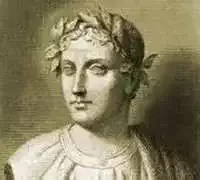
Horácio
BkIV:V To Augustus
BkIV:V To Augustus
Son of the blessed gods, and greatest defender
of Romulus’ people, you’ve been away too long:
make that swift return you promised, to the sacred
councils of the City Fathers,
Blessed leader, bring light to your country again:
when your face shines on the people, like the shining
springtime, then the day itself is more welcoming,
and the sun beams down more brightly.
As a mother, with vows and omens and prayers,
calls to the son whom a southerly wind’s envious
gales have kept far from his home, for more than a year,
lingering there, beyond the waves
of the Carpathian Sea: she who never turns
her face away from the curving line of the shore:
so, smitten with the deep longing of loyalty,
the country yearns for its Caesar.
Then the ox will wander the pastures in safety,
Ceres, and kindly Increase, will nourish the crops,
our sailors will sail across the waters in peace,
trust will shrink from the mark of shame,
the chaste house will be unstained by debauchery,
law and morality conquer the taint of sin,
mothers win praise for new-born so like their fathers,
and punishment attend on guilt.
Who’ll fear the Parthians, or the cold Scythians,
and who’ll fear the offspring savage Germany breeds,
if Caesar’s unharmed? Who’ll worry about battles
in the wilds of Iberia?
Every man passes the day among his own hills,
as he fastens his vines to the waiting branches:
from there he gladly returns to his wine, calls on
you, as god, at the second course:
He worships you with many a prayer, with wine
poured out, joins your name to those of his household gods,
as the Greeks were accustomed to remembering
Castor and mighty Hercules.
‘O blessed leader, bring Italy endless peace!’
That’s what we say, mouths parched, at the start of the day,
that’s what we say, lips wetted with wine, when the sun
sinks to rest under the Ocean.
Son of the blessed gods, and greatest defender
of Romulus’ people, you’ve been away too long:
make that swift return you promised, to the sacred
councils of the City Fathers,
Blessed leader, bring light to your country again:
when your face shines on the people, like the shining
springtime, then the day itself is more welcoming,
and the sun beams down more brightly.
As a mother, with vows and omens and prayers,
calls to the son whom a southerly wind’s envious
gales have kept far from his home, for more than a year,
lingering there, beyond the waves
of the Carpathian Sea: she who never turns
her face away from the curving line of the shore:
so, smitten with the deep longing of loyalty,
the country yearns for its Caesar.
Then the ox will wander the pastures in safety,
Ceres, and kindly Increase, will nourish the crops,
our sailors will sail across the waters in peace,
trust will shrink from the mark of shame,
the chaste house will be unstained by debauchery,
law and morality conquer the taint of sin,
mothers win praise for new-born so like their fathers,
and punishment attend on guilt.
Who’ll fear the Parthians, or the cold Scythians,
and who’ll fear the offspring savage Germany breeds,
if Caesar’s unharmed? Who’ll worry about battles
in the wilds of Iberia?
Every man passes the day among his own hills,
as he fastens his vines to the waiting branches:
from there he gladly returns to his wine, calls on
you, as god, at the second course:
He worships you with many a prayer, with wine
poured out, joins your name to those of his household gods,
as the Greeks were accustomed to remembering
Castor and mighty Hercules.
‘O blessed leader, bring Italy endless peace!’
That’s what we say, mouths parched, at the start of the day,
that’s what we say, lips wetted with wine, when the sun
sinks to rest under the Ocean.
238
Horácio
BkIII:X Cruel One
BkIII:X Cruel One
If you drank the water of furthest Don, Lyce,
married to some fierce husband, you’d still expose me
to the wailing winds of your native North country,
stretched out here by your cruel door.
Hear how the frame creaks, how the trees that are planted
inside your beautiful garden moan in the wind,
and how Jupiter’s pure power and divinity
ices over the fallen snow.
Set aside your disdain, it’s hateful to Venus,
lest the rope fly off, while the wheel is still turning:
you’re no Penelope, resistant to suitors,
nor born of Etruscan parents.
O, spare your suppliants, though nothing moves you,
not gifts, not my prayers, not your lover’s pallor,
that’s tinged with violet, nor your husband smitten
with a Pierian mistress,
you, no more pliant than an unbending oak-tree,
no gentler in spirit than a Moorish serpent.
My body won’t always put up with your threshold,
or the rain that falls from the sky.
If you drank the water of furthest Don, Lyce,
married to some fierce husband, you’d still expose me
to the wailing winds of your native North country,
stretched out here by your cruel door.
Hear how the frame creaks, how the trees that are planted
inside your beautiful garden moan in the wind,
and how Jupiter’s pure power and divinity
ices over the fallen snow.
Set aside your disdain, it’s hateful to Venus,
lest the rope fly off, while the wheel is still turning:
you’re no Penelope, resistant to suitors,
nor born of Etruscan parents.
O, spare your suppliants, though nothing moves you,
not gifts, not my prayers, not your lover’s pallor,
that’s tinged with violet, nor your husband smitten
with a Pierian mistress,
you, no more pliant than an unbending oak-tree,
no gentler in spirit than a Moorish serpent.
My body won’t always put up with your threshold,
or the rain that falls from the sky.
271
Horácio
BkIII:VII Be True
BkIII:VII Be True
Why weep, Asterie, for Gyges, whom west winds
will bring back to you at the first breath of springtime,
your lover constant in faith,
blessed with goods, from Bithynia?
Driven by easterlies as far as Epirus,
now, after Capella’s wild rising, he passes
chill nights of insomnia,
and not without many a tear.
Yet messages from his solicitous hostess,
telling how wretched Chloë sighs for your lover,
and burns with desire, tempts him
subtly and in a thousand ways.
She tells how a treacherous woman, making
false accusations, drove credulous Proteus
to bring a too-hasty death
to a too-chaste Bellerophon:
she tells of Peleus, nearly doomed to Hades,
fleeing Magnesian Hippolyte in abstinence:
and deceitfully teaches
tales that encourage wrongdoing.
All in vain: still untouched, he hears her voice, as deaf
as the Icarian cliffs. But take care yourself
lest Enipeus, next door,
pleases you more than is proper:
even though no one else is considered as fine
at controlling his horse, on the Campus’s turf,
and no one else swims as fast
as him, down the Tiber’s channel.
Close your doors when it’s dark, and don’t you go gazing
into the street, at the sound of his plaintive flute,
and when he keeps calling you
cruel, you still play hard to get.
Why weep, Asterie, for Gyges, whom west winds
will bring back to you at the first breath of springtime,
your lover constant in faith,
blessed with goods, from Bithynia?
Driven by easterlies as far as Epirus,
now, after Capella’s wild rising, he passes
chill nights of insomnia,
and not without many a tear.
Yet messages from his solicitous hostess,
telling how wretched Chloë sighs for your lover,
and burns with desire, tempts him
subtly and in a thousand ways.
She tells how a treacherous woman, making
false accusations, drove credulous Proteus
to bring a too-hasty death
to a too-chaste Bellerophon:
she tells of Peleus, nearly doomed to Hades,
fleeing Magnesian Hippolyte in abstinence:
and deceitfully teaches
tales that encourage wrongdoing.
All in vain: still untouched, he hears her voice, as deaf
as the Icarian cliffs. But take care yourself
lest Enipeus, next door,
pleases you more than is proper:
even though no one else is considered as fine
at controlling his horse, on the Campus’s turf,
and no one else swims as fast
as him, down the Tiber’s channel.
Close your doors when it’s dark, and don’t you go gazing
into the street, at the sound of his plaintive flute,
and when he keeps calling you
cruel, you still play hard to get.
272
Horácio
BkII:XV Excess
BkII:XV Excess
Not long now and our princely buildings will leave
few acres under the plough, ornamental
waters appearing everywhere, spread
wider than the Lucrine Lake is, plane trees,
without vines, will drive out the elms: and violet
beds, and myrtles, and all the wealth of perfumes
will scatter their scent through olive groves
that gave their crops for a former owner.
Then thick laurel branches will shut out the sun’s
raging. It wasn’t the case under Romulus,
or long-haired Cato, it wasn’t the rule,
that our ancient predecessors ordained.
Private property was modest in their day,
the common lands vast: no private citizen
had a portico, measuring tens
of feet, laid out facing the shady north,
nor did the laws allow ordinary turf
to be scorned for altars, ordering cities
and the gods’ temples, to be adorned,
at public expense, with rarest marbles.
Not long now and our princely buildings will leave
few acres under the plough, ornamental
waters appearing everywhere, spread
wider than the Lucrine Lake is, plane trees,
without vines, will drive out the elms: and violet
beds, and myrtles, and all the wealth of perfumes
will scatter their scent through olive groves
that gave their crops for a former owner.
Then thick laurel branches will shut out the sun’s
raging. It wasn’t the case under Romulus,
or long-haired Cato, it wasn’t the rule,
that our ancient predecessors ordained.
Private property was modest in their day,
the common lands vast: no private citizen
had a portico, measuring tens
of feet, laid out facing the shady north,
nor did the laws allow ordinary turf
to be scorned for altars, ordering cities
and the gods’ temples, to be adorned,
at public expense, with rarest marbles.
239
Horácio
BkII:XII Terentia’s Singing
BkII:XII Terentia’s Singing
You’d not wish the theme of Numantia’s fierce wars
matched to the lyre’s soft tones, nor cruel Hannibal,
nor the Sicilian Sea turned to dark crimson
by the Carthaginians’ blood,
nor the savage Lapiths, and drunken Hylaeus
filled with excess wine, nor Hercules with his hand
taming the sons of earth, at the danger of which
ancient Saturn’s glittering house
was shaken: you’d be better yourself, Maecenas,
at writing prose histories of Caesar’s battles,
and telling us about all those menacing kings,
now led by the neck through the streets.
The Muse wishes me to speak of the sweet singing
of your lady Terentia, and speak of her bright
flashing eyes, and speak of that heart of hers, that is
so faithful in mutual love:
she to whom it’s not unbecoming to adopt
the lead among the dancers, or compete in wit,
or, that holy day that honours Diana, give
her arm in play to shining girls.
Would you exchange now, one hair of Terentia’s
for what rich Achaemenes owned, Mygdonian
wealth of fertile Phrygia, or
the Arabians’ well-stocked homes,
while she bends her neck for those passionate kisses,
or in gentle cruelty refuses to yield them,
more than he who asks likes having them taken: then
at times surprises by taking?
You’d not wish the theme of Numantia’s fierce wars
matched to the lyre’s soft tones, nor cruel Hannibal,
nor the Sicilian Sea turned to dark crimson
by the Carthaginians’ blood,
nor the savage Lapiths, and drunken Hylaeus
filled with excess wine, nor Hercules with his hand
taming the sons of earth, at the danger of which
ancient Saturn’s glittering house
was shaken: you’d be better yourself, Maecenas,
at writing prose histories of Caesar’s battles,
and telling us about all those menacing kings,
now led by the neck through the streets.
The Muse wishes me to speak of the sweet singing
of your lady Terentia, and speak of her bright
flashing eyes, and speak of that heart of hers, that is
so faithful in mutual love:
she to whom it’s not unbecoming to adopt
the lead among the dancers, or compete in wit,
or, that holy day that honours Diana, give
her arm in play to shining girls.
Would you exchange now, one hair of Terentia’s
for what rich Achaemenes owned, Mygdonian
wealth of fertile Phrygia, or
the Arabians’ well-stocked homes,
while she bends her neck for those passionate kisses,
or in gentle cruelty refuses to yield them,
more than he who asks likes having them taken: then
at times surprises by taking?
206
Horácio
BkII:V Be Patient
BkII:V Be Patient
She’s not ready to bear a yoke on her bowed
neck yet, she’s not yet equal to the duty
of coupling, or bearing the heavy
weight of a charging bull in the mating act.
The thoughts of your heifer are on green pastures,
on easing her burning heat in the river,
and sporting with the eager calves
in the depths of moist willow plantations.
Forget this passion of yours for the unripe
grape: autumn, the season of many-colours,
will soon be dyeing bluish clusters
a darker purple, on the vine, for you.
Soon she’ll pursue you, since fierce time rushes on
and will add to her the years it takes from you,
soon Lalage herself will be eager
to search you out as a husband, Lalage,
beloved as shy Pholoë was not, nor your
Chloris, with shoulders gleaming white, like a clear
moon shining over a midnight sea,
nor Cnidian Gyges, that lovely boy,
whom you could inser in a choir of girls,
and the wisest of strangers would fail to tell
the difference, with him hidden behind
his flowing hair, and ambiguous looks.
She’s not ready to bear a yoke on her bowed
neck yet, she’s not yet equal to the duty
of coupling, or bearing the heavy
weight of a charging bull in the mating act.
The thoughts of your heifer are on green pastures,
on easing her burning heat in the river,
and sporting with the eager calves
in the depths of moist willow plantations.
Forget this passion of yours for the unripe
grape: autumn, the season of many-colours,
will soon be dyeing bluish clusters
a darker purple, on the vine, for you.
Soon she’ll pursue you, since fierce time rushes on
and will add to her the years it takes from you,
soon Lalage herself will be eager
to search you out as a husband, Lalage,
beloved as shy Pholoë was not, nor your
Chloris, with shoulders gleaming white, like a clear
moon shining over a midnight sea,
nor Cnidian Gyges, that lovely boy,
whom you could inser in a choir of girls,
and the wisest of strangers would fail to tell
the difference, with him hidden behind
his flowing hair, and ambiguous looks.
253
Horácio
BkI:XXXVI Numida’s Back Again
BkI:XXXVI Numida’s Back Again
With music, and incense, and blood
of a bullock, delight in placating the gods
that guarded our Numida well,
who’s returned safe and sound, from the farthest West, now,
showering a host of kisses
on every dear friend, but on none of us more than
lovely Lamia, remembering
their boyhood spent under the self-same master,
their togas exchanged together.
Don’t allow this sweet day to lack a white marker,
no end to the wine jars at hand,
no rest for our feet in the Salian fashion,
Don’t let wine-heavy Damalis
conquer our Bassus in downing the Thracian draughts.
Don’t let our feast lack for roses,
or the long-lasting parsley, or the brief lilies:
we’ll all cast our decadent eyes
on Damalis, but Damalis won’t be parted
from that new lover of hers she’s
clasping, more tightly than the wandering ivy.
With music, and incense, and blood
of a bullock, delight in placating the gods
that guarded our Numida well,
who’s returned safe and sound, from the farthest West, now,
showering a host of kisses
on every dear friend, but on none of us more than
lovely Lamia, remembering
their boyhood spent under the self-same master,
their togas exchanged together.
Don’t allow this sweet day to lack a white marker,
no end to the wine jars at hand,
no rest for our feet in the Salian fashion,
Don’t let wine-heavy Damalis
conquer our Bassus in downing the Thracian draughts.
Don’t let our feast lack for roses,
or the long-lasting parsley, or the brief lilies:
we’ll all cast our decadent eyes
on Damalis, but Damalis won’t be parted
from that new lover of hers she’s
clasping, more tightly than the wandering ivy.
201
Horácio
BkI:XXX Ode To Venus
BkI:XXX Ode To Venus
O Venus, the queen of Cnidos and Paphos,
spurn your beloved Cyprus, and summoned
by copious incense, come to the lovely shrine
of my Glycera.
And let that passionate boy of yours, Cupid,
and the Graces with loosened zones, and the Nymphs,
and Youth, less lovely without you, hasten here,
and Mercury too.
O Venus, the queen of Cnidos and Paphos,
spurn your beloved Cyprus, and summoned
by copious incense, come to the lovely shrine
of my Glycera.
And let that passionate boy of yours, Cupid,
and the Graces with loosened zones, and the Nymphs,
and Youth, less lovely without you, hasten here,
and Mercury too.
961
Horácio
BkI:XXII Singing of Lalage (Integer Vitae)
BkI:XXII Singing of Lalage (Integer Vitae)
The man who is pure of life, and free of sin,
has no need, dear Fuscus, for Moorish javelins,
nor a bow and a quiver, fully loaded
with poisoned arrows,
whether his path’s through the sweltering Syrtes,
or through the inhospitable Caucasus,
or makes its way through those fabulous regions
Hydaspes waters.
While I was wandering, beyond the boundaries
of my farm, in the Sabine woods, and singing
free from care, lightly-defended, of my Lalage,
a wolf fled from me:
a monster not even warlike Apulia
nourishes deep in its far-flung oak forests,
or that Juba’s parched Numidian land breeds,
nursery of lions.
Set me down on the lifeless plains, where no trees
spring to life in the burning midsummer wind,
that wide stretch of the world that’s burdened by mists
and a gloomy sky:
set me down in a land denied habitation,
where the sun’s chariot rumbles too near the earth:
I’ll still be in love with my sweetly laughing,
sweet talking Lalage.
The man who is pure of life, and free of sin,
has no need, dear Fuscus, for Moorish javelins,
nor a bow and a quiver, fully loaded
with poisoned arrows,
whether his path’s through the sweltering Syrtes,
or through the inhospitable Caucasus,
or makes its way through those fabulous regions
Hydaspes waters.
While I was wandering, beyond the boundaries
of my farm, in the Sabine woods, and singing
free from care, lightly-defended, of my Lalage,
a wolf fled from me:
a monster not even warlike Apulia
nourishes deep in its far-flung oak forests,
or that Juba’s parched Numidian land breeds,
nursery of lions.
Set me down on the lifeless plains, where no trees
spring to life in the burning midsummer wind,
that wide stretch of the world that’s burdened by mists
and a gloomy sky:
set me down in a land denied habitation,
where the sun’s chariot rumbles too near the earth:
I’ll still be in love with my sweetly laughing,
sweet talking Lalage.
245
Horácio
BkI:V Treacherous Girl
BkI:V Treacherous Girl
What slender boy, Pyrrha, drowned in liquid perfume,
urges you on, there, among showers of roses,
deep down in some pleasant cave?
For whom did you tie up your hair,
with simple elegance? How often he’ll cry at
the changes of faith and of gods, ah, he’ll wonder,
surprised by roughening water,
surprised by the darkening storms,
who enjoys you now and believes you’re golden,
who thinks you’ll always be single and lovely,
ignoring the treacherous
breeze. Wretched are those you dazzle
while still untried. As for me the votive tablet
that hangs on the temple wall reveals, suspended,
my dripping clothes, for the god,
who holds power over the sea.
What slender boy, Pyrrha, drowned in liquid perfume,
urges you on, there, among showers of roses,
deep down in some pleasant cave?
For whom did you tie up your hair,
with simple elegance? How often he’ll cry at
the changes of faith and of gods, ah, he’ll wonder,
surprised by roughening water,
surprised by the darkening storms,
who enjoys you now and believes you’re golden,
who thinks you’ll always be single and lovely,
ignoring the treacherous
breeze. Wretched are those you dazzle
while still untried. As for me the votive tablet
that hangs on the temple wall reveals, suspended,
my dripping clothes, for the god,
who holds power over the sea.
280
Horácio
BkI:V Treacherous Girl
BkI:V Treacherous Girl
What slender boy, Pyrrha, drowned in liquid perfume,
urges you on, there, among showers of roses,
deep down in some pleasant cave?
For whom did you tie up your hair,
with simple elegance? How often he’ll cry at
the changes of faith and of gods, ah, he’ll wonder,
surprised by roughening water,
surprised by the darkening storms,
who enjoys you now and believes you’re golden,
who thinks you’ll always be single and lovely,
ignoring the treacherous
breeze. Wretched are those you dazzle
while still untried. As for me the votive tablet
that hangs on the temple wall reveals, suspended,
my dripping clothes, for the god,
who holds power over the sea.
What slender boy, Pyrrha, drowned in liquid perfume,
urges you on, there, among showers of roses,
deep down in some pleasant cave?
For whom did you tie up your hair,
with simple elegance? How often he’ll cry at
the changes of faith and of gods, ah, he’ll wonder,
surprised by roughening water,
surprised by the darkening storms,
who enjoys you now and believes you’re golden,
who thinks you’ll always be single and lovely,
ignoring the treacherous
breeze. Wretched are those you dazzle
while still untried. As for me the votive tablet
that hangs on the temple wall reveals, suspended,
my dripping clothes, for the god,
who holds power over the sea.
280

Homero
The Odyssey: Book 5
The Odyssey: Book 5
And now, as Dawn rose from her couch beside Tithonus- harbinger of
light alike to mortals and immortals- the gods met in council and with
them, Jove the lord of thunder, who is their king. Thereon Minerva
began to tell them of the many sufferings of Ulysses, for she pitied
him away there in the house of the nymph Calypso.
"Father Jove," said she, "and all you other gods that live in
everlasting bliss, I hope there may never be such a thing as a kind
and well-disposed ruler any more, nor one who will govern equitably. I
hope they will be all henceforth cruel and unjust, for there is not
one of his subjects but has forgotten Ulysses, who ruled them as
though he were their father. There he is, lying in great pain in an
island where dwells the nymph Calypso, who will not let him go; and he
cannot get back to his own country, for he can find neither ships
nor sailors to take him over the sea. Furthermore, wicked people are
now trying to murder his only son Telemachus, who is coming home
from Pylos and Lacedaemon, where he has been to see if he can get news
of his father."
"What, my dear, are you talking about?" replied her father, "did you
not send him there yourself, because you thought it would help Ulysses
to get home and punish the suitors? Besides, you are perfectly able to
protect Telemachus, and to see him safely home again, while the
suitors have to come hurry-skurrying back without having killed him."
When he had thus spoken, he said to his son Mercury, "Mercury, you
are our messenger, go therefore and tell Calypso we have decreed
that poor Ulysses is to return home. He is to be convoyed neither by
gods nor men, but after a perilous voyage of twenty days upon a raft
he is to reach fertile Scheria, the land of the Phaeacians, who are
near of kin to the gods, and will honour him as though he were one
of ourselves. They will send him in a ship to his own country, and
will give him more bronze and gold and raiment than he would have
brought back from Troy, if he had had had all his prize money and
had got home without disaster. This is how we have settled that he
shall return to his country and his friends."
Thus he spoke, and Mercury, guide and guardian, slayer of Argus, did
as he was told. Forthwith he bound on his glittering golden sandals
with which he could fly like the wind over land and sea. He took the
wand with which he seals men's eyes in sleep or wakes them just as
he pleases, and flew holding it in his hand over Pieria; then he
swooped down through the firmament till he reached the level of the
sea, whose waves he skimmed like a cormorant that flies fishing
every hole and corner of the ocean, and drenching its thick plumage in
the spray. He flew and flew over many a weary wave, but when at last
he got to the island which was his journey's end, he left the sea
and went on by land till he came to the cave where the nymph Calypso
lived.
He found her at home. There was a large fire burning on the
hearth, and one could smell from far the fragrant reek of burning
cedar and sandal wood. As for herself, she was busy at her loom,
shooting her golden shuttle through the warp and singing
beautifully. Round her cave there was a thick wood of alder, poplar,
and sweet smelling cypress trees, wherein all kinds of great birds had
built their nests- owls, hawks, and chattering sea-crows that occupy
their business in the waters. A vine loaded with grapes was trained
and grew luxuriantly about the mouth of the cave; there were also four
running rills of water in channels cut pretty close together, and
turned hither and thither so as to irrigate the beds of violets and
luscious herbage over which they flowed. Even a god could not help
being charmed with such a lovely spot, so Mercury stood still and
looked at it; but when he had admired it sufficiently he went inside
the cave.
Calypso knew him at once- for the gods all know each other, no
matter how far they live from one another- but Ulysses was not within;
he was on the sea-shore as usual, looking out upon the barren ocean
with tears in his eyes, groaning and breaking his heart for sorrow.
Calypso gave Mercury a seat and said: "Why have you come to see me,
Mercury- honoured, and ever welcome- for you do not visit me often?
Say what you want; I will do it for be you at once if I can, and if it
can be done at all; but come inside, and let me set refreshment before
you.
As she spoke she drew a table loaded with ambrosia beside him and
mixed him some red nectar, so Mercury ate and drank till he had had
enough, and then said:
"We are speaking god and goddess to one another, one another, and
you ask me why I have come here, and I will tell you truly as you
would have me do. Jove sent me; it was no doing of mine; who could
possibly want to come all this way over the sea where there are no
cities full of people to offer me sacrifices or choice hecatombs?
Nevertheless I had to come, for none of us other gods can cross
Jove, nor transgress his orders. He says that you have here the most
ill-starred of alf those who fought nine years before the city of King
Priam and sailed home in the tenth year after having sacked it. On
their way home they sinned against Minerva, who raised both wind and
waves against them, so that all his brave companions perished, and
he alone was carried hither by wind and tide. Jove says that you are
to let this by man go at once, for it is decreed that he shall not
perish here, far from his own people, but shall return to his house
and country and see his friends again."
Calypso trembled with rage when she heard this, "You gods," she
exclaimed, to be ashamed of yourselves. You are always jealous and
hate seeing a goddess take a fancy to a mortal man, and live with
him in open matrimony. So when rosy-fingered Dawn made love to
Orion, you precious gods were all of you furious till Diana went and
killed him in Ortygia. So again when Ceres fell in love with Iasion,
and yielded to him in a thrice ploughed fallow field, Jove came to
hear of it before so long and killed Iasion with his thunder-bolts.
And now you are angry with me too because I have a man here. I found
the poor creature sitting all alone astride of a keel, for Jove had
struck his ship with lightning and sunk it in mid ocean, so that all
his crew were drowned, while he himself was driven by wind and waves
on to my island. I got fond of him and cherished him, and had set my
heart on making him immortal, so that he should never grow old all his
days; still I cannot cross Jove, nor bring his counsels to nothing;
therefore, if he insists upon it, let the man go beyond the seas
again; but I cannot send him anywhere myself for I have neither
ships nor men who can take him. Nevertheless I will readily give him
such advice, in all good faith, as will be likely to bring him
safely to his own country."
"Then send him away," said Mercury, "or Jove will be angry with
you and punish you"'
On this he took his leave, and Calypso went out to look for Ulysses,
for she had heard Jove's message. She found him sitting upon the beach
with his eyes ever filled with tears, and dying of sheer
home-sickness; for he had got tired of Calypso, and though he was
forced to sleep with her in the cave by night, it was she, not he,
that would have it so. As for the day time, he spent it on the rocks
and on the sea-shore, weeping, crying aloud for his despair, and
always looking out upon the sea. Calypso then went close up to him
said:
"My poor fellow, you shall not stay here grieving and fretting
your life out any longer. I am going to send you away of my own free
will; so go, cut some beams of wood, and make yourself a large raft
with an upper deck that it may carry you safely over the sea. I will
put bread, wine, and water on board to save you from starving. I
will also give you clothes, and will send you a fair wind to take
you home, if the gods in heaven so will it- for they know more about
these things, and can settle them better than I can."
Ulysses shuddered as he heard her. "Now goddess," he answered,
"there is something behind all this; you cannot be really meaning to
help me home when you bid me do such a dreadful thing as put to sea on
a raft. Not even a well-found ship with a fair wind could venture on
such a distant voyage: nothing that you can say or do shall mage me go
on board a raft unless you first solemnly swear that you mean me no
mischief."
Calypso smiled at this and caressed him with her hand: "You know a
great deal," said she, "but you are quite wrong here. May heaven above
and earth below be my witnesses, with the waters of the river Styxand
this is the most solemn oath which a blessed god can take- that
I mean you no sort of harm, and am only advising you to do exactly
what I should do myself in your place. I am dealing with you quite
straightforwardly; my heart is not made of iron, and I am very sorry
for you."
When she had thus spoken she led the way rapidly before him, and
Ulysses followed in her steps; so the pair, goddess and man, went on
and on till they came to Calypso's cave, where Ulysses took the seat
that Mercury had just left. Calypso set meat and drink before him of
the food that mortals eat; but her maids brought ambrosia and nectar
for herself, and they laid their hands on the good things that were
before them. When they had satisfied themselves with meat and drink,
Calypso spoke, saying:
"Ulysses, noble son of Laertes, so you would start home to your
own land at once? Good luck go with you, but if you could only know
how much suffering is in store for you before you get back to your own
country, you would stay where you are, keep house along with me, and
let me make you immortal, no matter how anxious you may be to see this
wife of yours, of whom you are thinking all the time day after day;
yet I flatter myself that at am no whit less tall or well-looking than
she is, for it is not to be expected that a mortal woman should
compare in beauty with an immortal."
"Goddess," replied Ulysses, "do not be angry with me about this. I
am quite aware that my wife Penelope is nothing like so tall or so
beautiful as yourself. She is only a woman, whereas you are an
immortal. Nevertheless, I want to get home, and can think of nothing
else. If some god wrecks me when I am on the sea, I will bear it and
make the best of it. I have had infinite trouble both by land and
sea already, so let this go with the rest."
Presently the sun set and it became dark, whereon the pair retired
into the inner part of the cave and went to bed.
When the child of morning, rosy-fingered Dawn, appeared, Ulysses put
on his shirt and cloak, while the goddess wore a dress of a light
gossamer fabric, very fine and graceful, with a beautiful golden
girdle about her waist and a veil to cover her head. She at once set
herself to think how she could speed Ulysses on his way. So she gave
him a great bronze axe that suited his hands; it was sharpened on both
sides, and had a beautiful olive-wood handle fitted firmly on to it.
She also gave him a sharp adze, and then led the way to the far end of
the island where the largest trees grew- alder, poplar and pine,
that reached the sky- very dry and well seasoned, so as to sail
light for him in the water. Then, when she had shown him where the
best trees grew, Calypso went home, leaving him to cut them, which
he soon finished doing. He cut down twenty trees in all and adzed them
smooth, squaring them by rule in good workmanlike fashion. Meanwhile
Calypso came back with some augers, so he bored holes with them and
fitted the timbers together with bolts and rivets. He made the raft as
broad as a skilled shipwright makes the beam of a large vessel, and he
filed a deck on top of the ribs, and ran a gunwale all round it. He
also made a mast with a yard arm, and a rudder to steer with. He
fenced the raft all round with wicker hurdles as a protection
against the waves, and then he threw on a quantity of wood. By and
by Calypso brought him some linen to make the sails, and he made these
too, excellently, making them fast with braces and sheets. Last of
all, with the help of levers, he drew the raft down into the water.
In four days he had completed the whole work, and on the fifth
Calypso sent him from the island after washing him and giving him some
clean clothes. She gave him a goat skin full of black wine, and
another larger one of water; she also gave him a wallet full of
provisions, and found him in much good meat. Moreover, she made the
wind fair and warm for him, and gladly did Ulysses spread his sail
before it, while he sat and guided the raft skilfully by means of
the rudder. He never closed his eyes, but kept them fixed on the
Pleiads, on late-setting Bootes, and on the Bear- which men also
call the wain, and which turns round and round where it is, facing
Orion, and alone never dipping into the stream of Oceanus- for Calypso
had told him to keep this to his left. Days seven and ten did he
sail over the sea, and on the eighteenth the dim outlines of the
mountains on the nearest part of the Phaeacian coast appeared,
rising like a shield on the horizon.
But King Neptune, who was returning from the Ethiopians, caught
sight of Ulysses a long way off, from the mountains of the Solymi.
He could see him sailing upon the sea, and it made him very angry,
so he wagged his head and muttered to himself, saying, heavens, so the
gods have been changing their minds about Ulysses while I was away
in Ethiopia, and now he is close to the land of the Phaeacians,
where it is decreed that he shall escape from the calamities that have
befallen him. Still, he shall have plenty of hardship yet before he
has done with it."
Thereon he gathered his clouds together, grasped his trident,
stirred it round in the sea, and roused the rage of every wind that
blows till earth, sea, and sky were hidden in cloud, and night
sprang forth out of the heavens. Winds from East, South, North, and
West fell upon him all at the same time, and a tremendous sea got
up, so that Ulysses' heart began to fail him. "Alas," he said to
himself in his dismay, "what ever will become of me? I am afraid
Calypso was right when she said I should have trouble by sea before
I got back home. It is all coming true. How black is Jove making
heaven with his clouds, and what a sea the winds are raising from
every quarter at once. I am now safe to perish. Blest and thrice blest
were those Danaans who fell before Troy in the cause of the sons of
Atreus. Would that had been killed on the day when the Trojans were
pressing me so sorely about the dead body of Achilles, for then I
should have had due burial and the Achaeans would have honoured my
name; but now it seems that I shall come to a most pitiable end."
As he spoke a sea broke over him with such terrific fury that the
raft reeled again, and he was carried overboard a long way off. He let
go the helm, and the force of the hurricane was so great that it broke
the mast half way up, and both sail and yard went over into the sea.
For a long time Ulysses was under water, and it was all he could do to
rise to the surface again, for the clothes Calypso had given him
weighed him down; but at last he got his head above water and spat out
the bitter brine that was running down his face in streams. In spite
of all this, however, he did not lose sight of his raft, but swam as
fast as he could towards it, got hold of it, and climbed on board
again so as to escape drowning. The sea took the raft and tossed it
about as Autumn winds whirl thistledown round and round upon a road.
It was as though the South, North, East, and West winds were all
playing battledore and shuttlecock with it at once.
When he was in this plight, Ino daughter of Cadmus, also called
Leucothea, saw him. She had formerly been a mere mortal, but had
been since raised to the rank of a marine goddess. Seeing in what
great distress Ulysses now was, she had compassion upon him, and,
rising like a sea-gull from the waves, took her seat upon the raft.
"My poor good man," said she, "why is Neptune so furiously angry
with you? He is giving you a great deal of trouble, but for all his
bluster he will not kill you. You seem to be a sensible person, do
then as I bid you; strip, leave your raft to drive before the wind,
and swim to the Phaecian coast where better luck awaits you. And here,
take my veil and put it round your chest; it is enchanted, and you can
come to no harm so long as you wear it. As soon as you touch land take
it off, throw it back as far as you can into the sea, and then go away
again." With these words she took off her veil and gave it him. Then
she dived down again like a sea-gull and vanished beneath the dark
blue waters.
But Ulysses did not know what to think. "Alas," he said to himself
in his dismay, "this is only some one or other of the gods who is
luring me to ruin by advising me to will quit my raft. At any rate I
will not do so at present, for the land where she said I should be
quit of all troubles seemed to be still a good way off. I know what
I will do- I am sure it will be best- no matter what happens I will
stick to the raft as long as her timbers hold together, but when the
sea breaks her up I will swim for it; I do not see how I can do any
better than this."
While he was thus in two minds, Neptune sent a terrible great wave
that seemed to rear itself above his head till it broke right over the
raft, which then went to pieces as though it were a heap of dry
chaff tossed about by a whirlwind. Ulysses got astride of one plank
and rode upon it as if he were on horseback; he then took off the
clothes Calypso had given him, bound Ino's veil under his arms, and
plunged into the sea- meaning to swim on shore. King Neptune watched
him as he did so, and wagged his head, muttering to himself and
saying, "'There now, swim up and down as you best can till you fall in
with well-to-do people. I do not think you will be able to say that
I have let you off too lightly." On this he lashed his horses and
drove to Aegae where his palace is.
But Minerva resolved to help Ulysses, so she bound the ways of all
the winds except one, and made them lie quite still; but she roused
a good stiff breeze from the North that should lay the waters till
Ulysses reached the land of the Phaeacians where he would be safe.
Thereon he floated about for two nights and two days in the water,
with a heavy swell on the sea and death staring him in the face; but
when the third day broke, the wind fell and there was a dead calm
without so much as a breath of air stirring. As he rose on the swell
he looked eagerly ahead, and could see land quite near. Then, as
children rejoice when their dear father begins to get better after
having for a long time borne sore affliction sent him by some angry
spirit, but the gods deliver him from evil, so was Ulysses thankful
when he again saw land and trees, and swam on with all his strength
that he might once more set foot upon dry ground. When, however, he
got within earshot, he began to hear the surf thundering up against
the rocks, for the swell still broke against them with a terrific
roar. Everything was enveloped in spray; there were no harbours
where a ship might ride, nor shelter of any kind, but only
headlands, low-lying rocks, and mountain tops.
Ulysses' heart now began to fail him, and he said despairingly to
himself, "Alas, Jove has let me see land after swimming so far that
I had given up all hope, but I can find no landing place, for the
coast is rocky and surf-beaten, the rocks are smooth and rise sheer
from the sea, with deep water close under them so that I cannot
climb out for want of foothold. I am afraid some great wave will
lift me off my legs and dash me against the rocks as I leave the
water- which would give me a sorry landing. If, on the other hand, I
swim further in search of some shelving beach or harbour, a
hurricane may carry me out to sea again sorely against my will, or
heaven may send some great monster of the deep to attack me; for
Amphitrite breeds many such, and I know that Neptune is very angry
with me."
While he was thus in two minds a wave caught him and took him with
such force against the rocks that he would have been smashed and
torn to pieces if Minerva had not shown him what to do. He caught hold
of the rock with both hands and clung to it groaning with pain till
the wave retired, so he was saved that time; but presently the wave
came on again and carried him back with it far into the sea-tearing
his hands as the suckers of a polypus are torn when some one plucks it
from its bed, and the stones come up along with it even so did the
rocks tear the skin from his strong hands, and then the wave drew
him deep down under the water.
Here poor Ulysses would have certainly perished even in spite of his
own destiny, if Minerva had not helped him to keep his wits about him.
He swam seaward again, beyond reach of the surf that was beating
against the land, and at the same time he kept looking towards the
shore to see if he could find some haven, or a spit that should take
the waves aslant. By and by, as he swam on, he came to the mouth of
a river, and here he thought would be the best place, for there were
no rocks, and it afforded shelter from the wind. He felt that there
was a current, so he prayed inwardly and said:
"Hear me, O King, whoever you may be, and save me from the anger
of the sea-god Neptune, for I approach you prayerfully. Any one who
has lost his way has at all times a claim even upon the gods,
wherefore in my distress I draw near to your stream, and cling to
the knees of your riverhood. Have mercy upon me, O king, for I declare
myself your suppliant."
Then the god stayed his stream and stilled the waves, making all
calm before him, and bringing him safely into the mouth of the
river. Here at last Ulysses' knees and strong hands failed him, for
the sea had completely broken him. His body was all swollen, and his
mouth and nostrils ran down like a river with sea-water, so that he
could neither breathe nor speak, and lay swooning from sheer
exhaustion; presently, when he had got his breath and came to
himself again, he took off the scarf that Ino had given him and
threw it back into the salt stream of the river, whereon Ino
received it into her hands from the wave that bore it towards her.
Then he left the river, laid himself down among the rushes, and kissed
the bounteous earth.
"Alas," he cried to himself in his dismay, "what ever will become of
me, and how is it all to end? If I stay here upon the river bed
through the long watches of the night, I am so exhausted that the
bitter cold and damp may make an end of me- for towards sunrise
there will be a keen wind blowing from off the river. If, on the other
hand, I climb the hill side, find shelter in the woods, and sleep in
some thicket, I may escape the cold and have a good night's rest,
but some savage beast may take advantage of me and devour me."
In the end he deemed it best to take to the woods, and he found
one upon some high ground not far from the water. There he crept
beneath two shoots of olive that grew from a single stock- the one
an ungrafted sucker, while the other had been grafted. No wind,
however squally, could break through the cover they afforded, nor
could the sun's rays pierce them, nor the rain get through them, so
closely did they grow into one another. Ulysses crept under these
and began to make himself a bed to lie on, for there was a great
litter of dead leaves lying about- enough to make a covering for two
or three men even in hard winter weather. He was glad enough to see
this, so he laid himself down and heaped the leaves all round him.
Then, as one who lives alone in the country, far from any neighbor,
hides a brand as fire-seed in the ashes to save himself from having to
get a light elsewhere, even so did Ulysses cover himself up with
leaves; and Minerva shed a sweet sleep upon his eyes, closed his
eyelids, and made him lose all memories of his sorrows.
Translated by Samuel Butler
And now, as Dawn rose from her couch beside Tithonus- harbinger of
light alike to mortals and immortals- the gods met in council and with
them, Jove the lord of thunder, who is their king. Thereon Minerva
began to tell them of the many sufferings of Ulysses, for she pitied
him away there in the house of the nymph Calypso.
"Father Jove," said she, "and all you other gods that live in
everlasting bliss, I hope there may never be such a thing as a kind
and well-disposed ruler any more, nor one who will govern equitably. I
hope they will be all henceforth cruel and unjust, for there is not
one of his subjects but has forgotten Ulysses, who ruled them as
though he were their father. There he is, lying in great pain in an
island where dwells the nymph Calypso, who will not let him go; and he
cannot get back to his own country, for he can find neither ships
nor sailors to take him over the sea. Furthermore, wicked people are
now trying to murder his only son Telemachus, who is coming home
from Pylos and Lacedaemon, where he has been to see if he can get news
of his father."
"What, my dear, are you talking about?" replied her father, "did you
not send him there yourself, because you thought it would help Ulysses
to get home and punish the suitors? Besides, you are perfectly able to
protect Telemachus, and to see him safely home again, while the
suitors have to come hurry-skurrying back without having killed him."
When he had thus spoken, he said to his son Mercury, "Mercury, you
are our messenger, go therefore and tell Calypso we have decreed
that poor Ulysses is to return home. He is to be convoyed neither by
gods nor men, but after a perilous voyage of twenty days upon a raft
he is to reach fertile Scheria, the land of the Phaeacians, who are
near of kin to the gods, and will honour him as though he were one
of ourselves. They will send him in a ship to his own country, and
will give him more bronze and gold and raiment than he would have
brought back from Troy, if he had had had all his prize money and
had got home without disaster. This is how we have settled that he
shall return to his country and his friends."
Thus he spoke, and Mercury, guide and guardian, slayer of Argus, did
as he was told. Forthwith he bound on his glittering golden sandals
with which he could fly like the wind over land and sea. He took the
wand with which he seals men's eyes in sleep or wakes them just as
he pleases, and flew holding it in his hand over Pieria; then he
swooped down through the firmament till he reached the level of the
sea, whose waves he skimmed like a cormorant that flies fishing
every hole and corner of the ocean, and drenching its thick plumage in
the spray. He flew and flew over many a weary wave, but when at last
he got to the island which was his journey's end, he left the sea
and went on by land till he came to the cave where the nymph Calypso
lived.
He found her at home. There was a large fire burning on the
hearth, and one could smell from far the fragrant reek of burning
cedar and sandal wood. As for herself, she was busy at her loom,
shooting her golden shuttle through the warp and singing
beautifully. Round her cave there was a thick wood of alder, poplar,
and sweet smelling cypress trees, wherein all kinds of great birds had
built their nests- owls, hawks, and chattering sea-crows that occupy
their business in the waters. A vine loaded with grapes was trained
and grew luxuriantly about the mouth of the cave; there were also four
running rills of water in channels cut pretty close together, and
turned hither and thither so as to irrigate the beds of violets and
luscious herbage over which they flowed. Even a god could not help
being charmed with such a lovely spot, so Mercury stood still and
looked at it; but when he had admired it sufficiently he went inside
the cave.
Calypso knew him at once- for the gods all know each other, no
matter how far they live from one another- but Ulysses was not within;
he was on the sea-shore as usual, looking out upon the barren ocean
with tears in his eyes, groaning and breaking his heart for sorrow.
Calypso gave Mercury a seat and said: "Why have you come to see me,
Mercury- honoured, and ever welcome- for you do not visit me often?
Say what you want; I will do it for be you at once if I can, and if it
can be done at all; but come inside, and let me set refreshment before
you.
As she spoke she drew a table loaded with ambrosia beside him and
mixed him some red nectar, so Mercury ate and drank till he had had
enough, and then said:
"We are speaking god and goddess to one another, one another, and
you ask me why I have come here, and I will tell you truly as you
would have me do. Jove sent me; it was no doing of mine; who could
possibly want to come all this way over the sea where there are no
cities full of people to offer me sacrifices or choice hecatombs?
Nevertheless I had to come, for none of us other gods can cross
Jove, nor transgress his orders. He says that you have here the most
ill-starred of alf those who fought nine years before the city of King
Priam and sailed home in the tenth year after having sacked it. On
their way home they sinned against Minerva, who raised both wind and
waves against them, so that all his brave companions perished, and
he alone was carried hither by wind and tide. Jove says that you are
to let this by man go at once, for it is decreed that he shall not
perish here, far from his own people, but shall return to his house
and country and see his friends again."
Calypso trembled with rage when she heard this, "You gods," she
exclaimed, to be ashamed of yourselves. You are always jealous and
hate seeing a goddess take a fancy to a mortal man, and live with
him in open matrimony. So when rosy-fingered Dawn made love to
Orion, you precious gods were all of you furious till Diana went and
killed him in Ortygia. So again when Ceres fell in love with Iasion,
and yielded to him in a thrice ploughed fallow field, Jove came to
hear of it before so long and killed Iasion with his thunder-bolts.
And now you are angry with me too because I have a man here. I found
the poor creature sitting all alone astride of a keel, for Jove had
struck his ship with lightning and sunk it in mid ocean, so that all
his crew were drowned, while he himself was driven by wind and waves
on to my island. I got fond of him and cherished him, and had set my
heart on making him immortal, so that he should never grow old all his
days; still I cannot cross Jove, nor bring his counsels to nothing;
therefore, if he insists upon it, let the man go beyond the seas
again; but I cannot send him anywhere myself for I have neither
ships nor men who can take him. Nevertheless I will readily give him
such advice, in all good faith, as will be likely to bring him
safely to his own country."
"Then send him away," said Mercury, "or Jove will be angry with
you and punish you"'
On this he took his leave, and Calypso went out to look for Ulysses,
for she had heard Jove's message. She found him sitting upon the beach
with his eyes ever filled with tears, and dying of sheer
home-sickness; for he had got tired of Calypso, and though he was
forced to sleep with her in the cave by night, it was she, not he,
that would have it so. As for the day time, he spent it on the rocks
and on the sea-shore, weeping, crying aloud for his despair, and
always looking out upon the sea. Calypso then went close up to him
said:
"My poor fellow, you shall not stay here grieving and fretting
your life out any longer. I am going to send you away of my own free
will; so go, cut some beams of wood, and make yourself a large raft
with an upper deck that it may carry you safely over the sea. I will
put bread, wine, and water on board to save you from starving. I
will also give you clothes, and will send you a fair wind to take
you home, if the gods in heaven so will it- for they know more about
these things, and can settle them better than I can."
Ulysses shuddered as he heard her. "Now goddess," he answered,
"there is something behind all this; you cannot be really meaning to
help me home when you bid me do such a dreadful thing as put to sea on
a raft. Not even a well-found ship with a fair wind could venture on
such a distant voyage: nothing that you can say or do shall mage me go
on board a raft unless you first solemnly swear that you mean me no
mischief."
Calypso smiled at this and caressed him with her hand: "You know a
great deal," said she, "but you are quite wrong here. May heaven above
and earth below be my witnesses, with the waters of the river Styxand
this is the most solemn oath which a blessed god can take- that
I mean you no sort of harm, and am only advising you to do exactly
what I should do myself in your place. I am dealing with you quite
straightforwardly; my heart is not made of iron, and I am very sorry
for you."
When she had thus spoken she led the way rapidly before him, and
Ulysses followed in her steps; so the pair, goddess and man, went on
and on till they came to Calypso's cave, where Ulysses took the seat
that Mercury had just left. Calypso set meat and drink before him of
the food that mortals eat; but her maids brought ambrosia and nectar
for herself, and they laid their hands on the good things that were
before them. When they had satisfied themselves with meat and drink,
Calypso spoke, saying:
"Ulysses, noble son of Laertes, so you would start home to your
own land at once? Good luck go with you, but if you could only know
how much suffering is in store for you before you get back to your own
country, you would stay where you are, keep house along with me, and
let me make you immortal, no matter how anxious you may be to see this
wife of yours, of whom you are thinking all the time day after day;
yet I flatter myself that at am no whit less tall or well-looking than
she is, for it is not to be expected that a mortal woman should
compare in beauty with an immortal."
"Goddess," replied Ulysses, "do not be angry with me about this. I
am quite aware that my wife Penelope is nothing like so tall or so
beautiful as yourself. She is only a woman, whereas you are an
immortal. Nevertheless, I want to get home, and can think of nothing
else. If some god wrecks me when I am on the sea, I will bear it and
make the best of it. I have had infinite trouble both by land and
sea already, so let this go with the rest."
Presently the sun set and it became dark, whereon the pair retired
into the inner part of the cave and went to bed.
When the child of morning, rosy-fingered Dawn, appeared, Ulysses put
on his shirt and cloak, while the goddess wore a dress of a light
gossamer fabric, very fine and graceful, with a beautiful golden
girdle about her waist and a veil to cover her head. She at once set
herself to think how she could speed Ulysses on his way. So she gave
him a great bronze axe that suited his hands; it was sharpened on both
sides, and had a beautiful olive-wood handle fitted firmly on to it.
She also gave him a sharp adze, and then led the way to the far end of
the island where the largest trees grew- alder, poplar and pine,
that reached the sky- very dry and well seasoned, so as to sail
light for him in the water. Then, when she had shown him where the
best trees grew, Calypso went home, leaving him to cut them, which
he soon finished doing. He cut down twenty trees in all and adzed them
smooth, squaring them by rule in good workmanlike fashion. Meanwhile
Calypso came back with some augers, so he bored holes with them and
fitted the timbers together with bolts and rivets. He made the raft as
broad as a skilled shipwright makes the beam of a large vessel, and he
filed a deck on top of the ribs, and ran a gunwale all round it. He
also made a mast with a yard arm, and a rudder to steer with. He
fenced the raft all round with wicker hurdles as a protection
against the waves, and then he threw on a quantity of wood. By and
by Calypso brought him some linen to make the sails, and he made these
too, excellently, making them fast with braces and sheets. Last of
all, with the help of levers, he drew the raft down into the water.
In four days he had completed the whole work, and on the fifth
Calypso sent him from the island after washing him and giving him some
clean clothes. She gave him a goat skin full of black wine, and
another larger one of water; she also gave him a wallet full of
provisions, and found him in much good meat. Moreover, she made the
wind fair and warm for him, and gladly did Ulysses spread his sail
before it, while he sat and guided the raft skilfully by means of
the rudder. He never closed his eyes, but kept them fixed on the
Pleiads, on late-setting Bootes, and on the Bear- which men also
call the wain, and which turns round and round where it is, facing
Orion, and alone never dipping into the stream of Oceanus- for Calypso
had told him to keep this to his left. Days seven and ten did he
sail over the sea, and on the eighteenth the dim outlines of the
mountains on the nearest part of the Phaeacian coast appeared,
rising like a shield on the horizon.
But King Neptune, who was returning from the Ethiopians, caught
sight of Ulysses a long way off, from the mountains of the Solymi.
He could see him sailing upon the sea, and it made him very angry,
so he wagged his head and muttered to himself, saying, heavens, so the
gods have been changing their minds about Ulysses while I was away
in Ethiopia, and now he is close to the land of the Phaeacians,
where it is decreed that he shall escape from the calamities that have
befallen him. Still, he shall have plenty of hardship yet before he
has done with it."
Thereon he gathered his clouds together, grasped his trident,
stirred it round in the sea, and roused the rage of every wind that
blows till earth, sea, and sky were hidden in cloud, and night
sprang forth out of the heavens. Winds from East, South, North, and
West fell upon him all at the same time, and a tremendous sea got
up, so that Ulysses' heart began to fail him. "Alas," he said to
himself in his dismay, "what ever will become of me? I am afraid
Calypso was right when she said I should have trouble by sea before
I got back home. It is all coming true. How black is Jove making
heaven with his clouds, and what a sea the winds are raising from
every quarter at once. I am now safe to perish. Blest and thrice blest
were those Danaans who fell before Troy in the cause of the sons of
Atreus. Would that had been killed on the day when the Trojans were
pressing me so sorely about the dead body of Achilles, for then I
should have had due burial and the Achaeans would have honoured my
name; but now it seems that I shall come to a most pitiable end."
As he spoke a sea broke over him with such terrific fury that the
raft reeled again, and he was carried overboard a long way off. He let
go the helm, and the force of the hurricane was so great that it broke
the mast half way up, and both sail and yard went over into the sea.
For a long time Ulysses was under water, and it was all he could do to
rise to the surface again, for the clothes Calypso had given him
weighed him down; but at last he got his head above water and spat out
the bitter brine that was running down his face in streams. In spite
of all this, however, he did not lose sight of his raft, but swam as
fast as he could towards it, got hold of it, and climbed on board
again so as to escape drowning. The sea took the raft and tossed it
about as Autumn winds whirl thistledown round and round upon a road.
It was as though the South, North, East, and West winds were all
playing battledore and shuttlecock with it at once.
When he was in this plight, Ino daughter of Cadmus, also called
Leucothea, saw him. She had formerly been a mere mortal, but had
been since raised to the rank of a marine goddess. Seeing in what
great distress Ulysses now was, she had compassion upon him, and,
rising like a sea-gull from the waves, took her seat upon the raft.
"My poor good man," said she, "why is Neptune so furiously angry
with you? He is giving you a great deal of trouble, but for all his
bluster he will not kill you. You seem to be a sensible person, do
then as I bid you; strip, leave your raft to drive before the wind,
and swim to the Phaecian coast where better luck awaits you. And here,
take my veil and put it round your chest; it is enchanted, and you can
come to no harm so long as you wear it. As soon as you touch land take
it off, throw it back as far as you can into the sea, and then go away
again." With these words she took off her veil and gave it him. Then
she dived down again like a sea-gull and vanished beneath the dark
blue waters.
But Ulysses did not know what to think. "Alas," he said to himself
in his dismay, "this is only some one or other of the gods who is
luring me to ruin by advising me to will quit my raft. At any rate I
will not do so at present, for the land where she said I should be
quit of all troubles seemed to be still a good way off. I know what
I will do- I am sure it will be best- no matter what happens I will
stick to the raft as long as her timbers hold together, but when the
sea breaks her up I will swim for it; I do not see how I can do any
better than this."
While he was thus in two minds, Neptune sent a terrible great wave
that seemed to rear itself above his head till it broke right over the
raft, which then went to pieces as though it were a heap of dry
chaff tossed about by a whirlwind. Ulysses got astride of one plank
and rode upon it as if he were on horseback; he then took off the
clothes Calypso had given him, bound Ino's veil under his arms, and
plunged into the sea- meaning to swim on shore. King Neptune watched
him as he did so, and wagged his head, muttering to himself and
saying, "'There now, swim up and down as you best can till you fall in
with well-to-do people. I do not think you will be able to say that
I have let you off too lightly." On this he lashed his horses and
drove to Aegae where his palace is.
But Minerva resolved to help Ulysses, so she bound the ways of all
the winds except one, and made them lie quite still; but she roused
a good stiff breeze from the North that should lay the waters till
Ulysses reached the land of the Phaeacians where he would be safe.
Thereon he floated about for two nights and two days in the water,
with a heavy swell on the sea and death staring him in the face; but
when the third day broke, the wind fell and there was a dead calm
without so much as a breath of air stirring. As he rose on the swell
he looked eagerly ahead, and could see land quite near. Then, as
children rejoice when their dear father begins to get better after
having for a long time borne sore affliction sent him by some angry
spirit, but the gods deliver him from evil, so was Ulysses thankful
when he again saw land and trees, and swam on with all his strength
that he might once more set foot upon dry ground. When, however, he
got within earshot, he began to hear the surf thundering up against
the rocks, for the swell still broke against them with a terrific
roar. Everything was enveloped in spray; there were no harbours
where a ship might ride, nor shelter of any kind, but only
headlands, low-lying rocks, and mountain tops.
Ulysses' heart now began to fail him, and he said despairingly to
himself, "Alas, Jove has let me see land after swimming so far that
I had given up all hope, but I can find no landing place, for the
coast is rocky and surf-beaten, the rocks are smooth and rise sheer
from the sea, with deep water close under them so that I cannot
climb out for want of foothold. I am afraid some great wave will
lift me off my legs and dash me against the rocks as I leave the
water- which would give me a sorry landing. If, on the other hand, I
swim further in search of some shelving beach or harbour, a
hurricane may carry me out to sea again sorely against my will, or
heaven may send some great monster of the deep to attack me; for
Amphitrite breeds many such, and I know that Neptune is very angry
with me."
While he was thus in two minds a wave caught him and took him with
such force against the rocks that he would have been smashed and
torn to pieces if Minerva had not shown him what to do. He caught hold
of the rock with both hands and clung to it groaning with pain till
the wave retired, so he was saved that time; but presently the wave
came on again and carried him back with it far into the sea-tearing
his hands as the suckers of a polypus are torn when some one plucks it
from its bed, and the stones come up along with it even so did the
rocks tear the skin from his strong hands, and then the wave drew
him deep down under the water.
Here poor Ulysses would have certainly perished even in spite of his
own destiny, if Minerva had not helped him to keep his wits about him.
He swam seaward again, beyond reach of the surf that was beating
against the land, and at the same time he kept looking towards the
shore to see if he could find some haven, or a spit that should take
the waves aslant. By and by, as he swam on, he came to the mouth of
a river, and here he thought would be the best place, for there were
no rocks, and it afforded shelter from the wind. He felt that there
was a current, so he prayed inwardly and said:
"Hear me, O King, whoever you may be, and save me from the anger
of the sea-god Neptune, for I approach you prayerfully. Any one who
has lost his way has at all times a claim even upon the gods,
wherefore in my distress I draw near to your stream, and cling to
the knees of your riverhood. Have mercy upon me, O king, for I declare
myself your suppliant."
Then the god stayed his stream and stilled the waves, making all
calm before him, and bringing him safely into the mouth of the
river. Here at last Ulysses' knees and strong hands failed him, for
the sea had completely broken him. His body was all swollen, and his
mouth and nostrils ran down like a river with sea-water, so that he
could neither breathe nor speak, and lay swooning from sheer
exhaustion; presently, when he had got his breath and came to
himself again, he took off the scarf that Ino had given him and
threw it back into the salt stream of the river, whereon Ino
received it into her hands from the wave that bore it towards her.
Then he left the river, laid himself down among the rushes, and kissed
the bounteous earth.
"Alas," he cried to himself in his dismay, "what ever will become of
me, and how is it all to end? If I stay here upon the river bed
through the long watches of the night, I am so exhausted that the
bitter cold and damp may make an end of me- for towards sunrise
there will be a keen wind blowing from off the river. If, on the other
hand, I climb the hill side, find shelter in the woods, and sleep in
some thicket, I may escape the cold and have a good night's rest,
but some savage beast may take advantage of me and devour me."
In the end he deemed it best to take to the woods, and he found
one upon some high ground not far from the water. There he crept
beneath two shoots of olive that grew from a single stock- the one
an ungrafted sucker, while the other had been grafted. No wind,
however squally, could break through the cover they afforded, nor
could the sun's rays pierce them, nor the rain get through them, so
closely did they grow into one another. Ulysses crept under these
and began to make himself a bed to lie on, for there was a great
litter of dead leaves lying about- enough to make a covering for two
or three men even in hard winter weather. He was glad enough to see
this, so he laid himself down and heaped the leaves all round him.
Then, as one who lives alone in the country, far from any neighbor,
hides a brand as fire-seed in the ashes to save himself from having to
get a light elsewhere, even so did Ulysses cover himself up with
leaves; and Minerva shed a sweet sleep upon his eyes, closed his
eyelids, and made him lose all memories of his sorrows.
Translated by Samuel Butler
155
Homero
The Odyssey: Book 2
The Odyssey: Book 2
Now when the child of morning, rosy-fingered Dawn, appeared,
Telemachus rose and dressed himself. He bound his sandals on to his
comely feet, girded his sword about his shoulder, and left his room
looking like an immortal god. He at once sent the criers round to call
the people in assembly, so they called them and the people gathered
thereon; then, when they were got together, he went to the place of
assembly spear in hand- not alone, for his two hounds went with him.
Minerva endowed him with a presence of such divine comeliness that all
marvelled at him as he went by, and when he took his place' in his
father's seat even the oldest councillors made way for him.
Aegyptius, a man bent double with age, and of infinite experience,
the first to speak His son Antiphus had gone with Ulysses to Ilius,
land of noble steeds, but the savage Cyclops had killed him when
they were all shut up in the cave, and had cooked his last dinner
for him, He had three sons left, of whom two still worked on their
father's land, while the third, Eurynomus, was one of the suitors;
nevertheless their father could not get over the loss of Antiphus, and
was still weeping for him when he began his speech.
"Men of Ithaca," he said, "hear my words. From the day Ulysses
left us there has been no meeting of our councillors until now; who
then can it be, whether old or young, that finds it so necessary to
convene us? Has he got wind of some host approaching, and does he wish
to warn us, or would he speak upon some other matter of public moment?
I am sure he is an excellent person, and I hope Jove will grant him
his heart's desire."
Telemachus took this speech as of good omen and rose at once, for he
was bursting with what he had to say. He stood in the middle of the
assembly and the good herald Pisenor brought him his staff. Then,
turning to Aegyptius, "Sir," said he, "it is I, as you will shortly
learn, who have convened you, for it is I who am the most aggrieved. I
have not got wind of any host approaching about which I would warn
you, nor is there any matter of public moment on which I would
speak. My grieveance is purely personal, and turns on two great
misfortunes which have fallen upon my house. The first of these is the
loss of my excellent father, who was chief among all you here present,
and was like a father to every one of you; the second is much more
serious, and ere long will be the utter ruin of my estate. The sons of
all the chief men among you are pestering my mother to marry them
against her will. They are afraid to go to her father Icarius,
asking him to choose the one he likes best, and to provide marriage
gifts for his daughter, but day by day they keep hanging about my
father's house, sacrificing our oxen, sheep, and fat goats for their
banquets, and never giving so much as a thought to the quantity of
wine they drink. No estate can stand such recklessness; we have now no
Ulysses to ward off harm from our doors, and I cannot hold my own
against them. I shall never all my days be as good a man as he was,
still I would indeed defend myself if I had power to do so, for I
cannot stand such treatment any longer; my house is being disgraced
and ruined. Have respect, therefore, to your own consciences and to
public opinion. Fear, too, the wrath of heaven, lest the gods should
be displeased and turn upon you. I pray you by Jove and Themis, who is
the beginning and the end of councils, [do not] hold back, my friends,
and leave me singlehanded- unless it be that my brave father Ulysses
did some wrong to the Achaeans which you would now avenge on me, by
aiding and abetting these suitors. Moreover, if I am to be eaten out
of house and home at all, I had rather you did the eating
yourselves, for I could then take action against you to some
purpose, and serve you with notices from house to house till I got
paid in full, whereas now I have no remedy."
With this Telemachus dashed his staff to the ground and burst into
tears. Every one was very sorry for him, but they all sat still and no
one ventured to make him an angry answer, save only Antinous, who
spoke thus:
"Telemachus, insolent braggart that you are, how dare you try to
throw the blame upon us suitors? It is your mother's fault not ours,
for she is a very artful woman. This three years past, and close on
four, she has been driving us out of our minds, by encouraging each
one of us, and sending him messages without meaning one word of what
she says. And then there was that other trick she played us. She set
up a great tambour frame in her room, and began to work on an enormous
piece of fine needlework. 'Sweet hearts,' said she, 'Ulysses is indeed
dead, still do not press me to marry again immediately, wait- for I
would not have skill in needlework perish unrecorded- till I have
completed a pall for the hero Laertes, to be in readiness against
the time when death shall take him. He is very rich, and the women
of the place will talk if he is laid out without a pall.'
"This was what she said, and we assented; whereon we could see her
working on her great web all day long, but at night she would unpick
the stitches again by torchlight. She fooled us in this way for
three years and we never found her out, but as time wore on and she
was now in her fourth year, one of her maids who knew what she was
doing told us, and we caught her in the act of undoing her work, so
she had to finish it whether she would or no. The suitors,
therefore, make you this answer, that both you and the Achaeans may
understand-'Send your mother away, and bid her marry the man of her
own and of her father's choice'; for I do not know what will happen if
she goes on plaguing us much longer with the airs she gives herself on
the score of the accomplishments Minerva has taught her, and because
she is so clever. We never yet heard of such a woman; we know all
about Tyro, Alcmena, Mycene, and the famous women of old, but they
were nothing to your mother, any one of them. It was not fair of her
to treat us in that way, and as long as she continues in the mind with
which heaven has now endowed her, so long shall we go on eating up
your estate; and I do not see why she should change, for she gets
all the honour and glory, and it is you who pay for it, not she.
Understand, then, that we will not go back to our lands, neither
here nor elsewhere, till she has made her choice and married some
one or other of us."
Telemachus answered, "Antinous, how can I drive the mother who
bore me from my father's house? My father is abroad and we do not know
whether he is alive or dead. It will be hard on me if I have to pay
Icarius the large sum which I must give him if I insist on sending his
daughter back to him. Not only will he deal rigorously with me, but
heaven will also punish me; for my mother when she leaves the house
will calf on the Erinyes to avenge her; besides, it would not be a
creditable thing to do, and I will have nothing to say to it. If you
choose to take offence at this, leave the house and feast elsewhere at
one another's houses at your own cost turn and turn about. If, on
the other hand, you elect to persist in spunging upon one man,
heaven help me, but Jove shall reckon with you in full, and when you
fall in my father's house there shall be no man to avenge you."
As he spoke Jove sent two eagles from the top of the mountain, and
they flew on and on with the wind, sailing side by side in their own
lordly flight. When they were right over the middle of the assembly
they wheeled and circled about, beating the air with their wings and
glaring death into the eyes of them that were below; then, fighting
fiercely and tearing at one another, they flew off towards the right
over the town. The people wondered as they saw them, and asked each
other what an this might be; whereon Halitherses, who was the best
prophet and reader of omens among them, spoke to them plainly and in
all honesty, saying:
"Hear me, men of Ithaca, and I speak more particularly to the
suitors, for I see mischief brewing for them. Ulysses is not going
to be away much longer; indeed he is close at hand to deal out death
and destruction, not on them alone, but on many another of us who live
in Ithaca. Let us then be wise in time, and put a stop to this
wickedness before he comes. Let the suitors do so of their own accord;
it will be better for them, for I am not prophesying without due
knowledge; everything has happened to Ulysses as I foretold when the
Argives set out for Troy, and he with them. I said that after going
through much hardship and losing all his men he should come home again
in the twentieth year and that no one would know him; and now all this
is coming true."
Eurymachus son of Polybus then said, "Go home, old man, and prophesy
to your own children, or it may be worse for them. I can read these
omens myself much better than you can; birds are always flying about
in the sunshine somewhere or other, but they seldom mean anything.
Ulysses has died in a far country, and it is a pity you are not dead
along with him, instead of prating here about omens and adding fuel to
the anger of Telemachus which is fierce enough as it is. I suppose you
think he will give you something for your family, but I tell youand
it shall surely be- when an old man like you, who should know
better, talks a young one over till he becomes troublesome, in the
first place his young friend will only fare so much the worse- he will
take nothing by it, for the suitors will prevent this- and in the
next, we will lay a heavier fine, sir, upon yourself than you will
at all like paying, for it will bear hardly upon you. As for
Telemachus, I warn him in the presence of you all to send his mother
back to her father, who will find her a husband and provide her with
all the marriage gifts so dear a daughter may expect. Till we shall go
on harassing him with our suit; for we fear no man, and care neither
for him, with all his fine speeches, nor for any fortune-telling of
yours. You may preach as much as you please, but we shall only hate
you the more. We shall go back and continue to eat up Telemachus's
estate without paying him, till such time as his mother leaves off
tormenting us by keeping us day after day on the tiptoe of
expectation, each vying with the other in his suit for a prize of such
rare perfection. Besides we cannot go after the other women whom we
should marry in due course, but for the way in which she treats us."
Then Telemachus said, "Eurymachus, and you other suitors, I shall
say no more, and entreat you no further, for the gods and the people
of Ithaca now know my story. Give me, then, a ship and a crew of
twenty men to take me hither and thither, and I will go to Sparta
and to Pylos in quest of my father who has so long been missing.
Some one may tell me something, or (and people often hear things in
this way) some heaven-sent message may direct me. If I can hear of him
as alive and on his way home I will put up with the waste you
suitors will make for yet another twelve months. If on the other
hand I hear of his death, I will return at once, celebrate his funeral
rites with all due pomp, build a barrow to his memory, and make my
mother marry again."
With these words he sat down, and Mentor who had been a friend of
Ulysses, and had been left in charge of everything with full authority
over the servants, rose to speak. He, then, plainly and in all honesty
addressed them thus:
"Hear me, men of Ithaca, I hope that you may never have a kind and
well-disposed ruler any more, nor one who will govern you equitably; I
hope that all your chiefs henceforward may be cruel and unjust, for
there is not one of you but has forgotten Ulysses, who ruled you as
though he were your father. I am not half so angry with the suitors,
for if they choose to do violence in the naughtiness of their
hearts, and wager their heads that Ulysses will not return, they can
take the high hand and eat up his estate, but as for you others I am
shocked at the way in which you all sit still without even trying to
stop such scandalous goings on-which you could do if you chose, for
you are many and they are few."
Leiocritus, son of Evenor, answered him saying, "Mentor, what
folly is all this, that you should set the people to stay us? It is
a hard thing for one man to fight with many about his victuals. Even
though Ulysses himself were to set upon us while we are feasting in
his house, and do his best to oust us, his wife, who wants him back so
very badly, would have small cause for rejoicing, and his blood
would be upon his own head if he fought against such great odds. There
is no sense in what you have been saying. Now, therefore, do you
people go about your business, and let his father's old friends,
Mentor and Halitherses, speed this boy on his journey, if he goes at
all- which I do not think he will, for he is more likely to stay where
he is till some one comes and tells him something."
On this he broke up the assembly, and every man went back to his own
abode, while the suitors returned to the house of Ulysses.
Then Telemachus went all alone by the sea side, washed his hands
in the grey waves, and prayed to Minerva.
"Hear me," he cried, "you god who visited me yesterday, and bade
me sail the seas in search of my father who has so long been
missing. I would obey you, but the Achaeans, and more particularly the
wicked suitors, are hindering me that I cannot do so."
As he thus prayed, Minerva came close up to him in the likeness
and with the voice of Mentor. "Telemachus," said she, "if you are made
of the same stuff as your father you will be neither fool nor coward
henceforward, for Ulysses never broke his word nor left his work
half done. If, then, you take after him, your voyage will not be
fruitless, but unless you have the blood of Ulysses and of Penelope in
your veins I see no likelihood of your succeeding. Sons are seldom
as good men as their fathers; they are generally worse, not better;
still, as you are not going to be either fool or coward
henceforward, and are not entirely without some share of your father's
wise discernment, I look with hope upon your undertaking. But mind you
never make common cause with any of those foolish suitors, for they
have neither sense nor virtue, and give no thought to death and to the
doom that will shortly fall on one and all of them, so that they shall
perish on the same day. As for your voyage, it shall not be long
delayed; your father was such an old friend of mine that I will find
you a ship, and will come with you myself. Now, however, return
home, and go about among the suitors; begin getting provisions ready
for your voyage; see everything well stowed, the wine in jars, and the
barley meal, which is the staff of life, in leathern bags, while I
go round the town and beat up volunteers at once. There are many ships
in Ithaca both old and new; I will run my eye over them for you and
will choose the best; we will get her ready and will put out to sea
without delay."
Thus spoke Minerva daughter of Jove, and Telemachus lost no time
in doing as the goddess told him. He went moodily and found the
suitors flaying goats and singeing pigs in the outer court. Antinous
came up to him at once and laughed as he took his hand in his own,
saying, "Telemachus, my fine fire-eater, bear no more ill blood
neither in word nor deed, but eat and drink with us as you used to do.
The Achaeans will find you in everything- a ship and a picked crew
to boot- so that you can set sail for Pylos at once and get news of
your noble father."
"Antinous," answered Telemachus, "I cannot eat in peace, nor take
pleasure of any kind with such men as you are. Was it not enough
that you should waste so much good property of mine while I was yet
a boy? Now that I am older and know more about it, I am also stronger,
and whether here among this people, or by going to Pylos, I will do
you all the harm I can. I shall go, and my going will not be in vain
though, thanks to you suitors, I have neither ship nor crew of my own,
and must be passenger not captain."
As he spoke he snatched his hand from that of Antinous. Meanwhile
the others went on getting dinner ready about the buildings, jeering
at him tauntingly as they did so.
"Telemachus," said one youngster, "means to be the death of us; I
suppose he thinks he can bring friends to help him from Pylos, or
again from Sparta, where he seems bent on going. Or will he go to
Ephyra as well, for poison to put in our wine and kill us?"
Another said, "Perhaps if Telemachus goes on board ship, he will
be like his father and perish far from his friends. In this case we
should have plenty to do, for we could then divide up his property
amongst us: as for the house we can let his mother and the man who
marries her have that."
This was how they talked. But Telemachus went down into the lofty
and spacious store-room where his father's treasure of gold and bronze
lay heaped up upon the floor, and where the linen and spare clothes
were kept in open chests. Here, too, there was a store of fragrant
olive oil, while casks of old, well-ripened wine, unblended and fit
for a god to drink, were ranged against the wall in case Ulysses
should come home again after all. The room was closed with well-made
doors opening in the middle; moreover the faithful old house-keeper
Euryclea, daughter of Ops the son of Pisenor, was in charge of
everything both night and day. Telemachus called her to the store-room
and said:
"Nurse, draw me off some of the best wine you have, after what you
are keeping for my father's own drinking, in case, poor man, he should
escape death, and find his way home again after all. Let me have
twelve jars, and see that they all have lids; also fill me some
well-sewn leathern bags with barley meal- about twenty measures in
all. Get these things put together at once, and say nothing about
it. I will take everything away this evening as soon as my mother
has gone upstairs for the night. I am going to Sparta and to Pylos
to see if I can hear anything about the return of my dear father.
When Euryclea heard this she began to cry, and spoke fondly to
him, saying, "My dear child, what ever can have put such notion as
that into your head? Where in the world do you want to go to- you, who
are the one hope of the house? Your poor father is dead and gone in
some foreign country nobody knows where, and as soon as your back is
turned these wicked ones here will be scheming to get you put out of
the way, and will share all your possessions among themselves; stay
where you are among your own people, and do not go wandering and
worrying your life out on the barren ocean."
"Fear not, nurse," answered Telemachus, "my scheme is not without
heaven's sanction; but swear that you will say nothing about all
this to my mother, till I have been away some ten or twelve days,
unless she hears of my having gone, and asks you; for I do not want
her to spoil her beauty by crying."
The old woman swore most solemnly that she would not, and when she
had completed her oath, she began drawing off the wine into jars,
and getting the barley meal into the bags, while Telemachus went
back to the suitors.
Then Minerva bethought her of another matter. She took his shape,
and went round the town to each one of the crew, telling them to
meet at the ship by sundown. She went also to Noemon son of
Phronius, and asked him to let her have a ship- which he was very
ready to do. When the sun had set and darkness was over all the
land, she got the ship into the water, put all the tackle on board her
that ships generally carry, and stationed her at the end of the
harbour. Presently the crew came up, and the goddess spoke
encouragingly to each of them.
Furthermore she went to the house of Ulysses, and threw the
suitors into a deep slumber. She caused their drink to fuddle them,
and made them drop their cups from their hands, so that instead of
sitting over their wine, they went back into the town to sleep, with
their eyes heavy and full of drowsiness. Then she took the form and
voice of Mentor, and called Telemachus to come outside.
"Telemachus," said she, "the men are on board and at their oars,
waiting for you to give your orders, so make haste and let us be off."
On this she led the way, while Telemachus followed in her steps.
When they got to the ship they found the crew waiting by the water
side, and Telemachus said, "Now my men, help me to get the stores on
board; they are all put together in the cloister, and my mother does
not know anything about it, nor any of the maid servants except one."
With these words he led the way and the others followed after.
When they had brought the things as he told them, Telemachus went on
board, Minerva going before him and taking her seat in the stern of
the vessel, while Telemachus sat beside her. Then the men loosed the
hawsers and took their places on the benches. Minerva sent them a fair
wind from the West, that whistled over the deep blue waves whereon
Telemachus told them to catch hold of the ropes and hoist sail, and
they did as he told them. They set the mast in its socket in the cross
plank, raised it, and made it fast with the forestays; then they
hoisted their white sails aloft with ropes of twisted ox hide. As
the sail bellied out with the wind, the ship flew through the deep
blue water, and the foam hissed against her bows as she sped onward.
Then they made all fast throughout the ship, filled the mixing-bowls
to the brim, and made drink offerings to the immortal gods that are
from everlasting, but more particularly to the grey-eyed daughter of
Jove.
Thus, then, the ship sped on her way through the watches of the
night from dark till dawn.
Translated by Samuel Butler
Now when the child of morning, rosy-fingered Dawn, appeared,
Telemachus rose and dressed himself. He bound his sandals on to his
comely feet, girded his sword about his shoulder, and left his room
looking like an immortal god. He at once sent the criers round to call
the people in assembly, so they called them and the people gathered
thereon; then, when they were got together, he went to the place of
assembly spear in hand- not alone, for his two hounds went with him.
Minerva endowed him with a presence of such divine comeliness that all
marvelled at him as he went by, and when he took his place' in his
father's seat even the oldest councillors made way for him.
Aegyptius, a man bent double with age, and of infinite experience,
the first to speak His son Antiphus had gone with Ulysses to Ilius,
land of noble steeds, but the savage Cyclops had killed him when
they were all shut up in the cave, and had cooked his last dinner
for him, He had three sons left, of whom two still worked on their
father's land, while the third, Eurynomus, was one of the suitors;
nevertheless their father could not get over the loss of Antiphus, and
was still weeping for him when he began his speech.
"Men of Ithaca," he said, "hear my words. From the day Ulysses
left us there has been no meeting of our councillors until now; who
then can it be, whether old or young, that finds it so necessary to
convene us? Has he got wind of some host approaching, and does he wish
to warn us, or would he speak upon some other matter of public moment?
I am sure he is an excellent person, and I hope Jove will grant him
his heart's desire."
Telemachus took this speech as of good omen and rose at once, for he
was bursting with what he had to say. He stood in the middle of the
assembly and the good herald Pisenor brought him his staff. Then,
turning to Aegyptius, "Sir," said he, "it is I, as you will shortly
learn, who have convened you, for it is I who am the most aggrieved. I
have not got wind of any host approaching about which I would warn
you, nor is there any matter of public moment on which I would
speak. My grieveance is purely personal, and turns on two great
misfortunes which have fallen upon my house. The first of these is the
loss of my excellent father, who was chief among all you here present,
and was like a father to every one of you; the second is much more
serious, and ere long will be the utter ruin of my estate. The sons of
all the chief men among you are pestering my mother to marry them
against her will. They are afraid to go to her father Icarius,
asking him to choose the one he likes best, and to provide marriage
gifts for his daughter, but day by day they keep hanging about my
father's house, sacrificing our oxen, sheep, and fat goats for their
banquets, and never giving so much as a thought to the quantity of
wine they drink. No estate can stand such recklessness; we have now no
Ulysses to ward off harm from our doors, and I cannot hold my own
against them. I shall never all my days be as good a man as he was,
still I would indeed defend myself if I had power to do so, for I
cannot stand such treatment any longer; my house is being disgraced
and ruined. Have respect, therefore, to your own consciences and to
public opinion. Fear, too, the wrath of heaven, lest the gods should
be displeased and turn upon you. I pray you by Jove and Themis, who is
the beginning and the end of councils, [do not] hold back, my friends,
and leave me singlehanded- unless it be that my brave father Ulysses
did some wrong to the Achaeans which you would now avenge on me, by
aiding and abetting these suitors. Moreover, if I am to be eaten out
of house and home at all, I had rather you did the eating
yourselves, for I could then take action against you to some
purpose, and serve you with notices from house to house till I got
paid in full, whereas now I have no remedy."
With this Telemachus dashed his staff to the ground and burst into
tears. Every one was very sorry for him, but they all sat still and no
one ventured to make him an angry answer, save only Antinous, who
spoke thus:
"Telemachus, insolent braggart that you are, how dare you try to
throw the blame upon us suitors? It is your mother's fault not ours,
for she is a very artful woman. This three years past, and close on
four, she has been driving us out of our minds, by encouraging each
one of us, and sending him messages without meaning one word of what
she says. And then there was that other trick she played us. She set
up a great tambour frame in her room, and began to work on an enormous
piece of fine needlework. 'Sweet hearts,' said she, 'Ulysses is indeed
dead, still do not press me to marry again immediately, wait- for I
would not have skill in needlework perish unrecorded- till I have
completed a pall for the hero Laertes, to be in readiness against
the time when death shall take him. He is very rich, and the women
of the place will talk if he is laid out without a pall.'
"This was what she said, and we assented; whereon we could see her
working on her great web all day long, but at night she would unpick
the stitches again by torchlight. She fooled us in this way for
three years and we never found her out, but as time wore on and she
was now in her fourth year, one of her maids who knew what she was
doing told us, and we caught her in the act of undoing her work, so
she had to finish it whether she would or no. The suitors,
therefore, make you this answer, that both you and the Achaeans may
understand-'Send your mother away, and bid her marry the man of her
own and of her father's choice'; for I do not know what will happen if
she goes on plaguing us much longer with the airs she gives herself on
the score of the accomplishments Minerva has taught her, and because
she is so clever. We never yet heard of such a woman; we know all
about Tyro, Alcmena, Mycene, and the famous women of old, but they
were nothing to your mother, any one of them. It was not fair of her
to treat us in that way, and as long as she continues in the mind with
which heaven has now endowed her, so long shall we go on eating up
your estate; and I do not see why she should change, for she gets
all the honour and glory, and it is you who pay for it, not she.
Understand, then, that we will not go back to our lands, neither
here nor elsewhere, till she has made her choice and married some
one or other of us."
Telemachus answered, "Antinous, how can I drive the mother who
bore me from my father's house? My father is abroad and we do not know
whether he is alive or dead. It will be hard on me if I have to pay
Icarius the large sum which I must give him if I insist on sending his
daughter back to him. Not only will he deal rigorously with me, but
heaven will also punish me; for my mother when she leaves the house
will calf on the Erinyes to avenge her; besides, it would not be a
creditable thing to do, and I will have nothing to say to it. If you
choose to take offence at this, leave the house and feast elsewhere at
one another's houses at your own cost turn and turn about. If, on
the other hand, you elect to persist in spunging upon one man,
heaven help me, but Jove shall reckon with you in full, and when you
fall in my father's house there shall be no man to avenge you."
As he spoke Jove sent two eagles from the top of the mountain, and
they flew on and on with the wind, sailing side by side in their own
lordly flight. When they were right over the middle of the assembly
they wheeled and circled about, beating the air with their wings and
glaring death into the eyes of them that were below; then, fighting
fiercely and tearing at one another, they flew off towards the right
over the town. The people wondered as they saw them, and asked each
other what an this might be; whereon Halitherses, who was the best
prophet and reader of omens among them, spoke to them plainly and in
all honesty, saying:
"Hear me, men of Ithaca, and I speak more particularly to the
suitors, for I see mischief brewing for them. Ulysses is not going
to be away much longer; indeed he is close at hand to deal out death
and destruction, not on them alone, but on many another of us who live
in Ithaca. Let us then be wise in time, and put a stop to this
wickedness before he comes. Let the suitors do so of their own accord;
it will be better for them, for I am not prophesying without due
knowledge; everything has happened to Ulysses as I foretold when the
Argives set out for Troy, and he with them. I said that after going
through much hardship and losing all his men he should come home again
in the twentieth year and that no one would know him; and now all this
is coming true."
Eurymachus son of Polybus then said, "Go home, old man, and prophesy
to your own children, or it may be worse for them. I can read these
omens myself much better than you can; birds are always flying about
in the sunshine somewhere or other, but they seldom mean anything.
Ulysses has died in a far country, and it is a pity you are not dead
along with him, instead of prating here about omens and adding fuel to
the anger of Telemachus which is fierce enough as it is. I suppose you
think he will give you something for your family, but I tell youand
it shall surely be- when an old man like you, who should know
better, talks a young one over till he becomes troublesome, in the
first place his young friend will only fare so much the worse- he will
take nothing by it, for the suitors will prevent this- and in the
next, we will lay a heavier fine, sir, upon yourself than you will
at all like paying, for it will bear hardly upon you. As for
Telemachus, I warn him in the presence of you all to send his mother
back to her father, who will find her a husband and provide her with
all the marriage gifts so dear a daughter may expect. Till we shall go
on harassing him with our suit; for we fear no man, and care neither
for him, with all his fine speeches, nor for any fortune-telling of
yours. You may preach as much as you please, but we shall only hate
you the more. We shall go back and continue to eat up Telemachus's
estate without paying him, till such time as his mother leaves off
tormenting us by keeping us day after day on the tiptoe of
expectation, each vying with the other in his suit for a prize of such
rare perfection. Besides we cannot go after the other women whom we
should marry in due course, but for the way in which she treats us."
Then Telemachus said, "Eurymachus, and you other suitors, I shall
say no more, and entreat you no further, for the gods and the people
of Ithaca now know my story. Give me, then, a ship and a crew of
twenty men to take me hither and thither, and I will go to Sparta
and to Pylos in quest of my father who has so long been missing.
Some one may tell me something, or (and people often hear things in
this way) some heaven-sent message may direct me. If I can hear of him
as alive and on his way home I will put up with the waste you
suitors will make for yet another twelve months. If on the other
hand I hear of his death, I will return at once, celebrate his funeral
rites with all due pomp, build a barrow to his memory, and make my
mother marry again."
With these words he sat down, and Mentor who had been a friend of
Ulysses, and had been left in charge of everything with full authority
over the servants, rose to speak. He, then, plainly and in all honesty
addressed them thus:
"Hear me, men of Ithaca, I hope that you may never have a kind and
well-disposed ruler any more, nor one who will govern you equitably; I
hope that all your chiefs henceforward may be cruel and unjust, for
there is not one of you but has forgotten Ulysses, who ruled you as
though he were your father. I am not half so angry with the suitors,
for if they choose to do violence in the naughtiness of their
hearts, and wager their heads that Ulysses will not return, they can
take the high hand and eat up his estate, but as for you others I am
shocked at the way in which you all sit still without even trying to
stop such scandalous goings on-which you could do if you chose, for
you are many and they are few."
Leiocritus, son of Evenor, answered him saying, "Mentor, what
folly is all this, that you should set the people to stay us? It is
a hard thing for one man to fight with many about his victuals. Even
though Ulysses himself were to set upon us while we are feasting in
his house, and do his best to oust us, his wife, who wants him back so
very badly, would have small cause for rejoicing, and his blood
would be upon his own head if he fought against such great odds. There
is no sense in what you have been saying. Now, therefore, do you
people go about your business, and let his father's old friends,
Mentor and Halitherses, speed this boy on his journey, if he goes at
all- which I do not think he will, for he is more likely to stay where
he is till some one comes and tells him something."
On this he broke up the assembly, and every man went back to his own
abode, while the suitors returned to the house of Ulysses.
Then Telemachus went all alone by the sea side, washed his hands
in the grey waves, and prayed to Minerva.
"Hear me," he cried, "you god who visited me yesterday, and bade
me sail the seas in search of my father who has so long been
missing. I would obey you, but the Achaeans, and more particularly the
wicked suitors, are hindering me that I cannot do so."
As he thus prayed, Minerva came close up to him in the likeness
and with the voice of Mentor. "Telemachus," said she, "if you are made
of the same stuff as your father you will be neither fool nor coward
henceforward, for Ulysses never broke his word nor left his work
half done. If, then, you take after him, your voyage will not be
fruitless, but unless you have the blood of Ulysses and of Penelope in
your veins I see no likelihood of your succeeding. Sons are seldom
as good men as their fathers; they are generally worse, not better;
still, as you are not going to be either fool or coward
henceforward, and are not entirely without some share of your father's
wise discernment, I look with hope upon your undertaking. But mind you
never make common cause with any of those foolish suitors, for they
have neither sense nor virtue, and give no thought to death and to the
doom that will shortly fall on one and all of them, so that they shall
perish on the same day. As for your voyage, it shall not be long
delayed; your father was such an old friend of mine that I will find
you a ship, and will come with you myself. Now, however, return
home, and go about among the suitors; begin getting provisions ready
for your voyage; see everything well stowed, the wine in jars, and the
barley meal, which is the staff of life, in leathern bags, while I
go round the town and beat up volunteers at once. There are many ships
in Ithaca both old and new; I will run my eye over them for you and
will choose the best; we will get her ready and will put out to sea
without delay."
Thus spoke Minerva daughter of Jove, and Telemachus lost no time
in doing as the goddess told him. He went moodily and found the
suitors flaying goats and singeing pigs in the outer court. Antinous
came up to him at once and laughed as he took his hand in his own,
saying, "Telemachus, my fine fire-eater, bear no more ill blood
neither in word nor deed, but eat and drink with us as you used to do.
The Achaeans will find you in everything- a ship and a picked crew
to boot- so that you can set sail for Pylos at once and get news of
your noble father."
"Antinous," answered Telemachus, "I cannot eat in peace, nor take
pleasure of any kind with such men as you are. Was it not enough
that you should waste so much good property of mine while I was yet
a boy? Now that I am older and know more about it, I am also stronger,
and whether here among this people, or by going to Pylos, I will do
you all the harm I can. I shall go, and my going will not be in vain
though, thanks to you suitors, I have neither ship nor crew of my own,
and must be passenger not captain."
As he spoke he snatched his hand from that of Antinous. Meanwhile
the others went on getting dinner ready about the buildings, jeering
at him tauntingly as they did so.
"Telemachus," said one youngster, "means to be the death of us; I
suppose he thinks he can bring friends to help him from Pylos, or
again from Sparta, where he seems bent on going. Or will he go to
Ephyra as well, for poison to put in our wine and kill us?"
Another said, "Perhaps if Telemachus goes on board ship, he will
be like his father and perish far from his friends. In this case we
should have plenty to do, for we could then divide up his property
amongst us: as for the house we can let his mother and the man who
marries her have that."
This was how they talked. But Telemachus went down into the lofty
and spacious store-room where his father's treasure of gold and bronze
lay heaped up upon the floor, and where the linen and spare clothes
were kept in open chests. Here, too, there was a store of fragrant
olive oil, while casks of old, well-ripened wine, unblended and fit
for a god to drink, were ranged against the wall in case Ulysses
should come home again after all. The room was closed with well-made
doors opening in the middle; moreover the faithful old house-keeper
Euryclea, daughter of Ops the son of Pisenor, was in charge of
everything both night and day. Telemachus called her to the store-room
and said:
"Nurse, draw me off some of the best wine you have, after what you
are keeping for my father's own drinking, in case, poor man, he should
escape death, and find his way home again after all. Let me have
twelve jars, and see that they all have lids; also fill me some
well-sewn leathern bags with barley meal- about twenty measures in
all. Get these things put together at once, and say nothing about
it. I will take everything away this evening as soon as my mother
has gone upstairs for the night. I am going to Sparta and to Pylos
to see if I can hear anything about the return of my dear father.
When Euryclea heard this she began to cry, and spoke fondly to
him, saying, "My dear child, what ever can have put such notion as
that into your head? Where in the world do you want to go to- you, who
are the one hope of the house? Your poor father is dead and gone in
some foreign country nobody knows where, and as soon as your back is
turned these wicked ones here will be scheming to get you put out of
the way, and will share all your possessions among themselves; stay
where you are among your own people, and do not go wandering and
worrying your life out on the barren ocean."
"Fear not, nurse," answered Telemachus, "my scheme is not without
heaven's sanction; but swear that you will say nothing about all
this to my mother, till I have been away some ten or twelve days,
unless she hears of my having gone, and asks you; for I do not want
her to spoil her beauty by crying."
The old woman swore most solemnly that she would not, and when she
had completed her oath, she began drawing off the wine into jars,
and getting the barley meal into the bags, while Telemachus went
back to the suitors.
Then Minerva bethought her of another matter. She took his shape,
and went round the town to each one of the crew, telling them to
meet at the ship by sundown. She went also to Noemon son of
Phronius, and asked him to let her have a ship- which he was very
ready to do. When the sun had set and darkness was over all the
land, she got the ship into the water, put all the tackle on board her
that ships generally carry, and stationed her at the end of the
harbour. Presently the crew came up, and the goddess spoke
encouragingly to each of them.
Furthermore she went to the house of Ulysses, and threw the
suitors into a deep slumber. She caused their drink to fuddle them,
and made them drop their cups from their hands, so that instead of
sitting over their wine, they went back into the town to sleep, with
their eyes heavy and full of drowsiness. Then she took the form and
voice of Mentor, and called Telemachus to come outside.
"Telemachus," said she, "the men are on board and at their oars,
waiting for you to give your orders, so make haste and let us be off."
On this she led the way, while Telemachus followed in her steps.
When they got to the ship they found the crew waiting by the water
side, and Telemachus said, "Now my men, help me to get the stores on
board; they are all put together in the cloister, and my mother does
not know anything about it, nor any of the maid servants except one."
With these words he led the way and the others followed after.
When they had brought the things as he told them, Telemachus went on
board, Minerva going before him and taking her seat in the stern of
the vessel, while Telemachus sat beside her. Then the men loosed the
hawsers and took their places on the benches. Minerva sent them a fair
wind from the West, that whistled over the deep blue waves whereon
Telemachus told them to catch hold of the ropes and hoist sail, and
they did as he told them. They set the mast in its socket in the cross
plank, raised it, and made it fast with the forestays; then they
hoisted their white sails aloft with ropes of twisted ox hide. As
the sail bellied out with the wind, the ship flew through the deep
blue water, and the foam hissed against her bows as she sped onward.
Then they made all fast throughout the ship, filled the mixing-bowls
to the brim, and made drink offerings to the immortal gods that are
from everlasting, but more particularly to the grey-eyed daughter of
Jove.
Thus, then, the ship sped on her way through the watches of the
night from dark till dawn.
Translated by Samuel Butler
161
Homero
The Odyssey: Book 16
The Odyssey: Book 16
Meanwhile Ulysses and the swineherd had lit a fire in the hut and
were were getting breakfast ready at daybreak for they had sent the
men out with the pigs. When Telemachus came up, the dogs did not bark,
but fawned upon him, so Ulysses, hearing the sound of feet and
noticing that the dogs did not bark, said to Eumaeus:
"Eumaeus, I hear footsteps; I suppose one of your men or some one of
your acquaintance is coming here, for the dogs are fawning urn him and
not barking."
The words were hardly out of his mouth before his son stood at the
door. Eumaeus sprang to his feet, and the bowls in which he was mixing
wine fell from his hands, as he made towards his master. He kissed his
head and both his beautiful eyes, and wept for joy. A father could not
be more delighted at the return of an only son, the child of his old
age, after ten years' absence in a foreign country and after having
gone through much hardship. He embraced him, kissed him all over as
though he had come back from the dead, and spoke fondly to him saying:
"So you are come, Telemachus, light of my eyes that you are. When
I heard you had gone to Pylos I made sure I was never going to see you
any more. Come in, my dear child, and sit down, that I may have a good
look at you now you are home again; it is not very often you come into
the country to see us herdsmen; you stick pretty close to the town
generally. I suppose you think it better to keep an eye on what the
suitors are doing."
"So be it, old friend," answered Telemachus, "but I am come now
because I want to see you, and to learn whether my mother is still
at her old home or whether some one else has married her, so that
the bed of Ulysses is without bedding and covered with cobwebs."
"She is still at the house," replied Eumaeus, "grieving and breaking
her heart, and doing nothing but weep, both night and day
continually."
As spoke he took Telemachus' spear, whereon he crossed the stone
threshold and came inside. Ulysses rose from his seat to give him
place as he entered, but Telemachus checked him; "Sit down, stranger."
said he, "I can easily find another seat, and there is one here who
will lay it for me."
Ulysses went back to his own place, and Eumaeus strewed some green
brushwood on the floor and threw a sheepskin on top of it for
Telemachus to sit upon. Then the swineherd brought them platters of
cold meat, the remains from what they had eaten the day before, and he
filled the bread baskets with bread as fast as he could. He mixed wine
also in bowls of ivy-wood, and took his seat facing Ulysses. Then they
laid their hands on the good things that were before them, and as soon
as they had had enough to eat and drink Telemachus said to Eumaeus,
"Old friend, where does this stranger come from? How did his crew
bring him to Ithaca, and who were they?-for assuredly he did not
come here by land"'
To this you answered, O swineherd Eumaeus, "My son, I will tell
you the real truth. He says he is a Cretan, and that he has been a
great traveller. At this moment he is running away from a
Thesprotian ship, and has refuge at my station, so I will put him into
your hands. Do whatever you like with him, only remember that he is
your suppliant."
"I am very much distressed," said Telemachus, "by what you have just
told me. How can I take this stranger into my house? I am as yet
young, and am not strong enough to hold my own if any man attacks
me. My mother cannot make up her mind whether to stay where she is and
look after the house out of respect for public opinion and the
memory of her husband, or whether the time is now come for her to take
the best man of those who are wooing her, and the one who will make
her the most advantageous offer; still, as the stranger has come to
your station I will find him a cloak and shirt of good wear, with a
sword and sandals, and will send him wherever he wants to go. Or if
you like you can keep him here at the station, and I will send him
clothes and food that he may be no burden on you and on your men;
but I will not have him go near the suitors, for they are very
insolent, and are sure to ill-treat him in a way that would greatly
grieve me; no matter how valiant a man may be he can do nothing
against numbers, for they will be too strong for him."
Then Ulysses said, "Sir, it is right that I should say something
myself. I am much shocked about what you have said about the
insolent way in which the suitors are behaving in despite of such a
man as you are. Tell me, do you submit to such treatment tamely, or
has some god set your people against you? May you not complain of your
brothers- for it is to these that a man may look for support,
however great his quarrel may be? I wish I were as young as you are
and in my present mind; if I were son to Ulysses, or, indeed,
Ulysses himself, I would rather some one came and cut my head off, but
I would go to the house and be the bane of every one of these men.
If they were too many for me- I being single-handed- I would rather
die fighting in my own house than see such disgraceful sights day
after day, strangers grossly maltreated, and men dragging the women
servants about the house in an unseemly way, wine drawn recklessly,
and bread wasted all to no purpose for an end that shall never be
accomplished."
And Telemachus answered, "I will tell you truly everything. There is
no emnity between me and my people, nor can I complain of brothers, to
whom a man may look for support however great his quarrel may be. Jove
has made us a race of only sons. Laertes was the only son of
Arceisius, and Ulysses only son of Laertes. I am myself the only son
of Ulysses who left me behind him when he went away, so that I have
never been of any use to him. Hence it comes that my house is in the
hands of numberless marauders; for the chiefs from all the
neighbouring islands, Dulichium, Same, Zacynthus, as also all the
principal men of Ithaca itself, are eating up my house under the
pretext of paying court to my mother, who will neither say point blank
that she will not marry, nor yet bring matters to an end, so they
are making havoc of my estate, and before long will do so with
myself into the bargain. The issue, however, rests with heaven. But do
you, old friend Eumaeus, go at once and tell Penelope that I am safe
and have returned from Pylos. Tell it to herself alone, and then
come back here without letting any one else know, for there are many
who are plotting mischief against me."
"I understand and heed you," replied Eumaeus; "you need instruct
me no further, only I am going that way say whether I had not better
let poor Laertes know that you are returned. He used to superintend
the work on his farm in spite of his bitter sorrow about Ulysses,
and he would eat and drink at will along with his servants; but they
tell me that from the day on which you set out for Pylos he has
neither eaten nor drunk as he ought to do, nor does he look after
his farm, but sits weeping and wasting the flesh from off his bones."
"More's the pity," answered Telemachus, "I am sorry for him, but
we must leave him to himself just now. If people could have everything
their own way, the first thing I should choose would be the return
of my father; but go, and give your message; then make haste back
again, and do not turn out of your way to tell Laertes. Tell my mother
to send one of her women secretly with the news at once, and let him
hear it from her."
Thus did he urge the swineherd; Eumaeus, therefore, took his
sandals, bound them to his feet, and started for the town. Minerva
watched him well off the station, and then came up to it in the form
of a woman- fair, stately, and wise. She stood against the side of the
entry, and revealed herself to Ulysses, but Telemachus could not see
her, and knew not that she was there, for the gods do not let
themselves be seen by everybody. Ulysses saw her, and so did the dogs,
for they did not bark, but went scared and whining off to the other
side of the yards. She nodded her head and motioned to Ulysses with
her eyebrows; whereon he left the hut and stood before her outside the
main wall of the yards. Then she said to him:
"Ulysses, noble son of Laertes, it is now time for you to tell
your son: do not keep him in the dark any longer, but lay your plans
for the destruction of the suitors, and then make for the town. I will
not be long in joining you, for I too am eager for the fray."
As she spoke she touched him with her golden wand. First she threw a
fair clean shirt and cloak about his shoulders; then she made him
younger and of more imposing presence; she gave him back his colour,
filled out his cheeks, and let his beard become dark again. Then she
went away and Ulysses came back inside the hut. His son was
astounded when he saw him, and turned his eyes away for fear he
might be looking upon a god.
"Stranger," said he, "how suddenly you have changed from what you
were a moment or two ago. You are dressed differently and your
colour is not the same. Are you some one or other of the gods that
live in heaven? If so, be propitious to me till I can make you due
sacrifice and offerings of wrought gold. Have mercy upon me."
And Ulysses said, "I am no god, why should you take me for one? I am
your father, on whose account you grieve and suffer so much at the
hands of lawless men."
As he spoke he kissed his son, and a tear fell from his cheek on
to the ground, for he had restrained all tears till now. but
Telemachus could not yet believe that it was his father, and said:
"You are not my father, but some god is flattering me with vain
hopes that I may grieve the more hereafter; no mortal man could of
himself contrive to do as you have been doing, and make yourself old
and young at a moment's notice, unless a god were with him. A second
ago you were old and all in rags, and now you are like some god come
down from heaven."
Ulysses answered, "Telemachus, you ought not to be so immeasurably
astonished at my being really here. There is no other Ulysses who will
come hereafter. Such as I am, it is I, who after long wandering and
much hardship have got home in the twentieth year to my own country.
What you wonder at is the work of the redoubtable goddess Minerva, who
does with me whatever she will, for she can do what she pleases. At
one moment she makes me like a beggar, and the next I am a young man
with good clothes on my back; it is an easy matter for the gods who
live in heaven to make any man look either rich or poor."
As he spoke he sat down, and Telemachus threw his arms about his
father and wept. They were both so much moved that they cried aloud
like eagles or vultures with crooked talons that have been robbed of
their half fledged young by peasants. Thus piteously did they weep,
and the sun would have gone down upon their mourning if Telemachus had
not suddenly said, "In what ship, my dear father, did your crew
bring you to Ithaca? Of what nation did they declare themselves to befor
you cannot have come by land?"
"I will tell you the truth, my son," replied Ulysses. "It was the
Phaeacians who brought me here. They are great sailors, and are in the
habit of giving escorts to any one who reaches their coasts. They took
me over the sea while I was fast asleep, and landed me in Ithaca,
after giving me many presents in bronze, gold, and raiment. These
things by heaven's mercy are lying concealed in a cave, and I am now
come here on the suggestion of Minerva that we may consult about
killing our enemies. First, therefore, give me a list of the
suitors, with their number, that I may learn who, and how many, they
are. I can then turn the matter over in my mind, and see whether we
two can fight the whole body of them ourselves, or whether we must
find others to help us."
To this Telemachus answered, "Father, I have always heard of your
renown both in the field and in council, but the task you talk of is a
very great one: I am awed at the mere thought of it; two men cannot
stand against many and brave ones. There are not ten suitors only, nor
twice ten, but ten many times over; you shall learn their number at
once. There are fifty-two chosen youths from Dulichium, and they
have six servants; from Same there are twenty-four; twenty young
Achaeans from Zacynthus, and twelve from Ithaca itself, all of them
well born. They have with them a servant Medon, a bard, and two men
who can carve at table. If we face such numbers as this, you may
have bitter cause to rue your coming, and your revenge. See whether
you cannot think of some one who would be willing to come and help
us."
"Listen to me," replied Ulysses, "and think whether Minerva and
her father Jove may seem sufficient, or whether I am to try and find
some one else as well."
"Those whom you have named," answered Telemachus, "are a couple of
good allies, for though they dwell high up among the clouds they
have power over both gods and men."
"These two," continued Ulysses, "will not keep long out of the fray,
when the suitors and we join fight in my house. Now, therefore, return
home early to-morrow morning, and go about among the suitors as
before. Later on the swineherd will bring me to the city disguised
as a miserable old beggar. If you see them ill-treating me, steel your
heart against my sufferings; even though they drag me feet foremost
out of the house, or throw things at me, look on and do nothing beyond
gently trying to make them behave more reasonably; but they will not
listen to you, for the day of their reckoning is at hand.
Furthermore I say, and lay my saying to your heart, when Minerva shall
put it in my mind, I will nod my head to you, and on seeing me do this
you must collect all the armour that is in the house and hide it in
the strong store room. Make some excuse when the suitors ask you why
you are removing it; say that you have taken it to be out of the way
of the smoke, inasmuch as it is no longer what it was when Ulysses
went away, but has become soiled and begrimed with soot. Add to this
more particularly that you are afraid Jove may set them on to
quarrel over their wine, and that they may do each other some harm
which may disgrace both banquet and wooing, for the sight of arms
sometimes tempts people to use them. But leave a sword and a spear
apiece for yourself and me, and a couple oxhide shields so that we can
snatch them up at any moment; Jove and Minerva will then soon quiet
these people. There is also another matter; if you are indeed my son
and my blood runs in your veins, let no one know that Ulysses is
within the house- neither Laertes, nor yet the swineherd, nor any of
the servants, nor even Penelope herself. Let you and me exploit the
women alone, and let us also make trial of some other of the men
servants, to see who is on our side and whose hand is against us."
"Father," replied Telemachus, "you will come to know me by and by,
and when you do you will find that I can keep your counsel. I do not
think, however, the plan you propose will turn out well for either
of us. Think it over. It will take us a long time to go the round of
the farms and exploit the men, and all the time the suitors will be
wasting your estate with impunity and without compunction. Prove the
women by all means, to see who are disloyal and who guiltless, but I
am not in favour of going round and trying the men. We can attend to
that later on, if you really have some sign from Jove that he will
support you."
Thus did they converse, and meanwhile the ship which had brought
Telemachus and his crew from Pylos had reached the town of Ithaca.
When they had come inside the harbour they drew the ship on to the
land; their servants came and took their armour from them, and they
left all the presents at the house of Clytius. Then they sent a
servant to tell Penelope that Telemachus had gone into the country,
but had sent the ship to the town to prevent her from being alarmed
and made unhappy. This servant and Eumaeus happened to meet when
they were both on the same errand of going to tell Penelope. When they
reached the House, the servant stood up and said to the queen in the
presence of the waiting women, "Your son, Madam, is now returned
from Pylos"; but Eumaeus went close up to Penelope, and said privately
that her son had given bidden him tell her. When he had given his
message he left the house with its outbuildings and went back to his
pigs again.
The suitors were surprised and angry at what had happened, so they
went outside the great wall that ran round the outer court, and held a
council near the main entrance. Eurymachus, son of Polybus, was the
first to speak.
"My friends," said he, "this voyage of Telemachus's is a very
serious matter; we had made sure that it would come to nothing. Now,
however, let us draw a ship into the water, and get a crew together to
send after the others and tell them to come back as fast as they can."
He had hardly done speaking when Amphinomus turned in his place
and saw the ship inside the harbour, with the crew lowering her sails,
and putting by their oars; so he laughed, and said to the others,
"We need not send them any message, for they are here. Some god must
have told them, or else they saw the ship go by, and could not
overtake her.
On this they rose and went to the water side. The crew then drew the
ship on shore; their servants took their armour from them, and they
went up in a body to the place of assembly, but they would not let any
one old or young sit along with them, and Antinous, son of
Eupeithes, spoke first.
"Good heavens," said he, "see how the gods have saved this man
from destruction. We kept a succession of scouts upon the headlands
all day long, and when the sun was down we never went on shore to
sleep, but waited in the ship all night till morning in the hope of
capturing and killing him; but some god has conveyed him home in spite
of us. Let us consider how we can make an end of him. He must not
escape us; our affair is never likely to come off while is alive,
for he is very shrewd, and public feeling is by no means all on our
side. We must make haste before he can call the Achaeans in
assembly; he will lose no time in doing so, for he will be furious
with us, and will tell all the world how we plotted to kill him, but
failed to take him. The people will not like this when they come to
know of it; we must see that they do us no hurt, nor drive us from our
own country into exile. Let us try and lay hold of him either on his
farm away from the town, or on the road hither. Then we can divide
up his property amongst us, and let his mother and the man who marries
her have the house. If this does not please you, and you wish
Telemachus to live on and hold his father's property, then we must not
gather here and eat up his goods in this way, but must make our offers
to Penelope each from his own house, and she can marry the man who
will give the most for her, and whose lot it is to win her."
They all held their peace until Amphinomus rose to speak. He was the
son of Nisus, who was son to king Aretias, and he was foremost among
all the suitors from the wheat-growing and well grassed island of
Dulichium; his conversation, moreover, was more agreeable to
Penelope than that of any of the other for he was a man of good
natural disposition. "My friends," said he, speaking to them plainly
and in all honestly, "I am not in favour of killing Telemachus. It
is a heinous thing to kill one who is of noble blood. Let us first
take counsel of the gods, and if the oracles of Jove advise it, I will
both help to kill him myself, and will urge everyone else to do so;
but if they dissuade us, I would have you hold your hands."
Thus did he speak, and his words pleased them well, so they rose
forthwith and went to the house of Ulysses where they took their
accustomed seats.
Then Penelope resolved that she would show herself to the suitors.
She knew of the plot against Telemachus, for the servant Medon had
overheard their counsels and had told her; she went down therefore
to the court attended by her maidens, and when she reached the suitors
she stood by one of the bearing-posts supporting the roof of the
cloister holding a veil before her face, and rebuked Antinous saying:
"Antinous, insolent and wicked schemer, they say you are the best
speaker and counsellor of any man your own age in Ithaca, but you
are nothing of the kind. Madman, why should you try to compass the
death of Telemachus, and take no heed of suppliants, whose witness
is Jove himself? It is not right for you to plot thus against one
another. Do you not remember how your father fled to this house in
fear of the people, who were enraged against him for having gone
with some Taphian pirates and plundered the Thesprotians who were at
peace with us? They wanted to tear him in pieces and eat up everything
he had, but Ulysses stayed their hands although they were
infuriated, and now you devour his property without paying for it, and
break my heart by his wooing his wife and trying to kill his son.
Leave off doing so, and stop the others also."
To this Eurymachus son of Polybus answered, "Take heart, Queen
Penelope daughter of Icarius, and do not trouble yourself about
these matters. The man is not yet born, nor never will be, who shall
lay hands upon your son Telemachus, while I yet live to look upon
the face of the earth. I say- and it shall surely be- that my spear
shall be reddened with his blood; for many a time has Ulysses taken me
on his knees, held wine up to my lips to drink, and put pieces of meat
into my hands. Therefore Telemachus is much the dearest friend I have,
and has nothing to fear from the hands of us suitors. Of course, if
death comes to him from the gods, he cannot escape it." He said this
to quiet her, but in reality he was plotting against Telemachus.
Then Penelope went upstairs again and mourned her husband till
Minerva shed sleep over her eyes. In the evening Eumaeus got back to
Ulysses and his son, who had just sacrificed a young pig of a year old
and were ready; helping one another to get supper ready; Minerva
therefore came up to Ulysses, turned him into an old man with a stroke
of her wand, and clad him in his old clothes again, for fear that
the swineherd might recognize him and not keep the secret, but go
and tell Penelope.
Telemachus was the first to speak. "So you have got back,
Eumaeus," said he. "What is the news of the town? Have the suitors
returned, or are they still waiting over yonder, to take me on my
way home?"
"I did not think of asking about that," replied Eumaeus, "when I was
in the town. I thought I would give my message and come back as soon
as I could. I met a man sent by those who had gone with you to
Pylos, and he was the first to tell the new your mother, but I can say
what I saw with my own eyes; I had just got on to the crest of the
hill of Mercury above the town when I saw a ship coming into harbour
with a number of men in her. They had many shields and spears, and I
thought it was the suitors, but I cannot be sure."
On hearing this Telemachus smiled to his father, but so that Eumaeus
could not see him.
Then, when they had finished their work and the meal was ready, they
ate it, and every man had his full share so that all were satisfied.
As soon as they had had enough to eat and drink, they laid down to
rest and enjoyed the boon of sleep.
Translated by Samuel Butler
Meanwhile Ulysses and the swineherd had lit a fire in the hut and
were were getting breakfast ready at daybreak for they had sent the
men out with the pigs. When Telemachus came up, the dogs did not bark,
but fawned upon him, so Ulysses, hearing the sound of feet and
noticing that the dogs did not bark, said to Eumaeus:
"Eumaeus, I hear footsteps; I suppose one of your men or some one of
your acquaintance is coming here, for the dogs are fawning urn him and
not barking."
The words were hardly out of his mouth before his son stood at the
door. Eumaeus sprang to his feet, and the bowls in which he was mixing
wine fell from his hands, as he made towards his master. He kissed his
head and both his beautiful eyes, and wept for joy. A father could not
be more delighted at the return of an only son, the child of his old
age, after ten years' absence in a foreign country and after having
gone through much hardship. He embraced him, kissed him all over as
though he had come back from the dead, and spoke fondly to him saying:
"So you are come, Telemachus, light of my eyes that you are. When
I heard you had gone to Pylos I made sure I was never going to see you
any more. Come in, my dear child, and sit down, that I may have a good
look at you now you are home again; it is not very often you come into
the country to see us herdsmen; you stick pretty close to the town
generally. I suppose you think it better to keep an eye on what the
suitors are doing."
"So be it, old friend," answered Telemachus, "but I am come now
because I want to see you, and to learn whether my mother is still
at her old home or whether some one else has married her, so that
the bed of Ulysses is without bedding and covered with cobwebs."
"She is still at the house," replied Eumaeus, "grieving and breaking
her heart, and doing nothing but weep, both night and day
continually."
As spoke he took Telemachus' spear, whereon he crossed the stone
threshold and came inside. Ulysses rose from his seat to give him
place as he entered, but Telemachus checked him; "Sit down, stranger."
said he, "I can easily find another seat, and there is one here who
will lay it for me."
Ulysses went back to his own place, and Eumaeus strewed some green
brushwood on the floor and threw a sheepskin on top of it for
Telemachus to sit upon. Then the swineherd brought them platters of
cold meat, the remains from what they had eaten the day before, and he
filled the bread baskets with bread as fast as he could. He mixed wine
also in bowls of ivy-wood, and took his seat facing Ulysses. Then they
laid their hands on the good things that were before them, and as soon
as they had had enough to eat and drink Telemachus said to Eumaeus,
"Old friend, where does this stranger come from? How did his crew
bring him to Ithaca, and who were they?-for assuredly he did not
come here by land"'
To this you answered, O swineherd Eumaeus, "My son, I will tell
you the real truth. He says he is a Cretan, and that he has been a
great traveller. At this moment he is running away from a
Thesprotian ship, and has refuge at my station, so I will put him into
your hands. Do whatever you like with him, only remember that he is
your suppliant."
"I am very much distressed," said Telemachus, "by what you have just
told me. How can I take this stranger into my house? I am as yet
young, and am not strong enough to hold my own if any man attacks
me. My mother cannot make up her mind whether to stay where she is and
look after the house out of respect for public opinion and the
memory of her husband, or whether the time is now come for her to take
the best man of those who are wooing her, and the one who will make
her the most advantageous offer; still, as the stranger has come to
your station I will find him a cloak and shirt of good wear, with a
sword and sandals, and will send him wherever he wants to go. Or if
you like you can keep him here at the station, and I will send him
clothes and food that he may be no burden on you and on your men;
but I will not have him go near the suitors, for they are very
insolent, and are sure to ill-treat him in a way that would greatly
grieve me; no matter how valiant a man may be he can do nothing
against numbers, for they will be too strong for him."
Then Ulysses said, "Sir, it is right that I should say something
myself. I am much shocked about what you have said about the
insolent way in which the suitors are behaving in despite of such a
man as you are. Tell me, do you submit to such treatment tamely, or
has some god set your people against you? May you not complain of your
brothers- for it is to these that a man may look for support,
however great his quarrel may be? I wish I were as young as you are
and in my present mind; if I were son to Ulysses, or, indeed,
Ulysses himself, I would rather some one came and cut my head off, but
I would go to the house and be the bane of every one of these men.
If they were too many for me- I being single-handed- I would rather
die fighting in my own house than see such disgraceful sights day
after day, strangers grossly maltreated, and men dragging the women
servants about the house in an unseemly way, wine drawn recklessly,
and bread wasted all to no purpose for an end that shall never be
accomplished."
And Telemachus answered, "I will tell you truly everything. There is
no emnity between me and my people, nor can I complain of brothers, to
whom a man may look for support however great his quarrel may be. Jove
has made us a race of only sons. Laertes was the only son of
Arceisius, and Ulysses only son of Laertes. I am myself the only son
of Ulysses who left me behind him when he went away, so that I have
never been of any use to him. Hence it comes that my house is in the
hands of numberless marauders; for the chiefs from all the
neighbouring islands, Dulichium, Same, Zacynthus, as also all the
principal men of Ithaca itself, are eating up my house under the
pretext of paying court to my mother, who will neither say point blank
that she will not marry, nor yet bring matters to an end, so they
are making havoc of my estate, and before long will do so with
myself into the bargain. The issue, however, rests with heaven. But do
you, old friend Eumaeus, go at once and tell Penelope that I am safe
and have returned from Pylos. Tell it to herself alone, and then
come back here without letting any one else know, for there are many
who are plotting mischief against me."
"I understand and heed you," replied Eumaeus; "you need instruct
me no further, only I am going that way say whether I had not better
let poor Laertes know that you are returned. He used to superintend
the work on his farm in spite of his bitter sorrow about Ulysses,
and he would eat and drink at will along with his servants; but they
tell me that from the day on which you set out for Pylos he has
neither eaten nor drunk as he ought to do, nor does he look after
his farm, but sits weeping and wasting the flesh from off his bones."
"More's the pity," answered Telemachus, "I am sorry for him, but
we must leave him to himself just now. If people could have everything
their own way, the first thing I should choose would be the return
of my father; but go, and give your message; then make haste back
again, and do not turn out of your way to tell Laertes. Tell my mother
to send one of her women secretly with the news at once, and let him
hear it from her."
Thus did he urge the swineherd; Eumaeus, therefore, took his
sandals, bound them to his feet, and started for the town. Minerva
watched him well off the station, and then came up to it in the form
of a woman- fair, stately, and wise. She stood against the side of the
entry, and revealed herself to Ulysses, but Telemachus could not see
her, and knew not that she was there, for the gods do not let
themselves be seen by everybody. Ulysses saw her, and so did the dogs,
for they did not bark, but went scared and whining off to the other
side of the yards. She nodded her head and motioned to Ulysses with
her eyebrows; whereon he left the hut and stood before her outside the
main wall of the yards. Then she said to him:
"Ulysses, noble son of Laertes, it is now time for you to tell
your son: do not keep him in the dark any longer, but lay your plans
for the destruction of the suitors, and then make for the town. I will
not be long in joining you, for I too am eager for the fray."
As she spoke she touched him with her golden wand. First she threw a
fair clean shirt and cloak about his shoulders; then she made him
younger and of more imposing presence; she gave him back his colour,
filled out his cheeks, and let his beard become dark again. Then she
went away and Ulysses came back inside the hut. His son was
astounded when he saw him, and turned his eyes away for fear he
might be looking upon a god.
"Stranger," said he, "how suddenly you have changed from what you
were a moment or two ago. You are dressed differently and your
colour is not the same. Are you some one or other of the gods that
live in heaven? If so, be propitious to me till I can make you due
sacrifice and offerings of wrought gold. Have mercy upon me."
And Ulysses said, "I am no god, why should you take me for one? I am
your father, on whose account you grieve and suffer so much at the
hands of lawless men."
As he spoke he kissed his son, and a tear fell from his cheek on
to the ground, for he had restrained all tears till now. but
Telemachus could not yet believe that it was his father, and said:
"You are not my father, but some god is flattering me with vain
hopes that I may grieve the more hereafter; no mortal man could of
himself contrive to do as you have been doing, and make yourself old
and young at a moment's notice, unless a god were with him. A second
ago you were old and all in rags, and now you are like some god come
down from heaven."
Ulysses answered, "Telemachus, you ought not to be so immeasurably
astonished at my being really here. There is no other Ulysses who will
come hereafter. Such as I am, it is I, who after long wandering and
much hardship have got home in the twentieth year to my own country.
What you wonder at is the work of the redoubtable goddess Minerva, who
does with me whatever she will, for she can do what she pleases. At
one moment she makes me like a beggar, and the next I am a young man
with good clothes on my back; it is an easy matter for the gods who
live in heaven to make any man look either rich or poor."
As he spoke he sat down, and Telemachus threw his arms about his
father and wept. They were both so much moved that they cried aloud
like eagles or vultures with crooked talons that have been robbed of
their half fledged young by peasants. Thus piteously did they weep,
and the sun would have gone down upon their mourning if Telemachus had
not suddenly said, "In what ship, my dear father, did your crew
bring you to Ithaca? Of what nation did they declare themselves to befor
you cannot have come by land?"
"I will tell you the truth, my son," replied Ulysses. "It was the
Phaeacians who brought me here. They are great sailors, and are in the
habit of giving escorts to any one who reaches their coasts. They took
me over the sea while I was fast asleep, and landed me in Ithaca,
after giving me many presents in bronze, gold, and raiment. These
things by heaven's mercy are lying concealed in a cave, and I am now
come here on the suggestion of Minerva that we may consult about
killing our enemies. First, therefore, give me a list of the
suitors, with their number, that I may learn who, and how many, they
are. I can then turn the matter over in my mind, and see whether we
two can fight the whole body of them ourselves, or whether we must
find others to help us."
To this Telemachus answered, "Father, I have always heard of your
renown both in the field and in council, but the task you talk of is a
very great one: I am awed at the mere thought of it; two men cannot
stand against many and brave ones. There are not ten suitors only, nor
twice ten, but ten many times over; you shall learn their number at
once. There are fifty-two chosen youths from Dulichium, and they
have six servants; from Same there are twenty-four; twenty young
Achaeans from Zacynthus, and twelve from Ithaca itself, all of them
well born. They have with them a servant Medon, a bard, and two men
who can carve at table. If we face such numbers as this, you may
have bitter cause to rue your coming, and your revenge. See whether
you cannot think of some one who would be willing to come and help
us."
"Listen to me," replied Ulysses, "and think whether Minerva and
her father Jove may seem sufficient, or whether I am to try and find
some one else as well."
"Those whom you have named," answered Telemachus, "are a couple of
good allies, for though they dwell high up among the clouds they
have power over both gods and men."
"These two," continued Ulysses, "will not keep long out of the fray,
when the suitors and we join fight in my house. Now, therefore, return
home early to-morrow morning, and go about among the suitors as
before. Later on the swineherd will bring me to the city disguised
as a miserable old beggar. If you see them ill-treating me, steel your
heart against my sufferings; even though they drag me feet foremost
out of the house, or throw things at me, look on and do nothing beyond
gently trying to make them behave more reasonably; but they will not
listen to you, for the day of their reckoning is at hand.
Furthermore I say, and lay my saying to your heart, when Minerva shall
put it in my mind, I will nod my head to you, and on seeing me do this
you must collect all the armour that is in the house and hide it in
the strong store room. Make some excuse when the suitors ask you why
you are removing it; say that you have taken it to be out of the way
of the smoke, inasmuch as it is no longer what it was when Ulysses
went away, but has become soiled and begrimed with soot. Add to this
more particularly that you are afraid Jove may set them on to
quarrel over their wine, and that they may do each other some harm
which may disgrace both banquet and wooing, for the sight of arms
sometimes tempts people to use them. But leave a sword and a spear
apiece for yourself and me, and a couple oxhide shields so that we can
snatch them up at any moment; Jove and Minerva will then soon quiet
these people. There is also another matter; if you are indeed my son
and my blood runs in your veins, let no one know that Ulysses is
within the house- neither Laertes, nor yet the swineherd, nor any of
the servants, nor even Penelope herself. Let you and me exploit the
women alone, and let us also make trial of some other of the men
servants, to see who is on our side and whose hand is against us."
"Father," replied Telemachus, "you will come to know me by and by,
and when you do you will find that I can keep your counsel. I do not
think, however, the plan you propose will turn out well for either
of us. Think it over. It will take us a long time to go the round of
the farms and exploit the men, and all the time the suitors will be
wasting your estate with impunity and without compunction. Prove the
women by all means, to see who are disloyal and who guiltless, but I
am not in favour of going round and trying the men. We can attend to
that later on, if you really have some sign from Jove that he will
support you."
Thus did they converse, and meanwhile the ship which had brought
Telemachus and his crew from Pylos had reached the town of Ithaca.
When they had come inside the harbour they drew the ship on to the
land; their servants came and took their armour from them, and they
left all the presents at the house of Clytius. Then they sent a
servant to tell Penelope that Telemachus had gone into the country,
but had sent the ship to the town to prevent her from being alarmed
and made unhappy. This servant and Eumaeus happened to meet when
they were both on the same errand of going to tell Penelope. When they
reached the House, the servant stood up and said to the queen in the
presence of the waiting women, "Your son, Madam, is now returned
from Pylos"; but Eumaeus went close up to Penelope, and said privately
that her son had given bidden him tell her. When he had given his
message he left the house with its outbuildings and went back to his
pigs again.
The suitors were surprised and angry at what had happened, so they
went outside the great wall that ran round the outer court, and held a
council near the main entrance. Eurymachus, son of Polybus, was the
first to speak.
"My friends," said he, "this voyage of Telemachus's is a very
serious matter; we had made sure that it would come to nothing. Now,
however, let us draw a ship into the water, and get a crew together to
send after the others and tell them to come back as fast as they can."
He had hardly done speaking when Amphinomus turned in his place
and saw the ship inside the harbour, with the crew lowering her sails,
and putting by their oars; so he laughed, and said to the others,
"We need not send them any message, for they are here. Some god must
have told them, or else they saw the ship go by, and could not
overtake her.
On this they rose and went to the water side. The crew then drew the
ship on shore; their servants took their armour from them, and they
went up in a body to the place of assembly, but they would not let any
one old or young sit along with them, and Antinous, son of
Eupeithes, spoke first.
"Good heavens," said he, "see how the gods have saved this man
from destruction. We kept a succession of scouts upon the headlands
all day long, and when the sun was down we never went on shore to
sleep, but waited in the ship all night till morning in the hope of
capturing and killing him; but some god has conveyed him home in spite
of us. Let us consider how we can make an end of him. He must not
escape us; our affair is never likely to come off while is alive,
for he is very shrewd, and public feeling is by no means all on our
side. We must make haste before he can call the Achaeans in
assembly; he will lose no time in doing so, for he will be furious
with us, and will tell all the world how we plotted to kill him, but
failed to take him. The people will not like this when they come to
know of it; we must see that they do us no hurt, nor drive us from our
own country into exile. Let us try and lay hold of him either on his
farm away from the town, or on the road hither. Then we can divide
up his property amongst us, and let his mother and the man who marries
her have the house. If this does not please you, and you wish
Telemachus to live on and hold his father's property, then we must not
gather here and eat up his goods in this way, but must make our offers
to Penelope each from his own house, and she can marry the man who
will give the most for her, and whose lot it is to win her."
They all held their peace until Amphinomus rose to speak. He was the
son of Nisus, who was son to king Aretias, and he was foremost among
all the suitors from the wheat-growing and well grassed island of
Dulichium; his conversation, moreover, was more agreeable to
Penelope than that of any of the other for he was a man of good
natural disposition. "My friends," said he, speaking to them plainly
and in all honestly, "I am not in favour of killing Telemachus. It
is a heinous thing to kill one who is of noble blood. Let us first
take counsel of the gods, and if the oracles of Jove advise it, I will
both help to kill him myself, and will urge everyone else to do so;
but if they dissuade us, I would have you hold your hands."
Thus did he speak, and his words pleased them well, so they rose
forthwith and went to the house of Ulysses where they took their
accustomed seats.
Then Penelope resolved that she would show herself to the suitors.
She knew of the plot against Telemachus, for the servant Medon had
overheard their counsels and had told her; she went down therefore
to the court attended by her maidens, and when she reached the suitors
she stood by one of the bearing-posts supporting the roof of the
cloister holding a veil before her face, and rebuked Antinous saying:
"Antinous, insolent and wicked schemer, they say you are the best
speaker and counsellor of any man your own age in Ithaca, but you
are nothing of the kind. Madman, why should you try to compass the
death of Telemachus, and take no heed of suppliants, whose witness
is Jove himself? It is not right for you to plot thus against one
another. Do you not remember how your father fled to this house in
fear of the people, who were enraged against him for having gone
with some Taphian pirates and plundered the Thesprotians who were at
peace with us? They wanted to tear him in pieces and eat up everything
he had, but Ulysses stayed their hands although they were
infuriated, and now you devour his property without paying for it, and
break my heart by his wooing his wife and trying to kill his son.
Leave off doing so, and stop the others also."
To this Eurymachus son of Polybus answered, "Take heart, Queen
Penelope daughter of Icarius, and do not trouble yourself about
these matters. The man is not yet born, nor never will be, who shall
lay hands upon your son Telemachus, while I yet live to look upon
the face of the earth. I say- and it shall surely be- that my spear
shall be reddened with his blood; for many a time has Ulysses taken me
on his knees, held wine up to my lips to drink, and put pieces of meat
into my hands. Therefore Telemachus is much the dearest friend I have,
and has nothing to fear from the hands of us suitors. Of course, if
death comes to him from the gods, he cannot escape it." He said this
to quiet her, but in reality he was plotting against Telemachus.
Then Penelope went upstairs again and mourned her husband till
Minerva shed sleep over her eyes. In the evening Eumaeus got back to
Ulysses and his son, who had just sacrificed a young pig of a year old
and were ready; helping one another to get supper ready; Minerva
therefore came up to Ulysses, turned him into an old man with a stroke
of her wand, and clad him in his old clothes again, for fear that
the swineherd might recognize him and not keep the secret, but go
and tell Penelope.
Telemachus was the first to speak. "So you have got back,
Eumaeus," said he. "What is the news of the town? Have the suitors
returned, or are they still waiting over yonder, to take me on my
way home?"
"I did not think of asking about that," replied Eumaeus, "when I was
in the town. I thought I would give my message and come back as soon
as I could. I met a man sent by those who had gone with you to
Pylos, and he was the first to tell the new your mother, but I can say
what I saw with my own eyes; I had just got on to the crest of the
hill of Mercury above the town when I saw a ship coming into harbour
with a number of men in her. They had many shields and spears, and I
thought it was the suitors, but I cannot be sure."
On hearing this Telemachus smiled to his father, but so that Eumaeus
could not see him.
Then, when they had finished their work and the meal was ready, they
ate it, and every man had his full share so that all were satisfied.
As soon as they had had enough to eat and drink, they laid down to
rest and enjoyed the boon of sleep.
Translated by Samuel Butler
189
Homero
The Odyssey: Book 14
The Odyssey: Book 14
Ulysses now left the haven, and took the rough track up through
the wooded country and over the crest of the mountain till he
reached the place where Minerva had said that he would find the
swineherd, who was the most thrifty servant he had. He found him
sitting in front of his hut, which was by the yards that he had
built on a site which could be seen from far. He had made them
spacious and fair to see, with a free ran for the pigs all round them;
he had built them during his master's absence, of stones which he
had gathered out of the ground, without saying anything to Penelope or
Laertes, and he had fenced them on top with thorn bushes. Outside
the yard he had run a strong fence of oaken posts, split, and set
pretty close together, while inside lie had built twelve sties near
one another for the sows to lie in. There were fifty pigs wallowing in
each sty, all of them breeding sows; but the boars slept outside and
were much fewer in number, for the suitors kept on eating them, and
die swineherd had to send them the best he had continually. There were
three hundred and sixty boar pigs, and the herdsman's four hounds,
which were as fierce as wolves, slept always with them. The
swineherd was at that moment cutting out a pair of sandals from a good
stout ox hide. Three of his men were out herding the pigs in one place
or another, and he had sent the fourth to town with a boar that he had
been forced to send the suitors that they might sacrifice it and
have their fill of meat.
When the hounds saw Ulysses they set up a furious barking and flew
at him, but Ulysses was cunning enough to sit down and loose his
hold of the stick that he had in his hand: still, he would have been
torn by them in his own homestead had not the swineherd dropped his ox
hide, rushed full speed through the gate of the yard and driven the
dogs off by shouting and throwing stones at them. Then he said to
Ulysses, "Old man, the dogs were likely to have made short work of
you, and then you would have got me into trouble. The gods have
given me quite enough worries without that, for I have lost the best
of masters, and am in continual grief on his account. I have to attend
swine for other people to eat, while he, if he yet lives to see the
light of day, is starving in some distant land. But come inside, and
when you have had your fill of bread and wine, tell me where you
come from, and all about your misfortunes."
On this the swineherd led the way into the hut and bade him sit
down. He strewed a good thick bed of rushes upon the floor, and on the
top of this he threw the shaggy chamois skin- a great thick one- on
which he used to sleep by night. Ulysses was pleased at being made
thus welcome, and said "May Jove, sir, and the rest of the gods
grant you your heart's desire in return for the kind way in which
you have received me."
To this you answered, O swineherd Eumaeus, "Stranger, though a still
poorer man should come here, it would not be right for me to insult
him, for all strangers and beggars are from Jove. You must take what
you can get and be thankful, for servants live in fear when they
have young lords for their masters; and this is my misfortune now, for
heaven has hindered the return of him who would have been always
good to me and given me something of my own- a house, a piece of land,
a good looking wife, and all else that a liberal master allows a
servant who has worked hard for him, and whose labour the gods have
prospered as they have mine in the situation which I hold. If my
master had grown old here he would have done great things by me, but
he is gone, and I wish that Helen's whole race were utterly destroyed,
for she has been the death of many a good man. It was this matter that
took my master to Ilius, the land of noble steeds, to fight the
Trojans in the cause of kin Agamemnon."
As he spoke he bound his girdle round him and went to the sties
where the young sucking pigs were penned. He picked out two which he
brought back with him and sacrificed. He singed them, cut them up, and
spitted on them; when the meat was cooked he brought it all in and set
it before Ulysses, hot and still on the spit, whereon Ulysses
sprinkled it over with white barley meal. The swineherd then mixed
wine in a bowl of ivy-wood, and taking a seat opposite Ulysses told
him to begin.
"Fall to, stranger," said he, "on a dish of servant's pork. The
fat pigs have to go to the suitors, who eat them up without shame or
scruple; but the blessed gods love not such shameful doings, and
respect those who do what is lawful and right. Even the fierce
free-booters who go raiding on other people's land, and Jove gives
them their spoil- even they, when they have filled their ships and got
home again live conscience-stricken, and look fearfully for judgement;
but some god seems to have told these people that Ulysses is dead
and gone; they will not, therefore, go back to their own homes and
make their offers of marriage in the usual way, but waste his estate
by force, without fear or stint. Not a day or night comes out of
heaven, but they sacrifice not one victim nor two only, and they
take the run of his wine, for he was exceedingly rich. No other
great man either in Ithaca or on the mainland is as rich as he was; he
had as much as twenty men put together. I will tell you what he had.
There are twelve herds of cattle upon the mainland, and as many flocks
of sheep, there are also twelve droves of pigs, while his own men
and hired strangers feed him twelve widely spreading herds of goats.
Here in Ithaca he runs even large flocks of goats on the far end of
the island, and they are in the charge of excellent goatherds. Each
one of these sends the suitors the best goat in the flock every day.
As for myself, I am in charge of the pigs that you see here, and I
have to keep picking out the best I have and sending it to them."
This was his story, but Ulysses went on eating and drinking
ravenously without a word, brooding his revenge. When he had eaten
enough and was satisfied, the swineherd took the bowl from which he
usually drank, filled it with wine, and gave it to Ulysses, who was
pleased, and said as he took it in his hands, "My friend, who was this
master of yours that bought you and paid for you, so rich and so
powerful as you tell me? You say he perished in the cause of King
Agamemnon; tell me who he was, in case I may have met with such a
person. Jove and the other gods know, but I may be able to give you
news of him, for I have travelled much."
Eumaeus answered, "Old man, no traveller who comes here with news
will get Ulysses' wife and son to believe his story. Nevertheless,
tramps in want of a lodging keep coming with their mouths full of
lies, and not a word of truth; every one who finds his way to Ithaca
goes to my mistress and tells her falsehoods, whereon she takes them
in, makes much of them, and asks them all manner of questions,
crying all the time as women will when they have lost their
husbands. And you too, old man, for a shirt and a cloak would
doubtless make up a very pretty story. But the wolves and birds of
prey have long since torn Ulysses to pieces, or the fishes of the
sea have eaten him, and his bones are lying buried deep in sand upon
some foreign shore; he is dead and gone, and a bad business it is
for all his friends- for me especially; go where I may I shall never
find so good a master, not even if I were to go home to my mother
and father where I was bred and born. I do not so much care,
however, about my parents now, though I should dearly like to see them
again in my own country; it is the loss of Ulysses that grieves me
most; I cannot speak of him without reverence though he is here no
longer, for he was very fond of me, and took such care of me that
whereever he may be I shall always honour his memory."
"My friend," replied Ulysses, "you are very positive, and very
hard of belief about your master's coming home again, nevertheless I
will not merely say, but will swear, that he is coming. Do not give me
anything for my news till he has actually come, you may then give me a
shirt and cloak of good wear if you will. I am in great want, but I
will not take anything at all till then, for I hate a man, even as I
hate hell fire, who lets his poverty tempt him into lying. I swear
by king Jove, by the rites of hospitality, and by that hearth of
Ulysses to which I have now come, that all will surely happen as I
have said it will. Ulysses will return in this self same year; with
the end of this moon and the beginning of the next he will be here
to do vengeance on all those who are ill treating his wife and son."
To this you answered, O swineherd Eumaeus, "Old man, you will
neither get paid for bringing good news, nor will Ulysses ever come
home; drink you wine in peace, and let us talk about something else.
Do not keep on reminding me of all this; it always pains me when any
one speaks about my honoured master. As for your oath we will let it
alone, but I only wish he may come, as do Penelope, his old father
Laertes, and his son Telemachus. I am terribly unhappy too about
this same boy of his; he was running up fast into manhood, and bade
fare to be no worse man, face and figure, than his father, but some
one, either god or man, has been unsettling his mind, so he has gone
off to Pylos to try and get news of his father, and the suitors are
lying in wait for him as he is coming home, in the hope of leaving the
house of Arceisius without a name in Ithaca. But let us say no more
about him, and leave him to be taken, or else to escape if the son
of Saturn holds his hand over him to protect him. And now, old man,
tell me your own story; tell me also, for I want to know, who you
are and where you come from. Tell me of your town and parents, what
manner of ship you came in, how crew brought you to Ithaca, and from
what country they professed to come- for you cannot have come by
land."
And Ulysses answered, "I will tell you all about it. If there were
meat and wine enough, and we could stay here in the hut with nothing
to do but to eat and drink while the others go to their work, I
could easily talk on for a whole twelve months without ever
finishing the story of the sorrows with which it has pleased heaven to
visit me.
"I am by birth a Cretan; my father was a well-to-do man, who had
many sons born in marriage, whereas I was the son of a slave whom he
had purchased for a concubine; nevertheless, my father Castor son of
Hylax (whose lineage I claim, and who was held in the highest honour
among the Cretans for his wealth, prosperity, and the valour of his
sons) put me on the same level with my brothers who had been born in
wedlock. When, however, death took him to the house of Hades, his sons
divided his estate and cast lots for their shares, but to me they gave
a holding and little else; nevertheless, my valour enabled me to marry
into a rich family, for I was not given to bragging, or shirking on
the field of battle. It is all over now; still, if you look at the
straw you can see what the ear was, for I have had trouble enough
and to spare. Mars and Minerva made me doughty in war; when I had
picked my men to surprise the enemy with an ambuscade I never gave
death so much as a thought, but was the first to leap forward and
spear all whom I could overtake. Such was I in battle, but I did not
care about farm work, nor the frugal home life of those who would
bring up children. My delight was in ships, fighting, javelins, and
arrows- things that most men shudder to think of; but one man likes
one thing and another another, and this was what I was most
naturally inclined to. Before the Achaeans went to Troy, nine times
was I in command of men and ships on foreign service, and I amassed
much wealth. I had my pick of the spoil in the first instance, and
much more was allotted to me later on.
"My house grew apace and I became a great man among the Cretans, but
when Jove counselled that terrible expedition, in which so many
perished, the people required me and Idomeneus to lead their ships
to Troy, and there was no way out of it, for they insisted on our
doing so. There we fought for nine whole years, but in the tenth we
sacked the city of Priam and sailed home again as heaven dispersed us.
Then it was that Jove devised evil against me. I spent but one month
happily with my children, wife, and property, and then I conceived the
idea of making a descent on Egypt, so I fitted out a fine fleet and
manned it. I had nine ships, and the people flocked to fill them.
For six days I and my men made feast, and I found them many victims
both for sacrifice to the gods and for themselves, but on the
seventh day we went on board and set sail from Crete with a fair North
wind behind us though we were going down a river. Nothing went ill
with any of our ships, and we had no sickness on board, but sat
where we were and let the ships go as the wind and steersmen took
them. On the fifth day we reached the river Aegyptus; there I
stationed my ships in the river, bidding my men stay by them and
keep guard over them while I sent out scouts to reconnoitre from every
point of vantage.
"But the men disobeyed my orders, took to their own devices, and
ravaged the land of the Egyptians, killing the men, and taking their
wives and children captive. The alarm was soon carried to the city,
and when they heard the war cry, the people came out at daybreak
till the plain was filled with horsemen and foot soldiers and with the
gleam of armour. Then Jove spread panic among my men, and they would
no longer face the enemy, for they found themselves surrounded. The
Egyptians killed many of us, and took the rest alive to do forced
labour for them. Jove, however, put it in my mind to do thus- and I
wish I had died then and there in Egypt instead, for there was much
sorrow in store for me- I took off my helmet and shield and dropped my
spear from my hand; then I went straight up to the king's chariot,
clasped his knees and kissed them, whereon he spared my life, bade
me get into his chariot, and took me weeping to his own home. Many
made at me with their ashen spears and tried to kil me in their
fury, but the king protected me, for he feared the wrath of Jove the
protector of strangers, who punishes those who do evil.
"I stayed there for seven years and got together much money among
the Egyptians, for they all gave me something; but when it was now
going on for eight years there came a certain Phoenician, a cunning
rascal, who had already committed all sorts of villainy, and this
man talked me over into going with him to Phoenicia, where his house
and his possessions lay. I stayed there for a whole twelve months, but
at the end of that time when months and days had gone by till the same
season had come round again, he set me on board a ship bound for
Libya, on a pretence that I was to take a cargo along with him to that
place, but really that he might sell me as a slave and take the
money I fetched. I suspected his intention, but went on board with
him, for I could not help it.
"The ship ran before a fresh North wind till we had reached the
sea that lies between Crete and Libya; there, however, Jove counselled
their destruction, for as soon as we were well out from Crete and
could see nothing but sea and sky, he raised a black cloud over our
ship and the sea grew dark beneath it. Then Jove let fly with his
thunderbolts and the ship went round and round and was filled with
fire and brimstone as the lightning struck it. The men fell all into
the sea; they were carried about in the water round the ship looking
like so many sea-gulls, but the god presently deprived them of all
chance of getting home again. I was all dismayed; Jove, however,
sent the ship's mast within my reach, which saved my life, for I clung
to it, and drifted before the fury of the gale. Nine days did I
drift but in the darkness of the tenth night a great wave bore me on
to the Thesprotian coast. There Pheidon king of the Thesprotians
entertained me hospitably without charging me anything at all for
his son found me when I was nearly dead with cold and fatigue, whereon
he raised me by the hand, took me to his father's house and gave me
clothes to wear.
"There it was that I heard news of Ulysses, for the king told me
he had entertained him, and shown him much hospitality while he was on
his homeward journey. He showed me also the treasure of gold, and
wrought iron that Ulysses had got together. There was enough to keep
his family for ten generations, so much had he left in the house of
king Pheidon. But the king said Ulysses had gone to Dodona that he
might learn Jove's mind from the god's high oak tree, and know whether
after so long an absence he should return to Ithaca openly, or in
secret. Moreover the king swore in my presence, making drink-offerings
in his own house as he did so, that the ship was by the water side,
and the crew found, that should take him to his own country. He sent
me off however before Ulysses returned, for there happened to be a
Thesprotian ship sailing for the wheat-growing island of Dulichium,
and he told those in charge of her to be sure and take me safely to
King Acastus.
"These men hatched a plot against me that would have reduced me to
the very extreme of misery, for when the ship had got some way out
from land they resolved on selling me as a slave. They stripped me
of the shirt and cloak that I was wearing, and gave me instead the
tattered old clouts in which you now see me; then, towards
nightfall, they reached the tilled lands of Ithaca, and there they
bound me with a strong rope fast in the ship, while they went on shore
to get supper by the sea side. But the gods soon undid my bonds for
me, and having drawn my rags over my head I slid down the rudder
into the sea, where I struck out and swam till I was well clear of
them, and came ashore near a thick wood in which I lay concealed. They
were very angry at my having escaped and went searching about for
me, till at last they thought it was no further use and went back to
their ship. The gods, having hidden me thus easily, then took me to
a good man's door- for it seems that I am not to die yet awhile."
To this you answered, O swineherd Eumaeus, "Poor unhappy stranger, I
have found the story of your misfortunes extremely interesting, but
that part about Ulysses is not right; and you will never get me to
believe it. Why should a man like you go about telling lies in this
way? I know all about the return of my master. The gods one and all of
them detest him, or they would have taken him before Troy, or let
him die with friends around him when the days of his fighting were
done; for then the Achaeans would have built a mound over his ashes
and his son would have been heir to his renown, but now the storm
winds have spirited him away we know not whither.
"As for me I live out of the way here with the pigs, and never go to
the town unless when Penelope sends for me on the arrival of some news
about Ulysses. Then they all sit round and ask questions, both those
who grieve over the king's absence, and those who rejoice at it
because they can eat up his property without paying for it. For my own
part I have never cared about asking anyone else since the time when I
was taken in by an Aetolian, who had killed a man and come a long
way till at last he reached my station, and I was very kind to him. He
said he had seen Ulysses with Idomeneus among the Cretans, refitting
his ships which had been damaged in a gale. He said Ulysses would
return in the following summer or autumn with his men, and that he
would bring back much wealth. And now you, you unfortunate old man,
since fate has brought you to my door, do not try to flatter me in
this way with vain hopes. It is not for any such reason that I shall
treat you kindly, but only out of respect for Jove the god of
hospitality, as fearing him and pitying you."
Ulysses answered, "I see that you are of an unbelieving mind; I have
given you my oath, and yet you will not credit me; let us then make
a bargain, and call all the gods in heaven to witness it. If your
master comes home, give me a cloak and shirt of good wear, and send me
to Dulichium where I want to go; but if he does not come as I say he
will, set your men on to me, and tell them to throw me from yonder
precepice, as a warning to tramps not to go about the country
telling lies."
"And a pretty figure I should cut then," replied Eumaeus, both now
and hereafter, if I were to kill you after receiving you into my hut
and showing you hospitality. I should have to say my prayers in good
earnest if I did; but it is just supper time and I hope my men will
come in directly, that we may cook something savoury for supper."
Thus did they converse, and presently the swineherds came up with
the pigs, which were then shut up for the night in their sties, and
a tremendous squealing they made as they were being driven into
them. But Eumaeus called to his men and said, "Bring in the best pig
you have, that I may sacrifice for this stranger, and we will take
toll of him ourselves. We have had trouble enough this long time
feeding pigs, while others reap the fruit of our labour."
On this he began chopping firewood, while the others brought in a
fine fat five year old boar pig, and set it at the altar. Eumaeus
did not forget the gods, for he was a man of good principles, so the
first thing he did was to cut bristles from the pig's face and throw
them into the fire, praying to all the gods as he did so that
Ulysses might return home again. Then he clubbed the pig with a billet
of oak which he had kept back when he was chopping the firewood, and
stunned it, while the others slaughtered and singed it. Then they
cut it up, and Eumaeus began by putting raw pieces from each joint
on to some of the fat; these he sprinkled with barley meal, and laid
upon the embers; they cut the rest of the meat up small, put the
pieces upon the spits and roasted them till they were done; when
they had taken them off the spits they threw them on to the dresser in
a heap. The swineherd, who was a most equitable man, then stood up
to give every one his share. He made seven portions; one of these he
set apart for Mercury the son of Maia and the nymphs, praying to
them as he did so; the others he dealt out to the men man by man. He
gave Ulysses some slices cut lengthways down the loin as a mark of
especial honour, and Ulysses was much pleased. "I hope, Eumaeus," said
he, "that Jove will be as well disposed towards you as I am, for the
respect you are showing to an outcast like myself."
To this you answered, O swineherd Eumaeus, "Eat, my good fellow, and
enjoy your supper, such as it is. God grants this, and withholds that,
just as he thinks right, for he can do whatever he chooses."
As he spoke he cut off the first piece and offered it as a burnt
sacrifice to the immortal gods; then he made them a drink-offering,
put the cup in the hands of Ulysses, and sat down to his own
portion. Mesaulius brought them their bread; the swineherd had
bought this man on his own account from among the Taphians during
his master's absence, and had paid for him with his own money
without saying anything either to his mistress or Laertes. They then
laid their hands upon the good things that were before them, and
when they had had enough to eat and drink, Mesaulius took away what
was left of the bread, and they all went to bed after having made a
hearty supper.
Now the night came on stormy and very dark, for there was no moon.
It poured without ceasing, and the wind blew strong from the West,
which is a wet quarter, so Ulysses thought he would see whether
Eumaeus, in the excellent care he took of him, would take off his
own cloak and give it him, or make one of his men give him one.
"Listen to me," said he, "Eumaeus and the rest of you; when I have
said a prayer I will tell you something. It is the wine that makes
me talk in this way; wine will make even a wise man fall to singing;
it will make him chuckle and dance and say many a word that he had
better leave unspoken; still, as I have begun, I will go on. Would
that I were still young and strong as when we got up an ambuscade
before Troy. Menelaus and Ulysses were the leaders, but I was in
command also, for the other two would have it so. When we had come
up to the wall of the city we crouched down beneath our armour and lay
there under cover of the reeds and thick brush-wood that grew about
the swamp. It came on to freeze with a North wind blowing; the snow
fell small and fine like hoar frost, and our shields were coated thick
with rime. The others had all got cloaks and shirts, and slept
comfortably enough with their shields about their shoulders, but I had
carelessly left my cloak behind me, not thinking that I should be
too cold, and had gone off in nothing but my shirt and shield. When
the night was two-thirds through and the stars had shifted their their
places, I nudged Ulysses who was close to me with my elbow, and he
at once gave me his ear.
"'Ulysses,' said I, 'this cold will be the death of me, for I have
no cloak; some god fooled me into setting off with nothing on but my
shirt, and I do not know what to do.'
"Ulysses, who was as crafty as he was valiant, hit upon the
following plan:
"'Keep still,' said he in a low voice, 'or the others will hear
you.' Then he raised his head on his elbow.
"'My friends,' said he, 'I have had a dream from heaven in my sleep.
We are a long way from the ships; I wish some one would go down and
tell Agamemnon to send us up more men at once.'
"On this Thoas son of Andraemon threw off his cloak and set out
running to the ships, whereon I took the cloak and lay in it
comfortably enough till morning. Would that I were still young and
strong as I was in those days, for then some one of you swineherds
would give me a cloak both out of good will and for the respect due to
a brave soldier; but now people look down upon me because my clothes
are shabby."
And Eumaeus answered, "Old man, you have told us an excellent story,
and have said nothing so far but what is quite satisfactory; for the
present, therefore, you shall want neither clothing nor anything
else that a stranger in distress may reasonably expect, but
to-morrow morning you have to shake your own old rags about your
body again, for we have not many spare cloaks nor shirts up here,
but every man has only one. When Ulysses' son comes home again he will
give you both cloak and shirt, and send you wherever you may want to
go."
With this he got up and made a bed for Ulysses by throwing some
goatskins and sheepskins on the ground in front of the fire. Here
Ulysses lay down, and Eumaeus covered him over with a great heavy
cloak that he kept for a change in case of extraordinarily bad
weather.
Thus did Ulysses sleep, and the young men slept beside him. But
the swineherd did not like sleeping away from his pigs, so he got
ready to go and Ulysses was glad to see that he looked after his
property during his master's absence. First he slung his sword over
his brawny shoulders and put on a thick cloak to keep out the wind. He
also took the skin of a large and well fed goat, and a javelin in case
of attack from men or dogs. Thus equipped he went to his rest where
the pigs were camping under an overhanging rock that gave them shelter
from the North wind.
Translated by Samuel Butler
Ulysses now left the haven, and took the rough track up through
the wooded country and over the crest of the mountain till he
reached the place where Minerva had said that he would find the
swineherd, who was the most thrifty servant he had. He found him
sitting in front of his hut, which was by the yards that he had
built on a site which could be seen from far. He had made them
spacious and fair to see, with a free ran for the pigs all round them;
he had built them during his master's absence, of stones which he
had gathered out of the ground, without saying anything to Penelope or
Laertes, and he had fenced them on top with thorn bushes. Outside
the yard he had run a strong fence of oaken posts, split, and set
pretty close together, while inside lie had built twelve sties near
one another for the sows to lie in. There were fifty pigs wallowing in
each sty, all of them breeding sows; but the boars slept outside and
were much fewer in number, for the suitors kept on eating them, and
die swineherd had to send them the best he had continually. There were
three hundred and sixty boar pigs, and the herdsman's four hounds,
which were as fierce as wolves, slept always with them. The
swineherd was at that moment cutting out a pair of sandals from a good
stout ox hide. Three of his men were out herding the pigs in one place
or another, and he had sent the fourth to town with a boar that he had
been forced to send the suitors that they might sacrifice it and
have their fill of meat.
When the hounds saw Ulysses they set up a furious barking and flew
at him, but Ulysses was cunning enough to sit down and loose his
hold of the stick that he had in his hand: still, he would have been
torn by them in his own homestead had not the swineherd dropped his ox
hide, rushed full speed through the gate of the yard and driven the
dogs off by shouting and throwing stones at them. Then he said to
Ulysses, "Old man, the dogs were likely to have made short work of
you, and then you would have got me into trouble. The gods have
given me quite enough worries without that, for I have lost the best
of masters, and am in continual grief on his account. I have to attend
swine for other people to eat, while he, if he yet lives to see the
light of day, is starving in some distant land. But come inside, and
when you have had your fill of bread and wine, tell me where you
come from, and all about your misfortunes."
On this the swineherd led the way into the hut and bade him sit
down. He strewed a good thick bed of rushes upon the floor, and on the
top of this he threw the shaggy chamois skin- a great thick one- on
which he used to sleep by night. Ulysses was pleased at being made
thus welcome, and said "May Jove, sir, and the rest of the gods
grant you your heart's desire in return for the kind way in which
you have received me."
To this you answered, O swineherd Eumaeus, "Stranger, though a still
poorer man should come here, it would not be right for me to insult
him, for all strangers and beggars are from Jove. You must take what
you can get and be thankful, for servants live in fear when they
have young lords for their masters; and this is my misfortune now, for
heaven has hindered the return of him who would have been always
good to me and given me something of my own- a house, a piece of land,
a good looking wife, and all else that a liberal master allows a
servant who has worked hard for him, and whose labour the gods have
prospered as they have mine in the situation which I hold. If my
master had grown old here he would have done great things by me, but
he is gone, and I wish that Helen's whole race were utterly destroyed,
for she has been the death of many a good man. It was this matter that
took my master to Ilius, the land of noble steeds, to fight the
Trojans in the cause of kin Agamemnon."
As he spoke he bound his girdle round him and went to the sties
where the young sucking pigs were penned. He picked out two which he
brought back with him and sacrificed. He singed them, cut them up, and
spitted on them; when the meat was cooked he brought it all in and set
it before Ulysses, hot and still on the spit, whereon Ulysses
sprinkled it over with white barley meal. The swineherd then mixed
wine in a bowl of ivy-wood, and taking a seat opposite Ulysses told
him to begin.
"Fall to, stranger," said he, "on a dish of servant's pork. The
fat pigs have to go to the suitors, who eat them up without shame or
scruple; but the blessed gods love not such shameful doings, and
respect those who do what is lawful and right. Even the fierce
free-booters who go raiding on other people's land, and Jove gives
them their spoil- even they, when they have filled their ships and got
home again live conscience-stricken, and look fearfully for judgement;
but some god seems to have told these people that Ulysses is dead
and gone; they will not, therefore, go back to their own homes and
make their offers of marriage in the usual way, but waste his estate
by force, without fear or stint. Not a day or night comes out of
heaven, but they sacrifice not one victim nor two only, and they
take the run of his wine, for he was exceedingly rich. No other
great man either in Ithaca or on the mainland is as rich as he was; he
had as much as twenty men put together. I will tell you what he had.
There are twelve herds of cattle upon the mainland, and as many flocks
of sheep, there are also twelve droves of pigs, while his own men
and hired strangers feed him twelve widely spreading herds of goats.
Here in Ithaca he runs even large flocks of goats on the far end of
the island, and they are in the charge of excellent goatherds. Each
one of these sends the suitors the best goat in the flock every day.
As for myself, I am in charge of the pigs that you see here, and I
have to keep picking out the best I have and sending it to them."
This was his story, but Ulysses went on eating and drinking
ravenously without a word, brooding his revenge. When he had eaten
enough and was satisfied, the swineherd took the bowl from which he
usually drank, filled it with wine, and gave it to Ulysses, who was
pleased, and said as he took it in his hands, "My friend, who was this
master of yours that bought you and paid for you, so rich and so
powerful as you tell me? You say he perished in the cause of King
Agamemnon; tell me who he was, in case I may have met with such a
person. Jove and the other gods know, but I may be able to give you
news of him, for I have travelled much."
Eumaeus answered, "Old man, no traveller who comes here with news
will get Ulysses' wife and son to believe his story. Nevertheless,
tramps in want of a lodging keep coming with their mouths full of
lies, and not a word of truth; every one who finds his way to Ithaca
goes to my mistress and tells her falsehoods, whereon she takes them
in, makes much of them, and asks them all manner of questions,
crying all the time as women will when they have lost their
husbands. And you too, old man, for a shirt and a cloak would
doubtless make up a very pretty story. But the wolves and birds of
prey have long since torn Ulysses to pieces, or the fishes of the
sea have eaten him, and his bones are lying buried deep in sand upon
some foreign shore; he is dead and gone, and a bad business it is
for all his friends- for me especially; go where I may I shall never
find so good a master, not even if I were to go home to my mother
and father where I was bred and born. I do not so much care,
however, about my parents now, though I should dearly like to see them
again in my own country; it is the loss of Ulysses that grieves me
most; I cannot speak of him without reverence though he is here no
longer, for he was very fond of me, and took such care of me that
whereever he may be I shall always honour his memory."
"My friend," replied Ulysses, "you are very positive, and very
hard of belief about your master's coming home again, nevertheless I
will not merely say, but will swear, that he is coming. Do not give me
anything for my news till he has actually come, you may then give me a
shirt and cloak of good wear if you will. I am in great want, but I
will not take anything at all till then, for I hate a man, even as I
hate hell fire, who lets his poverty tempt him into lying. I swear
by king Jove, by the rites of hospitality, and by that hearth of
Ulysses to which I have now come, that all will surely happen as I
have said it will. Ulysses will return in this self same year; with
the end of this moon and the beginning of the next he will be here
to do vengeance on all those who are ill treating his wife and son."
To this you answered, O swineherd Eumaeus, "Old man, you will
neither get paid for bringing good news, nor will Ulysses ever come
home; drink you wine in peace, and let us talk about something else.
Do not keep on reminding me of all this; it always pains me when any
one speaks about my honoured master. As for your oath we will let it
alone, but I only wish he may come, as do Penelope, his old father
Laertes, and his son Telemachus. I am terribly unhappy too about
this same boy of his; he was running up fast into manhood, and bade
fare to be no worse man, face and figure, than his father, but some
one, either god or man, has been unsettling his mind, so he has gone
off to Pylos to try and get news of his father, and the suitors are
lying in wait for him as he is coming home, in the hope of leaving the
house of Arceisius without a name in Ithaca. But let us say no more
about him, and leave him to be taken, or else to escape if the son
of Saturn holds his hand over him to protect him. And now, old man,
tell me your own story; tell me also, for I want to know, who you
are and where you come from. Tell me of your town and parents, what
manner of ship you came in, how crew brought you to Ithaca, and from
what country they professed to come- for you cannot have come by
land."
And Ulysses answered, "I will tell you all about it. If there were
meat and wine enough, and we could stay here in the hut with nothing
to do but to eat and drink while the others go to their work, I
could easily talk on for a whole twelve months without ever
finishing the story of the sorrows with which it has pleased heaven to
visit me.
"I am by birth a Cretan; my father was a well-to-do man, who had
many sons born in marriage, whereas I was the son of a slave whom he
had purchased for a concubine; nevertheless, my father Castor son of
Hylax (whose lineage I claim, and who was held in the highest honour
among the Cretans for his wealth, prosperity, and the valour of his
sons) put me on the same level with my brothers who had been born in
wedlock. When, however, death took him to the house of Hades, his sons
divided his estate and cast lots for their shares, but to me they gave
a holding and little else; nevertheless, my valour enabled me to marry
into a rich family, for I was not given to bragging, or shirking on
the field of battle. It is all over now; still, if you look at the
straw you can see what the ear was, for I have had trouble enough
and to spare. Mars and Minerva made me doughty in war; when I had
picked my men to surprise the enemy with an ambuscade I never gave
death so much as a thought, but was the first to leap forward and
spear all whom I could overtake. Such was I in battle, but I did not
care about farm work, nor the frugal home life of those who would
bring up children. My delight was in ships, fighting, javelins, and
arrows- things that most men shudder to think of; but one man likes
one thing and another another, and this was what I was most
naturally inclined to. Before the Achaeans went to Troy, nine times
was I in command of men and ships on foreign service, and I amassed
much wealth. I had my pick of the spoil in the first instance, and
much more was allotted to me later on.
"My house grew apace and I became a great man among the Cretans, but
when Jove counselled that terrible expedition, in which so many
perished, the people required me and Idomeneus to lead their ships
to Troy, and there was no way out of it, for they insisted on our
doing so. There we fought for nine whole years, but in the tenth we
sacked the city of Priam and sailed home again as heaven dispersed us.
Then it was that Jove devised evil against me. I spent but one month
happily with my children, wife, and property, and then I conceived the
idea of making a descent on Egypt, so I fitted out a fine fleet and
manned it. I had nine ships, and the people flocked to fill them.
For six days I and my men made feast, and I found them many victims
both for sacrifice to the gods and for themselves, but on the
seventh day we went on board and set sail from Crete with a fair North
wind behind us though we were going down a river. Nothing went ill
with any of our ships, and we had no sickness on board, but sat
where we were and let the ships go as the wind and steersmen took
them. On the fifth day we reached the river Aegyptus; there I
stationed my ships in the river, bidding my men stay by them and
keep guard over them while I sent out scouts to reconnoitre from every
point of vantage.
"But the men disobeyed my orders, took to their own devices, and
ravaged the land of the Egyptians, killing the men, and taking their
wives and children captive. The alarm was soon carried to the city,
and when they heard the war cry, the people came out at daybreak
till the plain was filled with horsemen and foot soldiers and with the
gleam of armour. Then Jove spread panic among my men, and they would
no longer face the enemy, for they found themselves surrounded. The
Egyptians killed many of us, and took the rest alive to do forced
labour for them. Jove, however, put it in my mind to do thus- and I
wish I had died then and there in Egypt instead, for there was much
sorrow in store for me- I took off my helmet and shield and dropped my
spear from my hand; then I went straight up to the king's chariot,
clasped his knees and kissed them, whereon he spared my life, bade
me get into his chariot, and took me weeping to his own home. Many
made at me with their ashen spears and tried to kil me in their
fury, but the king protected me, for he feared the wrath of Jove the
protector of strangers, who punishes those who do evil.
"I stayed there for seven years and got together much money among
the Egyptians, for they all gave me something; but when it was now
going on for eight years there came a certain Phoenician, a cunning
rascal, who had already committed all sorts of villainy, and this
man talked me over into going with him to Phoenicia, where his house
and his possessions lay. I stayed there for a whole twelve months, but
at the end of that time when months and days had gone by till the same
season had come round again, he set me on board a ship bound for
Libya, on a pretence that I was to take a cargo along with him to that
place, but really that he might sell me as a slave and take the
money I fetched. I suspected his intention, but went on board with
him, for I could not help it.
"The ship ran before a fresh North wind till we had reached the
sea that lies between Crete and Libya; there, however, Jove counselled
their destruction, for as soon as we were well out from Crete and
could see nothing but sea and sky, he raised a black cloud over our
ship and the sea grew dark beneath it. Then Jove let fly with his
thunderbolts and the ship went round and round and was filled with
fire and brimstone as the lightning struck it. The men fell all into
the sea; they were carried about in the water round the ship looking
like so many sea-gulls, but the god presently deprived them of all
chance of getting home again. I was all dismayed; Jove, however,
sent the ship's mast within my reach, which saved my life, for I clung
to it, and drifted before the fury of the gale. Nine days did I
drift but in the darkness of the tenth night a great wave bore me on
to the Thesprotian coast. There Pheidon king of the Thesprotians
entertained me hospitably without charging me anything at all for
his son found me when I was nearly dead with cold and fatigue, whereon
he raised me by the hand, took me to his father's house and gave me
clothes to wear.
"There it was that I heard news of Ulysses, for the king told me
he had entertained him, and shown him much hospitality while he was on
his homeward journey. He showed me also the treasure of gold, and
wrought iron that Ulysses had got together. There was enough to keep
his family for ten generations, so much had he left in the house of
king Pheidon. But the king said Ulysses had gone to Dodona that he
might learn Jove's mind from the god's high oak tree, and know whether
after so long an absence he should return to Ithaca openly, or in
secret. Moreover the king swore in my presence, making drink-offerings
in his own house as he did so, that the ship was by the water side,
and the crew found, that should take him to his own country. He sent
me off however before Ulysses returned, for there happened to be a
Thesprotian ship sailing for the wheat-growing island of Dulichium,
and he told those in charge of her to be sure and take me safely to
King Acastus.
"These men hatched a plot against me that would have reduced me to
the very extreme of misery, for when the ship had got some way out
from land they resolved on selling me as a slave. They stripped me
of the shirt and cloak that I was wearing, and gave me instead the
tattered old clouts in which you now see me; then, towards
nightfall, they reached the tilled lands of Ithaca, and there they
bound me with a strong rope fast in the ship, while they went on shore
to get supper by the sea side. But the gods soon undid my bonds for
me, and having drawn my rags over my head I slid down the rudder
into the sea, where I struck out and swam till I was well clear of
them, and came ashore near a thick wood in which I lay concealed. They
were very angry at my having escaped and went searching about for
me, till at last they thought it was no further use and went back to
their ship. The gods, having hidden me thus easily, then took me to
a good man's door- for it seems that I am not to die yet awhile."
To this you answered, O swineherd Eumaeus, "Poor unhappy stranger, I
have found the story of your misfortunes extremely interesting, but
that part about Ulysses is not right; and you will never get me to
believe it. Why should a man like you go about telling lies in this
way? I know all about the return of my master. The gods one and all of
them detest him, or they would have taken him before Troy, or let
him die with friends around him when the days of his fighting were
done; for then the Achaeans would have built a mound over his ashes
and his son would have been heir to his renown, but now the storm
winds have spirited him away we know not whither.
"As for me I live out of the way here with the pigs, and never go to
the town unless when Penelope sends for me on the arrival of some news
about Ulysses. Then they all sit round and ask questions, both those
who grieve over the king's absence, and those who rejoice at it
because they can eat up his property without paying for it. For my own
part I have never cared about asking anyone else since the time when I
was taken in by an Aetolian, who had killed a man and come a long
way till at last he reached my station, and I was very kind to him. He
said he had seen Ulysses with Idomeneus among the Cretans, refitting
his ships which had been damaged in a gale. He said Ulysses would
return in the following summer or autumn with his men, and that he
would bring back much wealth. And now you, you unfortunate old man,
since fate has brought you to my door, do not try to flatter me in
this way with vain hopes. It is not for any such reason that I shall
treat you kindly, but only out of respect for Jove the god of
hospitality, as fearing him and pitying you."
Ulysses answered, "I see that you are of an unbelieving mind; I have
given you my oath, and yet you will not credit me; let us then make
a bargain, and call all the gods in heaven to witness it. If your
master comes home, give me a cloak and shirt of good wear, and send me
to Dulichium where I want to go; but if he does not come as I say he
will, set your men on to me, and tell them to throw me from yonder
precepice, as a warning to tramps not to go about the country
telling lies."
"And a pretty figure I should cut then," replied Eumaeus, both now
and hereafter, if I were to kill you after receiving you into my hut
and showing you hospitality. I should have to say my prayers in good
earnest if I did; but it is just supper time and I hope my men will
come in directly, that we may cook something savoury for supper."
Thus did they converse, and presently the swineherds came up with
the pigs, which were then shut up for the night in their sties, and
a tremendous squealing they made as they were being driven into
them. But Eumaeus called to his men and said, "Bring in the best pig
you have, that I may sacrifice for this stranger, and we will take
toll of him ourselves. We have had trouble enough this long time
feeding pigs, while others reap the fruit of our labour."
On this he began chopping firewood, while the others brought in a
fine fat five year old boar pig, and set it at the altar. Eumaeus
did not forget the gods, for he was a man of good principles, so the
first thing he did was to cut bristles from the pig's face and throw
them into the fire, praying to all the gods as he did so that
Ulysses might return home again. Then he clubbed the pig with a billet
of oak which he had kept back when he was chopping the firewood, and
stunned it, while the others slaughtered and singed it. Then they
cut it up, and Eumaeus began by putting raw pieces from each joint
on to some of the fat; these he sprinkled with barley meal, and laid
upon the embers; they cut the rest of the meat up small, put the
pieces upon the spits and roasted them till they were done; when
they had taken them off the spits they threw them on to the dresser in
a heap. The swineherd, who was a most equitable man, then stood up
to give every one his share. He made seven portions; one of these he
set apart for Mercury the son of Maia and the nymphs, praying to
them as he did so; the others he dealt out to the men man by man. He
gave Ulysses some slices cut lengthways down the loin as a mark of
especial honour, and Ulysses was much pleased. "I hope, Eumaeus," said
he, "that Jove will be as well disposed towards you as I am, for the
respect you are showing to an outcast like myself."
To this you answered, O swineherd Eumaeus, "Eat, my good fellow, and
enjoy your supper, such as it is. God grants this, and withholds that,
just as he thinks right, for he can do whatever he chooses."
As he spoke he cut off the first piece and offered it as a burnt
sacrifice to the immortal gods; then he made them a drink-offering,
put the cup in the hands of Ulysses, and sat down to his own
portion. Mesaulius brought them their bread; the swineherd had
bought this man on his own account from among the Taphians during
his master's absence, and had paid for him with his own money
without saying anything either to his mistress or Laertes. They then
laid their hands upon the good things that were before them, and
when they had had enough to eat and drink, Mesaulius took away what
was left of the bread, and they all went to bed after having made a
hearty supper.
Now the night came on stormy and very dark, for there was no moon.
It poured without ceasing, and the wind blew strong from the West,
which is a wet quarter, so Ulysses thought he would see whether
Eumaeus, in the excellent care he took of him, would take off his
own cloak and give it him, or make one of his men give him one.
"Listen to me," said he, "Eumaeus and the rest of you; when I have
said a prayer I will tell you something. It is the wine that makes
me talk in this way; wine will make even a wise man fall to singing;
it will make him chuckle and dance and say many a word that he had
better leave unspoken; still, as I have begun, I will go on. Would
that I were still young and strong as when we got up an ambuscade
before Troy. Menelaus and Ulysses were the leaders, but I was in
command also, for the other two would have it so. When we had come
up to the wall of the city we crouched down beneath our armour and lay
there under cover of the reeds and thick brush-wood that grew about
the swamp. It came on to freeze with a North wind blowing; the snow
fell small and fine like hoar frost, and our shields were coated thick
with rime. The others had all got cloaks and shirts, and slept
comfortably enough with their shields about their shoulders, but I had
carelessly left my cloak behind me, not thinking that I should be
too cold, and had gone off in nothing but my shirt and shield. When
the night was two-thirds through and the stars had shifted their their
places, I nudged Ulysses who was close to me with my elbow, and he
at once gave me his ear.
"'Ulysses,' said I, 'this cold will be the death of me, for I have
no cloak; some god fooled me into setting off with nothing on but my
shirt, and I do not know what to do.'
"Ulysses, who was as crafty as he was valiant, hit upon the
following plan:
"'Keep still,' said he in a low voice, 'or the others will hear
you.' Then he raised his head on his elbow.
"'My friends,' said he, 'I have had a dream from heaven in my sleep.
We are a long way from the ships; I wish some one would go down and
tell Agamemnon to send us up more men at once.'
"On this Thoas son of Andraemon threw off his cloak and set out
running to the ships, whereon I took the cloak and lay in it
comfortably enough till morning. Would that I were still young and
strong as I was in those days, for then some one of you swineherds
would give me a cloak both out of good will and for the respect due to
a brave soldier; but now people look down upon me because my clothes
are shabby."
And Eumaeus answered, "Old man, you have told us an excellent story,
and have said nothing so far but what is quite satisfactory; for the
present, therefore, you shall want neither clothing nor anything
else that a stranger in distress may reasonably expect, but
to-morrow morning you have to shake your own old rags about your
body again, for we have not many spare cloaks nor shirts up here,
but every man has only one. When Ulysses' son comes home again he will
give you both cloak and shirt, and send you wherever you may want to
go."
With this he got up and made a bed for Ulysses by throwing some
goatskins and sheepskins on the ground in front of the fire. Here
Ulysses lay down, and Eumaeus covered him over with a great heavy
cloak that he kept for a change in case of extraordinarily bad
weather.
Thus did Ulysses sleep, and the young men slept beside him. But
the swineherd did not like sleeping away from his pigs, so he got
ready to go and Ulysses was glad to see that he looked after his
property during his master's absence. First he slung his sword over
his brawny shoulders and put on a thick cloak to keep out the wind. He
also took the skin of a large and well fed goat, and a javelin in case
of attack from men or dogs. Thus equipped he went to his rest where
the pigs were camping under an overhanging rock that gave them shelter
from the North wind.
Translated by Samuel Butler
166
Hilaire Belloc
The Diamond
The Diamond
This diamond, Juliet, will adorn
Ephemeral beauties yet unborn.
While my strong verse, for ever new,
Shall still adorn immortal you.
This diamond, Juliet, will adorn
Ephemeral beauties yet unborn.
While my strong verse, for ever new,
Shall still adorn immortal you.
303
Hilaire Belloc
The Birds
The Birds
When Jesus Christ was four years old
The angels brought Him toys of gold,
Which no man ever had bought or sold.
And yet with these He would not play.
He made Him small fowl out of clay,
And blessed them till they flew away:
Tu creasti Domine
Jesus Christ, Thou child so wise,
Bless mine hands and fill mine eyes,
And bring my soul to Paradise.
When Jesus Christ was four years old
The angels brought Him toys of gold,
Which no man ever had bought or sold.
And yet with these He would not play.
He made Him small fowl out of clay,
And blessed them till they flew away:
Tu creasti Domine
Jesus Christ, Thou child so wise,
Bless mine hands and fill mine eyes,
And bring my soul to Paradise.
444
Hilaire Belloc
Matilda Who told Lies, and was Burned to Death
Matilda Who told Lies, and was Burned to Death
Matilda told such Dreadful Lies,
It made one Gasp and Stretch one's Eyes;
Her Aunt, who, from her Earliest Youth,
Had kept a Strict Regard for Truth,
Attempted to Believe Matilda:
The effort very nearly killed her,
And would have done so, had not She
Discovered this Infirmity.
For once, towards the Close of Day,
Matilda, growing tired of play,
And finding she was left alone,
Went tiptoe to the Telephone
And summoned the Immediate Aid
Of London's Noble Fire-Brigade.
Within an hour the Gallant Band
Were pouring in on every hand,
From Putney, Hackney Downs, and Bow.
With Courage high and Hearts a-glow,
They galloped, roaring through the Town,
'Matilda's House is Burning Down!'
Inspired by British Cheers and Loud
Proceeding from the Frenzied Crowd,
They ran their ladders through a score
Of windows on the Ball Room Floor;
And took Peculiar Pains to Souse
The Pictures up and down the House,
Until Matilda's Aunt succeeded
In showing them they were not needed;
And even then she had to pay
To get the Men to go away,
It happened that a few Weeks later
Her Aunt was off to the Theatre
To see that Interesting Play
The Second Mrs. Tanqueray.
She had refused to take her Niece
To hear this Entertaining Piece:
A Deprivation Just and Wise
To Punish her for Telling Lies.
That Night a Fire did break out--
You should have heard Matilda Shout!
You should have heard her Scream and Bawl,
And throw the window up and call
To People passing in the Street-(
The rapidly increasing Heat
Encouraging her to obtain
Their confidnce) -- but all in vain!
For every time she shouted 'Fire!'
They only answered 'Little Liar!'
And therefore when her Aunt returned,
Matilda, and the House, were Burned.
Matilda told such Dreadful Lies,
It made one Gasp and Stretch one's Eyes;
Her Aunt, who, from her Earliest Youth,
Had kept a Strict Regard for Truth,
Attempted to Believe Matilda:
The effort very nearly killed her,
And would have done so, had not She
Discovered this Infirmity.
For once, towards the Close of Day,
Matilda, growing tired of play,
And finding she was left alone,
Went tiptoe to the Telephone
And summoned the Immediate Aid
Of London's Noble Fire-Brigade.
Within an hour the Gallant Band
Were pouring in on every hand,
From Putney, Hackney Downs, and Bow.
With Courage high and Hearts a-glow,
They galloped, roaring through the Town,
'Matilda's House is Burning Down!'
Inspired by British Cheers and Loud
Proceeding from the Frenzied Crowd,
They ran their ladders through a score
Of windows on the Ball Room Floor;
And took Peculiar Pains to Souse
The Pictures up and down the House,
Until Matilda's Aunt succeeded
In showing them they were not needed;
And even then she had to pay
To get the Men to go away,
It happened that a few Weeks later
Her Aunt was off to the Theatre
To see that Interesting Play
The Second Mrs. Tanqueray.
She had refused to take her Niece
To hear this Entertaining Piece:
A Deprivation Just and Wise
To Punish her for Telling Lies.
That Night a Fire did break out--
You should have heard Matilda Shout!
You should have heard her Scream and Bawl,
And throw the window up and call
To People passing in the Street-(
The rapidly increasing Heat
Encouraging her to obtain
Their confidnce) -- but all in vain!
For every time she shouted 'Fire!'
They only answered 'Little Liar!'
And therefore when her Aunt returned,
Matilda, and the House, were Burned.
662
Hilaire Belloc
From: Dedicatory Ode
From: Dedicatory Ode
I will not try the reach again,
I will not set my sail alone,
To moor a boat bereft of men
At Yarnton's tiny docks of stone.
But I will sit beside the fire,
And put my hand before my eyes,
And trace, to fill my heart's desire,
The last of all our Odysseys.
The quiet evening kept her tryst:
Beneath an open sky we rode,
And passed into a wandering mist
Along the perfect Evenlode.
The tender Evenlode that makes
Her meadows hush to hear the sound
Of waters mingling in the brakes,
And binds my heart to English ground.
A lovely river, all alone,
She lingers in the hills and holds
A hundred little towns of stone,
Forgotten in the western wolds.
I will not try the reach again,
I will not set my sail alone,
To moor a boat bereft of men
At Yarnton's tiny docks of stone.
But I will sit beside the fire,
And put my hand before my eyes,
And trace, to fill my heart's desire,
The last of all our Odysseys.
The quiet evening kept her tryst:
Beneath an open sky we rode,
And passed into a wandering mist
Along the perfect Evenlode.
The tender Evenlode that makes
Her meadows hush to hear the sound
Of waters mingling in the brakes,
And binds my heart to English ground.
A lovely river, all alone,
She lingers in the hills and holds
A hundred little towns of stone,
Forgotten in the western wolds.
379
Hilaire Belloc
Epitah on the Politician Himself
Epitah on the Politician Himself
Here richly, with ridiculous display,
The Politician's corpse was laid away.
While all of his acquaintance sneered and slanged
I wept: for I had longed to see him hanged.
Another on the Same
This, the last ornament among the peers,
Bribed, bullied, swindled and blackmailed for years:
But Death's what even Politicians fail
To bribe or swindle, bully or blackmail.
On Another Politician
The Politician, dead and turned to clay,
Will make a clout to keep the wind away.
I am not fond of draughts, and yet I doubt
If I could get myself to touch that clout.
On Yet Another
Fame to her darling Shifter glory gives;
And Shifter is immortal while he lives.
Epitah Upon Himself
Lauda tu Ilarion audacem et splendidum,
Who was always beginning things and never ended 'em.
Here richly, with ridiculous display,
The Politician's corpse was laid away.
While all of his acquaintance sneered and slanged
I wept: for I had longed to see him hanged.
Another on the Same
This, the last ornament among the peers,
Bribed, bullied, swindled and blackmailed for years:
But Death's what even Politicians fail
To bribe or swindle, bully or blackmail.
On Another Politician
The Politician, dead and turned to clay,
Will make a clout to keep the wind away.
I am not fond of draughts, and yet I doubt
If I could get myself to touch that clout.
On Yet Another
Fame to her darling Shifter glory gives;
And Shifter is immortal while he lives.
Epitah Upon Himself
Lauda tu Ilarion audacem et splendidum,
Who was always beginning things and never ended 'em.
635