

Poems in this topic
Relationships and Family
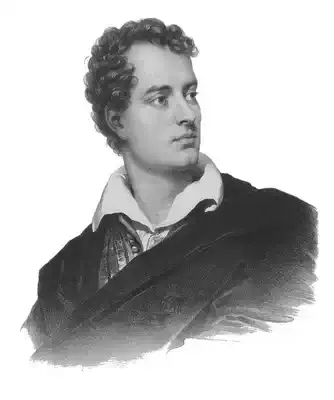
Lord Byron
Lara
Lara
LARA. [1]
CANTO THE FIRST.
I.
The Serfs are glad through Lara's wide domain, [2]
And slavery half forgets her feudal chain;
He, their unhoped, but unforgotten lord —
The long selfexiled
chieftain is restored:
There be bright faces in the busy hall,
Bowls on the board, and banners on the wall;
Far chequering o'er the pictured window, plays
The unwonted fagots' hospitable blaze;
And gay retainers gather round the hearth,
With tongues all loudness, and with eyes all mirth.
II.
The chief of Lara is return'd again:
And why had Lara cross'd the bounding main?
Left by his sire, too young such loss to know,
Lord of himself; — that heritage of woe,
That fearful empire which the human breast
But holds to rob the heart within of rest! —
With none to check, and few to point in time
The thousand paths that slope the way to crime;
Then, when he most required commandment, then
Had Lara's daring boyhood govern'd men.
It skills not, boots not, step by step to trace
His youth through all the mazes of its race;
Short was the course his restlessness had run,
But long enough to leave him half undone.
III.
And Lara left in youth his fatherland;
But from the hour he waved his parting hand
Each trace wax'd fainter of his course, till all
Had nearly ceased his memory to recall.
His sire was dust, his vassals could declare,
'Twas all they knew, that Lara was not there;
Nor sent, nor came he, till conjecture grew
Cold in the many, anxious in the few.
His hall scarce echoes with his wonted name,
His portrait darkens in its fading frame,
Another chief consoled his destined bride,
The young forgot him, and the old had died;
"Yet doth he live!" exclaims the impatient heir,
And sighs for sables which he must not wear.
A hundred scutcheons deck with gloomy grace
The Laras' last and longest dwellingplace;
But one is absent from the mouldering file,
That now were welcome to that Gothic pile.
IV.
He comes at last in sudden loneliness,
And whence they know not, why they need not guess;
They more might marvel, when the greeting's o'er,
Not that he came, but came not long before:
No train is his beyond a single page,
Of foreign aspect, and of tender age.
Years had roll'd on, and fast they speed away
To those that wander as to those that stay;
But lack of tidings from another clime
Had lent a flagging wing to weary Time.
They see, they recognise, yet almost deem
The present dubious, or the past a dream.
He lives, nor yet is past his manhood's prime,
Though sear'd by toil, and something touch'd by time;
His faults, whate'er they were, if scarce forgot,
Might be untaught him by his varied lot;
Nor good nor ill of late were known, his name
Might yet uphold his patrimonial fame.
His soul in youth was haughty, but his sins
No more than pleasure from the stripling wins;
And such, if not yet harden'd in their course,
Might be redeem'd, nor ask a long remorse.
V.
And they indeed were changed — 'tis quickly seen,
Whate'er he be, 'twas not what he had been:
That brow in furrow'd lines had fix'd at last,
And spake of passions, but of passion past;
The pride, but not the fire, of early days,
Coldness of mien, and carelessness of praise;
A high demeanour, and a glance that took
Their thoughts from others by a single look;
And that sarcastic levity of tongue,
The stinging of a heart the world hath stung,
That darts in seeming playfulness around,
And makes those feel that will not own the wound:
All these seem'd his, and something more beneath
Than glance could well reveal, or accent breathe.
Ambition, glory, love, the common aim
That some can conquer, and that all would claim,
Within his breast appear'd no more to strive,
Yet seem'd as lately they had been alive;
And some deep feeling it were vain to trace
At moments lighten'd o'er his livid face.
VI.
Not much he loved long question of the past,
Nor told of wondrous wilds, and deserts vast,
In those far lands where he had wander'd lone,
And — as himself would have it seem — unknown:
Yet these in vain his eye could scarcely scan,
Nor glean experience from his fellowman;
But what he had beheld he shunn'd to show,
As hardly worth a stranger's care to know;
If still more prying such inquiry grew,
His brow fell darker, and his words more few.
VII.
Not unrejoiced to see him once again,
Warm was his welcome to the haunts of men;
Born of high lineage, link'd in high command,
He mingled with the magnates of his land;
Join'd the carousals of the great and gay,
And saw them smile or sigh their hours away;
But still he only saw, and did not share
The common pleasure or the general care;
He did not follow what they all pursued,
With hope still baffled, still to be renew'd;
Nor shadowy honour, nor substantial gain,
Nor beauty's preference, and the rival's pain:
Around him some mysterious circle thrown
Repell'd approach, and showed him still alone;
Upon his eye sate something of reproof,
That kept at least frivolity aloof;
And things more timid that beheld him near,
In silence gazed, or whisper'd mutual fear;
And they the wiser, friendlier few confess'd
They deem'd him better than his air express'd.
VIII.
'Twas strange — in youth all action and all life,
Burning for pleasure, not averse from strife;
Woman — the field — the ocean — all that gave
Promise of gladness, peril of a grave,
In turn he tried — he ransack'd all below,
And found his recompence in joy or woe,
No tame, trite medium; for his feelings sought
In that intenseness an escape from thought:
The tempest of his heart in scorn had gazed
On that the feebler elements hath raised;
The rapture of his heart had look'd on high,
And ask'd if greater dwelt beyond the sky:
Chain'd to excess, the slave of each extreme,
How woke he from the wildness of that dream?
Alas! he told not — but he did awake
To curse the wither'd heart that would not break.
IX.
Books, for his volume heretofore was Man,
With eye more curious he appear'd to scan,
And oft, in sudden mood, for many a day
From all communion he would start away:
And then, his rarely call'd attendants said,
Through night's long hours would sound his hurried tread
O'er the dark gallery, where his fathers frown'd
In rude but antique portraiture around.
They heard, but whisper'd — "that must not be known —
The sound of words less earthly than his own.
Yes, they who chose might smile, but some had seen
They scarce knew what, but more than should have been.
Why gazed he so upon the ghastly head
Which hands profane had gather'd from the dead,
That still beside his open'd volume lay,
As if to startle all save him away?
Why slept he not when others were at rest?
Why heard no music, and received no guest?
All was not well, they deem'd — but where the wrong?
Some knew perchance — but 'twere a tale too long;
And such besides were too discreetly wise,
To more than hint their knowledge in surmise;
But if they would — they could" — around the board,
Thus Lara's vassals prattled of their lord.
X.
It was the night — and Lara's glassy stream
The stars are studding, each with imaged beam:
So calm, the waters scarcely seem to stray,
And yet they glide like happiness away;
Reflecting far and fairylike
from high
The immortal lights that live along the sky:
Its banks are fringed with many a goodly tree,
And flowers the fairest that may feast the bee;
Such in her chaplet infant Dian wove,
And Innocence would offer to her love.
These deck the shore; the waves their channel make
In windings bright and mazy like the snake.
All was so still, so soft in earth and air,
You scarce would start to meet a spirit there;
Secure that nought of evil could delight
To walk in such a scene, on such a night!
It was a moment only for the good:
So Lara deem'd, nor longer there he stood,
But turn'd in silence to his castlegate;
Such scene his soul no more could contemplate.
Such scene reminded him of other days,
Of skies more cloudless, moons of purer blaze,
Of nights more soft and frequent, hearts that now —
No — no — the storm may beat upon his brow,
Unfelt — unsparing — but a night like this,
A night of beauty mock'd such breast as his.
XI.
He turn'd within his solitary hall,
And his high shadow shot along the wall;
There were the painted forms of other times,
'Twas all they left of virtues or of crimes,
Save vague tradition; and the gloomy vaults
That hid their dust, their foibles, and their faults;
And half a column of the pompous page,
That speeds the specious tale from age to age:
When history's pen its praise or blame supplies,
And lies like truth, and still most truly lies.
He wandering mused, and as the moonbeam shone
Through the dim lattice o'er the floor of stone,
And the high fretted roof, and saints, that there
O'er Gothic windows knelt in pictured prayer,
Reflected in fantastic figures grew,
Like life, but not like mortal life, to view;
His bristling locks of sable, brow of gloom,
And the wide waving of his shaken plume,
Glanced like a spectre's attributes, and gave
His aspect all that terror gives the grave.
XII.
'Twas midnight — all was slumber; the lone light
Dimm'd in the lamp, as loth to break the night.
Hark! there be murmurs heard in Lara's hall —
A sound — voice — a shriek — a fearful call!
A long, loud shriek — and silence — did they hear
That frantic echo burst the sleeping ear?
They heard and rose, and tremulously brave
Rush where the sound invoked their aid to save;
They come with halflit
tapers in their hands,
And snatch'd in startled haste unbelted brands.
XIII.
Cold as the marble where his length was laid,
Pale as the beam that o'er his features play'd,
Was Lara stretch'd; his halfdrawn
sabre near,
Dropp'd it should seem in more than nature's fear;
Yet he was firm, or had been firm till now,
And still defiance knit his gather'd brow;
Though mix'd with terror, senseless as he lay,
There lived upon his lip the wish to slay;
Some halfform'd
threat in utterance there had died,
Some imprecation of despairing pride;
His eye was almost seal'd, but not forsook
Even in its trance the gladiator's look,
That oft awake his aspect could disclose,
And now was fix'd in horrible repose.
They raise him — bear him: hush! he breathes, he speaks!
The swarthy blush recolours in his cheeks,
His lip resumes its red, his eye, though dim,
Rolls wide and wild, each slowly quivering limb
Recalls its function, but his words are strung
In terms that seem not of his native tongue;
Distinct but strange, enough they understand
To deem them accents of another land,
And such they were, and meant to meet an ear
That hears him not — alas! that cannot hear!
XIV.
His page approach'd, and he alone appear'd
To know the import of the words they heard;
And by the changes of his cheek and brow
They were not such as Lara should avow,
Nor he interpret, yet with less surprise
Than those around their chieftain's state he eyes,
But Lara's prostrate form he bent beside,
And in that tongue which seem'd his own replied,
And Lara heeds those tones that gently seem
To soothe away the horrors of his dream;
If dream it were, that thus could overthrow
A breast that needed not ideal woe.
XV.
Whate'er his frenzy dream'd or eye beheld,
If yet remember'd ne'er to be reveal'd,
Rests at his heart: the custom'd morning came,
And breathed new vigour in his shaking frame;
And solace sought he none from priest nor leech,
And soon the same in movement and in speech
As heretofore he fill'd the passing hours,
Nor less he smiles, nor more his forehead lours
Than these were wont; and if the coming night
Appear'd less welcome now to Lara's sight,
He to his marvelling vassals shew'd it not,
Whose shuddering proved their fear was less forgot.
In trembling pairs (alone they dared not) crawl
The astonish'd slaves, and shun the fated hall;
The waving banner, and the clapping door;
The rustling tapestry, and the echoing floor;
The long dim shadows of surrounding trees,
The flapping bat, the night song of the breeze;
Aught they behold or hear their thought appals
As evening saddens o'er the dark gray walls.
XVI.
Vain thought! that hour of ne'er unravell'd gloom
Came not again, or Lara could assume
A seeming of forgetfulness that made
His vassals more amazed nor less afraid —
Had memory vanish'd then with sense restored?
Since word, nor look, nor gesture of their lord
Betray'd a feeling that recall'd to these
That fever'd moment of his mind's disease.
Was it a dream? was his the voice that spoke
Those strange wild accents; his the cry that broke
Their slumber? his the oppress'd o'erlabour'd
heart
That ceased to beat, the look that made them start?
Could he who thus had suffer'd, so forget
When such as saw that suffering shudder yet?
Or did that silence prove his memory fix'd
Too deep for words, indelible, unmix'd
In that corroding secresy which gnaws
The heart to shew the effect, but not the cause?
Not so in him; his breast had buried both,
Nor common gazers could discern the growth
Of thoughts that mortal lips must leave half told;
They choke the feeble words that would unfold.
XVII.
In him inexplicably mix'd appear'd
Much to be loved and hated, sought and fear'd;
Opinion varying o'er his hidden lot,
In praise or railing ne'er his name forgot;
His silence form'd a theme for others' prate —
They guess'd — they gazed — they fain would know his fate.
What had he been? what was he, thus unknown,
Who walk'd their world, his lineage only known?
A hater of his kind? yet some would say,
With them he could seem gay amidst the gay;
But own'd that smile, if oft observed and near,
Waned in its mirth and wither'd to a sneer;
That smile might reach his lip, but pass'd not by,
None e'er could trace its laughter to his eye:
Yet there was softness too in his regard,
At times, a heart as not by nature hard,
But once perceived, his spirit seem'd to chide
Such weakness, as unworthy of its pride,
And steel'd itself, as scorning to redeem
One doubt from others' half withheld esteem;
In selfinflicted
penance of a breast
Which tenderness might once have wrung from rest;
In vigilance of grief that would compel
The soul to hate for having loved too well.
XVIII.
There was in him a vital scorn of all:
As if the worst had fall'n which could befall,
He stood a stranger in this breathing world,
An erring spirit from another hurled;
A thing of dark imaginings, that shaped
By choice the perils he by chance escaped;
But 'scaped in vain, for in their memory yet
His mind would half exult and half regret:
With more capacity for love than earth
Bestows on most of mortal mould and birth,
His early dreams of good outstripp'd the truth,
And troubled manhood follow'd baffled youth;
With thought of years in phantom chase misspent,
And wasted powers for better purpose lent;
And fiery passions that had pour'd their wrath
In hurried desolation o'er his path,
And left the better feelings all at strife
In wild reflection o'er his stormy life;
But haughty still, and loth himself to blame,
He call'd on Nature's self to share the shame,
And charged all faults upon the fleshly form
She gave to clog the soul, and feast the worm;
'Till he at last confounded good and ill,
And half mistook for fate the acts of will:
Too high for common selfishness, he could
At times resign his own for others' good,
But not in pity, not because he ought,
But in some strange perversity of thought,
That sway'd him onward with a secret pride
To do what few or none would do beside;
And this same impulse would, in tempting time,
Mislead his spirit equally to crime;
So much he soar'd beyond, or sunk beneath
The men with whom he felt condemn'd to breathe,
And long'd by good or ill to separate
Himself from all who shared his mortal state;
His mind abhorring this had fix'd her throne
Far from the world, in regions of her own;
Thus coldly passing all that pass'd below,
His blood in temperate seeming now would flow:
Ah! happier if it ne'er with guilt had glow'd,
But ever in that icy smoothness flow'd:
'Tis true, with other men their path he walk'd,
And like the rest in seeming did and talk'd,
Nor outraged Reason's rules by flaw nor start,
His madness was not of the head, but heart;
And rarely wander'd in his speech, or drew
His thoughts so forth as to offend the view.
XIX.
With all that chilling mystery of mien,
And seeming gladness to remain unseen,
He had (if 'twere not nature's boon) an art
Of fixing memory on another's heart:
It was not love, perchance — nor hate — nor aught
That words can image to express the thought;
But they who saw him did not see in vain,
And once beheld, would ask of him again:
And those to whom he spake remember'd well,
And on the words, however light, would dwell.
None knew nor how, nor why, but he entwined
Himself perforce around the hearer's mind;
There he was stamp'd, in liking, or in hate,
If greeted once; however brief the date
That friendship, pity, or aversion knew,
Still there within the inmost thought he grew.
You could not penetrate his soul, but found
Despite your wonder, to your own he wound.
His presence haunted still; and from the breast
He forced an allunwilling
interest;
Vain was the struggle in that mental net,
His spirit seem'd to dare you to forget!
XX.
There is a festival, where knights and dames,
And aught that wealth or lofty lineage claims,
Appear — a highborn
and a welcomed guest
To Otho's hall came Lara with the rest.
The long carousal shakes the illumined hall,
Well speeds alike the banquet and the ball;
And the gay dance of bounding Beauty's train
Links grace and harmony in happiest chain:
Blest are the early hearts and gentle hands
That mingle there in well according bands;
It is a sight the careful brow might smooth,
And make Age smile, and dream itself to youth,
And Youth forget such hour was pass'd on earth,
So springs the exulting bosom to that mirth!
XXI.
And Lara gazed on these sedately glad,
His brow belied him if his soul was sad,
And his glance follow'd fast each fluttering fair,
Whose steps of lightness woke no echo there:
He lean'd against the lofty pillar nigh
With folded arms and long attentive eye,
Nor mark'd a glance so sternly fix'd on his,
Ill brook'd high Lara scrutiny like this:
At length he caught it, 'tis a face unknown,
But seems as searching his, and his alone;
Prying and dark, a stranger's by his mien,
Who still till now had gazed on him unseen;
At length encountering meets the mutual gaze
Of keen inquiry, and of mute amaze;
On Lara's glance emotion gathering grew,
As if distrusting that the stranger threw;
Along the stranger's aspect fix'd and stern
Flash'd more than thence the vulgar eye could learn.
XXII.
"'Tis he!" the stranger cried, and those that heard
Reecho'd
fast and far the whisper'd word.
"'Tis he!" — "'Tis who?" they question far and near,
Till louder accents rang on Lara's ear;
So widely spread, few bosoms well could brook
The general marvel, or that single look;
But Lara stirr'd not, changed not, the surprise
That sprung at first to his arrested eyes
Seem'd now subsided, neither sunk nor raised
Glanced his eye round, though still the stranger gazed;
And drawing nigh, exclaim'd, with haughty sneer,
"'Tis he! — how came he thence? — what doth he here?"
XXIII.
It were too much for Lara to pass by
Such question, so repeated fierce and high;
With look collected, but with accent cold,
More mildly firm than petulantly bold,
He turn'd, and met the inquisitorial tone —
"My name is Lara! — when thine own is known,
Doubt not my fitting answer to requite
The unlook'd for courtesy of such a knight.
'Tis Lara! — further wouldst thou mark or ask?
I shun no question, and I wear no mask."
"Thou shunn'st no question! Ponder — is there none
Thy heart must answer, though thine ear would shun?
And deem'st thou me unknown too? Gaze again!
At least thy memory was not given in vain.
Oh! never canst thou cancel half her debt,
Eternity forbids thee to forget."
With slow and searching glance upon his face
Grew Lara's eyes, but nothing there could trace
They knew, or chose to know — with dubious look
He deign'd no answer, but his head he shook,
And half contemptuous turn'd to pass away;
But the stern stranger motion'd him to stay.
"A word! — I charge thee stay, and answer here
To one, who, wert thou noble, were thy peer,
But as thou wast and art — nay, frown not, lord,
If false, 'tis easy to disprove the word —
But as thou wast and art, on thee looks down,
Distrusts thy smiles, but shakes not at thy frown.
Art thou not he? whose deeds — "
"Whate'er I be,
Words wild as these, accusers like to thee,
I list no further; those with whom they weigh
May hear the rest, nor venture to gainsay
The wondrous tale no doubt thy tongue can tell,
Which thus begins courteously and well.
Let Otho cherish here his polish'd guest,
To him my thanks and thoughts shall be express'd."
And here their wondering host hath interposed —
"Whate'er there be between you undisclosed,
This is no time nor fitting place to mar
The mirthful meeting with a wordy war.
If thou, Sir Ezzelin, hast ought to show
Which it befits Count Lara's ear to know,
Tomorrow,
here, or elsewhere, as may best
Beseem your mutual judgment, speak the rest;
I pledge myself for thee, as not unknown,
Though, like Count Lara, now return'd alone
From other lands, almost a stranger grown;
And if from Lara's blood and gentle birth
I augur right of courage and of worth,
He will not that untainted line belie,
Nor aught that knighthood may accord deny."
"Tomorrow
be it," Ezzelin replied,
"And here our several worth and truth be tried:
I gage my life, my falchion to attest
My words, so may I mingle with the blest!"
What answers Lara? to its centre shrunk
His soul, in deep abstraction sudden sunk;
The words of many, and the eyes of all
That there were gather'd, seem'd on him to fall;
But his were silent, his appear'd to stray
In far forgetfulness away — away —
Alas! that heedlessness of all around
Bespoke remembrance only too profound.
XXIV.
"Tomorrow!
— ay, tomorrow!"
— further word
Than those repeated none from Lara heard;
Upon his brow no outward passion spoke,
From his large eye no flashing anger broke;
Yet there was something fix'd in that low tone
Which shew'd resolve, determined, though unknown.
He seized his cloak — his head he slightly bow'd,
And passing Ezzelin he left the crowd;
And as he pass'd him, smiling met the frown
With which that chieftain's brow would bear him down:
It was nor smile of mirth, nor struggling pride
That curbs to scorn the wrath it cannot hide;
But that of one in his own heart secure
Of all that he would do, or could endure.
Could this mean peace? the calmness of the good?
Or guilt grown old in desperate hardihood?
Alas! too like in confidence are each
For man to trust to mortal look or speech;
From deeds, and deeds alone, may he discern
Truths which it wrings the unpractised heart to learn.
XXV.
And Lara call'd his page, and went his way —
Well could that stripling word or sign obey:
His only follower from those climes afar
Where the soul glows beneath a brighter star;
For Lara left the shore from whence he sprung,
In duty patient, and sedate though young;
Silent as him he served, his fate appears
Above his station, and beyond his years.
Though not unknown the tongue of Lara's land,
In such from him he rarely heard command;
But fleet his step, and clear his tones would come,
When Lara's lip breathed forth the words of home:
Those accents, as his native mountains dear,
Awake their absent echoes in his ear,
Friends', kindreds', parents', wonted voice recall,
Now lost, abjured, for one — his friend, his all:
For him earth now disclosed no other guide;
What marvel then he rarely left his side?
XXVI.
Light was his form, and darkly delicate
That brow whereon his native sun had sate,
But had not marr'd, though in his beams he grew,
The cheek where oft the unbidden blush shone through;
Yet not such blush as mounts when health would show
All the heart's hue in that delighted glow;
But 'twas a hectic tint of secret care
That for a burning moment fever'd there;
And the wild sparkle of his eye seem'd caught
From high, and lighten'd with electric thought,
Though its black orb those long low lashes' fringe
Had temper'd with a melancholy tinge;
Yet less of sorrow than of pride was there,
Or, if 'twere grief, a grief that none should share:
And pleased not him the sports that please his age,
The tricks of youth, the frolics of the page;
For hours on Lara he would fix his glance,
As allforgotten
in that watchful trance;
And from his chief withdrawn, he wander'd lone,
Brief were his answers, and his questions none;
His walk the wood, his sport some foreign book;
His restingplace
the bank that curbs the brook;
He seem'd, like him he served, to live apart
From all that lures the eye, and fills the heart;
To know no brotherhood; and take from earth
No gift beyond that bitter boon — our birth.
XXVII.
If aught he loved, 'twas Lara; but was shown
His faith in reverence and in deeds alone;
In mute attention; and his care, which guess'd
Each wish, fulfill'd it ere the tongue express'd.
Still there was haughtiness in all he did,
A spirit deep that brook'd not to be chid;
His zeal, though more than that of servile hands,
In act alone obeys, his air commands;
As if 'twas Lara's less than his desire
That thus he served, but surely not for hire.
Slight were the tasks enjoin'd him by his lord,
To hold the stirrup, or to bear the sword;
To tune his lute, or, if he will'd it more,
On tomes of other times and tongues to pore;
But ne'er to mingle with the menial train,
To whom he shew'd not deference nor disdain,
But that wellworn
reserve which proved he knew
No sympathy with that familiar crew:
His soul, whate'er his station or his stem,
Could bow to Lara, not descend to them.
Of higher birth he seem'd, and better days,
Nor mark of vulgar toil that hand betrays,
So femininely white it might bespeak
Another sex, when match'd with that smooth cheek,
But for his garb, and something in his gaze,
More wild and high than woman's eye betrays;
A latent fierceness that far more became
His fiery climate than his tender frame:
True, in his words it broke not from his breast,
But from his aspect might be more than guess'd.
Kaled his name, though rumour said he bore
Another ere he left his mountain shore;
For sometimes he would hear, however nigh,
That name repeated loud without reply,
As unfamiliar, or, if roused again,
Start to the sound, as but remember'd then;
Unless 'twas Lara's wonted voice that spake,
For then, ear, eyes, and heart would all awake.
XXVIII.
He had look'd down upon the festive hall,
And mark'd that sudden strife so mark'd of all;
And when the crowd around and near him told
Their wonder at the calmness of the bold,
Their marvel how the highborn
Lara bore
Such insult from a stranger, doubly sore,
The colour of young Kaled went and came,
The lip of ashes, and the cheek of flame;
And o'er his brow the dampening heartdrops
threw
The sickening iciness of that cold dew
That rises as the busy bosom sinks
With heavy thoughts from which reflection shrinks.
Yes — there be things which we must dream and dare
And execute ere thought be half aware:
Whate'er might Kaled's be, it was enow
To seal his lip, but agonise his brow.
He gazed on Ezzelin till Lara cast
That sidelong smile upon on the knight he pass'd;
When Kaled saw that smile his visage fell,
As if on something recognised right well;
His memory read in such a meaning more
Than Lara's aspect unto others wore.
Forward he sprung — a moment, both were gone,
And all within that hall seem'd left alone;
Each had so fix'd his eye on Lara's mien,
All had so mix'd their feelings with that scene,
That when his long dark shadow through the porch
No more relieves the glare of yon high torch,
Each pulse beats quicker, and all bosoms seem
To bound as doubting from too black a dream,
Such as we know is false, yet dread in sooth,
Because the worst is ever nearest truth.
And they are gone — but Ezzelin is there,
With thoughtful visage and imperious air;
But long remain'd not; ere an hour expired
He waved his hand to Otho, and retired.
XXIX.
The crowd are gone, the revellers at rest;
The courteous host, and allapproving
guest,
Again to that accustom'd couch must creep
Where joy subsides, and sorrow sighs to sleep,
And man, o'erlabour'd with his being's strife,
Shrinks to that sweet forgetfulness of life:
There lie love's feverish hope. and cunning's guile,
Hate's working brain and lull'd ambition's wile;
O'er each vain eye oblivion's pinions wave,
And quench'd existence crouches in a grave.
What better name may slumber's bed become?
Night's sepulchre, the universal home,
Where weakness, strength, vice, virtue, sunk supine,
Alike in naked helplessness recline;
Glad for awhile to heave unconscious breath,
Yet wake to wrestle with the dread of death,
And shun, though day but dawn on ills increased,
That sleep, the loveliest, since it dreams the least.
______
CANTO THE SECOND.
I.
Night wanes — the vapours round the mountains curl'd,
Melt into morn, and Light awakes the world.
Man has another day to swell the past,
And lead him near to little, but his last;
But mighty Nature bounds as from her birth,
The sun is in the heavens, and life on earth;
Flowers in the valley, splendour in the beam,
Health on the gale, and freshness in the stream.
Immortal man! behold her glories shine,
And cry, exulting inly, "They are thine!"
Gaze on, while yet thy gladden'd eye may see,
A morrow comes when they are not for thee;
And grieve what may above thy senseless bier,
Nor earth nor sky will yield a single tear;
Nor cloud shall gather more, nor leaf shall fall,
Nor gale breathe forth one sigh for thee, for all;
But creeping things shall revel in their spoil,
And fit thy clay to fertilise the soil.
II.
'Tis morn — 'tis noon — assembled in the hall,
The gather'd chieftains come to Otho's call:
'Tis now the promised hour, that must proclaim
The life or death of Lara's future fame;
When Ezzelin his charge may here unfold,
And whatsoe'er the tale, it must be told.
His faith was pledged, and Lara's promise given,
To meet it in the eye of man and Heaven.
Why comes he not? Such truths to be divulged,
Methinks the accuser's rest is long indulged.
III.
The hour is past, and Lara too is there,
With selfconfiding,
coldly patient air;
Why comes not Ezzelin? The hour is past,
And murmurs rise, and Otho's brow's o'ercast,
"I know my friend! his faith I cannot fear,
If yet he be on earth, expect him here;
The roof that held him in the valley stands
Between my own and noble Lara's lands;
My halls from such a guest had honour gain'd,
Nor had Sir Ezzelin his host disdain'd,
But that some previous proof forbade his stay,
And urged him to prepare against today;
The word I pledge for his I pledge again,
Or will myself redeem his knighthood's stain."
He ceased — and Lara answer'd, "I am here
To lend at thy demand a listening ear,
To tales of evil from a stranger's tongue,
Whose words already might my heart have wrung,
But that I deem'd him scarcely less than mad,
Or, at the worst, a foe ignobly bad.
I know him not — but me it seems he knew
In lands where — but I must not trifle too:
Produce this babbler — or redeem the pledge;
Here in thy hold, and with thy falchion's edge."
Proud Otho on the instant, reddening, threw
His glove on earth, and forth his sabre flew.
"The last alternative befits me best,
And thus I answer for mine absent guest."
With cheek unchanging from its sallow gloom,
However near his own or other's tomb;
With hand, whose almost careless coolness spoke
Its grasp wellused
to deal the sabrestroke;
With eye, though calm, determined not to spare,
Did Lara too his willing weapon bare.
In vain the circling chieftains round them closed,
For Otho's frenzy would not be opposed;
And from his lip those words of insult fell —
His sword is good who can maintain them well.
IV.
Short was the conflict; furious, blindly rash,
Vain Otho gave his bosom to the gash:
He bled, and fell; but not with deadly wound,
Stretch'd by a dextrous sleight along the ground.
"Demand thy life!" He answer'd not: and then
From that red floor he ne'er had risen again,
For Lara's brow upon the moment grew
Almost to blackness in its demon hue;
And fiercer shook his angry falchion now
Than when his foe's was levell'd at his brow;
Then all was stern collectedness and art,
Now rose the unleaven'd hatred of his heart;
So little sparing to the foe he fell'd,
That when the approaching crowd his arm withheld
He almost turn'd the thirsty point on those
Who thus for mercy dared to interpose;
But to a moment's thought that purpose bent;
Yet look'd he on him still with eye intent,
As if he loathed the ineffectual strife
That left a foe, howe'er o'erthrown, with life;
As if to search how far the wound he gave
Had sent its victim onward to his grave.
V.
They raised the bleeding Otho, and the Leech
Forbade all present question, sign, and speech;
The others met within a neighbouring hall,
And he, incensed and heedless of them all,
The cause and conqueror in this sudden fray,
In haughty silence slowly strode away;
He back'd his steed, his homeward path he took,
Nor cast on Otho's tower a single look.
VI.
But where was he? that meteor of a night,
Who menaced but to disappear with light.
Where was this Ezzelin? who came and went
To leave no other trace of his intent.
He left the dome of Otho long ere morn,
In darkness, yet so well the path was worn
He could not miss it: near his dwelling lay;
But there he was not, and with coming day
Came fast inquiry, which unfolded nought
Except the absence of the chief it sought.
A chamber tenantless, a steed at rest,
His host alarm'd, his murmuring squires distress'd:
Their search extends along, around the path,
In dread to met the marks of prowlers' wrath:
But none are there, and not a brake hath borne
Nor gout of blood, nor shred of mantle torn;
Nor fall nor struggle hath defaced the grass,
Which still retains a mark where murder was;
Nor dabbling fingers left to tell the tale,
The bitter print of each convulsive nail,
When agonised hands that cease to guard,
Wound in that pang the smoothness of the sward.
Some such had been, if here a life was reft,
But these were not; and doubting hope is left;
And strange suspicion, whispering Lara's name,
Now daily mutters o'er his blacken'd fame;
Then sudden silent when his form appear'd,
Awaits the absence of the thing it fear'd;
Again its wonted wondering to renew,
And dye conjecture with a darker hue.
VII.
Days roll along, and Otho's wounds are heal'd,
But not his pride; and hate no more conceal'd:
He was a man of power, and Lara's foe,
The friend of all who sought to work him woe,
And from his country's justice now demands
Account of Ezzelin at Lara's hands.
Who else than Lara could have cause to fear
His presence? who had made him disappear,
If not the man on whom his menaced charge
Had sate too deeply were he left at large?
The general rumour ignorantly loud,
The mystery dearest to the curious crowd;
The seeming friendlessness of him who strove
To win no confidence, and wake no love;
The sweeping fierceness which his soul betray'd,
The skill with which he wielded his keen blade;
Where had his arm unwarlike caught that art?
Where had that fierceness grown upon his heart?
For it was not the blind capricious rage
A word can kindle and a word assuage;
But the deep working of a soul unmix'd
With aught of pity where its wrath had fix'd;
Such as long power and overgorged success
Concentrates into all that's merciless:
These, link'd with that desire which ever sways
Mankind, the rather to condemn than praise,
'Gainst Lara gathering raised at length a storm,
Such as himself might fear, and foes would form,
And he must answer for the absent head
Of one that haunts him still, alive or dead.
VIII.
Within that land was many a malcontent,
Who cursed the tyranny to which he bent;
That soil full many a wringing despot saw,
Who work'd his wantonness in form of law;
Long war without and frequent broil within
Had made a path for blood and giant sin,
That waited but a signal to begin
New havoc, such as civil discord blends,
Which knows no neuter, owns but foes or friends;
Fix'd in his feudal fortress each was lord,
In word and deed obey'd, in soul abhorr'd.
Thus Lara had inherited his lands,
And with them pining hearts and sluggish hands;
But that long absence from his native clime
Had left him stainless of oppression's crime,
And now, diverted by his milder sway,
All dread by slow degrees had worn away;
The menials felt their usual awe alone,
But more for him than them that fear was grown;
They deem'd him now unhappy, though at first
Their evil judgment augur'd of the worst,
And each long restless night, and silent mood,
Was traced to sickness, fed by solitude:
And though his lonely habits threw of late
Gloom o'er his chamber, cheerful was his gate;
For thence the wretched ne'er unsoothed withdrew,
For them, at least, his soul compassion knew.
Cold to the great, contemptuous to the high,
The humble pass'd not his unheeding eye;
Much he would speak not, but beneath his roof
They found asylum oft, and ne'er reproof.
And they who watch'd might mark that, day by day,
Some new retainers gather'd to his sway;
But most of late, since Ezzelin was lost,
He play'd the courteous lord and bounteous host:
Perchance his strife with Otho made him dread
Some snare prepared for his obnoxious head;
Whate'er his view, his favour more obtains
With these, the people, than his fellow thanes.
If this were policy, so far 'twas sound,
The million judged but of him as they found;
From him by sterner chiefs to exile driven
They but required a shelter, and 'twas given.
By him no peasant mourn'd his rifled cot,
And scarce the serf could murmur o'er his lot;
With him old avarice found its hoard secure,
With him contempt forbore to mock the poor;
Youth present cheer and promised recompense
Detain'd, till all too late to part from thence:
To hate he offer'd, with the coming change,
The deep reversion of delay'd revenge;
To love, long baffled by the unequal match,
The wellwon
charms success was sure to snatch.
All now was ripe, he waits but to proclaim
That slavery nothing which was still a name.
The moment came, the hour when Otho thought
Secure at last the vengeance which he sought
His summons found the destined criminal
Begirt by thousands in his swarming hall,
Fresh from their feudal fetters newly riven,
Defying earth, and confident of heaven.
That morning he had freed the soilbound
slaves
Who dig no land for tyrants but their graves!
Such is their cry — some watchword for the fight
Must vindicate the wrong, and warp the right;
Religion — freedom — vengeance — what you will,
A word's enough to raise mankind to kill;
Some factious phrase by cunning caught and spread,
That guilt may reign, and wolves and worms be fed!
IX.
Throughout that clime the feudal chiefs had gain'd
Such sway, their infant monarch hardly reign'd;
Now was the hour for faction's rebel growth,
The serfs contemn'd the one, and hated both:
They waited but a leader, and they found
One to their cause inseparably bound;
By circumstance compell'd to plunge again,
In selfdefence,
amidst the strife of men.
Cut off by some mysterious fate from those
Whom birth and nature meant not for his foes,
Had Lara from that night, to him accurst,
Prepared to meet, but not alone, the worst:
Some reason urged, whate'er it was, to shun
Inquiry into deeds at distance done;
By mingling with his own the cause of all,
E'en if he fail'd, he still delay'd his fall.
The sullen calm that long his bosom kept,
The storm that once had spent itself and slept,
Roused by events that seem'd foredoom'd to urge
His gloomy fortunes to their utmost verge,
Burst forth, and made him all he once had been,
And is again; he only changed the scene.
Light care had he for life, and less for fame,
But not less fitted for the desperate game:
He deem'd himself mark'd out for others' hate,
And mock'd at ruin, so they shared his fate.
What cared he for the freedom of the crowd?
He raised the humble but to bend the proud.
He had hoped quiet in his sullen lair,
But man and destiny beset him there:
Inured to hunters, he was found at bay;
And they must kill, they cannot snare the prey.
Stern, unambitious, silent he had been
Henceforth a calm spectator of life's scene;
But dragg'd again upon the arena, stood
A leader not unequal to the feud;
In voice — mien — gesture — savage nature spoke,
And from his eye the gladiator broke.
X.
What boots the oftrepeated
tale of strife,
The feast of vultures, and the waste of life?
The varying fortune of each separate field,
The fierce that vanquish, and the faint that yield?
The smoking ruin, and the crumbled wall?
In this the struggle was the same with all;
Save that distemper'd passions lent their force
In bitterness that banish'd all remorse.
None sued, for Mercy know her cry was vain,
The captive died upon the battleslain:
In either cause, one rage alone possess'd
The empire of the alternate victor's breast;
And they that smote for freedom or for sway,
Deem'd few were slain, while more remain'd to slay.
It was too late to check the wasting brand,
And Desolation reap'd the famish'd land;
The torch was lighted, and the flame was spread,
And Carnage smiled upon her daily bread.
XI.
Fresh with the nerve the newborn
impulse strung,
The first success to Lara's numbers clung:
But that vain victory hath ruin'd all;
They form no longer to their leader's call:
In blind confusion on the foe they press,
And think to snatch is to secure success.
The lust of booty, and the thirst of hate,
Lure on the broken brigands to their fate:
In vain he doth whate'er a chief may do,
To check the headlong fury of that crew,
In vain their stubborn ardour he would tame,
The hand that kindles cannot quench the flame.
The wary foe alone hath turn'd their mood,
And shewn their rashness to that erring brood:
The feign'd retreat, the nightly ambuscade,
The daily harass, and the fight delay'd,
The long privation of the hoped supply,
The tentless rest beneath the humid sky,
The stubborn wall that mocks the leaguer's art,
And palls the patience of his baffled heart,
Of these they had not deem'd: the battleday
They could encounter as a veteran may;
But more preferr'd the fury of the strife,
And present death, to hourly suffering life:
And famine wrings, and fever sweeps away
His numbers melting fast from their array;
Intemperate triumph fades to discontent,
And Lara's soul alone seems still unbent:
But few remain to aid his voice and hand,
And thousands dwindled to a scanty band:
Desperate, though few, the last and best remain'd
To mourn the discipline they late disdain'd.
One hope survives, the frontier is not far,
And thence they may escape from native war;
And bear within them to the neighbouring state
An exile's sorrows, or an outlaw's hate:
Hard is the task their fatherland to quit,
But harder still to perish or submit.
XII.
It is resolved — they march — consenting Night
Guides with her star their dim and torchless flight;
Already they perceive its tranquil beam
Sleep on the surface of the barrier stream;
Already they descry — Is yon the bank?
Away! 'tis lined with many a hostile rank.
Return or fly! — What glitters in the rear?
'Tis Otho's banner — the pursuer's spear!
Are those the shepherds' fires upon the height?
Alas! they blaze too widely for the flight:
Cut off from hope, and compass'd in the toil,
Less blood, perchance, hath bought a richer spoil!
XIII.
A moment's pause — 'tis but to breathe their band
Or shall they onward press, or here withstand?
It matters little — if they charge the foes
Who by their borderstream
their march oppose,
Some few, perchance, may break and pass the line,
However link'd to baffle such design.
"The charge be ours! to wait for their assault
Were fate well worthy of a coward's halt."
Forth flies each sabre, rein'd is every steed,
And the next word shall scarce outstrip the deed:
In the next tone of Lara's gathering breath
How many shall but hear the voice of death!
XIV.
His blade is bared — in him there is an air
As deep, but far too tranquil for despair;
A something of indifference more than then
Becomes the bravest, if they feel for men.
He turn'd his eye on Kaled, ever near,
And still too faithful to betray one fear;
Perchance 'twas but the moon's dim twilight threw
Along his aspect an unwonted hue
Of mournful paleness, whose deep tint express'd
The truth, and not the terror of his breast.
This Lara mark'd, and laid his hand on his:
It trembled not in such an hour as this;
His lip was silent, scarcely beat his heart,
His eye alone proclaim'd —
"We will not part!
Thy band may perish, or thy friends may flee,
Farewell to life, but not adieu to thee!"
The word hath pass'd his lips, and onward driven,
Pours the link'd band through ranks asunder riven;
Well has each steed obey'd the armed heel,
And flash the scimitars, and rings the steel;
Outnumber'd, not outbraved, they still oppose
Despair to daring, and a front to foes;
And blood is mingled with the dashing stream,
Which runs all redly till the morning beam.
XV.
Commanding, aiding, animating all,
Where foe appear'd to press, or friend to fall,
Cheers Lara's voice, and waves or strikes his steel,
Inspiring hope himself had ceased to feel.
None fled, for well they knew that flight were vain,
But those that waver turn to smite again,
While yet they find the firmest of the foe
Recoil before their leader's look and blow;
Now girt with numbers, now almost alone,
He foils their ranks, or reunites his own;
Himself he spared not — once they seem'd to fly —
Now was the time, he waved his hand on high,
And shook — Why sudden droops that plumed crest?
The shaft is sped — the arrow's in his breast!
That fatal gesture left the unguarded side,
And Death hath stricken down yon arm of pride.
The word of triumph fainted from his tongue;
That hand, so raised, how droopingly it hung!
But yet the sword instinctively retains,
Though from its fellow shrink the falling reins;
These Kaled snatches: dizzy with the blow,
And senseless bending o'er his saddlebow
Perceives not Lara that his anxious page
Beguiles his charger from the combat's rage:
Meantime his followers charge and charge again;
Too mix'd the slayers now to heed the slain!
XVI.
Day glimmers on the dying and the dead,
The cloven cuirass, and the helmless head;
The warhorse
masterless is on the earth,
And that last gasp hath burst his bloody girth:
And near, yet quivering with what life remain'd,
The heel that urged him, and the hand that rein'd:
And some too near that rolling torrent lie,
Whose waters mock the lip of those that die;
That panting thirst which scorches in the breath
Of those that die the soldier's fiery death,
In vain impels the burning mouth to crave
One drop — the last — to cool it for the grave;
With feeble and convulsive effort swept
Their limbs along the crimson'd turf have crept:
The faint remains of life such struggles waste,
But yet they reach the stream, and bend to taste:
They feel its freshness, and almost partake —
Why pause? — No further thirst have they to slake —
It is unquench'd, and yet they feel it not —
It was an agony — but now forgot!
XVII.
Beneath a lime, remoter from the scene,
Where but for him that strife had never been,
A breathing but devoted warrior lay:
'Twas Lara bleeding fast from life away.
His follower once, and now his only guide,
Kneels Kaled watchful o'er his welling side,
And with his scarf would stanch the tides that rush
With each convulsion in a blacker gush;
And then, as his faint breathing waxes low,
In feebler, not less fatal tricklings flow:
He scarce can speak, but motions him 'tis vain,
And merely adds another throb to pain.
He clasps the hand that pang which would assuage,
And sadly smiles his thanks to that dark page,
Who nothing fears, nor feels, nor heeds, nor sees,
Save that damp brow which rests upon his knees;
Save that pale aspect, where the eye, though dim,
Held all the light that shone on earth for him.
XVIII.
The foe arrives, who long had search'd the field,
Their triumph nought till Lara too should yield;
They would remove him, but they see 'twere vain,
And he regards them with a calm disdain,
That rose to reconcile him with his fate,
And that escape to death from living hate:
And Otho comes, and leaping from his steed,
Looks on the bleeding foe that made him bleed,
And questions of his state; he answers not,
Scarce glances on him as on one forgot,
And turns to Kaled: — each remaining word,
They understood not, if distinctly heard;
His dying tones are in that other tongue,
To which some strange remembrance wildly clung.
They spake of other scenes, but what — is known
To Kaled, whom their meaning reach'd alone;
And he replied, though faintly, to their sound,
While gazed the rest in dumb amazement round:
They seem'd even then — that twain — unto the last
To half forget the present in the past;
To share between themselves some separate fate,
Whose darkness none beside should penetrate.
XIX.
Their words though faint were many — from the tone
Their import those who heard could judge alone;
From this, you might have deem'd young Kaled's death
More near than Lara's by his voice and breath,
So sad, so deep, and hesitating broke
The accents his scarcemoving
pale lips spoke;
But Lara's voice, though low, at first was clear
And calm, till murmuring death gasp'd hoarsely near:
But from his visage little could we guess,
So unrepentant, dark, and passionless,
Save that when struggling nearer to his last,
Upon that page his eye was kindly cast;
And once, as Kaled's answering accents ceased,
Rose Lara's hand, and pointed to the East:
Whether (as then the breaking sun from high
Roll'd back the clouds) the morrow caught his eye,
Or that 'twas chance, or some remember'd scene
That raised his arm to point where such had been,
Scarce Kaled seem'd to know, but turn'd away,
As if his heart abhorr'd that coming day,
And shrunk his glance before that morning light
To look on Lara's brow — where all grew night.
Yet sense seem'd left, though better were its loss;
For when one near display'd the absolving cross,
And proffer'd to his touch the holy bead,
Of which his parting soul might own the need,
He look'd upon it with an eye profane,
And smiled — Heaven pardon! if 'twere with disdain;
And Kaled, though he spoke not, nor withdrew
From Lara's face his fix'd despairing view,
With brow repulsive, and with gesture swift,
Flung back the hand which held the sacred gift,
As if such but disturb'd the expiring man,
Nor seem'd to know his life but then began,
The life immortal infinite, secure,
To all for whom that cross hath made it sure!
XX.
But gasping heaved the breath that Lara drew,
And dull the film along his dim eye grew;
His limbs stretch'd fluttering, and his head droop'd o'er
The weak yet still untiring knee that bore:
He press'd the hand he held upon his heart —
It beats no more, but Kaled will not part
With the cold grasp, but feels, and feels in vain,
For that faint throb which answers not again.
"It beats!" — Away, thou dreamer! he is gone —
It once was Lara which thou look'st upon.
XXI.
He gazed, as if not yet had pass'd away
The haughty spirit of that humble clay;
And those around have roused him from his trance,
But cannot tear from thence his fixed glance;
And when in raising him from where he bore
Within his arms the form that felt no more,
He saw the head his breast would still sustain,
Roll down like earth to earth upon the plain;
He did not dash himself thereby, nor tear
The glossy tendrils of his raven hair,
But strove to stand and gaze, but reel'd and fell,
Scarce breathing more than that he loved so well.
Than that he lov'd! Oh! never yet beneath
The breast of man such trusty love may breathe!
That trying moment hath at once reveal'd
The secret long and yet but half conceal'd;
In baring to revive that lifeless breast,
Its grief seem'd ended, but the sex confess'd;
And life return'd, and Kaled felt no shame —
What now to her was Womanhood or Fame?
XXII.
And Lara sleeps not where his fathers sleep,
But where he died his grave was dug as deep;
Nor is his mortal slumber less profound,
Though priest nor bless'd, nor marble deck'd the mound;
And he was mourn'd by one whose quiet grief,
Less loud, outlasts a people's for their chief.
Vain was all question ask'd her of the past,
And vain e'en menace — silent to the last;
She told nor whence nor why she left behind
Her all for one who seem'd but little kind.
Why did she love him? Curious fool! — be still —
Is human love the growth of human will?
To her he might be gentleness; the stern
Have deeper thoughts than your dull eyes discern,
And when they love, your smilers guess not how
Beats the strong heart, though less the lips avow.
They were not common links that form'd the chain
That bound to Lara Kaled's heart and brain;
But that wild tale she brook'd not to unfold,
And seal'd is now each lip that could have told.
XXIII.
They laid him in the earth, and on his breast,
Besides the wound that sent his soul to rest,
They found the scattered dints of many a scar
Which were not planted there in recent war:
Where'er had pass'd his summer years of life,
It seems they vanish'd in a land of strife;
But all unknown his glory or his guilt,
These only told that somewhere blood was spilt.
And Ezzelin, who might have spoke the past,
Return'd no more — that night appear'd his last.
XXIV.
Upon that night (a peasant's is the tale)
A Serf that cross'd the intervening vale,
When Cynthia's light almost gave way to morn,
And nearly veil'd in mist her waning horn;
A Serf, that rose betimes to thread the wood,
And hew the bough that bought his children's food,
Pass'd by the river that divides the plain
Of Otho's lands and Lara's broad domain:
He heard a tramp — a horse and horseman broke
From out the wood — before him was a cloak
Wrapt round some burthen at his saddlebow,
Bent was his head, and hidden was his brow.
Roused by the sudden sight at such a time,
And some foreboding that it might be crime,
Himself unheeded watch'd the stranger's course,
Who reach'd the river, bounded from his horse,
And lifting thence the burthen which he bore,
Heaved up the bank, and dash'd it from the shore, [3]
Then paused, and look'd, and turn'd, and seem'd to watch,
And still another hurried glance would snatch,
And follow with his step the stream that flow'd,
As if even yet too much its surface show'd:
At once he started, stoop'd, around him strewn
The winter floods had scatter'd heaps of stone;
Of these the heaviest thence he gather'd there,
And slung them with a more than common care.
Meantime the Serf had crept to where unseen
Himself might safely mark what this might mean.
He caught a glimpse, as of a floating breast,
And something glitter'd starlike on the vest,
But ere he well could mark the buoyant trunk,
A massy fragment smote it, and it sunk:
It rose again, but indistinct to view,
And left the waters of a purple hue,
Then deeply disappear'd: the horseman gazed
Till ebb'd the latest eddy it had raised;
Then turning, vaulted on his pawing steed,
And instant spurr'd him into panting speed.
His face was mask'd — the features of the dead,
If dead it were, escaped the observer's dread;
But if in sooth a star its bosom bore,
Such is the badge that knighthood ever wore,
And such 'tis known Sir Ezzelin had worn
Upon the night that led to such a morn.
If thus he perish'd, Heaven receive his soul!
His undiscover'd limbs to ocean roll;
And charity upon the hope would dwell
It was not Lara's hand by which he fell.
XXV.
And Kaled — Lara — Ezzelin, are gone,
Alike without their monumental stone!
The first, all efforts vainly strove to wean
From lingering where her chieftain's blood had been.
Grief had so tamed a spirit once too proud,
Her tears were few, her wailing never loud;
But furious would you tear her from the spot
Where yet she scarce believed that he was not,
Her eye shot forth with all the living fire
That haunts the tigress in her whelpless ire;
But left to waste her weary moments there,
She talk'd all idly unto shapes of air,
Such as the busy brain of Sorrow paints,
And woos to listen to her fond complaints;
And she would sit beneath the very tree,
Where lay his drooping head upon her knee;
And in that posture where she saw him fall,
His words, his looks, his dying grasp recall;
And she had shorn, but saved her raven hair,
And oft would snatch it from her bosom there,
And fold and press it gently to the ground,
As if she stanch'd anew some phantom's wound.
Herself would question, and for him reply;
Then rising, start, and beckon him to fly
From some imagined spectre in pursuit;
Then seat her down upon some linden's root,
And hide her visage with her meagre hand,
Or trace strange characters along the sand. —
This could not last — she lies by him she loved;
Her tale untold — her truth too dearly proved.
Byron's Notes.
1. The reader of "Lara" may probably regard it as a sequel to a poem that recently
appeared: whether the cast of the hero's character, the turn of his adventures, and the
general outline and colouring of the story, may not encourage such a supposition, shall
be left to his determination. [The poem is "The Corsair."]
2. The reader is advised that the name only of Lara being Spanish, and no
circumstance of local or national description fixing the scene or hero of the poem to
any country or age, the word "Serf," which could not be correctly applied to the lower
classes in Spain, who were never vassals of the soil, has nevertheless been employed
to designate the followers of our fictitious chieftain.
3. The event in this section was suggested by the description of the death, or rather
burial, of the Duke of Gandia. The most interesting and particular account of it is given
by Burchard, and is in substance as follows: — "On the eighth day of June, the Cardinal
of Valenza and the Duke of Gandia, sons of the Pope, supped with their mother,
Vanozza, near the church of S. Pietro ad vincula; several other persons being present
at the entertainment. A late hour approaching, and the cardinal having reminded his
brother, that it was time to return to the apostolic palace, they mounted their horses or
mules, with only a few attendants, and proceeded together as far as the palace of
Cardinal Ascanio Sforza, when the duke informed the cardinal that, before he returned
home, he had to pay a visit of pleasure. Dismissing therefore all his attendants,
excepting his staffiero, or footman, and a person in a mask, who had paid him a visit
whilst at supper, and who, during the space of a month, or thereabouts, previous to
this time, had called upon him almost daily at the apostolic palace, he took this person
behind him on his mule, and proceeded to the street of the Jews, where he quitted his
servant, directing him to remain there until a certain hour; when, if he did not return,
he might repair to the palace. The duke then seated the person in the mask behind
him, and rode, I know not whither; but in that night he was assassinated, and thrown
into the river. The servant, after having been dismissed, was also assaulted and
mortally wounded; and although he was attended with great care, yet such was his
situation that he could give no intelligible account of what had befallen his master. In
the morning, the duke not having returned to the palace, his servants began to be
alarmed; and one of them informed the pontiff of the evening excursion of his sons,
and that the duke had not yet made his appearance. This gave the pope no small
anxiety; but he conjectured that the duke had been attracted by some courtesan to
pass the night with her, and, not choosing to quit the house in open day, waited till the
following evening to return home. When, however, the evening arrived, and he found
himself disappointed in his expectations, he became deeply afflicted, and began to
make inquiries from different persons, whom he ordered to attend him for that
purpose. Amongst these was a man named Giorgio Schiavoni, who, having discharged
some timber from a bark in the river, had remained on board the vessel to watch it;
and being interrogated whether he had seen any one thrown into the river on the night
preceding, he replied, that he saw two men on foot, who came down the street, and
looked diligently about, to observe whether any person was passing. That seeing no
one, they returned, and a short time later two others came, and looked around in the
same manner as the former: no person still appearing, they gave a sign to their
companions, when a man came, mounted on a white horse, having behind him a dead
body, the head and arms of which hung on one side, and the feet on the other side of
the horse; the two persons on foot supporting the body to prevent its falling. They thus
proceeded towards that part where the filth of the city is usually discharged into the
river, and turning the horse, with his tail towards the water, the two persons took the
dead body by the arms and feet, and with all their strength flung it into the river. The
person on horseback then asked if they had thrown it in; to which they replied, 'Signor,
si' (Yes, Sir). He then looked towards the river, and seeing a mantle floating in the
stream, he inquired what it was that appeared black, to which they answered, it was a
mantle; and one of them throw stones upon it, in consequence of which it sunk. The
attendants of the pontiff then inquired from Giorgio why he had not revealed this to the
governor of the city; to which he replied, that he had seen in his time a hundred dead
bodies thrown into the river at the same place, without any inquiry being made
respecting them; and that he had not, therefore, considered it as a matter of any
importance. The fishermen and seamen were then collected. and ordered to search the
river, where on the following evening, they found the body of the duke, with his habit
entire, and thirty ducats in his purse. He was pierced with nine wounds, one of which
was in his throat, the others in his hand, body, and limbs. No sooner was the pontiff
informed of the death of his son, and that he had been thrown, like filth, into the river,
than, giving way to his grief, he shut himself up in a chamber, and wept bitterly. The
Cardinal of Segovia, and other attendants on the pope, went to the door, and after
many hours spent in persuasions and exhortations, prevailed upon him to admit them.
From the evening of Wednesday till the following Saturday the pope took no food; nor
did he sleep from Thursday morning till the same hour on the ensuing day. At length,
however, giving way to the entreaties of his attendants, he began to restrain his
sorrow, and to consider the injury which his own health might sustain by the further
indulgence of his grief." — Roscoe's Leo the Tenth, vol. i. p. 265.
LARA. [1]
CANTO THE FIRST.
I.
The Serfs are glad through Lara's wide domain, [2]
And slavery half forgets her feudal chain;
He, their unhoped, but unforgotten lord —
The long selfexiled
chieftain is restored:
There be bright faces in the busy hall,
Bowls on the board, and banners on the wall;
Far chequering o'er the pictured window, plays
The unwonted fagots' hospitable blaze;
And gay retainers gather round the hearth,
With tongues all loudness, and with eyes all mirth.
II.
The chief of Lara is return'd again:
And why had Lara cross'd the bounding main?
Left by his sire, too young such loss to know,
Lord of himself; — that heritage of woe,
That fearful empire which the human breast
But holds to rob the heart within of rest! —
With none to check, and few to point in time
The thousand paths that slope the way to crime;
Then, when he most required commandment, then
Had Lara's daring boyhood govern'd men.
It skills not, boots not, step by step to trace
His youth through all the mazes of its race;
Short was the course his restlessness had run,
But long enough to leave him half undone.
III.
And Lara left in youth his fatherland;
But from the hour he waved his parting hand
Each trace wax'd fainter of his course, till all
Had nearly ceased his memory to recall.
His sire was dust, his vassals could declare,
'Twas all they knew, that Lara was not there;
Nor sent, nor came he, till conjecture grew
Cold in the many, anxious in the few.
His hall scarce echoes with his wonted name,
His portrait darkens in its fading frame,
Another chief consoled his destined bride,
The young forgot him, and the old had died;
"Yet doth he live!" exclaims the impatient heir,
And sighs for sables which he must not wear.
A hundred scutcheons deck with gloomy grace
The Laras' last and longest dwellingplace;
But one is absent from the mouldering file,
That now were welcome to that Gothic pile.
IV.
He comes at last in sudden loneliness,
And whence they know not, why they need not guess;
They more might marvel, when the greeting's o'er,
Not that he came, but came not long before:
No train is his beyond a single page,
Of foreign aspect, and of tender age.
Years had roll'd on, and fast they speed away
To those that wander as to those that stay;
But lack of tidings from another clime
Had lent a flagging wing to weary Time.
They see, they recognise, yet almost deem
The present dubious, or the past a dream.
He lives, nor yet is past his manhood's prime,
Though sear'd by toil, and something touch'd by time;
His faults, whate'er they were, if scarce forgot,
Might be untaught him by his varied lot;
Nor good nor ill of late were known, his name
Might yet uphold his patrimonial fame.
His soul in youth was haughty, but his sins
No more than pleasure from the stripling wins;
And such, if not yet harden'd in their course,
Might be redeem'd, nor ask a long remorse.
V.
And they indeed were changed — 'tis quickly seen,
Whate'er he be, 'twas not what he had been:
That brow in furrow'd lines had fix'd at last,
And spake of passions, but of passion past;
The pride, but not the fire, of early days,
Coldness of mien, and carelessness of praise;
A high demeanour, and a glance that took
Their thoughts from others by a single look;
And that sarcastic levity of tongue,
The stinging of a heart the world hath stung,
That darts in seeming playfulness around,
And makes those feel that will not own the wound:
All these seem'd his, and something more beneath
Than glance could well reveal, or accent breathe.
Ambition, glory, love, the common aim
That some can conquer, and that all would claim,
Within his breast appear'd no more to strive,
Yet seem'd as lately they had been alive;
And some deep feeling it were vain to trace
At moments lighten'd o'er his livid face.
VI.
Not much he loved long question of the past,
Nor told of wondrous wilds, and deserts vast,
In those far lands where he had wander'd lone,
And — as himself would have it seem — unknown:
Yet these in vain his eye could scarcely scan,
Nor glean experience from his fellowman;
But what he had beheld he shunn'd to show,
As hardly worth a stranger's care to know;
If still more prying such inquiry grew,
His brow fell darker, and his words more few.
VII.
Not unrejoiced to see him once again,
Warm was his welcome to the haunts of men;
Born of high lineage, link'd in high command,
He mingled with the magnates of his land;
Join'd the carousals of the great and gay,
And saw them smile or sigh their hours away;
But still he only saw, and did not share
The common pleasure or the general care;
He did not follow what they all pursued,
With hope still baffled, still to be renew'd;
Nor shadowy honour, nor substantial gain,
Nor beauty's preference, and the rival's pain:
Around him some mysterious circle thrown
Repell'd approach, and showed him still alone;
Upon his eye sate something of reproof,
That kept at least frivolity aloof;
And things more timid that beheld him near,
In silence gazed, or whisper'd mutual fear;
And they the wiser, friendlier few confess'd
They deem'd him better than his air express'd.
VIII.
'Twas strange — in youth all action and all life,
Burning for pleasure, not averse from strife;
Woman — the field — the ocean — all that gave
Promise of gladness, peril of a grave,
In turn he tried — he ransack'd all below,
And found his recompence in joy or woe,
No tame, trite medium; for his feelings sought
In that intenseness an escape from thought:
The tempest of his heart in scorn had gazed
On that the feebler elements hath raised;
The rapture of his heart had look'd on high,
And ask'd if greater dwelt beyond the sky:
Chain'd to excess, the slave of each extreme,
How woke he from the wildness of that dream?
Alas! he told not — but he did awake
To curse the wither'd heart that would not break.
IX.
Books, for his volume heretofore was Man,
With eye more curious he appear'd to scan,
And oft, in sudden mood, for many a day
From all communion he would start away:
And then, his rarely call'd attendants said,
Through night's long hours would sound his hurried tread
O'er the dark gallery, where his fathers frown'd
In rude but antique portraiture around.
They heard, but whisper'd — "that must not be known —
The sound of words less earthly than his own.
Yes, they who chose might smile, but some had seen
They scarce knew what, but more than should have been.
Why gazed he so upon the ghastly head
Which hands profane had gather'd from the dead,
That still beside his open'd volume lay,
As if to startle all save him away?
Why slept he not when others were at rest?
Why heard no music, and received no guest?
All was not well, they deem'd — but where the wrong?
Some knew perchance — but 'twere a tale too long;
And such besides were too discreetly wise,
To more than hint their knowledge in surmise;
But if they would — they could" — around the board,
Thus Lara's vassals prattled of their lord.
X.
It was the night — and Lara's glassy stream
The stars are studding, each with imaged beam:
So calm, the waters scarcely seem to stray,
And yet they glide like happiness away;
Reflecting far and fairylike
from high
The immortal lights that live along the sky:
Its banks are fringed with many a goodly tree,
And flowers the fairest that may feast the bee;
Such in her chaplet infant Dian wove,
And Innocence would offer to her love.
These deck the shore; the waves their channel make
In windings bright and mazy like the snake.
All was so still, so soft in earth and air,
You scarce would start to meet a spirit there;
Secure that nought of evil could delight
To walk in such a scene, on such a night!
It was a moment only for the good:
So Lara deem'd, nor longer there he stood,
But turn'd in silence to his castlegate;
Such scene his soul no more could contemplate.
Such scene reminded him of other days,
Of skies more cloudless, moons of purer blaze,
Of nights more soft and frequent, hearts that now —
No — no — the storm may beat upon his brow,
Unfelt — unsparing — but a night like this,
A night of beauty mock'd such breast as his.
XI.
He turn'd within his solitary hall,
And his high shadow shot along the wall;
There were the painted forms of other times,
'Twas all they left of virtues or of crimes,
Save vague tradition; and the gloomy vaults
That hid their dust, their foibles, and their faults;
And half a column of the pompous page,
That speeds the specious tale from age to age:
When history's pen its praise or blame supplies,
And lies like truth, and still most truly lies.
He wandering mused, and as the moonbeam shone
Through the dim lattice o'er the floor of stone,
And the high fretted roof, and saints, that there
O'er Gothic windows knelt in pictured prayer,
Reflected in fantastic figures grew,
Like life, but not like mortal life, to view;
His bristling locks of sable, brow of gloom,
And the wide waving of his shaken plume,
Glanced like a spectre's attributes, and gave
His aspect all that terror gives the grave.
XII.
'Twas midnight — all was slumber; the lone light
Dimm'd in the lamp, as loth to break the night.
Hark! there be murmurs heard in Lara's hall —
A sound — voice — a shriek — a fearful call!
A long, loud shriek — and silence — did they hear
That frantic echo burst the sleeping ear?
They heard and rose, and tremulously brave
Rush where the sound invoked their aid to save;
They come with halflit
tapers in their hands,
And snatch'd in startled haste unbelted brands.
XIII.
Cold as the marble where his length was laid,
Pale as the beam that o'er his features play'd,
Was Lara stretch'd; his halfdrawn
sabre near,
Dropp'd it should seem in more than nature's fear;
Yet he was firm, or had been firm till now,
And still defiance knit his gather'd brow;
Though mix'd with terror, senseless as he lay,
There lived upon his lip the wish to slay;
Some halfform'd
threat in utterance there had died,
Some imprecation of despairing pride;
His eye was almost seal'd, but not forsook
Even in its trance the gladiator's look,
That oft awake his aspect could disclose,
And now was fix'd in horrible repose.
They raise him — bear him: hush! he breathes, he speaks!
The swarthy blush recolours in his cheeks,
His lip resumes its red, his eye, though dim,
Rolls wide and wild, each slowly quivering limb
Recalls its function, but his words are strung
In terms that seem not of his native tongue;
Distinct but strange, enough they understand
To deem them accents of another land,
And such they were, and meant to meet an ear
That hears him not — alas! that cannot hear!
XIV.
His page approach'd, and he alone appear'd
To know the import of the words they heard;
And by the changes of his cheek and brow
They were not such as Lara should avow,
Nor he interpret, yet with less surprise
Than those around their chieftain's state he eyes,
But Lara's prostrate form he bent beside,
And in that tongue which seem'd his own replied,
And Lara heeds those tones that gently seem
To soothe away the horrors of his dream;
If dream it were, that thus could overthrow
A breast that needed not ideal woe.
XV.
Whate'er his frenzy dream'd or eye beheld,
If yet remember'd ne'er to be reveal'd,
Rests at his heart: the custom'd morning came,
And breathed new vigour in his shaking frame;
And solace sought he none from priest nor leech,
And soon the same in movement and in speech
As heretofore he fill'd the passing hours,
Nor less he smiles, nor more his forehead lours
Than these were wont; and if the coming night
Appear'd less welcome now to Lara's sight,
He to his marvelling vassals shew'd it not,
Whose shuddering proved their fear was less forgot.
In trembling pairs (alone they dared not) crawl
The astonish'd slaves, and shun the fated hall;
The waving banner, and the clapping door;
The rustling tapestry, and the echoing floor;
The long dim shadows of surrounding trees,
The flapping bat, the night song of the breeze;
Aught they behold or hear their thought appals
As evening saddens o'er the dark gray walls.
XVI.
Vain thought! that hour of ne'er unravell'd gloom
Came not again, or Lara could assume
A seeming of forgetfulness that made
His vassals more amazed nor less afraid —
Had memory vanish'd then with sense restored?
Since word, nor look, nor gesture of their lord
Betray'd a feeling that recall'd to these
That fever'd moment of his mind's disease.
Was it a dream? was his the voice that spoke
Those strange wild accents; his the cry that broke
Their slumber? his the oppress'd o'erlabour'd
heart
That ceased to beat, the look that made them start?
Could he who thus had suffer'd, so forget
When such as saw that suffering shudder yet?
Or did that silence prove his memory fix'd
Too deep for words, indelible, unmix'd
In that corroding secresy which gnaws
The heart to shew the effect, but not the cause?
Not so in him; his breast had buried both,
Nor common gazers could discern the growth
Of thoughts that mortal lips must leave half told;
They choke the feeble words that would unfold.
XVII.
In him inexplicably mix'd appear'd
Much to be loved and hated, sought and fear'd;
Opinion varying o'er his hidden lot,
In praise or railing ne'er his name forgot;
His silence form'd a theme for others' prate —
They guess'd — they gazed — they fain would know his fate.
What had he been? what was he, thus unknown,
Who walk'd their world, his lineage only known?
A hater of his kind? yet some would say,
With them he could seem gay amidst the gay;
But own'd that smile, if oft observed and near,
Waned in its mirth and wither'd to a sneer;
That smile might reach his lip, but pass'd not by,
None e'er could trace its laughter to his eye:
Yet there was softness too in his regard,
At times, a heart as not by nature hard,
But once perceived, his spirit seem'd to chide
Such weakness, as unworthy of its pride,
And steel'd itself, as scorning to redeem
One doubt from others' half withheld esteem;
In selfinflicted
penance of a breast
Which tenderness might once have wrung from rest;
In vigilance of grief that would compel
The soul to hate for having loved too well.
XVIII.
There was in him a vital scorn of all:
As if the worst had fall'n which could befall,
He stood a stranger in this breathing world,
An erring spirit from another hurled;
A thing of dark imaginings, that shaped
By choice the perils he by chance escaped;
But 'scaped in vain, for in their memory yet
His mind would half exult and half regret:
With more capacity for love than earth
Bestows on most of mortal mould and birth,
His early dreams of good outstripp'd the truth,
And troubled manhood follow'd baffled youth;
With thought of years in phantom chase misspent,
And wasted powers for better purpose lent;
And fiery passions that had pour'd their wrath
In hurried desolation o'er his path,
And left the better feelings all at strife
In wild reflection o'er his stormy life;
But haughty still, and loth himself to blame,
He call'd on Nature's self to share the shame,
And charged all faults upon the fleshly form
She gave to clog the soul, and feast the worm;
'Till he at last confounded good and ill,
And half mistook for fate the acts of will:
Too high for common selfishness, he could
At times resign his own for others' good,
But not in pity, not because he ought,
But in some strange perversity of thought,
That sway'd him onward with a secret pride
To do what few or none would do beside;
And this same impulse would, in tempting time,
Mislead his spirit equally to crime;
So much he soar'd beyond, or sunk beneath
The men with whom he felt condemn'd to breathe,
And long'd by good or ill to separate
Himself from all who shared his mortal state;
His mind abhorring this had fix'd her throne
Far from the world, in regions of her own;
Thus coldly passing all that pass'd below,
His blood in temperate seeming now would flow:
Ah! happier if it ne'er with guilt had glow'd,
But ever in that icy smoothness flow'd:
'Tis true, with other men their path he walk'd,
And like the rest in seeming did and talk'd,
Nor outraged Reason's rules by flaw nor start,
His madness was not of the head, but heart;
And rarely wander'd in his speech, or drew
His thoughts so forth as to offend the view.
XIX.
With all that chilling mystery of mien,
And seeming gladness to remain unseen,
He had (if 'twere not nature's boon) an art
Of fixing memory on another's heart:
It was not love, perchance — nor hate — nor aught
That words can image to express the thought;
But they who saw him did not see in vain,
And once beheld, would ask of him again:
And those to whom he spake remember'd well,
And on the words, however light, would dwell.
None knew nor how, nor why, but he entwined
Himself perforce around the hearer's mind;
There he was stamp'd, in liking, or in hate,
If greeted once; however brief the date
That friendship, pity, or aversion knew,
Still there within the inmost thought he grew.
You could not penetrate his soul, but found
Despite your wonder, to your own he wound.
His presence haunted still; and from the breast
He forced an allunwilling
interest;
Vain was the struggle in that mental net,
His spirit seem'd to dare you to forget!
XX.
There is a festival, where knights and dames,
And aught that wealth or lofty lineage claims,
Appear — a highborn
and a welcomed guest
To Otho's hall came Lara with the rest.
The long carousal shakes the illumined hall,
Well speeds alike the banquet and the ball;
And the gay dance of bounding Beauty's train
Links grace and harmony in happiest chain:
Blest are the early hearts and gentle hands
That mingle there in well according bands;
It is a sight the careful brow might smooth,
And make Age smile, and dream itself to youth,
And Youth forget such hour was pass'd on earth,
So springs the exulting bosom to that mirth!
XXI.
And Lara gazed on these sedately glad,
His brow belied him if his soul was sad,
And his glance follow'd fast each fluttering fair,
Whose steps of lightness woke no echo there:
He lean'd against the lofty pillar nigh
With folded arms and long attentive eye,
Nor mark'd a glance so sternly fix'd on his,
Ill brook'd high Lara scrutiny like this:
At length he caught it, 'tis a face unknown,
But seems as searching his, and his alone;
Prying and dark, a stranger's by his mien,
Who still till now had gazed on him unseen;
At length encountering meets the mutual gaze
Of keen inquiry, and of mute amaze;
On Lara's glance emotion gathering grew,
As if distrusting that the stranger threw;
Along the stranger's aspect fix'd and stern
Flash'd more than thence the vulgar eye could learn.
XXII.
"'Tis he!" the stranger cried, and those that heard
Reecho'd
fast and far the whisper'd word.
"'Tis he!" — "'Tis who?" they question far and near,
Till louder accents rang on Lara's ear;
So widely spread, few bosoms well could brook
The general marvel, or that single look;
But Lara stirr'd not, changed not, the surprise
That sprung at first to his arrested eyes
Seem'd now subsided, neither sunk nor raised
Glanced his eye round, though still the stranger gazed;
And drawing nigh, exclaim'd, with haughty sneer,
"'Tis he! — how came he thence? — what doth he here?"
XXIII.
It were too much for Lara to pass by
Such question, so repeated fierce and high;
With look collected, but with accent cold,
More mildly firm than petulantly bold,
He turn'd, and met the inquisitorial tone —
"My name is Lara! — when thine own is known,
Doubt not my fitting answer to requite
The unlook'd for courtesy of such a knight.
'Tis Lara! — further wouldst thou mark or ask?
I shun no question, and I wear no mask."
"Thou shunn'st no question! Ponder — is there none
Thy heart must answer, though thine ear would shun?
And deem'st thou me unknown too? Gaze again!
At least thy memory was not given in vain.
Oh! never canst thou cancel half her debt,
Eternity forbids thee to forget."
With slow and searching glance upon his face
Grew Lara's eyes, but nothing there could trace
They knew, or chose to know — with dubious look
He deign'd no answer, but his head he shook,
And half contemptuous turn'd to pass away;
But the stern stranger motion'd him to stay.
"A word! — I charge thee stay, and answer here
To one, who, wert thou noble, were thy peer,
But as thou wast and art — nay, frown not, lord,
If false, 'tis easy to disprove the word —
But as thou wast and art, on thee looks down,
Distrusts thy smiles, but shakes not at thy frown.
Art thou not he? whose deeds — "
"Whate'er I be,
Words wild as these, accusers like to thee,
I list no further; those with whom they weigh
May hear the rest, nor venture to gainsay
The wondrous tale no doubt thy tongue can tell,
Which thus begins courteously and well.
Let Otho cherish here his polish'd guest,
To him my thanks and thoughts shall be express'd."
And here their wondering host hath interposed —
"Whate'er there be between you undisclosed,
This is no time nor fitting place to mar
The mirthful meeting with a wordy war.
If thou, Sir Ezzelin, hast ought to show
Which it befits Count Lara's ear to know,
Tomorrow,
here, or elsewhere, as may best
Beseem your mutual judgment, speak the rest;
I pledge myself for thee, as not unknown,
Though, like Count Lara, now return'd alone
From other lands, almost a stranger grown;
And if from Lara's blood and gentle birth
I augur right of courage and of worth,
He will not that untainted line belie,
Nor aught that knighthood may accord deny."
"Tomorrow
be it," Ezzelin replied,
"And here our several worth and truth be tried:
I gage my life, my falchion to attest
My words, so may I mingle with the blest!"
What answers Lara? to its centre shrunk
His soul, in deep abstraction sudden sunk;
The words of many, and the eyes of all
That there were gather'd, seem'd on him to fall;
But his were silent, his appear'd to stray
In far forgetfulness away — away —
Alas! that heedlessness of all around
Bespoke remembrance only too profound.
XXIV.
"Tomorrow!
— ay, tomorrow!"
— further word
Than those repeated none from Lara heard;
Upon his brow no outward passion spoke,
From his large eye no flashing anger broke;
Yet there was something fix'd in that low tone
Which shew'd resolve, determined, though unknown.
He seized his cloak — his head he slightly bow'd,
And passing Ezzelin he left the crowd;
And as he pass'd him, smiling met the frown
With which that chieftain's brow would bear him down:
It was nor smile of mirth, nor struggling pride
That curbs to scorn the wrath it cannot hide;
But that of one in his own heart secure
Of all that he would do, or could endure.
Could this mean peace? the calmness of the good?
Or guilt grown old in desperate hardihood?
Alas! too like in confidence are each
For man to trust to mortal look or speech;
From deeds, and deeds alone, may he discern
Truths which it wrings the unpractised heart to learn.
XXV.
And Lara call'd his page, and went his way —
Well could that stripling word or sign obey:
His only follower from those climes afar
Where the soul glows beneath a brighter star;
For Lara left the shore from whence he sprung,
In duty patient, and sedate though young;
Silent as him he served, his fate appears
Above his station, and beyond his years.
Though not unknown the tongue of Lara's land,
In such from him he rarely heard command;
But fleet his step, and clear his tones would come,
When Lara's lip breathed forth the words of home:
Those accents, as his native mountains dear,
Awake their absent echoes in his ear,
Friends', kindreds', parents', wonted voice recall,
Now lost, abjured, for one — his friend, his all:
For him earth now disclosed no other guide;
What marvel then he rarely left his side?
XXVI.
Light was his form, and darkly delicate
That brow whereon his native sun had sate,
But had not marr'd, though in his beams he grew,
The cheek where oft the unbidden blush shone through;
Yet not such blush as mounts when health would show
All the heart's hue in that delighted glow;
But 'twas a hectic tint of secret care
That for a burning moment fever'd there;
And the wild sparkle of his eye seem'd caught
From high, and lighten'd with electric thought,
Though its black orb those long low lashes' fringe
Had temper'd with a melancholy tinge;
Yet less of sorrow than of pride was there,
Or, if 'twere grief, a grief that none should share:
And pleased not him the sports that please his age,
The tricks of youth, the frolics of the page;
For hours on Lara he would fix his glance,
As allforgotten
in that watchful trance;
And from his chief withdrawn, he wander'd lone,
Brief were his answers, and his questions none;
His walk the wood, his sport some foreign book;
His restingplace
the bank that curbs the brook;
He seem'd, like him he served, to live apart
From all that lures the eye, and fills the heart;
To know no brotherhood; and take from earth
No gift beyond that bitter boon — our birth.
XXVII.
If aught he loved, 'twas Lara; but was shown
His faith in reverence and in deeds alone;
In mute attention; and his care, which guess'd
Each wish, fulfill'd it ere the tongue express'd.
Still there was haughtiness in all he did,
A spirit deep that brook'd not to be chid;
His zeal, though more than that of servile hands,
In act alone obeys, his air commands;
As if 'twas Lara's less than his desire
That thus he served, but surely not for hire.
Slight were the tasks enjoin'd him by his lord,
To hold the stirrup, or to bear the sword;
To tune his lute, or, if he will'd it more,
On tomes of other times and tongues to pore;
But ne'er to mingle with the menial train,
To whom he shew'd not deference nor disdain,
But that wellworn
reserve which proved he knew
No sympathy with that familiar crew:
His soul, whate'er his station or his stem,
Could bow to Lara, not descend to them.
Of higher birth he seem'd, and better days,
Nor mark of vulgar toil that hand betrays,
So femininely white it might bespeak
Another sex, when match'd with that smooth cheek,
But for his garb, and something in his gaze,
More wild and high than woman's eye betrays;
A latent fierceness that far more became
His fiery climate than his tender frame:
True, in his words it broke not from his breast,
But from his aspect might be more than guess'd.
Kaled his name, though rumour said he bore
Another ere he left his mountain shore;
For sometimes he would hear, however nigh,
That name repeated loud without reply,
As unfamiliar, or, if roused again,
Start to the sound, as but remember'd then;
Unless 'twas Lara's wonted voice that spake,
For then, ear, eyes, and heart would all awake.
XXVIII.
He had look'd down upon the festive hall,
And mark'd that sudden strife so mark'd of all;
And when the crowd around and near him told
Their wonder at the calmness of the bold,
Their marvel how the highborn
Lara bore
Such insult from a stranger, doubly sore,
The colour of young Kaled went and came,
The lip of ashes, and the cheek of flame;
And o'er his brow the dampening heartdrops
threw
The sickening iciness of that cold dew
That rises as the busy bosom sinks
With heavy thoughts from which reflection shrinks.
Yes — there be things which we must dream and dare
And execute ere thought be half aware:
Whate'er might Kaled's be, it was enow
To seal his lip, but agonise his brow.
He gazed on Ezzelin till Lara cast
That sidelong smile upon on the knight he pass'd;
When Kaled saw that smile his visage fell,
As if on something recognised right well;
His memory read in such a meaning more
Than Lara's aspect unto others wore.
Forward he sprung — a moment, both were gone,
And all within that hall seem'd left alone;
Each had so fix'd his eye on Lara's mien,
All had so mix'd their feelings with that scene,
That when his long dark shadow through the porch
No more relieves the glare of yon high torch,
Each pulse beats quicker, and all bosoms seem
To bound as doubting from too black a dream,
Such as we know is false, yet dread in sooth,
Because the worst is ever nearest truth.
And they are gone — but Ezzelin is there,
With thoughtful visage and imperious air;
But long remain'd not; ere an hour expired
He waved his hand to Otho, and retired.
XXIX.
The crowd are gone, the revellers at rest;
The courteous host, and allapproving
guest,
Again to that accustom'd couch must creep
Where joy subsides, and sorrow sighs to sleep,
And man, o'erlabour'd with his being's strife,
Shrinks to that sweet forgetfulness of life:
There lie love's feverish hope. and cunning's guile,
Hate's working brain and lull'd ambition's wile;
O'er each vain eye oblivion's pinions wave,
And quench'd existence crouches in a grave.
What better name may slumber's bed become?
Night's sepulchre, the universal home,
Where weakness, strength, vice, virtue, sunk supine,
Alike in naked helplessness recline;
Glad for awhile to heave unconscious breath,
Yet wake to wrestle with the dread of death,
And shun, though day but dawn on ills increased,
That sleep, the loveliest, since it dreams the least.
______
CANTO THE SECOND.
I.
Night wanes — the vapours round the mountains curl'd,
Melt into morn, and Light awakes the world.
Man has another day to swell the past,
And lead him near to little, but his last;
But mighty Nature bounds as from her birth,
The sun is in the heavens, and life on earth;
Flowers in the valley, splendour in the beam,
Health on the gale, and freshness in the stream.
Immortal man! behold her glories shine,
And cry, exulting inly, "They are thine!"
Gaze on, while yet thy gladden'd eye may see,
A morrow comes when they are not for thee;
And grieve what may above thy senseless bier,
Nor earth nor sky will yield a single tear;
Nor cloud shall gather more, nor leaf shall fall,
Nor gale breathe forth one sigh for thee, for all;
But creeping things shall revel in their spoil,
And fit thy clay to fertilise the soil.
II.
'Tis morn — 'tis noon — assembled in the hall,
The gather'd chieftains come to Otho's call:
'Tis now the promised hour, that must proclaim
The life or death of Lara's future fame;
When Ezzelin his charge may here unfold,
And whatsoe'er the tale, it must be told.
His faith was pledged, and Lara's promise given,
To meet it in the eye of man and Heaven.
Why comes he not? Such truths to be divulged,
Methinks the accuser's rest is long indulged.
III.
The hour is past, and Lara too is there,
With selfconfiding,
coldly patient air;
Why comes not Ezzelin? The hour is past,
And murmurs rise, and Otho's brow's o'ercast,
"I know my friend! his faith I cannot fear,
If yet he be on earth, expect him here;
The roof that held him in the valley stands
Between my own and noble Lara's lands;
My halls from such a guest had honour gain'd,
Nor had Sir Ezzelin his host disdain'd,
But that some previous proof forbade his stay,
And urged him to prepare against today;
The word I pledge for his I pledge again,
Or will myself redeem his knighthood's stain."
He ceased — and Lara answer'd, "I am here
To lend at thy demand a listening ear,
To tales of evil from a stranger's tongue,
Whose words already might my heart have wrung,
But that I deem'd him scarcely less than mad,
Or, at the worst, a foe ignobly bad.
I know him not — but me it seems he knew
In lands where — but I must not trifle too:
Produce this babbler — or redeem the pledge;
Here in thy hold, and with thy falchion's edge."
Proud Otho on the instant, reddening, threw
His glove on earth, and forth his sabre flew.
"The last alternative befits me best,
And thus I answer for mine absent guest."
With cheek unchanging from its sallow gloom,
However near his own or other's tomb;
With hand, whose almost careless coolness spoke
Its grasp wellused
to deal the sabrestroke;
With eye, though calm, determined not to spare,
Did Lara too his willing weapon bare.
In vain the circling chieftains round them closed,
For Otho's frenzy would not be opposed;
And from his lip those words of insult fell —
His sword is good who can maintain them well.
IV.
Short was the conflict; furious, blindly rash,
Vain Otho gave his bosom to the gash:
He bled, and fell; but not with deadly wound,
Stretch'd by a dextrous sleight along the ground.
"Demand thy life!" He answer'd not: and then
From that red floor he ne'er had risen again,
For Lara's brow upon the moment grew
Almost to blackness in its demon hue;
And fiercer shook his angry falchion now
Than when his foe's was levell'd at his brow;
Then all was stern collectedness and art,
Now rose the unleaven'd hatred of his heart;
So little sparing to the foe he fell'd,
That when the approaching crowd his arm withheld
He almost turn'd the thirsty point on those
Who thus for mercy dared to interpose;
But to a moment's thought that purpose bent;
Yet look'd he on him still with eye intent,
As if he loathed the ineffectual strife
That left a foe, howe'er o'erthrown, with life;
As if to search how far the wound he gave
Had sent its victim onward to his grave.
V.
They raised the bleeding Otho, and the Leech
Forbade all present question, sign, and speech;
The others met within a neighbouring hall,
And he, incensed and heedless of them all,
The cause and conqueror in this sudden fray,
In haughty silence slowly strode away;
He back'd his steed, his homeward path he took,
Nor cast on Otho's tower a single look.
VI.
But where was he? that meteor of a night,
Who menaced but to disappear with light.
Where was this Ezzelin? who came and went
To leave no other trace of his intent.
He left the dome of Otho long ere morn,
In darkness, yet so well the path was worn
He could not miss it: near his dwelling lay;
But there he was not, and with coming day
Came fast inquiry, which unfolded nought
Except the absence of the chief it sought.
A chamber tenantless, a steed at rest,
His host alarm'd, his murmuring squires distress'd:
Their search extends along, around the path,
In dread to met the marks of prowlers' wrath:
But none are there, and not a brake hath borne
Nor gout of blood, nor shred of mantle torn;
Nor fall nor struggle hath defaced the grass,
Which still retains a mark where murder was;
Nor dabbling fingers left to tell the tale,
The bitter print of each convulsive nail,
When agonised hands that cease to guard,
Wound in that pang the smoothness of the sward.
Some such had been, if here a life was reft,
But these were not; and doubting hope is left;
And strange suspicion, whispering Lara's name,
Now daily mutters o'er his blacken'd fame;
Then sudden silent when his form appear'd,
Awaits the absence of the thing it fear'd;
Again its wonted wondering to renew,
And dye conjecture with a darker hue.
VII.
Days roll along, and Otho's wounds are heal'd,
But not his pride; and hate no more conceal'd:
He was a man of power, and Lara's foe,
The friend of all who sought to work him woe,
And from his country's justice now demands
Account of Ezzelin at Lara's hands.
Who else than Lara could have cause to fear
His presence? who had made him disappear,
If not the man on whom his menaced charge
Had sate too deeply were he left at large?
The general rumour ignorantly loud,
The mystery dearest to the curious crowd;
The seeming friendlessness of him who strove
To win no confidence, and wake no love;
The sweeping fierceness which his soul betray'd,
The skill with which he wielded his keen blade;
Where had his arm unwarlike caught that art?
Where had that fierceness grown upon his heart?
For it was not the blind capricious rage
A word can kindle and a word assuage;
But the deep working of a soul unmix'd
With aught of pity where its wrath had fix'd;
Such as long power and overgorged success
Concentrates into all that's merciless:
These, link'd with that desire which ever sways
Mankind, the rather to condemn than praise,
'Gainst Lara gathering raised at length a storm,
Such as himself might fear, and foes would form,
And he must answer for the absent head
Of one that haunts him still, alive or dead.
VIII.
Within that land was many a malcontent,
Who cursed the tyranny to which he bent;
That soil full many a wringing despot saw,
Who work'd his wantonness in form of law;
Long war without and frequent broil within
Had made a path for blood and giant sin,
That waited but a signal to begin
New havoc, such as civil discord blends,
Which knows no neuter, owns but foes or friends;
Fix'd in his feudal fortress each was lord,
In word and deed obey'd, in soul abhorr'd.
Thus Lara had inherited his lands,
And with them pining hearts and sluggish hands;
But that long absence from his native clime
Had left him stainless of oppression's crime,
And now, diverted by his milder sway,
All dread by slow degrees had worn away;
The menials felt their usual awe alone,
But more for him than them that fear was grown;
They deem'd him now unhappy, though at first
Their evil judgment augur'd of the worst,
And each long restless night, and silent mood,
Was traced to sickness, fed by solitude:
And though his lonely habits threw of late
Gloom o'er his chamber, cheerful was his gate;
For thence the wretched ne'er unsoothed withdrew,
For them, at least, his soul compassion knew.
Cold to the great, contemptuous to the high,
The humble pass'd not his unheeding eye;
Much he would speak not, but beneath his roof
They found asylum oft, and ne'er reproof.
And they who watch'd might mark that, day by day,
Some new retainers gather'd to his sway;
But most of late, since Ezzelin was lost,
He play'd the courteous lord and bounteous host:
Perchance his strife with Otho made him dread
Some snare prepared for his obnoxious head;
Whate'er his view, his favour more obtains
With these, the people, than his fellow thanes.
If this were policy, so far 'twas sound,
The million judged but of him as they found;
From him by sterner chiefs to exile driven
They but required a shelter, and 'twas given.
By him no peasant mourn'd his rifled cot,
And scarce the serf could murmur o'er his lot;
With him old avarice found its hoard secure,
With him contempt forbore to mock the poor;
Youth present cheer and promised recompense
Detain'd, till all too late to part from thence:
To hate he offer'd, with the coming change,
The deep reversion of delay'd revenge;
To love, long baffled by the unequal match,
The wellwon
charms success was sure to snatch.
All now was ripe, he waits but to proclaim
That slavery nothing which was still a name.
The moment came, the hour when Otho thought
Secure at last the vengeance which he sought
His summons found the destined criminal
Begirt by thousands in his swarming hall,
Fresh from their feudal fetters newly riven,
Defying earth, and confident of heaven.
That morning he had freed the soilbound
slaves
Who dig no land for tyrants but their graves!
Such is their cry — some watchword for the fight
Must vindicate the wrong, and warp the right;
Religion — freedom — vengeance — what you will,
A word's enough to raise mankind to kill;
Some factious phrase by cunning caught and spread,
That guilt may reign, and wolves and worms be fed!
IX.
Throughout that clime the feudal chiefs had gain'd
Such sway, their infant monarch hardly reign'd;
Now was the hour for faction's rebel growth,
The serfs contemn'd the one, and hated both:
They waited but a leader, and they found
One to their cause inseparably bound;
By circumstance compell'd to plunge again,
In selfdefence,
amidst the strife of men.
Cut off by some mysterious fate from those
Whom birth and nature meant not for his foes,
Had Lara from that night, to him accurst,
Prepared to meet, but not alone, the worst:
Some reason urged, whate'er it was, to shun
Inquiry into deeds at distance done;
By mingling with his own the cause of all,
E'en if he fail'd, he still delay'd his fall.
The sullen calm that long his bosom kept,
The storm that once had spent itself and slept,
Roused by events that seem'd foredoom'd to urge
His gloomy fortunes to their utmost verge,
Burst forth, and made him all he once had been,
And is again; he only changed the scene.
Light care had he for life, and less for fame,
But not less fitted for the desperate game:
He deem'd himself mark'd out for others' hate,
And mock'd at ruin, so they shared his fate.
What cared he for the freedom of the crowd?
He raised the humble but to bend the proud.
He had hoped quiet in his sullen lair,
But man and destiny beset him there:
Inured to hunters, he was found at bay;
And they must kill, they cannot snare the prey.
Stern, unambitious, silent he had been
Henceforth a calm spectator of life's scene;
But dragg'd again upon the arena, stood
A leader not unequal to the feud;
In voice — mien — gesture — savage nature spoke,
And from his eye the gladiator broke.
X.
What boots the oftrepeated
tale of strife,
The feast of vultures, and the waste of life?
The varying fortune of each separate field,
The fierce that vanquish, and the faint that yield?
The smoking ruin, and the crumbled wall?
In this the struggle was the same with all;
Save that distemper'd passions lent their force
In bitterness that banish'd all remorse.
None sued, for Mercy know her cry was vain,
The captive died upon the battleslain:
In either cause, one rage alone possess'd
The empire of the alternate victor's breast;
And they that smote for freedom or for sway,
Deem'd few were slain, while more remain'd to slay.
It was too late to check the wasting brand,
And Desolation reap'd the famish'd land;
The torch was lighted, and the flame was spread,
And Carnage smiled upon her daily bread.
XI.
Fresh with the nerve the newborn
impulse strung,
The first success to Lara's numbers clung:
But that vain victory hath ruin'd all;
They form no longer to their leader's call:
In blind confusion on the foe they press,
And think to snatch is to secure success.
The lust of booty, and the thirst of hate,
Lure on the broken brigands to their fate:
In vain he doth whate'er a chief may do,
To check the headlong fury of that crew,
In vain their stubborn ardour he would tame,
The hand that kindles cannot quench the flame.
The wary foe alone hath turn'd their mood,
And shewn their rashness to that erring brood:
The feign'd retreat, the nightly ambuscade,
The daily harass, and the fight delay'd,
The long privation of the hoped supply,
The tentless rest beneath the humid sky,
The stubborn wall that mocks the leaguer's art,
And palls the patience of his baffled heart,
Of these they had not deem'd: the battleday
They could encounter as a veteran may;
But more preferr'd the fury of the strife,
And present death, to hourly suffering life:
And famine wrings, and fever sweeps away
His numbers melting fast from their array;
Intemperate triumph fades to discontent,
And Lara's soul alone seems still unbent:
But few remain to aid his voice and hand,
And thousands dwindled to a scanty band:
Desperate, though few, the last and best remain'd
To mourn the discipline they late disdain'd.
One hope survives, the frontier is not far,
And thence they may escape from native war;
And bear within them to the neighbouring state
An exile's sorrows, or an outlaw's hate:
Hard is the task their fatherland to quit,
But harder still to perish or submit.
XII.
It is resolved — they march — consenting Night
Guides with her star their dim and torchless flight;
Already they perceive its tranquil beam
Sleep on the surface of the barrier stream;
Already they descry — Is yon the bank?
Away! 'tis lined with many a hostile rank.
Return or fly! — What glitters in the rear?
'Tis Otho's banner — the pursuer's spear!
Are those the shepherds' fires upon the height?
Alas! they blaze too widely for the flight:
Cut off from hope, and compass'd in the toil,
Less blood, perchance, hath bought a richer spoil!
XIII.
A moment's pause — 'tis but to breathe their band
Or shall they onward press, or here withstand?
It matters little — if they charge the foes
Who by their borderstream
their march oppose,
Some few, perchance, may break and pass the line,
However link'd to baffle such design.
"The charge be ours! to wait for their assault
Were fate well worthy of a coward's halt."
Forth flies each sabre, rein'd is every steed,
And the next word shall scarce outstrip the deed:
In the next tone of Lara's gathering breath
How many shall but hear the voice of death!
XIV.
His blade is bared — in him there is an air
As deep, but far too tranquil for despair;
A something of indifference more than then
Becomes the bravest, if they feel for men.
He turn'd his eye on Kaled, ever near,
And still too faithful to betray one fear;
Perchance 'twas but the moon's dim twilight threw
Along his aspect an unwonted hue
Of mournful paleness, whose deep tint express'd
The truth, and not the terror of his breast.
This Lara mark'd, and laid his hand on his:
It trembled not in such an hour as this;
His lip was silent, scarcely beat his heart,
His eye alone proclaim'd —
"We will not part!
Thy band may perish, or thy friends may flee,
Farewell to life, but not adieu to thee!"
The word hath pass'd his lips, and onward driven,
Pours the link'd band through ranks asunder riven;
Well has each steed obey'd the armed heel,
And flash the scimitars, and rings the steel;
Outnumber'd, not outbraved, they still oppose
Despair to daring, and a front to foes;
And blood is mingled with the dashing stream,
Which runs all redly till the morning beam.
XV.
Commanding, aiding, animating all,
Where foe appear'd to press, or friend to fall,
Cheers Lara's voice, and waves or strikes his steel,
Inspiring hope himself had ceased to feel.
None fled, for well they knew that flight were vain,
But those that waver turn to smite again,
While yet they find the firmest of the foe
Recoil before their leader's look and blow;
Now girt with numbers, now almost alone,
He foils their ranks, or reunites his own;
Himself he spared not — once they seem'd to fly —
Now was the time, he waved his hand on high,
And shook — Why sudden droops that plumed crest?
The shaft is sped — the arrow's in his breast!
That fatal gesture left the unguarded side,
And Death hath stricken down yon arm of pride.
The word of triumph fainted from his tongue;
That hand, so raised, how droopingly it hung!
But yet the sword instinctively retains,
Though from its fellow shrink the falling reins;
These Kaled snatches: dizzy with the blow,
And senseless bending o'er his saddlebow
Perceives not Lara that his anxious page
Beguiles his charger from the combat's rage:
Meantime his followers charge and charge again;
Too mix'd the slayers now to heed the slain!
XVI.
Day glimmers on the dying and the dead,
The cloven cuirass, and the helmless head;
The warhorse
masterless is on the earth,
And that last gasp hath burst his bloody girth:
And near, yet quivering with what life remain'd,
The heel that urged him, and the hand that rein'd:
And some too near that rolling torrent lie,
Whose waters mock the lip of those that die;
That panting thirst which scorches in the breath
Of those that die the soldier's fiery death,
In vain impels the burning mouth to crave
One drop — the last — to cool it for the grave;
With feeble and convulsive effort swept
Their limbs along the crimson'd turf have crept:
The faint remains of life such struggles waste,
But yet they reach the stream, and bend to taste:
They feel its freshness, and almost partake —
Why pause? — No further thirst have they to slake —
It is unquench'd, and yet they feel it not —
It was an agony — but now forgot!
XVII.
Beneath a lime, remoter from the scene,
Where but for him that strife had never been,
A breathing but devoted warrior lay:
'Twas Lara bleeding fast from life away.
His follower once, and now his only guide,
Kneels Kaled watchful o'er his welling side,
And with his scarf would stanch the tides that rush
With each convulsion in a blacker gush;
And then, as his faint breathing waxes low,
In feebler, not less fatal tricklings flow:
He scarce can speak, but motions him 'tis vain,
And merely adds another throb to pain.
He clasps the hand that pang which would assuage,
And sadly smiles his thanks to that dark page,
Who nothing fears, nor feels, nor heeds, nor sees,
Save that damp brow which rests upon his knees;
Save that pale aspect, where the eye, though dim,
Held all the light that shone on earth for him.
XVIII.
The foe arrives, who long had search'd the field,
Their triumph nought till Lara too should yield;
They would remove him, but they see 'twere vain,
And he regards them with a calm disdain,
That rose to reconcile him with his fate,
And that escape to death from living hate:
And Otho comes, and leaping from his steed,
Looks on the bleeding foe that made him bleed,
And questions of his state; he answers not,
Scarce glances on him as on one forgot,
And turns to Kaled: — each remaining word,
They understood not, if distinctly heard;
His dying tones are in that other tongue,
To which some strange remembrance wildly clung.
They spake of other scenes, but what — is known
To Kaled, whom their meaning reach'd alone;
And he replied, though faintly, to their sound,
While gazed the rest in dumb amazement round:
They seem'd even then — that twain — unto the last
To half forget the present in the past;
To share between themselves some separate fate,
Whose darkness none beside should penetrate.
XIX.
Their words though faint were many — from the tone
Their import those who heard could judge alone;
From this, you might have deem'd young Kaled's death
More near than Lara's by his voice and breath,
So sad, so deep, and hesitating broke
The accents his scarcemoving
pale lips spoke;
But Lara's voice, though low, at first was clear
And calm, till murmuring death gasp'd hoarsely near:
But from his visage little could we guess,
So unrepentant, dark, and passionless,
Save that when struggling nearer to his last,
Upon that page his eye was kindly cast;
And once, as Kaled's answering accents ceased,
Rose Lara's hand, and pointed to the East:
Whether (as then the breaking sun from high
Roll'd back the clouds) the morrow caught his eye,
Or that 'twas chance, or some remember'd scene
That raised his arm to point where such had been,
Scarce Kaled seem'd to know, but turn'd away,
As if his heart abhorr'd that coming day,
And shrunk his glance before that morning light
To look on Lara's brow — where all grew night.
Yet sense seem'd left, though better were its loss;
For when one near display'd the absolving cross,
And proffer'd to his touch the holy bead,
Of which his parting soul might own the need,
He look'd upon it with an eye profane,
And smiled — Heaven pardon! if 'twere with disdain;
And Kaled, though he spoke not, nor withdrew
From Lara's face his fix'd despairing view,
With brow repulsive, and with gesture swift,
Flung back the hand which held the sacred gift,
As if such but disturb'd the expiring man,
Nor seem'd to know his life but then began,
The life immortal infinite, secure,
To all for whom that cross hath made it sure!
XX.
But gasping heaved the breath that Lara drew,
And dull the film along his dim eye grew;
His limbs stretch'd fluttering, and his head droop'd o'er
The weak yet still untiring knee that bore:
He press'd the hand he held upon his heart —
It beats no more, but Kaled will not part
With the cold grasp, but feels, and feels in vain,
For that faint throb which answers not again.
"It beats!" — Away, thou dreamer! he is gone —
It once was Lara which thou look'st upon.
XXI.
He gazed, as if not yet had pass'd away
The haughty spirit of that humble clay;
And those around have roused him from his trance,
But cannot tear from thence his fixed glance;
And when in raising him from where he bore
Within his arms the form that felt no more,
He saw the head his breast would still sustain,
Roll down like earth to earth upon the plain;
He did not dash himself thereby, nor tear
The glossy tendrils of his raven hair,
But strove to stand and gaze, but reel'd and fell,
Scarce breathing more than that he loved so well.
Than that he lov'd! Oh! never yet beneath
The breast of man such trusty love may breathe!
That trying moment hath at once reveal'd
The secret long and yet but half conceal'd;
In baring to revive that lifeless breast,
Its grief seem'd ended, but the sex confess'd;
And life return'd, and Kaled felt no shame —
What now to her was Womanhood or Fame?
XXII.
And Lara sleeps not where his fathers sleep,
But where he died his grave was dug as deep;
Nor is his mortal slumber less profound,
Though priest nor bless'd, nor marble deck'd the mound;
And he was mourn'd by one whose quiet grief,
Less loud, outlasts a people's for their chief.
Vain was all question ask'd her of the past,
And vain e'en menace — silent to the last;
She told nor whence nor why she left behind
Her all for one who seem'd but little kind.
Why did she love him? Curious fool! — be still —
Is human love the growth of human will?
To her he might be gentleness; the stern
Have deeper thoughts than your dull eyes discern,
And when they love, your smilers guess not how
Beats the strong heart, though less the lips avow.
They were not common links that form'd the chain
That bound to Lara Kaled's heart and brain;
But that wild tale she brook'd not to unfold,
And seal'd is now each lip that could have told.
XXIII.
They laid him in the earth, and on his breast,
Besides the wound that sent his soul to rest,
They found the scattered dints of many a scar
Which were not planted there in recent war:
Where'er had pass'd his summer years of life,
It seems they vanish'd in a land of strife;
But all unknown his glory or his guilt,
These only told that somewhere blood was spilt.
And Ezzelin, who might have spoke the past,
Return'd no more — that night appear'd his last.
XXIV.
Upon that night (a peasant's is the tale)
A Serf that cross'd the intervening vale,
When Cynthia's light almost gave way to morn,
And nearly veil'd in mist her waning horn;
A Serf, that rose betimes to thread the wood,
And hew the bough that bought his children's food,
Pass'd by the river that divides the plain
Of Otho's lands and Lara's broad domain:
He heard a tramp — a horse and horseman broke
From out the wood — before him was a cloak
Wrapt round some burthen at his saddlebow,
Bent was his head, and hidden was his brow.
Roused by the sudden sight at such a time,
And some foreboding that it might be crime,
Himself unheeded watch'd the stranger's course,
Who reach'd the river, bounded from his horse,
And lifting thence the burthen which he bore,
Heaved up the bank, and dash'd it from the shore, [3]
Then paused, and look'd, and turn'd, and seem'd to watch,
And still another hurried glance would snatch,
And follow with his step the stream that flow'd,
As if even yet too much its surface show'd:
At once he started, stoop'd, around him strewn
The winter floods had scatter'd heaps of stone;
Of these the heaviest thence he gather'd there,
And slung them with a more than common care.
Meantime the Serf had crept to where unseen
Himself might safely mark what this might mean.
He caught a glimpse, as of a floating breast,
And something glitter'd starlike on the vest,
But ere he well could mark the buoyant trunk,
A massy fragment smote it, and it sunk:
It rose again, but indistinct to view,
And left the waters of a purple hue,
Then deeply disappear'd: the horseman gazed
Till ebb'd the latest eddy it had raised;
Then turning, vaulted on his pawing steed,
And instant spurr'd him into panting speed.
His face was mask'd — the features of the dead,
If dead it were, escaped the observer's dread;
But if in sooth a star its bosom bore,
Such is the badge that knighthood ever wore,
And such 'tis known Sir Ezzelin had worn
Upon the night that led to such a morn.
If thus he perish'd, Heaven receive his soul!
His undiscover'd limbs to ocean roll;
And charity upon the hope would dwell
It was not Lara's hand by which he fell.
XXV.
And Kaled — Lara — Ezzelin, are gone,
Alike without their monumental stone!
The first, all efforts vainly strove to wean
From lingering where her chieftain's blood had been.
Grief had so tamed a spirit once too proud,
Her tears were few, her wailing never loud;
But furious would you tear her from the spot
Where yet she scarce believed that he was not,
Her eye shot forth with all the living fire
That haunts the tigress in her whelpless ire;
But left to waste her weary moments there,
She talk'd all idly unto shapes of air,
Such as the busy brain of Sorrow paints,
And woos to listen to her fond complaints;
And she would sit beneath the very tree,
Where lay his drooping head upon her knee;
And in that posture where she saw him fall,
His words, his looks, his dying grasp recall;
And she had shorn, but saved her raven hair,
And oft would snatch it from her bosom there,
And fold and press it gently to the ground,
As if she stanch'd anew some phantom's wound.
Herself would question, and for him reply;
Then rising, start, and beckon him to fly
From some imagined spectre in pursuit;
Then seat her down upon some linden's root,
And hide her visage with her meagre hand,
Or trace strange characters along the sand. —
This could not last — she lies by him she loved;
Her tale untold — her truth too dearly proved.
Byron's Notes.
1. The reader of "Lara" may probably regard it as a sequel to a poem that recently
appeared: whether the cast of the hero's character, the turn of his adventures, and the
general outline and colouring of the story, may not encourage such a supposition, shall
be left to his determination. [The poem is "The Corsair."]
2. The reader is advised that the name only of Lara being Spanish, and no
circumstance of local or national description fixing the scene or hero of the poem to
any country or age, the word "Serf," which could not be correctly applied to the lower
classes in Spain, who were never vassals of the soil, has nevertheless been employed
to designate the followers of our fictitious chieftain.
3. The event in this section was suggested by the description of the death, or rather
burial, of the Duke of Gandia. The most interesting and particular account of it is given
by Burchard, and is in substance as follows: — "On the eighth day of June, the Cardinal
of Valenza and the Duke of Gandia, sons of the Pope, supped with their mother,
Vanozza, near the church of S. Pietro ad vincula; several other persons being present
at the entertainment. A late hour approaching, and the cardinal having reminded his
brother, that it was time to return to the apostolic palace, they mounted their horses or
mules, with only a few attendants, and proceeded together as far as the palace of
Cardinal Ascanio Sforza, when the duke informed the cardinal that, before he returned
home, he had to pay a visit of pleasure. Dismissing therefore all his attendants,
excepting his staffiero, or footman, and a person in a mask, who had paid him a visit
whilst at supper, and who, during the space of a month, or thereabouts, previous to
this time, had called upon him almost daily at the apostolic palace, he took this person
behind him on his mule, and proceeded to the street of the Jews, where he quitted his
servant, directing him to remain there until a certain hour; when, if he did not return,
he might repair to the palace. The duke then seated the person in the mask behind
him, and rode, I know not whither; but in that night he was assassinated, and thrown
into the river. The servant, after having been dismissed, was also assaulted and
mortally wounded; and although he was attended with great care, yet such was his
situation that he could give no intelligible account of what had befallen his master. In
the morning, the duke not having returned to the palace, his servants began to be
alarmed; and one of them informed the pontiff of the evening excursion of his sons,
and that the duke had not yet made his appearance. This gave the pope no small
anxiety; but he conjectured that the duke had been attracted by some courtesan to
pass the night with her, and, not choosing to quit the house in open day, waited till the
following evening to return home. When, however, the evening arrived, and he found
himself disappointed in his expectations, he became deeply afflicted, and began to
make inquiries from different persons, whom he ordered to attend him for that
purpose. Amongst these was a man named Giorgio Schiavoni, who, having discharged
some timber from a bark in the river, had remained on board the vessel to watch it;
and being interrogated whether he had seen any one thrown into the river on the night
preceding, he replied, that he saw two men on foot, who came down the street, and
looked diligently about, to observe whether any person was passing. That seeing no
one, they returned, and a short time later two others came, and looked around in the
same manner as the former: no person still appearing, they gave a sign to their
companions, when a man came, mounted on a white horse, having behind him a dead
body, the head and arms of which hung on one side, and the feet on the other side of
the horse; the two persons on foot supporting the body to prevent its falling. They thus
proceeded towards that part where the filth of the city is usually discharged into the
river, and turning the horse, with his tail towards the water, the two persons took the
dead body by the arms and feet, and with all their strength flung it into the river. The
person on horseback then asked if they had thrown it in; to which they replied, 'Signor,
si' (Yes, Sir). He then looked towards the river, and seeing a mantle floating in the
stream, he inquired what it was that appeared black, to which they answered, it was a
mantle; and one of them throw stones upon it, in consequence of which it sunk. The
attendants of the pontiff then inquired from Giorgio why he had not revealed this to the
governor of the city; to which he replied, that he had seen in his time a hundred dead
bodies thrown into the river at the same place, without any inquiry being made
respecting them; and that he had not, therefore, considered it as a matter of any
importance. The fishermen and seamen were then collected. and ordered to search the
river, where on the following evening, they found the body of the duke, with his habit
entire, and thirty ducats in his purse. He was pierced with nine wounds, one of which
was in his throat, the others in his hand, body, and limbs. No sooner was the pontiff
informed of the death of his son, and that he had been thrown, like filth, into the river,
than, giving way to his grief, he shut himself up in a chamber, and wept bitterly. The
Cardinal of Segovia, and other attendants on the pope, went to the door, and after
many hours spent in persuasions and exhortations, prevailed upon him to admit them.
From the evening of Wednesday till the following Saturday the pope took no food; nor
did he sleep from Thursday morning till the same hour on the ensuing day. At length,
however, giving way to the entreaties of his attendants, he began to restrain his
sorrow, and to consider the injury which his own health might sustain by the further
indulgence of his grief." — Roscoe's Leo the Tenth, vol. i. p. 265.
506
Lord Byron
Jeptha's Daughter
Jeptha's Daughter
Since our Country, our God Oh,
my Sire!
Demand that thy Daughter expire;
Since thy triumph was brought by thy vowStrike
the bosom that's bared for thee now!
And the voice of my mourning is o'er,
And the mountains behold me no more:
If the hand that I love lay me low,
There cannot be pain in the blow!
And of this, oh, my Father! be sureThat
the blood of thy child is as pure
As the blessing I beg ere it flow,
And the last thought that soothes me below.
Though the virgins of Salem lament,
Be the judge and the hero unbent!
I have won the great battle for thee,
And my Father and Country are free!
When this blood of thy giving hath gush'd,
When the voice that thou lovest is hush'd,
Let my memory still be thy pride,
And forget not I smiled as I died!
Since our Country, our God Oh,
my Sire!
Demand that thy Daughter expire;
Since thy triumph was brought by thy vowStrike
the bosom that's bared for thee now!
And the voice of my mourning is o'er,
And the mountains behold me no more:
If the hand that I love lay me low,
There cannot be pain in the blow!
And of this, oh, my Father! be sureThat
the blood of thy child is as pure
As the blessing I beg ere it flow,
And the last thought that soothes me below.
Though the virgins of Salem lament,
Be the judge and the hero unbent!
I have won the great battle for thee,
And my Father and Country are free!
When this blood of thy giving hath gush'd,
When the voice that thou lovest is hush'd,
Let my memory still be thy pride,
And forget not I smiled as I died!
524
Lord Byron
I Speak Not, I Trace Not, I Breathe Not Thy Name
I Speak Not, I Trace Not, I Breathe Not Thy Name
I speak not, I trace not, I breathe not thy name;
There is grief in the sound, there is guilt in the fame;
But the tear that now burns on my cheek may impart
The deep thoughts that dwell in that silence of heart.
Too brief for our passion, too long for our peace,
Were those hours can
their joy or their bitterness cease?
We repent, we abjure, we will break from our chain, We
will part, we will fly to unite
it again!
Oh! thine be the gladness, and mine be the guilt!
Forgive me, adored one! forsake
if thou wilt;
But the heart which is thine shall expire undebased,
And man shall not break it whatever
thou may'st.
And stern to the haughty, but humble to thee,
This soul in its bitterest blackness shall be;
And our days seem as swift, and our moments more sweet,
With thee at my side, than with worlds at our feet.
One sigh of thy sorrow, one look of thy love,
Shall turn me or fix, shall reward or reprove.
And the heartless may wonder at all I resign Thy
lips shall reply, not to them, but to mine.
May, 1814.
I speak not, I trace not, I breathe not thy name;
There is grief in the sound, there is guilt in the fame;
But the tear that now burns on my cheek may impart
The deep thoughts that dwell in that silence of heart.
Too brief for our passion, too long for our peace,
Were those hours can
their joy or their bitterness cease?
We repent, we abjure, we will break from our chain, We
will part, we will fly to unite
it again!
Oh! thine be the gladness, and mine be the guilt!
Forgive me, adored one! forsake
if thou wilt;
But the heart which is thine shall expire undebased,
And man shall not break it whatever
thou may'st.
And stern to the haughty, but humble to thee,
This soul in its bitterest blackness shall be;
And our days seem as swift, and our moments more sweet,
With thee at my side, than with worlds at our feet.
One sigh of thy sorrow, one look of thy love,
Shall turn me or fix, shall reward or reprove.
And the heartless may wonder at all I resign Thy
lips shall reply, not to them, but to mine.
May, 1814.
661
Lord Byron
Herod's Lament For Mariamne
Herod's Lament For Mariamne
Oh, Mariamne! now for thee
The heart of which thou bled'st is bleeding;
Revenge is lost in agony,
And wild remorse to rage succeeding.
Oh, Mariamne! where art thou?
Thou canst not hear my bitter pleading:
Ah! could'st thouthou
would'st pardon now,
Though Heaven were to my prayer unheeding.
And is she dead?and
did they dare
Obey my frenzy's jealous raving?
My wrath but doom'd my own despair:
The sword that smote her's o'er me waving.But
thou art cold, my murder'd love!
And this dark heart is vainly craving
For her who soars alone above,
And leaves my soul unworthy saving.
She's gone, who shared my diadem;
She sunk, with her my joys entombing;
I swept that flower from Judah's stem,
Whose leaves for me alone were blooming;
And mine's the guilt, and mine the hell,
This bosom's desolation dooming;
And I have earn'd those tortures well,
Which unconsumed are still consuming!
Oh, Mariamne! now for thee
The heart of which thou bled'st is bleeding;
Revenge is lost in agony,
And wild remorse to rage succeeding.
Oh, Mariamne! where art thou?
Thou canst not hear my bitter pleading:
Ah! could'st thouthou
would'st pardon now,
Though Heaven were to my prayer unheeding.
And is she dead?and
did they dare
Obey my frenzy's jealous raving?
My wrath but doom'd my own despair:
The sword that smote her's o'er me waving.But
thou art cold, my murder'd love!
And this dark heart is vainly craving
For her who soars alone above,
And leaves my soul unworthy saving.
She's gone, who shared my diadem;
She sunk, with her my joys entombing;
I swept that flower from Judah's stem,
Whose leaves for me alone were blooming;
And mine's the guilt, and mine the hell,
This bosom's desolation dooming;
And I have earn'd those tortures well,
Which unconsumed are still consuming!
697
Lord Byron
Herod's Lament For Mariamne
Herod's Lament For Mariamne
Oh, Mariamne! now for thee
The heart of which thou bled'st is bleeding;
Revenge is lost in agony,
And wild remorse to rage succeeding.
Oh, Mariamne! where art thou?
Thou canst not hear my bitter pleading:
Ah! could'st thouthou
would'st pardon now,
Though Heaven were to my prayer unheeding.
And is she dead?and
did they dare
Obey my frenzy's jealous raving?
My wrath but doom'd my own despair:
The sword that smote her's o'er me waving.But
thou art cold, my murder'd love!
And this dark heart is vainly craving
For her who soars alone above,
And leaves my soul unworthy saving.
She's gone, who shared my diadem;
She sunk, with her my joys entombing;
I swept that flower from Judah's stem,
Whose leaves for me alone were blooming;
And mine's the guilt, and mine the hell,
This bosom's desolation dooming;
And I have earn'd those tortures well,
Which unconsumed are still consuming!
Oh, Mariamne! now for thee
The heart of which thou bled'st is bleeding;
Revenge is lost in agony,
And wild remorse to rage succeeding.
Oh, Mariamne! where art thou?
Thou canst not hear my bitter pleading:
Ah! could'st thouthou
would'st pardon now,
Though Heaven were to my prayer unheeding.
And is she dead?and
did they dare
Obey my frenzy's jealous raving?
My wrath but doom'd my own despair:
The sword that smote her's o'er me waving.But
thou art cold, my murder'd love!
And this dark heart is vainly craving
For her who soars alone above,
And leaves my soul unworthy saving.
She's gone, who shared my diadem;
She sunk, with her my joys entombing;
I swept that flower from Judah's stem,
Whose leaves for me alone were blooming;
And mine's the guilt, and mine the hell,
This bosom's desolation dooming;
And I have earn'd those tortures well,
Which unconsumed are still consuming!
697
Lord Byron
From Anacreon: 'Twas Now The Hour When Night Had Driven
From Anacreon: 'Twas Now The Hour When Night Had Driven
'Twas now the hour when Night had driven
Her car half round yon sable heaven;
Boötes, only, seem'd to roll
His arctic charge around the pole;
While mortals, lost in gentle sleep,
Forgot to smile, or ceased to weep:
At this lone hour the Paphian boy,
Descending from the realms of joy,
Quick to my gate directs his course,
And knocks with all his little force.
My visions fled, alarm'd I rose,'
What stranger breaks my blest repose?'
'Alas!' replies the wily child,
In faltering accents sweetly mild,
'A hapless infant here I roam,
Far from my dear maternal home.
Oh! shield me from the wintry blast!
The nightly storm is pouring fast.
No prowling robber lingers here.
A wandering baby who can fear?'
I heard his seeming artless tale,
I heard his sighs upon the gale:
My breast was never pity's foe,
But felt for all the baby's woe.
I drew the bar, and by the light
Young Love, the infant, met my sight;
His bow across his shoulders flung,
And thence his fatal quiver hung
(Ah! little did I think the dart
Would rankle soon within my heart).
With care I tend my weary guest,
His little fingers chill my breast;
His glossy curls, his azure wing,
Which droop with nightly showers, I wring;
His shivering limbs the embers warm;
And now reviving from the storm,
Scarce had he felt his wonted glow,
Than swift he seized his slender bow:'
I fain would know, my gentle host,'
He cried, 'if this its strength has lost;
I fear, relax'd with midnight dews,
The strings their former aid refuse.'
With poison tipt, his arrow flies,
Deep in my tortured heart it lies:
Then loud the joyous urchin laugh'd:'
My bow can still impel the shaft:
'Tis firmly fix'd, thy sighs reveal it;
Say, courteous host, canst thou not feel it?'
'Twas now the hour when Night had driven
Her car half round yon sable heaven;
Boötes, only, seem'd to roll
His arctic charge around the pole;
While mortals, lost in gentle sleep,
Forgot to smile, or ceased to weep:
At this lone hour the Paphian boy,
Descending from the realms of joy,
Quick to my gate directs his course,
And knocks with all his little force.
My visions fled, alarm'd I rose,'
What stranger breaks my blest repose?'
'Alas!' replies the wily child,
In faltering accents sweetly mild,
'A hapless infant here I roam,
Far from my dear maternal home.
Oh! shield me from the wintry blast!
The nightly storm is pouring fast.
No prowling robber lingers here.
A wandering baby who can fear?'
I heard his seeming artless tale,
I heard his sighs upon the gale:
My breast was never pity's foe,
But felt for all the baby's woe.
I drew the bar, and by the light
Young Love, the infant, met my sight;
His bow across his shoulders flung,
And thence his fatal quiver hung
(Ah! little did I think the dart
Would rankle soon within my heart).
With care I tend my weary guest,
His little fingers chill my breast;
His glossy curls, his azure wing,
Which droop with nightly showers, I wring;
His shivering limbs the embers warm;
And now reviving from the storm,
Scarce had he felt his wonted glow,
Than swift he seized his slender bow:'
I fain would know, my gentle host,'
He cried, 'if this its strength has lost;
I fear, relax'd with midnight dews,
The strings their former aid refuse.'
With poison tipt, his arrow flies,
Deep in my tortured heart it lies:
Then loud the joyous urchin laugh'd:'
My bow can still impel the shaft:
'Tis firmly fix'd, thy sighs reveal it;
Say, courteous host, canst thou not feel it?'
408
Lord Byron
Francisca
Francisca
Francisca walks in the shadow of night,
But it is not to gaze on the heavenly light But
if she sits in her garden bower,
'Tis not for the sake of its blowing flower.
She listens but
not for the nightingale Though
her ear expects as soft a tale.
There winds a step through the foliage thick,
And her cheek grows pale, and her heart beats quick.
There whispers a voice thro' the rustling leaves;
A moment more and they shall meet '
Tis past her
lover's at her feet.
Francisca walks in the shadow of night,
But it is not to gaze on the heavenly light But
if she sits in her garden bower,
'Tis not for the sake of its blowing flower.
She listens but
not for the nightingale Though
her ear expects as soft a tale.
There winds a step through the foliage thick,
And her cheek grows pale, and her heart beats quick.
There whispers a voice thro' the rustling leaves;
A moment more and they shall meet '
Tis past her
lover's at her feet.
517
Lord Byron
Farewell To The Muse
Farewell To The Muse
Thou Power! who hast ruled me through Infancy's days,
Young offspring of Fancy, 'tis time we should part;
Then rise on the gale this the last of my lays,
The coldest effusion which springs from my heart.
This bosom, responsive to rapture no more,
Shall hush thy wild notes, nor implore thee to sing;
The feelings of childhood, which taught thee to soar,
Are wafted far distant on Apathy's wing.
Though simple the themes of my rude flowing Lyre,
Yet even these themes are departed for ever;
No more beam the eyes which my dream could inspire,
My visions are flown, to return, alas, never!
When drain'd is the nectar which gladdens the bowl,
How vain is the effort delight to prolong!
When cold is the beauty which dwelt in my soul,
What magic of Fancy can lengthen my song?
Can the lips sing of Love in the desert alone,
Of kisses and smiles which they now must resign?
Or dwell with delight on the hours that are flown?
Ah, no! for those hours can no longer be mine.
Can they speak of the friends that I lived but to love?
Ah, surely Affection ennobles the strain!
But how can my numbers in sympathy move,
When I scarcely can hope to behold them again?
Can I sing of the deeds which my Fathers have done,
And raise my loud harp to the fame of my Sires?
For glories like theirs, oh, how faint is my tone!
For Heroes' exploits how unequal my fires!
Untouch'd, then, my Lyre shall reply to the blast'
Tis hush'd; and my feeble endeavors are o'er;
And those who have heard it will pardon the past,
When they know that its murmurs shall vibrate no more.
And soon shall its wild erring notes be forgot,
Since early affection and love is o'ercast:
Oh! blest had my Fate been, and happy my lot,
Had the first strain of love been the dearest, the last.
Farewell, my young Muse! since we now can ne'er meet;
If our songs have been languid, they surely are few:
Let us hope that the present at least will be sweetThe
presentwhich
seals our eternal Adieu.
Thou Power! who hast ruled me through Infancy's days,
Young offspring of Fancy, 'tis time we should part;
Then rise on the gale this the last of my lays,
The coldest effusion which springs from my heart.
This bosom, responsive to rapture no more,
Shall hush thy wild notes, nor implore thee to sing;
The feelings of childhood, which taught thee to soar,
Are wafted far distant on Apathy's wing.
Though simple the themes of my rude flowing Lyre,
Yet even these themes are departed for ever;
No more beam the eyes which my dream could inspire,
My visions are flown, to return, alas, never!
When drain'd is the nectar which gladdens the bowl,
How vain is the effort delight to prolong!
When cold is the beauty which dwelt in my soul,
What magic of Fancy can lengthen my song?
Can the lips sing of Love in the desert alone,
Of kisses and smiles which they now must resign?
Or dwell with delight on the hours that are flown?
Ah, no! for those hours can no longer be mine.
Can they speak of the friends that I lived but to love?
Ah, surely Affection ennobles the strain!
But how can my numbers in sympathy move,
When I scarcely can hope to behold them again?
Can I sing of the deeds which my Fathers have done,
And raise my loud harp to the fame of my Sires?
For glories like theirs, oh, how faint is my tone!
For Heroes' exploits how unequal my fires!
Untouch'd, then, my Lyre shall reply to the blast'
Tis hush'd; and my feeble endeavors are o'er;
And those who have heard it will pardon the past,
When they know that its murmurs shall vibrate no more.
And soon shall its wild erring notes be forgot,
Since early affection and love is o'ercast:
Oh! blest had my Fate been, and happy my lot,
Had the first strain of love been the dearest, the last.
Farewell, my young Muse! since we now can ne'er meet;
If our songs have been languid, they surely are few:
Let us hope that the present at least will be sweetThe
presentwhich
seals our eternal Adieu.
502
Lord Byron
Fare Thee Well
Fare Thee Well
Fare thee well! and if for ever,
Still for ever, fare thee well:
Even though unforgiving, never
'Gainst thee shall my heart rebel.
Would that breast were bared before thee
Where thy head so oft hath lain.
While that placid sleep came o'er thee
Which thou ne'er canst know again;
Would that breast, by thee glanced over,
Every inmost thought could show!
Then thou wouldst at last discover
'Twas not well to spurn it so.
Though the world for this commend theeThough
it smile upon the blow,
Even its praises must offend thee,
Founded on another's woe:
Though my many faults defaced me,
Could no other arm be found,
Than the one which once embraced me,
To inflict a cureless wound?
Yet, oh yet, thyself deceive not;
Love may sink by slow decay,
But by sudden wrench, believe not
Hearts can thus be torn away:
Still thine own its life retaineth,
Still must mine, though bleeding, beat;
And the undying thought which paineth
Is that
we no more may meet.
These are words of deeper sorrow
Than the wail above the dead;
Both shall live, but every morrow
Wake us from a widow'd bed.
And when thou wouldst solace gather,
When our child's first accents flow,
Wilt thou teach her to say 'Father!'
Though his care she must forego?
When her little hands shall press thee,
When her lip to thine is press'd
Think of him whose prayer shall bless thee,
Think of him thy love had bless'd!
Should her lineaments resemble
Those thou never more may'st see,
Then thy heart will softly tremble
With a pulse yet true to me.
All my faults perchance thou knowest,
All my madness none can know;
All my hopes where'er thou goest,
Wither, yet with thee they go.
Every feeling hath been shaken;
Pride, which not a world could bow,
Bows to theeby
thee forsaken,
Even my soul forsakes me now:
But 'tis doneall
words are idleWords
from me are vainer still;
But the thoughts we cannot bridle
Force their way without the will.
Fare thee well! thus disunited,
Torn from every nearer tie
Sear 'd in heart, and lone, and blighted,
More than this I scarce can die.
Fare thee well! and if for ever,
Still for ever, fare thee well:
Even though unforgiving, never
'Gainst thee shall my heart rebel.
Would that breast were bared before thee
Where thy head so oft hath lain.
While that placid sleep came o'er thee
Which thou ne'er canst know again;
Would that breast, by thee glanced over,
Every inmost thought could show!
Then thou wouldst at last discover
'Twas not well to spurn it so.
Though the world for this commend theeThough
it smile upon the blow,
Even its praises must offend thee,
Founded on another's woe:
Though my many faults defaced me,
Could no other arm be found,
Than the one which once embraced me,
To inflict a cureless wound?
Yet, oh yet, thyself deceive not;
Love may sink by slow decay,
But by sudden wrench, believe not
Hearts can thus be torn away:
Still thine own its life retaineth,
Still must mine, though bleeding, beat;
And the undying thought which paineth
Is that
we no more may meet.
These are words of deeper sorrow
Than the wail above the dead;
Both shall live, but every morrow
Wake us from a widow'd bed.
And when thou wouldst solace gather,
When our child's first accents flow,
Wilt thou teach her to say 'Father!'
Though his care she must forego?
When her little hands shall press thee,
When her lip to thine is press'd
Think of him whose prayer shall bless thee,
Think of him thy love had bless'd!
Should her lineaments resemble
Those thou never more may'st see,
Then thy heart will softly tremble
With a pulse yet true to me.
All my faults perchance thou knowest,
All my madness none can know;
All my hopes where'er thou goest,
Wither, yet with thee they go.
Every feeling hath been shaken;
Pride, which not a world could bow,
Bows to theeby
thee forsaken,
Even my soul forsakes me now:
But 'tis doneall
words are idleWords
from me are vainer still;
But the thoughts we cannot bridle
Force their way without the will.
Fare thee well! thus disunited,
Torn from every nearer tie
Sear 'd in heart, and lone, and blighted,
More than this I scarce can die.
530
Lord Byron
Don Juan: Canto The Fifth
Don Juan: Canto The Fifth
When amatory poets sing their loves
In liquid lines mellifluously bland,
And pair their rhymes as Venus yokes her doves,
They little think what mischief is in hand;
The greater their success the worse it proves,
As Ovid's verse may give to understand;
Even Petrarch's self, if judged with due severity,
Is the Platonic pimp of all posterity.
I therefore do denounce all amorous writing,
Except in such a way as not to attract;
Plainsimpleshort,
and by no means inviting,
But with a moral to each error tack'd,
Form'd rather for instructing than delighting,
And with all passions in their turn attack'd;
Now, if my Pegasus should not be shod ill,
This poem will become a moral model.
The European with the Asian shore
Sprinkled with palaces; the ocean stream
Here and there studded with a seventyfour;
Sophia's cupola with golden gleam;
The cypress groves; Olympus high and hoar;
The twelve isles, and the more than I could dream,
Far less describe, present the very view
Which charm'd the charming Mary Montagu.
I have a passion for the name of 'Mary,'
For once it was a magic sound to me;
And still it half calls up the realms of fairy,
Where I beheld what never was to be;
All feelings changed, but this was last to vary,
A spell from which even yet I am not quite free:
But I grow sadand
let a tale grow cold,
Which must not be pathetically told.
The wind swept down the Euxine, and the wave
Broke foaming o'er the blue Symplegades;
'T is a grand sight from off 'the Giant's Grave
To watch the progress of those rolling seas
Between the Bosphorus, as they lash and lave
Europe and Asia, you being quite at ease;
There 's not a sea the passenger e'er pukes in,
Turns up more dangerous breakers than the Euxine.
'T was a raw day of Autumn's bleak beginning,
When nights are equal, but not so the days;
The Parcae then cut short the further spinning
Of seamen's fates, and the loud tempests raise
The waters, and repentance for past sinning
In all, who o'er the great deep take their ways:
They vow to amend their lives, and yet they don't;
Because if drown'd, they can'tif
spared, they won't.
A crowd of shivering slaves of every nation,
And age, and sex, were in the market ranged;
Each bevy with the merchant in his station:
Poor creatures! their good looks were sadly changed.
All save the blacks seem'd jaded with vexation,
From friends, and home, and freedom far estranged;
The negroes more philosophy display'd,Used
to it, no doubt, as eels are to be flay'd.
Juan was juvenile, and thus was full,
As most at his age are, of hope and health;
Yet I must own he looked a little dull,
And now and then a tear stole down by stealth;
Perhaps his recent loss of blood might pull
His spirit down; and then the loss of wealth,
A mistress, and such comfortable quarters,
To be put up for auction amongst Tartars,
Were things to shake a stoic; ne'ertheless,
Upon the whole his carriage was serene:
His figure, and the splendour of his dress,
Of which some gilded remnants still were seen,
Drew all eyes on him, giving them to guess
He was above the vulgar by his mien;
And then, though pale, he was so very handsome;
And thenthey
calculated on his ransom.
Like a backgammon board the place was dotted
With whites and blacks, in groups on show for sale,
Though rather more irregularly spotted:
Some bought the jet, while others chose the pale.
It chanced amongst the other people lotted,
A man of thirty rather stout and hale,
With resolution in his dark grey eye,
Next Juan stood, till some might choose to buy.
He had an English look; that is, was square
In make, of a complexion white and ruddy,
Good teeth, with curling rather dark brown hair,
And, it might be from thought or toil or study,
An open brow a little mark'd with care:
One arm had on a bandage rather bloody;
And there he stood with such sangfroid,
that greater
Could scarce be shown even by a mere spectator.
But seeing at his elbow a mere lad,
Of a high spirit evidently, though
At present weigh'd down by a doom which had
O'erthrown even men, he soon began to show
A kind of blunt compassion for the sad
Lot of so young a partner in the woe,
Which for himself he seem'd to deem no worse
Than any other scrape, a thing of course.
'My boy!' said he, 'amidst this motley crew
Of Georgians, Russians, Nubians, and what not,
All ragamuffins differing but in hue,
With whom it is our luck to cast our lot,
The only gentlemen seem I and you;
So let us be acquainted, as we ought:
If I could yield you any consolation,
'T would give me pleasure.Pray,
what is your nation?'
When Juan answer'd'
Spanish!' he replied,
'I thought, in fact, you could not be a Greek;
Those servile dogs are not so proudly eyed:
Fortune has play'd you here a pretty freak,
But that 's her way with all men, till they 're tried;
But never mind,she
'll turn, perhaps, next week;
She has served me also much the same as you,
Except that I have found it nothing new.'
'Pray, sir,' said Juan, 'if I may presume,
What brought you here?''
Oh! nothing very rareSix
Tartars and a dragchain.'
'
To this doom
But what conducted, if the question's fair,
Is that which I would learn.''
I served for some
Months with the Russian army here and there,
And taking lately, by Suwarrow's bidding,
A town, was ta'en myself instead of Widdin.'
'Have you no friends?''
I hadbut,
by God's blessing,
Have not been troubled with them lately. Now
I have answer'd all your questions without pressing,
And you an equal courtesy should show.'
'Alas!' said Juan, ''t were a tale distressing,
And long besides.''
Oh! if 't is really so,
You 're right on both accounts to hold your tongue;
A sad tale saddens doubly, when 't is long.
'But droop not: Fortune at your time of life,
Although a female moderately fickle,
Will hardly leave you (as she 's not your wife)
For any length of days in such a pickle.
To strive, too, with our fate were such a strife
As if the cornsheaf
should oppose the sickle:
Men are the sport of circumstances, when
The circumstances seem the sport of men.'
''T is not,' said Juan, 'for my present doom
I mourn, but for the past;I
loved a maid:'He
paused, and his dark eye grew full of gloom;
A single tear upon his eyelash staid
A moment, and then dropp'd; 'but to resume,
'T is not my present lot, as I have said,
Which I deplore so much; for I have borne
Hardships which have the hardiest overworn,
'On the rough deep. But this last blow'
and here
He stopp'd again, and turn'd away his face.
'Ay,' quoth his friend, 'I thought it would appear
That there had been a lady in the case;
And these are things which ask a tender tear,
Such as I, too, would shed if in your place:
I cried upon my first wife's dying day,
And also when my second ran away:
'My third'
'
Your third!' quoth Juan, turning round;
'You scarcely can be thirty: have you three?'
'Noonly
two at present above ground:
Surely 't is nothing wonderful to see
One person thrice in holy wedlock bound!'
'Well, then, your third,' said Juan; 'what did she?
She did not run away, too,did
she, sir?'
'No, faith.''
What then?''
I ran away from her.'
'You take things coolly, sir,' said Juan. 'Why,'
Replied the other, 'what can a man do?
There still are many rainbows in your sky,
But mine have vanish'd. All, when life is new,
Commence with feelings warm, and prospects high;
But time strips our illusions of their hue,
And one by one in turn, some grand mistake
Casts off its bright skin yearly like the snake.
''T is true, it gets another bright and fresh,
Or fresher, brighter; but the year gone through,
This skin must go the way, too, of all flesh,
Or sometimes only wear a week or two;Love
's the first net which spreads its deadly mesh;
Ambition, Avarice, Vengeance, Glory, glue
The glittering limetwigs
of our latter days,
Where still we flutter on for pence or praise.'
'All this is very fine, and may be true,'
Said Juan; 'but I really don't see how
It betters present times with me or you.'
'No?' quoth the other; 'yet you will allow
By setting things in their right point of view,
Knowledge, at least, is gain'd; for instance, now,
We know what slavery is, and our disasters
May teach us better to behave when masters.'
'Would we were masters now, if but to try
Their present lessons on our Pagan friends here,'
Said Juan,swallowing
a heartburning
sigh:
'Heaven help the scholar whom his fortune sends here!'
'Perhaps we shall be one day, by and by,'
Rejoin'd the other, when our bad luck mends here;
Meantime (yon old black eunuch seems to eye us)
'But after all, what is our present state?
'T is bad, and may be betterall
men's lot:
Most men are slaves, none more so than the great,
To their own whims and passions, and what not;
Society itself, which should create
Kindness, destroys what little we had got:
To feel for none is the true social art
Of the world's stoicsmen
without a heart.'
Just now a black old neutral personage
Of the third sex stept up, and peering over
The captives, seem'd to mark their looks and age,
And capabilities, as to discover
If they were fitted for the purposed cage:
No lady e'er is ogled by a lover,
Horse by a blackleg, broadcloth by a tailor,
Fee by a counsel, felon by a jailor,
As is a slave by his intended bidder.
'T is pleasant purchasing our fellowcreatures;
And all are to be sold, if you consider
Their passions, and are dext'rous; some by features
Are bought up, others by a warlike leader,
Some by a placeas
tend their years or natures;
The most by ready cashbut
all have prices,
From crowns to kicks, according to their vices.
The eunuch, having eyed them o'er with care,
Turn'd to the merchant, and begun to bid
First but for one, and after for the pair;
They haggled, wrangled, swore, tooso
they did!
As though they were in a mere Christian fair
Cheapening an ox, an ass, a lamb, or kid;
So that their bargain sounded like a battle
For this superior yoke of human cattle.
At last they settled into simple grumbling,
And pulling out reluctant purses, and
Turning each piece of silver o'er, and tumbling
Some down, and weighing others in their hand,
And by mistake sequins with paras jumbling,
Until the sum was accurately scann'd,
And then the merchant giving change, and signing
Receipts in full, began to think of dining.
I wonder if his appetite was good?
Or, if it were, if also his digestion?
Methinks at meals some odd thoughts might intrude,
And conscience ask a curious sort of question,
About the right divine how far we should
Sell flesh and blood. When dinner has opprest one,
I think it is perhaps the gloomiest hour
Which turns up out of the sad twentyfour.
Voltaire says 'No:' he tells you that Candide
Found life most tolerable after meals;
He 's wrongunless
man were a pig, indeed,
Repletion rather adds to what he feels,
Unless he 's drunk, and then no doubt he 's freed
From his own brain's oppression while it reels.
Of food I think with Philip's son, or rather
Ammon's (ill pleased with one world and one father);
I think with Alexander, that the act
Of eating, with another act or two,
Makes us feel our mortality in fact
Redoubled; when a roast and a ragout,
And fish, and soup, by some side dishes back'd,
Can give us either pain or pleasure, who
Would pique himself on intellects, whose use
Depends so much upon the gastric juice?
The other evening ('t was on Friday last)This
is a fact and no poetic fableJust
as my great coat was about me cast,
My hat and gloves still lying on the table,
I heard a shot'
t was eight o'clock scarce pastAnd,
running out as fast as I was able,
I found the military commandant
Stretch'd in the street, and able scarce to pant.
Poor fellow! for some reason, surely bad,
They had slain him with five slugs; and left him there
To perish on the pavement: so I had
Him borne into the house and up the stair,
And stripp'd and look'd toBut
why should I ad
More circumstances? vain was every care;
The man was gone: in some Italian quarrel
Kill'd by five bullets from an old gunbarrel.
I gazed upon him, for I knew him well;
And though I have seen many corpses, never
Saw one, whom such an accident befell,
So calm; though pierced through stomach, heart, and liver,
He seem'd to sleep,for
you could scarcely tell
(As he bled inwardly, no hideous river
Of gore divulged the cause) that he was dead:
So as I gazed on him, I thought or said
'Can this be death? then what is life or death?
Speak!' but he spoke not: 'Wake!' but still he slept:'
But yesterday and who had mightier breath?
A thousand warriors by his word were kept
In awe: he said, as the centurion saith,
'Go,' and he goeth; 'come,' and forth he stepp'd.
The trump and bugle till he spake were dumbAnd
now nought left him but the muffled drum.'
And they who waited once and worshipp'dthey
With their rough faces throng'd about the bed
To gaze once more on the commanding clay
Which for the last, though not the first, time bled:
And such an end! that he who many a day
Had faced Napoleon's foes until they fled,The
foremost in the charge or in the sally,
Should now be butcher'd in a civic alley.
The scars of his old wounds were near his new,
Those honourable scars which brought him fame;
And horrid was the contrast to the viewBut
let me quit the theme; as such things claim
Perhaps even more attention than is due
From me: I gazed (as oft I have gazed the same)
To try if I could wrench aught out of death
Which should confirm, or shake, or make a faith;
But it was all a mystery. Here we are,
And there we go:but
where? five bits of lead,
Or three, or two, or one, send very far!
And is this blood, then, form'd but to be shed?
Can every element our elements mar?
And airearthwaterfire
liveand
we dead?
We whose minds comprehend all things? No more;
But let us to the story as before.
The purchaser of Juan and acquaintance
Bore off his bargains to a gilded boat,
Embark'd himself and them, and off they went thence
As fast as oars could pull and water float;
They look'd like persons being led to sentence,
Wondering what next, till the caique was brought
Up in a little creek below a wall
O'ertopp'd with cypresses, darkgreen
and tall.
Here their conductor tapping at the wicket
Of a small iron door, 't was open'd, and
He led them onward, first through a low thicket
Flank'd by large groves, which tower'd on either hand:
They almost lost their way, and had to pick it
For night was dosing ere they came to land.
The eunuch made a sign to those on board,
Who row'd off, leaving them without a word.
As they were plodding on their winding way
Through orange bowers, and jasmine, and so forth
(Of which I might have a good deal to say,
There being no such profusion in the North
Of oriental plants, 'et cetera,'
But that of late your scribblers think it worth
Their while to rear whole hotbeds in their works
Because one poet travell'd 'mongst the Turks)
As they were threading on their way, there came
Into Don Juan's head a thought, which he
Whisper'd to his companion:'
t was the same
Which might have then occurr'd to you or me.
'Methinks,' said he, 'it would be no great shame
If we should strike a stroke to set us free;
Let 's knock that old black fellow on the head,
And march away'
t were easier done than said.'
'Yes,' said the other, 'and when done, what then?
How get out? how the devil got we in?
And when we once were fairly out, and when
From Saint Bartholomew we have saved our skin,
Tomorrow
'd see us in some other den,
And worse off than we hitherto have been;
Besides, I 'm hungry, and just now would take,
Like Esau, for my birthright a beefsteak.
'We must be near some place of man's abode;For
the old negro's confidence in creeping,
With his two captives, by so queer a road,
Shows that he thinks his friends have not been sleeping;
A single cry would bring them all abroad:
'T is therefore better looking before leapingAnd
there, you see, this turn has brought us through,
By Jove, a noble palace!lighted
too.'
It was indeed a wide extensive building
Which open'd on their view, and o'er the front
There seem'd to be besprent a deal of gilding
And various hues, as is the Turkish wont,A
gaudy taste; for they are little skill'd in
The arts of which these lands were once the font:
Each villa on the Bosphorus looks a screen
New painted, or a pretty operascene.
And nearer as they came, a genial savour
Of certain stews, and roastmeats,
and pilaus,
Things which in hungry mortals' eyes find favour,
Made Juan in his harsh intentions pause,
And put himself upon his good behaviour:
His friend, too, adding a new saving clause,
Said, 'In Heaven's name let's get some supper now,
And then I 'm with you, if you 're for a row.'
Some talk of an appeal unto some passion,
Some to men's feelings, others to their reason;
The last of these was never much the fashion,
For reason thinks all reasoning out of season.
Some speakers whine, and others lay the lash on,
But more or less continue still to tease on,
With arguments according to their 'forte;'
But no one dreams of ever being short.
But I digress: of all appeals,although
I grant the power of pathos, and of gold,
Of beauty, flattery, threats, a shilling,no
Method 's more sure at moments to take hold
Of the best feelings of mankind, which grow
More tender, as we every day behold,
Than that allsoftening,
overpowering knell,
The tocsin of the soulthe
dinnerbell.
Turkey contains no bells, and yet men dine;
And Juan and his friend, albeit they heard
No Christian knoll to table, saw no line
Of lackeys usher to the feast prepared,
Yet smelt roastmeat,
beheld a huge fire shine,
And cooks in motion with their clean arms bared,
And gazed around them to the left and right
With the prophetic eye of appetite.
And giving up all notions of resistance,
They follow'd close behind their sable guide,
Who little thought that his own crack'd existence
Was on the point of being set aside:
He motion'd them to stop at some small distance,
And knocking at the gate, 't was open'd wide,
And a magnificent large hall display'd
The Asian pomp of Ottoman parade.
I won't describe; description is my forte,
But every fool describes in these bright days
His wondrous journey to some foreign court,
And spawns his quarto, and demands your praiseDeath
to his publisher, to him 't is sport;
While Nature, tortured twenty thousand ways,
Resigns herself with exemplary patience
To guidebooks,
rhymes, tours, sketches, illustrations.
Along this hall, and up and down, some, squatted
Upon their hams, were occupied at chess;
Others in monosyllable talk chatted,
And some seem'd much in love with their own dress.
And divers smoked superb pipes decorated
With amber mouths of greater price or less;
And several strutted, others slept, and some
Prepared for supper with a glass of rum.
As the black eunuch enter'd with his brace
Of purchased Infidels, some raised their eyes
A moment without slackening from their pace;
But those who sate ne'er stirr'd in anywise:
One or two stared the captives in the face,
Just as one views a horse to guess his price;
Some nodded to the negro from their station,
But no one troubled him with conversation.
He leads them through the hall, and, without stopping,
On through a farther range of goodly rooms,
Splendid but silent, save in one, where, dropping,
A marble fountain echoes through the glooms
Of night which robe the chamber, or where popping
Some female head most curiously presumes
To thrust its black eyes through the door or lattice,
As wondering what the devil a noise that is.
Some faint lamps gleaming from the lofty walls
Gave light enough to hint their farther way,
But not enough to show the imperial halls,
In all the flashing of their full array;
Perhaps there 's nothingI
'll not say appals,
But saddens more by night as well as day,
Than an enormous room without a soul
To break the lifeless splendour of the whole.
Two or three seem so little, one seems nothing:
In deserts, forests, crowds, or by the shore,
There solitude, we know, has her full growth in
The spots which were her realms for evermore;
But in a mighty hall or gallery, both in
More modern buildings and those built of yore,
A kind of death comes o'er us all alone,
Seeing what 's meant for many with but one.
A neat, snug study on a winter's night,
A book, friend, single lady, or a glass
Of claret, sandwich, and an appetite,
Are things which make an English evening pass;
Though certes by no means so grand a sight
As is a theatre lit up by gas.
I pass my evenings in long galleries solely,
And that 's the reason I 'm so melancholy.
Alas! man makes that great which makes him little:
I grant you in a church 't is very well:
What speaks of Heaven should by no means be brittle,
But strong and lasting, till no tongue can tell
Their names who rear'd it; but huge houses fit illAnd
huge tombs worsemankind,
since Adam fell:
Methinks the story of the tower of Babel
Might teach them this much better than I 'm able.
Babel was Nimrod's huntingbox,
and then
A town of gardens, walls, and wealth amazing,
Where Nabuchadonosor, king of men,
Reign'd, till one summer's day he took to grazing,
And Daniel tamed the lions in their den,
The people's awe and admiration raising;
'T was famous, too, for Thisbe and for Pyramus,
And the calumniated queen Semiramis.
That injured Queen by chroniclers so coarse
Has been accused (I doubt not by conspiracy)
Of an improper friendship for her horse
(Love, like religion, sometimes runs to heresy):
This monstrous tale had probably its source
(For such exaggerations here and there I see)
In writing 'Courser' by mistake for 'Courier:'
I wish the case could come before a jury here.
But to resume,should
there be (what may not
Be in these days?) some infidels, who don't,
Because they can't find out the very spot
Of that same Babel, or because they won't
(Though Claudius Rich, Esquire, some bricks has got,
And written lately two memoirs upon't),
Believe the Jews, those unbelievers, who
Must be believed, though they believe not you,
Yet let them think that Horace has exprest
Shortly and sweetly the masonic folly
Of those, forgetting the great place of rest,
Who give themselves to architecture wholly;
We know where things and men must end at best:
A moral (like all morals) melancholy,
And 'Et sepulchri immemor struis domos'
Shows that we build when we should but entomb us.
At last they reach'd a quarter most retired,
Where echo woke as if from a long slumber;
Though full of all things which could be desired,
One wonder'd what to do with such a number
Of articles which nobody required;
Here wealth had done its utmost to encumber
With furniture an exquisite apartment,
Which puzzled Nature much to know what Art meant.
It seem'd, however, but to open on
A range or suite of further chambers, which
Might lead to heaven knows where; but in this one
The movables were prodigally rich:
Sofas 't was half a sin to sit upon,
So costly were they; carpets every stitch
Of workmanship so rare, they made you wish
You could glide o'er them like a golden fish.
The black, however, without hardly deigning
A glance at that which wrapt the slaves in wonder,
Trampled what they scarce trod for fear of staining,
As if the milky way their feet was under
With all its stars; and with a stretch attaining
A certain press or cupboard niched in yonderIn
that remote recess which you may seeOr
if you don't the fault is not in me,
I wish to be perspicuous; and the black,
I say, unlocking the recess, pull'd forth
A quantity of clothes fit for the back
Of any Mussulman, whate'er his worth;
And of variety there was no lackAnd
yet, though I have said there was no dearth,
He chose himself to point out what he thought
Most proper for the Christians he had bought.
The suit he thought most suitable to each
Was, for the elder and the stouter, first
A Candiote cloak, which to the knee might reach,
And trousers not so tight that they would burst,
But such as fit an Asiatic breech;
A shawl, whose folds in Cashmire had been nurst,
Slippers of saffron, dagger rich and handy;
In short, all things which form a Turkish Dandy.
While he was dressing, Baba, their black friend,
Hinted the vast advantages which they
Might probably attain both in the end,
If they would but pursue the proper way
Which fortune plainly seem'd to recommend;
And then he added, that he needs must say,
''T would greatly tend to better their condition,
If they would condescend to circumcision.
'For his own part, he really should rejoice
To see them true believers, but no less
Would leave his proposition to their choice.'
The other, thanking him for this excess
Of goodness, in thus leaving them a voice
In such a trifle, scarcely could express
'Sufficiently' (he said) 'his approbation
Of all the customs of this polish'd nation.
'For his own sharehe
saw but small objection
To so respectable an ancient rite;
And, after swallowing down a slight refection,
For which he own'd a present appetite,
He doubted not a few hours of reflection
Would reconcile him to the business quite.'
'Will it?' said Juan, sharply: 'Strike me dead,
But they as soon shall circumcise my head!
'Cut off a thousand heads, before'
'
Now, pray,'
Replied the other, 'do not interrupt:
You put me out in what I had to say.
Sir!as
I said, as soon as I have supt,
I shall perpend if your proposal may
Be such as I can properly accept;
Provided always your great goodness still
Remits the matter to our own freewill.'
Baba eyed Juan, and said, 'Be so good
As dress yourself'
and pointed out a suit
In which a Princess with great pleasure would
Array her limbs; but Juan standing mute,
As not being in a masquerading mood,
Gave it a slight kick with his Christian foot;
And when the old negro told him to 'Get ready,'
Replied, 'Old gentleman, I 'm not a lady.'
'What you may be, I neither know nor care,'
Said Baba; 'but pray do as I desire:
I have no more time nor many words to spare.'
'At least,' said Juan, 'sure I may enquire
The cause of this odd travesty?''
Forbear,'
Said Baba, 'to be curious; 't will transpire,
No doubt, in proper place, and time, and season:
I have no authority to tell the reason.'
'Then if I do,' said Juan, 'I 'll be'
'
Hold!'
Rejoin'd the negro, 'pray be not provoking;
This spirit 's well, but it may wax too bold,
And you will find us not top fond of joking.'
'What, sir!' said Juan, 'shall it e'er be told
That I unsex'd my dress?' But Baba, stroking
The things down, said, 'Incense me, and I call
Those who will leave you of no sex at all.
'I offer you a handsome suit of clothes:
A woman's, true; but then there is a cause
Why you should wear them.''
What, though my soul loathes
The effeminate garb?'thus,
after a short pause,
Sigh'd Juan, muttering also some slight oaths,
'What the devil shall I do with all this gauze?'
Thus he profanely term'd the finest lace
Which e'er set off a marriagemorning
face.
And then he swore; and, sighing, on he slipp'd
A pair of trousers of fleshcolour'd
silk;
Next with a virgin zone he was equipp'd,
Which girt a slight chemise as white as milk;
But tugging on his petticoat, he tripp'd,
Whichas
we sayor,
as the Scotch say, whilk
(The rhyme obliges me to this; sometimes
Monarchs are less imperative than rhymes)
Whilk, which (or what you please), was owing to
His garment's novelty, and his being awkward:
And yet at last he managed to get through
His toilet, though no doubt a little backward:
The negro Baba help'd a little too,
When some untoward part of raiment stuck hard;
And, wrestling both his arms into a gown,
He paused, and took a survey up and down.
One difficulty still remain'dhis
hair
Was hardly long enough; but Baba found
So many false long tresses all to spare,
That soon his head was most completely crown'd,
After the manner then in fashion there;
And this addition with such gems was bound
As suited the ensemble of his toilet,
While Baba made him comb his head and oil it.
And now being femininely all array'd,
With some small aid from scissors, paint, and tweezers,
He look'd in almost all respects a maid,
And Baba smilingly exclaim'd, 'You see, sirs,
A perfect transformation here display'd;
And now, then, you must come along with me, sirs,
That isthe
Lady:' clapping his hands twice,
Four blacks were at his elbow in a trice.
'You, sir,' said Baba, nodding to the one,
'Will please to accompany those gentlemen
To supper; but you, worthy Christian nun,
Will follow me: no trifling, sir; for when
I say a thing, it must at once be done.
What fear you? think you this a lion's den?
Why, 't is a palace; where the truly wise
Anticipate the Prophet's paradise.
'You fool! I tell you no one means you harm.'
'So much the better,' Juan said, 'for them;
Else they shall feel the weight of this my arm,
Which is not quite so light as you may deem.
I yield thus far; but soon will break the charm
If any take me for that which I seem:
So that I trust for everybody's sake,
That this disguise may lead to no mistake.'
'Blockhead! come on, and see,' quoth Baba; while
Don Juan, turning to his comrade, who
Though somewhat grieved, could scarce forbear a smile
Upon the metamorphosis in view,'
Farewell!' they mutually exclaim'd: 'this soil
Seems fertile in adventures strange and new;
One 's turn'd half Mussulman, and one a maid,
By this old black enchanter's unsought aid.'
'Farewell!' said Juan: 'should we meet no more,
I wish you a good appetite.''
Farewell!'
Replied the other; 'though it grieves me sore;
When we next meet we 'll have a tale to tell:
We needs must follow when Fate puts from shore.
Keep your good name; though Eve herself once fell.'
'Nay,' quoth the maid, 'the Sultan's self shan't carry me,
Unless his highness promises to marry me.
And thus they parted, each by separate doors;
Baba led Juan onward room by room
Through glittering galleries and o'er marble floors,
Till a gigantic portal through the gloom,
Haughty and huge, along the distance lowers;
And wafted far arose a rich perfume:
It seem'd as though they came upon a shrine,
For all was vast, still, fragrant, and divine.
The giant door was broad, and bright, and high,
Of gilded bronze, and carved in curious guise;
Warriors thereon were battling furiously;
Here stalks the victor, there the vanquish'd lies;
There captives led in triumph droop the eye,
And in perspective many a squadron flies:
It seems the work of times before the line
Of Rome transplanted fell with Constantine.
This massy portal stood at the wide close
Of a huge hall, and on its either side
Two little dwarfs, the least you could suppose,
Were sate, like ugly imps, as if allied
In mockery to the enormous gate which rose
O'er them in almost pyramidic pride:
The gate so splendid was in all its features,
You never thought about those little creatures,
Until you nearly trod on them, and then
You started back in horror to survey
The wondrous hideousness of those small men,
Whose colour was not black, nor white, nor grey,
But an extraneous mixture, which no pen
Can trace, although perhaps the pencil may;
They were misshapen
pigmies, deaf and dumbMonsters,
who cost a no less monstrous sum.
Their duty wasfor
they were strong, and though
They look'd so little, did strong things at timesTo
ope this door, which they could really do,
The hinges being as smooth as Rogers' rhymes;
And now and then, with tough strings of the bow,
As is the custom of those Eastern climes,
To give some rebel Pacha a cravat;
For mutes are generally used for that.
They spoke by signsthat
is, not spoke at all;
And looking like two incubi, they glared
As Baba with his fingers made them fall
To heaving back the portal folds: it scared
Juan a moment, as this pair so small
With shrinking serpent optics on him stared;
It was as if their little looks could poison
Or fascinate whome'er they fix'd their eyes on.
Before they enter'd, Baba paused to hint
To Juan some slight lessons as his guide:
'If you could just contrive,' he said, 'to stint
That somewhat manly majesty of stride,
'T would be as well, and (though there 's not much in 't)
To swing a little less from side to side,
Which has at times an aspect of the oddest;And
also could you look a little modest,
''T would be convenient; for these mutes have eyes
Like needles, which may pierce those petticoats;
And if they should discover your disguise,
You know how near us the deep Bosphorus floats;
And you and I may chance, ere morning rise,
To find our way to Marmora without boats,
Stitch'd up in sacksa
mode of navigation
A good deal practised here upon occasion.'
With this encouragement, he led the way
Into a room still nobler than the last;
A rich confusion form'd a disarray
In such sort, that the eye along it cast
Could hardly carry anything away,
Object on object flash'd so bright and fast;
A dazzling mass of gems, and gold, and glitter,
Magnificently mingled in a litter.
Wealth had done wonderstaste
not much; such things
Occur in Orient palaces, and even
In the more chasten'd domes of Western kings
(Of which I have also seen some six or seven),
Where I can't say or gold or diamond flings
Great lustre, there is much to be forgiven;
Groups of bad statues, tables, chairs, and pictures,
On which I cannot pause to make my strictures.
In this imperial hall, at distance lay
Under a canopy, and there reclined
Quite in a confidential queenly way,
A lady; Baba stopp'd, and kneeling sign'd
To Juan, who though not much used to pray,
Knelt down by instinct, wondering in his mind,
What all this meant: while Baba bow'd and bended
His head, until the ceremony ended.
The lady rising up with such an air
As Venus rose with from the wave, on them
Bent like an antelope a Paphian pair
Of eyes, which put out each surrounding gem;
And raising up an arm as moonlight fair,
She sign'd to Baba, who first kiss'd the hem
Of her deep purple robe, and speaking low,
Pointed to Juan who remain'd below.
Her presence was as lofty as her state;
Her beauty of that overpowering kind,
Whose force description only would abate:
I 'd rather leave it much to your own mind,
Than lessen it by what I could relate
Of forms and features; it would strike you blind
Could I do justice to the full detail;
So, luckily for both, my phrases fail.
Thus much however I may add,her
years
Were ripe, they might make sixandtwenty
springs;
But there are forms which Time to touch forbears,
And turns aside his scythe to vulgar things,
Such as was Mary's Queen of Scots; truetears
And love destroy; and sapping sorrow wrings
Charms from the charmer, yet some never grow
Ugly; for instanceNinon
de l'Enclos.
She spake some words to her attendants, who
Composed a choir of girls, ten or a dozen,
And were all clad alike; like Juan, too,
Who wore their uniform, by Baba chosen;
They form'd a very nymphlike
looking crew,
Which might have call'd Diana's chorus 'cousin,'
As far as outward show may correspond;
I won't be bail for anything beyond.
They bow'd obeisance and withdrew, retiring,
But not by the same door through which came in
Baba and Juan, which last stood admiring,
At some small distance, all he saw within
This strange saloon, much fitted for inspiring
Marvel and praise; for both or none things win;
And I must say, I ne'er could see the very
Great happiness of the 'Nil Admirari.'
'Not to admire is all the art I know
(Plain truth, dear Murray, needs few flowers of speech)
To make men happy, or to keep them so'
(So take it in the very words of Creech)Thus
Horace wrote we all know long ago;
And thus Pope quotes the precept to reteach
From his translation; but had none admired,
Would Pope have sung, or Horace been inspired?
Baba, when all the damsels were withdrawn,
Motion'd to Juan to approach, and then
A second time desired him to kneel down,
And kiss the lady's foot; which maxim when
He heard repeated, Juan with a frown
Drew himself up to his full height again,
And said, 'It grieved him, but he could not stoop
To any shoe, unless it shod the Pope.'
Baba, indignant at this illtimed
pride,
Made fierce remonstrances, and then a threat
He mutter'd (but the last was given aside)
About a bowstringquite
in vain; not yet
Would Juan bend, though 't were to Mahomet's bride:
There 's nothing in the world like etiquette
In kingly chambers or imperial halls,
As also at the race and county balls.
He stood like Atlas, with a world of words
About his ears, and nathless would not bend:
The blood of all his line 's Castilian lords
Boil'd in his veins, and rather than descend
To stain his pedigree a thousand swords
A thousand times of him had made an end;
At length perceiving the 'foot' could not stand,
Baba proposed that he should kiss the hand.
Here was an honourable compromise,
A halfway
house of diplomatic rest,
Where they might meet in much more peaceful guise;
And Juan now his willingness exprest
To use all fit and proper courtesies,
Adding, that this was commonest and best,
For through the South the custom still commands
The gentleman to kiss the lady's hands.
And he advanced, though with but a bad grace,
Though on more thoroughbred
or fairer fingers
No lips e'er left their transitory trace;
On such as these the lip too fondly lingers,
And for one kiss would fain imprint a brace,
As you will see, if she you love shall bring hers
In contact; and sometimes even a fair stranger's
An almost twelvemonth's constancy endangers.
The lady eyed him o'er and o'er, and bade
Baba retire, which he obey'd in style,
As if well used to the retreating trade;
And taking hints in good part all the while,
He whisper'd Juan not to be afraid,
And looking on him with a sort of smile,
Took leave, with such a face of satisfaction
As good men wear who have done a virtuous action.
When he was gone, there was a sudden change:
I know not what might be the lady's thought,
But o'er her bright brow flash'd a tumult strange,
And into her dear cheek the blood was brought,
Bloodred
as sunset summer clouds which range
The verge of Heaven; and in her large eyes wrought,
A mixture of sensations might be scann'd,
Of half voluptuousness and half command.
Her form had all the softness of her sex,
Her features all the sweetness of the devil,
When he put on the cherub to perplex
Eve, and paved (God knows how) the road to evil;
The sun himself was scarce more free from specks
Than she from aught at which the eye could cavil;
Yet, somehow, there was something somewhere wanting,
As if she rather order'd than was granting.
Something imperial, or imperious, threw
A chain o'er all she did; that is, a chain
Was thrown as 't were about the neck of you,And
rapture's self will seem almost a pain
With aught which looks like despotism in view:
Our souls at least are free, and 't is in vain
We would against them make the flesh obeyThe
spirit in the end will have its way.
Her very smile was haughty, though so sweet;
Her very nod was not an inclination;
There was a selfwill
even in her small feet,
As though they were quite conscious of her stationThey
trod as upon necks; and to complete
Her state (it is the custom of her nation),
A poniard deck'd her girdle, as the sign
She was a sultan's bride (thank Heaven, not mine!).
'To hear and to obey' had been from birth
The law of all around her; to fulfill
All phantasies which yielded joy or mirth,
Had been her slaves' chief pleasure, as her will;
Her blood was high, her beauty scarce of earth:
Judge, then, if her caprices e'er stood still;
Had she but been a Christian, I 've a notion
We should have found out the 'perpetual motion.'
Whate'er she saw and coveted was brought;
Whate'er she did not see, if she supposed
It might be seen, with diligence was sought,
And when 't was found straightway the bargain closed;
There was no end unto the things she bought,
Nor to the trouble which her fancies caused;
Yet even her tyranny had such a grace,
The women pardon'd all except her face.
Juan, the latest of her whims, had caught
Her eye in passing on his way to sale;
She order'd him directly to be bought,
And Baba, who had ne'er been known to fail
In any kind of mischief to be wrought,
At all such auctions knew how to prevail:
She had no prudence, but he had; and this
Explains the garb which Juan took amiss.
His youth and features favour'd the disguise,
And, should you ask how she, a sultan's bride,
Could risk or compass such strange phantasies,
This I must leave sultanas to decide:
Emperors are only husbands in wives' eyes,
And kings and consorts oft are mystified,
As we may ascertain with due precision,
Some by experience, others by tradition.
But to the main point, where we have been tending:She
now conceived all difficulties past,
And deem'd herself extremely condescending
When, being made her property at last,
Without more preface, in her blue eyes blending
Passion and power, a glance on him she cast,
And merely saying, 'Christian, canst thou love?'
Conceived that phrase was quite enough to move
And so it was, in proper time and place;
But Juan, who had still his mind o'erflowing
With Haidee's isle and soft Ionian face,
Felt the warm blood, which in his face was glowing,
Rush back upon his heart, which fill'd apace,
And left his cheeks as pale as snowdrops blowing;
These words went through his soul like Arabspears,
So that he spoke not, but burst into tears.
She was a good deal shock'd; not shock'd at tears,
For women shed and use them at their liking;
But there is something when man's eye appears
Wet, still more disagreeable and striking;
A woman's teardrop
melts, a man's half sears,
Like molten lead, as if you thrust a pike in
His heart to force it out, for (to be shorter)
To them 't is a relief, to us a torture.
And she would have consoled, but knew not how:
Having no equals, nothing which had e'er
Infected her with sympathy till now,
And never having dreamt what 't was to bear
Aught of a serious, sorrowing kind, although
There might arise some pouting petty care
To cross her brow, she wonder'd how so near
Her eyes another's eye could shed a tear.
But nature teaches more than power can spoil,
And, when a strong although a strange sensation
Movesfemale
hearts are such a genial soil
For kinder feelings, whatsoe'er their nation,
They naturally pour the 'wine and oil,'
Samaritans in every situation;
And thus Gulbeyaz, though she knew not why,
Felt an odd glistening moisture in her eye.
But tears must stop like all things else; and soon
Juan, who for an instant had been moved
To such a sorrow by the intrusive tone
Of one who dared to ask if 'he had loved,'
Call'd back the stoic to his eyes, which shone
Bright with the very weakness he reproved;
And although sensitive to beauty, he
Felt most indignant still at not being free.
Gulbeyaz, for the first time in her days,
Was much embarrass'd, never having met
In all her life with aught save prayers and praise;
And as she also risk'd her life to get
Him whom she meant to tutor in love's ways
Into a comfortable teteatete,
To lose the hour would make her quite a martyr,
And they had wasted now almost a quarter.
I also would suggest the fitting time
To gentlemen in any such like case,
That is to say in a meridian climeWith
us there is more law given to the chase,
But here a small delay forms a great crime:
So recollect that the extremest grace
Is just two minutes for your declarationA
moment more would hurt your reputation.
Juan's was good; and might have been still better,
But he had got Haidee into his head:
However strange, he could not yet forget her,
Which made him seem exceedingly illbred.
Gulbeyaz, who look'd on him as her debtor
For having had him to her palace led,
Began to blush up to the eyes, and then
Grow deadly pale, and then blush back again.
At length, in an imperial way, she laid
Her hand on his, and bending on him eyes
Which needed not an empire to persuade,
Look'd into his for love, where none replies:
Her brow grew black, but she would not upbraid,
That being the last thing a proud woman tries;
She rose, and pausing one chaste moment, threw
Herself upon his breast, and there she grew.
This was an awkward test, as Juan found,
But he was steel'd by sorrow, wrath, and pride:
With gentle force her white arms he unwound,
And seated her all drooping by his side,
Then rising haughtily he glanced around,
And looking coldly in her face, he cried,
'The prison'd eagle will not pair, nor
Serve a Sultana's sensual phantasy.
'Thou ask'st if I can love? be this the proof
How much I have lovedthat
I love not thee!
In this vile garb, the distaff, web, and woof,
Were fitter for me: Love is for the free!
I am not dazzled by this splendid roof,
Whate'er thy power, and great it seems to be;
Heads bow, knees bend, eyes watch around a throne,
And hands obeyour
hearts are still our own.'
This was a truth to us extremely trite;
Not so to her, who ne'er had heard such things:
She deem'd her least command must yield delight,
Earth being only made for queens and kings.
If hearts lay on the left side or the right
She hardly knew, to such perfection brings
Legitimacy its born votaries, when
Aware of their due royal rights o'er men.
Besides, as has been said, she was so fair
As even in a much humbler lot had made
A kingdom or confusion anywhere,
And also, as may be presumed, she laid
Some stress on charms, which seldom are, if e'er,
By their possessors thrown into the shade:
She thought hers gave a double 'right divine;'
And half of that opinion 's also mine.
Remember, or (if you can not) imagine,
Ye, who have kept your chastity when young,
While some more desperate dowager has been waging
Love with you, and been in the dogdays
stung
By your refusal, recollect her raging!
Or recollect all that was said or sung
On such a subject; then suppose the face
Of a young downright beauty in this case.
Suppose,but
you already have supposed,
The spouse of Potiphar, the Lady Booby,
Phaedra, and all which story has disclosed
Of good examples; pity that so few by
Poets and private tutors are exposed,
To educateye
youth of Europeyou
by!
But when you have supposed the few we know,
You can't suppose Gulbeyaz' angry brow.
A tigress robb'd of young, a lioness,
Or any interesting beast of prey,
Are similes at hand for the distress
Of ladies who can not have their own way;
But though my turn will not be served with less,
These don't express one half what I should say:
For what is stealing young ones, few or many,
To cutting short their hopes of having any?
The love of offspring 's nature's general law,
From tigresses and cubs to ducks and ducklings;
There 's nothing whets the beak, or arms the claw
Like an invasion of their babes and sucklings;
And all who have seen a human nursery, saw
How mothers love their children's squalls and chucklings;
This strong extreme effect (to tire no longer
Your patience) shows the cause must still be stronger.
If I said fire flash'd from Gulbeyaz' eyes,
'T were nothingfor
her eyes flash'd always fire;
Or said her cheeks assumed the deepest dyes,
I should but bring disgrace upon the dyer,
So supernatural was her passion's rise;
For ne'er till now she knew a check'd desire:
Even ye who know what a check'd woman is
(Enough, God knows!) would much fall short of this.
Her rage was but a minute's, and 't was wellA
moment's more had slain her; but the while
It lasted 't was like a short glimpse of hell:
Nought 's more sublime than energetic bile,
Though horrible to see yet grand to tell,
Like ocean warring 'gainst a rocky isle;
And the deep passions flashing through her form
Made her a beautiful embodied storm.
A vulgar tempest 't were to a typhoon
To match a common fury with her rage,
And yet she did not want to reach the moon,
Like moderate Hotspur on the immortal page;
Her anger pitch'd into a lower tune,
Perhaps the fault of her soft sex and ageHer
wish was but to 'kill, kill, kill,' like Lear's,
And then her thirst of blood was quench'd in tears.
A storm it raged, and like the storm it pass'd,
Pass'd without wordsin
fact she could not speak;
And then her sex's shame broke in at last,
A sentiment till then in her but weak,
But now it flow'd in natural and fast,
As water through an unexpected leak;
For she felt humbledand
humiliation
Is sometimes good for people in her station
It teaches them that they are flesh and blood,
It also gently hints to them that others,
Although of clay, are yet not quite of mud;
That urns and pipkins are but fragile brothers,
And works of the same pottery, bad or good,
Though not all born of the same sires and mothers:
It teachesHeaven
knows only what it teaches,
But sometimes it may mend, and often reaches.
Her first thought was to cut off Juan's head;
Her second, to cut only hisacquaintance;
Her third, to ask him where he had been bred;
Her fourth, to rally him into repentance;
Her fifth, to call her maids and go to bed;
Her sixth, to stab herself; her seventh, to sentence
The lash to Baba:but
her grand resource
Was to sit down again, and cry of course.
She thought to stab herself, but then she had
The dagger close at hand, which made it awkward;
For Eastern stays are little made to pad,
So that a poniard pierces if 't is stuck hard:
She thought of killing Juanbut,
poor lad!
Though he deserved it well for being so backward,
The cutting off his head was not the art
Most likely to attain her aimhis
heart.
Juan was moved; he had made up his mind
To be impaled, or quarter'd as a dish
For dogs, or to be slain with pangs refined,
Or thrown to lions, or made baits for fish,
And thus heroically stood resign'd,
Rather than sinexcept
to his own wish:
But all his great preparatives for dying
Dissolved like snow before a woman crying.
As through his palms Bob Acres' valour oozed,
So Juan's virtue ebb'd, I know not how;
And first he wonder'd why he had refused;
And then, if matters could be made up now;
And next his savage virtue he accused,
Just as a friar may accuse his vow,
Or as a dame repents her of her oath,
Which mostly ends in some small breach of both.
So he began to stammer some excuses;
But words are not enough in such a matter,
Although you borrow'd all that e'er the muses
Have sung, or even a Dandy's dandiest chatter,
Or all the figures Castlereagh abuses;
Just as a languid smile began to flatter
His peace was making, but before he ventured
Further, old Baba rather briskly enter'd.
'Bride of the Sun! and Sister of the Moon!'
('T was thus he spake) 'and Empress of the Earth!
Whose frown would put the spheres all out of tune,
Whose smile makes all the planets dance with mirth,
Your slave brings tidingshe
hopes not too soonWhich
your sublime attention may be worth:
The Sun himself has sent me like a ray,
To hint that he is coming up this way.'
'Is it,' exclaim'd Gulbeyaz, 'as you say?
I wish to heaven he would not shine till morning!
But bid my women form the milky way.
Hence, my old comet! give the stars due warningAnd,
Christian! mingle with them as you may,
And as you 'd have me pardon your past scorning'
Here they were interrupted by a humming
Sound, and then by a cry, 'The Sultan 's coming!'
First came her damsels, a decorous file,
And then his Highness' eunuchs, black and white;
The train might reach a quarter of a mile:
His majesty was always so polite
As to announce his visits a long while
Before he came, especially at night;
For being the last wife of the Emperour,
She was of course the favorite of the four.
His Highness was a man of solemn port,
Shawl'd to the nose, and bearded to the eyes,
Snatch'd from a prison to preside at court,
His lately bowstrung brother caused his rise;
He was as good a sovereign of the sort
As any mention'd in the histories
Of Cantemir, or Knolles, where few shine
Save Solyman, the glory of their line.
He went to mosque in state, and said his prayers
With more than 'Oriental scrupulosity;'
He left to his vizier all state affairs,
And show'd but little royal curiosity:
I know not if he had domestic caresNo
process proved connubial animosity;
Four wives and twice five hundred maids, unseen,
Were ruled as calmly as a Christian queen.
If now and then there happen'd a slight slip,
Little was heard of criminal or crime;
The story scarcely pass'd a single lipThe
sack and sea had settled all in time,
From which the secret nobody could rip:
The Public knew no more than does this rhyme;
No scandals made the daily press a curseMorals
were better, and the fish no worse.
He saw with his own eyes the moon was round,
Was also certain that the earth was square,
Because he had journey'd fifty miles, and found
No sign that it was circular anywhere;
His empire also was without a bound:
'T is true, a little troubled here and there,
By rebel pachas, and encroaching giaours,
But then they never came to 'the Seven Towers;'
Except in shape of envoys, who were sent
To lodge there when a war broke out, according
To the true law of nations, which ne'er meant
Those scoundrels, who have never had a sword in
Their dirty diplomatic hands, to vent
Their spleen in making strife, and safely wording
Their lies, yclep'd despatches, without risk or
The singeing of a single inky whisker.
He had fifty daughters and four dozen sons,
Of whom all such as came of age were stow'd,
The former in a palace, where like nuns
They lived till some Bashaw was sent abroad,
When she, whose turn it was, was wed at once,
Sometimes at six years oldthough
it seems odd,
'T is true; the reason is, that the Bashaw
Must make a present to his sire in law.
His sons were kept in prison, till they grew
Of years to fill a bowstring or the throne,
One or the other, but which of the two
Could yet be known unto the fates alone;
Meantime the education they went through
Was princely, as the proofs have always shown:
So that the heir apparent still was found
No less deserving to be hang'd than crown'd.
His majesty saluted his fourth spouse
With all the ceremonies of his rank,
Who clear'd her sparkling eyes and smooth'd her brows,
As suits a matron who has play'd a prank;
These must seem doubly mindful of their vows,
To save the credit of their breaking bank:
To no men are such cordial greetings given
As those whose wives have made them fit for heaven.
His Highness cast around his great black eyes,
And looking, as he always look'd, perceived
Juan amongst the damsels in disguise,
At which he seem'd no whit surprised nor grieved,
But just remark'd with air sedate and wise,
While still a fluttering sigh Gulbeyaz heaved,
'I see you 've bought another girl; 't is pity
That a mere Christian should be half so pretty.'
This compliment, which drew all eyes upon
The newbought
virgin, made her blush and shake.
Her comrades, also, thought themselves undone:
Oh! Mahomet! that his majesty should take
Such notice of a giaour, while scarce to one
Of them his lips imperial ever spake!
There was a general whisper, toss, and wriggle,
But etiquette forbade them all to giggle.
The Turks do well to shutat
least, sometimes
The women up, because, in sad reality,
Their chastity in these unhappy climes
Is not a thing of that astringent quality
Which in the North prevents precocious crimes,
And makes our snow less pure than our morality;
The sun, which yearly melts the polar ice,
Has quite the contrary effect on vice.
Thus in the East they are extremely strict,
And Wedlock and a Padlock mean the same;
Excepting only when the former 's pick'd
It ne'er can be replaced in proper frame;
Spoilt, as a pipe of claret is when prick'd:
But then their own Polygamy 's to blame;
Why don't they knead two virtuous souls for life
Into that moral centaur, man and wife?
Thus far our chronicle; and now we pause,
Though not for want of matter; but 't is time
According to the ancient epic laws,
To slacken sail, and anchor with our rhyme.
Let this fifth canto meet with due applause,
The sixth shall have a touch of the sublime;
Meanwhile, as Homer sometimes sleeps, perhaps
You 'll pardon to my muse a few short naps.
When amatory poets sing their loves
In liquid lines mellifluously bland,
And pair their rhymes as Venus yokes her doves,
They little think what mischief is in hand;
The greater their success the worse it proves,
As Ovid's verse may give to understand;
Even Petrarch's self, if judged with due severity,
Is the Platonic pimp of all posterity.
I therefore do denounce all amorous writing,
Except in such a way as not to attract;
Plainsimpleshort,
and by no means inviting,
But with a moral to each error tack'd,
Form'd rather for instructing than delighting,
And with all passions in their turn attack'd;
Now, if my Pegasus should not be shod ill,
This poem will become a moral model.
The European with the Asian shore
Sprinkled with palaces; the ocean stream
Here and there studded with a seventyfour;
Sophia's cupola with golden gleam;
The cypress groves; Olympus high and hoar;
The twelve isles, and the more than I could dream,
Far less describe, present the very view
Which charm'd the charming Mary Montagu.
I have a passion for the name of 'Mary,'
For once it was a magic sound to me;
And still it half calls up the realms of fairy,
Where I beheld what never was to be;
All feelings changed, but this was last to vary,
A spell from which even yet I am not quite free:
But I grow sadand
let a tale grow cold,
Which must not be pathetically told.
The wind swept down the Euxine, and the wave
Broke foaming o'er the blue Symplegades;
'T is a grand sight from off 'the Giant's Grave
To watch the progress of those rolling seas
Between the Bosphorus, as they lash and lave
Europe and Asia, you being quite at ease;
There 's not a sea the passenger e'er pukes in,
Turns up more dangerous breakers than the Euxine.
'T was a raw day of Autumn's bleak beginning,
When nights are equal, but not so the days;
The Parcae then cut short the further spinning
Of seamen's fates, and the loud tempests raise
The waters, and repentance for past sinning
In all, who o'er the great deep take their ways:
They vow to amend their lives, and yet they don't;
Because if drown'd, they can'tif
spared, they won't.
A crowd of shivering slaves of every nation,
And age, and sex, were in the market ranged;
Each bevy with the merchant in his station:
Poor creatures! their good looks were sadly changed.
All save the blacks seem'd jaded with vexation,
From friends, and home, and freedom far estranged;
The negroes more philosophy display'd,Used
to it, no doubt, as eels are to be flay'd.
Juan was juvenile, and thus was full,
As most at his age are, of hope and health;
Yet I must own he looked a little dull,
And now and then a tear stole down by stealth;
Perhaps his recent loss of blood might pull
His spirit down; and then the loss of wealth,
A mistress, and such comfortable quarters,
To be put up for auction amongst Tartars,
Were things to shake a stoic; ne'ertheless,
Upon the whole his carriage was serene:
His figure, and the splendour of his dress,
Of which some gilded remnants still were seen,
Drew all eyes on him, giving them to guess
He was above the vulgar by his mien;
And then, though pale, he was so very handsome;
And thenthey
calculated on his ransom.
Like a backgammon board the place was dotted
With whites and blacks, in groups on show for sale,
Though rather more irregularly spotted:
Some bought the jet, while others chose the pale.
It chanced amongst the other people lotted,
A man of thirty rather stout and hale,
With resolution in his dark grey eye,
Next Juan stood, till some might choose to buy.
He had an English look; that is, was square
In make, of a complexion white and ruddy,
Good teeth, with curling rather dark brown hair,
And, it might be from thought or toil or study,
An open brow a little mark'd with care:
One arm had on a bandage rather bloody;
And there he stood with such sangfroid,
that greater
Could scarce be shown even by a mere spectator.
But seeing at his elbow a mere lad,
Of a high spirit evidently, though
At present weigh'd down by a doom which had
O'erthrown even men, he soon began to show
A kind of blunt compassion for the sad
Lot of so young a partner in the woe,
Which for himself he seem'd to deem no worse
Than any other scrape, a thing of course.
'My boy!' said he, 'amidst this motley crew
Of Georgians, Russians, Nubians, and what not,
All ragamuffins differing but in hue,
With whom it is our luck to cast our lot,
The only gentlemen seem I and you;
So let us be acquainted, as we ought:
If I could yield you any consolation,
'T would give me pleasure.Pray,
what is your nation?'
When Juan answer'd'
Spanish!' he replied,
'I thought, in fact, you could not be a Greek;
Those servile dogs are not so proudly eyed:
Fortune has play'd you here a pretty freak,
But that 's her way with all men, till they 're tried;
But never mind,she
'll turn, perhaps, next week;
She has served me also much the same as you,
Except that I have found it nothing new.'
'Pray, sir,' said Juan, 'if I may presume,
What brought you here?''
Oh! nothing very rareSix
Tartars and a dragchain.'
'
To this doom
But what conducted, if the question's fair,
Is that which I would learn.''
I served for some
Months with the Russian army here and there,
And taking lately, by Suwarrow's bidding,
A town, was ta'en myself instead of Widdin.'
'Have you no friends?''
I hadbut,
by God's blessing,
Have not been troubled with them lately. Now
I have answer'd all your questions without pressing,
And you an equal courtesy should show.'
'Alas!' said Juan, ''t were a tale distressing,
And long besides.''
Oh! if 't is really so,
You 're right on both accounts to hold your tongue;
A sad tale saddens doubly, when 't is long.
'But droop not: Fortune at your time of life,
Although a female moderately fickle,
Will hardly leave you (as she 's not your wife)
For any length of days in such a pickle.
To strive, too, with our fate were such a strife
As if the cornsheaf
should oppose the sickle:
Men are the sport of circumstances, when
The circumstances seem the sport of men.'
''T is not,' said Juan, 'for my present doom
I mourn, but for the past;I
loved a maid:'He
paused, and his dark eye grew full of gloom;
A single tear upon his eyelash staid
A moment, and then dropp'd; 'but to resume,
'T is not my present lot, as I have said,
Which I deplore so much; for I have borne
Hardships which have the hardiest overworn,
'On the rough deep. But this last blow'
and here
He stopp'd again, and turn'd away his face.
'Ay,' quoth his friend, 'I thought it would appear
That there had been a lady in the case;
And these are things which ask a tender tear,
Such as I, too, would shed if in your place:
I cried upon my first wife's dying day,
And also when my second ran away:
'My third'
'
Your third!' quoth Juan, turning round;
'You scarcely can be thirty: have you three?'
'Noonly
two at present above ground:
Surely 't is nothing wonderful to see
One person thrice in holy wedlock bound!'
'Well, then, your third,' said Juan; 'what did she?
She did not run away, too,did
she, sir?'
'No, faith.''
What then?''
I ran away from her.'
'You take things coolly, sir,' said Juan. 'Why,'
Replied the other, 'what can a man do?
There still are many rainbows in your sky,
But mine have vanish'd. All, when life is new,
Commence with feelings warm, and prospects high;
But time strips our illusions of their hue,
And one by one in turn, some grand mistake
Casts off its bright skin yearly like the snake.
''T is true, it gets another bright and fresh,
Or fresher, brighter; but the year gone through,
This skin must go the way, too, of all flesh,
Or sometimes only wear a week or two;Love
's the first net which spreads its deadly mesh;
Ambition, Avarice, Vengeance, Glory, glue
The glittering limetwigs
of our latter days,
Where still we flutter on for pence or praise.'
'All this is very fine, and may be true,'
Said Juan; 'but I really don't see how
It betters present times with me or you.'
'No?' quoth the other; 'yet you will allow
By setting things in their right point of view,
Knowledge, at least, is gain'd; for instance, now,
We know what slavery is, and our disasters
May teach us better to behave when masters.'
'Would we were masters now, if but to try
Their present lessons on our Pagan friends here,'
Said Juan,swallowing
a heartburning
sigh:
'Heaven help the scholar whom his fortune sends here!'
'Perhaps we shall be one day, by and by,'
Rejoin'd the other, when our bad luck mends here;
Meantime (yon old black eunuch seems to eye us)
'But after all, what is our present state?
'T is bad, and may be betterall
men's lot:
Most men are slaves, none more so than the great,
To their own whims and passions, and what not;
Society itself, which should create
Kindness, destroys what little we had got:
To feel for none is the true social art
Of the world's stoicsmen
without a heart.'
Just now a black old neutral personage
Of the third sex stept up, and peering over
The captives, seem'd to mark their looks and age,
And capabilities, as to discover
If they were fitted for the purposed cage:
No lady e'er is ogled by a lover,
Horse by a blackleg, broadcloth by a tailor,
Fee by a counsel, felon by a jailor,
As is a slave by his intended bidder.
'T is pleasant purchasing our fellowcreatures;
And all are to be sold, if you consider
Their passions, and are dext'rous; some by features
Are bought up, others by a warlike leader,
Some by a placeas
tend their years or natures;
The most by ready cashbut
all have prices,
From crowns to kicks, according to their vices.
The eunuch, having eyed them o'er with care,
Turn'd to the merchant, and begun to bid
First but for one, and after for the pair;
They haggled, wrangled, swore, tooso
they did!
As though they were in a mere Christian fair
Cheapening an ox, an ass, a lamb, or kid;
So that their bargain sounded like a battle
For this superior yoke of human cattle.
At last they settled into simple grumbling,
And pulling out reluctant purses, and
Turning each piece of silver o'er, and tumbling
Some down, and weighing others in their hand,
And by mistake sequins with paras jumbling,
Until the sum was accurately scann'd,
And then the merchant giving change, and signing
Receipts in full, began to think of dining.
I wonder if his appetite was good?
Or, if it were, if also his digestion?
Methinks at meals some odd thoughts might intrude,
And conscience ask a curious sort of question,
About the right divine how far we should
Sell flesh and blood. When dinner has opprest one,
I think it is perhaps the gloomiest hour
Which turns up out of the sad twentyfour.
Voltaire says 'No:' he tells you that Candide
Found life most tolerable after meals;
He 's wrongunless
man were a pig, indeed,
Repletion rather adds to what he feels,
Unless he 's drunk, and then no doubt he 's freed
From his own brain's oppression while it reels.
Of food I think with Philip's son, or rather
Ammon's (ill pleased with one world and one father);
I think with Alexander, that the act
Of eating, with another act or two,
Makes us feel our mortality in fact
Redoubled; when a roast and a ragout,
And fish, and soup, by some side dishes back'd,
Can give us either pain or pleasure, who
Would pique himself on intellects, whose use
Depends so much upon the gastric juice?
The other evening ('t was on Friday last)This
is a fact and no poetic fableJust
as my great coat was about me cast,
My hat and gloves still lying on the table,
I heard a shot'
t was eight o'clock scarce pastAnd,
running out as fast as I was able,
I found the military commandant
Stretch'd in the street, and able scarce to pant.
Poor fellow! for some reason, surely bad,
They had slain him with five slugs; and left him there
To perish on the pavement: so I had
Him borne into the house and up the stair,
And stripp'd and look'd toBut
why should I ad
More circumstances? vain was every care;
The man was gone: in some Italian quarrel
Kill'd by five bullets from an old gunbarrel.
I gazed upon him, for I knew him well;
And though I have seen many corpses, never
Saw one, whom such an accident befell,
So calm; though pierced through stomach, heart, and liver,
He seem'd to sleep,for
you could scarcely tell
(As he bled inwardly, no hideous river
Of gore divulged the cause) that he was dead:
So as I gazed on him, I thought or said
'Can this be death? then what is life or death?
Speak!' but he spoke not: 'Wake!' but still he slept:'
But yesterday and who had mightier breath?
A thousand warriors by his word were kept
In awe: he said, as the centurion saith,
'Go,' and he goeth; 'come,' and forth he stepp'd.
The trump and bugle till he spake were dumbAnd
now nought left him but the muffled drum.'
And they who waited once and worshipp'dthey
With their rough faces throng'd about the bed
To gaze once more on the commanding clay
Which for the last, though not the first, time bled:
And such an end! that he who many a day
Had faced Napoleon's foes until they fled,The
foremost in the charge or in the sally,
Should now be butcher'd in a civic alley.
The scars of his old wounds were near his new,
Those honourable scars which brought him fame;
And horrid was the contrast to the viewBut
let me quit the theme; as such things claim
Perhaps even more attention than is due
From me: I gazed (as oft I have gazed the same)
To try if I could wrench aught out of death
Which should confirm, or shake, or make a faith;
But it was all a mystery. Here we are,
And there we go:but
where? five bits of lead,
Or three, or two, or one, send very far!
And is this blood, then, form'd but to be shed?
Can every element our elements mar?
And airearthwaterfire
liveand
we dead?
We whose minds comprehend all things? No more;
But let us to the story as before.
The purchaser of Juan and acquaintance
Bore off his bargains to a gilded boat,
Embark'd himself and them, and off they went thence
As fast as oars could pull and water float;
They look'd like persons being led to sentence,
Wondering what next, till the caique was brought
Up in a little creek below a wall
O'ertopp'd with cypresses, darkgreen
and tall.
Here their conductor tapping at the wicket
Of a small iron door, 't was open'd, and
He led them onward, first through a low thicket
Flank'd by large groves, which tower'd on either hand:
They almost lost their way, and had to pick it
For night was dosing ere they came to land.
The eunuch made a sign to those on board,
Who row'd off, leaving them without a word.
As they were plodding on their winding way
Through orange bowers, and jasmine, and so forth
(Of which I might have a good deal to say,
There being no such profusion in the North
Of oriental plants, 'et cetera,'
But that of late your scribblers think it worth
Their while to rear whole hotbeds in their works
Because one poet travell'd 'mongst the Turks)
As they were threading on their way, there came
Into Don Juan's head a thought, which he
Whisper'd to his companion:'
t was the same
Which might have then occurr'd to you or me.
'Methinks,' said he, 'it would be no great shame
If we should strike a stroke to set us free;
Let 's knock that old black fellow on the head,
And march away'
t were easier done than said.'
'Yes,' said the other, 'and when done, what then?
How get out? how the devil got we in?
And when we once were fairly out, and when
From Saint Bartholomew we have saved our skin,
Tomorrow
'd see us in some other den,
And worse off than we hitherto have been;
Besides, I 'm hungry, and just now would take,
Like Esau, for my birthright a beefsteak.
'We must be near some place of man's abode;For
the old negro's confidence in creeping,
With his two captives, by so queer a road,
Shows that he thinks his friends have not been sleeping;
A single cry would bring them all abroad:
'T is therefore better looking before leapingAnd
there, you see, this turn has brought us through,
By Jove, a noble palace!lighted
too.'
It was indeed a wide extensive building
Which open'd on their view, and o'er the front
There seem'd to be besprent a deal of gilding
And various hues, as is the Turkish wont,A
gaudy taste; for they are little skill'd in
The arts of which these lands were once the font:
Each villa on the Bosphorus looks a screen
New painted, or a pretty operascene.
And nearer as they came, a genial savour
Of certain stews, and roastmeats,
and pilaus,
Things which in hungry mortals' eyes find favour,
Made Juan in his harsh intentions pause,
And put himself upon his good behaviour:
His friend, too, adding a new saving clause,
Said, 'In Heaven's name let's get some supper now,
And then I 'm with you, if you 're for a row.'
Some talk of an appeal unto some passion,
Some to men's feelings, others to their reason;
The last of these was never much the fashion,
For reason thinks all reasoning out of season.
Some speakers whine, and others lay the lash on,
But more or less continue still to tease on,
With arguments according to their 'forte;'
But no one dreams of ever being short.
But I digress: of all appeals,although
I grant the power of pathos, and of gold,
Of beauty, flattery, threats, a shilling,no
Method 's more sure at moments to take hold
Of the best feelings of mankind, which grow
More tender, as we every day behold,
Than that allsoftening,
overpowering knell,
The tocsin of the soulthe
dinnerbell.
Turkey contains no bells, and yet men dine;
And Juan and his friend, albeit they heard
No Christian knoll to table, saw no line
Of lackeys usher to the feast prepared,
Yet smelt roastmeat,
beheld a huge fire shine,
And cooks in motion with their clean arms bared,
And gazed around them to the left and right
With the prophetic eye of appetite.
And giving up all notions of resistance,
They follow'd close behind their sable guide,
Who little thought that his own crack'd existence
Was on the point of being set aside:
He motion'd them to stop at some small distance,
And knocking at the gate, 't was open'd wide,
And a magnificent large hall display'd
The Asian pomp of Ottoman parade.
I won't describe; description is my forte,
But every fool describes in these bright days
His wondrous journey to some foreign court,
And spawns his quarto, and demands your praiseDeath
to his publisher, to him 't is sport;
While Nature, tortured twenty thousand ways,
Resigns herself with exemplary patience
To guidebooks,
rhymes, tours, sketches, illustrations.
Along this hall, and up and down, some, squatted
Upon their hams, were occupied at chess;
Others in monosyllable talk chatted,
And some seem'd much in love with their own dress.
And divers smoked superb pipes decorated
With amber mouths of greater price or less;
And several strutted, others slept, and some
Prepared for supper with a glass of rum.
As the black eunuch enter'd with his brace
Of purchased Infidels, some raised their eyes
A moment without slackening from their pace;
But those who sate ne'er stirr'd in anywise:
One or two stared the captives in the face,
Just as one views a horse to guess his price;
Some nodded to the negro from their station,
But no one troubled him with conversation.
He leads them through the hall, and, without stopping,
On through a farther range of goodly rooms,
Splendid but silent, save in one, where, dropping,
A marble fountain echoes through the glooms
Of night which robe the chamber, or where popping
Some female head most curiously presumes
To thrust its black eyes through the door or lattice,
As wondering what the devil a noise that is.
Some faint lamps gleaming from the lofty walls
Gave light enough to hint their farther way,
But not enough to show the imperial halls,
In all the flashing of their full array;
Perhaps there 's nothingI
'll not say appals,
But saddens more by night as well as day,
Than an enormous room without a soul
To break the lifeless splendour of the whole.
Two or three seem so little, one seems nothing:
In deserts, forests, crowds, or by the shore,
There solitude, we know, has her full growth in
The spots which were her realms for evermore;
But in a mighty hall or gallery, both in
More modern buildings and those built of yore,
A kind of death comes o'er us all alone,
Seeing what 's meant for many with but one.
A neat, snug study on a winter's night,
A book, friend, single lady, or a glass
Of claret, sandwich, and an appetite,
Are things which make an English evening pass;
Though certes by no means so grand a sight
As is a theatre lit up by gas.
I pass my evenings in long galleries solely,
And that 's the reason I 'm so melancholy.
Alas! man makes that great which makes him little:
I grant you in a church 't is very well:
What speaks of Heaven should by no means be brittle,
But strong and lasting, till no tongue can tell
Their names who rear'd it; but huge houses fit illAnd
huge tombs worsemankind,
since Adam fell:
Methinks the story of the tower of Babel
Might teach them this much better than I 'm able.
Babel was Nimrod's huntingbox,
and then
A town of gardens, walls, and wealth amazing,
Where Nabuchadonosor, king of men,
Reign'd, till one summer's day he took to grazing,
And Daniel tamed the lions in their den,
The people's awe and admiration raising;
'T was famous, too, for Thisbe and for Pyramus,
And the calumniated queen Semiramis.
That injured Queen by chroniclers so coarse
Has been accused (I doubt not by conspiracy)
Of an improper friendship for her horse
(Love, like religion, sometimes runs to heresy):
This monstrous tale had probably its source
(For such exaggerations here and there I see)
In writing 'Courser' by mistake for 'Courier:'
I wish the case could come before a jury here.
But to resume,should
there be (what may not
Be in these days?) some infidels, who don't,
Because they can't find out the very spot
Of that same Babel, or because they won't
(Though Claudius Rich, Esquire, some bricks has got,
And written lately two memoirs upon't),
Believe the Jews, those unbelievers, who
Must be believed, though they believe not you,
Yet let them think that Horace has exprest
Shortly and sweetly the masonic folly
Of those, forgetting the great place of rest,
Who give themselves to architecture wholly;
We know where things and men must end at best:
A moral (like all morals) melancholy,
And 'Et sepulchri immemor struis domos'
Shows that we build when we should but entomb us.
At last they reach'd a quarter most retired,
Where echo woke as if from a long slumber;
Though full of all things which could be desired,
One wonder'd what to do with such a number
Of articles which nobody required;
Here wealth had done its utmost to encumber
With furniture an exquisite apartment,
Which puzzled Nature much to know what Art meant.
It seem'd, however, but to open on
A range or suite of further chambers, which
Might lead to heaven knows where; but in this one
The movables were prodigally rich:
Sofas 't was half a sin to sit upon,
So costly were they; carpets every stitch
Of workmanship so rare, they made you wish
You could glide o'er them like a golden fish.
The black, however, without hardly deigning
A glance at that which wrapt the slaves in wonder,
Trampled what they scarce trod for fear of staining,
As if the milky way their feet was under
With all its stars; and with a stretch attaining
A certain press or cupboard niched in yonderIn
that remote recess which you may seeOr
if you don't the fault is not in me,
I wish to be perspicuous; and the black,
I say, unlocking the recess, pull'd forth
A quantity of clothes fit for the back
Of any Mussulman, whate'er his worth;
And of variety there was no lackAnd
yet, though I have said there was no dearth,
He chose himself to point out what he thought
Most proper for the Christians he had bought.
The suit he thought most suitable to each
Was, for the elder and the stouter, first
A Candiote cloak, which to the knee might reach,
And trousers not so tight that they would burst,
But such as fit an Asiatic breech;
A shawl, whose folds in Cashmire had been nurst,
Slippers of saffron, dagger rich and handy;
In short, all things which form a Turkish Dandy.
While he was dressing, Baba, their black friend,
Hinted the vast advantages which they
Might probably attain both in the end,
If they would but pursue the proper way
Which fortune plainly seem'd to recommend;
And then he added, that he needs must say,
''T would greatly tend to better their condition,
If they would condescend to circumcision.
'For his own part, he really should rejoice
To see them true believers, but no less
Would leave his proposition to their choice.'
The other, thanking him for this excess
Of goodness, in thus leaving them a voice
In such a trifle, scarcely could express
'Sufficiently' (he said) 'his approbation
Of all the customs of this polish'd nation.
'For his own sharehe
saw but small objection
To so respectable an ancient rite;
And, after swallowing down a slight refection,
For which he own'd a present appetite,
He doubted not a few hours of reflection
Would reconcile him to the business quite.'
'Will it?' said Juan, sharply: 'Strike me dead,
But they as soon shall circumcise my head!
'Cut off a thousand heads, before'
'
Now, pray,'
Replied the other, 'do not interrupt:
You put me out in what I had to say.
Sir!as
I said, as soon as I have supt,
I shall perpend if your proposal may
Be such as I can properly accept;
Provided always your great goodness still
Remits the matter to our own freewill.'
Baba eyed Juan, and said, 'Be so good
As dress yourself'
and pointed out a suit
In which a Princess with great pleasure would
Array her limbs; but Juan standing mute,
As not being in a masquerading mood,
Gave it a slight kick with his Christian foot;
And when the old negro told him to 'Get ready,'
Replied, 'Old gentleman, I 'm not a lady.'
'What you may be, I neither know nor care,'
Said Baba; 'but pray do as I desire:
I have no more time nor many words to spare.'
'At least,' said Juan, 'sure I may enquire
The cause of this odd travesty?''
Forbear,'
Said Baba, 'to be curious; 't will transpire,
No doubt, in proper place, and time, and season:
I have no authority to tell the reason.'
'Then if I do,' said Juan, 'I 'll be'
'
Hold!'
Rejoin'd the negro, 'pray be not provoking;
This spirit 's well, but it may wax too bold,
And you will find us not top fond of joking.'
'What, sir!' said Juan, 'shall it e'er be told
That I unsex'd my dress?' But Baba, stroking
The things down, said, 'Incense me, and I call
Those who will leave you of no sex at all.
'I offer you a handsome suit of clothes:
A woman's, true; but then there is a cause
Why you should wear them.''
What, though my soul loathes
The effeminate garb?'thus,
after a short pause,
Sigh'd Juan, muttering also some slight oaths,
'What the devil shall I do with all this gauze?'
Thus he profanely term'd the finest lace
Which e'er set off a marriagemorning
face.
And then he swore; and, sighing, on he slipp'd
A pair of trousers of fleshcolour'd
silk;
Next with a virgin zone he was equipp'd,
Which girt a slight chemise as white as milk;
But tugging on his petticoat, he tripp'd,
Whichas
we sayor,
as the Scotch say, whilk
(The rhyme obliges me to this; sometimes
Monarchs are less imperative than rhymes)
Whilk, which (or what you please), was owing to
His garment's novelty, and his being awkward:
And yet at last he managed to get through
His toilet, though no doubt a little backward:
The negro Baba help'd a little too,
When some untoward part of raiment stuck hard;
And, wrestling both his arms into a gown,
He paused, and took a survey up and down.
One difficulty still remain'dhis
hair
Was hardly long enough; but Baba found
So many false long tresses all to spare,
That soon his head was most completely crown'd,
After the manner then in fashion there;
And this addition with such gems was bound
As suited the ensemble of his toilet,
While Baba made him comb his head and oil it.
And now being femininely all array'd,
With some small aid from scissors, paint, and tweezers,
He look'd in almost all respects a maid,
And Baba smilingly exclaim'd, 'You see, sirs,
A perfect transformation here display'd;
And now, then, you must come along with me, sirs,
That isthe
Lady:' clapping his hands twice,
Four blacks were at his elbow in a trice.
'You, sir,' said Baba, nodding to the one,
'Will please to accompany those gentlemen
To supper; but you, worthy Christian nun,
Will follow me: no trifling, sir; for when
I say a thing, it must at once be done.
What fear you? think you this a lion's den?
Why, 't is a palace; where the truly wise
Anticipate the Prophet's paradise.
'You fool! I tell you no one means you harm.'
'So much the better,' Juan said, 'for them;
Else they shall feel the weight of this my arm,
Which is not quite so light as you may deem.
I yield thus far; but soon will break the charm
If any take me for that which I seem:
So that I trust for everybody's sake,
That this disguise may lead to no mistake.'
'Blockhead! come on, and see,' quoth Baba; while
Don Juan, turning to his comrade, who
Though somewhat grieved, could scarce forbear a smile
Upon the metamorphosis in view,'
Farewell!' they mutually exclaim'd: 'this soil
Seems fertile in adventures strange and new;
One 's turn'd half Mussulman, and one a maid,
By this old black enchanter's unsought aid.'
'Farewell!' said Juan: 'should we meet no more,
I wish you a good appetite.''
Farewell!'
Replied the other; 'though it grieves me sore;
When we next meet we 'll have a tale to tell:
We needs must follow when Fate puts from shore.
Keep your good name; though Eve herself once fell.'
'Nay,' quoth the maid, 'the Sultan's self shan't carry me,
Unless his highness promises to marry me.
And thus they parted, each by separate doors;
Baba led Juan onward room by room
Through glittering galleries and o'er marble floors,
Till a gigantic portal through the gloom,
Haughty and huge, along the distance lowers;
And wafted far arose a rich perfume:
It seem'd as though they came upon a shrine,
For all was vast, still, fragrant, and divine.
The giant door was broad, and bright, and high,
Of gilded bronze, and carved in curious guise;
Warriors thereon were battling furiously;
Here stalks the victor, there the vanquish'd lies;
There captives led in triumph droop the eye,
And in perspective many a squadron flies:
It seems the work of times before the line
Of Rome transplanted fell with Constantine.
This massy portal stood at the wide close
Of a huge hall, and on its either side
Two little dwarfs, the least you could suppose,
Were sate, like ugly imps, as if allied
In mockery to the enormous gate which rose
O'er them in almost pyramidic pride:
The gate so splendid was in all its features,
You never thought about those little creatures,
Until you nearly trod on them, and then
You started back in horror to survey
The wondrous hideousness of those small men,
Whose colour was not black, nor white, nor grey,
But an extraneous mixture, which no pen
Can trace, although perhaps the pencil may;
They were misshapen
pigmies, deaf and dumbMonsters,
who cost a no less monstrous sum.
Their duty wasfor
they were strong, and though
They look'd so little, did strong things at timesTo
ope this door, which they could really do,
The hinges being as smooth as Rogers' rhymes;
And now and then, with tough strings of the bow,
As is the custom of those Eastern climes,
To give some rebel Pacha a cravat;
For mutes are generally used for that.
They spoke by signsthat
is, not spoke at all;
And looking like two incubi, they glared
As Baba with his fingers made them fall
To heaving back the portal folds: it scared
Juan a moment, as this pair so small
With shrinking serpent optics on him stared;
It was as if their little looks could poison
Or fascinate whome'er they fix'd their eyes on.
Before they enter'd, Baba paused to hint
To Juan some slight lessons as his guide:
'If you could just contrive,' he said, 'to stint
That somewhat manly majesty of stride,
'T would be as well, and (though there 's not much in 't)
To swing a little less from side to side,
Which has at times an aspect of the oddest;And
also could you look a little modest,
''T would be convenient; for these mutes have eyes
Like needles, which may pierce those petticoats;
And if they should discover your disguise,
You know how near us the deep Bosphorus floats;
And you and I may chance, ere morning rise,
To find our way to Marmora without boats,
Stitch'd up in sacksa
mode of navigation
A good deal practised here upon occasion.'
With this encouragement, he led the way
Into a room still nobler than the last;
A rich confusion form'd a disarray
In such sort, that the eye along it cast
Could hardly carry anything away,
Object on object flash'd so bright and fast;
A dazzling mass of gems, and gold, and glitter,
Magnificently mingled in a litter.
Wealth had done wonderstaste
not much; such things
Occur in Orient palaces, and even
In the more chasten'd domes of Western kings
(Of which I have also seen some six or seven),
Where I can't say or gold or diamond flings
Great lustre, there is much to be forgiven;
Groups of bad statues, tables, chairs, and pictures,
On which I cannot pause to make my strictures.
In this imperial hall, at distance lay
Under a canopy, and there reclined
Quite in a confidential queenly way,
A lady; Baba stopp'd, and kneeling sign'd
To Juan, who though not much used to pray,
Knelt down by instinct, wondering in his mind,
What all this meant: while Baba bow'd and bended
His head, until the ceremony ended.
The lady rising up with such an air
As Venus rose with from the wave, on them
Bent like an antelope a Paphian pair
Of eyes, which put out each surrounding gem;
And raising up an arm as moonlight fair,
She sign'd to Baba, who first kiss'd the hem
Of her deep purple robe, and speaking low,
Pointed to Juan who remain'd below.
Her presence was as lofty as her state;
Her beauty of that overpowering kind,
Whose force description only would abate:
I 'd rather leave it much to your own mind,
Than lessen it by what I could relate
Of forms and features; it would strike you blind
Could I do justice to the full detail;
So, luckily for both, my phrases fail.
Thus much however I may add,her
years
Were ripe, they might make sixandtwenty
springs;
But there are forms which Time to touch forbears,
And turns aside his scythe to vulgar things,
Such as was Mary's Queen of Scots; truetears
And love destroy; and sapping sorrow wrings
Charms from the charmer, yet some never grow
Ugly; for instanceNinon
de l'Enclos.
She spake some words to her attendants, who
Composed a choir of girls, ten or a dozen,
And were all clad alike; like Juan, too,
Who wore their uniform, by Baba chosen;
They form'd a very nymphlike
looking crew,
Which might have call'd Diana's chorus 'cousin,'
As far as outward show may correspond;
I won't be bail for anything beyond.
They bow'd obeisance and withdrew, retiring,
But not by the same door through which came in
Baba and Juan, which last stood admiring,
At some small distance, all he saw within
This strange saloon, much fitted for inspiring
Marvel and praise; for both or none things win;
And I must say, I ne'er could see the very
Great happiness of the 'Nil Admirari.'
'Not to admire is all the art I know
(Plain truth, dear Murray, needs few flowers of speech)
To make men happy, or to keep them so'
(So take it in the very words of Creech)Thus
Horace wrote we all know long ago;
And thus Pope quotes the precept to reteach
From his translation; but had none admired,
Would Pope have sung, or Horace been inspired?
Baba, when all the damsels were withdrawn,
Motion'd to Juan to approach, and then
A second time desired him to kneel down,
And kiss the lady's foot; which maxim when
He heard repeated, Juan with a frown
Drew himself up to his full height again,
And said, 'It grieved him, but he could not stoop
To any shoe, unless it shod the Pope.'
Baba, indignant at this illtimed
pride,
Made fierce remonstrances, and then a threat
He mutter'd (but the last was given aside)
About a bowstringquite
in vain; not yet
Would Juan bend, though 't were to Mahomet's bride:
There 's nothing in the world like etiquette
In kingly chambers or imperial halls,
As also at the race and county balls.
He stood like Atlas, with a world of words
About his ears, and nathless would not bend:
The blood of all his line 's Castilian lords
Boil'd in his veins, and rather than descend
To stain his pedigree a thousand swords
A thousand times of him had made an end;
At length perceiving the 'foot' could not stand,
Baba proposed that he should kiss the hand.
Here was an honourable compromise,
A halfway
house of diplomatic rest,
Where they might meet in much more peaceful guise;
And Juan now his willingness exprest
To use all fit and proper courtesies,
Adding, that this was commonest and best,
For through the South the custom still commands
The gentleman to kiss the lady's hands.
And he advanced, though with but a bad grace,
Though on more thoroughbred
or fairer fingers
No lips e'er left their transitory trace;
On such as these the lip too fondly lingers,
And for one kiss would fain imprint a brace,
As you will see, if she you love shall bring hers
In contact; and sometimes even a fair stranger's
An almost twelvemonth's constancy endangers.
The lady eyed him o'er and o'er, and bade
Baba retire, which he obey'd in style,
As if well used to the retreating trade;
And taking hints in good part all the while,
He whisper'd Juan not to be afraid,
And looking on him with a sort of smile,
Took leave, with such a face of satisfaction
As good men wear who have done a virtuous action.
When he was gone, there was a sudden change:
I know not what might be the lady's thought,
But o'er her bright brow flash'd a tumult strange,
And into her dear cheek the blood was brought,
Bloodred
as sunset summer clouds which range
The verge of Heaven; and in her large eyes wrought,
A mixture of sensations might be scann'd,
Of half voluptuousness and half command.
Her form had all the softness of her sex,
Her features all the sweetness of the devil,
When he put on the cherub to perplex
Eve, and paved (God knows how) the road to evil;
The sun himself was scarce more free from specks
Than she from aught at which the eye could cavil;
Yet, somehow, there was something somewhere wanting,
As if she rather order'd than was granting.
Something imperial, or imperious, threw
A chain o'er all she did; that is, a chain
Was thrown as 't were about the neck of you,And
rapture's self will seem almost a pain
With aught which looks like despotism in view:
Our souls at least are free, and 't is in vain
We would against them make the flesh obeyThe
spirit in the end will have its way.
Her very smile was haughty, though so sweet;
Her very nod was not an inclination;
There was a selfwill
even in her small feet,
As though they were quite conscious of her stationThey
trod as upon necks; and to complete
Her state (it is the custom of her nation),
A poniard deck'd her girdle, as the sign
She was a sultan's bride (thank Heaven, not mine!).
'To hear and to obey' had been from birth
The law of all around her; to fulfill
All phantasies which yielded joy or mirth,
Had been her slaves' chief pleasure, as her will;
Her blood was high, her beauty scarce of earth:
Judge, then, if her caprices e'er stood still;
Had she but been a Christian, I 've a notion
We should have found out the 'perpetual motion.'
Whate'er she saw and coveted was brought;
Whate'er she did not see, if she supposed
It might be seen, with diligence was sought,
And when 't was found straightway the bargain closed;
There was no end unto the things she bought,
Nor to the trouble which her fancies caused;
Yet even her tyranny had such a grace,
The women pardon'd all except her face.
Juan, the latest of her whims, had caught
Her eye in passing on his way to sale;
She order'd him directly to be bought,
And Baba, who had ne'er been known to fail
In any kind of mischief to be wrought,
At all such auctions knew how to prevail:
She had no prudence, but he had; and this
Explains the garb which Juan took amiss.
His youth and features favour'd the disguise,
And, should you ask how she, a sultan's bride,
Could risk or compass such strange phantasies,
This I must leave sultanas to decide:
Emperors are only husbands in wives' eyes,
And kings and consorts oft are mystified,
As we may ascertain with due precision,
Some by experience, others by tradition.
But to the main point, where we have been tending:She
now conceived all difficulties past,
And deem'd herself extremely condescending
When, being made her property at last,
Without more preface, in her blue eyes blending
Passion and power, a glance on him she cast,
And merely saying, 'Christian, canst thou love?'
Conceived that phrase was quite enough to move
And so it was, in proper time and place;
But Juan, who had still his mind o'erflowing
With Haidee's isle and soft Ionian face,
Felt the warm blood, which in his face was glowing,
Rush back upon his heart, which fill'd apace,
And left his cheeks as pale as snowdrops blowing;
These words went through his soul like Arabspears,
So that he spoke not, but burst into tears.
She was a good deal shock'd; not shock'd at tears,
For women shed and use them at their liking;
But there is something when man's eye appears
Wet, still more disagreeable and striking;
A woman's teardrop
melts, a man's half sears,
Like molten lead, as if you thrust a pike in
His heart to force it out, for (to be shorter)
To them 't is a relief, to us a torture.
And she would have consoled, but knew not how:
Having no equals, nothing which had e'er
Infected her with sympathy till now,
And never having dreamt what 't was to bear
Aught of a serious, sorrowing kind, although
There might arise some pouting petty care
To cross her brow, she wonder'd how so near
Her eyes another's eye could shed a tear.
But nature teaches more than power can spoil,
And, when a strong although a strange sensation
Movesfemale
hearts are such a genial soil
For kinder feelings, whatsoe'er their nation,
They naturally pour the 'wine and oil,'
Samaritans in every situation;
And thus Gulbeyaz, though she knew not why,
Felt an odd glistening moisture in her eye.
But tears must stop like all things else; and soon
Juan, who for an instant had been moved
To such a sorrow by the intrusive tone
Of one who dared to ask if 'he had loved,'
Call'd back the stoic to his eyes, which shone
Bright with the very weakness he reproved;
And although sensitive to beauty, he
Felt most indignant still at not being free.
Gulbeyaz, for the first time in her days,
Was much embarrass'd, never having met
In all her life with aught save prayers and praise;
And as she also risk'd her life to get
Him whom she meant to tutor in love's ways
Into a comfortable teteatete,
To lose the hour would make her quite a martyr,
And they had wasted now almost a quarter.
I also would suggest the fitting time
To gentlemen in any such like case,
That is to say in a meridian climeWith
us there is more law given to the chase,
But here a small delay forms a great crime:
So recollect that the extremest grace
Is just two minutes for your declarationA
moment more would hurt your reputation.
Juan's was good; and might have been still better,
But he had got Haidee into his head:
However strange, he could not yet forget her,
Which made him seem exceedingly illbred.
Gulbeyaz, who look'd on him as her debtor
For having had him to her palace led,
Began to blush up to the eyes, and then
Grow deadly pale, and then blush back again.
At length, in an imperial way, she laid
Her hand on his, and bending on him eyes
Which needed not an empire to persuade,
Look'd into his for love, where none replies:
Her brow grew black, but she would not upbraid,
That being the last thing a proud woman tries;
She rose, and pausing one chaste moment, threw
Herself upon his breast, and there she grew.
This was an awkward test, as Juan found,
But he was steel'd by sorrow, wrath, and pride:
With gentle force her white arms he unwound,
And seated her all drooping by his side,
Then rising haughtily he glanced around,
And looking coldly in her face, he cried,
'The prison'd eagle will not pair, nor
Serve a Sultana's sensual phantasy.
'Thou ask'st if I can love? be this the proof
How much I have lovedthat
I love not thee!
In this vile garb, the distaff, web, and woof,
Were fitter for me: Love is for the free!
I am not dazzled by this splendid roof,
Whate'er thy power, and great it seems to be;
Heads bow, knees bend, eyes watch around a throne,
And hands obeyour
hearts are still our own.'
This was a truth to us extremely trite;
Not so to her, who ne'er had heard such things:
She deem'd her least command must yield delight,
Earth being only made for queens and kings.
If hearts lay on the left side or the right
She hardly knew, to such perfection brings
Legitimacy its born votaries, when
Aware of their due royal rights o'er men.
Besides, as has been said, she was so fair
As even in a much humbler lot had made
A kingdom or confusion anywhere,
And also, as may be presumed, she laid
Some stress on charms, which seldom are, if e'er,
By their possessors thrown into the shade:
She thought hers gave a double 'right divine;'
And half of that opinion 's also mine.
Remember, or (if you can not) imagine,
Ye, who have kept your chastity when young,
While some more desperate dowager has been waging
Love with you, and been in the dogdays
stung
By your refusal, recollect her raging!
Or recollect all that was said or sung
On such a subject; then suppose the face
Of a young downright beauty in this case.
Suppose,but
you already have supposed,
The spouse of Potiphar, the Lady Booby,
Phaedra, and all which story has disclosed
Of good examples; pity that so few by
Poets and private tutors are exposed,
To educateye
youth of Europeyou
by!
But when you have supposed the few we know,
You can't suppose Gulbeyaz' angry brow.
A tigress robb'd of young, a lioness,
Or any interesting beast of prey,
Are similes at hand for the distress
Of ladies who can not have their own way;
But though my turn will not be served with less,
These don't express one half what I should say:
For what is stealing young ones, few or many,
To cutting short their hopes of having any?
The love of offspring 's nature's general law,
From tigresses and cubs to ducks and ducklings;
There 's nothing whets the beak, or arms the claw
Like an invasion of their babes and sucklings;
And all who have seen a human nursery, saw
How mothers love their children's squalls and chucklings;
This strong extreme effect (to tire no longer
Your patience) shows the cause must still be stronger.
If I said fire flash'd from Gulbeyaz' eyes,
'T were nothingfor
her eyes flash'd always fire;
Or said her cheeks assumed the deepest dyes,
I should but bring disgrace upon the dyer,
So supernatural was her passion's rise;
For ne'er till now she knew a check'd desire:
Even ye who know what a check'd woman is
(Enough, God knows!) would much fall short of this.
Her rage was but a minute's, and 't was wellA
moment's more had slain her; but the while
It lasted 't was like a short glimpse of hell:
Nought 's more sublime than energetic bile,
Though horrible to see yet grand to tell,
Like ocean warring 'gainst a rocky isle;
And the deep passions flashing through her form
Made her a beautiful embodied storm.
A vulgar tempest 't were to a typhoon
To match a common fury with her rage,
And yet she did not want to reach the moon,
Like moderate Hotspur on the immortal page;
Her anger pitch'd into a lower tune,
Perhaps the fault of her soft sex and ageHer
wish was but to 'kill, kill, kill,' like Lear's,
And then her thirst of blood was quench'd in tears.
A storm it raged, and like the storm it pass'd,
Pass'd without wordsin
fact she could not speak;
And then her sex's shame broke in at last,
A sentiment till then in her but weak,
But now it flow'd in natural and fast,
As water through an unexpected leak;
For she felt humbledand
humiliation
Is sometimes good for people in her station
It teaches them that they are flesh and blood,
It also gently hints to them that others,
Although of clay, are yet not quite of mud;
That urns and pipkins are but fragile brothers,
And works of the same pottery, bad or good,
Though not all born of the same sires and mothers:
It teachesHeaven
knows only what it teaches,
But sometimes it may mend, and often reaches.
Her first thought was to cut off Juan's head;
Her second, to cut only hisacquaintance;
Her third, to ask him where he had been bred;
Her fourth, to rally him into repentance;
Her fifth, to call her maids and go to bed;
Her sixth, to stab herself; her seventh, to sentence
The lash to Baba:but
her grand resource
Was to sit down again, and cry of course.
She thought to stab herself, but then she had
The dagger close at hand, which made it awkward;
For Eastern stays are little made to pad,
So that a poniard pierces if 't is stuck hard:
She thought of killing Juanbut,
poor lad!
Though he deserved it well for being so backward,
The cutting off his head was not the art
Most likely to attain her aimhis
heart.
Juan was moved; he had made up his mind
To be impaled, or quarter'd as a dish
For dogs, or to be slain with pangs refined,
Or thrown to lions, or made baits for fish,
And thus heroically stood resign'd,
Rather than sinexcept
to his own wish:
But all his great preparatives for dying
Dissolved like snow before a woman crying.
As through his palms Bob Acres' valour oozed,
So Juan's virtue ebb'd, I know not how;
And first he wonder'd why he had refused;
And then, if matters could be made up now;
And next his savage virtue he accused,
Just as a friar may accuse his vow,
Or as a dame repents her of her oath,
Which mostly ends in some small breach of both.
So he began to stammer some excuses;
But words are not enough in such a matter,
Although you borrow'd all that e'er the muses
Have sung, or even a Dandy's dandiest chatter,
Or all the figures Castlereagh abuses;
Just as a languid smile began to flatter
His peace was making, but before he ventured
Further, old Baba rather briskly enter'd.
'Bride of the Sun! and Sister of the Moon!'
('T was thus he spake) 'and Empress of the Earth!
Whose frown would put the spheres all out of tune,
Whose smile makes all the planets dance with mirth,
Your slave brings tidingshe
hopes not too soonWhich
your sublime attention may be worth:
The Sun himself has sent me like a ray,
To hint that he is coming up this way.'
'Is it,' exclaim'd Gulbeyaz, 'as you say?
I wish to heaven he would not shine till morning!
But bid my women form the milky way.
Hence, my old comet! give the stars due warningAnd,
Christian! mingle with them as you may,
And as you 'd have me pardon your past scorning'
Here they were interrupted by a humming
Sound, and then by a cry, 'The Sultan 's coming!'
First came her damsels, a decorous file,
And then his Highness' eunuchs, black and white;
The train might reach a quarter of a mile:
His majesty was always so polite
As to announce his visits a long while
Before he came, especially at night;
For being the last wife of the Emperour,
She was of course the favorite of the four.
His Highness was a man of solemn port,
Shawl'd to the nose, and bearded to the eyes,
Snatch'd from a prison to preside at court,
His lately bowstrung brother caused his rise;
He was as good a sovereign of the sort
As any mention'd in the histories
Of Cantemir, or Knolles, where few shine
Save Solyman, the glory of their line.
He went to mosque in state, and said his prayers
With more than 'Oriental scrupulosity;'
He left to his vizier all state affairs,
And show'd but little royal curiosity:
I know not if he had domestic caresNo
process proved connubial animosity;
Four wives and twice five hundred maids, unseen,
Were ruled as calmly as a Christian queen.
If now and then there happen'd a slight slip,
Little was heard of criminal or crime;
The story scarcely pass'd a single lipThe
sack and sea had settled all in time,
From which the secret nobody could rip:
The Public knew no more than does this rhyme;
No scandals made the daily press a curseMorals
were better, and the fish no worse.
He saw with his own eyes the moon was round,
Was also certain that the earth was square,
Because he had journey'd fifty miles, and found
No sign that it was circular anywhere;
His empire also was without a bound:
'T is true, a little troubled here and there,
By rebel pachas, and encroaching giaours,
But then they never came to 'the Seven Towers;'
Except in shape of envoys, who were sent
To lodge there when a war broke out, according
To the true law of nations, which ne'er meant
Those scoundrels, who have never had a sword in
Their dirty diplomatic hands, to vent
Their spleen in making strife, and safely wording
Their lies, yclep'd despatches, without risk or
The singeing of a single inky whisker.
He had fifty daughters and four dozen sons,
Of whom all such as came of age were stow'd,
The former in a palace, where like nuns
They lived till some Bashaw was sent abroad,
When she, whose turn it was, was wed at once,
Sometimes at six years oldthough
it seems odd,
'T is true; the reason is, that the Bashaw
Must make a present to his sire in law.
His sons were kept in prison, till they grew
Of years to fill a bowstring or the throne,
One or the other, but which of the two
Could yet be known unto the fates alone;
Meantime the education they went through
Was princely, as the proofs have always shown:
So that the heir apparent still was found
No less deserving to be hang'd than crown'd.
His majesty saluted his fourth spouse
With all the ceremonies of his rank,
Who clear'd her sparkling eyes and smooth'd her brows,
As suits a matron who has play'd a prank;
These must seem doubly mindful of their vows,
To save the credit of their breaking bank:
To no men are such cordial greetings given
As those whose wives have made them fit for heaven.
His Highness cast around his great black eyes,
And looking, as he always look'd, perceived
Juan amongst the damsels in disguise,
At which he seem'd no whit surprised nor grieved,
But just remark'd with air sedate and wise,
While still a fluttering sigh Gulbeyaz heaved,
'I see you 've bought another girl; 't is pity
That a mere Christian should be half so pretty.'
This compliment, which drew all eyes upon
The newbought
virgin, made her blush and shake.
Her comrades, also, thought themselves undone:
Oh! Mahomet! that his majesty should take
Such notice of a giaour, while scarce to one
Of them his lips imperial ever spake!
There was a general whisper, toss, and wriggle,
But etiquette forbade them all to giggle.
The Turks do well to shutat
least, sometimes
The women up, because, in sad reality,
Their chastity in these unhappy climes
Is not a thing of that astringent quality
Which in the North prevents precocious crimes,
And makes our snow less pure than our morality;
The sun, which yearly melts the polar ice,
Has quite the contrary effect on vice.
Thus in the East they are extremely strict,
And Wedlock and a Padlock mean the same;
Excepting only when the former 's pick'd
It ne'er can be replaced in proper frame;
Spoilt, as a pipe of claret is when prick'd:
But then their own Polygamy 's to blame;
Why don't they knead two virtuous souls for life
Into that moral centaur, man and wife?
Thus far our chronicle; and now we pause,
Though not for want of matter; but 't is time
According to the ancient epic laws,
To slacken sail, and anchor with our rhyme.
Let this fifth canto meet with due applause,
The sixth shall have a touch of the sublime;
Meanwhile, as Homer sometimes sleeps, perhaps
You 'll pardon to my muse a few short naps.
561
Lord Byron
Don Juan: Canto The Fifth
Don Juan: Canto The Fifth
When amatory poets sing their loves
In liquid lines mellifluously bland,
And pair their rhymes as Venus yokes her doves,
They little think what mischief is in hand;
The greater their success the worse it proves,
As Ovid's verse may give to understand;
Even Petrarch's self, if judged with due severity,
Is the Platonic pimp of all posterity.
I therefore do denounce all amorous writing,
Except in such a way as not to attract;
Plainsimpleshort,
and by no means inviting,
But with a moral to each error tack'd,
Form'd rather for instructing than delighting,
And with all passions in their turn attack'd;
Now, if my Pegasus should not be shod ill,
This poem will become a moral model.
The European with the Asian shore
Sprinkled with palaces; the ocean stream
Here and there studded with a seventyfour;
Sophia's cupola with golden gleam;
The cypress groves; Olympus high and hoar;
The twelve isles, and the more than I could dream,
Far less describe, present the very view
Which charm'd the charming Mary Montagu.
I have a passion for the name of 'Mary,'
For once it was a magic sound to me;
And still it half calls up the realms of fairy,
Where I beheld what never was to be;
All feelings changed, but this was last to vary,
A spell from which even yet I am not quite free:
But I grow sadand
let a tale grow cold,
Which must not be pathetically told.
The wind swept down the Euxine, and the wave
Broke foaming o'er the blue Symplegades;
'T is a grand sight from off 'the Giant's Grave
To watch the progress of those rolling seas
Between the Bosphorus, as they lash and lave
Europe and Asia, you being quite at ease;
There 's not a sea the passenger e'er pukes in,
Turns up more dangerous breakers than the Euxine.
'T was a raw day of Autumn's bleak beginning,
When nights are equal, but not so the days;
The Parcae then cut short the further spinning
Of seamen's fates, and the loud tempests raise
The waters, and repentance for past sinning
In all, who o'er the great deep take their ways:
They vow to amend their lives, and yet they don't;
Because if drown'd, they can'tif
spared, they won't.
A crowd of shivering slaves of every nation,
And age, and sex, were in the market ranged;
Each bevy with the merchant in his station:
Poor creatures! their good looks were sadly changed.
All save the blacks seem'd jaded with vexation,
From friends, and home, and freedom far estranged;
The negroes more philosophy display'd,Used
to it, no doubt, as eels are to be flay'd.
Juan was juvenile, and thus was full,
As most at his age are, of hope and health;
Yet I must own he looked a little dull,
And now and then a tear stole down by stealth;
Perhaps his recent loss of blood might pull
His spirit down; and then the loss of wealth,
A mistress, and such comfortable quarters,
To be put up for auction amongst Tartars,
Were things to shake a stoic; ne'ertheless,
Upon the whole his carriage was serene:
His figure, and the splendour of his dress,
Of which some gilded remnants still were seen,
Drew all eyes on him, giving them to guess
He was above the vulgar by his mien;
And then, though pale, he was so very handsome;
And thenthey
calculated on his ransom.
Like a backgammon board the place was dotted
With whites and blacks, in groups on show for sale,
Though rather more irregularly spotted:
Some bought the jet, while others chose the pale.
It chanced amongst the other people lotted,
A man of thirty rather stout and hale,
With resolution in his dark grey eye,
Next Juan stood, till some might choose to buy.
He had an English look; that is, was square
In make, of a complexion white and ruddy,
Good teeth, with curling rather dark brown hair,
And, it might be from thought or toil or study,
An open brow a little mark'd with care:
One arm had on a bandage rather bloody;
And there he stood with such sangfroid,
that greater
Could scarce be shown even by a mere spectator.
But seeing at his elbow a mere lad,
Of a high spirit evidently, though
At present weigh'd down by a doom which had
O'erthrown even men, he soon began to show
A kind of blunt compassion for the sad
Lot of so young a partner in the woe,
Which for himself he seem'd to deem no worse
Than any other scrape, a thing of course.
'My boy!' said he, 'amidst this motley crew
Of Georgians, Russians, Nubians, and what not,
All ragamuffins differing but in hue,
With whom it is our luck to cast our lot,
The only gentlemen seem I and you;
So let us be acquainted, as we ought:
If I could yield you any consolation,
'T would give me pleasure.Pray,
what is your nation?'
When Juan answer'd'
Spanish!' he replied,
'I thought, in fact, you could not be a Greek;
Those servile dogs are not so proudly eyed:
Fortune has play'd you here a pretty freak,
But that 's her way with all men, till they 're tried;
But never mind,she
'll turn, perhaps, next week;
She has served me also much the same as you,
Except that I have found it nothing new.'
'Pray, sir,' said Juan, 'if I may presume,
What brought you here?''
Oh! nothing very rareSix
Tartars and a dragchain.'
'
To this doom
But what conducted, if the question's fair,
Is that which I would learn.''
I served for some
Months with the Russian army here and there,
And taking lately, by Suwarrow's bidding,
A town, was ta'en myself instead of Widdin.'
'Have you no friends?''
I hadbut,
by God's blessing,
Have not been troubled with them lately. Now
I have answer'd all your questions without pressing,
And you an equal courtesy should show.'
'Alas!' said Juan, ''t were a tale distressing,
And long besides.''
Oh! if 't is really so,
You 're right on both accounts to hold your tongue;
A sad tale saddens doubly, when 't is long.
'But droop not: Fortune at your time of life,
Although a female moderately fickle,
Will hardly leave you (as she 's not your wife)
For any length of days in such a pickle.
To strive, too, with our fate were such a strife
As if the cornsheaf
should oppose the sickle:
Men are the sport of circumstances, when
The circumstances seem the sport of men.'
''T is not,' said Juan, 'for my present doom
I mourn, but for the past;I
loved a maid:'He
paused, and his dark eye grew full of gloom;
A single tear upon his eyelash staid
A moment, and then dropp'd; 'but to resume,
'T is not my present lot, as I have said,
Which I deplore so much; for I have borne
Hardships which have the hardiest overworn,
'On the rough deep. But this last blow'
and here
He stopp'd again, and turn'd away his face.
'Ay,' quoth his friend, 'I thought it would appear
That there had been a lady in the case;
And these are things which ask a tender tear,
Such as I, too, would shed if in your place:
I cried upon my first wife's dying day,
And also when my second ran away:
'My third'
'
Your third!' quoth Juan, turning round;
'You scarcely can be thirty: have you three?'
'Noonly
two at present above ground:
Surely 't is nothing wonderful to see
One person thrice in holy wedlock bound!'
'Well, then, your third,' said Juan; 'what did she?
She did not run away, too,did
she, sir?'
'No, faith.''
What then?''
I ran away from her.'
'You take things coolly, sir,' said Juan. 'Why,'
Replied the other, 'what can a man do?
There still are many rainbows in your sky,
But mine have vanish'd. All, when life is new,
Commence with feelings warm, and prospects high;
But time strips our illusions of their hue,
And one by one in turn, some grand mistake
Casts off its bright skin yearly like the snake.
''T is true, it gets another bright and fresh,
Or fresher, brighter; but the year gone through,
This skin must go the way, too, of all flesh,
Or sometimes only wear a week or two;Love
's the first net which spreads its deadly mesh;
Ambition, Avarice, Vengeance, Glory, glue
The glittering limetwigs
of our latter days,
Where still we flutter on for pence or praise.'
'All this is very fine, and may be true,'
Said Juan; 'but I really don't see how
It betters present times with me or you.'
'No?' quoth the other; 'yet you will allow
By setting things in their right point of view,
Knowledge, at least, is gain'd; for instance, now,
We know what slavery is, and our disasters
May teach us better to behave when masters.'
'Would we were masters now, if but to try
Their present lessons on our Pagan friends here,'
Said Juan,swallowing
a heartburning
sigh:
'Heaven help the scholar whom his fortune sends here!'
'Perhaps we shall be one day, by and by,'
Rejoin'd the other, when our bad luck mends here;
Meantime (yon old black eunuch seems to eye us)
'But after all, what is our present state?
'T is bad, and may be betterall
men's lot:
Most men are slaves, none more so than the great,
To their own whims and passions, and what not;
Society itself, which should create
Kindness, destroys what little we had got:
To feel for none is the true social art
Of the world's stoicsmen
without a heart.'
Just now a black old neutral personage
Of the third sex stept up, and peering over
The captives, seem'd to mark their looks and age,
And capabilities, as to discover
If they were fitted for the purposed cage:
No lady e'er is ogled by a lover,
Horse by a blackleg, broadcloth by a tailor,
Fee by a counsel, felon by a jailor,
As is a slave by his intended bidder.
'T is pleasant purchasing our fellowcreatures;
And all are to be sold, if you consider
Their passions, and are dext'rous; some by features
Are bought up, others by a warlike leader,
Some by a placeas
tend their years or natures;
The most by ready cashbut
all have prices,
From crowns to kicks, according to their vices.
The eunuch, having eyed them o'er with care,
Turn'd to the merchant, and begun to bid
First but for one, and after for the pair;
They haggled, wrangled, swore, tooso
they did!
As though they were in a mere Christian fair
Cheapening an ox, an ass, a lamb, or kid;
So that their bargain sounded like a battle
For this superior yoke of human cattle.
At last they settled into simple grumbling,
And pulling out reluctant purses, and
Turning each piece of silver o'er, and tumbling
Some down, and weighing others in their hand,
And by mistake sequins with paras jumbling,
Until the sum was accurately scann'd,
And then the merchant giving change, and signing
Receipts in full, began to think of dining.
I wonder if his appetite was good?
Or, if it were, if also his digestion?
Methinks at meals some odd thoughts might intrude,
And conscience ask a curious sort of question,
About the right divine how far we should
Sell flesh and blood. When dinner has opprest one,
I think it is perhaps the gloomiest hour
Which turns up out of the sad twentyfour.
Voltaire says 'No:' he tells you that Candide
Found life most tolerable after meals;
He 's wrongunless
man were a pig, indeed,
Repletion rather adds to what he feels,
Unless he 's drunk, and then no doubt he 's freed
From his own brain's oppression while it reels.
Of food I think with Philip's son, or rather
Ammon's (ill pleased with one world and one father);
I think with Alexander, that the act
Of eating, with another act or two,
Makes us feel our mortality in fact
Redoubled; when a roast and a ragout,
And fish, and soup, by some side dishes back'd,
Can give us either pain or pleasure, who
Would pique himself on intellects, whose use
Depends so much upon the gastric juice?
The other evening ('t was on Friday last)This
is a fact and no poetic fableJust
as my great coat was about me cast,
My hat and gloves still lying on the table,
I heard a shot'
t was eight o'clock scarce pastAnd,
running out as fast as I was able,
I found the military commandant
Stretch'd in the street, and able scarce to pant.
Poor fellow! for some reason, surely bad,
They had slain him with five slugs; and left him there
To perish on the pavement: so I had
Him borne into the house and up the stair,
And stripp'd and look'd toBut
why should I ad
More circumstances? vain was every care;
The man was gone: in some Italian quarrel
Kill'd by five bullets from an old gunbarrel.
I gazed upon him, for I knew him well;
And though I have seen many corpses, never
Saw one, whom such an accident befell,
So calm; though pierced through stomach, heart, and liver,
He seem'd to sleep,for
you could scarcely tell
(As he bled inwardly, no hideous river
Of gore divulged the cause) that he was dead:
So as I gazed on him, I thought or said
'Can this be death? then what is life or death?
Speak!' but he spoke not: 'Wake!' but still he slept:'
But yesterday and who had mightier breath?
A thousand warriors by his word were kept
In awe: he said, as the centurion saith,
'Go,' and he goeth; 'come,' and forth he stepp'd.
The trump and bugle till he spake were dumbAnd
now nought left him but the muffled drum.'
And they who waited once and worshipp'dthey
With their rough faces throng'd about the bed
To gaze once more on the commanding clay
Which for the last, though not the first, time bled:
And such an end! that he who many a day
Had faced Napoleon's foes until they fled,The
foremost in the charge or in the sally,
Should now be butcher'd in a civic alley.
The scars of his old wounds were near his new,
Those honourable scars which brought him fame;
And horrid was the contrast to the viewBut
let me quit the theme; as such things claim
Perhaps even more attention than is due
From me: I gazed (as oft I have gazed the same)
To try if I could wrench aught out of death
Which should confirm, or shake, or make a faith;
But it was all a mystery. Here we are,
And there we go:but
where? five bits of lead,
Or three, or two, or one, send very far!
And is this blood, then, form'd but to be shed?
Can every element our elements mar?
And airearthwaterfire
liveand
we dead?
We whose minds comprehend all things? No more;
But let us to the story as before.
The purchaser of Juan and acquaintance
Bore off his bargains to a gilded boat,
Embark'd himself and them, and off they went thence
As fast as oars could pull and water float;
They look'd like persons being led to sentence,
Wondering what next, till the caique was brought
Up in a little creek below a wall
O'ertopp'd with cypresses, darkgreen
and tall.
Here their conductor tapping at the wicket
Of a small iron door, 't was open'd, and
He led them onward, first through a low thicket
Flank'd by large groves, which tower'd on either hand:
They almost lost their way, and had to pick it
For night was dosing ere they came to land.
The eunuch made a sign to those on board,
Who row'd off, leaving them without a word.
As they were plodding on their winding way
Through orange bowers, and jasmine, and so forth
(Of which I might have a good deal to say,
There being no such profusion in the North
Of oriental plants, 'et cetera,'
But that of late your scribblers think it worth
Their while to rear whole hotbeds in their works
Because one poet travell'd 'mongst the Turks)
As they were threading on their way, there came
Into Don Juan's head a thought, which he
Whisper'd to his companion:'
t was the same
Which might have then occurr'd to you or me.
'Methinks,' said he, 'it would be no great shame
If we should strike a stroke to set us free;
Let 's knock that old black fellow on the head,
And march away'
t were easier done than said.'
'Yes,' said the other, 'and when done, what then?
How get out? how the devil got we in?
And when we once were fairly out, and when
From Saint Bartholomew we have saved our skin,
Tomorrow
'd see us in some other den,
And worse off than we hitherto have been;
Besides, I 'm hungry, and just now would take,
Like Esau, for my birthright a beefsteak.
'We must be near some place of man's abode;For
the old negro's confidence in creeping,
With his two captives, by so queer a road,
Shows that he thinks his friends have not been sleeping;
A single cry would bring them all abroad:
'T is therefore better looking before leapingAnd
there, you see, this turn has brought us through,
By Jove, a noble palace!lighted
too.'
It was indeed a wide extensive building
Which open'd on their view, and o'er the front
There seem'd to be besprent a deal of gilding
And various hues, as is the Turkish wont,A
gaudy taste; for they are little skill'd in
The arts of which these lands were once the font:
Each villa on the Bosphorus looks a screen
New painted, or a pretty operascene.
And nearer as they came, a genial savour
Of certain stews, and roastmeats,
and pilaus,
Things which in hungry mortals' eyes find favour,
Made Juan in his harsh intentions pause,
And put himself upon his good behaviour:
His friend, too, adding a new saving clause,
Said, 'In Heaven's name let's get some supper now,
And then I 'm with you, if you 're for a row.'
Some talk of an appeal unto some passion,
Some to men's feelings, others to their reason;
The last of these was never much the fashion,
For reason thinks all reasoning out of season.
Some speakers whine, and others lay the lash on,
But more or less continue still to tease on,
With arguments according to their 'forte;'
But no one dreams of ever being short.
But I digress: of all appeals,although
I grant the power of pathos, and of gold,
Of beauty, flattery, threats, a shilling,no
Method 's more sure at moments to take hold
Of the best feelings of mankind, which grow
More tender, as we every day behold,
Than that allsoftening,
overpowering knell,
The tocsin of the soulthe
dinnerbell.
Turkey contains no bells, and yet men dine;
And Juan and his friend, albeit they heard
No Christian knoll to table, saw no line
Of lackeys usher to the feast prepared,
Yet smelt roastmeat,
beheld a huge fire shine,
And cooks in motion with their clean arms bared,
And gazed around them to the left and right
With the prophetic eye of appetite.
And giving up all notions of resistance,
They follow'd close behind their sable guide,
Who little thought that his own crack'd existence
Was on the point of being set aside:
He motion'd them to stop at some small distance,
And knocking at the gate, 't was open'd wide,
And a magnificent large hall display'd
The Asian pomp of Ottoman parade.
I won't describe; description is my forte,
But every fool describes in these bright days
His wondrous journey to some foreign court,
And spawns his quarto, and demands your praiseDeath
to his publisher, to him 't is sport;
While Nature, tortured twenty thousand ways,
Resigns herself with exemplary patience
To guidebooks,
rhymes, tours, sketches, illustrations.
Along this hall, and up and down, some, squatted
Upon their hams, were occupied at chess;
Others in monosyllable talk chatted,
And some seem'd much in love with their own dress.
And divers smoked superb pipes decorated
With amber mouths of greater price or less;
And several strutted, others slept, and some
Prepared for supper with a glass of rum.
As the black eunuch enter'd with his brace
Of purchased Infidels, some raised their eyes
A moment without slackening from their pace;
But those who sate ne'er stirr'd in anywise:
One or two stared the captives in the face,
Just as one views a horse to guess his price;
Some nodded to the negro from their station,
But no one troubled him with conversation.
He leads them through the hall, and, without stopping,
On through a farther range of goodly rooms,
Splendid but silent, save in one, where, dropping,
A marble fountain echoes through the glooms
Of night which robe the chamber, or where popping
Some female head most curiously presumes
To thrust its black eyes through the door or lattice,
As wondering what the devil a noise that is.
Some faint lamps gleaming from the lofty walls
Gave light enough to hint their farther way,
But not enough to show the imperial halls,
In all the flashing of their full array;
Perhaps there 's nothingI
'll not say appals,
But saddens more by night as well as day,
Than an enormous room without a soul
To break the lifeless splendour of the whole.
Two or three seem so little, one seems nothing:
In deserts, forests, crowds, or by the shore,
There solitude, we know, has her full growth in
The spots which were her realms for evermore;
But in a mighty hall or gallery, both in
More modern buildings and those built of yore,
A kind of death comes o'er us all alone,
Seeing what 's meant for many with but one.
A neat, snug study on a winter's night,
A book, friend, single lady, or a glass
Of claret, sandwich, and an appetite,
Are things which make an English evening pass;
Though certes by no means so grand a sight
As is a theatre lit up by gas.
I pass my evenings in long galleries solely,
And that 's the reason I 'm so melancholy.
Alas! man makes that great which makes him little:
I grant you in a church 't is very well:
What speaks of Heaven should by no means be brittle,
But strong and lasting, till no tongue can tell
Their names who rear'd it; but huge houses fit illAnd
huge tombs worsemankind,
since Adam fell:
Methinks the story of the tower of Babel
Might teach them this much better than I 'm able.
Babel was Nimrod's huntingbox,
and then
A town of gardens, walls, and wealth amazing,
Where Nabuchadonosor, king of men,
Reign'd, till one summer's day he took to grazing,
And Daniel tamed the lions in their den,
The people's awe and admiration raising;
'T was famous, too, for Thisbe and for Pyramus,
And the calumniated queen Semiramis.
That injured Queen by chroniclers so coarse
Has been accused (I doubt not by conspiracy)
Of an improper friendship for her horse
(Love, like religion, sometimes runs to heresy):
This monstrous tale had probably its source
(For such exaggerations here and there I see)
In writing 'Courser' by mistake for 'Courier:'
I wish the case could come before a jury here.
But to resume,should
there be (what may not
Be in these days?) some infidels, who don't,
Because they can't find out the very spot
Of that same Babel, or because they won't
(Though Claudius Rich, Esquire, some bricks has got,
And written lately two memoirs upon't),
Believe the Jews, those unbelievers, who
Must be believed, though they believe not you,
Yet let them think that Horace has exprest
Shortly and sweetly the masonic folly
Of those, forgetting the great place of rest,
Who give themselves to architecture wholly;
We know where things and men must end at best:
A moral (like all morals) melancholy,
And 'Et sepulchri immemor struis domos'
Shows that we build when we should but entomb us.
At last they reach'd a quarter most retired,
Where echo woke as if from a long slumber;
Though full of all things which could be desired,
One wonder'd what to do with such a number
Of articles which nobody required;
Here wealth had done its utmost to encumber
With furniture an exquisite apartment,
Which puzzled Nature much to know what Art meant.
It seem'd, however, but to open on
A range or suite of further chambers, which
Might lead to heaven knows where; but in this one
The movables were prodigally rich:
Sofas 't was half a sin to sit upon,
So costly were they; carpets every stitch
Of workmanship so rare, they made you wish
You could glide o'er them like a golden fish.
The black, however, without hardly deigning
A glance at that which wrapt the slaves in wonder,
Trampled what they scarce trod for fear of staining,
As if the milky way their feet was under
With all its stars; and with a stretch attaining
A certain press or cupboard niched in yonderIn
that remote recess which you may seeOr
if you don't the fault is not in me,
I wish to be perspicuous; and the black,
I say, unlocking the recess, pull'd forth
A quantity of clothes fit for the back
Of any Mussulman, whate'er his worth;
And of variety there was no lackAnd
yet, though I have said there was no dearth,
He chose himself to point out what he thought
Most proper for the Christians he had bought.
The suit he thought most suitable to each
Was, for the elder and the stouter, first
A Candiote cloak, which to the knee might reach,
And trousers not so tight that they would burst,
But such as fit an Asiatic breech;
A shawl, whose folds in Cashmire had been nurst,
Slippers of saffron, dagger rich and handy;
In short, all things which form a Turkish Dandy.
While he was dressing, Baba, their black friend,
Hinted the vast advantages which they
Might probably attain both in the end,
If they would but pursue the proper way
Which fortune plainly seem'd to recommend;
And then he added, that he needs must say,
''T would greatly tend to better their condition,
If they would condescend to circumcision.
'For his own part, he really should rejoice
To see them true believers, but no less
Would leave his proposition to their choice.'
The other, thanking him for this excess
Of goodness, in thus leaving them a voice
In such a trifle, scarcely could express
'Sufficiently' (he said) 'his approbation
Of all the customs of this polish'd nation.
'For his own sharehe
saw but small objection
To so respectable an ancient rite;
And, after swallowing down a slight refection,
For which he own'd a present appetite,
He doubted not a few hours of reflection
Would reconcile him to the business quite.'
'Will it?' said Juan, sharply: 'Strike me dead,
But they as soon shall circumcise my head!
'Cut off a thousand heads, before'
'
Now, pray,'
Replied the other, 'do not interrupt:
You put me out in what I had to say.
Sir!as
I said, as soon as I have supt,
I shall perpend if your proposal may
Be such as I can properly accept;
Provided always your great goodness still
Remits the matter to our own freewill.'
Baba eyed Juan, and said, 'Be so good
As dress yourself'
and pointed out a suit
In which a Princess with great pleasure would
Array her limbs; but Juan standing mute,
As not being in a masquerading mood,
Gave it a slight kick with his Christian foot;
And when the old negro told him to 'Get ready,'
Replied, 'Old gentleman, I 'm not a lady.'
'What you may be, I neither know nor care,'
Said Baba; 'but pray do as I desire:
I have no more time nor many words to spare.'
'At least,' said Juan, 'sure I may enquire
The cause of this odd travesty?''
Forbear,'
Said Baba, 'to be curious; 't will transpire,
No doubt, in proper place, and time, and season:
I have no authority to tell the reason.'
'Then if I do,' said Juan, 'I 'll be'
'
Hold!'
Rejoin'd the negro, 'pray be not provoking;
This spirit 's well, but it may wax too bold,
And you will find us not top fond of joking.'
'What, sir!' said Juan, 'shall it e'er be told
That I unsex'd my dress?' But Baba, stroking
The things down, said, 'Incense me, and I call
Those who will leave you of no sex at all.
'I offer you a handsome suit of clothes:
A woman's, true; but then there is a cause
Why you should wear them.''
What, though my soul loathes
The effeminate garb?'thus,
after a short pause,
Sigh'd Juan, muttering also some slight oaths,
'What the devil shall I do with all this gauze?'
Thus he profanely term'd the finest lace
Which e'er set off a marriagemorning
face.
And then he swore; and, sighing, on he slipp'd
A pair of trousers of fleshcolour'd
silk;
Next with a virgin zone he was equipp'd,
Which girt a slight chemise as white as milk;
But tugging on his petticoat, he tripp'd,
Whichas
we sayor,
as the Scotch say, whilk
(The rhyme obliges me to this; sometimes
Monarchs are less imperative than rhymes)
Whilk, which (or what you please), was owing to
His garment's novelty, and his being awkward:
And yet at last he managed to get through
His toilet, though no doubt a little backward:
The negro Baba help'd a little too,
When some untoward part of raiment stuck hard;
And, wrestling both his arms into a gown,
He paused, and took a survey up and down.
One difficulty still remain'dhis
hair
Was hardly long enough; but Baba found
So many false long tresses all to spare,
That soon his head was most completely crown'd,
After the manner then in fashion there;
And this addition with such gems was bound
As suited the ensemble of his toilet,
While Baba made him comb his head and oil it.
And now being femininely all array'd,
With some small aid from scissors, paint, and tweezers,
He look'd in almost all respects a maid,
And Baba smilingly exclaim'd, 'You see, sirs,
A perfect transformation here display'd;
And now, then, you must come along with me, sirs,
That isthe
Lady:' clapping his hands twice,
Four blacks were at his elbow in a trice.
'You, sir,' said Baba, nodding to the one,
'Will please to accompany those gentlemen
To supper; but you, worthy Christian nun,
Will follow me: no trifling, sir; for when
I say a thing, it must at once be done.
What fear you? think you this a lion's den?
Why, 't is a palace; where the truly wise
Anticipate the Prophet's paradise.
'You fool! I tell you no one means you harm.'
'So much the better,' Juan said, 'for them;
Else they shall feel the weight of this my arm,
Which is not quite so light as you may deem.
I yield thus far; but soon will break the charm
If any take me for that which I seem:
So that I trust for everybody's sake,
That this disguise may lead to no mistake.'
'Blockhead! come on, and see,' quoth Baba; while
Don Juan, turning to his comrade, who
Though somewhat grieved, could scarce forbear a smile
Upon the metamorphosis in view,'
Farewell!' they mutually exclaim'd: 'this soil
Seems fertile in adventures strange and new;
One 's turn'd half Mussulman, and one a maid,
By this old black enchanter's unsought aid.'
'Farewell!' said Juan: 'should we meet no more,
I wish you a good appetite.''
Farewell!'
Replied the other; 'though it grieves me sore;
When we next meet we 'll have a tale to tell:
We needs must follow when Fate puts from shore.
Keep your good name; though Eve herself once fell.'
'Nay,' quoth the maid, 'the Sultan's self shan't carry me,
Unless his highness promises to marry me.
And thus they parted, each by separate doors;
Baba led Juan onward room by room
Through glittering galleries and o'er marble floors,
Till a gigantic portal through the gloom,
Haughty and huge, along the distance lowers;
And wafted far arose a rich perfume:
It seem'd as though they came upon a shrine,
For all was vast, still, fragrant, and divine.
The giant door was broad, and bright, and high,
Of gilded bronze, and carved in curious guise;
Warriors thereon were battling furiously;
Here stalks the victor, there the vanquish'd lies;
There captives led in triumph droop the eye,
And in perspective many a squadron flies:
It seems the work of times before the line
Of Rome transplanted fell with Constantine.
This massy portal stood at the wide close
Of a huge hall, and on its either side
Two little dwarfs, the least you could suppose,
Were sate, like ugly imps, as if allied
In mockery to the enormous gate which rose
O'er them in almost pyramidic pride:
The gate so splendid was in all its features,
You never thought about those little creatures,
Until you nearly trod on them, and then
You started back in horror to survey
The wondrous hideousness of those small men,
Whose colour was not black, nor white, nor grey,
But an extraneous mixture, which no pen
Can trace, although perhaps the pencil may;
They were misshapen
pigmies, deaf and dumbMonsters,
who cost a no less monstrous sum.
Their duty wasfor
they were strong, and though
They look'd so little, did strong things at timesTo
ope this door, which they could really do,
The hinges being as smooth as Rogers' rhymes;
And now and then, with tough strings of the bow,
As is the custom of those Eastern climes,
To give some rebel Pacha a cravat;
For mutes are generally used for that.
They spoke by signsthat
is, not spoke at all;
And looking like two incubi, they glared
As Baba with his fingers made them fall
To heaving back the portal folds: it scared
Juan a moment, as this pair so small
With shrinking serpent optics on him stared;
It was as if their little looks could poison
Or fascinate whome'er they fix'd their eyes on.
Before they enter'd, Baba paused to hint
To Juan some slight lessons as his guide:
'If you could just contrive,' he said, 'to stint
That somewhat manly majesty of stride,
'T would be as well, and (though there 's not much in 't)
To swing a little less from side to side,
Which has at times an aspect of the oddest;And
also could you look a little modest,
''T would be convenient; for these mutes have eyes
Like needles, which may pierce those petticoats;
And if they should discover your disguise,
You know how near us the deep Bosphorus floats;
And you and I may chance, ere morning rise,
To find our way to Marmora without boats,
Stitch'd up in sacksa
mode of navigation
A good deal practised here upon occasion.'
With this encouragement, he led the way
Into a room still nobler than the last;
A rich confusion form'd a disarray
In such sort, that the eye along it cast
Could hardly carry anything away,
Object on object flash'd so bright and fast;
A dazzling mass of gems, and gold, and glitter,
Magnificently mingled in a litter.
Wealth had done wonderstaste
not much; such things
Occur in Orient palaces, and even
In the more chasten'd domes of Western kings
(Of which I have also seen some six or seven),
Where I can't say or gold or diamond flings
Great lustre, there is much to be forgiven;
Groups of bad statues, tables, chairs, and pictures,
On which I cannot pause to make my strictures.
In this imperial hall, at distance lay
Under a canopy, and there reclined
Quite in a confidential queenly way,
A lady; Baba stopp'd, and kneeling sign'd
To Juan, who though not much used to pray,
Knelt down by instinct, wondering in his mind,
What all this meant: while Baba bow'd and bended
His head, until the ceremony ended.
The lady rising up with such an air
As Venus rose with from the wave, on them
Bent like an antelope a Paphian pair
Of eyes, which put out each surrounding gem;
And raising up an arm as moonlight fair,
She sign'd to Baba, who first kiss'd the hem
Of her deep purple robe, and speaking low,
Pointed to Juan who remain'd below.
Her presence was as lofty as her state;
Her beauty of that overpowering kind,
Whose force description only would abate:
I 'd rather leave it much to your own mind,
Than lessen it by what I could relate
Of forms and features; it would strike you blind
Could I do justice to the full detail;
So, luckily for both, my phrases fail.
Thus much however I may add,her
years
Were ripe, they might make sixandtwenty
springs;
But there are forms which Time to touch forbears,
And turns aside his scythe to vulgar things,
Such as was Mary's Queen of Scots; truetears
And love destroy; and sapping sorrow wrings
Charms from the charmer, yet some never grow
Ugly; for instanceNinon
de l'Enclos.
She spake some words to her attendants, who
Composed a choir of girls, ten or a dozen,
And were all clad alike; like Juan, too,
Who wore their uniform, by Baba chosen;
They form'd a very nymphlike
looking crew,
Which might have call'd Diana's chorus 'cousin,'
As far as outward show may correspond;
I won't be bail for anything beyond.
They bow'd obeisance and withdrew, retiring,
But not by the same door through which came in
Baba and Juan, which last stood admiring,
At some small distance, all he saw within
This strange saloon, much fitted for inspiring
Marvel and praise; for both or none things win;
And I must say, I ne'er could see the very
Great happiness of the 'Nil Admirari.'
'Not to admire is all the art I know
(Plain truth, dear Murray, needs few flowers of speech)
To make men happy, or to keep them so'
(So take it in the very words of Creech)Thus
Horace wrote we all know long ago;
And thus Pope quotes the precept to reteach
From his translation; but had none admired,
Would Pope have sung, or Horace been inspired?
Baba, when all the damsels were withdrawn,
Motion'd to Juan to approach, and then
A second time desired him to kneel down,
And kiss the lady's foot; which maxim when
He heard repeated, Juan with a frown
Drew himself up to his full height again,
And said, 'It grieved him, but he could not stoop
To any shoe, unless it shod the Pope.'
Baba, indignant at this illtimed
pride,
Made fierce remonstrances, and then a threat
He mutter'd (but the last was given aside)
About a bowstringquite
in vain; not yet
Would Juan bend, though 't were to Mahomet's bride:
There 's nothing in the world like etiquette
In kingly chambers or imperial halls,
As also at the race and county balls.
He stood like Atlas, with a world of words
About his ears, and nathless would not bend:
The blood of all his line 's Castilian lords
Boil'd in his veins, and rather than descend
To stain his pedigree a thousand swords
A thousand times of him had made an end;
At length perceiving the 'foot' could not stand,
Baba proposed that he should kiss the hand.
Here was an honourable compromise,
A halfway
house of diplomatic rest,
Where they might meet in much more peaceful guise;
And Juan now his willingness exprest
To use all fit and proper courtesies,
Adding, that this was commonest and best,
For through the South the custom still commands
The gentleman to kiss the lady's hands.
And he advanced, though with but a bad grace,
Though on more thoroughbred
or fairer fingers
No lips e'er left their transitory trace;
On such as these the lip too fondly lingers,
And for one kiss would fain imprint a brace,
As you will see, if she you love shall bring hers
In contact; and sometimes even a fair stranger's
An almost twelvemonth's constancy endangers.
The lady eyed him o'er and o'er, and bade
Baba retire, which he obey'd in style,
As if well used to the retreating trade;
And taking hints in good part all the while,
He whisper'd Juan not to be afraid,
And looking on him with a sort of smile,
Took leave, with such a face of satisfaction
As good men wear who have done a virtuous action.
When he was gone, there was a sudden change:
I know not what might be the lady's thought,
But o'er her bright brow flash'd a tumult strange,
And into her dear cheek the blood was brought,
Bloodred
as sunset summer clouds which range
The verge of Heaven; and in her large eyes wrought,
A mixture of sensations might be scann'd,
Of half voluptuousness and half command.
Her form had all the softness of her sex,
Her features all the sweetness of the devil,
When he put on the cherub to perplex
Eve, and paved (God knows how) the road to evil;
The sun himself was scarce more free from specks
Than she from aught at which the eye could cavil;
Yet, somehow, there was something somewhere wanting,
As if she rather order'd than was granting.
Something imperial, or imperious, threw
A chain o'er all she did; that is, a chain
Was thrown as 't were about the neck of you,And
rapture's self will seem almost a pain
With aught which looks like despotism in view:
Our souls at least are free, and 't is in vain
We would against them make the flesh obeyThe
spirit in the end will have its way.
Her very smile was haughty, though so sweet;
Her very nod was not an inclination;
There was a selfwill
even in her small feet,
As though they were quite conscious of her stationThey
trod as upon necks; and to complete
Her state (it is the custom of her nation),
A poniard deck'd her girdle, as the sign
She was a sultan's bride (thank Heaven, not mine!).
'To hear and to obey' had been from birth
The law of all around her; to fulfill
All phantasies which yielded joy or mirth,
Had been her slaves' chief pleasure, as her will;
Her blood was high, her beauty scarce of earth:
Judge, then, if her caprices e'er stood still;
Had she but been a Christian, I 've a notion
We should have found out the 'perpetual motion.'
Whate'er she saw and coveted was brought;
Whate'er she did not see, if she supposed
It might be seen, with diligence was sought,
And when 't was found straightway the bargain closed;
There was no end unto the things she bought,
Nor to the trouble which her fancies caused;
Yet even her tyranny had such a grace,
The women pardon'd all except her face.
Juan, the latest of her whims, had caught
Her eye in passing on his way to sale;
She order'd him directly to be bought,
And Baba, who had ne'er been known to fail
In any kind of mischief to be wrought,
At all such auctions knew how to prevail:
She had no prudence, but he had; and this
Explains the garb which Juan took amiss.
His youth and features favour'd the disguise,
And, should you ask how she, a sultan's bride,
Could risk or compass such strange phantasies,
This I must leave sultanas to decide:
Emperors are only husbands in wives' eyes,
And kings and consorts oft are mystified,
As we may ascertain with due precision,
Some by experience, others by tradition.
But to the main point, where we have been tending:She
now conceived all difficulties past,
And deem'd herself extremely condescending
When, being made her property at last,
Without more preface, in her blue eyes blending
Passion and power, a glance on him she cast,
And merely saying, 'Christian, canst thou love?'
Conceived that phrase was quite enough to move
And so it was, in proper time and place;
But Juan, who had still his mind o'erflowing
With Haidee's isle and soft Ionian face,
Felt the warm blood, which in his face was glowing,
Rush back upon his heart, which fill'd apace,
And left his cheeks as pale as snowdrops blowing;
These words went through his soul like Arabspears,
So that he spoke not, but burst into tears.
She was a good deal shock'd; not shock'd at tears,
For women shed and use them at their liking;
But there is something when man's eye appears
Wet, still more disagreeable and striking;
A woman's teardrop
melts, a man's half sears,
Like molten lead, as if you thrust a pike in
His heart to force it out, for (to be shorter)
To them 't is a relief, to us a torture.
And she would have consoled, but knew not how:
Having no equals, nothing which had e'er
Infected her with sympathy till now,
And never having dreamt what 't was to bear
Aught of a serious, sorrowing kind, although
There might arise some pouting petty care
To cross her brow, she wonder'd how so near
Her eyes another's eye could shed a tear.
But nature teaches more than power can spoil,
And, when a strong although a strange sensation
Movesfemale
hearts are such a genial soil
For kinder feelings, whatsoe'er their nation,
They naturally pour the 'wine and oil,'
Samaritans in every situation;
And thus Gulbeyaz, though she knew not why,
Felt an odd glistening moisture in her eye.
But tears must stop like all things else; and soon
Juan, who for an instant had been moved
To such a sorrow by the intrusive tone
Of one who dared to ask if 'he had loved,'
Call'd back the stoic to his eyes, which shone
Bright with the very weakness he reproved;
And although sensitive to beauty, he
Felt most indignant still at not being free.
Gulbeyaz, for the first time in her days,
Was much embarrass'd, never having met
In all her life with aught save prayers and praise;
And as she also risk'd her life to get
Him whom she meant to tutor in love's ways
Into a comfortable teteatete,
To lose the hour would make her quite a martyr,
And they had wasted now almost a quarter.
I also would suggest the fitting time
To gentlemen in any such like case,
That is to say in a meridian climeWith
us there is more law given to the chase,
But here a small delay forms a great crime:
So recollect that the extremest grace
Is just two minutes for your declarationA
moment more would hurt your reputation.
Juan's was good; and might have been still better,
But he had got Haidee into his head:
However strange, he could not yet forget her,
Which made him seem exceedingly illbred.
Gulbeyaz, who look'd on him as her debtor
For having had him to her palace led,
Began to blush up to the eyes, and then
Grow deadly pale, and then blush back again.
At length, in an imperial way, she laid
Her hand on his, and bending on him eyes
Which needed not an empire to persuade,
Look'd into his for love, where none replies:
Her brow grew black, but she would not upbraid,
That being the last thing a proud woman tries;
She rose, and pausing one chaste moment, threw
Herself upon his breast, and there she grew.
This was an awkward test, as Juan found,
But he was steel'd by sorrow, wrath, and pride:
With gentle force her white arms he unwound,
And seated her all drooping by his side,
Then rising haughtily he glanced around,
And looking coldly in her face, he cried,
'The prison'd eagle will not pair, nor
Serve a Sultana's sensual phantasy.
'Thou ask'st if I can love? be this the proof
How much I have lovedthat
I love not thee!
In this vile garb, the distaff, web, and woof,
Were fitter for me: Love is for the free!
I am not dazzled by this splendid roof,
Whate'er thy power, and great it seems to be;
Heads bow, knees bend, eyes watch around a throne,
And hands obeyour
hearts are still our own.'
This was a truth to us extremely trite;
Not so to her, who ne'er had heard such things:
She deem'd her least command must yield delight,
Earth being only made for queens and kings.
If hearts lay on the left side or the right
She hardly knew, to such perfection brings
Legitimacy its born votaries, when
Aware of their due royal rights o'er men.
Besides, as has been said, she was so fair
As even in a much humbler lot had made
A kingdom or confusion anywhere,
And also, as may be presumed, she laid
Some stress on charms, which seldom are, if e'er,
By their possessors thrown into the shade:
She thought hers gave a double 'right divine;'
And half of that opinion 's also mine.
Remember, or (if you can not) imagine,
Ye, who have kept your chastity when young,
While some more desperate dowager has been waging
Love with you, and been in the dogdays
stung
By your refusal, recollect her raging!
Or recollect all that was said or sung
On such a subject; then suppose the face
Of a young downright beauty in this case.
Suppose,but
you already have supposed,
The spouse of Potiphar, the Lady Booby,
Phaedra, and all which story has disclosed
Of good examples; pity that so few by
Poets and private tutors are exposed,
To educateye
youth of Europeyou
by!
But when you have supposed the few we know,
You can't suppose Gulbeyaz' angry brow.
A tigress robb'd of young, a lioness,
Or any interesting beast of prey,
Are similes at hand for the distress
Of ladies who can not have their own way;
But though my turn will not be served with less,
These don't express one half what I should say:
For what is stealing young ones, few or many,
To cutting short their hopes of having any?
The love of offspring 's nature's general law,
From tigresses and cubs to ducks and ducklings;
There 's nothing whets the beak, or arms the claw
Like an invasion of their babes and sucklings;
And all who have seen a human nursery, saw
How mothers love their children's squalls and chucklings;
This strong extreme effect (to tire no longer
Your patience) shows the cause must still be stronger.
If I said fire flash'd from Gulbeyaz' eyes,
'T were nothingfor
her eyes flash'd always fire;
Or said her cheeks assumed the deepest dyes,
I should but bring disgrace upon the dyer,
So supernatural was her passion's rise;
For ne'er till now she knew a check'd desire:
Even ye who know what a check'd woman is
(Enough, God knows!) would much fall short of this.
Her rage was but a minute's, and 't was wellA
moment's more had slain her; but the while
It lasted 't was like a short glimpse of hell:
Nought 's more sublime than energetic bile,
Though horrible to see yet grand to tell,
Like ocean warring 'gainst a rocky isle;
And the deep passions flashing through her form
Made her a beautiful embodied storm.
A vulgar tempest 't were to a typhoon
To match a common fury with her rage,
And yet she did not want to reach the moon,
Like moderate Hotspur on the immortal page;
Her anger pitch'd into a lower tune,
Perhaps the fault of her soft sex and ageHer
wish was but to 'kill, kill, kill,' like Lear's,
And then her thirst of blood was quench'd in tears.
A storm it raged, and like the storm it pass'd,
Pass'd without wordsin
fact she could not speak;
And then her sex's shame broke in at last,
A sentiment till then in her but weak,
But now it flow'd in natural and fast,
As water through an unexpected leak;
For she felt humbledand
humiliation
Is sometimes good for people in her station
It teaches them that they are flesh and blood,
It also gently hints to them that others,
Although of clay, are yet not quite of mud;
That urns and pipkins are but fragile brothers,
And works of the same pottery, bad or good,
Though not all born of the same sires and mothers:
It teachesHeaven
knows only what it teaches,
But sometimes it may mend, and often reaches.
Her first thought was to cut off Juan's head;
Her second, to cut only hisacquaintance;
Her third, to ask him where he had been bred;
Her fourth, to rally him into repentance;
Her fifth, to call her maids and go to bed;
Her sixth, to stab herself; her seventh, to sentence
The lash to Baba:but
her grand resource
Was to sit down again, and cry of course.
She thought to stab herself, but then she had
The dagger close at hand, which made it awkward;
For Eastern stays are little made to pad,
So that a poniard pierces if 't is stuck hard:
She thought of killing Juanbut,
poor lad!
Though he deserved it well for being so backward,
The cutting off his head was not the art
Most likely to attain her aimhis
heart.
Juan was moved; he had made up his mind
To be impaled, or quarter'd as a dish
For dogs, or to be slain with pangs refined,
Or thrown to lions, or made baits for fish,
And thus heroically stood resign'd,
Rather than sinexcept
to his own wish:
But all his great preparatives for dying
Dissolved like snow before a woman crying.
As through his palms Bob Acres' valour oozed,
So Juan's virtue ebb'd, I know not how;
And first he wonder'd why he had refused;
And then, if matters could be made up now;
And next his savage virtue he accused,
Just as a friar may accuse his vow,
Or as a dame repents her of her oath,
Which mostly ends in some small breach of both.
So he began to stammer some excuses;
But words are not enough in such a matter,
Although you borrow'd all that e'er the muses
Have sung, or even a Dandy's dandiest chatter,
Or all the figures Castlereagh abuses;
Just as a languid smile began to flatter
His peace was making, but before he ventured
Further, old Baba rather briskly enter'd.
'Bride of the Sun! and Sister of the Moon!'
('T was thus he spake) 'and Empress of the Earth!
Whose frown would put the spheres all out of tune,
Whose smile makes all the planets dance with mirth,
Your slave brings tidingshe
hopes not too soonWhich
your sublime attention may be worth:
The Sun himself has sent me like a ray,
To hint that he is coming up this way.'
'Is it,' exclaim'd Gulbeyaz, 'as you say?
I wish to heaven he would not shine till morning!
But bid my women form the milky way.
Hence, my old comet! give the stars due warningAnd,
Christian! mingle with them as you may,
And as you 'd have me pardon your past scorning'
Here they were interrupted by a humming
Sound, and then by a cry, 'The Sultan 's coming!'
First came her damsels, a decorous file,
And then his Highness' eunuchs, black and white;
The train might reach a quarter of a mile:
His majesty was always so polite
As to announce his visits a long while
Before he came, especially at night;
For being the last wife of the Emperour,
She was of course the favorite of the four.
His Highness was a man of solemn port,
Shawl'd to the nose, and bearded to the eyes,
Snatch'd from a prison to preside at court,
His lately bowstrung brother caused his rise;
He was as good a sovereign of the sort
As any mention'd in the histories
Of Cantemir, or Knolles, where few shine
Save Solyman, the glory of their line.
He went to mosque in state, and said his prayers
With more than 'Oriental scrupulosity;'
He left to his vizier all state affairs,
And show'd but little royal curiosity:
I know not if he had domestic caresNo
process proved connubial animosity;
Four wives and twice five hundred maids, unseen,
Were ruled as calmly as a Christian queen.
If now and then there happen'd a slight slip,
Little was heard of criminal or crime;
The story scarcely pass'd a single lipThe
sack and sea had settled all in time,
From which the secret nobody could rip:
The Public knew no more than does this rhyme;
No scandals made the daily press a curseMorals
were better, and the fish no worse.
He saw with his own eyes the moon was round,
Was also certain that the earth was square,
Because he had journey'd fifty miles, and found
No sign that it was circular anywhere;
His empire also was without a bound:
'T is true, a little troubled here and there,
By rebel pachas, and encroaching giaours,
But then they never came to 'the Seven Towers;'
Except in shape of envoys, who were sent
To lodge there when a war broke out, according
To the true law of nations, which ne'er meant
Those scoundrels, who have never had a sword in
Their dirty diplomatic hands, to vent
Their spleen in making strife, and safely wording
Their lies, yclep'd despatches, without risk or
The singeing of a single inky whisker.
He had fifty daughters and four dozen sons,
Of whom all such as came of age were stow'd,
The former in a palace, where like nuns
They lived till some Bashaw was sent abroad,
When she, whose turn it was, was wed at once,
Sometimes at six years oldthough
it seems odd,
'T is true; the reason is, that the Bashaw
Must make a present to his sire in law.
His sons were kept in prison, till they grew
Of years to fill a bowstring or the throne,
One or the other, but which of the two
Could yet be known unto the fates alone;
Meantime the education they went through
Was princely, as the proofs have always shown:
So that the heir apparent still was found
No less deserving to be hang'd than crown'd.
His majesty saluted his fourth spouse
With all the ceremonies of his rank,
Who clear'd her sparkling eyes and smooth'd her brows,
As suits a matron who has play'd a prank;
These must seem doubly mindful of their vows,
To save the credit of their breaking bank:
To no men are such cordial greetings given
As those whose wives have made them fit for heaven.
His Highness cast around his great black eyes,
And looking, as he always look'd, perceived
Juan amongst the damsels in disguise,
At which he seem'd no whit surprised nor grieved,
But just remark'd with air sedate and wise,
While still a fluttering sigh Gulbeyaz heaved,
'I see you 've bought another girl; 't is pity
That a mere Christian should be half so pretty.'
This compliment, which drew all eyes upon
The newbought
virgin, made her blush and shake.
Her comrades, also, thought themselves undone:
Oh! Mahomet! that his majesty should take
Such notice of a giaour, while scarce to one
Of them his lips imperial ever spake!
There was a general whisper, toss, and wriggle,
But etiquette forbade them all to giggle.
The Turks do well to shutat
least, sometimes
The women up, because, in sad reality,
Their chastity in these unhappy climes
Is not a thing of that astringent quality
Which in the North prevents precocious crimes,
And makes our snow less pure than our morality;
The sun, which yearly melts the polar ice,
Has quite the contrary effect on vice.
Thus in the East they are extremely strict,
And Wedlock and a Padlock mean the same;
Excepting only when the former 's pick'd
It ne'er can be replaced in proper frame;
Spoilt, as a pipe of claret is when prick'd:
But then their own Polygamy 's to blame;
Why don't they knead two virtuous souls for life
Into that moral centaur, man and wife?
Thus far our chronicle; and now we pause,
Though not for want of matter; but 't is time
According to the ancient epic laws,
To slacken sail, and anchor with our rhyme.
Let this fifth canto meet with due applause,
The sixth shall have a touch of the sublime;
Meanwhile, as Homer sometimes sleeps, perhaps
You 'll pardon to my muse a few short naps.
When amatory poets sing their loves
In liquid lines mellifluously bland,
And pair their rhymes as Venus yokes her doves,
They little think what mischief is in hand;
The greater their success the worse it proves,
As Ovid's verse may give to understand;
Even Petrarch's self, if judged with due severity,
Is the Platonic pimp of all posterity.
I therefore do denounce all amorous writing,
Except in such a way as not to attract;
Plainsimpleshort,
and by no means inviting,
But with a moral to each error tack'd,
Form'd rather for instructing than delighting,
And with all passions in their turn attack'd;
Now, if my Pegasus should not be shod ill,
This poem will become a moral model.
The European with the Asian shore
Sprinkled with palaces; the ocean stream
Here and there studded with a seventyfour;
Sophia's cupola with golden gleam;
The cypress groves; Olympus high and hoar;
The twelve isles, and the more than I could dream,
Far less describe, present the very view
Which charm'd the charming Mary Montagu.
I have a passion for the name of 'Mary,'
For once it was a magic sound to me;
And still it half calls up the realms of fairy,
Where I beheld what never was to be;
All feelings changed, but this was last to vary,
A spell from which even yet I am not quite free:
But I grow sadand
let a tale grow cold,
Which must not be pathetically told.
The wind swept down the Euxine, and the wave
Broke foaming o'er the blue Symplegades;
'T is a grand sight from off 'the Giant's Grave
To watch the progress of those rolling seas
Between the Bosphorus, as they lash and lave
Europe and Asia, you being quite at ease;
There 's not a sea the passenger e'er pukes in,
Turns up more dangerous breakers than the Euxine.
'T was a raw day of Autumn's bleak beginning,
When nights are equal, but not so the days;
The Parcae then cut short the further spinning
Of seamen's fates, and the loud tempests raise
The waters, and repentance for past sinning
In all, who o'er the great deep take their ways:
They vow to amend their lives, and yet they don't;
Because if drown'd, they can'tif
spared, they won't.
A crowd of shivering slaves of every nation,
And age, and sex, were in the market ranged;
Each bevy with the merchant in his station:
Poor creatures! their good looks were sadly changed.
All save the blacks seem'd jaded with vexation,
From friends, and home, and freedom far estranged;
The negroes more philosophy display'd,Used
to it, no doubt, as eels are to be flay'd.
Juan was juvenile, and thus was full,
As most at his age are, of hope and health;
Yet I must own he looked a little dull,
And now and then a tear stole down by stealth;
Perhaps his recent loss of blood might pull
His spirit down; and then the loss of wealth,
A mistress, and such comfortable quarters,
To be put up for auction amongst Tartars,
Were things to shake a stoic; ne'ertheless,
Upon the whole his carriage was serene:
His figure, and the splendour of his dress,
Of which some gilded remnants still were seen,
Drew all eyes on him, giving them to guess
He was above the vulgar by his mien;
And then, though pale, he was so very handsome;
And thenthey
calculated on his ransom.
Like a backgammon board the place was dotted
With whites and blacks, in groups on show for sale,
Though rather more irregularly spotted:
Some bought the jet, while others chose the pale.
It chanced amongst the other people lotted,
A man of thirty rather stout and hale,
With resolution in his dark grey eye,
Next Juan stood, till some might choose to buy.
He had an English look; that is, was square
In make, of a complexion white and ruddy,
Good teeth, with curling rather dark brown hair,
And, it might be from thought or toil or study,
An open brow a little mark'd with care:
One arm had on a bandage rather bloody;
And there he stood with such sangfroid,
that greater
Could scarce be shown even by a mere spectator.
But seeing at his elbow a mere lad,
Of a high spirit evidently, though
At present weigh'd down by a doom which had
O'erthrown even men, he soon began to show
A kind of blunt compassion for the sad
Lot of so young a partner in the woe,
Which for himself he seem'd to deem no worse
Than any other scrape, a thing of course.
'My boy!' said he, 'amidst this motley crew
Of Georgians, Russians, Nubians, and what not,
All ragamuffins differing but in hue,
With whom it is our luck to cast our lot,
The only gentlemen seem I and you;
So let us be acquainted, as we ought:
If I could yield you any consolation,
'T would give me pleasure.Pray,
what is your nation?'
When Juan answer'd'
Spanish!' he replied,
'I thought, in fact, you could not be a Greek;
Those servile dogs are not so proudly eyed:
Fortune has play'd you here a pretty freak,
But that 's her way with all men, till they 're tried;
But never mind,she
'll turn, perhaps, next week;
She has served me also much the same as you,
Except that I have found it nothing new.'
'Pray, sir,' said Juan, 'if I may presume,
What brought you here?''
Oh! nothing very rareSix
Tartars and a dragchain.'
'
To this doom
But what conducted, if the question's fair,
Is that which I would learn.''
I served for some
Months with the Russian army here and there,
And taking lately, by Suwarrow's bidding,
A town, was ta'en myself instead of Widdin.'
'Have you no friends?''
I hadbut,
by God's blessing,
Have not been troubled with them lately. Now
I have answer'd all your questions without pressing,
And you an equal courtesy should show.'
'Alas!' said Juan, ''t were a tale distressing,
And long besides.''
Oh! if 't is really so,
You 're right on both accounts to hold your tongue;
A sad tale saddens doubly, when 't is long.
'But droop not: Fortune at your time of life,
Although a female moderately fickle,
Will hardly leave you (as she 's not your wife)
For any length of days in such a pickle.
To strive, too, with our fate were such a strife
As if the cornsheaf
should oppose the sickle:
Men are the sport of circumstances, when
The circumstances seem the sport of men.'
''T is not,' said Juan, 'for my present doom
I mourn, but for the past;I
loved a maid:'He
paused, and his dark eye grew full of gloom;
A single tear upon his eyelash staid
A moment, and then dropp'd; 'but to resume,
'T is not my present lot, as I have said,
Which I deplore so much; for I have borne
Hardships which have the hardiest overworn,
'On the rough deep. But this last blow'
and here
He stopp'd again, and turn'd away his face.
'Ay,' quoth his friend, 'I thought it would appear
That there had been a lady in the case;
And these are things which ask a tender tear,
Such as I, too, would shed if in your place:
I cried upon my first wife's dying day,
And also when my second ran away:
'My third'
'
Your third!' quoth Juan, turning round;
'You scarcely can be thirty: have you three?'
'Noonly
two at present above ground:
Surely 't is nothing wonderful to see
One person thrice in holy wedlock bound!'
'Well, then, your third,' said Juan; 'what did she?
She did not run away, too,did
she, sir?'
'No, faith.''
What then?''
I ran away from her.'
'You take things coolly, sir,' said Juan. 'Why,'
Replied the other, 'what can a man do?
There still are many rainbows in your sky,
But mine have vanish'd. All, when life is new,
Commence with feelings warm, and prospects high;
But time strips our illusions of their hue,
And one by one in turn, some grand mistake
Casts off its bright skin yearly like the snake.
''T is true, it gets another bright and fresh,
Or fresher, brighter; but the year gone through,
This skin must go the way, too, of all flesh,
Or sometimes only wear a week or two;Love
's the first net which spreads its deadly mesh;
Ambition, Avarice, Vengeance, Glory, glue
The glittering limetwigs
of our latter days,
Where still we flutter on for pence or praise.'
'All this is very fine, and may be true,'
Said Juan; 'but I really don't see how
It betters present times with me or you.'
'No?' quoth the other; 'yet you will allow
By setting things in their right point of view,
Knowledge, at least, is gain'd; for instance, now,
We know what slavery is, and our disasters
May teach us better to behave when masters.'
'Would we were masters now, if but to try
Their present lessons on our Pagan friends here,'
Said Juan,swallowing
a heartburning
sigh:
'Heaven help the scholar whom his fortune sends here!'
'Perhaps we shall be one day, by and by,'
Rejoin'd the other, when our bad luck mends here;
Meantime (yon old black eunuch seems to eye us)
'But after all, what is our present state?
'T is bad, and may be betterall
men's lot:
Most men are slaves, none more so than the great,
To their own whims and passions, and what not;
Society itself, which should create
Kindness, destroys what little we had got:
To feel for none is the true social art
Of the world's stoicsmen
without a heart.'
Just now a black old neutral personage
Of the third sex stept up, and peering over
The captives, seem'd to mark their looks and age,
And capabilities, as to discover
If they were fitted for the purposed cage:
No lady e'er is ogled by a lover,
Horse by a blackleg, broadcloth by a tailor,
Fee by a counsel, felon by a jailor,
As is a slave by his intended bidder.
'T is pleasant purchasing our fellowcreatures;
And all are to be sold, if you consider
Their passions, and are dext'rous; some by features
Are bought up, others by a warlike leader,
Some by a placeas
tend their years or natures;
The most by ready cashbut
all have prices,
From crowns to kicks, according to their vices.
The eunuch, having eyed them o'er with care,
Turn'd to the merchant, and begun to bid
First but for one, and after for the pair;
They haggled, wrangled, swore, tooso
they did!
As though they were in a mere Christian fair
Cheapening an ox, an ass, a lamb, or kid;
So that their bargain sounded like a battle
For this superior yoke of human cattle.
At last they settled into simple grumbling,
And pulling out reluctant purses, and
Turning each piece of silver o'er, and tumbling
Some down, and weighing others in their hand,
And by mistake sequins with paras jumbling,
Until the sum was accurately scann'd,
And then the merchant giving change, and signing
Receipts in full, began to think of dining.
I wonder if his appetite was good?
Or, if it were, if also his digestion?
Methinks at meals some odd thoughts might intrude,
And conscience ask a curious sort of question,
About the right divine how far we should
Sell flesh and blood. When dinner has opprest one,
I think it is perhaps the gloomiest hour
Which turns up out of the sad twentyfour.
Voltaire says 'No:' he tells you that Candide
Found life most tolerable after meals;
He 's wrongunless
man were a pig, indeed,
Repletion rather adds to what he feels,
Unless he 's drunk, and then no doubt he 's freed
From his own brain's oppression while it reels.
Of food I think with Philip's son, or rather
Ammon's (ill pleased with one world and one father);
I think with Alexander, that the act
Of eating, with another act or two,
Makes us feel our mortality in fact
Redoubled; when a roast and a ragout,
And fish, and soup, by some side dishes back'd,
Can give us either pain or pleasure, who
Would pique himself on intellects, whose use
Depends so much upon the gastric juice?
The other evening ('t was on Friday last)This
is a fact and no poetic fableJust
as my great coat was about me cast,
My hat and gloves still lying on the table,
I heard a shot'
t was eight o'clock scarce pastAnd,
running out as fast as I was able,
I found the military commandant
Stretch'd in the street, and able scarce to pant.
Poor fellow! for some reason, surely bad,
They had slain him with five slugs; and left him there
To perish on the pavement: so I had
Him borne into the house and up the stair,
And stripp'd and look'd toBut
why should I ad
More circumstances? vain was every care;
The man was gone: in some Italian quarrel
Kill'd by five bullets from an old gunbarrel.
I gazed upon him, for I knew him well;
And though I have seen many corpses, never
Saw one, whom such an accident befell,
So calm; though pierced through stomach, heart, and liver,
He seem'd to sleep,for
you could scarcely tell
(As he bled inwardly, no hideous river
Of gore divulged the cause) that he was dead:
So as I gazed on him, I thought or said
'Can this be death? then what is life or death?
Speak!' but he spoke not: 'Wake!' but still he slept:'
But yesterday and who had mightier breath?
A thousand warriors by his word were kept
In awe: he said, as the centurion saith,
'Go,' and he goeth; 'come,' and forth he stepp'd.
The trump and bugle till he spake were dumbAnd
now nought left him but the muffled drum.'
And they who waited once and worshipp'dthey
With their rough faces throng'd about the bed
To gaze once more on the commanding clay
Which for the last, though not the first, time bled:
And such an end! that he who many a day
Had faced Napoleon's foes until they fled,The
foremost in the charge or in the sally,
Should now be butcher'd in a civic alley.
The scars of his old wounds were near his new,
Those honourable scars which brought him fame;
And horrid was the contrast to the viewBut
let me quit the theme; as such things claim
Perhaps even more attention than is due
From me: I gazed (as oft I have gazed the same)
To try if I could wrench aught out of death
Which should confirm, or shake, or make a faith;
But it was all a mystery. Here we are,
And there we go:but
where? five bits of lead,
Or three, or two, or one, send very far!
And is this blood, then, form'd but to be shed?
Can every element our elements mar?
And airearthwaterfire
liveand
we dead?
We whose minds comprehend all things? No more;
But let us to the story as before.
The purchaser of Juan and acquaintance
Bore off his bargains to a gilded boat,
Embark'd himself and them, and off they went thence
As fast as oars could pull and water float;
They look'd like persons being led to sentence,
Wondering what next, till the caique was brought
Up in a little creek below a wall
O'ertopp'd with cypresses, darkgreen
and tall.
Here their conductor tapping at the wicket
Of a small iron door, 't was open'd, and
He led them onward, first through a low thicket
Flank'd by large groves, which tower'd on either hand:
They almost lost their way, and had to pick it
For night was dosing ere they came to land.
The eunuch made a sign to those on board,
Who row'd off, leaving them without a word.
As they were plodding on their winding way
Through orange bowers, and jasmine, and so forth
(Of which I might have a good deal to say,
There being no such profusion in the North
Of oriental plants, 'et cetera,'
But that of late your scribblers think it worth
Their while to rear whole hotbeds in their works
Because one poet travell'd 'mongst the Turks)
As they were threading on their way, there came
Into Don Juan's head a thought, which he
Whisper'd to his companion:'
t was the same
Which might have then occurr'd to you or me.
'Methinks,' said he, 'it would be no great shame
If we should strike a stroke to set us free;
Let 's knock that old black fellow on the head,
And march away'
t were easier done than said.'
'Yes,' said the other, 'and when done, what then?
How get out? how the devil got we in?
And when we once were fairly out, and when
From Saint Bartholomew we have saved our skin,
Tomorrow
'd see us in some other den,
And worse off than we hitherto have been;
Besides, I 'm hungry, and just now would take,
Like Esau, for my birthright a beefsteak.
'We must be near some place of man's abode;For
the old negro's confidence in creeping,
With his two captives, by so queer a road,
Shows that he thinks his friends have not been sleeping;
A single cry would bring them all abroad:
'T is therefore better looking before leapingAnd
there, you see, this turn has brought us through,
By Jove, a noble palace!lighted
too.'
It was indeed a wide extensive building
Which open'd on their view, and o'er the front
There seem'd to be besprent a deal of gilding
And various hues, as is the Turkish wont,A
gaudy taste; for they are little skill'd in
The arts of which these lands were once the font:
Each villa on the Bosphorus looks a screen
New painted, or a pretty operascene.
And nearer as they came, a genial savour
Of certain stews, and roastmeats,
and pilaus,
Things which in hungry mortals' eyes find favour,
Made Juan in his harsh intentions pause,
And put himself upon his good behaviour:
His friend, too, adding a new saving clause,
Said, 'In Heaven's name let's get some supper now,
And then I 'm with you, if you 're for a row.'
Some talk of an appeal unto some passion,
Some to men's feelings, others to their reason;
The last of these was never much the fashion,
For reason thinks all reasoning out of season.
Some speakers whine, and others lay the lash on,
But more or less continue still to tease on,
With arguments according to their 'forte;'
But no one dreams of ever being short.
But I digress: of all appeals,although
I grant the power of pathos, and of gold,
Of beauty, flattery, threats, a shilling,no
Method 's more sure at moments to take hold
Of the best feelings of mankind, which grow
More tender, as we every day behold,
Than that allsoftening,
overpowering knell,
The tocsin of the soulthe
dinnerbell.
Turkey contains no bells, and yet men dine;
And Juan and his friend, albeit they heard
No Christian knoll to table, saw no line
Of lackeys usher to the feast prepared,
Yet smelt roastmeat,
beheld a huge fire shine,
And cooks in motion with their clean arms bared,
And gazed around them to the left and right
With the prophetic eye of appetite.
And giving up all notions of resistance,
They follow'd close behind their sable guide,
Who little thought that his own crack'd existence
Was on the point of being set aside:
He motion'd them to stop at some small distance,
And knocking at the gate, 't was open'd wide,
And a magnificent large hall display'd
The Asian pomp of Ottoman parade.
I won't describe; description is my forte,
But every fool describes in these bright days
His wondrous journey to some foreign court,
And spawns his quarto, and demands your praiseDeath
to his publisher, to him 't is sport;
While Nature, tortured twenty thousand ways,
Resigns herself with exemplary patience
To guidebooks,
rhymes, tours, sketches, illustrations.
Along this hall, and up and down, some, squatted
Upon their hams, were occupied at chess;
Others in monosyllable talk chatted,
And some seem'd much in love with their own dress.
And divers smoked superb pipes decorated
With amber mouths of greater price or less;
And several strutted, others slept, and some
Prepared for supper with a glass of rum.
As the black eunuch enter'd with his brace
Of purchased Infidels, some raised their eyes
A moment without slackening from their pace;
But those who sate ne'er stirr'd in anywise:
One or two stared the captives in the face,
Just as one views a horse to guess his price;
Some nodded to the negro from their station,
But no one troubled him with conversation.
He leads them through the hall, and, without stopping,
On through a farther range of goodly rooms,
Splendid but silent, save in one, where, dropping,
A marble fountain echoes through the glooms
Of night which robe the chamber, or where popping
Some female head most curiously presumes
To thrust its black eyes through the door or lattice,
As wondering what the devil a noise that is.
Some faint lamps gleaming from the lofty walls
Gave light enough to hint their farther way,
But not enough to show the imperial halls,
In all the flashing of their full array;
Perhaps there 's nothingI
'll not say appals,
But saddens more by night as well as day,
Than an enormous room without a soul
To break the lifeless splendour of the whole.
Two or three seem so little, one seems nothing:
In deserts, forests, crowds, or by the shore,
There solitude, we know, has her full growth in
The spots which were her realms for evermore;
But in a mighty hall or gallery, both in
More modern buildings and those built of yore,
A kind of death comes o'er us all alone,
Seeing what 's meant for many with but one.
A neat, snug study on a winter's night,
A book, friend, single lady, or a glass
Of claret, sandwich, and an appetite,
Are things which make an English evening pass;
Though certes by no means so grand a sight
As is a theatre lit up by gas.
I pass my evenings in long galleries solely,
And that 's the reason I 'm so melancholy.
Alas! man makes that great which makes him little:
I grant you in a church 't is very well:
What speaks of Heaven should by no means be brittle,
But strong and lasting, till no tongue can tell
Their names who rear'd it; but huge houses fit illAnd
huge tombs worsemankind,
since Adam fell:
Methinks the story of the tower of Babel
Might teach them this much better than I 'm able.
Babel was Nimrod's huntingbox,
and then
A town of gardens, walls, and wealth amazing,
Where Nabuchadonosor, king of men,
Reign'd, till one summer's day he took to grazing,
And Daniel tamed the lions in their den,
The people's awe and admiration raising;
'T was famous, too, for Thisbe and for Pyramus,
And the calumniated queen Semiramis.
That injured Queen by chroniclers so coarse
Has been accused (I doubt not by conspiracy)
Of an improper friendship for her horse
(Love, like religion, sometimes runs to heresy):
This monstrous tale had probably its source
(For such exaggerations here and there I see)
In writing 'Courser' by mistake for 'Courier:'
I wish the case could come before a jury here.
But to resume,should
there be (what may not
Be in these days?) some infidels, who don't,
Because they can't find out the very spot
Of that same Babel, or because they won't
(Though Claudius Rich, Esquire, some bricks has got,
And written lately two memoirs upon't),
Believe the Jews, those unbelievers, who
Must be believed, though they believe not you,
Yet let them think that Horace has exprest
Shortly and sweetly the masonic folly
Of those, forgetting the great place of rest,
Who give themselves to architecture wholly;
We know where things and men must end at best:
A moral (like all morals) melancholy,
And 'Et sepulchri immemor struis domos'
Shows that we build when we should but entomb us.
At last they reach'd a quarter most retired,
Where echo woke as if from a long slumber;
Though full of all things which could be desired,
One wonder'd what to do with such a number
Of articles which nobody required;
Here wealth had done its utmost to encumber
With furniture an exquisite apartment,
Which puzzled Nature much to know what Art meant.
It seem'd, however, but to open on
A range or suite of further chambers, which
Might lead to heaven knows where; but in this one
The movables were prodigally rich:
Sofas 't was half a sin to sit upon,
So costly were they; carpets every stitch
Of workmanship so rare, they made you wish
You could glide o'er them like a golden fish.
The black, however, without hardly deigning
A glance at that which wrapt the slaves in wonder,
Trampled what they scarce trod for fear of staining,
As if the milky way their feet was under
With all its stars; and with a stretch attaining
A certain press or cupboard niched in yonderIn
that remote recess which you may seeOr
if you don't the fault is not in me,
I wish to be perspicuous; and the black,
I say, unlocking the recess, pull'd forth
A quantity of clothes fit for the back
Of any Mussulman, whate'er his worth;
And of variety there was no lackAnd
yet, though I have said there was no dearth,
He chose himself to point out what he thought
Most proper for the Christians he had bought.
The suit he thought most suitable to each
Was, for the elder and the stouter, first
A Candiote cloak, which to the knee might reach,
And trousers not so tight that they would burst,
But such as fit an Asiatic breech;
A shawl, whose folds in Cashmire had been nurst,
Slippers of saffron, dagger rich and handy;
In short, all things which form a Turkish Dandy.
While he was dressing, Baba, their black friend,
Hinted the vast advantages which they
Might probably attain both in the end,
If they would but pursue the proper way
Which fortune plainly seem'd to recommend;
And then he added, that he needs must say,
''T would greatly tend to better their condition,
If they would condescend to circumcision.
'For his own part, he really should rejoice
To see them true believers, but no less
Would leave his proposition to their choice.'
The other, thanking him for this excess
Of goodness, in thus leaving them a voice
In such a trifle, scarcely could express
'Sufficiently' (he said) 'his approbation
Of all the customs of this polish'd nation.
'For his own sharehe
saw but small objection
To so respectable an ancient rite;
And, after swallowing down a slight refection,
For which he own'd a present appetite,
He doubted not a few hours of reflection
Would reconcile him to the business quite.'
'Will it?' said Juan, sharply: 'Strike me dead,
But they as soon shall circumcise my head!
'Cut off a thousand heads, before'
'
Now, pray,'
Replied the other, 'do not interrupt:
You put me out in what I had to say.
Sir!as
I said, as soon as I have supt,
I shall perpend if your proposal may
Be such as I can properly accept;
Provided always your great goodness still
Remits the matter to our own freewill.'
Baba eyed Juan, and said, 'Be so good
As dress yourself'
and pointed out a suit
In which a Princess with great pleasure would
Array her limbs; but Juan standing mute,
As not being in a masquerading mood,
Gave it a slight kick with his Christian foot;
And when the old negro told him to 'Get ready,'
Replied, 'Old gentleman, I 'm not a lady.'
'What you may be, I neither know nor care,'
Said Baba; 'but pray do as I desire:
I have no more time nor many words to spare.'
'At least,' said Juan, 'sure I may enquire
The cause of this odd travesty?''
Forbear,'
Said Baba, 'to be curious; 't will transpire,
No doubt, in proper place, and time, and season:
I have no authority to tell the reason.'
'Then if I do,' said Juan, 'I 'll be'
'
Hold!'
Rejoin'd the negro, 'pray be not provoking;
This spirit 's well, but it may wax too bold,
And you will find us not top fond of joking.'
'What, sir!' said Juan, 'shall it e'er be told
That I unsex'd my dress?' But Baba, stroking
The things down, said, 'Incense me, and I call
Those who will leave you of no sex at all.
'I offer you a handsome suit of clothes:
A woman's, true; but then there is a cause
Why you should wear them.''
What, though my soul loathes
The effeminate garb?'thus,
after a short pause,
Sigh'd Juan, muttering also some slight oaths,
'What the devil shall I do with all this gauze?'
Thus he profanely term'd the finest lace
Which e'er set off a marriagemorning
face.
And then he swore; and, sighing, on he slipp'd
A pair of trousers of fleshcolour'd
silk;
Next with a virgin zone he was equipp'd,
Which girt a slight chemise as white as milk;
But tugging on his petticoat, he tripp'd,
Whichas
we sayor,
as the Scotch say, whilk
(The rhyme obliges me to this; sometimes
Monarchs are less imperative than rhymes)
Whilk, which (or what you please), was owing to
His garment's novelty, and his being awkward:
And yet at last he managed to get through
His toilet, though no doubt a little backward:
The negro Baba help'd a little too,
When some untoward part of raiment stuck hard;
And, wrestling both his arms into a gown,
He paused, and took a survey up and down.
One difficulty still remain'dhis
hair
Was hardly long enough; but Baba found
So many false long tresses all to spare,
That soon his head was most completely crown'd,
After the manner then in fashion there;
And this addition with such gems was bound
As suited the ensemble of his toilet,
While Baba made him comb his head and oil it.
And now being femininely all array'd,
With some small aid from scissors, paint, and tweezers,
He look'd in almost all respects a maid,
And Baba smilingly exclaim'd, 'You see, sirs,
A perfect transformation here display'd;
And now, then, you must come along with me, sirs,
That isthe
Lady:' clapping his hands twice,
Four blacks were at his elbow in a trice.
'You, sir,' said Baba, nodding to the one,
'Will please to accompany those gentlemen
To supper; but you, worthy Christian nun,
Will follow me: no trifling, sir; for when
I say a thing, it must at once be done.
What fear you? think you this a lion's den?
Why, 't is a palace; where the truly wise
Anticipate the Prophet's paradise.
'You fool! I tell you no one means you harm.'
'So much the better,' Juan said, 'for them;
Else they shall feel the weight of this my arm,
Which is not quite so light as you may deem.
I yield thus far; but soon will break the charm
If any take me for that which I seem:
So that I trust for everybody's sake,
That this disguise may lead to no mistake.'
'Blockhead! come on, and see,' quoth Baba; while
Don Juan, turning to his comrade, who
Though somewhat grieved, could scarce forbear a smile
Upon the metamorphosis in view,'
Farewell!' they mutually exclaim'd: 'this soil
Seems fertile in adventures strange and new;
One 's turn'd half Mussulman, and one a maid,
By this old black enchanter's unsought aid.'
'Farewell!' said Juan: 'should we meet no more,
I wish you a good appetite.''
Farewell!'
Replied the other; 'though it grieves me sore;
When we next meet we 'll have a tale to tell:
We needs must follow when Fate puts from shore.
Keep your good name; though Eve herself once fell.'
'Nay,' quoth the maid, 'the Sultan's self shan't carry me,
Unless his highness promises to marry me.
And thus they parted, each by separate doors;
Baba led Juan onward room by room
Through glittering galleries and o'er marble floors,
Till a gigantic portal through the gloom,
Haughty and huge, along the distance lowers;
And wafted far arose a rich perfume:
It seem'd as though they came upon a shrine,
For all was vast, still, fragrant, and divine.
The giant door was broad, and bright, and high,
Of gilded bronze, and carved in curious guise;
Warriors thereon were battling furiously;
Here stalks the victor, there the vanquish'd lies;
There captives led in triumph droop the eye,
And in perspective many a squadron flies:
It seems the work of times before the line
Of Rome transplanted fell with Constantine.
This massy portal stood at the wide close
Of a huge hall, and on its either side
Two little dwarfs, the least you could suppose,
Were sate, like ugly imps, as if allied
In mockery to the enormous gate which rose
O'er them in almost pyramidic pride:
The gate so splendid was in all its features,
You never thought about those little creatures,
Until you nearly trod on them, and then
You started back in horror to survey
The wondrous hideousness of those small men,
Whose colour was not black, nor white, nor grey,
But an extraneous mixture, which no pen
Can trace, although perhaps the pencil may;
They were misshapen
pigmies, deaf and dumbMonsters,
who cost a no less monstrous sum.
Their duty wasfor
they were strong, and though
They look'd so little, did strong things at timesTo
ope this door, which they could really do,
The hinges being as smooth as Rogers' rhymes;
And now and then, with tough strings of the bow,
As is the custom of those Eastern climes,
To give some rebel Pacha a cravat;
For mutes are generally used for that.
They spoke by signsthat
is, not spoke at all;
And looking like two incubi, they glared
As Baba with his fingers made them fall
To heaving back the portal folds: it scared
Juan a moment, as this pair so small
With shrinking serpent optics on him stared;
It was as if their little looks could poison
Or fascinate whome'er they fix'd their eyes on.
Before they enter'd, Baba paused to hint
To Juan some slight lessons as his guide:
'If you could just contrive,' he said, 'to stint
That somewhat manly majesty of stride,
'T would be as well, and (though there 's not much in 't)
To swing a little less from side to side,
Which has at times an aspect of the oddest;And
also could you look a little modest,
''T would be convenient; for these mutes have eyes
Like needles, which may pierce those petticoats;
And if they should discover your disguise,
You know how near us the deep Bosphorus floats;
And you and I may chance, ere morning rise,
To find our way to Marmora without boats,
Stitch'd up in sacksa
mode of navigation
A good deal practised here upon occasion.'
With this encouragement, he led the way
Into a room still nobler than the last;
A rich confusion form'd a disarray
In such sort, that the eye along it cast
Could hardly carry anything away,
Object on object flash'd so bright and fast;
A dazzling mass of gems, and gold, and glitter,
Magnificently mingled in a litter.
Wealth had done wonderstaste
not much; such things
Occur in Orient palaces, and even
In the more chasten'd domes of Western kings
(Of which I have also seen some six or seven),
Where I can't say or gold or diamond flings
Great lustre, there is much to be forgiven;
Groups of bad statues, tables, chairs, and pictures,
On which I cannot pause to make my strictures.
In this imperial hall, at distance lay
Under a canopy, and there reclined
Quite in a confidential queenly way,
A lady; Baba stopp'd, and kneeling sign'd
To Juan, who though not much used to pray,
Knelt down by instinct, wondering in his mind,
What all this meant: while Baba bow'd and bended
His head, until the ceremony ended.
The lady rising up with such an air
As Venus rose with from the wave, on them
Bent like an antelope a Paphian pair
Of eyes, which put out each surrounding gem;
And raising up an arm as moonlight fair,
She sign'd to Baba, who first kiss'd the hem
Of her deep purple robe, and speaking low,
Pointed to Juan who remain'd below.
Her presence was as lofty as her state;
Her beauty of that overpowering kind,
Whose force description only would abate:
I 'd rather leave it much to your own mind,
Than lessen it by what I could relate
Of forms and features; it would strike you blind
Could I do justice to the full detail;
So, luckily for both, my phrases fail.
Thus much however I may add,her
years
Were ripe, they might make sixandtwenty
springs;
But there are forms which Time to touch forbears,
And turns aside his scythe to vulgar things,
Such as was Mary's Queen of Scots; truetears
And love destroy; and sapping sorrow wrings
Charms from the charmer, yet some never grow
Ugly; for instanceNinon
de l'Enclos.
She spake some words to her attendants, who
Composed a choir of girls, ten or a dozen,
And were all clad alike; like Juan, too,
Who wore their uniform, by Baba chosen;
They form'd a very nymphlike
looking crew,
Which might have call'd Diana's chorus 'cousin,'
As far as outward show may correspond;
I won't be bail for anything beyond.
They bow'd obeisance and withdrew, retiring,
But not by the same door through which came in
Baba and Juan, which last stood admiring,
At some small distance, all he saw within
This strange saloon, much fitted for inspiring
Marvel and praise; for both or none things win;
And I must say, I ne'er could see the very
Great happiness of the 'Nil Admirari.'
'Not to admire is all the art I know
(Plain truth, dear Murray, needs few flowers of speech)
To make men happy, or to keep them so'
(So take it in the very words of Creech)Thus
Horace wrote we all know long ago;
And thus Pope quotes the precept to reteach
From his translation; but had none admired,
Would Pope have sung, or Horace been inspired?
Baba, when all the damsels were withdrawn,
Motion'd to Juan to approach, and then
A second time desired him to kneel down,
And kiss the lady's foot; which maxim when
He heard repeated, Juan with a frown
Drew himself up to his full height again,
And said, 'It grieved him, but he could not stoop
To any shoe, unless it shod the Pope.'
Baba, indignant at this illtimed
pride,
Made fierce remonstrances, and then a threat
He mutter'd (but the last was given aside)
About a bowstringquite
in vain; not yet
Would Juan bend, though 't were to Mahomet's bride:
There 's nothing in the world like etiquette
In kingly chambers or imperial halls,
As also at the race and county balls.
He stood like Atlas, with a world of words
About his ears, and nathless would not bend:
The blood of all his line 's Castilian lords
Boil'd in his veins, and rather than descend
To stain his pedigree a thousand swords
A thousand times of him had made an end;
At length perceiving the 'foot' could not stand,
Baba proposed that he should kiss the hand.
Here was an honourable compromise,
A halfway
house of diplomatic rest,
Where they might meet in much more peaceful guise;
And Juan now his willingness exprest
To use all fit and proper courtesies,
Adding, that this was commonest and best,
For through the South the custom still commands
The gentleman to kiss the lady's hands.
And he advanced, though with but a bad grace,
Though on more thoroughbred
or fairer fingers
No lips e'er left their transitory trace;
On such as these the lip too fondly lingers,
And for one kiss would fain imprint a brace,
As you will see, if she you love shall bring hers
In contact; and sometimes even a fair stranger's
An almost twelvemonth's constancy endangers.
The lady eyed him o'er and o'er, and bade
Baba retire, which he obey'd in style,
As if well used to the retreating trade;
And taking hints in good part all the while,
He whisper'd Juan not to be afraid,
And looking on him with a sort of smile,
Took leave, with such a face of satisfaction
As good men wear who have done a virtuous action.
When he was gone, there was a sudden change:
I know not what might be the lady's thought,
But o'er her bright brow flash'd a tumult strange,
And into her dear cheek the blood was brought,
Bloodred
as sunset summer clouds which range
The verge of Heaven; and in her large eyes wrought,
A mixture of sensations might be scann'd,
Of half voluptuousness and half command.
Her form had all the softness of her sex,
Her features all the sweetness of the devil,
When he put on the cherub to perplex
Eve, and paved (God knows how) the road to evil;
The sun himself was scarce more free from specks
Than she from aught at which the eye could cavil;
Yet, somehow, there was something somewhere wanting,
As if she rather order'd than was granting.
Something imperial, or imperious, threw
A chain o'er all she did; that is, a chain
Was thrown as 't were about the neck of you,And
rapture's self will seem almost a pain
With aught which looks like despotism in view:
Our souls at least are free, and 't is in vain
We would against them make the flesh obeyThe
spirit in the end will have its way.
Her very smile was haughty, though so sweet;
Her very nod was not an inclination;
There was a selfwill
even in her small feet,
As though they were quite conscious of her stationThey
trod as upon necks; and to complete
Her state (it is the custom of her nation),
A poniard deck'd her girdle, as the sign
She was a sultan's bride (thank Heaven, not mine!).
'To hear and to obey' had been from birth
The law of all around her; to fulfill
All phantasies which yielded joy or mirth,
Had been her slaves' chief pleasure, as her will;
Her blood was high, her beauty scarce of earth:
Judge, then, if her caprices e'er stood still;
Had she but been a Christian, I 've a notion
We should have found out the 'perpetual motion.'
Whate'er she saw and coveted was brought;
Whate'er she did not see, if she supposed
It might be seen, with diligence was sought,
And when 't was found straightway the bargain closed;
There was no end unto the things she bought,
Nor to the trouble which her fancies caused;
Yet even her tyranny had such a grace,
The women pardon'd all except her face.
Juan, the latest of her whims, had caught
Her eye in passing on his way to sale;
She order'd him directly to be bought,
And Baba, who had ne'er been known to fail
In any kind of mischief to be wrought,
At all such auctions knew how to prevail:
She had no prudence, but he had; and this
Explains the garb which Juan took amiss.
His youth and features favour'd the disguise,
And, should you ask how she, a sultan's bride,
Could risk or compass such strange phantasies,
This I must leave sultanas to decide:
Emperors are only husbands in wives' eyes,
And kings and consorts oft are mystified,
As we may ascertain with due precision,
Some by experience, others by tradition.
But to the main point, where we have been tending:She
now conceived all difficulties past,
And deem'd herself extremely condescending
When, being made her property at last,
Without more preface, in her blue eyes blending
Passion and power, a glance on him she cast,
And merely saying, 'Christian, canst thou love?'
Conceived that phrase was quite enough to move
And so it was, in proper time and place;
But Juan, who had still his mind o'erflowing
With Haidee's isle and soft Ionian face,
Felt the warm blood, which in his face was glowing,
Rush back upon his heart, which fill'd apace,
And left his cheeks as pale as snowdrops blowing;
These words went through his soul like Arabspears,
So that he spoke not, but burst into tears.
She was a good deal shock'd; not shock'd at tears,
For women shed and use them at their liking;
But there is something when man's eye appears
Wet, still more disagreeable and striking;
A woman's teardrop
melts, a man's half sears,
Like molten lead, as if you thrust a pike in
His heart to force it out, for (to be shorter)
To them 't is a relief, to us a torture.
And she would have consoled, but knew not how:
Having no equals, nothing which had e'er
Infected her with sympathy till now,
And never having dreamt what 't was to bear
Aught of a serious, sorrowing kind, although
There might arise some pouting petty care
To cross her brow, she wonder'd how so near
Her eyes another's eye could shed a tear.
But nature teaches more than power can spoil,
And, when a strong although a strange sensation
Movesfemale
hearts are such a genial soil
For kinder feelings, whatsoe'er their nation,
They naturally pour the 'wine and oil,'
Samaritans in every situation;
And thus Gulbeyaz, though she knew not why,
Felt an odd glistening moisture in her eye.
But tears must stop like all things else; and soon
Juan, who for an instant had been moved
To such a sorrow by the intrusive tone
Of one who dared to ask if 'he had loved,'
Call'd back the stoic to his eyes, which shone
Bright with the very weakness he reproved;
And although sensitive to beauty, he
Felt most indignant still at not being free.
Gulbeyaz, for the first time in her days,
Was much embarrass'd, never having met
In all her life with aught save prayers and praise;
And as she also risk'd her life to get
Him whom she meant to tutor in love's ways
Into a comfortable teteatete,
To lose the hour would make her quite a martyr,
And they had wasted now almost a quarter.
I also would suggest the fitting time
To gentlemen in any such like case,
That is to say in a meridian climeWith
us there is more law given to the chase,
But here a small delay forms a great crime:
So recollect that the extremest grace
Is just two minutes for your declarationA
moment more would hurt your reputation.
Juan's was good; and might have been still better,
But he had got Haidee into his head:
However strange, he could not yet forget her,
Which made him seem exceedingly illbred.
Gulbeyaz, who look'd on him as her debtor
For having had him to her palace led,
Began to blush up to the eyes, and then
Grow deadly pale, and then blush back again.
At length, in an imperial way, she laid
Her hand on his, and bending on him eyes
Which needed not an empire to persuade,
Look'd into his for love, where none replies:
Her brow grew black, but she would not upbraid,
That being the last thing a proud woman tries;
She rose, and pausing one chaste moment, threw
Herself upon his breast, and there she grew.
This was an awkward test, as Juan found,
But he was steel'd by sorrow, wrath, and pride:
With gentle force her white arms he unwound,
And seated her all drooping by his side,
Then rising haughtily he glanced around,
And looking coldly in her face, he cried,
'The prison'd eagle will not pair, nor
Serve a Sultana's sensual phantasy.
'Thou ask'st if I can love? be this the proof
How much I have lovedthat
I love not thee!
In this vile garb, the distaff, web, and woof,
Were fitter for me: Love is for the free!
I am not dazzled by this splendid roof,
Whate'er thy power, and great it seems to be;
Heads bow, knees bend, eyes watch around a throne,
And hands obeyour
hearts are still our own.'
This was a truth to us extremely trite;
Not so to her, who ne'er had heard such things:
She deem'd her least command must yield delight,
Earth being only made for queens and kings.
If hearts lay on the left side or the right
She hardly knew, to such perfection brings
Legitimacy its born votaries, when
Aware of their due royal rights o'er men.
Besides, as has been said, she was so fair
As even in a much humbler lot had made
A kingdom or confusion anywhere,
And also, as may be presumed, she laid
Some stress on charms, which seldom are, if e'er,
By their possessors thrown into the shade:
She thought hers gave a double 'right divine;'
And half of that opinion 's also mine.
Remember, or (if you can not) imagine,
Ye, who have kept your chastity when young,
While some more desperate dowager has been waging
Love with you, and been in the dogdays
stung
By your refusal, recollect her raging!
Or recollect all that was said or sung
On such a subject; then suppose the face
Of a young downright beauty in this case.
Suppose,but
you already have supposed,
The spouse of Potiphar, the Lady Booby,
Phaedra, and all which story has disclosed
Of good examples; pity that so few by
Poets and private tutors are exposed,
To educateye
youth of Europeyou
by!
But when you have supposed the few we know,
You can't suppose Gulbeyaz' angry brow.
A tigress robb'd of young, a lioness,
Or any interesting beast of prey,
Are similes at hand for the distress
Of ladies who can not have their own way;
But though my turn will not be served with less,
These don't express one half what I should say:
For what is stealing young ones, few or many,
To cutting short their hopes of having any?
The love of offspring 's nature's general law,
From tigresses and cubs to ducks and ducklings;
There 's nothing whets the beak, or arms the claw
Like an invasion of their babes and sucklings;
And all who have seen a human nursery, saw
How mothers love their children's squalls and chucklings;
This strong extreme effect (to tire no longer
Your patience) shows the cause must still be stronger.
If I said fire flash'd from Gulbeyaz' eyes,
'T were nothingfor
her eyes flash'd always fire;
Or said her cheeks assumed the deepest dyes,
I should but bring disgrace upon the dyer,
So supernatural was her passion's rise;
For ne'er till now she knew a check'd desire:
Even ye who know what a check'd woman is
(Enough, God knows!) would much fall short of this.
Her rage was but a minute's, and 't was wellA
moment's more had slain her; but the while
It lasted 't was like a short glimpse of hell:
Nought 's more sublime than energetic bile,
Though horrible to see yet grand to tell,
Like ocean warring 'gainst a rocky isle;
And the deep passions flashing through her form
Made her a beautiful embodied storm.
A vulgar tempest 't were to a typhoon
To match a common fury with her rage,
And yet she did not want to reach the moon,
Like moderate Hotspur on the immortal page;
Her anger pitch'd into a lower tune,
Perhaps the fault of her soft sex and ageHer
wish was but to 'kill, kill, kill,' like Lear's,
And then her thirst of blood was quench'd in tears.
A storm it raged, and like the storm it pass'd,
Pass'd without wordsin
fact she could not speak;
And then her sex's shame broke in at last,
A sentiment till then in her but weak,
But now it flow'd in natural and fast,
As water through an unexpected leak;
For she felt humbledand
humiliation
Is sometimes good for people in her station
It teaches them that they are flesh and blood,
It also gently hints to them that others,
Although of clay, are yet not quite of mud;
That urns and pipkins are but fragile brothers,
And works of the same pottery, bad or good,
Though not all born of the same sires and mothers:
It teachesHeaven
knows only what it teaches,
But sometimes it may mend, and often reaches.
Her first thought was to cut off Juan's head;
Her second, to cut only hisacquaintance;
Her third, to ask him where he had been bred;
Her fourth, to rally him into repentance;
Her fifth, to call her maids and go to bed;
Her sixth, to stab herself; her seventh, to sentence
The lash to Baba:but
her grand resource
Was to sit down again, and cry of course.
She thought to stab herself, but then she had
The dagger close at hand, which made it awkward;
For Eastern stays are little made to pad,
So that a poniard pierces if 't is stuck hard:
She thought of killing Juanbut,
poor lad!
Though he deserved it well for being so backward,
The cutting off his head was not the art
Most likely to attain her aimhis
heart.
Juan was moved; he had made up his mind
To be impaled, or quarter'd as a dish
For dogs, or to be slain with pangs refined,
Or thrown to lions, or made baits for fish,
And thus heroically stood resign'd,
Rather than sinexcept
to his own wish:
But all his great preparatives for dying
Dissolved like snow before a woman crying.
As through his palms Bob Acres' valour oozed,
So Juan's virtue ebb'd, I know not how;
And first he wonder'd why he had refused;
And then, if matters could be made up now;
And next his savage virtue he accused,
Just as a friar may accuse his vow,
Or as a dame repents her of her oath,
Which mostly ends in some small breach of both.
So he began to stammer some excuses;
But words are not enough in such a matter,
Although you borrow'd all that e'er the muses
Have sung, or even a Dandy's dandiest chatter,
Or all the figures Castlereagh abuses;
Just as a languid smile began to flatter
His peace was making, but before he ventured
Further, old Baba rather briskly enter'd.
'Bride of the Sun! and Sister of the Moon!'
('T was thus he spake) 'and Empress of the Earth!
Whose frown would put the spheres all out of tune,
Whose smile makes all the planets dance with mirth,
Your slave brings tidingshe
hopes not too soonWhich
your sublime attention may be worth:
The Sun himself has sent me like a ray,
To hint that he is coming up this way.'
'Is it,' exclaim'd Gulbeyaz, 'as you say?
I wish to heaven he would not shine till morning!
But bid my women form the milky way.
Hence, my old comet! give the stars due warningAnd,
Christian! mingle with them as you may,
And as you 'd have me pardon your past scorning'
Here they were interrupted by a humming
Sound, and then by a cry, 'The Sultan 's coming!'
First came her damsels, a decorous file,
And then his Highness' eunuchs, black and white;
The train might reach a quarter of a mile:
His majesty was always so polite
As to announce his visits a long while
Before he came, especially at night;
For being the last wife of the Emperour,
She was of course the favorite of the four.
His Highness was a man of solemn port,
Shawl'd to the nose, and bearded to the eyes,
Snatch'd from a prison to preside at court,
His lately bowstrung brother caused his rise;
He was as good a sovereign of the sort
As any mention'd in the histories
Of Cantemir, or Knolles, where few shine
Save Solyman, the glory of their line.
He went to mosque in state, and said his prayers
With more than 'Oriental scrupulosity;'
He left to his vizier all state affairs,
And show'd but little royal curiosity:
I know not if he had domestic caresNo
process proved connubial animosity;
Four wives and twice five hundred maids, unseen,
Were ruled as calmly as a Christian queen.
If now and then there happen'd a slight slip,
Little was heard of criminal or crime;
The story scarcely pass'd a single lipThe
sack and sea had settled all in time,
From which the secret nobody could rip:
The Public knew no more than does this rhyme;
No scandals made the daily press a curseMorals
were better, and the fish no worse.
He saw with his own eyes the moon was round,
Was also certain that the earth was square,
Because he had journey'd fifty miles, and found
No sign that it was circular anywhere;
His empire also was without a bound:
'T is true, a little troubled here and there,
By rebel pachas, and encroaching giaours,
But then they never came to 'the Seven Towers;'
Except in shape of envoys, who were sent
To lodge there when a war broke out, according
To the true law of nations, which ne'er meant
Those scoundrels, who have never had a sword in
Their dirty diplomatic hands, to vent
Their spleen in making strife, and safely wording
Their lies, yclep'd despatches, without risk or
The singeing of a single inky whisker.
He had fifty daughters and four dozen sons,
Of whom all such as came of age were stow'd,
The former in a palace, where like nuns
They lived till some Bashaw was sent abroad,
When she, whose turn it was, was wed at once,
Sometimes at six years oldthough
it seems odd,
'T is true; the reason is, that the Bashaw
Must make a present to his sire in law.
His sons were kept in prison, till they grew
Of years to fill a bowstring or the throne,
One or the other, but which of the two
Could yet be known unto the fates alone;
Meantime the education they went through
Was princely, as the proofs have always shown:
So that the heir apparent still was found
No less deserving to be hang'd than crown'd.
His majesty saluted his fourth spouse
With all the ceremonies of his rank,
Who clear'd her sparkling eyes and smooth'd her brows,
As suits a matron who has play'd a prank;
These must seem doubly mindful of their vows,
To save the credit of their breaking bank:
To no men are such cordial greetings given
As those whose wives have made them fit for heaven.
His Highness cast around his great black eyes,
And looking, as he always look'd, perceived
Juan amongst the damsels in disguise,
At which he seem'd no whit surprised nor grieved,
But just remark'd with air sedate and wise,
While still a fluttering sigh Gulbeyaz heaved,
'I see you 've bought another girl; 't is pity
That a mere Christian should be half so pretty.'
This compliment, which drew all eyes upon
The newbought
virgin, made her blush and shake.
Her comrades, also, thought themselves undone:
Oh! Mahomet! that his majesty should take
Such notice of a giaour, while scarce to one
Of them his lips imperial ever spake!
There was a general whisper, toss, and wriggle,
But etiquette forbade them all to giggle.
The Turks do well to shutat
least, sometimes
The women up, because, in sad reality,
Their chastity in these unhappy climes
Is not a thing of that astringent quality
Which in the North prevents precocious crimes,
And makes our snow less pure than our morality;
The sun, which yearly melts the polar ice,
Has quite the contrary effect on vice.
Thus in the East they are extremely strict,
And Wedlock and a Padlock mean the same;
Excepting only when the former 's pick'd
It ne'er can be replaced in proper frame;
Spoilt, as a pipe of claret is when prick'd:
But then their own Polygamy 's to blame;
Why don't they knead two virtuous souls for life
Into that moral centaur, man and wife?
Thus far our chronicle; and now we pause,
Though not for want of matter; but 't is time
According to the ancient epic laws,
To slacken sail, and anchor with our rhyme.
Let this fifth canto meet with due applause,
The sixth shall have a touch of the sublime;
Meanwhile, as Homer sometimes sleeps, perhaps
You 'll pardon to my muse a few short naps.
561
Lord Byron
Answer To Some Elegant Verses Sent By A Friend To The Author, Complaining
Answer To Some Elegant Verses Sent By A Friend To The Author, Complaining
That One Of His Descriptions Was Rather Too Warmly Drawn
'But if any old lady, knight, priest or physician
Should condemn me for printing a second edition;
If good Madam Squintum my work should abuse,
May I venture to give her a smack of my muse?'~New Bath Guide.
CANDOUR compels me, BECHER! to commend
The verse which blends the censor with the friend.
Your strong yet just reproof extorts applause
From me, the heedless and imprudent cause.
For this wild error which pervades my strain,
I sue for pardon, — must I sue In vain?
The wise sometlrnes ftom Wisdom's ways depart:
Can youth then hush the dlctates of the heart?
Precepts of prudence curb, but can't control
The fierce emotions of the flowing soul.
When Love's delirium haunts the glowing mind
Limping Decorum lingers far behind:
Vainly the dotard mends her prudish pace,
Outstript and vanquish'd In the mental chase.
The young, the old, have worn the chains of love;
Let those they ne'er confined my lay reprove:
Let those whose souls Conternn the pleasing power
Their censures on the hapless victim shower.
Oh! how I hate the nerveless, frigid song,
The ceaseless echo of the rhyming throng,
Whose labour'd lines In chilling numbers flow,
To paint a pang the author ne'er can know!
The artless Helicon I boast is youth;—
My lyre, the heart; my muse, the simple truth.
Far be 't from me the 'vlrgin's stand' to 'taint':
Seduction's dread is here no slight restraint.
The maid whose virgin breast is void of guile,
Whose wishes dimple in a modest smile,
Whose downcast eye disdains the wanton leer,
Firzn in her virtue's strength, yet not severe
She whom a conscious grace shall thus refine
Will ne'er be 'tainted' by a strain of mine.
But for the nymph whose premature desires
Torment her bosom with unholy fires,
No net to snare her willing heart is spread
Sho would have fallen, though she ne'er had read.
For me, I fain would please the chosen few,
Whose souls, to feeling and to nature true,
Will spare the childish verse, and not destroy
The light effusions of a heedless boy.
I seek not glory from the senseless crowd;
Of fancied laurels I shall ne'er he proud;
Their warrnest plaudits I would scarcely prize,
Their sneers or censures I alike despise.
That One Of His Descriptions Was Rather Too Warmly Drawn
'But if any old lady, knight, priest or physician
Should condemn me for printing a second edition;
If good Madam Squintum my work should abuse,
May I venture to give her a smack of my muse?'~New Bath Guide.
CANDOUR compels me, BECHER! to commend
The verse which blends the censor with the friend.
Your strong yet just reproof extorts applause
From me, the heedless and imprudent cause.
For this wild error which pervades my strain,
I sue for pardon, — must I sue In vain?
The wise sometlrnes ftom Wisdom's ways depart:
Can youth then hush the dlctates of the heart?
Precepts of prudence curb, but can't control
The fierce emotions of the flowing soul.
When Love's delirium haunts the glowing mind
Limping Decorum lingers far behind:
Vainly the dotard mends her prudish pace,
Outstript and vanquish'd In the mental chase.
The young, the old, have worn the chains of love;
Let those they ne'er confined my lay reprove:
Let those whose souls Conternn the pleasing power
Their censures on the hapless victim shower.
Oh! how I hate the nerveless, frigid song,
The ceaseless echo of the rhyming throng,
Whose labour'd lines In chilling numbers flow,
To paint a pang the author ne'er can know!
The artless Helicon I boast is youth;—
My lyre, the heart; my muse, the simple truth.
Far be 't from me the 'vlrgin's stand' to 'taint':
Seduction's dread is here no slight restraint.
The maid whose virgin breast is void of guile,
Whose wishes dimple in a modest smile,
Whose downcast eye disdains the wanton leer,
Firzn in her virtue's strength, yet not severe
She whom a conscious grace shall thus refine
Will ne'er be 'tainted' by a strain of mine.
But for the nymph whose premature desires
Torment her bosom with unholy fires,
No net to snare her willing heart is spread
Sho would have fallen, though she ne'er had read.
For me, I fain would please the chosen few,
Whose souls, to feeling and to nature true,
Will spare the childish verse, and not destroy
The light effusions of a heedless boy.
I seek not glory from the senseless crowd;
Of fancied laurels I shall ne'er he proud;
Their warrnest plaudits I would scarcely prize,
Their sneers or censures I alike despise.
425
Lord Byron
And Wilt Thou Weep When I Am Low?
And Wilt Thou Weep When I Am Low?
And wilt thou weep when I am low?
Sweet lady! speak those words again:
Yet if they grieve thee, say not soI
would not give that bosom pain.
My heart is sad, my hopes are gone,
My blood runs coldly through my breast;
And when I perish, thou alone
Wilt sigh above my place of rest.
And yet, methinks, a gleam of peace
Doth through my cloud of anguish shine:
And for a while my sorrows cease,
To know thy heart hath felt for mine.
Oh lady! blessd be that tearIt
falls for one who cannot weep;
Such precious drops are doubly dear
To those whose eyes no tear may steep.
Sweet lady! once my heart was warm
With every feeling soft as thine;
But Beauty's self hath ceased to charm
A wretch created to repine.
Yet wilt thou weep when I am low?
Sweet lady! speak those words again:
Yet if they grieve thee, say not soI
would not give that bosom pain.
And wilt thou weep when I am low?
Sweet lady! speak those words again:
Yet if they grieve thee, say not soI
would not give that bosom pain.
My heart is sad, my hopes are gone,
My blood runs coldly through my breast;
And when I perish, thou alone
Wilt sigh above my place of rest.
And yet, methinks, a gleam of peace
Doth through my cloud of anguish shine:
And for a while my sorrows cease,
To know thy heart hath felt for mine.
Oh lady! blessd be that tearIt
falls for one who cannot weep;
Such precious drops are doubly dear
To those whose eyes no tear may steep.
Sweet lady! once my heart was warm
With every feeling soft as thine;
But Beauty's self hath ceased to charm
A wretch created to repine.
Yet wilt thou weep when I am low?
Sweet lady! speak those words again:
Yet if they grieve thee, say not soI
would not give that bosom pain.
487
Lord Byron
A Fragment: When, To Their Airy Hall
A Fragment: When, To Their Airy Hall
When, to their airy hall, my father's voice
Shall call my spirit, joyful in their choice;
When, poised upon the gale, my form shall ride,
Or, dark in mist, descend the mountains side;
Oh! may my shade behold no sculptured urns,
To mark the spot where earth to earth returns!
No lengthen'd scroll, no praiseencumber'd
stone;
My epitaph shall be my name alone:
If that with honour fail to crown my clay,
Oh! may no other fame my deeds repay!
That, only that, shall single out the spot;
By that remember'd, or with that forgot.
When, to their airy hall, my father's voice
Shall call my spirit, joyful in their choice;
When, poised upon the gale, my form shall ride,
Or, dark in mist, descend the mountains side;
Oh! may my shade behold no sculptured urns,
To mark the spot where earth to earth returns!
No lengthen'd scroll, no praiseencumber'd
stone;
My epitaph shall be my name alone:
If that with honour fail to crown my clay,
Oh! may no other fame my deeds repay!
That, only that, shall single out the spot;
By that remember'd, or with that forgot.
402

Federico García Lorca
Weeping
Weeping
Weeping,
I go down the street
Grotesque, without solution
With the sadness of Cyrano
And Quixote.
Redeeming
Infinite impossiblities
With the rhythm of the clock.
Weeping,
I go down the street
Grotesque, without solution
With the sadness of Cyrano
And Quixote.
Redeeming
Infinite impossiblities
With the rhythm of the clock.
555
Federico García Lorca
The Faithless Wife
The Faithless Wife
So I took her to the river
believing she was a maiden,
but she already had a husband.
It was on St. James night
and almost as if I was obliged to.
The lanterns went out
and the crickets lighted up.
In the farthest street corners
I touched her sleeping breasts
and they opened to me suddenly
like spikes of hyacinth.
The starch of her petticoat
sounded in my ears
like a piece of silk
rent by ten knives.
Without silver light on their foliage
the trees had grown larger
and a horizon of dogs
barked very far from the river.
Past the blackberries,
the reeds and the hawthorne
underneath her cluster of hair
I made a hollow in the earth
I took off my tie,
she too off her dress.
I, my belt with the revolver,
She, her four bodices.
Nor nard nor mother-o’-pearl
have skin so fine,
nor does glass with silver
shine with such brilliance.
Her thighs slipped away from me
like startled fish,
half full of fire,
half full of cold.
That night I ran
on the best of roads
mounted on a nacre mare
without bridle stirrups.
As a man, I won’t repeat
the things she said to me.
The light of understanding
has made me more discreet.
Smeared with sand and kisses
I took her away from the river.
The swords of the lilies
battled with the air.
I behaved like what I am,
like a proper gypsy.
I gave her a large sewing basket,
of straw-colored satin,
but I did not fall in love
for although she had a husband
she told me she was a maiden
when I took her to the river.
So I took her to the river
believing she was a maiden,
but she already had a husband.
It was on St. James night
and almost as if I was obliged to.
The lanterns went out
and the crickets lighted up.
In the farthest street corners
I touched her sleeping breasts
and they opened to me suddenly
like spikes of hyacinth.
The starch of her petticoat
sounded in my ears
like a piece of silk
rent by ten knives.
Without silver light on their foliage
the trees had grown larger
and a horizon of dogs
barked very far from the river.
Past the blackberries,
the reeds and the hawthorne
underneath her cluster of hair
I made a hollow in the earth
I took off my tie,
she too off her dress.
I, my belt with the revolver,
She, her four bodices.
Nor nard nor mother-o’-pearl
have skin so fine,
nor does glass with silver
shine with such brilliance.
Her thighs slipped away from me
like startled fish,
half full of fire,
half full of cold.
That night I ran
on the best of roads
mounted on a nacre mare
without bridle stirrups.
As a man, I won’t repeat
the things she said to me.
The light of understanding
has made me more discreet.
Smeared with sand and kisses
I took her away from the river.
The swords of the lilies
battled with the air.
I behaved like what I am,
like a proper gypsy.
I gave her a large sewing basket,
of straw-colored satin,
but I did not fall in love
for although she had a husband
she told me she was a maiden
when I took her to the river.
940
Federico García Lorca
The Faithless Wife
The Faithless Wife
So I took her to the river
believing she was a maiden,
but she already had a husband.
It was on St. James night
and almost as if I was obliged to.
The lanterns went out
and the crickets lighted up.
In the farthest street corners
I touched her sleeping breasts
and they opened to me suddenly
like spikes of hyacinth.
The starch of her petticoat
sounded in my ears
like a piece of silk
rent by ten knives.
Without silver light on their foliage
the trees had grown larger
and a horizon of dogs
barked very far from the river.
Past the blackberries,
the reeds and the hawthorne
underneath her cluster of hair
I made a hollow in the earth
I took off my tie,
she too off her dress.
I, my belt with the revolver,
She, her four bodices.
Nor nard nor mother-o’-pearl
have skin so fine,
nor does glass with silver
shine with such brilliance.
Her thighs slipped away from me
like startled fish,
half full of fire,
half full of cold.
That night I ran
on the best of roads
mounted on a nacre mare
without bridle stirrups.
As a man, I won’t repeat
the things she said to me.
The light of understanding
has made me more discreet.
Smeared with sand and kisses
I took her away from the river.
The swords of the lilies
battled with the air.
I behaved like what I am,
like a proper gypsy.
I gave her a large sewing basket,
of straw-colored satin,
but I did not fall in love
for although she had a husband
she told me she was a maiden
when I took her to the river.
So I took her to the river
believing she was a maiden,
but she already had a husband.
It was on St. James night
and almost as if I was obliged to.
The lanterns went out
and the crickets lighted up.
In the farthest street corners
I touched her sleeping breasts
and they opened to me suddenly
like spikes of hyacinth.
The starch of her petticoat
sounded in my ears
like a piece of silk
rent by ten knives.
Without silver light on their foliage
the trees had grown larger
and a horizon of dogs
barked very far from the river.
Past the blackberries,
the reeds and the hawthorne
underneath her cluster of hair
I made a hollow in the earth
I took off my tie,
she too off her dress.
I, my belt with the revolver,
She, her four bodices.
Nor nard nor mother-o’-pearl
have skin so fine,
nor does glass with silver
shine with such brilliance.
Her thighs slipped away from me
like startled fish,
half full of fire,
half full of cold.
That night I ran
on the best of roads
mounted on a nacre mare
without bridle stirrups.
As a man, I won’t repeat
the things she said to me.
The light of understanding
has made me more discreet.
Smeared with sand and kisses
I took her away from the river.
The swords of the lilies
battled with the air.
I behaved like what I am,
like a proper gypsy.
I gave her a large sewing basket,
of straw-colored satin,
but I did not fall in love
for although she had a husband
she told me she was a maiden
when I took her to the river.
940
Federico García Lorca
Saturday Paseo: Adelina
Saturday Paseo: Adelina
Oranges
do not grow in the sea
neither is there love in Sevilla.
You in Dark and the I the sun that's hot,
loan me your parasol.
I'll wear my jealous reflection,
juice of lemon and limeand
your words,
your sinful little wordswill
swim around awhile.
Oranges
do not grow in the sea,
Ay, love!
And there is no love in Sevilla!
Oranges
do not grow in the sea
neither is there love in Sevilla.
You in Dark and the I the sun that's hot,
loan me your parasol.
I'll wear my jealous reflection,
juice of lemon and limeand
your words,
your sinful little wordswill
swim around awhile.
Oranges
do not grow in the sea,
Ay, love!
And there is no love in Sevilla!
649
Federico García Lorca
Peaceful Waters:Variation
Peaceful Waters:Variation
peaceful waters of the air
under echo's branches
peaceful waters of a pool
under a bough laden with stars
peaceful waters of your mouth
under a forest of kisses
peaceful waters of the air
under echo's branches
peaceful waters of a pool
under a bough laden with stars
peaceful waters of your mouth
under a forest of kisses
524
Federico García Lorca
Muerte De Antoñito El Camborio
Muerte De Antoñito El Camborio
Voces de muerte sonaron
cerca del Guadalquivir.
Voces antiguas que cercan
voz de clavel varonil.
Les clavó sobre las botas
mordiscos de jabalí.
En la lucha daba saltos
jabonados de delfín.
Baño con sangre enemiga
su corbata carmesí,
pero eran cuatro puñales
y tuvo que sucumbir.
Cuando las estrellas clavan
rejones al agua gris,
cuando los erales sueñan
verónicas de alhelí,
voces de muerte sonaron
cerca del Guadalquivir.
Antonio Torres Heredia,
Camborio de dura crin,
moreno de verde luna,
voz de clavel varonil:
¿quién te ha quitado la vida
cerca del Guadalquivir?
Mis cuatro primos Heredias
hijos de Benamejí.
Lo que en otros no envidiaban,
ya lo envidiaban en mí.
Zapatos color corinto,
medallones de marfil,
y este cutis amasado
con aceituna y jazmín.
¡Ay Antoñito el Camborio,
digno de una Emperatriz!
Acuérate de la Virgen
porque te vas a morir.
¡Ay Federico García,
llama a la Guardia Civil!
Ya mi talle se ha quebrado
como caña de maíz.
Tres golpes de sangre tuvo
y se murió de perfil.
Viva moneda que nunca
se volverá a repetir.
Un ángel marchoso pone
su cabeza en un cojín.
Otros de rubor cansado,
encendieron un candil.
Y cuando los cuatro primos
llegan a Benamejí,
voces de muerte cesaron
cerca del Guadalquivir.
Voces de muerte sonaron
cerca del Guadalquivir.
Voces antiguas que cercan
voz de clavel varonil.
Les clavó sobre las botas
mordiscos de jabalí.
En la lucha daba saltos
jabonados de delfín.
Baño con sangre enemiga
su corbata carmesí,
pero eran cuatro puñales
y tuvo que sucumbir.
Cuando las estrellas clavan
rejones al agua gris,
cuando los erales sueñan
verónicas de alhelí,
voces de muerte sonaron
cerca del Guadalquivir.
Antonio Torres Heredia,
Camborio de dura crin,
moreno de verde luna,
voz de clavel varonil:
¿quién te ha quitado la vida
cerca del Guadalquivir?
Mis cuatro primos Heredias
hijos de Benamejí.
Lo que en otros no envidiaban,
ya lo envidiaban en mí.
Zapatos color corinto,
medallones de marfil,
y este cutis amasado
con aceituna y jazmín.
¡Ay Antoñito el Camborio,
digno de una Emperatriz!
Acuérate de la Virgen
porque te vas a morir.
¡Ay Federico García,
llama a la Guardia Civil!
Ya mi talle se ha quebrado
como caña de maíz.
Tres golpes de sangre tuvo
y se murió de perfil.
Viva moneda que nunca
se volverá a repetir.
Un ángel marchoso pone
su cabeza en un cojín.
Otros de rubor cansado,
encendieron un candil.
Y cuando los cuatro primos
llegan a Benamejí,
voces de muerte cesaron
cerca del Guadalquivir.
834
Federico García Lorca
Gacela of Unforseen Love
Gacela of Unforseen Love
No one understood the perfume
of the dark magnolia of your womb.
Nobody knew that you tormented
a hummingbird of love between your teeth.
A thousand Persian little horses fell asleep
in the plaza with moon of your forehead,
while through four nights I embraced
your waist, enemy of the snow.
Between plaster and jasmins, your glance
was a pale branch of seeds.
I sought in my heart to give you
the ivory letters that say "siempre",
"siempre", "siempre" : garden of my agony,
your body elusive always,
that blood of your veins in my mouth,
your mouth already lightless for my death.
No one understood the perfume
of the dark magnolia of your womb.
Nobody knew that you tormented
a hummingbird of love between your teeth.
A thousand Persian little horses fell asleep
in the plaza with moon of your forehead,
while through four nights I embraced
your waist, enemy of the snow.
Between plaster and jasmins, your glance
was a pale branch of seeds.
I sought in my heart to give you
the ivory letters that say "siempre",
"siempre", "siempre" : garden of my agony,
your body elusive always,
that blood of your veins in my mouth,
your mouth already lightless for my death.
859
Federico García Lorca
Before the Dawn
Before the Dawn
But like love
the archers
are blind
Upon the green night,
the piercing saetas
leave traces of warm
lily.
The keel of the moon
breaks through purple clouds
and their quivers
fill with dew.
Ay, but like love
the archers
are blind!
But like love
the archers
are blind
Upon the green night,
the piercing saetas
leave traces of warm
lily.
The keel of the moon
breaks through purple clouds
and their quivers
fill with dew.
Ay, but like love
the archers
are blind!
639
Federico García Lorca
Balada Amarilla IV
Balada Amarilla IV
Sobre el cielo
de las margaritas ando.
Yo imagino esta tarde
que soy santo.
Me pusieron la luna
en las manos.
Yo la puse otra vez
en los espacios
y el Señor me premió
con la rosa y el halo.
Sobre el cielo
de las margaritas ando.
Y ahora voy
por este campo
a librar a las niñas
de galanes malos
y dar monedas de oro
a todos los muchachos.
Sobre el cielo
de las margaritas ando.
Sobre el cielo
de las margaritas ando.
Yo imagino esta tarde
que soy santo.
Me pusieron la luna
en las manos.
Yo la puse otra vez
en los espacios
y el Señor me premió
con la rosa y el halo.
Sobre el cielo
de las margaritas ando.
Y ahora voy
por este campo
a librar a las niñas
de galanes malos
y dar monedas de oro
a todos los muchachos.
Sobre el cielo
de las margaritas ando.
575
Ezra Pound
Villanelle: The Psychological Hour
Villanelle: The Psychological Hour
I had over prepared the event,
that much was ominous.
With middle-ageing care
I had laid out just the right books.
I had almost turned down the pages.
Beauty is so rare a thing.
So few drink of my fountain.
So much barren regret,
So many hours wasted!
And now I watch, from the window,
the rain, the wandering busses.
"Their little cosmos is shaken" the
air is alive with that fact.
In their parts of the city
they are played on by diverse forces.
How do I know?
Oh, I know well enough.
For them there is something afoot.
As for me;
I had over-prepared the event -
Beauty is so rare a thing.
So few drink of my fountain.
Two friends: a breath of the forest. . .
Friends? Are people less friends
because one has just, at last, found them?
Twice they promised to come.
"Between the night and the morning?"
Beauty would drink of my mind.
Youth would awhile forget
my youth is gone from me.
(Speak up! You have danced so stiffly?
Someone admired your works,
And said so frankly.
"Did you talk like a fool,
The first night?
The second evening?"
"But they promised again:
'To-morrow at tea-time'.")
Now the third day is here no
word from either;
No word from her nor him,
Only another man's note:
"Dear Pound, I am leaving England."
I had over prepared the event,
that much was ominous.
With middle-ageing care
I had laid out just the right books.
I had almost turned down the pages.
Beauty is so rare a thing.
So few drink of my fountain.
So much barren regret,
So many hours wasted!
And now I watch, from the window,
the rain, the wandering busses.
"Their little cosmos is shaken" the
air is alive with that fact.
In their parts of the city
they are played on by diverse forces.
How do I know?
Oh, I know well enough.
For them there is something afoot.
As for me;
I had over-prepared the event -
Beauty is so rare a thing.
So few drink of my fountain.
Two friends: a breath of the forest. . .
Friends? Are people less friends
because one has just, at last, found them?
Twice they promised to come.
"Between the night and the morning?"
Beauty would drink of my mind.
Youth would awhile forget
my youth is gone from me.
(Speak up! You have danced so stiffly?
Someone admired your works,
And said so frankly.
"Did you talk like a fool,
The first night?
The second evening?"
"But they promised again:
'To-morrow at tea-time'.")
Now the third day is here no
word from either;
No word from her nor him,
Only another man's note:
"Dear Pound, I am leaving England."
401