

Poems in this topic
Relationships and Family
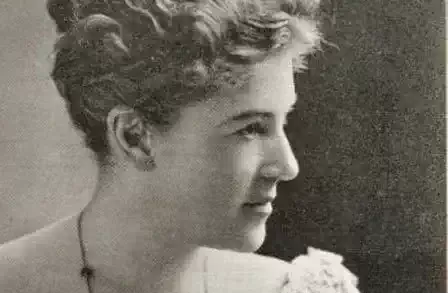
Ella Wheeler Wilcox
Are you Loving Enough?
Are you Loving Enough?
Are you loving enough? There is some one dear,
Some one you hold as the dearest of all
In the holiest shrine of your heart.
Are you making it known? Is the truth of it clear
To the one you love? If death's quick call
Should suddenly tear you apart,
Leaving no time for a long farewell,
Would you feel you had nothing to tell---
Nothing you wished you had said before
The closing of that dark door?
Are you loving enough? The swift years fly---
Oh, faster and faster they hurry away,
And each one carries its dead.
The good deed left for the by and by,
The word to be uttered another day,
May never be done or said.
Let the love word sound in the listening ear,
Nor wait to speak it above a bier.
Oh the time for telling your love is brief,
But long, long, long is the time for grief.
Are you loving enough?
Are you loving enough? There is some one dear,
Some one you hold as the dearest of all
In the holiest shrine of your heart.
Are you making it known? Is the truth of it clear
To the one you love? If death's quick call
Should suddenly tear you apart,
Leaving no time for a long farewell,
Would you feel you had nothing to tell---
Nothing you wished you had said before
The closing of that dark door?
Are you loving enough? The swift years fly---
Oh, faster and faster they hurry away,
And each one carries its dead.
The good deed left for the by and by,
The word to be uttered another day,
May never be done or said.
Let the love word sound in the listening ear,
Nor wait to speak it above a bier.
Oh the time for telling your love is brief,
But long, long, long is the time for grief.
Are you loving enough?
409
Ella Wheeler Wilcox
Angel Or Demon
Angel Or Demon
You call me an angel of love and of light,
A being of goodness and heavenly fire,
Sent out from God’s kingdom to guide you aright,
In paths where your spirits may mount and aspire.
You say that I glow like a star on its course,
Like a ray from the alter, a spark from the source.
Now list to my answer; let all the world hear it;
I speak unafraid what I know to be true:
A pure, faithful love is the creative spirit
Which makes women angels! I live in but you.
We are bound soul to soul by life’s holiest laws;
If I am an angel – why, you are the cause.
As my ship skims the sea, I look up from the deck.
Fair, firm at the wheel shines Love’s beautiful form,
And shall I curse the barque that last night went to wreck,
By the Pilot abandoned to darkness and storm?
My craft is no stauncher, she too had been lost –
Had the wheelman deserted, or slept at his post.
I laid down the wealth of my soul at your feet
(Some woman does this for some man every day) .
No desperate creature who walks in the street,
Has a wickeder heart that I might have, I say,
Had you wantonly misused the treasures you woon,
-As so many men with heart riches have done.
This flame from God’s altar, this holy love flame,
That burns like sweet incense for ever for you,
Might now be a wild conflagration of shame,
Had you tortured my heart, or been base or untrue.
For angels and devils are cast in one mould,
Till love guides them upward, or downward, I hold.
I tell you the women who make fervent wives
And sweet tender mothers, had Fate been less fair,
Are the women who might have abandoned their lives
To the madness that springs from and ends in despair.
As the fire on the hearth which sheds brightness around,
Neglected, may level the walls to the ground.
The world makes grave errors in judging these things,
Great good and great evil are born in one breast.
Love horns us and hoofs us – or gives us our wings,
And the best could be worst, as the worst could be best.
You must thank your own worth for what I grew to be,
For the demon lurked under the angel in me.
You call me an angel of love and of light,
A being of goodness and heavenly fire,
Sent out from God’s kingdom to guide you aright,
In paths where your spirits may mount and aspire.
You say that I glow like a star on its course,
Like a ray from the alter, a spark from the source.
Now list to my answer; let all the world hear it;
I speak unafraid what I know to be true:
A pure, faithful love is the creative spirit
Which makes women angels! I live in but you.
We are bound soul to soul by life’s holiest laws;
If I am an angel – why, you are the cause.
As my ship skims the sea, I look up from the deck.
Fair, firm at the wheel shines Love’s beautiful form,
And shall I curse the barque that last night went to wreck,
By the Pilot abandoned to darkness and storm?
My craft is no stauncher, she too had been lost –
Had the wheelman deserted, or slept at his post.
I laid down the wealth of my soul at your feet
(Some woman does this for some man every day) .
No desperate creature who walks in the street,
Has a wickeder heart that I might have, I say,
Had you wantonly misused the treasures you woon,
-As so many men with heart riches have done.
This flame from God’s altar, this holy love flame,
That burns like sweet incense for ever for you,
Might now be a wild conflagration of shame,
Had you tortured my heart, or been base or untrue.
For angels and devils are cast in one mould,
Till love guides them upward, or downward, I hold.
I tell you the women who make fervent wives
And sweet tender mothers, had Fate been less fair,
Are the women who might have abandoned their lives
To the madness that springs from and ends in despair.
As the fire on the hearth which sheds brightness around,
Neglected, may level the walls to the ground.
The world makes grave errors in judging these things,
Great good and great evil are born in one breast.
Love horns us and hoofs us – or gives us our wings,
And the best could be worst, as the worst could be best.
You must thank your own worth for what I grew to be,
For the demon lurked under the angel in me.
482
Ella Wheeler Wilcox
An Empty Crib
An Empty Crib
Beside a crib that holds a baby’s stocking,
A tattered picture book, a broken toy,
A sleeping mother dreams that she is rocking
Her fair-haired cherub boy.
Upon the cradle’s side her light touch keeping,
She gently rocks it, crooning low a song;
And smiles to think her little one is sleeping,
So peacefully and long.
Step light, breathe low, break not her rapturous dreaming,
Wake not the sleeper from her trance of joy,
For never more save in sweet slumber-seeming
Will she watch o’er her little boy.
God pity her when from her dream Elysian
She wakes to see the empty crib, and weep;
Knowing her joy was but a sleeper’s vision,
Tread lightly – let her sleep.
Beside a crib that holds a baby’s stocking,
A tattered picture book, a broken toy,
A sleeping mother dreams that she is rocking
Her fair-haired cherub boy.
Upon the cradle’s side her light touch keeping,
She gently rocks it, crooning low a song;
And smiles to think her little one is sleeping,
So peacefully and long.
Step light, breathe low, break not her rapturous dreaming,
Wake not the sleeper from her trance of joy,
For never more save in sweet slumber-seeming
Will she watch o’er her little boy.
God pity her when from her dream Elysian
She wakes to see the empty crib, and weep;
Knowing her joy was but a sleeper’s vision,
Tread lightly – let her sleep.
363
Ella Wheeler Wilcox
After the Engagement
After the Engagement
Well, Mabel, 'tis over and ended---
The ball I wrote was to be;
And oh! it was perfectly splendid---
If you could have been here to see.
I've a thousand things to write you
That I know you are wanting to hear,
And one, that is sure to delight you---
I am wearing Joe's diamond, my dear!
Yes, mamma is quite ecstatic
That I am engaged to Joe;
She thinks I am rather erratic,
And feared that I might say "no."
But, Mabel, I'm twenty-seven
(Though nobody dreams it, dear),
And a fortune like Joe's isn't given
To lay at one's feet each year.
You know my old fancy for Harry---
Or, at least, I am certain you guessed
That it took all my sense not to marry
And go with that fellow out west.
But that was my very first season---
And Harry was poor as could be,
And mamma's good practical reason
Took all the romance out of me.
She whisked me off over the ocean,
And had me presented at court,
And got me all out of the notion
That ranch life out west was my forte.
Of course I have never repented--I'm
not such a goose of a thing;
But after I had consented
To Joe---and he gave me the ring---
I felt such a queer sensation.
I seemed to go into a trance,
Away from the music's pulsation,
Away from the lights and the dance.
And the wind o'er the wild prairie
Seemed blowing strong and free,
And it seemed not Joe, but Harry
Who was standing there close to me.
And the funniest feverish feeling
Went up from my feet to my head,
With little chills after it stealing---
And my hands got as numb as the dead.
A moment, and then it was over:
The diamond blazed up in my eyes,
And I saw in the face of my lover
A questioning, strange surprise.
Maybe 'twas the scent of the flowers,
That heavy with fragrance bloomed near,
But I didn't feel natural for hours;
It was odd now, wasn't it, dear?
Write soon to your fortunate Clara
Who has carried the prize away,
And say you'll come on when I marry;
I think it will happen in May.
Well, Mabel, 'tis over and ended---
The ball I wrote was to be;
And oh! it was perfectly splendid---
If you could have been here to see.
I've a thousand things to write you
That I know you are wanting to hear,
And one, that is sure to delight you---
I am wearing Joe's diamond, my dear!
Yes, mamma is quite ecstatic
That I am engaged to Joe;
She thinks I am rather erratic,
And feared that I might say "no."
But, Mabel, I'm twenty-seven
(Though nobody dreams it, dear),
And a fortune like Joe's isn't given
To lay at one's feet each year.
You know my old fancy for Harry---
Or, at least, I am certain you guessed
That it took all my sense not to marry
And go with that fellow out west.
But that was my very first season---
And Harry was poor as could be,
And mamma's good practical reason
Took all the romance out of me.
She whisked me off over the ocean,
And had me presented at court,
And got me all out of the notion
That ranch life out west was my forte.
Of course I have never repented--I'm
not such a goose of a thing;
But after I had consented
To Joe---and he gave me the ring---
I felt such a queer sensation.
I seemed to go into a trance,
Away from the music's pulsation,
Away from the lights and the dance.
And the wind o'er the wild prairie
Seemed blowing strong and free,
And it seemed not Joe, but Harry
Who was standing there close to me.
And the funniest feverish feeling
Went up from my feet to my head,
With little chills after it stealing---
And my hands got as numb as the dead.
A moment, and then it was over:
The diamond blazed up in my eyes,
And I saw in the face of my lover
A questioning, strange surprise.
Maybe 'twas the scent of the flowers,
That heavy with fragrance bloomed near,
But I didn't feel natural for hours;
It was odd now, wasn't it, dear?
Write soon to your fortunate Clara
Who has carried the prize away,
And say you'll come on when I marry;
I think it will happen in May.
426
Ella Wheeler Wilcox
After the Engagement
After the Engagement
Well, Mabel, 'tis over and ended---
The ball I wrote was to be;
And oh! it was perfectly splendid---
If you could have been here to see.
I've a thousand things to write you
That I know you are wanting to hear,
And one, that is sure to delight you---
I am wearing Joe's diamond, my dear!
Yes, mamma is quite ecstatic
That I am engaged to Joe;
She thinks I am rather erratic,
And feared that I might say "no."
But, Mabel, I'm twenty-seven
(Though nobody dreams it, dear),
And a fortune like Joe's isn't given
To lay at one's feet each year.
You know my old fancy for Harry---
Or, at least, I am certain you guessed
That it took all my sense not to marry
And go with that fellow out west.
But that was my very first season---
And Harry was poor as could be,
And mamma's good practical reason
Took all the romance out of me.
She whisked me off over the ocean,
And had me presented at court,
And got me all out of the notion
That ranch life out west was my forte.
Of course I have never repented--I'm
not such a goose of a thing;
But after I had consented
To Joe---and he gave me the ring---
I felt such a queer sensation.
I seemed to go into a trance,
Away from the music's pulsation,
Away from the lights and the dance.
And the wind o'er the wild prairie
Seemed blowing strong and free,
And it seemed not Joe, but Harry
Who was standing there close to me.
And the funniest feverish feeling
Went up from my feet to my head,
With little chills after it stealing---
And my hands got as numb as the dead.
A moment, and then it was over:
The diamond blazed up in my eyes,
And I saw in the face of my lover
A questioning, strange surprise.
Maybe 'twas the scent of the flowers,
That heavy with fragrance bloomed near,
But I didn't feel natural for hours;
It was odd now, wasn't it, dear?
Write soon to your fortunate Clara
Who has carried the prize away,
And say you'll come on when I marry;
I think it will happen in May.
Well, Mabel, 'tis over and ended---
The ball I wrote was to be;
And oh! it was perfectly splendid---
If you could have been here to see.
I've a thousand things to write you
That I know you are wanting to hear,
And one, that is sure to delight you---
I am wearing Joe's diamond, my dear!
Yes, mamma is quite ecstatic
That I am engaged to Joe;
She thinks I am rather erratic,
And feared that I might say "no."
But, Mabel, I'm twenty-seven
(Though nobody dreams it, dear),
And a fortune like Joe's isn't given
To lay at one's feet each year.
You know my old fancy for Harry---
Or, at least, I am certain you guessed
That it took all my sense not to marry
And go with that fellow out west.
But that was my very first season---
And Harry was poor as could be,
And mamma's good practical reason
Took all the romance out of me.
She whisked me off over the ocean,
And had me presented at court,
And got me all out of the notion
That ranch life out west was my forte.
Of course I have never repented--I'm
not such a goose of a thing;
But after I had consented
To Joe---and he gave me the ring---
I felt such a queer sensation.
I seemed to go into a trance,
Away from the music's pulsation,
Away from the lights and the dance.
And the wind o'er the wild prairie
Seemed blowing strong and free,
And it seemed not Joe, but Harry
Who was standing there close to me.
And the funniest feverish feeling
Went up from my feet to my head,
With little chills after it stealing---
And my hands got as numb as the dead.
A moment, and then it was over:
The diamond blazed up in my eyes,
And I saw in the face of my lover
A questioning, strange surprise.
Maybe 'twas the scent of the flowers,
That heavy with fragrance bloomed near,
But I didn't feel natural for hours;
It was odd now, wasn't it, dear?
Write soon to your fortunate Clara
Who has carried the prize away,
And say you'll come on when I marry;
I think it will happen in May.
426
Ella Wheeler Wilcox
Ad Finum
Ad Finum
On the white throat of useless passion
That scorched my soul with its burning breath
I clutched my fingers in murderous fashion
And gathered them close in a grip of death;
For why should I fan, or feed with fuel,
A love that showed me but blank despair?
So my hold was firm, and my grasp was cruel -
I meant to strangle it then and there!
I thought it was dead. But, with no warning,
It rose from its grave last night and came
And stood by my bed till the early morning.
And over and over it spoke your name.
Its throat was red where my hands had held it;
It burned my brow with its scorching breath;
And I said, the moment my eyes beheld it,
'A love like this can know no death.'
For just one kiss that your lips have given
In the lost and beautiful past to me,
I would gladly barter my hopes of Heaven
And all the bliss of Eternity.
For never a joy are the angels keeping,
To lay at my feet in Paradise,
Like that of into your strong arms creeping,
And looking into your love lit eyes.
I know, in the way that sins are reckoned,
This thought is a sin of the deepest dye;
But I know too that if an angel beckoned,
Standing close by the Throne on High,
And you, adown by the gates infernal,
Should open your loving arms and smile,
I would turn my back on things supernal,
To lie on your breast a little while.
To know for an hour you were mine completely-
Mine in body and soul, my own-
I would bear unending tortures sweetly,
With not a murmur and not a moan.
A lighter sin or lesser error
Might change through hope or fear divine;
But there is no fear, and hell hath no terror,
To change or alter a love like mine.
On the white throat of useless passion
That scorched my soul with its burning breath
I clutched my fingers in murderous fashion
And gathered them close in a grip of death;
For why should I fan, or feed with fuel,
A love that showed me but blank despair?
So my hold was firm, and my grasp was cruel -
I meant to strangle it then and there!
I thought it was dead. But, with no warning,
It rose from its grave last night and came
And stood by my bed till the early morning.
And over and over it spoke your name.
Its throat was red where my hands had held it;
It burned my brow with its scorching breath;
And I said, the moment my eyes beheld it,
'A love like this can know no death.'
For just one kiss that your lips have given
In the lost and beautiful past to me,
I would gladly barter my hopes of Heaven
And all the bliss of Eternity.
For never a joy are the angels keeping,
To lay at my feet in Paradise,
Like that of into your strong arms creeping,
And looking into your love lit eyes.
I know, in the way that sins are reckoned,
This thought is a sin of the deepest dye;
But I know too that if an angel beckoned,
Standing close by the Throne on High,
And you, adown by the gates infernal,
Should open your loving arms and smile,
I would turn my back on things supernal,
To lie on your breast a little while.
To know for an hour you were mine completely-
Mine in body and soul, my own-
I would bear unending tortures sweetly,
With not a murmur and not a moan.
A lighter sin or lesser error
Might change through hope or fear divine;
But there is no fear, and hell hath no terror,
To change or alter a love like mine.
539
Ella Wheeler Wilcox
About May
About May
One night Nurse Sleep held out her hand
To tired little May.
'Come, go with me to Wonderland,'
She said, 'I know the way.
Just rock-a-by-hum-m-m,
And lo! we come
To the place where the dream-girls play.'
But naughty May, she wriggled away
From Sleep's soft arms, and said:
'I must stay awake till I eat my cake,
And then I will go to bed;
With a by-lo, away I will go.'
But the good nurse shook her head.
She shook her head and away she sped,
While May sat munching her crumb.
But after the cake there came an ache,
Though May cried: 'Come, Sleep, come,
And it's oh! my! let us by-lo-by'-
All save the echoes were dumb.
She ran after Sleep toward Wonderland,
Ran till the morning light;
And just as she caught her and grasped her hand,
A nightmare gave her a fright.
And it's by-lo, I hope she'll know
Better another night.
One night Nurse Sleep held out her hand
To tired little May.
'Come, go with me to Wonderland,'
She said, 'I know the way.
Just rock-a-by-hum-m-m,
And lo! we come
To the place where the dream-girls play.'
But naughty May, she wriggled away
From Sleep's soft arms, and said:
'I must stay awake till I eat my cake,
And then I will go to bed;
With a by-lo, away I will go.'
But the good nurse shook her head.
She shook her head and away she sped,
While May sat munching her crumb.
But after the cake there came an ache,
Though May cried: 'Come, Sleep, come,
And it's oh! my! let us by-lo-by'-
All save the echoes were dumb.
She ran after Sleep toward Wonderland,
Ran till the morning light;
And just as she caught her and grasped her hand,
A nightmare gave her a fright.
And it's by-lo, I hope she'll know
Better another night.
394
Ella Wheeler Wilcox
A Woman's Love
A Woman's Love
So vast the tide of Love within me surging,
It overflows like some stupendous sea,
The confines of the Present and To-be;
And 'gainst the Past's high wall I feel it urging,
As it would cry "Thou too shalt yield to me!"
All other loves my supreme love embodies;
I would be she on whose soft bosom nursed
Thy clinging infant lips to quench their thirst;
She who trod close to hidden worlds where God is,
That she might have, and hold, and see thee first.
I would be she who stirred the vague fond fancies,
Of thy still childish heart; who through bright days
Went sporting with thee in the old-time plays,
And caught the sunlight of thy boyish glances
In half-forgotten and long-buried Mays.
Forth to the end, and back to the beginning,
My love would send its inundating tide,
Wherein all landmarks of thy past should hide.
If thy life's lesson must be learned through sinning,
My grieving virtue would become thy guide.
For I would share the burden of thy errors,
So when the sun of our brief life had set,
If thou didst walk in darkness and regret,
E'en in that shadowy world of nameless terrors,
My soul and thine should be companions yet.
And I would cross with thee those troubled oceans
Of dark remorse whose waters are despair:
All things my jealous reckless love would dare,
So that thou mightst not recollect emotions
In which it did not have a part and share.
There is no limit to my love's full measure,
Its spirit gold is shaped by earth's alloy;
I would be friend and mother, mate and toy,
I'd have thee look to me for every pleasure,
And in me find all memories of joy.
Yet though I love thee in such selfish fashion,
I would wait on thee, sitting at thy feet,
And serving thee, if thou didst deem it meet.
And couldst thou give me one fond hour of passion,
I'd take that hour and call my life complete.
So vast the tide of Love within me surging,
It overflows like some stupendous sea,
The confines of the Present and To-be;
And 'gainst the Past's high wall I feel it urging,
As it would cry "Thou too shalt yield to me!"
All other loves my supreme love embodies;
I would be she on whose soft bosom nursed
Thy clinging infant lips to quench their thirst;
She who trod close to hidden worlds where God is,
That she might have, and hold, and see thee first.
I would be she who stirred the vague fond fancies,
Of thy still childish heart; who through bright days
Went sporting with thee in the old-time plays,
And caught the sunlight of thy boyish glances
In half-forgotten and long-buried Mays.
Forth to the end, and back to the beginning,
My love would send its inundating tide,
Wherein all landmarks of thy past should hide.
If thy life's lesson must be learned through sinning,
My grieving virtue would become thy guide.
For I would share the burden of thy errors,
So when the sun of our brief life had set,
If thou didst walk in darkness and regret,
E'en in that shadowy world of nameless terrors,
My soul and thine should be companions yet.
And I would cross with thee those troubled oceans
Of dark remorse whose waters are despair:
All things my jealous reckless love would dare,
So that thou mightst not recollect emotions
In which it did not have a part and share.
There is no limit to my love's full measure,
Its spirit gold is shaped by earth's alloy;
I would be friend and mother, mate and toy,
I'd have thee look to me for every pleasure,
And in me find all memories of joy.
Yet though I love thee in such selfish fashion,
I would wait on thee, sitting at thy feet,
And serving thee, if thou didst deem it meet.
And couldst thou give me one fond hour of passion,
I'd take that hour and call my life complete.
374
Ella Wheeler Wilcox
A Meeting
A Meeting
Quite carelessly I turned the newsy sheet;
A song I sang, full many a year ago,
Smiled up at me, as in a busy street
One meets an old-time friend he used to know.
So full it was, that simple little song,
Of all the hope, the transport, and the truth,
Which to the impetuous morn of life belong,
That once again I seemed to grasp my youth.
So full it was of that sweet, fancied pain
We woo and cherish ere we meet with woe,
I felt as one who hears a plaintive strain
His mother sang him in the long ago.
Up from the grave the years that lay between
That song's birthday and my stern present came
Like phantom forms and swept across the scene,
Bearing their broken dreams of love and fame.
Fair hopes and bright ambitions that I knew
In that old time, with their ideal grace,
Shone for a moment, then were lost to view
Behind the dull clouds of the commonplace.
With trembling hands I put the sheet away;
Ah, little song! the sad and bitter truth
Struck like an arrow when we met that day!
My life has missed the promise of its youth.
Quite carelessly I turned the newsy sheet;
A song I sang, full many a year ago,
Smiled up at me, as in a busy street
One meets an old-time friend he used to know.
So full it was, that simple little song,
Of all the hope, the transport, and the truth,
Which to the impetuous morn of life belong,
That once again I seemed to grasp my youth.
So full it was of that sweet, fancied pain
We woo and cherish ere we meet with woe,
I felt as one who hears a plaintive strain
His mother sang him in the long ago.
Up from the grave the years that lay between
That song's birthday and my stern present came
Like phantom forms and swept across the scene,
Bearing their broken dreams of love and fame.
Fair hopes and bright ambitions that I knew
In that old time, with their ideal grace,
Shone for a moment, then were lost to view
Behind the dull clouds of the commonplace.
With trembling hands I put the sheet away;
Ah, little song! the sad and bitter truth
Struck like an arrow when we met that day!
My life has missed the promise of its youth.
370
Ella Wheeler Wilcox
A Maiden To Her Mirror
A Maiden To Her Mirror
He said he loved me! Then he called my hair
Silk threads wherewith sly Cupid strings his bow,
My cheek a rose leaf fallen on new snow;
And swore my round, full throat would bring despair
To Venus or to Psyche.
Time and care
Will fade these locks; the merry god, I know,
Uses no grizzled cords upon his bow.
How will it be when I, no longer fair,
Plead for his kiss with cheeks, whence long ago
The early snowflakes melted quite away,
The rose leaf died – and in whose sallow clay
Lie the deep sunken tracks of life’s gaunt crow?
When this full throat shall wattle fold on fold,
Like some ripe peach left drying on a wall,
Or like a spent accordion, when all
Its music has exhaled – will love grow cold?
He said he loved me! Then he called my hair
Silk threads wherewith sly Cupid strings his bow,
My cheek a rose leaf fallen on new snow;
And swore my round, full throat would bring despair
To Venus or to Psyche.
Time and care
Will fade these locks; the merry god, I know,
Uses no grizzled cords upon his bow.
How will it be when I, no longer fair,
Plead for his kiss with cheeks, whence long ago
The early snowflakes melted quite away,
The rose leaf died – and in whose sallow clay
Lie the deep sunken tracks of life’s gaunt crow?
When this full throat shall wattle fold on fold,
Like some ripe peach left drying on a wall,
Or like a spent accordion, when all
Its music has exhaled – will love grow cold?
445
Ella Wheeler Wilcox
A Leaf
A Leaf
Somebody said, in the crowd, last eve,
That you were married, or soon to be.
I have not thought of you, I believe,
Since last we parted. Let me see:
Five long Summers have passed since then –
Each has been pleasant in its own way –
And you are but one of a dozen men
Who have played the suitor a Summer day.
But, nevertheless, when I heard your name,
Coupled with some one’s, not my own,
There burned in my bosom a sudden flame,
That carried me back to the day that is flown.
I was sitting again by the laughing brook,
With you at my feet, and the sky above,
And my heart was fluttering under your look –
The unmistakable look of Love.
Again your breath, like a South wind, fanned
My cheek, where the blushes came and went;
And the tender clasp of your strong, warm hand
Sudden thrills through my pulses sent.
Again you were mine by Love’s decree:
So for a moment it seemed last night,
When somebody mentioned your name to me.
Just for the moment I thought you mine –
Loving me, wooing me, as of old.
The tale remembered seemed half divine –
Though I held it lightly enough when told.
The past seemed fairer than when it was near,
As ‘blessings brighten when taking flight, ’
And just for the moment I held you near –
When somebody mentioned your name last night.
Somebody said, in the crowd, last eve,
That you were married, or soon to be.
I have not thought of you, I believe,
Since last we parted. Let me see:
Five long Summers have passed since then –
Each has been pleasant in its own way –
And you are but one of a dozen men
Who have played the suitor a Summer day.
But, nevertheless, when I heard your name,
Coupled with some one’s, not my own,
There burned in my bosom a sudden flame,
That carried me back to the day that is flown.
I was sitting again by the laughing brook,
With you at my feet, and the sky above,
And my heart was fluttering under your look –
The unmistakable look of Love.
Again your breath, like a South wind, fanned
My cheek, where the blushes came and went;
And the tender clasp of your strong, warm hand
Sudden thrills through my pulses sent.
Again you were mine by Love’s decree:
So for a moment it seemed last night,
When somebody mentioned your name to me.
Just for the moment I thought you mine –
Loving me, wooing me, as of old.
The tale remembered seemed half divine –
Though I held it lightly enough when told.
The past seemed fairer than when it was near,
As ‘blessings brighten when taking flight, ’
And just for the moment I held you near –
When somebody mentioned your name last night.
405
Ella Wheeler Wilcox
A Fisherman's Baby
A Fisherman's Baby
Oh hush, little baby, thy papa's at sea;
The big billows rock him as mamma rocks thee.
He hastes to his dear ones o'er billows of foam;
Then sleep, little darling, till papa comes home.
Sleep, little baby; hush, little baby;
Papa is coming, no longer to roam.
The shells and the pebbles, all day tossed about,
Are lulled into sleep by the tide ebbing out.
The tired shore slumbers, stretched out in the sand,
While the waves hurry off at mid-ocean's command.
Then hush, little darling; sleep, little darling;
Sleep, baby, rocked by thy mother's own hand.
The winds that have rollicked all day in the west
Are hushed into sleep on the calm evening's breast.
The boats that were out with the wild sea at play
Are now rocked to sleep in the arms of the bay.
Then rest, little baby; sleep, little baby;
Papa will come at the break of the day.
Sleep, little darling; too soon thou wilt be
A man like thy father, to sail o'er the sea.
Then sleep will not come at thy bidding or prayer,
For thou wilt be harassed by danger and care.
Then sleep, little darling; rest, little baby;
Rest whilst thou may, dear, and sleep whilst thou dare.
Oh hush, little baby, thy papa's at sea;
The big billows rock him as mamma rocks thee.
He hastes to his dear ones o'er billows of foam;
Then sleep, little darling, till papa comes home.
Sleep, little baby; hush, little baby;
Papa is coming, no longer to roam.
The shells and the pebbles, all day tossed about,
Are lulled into sleep by the tide ebbing out.
The tired shore slumbers, stretched out in the sand,
While the waves hurry off at mid-ocean's command.
Then hush, little darling; sleep, little darling;
Sleep, baby, rocked by thy mother's own hand.
The winds that have rollicked all day in the west
Are hushed into sleep on the calm evening's breast.
The boats that were out with the wild sea at play
Are now rocked to sleep in the arms of the bay.
Then rest, little baby; sleep, little baby;
Papa will come at the break of the day.
Sleep, little darling; too soon thou wilt be
A man like thy father, to sail o'er the sea.
Then sleep will not come at thy bidding or prayer,
For thou wilt be harassed by danger and care.
Then sleep, little darling; rest, little baby;
Rest whilst thou may, dear, and sleep whilst thou dare.
424
Ella Wheeler Wilcox
A Baby In The House
A Baby In The House
I knew that a baby was hid in that house,
Though I saw no cradle and heard no cry;
But the husband was tip-toeing 'round like a mouse,
And the good wife was humming a soft lullaby;
And there was a look on the face of the mother,
That I knew could mean only one thing, and no other.
The mother, I said to myself, for I knew
That the woman before me was certainly that;
And there lay in a corner a tiny cloth shoe,
And I saw on a stand such a wee little hat;
And the beard of the husband said, plain as could be,
'Two fat chubby hands have been tugging at me.'
And he took from his pocket a gay picture-book,
And a dog that could bark, if you pulled on a string;
And the wife laid them up with such a pleased look;
And I said to myself, 'There is no other thing
But a babe that could bring about all this, and so
That one thing is in hiding somewhere, I know.'
I stayed but a moment, and saw nothing more,
And heard not a sound, yet I know I was right;
What else could the shoe mean that lay on the floor,
The book and the toy, and the faces so bright;
And what made the husband as still as a mouse?
I am sure, very sure, there's a babe in that house.
I knew that a baby was hid in that house,
Though I saw no cradle and heard no cry;
But the husband was tip-toeing 'round like a mouse,
And the good wife was humming a soft lullaby;
And there was a look on the face of the mother,
That I knew could mean only one thing, and no other.
The mother, I said to myself, for I knew
That the woman before me was certainly that;
And there lay in a corner a tiny cloth shoe,
And I saw on a stand such a wee little hat;
And the beard of the husband said, plain as could be,
'Two fat chubby hands have been tugging at me.'
And he took from his pocket a gay picture-book,
And a dog that could bark, if you pulled on a string;
And the wife laid them up with such a pleased look;
And I said to myself, 'There is no other thing
But a babe that could bring about all this, and so
That one thing is in hiding somewhere, I know.'
I stayed but a moment, and saw nothing more,
And heard not a sound, yet I know I was right;
What else could the shoe mean that lay on the floor,
The book and the toy, and the faces so bright;
And what made the husband as still as a mouse?
I am sure, very sure, there's a babe in that house.
433
Ella Wheeler Wilcox
A Baby In The House
A Baby In The House
I knew that a baby was hid in that house,
Though I saw no cradle and heard no cry;
But the husband was tip-toeing 'round like a mouse,
And the good wife was humming a soft lullaby;
And there was a look on the face of the mother,
That I knew could mean only one thing, and no other.
The mother, I said to myself, for I knew
That the woman before me was certainly that;
And there lay in a corner a tiny cloth shoe,
And I saw on a stand such a wee little hat;
And the beard of the husband said, plain as could be,
'Two fat chubby hands have been tugging at me.'
And he took from his pocket a gay picture-book,
And a dog that could bark, if you pulled on a string;
And the wife laid them up with such a pleased look;
And I said to myself, 'There is no other thing
But a babe that could bring about all this, and so
That one thing is in hiding somewhere, I know.'
I stayed but a moment, and saw nothing more,
And heard not a sound, yet I know I was right;
What else could the shoe mean that lay on the floor,
The book and the toy, and the faces so bright;
And what made the husband as still as a mouse?
I am sure, very sure, there's a babe in that house.
I knew that a baby was hid in that house,
Though I saw no cradle and heard no cry;
But the husband was tip-toeing 'round like a mouse,
And the good wife was humming a soft lullaby;
And there was a look on the face of the mother,
That I knew could mean only one thing, and no other.
The mother, I said to myself, for I knew
That the woman before me was certainly that;
And there lay in a corner a tiny cloth shoe,
And I saw on a stand such a wee little hat;
And the beard of the husband said, plain as could be,
'Two fat chubby hands have been tugging at me.'
And he took from his pocket a gay picture-book,
And a dog that could bark, if you pulled on a string;
And the wife laid them up with such a pleased look;
And I said to myself, 'There is no other thing
But a babe that could bring about all this, and so
That one thing is in hiding somewhere, I know.'
I stayed but a moment, and saw nothing more,
And heard not a sound, yet I know I was right;
What else could the shoe mean that lay on the floor,
The book and the toy, and the faces so bright;
And what made the husband as still as a mouse?
I am sure, very sure, there's a babe in that house.
433
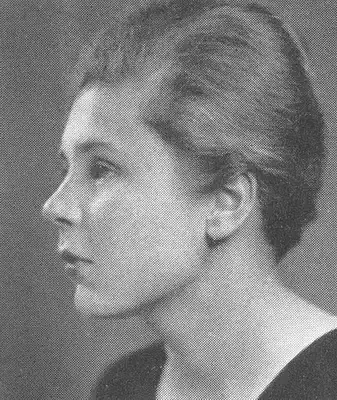
Elizabeth Bishop
Squatter's Children
Squatter's Children
On the unbreathing sides of hills
they play, a specklike girl and boy,
alone, but near a specklike house.
The Sun's suspended eye
blinks casually, and then they wade
gigantic waves of light and shade.
A dancing yellow spot, a pup,
attends them. Clouds are piling up;
a storm piles up behind the house.
The children play at digging holes.
The ground is hard; they try to use
one of their father's tools,
a mattock with a broken haft
the two of them can scarcely lift.
It drops and clangs. Their laughter spreads
effulgence in the thunderheads,
Weak flashes of inquiry
direct as is the puppy's bark.
But to their little, soluble,
unwarrantable ark,
apparently the rain's reply
consists of echolalia,
and Mother's voice, ugly as sin,
keeps calling to them to come in.
Children, the threshold of the storm
has slid beneath your muddy shoes;
wet and beguiled, you stand among
the mansions you may choose
out of a bigger house than yours,
whose lawfulness endures.
It's soggy documents retain
your rights in rooms of falling rain.
On the unbreathing sides of hills
they play, a specklike girl and boy,
alone, but near a specklike house.
The Sun's suspended eye
blinks casually, and then they wade
gigantic waves of light and shade.
A dancing yellow spot, a pup,
attends them. Clouds are piling up;
a storm piles up behind the house.
The children play at digging holes.
The ground is hard; they try to use
one of their father's tools,
a mattock with a broken haft
the two of them can scarcely lift.
It drops and clangs. Their laughter spreads
effulgence in the thunderheads,
Weak flashes of inquiry
direct as is the puppy's bark.
But to their little, soluble,
unwarrantable ark,
apparently the rain's reply
consists of echolalia,
and Mother's voice, ugly as sin,
keeps calling to them to come in.
Children, the threshold of the storm
has slid beneath your muddy shoes;
wet and beguiled, you stand among
the mansions you may choose
out of a bigger house than yours,
whose lawfulness endures.
It's soggy documents retain
your rights in rooms of falling rain.
643
Elizabeth Bishop
Squatter's Children
Squatter's Children
On the unbreathing sides of hills
they play, a specklike girl and boy,
alone, but near a specklike house.
The Sun's suspended eye
blinks casually, and then they wade
gigantic waves of light and shade.
A dancing yellow spot, a pup,
attends them. Clouds are piling up;
a storm piles up behind the house.
The children play at digging holes.
The ground is hard; they try to use
one of their father's tools,
a mattock with a broken haft
the two of them can scarcely lift.
It drops and clangs. Their laughter spreads
effulgence in the thunderheads,
Weak flashes of inquiry
direct as is the puppy's bark.
But to their little, soluble,
unwarrantable ark,
apparently the rain's reply
consists of echolalia,
and Mother's voice, ugly as sin,
keeps calling to them to come in.
Children, the threshold of the storm
has slid beneath your muddy shoes;
wet and beguiled, you stand among
the mansions you may choose
out of a bigger house than yours,
whose lawfulness endures.
It's soggy documents retain
your rights in rooms of falling rain.
On the unbreathing sides of hills
they play, a specklike girl and boy,
alone, but near a specklike house.
The Sun's suspended eye
blinks casually, and then they wade
gigantic waves of light and shade.
A dancing yellow spot, a pup,
attends them. Clouds are piling up;
a storm piles up behind the house.
The children play at digging holes.
The ground is hard; they try to use
one of their father's tools,
a mattock with a broken haft
the two of them can scarcely lift.
It drops and clangs. Their laughter spreads
effulgence in the thunderheads,
Weak flashes of inquiry
direct as is the puppy's bark.
But to their little, soluble,
unwarrantable ark,
apparently the rain's reply
consists of echolalia,
and Mother's voice, ugly as sin,
keeps calling to them to come in.
Children, the threshold of the storm
has slid beneath your muddy shoes;
wet and beguiled, you stand among
the mansions you may choose
out of a bigger house than yours,
whose lawfulness endures.
It's soggy documents retain
your rights in rooms of falling rain.
643
Elizabeth Bishop
Songs for a Colored Singer
Songs for a Colored Singer
I
A washing hangs upon the line,
but it's not mine.
None of the things that I can see
belong to me.
The neighbors got a radio with an aerial;
we got a little portable.
They got a lot of closet space;
we got a suitcase.
I say, "Le Roy, just how much are we owing?
Something I can't comprehend,
the more we got the more we spend...."
He only answers, "Let's get going."
Le Roy, you're earning too much money now.
I sit and look at our backyard
and find it very hard.
What have we got for all his dollars and cents?
--A pile of bottles by the fence.
He's faithful and he's kind
but he sure has an inquiring mind.
He's seen a lot; he's bound to see the rest,
and if I protest
Le Roy answers with a frown,
"Darling, when I earns I spends.
The world is wide; it still extends....
I'm going to get a job in the next town."
Le Roy, you're earning too much money now.
II
The time has come to call a halt;
and so it ends.
He's gone off with his other friends.
He needn't try to make amends,
this occasion's all his fault.
Through rain and dark I see his face
across the street at Flossie's place.
He's drinking in the warm pink glow
to th' accompaniment of the piccolo.
The time has come to call a halt.
I met him walking with Varella
and hit him twice with my umbrella.
Perhaps that occasion was my fault,
but the time has come to call a halt.
Go drink your wine and go get tight.
Let the piccolo play.
I'm sick of all your fussing anyway.
Now I'm pursuing my own way.
I'm leaving on the bus tonight.
Far down the highway wet and black
I'll ride and ride and not come back.
I'm going to go and take the bus
and find someone monogamous.
The time has come to call a halt.
I've borrowed fifteen dollars fare
and it will take me anywhere.
For this occasion's all his fault.
The time has come to call a halt.
III
Lullaby.
Adult and child
sink to their rest.
At sea the big ship sinks and dies,
lead in its breast.
Lullaby.
Let mations rage,
let nations fall.
The shadow of the crib makes an enormous cage
upon the wall.
Lullaby.
Sleep on and on,
war's over soon.
Drop the silly, harmless toy,
pick up the moon.
Lullaby.
If they should say
you have no sense,
don't you mind them; it won't make
much difference.
Lullaby.
Adult and child
sink to their rest.
At sea the big ship sinks and dies,
lead in its breast.
IV
What's that shining in the leaves,
the shadowy leaves,
like tears when somebody grieves,
shining, shining in the leaves?
Is it dew or is it tears,
dew or tears,
hanging there for years and years
like a heavy dew of tears?
Then that dew begins to fall,
roll down and fall,
Maybe it's not tears at all.
See it, see it roll and fall.
Hear it falling on the ground,
hear, all around.
That is not a tearful sound,
beating, beating on the ground.
See it lying there like seeds,
like black seeds.
see it taking root like weeds,
faster, faster than the weeds,
all the shining seeds take root,
conspiring root,
and what curious flower or fruit
will grow from that conspiring root?
fruit or flower? It is a face.
Yes, a face.
In that dark and dreary place
each seed grows into a face.
Like an army in a dream
the faces seem,
darker, darker, like a dream.
They're too real to be a dream.
I
A washing hangs upon the line,
but it's not mine.
None of the things that I can see
belong to me.
The neighbors got a radio with an aerial;
we got a little portable.
They got a lot of closet space;
we got a suitcase.
I say, "Le Roy, just how much are we owing?
Something I can't comprehend,
the more we got the more we spend...."
He only answers, "Let's get going."
Le Roy, you're earning too much money now.
I sit and look at our backyard
and find it very hard.
What have we got for all his dollars and cents?
--A pile of bottles by the fence.
He's faithful and he's kind
but he sure has an inquiring mind.
He's seen a lot; he's bound to see the rest,
and if I protest
Le Roy answers with a frown,
"Darling, when I earns I spends.
The world is wide; it still extends....
I'm going to get a job in the next town."
Le Roy, you're earning too much money now.
II
The time has come to call a halt;
and so it ends.
He's gone off with his other friends.
He needn't try to make amends,
this occasion's all his fault.
Through rain and dark I see his face
across the street at Flossie's place.
He's drinking in the warm pink glow
to th' accompaniment of the piccolo.
The time has come to call a halt.
I met him walking with Varella
and hit him twice with my umbrella.
Perhaps that occasion was my fault,
but the time has come to call a halt.
Go drink your wine and go get tight.
Let the piccolo play.
I'm sick of all your fussing anyway.
Now I'm pursuing my own way.
I'm leaving on the bus tonight.
Far down the highway wet and black
I'll ride and ride and not come back.
I'm going to go and take the bus
and find someone monogamous.
The time has come to call a halt.
I've borrowed fifteen dollars fare
and it will take me anywhere.
For this occasion's all his fault.
The time has come to call a halt.
III
Lullaby.
Adult and child
sink to their rest.
At sea the big ship sinks and dies,
lead in its breast.
Lullaby.
Let mations rage,
let nations fall.
The shadow of the crib makes an enormous cage
upon the wall.
Lullaby.
Sleep on and on,
war's over soon.
Drop the silly, harmless toy,
pick up the moon.
Lullaby.
If they should say
you have no sense,
don't you mind them; it won't make
much difference.
Lullaby.
Adult and child
sink to their rest.
At sea the big ship sinks and dies,
lead in its breast.
IV
What's that shining in the leaves,
the shadowy leaves,
like tears when somebody grieves,
shining, shining in the leaves?
Is it dew or is it tears,
dew or tears,
hanging there for years and years
like a heavy dew of tears?
Then that dew begins to fall,
roll down and fall,
Maybe it's not tears at all.
See it, see it roll and fall.
Hear it falling on the ground,
hear, all around.
That is not a tearful sound,
beating, beating on the ground.
See it lying there like seeds,
like black seeds.
see it taking root like weeds,
faster, faster than the weeds,
all the shining seeds take root,
conspiring root,
and what curious flower or fruit
will grow from that conspiring root?
fruit or flower? It is a face.
Yes, a face.
In that dark and dreary place
each seed grows into a face.
Like an army in a dream
the faces seem,
darker, darker, like a dream.
They're too real to be a dream.
573
Elizabeth Bishop
Manners
Manners
For a Child of 1918
My grandfather said to me
as we sat on the wagon seat,
"Be sure to remember to always
speak to everyone you meet."
We met a stranger on foot.
My grandfather's whip tapped his hat.
"Good day, sir. Good day. A fine day."
And I said it and bowed where I sat.
Then we overtook a boy we knew
with his big pet crow on his shoulder.
"Always offer everyone a ride;
don't forget that when you get older,"
my grandfather said. So Willy
climbed up with us, but the crow
gave a "Caw!" and flew off. I was worried.
How would he know where to go?
But he flew a little way at a time
from fence post to fence post, ahead;
and when Willy whistled he answered.
"A fine bird," my grandfather said,
"and he's well brought up. See, he answers
nicely when he's spoken to.
Man or beast, that's good manners.
Be sure that you both always do."
When automobiles went by,
the dust hid the people's faces,
but we shouted "Good day! Good day!
Fine day!" at the top of our voices.
When we came to Hustler Hill,
he said that the mare was tired,
so we all got down and walked,
as our good manners required.
For a Child of 1918
My grandfather said to me
as we sat on the wagon seat,
"Be sure to remember to always
speak to everyone you meet."
We met a stranger on foot.
My grandfather's whip tapped his hat.
"Good day, sir. Good day. A fine day."
And I said it and bowed where I sat.
Then we overtook a boy we knew
with his big pet crow on his shoulder.
"Always offer everyone a ride;
don't forget that when you get older,"
my grandfather said. So Willy
climbed up with us, but the crow
gave a "Caw!" and flew off. I was worried.
How would he know where to go?
But he flew a little way at a time
from fence post to fence post, ahead;
and when Willy whistled he answered.
"A fine bird," my grandfather said,
"and he's well brought up. See, he answers
nicely when he's spoken to.
Man or beast, that's good manners.
Be sure that you both always do."
When automobiles went by,
the dust hid the people's faces,
but we shouted "Good day! Good day!
Fine day!" at the top of our voices.
When we came to Hustler Hill,
he said that the mare was tired,
so we all got down and walked,
as our good manners required.
739
Elizabeth Bishop
Filling Station
Filling Station
Oh, but it is dirty!
--this little filling station,
oil-soaked, oil-permeated
to a disturbing, over-all
black translucency.
Be careful with that match!
Father wears a dirty,
oil-soaked monkey suit
that cuts him under the arms,
and several quick and saucy
and greasy sons assist him
(it's a family filling station),
all quite thoroughly dirty.
Do they live in the station?
It has a cement porch
behind the pumps, and on it
a set of crushed and greaseimpregnated
wickerwork;
on the wicker sofa
a dirty dog, quite comfy.
Some comic books provide
the only note of color-of
certain color. They lie
upon a big dim doily
draping a taboret
(part of the set), beside
a big hirsute begonia.
Why the extraneous plant?
Why the taboret?
Why, oh why, the doily?
(Embroidered in daisy stitch
with marguerites, I think,
and heavy with gray crochet.)
Somebody embroidered the doily.
Somebody waters the plant,
or oils it, maybe. Somebody
arranges the rows of cans
so that they softly say:
ESSO--SO--SO--SO
to high-strung automobiles.
Somebody loves us all.
Oh, but it is dirty!
--this little filling station,
oil-soaked, oil-permeated
to a disturbing, over-all
black translucency.
Be careful with that match!
Father wears a dirty,
oil-soaked monkey suit
that cuts him under the arms,
and several quick and saucy
and greasy sons assist him
(it's a family filling station),
all quite thoroughly dirty.
Do they live in the station?
It has a cement porch
behind the pumps, and on it
a set of crushed and greaseimpregnated
wickerwork;
on the wicker sofa
a dirty dog, quite comfy.
Some comic books provide
the only note of color-of
certain color. They lie
upon a big dim doily
draping a taboret
(part of the set), beside
a big hirsute begonia.
Why the extraneous plant?
Why the taboret?
Why, oh why, the doily?
(Embroidered in daisy stitch
with marguerites, I think,
and heavy with gray crochet.)
Somebody embroidered the doily.
Somebody waters the plant,
or oils it, maybe. Somebody
arranges the rows of cans
so that they softly say:
ESSO--SO--SO--SO
to high-strung automobiles.
Somebody loves us all.
561
Elizabeth Bishop
Filling Station
Filling Station
Oh, but it is dirty!
--this little filling station,
oil-soaked, oil-permeated
to a disturbing, over-all
black translucency.
Be careful with that match!
Father wears a dirty,
oil-soaked monkey suit
that cuts him under the arms,
and several quick and saucy
and greasy sons assist him
(it's a family filling station),
all quite thoroughly dirty.
Do they live in the station?
It has a cement porch
behind the pumps, and on it
a set of crushed and greaseimpregnated
wickerwork;
on the wicker sofa
a dirty dog, quite comfy.
Some comic books provide
the only note of color-of
certain color. They lie
upon a big dim doily
draping a taboret
(part of the set), beside
a big hirsute begonia.
Why the extraneous plant?
Why the taboret?
Why, oh why, the doily?
(Embroidered in daisy stitch
with marguerites, I think,
and heavy with gray crochet.)
Somebody embroidered the doily.
Somebody waters the plant,
or oils it, maybe. Somebody
arranges the rows of cans
so that they softly say:
ESSO--SO--SO--SO
to high-strung automobiles.
Somebody loves us all.
Oh, but it is dirty!
--this little filling station,
oil-soaked, oil-permeated
to a disturbing, over-all
black translucency.
Be careful with that match!
Father wears a dirty,
oil-soaked monkey suit
that cuts him under the arms,
and several quick and saucy
and greasy sons assist him
(it's a family filling station),
all quite thoroughly dirty.
Do they live in the station?
It has a cement porch
behind the pumps, and on it
a set of crushed and greaseimpregnated
wickerwork;
on the wicker sofa
a dirty dog, quite comfy.
Some comic books provide
the only note of color-of
certain color. They lie
upon a big dim doily
draping a taboret
(part of the set), beside
a big hirsute begonia.
Why the extraneous plant?
Why the taboret?
Why, oh why, the doily?
(Embroidered in daisy stitch
with marguerites, I think,
and heavy with gray crochet.)
Somebody embroidered the doily.
Somebody waters the plant,
or oils it, maybe. Somebody
arranges the rows of cans
so that they softly say:
ESSO--SO--SO--SO
to high-strung automobiles.
Somebody loves us all.
561
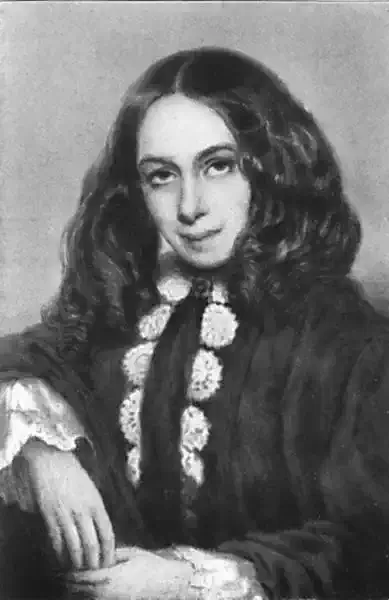
Elizabeth Barrett Browning
XXXIV
XXXIV
With the same heart, I said, I'll answer thee
As those, when thou shalt call me by my name--
Lo, the vain promise ! is the same, the same,
Perplexed and ruffled by life's strategy ?
When called before, I told how hastily
I dropped my flowers or brake off from a game,
To run and answer with the smile that came
At play last moment, and went on with me
Through my obedience. When I answer now,
I drop a grave thought, break from solitude;
Yet still my heart goes to thee--ponder how--
Not as to a single good, but all my good !
Lay thy hand on it, best one, and allow
That no child's foot could run fast as this blood.
With the same heart, I said, I'll answer thee
As those, when thou shalt call me by my name--
Lo, the vain promise ! is the same, the same,
Perplexed and ruffled by life's strategy ?
When called before, I told how hastily
I dropped my flowers or brake off from a game,
To run and answer with the smile that came
At play last moment, and went on with me
Through my obedience. When I answer now,
I drop a grave thought, break from solitude;
Yet still my heart goes to thee--ponder how--
Not as to a single good, but all my good !
Lay thy hand on it, best one, and allow
That no child's foot could run fast as this blood.
494
Elizabeth Barrett Browning
XXXV
XXXV
If I leave all for thee, wilt thou exchange
And be all to me ? Shall I never miss
Home-talk and blessing and the common kiss
That comes to each in turn, nor count it strange,
When I look up, to drop on a new range
Of walls and floors, another home than this ?
Nay, wilt thou fill that place by me which is
Filled by dead eyes too tender to know change ?
That 's hardest. If to conquer love, has tried,
To conquer grief, tries more, as all things prove;
For grief indeed is love and grief beside.
Alas, I have grieved sol am hard to love.
Yet love me--wilt thou ? Open thine heart wide,
And fold within the wet wings of thy dove.
If I leave all for thee, wilt thou exchange
And be all to me ? Shall I never miss
Home-talk and blessing and the common kiss
That comes to each in turn, nor count it strange,
When I look up, to drop on a new range
Of walls and floors, another home than this ?
Nay, wilt thou fill that place by me which is
Filled by dead eyes too tender to know change ?
That 's hardest. If to conquer love, has tried,
To conquer grief, tries more, as all things prove;
For grief indeed is love and grief beside.
Alas, I have grieved sol am hard to love.
Yet love me--wilt thou ? Open thine heart wide,
And fold within the wet wings of thy dove.
391
Elizabeth Barrett Browning
XXX
XXX
I see thine image through my tears to-night,
And yet to-day I saw thee smiling. How
Refer the cause ?--Beloved, is it thou
Or I, who makes me sad ? The acolyte
Amid the chanted joy and thankful rite
May so fall flat, with pale insensate brow,
On the altar-stair. I hear thy voice and vow,
Perplexed, uncertain, since thou art out of sight,
As he, in his swooning ears, the choir's Amen.
Beloved, dost thou love ? or did I see all
The glory as I dreamed, and fainted when
Too vehement light dilated my ideal,
For my soul's eyes ? Will that light come again,
As now these tears come--falling hot and real ?
I see thine image through my tears to-night,
And yet to-day I saw thee smiling. How
Refer the cause ?--Beloved, is it thou
Or I, who makes me sad ? The acolyte
Amid the chanted joy and thankful rite
May so fall flat, with pale insensate brow,
On the altar-stair. I hear thy voice and vow,
Perplexed, uncertain, since thou art out of sight,
As he, in his swooning ears, the choir's Amen.
Beloved, dost thou love ? or did I see all
The glory as I dreamed, and fainted when
Too vehement light dilated my ideal,
For my soul's eyes ? Will that light come again,
As now these tears come--falling hot and real ?
599
Elizabeth Barrett Browning
XXXII
XXXII
The first time that the sun rose on thine oath
To love me, I looked forward to the moon
To slacken all those bonds which seemed too soon
And quickly tied to make a lasting troth.
Quick-loving hearts, I thought, may quickly loathe;
And, looking on myself, I seemed not one
For such man's love !--more like an out-of-tune
Worn viol, a good singer would be wroth
To spoil his song with, and which, snatched in haste,
Is laid down at the first ill-sounding note.
I did not wrong myself so, but I placed
A wrong on thee. For perfect strains may float
'Neath master-hands, from instruments defaced,--
And great souls, at one stroke, may do and doat.
The first time that the sun rose on thine oath
To love me, I looked forward to the moon
To slacken all those bonds which seemed too soon
And quickly tied to make a lasting troth.
Quick-loving hearts, I thought, may quickly loathe;
And, looking on myself, I seemed not one
For such man's love !--more like an out-of-tune
Worn viol, a good singer would be wroth
To spoil his song with, and which, snatched in haste,
Is laid down at the first ill-sounding note.
I did not wrong myself so, but I placed
A wrong on thee. For perfect strains may float
'Neath master-hands, from instruments defaced,--
And great souls, at one stroke, may do and doat.
473