

Poems in this topic
Emotions and Feelings
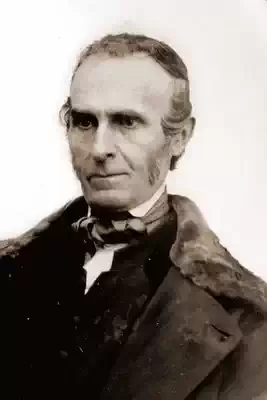
John Greenleaf Whittier
The Tent On The Beach
The Tent On The Beach
I would not sin, in this half-playful strain,-Too
light perhaps for serious years, though born
Of the enforced leisure of slow pain,-Against
the pure ideal which has drawn
My feet to follow its far-shining gleam.
A simple plot is mine: legends and runes
Of credulous days, old fancies that have lain
Silent, from boyhood taking voice again,
Warmed into life once more, even as the tunes
That, frozen in the fabled hunting-horn,
Thawed into sound:--a winter fireside dream
Of dawns and-sunsets by the summer sea,
Whose sands are traversed by a silent throng
Of voyagers from that vaster mystery
Of which it is an emblem;--and the dear
Memory of one who might have tuned my song
To sweeter music by her delicate ear.
When heats as of a tropic clime
Burned all our inland valleys through,
Three friends, the guests of summer time,
Pitched their white tent where sea-winds blew.
Behind them, marshes, seamed and crossed
With narrow creeks, and flower-embossed,
Stretched to the dark oak wood, whose leafy arms
Screened from the stormy East the pleasant inland farms.
At full of tide their bolder shore
Of sun-bleached sand the waters beat;
At ebb, a smooth and glistening floor
They touched with light, receding feet.
Northward a 'green bluff broke the chain
Of sand-hills; southward stretched a plain
Of salt grass, with a river winding down,
Sail-whitened, and beyond the steeples of the town,
Whence sometimes, when the wind was light
And dull the thunder of the beach,
They heard the bells of morn and night
Swing, miles away, their silver speech.
Above low scarp and turf-grown wall
They saw the fort-flag rise and fall;
And, the first star to signal twilight's hour,
The lamp-fire glimmer down from the tall light-house tower.
They rested there, escaped awhile
From cares that wear the life away,
To eat the lotus of the Nile
And drink the poppies of Cathay,-To
fling their loads of custom down,
Like drift-weed, on the sand-slopes brown,
And in the sea waves drown the restless pack
Of duties, claims, and needs that barked upon their track.
One, with his beard scarce silvered, bore
A ready credence in his looks,
A lettered magnate, lording o'er
An ever-widening realm of books.
In him brain-currents, near and far,
Converged as in a Leyden jar;
The old, dead authors thronged him round about,
And Elzevir's gray ghosts from leathern graves looked out.
He knew each living pundit well,
Could weigh the gifts of him or her,
And well the market value tell
Of poet and philosopher.
But if he lost, the scenes behind,
Somewhat of reverence vague and blind,
Finding the actors human at the best,
No readier lips than his the good he saw confessed.
His boyhood fancies not outgrown,
He loved himself the singer's art;
Tenderly, gently, by his own
He knew and judged an author's heart.
No Rhadamanthine brow of doom
Bowed the dazed pedant from his room;
And bards, whose name is legion, if denied,
Bore off alike intact their verses and their pride.
Pleasant it was to roam about
The lettered world as he had, done,
And see the lords of song without
Their singing robes and garlands on.
With Wordsworth paddle Rydal mere,
Taste rugged Elliott's home-brewed beer,
And with the ears of Rogers, at fourscore,
Hear Garrick's buskined tread and Walpole's wit once more.
And one there was, a dreamer born,
Who, with a mission to fulfil,
Had left the Muses' haunts to turn
The crank of an opinion-mill,
Making his rustic reed of song
A weapon in the war with wrong,
Yoking his fancy to the breaking-plough
That beam-deep turned the soil for truth to spring and grow.
Too quiet seemed the man to ride
The winged Hippogriff Reform;
Was his a voice from side to side
To pierce the tumult of the storm?
A silent, shy, peace-loving man,
He seemed no fiery partisan
To hold his way against the public frown,
The ban of Church and State, the fierce mob's hounding down.
For while he wrought with strenuous will
The work his hands had found to do,
He heard the fitful music still
Of winds that out of dream-land blew.
The din about him could not drown
What the strange voices whispered down;
Along his task-field weird processions swept,
The visionary pomp of stately phantoms stepped:
The common air was thick with dreams,-He
told them to the toiling crowd;
Such music as the woods and streams
Sang in his ear he sang aloud;
In still, shut bays, on windy capes,
He heard the call of beckoning shapes,
And, as the gray old shadows prompted him,
To homely moulds of rhyme he shaped their legends grim.
He rested now his weary hands,
And lightly moralized and laughed,
As, tracing on the shifting sands
A burlesque of his paper-craft,
He saw the careless waves o'errun
His words, as time before had done,
Each day's tide-water washing clean away,
Like letters from the sand, the work of yesterday.
And one, whose Arab face was tanned
By tropic sun and boreal frost,
So travelled there was scarce a land
Or people left him to exhaust,
In idling mood had from him hurled
The poor squeezed orange of the world,
And in the tent-shade, as beneath a palm,
Smoked, cross-legged like a Turk, in Oriental calm.
The very waves that washed the sand
Below him, he had seen before
Whitening the Scandinavian strand
And sultry Mauritanian shore.
From ice-rimmed isles, from summer seas
Palm-fringed, they bore him messages;
He heard the plaintive Nubian songs again,
And mule-bells tinkling down the mountain-paths of Spain.
His memory round the ransacked earth
On Puck's long girdle slid at ease;
And, instant, to the valley's girth
Of mountains, spice isles of the seas,
Faith flowered in minster stones, Art's guess
At truth and beauty, found access;
Yet loved the while, that free cosmopolite,
Old friends, old ways, and kept his boyhood's dreams in sight.
Untouched as yet by wealth and pride,
That virgin innocence of beach
No shingly monster, hundred-eyed,
Stared its gray sand-birds out of reach;
Unhoused, save where, at intervals,
The white tents showed their canvas walls,
Where brief sojourners, in the cool, soft air,
Forgot their inland heats, hard toil, and year-long care.
Sometimes along the wheel-deep sand
A one-horse wagon slowly crawled,
Deep laden with a youthful band,
Whose look some homestead old recalled;
Brother perchance, and sisters twain,
And one whose blue eyes told, more plain
Than the free language of her rosy lip,
Of the still dearer claim of love's relationship.
With cheeks of russet-orchard tint,
The light laugh of their native rills,
The perfume of their garden's mint,
The breezy freedom of the hills,
They bore, in unrestrained delight,
The motto of the Garter's knight,
Careless as if from every gazing thing
Hid by their innocence, as Gyges by his ring.
The clanging sea-fowl came and went,
The hunter's gun in the marshes rang;
At nightfall from a neighboring tent
A flute-voiced woman sweetly sang.
Loose-haired, barefooted, hand-in-hand,
Young girls went tripping down the sand;
And youths and maidens, sitting in the moon,
Dreamed o'er the old fond dream from which we wake too soon.
At times their fishing-lines they plied,
With an old Triton at the oar,
Salt as the sea-wind, tough and dried
As a lean cusk from Labrador.
Strange tales he told of wreck and storm,-Had
seen the sea-snake's awful form,
And heard the ghosts on Haley's Isle complain,
Speak him off shore, and beg a passage to old Spain!
And there, on breezy morns, they saw
The fishing-schooners outward run,
Their low-bent sails in tack and flaw
Turned white or dark to shade and sun.
Sometimes, in calms of closing day,
They watched the spectral mirage play,
Saw low, far islands looming tall and nigh,
And ships, with upturned keels, sail like a sea the sky.
Sometimes a cloud, with thunder black,
Stooped low upon the darkening main,
Piercing the waves along its track
With the slant javelins of rain.
And when west-wind and sunshine warm
Chased out to sea its wrecks of storm,
They saw the prismy hues in thin spray showers
Where the green buds of waves burst into white froth flowers.
And when along the line of shore
The mists crept upward chill and damp,
Stretched, careless, on their sandy floor
Beneath the flaring lantern lamp,
They talked of all things old and new,
Read, slept, and dreamed as idlers do;
And in the unquestioned freedom of the tent,
Body and o'er-taxed mind to healthful ease unbent.
Once, when the sunset splendors died,
And, trampling up the sloping sand,
In lines outreaching far and wide,
The white-waned billows swept to land,
Dim seen across the gathering shade,
A vast and ghostly cavalcade,
They sat around their lighted kerosene,
Hearing the deep bass roar their every pause between.
Then, urged thereto, the Editor
Within his full portfolio dipped,
Feigning excuse while seaching for
(With secret pride) his manuscript.
His pale face flushed from eye to beard,
With nervous cough his throat he cleared,
And, in a voice so tremulous it betrayed
The anxious fondness of an author's heart, he read:
I would not sin, in this half-playful strain,-Too
light perhaps for serious years, though born
Of the enforced leisure of slow pain,-Against
the pure ideal which has drawn
My feet to follow its far-shining gleam.
A simple plot is mine: legends and runes
Of credulous days, old fancies that have lain
Silent, from boyhood taking voice again,
Warmed into life once more, even as the tunes
That, frozen in the fabled hunting-horn,
Thawed into sound:--a winter fireside dream
Of dawns and-sunsets by the summer sea,
Whose sands are traversed by a silent throng
Of voyagers from that vaster mystery
Of which it is an emblem;--and the dear
Memory of one who might have tuned my song
To sweeter music by her delicate ear.
When heats as of a tropic clime
Burned all our inland valleys through,
Three friends, the guests of summer time,
Pitched their white tent where sea-winds blew.
Behind them, marshes, seamed and crossed
With narrow creeks, and flower-embossed,
Stretched to the dark oak wood, whose leafy arms
Screened from the stormy East the pleasant inland farms.
At full of tide their bolder shore
Of sun-bleached sand the waters beat;
At ebb, a smooth and glistening floor
They touched with light, receding feet.
Northward a 'green bluff broke the chain
Of sand-hills; southward stretched a plain
Of salt grass, with a river winding down,
Sail-whitened, and beyond the steeples of the town,
Whence sometimes, when the wind was light
And dull the thunder of the beach,
They heard the bells of morn and night
Swing, miles away, their silver speech.
Above low scarp and turf-grown wall
They saw the fort-flag rise and fall;
And, the first star to signal twilight's hour,
The lamp-fire glimmer down from the tall light-house tower.
They rested there, escaped awhile
From cares that wear the life away,
To eat the lotus of the Nile
And drink the poppies of Cathay,-To
fling their loads of custom down,
Like drift-weed, on the sand-slopes brown,
And in the sea waves drown the restless pack
Of duties, claims, and needs that barked upon their track.
One, with his beard scarce silvered, bore
A ready credence in his looks,
A lettered magnate, lording o'er
An ever-widening realm of books.
In him brain-currents, near and far,
Converged as in a Leyden jar;
The old, dead authors thronged him round about,
And Elzevir's gray ghosts from leathern graves looked out.
He knew each living pundit well,
Could weigh the gifts of him or her,
And well the market value tell
Of poet and philosopher.
But if he lost, the scenes behind,
Somewhat of reverence vague and blind,
Finding the actors human at the best,
No readier lips than his the good he saw confessed.
His boyhood fancies not outgrown,
He loved himself the singer's art;
Tenderly, gently, by his own
He knew and judged an author's heart.
No Rhadamanthine brow of doom
Bowed the dazed pedant from his room;
And bards, whose name is legion, if denied,
Bore off alike intact their verses and their pride.
Pleasant it was to roam about
The lettered world as he had, done,
And see the lords of song without
Their singing robes and garlands on.
With Wordsworth paddle Rydal mere,
Taste rugged Elliott's home-brewed beer,
And with the ears of Rogers, at fourscore,
Hear Garrick's buskined tread and Walpole's wit once more.
And one there was, a dreamer born,
Who, with a mission to fulfil,
Had left the Muses' haunts to turn
The crank of an opinion-mill,
Making his rustic reed of song
A weapon in the war with wrong,
Yoking his fancy to the breaking-plough
That beam-deep turned the soil for truth to spring and grow.
Too quiet seemed the man to ride
The winged Hippogriff Reform;
Was his a voice from side to side
To pierce the tumult of the storm?
A silent, shy, peace-loving man,
He seemed no fiery partisan
To hold his way against the public frown,
The ban of Church and State, the fierce mob's hounding down.
For while he wrought with strenuous will
The work his hands had found to do,
He heard the fitful music still
Of winds that out of dream-land blew.
The din about him could not drown
What the strange voices whispered down;
Along his task-field weird processions swept,
The visionary pomp of stately phantoms stepped:
The common air was thick with dreams,-He
told them to the toiling crowd;
Such music as the woods and streams
Sang in his ear he sang aloud;
In still, shut bays, on windy capes,
He heard the call of beckoning shapes,
And, as the gray old shadows prompted him,
To homely moulds of rhyme he shaped their legends grim.
He rested now his weary hands,
And lightly moralized and laughed,
As, tracing on the shifting sands
A burlesque of his paper-craft,
He saw the careless waves o'errun
His words, as time before had done,
Each day's tide-water washing clean away,
Like letters from the sand, the work of yesterday.
And one, whose Arab face was tanned
By tropic sun and boreal frost,
So travelled there was scarce a land
Or people left him to exhaust,
In idling mood had from him hurled
The poor squeezed orange of the world,
And in the tent-shade, as beneath a palm,
Smoked, cross-legged like a Turk, in Oriental calm.
The very waves that washed the sand
Below him, he had seen before
Whitening the Scandinavian strand
And sultry Mauritanian shore.
From ice-rimmed isles, from summer seas
Palm-fringed, they bore him messages;
He heard the plaintive Nubian songs again,
And mule-bells tinkling down the mountain-paths of Spain.
His memory round the ransacked earth
On Puck's long girdle slid at ease;
And, instant, to the valley's girth
Of mountains, spice isles of the seas,
Faith flowered in minster stones, Art's guess
At truth and beauty, found access;
Yet loved the while, that free cosmopolite,
Old friends, old ways, and kept his boyhood's dreams in sight.
Untouched as yet by wealth and pride,
That virgin innocence of beach
No shingly monster, hundred-eyed,
Stared its gray sand-birds out of reach;
Unhoused, save where, at intervals,
The white tents showed their canvas walls,
Where brief sojourners, in the cool, soft air,
Forgot their inland heats, hard toil, and year-long care.
Sometimes along the wheel-deep sand
A one-horse wagon slowly crawled,
Deep laden with a youthful band,
Whose look some homestead old recalled;
Brother perchance, and sisters twain,
And one whose blue eyes told, more plain
Than the free language of her rosy lip,
Of the still dearer claim of love's relationship.
With cheeks of russet-orchard tint,
The light laugh of their native rills,
The perfume of their garden's mint,
The breezy freedom of the hills,
They bore, in unrestrained delight,
The motto of the Garter's knight,
Careless as if from every gazing thing
Hid by their innocence, as Gyges by his ring.
The clanging sea-fowl came and went,
The hunter's gun in the marshes rang;
At nightfall from a neighboring tent
A flute-voiced woman sweetly sang.
Loose-haired, barefooted, hand-in-hand,
Young girls went tripping down the sand;
And youths and maidens, sitting in the moon,
Dreamed o'er the old fond dream from which we wake too soon.
At times their fishing-lines they plied,
With an old Triton at the oar,
Salt as the sea-wind, tough and dried
As a lean cusk from Labrador.
Strange tales he told of wreck and storm,-Had
seen the sea-snake's awful form,
And heard the ghosts on Haley's Isle complain,
Speak him off shore, and beg a passage to old Spain!
And there, on breezy morns, they saw
The fishing-schooners outward run,
Their low-bent sails in tack and flaw
Turned white or dark to shade and sun.
Sometimes, in calms of closing day,
They watched the spectral mirage play,
Saw low, far islands looming tall and nigh,
And ships, with upturned keels, sail like a sea the sky.
Sometimes a cloud, with thunder black,
Stooped low upon the darkening main,
Piercing the waves along its track
With the slant javelins of rain.
And when west-wind and sunshine warm
Chased out to sea its wrecks of storm,
They saw the prismy hues in thin spray showers
Where the green buds of waves burst into white froth flowers.
And when along the line of shore
The mists crept upward chill and damp,
Stretched, careless, on their sandy floor
Beneath the flaring lantern lamp,
They talked of all things old and new,
Read, slept, and dreamed as idlers do;
And in the unquestioned freedom of the tent,
Body and o'er-taxed mind to healthful ease unbent.
Once, when the sunset splendors died,
And, trampling up the sloping sand,
In lines outreaching far and wide,
The white-waned billows swept to land,
Dim seen across the gathering shade,
A vast and ghostly cavalcade,
They sat around their lighted kerosene,
Hearing the deep bass roar their every pause between.
Then, urged thereto, the Editor
Within his full portfolio dipped,
Feigning excuse while seaching for
(With secret pride) his manuscript.
His pale face flushed from eye to beard,
With nervous cough his throat he cleared,
And, in a voice so tremulous it betrayed
The anxious fondness of an author's heart, he read:
290
John Greenleaf Whittier
The Slave Ships
The Slave Ships
'ALL ready?' cried the captain;
'Ay, ay!' the seamen said;
'Heave up the worthless lubbers, —
The dying and the dead.'
Up from the slave-ship's prison
Fierce, bearded heads were thrust
'Now let the sharks look to it,—
Toss up the dead ones first!'
Corpse after corpse came.up, —
Death had been busy there;
Where every blow is mercy,
Why should the spoiler spare?
Corpse after corpse they cast
Sullenly from the ship,
Yet bloody with the traces
Of fetter-link and whip.
Gloomily stood the captain,
With his arms upon his breast,
With his cold brow sternly knotted,
And his iron lip compressed.
'Are all the dead dogs over?'
Growled through that matted lip;
'The blind ones are no better,
Let's lighten the good ship.'
Hark! from the ship's dark bosom,
The very sounds of hell!
The ringing clank of iron,
The maniac's short, sharp yell!
The hoarse, low curse, throat-stified;
The starving infant's moan,
The horror of a breaking heart
Poured through a mother's groan.
Up from that loathsome prison
The stricken blind ones came:
Below, had all been darkness,
Above, was still the same.
Yet the holy breath of heaven
Was sweetly breathing there,
And the heated brow of fever
Cooled in the soft sea air.
'Overboard with them, shipmates!'
Cutlass and dirk were plied;
Fettered and blind, one after one,
Plunged down the vessel's side.
The sabre smote above,.
Beneath, the lean shark lay,
Waiting with wide and bloody jaw
His quick and human prey.
God of the earth! what cries
Rang upward unto thee?
Voices of agony and blood,
From ship-deck and from sea.
The last dull plunge was heard,
The last wave caught its stain,
And the unsated shark looked up
For human hearts in vain.
. . . . . . . .
Red glowed the western waters,
The setting sun was there,
Scattering alike on wave and cloud
His fiery mesh of hair.
Amidst a group in blindness,
A solitary eye
Gazed, from the burdened slaver's deck,
Into that burning sky.
' A storm,' spoke out the gazer,
'Is gathering and at hand;
Curse on't, I'd give my other eye
For one firm rood of land.'
And then he laughed, but only
His echoed laugh replied,
For the blinded and the suffering
Alone were at his side.
Night settled on the waters,
And on a stormy heaven,
While fiercely on that lone ship's track
The thunder-gust was driven.
'A sail! — thank God, a sail!'
And as the helmsman spoke,
Up through the stormy murmur
A shout of gladness broke.
Down came the stranger vessel,
Unheeding on her way,
So near that on the slaver's deck
Fell off her driven spray.
' Ho! for the love of mercy,
We're perishing and blind!'
A wail of utter agony
Came back upon the wind:
' Help us! for we are stricken
With blindness every one;
Ten days we've floated fearfully,
Unnoting star or sun.
Our ship's the slaver Leon, —
We're but a score on board;
Our slaves are all gone over, —
Help, for the love of God!'
On livid brows of agony
The broad red lightning shone;
But the roar of wind and thunder
Stifled the answering groan;
Wailed from the broken waters
A last despairing cry,
As, kindling in the stormy light,
The stranger ship went by.
. . . . . . . .
In the sunny Guadaloupe
A dark-hulled vessel lay,
With a crew who noted never
The nightfall or the day.
The blossom of the orange
Was white by every stream,
And tropic leaf, and flower, and bird
Were in the warm sunbeam.
And the sky was bright as ever,
And the moonlight slept as well,
On the palm-trees by the hillside,
And the streamlet of the dell:
And the glances of the Creole
Were still as archly deep,
And her smiles as full as ever
Of passion and of sleep.
But vain were bird and blossom,
The green earth and the sky,
And the smile of human faces,
To the slaver's darkened eye;
At the breaking of the morning,
At the star-lit evening time,
O'er a world of light and beauty
Fell the blackness of his crime.
'ALL ready?' cried the captain;
'Ay, ay!' the seamen said;
'Heave up the worthless lubbers, —
The dying and the dead.'
Up from the slave-ship's prison
Fierce, bearded heads were thrust
'Now let the sharks look to it,—
Toss up the dead ones first!'
Corpse after corpse came.up, —
Death had been busy there;
Where every blow is mercy,
Why should the spoiler spare?
Corpse after corpse they cast
Sullenly from the ship,
Yet bloody with the traces
Of fetter-link and whip.
Gloomily stood the captain,
With his arms upon his breast,
With his cold brow sternly knotted,
And his iron lip compressed.
'Are all the dead dogs over?'
Growled through that matted lip;
'The blind ones are no better,
Let's lighten the good ship.'
Hark! from the ship's dark bosom,
The very sounds of hell!
The ringing clank of iron,
The maniac's short, sharp yell!
The hoarse, low curse, throat-stified;
The starving infant's moan,
The horror of a breaking heart
Poured through a mother's groan.
Up from that loathsome prison
The stricken blind ones came:
Below, had all been darkness,
Above, was still the same.
Yet the holy breath of heaven
Was sweetly breathing there,
And the heated brow of fever
Cooled in the soft sea air.
'Overboard with them, shipmates!'
Cutlass and dirk were plied;
Fettered and blind, one after one,
Plunged down the vessel's side.
The sabre smote above,.
Beneath, the lean shark lay,
Waiting with wide and bloody jaw
His quick and human prey.
God of the earth! what cries
Rang upward unto thee?
Voices of agony and blood,
From ship-deck and from sea.
The last dull plunge was heard,
The last wave caught its stain,
And the unsated shark looked up
For human hearts in vain.
. . . . . . . .
Red glowed the western waters,
The setting sun was there,
Scattering alike on wave and cloud
His fiery mesh of hair.
Amidst a group in blindness,
A solitary eye
Gazed, from the burdened slaver's deck,
Into that burning sky.
' A storm,' spoke out the gazer,
'Is gathering and at hand;
Curse on't, I'd give my other eye
For one firm rood of land.'
And then he laughed, but only
His echoed laugh replied,
For the blinded and the suffering
Alone were at his side.
Night settled on the waters,
And on a stormy heaven,
While fiercely on that lone ship's track
The thunder-gust was driven.
'A sail! — thank God, a sail!'
And as the helmsman spoke,
Up through the stormy murmur
A shout of gladness broke.
Down came the stranger vessel,
Unheeding on her way,
So near that on the slaver's deck
Fell off her driven spray.
' Ho! for the love of mercy,
We're perishing and blind!'
A wail of utter agony
Came back upon the wind:
' Help us! for we are stricken
With blindness every one;
Ten days we've floated fearfully,
Unnoting star or sun.
Our ship's the slaver Leon, —
We're but a score on board;
Our slaves are all gone over, —
Help, for the love of God!'
On livid brows of agony
The broad red lightning shone;
But the roar of wind and thunder
Stifled the answering groan;
Wailed from the broken waters
A last despairing cry,
As, kindling in the stormy light,
The stranger ship went by.
. . . . . . . .
In the sunny Guadaloupe
A dark-hulled vessel lay,
With a crew who noted never
The nightfall or the day.
The blossom of the orange
Was white by every stream,
And tropic leaf, and flower, and bird
Were in the warm sunbeam.
And the sky was bright as ever,
And the moonlight slept as well,
On the palm-trees by the hillside,
And the streamlet of the dell:
And the glances of the Creole
Were still as archly deep,
And her smiles as full as ever
Of passion and of sleep.
But vain were bird and blossom,
The green earth and the sky,
And the smile of human faces,
To the slaver's darkened eye;
At the breaking of the morning,
At the star-lit evening time,
O'er a world of light and beauty
Fell the blackness of his crime.
240
John Greenleaf Whittier
The Shadow And The Light
The Shadow And The Light
The fourteen centuries fall away
Between us and the Afric saint,
And at his side we urge, to-day,
The immemorial quest and old complaint.
No outward sign to us is given,-From
sea or earth comes no reply;
Hushed as the warm Numidian heaven
He vainly questioned bends our frozen sky.
No victory comes of all our strife,-From
all we grasp the meaning slips;
The Sphinx sits at the gate of life,
With the old question on her awful lips.
In paths unknown we hear the feet
Of fear before, and guilt behind;
We pluck the wayside fruit, and eat
Ashes and dust beneath its golden rind.
From age to age descends unchecked
The sad bequest of sire to son,
The body's taint, the mind's defect;
Through every web of life the dark threads run.
Oh, why and whither? God knows all;
I only know that He is good,
And that whatever may befall
Or here or there, must be the best that could.
Between the dreadful cherubim
A Father's face I still discern,
As Moses looked of old on Him,
And saw His glory into goodness turn!
For He is merciful as just;
And so, by faith correcting sight,
I bow before His will, and trust
Howe'er they seem He doeth all things right.
And dare to hope that Tie will make
The rugged smooth, the doubtful plain;
His mercy never quite forsake;
His healing visit every realm of pain;
That suffering is not His revenge
Upon His creatures weak and frail,
Sent on a pathway new and strange
With feet that wander and with eyes that fail;
That, o'er the crucible of pain,
Watches the tender eye of Love
The slow transmuting of the chain
Whose links are iron below to gold above!
Ah me! we doubt the shining skies,
Seen through our shadows of offence,
And drown with our poor childish cries
The cradle-hymn of kindly Providence.
And still we love the evil cause,
And of the just effect complain
We tread upon life's broken laws,
And murmur at our self-inflicted pain;
We turn us from the light, and find
Our spectral shapes before us thrown,
As they who leave the sun behind
Walk in the shadows of themselves alone.
And scarce by will or strength of ours
We set our faces to the day;
Weak, wavering, blind, the Eternal Powers
Alone can turn us from ourselves away.
Our weakness is the strength of sin,
But love must needs be stronger far,
Outreaching all and gathering in
The erring spirit and the wandering star.
A Voice grows with the growing years;
Earth, hushing down her bitter cry,
Looks upward from her graves, and hears,
'The Resurrection and the Life am I.'
O Love Divine!--whose constant beam
Shines on the eyes that will not see,
And waits to bless us, while we dream
Thou leavest us because we turn from thee!
All souls that struggle and aspire,
All hearts of prayer by thee are lit;
And, dim or clear, thy tongues of fire
On dusky tribes and twilight centuries sit.
Nor bounds, nor clime, nor creed thou know'st,
Wide as our need thy favors fall;
The white wings of the Holy Ghost
Stoop, seen or unseen, o'er the heads of all.
O Beauty, old yet ever new!
Eternal Voice, and Inward Word,
The Logos of the Greek and Jew,
The old sphere-music which the Samian heard!
Truth, which the sage and prophet saw,
Long sought without, but found within,
The Law of Love beyond all law,
The Life o'erflooding mortal death and sin!
Shine on us with the light which glowed
Upon the trance-bound shepherd's way.
Who saw the Darkness overflowed
And drowned by tides of everlasting Day.
Shine, light of God!--make broad thy scope
To all who sin and suffer; more
And better than we dare to hope
With Heaven's compassion make our longings poor!
The fourteen centuries fall away
Between us and the Afric saint,
And at his side we urge, to-day,
The immemorial quest and old complaint.
No outward sign to us is given,-From
sea or earth comes no reply;
Hushed as the warm Numidian heaven
He vainly questioned bends our frozen sky.
No victory comes of all our strife,-From
all we grasp the meaning slips;
The Sphinx sits at the gate of life,
With the old question on her awful lips.
In paths unknown we hear the feet
Of fear before, and guilt behind;
We pluck the wayside fruit, and eat
Ashes and dust beneath its golden rind.
From age to age descends unchecked
The sad bequest of sire to son,
The body's taint, the mind's defect;
Through every web of life the dark threads run.
Oh, why and whither? God knows all;
I only know that He is good,
And that whatever may befall
Or here or there, must be the best that could.
Between the dreadful cherubim
A Father's face I still discern,
As Moses looked of old on Him,
And saw His glory into goodness turn!
For He is merciful as just;
And so, by faith correcting sight,
I bow before His will, and trust
Howe'er they seem He doeth all things right.
And dare to hope that Tie will make
The rugged smooth, the doubtful plain;
His mercy never quite forsake;
His healing visit every realm of pain;
That suffering is not His revenge
Upon His creatures weak and frail,
Sent on a pathway new and strange
With feet that wander and with eyes that fail;
That, o'er the crucible of pain,
Watches the tender eye of Love
The slow transmuting of the chain
Whose links are iron below to gold above!
Ah me! we doubt the shining skies,
Seen through our shadows of offence,
And drown with our poor childish cries
The cradle-hymn of kindly Providence.
And still we love the evil cause,
And of the just effect complain
We tread upon life's broken laws,
And murmur at our self-inflicted pain;
We turn us from the light, and find
Our spectral shapes before us thrown,
As they who leave the sun behind
Walk in the shadows of themselves alone.
And scarce by will or strength of ours
We set our faces to the day;
Weak, wavering, blind, the Eternal Powers
Alone can turn us from ourselves away.
Our weakness is the strength of sin,
But love must needs be stronger far,
Outreaching all and gathering in
The erring spirit and the wandering star.
A Voice grows with the growing years;
Earth, hushing down her bitter cry,
Looks upward from her graves, and hears,
'The Resurrection and the Life am I.'
O Love Divine!--whose constant beam
Shines on the eyes that will not see,
And waits to bless us, while we dream
Thou leavest us because we turn from thee!
All souls that struggle and aspire,
All hearts of prayer by thee are lit;
And, dim or clear, thy tongues of fire
On dusky tribes and twilight centuries sit.
Nor bounds, nor clime, nor creed thou know'st,
Wide as our need thy favors fall;
The white wings of the Holy Ghost
Stoop, seen or unseen, o'er the heads of all.
O Beauty, old yet ever new!
Eternal Voice, and Inward Word,
The Logos of the Greek and Jew,
The old sphere-music which the Samian heard!
Truth, which the sage and prophet saw,
Long sought without, but found within,
The Law of Love beyond all law,
The Life o'erflooding mortal death and sin!
Shine on us with the light which glowed
Upon the trance-bound shepherd's way.
Who saw the Darkness overflowed
And drowned by tides of everlasting Day.
Shine, light of God!--make broad thy scope
To all who sin and suffer; more
And better than we dare to hope
With Heaven's compassion make our longings poor!
298
John Greenleaf Whittier
The Seeking Of The Waterfall
The Seeking Of The Waterfall
They left their home of summer ease
Beneath the lowland's sheltering trees,
To seek, by ways unknown to all,
The promise of the waterfall.
Some vague, faint rumor to the vale
Had crept--perchance a hunter's tale-Of
its wild mirth of waters lost
On the dark woods through which it tossed.
Somewhere it laughed and sang; somewhere
Whirled in mad dance its misty hair;
But who had raised its veil, or seen
The rainbow skirts of that Undine?
They sought it where the mountain brook
Its swift way to the valley took;
Along the rugged slope they clomb,
Their guide a thread of sound and foam.
Height after height they slowly won;
The fiery javelins of the sun
Smote the bare ledge; the tangled shade
With rock and vine their steps delayed.
But, through leaf-openings, now and then
They saw the cheerful homes of men,
And the great mountains with their wall
Of misty purple girdling all.
The leaves through which the glad winds blew
Shared. the wild dance the waters knew;
And where the shadows deepest fell
The wood-thrush rang his silver bell.
Fringing the stream, at every turn
Swung low the waving fronds of fern;
From stony cleft and mossy sod
Pale asters sprang, and golden-rod.
And still the water sang the sweet,
Glad song that stirred its gliding feet,
And found in rock and root the keys
Of its beguiling melodies.
Beyond, above, its signals flew
Of tossing foam the birch-trees through;
Now seen, now lost, but baffling still
The weary seekers' slackening will.
Each called to each: 'Lo here! Lo there!
Its white scarf flutters in the air!'
They climbed anew; the vision fled,
To beckon higher overhead.
So toiled they up the mountain-slope
With faint and ever fainter hope;
With faint and fainter voice the brook
Still bade them listen, pause, and look.
Meanwhile below the day was done;
Above the tall peaks saw the sun
Sink, beam-shorn, to its misty set
Behind the hills of violet.
'Here ends our quest!' the seekers cried,
'The brook and rumor both have lied!
The phantom of a waterfall
Has led us at its beck and call.'
But one, with years grown wiser, said
'So, always baffled, not misled,
We follow where before us runs
The vision of the shining ones.
'Not where they seem their signals fly,
Their voices while we listen die;
We cannot keep, however fleet,
The quick time of their winged feet.
'From youth to age unresting stray
These kindly mockers in our way;
Yet lead they not, the baffling elves,
To something better than themselves?
'Here, though unreached the goal we sought,
Its own reward our toil has brought:
The winding water's sounding rush,
The long note of the hermit thrush,
'The turquoise lakes, the glimpse of pond
And river track, and, vast, beyond
Broad meadows belted round with pines,
The grand uplift of mountain lines!
'What matter though we seek with pain
The garden of the gods in vain,
If lured thereby we climb to greet
Some wayside blossom Eden-sweet?
'To seek is better than to gain,
The fond hope dies as we attain;
Life's fairest things are those which seem,
The best is that of which we dream.
'Then let us trust our waterfall
Still flashes down its rocky wall,
With rainbow crescent curved across
Its sunlit spray from moss to moss.
'And we, forgetful of our pain,
In thought shall seek it oft again;
Shall see this aster-blossomed sod,
This sunshine of the golden-rod,
'And haply gain, through parting boughs,
Grand glimpses of great mountain brows
Cloud-turbaned, and the sharp steel sheen
Of lakes deep set in valleys green.
'So failure wins; the consequence
Of loss becomes its recompense;
And evermore the end shall tell
The unreached ideal guided well.
'Our sweet illusions only die
Fulfilling love's sure prophecy;
And every wish for better things
An undreamed beauty nearer brings.
'For fate is servitor of love;
Desire and hope and longing prove
The secret of immortal youth,
And Nature cheats us into truth.
'O kind allurers, wisely sent,
Beguiling with benign intent,
Still move us, through divine unrest,
To seek the loveliest and the best!
'Go with us when our souls go free,
And, in the clear, white light to be,
Add unto Heaven's beatitude
The old delight of seeking good!'
They left their home of summer ease
Beneath the lowland's sheltering trees,
To seek, by ways unknown to all,
The promise of the waterfall.
Some vague, faint rumor to the vale
Had crept--perchance a hunter's tale-Of
its wild mirth of waters lost
On the dark woods through which it tossed.
Somewhere it laughed and sang; somewhere
Whirled in mad dance its misty hair;
But who had raised its veil, or seen
The rainbow skirts of that Undine?
They sought it where the mountain brook
Its swift way to the valley took;
Along the rugged slope they clomb,
Their guide a thread of sound and foam.
Height after height they slowly won;
The fiery javelins of the sun
Smote the bare ledge; the tangled shade
With rock and vine their steps delayed.
But, through leaf-openings, now and then
They saw the cheerful homes of men,
And the great mountains with their wall
Of misty purple girdling all.
The leaves through which the glad winds blew
Shared. the wild dance the waters knew;
And where the shadows deepest fell
The wood-thrush rang his silver bell.
Fringing the stream, at every turn
Swung low the waving fronds of fern;
From stony cleft and mossy sod
Pale asters sprang, and golden-rod.
And still the water sang the sweet,
Glad song that stirred its gliding feet,
And found in rock and root the keys
Of its beguiling melodies.
Beyond, above, its signals flew
Of tossing foam the birch-trees through;
Now seen, now lost, but baffling still
The weary seekers' slackening will.
Each called to each: 'Lo here! Lo there!
Its white scarf flutters in the air!'
They climbed anew; the vision fled,
To beckon higher overhead.
So toiled they up the mountain-slope
With faint and ever fainter hope;
With faint and fainter voice the brook
Still bade them listen, pause, and look.
Meanwhile below the day was done;
Above the tall peaks saw the sun
Sink, beam-shorn, to its misty set
Behind the hills of violet.
'Here ends our quest!' the seekers cried,
'The brook and rumor both have lied!
The phantom of a waterfall
Has led us at its beck and call.'
But one, with years grown wiser, said
'So, always baffled, not misled,
We follow where before us runs
The vision of the shining ones.
'Not where they seem their signals fly,
Their voices while we listen die;
We cannot keep, however fleet,
The quick time of their winged feet.
'From youth to age unresting stray
These kindly mockers in our way;
Yet lead they not, the baffling elves,
To something better than themselves?
'Here, though unreached the goal we sought,
Its own reward our toil has brought:
The winding water's sounding rush,
The long note of the hermit thrush,
'The turquoise lakes, the glimpse of pond
And river track, and, vast, beyond
Broad meadows belted round with pines,
The grand uplift of mountain lines!
'What matter though we seek with pain
The garden of the gods in vain,
If lured thereby we climb to greet
Some wayside blossom Eden-sweet?
'To seek is better than to gain,
The fond hope dies as we attain;
Life's fairest things are those which seem,
The best is that of which we dream.
'Then let us trust our waterfall
Still flashes down its rocky wall,
With rainbow crescent curved across
Its sunlit spray from moss to moss.
'And we, forgetful of our pain,
In thought shall seek it oft again;
Shall see this aster-blossomed sod,
This sunshine of the golden-rod,
'And haply gain, through parting boughs,
Grand glimpses of great mountain brows
Cloud-turbaned, and the sharp steel sheen
Of lakes deep set in valleys green.
'So failure wins; the consequence
Of loss becomes its recompense;
And evermore the end shall tell
The unreached ideal guided well.
'Our sweet illusions only die
Fulfilling love's sure prophecy;
And every wish for better things
An undreamed beauty nearer brings.
'For fate is servitor of love;
Desire and hope and longing prove
The secret of immortal youth,
And Nature cheats us into truth.
'O kind allurers, wisely sent,
Beguiling with benign intent,
Still move us, through divine unrest,
To seek the loveliest and the best!
'Go with us when our souls go free,
And, in the clear, white light to be,
Add unto Heaven's beatitude
The old delight of seeking good!'
320
John Greenleaf Whittier
The Seeking Of The Waterfall
The Seeking Of The Waterfall
They left their home of summer ease
Beneath the lowland's sheltering trees,
To seek, by ways unknown to all,
The promise of the waterfall.
Some vague, faint rumor to the vale
Had crept--perchance a hunter's tale-Of
its wild mirth of waters lost
On the dark woods through which it tossed.
Somewhere it laughed and sang; somewhere
Whirled in mad dance its misty hair;
But who had raised its veil, or seen
The rainbow skirts of that Undine?
They sought it where the mountain brook
Its swift way to the valley took;
Along the rugged slope they clomb,
Their guide a thread of sound and foam.
Height after height they slowly won;
The fiery javelins of the sun
Smote the bare ledge; the tangled shade
With rock and vine their steps delayed.
But, through leaf-openings, now and then
They saw the cheerful homes of men,
And the great mountains with their wall
Of misty purple girdling all.
The leaves through which the glad winds blew
Shared. the wild dance the waters knew;
And where the shadows deepest fell
The wood-thrush rang his silver bell.
Fringing the stream, at every turn
Swung low the waving fronds of fern;
From stony cleft and mossy sod
Pale asters sprang, and golden-rod.
And still the water sang the sweet,
Glad song that stirred its gliding feet,
And found in rock and root the keys
Of its beguiling melodies.
Beyond, above, its signals flew
Of tossing foam the birch-trees through;
Now seen, now lost, but baffling still
The weary seekers' slackening will.
Each called to each: 'Lo here! Lo there!
Its white scarf flutters in the air!'
They climbed anew; the vision fled,
To beckon higher overhead.
So toiled they up the mountain-slope
With faint and ever fainter hope;
With faint and fainter voice the brook
Still bade them listen, pause, and look.
Meanwhile below the day was done;
Above the tall peaks saw the sun
Sink, beam-shorn, to its misty set
Behind the hills of violet.
'Here ends our quest!' the seekers cried,
'The brook and rumor both have lied!
The phantom of a waterfall
Has led us at its beck and call.'
But one, with years grown wiser, said
'So, always baffled, not misled,
We follow where before us runs
The vision of the shining ones.
'Not where they seem their signals fly,
Their voices while we listen die;
We cannot keep, however fleet,
The quick time of their winged feet.
'From youth to age unresting stray
These kindly mockers in our way;
Yet lead they not, the baffling elves,
To something better than themselves?
'Here, though unreached the goal we sought,
Its own reward our toil has brought:
The winding water's sounding rush,
The long note of the hermit thrush,
'The turquoise lakes, the glimpse of pond
And river track, and, vast, beyond
Broad meadows belted round with pines,
The grand uplift of mountain lines!
'What matter though we seek with pain
The garden of the gods in vain,
If lured thereby we climb to greet
Some wayside blossom Eden-sweet?
'To seek is better than to gain,
The fond hope dies as we attain;
Life's fairest things are those which seem,
The best is that of which we dream.
'Then let us trust our waterfall
Still flashes down its rocky wall,
With rainbow crescent curved across
Its sunlit spray from moss to moss.
'And we, forgetful of our pain,
In thought shall seek it oft again;
Shall see this aster-blossomed sod,
This sunshine of the golden-rod,
'And haply gain, through parting boughs,
Grand glimpses of great mountain brows
Cloud-turbaned, and the sharp steel sheen
Of lakes deep set in valleys green.
'So failure wins; the consequence
Of loss becomes its recompense;
And evermore the end shall tell
The unreached ideal guided well.
'Our sweet illusions only die
Fulfilling love's sure prophecy;
And every wish for better things
An undreamed beauty nearer brings.
'For fate is servitor of love;
Desire and hope and longing prove
The secret of immortal youth,
And Nature cheats us into truth.
'O kind allurers, wisely sent,
Beguiling with benign intent,
Still move us, through divine unrest,
To seek the loveliest and the best!
'Go with us when our souls go free,
And, in the clear, white light to be,
Add unto Heaven's beatitude
The old delight of seeking good!'
They left their home of summer ease
Beneath the lowland's sheltering trees,
To seek, by ways unknown to all,
The promise of the waterfall.
Some vague, faint rumor to the vale
Had crept--perchance a hunter's tale-Of
its wild mirth of waters lost
On the dark woods through which it tossed.
Somewhere it laughed and sang; somewhere
Whirled in mad dance its misty hair;
But who had raised its veil, or seen
The rainbow skirts of that Undine?
They sought it where the mountain brook
Its swift way to the valley took;
Along the rugged slope they clomb,
Their guide a thread of sound and foam.
Height after height they slowly won;
The fiery javelins of the sun
Smote the bare ledge; the tangled shade
With rock and vine their steps delayed.
But, through leaf-openings, now and then
They saw the cheerful homes of men,
And the great mountains with their wall
Of misty purple girdling all.
The leaves through which the glad winds blew
Shared. the wild dance the waters knew;
And where the shadows deepest fell
The wood-thrush rang his silver bell.
Fringing the stream, at every turn
Swung low the waving fronds of fern;
From stony cleft and mossy sod
Pale asters sprang, and golden-rod.
And still the water sang the sweet,
Glad song that stirred its gliding feet,
And found in rock and root the keys
Of its beguiling melodies.
Beyond, above, its signals flew
Of tossing foam the birch-trees through;
Now seen, now lost, but baffling still
The weary seekers' slackening will.
Each called to each: 'Lo here! Lo there!
Its white scarf flutters in the air!'
They climbed anew; the vision fled,
To beckon higher overhead.
So toiled they up the mountain-slope
With faint and ever fainter hope;
With faint and fainter voice the brook
Still bade them listen, pause, and look.
Meanwhile below the day was done;
Above the tall peaks saw the sun
Sink, beam-shorn, to its misty set
Behind the hills of violet.
'Here ends our quest!' the seekers cried,
'The brook and rumor both have lied!
The phantom of a waterfall
Has led us at its beck and call.'
But one, with years grown wiser, said
'So, always baffled, not misled,
We follow where before us runs
The vision of the shining ones.
'Not where they seem their signals fly,
Their voices while we listen die;
We cannot keep, however fleet,
The quick time of their winged feet.
'From youth to age unresting stray
These kindly mockers in our way;
Yet lead they not, the baffling elves,
To something better than themselves?
'Here, though unreached the goal we sought,
Its own reward our toil has brought:
The winding water's sounding rush,
The long note of the hermit thrush,
'The turquoise lakes, the glimpse of pond
And river track, and, vast, beyond
Broad meadows belted round with pines,
The grand uplift of mountain lines!
'What matter though we seek with pain
The garden of the gods in vain,
If lured thereby we climb to greet
Some wayside blossom Eden-sweet?
'To seek is better than to gain,
The fond hope dies as we attain;
Life's fairest things are those which seem,
The best is that of which we dream.
'Then let us trust our waterfall
Still flashes down its rocky wall,
With rainbow crescent curved across
Its sunlit spray from moss to moss.
'And we, forgetful of our pain,
In thought shall seek it oft again;
Shall see this aster-blossomed sod,
This sunshine of the golden-rod,
'And haply gain, through parting boughs,
Grand glimpses of great mountain brows
Cloud-turbaned, and the sharp steel sheen
Of lakes deep set in valleys green.
'So failure wins; the consequence
Of loss becomes its recompense;
And evermore the end shall tell
The unreached ideal guided well.
'Our sweet illusions only die
Fulfilling love's sure prophecy;
And every wish for better things
An undreamed beauty nearer brings.
'For fate is servitor of love;
Desire and hope and longing prove
The secret of immortal youth,
And Nature cheats us into truth.
'O kind allurers, wisely sent,
Beguiling with benign intent,
Still move us, through divine unrest,
To seek the loveliest and the best!
'Go with us when our souls go free,
And, in the clear, white light to be,
Add unto Heaven's beatitude
The old delight of seeking good!'
320
John Greenleaf Whittier
The River Path
The River Path
No bird-song floated down the hill,
The tangled bank below was still;
No rustle from the birchen stem,
No ripple from the water's hem.
The dusk of twilight round us grew,
We felt the falling of the dew;
For, from us, ere the day was done,
The wooded hills shut out the sun.
But on the river's farther side
We saw the hill-tops glorified,-
A tender glow, exceeding fair,
A dream of day without its glare.
With us the damp, the chill, the gloom
With them the sunset's rosy bloom;
While dark, through willowy vistas seen,
The river rolled in shade between.
From out the darkness where we trod,
We gazed upon those bills of God,
Whose light seemed not of moon or sun.
We spake not, but our thought was one.
We paused, as if from that bright shore
Beckoned our dear ones gone before;
And stilled our beating hearts to hear
The voices lost to mortal ear!
Sudden our pathway turned from night;
The hills swung open to the light;
Through their green gates the sunshine showed,
A long, slant splendor downward flowed.
Down glade and glen and bank it rolled;
It bridged the shaded stream with gold;
And, borne on piers of mist, allied
The shadowy with the sunlit side!
'So,' prayed we, 'when our feet draw near
The river dark, with mortal fear,
'And the night cometh chill with dew,
O Father! let Thy light break through!
'So let the hills of doubt divide,
So bridge with faith the sunless tide!
'So let the eyes that fail on earth
On Thy eternal hills look forth;
'And in Thy beckoning angels know
The dear ones whom we loved below!'
No bird-song floated down the hill,
The tangled bank below was still;
No rustle from the birchen stem,
No ripple from the water's hem.
The dusk of twilight round us grew,
We felt the falling of the dew;
For, from us, ere the day was done,
The wooded hills shut out the sun.
But on the river's farther side
We saw the hill-tops glorified,-
A tender glow, exceeding fair,
A dream of day without its glare.
With us the damp, the chill, the gloom
With them the sunset's rosy bloom;
While dark, through willowy vistas seen,
The river rolled in shade between.
From out the darkness where we trod,
We gazed upon those bills of God,
Whose light seemed not of moon or sun.
We spake not, but our thought was one.
We paused, as if from that bright shore
Beckoned our dear ones gone before;
And stilled our beating hearts to hear
The voices lost to mortal ear!
Sudden our pathway turned from night;
The hills swung open to the light;
Through their green gates the sunshine showed,
A long, slant splendor downward flowed.
Down glade and glen and bank it rolled;
It bridged the shaded stream with gold;
And, borne on piers of mist, allied
The shadowy with the sunlit side!
'So,' prayed we, 'when our feet draw near
The river dark, with mortal fear,
'And the night cometh chill with dew,
O Father! let Thy light break through!
'So let the hills of doubt divide,
So bridge with faith the sunless tide!
'So let the eyes that fail on earth
On Thy eternal hills look forth;
'And in Thy beckoning angels know
The dear ones whom we loved below!'
198
John Greenleaf Whittier
The Reunion
The Reunion
The gulf of seven and fifty years
We stretch our welcoming hands across;
The distance but a pebble's toss
Between us and our youth appears.
For in life's school we linger on
The remnant of a once full list;
Conning our lessons, undismissed,
With faces to the setting sun.
And some have gone the unknown way,
And some await the call to rest;
Who knoweth whether it is best
For those who went or those who stay?
And yet despite of loss and ill,
If faith and love and hope remain,
Our length of days is not in vain,
And life is well worth living still.
Still to a gracious Providence
The thanks of grateful hearts are due,
For blessings when our lives were new,
For all the good vouchsafed us since.
The pain that spared us sorer hurt,
The wish denied, the purpose crossed,
And pleasure's fond occasions lost,
Were mercies to our small desert.
'T is something that we wander back,
Gray pilgrims, to our ancient ways,
And tender memories of old days
Walk with us by the Merrimac;
That even in life's afternoon
A sense of youth comes back again,
As through this cool September rain
The still green woodlands dream of June.
The eyes grown dim to present things
Have keener sight for bygone years,
And sweet and clear, in deafening ears,
The bird that sang at morning sings.
Dear comrades, scattered wide and far,
Send from their homes their kindly word,
And dearer ones, unseen, unheard,
Smile on us from some heavenly star.
For life and death with God are one,
Unchanged by seeming change His care
And love are round us here and there;
He breaks no thread His hand has spun.
Soul touches soul, the muster roll
Of life eternal has no gaps;
And after half a century's lapse
Our school-day ranks are closed and whole.
Hail and farewell! We go our way;
Where shadows end, we trust in light;
The star that ushers in the night
Is herald also of the day!
The gulf of seven and fifty years
We stretch our welcoming hands across;
The distance but a pebble's toss
Between us and our youth appears.
For in life's school we linger on
The remnant of a once full list;
Conning our lessons, undismissed,
With faces to the setting sun.
And some have gone the unknown way,
And some await the call to rest;
Who knoweth whether it is best
For those who went or those who stay?
And yet despite of loss and ill,
If faith and love and hope remain,
Our length of days is not in vain,
And life is well worth living still.
Still to a gracious Providence
The thanks of grateful hearts are due,
For blessings when our lives were new,
For all the good vouchsafed us since.
The pain that spared us sorer hurt,
The wish denied, the purpose crossed,
And pleasure's fond occasions lost,
Were mercies to our small desert.
'T is something that we wander back,
Gray pilgrims, to our ancient ways,
And tender memories of old days
Walk with us by the Merrimac;
That even in life's afternoon
A sense of youth comes back again,
As through this cool September rain
The still green woodlands dream of June.
The eyes grown dim to present things
Have keener sight for bygone years,
And sweet and clear, in deafening ears,
The bird that sang at morning sings.
Dear comrades, scattered wide and far,
Send from their homes their kindly word,
And dearer ones, unseen, unheard,
Smile on us from some heavenly star.
For life and death with God are one,
Unchanged by seeming change His care
And love are round us here and there;
He breaks no thread His hand has spun.
Soul touches soul, the muster roll
Of life eternal has no gaps;
And after half a century's lapse
Our school-day ranks are closed and whole.
Hail and farewell! We go our way;
Where shadows end, we trust in light;
The star that ushers in the night
Is herald also of the day!
337
John Greenleaf Whittier
The Relic
The Relic
TOKEN Of friendship true and tried,
From one whose fiery heart of youth
With mine has beaten, side by side,
For Liberty and Truth;
With honest pride the gift I take,
And prize it for the giver's sake.
But not alone because it tells
Of generous hand and heart sincere;
Around that gift of friendship dwells
A memory doubly dear;
Earth's noblest aim, man's holiest thought,
With that memorial frail inwrought!
Pure thoughts and sweet like flowers unfold,
And precious memories round it cling,
Even as the Prophet's rod of old
In beauty blossoming:
And buds of feeling, pure and good,
Spring from its cold unconscious wood.
Relic of Freedom's shrine! a brand
Plucked from its burning! let it be
Dear as a jewel from the hand
Of a lost friend to me!
Flower of a perished garland left,
Of life and beauty unbereft!
Oh, if the young enthusiast bears,
O'er weary waste and sea, the stone
Which crumbled from the Forum's stairs,
Or round the Parthenon;
Or olive-bough from some wild tree
Hung over old Thermopylæ:
If leaflets from some hero's tomb,
Or moss-wreath torn from ruins hoary;
Or faded flowers whose sisters bloom
On fields renowned in story;
Or fragment from the Alhambra's crest,
Or the gray rock by Druids blessed;
Sad Erin's shamrock greenly growing
Where Freedom led her stalwart kern,
Or Scotia's 'rough bur thistle' blowing
On Bruce's Bannockburn;
Or Runnymede's wild English rose,
Or lichen plucked from Sempach's snows!
If it be true that things like these
To heart and eye bright visions bring,
Shall not far holier memories
To this memorial cling?
Which needs no mellowing mist of time
To hide the crimson stains of crime!
Wreck of a temple, unprofaned;
Of courts where Peace with Freedom trod,
Lifting on high, with hands unstained,
Thanksgiving unto God;
Where Mercy's voice of love was pleading
For human hearts in bondage bleeding!
Where, midst the sound of rushing feet
And curses on the night-air flung,
That pleading voice rose calm and sweet
From woman's earnest tongue;
And Riot turned his scowling glance,
Awed, from her tranquil countenance!
That temple now in ruin lies!
The fire-stain on its shattered wall,
And open to the changing skies
Its black and roofless hall,
It stands before a nation's sight
A gravestone over buried Right!
But from that ruin, as of old,
The fire-scorched stones themselves are crying,
And from their ashes white and cold
Its timbers are replying!
A voice which slavery cannot kill
Speaks from the crumbling arches still!
And even this relic from thy shrine,
O holy Freedom! hath to me
A potent power, a voice and sign
To testify of thee;
And, grasping it, methinks I feel
A deeper faith, a stronger zeal.
And not unlike that mystic rod,
Of old stretched o'er the Egyptian wave,
Which opened, in the strength of God,
A pathway for the slave,
It yet may point the bondman's way,
And turn the spoiler from his prey.
TOKEN Of friendship true and tried,
From one whose fiery heart of youth
With mine has beaten, side by side,
For Liberty and Truth;
With honest pride the gift I take,
And prize it for the giver's sake.
But not alone because it tells
Of generous hand and heart sincere;
Around that gift of friendship dwells
A memory doubly dear;
Earth's noblest aim, man's holiest thought,
With that memorial frail inwrought!
Pure thoughts and sweet like flowers unfold,
And precious memories round it cling,
Even as the Prophet's rod of old
In beauty blossoming:
And buds of feeling, pure and good,
Spring from its cold unconscious wood.
Relic of Freedom's shrine! a brand
Plucked from its burning! let it be
Dear as a jewel from the hand
Of a lost friend to me!
Flower of a perished garland left,
Of life and beauty unbereft!
Oh, if the young enthusiast bears,
O'er weary waste and sea, the stone
Which crumbled from the Forum's stairs,
Or round the Parthenon;
Or olive-bough from some wild tree
Hung over old Thermopylæ:
If leaflets from some hero's tomb,
Or moss-wreath torn from ruins hoary;
Or faded flowers whose sisters bloom
On fields renowned in story;
Or fragment from the Alhambra's crest,
Or the gray rock by Druids blessed;
Sad Erin's shamrock greenly growing
Where Freedom led her stalwart kern,
Or Scotia's 'rough bur thistle' blowing
On Bruce's Bannockburn;
Or Runnymede's wild English rose,
Or lichen plucked from Sempach's snows!
If it be true that things like these
To heart and eye bright visions bring,
Shall not far holier memories
To this memorial cling?
Which needs no mellowing mist of time
To hide the crimson stains of crime!
Wreck of a temple, unprofaned;
Of courts where Peace with Freedom trod,
Lifting on high, with hands unstained,
Thanksgiving unto God;
Where Mercy's voice of love was pleading
For human hearts in bondage bleeding!
Where, midst the sound of rushing feet
And curses on the night-air flung,
That pleading voice rose calm and sweet
From woman's earnest tongue;
And Riot turned his scowling glance,
Awed, from her tranquil countenance!
That temple now in ruin lies!
The fire-stain on its shattered wall,
And open to the changing skies
Its black and roofless hall,
It stands before a nation's sight
A gravestone over buried Right!
But from that ruin, as of old,
The fire-scorched stones themselves are crying,
And from their ashes white and cold
Its timbers are replying!
A voice which slavery cannot kill
Speaks from the crumbling arches still!
And even this relic from thy shrine,
O holy Freedom! hath to me
A potent power, a voice and sign
To testify of thee;
And, grasping it, methinks I feel
A deeper faith, a stronger zeal.
And not unlike that mystic rod,
Of old stretched o'er the Egyptian wave,
Which opened, in the strength of God,
A pathway for the slave,
It yet may point the bondman's way,
And turn the spoiler from his prey.
243
John Greenleaf Whittier
The Pumpkin
The Pumpkin
Oh, greenly and fair in the lands of the sun,
The vines of the gourd and the rich melon run,
And the rock and the tree and the cottage enfold,
With broad leaves all greenness and blossoms all gold,
Like that which o'er Nineveh's prophet once grew,
While he waited to know that his warning was true,
And longed for the storm-cloud, and listened in vain
For the rush of the whirlwind and red fire-rain.
On the banks of the Xenil the dark Spanish maiden
Comes up with the fruit of the tangled vine laden;
And the Creole of Cuba laughs out to behold
Through orange-leaves shining the broad spheres of gold;
Yet with dearer delight from his home in the North,
On the fields of his harvest the Yankee looks forth,
Where crook-necks are coiling and yellow fruit shines,
And the sun of September melts down on his vines.
Ah! on Thanksgiving day, when from East and from West,
From North and from South comes the pilgrim and guest;
When the gray-haired New Englander sees round his board
The old broken links of affection restored;
When the care-wearied man seeks his mother once more,
And the worn matron smiles where the girl smiled before;
What moistens the lip and what brightens the eye,
What calls back the past, like the rich Pumpkin pie?
Oh, fruit loved of boyhood! the old days recalling,
When wood-grapes were purpling and brown nuts were falling!
When wild, ugly faces we carved in its skin,
Glaring out through the dark with a candle within!
When we laughed round the corn-heap, with hearts all in tune,
Our chair a broad pumpkin, -- our lantern the moon,
Telling tales of the fairy who travelled like steam
In a pumpkin-shell coach, with two rats for her team!
Then thanks for thy present! none sweeter or better
E'er smoked from an oven or circled a platter!
Fairer hands never wrought at a pastry more fine,
Brighter eyes never watched o'er its baking, than thine!
And the prayer, which my mouth is too full to express,
Swells my heart that thy shadow may never be less,
That the days of thy lot may be lengthened below,
And the fame of thy worth like a pumpkin-vine grow,
And thy life be as sweet, and its last sunset sky
Golden-tinted and fair as thy own Pumpkin pie!
Oh, greenly and fair in the lands of the sun,
The vines of the gourd and the rich melon run,
And the rock and the tree and the cottage enfold,
With broad leaves all greenness and blossoms all gold,
Like that which o'er Nineveh's prophet once grew,
While he waited to know that his warning was true,
And longed for the storm-cloud, and listened in vain
For the rush of the whirlwind and red fire-rain.
On the banks of the Xenil the dark Spanish maiden
Comes up with the fruit of the tangled vine laden;
And the Creole of Cuba laughs out to behold
Through orange-leaves shining the broad spheres of gold;
Yet with dearer delight from his home in the North,
On the fields of his harvest the Yankee looks forth,
Where crook-necks are coiling and yellow fruit shines,
And the sun of September melts down on his vines.
Ah! on Thanksgiving day, when from East and from West,
From North and from South comes the pilgrim and guest;
When the gray-haired New Englander sees round his board
The old broken links of affection restored;
When the care-wearied man seeks his mother once more,
And the worn matron smiles where the girl smiled before;
What moistens the lip and what brightens the eye,
What calls back the past, like the rich Pumpkin pie?
Oh, fruit loved of boyhood! the old days recalling,
When wood-grapes were purpling and brown nuts were falling!
When wild, ugly faces we carved in its skin,
Glaring out through the dark with a candle within!
When we laughed round the corn-heap, with hearts all in tune,
Our chair a broad pumpkin, -- our lantern the moon,
Telling tales of the fairy who travelled like steam
In a pumpkin-shell coach, with two rats for her team!
Then thanks for thy present! none sweeter or better
E'er smoked from an oven or circled a platter!
Fairer hands never wrought at a pastry more fine,
Brighter eyes never watched o'er its baking, than thine!
And the prayer, which my mouth is too full to express,
Swells my heart that thy shadow may never be less,
That the days of thy lot may be lengthened below,
And the fame of thy worth like a pumpkin-vine grow,
And thy life be as sweet, and its last sunset sky
Golden-tinted and fair as thy own Pumpkin pie!
284
John Greenleaf Whittier
The Pumpkin
The Pumpkin
Oh, greenly and fair in the lands of the sun,
The vines of the gourd and the rich melon run,
And the rock and the tree and the cottage enfold,
With broad leaves all greenness and blossoms all gold,
Like that which o'er Nineveh's prophet once grew,
While he waited to know that his warning was true,
And longed for the storm-cloud, and listened in vain
For the rush of the whirlwind and red fire-rain.
On the banks of the Xenil the dark Spanish maiden
Comes up with the fruit of the tangled vine laden;
And the Creole of Cuba laughs out to behold
Through orange-leaves shining the broad spheres of gold;
Yet with dearer delight from his home in the North,
On the fields of his harvest the Yankee looks forth,
Where crook-necks are coiling and yellow fruit shines,
And the sun of September melts down on his vines.
Ah! on Thanksgiving day, when from East and from West,
From North and from South comes the pilgrim and guest;
When the gray-haired New Englander sees round his board
The old broken links of affection restored;
When the care-wearied man seeks his mother once more,
And the worn matron smiles where the girl smiled before;
What moistens the lip and what brightens the eye,
What calls back the past, like the rich Pumpkin pie?
Oh, fruit loved of boyhood! the old days recalling,
When wood-grapes were purpling and brown nuts were falling!
When wild, ugly faces we carved in its skin,
Glaring out through the dark with a candle within!
When we laughed round the corn-heap, with hearts all in tune,
Our chair a broad pumpkin, -- our lantern the moon,
Telling tales of the fairy who travelled like steam
In a pumpkin-shell coach, with two rats for her team!
Then thanks for thy present! none sweeter or better
E'er smoked from an oven or circled a platter!
Fairer hands never wrought at a pastry more fine,
Brighter eyes never watched o'er its baking, than thine!
And the prayer, which my mouth is too full to express,
Swells my heart that thy shadow may never be less,
That the days of thy lot may be lengthened below,
And the fame of thy worth like a pumpkin-vine grow,
And thy life be as sweet, and its last sunset sky
Golden-tinted and fair as thy own Pumpkin pie!
Oh, greenly and fair in the lands of the sun,
The vines of the gourd and the rich melon run,
And the rock and the tree and the cottage enfold,
With broad leaves all greenness and blossoms all gold,
Like that which o'er Nineveh's prophet once grew,
While he waited to know that his warning was true,
And longed for the storm-cloud, and listened in vain
For the rush of the whirlwind and red fire-rain.
On the banks of the Xenil the dark Spanish maiden
Comes up with the fruit of the tangled vine laden;
And the Creole of Cuba laughs out to behold
Through orange-leaves shining the broad spheres of gold;
Yet with dearer delight from his home in the North,
On the fields of his harvest the Yankee looks forth,
Where crook-necks are coiling and yellow fruit shines,
And the sun of September melts down on his vines.
Ah! on Thanksgiving day, when from East and from West,
From North and from South comes the pilgrim and guest;
When the gray-haired New Englander sees round his board
The old broken links of affection restored;
When the care-wearied man seeks his mother once more,
And the worn matron smiles where the girl smiled before;
What moistens the lip and what brightens the eye,
What calls back the past, like the rich Pumpkin pie?
Oh, fruit loved of boyhood! the old days recalling,
When wood-grapes were purpling and brown nuts were falling!
When wild, ugly faces we carved in its skin,
Glaring out through the dark with a candle within!
When we laughed round the corn-heap, with hearts all in tune,
Our chair a broad pumpkin, -- our lantern the moon,
Telling tales of the fairy who travelled like steam
In a pumpkin-shell coach, with two rats for her team!
Then thanks for thy present! none sweeter or better
E'er smoked from an oven or circled a platter!
Fairer hands never wrought at a pastry more fine,
Brighter eyes never watched o'er its baking, than thine!
And the prayer, which my mouth is too full to express,
Swells my heart that thy shadow may never be less,
That the days of thy lot may be lengthened below,
And the fame of thy worth like a pumpkin-vine grow,
And thy life be as sweet, and its last sunset sky
Golden-tinted and fair as thy own Pumpkin pie!
284
John Greenleaf Whittier
The Prisoners Of Naples
The Prisoners Of Naples
I HAVE been thinking of the victims bound
In Naples, dying for the lack of air
And sunshine, in their close, damp cells of pain,
Where hope is not, and innocence in vain
Appeals against the torture and the chain!
Unfortunates! whose crime it was to share
Our common love of freedom, and to dare,
In its behalf, Rome's harlot triple-crowned,
And her base pander, the most hateful thing
Who upon Christian or on Pagan ground
Makes vile the old heroic name of king.
O God most merciful! Father just and kind!
Whom man hath bound let thy right hand unbind.
Or, if thy purposes of good behind
Their ills lie hidden, let the sufferers find
Strong consolations; leave them not to doubt
Thy providential care, nor yet without
The hope which all thy attributes inspire,
That not in vain the martyr's robe of fire
Is worn, nor the sad prisoner's fretting chain;
Since all who suffer for thy truth send forth,
Electrical, with every throb of pain,
Unquenchable sparks, thy own baptismal rain
Of fire and spirit over all the earth,
Making the dead in slavery live again.
Let this great hope be with them, as they lie
Shut from the light, the greenness, and the sky;
From the cool waters and the pleasant breeze,
The smell of flowers, and shade of summer trees;
Bound with the felon lepers, whom disease
And sins abhorred make loathsome; let them share
Pellico's faith, Foresti's strength to bear
Years of unutterable torment, stern and still,
As the chained Titan victor through his will!
Comfort them with thy future; let them see
The day-dawn of Italian liberty;
For that, with all good things, is hid with Thee,
And, perfect in thy thought, awaits its time to be!
I, who have spoken for freedom at the cost
Of some weak friendships, or some paltry prize
Of name or place, and more than I have lost
Have gained in wider reach of sympathies,
And free communion with the good and wise;
May God forbid that I should ever boast
Such easy self-denial, or repine
That the strong pulse of health no more is mine;
That, overworn at noonday, I must yield
To other hands the gleaning of the field;
A tired on-looker through the day's decline.
For blest beyond deserving still, and knowing
That kindly Providence its care is showing
In the withdrawal as in the bestowing,
Scarcely I dare for more or less to pray.
Beautiful yet for me this autumn day
Melts on its sunset hills; and, far away,
For me the Ocean lifts its solemn psalm,
To me the pine-woods whisper; and for me
Yon river, winding through its vales of calm,
By greenest banks, with asters purple-starred,
And gentian bloom and golden-rod made gay,
Flows down in silent gladness to the sea,
Like a pure spirit to its great reward!
Nor lack I friends, long-tried and near and dear,
Whose love is round me like this atmosphere,
Warm, soft, and golden. For such gifts to me
What shall I render, O my God, to thee?
Let me not dwell upon my lighter share
Of pain and ill that human life must bear;
Save me from selfish pining; let my heart,
Drawn from itself in sympathy, forget
The bitter longings of a vain regret,
The anguish of its own peculiar smart.
Remembering others, as I have to-day,
In their great sorrows, let me live alway
Not for myself alone, but have a part,
Such as a frail and erring spirit may,
In love which is of Thee, and which indeed Thou art!
I HAVE been thinking of the victims bound
In Naples, dying for the lack of air
And sunshine, in their close, damp cells of pain,
Where hope is not, and innocence in vain
Appeals against the torture and the chain!
Unfortunates! whose crime it was to share
Our common love of freedom, and to dare,
In its behalf, Rome's harlot triple-crowned,
And her base pander, the most hateful thing
Who upon Christian or on Pagan ground
Makes vile the old heroic name of king.
O God most merciful! Father just and kind!
Whom man hath bound let thy right hand unbind.
Or, if thy purposes of good behind
Their ills lie hidden, let the sufferers find
Strong consolations; leave them not to doubt
Thy providential care, nor yet without
The hope which all thy attributes inspire,
That not in vain the martyr's robe of fire
Is worn, nor the sad prisoner's fretting chain;
Since all who suffer for thy truth send forth,
Electrical, with every throb of pain,
Unquenchable sparks, thy own baptismal rain
Of fire and spirit over all the earth,
Making the dead in slavery live again.
Let this great hope be with them, as they lie
Shut from the light, the greenness, and the sky;
From the cool waters and the pleasant breeze,
The smell of flowers, and shade of summer trees;
Bound with the felon lepers, whom disease
And sins abhorred make loathsome; let them share
Pellico's faith, Foresti's strength to bear
Years of unutterable torment, stern and still,
As the chained Titan victor through his will!
Comfort them with thy future; let them see
The day-dawn of Italian liberty;
For that, with all good things, is hid with Thee,
And, perfect in thy thought, awaits its time to be!
I, who have spoken for freedom at the cost
Of some weak friendships, or some paltry prize
Of name or place, and more than I have lost
Have gained in wider reach of sympathies,
And free communion with the good and wise;
May God forbid that I should ever boast
Such easy self-denial, or repine
That the strong pulse of health no more is mine;
That, overworn at noonday, I must yield
To other hands the gleaning of the field;
A tired on-looker through the day's decline.
For blest beyond deserving still, and knowing
That kindly Providence its care is showing
In the withdrawal as in the bestowing,
Scarcely I dare for more or less to pray.
Beautiful yet for me this autumn day
Melts on its sunset hills; and, far away,
For me the Ocean lifts its solemn psalm,
To me the pine-woods whisper; and for me
Yon river, winding through its vales of calm,
By greenest banks, with asters purple-starred,
And gentian bloom and golden-rod made gay,
Flows down in silent gladness to the sea,
Like a pure spirit to its great reward!
Nor lack I friends, long-tried and near and dear,
Whose love is round me like this atmosphere,
Warm, soft, and golden. For such gifts to me
What shall I render, O my God, to thee?
Let me not dwell upon my lighter share
Of pain and ill that human life must bear;
Save me from selfish pining; let my heart,
Drawn from itself in sympathy, forget
The bitter longings of a vain regret,
The anguish of its own peculiar smart.
Remembering others, as I have to-day,
In their great sorrows, let me live alway
Not for myself alone, but have a part,
Such as a frail and erring spirit may,
In love which is of Thee, and which indeed Thou art!
326
John Greenleaf Whittier
The Prayer-Seeker
The Prayer-Seeker
Along the aisle where prayer was made,
A woman, all in black arrayed,
Close-veiled, between the kneeling host,
With gliding motion of a ghost,
Passed to the desk, and laid thereon
A scroll which bore these words alone,
_Pray for me_!
Back from the place of worshipping
She glided like a guilty thing
The rustle of her draperies, stirred
By hurrying feet, alone was heard;
While, full of awe, the preacher read,
As out into the dark she sped:
'_Pray for me_!'
Back to the night from whence she came,
To unimagined grief or shame!
Across the threshold of that door
None knew the burden that she bore;
Alone she left the written scroll,
The legend of a troubled soul,-_
Pray for me_!
Glide on, poor ghost of woe or sin!
Thou leav'st a common need within;
Each bears, like thee, some nameless weight,
Some misery inarticulate,
Some secret sin, some shrouded dread,
Some household sorrow all unsaid.
_Pray for us_!
Pass on! The type of all thou art,
Sad witness to the common heart!
With face in veil and seal on lip,
In mute and strange companionship,
Like thee we wander to and fro,
Dumbly imploring as we go
_Pray for us_!
Ah, who shall pray, since he who pleads
Our want perchance hath greater needs?
Yet they who make their loss the gain
Of others shall not ask in vain,
And Heaven bends low to hear the prayer
Of love from lips of self-despair
_Pray for us_!
In vain remorse and fear and hate
Beat with bruised bands against a fate
Whose walls of iron only move
And open to the touch of love.
He only feels his burdens fall
Who, taught by suffering, pities all.
_Pray for us_!
He prayeth best who leaves unguessed
The mystery of another's breast.
Why cheeks grow pale, why eyes o'erflow,
Or heads are white, thou need'st not know.
Enough to note by many a sign
That every heart hath needs like thine.
_Pray for us_!
Along the aisle where prayer was made,
A woman, all in black arrayed,
Close-veiled, between the kneeling host,
With gliding motion of a ghost,
Passed to the desk, and laid thereon
A scroll which bore these words alone,
_Pray for me_!
Back from the place of worshipping
She glided like a guilty thing
The rustle of her draperies, stirred
By hurrying feet, alone was heard;
While, full of awe, the preacher read,
As out into the dark she sped:
'_Pray for me_!'
Back to the night from whence she came,
To unimagined grief or shame!
Across the threshold of that door
None knew the burden that she bore;
Alone she left the written scroll,
The legend of a troubled soul,-_
Pray for me_!
Glide on, poor ghost of woe or sin!
Thou leav'st a common need within;
Each bears, like thee, some nameless weight,
Some misery inarticulate,
Some secret sin, some shrouded dread,
Some household sorrow all unsaid.
_Pray for us_!
Pass on! The type of all thou art,
Sad witness to the common heart!
With face in veil and seal on lip,
In mute and strange companionship,
Like thee we wander to and fro,
Dumbly imploring as we go
_Pray for us_!
Ah, who shall pray, since he who pleads
Our want perchance hath greater needs?
Yet they who make their loss the gain
Of others shall not ask in vain,
And Heaven bends low to hear the prayer
Of love from lips of self-despair
_Pray for us_!
In vain remorse and fear and hate
Beat with bruised bands against a fate
Whose walls of iron only move
And open to the touch of love.
He only feels his burdens fall
Who, taught by suffering, pities all.
_Pray for us_!
He prayeth best who leaves unguessed
The mystery of another's breast.
Why cheeks grow pale, why eyes o'erflow,
Or heads are white, thou need'st not know.
Enough to note by many a sign
That every heart hath needs like thine.
_Pray for us_!
323
John Greenleaf Whittier
The Pennsylvania Pilgrim
The Pennsylvania Pilgrim
Prelude
I sing the Pilgrim of a softer clime
And milder speech than those brave men's who brought
To the ice and iron of our winter time
A will as firm, a creed as stern, and wrought
With one mailed hand, and with the other fought.
Simply, as fits my theme, in homely rhyme
I sing the blue-eyed German Spener taught,
Through whose veiled, mystic faith the Inward Light,
Steady and still, an easy brightness, shone,
Transfiguring all things in its radiance white.
The garland which his meekness never sought
I bring him; over fields of harvest sown
With seeds of blessing, now to ripeness grown,
I bid the sower pass before the reapers' sight.
The Pennsylvania Pilgrim
Never in tenderer quiet lapsed the day
From Pennsylvania's vales of spring away,
Where, forest-walled, the scattered hamlets lay
Along the wedded rivers. One long bar
Of purple cloud, on which the evening star
Shone like a jewel on a scimitar,
Held the sky's golden gateway. Through the deep
Hush of the woods a murmur seemed to creep,
The Schuylkill whispering in a voice of sleep.
All else was still. The oxen from their ploughs
Rested at last, and from their long day's browse
Came the dun files of Krisheim's home-bound cows.
And the young city, round whose virgin zone
The rivers like two mighty arms were thrown,
Marked by the smoke of evening fires alone,
Lay in the distance, lovely even then
With its fair women and its stately men
Gracing the forest court of William Penn,
Urban yet sylvan; in its rough-hewn frames
Of oak and pine the dryads held their claims,
And lent its streets their pleasant woodland names.
Anna Pastorius down the leafy lane
Looked city-ward, then stooped to prune again
Her vines and simples, with a sigh of pain.
For fast the streaks of ruddy sunset paled
In the oak clearing, and, as daylight failed,
Slow, overhead, the dusky night-birds sailed.
Again she looked: between green walls of shade,
With low-bent head as if with sorrow weighed,
Daniel Pastorius slowly came and said,
'God's peace be with thee, Anna!' Then he stood
Silent before her, wrestling with the mood
Of one who sees the evil and not good.
'What is it, my Pastorius?' As she spoke,
A slow, faint smile across his features broke,
Sadder than tears. 'Dear heart,' he said, 'our folk
'Are even as others. Yea, our goodliest Friends
Are frail; our elders have their selfish ends,
And few dare trust the Lord to make amends
'For duty's loss. So even our feeble word
For the dumb slaves the startled meeting heard
As if a stone its quiet waters stirred;
'And, as the clerk ceased reading, there began
A ripple of dissent which downward ran
In widening circles, as from man to man.
'Somewhat was said of running before sent,
Of tender fear that some their guide outwent,
Troublers of Israel. I was scarce intent
'On hearing, for behind the reverend row
Of gallery Friends, in dumb and piteous show,
I saw, methought, dark faces full of woe.
'And, in the spirit, I was taken where
They toiled and suffered; I was made aware
Of shame and wrath and anguish and despair!
'And while the meeting smothered our poor plea
With cautious phrase, a Voice there seemed to be,
As ye have done to these ye do to me!'
'So it all passed; and the old tithe went on
Of anise, mint, and cumin, till the sun
Set, leaving still the weightier work undone.
'Help, for the good man faileth! Who is strong,
If these be weak? Who shall rebuke the wrong,
If these consent? How long, O Lord! how long!'
He ceased; and, bound in spirit with the bound,
With folded arms, and eyes that sought the ground,
Walked musingly his little garden round.
About him, beaded with the falling dew,
Rare plants of power and herbs of healing grew,
Such as Van Helmont and Agrippa knew.
For, by the lore of Gorlitz' gentle sage,
With the mild mystics of his dreamy age
He read the herbal signs of nature's page,
As once he heard in sweet Von Merlau's' bowers
Fair as herself, in boyhood's happy hours,
The pious Spener read his creed in flowers.
'The dear Lord give us patience!' said his wife,
Touching with finger-tip an aloe, rife
With leaves sharp-pointed like an Aztec knife
Or Carib spear, a gift to William Penn
From the rare gardens of John Evelyn,
Brought from the Spanish Main by merchantmen.
'See this strange plant its steady purpose hold,
And, year by year, its patient leaves unfold,
Till the young eyes that watched it first are old.
'But some time, thou hast told me, there shall come
A sudden beauty, brightness, and perfume,
The century-moulded bud shall burst in bloom.
'So may the seed which hath been sown to-day
Grow with the years, and, after long delay,
Break into bloom, and God's eternal Yea!
'Answer at last the patient prayers of them
Who now, by faith alone, behold its stem
Crowned with the flowers of Freedom's diadem.
'Meanwhile, to feel and suffer, work and wait,
Remains for us. The wrong indeed is great,
But love and patience conquer soon or late.'
'Well hast thou said, my Anna!' Tenderer
Than youth's caress upon the head of her
Pastorius laid his hand. 'Shall we demur
'Because the vision tarrieth? In an hour
We dream not of, the slow-grown bud may flower,
And what was sown in weakness rise in power!'
Then through the vine-draped door whose legend read,
'Procul este profani!' Anna led
To where their child upon his little bed
Looked up and smiled. 'Dear heart,' she said, 'if we
Must bearers of a heavy burden be,
Our boy, God willing, yet the day shall see
'When from the gallery to the farthest seat,
Slave and slave-owner shall no longer meet,
But all sit equal at the Master's feet.'
On the stone hearth the blazing walnut block
Set the low walls a-glimmer, showed the cock
Rebuking Peter on the Van Wyck clock,
Shone on old tomes of law and physic, side
By side with Fox and Belimen, played at hide
And seek with Anna, midst her household pride
Of flaxen webs, and on the table, bare
Of costly cloth or silver cup, but where,
Tasting the fat shads of the Delaware,
The courtly Penn had praised the goodwife's cheer,
And quoted Horace o'er her home brewed beer,
Till even grave Pastorius smiled to hear.
In such a home, beside the Schuylkill's wave,
He dwelt in peace with God and man, and gave
Food to the poor and shelter to the slave.
For all too soon the New World's scandal shamed
The righteous code by Penn and Sidney framed,
And men withheld the human rights they claimed.
And slowly wealth and station sanction lent,
And hardened avarice, on its gains intent,
Stifled the inward whisper of dissent.
Yet all the while the burden rested sore
On tender hearts. At last Pastorius bore
Their warning message to the Church's door
In God's name; and the leaven of the word
Wrought ever after in the souls who heard,
And a dead conscience in its grave-clothes stirred
To troubled life, and urged the vain excuse
Of Hebrew custom, patriarchal use,
Good in itself if evil in abuse.
Gravely Pastorius listened, not the less
Discerning through the decent fig-leaf dress
Of the poor plea its shame of selfishness.
One Scripture rule, at least, was unforgot;
He hid the outcast, and betrayed him not;
And, when his prey the human hunter sought,
He scrupled not, while Anna's wise delay
And proffered cheer prolonged the master's stay,
To speed the black guest safely on his way.
Yet, who shall guess his bitter grief who lends
His life to some great cause, and finds his friends
Shame or betray it for their private ends?
How felt the Master when his chosen strove
In childish folly for their seats above;
And that fond mother, blinded by her love,
Besought him that her sons, beside his throne,
Might sit on either hand? Amidst his own
A stranger oft, companionless and lone,
God's priest and prophet stands. The martyr's pain
Is not alone from scourge and cell and chain;
Sharper the pang when, shouting in his train,
His weak disciples by their lives deny
The loud hosannas of their daily cry,
And make their echo of his truth a lie.
His forest home no hermit's cell he found,
Guests, motley-minded, drew his hearth around,
And held armed truce upon its neutral ground.
There Indian chiefs with battle-bows unstrung,
Strong, hero-limbed, like those whom Homer sung,
Pastorius fancied, when the world was young,
Came with their tawny women, lithe and tall,
Like bronzes in his friend Von Rodeck's hall,
Comely, if black, and not unpleasing all.
There hungry folk in homespun drab and gray
Drew round his board on Monthly Meeting day,
Genial, half merry in their friendly way.
Or, haply, pilgrims from the Fatherland,
Weak, timid, homesick, slow to understand
The New World's promise, sought his helping hand.
Or painful Kelpius from his hermit den
By Wissahickon, maddest of good men,
Dreamed o'er the Chiliast dreams of Petersen.
Deep in the woods, where the small river slid
Snake-like in shade, the Helmstadt Mystic hid,
Weird as a wizard, over arts forbid,
Reading the books of Daniel and of John,
And Behmen's Morning-Redness, through the Stone
Of Wisdom, vouchsafed to his eyes alone,
Whereby he read what man ne'er read before,
And saw the visions man shall see no more,
Till the great angel, striding sea and shore,
Shall bid all flesh await, on land or ships,
The warning trump of the Apocalypse,
Shattering the heavens before the dread eclipse.
Or meek-eyed Mennonist his bearded chin
Leaned o'er the gate; or Ranter, pure within,
Aired his perfection in a world of sin.
Or, talking of old home scenes, Op der Graaf
Teased the low back-log with his shodden staff,
Till the red embers broke into a laugh
And dance of flame, as if they fain would cheer
The rugged face, half tender, half austere,
Touched with the pathos of a homesick tear!
Or Sluyter, saintly familist, whose word
As law the Brethren of the Manor heard,
Announced the speedy terrors of the Lord,
And turned, like Lot at Sodom, from his race,
Above a wrecked world with complacent face
Riding secure upon his plank of grace!
Haply, from Finland's birchen groves exiled,
Manly in thought, in simple ways a child,
His white hair floating round his visage mild,
The Swedish pastor sought the Quaker's door,
Pleased from his neighbor's lips to hear once more
His long-disused and half-forgotten lore.
For both could baffle Babel's lingual curse,
And speak in Bion's Doric, and rehearse
Cleanthes' hymn or Virgil's sounding verse.
And oft Pastorius and the meek old man
Argued as Quaker and as Lutheran,
Ending in Christian love, as they began.
With lettered Lloyd on pleasant morns he strayed
Where Sommerhausen over vales of shade
Looked miles away, by every flower delayed,
Or song of bird, happy and free with one
Who loved, like him, to let his memory run
Over old fields of learning, and to sun
Himself in Plato's wise philosophies,
And dream with Philo over mysteries
Whereof the dreamer never finds the keys;
To touch all themes of thought, nor weakly stop
For doubt of truth, but let the buckets drop
Deep down and bring the hidden waters up
For there was freedom in that wakening time
Of tender souls; to differ was not crime;
The varying bells made up the perfect chime.
On lips unlike was laid the altar's coal,
The white, clear light, tradition-colored, stole
Through the stained oriel of each human soul.
Gathered from many sects, the Quaker brought
His old beliefs, adjusting to the thought
That moved his soul the creed his fathers taught.
One faith alone, so broad that all mankind
Within themselves its secret witness find,
The soul's communion with the Eternal Mind,
The Spirit's law, the Inward Rule and Guide,
Scholar and peasant, lord and serf, allied,
The polished Penn and Cromwell's Ironside.
As still in Hemskerck's Quaker Meeting, face
By face in Flemish detail, we may trace
How loose-mouthed boor and fine ancestral grace
Sat in close contrast,-the clipt-headed churl,
Broad market-dame, and simple serving-girl
By skirt of silk and periwig in curl
For soul touched soul; the spiritual treasure-trove
Made all men equal, none could rise above
Nor sink below that level of God's love.
So, with his rustic neighbors sitting down,
The homespun frock beside the scholar's gown,
Pastorius to the manners of the town
Added the freedom of the woods, and sought
The bookless wisdom by experience taught,
And learned to love his new-found home, while not
Forgetful of the old; the seasons went
Their rounds, and somewhat to his spirit lent
Of their own calm and measureless content.
Glad even to tears, he heard the robin sing
His song of welcome to the Western spring,
And bluebird borrowing from the sky his wing.
And when the miracle of autumn came,
And all the woods with many-colored flame
Of splendor, making summer's greenness tame,
Burned, unconsumed, a voice without a sound
Spake to him from each kindled bush around,
And made the strange, new landscape holy ground
And when the bitter north-wind, keen and swift,
Swept the white street and piled the dooryard drift,
He exercised, as Friends might say, his gift
Of verse, Dutch, English, Latin, like the hash
Of corn and beans in Indian succotash;
Dull, doubtless, but with here and there a flash
Of wit and fine conceit,-the good man's play
Of quiet fancies, meet to while away
The slow hours measuring off an idle day.
At evening, while his wife put on her look
Of love's endurance, from its niche he took
The written pages of his ponderous book.
And read, in half the languages of man,
His 'Rusca Apium,' which with bees began,
And through the gamut of creation ran.
Or, now and then, the missive of some friend
In gray Altorf or storied Nurnberg penned
Dropped in upon him like a guest to spend
The night beneath his roof-tree. Mystical
The fair Von Merlau spake as waters fall
And voices sound in dreams, and yet withal
Human and sweet, as if each far, low tone,
Over the roses of her gardens blown
Brought the warm sense of beauty all her own.
Wise Spener questioned what his friend could trace
Of spiritual influx or of saving grace
In the wild natures of the Indian race.
And learned Schurmberg, fain, at times, to look
From Talmud, Koran, Veds, and Pentateuch,
Sought out his pupil in his far-off nook,
To query with him of climatic change,
Of bird, beast, reptile, in his forest range,
Of flowers and fruits and simples new and strange.
And thus the Old and New World reached their hands
Across the water, and the friendly lands
Talked with each other from their severed strands.
Pastorius answered all: while seed and root
Sent from his new home grew to flower and fruit
Along the Rhine and at the Spessart's foot;
And, in return, the flowers his boyhood knew
Smiled at his door, the same in form and hue,
And on his vines the Rhenish clusters grew.
No idler he; whoever else might shirk,
He set his hand to every honest work,Farmer
and teacher, court and meeting clerk.
Still on the town seal his device is found,
Grapes, flax, and thread-spool on a trefoil ground,
With 'Vinum, Linum et Textrinum' wound.
One house sufficed for gospel and for law,
Where Paul and Grotius, Scripture text and saw,
Assured the good, and held the rest in awe.
Whatever legal maze he wandered through,
He kept the Sermon on the Mount in view,
And justice always into mercy grew.
No whipping-post he needed, stocks, nor jail,
Nor ducking-stool; the orchard-thief grew pale
At his rebuke, the vixen ceased to rail,
The usurer's grasp released the forfeit land;
The slanderer faltered at the witness-stand,
And all men took his counsel for command.
Was it caressing air, the brooding love
Of tenderer skies than German land knew of,
Green calm below, blue quietness above,
Still flow of water, deep repose of wood
That, with a sense of loving Fatherhood
And childlike trust in the Eternal Good,
Softened all hearts, and dulled the edge of hate,
Hushed strife, and taught impatient zeal to wait
The slow assurance of the better state?
Who knows what goadings in their sterner way
O'er jagged ice, relieved by granite gray,
Blew round the men of Massachusetts Bay?
What hate of heresy the east-wind woke?
What hints of pitiless power and terror spoke
In waves that on their iron coast-line broke?
Be it as it may: within the Land of Penn
The sectary yielded to the citizen,
And peaceful dwelt the many-creeded men.
Peace brooded over all. No trumpet stung
The air to madness, and no steeple flung
Alarums down from bells at midnight rung.
The land slept well. The Indian from his face
Washed all his war-paint off, and in the place
Of battle-marches sped the peaceful chase,
Or wrought for wages at the white man's side,Giving
to kindness what his native pride
And lazy freedom to all else denied.
And well the curious scholar loved the old
Traditions that his swarthy neighbors told
By wigwam-fires when nights were growing cold,
Discerned the fact round which their fancy drew
Its dreams, and held their childish faith more true
To God and man than half the creeds he knew.
The desert blossomed round him; wheat-fields rolled
Beneath the warm wind waves of green and gold;
The planted ear returned its hundred-fold.
Great clusters ripened in a warmer sun
Than that which by the Rhine stream shines upon
The purpling hillsides with low vines o'errun.
About each rustic porch the humming-bird
Tried with light bill, that scarce a petal stirred,
The Old World flowers to virgin soil transferred;
And the first-fruits of pear and apple, bending
The young boughs down, their gold and russet blending,
Made glad his heart, familiar odors lending
To the fresh fragrance of the birch and pine,
Life-everlasting, bay, and eglantine,
And all the subtle scents the woods combine.
Fair First-Day mornings, steeped in summer calm,
Warm, tender, restful, sweet with woodland balm,
Came to him, like some mother-hallowed psalm
To the tired grinder at the noisy wheel
Of labor, winding off from memory's reel
A golden thread of music. With no peal
Of bells to call them to the house of praise,
The scattered settlers through green forest-ways
Walked meeting-ward. In reverent amaze
The Indian trapper saw them, from the dim
Shade of the alders on the rivulet's rim,
Seek the Great Spirit's house to talk with Him.
There, through the gathered stillness multiplied
And made intense by sympathy, outside
The sparrows sang, and the gold-robin cried,
A-swing upon his elm. A faint perfume
Breathed through the open windows of the room
From locust-trees, heavy with clustered bloom.
Thither, perchance, sore-tried confessors came,
Whose fervor jail nor pillory could tame,
Proud of the cropped ears meant to be their shame,
Men who had eaten slavery's bitter bread
In Indian isles; pale women who had bled
Under the hangman's lash, and bravely said
God's message through their prison's iron bars;
And gray old soldier-converts, seamed with scars
From every stricken field of England's wars.
Lowly before the Unseen Presence knelt
Each waiting heart, till haply some one felt
On his moved lips the seal of silence melt.
Or, without spoken words, low breathings stole
Of a diviner life from soul to soul,
Baptizing in one tender thought the whole.
When shaken hands announced the meeting o'er,
The friendly group still lingered at the door,
Greeting, inquiring, sharing all the store
Of weekly tidings. Meanwhile youth and maid
Down the green vistas of the woodland strayed,
Whispered and smiled and oft their feet delayed.
Did the boy's whistle answer back the thrushes?
Did light girl laughter ripple through the bushes,
As brooks make merry over roots and rushes?
Unvexed the sweet air seemed. Without a wound
The ear of silence heard, and every sound
Its place in nature's fine accordance found.
And solemn meeting, summer sky and wood,
Old kindly faces, youth and maidenhood
Seemed, like God's new creation, very good!
And, greeting all with quiet smile and word,
Pastorius went his way. The unscared bird
Sang at his side; scarcely the squirrel stirred
At his hushed footstep on the mossy sod;
And, wheresoe'er the good man looked or trod,
He felt the peace of nature and of God.
His social life wore no ascetic form,
He loved all beauty, without fear of harm,
And in his veins his Teuton blood ran warm.
Strict to himself, of other men no spy,
He made his own no circuit-judge to try
The freer conscience of his neighbors by.
With love rebuking, by his life alone,
Gracious and sweet, the better way was shown,
The joy of one, who, seeking not his own,
And faithful to all scruples, finds at last
The thorns and shards of duty overpast,
And daily life, beyond his hope's forecast,
Pleasant and beautiful with sight and sound,
And flowers upspringing in its narrow round,
And all his days with quiet gladness crowned.
He sang not; but, if sometimes tempted strong,
He hummed what seemed like Altorf's Burschen-song;
His good wife smiled, and did not count it wrong.
For well he loved his boyhood's brother band;
His Memory, while he trod the New World's strand,
A double-ganger walked the Fatherland
If, when on frosty Christmas eves the light
Shone on his quiet hearth, he missed the sight
Of Yule-log, Tree, and Christ-child all in white;
And closed his eyes, and listened to the sweet
Old wait-songs sounding down his native street,
And watched again the dancers' mingling feet;
Yet not the less, when once the vision passed,
He held the plain and sober maxims fast
Of the dear Friends with whom his lot was cast.
Still all attuned to nature's melodies,
He loved the bird's song in his dooryard trees,
And the low hum of home-returning bees;
The blossomed flax, the tulip-trees in bloom
Down the long street, the beauty and perfume
Of apple-boughs, the mingling light and gloom
Of Sommerhausen's woodlands, woven through
With sun-threads; and the music the wind drew,
Mournful and sweet, from leaves it overblew.
And evermore, beneath this outward sense,
And through the common sequence of events,
He felt the guiding hand of Providence
Reach out of space. A Voice spake in his ear,
And to all other voices far and near
Died at that whisper, full of meanings clear.
The Light of Life shone round him; one by one
The wandering lights, that all-misleading run,
Went out like candles paling in the sun.
That Light he followed, step by step, where'er
It led, as in the vision of the seer
The wheels moved as the spirit in the clear
And terrible crystal moved, with all their eyes
Watching the living splendor sink or rise,
Its will their will, knowing no otherwise.
Within himself he found the law of right,
He walked by faith and not the letter's sight,
And read his Bible by the Inward Light.
And if sometimes the slaves of form and rule,
Frozen in their creeds like fish in winter's pool,
Tried the large tolerance of his liberal school,
His door was free to men of every name,
He welcomed all the seeking souls who came,
And no man's faith he made a cause of blame.
But best he loved in leisure hours to see
His own dear Friends sit by him knee to knee,
In social converse, genial, frank, and free.
There sometimes silence (it were hard to tell
Who owned it first) upon the circle fell,
Hushed Anna's busy wheel, and laid its spell
On the black boy who grimaced by the hearth,
To solemnize his shining face of mirth;
Only the old clock ticked amidst the dearth
Of sound; nor eye was raised nor hand was stirred
In that soul-sabbath, till at last some word
Of tender counsel or low prayer was heard.
Then guests, who lingered but farewell to say
And take love's message, went their homeward way;
So passed in peace the guileless Quaker's day.
His was the Christian's unsung Age of Gold,
A truer idyl than the bards have told
Of Arno's banks or Arcady of old.
Where still the Friends their place of burial keep,
And century-rooted mosses o'er it creep,
The Nurnberg scholar and his helpmeet sleep.
And Anna's aloe? If it flowered at last
In Bartram's garden, did John Woolman cast
A glance upon it as he meekly passed?
And did a secret sympathy possess
That tender soul, and for the slave's redress
Lend hope, strength, patience? It were vain to guess.
Nay, were the plant itself but mythical,
Set in the fresco of tradition's wall
Like Jotham's bramble, mattereth not at all.
Enough to know that, through the winter's frost
And summer's heat, no seed of truth is lost,
And every duty pays at last its cost.
For, ere Pastorius left the sun and air,
God sent the answer to his life-long prayer;
The child was born beside the Delaware,
Who, in the power a holy purpose lends,
Guided his people unto nobler ends,
And left them worthier of the name of Friends.
And to! the fulness of the time has come,
And over all the exile's Western home,
From sea to sea the flowers of freedom bloom!
And joy-bells ring, and silver trumpets blow;
But not for thee, Pastorius! Even so
The world forgets, but the wise angels know.
Prelude
I sing the Pilgrim of a softer clime
And milder speech than those brave men's who brought
To the ice and iron of our winter time
A will as firm, a creed as stern, and wrought
With one mailed hand, and with the other fought.
Simply, as fits my theme, in homely rhyme
I sing the blue-eyed German Spener taught,
Through whose veiled, mystic faith the Inward Light,
Steady and still, an easy brightness, shone,
Transfiguring all things in its radiance white.
The garland which his meekness never sought
I bring him; over fields of harvest sown
With seeds of blessing, now to ripeness grown,
I bid the sower pass before the reapers' sight.
The Pennsylvania Pilgrim
Never in tenderer quiet lapsed the day
From Pennsylvania's vales of spring away,
Where, forest-walled, the scattered hamlets lay
Along the wedded rivers. One long bar
Of purple cloud, on which the evening star
Shone like a jewel on a scimitar,
Held the sky's golden gateway. Through the deep
Hush of the woods a murmur seemed to creep,
The Schuylkill whispering in a voice of sleep.
All else was still. The oxen from their ploughs
Rested at last, and from their long day's browse
Came the dun files of Krisheim's home-bound cows.
And the young city, round whose virgin zone
The rivers like two mighty arms were thrown,
Marked by the smoke of evening fires alone,
Lay in the distance, lovely even then
With its fair women and its stately men
Gracing the forest court of William Penn,
Urban yet sylvan; in its rough-hewn frames
Of oak and pine the dryads held their claims,
And lent its streets their pleasant woodland names.
Anna Pastorius down the leafy lane
Looked city-ward, then stooped to prune again
Her vines and simples, with a sigh of pain.
For fast the streaks of ruddy sunset paled
In the oak clearing, and, as daylight failed,
Slow, overhead, the dusky night-birds sailed.
Again she looked: between green walls of shade,
With low-bent head as if with sorrow weighed,
Daniel Pastorius slowly came and said,
'God's peace be with thee, Anna!' Then he stood
Silent before her, wrestling with the mood
Of one who sees the evil and not good.
'What is it, my Pastorius?' As she spoke,
A slow, faint smile across his features broke,
Sadder than tears. 'Dear heart,' he said, 'our folk
'Are even as others. Yea, our goodliest Friends
Are frail; our elders have their selfish ends,
And few dare trust the Lord to make amends
'For duty's loss. So even our feeble word
For the dumb slaves the startled meeting heard
As if a stone its quiet waters stirred;
'And, as the clerk ceased reading, there began
A ripple of dissent which downward ran
In widening circles, as from man to man.
'Somewhat was said of running before sent,
Of tender fear that some their guide outwent,
Troublers of Israel. I was scarce intent
'On hearing, for behind the reverend row
Of gallery Friends, in dumb and piteous show,
I saw, methought, dark faces full of woe.
'And, in the spirit, I was taken where
They toiled and suffered; I was made aware
Of shame and wrath and anguish and despair!
'And while the meeting smothered our poor plea
With cautious phrase, a Voice there seemed to be,
As ye have done to these ye do to me!'
'So it all passed; and the old tithe went on
Of anise, mint, and cumin, till the sun
Set, leaving still the weightier work undone.
'Help, for the good man faileth! Who is strong,
If these be weak? Who shall rebuke the wrong,
If these consent? How long, O Lord! how long!'
He ceased; and, bound in spirit with the bound,
With folded arms, and eyes that sought the ground,
Walked musingly his little garden round.
About him, beaded with the falling dew,
Rare plants of power and herbs of healing grew,
Such as Van Helmont and Agrippa knew.
For, by the lore of Gorlitz' gentle sage,
With the mild mystics of his dreamy age
He read the herbal signs of nature's page,
As once he heard in sweet Von Merlau's' bowers
Fair as herself, in boyhood's happy hours,
The pious Spener read his creed in flowers.
'The dear Lord give us patience!' said his wife,
Touching with finger-tip an aloe, rife
With leaves sharp-pointed like an Aztec knife
Or Carib spear, a gift to William Penn
From the rare gardens of John Evelyn,
Brought from the Spanish Main by merchantmen.
'See this strange plant its steady purpose hold,
And, year by year, its patient leaves unfold,
Till the young eyes that watched it first are old.
'But some time, thou hast told me, there shall come
A sudden beauty, brightness, and perfume,
The century-moulded bud shall burst in bloom.
'So may the seed which hath been sown to-day
Grow with the years, and, after long delay,
Break into bloom, and God's eternal Yea!
'Answer at last the patient prayers of them
Who now, by faith alone, behold its stem
Crowned with the flowers of Freedom's diadem.
'Meanwhile, to feel and suffer, work and wait,
Remains for us. The wrong indeed is great,
But love and patience conquer soon or late.'
'Well hast thou said, my Anna!' Tenderer
Than youth's caress upon the head of her
Pastorius laid his hand. 'Shall we demur
'Because the vision tarrieth? In an hour
We dream not of, the slow-grown bud may flower,
And what was sown in weakness rise in power!'
Then through the vine-draped door whose legend read,
'Procul este profani!' Anna led
To where their child upon his little bed
Looked up and smiled. 'Dear heart,' she said, 'if we
Must bearers of a heavy burden be,
Our boy, God willing, yet the day shall see
'When from the gallery to the farthest seat,
Slave and slave-owner shall no longer meet,
But all sit equal at the Master's feet.'
On the stone hearth the blazing walnut block
Set the low walls a-glimmer, showed the cock
Rebuking Peter on the Van Wyck clock,
Shone on old tomes of law and physic, side
By side with Fox and Belimen, played at hide
And seek with Anna, midst her household pride
Of flaxen webs, and on the table, bare
Of costly cloth or silver cup, but where,
Tasting the fat shads of the Delaware,
The courtly Penn had praised the goodwife's cheer,
And quoted Horace o'er her home brewed beer,
Till even grave Pastorius smiled to hear.
In such a home, beside the Schuylkill's wave,
He dwelt in peace with God and man, and gave
Food to the poor and shelter to the slave.
For all too soon the New World's scandal shamed
The righteous code by Penn and Sidney framed,
And men withheld the human rights they claimed.
And slowly wealth and station sanction lent,
And hardened avarice, on its gains intent,
Stifled the inward whisper of dissent.
Yet all the while the burden rested sore
On tender hearts. At last Pastorius bore
Their warning message to the Church's door
In God's name; and the leaven of the word
Wrought ever after in the souls who heard,
And a dead conscience in its grave-clothes stirred
To troubled life, and urged the vain excuse
Of Hebrew custom, patriarchal use,
Good in itself if evil in abuse.
Gravely Pastorius listened, not the less
Discerning through the decent fig-leaf dress
Of the poor plea its shame of selfishness.
One Scripture rule, at least, was unforgot;
He hid the outcast, and betrayed him not;
And, when his prey the human hunter sought,
He scrupled not, while Anna's wise delay
And proffered cheer prolonged the master's stay,
To speed the black guest safely on his way.
Yet, who shall guess his bitter grief who lends
His life to some great cause, and finds his friends
Shame or betray it for their private ends?
How felt the Master when his chosen strove
In childish folly for their seats above;
And that fond mother, blinded by her love,
Besought him that her sons, beside his throne,
Might sit on either hand? Amidst his own
A stranger oft, companionless and lone,
God's priest and prophet stands. The martyr's pain
Is not alone from scourge and cell and chain;
Sharper the pang when, shouting in his train,
His weak disciples by their lives deny
The loud hosannas of their daily cry,
And make their echo of his truth a lie.
His forest home no hermit's cell he found,
Guests, motley-minded, drew his hearth around,
And held armed truce upon its neutral ground.
There Indian chiefs with battle-bows unstrung,
Strong, hero-limbed, like those whom Homer sung,
Pastorius fancied, when the world was young,
Came with their tawny women, lithe and tall,
Like bronzes in his friend Von Rodeck's hall,
Comely, if black, and not unpleasing all.
There hungry folk in homespun drab and gray
Drew round his board on Monthly Meeting day,
Genial, half merry in their friendly way.
Or, haply, pilgrims from the Fatherland,
Weak, timid, homesick, slow to understand
The New World's promise, sought his helping hand.
Or painful Kelpius from his hermit den
By Wissahickon, maddest of good men,
Dreamed o'er the Chiliast dreams of Petersen.
Deep in the woods, where the small river slid
Snake-like in shade, the Helmstadt Mystic hid,
Weird as a wizard, over arts forbid,
Reading the books of Daniel and of John,
And Behmen's Morning-Redness, through the Stone
Of Wisdom, vouchsafed to his eyes alone,
Whereby he read what man ne'er read before,
And saw the visions man shall see no more,
Till the great angel, striding sea and shore,
Shall bid all flesh await, on land or ships,
The warning trump of the Apocalypse,
Shattering the heavens before the dread eclipse.
Or meek-eyed Mennonist his bearded chin
Leaned o'er the gate; or Ranter, pure within,
Aired his perfection in a world of sin.
Or, talking of old home scenes, Op der Graaf
Teased the low back-log with his shodden staff,
Till the red embers broke into a laugh
And dance of flame, as if they fain would cheer
The rugged face, half tender, half austere,
Touched with the pathos of a homesick tear!
Or Sluyter, saintly familist, whose word
As law the Brethren of the Manor heard,
Announced the speedy terrors of the Lord,
And turned, like Lot at Sodom, from his race,
Above a wrecked world with complacent face
Riding secure upon his plank of grace!
Haply, from Finland's birchen groves exiled,
Manly in thought, in simple ways a child,
His white hair floating round his visage mild,
The Swedish pastor sought the Quaker's door,
Pleased from his neighbor's lips to hear once more
His long-disused and half-forgotten lore.
For both could baffle Babel's lingual curse,
And speak in Bion's Doric, and rehearse
Cleanthes' hymn or Virgil's sounding verse.
And oft Pastorius and the meek old man
Argued as Quaker and as Lutheran,
Ending in Christian love, as they began.
With lettered Lloyd on pleasant morns he strayed
Where Sommerhausen over vales of shade
Looked miles away, by every flower delayed,
Or song of bird, happy and free with one
Who loved, like him, to let his memory run
Over old fields of learning, and to sun
Himself in Plato's wise philosophies,
And dream with Philo over mysteries
Whereof the dreamer never finds the keys;
To touch all themes of thought, nor weakly stop
For doubt of truth, but let the buckets drop
Deep down and bring the hidden waters up
For there was freedom in that wakening time
Of tender souls; to differ was not crime;
The varying bells made up the perfect chime.
On lips unlike was laid the altar's coal,
The white, clear light, tradition-colored, stole
Through the stained oriel of each human soul.
Gathered from many sects, the Quaker brought
His old beliefs, adjusting to the thought
That moved his soul the creed his fathers taught.
One faith alone, so broad that all mankind
Within themselves its secret witness find,
The soul's communion with the Eternal Mind,
The Spirit's law, the Inward Rule and Guide,
Scholar and peasant, lord and serf, allied,
The polished Penn and Cromwell's Ironside.
As still in Hemskerck's Quaker Meeting, face
By face in Flemish detail, we may trace
How loose-mouthed boor and fine ancestral grace
Sat in close contrast,-the clipt-headed churl,
Broad market-dame, and simple serving-girl
By skirt of silk and periwig in curl
For soul touched soul; the spiritual treasure-trove
Made all men equal, none could rise above
Nor sink below that level of God's love.
So, with his rustic neighbors sitting down,
The homespun frock beside the scholar's gown,
Pastorius to the manners of the town
Added the freedom of the woods, and sought
The bookless wisdom by experience taught,
And learned to love his new-found home, while not
Forgetful of the old; the seasons went
Their rounds, and somewhat to his spirit lent
Of their own calm and measureless content.
Glad even to tears, he heard the robin sing
His song of welcome to the Western spring,
And bluebird borrowing from the sky his wing.
And when the miracle of autumn came,
And all the woods with many-colored flame
Of splendor, making summer's greenness tame,
Burned, unconsumed, a voice without a sound
Spake to him from each kindled bush around,
And made the strange, new landscape holy ground
And when the bitter north-wind, keen and swift,
Swept the white street and piled the dooryard drift,
He exercised, as Friends might say, his gift
Of verse, Dutch, English, Latin, like the hash
Of corn and beans in Indian succotash;
Dull, doubtless, but with here and there a flash
Of wit and fine conceit,-the good man's play
Of quiet fancies, meet to while away
The slow hours measuring off an idle day.
At evening, while his wife put on her look
Of love's endurance, from its niche he took
The written pages of his ponderous book.
And read, in half the languages of man,
His 'Rusca Apium,' which with bees began,
And through the gamut of creation ran.
Or, now and then, the missive of some friend
In gray Altorf or storied Nurnberg penned
Dropped in upon him like a guest to spend
The night beneath his roof-tree. Mystical
The fair Von Merlau spake as waters fall
And voices sound in dreams, and yet withal
Human and sweet, as if each far, low tone,
Over the roses of her gardens blown
Brought the warm sense of beauty all her own.
Wise Spener questioned what his friend could trace
Of spiritual influx or of saving grace
In the wild natures of the Indian race.
And learned Schurmberg, fain, at times, to look
From Talmud, Koran, Veds, and Pentateuch,
Sought out his pupil in his far-off nook,
To query with him of climatic change,
Of bird, beast, reptile, in his forest range,
Of flowers and fruits and simples new and strange.
And thus the Old and New World reached their hands
Across the water, and the friendly lands
Talked with each other from their severed strands.
Pastorius answered all: while seed and root
Sent from his new home grew to flower and fruit
Along the Rhine and at the Spessart's foot;
And, in return, the flowers his boyhood knew
Smiled at his door, the same in form and hue,
And on his vines the Rhenish clusters grew.
No idler he; whoever else might shirk,
He set his hand to every honest work,Farmer
and teacher, court and meeting clerk.
Still on the town seal his device is found,
Grapes, flax, and thread-spool on a trefoil ground,
With 'Vinum, Linum et Textrinum' wound.
One house sufficed for gospel and for law,
Where Paul and Grotius, Scripture text and saw,
Assured the good, and held the rest in awe.
Whatever legal maze he wandered through,
He kept the Sermon on the Mount in view,
And justice always into mercy grew.
No whipping-post he needed, stocks, nor jail,
Nor ducking-stool; the orchard-thief grew pale
At his rebuke, the vixen ceased to rail,
The usurer's grasp released the forfeit land;
The slanderer faltered at the witness-stand,
And all men took his counsel for command.
Was it caressing air, the brooding love
Of tenderer skies than German land knew of,
Green calm below, blue quietness above,
Still flow of water, deep repose of wood
That, with a sense of loving Fatherhood
And childlike trust in the Eternal Good,
Softened all hearts, and dulled the edge of hate,
Hushed strife, and taught impatient zeal to wait
The slow assurance of the better state?
Who knows what goadings in their sterner way
O'er jagged ice, relieved by granite gray,
Blew round the men of Massachusetts Bay?
What hate of heresy the east-wind woke?
What hints of pitiless power and terror spoke
In waves that on their iron coast-line broke?
Be it as it may: within the Land of Penn
The sectary yielded to the citizen,
And peaceful dwelt the many-creeded men.
Peace brooded over all. No trumpet stung
The air to madness, and no steeple flung
Alarums down from bells at midnight rung.
The land slept well. The Indian from his face
Washed all his war-paint off, and in the place
Of battle-marches sped the peaceful chase,
Or wrought for wages at the white man's side,Giving
to kindness what his native pride
And lazy freedom to all else denied.
And well the curious scholar loved the old
Traditions that his swarthy neighbors told
By wigwam-fires when nights were growing cold,
Discerned the fact round which their fancy drew
Its dreams, and held their childish faith more true
To God and man than half the creeds he knew.
The desert blossomed round him; wheat-fields rolled
Beneath the warm wind waves of green and gold;
The planted ear returned its hundred-fold.
Great clusters ripened in a warmer sun
Than that which by the Rhine stream shines upon
The purpling hillsides with low vines o'errun.
About each rustic porch the humming-bird
Tried with light bill, that scarce a petal stirred,
The Old World flowers to virgin soil transferred;
And the first-fruits of pear and apple, bending
The young boughs down, their gold and russet blending,
Made glad his heart, familiar odors lending
To the fresh fragrance of the birch and pine,
Life-everlasting, bay, and eglantine,
And all the subtle scents the woods combine.
Fair First-Day mornings, steeped in summer calm,
Warm, tender, restful, sweet with woodland balm,
Came to him, like some mother-hallowed psalm
To the tired grinder at the noisy wheel
Of labor, winding off from memory's reel
A golden thread of music. With no peal
Of bells to call them to the house of praise,
The scattered settlers through green forest-ways
Walked meeting-ward. In reverent amaze
The Indian trapper saw them, from the dim
Shade of the alders on the rivulet's rim,
Seek the Great Spirit's house to talk with Him.
There, through the gathered stillness multiplied
And made intense by sympathy, outside
The sparrows sang, and the gold-robin cried,
A-swing upon his elm. A faint perfume
Breathed through the open windows of the room
From locust-trees, heavy with clustered bloom.
Thither, perchance, sore-tried confessors came,
Whose fervor jail nor pillory could tame,
Proud of the cropped ears meant to be their shame,
Men who had eaten slavery's bitter bread
In Indian isles; pale women who had bled
Under the hangman's lash, and bravely said
God's message through their prison's iron bars;
And gray old soldier-converts, seamed with scars
From every stricken field of England's wars.
Lowly before the Unseen Presence knelt
Each waiting heart, till haply some one felt
On his moved lips the seal of silence melt.
Or, without spoken words, low breathings stole
Of a diviner life from soul to soul,
Baptizing in one tender thought the whole.
When shaken hands announced the meeting o'er,
The friendly group still lingered at the door,
Greeting, inquiring, sharing all the store
Of weekly tidings. Meanwhile youth and maid
Down the green vistas of the woodland strayed,
Whispered and smiled and oft their feet delayed.
Did the boy's whistle answer back the thrushes?
Did light girl laughter ripple through the bushes,
As brooks make merry over roots and rushes?
Unvexed the sweet air seemed. Without a wound
The ear of silence heard, and every sound
Its place in nature's fine accordance found.
And solemn meeting, summer sky and wood,
Old kindly faces, youth and maidenhood
Seemed, like God's new creation, very good!
And, greeting all with quiet smile and word,
Pastorius went his way. The unscared bird
Sang at his side; scarcely the squirrel stirred
At his hushed footstep on the mossy sod;
And, wheresoe'er the good man looked or trod,
He felt the peace of nature and of God.
His social life wore no ascetic form,
He loved all beauty, without fear of harm,
And in his veins his Teuton blood ran warm.
Strict to himself, of other men no spy,
He made his own no circuit-judge to try
The freer conscience of his neighbors by.
With love rebuking, by his life alone,
Gracious and sweet, the better way was shown,
The joy of one, who, seeking not his own,
And faithful to all scruples, finds at last
The thorns and shards of duty overpast,
And daily life, beyond his hope's forecast,
Pleasant and beautiful with sight and sound,
And flowers upspringing in its narrow round,
And all his days with quiet gladness crowned.
He sang not; but, if sometimes tempted strong,
He hummed what seemed like Altorf's Burschen-song;
His good wife smiled, and did not count it wrong.
For well he loved his boyhood's brother band;
His Memory, while he trod the New World's strand,
A double-ganger walked the Fatherland
If, when on frosty Christmas eves the light
Shone on his quiet hearth, he missed the sight
Of Yule-log, Tree, and Christ-child all in white;
And closed his eyes, and listened to the sweet
Old wait-songs sounding down his native street,
And watched again the dancers' mingling feet;
Yet not the less, when once the vision passed,
He held the plain and sober maxims fast
Of the dear Friends with whom his lot was cast.
Still all attuned to nature's melodies,
He loved the bird's song in his dooryard trees,
And the low hum of home-returning bees;
The blossomed flax, the tulip-trees in bloom
Down the long street, the beauty and perfume
Of apple-boughs, the mingling light and gloom
Of Sommerhausen's woodlands, woven through
With sun-threads; and the music the wind drew,
Mournful and sweet, from leaves it overblew.
And evermore, beneath this outward sense,
And through the common sequence of events,
He felt the guiding hand of Providence
Reach out of space. A Voice spake in his ear,
And to all other voices far and near
Died at that whisper, full of meanings clear.
The Light of Life shone round him; one by one
The wandering lights, that all-misleading run,
Went out like candles paling in the sun.
That Light he followed, step by step, where'er
It led, as in the vision of the seer
The wheels moved as the spirit in the clear
And terrible crystal moved, with all their eyes
Watching the living splendor sink or rise,
Its will their will, knowing no otherwise.
Within himself he found the law of right,
He walked by faith and not the letter's sight,
And read his Bible by the Inward Light.
And if sometimes the slaves of form and rule,
Frozen in their creeds like fish in winter's pool,
Tried the large tolerance of his liberal school,
His door was free to men of every name,
He welcomed all the seeking souls who came,
And no man's faith he made a cause of blame.
But best he loved in leisure hours to see
His own dear Friends sit by him knee to knee,
In social converse, genial, frank, and free.
There sometimes silence (it were hard to tell
Who owned it first) upon the circle fell,
Hushed Anna's busy wheel, and laid its spell
On the black boy who grimaced by the hearth,
To solemnize his shining face of mirth;
Only the old clock ticked amidst the dearth
Of sound; nor eye was raised nor hand was stirred
In that soul-sabbath, till at last some word
Of tender counsel or low prayer was heard.
Then guests, who lingered but farewell to say
And take love's message, went their homeward way;
So passed in peace the guileless Quaker's day.
His was the Christian's unsung Age of Gold,
A truer idyl than the bards have told
Of Arno's banks or Arcady of old.
Where still the Friends their place of burial keep,
And century-rooted mosses o'er it creep,
The Nurnberg scholar and his helpmeet sleep.
And Anna's aloe? If it flowered at last
In Bartram's garden, did John Woolman cast
A glance upon it as he meekly passed?
And did a secret sympathy possess
That tender soul, and for the slave's redress
Lend hope, strength, patience? It were vain to guess.
Nay, were the plant itself but mythical,
Set in the fresco of tradition's wall
Like Jotham's bramble, mattereth not at all.
Enough to know that, through the winter's frost
And summer's heat, no seed of truth is lost,
And every duty pays at last its cost.
For, ere Pastorius left the sun and air,
God sent the answer to his life-long prayer;
The child was born beside the Delaware,
Who, in the power a holy purpose lends,
Guided his people unto nobler ends,
And left them worthier of the name of Friends.
And to! the fulness of the time has come,
And over all the exile's Western home,
From sea to sea the flowers of freedom bloom!
And joy-bells ring, and silver trumpets blow;
But not for thee, Pastorius! Even so
The world forgets, but the wise angels know.
297
John Greenleaf Whittier
The Pipes At Lucknow
The Pipes At Lucknow
Pipes of the misty moorlands,
Voice of the glens and hills;
The droning of the torrents,
The treble of the rills!
Not the braes of bloom and heather,
Nor the mountains dark with rain,
Nor maiden bower, nor border tower,
Have heard your sweetest strain!
Dear to the Lowland reaper,
And plaided mountaineer, To
the cottage and the castle
The Scottish pipes are dear; Sweet
sounds the ancient pibroch
O'er mountain, loch, and glade;
But the sweetest of all music
The pipes at Lucknow played.
Day by day the Indian tiger
Louder yelled, and nearer crept;
Round and round the jungle-serpent
Near and nearer circles swept.
'Pray for rescue, wives and mothers, Pray
to-day!' the soldier said;
'To-morrow, death's between us
And the wrong and shame we dread.'
Oh, they listened, looked, and waited,
Till their hope became despair;
And the sobs of low bewailing
Filled the pauses of their prayer.
Then up spake a Scottish maiden.
With her ear unto the ground:
'Dinna ye hear it? - dinna ye hear it?
The pipes o' Havelock sound!'
Hushed the wounded man his groaning;
Hushed the wife her little ones;
Alone they heard the drum-roll
And the roar of Sepoy guns.
But to sounds of home and childhood
The Highland ear was true; As
her mother's cradle-crooning
The mountain pipes she knew.
Like the march of soundless music
Through the vision of the seer,
More of feeling than of hearing,
Of the heart than of the ear,
She knew the droning pibroch,
She knew the Campbell's call:
'Hark! hear ye no MacGregor's,
The grandest o' them all!'
Oh, they listened, dumb and breathless,
And they caught the sound at last;
Faint and far beyond the Goomtee
Rose and fell the piper's blast!
Then a burst of wild thanksgiving
Mingled woman's voice and man's;
'God be praised! - the march of Havelock!
The piping of the clans!'
Louder, nearer, fierce as vengeance,
Sharp and shrill as swords at strife,
Came the wild MacGregor's clan-call,
Stinging all the air to life.
But when the far-off dust-cloud
To plaided legions grew,
Full tenderly and blithesomely
The pipes of rescue blew!
Round the silver domes of Lucknow.
Moslem mosque and Pagan shrine,
Breathed the air to Britons dearest,
The air of Auld Lang Syne.
O'er the cruel roll of war-drums
Rose that sweet and homelike strain;
And the tartan clove the turban,
As the Goomtee cleaves the plain.
Dear to the corn-land reaper
And plaided mountaineer, To
the cottage and the castle
The piper's song is dear.
Sweet sounds the Gaelic pibroch
O'er mountain, glen, and glade;
But the sweetest of all music
The pipes at Lucknow played!
Pipes of the misty moorlands,
Voice of the glens and hills;
The droning of the torrents,
The treble of the rills!
Not the braes of bloom and heather,
Nor the mountains dark with rain,
Nor maiden bower, nor border tower,
Have heard your sweetest strain!
Dear to the Lowland reaper,
And plaided mountaineer, To
the cottage and the castle
The Scottish pipes are dear; Sweet
sounds the ancient pibroch
O'er mountain, loch, and glade;
But the sweetest of all music
The pipes at Lucknow played.
Day by day the Indian tiger
Louder yelled, and nearer crept;
Round and round the jungle-serpent
Near and nearer circles swept.
'Pray for rescue, wives and mothers, Pray
to-day!' the soldier said;
'To-morrow, death's between us
And the wrong and shame we dread.'
Oh, they listened, looked, and waited,
Till their hope became despair;
And the sobs of low bewailing
Filled the pauses of their prayer.
Then up spake a Scottish maiden.
With her ear unto the ground:
'Dinna ye hear it? - dinna ye hear it?
The pipes o' Havelock sound!'
Hushed the wounded man his groaning;
Hushed the wife her little ones;
Alone they heard the drum-roll
And the roar of Sepoy guns.
But to sounds of home and childhood
The Highland ear was true; As
her mother's cradle-crooning
The mountain pipes she knew.
Like the march of soundless music
Through the vision of the seer,
More of feeling than of hearing,
Of the heart than of the ear,
She knew the droning pibroch,
She knew the Campbell's call:
'Hark! hear ye no MacGregor's,
The grandest o' them all!'
Oh, they listened, dumb and breathless,
And they caught the sound at last;
Faint and far beyond the Goomtee
Rose and fell the piper's blast!
Then a burst of wild thanksgiving
Mingled woman's voice and man's;
'God be praised! - the march of Havelock!
The piping of the clans!'
Louder, nearer, fierce as vengeance,
Sharp and shrill as swords at strife,
Came the wild MacGregor's clan-call,
Stinging all the air to life.
But when the far-off dust-cloud
To plaided legions grew,
Full tenderly and blithesomely
The pipes of rescue blew!
Round the silver domes of Lucknow.
Moslem mosque and Pagan shrine,
Breathed the air to Britons dearest,
The air of Auld Lang Syne.
O'er the cruel roll of war-drums
Rose that sweet and homelike strain;
And the tartan clove the turban,
As the Goomtee cleaves the plain.
Dear to the corn-land reaper
And plaided mountaineer, To
the cottage and the castle
The piper's song is dear.
Sweet sounds the Gaelic pibroch
O'er mountain, glen, and glade;
But the sweetest of all music
The pipes at Lucknow played!
253
John Greenleaf Whittier
The Pipes At Lucknow
The Pipes At Lucknow
Pipes of the misty moorlands,
Voice of the glens and hills;
The droning of the torrents,
The treble of the rills!
Not the braes of bloom and heather,
Nor the mountains dark with rain,
Nor maiden bower, nor border tower,
Have heard your sweetest strain!
Dear to the Lowland reaper,
And plaided mountaineer, To
the cottage and the castle
The Scottish pipes are dear; Sweet
sounds the ancient pibroch
O'er mountain, loch, and glade;
But the sweetest of all music
The pipes at Lucknow played.
Day by day the Indian tiger
Louder yelled, and nearer crept;
Round and round the jungle-serpent
Near and nearer circles swept.
'Pray for rescue, wives and mothers, Pray
to-day!' the soldier said;
'To-morrow, death's between us
And the wrong and shame we dread.'
Oh, they listened, looked, and waited,
Till their hope became despair;
And the sobs of low bewailing
Filled the pauses of their prayer.
Then up spake a Scottish maiden.
With her ear unto the ground:
'Dinna ye hear it? - dinna ye hear it?
The pipes o' Havelock sound!'
Hushed the wounded man his groaning;
Hushed the wife her little ones;
Alone they heard the drum-roll
And the roar of Sepoy guns.
But to sounds of home and childhood
The Highland ear was true; As
her mother's cradle-crooning
The mountain pipes she knew.
Like the march of soundless music
Through the vision of the seer,
More of feeling than of hearing,
Of the heart than of the ear,
She knew the droning pibroch,
She knew the Campbell's call:
'Hark! hear ye no MacGregor's,
The grandest o' them all!'
Oh, they listened, dumb and breathless,
And they caught the sound at last;
Faint and far beyond the Goomtee
Rose and fell the piper's blast!
Then a burst of wild thanksgiving
Mingled woman's voice and man's;
'God be praised! - the march of Havelock!
The piping of the clans!'
Louder, nearer, fierce as vengeance,
Sharp and shrill as swords at strife,
Came the wild MacGregor's clan-call,
Stinging all the air to life.
But when the far-off dust-cloud
To plaided legions grew,
Full tenderly and blithesomely
The pipes of rescue blew!
Round the silver domes of Lucknow.
Moslem mosque and Pagan shrine,
Breathed the air to Britons dearest,
The air of Auld Lang Syne.
O'er the cruel roll of war-drums
Rose that sweet and homelike strain;
And the tartan clove the turban,
As the Goomtee cleaves the plain.
Dear to the corn-land reaper
And plaided mountaineer, To
the cottage and the castle
The piper's song is dear.
Sweet sounds the Gaelic pibroch
O'er mountain, glen, and glade;
But the sweetest of all music
The pipes at Lucknow played!
Pipes of the misty moorlands,
Voice of the glens and hills;
The droning of the torrents,
The treble of the rills!
Not the braes of bloom and heather,
Nor the mountains dark with rain,
Nor maiden bower, nor border tower,
Have heard your sweetest strain!
Dear to the Lowland reaper,
And plaided mountaineer, To
the cottage and the castle
The Scottish pipes are dear; Sweet
sounds the ancient pibroch
O'er mountain, loch, and glade;
But the sweetest of all music
The pipes at Lucknow played.
Day by day the Indian tiger
Louder yelled, and nearer crept;
Round and round the jungle-serpent
Near and nearer circles swept.
'Pray for rescue, wives and mothers, Pray
to-day!' the soldier said;
'To-morrow, death's between us
And the wrong and shame we dread.'
Oh, they listened, looked, and waited,
Till their hope became despair;
And the sobs of low bewailing
Filled the pauses of their prayer.
Then up spake a Scottish maiden.
With her ear unto the ground:
'Dinna ye hear it? - dinna ye hear it?
The pipes o' Havelock sound!'
Hushed the wounded man his groaning;
Hushed the wife her little ones;
Alone they heard the drum-roll
And the roar of Sepoy guns.
But to sounds of home and childhood
The Highland ear was true; As
her mother's cradle-crooning
The mountain pipes she knew.
Like the march of soundless music
Through the vision of the seer,
More of feeling than of hearing,
Of the heart than of the ear,
She knew the droning pibroch,
She knew the Campbell's call:
'Hark! hear ye no MacGregor's,
The grandest o' them all!'
Oh, they listened, dumb and breathless,
And they caught the sound at last;
Faint and far beyond the Goomtee
Rose and fell the piper's blast!
Then a burst of wild thanksgiving
Mingled woman's voice and man's;
'God be praised! - the march of Havelock!
The piping of the clans!'
Louder, nearer, fierce as vengeance,
Sharp and shrill as swords at strife,
Came the wild MacGregor's clan-call,
Stinging all the air to life.
But when the far-off dust-cloud
To plaided legions grew,
Full tenderly and blithesomely
The pipes of rescue blew!
Round the silver domes of Lucknow.
Moslem mosque and Pagan shrine,
Breathed the air to Britons dearest,
The air of Auld Lang Syne.
O'er the cruel roll of war-drums
Rose that sweet and homelike strain;
And the tartan clove the turban,
As the Goomtee cleaves the plain.
Dear to the corn-land reaper
And plaided mountaineer, To
the cottage and the castle
The piper's song is dear.
Sweet sounds the Gaelic pibroch
O'er mountain, glen, and glade;
But the sweetest of all music
The pipes at Lucknow played!
253
John Greenleaf Whittier
The New Wife and the Old
The New Wife and the Old
Dark the halls, and cold the feast,
Gone the bridemaids, gone the priest.
All is over, all is done,
Twain of yesterday are one!
Blooming girl and manhood gray,
Autumn in the arms of May!
Hushed within and hushed without,
Dancing feet and wrestlers' shout;
Dies the bonfire on the hill;
All is dark and all is still,
Save the starlight, save the breeze
Moaning through the graveyard trees,
And the great sea-waves below,
Pulse of the midnight beating slow.
From the brief dream of a bride
She hath wakened, at his side.
With half-uttered shriek and start,Feels
she not his beating heart?
And the pressure of his arm,
And his breathing near and warm?
Lightly from the bridal bed
Springs that fair dishevelled head,
And a feeling, new, intense,
Half of shame, half innocence,
Maiden fear and wonder speaks
Through her lips and changing cheeks.
From the oaken mantel glowing,
Faintest light the lamp is throwing
On the mirror's antique mould,
High-backed chair, and wainscot old,
And, through faded curtains stealing,
His dark sleeping face revealing.
Listless lies the strong man there,
Silver-streaked his careless hair;
Lips of love have left no trace
On that hard and haughty face;
And that forehead's knitted thought
Love's soft hand hath not unwrought.
'Yet,' she sighs, 'he loves me well,
More than these calm lips will tell.
Stooping to my lowly state,
He hath made me rich and great,
And I bless him, though he be
Hard and stern to all save me!'
While she speaketh, falls the light
O'er her fingers small and white;
Gold and gem, and costly ring
Back the timid lustre fling,Love's
selectest gifts, and rare,
His proud hand had fastened there.
Gratefully she marks the glow
From those tapering lines of snow;
Fondly o'er the sleeper bending
His black hair with golden blending,
In her soft and light caress,
Cheek and lip together press.
Ha!-that start of horror! why
That wild stare and wilder cry,
Full of terror, full of pain?
Is there madness in her brain?
Hark! that gasping, hoarse and low,
'Spare me,-spare me,-let me go!'
God have mercy!-icy cold
Spectral hands her own enfold,
Drawing silently from them
Love's fair gifts of gold and gem.
'Waken! save me!' still as death
At her side he slumbereth.
Ring and bracelet all are gone,
And that ice-cold hand withdrawn;
But she hears a murmur low,
Full of sweetness, full of woe,
Half a sigh and half a moan
'Fear not! give the dead her own!'
Ah!-the dead wife's voice she knows!
That cold hand whose pressure froze,
Once in warmest life had borne
Gem and band her own hath worn.
'Wake thee! wake thee!' Lo, his eyes
Open with a dull surprise.
In his arms the strong man folds her,
Closer to his breast he holds her;
Trembling limbs his own are meeting,
And he feels her heart's quick beating
'Nay, my dearest, why this fear?'
'Hush!' she saith, 'the dead is here!'
'Nay, a dream,-an idle dream.'
But before the lamp's pale gleam
Tremblingly her hand she raises.
There no more the diamond blazes,
Clasp of pearl, or ring of gold,'
Ah!' she sighs, 'her hand was cold!'
Broken words of cheer he saith,
But his dark lip quivereth,
And as o'er the past he thinketh,
From his young wife's arms he shrinketh;
Can those soft arms round him lie,
Underneath his dead wife's eye?
She her fair young head can rest
Soothed and childlike on his breast,
And in trustful innocence
Draw new strength and courage thence;
He, the proud man, feels within
But the cowardice of sin!
She can murmur in her thought
Simple prayers her mother taught,
And His blessed angels call,
Whose great love is over all;
He, alone, in prayerless pride,
Meets the dark Past at her side!
One, who living shrank with dread
From his look, or word, or tread,
Unto whom her early grave
Was as freedom to the slave,
Moves him at this midnight hour,
With the dead's unconscious power!
Ah, the dead, the unforgot!
From their solemn homes of thought,
Where the cypress shadows blend
Darkly over foe and friend,
Or in love or sad rebuke,
Back upon the living look.
And the tenderest ones and weakest,
Who their wrongs have borne the meekest,
Lifting from those dark, still places,
Sweet and sad-remembered faces,
O'er the guilty hearts behind
An unwitting triumph find.
Dark the halls, and cold the feast,
Gone the bridemaids, gone the priest.
All is over, all is done,
Twain of yesterday are one!
Blooming girl and manhood gray,
Autumn in the arms of May!
Hushed within and hushed without,
Dancing feet and wrestlers' shout;
Dies the bonfire on the hill;
All is dark and all is still,
Save the starlight, save the breeze
Moaning through the graveyard trees,
And the great sea-waves below,
Pulse of the midnight beating slow.
From the brief dream of a bride
She hath wakened, at his side.
With half-uttered shriek and start,Feels
she not his beating heart?
And the pressure of his arm,
And his breathing near and warm?
Lightly from the bridal bed
Springs that fair dishevelled head,
And a feeling, new, intense,
Half of shame, half innocence,
Maiden fear and wonder speaks
Through her lips and changing cheeks.
From the oaken mantel glowing,
Faintest light the lamp is throwing
On the mirror's antique mould,
High-backed chair, and wainscot old,
And, through faded curtains stealing,
His dark sleeping face revealing.
Listless lies the strong man there,
Silver-streaked his careless hair;
Lips of love have left no trace
On that hard and haughty face;
And that forehead's knitted thought
Love's soft hand hath not unwrought.
'Yet,' she sighs, 'he loves me well,
More than these calm lips will tell.
Stooping to my lowly state,
He hath made me rich and great,
And I bless him, though he be
Hard and stern to all save me!'
While she speaketh, falls the light
O'er her fingers small and white;
Gold and gem, and costly ring
Back the timid lustre fling,Love's
selectest gifts, and rare,
His proud hand had fastened there.
Gratefully she marks the glow
From those tapering lines of snow;
Fondly o'er the sleeper bending
His black hair with golden blending,
In her soft and light caress,
Cheek and lip together press.
Ha!-that start of horror! why
That wild stare and wilder cry,
Full of terror, full of pain?
Is there madness in her brain?
Hark! that gasping, hoarse and low,
'Spare me,-spare me,-let me go!'
God have mercy!-icy cold
Spectral hands her own enfold,
Drawing silently from them
Love's fair gifts of gold and gem.
'Waken! save me!' still as death
At her side he slumbereth.
Ring and bracelet all are gone,
And that ice-cold hand withdrawn;
But she hears a murmur low,
Full of sweetness, full of woe,
Half a sigh and half a moan
'Fear not! give the dead her own!'
Ah!-the dead wife's voice she knows!
That cold hand whose pressure froze,
Once in warmest life had borne
Gem and band her own hath worn.
'Wake thee! wake thee!' Lo, his eyes
Open with a dull surprise.
In his arms the strong man folds her,
Closer to his breast he holds her;
Trembling limbs his own are meeting,
And he feels her heart's quick beating
'Nay, my dearest, why this fear?'
'Hush!' she saith, 'the dead is here!'
'Nay, a dream,-an idle dream.'
But before the lamp's pale gleam
Tremblingly her hand she raises.
There no more the diamond blazes,
Clasp of pearl, or ring of gold,'
Ah!' she sighs, 'her hand was cold!'
Broken words of cheer he saith,
But his dark lip quivereth,
And as o'er the past he thinketh,
From his young wife's arms he shrinketh;
Can those soft arms round him lie,
Underneath his dead wife's eye?
She her fair young head can rest
Soothed and childlike on his breast,
And in trustful innocence
Draw new strength and courage thence;
He, the proud man, feels within
But the cowardice of sin!
She can murmur in her thought
Simple prayers her mother taught,
And His blessed angels call,
Whose great love is over all;
He, alone, in prayerless pride,
Meets the dark Past at her side!
One, who living shrank with dread
From his look, or word, or tread,
Unto whom her early grave
Was as freedom to the slave,
Moves him at this midnight hour,
With the dead's unconscious power!
Ah, the dead, the unforgot!
From their solemn homes of thought,
Where the cypress shadows blend
Darkly over foe and friend,
Or in love or sad rebuke,
Back upon the living look.
And the tenderest ones and weakest,
Who their wrongs have borne the meekest,
Lifting from those dark, still places,
Sweet and sad-remembered faces,
O'er the guilty hearts behind
An unwitting triumph find.
225
John Greenleaf Whittier
The New Wife and the Old
The New Wife and the Old
Dark the halls, and cold the feast,
Gone the bridemaids, gone the priest.
All is over, all is done,
Twain of yesterday are one!
Blooming girl and manhood gray,
Autumn in the arms of May!
Hushed within and hushed without,
Dancing feet and wrestlers' shout;
Dies the bonfire on the hill;
All is dark and all is still,
Save the starlight, save the breeze
Moaning through the graveyard trees,
And the great sea-waves below,
Pulse of the midnight beating slow.
From the brief dream of a bride
She hath wakened, at his side.
With half-uttered shriek and start,Feels
she not his beating heart?
And the pressure of his arm,
And his breathing near and warm?
Lightly from the bridal bed
Springs that fair dishevelled head,
And a feeling, new, intense,
Half of shame, half innocence,
Maiden fear and wonder speaks
Through her lips and changing cheeks.
From the oaken mantel glowing,
Faintest light the lamp is throwing
On the mirror's antique mould,
High-backed chair, and wainscot old,
And, through faded curtains stealing,
His dark sleeping face revealing.
Listless lies the strong man there,
Silver-streaked his careless hair;
Lips of love have left no trace
On that hard and haughty face;
And that forehead's knitted thought
Love's soft hand hath not unwrought.
'Yet,' she sighs, 'he loves me well,
More than these calm lips will tell.
Stooping to my lowly state,
He hath made me rich and great,
And I bless him, though he be
Hard and stern to all save me!'
While she speaketh, falls the light
O'er her fingers small and white;
Gold and gem, and costly ring
Back the timid lustre fling,Love's
selectest gifts, and rare,
His proud hand had fastened there.
Gratefully she marks the glow
From those tapering lines of snow;
Fondly o'er the sleeper bending
His black hair with golden blending,
In her soft and light caress,
Cheek and lip together press.
Ha!-that start of horror! why
That wild stare and wilder cry,
Full of terror, full of pain?
Is there madness in her brain?
Hark! that gasping, hoarse and low,
'Spare me,-spare me,-let me go!'
God have mercy!-icy cold
Spectral hands her own enfold,
Drawing silently from them
Love's fair gifts of gold and gem.
'Waken! save me!' still as death
At her side he slumbereth.
Ring and bracelet all are gone,
And that ice-cold hand withdrawn;
But she hears a murmur low,
Full of sweetness, full of woe,
Half a sigh and half a moan
'Fear not! give the dead her own!'
Ah!-the dead wife's voice she knows!
That cold hand whose pressure froze,
Once in warmest life had borne
Gem and band her own hath worn.
'Wake thee! wake thee!' Lo, his eyes
Open with a dull surprise.
In his arms the strong man folds her,
Closer to his breast he holds her;
Trembling limbs his own are meeting,
And he feels her heart's quick beating
'Nay, my dearest, why this fear?'
'Hush!' she saith, 'the dead is here!'
'Nay, a dream,-an idle dream.'
But before the lamp's pale gleam
Tremblingly her hand she raises.
There no more the diamond blazes,
Clasp of pearl, or ring of gold,'
Ah!' she sighs, 'her hand was cold!'
Broken words of cheer he saith,
But his dark lip quivereth,
And as o'er the past he thinketh,
From his young wife's arms he shrinketh;
Can those soft arms round him lie,
Underneath his dead wife's eye?
She her fair young head can rest
Soothed and childlike on his breast,
And in trustful innocence
Draw new strength and courage thence;
He, the proud man, feels within
But the cowardice of sin!
She can murmur in her thought
Simple prayers her mother taught,
And His blessed angels call,
Whose great love is over all;
He, alone, in prayerless pride,
Meets the dark Past at her side!
One, who living shrank with dread
From his look, or word, or tread,
Unto whom her early grave
Was as freedom to the slave,
Moves him at this midnight hour,
With the dead's unconscious power!
Ah, the dead, the unforgot!
From their solemn homes of thought,
Where the cypress shadows blend
Darkly over foe and friend,
Or in love or sad rebuke,
Back upon the living look.
And the tenderest ones and weakest,
Who their wrongs have borne the meekest,
Lifting from those dark, still places,
Sweet and sad-remembered faces,
O'er the guilty hearts behind
An unwitting triumph find.
Dark the halls, and cold the feast,
Gone the bridemaids, gone the priest.
All is over, all is done,
Twain of yesterday are one!
Blooming girl and manhood gray,
Autumn in the arms of May!
Hushed within and hushed without,
Dancing feet and wrestlers' shout;
Dies the bonfire on the hill;
All is dark and all is still,
Save the starlight, save the breeze
Moaning through the graveyard trees,
And the great sea-waves below,
Pulse of the midnight beating slow.
From the brief dream of a bride
She hath wakened, at his side.
With half-uttered shriek and start,Feels
she not his beating heart?
And the pressure of his arm,
And his breathing near and warm?
Lightly from the bridal bed
Springs that fair dishevelled head,
And a feeling, new, intense,
Half of shame, half innocence,
Maiden fear and wonder speaks
Through her lips and changing cheeks.
From the oaken mantel glowing,
Faintest light the lamp is throwing
On the mirror's antique mould,
High-backed chair, and wainscot old,
And, through faded curtains stealing,
His dark sleeping face revealing.
Listless lies the strong man there,
Silver-streaked his careless hair;
Lips of love have left no trace
On that hard and haughty face;
And that forehead's knitted thought
Love's soft hand hath not unwrought.
'Yet,' she sighs, 'he loves me well,
More than these calm lips will tell.
Stooping to my lowly state,
He hath made me rich and great,
And I bless him, though he be
Hard and stern to all save me!'
While she speaketh, falls the light
O'er her fingers small and white;
Gold and gem, and costly ring
Back the timid lustre fling,Love's
selectest gifts, and rare,
His proud hand had fastened there.
Gratefully she marks the glow
From those tapering lines of snow;
Fondly o'er the sleeper bending
His black hair with golden blending,
In her soft and light caress,
Cheek and lip together press.
Ha!-that start of horror! why
That wild stare and wilder cry,
Full of terror, full of pain?
Is there madness in her brain?
Hark! that gasping, hoarse and low,
'Spare me,-spare me,-let me go!'
God have mercy!-icy cold
Spectral hands her own enfold,
Drawing silently from them
Love's fair gifts of gold and gem.
'Waken! save me!' still as death
At her side he slumbereth.
Ring and bracelet all are gone,
And that ice-cold hand withdrawn;
But she hears a murmur low,
Full of sweetness, full of woe,
Half a sigh and half a moan
'Fear not! give the dead her own!'
Ah!-the dead wife's voice she knows!
That cold hand whose pressure froze,
Once in warmest life had borne
Gem and band her own hath worn.
'Wake thee! wake thee!' Lo, his eyes
Open with a dull surprise.
In his arms the strong man folds her,
Closer to his breast he holds her;
Trembling limbs his own are meeting,
And he feels her heart's quick beating
'Nay, my dearest, why this fear?'
'Hush!' she saith, 'the dead is here!'
'Nay, a dream,-an idle dream.'
But before the lamp's pale gleam
Tremblingly her hand she raises.
There no more the diamond blazes,
Clasp of pearl, or ring of gold,'
Ah!' she sighs, 'her hand was cold!'
Broken words of cheer he saith,
But his dark lip quivereth,
And as o'er the past he thinketh,
From his young wife's arms he shrinketh;
Can those soft arms round him lie,
Underneath his dead wife's eye?
She her fair young head can rest
Soothed and childlike on his breast,
And in trustful innocence
Draw new strength and courage thence;
He, the proud man, feels within
But the cowardice of sin!
She can murmur in her thought
Simple prayers her mother taught,
And His blessed angels call,
Whose great love is over all;
He, alone, in prayerless pride,
Meets the dark Past at her side!
One, who living shrank with dread
From his look, or word, or tread,
Unto whom her early grave
Was as freedom to the slave,
Moves him at this midnight hour,
With the dead's unconscious power!
Ah, the dead, the unforgot!
From their solemn homes of thought,
Where the cypress shadows blend
Darkly over foe and friend,
Or in love or sad rebuke,
Back upon the living look.
And the tenderest ones and weakest,
Who their wrongs have borne the meekest,
Lifting from those dark, still places,
Sweet and sad-remembered faces,
O'er the guilty hearts behind
An unwitting triumph find.
225
John Greenleaf Whittier
The Mantle Of St. John De Matha. A Legend Of
The Mantle Of St. John De Matha. A Legend Of
A STRONG and mighty Angel,
Calm, terrible, and bright,
The cross in blended red and blue
Upon his mantle white!
Two captives by him kneeling,
Each on his broken chain,
Sang praise to God who raiseth
The dead to life again!
Dropping his cross-wrought mantle,
'Wear this,' the Angel said;
'Take thou, O Freedom's priest, its sign, —
The white, the blue, and red.'
Then rose up John de Matha
In the strength the Lord Christ gave,
And begged through all the land of France
The ransom of the slave.
The gates of tower and castle
Before him open flew,
The drawbridge at his coming fell,
The door-bolt backward drew.
For all men owned his errand,
And paid his righteous tax;
And the hearts of lord and peasant
Were in his hands as wax.
At last, outbound from Tunis,
His bark her anchor weighed,
Freighted with seven-score Christian souls
Whose ransom he had paid.
But, torn by Paynim hatred,
Her sails in tatters hung;
And on the wild waves, rudderless,
A shattered hulk she swung.
'God save us!' cried the captain,
'For naught can man avail;
Oh, woe betide the ship that lacks
Her rudder and her sail!
'Behind us are the Moormen;
At sea we sink or strand:
There's death upon the water,
There's death upon the land!'
Then up spake John de Matha:
'God's errands never fail!
Take thou the mantle which I wear,
And make of it a sail.'
They raised the cross-wrought mantle,
The blue, the white, the red;
And straight before the wind off-shore
The ship of Freedom sped.
'God help us!' cried the seamen,
'For vain is mortal skill:
The good ship on a stormy sea
Is drifting at its will.'
Then up spake John de Matha:
'My mariners, never fear!
The Lord whose breath has filled her sail
May well our vessel steer!'
So on through storm and darkness
They drove for weary hours;
And lo! the third gray morning shone
On Ostia's friendly towers.
And on the walls the watchers
The ship of mercy knew, —
They knew far off its holy cross,
The red, the white, and blue.
And the bells in all the steeples
Rang out in glad accord,
To welcome home to Christian soil
The ransomed of the Lord.
So runs the ancient legend
By bard and painter told;
And lo! the cycle rounds again,
The new is as the old!
With rudder foully broken,
And sails by traitors torn,
Our country on a midnight sea
Is waiting for the morn.
Before her, nameless terror;
Behind, the pirate foe;
The clouds are black above her,
The sea is white below.
The hope of all who suffer,
The dread of all who wrong,
She drifts in darkness and in storm,
How long, O Lord! how long?
But courage, O my mariners!
Ye shall not suffer wreck,
While up to God the freedman's prayers
Are rising from your deck.
Is not your sail the banner
Which God hath blest anew,
The mantle that De Matha wore,
The red, the white, the blue?
Its hues are all of heaven, —
The red of sunset's dye,
The whiteness of the moon-lit cloud,
The blue of morning's sky.
Wait cheerily, then, O mariners,
For daylight and for land;
The breath of God is in your sail,
Your rudder is His hand.
Sail on, sail on, deep-freighted
With blessings and with hopes;
The saints of old with shadowy hands
Are pulling at your ropes.
Behind ye holy martyrs
Uplift the palm and crown;
Before ye unborn ages send
Their benedictions down.
Take heart from John de Matha! —
God's errands never fail!
Sweep on through storm and darkness,
The thunder and the hail!
Sail on! The morning cometh,
The port ye yet shall win;
And all the bells of God shall ring
The good ship bravely in!
A STRONG and mighty Angel,
Calm, terrible, and bright,
The cross in blended red and blue
Upon his mantle white!
Two captives by him kneeling,
Each on his broken chain,
Sang praise to God who raiseth
The dead to life again!
Dropping his cross-wrought mantle,
'Wear this,' the Angel said;
'Take thou, O Freedom's priest, its sign, —
The white, the blue, and red.'
Then rose up John de Matha
In the strength the Lord Christ gave,
And begged through all the land of France
The ransom of the slave.
The gates of tower and castle
Before him open flew,
The drawbridge at his coming fell,
The door-bolt backward drew.
For all men owned his errand,
And paid his righteous tax;
And the hearts of lord and peasant
Were in his hands as wax.
At last, outbound from Tunis,
His bark her anchor weighed,
Freighted with seven-score Christian souls
Whose ransom he had paid.
But, torn by Paynim hatred,
Her sails in tatters hung;
And on the wild waves, rudderless,
A shattered hulk she swung.
'God save us!' cried the captain,
'For naught can man avail;
Oh, woe betide the ship that lacks
Her rudder and her sail!
'Behind us are the Moormen;
At sea we sink or strand:
There's death upon the water,
There's death upon the land!'
Then up spake John de Matha:
'God's errands never fail!
Take thou the mantle which I wear,
And make of it a sail.'
They raised the cross-wrought mantle,
The blue, the white, the red;
And straight before the wind off-shore
The ship of Freedom sped.
'God help us!' cried the seamen,
'For vain is mortal skill:
The good ship on a stormy sea
Is drifting at its will.'
Then up spake John de Matha:
'My mariners, never fear!
The Lord whose breath has filled her sail
May well our vessel steer!'
So on through storm and darkness
They drove for weary hours;
And lo! the third gray morning shone
On Ostia's friendly towers.
And on the walls the watchers
The ship of mercy knew, —
They knew far off its holy cross,
The red, the white, and blue.
And the bells in all the steeples
Rang out in glad accord,
To welcome home to Christian soil
The ransomed of the Lord.
So runs the ancient legend
By bard and painter told;
And lo! the cycle rounds again,
The new is as the old!
With rudder foully broken,
And sails by traitors torn,
Our country on a midnight sea
Is waiting for the morn.
Before her, nameless terror;
Behind, the pirate foe;
The clouds are black above her,
The sea is white below.
The hope of all who suffer,
The dread of all who wrong,
She drifts in darkness and in storm,
How long, O Lord! how long?
But courage, O my mariners!
Ye shall not suffer wreck,
While up to God the freedman's prayers
Are rising from your deck.
Is not your sail the banner
Which God hath blest anew,
The mantle that De Matha wore,
The red, the white, the blue?
Its hues are all of heaven, —
The red of sunset's dye,
The whiteness of the moon-lit cloud,
The blue of morning's sky.
Wait cheerily, then, O mariners,
For daylight and for land;
The breath of God is in your sail,
Your rudder is His hand.
Sail on, sail on, deep-freighted
With blessings and with hopes;
The saints of old with shadowy hands
Are pulling at your ropes.
Behind ye holy martyrs
Uplift the palm and crown;
Before ye unborn ages send
Their benedictions down.
Take heart from John de Matha! —
God's errands never fail!
Sweep on through storm and darkness,
The thunder and the hail!
Sail on! The morning cometh,
The port ye yet shall win;
And all the bells of God shall ring
The good ship bravely in!
283
John Greenleaf Whittier
The Meeting
The Meeting
The elder folks shook hands at last,
Down seat by seat the signal passed.
To simple ways like ours unused,
Half solemnized and half amused,
With long-drawn breath and shrug, my guest
His sense of glad relief expressed.
Outside, the hills lay warm in sun;
The cattle in the meadow-run
Stood half-leg deep; a single bird
The green repose above us stirred.
'What part or lot have you,' he said,
'In these dull rites of drowsy-head?
Is silence worship? Seek it where
It soothes with dreams the summer air,
Not in this close and rude-benched hall,
But where soft lights and shadows fall,
And all the slow, sleep-walking hours
Glide soundless over grass and flowers!
From time and place and form apart,
Its holy ground the human heart,
Nor ritual-bound nor templeward
Walks the free spirit of the Lord!
Our common Master did not pen
His followers up from other men;
His service liberty indeed,
He built no church, He framed no creed;
But while the saintly Pharisee
Made broader his phylactery,
As from the synagogue was seen
The dusty-sandalled Nazarene
Through ripening cornfields lead the way
Upon the awful Sabbath day,
His sermons were the healthful talk
That shorter made the mountain-walk,
His wayside texts were flowers and birds,
Where mingled with His gracious words
The rustle of the tamarisk-tree
And ripple-wash of Galilee.'
'Thy words are well, O friend,' I said;
'Unmeasured and unlimited,
With noiseless slide of stone to stone,
The mystic Church of God has grown.
Invisible and silent stands
The temple never made with hands,
Unheard the voices still and small
Of its unseen confessional.
He needs no special place of prayer
Whose hearing ear is everywhere;
He brings not back the childish days
That ringed the earth with stones of praise,
Roofed Karnak's hall of gods, and laid
The plinths of Phil e's colonnade.
Still less He owns the selfish good
And sickly growth of solitude,-The
worthless grace that, out of sight,
Flowers in the desert anchorite;
Dissevered from the suffering whole,
Love hath no power to save a soul.
Not out of Self, the origin
And native air and soil of sin,
The living waters spring and flow,
The trees with leaves of healing grow.
'Dream not, O friend, because I seek
This quiet shelter twice a week,
I better deem its pine-laid floor
Than breezy hill or sea-sung shore;
But nature is not solitude
She crowds us with her thronging wood;
Her many hands reach out to us,
Her many tongues are garrulous;
Perpetual riddles of surprise
She offers to our ears and eyes;
She will not leave our senses still,
But drags them captive at her will
And, making earth too great for heaven,
She hides the Giver in the given.
'And so, I find it well to come
For deeper rest to this still room,
For here the habit of the soul
Feels less the outer world's control;
The strength of mutual purpose pleads
More earnestly our common needs;
And from the silence multiplied
By these still forms on either side,
The world that time and sense have known
Falls off and leaves us God alone.
'Yet rarely through the charmed repose
Unmixed the stream of motive flows,
A flavor of its many springs,
The tints of earth and sky it brings;
In the still waters needs must be
Some shade of human sympathy;
And here, in its accustomed place,
I look on memory's dearest face;
The blind by-sitter guesseth not
What shadow haunts that vacant spot;
No eyes save mine alone can see
The love wherewith it welcomes me!
And still, with those alone my kin,
In doubt and weakness, want and sin,
I bow my head, my heart I bare
As when that face was living there,
And strive (too oft, alas! in vain)
The peace of simple trust to gain,
Fold fancy's restless wings, and lay
The idols of my heart away.
'Welcome the silence all unbroken,
Nor less the words of fitness spoken,-Such
golden words as hers for whom
Our autumn flowers have just made room;
Whose hopeful utterance through and through
The freshness of the morning blew;
Who loved not less the earth that light
Fell on it from the heavens in sight,
But saw in all fair forms more fair
The Eternal beauty mirrored there.
Whose eighty years but added grace
And saintlier meaning to her face,-The
look of one who bore away
Glad tidings from the hills of day,
While all our hearts went forth to meet
The coming of her beautiful feet!
Or haply hers, whose pilgrim tread
Is in the paths where Jesus led;
Who dreams her childhood's Sabbath dream
By Jordan's willow-shaded stream,
And, of the hymns of hope and faith,
Sung by the monks of Nazareth,
Hears pious echoes, in the call
To prayer, from Moslem minarets fall,
Repeating where His works were wrought
The lesson that her Master taught,
Of whom an elder Sibyl gave,
The prophecies of Cuma 's cave.
'I ask no organ's soulless breath
To drone the themes of life and death,
No altar candle-lit by day,
No ornate wordsman's rhetoric-play,
No cool philosophy to teach
Its bland audacities of speech
To double-tasked idolaters
Themselves their gods and worshippers,
No pulpit hammered by the fist
Of loud-asserting dogmatist,
Who borrows for the Hand of love
The smoking thunderbolts of Jove.
I know how well the fathers taught,
What work the later schoolmen wrought;
I reverence old-time faith and men,
But God is near us now as then;
His force of love is still unspent,
His hate of sin as imminent;
And still the measure of our needs
Outgrows the cramping bounds of creeds;
The manna gathered yesterday
Already savors of decay;
Doubts to the world's child-heart unknown
Question us now from star and stone;
Too little or too much we know,
And sight is swift and faith is slow;
The power is lost to self-deceive
With shallow forms of make-believe.
W e walk at high noon, and the bells
Call to a thousand oracles,
But the sound deafens, and the light
Is stronger than our dazzled sight;
The letters of the sacred Book
Glimmer and swim beneath our look;
Still struggles in the Age's breast
With deepening agony of quest
The old entreaty: 'Art thou He,
Or look we for the Christ to be?'
'God should be most where man is least
So, where is neither church nor priest,
And never rag of form or creed
To clothe the nakedness of need,-Where
farmer-folk in silence meet,-I
turn my bell-unsummoned feet;'
I lay the critic's glass aside,
I tread upon my lettered pride,
And, lowest-seated, testify
To the oneness of humanity;
Confess the universal want,
And share whatever Heaven may grant.
He findeth not who seeks his own,
The soul is lost that's saved alone.
Not on one favored forehead fell
Of old the fire-tongued miracle,
But flamed o'er all the thronging host
The baptism of the Holy Ghost;
Heart answers heart: in one desire
The blending lines of prayer aspire;
'Where, in my name, meet two or three,'
Our Lord hath said, 'I there will be!'
'So sometimes comes to soul and sense
The feeling which is evidence
That very near about us lies
The realm of spiritual mysteries.
The sphere of the supernal powers
Impinges on this world of ours.
The low and dark horizon lifts,
To light the scenic terror shifts;
The breath of a diviner air
Blows down the answer of a prayer
That all our sorrow, pain, and doubt
A great compassion clasps about,
And law and goodness, love and force,
Are wedded fast beyond divorce.
Then duty leaves to love its task,
The beggar Self forgets to ask;
With smile of trust and folded hands,
The passive soul in waiting stands
To feel, as flowers the sun and dew,
The One true Life its own renew.
'So, to the calmly gathered thought
The innermost of truth is taught,
The mystery dimly understood,
That love of God is love of good,
And, chiefly, its divinest trace
In Him of Nazareth's holy face;
That to be saved is only this,-Salvation
from our selfishness,
From more than elemental fire,
The soul's unsanetified desire,
From sin itself, and not the pain
That warns us of its chafing chain;
That worship's deeper meaning lies
In mercy, and not sacrifice,
Not proud humilities of sense
And posturing of penitence,
But love's unforced obedience;
That Book and Church and Day are given
For man, not God,--for earth, not heaven,-The
blessed means to holiest ends,
Not masters, but benignant friends;
That the dear Christ dwells not afar,
The king of some remoter star,
Listening, at times, with flattered ear
To homage wrung from selfish fear,
But here, amidst the poor and blind,
The bound and suffering of our kind,
In works we do, in prayers we pray,
Life of our life, He lives to-day.'
The elder folks shook hands at last,
Down seat by seat the signal passed.
To simple ways like ours unused,
Half solemnized and half amused,
With long-drawn breath and shrug, my guest
His sense of glad relief expressed.
Outside, the hills lay warm in sun;
The cattle in the meadow-run
Stood half-leg deep; a single bird
The green repose above us stirred.
'What part or lot have you,' he said,
'In these dull rites of drowsy-head?
Is silence worship? Seek it where
It soothes with dreams the summer air,
Not in this close and rude-benched hall,
But where soft lights and shadows fall,
And all the slow, sleep-walking hours
Glide soundless over grass and flowers!
From time and place and form apart,
Its holy ground the human heart,
Nor ritual-bound nor templeward
Walks the free spirit of the Lord!
Our common Master did not pen
His followers up from other men;
His service liberty indeed,
He built no church, He framed no creed;
But while the saintly Pharisee
Made broader his phylactery,
As from the synagogue was seen
The dusty-sandalled Nazarene
Through ripening cornfields lead the way
Upon the awful Sabbath day,
His sermons were the healthful talk
That shorter made the mountain-walk,
His wayside texts were flowers and birds,
Where mingled with His gracious words
The rustle of the tamarisk-tree
And ripple-wash of Galilee.'
'Thy words are well, O friend,' I said;
'Unmeasured and unlimited,
With noiseless slide of stone to stone,
The mystic Church of God has grown.
Invisible and silent stands
The temple never made with hands,
Unheard the voices still and small
Of its unseen confessional.
He needs no special place of prayer
Whose hearing ear is everywhere;
He brings not back the childish days
That ringed the earth with stones of praise,
Roofed Karnak's hall of gods, and laid
The plinths of Phil e's colonnade.
Still less He owns the selfish good
And sickly growth of solitude,-The
worthless grace that, out of sight,
Flowers in the desert anchorite;
Dissevered from the suffering whole,
Love hath no power to save a soul.
Not out of Self, the origin
And native air and soil of sin,
The living waters spring and flow,
The trees with leaves of healing grow.
'Dream not, O friend, because I seek
This quiet shelter twice a week,
I better deem its pine-laid floor
Than breezy hill or sea-sung shore;
But nature is not solitude
She crowds us with her thronging wood;
Her many hands reach out to us,
Her many tongues are garrulous;
Perpetual riddles of surprise
She offers to our ears and eyes;
She will not leave our senses still,
But drags them captive at her will
And, making earth too great for heaven,
She hides the Giver in the given.
'And so, I find it well to come
For deeper rest to this still room,
For here the habit of the soul
Feels less the outer world's control;
The strength of mutual purpose pleads
More earnestly our common needs;
And from the silence multiplied
By these still forms on either side,
The world that time and sense have known
Falls off and leaves us God alone.
'Yet rarely through the charmed repose
Unmixed the stream of motive flows,
A flavor of its many springs,
The tints of earth and sky it brings;
In the still waters needs must be
Some shade of human sympathy;
And here, in its accustomed place,
I look on memory's dearest face;
The blind by-sitter guesseth not
What shadow haunts that vacant spot;
No eyes save mine alone can see
The love wherewith it welcomes me!
And still, with those alone my kin,
In doubt and weakness, want and sin,
I bow my head, my heart I bare
As when that face was living there,
And strive (too oft, alas! in vain)
The peace of simple trust to gain,
Fold fancy's restless wings, and lay
The idols of my heart away.
'Welcome the silence all unbroken,
Nor less the words of fitness spoken,-Such
golden words as hers for whom
Our autumn flowers have just made room;
Whose hopeful utterance through and through
The freshness of the morning blew;
Who loved not less the earth that light
Fell on it from the heavens in sight,
But saw in all fair forms more fair
The Eternal beauty mirrored there.
Whose eighty years but added grace
And saintlier meaning to her face,-The
look of one who bore away
Glad tidings from the hills of day,
While all our hearts went forth to meet
The coming of her beautiful feet!
Or haply hers, whose pilgrim tread
Is in the paths where Jesus led;
Who dreams her childhood's Sabbath dream
By Jordan's willow-shaded stream,
And, of the hymns of hope and faith,
Sung by the monks of Nazareth,
Hears pious echoes, in the call
To prayer, from Moslem minarets fall,
Repeating where His works were wrought
The lesson that her Master taught,
Of whom an elder Sibyl gave,
The prophecies of Cuma 's cave.
'I ask no organ's soulless breath
To drone the themes of life and death,
No altar candle-lit by day,
No ornate wordsman's rhetoric-play,
No cool philosophy to teach
Its bland audacities of speech
To double-tasked idolaters
Themselves their gods and worshippers,
No pulpit hammered by the fist
Of loud-asserting dogmatist,
Who borrows for the Hand of love
The smoking thunderbolts of Jove.
I know how well the fathers taught,
What work the later schoolmen wrought;
I reverence old-time faith and men,
But God is near us now as then;
His force of love is still unspent,
His hate of sin as imminent;
And still the measure of our needs
Outgrows the cramping bounds of creeds;
The manna gathered yesterday
Already savors of decay;
Doubts to the world's child-heart unknown
Question us now from star and stone;
Too little or too much we know,
And sight is swift and faith is slow;
The power is lost to self-deceive
With shallow forms of make-believe.
W e walk at high noon, and the bells
Call to a thousand oracles,
But the sound deafens, and the light
Is stronger than our dazzled sight;
The letters of the sacred Book
Glimmer and swim beneath our look;
Still struggles in the Age's breast
With deepening agony of quest
The old entreaty: 'Art thou He,
Or look we for the Christ to be?'
'God should be most where man is least
So, where is neither church nor priest,
And never rag of form or creed
To clothe the nakedness of need,-Where
farmer-folk in silence meet,-I
turn my bell-unsummoned feet;'
I lay the critic's glass aside,
I tread upon my lettered pride,
And, lowest-seated, testify
To the oneness of humanity;
Confess the universal want,
And share whatever Heaven may grant.
He findeth not who seeks his own,
The soul is lost that's saved alone.
Not on one favored forehead fell
Of old the fire-tongued miracle,
But flamed o'er all the thronging host
The baptism of the Holy Ghost;
Heart answers heart: in one desire
The blending lines of prayer aspire;
'Where, in my name, meet two or three,'
Our Lord hath said, 'I there will be!'
'So sometimes comes to soul and sense
The feeling which is evidence
That very near about us lies
The realm of spiritual mysteries.
The sphere of the supernal powers
Impinges on this world of ours.
The low and dark horizon lifts,
To light the scenic terror shifts;
The breath of a diviner air
Blows down the answer of a prayer
That all our sorrow, pain, and doubt
A great compassion clasps about,
And law and goodness, love and force,
Are wedded fast beyond divorce.
Then duty leaves to love its task,
The beggar Self forgets to ask;
With smile of trust and folded hands,
The passive soul in waiting stands
To feel, as flowers the sun and dew,
The One true Life its own renew.
'So, to the calmly gathered thought
The innermost of truth is taught,
The mystery dimly understood,
That love of God is love of good,
And, chiefly, its divinest trace
In Him of Nazareth's holy face;
That to be saved is only this,-Salvation
from our selfishness,
From more than elemental fire,
The soul's unsanetified desire,
From sin itself, and not the pain
That warns us of its chafing chain;
That worship's deeper meaning lies
In mercy, and not sacrifice,
Not proud humilities of sense
And posturing of penitence,
But love's unforced obedience;
That Book and Church and Day are given
For man, not God,--for earth, not heaven,-The
blessed means to holiest ends,
Not masters, but benignant friends;
That the dear Christ dwells not afar,
The king of some remoter star,
Listening, at times, with flattered ear
To homage wrung from selfish fear,
But here, amidst the poor and blind,
The bound and suffering of our kind,
In works we do, in prayers we pray,
Life of our life, He lives to-day.'
326
John Greenleaf Whittier
The Laurels
The Laurels
FROM these wild rocks I look to-day
O'er leagues of dancing waves, and see
The far, low coast-line stretch away
To where our river meets the sea.
The light wind blowing off the land
Is burdened with old voices; through
Shut eyes I see how lip and hand
The greeting of old days renew.
O friends whose hearts still keep their prime,
Whose bright example warms and cheers,
Ye teach us how to smile at Time,
And set to music all his years!
I thank you for sweet summer days,
For pleasant memories lingering long,
For joyful meetings, fond delays,
And ties of friendship woven strong.
As for the last time, side by side,
You tread the paths familiar grown,
I reach across the severing tide,
And blend my farewells with your own.
Make room, O river of our home!
For other feet in place of ours,
And in the summers yet to come,
Make glad another Feast of Flowers!
Hold in thy mirror, calm and deep,
The pleasant pictures thou hast seen;
Forget thy lovers not, but keep
Our memory like thy laurels green.
FROM these wild rocks I look to-day
O'er leagues of dancing waves, and see
The far, low coast-line stretch away
To where our river meets the sea.
The light wind blowing off the land
Is burdened with old voices; through
Shut eyes I see how lip and hand
The greeting of old days renew.
O friends whose hearts still keep their prime,
Whose bright example warms and cheers,
Ye teach us how to smile at Time,
And set to music all his years!
I thank you for sweet summer days,
For pleasant memories lingering long,
For joyful meetings, fond delays,
And ties of friendship woven strong.
As for the last time, side by side,
You tread the paths familiar grown,
I reach across the severing tide,
And blend my farewells with your own.
Make room, O river of our home!
For other feet in place of ours,
And in the summers yet to come,
Make glad another Feast of Flowers!
Hold in thy mirror, calm and deep,
The pleasant pictures thou hast seen;
Forget thy lovers not, but keep
Our memory like thy laurels green.
389
John Greenleaf Whittier
The Last Eve Of Summer
The Last Eve Of Summer
Summer's last sun nigh unto setting shines
Through yon columnar pines,
And on the deepening shadows of the lawn
Its golden lines are drawn.
Dreaming of long gone summer days like this,
Feeling the wind's soft kiss,
Grateful and glad that failing ear and sight
Have still their old delight,
I sit alone, and watch the warm, sweet day
Lapse tenderly away;
And, wistful, with a feeling of forecast,
I ask, 'Is this the last?
'Will nevermore for me the seasons run
Their round, and will the sun
Of ardent summers yet to come forget
For me to rise and set?'
Thou shouldst be here, or I should be with thee
Wherever thou mayst be,
Lips mute, hands clasped, in silences of speech
Each answering unto each.
For this still hour, this sense of mystery far
Beyond the evening star,
No words outworn suffice on lip or scroll:
The soul would fain with soul
Wait, while these few swift-passing days fulfil
The wise-disposing Will,
And, in the evening as at morning, trust
The All-Merciful and Just.
The solemn joy that soul-communion feels
Immortal life reveals;
And human love, its prophecy and sign,
Interprets love divine.
Come then, in thought, if that alone may be,
O friend! and bring with thee
Thy calm assurance of transcendent Spheres
And the Eternal Years!
Summer's last sun nigh unto setting shines
Through yon columnar pines,
And on the deepening shadows of the lawn
Its golden lines are drawn.
Dreaming of long gone summer days like this,
Feeling the wind's soft kiss,
Grateful and glad that failing ear and sight
Have still their old delight,
I sit alone, and watch the warm, sweet day
Lapse tenderly away;
And, wistful, with a feeling of forecast,
I ask, 'Is this the last?
'Will nevermore for me the seasons run
Their round, and will the sun
Of ardent summers yet to come forget
For me to rise and set?'
Thou shouldst be here, or I should be with thee
Wherever thou mayst be,
Lips mute, hands clasped, in silences of speech
Each answering unto each.
For this still hour, this sense of mystery far
Beyond the evening star,
No words outworn suffice on lip or scroll:
The soul would fain with soul
Wait, while these few swift-passing days fulfil
The wise-disposing Will,
And, in the evening as at morning, trust
The All-Merciful and Just.
The solemn joy that soul-communion feels
Immortal life reveals;
And human love, its prophecy and sign,
Interprets love divine.
Come then, in thought, if that alone may be,
O friend! and bring with thee
Thy calm assurance of transcendent Spheres
And the Eternal Years!
236
John Greenleaf Whittier
The Lakeside
The Lakeside
The shadows round the inland sea
Are deepening into night;
Slow up the slopes of Ossipee
They chase the lessening light.
Tired of the long day's blinding heat,
I rest my languid eye,
Lake of the Hills! where, cool and sweet,
Thy sunset waters lie!
Along the sky, in wavy lines,
O'er isle and reach and bay,
Green-belted with eternal pines,
The mountains stretch away.
Below, the maple masses sleep
Where shore with water blends,
While midway on the tranquil deep
The evening light descends.
So seemed it when yon hill's red crown,
Of old, the Indian trod,
And, through the sunset air, looked down
Upon the Smile of God.
To him of light and shade the laws
No forest skeptic taught;
Their living and eternal Cause
His truer instinct sought.
He saw these mountains in the light
Which now across them shines;
This lake, in summer sunset bright,
Walled round with sombering pines.
God near him seemed; from earth and skies
His loving voice he beard,
As, face to face, in Paradise,
Man stood before the Lord.
Thanks, O our Father! that, like him,
Thy tender love I see,
In radiant hill and woodland dim,
And tinted sunset sea.
For not in mockery dost Thou fill
Our earth with light and grace;
Thou hid'st no dark and cruel will
Behind Thy smiling face!
The shadows round the inland sea
Are deepening into night;
Slow up the slopes of Ossipee
They chase the lessening light.
Tired of the long day's blinding heat,
I rest my languid eye,
Lake of the Hills! where, cool and sweet,
Thy sunset waters lie!
Along the sky, in wavy lines,
O'er isle and reach and bay,
Green-belted with eternal pines,
The mountains stretch away.
Below, the maple masses sleep
Where shore with water blends,
While midway on the tranquil deep
The evening light descends.
So seemed it when yon hill's red crown,
Of old, the Indian trod,
And, through the sunset air, looked down
Upon the Smile of God.
To him of light and shade the laws
No forest skeptic taught;
Their living and eternal Cause
His truer instinct sought.
He saw these mountains in the light
Which now across them shines;
This lake, in summer sunset bright,
Walled round with sombering pines.
God near him seemed; from earth and skies
His loving voice he beard,
As, face to face, in Paradise,
Man stood before the Lord.
Thanks, O our Father! that, like him,
Thy tender love I see,
In radiant hill and woodland dim,
And tinted sunset sea.
For not in mockery dost Thou fill
Our earth with light and grace;
Thou hid'st no dark and cruel will
Behind Thy smiling face!
295
John Greenleaf Whittier
The Hunters Of Men
The Hunters Of Men
HAVE ye heard of our hunting, o'er mountain and glen,
Through cane-brake and forest, — the hunting of men?
The lords of our land to this hunting have gone,
As the fox-hunter follows the sound of the horn;
Hark! the cheer and the hallo! the crack of the whip,
And the yell of the hound as he fastens his grip!
All blithe are our hunters, and noble their match,
Though hundreds are caught, there are millions to catch.
So speed to their hunting, o'er mountain and glen,
Through cane-brake and forest, — the hunting of men!
Gay luck to our hunters! how nobly they ride
In the glow of their zeal, and the strength of their pride!
The priest with his cassock flung back on the wind,
Just screening the politic statesman behind;
The saint and the sinner, with cursing and prayer,
The drunk and the sober, ride merrily there.
And woman, kind woman, wife, widow, and maid,
For the good of the hunted, is lending her aid:
Her foot's in the stirrup, her hand on the rein,
How blithely she rides to the hunting of men!
Oh, goodly and grand is our hunting to see,
In this 'land of the brave and this home of the free.'
Priest, warrior, and statesman, from Georgia to Maine,
All mounting the saddle, all grasping the rein;
Right merrily hunting the black man, whose sin
Is the curl of his hair and the hue of his skin!
Woe, now, to the hunted who turns him at bay!
Will our hunters be turned from their purpose and prey?
Will their hearts fail within them? their nerves tremble, when
All roughly they ride to the hunting of men?
Ho! alms for our hunters! all weary and faint,
Wax the curse of the sinner and prayer of the saint.
The horn is wound faintly, the echoes are still,
Over cane-brake and river, and forest and hill.
Haste, alms for our hunters! the hunted once more
Have turned from their flight with their backs to the shore:
What right have they here in the home of the white,
Shadowed o'er by our banner of Freedom and Right?
Ho! alms for the hunters! or never again
Will they ride in their pomp to the hunting of men!
Alms, alms for our hunters! why will ye delay,
When their pride and their glory are melting away?
The parson has turned; for, on charge of his own,
Who goeth a warfare, or hunting, alone?
The politic statesman looks back with a sigh,
There is doubt in his heart, there is fear in his eye.
Oh, haste, lest that doubting and fear shall prevail,
And the head of his steed take the place of the tail.
Oh, haste, ere he leave us! for who will ride then,
For pleasure or gain, to the hunting of men?
HAVE ye heard of our hunting, o'er mountain and glen,
Through cane-brake and forest, — the hunting of men?
The lords of our land to this hunting have gone,
As the fox-hunter follows the sound of the horn;
Hark! the cheer and the hallo! the crack of the whip,
And the yell of the hound as he fastens his grip!
All blithe are our hunters, and noble their match,
Though hundreds are caught, there are millions to catch.
So speed to their hunting, o'er mountain and glen,
Through cane-brake and forest, — the hunting of men!
Gay luck to our hunters! how nobly they ride
In the glow of their zeal, and the strength of their pride!
The priest with his cassock flung back on the wind,
Just screening the politic statesman behind;
The saint and the sinner, with cursing and prayer,
The drunk and the sober, ride merrily there.
And woman, kind woman, wife, widow, and maid,
For the good of the hunted, is lending her aid:
Her foot's in the stirrup, her hand on the rein,
How blithely she rides to the hunting of men!
Oh, goodly and grand is our hunting to see,
In this 'land of the brave and this home of the free.'
Priest, warrior, and statesman, from Georgia to Maine,
All mounting the saddle, all grasping the rein;
Right merrily hunting the black man, whose sin
Is the curl of his hair and the hue of his skin!
Woe, now, to the hunted who turns him at bay!
Will our hunters be turned from their purpose and prey?
Will their hearts fail within them? their nerves tremble, when
All roughly they ride to the hunting of men?
Ho! alms for our hunters! all weary and faint,
Wax the curse of the sinner and prayer of the saint.
The horn is wound faintly, the echoes are still,
Over cane-brake and river, and forest and hill.
Haste, alms for our hunters! the hunted once more
Have turned from their flight with their backs to the shore:
What right have they here in the home of the white,
Shadowed o'er by our banner of Freedom and Right?
Ho! alms for the hunters! or never again
Will they ride in their pomp to the hunting of men!
Alms, alms for our hunters! why will ye delay,
When their pride and their glory are melting away?
The parson has turned; for, on charge of his own,
Who goeth a warfare, or hunting, alone?
The politic statesman looks back with a sigh,
There is doubt in his heart, there is fear in his eye.
Oh, haste, lest that doubting and fear shall prevail,
And the head of his steed take the place of the tail.
Oh, haste, ere he leave us! for who will ride then,
For pleasure or gain, to the hunting of men?
305
John Greenleaf Whittier
The Homestead
The Homestead
AGAINST the wooded hills it stands,
Ghost of a dead home, staring through
Its broken lights on wasted lands
Where old-time harvests grew.
Unploughed, unsown, by scythe unshorn,
The poor, forsaken farm-fields lie,
Once rich and rife with golden corn
And pale green breadths of rye.
Of healthful herb and flower bereft,
The garden plot no housewife keeps;
Through weeds and tangle only left,
The snake, its tenant, creeps.
A lilac spray, still blossom-clad,
Sways slow before the empty rooms;
Beside the roofless porch a sad
Pathetic red rose blooms.
His track, in mould and dust of drouth,
On floor and hearth the squirrel leaves,
And in the fireless chimney's mouth
His web the spider weaves.
The leaning barn, about to fall,
Resounds no more on husking eves;
No cattle low in yard or stall,
No thresher beats his sheaves.
So sad, so drear! It seems almost
Some haunting Presence makes its sign;
That down yon shadowy lane some ghost
Might drive his spectral kine!
O home so desolate and lorn!
Did all thy memories die with thee?
Were any wed, were any born,
Beneath this low roof-tree?
Whose axe the wall of forest broke,
And let the waiting sunshine through?
What goodwife sent the earliest smoke
Up the great chimney flue?
Did rustic lovers hither come?
Did maidens, swaying back and forth
In rhythmic grace, at wheel and loom,
Make light their toil with mirth?
Did child feet patter on the stair?
Did boyhood frolic in the snow?
Did gray age, in her elbow chair,
Knit, rocking to and fro?
The murmuring brook, the sighing breeze,
The pine's slow whisper, cannot tell;
Low mounds beneath the hemlock-trees
Keep the home secrets well.
Cease, mother-land, to fondly boast
Of sons far off who strive and thrive,
Forgetful that each swarming host
Must leave an emptier hive.
O wanderers from ancestral soil,
Leave noisome mill and chaffering store:
Gird up your loins for sturdier toil,
And build the home once more!
Come back to bayberry-scented slopes,
And fragrant fern, and ground-nut vine;
Breathe airs blown over holt and copse
Sweet with black birch and pine.
What matter if the gains are small
That life's essential wants supply?
Your homestead's title gives you all
That idle wealth can buy.
All that the many-dollared crave,
The brick-walled slaves of 'Change and mart,
Lawns, trees, fresh air, and flowers, you have,
More dear for lack of art.
Your own sole masters, freedom-willed,
With none to bid you go or stay,
Till the old fields your fathers tilled,
As manly men as they!
With skill that spares your toiling hands,
And chemic aid that science brings,
Reclaim the waste and outworn lands,
And reign thereon as kings
AGAINST the wooded hills it stands,
Ghost of a dead home, staring through
Its broken lights on wasted lands
Where old-time harvests grew.
Unploughed, unsown, by scythe unshorn,
The poor, forsaken farm-fields lie,
Once rich and rife with golden corn
And pale green breadths of rye.
Of healthful herb and flower bereft,
The garden plot no housewife keeps;
Through weeds and tangle only left,
The snake, its tenant, creeps.
A lilac spray, still blossom-clad,
Sways slow before the empty rooms;
Beside the roofless porch a sad
Pathetic red rose blooms.
His track, in mould and dust of drouth,
On floor and hearth the squirrel leaves,
And in the fireless chimney's mouth
His web the spider weaves.
The leaning barn, about to fall,
Resounds no more on husking eves;
No cattle low in yard or stall,
No thresher beats his sheaves.
So sad, so drear! It seems almost
Some haunting Presence makes its sign;
That down yon shadowy lane some ghost
Might drive his spectral kine!
O home so desolate and lorn!
Did all thy memories die with thee?
Were any wed, were any born,
Beneath this low roof-tree?
Whose axe the wall of forest broke,
And let the waiting sunshine through?
What goodwife sent the earliest smoke
Up the great chimney flue?
Did rustic lovers hither come?
Did maidens, swaying back and forth
In rhythmic grace, at wheel and loom,
Make light their toil with mirth?
Did child feet patter on the stair?
Did boyhood frolic in the snow?
Did gray age, in her elbow chair,
Knit, rocking to and fro?
The murmuring brook, the sighing breeze,
The pine's slow whisper, cannot tell;
Low mounds beneath the hemlock-trees
Keep the home secrets well.
Cease, mother-land, to fondly boast
Of sons far off who strive and thrive,
Forgetful that each swarming host
Must leave an emptier hive.
O wanderers from ancestral soil,
Leave noisome mill and chaffering store:
Gird up your loins for sturdier toil,
And build the home once more!
Come back to bayberry-scented slopes,
And fragrant fern, and ground-nut vine;
Breathe airs blown over holt and copse
Sweet with black birch and pine.
What matter if the gains are small
That life's essential wants supply?
Your homestead's title gives you all
That idle wealth can buy.
All that the many-dollared crave,
The brick-walled slaves of 'Change and mart,
Lawns, trees, fresh air, and flowers, you have,
More dear for lack of art.
Your own sole masters, freedom-willed,
With none to bid you go or stay,
Till the old fields your fathers tilled,
As manly men as they!
With skill that spares your toiling hands,
And chemic aid that science brings,
Reclaim the waste and outworn lands,
And reign thereon as kings
229