

Poems in this topic
Emotions and Feelings
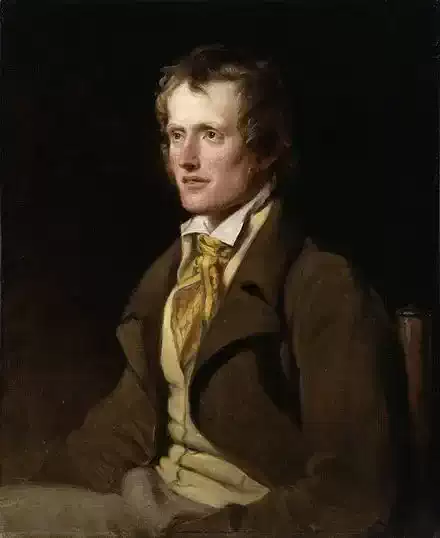
John Clare
The Cellar Door
The Cellar Door
By the old tavern door on the causey there lay
A hogshead of stingo just rolled from a dray,
And there stood the blacksmith awaiting a drop
As dry as the cinders that lay in his shop;
And there stood the cobbler as dry as a bun,
Almost crackt like a bucket when left in the sun.
He'd whetted his knife upon pendil and hone
Till he'd not got a spittle to moisten the stone;
So ere he could work--though he'd lost the whole day--
He must wait the new broach and bemoisten his clay.
The cellar was empty, each barrel was drained
To its dregs--and Sir John like a rebel remained
In the street--for removal too powerful and large
For two or three topers to take into charge.
Odd zooks, said a gipsey, with bellows to mend,
Had I strength I would just be for helping a friend
To walk on his legs: but a child in the street
Had as much power as he to put John on his feet.
Then up came the blacksmith: Sir Barley, said he,
I should just like to storm your old tower for a spree;
And my strength for your strength and bar your renown
I'd soon try your spirit by cracking your crown.
And the cobbler he tuckt up his apron and spit
In his hands for a burster--but devil a bit
Would he move--so as yet they made nothing of land;
For there lay the knight like a whale in the sand.
Said the tinker: If I could but drink of his vein
I should just be as strong and as stubborn again.
Push along, said the toper, the cellar's adry:
There's nothing to moisten the mouth of a fly.
Says the host, We shall burn out with thirst, he's so big.
There's a cag of small swipes half as sour as a wig.
In such like extremes, why, extremes will come pat;
So let's go and wet all our whistles with that.
Says the gipsey, May I never bottom a chair
If I drink of small swipes while Sir John's lying there.
And the blacksmith he threw off his apron and swore
Small swipes should bemoisten his gullet no more:
Let it out on the floor for the dry cock-a-roach--
And he held up his hammer with threatens to broach
Sir John in his castle without leave or law
And suck out his blood with a reed or a straw
Ere he'd soak at the swipes--and he turned him to start,
Till the host for high treason came down a full quart.
Just then passed the dandy and turned up his nose:
They'd fain have him shove, but he looked at his clothes
And nipt his nose closer and twirled his stick round
And simpered, Tis nuisance to lie on the ground.
But Bacchus, he laughed from the old tavern sign,
Saying, Go on, thou shadow, and let the sun shine.
Then again they all tried, and the tinker he swore
That the hogshead had grown twice as heavy or more.
Nay nay, said the toper, and reeled as he spoke,
We're all getting weak, that's the end of the joke.
The ploughman came up and cut short his old tune,
Hallooed 'woi' to his horses and though it was June
Said he'd help them an hour ere he'd keep them adry;
Well done, said the blacksmith with hopes running high;
He moves, and, by jingo, success to the plough!
Aye aye, said the cobbler, we'll conquer him now.
The hogshead rolled forward, the toper fell back,
And the host laughed aloud as his sides they would crack
To see the old tinker's toil make such a gap
In his coat as to rend it from collar to flap.
But the tinker he grumbled and cried Fiddle-dee!
This garment hath been an old tenant with me;
And a needle and thread with a little good skill
When I've leisure will make it stand more weathers still.
Then crack went his breeks from the hip to the knee
With his thrusting--no matter; for nothing cared he.
So long as Sir John rolled along to the door,
He's a chip of our block, said the blacksmith, and swore;
And as sure as I live to drive nails in a shoe
He shall have at my cost a full pitcher or two.
And the toper he hiccuped--which hindered an oath--
So long as he'd credit, he'd pitcher them both.
But the host stopt to hint when he'd ordered the dray
Sir Barleycorn's order was purchase and pay.
And now the old knight is imprisoned and ta'en
To waste in the tavern man's cellar again.
And now, said the blacksmith, let forfeits come first
For the insult swipes offered, or his hoops I will burst.
Here it is, my old hearties--Then drink your thirst full,
Said the host, for the stingo is worth a strong pull.
Never fear for your legs if they're broken to-day;
Winds only blow straws, dust, and feathers away.
But the cask that is full, like a giant he lies,
And giants alone can his spirits capsize.
If he lies in the path, though a king's coming bye,
John Barleycorn's mighty and there he will lie.
Then the toper sat down with a hiccup and felt
If he'd still an odd coin in his pocket to melt,
And he made a wry face, for his pocket was bare.
--But he laughed and danced up, What, old boy, are you there?
When he felt that a stiver had got to his knee
Through a hole in his fob, and right happy was he.
Says the tinker, I've brawled till no breath I have got
And not met with twopence to purchase a pot.
Says the toper, I've powder to charge a long gun,
And a stiver I've found when I thought I'd got none;
So helping a thirsty old friend in his need
Is my duty--take heart, thou art welcome indeed.
Then the smith with his tools in Sir John made a breach,
And the toper he hiccuped and ended his speech;
And pulled at the quart, till the snob he declared
When he went to drink next that the bottom was bared.
No matter for that, said the toper, and grinned;
I had but a soak and neer rested for wind.
That's the law, said the smith, with a look rather vexed,
But the quart was a forfeit; so pay for the next.
Thus they talked of their skill and their labour till noon
When the sober man's toil was exactly half done,
And there the plough lay--people hardly could pass
And the horses let loose polished up the short grass
And browsed on the bottle of flags lying there,
By the gipsey's old budget, for mending a chair.
The miller's horse tied to the old smithy door
Stood stamping his feet, by the flies bitten sore,
Awaiting the smith as he wanted a shoe;
And he stampt till another fell off and made two:
Till the miller, expecting that all would get loose,
Went to seek him and cursed him outright for a goose;
But he dipt his dry beak in the mug once or twice
And forgot all his passion and toil in a trice.
And the flybitten horse at the old smithy post
Might stamp till his shoes and his legs they were lost.
He sung his old songs and forgot his old mill--
Blow winds high or low, she might rest her at will.
And the cobbler, in spite of his bustle for pelf,
Left the shop all the day to take care of itself.
And the toper who carried his house on his head,
No wife to be teazing, no bairns to be fed,
Would sit out the week or the month or the year
Or a life-time so long as he'd credit for beer.
The ploughman he talked of his skill as divine,
How he could plough thurrows as straight as a line;
And the blacksmith he swore, had he but the command,
He could shoe the king's hunter the best in the land;
And the cobbler declared, was his skill but once seen,
He should soon get an order for shoes from the queen.
But the tinker he swore he could beat them all three,
For gi' me a pair of old bellows, says he,
And I'll make them roar out like the wind in a storm
And make them blow fire out of coal hardly warm.
The toper said nothing but wished the quart full
And swore he could toss it all off at a pull.
Have one, said the tinker; but wit was away,
When the bet was to bind him he'd nothing to pay.
And thus in the face of life's sun-and-shower weather
They drank, bragged, and sung, and got merry together.
The sun he went down--the last gleam from his brow
Flung a smile of repose on the holiday plough;
The glooms they approached, and the dews like a rain
Fell thick and hung pearls on the old sorrel mane
Of the horse that the miller had brought to be shod,
And the morning awoke, saw a sight rather odd--
For a bit of the halter still hung at the door,
Bit through by the horse now at feed on the moor;
And the old tinker's budget lay still in the weather,
While all kept on singing and drinking together.
By the old tavern door on the causey there lay
A hogshead of stingo just rolled from a dray,
And there stood the blacksmith awaiting a drop
As dry as the cinders that lay in his shop;
And there stood the cobbler as dry as a bun,
Almost crackt like a bucket when left in the sun.
He'd whetted his knife upon pendil and hone
Till he'd not got a spittle to moisten the stone;
So ere he could work--though he'd lost the whole day--
He must wait the new broach and bemoisten his clay.
The cellar was empty, each barrel was drained
To its dregs--and Sir John like a rebel remained
In the street--for removal too powerful and large
For two or three topers to take into charge.
Odd zooks, said a gipsey, with bellows to mend,
Had I strength I would just be for helping a friend
To walk on his legs: but a child in the street
Had as much power as he to put John on his feet.
Then up came the blacksmith: Sir Barley, said he,
I should just like to storm your old tower for a spree;
And my strength for your strength and bar your renown
I'd soon try your spirit by cracking your crown.
And the cobbler he tuckt up his apron and spit
In his hands for a burster--but devil a bit
Would he move--so as yet they made nothing of land;
For there lay the knight like a whale in the sand.
Said the tinker: If I could but drink of his vein
I should just be as strong and as stubborn again.
Push along, said the toper, the cellar's adry:
There's nothing to moisten the mouth of a fly.
Says the host, We shall burn out with thirst, he's so big.
There's a cag of small swipes half as sour as a wig.
In such like extremes, why, extremes will come pat;
So let's go and wet all our whistles with that.
Says the gipsey, May I never bottom a chair
If I drink of small swipes while Sir John's lying there.
And the blacksmith he threw off his apron and swore
Small swipes should bemoisten his gullet no more:
Let it out on the floor for the dry cock-a-roach--
And he held up his hammer with threatens to broach
Sir John in his castle without leave or law
And suck out his blood with a reed or a straw
Ere he'd soak at the swipes--and he turned him to start,
Till the host for high treason came down a full quart.
Just then passed the dandy and turned up his nose:
They'd fain have him shove, but he looked at his clothes
And nipt his nose closer and twirled his stick round
And simpered, Tis nuisance to lie on the ground.
But Bacchus, he laughed from the old tavern sign,
Saying, Go on, thou shadow, and let the sun shine.
Then again they all tried, and the tinker he swore
That the hogshead had grown twice as heavy or more.
Nay nay, said the toper, and reeled as he spoke,
We're all getting weak, that's the end of the joke.
The ploughman came up and cut short his old tune,
Hallooed 'woi' to his horses and though it was June
Said he'd help them an hour ere he'd keep them adry;
Well done, said the blacksmith with hopes running high;
He moves, and, by jingo, success to the plough!
Aye aye, said the cobbler, we'll conquer him now.
The hogshead rolled forward, the toper fell back,
And the host laughed aloud as his sides they would crack
To see the old tinker's toil make such a gap
In his coat as to rend it from collar to flap.
But the tinker he grumbled and cried Fiddle-dee!
This garment hath been an old tenant with me;
And a needle and thread with a little good skill
When I've leisure will make it stand more weathers still.
Then crack went his breeks from the hip to the knee
With his thrusting--no matter; for nothing cared he.
So long as Sir John rolled along to the door,
He's a chip of our block, said the blacksmith, and swore;
And as sure as I live to drive nails in a shoe
He shall have at my cost a full pitcher or two.
And the toper he hiccuped--which hindered an oath--
So long as he'd credit, he'd pitcher them both.
But the host stopt to hint when he'd ordered the dray
Sir Barleycorn's order was purchase and pay.
And now the old knight is imprisoned and ta'en
To waste in the tavern man's cellar again.
And now, said the blacksmith, let forfeits come first
For the insult swipes offered, or his hoops I will burst.
Here it is, my old hearties--Then drink your thirst full,
Said the host, for the stingo is worth a strong pull.
Never fear for your legs if they're broken to-day;
Winds only blow straws, dust, and feathers away.
But the cask that is full, like a giant he lies,
And giants alone can his spirits capsize.
If he lies in the path, though a king's coming bye,
John Barleycorn's mighty and there he will lie.
Then the toper sat down with a hiccup and felt
If he'd still an odd coin in his pocket to melt,
And he made a wry face, for his pocket was bare.
--But he laughed and danced up, What, old boy, are you there?
When he felt that a stiver had got to his knee
Through a hole in his fob, and right happy was he.
Says the tinker, I've brawled till no breath I have got
And not met with twopence to purchase a pot.
Says the toper, I've powder to charge a long gun,
And a stiver I've found when I thought I'd got none;
So helping a thirsty old friend in his need
Is my duty--take heart, thou art welcome indeed.
Then the smith with his tools in Sir John made a breach,
And the toper he hiccuped and ended his speech;
And pulled at the quart, till the snob he declared
When he went to drink next that the bottom was bared.
No matter for that, said the toper, and grinned;
I had but a soak and neer rested for wind.
That's the law, said the smith, with a look rather vexed,
But the quart was a forfeit; so pay for the next.
Thus they talked of their skill and their labour till noon
When the sober man's toil was exactly half done,
And there the plough lay--people hardly could pass
And the horses let loose polished up the short grass
And browsed on the bottle of flags lying there,
By the gipsey's old budget, for mending a chair.
The miller's horse tied to the old smithy door
Stood stamping his feet, by the flies bitten sore,
Awaiting the smith as he wanted a shoe;
And he stampt till another fell off and made two:
Till the miller, expecting that all would get loose,
Went to seek him and cursed him outright for a goose;
But he dipt his dry beak in the mug once or twice
And forgot all his passion and toil in a trice.
And the flybitten horse at the old smithy post
Might stamp till his shoes and his legs they were lost.
He sung his old songs and forgot his old mill--
Blow winds high or low, she might rest her at will.
And the cobbler, in spite of his bustle for pelf,
Left the shop all the day to take care of itself.
And the toper who carried his house on his head,
No wife to be teazing, no bairns to be fed,
Would sit out the week or the month or the year
Or a life-time so long as he'd credit for beer.
The ploughman he talked of his skill as divine,
How he could plough thurrows as straight as a line;
And the blacksmith he swore, had he but the command,
He could shoe the king's hunter the best in the land;
And the cobbler declared, was his skill but once seen,
He should soon get an order for shoes from the queen.
But the tinker he swore he could beat them all three,
For gi' me a pair of old bellows, says he,
And I'll make them roar out like the wind in a storm
And make them blow fire out of coal hardly warm.
The toper said nothing but wished the quart full
And swore he could toss it all off at a pull.
Have one, said the tinker; but wit was away,
When the bet was to bind him he'd nothing to pay.
And thus in the face of life's sun-and-shower weather
They drank, bragged, and sung, and got merry together.
The sun he went down--the last gleam from his brow
Flung a smile of repose on the holiday plough;
The glooms they approached, and the dews like a rain
Fell thick and hung pearls on the old sorrel mane
Of the horse that the miller had brought to be shod,
And the morning awoke, saw a sight rather odd--
For a bit of the halter still hung at the door,
Bit through by the horse now at feed on the moor;
And the old tinker's budget lay still in the weather,
While all kept on singing and drinking together.
383
John Clare
The Cellar Door
The Cellar Door
By the old tavern door on the causey there lay
A hogshead of stingo just rolled from a dray,
And there stood the blacksmith awaiting a drop
As dry as the cinders that lay in his shop;
And there stood the cobbler as dry as a bun,
Almost crackt like a bucket when left in the sun.
He'd whetted his knife upon pendil and hone
Till he'd not got a spittle to moisten the stone;
So ere he could work--though he'd lost the whole day--
He must wait the new broach and bemoisten his clay.
The cellar was empty, each barrel was drained
To its dregs--and Sir John like a rebel remained
In the street--for removal too powerful and large
For two or three topers to take into charge.
Odd zooks, said a gipsey, with bellows to mend,
Had I strength I would just be for helping a friend
To walk on his legs: but a child in the street
Had as much power as he to put John on his feet.
Then up came the blacksmith: Sir Barley, said he,
I should just like to storm your old tower for a spree;
And my strength for your strength and bar your renown
I'd soon try your spirit by cracking your crown.
And the cobbler he tuckt up his apron and spit
In his hands for a burster--but devil a bit
Would he move--so as yet they made nothing of land;
For there lay the knight like a whale in the sand.
Said the tinker: If I could but drink of his vein
I should just be as strong and as stubborn again.
Push along, said the toper, the cellar's adry:
There's nothing to moisten the mouth of a fly.
Says the host, We shall burn out with thirst, he's so big.
There's a cag of small swipes half as sour as a wig.
In such like extremes, why, extremes will come pat;
So let's go and wet all our whistles with that.
Says the gipsey, May I never bottom a chair
If I drink of small swipes while Sir John's lying there.
And the blacksmith he threw off his apron and swore
Small swipes should bemoisten his gullet no more:
Let it out on the floor for the dry cock-a-roach--
And he held up his hammer with threatens to broach
Sir John in his castle without leave or law
And suck out his blood with a reed or a straw
Ere he'd soak at the swipes--and he turned him to start,
Till the host for high treason came down a full quart.
Just then passed the dandy and turned up his nose:
They'd fain have him shove, but he looked at his clothes
And nipt his nose closer and twirled his stick round
And simpered, Tis nuisance to lie on the ground.
But Bacchus, he laughed from the old tavern sign,
Saying, Go on, thou shadow, and let the sun shine.
Then again they all tried, and the tinker he swore
That the hogshead had grown twice as heavy or more.
Nay nay, said the toper, and reeled as he spoke,
We're all getting weak, that's the end of the joke.
The ploughman came up and cut short his old tune,
Hallooed 'woi' to his horses and though it was June
Said he'd help them an hour ere he'd keep them adry;
Well done, said the blacksmith with hopes running high;
He moves, and, by jingo, success to the plough!
Aye aye, said the cobbler, we'll conquer him now.
The hogshead rolled forward, the toper fell back,
And the host laughed aloud as his sides they would crack
To see the old tinker's toil make such a gap
In his coat as to rend it from collar to flap.
But the tinker he grumbled and cried Fiddle-dee!
This garment hath been an old tenant with me;
And a needle and thread with a little good skill
When I've leisure will make it stand more weathers still.
Then crack went his breeks from the hip to the knee
With his thrusting--no matter; for nothing cared he.
So long as Sir John rolled along to the door,
He's a chip of our block, said the blacksmith, and swore;
And as sure as I live to drive nails in a shoe
He shall have at my cost a full pitcher or two.
And the toper he hiccuped--which hindered an oath--
So long as he'd credit, he'd pitcher them both.
But the host stopt to hint when he'd ordered the dray
Sir Barleycorn's order was purchase and pay.
And now the old knight is imprisoned and ta'en
To waste in the tavern man's cellar again.
And now, said the blacksmith, let forfeits come first
For the insult swipes offered, or his hoops I will burst.
Here it is, my old hearties--Then drink your thirst full,
Said the host, for the stingo is worth a strong pull.
Never fear for your legs if they're broken to-day;
Winds only blow straws, dust, and feathers away.
But the cask that is full, like a giant he lies,
And giants alone can his spirits capsize.
If he lies in the path, though a king's coming bye,
John Barleycorn's mighty and there he will lie.
Then the toper sat down with a hiccup and felt
If he'd still an odd coin in his pocket to melt,
And he made a wry face, for his pocket was bare.
--But he laughed and danced up, What, old boy, are you there?
When he felt that a stiver had got to his knee
Through a hole in his fob, and right happy was he.
Says the tinker, I've brawled till no breath I have got
And not met with twopence to purchase a pot.
Says the toper, I've powder to charge a long gun,
And a stiver I've found when I thought I'd got none;
So helping a thirsty old friend in his need
Is my duty--take heart, thou art welcome indeed.
Then the smith with his tools in Sir John made a breach,
And the toper he hiccuped and ended his speech;
And pulled at the quart, till the snob he declared
When he went to drink next that the bottom was bared.
No matter for that, said the toper, and grinned;
I had but a soak and neer rested for wind.
That's the law, said the smith, with a look rather vexed,
But the quart was a forfeit; so pay for the next.
Thus they talked of their skill and their labour till noon
When the sober man's toil was exactly half done,
And there the plough lay--people hardly could pass
And the horses let loose polished up the short grass
And browsed on the bottle of flags lying there,
By the gipsey's old budget, for mending a chair.
The miller's horse tied to the old smithy door
Stood stamping his feet, by the flies bitten sore,
Awaiting the smith as he wanted a shoe;
And he stampt till another fell off and made two:
Till the miller, expecting that all would get loose,
Went to seek him and cursed him outright for a goose;
But he dipt his dry beak in the mug once or twice
And forgot all his passion and toil in a trice.
And the flybitten horse at the old smithy post
Might stamp till his shoes and his legs they were lost.
He sung his old songs and forgot his old mill--
Blow winds high or low, she might rest her at will.
And the cobbler, in spite of his bustle for pelf,
Left the shop all the day to take care of itself.
And the toper who carried his house on his head,
No wife to be teazing, no bairns to be fed,
Would sit out the week or the month or the year
Or a life-time so long as he'd credit for beer.
The ploughman he talked of his skill as divine,
How he could plough thurrows as straight as a line;
And the blacksmith he swore, had he but the command,
He could shoe the king's hunter the best in the land;
And the cobbler declared, was his skill but once seen,
He should soon get an order for shoes from the queen.
But the tinker he swore he could beat them all three,
For gi' me a pair of old bellows, says he,
And I'll make them roar out like the wind in a storm
And make them blow fire out of coal hardly warm.
The toper said nothing but wished the quart full
And swore he could toss it all off at a pull.
Have one, said the tinker; but wit was away,
When the bet was to bind him he'd nothing to pay.
And thus in the face of life's sun-and-shower weather
They drank, bragged, and sung, and got merry together.
The sun he went down--the last gleam from his brow
Flung a smile of repose on the holiday plough;
The glooms they approached, and the dews like a rain
Fell thick and hung pearls on the old sorrel mane
Of the horse that the miller had brought to be shod,
And the morning awoke, saw a sight rather odd--
For a bit of the halter still hung at the door,
Bit through by the horse now at feed on the moor;
And the old tinker's budget lay still in the weather,
While all kept on singing and drinking together.
By the old tavern door on the causey there lay
A hogshead of stingo just rolled from a dray,
And there stood the blacksmith awaiting a drop
As dry as the cinders that lay in his shop;
And there stood the cobbler as dry as a bun,
Almost crackt like a bucket when left in the sun.
He'd whetted his knife upon pendil and hone
Till he'd not got a spittle to moisten the stone;
So ere he could work--though he'd lost the whole day--
He must wait the new broach and bemoisten his clay.
The cellar was empty, each barrel was drained
To its dregs--and Sir John like a rebel remained
In the street--for removal too powerful and large
For two or three topers to take into charge.
Odd zooks, said a gipsey, with bellows to mend,
Had I strength I would just be for helping a friend
To walk on his legs: but a child in the street
Had as much power as he to put John on his feet.
Then up came the blacksmith: Sir Barley, said he,
I should just like to storm your old tower for a spree;
And my strength for your strength and bar your renown
I'd soon try your spirit by cracking your crown.
And the cobbler he tuckt up his apron and spit
In his hands for a burster--but devil a bit
Would he move--so as yet they made nothing of land;
For there lay the knight like a whale in the sand.
Said the tinker: If I could but drink of his vein
I should just be as strong and as stubborn again.
Push along, said the toper, the cellar's adry:
There's nothing to moisten the mouth of a fly.
Says the host, We shall burn out with thirst, he's so big.
There's a cag of small swipes half as sour as a wig.
In such like extremes, why, extremes will come pat;
So let's go and wet all our whistles with that.
Says the gipsey, May I never bottom a chair
If I drink of small swipes while Sir John's lying there.
And the blacksmith he threw off his apron and swore
Small swipes should bemoisten his gullet no more:
Let it out on the floor for the dry cock-a-roach--
And he held up his hammer with threatens to broach
Sir John in his castle without leave or law
And suck out his blood with a reed or a straw
Ere he'd soak at the swipes--and he turned him to start,
Till the host for high treason came down a full quart.
Just then passed the dandy and turned up his nose:
They'd fain have him shove, but he looked at his clothes
And nipt his nose closer and twirled his stick round
And simpered, Tis nuisance to lie on the ground.
But Bacchus, he laughed from the old tavern sign,
Saying, Go on, thou shadow, and let the sun shine.
Then again they all tried, and the tinker he swore
That the hogshead had grown twice as heavy or more.
Nay nay, said the toper, and reeled as he spoke,
We're all getting weak, that's the end of the joke.
The ploughman came up and cut short his old tune,
Hallooed 'woi' to his horses and though it was June
Said he'd help them an hour ere he'd keep them adry;
Well done, said the blacksmith with hopes running high;
He moves, and, by jingo, success to the plough!
Aye aye, said the cobbler, we'll conquer him now.
The hogshead rolled forward, the toper fell back,
And the host laughed aloud as his sides they would crack
To see the old tinker's toil make such a gap
In his coat as to rend it from collar to flap.
But the tinker he grumbled and cried Fiddle-dee!
This garment hath been an old tenant with me;
And a needle and thread with a little good skill
When I've leisure will make it stand more weathers still.
Then crack went his breeks from the hip to the knee
With his thrusting--no matter; for nothing cared he.
So long as Sir John rolled along to the door,
He's a chip of our block, said the blacksmith, and swore;
And as sure as I live to drive nails in a shoe
He shall have at my cost a full pitcher or two.
And the toper he hiccuped--which hindered an oath--
So long as he'd credit, he'd pitcher them both.
But the host stopt to hint when he'd ordered the dray
Sir Barleycorn's order was purchase and pay.
And now the old knight is imprisoned and ta'en
To waste in the tavern man's cellar again.
And now, said the blacksmith, let forfeits come first
For the insult swipes offered, or his hoops I will burst.
Here it is, my old hearties--Then drink your thirst full,
Said the host, for the stingo is worth a strong pull.
Never fear for your legs if they're broken to-day;
Winds only blow straws, dust, and feathers away.
But the cask that is full, like a giant he lies,
And giants alone can his spirits capsize.
If he lies in the path, though a king's coming bye,
John Barleycorn's mighty and there he will lie.
Then the toper sat down with a hiccup and felt
If he'd still an odd coin in his pocket to melt,
And he made a wry face, for his pocket was bare.
--But he laughed and danced up, What, old boy, are you there?
When he felt that a stiver had got to his knee
Through a hole in his fob, and right happy was he.
Says the tinker, I've brawled till no breath I have got
And not met with twopence to purchase a pot.
Says the toper, I've powder to charge a long gun,
And a stiver I've found when I thought I'd got none;
So helping a thirsty old friend in his need
Is my duty--take heart, thou art welcome indeed.
Then the smith with his tools in Sir John made a breach,
And the toper he hiccuped and ended his speech;
And pulled at the quart, till the snob he declared
When he went to drink next that the bottom was bared.
No matter for that, said the toper, and grinned;
I had but a soak and neer rested for wind.
That's the law, said the smith, with a look rather vexed,
But the quart was a forfeit; so pay for the next.
Thus they talked of their skill and their labour till noon
When the sober man's toil was exactly half done,
And there the plough lay--people hardly could pass
And the horses let loose polished up the short grass
And browsed on the bottle of flags lying there,
By the gipsey's old budget, for mending a chair.
The miller's horse tied to the old smithy door
Stood stamping his feet, by the flies bitten sore,
Awaiting the smith as he wanted a shoe;
And he stampt till another fell off and made two:
Till the miller, expecting that all would get loose,
Went to seek him and cursed him outright for a goose;
But he dipt his dry beak in the mug once or twice
And forgot all his passion and toil in a trice.
And the flybitten horse at the old smithy post
Might stamp till his shoes and his legs they were lost.
He sung his old songs and forgot his old mill--
Blow winds high or low, she might rest her at will.
And the cobbler, in spite of his bustle for pelf,
Left the shop all the day to take care of itself.
And the toper who carried his house on his head,
No wife to be teazing, no bairns to be fed,
Would sit out the week or the month or the year
Or a life-time so long as he'd credit for beer.
The ploughman he talked of his skill as divine,
How he could plough thurrows as straight as a line;
And the blacksmith he swore, had he but the command,
He could shoe the king's hunter the best in the land;
And the cobbler declared, was his skill but once seen,
He should soon get an order for shoes from the queen.
But the tinker he swore he could beat them all three,
For gi' me a pair of old bellows, says he,
And I'll make them roar out like the wind in a storm
And make them blow fire out of coal hardly warm.
The toper said nothing but wished the quart full
And swore he could toss it all off at a pull.
Have one, said the tinker; but wit was away,
When the bet was to bind him he'd nothing to pay.
And thus in the face of life's sun-and-shower weather
They drank, bragged, and sung, and got merry together.
The sun he went down--the last gleam from his brow
Flung a smile of repose on the holiday plough;
The glooms they approached, and the dews like a rain
Fell thick and hung pearls on the old sorrel mane
Of the horse that the miller had brought to be shod,
And the morning awoke, saw a sight rather odd--
For a bit of the halter still hung at the door,
Bit through by the horse now at feed on the moor;
And the old tinker's budget lay still in the weather,
While all kept on singing and drinking together.
383
John Clare
Summer
Summer
Come we to the summer, to the summer we will come,
For the woods are full of bluebells and the hedges full of bloom,
And the crow is on the oak a-building of her nest,
And love is burning diamonds in my true lover's breast;
She sits beneath the whitethorn a-plaiting of her hair,
And I will to my true lover with a fond request repair;
I will look upon her face, I will in her beauty rest,
And lay my aching weariness upon her lovely breast.
The clock-a-clay is creeping on the open bloom of May,
The merry bee is trampling the pinky threads all day,
And the chaffinch it is brooding on its grey mossy nest
In the whitethorn bush where I will lean upon my lover's breast;
I'll lean upon her breast and I'll whisper in her ear
That I cannot get a wink o'sleep for thinking of my dear;
I hunger at my meat and I daily fade away
Like the hedge rose that is broken in the heat of the day.
Come we to the summer, to the summer we will come,
For the woods are full of bluebells and the hedges full of bloom,
And the crow is on the oak a-building of her nest,
And love is burning diamonds in my true lover's breast;
She sits beneath the whitethorn a-plaiting of her hair,
And I will to my true lover with a fond request repair;
I will look upon her face, I will in her beauty rest,
And lay my aching weariness upon her lovely breast.
The clock-a-clay is creeping on the open bloom of May,
The merry bee is trampling the pinky threads all day,
And the chaffinch it is brooding on its grey mossy nest
In the whitethorn bush where I will lean upon my lover's breast;
I'll lean upon her breast and I'll whisper in her ear
That I cannot get a wink o'sleep for thinking of my dear;
I hunger at my meat and I daily fade away
Like the hedge rose that is broken in the heat of the day.
377
John Clare
Summer Images
Summer Images
Now swarthy Summer, by rude health embrowned,
Precedence takes of rosy fingered Spring;
And laughing Joy, with wild flowers prank'd, and crown'd,
A wild and giddy thing,
And Health robust, from every care unbound,
Come on the zephyr's wing,
And cheer the toiling clown.
Happy as holiday-enjoying face,
Loud tongued, and "merry as a marriage bell,"
Thy lightsome step sheds joy in every place;
And where the troubled dwell,
Thy witching charms wean them of half their cares;
And from thy sunny spell,
They greet joy unawares.
Then with thy sultry locks all loose and rude,
And mantle laced with gems of garish light,
Come as of wont; for I would fain intrude,
And in the world's despite,
Share the rude wealth that thy own heart beguiles;
If haply so I might
Win pleasure from thy smiles.
Me not the noise of brawling pleasure cheers,
In nightly revels or in city streets;
But joys which soothe, and not distract the ears,
That one at leisure meets
In the green woods, and meadows summer-shorn,
Or fields, where bee-fly greets
The ear with mellow horn.
The green-swathed grasshopper, on treble pipe,
Sings there, and dances, in mad-hearted pranks;
There bees go courting every flower that's ripe,
On baulks and sunny banks;
And droning dragon-fly, on rude bassoon,
Attempts to give God thanks
In no discordant tune.
The speckled thrush, by self-delight embued,
There sings unto himself for joy's amends,
And drinks the honey dew of solitude.
There Happiness attends
With inbred Joy until the heart o'erflow,
Of which the world's rude friends,
Nought heeding, nothing know.
There the gay river, laughing as it goes,
Plashes with easy wave its flaggy sides,
And to the calm of heart, in calmness shows
What pleasure there abides,
To trace its sedgy banks, from trouble free:
Spots Solitude provides
To muse, and happy be.
There ruminating 'neath some pleasant bush,
On sweet silk grass I stretch me at mine ease,
Where I can pillow on the yielding rush;
And, acting as I please,
Drop into pleasant dreams; or musing lie,
Mark the wind-shaken trees,
And cloud-betravelled sky.
There think me how some barter joy for care,
And waste life's summer-health in riot rude,
Of nature, nor of nature's sweets aware.
When passions vain intrude,
These, by calm musings, softened are and still;
And the heart's better mood
Feels sick of doing ill.
There I can live, and at my leisure seek
Joys far from cold restraints--not fearing pride--
Free as the winds, that breathe upon my cheek
Rude health, so long denied.
Here poor Integrity can sit at ease,
And list self-satisfied
The song of honey-bees.
The green lane now I traverse, where it goes
Nought guessing, till some sudden turn espies
Rude batter'd finger post, that stooping shows
Where the snug mystery lies;
And then a mossy spire, with ivy crown,
Cheers up the short surprise,
And shows a peeping town.
I see the wild flowers, in their summer morn
Of beauty, feeding on joy's luscious hours;
The gay convolvulus, wreathing round the thorn,
Agape for honey showers;
And slender kingcup, burnished with the dew
Of morning's early hours,
Like gold yminted new.
And mark by rustic bridge, o'er shallow stream,
Cow-tending boy, to toil unreconciled,
Absorbed as in some vagrant summer dream;
Who now, in gestures wild,
Starts dancing to his shadow on the wall,
Feeling self-gratified,
Nor fearing human thrall.
Or thread the sunny valley laced with streams,
Or forests rude, and the o'ershadow'd brims
Of simple ponds, where idle shepherd dreams,
Stretching his listless limbs;
Or trace hay-scented meadows, smooth and long,
Where joy's wild impulse swims
In one continued song.
I love at early morn, from new mown swath,
To see the startled frog his route pursue;
To mark while, leaping o'er the dripping path,
His bright sides scatter dew,
The early lark that from its bustle flies,
To hail his matin new;
And watch him to the skies.
To note on hedgerow baulks, in moisture sprent,
The jetty snail creep from the mossy thorn,
With earnest heed, and tremulous intent,
Frail brother of the morn,
That from the tiny bent's dew-misted leaves
Withdraws his timid horn,
And fearful vision weaves.
Or swallow heed on smoke-tanned chimney top,
Wont to be first unsealing Morning's eye,
Ere yet the bee hath gleaned one wayward drop
Of honey on his thigh;
To see him seek morn's airy couch to sing,
Until the golden sky
Bepaint his russet wing.
Or sauntering boy by tanning corn to spy,
With clapping noise to startle birds away,
And hear him bawl to every passer by
To know the hour of day;
While the uncradled breezes, fresh and strong,
With waking blossoms play,
And breathe Æolian song.
I love the south-west wind, or low or loud,
And not the less when sudden drops of rain
Moisten my glowing cheek from ebon cloud,
Threatening soft showers again,
That over lands new ploughed and meadow grounds,
Summer's sweet breath unchain,
And wake harmonious sounds.
Rich music breathes in Summer's every sound;
And in her harmony of varied greens,
Woods, meadows, hedge-rows, corn-fields, all around
Much beauty intervenes,
Filling with harmony the ear and eye;
While o'er the mingling scenes
Far spreads the laughing sky.
See, how the wind-enamoured aspen leaves
Turn up their silver lining to the sun!
And hark! the rustling noise, that oft deceives,
And makes the sheep-boy run:
The sound so mimics fast-approaching showers,
He thinks the rain's begun,
And hastes to sheltering bowers.
But now the evening curdles dank and grey,
Changing her watchet hue for sombre weed;
And moping owls, to close the lids of day,
On drowsy wing proceed;
While chickering crickets, tremulous and long,
Light's farewell inly heed,
And give it parting song.
The pranking bat its flighty circlet makes;
The glow-worm burnishes its lamp anew;
O'er meadows dew-besprent, the beetle wakes
Inquiries ever new,
Teazing each passing ear with murmurs vain,
As wanting to pursue
His homeward path again.
Hark! 'tis the melody of distant bells
That on the wind with pleasing hum rebounds
By fitful starts, then musically swells
O'er the dim stilly grounds;
While on the meadow-bridge the pausing boy
Listens the mellow sounds,
And hums in vacant joy.
Now homeward-bound, the hedger bundles round
His evening faggot, and with every stride
His leathern doublet leaves a rustling sound,
Till silly sheep beside
His path start tremulous, and once again
Look back dissatisfied,
And scour the dewy plain.
How sweet the soothing calmness that distills
O'er the heart's every sense its opiate dews,
In meek-eyed moods and ever balmy trills!
That softens and subdues,
With gentle Quiet's bland and sober train,
Which dreamy eve renews
In many a mellow strain!
I love to walk the fields, they are to me
A legacy no evil can destroy;
They, like a spell, set every rapture free
That cheer'd me when a boy.
Play--pastime--all Time's blotting pen conceal'd,
Comes like a new-born joy,
To greet me in the field.
For Nature's objects ever harmonize
With emulous Taste, that vulgar deed annoys;
Which loves in pensive moods to sympathize,
And meet vibrating joys
O'er Nature's pleasing things; nor slighting, deems
Pastimes, the Muse employs,
Vain and obtrusive themes.
Now swarthy Summer, by rude health embrowned,
Precedence takes of rosy fingered Spring;
And laughing Joy, with wild flowers prank'd, and crown'd,
A wild and giddy thing,
And Health robust, from every care unbound,
Come on the zephyr's wing,
And cheer the toiling clown.
Happy as holiday-enjoying face,
Loud tongued, and "merry as a marriage bell,"
Thy lightsome step sheds joy in every place;
And where the troubled dwell,
Thy witching charms wean them of half their cares;
And from thy sunny spell,
They greet joy unawares.
Then with thy sultry locks all loose and rude,
And mantle laced with gems of garish light,
Come as of wont; for I would fain intrude,
And in the world's despite,
Share the rude wealth that thy own heart beguiles;
If haply so I might
Win pleasure from thy smiles.
Me not the noise of brawling pleasure cheers,
In nightly revels or in city streets;
But joys which soothe, and not distract the ears,
That one at leisure meets
In the green woods, and meadows summer-shorn,
Or fields, where bee-fly greets
The ear with mellow horn.
The green-swathed grasshopper, on treble pipe,
Sings there, and dances, in mad-hearted pranks;
There bees go courting every flower that's ripe,
On baulks and sunny banks;
And droning dragon-fly, on rude bassoon,
Attempts to give God thanks
In no discordant tune.
The speckled thrush, by self-delight embued,
There sings unto himself for joy's amends,
And drinks the honey dew of solitude.
There Happiness attends
With inbred Joy until the heart o'erflow,
Of which the world's rude friends,
Nought heeding, nothing know.
There the gay river, laughing as it goes,
Plashes with easy wave its flaggy sides,
And to the calm of heart, in calmness shows
What pleasure there abides,
To trace its sedgy banks, from trouble free:
Spots Solitude provides
To muse, and happy be.
There ruminating 'neath some pleasant bush,
On sweet silk grass I stretch me at mine ease,
Where I can pillow on the yielding rush;
And, acting as I please,
Drop into pleasant dreams; or musing lie,
Mark the wind-shaken trees,
And cloud-betravelled sky.
There think me how some barter joy for care,
And waste life's summer-health in riot rude,
Of nature, nor of nature's sweets aware.
When passions vain intrude,
These, by calm musings, softened are and still;
And the heart's better mood
Feels sick of doing ill.
There I can live, and at my leisure seek
Joys far from cold restraints--not fearing pride--
Free as the winds, that breathe upon my cheek
Rude health, so long denied.
Here poor Integrity can sit at ease,
And list self-satisfied
The song of honey-bees.
The green lane now I traverse, where it goes
Nought guessing, till some sudden turn espies
Rude batter'd finger post, that stooping shows
Where the snug mystery lies;
And then a mossy spire, with ivy crown,
Cheers up the short surprise,
And shows a peeping town.
I see the wild flowers, in their summer morn
Of beauty, feeding on joy's luscious hours;
The gay convolvulus, wreathing round the thorn,
Agape for honey showers;
And slender kingcup, burnished with the dew
Of morning's early hours,
Like gold yminted new.
And mark by rustic bridge, o'er shallow stream,
Cow-tending boy, to toil unreconciled,
Absorbed as in some vagrant summer dream;
Who now, in gestures wild,
Starts dancing to his shadow on the wall,
Feeling self-gratified,
Nor fearing human thrall.
Or thread the sunny valley laced with streams,
Or forests rude, and the o'ershadow'd brims
Of simple ponds, where idle shepherd dreams,
Stretching his listless limbs;
Or trace hay-scented meadows, smooth and long,
Where joy's wild impulse swims
In one continued song.
I love at early morn, from new mown swath,
To see the startled frog his route pursue;
To mark while, leaping o'er the dripping path,
His bright sides scatter dew,
The early lark that from its bustle flies,
To hail his matin new;
And watch him to the skies.
To note on hedgerow baulks, in moisture sprent,
The jetty snail creep from the mossy thorn,
With earnest heed, and tremulous intent,
Frail brother of the morn,
That from the tiny bent's dew-misted leaves
Withdraws his timid horn,
And fearful vision weaves.
Or swallow heed on smoke-tanned chimney top,
Wont to be first unsealing Morning's eye,
Ere yet the bee hath gleaned one wayward drop
Of honey on his thigh;
To see him seek morn's airy couch to sing,
Until the golden sky
Bepaint his russet wing.
Or sauntering boy by tanning corn to spy,
With clapping noise to startle birds away,
And hear him bawl to every passer by
To know the hour of day;
While the uncradled breezes, fresh and strong,
With waking blossoms play,
And breathe Æolian song.
I love the south-west wind, or low or loud,
And not the less when sudden drops of rain
Moisten my glowing cheek from ebon cloud,
Threatening soft showers again,
That over lands new ploughed and meadow grounds,
Summer's sweet breath unchain,
And wake harmonious sounds.
Rich music breathes in Summer's every sound;
And in her harmony of varied greens,
Woods, meadows, hedge-rows, corn-fields, all around
Much beauty intervenes,
Filling with harmony the ear and eye;
While o'er the mingling scenes
Far spreads the laughing sky.
See, how the wind-enamoured aspen leaves
Turn up their silver lining to the sun!
And hark! the rustling noise, that oft deceives,
And makes the sheep-boy run:
The sound so mimics fast-approaching showers,
He thinks the rain's begun,
And hastes to sheltering bowers.
But now the evening curdles dank and grey,
Changing her watchet hue for sombre weed;
And moping owls, to close the lids of day,
On drowsy wing proceed;
While chickering crickets, tremulous and long,
Light's farewell inly heed,
And give it parting song.
The pranking bat its flighty circlet makes;
The glow-worm burnishes its lamp anew;
O'er meadows dew-besprent, the beetle wakes
Inquiries ever new,
Teazing each passing ear with murmurs vain,
As wanting to pursue
His homeward path again.
Hark! 'tis the melody of distant bells
That on the wind with pleasing hum rebounds
By fitful starts, then musically swells
O'er the dim stilly grounds;
While on the meadow-bridge the pausing boy
Listens the mellow sounds,
And hums in vacant joy.
Now homeward-bound, the hedger bundles round
His evening faggot, and with every stride
His leathern doublet leaves a rustling sound,
Till silly sheep beside
His path start tremulous, and once again
Look back dissatisfied,
And scour the dewy plain.
How sweet the soothing calmness that distills
O'er the heart's every sense its opiate dews,
In meek-eyed moods and ever balmy trills!
That softens and subdues,
With gentle Quiet's bland and sober train,
Which dreamy eve renews
In many a mellow strain!
I love to walk the fields, they are to me
A legacy no evil can destroy;
They, like a spell, set every rapture free
That cheer'd me when a boy.
Play--pastime--all Time's blotting pen conceal'd,
Comes like a new-born joy,
To greet me in the field.
For Nature's objects ever harmonize
With emulous Taste, that vulgar deed annoys;
Which loves in pensive moods to sympathize,
And meet vibrating joys
O'er Nature's pleasing things; nor slighting, deems
Pastimes, the Muse employs,
Vain and obtrusive themes.
422
John Clare
Summer Images
Summer Images
Now swarthy Summer, by rude health embrowned,
Precedence takes of rosy fingered Spring;
And laughing Joy, with wild flowers prank'd, and crown'd,
A wild and giddy thing,
And Health robust, from every care unbound,
Come on the zephyr's wing,
And cheer the toiling clown.
Happy as holiday-enjoying face,
Loud tongued, and "merry as a marriage bell,"
Thy lightsome step sheds joy in every place;
And where the troubled dwell,
Thy witching charms wean them of half their cares;
And from thy sunny spell,
They greet joy unawares.
Then with thy sultry locks all loose and rude,
And mantle laced with gems of garish light,
Come as of wont; for I would fain intrude,
And in the world's despite,
Share the rude wealth that thy own heart beguiles;
If haply so I might
Win pleasure from thy smiles.
Me not the noise of brawling pleasure cheers,
In nightly revels or in city streets;
But joys which soothe, and not distract the ears,
That one at leisure meets
In the green woods, and meadows summer-shorn,
Or fields, where bee-fly greets
The ear with mellow horn.
The green-swathed grasshopper, on treble pipe,
Sings there, and dances, in mad-hearted pranks;
There bees go courting every flower that's ripe,
On baulks and sunny banks;
And droning dragon-fly, on rude bassoon,
Attempts to give God thanks
In no discordant tune.
The speckled thrush, by self-delight embued,
There sings unto himself for joy's amends,
And drinks the honey dew of solitude.
There Happiness attends
With inbred Joy until the heart o'erflow,
Of which the world's rude friends,
Nought heeding, nothing know.
There the gay river, laughing as it goes,
Plashes with easy wave its flaggy sides,
And to the calm of heart, in calmness shows
What pleasure there abides,
To trace its sedgy banks, from trouble free:
Spots Solitude provides
To muse, and happy be.
There ruminating 'neath some pleasant bush,
On sweet silk grass I stretch me at mine ease,
Where I can pillow on the yielding rush;
And, acting as I please,
Drop into pleasant dreams; or musing lie,
Mark the wind-shaken trees,
And cloud-betravelled sky.
There think me how some barter joy for care,
And waste life's summer-health in riot rude,
Of nature, nor of nature's sweets aware.
When passions vain intrude,
These, by calm musings, softened are and still;
And the heart's better mood
Feels sick of doing ill.
There I can live, and at my leisure seek
Joys far from cold restraints--not fearing pride--
Free as the winds, that breathe upon my cheek
Rude health, so long denied.
Here poor Integrity can sit at ease,
And list self-satisfied
The song of honey-bees.
The green lane now I traverse, where it goes
Nought guessing, till some sudden turn espies
Rude batter'd finger post, that stooping shows
Where the snug mystery lies;
And then a mossy spire, with ivy crown,
Cheers up the short surprise,
And shows a peeping town.
I see the wild flowers, in their summer morn
Of beauty, feeding on joy's luscious hours;
The gay convolvulus, wreathing round the thorn,
Agape for honey showers;
And slender kingcup, burnished with the dew
Of morning's early hours,
Like gold yminted new.
And mark by rustic bridge, o'er shallow stream,
Cow-tending boy, to toil unreconciled,
Absorbed as in some vagrant summer dream;
Who now, in gestures wild,
Starts dancing to his shadow on the wall,
Feeling self-gratified,
Nor fearing human thrall.
Or thread the sunny valley laced with streams,
Or forests rude, and the o'ershadow'd brims
Of simple ponds, where idle shepherd dreams,
Stretching his listless limbs;
Or trace hay-scented meadows, smooth and long,
Where joy's wild impulse swims
In one continued song.
I love at early morn, from new mown swath,
To see the startled frog his route pursue;
To mark while, leaping o'er the dripping path,
His bright sides scatter dew,
The early lark that from its bustle flies,
To hail his matin new;
And watch him to the skies.
To note on hedgerow baulks, in moisture sprent,
The jetty snail creep from the mossy thorn,
With earnest heed, and tremulous intent,
Frail brother of the morn,
That from the tiny bent's dew-misted leaves
Withdraws his timid horn,
And fearful vision weaves.
Or swallow heed on smoke-tanned chimney top,
Wont to be first unsealing Morning's eye,
Ere yet the bee hath gleaned one wayward drop
Of honey on his thigh;
To see him seek morn's airy couch to sing,
Until the golden sky
Bepaint his russet wing.
Or sauntering boy by tanning corn to spy,
With clapping noise to startle birds away,
And hear him bawl to every passer by
To know the hour of day;
While the uncradled breezes, fresh and strong,
With waking blossoms play,
And breathe Æolian song.
I love the south-west wind, or low or loud,
And not the less when sudden drops of rain
Moisten my glowing cheek from ebon cloud,
Threatening soft showers again,
That over lands new ploughed and meadow grounds,
Summer's sweet breath unchain,
And wake harmonious sounds.
Rich music breathes in Summer's every sound;
And in her harmony of varied greens,
Woods, meadows, hedge-rows, corn-fields, all around
Much beauty intervenes,
Filling with harmony the ear and eye;
While o'er the mingling scenes
Far spreads the laughing sky.
See, how the wind-enamoured aspen leaves
Turn up their silver lining to the sun!
And hark! the rustling noise, that oft deceives,
And makes the sheep-boy run:
The sound so mimics fast-approaching showers,
He thinks the rain's begun,
And hastes to sheltering bowers.
But now the evening curdles dank and grey,
Changing her watchet hue for sombre weed;
And moping owls, to close the lids of day,
On drowsy wing proceed;
While chickering crickets, tremulous and long,
Light's farewell inly heed,
And give it parting song.
The pranking bat its flighty circlet makes;
The glow-worm burnishes its lamp anew;
O'er meadows dew-besprent, the beetle wakes
Inquiries ever new,
Teazing each passing ear with murmurs vain,
As wanting to pursue
His homeward path again.
Hark! 'tis the melody of distant bells
That on the wind with pleasing hum rebounds
By fitful starts, then musically swells
O'er the dim stilly grounds;
While on the meadow-bridge the pausing boy
Listens the mellow sounds,
And hums in vacant joy.
Now homeward-bound, the hedger bundles round
His evening faggot, and with every stride
His leathern doublet leaves a rustling sound,
Till silly sheep beside
His path start tremulous, and once again
Look back dissatisfied,
And scour the dewy plain.
How sweet the soothing calmness that distills
O'er the heart's every sense its opiate dews,
In meek-eyed moods and ever balmy trills!
That softens and subdues,
With gentle Quiet's bland and sober train,
Which dreamy eve renews
In many a mellow strain!
I love to walk the fields, they are to me
A legacy no evil can destroy;
They, like a spell, set every rapture free
That cheer'd me when a boy.
Play--pastime--all Time's blotting pen conceal'd,
Comes like a new-born joy,
To greet me in the field.
For Nature's objects ever harmonize
With emulous Taste, that vulgar deed annoys;
Which loves in pensive moods to sympathize,
And meet vibrating joys
O'er Nature's pleasing things; nor slighting, deems
Pastimes, the Muse employs,
Vain and obtrusive themes.
Now swarthy Summer, by rude health embrowned,
Precedence takes of rosy fingered Spring;
And laughing Joy, with wild flowers prank'd, and crown'd,
A wild and giddy thing,
And Health robust, from every care unbound,
Come on the zephyr's wing,
And cheer the toiling clown.
Happy as holiday-enjoying face,
Loud tongued, and "merry as a marriage bell,"
Thy lightsome step sheds joy in every place;
And where the troubled dwell,
Thy witching charms wean them of half their cares;
And from thy sunny spell,
They greet joy unawares.
Then with thy sultry locks all loose and rude,
And mantle laced with gems of garish light,
Come as of wont; for I would fain intrude,
And in the world's despite,
Share the rude wealth that thy own heart beguiles;
If haply so I might
Win pleasure from thy smiles.
Me not the noise of brawling pleasure cheers,
In nightly revels or in city streets;
But joys which soothe, and not distract the ears,
That one at leisure meets
In the green woods, and meadows summer-shorn,
Or fields, where bee-fly greets
The ear with mellow horn.
The green-swathed grasshopper, on treble pipe,
Sings there, and dances, in mad-hearted pranks;
There bees go courting every flower that's ripe,
On baulks and sunny banks;
And droning dragon-fly, on rude bassoon,
Attempts to give God thanks
In no discordant tune.
The speckled thrush, by self-delight embued,
There sings unto himself for joy's amends,
And drinks the honey dew of solitude.
There Happiness attends
With inbred Joy until the heart o'erflow,
Of which the world's rude friends,
Nought heeding, nothing know.
There the gay river, laughing as it goes,
Plashes with easy wave its flaggy sides,
And to the calm of heart, in calmness shows
What pleasure there abides,
To trace its sedgy banks, from trouble free:
Spots Solitude provides
To muse, and happy be.
There ruminating 'neath some pleasant bush,
On sweet silk grass I stretch me at mine ease,
Where I can pillow on the yielding rush;
And, acting as I please,
Drop into pleasant dreams; or musing lie,
Mark the wind-shaken trees,
And cloud-betravelled sky.
There think me how some barter joy for care,
And waste life's summer-health in riot rude,
Of nature, nor of nature's sweets aware.
When passions vain intrude,
These, by calm musings, softened are and still;
And the heart's better mood
Feels sick of doing ill.
There I can live, and at my leisure seek
Joys far from cold restraints--not fearing pride--
Free as the winds, that breathe upon my cheek
Rude health, so long denied.
Here poor Integrity can sit at ease,
And list self-satisfied
The song of honey-bees.
The green lane now I traverse, where it goes
Nought guessing, till some sudden turn espies
Rude batter'd finger post, that stooping shows
Where the snug mystery lies;
And then a mossy spire, with ivy crown,
Cheers up the short surprise,
And shows a peeping town.
I see the wild flowers, in their summer morn
Of beauty, feeding on joy's luscious hours;
The gay convolvulus, wreathing round the thorn,
Agape for honey showers;
And slender kingcup, burnished with the dew
Of morning's early hours,
Like gold yminted new.
And mark by rustic bridge, o'er shallow stream,
Cow-tending boy, to toil unreconciled,
Absorbed as in some vagrant summer dream;
Who now, in gestures wild,
Starts dancing to his shadow on the wall,
Feeling self-gratified,
Nor fearing human thrall.
Or thread the sunny valley laced with streams,
Or forests rude, and the o'ershadow'd brims
Of simple ponds, where idle shepherd dreams,
Stretching his listless limbs;
Or trace hay-scented meadows, smooth and long,
Where joy's wild impulse swims
In one continued song.
I love at early morn, from new mown swath,
To see the startled frog his route pursue;
To mark while, leaping o'er the dripping path,
His bright sides scatter dew,
The early lark that from its bustle flies,
To hail his matin new;
And watch him to the skies.
To note on hedgerow baulks, in moisture sprent,
The jetty snail creep from the mossy thorn,
With earnest heed, and tremulous intent,
Frail brother of the morn,
That from the tiny bent's dew-misted leaves
Withdraws his timid horn,
And fearful vision weaves.
Or swallow heed on smoke-tanned chimney top,
Wont to be first unsealing Morning's eye,
Ere yet the bee hath gleaned one wayward drop
Of honey on his thigh;
To see him seek morn's airy couch to sing,
Until the golden sky
Bepaint his russet wing.
Or sauntering boy by tanning corn to spy,
With clapping noise to startle birds away,
And hear him bawl to every passer by
To know the hour of day;
While the uncradled breezes, fresh and strong,
With waking blossoms play,
And breathe Æolian song.
I love the south-west wind, or low or loud,
And not the less when sudden drops of rain
Moisten my glowing cheek from ebon cloud,
Threatening soft showers again,
That over lands new ploughed and meadow grounds,
Summer's sweet breath unchain,
And wake harmonious sounds.
Rich music breathes in Summer's every sound;
And in her harmony of varied greens,
Woods, meadows, hedge-rows, corn-fields, all around
Much beauty intervenes,
Filling with harmony the ear and eye;
While o'er the mingling scenes
Far spreads the laughing sky.
See, how the wind-enamoured aspen leaves
Turn up their silver lining to the sun!
And hark! the rustling noise, that oft deceives,
And makes the sheep-boy run:
The sound so mimics fast-approaching showers,
He thinks the rain's begun,
And hastes to sheltering bowers.
But now the evening curdles dank and grey,
Changing her watchet hue for sombre weed;
And moping owls, to close the lids of day,
On drowsy wing proceed;
While chickering crickets, tremulous and long,
Light's farewell inly heed,
And give it parting song.
The pranking bat its flighty circlet makes;
The glow-worm burnishes its lamp anew;
O'er meadows dew-besprent, the beetle wakes
Inquiries ever new,
Teazing each passing ear with murmurs vain,
As wanting to pursue
His homeward path again.
Hark! 'tis the melody of distant bells
That on the wind with pleasing hum rebounds
By fitful starts, then musically swells
O'er the dim stilly grounds;
While on the meadow-bridge the pausing boy
Listens the mellow sounds,
And hums in vacant joy.
Now homeward-bound, the hedger bundles round
His evening faggot, and with every stride
His leathern doublet leaves a rustling sound,
Till silly sheep beside
His path start tremulous, and once again
Look back dissatisfied,
And scour the dewy plain.
How sweet the soothing calmness that distills
O'er the heart's every sense its opiate dews,
In meek-eyed moods and ever balmy trills!
That softens and subdues,
With gentle Quiet's bland and sober train,
Which dreamy eve renews
In many a mellow strain!
I love to walk the fields, they are to me
A legacy no evil can destroy;
They, like a spell, set every rapture free
That cheer'd me when a boy.
Play--pastime--all Time's blotting pen conceal'd,
Comes like a new-born joy,
To greet me in the field.
For Nature's objects ever harmonize
With emulous Taste, that vulgar deed annoys;
Which loves in pensive moods to sympathize,
And meet vibrating joys
O'er Nature's pleasing things; nor slighting, deems
Pastimes, the Muse employs,
Vain and obtrusive themes.
422
John Clare
Sport In The Meadows
Sport In The Meadows
Maytime is to the meadows coming in,
And cowslip peeps have gotten eer so big,
And water blobs and all their golden kin
Crowd round the shallows by the striding brig.
Daisies and buttercups and ladysmocks
Are all abouten shining here and there,
Nodding about their gold and yellow locks
Like morts of folken flocking at a fair.
The sheep and cows are crowding for a share
And snatch the blossoms in such eager haste
That basket-bearing children running there
Do think within their hearts they'll get them all
And hoot and drive them from their graceless waste
As though there wa'n't a cowslip peep to spare.
--For they want some for tea and some for wine
And some to maken up a cuckaball
To throw across the garland's silken line
That reaches oer the street from wall to wall.
--Good gracious me, how merrily they fare:
One sees a fairer cowslip than the rest,
And off they shout--the foremost bidding fair
To get the prize--and earnest half and jest
The next one pops her down--and from her hand
Her basket falls and out her cowslips all
Tumble and litter there--the merry band
In laughing friendship round about her fall
To helpen gather up the littered flowers
That she no loss may mourn. And now the wind
In frolic mood among the merry hours
Wakens with sudden start and tosses off
Some untied bonnet on its dancing wings;
Away they follow with a scream and laugh,
And aye the youngest ever lags behind,
Till on the deep lake's very bank it hings.
They shout and catch it and then off they start
And chase for cowslips merry as before,
And each one seems so anxious at the heart
As they would even get them all and more.
One climbs a molehill for a bunch of may,
One stands on tiptoe for a linnet's nest
And pricks her hand and throws her flowers away
And runs for plantin leaves to have it drest.
So do they run abouten all the day
And teaze the grass-hid larks from getting rest.
--Scarce give they time in their unruly haste
To tie a shoestring that the grass unties--
And thus they run the meadows' bloom to waste,
Till even comes and dulls their phantasies,
When one finds losses out to stifle smiles
Of silken bonnet-strings--and utters sigh
Oer garments renten clambering over stiles.
Yet in the morning fresh afield they hie,
Bidding the last day's troubles all goodbye;
When red pied cow again their coming hears,
And ere they clap the gate she tosses up
Her head and hastens from the sport she fears:
The old yoe calls her lamb nor cares to stoop
To crop a cowslip in their company.
Thus merrily the little noisy troop
Along the grass as rude marauders hie,
For ever noisy and for ever gay
While keeping in the meadows holiday.
Maytime is to the meadows coming in,
And cowslip peeps have gotten eer so big,
And water blobs and all their golden kin
Crowd round the shallows by the striding brig.
Daisies and buttercups and ladysmocks
Are all abouten shining here and there,
Nodding about their gold and yellow locks
Like morts of folken flocking at a fair.
The sheep and cows are crowding for a share
And snatch the blossoms in such eager haste
That basket-bearing children running there
Do think within their hearts they'll get them all
And hoot and drive them from their graceless waste
As though there wa'n't a cowslip peep to spare.
--For they want some for tea and some for wine
And some to maken up a cuckaball
To throw across the garland's silken line
That reaches oer the street from wall to wall.
--Good gracious me, how merrily they fare:
One sees a fairer cowslip than the rest,
And off they shout--the foremost bidding fair
To get the prize--and earnest half and jest
The next one pops her down--and from her hand
Her basket falls and out her cowslips all
Tumble and litter there--the merry band
In laughing friendship round about her fall
To helpen gather up the littered flowers
That she no loss may mourn. And now the wind
In frolic mood among the merry hours
Wakens with sudden start and tosses off
Some untied bonnet on its dancing wings;
Away they follow with a scream and laugh,
And aye the youngest ever lags behind,
Till on the deep lake's very bank it hings.
They shout and catch it and then off they start
And chase for cowslips merry as before,
And each one seems so anxious at the heart
As they would even get them all and more.
One climbs a molehill for a bunch of may,
One stands on tiptoe for a linnet's nest
And pricks her hand and throws her flowers away
And runs for plantin leaves to have it drest.
So do they run abouten all the day
And teaze the grass-hid larks from getting rest.
--Scarce give they time in their unruly haste
To tie a shoestring that the grass unties--
And thus they run the meadows' bloom to waste,
Till even comes and dulls their phantasies,
When one finds losses out to stifle smiles
Of silken bonnet-strings--and utters sigh
Oer garments renten clambering over stiles.
Yet in the morning fresh afield they hie,
Bidding the last day's troubles all goodbye;
When red pied cow again their coming hears,
And ere they clap the gate she tosses up
Her head and hastens from the sport she fears:
The old yoe calls her lamb nor cares to stoop
To crop a cowslip in their company.
Thus merrily the little noisy troop
Along the grass as rude marauders hie,
For ever noisy and for ever gay
While keeping in the meadows holiday.
498
John Clare
Song #4
Song #4
I wish I was where I would be,
With love alone to dwell,
Was I but her or she but me,
Then love would all be well.
I wish to send my thoughts to her
As quick as thoughts can fly,
But as the winds the waters stir
The mirrors change and fly.
I wish I was where I would be,
With love alone to dwell,
Was I but her or she but me,
Then love would all be well.
I wish to send my thoughts to her
As quick as thoughts can fly,
But as the winds the waters stir
The mirrors change and fly.
22
John Clare
Song #4
Song #4
I wish I was where I would be,
With love alone to dwell,
Was I but her or she but me,
Then love would all be well.
I wish to send my thoughts to her
As quick as thoughts can fly,
But as the winds the waters stir
The mirrors change and fly.
I wish I was where I would be,
With love alone to dwell,
Was I but her or she but me,
Then love would all be well.
I wish to send my thoughts to her
As quick as thoughts can fly,
But as the winds the waters stir
The mirrors change and fly.
22
John Clare
Song #2
Song #2
One gloomy eve I roamed about
Neath Oxey's hazel bowers,
While timid hares were darting out,
To crop the dewy flowers;
And soothing was the scene to me,
Right pleased was my soul,
My breast was calm as summer's sea
When waves forget to roll.
But short was even's placid smile,
My startled soul to charm,
When Nelly lightly skipt the stile,
With milk-pail on her arm:
One careless look on me she flung,
As bright as parting day;
And like a hawk from covert sprung,
It pounced my peace away.
One gloomy eve I roamed about
Neath Oxey's hazel bowers,
While timid hares were darting out,
To crop the dewy flowers;
And soothing was the scene to me,
Right pleased was my soul,
My breast was calm as summer's sea
When waves forget to roll.
But short was even's placid smile,
My startled soul to charm,
When Nelly lightly skipt the stile,
With milk-pail on her arm:
One careless look on me she flung,
As bright as parting day;
And like a hawk from covert sprung,
It pounced my peace away.
21
John Clare
Secret Love
Secret Love
I hid my love when young till I
Couldn't bear the buzzing of a fly;
I hid my love to my despite
Till I could not bear to look at light:
I dare not gaze upon her face
But left her memory in each place;
Where eer I saw a wild flower lie
I kissed and bade my love good bye.
I met her in the greenest dells
Where dewdrops pearl the wood blue bells
The lost breeze kissed her bright blue eye,
The bee kissed and went singing by,
A sunbeam found a passage there,
A gold chain round her neck so fair;
As secret as the wild bee's song
She lay there all the summer long.
I hid my love in field and town
Till een the breeze would knock me down,
The bees seemed singing ballads oer,
The fly's bass turned a lion's roar;
And even silence found a tongue,
To haunt me all the summer long;
The riddle nature could not prove
Was nothing else but secret love.
I hid my love when young till I
Couldn't bear the buzzing of a fly;
I hid my love to my despite
Till I could not bear to look at light:
I dare not gaze upon her face
But left her memory in each place;
Where eer I saw a wild flower lie
I kissed and bade my love good bye.
I met her in the greenest dells
Where dewdrops pearl the wood blue bells
The lost breeze kissed her bright blue eye,
The bee kissed and went singing by,
A sunbeam found a passage there,
A gold chain round her neck so fair;
As secret as the wild bee's song
She lay there all the summer long.
I hid my love in field and town
Till een the breeze would knock me down,
The bees seemed singing ballads oer,
The fly's bass turned a lion's roar;
And even silence found a tongue,
To haunt me all the summer long;
The riddle nature could not prove
Was nothing else but secret love.
415
John Clare
Scandal
Scandal
She hastens out and scarcely pins her clothes
To hear the news and tell the news she knows;
She talks of sluts, marks each unmended gown,
Her self the dirtiest slut in all the town.
She stands with eager haste at slander's tale,
And drinks the news as drunkards drink their ale.
Excuse is ready at the biggest lie--
She only heard it and it passes bye.
The very cat looks up and knows her face
And hastens to the chair to get the place;
When once set down she never goes away,
Till tales are done and talk has nought to say.
She goes from house to house the village oer,
Her slander bothers everybody's door.
She hastens out and scarcely pins her clothes
To hear the news and tell the news she knows;
She talks of sluts, marks each unmended gown,
Her self the dirtiest slut in all the town.
She stands with eager haste at slander's tale,
And drinks the news as drunkards drink their ale.
Excuse is ready at the biggest lie--
She only heard it and it passes bye.
The very cat looks up and knows her face
And hastens to the chair to get the place;
When once set down she never goes away,
Till tales are done and talk has nought to say.
She goes from house to house the village oer,
Her slander bothers everybody's door.
358
John Clare
Scandal
Scandal
She hastens out and scarcely pins her clothes
To hear the news and tell the news she knows;
She talks of sluts, marks each unmended gown,
Her self the dirtiest slut in all the town.
She stands with eager haste at slander's tale,
And drinks the news as drunkards drink their ale.
Excuse is ready at the biggest lie--
She only heard it and it passes bye.
The very cat looks up and knows her face
And hastens to the chair to get the place;
When once set down she never goes away,
Till tales are done and talk has nought to say.
She goes from house to house the village oer,
Her slander bothers everybody's door.
She hastens out and scarcely pins her clothes
To hear the news and tell the news she knows;
She talks of sluts, marks each unmended gown,
Her self the dirtiest slut in all the town.
She stands with eager haste at slander's tale,
And drinks the news as drunkards drink their ale.
Excuse is ready at the biggest lie--
She only heard it and it passes bye.
The very cat looks up and knows her face
And hastens to the chair to get the place;
When once set down she never goes away,
Till tales are done and talk has nought to say.
She goes from house to house the village oer,
Her slander bothers everybody's door.
358
John Clare
Remembrances
Remembrances
Summer pleasures they are gone like to visions every one
And the cloudy days of autumn and of winter cometh on
I tried to call them back but unbidden they are gone
Far away from heart and eye and for ever far away
Dear heart and can it be that such raptures meet decay
I thought them all eternal when by Langley Bush I lay
I thought them joys eternal when I used to shout and play
On its bank at 'clink and bandy' 'chock' and 'taw' and
ducking stone
Where silence sitteth now on the wild heath as her own
Like a ruin of the past all alone
When I used to lie and sing by old eastwells boiling spring
When I used to tie the willow boughs together for a 'swing'
And fish with crooked pins and thread and never catch a
thing
With heart just like a feather- now as heavy as a stone
When beneath old lea close oak I the bottom branches broke
To make our harvest cart like so many working folk
And then to cut a straw at the brook to have a soak
O I never dreamed of parting or that trouble had a sting
Or that pleasures like a flock of birds would ever take to
wing
Leaving nothing but a little naked spring
When jumping time away on old cross berry way
And eating awes like sugar plumbs ere they had lost the may
And skipping like a leveret before the peep of day
On the rolly polly up and downs of pleasant swordy well
When in round oaks narrow lane as the south got black again
We sought the hollow ash that was shelter from the rain
With our pockets full of peas we had stolen from the grain
How delicious was the dinner time on such a showry day
O words are poor receipts for what time hath stole away
The ancient pulpit trees and the play
When for school oer 'little field' with its brook and wooden
brig
Where I swaggered like a man though I was not half so big
While I held my little plough though twas but a willow twig
And drove my team along made of nothing but a name
'Gee hep' and 'hoit' and 'woi'- O I never call to mind
These pleasant names of places but I leave a sigh behind
While I see the little mouldywharps hang sweeing to the wind
On the only aged willow that in all the field remains
And nature hides her face where theyre sweeing in their
chains
And in a silent murmuring complains
Here was commons for the hills where they seek for
freedom still
Though every commons gone and though traps are set to kill
The little homeless miners- O it turns my bosom chill
When I think of old 'sneap green' puddocks nook and hilly
snow
Where bramble bushes grew and the daisy gemmed in dew
And the hills of silken grass like to cushions to the view
When we threw the pissmire crumbs when we's nothing
else to do
All leveled like a desert by the never weary plough
All vanished like the sun where that cloud is passing now
All settled here for ever on its brow
I never thought that joys would run away from boys
Or that boys would change their minds and forsake such
summer joys
But alack I never dreamed that the world had other toys
To petrify first feelings like the fable into stone
Till I found the pleasure past and a winter come at last
Then the fields were sudden bare and the sky got overcast
And boyhoods pleasing haunts like a blossom in the blast
Was shrivelled to a withered weed and trampled down and
done
Till vanished was the morning spring and set that summer
sun
And winter fought her battle strife and won
By Langley bush I roam but the bush hath left its hill
On cowper green I stray tis a desert strange and chill
And spreading lea close oak ere decay had penned its will
To the axe of the spoiler and self interest fell a prey
And cross berry way and old round oaks narrow lane
With its hollow trees like pulpits I shall never see again
Inclosure like a Buonaparte let not a thing remain
It levelled every bush and tree and levelled every hill
And hung the moles for traitors - though the brook is
running still
It runs a naked brook cold and chill
O had I known as then joy had left the paths of men
I had watched her night and day besure and never slept agen
And when she turned to go O I'd caught her mantle then
And wooed her like a lover by my lonely side to stay
Aye knelt and worshipped on as love in beautys bower
And clung upon her smiles as a bee upon her flower
And gave her heart my poesys all cropt in a sunny hour
As keepsakes and pledges to fade away
But love never heeded to treasure up the may
So it went the comon road with decay.
Summer pleasures they are gone like to visions every one
And the cloudy days of autumn and of winter cometh on
I tried to call them back but unbidden they are gone
Far away from heart and eye and for ever far away
Dear heart and can it be that such raptures meet decay
I thought them all eternal when by Langley Bush I lay
I thought them joys eternal when I used to shout and play
On its bank at 'clink and bandy' 'chock' and 'taw' and
ducking stone
Where silence sitteth now on the wild heath as her own
Like a ruin of the past all alone
When I used to lie and sing by old eastwells boiling spring
When I used to tie the willow boughs together for a 'swing'
And fish with crooked pins and thread and never catch a
thing
With heart just like a feather- now as heavy as a stone
When beneath old lea close oak I the bottom branches broke
To make our harvest cart like so many working folk
And then to cut a straw at the brook to have a soak
O I never dreamed of parting or that trouble had a sting
Or that pleasures like a flock of birds would ever take to
wing
Leaving nothing but a little naked spring
When jumping time away on old cross berry way
And eating awes like sugar plumbs ere they had lost the may
And skipping like a leveret before the peep of day
On the rolly polly up and downs of pleasant swordy well
When in round oaks narrow lane as the south got black again
We sought the hollow ash that was shelter from the rain
With our pockets full of peas we had stolen from the grain
How delicious was the dinner time on such a showry day
O words are poor receipts for what time hath stole away
The ancient pulpit trees and the play
When for school oer 'little field' with its brook and wooden
brig
Where I swaggered like a man though I was not half so big
While I held my little plough though twas but a willow twig
And drove my team along made of nothing but a name
'Gee hep' and 'hoit' and 'woi'- O I never call to mind
These pleasant names of places but I leave a sigh behind
While I see the little mouldywharps hang sweeing to the wind
On the only aged willow that in all the field remains
And nature hides her face where theyre sweeing in their
chains
And in a silent murmuring complains
Here was commons for the hills where they seek for
freedom still
Though every commons gone and though traps are set to kill
The little homeless miners- O it turns my bosom chill
When I think of old 'sneap green' puddocks nook and hilly
snow
Where bramble bushes grew and the daisy gemmed in dew
And the hills of silken grass like to cushions to the view
When we threw the pissmire crumbs when we's nothing
else to do
All leveled like a desert by the never weary plough
All vanished like the sun where that cloud is passing now
All settled here for ever on its brow
I never thought that joys would run away from boys
Or that boys would change their minds and forsake such
summer joys
But alack I never dreamed that the world had other toys
To petrify first feelings like the fable into stone
Till I found the pleasure past and a winter come at last
Then the fields were sudden bare and the sky got overcast
And boyhoods pleasing haunts like a blossom in the blast
Was shrivelled to a withered weed and trampled down and
done
Till vanished was the morning spring and set that summer
sun
And winter fought her battle strife and won
By Langley bush I roam but the bush hath left its hill
On cowper green I stray tis a desert strange and chill
And spreading lea close oak ere decay had penned its will
To the axe of the spoiler and self interest fell a prey
And cross berry way and old round oaks narrow lane
With its hollow trees like pulpits I shall never see again
Inclosure like a Buonaparte let not a thing remain
It levelled every bush and tree and levelled every hill
And hung the moles for traitors - though the brook is
running still
It runs a naked brook cold and chill
O had I known as then joy had left the paths of men
I had watched her night and day besure and never slept agen
And when she turned to go O I'd caught her mantle then
And wooed her like a lover by my lonely side to stay
Aye knelt and worshipped on as love in beautys bower
And clung upon her smiles as a bee upon her flower
And gave her heart my poesys all cropt in a sunny hour
As keepsakes and pledges to fade away
But love never heeded to treasure up the may
So it went the comon road with decay.
430
John Clare
Remembrances
Remembrances
Summer pleasures they are gone like to visions every one
And the cloudy days of autumn and of winter cometh on
I tried to call them back but unbidden they are gone
Far away from heart and eye and for ever far away
Dear heart and can it be that such raptures meet decay
I thought them all eternal when by Langley Bush I lay
I thought them joys eternal when I used to shout and play
On its bank at 'clink and bandy' 'chock' and 'taw' and
ducking stone
Where silence sitteth now on the wild heath as her own
Like a ruin of the past all alone
When I used to lie and sing by old eastwells boiling spring
When I used to tie the willow boughs together for a 'swing'
And fish with crooked pins and thread and never catch a
thing
With heart just like a feather- now as heavy as a stone
When beneath old lea close oak I the bottom branches broke
To make our harvest cart like so many working folk
And then to cut a straw at the brook to have a soak
O I never dreamed of parting or that trouble had a sting
Or that pleasures like a flock of birds would ever take to
wing
Leaving nothing but a little naked spring
When jumping time away on old cross berry way
And eating awes like sugar plumbs ere they had lost the may
And skipping like a leveret before the peep of day
On the rolly polly up and downs of pleasant swordy well
When in round oaks narrow lane as the south got black again
We sought the hollow ash that was shelter from the rain
With our pockets full of peas we had stolen from the grain
How delicious was the dinner time on such a showry day
O words are poor receipts for what time hath stole away
The ancient pulpit trees and the play
When for school oer 'little field' with its brook and wooden
brig
Where I swaggered like a man though I was not half so big
While I held my little plough though twas but a willow twig
And drove my team along made of nothing but a name
'Gee hep' and 'hoit' and 'woi'- O I never call to mind
These pleasant names of places but I leave a sigh behind
While I see the little mouldywharps hang sweeing to the wind
On the only aged willow that in all the field remains
And nature hides her face where theyre sweeing in their
chains
And in a silent murmuring complains
Here was commons for the hills where they seek for
freedom still
Though every commons gone and though traps are set to kill
The little homeless miners- O it turns my bosom chill
When I think of old 'sneap green' puddocks nook and hilly
snow
Where bramble bushes grew and the daisy gemmed in dew
And the hills of silken grass like to cushions to the view
When we threw the pissmire crumbs when we's nothing
else to do
All leveled like a desert by the never weary plough
All vanished like the sun where that cloud is passing now
All settled here for ever on its brow
I never thought that joys would run away from boys
Or that boys would change their minds and forsake such
summer joys
But alack I never dreamed that the world had other toys
To petrify first feelings like the fable into stone
Till I found the pleasure past and a winter come at last
Then the fields were sudden bare and the sky got overcast
And boyhoods pleasing haunts like a blossom in the blast
Was shrivelled to a withered weed and trampled down and
done
Till vanished was the morning spring and set that summer
sun
And winter fought her battle strife and won
By Langley bush I roam but the bush hath left its hill
On cowper green I stray tis a desert strange and chill
And spreading lea close oak ere decay had penned its will
To the axe of the spoiler and self interest fell a prey
And cross berry way and old round oaks narrow lane
With its hollow trees like pulpits I shall never see again
Inclosure like a Buonaparte let not a thing remain
It levelled every bush and tree and levelled every hill
And hung the moles for traitors - though the brook is
running still
It runs a naked brook cold and chill
O had I known as then joy had left the paths of men
I had watched her night and day besure and never slept agen
And when she turned to go O I'd caught her mantle then
And wooed her like a lover by my lonely side to stay
Aye knelt and worshipped on as love in beautys bower
And clung upon her smiles as a bee upon her flower
And gave her heart my poesys all cropt in a sunny hour
As keepsakes and pledges to fade away
But love never heeded to treasure up the may
So it went the comon road with decay.
Summer pleasures they are gone like to visions every one
And the cloudy days of autumn and of winter cometh on
I tried to call them back but unbidden they are gone
Far away from heart and eye and for ever far away
Dear heart and can it be that such raptures meet decay
I thought them all eternal when by Langley Bush I lay
I thought them joys eternal when I used to shout and play
On its bank at 'clink and bandy' 'chock' and 'taw' and
ducking stone
Where silence sitteth now on the wild heath as her own
Like a ruin of the past all alone
When I used to lie and sing by old eastwells boiling spring
When I used to tie the willow boughs together for a 'swing'
And fish with crooked pins and thread and never catch a
thing
With heart just like a feather- now as heavy as a stone
When beneath old lea close oak I the bottom branches broke
To make our harvest cart like so many working folk
And then to cut a straw at the brook to have a soak
O I never dreamed of parting or that trouble had a sting
Or that pleasures like a flock of birds would ever take to
wing
Leaving nothing but a little naked spring
When jumping time away on old cross berry way
And eating awes like sugar plumbs ere they had lost the may
And skipping like a leveret before the peep of day
On the rolly polly up and downs of pleasant swordy well
When in round oaks narrow lane as the south got black again
We sought the hollow ash that was shelter from the rain
With our pockets full of peas we had stolen from the grain
How delicious was the dinner time on such a showry day
O words are poor receipts for what time hath stole away
The ancient pulpit trees and the play
When for school oer 'little field' with its brook and wooden
brig
Where I swaggered like a man though I was not half so big
While I held my little plough though twas but a willow twig
And drove my team along made of nothing but a name
'Gee hep' and 'hoit' and 'woi'- O I never call to mind
These pleasant names of places but I leave a sigh behind
While I see the little mouldywharps hang sweeing to the wind
On the only aged willow that in all the field remains
And nature hides her face where theyre sweeing in their
chains
And in a silent murmuring complains
Here was commons for the hills where they seek for
freedom still
Though every commons gone and though traps are set to kill
The little homeless miners- O it turns my bosom chill
When I think of old 'sneap green' puddocks nook and hilly
snow
Where bramble bushes grew and the daisy gemmed in dew
And the hills of silken grass like to cushions to the view
When we threw the pissmire crumbs when we's nothing
else to do
All leveled like a desert by the never weary plough
All vanished like the sun where that cloud is passing now
All settled here for ever on its brow
I never thought that joys would run away from boys
Or that boys would change their minds and forsake such
summer joys
But alack I never dreamed that the world had other toys
To petrify first feelings like the fable into stone
Till I found the pleasure past and a winter come at last
Then the fields were sudden bare and the sky got overcast
And boyhoods pleasing haunts like a blossom in the blast
Was shrivelled to a withered weed and trampled down and
done
Till vanished was the morning spring and set that summer
sun
And winter fought her battle strife and won
By Langley bush I roam but the bush hath left its hill
On cowper green I stray tis a desert strange and chill
And spreading lea close oak ere decay had penned its will
To the axe of the spoiler and self interest fell a prey
And cross berry way and old round oaks narrow lane
With its hollow trees like pulpits I shall never see again
Inclosure like a Buonaparte let not a thing remain
It levelled every bush and tree and levelled every hill
And hung the moles for traitors - though the brook is
running still
It runs a naked brook cold and chill
O had I known as then joy had left the paths of men
I had watched her night and day besure and never slept agen
And when she turned to go O I'd caught her mantle then
And wooed her like a lover by my lonely side to stay
Aye knelt and worshipped on as love in beautys bower
And clung upon her smiles as a bee upon her flower
And gave her heart my poesys all cropt in a sunny hour
As keepsakes and pledges to fade away
But love never heeded to treasure up the may
So it went the comon road with decay.
430
John Clare
Ploughman Singing
Ploughman Singing
Here morning in the ploughman's songs is met
Ere yet one footstep shows in all the sky,
And twilight in the east, a doubt as yet,
Shows not her sleeve of grey to know her bye.
Woke early, I arose and thought that first
In winter time of all the world was I.
The old owls might have hallooed if they durst,
But joy just then was up and whistled bye
A merry tune which I had known full long,
But could not to my memory wake it back,
Until the ploughman changed it to the song.
O happiness, how simple is thy track.
--Tinged like the willow shoots, the east's young brow
Glows red and finds thee singing at the plough.
Here morning in the ploughman's songs is met
Ere yet one footstep shows in all the sky,
And twilight in the east, a doubt as yet,
Shows not her sleeve of grey to know her bye.
Woke early, I arose and thought that first
In winter time of all the world was I.
The old owls might have hallooed if they durst,
But joy just then was up and whistled bye
A merry tune which I had known full long,
But could not to my memory wake it back,
Until the ploughman changed it to the song.
O happiness, how simple is thy track.
--Tinged like the willow shoots, the east's young brow
Glows red and finds thee singing at the plough.
345
John Clare
Ploughman Singing
Ploughman Singing
Here morning in the ploughman's songs is met
Ere yet one footstep shows in all the sky,
And twilight in the east, a doubt as yet,
Shows not her sleeve of grey to know her bye.
Woke early, I arose and thought that first
In winter time of all the world was I.
The old owls might have hallooed if they durst,
But joy just then was up and whistled bye
A merry tune which I had known full long,
But could not to my memory wake it back,
Until the ploughman changed it to the song.
O happiness, how simple is thy track.
--Tinged like the willow shoots, the east's young brow
Glows red and finds thee singing at the plough.
Here morning in the ploughman's songs is met
Ere yet one footstep shows in all the sky,
And twilight in the east, a doubt as yet,
Shows not her sleeve of grey to know her bye.
Woke early, I arose and thought that first
In winter time of all the world was I.
The old owls might have hallooed if they durst,
But joy just then was up and whistled bye
A merry tune which I had known full long,
But could not to my memory wake it back,
Until the ploughman changed it to the song.
O happiness, how simple is thy track.
--Tinged like the willow shoots, the east's young brow
Glows red and finds thee singing at the plough.
345
John Clare
Peggy's The Lady Of The Hall
Peggy's The Lady Of The Hall
And will she leave the lowly clowns
For silk and satins gay,
Her woollen aprons and drab gowns
For lady's cold array?
And will she leave the wild hedge rose,
The redbreast and the wren,
And will she leave her Sunday beaus
And milk shed in the glen?
And will she leave her kind friends all
To be the Lady of the Hall?
The cowslips bowed their golden drops,
The white thorn white as sheets;
The lamb agen the old ewe stops,
The wren and robin tweets.
And Peggy took her milk pails still,
And sang her evening song,
To milk her cows on Cowslip Hill
For half the summer long.
But silk and satins rich and rare
Are doomed for Peggy still to wear.
But when the May had turned to haws,
The hedge rose swelled to hips,
Peggy was missed without a cause,
And left us in eclipse.
The shepherd in the hovel milks,
Where builds the little wren,
And Peggy's gone, all clad in silks--
Far from the happy glen,
From dog-rose, woodbine, clover, all
To be the Lady of the Hall.
And will she leave the lowly clowns
For silk and satins gay,
Her woollen aprons and drab gowns
For lady's cold array?
And will she leave the wild hedge rose,
The redbreast and the wren,
And will she leave her Sunday beaus
And milk shed in the glen?
And will she leave her kind friends all
To be the Lady of the Hall?
The cowslips bowed their golden drops,
The white thorn white as sheets;
The lamb agen the old ewe stops,
The wren and robin tweets.
And Peggy took her milk pails still,
And sang her evening song,
To milk her cows on Cowslip Hill
For half the summer long.
But silk and satins rich and rare
Are doomed for Peggy still to wear.
But when the May had turned to haws,
The hedge rose swelled to hips,
Peggy was missed without a cause,
And left us in eclipse.
The shepherd in the hovel milks,
Where builds the little wren,
And Peggy's gone, all clad in silks--
Far from the happy glen,
From dog-rose, woodbine, clover, all
To be the Lady of the Hall.
383
John Clare
Patty of the Vale
Patty of the Vale
'A weedling child on lonely lea
My evening rambles chanced to see;
And much the weedling tempted me
To crop its tender flower;
Exposed to wind and heavy rain,
It's head bow'd lowly on the plain;
Hand silently it seem'd in pain
Of life's endanger'd hour.
And and wilt thou bid my bloom decay,
And crop my flower, and me betray,
And cast my injured sweets away?-
Its silence seemly sigh'd
'A moment's idol of thy mind!
And is a stranger so unkind
to leave the shameful root behind,
Bereft of all its pride?'
And so it seemly did complain;
And beating fell the heavy rain;
And low it droop'd upon the plain,
To fate resign'd to fall:
My heart did melt at its decline,
And ' Come,' said I, ' thou gem divine,
My fate shall stand the storm with thine;'
So took the root and all.'
'A weedling child on lonely lea
My evening rambles chanced to see;
And much the weedling tempted me
To crop its tender flower;
Exposed to wind and heavy rain,
It's head bow'd lowly on the plain;
Hand silently it seem'd in pain
Of life's endanger'd hour.
And and wilt thou bid my bloom decay,
And crop my flower, and me betray,
And cast my injured sweets away?-
Its silence seemly sigh'd
'A moment's idol of thy mind!
And is a stranger so unkind
to leave the shameful root behind,
Bereft of all its pride?'
And so it seemly did complain;
And beating fell the heavy rain;
And low it droop'd upon the plain,
To fate resign'd to fall:
My heart did melt at its decline,
And ' Come,' said I, ' thou gem divine,
My fate shall stand the storm with thine;'
So took the root and all.'
419
John Clare
November
November
The landscape sleeps in mist from morn till noon;
And, if the sun looks through, 'tis with a face
Beamless and pale and round, as if the moon,
When done the journey of her nightly race,
Had found him sleeping, and supplied his place.
For days the shepherds in the fields may be,
Nor mark a patch of sky - blindfold they trace,
The plains, that seem without a bush or tree,
Whistling aloud by guess, to flocks they cannot see.
The timid hare seems half its fears to lose,
Crouching and sleeping 'neath its grassy lair,
And scarcely startles, tho' the shepherd goes
Close by its home, and dogs are barking there;
The wild colt only turns around to stare
At passer by, then knaps his hide again;
And moody crows beside the road forbear
To fly, tho' pelted by the passing swain;
Thus day seems turn'd to night, and tries to wake in vain.
The owlet leaves her hiding-place at noon,
And flaps her grey wings in the doubling light;
The hoarse jay screams to see her out so soon,
And small birds chirp and startle with affright;
Much doth it scare the superstitious wight,
Who dreams of sorry luck, and sore dismay;
While cow-boys think the day a dream of night,
And oft grow fearful on their lonely way,
Fancying that ghosts may wake, and leave their graves by day.
Yet but awhile the slumbering weather flings
Its murky prison round - then winds wake loud;
With sudden stir the startled forest sings
Winter's returning song - cloud races cloud,
And the horizon throws away its shroud,
Sweeping a stretching circle from the eye;
Storms upon storms in quick succession crowd,
And o'er the sameness of the purple sky
Heaven paints, with hurried hand, wild hues of every dye.
At length it comes along the forest oaks,
With sobbing ebbs, and uproar gathering high;
The scared, hoarse raven on its cradle croaks,
And stockdove-flocks in hurried terrors fly,
While the blue hawk hangs o'er them in the sky.-
The hedger hastens from the storm begun,
To seek a shelter that may keep him dry;
And foresters low bent, the wind to shun,
Scarce hear amid the strife the poacher's muttering gun.
The ploughman hears its humming rage begin,
And hies for shelter from his naked toil;
Buttoning his doublet closer to his chin,
He bends and scampers o'er the elting soil,
While clouds above him in wild fury boil,
And winds drive heavily the beating rain;
He turns his back to catch his breath awhile,
Then ekes his speed and faces it again,
To seek the shepherd's hut beside the rushy plain.
The boy, that scareth from the spiry wheat
The melancholy crow - in hurry weaves,
Beneath an ivied tree, his sheltering seat,
Of rushy flags and sedges tied in sheaves,
Or from the field a shock of stubble thieves.
There he doth dithering sit, and entertain
His eyes with marking the storm-driven leaves;
Oft spying nests where he spring eggs had ta'en,
And wishing in his heart 'twas summer-time again.
Thus wears the month along, in checker'd moods,
Sunshine and shadows, tempests loud, and calms;
One hour dies silent o'er the sleepy woods,
The next wakes loud with unexpected storms;
A dreary nakedness the field deforms -
Yet many a rural sound, and rural sight,
Lives in the village still about the farms,
Where toil's rude uproar hums from morn till night
Noises, in which the ears of Industry delight.
At length the stir of rural labour's still,
And Industry her care awhile forgoes;
When Winter comes in earnest to fulfil
His yearly task, at bleak November's close,
And stops the plough, and hides the field in snows;
When frost locks up the stream in chill delay,
And mellows on the hedge the jetty sloes,
For little birds - then Toil hath time for play,
And nought but threshers' flails awake the dreary day.
The landscape sleeps in mist from morn till noon;
And, if the sun looks through, 'tis with a face
Beamless and pale and round, as if the moon,
When done the journey of her nightly race,
Had found him sleeping, and supplied his place.
For days the shepherds in the fields may be,
Nor mark a patch of sky - blindfold they trace,
The plains, that seem without a bush or tree,
Whistling aloud by guess, to flocks they cannot see.
The timid hare seems half its fears to lose,
Crouching and sleeping 'neath its grassy lair,
And scarcely startles, tho' the shepherd goes
Close by its home, and dogs are barking there;
The wild colt only turns around to stare
At passer by, then knaps his hide again;
And moody crows beside the road forbear
To fly, tho' pelted by the passing swain;
Thus day seems turn'd to night, and tries to wake in vain.
The owlet leaves her hiding-place at noon,
And flaps her grey wings in the doubling light;
The hoarse jay screams to see her out so soon,
And small birds chirp and startle with affright;
Much doth it scare the superstitious wight,
Who dreams of sorry luck, and sore dismay;
While cow-boys think the day a dream of night,
And oft grow fearful on their lonely way,
Fancying that ghosts may wake, and leave their graves by day.
Yet but awhile the slumbering weather flings
Its murky prison round - then winds wake loud;
With sudden stir the startled forest sings
Winter's returning song - cloud races cloud,
And the horizon throws away its shroud,
Sweeping a stretching circle from the eye;
Storms upon storms in quick succession crowd,
And o'er the sameness of the purple sky
Heaven paints, with hurried hand, wild hues of every dye.
At length it comes along the forest oaks,
With sobbing ebbs, and uproar gathering high;
The scared, hoarse raven on its cradle croaks,
And stockdove-flocks in hurried terrors fly,
While the blue hawk hangs o'er them in the sky.-
The hedger hastens from the storm begun,
To seek a shelter that may keep him dry;
And foresters low bent, the wind to shun,
Scarce hear amid the strife the poacher's muttering gun.
The ploughman hears its humming rage begin,
And hies for shelter from his naked toil;
Buttoning his doublet closer to his chin,
He bends and scampers o'er the elting soil,
While clouds above him in wild fury boil,
And winds drive heavily the beating rain;
He turns his back to catch his breath awhile,
Then ekes his speed and faces it again,
To seek the shepherd's hut beside the rushy plain.
The boy, that scareth from the spiry wheat
The melancholy crow - in hurry weaves,
Beneath an ivied tree, his sheltering seat,
Of rushy flags and sedges tied in sheaves,
Or from the field a shock of stubble thieves.
There he doth dithering sit, and entertain
His eyes with marking the storm-driven leaves;
Oft spying nests where he spring eggs had ta'en,
And wishing in his heart 'twas summer-time again.
Thus wears the month along, in checker'd moods,
Sunshine and shadows, tempests loud, and calms;
One hour dies silent o'er the sleepy woods,
The next wakes loud with unexpected storms;
A dreary nakedness the field deforms -
Yet many a rural sound, and rural sight,
Lives in the village still about the farms,
Where toil's rude uproar hums from morn till night
Noises, in which the ears of Industry delight.
At length the stir of rural labour's still,
And Industry her care awhile forgoes;
When Winter comes in earnest to fulfil
His yearly task, at bleak November's close,
And stops the plough, and hides the field in snows;
When frost locks up the stream in chill delay,
And mellows on the hedge the jetty sloes,
For little birds - then Toil hath time for play,
And nought but threshers' flails awake the dreary day.
414
John Clare
Night Wind
Night Wind
Darkness like midnight from the sobbing woods
Clamours with dismal tidings of the rain
Roaring as rivers breaking loose in floods
To spread and foam and deluge all the plain
The cotter listens at his door again
Half doubting whether it be floods or wind
And through the thickening darkness looks affraid
Thinking of roads that travel has to find
Through night's black depths in danger's garb arrayed
And the loud glabber round the flaze soon stops
When hushed to silence by a lifted hand
Of fearing dame who hears the noise in dread
And thinks a deluge comes to drown the land
Nor dares she go to bed untill the tempest drops
Darkness like midnight from the sobbing woods
Clamours with dismal tidings of the rain
Roaring as rivers breaking loose in floods
To spread and foam and deluge all the plain
The cotter listens at his door again
Half doubting whether it be floods or wind
And through the thickening darkness looks affraid
Thinking of roads that travel has to find
Through night's black depths in danger's garb arrayed
And the loud glabber round the flaze soon stops
When hushed to silence by a lifted hand
Of fearing dame who hears the noise in dread
And thinks a deluge comes to drown the land
Nor dares she go to bed untill the tempest drops
438
John Clare
Merry Maid
Merry Maid
Bonny and stout and brown, without a hat,
She frowns offended when they call her fat--
Yet fat she is, the merriest in the place,
And all can know she wears a pretty face.
But still she never heeds what praise can say,
But does the work, and oft runs out to play,
To run about the yard and ramp and noise
And spring the mop upon the servant boys.
When old hens noise and cackle every where
She hurries eager if the eggs are dear,
And runs to seek them when they lay away
To get them ready for the market day.
She gambols with the men and laughs aloud
And only quarrels when they call her proud.
Bonny and stout and brown, without a hat,
She frowns offended when they call her fat--
Yet fat she is, the merriest in the place,
And all can know she wears a pretty face.
But still she never heeds what praise can say,
But does the work, and oft runs out to play,
To run about the yard and ramp and noise
And spring the mop upon the servant boys.
When old hens noise and cackle every where
She hurries eager if the eggs are dear,
And runs to seek them when they lay away
To get them ready for the market day.
She gambols with the men and laughs aloud
And only quarrels when they call her proud.
371
John Clare
Invitation To Eternity
Invitation To Eternity
Say, wilt thou go with me, sweet maid,
Say, maiden, wilt thou go with me
Through the valley-depths of shade,
Of bright and dark obscurity;
Where the path has lost its way,
Where the sun forgets the day,
Where there's nor light nor life to see,
Sweet maiden, wilt thou go with me?
Where stones will turn to flooding streams,
Where plains will rise like ocean's waves,
Where life will fade like visioned dreams
And darkness darken into caves,
Say, maiden, wilt thou go with me
Through this sad non-identity
Where parents live and are forgot,
And sisters live and know us not?
Say, maiden, wilt thou go with me
In this strange death of life to be,
To live in death and be the same,
Without this life or home or name,
At once to be and not to be--
That was and is not--yet to see
Things pass like shadows, and the sky
Above, below, around us lie?
The land of shadows wilt thou trace,
Nor look nor know each other's face;
The present marred with reason gone,
And past and present both as one?
Say, maiden, can thy life be led
To join the living and the dead?
Then trace thy footsteps on with me:
We are wed to one eternity.
Say, wilt thou go with me, sweet maid,
Say, maiden, wilt thou go with me
Through the valley-depths of shade,
Of bright and dark obscurity;
Where the path has lost its way,
Where the sun forgets the day,
Where there's nor light nor life to see,
Sweet maiden, wilt thou go with me?
Where stones will turn to flooding streams,
Where plains will rise like ocean's waves,
Where life will fade like visioned dreams
And darkness darken into caves,
Say, maiden, wilt thou go with me
Through this sad non-identity
Where parents live and are forgot,
And sisters live and know us not?
Say, maiden, wilt thou go with me
In this strange death of life to be,
To live in death and be the same,
Without this life or home or name,
At once to be and not to be--
That was and is not--yet to see
Things pass like shadows, and the sky
Above, below, around us lie?
The land of shadows wilt thou trace,
Nor look nor know each other's face;
The present marred with reason gone,
And past and present both as one?
Say, maiden, can thy life be led
To join the living and the dead?
Then trace thy footsteps on with me:
We are wed to one eternity.
407
John Clare
In Hilly-Wood
In Hilly-Wood
How sweet to be thus nestling deep in boughs,
Upon an ashen stoven pillowing me;
Faintly are heard the ploughmen at their ploughs,
But not an eye can find its way to see.
The sunbeams scarce molest me with a smile,
So thick the leafy armies gather round;
And where they do, the breeze blows cool the while,
Their leafy shadows dancing on the ground.
Full many a flower, too, wishing to be seen,
Perks up its head the hiding grass between.-
In mid-wood silence, thus, how sweet to be;
Where all the noises, that on peace intrude,
Come from the chittering cricket, bird, and bee,
Whose songs have charms to sweeten solitude.
How sweet to be thus nestling deep in boughs,
Upon an ashen stoven pillowing me;
Faintly are heard the ploughmen at their ploughs,
But not an eye can find its way to see.
The sunbeams scarce molest me with a smile,
So thick the leafy armies gather round;
And where they do, the breeze blows cool the while,
Their leafy shadows dancing on the ground.
Full many a flower, too, wishing to be seen,
Perks up its head the hiding grass between.-
In mid-wood silence, thus, how sweet to be;
Where all the noises, that on peace intrude,
Come from the chittering cricket, bird, and bee,
Whose songs have charms to sweeten solitude.
389
John Clare
I Dreamt Of Robin
I Dreamt Of Robin
I opened the casement this morn at starlight,
And, the moment I got out of bed,
The daisies were quaking about in their white
And the cowslip was nodding its head.
The grass was all shivers, the stars were all bright,
And Robin that should come at e'en--
I thought that I saw him, a ghost by moonlight,
Like a stalking horse stand on the green.
I went bed agen and did nothing but dream
Of Robin and moonlight and flowers.
He stood like a shadow transfixed by a stream,
And I couldn't forget him for hours.
I'd just dropt asleep when I dreamed Robin spoke,
And the casement it gave such a shake,
As if every pane in the window was broke;
Such a patter the gravel did make.
So I up in the morning before the cock crew
And to strike me a light I sat down.
I saw from the door all his track in the dew
And, I guess, called 'Come in and sit down.'
And one, sure enough, tramples up to the door,
And who but young Robin his sen?
And ere the old folks were half willing to stir
We met, kissed, and parted agen.
I opened the casement this morn at starlight,
And, the moment I got out of bed,
The daisies were quaking about in their white
And the cowslip was nodding its head.
The grass was all shivers, the stars were all bright,
And Robin that should come at e'en--
I thought that I saw him, a ghost by moonlight,
Like a stalking horse stand on the green.
I went bed agen and did nothing but dream
Of Robin and moonlight and flowers.
He stood like a shadow transfixed by a stream,
And I couldn't forget him for hours.
I'd just dropt asleep when I dreamed Robin spoke,
And the casement it gave such a shake,
As if every pane in the window was broke;
Such a patter the gravel did make.
So I up in the morning before the cock crew
And to strike me a light I sat down.
I saw from the door all his track in the dew
And, I guess, called 'Come in and sit down.'
And one, sure enough, tramples up to the door,
And who but young Robin his sen?
And ere the old folks were half willing to stir
We met, kissed, and parted agen.
363