

Poems in this topic
Emotions and Feelings
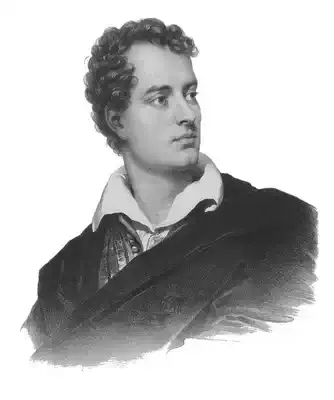
Lord Byron
Herod's Lament For Mariamne
Herod's Lament For Mariamne
Oh, Mariamne! now for thee
The heart of which thou bled'st is bleeding;
Revenge is lost in agony,
And wild remorse to rage succeeding.
Oh, Mariamne! where art thou?
Thou canst not hear my bitter pleading:
Ah! could'st thouthou
would'st pardon now,
Though Heaven were to my prayer unheeding.
And is she dead?and
did they dare
Obey my frenzy's jealous raving?
My wrath but doom'd my own despair:
The sword that smote her's o'er me waving.But
thou art cold, my murder'd love!
And this dark heart is vainly craving
For her who soars alone above,
And leaves my soul unworthy saving.
She's gone, who shared my diadem;
She sunk, with her my joys entombing;
I swept that flower from Judah's stem,
Whose leaves for me alone were blooming;
And mine's the guilt, and mine the hell,
This bosom's desolation dooming;
And I have earn'd those tortures well,
Which unconsumed are still consuming!
Oh, Mariamne! now for thee
The heart of which thou bled'st is bleeding;
Revenge is lost in agony,
And wild remorse to rage succeeding.
Oh, Mariamne! where art thou?
Thou canst not hear my bitter pleading:
Ah! could'st thouthou
would'st pardon now,
Though Heaven were to my prayer unheeding.
And is she dead?and
did they dare
Obey my frenzy's jealous raving?
My wrath but doom'd my own despair:
The sword that smote her's o'er me waving.But
thou art cold, my murder'd love!
And this dark heart is vainly craving
For her who soars alone above,
And leaves my soul unworthy saving.
She's gone, who shared my diadem;
She sunk, with her my joys entombing;
I swept that flower from Judah's stem,
Whose leaves for me alone were blooming;
And mine's the guilt, and mine the hell,
This bosom's desolation dooming;
And I have earn'd those tortures well,
Which unconsumed are still consuming!
699
Lord Byron
Herod's Lament For Mariamne
Herod's Lament For Mariamne
Oh, Mariamne! now for thee
The heart of which thou bled'st is bleeding;
Revenge is lost in agony,
And wild remorse to rage succeeding.
Oh, Mariamne! where art thou?
Thou canst not hear my bitter pleading:
Ah! could'st thouthou
would'st pardon now,
Though Heaven were to my prayer unheeding.
And is she dead?and
did they dare
Obey my frenzy's jealous raving?
My wrath but doom'd my own despair:
The sword that smote her's o'er me waving.But
thou art cold, my murder'd love!
And this dark heart is vainly craving
For her who soars alone above,
And leaves my soul unworthy saving.
She's gone, who shared my diadem;
She sunk, with her my joys entombing;
I swept that flower from Judah's stem,
Whose leaves for me alone were blooming;
And mine's the guilt, and mine the hell,
This bosom's desolation dooming;
And I have earn'd those tortures well,
Which unconsumed are still consuming!
Oh, Mariamne! now for thee
The heart of which thou bled'st is bleeding;
Revenge is lost in agony,
And wild remorse to rage succeeding.
Oh, Mariamne! where art thou?
Thou canst not hear my bitter pleading:
Ah! could'st thouthou
would'st pardon now,
Though Heaven were to my prayer unheeding.
And is she dead?and
did they dare
Obey my frenzy's jealous raving?
My wrath but doom'd my own despair:
The sword that smote her's o'er me waving.But
thou art cold, my murder'd love!
And this dark heart is vainly craving
For her who soars alone above,
And leaves my soul unworthy saving.
She's gone, who shared my diadem;
She sunk, with her my joys entombing;
I swept that flower from Judah's stem,
Whose leaves for me alone were blooming;
And mine's the guilt, and mine the hell,
This bosom's desolation dooming;
And I have earn'd those tortures well,
Which unconsumed are still consuming!
699
Lord Byron
From The Last Hill That Looks On Thy Once Holy Dome
From The Last Hill That Looks On Thy Once Holy Dome
I.
From the last hill that looks on thy once holy dome,
I beheld thee, Oh Sion! when rendered to Rome:
'Twas thy last sun went down, and the flames of thy fall
Flash'd back on the last glance I gave to thy wall.
II.
I look'd for thy temple, I look'd for my home,
And forgot for a moment my bondage to come;
I beheld but the deathfire
that fed on thy fane,
And the fastfetter'd
hands that made vengeance in vain.
III.
Oh many an eve, the high spot whence I gazed
Had reflected the last beam of day as it blazed;
While I stood on the height, and beheld the decline
Of the rays from the mountain that shone on thy shrine.
IV.
And now on that mountain I stood on that day,
But I marked not the twilight beam melting away;
Oh! would that the lightning had glared in its stead,
And the thunderbolt burst on the conqueror's head!
V.
But the Gods of the Pagan shall never profane
The shrine where Jehovah disdain'd not to reign;
And scattered and scorn'd as thy people may be,
Our worship, oh Father! is only for thee.
I.
From the last hill that looks on thy once holy dome,
I beheld thee, Oh Sion! when rendered to Rome:
'Twas thy last sun went down, and the flames of thy fall
Flash'd back on the last glance I gave to thy wall.
II.
I look'd for thy temple, I look'd for my home,
And forgot for a moment my bondage to come;
I beheld but the deathfire
that fed on thy fane,
And the fastfetter'd
hands that made vengeance in vain.
III.
Oh many an eve, the high spot whence I gazed
Had reflected the last beam of day as it blazed;
While I stood on the height, and beheld the decline
Of the rays from the mountain that shone on thy shrine.
IV.
And now on that mountain I stood on that day,
But I marked not the twilight beam melting away;
Oh! would that the lightning had glared in its stead,
And the thunderbolt burst on the conqueror's head!
V.
But the Gods of the Pagan shall never profane
The shrine where Jehovah disdain'd not to reign;
And scattered and scorn'd as thy people may be,
Our worship, oh Father! is only for thee.
478
Lord Byron
From The Last Hill That Looks On Thy Once Holy Dome
From The Last Hill That Looks On Thy Once Holy Dome
I.
From the last hill that looks on thy once holy dome,
I beheld thee, Oh Sion! when rendered to Rome:
'Twas thy last sun went down, and the flames of thy fall
Flash'd back on the last glance I gave to thy wall.
II.
I look'd for thy temple, I look'd for my home,
And forgot for a moment my bondage to come;
I beheld but the deathfire
that fed on thy fane,
And the fastfetter'd
hands that made vengeance in vain.
III.
Oh many an eve, the high spot whence I gazed
Had reflected the last beam of day as it blazed;
While I stood on the height, and beheld the decline
Of the rays from the mountain that shone on thy shrine.
IV.
And now on that mountain I stood on that day,
But I marked not the twilight beam melting away;
Oh! would that the lightning had glared in its stead,
And the thunderbolt burst on the conqueror's head!
V.
But the Gods of the Pagan shall never profane
The shrine where Jehovah disdain'd not to reign;
And scattered and scorn'd as thy people may be,
Our worship, oh Father! is only for thee.
I.
From the last hill that looks on thy once holy dome,
I beheld thee, Oh Sion! when rendered to Rome:
'Twas thy last sun went down, and the flames of thy fall
Flash'd back on the last glance I gave to thy wall.
II.
I look'd for thy temple, I look'd for my home,
And forgot for a moment my bondage to come;
I beheld but the deathfire
that fed on thy fane,
And the fastfetter'd
hands that made vengeance in vain.
III.
Oh many an eve, the high spot whence I gazed
Had reflected the last beam of day as it blazed;
While I stood on the height, and beheld the decline
Of the rays from the mountain that shone on thy shrine.
IV.
And now on that mountain I stood on that day,
But I marked not the twilight beam melting away;
Oh! would that the lightning had glared in its stead,
And the thunderbolt burst on the conqueror's head!
V.
But the Gods of the Pagan shall never profane
The shrine where Jehovah disdain'd not to reign;
And scattered and scorn'd as thy people may be,
Our worship, oh Father! is only for thee.
478
Lord Byron
From Anacreon: 'Twas Now The Hour When Night Had Driven
From Anacreon: 'Twas Now The Hour When Night Had Driven
'Twas now the hour when Night had driven
Her car half round yon sable heaven;
Boötes, only, seem'd to roll
His arctic charge around the pole;
While mortals, lost in gentle sleep,
Forgot to smile, or ceased to weep:
At this lone hour the Paphian boy,
Descending from the realms of joy,
Quick to my gate directs his course,
And knocks with all his little force.
My visions fled, alarm'd I rose,'
What stranger breaks my blest repose?'
'Alas!' replies the wily child,
In faltering accents sweetly mild,
'A hapless infant here I roam,
Far from my dear maternal home.
Oh! shield me from the wintry blast!
The nightly storm is pouring fast.
No prowling robber lingers here.
A wandering baby who can fear?'
I heard his seeming artless tale,
I heard his sighs upon the gale:
My breast was never pity's foe,
But felt for all the baby's woe.
I drew the bar, and by the light
Young Love, the infant, met my sight;
His bow across his shoulders flung,
And thence his fatal quiver hung
(Ah! little did I think the dart
Would rankle soon within my heart).
With care I tend my weary guest,
His little fingers chill my breast;
His glossy curls, his azure wing,
Which droop with nightly showers, I wring;
His shivering limbs the embers warm;
And now reviving from the storm,
Scarce had he felt his wonted glow,
Than swift he seized his slender bow:'
I fain would know, my gentle host,'
He cried, 'if this its strength has lost;
I fear, relax'd with midnight dews,
The strings their former aid refuse.'
With poison tipt, his arrow flies,
Deep in my tortured heart it lies:
Then loud the joyous urchin laugh'd:'
My bow can still impel the shaft:
'Tis firmly fix'd, thy sighs reveal it;
Say, courteous host, canst thou not feel it?'
'Twas now the hour when Night had driven
Her car half round yon sable heaven;
Boötes, only, seem'd to roll
His arctic charge around the pole;
While mortals, lost in gentle sleep,
Forgot to smile, or ceased to weep:
At this lone hour the Paphian boy,
Descending from the realms of joy,
Quick to my gate directs his course,
And knocks with all his little force.
My visions fled, alarm'd I rose,'
What stranger breaks my blest repose?'
'Alas!' replies the wily child,
In faltering accents sweetly mild,
'A hapless infant here I roam,
Far from my dear maternal home.
Oh! shield me from the wintry blast!
The nightly storm is pouring fast.
No prowling robber lingers here.
A wandering baby who can fear?'
I heard his seeming artless tale,
I heard his sighs upon the gale:
My breast was never pity's foe,
But felt for all the baby's woe.
I drew the bar, and by the light
Young Love, the infant, met my sight;
His bow across his shoulders flung,
And thence his fatal quiver hung
(Ah! little did I think the dart
Would rankle soon within my heart).
With care I tend my weary guest,
His little fingers chill my breast;
His glossy curls, his azure wing,
Which droop with nightly showers, I wring;
His shivering limbs the embers warm;
And now reviving from the storm,
Scarce had he felt his wonted glow,
Than swift he seized his slender bow:'
I fain would know, my gentle host,'
He cried, 'if this its strength has lost;
I fear, relax'd with midnight dews,
The strings their former aid refuse.'
With poison tipt, his arrow flies,
Deep in my tortured heart it lies:
Then loud the joyous urchin laugh'd:'
My bow can still impel the shaft:
'Tis firmly fix'd, thy sighs reveal it;
Say, courteous host, canst thou not feel it?'
408
Lord Byron
From Anacreon: 'Twas Now The Hour When Night Had Driven
From Anacreon: 'Twas Now The Hour When Night Had Driven
'Twas now the hour when Night had driven
Her car half round yon sable heaven;
Boötes, only, seem'd to roll
His arctic charge around the pole;
While mortals, lost in gentle sleep,
Forgot to smile, or ceased to weep:
At this lone hour the Paphian boy,
Descending from the realms of joy,
Quick to my gate directs his course,
And knocks with all his little force.
My visions fled, alarm'd I rose,'
What stranger breaks my blest repose?'
'Alas!' replies the wily child,
In faltering accents sweetly mild,
'A hapless infant here I roam,
Far from my dear maternal home.
Oh! shield me from the wintry blast!
The nightly storm is pouring fast.
No prowling robber lingers here.
A wandering baby who can fear?'
I heard his seeming artless tale,
I heard his sighs upon the gale:
My breast was never pity's foe,
But felt for all the baby's woe.
I drew the bar, and by the light
Young Love, the infant, met my sight;
His bow across his shoulders flung,
And thence his fatal quiver hung
(Ah! little did I think the dart
Would rankle soon within my heart).
With care I tend my weary guest,
His little fingers chill my breast;
His glossy curls, his azure wing,
Which droop with nightly showers, I wring;
His shivering limbs the embers warm;
And now reviving from the storm,
Scarce had he felt his wonted glow,
Than swift he seized his slender bow:'
I fain would know, my gentle host,'
He cried, 'if this its strength has lost;
I fear, relax'd with midnight dews,
The strings their former aid refuse.'
With poison tipt, his arrow flies,
Deep in my tortured heart it lies:
Then loud the joyous urchin laugh'd:'
My bow can still impel the shaft:
'Tis firmly fix'd, thy sighs reveal it;
Say, courteous host, canst thou not feel it?'
'Twas now the hour when Night had driven
Her car half round yon sable heaven;
Boötes, only, seem'd to roll
His arctic charge around the pole;
While mortals, lost in gentle sleep,
Forgot to smile, or ceased to weep:
At this lone hour the Paphian boy,
Descending from the realms of joy,
Quick to my gate directs his course,
And knocks with all his little force.
My visions fled, alarm'd I rose,'
What stranger breaks my blest repose?'
'Alas!' replies the wily child,
In faltering accents sweetly mild,
'A hapless infant here I roam,
Far from my dear maternal home.
Oh! shield me from the wintry blast!
The nightly storm is pouring fast.
No prowling robber lingers here.
A wandering baby who can fear?'
I heard his seeming artless tale,
I heard his sighs upon the gale:
My breast was never pity's foe,
But felt for all the baby's woe.
I drew the bar, and by the light
Young Love, the infant, met my sight;
His bow across his shoulders flung,
And thence his fatal quiver hung
(Ah! little did I think the dart
Would rankle soon within my heart).
With care I tend my weary guest,
His little fingers chill my breast;
His glossy curls, his azure wing,
Which droop with nightly showers, I wring;
His shivering limbs the embers warm;
And now reviving from the storm,
Scarce had he felt his wonted glow,
Than swift he seized his slender bow:'
I fain would know, my gentle host,'
He cried, 'if this its strength has lost;
I fear, relax'd with midnight dews,
The strings their former aid refuse.'
With poison tipt, his arrow flies,
Deep in my tortured heart it lies:
Then loud the joyous urchin laugh'd:'
My bow can still impel the shaft:
'Tis firmly fix'd, thy sighs reveal it;
Say, courteous host, canst thou not feel it?'
408
Lord Byron
Fill The Goblet Again: A Song
Fill The Goblet Again: A Song
Fill the goblet again! for I never before
Felt the glow which now gladdens my heart to its core;
Let us drink!who
would not?since,
through life's varied round,
In the goblet alone no deception is found.
I have tried in its turn all that life can supply;
I have bask'd in the beam of a dark rolling eye;
I have loved!who
has not?but
what heart can declare
That pleasure existed while passion was there?
In the days of my youth, when the heart's in its spring,
And dreams that affection can never take wing,
I had friends!who
has not?but
what tongue will avow,
That friends, rosy wine! are so faithful as thou?
The heart of a mistress some boy may estrange,
Friendship shifts with the sunbeamthou
never canst change;
Thou grow'st oldwho
does not?but
on earth what appears,
Whose virtues, like thine, still increase with its years?
Yet if blest to the utmost that love can bestow,
Should a rival bow down to our idol below,
We aree jealous!who
is not?thou
hast no such alloy;
For the more that enjoy thee, the more we enjoy.
Then the season of youth and its vanities past,
For refuge we fly to the goblet at last;
There we finddo
we not?in
the flow of the soul,
That truth, as of yore, is confined to the bowl.
When the box of Pandora was opened on earth,
And Misery's triumph commenced over Mirth,
Hope was left,was
she not?but
the goblet we kiss,
And care not for Hope, who are certain of bliss.
Long life to the grape! for when summer is flown,
The age of our nectar shall gladden our own:
We must diewho
shall not?May
our sins be forgiven,
And Hebe shall never be idle in heaven.
Fill the goblet again! for I never before
Felt the glow which now gladdens my heart to its core;
Let us drink!who
would not?since,
through life's varied round,
In the goblet alone no deception is found.
I have tried in its turn all that life can supply;
I have bask'd in the beam of a dark rolling eye;
I have loved!who
has not?but
what heart can declare
That pleasure existed while passion was there?
In the days of my youth, when the heart's in its spring,
And dreams that affection can never take wing,
I had friends!who
has not?but
what tongue will avow,
That friends, rosy wine! are so faithful as thou?
The heart of a mistress some boy may estrange,
Friendship shifts with the sunbeamthou
never canst change;
Thou grow'st oldwho
does not?but
on earth what appears,
Whose virtues, like thine, still increase with its years?
Yet if blest to the utmost that love can bestow,
Should a rival bow down to our idol below,
We aree jealous!who
is not?thou
hast no such alloy;
For the more that enjoy thee, the more we enjoy.
Then the season of youth and its vanities past,
For refuge we fly to the goblet at last;
There we finddo
we not?in
the flow of the soul,
That truth, as of yore, is confined to the bowl.
When the box of Pandora was opened on earth,
And Misery's triumph commenced over Mirth,
Hope was left,was
she not?but
the goblet we kiss,
And care not for Hope, who are certain of bliss.
Long life to the grape! for when summer is flown,
The age of our nectar shall gladden our own:
We must diewho
shall not?May
our sins be forgiven,
And Hebe shall never be idle in heaven.
470
Lord Byron
Fill The Goblet Again: A Song
Fill The Goblet Again: A Song
Fill the goblet again! for I never before
Felt the glow which now gladdens my heart to its core;
Let us drink!who
would not?since,
through life's varied round,
In the goblet alone no deception is found.
I have tried in its turn all that life can supply;
I have bask'd in the beam of a dark rolling eye;
I have loved!who
has not?but
what heart can declare
That pleasure existed while passion was there?
In the days of my youth, when the heart's in its spring,
And dreams that affection can never take wing,
I had friends!who
has not?but
what tongue will avow,
That friends, rosy wine! are so faithful as thou?
The heart of a mistress some boy may estrange,
Friendship shifts with the sunbeamthou
never canst change;
Thou grow'st oldwho
does not?but
on earth what appears,
Whose virtues, like thine, still increase with its years?
Yet if blest to the utmost that love can bestow,
Should a rival bow down to our idol below,
We aree jealous!who
is not?thou
hast no such alloy;
For the more that enjoy thee, the more we enjoy.
Then the season of youth and its vanities past,
For refuge we fly to the goblet at last;
There we finddo
we not?in
the flow of the soul,
That truth, as of yore, is confined to the bowl.
When the box of Pandora was opened on earth,
And Misery's triumph commenced over Mirth,
Hope was left,was
she not?but
the goblet we kiss,
And care not for Hope, who are certain of bliss.
Long life to the grape! for when summer is flown,
The age of our nectar shall gladden our own:
We must diewho
shall not?May
our sins be forgiven,
And Hebe shall never be idle in heaven.
Fill the goblet again! for I never before
Felt the glow which now gladdens my heart to its core;
Let us drink!who
would not?since,
through life's varied round,
In the goblet alone no deception is found.
I have tried in its turn all that life can supply;
I have bask'd in the beam of a dark rolling eye;
I have loved!who
has not?but
what heart can declare
That pleasure existed while passion was there?
In the days of my youth, when the heart's in its spring,
And dreams that affection can never take wing,
I had friends!who
has not?but
what tongue will avow,
That friends, rosy wine! are so faithful as thou?
The heart of a mistress some boy may estrange,
Friendship shifts with the sunbeamthou
never canst change;
Thou grow'st oldwho
does not?but
on earth what appears,
Whose virtues, like thine, still increase with its years?
Yet if blest to the utmost that love can bestow,
Should a rival bow down to our idol below,
We aree jealous!who
is not?thou
hast no such alloy;
For the more that enjoy thee, the more we enjoy.
Then the season of youth and its vanities past,
For refuge we fly to the goblet at last;
There we finddo
we not?in
the flow of the soul,
That truth, as of yore, is confined to the bowl.
When the box of Pandora was opened on earth,
And Misery's triumph commenced over Mirth,
Hope was left,was
she not?but
the goblet we kiss,
And care not for Hope, who are certain of bliss.
Long life to the grape! for when summer is flown,
The age of our nectar shall gladden our own:
We must diewho
shall not?May
our sins be forgiven,
And Hebe shall never be idle in heaven.
470
Lord Byron
Fill The Goblet Again: A Song
Fill The Goblet Again: A Song
Fill the goblet again! for I never before
Felt the glow which now gladdens my heart to its core;
Let us drink!who
would not?since,
through life's varied round,
In the goblet alone no deception is found.
I have tried in its turn all that life can supply;
I have bask'd in the beam of a dark rolling eye;
I have loved!who
has not?but
what heart can declare
That pleasure existed while passion was there?
In the days of my youth, when the heart's in its spring,
And dreams that affection can never take wing,
I had friends!who
has not?but
what tongue will avow,
That friends, rosy wine! are so faithful as thou?
The heart of a mistress some boy may estrange,
Friendship shifts with the sunbeamthou
never canst change;
Thou grow'st oldwho
does not?but
on earth what appears,
Whose virtues, like thine, still increase with its years?
Yet if blest to the utmost that love can bestow,
Should a rival bow down to our idol below,
We aree jealous!who
is not?thou
hast no such alloy;
For the more that enjoy thee, the more we enjoy.
Then the season of youth and its vanities past,
For refuge we fly to the goblet at last;
There we finddo
we not?in
the flow of the soul,
That truth, as of yore, is confined to the bowl.
When the box of Pandora was opened on earth,
And Misery's triumph commenced over Mirth,
Hope was left,was
she not?but
the goblet we kiss,
And care not for Hope, who are certain of bliss.
Long life to the grape! for when summer is flown,
The age of our nectar shall gladden our own:
We must diewho
shall not?May
our sins be forgiven,
And Hebe shall never be idle in heaven.
Fill the goblet again! for I never before
Felt the glow which now gladdens my heart to its core;
Let us drink!who
would not?since,
through life's varied round,
In the goblet alone no deception is found.
I have tried in its turn all that life can supply;
I have bask'd in the beam of a dark rolling eye;
I have loved!who
has not?but
what heart can declare
That pleasure existed while passion was there?
In the days of my youth, when the heart's in its spring,
And dreams that affection can never take wing,
I had friends!who
has not?but
what tongue will avow,
That friends, rosy wine! are so faithful as thou?
The heart of a mistress some boy may estrange,
Friendship shifts with the sunbeamthou
never canst change;
Thou grow'st oldwho
does not?but
on earth what appears,
Whose virtues, like thine, still increase with its years?
Yet if blest to the utmost that love can bestow,
Should a rival bow down to our idol below,
We aree jealous!who
is not?thou
hast no such alloy;
For the more that enjoy thee, the more we enjoy.
Then the season of youth and its vanities past,
For refuge we fly to the goblet at last;
There we finddo
we not?in
the flow of the soul,
That truth, as of yore, is confined to the bowl.
When the box of Pandora was opened on earth,
And Misery's triumph commenced over Mirth,
Hope was left,was
she not?but
the goblet we kiss,
And care not for Hope, who are certain of bliss.
Long life to the grape! for when summer is flown,
The age of our nectar shall gladden our own:
We must diewho
shall not?May
our sins be forgiven,
And Hebe shall never be idle in heaven.
470
Lord Byron
Francisca
Francisca
Francisca walks in the shadow of night,
But it is not to gaze on the heavenly light But
if she sits in her garden bower,
'Tis not for the sake of its blowing flower.
She listens but
not for the nightingale Though
her ear expects as soft a tale.
There winds a step through the foliage thick,
And her cheek grows pale, and her heart beats quick.
There whispers a voice thro' the rustling leaves;
A moment more and they shall meet '
Tis past her
lover's at her feet.
Francisca walks in the shadow of night,
But it is not to gaze on the heavenly light But
if she sits in her garden bower,
'Tis not for the sake of its blowing flower.
She listens but
not for the nightingale Though
her ear expects as soft a tale.
There winds a step through the foliage thick,
And her cheek grows pale, and her heart beats quick.
There whispers a voice thro' the rustling leaves;
A moment more and they shall meet '
Tis past her
lover's at her feet.
517
Lord Byron
Farewell To The Muse
Farewell To The Muse
Thou Power! who hast ruled me through Infancy's days,
Young offspring of Fancy, 'tis time we should part;
Then rise on the gale this the last of my lays,
The coldest effusion which springs from my heart.
This bosom, responsive to rapture no more,
Shall hush thy wild notes, nor implore thee to sing;
The feelings of childhood, which taught thee to soar,
Are wafted far distant on Apathy's wing.
Though simple the themes of my rude flowing Lyre,
Yet even these themes are departed for ever;
No more beam the eyes which my dream could inspire,
My visions are flown, to return, alas, never!
When drain'd is the nectar which gladdens the bowl,
How vain is the effort delight to prolong!
When cold is the beauty which dwelt in my soul,
What magic of Fancy can lengthen my song?
Can the lips sing of Love in the desert alone,
Of kisses and smiles which they now must resign?
Or dwell with delight on the hours that are flown?
Ah, no! for those hours can no longer be mine.
Can they speak of the friends that I lived but to love?
Ah, surely Affection ennobles the strain!
But how can my numbers in sympathy move,
When I scarcely can hope to behold them again?
Can I sing of the deeds which my Fathers have done,
And raise my loud harp to the fame of my Sires?
For glories like theirs, oh, how faint is my tone!
For Heroes' exploits how unequal my fires!
Untouch'd, then, my Lyre shall reply to the blast'
Tis hush'd; and my feeble endeavors are o'er;
And those who have heard it will pardon the past,
When they know that its murmurs shall vibrate no more.
And soon shall its wild erring notes be forgot,
Since early affection and love is o'ercast:
Oh! blest had my Fate been, and happy my lot,
Had the first strain of love been the dearest, the last.
Farewell, my young Muse! since we now can ne'er meet;
If our songs have been languid, they surely are few:
Let us hope that the present at least will be sweetThe
presentwhich
seals our eternal Adieu.
Thou Power! who hast ruled me through Infancy's days,
Young offspring of Fancy, 'tis time we should part;
Then rise on the gale this the last of my lays,
The coldest effusion which springs from my heart.
This bosom, responsive to rapture no more,
Shall hush thy wild notes, nor implore thee to sing;
The feelings of childhood, which taught thee to soar,
Are wafted far distant on Apathy's wing.
Though simple the themes of my rude flowing Lyre,
Yet even these themes are departed for ever;
No more beam the eyes which my dream could inspire,
My visions are flown, to return, alas, never!
When drain'd is the nectar which gladdens the bowl,
How vain is the effort delight to prolong!
When cold is the beauty which dwelt in my soul,
What magic of Fancy can lengthen my song?
Can the lips sing of Love in the desert alone,
Of kisses and smiles which they now must resign?
Or dwell with delight on the hours that are flown?
Ah, no! for those hours can no longer be mine.
Can they speak of the friends that I lived but to love?
Ah, surely Affection ennobles the strain!
But how can my numbers in sympathy move,
When I scarcely can hope to behold them again?
Can I sing of the deeds which my Fathers have done,
And raise my loud harp to the fame of my Sires?
For glories like theirs, oh, how faint is my tone!
For Heroes' exploits how unequal my fires!
Untouch'd, then, my Lyre shall reply to the blast'
Tis hush'd; and my feeble endeavors are o'er;
And those who have heard it will pardon the past,
When they know that its murmurs shall vibrate no more.
And soon shall its wild erring notes be forgot,
Since early affection and love is o'ercast:
Oh! blest had my Fate been, and happy my lot,
Had the first strain of love been the dearest, the last.
Farewell, my young Muse! since we now can ne'er meet;
If our songs have been languid, they surely are few:
Let us hope that the present at least will be sweetThe
presentwhich
seals our eternal Adieu.
502
Lord Byron
Fare Thee Well
Fare Thee Well
Fare thee well! and if for ever,
Still for ever, fare thee well:
Even though unforgiving, never
'Gainst thee shall my heart rebel.
Would that breast were bared before thee
Where thy head so oft hath lain.
While that placid sleep came o'er thee
Which thou ne'er canst know again;
Would that breast, by thee glanced over,
Every inmost thought could show!
Then thou wouldst at last discover
'Twas not well to spurn it so.
Though the world for this commend theeThough
it smile upon the blow,
Even its praises must offend thee,
Founded on another's woe:
Though my many faults defaced me,
Could no other arm be found,
Than the one which once embraced me,
To inflict a cureless wound?
Yet, oh yet, thyself deceive not;
Love may sink by slow decay,
But by sudden wrench, believe not
Hearts can thus be torn away:
Still thine own its life retaineth,
Still must mine, though bleeding, beat;
And the undying thought which paineth
Is that
we no more may meet.
These are words of deeper sorrow
Than the wail above the dead;
Both shall live, but every morrow
Wake us from a widow'd bed.
And when thou wouldst solace gather,
When our child's first accents flow,
Wilt thou teach her to say 'Father!'
Though his care she must forego?
When her little hands shall press thee,
When her lip to thine is press'd
Think of him whose prayer shall bless thee,
Think of him thy love had bless'd!
Should her lineaments resemble
Those thou never more may'st see,
Then thy heart will softly tremble
With a pulse yet true to me.
All my faults perchance thou knowest,
All my madness none can know;
All my hopes where'er thou goest,
Wither, yet with thee they go.
Every feeling hath been shaken;
Pride, which not a world could bow,
Bows to theeby
thee forsaken,
Even my soul forsakes me now:
But 'tis doneall
words are idleWords
from me are vainer still;
But the thoughts we cannot bridle
Force their way without the will.
Fare thee well! thus disunited,
Torn from every nearer tie
Sear 'd in heart, and lone, and blighted,
More than this I scarce can die.
Fare thee well! and if for ever,
Still for ever, fare thee well:
Even though unforgiving, never
'Gainst thee shall my heart rebel.
Would that breast were bared before thee
Where thy head so oft hath lain.
While that placid sleep came o'er thee
Which thou ne'er canst know again;
Would that breast, by thee glanced over,
Every inmost thought could show!
Then thou wouldst at last discover
'Twas not well to spurn it so.
Though the world for this commend theeThough
it smile upon the blow,
Even its praises must offend thee,
Founded on another's woe:
Though my many faults defaced me,
Could no other arm be found,
Than the one which once embraced me,
To inflict a cureless wound?
Yet, oh yet, thyself deceive not;
Love may sink by slow decay,
But by sudden wrench, believe not
Hearts can thus be torn away:
Still thine own its life retaineth,
Still must mine, though bleeding, beat;
And the undying thought which paineth
Is that
we no more may meet.
These are words of deeper sorrow
Than the wail above the dead;
Both shall live, but every morrow
Wake us from a widow'd bed.
And when thou wouldst solace gather,
When our child's first accents flow,
Wilt thou teach her to say 'Father!'
Though his care she must forego?
When her little hands shall press thee,
When her lip to thine is press'd
Think of him whose prayer shall bless thee,
Think of him thy love had bless'd!
Should her lineaments resemble
Those thou never more may'st see,
Then thy heart will softly tremble
With a pulse yet true to me.
All my faults perchance thou knowest,
All my madness none can know;
All my hopes where'er thou goest,
Wither, yet with thee they go.
Every feeling hath been shaken;
Pride, which not a world could bow,
Bows to theeby
thee forsaken,
Even my soul forsakes me now:
But 'tis doneall
words are idleWords
from me are vainer still;
But the thoughts we cannot bridle
Force their way without the will.
Fare thee well! thus disunited,
Torn from every nearer tie
Sear 'd in heart, and lone, and blighted,
More than this I scarce can die.
530
Lord Byron
Fare Thee Well
Fare Thee Well
Fare thee well! and if for ever,
Still for ever, fare thee well:
Even though unforgiving, never
'Gainst thee shall my heart rebel.
Would that breast were bared before thee
Where thy head so oft hath lain.
While that placid sleep came o'er thee
Which thou ne'er canst know again;
Would that breast, by thee glanced over,
Every inmost thought could show!
Then thou wouldst at last discover
'Twas not well to spurn it so.
Though the world for this commend theeThough
it smile upon the blow,
Even its praises must offend thee,
Founded on another's woe:
Though my many faults defaced me,
Could no other arm be found,
Than the one which once embraced me,
To inflict a cureless wound?
Yet, oh yet, thyself deceive not;
Love may sink by slow decay,
But by sudden wrench, believe not
Hearts can thus be torn away:
Still thine own its life retaineth,
Still must mine, though bleeding, beat;
And the undying thought which paineth
Is that
we no more may meet.
These are words of deeper sorrow
Than the wail above the dead;
Both shall live, but every morrow
Wake us from a widow'd bed.
And when thou wouldst solace gather,
When our child's first accents flow,
Wilt thou teach her to say 'Father!'
Though his care she must forego?
When her little hands shall press thee,
When her lip to thine is press'd
Think of him whose prayer shall bless thee,
Think of him thy love had bless'd!
Should her lineaments resemble
Those thou never more may'st see,
Then thy heart will softly tremble
With a pulse yet true to me.
All my faults perchance thou knowest,
All my madness none can know;
All my hopes where'er thou goest,
Wither, yet with thee they go.
Every feeling hath been shaken;
Pride, which not a world could bow,
Bows to theeby
thee forsaken,
Even my soul forsakes me now:
But 'tis doneall
words are idleWords
from me are vainer still;
But the thoughts we cannot bridle
Force their way without the will.
Fare thee well! thus disunited,
Torn from every nearer tie
Sear 'd in heart, and lone, and blighted,
More than this I scarce can die.
Fare thee well! and if for ever,
Still for ever, fare thee well:
Even though unforgiving, never
'Gainst thee shall my heart rebel.
Would that breast were bared before thee
Where thy head so oft hath lain.
While that placid sleep came o'er thee
Which thou ne'er canst know again;
Would that breast, by thee glanced over,
Every inmost thought could show!
Then thou wouldst at last discover
'Twas not well to spurn it so.
Though the world for this commend theeThough
it smile upon the blow,
Even its praises must offend thee,
Founded on another's woe:
Though my many faults defaced me,
Could no other arm be found,
Than the one which once embraced me,
To inflict a cureless wound?
Yet, oh yet, thyself deceive not;
Love may sink by slow decay,
But by sudden wrench, believe not
Hearts can thus be torn away:
Still thine own its life retaineth,
Still must mine, though bleeding, beat;
And the undying thought which paineth
Is that
we no more may meet.
These are words of deeper sorrow
Than the wail above the dead;
Both shall live, but every morrow
Wake us from a widow'd bed.
And when thou wouldst solace gather,
When our child's first accents flow,
Wilt thou teach her to say 'Father!'
Though his care she must forego?
When her little hands shall press thee,
When her lip to thine is press'd
Think of him whose prayer shall bless thee,
Think of him thy love had bless'd!
Should her lineaments resemble
Those thou never more may'st see,
Then thy heart will softly tremble
With a pulse yet true to me.
All my faults perchance thou knowest,
All my madness none can know;
All my hopes where'er thou goest,
Wither, yet with thee they go.
Every feeling hath been shaken;
Pride, which not a world could bow,
Bows to theeby
thee forsaken,
Even my soul forsakes me now:
But 'tis doneall
words are idleWords
from me are vainer still;
But the thoughts we cannot bridle
Force their way without the will.
Fare thee well! thus disunited,
Torn from every nearer tie
Sear 'd in heart, and lone, and blighted,
More than this I scarce can die.
530
Lord Byron
Epitaph On John Adams, Of Southwell - A Carrier, Who Died Of Drunkenness
Epitaph On John Adams, Of Southwell - A Carrier, Who Died Of Drunkenness
JOHN ADAMS lies here, of the parish of Southwell,
A Carrier who carried his can to his mouth well:
He carried so much, and he carried so fast,
He could carry no more‑so was carried at last;
For, the liquor he drank, being too much for one,
He could not carry off,so
he's now carrion.
JOHN ADAMS lies here, of the parish of Southwell,
A Carrier who carried his can to his mouth well:
He carried so much, and he carried so fast,
He could carry no more‑so was carried at last;
For, the liquor he drank, being too much for one,
He could not carry off,so
he's now carrion.
490
Lord Byron
Epistle To Augusta
Epistle To Augusta
I.
My sister! my sweet sister! if a name
Dearer and purer were, it should be thine;
Mountains and seas divide us, but I claim
No tears, but tenderness to answer mine:
Go where I will, to me thou art the sameA
loved regret which I would not resign,
There yet are two things in my destiny,
A
world to roam through, and a home with thee.
II.
The first were nothinghad
I still the last,
It were the haven of my happiness;
But other claims and other ties thou hast,
And mine is not the wish to make them less.
A strange doom is thy father's son's, and past
Recalling, as it lies beyond redress;
Reversed for him our grandsire's fate of yore,
He had no rest at sea, nor I on shore.
III.
If my inheritance of storms hath been
In other elements, and on the rocks
Of perils, overlook'd or unforeseen,
I have sustain'd my share of worldly shocks,
The fault was mine; nor do I seek to screen
My errors with defensive paradox;
I have been cunning in mine overthrow,
The careful pilot of my proper woe.
IV.
Mine were my faults, and mine be their reward.
My whole life was a contest, since the day
That gave me being, gave me that which marr'd
The gift,a
fate, or will, that walk'd astray;
And I at times have found the struggle hard,
And thought of shaking off my bonds of clay:
But now I fain would for a time survive,
If but to see what next can well arrive.
V.
Kingdoms and empires in my little day
I have outlived, and yet I am not old;
And when I look on this, the petty spray
Of my own years of trouble, which have roll'd
Like a wild bay of breakers, melts away
SomethingI
know not whatdoes
still uphold
A spirit of slight patience; not in vain,
Even for its own sake, do we purchase pain.
VI.
Perhaps the workings of defiance stir
Within me or
perhaps a cold despair,
Brought on when ills habitually recur,
Perhaps a kinder clime, or purer air,
(For even to this may change of soul refer,
And with light armour we may learn to bear,)
Have taught me a strange quiet, which was not
The chief companion of a calmer lot.
VII.
I feel almost at times as I have felt
In happy childhood; trees, and flowers, and brooks,
Which do remember me of where I dwelt
Ere my young mind was sacrificed to books,
Come as of yore upon me, and can melt
My heart with recognition of their looks;
And even at moments I could think I see
Some living thing to lovebut
none like thee.
VIII.
Here are the Alpine landscapes which create
A fund for contemplation;to
admire
Is a brief feeling of a trivial date;
But something worthier do such scenes inspire:
Here to be lonely is not desolate'
For much I view which I could most desire,
And, above all, a lake I can behold
Lovelier, not dearer, than our own of old.
IX.
Oh that thou wert but with me! but
I grow
The fool of my own wishes, and forget
The solitude which I have vaunted so
Has lost its praise in this but one regret;
There may be others which I less may show
I am not of the plaintive mood, and yet
I feel an ebb in my philosophy,
And the tide rising in my alter'd eye.
X.
I did remind thee of our own dear Lake,
By the old Hall which may be mine no more.
Leman's is fair; but think not I forsake
The sweet remembrance of a dearer shore:
Sad havoc Time must with my memory make,
Ere that or thou can fade these eyes before;
Though, like all things which I have loved they are
Resign 'd For ever, or divided far.
XI.
The world is all before me; I but ask
Of Nature that with which she will comply
It is but in her summer's sun to bask,
To mingle with the quiet of her sky,
To see her gentle face without a mask,
And never gaze on it with apathy.
She was my early friend, and now shall be
My sister till
I look again on thee.
XII.
I can reduce all feelings but this one;
And that I would not; for at length I see
Such scenes as those wherein my life begun.
The earliest even
the only paths for me Had
I but sooner learnt the crowd to shun,
I had been better than I now can be;
The passions which have torn me would have slept;
I had not suffer'd, and thou hadst not wept.
XIII.
With false Ambition what had I to do?
Little with Love, and least of all with Fame;
And yet they came unsought, and with me grew,
And made me all which they can make a
name.
Yet this was not the end I did pursue;
Surely I once beheld a nobler aim.
But all is over I
am one the more
To baffled millions which have gone before.
XIV.
And for the future, this world's future may
From me demand but little of my care;
I have outlived myself by many a day;
Having survived so many things that were;
My years have been no slumber, but the prey
Of ceaseless vigils; for I had the share
Of life which might have fill'd a century,
Before its fourth in time had pass'd me by.
XV.
And for the remnant which may be to come
I am content; and for the past I feel
Not thankless,for
within the crowded sum
Of struggles, happiness at times would steal,
And for the present, I would not benumb
My feelings further. Nor
shall I conceal
That with all this I still can look around,
And worship Nature with a thought profound.
XVI.
For thee, my own sweet sister, in thy heart
I know myself secure, as thou in mine;
We were and are I
am, even as thou art
Beings who ne'er each other can resign;
It is the same, together or apart,
From life's commencement to its slow decline
We are entwinedlet
death come slow or fast,
The tie which bound the first endures the last!
I.
My sister! my sweet sister! if a name
Dearer and purer were, it should be thine;
Mountains and seas divide us, but I claim
No tears, but tenderness to answer mine:
Go where I will, to me thou art the sameA
loved regret which I would not resign,
There yet are two things in my destiny,
A
world to roam through, and a home with thee.
II.
The first were nothinghad
I still the last,
It were the haven of my happiness;
But other claims and other ties thou hast,
And mine is not the wish to make them less.
A strange doom is thy father's son's, and past
Recalling, as it lies beyond redress;
Reversed for him our grandsire's fate of yore,
He had no rest at sea, nor I on shore.
III.
If my inheritance of storms hath been
In other elements, and on the rocks
Of perils, overlook'd or unforeseen,
I have sustain'd my share of worldly shocks,
The fault was mine; nor do I seek to screen
My errors with defensive paradox;
I have been cunning in mine overthrow,
The careful pilot of my proper woe.
IV.
Mine were my faults, and mine be their reward.
My whole life was a contest, since the day
That gave me being, gave me that which marr'd
The gift,a
fate, or will, that walk'd astray;
And I at times have found the struggle hard,
And thought of shaking off my bonds of clay:
But now I fain would for a time survive,
If but to see what next can well arrive.
V.
Kingdoms and empires in my little day
I have outlived, and yet I am not old;
And when I look on this, the petty spray
Of my own years of trouble, which have roll'd
Like a wild bay of breakers, melts away
SomethingI
know not whatdoes
still uphold
A spirit of slight patience; not in vain,
Even for its own sake, do we purchase pain.
VI.
Perhaps the workings of defiance stir
Within me or
perhaps a cold despair,
Brought on when ills habitually recur,
Perhaps a kinder clime, or purer air,
(For even to this may change of soul refer,
And with light armour we may learn to bear,)
Have taught me a strange quiet, which was not
The chief companion of a calmer lot.
VII.
I feel almost at times as I have felt
In happy childhood; trees, and flowers, and brooks,
Which do remember me of where I dwelt
Ere my young mind was sacrificed to books,
Come as of yore upon me, and can melt
My heart with recognition of their looks;
And even at moments I could think I see
Some living thing to lovebut
none like thee.
VIII.
Here are the Alpine landscapes which create
A fund for contemplation;to
admire
Is a brief feeling of a trivial date;
But something worthier do such scenes inspire:
Here to be lonely is not desolate'
For much I view which I could most desire,
And, above all, a lake I can behold
Lovelier, not dearer, than our own of old.
IX.
Oh that thou wert but with me! but
I grow
The fool of my own wishes, and forget
The solitude which I have vaunted so
Has lost its praise in this but one regret;
There may be others which I less may show
I am not of the plaintive mood, and yet
I feel an ebb in my philosophy,
And the tide rising in my alter'd eye.
X.
I did remind thee of our own dear Lake,
By the old Hall which may be mine no more.
Leman's is fair; but think not I forsake
The sweet remembrance of a dearer shore:
Sad havoc Time must with my memory make,
Ere that or thou can fade these eyes before;
Though, like all things which I have loved they are
Resign 'd For ever, or divided far.
XI.
The world is all before me; I but ask
Of Nature that with which she will comply
It is but in her summer's sun to bask,
To mingle with the quiet of her sky,
To see her gentle face without a mask,
And never gaze on it with apathy.
She was my early friend, and now shall be
My sister till
I look again on thee.
XII.
I can reduce all feelings but this one;
And that I would not; for at length I see
Such scenes as those wherein my life begun.
The earliest even
the only paths for me Had
I but sooner learnt the crowd to shun,
I had been better than I now can be;
The passions which have torn me would have slept;
I had not suffer'd, and thou hadst not wept.
XIII.
With false Ambition what had I to do?
Little with Love, and least of all with Fame;
And yet they came unsought, and with me grew,
And made me all which they can make a
name.
Yet this was not the end I did pursue;
Surely I once beheld a nobler aim.
But all is over I
am one the more
To baffled millions which have gone before.
XIV.
And for the future, this world's future may
From me demand but little of my care;
I have outlived myself by many a day;
Having survived so many things that were;
My years have been no slumber, but the prey
Of ceaseless vigils; for I had the share
Of life which might have fill'd a century,
Before its fourth in time had pass'd me by.
XV.
And for the remnant which may be to come
I am content; and for the past I feel
Not thankless,for
within the crowded sum
Of struggles, happiness at times would steal,
And for the present, I would not benumb
My feelings further. Nor
shall I conceal
That with all this I still can look around,
And worship Nature with a thought profound.
XVI.
For thee, my own sweet sister, in thy heart
I know myself secure, as thou in mine;
We were and are I
am, even as thou art
Beings who ne'er each other can resign;
It is the same, together or apart,
From life's commencement to its slow decline
We are entwinedlet
death come slow or fast,
The tie which bound the first endures the last!
552
Lord Byron
Epistle To Augusta
Epistle To Augusta
I.
My sister! my sweet sister! if a name
Dearer and purer were, it should be thine;
Mountains and seas divide us, but I claim
No tears, but tenderness to answer mine:
Go where I will, to me thou art the sameA
loved regret which I would not resign,
There yet are two things in my destiny,
A
world to roam through, and a home with thee.
II.
The first were nothinghad
I still the last,
It were the haven of my happiness;
But other claims and other ties thou hast,
And mine is not the wish to make them less.
A strange doom is thy father's son's, and past
Recalling, as it lies beyond redress;
Reversed for him our grandsire's fate of yore,
He had no rest at sea, nor I on shore.
III.
If my inheritance of storms hath been
In other elements, and on the rocks
Of perils, overlook'd or unforeseen,
I have sustain'd my share of worldly shocks,
The fault was mine; nor do I seek to screen
My errors with defensive paradox;
I have been cunning in mine overthrow,
The careful pilot of my proper woe.
IV.
Mine were my faults, and mine be their reward.
My whole life was a contest, since the day
That gave me being, gave me that which marr'd
The gift,a
fate, or will, that walk'd astray;
And I at times have found the struggle hard,
And thought of shaking off my bonds of clay:
But now I fain would for a time survive,
If but to see what next can well arrive.
V.
Kingdoms and empires in my little day
I have outlived, and yet I am not old;
And when I look on this, the petty spray
Of my own years of trouble, which have roll'd
Like a wild bay of breakers, melts away
SomethingI
know not whatdoes
still uphold
A spirit of slight patience; not in vain,
Even for its own sake, do we purchase pain.
VI.
Perhaps the workings of defiance stir
Within me or
perhaps a cold despair,
Brought on when ills habitually recur,
Perhaps a kinder clime, or purer air,
(For even to this may change of soul refer,
And with light armour we may learn to bear,)
Have taught me a strange quiet, which was not
The chief companion of a calmer lot.
VII.
I feel almost at times as I have felt
In happy childhood; trees, and flowers, and brooks,
Which do remember me of where I dwelt
Ere my young mind was sacrificed to books,
Come as of yore upon me, and can melt
My heart with recognition of their looks;
And even at moments I could think I see
Some living thing to lovebut
none like thee.
VIII.
Here are the Alpine landscapes which create
A fund for contemplation;to
admire
Is a brief feeling of a trivial date;
But something worthier do such scenes inspire:
Here to be lonely is not desolate'
For much I view which I could most desire,
And, above all, a lake I can behold
Lovelier, not dearer, than our own of old.
IX.
Oh that thou wert but with me! but
I grow
The fool of my own wishes, and forget
The solitude which I have vaunted so
Has lost its praise in this but one regret;
There may be others which I less may show
I am not of the plaintive mood, and yet
I feel an ebb in my philosophy,
And the tide rising in my alter'd eye.
X.
I did remind thee of our own dear Lake,
By the old Hall which may be mine no more.
Leman's is fair; but think not I forsake
The sweet remembrance of a dearer shore:
Sad havoc Time must with my memory make,
Ere that or thou can fade these eyes before;
Though, like all things which I have loved they are
Resign 'd For ever, or divided far.
XI.
The world is all before me; I but ask
Of Nature that with which she will comply
It is but in her summer's sun to bask,
To mingle with the quiet of her sky,
To see her gentle face without a mask,
And never gaze on it with apathy.
She was my early friend, and now shall be
My sister till
I look again on thee.
XII.
I can reduce all feelings but this one;
And that I would not; for at length I see
Such scenes as those wherein my life begun.
The earliest even
the only paths for me Had
I but sooner learnt the crowd to shun,
I had been better than I now can be;
The passions which have torn me would have slept;
I had not suffer'd, and thou hadst not wept.
XIII.
With false Ambition what had I to do?
Little with Love, and least of all with Fame;
And yet they came unsought, and with me grew,
And made me all which they can make a
name.
Yet this was not the end I did pursue;
Surely I once beheld a nobler aim.
But all is over I
am one the more
To baffled millions which have gone before.
XIV.
And for the future, this world's future may
From me demand but little of my care;
I have outlived myself by many a day;
Having survived so many things that were;
My years have been no slumber, but the prey
Of ceaseless vigils; for I had the share
Of life which might have fill'd a century,
Before its fourth in time had pass'd me by.
XV.
And for the remnant which may be to come
I am content; and for the past I feel
Not thankless,for
within the crowded sum
Of struggles, happiness at times would steal,
And for the present, I would not benumb
My feelings further. Nor
shall I conceal
That with all this I still can look around,
And worship Nature with a thought profound.
XVI.
For thee, my own sweet sister, in thy heart
I know myself secure, as thou in mine;
We were and are I
am, even as thou art
Beings who ne'er each other can resign;
It is the same, together or apart,
From life's commencement to its slow decline
We are entwinedlet
death come slow or fast,
The tie which bound the first endures the last!
I.
My sister! my sweet sister! if a name
Dearer and purer were, it should be thine;
Mountains and seas divide us, but I claim
No tears, but tenderness to answer mine:
Go where I will, to me thou art the sameA
loved regret which I would not resign,
There yet are two things in my destiny,
A
world to roam through, and a home with thee.
II.
The first were nothinghad
I still the last,
It were the haven of my happiness;
But other claims and other ties thou hast,
And mine is not the wish to make them less.
A strange doom is thy father's son's, and past
Recalling, as it lies beyond redress;
Reversed for him our grandsire's fate of yore,
He had no rest at sea, nor I on shore.
III.
If my inheritance of storms hath been
In other elements, and on the rocks
Of perils, overlook'd or unforeseen,
I have sustain'd my share of worldly shocks,
The fault was mine; nor do I seek to screen
My errors with defensive paradox;
I have been cunning in mine overthrow,
The careful pilot of my proper woe.
IV.
Mine were my faults, and mine be their reward.
My whole life was a contest, since the day
That gave me being, gave me that which marr'd
The gift,a
fate, or will, that walk'd astray;
And I at times have found the struggle hard,
And thought of shaking off my bonds of clay:
But now I fain would for a time survive,
If but to see what next can well arrive.
V.
Kingdoms and empires in my little day
I have outlived, and yet I am not old;
And when I look on this, the petty spray
Of my own years of trouble, which have roll'd
Like a wild bay of breakers, melts away
SomethingI
know not whatdoes
still uphold
A spirit of slight patience; not in vain,
Even for its own sake, do we purchase pain.
VI.
Perhaps the workings of defiance stir
Within me or
perhaps a cold despair,
Brought on when ills habitually recur,
Perhaps a kinder clime, or purer air,
(For even to this may change of soul refer,
And with light armour we may learn to bear,)
Have taught me a strange quiet, which was not
The chief companion of a calmer lot.
VII.
I feel almost at times as I have felt
In happy childhood; trees, and flowers, and brooks,
Which do remember me of where I dwelt
Ere my young mind was sacrificed to books,
Come as of yore upon me, and can melt
My heart with recognition of their looks;
And even at moments I could think I see
Some living thing to lovebut
none like thee.
VIII.
Here are the Alpine landscapes which create
A fund for contemplation;to
admire
Is a brief feeling of a trivial date;
But something worthier do such scenes inspire:
Here to be lonely is not desolate'
For much I view which I could most desire,
And, above all, a lake I can behold
Lovelier, not dearer, than our own of old.
IX.
Oh that thou wert but with me! but
I grow
The fool of my own wishes, and forget
The solitude which I have vaunted so
Has lost its praise in this but one regret;
There may be others which I less may show
I am not of the plaintive mood, and yet
I feel an ebb in my philosophy,
And the tide rising in my alter'd eye.
X.
I did remind thee of our own dear Lake,
By the old Hall which may be mine no more.
Leman's is fair; but think not I forsake
The sweet remembrance of a dearer shore:
Sad havoc Time must with my memory make,
Ere that or thou can fade these eyes before;
Though, like all things which I have loved they are
Resign 'd For ever, or divided far.
XI.
The world is all before me; I but ask
Of Nature that with which she will comply
It is but in her summer's sun to bask,
To mingle with the quiet of her sky,
To see her gentle face without a mask,
And never gaze on it with apathy.
She was my early friend, and now shall be
My sister till
I look again on thee.
XII.
I can reduce all feelings but this one;
And that I would not; for at length I see
Such scenes as those wherein my life begun.
The earliest even
the only paths for me Had
I but sooner learnt the crowd to shun,
I had been better than I now can be;
The passions which have torn me would have slept;
I had not suffer'd, and thou hadst not wept.
XIII.
With false Ambition what had I to do?
Little with Love, and least of all with Fame;
And yet they came unsought, and with me grew,
And made me all which they can make a
name.
Yet this was not the end I did pursue;
Surely I once beheld a nobler aim.
But all is over I
am one the more
To baffled millions which have gone before.
XIV.
And for the future, this world's future may
From me demand but little of my care;
I have outlived myself by many a day;
Having survived so many things that were;
My years have been no slumber, but the prey
Of ceaseless vigils; for I had the share
Of life which might have fill'd a century,
Before its fourth in time had pass'd me by.
XV.
And for the remnant which may be to come
I am content; and for the past I feel
Not thankless,for
within the crowded sum
Of struggles, happiness at times would steal,
And for the present, I would not benumb
My feelings further. Nor
shall I conceal
That with all this I still can look around,
And worship Nature with a thought profound.
XVI.
For thee, my own sweet sister, in thy heart
I know myself secure, as thou in mine;
We were and are I
am, even as thou art
Beings who ne'er each other can resign;
It is the same, together or apart,
From life's commencement to its slow decline
We are entwinedlet
death come slow or fast,
The tie which bound the first endures the last!
552
Lord Byron
Epistle From Mr. Murray To Dr. Polidori
Epistle From Mr. Murray To Dr. Polidori
Dear Doctor, I have read your play,
Which is a good one in its way,Purges
the eyes and moves the bowels,
And drenches handkerchiefs like towels
With tears, that, in a flux of grief,
Afford hysterical relief
To shatter'd nerves and quicken'd pulses,
Which your catastrophe convulses.
I like your moral and machinery;
Your plot, too, has such scope for scenery:
Your dialogue is apt and smart:
The play's concoction full of art;
Your hero raves, your heroine cries,
All stab, and everybody dies.
In short, your tragedy would be
The very thing to hear and see:
And for a piece of publication,
If I decline on this occasion,
It is not that I am not sensible
To merits in themselves ostensible,
But and
I grieve to speak itplays
Are drugs mere
drugs, sirnowadays.
I had a heavy loss by 'Manual'Too
lucky if it prove not annual,And
Sotheby, with his 'Orestes,'
(Which, by the by, the author's best is),
Has lain so very long on hand,
That I despair of all demand.
I've advertised, but see my books,
Or only watch my shopman's looks;Still
Ivan, Ina, and such lumber,
My backshop
glut, my shelves encumber.
There's Byron too, who once did better,
Has sent me, folded in a letter,
A sort ofit's
no more a drama
Than Darnley, Ivan, or Kehama:
So alter'd since last year his pen is,
I think he's lost his wits at Venice.
In short, sir, what with one and t'other,
I dare not venture on another.
I write in haste; excuse each blunder;
The coaches through the street so thunder!
My room's so fullwe've
Gifford here
Reading MS., with Hookham Frere
Pronouncing on the nouns and particles
Of some of our forthcoming Articles.
The QuarterlyAh,
sir, if you
Had but the genius to review!A
smart critique upon St. Helena,
Or if you only would but tell in a
Short compass whatbut
to resume:
As I was saying, sir, the roomThe
room's so full of wits and bards,
Crabbes, Campbells, Crokers, Freres, and Wards,
And others, neither bards nor wits:
My humble tenement admits
All persons in the dress of gent,
From Mr. Hammond to Dog Dent.
A party dines with me today,
All clever men, who make their way;
Crabbe, Malcolm, Hamilton, and Chantrey
Are all partakers of my pantry.
They're at this moment in discussion
On poor De Staël's late dissolution.
Her book, they say, was in advancePray
Heaven, she tell the truth of France!
Thus run our time and tongues away;
But, to return, sir, to your play:
Sorry, sir, but I cannot deal,
Unless 'twere acted by O'Neill;
My hands so full, my head so busy,
I'm almost dead, and always dizzy;
And so, with endless truth and hurry,
Dear Doctor, I am yours
JOHN MURRAY.
Dear Doctor, I have read your play,
Which is a good one in its way,Purges
the eyes and moves the bowels,
And drenches handkerchiefs like towels
With tears, that, in a flux of grief,
Afford hysterical relief
To shatter'd nerves and quicken'd pulses,
Which your catastrophe convulses.
I like your moral and machinery;
Your plot, too, has such scope for scenery:
Your dialogue is apt and smart:
The play's concoction full of art;
Your hero raves, your heroine cries,
All stab, and everybody dies.
In short, your tragedy would be
The very thing to hear and see:
And for a piece of publication,
If I decline on this occasion,
It is not that I am not sensible
To merits in themselves ostensible,
But and
I grieve to speak itplays
Are drugs mere
drugs, sirnowadays.
I had a heavy loss by 'Manual'Too
lucky if it prove not annual,And
Sotheby, with his 'Orestes,'
(Which, by the by, the author's best is),
Has lain so very long on hand,
That I despair of all demand.
I've advertised, but see my books,
Or only watch my shopman's looks;Still
Ivan, Ina, and such lumber,
My backshop
glut, my shelves encumber.
There's Byron too, who once did better,
Has sent me, folded in a letter,
A sort ofit's
no more a drama
Than Darnley, Ivan, or Kehama:
So alter'd since last year his pen is,
I think he's lost his wits at Venice.
In short, sir, what with one and t'other,
I dare not venture on another.
I write in haste; excuse each blunder;
The coaches through the street so thunder!
My room's so fullwe've
Gifford here
Reading MS., with Hookham Frere
Pronouncing on the nouns and particles
Of some of our forthcoming Articles.
The QuarterlyAh,
sir, if you
Had but the genius to review!A
smart critique upon St. Helena,
Or if you only would but tell in a
Short compass whatbut
to resume:
As I was saying, sir, the roomThe
room's so full of wits and bards,
Crabbes, Campbells, Crokers, Freres, and Wards,
And others, neither bards nor wits:
My humble tenement admits
All persons in the dress of gent,
From Mr. Hammond to Dog Dent.
A party dines with me today,
All clever men, who make their way;
Crabbe, Malcolm, Hamilton, and Chantrey
Are all partakers of my pantry.
They're at this moment in discussion
On poor De Staël's late dissolution.
Her book, they say, was in advancePray
Heaven, she tell the truth of France!
Thus run our time and tongues away;
But, to return, sir, to your play:
Sorry, sir, but I cannot deal,
Unless 'twere acted by O'Neill;
My hands so full, my head so busy,
I'm almost dead, and always dizzy;
And so, with endless truth and hurry,
Dear Doctor, I am yours
JOHN MURRAY.
398
Lord Byron
Epigram: The World Is A Bundle Of Hay
Epigram: The World Is A Bundle Of Hay
The world is a bundle of hay,
Mankind are the asses who pull;
Each tugs it a different way,
And the greatest of all is John Bull.
The world is a bundle of hay,
Mankind are the asses who pull;
Each tugs it a different way,
And the greatest of all is John Bull.
345
Lord Byron
Epigram
Epigram
In digging up your bones, Tom Paine,
Will. Cobbett has done well:
You visit him on earth again,
He'll visit you in hell.
In digging up your bones, Tom Paine,
Will. Cobbett has done well:
You visit him on earth again,
He'll visit you in hell.
465
Lord Byron
Epigram, On The Braziers' Company Having Resolved To Present An Address
Epigram, On The Braziers' Company Having Resolved To Present An Address
To Queen Caroline
The braziers, it seems, are preparing to pass
An address, and present it themselves all in brass,A
superfluous pageantfor,
by the Lord Harry!
They'll find where they're going much more than they carry.
To Queen Caroline
The braziers, it seems, are preparing to pass
An address, and present it themselves all in brass,A
superfluous pageantfor,
by the Lord Harry!
They'll find where they're going much more than they carry.
445
Lord Byron
English Bards and Scotch Reviewers (excerpt)
English Bards and Scotch Reviewers (excerpt)
Time was, ere yet in these degenerate days
Ignoble themes obtain'd mistaken praise,
When sense and wit with poesy allied,
No fabl'd graces, flourish'd side by side;
From the same fount their inspiration drew,
And, rear'd by taste, bloom'd fairer as they grew.
Then, in this happy isle, a Pope's pure strain
Sought the rapt soul to charm, nor sought in vain;
A polish'd nation's praise aspir'd to claim,
And rais'd the people's, as the poet's fame.
Like him great Dryden pour'd the tide of song,
In stream less smooth, indeed, yet doubly strong.
Then Congreve's scenes could cheer, or Otway's melt
For nature then an English audience felt.
But why these names, or greater still, retrace,
When all to feebler bards resign their place?
Yet to such times our lingering looks are cast,
When taste and reason with those times are past.
Now look around, and turn each trifling page,
Survey the precious works that please the age;
This truth at least let satire's self allow,
No dearth of bards can be complain'd of now.
The loaded press beneath her labour groans,
And printers' devils shake their weary bones;
While Southey's epics cram the creaking shelves,
And Little's lyrics shine in hotpress'd
twelves.
Thus saith the Preacher: "Nought beneath the sun
Is new"; yet still from change to change we run:
What varied wonders tempt us as they pass!
The cowpox,
tractors, galvanism and gas,
In turns appear, to make the vulgar stare,
Till the swoln bubble burstsand
all is air!
Nor less new schools of Poetry arise,
Where dull pretenders grapple for the prize:
O'er taste awhile these pseudobards
prevail;
Each country bookclub
bows the knee to Baal,
And, hurling lawful genius from the throne,
Erects a shrine and idol of its own;
Some leaden calfbut
whom it matters not,
From soaring Southey down to grovelling Stott.
Behold! in various throngs the scribbling crew,
For notice eager, pass in long review:
Each spurs his jaded Pegasus apace,
And rhyme and blank maintain an equal race;
Sonnets on sonnets crowd, and ode on ode;
And tales of terror jostle on the road;
Immeasurable measures move along;
For simpering folly loves a varied song,
To strange mysterious dulness still the friend,
Admires the strain she cannot comprehend.
Thus Lays of Minstrelsmay
they be the last!
On halfstrung
harps whine mournful to the blast.
While mountain spirits prate to river sprites,
That dames may listen to the sound at nights;
And goblin brats, of Gilpin Horner's brood,
Decoy young bordernobles
through the wood,
And skip at every step, Lord knows how high,
And frighten foolish babes, the Lord knows why;
While highborn
ladies in their magic cell,
Forbidding knights to read who cannot spell,
Despatch a courier to a wizard's grave,
And fight with honest men to shield a knave.
Next view in state, proud prancing on his roan,
The goldencrested
haughty Marmion,
Now forging scrolls, now foremost in the fight,
Not quite a felon, yet but half a knight,
The gibbet or the field prepar'd to grace;
A mighty mixture of the great and base.
And think'st thou, Scott! by vain conceit perchance,
On public taste to foist thy stale romance,
Though Murray with his Miller may combine
To yield thy muse just halfacrown
per line?
No! when the sons of song descend to trade,
Their bays are sear, their former laurels fade.
Let such forego the poet's sacred name,
Who rack their brains for lucre, not for fame:
Still for stern Mammon may they toil in vain!
And sadly gaze on gold they cannot gain!
Such be their meed, such still the just reward
Of prostituted muse and hireling bard!
For this we spurn Apollo's venal son,
And bid a long "good night to Marmion."
These are the themes that claim our plaudits now;
These are the bards to whom the muse must bow;
While Milton, Dryden, Pope, alike forgot,
Resign their hallow'd bays to Walter Scott.
The time has been, when yet the muse was young,
When Homer swept the lyre, and Maro sung,
An epic scarce ten centuries could claim,
While awestruck
nations hail'd the magic name;
The work of each immortal bard appears
The single wonder of a thousand years.
Empires have moulder'd from the face of earth,
Tongues have expir'd with those who gave them birth,
Without the glory such a strain can give,
As even in ruin bids the language live.
Not so with us, though minor bards, content
On one great work a life of labour spent:
With eagle pinion soaring to the skies,
Behold the balladmonger
Southey rise!
To him let Camoëns, Milton, Tasso yield,
Whose annual strains, like armies, take the field.
First in the ranks see Joan of Arc advance,
The scourge of England and the boast of France!
Though burnt by wicked Bedford for a witch,
Behold her statue plac'd in glory's niche;
Her fetters burst, and just releas'd from prison,
A virgin phoenix from her ashes risen.
Next see tremendous Thalaba come on,
Arabia's monstrous, wild and wondrous son:
Domdaniel's dread destroyer, who o'erthrew
More mad magicians than the world e'er knew.
Immortal hero! all thy foes o'ercome,
For ever reignthe
rival of Tom Thumb!
Since startled metre fled before thy face,
Well wert thou doom'd the last of all thy race!
Well might triumphant genii bear thee hence,
Illustrious conqueror of common sense!
Now, last and greatest, Madoc spreads his sails,
Cacique in Mexico, and prince in Wales;
Tells us strange tales, as other travellers do,
More old than Mandeville's, and not so true.
Oh Southey! Southey! cease thy varied song!
A bard may chant too often and too long:
As thou art strong in verse, in mercy, spare!
A fourth, alas! were more than we could bear.
But if, in spite of all the world can say,
Thou still wilt verseward plod thy weary way;
If still in Berkley ballads most uncivil,
Thou wilt devote old women to the devil,
The babe unborn thy dread intent may rue:
"God help thee," Southey, and thy readers too.
Next comes the dull disciple of thy school,
That mild apostate from poetic rule,
The simple Wordsworth, framer of a lay
As soft as evening in his favourite May,
Who warns his friend "to shake off toil and trouble,
And quit his books, for fear of growing double";
Who, both by precept and example, shows
That prose is verse, and verse is merely prose;
Convincing all, by demonstration plain,
Poetic souls delight in prose insane;
And Christmas stories tortur'd into rhyme
Contain the essence of the true sublime.
Thus, when he tells the tale of Betty Foy,
The idiot mother of "an idiot boy";
A moonstruck,
silly lad, who lost his way,
And, like his bard, confounded night with day;
So close on each pathetic part he dwells,
And each adventure so sublimely tells,
That all who view the "idiot in his glory"
Conceive the bard the hero of the story.
Shall gentle Coleridge pass unnotic'd here,
To turgid ode and tumid stanza dear?
Though themes of innocence amuse him best,
Yet still obscurity's a welcome guest.
If Inspiration should her aid refuse
To him who takes a pixy for a muse,
Yet none in lofty numbers can surpass
The bard who soars to elegize an ass.
So well the subject suits his noble mind,
He brays the laureat of the longear'd
kind.
Time was, ere yet in these degenerate days
Ignoble themes obtain'd mistaken praise,
When sense and wit with poesy allied,
No fabl'd graces, flourish'd side by side;
From the same fount their inspiration drew,
And, rear'd by taste, bloom'd fairer as they grew.
Then, in this happy isle, a Pope's pure strain
Sought the rapt soul to charm, nor sought in vain;
A polish'd nation's praise aspir'd to claim,
And rais'd the people's, as the poet's fame.
Like him great Dryden pour'd the tide of song,
In stream less smooth, indeed, yet doubly strong.
Then Congreve's scenes could cheer, or Otway's melt
For nature then an English audience felt.
But why these names, or greater still, retrace,
When all to feebler bards resign their place?
Yet to such times our lingering looks are cast,
When taste and reason with those times are past.
Now look around, and turn each trifling page,
Survey the precious works that please the age;
This truth at least let satire's self allow,
No dearth of bards can be complain'd of now.
The loaded press beneath her labour groans,
And printers' devils shake their weary bones;
While Southey's epics cram the creaking shelves,
And Little's lyrics shine in hotpress'd
twelves.
Thus saith the Preacher: "Nought beneath the sun
Is new"; yet still from change to change we run:
What varied wonders tempt us as they pass!
The cowpox,
tractors, galvanism and gas,
In turns appear, to make the vulgar stare,
Till the swoln bubble burstsand
all is air!
Nor less new schools of Poetry arise,
Where dull pretenders grapple for the prize:
O'er taste awhile these pseudobards
prevail;
Each country bookclub
bows the knee to Baal,
And, hurling lawful genius from the throne,
Erects a shrine and idol of its own;
Some leaden calfbut
whom it matters not,
From soaring Southey down to grovelling Stott.
Behold! in various throngs the scribbling crew,
For notice eager, pass in long review:
Each spurs his jaded Pegasus apace,
And rhyme and blank maintain an equal race;
Sonnets on sonnets crowd, and ode on ode;
And tales of terror jostle on the road;
Immeasurable measures move along;
For simpering folly loves a varied song,
To strange mysterious dulness still the friend,
Admires the strain she cannot comprehend.
Thus Lays of Minstrelsmay
they be the last!
On halfstrung
harps whine mournful to the blast.
While mountain spirits prate to river sprites,
That dames may listen to the sound at nights;
And goblin brats, of Gilpin Horner's brood,
Decoy young bordernobles
through the wood,
And skip at every step, Lord knows how high,
And frighten foolish babes, the Lord knows why;
While highborn
ladies in their magic cell,
Forbidding knights to read who cannot spell,
Despatch a courier to a wizard's grave,
And fight with honest men to shield a knave.
Next view in state, proud prancing on his roan,
The goldencrested
haughty Marmion,
Now forging scrolls, now foremost in the fight,
Not quite a felon, yet but half a knight,
The gibbet or the field prepar'd to grace;
A mighty mixture of the great and base.
And think'st thou, Scott! by vain conceit perchance,
On public taste to foist thy stale romance,
Though Murray with his Miller may combine
To yield thy muse just halfacrown
per line?
No! when the sons of song descend to trade,
Their bays are sear, their former laurels fade.
Let such forego the poet's sacred name,
Who rack their brains for lucre, not for fame:
Still for stern Mammon may they toil in vain!
And sadly gaze on gold they cannot gain!
Such be their meed, such still the just reward
Of prostituted muse and hireling bard!
For this we spurn Apollo's venal son,
And bid a long "good night to Marmion."
These are the themes that claim our plaudits now;
These are the bards to whom the muse must bow;
While Milton, Dryden, Pope, alike forgot,
Resign their hallow'd bays to Walter Scott.
The time has been, when yet the muse was young,
When Homer swept the lyre, and Maro sung,
An epic scarce ten centuries could claim,
While awestruck
nations hail'd the magic name;
The work of each immortal bard appears
The single wonder of a thousand years.
Empires have moulder'd from the face of earth,
Tongues have expir'd with those who gave them birth,
Without the glory such a strain can give,
As even in ruin bids the language live.
Not so with us, though minor bards, content
On one great work a life of labour spent:
With eagle pinion soaring to the skies,
Behold the balladmonger
Southey rise!
To him let Camoëns, Milton, Tasso yield,
Whose annual strains, like armies, take the field.
First in the ranks see Joan of Arc advance,
The scourge of England and the boast of France!
Though burnt by wicked Bedford for a witch,
Behold her statue plac'd in glory's niche;
Her fetters burst, and just releas'd from prison,
A virgin phoenix from her ashes risen.
Next see tremendous Thalaba come on,
Arabia's monstrous, wild and wondrous son:
Domdaniel's dread destroyer, who o'erthrew
More mad magicians than the world e'er knew.
Immortal hero! all thy foes o'ercome,
For ever reignthe
rival of Tom Thumb!
Since startled metre fled before thy face,
Well wert thou doom'd the last of all thy race!
Well might triumphant genii bear thee hence,
Illustrious conqueror of common sense!
Now, last and greatest, Madoc spreads his sails,
Cacique in Mexico, and prince in Wales;
Tells us strange tales, as other travellers do,
More old than Mandeville's, and not so true.
Oh Southey! Southey! cease thy varied song!
A bard may chant too often and too long:
As thou art strong in verse, in mercy, spare!
A fourth, alas! were more than we could bear.
But if, in spite of all the world can say,
Thou still wilt verseward plod thy weary way;
If still in Berkley ballads most uncivil,
Thou wilt devote old women to the devil,
The babe unborn thy dread intent may rue:
"God help thee," Southey, and thy readers too.
Next comes the dull disciple of thy school,
That mild apostate from poetic rule,
The simple Wordsworth, framer of a lay
As soft as evening in his favourite May,
Who warns his friend "to shake off toil and trouble,
And quit his books, for fear of growing double";
Who, both by precept and example, shows
That prose is verse, and verse is merely prose;
Convincing all, by demonstration plain,
Poetic souls delight in prose insane;
And Christmas stories tortur'd into rhyme
Contain the essence of the true sublime.
Thus, when he tells the tale of Betty Foy,
The idiot mother of "an idiot boy";
A moonstruck,
silly lad, who lost his way,
And, like his bard, confounded night with day;
So close on each pathetic part he dwells,
And each adventure so sublimely tells,
That all who view the "idiot in his glory"
Conceive the bard the hero of the story.
Shall gentle Coleridge pass unnotic'd here,
To turgid ode and tumid stanza dear?
Though themes of innocence amuse him best,
Yet still obscurity's a welcome guest.
If Inspiration should her aid refuse
To him who takes a pixy for a muse,
Yet none in lofty numbers can surpass
The bard who soars to elegize an ass.
So well the subject suits his noble mind,
He brays the laureat of the longear'd
kind.
565
Lord Byron
Don Juan: Canto The Thirteenth
Don Juan: Canto The Thirteenth
I now mean to be serious;it
is time,
Since laughter nowadays
is deem'd too serious.
A jest at Vice by Virtue's call'd a crime,
And critically held as deleterious:
Besides, the sad's a source of the sublime,
Although when long a little apt to weary us;
And therefore shall my lay soar high and solemn,
As an old temple dwindled to a column.
The Lady Adeline Amundeville
('Tis an old Norman name, and to be found
In pedigrees, by those who wander still
Along the last fields of that Gothic ground)
Was highborn,
wealthy by her father's will,
And beauteous, even where beauties most abound,
In Britain which
of course true patriots find
The goodliest soil of body and of mind.
I'll not gainsay them; it is not my cue;
I'll leave them to their taste, no doubt the best:
An eye's an eye, and whether black or blue,
Is no great matter, so 'tis in request,
'Tis nonsense to dispute about a hue The
kindest may be taken as a test.
The fair sex should be always fair; and no man,
Till thirty, should perceive there 's a plain woman.
And after that serene and somewhat dull
Epoch, that awkward corner turn'd for days
More quiet, when our moon's no more at full,
We may presume to criticise or praise;
Because indifference begins to lull
Our passions, and we walk in wisdom's ways;
Also because the figure and the face
Hint, that 'tis time to give the younger place.
I know that some would fain postpone this era,
Reluctant as all placemen to resign
Their post; but theirs is merely a chimera,
For they have pass'd life's equinoctial line:
But then they have their claret and Madeira
To irrigate the dryness of decline;
And county meetings, and the parliament,
And debt, and what not, for their solace sent.
And is there not religion, and reform,
Peace, war, the taxes, and what's call'd the 'Nation'?
The struggle to be pilots in a storm?
The landed and the monied speculation?
The joys of mutual hate to keep them warm,
Instead of love, that mere hallucination?
Now hatred is by far the longest pleasure;
Men love in haste, but they detest at leisure.
Rough Johnson, the great moralist, profess'd,
Right honestly, 'he liked an honest hater!'The
only truth that yet has been confest
Within these latest thousand years or later.
Perhaps the fine old fellow spoke in jest:For
my part, I am but a mere spectator,
And gaze where'er the palace or the hovel is,
Much in the mode of Goethe's Mephistopheles;
But neither love nor hate in much excess;
Though 'twas not once so. If I sneer sometimes,
It is because I cannot well do less,
And now and then it also suits my rhymes.
I should be very willing to redress
Men's wrongs, and rather check than punish crimes,
Had not Cervantes, in that too true tale
Of Quixote, shown how all such efforts fail.
Of all tales 'tis the saddest and
more sad,
Because it makes us smile: his hero 's right,
And still pursues the right;to
curb the bad
His only object, and 'gainst odds to fight
His guerdon: 'tis his virtue makes him mad!
But his adventures form a sorry sight;
A sorrier still is the great moral taught
By that real epic unto all who have thought.
Redressing injury, revenging wrong,
To aid the damsel and destroy the caitiff;
Opposing singly the united strong,
From foreign yoke to free the helpless native:Alas!
must noblest views, like an old song,
Be for mere fancy's sport a theme creative,
A jest, a riddle, Fame through thin and thick sought!
And Socrates himself but Wisdom's Quixote?
Cervantes smiled Spain's chivalry away;
A single laugh demolish'd the right arm
Of his own country;seldom
since that day
Has Spain had heroes. While Romance could charm,
The world gave ground before her bright array;
And therefore have his volumes done such harm,
That all their glory, as a composition,
Was dearly purchased by his land's perdition.
I'm 'at my old lunes'digression,
and forget
The Lady Adeline Amundeville;
The fair most fatal Juan ever met,
Although she was not evil nor meant ill;
But Destiny and Passion spread the net
(Fate is a good excuse for our own will),
And caught them;what
do they not catch, methinks?
But I 'm not OEdipus, and life's a Sphinx.
I tell the tale as it is told, nor dare
To venture a solution: 'Davus sum!'
And now I will proceed upon the pair.
Sweet Adeline, amidst the gay world's hum,
Was the Queen Bee,
the glass of all that 's fair;
Whose charms made all men speak, and women dumb.
The last's a miracle, and such was reckon'd,
And since that time there has not been a second.
Chaste was she, to detraction's desperation,
And wedded unto one she had loved well A
man known in the councils of the nation,
Cool, and quite English, imperturbable,
Though apt to act with fire upon occasion,
Proud of himself and her: the world could tell
Nought against either, and both seem'd secure She
in her virtue, he in his hauteur.
It chanced some diplomatical relations,
Arising out of business, often brought
Himself and Juan in their mutual stations
Into close contact. Though reserved, nor caught
By specious seeming, Juan's youth, and patience,
And talent, on his haughty spirit wrought,
And form'd a basis of esteem, which ends
In making men what courtesy calls friends.
And thus Lord Henry, who was cautious as
Reserve and pride could make him, and full slow
In judging men when
once his judgment was
Determined, right or wrong, on friend or foe,
Had all the pertinacity pride has,
Which knows no ebb to its imperious flow,
And loves or hates, disdaining to be guided,
Because its own good pleasure hath decided.
His friendships, therefore, and no less aversions,
Though oft well founded, which confirm'd but more
His prepossessions, like the laws of Persians
And Medes, would ne'er revoke what went before.
His feelings had not those strange fits, like tertians,
Of common likings, which make some deplore
What they should laugh at the
mere ague still
Of men's regard, the fever or the chill.
''Tis not in mortals to command success:
But do you more, Sempronius don't
deserve it,'
And take my word, you won't have any less.
Be wary, watch the time, and always serve it;
Give gently way, when there's too great a press;
And for your conscience, only learn to nerve it,
For, like a racer, or a boxer training,
'Twill make, if proved, vast efforts without paining.
Lord Henry also liked to be superior,
As most men do, the little or the great;
The very lowest find out an inferior,
At least they think so, to exert their state
Upon: for there are very few things wearier
Than solitary Pride's oppressive weight,
Which mortals generously would divide,
By bidding others carry while they ride.
In birth, in rank, in fortune likewise equal,
O'er Juan he could no distinction claim;
In years he had the advantage of time's sequel;
And, as he thought, in country much the same Because
bold Britons have a tongue and free quill,
At which all modern nations vainly aim;
And the Lord Henry was a great debater,
So that few members kept the house up later.
These were advantages: and then he thought It
was his foible, but by no means sinister That
few or none more than himself had caught
Court mysteries, having been himself a minister:
He liked to teach that which he had been taught,
And greatly shone whenever there had been a stir;
And reconciled all qualities which grace man,
Always a patriot, and sometimes a placeman.
He liked the gentle Spaniard for his gravity;
He almost honour'd him for his docility;
Because, though young, he acquiesced with suavity,
Or contradicted but with proud humility.
He knew the world, and would not see depravity
In faults which sometimes show the soil's fertility,
If that the weeds o'erlive not the first crop For
then they are very difficult to stop.
And then he talk'd with him about Madrid,
Constantinople, and such distant places;
Where people always did as they were bid,
Or did what they should not with foreign graces.
Of coursers also spake they: Henry rid
Well, like most Englishmen, and loved the races;
And Juan, like a trueborn
Andalusian,
Could back a horse, as despots ride a Russian.
And thus acquaintance grew, at noble routs,
And diplomatic dinners, or at other For
Juan stood well both with Ins and Outs,
As in freemasonry a higher brother.
Upon his talent Henry had no doubts;
His manner show'd him sprung from a high mother;
And all men like to show their hospitality
To him whose breeding matches with his quality.
At BlankBlank
Square;for
we will break no squares
By naming streets: since men are so censorious,
And apt to sow an author's wheat with tares,
Reaping allusions private and inglorious,
Where none were dreamt of, unto love's affairs,
Which were, or are, or are to be notorious,
That therefore do I previously declare,
Lord Henry's mansion was in BlankBlank
Square.
Also there bin another pious reason
For making squares and streets anonymous;
Which is, that there is scarce a single season
Which doth not shake some very splendid house
With some slight heartquake
of domestic treason A
topic scandal doth delight to rouse:
Such I might stumble over unawares,
Unless I knew the very chastest squares.
'Tis true, I might have chosen Piccadilly,
A place where peccadillos are unknown;
But I have motives, whether wise or silly,
For letting that pure sanctuary alone.
Therefore I name not square, street, place, until I
Find one where nothing naughty can be shown,
A vestal shrine of innocence of heart:
At Henry's mansion then, in BlankBlank
Square,
Was Juan a recherche, welcome guest,
As many other noble scions were;
And some who had but talent for their crest;
Or wealth, which is a passport every where;
Or even mere fashion, which indeed's the best
Recommendation; and to be well drest
Will very often supersede the rest.
And since 'there's safety in a multitude
Of counsellors,' as Solomon has said,
Or some one for him, in some sage, grave mood;Indeed
we see the daily proof display'd
In senates, at the bar, in wordy feud,
Where'er collective wisdom can parade,
Which is the only cause that we can guess
Of Britain's present wealth and happiness;
But as 'there's safety' grafted in the number
'Of counsellors' for men, thus for the sex
A large acquaintance lets not Virtue slumber;
Or should it shake, the choice will more perplex Variety
itself will more encumber.
'Midst many rocks we guard more against wrecks;
And thus with women: howsoe'er it shocks some's
Selflove,
there's safety in a crowd of coxcombs.
But Adeline had not the least occasion
For such a shield, which leaves but little merit
To virtue proper, or good education.
Her chief resource was in her own high spirit,
Which judged mankind at their due estimation;
And for coquetry, she disdain'd to wear it:
Secure of admiration, its impression
Was faint, as of an everyday
possession.
To all she was polite without parade;
To some she show'd attention of that kind
Which flatters, but is flattery convey'd
In such a sort as cannot leave behind
A trace unworthy either wife or maid;A
gentle, genial courtesy of mind,
To those who were, or pass'd for meritorious,
Just to console sad glory for being glorious;
Which is in all respects, save now and then,
A dull and desolate appendage. Gaze
Upon the shades of those distinguish'd men
Who were or are the puppetshows
of praise,
The praise of persecution; gaze again
On the most favour'd; and amidst the blaze
Of sunset halos o'er the laurelbrow'd,
What can ye recognise?a
gilded cloud.
There also was of course in Adeline
That calm patrician polish in the address,
Which ne'er can pass the equinoctial line
Of any thing which nature would express;
Just as a mandarin finds nothing fine,At
least his manner suffers not to guess
That any thing he views can greatly please.
Perhaps we have borrow'd this from the Chinese
Perhaps from Horace: his 'Nil admirari'
Was what he call'd the 'Art of Happiness;'
An art on which the artists greatly vary,
And have not yet attain'd to much success.
However, 'tis expedient to be wary:
Indifference certes don't produce distress;
And rash enthusiasm in good society
Were nothing but a moral inebriety.
But Adeline was not indifferent: for
(Now for a commonplace!)
beneath the snow,
As a volcano holds the lava more
Withinet
caetera. Shall I go on?No!
I hate to hunt down a tired metaphor,
So let the oftenused
volcano go.
Poor thing! How frequently, by me and others,
It hath been stirr'd up till its smoke quite smothers!
I'll have another figure in a trice:What
say you to a bottle of champagne?
Frozen into a very vinous ice,
Which leaves few drops of that immortal rain,
Yet in the very centre, past all price,
About a liquid glassful will remain;
And this is stronger than the strongest grape
Could e'er express in its expanded shape:
'Tis the whole spirit brought to a quintessence;
And thus the chilliest aspects may concentre
A hidden nectar under a cold presence.
And such are many though
I only meant her
From whom I now deduce these moral lessons,
On which the Muse has always sought to enter.
And your cold people are beyond all price,
When once you have broken their confounded ice.
But after all they are a NorthWest
Passage
Unto the glowing India of the soul;
And as the good ships sent upon that message
Have not exactly ascertain'd the Pole
(Though Parry's efforts look a lucky presage),
Thus gentlemen may run upon a shoal;
For if the Pole's not open, but all frost
(A chance still), 'tis a voyage or vessel lost.
And young beginners may as well commence
With quiet cruising o'er the ocean woman;
While those who are not beginners should have sense
Enough to make for port, ere time shall summon
With his grey signalflag;
and the past tense,
The dreary 'Fuimus' of all things human,
Must be declined, while life's thin thread's spun out
Between the gaping heir and gnawing gout.
But heaven must be diverted; its diversion
Is sometimes truculent but
never mind:
The world upon the whole is worth the assertion
(If but for comfort) that all things are kind:
And that same devilish doctrine of the Persian,
Of the two principles, but leaves behind
As many doubts as any other doctrine
Has ever puzzled Faith withal, or yoked her in.
The English winter ending
in July,
To recommence in August now
was done.
'Tis the postilion's paradise: wheels fly;
On roads, east, south, north, west, there is a run.
But for posthorses
who finds sympathy?
Man's pity's for himself, or for his son,
Always premising that said son at college
Has not contracted much more debt than knowledge.
The London winter's ended in July Sometimes
a little later. I don't err
In this: whatever other blunders lie
Upon my shoulders, here I must aver
My Muse a glass of weatherology;
For parliament is our barometer:
Let radicals its other acts attack,
Its sessions form our only almanack.
When its quicksilver's down at zero,lo
Coach, chariot, luggage, baggage, equipage!
Wheels whirl from Carlton palace to Soho,
And happiest they who horses can engage;
The turnpikes glow with dust; and Rotten Row
Sleeps from the chivalry of this bright age;
And tradesmen, with long bills and longer faces,
Sigh as
the postboys fasten on the traces.
They and their bills, 'Arcadians both,' are left
To the Greek kalends of another session.
Alas! to them of ready cash bereft,
What hope remains? Of hope the full possession,
Or generous draft, conceded as a gift,
At a long date till
they can get a fresh one Hawk'd
about at a discount, small or large;
Also the solace of an overcharge.
But these are trifles. Downward flies my lord,
Nodding beside my lady in his carriage.
Away! away! 'Fresh horses!' are the word,
And changed as quickly as hearts after marriage;
The obsequious landlord hath the change restored;
The postboys have no reason to disparage
Their fee; but ere the water'd wheels may hiss hence,
The ostler pleads too for a reminiscence.
'Tis granted; and the valet mounts the dickey That
gentleman of lords and gentlemen;
Also my lady's gentlewoman, tricky,
Trick'd out, but modest more than poet's pen
Can paint,'
Cosi viaggino i Ricchi!'
(Excuse a foreign slipslop now and then,
If but to show I've travell'd; and what's travel,
Unless it teaches one to quote and cavil?)
The London winter and the country summer
Were well nigh over. 'Tis perhaps a pity,
When nature wears the gown that doth become her,
To lose those best months in a sweaty city,
And wait until the nightingale grows dumber,
Listening debates not very wise or witty,
Ere patriots their true country can remember;But
there 's no shooting (save grouse) till September.
I've done with my tirade. The world was gone;
The twice two thousand, for whom earth was made,
Were vanish'd to be what they call alone That
is, with thirty servants for parade,
As many guests, or more; before whom groan
As many covers, duly, daily, laid.
Let none accuse Old England's hospitality Its
quantity is but condensed to quality.
Lord Henry and the Lady Adeline
Departed like the rest of their compeers,
The peerage, to a mansion very fine;
The Gothic Babel of a thousand years.
None than themselves could boast a longer line,
Where time through heroes and through beauties steers;
And oaks as olden as their pedigree
Told of their sires, a tomb in every tree.
A paragraph in every paper told
Of their departure: such is modern fame:
'Tis pity that it takes no farther hold
Than an advertisement, or much the same;
When, ere the ink be dry, the sound grows cold.
The Morning Post was foremost to proclaim '
Departure, for his country seat, today,
Lord H. Amundeville and Lady A.
'We understand the splendid host intends
To entertain, this autumn, a select
And numerous party of his noble friends;
'Midst whom we have heard, from sources quite correct,
With many more by rank and fashion deck'd;
Also a foreigner of high condition,
The envoy of the secret Russian mission.'
And thus we see who
doubts the Morning Post?
(Whose articles are like the 'Thirty nine,'
Which those most swear to who believe them most)Our
gay Russ Spaniard was ordain'd to shine,
Deck'd by the rays reflected from his host,
With those who, Pope says, 'greatly daring dine.'
'T is odd, but true,last
war the News abounded
More with these dinners than the kill'd or wounded;
As thus: 'On Thursday there was a grand dinner;
Present, Lords A. B. C.'Earls,
dukes, by name
Announced with no less pomp than victory's winner:
Then underneath, and in the very same
Column; date, 'Falmouth. There has lately been here
The Slapdash
regiment, so well known to fame,
Whose loss in the late action we regret:
The vacancies are fill'd up see
Gazette.'
To Norman Abbey whirl'd the noble pair,An
old, old monastery once, and now
Still older mansion; of a rich and rare
Mix'd Gothic, such as artists all allow
Few specimens yet left us can compare
Withal: it lies perhaps a little low,
Because the monks preferr'd a hill behind,
To shelter their devotion from the wind.
It stood embosom'd in a happy valley,
Crown'd by high woodlands, where the Druid oak
Stood like Caractacus in act to rally
His host, with broad arms 'gainst the thunderstroke;
And from beneath his boughs were seen to sally
The dappled foresters as
day awoke,
The branching stag swept down with all his herd,
To quaff a brook which murmur'd like a bird.
Before the mansion lay a lucid lake,
Broad as transparent, deep, and freshly fed
By a river, which its soften'd way did take
In currents through the calmer water spread
Around: the wildfowl nestled in the brake
And sedges, brooding in their liquid bed:
The woods sloped downwards to its brink, and stood
With their green faces fix'd upon the flood.
Its outlet dash'd into a deep cascade,
Sparkling with foam, until again subsiding,
Its shriller echoes like
an infant made
Quiet sank
into softer ripples, gliding
Into a rivulet; and thus allay'd,
Pursued its course, now gleaming, and now hiding
Its windings through the woods; now clear, now blue,
According as the skies their shadows threw.
A glorious remnant of the Gothic pile
(While yet the church was Rome's) stood half apart
In a grand arch, which once screen'd many an aisle.
These last had disappear'd a
loss to art:
The first yet frown'd superbly o'er the soil,
And kindled feelings in the roughest heart,
Which mourn'd the power of time's or tempest's march,
In gazing on that venerable arch.
Within a niche, nigh to its pinnacle,
Twelve saints had once stood sanctified in stone;
But these had fallen, not when the friars fell,
But in the war which struck Charles from his throne,
When each house was a fortalice, as tell
The annals of full many a line undone,The
gallant cavaliers, who fought in vain
For those who knew not to resign or reign.
But in a higher niche, alone, but crowned,
The Virgin Mother of the God born
Child,
With her Son in her blessed arms, look'd round,
Spared by some chance when all beside was spoil'd;
She made the earth below seem holy ground.
This may be superstition, weak or wild,
But even the faintest relics of a shrine
Of any worship wake some thoughts divine.
A mighty window, hollow in the centre,
Shorn of its glass of thousand colourings,
Through which the deepen'd glories once could enter,
Streaming from off the sun like seraph's wings,
Now yawns all desolate: now loud, now fainter,
The gale sweeps through its fretwork, and oft sings
The owl his anthem, where the silenced quire
Lie with their hallelujahs quench'd like fire.
But in the noontide of the moon, and when
The wind is winged from one point of heaven,
There moans a strange unearthly sound, which then
Is musical a
dying accent driven
Through the huge arch, which soars and sinks again.
Some deem it but the distant echo given
Back to the night wind by the waterfall,
And harmonised by the old choral wall:
Others, that some original shape, or form
Shaped by decay perchance, hath given the power
(Though less than that of Memnon's statue, warm
In Egypt's rays, to harp at a fix'd hour)
To this grey ruin, with a voice to charm.
Sad, but serene, it sweeps o'er tree or tower;
The cause I know not, nor can solve; but such
The fact:I
've heard it once
perhaps too much.
Amidst the court a Gothic fountain play'd,
Symmetrical, but deck'd with carvings quaint Strange
faces, like to men in masquerade,
And here perhaps a monster, there a saint:
The spring gush'd through grim mouths of granite made,
And sparkled into basins, where it spent
Its little torrent in a thousand bubbles,
Like man's vain glory, and his vainer troubles.
The mansion's self was vast and venerable,
With more of the monastic than has been
Elsewhere preserved: the cloisters still were stable,
The cells, too, and refectory, I ween:
An exquisite small chapel had been able,
Still unimpair'd, to decorate the scene;
The rest had been reform'd, replaced, or sunk,
And spoke more of the baron than the monk.
Huge halls, long galleries, spacious chambers, join'd
By no quite lawful marriage of the arts,
Might shock a connoisseur; but when combined,
Form'd a whole which, irregular in parts,
Yet left a grand impression on the mind,
At least of those whose eyes are in their hearts:
We gaze upon a giant for his stature,
Nor judge at first if all be true to nature.
Steel barons, molten the next generation
To silken rows of gay and garter'd earls,
Glanced from the walls in goodly preservation;
And Lady Marys blooming into girls,
With fair long locks, had also kept their station;
And countesses mature in robes and pearls:
Also some beauties of Sir Peter Lely,
Whose drapery hints we may admire them freely.
Judges in very formidable ermine
Were there, with brows that did not much invite
The accused to think their lordships would determine
His cause by leaning much from might to right:
Bishops, who had not left a single sermon:
Attorneys general,
awful to the sight,
As hinting more (unless our judgments warp us)
Of the 'Star Chamber' than of 'Habeas Corpus.'
Generals, some all in armour, of the old
And iron time, ere lead had ta'en the lead;
Others in wigs of Marlborough's martial fold,
Huger than twelve of our degenerate breed:
Lordlings, with staves of white or keys of gold:
Nimrods, whose canvass scarce contain'd the steed;
And here and there some stern high patriot stood,
Who could not get the place for which he sued.
But ever and anon, to soothe your vision,
Fatigued with these hereditary glories,
There rose a Carlo Dolce or a Titian,
Or wilder group of savage Salvatore's;
Here danced Albano's boys, and here the sea shone
In Vernet's ocean lights; and there the stories
Of martyrs awed, as Spagnoletto tainted
His brush with all the blood of all the sainted.
Here sweetly spread a landscape of Lorraine;
There Rembrandt made his darkness equal light,
Or gloomy Caravaggio's gloomier stain
Bronzed o'er some lean and stoic anchorite:But,
lo! a Teniers woos, and not in vain,
Your eyes to revel in a livelier sight:
His bell mouth'd
goblet makes me feel quite Danish
Or Dutch with thirst What,
ho! a flask of Rhenish.
O reader! if that thou canst read,and
know,
'T is not enough to spell, or even to read,
To constitute a reader; there must go
Virtues of which both you and I have need;Firstly,
begin with the beginning (though
That clause is hard); and secondly, proceed;
Thirdly, commence not with the end or,
sinning
In this sort, end at least with the beginning.
But, reader, thou hast patient been of late,
While I, without remorse of rhyme, or fear,
Have built and laid out ground at such a rate,
Dan Phoebus takes me for an auctioneer.
That poets were so from their earliest date,
By Homer's 'Catalogue of ships' is clear;
But a mere modern must be moderate I
spare you then the furniture and plate.
The mellow autumn came, and with it came
The promised party, to enjoy its sweets.
The corn is cut, the manor full of game;
The pointer ranges, and the sportsman beats
In russet jacket:lynx
like
is his aim;
Full grows his bag, and wonderful his feats.
Ah, nut brown
partridges! Ah, brilliant pheasants!
And ah, ye poachers!'
T is no sport for peasants.
An English autumn, though it hath no vines,
Blushing with Bacchant coronals along
The paths, o'er which the far festoon entwines
The red grape in the sunny lands of song,
Hath yet a purchased choice of choicest wines;
The claret light, and the Madeira strong.
If Britain mourn her bleakness, we can tell her,
The very best of vineyards is the cellar.
Then, if she hath not that serene decline
Which makes the southern autumn's day appear
As if 't would to a second spring resign
The season, rather than to winter drear,
Of in door
comforts still she hath a mine,The
sea coal
fires the 'earliest of the year;'
Without doors, too, she may compete in mellow,
As what is lost in green is gain'd in yellow.
And for the effeminate villeggiatura Rife
with more horns than hounds she
hath the chase,
So animated that it might allure
Saint from his beads to join the jocund race;
Even Nimrod's self might leave the plains of Dura,
And wear the Melton jacket for a space:
If she hath no wild boars, she hath a tame
Preserve of bores, who ought to be made game.
The noble guests, assembled at the Abbey,
Consisted of we
give the sex the pas The
Duchess of Fitz Fulke;
the Countess Crabby;
The Ladies Scilly, Busey;Miss
Eclat,
Miss Bombazeen, Miss Mackstay, Miss O'Tabby,
And Mrs. Rabbi, the rich banker's squaw;
Also the honourable Mrs. Sleep,
Who look'd a white lamb, yet was a black sheep:
With other Countesses of Blank but
rank;
At once the 'lie' and the 'elite' of crowds;
Who pass like water filter'd in a tank,
All purged and pious from their native clouds;
Or paper turn'd to money by the Bank:
No matter how or why, the passport shrouds
The 'passee' and the past; for good society
Is no less famed for tolerance than piety,
That is, up to a certain point; which point
Forms the most difficult in punctuation.
Appearances appear to form the joint
On which it hinges in a higher station;
And so that no explosion cry 'Aroint
Thee, witch!' or each Medea has her Jason;
Or (to the point with Horace and with Pulci)
'Omne tulit punctum, quae miscuit utile dulci.'
I can't exactly trace their rule of right,
Which hath a little leaning to a lottery.
I 've seen a virtuous woman put down quite
By the mere combination of a coterie;
Also a so so
matron boldly fight
Her way back to the world by dint of plottery,
And shine the very Siria of the spheres,
Escaping with a few slight, scarless sneers.
I have seen more than I 'll say:but
we will see
How our villeggiatura will get on.
The party might consist of thirty three
Of highest caste the
Brahmins of the ton.
I have named a few, not foremost in degree,
But ta'en at hazard as the rhyme may run.
By way of sprinkling, scatter'd amongst these,
There also were some Irish absentees.
There was Parolles, too, the legal bully,
Who limits all his battles to the bar
And senate: when invited elsewhere, truly,
He shows more appetite for words than war.
There was the young bard Rackrhyme, who had newly
Come out and glimmer'd as a six weeks' star.
There was Lord Pyrrho, too, the great freethinker;
And Sir John Pottledeep, the mighty drinker.
There was the Duke of Dash, who was a duke,
'Ay, every inch a' duke; there were twelve peers
Like Charlemagne's and
all such peers in look
And intellect, that neither eyes nor ears
For commoners had ever them mistook.
There were the six Miss Rawbolds pretty
dears!
All song and sentiment; whose hearts were set
Less on a convent than a coronet.
There were four Honourable Misters, whose
Honour was more before their names than after;
There was the preux Chevalier de la Ruse,
Whom France and Fortune lately deign'd to waft here,
Whose chiefly harmless talent was to amuse;
But the clubs found it rather serious laughter,
Because such
was his magic power to please The
dice seem'd charm'd, too, with his repartees.
There was Dick Dubious, the metaphysician,
Who loved philosophy and a good dinner;
Angle, the soi disant
mathematician;
Sir Henry Silvercup, the great race winner.
There was the Reverend Rodomont Precisian,
Who did not hate so much the sin as sinner;
And Lord Augustus Fitz Plantagenet,
Good at all things, but better at a bet.
There was jack jargon, the gigantic guardsman;
And General Fireface, famous in the field,
A great tactician, and no less a swordsman,
Who ate, last war, more Yankees than he kill'd.
There was the waggish Welsh Judge, Jefferies Hardsman,
In his grave office so completely skill'd,
That when a culprit came far condemnation,
He had his judge's joke for consolation.
Good company 's a chess board
there
are kings,
Queens, bishops, knights, rooks, pawns; the world 's a game;
Save that the puppets pull at their own strings,
Methinks gay Punch hath something of the same.
My Muse, the butterfly hath but her wings,
Not stings, and flits through ether without aim,
Alighting rarely:were
she but a hornet,
Perhaps there might be vices which would mourn it.
I had forgotten but
must not forget An
orator, the latest of the session,
Who had deliver'd well a very set
Smooth speech, his first and maidenly transgression
Upon debate: the papers echoed yet
With his debut, which made a strong impression,
And rank'd with what is every day display'd '
The best first speech that ever yet was made.'
Proud of his 'Hear hims!' proud, too, of his vote
And lost virginity of oratory,
Proud of his learning (just enough to quote),
He revell'd in his Ciceronian glory:
With memory excellent to get by rote,
With wit to hatch a pun or tell a story,
Graced with some merit, and with more effrontery,
'His country's pride,' he came down to the country.
There also were two wits by acclamation,
Longbow from Ireland, Strongbow from the Tweed,
Both lawyers and both men of education;
But Strongbow's wit was of more polish'd breed:
Longbow was rich in an imagination
As beautiful and bounding as a steed,
But sometimes stumbling over a potato,While
Strongbow's best things might have come from Cato.
Strongbow was like a new tuned
harpsichord;
But Longbow wild as an AEolian harp,
With which the winds of heaven can claim accord,
And make a music, whether flat or sharp.
Of Strongbow's talk you would not change a word:
At Longbow's phrases you might sometimes carp:
Both wits one
born so, and the other bred This
by his heart, his rival by his head.
If all these seem a heterogeneous mas
To be assembled at a country seat,
Yet think, a specimen of every class
Is better than a humdrum tete a
tete.
The days of Comedy are gone, alas!
When Congreve's fool could vie with Moliere's bete:
Society is smooth'd to that excess,
That manners hardly differ more than dress.
Our ridicules are kept in the back ground
Ridiculous
enough, but also dull;
Professions, too, are no more to be found
Professional; and there is nought to cull
Of folly's fruit; for though your fools abound,
They're barren, and not worth the pains to pull.
Society is now one polish'd horde,
Form'd of two mighty tribes, the Bores and Bored.
But from being farmers, we turn gleaners, gleaning
The scanty but right well
thresh'd ears of truth;
And, gentle reader! when you gather meaning,
You may be Boaz, and I modest
Ruth.
Farther I 'd quote, but Scripture intervening
Forbids. it great impression in my youth
Was made by Mrs. Adams, where she cries,
'That Scriptures out of church are blasphemies.'
But what we can we glean in this vile age
Of chaff, although our gleanings be not grist.
I must not quite omit the talking sage,
Kit Cat,
the famous Conversationist,
Who, in his common place
book, had a page
Prepared each morn for evenings. 'List, oh, list!''
Alas, poor ghost!'What
unexpected woes
Await those who have studied their bon mots!
Firstly, they must allure the conversation
By many windings to their clever clinch;
And secondly, must let slip no occasion,
Nor bate (abate) their hearers of an inch,
But take an ell and
make a great sensation,
If possible; and thirdly, never flinch
When some smart talker puts them to the test,
But seize the last word, which no doubt 's the best.
Lord Henry and his lady were the hosts;
The party we have touch'd on were the guests:
Their table was a board to tempt even ghosts
To pass the Styx for more substantial feasts.
I will not dwell upon ragouts or roasts,
Albeit all human history attests
That happiness for man the
hungry sinner!Since
Eve ate apples, much depends on dinner.
Witness the lands which 'flow'd with milk and honey,'
Held out unto the hungry Israelites;
To this we have added since, the love of money,
The only sort of pleasure which requites.
Youth fades, and leaves our days no longer sunny;
We tire of mistresses and parasites;
But oh, ambrosial cash! Ah! who would lose thee?
When we no more can use, or even abuse thee!
The gentlemen got up betimes to shoot,
Or hunt: the young, because they liked the sport The
first thing boys like after play and fruit;
The middle aged
to make the day more short;
For ennui is a growth of English root,
Though nameless in our language:we
retort
The fact for words, and let the French translate
That awful yawn which sleep can not abate.
The elderly walk'd through the library,
And tumbled books, or criticised the pictures,
Or saunter'd through the gardens piteously,
And made upon the hot house
several strictures,
Or rode a nag which trotted not too high,
Or on the morning papers read their lectures,
Or on the watch their longing eyes would fix,
Longing at sixty for the hour of six.
But none were 'gene:' the great hour of union
Was rung by dinner's knell; till then all were
Masters of their own time or
in communion,
Or solitary, as they chose to bear
The hours, which how to pass is but to few known.
Each rose up at his own, and had to spare
What time he chose for dress, and broke his fast
When, where, and how he chose for that repast.
The ladies some
rouged, some a little pale Met
the morn as they might. If fine, they rode,
Or walk'd; if foul, they read, or told a tale,
Sung, or rehearsed the last dance from abroad;
Discuss'd the fashion which might next prevail,
And settled bonnets by the newest code,
Or cramm'd twelve sheets into one little letter,
To make each correspondent a new debtor.
For some had absent lovers, all had friends.
The earth has nothing like a she epistle,
And hardly heaven because
it never ends.
I love the mystery of a female missal,
Which, like a creed, ne'er says all it intends,
But full of cunning as Ulysses' whistle,
When he allured poor Dolon:you
had better
Take care what you reply to such a letter.
Then there were billiards; cards, too, but no dice;Save
in the clubs no man of honour plays;Boats
when 't was water, skating when 't was ice,
And the hard frost destroy'd the scenting days:
And angling, too, that solitary vice,
Whatever Izaak Walton sings or says;
The quaint, old, cruel coxcomb, in his gullet
Should have a hook, and a small trout to pull it.
With evening came the banquet and the wine;
The conversazione; the duet,
Attuned by voices more or less divine
(My heart or head aches with the memory yet).
The four Miss Rawbolds in a glee would shine;
But the two youngest loved more to be set
Down to the harp because
to music's charms
They added graceful necks, white hands and arms.
Sometimes a dance (though rarely on field days,
For then the gentlemen were rather tired)
Display'd some sylph like
figures in its maze;
Then there was small talk
ready when required;
Flirtation but
decorous; the mere praise
Of charms that should or should not be admired.
The hunters fought their fox hunt
o'er again,
And then retreated soberly at
ten.
The politicians, in a nook apart,
Discuss'd the world, and settled all the spheres;
The wits watch'd every loophole for their art,
To introduce a bon mot
head and ears;
Small is the rest of those who would be smart,
A moment's good thing may have cost them years
Before they find an hour to introduce it;
And then, even then, some bore may make them lose it.
But all was gentle and aristocratic
In this our party; polish'd, smooth, and cold,
As Phidian forms cut out of marble Attic.
There now are no Squire Westerns as of old;
And our Sophias are not so emphatic,
But fair as then, or fairer to behold.
We have no accomplish'd blackguards, like Tom Jones,
But gentlemen in stays, as stiff as stones.
They separated at an early hour;
That is, ere midnight which
is London's noon:
But in the country ladies seek their bower
A little earlier than the waning moon.
Peace to the slumbers of each folded flower May
the rose call back its true colour soon!
Good hours of fair cheeks are the fairest tinters,
And lower the price of rouge at
least some winters.
I now mean to be serious;it
is time,
Since laughter nowadays
is deem'd too serious.
A jest at Vice by Virtue's call'd a crime,
And critically held as deleterious:
Besides, the sad's a source of the sublime,
Although when long a little apt to weary us;
And therefore shall my lay soar high and solemn,
As an old temple dwindled to a column.
The Lady Adeline Amundeville
('Tis an old Norman name, and to be found
In pedigrees, by those who wander still
Along the last fields of that Gothic ground)
Was highborn,
wealthy by her father's will,
And beauteous, even where beauties most abound,
In Britain which
of course true patriots find
The goodliest soil of body and of mind.
I'll not gainsay them; it is not my cue;
I'll leave them to their taste, no doubt the best:
An eye's an eye, and whether black or blue,
Is no great matter, so 'tis in request,
'Tis nonsense to dispute about a hue The
kindest may be taken as a test.
The fair sex should be always fair; and no man,
Till thirty, should perceive there 's a plain woman.
And after that serene and somewhat dull
Epoch, that awkward corner turn'd for days
More quiet, when our moon's no more at full,
We may presume to criticise or praise;
Because indifference begins to lull
Our passions, and we walk in wisdom's ways;
Also because the figure and the face
Hint, that 'tis time to give the younger place.
I know that some would fain postpone this era,
Reluctant as all placemen to resign
Their post; but theirs is merely a chimera,
For they have pass'd life's equinoctial line:
But then they have their claret and Madeira
To irrigate the dryness of decline;
And county meetings, and the parliament,
And debt, and what not, for their solace sent.
And is there not religion, and reform,
Peace, war, the taxes, and what's call'd the 'Nation'?
The struggle to be pilots in a storm?
The landed and the monied speculation?
The joys of mutual hate to keep them warm,
Instead of love, that mere hallucination?
Now hatred is by far the longest pleasure;
Men love in haste, but they detest at leisure.
Rough Johnson, the great moralist, profess'd,
Right honestly, 'he liked an honest hater!'The
only truth that yet has been confest
Within these latest thousand years or later.
Perhaps the fine old fellow spoke in jest:For
my part, I am but a mere spectator,
And gaze where'er the palace or the hovel is,
Much in the mode of Goethe's Mephistopheles;
But neither love nor hate in much excess;
Though 'twas not once so. If I sneer sometimes,
It is because I cannot well do less,
And now and then it also suits my rhymes.
I should be very willing to redress
Men's wrongs, and rather check than punish crimes,
Had not Cervantes, in that too true tale
Of Quixote, shown how all such efforts fail.
Of all tales 'tis the saddest and
more sad,
Because it makes us smile: his hero 's right,
And still pursues the right;to
curb the bad
His only object, and 'gainst odds to fight
His guerdon: 'tis his virtue makes him mad!
But his adventures form a sorry sight;
A sorrier still is the great moral taught
By that real epic unto all who have thought.
Redressing injury, revenging wrong,
To aid the damsel and destroy the caitiff;
Opposing singly the united strong,
From foreign yoke to free the helpless native:Alas!
must noblest views, like an old song,
Be for mere fancy's sport a theme creative,
A jest, a riddle, Fame through thin and thick sought!
And Socrates himself but Wisdom's Quixote?
Cervantes smiled Spain's chivalry away;
A single laugh demolish'd the right arm
Of his own country;seldom
since that day
Has Spain had heroes. While Romance could charm,
The world gave ground before her bright array;
And therefore have his volumes done such harm,
That all their glory, as a composition,
Was dearly purchased by his land's perdition.
I'm 'at my old lunes'digression,
and forget
The Lady Adeline Amundeville;
The fair most fatal Juan ever met,
Although she was not evil nor meant ill;
But Destiny and Passion spread the net
(Fate is a good excuse for our own will),
And caught them;what
do they not catch, methinks?
But I 'm not OEdipus, and life's a Sphinx.
I tell the tale as it is told, nor dare
To venture a solution: 'Davus sum!'
And now I will proceed upon the pair.
Sweet Adeline, amidst the gay world's hum,
Was the Queen Bee,
the glass of all that 's fair;
Whose charms made all men speak, and women dumb.
The last's a miracle, and such was reckon'd,
And since that time there has not been a second.
Chaste was she, to detraction's desperation,
And wedded unto one she had loved well A
man known in the councils of the nation,
Cool, and quite English, imperturbable,
Though apt to act with fire upon occasion,
Proud of himself and her: the world could tell
Nought against either, and both seem'd secure She
in her virtue, he in his hauteur.
It chanced some diplomatical relations,
Arising out of business, often brought
Himself and Juan in their mutual stations
Into close contact. Though reserved, nor caught
By specious seeming, Juan's youth, and patience,
And talent, on his haughty spirit wrought,
And form'd a basis of esteem, which ends
In making men what courtesy calls friends.
And thus Lord Henry, who was cautious as
Reserve and pride could make him, and full slow
In judging men when
once his judgment was
Determined, right or wrong, on friend or foe,
Had all the pertinacity pride has,
Which knows no ebb to its imperious flow,
And loves or hates, disdaining to be guided,
Because its own good pleasure hath decided.
His friendships, therefore, and no less aversions,
Though oft well founded, which confirm'd but more
His prepossessions, like the laws of Persians
And Medes, would ne'er revoke what went before.
His feelings had not those strange fits, like tertians,
Of common likings, which make some deplore
What they should laugh at the
mere ague still
Of men's regard, the fever or the chill.
''Tis not in mortals to command success:
But do you more, Sempronius don't
deserve it,'
And take my word, you won't have any less.
Be wary, watch the time, and always serve it;
Give gently way, when there's too great a press;
And for your conscience, only learn to nerve it,
For, like a racer, or a boxer training,
'Twill make, if proved, vast efforts without paining.
Lord Henry also liked to be superior,
As most men do, the little or the great;
The very lowest find out an inferior,
At least they think so, to exert their state
Upon: for there are very few things wearier
Than solitary Pride's oppressive weight,
Which mortals generously would divide,
By bidding others carry while they ride.
In birth, in rank, in fortune likewise equal,
O'er Juan he could no distinction claim;
In years he had the advantage of time's sequel;
And, as he thought, in country much the same Because
bold Britons have a tongue and free quill,
At which all modern nations vainly aim;
And the Lord Henry was a great debater,
So that few members kept the house up later.
These were advantages: and then he thought It
was his foible, but by no means sinister That
few or none more than himself had caught
Court mysteries, having been himself a minister:
He liked to teach that which he had been taught,
And greatly shone whenever there had been a stir;
And reconciled all qualities which grace man,
Always a patriot, and sometimes a placeman.
He liked the gentle Spaniard for his gravity;
He almost honour'd him for his docility;
Because, though young, he acquiesced with suavity,
Or contradicted but with proud humility.
He knew the world, and would not see depravity
In faults which sometimes show the soil's fertility,
If that the weeds o'erlive not the first crop For
then they are very difficult to stop.
And then he talk'd with him about Madrid,
Constantinople, and such distant places;
Where people always did as they were bid,
Or did what they should not with foreign graces.
Of coursers also spake they: Henry rid
Well, like most Englishmen, and loved the races;
And Juan, like a trueborn
Andalusian,
Could back a horse, as despots ride a Russian.
And thus acquaintance grew, at noble routs,
And diplomatic dinners, or at other For
Juan stood well both with Ins and Outs,
As in freemasonry a higher brother.
Upon his talent Henry had no doubts;
His manner show'd him sprung from a high mother;
And all men like to show their hospitality
To him whose breeding matches with his quality.
At BlankBlank
Square;for
we will break no squares
By naming streets: since men are so censorious,
And apt to sow an author's wheat with tares,
Reaping allusions private and inglorious,
Where none were dreamt of, unto love's affairs,
Which were, or are, or are to be notorious,
That therefore do I previously declare,
Lord Henry's mansion was in BlankBlank
Square.
Also there bin another pious reason
For making squares and streets anonymous;
Which is, that there is scarce a single season
Which doth not shake some very splendid house
With some slight heartquake
of domestic treason A
topic scandal doth delight to rouse:
Such I might stumble over unawares,
Unless I knew the very chastest squares.
'Tis true, I might have chosen Piccadilly,
A place where peccadillos are unknown;
But I have motives, whether wise or silly,
For letting that pure sanctuary alone.
Therefore I name not square, street, place, until I
Find one where nothing naughty can be shown,
A vestal shrine of innocence of heart:
At Henry's mansion then, in BlankBlank
Square,
Was Juan a recherche, welcome guest,
As many other noble scions were;
And some who had but talent for their crest;
Or wealth, which is a passport every where;
Or even mere fashion, which indeed's the best
Recommendation; and to be well drest
Will very often supersede the rest.
And since 'there's safety in a multitude
Of counsellors,' as Solomon has said,
Or some one for him, in some sage, grave mood;Indeed
we see the daily proof display'd
In senates, at the bar, in wordy feud,
Where'er collective wisdom can parade,
Which is the only cause that we can guess
Of Britain's present wealth and happiness;
But as 'there's safety' grafted in the number
'Of counsellors' for men, thus for the sex
A large acquaintance lets not Virtue slumber;
Or should it shake, the choice will more perplex Variety
itself will more encumber.
'Midst many rocks we guard more against wrecks;
And thus with women: howsoe'er it shocks some's
Selflove,
there's safety in a crowd of coxcombs.
But Adeline had not the least occasion
For such a shield, which leaves but little merit
To virtue proper, or good education.
Her chief resource was in her own high spirit,
Which judged mankind at their due estimation;
And for coquetry, she disdain'd to wear it:
Secure of admiration, its impression
Was faint, as of an everyday
possession.
To all she was polite without parade;
To some she show'd attention of that kind
Which flatters, but is flattery convey'd
In such a sort as cannot leave behind
A trace unworthy either wife or maid;A
gentle, genial courtesy of mind,
To those who were, or pass'd for meritorious,
Just to console sad glory for being glorious;
Which is in all respects, save now and then,
A dull and desolate appendage. Gaze
Upon the shades of those distinguish'd men
Who were or are the puppetshows
of praise,
The praise of persecution; gaze again
On the most favour'd; and amidst the blaze
Of sunset halos o'er the laurelbrow'd,
What can ye recognise?a
gilded cloud.
There also was of course in Adeline
That calm patrician polish in the address,
Which ne'er can pass the equinoctial line
Of any thing which nature would express;
Just as a mandarin finds nothing fine,At
least his manner suffers not to guess
That any thing he views can greatly please.
Perhaps we have borrow'd this from the Chinese
Perhaps from Horace: his 'Nil admirari'
Was what he call'd the 'Art of Happiness;'
An art on which the artists greatly vary,
And have not yet attain'd to much success.
However, 'tis expedient to be wary:
Indifference certes don't produce distress;
And rash enthusiasm in good society
Were nothing but a moral inebriety.
But Adeline was not indifferent: for
(Now for a commonplace!)
beneath the snow,
As a volcano holds the lava more
Withinet
caetera. Shall I go on?No!
I hate to hunt down a tired metaphor,
So let the oftenused
volcano go.
Poor thing! How frequently, by me and others,
It hath been stirr'd up till its smoke quite smothers!
I'll have another figure in a trice:What
say you to a bottle of champagne?
Frozen into a very vinous ice,
Which leaves few drops of that immortal rain,
Yet in the very centre, past all price,
About a liquid glassful will remain;
And this is stronger than the strongest grape
Could e'er express in its expanded shape:
'Tis the whole spirit brought to a quintessence;
And thus the chilliest aspects may concentre
A hidden nectar under a cold presence.
And such are many though
I only meant her
From whom I now deduce these moral lessons,
On which the Muse has always sought to enter.
And your cold people are beyond all price,
When once you have broken their confounded ice.
But after all they are a NorthWest
Passage
Unto the glowing India of the soul;
And as the good ships sent upon that message
Have not exactly ascertain'd the Pole
(Though Parry's efforts look a lucky presage),
Thus gentlemen may run upon a shoal;
For if the Pole's not open, but all frost
(A chance still), 'tis a voyage or vessel lost.
And young beginners may as well commence
With quiet cruising o'er the ocean woman;
While those who are not beginners should have sense
Enough to make for port, ere time shall summon
With his grey signalflag;
and the past tense,
The dreary 'Fuimus' of all things human,
Must be declined, while life's thin thread's spun out
Between the gaping heir and gnawing gout.
But heaven must be diverted; its diversion
Is sometimes truculent but
never mind:
The world upon the whole is worth the assertion
(If but for comfort) that all things are kind:
And that same devilish doctrine of the Persian,
Of the two principles, but leaves behind
As many doubts as any other doctrine
Has ever puzzled Faith withal, or yoked her in.
The English winter ending
in July,
To recommence in August now
was done.
'Tis the postilion's paradise: wheels fly;
On roads, east, south, north, west, there is a run.
But for posthorses
who finds sympathy?
Man's pity's for himself, or for his son,
Always premising that said son at college
Has not contracted much more debt than knowledge.
The London winter's ended in July Sometimes
a little later. I don't err
In this: whatever other blunders lie
Upon my shoulders, here I must aver
My Muse a glass of weatherology;
For parliament is our barometer:
Let radicals its other acts attack,
Its sessions form our only almanack.
When its quicksilver's down at zero,lo
Coach, chariot, luggage, baggage, equipage!
Wheels whirl from Carlton palace to Soho,
And happiest they who horses can engage;
The turnpikes glow with dust; and Rotten Row
Sleeps from the chivalry of this bright age;
And tradesmen, with long bills and longer faces,
Sigh as
the postboys fasten on the traces.
They and their bills, 'Arcadians both,' are left
To the Greek kalends of another session.
Alas! to them of ready cash bereft,
What hope remains? Of hope the full possession,
Or generous draft, conceded as a gift,
At a long date till
they can get a fresh one Hawk'd
about at a discount, small or large;
Also the solace of an overcharge.
But these are trifles. Downward flies my lord,
Nodding beside my lady in his carriage.
Away! away! 'Fresh horses!' are the word,
And changed as quickly as hearts after marriage;
The obsequious landlord hath the change restored;
The postboys have no reason to disparage
Their fee; but ere the water'd wheels may hiss hence,
The ostler pleads too for a reminiscence.
'Tis granted; and the valet mounts the dickey That
gentleman of lords and gentlemen;
Also my lady's gentlewoman, tricky,
Trick'd out, but modest more than poet's pen
Can paint,'
Cosi viaggino i Ricchi!'
(Excuse a foreign slipslop now and then,
If but to show I've travell'd; and what's travel,
Unless it teaches one to quote and cavil?)
The London winter and the country summer
Were well nigh over. 'Tis perhaps a pity,
When nature wears the gown that doth become her,
To lose those best months in a sweaty city,
And wait until the nightingale grows dumber,
Listening debates not very wise or witty,
Ere patriots their true country can remember;But
there 's no shooting (save grouse) till September.
I've done with my tirade. The world was gone;
The twice two thousand, for whom earth was made,
Were vanish'd to be what they call alone That
is, with thirty servants for parade,
As many guests, or more; before whom groan
As many covers, duly, daily, laid.
Let none accuse Old England's hospitality Its
quantity is but condensed to quality.
Lord Henry and the Lady Adeline
Departed like the rest of their compeers,
The peerage, to a mansion very fine;
The Gothic Babel of a thousand years.
None than themselves could boast a longer line,
Where time through heroes and through beauties steers;
And oaks as olden as their pedigree
Told of their sires, a tomb in every tree.
A paragraph in every paper told
Of their departure: such is modern fame:
'Tis pity that it takes no farther hold
Than an advertisement, or much the same;
When, ere the ink be dry, the sound grows cold.
The Morning Post was foremost to proclaim '
Departure, for his country seat, today,
Lord H. Amundeville and Lady A.
'We understand the splendid host intends
To entertain, this autumn, a select
And numerous party of his noble friends;
'Midst whom we have heard, from sources quite correct,
With many more by rank and fashion deck'd;
Also a foreigner of high condition,
The envoy of the secret Russian mission.'
And thus we see who
doubts the Morning Post?
(Whose articles are like the 'Thirty nine,'
Which those most swear to who believe them most)Our
gay Russ Spaniard was ordain'd to shine,
Deck'd by the rays reflected from his host,
With those who, Pope says, 'greatly daring dine.'
'T is odd, but true,last
war the News abounded
More with these dinners than the kill'd or wounded;
As thus: 'On Thursday there was a grand dinner;
Present, Lords A. B. C.'Earls,
dukes, by name
Announced with no less pomp than victory's winner:
Then underneath, and in the very same
Column; date, 'Falmouth. There has lately been here
The Slapdash
regiment, so well known to fame,
Whose loss in the late action we regret:
The vacancies are fill'd up see
Gazette.'
To Norman Abbey whirl'd the noble pair,An
old, old monastery once, and now
Still older mansion; of a rich and rare
Mix'd Gothic, such as artists all allow
Few specimens yet left us can compare
Withal: it lies perhaps a little low,
Because the monks preferr'd a hill behind,
To shelter their devotion from the wind.
It stood embosom'd in a happy valley,
Crown'd by high woodlands, where the Druid oak
Stood like Caractacus in act to rally
His host, with broad arms 'gainst the thunderstroke;
And from beneath his boughs were seen to sally
The dappled foresters as
day awoke,
The branching stag swept down with all his herd,
To quaff a brook which murmur'd like a bird.
Before the mansion lay a lucid lake,
Broad as transparent, deep, and freshly fed
By a river, which its soften'd way did take
In currents through the calmer water spread
Around: the wildfowl nestled in the brake
And sedges, brooding in their liquid bed:
The woods sloped downwards to its brink, and stood
With their green faces fix'd upon the flood.
Its outlet dash'd into a deep cascade,
Sparkling with foam, until again subsiding,
Its shriller echoes like
an infant made
Quiet sank
into softer ripples, gliding
Into a rivulet; and thus allay'd,
Pursued its course, now gleaming, and now hiding
Its windings through the woods; now clear, now blue,
According as the skies their shadows threw.
A glorious remnant of the Gothic pile
(While yet the church was Rome's) stood half apart
In a grand arch, which once screen'd many an aisle.
These last had disappear'd a
loss to art:
The first yet frown'd superbly o'er the soil,
And kindled feelings in the roughest heart,
Which mourn'd the power of time's or tempest's march,
In gazing on that venerable arch.
Within a niche, nigh to its pinnacle,
Twelve saints had once stood sanctified in stone;
But these had fallen, not when the friars fell,
But in the war which struck Charles from his throne,
When each house was a fortalice, as tell
The annals of full many a line undone,The
gallant cavaliers, who fought in vain
For those who knew not to resign or reign.
But in a higher niche, alone, but crowned,
The Virgin Mother of the God born
Child,
With her Son in her blessed arms, look'd round,
Spared by some chance when all beside was spoil'd;
She made the earth below seem holy ground.
This may be superstition, weak or wild,
But even the faintest relics of a shrine
Of any worship wake some thoughts divine.
A mighty window, hollow in the centre,
Shorn of its glass of thousand colourings,
Through which the deepen'd glories once could enter,
Streaming from off the sun like seraph's wings,
Now yawns all desolate: now loud, now fainter,
The gale sweeps through its fretwork, and oft sings
The owl his anthem, where the silenced quire
Lie with their hallelujahs quench'd like fire.
But in the noontide of the moon, and when
The wind is winged from one point of heaven,
There moans a strange unearthly sound, which then
Is musical a
dying accent driven
Through the huge arch, which soars and sinks again.
Some deem it but the distant echo given
Back to the night wind by the waterfall,
And harmonised by the old choral wall:
Others, that some original shape, or form
Shaped by decay perchance, hath given the power
(Though less than that of Memnon's statue, warm
In Egypt's rays, to harp at a fix'd hour)
To this grey ruin, with a voice to charm.
Sad, but serene, it sweeps o'er tree or tower;
The cause I know not, nor can solve; but such
The fact:I
've heard it once
perhaps too much.
Amidst the court a Gothic fountain play'd,
Symmetrical, but deck'd with carvings quaint Strange
faces, like to men in masquerade,
And here perhaps a monster, there a saint:
The spring gush'd through grim mouths of granite made,
And sparkled into basins, where it spent
Its little torrent in a thousand bubbles,
Like man's vain glory, and his vainer troubles.
The mansion's self was vast and venerable,
With more of the monastic than has been
Elsewhere preserved: the cloisters still were stable,
The cells, too, and refectory, I ween:
An exquisite small chapel had been able,
Still unimpair'd, to decorate the scene;
The rest had been reform'd, replaced, or sunk,
And spoke more of the baron than the monk.
Huge halls, long galleries, spacious chambers, join'd
By no quite lawful marriage of the arts,
Might shock a connoisseur; but when combined,
Form'd a whole which, irregular in parts,
Yet left a grand impression on the mind,
At least of those whose eyes are in their hearts:
We gaze upon a giant for his stature,
Nor judge at first if all be true to nature.
Steel barons, molten the next generation
To silken rows of gay and garter'd earls,
Glanced from the walls in goodly preservation;
And Lady Marys blooming into girls,
With fair long locks, had also kept their station;
And countesses mature in robes and pearls:
Also some beauties of Sir Peter Lely,
Whose drapery hints we may admire them freely.
Judges in very formidable ermine
Were there, with brows that did not much invite
The accused to think their lordships would determine
His cause by leaning much from might to right:
Bishops, who had not left a single sermon:
Attorneys general,
awful to the sight,
As hinting more (unless our judgments warp us)
Of the 'Star Chamber' than of 'Habeas Corpus.'
Generals, some all in armour, of the old
And iron time, ere lead had ta'en the lead;
Others in wigs of Marlborough's martial fold,
Huger than twelve of our degenerate breed:
Lordlings, with staves of white or keys of gold:
Nimrods, whose canvass scarce contain'd the steed;
And here and there some stern high patriot stood,
Who could not get the place for which he sued.
But ever and anon, to soothe your vision,
Fatigued with these hereditary glories,
There rose a Carlo Dolce or a Titian,
Or wilder group of savage Salvatore's;
Here danced Albano's boys, and here the sea shone
In Vernet's ocean lights; and there the stories
Of martyrs awed, as Spagnoletto tainted
His brush with all the blood of all the sainted.
Here sweetly spread a landscape of Lorraine;
There Rembrandt made his darkness equal light,
Or gloomy Caravaggio's gloomier stain
Bronzed o'er some lean and stoic anchorite:But,
lo! a Teniers woos, and not in vain,
Your eyes to revel in a livelier sight:
His bell mouth'd
goblet makes me feel quite Danish
Or Dutch with thirst What,
ho! a flask of Rhenish.
O reader! if that thou canst read,and
know,
'T is not enough to spell, or even to read,
To constitute a reader; there must go
Virtues of which both you and I have need;Firstly,
begin with the beginning (though
That clause is hard); and secondly, proceed;
Thirdly, commence not with the end or,
sinning
In this sort, end at least with the beginning.
But, reader, thou hast patient been of late,
While I, without remorse of rhyme, or fear,
Have built and laid out ground at such a rate,
Dan Phoebus takes me for an auctioneer.
That poets were so from their earliest date,
By Homer's 'Catalogue of ships' is clear;
But a mere modern must be moderate I
spare you then the furniture and plate.
The mellow autumn came, and with it came
The promised party, to enjoy its sweets.
The corn is cut, the manor full of game;
The pointer ranges, and the sportsman beats
In russet jacket:lynx
like
is his aim;
Full grows his bag, and wonderful his feats.
Ah, nut brown
partridges! Ah, brilliant pheasants!
And ah, ye poachers!'
T is no sport for peasants.
An English autumn, though it hath no vines,
Blushing with Bacchant coronals along
The paths, o'er which the far festoon entwines
The red grape in the sunny lands of song,
Hath yet a purchased choice of choicest wines;
The claret light, and the Madeira strong.
If Britain mourn her bleakness, we can tell her,
The very best of vineyards is the cellar.
Then, if she hath not that serene decline
Which makes the southern autumn's day appear
As if 't would to a second spring resign
The season, rather than to winter drear,
Of in door
comforts still she hath a mine,The
sea coal
fires the 'earliest of the year;'
Without doors, too, she may compete in mellow,
As what is lost in green is gain'd in yellow.
And for the effeminate villeggiatura Rife
with more horns than hounds she
hath the chase,
So animated that it might allure
Saint from his beads to join the jocund race;
Even Nimrod's self might leave the plains of Dura,
And wear the Melton jacket for a space:
If she hath no wild boars, she hath a tame
Preserve of bores, who ought to be made game.
The noble guests, assembled at the Abbey,
Consisted of we
give the sex the pas The
Duchess of Fitz Fulke;
the Countess Crabby;
The Ladies Scilly, Busey;Miss
Eclat,
Miss Bombazeen, Miss Mackstay, Miss O'Tabby,
And Mrs. Rabbi, the rich banker's squaw;
Also the honourable Mrs. Sleep,
Who look'd a white lamb, yet was a black sheep:
With other Countesses of Blank but
rank;
At once the 'lie' and the 'elite' of crowds;
Who pass like water filter'd in a tank,
All purged and pious from their native clouds;
Or paper turn'd to money by the Bank:
No matter how or why, the passport shrouds
The 'passee' and the past; for good society
Is no less famed for tolerance than piety,
That is, up to a certain point; which point
Forms the most difficult in punctuation.
Appearances appear to form the joint
On which it hinges in a higher station;
And so that no explosion cry 'Aroint
Thee, witch!' or each Medea has her Jason;
Or (to the point with Horace and with Pulci)
'Omne tulit punctum, quae miscuit utile dulci.'
I can't exactly trace their rule of right,
Which hath a little leaning to a lottery.
I 've seen a virtuous woman put down quite
By the mere combination of a coterie;
Also a so so
matron boldly fight
Her way back to the world by dint of plottery,
And shine the very Siria of the spheres,
Escaping with a few slight, scarless sneers.
I have seen more than I 'll say:but
we will see
How our villeggiatura will get on.
The party might consist of thirty three
Of highest caste the
Brahmins of the ton.
I have named a few, not foremost in degree,
But ta'en at hazard as the rhyme may run.
By way of sprinkling, scatter'd amongst these,
There also were some Irish absentees.
There was Parolles, too, the legal bully,
Who limits all his battles to the bar
And senate: when invited elsewhere, truly,
He shows more appetite for words than war.
There was the young bard Rackrhyme, who had newly
Come out and glimmer'd as a six weeks' star.
There was Lord Pyrrho, too, the great freethinker;
And Sir John Pottledeep, the mighty drinker.
There was the Duke of Dash, who was a duke,
'Ay, every inch a' duke; there were twelve peers
Like Charlemagne's and
all such peers in look
And intellect, that neither eyes nor ears
For commoners had ever them mistook.
There were the six Miss Rawbolds pretty
dears!
All song and sentiment; whose hearts were set
Less on a convent than a coronet.
There were four Honourable Misters, whose
Honour was more before their names than after;
There was the preux Chevalier de la Ruse,
Whom France and Fortune lately deign'd to waft here,
Whose chiefly harmless talent was to amuse;
But the clubs found it rather serious laughter,
Because such
was his magic power to please The
dice seem'd charm'd, too, with his repartees.
There was Dick Dubious, the metaphysician,
Who loved philosophy and a good dinner;
Angle, the soi disant
mathematician;
Sir Henry Silvercup, the great race winner.
There was the Reverend Rodomont Precisian,
Who did not hate so much the sin as sinner;
And Lord Augustus Fitz Plantagenet,
Good at all things, but better at a bet.
There was jack jargon, the gigantic guardsman;
And General Fireface, famous in the field,
A great tactician, and no less a swordsman,
Who ate, last war, more Yankees than he kill'd.
There was the waggish Welsh Judge, Jefferies Hardsman,
In his grave office so completely skill'd,
That when a culprit came far condemnation,
He had his judge's joke for consolation.
Good company 's a chess board
there
are kings,
Queens, bishops, knights, rooks, pawns; the world 's a game;
Save that the puppets pull at their own strings,
Methinks gay Punch hath something of the same.
My Muse, the butterfly hath but her wings,
Not stings, and flits through ether without aim,
Alighting rarely:were
she but a hornet,
Perhaps there might be vices which would mourn it.
I had forgotten but
must not forget An
orator, the latest of the session,
Who had deliver'd well a very set
Smooth speech, his first and maidenly transgression
Upon debate: the papers echoed yet
With his debut, which made a strong impression,
And rank'd with what is every day display'd '
The best first speech that ever yet was made.'
Proud of his 'Hear hims!' proud, too, of his vote
And lost virginity of oratory,
Proud of his learning (just enough to quote),
He revell'd in his Ciceronian glory:
With memory excellent to get by rote,
With wit to hatch a pun or tell a story,
Graced with some merit, and with more effrontery,
'His country's pride,' he came down to the country.
There also were two wits by acclamation,
Longbow from Ireland, Strongbow from the Tweed,
Both lawyers and both men of education;
But Strongbow's wit was of more polish'd breed:
Longbow was rich in an imagination
As beautiful and bounding as a steed,
But sometimes stumbling over a potato,While
Strongbow's best things might have come from Cato.
Strongbow was like a new tuned
harpsichord;
But Longbow wild as an AEolian harp,
With which the winds of heaven can claim accord,
And make a music, whether flat or sharp.
Of Strongbow's talk you would not change a word:
At Longbow's phrases you might sometimes carp:
Both wits one
born so, and the other bred This
by his heart, his rival by his head.
If all these seem a heterogeneous mas
To be assembled at a country seat,
Yet think, a specimen of every class
Is better than a humdrum tete a
tete.
The days of Comedy are gone, alas!
When Congreve's fool could vie with Moliere's bete:
Society is smooth'd to that excess,
That manners hardly differ more than dress.
Our ridicules are kept in the back ground
Ridiculous
enough, but also dull;
Professions, too, are no more to be found
Professional; and there is nought to cull
Of folly's fruit; for though your fools abound,
They're barren, and not worth the pains to pull.
Society is now one polish'd horde,
Form'd of two mighty tribes, the Bores and Bored.
But from being farmers, we turn gleaners, gleaning
The scanty but right well
thresh'd ears of truth;
And, gentle reader! when you gather meaning,
You may be Boaz, and I modest
Ruth.
Farther I 'd quote, but Scripture intervening
Forbids. it great impression in my youth
Was made by Mrs. Adams, where she cries,
'That Scriptures out of church are blasphemies.'
But what we can we glean in this vile age
Of chaff, although our gleanings be not grist.
I must not quite omit the talking sage,
Kit Cat,
the famous Conversationist,
Who, in his common place
book, had a page
Prepared each morn for evenings. 'List, oh, list!''
Alas, poor ghost!'What
unexpected woes
Await those who have studied their bon mots!
Firstly, they must allure the conversation
By many windings to their clever clinch;
And secondly, must let slip no occasion,
Nor bate (abate) their hearers of an inch,
But take an ell and
make a great sensation,
If possible; and thirdly, never flinch
When some smart talker puts them to the test,
But seize the last word, which no doubt 's the best.
Lord Henry and his lady were the hosts;
The party we have touch'd on were the guests:
Their table was a board to tempt even ghosts
To pass the Styx for more substantial feasts.
I will not dwell upon ragouts or roasts,
Albeit all human history attests
That happiness for man the
hungry sinner!Since
Eve ate apples, much depends on dinner.
Witness the lands which 'flow'd with milk and honey,'
Held out unto the hungry Israelites;
To this we have added since, the love of money,
The only sort of pleasure which requites.
Youth fades, and leaves our days no longer sunny;
We tire of mistresses and parasites;
But oh, ambrosial cash! Ah! who would lose thee?
When we no more can use, or even abuse thee!
The gentlemen got up betimes to shoot,
Or hunt: the young, because they liked the sport The
first thing boys like after play and fruit;
The middle aged
to make the day more short;
For ennui is a growth of English root,
Though nameless in our language:we
retort
The fact for words, and let the French translate
That awful yawn which sleep can not abate.
The elderly walk'd through the library,
And tumbled books, or criticised the pictures,
Or saunter'd through the gardens piteously,
And made upon the hot house
several strictures,
Or rode a nag which trotted not too high,
Or on the morning papers read their lectures,
Or on the watch their longing eyes would fix,
Longing at sixty for the hour of six.
But none were 'gene:' the great hour of union
Was rung by dinner's knell; till then all were
Masters of their own time or
in communion,
Or solitary, as they chose to bear
The hours, which how to pass is but to few known.
Each rose up at his own, and had to spare
What time he chose for dress, and broke his fast
When, where, and how he chose for that repast.
The ladies some
rouged, some a little pale Met
the morn as they might. If fine, they rode,
Or walk'd; if foul, they read, or told a tale,
Sung, or rehearsed the last dance from abroad;
Discuss'd the fashion which might next prevail,
And settled bonnets by the newest code,
Or cramm'd twelve sheets into one little letter,
To make each correspondent a new debtor.
For some had absent lovers, all had friends.
The earth has nothing like a she epistle,
And hardly heaven because
it never ends.
I love the mystery of a female missal,
Which, like a creed, ne'er says all it intends,
But full of cunning as Ulysses' whistle,
When he allured poor Dolon:you
had better
Take care what you reply to such a letter.
Then there were billiards; cards, too, but no dice;Save
in the clubs no man of honour plays;Boats
when 't was water, skating when 't was ice,
And the hard frost destroy'd the scenting days:
And angling, too, that solitary vice,
Whatever Izaak Walton sings or says;
The quaint, old, cruel coxcomb, in his gullet
Should have a hook, and a small trout to pull it.
With evening came the banquet and the wine;
The conversazione; the duet,
Attuned by voices more or less divine
(My heart or head aches with the memory yet).
The four Miss Rawbolds in a glee would shine;
But the two youngest loved more to be set
Down to the harp because
to music's charms
They added graceful necks, white hands and arms.
Sometimes a dance (though rarely on field days,
For then the gentlemen were rather tired)
Display'd some sylph like
figures in its maze;
Then there was small talk
ready when required;
Flirtation but
decorous; the mere praise
Of charms that should or should not be admired.
The hunters fought their fox hunt
o'er again,
And then retreated soberly at
ten.
The politicians, in a nook apart,
Discuss'd the world, and settled all the spheres;
The wits watch'd every loophole for their art,
To introduce a bon mot
head and ears;
Small is the rest of those who would be smart,
A moment's good thing may have cost them years
Before they find an hour to introduce it;
And then, even then, some bore may make them lose it.
But all was gentle and aristocratic
In this our party; polish'd, smooth, and cold,
As Phidian forms cut out of marble Attic.
There now are no Squire Westerns as of old;
And our Sophias are not so emphatic,
But fair as then, or fairer to behold.
We have no accomplish'd blackguards, like Tom Jones,
But gentlemen in stays, as stiff as stones.
They separated at an early hour;
That is, ere midnight which
is London's noon:
But in the country ladies seek their bower
A little earlier than the waning moon.
Peace to the slumbers of each folded flower May
the rose call back its true colour soon!
Good hours of fair cheeks are the fairest tinters,
And lower the price of rouge at
least some winters.
466
Lord Byron
Don Juan: Dedication
Don Juan: Dedication
Difficile est proprie communia dicere
HOR. Epist. ad PisonI
Bob Southey! You're a poetPoetlaureate,
And representative of all the race;
Although 'tis true that you turn'd out a Tory at
Lastyours
has lately been a common case;
And now, my Epic Renegade! what are ye at?
With all the Lakers, in and out of place?
A nest of tuneful persons, to my eye
Like "four and twenty Blackbirds in a pye;II
"Which pye being open'd they began to sing"
(This old song and new simile holds good),
"A dainty dish to set before the King,"
Or Regent, who admires such kind of food;
And Coleridge, too, has lately taken wing,
But like a hawk encumber'd with his hood,
Explaining Metaphysics to the nationI
wish he would explain his Explanation.III
You, Bob! are rather insolent, you know,
At being disappointed in your wish
To supersede all warblers here below,
And be the only Blackbird in the dish;
And then you overstrain yourself, or so,
And tumble downward like the flying fish
Gasping on deck, because you soar too high, Bob,
And fall, for lack of moisture quite adry,
Bob!IV
And Wordsworth, in a rather long "Excursion"
(I think the quarto holds five hundred pages),
Has given a sample from the vasty version
Of his new system to perplex the sages;
'Tis poetryat
least by his assertion,
And may appear so when the dogstar
ragesAnd
he who understands it would be able
To add a story to the Tower of Babel.V
YouGentlemen!
by dint of long seclusion
From better company, have kept your own
At Keswick, and, through still continu'd fusion
Of one another's minds, at last have grown
To deem as a most logical conclusion,
That Poesy has wreaths for you alone:
There is a narrowness in such a notion,
Which makes me wish you'd change your lakes for Ocean.VI
I would not imitate the petty thought,
Nor coin my selflove
to so base a vice,
For all the glory your conversion brought,
Since gold alone should not have been its price.
You have your salary; was't for that you wrought?
And Wordsworth has his place in the Excise.
You're shabby fellowstruebut
poets still,
And duly seated on the Immortal Hill.VII
Your bays may hide the baldness of your browsPerhaps
some virtuous blusheslet
them goTo
you I envy neither fruit nor boughsAnd
for the fame you would engross below,
The field is universal, and allows
Scope to all such as feel the inherent glow:
Scott, Rogers, Campbell, Moore and Crabbe, will try
'Gainst you the question with posterity.VIII
For me, who, wandering with pedestrian Muses,
Contend not with you on the winged steed,
I wish your fate may yield ye, when she chooses,
The fame you envy, and the skill you need;
And, recollect, a poet nothing loses
In giving to his brethren their full meed
Of merit, and complaint of present days
Is not the certain path to future praise.IX
He that reserves his laurels for posterity
(Who does not often claim the bright reversion)
Has generally no great crop to spare it, he
Being only injur'd by his own assertion;
And although here and there some glorious rarity
Arise like Titan from the sea's immersion,
The major part of such appellants go
ToGod
knows wherefor
no one else can know.X
If, fallen in evil days on evil tongues,
Milton appeal'd to the Avenger, Time,
If Time, the Avenger, execrates his wrongs,
And makes the word "Miltonic" mean " sublime ,"
He deign'd not to belie his soul in songs,
Nor turn his very talent to a crime;
He did not loathe the Sire to laud the Son,
But clos'd the tyranthater
he begun.XI
Think'st thou, could hethe
blind Old Manarise
Like Samuel from the grave, to freeze once more
The blood of monarchs with his prophecies
Or be alive againagain
all hoar
With time and trials, and those helpless eyes,
And heartless daughterswornand
paleand
poor;
Would he adore a sultan? he obey
The intellectual eunuch Castlereagh?XII
Coldblooded,
smoothfac'd,
placid miscreant!
Dabbling its sleek young hands in Erin's gore,
And thus for wider carnage taught to pant,
Transferr'd to gorge upon a sister shore,
The vulgarest tool that Tyranny could want,
With just enough of talent, and no more,
To lengthen fetters by another fix'd,
And offer poison long already mix'd.XIII
An orator of such set trash of phrase
Ineffablylegitimately
vile,
That even its grossest flatterers dare not praise,
Nor foesall
nationscondescend
to smile,
Not even a sprightly blunder's spark can blaze
From that Ixion grindstone's ceaseless toil,
That turns and turns to give the world a notion
Of endless torments and perpetual motion.XIV
A bungler even in its disgusting trade,
And botching, patching, leaving still behind
Something of which its masters are afraid,
States to be curb'd, and thoughts to be confin'd,
Conspiracy or Congress to be made
Cobbling at manacles for all mankindA
tinkering slavemaker,
who mends old chains,
With God and Man's abhorrence for its gains.XV
If we may judge of matter by the mind,
Emasculated to the marrow It
Hath but two objects, how to serve, and bind,
Deeming the chain it wears even men may fit,
Eutropius of its many masters, blind
To worth as freedom, wisdom as to Wit,
Fearlessbecause
no feeling dwells in ice,
Its very courage stagnates to a vice.XVI
Where shall I turn me not to view its bonds,
For I will never feel them?Italy!
Thy late reviving Roman soul desponds
Beneath the lie this Statething
breath'd o'er theeThy
clanking chain, and Erin's yet green wounds,
Have voicestongues
to cry aloud for me.
Europe has slavesallieskingsarmies
still,
And Southey lives to sing them very ill.XVII
MeantimeSir
LaureateI
proceed to dedicate,
In honest simple verse, this song to you,
And, if in flattering strains I do not predicate,
'Tis that I still retain my "buff and blue";
My politics as yet are all to educate:
Apostasy's so fashionable, too,
To keep one creed's a task grown quite Herculean;
Is it not so, my Tory, ultraJulian?
Difficile est proprie communia dicere
HOR. Epist. ad PisonI
Bob Southey! You're a poetPoetlaureate,
And representative of all the race;
Although 'tis true that you turn'd out a Tory at
Lastyours
has lately been a common case;
And now, my Epic Renegade! what are ye at?
With all the Lakers, in and out of place?
A nest of tuneful persons, to my eye
Like "four and twenty Blackbirds in a pye;II
"Which pye being open'd they began to sing"
(This old song and new simile holds good),
"A dainty dish to set before the King,"
Or Regent, who admires such kind of food;
And Coleridge, too, has lately taken wing,
But like a hawk encumber'd with his hood,
Explaining Metaphysics to the nationI
wish he would explain his Explanation.III
You, Bob! are rather insolent, you know,
At being disappointed in your wish
To supersede all warblers here below,
And be the only Blackbird in the dish;
And then you overstrain yourself, or so,
And tumble downward like the flying fish
Gasping on deck, because you soar too high, Bob,
And fall, for lack of moisture quite adry,
Bob!IV
And Wordsworth, in a rather long "Excursion"
(I think the quarto holds five hundred pages),
Has given a sample from the vasty version
Of his new system to perplex the sages;
'Tis poetryat
least by his assertion,
And may appear so when the dogstar
ragesAnd
he who understands it would be able
To add a story to the Tower of Babel.V
YouGentlemen!
by dint of long seclusion
From better company, have kept your own
At Keswick, and, through still continu'd fusion
Of one another's minds, at last have grown
To deem as a most logical conclusion,
That Poesy has wreaths for you alone:
There is a narrowness in such a notion,
Which makes me wish you'd change your lakes for Ocean.VI
I would not imitate the petty thought,
Nor coin my selflove
to so base a vice,
For all the glory your conversion brought,
Since gold alone should not have been its price.
You have your salary; was't for that you wrought?
And Wordsworth has his place in the Excise.
You're shabby fellowstruebut
poets still,
And duly seated on the Immortal Hill.VII
Your bays may hide the baldness of your browsPerhaps
some virtuous blusheslet
them goTo
you I envy neither fruit nor boughsAnd
for the fame you would engross below,
The field is universal, and allows
Scope to all such as feel the inherent glow:
Scott, Rogers, Campbell, Moore and Crabbe, will try
'Gainst you the question with posterity.VIII
For me, who, wandering with pedestrian Muses,
Contend not with you on the winged steed,
I wish your fate may yield ye, when she chooses,
The fame you envy, and the skill you need;
And, recollect, a poet nothing loses
In giving to his brethren their full meed
Of merit, and complaint of present days
Is not the certain path to future praise.IX
He that reserves his laurels for posterity
(Who does not often claim the bright reversion)
Has generally no great crop to spare it, he
Being only injur'd by his own assertion;
And although here and there some glorious rarity
Arise like Titan from the sea's immersion,
The major part of such appellants go
ToGod
knows wherefor
no one else can know.X
If, fallen in evil days on evil tongues,
Milton appeal'd to the Avenger, Time,
If Time, the Avenger, execrates his wrongs,
And makes the word "Miltonic" mean " sublime ,"
He deign'd not to belie his soul in songs,
Nor turn his very talent to a crime;
He did not loathe the Sire to laud the Son,
But clos'd the tyranthater
he begun.XI
Think'st thou, could hethe
blind Old Manarise
Like Samuel from the grave, to freeze once more
The blood of monarchs with his prophecies
Or be alive againagain
all hoar
With time and trials, and those helpless eyes,
And heartless daughterswornand
paleand
poor;
Would he adore a sultan? he obey
The intellectual eunuch Castlereagh?XII
Coldblooded,
smoothfac'd,
placid miscreant!
Dabbling its sleek young hands in Erin's gore,
And thus for wider carnage taught to pant,
Transferr'd to gorge upon a sister shore,
The vulgarest tool that Tyranny could want,
With just enough of talent, and no more,
To lengthen fetters by another fix'd,
And offer poison long already mix'd.XIII
An orator of such set trash of phrase
Ineffablylegitimately
vile,
That even its grossest flatterers dare not praise,
Nor foesall
nationscondescend
to smile,
Not even a sprightly blunder's spark can blaze
From that Ixion grindstone's ceaseless toil,
That turns and turns to give the world a notion
Of endless torments and perpetual motion.XIV
A bungler even in its disgusting trade,
And botching, patching, leaving still behind
Something of which its masters are afraid,
States to be curb'd, and thoughts to be confin'd,
Conspiracy or Congress to be made
Cobbling at manacles for all mankindA
tinkering slavemaker,
who mends old chains,
With God and Man's abhorrence for its gains.XV
If we may judge of matter by the mind,
Emasculated to the marrow It
Hath but two objects, how to serve, and bind,
Deeming the chain it wears even men may fit,
Eutropius of its many masters, blind
To worth as freedom, wisdom as to Wit,
Fearlessbecause
no feeling dwells in ice,
Its very courage stagnates to a vice.XVI
Where shall I turn me not to view its bonds,
For I will never feel them?Italy!
Thy late reviving Roman soul desponds
Beneath the lie this Statething
breath'd o'er theeThy
clanking chain, and Erin's yet green wounds,
Have voicestongues
to cry aloud for me.
Europe has slavesallieskingsarmies
still,
And Southey lives to sing them very ill.XVII
MeantimeSir
LaureateI
proceed to dedicate,
In honest simple verse, this song to you,
And, if in flattering strains I do not predicate,
'Tis that I still retain my "buff and blue";
My politics as yet are all to educate:
Apostasy's so fashionable, too,
To keep one creed's a task grown quite Herculean;
Is it not so, my Tory, ultraJulian?
506
Lord Byron
Don Juan: Canto The Tenth
Don Juan: Canto The Tenth
When Newton saw an apple fall, he found
In that slight startle from his contemplation'
Tis said (for I 'll not answer above ground
For any sage's creed or calculation)A
mode of proving that the earth turn'd round
In a most natural whirl, called 'gravitation;'
And this is the sole mortal who could grapple,
Since Adam, with a fall or with an apple.
Man fell with apples, and with apples rose,
If this be true; for we must deem the mode
In which Sir Isaac Newton could disclose
Through the then unpaved stars the turnpike road,
A thing to counterbalance human woes:
For ever since immortal man hath glow'd
With all kinds of mechanics, and full soon
Steamengines
will conduct him to the moon.
And wherefore this exordium?Why,
just now,
In taking up this paltry sheet of paper,
My bosom underwent a glorious glow,
And my internal spirit cut a caper:
And though so much inferior, as I know,
To those who, by the dint of glass and vapour,
Discover stars and sail in the wind's eye,
I wish to do as much by poesy.
In the wind's eye I have sail'd, and sail; but for
The stars, I own my telescope is dim:
But at least I have shunn'd the common shore,
And leaving land far out of sight, would skim
The ocean of eternity: the roar
Of breakers has not daunted my slight, trim,
But still seaworthy
skiff; and she may float
Where ships have founder'd, as doth many a boat.
We left our hero, Juan, in the bloom
Of favouritism, but not yet in the blush;
And far be it from my Muses to presume
(For I have more than one Muse at a push)
To follow him beyond the drawingroom:
It is enough that Fortune found him flush
Of youth, and vigour, beauty, and those things
Which for an instant clip enjoyment's wings.
But soon they grow again and leave their nest.
'Oh!' saith the Psalmist, 'that I had a dove's
Pinions to flee away, and be at rest!'
And who that recollects young years and loves,Though
hoary now, and with a withering breast,
And palsied fancy, which no longer roves
Beyond its dimm'd eye's sphere,but
would much rather
Sigh like his son, than cough like his grandfather?
But sighs subside, and tears (even widows') shrink,
Like Arno in the summer, to a shallow,
So narrow as to shame their wintry brink,
Which threatens inundations deep and yellow!
Such difference doth a few months make. You 'd think
Grief a rich field which never would lie fallow;
No more it doth, its ploughs but change their boys,
Who furrow some new soil to sow for joys.
But coughs will come when sighs departand
now
And then before sighs cease; for oft the one
Will bring the other, ere the lakelike
brow
Is ruffled by a wrinkle, or the sun
Of life reach'd ten o'clock: and while a glow,
Hectic and brief as summer's day nigh done,
O'erspreads the cheek which seems too pure for clay,
Thousands blaze, love, hope, die,how
happy they!
But Juan was not meant to die so soon.
We left him in the focus of such glory
As may be won by favour of the moon
Or ladies' fanciesrather
transitory
Perhaps; but who would scorn the month of June,
Because December, with his breath so hoary,
Must come? Much rather should he court the ray,
To hoard up warmth against a wintry day.
Besides, he had some qualities which fix
Middleaged
ladies even more than young:
The former know what's what; while newfledged
chicks
Know little more of love than what is sung
In rhymes, or dreamt (for fancy will play tricks)
In visions of those skies from whence Love sprung.
Some reckon women by their suns or years,
I rather think the moon should date the dears.
And why? because she's changeable and chaste.
I know no other reason, whatsoe'er
Suspicious people, who find fault in haste,
May choose to tax me with; which is not fair,
Nor flattering to 'their temper or their taste,'
As my friend Jeffrey writes with such an air:
However, I forgive him, and I trust
He will forgive himself;if
not, I must.
Old enemies who have become new friends
Should so continue'
tis a point of honour;
And I know nothing which could make amends
For a return to hatred: I would shun her
Like garlic, howsoever she extends
Her hundred arms and legs, and fain outrun her.
Old flames, new wives, become our bitterest foesConverted
foes should scorn to join with those.
This were the worst desertion:renegadoes,
Even shuffling Southey, that incarnate lie,
Would scarcely join again the 'reformadoes,'
Whom he forsook to fill the laureate's sty:
And honest men from Iceland to Barbadoes,
Whether in Caledon or Italy,
Should not veer round with every breath, nor seize
To pain, the moment when you cease to please.
The lawyer and the critic but behold
The baser sides of literature and life,
And nought remains unseen, but much untold,
By those who scour those double vales of strife.
While common men grow ignorantly old,
The lawyer's brief is like the surgeon's knife,
Dissecting the whole inside of a question,
And with it all the process of digestion.
A legal broom's a moral chimneysweeper,
And that's the reason he himself's so dirty;
The endless soot bestows a tint far deeper
Than can be hid by altering his shirt; he
Retains the sable stains of the dark creeper,
At least some twentynine
do out of thirty,
In all their habits;not
so you, I own;
As Caesar wore his robe you wear your gown.
And all our little feuds, at least all mine,
Dear Jefferson, once my most redoubted foe
(As far as rhyme and criticism combine
To make such puppets of us things below),
Are over: Here's a health to 'Auld Lang Syne!'
I do not know you, and may never know
Your facebut
you have acted on the whole
Most nobly, and I own it from my soul.
And when I use the phrase of 'Auld Lang Syne!'
'Tis not address'd to youthe
more 's the pity
For me, for I would rather take my wine
With you, than aught (save Scott) in your proud city.
But somehow,it
may seem a schoolboy's whine,
And yet I seek not to be grand nor witty,
But I am half a Scot by birth, and bred
A whole one, and my heart flies to my head,
As 'Auld Lang Syne' brings Scotland, one and all,
Scotch plaids, Scotch snoods, the blue hills, and clear streams,
The Dee, the Don, Balgounie's brig's black wall,
All my boy feelings, all my gentler dreams
Of what I then dreamt, clothed in their own pall,
Like Banquo's offspring;floating
past me seems
My childhood in this childishness of mine:
I care not'
tis a glimpse of 'Auld Lang Syne.'
And though, as you remember, in a fit
Of wrath and rhyme, when juvenile and curly,
I rail'd at Scots to show my wrath and wit,
Which must be own'd was sensitive and surly,
Yet 't is in vain such sallies to permit,
They cannot quench young feelings fresh and early:
I 'scotch'd not kill'd' the Scotchman in my blood,
And love the land of 'mountain and of flood.'
Don Juan, who was real, or ideal,For
both are much the same, since what men think
Exists when the once thinkers are less real
Than what they thought, for mind can never sink,
And 'gainst the body makes a strong appeal;
And yet 'tis very puzzling on the brink
Of what is call'd eternity, to stare,
And know no more of what is here, than there;
Don Juan grew a very polish'd RussianHow
we won't mention, why we need not say:
Few youthful minds can stand the strong concussion
Of any slight temptation in their way;
But his just now were spread as is a cushion
Smooth'd for a monarch's seat of honour; gay
Damsels, and dances, revels, ready money,
Made ice seem paradise, and winter sunny.
The favour of the empress was agreeable;
And though the duty wax'd a little hard,
Young people at his time of life should be able
To come off handsomely in that regard.
He was now growing up like a green tree, able
For love, war, or ambition, which reward
Their luckier votaries, till old age's tedium
Make some prefer the circulating medium.
About this time, as might have been anticipated,
Seduced by youth and dangerous examples,
Don Juan grew, I fear, a little dissipated;
Which is a sad thing, and not only tramples
On our fresh feelings, butas
being participated
With all kinds of incorrigible samples
Of frail humanitymust
make us selfish,
And shut our souls up in us like a shellfish.
This we pass over. We will also pass
The usual progress of intrigues between
Unequal matches, such as are, alas!
A young lieutenant's with a not old queen,
But one who is not so youthful as she was
In all the royalty of sweet seventeen.
Sovereigns may sway materials, but not matter,
And Death, the sovereign's sovereign, though the great
Gracchus of all mortality, who levels
With his Agrarian laws the high estate
Of him who feasts, and fights, and roars, and revels,
To one small grassgrown
patch (which must await
Corruption for its crop) with the poor devils
Who never had a foot of land till now,Death's
a reformer, all men must allow.
He lived (not Death, but Juan) in a hurry
Of waste, and haste, and glare, and gloss, and glitter,
In this gay clime of bearskins
black and furryWhich
(though I hate to say a thing that 's bitter)
Peep out sometimes, when things are in a flurry,
Through all the 'purple and fine linen,' fitter
For Babylon's than Russia's royal harlotAnd
neutralize her outward show of scarlet.
And this same state we won't describe: we would
Perhaps from hearsay, or from recollection;
But getting nigh grim Dante's 'obscure wood,'
That horrid equinox, that hateful section
Of human years, that halfway
house, that rude
Hut, whence wise travellers drive with circumspection
Life's sad posthorses
o'er the dreary frontier
Of age, and looking back to youth, give one tear;
I won't describe,that
is, if I can help
Description; and I won't reflect,that
is,
If I can stave off thought, whichas
a whelp
Clings to its teatsticks
to me through the abyss
Of this odd labyrinth; or as the kelp
Holds by the rock; or as a lover's kiss
Drains its first draught of lips:but,
as I said,
I won't philosophise, and will be read.
Juan, instead of courting courts, was courted,A
thing which happens rarely: this he owed
Much to his youth, and much to his reported
Valour; much also to the blood he show'd,
Like a racehorse;
much to each dress he sported,
Which set the beauty off in which he glow'd,
As purple clouds befringe the sun; but most
He owed to an old woman and his post.
He wrote to Spain:and
all his near relations,
Perceiving fie was in a handsome way
Of getting on himself, and finding stations
For cousins also, answer'd the same day.
Several prepared themselves for emigrations;
And eating ices, were o'erheard to say,
That with the addition of a slight pelisse,
Madrid's and Moscow's climes were of a piece.
His mother, Donna Inez, finding, too,
That in the lieu of drawing on his banker,
Where his assets were waxing rather few,
He had brought his spending to a handsome anchor,Replied,
'that she was glad to see him through
Those pleasures after which wild youth will hanker;
As the sole sign of man's being in his senses
Is, learning to reduce his past expenses.
'She also recommended him to God,
And no less to God's Son, as well as Mother,
Warn'd him against Greek worship, which looks odd
In Catholic eyes; but told him, too, to smother
Outward dislike, which don't look well abroad;
Inform'd him that he had a little brother
Born in a second wedlock; and above
All, praised the empress's maternal love.
'She could not too much give her approbation
Unto an empress, who preferr'd young men
Whose age, and what was better still, whose nation
And climate, stopp'd all scandal (now and then):At
home it might have given her some vexation;
But where thermometers sunk down to ten,
Or five, or one, or zero, she could never
Believe that virtue thaw'd before the river.'
Oh for a fortyparson
power to chant
Thy praise, Hypocrisy! Oh for a hymn
Loud as the virtues thou dost loudly vaunt,
Not practise! Oh for trumps of cherubim!
Or the eartrumpet
of my good old aunt,
Who, though her spectacles at last grew dim,
Drew quiet consolation through its hint,
When she no more could read the pious print.
She was no hypocrite at least, poor soul,
But went to heaven in as sincere a way
As any body on the elected roll,
Which portions out upon the judgment day
Heaven's freeholds, in a sort of doomsday scroll,
Such as the conqueror William did repay
His knights with, lotting others' properties
Into some sixty thousand new knights' fees.
I can't complain, whose ancestors are there,
Erneis, Radulphuseightandforty
manors
(If that my memory doth not greatly err)
Were their reward for following Billy's banners:
And though I can't help thinking 'twas scarce fair
To strip the Saxons of their hydes, like tanners;
Yet as they founded churches with the produce,
You'll deem, no doubt, they put it to a good use.
The gentle Juan flourish'd, though at times
He felt like other plants called sensitive,
Which shrink from touch, as monarchs do from rhymes,
Save such as Southey can afford to give.
Perhaps he long'd in bitter frosts for climes
In which the Neva's ice would cease to live
Before Mayday:
perhaps, despite his duty,
In royalty's vast arms he sigh d for beauty:
Perhapsbut,
sans perhaps, we need not seek
For causes young or old: the cankerworm
Will feed upon the fairest, freshest cheek,
As well as further drain the wither'd form:
Care, like a housekeeper, brings every week
His bills in, and however we may storm,
They must be paid: though six days smoothly run,
The seventh will bring blue devils or a dun.
I don't know how it was, but he grew sick:
The empress was alarm'd, and her physician
(The same who physick'd Peter) found the tick
Of his fierce pulse betoken a condition
Which augur'd of the dead, however quick
Itself, and show'd a feverish disposition;
At which the whole court was extremely troubled,
The sovereign shock'd, and all his medicines doubled.
Low were the whispers, manifold the rumours:
Some said he had been poison'd by Potemkin;
Others talk'd learnedly of certain tumours,
Exhaustion, or disorders of the same kin;
Some said 'twas a concoction of the humours,
Which with the blood too readily will claim kin;
Others again were ready to maintain,
''Twas only the fatigue of last campaign.'
But here is one prescription out of many:
'Sodae sulphat. 3vj. 3fs. Mannae optim.
Aq. fervent. f. 3ifs. 3ij. tinct. Sennae
Haustus' (And here the surgeon came and cupp'd him)
'Rx Pulv Com gr. iij. Ipecacuanhae'
(With more beside if Juan had not stopp'd 'em).
'Bolus Potassae Sulphuret. sumendus,
Et haustus ter in die capiendus.'
This is the way physicians mend or end us,
Secundum artem: but although we sneer
In healthwhen
ill, we call them to attend us,
Without the least propensity to jeer:
While that 'hiatus maxime deflendus'
To be fill'd up by spade or mattock's near,
Instead of gliding graciously down Lethe,
We tease mild Baillie, or soft Abernethy.
Juan demurr'd at this first notice to
Quit; and though death had threaten'd an ejection,
His youth and constitution bore him through,
And sent the doctors in a new direction.
But still his state was delicate: the hue
Of health but flicker'd with a faint reflection
Along his wasted cheek, and seem'd to gravel
The facultywho
said that he must travel.
The climate was too cold, they said, for him,
Meridianborn,
to bloom in. This opinion
Made the chaste Catherine look a little grim,
Who did not like at first to lose her minion:
But when she saw his dazzling eye wax dim,
And drooping like an eagle's with clipt pinion,
She then resolved to send him on a mission,
But in a style becoming his condition.
There was just then a kind of a discussion,
A sort of treaty or negotiation
Between the British cabinet and Russian,
Maintain'd with all the due prevarication
With which great states such things are apt to push on;
Something about the Baltic's navigation,
Hides, trainoil,
tallow, and the rights of Thetis,
Which Britons deem their 'uti possidetis.'
So Catherine, who had a handsome way
Of fitting out her favourites, conferr'd
This secret charge on Juan, to display
At once her royal splendour, and reward
His services. He kiss'd hands the next day,
Received instructions how to play his card,
Was laden with all kinds of gifts and honours,
Which show'd what great discernment was the donor's.
But she was lucky, and luck 's all. Your queens
Are generally prosperous in reigning;
Which puzzles us to know what Fortune means.
But to continue: though her years were waning
Her climacteric teased her like her teens;
And though her dignity brook'd no complaining,
So much did Juan's setting off distress her,
She could not find at first a fit successor.
But time, the comforter, will come at last;
And fourandtwenty
hours, and twice that number
Of candidates requesting to be placed,
Made Catherine taste next night a quiet slumber:Not
that she meant to fix again in haste,
Nor did she find the quantity encumber,
But always choosing with deliberation,
Kept the place open for their emulation.
While this high post of honour's in abeyance,
For one or two days, reader, we request
You'll mount with our young hero the conveyance
Which wafted him from Petersburgh: the best
Barouche, which had the glory to display once
The fair czarina's autocratic crest,
When, a new lphigene, she went to Tauris,
Was given to her favourite, and now bore his.
A bulldog,
and a bullfinch, and an ermine,
All private favourites of Don Juan;for
(Let deeper sages the true cause determine)
He had a kind of inclination, or
Weakness, for what most people deem mere vermin,
Live animals: an old maid of threescore
For cats and birds more penchant ne'er display'd,
Although he was not old, nor even a maid;
The animals aforesaid occupied
Their station: there were valets, secretaries,
In other vehicles; but at his side
Sat little Leila, who survived the parries
He made 'gainst Cossacque sabres, in the wide
Slaughter of Ismail. Though my wild Muse varies
Her note, she don't forget the infant girl
Whom he preserved, a pure and living pearl
Poor little thing! She was as fair as docile,
And with that gentle, serious character,
As rare in living beings as a fossile
Man, 'midst thy mouldy mammoths, 'grand Cuvier!'
Ill fitted was her ignorance to jostle
With this o'erwhelming world, where all must err:
But she was yet but ten years old, and therefore
Was tranquil, though she knew not why or wherefore.
Don Juan loved her, and she loved him, as
Nor brother, father, sister, daughter love.
I cannot tell exactly what it was;
He was not yet quite old enough to prove
Parental feelings, and the other class,
Call'd brotherly affection, could not move
His bosom,for
he never had a sister:
Ah! if he had, how much he would have miss'd her!
And still less was it sensual; for besides
That he was not an ancient debauchee
(Who like sour fruit, to stir their veins' salt tides,
As acids rouse a dormant alkali),
Although ('twill happen as our planet guides)
His youth was not the chastest that might be,
There was the purest Platonism at bottom
Of all his feelingsonly
he forgot 'em.
Just now there was no peril of temptation;
He loved the infant orphan he had saved,
As patriots (now and then) may love a nation;
His pride, too, felt that she was not enslaved
Owing to him;as
also her salvation
Through his means and the church's might be paved.
But one thing's odd, which here must be inserted,
The little Turk refused to be converted.
'Twas strange enough she should retain the impression
Through such a scene of change, and dread, and slaughter;
But though three bishops told her the transgression,
She show'd a great dislike to holy water:
She also had no passion for confession;
Perhaps she had nothing to confess:no
matter,
Whate'er the cause, the church made little of itShe
still held out that Mahomet was a prophet.
In fact, the only Christian she could bear
Was Juan; whom she seem'd to have selected
In place of what her home and friends once were.
He naturally loved what he protected:
And thus they form'd a rather curious pair,
A guardian green in years, a ward connected
In neither clime, time, blood, with her defender;
And yet this want of ties made theirs more tender.
They journey'd on through Poland and through Warsaw,
Famous for mines of salt and yokes of iron:
Through Courland also, which that famous farce saw
Which gave her dukes the graceless name of 'Biron.'
'Tis the same landscape which the modern Mars saw,
Who march'd to Moscow, led by Fame, the siren!
To lose by one month's frost some twenty years
Of conquest, and his guard of grenadiers.
Let this not seem an anticlimax:
'
Oh!
My guard! my old guard exclaim'd!' exclaim'd that god of day.
Think of the Thunderer's falling down below
Carotidarterycutting
Castlereagh!
Alas, that glory should be chill'd by snow!
But should we wish to warm us on our way
Through Poland, there is Kosciusko's name
Might scatter fire through ice, like Hecla's flame.
From Poland they came on through Prussia Proper,
And Konigsberg the capital, whose vaunt,
Besides some veins of iron, lead, or copper,
Has lately been the great Professor Kant.
Juan, who cared not a tobaccostopper
About philosophy, pursued his jaunt
To Germany, whose somewhat tardy millions
Have princes who spur more than their postilions.
And thence through Berlin, Dresden, and the like,
Until he reach'd the castellated Rhine:Ye
glorious Gothic scenes! how much ye strike
All phantasies, not even excepting mine;
A grey wall, a green ruin, rusty pike,
Make my soul pass the equinoctial line
Between the present and past worlds, and hover
Upon their airy confine, halfseasover.
But Juan posted on through Manheim, Bonn,
Which Drachenfels frowns over like a spectre
Of the good feudal times forever gone,
On which I have not time just now to lecture.
From thence he was drawn onwards to Cologne,
A city which presents to the inspector
Eleven thousand maidenheads of bone,
The greatest number flesh hath ever known.
From thence to Holland's Hague and Helvoetsluys,
That waterland
of Dutchmen and of ditches,
Where juniper expresses its best juice,
The poor man's sparkling substitute for riches.
Senates and sages have condemn'd its useBut
to deny the mob a cordial, which is
Too often all the clothing, meat, or fuel,
Good government has left them, seems but cruel.
Here he embark'd, and with a flowing sail
Went bounding for the island of the free,
Towards which the impatient wind blew half a gale;
High dash'd the spray, the bows dipp'd in the sea,
And seasick
passengers turn'd somewhat pale;
But Juan, season'd, as he well might be,
By former voyages, stood to watch the skiffs
Which pass'd, or catch the first glimpse of the cliffs.
At length they rose, like a white wall along
The blue sea's border; and I Don Juan feltWhat
even young strangers feel a little strong
At the first sight of Albion's chalky beltA
kind of pride that he should be among
Those haughty shopkeepers, who sternly dealt
Their goods and edicts out from pole to pole,
And made the very billows pay them toll.
I've no great cause to love that spot of earth,
Which holds what might have been the noblest nation;
But though I owe it little but my birth,
I feel a mix'd regret and veneration
For its decaying fame and former worth.
Seven years (the usual term of transportation)
Of absence lay one's old resentments level,
When a man's country 's going to the devil.
Alas! could she but fully, truly, know
How her great name is now throughout abhorr'd:
How eager all the earth is for the blow
Which shall lay bare her bosom to the sword;
How all the nations deem her their worst foe,
That worse than worst of foes, the once adored
False friend, who held out freedom to mankind,
And now would chain them, to the very mind:
Would she be proud, or boast herself the free,
Who is but first of slaves? The nations are
In prison,but
the gaoler, what is he?
No less a victim to the bolt and bar.
Is the poor privilege to turn the key
Upon the captive, freedom? He's as far
From the enjoyment of the earth and air
Who watches o'er the chain, as they who wear.
Don Juan now saw Albion's earliest beauties,
Thy cliffs, dear Dover! harbour, and hotel;
Thy customhouse,
with all its delicate duties;
Thy waiters running mucks at every bell;
Thy packets, all whose passengers are booties
To those who upon land or water dwell;
And last, not least, to strangers uninstructed,
Thy long, long bills, whence nothing is deducted.
Juan, though careless, young, and magnifique,
And rich in rubles, diamonds, cash, and credit,
Who did not limit much his bills per week,
Yet stared at this a little, though he paid it
(His Maggior Duomo, a smart, subtle Greek,
Before him summ'd the awful scroll and read it);
But doubtless as the air, though seldom sunny,
Is free, the respiration's worth the money.
On with the horses! Off to Canterbury!
Tramp, tramp o'er pebble, and splash, splash through puddle;
Hurrah! how swiftly speeds the post so merry!
Not like slow Germany, wherein they muddle
Along the road, as if they went to bury
Their fare; and also pause besides, to fuddle
With 'schnapps'sad
dogs! whom 'Hundsfot,' or 'Verflucter,'
Affect no more than lightning a conductor.
Now there is nothing gives a man such spirits,
Leavening his blood as cayenne doth a curry,
As going at full speedno
matter where its
Direction be, so 'tis but in a hurry,
And merely for the sake of its own merits;
For the less cause there is for all this flurry,
The greater is the pleasure in arriving
At the great end of travelwhich
is driving.
They saw at Canterbury the cathedral;
Black Edward's helm, and Becket's bloody stone,
Were pointed out as usual by the bedral,
In the same quaint, uninterested tone:There's
glory again for you, gentle reader! All
Ends in a rusty casque and dubious bone,
Halfsolved
into these sodas or magnesias;
Which form that bitter draught, the human species.
The effect on Juan was of course sublime:
He breathed a thousand Cressys, as he saw
That casque, which never stoop'd except to Time.
Even the bold Churchman's tomb excited awe,
Who died in the then great attempt to climb
O'er kings, who now at least must talk of law
Before they butcher. Little Leila gazed,
And ask'd why such a structure had been raised:
And being told it was 'God's house,' she said
He was well lodged, but only wonder'd how
He suffer'd Infidels in his homestead,
The cruel Nazarenes, who had laid low
His holy temples in the lands which bred
The True Believers:and
her infant brow
Was bent with grief that Mahomet should resign
A mosque so noble, flung like pearls to swine.
Oh! oh! through meadows managed like a garden,
A paradise of hops and high production;
For after years of travel by a bard in
Countries of greater heat, but lesser suction,
A green field is a sight which makes him pardon
The absence of that more sublime construction,
Which mixes up vines, olives, precipices,
Glaciers, volcanos, oranges, and ices.
And when I think upon a pot of beerBut
I won't weep!and
so drive on, postilions!
As the smart boys spurr'd fast in their career,
Juan admired these highways of free millions;
A country in all senses the most dear
To foreigner or native, save some silly ones,
Who 'kick against the pricks' just at this juncture,
And for their pains get only a fresh puncture.
What a delightful thing's a turnpike road!
So smooth, so level, such a mode of shaving
The earth, as scarce the eagle in the broad
Air can accomplish, with his wide wings waving.
Had such been cut in Phaeton's time, the god
Had told his son to satisfy his craving
With the York mail;but
onward as we roll,
'Surgit amari aliquid'the
toll
Alas, how deeply painful is all payment!
Take lives, take wives, take aught except men's purses:
As Machiavel shows those in purple raiment,
Such is the shortest way to general curses.
They hate a murderer much less than a claimant
On that sweet ore which every body nurses;Kill
a man's family, and he may brook it,
But keep your hands out of his breeches' pocket.
So said the Florentine: ye monarchs, hearken
To your instructor. Juan now was borne,
Just as the day began to wane and darken,
O'er the high hill, which looks with pride or scorn
Toward the great city.Ye
who have a spark in
Your veins of Cockney spirit, smile or mourn
According as you take things well or ill;Bold
Britons, we are now on Shooter's Hill!
The sun went down, the smoke rose up, as from
A halfunquench'd
volcano, o'er a space
Which well beseem'd the 'Devil's drawingroom,'
As some have qualified that wondrous place:
But Juan felt, though not approaching home,
As one who, though he were not of the race,
Revered the soil, of those true sons the mother,
Who butcher'd half the earth, and bullied t'other.
A mighty mass of brick, and smoke, and shipping,
Dirty and dusky, but as wide as eye
Could reach, with here and there a sail just skipping
In sight, then lost amidst the forestry
Of masts; a wilderness of steeples peeping
On tiptoe through their seacoal
canopy;
A huge, dun cupola, like a foolscap crown
On a fool's headand
there is London Town!
But Juan saw not this: each wreath of smoke
Appear'd to him but as the magic vapour
Of some alchymic furnace, from whence broke
The wealth of worlds (a wealth of tax and paper):
The gloomy clouds, which o'er it as a yoke
Are bow'd, and put the sun out like a taper,
Were nothing but the natural atmosphere,
Extremely wholesome, though but rarely clear.
He pausedand
so will I; as doth a crew
Before they give their broadside. By and by,
My gentle countrymen, we will renew
Our old acquaintance; and at least I 'll try
To tell you truths you will not take as true,
Because they are so;a
male Mrs. Fry,
With a soft besom will I sweep your halls,
And brush a web or two from off the walls.
Oh Mrs. Fry! Why go to Newgate? Why
Preach to poor rogues? And wherefore not begin
With Carlton, or with other houses? Try
Your head at harden'd and imperial sin.
To mend the people 's an absurdity,
A jargon, a mere philanthropic din,
Unless you make their betters better:Fy!
I thought you had more religion, Mrs. Fry.
Teach them the decencies of good threescore;
Cure them of tours, hussar and highland dresses;
Tell them that youth once gone returns no more,
That hired huzzas redeem no land's distresses;
Tell them Sir William Curtis is a bore,
Too dull even for the dullest of excesses,
The witless Falstaff of a hoary Hal,
A fool whose bells have ceased to ring at all.
Tell them, though it may be perhaps too late,
On life's worn confine, jaded, bloated, sated,
To set up vain pretence of being great,
'T is not so to be good; and be it stated,
The worthiest kings have ever loved least state;
And tell themBut
you won't, and I have prated
Just now enough; but by and by I'll prattle
Like Roland's horn in Roncesvalles' battle.
When Newton saw an apple fall, he found
In that slight startle from his contemplation'
Tis said (for I 'll not answer above ground
For any sage's creed or calculation)A
mode of proving that the earth turn'd round
In a most natural whirl, called 'gravitation;'
And this is the sole mortal who could grapple,
Since Adam, with a fall or with an apple.
Man fell with apples, and with apples rose,
If this be true; for we must deem the mode
In which Sir Isaac Newton could disclose
Through the then unpaved stars the turnpike road,
A thing to counterbalance human woes:
For ever since immortal man hath glow'd
With all kinds of mechanics, and full soon
Steamengines
will conduct him to the moon.
And wherefore this exordium?Why,
just now,
In taking up this paltry sheet of paper,
My bosom underwent a glorious glow,
And my internal spirit cut a caper:
And though so much inferior, as I know,
To those who, by the dint of glass and vapour,
Discover stars and sail in the wind's eye,
I wish to do as much by poesy.
In the wind's eye I have sail'd, and sail; but for
The stars, I own my telescope is dim:
But at least I have shunn'd the common shore,
And leaving land far out of sight, would skim
The ocean of eternity: the roar
Of breakers has not daunted my slight, trim,
But still seaworthy
skiff; and she may float
Where ships have founder'd, as doth many a boat.
We left our hero, Juan, in the bloom
Of favouritism, but not yet in the blush;
And far be it from my Muses to presume
(For I have more than one Muse at a push)
To follow him beyond the drawingroom:
It is enough that Fortune found him flush
Of youth, and vigour, beauty, and those things
Which for an instant clip enjoyment's wings.
But soon they grow again and leave their nest.
'Oh!' saith the Psalmist, 'that I had a dove's
Pinions to flee away, and be at rest!'
And who that recollects young years and loves,Though
hoary now, and with a withering breast,
And palsied fancy, which no longer roves
Beyond its dimm'd eye's sphere,but
would much rather
Sigh like his son, than cough like his grandfather?
But sighs subside, and tears (even widows') shrink,
Like Arno in the summer, to a shallow,
So narrow as to shame their wintry brink,
Which threatens inundations deep and yellow!
Such difference doth a few months make. You 'd think
Grief a rich field which never would lie fallow;
No more it doth, its ploughs but change their boys,
Who furrow some new soil to sow for joys.
But coughs will come when sighs departand
now
And then before sighs cease; for oft the one
Will bring the other, ere the lakelike
brow
Is ruffled by a wrinkle, or the sun
Of life reach'd ten o'clock: and while a glow,
Hectic and brief as summer's day nigh done,
O'erspreads the cheek which seems too pure for clay,
Thousands blaze, love, hope, die,how
happy they!
But Juan was not meant to die so soon.
We left him in the focus of such glory
As may be won by favour of the moon
Or ladies' fanciesrather
transitory
Perhaps; but who would scorn the month of June,
Because December, with his breath so hoary,
Must come? Much rather should he court the ray,
To hoard up warmth against a wintry day.
Besides, he had some qualities which fix
Middleaged
ladies even more than young:
The former know what's what; while newfledged
chicks
Know little more of love than what is sung
In rhymes, or dreamt (for fancy will play tricks)
In visions of those skies from whence Love sprung.
Some reckon women by their suns or years,
I rather think the moon should date the dears.
And why? because she's changeable and chaste.
I know no other reason, whatsoe'er
Suspicious people, who find fault in haste,
May choose to tax me with; which is not fair,
Nor flattering to 'their temper or their taste,'
As my friend Jeffrey writes with such an air:
However, I forgive him, and I trust
He will forgive himself;if
not, I must.
Old enemies who have become new friends
Should so continue'
tis a point of honour;
And I know nothing which could make amends
For a return to hatred: I would shun her
Like garlic, howsoever she extends
Her hundred arms and legs, and fain outrun her.
Old flames, new wives, become our bitterest foesConverted
foes should scorn to join with those.
This were the worst desertion:renegadoes,
Even shuffling Southey, that incarnate lie,
Would scarcely join again the 'reformadoes,'
Whom he forsook to fill the laureate's sty:
And honest men from Iceland to Barbadoes,
Whether in Caledon or Italy,
Should not veer round with every breath, nor seize
To pain, the moment when you cease to please.
The lawyer and the critic but behold
The baser sides of literature and life,
And nought remains unseen, but much untold,
By those who scour those double vales of strife.
While common men grow ignorantly old,
The lawyer's brief is like the surgeon's knife,
Dissecting the whole inside of a question,
And with it all the process of digestion.
A legal broom's a moral chimneysweeper,
And that's the reason he himself's so dirty;
The endless soot bestows a tint far deeper
Than can be hid by altering his shirt; he
Retains the sable stains of the dark creeper,
At least some twentynine
do out of thirty,
In all their habits;not
so you, I own;
As Caesar wore his robe you wear your gown.
And all our little feuds, at least all mine,
Dear Jefferson, once my most redoubted foe
(As far as rhyme and criticism combine
To make such puppets of us things below),
Are over: Here's a health to 'Auld Lang Syne!'
I do not know you, and may never know
Your facebut
you have acted on the whole
Most nobly, and I own it from my soul.
And when I use the phrase of 'Auld Lang Syne!'
'Tis not address'd to youthe
more 's the pity
For me, for I would rather take my wine
With you, than aught (save Scott) in your proud city.
But somehow,it
may seem a schoolboy's whine,
And yet I seek not to be grand nor witty,
But I am half a Scot by birth, and bred
A whole one, and my heart flies to my head,
As 'Auld Lang Syne' brings Scotland, one and all,
Scotch plaids, Scotch snoods, the blue hills, and clear streams,
The Dee, the Don, Balgounie's brig's black wall,
All my boy feelings, all my gentler dreams
Of what I then dreamt, clothed in their own pall,
Like Banquo's offspring;floating
past me seems
My childhood in this childishness of mine:
I care not'
tis a glimpse of 'Auld Lang Syne.'
And though, as you remember, in a fit
Of wrath and rhyme, when juvenile and curly,
I rail'd at Scots to show my wrath and wit,
Which must be own'd was sensitive and surly,
Yet 't is in vain such sallies to permit,
They cannot quench young feelings fresh and early:
I 'scotch'd not kill'd' the Scotchman in my blood,
And love the land of 'mountain and of flood.'
Don Juan, who was real, or ideal,For
both are much the same, since what men think
Exists when the once thinkers are less real
Than what they thought, for mind can never sink,
And 'gainst the body makes a strong appeal;
And yet 'tis very puzzling on the brink
Of what is call'd eternity, to stare,
And know no more of what is here, than there;
Don Juan grew a very polish'd RussianHow
we won't mention, why we need not say:
Few youthful minds can stand the strong concussion
Of any slight temptation in their way;
But his just now were spread as is a cushion
Smooth'd for a monarch's seat of honour; gay
Damsels, and dances, revels, ready money,
Made ice seem paradise, and winter sunny.
The favour of the empress was agreeable;
And though the duty wax'd a little hard,
Young people at his time of life should be able
To come off handsomely in that regard.
He was now growing up like a green tree, able
For love, war, or ambition, which reward
Their luckier votaries, till old age's tedium
Make some prefer the circulating medium.
About this time, as might have been anticipated,
Seduced by youth and dangerous examples,
Don Juan grew, I fear, a little dissipated;
Which is a sad thing, and not only tramples
On our fresh feelings, butas
being participated
With all kinds of incorrigible samples
Of frail humanitymust
make us selfish,
And shut our souls up in us like a shellfish.
This we pass over. We will also pass
The usual progress of intrigues between
Unequal matches, such as are, alas!
A young lieutenant's with a not old queen,
But one who is not so youthful as she was
In all the royalty of sweet seventeen.
Sovereigns may sway materials, but not matter,
And Death, the sovereign's sovereign, though the great
Gracchus of all mortality, who levels
With his Agrarian laws the high estate
Of him who feasts, and fights, and roars, and revels,
To one small grassgrown
patch (which must await
Corruption for its crop) with the poor devils
Who never had a foot of land till now,Death's
a reformer, all men must allow.
He lived (not Death, but Juan) in a hurry
Of waste, and haste, and glare, and gloss, and glitter,
In this gay clime of bearskins
black and furryWhich
(though I hate to say a thing that 's bitter)
Peep out sometimes, when things are in a flurry,
Through all the 'purple and fine linen,' fitter
For Babylon's than Russia's royal harlotAnd
neutralize her outward show of scarlet.
And this same state we won't describe: we would
Perhaps from hearsay, or from recollection;
But getting nigh grim Dante's 'obscure wood,'
That horrid equinox, that hateful section
Of human years, that halfway
house, that rude
Hut, whence wise travellers drive with circumspection
Life's sad posthorses
o'er the dreary frontier
Of age, and looking back to youth, give one tear;
I won't describe,that
is, if I can help
Description; and I won't reflect,that
is,
If I can stave off thought, whichas
a whelp
Clings to its teatsticks
to me through the abyss
Of this odd labyrinth; or as the kelp
Holds by the rock; or as a lover's kiss
Drains its first draught of lips:but,
as I said,
I won't philosophise, and will be read.
Juan, instead of courting courts, was courted,A
thing which happens rarely: this he owed
Much to his youth, and much to his reported
Valour; much also to the blood he show'd,
Like a racehorse;
much to each dress he sported,
Which set the beauty off in which he glow'd,
As purple clouds befringe the sun; but most
He owed to an old woman and his post.
He wrote to Spain:and
all his near relations,
Perceiving fie was in a handsome way
Of getting on himself, and finding stations
For cousins also, answer'd the same day.
Several prepared themselves for emigrations;
And eating ices, were o'erheard to say,
That with the addition of a slight pelisse,
Madrid's and Moscow's climes were of a piece.
His mother, Donna Inez, finding, too,
That in the lieu of drawing on his banker,
Where his assets were waxing rather few,
He had brought his spending to a handsome anchor,Replied,
'that she was glad to see him through
Those pleasures after which wild youth will hanker;
As the sole sign of man's being in his senses
Is, learning to reduce his past expenses.
'She also recommended him to God,
And no less to God's Son, as well as Mother,
Warn'd him against Greek worship, which looks odd
In Catholic eyes; but told him, too, to smother
Outward dislike, which don't look well abroad;
Inform'd him that he had a little brother
Born in a second wedlock; and above
All, praised the empress's maternal love.
'She could not too much give her approbation
Unto an empress, who preferr'd young men
Whose age, and what was better still, whose nation
And climate, stopp'd all scandal (now and then):At
home it might have given her some vexation;
But where thermometers sunk down to ten,
Or five, or one, or zero, she could never
Believe that virtue thaw'd before the river.'
Oh for a fortyparson
power to chant
Thy praise, Hypocrisy! Oh for a hymn
Loud as the virtues thou dost loudly vaunt,
Not practise! Oh for trumps of cherubim!
Or the eartrumpet
of my good old aunt,
Who, though her spectacles at last grew dim,
Drew quiet consolation through its hint,
When she no more could read the pious print.
She was no hypocrite at least, poor soul,
But went to heaven in as sincere a way
As any body on the elected roll,
Which portions out upon the judgment day
Heaven's freeholds, in a sort of doomsday scroll,
Such as the conqueror William did repay
His knights with, lotting others' properties
Into some sixty thousand new knights' fees.
I can't complain, whose ancestors are there,
Erneis, Radulphuseightandforty
manors
(If that my memory doth not greatly err)
Were their reward for following Billy's banners:
And though I can't help thinking 'twas scarce fair
To strip the Saxons of their hydes, like tanners;
Yet as they founded churches with the produce,
You'll deem, no doubt, they put it to a good use.
The gentle Juan flourish'd, though at times
He felt like other plants called sensitive,
Which shrink from touch, as monarchs do from rhymes,
Save such as Southey can afford to give.
Perhaps he long'd in bitter frosts for climes
In which the Neva's ice would cease to live
Before Mayday:
perhaps, despite his duty,
In royalty's vast arms he sigh d for beauty:
Perhapsbut,
sans perhaps, we need not seek
For causes young or old: the cankerworm
Will feed upon the fairest, freshest cheek,
As well as further drain the wither'd form:
Care, like a housekeeper, brings every week
His bills in, and however we may storm,
They must be paid: though six days smoothly run,
The seventh will bring blue devils or a dun.
I don't know how it was, but he grew sick:
The empress was alarm'd, and her physician
(The same who physick'd Peter) found the tick
Of his fierce pulse betoken a condition
Which augur'd of the dead, however quick
Itself, and show'd a feverish disposition;
At which the whole court was extremely troubled,
The sovereign shock'd, and all his medicines doubled.
Low were the whispers, manifold the rumours:
Some said he had been poison'd by Potemkin;
Others talk'd learnedly of certain tumours,
Exhaustion, or disorders of the same kin;
Some said 'twas a concoction of the humours,
Which with the blood too readily will claim kin;
Others again were ready to maintain,
''Twas only the fatigue of last campaign.'
But here is one prescription out of many:
'Sodae sulphat. 3vj. 3fs. Mannae optim.
Aq. fervent. f. 3ifs. 3ij. tinct. Sennae
Haustus' (And here the surgeon came and cupp'd him)
'Rx Pulv Com gr. iij. Ipecacuanhae'
(With more beside if Juan had not stopp'd 'em).
'Bolus Potassae Sulphuret. sumendus,
Et haustus ter in die capiendus.'
This is the way physicians mend or end us,
Secundum artem: but although we sneer
In healthwhen
ill, we call them to attend us,
Without the least propensity to jeer:
While that 'hiatus maxime deflendus'
To be fill'd up by spade or mattock's near,
Instead of gliding graciously down Lethe,
We tease mild Baillie, or soft Abernethy.
Juan demurr'd at this first notice to
Quit; and though death had threaten'd an ejection,
His youth and constitution bore him through,
And sent the doctors in a new direction.
But still his state was delicate: the hue
Of health but flicker'd with a faint reflection
Along his wasted cheek, and seem'd to gravel
The facultywho
said that he must travel.
The climate was too cold, they said, for him,
Meridianborn,
to bloom in. This opinion
Made the chaste Catherine look a little grim,
Who did not like at first to lose her minion:
But when she saw his dazzling eye wax dim,
And drooping like an eagle's with clipt pinion,
She then resolved to send him on a mission,
But in a style becoming his condition.
There was just then a kind of a discussion,
A sort of treaty or negotiation
Between the British cabinet and Russian,
Maintain'd with all the due prevarication
With which great states such things are apt to push on;
Something about the Baltic's navigation,
Hides, trainoil,
tallow, and the rights of Thetis,
Which Britons deem their 'uti possidetis.'
So Catherine, who had a handsome way
Of fitting out her favourites, conferr'd
This secret charge on Juan, to display
At once her royal splendour, and reward
His services. He kiss'd hands the next day,
Received instructions how to play his card,
Was laden with all kinds of gifts and honours,
Which show'd what great discernment was the donor's.
But she was lucky, and luck 's all. Your queens
Are generally prosperous in reigning;
Which puzzles us to know what Fortune means.
But to continue: though her years were waning
Her climacteric teased her like her teens;
And though her dignity brook'd no complaining,
So much did Juan's setting off distress her,
She could not find at first a fit successor.
But time, the comforter, will come at last;
And fourandtwenty
hours, and twice that number
Of candidates requesting to be placed,
Made Catherine taste next night a quiet slumber:Not
that she meant to fix again in haste,
Nor did she find the quantity encumber,
But always choosing with deliberation,
Kept the place open for their emulation.
While this high post of honour's in abeyance,
For one or two days, reader, we request
You'll mount with our young hero the conveyance
Which wafted him from Petersburgh: the best
Barouche, which had the glory to display once
The fair czarina's autocratic crest,
When, a new lphigene, she went to Tauris,
Was given to her favourite, and now bore his.
A bulldog,
and a bullfinch, and an ermine,
All private favourites of Don Juan;for
(Let deeper sages the true cause determine)
He had a kind of inclination, or
Weakness, for what most people deem mere vermin,
Live animals: an old maid of threescore
For cats and birds more penchant ne'er display'd,
Although he was not old, nor even a maid;
The animals aforesaid occupied
Their station: there were valets, secretaries,
In other vehicles; but at his side
Sat little Leila, who survived the parries
He made 'gainst Cossacque sabres, in the wide
Slaughter of Ismail. Though my wild Muse varies
Her note, she don't forget the infant girl
Whom he preserved, a pure and living pearl
Poor little thing! She was as fair as docile,
And with that gentle, serious character,
As rare in living beings as a fossile
Man, 'midst thy mouldy mammoths, 'grand Cuvier!'
Ill fitted was her ignorance to jostle
With this o'erwhelming world, where all must err:
But she was yet but ten years old, and therefore
Was tranquil, though she knew not why or wherefore.
Don Juan loved her, and she loved him, as
Nor brother, father, sister, daughter love.
I cannot tell exactly what it was;
He was not yet quite old enough to prove
Parental feelings, and the other class,
Call'd brotherly affection, could not move
His bosom,for
he never had a sister:
Ah! if he had, how much he would have miss'd her!
And still less was it sensual; for besides
That he was not an ancient debauchee
(Who like sour fruit, to stir their veins' salt tides,
As acids rouse a dormant alkali),
Although ('twill happen as our planet guides)
His youth was not the chastest that might be,
There was the purest Platonism at bottom
Of all his feelingsonly
he forgot 'em.
Just now there was no peril of temptation;
He loved the infant orphan he had saved,
As patriots (now and then) may love a nation;
His pride, too, felt that she was not enslaved
Owing to him;as
also her salvation
Through his means and the church's might be paved.
But one thing's odd, which here must be inserted,
The little Turk refused to be converted.
'Twas strange enough she should retain the impression
Through such a scene of change, and dread, and slaughter;
But though three bishops told her the transgression,
She show'd a great dislike to holy water:
She also had no passion for confession;
Perhaps she had nothing to confess:no
matter,
Whate'er the cause, the church made little of itShe
still held out that Mahomet was a prophet.
In fact, the only Christian she could bear
Was Juan; whom she seem'd to have selected
In place of what her home and friends once were.
He naturally loved what he protected:
And thus they form'd a rather curious pair,
A guardian green in years, a ward connected
In neither clime, time, blood, with her defender;
And yet this want of ties made theirs more tender.
They journey'd on through Poland and through Warsaw,
Famous for mines of salt and yokes of iron:
Through Courland also, which that famous farce saw
Which gave her dukes the graceless name of 'Biron.'
'Tis the same landscape which the modern Mars saw,
Who march'd to Moscow, led by Fame, the siren!
To lose by one month's frost some twenty years
Of conquest, and his guard of grenadiers.
Let this not seem an anticlimax:
'
Oh!
My guard! my old guard exclaim'd!' exclaim'd that god of day.
Think of the Thunderer's falling down below
Carotidarterycutting
Castlereagh!
Alas, that glory should be chill'd by snow!
But should we wish to warm us on our way
Through Poland, there is Kosciusko's name
Might scatter fire through ice, like Hecla's flame.
From Poland they came on through Prussia Proper,
And Konigsberg the capital, whose vaunt,
Besides some veins of iron, lead, or copper,
Has lately been the great Professor Kant.
Juan, who cared not a tobaccostopper
About philosophy, pursued his jaunt
To Germany, whose somewhat tardy millions
Have princes who spur more than their postilions.
And thence through Berlin, Dresden, and the like,
Until he reach'd the castellated Rhine:Ye
glorious Gothic scenes! how much ye strike
All phantasies, not even excepting mine;
A grey wall, a green ruin, rusty pike,
Make my soul pass the equinoctial line
Between the present and past worlds, and hover
Upon their airy confine, halfseasover.
But Juan posted on through Manheim, Bonn,
Which Drachenfels frowns over like a spectre
Of the good feudal times forever gone,
On which I have not time just now to lecture.
From thence he was drawn onwards to Cologne,
A city which presents to the inspector
Eleven thousand maidenheads of bone,
The greatest number flesh hath ever known.
From thence to Holland's Hague and Helvoetsluys,
That waterland
of Dutchmen and of ditches,
Where juniper expresses its best juice,
The poor man's sparkling substitute for riches.
Senates and sages have condemn'd its useBut
to deny the mob a cordial, which is
Too often all the clothing, meat, or fuel,
Good government has left them, seems but cruel.
Here he embark'd, and with a flowing sail
Went bounding for the island of the free,
Towards which the impatient wind blew half a gale;
High dash'd the spray, the bows dipp'd in the sea,
And seasick
passengers turn'd somewhat pale;
But Juan, season'd, as he well might be,
By former voyages, stood to watch the skiffs
Which pass'd, or catch the first glimpse of the cliffs.
At length they rose, like a white wall along
The blue sea's border; and I Don Juan feltWhat
even young strangers feel a little strong
At the first sight of Albion's chalky beltA
kind of pride that he should be among
Those haughty shopkeepers, who sternly dealt
Their goods and edicts out from pole to pole,
And made the very billows pay them toll.
I've no great cause to love that spot of earth,
Which holds what might have been the noblest nation;
But though I owe it little but my birth,
I feel a mix'd regret and veneration
For its decaying fame and former worth.
Seven years (the usual term of transportation)
Of absence lay one's old resentments level,
When a man's country 's going to the devil.
Alas! could she but fully, truly, know
How her great name is now throughout abhorr'd:
How eager all the earth is for the blow
Which shall lay bare her bosom to the sword;
How all the nations deem her their worst foe,
That worse than worst of foes, the once adored
False friend, who held out freedom to mankind,
And now would chain them, to the very mind:
Would she be proud, or boast herself the free,
Who is but first of slaves? The nations are
In prison,but
the gaoler, what is he?
No less a victim to the bolt and bar.
Is the poor privilege to turn the key
Upon the captive, freedom? He's as far
From the enjoyment of the earth and air
Who watches o'er the chain, as they who wear.
Don Juan now saw Albion's earliest beauties,
Thy cliffs, dear Dover! harbour, and hotel;
Thy customhouse,
with all its delicate duties;
Thy waiters running mucks at every bell;
Thy packets, all whose passengers are booties
To those who upon land or water dwell;
And last, not least, to strangers uninstructed,
Thy long, long bills, whence nothing is deducted.
Juan, though careless, young, and magnifique,
And rich in rubles, diamonds, cash, and credit,
Who did not limit much his bills per week,
Yet stared at this a little, though he paid it
(His Maggior Duomo, a smart, subtle Greek,
Before him summ'd the awful scroll and read it);
But doubtless as the air, though seldom sunny,
Is free, the respiration's worth the money.
On with the horses! Off to Canterbury!
Tramp, tramp o'er pebble, and splash, splash through puddle;
Hurrah! how swiftly speeds the post so merry!
Not like slow Germany, wherein they muddle
Along the road, as if they went to bury
Their fare; and also pause besides, to fuddle
With 'schnapps'sad
dogs! whom 'Hundsfot,' or 'Verflucter,'
Affect no more than lightning a conductor.
Now there is nothing gives a man such spirits,
Leavening his blood as cayenne doth a curry,
As going at full speedno
matter where its
Direction be, so 'tis but in a hurry,
And merely for the sake of its own merits;
For the less cause there is for all this flurry,
The greater is the pleasure in arriving
At the great end of travelwhich
is driving.
They saw at Canterbury the cathedral;
Black Edward's helm, and Becket's bloody stone,
Were pointed out as usual by the bedral,
In the same quaint, uninterested tone:There's
glory again for you, gentle reader! All
Ends in a rusty casque and dubious bone,
Halfsolved
into these sodas or magnesias;
Which form that bitter draught, the human species.
The effect on Juan was of course sublime:
He breathed a thousand Cressys, as he saw
That casque, which never stoop'd except to Time.
Even the bold Churchman's tomb excited awe,
Who died in the then great attempt to climb
O'er kings, who now at least must talk of law
Before they butcher. Little Leila gazed,
And ask'd why such a structure had been raised:
And being told it was 'God's house,' she said
He was well lodged, but only wonder'd how
He suffer'd Infidels in his homestead,
The cruel Nazarenes, who had laid low
His holy temples in the lands which bred
The True Believers:and
her infant brow
Was bent with grief that Mahomet should resign
A mosque so noble, flung like pearls to swine.
Oh! oh! through meadows managed like a garden,
A paradise of hops and high production;
For after years of travel by a bard in
Countries of greater heat, but lesser suction,
A green field is a sight which makes him pardon
The absence of that more sublime construction,
Which mixes up vines, olives, precipices,
Glaciers, volcanos, oranges, and ices.
And when I think upon a pot of beerBut
I won't weep!and
so drive on, postilions!
As the smart boys spurr'd fast in their career,
Juan admired these highways of free millions;
A country in all senses the most dear
To foreigner or native, save some silly ones,
Who 'kick against the pricks' just at this juncture,
And for their pains get only a fresh puncture.
What a delightful thing's a turnpike road!
So smooth, so level, such a mode of shaving
The earth, as scarce the eagle in the broad
Air can accomplish, with his wide wings waving.
Had such been cut in Phaeton's time, the god
Had told his son to satisfy his craving
With the York mail;but
onward as we roll,
'Surgit amari aliquid'the
toll
Alas, how deeply painful is all payment!
Take lives, take wives, take aught except men's purses:
As Machiavel shows those in purple raiment,
Such is the shortest way to general curses.
They hate a murderer much less than a claimant
On that sweet ore which every body nurses;Kill
a man's family, and he may brook it,
But keep your hands out of his breeches' pocket.
So said the Florentine: ye monarchs, hearken
To your instructor. Juan now was borne,
Just as the day began to wane and darken,
O'er the high hill, which looks with pride or scorn
Toward the great city.Ye
who have a spark in
Your veins of Cockney spirit, smile or mourn
According as you take things well or ill;Bold
Britons, we are now on Shooter's Hill!
The sun went down, the smoke rose up, as from
A halfunquench'd
volcano, o'er a space
Which well beseem'd the 'Devil's drawingroom,'
As some have qualified that wondrous place:
But Juan felt, though not approaching home,
As one who, though he were not of the race,
Revered the soil, of those true sons the mother,
Who butcher'd half the earth, and bullied t'other.
A mighty mass of brick, and smoke, and shipping,
Dirty and dusky, but as wide as eye
Could reach, with here and there a sail just skipping
In sight, then lost amidst the forestry
Of masts; a wilderness of steeples peeping
On tiptoe through their seacoal
canopy;
A huge, dun cupola, like a foolscap crown
On a fool's headand
there is London Town!
But Juan saw not this: each wreath of smoke
Appear'd to him but as the magic vapour
Of some alchymic furnace, from whence broke
The wealth of worlds (a wealth of tax and paper):
The gloomy clouds, which o'er it as a yoke
Are bow'd, and put the sun out like a taper,
Were nothing but the natural atmosphere,
Extremely wholesome, though but rarely clear.
He pausedand
so will I; as doth a crew
Before they give their broadside. By and by,
My gentle countrymen, we will renew
Our old acquaintance; and at least I 'll try
To tell you truths you will not take as true,
Because they are so;a
male Mrs. Fry,
With a soft besom will I sweep your halls,
And brush a web or two from off the walls.
Oh Mrs. Fry! Why go to Newgate? Why
Preach to poor rogues? And wherefore not begin
With Carlton, or with other houses? Try
Your head at harden'd and imperial sin.
To mend the people 's an absurdity,
A jargon, a mere philanthropic din,
Unless you make their betters better:Fy!
I thought you had more religion, Mrs. Fry.
Teach them the decencies of good threescore;
Cure them of tours, hussar and highland dresses;
Tell them that youth once gone returns no more,
That hired huzzas redeem no land's distresses;
Tell them Sir William Curtis is a bore,
Too dull even for the dullest of excesses,
The witless Falstaff of a hoary Hal,
A fool whose bells have ceased to ring at all.
Tell them, though it may be perhaps too late,
On life's worn confine, jaded, bloated, sated,
To set up vain pretence of being great,
'T is not so to be good; and be it stated,
The worthiest kings have ever loved least state;
And tell themBut
you won't, and I have prated
Just now enough; but by and by I'll prattle
Like Roland's horn in Roncesvalles' battle.
467