

Poems in this topic
Emotions and Feelings
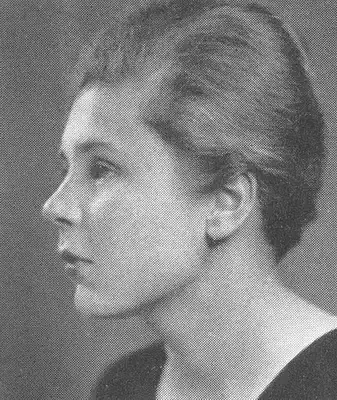
Elizabeth Bishop
A Prodigal
A Prodigal
The brown enormous odor he lived by
was too close, with its breathing and thick hair,
for him to judge. The floor was rotten; the sty
was plastered halfway up with glass-smooth dung.
Light-lashed, self-righteous, above moving snouts,
the pigs' eyes followed him, a cheerful stare-even
to the sow that always ate her young-till,
sickening, he leaned to scratch her head.
But sometimes mornings after drinking bouts
(he hid the pints behind the two-by-fours),
the sunrise glazed the barnyard mud with red
the burning puddles seemed to reassure.
And then he thought he almost might endure
his exile yet another year or more.
But evenings the first star came to warn.
The farmer whom he worked for came at dark
to shut the cows and horses in the barn
beneath their overhanging clouds of hay,
with pitchforks, faint forked lightnings, catching light,
safe and companionable as in the Ark.
The pigs stuck out their little feet and snored.
The lantern--like the sun, going away-laid
on the mud a pacing aureole.
Carrying a bucket along a slimy board,
he felt the bats' uncertain staggering flight,
his shuddering insights, beyond his control,
touching him. But it took him a long time
finally to make up his mind to go home.
The brown enormous odor he lived by
was too close, with its breathing and thick hair,
for him to judge. The floor was rotten; the sty
was plastered halfway up with glass-smooth dung.
Light-lashed, self-righteous, above moving snouts,
the pigs' eyes followed him, a cheerful stare-even
to the sow that always ate her young-till,
sickening, he leaned to scratch her head.
But sometimes mornings after drinking bouts
(he hid the pints behind the two-by-fours),
the sunrise glazed the barnyard mud with red
the burning puddles seemed to reassure.
And then he thought he almost might endure
his exile yet another year or more.
But evenings the first star came to warn.
The farmer whom he worked for came at dark
to shut the cows and horses in the barn
beneath their overhanging clouds of hay,
with pitchforks, faint forked lightnings, catching light,
safe and companionable as in the Ark.
The pigs stuck out their little feet and snored.
The lantern--like the sun, going away-laid
on the mud a pacing aureole.
Carrying a bucket along a slimy board,
he felt the bats' uncertain staggering flight,
his shuddering insights, beyond his control,
touching him. But it took him a long time
finally to make up his mind to go home.
751
Elizabeth Bishop
A Miracle for Breakfast
A Miracle for Breakfast
At six o'clock we were waiting for coffee,
waiting for coffee and the charitable crumb
that was going to be served from a certain balcony
--like kings of old, or like a miracle.
It was still dark. One foot of the sun
steadied itself on a long ripple in the river.
The first ferry of the day had just crossed the river.
It was so cold we hoped that the coffee
would be very hot, seeing that the sun
was not going to warm us; and that the crumb
would be a loaf each, buttered, by a miracle.
At seven a man stepped out on the balcony.
He stood for a minute alone on the balcony
looking over our heads toward the river.
A servant handed him the makings of a miracle,
consisting of one lone cup of coffee
and one roll, which he proceeded to crumb,
his head, so to speak, in the clouds--along with the sun.
Was the man crazy? What under the sun
was he trying to do, up there on his balcony!
Each man received one rather hard crumb,
which some flicked scornfully into the river,
and, in a cup, one drop of the coffee.
Some of us stood around, waiting for the miracle.
I can tell what I saw next; it was not a miracle.
A beautiful villa stood in the sun
and from its doors came the smell of hot coffee.
In front, a baroque white plaster balcony
added by birds, who nest along the river,
--I saw it with one eye close to the crumb-
and galleries and marble chambers. My crumb
my mansion, made for me by a miracle,
through ages, by insects, birds, and the river
working the stone. Every day, in the sun,
at breakfast time I sit on my balcony
with my feet up, and drink gallons of coffee.
We licked up the crumb and swallowed the coffee.
A window across the river caught the sun
as if the miracle were working, on the wrong balcony.
At six o'clock we were waiting for coffee,
waiting for coffee and the charitable crumb
that was going to be served from a certain balcony
--like kings of old, or like a miracle.
It was still dark. One foot of the sun
steadied itself on a long ripple in the river.
The first ferry of the day had just crossed the river.
It was so cold we hoped that the coffee
would be very hot, seeing that the sun
was not going to warm us; and that the crumb
would be a loaf each, buttered, by a miracle.
At seven a man stepped out on the balcony.
He stood for a minute alone on the balcony
looking over our heads toward the river.
A servant handed him the makings of a miracle,
consisting of one lone cup of coffee
and one roll, which he proceeded to crumb,
his head, so to speak, in the clouds--along with the sun.
Was the man crazy? What under the sun
was he trying to do, up there on his balcony!
Each man received one rather hard crumb,
which some flicked scornfully into the river,
and, in a cup, one drop of the coffee.
Some of us stood around, waiting for the miracle.
I can tell what I saw next; it was not a miracle.
A beautiful villa stood in the sun
and from its doors came the smell of hot coffee.
In front, a baroque white plaster balcony
added by birds, who nest along the river,
--I saw it with one eye close to the crumb-
and galleries and marble chambers. My crumb
my mansion, made for me by a miracle,
through ages, by insects, birds, and the river
working the stone. Every day, in the sun,
at breakfast time I sit on my balcony
with my feet up, and drink gallons of coffee.
We licked up the crumb and swallowed the coffee.
A window across the river caught the sun
as if the miracle were working, on the wrong balcony.
742
Elizabeth Bishop
A Miracle for Breakfast
A Miracle for Breakfast
At six o'clock we were waiting for coffee,
waiting for coffee and the charitable crumb
that was going to be served from a certain balcony
--like kings of old, or like a miracle.
It was still dark. One foot of the sun
steadied itself on a long ripple in the river.
The first ferry of the day had just crossed the river.
It was so cold we hoped that the coffee
would be very hot, seeing that the sun
was not going to warm us; and that the crumb
would be a loaf each, buttered, by a miracle.
At seven a man stepped out on the balcony.
He stood for a minute alone on the balcony
looking over our heads toward the river.
A servant handed him the makings of a miracle,
consisting of one lone cup of coffee
and one roll, which he proceeded to crumb,
his head, so to speak, in the clouds--along with the sun.
Was the man crazy? What under the sun
was he trying to do, up there on his balcony!
Each man received one rather hard crumb,
which some flicked scornfully into the river,
and, in a cup, one drop of the coffee.
Some of us stood around, waiting for the miracle.
I can tell what I saw next; it was not a miracle.
A beautiful villa stood in the sun
and from its doors came the smell of hot coffee.
In front, a baroque white plaster balcony
added by birds, who nest along the river,
--I saw it with one eye close to the crumb-
and galleries and marble chambers. My crumb
my mansion, made for me by a miracle,
through ages, by insects, birds, and the river
working the stone. Every day, in the sun,
at breakfast time I sit on my balcony
with my feet up, and drink gallons of coffee.
We licked up the crumb and swallowed the coffee.
A window across the river caught the sun
as if the miracle were working, on the wrong balcony.
At six o'clock we were waiting for coffee,
waiting for coffee and the charitable crumb
that was going to be served from a certain balcony
--like kings of old, or like a miracle.
It was still dark. One foot of the sun
steadied itself on a long ripple in the river.
The first ferry of the day had just crossed the river.
It was so cold we hoped that the coffee
would be very hot, seeing that the sun
was not going to warm us; and that the crumb
would be a loaf each, buttered, by a miracle.
At seven a man stepped out on the balcony.
He stood for a minute alone on the balcony
looking over our heads toward the river.
A servant handed him the makings of a miracle,
consisting of one lone cup of coffee
and one roll, which he proceeded to crumb,
his head, so to speak, in the clouds--along with the sun.
Was the man crazy? What under the sun
was he trying to do, up there on his balcony!
Each man received one rather hard crumb,
which some flicked scornfully into the river,
and, in a cup, one drop of the coffee.
Some of us stood around, waiting for the miracle.
I can tell what I saw next; it was not a miracle.
A beautiful villa stood in the sun
and from its doors came the smell of hot coffee.
In front, a baroque white plaster balcony
added by birds, who nest along the river,
--I saw it with one eye close to the crumb-
and galleries and marble chambers. My crumb
my mansion, made for me by a miracle,
through ages, by insects, birds, and the river
working the stone. Every day, in the sun,
at breakfast time I sit on my balcony
with my feet up, and drink gallons of coffee.
We licked up the crumb and swallowed the coffee.
A window across the river caught the sun
as if the miracle were working, on the wrong balcony.
742
Elizabeth Bishop
A Miracle for Breakfast
A Miracle for Breakfast
At six o'clock we were waiting for coffee,
waiting for coffee and the charitable crumb
that was going to be served from a certain balcony
--like kings of old, or like a miracle.
It was still dark. One foot of the sun
steadied itself on a long ripple in the river.
The first ferry of the day had just crossed the river.
It was so cold we hoped that the coffee
would be very hot, seeing that the sun
was not going to warm us; and that the crumb
would be a loaf each, buttered, by a miracle.
At seven a man stepped out on the balcony.
He stood for a minute alone on the balcony
looking over our heads toward the river.
A servant handed him the makings of a miracle,
consisting of one lone cup of coffee
and one roll, which he proceeded to crumb,
his head, so to speak, in the clouds--along with the sun.
Was the man crazy? What under the sun
was he trying to do, up there on his balcony!
Each man received one rather hard crumb,
which some flicked scornfully into the river,
and, in a cup, one drop of the coffee.
Some of us stood around, waiting for the miracle.
I can tell what I saw next; it was not a miracle.
A beautiful villa stood in the sun
and from its doors came the smell of hot coffee.
In front, a baroque white plaster balcony
added by birds, who nest along the river,
--I saw it with one eye close to the crumb-
and galleries and marble chambers. My crumb
my mansion, made for me by a miracle,
through ages, by insects, birds, and the river
working the stone. Every day, in the sun,
at breakfast time I sit on my balcony
with my feet up, and drink gallons of coffee.
We licked up the crumb and swallowed the coffee.
A window across the river caught the sun
as if the miracle were working, on the wrong balcony.
At six o'clock we were waiting for coffee,
waiting for coffee and the charitable crumb
that was going to be served from a certain balcony
--like kings of old, or like a miracle.
It was still dark. One foot of the sun
steadied itself on a long ripple in the river.
The first ferry of the day had just crossed the river.
It was so cold we hoped that the coffee
would be very hot, seeing that the sun
was not going to warm us; and that the crumb
would be a loaf each, buttered, by a miracle.
At seven a man stepped out on the balcony.
He stood for a minute alone on the balcony
looking over our heads toward the river.
A servant handed him the makings of a miracle,
consisting of one lone cup of coffee
and one roll, which he proceeded to crumb,
his head, so to speak, in the clouds--along with the sun.
Was the man crazy? What under the sun
was he trying to do, up there on his balcony!
Each man received one rather hard crumb,
which some flicked scornfully into the river,
and, in a cup, one drop of the coffee.
Some of us stood around, waiting for the miracle.
I can tell what I saw next; it was not a miracle.
A beautiful villa stood in the sun
and from its doors came the smell of hot coffee.
In front, a baroque white plaster balcony
added by birds, who nest along the river,
--I saw it with one eye close to the crumb-
and galleries and marble chambers. My crumb
my mansion, made for me by a miracle,
through ages, by insects, birds, and the river
working the stone. Every day, in the sun,
at breakfast time I sit on my balcony
with my feet up, and drink gallons of coffee.
We licked up the crumb and swallowed the coffee.
A window across the river caught the sun
as if the miracle were working, on the wrong balcony.
742
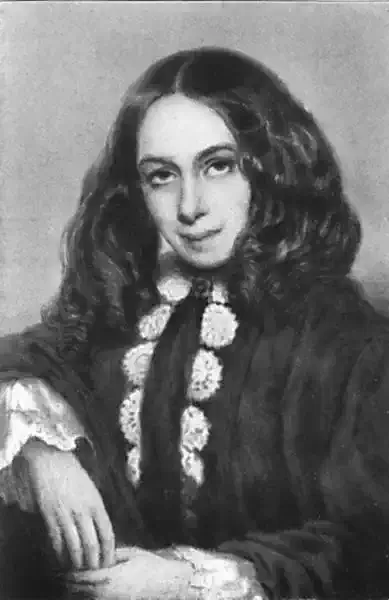
Elizabeth Barrett Browning
XXXIV
XXXIV
With the same heart, I said, I'll answer thee
As those, when thou shalt call me by my name--
Lo, the vain promise ! is the same, the same,
Perplexed and ruffled by life's strategy ?
When called before, I told how hastily
I dropped my flowers or brake off from a game,
To run and answer with the smile that came
At play last moment, and went on with me
Through my obedience. When I answer now,
I drop a grave thought, break from solitude;
Yet still my heart goes to thee--ponder how--
Not as to a single good, but all my good !
Lay thy hand on it, best one, and allow
That no child's foot could run fast as this blood.
With the same heart, I said, I'll answer thee
As those, when thou shalt call me by my name--
Lo, the vain promise ! is the same, the same,
Perplexed and ruffled by life's strategy ?
When called before, I told how hastily
I dropped my flowers or brake off from a game,
To run and answer with the smile that came
At play last moment, and went on with me
Through my obedience. When I answer now,
I drop a grave thought, break from solitude;
Yet still my heart goes to thee--ponder how--
Not as to a single good, but all my good !
Lay thy hand on it, best one, and allow
That no child's foot could run fast as this blood.
497
Elizabeth Barrett Browning
XXXV
XXXV
If I leave all for thee, wilt thou exchange
And be all to me ? Shall I never miss
Home-talk and blessing and the common kiss
That comes to each in turn, nor count it strange,
When I look up, to drop on a new range
Of walls and floors, another home than this ?
Nay, wilt thou fill that place by me which is
Filled by dead eyes too tender to know change ?
That 's hardest. If to conquer love, has tried,
To conquer grief, tries more, as all things prove;
For grief indeed is love and grief beside.
Alas, I have grieved sol am hard to love.
Yet love me--wilt thou ? Open thine heart wide,
And fold within the wet wings of thy dove.
If I leave all for thee, wilt thou exchange
And be all to me ? Shall I never miss
Home-talk and blessing and the common kiss
That comes to each in turn, nor count it strange,
When I look up, to drop on a new range
Of walls and floors, another home than this ?
Nay, wilt thou fill that place by me which is
Filled by dead eyes too tender to know change ?
That 's hardest. If to conquer love, has tried,
To conquer grief, tries more, as all things prove;
For grief indeed is love and grief beside.
Alas, I have grieved sol am hard to love.
Yet love me--wilt thou ? Open thine heart wide,
And fold within the wet wings of thy dove.
394
Elizabeth Barrett Browning
XXX
XXX
I see thine image through my tears to-night,
And yet to-day I saw thee smiling. How
Refer the cause ?--Beloved, is it thou
Or I, who makes me sad ? The acolyte
Amid the chanted joy and thankful rite
May so fall flat, with pale insensate brow,
On the altar-stair. I hear thy voice and vow,
Perplexed, uncertain, since thou art out of sight,
As he, in his swooning ears, the choir's Amen.
Beloved, dost thou love ? or did I see all
The glory as I dreamed, and fainted when
Too vehement light dilated my ideal,
For my soul's eyes ? Will that light come again,
As now these tears come--falling hot and real ?
I see thine image through my tears to-night,
And yet to-day I saw thee smiling. How
Refer the cause ?--Beloved, is it thou
Or I, who makes me sad ? The acolyte
Amid the chanted joy and thankful rite
May so fall flat, with pale insensate brow,
On the altar-stair. I hear thy voice and vow,
Perplexed, uncertain, since thou art out of sight,
As he, in his swooning ears, the choir's Amen.
Beloved, dost thou love ? or did I see all
The glory as I dreamed, and fainted when
Too vehement light dilated my ideal,
For my soul's eyes ? Will that light come again,
As now these tears come--falling hot and real ?
601
Elizabeth Barrett Browning
XXXII
XXXII
The first time that the sun rose on thine oath
To love me, I looked forward to the moon
To slacken all those bonds which seemed too soon
And quickly tied to make a lasting troth.
Quick-loving hearts, I thought, may quickly loathe;
And, looking on myself, I seemed not one
For such man's love !--more like an out-of-tune
Worn viol, a good singer would be wroth
To spoil his song with, and which, snatched in haste,
Is laid down at the first ill-sounding note.
I did not wrong myself so, but I placed
A wrong on thee. For perfect strains may float
'Neath master-hands, from instruments defaced,--
And great souls, at one stroke, may do and doat.
The first time that the sun rose on thine oath
To love me, I looked forward to the moon
To slacken all those bonds which seemed too soon
And quickly tied to make a lasting troth.
Quick-loving hearts, I thought, may quickly loathe;
And, looking on myself, I seemed not one
For such man's love !--more like an out-of-tune
Worn viol, a good singer would be wroth
To spoil his song with, and which, snatched in haste,
Is laid down at the first ill-sounding note.
I did not wrong myself so, but I placed
A wrong on thee. For perfect strains may float
'Neath master-hands, from instruments defaced,--
And great souls, at one stroke, may do and doat.
475
Elizabeth Barrett Browning
XXVII
XXVII
My own Beloved, who hast lifted me
From this drear flat of earth where I was thrown,
And, in betwixt the languid ringlets, blown
A life-breath, till the forehead hopefully
Shines out again, as all the angels see,
Before thy saving kiss ! My own, my own,
Who camest to me when the world was gone,
And I who looked for only God, found thee !
I find thee; I am safe, and strong, and glad.
As one who stands in dewless asphodel
Looks backward on the tedious time he had
In the upper life,--so I, with bosom-swell,
Make witness, here, between the good and bad,
That Love, as strong as Death, retrieves as well.
My own Beloved, who hast lifted me
From this drear flat of earth where I was thrown,
And, in betwixt the languid ringlets, blown
A life-breath, till the forehead hopefully
Shines out again, as all the angels see,
Before thy saving kiss ! My own, my own,
Who camest to me when the world was gone,
And I who looked for only God, found thee !
I find thee; I am safe, and strong, and glad.
As one who stands in dewless asphodel
Looks backward on the tedious time he had
In the upper life,--so I, with bosom-swell,
Make witness, here, between the good and bad,
That Love, as strong as Death, retrieves as well.
440
Elizabeth Barrett Browning
XXV
XXV
A heavy heart, Beloved, have I borne
From year to year until I saw thy face,
And sorrow after sorrow took the place
Of all those natural joys as lightly worn
As the stringed pearls, each lifted in its turn
By a beating heart at dance-time. Hopes apace
Were changed to long despairs, till God's own grace
Could scarcely lift above the world forlorn
My heavy heart. Then thou didst bid me bring
And let it drop adown thy calmly great
Deep being ! Fast it sinketh, as a thing
Which its own nature doth precipitate,
While thine doth close above it, mediating
Betwixt the stars and the unaccomplished fate.
A heavy heart, Beloved, have I borne
From year to year until I saw thy face,
And sorrow after sorrow took the place
Of all those natural joys as lightly worn
As the stringed pearls, each lifted in its turn
By a beating heart at dance-time. Hopes apace
Were changed to long despairs, till God's own grace
Could scarcely lift above the world forlorn
My heavy heart. Then thou didst bid me bring
And let it drop adown thy calmly great
Deep being ! Fast it sinketh, as a thing
Which its own nature doth precipitate,
While thine doth close above it, mediating
Betwixt the stars and the unaccomplished fate.
496
Elizabeth Barrett Browning
XXV
XXV
A heavy heart, Beloved, have I borne
From year to year until I saw thy face,
And sorrow after sorrow took the place
Of all those natural joys as lightly worn
As the stringed pearls, each lifted in its turn
By a beating heart at dance-time. Hopes apace
Were changed to long despairs, till God's own grace
Could scarcely lift above the world forlorn
My heavy heart. Then thou didst bid me bring
And let it drop adown thy calmly great
Deep being ! Fast it sinketh, as a thing
Which its own nature doth precipitate,
While thine doth close above it, mediating
Betwixt the stars and the unaccomplished fate.
A heavy heart, Beloved, have I borne
From year to year until I saw thy face,
And sorrow after sorrow took the place
Of all those natural joys as lightly worn
As the stringed pearls, each lifted in its turn
By a beating heart at dance-time. Hopes apace
Were changed to long despairs, till God's own grace
Could scarcely lift above the world forlorn
My heavy heart. Then thou didst bid me bring
And let it drop adown thy calmly great
Deep being ! Fast it sinketh, as a thing
Which its own nature doth precipitate,
While thine doth close above it, mediating
Betwixt the stars and the unaccomplished fate.
496
Elizabeth Barrett Browning
XX
XX
And wilt thou have me fashion into speech
The love I bear thee, finding words enough,
And hold the torch out, while the winds are rough,
Between our faces, to cast light on each ?--
I drop it at thy feet. I cannot teach
My hand to hold my spirit so far off
From myself--me--that I should bring thee proof
In words, of love hid in me out of reach.
Nay, let the silence of my womanhood
Commend my woman-love to thy belief,--
Seeing that I stand unwon, however wooed,
And rend the garment of my life, in brief,
By a most dauntless, voiceless fortitude,
Lest one touch of this heart convey its grief
And wilt thou have me fashion into speech
The love I bear thee, finding words enough,
And hold the torch out, while the winds are rough,
Between our faces, to cast light on each ?--
I drop it at thy feet. I cannot teach
My hand to hold my spirit so far off
From myself--me--that I should bring thee proof
In words, of love hid in me out of reach.
Nay, let the silence of my womanhood
Commend my woman-love to thy belief,--
Seeing that I stand unwon, however wooed,
And rend the garment of my life, in brief,
By a most dauntless, voiceless fortitude,
Lest one touch of this heart convey its grief
466
Elizabeth Barrett Browning
XV
XV
Accuse me not, beseech thee, that I wear
Too calm and sad a face in front of thine;
For we two look two ways, and cannot shine
With the same sunlight on our brow and hair.
On me thou lookest with no doubting care,
As on a bee shut in a crystalline;
Since sorrow hath shut me safe in love's divine,
And to spread wing and fly in the outer air
Were most impossible failure, if I strove
To fail so. But I look on thee--on thee--
Beholding, besides love, the end of love,
Hearing oblivion beyond memory;
As one who sits and gazes from above,
Over the rivers to the bitter sea.
Accuse me not, beseech thee, that I wear
Too calm and sad a face in front of thine;
For we two look two ways, and cannot shine
With the same sunlight on our brow and hair.
On me thou lookest with no doubting care,
As on a bee shut in a crystalline;
Since sorrow hath shut me safe in love's divine,
And to spread wing and fly in the outer air
Were most impossible failure, if I strove
To fail so. But I look on thee--on thee--
Beholding, besides love, the end of love,
Hearing oblivion beyond memory;
As one who sits and gazes from above,
Over the rivers to the bitter sea.
429
Elizabeth Barrett Browning
XV
XV
Accuse me not, beseech thee, that I wear
Too calm and sad a face in front of thine;
For we two look two ways, and cannot shine
With the same sunlight on our brow and hair.
On me thou lookest with no doubting care,
As on a bee shut in a crystalline;
Since sorrow hath shut me safe in love's divine,
And to spread wing and fly in the outer air
Were most impossible failure, if I strove
To fail so. But I look on thee--on thee--
Beholding, besides love, the end of love,
Hearing oblivion beyond memory;
As one who sits and gazes from above,
Over the rivers to the bitter sea.
Accuse me not, beseech thee, that I wear
Too calm and sad a face in front of thine;
For we two look two ways, and cannot shine
With the same sunlight on our brow and hair.
On me thou lookest with no doubting care,
As on a bee shut in a crystalline;
Since sorrow hath shut me safe in love's divine,
And to spread wing and fly in the outer air
Were most impossible failure, if I strove
To fail so. But I look on thee--on thee--
Beholding, besides love, the end of love,
Hearing oblivion beyond memory;
As one who sits and gazes from above,
Over the rivers to the bitter sea.
429
Elizabeth Barrett Browning
XLIII
XLIII
How do I love thee ? Let me count the ways.
I love thee to the depth and breadth and height
My soul can reach, when feeling out of sight
For the ends of Being and ideal Grace.
I love thee to the level of everyday's
Most quiet need, by sun and candle-light.
I love thee freely, as men strive for Right;
I love thee purely, as they turn from Praise.
I love thee with the passion put to use
In my old griefs, and with my childhood's faith.
I love thee with a love I seemed to lose
With my lost saints,--I love thee with the breath,
Smiles, tears, of all my life !--and, if God choose,
I shall but love thee better after death.
How do I love thee ? Let me count the ways.
I love thee to the depth and breadth and height
My soul can reach, when feeling out of sight
For the ends of Being and ideal Grace.
I love thee to the level of everyday's
Most quiet need, by sun and candle-light.
I love thee freely, as men strive for Right;
I love thee purely, as they turn from Praise.
I love thee with the passion put to use
In my old griefs, and with my childhood's faith.
I love thee with a love I seemed to lose
With my lost saints,--I love thee with the breath,
Smiles, tears, of all my life !--and, if God choose,
I shall but love thee better after death.
412
Elizabeth Barrett Browning
XLI
XLI
I thank all who have loved me in their hearts,
With thanks and love from mine. Deep thanks to all
Who paused a little near the prison-wall
To hear my music in its louder parts
Ere they went onward, each one to the mart's
Or temple's occupation, beyond call.
But thou, who, in my voice's sink and fall
When the sob took it, thy divinest Art's
Own instrument didst drop down at thy foot
To hearken what I said between my tears, . . .
Instruct me how to thank thee ! Oh, to shoot
My soul's full meaning into future years,
That they should lend it utterance, and salute
Love that endures, from Life that disappears !
I thank all who have loved me in their hearts,
With thanks and love from mine. Deep thanks to all
Who paused a little near the prison-wall
To hear my music in its louder parts
Ere they went onward, each one to the mart's
Or temple's occupation, beyond call.
But thou, who, in my voice's sink and fall
When the sob took it, thy divinest Art's
Own instrument didst drop down at thy foot
To hearken what I said between my tears, . . .
Instruct me how to thank thee ! Oh, to shoot
My soul's full meaning into future years,
That they should lend it utterance, and salute
Love that endures, from Life that disappears !
485
Elizabeth Barrett Browning
XLI
XLI
I thank all who have loved me in their hearts,
With thanks and love from mine. Deep thanks to all
Who paused a little near the prison-wall
To hear my music in its louder parts
Ere they went onward, each one to the mart's
Or temple's occupation, beyond call.
But thou, who, in my voice's sink and fall
When the sob took it, thy divinest Art's
Own instrument didst drop down at thy foot
To hearken what I said between my tears, . . .
Instruct me how to thank thee ! Oh, to shoot
My soul's full meaning into future years,
That they should lend it utterance, and salute
Love that endures, from Life that disappears !
I thank all who have loved me in their hearts,
With thanks and love from mine. Deep thanks to all
Who paused a little near the prison-wall
To hear my music in its louder parts
Ere they went onward, each one to the mart's
Or temple's occupation, beyond call.
But thou, who, in my voice's sink and fall
When the sob took it, thy divinest Art's
Own instrument didst drop down at thy foot
To hearken what I said between my tears, . . .
Instruct me how to thank thee ! Oh, to shoot
My soul's full meaning into future years,
That they should lend it utterance, and salute
Love that endures, from Life that disappears !
485
Elizabeth Barrett Browning
XIX
XIX
The soul's Rialto hath its merchandise;
I barter curl for curl upon that mart,
And from my poet's forehead to my heart
Receive this lock which outweighs argosies,--
As purply black, as erst to Pindar's eyes
The dim purpureal tresses gloomed athwart
The nine white Muse-brows. For this counterpart, . . .
The bay-crown's shade, Beloved, I surmise,
Still lingers on thy curl, it is so black !
Thus, with a fillet of smooth-kissing breath,
I tie the shadows safe from gliding back,
And lay the gift where nothing hindereth;
Here on my heart, as on thy brow, to lack
No natural heat till mine grows cold in death.
The soul's Rialto hath its merchandise;
I barter curl for curl upon that mart,
And from my poet's forehead to my heart
Receive this lock which outweighs argosies,--
As purply black, as erst to Pindar's eyes
The dim purpureal tresses gloomed athwart
The nine white Muse-brows. For this counterpart, . . .
The bay-crown's shade, Beloved, I surmise,
Still lingers on thy curl, it is so black !
Thus, with a fillet of smooth-kissing breath,
I tie the shadows safe from gliding back,
And lay the gift where nothing hindereth;
Here on my heart, as on thy brow, to lack
No natural heat till mine grows cold in death.
410
Elizabeth Barrett Browning
XIV
XIV
If thou must love me, let it be for nought
Except for love's sake only. Do not say
'I love her for her smile--her look--her way
Of speaking gently,--for a trick of thought
That falls in well with mine, and certes brought
A sense of pleasant ease on such a day'--
For these things in themselves, Beloved, may
Be changed, or change for thee,--and love, so wrought,
May be unwrought so. Neither love me for
Thine own dear pity's wiping my cheeks dry,--
A creature might forget to weep, who bore
Thy comfort long, and lose thy love thereby !
But love me for love's sake, that evermore
Thou mayst love on, through love's eternity.
If thou must love me, let it be for nought
Except for love's sake only. Do not say
'I love her for her smile--her look--her way
Of speaking gently,--for a trick of thought
That falls in well with mine, and certes brought
A sense of pleasant ease on such a day'--
For these things in themselves, Beloved, may
Be changed, or change for thee,--and love, so wrought,
May be unwrought so. Neither love me for
Thine own dear pity's wiping my cheeks dry,--
A creature might forget to weep, who bore
Thy comfort long, and lose thy love thereby !
But love me for love's sake, that evermore
Thou mayst love on, through love's eternity.
357
Elizabeth Barrett Browning
XI
XI
And therefore if to love can be desert,
I am not all unworthy. Cheeks as pale
As these you see, and trembling knees that fail
To bear the burden of a heavy heart,--
This weary minstrel-life that once was girt
To climb Aornus, and can scarce avail
To pipe now 'gainst the valley nightingale
A melancholy music,--why advert
To these things ? O Beloved, it is plain
I am not of thy worth nor for thy place !
And yet, because I love thee, I obtain
From that same love this vindicating grace,
To live on still in love, and yet in vain,--
To bless thee, yet renounce thee to thy face.
And therefore if to love can be desert,
I am not all unworthy. Cheeks as pale
As these you see, and trembling knees that fail
To bear the burden of a heavy heart,--
This weary minstrel-life that once was girt
To climb Aornus, and can scarce avail
To pipe now 'gainst the valley nightingale
A melancholy music,--why advert
To these things ? O Beloved, it is plain
I am not of thy worth nor for thy place !
And yet, because I love thee, I obtain
From that same love this vindicating grace,
To live on still in love, and yet in vain,--
To bless thee, yet renounce thee to thy face.
447
Elizabeth Barrett Browning
VIII
VIII
What can I give thee back, O liberal
And princely giver, who hast brought the gold
And purple of thine heart, unstained, untold,
And laid them on the outside of the-wall
For such as I to take or leave withal,
In unexpected largesse ? am I cold,
Ungrateful, that for these most manifold
High gifts, I render nothing back at all ?
Not so; not cold,--but very poor instead.
Ask God who knows. For frequent tears have run
The colors from my life, and left so dead
And pale a stuff, it were not fitly done
To give the same as pillow to thy head.
Go farther ! let it serve to trample on.
What can I give thee back, O liberal
And princely giver, who hast brought the gold
And purple of thine heart, unstained, untold,
And laid them on the outside of the-wall
For such as I to take or leave withal,
In unexpected largesse ? am I cold,
Ungrateful, that for these most manifold
High gifts, I render nothing back at all ?
Not so; not cold,--but very poor instead.
Ask God who knows. For frequent tears have run
The colors from my life, and left so dead
And pale a stuff, it were not fitly done
To give the same as pillow to thy head.
Go farther ! let it serve to trample on.
462
Elizabeth Barrett Browning
VI
VI
Go from me. Yet I feel that I shall stand
Henceforward in thy shadow. Nevermore
Alone upon the threshold of my door
Of individual life, I shall command
The uses of my soul, nor lift my hand
Serenely in the sunshine as before,
Without the sense of that which I forbore--
Thy touch upon the palm. The widest land
Doom takes to part us, leaves thy heart in mine
With pulses that beat double. What I do
And what I dream include thee, as the wine
Must taste of its own grapes. And when I sue
God for myself, He hears that name of thine,
And sees within my eyes the tears of two.
Go from me. Yet I feel that I shall stand
Henceforward in thy shadow. Nevermore
Alone upon the threshold of my door
Of individual life, I shall command
The uses of my soul, nor lift my hand
Serenely in the sunshine as before,
Without the sense of that which I forbore--
Thy touch upon the palm. The widest land
Doom takes to part us, leaves thy heart in mine
With pulses that beat double. What I do
And what I dream include thee, as the wine
Must taste of its own grapes. And when I sue
God for myself, He hears that name of thine,
And sees within my eyes the tears of two.
452
Elizabeth Barrett Browning
The Weakest Thing
The Weakest Thing
Which is the weakest thing of all
Mine heart can ponder?
The sun, a little cloud can pall
With darkness yonder?
The cloud, a little wind can move
Where'er it listeth?
The wind, a little leaf above,
Though sere, resisteth?
What time that yellow leaf was green,
My days were gladder;
But now, whatever Spring may mean,
I must grow sadder.
Ah me! a leaf with sighs can wring
My lips asunder -
Then is mine heart the weakest thing
Itself can ponder.
Yet, Heart, when sun and cloud are pined
And drop together,
And at a blast, which is not wind,
The forests wither,
Thou, from the darkening deathly curse
To glory breakest, -
The Strongest of the universe
Guarding the weakest!
Which is the weakest thing of all
Mine heart can ponder?
The sun, a little cloud can pall
With darkness yonder?
The cloud, a little wind can move
Where'er it listeth?
The wind, a little leaf above,
Though sere, resisteth?
What time that yellow leaf was green,
My days were gladder;
But now, whatever Spring may mean,
I must grow sadder.
Ah me! a leaf with sighs can wring
My lips asunder -
Then is mine heart the weakest thing
Itself can ponder.
Yet, Heart, when sun and cloud are pined
And drop together,
And at a blast, which is not wind,
The forests wither,
Thou, from the darkening deathly curse
To glory breakest, -
The Strongest of the universe
Guarding the weakest!
442
Elizabeth Barrett Browning
The Weakest Thing
The Weakest Thing
Which is the weakest thing of all
Mine heart can ponder?
The sun, a little cloud can pall
With darkness yonder?
The cloud, a little wind can move
Where'er it listeth?
The wind, a little leaf above,
Though sere, resisteth?
What time that yellow leaf was green,
My days were gladder;
But now, whatever Spring may mean,
I must grow sadder.
Ah me! a leaf with sighs can wring
My lips asunder -
Then is mine heart the weakest thing
Itself can ponder.
Yet, Heart, when sun and cloud are pined
And drop together,
And at a blast, which is not wind,
The forests wither,
Thou, from the darkening deathly curse
To glory breakest, -
The Strongest of the universe
Guarding the weakest!
Which is the weakest thing of all
Mine heart can ponder?
The sun, a little cloud can pall
With darkness yonder?
The cloud, a little wind can move
Where'er it listeth?
The wind, a little leaf above,
Though sere, resisteth?
What time that yellow leaf was green,
My days were gladder;
But now, whatever Spring may mean,
I must grow sadder.
Ah me! a leaf with sighs can wring
My lips asunder -
Then is mine heart the weakest thing
Itself can ponder.
Yet, Heart, when sun and cloud are pined
And drop together,
And at a blast, which is not wind,
The forests wither,
Thou, from the darkening deathly curse
To glory breakest, -
The Strongest of the universe
Guarding the weakest!
442