

Poems in this topic
Emotions and Feelings
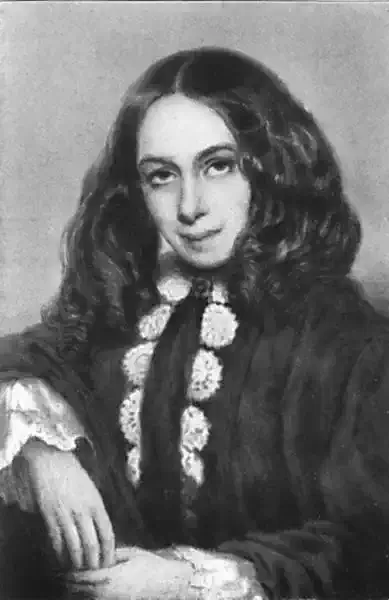
Elizabeth Barrett Browning
The Weakest Thing
The Weakest Thing
Which is the weakest thing of all
Mine heart can ponder?
The sun, a little cloud can pall
With darkness yonder?
The cloud, a little wind can move
Where'er it listeth?
The wind, a little leaf above,
Though sere, resisteth?
What time that yellow leaf was green,
My days were gladder;
But now, whatever Spring may mean,
I must grow sadder.
Ah me! a leaf with sighs can wring
My lips asunder -
Then is mine heart the weakest thing
Itself can ponder.
Yet, Heart, when sun and cloud are pined
And drop together,
And at a blast, which is not wind,
The forests wither,
Thou, from the darkening deathly curse
To glory breakest, -
The Strongest of the universe
Guarding the weakest!
Which is the weakest thing of all
Mine heart can ponder?
The sun, a little cloud can pall
With darkness yonder?
The cloud, a little wind can move
Where'er it listeth?
The wind, a little leaf above,
Though sere, resisteth?
What time that yellow leaf was green,
My days were gladder;
But now, whatever Spring may mean,
I must grow sadder.
Ah me! a leaf with sighs can wring
My lips asunder -
Then is mine heart the weakest thing
Itself can ponder.
Yet, Heart, when sun and cloud are pined
And drop together,
And at a blast, which is not wind,
The forests wither,
Thou, from the darkening deathly curse
To glory breakest, -
The Strongest of the universe
Guarding the weakest!
442
Elizabeth Barrett Browning
To Flush, My Dog
To Flush, My Dog
Loving friend, the gift of one
Who her own true faith has run
Through thy lower nature,
Be my benediction said
With my hand upon thy head,
Gentle fellow-creature!
Like a lady's ringlets brown,
Flow thy silken ears adown
Either side demurely
Of thy silver-suited breast
Shining out from all the rest
Of thy body purely.
Darkly brown thy body is,
Till the sunshine striking this
Alchemise its dullness,
When the sleek curls manifold
Flash all over into gold
With a burnished fulness.
Underneath my stroking hand,
Startled eyes of hazel bland
Kindling, growing larger,
Up thou leapest with a spring,
Full of prank and curveting,
Leaping like a charger.
Leap! thy broad tail waves a light,
Leap! thy slender feet are bright,
Canopied in fringes;
Leap! those tasselled ears of thine
Flicker strangely, fair and fine
Down their golden inches
Yet, my pretty, sportive friend,
Little is't to such an end
That I praise thy rareness;
Other dogs may be thy peers
Haply in these drooping ears
And this glossy fairness.
But of thee it shall be said,
This dog watched beside a bed
Day and night unweary,
Watched within a curtained room
Where no sunbeam brake the gloom
Round the sick and dreary.
Roses, gathered for a vase,
In that chamber died apace,
Beam and breeze resigning;
This dog only, waited on,
Knowing that when light is gone
Love remains for shining.
Other dogs in thymy dew
Tracked the hares and followed through
Sunny moor or meadow;
This dog only, crept and crept
Next a languid cheek that slept,
Sharing in the shadow.
Other dogs of loyal cheer
Bounded at the whistle clear,
Up the woodside hieing;
This dog only, watched in reach
Of a faintly uttered speech
Or a louder sighing.
And if one or two quick tears
Dropped upon his glossy ears
Or a sigh came double,
Up he sprang in eager haste,
Fawning, fondling, breathing fast,
In a tender trouble.
And this dog was satisfied
If a pale thin hand would glide
Down his dewlaps sloping, --
Which he pushed his nose within,
After, -- platforming his chin
On the palm left open.
This dog, if a friendly voice
Call him now to blither choice
Than such chamber-keeping,
'Come out!' praying from the door, --
Presseth backward as before,
Up against me leaping.
Therefore to this dog will I,
Tenderly not scornfully,
Render praise and favor:
With my hand upon his head,
Is my benediction said
Therefore and for ever.
And because he loves me so,
Better than his kind will do
Often man or woman,
Give I back more love again
Than dogs often take of men,
Leaning from my Human.
Blessings on thee, dog of mine,
Pretty collars make thee fine,
Sugared milk make fat thee!
Pleasures wag on in thy tail,
Hands of gentle motion fail
Nevermore, to pat thee
Downy pillow take thy head,
Silken coverlid bestead,
Sunshine help thy sleeping!
No fly's buzzing wake thee up,
No man break thy purple cup
Set for drinking deep in.
Whiskered cats arointed flee,
Sturdy stoppers keep from thee
Cologne distillations;
Nuts lie in thy path for stones,
And thy feast-day macaroons
Turn to daily rations!
Mock I thee, in wishing weal? --
Tears are in my eyes to feel
Thou art made so straitly,
Blessing needs must straiten too, --
Little canst thou joy or do,
Thou who lovest greatly.
Yet be blessed to the height
Of all good and all delight
Pervious to thy nature;
Only loved beyond that line,
With a love that answers thine,
Loving fellow-creature!
Loving friend, the gift of one
Who her own true faith has run
Through thy lower nature,
Be my benediction said
With my hand upon thy head,
Gentle fellow-creature!
Like a lady's ringlets brown,
Flow thy silken ears adown
Either side demurely
Of thy silver-suited breast
Shining out from all the rest
Of thy body purely.
Darkly brown thy body is,
Till the sunshine striking this
Alchemise its dullness,
When the sleek curls manifold
Flash all over into gold
With a burnished fulness.
Underneath my stroking hand,
Startled eyes of hazel bland
Kindling, growing larger,
Up thou leapest with a spring,
Full of prank and curveting,
Leaping like a charger.
Leap! thy broad tail waves a light,
Leap! thy slender feet are bright,
Canopied in fringes;
Leap! those tasselled ears of thine
Flicker strangely, fair and fine
Down their golden inches
Yet, my pretty, sportive friend,
Little is't to such an end
That I praise thy rareness;
Other dogs may be thy peers
Haply in these drooping ears
And this glossy fairness.
But of thee it shall be said,
This dog watched beside a bed
Day and night unweary,
Watched within a curtained room
Where no sunbeam brake the gloom
Round the sick and dreary.
Roses, gathered for a vase,
In that chamber died apace,
Beam and breeze resigning;
This dog only, waited on,
Knowing that when light is gone
Love remains for shining.
Other dogs in thymy dew
Tracked the hares and followed through
Sunny moor or meadow;
This dog only, crept and crept
Next a languid cheek that slept,
Sharing in the shadow.
Other dogs of loyal cheer
Bounded at the whistle clear,
Up the woodside hieing;
This dog only, watched in reach
Of a faintly uttered speech
Or a louder sighing.
And if one or two quick tears
Dropped upon his glossy ears
Or a sigh came double,
Up he sprang in eager haste,
Fawning, fondling, breathing fast,
In a tender trouble.
And this dog was satisfied
If a pale thin hand would glide
Down his dewlaps sloping, --
Which he pushed his nose within,
After, -- platforming his chin
On the palm left open.
This dog, if a friendly voice
Call him now to blither choice
Than such chamber-keeping,
'Come out!' praying from the door, --
Presseth backward as before,
Up against me leaping.
Therefore to this dog will I,
Tenderly not scornfully,
Render praise and favor:
With my hand upon his head,
Is my benediction said
Therefore and for ever.
And because he loves me so,
Better than his kind will do
Often man or woman,
Give I back more love again
Than dogs often take of men,
Leaning from my Human.
Blessings on thee, dog of mine,
Pretty collars make thee fine,
Sugared milk make fat thee!
Pleasures wag on in thy tail,
Hands of gentle motion fail
Nevermore, to pat thee
Downy pillow take thy head,
Silken coverlid bestead,
Sunshine help thy sleeping!
No fly's buzzing wake thee up,
No man break thy purple cup
Set for drinking deep in.
Whiskered cats arointed flee,
Sturdy stoppers keep from thee
Cologne distillations;
Nuts lie in thy path for stones,
And thy feast-day macaroons
Turn to daily rations!
Mock I thee, in wishing weal? --
Tears are in my eyes to feel
Thou art made so straitly,
Blessing needs must straiten too, --
Little canst thou joy or do,
Thou who lovest greatly.
Yet be blessed to the height
Of all good and all delight
Pervious to thy nature;
Only loved beyond that line,
With a love that answers thine,
Loving fellow-creature!
510
Elizabeth Barrett Browning
To Flush, My Dog
To Flush, My Dog
Loving friend, the gift of one
Who her own true faith has run
Through thy lower nature,
Be my benediction said
With my hand upon thy head,
Gentle fellow-creature!
Like a lady's ringlets brown,
Flow thy silken ears adown
Either side demurely
Of thy silver-suited breast
Shining out from all the rest
Of thy body purely.
Darkly brown thy body is,
Till the sunshine striking this
Alchemise its dullness,
When the sleek curls manifold
Flash all over into gold
With a burnished fulness.
Underneath my stroking hand,
Startled eyes of hazel bland
Kindling, growing larger,
Up thou leapest with a spring,
Full of prank and curveting,
Leaping like a charger.
Leap! thy broad tail waves a light,
Leap! thy slender feet are bright,
Canopied in fringes;
Leap! those tasselled ears of thine
Flicker strangely, fair and fine
Down their golden inches
Yet, my pretty, sportive friend,
Little is't to such an end
That I praise thy rareness;
Other dogs may be thy peers
Haply in these drooping ears
And this glossy fairness.
But of thee it shall be said,
This dog watched beside a bed
Day and night unweary,
Watched within a curtained room
Where no sunbeam brake the gloom
Round the sick and dreary.
Roses, gathered for a vase,
In that chamber died apace,
Beam and breeze resigning;
This dog only, waited on,
Knowing that when light is gone
Love remains for shining.
Other dogs in thymy dew
Tracked the hares and followed through
Sunny moor or meadow;
This dog only, crept and crept
Next a languid cheek that slept,
Sharing in the shadow.
Other dogs of loyal cheer
Bounded at the whistle clear,
Up the woodside hieing;
This dog only, watched in reach
Of a faintly uttered speech
Or a louder sighing.
And if one or two quick tears
Dropped upon his glossy ears
Or a sigh came double,
Up he sprang in eager haste,
Fawning, fondling, breathing fast,
In a tender trouble.
And this dog was satisfied
If a pale thin hand would glide
Down his dewlaps sloping, --
Which he pushed his nose within,
After, -- platforming his chin
On the palm left open.
This dog, if a friendly voice
Call him now to blither choice
Than such chamber-keeping,
'Come out!' praying from the door, --
Presseth backward as before,
Up against me leaping.
Therefore to this dog will I,
Tenderly not scornfully,
Render praise and favor:
With my hand upon his head,
Is my benediction said
Therefore and for ever.
And because he loves me so,
Better than his kind will do
Often man or woman,
Give I back more love again
Than dogs often take of men,
Leaning from my Human.
Blessings on thee, dog of mine,
Pretty collars make thee fine,
Sugared milk make fat thee!
Pleasures wag on in thy tail,
Hands of gentle motion fail
Nevermore, to pat thee
Downy pillow take thy head,
Silken coverlid bestead,
Sunshine help thy sleeping!
No fly's buzzing wake thee up,
No man break thy purple cup
Set for drinking deep in.
Whiskered cats arointed flee,
Sturdy stoppers keep from thee
Cologne distillations;
Nuts lie in thy path for stones,
And thy feast-day macaroons
Turn to daily rations!
Mock I thee, in wishing weal? --
Tears are in my eyes to feel
Thou art made so straitly,
Blessing needs must straiten too, --
Little canst thou joy or do,
Thou who lovest greatly.
Yet be blessed to the height
Of all good and all delight
Pervious to thy nature;
Only loved beyond that line,
With a love that answers thine,
Loving fellow-creature!
Loving friend, the gift of one
Who her own true faith has run
Through thy lower nature,
Be my benediction said
With my hand upon thy head,
Gentle fellow-creature!
Like a lady's ringlets brown,
Flow thy silken ears adown
Either side demurely
Of thy silver-suited breast
Shining out from all the rest
Of thy body purely.
Darkly brown thy body is,
Till the sunshine striking this
Alchemise its dullness,
When the sleek curls manifold
Flash all over into gold
With a burnished fulness.
Underneath my stroking hand,
Startled eyes of hazel bland
Kindling, growing larger,
Up thou leapest with a spring,
Full of prank and curveting,
Leaping like a charger.
Leap! thy broad tail waves a light,
Leap! thy slender feet are bright,
Canopied in fringes;
Leap! those tasselled ears of thine
Flicker strangely, fair and fine
Down their golden inches
Yet, my pretty, sportive friend,
Little is't to such an end
That I praise thy rareness;
Other dogs may be thy peers
Haply in these drooping ears
And this glossy fairness.
But of thee it shall be said,
This dog watched beside a bed
Day and night unweary,
Watched within a curtained room
Where no sunbeam brake the gloom
Round the sick and dreary.
Roses, gathered for a vase,
In that chamber died apace,
Beam and breeze resigning;
This dog only, waited on,
Knowing that when light is gone
Love remains for shining.
Other dogs in thymy dew
Tracked the hares and followed through
Sunny moor or meadow;
This dog only, crept and crept
Next a languid cheek that slept,
Sharing in the shadow.
Other dogs of loyal cheer
Bounded at the whistle clear,
Up the woodside hieing;
This dog only, watched in reach
Of a faintly uttered speech
Or a louder sighing.
And if one or two quick tears
Dropped upon his glossy ears
Or a sigh came double,
Up he sprang in eager haste,
Fawning, fondling, breathing fast,
In a tender trouble.
And this dog was satisfied
If a pale thin hand would glide
Down his dewlaps sloping, --
Which he pushed his nose within,
After, -- platforming his chin
On the palm left open.
This dog, if a friendly voice
Call him now to blither choice
Than such chamber-keeping,
'Come out!' praying from the door, --
Presseth backward as before,
Up against me leaping.
Therefore to this dog will I,
Tenderly not scornfully,
Render praise and favor:
With my hand upon his head,
Is my benediction said
Therefore and for ever.
And because he loves me so,
Better than his kind will do
Often man or woman,
Give I back more love again
Than dogs often take of men,
Leaning from my Human.
Blessings on thee, dog of mine,
Pretty collars make thee fine,
Sugared milk make fat thee!
Pleasures wag on in thy tail,
Hands of gentle motion fail
Nevermore, to pat thee
Downy pillow take thy head,
Silken coverlid bestead,
Sunshine help thy sleeping!
No fly's buzzing wake thee up,
No man break thy purple cup
Set for drinking deep in.
Whiskered cats arointed flee,
Sturdy stoppers keep from thee
Cologne distillations;
Nuts lie in thy path for stones,
And thy feast-day macaroons
Turn to daily rations!
Mock I thee, in wishing weal? --
Tears are in my eyes to feel
Thou art made so straitly,
Blessing needs must straiten too, --
Little canst thou joy or do,
Thou who lovest greatly.
Yet be blessed to the height
Of all good and all delight
Pervious to thy nature;
Only loved beyond that line,
With a love that answers thine,
Loving fellow-creature!
510
Elizabeth Barrett Browning
The Runaway Slave at Pilgrim's Point
The Runaway Slave at Pilgrim's Point
I.
I stand on the mark beside the shore
Of the first white pilgrim's bended knee,
Where exile turned to ancestor,
And God was thanked for liberty.
I have run through the night, my skin is as dark,
I bend my knee down on this mark . . .
I look on the sky and the sea.
II.
O pilgrim-souls, I speak to you!
I see you come out proud and slow
From the land of the spirits pale as dew. . .
And round me and round me ye go!
O pilgrims, I have gasped and run
All night long from the whips of one
Who in your names works sin and woe.
III.
And thus I thought that I would come
And kneel here where I knelt before,
And feel your souls around me hum
In undertone to the ocean's roar;
And lift my black face, my black hand,
Here, in your names, to curse this land
Ye blessed in freedom's evermore.
IV.
I am black, I am black;
And yet God made me, they say.
But if He did so, smiling back
He must have cast His work away
Under the feet of His white creatures,
With a look of scorn,--that the dusky features
Might be trodden again to clay.
V.
And yet He has made dark things
To be glad and merry as light.
There's a little dark bird sits and sings;
There's a dark stream ripples out of sight;
And the dark frogs chant in the safe morass,
And the sweetest stars are made to pass
O'er the face of the darkest night.
VI.
But we who are dark, we are dark!
Ah, God, we have no stars!
About our souls in care and cark
Our blackness shuts like prison bars:
The poor souls crouch so far behind,
That never a comfort can they find
By reaching through the prison-bars.
VII.
Indeed, we live beneath the sky, . . .
That great smooth Hand of God, stretched out
On all His children fatherly,
To bless them from the fear and doubt,
Which would be, if, from this low place,
All opened straight up to His face
Into the grand eternity.
VIII.
And still God's sunshine and His frost,
They make us hot, they make us cold,
As if we were not black and lost:
And the beasts and birds, in wood and fold,
Do fear and take us for very men!
Could the weep-poor-will or the cat of the glen
Look into my eyes and be bold?
IX.
I am black, I am black!--
But, once, I laughed in girlish glee;
For one of my colour stood in the track
Where the drivers drove, and looked at me--
And tender and full was the look he gave:
Could a slave look so at another slave?--
I look at the sky and the sea.
X.
And from that hour our spirits grew
As free as if unsold, unbought:
Oh, strong enough, since we were two
To conquer the world, we thought!
The drivers drove us day by day;
We did not mind, we went one way,
And no better a liberty sought.
XI.
In the sunny ground between the canes,
He said 'I love you' as he passed:
When the shingle-roof rang sharp with the rains,
I heard how he vowed it fast:
While others shook, he smiled in the hut
As he carved me a bowl of the cocoa-nut,
Through the roar of the hurricanes.
XII.
I sang his name instead of a song;
Over and over I sang his name--
Upward and downward I drew it along
My various notes; the same, the same!
I sang it low, that the slave-girls near
Might never guess from aught they could hear,
It was only a name.
XIII.
I look on the sky and the sea--
We were two to love, and two to pray,--
Yes, two, O God, who cried to Thee,
Though nothing didst Thou say.
Coldly Thou sat'st behind the sun!
And now I cry who am but one,
How wilt Thou speak to-day?--
XIV.
We were black, we were black!
We had no claim to love and bliss:
What marvel, if each turned to lack?
They wrung my cold hands out of his,--
They dragged him . . . where ? . . . I crawled to touch
His blood's mark in the dust! . . . not much,
Ye pilgrim-souls, . . . though plain as this!
XV.
Wrong, followed by a deeper wrong!
Mere grief's too good for such as I.
So the white men brought the shame ere long
To strangle the sob of my agony.
They would not leave me for my dull
Wet eyes!--it was too merciful
To let me weep pure tears and die.
XVI.
I am black, I am black!--
I wore a child upon my breast
An amulet that hung too slack,
And, in my unrest, could not rest:
Thus we went moaning, child and mother,
One to another, one to another,
Until all ended for the best:
XVII.
For hark ! I will tell you low . . . Iow . . .
I am black, you see,--
And the babe who lay on my bosom so,
Was far too white . . . too white for me;
As white as the ladies who scorned to pray
Beside me at church but yesterday;
Though my tears had washed a place for my knee.
XVIII.
My own, own child! I could not bear
To look in his face, it was so white.
I covered him up with a kerchief there;
I covered his face in close and tight:
And he moaned and struggled, as well might be,
For the white child wanted his liberty--
Ha, ha! he wanted his master right.
XIX.
He moaned and beat with his head and feet,
His little feet that never grew--
He struck them out, as it was meet,
Against my heart to break it through.
I might have sung and made him mild--
But I dared not sing to the white-faced child
The only song I knew.
XX.
I pulled the kerchief very close:
He could not see the sun, I swear,
More, then, alive, than now he does
From between the roots of the mango . . . where
. . . I know where. Close! a child and mother
Do wrong to look at one another,
When one is black and one is fair.
XXI.
Why, in that single glance I had
Of my child's face, . . . I tell you all,
I saw a look that made me mad . . .
The master's look, that used to fall
On my soul like his lash . . . or worse!
And so, to save it from my curse,
I twisted it round in my shawl.
XXII.
And he moaned and trembled from foot to head,
He shivered from head to foot;
Till, after a time, he lay instead
Too suddenly still and mute.
I felt, beside, a stiffening cold, . . .
I dared to lift up just a fold . . .
As in lifting a leaf of the mango-fruit.
XXIII.
But my fruit . . . ha, ha!--there, had been
(I laugh to think on't at this hour! . . .)
Your fine white angels, who have seen
Nearest the secret of God's power, . . .
And plucked my fruit to make them wine,
And sucked the soul of that child of mine,
As the humming-bird sucks the soul of the flower.
XXIV.
Ha, ha, for the trick of the angels white!
They freed the white child's spirit so.
I said not a word, but, day and night,
I carried the body to and fro;
And it lay on my heart like a stone . . . as chill.
--The sun may shine out as much as he will:
I am cold, though it happened a month ago.
XXV.
From the white man's house, and the black man's hut,
I carried the little body on,
The forest's arms did round us shut,
And silence through the trees did run:
They asked no question as I went,--
They stood too high for astonishment,--
They could see God sit on His throne.
XXVI.
My little body, kerchiefed fast,
I bore it on through the forest . . . on:
And when I felt it was tired at last,
I scooped a hole beneath the moon.
Through the forest-tops the angels far,
With a white sharp finger from every star,
Did point and mock at what was done.
XXVII.
Yet when it was all done aright, . . .
Earth, 'twixt me and my baby, strewed,
All, changed to black earth, . . . nothing white, . . .
A dark child in the dark,--ensued
Some comfort, and my heart grew young:
I sate down smiling there and sung
The song I learnt in my maidenhood.
XXVIII.
And thus we two were reconciled,
The white child and black mother, thus:
For, as I sang it, soft and wild
The same song, more melodious,
Rose from the grave whereon I sate!
It was the dead child singing that,
To join the souls of both of us.
XXIX.
I look on the sea and the sky!
Where the pilgrims' ships first anchored lay,
The free sun rideth gloriously;
But the pilgrim-ghosts have slid away
Through the earliest streaks of the morn.
My face is black, but it glares with a scorn
Which they dare not meet by day.
XXX.
Ah!--in their 'stead, their hunter sons!
Ah, ah! they are on me--they hunt in a ring--
Keep off! I brave you all at once--
I throw off your eyes like snakes that sting!
You have killed the black eagle at nest, I think:
Did you never stand still in your triumph, and shrink
From the stroke of her wounded wing?
XXXI.
(Man, drop that stone you dared to lift!--)
I wish you, who stand there five a-breast,
Each, for his own wife's joy and gift,
A little corpse as safely at rest
As mine in the mangos!--Yes, but she
May keep live babies on her knee,
And sing the song she liketh best.
XXXll.
I am not mad: I am black.
I see you staring in my face--
I know you, staring, shrinking back--
Ye are born of the Washington-race:
And this land is the free America:
And this mark on my wrist . . . (I prove what I say)
Ropes tied me up here to the flogging-place.
XXXIII.
You think I shrieked then? Not a sound!
I hung, as a gourd hangs in the sun.
I only cursed them all around,
As softly as I might have done
My very own child!--From these sands
Up to the mountains, lift your hands,
O slaves, and end what I begun!
XXXIV.
Whips, curses; these must answer those!
For in this UNION, you have set
Two kinds of men in adverse rows,
Each loathing each: and all forget
The seven wounds in Christ's body fair;
While HE sees gaping everywhere
Our countless wounds that pay no debt.
XXXV.
Our wounds are different. Your white men
Are, after all, not gods indeed,
Nor able to make Christs again
Do good with bleeding. We who bleed . . .
(Stand off!) we help not in our loss!
We are too heavy for our cross,
And fall and crush you and your seed.
XXXVI.
I fall, I swoon! I look at the sky:
The clouds are breaking on my brain;
I am floated along, as if I should die
Of liberty's exquisite pain--
In the name of the white child, waiting for me
In the death-dark where we may kiss and agree,
White men, I leave you all curse-free
In my broken heart's disdain!
I.
I stand on the mark beside the shore
Of the first white pilgrim's bended knee,
Where exile turned to ancestor,
And God was thanked for liberty.
I have run through the night, my skin is as dark,
I bend my knee down on this mark . . .
I look on the sky and the sea.
II.
O pilgrim-souls, I speak to you!
I see you come out proud and slow
From the land of the spirits pale as dew. . .
And round me and round me ye go!
O pilgrims, I have gasped and run
All night long from the whips of one
Who in your names works sin and woe.
III.
And thus I thought that I would come
And kneel here where I knelt before,
And feel your souls around me hum
In undertone to the ocean's roar;
And lift my black face, my black hand,
Here, in your names, to curse this land
Ye blessed in freedom's evermore.
IV.
I am black, I am black;
And yet God made me, they say.
But if He did so, smiling back
He must have cast His work away
Under the feet of His white creatures,
With a look of scorn,--that the dusky features
Might be trodden again to clay.
V.
And yet He has made dark things
To be glad and merry as light.
There's a little dark bird sits and sings;
There's a dark stream ripples out of sight;
And the dark frogs chant in the safe morass,
And the sweetest stars are made to pass
O'er the face of the darkest night.
VI.
But we who are dark, we are dark!
Ah, God, we have no stars!
About our souls in care and cark
Our blackness shuts like prison bars:
The poor souls crouch so far behind,
That never a comfort can they find
By reaching through the prison-bars.
VII.
Indeed, we live beneath the sky, . . .
That great smooth Hand of God, stretched out
On all His children fatherly,
To bless them from the fear and doubt,
Which would be, if, from this low place,
All opened straight up to His face
Into the grand eternity.
VIII.
And still God's sunshine and His frost,
They make us hot, they make us cold,
As if we were not black and lost:
And the beasts and birds, in wood and fold,
Do fear and take us for very men!
Could the weep-poor-will or the cat of the glen
Look into my eyes and be bold?
IX.
I am black, I am black!--
But, once, I laughed in girlish glee;
For one of my colour stood in the track
Where the drivers drove, and looked at me--
And tender and full was the look he gave:
Could a slave look so at another slave?--
I look at the sky and the sea.
X.
And from that hour our spirits grew
As free as if unsold, unbought:
Oh, strong enough, since we were two
To conquer the world, we thought!
The drivers drove us day by day;
We did not mind, we went one way,
And no better a liberty sought.
XI.
In the sunny ground between the canes,
He said 'I love you' as he passed:
When the shingle-roof rang sharp with the rains,
I heard how he vowed it fast:
While others shook, he smiled in the hut
As he carved me a bowl of the cocoa-nut,
Through the roar of the hurricanes.
XII.
I sang his name instead of a song;
Over and over I sang his name--
Upward and downward I drew it along
My various notes; the same, the same!
I sang it low, that the slave-girls near
Might never guess from aught they could hear,
It was only a name.
XIII.
I look on the sky and the sea--
We were two to love, and two to pray,--
Yes, two, O God, who cried to Thee,
Though nothing didst Thou say.
Coldly Thou sat'st behind the sun!
And now I cry who am but one,
How wilt Thou speak to-day?--
XIV.
We were black, we were black!
We had no claim to love and bliss:
What marvel, if each turned to lack?
They wrung my cold hands out of his,--
They dragged him . . . where ? . . . I crawled to touch
His blood's mark in the dust! . . . not much,
Ye pilgrim-souls, . . . though plain as this!
XV.
Wrong, followed by a deeper wrong!
Mere grief's too good for such as I.
So the white men brought the shame ere long
To strangle the sob of my agony.
They would not leave me for my dull
Wet eyes!--it was too merciful
To let me weep pure tears and die.
XVI.
I am black, I am black!--
I wore a child upon my breast
An amulet that hung too slack,
And, in my unrest, could not rest:
Thus we went moaning, child and mother,
One to another, one to another,
Until all ended for the best:
XVII.
For hark ! I will tell you low . . . Iow . . .
I am black, you see,--
And the babe who lay on my bosom so,
Was far too white . . . too white for me;
As white as the ladies who scorned to pray
Beside me at church but yesterday;
Though my tears had washed a place for my knee.
XVIII.
My own, own child! I could not bear
To look in his face, it was so white.
I covered him up with a kerchief there;
I covered his face in close and tight:
And he moaned and struggled, as well might be,
For the white child wanted his liberty--
Ha, ha! he wanted his master right.
XIX.
He moaned and beat with his head and feet,
His little feet that never grew--
He struck them out, as it was meet,
Against my heart to break it through.
I might have sung and made him mild--
But I dared not sing to the white-faced child
The only song I knew.
XX.
I pulled the kerchief very close:
He could not see the sun, I swear,
More, then, alive, than now he does
From between the roots of the mango . . . where
. . . I know where. Close! a child and mother
Do wrong to look at one another,
When one is black and one is fair.
XXI.
Why, in that single glance I had
Of my child's face, . . . I tell you all,
I saw a look that made me mad . . .
The master's look, that used to fall
On my soul like his lash . . . or worse!
And so, to save it from my curse,
I twisted it round in my shawl.
XXII.
And he moaned and trembled from foot to head,
He shivered from head to foot;
Till, after a time, he lay instead
Too suddenly still and mute.
I felt, beside, a stiffening cold, . . .
I dared to lift up just a fold . . .
As in lifting a leaf of the mango-fruit.
XXIII.
But my fruit . . . ha, ha!--there, had been
(I laugh to think on't at this hour! . . .)
Your fine white angels, who have seen
Nearest the secret of God's power, . . .
And plucked my fruit to make them wine,
And sucked the soul of that child of mine,
As the humming-bird sucks the soul of the flower.
XXIV.
Ha, ha, for the trick of the angels white!
They freed the white child's spirit so.
I said not a word, but, day and night,
I carried the body to and fro;
And it lay on my heart like a stone . . . as chill.
--The sun may shine out as much as he will:
I am cold, though it happened a month ago.
XXV.
From the white man's house, and the black man's hut,
I carried the little body on,
The forest's arms did round us shut,
And silence through the trees did run:
They asked no question as I went,--
They stood too high for astonishment,--
They could see God sit on His throne.
XXVI.
My little body, kerchiefed fast,
I bore it on through the forest . . . on:
And when I felt it was tired at last,
I scooped a hole beneath the moon.
Through the forest-tops the angels far,
With a white sharp finger from every star,
Did point and mock at what was done.
XXVII.
Yet when it was all done aright, . . .
Earth, 'twixt me and my baby, strewed,
All, changed to black earth, . . . nothing white, . . .
A dark child in the dark,--ensued
Some comfort, and my heart grew young:
I sate down smiling there and sung
The song I learnt in my maidenhood.
XXVIII.
And thus we two were reconciled,
The white child and black mother, thus:
For, as I sang it, soft and wild
The same song, more melodious,
Rose from the grave whereon I sate!
It was the dead child singing that,
To join the souls of both of us.
XXIX.
I look on the sea and the sky!
Where the pilgrims' ships first anchored lay,
The free sun rideth gloriously;
But the pilgrim-ghosts have slid away
Through the earliest streaks of the morn.
My face is black, but it glares with a scorn
Which they dare not meet by day.
XXX.
Ah!--in their 'stead, their hunter sons!
Ah, ah! they are on me--they hunt in a ring--
Keep off! I brave you all at once--
I throw off your eyes like snakes that sting!
You have killed the black eagle at nest, I think:
Did you never stand still in your triumph, and shrink
From the stroke of her wounded wing?
XXXI.
(Man, drop that stone you dared to lift!--)
I wish you, who stand there five a-breast,
Each, for his own wife's joy and gift,
A little corpse as safely at rest
As mine in the mangos!--Yes, but she
May keep live babies on her knee,
And sing the song she liketh best.
XXXll.
I am not mad: I am black.
I see you staring in my face--
I know you, staring, shrinking back--
Ye are born of the Washington-race:
And this land is the free America:
And this mark on my wrist . . . (I prove what I say)
Ropes tied me up here to the flogging-place.
XXXIII.
You think I shrieked then? Not a sound!
I hung, as a gourd hangs in the sun.
I only cursed them all around,
As softly as I might have done
My very own child!--From these sands
Up to the mountains, lift your hands,
O slaves, and end what I begun!
XXXIV.
Whips, curses; these must answer those!
For in this UNION, you have set
Two kinds of men in adverse rows,
Each loathing each: and all forget
The seven wounds in Christ's body fair;
While HE sees gaping everywhere
Our countless wounds that pay no debt.
XXXV.
Our wounds are different. Your white men
Are, after all, not gods indeed,
Nor able to make Christs again
Do good with bleeding. We who bleed . . .
(Stand off!) we help not in our loss!
We are too heavy for our cross,
And fall and crush you and your seed.
XXXVI.
I fall, I swoon! I look at the sky:
The clouds are breaking on my brain;
I am floated along, as if I should die
Of liberty's exquisite pain--
In the name of the white child, waiting for me
In the death-dark where we may kiss and agree,
White men, I leave you all curse-free
In my broken heart's disdain!
663
Elizabeth Barrett Browning
The Runaway Slave at Pilgrim's Point
The Runaway Slave at Pilgrim's Point
I.
I stand on the mark beside the shore
Of the first white pilgrim's bended knee,
Where exile turned to ancestor,
And God was thanked for liberty.
I have run through the night, my skin is as dark,
I bend my knee down on this mark . . .
I look on the sky and the sea.
II.
O pilgrim-souls, I speak to you!
I see you come out proud and slow
From the land of the spirits pale as dew. . .
And round me and round me ye go!
O pilgrims, I have gasped and run
All night long from the whips of one
Who in your names works sin and woe.
III.
And thus I thought that I would come
And kneel here where I knelt before,
And feel your souls around me hum
In undertone to the ocean's roar;
And lift my black face, my black hand,
Here, in your names, to curse this land
Ye blessed in freedom's evermore.
IV.
I am black, I am black;
And yet God made me, they say.
But if He did so, smiling back
He must have cast His work away
Under the feet of His white creatures,
With a look of scorn,--that the dusky features
Might be trodden again to clay.
V.
And yet He has made dark things
To be glad and merry as light.
There's a little dark bird sits and sings;
There's a dark stream ripples out of sight;
And the dark frogs chant in the safe morass,
And the sweetest stars are made to pass
O'er the face of the darkest night.
VI.
But we who are dark, we are dark!
Ah, God, we have no stars!
About our souls in care and cark
Our blackness shuts like prison bars:
The poor souls crouch so far behind,
That never a comfort can they find
By reaching through the prison-bars.
VII.
Indeed, we live beneath the sky, . . .
That great smooth Hand of God, stretched out
On all His children fatherly,
To bless them from the fear and doubt,
Which would be, if, from this low place,
All opened straight up to His face
Into the grand eternity.
VIII.
And still God's sunshine and His frost,
They make us hot, they make us cold,
As if we were not black and lost:
And the beasts and birds, in wood and fold,
Do fear and take us for very men!
Could the weep-poor-will or the cat of the glen
Look into my eyes and be bold?
IX.
I am black, I am black!--
But, once, I laughed in girlish glee;
For one of my colour stood in the track
Where the drivers drove, and looked at me--
And tender and full was the look he gave:
Could a slave look so at another slave?--
I look at the sky and the sea.
X.
And from that hour our spirits grew
As free as if unsold, unbought:
Oh, strong enough, since we were two
To conquer the world, we thought!
The drivers drove us day by day;
We did not mind, we went one way,
And no better a liberty sought.
XI.
In the sunny ground between the canes,
He said 'I love you' as he passed:
When the shingle-roof rang sharp with the rains,
I heard how he vowed it fast:
While others shook, he smiled in the hut
As he carved me a bowl of the cocoa-nut,
Through the roar of the hurricanes.
XII.
I sang his name instead of a song;
Over and over I sang his name--
Upward and downward I drew it along
My various notes; the same, the same!
I sang it low, that the slave-girls near
Might never guess from aught they could hear,
It was only a name.
XIII.
I look on the sky and the sea--
We were two to love, and two to pray,--
Yes, two, O God, who cried to Thee,
Though nothing didst Thou say.
Coldly Thou sat'st behind the sun!
And now I cry who am but one,
How wilt Thou speak to-day?--
XIV.
We were black, we were black!
We had no claim to love and bliss:
What marvel, if each turned to lack?
They wrung my cold hands out of his,--
They dragged him . . . where ? . . . I crawled to touch
His blood's mark in the dust! . . . not much,
Ye pilgrim-souls, . . . though plain as this!
XV.
Wrong, followed by a deeper wrong!
Mere grief's too good for such as I.
So the white men brought the shame ere long
To strangle the sob of my agony.
They would not leave me for my dull
Wet eyes!--it was too merciful
To let me weep pure tears and die.
XVI.
I am black, I am black!--
I wore a child upon my breast
An amulet that hung too slack,
And, in my unrest, could not rest:
Thus we went moaning, child and mother,
One to another, one to another,
Until all ended for the best:
XVII.
For hark ! I will tell you low . . . Iow . . .
I am black, you see,--
And the babe who lay on my bosom so,
Was far too white . . . too white for me;
As white as the ladies who scorned to pray
Beside me at church but yesterday;
Though my tears had washed a place for my knee.
XVIII.
My own, own child! I could not bear
To look in his face, it was so white.
I covered him up with a kerchief there;
I covered his face in close and tight:
And he moaned and struggled, as well might be,
For the white child wanted his liberty--
Ha, ha! he wanted his master right.
XIX.
He moaned and beat with his head and feet,
His little feet that never grew--
He struck them out, as it was meet,
Against my heart to break it through.
I might have sung and made him mild--
But I dared not sing to the white-faced child
The only song I knew.
XX.
I pulled the kerchief very close:
He could not see the sun, I swear,
More, then, alive, than now he does
From between the roots of the mango . . . where
. . . I know where. Close! a child and mother
Do wrong to look at one another,
When one is black and one is fair.
XXI.
Why, in that single glance I had
Of my child's face, . . . I tell you all,
I saw a look that made me mad . . .
The master's look, that used to fall
On my soul like his lash . . . or worse!
And so, to save it from my curse,
I twisted it round in my shawl.
XXII.
And he moaned and trembled from foot to head,
He shivered from head to foot;
Till, after a time, he lay instead
Too suddenly still and mute.
I felt, beside, a stiffening cold, . . .
I dared to lift up just a fold . . .
As in lifting a leaf of the mango-fruit.
XXIII.
But my fruit . . . ha, ha!--there, had been
(I laugh to think on't at this hour! . . .)
Your fine white angels, who have seen
Nearest the secret of God's power, . . .
And plucked my fruit to make them wine,
And sucked the soul of that child of mine,
As the humming-bird sucks the soul of the flower.
XXIV.
Ha, ha, for the trick of the angels white!
They freed the white child's spirit so.
I said not a word, but, day and night,
I carried the body to and fro;
And it lay on my heart like a stone . . . as chill.
--The sun may shine out as much as he will:
I am cold, though it happened a month ago.
XXV.
From the white man's house, and the black man's hut,
I carried the little body on,
The forest's arms did round us shut,
And silence through the trees did run:
They asked no question as I went,--
They stood too high for astonishment,--
They could see God sit on His throne.
XXVI.
My little body, kerchiefed fast,
I bore it on through the forest . . . on:
And when I felt it was tired at last,
I scooped a hole beneath the moon.
Through the forest-tops the angels far,
With a white sharp finger from every star,
Did point and mock at what was done.
XXVII.
Yet when it was all done aright, . . .
Earth, 'twixt me and my baby, strewed,
All, changed to black earth, . . . nothing white, . . .
A dark child in the dark,--ensued
Some comfort, and my heart grew young:
I sate down smiling there and sung
The song I learnt in my maidenhood.
XXVIII.
And thus we two were reconciled,
The white child and black mother, thus:
For, as I sang it, soft and wild
The same song, more melodious,
Rose from the grave whereon I sate!
It was the dead child singing that,
To join the souls of both of us.
XXIX.
I look on the sea and the sky!
Where the pilgrims' ships first anchored lay,
The free sun rideth gloriously;
But the pilgrim-ghosts have slid away
Through the earliest streaks of the morn.
My face is black, but it glares with a scorn
Which they dare not meet by day.
XXX.
Ah!--in their 'stead, their hunter sons!
Ah, ah! they are on me--they hunt in a ring--
Keep off! I brave you all at once--
I throw off your eyes like snakes that sting!
You have killed the black eagle at nest, I think:
Did you never stand still in your triumph, and shrink
From the stroke of her wounded wing?
XXXI.
(Man, drop that stone you dared to lift!--)
I wish you, who stand there five a-breast,
Each, for his own wife's joy and gift,
A little corpse as safely at rest
As mine in the mangos!--Yes, but she
May keep live babies on her knee,
And sing the song she liketh best.
XXXll.
I am not mad: I am black.
I see you staring in my face--
I know you, staring, shrinking back--
Ye are born of the Washington-race:
And this land is the free America:
And this mark on my wrist . . . (I prove what I say)
Ropes tied me up here to the flogging-place.
XXXIII.
You think I shrieked then? Not a sound!
I hung, as a gourd hangs in the sun.
I only cursed them all around,
As softly as I might have done
My very own child!--From these sands
Up to the mountains, lift your hands,
O slaves, and end what I begun!
XXXIV.
Whips, curses; these must answer those!
For in this UNION, you have set
Two kinds of men in adverse rows,
Each loathing each: and all forget
The seven wounds in Christ's body fair;
While HE sees gaping everywhere
Our countless wounds that pay no debt.
XXXV.
Our wounds are different. Your white men
Are, after all, not gods indeed,
Nor able to make Christs again
Do good with bleeding. We who bleed . . .
(Stand off!) we help not in our loss!
We are too heavy for our cross,
And fall and crush you and your seed.
XXXVI.
I fall, I swoon! I look at the sky:
The clouds are breaking on my brain;
I am floated along, as if I should die
Of liberty's exquisite pain--
In the name of the white child, waiting for me
In the death-dark where we may kiss and agree,
White men, I leave you all curse-free
In my broken heart's disdain!
I.
I stand on the mark beside the shore
Of the first white pilgrim's bended knee,
Where exile turned to ancestor,
And God was thanked for liberty.
I have run through the night, my skin is as dark,
I bend my knee down on this mark . . .
I look on the sky and the sea.
II.
O pilgrim-souls, I speak to you!
I see you come out proud and slow
From the land of the spirits pale as dew. . .
And round me and round me ye go!
O pilgrims, I have gasped and run
All night long from the whips of one
Who in your names works sin and woe.
III.
And thus I thought that I would come
And kneel here where I knelt before,
And feel your souls around me hum
In undertone to the ocean's roar;
And lift my black face, my black hand,
Here, in your names, to curse this land
Ye blessed in freedom's evermore.
IV.
I am black, I am black;
And yet God made me, they say.
But if He did so, smiling back
He must have cast His work away
Under the feet of His white creatures,
With a look of scorn,--that the dusky features
Might be trodden again to clay.
V.
And yet He has made dark things
To be glad and merry as light.
There's a little dark bird sits and sings;
There's a dark stream ripples out of sight;
And the dark frogs chant in the safe morass,
And the sweetest stars are made to pass
O'er the face of the darkest night.
VI.
But we who are dark, we are dark!
Ah, God, we have no stars!
About our souls in care and cark
Our blackness shuts like prison bars:
The poor souls crouch so far behind,
That never a comfort can they find
By reaching through the prison-bars.
VII.
Indeed, we live beneath the sky, . . .
That great smooth Hand of God, stretched out
On all His children fatherly,
To bless them from the fear and doubt,
Which would be, if, from this low place,
All opened straight up to His face
Into the grand eternity.
VIII.
And still God's sunshine and His frost,
They make us hot, they make us cold,
As if we were not black and lost:
And the beasts and birds, in wood and fold,
Do fear and take us for very men!
Could the weep-poor-will or the cat of the glen
Look into my eyes and be bold?
IX.
I am black, I am black!--
But, once, I laughed in girlish glee;
For one of my colour stood in the track
Where the drivers drove, and looked at me--
And tender and full was the look he gave:
Could a slave look so at another slave?--
I look at the sky and the sea.
X.
And from that hour our spirits grew
As free as if unsold, unbought:
Oh, strong enough, since we were two
To conquer the world, we thought!
The drivers drove us day by day;
We did not mind, we went one way,
And no better a liberty sought.
XI.
In the sunny ground between the canes,
He said 'I love you' as he passed:
When the shingle-roof rang sharp with the rains,
I heard how he vowed it fast:
While others shook, he smiled in the hut
As he carved me a bowl of the cocoa-nut,
Through the roar of the hurricanes.
XII.
I sang his name instead of a song;
Over and over I sang his name--
Upward and downward I drew it along
My various notes; the same, the same!
I sang it low, that the slave-girls near
Might never guess from aught they could hear,
It was only a name.
XIII.
I look on the sky and the sea--
We were two to love, and two to pray,--
Yes, two, O God, who cried to Thee,
Though nothing didst Thou say.
Coldly Thou sat'st behind the sun!
And now I cry who am but one,
How wilt Thou speak to-day?--
XIV.
We were black, we were black!
We had no claim to love and bliss:
What marvel, if each turned to lack?
They wrung my cold hands out of his,--
They dragged him . . . where ? . . . I crawled to touch
His blood's mark in the dust! . . . not much,
Ye pilgrim-souls, . . . though plain as this!
XV.
Wrong, followed by a deeper wrong!
Mere grief's too good for such as I.
So the white men brought the shame ere long
To strangle the sob of my agony.
They would not leave me for my dull
Wet eyes!--it was too merciful
To let me weep pure tears and die.
XVI.
I am black, I am black!--
I wore a child upon my breast
An amulet that hung too slack,
And, in my unrest, could not rest:
Thus we went moaning, child and mother,
One to another, one to another,
Until all ended for the best:
XVII.
For hark ! I will tell you low . . . Iow . . .
I am black, you see,--
And the babe who lay on my bosom so,
Was far too white . . . too white for me;
As white as the ladies who scorned to pray
Beside me at church but yesterday;
Though my tears had washed a place for my knee.
XVIII.
My own, own child! I could not bear
To look in his face, it was so white.
I covered him up with a kerchief there;
I covered his face in close and tight:
And he moaned and struggled, as well might be,
For the white child wanted his liberty--
Ha, ha! he wanted his master right.
XIX.
He moaned and beat with his head and feet,
His little feet that never grew--
He struck them out, as it was meet,
Against my heart to break it through.
I might have sung and made him mild--
But I dared not sing to the white-faced child
The only song I knew.
XX.
I pulled the kerchief very close:
He could not see the sun, I swear,
More, then, alive, than now he does
From between the roots of the mango . . . where
. . . I know where. Close! a child and mother
Do wrong to look at one another,
When one is black and one is fair.
XXI.
Why, in that single glance I had
Of my child's face, . . . I tell you all,
I saw a look that made me mad . . .
The master's look, that used to fall
On my soul like his lash . . . or worse!
And so, to save it from my curse,
I twisted it round in my shawl.
XXII.
And he moaned and trembled from foot to head,
He shivered from head to foot;
Till, after a time, he lay instead
Too suddenly still and mute.
I felt, beside, a stiffening cold, . . .
I dared to lift up just a fold . . .
As in lifting a leaf of the mango-fruit.
XXIII.
But my fruit . . . ha, ha!--there, had been
(I laugh to think on't at this hour! . . .)
Your fine white angels, who have seen
Nearest the secret of God's power, . . .
And plucked my fruit to make them wine,
And sucked the soul of that child of mine,
As the humming-bird sucks the soul of the flower.
XXIV.
Ha, ha, for the trick of the angels white!
They freed the white child's spirit so.
I said not a word, but, day and night,
I carried the body to and fro;
And it lay on my heart like a stone . . . as chill.
--The sun may shine out as much as he will:
I am cold, though it happened a month ago.
XXV.
From the white man's house, and the black man's hut,
I carried the little body on,
The forest's arms did round us shut,
And silence through the trees did run:
They asked no question as I went,--
They stood too high for astonishment,--
They could see God sit on His throne.
XXVI.
My little body, kerchiefed fast,
I bore it on through the forest . . . on:
And when I felt it was tired at last,
I scooped a hole beneath the moon.
Through the forest-tops the angels far,
With a white sharp finger from every star,
Did point and mock at what was done.
XXVII.
Yet when it was all done aright, . . .
Earth, 'twixt me and my baby, strewed,
All, changed to black earth, . . . nothing white, . . .
A dark child in the dark,--ensued
Some comfort, and my heart grew young:
I sate down smiling there and sung
The song I learnt in my maidenhood.
XXVIII.
And thus we two were reconciled,
The white child and black mother, thus:
For, as I sang it, soft and wild
The same song, more melodious,
Rose from the grave whereon I sate!
It was the dead child singing that,
To join the souls of both of us.
XXIX.
I look on the sea and the sky!
Where the pilgrims' ships first anchored lay,
The free sun rideth gloriously;
But the pilgrim-ghosts have slid away
Through the earliest streaks of the morn.
My face is black, but it glares with a scorn
Which they dare not meet by day.
XXX.
Ah!--in their 'stead, their hunter sons!
Ah, ah! they are on me--they hunt in a ring--
Keep off! I brave you all at once--
I throw off your eyes like snakes that sting!
You have killed the black eagle at nest, I think:
Did you never stand still in your triumph, and shrink
From the stroke of her wounded wing?
XXXI.
(Man, drop that stone you dared to lift!--)
I wish you, who stand there five a-breast,
Each, for his own wife's joy and gift,
A little corpse as safely at rest
As mine in the mangos!--Yes, but she
May keep live babies on her knee,
And sing the song she liketh best.
XXXll.
I am not mad: I am black.
I see you staring in my face--
I know you, staring, shrinking back--
Ye are born of the Washington-race:
And this land is the free America:
And this mark on my wrist . . . (I prove what I say)
Ropes tied me up here to the flogging-place.
XXXIII.
You think I shrieked then? Not a sound!
I hung, as a gourd hangs in the sun.
I only cursed them all around,
As softly as I might have done
My very own child!--From these sands
Up to the mountains, lift your hands,
O slaves, and end what I begun!
XXXIV.
Whips, curses; these must answer those!
For in this UNION, you have set
Two kinds of men in adverse rows,
Each loathing each: and all forget
The seven wounds in Christ's body fair;
While HE sees gaping everywhere
Our countless wounds that pay no debt.
XXXV.
Our wounds are different. Your white men
Are, after all, not gods indeed,
Nor able to make Christs again
Do good with bleeding. We who bleed . . .
(Stand off!) we help not in our loss!
We are too heavy for our cross,
And fall and crush you and your seed.
XXXVI.
I fall, I swoon! I look at the sky:
The clouds are breaking on my brain;
I am floated along, as if I should die
Of liberty's exquisite pain--
In the name of the white child, waiting for me
In the death-dark where we may kiss and agree,
White men, I leave you all curse-free
In my broken heart's disdain!
663
Elizabeth Barrett Browning
The Lady's Yes
The Lady's Yes
'Yes,' I answered you last night;
'No,' this morning, Sir, I say.
Colours seen by candlelight,
Will not look the same by day.
When the viols played their best,
Lamps above, and laughs below---
Love me sounded like a jest,
Fit for Yes or fit for No.
Call me false, or call me free--Vow,
whatever light may shine,
No man on your face shall see
Any grief for change on mine.
Yet the sin is on us both--Time
to dance is not to woo---
Wooer light makes fickle troth--Scorn
of me recoils on you.
Learn to win a lady's faith
Nobly, as the thing is high;
Bravely, as for life and death--With
a loyal gravity.
Lead her from the festive boards,
Point her to the starry skies,
Guard her, by your truthful words,
Pure from courtship's flatteries.
By your truth she shall be true--Ever
true, as wives of yore---
And her Yes, once said to you,
SHALL be Yes for evermore.
'Yes,' I answered you last night;
'No,' this morning, Sir, I say.
Colours seen by candlelight,
Will not look the same by day.
When the viols played their best,
Lamps above, and laughs below---
Love me sounded like a jest,
Fit for Yes or fit for No.
Call me false, or call me free--Vow,
whatever light may shine,
No man on your face shall see
Any grief for change on mine.
Yet the sin is on us both--Time
to dance is not to woo---
Wooer light makes fickle troth--Scorn
of me recoils on you.
Learn to win a lady's faith
Nobly, as the thing is high;
Bravely, as for life and death--With
a loyal gravity.
Lead her from the festive boards,
Point her to the starry skies,
Guard her, by your truthful words,
Pure from courtship's flatteries.
By your truth she shall be true--Ever
true, as wives of yore---
And her Yes, once said to you,
SHALL be Yes for evermore.
364
Elizabeth Barrett Browning
The Deserted Garden
The Deserted Garden
I mind me in the days departed,
How often underneath the sun
With childish bounds I used to run
To a garden long deserted.
The beds and walks were vanished quite;
And wheresoe'er had struck the spade,
The greenest grasses Nature laid
To sanctify her right.
I called the place my wilderness,
For no one entered there but I;
The sheep looked in, the grass to espy,
And passed it ne'ertheless.
The trees were interwoven wild,
And spread their boughs enough about
To keep both sheep and shepherd out,
But not a happy child.
Adventurous joy it was for me!
I crept beneath the boughs, and found
A circle smooth of mossy ground
Beneath a poplar tree.
Old garden rose-trees hedged it in,
Bedropt with roses waxen-white
Well satisfied with dew and light
And careless to be seen.
Long years ago it might befall,
When all the garden flowers were trim,
The grave old gardener prided him
On these the most of all.
Some lady, stately overmuch,
Here moving with a silken noise,
Has blushed beside them at the voice
That likened her to such.
And these, to make a diadem,
She often may have plucked and twined,
Half-smiling as it came to mind
That few would look at them.
Oh, little thought that lady proud,
A child would watch her fair white rose,
When buried lay her whiter brows,
And silk was changed for shroud!
Nor thought that gardener, (full of scorns
For men unlearned and simple phrase,)
A child would bring it all its praise
By creeping through the thorns!
To me upon my low moss seat,
Though never a dream the roses sent
Of science or love's compliment,
I ween they smelt as sweet.
It did not move my grief to see
The trace of human step departed:
Because the garden was deserted,
The blither place for me!
Friends, blame me not! a narrow ken
Has childhood 'twixt the sun and sward;
We draw the moral afterward,
We feel the gladness then.
And gladdest hours for me did glide
In silence at the rose-tree wall:
A thrush made gladness musical
Upon the other side.
Nor he nor I did e'er incline
To peck or pluck the blossoms white;
How should I know but roses might
Lead lives as glad as mine?
To make my hermit-home complete,
I brought dear water from the spring
Praised in its own low murmuring,
And cresses glossy wet.
And so, I thought, my likeness grew
(Without the melancholy tale)
To 'Gentle Hermit of the Dale,'
And Angelina too.
For oft I read within my nook
Such minstrel stories; till the breeze
Made sounds poetic in the trees,
And then I shut the book.
If I shut this wherein I write
I hear no more the wind athwart
Those trees, nor feel that childish heart
Delighting in delight.
My childhood from my life is parted,
My footstep from the moss which drew
Its fairy circle round: anew
The garden is deserted.
Another thrush may there rehearse
The madrigals which sweetest are;
No more for me! myself afar
Do sing a sadder verse.
Ah me, ah me! when erst I lay
In that child's-nest so greenly wrought,
I laughed unto myself and thought
'The time will pass away.'
And still I laughed, and did not fear
But that, whene'er was past away
The childish time, some happier play
My womanhood would cheer.
I knew the time would pass away,
And yet, beside the rose-tree wall,
Dear God, how seldom, if at all,
Did I look up to pray!
The time is past; and now that grows
The cypress high among the trees,
And I behold white sepulchres
As well as the white rose, --
When graver, meeker thoughts are given,
And I have learnt to lift my face,
Reminded how earth's greenest place
The color draws from heaven, --
It something saith for earthly pain,
But more for Heavenly promise free,
That I who was, would shrink to be
That happy child again.
I mind me in the days departed,
How often underneath the sun
With childish bounds I used to run
To a garden long deserted.
The beds and walks were vanished quite;
And wheresoe'er had struck the spade,
The greenest grasses Nature laid
To sanctify her right.
I called the place my wilderness,
For no one entered there but I;
The sheep looked in, the grass to espy,
And passed it ne'ertheless.
The trees were interwoven wild,
And spread their boughs enough about
To keep both sheep and shepherd out,
But not a happy child.
Adventurous joy it was for me!
I crept beneath the boughs, and found
A circle smooth of mossy ground
Beneath a poplar tree.
Old garden rose-trees hedged it in,
Bedropt with roses waxen-white
Well satisfied with dew and light
And careless to be seen.
Long years ago it might befall,
When all the garden flowers were trim,
The grave old gardener prided him
On these the most of all.
Some lady, stately overmuch,
Here moving with a silken noise,
Has blushed beside them at the voice
That likened her to such.
And these, to make a diadem,
She often may have plucked and twined,
Half-smiling as it came to mind
That few would look at them.
Oh, little thought that lady proud,
A child would watch her fair white rose,
When buried lay her whiter brows,
And silk was changed for shroud!
Nor thought that gardener, (full of scorns
For men unlearned and simple phrase,)
A child would bring it all its praise
By creeping through the thorns!
To me upon my low moss seat,
Though never a dream the roses sent
Of science or love's compliment,
I ween they smelt as sweet.
It did not move my grief to see
The trace of human step departed:
Because the garden was deserted,
The blither place for me!
Friends, blame me not! a narrow ken
Has childhood 'twixt the sun and sward;
We draw the moral afterward,
We feel the gladness then.
And gladdest hours for me did glide
In silence at the rose-tree wall:
A thrush made gladness musical
Upon the other side.
Nor he nor I did e'er incline
To peck or pluck the blossoms white;
How should I know but roses might
Lead lives as glad as mine?
To make my hermit-home complete,
I brought dear water from the spring
Praised in its own low murmuring,
And cresses glossy wet.
And so, I thought, my likeness grew
(Without the melancholy tale)
To 'Gentle Hermit of the Dale,'
And Angelina too.
For oft I read within my nook
Such minstrel stories; till the breeze
Made sounds poetic in the trees,
And then I shut the book.
If I shut this wherein I write
I hear no more the wind athwart
Those trees, nor feel that childish heart
Delighting in delight.
My childhood from my life is parted,
My footstep from the moss which drew
Its fairy circle round: anew
The garden is deserted.
Another thrush may there rehearse
The madrigals which sweetest are;
No more for me! myself afar
Do sing a sadder verse.
Ah me, ah me! when erst I lay
In that child's-nest so greenly wrought,
I laughed unto myself and thought
'The time will pass away.'
And still I laughed, and did not fear
But that, whene'er was past away
The childish time, some happier play
My womanhood would cheer.
I knew the time would pass away,
And yet, beside the rose-tree wall,
Dear God, how seldom, if at all,
Did I look up to pray!
The time is past; and now that grows
The cypress high among the trees,
And I behold white sepulchres
As well as the white rose, --
When graver, meeker thoughts are given,
And I have learnt to lift my face,
Reminded how earth's greenest place
The color draws from heaven, --
It something saith for earthly pain,
But more for Heavenly promise free,
That I who was, would shrink to be
That happy child again.
442
Elizabeth Barrett Browning
Tears
Tears
THANK God, bless God, all ye who suffer not
More grief than ye can weep for. That is well--
That is light grieving ! lighter, none befell
Since Adam forfeited the primal lot.
Tears ! what are tears ? The babe weeps in its cot,
The mother singing, at her marriage-bell
The bride weeps, and before the oracle
Of high-faned hills the poet has forgot
Such moisture on his cheeks. Thank God for grace,
Ye who weep only ! If, as some have done,
Ye grope tear-blinded in a desert place
And touch but tombs,--look up I those tears will run
Soon in long rivers down the lifted face,
And leave the vision clear for stars and sun
THANK God, bless God, all ye who suffer not
More grief than ye can weep for. That is well--
That is light grieving ! lighter, none befell
Since Adam forfeited the primal lot.
Tears ! what are tears ? The babe weeps in its cot,
The mother singing, at her marriage-bell
The bride weeps, and before the oracle
Of high-faned hills the poet has forgot
Such moisture on his cheeks. Thank God for grace,
Ye who weep only ! If, as some have done,
Ye grope tear-blinded in a desert place
And touch but tombs,--look up I those tears will run
Soon in long rivers down the lifted face,
And leave the vision clear for stars and sun
464
Elizabeth Barrett Browning
The Best Thing in the World
The Best Thing in the World
What's the best thing in the world?
June-rose, by May-dew impearled;
Sweet south-wind, that means no rain;
Truth, not cruel to a friend;
Pleasure, not in haste to end;
Beauty, not self-decked and curled
Till its pride is over-plain;
Love, when, so, you're loved again.
What's the best thing in the world?
--Something out of it, I think.
What's the best thing in the world?
June-rose, by May-dew impearled;
Sweet south-wind, that means no rain;
Truth, not cruel to a friend;
Pleasure, not in haste to end;
Beauty, not self-decked and curled
Till its pride is over-plain;
Love, when, so, you're loved again.
What's the best thing in the world?
--Something out of it, I think.
437
Elizabeth Barrett Browning
Stanzas on the Death of Lord Byron
Stanzas on the Death of Lord Byron
He was, and is not! Graecia's trembling shore,
Sighing through all her palmy groves, shall tell
That Harold's pilgrimage at last is o'er—
Mute the impassioned tongue, and tuneful shell,
That erst was wont in noblest strains to swell—
Hush'd the proud shouts that rode Aegaea's wave!
For lo! the great Deliv'rer breathes farewell!
Gives to the world his mem'ry and a grave—
Expiring in the land he only lived to save!
Mourn, Hellas, mourn! and o'er thy widow'd brow,
For aye, the cypress wreath of sorrow twine;
And in thy new-form'd beauty, desolate, throw
The fresh-cull'd flowers on his sepulchral shrine.
Yes! let that heart whose fervour was all thine,
In consecrated urn lamented be!
That generous heart where genius thrill'd divine,
Hath spent its last most glorious throb for thee—
Then sank amid the storm that made thy children free!
Britannia's Poet! Graecia's hero, sleeps!
And Freedom, bending o'er the breathless clay,
Lifts up her voice, and in her anguish weeps!
For us, a night hath clouded o'er our day,
And hush'd the lips that breath'd our fairest lay.
Alas! and must the British lyre resound
A requiem, while the spirit wings away
Of him who on its strings such music found,
And taught its startling chords to give so sweet a sound!
The theme grows sadder — but my soul shall find
A language in those tears! No more — no more!
Soon, 'midst the shriekings of the tossing wind,
The 'dark blue depths' he sang of, shall have bore
Our all of Byron to his native shore!
His grave is thick with voices — to the ear
Murm'ring an awful tale of greatness o'er;
But Memory strives with Death, and lingering near,
Shall consecrate the dust of Harold's lonely bier!
He was, and is not! Graecia's trembling shore,
Sighing through all her palmy groves, shall tell
That Harold's pilgrimage at last is o'er—
Mute the impassioned tongue, and tuneful shell,
That erst was wont in noblest strains to swell—
Hush'd the proud shouts that rode Aegaea's wave!
For lo! the great Deliv'rer breathes farewell!
Gives to the world his mem'ry and a grave—
Expiring in the land he only lived to save!
Mourn, Hellas, mourn! and o'er thy widow'd brow,
For aye, the cypress wreath of sorrow twine;
And in thy new-form'd beauty, desolate, throw
The fresh-cull'd flowers on his sepulchral shrine.
Yes! let that heart whose fervour was all thine,
In consecrated urn lamented be!
That generous heart where genius thrill'd divine,
Hath spent its last most glorious throb for thee—
Then sank amid the storm that made thy children free!
Britannia's Poet! Graecia's hero, sleeps!
And Freedom, bending o'er the breathless clay,
Lifts up her voice, and in her anguish weeps!
For us, a night hath clouded o'er our day,
And hush'd the lips that breath'd our fairest lay.
Alas! and must the British lyre resound
A requiem, while the spirit wings away
Of him who on its strings such music found,
And taught its startling chords to give so sweet a sound!
The theme grows sadder — but my soul shall find
A language in those tears! No more — no more!
Soon, 'midst the shriekings of the tossing wind,
The 'dark blue depths' he sang of, shall have bore
Our all of Byron to his native shore!
His grave is thick with voices — to the ear
Murm'ring an awful tale of greatness o'er;
But Memory strives with Death, and lingering near,
Shall consecrate the dust of Harold's lonely bier!
547
Elizabeth Barrett Browning
Sonnets from the Portuguese ii
Sonnets from the Portuguese ii
UNLIKE are we, unlike, O princely Heart!
Unlike our uses and our destinies.
Our ministering two angels look surprise
On one another, as they strike athwart
Their wings in passing. Thou, bethink thee, art
A guest for queens to social pageantries,
With gages from a hundred brighter eyes
Than tears even can make mine, to play thy part
Of chief musician. What hast thou to do
With looking from the lattice-lights at me--
A poor, tired, wandering singer, singing through
The dark, and leaning up a cypress tree?
The chrism is on thine head--on mine the dew-And
Death must dig the level where these agree.
UNLIKE are we, unlike, O princely Heart!
Unlike our uses and our destinies.
Our ministering two angels look surprise
On one another, as they strike athwart
Their wings in passing. Thou, bethink thee, art
A guest for queens to social pageantries,
With gages from a hundred brighter eyes
Than tears even can make mine, to play thy part
Of chief musician. What hast thou to do
With looking from the lattice-lights at me--
A poor, tired, wandering singer, singing through
The dark, and leaning up a cypress tree?
The chrism is on thine head--on mine the dew-And
Death must dig the level where these agree.
464
Elizabeth Barrett Browning
Sonnet XXXVIII: First Time He Kissed Me
Sonnet XXXVIII: First Time He Kissed Me
First time he kissed me, he but only kissed
The finger of this hand wherewith I write;
And ever since, it grew more clean and white,
Slow to world-greetings, quick with its "Oh, list,"
When the angels speak. A ring of amethyst
I could not wear here, plainer to my sight,
Than that first kiss. The second passed in height
The first, and sought the forehead, and half missed,
Half falling on the hair. O beyond meed!
That was the chrism of love, which love's own crown,
With sanctifying sweetness, did precede.
The third upon my lips was folded down
In perfect, purple state; since when, indeed,
I have been proud and said, "My love, my own."
First time he kissed me, he but only kissed
The finger of this hand wherewith I write;
And ever since, it grew more clean and white,
Slow to world-greetings, quick with its "Oh, list,"
When the angels speak. A ring of amethyst
I could not wear here, plainer to my sight,
Than that first kiss. The second passed in height
The first, and sought the forehead, and half missed,
Half falling on the hair. O beyond meed!
That was the chrism of love, which love's own crown,
With sanctifying sweetness, did precede.
The third upon my lips was folded down
In perfect, purple state; since when, indeed,
I have been proud and said, "My love, my own."
616
Elizabeth Barrett Browning
Sonnet XXXVIII: First Time He Kissed Me
Sonnet XXXVIII: First Time He Kissed Me
First time he kissed me, he but only kissed
The finger of this hand wherewith I write;
And ever since, it grew more clean and white,
Slow to world-greetings, quick with its "Oh, list,"
When the angels speak. A ring of amethyst
I could not wear here, plainer to my sight,
Than that first kiss. The second passed in height
The first, and sought the forehead, and half missed,
Half falling on the hair. O beyond meed!
That was the chrism of love, which love's own crown,
With sanctifying sweetness, did precede.
The third upon my lips was folded down
In perfect, purple state; since when, indeed,
I have been proud and said, "My love, my own."
First time he kissed me, he but only kissed
The finger of this hand wherewith I write;
And ever since, it grew more clean and white,
Slow to world-greetings, quick with its "Oh, list,"
When the angels speak. A ring of amethyst
I could not wear here, plainer to my sight,
Than that first kiss. The second passed in height
The first, and sought the forehead, and half missed,
Half falling on the hair. O beyond meed!
That was the chrism of love, which love's own crown,
With sanctifying sweetness, did precede.
The third upon my lips was folded down
In perfect, purple state; since when, indeed,
I have been proud and said, "My love, my own."
616
Elizabeth Barrett Browning
Sonnet XXXVII: Pardon, Oh, Pardon
Sonnet XXXVII: Pardon, Oh, Pardon
Pardon, oh, pardon, that my soul should make,
Of all that strong divineness which I know
For thine and thee, an image only so
Formed of the sand, and fit to shift and break.
It is that distant years which did not take
Thy sovranty, recoiling with a blow,
Have forced my swimming brain to undergo
Their doubt and dread, and blindly to forsake
Thy purity of likeness and distort
Thy worthiest love to a worthless counterfeit:
As if a shipwrecked Pagan, safe in port,
His guardian sea-god to commemorate,
Should set a sculptured porpoise, gills a-snort
And vibrant tail, within the temple gate.
Pardon, oh, pardon, that my soul should make,
Of all that strong divineness which I know
For thine and thee, an image only so
Formed of the sand, and fit to shift and break.
It is that distant years which did not take
Thy sovranty, recoiling with a blow,
Have forced my swimming brain to undergo
Their doubt and dread, and blindly to forsake
Thy purity of likeness and distort
Thy worthiest love to a worthless counterfeit:
As if a shipwrecked Pagan, safe in port,
His guardian sea-god to commemorate,
Should set a sculptured porpoise, gills a-snort
And vibrant tail, within the temple gate.
430
Elizabeth Barrett Browning
Sonnet XXXVII: Pardon, Oh, Pardon
Sonnet XXXVII: Pardon, Oh, Pardon
Pardon, oh, pardon, that my soul should make,
Of all that strong divineness which I know
For thine and thee, an image only so
Formed of the sand, and fit to shift and break.
It is that distant years which did not take
Thy sovranty, recoiling with a blow,
Have forced my swimming brain to undergo
Their doubt and dread, and blindly to forsake
Thy purity of likeness and distort
Thy worthiest love to a worthless counterfeit:
As if a shipwrecked Pagan, safe in port,
His guardian sea-god to commemorate,
Should set a sculptured porpoise, gills a-snort
And vibrant tail, within the temple gate.
Pardon, oh, pardon, that my soul should make,
Of all that strong divineness which I know
For thine and thee, an image only so
Formed of the sand, and fit to shift and break.
It is that distant years which did not take
Thy sovranty, recoiling with a blow,
Have forced my swimming brain to undergo
Their doubt and dread, and blindly to forsake
Thy purity of likeness and distort
Thy worthiest love to a worthless counterfeit:
As if a shipwrecked Pagan, safe in port,
His guardian sea-god to commemorate,
Should set a sculptured porpoise, gills a-snort
And vibrant tail, within the temple gate.
430
Elizabeth Barrett Browning
Sonnet XXXVI: When We Met First
Sonnet XXXVI: When We Met First
When we met first and loved, I did not build
Upon the event with marble. Could it mean
To last, a love set pendulous between
Sorrow and sorrow? Nay, I rather thrilled,
Distrusting every light that seemed to gild
The onward path, and feared to overlean
A finger even. And, though I have grown serene
And strong since then, I think that God has willed
A still renewable fear ... O love, O troth ...
Lest these enclasped hands should never hold,
This mutual kiss drop down between us both
As an unowned thing, once the lips being cold.
And Love, be false! if he, to keep one oath,
Must lose one joy, by his life's star foretold.
When we met first and loved, I did not build
Upon the event with marble. Could it mean
To last, a love set pendulous between
Sorrow and sorrow? Nay, I rather thrilled,
Distrusting every light that seemed to gild
The onward path, and feared to overlean
A finger even. And, though I have grown serene
And strong since then, I think that God has willed
A still renewable fear ... O love, O troth ...
Lest these enclasped hands should never hold,
This mutual kiss drop down between us both
As an unowned thing, once the lips being cold.
And Love, be false! if he, to keep one oath,
Must lose one joy, by his life's star foretold.
419
Elizabeth Barrett Browning
Sonnet XXXVI: When We Met First
Sonnet XXXVI: When We Met First
When we met first and loved, I did not build
Upon the event with marble. Could it mean
To last, a love set pendulous between
Sorrow and sorrow? Nay, I rather thrilled,
Distrusting every light that seemed to gild
The onward path, and feared to overlean
A finger even. And, though I have grown serene
And strong since then, I think that God has willed
A still renewable fear ... O love, O troth ...
Lest these enclasped hands should never hold,
This mutual kiss drop down between us both
As an unowned thing, once the lips being cold.
And Love, be false! if he, to keep one oath,
Must lose one joy, by his life's star foretold.
When we met first and loved, I did not build
Upon the event with marble. Could it mean
To last, a love set pendulous between
Sorrow and sorrow? Nay, I rather thrilled,
Distrusting every light that seemed to gild
The onward path, and feared to overlean
A finger even. And, though I have grown serene
And strong since then, I think that God has willed
A still renewable fear ... O love, O troth ...
Lest these enclasped hands should never hold,
This mutual kiss drop down between us both
As an unowned thing, once the lips being cold.
And Love, be false! if he, to keep one oath,
Must lose one joy, by his life's star foretold.
419
Elizabeth Barrett Browning
Sonnet XXXIX: Because Thou Hast the Power
Sonnet XXXIX: Because Thou Hast the Power
Because thou hast the power and own'st the grace
To look through and behind this mask of me
(Against which years have beat thus blanchingly
With their rains), and behold my soul's true face,
The dim and weary witness of life's race,
Because thou hast the faith and love to see,
Through that same soul's distracting lethargy,
The patient angel waiting for a place
In the new Heavens,--because nor sin nor woe,
Nor God's infliction, nor death's neighbourhood,
Nor all which others viewing, turn to go,
Nor all of which makes me tired of all, self-viewed,--
Nothing repels thee,...Dearest, teach me so
To pour out gratitude, as thou dost, good!
Because thou hast the power and own'st the grace
To look through and behind this mask of me
(Against which years have beat thus blanchingly
With their rains), and behold my soul's true face,
The dim and weary witness of life's race,
Because thou hast the faith and love to see,
Through that same soul's distracting lethargy,
The patient angel waiting for a place
In the new Heavens,--because nor sin nor woe,
Nor God's infliction, nor death's neighbourhood,
Nor all which others viewing, turn to go,
Nor all of which makes me tired of all, self-viewed,--
Nothing repels thee,...Dearest, teach me so
To pour out gratitude, as thou dost, good!
411
Elizabeth Barrett Browning
Sonnet XXXV: If I Leave All for Thee
Sonnet XXXV: If I Leave All for Thee
If I leave all for thee, wilt thou exchange
And be all to me? Shall I never miss
Home-talk and blessings and the common kiss
That comes to each in turn, nor count it strange,
When I look up, to drop on a new range
Of walls and floors, another home than this?
Nay, wilt thou fill that place by me which is
Filled by dead eyes too tender to know change?
That's hardest. If to conquer love, has tried,
To conquer grief, tries more, as all things prove;
For grief indeed is love and grief beside.
Alas, I have grieved so I am hard to love.
Yet love me--wilt thou? Open thine heart wide,
And fold within the wet wings of thy dove.
If I leave all for thee, wilt thou exchange
And be all to me? Shall I never miss
Home-talk and blessings and the common kiss
That comes to each in turn, nor count it strange,
When I look up, to drop on a new range
Of walls and floors, another home than this?
Nay, wilt thou fill that place by me which is
Filled by dead eyes too tender to know change?
That's hardest. If to conquer love, has tried,
To conquer grief, tries more, as all things prove;
For grief indeed is love and grief beside.
Alas, I have grieved so I am hard to love.
Yet love me--wilt thou? Open thine heart wide,
And fold within the wet wings of thy dove.
423
Elizabeth Barrett Browning
Sonnet XXXIV: With the Same Heart
Sonnet XXXIV: With the Same Heart
With the same heart, I said, I'll answer thee
As those, when thou shalt call me by my name--
Lo, the vain promise! is the same, the same,
Perplexed and ruffled by life's strategy?
When called before, I told how hastily
I dropped my flowers or brake off from a game,
To run and answer with the smile that came
At play last moment, and went on with me
Through my obedience. When I answer now,
I drop a grave thought, break from solitude;
Yet still my heart goes to thee--ponder how--
Not as to a single good, but all my good!
Lay thy hand on it, best one, and allow
That no child's foot could run as fast as this blood.
With the same heart, I said, I'll answer thee
As those, when thou shalt call me by my name--
Lo, the vain promise! is the same, the same,
Perplexed and ruffled by life's strategy?
When called before, I told how hastily
I dropped my flowers or brake off from a game,
To run and answer with the smile that came
At play last moment, and went on with me
Through my obedience. When I answer now,
I drop a grave thought, break from solitude;
Yet still my heart goes to thee--ponder how--
Not as to a single good, but all my good!
Lay thy hand on it, best one, and allow
That no child's foot could run as fast as this blood.
412
Elizabeth Barrett Browning
Sonnet XXXIV: With the Same Heart
Sonnet XXXIV: With the Same Heart
With the same heart, I said, I'll answer thee
As those, when thou shalt call me by my name--
Lo, the vain promise! is the same, the same,
Perplexed and ruffled by life's strategy?
When called before, I told how hastily
I dropped my flowers or brake off from a game,
To run and answer with the smile that came
At play last moment, and went on with me
Through my obedience. When I answer now,
I drop a grave thought, break from solitude;
Yet still my heart goes to thee--ponder how--
Not as to a single good, but all my good!
Lay thy hand on it, best one, and allow
That no child's foot could run as fast as this blood.
With the same heart, I said, I'll answer thee
As those, when thou shalt call me by my name--
Lo, the vain promise! is the same, the same,
Perplexed and ruffled by life's strategy?
When called before, I told how hastily
I dropped my flowers or brake off from a game,
To run and answer with the smile that came
At play last moment, and went on with me
Through my obedience. When I answer now,
I drop a grave thought, break from solitude;
Yet still my heart goes to thee--ponder how--
Not as to a single good, but all my good!
Lay thy hand on it, best one, and allow
That no child's foot could run as fast as this blood.
412
Elizabeth Barrett Browning
Sonnet XXXIII: Yes, Call Me by My Pet-Name!
Sonnet XXXIII: Yes, Call Me by My Pet-Name!
Yes, call me by my pet-name! let me hear
The name I used to run at, when a child,
From innocent play, and leave the cowslips piled,
To glance up in some face that proved me dear
With the look of its eyes. I miss the clear
Fond voices which, being drawn and reconciled
Into the music of Heaven's undefiled,
Call me no longer. Silence on the bier,
While I call God--call God!--So let thy mouth
Be heir to those who are now exanimate.
Gather the north flowers to complete the south,
And catch the early love up in the late.
Yes, call me by that name,--and I, in truth,
With the same heart, will answer and not wait.
Yes, call me by my pet-name! let me hear
The name I used to run at, when a child,
From innocent play, and leave the cowslips piled,
To glance up in some face that proved me dear
With the look of its eyes. I miss the clear
Fond voices which, being drawn and reconciled
Into the music of Heaven's undefiled,
Call me no longer. Silence on the bier,
While I call God--call God!--So let thy mouth
Be heir to those who are now exanimate.
Gather the north flowers to complete the south,
And catch the early love up in the late.
Yes, call me by that name,--and I, in truth,
With the same heart, will answer and not wait.
403
Elizabeth Barrett Browning
Sonnet XXXIII: Yes, Call Me by My Pet-Name!
Sonnet XXXIII: Yes, Call Me by My Pet-Name!
Yes, call me by my pet-name! let me hear
The name I used to run at, when a child,
From innocent play, and leave the cowslips piled,
To glance up in some face that proved me dear
With the look of its eyes. I miss the clear
Fond voices which, being drawn and reconciled
Into the music of Heaven's undefiled,
Call me no longer. Silence on the bier,
While I call God--call God!--So let thy mouth
Be heir to those who are now exanimate.
Gather the north flowers to complete the south,
And catch the early love up in the late.
Yes, call me by that name,--and I, in truth,
With the same heart, will answer and not wait.
Yes, call me by my pet-name! let me hear
The name I used to run at, when a child,
From innocent play, and leave the cowslips piled,
To glance up in some face that proved me dear
With the look of its eyes. I miss the clear
Fond voices which, being drawn and reconciled
Into the music of Heaven's undefiled,
Call me no longer. Silence on the bier,
While I call God--call God!--So let thy mouth
Be heir to those who are now exanimate.
Gather the north flowers to complete the south,
And catch the early love up in the late.
Yes, call me by that name,--and I, in truth,
With the same heart, will answer and not wait.
403
Elizabeth Barrett Browning
Sonnet XXXII: The First Time
Sonnet XXXII: The First Time
The first time that the sun rose on thine oath
To love me, I looked forward to the moon
To slacken all those bonds which seemed too soon
And quickly tied to make a lasting troth.
Quick-loving hearts, I thought, may quickly loathe;
And, looking on myself, I seemed not one
For such man's love!--more like an out-of-tune
Worn viol, a good singer would be wroth
To spoil his song with, and which, snatched in haste,
Is laid down at the first ill-sounding note.
I did not wrong myself so, but I placed
A wrong on thee. For perfect strains may float
'Neath master-hands, from instruments defaced,--
And great souls, at one stroke, may do and doat.
The first time that the sun rose on thine oath
To love me, I looked forward to the moon
To slacken all those bonds which seemed too soon
And quickly tied to make a lasting troth.
Quick-loving hearts, I thought, may quickly loathe;
And, looking on myself, I seemed not one
For such man's love!--more like an out-of-tune
Worn viol, a good singer would be wroth
To spoil his song with, and which, snatched in haste,
Is laid down at the first ill-sounding note.
I did not wrong myself so, but I placed
A wrong on thee. For perfect strains may float
'Neath master-hands, from instruments defaced,--
And great souls, at one stroke, may do and doat.
308