

Poems in this topic
Emotions and Feelings
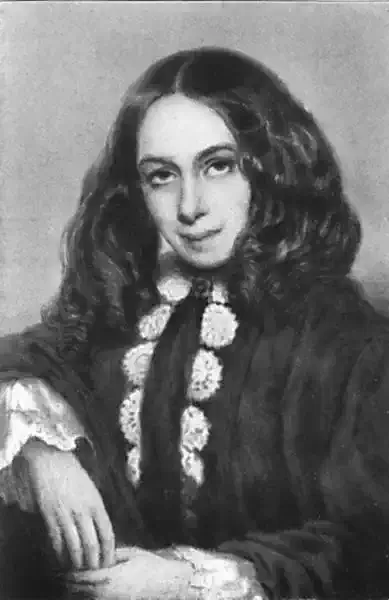
Elizabeth Barrett Browning
Sonnet 30 - I see thine image through my tears to-night
Sonnet 30 - I see thine image through my tears to-night
XXX
I see thine image through my tears to-night,
And yet to-day I saw thee smiling. How
Refer the cause?-Beloved, is it thou
Or I, who makes me sad? The acolyte
Amid the chanted joy and thankful rite
May so fall flat, with pale insensate brow,
On the altar-stair. I hear thy voice and vow,
Perplexed, uncertain, since thou art out of sight,
As he, in his swooning ears, the choir's Amen.
Beloved, dost thou love? or did I see all
The glory as I dreamed, and fainted when
Too vehement light dilated my ideal,
For my soul's eyes? Will that light come again,
As now these tears come-falling hot and real?
XXX
I see thine image through my tears to-night,
And yet to-day I saw thee smiling. How
Refer the cause?-Beloved, is it thou
Or I, who makes me sad? The acolyte
Amid the chanted joy and thankful rite
May so fall flat, with pale insensate brow,
On the altar-stair. I hear thy voice and vow,
Perplexed, uncertain, since thou art out of sight,
As he, in his swooning ears, the choir's Amen.
Beloved, dost thou love? or did I see all
The glory as I dreamed, and fainted when
Too vehement light dilated my ideal,
For my soul's eyes? Will that light come again,
As now these tears come-falling hot and real?
424
Elizabeth Barrett Browning
Sonnet 30 - I see thine image through my tears to-night
Sonnet 30 - I see thine image through my tears to-night
XXX
I see thine image through my tears to-night,
And yet to-day I saw thee smiling. How
Refer the cause?-Beloved, is it thou
Or I, who makes me sad? The acolyte
Amid the chanted joy and thankful rite
May so fall flat, with pale insensate brow,
On the altar-stair. I hear thy voice and vow,
Perplexed, uncertain, since thou art out of sight,
As he, in his swooning ears, the choir's Amen.
Beloved, dost thou love? or did I see all
The glory as I dreamed, and fainted when
Too vehement light dilated my ideal,
For my soul's eyes? Will that light come again,
As now these tears come-falling hot and real?
XXX
I see thine image through my tears to-night,
And yet to-day I saw thee smiling. How
Refer the cause?-Beloved, is it thou
Or I, who makes me sad? The acolyte
Amid the chanted joy and thankful rite
May so fall flat, with pale insensate brow,
On the altar-stair. I hear thy voice and vow,
Perplexed, uncertain, since thou art out of sight,
As he, in his swooning ears, the choir's Amen.
Beloved, dost thou love? or did I see all
The glory as I dreamed, and fainted when
Too vehement light dilated my ideal,
For my soul's eyes? Will that light come again,
As now these tears come-falling hot and real?
424
Elizabeth Barrett Browning
Sonnet 32 - The first time that the sun rose on thine oath
Sonnet 32 - The first time that the sun rose on thine oath
XXXII
The first time that the sun rose on thine oath
To love me, I looked forward to the moon
To slacken all those bonds which seemed too soon
And quickly tied to make a lasting troth.
Quick-loving hearts, I thought, may quickly loathe;
And, looking on myself, I seemed not one
For such man's love!-more like an out-of-tune
Worn viol, a good singer would be wroth
To spoil his song with, and which, snatched in haste,
Is laid down at the first ill-sounding note.
I did not wrong myself so, but I placed
A wrong on thee. For perfect strains may float
'Neath master-hands, from instruments defaced,-
And great souls, at one stroke, may do and doat.
XXXII
The first time that the sun rose on thine oath
To love me, I looked forward to the moon
To slacken all those bonds which seemed too soon
And quickly tied to make a lasting troth.
Quick-loving hearts, I thought, may quickly loathe;
And, looking on myself, I seemed not one
For such man's love!-more like an out-of-tune
Worn viol, a good singer would be wroth
To spoil his song with, and which, snatched in haste,
Is laid down at the first ill-sounding note.
I did not wrong myself so, but I placed
A wrong on thee. For perfect strains may float
'Neath master-hands, from instruments defaced,-
And great souls, at one stroke, may do and doat.
424
Elizabeth Barrett Browning
Sonnet 26 - I lived with visions for my company
Sonnet 26 - I lived with visions for my company
XXVI
I lived with visions for my company
Instead of men and women, years ago,
And found them gentle mates, nor thought to know
A sweeter music than they played to me.
But soon their trailing purple was not free
Of this world's dust, their lutes did silent grow,
And I myself grew faint and blind below
Their vanishing eyes. Then THOU didst come-to be,
Beloved, what they seemed. Their shining fronts,
Their songs, their splendors (better, yet the same,
As river-water hallowed into fonts),
Met in thee, and from out thee overcame
My soul with satisfaction of all wants:
Because God's gifts put man's best dreams to shame.
XXVI
I lived with visions for my company
Instead of men and women, years ago,
And found them gentle mates, nor thought to know
A sweeter music than they played to me.
But soon their trailing purple was not free
Of this world's dust, their lutes did silent grow,
And I myself grew faint and blind below
Their vanishing eyes. Then THOU didst come-to be,
Beloved, what they seemed. Their shining fronts,
Their songs, their splendors (better, yet the same,
As river-water hallowed into fonts),
Met in thee, and from out thee overcame
My soul with satisfaction of all wants:
Because God's gifts put man's best dreams to shame.
423
Elizabeth Barrett Browning
Sonnet 22 - When our two souls stand up erect and strong
Sonnet 22 - When our two souls stand up erect and strong
XXII
When our two souls stand up erect and strong,
Face to face, silent, drawing nigh and nigher,
Until the lengthening wings break into fire
At either curved point,-what bitter wrong
Can the earth do to us, that we should not long
Be here contented? Think. In mounting higher,
The angels would press on us and aspire
To drop some golden orb of perfect song
Into our deep, dear silence. Let us stay
Rather on earth, Beloved,-where the unfit
Contrarious moods of men recoil away
And isolate pure spirits, and permit
A place to stand and love in for a day,
With darkness and the death-hour rounding it.
XXII
When our two souls stand up erect and strong,
Face to face, silent, drawing nigh and nigher,
Until the lengthening wings break into fire
At either curved point,-what bitter wrong
Can the earth do to us, that we should not long
Be here contented? Think. In mounting higher,
The angels would press on us and aspire
To drop some golden orb of perfect song
Into our deep, dear silence. Let us stay
Rather on earth, Beloved,-where the unfit
Contrarious moods of men recoil away
And isolate pure spirits, and permit
A place to stand and love in for a day,
With darkness and the death-hour rounding it.
442
Elizabeth Barrett Browning
Sonnet 24 - Let the world's sharpness, like a clasping knife
Sonnet 24 - Let the world's sharpness, like a clasping knife
XXIV
Let the world's sharpness, like a clasping knife,
Shut in upon itself and do no harm
In this close hand of Love, now soft and warm,
And let us hear no sound of human strife
After the click of the shutting. Life to life-
I lean upon thee, Dear, without alarm,
And feel as safe as guarded by a charm
Against the stab of worldlings, who if rife
Are weak to injure. Very whitely still
The lilies of our lives may reassure
Their blossoms from their roots, accessible
Alone to heavenly dews that drop not fewer,
Growing straight, out of man's reach, on the hill.
God only, who made us rich, can make us poor.
XXIV
Let the world's sharpness, like a clasping knife,
Shut in upon itself and do no harm
In this close hand of Love, now soft and warm,
And let us hear no sound of human strife
After the click of the shutting. Life to life-
I lean upon thee, Dear, without alarm,
And feel as safe as guarded by a charm
Against the stab of worldlings, who if rife
Are weak to injure. Very whitely still
The lilies of our lives may reassure
Their blossoms from their roots, accessible
Alone to heavenly dews that drop not fewer,
Growing straight, out of man's reach, on the hill.
God only, who made us rich, can make us poor.
405
Elizabeth Barrett Browning
Sonnet 20 - Beloved, my Beloved, when I think
Sonnet 20 - Beloved, my Beloved, when I think
XX
Beloved, my Beloved, when I think
That thou wast in the world a year ago,
What time I sat alone here in the snow
And saw no footprint, heard the silence sink
No moment at thy voice, but, link by link,
Went counting all my chains as if that so
They never could fall off at any blow
Struck by thy possible hand,-why, thus I drink
Of life's great cup of wonder ! Wonderful,
Never to feel thee thrill the day or night
With personal act or speech,-nor ever cull
Some prescience of thee with the blossoms white
Thou sawest growing! Atheists are as dull,
Who cannot guess God's presence out of sight.
XX
Beloved, my Beloved, when I think
That thou wast in the world a year ago,
What time I sat alone here in the snow
And saw no footprint, heard the silence sink
No moment at thy voice, but, link by link,
Went counting all my chains as if that so
They never could fall off at any blow
Struck by thy possible hand,-why, thus I drink
Of life's great cup of wonder ! Wonderful,
Never to feel thee thrill the day or night
With personal act or speech,-nor ever cull
Some prescience of thee with the blossoms white
Thou sawest growing! Atheists are as dull,
Who cannot guess God's presence out of sight.
371
Elizabeth Barrett Browning
Sonnet 14 - If thou must love me, let it be for nought
Sonnet 14 - If thou must love me, let it be for nought
XIV
If thou must love me, let it be for nought
Except for love's sake only. Do not say
'I love her for her smile-her look-her way
Of speaking gently,-for a trick of thought
That falls in well with mine, and certes brought
A sense of pleasant ease on such a day'-
For these things in themselves, Beloved, may
Be changed, or change for thee,-and love, so wrought,
May be unwrought so. Neither love me for
Thine own dear pity's wiping my cheeks dry,-
A creature might forget to weep, who bore
Thy comfort long, and lose thy love thereby!
But love me for love's sake, that evermore
Thou mayst love on, through love's eternity.
XIV
If thou must love me, let it be for nought
Except for love's sake only. Do not say
'I love her for her smile-her look-her way
Of speaking gently,-for a trick of thought
That falls in well with mine, and certes brought
A sense of pleasant ease on such a day'-
For these things in themselves, Beloved, may
Be changed, or change for thee,-and love, so wrought,
May be unwrought so. Neither love me for
Thine own dear pity's wiping my cheeks dry,-
A creature might forget to weep, who bore
Thy comfort long, and lose thy love thereby!
But love me for love's sake, that evermore
Thou mayst love on, through love's eternity.
670
Elizabeth Barrett Browning
Sonnet 16 - And yet, because thou overcomest so
Sonnet 16 - And yet, because thou overcomest so
XVI
And yet, because thou overcomest so,
Because thou art more noble and like a king,
Thou canst prevail against my fears and fling
Thy purple round me, till my heart shall grow
Too close against thine heart henceforth to know
How it shook when alone. Why, conquering
May prove as lordly and complete a thing
In lifting upward, as in crushing low!
And as a vanquished soldier yields his sword
To one who lifts him from the bloody earth,
Even so, Beloved, I at last record,
Here ends my strife. If thou invite me forth,
I rise above abasement at the word.
Make thy love larger to enlarge my worth.
XVI
And yet, because thou overcomest so,
Because thou art more noble and like a king,
Thou canst prevail against my fears and fling
Thy purple round me, till my heart shall grow
Too close against thine heart henceforth to know
How it shook when alone. Why, conquering
May prove as lordly and complete a thing
In lifting upward, as in crushing low!
And as a vanquished soldier yields his sword
To one who lifts him from the bloody earth,
Even so, Beloved, I at last record,
Here ends my strife. If thou invite me forth,
I rise above abasement at the word.
Make thy love larger to enlarge my worth.
461
Elizabeth Barrett Browning
Sonnet 08 - What can I give thee back, O liberal
Sonnet 08 - What can I give thee back, O liberal
VIII
What can I give thee back, O liberal
And princely giver, who hast brought the gold
And purple of thine heart, unstained, untold,
And laid them on the outside of the-wall
For such as I to take or leave withal,
In unexpected largesse? am I cold,
Ungrateful, that for these most manifold
High gifts, I render nothing back at all?
Not so; not cold,-but very poor instead.
Ask God who knows. For frequent tears have run
The colors from my life, and left so dead
And pale a stuff, it were not fitly done
To give the same as pillow to thy head.
Go farther! let it serve to trample on.
VIII
What can I give thee back, O liberal
And princely giver, who hast brought the gold
And purple of thine heart, unstained, untold,
And laid them on the outside of the-wall
For such as I to take or leave withal,
In unexpected largesse? am I cold,
Ungrateful, that for these most manifold
High gifts, I render nothing back at all?
Not so; not cold,-but very poor instead.
Ask God who knows. For frequent tears have run
The colors from my life, and left so dead
And pale a stuff, it were not fitly done
To give the same as pillow to thy head.
Go farther! let it serve to trample on.
421
Elizabeth Barrett Browning
Sonnet 08 - What can I give thee back, O liberal
Sonnet 08 - What can I give thee back, O liberal
VIII
What can I give thee back, O liberal
And princely giver, who hast brought the gold
And purple of thine heart, unstained, untold,
And laid them on the outside of the-wall
For such as I to take or leave withal,
In unexpected largesse? am I cold,
Ungrateful, that for these most manifold
High gifts, I render nothing back at all?
Not so; not cold,-but very poor instead.
Ask God who knows. For frequent tears have run
The colors from my life, and left so dead
And pale a stuff, it were not fitly done
To give the same as pillow to thy head.
Go farther! let it serve to trample on.
VIII
What can I give thee back, O liberal
And princely giver, who hast brought the gold
And purple of thine heart, unstained, untold,
And laid them on the outside of the-wall
For such as I to take or leave withal,
In unexpected largesse? am I cold,
Ungrateful, that for these most manifold
High gifts, I render nothing back at all?
Not so; not cold,-but very poor instead.
Ask God who knows. For frequent tears have run
The colors from my life, and left so dead
And pale a stuff, it were not fitly done
To give the same as pillow to thy head.
Go farther! let it serve to trample on.
421
Elizabeth Barrett Browning
Sonnet 06 - Go from me. Yet I feel that I shall stand
Sonnet 06 - Go from me. Yet I feel that I shall stand
VI
Go from me. Yet I feel that I shall stand
Henceforward in thy shadow. Nevermore
Alone upon the threshold of my door
Of individual life, I shall command
The uses of my soul, nor lift my hand
Serenely in the sunshine as before,
Without the sense of that which I forbore-
Thy touch upon the palm. The widest land
Doom takes to part us, leaves thy heart in mine
With pulses that beat double. What I do
And what I dream include thee, as the wine
Must taste of its own grapes. And when I sue
God for myself, He hears that name of thine,
And sees within my eyes the tears of two.
VI
Go from me. Yet I feel that I shall stand
Henceforward in thy shadow. Nevermore
Alone upon the threshold of my door
Of individual life, I shall command
The uses of my soul, nor lift my hand
Serenely in the sunshine as before,
Without the sense of that which I forbore-
Thy touch upon the palm. The widest land
Doom takes to part us, leaves thy heart in mine
With pulses that beat double. What I do
And what I dream include thee, as the wine
Must taste of its own grapes. And when I sue
God for myself, He hears that name of thine,
And sees within my eyes the tears of two.
433
Elizabeth Barrett Browning
Sonnet 06 - Go from me. Yet I feel that I shall stand
Sonnet 06 - Go from me. Yet I feel that I shall stand
VI
Go from me. Yet I feel that I shall stand
Henceforward in thy shadow. Nevermore
Alone upon the threshold of my door
Of individual life, I shall command
The uses of my soul, nor lift my hand
Serenely in the sunshine as before,
Without the sense of that which I forbore-
Thy touch upon the palm. The widest land
Doom takes to part us, leaves thy heart in mine
With pulses that beat double. What I do
And what I dream include thee, as the wine
Must taste of its own grapes. And when I sue
God for myself, He hears that name of thine,
And sees within my eyes the tears of two.
VI
Go from me. Yet I feel that I shall stand
Henceforward in thy shadow. Nevermore
Alone upon the threshold of my door
Of individual life, I shall command
The uses of my soul, nor lift my hand
Serenely in the sunshine as before,
Without the sense of that which I forbore-
Thy touch upon the palm. The widest land
Doom takes to part us, leaves thy heart in mine
With pulses that beat double. What I do
And what I dream include thee, as the wine
Must taste of its own grapes. And when I sue
God for myself, He hears that name of thine,
And sees within my eyes the tears of two.
433
Elizabeth Barrett Browning
Sonnet 02 - But only three in all God's universe
Sonnet 02 - But only three in all God's universe
II
But only three in all God's universe
Have heard this word thou hast said,-Himself, beside
Thee speaking, and me listening! and replied
One of us . . . that was God, . . . and laid the curse
So darkly on my eyelids, as to amerce
My sight from seeing thee,-that if I had died,
The deathweights, placed there, would have signified
Less absolute exclusion. 'Nay' is worse
From God than from all others, O my friend!
Men could not part us with their worldly jars,
Nor the seas change us, nor the tempests bend;
Our hands would touch for all the mountain-bars:
And, heaven being rolled between us at the end,
We should but vow the faster for the stars.
II
But only three in all God's universe
Have heard this word thou hast said,-Himself, beside
Thee speaking, and me listening! and replied
One of us . . . that was God, . . . and laid the curse
So darkly on my eyelids, as to amerce
My sight from seeing thee,-that if I had died,
The deathweights, placed there, would have signified
Less absolute exclusion. 'Nay' is worse
From God than from all others, O my friend!
Men could not part us with their worldly jars,
Nor the seas change us, nor the tempests bend;
Our hands would touch for all the mountain-bars:
And, heaven being rolled between us at the end,
We should but vow the faster for the stars.
450
Elizabeth Barrett Browning
Sonnet 02 - But only three in all God's universe
Sonnet 02 - But only three in all God's universe
II
But only three in all God's universe
Have heard this word thou hast said,-Himself, beside
Thee speaking, and me listening! and replied
One of us . . . that was God, . . . and laid the curse
So darkly on my eyelids, as to amerce
My sight from seeing thee,-that if I had died,
The deathweights, placed there, would have signified
Less absolute exclusion. 'Nay' is worse
From God than from all others, O my friend!
Men could not part us with their worldly jars,
Nor the seas change us, nor the tempests bend;
Our hands would touch for all the mountain-bars:
And, heaven being rolled between us at the end,
We should but vow the faster for the stars.
II
But only three in all God's universe
Have heard this word thou hast said,-Himself, beside
Thee speaking, and me listening! and replied
One of us . . . that was God, . . . and laid the curse
So darkly on my eyelids, as to amerce
My sight from seeing thee,-that if I had died,
The deathweights, placed there, would have signified
Less absolute exclusion. 'Nay' is worse
From God than from all others, O my friend!
Men could not part us with their worldly jars,
Nor the seas change us, nor the tempests bend;
Our hands would touch for all the mountain-bars:
And, heaven being rolled between us at the end,
We should but vow the faster for the stars.
450
Elizabeth Barrett Browning
Sonnet 04 - Thou hast thy calling to some palace-floor
Sonnet 04 - Thou hast thy calling to some palace-floor
IV
Thou hast thy calling to some palace-floor,
Most gracious singer of high poems! where
The dancers will break footing, from the care
Of watching up thy pregnant lips for more.
And dost thou lift this house's latch too poor
For hand of thine? and canst thou think and bear
To let thy music drop here unaware
In folds of golden fulness at my door?
Look up and see the casement broken in,
The bats and owlets builders in the roof!
My cricket chirps against thy mandolin.
Hush, call no echo up in further proof
Of desolation! there 's a voice within
That weeps . . . as thou must sing . . . alone, aloof
IV
Thou hast thy calling to some palace-floor,
Most gracious singer of high poems! where
The dancers will break footing, from the care
Of watching up thy pregnant lips for more.
And dost thou lift this house's latch too poor
For hand of thine? and canst thou think and bear
To let thy music drop here unaware
In folds of golden fulness at my door?
Look up and see the casement broken in,
The bats and owlets builders in the roof!
My cricket chirps against thy mandolin.
Hush, call no echo up in further proof
Of desolation! there 's a voice within
That weeps . . . as thou must sing . . . alone, aloof
449
Elizabeth Barrett Browning
Sonnet 04 - Thou hast thy calling to some palace-floor
Sonnet 04 - Thou hast thy calling to some palace-floor
IV
Thou hast thy calling to some palace-floor,
Most gracious singer of high poems! where
The dancers will break footing, from the care
Of watching up thy pregnant lips for more.
And dost thou lift this house's latch too poor
For hand of thine? and canst thou think and bear
To let thy music drop here unaware
In folds of golden fulness at my door?
Look up and see the casement broken in,
The bats and owlets builders in the roof!
My cricket chirps against thy mandolin.
Hush, call no echo up in further proof
Of desolation! there 's a voice within
That weeps . . . as thou must sing . . . alone, aloof
IV
Thou hast thy calling to some palace-floor,
Most gracious singer of high poems! where
The dancers will break footing, from the care
Of watching up thy pregnant lips for more.
And dost thou lift this house's latch too poor
For hand of thine? and canst thou think and bear
To let thy music drop here unaware
In folds of golden fulness at my door?
Look up and see the casement broken in,
The bats and owlets builders in the roof!
My cricket chirps against thy mandolin.
Hush, call no echo up in further proof
Of desolation! there 's a voice within
That weeps . . . as thou must sing . . . alone, aloof
449
Elizabeth Barrett Browning
Patience Taught By Nature
Patience Taught By Nature
'O DREARY life,' we cry, ' O dreary life ! '
And still the generations of the birds
Sing through our sighing, and the flocks and herds
Serenely live while we are keeping strife
With Heaven's true purpose in us, as a knife
Against which we may struggle ! Ocean girds
Unslackened the dry land, savannah-swards
Unweary sweep, hills watch unworn, and rife
Meek leaves drop year]y from the forest-trees
To show, above, the unwasted stars that pass
In their old glory: O thou God of old,
Grant me some smaller grace than comes to these !--
But so much patience as a blade of grass
Grows by, contented through the heat and cold.
'O DREARY life,' we cry, ' O dreary life ! '
And still the generations of the birds
Sing through our sighing, and the flocks and herds
Serenely live while we are keeping strife
With Heaven's true purpose in us, as a knife
Against which we may struggle ! Ocean girds
Unslackened the dry land, savannah-swards
Unweary sweep, hills watch unworn, and rife
Meek leaves drop year]y from the forest-trees
To show, above, the unwasted stars that pass
In their old glory: O thou God of old,
Grant me some smaller grace than comes to these !--
But so much patience as a blade of grass
Grows by, contented through the heat and cold.
513
Elizabeth Barrett Browning
Rosalind's Scroll
Rosalind's Scroll
I LEFT thee last, a child at heart,
A woman scarce in years:
I come to thee, a solemn corpse
Which neither feels nor fears.
I have no breath to use in sighs;
They laid the dead-weights on mine eyes
To seal them safe from tears.
Look on me with thine own calm look:
I meet it calm as thou.
No look of thine can change this smile,
Or break thy sinful vow:
I tell thee that my poor scorn'd heart
Is of thine earth--thine earth--a part:
It cannot vex thee now.
I have pray'd for thee with bursting sob
When passion's course was free;
I have pray'd for thee with silent lips
In the anguish none could see;
They whisper'd oft, 'She sleepeth soft'-But
I only pray'd for thee.
Go to! I pray for thee no more:
The corpse's tongue is still;
Its folded fingers point to heaven,
But point there stiff and chill:
No farther wrong, no farther woe
Hath licence from the sin below
Its tranquil heart to thrill.
I charge thee, by the living's prayer,
And the dead's silentness,
To wring from out thy soul a cry
Which God shall hear and bless!
Lest Heaven's own palm droop in my hand,
And pale among the saints I stand,
A saint companionless.
I LEFT thee last, a child at heart,
A woman scarce in years:
I come to thee, a solemn corpse
Which neither feels nor fears.
I have no breath to use in sighs;
They laid the dead-weights on mine eyes
To seal them safe from tears.
Look on me with thine own calm look:
I meet it calm as thou.
No look of thine can change this smile,
Or break thy sinful vow:
I tell thee that my poor scorn'd heart
Is of thine earth--thine earth--a part:
It cannot vex thee now.
I have pray'd for thee with bursting sob
When passion's course was free;
I have pray'd for thee with silent lips
In the anguish none could see;
They whisper'd oft, 'She sleepeth soft'-But
I only pray'd for thee.
Go to! I pray for thee no more:
The corpse's tongue is still;
Its folded fingers point to heaven,
But point there stiff and chill:
No farther wrong, no farther woe
Hath licence from the sin below
Its tranquil heart to thrill.
I charge thee, by the living's prayer,
And the dead's silentness,
To wring from out thy soul a cry
Which God shall hear and bless!
Lest Heaven's own palm droop in my hand,
And pale among the saints I stand,
A saint companionless.
417
Elizabeth Barrett Browning
Rosalind's Scroll
Rosalind's Scroll
I LEFT thee last, a child at heart,
A woman scarce in years:
I come to thee, a solemn corpse
Which neither feels nor fears.
I have no breath to use in sighs;
They laid the dead-weights on mine eyes
To seal them safe from tears.
Look on me with thine own calm look:
I meet it calm as thou.
No look of thine can change this smile,
Or break thy sinful vow:
I tell thee that my poor scorn'd heart
Is of thine earth--thine earth--a part:
It cannot vex thee now.
I have pray'd for thee with bursting sob
When passion's course was free;
I have pray'd for thee with silent lips
In the anguish none could see;
They whisper'd oft, 'She sleepeth soft'-But
I only pray'd for thee.
Go to! I pray for thee no more:
The corpse's tongue is still;
Its folded fingers point to heaven,
But point there stiff and chill:
No farther wrong, no farther woe
Hath licence from the sin below
Its tranquil heart to thrill.
I charge thee, by the living's prayer,
And the dead's silentness,
To wring from out thy soul a cry
Which God shall hear and bless!
Lest Heaven's own palm droop in my hand,
And pale among the saints I stand,
A saint companionless.
I LEFT thee last, a child at heart,
A woman scarce in years:
I come to thee, a solemn corpse
Which neither feels nor fears.
I have no breath to use in sighs;
They laid the dead-weights on mine eyes
To seal them safe from tears.
Look on me with thine own calm look:
I meet it calm as thou.
No look of thine can change this smile,
Or break thy sinful vow:
I tell thee that my poor scorn'd heart
Is of thine earth--thine earth--a part:
It cannot vex thee now.
I have pray'd for thee with bursting sob
When passion's course was free;
I have pray'd for thee with silent lips
In the anguish none could see;
They whisper'd oft, 'She sleepeth soft'-But
I only pray'd for thee.
Go to! I pray for thee no more:
The corpse's tongue is still;
Its folded fingers point to heaven,
But point there stiff and chill:
No farther wrong, no farther woe
Hath licence from the sin below
Its tranquil heart to thrill.
I charge thee, by the living's prayer,
And the dead's silentness,
To wring from out thy soul a cry
Which God shall hear and bless!
Lest Heaven's own palm droop in my hand,
And pale among the saints I stand,
A saint companionless.
417
Elizabeth Barrett Browning
Pain In Pleasure
Pain In Pleasure
A THOUGHT ay like a flower upon mine heart,
And drew around it other thoughts like bees
For multitude and thirst of sweetnesses;
Whereat rejoicing, I desired the art
Of the Greek whistler, who to wharf and mart
Could lure those insect swarms from orange-trees
That I might hive with me such thoughts and please
My soul so, always. foolish counterpart
Of a weak man's vain wishes ! While I spoke,
The thought I called a flower grew nettle-rough
The thoughts, called bees, stung me to festering:
Oh, entertain (cried Reason as she woke)
Your best and gladdest thoughts but long enough,
And they will all prove sad enough to sting !
A THOUGHT ay like a flower upon mine heart,
And drew around it other thoughts like bees
For multitude and thirst of sweetnesses;
Whereat rejoicing, I desired the art
Of the Greek whistler, who to wharf and mart
Could lure those insect swarms from orange-trees
That I might hive with me such thoughts and please
My soul so, always. foolish counterpart
Of a weak man's vain wishes ! While I spoke,
The thought I called a flower grew nettle-rough
The thoughts, called bees, stung me to festering:
Oh, entertain (cried Reason as she woke)
Your best and gladdest thoughts but long enough,
And they will all prove sad enough to sting !
513
Elizabeth Barrett Browning
Pain In Pleasure
Pain In Pleasure
A THOUGHT ay like a flower upon mine heart,
And drew around it other thoughts like bees
For multitude and thirst of sweetnesses;
Whereat rejoicing, I desired the art
Of the Greek whistler, who to wharf and mart
Could lure those insect swarms from orange-trees
That I might hive with me such thoughts and please
My soul so, always. foolish counterpart
Of a weak man's vain wishes ! While I spoke,
The thought I called a flower grew nettle-rough
The thoughts, called bees, stung me to festering:
Oh, entertain (cried Reason as she woke)
Your best and gladdest thoughts but long enough,
And they will all prove sad enough to sting !
A THOUGHT ay like a flower upon mine heart,
And drew around it other thoughts like bees
For multitude and thirst of sweetnesses;
Whereat rejoicing, I desired the art
Of the Greek whistler, who to wharf and mart
Could lure those insect swarms from orange-trees
That I might hive with me such thoughts and please
My soul so, always. foolish counterpart
Of a weak man's vain wishes ! While I spoke,
The thought I called a flower grew nettle-rough
The thoughts, called bees, stung me to festering:
Oh, entertain (cried Reason as she woke)
Your best and gladdest thoughts but long enough,
And they will all prove sad enough to sting !
513
Elizabeth Barrett Browning
Pain In Pleasure
Pain In Pleasure
A THOUGHT ay like a flower upon mine heart,
And drew around it other thoughts like bees
For multitude and thirst of sweetnesses;
Whereat rejoicing, I desired the art
Of the Greek whistler, who to wharf and mart
Could lure those insect swarms from orange-trees
That I might hive with me such thoughts and please
My soul so, always. foolish counterpart
Of a weak man's vain wishes ! While I spoke,
The thought I called a flower grew nettle-rough
The thoughts, called bees, stung me to festering:
Oh, entertain (cried Reason as she woke)
Your best and gladdest thoughts but long enough,
And they will all prove sad enough to sting !
A THOUGHT ay like a flower upon mine heart,
And drew around it other thoughts like bees
For multitude and thirst of sweetnesses;
Whereat rejoicing, I desired the art
Of the Greek whistler, who to wharf and mart
Could lure those insect swarms from orange-trees
That I might hive with me such thoughts and please
My soul so, always. foolish counterpart
Of a weak man's vain wishes ! While I spoke,
The thought I called a flower grew nettle-rough
The thoughts, called bees, stung me to festering:
Oh, entertain (cried Reason as she woke)
Your best and gladdest thoughts but long enough,
And they will all prove sad enough to sting !
513
Elizabeth Barrett Browning
My Heart and I
My Heart and I
I.
ENOUGH ! we're tired, my heart and I.
We sit beside the headstone thus,
And wish that name were carved for us.
The moss reprints more tenderly
The hard types of the mason's knife,
As heaven's sweet life renews earth's life
With which we're tired, my heart and I.
II.
You see we're tired, my heart and I.
We dealt with books, we trusted men,
And in our own blood drenched the pen,
As if such colours could not fly.
We walked too straight for fortune's end,
We loved too true to keep a friend ;
At last we're tired, my heart and I.
III.
How tired we feel, my heart and I !
We seem of no use in the world ;
Our fancies hang grey and uncurled
About men's eyes indifferently ;
Our voice which thrilled you so, will let
You sleep; our tears are only wet :
What do we here, my heart and I ?
IV.
So tired, so tired, my heart and I !
It was not thus in that old time
When Ralph sat with me 'neath the lime
To watch the sunset from the sky.
`Dear love, you're looking tired,' he said;
I, smiling at him, shook my head :
'Tis now we're tired, my heart and I.
V.
So tired, so tired, my heart and I !
Though now none takes me on his arm
To fold me close and kiss me warm
Till each quick breath end in a sigh
Of happy languor. Now, alone,
We lean upon this graveyard stone,
Uncheered, unkissed, my heart and I.
VI.
Tired out we are, my heart and I.
Suppose the world brought diadems
To tempt us, crusted with loose gems
Of powers and pleasures ? Let it try.
We scarcely care to look at even
A pretty child, or God's blue heaven,
We feel so tired, my heart and I.
VII.
Yet who complains ? My heart and I ?
In this abundant earth no doubt
Is little room for things worn out :
Disdain them, break them, throw them by
And if before the days grew rough
We once were loved, used, -- well enough,
I think, we've fared, my heart and I.
I.
ENOUGH ! we're tired, my heart and I.
We sit beside the headstone thus,
And wish that name were carved for us.
The moss reprints more tenderly
The hard types of the mason's knife,
As heaven's sweet life renews earth's life
With which we're tired, my heart and I.
II.
You see we're tired, my heart and I.
We dealt with books, we trusted men,
And in our own blood drenched the pen,
As if such colours could not fly.
We walked too straight for fortune's end,
We loved too true to keep a friend ;
At last we're tired, my heart and I.
III.
How tired we feel, my heart and I !
We seem of no use in the world ;
Our fancies hang grey and uncurled
About men's eyes indifferently ;
Our voice which thrilled you so, will let
You sleep; our tears are only wet :
What do we here, my heart and I ?
IV.
So tired, so tired, my heart and I !
It was not thus in that old time
When Ralph sat with me 'neath the lime
To watch the sunset from the sky.
`Dear love, you're looking tired,' he said;
I, smiling at him, shook my head :
'Tis now we're tired, my heart and I.
V.
So tired, so tired, my heart and I !
Though now none takes me on his arm
To fold me close and kiss me warm
Till each quick breath end in a sigh
Of happy languor. Now, alone,
We lean upon this graveyard stone,
Uncheered, unkissed, my heart and I.
VI.
Tired out we are, my heart and I.
Suppose the world brought diadems
To tempt us, crusted with loose gems
Of powers and pleasures ? Let it try.
We scarcely care to look at even
A pretty child, or God's blue heaven,
We feel so tired, my heart and I.
VII.
Yet who complains ? My heart and I ?
In this abundant earth no doubt
Is little room for things worn out :
Disdain them, break them, throw them by
And if before the days grew rough
We once were loved, used, -- well enough,
I think, we've fared, my heart and I.
483