

Poems in this topic
Emotions and Feelings

Walter de la Mare
Arabia
Arabia
Far are the shades of Arabia,
Where the Princes ride at noon,
'Mid the verdurous vales and thickets,
Under the ghost of the moon;
And so dark is that vaulted purple
Flowers in the forest rise
And toss into blossom 'gainst the phantom stars
Pale in the noonday skies.
Sweet is the music of Arabia
In my heart, when out of dreams
I still in the thin clear mirk of dawn
Descry her gliding streams;
Hear her strange lutes on the green banks
Ring loud with the grief and delight
Of the dim-silked, dark-haired Musicians
In the brooding silence of night.
They haunt me -- her lutes and her forests;
No beauty on earth I see
But shadowed with that dream recalls
Her loveliness to me:
Still eyes look coldly upon me,
Cold voices whisper and say --
'He is crazed with the spell of far Arabia,
They have stolen his wits away.'
Far are the shades of Arabia,
Where the Princes ride at noon,
'Mid the verdurous vales and thickets,
Under the ghost of the moon;
And so dark is that vaulted purple
Flowers in the forest rise
And toss into blossom 'gainst the phantom stars
Pale in the noonday skies.
Sweet is the music of Arabia
In my heart, when out of dreams
I still in the thin clear mirk of dawn
Descry her gliding streams;
Hear her strange lutes on the green banks
Ring loud with the grief and delight
Of the dim-silked, dark-haired Musicians
In the brooding silence of night.
They haunt me -- her lutes and her forests;
No beauty on earth I see
But shadowed with that dream recalls
Her loveliness to me:
Still eyes look coldly upon me,
Cold voices whisper and say --
'He is crazed with the spell of far Arabia,
They have stolen his wits away.'
693
Walter de la Mare
Alone
Alone
The abode of the nightingale is bare,
Flowered frost congeals in the gelid air,
The fox howls from his frozen lair:
Alas, my loved one is gone,
I am alone:
It is winter.
Once the pink cast a winy smell,
The wild bee hung in the hyacinth bell,
Light in effulgence of beauty fell:
I am alone:
It is winter.
My candle a silent fire doth shed,
Starry Orion hunts o'erhead;
Come moth, come shadow, the world is dead:
Alas, my loved one is gone,
I am alone;
It is winter.
The abode of the nightingale is bare,
Flowered frost congeals in the gelid air,
The fox howls from his frozen lair:
Alas, my loved one is gone,
I am alone:
It is winter.
Once the pink cast a winy smell,
The wild bee hung in the hyacinth bell,
Light in effulgence of beauty fell:
I am alone:
It is winter.
My candle a silent fire doth shed,
Starry Orion hunts o'erhead;
Come moth, come shadow, the world is dead:
Alas, my loved one is gone,
I am alone;
It is winter.
302
Walter de la Mare
Alone
Alone
The abode of the nightingale is bare,
Flowered frost congeals in the gelid air,
The fox howls from his frozen lair:
Alas, my loved one is gone,
I am alone:
It is winter.
Once the pink cast a winy smell,
The wild bee hung in the hyacinth bell,
Light in effulgence of beauty fell:
I am alone:
It is winter.
My candle a silent fire doth shed,
Starry Orion hunts o'erhead;
Come moth, come shadow, the world is dead:
Alas, my loved one is gone,
I am alone;
It is winter.
The abode of the nightingale is bare,
Flowered frost congeals in the gelid air,
The fox howls from his frozen lair:
Alas, my loved one is gone,
I am alone:
It is winter.
Once the pink cast a winy smell,
The wild bee hung in the hyacinth bell,
Light in effulgence of beauty fell:
I am alone:
It is winter.
My candle a silent fire doth shed,
Starry Orion hunts o'erhead;
Come moth, come shadow, the world is dead:
Alas, my loved one is gone,
I am alone;
It is winter.
302
Walter de la Mare
Alexander
Alexander
It was the Great Alexander,
Capped with a golden helm,
Sate in the ages, in his floating ship,
In a dead calm.
Voices of sea-maids singing
Wandered across the deep:
The sailors labouring on their oars
Rowed as in sleep.
All the high pomp of Asia,
Charmed by that siren lay,
Out of their weary and dreaming minds
Faded away.
Like a bold boy sate their Captain,
His glamour withered and gone,
In the souls of his brooding mariners,
While the song pined on.
Time like a falling dew,
Life like the scene of a dream
Laid between slumber and slumber
Only did seem. . . .
O Alexander, then,
In all us mortals too,
Wax not so overbold
On the wave dark-blue!
Come the calm starry night,
Who then will hear
Aught save the singing
Of the sea-maids clear?
It was the Great Alexander,
Capped with a golden helm,
Sate in the ages, in his floating ship,
In a dead calm.
Voices of sea-maids singing
Wandered across the deep:
The sailors labouring on their oars
Rowed as in sleep.
All the high pomp of Asia,
Charmed by that siren lay,
Out of their weary and dreaming minds
Faded away.
Like a bold boy sate their Captain,
His glamour withered and gone,
In the souls of his brooding mariners,
While the song pined on.
Time like a falling dew,
Life like the scene of a dream
Laid between slumber and slumber
Only did seem. . . .
O Alexander, then,
In all us mortals too,
Wax not so overbold
On the wave dark-blue!
Come the calm starry night,
Who then will hear
Aught save the singing
Of the sea-maids clear?
371
Walter de la Mare
Alexander
Alexander
It was the Great Alexander,
Capped with a golden helm,
Sate in the ages, in his floating ship,
In a dead calm.
Voices of sea-maids singing
Wandered across the deep:
The sailors labouring on their oars
Rowed as in sleep.
All the high pomp of Asia,
Charmed by that siren lay,
Out of their weary and dreaming minds
Faded away.
Like a bold boy sate their Captain,
His glamour withered and gone,
In the souls of his brooding mariners,
While the song pined on.
Time like a falling dew,
Life like the scene of a dream
Laid between slumber and slumber
Only did seem. . . .
O Alexander, then,
In all us mortals too,
Wax not so overbold
On the wave dark-blue!
Come the calm starry night,
Who then will hear
Aught save the singing
Of the sea-maids clear?
It was the Great Alexander,
Capped with a golden helm,
Sate in the ages, in his floating ship,
In a dead calm.
Voices of sea-maids singing
Wandered across the deep:
The sailors labouring on their oars
Rowed as in sleep.
All the high pomp of Asia,
Charmed by that siren lay,
Out of their weary and dreaming minds
Faded away.
Like a bold boy sate their Captain,
His glamour withered and gone,
In the souls of his brooding mariners,
While the song pined on.
Time like a falling dew,
Life like the scene of a dream
Laid between slumber and slumber
Only did seem. . . .
O Alexander, then,
In all us mortals too,
Wax not so overbold
On the wave dark-blue!
Come the calm starry night,
Who then will hear
Aught save the singing
Of the sea-maids clear?
371
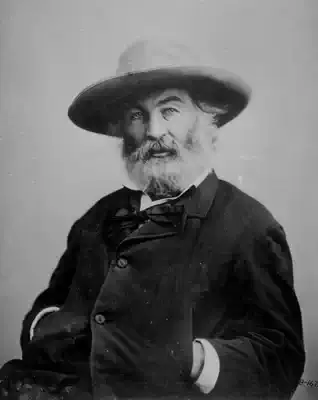
Walt Whitman
Year Of Meteors, 1859 '60
Year Of Meteors, 1859 '60
YEAR of meteors! brooding year!
I would bind in words retrospective, some of your deeds and signs;
I would sing your contest for the 19th Presidentiad;
I would sing how an old man, tall, with white hair, mounted the
scaffold in Virginia;
(I was at hand--silent I stood, with teeth shut close--I watch'd;
I stood very near you, old man, when cool and indifferent, but
trembling with age and your unheal'd wounds, you mounted the
scaffold;)
--I would sing in my copious song your census returns of The States,
The tables of population and products--I would sing of your ships and
their cargoes,
The proud black ships of Manhattan, arriving, some fill'd with
immigrants, some from the isthmus with cargoes of gold;
Songs thereof would I sing--to all that hitherward comes would I
welcome give; 10
And you would I sing, fair stripling! welcome to you from me, sweet
boy of England!
Remember you surging Manhattan's crowds, as you pass'd with your
cortege of nobles?
There in the crowds stood I, and singled you out with attachment;
I know not why, but I loved you... (and so go forth little song,
Far over sea speed like an arrow, carrying my love all folded,
And find in his palace the youth I love, and drop these lines at his
feet;)
--Nor forget I to sing of the wonder, the ship as she swam up my bay,
Well-shaped and stately the Great Eastern swam up my bay, she was 600
feet long,
Her, moving swiftly, surrounded by myriads of small craft, I forget
not to sing;
--Nor the comet that came unannounced out of the north, flaring in
heaven; 20
Nor the strange huge meteor procession, dazzling and clear, shooting
over our heads,
(A moment, a moment long, it sail'd its balls of unearthly light over
our heads,
Then departed, dropt in the night, and was gone;)
--Of such, and fitful as they, I sing--with gleams from them would I
gleam and patch these chants;
Your chants, O year all mottled with evil and good! year of
forebodings! year of the youth I love!
Year of comets and meteors transient and strange!--lo! even here, one
equally transient and strange!
As I flit through you hastily, soon to fall and be gone, what is this
book,
What am I myself but one of your meteors?
YEAR of meteors! brooding year!
I would bind in words retrospective, some of your deeds and signs;
I would sing your contest for the 19th Presidentiad;
I would sing how an old man, tall, with white hair, mounted the
scaffold in Virginia;
(I was at hand--silent I stood, with teeth shut close--I watch'd;
I stood very near you, old man, when cool and indifferent, but
trembling with age and your unheal'd wounds, you mounted the
scaffold;)
--I would sing in my copious song your census returns of The States,
The tables of population and products--I would sing of your ships and
their cargoes,
The proud black ships of Manhattan, arriving, some fill'd with
immigrants, some from the isthmus with cargoes of gold;
Songs thereof would I sing--to all that hitherward comes would I
welcome give; 10
And you would I sing, fair stripling! welcome to you from me, sweet
boy of England!
Remember you surging Manhattan's crowds, as you pass'd with your
cortege of nobles?
There in the crowds stood I, and singled you out with attachment;
I know not why, but I loved you... (and so go forth little song,
Far over sea speed like an arrow, carrying my love all folded,
And find in his palace the youth I love, and drop these lines at his
feet;)
--Nor forget I to sing of the wonder, the ship as she swam up my bay,
Well-shaped and stately the Great Eastern swam up my bay, she was 600
feet long,
Her, moving swiftly, surrounded by myriads of small craft, I forget
not to sing;
--Nor the comet that came unannounced out of the north, flaring in
heaven; 20
Nor the strange huge meteor procession, dazzling and clear, shooting
over our heads,
(A moment, a moment long, it sail'd its balls of unearthly light over
our heads,
Then departed, dropt in the night, and was gone;)
--Of such, and fitful as they, I sing--with gleams from them would I
gleam and patch these chants;
Your chants, O year all mottled with evil and good! year of
forebodings! year of the youth I love!
Year of comets and meteors transient and strange!--lo! even here, one
equally transient and strange!
As I flit through you hastily, soon to fall and be gone, what is this
book,
What am I myself but one of your meteors?
461
Walt Whitman
Whoever You Are, Holding Me Now In Hand
Whoever You Are, Holding Me Now In Hand
WHOEVER you are, holding me now in hand,
Without one thing, all will be useless,
I give you fair warning, before you attempt me further,
I am not what you supposed, but far different.
Who is he that would become my follower?
Who would sign himself a candidate for my affections?
The way is suspicious--the result uncertain, perhaps destructive;
You would have to give up all else--I alone would expect to be your
God, sole and exclusive,
Your novitiate would even then be long and exhausting,
The whole past theory of your life, and all conformity to the lives
around you, would have to be abandon'd; 10
Therefore release me now, before troubling yourself any further--Let
go your hand from my shoulders,
Put me down, and depart on your way.
Or else, by stealth, in some wood, for trial,
Or back of a rock, in the open air,
(For in any roof'd room of a house I emerge not--nor in company,
And in libraries I lie as one dumb, a gawk, or unborn, or dead,)
But just possibly with you on a high hill--first watching lest any
person, for miles around, approach unawares,
Or possibly with you sailing at sea, or on the beach of the sea, or
some quiet island,
Here to put your lips upon mine I permit you,
With the comrade's long-dwelling kiss, or the new husband's kiss, 20
For I am the new husband, and I am the comrade.
Or, if you will, thrusting me beneath your clothing,
Where I may feel the throbs of your heart, or rest upon your hip,
Carry me when you go forth over land or sea;
For thus, merely touching you, is enough--is best,
And thus, touching you, would I silently sleep and be carried
eternally.
But these leaves conning, you con at peril,
For these leaves, and me, you will not understand,
They will elude you at first, and still more afterward--I will
certainly elude you,
Even while you should think you had unquestionably caught me,
behold! 30
Already you see I have escaped from you.
For it is not for what I have put into it that I have written this
book,
Nor is it by reading it you will acquire it,
Nor do those know me best who admire me, and vauntingly praise me,
Nor will the candidates for my love, (unless at most a very few,)
prove victorious,
Nor will my poems do good only--they will do just as much evil,
perhaps more;
For all is useless without that which you may guess at many times and
not hit--that which I hinted at;
Therefore release me, and depart on your way.
WHOEVER you are, holding me now in hand,
Without one thing, all will be useless,
I give you fair warning, before you attempt me further,
I am not what you supposed, but far different.
Who is he that would become my follower?
Who would sign himself a candidate for my affections?
The way is suspicious--the result uncertain, perhaps destructive;
You would have to give up all else--I alone would expect to be your
God, sole and exclusive,
Your novitiate would even then be long and exhausting,
The whole past theory of your life, and all conformity to the lives
around you, would have to be abandon'd; 10
Therefore release me now, before troubling yourself any further--Let
go your hand from my shoulders,
Put me down, and depart on your way.
Or else, by stealth, in some wood, for trial,
Or back of a rock, in the open air,
(For in any roof'd room of a house I emerge not--nor in company,
And in libraries I lie as one dumb, a gawk, or unborn, or dead,)
But just possibly with you on a high hill--first watching lest any
person, for miles around, approach unawares,
Or possibly with you sailing at sea, or on the beach of the sea, or
some quiet island,
Here to put your lips upon mine I permit you,
With the comrade's long-dwelling kiss, or the new husband's kiss, 20
For I am the new husband, and I am the comrade.
Or, if you will, thrusting me beneath your clothing,
Where I may feel the throbs of your heart, or rest upon your hip,
Carry me when you go forth over land or sea;
For thus, merely touching you, is enough--is best,
And thus, touching you, would I silently sleep and be carried
eternally.
But these leaves conning, you con at peril,
For these leaves, and me, you will not understand,
They will elude you at first, and still more afterward--I will
certainly elude you,
Even while you should think you had unquestionably caught me,
behold! 30
Already you see I have escaped from you.
For it is not for what I have put into it that I have written this
book,
Nor is it by reading it you will acquire it,
Nor do those know me best who admire me, and vauntingly praise me,
Nor will the candidates for my love, (unless at most a very few,)
prove victorious,
Nor will my poems do good only--they will do just as much evil,
perhaps more;
For all is useless without that which you may guess at many times and
not hit--that which I hinted at;
Therefore release me, and depart on your way.
440
Walt Whitman
Who Is Now Reading This?
Who Is Now Reading This?
May-be one is now reading this who knows some wrong-doing of my past
life,
Or may-be a stranger is reading this who has secretly loved me,
Or may-be one who meets all my grand assumptions and egotisms with
derision,
Or may-be one who is puzzled at me.
As if I were not puzzled at myself!
Or as if I never deride myself! (O conscience-struck! O selfconvicted!)
Or as if I do not secretly love strangers! (O tenderly, a long time,
and never avow it;)
Or as if I did not see, perfectly well, interior in myself, the stuff
of wrong-doing,
Or as if it could cease transpiring from me until it must cease. 10
May-be one is now reading this who knows some wrong-doing of my past
life,
Or may-be a stranger is reading this who has secretly loved me,
Or may-be one who meets all my grand assumptions and egotisms with
derision,
Or may-be one who is puzzled at me.
As if I were not puzzled at myself!
Or as if I never deride myself! (O conscience-struck! O selfconvicted!)
Or as if I do not secretly love strangers! (O tenderly, a long time,
and never avow it;)
Or as if I did not see, perfectly well, interior in myself, the stuff
of wrong-doing,
Or as if it could cease transpiring from me until it must cease. 10
556
Walt Whitman
Who Is Now Reading This?
Who Is Now Reading This?
May-be one is now reading this who knows some wrong-doing of my past
life,
Or may-be a stranger is reading this who has secretly loved me,
Or may-be one who meets all my grand assumptions and egotisms with
derision,
Or may-be one who is puzzled at me.
As if I were not puzzled at myself!
Or as if I never deride myself! (O conscience-struck! O selfconvicted!)
Or as if I do not secretly love strangers! (O tenderly, a long time,
and never avow it;)
Or as if I did not see, perfectly well, interior in myself, the stuff
of wrong-doing,
Or as if it could cease transpiring from me until it must cease. 10
May-be one is now reading this who knows some wrong-doing of my past
life,
Or may-be a stranger is reading this who has secretly loved me,
Or may-be one who meets all my grand assumptions and egotisms with
derision,
Or may-be one who is puzzled at me.
As if I were not puzzled at myself!
Or as if I never deride myself! (O conscience-struck! O selfconvicted!)
Or as if I do not secretly love strangers! (O tenderly, a long time,
and never avow it;)
Or as if I did not see, perfectly well, interior in myself, the stuff
of wrong-doing,
Or as if it could cease transpiring from me until it must cease. 10
556
Walt Whitman
When I Heard At The Close Of The Day
When I Heard At The Close Of The Day
WHEN I heard at the close of the day how my name had been receiv'd
with plaudits in the capitol, still it was not a happy night
for me that follow'd;
And else, when I carous'd, or when my plans were accomplish'd, still
I was not happy;
But the day when I rose at dawn from the bed of perfect health,
refresh'd, singing, inhaling the ripe breath of autumn,
When I saw the full moon in the west grow pale and disappear in the
morning light,
When I wander'd alone over the beach, and undressing, bathed,
laughing with the cool waters, and saw the sun rise,
And when I thought how my dear friend, my lover, was on his way
coming, O then I was happy;
O then each breath tasted sweeter--and all that day my food nourish'd
me more--and the beautiful day pass'd well,
And the next came with equal joy--and with the next, at evening, came
my friend;
And that night, while all was still, I heard the waters roll slowly
continually up the shores,
I heard the hissing rustle of the liquid and sands, as directed to
me, whispering, to congratulate me, 10
For the one I love most lay sleeping by me under the same cover in
the cool night,
In the stillness, in the autumn moonbeams, his face was inclined
toward me,
And his arm lay lightly around my breast--and that night I was happy.
WHEN I heard at the close of the day how my name had been receiv'd
with plaudits in the capitol, still it was not a happy night
for me that follow'd;
And else, when I carous'd, or when my plans were accomplish'd, still
I was not happy;
But the day when I rose at dawn from the bed of perfect health,
refresh'd, singing, inhaling the ripe breath of autumn,
When I saw the full moon in the west grow pale and disappear in the
morning light,
When I wander'd alone over the beach, and undressing, bathed,
laughing with the cool waters, and saw the sun rise,
And when I thought how my dear friend, my lover, was on his way
coming, O then I was happy;
O then each breath tasted sweeter--and all that day my food nourish'd
me more--and the beautiful day pass'd well,
And the next came with equal joy--and with the next, at evening, came
my friend;
And that night, while all was still, I heard the waters roll slowly
continually up the shores,
I heard the hissing rustle of the liquid and sands, as directed to
me, whispering, to congratulate me, 10
For the one I love most lay sleeping by me under the same cover in
the cool night,
In the stillness, in the autumn moonbeams, his face was inclined
toward me,
And his arm lay lightly around my breast--and that night I was happy.
449
Walt Whitman
When I Heard At The Close Of The Day
When I Heard At The Close Of The Day
WHEN I heard at the close of the day how my name had been receiv'd
with plaudits in the capitol, still it was not a happy night
for me that follow'd;
And else, when I carous'd, or when my plans were accomplish'd, still
I was not happy;
But the day when I rose at dawn from the bed of perfect health,
refresh'd, singing, inhaling the ripe breath of autumn,
When I saw the full moon in the west grow pale and disappear in the
morning light,
When I wander'd alone over the beach, and undressing, bathed,
laughing with the cool waters, and saw the sun rise,
And when I thought how my dear friend, my lover, was on his way
coming, O then I was happy;
O then each breath tasted sweeter--and all that day my food nourish'd
me more--and the beautiful day pass'd well,
And the next came with equal joy--and with the next, at evening, came
my friend;
And that night, while all was still, I heard the waters roll slowly
continually up the shores,
I heard the hissing rustle of the liquid and sands, as directed to
me, whispering, to congratulate me, 10
For the one I love most lay sleeping by me under the same cover in
the cool night,
In the stillness, in the autumn moonbeams, his face was inclined
toward me,
And his arm lay lightly around my breast--and that night I was happy.
WHEN I heard at the close of the day how my name had been receiv'd
with plaudits in the capitol, still it was not a happy night
for me that follow'd;
And else, when I carous'd, or when my plans were accomplish'd, still
I was not happy;
But the day when I rose at dawn from the bed of perfect health,
refresh'd, singing, inhaling the ripe breath of autumn,
When I saw the full moon in the west grow pale and disappear in the
morning light,
When I wander'd alone over the beach, and undressing, bathed,
laughing with the cool waters, and saw the sun rise,
And when I thought how my dear friend, my lover, was on his way
coming, O then I was happy;
O then each breath tasted sweeter--and all that day my food nourish'd
me more--and the beautiful day pass'd well,
And the next came with equal joy--and with the next, at evening, came
my friend;
And that night, while all was still, I heard the waters roll slowly
continually up the shores,
I heard the hissing rustle of the liquid and sands, as directed to
me, whispering, to congratulate me, 10
For the one I love most lay sleeping by me under the same cover in
the cool night,
In the stillness, in the autumn moonbeams, his face was inclined
toward me,
And his arm lay lightly around my breast--and that night I was happy.
449
Walt Whitman
When I Heard At The Close Of The Day
When I Heard At The Close Of The Day
WHEN I heard at the close of the day how my name had been receiv'd
with plaudits in the capitol, still it was not a happy night
for me that follow'd;
And else, when I carous'd, or when my plans were accomplish'd, still
I was not happy;
But the day when I rose at dawn from the bed of perfect health,
refresh'd, singing, inhaling the ripe breath of autumn,
When I saw the full moon in the west grow pale and disappear in the
morning light,
When I wander'd alone over the beach, and undressing, bathed,
laughing with the cool waters, and saw the sun rise,
And when I thought how my dear friend, my lover, was on his way
coming, O then I was happy;
O then each breath tasted sweeter--and all that day my food nourish'd
me more--and the beautiful day pass'd well,
And the next came with equal joy--and with the next, at evening, came
my friend;
And that night, while all was still, I heard the waters roll slowly
continually up the shores,
I heard the hissing rustle of the liquid and sands, as directed to
me, whispering, to congratulate me, 10
For the one I love most lay sleeping by me under the same cover in
the cool night,
In the stillness, in the autumn moonbeams, his face was inclined
toward me,
And his arm lay lightly around my breast--and that night I was happy.
WHEN I heard at the close of the day how my name had been receiv'd
with plaudits in the capitol, still it was not a happy night
for me that follow'd;
And else, when I carous'd, or when my plans were accomplish'd, still
I was not happy;
But the day when I rose at dawn from the bed of perfect health,
refresh'd, singing, inhaling the ripe breath of autumn,
When I saw the full moon in the west grow pale and disappear in the
morning light,
When I wander'd alone over the beach, and undressing, bathed,
laughing with the cool waters, and saw the sun rise,
And when I thought how my dear friend, my lover, was on his way
coming, O then I was happy;
O then each breath tasted sweeter--and all that day my food nourish'd
me more--and the beautiful day pass'd well,
And the next came with equal joy--and with the next, at evening, came
my friend;
And that night, while all was still, I heard the waters roll slowly
continually up the shores,
I heard the hissing rustle of the liquid and sands, as directed to
me, whispering, to congratulate me, 10
For the one I love most lay sleeping by me under the same cover in
the cool night,
In the stillness, in the autumn moonbeams, his face was inclined
toward me,
And his arm lay lightly around my breast--and that night I was happy.
449
Walt Whitman
When I Peruse The Conquer'd Fame
When I Peruse The Conquer'd Fame
WHEN I peruse the conquer'd fame of heroes, and the victories of
mighty generals, I do not envy the generals,
Nor the President in his Presidency, nor the rich in his great house;
But when I hear of the brotherhood of lovers, how it was with them,
How through life, through dangers, odium, unchanging, long and long,
Through youth, and through middle and old age, how unfaltering, how
affectionate and faithful they were,
Then I am pensive--I hastily walk away, fill'd with the bitterest
envy.
WHEN I peruse the conquer'd fame of heroes, and the victories of
mighty generals, I do not envy the generals,
Nor the President in his Presidency, nor the rich in his great house;
But when I hear of the brotherhood of lovers, how it was with them,
How through life, through dangers, odium, unchanging, long and long,
Through youth, and through middle and old age, how unfaltering, how
affectionate and faithful they were,
Then I am pensive--I hastily walk away, fill'd with the bitterest
envy.
382
Walt Whitman
When I Peruse The Conquer'd Fame
When I Peruse The Conquer'd Fame
WHEN I peruse the conquer'd fame of heroes, and the victories of
mighty generals, I do not envy the generals,
Nor the President in his Presidency, nor the rich in his great house;
But when I hear of the brotherhood of lovers, how it was with them,
How through life, through dangers, odium, unchanging, long and long,
Through youth, and through middle and old age, how unfaltering, how
affectionate and faithful they were,
Then I am pensive--I hastily walk away, fill'd with the bitterest
envy.
WHEN I peruse the conquer'd fame of heroes, and the victories of
mighty generals, I do not envy the generals,
Nor the President in his Presidency, nor the rich in his great house;
But when I hear of the brotherhood of lovers, how it was with them,
How through life, through dangers, odium, unchanging, long and long,
Through youth, and through middle and old age, how unfaltering, how
affectionate and faithful they were,
Then I am pensive--I hastily walk away, fill'd with the bitterest
envy.
382
Walt Whitman
What General Has A Good Army
What General Has A Good Army
WHAT General has a good army in himself, has a good army;
He happy in himself, or she happy in herself, is happy,
But I tell you you cannot be happy by others, any more than you can
beget or conceive a child by others.
WHAT General has a good army in himself, has a good army;
He happy in himself, or she happy in herself, is happy,
But I tell you you cannot be happy by others, any more than you can
beget or conceive a child by others.
423
Walt Whitman
What Think You I Take My Pen In Hand?
What Think You I Take My Pen In Hand?
WHAT think you I take my pen in hand to record?
The battle-ship, perfect-model'd, majestic, that I saw pass the
offing to-day under full sail?
The splendors of the past day? Or the splendor of the night that
envelopes me?
Or the vaunted glory and growth of the great city spread around me?-No;
But I record of two simple men I saw to-day, on the pier, in the
midst of the crowd, parting the parting of dear friends;
The one to remain hung on the other's neck, and passionately kiss'd
him,
While the one to depart, tightly prest the one to remain in his arms.
WHAT think you I take my pen in hand to record?
The battle-ship, perfect-model'd, majestic, that I saw pass the
offing to-day under full sail?
The splendors of the past day? Or the splendor of the night that
envelopes me?
Or the vaunted glory and growth of the great city spread around me?-No;
But I record of two simple men I saw to-day, on the pier, in the
midst of the crowd, parting the parting of dear friends;
The one to remain hung on the other's neck, and passionately kiss'd
him,
While the one to depart, tightly prest the one to remain in his arms.
400
Walt Whitman
What Think You I Take My Pen In Hand?
What Think You I Take My Pen In Hand?
WHAT think you I take my pen in hand to record?
The battle-ship, perfect-model'd, majestic, that I saw pass the
offing to-day under full sail?
The splendors of the past day? Or the splendor of the night that
envelopes me?
Or the vaunted glory and growth of the great city spread around me?-No;
But I record of two simple men I saw to-day, on the pier, in the
midst of the crowd, parting the parting of dear friends;
The one to remain hung on the other's neck, and passionately kiss'd
him,
While the one to depart, tightly prest the one to remain in his arms.
WHAT think you I take my pen in hand to record?
The battle-ship, perfect-model'd, majestic, that I saw pass the
offing to-day under full sail?
The splendors of the past day? Or the splendor of the night that
envelopes me?
Or the vaunted glory and growth of the great city spread around me?-No;
But I record of two simple men I saw to-day, on the pier, in the
midst of the crowd, parting the parting of dear friends;
The one to remain hung on the other's neck, and passionately kiss'd
him,
While the one to depart, tightly prest the one to remain in his arms.
400
Walt Whitman
What Am I, After All?
What Am I, After All?
WHAT am I, after all, but a child, pleas'd with the sound of my own
name? repeating it over and over;
I stand apart to hear--it never tires me.
To you, your name also;
Did you think there was nothing but two or three pronunciations in
the sound of your name?
WHAT am I, after all, but a child, pleas'd with the sound of my own
name? repeating it over and over;
I stand apart to hear--it never tires me.
To you, your name also;
Did you think there was nothing but two or three pronunciations in
the sound of your name?
363
Walt Whitman
We Two-How Long We Were Fool'd
We Two-How Long We Were Fool'd
WE two--how long we were fool'd!
Now transmuted, we swiftly escape, as Nature escapes;
We are Nature--long have we been absent, but now we return;
We become plants, leaves, foliage, roots, bark;
We are bedded in the ground--we are rocks;
We are oaks--we grow in the openings side by side;
We browse--we are two among the wild herds, spontaneous as any;
We are two fishes swimming in the sea together;
We are what the locust blossoms are--we drop scent around the lanes,
mornings and evenings;
We are also the coarse smut of beasts, vegetables, minerals; 10
We are two predatory hawks--we soar above, and look down;
We are two resplendent suns--we it is who balance ourselves, orbic
and stellar--we are as two comets;
We prowl fang'd and four-footed in the woods--we spring on prey;
We are two clouds, forenoons and afternoons, driving overhead;
We are seas mingling--we are two of those cheerful waves, rolling
over each other, and interwetting each other;
We are what the atmosphere is, transparent, receptive, pervious,
impervious:
We are snow, rain, cold, darkness--we are each product and influence
of the globe;
We have circled and circled till we have arrived home again--we two
have;
We have voided all but freedom, and all but our own joy.
WE two--how long we were fool'd!
Now transmuted, we swiftly escape, as Nature escapes;
We are Nature--long have we been absent, but now we return;
We become plants, leaves, foliage, roots, bark;
We are bedded in the ground--we are rocks;
We are oaks--we grow in the openings side by side;
We browse--we are two among the wild herds, spontaneous as any;
We are two fishes swimming in the sea together;
We are what the locust blossoms are--we drop scent around the lanes,
mornings and evenings;
We are also the coarse smut of beasts, vegetables, minerals; 10
We are two predatory hawks--we soar above, and look down;
We are two resplendent suns--we it is who balance ourselves, orbic
and stellar--we are as two comets;
We prowl fang'd and four-footed in the woods--we spring on prey;
We are two clouds, forenoons and afternoons, driving overhead;
We are seas mingling--we are two of those cheerful waves, rolling
over each other, and interwetting each other;
We are what the atmosphere is, transparent, receptive, pervious,
impervious:
We are snow, rain, cold, darkness--we are each product and influence
of the globe;
We have circled and circled till we have arrived home again--we two
have;
We have voided all but freedom, and all but our own joy.
515
Walt Whitman
Warble Of Lilac-Time
Warble Of Lilac-Time
WARBLE me now, for joy of Lilac-time,
Sort me, O tongue and lips, for Nature's sake, and sweet life's
sake--and death's the same as life's,
Souvenirs of earliest summer--birds' eggs, and the first berries;
Gather the welcome signs, (as children, with pebbles, or stringing
shells;)
Put in April and May--the hylas croaking in the ponds--the elastic
air,
Bees, butterflies, the sparrow with its simple notes,
Blue-bird, and darting swallow--nor forget the high-hole flashing his
golden wings,
The tranquil sunny haze, the clinging smoke, the vapor,
Spiritual, airy insects, humming on gossamer wings,
Shimmer of waters, with fish in them--the cerulean above; 10
All that is jocund and sparkling--the brooks running,
The maple woods, the crisp February days, and the sugar-making;
The robin, where he hops, bright-eyed, brown-breasted,
With musical clear call at sunrise, and again at sunset,
Or flitting among the trees of the apple-orchard, building the nest
of his mate;
The melted snow of March--the willow sending forth its yellow-green
sprouts;
--For spring-time is here! the summer is here! and what is this in it
and from it?
Thou, Soul, unloosen'd--the restlessness after I know not what;
Come! let us lag here no longer--let us be up and away!
O for another world! O if one could but fly like a bird! 20
O to escape--to sail forth, as in a ship!
To glide with thee, O Soul, o'er all, in all, as a ship o'er the
waters!
--Gathering these hints, these preludes--the blue sky, the grass, the
morning drops of dew;
(With additional songs--every spring will I now strike up additional
songs,
Nor ever again forget, these tender days, the chants of Death as well
as Life;)
The lilac-scent, the bushes, and the dark green, heart-shaped leaves,
Wood violets, the little delicate pale blossoms called innocence,
Samples and sorts not for themselves alone, but for their atmosphere,
To tally, drench'd with them, tested by them,
Cities and artificial life, and all their sights and scenes, 30
My mind henceforth, and all its meditations--my recitatives,
My land, my age, my race, for once to serve in songs,
(Sprouts, tokens ever of death indeed the same as life,)
To grace the bush I love--to sing with the birds,
A warble for joy of Lilac-time.
WARBLE me now, for joy of Lilac-time,
Sort me, O tongue and lips, for Nature's sake, and sweet life's
sake--and death's the same as life's,
Souvenirs of earliest summer--birds' eggs, and the first berries;
Gather the welcome signs, (as children, with pebbles, or stringing
shells;)
Put in April and May--the hylas croaking in the ponds--the elastic
air,
Bees, butterflies, the sparrow with its simple notes,
Blue-bird, and darting swallow--nor forget the high-hole flashing his
golden wings,
The tranquil sunny haze, the clinging smoke, the vapor,
Spiritual, airy insects, humming on gossamer wings,
Shimmer of waters, with fish in them--the cerulean above; 10
All that is jocund and sparkling--the brooks running,
The maple woods, the crisp February days, and the sugar-making;
The robin, where he hops, bright-eyed, brown-breasted,
With musical clear call at sunrise, and again at sunset,
Or flitting among the trees of the apple-orchard, building the nest
of his mate;
The melted snow of March--the willow sending forth its yellow-green
sprouts;
--For spring-time is here! the summer is here! and what is this in it
and from it?
Thou, Soul, unloosen'd--the restlessness after I know not what;
Come! let us lag here no longer--let us be up and away!
O for another world! O if one could but fly like a bird! 20
O to escape--to sail forth, as in a ship!
To glide with thee, O Soul, o'er all, in all, as a ship o'er the
waters!
--Gathering these hints, these preludes--the blue sky, the grass, the
morning drops of dew;
(With additional songs--every spring will I now strike up additional
songs,
Nor ever again forget, these tender days, the chants of Death as well
as Life;)
The lilac-scent, the bushes, and the dark green, heart-shaped leaves,
Wood violets, the little delicate pale blossoms called innocence,
Samples and sorts not for themselves alone, but for their atmosphere,
To tally, drench'd with them, tested by them,
Cities and artificial life, and all their sights and scenes, 30
My mind henceforth, and all its meditations--my recitatives,
My land, my age, my race, for once to serve in songs,
(Sprouts, tokens ever of death indeed the same as life,)
To grace the bush I love--to sing with the birds,
A warble for joy of Lilac-time.
435
Walt Whitman
Visor'd
Visor'd
A MASK--a perpetual natural disguiser of herself,
Concealing her face, concealing her form,
Changes and transformations every hour, every moment,
Falling upon her even when she sleeps.
A MASK--a perpetual natural disguiser of herself,
Concealing her face, concealing her form,
Changes and transformations every hour, every moment,
Falling upon her even when she sleeps.
368
Walt Whitman
To You
To You
STRANGER! if you, passing, meet me, and desire to speak to me, why
should you not speak to me?
And why should I not speak to you?
STRANGER! if you, passing, meet me, and desire to speak to me, why
should you not speak to me?
And why should I not speak to you?
506