

Poems in this topic
Emotions and Feelings
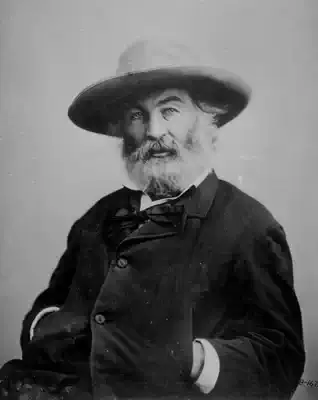
Walt Whitman
To The Reader At Parting
To The Reader At Parting
NOW, dearest comrade, lift me to your face,
We must separate awhile--Here! take from my lips this kiss.
Whoever you are, I give it especially to you;
So long!--And I hope we shall meet again.
NOW, dearest comrade, lift me to your face,
We must separate awhile--Here! take from my lips this kiss.
Whoever you are, I give it especially to you;
So long!--And I hope we shall meet again.
424
Walt Whitman
To The East And To The West
To The East And To The West
TO the East and to the West;
To the man of the Seaside State, and of Pennsylvania,
To the Kanadian of the North--to the Southerner I love;
These, with perfect trust, to depict you as myself--the germs are in
all men;
I believe the main purport of These States is to found a superb
friendship, exalté, previously unknown,
Because I perceive it waits, and has been always waiting, latent in
all men.
TO the East and to the West;
To the man of the Seaside State, and of Pennsylvania,
To the Kanadian of the North--to the Southerner I love;
These, with perfect trust, to depict you as myself--the germs are in
all men;
I believe the main purport of These States is to found a superb
friendship, exalté, previously unknown,
Because I perceive it waits, and has been always waiting, latent in
all men.
429
Walt Whitman
To A Stranger
To A Stranger
PASSING stranger! you do not know how longingly I look upon you,
You must be he I was seeking, or she I was seeking, (it comes to me,
as of a dream,)
I have somewhere surely lived a life of joy with you,
All is recall'd as we flit by each other, fluid, affectionate,
chaste, matured,
You grew up with me, were a boy with me, or a girl with me,
I ate with you, and slept with you--your body has become not yours
only, nor left my body mine only,
You give me the pleasure of your eyes, face, flesh, as we pass--you
take of my beard, breast, hands, in return,
I am not to speak to you--I am to think of you when I sit alone, or
wake at night alone,
I am to wait--I do not doubt I am to meet you again,
I am to see to it that I do not lose you. 10
PASSING stranger! you do not know how longingly I look upon you,
You must be he I was seeking, or she I was seeking, (it comes to me,
as of a dream,)
I have somewhere surely lived a life of joy with you,
All is recall'd as we flit by each other, fluid, affectionate,
chaste, matured,
You grew up with me, were a boy with me, or a girl with me,
I ate with you, and slept with you--your body has become not yours
only, nor left my body mine only,
You give me the pleasure of your eyes, face, flesh, as we pass--you
take of my beard, breast, hands, in return,
I am not to speak to you--I am to think of you when I sit alone, or
wake at night alone,
I am to wait--I do not doubt I am to meet you again,
I am to see to it that I do not lose you. 10
487
Walt Whitman
Thou Orb Aloft Full-Dazzling
Thou Orb Aloft Full-Dazzling
THOU orb aloft full-dazzling! thou hot October noon!
Flooding with sheeny light the gray beach sand,
The sibilant near sea with vistas far and foam,
And tawny streaks and shades and spreading blue;
O sun of noon rufulgent! my special word to thee.
Hear me illustrious!
Thy lover me, for always I have loved thee,
Even as basking babe, then happy boy alone by some wood edge, thy
touching-distant beams enough,
Or man matured, or young or old, as now to thee I launch my
invocation.
(Thou canst not with thy dumbness me deceive, 10
I know before the fitting man all Nature yields,
Though answering not in words, the skies, trees, hear his voice--and
thou O sun,
As for thy throes, thy perturbations, sudden breaks and shafts of
flame gigantic,
I understand them, I know those flames, those perturbations well.)
Thou that with fructifying heat and light,
O'er myriad farms, o'er lands and waters North and South,
O'er Mississippi's endless course, o'er Texas' grassy plains,
Kanada's woods,
O'er all the globe that turns its face to thee shining in space,
Thou that impartially infoldest all, not only continents, seas,
Thou that to grapes and weeds and little wild flowers givest so
liberally, 20
Shed, shed thyself on mine and me, with but a fleeting ray out of thy
million millions,
Strike through these chants.
Nor only launch thy subtle dazzle and thy strength for these,
Prepare the later afternoon of me myself--prepare my lengthening
shadows,
Prepare my starry nights.
THOU orb aloft full-dazzling! thou hot October noon!
Flooding with sheeny light the gray beach sand,
The sibilant near sea with vistas far and foam,
And tawny streaks and shades and spreading blue;
O sun of noon rufulgent! my special word to thee.
Hear me illustrious!
Thy lover me, for always I have loved thee,
Even as basking babe, then happy boy alone by some wood edge, thy
touching-distant beams enough,
Or man matured, or young or old, as now to thee I launch my
invocation.
(Thou canst not with thy dumbness me deceive, 10
I know before the fitting man all Nature yields,
Though answering not in words, the skies, trees, hear his voice--and
thou O sun,
As for thy throes, thy perturbations, sudden breaks and shafts of
flame gigantic,
I understand them, I know those flames, those perturbations well.)
Thou that with fructifying heat and light,
O'er myriad farms, o'er lands and waters North and South,
O'er Mississippi's endless course, o'er Texas' grassy plains,
Kanada's woods,
O'er all the globe that turns its face to thee shining in space,
Thou that impartially infoldest all, not only continents, seas,
Thou that to grapes and weeds and little wild flowers givest so
liberally, 20
Shed, shed thyself on mine and me, with but a fleeting ray out of thy
million millions,
Strike through these chants.
Nor only launch thy subtle dazzle and thy strength for these,
Prepare the later afternoon of me myself--prepare my lengthening
shadows,
Prepare my starry nights.
345
Walt Whitman
This Dust Was Once The Man
This Dust Was Once The Man
THIS dust was once the Man,
Gentle, plain, just and resolute--under whose cautious hand,
Against the foulest crime in history known in any land or age,
Was saved the Union of These States.
THIS dust was once the Man,
Gentle, plain, just and resolute--under whose cautious hand,
Against the foulest crime in history known in any land or age,
Was saved the Union of These States.
363
Walt Whitman
These Carols
These Carols
THESE Carols, sung to cheer my passage through the world I see,
For completion, I dedicate to the Invisible World.
THESE Carols, sung to cheer my passage through the world I see,
For completion, I dedicate to the Invisible World.
417
Walt Whitman
The Wound Dresser
The Wound Dresser
1
AN old man bending, I come, among new faces,
Years looking backward, resuming, in answer to children,
Come tell us, old man, as from young men and maidens that love me;
(Arous'd and angry, I'd thought to beat the alarum, and urge relentless war,
but soon my fingers fail'd me, my face droop'd and I resign'd myself,
To sit by the wounded and soothe them, or silently watch the dead
Years hence of these scenes, of these furious passions, these chances,
Of unsurpass’d heroes, (was one side so brave? the other was equally brave
Now be witness again—paint the mightiest armies of earth;
Of those armies so rapid, so wondrous, what saw you to tell us?
What stays with you latest and deepest? of curious panics,
Of hard-fought engagements, or sieges tremendous, what deepest remains?
2
O maidens and young men I love, and that love me,
What you ask of my days, those the strangest and sudden your talking recalls;
Soldier alert I arrive, after a long march, cover’d with sweat and dust;
In the nick of time I come, plunge in the fight, loudly shout in the rush of successful
charge;
Enter the captur’d works.... yet lo! like a swift-running river, they fade;
Pass and are gone, they fade—I dwell not on soldiers’ perils or soldiers’ joys;
(Both I remember well—many the hardships, few the joys, yet I was content.)
But in silence, in dreams’ projections,
While the world of gain and appearance and mirth goes on,
So soon what is over forgotten, and waves wash the imprints off the sand,
With hinged knees returning, I enter the doors—(while for you up there,
Whoever you are, follow me without noise, and be of strong heart.)
3
Bearing the bandages, water and sponge,
Straight and swift to my wounded I go,
Where they lie on the ground, after the battle brought in;
Where their priceless blood reddens the grass, the ground;
Or to the rows of the hospital tent, or under the roof’d hospital;
To the long rows of cots, up and down, each side, I return;
To each and all, one after another, I draw near—not one do I miss;
An attendant follows, holding a tray—he carries a refuse pail,
Soon to be fill’d with clotted rags and blood, emptied and fill’d again.
I onward go, I stop,
With hinged knees and steady hand, to dress wounds;
I am firm with each—the pangs are sharp, yet unavoidable;
One turns to me his appealing eyes—(poor boy! I never knew you,
Yet I think I could not refuse this moment to die for you, if that would save you.)
On, on I go!—(open doors of time! open hospital doors!)
The crush’d head I dress, (poor crazed hand, tear not the bandage away
The neck of the cavalry-man, with the bullet through and through, I examine;
Hard the breathing rattles, quite glazed already the eye, yet life struggles hard;
(Come, sweet death! be persuaded, O beautiful death!
In mercy come quickly.)
From the stump of the arm, the amputated hand,
I undo the clotted lint, remove the slough, wash off the matter and blood;
Back on his pillow the soldier bends, with curv’d neck, and side-falling head;
His eyes are closed, his face is pale, he dares not look on the bloody stump,
And has not yet look’d on it.
I dress a wound in the side, deep, deep;
But a day or two more—for see, the frame all wasted already, and sinking,
And the yellow-blue countenance see.
I dress the perforated shoulder, the foot with the bullet wound,
Cleanse the one with a gnawing and putrid gangrene, so sickening, so offensive,
While the attendant stands behind aside me, holding the tray and pail.
I am faithful, I do not give out;
The fractur’d thigh, the knee, the wound in the abdomen,
These and more I dress with impassive hand, (yet deep in my breast a fire, a burning
flame.)
4
Thus in silence, in dreams’ projections,
Returning, resuming, I thread my way through the hospitals;
The hurt and wounded I pacify with soothing hand,
I sit by the restless all the dark night—some are so young;
Some suffer so much—I recall the experience sweet and sad;
(Many a soldier’s loving arms about this neck have cross’d and rested,
Many a soldier’s kiss dwells on these bearded lips.)
1
AN old man bending, I come, among new faces,
Years looking backward, resuming, in answer to children,
Come tell us, old man, as from young men and maidens that love me;
(Arous'd and angry, I'd thought to beat the alarum, and urge relentless war,
but soon my fingers fail'd me, my face droop'd and I resign'd myself,
To sit by the wounded and soothe them, or silently watch the dead
Years hence of these scenes, of these furious passions, these chances,
Of unsurpass’d heroes, (was one side so brave? the other was equally brave
Now be witness again—paint the mightiest armies of earth;
Of those armies so rapid, so wondrous, what saw you to tell us?
What stays with you latest and deepest? of curious panics,
Of hard-fought engagements, or sieges tremendous, what deepest remains?
2
O maidens and young men I love, and that love me,
What you ask of my days, those the strangest and sudden your talking recalls;
Soldier alert I arrive, after a long march, cover’d with sweat and dust;
In the nick of time I come, plunge in the fight, loudly shout in the rush of successful
charge;
Enter the captur’d works.... yet lo! like a swift-running river, they fade;
Pass and are gone, they fade—I dwell not on soldiers’ perils or soldiers’ joys;
(Both I remember well—many the hardships, few the joys, yet I was content.)
But in silence, in dreams’ projections,
While the world of gain and appearance and mirth goes on,
So soon what is over forgotten, and waves wash the imprints off the sand,
With hinged knees returning, I enter the doors—(while for you up there,
Whoever you are, follow me without noise, and be of strong heart.)
3
Bearing the bandages, water and sponge,
Straight and swift to my wounded I go,
Where they lie on the ground, after the battle brought in;
Where their priceless blood reddens the grass, the ground;
Or to the rows of the hospital tent, or under the roof’d hospital;
To the long rows of cots, up and down, each side, I return;
To each and all, one after another, I draw near—not one do I miss;
An attendant follows, holding a tray—he carries a refuse pail,
Soon to be fill’d with clotted rags and blood, emptied and fill’d again.
I onward go, I stop,
With hinged knees and steady hand, to dress wounds;
I am firm with each—the pangs are sharp, yet unavoidable;
One turns to me his appealing eyes—(poor boy! I never knew you,
Yet I think I could not refuse this moment to die for you, if that would save you.)
On, on I go!—(open doors of time! open hospital doors!)
The crush’d head I dress, (poor crazed hand, tear not the bandage away
The neck of the cavalry-man, with the bullet through and through, I examine;
Hard the breathing rattles, quite glazed already the eye, yet life struggles hard;
(Come, sweet death! be persuaded, O beautiful death!
In mercy come quickly.)
From the stump of the arm, the amputated hand,
I undo the clotted lint, remove the slough, wash off the matter and blood;
Back on his pillow the soldier bends, with curv’d neck, and side-falling head;
His eyes are closed, his face is pale, he dares not look on the bloody stump,
And has not yet look’d on it.
I dress a wound in the side, deep, deep;
But a day or two more—for see, the frame all wasted already, and sinking,
And the yellow-blue countenance see.
I dress the perforated shoulder, the foot with the bullet wound,
Cleanse the one with a gnawing and putrid gangrene, so sickening, so offensive,
While the attendant stands behind aside me, holding the tray and pail.
I am faithful, I do not give out;
The fractur’d thigh, the knee, the wound in the abdomen,
These and more I dress with impassive hand, (yet deep in my breast a fire, a burning
flame.)
4
Thus in silence, in dreams’ projections,
Returning, resuming, I thread my way through the hospitals;
The hurt and wounded I pacify with soothing hand,
I sit by the restless all the dark night—some are so young;
Some suffer so much—I recall the experience sweet and sad;
(Many a soldier’s loving arms about this neck have cross’d and rested,
Many a soldier’s kiss dwells on these bearded lips.)
645
Walt Whitman
The Sleepers
The Sleepers
I WANDER all night in my vision,
Stepping with light feet, swiftly and noiselessly stepping and
stopping,
Bending with open eyes over the shut eyes of sleepers,
Wandering and confused, lost to myself, ill-assorted, contradictory,
Pausing, gazing, bending, and stopping.
How solemn they look there, stretch'd and still!
How quiet they breathe, the little children in their cradles!
The wretched features of ennuyés, the white features of
corpses, the livid faces of drunkards, the sick-gray faces of
onanists,
The gash'd bodies on battle-fields, the insane in their strong-door'd
rooms, the sacred idiots, the new-born emerging from gates, and
the dying emerging from gates,
The night pervades them and infolds them. 10
The married couple sleep calmly in their bed--he with his palm on the
hip of the wife, and she with her palm on the hip of the
husband,
The sisters sleep lovingly side by side in their bed,
The men sleep lovingly side by side in theirs,
And the mother sleeps, with her little child carefully wrapt.
The blind sleep, and the deaf and dumb sleep,
The prisoner sleeps well in the prison--the run-away son sleeps;
The murderer that is to be hung next day--how does he sleep?
And the murder'd person--how does he sleep?
The female that loves unrequited sleeps,
And the male that loves unrequited sleeps, 20
The head of the money-maker that plotted all day sleeps,
And the enraged and treacherous dispositions--all, all sleep.
I stand in the dark with drooping eyes by the worst-suffering and the
most restless,
I pass my hands soothingly to and fro a few inches from them,
The restless sink in their beds--they fitfully sleep.
Now I pierce the darkness--new beings appear,
The earth recedes from me into the night,
I saw that it was beautiful, and I see that what is not the earth is
beautiful.
I go from bedside to bedside--I sleep close with the other sleepers,
each in turn,
I dream in my dream all the dreams of the other dreamers, 30
And I become the other dreamers.
I am a dance--Play up, there! the fit is whirling me fast!
I am the ever-laughing--it is new moon and twilight,
I see the hiding of douceurs--I see nimble ghosts whichever way I
look,
Cache, and cache again, deep in the ground and sea, and where it is
neither ground or sea.
Well do they do their jobs, those journeymen divine,
Only from me can they hide nothing, and would not if they could,
I reckon I am their boss, and they make me a pet besides,
And surround me and lead me, and run ahead when I walk,
To lift their cunning covers, to signify me with stretch'd arms, and
resume the way; 40
Onward we move! a gay gang of blackguards! with mirth-shouting music,
and wild-flapping pennants of joy!
I am the actor, the actress, the voter, the politician;
The emigrant and the exile, the criminal that stood in the box,
He who has been famous, and he who shall be famous after to-day,
The stammerer, the well-form'd person, the wasted or feeble person.
I am she who adorn'd herself and folded her hair expectantly,
My truant lover has come, and it is dark.
Double yourself and receive me, darkness!
Receive me and my lover too--he will not let me go without him.
I roll myself upon you, as upon a bed--I resign myself to the
dusk. 50
He whom I call answers me, and takes the place of my lover,
He rises with me silently from the bed.
Darkness! you are gentler than my lover--his flesh was sweaty and
panting,
I feel the hot moisture yet that he left me.
My hands are spread forth, I pass them in all directions,
I would sound up the shadowy shore to which you are journeying.
Be careful, darkness! already, what was it touch'd me?
I thought my lover had gone, else darkness and he are one,
I hear the heart-beat--I follow, I fade away.
O hot-cheek'd and blushing! O foolish hectic! 60
O for pity's sake, no one must see me now! my clothes were stolen
while I was abed,
Now I am thrust forth, where shall I run?
Pier that I saw dimly last night, when I look'd from the windows!
Pier out from the main, let me catch myself with you, and stay--I
will not chafe you,
I feel ashamed to go naked about the world.
I am curious to know where my feet stand--and what this is flooding
me, childhood or manhood--and the hunger that crosses the
bridge between.
The cloth laps a first sweet eating and drinking,
Laps life-swelling yolks--laps ear of rose-corn, milky and just
ripen'd;
The white teeth stay, and the boss-tooth advances in darkness,
And liquor is spill'd on lips and bosoms by touching glasses, and the
best liquor afterward. 70
I descend my western course, my sinews are flaccid,
Perfume and youth course through me, and I am their wake.
It is my face yellow and wrinkled, instead of the old woman's,
I sit low in a straw-bottom chair, and carefully darn my grandson's
stockings.
It is I too, the sleepless widow, looking out on the winter midnight,
I see the sparkles of starshine on the icy and pallid earth.
A shroud I see, and I am the shroud--I wrap a body, and lie in the
coffin,
It is dark here under ground--it is not evil or pain here--it is
blank here, for reasons.
It seems to me that everything in the light and air ought to be
happy,
Whoever is not in his coffin and the dark grave, let him know he has
enough. 80
I see a beautiful gigantic swimmer, swimming naked through the eddies
of the sea,
His brown hair lies close and even to his head--he strikes out with
courageous arms--he urges himself with his legs,
I see his white body--I see his undaunted eyes,
I hate the swift-running eddies that would dash him head-foremost on
the rocks.
What are you doing, you ruffianly red-trickled waves?
Will you kill the courageous giant? Will you kill him in the prime of
his middle age?
Steady and long he struggles,
He is baffled, bang'd, bruis'd--he holds out while his strength holds
out,
The slapping eddies are spotted with his blood--they bear him away-they
roll him, swing him, turn him,
His beautiful body is borne in the circling eddies, it is continually
bruis'd on rocks, 90
Swiftly and out of sight is borne the brave corpse.
I turn, but do not extricate myself,
Confused, a past-reading, another, but with darkness yet.
The beach is cut by the razory ice-wind--the wreck-guns sound,
The tempest lulls--the moon comes floundering through the drifts.
I look where the ship helplessly heads end on--I hear the burst as
she strikes--I hear the howls of dismay--they grow fainter and
fainter.
I cannot aid with my wringing fingers,
I can but rush to the surf, and let it drench me and freeze upon me.
I search with the crowd--not one of the company is wash'd to us
alive;
In the morning I help pick up the dead and lay them in rows in a
barn. 100
Now of the older war-days, the defeat at Brooklyn,
Washington stands inside the lines--he stands on the intrench'd
hills, amid a crowd of officers,
His face is cold and damp--he cannot repress the weeping drops,
He lifts the glass perpetually to his eyes--the color is blanch'd
from his cheeks,
He sees the slaughter of the southern braves confided to him by their
parents.
The same, at last and at last, when peace is declared,
He stands in the room of the old tavern--the well-belov'd soldiers
all pass through,
The officers speechless and slow draw near in their turns,
The chief encircles their necks with his arm, and kisses them on the
cheek,
He kisses lightly the wet cheeks one after another--he shakes hands,
and bids good-by to the army. 110
Now I tell what my mother told me to-day as we sat at dinner
together,
Of when she was a nearly grown girl, living home with her parents on
the old homestead.
A red squaw came one breakfast time to the old homestead,
On her back she carried a bundle of rushes for rush-bottoming chairs,
Her hair, straight, shiny, coarse, black, profuse, half-envelop'd her
face,
Her step was free and elastic, and her voice sounded exquisitely as
she spoke.
My mother look'd in delight and amazement at the stranger,
She look'd at the freshness of her tall-borne face, and full and
pliant limbs,
The more she look'd upon her, she loved her,
Never before had she seen such wonderful beauty and purity, 120
She made her sit on a bench by the jamb of the fireplace--she cook'd
food for her,
She had no work to give her, but she gave her remembrance and
fondness.
The red squaw staid all the forenoon, and toward the middle of the
afternoon she went away,
O my mother was loth to have her go away!
All the week she thought of her--she watch'd for her many a month,
She remember'd her many a winter and many a summer,
But the red squaw never came, nor was heard of there again.
Now Lucifer was not dead--or if he was, I am his sorrowful terrible
heir;
I have been wrong'd--I am oppress'd--I hate him that oppresses me,
I will either destroy him, or he shall release me. 130
Damn him! how he does defile me!
How he informs against my brother and sister, and takes pay for their
blood!
How he laughs when I look down the bend, after the steamboat that
carries away my woman!
Now the vast dusk bulk that is the whale's bulk, it seems mine;
Warily, sportsman! though I lie so sleepy and sluggish, the tap of my
flukes is death.
A show of the summer softness! a contact of something unseen! an
amour of the light and air!
I am jealous, and overwhelm'd with friendliness,
And will go gallivant with the light and air myself,
And have an unseen something to be in contact with them also.
O love and summer! you are in the dreams, and in me! 140
Autumn and winter are in the dreams--the farmer goes with his thrift,
The droves and crops increase, and the barns are well-fill'd.
Elements merge in the night--ships make tacks in the dreams,
The sailor sails--the exile returns home,
The fugitive returns unharm'd--the immigrant is back beyond months
and years,
The poor Irishman lives in the simple house of his childhood, with
the well-known neighbors and faces,
They warmly welcome him--he is barefoot again, he forgets he is well
off;
The Dutchman voyages home, and the Scotchman and Welshman voyage
home, and the native of the Mediterranean voyages home,
To every port of England, France, Spain, enter well-fill'd ships,
The Swiss foots it toward his hills--the Prussian goes his way, the
Hungarian his way, and the Pole his way, 150
The Swede returns, and the Dane and Norwegian return.
The homeward bound, and the outward bound,
The beautiful lost swimmer, the ennuyé, the onanist, the
female that loves unrequited, the money-maker,
The actor and actress, those through with their parts, and those
waiting to commence,
The affectionate boy, the husband and wife, the voter, the nominee
that is chosen, and the nominee that has fail'd,
The great already known, and the great any time after to-day,
The stammerer, the sick, the perfect-form'd, the homely,
The criminal that stood in the box, the judge that sat and sentenced
him, the fluent lawyers, the jury, the audience,
The laugher and weeper, the dancer, the midnight widow, the red
squaw,
The consumptive, the erysipelite, the idiot, he that is wrong'd, 160
The antipodes, and every one between this and them in the dark,
I swear they are averaged now--one is no better than the other,
The night and sleep have liken'd them and restored them.
I swear they are all beautiful;
Every one that sleeps is beautiful--everything in the dim light is
beautiful,
The wildest and bloodiest is over, and all is peace.
Peace is always beautiful, The myth of heaven indicates peace and
night.
The myth of heaven indicates the Soul;
The Soul is always beautiful--it appears more or it appears less--it
comes, or it lags behind, 170
It comes from its embower'd garden, and looks pleasantly on itself,
and encloses the world,
Perfect and clean the genitals previously jetting, and perfect and
clean the womb cohering,
The head well-grown, proportion'd and plumb, and the bowels and
joints proportion'd and plumb.
The Soul is always beautiful,
The universe is duly in order, everything is in its place,
What has arrived is in its place, and what waits is in its place;
The twisted skull waits, the watery or rotten blood waits,
The child of the glutton or venerealee waits long, and the child of
the drunkard waits long, and the drunkard himself waits long,
The sleepers that lived and died wait--the far advanced are to go on
in their turns, and the far behind are to come on in their
turns,
The diverse shall be no less diverse, but they shall flow and unite-they
unite now. 180
The sleepers are very beautiful as they lie unclothed,
They flow hand in hand over the whole earth, from east to west, as
they lie unclothed,
The Asiatic and African are hand in hand--the European and American
are hand in hand,
Learn'd and unlearn'd are hand in hand, and male and female are hand
in hand,
The bare arm of the girl crosses the bare breast of her lover--they
press close without lust--his lips press her neck,
The father holds his grown or ungrown son in his arms with
measureless love, and the son holds the father in his arms with
measureless love,
The white hair of the mother shines on the white wrist of the
daughter,
The breath of the boy goes with the breath of the man, friend is
inarm'd by friend,
The scholar kisses the teacher, and the teacher kisses the scholar-the
wrong'd is made right,
The call of the slave is one with the master's call, and the master
salutes the slave, 190
The felon steps forth from the prison--the insane becomes sane--the
suffering of sick persons is reliev'd,
The sweatings and fevers stop--the throat that was unsound is sound-the
lungs of the consumptive are resumed--the poor distress'd
head is free,
The joints of the rheumatic move as smoothly as ever, and smoother
than ever,
Stiflings and passages open--the paralyzed become supple,
The swell'd and convuls'd and congested awake to themselves in
condition,
They pass the invigoration of the night, and the chemistry of the
night, and awake.
I too pass from the night,
I stay a while away, O night, but I return to you again, and love
you.
Why should I be afraid to trust myself to you?
I am not afraid--I have been well brought forward by you; 200
I love the rich running day, but I do not desert her in whom I lay so
long,
I know not how I came of you, and I know not where I go with you--but
I know I came well, and shall go well.
I will stop only a time with the night, and rise betimes;
I will duly pass the day, O my mother, and duly return to you.
I WANDER all night in my vision,
Stepping with light feet, swiftly and noiselessly stepping and
stopping,
Bending with open eyes over the shut eyes of sleepers,
Wandering and confused, lost to myself, ill-assorted, contradictory,
Pausing, gazing, bending, and stopping.
How solemn they look there, stretch'd and still!
How quiet they breathe, the little children in their cradles!
The wretched features of ennuyés, the white features of
corpses, the livid faces of drunkards, the sick-gray faces of
onanists,
The gash'd bodies on battle-fields, the insane in their strong-door'd
rooms, the sacred idiots, the new-born emerging from gates, and
the dying emerging from gates,
The night pervades them and infolds them. 10
The married couple sleep calmly in their bed--he with his palm on the
hip of the wife, and she with her palm on the hip of the
husband,
The sisters sleep lovingly side by side in their bed,
The men sleep lovingly side by side in theirs,
And the mother sleeps, with her little child carefully wrapt.
The blind sleep, and the deaf and dumb sleep,
The prisoner sleeps well in the prison--the run-away son sleeps;
The murderer that is to be hung next day--how does he sleep?
And the murder'd person--how does he sleep?
The female that loves unrequited sleeps,
And the male that loves unrequited sleeps, 20
The head of the money-maker that plotted all day sleeps,
And the enraged and treacherous dispositions--all, all sleep.
I stand in the dark with drooping eyes by the worst-suffering and the
most restless,
I pass my hands soothingly to and fro a few inches from them,
The restless sink in their beds--they fitfully sleep.
Now I pierce the darkness--new beings appear,
The earth recedes from me into the night,
I saw that it was beautiful, and I see that what is not the earth is
beautiful.
I go from bedside to bedside--I sleep close with the other sleepers,
each in turn,
I dream in my dream all the dreams of the other dreamers, 30
And I become the other dreamers.
I am a dance--Play up, there! the fit is whirling me fast!
I am the ever-laughing--it is new moon and twilight,
I see the hiding of douceurs--I see nimble ghosts whichever way I
look,
Cache, and cache again, deep in the ground and sea, and where it is
neither ground or sea.
Well do they do their jobs, those journeymen divine,
Only from me can they hide nothing, and would not if they could,
I reckon I am their boss, and they make me a pet besides,
And surround me and lead me, and run ahead when I walk,
To lift their cunning covers, to signify me with stretch'd arms, and
resume the way; 40
Onward we move! a gay gang of blackguards! with mirth-shouting music,
and wild-flapping pennants of joy!
I am the actor, the actress, the voter, the politician;
The emigrant and the exile, the criminal that stood in the box,
He who has been famous, and he who shall be famous after to-day,
The stammerer, the well-form'd person, the wasted or feeble person.
I am she who adorn'd herself and folded her hair expectantly,
My truant lover has come, and it is dark.
Double yourself and receive me, darkness!
Receive me and my lover too--he will not let me go without him.
I roll myself upon you, as upon a bed--I resign myself to the
dusk. 50
He whom I call answers me, and takes the place of my lover,
He rises with me silently from the bed.
Darkness! you are gentler than my lover--his flesh was sweaty and
panting,
I feel the hot moisture yet that he left me.
My hands are spread forth, I pass them in all directions,
I would sound up the shadowy shore to which you are journeying.
Be careful, darkness! already, what was it touch'd me?
I thought my lover had gone, else darkness and he are one,
I hear the heart-beat--I follow, I fade away.
O hot-cheek'd and blushing! O foolish hectic! 60
O for pity's sake, no one must see me now! my clothes were stolen
while I was abed,
Now I am thrust forth, where shall I run?
Pier that I saw dimly last night, when I look'd from the windows!
Pier out from the main, let me catch myself with you, and stay--I
will not chafe you,
I feel ashamed to go naked about the world.
I am curious to know where my feet stand--and what this is flooding
me, childhood or manhood--and the hunger that crosses the
bridge between.
The cloth laps a first sweet eating and drinking,
Laps life-swelling yolks--laps ear of rose-corn, milky and just
ripen'd;
The white teeth stay, and the boss-tooth advances in darkness,
And liquor is spill'd on lips and bosoms by touching glasses, and the
best liquor afterward. 70
I descend my western course, my sinews are flaccid,
Perfume and youth course through me, and I am their wake.
It is my face yellow and wrinkled, instead of the old woman's,
I sit low in a straw-bottom chair, and carefully darn my grandson's
stockings.
It is I too, the sleepless widow, looking out on the winter midnight,
I see the sparkles of starshine on the icy and pallid earth.
A shroud I see, and I am the shroud--I wrap a body, and lie in the
coffin,
It is dark here under ground--it is not evil or pain here--it is
blank here, for reasons.
It seems to me that everything in the light and air ought to be
happy,
Whoever is not in his coffin and the dark grave, let him know he has
enough. 80
I see a beautiful gigantic swimmer, swimming naked through the eddies
of the sea,
His brown hair lies close and even to his head--he strikes out with
courageous arms--he urges himself with his legs,
I see his white body--I see his undaunted eyes,
I hate the swift-running eddies that would dash him head-foremost on
the rocks.
What are you doing, you ruffianly red-trickled waves?
Will you kill the courageous giant? Will you kill him in the prime of
his middle age?
Steady and long he struggles,
He is baffled, bang'd, bruis'd--he holds out while his strength holds
out,
The slapping eddies are spotted with his blood--they bear him away-they
roll him, swing him, turn him,
His beautiful body is borne in the circling eddies, it is continually
bruis'd on rocks, 90
Swiftly and out of sight is borne the brave corpse.
I turn, but do not extricate myself,
Confused, a past-reading, another, but with darkness yet.
The beach is cut by the razory ice-wind--the wreck-guns sound,
The tempest lulls--the moon comes floundering through the drifts.
I look where the ship helplessly heads end on--I hear the burst as
she strikes--I hear the howls of dismay--they grow fainter and
fainter.
I cannot aid with my wringing fingers,
I can but rush to the surf, and let it drench me and freeze upon me.
I search with the crowd--not one of the company is wash'd to us
alive;
In the morning I help pick up the dead and lay them in rows in a
barn. 100
Now of the older war-days, the defeat at Brooklyn,
Washington stands inside the lines--he stands on the intrench'd
hills, amid a crowd of officers,
His face is cold and damp--he cannot repress the weeping drops,
He lifts the glass perpetually to his eyes--the color is blanch'd
from his cheeks,
He sees the slaughter of the southern braves confided to him by their
parents.
The same, at last and at last, when peace is declared,
He stands in the room of the old tavern--the well-belov'd soldiers
all pass through,
The officers speechless and slow draw near in their turns,
The chief encircles their necks with his arm, and kisses them on the
cheek,
He kisses lightly the wet cheeks one after another--he shakes hands,
and bids good-by to the army. 110
Now I tell what my mother told me to-day as we sat at dinner
together,
Of when she was a nearly grown girl, living home with her parents on
the old homestead.
A red squaw came one breakfast time to the old homestead,
On her back she carried a bundle of rushes for rush-bottoming chairs,
Her hair, straight, shiny, coarse, black, profuse, half-envelop'd her
face,
Her step was free and elastic, and her voice sounded exquisitely as
she spoke.
My mother look'd in delight and amazement at the stranger,
She look'd at the freshness of her tall-borne face, and full and
pliant limbs,
The more she look'd upon her, she loved her,
Never before had she seen such wonderful beauty and purity, 120
She made her sit on a bench by the jamb of the fireplace--she cook'd
food for her,
She had no work to give her, but she gave her remembrance and
fondness.
The red squaw staid all the forenoon, and toward the middle of the
afternoon she went away,
O my mother was loth to have her go away!
All the week she thought of her--she watch'd for her many a month,
She remember'd her many a winter and many a summer,
But the red squaw never came, nor was heard of there again.
Now Lucifer was not dead--or if he was, I am his sorrowful terrible
heir;
I have been wrong'd--I am oppress'd--I hate him that oppresses me,
I will either destroy him, or he shall release me. 130
Damn him! how he does defile me!
How he informs against my brother and sister, and takes pay for their
blood!
How he laughs when I look down the bend, after the steamboat that
carries away my woman!
Now the vast dusk bulk that is the whale's bulk, it seems mine;
Warily, sportsman! though I lie so sleepy and sluggish, the tap of my
flukes is death.
A show of the summer softness! a contact of something unseen! an
amour of the light and air!
I am jealous, and overwhelm'd with friendliness,
And will go gallivant with the light and air myself,
And have an unseen something to be in contact with them also.
O love and summer! you are in the dreams, and in me! 140
Autumn and winter are in the dreams--the farmer goes with his thrift,
The droves and crops increase, and the barns are well-fill'd.
Elements merge in the night--ships make tacks in the dreams,
The sailor sails--the exile returns home,
The fugitive returns unharm'd--the immigrant is back beyond months
and years,
The poor Irishman lives in the simple house of his childhood, with
the well-known neighbors and faces,
They warmly welcome him--he is barefoot again, he forgets he is well
off;
The Dutchman voyages home, and the Scotchman and Welshman voyage
home, and the native of the Mediterranean voyages home,
To every port of England, France, Spain, enter well-fill'd ships,
The Swiss foots it toward his hills--the Prussian goes his way, the
Hungarian his way, and the Pole his way, 150
The Swede returns, and the Dane and Norwegian return.
The homeward bound, and the outward bound,
The beautiful lost swimmer, the ennuyé, the onanist, the
female that loves unrequited, the money-maker,
The actor and actress, those through with their parts, and those
waiting to commence,
The affectionate boy, the husband and wife, the voter, the nominee
that is chosen, and the nominee that has fail'd,
The great already known, and the great any time after to-day,
The stammerer, the sick, the perfect-form'd, the homely,
The criminal that stood in the box, the judge that sat and sentenced
him, the fluent lawyers, the jury, the audience,
The laugher and weeper, the dancer, the midnight widow, the red
squaw,
The consumptive, the erysipelite, the idiot, he that is wrong'd, 160
The antipodes, and every one between this and them in the dark,
I swear they are averaged now--one is no better than the other,
The night and sleep have liken'd them and restored them.
I swear they are all beautiful;
Every one that sleeps is beautiful--everything in the dim light is
beautiful,
The wildest and bloodiest is over, and all is peace.
Peace is always beautiful, The myth of heaven indicates peace and
night.
The myth of heaven indicates the Soul;
The Soul is always beautiful--it appears more or it appears less--it
comes, or it lags behind, 170
It comes from its embower'd garden, and looks pleasantly on itself,
and encloses the world,
Perfect and clean the genitals previously jetting, and perfect and
clean the womb cohering,
The head well-grown, proportion'd and plumb, and the bowels and
joints proportion'd and plumb.
The Soul is always beautiful,
The universe is duly in order, everything is in its place,
What has arrived is in its place, and what waits is in its place;
The twisted skull waits, the watery or rotten blood waits,
The child of the glutton or venerealee waits long, and the child of
the drunkard waits long, and the drunkard himself waits long,
The sleepers that lived and died wait--the far advanced are to go on
in their turns, and the far behind are to come on in their
turns,
The diverse shall be no less diverse, but they shall flow and unite-they
unite now. 180
The sleepers are very beautiful as they lie unclothed,
They flow hand in hand over the whole earth, from east to west, as
they lie unclothed,
The Asiatic and African are hand in hand--the European and American
are hand in hand,
Learn'd and unlearn'd are hand in hand, and male and female are hand
in hand,
The bare arm of the girl crosses the bare breast of her lover--they
press close without lust--his lips press her neck,
The father holds his grown or ungrown son in his arms with
measureless love, and the son holds the father in his arms with
measureless love,
The white hair of the mother shines on the white wrist of the
daughter,
The breath of the boy goes with the breath of the man, friend is
inarm'd by friend,
The scholar kisses the teacher, and the teacher kisses the scholar-the
wrong'd is made right,
The call of the slave is one with the master's call, and the master
salutes the slave, 190
The felon steps forth from the prison--the insane becomes sane--the
suffering of sick persons is reliev'd,
The sweatings and fevers stop--the throat that was unsound is sound-the
lungs of the consumptive are resumed--the poor distress'd
head is free,
The joints of the rheumatic move as smoothly as ever, and smoother
than ever,
Stiflings and passages open--the paralyzed become supple,
The swell'd and convuls'd and congested awake to themselves in
condition,
They pass the invigoration of the night, and the chemistry of the
night, and awake.
I too pass from the night,
I stay a while away, O night, but I return to you again, and love
you.
Why should I be afraid to trust myself to you?
I am not afraid--I have been well brought forward by you; 200
I love the rich running day, but I do not desert her in whom I lay so
long,
I know not how I came of you, and I know not where I go with you--but
I know I came well, and shall go well.
I will stop only a time with the night, and rise betimes;
I will duly pass the day, O my mother, and duly return to you.
558
Walt Whitman
The Prairie-Grass Dividing
The Prairie-Grass Dividing
THE prairie-grass dividing--its special odor breathing,
I demand of it the spiritual corresponding,
Demand the most copious and close companionship of men,
Demand the blades to rise of words, acts, beings,
Those of the open atmosphere, coarse, sunlit, fresh, nutritious,
Those that go their own gait, erect, stepping with freedom and
command--leading, not following,
Those with a never-quell'd audacity--those with sweet and lusty
flesh, clear of taint,
Those that look carelessly in the faces of Presidents and Governors,
as to say, Who are you?
Those of earth-born passion, simple, never-constrain'd, never
obedient,
Those of inland America. 10
THE prairie-grass dividing--its special odor breathing,
I demand of it the spiritual corresponding,
Demand the most copious and close companionship of men,
Demand the blades to rise of words, acts, beings,
Those of the open atmosphere, coarse, sunlit, fresh, nutritious,
Those that go their own gait, erect, stepping with freedom and
command--leading, not following,
Those with a never-quell'd audacity--those with sweet and lusty
flesh, clear of taint,
Those that look carelessly in the faces of Presidents and Governors,
as to say, Who are you?
Those of earth-born passion, simple, never-constrain'd, never
obedient,
Those of inland America. 10
404
Walt Whitman
The Ox tamer
The Ox tamer
IN a faraway northern county, in the placid, pastoral region,
Lives my farmer friend, the theme of my recitative, a famous Tamer of
Oxen:
There they bring him the three-year-olds and the four-year-olds, to
break them;
He will take the wildest steer in the world, and break him and tame
him;
He will go, fearless, without any whip, where the young bullock
chafes up and down the yard;
The bullock's head tosses restless high in the air, with raging eyes;
Yet, see you! how soon his rage subsides--how soon this Tamer tames
him:
See you! on the farms hereabout, a hundred oxen, young and old--and
he is the man who has tamed them;
They all know him--all are affectionate to him;
See you! some are such beautiful animals--so lofty looking! 10
Some are buff color'd--some mottled--one has a white line running
along his back--some are brindled,
Some have wide flaring horns (a good sign)--See you! the bright
hides;
See, the two with stars on their foreheads--See, the round bodies and
broad backs;
See, how straight and square they stand on their legs--See, what
fine, sagacious eyes;
See, how they watch their Tamer--they wish him near them--how they
turn to look after him!
What yearning expression! how uneasy they are when he moves away from
them:
--Now I marvel what it can be he appears to them, (books, politics,
poems depart--all else departs;)
I confess I envy only his fascination--my silent, illiterate friend,
Whom a hundred oxen love, there in his life on farms,
In the northern county far, in the placid, pastoral region.
IN a faraway northern county, in the placid, pastoral region,
Lives my farmer friend, the theme of my recitative, a famous Tamer of
Oxen:
There they bring him the three-year-olds and the four-year-olds, to
break them;
He will take the wildest steer in the world, and break him and tame
him;
He will go, fearless, without any whip, where the young bullock
chafes up and down the yard;
The bullock's head tosses restless high in the air, with raging eyes;
Yet, see you! how soon his rage subsides--how soon this Tamer tames
him:
See you! on the farms hereabout, a hundred oxen, young and old--and
he is the man who has tamed them;
They all know him--all are affectionate to him;
See you! some are such beautiful animals--so lofty looking! 10
Some are buff color'd--some mottled--one has a white line running
along his back--some are brindled,
Some have wide flaring horns (a good sign)--See you! the bright
hides;
See, the two with stars on their foreheads--See, the round bodies and
broad backs;
See, how straight and square they stand on their legs--See, what
fine, sagacious eyes;
See, how they watch their Tamer--they wish him near them--how they
turn to look after him!
What yearning expression! how uneasy they are when he moves away from
them:
--Now I marvel what it can be he appears to them, (books, politics,
poems depart--all else departs;)
I confess I envy only his fascination--my silent, illiterate friend,
Whom a hundred oxen love, there in his life on farms,
In the northern county far, in the placid, pastoral region.
469
Walt Whitman
The Imprisoned Soul
The Imprisoned Soul
AT the last, tenderly,
From the walls of the powerful, fortress'd house,
From the clasp of the knitted locks--from the keep of the well-closed
doors,
Let me be wafted.
Let me glide noiselessly forth;
With the key of softness unlock the locks--with a whisper
Set ope the doors, O soul!
Tenderly! be not impatient!
(Strong is your hold, O mortal flesh!
Strong is your hold, O love!)
AT the last, tenderly,
From the walls of the powerful, fortress'd house,
From the clasp of the knitted locks--from the keep of the well-closed
doors,
Let me be wafted.
Let me glide noiselessly forth;
With the key of softness unlock the locks--with a whisper
Set ope the doors, O soul!
Tenderly! be not impatient!
(Strong is your hold, O mortal flesh!
Strong is your hold, O love!)
401
Walt Whitman
The Artilleryman's Vision
The Artilleryman's Vision
WHILE my wife at my side lies slumbering, and the wars are over long,
And my head on the pillow rests at home, and the vacant midnight
passes,
And through the stillness, through the dark, I hear, just hear, the
breath of my infant,
There in the room, as I wake from sleep, this vision presses upon me:
The engagement opens there and then, in fantasy unreal;
The skirmishers begin--they crawl cautiously ahead--I hear the
irregular snap! snap!
I hear the sounds of the different missiles--the short t-h-t! t-h-t!
of the rifle balls;
I see the shells exploding, leaving small white clouds--I hear the
great shells shrieking as they pass;
The grape, like the hum and whirr of wind through the trees, (quick,
tumultuous, now the contest rages!)
All the scenes at the batteries themselves rise in detail before me
again; 10
The crashing and smoking--the pride of the men in their pieces;
The chief gunner ranges and sights his piece, and selects a fuse of
the right time;
After firing, I see him lean aside, and look eagerly off to note the
effect;
--Elsewhere I hear the cry of a regiment charging--(the young colonel
leads himself this time, with brandish'd sword;)
I see the gaps cut by the enemy's volleys, (quickly fill'd up, no
delay;)
I breathe the suffocating smoke--then the flat clouds hover low,
concealing all;
Now a strange lull comes for a few seconds, not a shot fired on
either side;
Then resumed, the chaos louder than ever, with eager calls, and
orders of officers;
While from some distant part of the field the wind wafts to my ears a
shout of applause, (some special success;)
And ever the sound of the cannon, far or near, (rousing, even in
dreams, a devilish exultation, and all the old mad joy, in the
depths of my soul;) 20
And ever the hastening of infantry shifting positions--batteries,
cavalry, moving hither and thither;
(The falling, dying, I heed not--the wounded, dripping and red, I
heed not--some to the rear are hobbling;)
Grime, heat, rush--aid-de-camps galloping by, or on a full run;
With the patter of small arms, the warning s-s-t of the rifles,
(these in my vision I hear or see,)
And bombs busting in air, and at night the vari-color'd rockets.
WHILE my wife at my side lies slumbering, and the wars are over long,
And my head on the pillow rests at home, and the vacant midnight
passes,
And through the stillness, through the dark, I hear, just hear, the
breath of my infant,
There in the room, as I wake from sleep, this vision presses upon me:
The engagement opens there and then, in fantasy unreal;
The skirmishers begin--they crawl cautiously ahead--I hear the
irregular snap! snap!
I hear the sounds of the different missiles--the short t-h-t! t-h-t!
of the rifle balls;
I see the shells exploding, leaving small white clouds--I hear the
great shells shrieking as they pass;
The grape, like the hum and whirr of wind through the trees, (quick,
tumultuous, now the contest rages!)
All the scenes at the batteries themselves rise in detail before me
again; 10
The crashing and smoking--the pride of the men in their pieces;
The chief gunner ranges and sights his piece, and selects a fuse of
the right time;
After firing, I see him lean aside, and look eagerly off to note the
effect;
--Elsewhere I hear the cry of a regiment charging--(the young colonel
leads himself this time, with brandish'd sword;)
I see the gaps cut by the enemy's volleys, (quickly fill'd up, no
delay;)
I breathe the suffocating smoke--then the flat clouds hover low,
concealing all;
Now a strange lull comes for a few seconds, not a shot fired on
either side;
Then resumed, the chaos louder than ever, with eager calls, and
orders of officers;
While from some distant part of the field the wind wafts to my ears a
shout of applause, (some special success;)
And ever the sound of the cannon, far or near, (rousing, even in
dreams, a devilish exultation, and all the old mad joy, in the
depths of my soul;) 20
And ever the hastening of infantry shifting positions--batteries,
cavalry, moving hither and thither;
(The falling, dying, I heed not--the wounded, dripping and red, I
heed not--some to the rear are hobbling;)
Grime, heat, rush--aid-de-camps galloping by, or on a full run;
With the patter of small arms, the warning s-s-t of the rifles,
(these in my vision I hear or see,)
And bombs busting in air, and at night the vari-color'd rockets.
465
Walt Whitman
Spirit Whose Work Is Done
Spirit Whose Work Is Done
SPIRIT whose work is done! spirit of dreadful hours!
Ere, departing, fade from my eyes your forests of bayonets;
Spirit of gloomiest fears and doubts, (yet onward ever unfaltering
pressing;)
Spirit of many a solemn day, and many a savage scene! Electric
spirit!
That with muttering voice, through the war now closed, like a
tireless phantom flitted,
Rousing the land with breath of flame, while you beat and beat the
drum;
--Now, as the sound of the drum, hollow and harsh to the last,
reverberates round me;
As your ranks, your immortal ranks, return, return from the battles;
While the muskets of the young men yet lean over their shoulders; 10
While I look on the bayonets bristling over their shoulders;
While those slanted bayonets, whole forests of them, appearing in the
distance, approach and pass on, returning homeward,
Moving with steady motion, swaying to and fro, to the right and left,
Evenly, lightly rising and falling, as the steps keep time;
--Spirit of hours I knew, all hectic red one day, but pale as death
next day;
Touch my mouth, ere you depart--press my lips close!
Leave me your pulses of rage! bequeath them to me! fill me with
currents convulsive!
Let them scorch and blister out of my chants, when you are gone;
Let them identify you to the future, in these songs.
SPIRIT whose work is done! spirit of dreadful hours!
Ere, departing, fade from my eyes your forests of bayonets;
Spirit of gloomiest fears and doubts, (yet onward ever unfaltering
pressing;)
Spirit of many a solemn day, and many a savage scene! Electric
spirit!
That with muttering voice, through the war now closed, like a
tireless phantom flitted,
Rousing the land with breath of flame, while you beat and beat the
drum;
--Now, as the sound of the drum, hollow and harsh to the last,
reverberates round me;
As your ranks, your immortal ranks, return, return from the battles;
While the muskets of the young men yet lean over their shoulders; 10
While I look on the bayonets bristling over their shoulders;
While those slanted bayonets, whole forests of them, appearing in the
distance, approach and pass on, returning homeward,
Moving with steady motion, swaying to and fro, to the right and left,
Evenly, lightly rising and falling, as the steps keep time;
--Spirit of hours I knew, all hectic red one day, but pale as death
next day;
Touch my mouth, ere you depart--press my lips close!
Leave me your pulses of rage! bequeath them to me! fill me with
currents convulsive!
Let them scorch and blister out of my chants, when you are gone;
Let them identify you to the future, in these songs.
454
Walt Whitman
Song Of The Redwood-Tree
Song Of The Redwood-Tree
A CALIFORNIA song!
A prophecy and indirection--a thought impalpable, to breathe, as air;
A chorus of dryads, fading, departing--or hamadryads departing;
A murmuring, fateful, giant voice, out of the earth and sky,
Voice of a mighty dying tree in the Redwood forest dense.
Farewell, my brethren,
Farewell, O earth and sky--farewell, ye neighboring waters;
My time has ended, my term has come.
Along the northern coast,
Just back from the rock-bound shore, and the caves, 10
In the saline air from the sea, in the Mendocino country,
With the surge for bass and accompaniment low and hoarse,
With crackling blows of axes, sounding musically, driven by strong
arms,
Riven deep by the sharp tongues of the axes--there in the Redwood
forest dense,
I heard the mighty tree its death-chant chanting.
The choppers heard not--the camp shanties echoed not;
The quick-ear'd teamsters, and chain and jack-screw men, heard not,
As the wood-spirits came from their haunts of a thousand years, to
join the refrain;
But in my soul I plainly heard.
Murmuring out of its myriad leaves, 20
Down from its lofty top, rising two hundred feet high,
Out of its stalwart trunk and limbs--out of its foot-thick bark,
That chant of the seasons and time--chant, not of the past only, but
the future.
You untold life of me,
And all you venerable and innocent joys,
Perennial, hardy life of me, with joys, 'mid rain, and many a summer
sun,
And the white snows, and night, and the wild winds;
O the great patient, rugged joys! my soul's strong joys, unreck'd by
man;
(For know I bear the soul befitting me--I too have consciousness,
identity,
And all the rocks and mountains have--and all the earth;) 30
Joys of the life befitting me and brothers mine,
Our time, our term has come.
Nor yield we mournfully, majestic brothers,
We who have grandly fill'd our time;
With Nature's calm content, and tacit, huge delight,
We welcome what we wrought for through the past,
And leave the field for them.
For them predicted long,
For a superber Race--they too to grandly fill their time,
For them we abdicate--in them ourselves, ye forest kings! 40
In them these skies and airs--these mountain peaks--Shasta--Nevadas,
These huge, precipitous cliffs--this amplitude--these valleys grand-Yosemite,
To be in them absorb'd, assimilated.
Then to a loftier strain,
Still prouder, more ecstatic, rose the chant,
As if the heirs, the Deities of the West,
Joining, with master-tongue, bore part.
Not wan from Asia's fetishes,
Nor red from Europe's old dynastic slaughter-house,
(Area of murder-plots of thrones, with scent left yet of wars and
scaffolds every where,) 50
But come from Nature's long and harmless throes--peacefully builded
thence,
These virgin lands--Lands of the Western Shore,
To the new Culminating Man--to you, the Empire New,
You, promis'd long, we pledge, we dedicate.
You occult, deep volitions,
You average Spiritual Manhood, purpose of all, pois'd on yourself-giving,
not taking law,
You Womanhood divine, mistress and source of all, whence life and
love, and aught that comes from life and love,
You unseen Moral Essence of all the vast materials of America, (age
upon age, working in Death the same as Life,)
You that, sometimes known, oftener unknown, really shape and mould
the New World, adjusting it to Time and Space,
You hidden National Will, lying in your abysms, conceal'd, but ever
alert, 60
You past and present purposes, tenaciously pursued, may-be
unconscious of yourselves,
Unswerv'd by all the passing errors, perturbations of the surface;
You vital, universal, deathless germs, beneath all creeds, arts,
statutes, literatures,
Here build your homes for good--establish here--These areas entire,
Lands of the Western Shore,
We pledge, we dedicate to you.
For man of you--your characteristic Race,
Here may be hardy, sweet, gigantic grow--here tower, proportionate to
Nature,
Here climb the vast, pure spaces, unconfined, uncheck'd by wall or
roof,
Here laugh with storm or sun--here joy--here patiently inure,
Here heed himself, unfold himself (not others' formulas heed)--here
fill his time, 70
To duly fall, to aid, unreck'd at last,
To disappear, to serve.
Thus, on the northern coast,
In the echo of teamsters' calls, and the clinking chains, and the
music of choppers' axes,
The falling trunk and limbs, the crash, the muffled shriek, the
groan,
Such words combined from the Redwood-tree--as of wood-spirits' voices
ecstatic, ancient and rustling,
The century-lasting, unseen dryads, singing, withdrawing,
All their recesses of forests and mountains leaving,
From the Cascade range to the Wasatch--or Idaho far, or Utah,
To the deities of the Modern henceforth yielding, 80
The chorus and indications, the vistas of coming humanity--the
settlements, features all,
In the Mendocino woods I caught.
The flashing and golden pageant of California!
The sudden and gorgeous drama--the sunny and ample lands;
The long and varied stretch from Puget Sound to Colorado south;
Lands bathed in sweeter, rarer, healthier air--valleys and mountain
cliffs;
The fields of Nature long prepared and fallow--the silent, cyclic
chemistry;
The slow and steady ages plodding--the unoccupied surface ripening-
the rich ores forming beneath;
At last the New arriving, assuming, taking possession,
A swarming and busy race settling and organizing every where;
Ships coming in from the whole round world, and going out to the
whole world, 90
To India and China and Australia, and the thousand island paradises
of the Pacific;
Populous cities--the latest inventions--the steamers on the rivers-the
railroads--with many a thrifty farm, with machinery,
And wool, and wheat, and the grape--and diggings of yellow gold.
But more in you than these, Lands of the Western Shore!
(These but the means, the implements, the standing-ground,)
I see in you, certain to come, the promise of thousands of years,
till now deferr'd,
Promis'd, to be fulfill'd, our common kind, the Race.
The New Society at last, proportionate to Nature,
In Man of you, more than your mountain peaks, or stalwart trees
imperial, 100
In Woman more, far more, than all your gold, or vines, or even vital
air.
Fresh come, to a New World indeed, yet long prepared,
I see the Genius of the Modern, child of the Real and Ideal,
Clearing the ground for broad humanity, the true America, heir of the
past so grand,
To build a grander future.
A CALIFORNIA song!
A prophecy and indirection--a thought impalpable, to breathe, as air;
A chorus of dryads, fading, departing--or hamadryads departing;
A murmuring, fateful, giant voice, out of the earth and sky,
Voice of a mighty dying tree in the Redwood forest dense.
Farewell, my brethren,
Farewell, O earth and sky--farewell, ye neighboring waters;
My time has ended, my term has come.
Along the northern coast,
Just back from the rock-bound shore, and the caves, 10
In the saline air from the sea, in the Mendocino country,
With the surge for bass and accompaniment low and hoarse,
With crackling blows of axes, sounding musically, driven by strong
arms,
Riven deep by the sharp tongues of the axes--there in the Redwood
forest dense,
I heard the mighty tree its death-chant chanting.
The choppers heard not--the camp shanties echoed not;
The quick-ear'd teamsters, and chain and jack-screw men, heard not,
As the wood-spirits came from their haunts of a thousand years, to
join the refrain;
But in my soul I plainly heard.
Murmuring out of its myriad leaves, 20
Down from its lofty top, rising two hundred feet high,
Out of its stalwart trunk and limbs--out of its foot-thick bark,
That chant of the seasons and time--chant, not of the past only, but
the future.
You untold life of me,
And all you venerable and innocent joys,
Perennial, hardy life of me, with joys, 'mid rain, and many a summer
sun,
And the white snows, and night, and the wild winds;
O the great patient, rugged joys! my soul's strong joys, unreck'd by
man;
(For know I bear the soul befitting me--I too have consciousness,
identity,
And all the rocks and mountains have--and all the earth;) 30
Joys of the life befitting me and brothers mine,
Our time, our term has come.
Nor yield we mournfully, majestic brothers,
We who have grandly fill'd our time;
With Nature's calm content, and tacit, huge delight,
We welcome what we wrought for through the past,
And leave the field for them.
For them predicted long,
For a superber Race--they too to grandly fill their time,
For them we abdicate--in them ourselves, ye forest kings! 40
In them these skies and airs--these mountain peaks--Shasta--Nevadas,
These huge, precipitous cliffs--this amplitude--these valleys grand-Yosemite,
To be in them absorb'd, assimilated.
Then to a loftier strain,
Still prouder, more ecstatic, rose the chant,
As if the heirs, the Deities of the West,
Joining, with master-tongue, bore part.
Not wan from Asia's fetishes,
Nor red from Europe's old dynastic slaughter-house,
(Area of murder-plots of thrones, with scent left yet of wars and
scaffolds every where,) 50
But come from Nature's long and harmless throes--peacefully builded
thence,
These virgin lands--Lands of the Western Shore,
To the new Culminating Man--to you, the Empire New,
You, promis'd long, we pledge, we dedicate.
You occult, deep volitions,
You average Spiritual Manhood, purpose of all, pois'd on yourself-giving,
not taking law,
You Womanhood divine, mistress and source of all, whence life and
love, and aught that comes from life and love,
You unseen Moral Essence of all the vast materials of America, (age
upon age, working in Death the same as Life,)
You that, sometimes known, oftener unknown, really shape and mould
the New World, adjusting it to Time and Space,
You hidden National Will, lying in your abysms, conceal'd, but ever
alert, 60
You past and present purposes, tenaciously pursued, may-be
unconscious of yourselves,
Unswerv'd by all the passing errors, perturbations of the surface;
You vital, universal, deathless germs, beneath all creeds, arts,
statutes, literatures,
Here build your homes for good--establish here--These areas entire,
Lands of the Western Shore,
We pledge, we dedicate to you.
For man of you--your characteristic Race,
Here may be hardy, sweet, gigantic grow--here tower, proportionate to
Nature,
Here climb the vast, pure spaces, unconfined, uncheck'd by wall or
roof,
Here laugh with storm or sun--here joy--here patiently inure,
Here heed himself, unfold himself (not others' formulas heed)--here
fill his time, 70
To duly fall, to aid, unreck'd at last,
To disappear, to serve.
Thus, on the northern coast,
In the echo of teamsters' calls, and the clinking chains, and the
music of choppers' axes,
The falling trunk and limbs, the crash, the muffled shriek, the
groan,
Such words combined from the Redwood-tree--as of wood-spirits' voices
ecstatic, ancient and rustling,
The century-lasting, unseen dryads, singing, withdrawing,
All their recesses of forests and mountains leaving,
From the Cascade range to the Wasatch--or Idaho far, or Utah,
To the deities of the Modern henceforth yielding, 80
The chorus and indications, the vistas of coming humanity--the
settlements, features all,
In the Mendocino woods I caught.
The flashing and golden pageant of California!
The sudden and gorgeous drama--the sunny and ample lands;
The long and varied stretch from Puget Sound to Colorado south;
Lands bathed in sweeter, rarer, healthier air--valleys and mountain
cliffs;
The fields of Nature long prepared and fallow--the silent, cyclic
chemistry;
The slow and steady ages plodding--the unoccupied surface ripening-
the rich ores forming beneath;
At last the New arriving, assuming, taking possession,
A swarming and busy race settling and organizing every where;
Ships coming in from the whole round world, and going out to the
whole world, 90
To India and China and Australia, and the thousand island paradises
of the Pacific;
Populous cities--the latest inventions--the steamers on the rivers-the
railroads--with many a thrifty farm, with machinery,
And wool, and wheat, and the grape--and diggings of yellow gold.
But more in you than these, Lands of the Western Shore!
(These but the means, the implements, the standing-ground,)
I see in you, certain to come, the promise of thousands of years,
till now deferr'd,
Promis'd, to be fulfill'd, our common kind, the Race.
The New Society at last, proportionate to Nature,
In Man of you, more than your mountain peaks, or stalwart trees
imperial, 100
In Woman more, far more, than all your gold, or vines, or even vital
air.
Fresh come, to a New World indeed, yet long prepared,
I see the Genius of the Modern, child of the Real and Ideal,
Clearing the ground for broad humanity, the true America, heir of the
past so grand,
To build a grander future.
549
Walt Whitman
Souvenirs Of Democracy
Souvenirs Of Democracy
THE business man, the acquirer vast,
After assiduous years, surveying results, preparing for departure,
Devises houses and lands to his children--bequeaths stocks, goods-
funds for a school or hospital,
Leaves money to certain companions to buy tokens, souvenirs of gems
and gold;
Parceling out with care--And then, to prevent all cavil,
His name to his testament formally signs.
But I, my life surveying,
With nothing to show, to devise, from its idle years,
Nor houses, nor lands--nor tokens of gems or gold for my friends,
Only these Souvenirs of Democracy--In them--in all my songs--behind
me leaving, 10
To You, who ever you are, (bathing, leavening this leaf especially
with my breath--pressing on it a moment with my own hands;
--Here! feel how the pulse beats in my wrists!--how my heart's-blood
is swelling, contracting!)
I will You, in all, Myself, with promise to never desert you,
To which I sign my name.
THE business man, the acquirer vast,
After assiduous years, surveying results, preparing for departure,
Devises houses and lands to his children--bequeaths stocks, goods-
funds for a school or hospital,
Leaves money to certain companions to buy tokens, souvenirs of gems
and gold;
Parceling out with care--And then, to prevent all cavil,
His name to his testament formally signs.
But I, my life surveying,
With nothing to show, to devise, from its idle years,
Nor houses, nor lands--nor tokens of gems or gold for my friends,
Only these Souvenirs of Democracy--In them--in all my songs--behind
me leaving, 10
To You, who ever you are, (bathing, leavening this leaf especially
with my breath--pressing on it a moment with my own hands;
--Here! feel how the pulse beats in my wrists!--how my heart's-blood
is swelling, contracting!)
I will You, in all, Myself, with promise to never desert you,
To which I sign my name.
449
Walt Whitman
Song of Myself, XI
Song of Myself, XI
Twenty-eight young men bathe by the shore,
Twenty-eight young men and all so friendly;
Twenty-eight years of womanly life and all so lonesome.
She owns the fine house by the rise of the bank,
She hides handsome and richly drest aft the blinds of the window.
Which of the young men does she like the best?
Ah the homeliest of them is beautiful to her.
Where are you off to, lady? for I see you,
You splash in the water there, yet stay stock still in your room.
Dancing and laughing along the beach came the twenty-ninth bather,
The rest did not see her, but she saw them and loved them.
The beards of the young men glisten'd with wet, it ran from their long
hair,
Little streams pass'd over their bodies.
An unseen hand also pass'd over their bodies,
It descended trembling from their temples and ribs.
The young men float on their backs, their white bellies bulge to the sun,
they do not ask who seizes fast to them,
They do not know who puffs and declines with the pendant and bending
arch,
They do not think whom they souse with spray.
Twenty-eight young men bathe by the shore,
Twenty-eight young men and all so friendly;
Twenty-eight years of womanly life and all so lonesome.
She owns the fine house by the rise of the bank,
She hides handsome and richly drest aft the blinds of the window.
Which of the young men does she like the best?
Ah the homeliest of them is beautiful to her.
Where are you off to, lady? for I see you,
You splash in the water there, yet stay stock still in your room.
Dancing and laughing along the beach came the twenty-ninth bather,
The rest did not see her, but she saw them and loved them.
The beards of the young men glisten'd with wet, it ran from their long
hair,
Little streams pass'd over their bodies.
An unseen hand also pass'd over their bodies,
It descended trembling from their temples and ribs.
The young men float on their backs, their white bellies bulge to the sun,
they do not ask who seizes fast to them,
They do not know who puffs and declines with the pendant and bending
arch,
They do not think whom they souse with spray.
442
Walt Whitman
Song of Myself, XI
Song of Myself, XI
Twenty-eight young men bathe by the shore,
Twenty-eight young men and all so friendly;
Twenty-eight years of womanly life and all so lonesome.
She owns the fine house by the rise of the bank,
She hides handsome and richly drest aft the blinds of the window.
Which of the young men does she like the best?
Ah the homeliest of them is beautiful to her.
Where are you off to, lady? for I see you,
You splash in the water there, yet stay stock still in your room.
Dancing and laughing along the beach came the twenty-ninth bather,
The rest did not see her, but she saw them and loved them.
The beards of the young men glisten'd with wet, it ran from their long
hair,
Little streams pass'd over their bodies.
An unseen hand also pass'd over their bodies,
It descended trembling from their temples and ribs.
The young men float on their backs, their white bellies bulge to the sun,
they do not ask who seizes fast to them,
They do not know who puffs and declines with the pendant and bending
arch,
They do not think whom they souse with spray.
Twenty-eight young men bathe by the shore,
Twenty-eight young men and all so friendly;
Twenty-eight years of womanly life and all so lonesome.
She owns the fine house by the rise of the bank,
She hides handsome and richly drest aft the blinds of the window.
Which of the young men does she like the best?
Ah the homeliest of them is beautiful to her.
Where are you off to, lady? for I see you,
You splash in the water there, yet stay stock still in your room.
Dancing and laughing along the beach came the twenty-ninth bather,
The rest did not see her, but she saw them and loved them.
The beards of the young men glisten'd with wet, it ran from their long
hair,
Little streams pass'd over their bodies.
An unseen hand also pass'd over their bodies,
It descended trembling from their temples and ribs.
The young men float on their backs, their white bellies bulge to the sun,
they do not ask who seizes fast to them,
They do not know who puffs and declines with the pendant and bending
arch,
They do not think whom they souse with spray.
442
Walt Whitman
Song At Sunset
Song At Sunset
SPLENDOR of ended day, floating and filling me!
Hour prophetic--hour resuming the past!
Inflating my throat--you, divine average!
You, Earth and Life, till the last ray gleams, I sing.
Open mouth of my Soul, uttering gladness,
Eyes of my Soul, seeing perfection,
Natural life of me, faithfully praising things;
Corroborating forever the triumph of things.
Illustrious every one!
Illustrious what we name space--sphere of unnumber'd spirits; 10
Illustrious the mystery of motion, in all beings, even the tiniest
insect;
Illustrious the attribute of speech--the senses--the body;
Illustrious the passing light! Illustrious the pale reflection on the
new moon in the western sky!
Illustrious whatever I see, or hear, or touch, to the last.
Good in all,
In the satisfaction and aplomb of animals,
In the annual return of the seasons,
In the hilarity of youth,
In the strength and flush of manhood,
In the grandeur and exquisiteness of old age, 20
In the superb vistas of Death.
Wonderful to depart;
Wonderful to be here!
The heart, to jet the all-alike and innocent blood!
To breathe the air, how delicious!
To speak! to walk! to seize something by the hand!
To prepare for sleep, for bed--to look on my rose-color'd flesh;
To be conscious of my body, so satisfied, so large;
To be this incredible God I am;
To have gone forth among other Gods--these men and women I love. 30
Wonderful how I celebrate you and myself!
How my thoughts play subtly at the spectacles around!
How the clouds pass silently overhead!
How the earth darts on and on! and how the sun, moon, stars, dart on
and on!
How the water sports and sings! (Surely it is alive!)
How the trees rise and stand up--with strong trunks--with branches
and leaves!
(Surely there is something more in each of the tree--some living
Soul.)
O amazement of things! even the least particle!
O spirituality of things!
O strain musical, flowing through ages and continents--now reaching
me and America! 40
I take your strong chords--I intersperse them, and cheerfully pass
them forward.
I too carol the sun, usher'd, or at noon, or, as now, setting,
I too throb to the brain and beauty of the earth, and of all the
growths of the earth,
I too have felt the resistless call of myself.
As I sail'd down the Mississippi,
As I wander'd over the prairies,
As I have lived--As I have look'd through my windows, my eyes,
As I went forth in the morning--As I beheld the light breaking in the
east;
As I bathed on the beach of the Eastern Sea, and again on the beach
of the Western Sea;
As I roam'd the streets of inland Chicago--whatever streets I have
roam'd; 50
Or cities, or silent woods, or peace, or even amid the sights of war;
Wherever I have been, I have charged myself with contentment and
triumph.
I sing the Equalities, modern or old,
I sing the endless finales of things;
I say Nature continues--Glory continues;
I praise with electric voice;
For I do not see one imperfection in the universe;
And I do not see one cause or result lamentable at last in the
universe.
O setting sun! though the time has come,
I still warble under you, if none else does, unmitigated
adoration. 60
SPLENDOR of ended day, floating and filling me!
Hour prophetic--hour resuming the past!
Inflating my throat--you, divine average!
You, Earth and Life, till the last ray gleams, I sing.
Open mouth of my Soul, uttering gladness,
Eyes of my Soul, seeing perfection,
Natural life of me, faithfully praising things;
Corroborating forever the triumph of things.
Illustrious every one!
Illustrious what we name space--sphere of unnumber'd spirits; 10
Illustrious the mystery of motion, in all beings, even the tiniest
insect;
Illustrious the attribute of speech--the senses--the body;
Illustrious the passing light! Illustrious the pale reflection on the
new moon in the western sky!
Illustrious whatever I see, or hear, or touch, to the last.
Good in all,
In the satisfaction and aplomb of animals,
In the annual return of the seasons,
In the hilarity of youth,
In the strength and flush of manhood,
In the grandeur and exquisiteness of old age, 20
In the superb vistas of Death.
Wonderful to depart;
Wonderful to be here!
The heart, to jet the all-alike and innocent blood!
To breathe the air, how delicious!
To speak! to walk! to seize something by the hand!
To prepare for sleep, for bed--to look on my rose-color'd flesh;
To be conscious of my body, so satisfied, so large;
To be this incredible God I am;
To have gone forth among other Gods--these men and women I love. 30
Wonderful how I celebrate you and myself!
How my thoughts play subtly at the spectacles around!
How the clouds pass silently overhead!
How the earth darts on and on! and how the sun, moon, stars, dart on
and on!
How the water sports and sings! (Surely it is alive!)
How the trees rise and stand up--with strong trunks--with branches
and leaves!
(Surely there is something more in each of the tree--some living
Soul.)
O amazement of things! even the least particle!
O spirituality of things!
O strain musical, flowing through ages and continents--now reaching
me and America! 40
I take your strong chords--I intersperse them, and cheerfully pass
them forward.
I too carol the sun, usher'd, or at noon, or, as now, setting,
I too throb to the brain and beauty of the earth, and of all the
growths of the earth,
I too have felt the resistless call of myself.
As I sail'd down the Mississippi,
As I wander'd over the prairies,
As I have lived--As I have look'd through my windows, my eyes,
As I went forth in the morning--As I beheld the light breaking in the
east;
As I bathed on the beach of the Eastern Sea, and again on the beach
of the Western Sea;
As I roam'd the streets of inland Chicago--whatever streets I have
roam'd; 50
Or cities, or silent woods, or peace, or even amid the sights of war;
Wherever I have been, I have charged myself with contentment and
triumph.
I sing the Equalities, modern or old,
I sing the endless finales of things;
I say Nature continues--Glory continues;
I praise with electric voice;
For I do not see one imperfection in the universe;
And I do not see one cause or result lamentable at last in the
universe.
O setting sun! though the time has come,
I still warble under you, if none else does, unmitigated
adoration. 60
473
Walt Whitman
Solid, Ironical, Rolling Orb
Solid, Ironical, Rolling Orb
SOLID, ironical, rolling orb!
Master of all, and matter of fact!--at last I accept your terms;
Bringing to practical, vulgar tests, of all my ideal dreams,
And of me, as lover and hero.
SOLID, ironical, rolling orb!
Master of all, and matter of fact!--at last I accept your terms;
Bringing to practical, vulgar tests, of all my ideal dreams,
And of me, as lover and hero.
427
Walt Whitman
Scented Herbage Of My Breast
Scented Herbage Of My Breast
SCENTED herbage of my breast,
Leaves from you I yield, I write, to be perused best afterwards,
Tomb-leaves, body-leaves, growing up above me, above death,
Perennial roots, tall leaves--O the winter shall not freeze you,
delicate leaves,
Every year shall you bloom again--out from where you retired, you
shall emerge again;
O I do not know whether many, passing by, will discover you, or
inhale your faint odor--but I believe a few will;
O slender leaves! O blossoms of my blood! I permit you to tell, in
your own way, of the heart that is under you;
O burning and throbbing--surely all will one day be accomplish'd;
O I do not know what you mean, there underneath yourselves--you are
not happiness,
You are often more bitter than I can bear--you burn and sting me, 10
Yet you are very beautiful to me, you faint-tinged roots--you make me
think of Death,
Death is beautiful from you--(what indeed is finally beautiful,
except Death and Love?)
--O I think it is not for life I am chanting here my chant of
lovers--I think it must be for Death,
For how calm, how solemn it grows, to ascend to the atmosphere of
lovers,
Death or life I am then indifferent--my Soul declines to prefer,
I am not sure but the high Soul of lovers welcomes death most;
Indeed, O Death, I think now these leaves mean precisely the same as
you mean;
Grow up taller, sweet leaves, that I may see! grow up out of my
breast!
Spring away from the conceal'd heart there!
Do not fold yourself so in your pink-tinged roots, timid leaves! 20
Do not remain down there so ashamed, herbage of my breast!
Come, I am determin'd to unbare this broad breast of mine--I have
long enough stifled and choked:
--Emblematic and capricious blade, I leave you--now you serve me not;
Away! I will say what I have to say, by itself,
I will escape from the sham that was proposed to me,
I will sound myself and comrades only--I will never again utter a
call, only their call,
I will raise, with it, immortal reverberations through The States,
I will give an example to lovers, to take permanent shape and will
through The States;
Through me shall the words be said to make death exhilarating;
Give me your tone therefore, O Death, that I may accord with it, 30
Give me yourself--for I see that you belong to me now above all, and
are folded inseparably together--you Love and Death are;
Nor will I allow you to balk me any more with what I was calling
life,
For now it is convey'd to me that you are the purports essential,
That you hide in these shifting forms of life, for reasons--and that
they are mainly for you,
That you, beyond them, come forth, to remain, the real reality,
That behind the mask of materials you patiently wait, no matter how
long,
That you will one day, perhaps, take control of all,
That you will perhaps dissipate this entire show of appearance,
That may-be you are what it is all for--but it does not last so very
long;
But you will last very long. 40
SCENTED herbage of my breast,
Leaves from you I yield, I write, to be perused best afterwards,
Tomb-leaves, body-leaves, growing up above me, above death,
Perennial roots, tall leaves--O the winter shall not freeze you,
delicate leaves,
Every year shall you bloom again--out from where you retired, you
shall emerge again;
O I do not know whether many, passing by, will discover you, or
inhale your faint odor--but I believe a few will;
O slender leaves! O blossoms of my blood! I permit you to tell, in
your own way, of the heart that is under you;
O burning and throbbing--surely all will one day be accomplish'd;
O I do not know what you mean, there underneath yourselves--you are
not happiness,
You are often more bitter than I can bear--you burn and sting me, 10
Yet you are very beautiful to me, you faint-tinged roots--you make me
think of Death,
Death is beautiful from you--(what indeed is finally beautiful,
except Death and Love?)
--O I think it is not for life I am chanting here my chant of
lovers--I think it must be for Death,
For how calm, how solemn it grows, to ascend to the atmosphere of
lovers,
Death or life I am then indifferent--my Soul declines to prefer,
I am not sure but the high Soul of lovers welcomes death most;
Indeed, O Death, I think now these leaves mean precisely the same as
you mean;
Grow up taller, sweet leaves, that I may see! grow up out of my
breast!
Spring away from the conceal'd heart there!
Do not fold yourself so in your pink-tinged roots, timid leaves! 20
Do not remain down there so ashamed, herbage of my breast!
Come, I am determin'd to unbare this broad breast of mine--I have
long enough stifled and choked:
--Emblematic and capricious blade, I leave you--now you serve me not;
Away! I will say what I have to say, by itself,
I will escape from the sham that was proposed to me,
I will sound myself and comrades only--I will never again utter a
call, only their call,
I will raise, with it, immortal reverberations through The States,
I will give an example to lovers, to take permanent shape and will
through The States;
Through me shall the words be said to make death exhilarating;
Give me your tone therefore, O Death, that I may accord with it, 30
Give me yourself--for I see that you belong to me now above all, and
are folded inseparably together--you Love and Death are;
Nor will I allow you to balk me any more with what I was calling
life,
For now it is convey'd to me that you are the purports essential,
That you hide in these shifting forms of life, for reasons--and that
they are mainly for you,
That you, beyond them, come forth, to remain, the real reality,
That behind the mask of materials you patiently wait, no matter how
long,
That you will one day, perhaps, take control of all,
That you will perhaps dissipate this entire show of appearance,
That may-be you are what it is all for--but it does not last so very
long;
But you will last very long. 40
381
Walt Whitman
Savantism
Savantism
THITHER, as I look, I see each result and glory retracing itself and
nestling close, always obligated;
Thither hours, months, years--thither trades, compacts,
establishments, even the most minute;
Thither every-day life, speech, utensils, politics, persons, estates;
Thither we also, I with my leaves and songs, trustful, admirant,
As a father, to his father going, takes his children along with him.
THITHER, as I look, I see each result and glory retracing itself and
nestling close, always obligated;
Thither hours, months, years--thither trades, compacts,
establishments, even the most minute;
Thither every-day life, speech, utensils, politics, persons, estates;
Thither we also, I with my leaves and songs, trustful, admirant,
As a father, to his father going, takes his children along with him.
511
Walt Whitman
Recorders Ages Hence
Recorders Ages Hence
RECORDERS ages hence!
Come, I will take you down underneath this impassive exterior--I will
tell you what to say of me;
Publish my name and hang up my picture as that of the tenderest
lover,
The friend, the lover's portrait, of whom his friend, his lover, was
fondest,
Who was not proud of his songs, but of the measureless ocean of love
within him--and freely pour'd it forth,
Who often walk'd lonesome walks, thinking of his dear friends, his
lovers,
Who pensive, away from one he lov'd, often lay sleepless and
dissatisfied at night,
Who knew too well the sick, sick dread lest the one he lov'd might
secretly be indifferent to him,
Whose happiest days were far away, through fields, in woods, on
hills, he and another, wandering hand in hand, they twain,
apart from other men,
Who oft as he saunter'd the streets, curv'd with his arm the shoulder
of his friend--while the arm of his friend rested upon him
also. 10
RECORDERS ages hence!
Come, I will take you down underneath this impassive exterior--I will
tell you what to say of me;
Publish my name and hang up my picture as that of the tenderest
lover,
The friend, the lover's portrait, of whom his friend, his lover, was
fondest,
Who was not proud of his songs, but of the measureless ocean of love
within him--and freely pour'd it forth,
Who often walk'd lonesome walks, thinking of his dear friends, his
lovers,
Who pensive, away from one he lov'd, often lay sleepless and
dissatisfied at night,
Who knew too well the sick, sick dread lest the one he lov'd might
secretly be indifferent to him,
Whose happiest days were far away, through fields, in woods, on
hills, he and another, wandering hand in hand, they twain,
apart from other men,
Who oft as he saunter'd the streets, curv'd with his arm the shoulder
of his friend--while the arm of his friend rested upon him
also. 10
474
Walt Whitman
Recorders Ages Hence
Recorders Ages Hence
RECORDERS ages hence!
Come, I will take you down underneath this impassive exterior--I will
tell you what to say of me;
Publish my name and hang up my picture as that of the tenderest
lover,
The friend, the lover's portrait, of whom his friend, his lover, was
fondest,
Who was not proud of his songs, but of the measureless ocean of love
within him--and freely pour'd it forth,
Who often walk'd lonesome walks, thinking of his dear friends, his
lovers,
Who pensive, away from one he lov'd, often lay sleepless and
dissatisfied at night,
Who knew too well the sick, sick dread lest the one he lov'd might
secretly be indifferent to him,
Whose happiest days were far away, through fields, in woods, on
hills, he and another, wandering hand in hand, they twain,
apart from other men,
Who oft as he saunter'd the streets, curv'd with his arm the shoulder
of his friend--while the arm of his friend rested upon him
also. 10
RECORDERS ages hence!
Come, I will take you down underneath this impassive exterior--I will
tell you what to say of me;
Publish my name and hang up my picture as that of the tenderest
lover,
The friend, the lover's portrait, of whom his friend, his lover, was
fondest,
Who was not proud of his songs, but of the measureless ocean of love
within him--and freely pour'd it forth,
Who often walk'd lonesome walks, thinking of his dear friends, his
lovers,
Who pensive, away from one he lov'd, often lay sleepless and
dissatisfied at night,
Who knew too well the sick, sick dread lest the one he lov'd might
secretly be indifferent to him,
Whose happiest days were far away, through fields, in woods, on
hills, he and another, wandering hand in hand, they twain,
apart from other men,
Who oft as he saunter'd the streets, curv'd with his arm the shoulder
of his friend--while the arm of his friend rested upon him
also. 10
474