

Poems in this topic
Emotions and Feelings
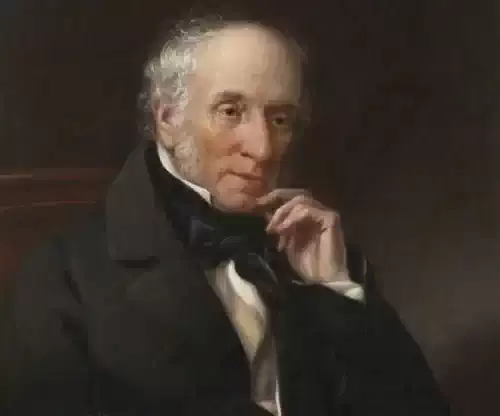
William Wordsworth
The Wishing Gate
The Wishing Gate
[In the vale of Grasmere, by the side of an old highway
leading to Ambleside, is a gate, which, from time out of
mind, has been called the Wishing-gate, from a belief that
wishes formed or indulged there have a favorable issue.]
HOPE rules a land forever green:
All powers that serve the bright-eyed Queen
Are confident and gay;
Clouds at her bidding disappear;
Points she to aught?---the bliss draws near,
And Fancy smooths the way.
Not such the land of Wishes---there
Dwell fruitless day-dreams, lawless prayer,
And thoughts with things at strife;
Yet how forlorn, should ye depart
Ye superstitions of the heart,
How poor, were human life!
When magic lore abjured its might,
Ye did not forfeit one dear right,
One tender claim abate;
Witness this symbol of your sway,
Surnving near the public way,
The rustic Wishing-gate!
Inquire not if the faery race
Shed kindly influence on the place,
Ere northward they retired;
If here a warrior left a spell,
Panting for glory as he fell;
Or here a saint expired.
Enough that all arouud is fair,
Composed with Nature's finest care,
And in her fondest love---
Peace to embosom and content---
To overawe the turbulent,
The selfish to reprove.
Yea! even the Stranger from afar,
Reclining on this moss-grown bar,
Unknowing, and unknown,
The infection of the ground partakes,
Longing for his Beloved---who maker
All happiness her own.
Then why should conscious Spirits fear
The mystic stirrings that are here,
The ancient faith disclaim?
The local Genius ne'er befriends
Desires whose course in folly ends,
Whose just reward is shame.
Smile if thou wilt, but not in scorn,
If some, by ceaseless pains outworn,
Here crave an easier lot;
If some have thirsted to renew
A broken vow, or bind a true,
With firmer, holier knot.
And not in vain, when thoughts are cast
Upon the irrevocable past,
Some Penitent sincere
May for a worthier future sigh,
While trickles from his downcast eye
No unavailing tear.
The Worldling, pining to be freed
From turmoil, who would turn or speed
The current of his fate,
Might stop before this favored scene,
At Nature's call, nor blush to lean
Upon the Wishing-gate.
The Sage, who feels how blind, how weak
Is man, though loth such help to seek,
Yet, passing, here might pause,
And thirst for insight to allay
Misgiving, while the crimson day
In quietness withdraws;
Or when the church-clock's knell profound
To Time's first step across the bound
Of midnight makes reply;
Time pressing on with starry crest,
To filial sleep upon the breast
Of dread eternity.
[In the vale of Grasmere, by the side of an old highway
leading to Ambleside, is a gate, which, from time out of
mind, has been called the Wishing-gate, from a belief that
wishes formed or indulged there have a favorable issue.]
HOPE rules a land forever green:
All powers that serve the bright-eyed Queen
Are confident and gay;
Clouds at her bidding disappear;
Points she to aught?---the bliss draws near,
And Fancy smooths the way.
Not such the land of Wishes---there
Dwell fruitless day-dreams, lawless prayer,
And thoughts with things at strife;
Yet how forlorn, should ye depart
Ye superstitions of the heart,
How poor, were human life!
When magic lore abjured its might,
Ye did not forfeit one dear right,
One tender claim abate;
Witness this symbol of your sway,
Surnving near the public way,
The rustic Wishing-gate!
Inquire not if the faery race
Shed kindly influence on the place,
Ere northward they retired;
If here a warrior left a spell,
Panting for glory as he fell;
Or here a saint expired.
Enough that all arouud is fair,
Composed with Nature's finest care,
And in her fondest love---
Peace to embosom and content---
To overawe the turbulent,
The selfish to reprove.
Yea! even the Stranger from afar,
Reclining on this moss-grown bar,
Unknowing, and unknown,
The infection of the ground partakes,
Longing for his Beloved---who maker
All happiness her own.
Then why should conscious Spirits fear
The mystic stirrings that are here,
The ancient faith disclaim?
The local Genius ne'er befriends
Desires whose course in folly ends,
Whose just reward is shame.
Smile if thou wilt, but not in scorn,
If some, by ceaseless pains outworn,
Here crave an easier lot;
If some have thirsted to renew
A broken vow, or bind a true,
With firmer, holier knot.
And not in vain, when thoughts are cast
Upon the irrevocable past,
Some Penitent sincere
May for a worthier future sigh,
While trickles from his downcast eye
No unavailing tear.
The Worldling, pining to be freed
From turmoil, who would turn or speed
The current of his fate,
Might stop before this favored scene,
At Nature's call, nor blush to lean
Upon the Wishing-gate.
The Sage, who feels how blind, how weak
Is man, though loth such help to seek,
Yet, passing, here might pause,
And thirst for insight to allay
Misgiving, while the crimson day
In quietness withdraws;
Or when the church-clock's knell profound
To Time's first step across the bound
Of midnight makes reply;
Time pressing on with starry crest,
To filial sleep upon the breast
Of dread eternity.
298
William Wordsworth
The Wishing Gate
The Wishing Gate
[In the vale of Grasmere, by the side of an old highway
leading to Ambleside, is a gate, which, from time out of
mind, has been called the Wishing-gate, from a belief that
wishes formed or indulged there have a favorable issue.]
HOPE rules a land forever green:
All powers that serve the bright-eyed Queen
Are confident and gay;
Clouds at her bidding disappear;
Points she to aught?---the bliss draws near,
And Fancy smooths the way.
Not such the land of Wishes---there
Dwell fruitless day-dreams, lawless prayer,
And thoughts with things at strife;
Yet how forlorn, should ye depart
Ye superstitions of the heart,
How poor, were human life!
When magic lore abjured its might,
Ye did not forfeit one dear right,
One tender claim abate;
Witness this symbol of your sway,
Surnving near the public way,
The rustic Wishing-gate!
Inquire not if the faery race
Shed kindly influence on the place,
Ere northward they retired;
If here a warrior left a spell,
Panting for glory as he fell;
Or here a saint expired.
Enough that all arouud is fair,
Composed with Nature's finest care,
And in her fondest love---
Peace to embosom and content---
To overawe the turbulent,
The selfish to reprove.
Yea! even the Stranger from afar,
Reclining on this moss-grown bar,
Unknowing, and unknown,
The infection of the ground partakes,
Longing for his Beloved---who maker
All happiness her own.
Then why should conscious Spirits fear
The mystic stirrings that are here,
The ancient faith disclaim?
The local Genius ne'er befriends
Desires whose course in folly ends,
Whose just reward is shame.
Smile if thou wilt, but not in scorn,
If some, by ceaseless pains outworn,
Here crave an easier lot;
If some have thirsted to renew
A broken vow, or bind a true,
With firmer, holier knot.
And not in vain, when thoughts are cast
Upon the irrevocable past,
Some Penitent sincere
May for a worthier future sigh,
While trickles from his downcast eye
No unavailing tear.
The Worldling, pining to be freed
From turmoil, who would turn or speed
The current of his fate,
Might stop before this favored scene,
At Nature's call, nor blush to lean
Upon the Wishing-gate.
The Sage, who feels how blind, how weak
Is man, though loth such help to seek,
Yet, passing, here might pause,
And thirst for insight to allay
Misgiving, while the crimson day
In quietness withdraws;
Or when the church-clock's knell profound
To Time's first step across the bound
Of midnight makes reply;
Time pressing on with starry crest,
To filial sleep upon the breast
Of dread eternity.
[In the vale of Grasmere, by the side of an old highway
leading to Ambleside, is a gate, which, from time out of
mind, has been called the Wishing-gate, from a belief that
wishes formed or indulged there have a favorable issue.]
HOPE rules a land forever green:
All powers that serve the bright-eyed Queen
Are confident and gay;
Clouds at her bidding disappear;
Points she to aught?---the bliss draws near,
And Fancy smooths the way.
Not such the land of Wishes---there
Dwell fruitless day-dreams, lawless prayer,
And thoughts with things at strife;
Yet how forlorn, should ye depart
Ye superstitions of the heart,
How poor, were human life!
When magic lore abjured its might,
Ye did not forfeit one dear right,
One tender claim abate;
Witness this symbol of your sway,
Surnving near the public way,
The rustic Wishing-gate!
Inquire not if the faery race
Shed kindly influence on the place,
Ere northward they retired;
If here a warrior left a spell,
Panting for glory as he fell;
Or here a saint expired.
Enough that all arouud is fair,
Composed with Nature's finest care,
And in her fondest love---
Peace to embosom and content---
To overawe the turbulent,
The selfish to reprove.
Yea! even the Stranger from afar,
Reclining on this moss-grown bar,
Unknowing, and unknown,
The infection of the ground partakes,
Longing for his Beloved---who maker
All happiness her own.
Then why should conscious Spirits fear
The mystic stirrings that are here,
The ancient faith disclaim?
The local Genius ne'er befriends
Desires whose course in folly ends,
Whose just reward is shame.
Smile if thou wilt, but not in scorn,
If some, by ceaseless pains outworn,
Here crave an easier lot;
If some have thirsted to renew
A broken vow, or bind a true,
With firmer, holier knot.
And not in vain, when thoughts are cast
Upon the irrevocable past,
Some Penitent sincere
May for a worthier future sigh,
While trickles from his downcast eye
No unavailing tear.
The Worldling, pining to be freed
From turmoil, who would turn or speed
The current of his fate,
Might stop before this favored scene,
At Nature's call, nor blush to lean
Upon the Wishing-gate.
The Sage, who feels how blind, how weak
Is man, though loth such help to seek,
Yet, passing, here might pause,
And thirst for insight to allay
Misgiving, while the crimson day
In quietness withdraws;
Or when the church-clock's knell profound
To Time's first step across the bound
Of midnight makes reply;
Time pressing on with starry crest,
To filial sleep upon the breast
Of dread eternity.
298
William Wordsworth
The Sparrow's Nest
The Sparrow's Nest
BEHOLD, within the leafy shade,
Those bright blue eggs together laid!
On me the chance-discovered sight
Gleamed like a vision of delight.
I started---seeming to espy
The home and sheltered bed,
The Sparrow's dwelling, which, hard by
My Father' house, in wet or dry
My sister Emmeline and I
Together visited.
She looked at it and seemed to fear it;
Dreading, tho' wishing, to be near it:
Such heart was in her, being then
A little Prattler among men.
The Blessing of my later year
Was with me when a boy:
She gave me eyes, she gave me ears;
And humble care, and delicate fears;
A heart, the fountain of sweet tears;
And love, and thought, and joy.
BEHOLD, within the leafy shade,
Those bright blue eggs together laid!
On me the chance-discovered sight
Gleamed like a vision of delight.
I started---seeming to espy
The home and sheltered bed,
The Sparrow's dwelling, which, hard by
My Father' house, in wet or dry
My sister Emmeline and I
Together visited.
She looked at it and seemed to fear it;
Dreading, tho' wishing, to be near it:
Such heart was in her, being then
A little Prattler among men.
The Blessing of my later year
Was with me when a boy:
She gave me eyes, she gave me ears;
And humble care, and delicate fears;
A heart, the fountain of sweet tears;
And love, and thought, and joy.
281
William Wordsworth
The Russian Fugitive
The Russian Fugitive
I
ENOUGH of rose-bud lips, and eyes
Like harebells bathed in dew,
Of cheek that with carnation vies,
And veins of violet hue;
Earth wants not beauty that may scorn
A likening to frail flowers;
Yea, to the stars, if they were born
For seasons and for hours.
Through Moscow's gates, with gold unbarred,
Stepped One at dead of night,
Whom such high beauty could not guard
From meditated blight;
By stealth she passed, and fled as fast
As doth the hunted fawn,
Nor stopped, till in the dappling east
Appeared unwelcome dawn.
Seven days she lurked in brake and field,
Seven nights her course renewed,
Sustained by what her scrip might yield,
Or berries of the wood;
At length, in darkness travelling on,
When lowly doors were shut,
The haven of her hope she won,
Her foster-mother's hut.
'To put your love to dangerous proof
I come,' said she, 'from far;
For I have left my Father's roof,
In terror of the czar.'
No answer did the Matron give,
No second look she cast,
But hung upon the fugitive,
Embracing and embraced.
She led the Lady to a seat
Beside the glimmering fire,
Bathed duteously her wayworn feet,
Prevented each desire:---
The cricket chirped, the house-dog dozed,
And on that simple bed,
Where she in childhood had reposed,
Now rests her weary head.
When she, whose couch had been the sod,
Whose curtain, pine or thorn,
Had breathed a sigh of thanks to God,
Who comforts the forlorn;
While over her the Matron bent
Sleep sealed her eyes, and stole
Feeling from limbs with travel spent,
And trouble from the soul.
Refreshed, the Wanderer rose at morn,
And soon again was dight
In those unworthy vestments worn
Through long and perilous flight;
And 'O beloved Nurse,' she said,
'My thanks with silent tears
Have unto Heaven and You been paid:
Now listen to my fears !
'Have you forgot'---and here she smiled---
'The babbling flatteries
You lavished on me when a child
Disporting round your knees?
I was your lambkin, and your bird,
Your star, your gem, your flower;
Light words, that were more lightly heard
In many a cloudless hour!
'The blossom you so fondly praised
Is come to bitter fruit;
A mighty One upon me gazed;
I spurned his lawless suit,
And must be hidden from his wrath:
You, Foster-father dear,
Will guide me in my forward path;
I may not tarry here!
'I cannot bring to utter woe
Your proved fidelity.'---
'Dear Child, sweet Mistress, say not so!
For you we both would die.'
'Nay, nay, I come with semblance feigned
And cheek embrowned by art;
Yet, being inwardly unstained,
With courage will depart.'
'But whither would you, could you, flee?
A poor Man's counsel take;
The Holy Virgin gives to me
A thought for your dear sake;
Rest, shielded by our Lady's grace,
And soon shall you be led
Forth to a safe abiding-place,
Where never foot doth tread.'
II
THE dwelling of this faithful pair
In a straggling village stood,
For One who breathed unquiet air
A dangerous neighbourhood;
But wide around lay forest ground
With thickets rough and blind;
And pine-trees made a heavy shade
Impervious to the wind.
And there, sequestered from the eight,
Was spread a treacherous swamp,
On which the noonday sun shed light
As from a lonely lamp;
And midway in the unsafe morass,
A single Island rose
Of firm dry ground, with healthful grass
Adorned, and shady boughs.
The Woodman knew, for such the craft
This Russian vassal plied,
That never fowler's gun, nor shaft
Of archer, there was tried;
A sanctuary seemed the spot
From all intrusion free;
And there he planned an artful Cot
For perfect secrecy.
With earnest pains unchecked by dread
Of Power's far-stretching hand,
The bold good Man his labor sped
At nature's pure command;
Heart-soothed, and busy as a wren,
While, in a hollow nook,
She moulds her sight-eluding den
Above a murmuring brook.
His task accomplished to his mind,
The twain ere break of day
Creep forth, and through the forest wind
Their solitary way;
Few words they speak, nor dare to slack
Their pace from mile to mile,
Till they have crossed the quaking marsh,
And reached the lonely Isle.
The sun above the pine-trees showed
A bright and cheerful face;
And Ina looked for her abode,
The promised hiding-place;
She sought in vain, the Woodman smiled;
No threshold could be seen,
Nor roof, nor window;Ñall seemed wild
As it had ever been.
Advancing, you might guess an hour,
The front with such nice care
Is masked, 'if house it be or bower,'
But in they entered are;
As shaggy as were wall and roof
With branches intertwined,
So smooth was all within, air-proof,
And delicately lined:
And hearth was there, and maple dish,
And cups in seemly rows,
And couch---all ready to a wish
For nurture or repose;
And Heaven doth to her virtue grant
That here she may abide
In solitude, with every want
By cautious love supplied.
No queen, before a shouting crowd,
Led on in bridal state,
E'er struggled with a heart so proud,
Entering her palace gate:
Rejoiced to bid the world farewell,
No saintly anchoress
E'er took possession of her cell
With deeper thankfulness.
'Father of all, upon thy care
And mercy am I thrown;
Be thou my safeguard!'---such her prayer
When she was left alone,
Kneeling amid the wilderness
When joy had passed away,
And smiles, fond efforts of distress
To hide what they betray!
The prayer is heard, the Saints have seen,
Diffused through form and face,
Resolves devotedly serene;
That monumental grace
Of Faith, which doth all passions tame
That Reason should control;
And shows in the untrembling frame
A statue of the soul.
III
'TIS sung in ancient minstrelsy
That Phoebus wont to wear
The leaves of any pleasant tree
Around his golden hair;
Till Daphne, desperate with pursuit
Of his imperious love,
At her own prayer transformed, took root,
A laurel in the grove.
Then did the Penitent adorn
His brow with laurel green;
And 'mid his bright locks never shorn
No meaner leaf was seen;
And poets sage, through every age,
About their temples wound
The bay; and conquerors thanked the Gods,
With laurel chaplets crowned,
Into the mists of fabling Time
So far runs back the praise
Of Beauty, that disdains to climb
Along forbidden ways;
That scorns temptation; power defies
Where mutual love is not;
And to the tomb for rescue flies
When life would be a blot.
To this fair Votaress, a fate
More mild doth Heaven ordain
Upon her Island desolate;
And word, not breathed in vain,
Might tell what intercourse she found,
Her silence to endear;
What birds she tamed, what flowers the ground
Sent forth her peace to cheer.
To one mute Presence, above all,
Her soothed affections clung,
A picture on the cabin wall
By Russian usage hung---
The Mother-maid, whose countenance bright
With love abridged the day;
And, communed with by taper light,
Chased spectral fears away.
And oft as either Guardian came,
The joy in that retreat
Might any common friendship shame,
So high their heart would beat;
And to the lone Recluse, whate'er
They brought, each visiting
Was like the crowding of the year
With a new burst of spring.
But, when she of her Parents thought,
The pang was hard to bear;
And, if with all things not enwrought,
That trouble still is near.
Before her flight she had not dared
Their constancy to prove,
Too much the heroic Daughter feared
The weakness of their love.
Dark is the past to them, and dark
The future still must be,
Till pitying Saints conduct her bark
Into a safer sea---
Or gentle Nature close her eyes,
And set her Spirit free
From the altar of this sacrifice,
In vestal purity.
Yet, when above the forest-glooms
The white swans southward passed,
High as the pitch of their swift plume
Her fancy rode the blast;
And bore her toward the fields of France
Her Father's native land,
To mingle in the rustic dance,
The happiest of the band!
Of those beloved fields she oft
Had heard her Father tell
In phrase that now with echoes soft
Haunted her lonely cell;
She saw the hereditary bowers,
She heard the ancestral stream;
The Kremlin and its haughty towers
Forgotten like a dream !
IV
THE ever-changing Moon had traced
Twelve times her monthly round,
When through the unfrequented Waste
Was heard a startling sound;
A shout thrice sent from one who chased
At speed a wounded deer,
Bounding through branches interlaced,
And where the wood was clear.
The fainting creature took the marsh,
And toward the Island fled,
While plovers screamed with tumult harsh
Above his antlered head;
This, Ina saw; and, pale with fear,
Shrunk to her citadel;
The desperate deer rushed on, and near
The tangled covert fell.
Across the marsh, the game in view,
The Hunter followed fast,
Nor paused, till o'er the stag he blew
A death-proclaiming blast;
Then, resting on her upright mind,
Came forth the Maid---'In me
Behold,' she said, ' a stricken Hind
Pursued by destiny!
'From your deportment, Sir! I deem
That you have worn a sword,
And will not hold in light esteem
A suffering woman's word;
There is my covert, there perchance
I might have lain concealed,
My fortunes hid, my countenance
Not even to you revealed.
'Tears might be shed, and I might pray,
Crouching and terrified,
That what has been unveiled to day,
You would in mystery hide;
But I will not defile with dust
The knee that bend to adore
The God in heaven;---attend, be just;
This ask I, and no more!
'I speak not of the winter's cold,
For summer's heat exchanged,
While I have lodged in this rough hold,
From social life estranged;
Nor yet of trouble and alarms:
High Heaven is my defence;
And every season has soft arms
For injured Innocence.
'From Moscow to the Wilderness
It was my choice to come,
Lest virtue should be harborless,
And honor want a home;
And happy were I, if the Czar
Retain his lawless will,
To end life here like this poor deer,
Or a lamb on a green hill.'
'Are you the Maid,' the Stranger cried,
'From Gallic parents sprung,
Whose vanishing was rumored wide,
Sad theme for every tongue;
Who foiled an Emperor's eager quest?
You, Lady, forced to wear
These rude habiliments, and rest
Your head in this dark lair!'
But wonder, pity, soon were quelled;
And in her face and mien
The soul's pure brightness she beheld
Without a veil between:
He loved, he hoped,---a holy flame
Kindled 'mid rapturous tears;
The passion of a moment came
As on the wings of years.
'Such bounty is no gift of chance,'
Exclaimed he; 'righteous Heaven,
Preparing your deliverance,
To me the charge hath given.
The Czar full oft in words, and deeds
Is stormy and self-willed;
But, when the Lady Catherine pleads,
His violence is stilled.
'Leave open to my wish the course,
And I to her will go;
From that humane and heavenly source,
Good, only good, can flow.''
Faint sanction given, the Cavalier
Was eager to depart,
Though question followed question, dear
To the Maiden's filial heart.
Light was his step,---his hopes, more light,
Kept pace with his desires;
And the fifth morning gave him sight
Of Moscow's glittering spires.
He sued:---heart-smitten by the wrong,
To the lorn Fugitive
The Emperor sent a pledge as strong
As sovereign power could give.
O more than mighty change! If e'er
Amazement rose to pain,
And joy's excess produced a fear
Of something void and vain;
'Twas when the Parents, who had mourned
So long the lost as dead,
Beheld their only Child returned,
The household floor to tread.
Soon gratitude gave way to love
Within the Maiden's breast:
Delivered and Deliverer move
In bridal garments drest;
Meek Catherine had her own reward;
The Czar bestowed a dower;
And universal Moscow shared
The triumph of that hour.
Flowers strewed the ground; the nuptial feast
Was held with costly state;
And there, 'mid many a noble guest,
The foster-parent sate;
Encouraged by the imperial eye,
They shrank not into shade;
Great as their bliss, the honor high
To them and nature paid!
I
ENOUGH of rose-bud lips, and eyes
Like harebells bathed in dew,
Of cheek that with carnation vies,
And veins of violet hue;
Earth wants not beauty that may scorn
A likening to frail flowers;
Yea, to the stars, if they were born
For seasons and for hours.
Through Moscow's gates, with gold unbarred,
Stepped One at dead of night,
Whom such high beauty could not guard
From meditated blight;
By stealth she passed, and fled as fast
As doth the hunted fawn,
Nor stopped, till in the dappling east
Appeared unwelcome dawn.
Seven days she lurked in brake and field,
Seven nights her course renewed,
Sustained by what her scrip might yield,
Or berries of the wood;
At length, in darkness travelling on,
When lowly doors were shut,
The haven of her hope she won,
Her foster-mother's hut.
'To put your love to dangerous proof
I come,' said she, 'from far;
For I have left my Father's roof,
In terror of the czar.'
No answer did the Matron give,
No second look she cast,
But hung upon the fugitive,
Embracing and embraced.
She led the Lady to a seat
Beside the glimmering fire,
Bathed duteously her wayworn feet,
Prevented each desire:---
The cricket chirped, the house-dog dozed,
And on that simple bed,
Where she in childhood had reposed,
Now rests her weary head.
When she, whose couch had been the sod,
Whose curtain, pine or thorn,
Had breathed a sigh of thanks to God,
Who comforts the forlorn;
While over her the Matron bent
Sleep sealed her eyes, and stole
Feeling from limbs with travel spent,
And trouble from the soul.
Refreshed, the Wanderer rose at morn,
And soon again was dight
In those unworthy vestments worn
Through long and perilous flight;
And 'O beloved Nurse,' she said,
'My thanks with silent tears
Have unto Heaven and You been paid:
Now listen to my fears !
'Have you forgot'---and here she smiled---
'The babbling flatteries
You lavished on me when a child
Disporting round your knees?
I was your lambkin, and your bird,
Your star, your gem, your flower;
Light words, that were more lightly heard
In many a cloudless hour!
'The blossom you so fondly praised
Is come to bitter fruit;
A mighty One upon me gazed;
I spurned his lawless suit,
And must be hidden from his wrath:
You, Foster-father dear,
Will guide me in my forward path;
I may not tarry here!
'I cannot bring to utter woe
Your proved fidelity.'---
'Dear Child, sweet Mistress, say not so!
For you we both would die.'
'Nay, nay, I come with semblance feigned
And cheek embrowned by art;
Yet, being inwardly unstained,
With courage will depart.'
'But whither would you, could you, flee?
A poor Man's counsel take;
The Holy Virgin gives to me
A thought for your dear sake;
Rest, shielded by our Lady's grace,
And soon shall you be led
Forth to a safe abiding-place,
Where never foot doth tread.'
II
THE dwelling of this faithful pair
In a straggling village stood,
For One who breathed unquiet air
A dangerous neighbourhood;
But wide around lay forest ground
With thickets rough and blind;
And pine-trees made a heavy shade
Impervious to the wind.
And there, sequestered from the eight,
Was spread a treacherous swamp,
On which the noonday sun shed light
As from a lonely lamp;
And midway in the unsafe morass,
A single Island rose
Of firm dry ground, with healthful grass
Adorned, and shady boughs.
The Woodman knew, for such the craft
This Russian vassal plied,
That never fowler's gun, nor shaft
Of archer, there was tried;
A sanctuary seemed the spot
From all intrusion free;
And there he planned an artful Cot
For perfect secrecy.
With earnest pains unchecked by dread
Of Power's far-stretching hand,
The bold good Man his labor sped
At nature's pure command;
Heart-soothed, and busy as a wren,
While, in a hollow nook,
She moulds her sight-eluding den
Above a murmuring brook.
His task accomplished to his mind,
The twain ere break of day
Creep forth, and through the forest wind
Their solitary way;
Few words they speak, nor dare to slack
Their pace from mile to mile,
Till they have crossed the quaking marsh,
And reached the lonely Isle.
The sun above the pine-trees showed
A bright and cheerful face;
And Ina looked for her abode,
The promised hiding-place;
She sought in vain, the Woodman smiled;
No threshold could be seen,
Nor roof, nor window;Ñall seemed wild
As it had ever been.
Advancing, you might guess an hour,
The front with such nice care
Is masked, 'if house it be or bower,'
But in they entered are;
As shaggy as were wall and roof
With branches intertwined,
So smooth was all within, air-proof,
And delicately lined:
And hearth was there, and maple dish,
And cups in seemly rows,
And couch---all ready to a wish
For nurture or repose;
And Heaven doth to her virtue grant
That here she may abide
In solitude, with every want
By cautious love supplied.
No queen, before a shouting crowd,
Led on in bridal state,
E'er struggled with a heart so proud,
Entering her palace gate:
Rejoiced to bid the world farewell,
No saintly anchoress
E'er took possession of her cell
With deeper thankfulness.
'Father of all, upon thy care
And mercy am I thrown;
Be thou my safeguard!'---such her prayer
When she was left alone,
Kneeling amid the wilderness
When joy had passed away,
And smiles, fond efforts of distress
To hide what they betray!
The prayer is heard, the Saints have seen,
Diffused through form and face,
Resolves devotedly serene;
That monumental grace
Of Faith, which doth all passions tame
That Reason should control;
And shows in the untrembling frame
A statue of the soul.
III
'TIS sung in ancient minstrelsy
That Phoebus wont to wear
The leaves of any pleasant tree
Around his golden hair;
Till Daphne, desperate with pursuit
Of his imperious love,
At her own prayer transformed, took root,
A laurel in the grove.
Then did the Penitent adorn
His brow with laurel green;
And 'mid his bright locks never shorn
No meaner leaf was seen;
And poets sage, through every age,
About their temples wound
The bay; and conquerors thanked the Gods,
With laurel chaplets crowned,
Into the mists of fabling Time
So far runs back the praise
Of Beauty, that disdains to climb
Along forbidden ways;
That scorns temptation; power defies
Where mutual love is not;
And to the tomb for rescue flies
When life would be a blot.
To this fair Votaress, a fate
More mild doth Heaven ordain
Upon her Island desolate;
And word, not breathed in vain,
Might tell what intercourse she found,
Her silence to endear;
What birds she tamed, what flowers the ground
Sent forth her peace to cheer.
To one mute Presence, above all,
Her soothed affections clung,
A picture on the cabin wall
By Russian usage hung---
The Mother-maid, whose countenance bright
With love abridged the day;
And, communed with by taper light,
Chased spectral fears away.
And oft as either Guardian came,
The joy in that retreat
Might any common friendship shame,
So high their heart would beat;
And to the lone Recluse, whate'er
They brought, each visiting
Was like the crowding of the year
With a new burst of spring.
But, when she of her Parents thought,
The pang was hard to bear;
And, if with all things not enwrought,
That trouble still is near.
Before her flight she had not dared
Their constancy to prove,
Too much the heroic Daughter feared
The weakness of their love.
Dark is the past to them, and dark
The future still must be,
Till pitying Saints conduct her bark
Into a safer sea---
Or gentle Nature close her eyes,
And set her Spirit free
From the altar of this sacrifice,
In vestal purity.
Yet, when above the forest-glooms
The white swans southward passed,
High as the pitch of their swift plume
Her fancy rode the blast;
And bore her toward the fields of France
Her Father's native land,
To mingle in the rustic dance,
The happiest of the band!
Of those beloved fields she oft
Had heard her Father tell
In phrase that now with echoes soft
Haunted her lonely cell;
She saw the hereditary bowers,
She heard the ancestral stream;
The Kremlin and its haughty towers
Forgotten like a dream !
IV
THE ever-changing Moon had traced
Twelve times her monthly round,
When through the unfrequented Waste
Was heard a startling sound;
A shout thrice sent from one who chased
At speed a wounded deer,
Bounding through branches interlaced,
And where the wood was clear.
The fainting creature took the marsh,
And toward the Island fled,
While plovers screamed with tumult harsh
Above his antlered head;
This, Ina saw; and, pale with fear,
Shrunk to her citadel;
The desperate deer rushed on, and near
The tangled covert fell.
Across the marsh, the game in view,
The Hunter followed fast,
Nor paused, till o'er the stag he blew
A death-proclaiming blast;
Then, resting on her upright mind,
Came forth the Maid---'In me
Behold,' she said, ' a stricken Hind
Pursued by destiny!
'From your deportment, Sir! I deem
That you have worn a sword,
And will not hold in light esteem
A suffering woman's word;
There is my covert, there perchance
I might have lain concealed,
My fortunes hid, my countenance
Not even to you revealed.
'Tears might be shed, and I might pray,
Crouching and terrified,
That what has been unveiled to day,
You would in mystery hide;
But I will not defile with dust
The knee that bend to adore
The God in heaven;---attend, be just;
This ask I, and no more!
'I speak not of the winter's cold,
For summer's heat exchanged,
While I have lodged in this rough hold,
From social life estranged;
Nor yet of trouble and alarms:
High Heaven is my defence;
And every season has soft arms
For injured Innocence.
'From Moscow to the Wilderness
It was my choice to come,
Lest virtue should be harborless,
And honor want a home;
And happy were I, if the Czar
Retain his lawless will,
To end life here like this poor deer,
Or a lamb on a green hill.'
'Are you the Maid,' the Stranger cried,
'From Gallic parents sprung,
Whose vanishing was rumored wide,
Sad theme for every tongue;
Who foiled an Emperor's eager quest?
You, Lady, forced to wear
These rude habiliments, and rest
Your head in this dark lair!'
But wonder, pity, soon were quelled;
And in her face and mien
The soul's pure brightness she beheld
Without a veil between:
He loved, he hoped,---a holy flame
Kindled 'mid rapturous tears;
The passion of a moment came
As on the wings of years.
'Such bounty is no gift of chance,'
Exclaimed he; 'righteous Heaven,
Preparing your deliverance,
To me the charge hath given.
The Czar full oft in words, and deeds
Is stormy and self-willed;
But, when the Lady Catherine pleads,
His violence is stilled.
'Leave open to my wish the course,
And I to her will go;
From that humane and heavenly source,
Good, only good, can flow.''
Faint sanction given, the Cavalier
Was eager to depart,
Though question followed question, dear
To the Maiden's filial heart.
Light was his step,---his hopes, more light,
Kept pace with his desires;
And the fifth morning gave him sight
Of Moscow's glittering spires.
He sued:---heart-smitten by the wrong,
To the lorn Fugitive
The Emperor sent a pledge as strong
As sovereign power could give.
O more than mighty change! If e'er
Amazement rose to pain,
And joy's excess produced a fear
Of something void and vain;
'Twas when the Parents, who had mourned
So long the lost as dead,
Beheld their only Child returned,
The household floor to tread.
Soon gratitude gave way to love
Within the Maiden's breast:
Delivered and Deliverer move
In bridal garments drest;
Meek Catherine had her own reward;
The Czar bestowed a dower;
And universal Moscow shared
The triumph of that hour.
Flowers strewed the ground; the nuptial feast
Was held with costly state;
And there, 'mid many a noble guest,
The foster-parent sate;
Encouraged by the imperial eye,
They shrank not into shade;
Great as their bliss, the honor high
To them and nature paid!
296
William Wordsworth
The Russian Fugitive
The Russian Fugitive
I
ENOUGH of rose-bud lips, and eyes
Like harebells bathed in dew,
Of cheek that with carnation vies,
And veins of violet hue;
Earth wants not beauty that may scorn
A likening to frail flowers;
Yea, to the stars, if they were born
For seasons and for hours.
Through Moscow's gates, with gold unbarred,
Stepped One at dead of night,
Whom such high beauty could not guard
From meditated blight;
By stealth she passed, and fled as fast
As doth the hunted fawn,
Nor stopped, till in the dappling east
Appeared unwelcome dawn.
Seven days she lurked in brake and field,
Seven nights her course renewed,
Sustained by what her scrip might yield,
Or berries of the wood;
At length, in darkness travelling on,
When lowly doors were shut,
The haven of her hope she won,
Her foster-mother's hut.
'To put your love to dangerous proof
I come,' said she, 'from far;
For I have left my Father's roof,
In terror of the czar.'
No answer did the Matron give,
No second look she cast,
But hung upon the fugitive,
Embracing and embraced.
She led the Lady to a seat
Beside the glimmering fire,
Bathed duteously her wayworn feet,
Prevented each desire:---
The cricket chirped, the house-dog dozed,
And on that simple bed,
Where she in childhood had reposed,
Now rests her weary head.
When she, whose couch had been the sod,
Whose curtain, pine or thorn,
Had breathed a sigh of thanks to God,
Who comforts the forlorn;
While over her the Matron bent
Sleep sealed her eyes, and stole
Feeling from limbs with travel spent,
And trouble from the soul.
Refreshed, the Wanderer rose at morn,
And soon again was dight
In those unworthy vestments worn
Through long and perilous flight;
And 'O beloved Nurse,' she said,
'My thanks with silent tears
Have unto Heaven and You been paid:
Now listen to my fears !
'Have you forgot'---and here she smiled---
'The babbling flatteries
You lavished on me when a child
Disporting round your knees?
I was your lambkin, and your bird,
Your star, your gem, your flower;
Light words, that were more lightly heard
In many a cloudless hour!
'The blossom you so fondly praised
Is come to bitter fruit;
A mighty One upon me gazed;
I spurned his lawless suit,
And must be hidden from his wrath:
You, Foster-father dear,
Will guide me in my forward path;
I may not tarry here!
'I cannot bring to utter woe
Your proved fidelity.'---
'Dear Child, sweet Mistress, say not so!
For you we both would die.'
'Nay, nay, I come with semblance feigned
And cheek embrowned by art;
Yet, being inwardly unstained,
With courage will depart.'
'But whither would you, could you, flee?
A poor Man's counsel take;
The Holy Virgin gives to me
A thought for your dear sake;
Rest, shielded by our Lady's grace,
And soon shall you be led
Forth to a safe abiding-place,
Where never foot doth tread.'
II
THE dwelling of this faithful pair
In a straggling village stood,
For One who breathed unquiet air
A dangerous neighbourhood;
But wide around lay forest ground
With thickets rough and blind;
And pine-trees made a heavy shade
Impervious to the wind.
And there, sequestered from the eight,
Was spread a treacherous swamp,
On which the noonday sun shed light
As from a lonely lamp;
And midway in the unsafe morass,
A single Island rose
Of firm dry ground, with healthful grass
Adorned, and shady boughs.
The Woodman knew, for such the craft
This Russian vassal plied,
That never fowler's gun, nor shaft
Of archer, there was tried;
A sanctuary seemed the spot
From all intrusion free;
And there he planned an artful Cot
For perfect secrecy.
With earnest pains unchecked by dread
Of Power's far-stretching hand,
The bold good Man his labor sped
At nature's pure command;
Heart-soothed, and busy as a wren,
While, in a hollow nook,
She moulds her sight-eluding den
Above a murmuring brook.
His task accomplished to his mind,
The twain ere break of day
Creep forth, and through the forest wind
Their solitary way;
Few words they speak, nor dare to slack
Their pace from mile to mile,
Till they have crossed the quaking marsh,
And reached the lonely Isle.
The sun above the pine-trees showed
A bright and cheerful face;
And Ina looked for her abode,
The promised hiding-place;
She sought in vain, the Woodman smiled;
No threshold could be seen,
Nor roof, nor window;Ñall seemed wild
As it had ever been.
Advancing, you might guess an hour,
The front with such nice care
Is masked, 'if house it be or bower,'
But in they entered are;
As shaggy as were wall and roof
With branches intertwined,
So smooth was all within, air-proof,
And delicately lined:
And hearth was there, and maple dish,
And cups in seemly rows,
And couch---all ready to a wish
For nurture or repose;
And Heaven doth to her virtue grant
That here she may abide
In solitude, with every want
By cautious love supplied.
No queen, before a shouting crowd,
Led on in bridal state,
E'er struggled with a heart so proud,
Entering her palace gate:
Rejoiced to bid the world farewell,
No saintly anchoress
E'er took possession of her cell
With deeper thankfulness.
'Father of all, upon thy care
And mercy am I thrown;
Be thou my safeguard!'---such her prayer
When she was left alone,
Kneeling amid the wilderness
When joy had passed away,
And smiles, fond efforts of distress
To hide what they betray!
The prayer is heard, the Saints have seen,
Diffused through form and face,
Resolves devotedly serene;
That monumental grace
Of Faith, which doth all passions tame
That Reason should control;
And shows in the untrembling frame
A statue of the soul.
III
'TIS sung in ancient minstrelsy
That Phoebus wont to wear
The leaves of any pleasant tree
Around his golden hair;
Till Daphne, desperate with pursuit
Of his imperious love,
At her own prayer transformed, took root,
A laurel in the grove.
Then did the Penitent adorn
His brow with laurel green;
And 'mid his bright locks never shorn
No meaner leaf was seen;
And poets sage, through every age,
About their temples wound
The bay; and conquerors thanked the Gods,
With laurel chaplets crowned,
Into the mists of fabling Time
So far runs back the praise
Of Beauty, that disdains to climb
Along forbidden ways;
That scorns temptation; power defies
Where mutual love is not;
And to the tomb for rescue flies
When life would be a blot.
To this fair Votaress, a fate
More mild doth Heaven ordain
Upon her Island desolate;
And word, not breathed in vain,
Might tell what intercourse she found,
Her silence to endear;
What birds she tamed, what flowers the ground
Sent forth her peace to cheer.
To one mute Presence, above all,
Her soothed affections clung,
A picture on the cabin wall
By Russian usage hung---
The Mother-maid, whose countenance bright
With love abridged the day;
And, communed with by taper light,
Chased spectral fears away.
And oft as either Guardian came,
The joy in that retreat
Might any common friendship shame,
So high their heart would beat;
And to the lone Recluse, whate'er
They brought, each visiting
Was like the crowding of the year
With a new burst of spring.
But, when she of her Parents thought,
The pang was hard to bear;
And, if with all things not enwrought,
That trouble still is near.
Before her flight she had not dared
Their constancy to prove,
Too much the heroic Daughter feared
The weakness of their love.
Dark is the past to them, and dark
The future still must be,
Till pitying Saints conduct her bark
Into a safer sea---
Or gentle Nature close her eyes,
And set her Spirit free
From the altar of this sacrifice,
In vestal purity.
Yet, when above the forest-glooms
The white swans southward passed,
High as the pitch of their swift plume
Her fancy rode the blast;
And bore her toward the fields of France
Her Father's native land,
To mingle in the rustic dance,
The happiest of the band!
Of those beloved fields she oft
Had heard her Father tell
In phrase that now with echoes soft
Haunted her lonely cell;
She saw the hereditary bowers,
She heard the ancestral stream;
The Kremlin and its haughty towers
Forgotten like a dream !
IV
THE ever-changing Moon had traced
Twelve times her monthly round,
When through the unfrequented Waste
Was heard a startling sound;
A shout thrice sent from one who chased
At speed a wounded deer,
Bounding through branches interlaced,
And where the wood was clear.
The fainting creature took the marsh,
And toward the Island fled,
While plovers screamed with tumult harsh
Above his antlered head;
This, Ina saw; and, pale with fear,
Shrunk to her citadel;
The desperate deer rushed on, and near
The tangled covert fell.
Across the marsh, the game in view,
The Hunter followed fast,
Nor paused, till o'er the stag he blew
A death-proclaiming blast;
Then, resting on her upright mind,
Came forth the Maid---'In me
Behold,' she said, ' a stricken Hind
Pursued by destiny!
'From your deportment, Sir! I deem
That you have worn a sword,
And will not hold in light esteem
A suffering woman's word;
There is my covert, there perchance
I might have lain concealed,
My fortunes hid, my countenance
Not even to you revealed.
'Tears might be shed, and I might pray,
Crouching and terrified,
That what has been unveiled to day,
You would in mystery hide;
But I will not defile with dust
The knee that bend to adore
The God in heaven;---attend, be just;
This ask I, and no more!
'I speak not of the winter's cold,
For summer's heat exchanged,
While I have lodged in this rough hold,
From social life estranged;
Nor yet of trouble and alarms:
High Heaven is my defence;
And every season has soft arms
For injured Innocence.
'From Moscow to the Wilderness
It was my choice to come,
Lest virtue should be harborless,
And honor want a home;
And happy were I, if the Czar
Retain his lawless will,
To end life here like this poor deer,
Or a lamb on a green hill.'
'Are you the Maid,' the Stranger cried,
'From Gallic parents sprung,
Whose vanishing was rumored wide,
Sad theme for every tongue;
Who foiled an Emperor's eager quest?
You, Lady, forced to wear
These rude habiliments, and rest
Your head in this dark lair!'
But wonder, pity, soon were quelled;
And in her face and mien
The soul's pure brightness she beheld
Without a veil between:
He loved, he hoped,---a holy flame
Kindled 'mid rapturous tears;
The passion of a moment came
As on the wings of years.
'Such bounty is no gift of chance,'
Exclaimed he; 'righteous Heaven,
Preparing your deliverance,
To me the charge hath given.
The Czar full oft in words, and deeds
Is stormy and self-willed;
But, when the Lady Catherine pleads,
His violence is stilled.
'Leave open to my wish the course,
And I to her will go;
From that humane and heavenly source,
Good, only good, can flow.''
Faint sanction given, the Cavalier
Was eager to depart,
Though question followed question, dear
To the Maiden's filial heart.
Light was his step,---his hopes, more light,
Kept pace with his desires;
And the fifth morning gave him sight
Of Moscow's glittering spires.
He sued:---heart-smitten by the wrong,
To the lorn Fugitive
The Emperor sent a pledge as strong
As sovereign power could give.
O more than mighty change! If e'er
Amazement rose to pain,
And joy's excess produced a fear
Of something void and vain;
'Twas when the Parents, who had mourned
So long the lost as dead,
Beheld their only Child returned,
The household floor to tread.
Soon gratitude gave way to love
Within the Maiden's breast:
Delivered and Deliverer move
In bridal garments drest;
Meek Catherine had her own reward;
The Czar bestowed a dower;
And universal Moscow shared
The triumph of that hour.
Flowers strewed the ground; the nuptial feast
Was held with costly state;
And there, 'mid many a noble guest,
The foster-parent sate;
Encouraged by the imperial eye,
They shrank not into shade;
Great as their bliss, the honor high
To them and nature paid!
I
ENOUGH of rose-bud lips, and eyes
Like harebells bathed in dew,
Of cheek that with carnation vies,
And veins of violet hue;
Earth wants not beauty that may scorn
A likening to frail flowers;
Yea, to the stars, if they were born
For seasons and for hours.
Through Moscow's gates, with gold unbarred,
Stepped One at dead of night,
Whom such high beauty could not guard
From meditated blight;
By stealth she passed, and fled as fast
As doth the hunted fawn,
Nor stopped, till in the dappling east
Appeared unwelcome dawn.
Seven days she lurked in brake and field,
Seven nights her course renewed,
Sustained by what her scrip might yield,
Or berries of the wood;
At length, in darkness travelling on,
When lowly doors were shut,
The haven of her hope she won,
Her foster-mother's hut.
'To put your love to dangerous proof
I come,' said she, 'from far;
For I have left my Father's roof,
In terror of the czar.'
No answer did the Matron give,
No second look she cast,
But hung upon the fugitive,
Embracing and embraced.
She led the Lady to a seat
Beside the glimmering fire,
Bathed duteously her wayworn feet,
Prevented each desire:---
The cricket chirped, the house-dog dozed,
And on that simple bed,
Where she in childhood had reposed,
Now rests her weary head.
When she, whose couch had been the sod,
Whose curtain, pine or thorn,
Had breathed a sigh of thanks to God,
Who comforts the forlorn;
While over her the Matron bent
Sleep sealed her eyes, and stole
Feeling from limbs with travel spent,
And trouble from the soul.
Refreshed, the Wanderer rose at morn,
And soon again was dight
In those unworthy vestments worn
Through long and perilous flight;
And 'O beloved Nurse,' she said,
'My thanks with silent tears
Have unto Heaven and You been paid:
Now listen to my fears !
'Have you forgot'---and here she smiled---
'The babbling flatteries
You lavished on me when a child
Disporting round your knees?
I was your lambkin, and your bird,
Your star, your gem, your flower;
Light words, that were more lightly heard
In many a cloudless hour!
'The blossom you so fondly praised
Is come to bitter fruit;
A mighty One upon me gazed;
I spurned his lawless suit,
And must be hidden from his wrath:
You, Foster-father dear,
Will guide me in my forward path;
I may not tarry here!
'I cannot bring to utter woe
Your proved fidelity.'---
'Dear Child, sweet Mistress, say not so!
For you we both would die.'
'Nay, nay, I come with semblance feigned
And cheek embrowned by art;
Yet, being inwardly unstained,
With courage will depart.'
'But whither would you, could you, flee?
A poor Man's counsel take;
The Holy Virgin gives to me
A thought for your dear sake;
Rest, shielded by our Lady's grace,
And soon shall you be led
Forth to a safe abiding-place,
Where never foot doth tread.'
II
THE dwelling of this faithful pair
In a straggling village stood,
For One who breathed unquiet air
A dangerous neighbourhood;
But wide around lay forest ground
With thickets rough and blind;
And pine-trees made a heavy shade
Impervious to the wind.
And there, sequestered from the eight,
Was spread a treacherous swamp,
On which the noonday sun shed light
As from a lonely lamp;
And midway in the unsafe morass,
A single Island rose
Of firm dry ground, with healthful grass
Adorned, and shady boughs.
The Woodman knew, for such the craft
This Russian vassal plied,
That never fowler's gun, nor shaft
Of archer, there was tried;
A sanctuary seemed the spot
From all intrusion free;
And there he planned an artful Cot
For perfect secrecy.
With earnest pains unchecked by dread
Of Power's far-stretching hand,
The bold good Man his labor sped
At nature's pure command;
Heart-soothed, and busy as a wren,
While, in a hollow nook,
She moulds her sight-eluding den
Above a murmuring brook.
His task accomplished to his mind,
The twain ere break of day
Creep forth, and through the forest wind
Their solitary way;
Few words they speak, nor dare to slack
Their pace from mile to mile,
Till they have crossed the quaking marsh,
And reached the lonely Isle.
The sun above the pine-trees showed
A bright and cheerful face;
And Ina looked for her abode,
The promised hiding-place;
She sought in vain, the Woodman smiled;
No threshold could be seen,
Nor roof, nor window;Ñall seemed wild
As it had ever been.
Advancing, you might guess an hour,
The front with such nice care
Is masked, 'if house it be or bower,'
But in they entered are;
As shaggy as were wall and roof
With branches intertwined,
So smooth was all within, air-proof,
And delicately lined:
And hearth was there, and maple dish,
And cups in seemly rows,
And couch---all ready to a wish
For nurture or repose;
And Heaven doth to her virtue grant
That here she may abide
In solitude, with every want
By cautious love supplied.
No queen, before a shouting crowd,
Led on in bridal state,
E'er struggled with a heart so proud,
Entering her palace gate:
Rejoiced to bid the world farewell,
No saintly anchoress
E'er took possession of her cell
With deeper thankfulness.
'Father of all, upon thy care
And mercy am I thrown;
Be thou my safeguard!'---such her prayer
When she was left alone,
Kneeling amid the wilderness
When joy had passed away,
And smiles, fond efforts of distress
To hide what they betray!
The prayer is heard, the Saints have seen,
Diffused through form and face,
Resolves devotedly serene;
That monumental grace
Of Faith, which doth all passions tame
That Reason should control;
And shows in the untrembling frame
A statue of the soul.
III
'TIS sung in ancient minstrelsy
That Phoebus wont to wear
The leaves of any pleasant tree
Around his golden hair;
Till Daphne, desperate with pursuit
Of his imperious love,
At her own prayer transformed, took root,
A laurel in the grove.
Then did the Penitent adorn
His brow with laurel green;
And 'mid his bright locks never shorn
No meaner leaf was seen;
And poets sage, through every age,
About their temples wound
The bay; and conquerors thanked the Gods,
With laurel chaplets crowned,
Into the mists of fabling Time
So far runs back the praise
Of Beauty, that disdains to climb
Along forbidden ways;
That scorns temptation; power defies
Where mutual love is not;
And to the tomb for rescue flies
When life would be a blot.
To this fair Votaress, a fate
More mild doth Heaven ordain
Upon her Island desolate;
And word, not breathed in vain,
Might tell what intercourse she found,
Her silence to endear;
What birds she tamed, what flowers the ground
Sent forth her peace to cheer.
To one mute Presence, above all,
Her soothed affections clung,
A picture on the cabin wall
By Russian usage hung---
The Mother-maid, whose countenance bright
With love abridged the day;
And, communed with by taper light,
Chased spectral fears away.
And oft as either Guardian came,
The joy in that retreat
Might any common friendship shame,
So high their heart would beat;
And to the lone Recluse, whate'er
They brought, each visiting
Was like the crowding of the year
With a new burst of spring.
But, when she of her Parents thought,
The pang was hard to bear;
And, if with all things not enwrought,
That trouble still is near.
Before her flight she had not dared
Their constancy to prove,
Too much the heroic Daughter feared
The weakness of their love.
Dark is the past to them, and dark
The future still must be,
Till pitying Saints conduct her bark
Into a safer sea---
Or gentle Nature close her eyes,
And set her Spirit free
From the altar of this sacrifice,
In vestal purity.
Yet, when above the forest-glooms
The white swans southward passed,
High as the pitch of their swift plume
Her fancy rode the blast;
And bore her toward the fields of France
Her Father's native land,
To mingle in the rustic dance,
The happiest of the band!
Of those beloved fields she oft
Had heard her Father tell
In phrase that now with echoes soft
Haunted her lonely cell;
She saw the hereditary bowers,
She heard the ancestral stream;
The Kremlin and its haughty towers
Forgotten like a dream !
IV
THE ever-changing Moon had traced
Twelve times her monthly round,
When through the unfrequented Waste
Was heard a startling sound;
A shout thrice sent from one who chased
At speed a wounded deer,
Bounding through branches interlaced,
And where the wood was clear.
The fainting creature took the marsh,
And toward the Island fled,
While plovers screamed with tumult harsh
Above his antlered head;
This, Ina saw; and, pale with fear,
Shrunk to her citadel;
The desperate deer rushed on, and near
The tangled covert fell.
Across the marsh, the game in view,
The Hunter followed fast,
Nor paused, till o'er the stag he blew
A death-proclaiming blast;
Then, resting on her upright mind,
Came forth the Maid---'In me
Behold,' she said, ' a stricken Hind
Pursued by destiny!
'From your deportment, Sir! I deem
That you have worn a sword,
And will not hold in light esteem
A suffering woman's word;
There is my covert, there perchance
I might have lain concealed,
My fortunes hid, my countenance
Not even to you revealed.
'Tears might be shed, and I might pray,
Crouching and terrified,
That what has been unveiled to day,
You would in mystery hide;
But I will not defile with dust
The knee that bend to adore
The God in heaven;---attend, be just;
This ask I, and no more!
'I speak not of the winter's cold,
For summer's heat exchanged,
While I have lodged in this rough hold,
From social life estranged;
Nor yet of trouble and alarms:
High Heaven is my defence;
And every season has soft arms
For injured Innocence.
'From Moscow to the Wilderness
It was my choice to come,
Lest virtue should be harborless,
And honor want a home;
And happy were I, if the Czar
Retain his lawless will,
To end life here like this poor deer,
Or a lamb on a green hill.'
'Are you the Maid,' the Stranger cried,
'From Gallic parents sprung,
Whose vanishing was rumored wide,
Sad theme for every tongue;
Who foiled an Emperor's eager quest?
You, Lady, forced to wear
These rude habiliments, and rest
Your head in this dark lair!'
But wonder, pity, soon were quelled;
And in her face and mien
The soul's pure brightness she beheld
Without a veil between:
He loved, he hoped,---a holy flame
Kindled 'mid rapturous tears;
The passion of a moment came
As on the wings of years.
'Such bounty is no gift of chance,'
Exclaimed he; 'righteous Heaven,
Preparing your deliverance,
To me the charge hath given.
The Czar full oft in words, and deeds
Is stormy and self-willed;
But, when the Lady Catherine pleads,
His violence is stilled.
'Leave open to my wish the course,
And I to her will go;
From that humane and heavenly source,
Good, only good, can flow.''
Faint sanction given, the Cavalier
Was eager to depart,
Though question followed question, dear
To the Maiden's filial heart.
Light was his step,---his hopes, more light,
Kept pace with his desires;
And the fifth morning gave him sight
Of Moscow's glittering spires.
He sued:---heart-smitten by the wrong,
To the lorn Fugitive
The Emperor sent a pledge as strong
As sovereign power could give.
O more than mighty change! If e'er
Amazement rose to pain,
And joy's excess produced a fear
Of something void and vain;
'Twas when the Parents, who had mourned
So long the lost as dead,
Beheld their only Child returned,
The household floor to tread.
Soon gratitude gave way to love
Within the Maiden's breast:
Delivered and Deliverer move
In bridal garments drest;
Meek Catherine had her own reward;
The Czar bestowed a dower;
And universal Moscow shared
The triumph of that hour.
Flowers strewed the ground; the nuptial feast
Was held with costly state;
And there, 'mid many a noble guest,
The foster-parent sate;
Encouraged by the imperial eye,
They shrank not into shade;
Great as their bliss, the honor high
To them and nature paid!
296
William Wordsworth
The Seven Sisters
The Seven Sisters
Or, The Solitude Of Binnorie
SEVEN Daughter had Lord Archibald,
All children of one mother:
You could not say in one short day
What love they bore each other.
A garland, of seven lilies, wrought!
Seven sisters that together dwell;
But he, bold Knight as ever fought,
Their Father, took of them no thought,
He loved the wars so well.
Sing, mournfully, oh! mournfully,
The solitude of Binnorie!
Fresh blows the wind, a western wind,
And from the shores of Erin,
Across the wave, a Rover brave
To Binnorie is steering:
Right onward to the Scottish strand
The gallant ship is borne;
The warriors leap upon the land,
And hark! the Leader of the band
Hath blown his bugle horn.
Sing, mournfully, oh! mournfully,
The solitude of Binnorie!
Beside a grotto of their own,
With boughs above them closing,
The Seven are laid, and in the shade
They lie like fawns reposing.
But now, upstarting with affright
At noise of man and steed,
Away they fly to left, to rightÑ
Of your fair household, Father-knight,
Methinks you take small heed!
Sing, mournfully, oh! mournfully,
The solitude of Binnorie!
Away the even fair Campbells fly,
And, over hill and hollow,
With menace proud, and insult loud,
The youthful Rovers follow.
Cried they, 'Your Father loves to roam:
Enough for him to find
The empty house when he comes home;
For us your yellow ringlets comb,
For us be fair and kind!'
Sing, mournfully, oh! mournfully,
The solitude of Binnorie!
Some close behind, some side to side,
Like clouds in stormy weather;
They run, and cry, 'Nay, let us die,
And let us die together.'
A lake was near; the shore was steep;
There never foot had been;
They ran, and with a deperate leap
Together plunged into the deep,
Nor ever more were seen.
Sing, mournfully, oh! mournfully,
The solitude of Binnorie!
The stream that flows out of the lake,
As through the glen it rambles,
Repeats a moan o'er moss and stone,
For those seven lovely Campbells.
Seven little Islands, green and bare,
Have risen from out the deep:
The fishers say, those sisters fair,
By faeries all are buried there,
And there together sleep.
Sing, mournfully, oh! mournfully,
The solitude of Binnorie!
Or, The Solitude Of Binnorie
SEVEN Daughter had Lord Archibald,
All children of one mother:
You could not say in one short day
What love they bore each other.
A garland, of seven lilies, wrought!
Seven sisters that together dwell;
But he, bold Knight as ever fought,
Their Father, took of them no thought,
He loved the wars so well.
Sing, mournfully, oh! mournfully,
The solitude of Binnorie!
Fresh blows the wind, a western wind,
And from the shores of Erin,
Across the wave, a Rover brave
To Binnorie is steering:
Right onward to the Scottish strand
The gallant ship is borne;
The warriors leap upon the land,
And hark! the Leader of the band
Hath blown his bugle horn.
Sing, mournfully, oh! mournfully,
The solitude of Binnorie!
Beside a grotto of their own,
With boughs above them closing,
The Seven are laid, and in the shade
They lie like fawns reposing.
But now, upstarting with affright
At noise of man and steed,
Away they fly to left, to rightÑ
Of your fair household, Father-knight,
Methinks you take small heed!
Sing, mournfully, oh! mournfully,
The solitude of Binnorie!
Away the even fair Campbells fly,
And, over hill and hollow,
With menace proud, and insult loud,
The youthful Rovers follow.
Cried they, 'Your Father loves to roam:
Enough for him to find
The empty house when he comes home;
For us your yellow ringlets comb,
For us be fair and kind!'
Sing, mournfully, oh! mournfully,
The solitude of Binnorie!
Some close behind, some side to side,
Like clouds in stormy weather;
They run, and cry, 'Nay, let us die,
And let us die together.'
A lake was near; the shore was steep;
There never foot had been;
They ran, and with a deperate leap
Together plunged into the deep,
Nor ever more were seen.
Sing, mournfully, oh! mournfully,
The solitude of Binnorie!
The stream that flows out of the lake,
As through the glen it rambles,
Repeats a moan o'er moss and stone,
For those seven lovely Campbells.
Seven little Islands, green and bare,
Have risen from out the deep:
The fishers say, those sisters fair,
By faeries all are buried there,
And there together sleep.
Sing, mournfully, oh! mournfully,
The solitude of Binnorie!
219
William Wordsworth
The Primrose of the Rock
The Primrose of the Rock
A Rock there is whose homely front
The passing traveller slights;
Yet there the glow-worms hang their lamps,
Like stars, at various heights;
And one coy Primrose to that Rock
The vernal breeze invites.
What hideous warfare hath been waged,
What kingdoms overthrown,
Since first I spied that Primrose-tuft
And marked it for my own;
A lasting link in Nature's chain
From highest heaven let down!
The flowers, still faithful to the stems,
Their fellowship renew;
The stems are faithful to the root,
That worketh out of view;
And to the rock the root adheres
In every fibre true.
Close clings to earth the living rock,
Though threatening still to fall:
The earth is constant to her sphere;
And God upholds them all:
So blooms this lonely Plant, nor dreads
Her annual funeral.
Here closed the meditative strain;
But air breathed soft that day,
The hoary mountain-heights were cheered,
The sunny vale looked gay;
And to the Primrose of the Rock
I gave this after-lay.
I sang-Let myriads of bright flowers,
Like Thee, in field and grove
Revive unenvied;-mightier far,
Than tremblings that reprove
Our vernal tendencies to hope,
Is God's redeeming love;
That love which changed-for wan disease,
For sorrow that had bent
O'er hopeless dust, for withered age-
Their moral element,
And turned the thistles of a curse
To types beneficent.
Sin-blighted though we are, we too,
The reasoning Sons of Men,
From one oblivious winter called
Shall rise, and breathe again;
And in eternal summer lose
Our threescore years and ten.
To humbleness of heart descends
This prescience from on high,
The faith that elevates the just,
Before and when they die;
And makes each soul a separate heaven
A court for Deity.
A Rock there is whose homely front
The passing traveller slights;
Yet there the glow-worms hang their lamps,
Like stars, at various heights;
And one coy Primrose to that Rock
The vernal breeze invites.
What hideous warfare hath been waged,
What kingdoms overthrown,
Since first I spied that Primrose-tuft
And marked it for my own;
A lasting link in Nature's chain
From highest heaven let down!
The flowers, still faithful to the stems,
Their fellowship renew;
The stems are faithful to the root,
That worketh out of view;
And to the rock the root adheres
In every fibre true.
Close clings to earth the living rock,
Though threatening still to fall:
The earth is constant to her sphere;
And God upholds them all:
So blooms this lonely Plant, nor dreads
Her annual funeral.
Here closed the meditative strain;
But air breathed soft that day,
The hoary mountain-heights were cheered,
The sunny vale looked gay;
And to the Primrose of the Rock
I gave this after-lay.
I sang-Let myriads of bright flowers,
Like Thee, in field and grove
Revive unenvied;-mightier far,
Than tremblings that reprove
Our vernal tendencies to hope,
Is God's redeeming love;
That love which changed-for wan disease,
For sorrow that had bent
O'er hopeless dust, for withered age-
Their moral element,
And turned the thistles of a curse
To types beneficent.
Sin-blighted though we are, we too,
The reasoning Sons of Men,
From one oblivious winter called
Shall rise, and breathe again;
And in eternal summer lose
Our threescore years and ten.
To humbleness of heart descends
This prescience from on high,
The faith that elevates the just,
Before and when they die;
And makes each soul a separate heaven
A court for Deity.
248
William Wordsworth
The Reaper
The Reaper
Behold her, single in the field,
Yon solitary Highland Lass!
Reaping and singing by herself;
Stop here, or gently pass!
Alone she cuts and binds the grain,
And sings a melancholy strain;
O listen! for the vale profound
Is overflowing with the sound.
No nightingale did ever chaunt
More welcome notes to weary bands
Of travellers in some shady haunt,
Among Arabian sands:
A voice so thrilling ne'er was heard
In spring-time from the cuckoo-bird
Breaking the silence of the seas
Among the farthest Hebrides.
Will no one tell me what she sings?
Perhaps the plaintive numbers flow
For old, unhappy, far-off things,
And battles long ago:
Or is it some more humble lay,
Familiar matter of today?
Some natural sorrow, loss, or pain,
That has been, and may be again!
Whate'er the theme, the maiden sang
As if her song could have no ending;
I saw her singing at her work,
And o'er the sickle bending;
I listened, motionless and still;
And as I mounted up the hill
The music in my heart I bore,
Long after it was heard no more.
Behold her, single in the field,
Yon solitary Highland Lass!
Reaping and singing by herself;
Stop here, or gently pass!
Alone she cuts and binds the grain,
And sings a melancholy strain;
O listen! for the vale profound
Is overflowing with the sound.
No nightingale did ever chaunt
More welcome notes to weary bands
Of travellers in some shady haunt,
Among Arabian sands:
A voice so thrilling ne'er was heard
In spring-time from the cuckoo-bird
Breaking the silence of the seas
Among the farthest Hebrides.
Will no one tell me what she sings?
Perhaps the plaintive numbers flow
For old, unhappy, far-off things,
And battles long ago:
Or is it some more humble lay,
Familiar matter of today?
Some natural sorrow, loss, or pain,
That has been, and may be again!
Whate'er the theme, the maiden sang
As if her song could have no ending;
I saw her singing at her work,
And o'er the sickle bending;
I listened, motionless and still;
And as I mounted up the hill
The music in my heart I bore,
Long after it was heard no more.
245
William Wordsworth
The Power of Armies Is a Visible Thing
The Power of Armies Is a Visible Thing
The power of Armies is a visible thing,
Formal, and circumscribed in time and space;
But who the limits of that power shall trace
Which a brave People into light can bring
Or hide, at will,--for freedom combating
By just revenge inflamed? No foot may chase,
No eye can follow, to a fatal place
That power, that spirit, whether on the wing
Like the strong wind, or sleeping like the wind
Within its awful caves.--From year to year
Springs this indigenous produce far and near;
No craft this subtle element can bind,
Rising like water from the soil, to find
In every nook a lip that it may cheer.
The power of Armies is a visible thing,
Formal, and circumscribed in time and space;
But who the limits of that power shall trace
Which a brave People into light can bring
Or hide, at will,--for freedom combating
By just revenge inflamed? No foot may chase,
No eye can follow, to a fatal place
That power, that spirit, whether on the wing
Like the strong wind, or sleeping like the wind
Within its awful caves.--From year to year
Springs this indigenous produce far and near;
No craft this subtle element can bind,
Rising like water from the soil, to find
In every nook a lip that it may cheer.
178
William Wordsworth
The Kitten And Falling Leaves
The Kitten And Falling Leaves
THAT way look, my Infant, lo!
What a pretty baby-show!
See the kitten on the wall,
Sporting with the leaves that fall,
Withered leaves---one---two---and three---
From the lofty elder-tree!
Through the calm and frosty air
Of this morning bright and fair,
Eddying round and round they sink
Softly, slowly: one might think,
From the motions that are made,
Every little leaf conveyed
Sylph or Faery hither tending,---
To this lower world descending,
Each invisible and mute,
In his wavering parachute.
---But the Kitten, how she starts,
Crouches, stretches, paws, and darts!
First at one, and then its fellow
Just as light and just as yellow;
There are many now---now one---
Now they stop and there are none
What intenseness of desire
In her upward eye of fire!
With a tiger-leap half way
Now she meets the coming prey,
Lets it go as fast, and then
Has it in her power again:
Now she works with three or four,
Like an Indian conjurer;
Quick as he in feats of art,
Far beyond in joy of heart.
Were her antics played in the eye
Of a thousand standers-by,
Clapping hands with shout and stare,
What would little Tabby care
For the plaudits of the crowd?
Over happy to be proud,
Over wealthy in the treasure
Of her own exceeding pleasure!
'Tis a pretty baby-treat;
Nor, I deem, for me unmeet;
Here, for neither Babe nor me,
Other play-mate can I see.
Of the countless living things,
That with stir of feet and wings
(In the sun or under shade,
Upon bough or grassy blade)
And with busy revellings,
Chirp and song, and murmurings,
Made this orchard's narrow space,
And this vale so blithe a place;
Multitudes are swept away
Never more to breathe the day:
Some are sleeping; some in bands
Travelled into distant lands;
Others slunk to moor and wood,
Far from human neighborhood;
And, among the Kinds that keep
With us closer fellowship,
With us openly abide,
All have laid their mirth aside.
Where is he that giddy Sprite,
Blue-cap, with his colors bright,
Who was blest as bird could be,
Feeding in the apple-tree;
Made such wanton spoil and rout,
Turning blossoms inside out;
Hung---head pointing towards the ground---
Fluttered, perched, into a round
Bound himself, and then unbound;
Lithest, gaudiest Harlequin!
Prettiest Tumbler ever seen!
Light of heart and light of limb;
What is now become of Him?
Lambs, that through the mountains went
Frisking, bleating merriment,
When the year was in its prime,
They are sobered by this time.
If you look to vale or hill,
If you listen, all is still,
Save a little neighboring rill,
That from out the rocky ground
Strikes a solitary sound.
Vainly glitter hill and plain,
And the air is calm in vain;
Vainly Morning spreads the lure
Of a sky serene and pure;
Creature none can she decoy
Into open sign of joy:
Is it that they have a fear
Of the dreary season near?
Or that other pleasures be
Sweeter even than gaiety ?
Yet, whate'er enjoyments dwell
In the impenetrable cell
Of the silent heart which Nature
Furnishes to every creature;
Whatsoe'er we feel and know
Too sedate for outward show,
Such a light of gladness breaks,
Pretty Kitten! from thy freaks,---
Spreads with such a living grace
O'er my little Dora's face;
Yes, the sight so stirs and charms
Thee, Baby, laughing in my arms,
That almost I could repine
That your transports are not mine,
That I do not wholly fare
Even as ye do, thoughtless pair!
And I will have my careless season
Spite of melancholy reason,
Will walk through life in such a way
That, when time brings on decay,
Now and then I may possess
Hours of perfect gladsomeness.
---Pleased by any random toy;
By a kitten's busy joy,
Or an infant's laughing eye
Sharing in the ecstasy;
I would fare like that or this,
Find my wisdom in my bliss;
Keep the sprightly soul awake,
And have faculties to take,
Even from things by sorrow wrought,
Matter for a jocund thought,
Spite of care, and spite of grief,
To gambol with Life's falling Leaf.
THAT way look, my Infant, lo!
What a pretty baby-show!
See the kitten on the wall,
Sporting with the leaves that fall,
Withered leaves---one---two---and three---
From the lofty elder-tree!
Through the calm and frosty air
Of this morning bright and fair,
Eddying round and round they sink
Softly, slowly: one might think,
From the motions that are made,
Every little leaf conveyed
Sylph or Faery hither tending,---
To this lower world descending,
Each invisible and mute,
In his wavering parachute.
---But the Kitten, how she starts,
Crouches, stretches, paws, and darts!
First at one, and then its fellow
Just as light and just as yellow;
There are many now---now one---
Now they stop and there are none
What intenseness of desire
In her upward eye of fire!
With a tiger-leap half way
Now she meets the coming prey,
Lets it go as fast, and then
Has it in her power again:
Now she works with three or four,
Like an Indian conjurer;
Quick as he in feats of art,
Far beyond in joy of heart.
Were her antics played in the eye
Of a thousand standers-by,
Clapping hands with shout and stare,
What would little Tabby care
For the plaudits of the crowd?
Over happy to be proud,
Over wealthy in the treasure
Of her own exceeding pleasure!
'Tis a pretty baby-treat;
Nor, I deem, for me unmeet;
Here, for neither Babe nor me,
Other play-mate can I see.
Of the countless living things,
That with stir of feet and wings
(In the sun or under shade,
Upon bough or grassy blade)
And with busy revellings,
Chirp and song, and murmurings,
Made this orchard's narrow space,
And this vale so blithe a place;
Multitudes are swept away
Never more to breathe the day:
Some are sleeping; some in bands
Travelled into distant lands;
Others slunk to moor and wood,
Far from human neighborhood;
And, among the Kinds that keep
With us closer fellowship,
With us openly abide,
All have laid their mirth aside.
Where is he that giddy Sprite,
Blue-cap, with his colors bright,
Who was blest as bird could be,
Feeding in the apple-tree;
Made such wanton spoil and rout,
Turning blossoms inside out;
Hung---head pointing towards the ground---
Fluttered, perched, into a round
Bound himself, and then unbound;
Lithest, gaudiest Harlequin!
Prettiest Tumbler ever seen!
Light of heart and light of limb;
What is now become of Him?
Lambs, that through the mountains went
Frisking, bleating merriment,
When the year was in its prime,
They are sobered by this time.
If you look to vale or hill,
If you listen, all is still,
Save a little neighboring rill,
That from out the rocky ground
Strikes a solitary sound.
Vainly glitter hill and plain,
And the air is calm in vain;
Vainly Morning spreads the lure
Of a sky serene and pure;
Creature none can she decoy
Into open sign of joy:
Is it that they have a fear
Of the dreary season near?
Or that other pleasures be
Sweeter even than gaiety ?
Yet, whate'er enjoyments dwell
In the impenetrable cell
Of the silent heart which Nature
Furnishes to every creature;
Whatsoe'er we feel and know
Too sedate for outward show,
Such a light of gladness breaks,
Pretty Kitten! from thy freaks,---
Spreads with such a living grace
O'er my little Dora's face;
Yes, the sight so stirs and charms
Thee, Baby, laughing in my arms,
That almost I could repine
That your transports are not mine,
That I do not wholly fare
Even as ye do, thoughtless pair!
And I will have my careless season
Spite of melancholy reason,
Will walk through life in such a way
That, when time brings on decay,
Now and then I may possess
Hours of perfect gladsomeness.
---Pleased by any random toy;
By a kitten's busy joy,
Or an infant's laughing eye
Sharing in the ecstasy;
I would fare like that or this,
Find my wisdom in my bliss;
Keep the sprightly soul awake,
And have faculties to take,
Even from things by sorrow wrought,
Matter for a jocund thought,
Spite of care, and spite of grief,
To gambol with Life's falling Leaf.
347
William Wordsworth
The Mother's Return
The Mother's Return
A MONTH, sweet Little-ones, is past
Since your dear Mother went away,---
And she tomorrow will return;
Tomorrow is the happy day.
O blessed tidings! thought of joy!
The eldest heard with steady glee;
Silent he stood; then laughed amain,---
And shouted, ' Mother, come to me!'
Louder and louder did he shout,
With witless hope to bring her near;
'Nay, patience! patience, little boy!
Your tender mother cannot hear.'
I told of hills, and far-off town,
And long, long vale to travel through;---
He listens, puzzled, sore perplexed,
But he submits; what can he do ?
No strife disturbs his sister's breast;
She wars not with the mystery
Of time and distance, night and day;
The bonds of our humanity.
Her joy is like an instinct, joy
Of kitten, bird, or summer fly;
She dances, runs without an aim,
She chatters in her ecstasy.
Her brother now takes up the note,
And echoes back his sister's glee;
They hug the infant in my arms,
As if to force his sympathy.
Then, settling into fond discourse,
We rested in the garden bower;
While sweetly shone the evening sun
In his departing hour.
We told o'er all that we had done,---
Our rambles by the swift brook's side
Far as the willow-skirted pool,
Where two fair swans together glide.
We talked of change, of winter gone,
Of green leaves on the hawthorn spray,
Of birds that build their nests and sing
And all 'since Mother went away!'
To her these tales they will repeat,
To her our new-born tribes will show,
The goslings green, the ass's colt,
The lambs that in the meadow go.
---But, see, the evening star comes forth!
To bed the children must depart;
A moment's heaviness they feel,
A sadness at the heart;
'Tis gone---and in a merry fit
They run up stairs in gamesome race;
I, too, infected by their mood,
I could have joined the wanton chase.
Five minutes past---and, O the change!
Asleep upon their beds they lie;
Their buy limbs in perfect rest,
And closed the sparkling eye.
A MONTH, sweet Little-ones, is past
Since your dear Mother went away,---
And she tomorrow will return;
Tomorrow is the happy day.
O blessed tidings! thought of joy!
The eldest heard with steady glee;
Silent he stood; then laughed amain,---
And shouted, ' Mother, come to me!'
Louder and louder did he shout,
With witless hope to bring her near;
'Nay, patience! patience, little boy!
Your tender mother cannot hear.'
I told of hills, and far-off town,
And long, long vale to travel through;---
He listens, puzzled, sore perplexed,
But he submits; what can he do ?
No strife disturbs his sister's breast;
She wars not with the mystery
Of time and distance, night and day;
The bonds of our humanity.
Her joy is like an instinct, joy
Of kitten, bird, or summer fly;
She dances, runs without an aim,
She chatters in her ecstasy.
Her brother now takes up the note,
And echoes back his sister's glee;
They hug the infant in my arms,
As if to force his sympathy.
Then, settling into fond discourse,
We rested in the garden bower;
While sweetly shone the evening sun
In his departing hour.
We told o'er all that we had done,---
Our rambles by the swift brook's side
Far as the willow-skirted pool,
Where two fair swans together glide.
We talked of change, of winter gone,
Of green leaves on the hawthorn spray,
Of birds that build their nests and sing
And all 'since Mother went away!'
To her these tales they will repeat,
To her our new-born tribes will show,
The goslings green, the ass's colt,
The lambs that in the meadow go.
---But, see, the evening star comes forth!
To bed the children must depart;
A moment's heaviness they feel,
A sadness at the heart;
'Tis gone---and in a merry fit
They run up stairs in gamesome race;
I, too, infected by their mood,
I could have joined the wanton chase.
Five minutes past---and, O the change!
Asleep upon their beds they lie;
Their buy limbs in perfect rest,
And closed the sparkling eye.
290
William Wordsworth
The Fountain
The Fountain
A Conversation
We talked with open heart, and tongue
Affectionate and true,
A pair of friends, though I was young,
And Matthew seventy-two.
We lay beneath a spreading oak,
Beside a mossy seat;
And from the turf a fountain broke
And gurgled at our feet.
`Now, Matthew!' said I, `let us match
This water's pleasant tune
With some old border-song, or catch
That suits a summer's noon;
`Or of the church-clock and the chimes
Sing here beneath the shade
That half-mad thing of witty rhymes
Which you last April made!'
In silence Matthew lay, and eyed
The spring beneath the tree;
And thus the dear old man replied,
The grey-haired man of glee:
`No check, no stay, this streamlet fears,
How merrily it goes!
'Twill murmur on a thousand years
And flow as now it flows.
`And here, on this delightful day,
I cannot choose but think
How oft, a vigorous man, I lay
Beside this fountain's brink.
`My eyes are dim with childish tears,
My heart is idly stirred,
For the same sound is in my ears
Which in those days I heard.
`Thus fares it still in our decay:
And yet the wiser mind
Mourns less for what Age takes away,
Than what it leaves behind.
`The blackbird amid leafy trees,
The lark above the hill,
Let loose their carols when they please,
Are quiet when they will.
`With Nature never do they wage
A foolish strife; they see
A happy youth, and their old age
Is beautiful and free:
`But we are pressed by heavy laws;
And often, glad no more,
We wear a face of joy, because
We have been glad of yore.
`If there be one who need bemoan
His kindred laid in earth,
The household hearts that were his own, -
It is the man of mirth.
`My days, my friend, are almost gone,
My life has been approved,
And many love me; but by none
Am I enough beloved.'
`Now both himself and me he wrongs,
The man who thus complains!
I live and sing my idle songs
Upon these happy plains:
`And, Matthew, for thy children dead
I'll be a son to thee!'
At this he grasped my hand and said
`Alas! that cannot be.'
We rose up from the fountain-side;
And down the smooth descent
Of the green sheep-track did we glide;
And through the wood we went;
And ere we came to Leonard's Rock
He sang those witty rhymes
About the crazy old church-clock,
And the bewildered chimes.
A Conversation
We talked with open heart, and tongue
Affectionate and true,
A pair of friends, though I was young,
And Matthew seventy-two.
We lay beneath a spreading oak,
Beside a mossy seat;
And from the turf a fountain broke
And gurgled at our feet.
`Now, Matthew!' said I, `let us match
This water's pleasant tune
With some old border-song, or catch
That suits a summer's noon;
`Or of the church-clock and the chimes
Sing here beneath the shade
That half-mad thing of witty rhymes
Which you last April made!'
In silence Matthew lay, and eyed
The spring beneath the tree;
And thus the dear old man replied,
The grey-haired man of glee:
`No check, no stay, this streamlet fears,
How merrily it goes!
'Twill murmur on a thousand years
And flow as now it flows.
`And here, on this delightful day,
I cannot choose but think
How oft, a vigorous man, I lay
Beside this fountain's brink.
`My eyes are dim with childish tears,
My heart is idly stirred,
For the same sound is in my ears
Which in those days I heard.
`Thus fares it still in our decay:
And yet the wiser mind
Mourns less for what Age takes away,
Than what it leaves behind.
`The blackbird amid leafy trees,
The lark above the hill,
Let loose their carols when they please,
Are quiet when they will.
`With Nature never do they wage
A foolish strife; they see
A happy youth, and their old age
Is beautiful and free:
`But we are pressed by heavy laws;
And often, glad no more,
We wear a face of joy, because
We have been glad of yore.
`If there be one who need bemoan
His kindred laid in earth,
The household hearts that were his own, -
It is the man of mirth.
`My days, my friend, are almost gone,
My life has been approved,
And many love me; but by none
Am I enough beloved.'
`Now both himself and me he wrongs,
The man who thus complains!
I live and sing my idle songs
Upon these happy plains:
`And, Matthew, for thy children dead
I'll be a son to thee!'
At this he grasped my hand and said
`Alas! that cannot be.'
We rose up from the fountain-side;
And down the smooth descent
Of the green sheep-track did we glide;
And through the wood we went;
And ere we came to Leonard's Rock
He sang those witty rhymes
About the crazy old church-clock,
And the bewildered chimes.
240
William Wordsworth
The Fountain
The Fountain
A Conversation
We talked with open heart, and tongue
Affectionate and true,
A pair of friends, though I was young,
And Matthew seventy-two.
We lay beneath a spreading oak,
Beside a mossy seat;
And from the turf a fountain broke
And gurgled at our feet.
`Now, Matthew!' said I, `let us match
This water's pleasant tune
With some old border-song, or catch
That suits a summer's noon;
`Or of the church-clock and the chimes
Sing here beneath the shade
That half-mad thing of witty rhymes
Which you last April made!'
In silence Matthew lay, and eyed
The spring beneath the tree;
And thus the dear old man replied,
The grey-haired man of glee:
`No check, no stay, this streamlet fears,
How merrily it goes!
'Twill murmur on a thousand years
And flow as now it flows.
`And here, on this delightful day,
I cannot choose but think
How oft, a vigorous man, I lay
Beside this fountain's brink.
`My eyes are dim with childish tears,
My heart is idly stirred,
For the same sound is in my ears
Which in those days I heard.
`Thus fares it still in our decay:
And yet the wiser mind
Mourns less for what Age takes away,
Than what it leaves behind.
`The blackbird amid leafy trees,
The lark above the hill,
Let loose their carols when they please,
Are quiet when they will.
`With Nature never do they wage
A foolish strife; they see
A happy youth, and their old age
Is beautiful and free:
`But we are pressed by heavy laws;
And often, glad no more,
We wear a face of joy, because
We have been glad of yore.
`If there be one who need bemoan
His kindred laid in earth,
The household hearts that were his own, -
It is the man of mirth.
`My days, my friend, are almost gone,
My life has been approved,
And many love me; but by none
Am I enough beloved.'
`Now both himself and me he wrongs,
The man who thus complains!
I live and sing my idle songs
Upon these happy plains:
`And, Matthew, for thy children dead
I'll be a son to thee!'
At this he grasped my hand and said
`Alas! that cannot be.'
We rose up from the fountain-side;
And down the smooth descent
Of the green sheep-track did we glide;
And through the wood we went;
And ere we came to Leonard's Rock
He sang those witty rhymes
About the crazy old church-clock,
And the bewildered chimes.
A Conversation
We talked with open heart, and tongue
Affectionate and true,
A pair of friends, though I was young,
And Matthew seventy-two.
We lay beneath a spreading oak,
Beside a mossy seat;
And from the turf a fountain broke
And gurgled at our feet.
`Now, Matthew!' said I, `let us match
This water's pleasant tune
With some old border-song, or catch
That suits a summer's noon;
`Or of the church-clock and the chimes
Sing here beneath the shade
That half-mad thing of witty rhymes
Which you last April made!'
In silence Matthew lay, and eyed
The spring beneath the tree;
And thus the dear old man replied,
The grey-haired man of glee:
`No check, no stay, this streamlet fears,
How merrily it goes!
'Twill murmur on a thousand years
And flow as now it flows.
`And here, on this delightful day,
I cannot choose but think
How oft, a vigorous man, I lay
Beside this fountain's brink.
`My eyes are dim with childish tears,
My heart is idly stirred,
For the same sound is in my ears
Which in those days I heard.
`Thus fares it still in our decay:
And yet the wiser mind
Mourns less for what Age takes away,
Than what it leaves behind.
`The blackbird amid leafy trees,
The lark above the hill,
Let loose their carols when they please,
Are quiet when they will.
`With Nature never do they wage
A foolish strife; they see
A happy youth, and their old age
Is beautiful and free:
`But we are pressed by heavy laws;
And often, glad no more,
We wear a face of joy, because
We have been glad of yore.
`If there be one who need bemoan
His kindred laid in earth,
The household hearts that were his own, -
It is the man of mirth.
`My days, my friend, are almost gone,
My life has been approved,
And many love me; but by none
Am I enough beloved.'
`Now both himself and me he wrongs,
The man who thus complains!
I live and sing my idle songs
Upon these happy plains:
`And, Matthew, for thy children dead
I'll be a son to thee!'
At this he grasped my hand and said
`Alas! that cannot be.'
We rose up from the fountain-side;
And down the smooth descent
Of the green sheep-track did we glide;
And through the wood we went;
And ere we came to Leonard's Rock
He sang those witty rhymes
About the crazy old church-clock,
And the bewildered chimes.
240
William Wordsworth
The Green Linnet
The Green Linnet
BENEATH these fruit-tree boughs that shed
Their snow-white blossoms on my head,
With brightest sunshine round me spread
Of spring's unclouded weather,
In this sequestered nook how sweet
To sit upon my orchard-seat!
And birds and flowers once more to greet,
My last year's friends together.
One have I marked, the happiest guest
In all this covert of the blest:
Hail to Thee, far above the rest
In joy of voice and pinion!
Thou, Linnet! in thy green array,
Presiding Spirit here today,
Dost lead the revels of the May;
And this is thy dominion.
While bird, and butterflies, and flowers,
Make all one band of paramours,
Thou, ranging up and down the bowers,
Art sole in thy employment:
A Life, a Presence like the Air,
Scattering thy gladness without care,
Too blest with any one to pair;
Thyself thy own enjoyment.
Amid yon tuft of hazel trees,
That twinkle to the gusty breeze,
Behold him perched in ecstasies,
Yet seeming still to hover;
There! where the flutter of his wings
Upon his back and body flings
Shadows and sunny glimmerings,
That cover him all over.
My dazzled sight he oft deceives,
A Brother of the dancing leaves;
Then flits, and from the cottage eaves
Pours forth his song in gushes;
As if by that exulting strain
He mocked and treated with disdain
The voiceless Form he chose to feign,
While fluttering in the bushes.
BENEATH these fruit-tree boughs that shed
Their snow-white blossoms on my head,
With brightest sunshine round me spread
Of spring's unclouded weather,
In this sequestered nook how sweet
To sit upon my orchard-seat!
And birds and flowers once more to greet,
My last year's friends together.
One have I marked, the happiest guest
In all this covert of the blest:
Hail to Thee, far above the rest
In joy of voice and pinion!
Thou, Linnet! in thy green array,
Presiding Spirit here today,
Dost lead the revels of the May;
And this is thy dominion.
While bird, and butterflies, and flowers,
Make all one band of paramours,
Thou, ranging up and down the bowers,
Art sole in thy employment:
A Life, a Presence like the Air,
Scattering thy gladness without care,
Too blest with any one to pair;
Thyself thy own enjoyment.
Amid yon tuft of hazel trees,
That twinkle to the gusty breeze,
Behold him perched in ecstasies,
Yet seeming still to hover;
There! where the flutter of his wings
Upon his back and body flings
Shadows and sunny glimmerings,
That cover him all over.
My dazzled sight he oft deceives,
A Brother of the dancing leaves;
Then flits, and from the cottage eaves
Pours forth his song in gushes;
As if by that exulting strain
He mocked and treated with disdain
The voiceless Form he chose to feign,
While fluttering in the bushes.
182
William Wordsworth
Surprised by Joy
Surprised by Joy
Surprised By Joy
Surprised by joy — impatient as the Wind
I turned to share the transport--Oh! with whom
But Thee, deep buried in the silent tomb,
That spot which no vicissitude can find?
Love, faithful love, recalled thee to my mind--
But how could I forget thee? Through what power,
Even for the least division of an hour,
Have I been so beguiled as to be blind
To my most grievous loss?--That thought's return
Was the worst pang that sorrow ever bore,
Save one, one only, when I stood forlorn,
Knowing my heart's best treasure was no more;
That neither present time, nor years unborn
Could to my sight that heavenly face restore.
Surprised By Joy
Surprised by joy — impatient as the Wind
I turned to share the transport--Oh! with whom
But Thee, deep buried in the silent tomb,
That spot which no vicissitude can find?
Love, faithful love, recalled thee to my mind--
But how could I forget thee? Through what power,
Even for the least division of an hour,
Have I been so beguiled as to be blind
To my most grievous loss?--That thought's return
Was the worst pang that sorrow ever bore,
Save one, one only, when I stood forlorn,
Knowing my heart's best treasure was no more;
That neither present time, nor years unborn
Could to my sight that heavenly face restore.
204
William Wordsworth
The Complaint Of a Forsaken Indian Woman
The Complaint Of a Forsaken Indian Woman
Before I see another day,
Oh let my body die away!
In sleep I heard the northern gleams;
The stars, they were among my dreams;
In rustling conflict through the skies,
I heard, I saw the flashes drive,
And yet they are upon my eyes,
And yet I am alive;
Before I see another day,
Oh let my body die away!
My fire is dead: it knew no pain;
Yet is it dead, and I remain:
All stiff with ice the ashes lie;
And they are dead, and I will die.
When I was well, I wished to live,
For clothes, for warmth, for food, and fire;
But they to me no joy can give,
No pleasure now, and no desire.
Then here contented will I lie
Alone, I cannot fear to die.
Alas! ye might have dragged me on
Another day, a single one!
Too soon I yielded to despair;
Why did ye listen to my prayer
When ye were gone my limb were stronger;
And oh, how grievously I rue,
That, afterward, a little longer,
My friends, I did not follow you!
For strong and without pain I lay,
Dear friends, when ye were gone away.
My Child! they gave thee to another,
A woman who was not thy mother.
When from my arms my Babe they took,
On me how strangely did he look !
Through his whole body something ran,
A most strange working did I see;
---As if he strove to be a man,
That he might pull the sledge for me:
And then he stretched his arm, how wild!
Oh mercy! like a helpless child.
My little joy! my little pride!
In two day more I must have died.
Then do not weep and grieve for me;
I feel I must have died with thee.
O wind, that o'er my head art flying
The way my friends their course did bend,
I should not feel the pain of dying,
Could I with thee a message end;
Too soon, my friend, ye went away;
For I had many thing to say.
I'll follow you across the snow;
Ye travel heavily and slow;
In spite of all my weary pain
I'll look upon your tent again.
---My fire is dead, and snowy white
The water which beside it stood:
The wolf has come to me to-night,
And he has stolen away my food.
Forever left alone am I;
Then wherefore should I fear to die ?
Young as I am, my course is run,
I shall not see another sun;
I cannot lift my limb to know
If they have any life or no.
My poor forsaken child, if I
For once could have thee close to me,
With happy heart I then would die,
And my last thought would happy be;
But thou, dear Babe, art far away,
Nor shall I see another day.
Before I see another day,
Oh let my body die away!
In sleep I heard the northern gleams;
The stars, they were among my dreams;
In rustling conflict through the skies,
I heard, I saw the flashes drive,
And yet they are upon my eyes,
And yet I am alive;
Before I see another day,
Oh let my body die away!
My fire is dead: it knew no pain;
Yet is it dead, and I remain:
All stiff with ice the ashes lie;
And they are dead, and I will die.
When I was well, I wished to live,
For clothes, for warmth, for food, and fire;
But they to me no joy can give,
No pleasure now, and no desire.
Then here contented will I lie
Alone, I cannot fear to die.
Alas! ye might have dragged me on
Another day, a single one!
Too soon I yielded to despair;
Why did ye listen to my prayer
When ye were gone my limb were stronger;
And oh, how grievously I rue,
That, afterward, a little longer,
My friends, I did not follow you!
For strong and without pain I lay,
Dear friends, when ye were gone away.
My Child! they gave thee to another,
A woman who was not thy mother.
When from my arms my Babe they took,
On me how strangely did he look !
Through his whole body something ran,
A most strange working did I see;
---As if he strove to be a man,
That he might pull the sledge for me:
And then he stretched his arm, how wild!
Oh mercy! like a helpless child.
My little joy! my little pride!
In two day more I must have died.
Then do not weep and grieve for me;
I feel I must have died with thee.
O wind, that o'er my head art flying
The way my friends their course did bend,
I should not feel the pain of dying,
Could I with thee a message end;
Too soon, my friend, ye went away;
For I had many thing to say.
I'll follow you across the snow;
Ye travel heavily and slow;
In spite of all my weary pain
I'll look upon your tent again.
---My fire is dead, and snowy white
The water which beside it stood:
The wolf has come to me to-night,
And he has stolen away my food.
Forever left alone am I;
Then wherefore should I fear to die ?
Young as I am, my course is run,
I shall not see another sun;
I cannot lift my limb to know
If they have any life or no.
My poor forsaken child, if I
For once could have thee close to me,
With happy heart I then would die,
And my last thought would happy be;
But thou, dear Babe, art far away,
Nor shall I see another day.
243
William Wordsworth
The Complaint Of a Forsaken Indian Woman
The Complaint Of a Forsaken Indian Woman
Before I see another day,
Oh let my body die away!
In sleep I heard the northern gleams;
The stars, they were among my dreams;
In rustling conflict through the skies,
I heard, I saw the flashes drive,
And yet they are upon my eyes,
And yet I am alive;
Before I see another day,
Oh let my body die away!
My fire is dead: it knew no pain;
Yet is it dead, and I remain:
All stiff with ice the ashes lie;
And they are dead, and I will die.
When I was well, I wished to live,
For clothes, for warmth, for food, and fire;
But they to me no joy can give,
No pleasure now, and no desire.
Then here contented will I lie
Alone, I cannot fear to die.
Alas! ye might have dragged me on
Another day, a single one!
Too soon I yielded to despair;
Why did ye listen to my prayer
When ye were gone my limb were stronger;
And oh, how grievously I rue,
That, afterward, a little longer,
My friends, I did not follow you!
For strong and without pain I lay,
Dear friends, when ye were gone away.
My Child! they gave thee to another,
A woman who was not thy mother.
When from my arms my Babe they took,
On me how strangely did he look !
Through his whole body something ran,
A most strange working did I see;
---As if he strove to be a man,
That he might pull the sledge for me:
And then he stretched his arm, how wild!
Oh mercy! like a helpless child.
My little joy! my little pride!
In two day more I must have died.
Then do not weep and grieve for me;
I feel I must have died with thee.
O wind, that o'er my head art flying
The way my friends their course did bend,
I should not feel the pain of dying,
Could I with thee a message end;
Too soon, my friend, ye went away;
For I had many thing to say.
I'll follow you across the snow;
Ye travel heavily and slow;
In spite of all my weary pain
I'll look upon your tent again.
---My fire is dead, and snowy white
The water which beside it stood:
The wolf has come to me to-night,
And he has stolen away my food.
Forever left alone am I;
Then wherefore should I fear to die ?
Young as I am, my course is run,
I shall not see another sun;
I cannot lift my limb to know
If they have any life or no.
My poor forsaken child, if I
For once could have thee close to me,
With happy heart I then would die,
And my last thought would happy be;
But thou, dear Babe, art far away,
Nor shall I see another day.
Before I see another day,
Oh let my body die away!
In sleep I heard the northern gleams;
The stars, they were among my dreams;
In rustling conflict through the skies,
I heard, I saw the flashes drive,
And yet they are upon my eyes,
And yet I am alive;
Before I see another day,
Oh let my body die away!
My fire is dead: it knew no pain;
Yet is it dead, and I remain:
All stiff with ice the ashes lie;
And they are dead, and I will die.
When I was well, I wished to live,
For clothes, for warmth, for food, and fire;
But they to me no joy can give,
No pleasure now, and no desire.
Then here contented will I lie
Alone, I cannot fear to die.
Alas! ye might have dragged me on
Another day, a single one!
Too soon I yielded to despair;
Why did ye listen to my prayer
When ye were gone my limb were stronger;
And oh, how grievously I rue,
That, afterward, a little longer,
My friends, I did not follow you!
For strong and without pain I lay,
Dear friends, when ye were gone away.
My Child! they gave thee to another,
A woman who was not thy mother.
When from my arms my Babe they took,
On me how strangely did he look !
Through his whole body something ran,
A most strange working did I see;
---As if he strove to be a man,
That he might pull the sledge for me:
And then he stretched his arm, how wild!
Oh mercy! like a helpless child.
My little joy! my little pride!
In two day more I must have died.
Then do not weep and grieve for me;
I feel I must have died with thee.
O wind, that o'er my head art flying
The way my friends their course did bend,
I should not feel the pain of dying,
Could I with thee a message end;
Too soon, my friend, ye went away;
For I had many thing to say.
I'll follow you across the snow;
Ye travel heavily and slow;
In spite of all my weary pain
I'll look upon your tent again.
---My fire is dead, and snowy white
The water which beside it stood:
The wolf has come to me to-night,
And he has stolen away my food.
Forever left alone am I;
Then wherefore should I fear to die ?
Young as I am, my course is run,
I shall not see another sun;
I cannot lift my limb to know
If they have any life or no.
My poor forsaken child, if I
For once could have thee close to me,
With happy heart I then would die,
And my last thought would happy be;
But thou, dear Babe, art far away,
Nor shall I see another day.
243
William Wordsworth
Stanzas
Stanzas
WITHIN our happy castle there dwelt One
Whom without blame I may not overlook;
For never sun on living creature shone
Who more devout enjoyment with us took:
Here on his hours he hung as on a book,
On his own time here would he float away,
As doth a fly upon a summer brook;
But go tomorrow, or belike today,
Seek for him,---he is fled; and whither none can say.
Thus often would he leave our peaceful home,
And find elsewhere his business or delight;
Out of our Valley's limit did he roam:
Full many a time, upon a stormy night,
His voice came to us from the neighbouring height:
Oft could we see him driving full in view
At mid-day when the sun was shining bright;
What ill was on him, what he had to do,
A mighty wonder bred among our quiet crew.
Ah! piteous sight it was to see this Man
When he came back to us, a withered flower,---
Or like a sinful creature, pale and wan.
Down would he sit; and without strength or power
Look at the common grass from hour to hour:
And oftentimes, how long I fear to say,
Where apple-trees in blossom made a bower,
Retired in that sunshiny shade he lay;
And, like a naked Indian, slept himself away.
Great wonder to our gentle tribe it was
Whenever from our Valley he withdrew;
For happier soul no living creature has
Than he had, beiug here the long day through.
Some thought he was a lover, and did woo:
Some thought far worse of him, and judged him wrong;
But verse was what he had been wedded to;
And his own mind did like a tempest strong
Come to him thus, and drove the weary Wight along.
With him there often walked in friendly guise,
Or lay upon the moss by brook or tree,
A noticeable Man with large grey eyes,
And a pale face that seemed undoubtedly
As if a blooming face it ought to be;
Heavy his low-hung lip did oft appear,
Deprest by weight of musing Phantasy;
Profound his forehead was, though not severe;
Yet some did think that he had little business here:
Sweet heaven forfend! his was a lawful right;
Noisy he was, and gamesome as a boy;
His limbs would toss about him with delight
Like branches when strong winds the trees annoy.
Nor lacked his calmer hours device or toy
To banish listlessness and irksome care;
He would have taught you how you might employ
Yourself; and many did to him repair,---
And certes not in vain; he had inventions rare.
Expedients, too, of simplest sort he tried:
Long blades of grass, plucked round him as he lay,
Made, to his ear attentively applied,
A pipe on which the wind would deftly play;
Glasses he had, that little things display,
The beetle panoplied in gems and gold,
A mailed angel on a battle-day;
The mysteries that cups of flowers enfold,
And all the gorgeous sights which fairies do behold.
He would entice that other Man to hear
His music, and to view his imagery:
And, sooth, these two were each to the other dear:
No livelier love in such a place could be:
There did they dwellÑfrom earthly labour free,
As happy spirits as were ever seen;
If but a bird, to keep them company,
Or butterfly sate down, they were, I ween,
As pleased as if the same had been a Maiden-queen.
WITHIN our happy castle there dwelt One
Whom without blame I may not overlook;
For never sun on living creature shone
Who more devout enjoyment with us took:
Here on his hours he hung as on a book,
On his own time here would he float away,
As doth a fly upon a summer brook;
But go tomorrow, or belike today,
Seek for him,---he is fled; and whither none can say.
Thus often would he leave our peaceful home,
And find elsewhere his business or delight;
Out of our Valley's limit did he roam:
Full many a time, upon a stormy night,
His voice came to us from the neighbouring height:
Oft could we see him driving full in view
At mid-day when the sun was shining bright;
What ill was on him, what he had to do,
A mighty wonder bred among our quiet crew.
Ah! piteous sight it was to see this Man
When he came back to us, a withered flower,---
Or like a sinful creature, pale and wan.
Down would he sit; and without strength or power
Look at the common grass from hour to hour:
And oftentimes, how long I fear to say,
Where apple-trees in blossom made a bower,
Retired in that sunshiny shade he lay;
And, like a naked Indian, slept himself away.
Great wonder to our gentle tribe it was
Whenever from our Valley he withdrew;
For happier soul no living creature has
Than he had, beiug here the long day through.
Some thought he was a lover, and did woo:
Some thought far worse of him, and judged him wrong;
But verse was what he had been wedded to;
And his own mind did like a tempest strong
Come to him thus, and drove the weary Wight along.
With him there often walked in friendly guise,
Or lay upon the moss by brook or tree,
A noticeable Man with large grey eyes,
And a pale face that seemed undoubtedly
As if a blooming face it ought to be;
Heavy his low-hung lip did oft appear,
Deprest by weight of musing Phantasy;
Profound his forehead was, though not severe;
Yet some did think that he had little business here:
Sweet heaven forfend! his was a lawful right;
Noisy he was, and gamesome as a boy;
His limbs would toss about him with delight
Like branches when strong winds the trees annoy.
Nor lacked his calmer hours device or toy
To banish listlessness and irksome care;
He would have taught you how you might employ
Yourself; and many did to him repair,---
And certes not in vain; he had inventions rare.
Expedients, too, of simplest sort he tried:
Long blades of grass, plucked round him as he lay,
Made, to his ear attentively applied,
A pipe on which the wind would deftly play;
Glasses he had, that little things display,
The beetle panoplied in gems and gold,
A mailed angel on a battle-day;
The mysteries that cups of flowers enfold,
And all the gorgeous sights which fairies do behold.
He would entice that other Man to hear
His music, and to view his imagery:
And, sooth, these two were each to the other dear:
No livelier love in such a place could be:
There did they dwellÑfrom earthly labour free,
As happy spirits as were ever seen;
If but a bird, to keep them company,
Or butterfly sate down, they were, I ween,
As pleased as if the same had been a Maiden-queen.
432
William Wordsworth
Strange Fits Of Passion
Strange Fits Of Passion
STRANGE fits of passion have I known:
And I will dare to tell,
But in the lover's ear alone,
What once to me befell.
When she I loved looked every day
Fresh as a rose in June,
I to her cottage bent my way,
Beneath an evening-moon.
Upon the moon I fixed my eye,
All over the wide lea;
With quickening pace my horse drew nigh
Those paths so dear to me.
And now we reached the orchard-plot;
And, as we climbed the hill,
The sinking moon to Lucy's cot
Came near, and nearer still.
In one of those sweet dreams I slept,
Kind Nature's gentlest boon!
And all the while my eye I kept
On the descending moon.
My horse moved on; hoof after hoof
He raised, and never stopped:
When down behind the cottage roof,
At once, the bright moon dropped.
What fond and wayward thoughts will slide
Into a Lover's head!
'O mercy!' to myself I cried,
'If Lucy hould be dead!'
STRANGE fits of passion have I known:
And I will dare to tell,
But in the lover's ear alone,
What once to me befell.
When she I loved looked every day
Fresh as a rose in June,
I to her cottage bent my way,
Beneath an evening-moon.
Upon the moon I fixed my eye,
All over the wide lea;
With quickening pace my horse drew nigh
Those paths so dear to me.
And now we reached the orchard-plot;
And, as we climbed the hill,
The sinking moon to Lucy's cot
Came near, and nearer still.
In one of those sweet dreams I slept,
Kind Nature's gentlest boon!
And all the while my eye I kept
On the descending moon.
My horse moved on; hoof after hoof
He raised, and never stopped:
When down behind the cottage roof,
At once, the bright moon dropped.
What fond and wayward thoughts will slide
Into a Lover's head!
'O mercy!' to myself I cried,
'If Lucy hould be dead!'
328
William Wordsworth
Strange Fits Of Passion
Strange Fits Of Passion
STRANGE fits of passion have I known:
And I will dare to tell,
But in the lover's ear alone,
What once to me befell.
When she I loved looked every day
Fresh as a rose in June,
I to her cottage bent my way,
Beneath an evening-moon.
Upon the moon I fixed my eye,
All over the wide lea;
With quickening pace my horse drew nigh
Those paths so dear to me.
And now we reached the orchard-plot;
And, as we climbed the hill,
The sinking moon to Lucy's cot
Came near, and nearer still.
In one of those sweet dreams I slept,
Kind Nature's gentlest boon!
And all the while my eye I kept
On the descending moon.
My horse moved on; hoof after hoof
He raised, and never stopped:
When down behind the cottage roof,
At once, the bright moon dropped.
What fond and wayward thoughts will slide
Into a Lover's head!
'O mercy!' to myself I cried,
'If Lucy hould be dead!'
STRANGE fits of passion have I known:
And I will dare to tell,
But in the lover's ear alone,
What once to me befell.
When she I loved looked every day
Fresh as a rose in June,
I to her cottage bent my way,
Beneath an evening-moon.
Upon the moon I fixed my eye,
All over the wide lea;
With quickening pace my horse drew nigh
Those paths so dear to me.
And now we reached the orchard-plot;
And, as we climbed the hill,
The sinking moon to Lucy's cot
Came near, and nearer still.
In one of those sweet dreams I slept,
Kind Nature's gentlest boon!
And all the while my eye I kept
On the descending moon.
My horse moved on; hoof after hoof
He raised, and never stopped:
When down behind the cottage roof,
At once, the bright moon dropped.
What fond and wayward thoughts will slide
Into a Lover's head!
'O mercy!' to myself I cried,
'If Lucy hould be dead!'
328
William Wordsworth
Song at the Feast of Brougham Castle upon the Restoration o
Song at the Feast of Brougham Castle upon the Restoration o
, High in the breathless Hall the Minstrel sate,
And Emont's murmur mingled with the Song.--
The words of ancient time I thus translate,
A festal strain that hath been silent long:--
"From town to town, from tower to tower,
The red rose is a gladsome flower.
Her thirty years of winter past,
The red rose is revived at last;
She lifts her head for endless spring,
For everlasting blossoming:
Both roses flourish, red and white:
In love and sisterly delight
The two that were at strife are blended,
And all old troubles now are ended.--
Joy! joy to both! but most to her
Who is the flower of Lancaster!
Behold her how She smiles to-day
On this great throng, this bright array!
Fair greeting doth she send to all
From every corner of the hall;
But chiefly from above the board
Where sits in state our rightful Lord,
A Clifford to his own restored!
"They came with banner, spear, and shield;
And it was proved in Bosworth-field.
Not long the Avenger was withstood--
Earth helped him with the cry of blood:
St. George was for us, and the might
Of blessed Angels crowned the right.
Loud voice the Land has uttered forth,
We loudest in the faithful north:
Our fields rejoice, our mountains ring,
Our streams proclaim a welcoming;
Our strong-abodes and castles see
The glory of their loyalty.
"How glad is Skipton at this hour--
Though lonely, a deserted Tower;
Knight, squire, and yeoman, page and groom,
We have them at the feast of Brough'm.
How glad Pendragon--though the sleep
Of years be on her!--She shall reap
A taste of this great pleasure, viewing
As in a dream her own renewing.
Rejoiced is Brough, right glad, I deem,
Beside her little humble stream;
And she that keepeth watch and ward
Her statelier Eden's course to guard;
They both are happy at this hour,
Though each is but a lonely Tower:--
But here is perfect joy and pride
For one fair House by Emont's side,
This day, distinguished without peer,
To see her Master and to cheer--
Him, and his Lady-mother dear!
"Oh! it was a time forlorn
When the fatherless was born--
Give her wings that she may fly,
Or she sees her infant die!
Swords that are with slaughter wild
Hunt the Mother and the Child.
Who will take them from the light?
--Yonder is a man in sight--
Yonder is a house--but where?
No, they must not enter there.
To the caves, and to the brooks,
To the clouds of heaven she looks;
She is speechless, but her eyes
Pray in ghostly agonies.
Blissful Mary, Mother mild,
Maid and Mother undefiled,
Save a Mother and her Child!
"Now who is he that bounds with joy
On Carrock's side, a Shepherd-boy?
No thoughts hath he but thoughts that pass
Light as the wind along the grass.
Can this be He who hither came
In secret, like a smothered flame?
O'er whom such thankful tears were shed
For shelter, and a poor man's bread!
God loves the Child; and God hath willed
That those dear words should be fulfilled,
The Lady's words, when forced away
The last she to her Babe did say:
"My own, my own, thy fellow-guest
I may not be; but rest thee, rest,
For lowly shepherd's life is best!"
"Alas! when evil men are strong
No life is good, no pleasure long.
The Boy must part from Mosedale's groves,
And leave Blencathara's rugged coves,
And quit the flowers that summer brings
To Glenderamakin's lofty springs;
Must vanish, and his careless cheer
Be turned to heaviness and fear.
--Give Sir Lancelot Threlkeld praise!
Hear it, good man, old in days!
Thou tree of covert and of rest
For this young Bird that is distrest;
Among thy branches safe he lay,
And he was free to sport and play,
When falcons were abroad for prey.
"A recreant harp, that sings of fear
And heaviness in Clifford's ear!
I said, when evil men are strong,
No life is good, no pleasure long,
A weak and cowardly untruth!
Our Clifford was a happy Youth,
And thankful through a weary time,
That brought him up to manhood's prime.
--Again he wanders forth at will,
And tends a flock from hill to hill:
His garb is humble; ne'er was seen
Such garb with such a noble mien;
Among the shepherd-grooms no mate
Hath he, a Child of strength and state!
Yet lacks not friends for simple glee,
Nor yet for higher sympathy.
To his side the fallow-deer
Came and rested without fear;
The eagle, lord of land and sea,
Stooped down to pay him fealty;
And both the undying fish that swim
Through Bowscale-tarn did wait on him;
The pair were servants of his eye
In their immortality;
And glancing, gleaming, dark or bright,
Moved to and fro, for his delight.
He knew the rocks which Angels haunt
Upon the mountains visitant;
He hath kenned them taking wing:
And into caves where Faeries sing
He hath entered; and been told
By Voices how men lived of old.
Among the heavens his eye can see
The face of thing that is to be;
And, if that men report him right,
His tongue could whisper words of might.
--Now another day is come,
Fitter hope, and nobler doom;
He hath thrown aside his crook,
And hath buried deep his book;
Armour rusting in his halls
On the blood of Clifford calls,--
'Quell the Scot,' exclaims the Lance--
Bear me to the heart of France,
Is the longing of the Shield--
Tell thy name, thou trembling field;
Field of death, where'er thou be,
Groan thou with our victory!
Happy day, and mighty hour,
When our Shepherd, in his power,
Mailed and horsed, with lance and sword,
To his ancestors restored
Like a re-appearing Star,
Like a glory from afar
First shall head the flock of war!"
Alas! the impassioned minstrel did not know
How, by Heaven's grace, this Clifford's heart was framed:
How he, long forced in humble walks to go,
Was softened into feeling, soothed, and tamed.
Love had he found in huts where poor men lie;
His daily teachers had been woods and rills,
The silence that is in the starry sky,
The sleep that is among the lonely hills.
In him the savage virtue of the Race,
Revenge and all ferocious thoughts were dead:
Nor did he change; but kept in lofty place
The wisdom which adversity had bred.
Glad were the vales, and every cottage-hearth;
The Shepherd-lord was honoured more and more;
And, ages after he was laid in earth,
"The good Lord Clifford" was the name he bore.
, High in the breathless Hall the Minstrel sate,
And Emont's murmur mingled with the Song.--
The words of ancient time I thus translate,
A festal strain that hath been silent long:--
"From town to town, from tower to tower,
The red rose is a gladsome flower.
Her thirty years of winter past,
The red rose is revived at last;
She lifts her head for endless spring,
For everlasting blossoming:
Both roses flourish, red and white:
In love and sisterly delight
The two that were at strife are blended,
And all old troubles now are ended.--
Joy! joy to both! but most to her
Who is the flower of Lancaster!
Behold her how She smiles to-day
On this great throng, this bright array!
Fair greeting doth she send to all
From every corner of the hall;
But chiefly from above the board
Where sits in state our rightful Lord,
A Clifford to his own restored!
"They came with banner, spear, and shield;
And it was proved in Bosworth-field.
Not long the Avenger was withstood--
Earth helped him with the cry of blood:
St. George was for us, and the might
Of blessed Angels crowned the right.
Loud voice the Land has uttered forth,
We loudest in the faithful north:
Our fields rejoice, our mountains ring,
Our streams proclaim a welcoming;
Our strong-abodes and castles see
The glory of their loyalty.
"How glad is Skipton at this hour--
Though lonely, a deserted Tower;
Knight, squire, and yeoman, page and groom,
We have them at the feast of Brough'm.
How glad Pendragon--though the sleep
Of years be on her!--She shall reap
A taste of this great pleasure, viewing
As in a dream her own renewing.
Rejoiced is Brough, right glad, I deem,
Beside her little humble stream;
And she that keepeth watch and ward
Her statelier Eden's course to guard;
They both are happy at this hour,
Though each is but a lonely Tower:--
But here is perfect joy and pride
For one fair House by Emont's side,
This day, distinguished without peer,
To see her Master and to cheer--
Him, and his Lady-mother dear!
"Oh! it was a time forlorn
When the fatherless was born--
Give her wings that she may fly,
Or she sees her infant die!
Swords that are with slaughter wild
Hunt the Mother and the Child.
Who will take them from the light?
--Yonder is a man in sight--
Yonder is a house--but where?
No, they must not enter there.
To the caves, and to the brooks,
To the clouds of heaven she looks;
She is speechless, but her eyes
Pray in ghostly agonies.
Blissful Mary, Mother mild,
Maid and Mother undefiled,
Save a Mother and her Child!
"Now who is he that bounds with joy
On Carrock's side, a Shepherd-boy?
No thoughts hath he but thoughts that pass
Light as the wind along the grass.
Can this be He who hither came
In secret, like a smothered flame?
O'er whom such thankful tears were shed
For shelter, and a poor man's bread!
God loves the Child; and God hath willed
That those dear words should be fulfilled,
The Lady's words, when forced away
The last she to her Babe did say:
"My own, my own, thy fellow-guest
I may not be; but rest thee, rest,
For lowly shepherd's life is best!"
"Alas! when evil men are strong
No life is good, no pleasure long.
The Boy must part from Mosedale's groves,
And leave Blencathara's rugged coves,
And quit the flowers that summer brings
To Glenderamakin's lofty springs;
Must vanish, and his careless cheer
Be turned to heaviness and fear.
--Give Sir Lancelot Threlkeld praise!
Hear it, good man, old in days!
Thou tree of covert and of rest
For this young Bird that is distrest;
Among thy branches safe he lay,
And he was free to sport and play,
When falcons were abroad for prey.
"A recreant harp, that sings of fear
And heaviness in Clifford's ear!
I said, when evil men are strong,
No life is good, no pleasure long,
A weak and cowardly untruth!
Our Clifford was a happy Youth,
And thankful through a weary time,
That brought him up to manhood's prime.
--Again he wanders forth at will,
And tends a flock from hill to hill:
His garb is humble; ne'er was seen
Such garb with such a noble mien;
Among the shepherd-grooms no mate
Hath he, a Child of strength and state!
Yet lacks not friends for simple glee,
Nor yet for higher sympathy.
To his side the fallow-deer
Came and rested without fear;
The eagle, lord of land and sea,
Stooped down to pay him fealty;
And both the undying fish that swim
Through Bowscale-tarn did wait on him;
The pair were servants of his eye
In their immortality;
And glancing, gleaming, dark or bright,
Moved to and fro, for his delight.
He knew the rocks which Angels haunt
Upon the mountains visitant;
He hath kenned them taking wing:
And into caves where Faeries sing
He hath entered; and been told
By Voices how men lived of old.
Among the heavens his eye can see
The face of thing that is to be;
And, if that men report him right,
His tongue could whisper words of might.
--Now another day is come,
Fitter hope, and nobler doom;
He hath thrown aside his crook,
And hath buried deep his book;
Armour rusting in his halls
On the blood of Clifford calls,--
'Quell the Scot,' exclaims the Lance--
Bear me to the heart of France,
Is the longing of the Shield--
Tell thy name, thou trembling field;
Field of death, where'er thou be,
Groan thou with our victory!
Happy day, and mighty hour,
When our Shepherd, in his power,
Mailed and horsed, with lance and sword,
To his ancestors restored
Like a re-appearing Star,
Like a glory from afar
First shall head the flock of war!"
Alas! the impassioned minstrel did not know
How, by Heaven's grace, this Clifford's heart was framed:
How he, long forced in humble walks to go,
Was softened into feeling, soothed, and tamed.
Love had he found in huts where poor men lie;
His daily teachers had been woods and rills,
The silence that is in the starry sky,
The sleep that is among the lonely hills.
In him the savage virtue of the Race,
Revenge and all ferocious thoughts were dead:
Nor did he change; but kept in lofty place
The wisdom which adversity had bred.
Glad were the vales, and every cottage-hearth;
The Shepherd-lord was honoured more and more;
And, ages after he was laid in earth,
"The good Lord Clifford" was the name he bore.
233
William Wordsworth
Song at the Feast of Brougham Castle upon the Restoration o
Song at the Feast of Brougham Castle upon the Restoration o
, High in the breathless Hall the Minstrel sate,
And Emont's murmur mingled with the Song.--
The words of ancient time I thus translate,
A festal strain that hath been silent long:--
"From town to town, from tower to tower,
The red rose is a gladsome flower.
Her thirty years of winter past,
The red rose is revived at last;
She lifts her head for endless spring,
For everlasting blossoming:
Both roses flourish, red and white:
In love and sisterly delight
The two that were at strife are blended,
And all old troubles now are ended.--
Joy! joy to both! but most to her
Who is the flower of Lancaster!
Behold her how She smiles to-day
On this great throng, this bright array!
Fair greeting doth she send to all
From every corner of the hall;
But chiefly from above the board
Where sits in state our rightful Lord,
A Clifford to his own restored!
"They came with banner, spear, and shield;
And it was proved in Bosworth-field.
Not long the Avenger was withstood--
Earth helped him with the cry of blood:
St. George was for us, and the might
Of blessed Angels crowned the right.
Loud voice the Land has uttered forth,
We loudest in the faithful north:
Our fields rejoice, our mountains ring,
Our streams proclaim a welcoming;
Our strong-abodes and castles see
The glory of their loyalty.
"How glad is Skipton at this hour--
Though lonely, a deserted Tower;
Knight, squire, and yeoman, page and groom,
We have them at the feast of Brough'm.
How glad Pendragon--though the sleep
Of years be on her!--She shall reap
A taste of this great pleasure, viewing
As in a dream her own renewing.
Rejoiced is Brough, right glad, I deem,
Beside her little humble stream;
And she that keepeth watch and ward
Her statelier Eden's course to guard;
They both are happy at this hour,
Though each is but a lonely Tower:--
But here is perfect joy and pride
For one fair House by Emont's side,
This day, distinguished without peer,
To see her Master and to cheer--
Him, and his Lady-mother dear!
"Oh! it was a time forlorn
When the fatherless was born--
Give her wings that she may fly,
Or she sees her infant die!
Swords that are with slaughter wild
Hunt the Mother and the Child.
Who will take them from the light?
--Yonder is a man in sight--
Yonder is a house--but where?
No, they must not enter there.
To the caves, and to the brooks,
To the clouds of heaven she looks;
She is speechless, but her eyes
Pray in ghostly agonies.
Blissful Mary, Mother mild,
Maid and Mother undefiled,
Save a Mother and her Child!
"Now who is he that bounds with joy
On Carrock's side, a Shepherd-boy?
No thoughts hath he but thoughts that pass
Light as the wind along the grass.
Can this be He who hither came
In secret, like a smothered flame?
O'er whom such thankful tears were shed
For shelter, and a poor man's bread!
God loves the Child; and God hath willed
That those dear words should be fulfilled,
The Lady's words, when forced away
The last she to her Babe did say:
"My own, my own, thy fellow-guest
I may not be; but rest thee, rest,
For lowly shepherd's life is best!"
"Alas! when evil men are strong
No life is good, no pleasure long.
The Boy must part from Mosedale's groves,
And leave Blencathara's rugged coves,
And quit the flowers that summer brings
To Glenderamakin's lofty springs;
Must vanish, and his careless cheer
Be turned to heaviness and fear.
--Give Sir Lancelot Threlkeld praise!
Hear it, good man, old in days!
Thou tree of covert and of rest
For this young Bird that is distrest;
Among thy branches safe he lay,
And he was free to sport and play,
When falcons were abroad for prey.
"A recreant harp, that sings of fear
And heaviness in Clifford's ear!
I said, when evil men are strong,
No life is good, no pleasure long,
A weak and cowardly untruth!
Our Clifford was a happy Youth,
And thankful through a weary time,
That brought him up to manhood's prime.
--Again he wanders forth at will,
And tends a flock from hill to hill:
His garb is humble; ne'er was seen
Such garb with such a noble mien;
Among the shepherd-grooms no mate
Hath he, a Child of strength and state!
Yet lacks not friends for simple glee,
Nor yet for higher sympathy.
To his side the fallow-deer
Came and rested without fear;
The eagle, lord of land and sea,
Stooped down to pay him fealty;
And both the undying fish that swim
Through Bowscale-tarn did wait on him;
The pair were servants of his eye
In their immortality;
And glancing, gleaming, dark or bright,
Moved to and fro, for his delight.
He knew the rocks which Angels haunt
Upon the mountains visitant;
He hath kenned them taking wing:
And into caves where Faeries sing
He hath entered; and been told
By Voices how men lived of old.
Among the heavens his eye can see
The face of thing that is to be;
And, if that men report him right,
His tongue could whisper words of might.
--Now another day is come,
Fitter hope, and nobler doom;
He hath thrown aside his crook,
And hath buried deep his book;
Armour rusting in his halls
On the blood of Clifford calls,--
'Quell the Scot,' exclaims the Lance--
Bear me to the heart of France,
Is the longing of the Shield--
Tell thy name, thou trembling field;
Field of death, where'er thou be,
Groan thou with our victory!
Happy day, and mighty hour,
When our Shepherd, in his power,
Mailed and horsed, with lance and sword,
To his ancestors restored
Like a re-appearing Star,
Like a glory from afar
First shall head the flock of war!"
Alas! the impassioned minstrel did not know
How, by Heaven's grace, this Clifford's heart was framed:
How he, long forced in humble walks to go,
Was softened into feeling, soothed, and tamed.
Love had he found in huts where poor men lie;
His daily teachers had been woods and rills,
The silence that is in the starry sky,
The sleep that is among the lonely hills.
In him the savage virtue of the Race,
Revenge and all ferocious thoughts were dead:
Nor did he change; but kept in lofty place
The wisdom which adversity had bred.
Glad were the vales, and every cottage-hearth;
The Shepherd-lord was honoured more and more;
And, ages after he was laid in earth,
"The good Lord Clifford" was the name he bore.
, High in the breathless Hall the Minstrel sate,
And Emont's murmur mingled with the Song.--
The words of ancient time I thus translate,
A festal strain that hath been silent long:--
"From town to town, from tower to tower,
The red rose is a gladsome flower.
Her thirty years of winter past,
The red rose is revived at last;
She lifts her head for endless spring,
For everlasting blossoming:
Both roses flourish, red and white:
In love and sisterly delight
The two that were at strife are blended,
And all old troubles now are ended.--
Joy! joy to both! but most to her
Who is the flower of Lancaster!
Behold her how She smiles to-day
On this great throng, this bright array!
Fair greeting doth she send to all
From every corner of the hall;
But chiefly from above the board
Where sits in state our rightful Lord,
A Clifford to his own restored!
"They came with banner, spear, and shield;
And it was proved in Bosworth-field.
Not long the Avenger was withstood--
Earth helped him with the cry of blood:
St. George was for us, and the might
Of blessed Angels crowned the right.
Loud voice the Land has uttered forth,
We loudest in the faithful north:
Our fields rejoice, our mountains ring,
Our streams proclaim a welcoming;
Our strong-abodes and castles see
The glory of their loyalty.
"How glad is Skipton at this hour--
Though lonely, a deserted Tower;
Knight, squire, and yeoman, page and groom,
We have them at the feast of Brough'm.
How glad Pendragon--though the sleep
Of years be on her!--She shall reap
A taste of this great pleasure, viewing
As in a dream her own renewing.
Rejoiced is Brough, right glad, I deem,
Beside her little humble stream;
And she that keepeth watch and ward
Her statelier Eden's course to guard;
They both are happy at this hour,
Though each is but a lonely Tower:--
But here is perfect joy and pride
For one fair House by Emont's side,
This day, distinguished without peer,
To see her Master and to cheer--
Him, and his Lady-mother dear!
"Oh! it was a time forlorn
When the fatherless was born--
Give her wings that she may fly,
Or she sees her infant die!
Swords that are with slaughter wild
Hunt the Mother and the Child.
Who will take them from the light?
--Yonder is a man in sight--
Yonder is a house--but where?
No, they must not enter there.
To the caves, and to the brooks,
To the clouds of heaven she looks;
She is speechless, but her eyes
Pray in ghostly agonies.
Blissful Mary, Mother mild,
Maid and Mother undefiled,
Save a Mother and her Child!
"Now who is he that bounds with joy
On Carrock's side, a Shepherd-boy?
No thoughts hath he but thoughts that pass
Light as the wind along the grass.
Can this be He who hither came
In secret, like a smothered flame?
O'er whom such thankful tears were shed
For shelter, and a poor man's bread!
God loves the Child; and God hath willed
That those dear words should be fulfilled,
The Lady's words, when forced away
The last she to her Babe did say:
"My own, my own, thy fellow-guest
I may not be; but rest thee, rest,
For lowly shepherd's life is best!"
"Alas! when evil men are strong
No life is good, no pleasure long.
The Boy must part from Mosedale's groves,
And leave Blencathara's rugged coves,
And quit the flowers that summer brings
To Glenderamakin's lofty springs;
Must vanish, and his careless cheer
Be turned to heaviness and fear.
--Give Sir Lancelot Threlkeld praise!
Hear it, good man, old in days!
Thou tree of covert and of rest
For this young Bird that is distrest;
Among thy branches safe he lay,
And he was free to sport and play,
When falcons were abroad for prey.
"A recreant harp, that sings of fear
And heaviness in Clifford's ear!
I said, when evil men are strong,
No life is good, no pleasure long,
A weak and cowardly untruth!
Our Clifford was a happy Youth,
And thankful through a weary time,
That brought him up to manhood's prime.
--Again he wanders forth at will,
And tends a flock from hill to hill:
His garb is humble; ne'er was seen
Such garb with such a noble mien;
Among the shepherd-grooms no mate
Hath he, a Child of strength and state!
Yet lacks not friends for simple glee,
Nor yet for higher sympathy.
To his side the fallow-deer
Came and rested without fear;
The eagle, lord of land and sea,
Stooped down to pay him fealty;
And both the undying fish that swim
Through Bowscale-tarn did wait on him;
The pair were servants of his eye
In their immortality;
And glancing, gleaming, dark or bright,
Moved to and fro, for his delight.
He knew the rocks which Angels haunt
Upon the mountains visitant;
He hath kenned them taking wing:
And into caves where Faeries sing
He hath entered; and been told
By Voices how men lived of old.
Among the heavens his eye can see
The face of thing that is to be;
And, if that men report him right,
His tongue could whisper words of might.
--Now another day is come,
Fitter hope, and nobler doom;
He hath thrown aside his crook,
And hath buried deep his book;
Armour rusting in his halls
On the blood of Clifford calls,--
'Quell the Scot,' exclaims the Lance--
Bear me to the heart of France,
Is the longing of the Shield--
Tell thy name, thou trembling field;
Field of death, where'er thou be,
Groan thou with our victory!
Happy day, and mighty hour,
When our Shepherd, in his power,
Mailed and horsed, with lance and sword,
To his ancestors restored
Like a re-appearing Star,
Like a glory from afar
First shall head the flock of war!"
Alas! the impassioned minstrel did not know
How, by Heaven's grace, this Clifford's heart was framed:
How he, long forced in humble walks to go,
Was softened into feeling, soothed, and tamed.
Love had he found in huts where poor men lie;
His daily teachers had been woods and rills,
The silence that is in the starry sky,
The sleep that is among the lonely hills.
In him the savage virtue of the Race,
Revenge and all ferocious thoughts were dead:
Nor did he change; but kept in lofty place
The wisdom which adversity had bred.
Glad were the vales, and every cottage-hearth;
The Shepherd-lord was honoured more and more;
And, ages after he was laid in earth,
"The good Lord Clifford" was the name he bore.
233
William Wordsworth
Sparrow's Nest, The
Sparrow's Nest, The
Behold, within the leafy shade,
Those bright blue eggs together laid!
On me the chance-discovered sight
Gleamed like a vision of delight.
I started---seeming to espy
The home and sheltered bed,
The Sparrow's dwelling, which, hard by
My Father' house, in wet or dry
My sister Emmeline and I
Together visited.
She looked at it and seemed to fear it;
Dreading, tho' wishing, to be near it:
Such heart was in her, being then
A little Prattler among men.
The Blessing of my later year
Was with me when a boy:
She gave me eyes, she gave me ears;
And humble care, and delicate fears;
A heart, the fountain of sweet tears;
And love, and thought, and joy.
Behold, within the leafy shade,
Those bright blue eggs together laid!
On me the chance-discovered sight
Gleamed like a vision of delight.
I started---seeming to espy
The home and sheltered bed,
The Sparrow's dwelling, which, hard by
My Father' house, in wet or dry
My sister Emmeline and I
Together visited.
She looked at it and seemed to fear it;
Dreading, tho' wishing, to be near it:
Such heart was in her, being then
A little Prattler among men.
The Blessing of my later year
Was with me when a boy:
She gave me eyes, she gave me ears;
And humble care, and delicate fears;
A heart, the fountain of sweet tears;
And love, and thought, and joy.
237
William Wordsworth
Simon Lee, The Old Huntsman
Simon Lee, The Old Huntsman
In the sweet shire of Cardigan,
Not far from pleasant Ivor-hall,
An old Man dwells, a little man,--
'Tis said he once was tall.
Full five-and-thirty years he lived
A running huntsman merry;
And still the centre of his cheek
Is red as a ripe cherry.
No man like him the horn could sound,
And hill and valley rang with glee
When Echo bandied, round and round,
The halloo of Simon Lee.
In those proud days, he little cared
For husbandry or tillage;
To blither tasks did Simon rouse
The sleepers of the village.
He all the country could outrun,
Could leave both man and horse behind;
And often, ere the chase was done,
He reeled, and was stone-blind.
And still there's something in the world
At which his heart rejoices;
For when the chiming hounds are out,
He dearly loves their voices!
But, oh the heavy change!--bereft
Of health, strength, friends, and kindred, see!
Old Simon to the world is left
In liveried poverty.
His Master's dead,--and no one now
Dwells in the Hall of Ivor;
Men, dogs, and horses, all are dead;
He is the sole survivor.
And he is lean and he is sick;
His body, dwindled and awry,
Rests upon ankles swoln and thick;
His legs are thin and dry.
One prop he has, and only one,
His wife, an aged woman,
Lives with him, near the waterfall,
Upon the village Common.
Beside their moss-grown hut of clay,
Not twenty paces from the door,
A scrap of land they have, but they
Are poorest of the poor.
This scrap of land he from the heath
Enclosed when he was stronger;
But what to them avails the land
Which he can till no longer?
Oft, working by her Husband's side,
Ruth does what Simon cannot do;
For she, with scanty cause for pride,
Is stouter of the two.
And, though you with your utmost skill
From labour could not wean them,
'Tis little, very little--all
That they can do between them.
Few months of life has he in store
As he to you will tell,
For still, the more he works, the more
Do his weak ankles swell.
My gentle Reader, I perceive
How patiently you've waited,
And now I fear that you expect
Some tale will be related.
O Reader! had you in your mind
Such stores as silent thought can bring,
O gentle Reader! you would find
A tale in every thing.
What more I have to say is short,
And you must kindly take it:
It is no tale; but, should you think,
Perhaps a tale you'll make it.
One summer-day I chanced to see
This old Man doing all he could
To unearth the root of an old tree,
A stump of rotten wood.
The mattock tottered in his hand;
So vain was his endeavour,
That at the root of the old tree
He might have worked for ever.
"You're overtasked, good Simon Lee,
Give me your tool," to him I said;
And at the word right gladly he
Received my proffered aid.
I struck, and with a single blow
The tangled root I severed,
At which the poor old Man so long
And vainly had endeavoured.
The tears into his eyes were brought,
And thanks and praises seemed to run
So fast out of his heart, I thought
They never would have done.
--I've heard of hearts unkind, kind deeds
With coldness still returning;
Alas! the gratitude of men
Hath oftener left me mourning.
In the sweet shire of Cardigan,
Not far from pleasant Ivor-hall,
An old Man dwells, a little man,--
'Tis said he once was tall.
Full five-and-thirty years he lived
A running huntsman merry;
And still the centre of his cheek
Is red as a ripe cherry.
No man like him the horn could sound,
And hill and valley rang with glee
When Echo bandied, round and round,
The halloo of Simon Lee.
In those proud days, he little cared
For husbandry or tillage;
To blither tasks did Simon rouse
The sleepers of the village.
He all the country could outrun,
Could leave both man and horse behind;
And often, ere the chase was done,
He reeled, and was stone-blind.
And still there's something in the world
At which his heart rejoices;
For when the chiming hounds are out,
He dearly loves their voices!
But, oh the heavy change!--bereft
Of health, strength, friends, and kindred, see!
Old Simon to the world is left
In liveried poverty.
His Master's dead,--and no one now
Dwells in the Hall of Ivor;
Men, dogs, and horses, all are dead;
He is the sole survivor.
And he is lean and he is sick;
His body, dwindled and awry,
Rests upon ankles swoln and thick;
His legs are thin and dry.
One prop he has, and only one,
His wife, an aged woman,
Lives with him, near the waterfall,
Upon the village Common.
Beside their moss-grown hut of clay,
Not twenty paces from the door,
A scrap of land they have, but they
Are poorest of the poor.
This scrap of land he from the heath
Enclosed when he was stronger;
But what to them avails the land
Which he can till no longer?
Oft, working by her Husband's side,
Ruth does what Simon cannot do;
For she, with scanty cause for pride,
Is stouter of the two.
And, though you with your utmost skill
From labour could not wean them,
'Tis little, very little--all
That they can do between them.
Few months of life has he in store
As he to you will tell,
For still, the more he works, the more
Do his weak ankles swell.
My gentle Reader, I perceive
How patiently you've waited,
And now I fear that you expect
Some tale will be related.
O Reader! had you in your mind
Such stores as silent thought can bring,
O gentle Reader! you would find
A tale in every thing.
What more I have to say is short,
And you must kindly take it:
It is no tale; but, should you think,
Perhaps a tale you'll make it.
One summer-day I chanced to see
This old Man doing all he could
To unearth the root of an old tree,
A stump of rotten wood.
The mattock tottered in his hand;
So vain was his endeavour,
That at the root of the old tree
He might have worked for ever.
"You're overtasked, good Simon Lee,
Give me your tool," to him I said;
And at the word right gladly he
Received my proffered aid.
I struck, and with a single blow
The tangled root I severed,
At which the poor old Man so long
And vainly had endeavoured.
The tears into his eyes were brought,
And thanks and praises seemed to run
So fast out of his heart, I thought
They never would have done.
--I've heard of hearts unkind, kind deeds
With coldness still returning;
Alas! the gratitude of men
Hath oftener left me mourning.
216