

Poems in this topic
Emotions and Feelings
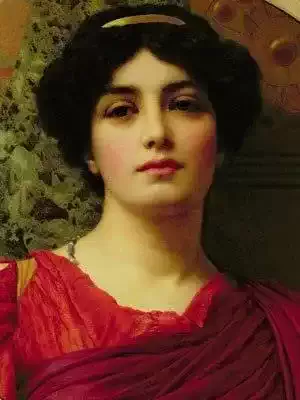
Safo
The Anactoria Poem
The Anactoria Poem
Some say thronging cavalry, some say foot soldiers,
others call a fleet the most beautiful of
sights the dark earth offers, but I say it's whatever
you love best.
And it's easy to make this understood by
everyone, for she who surpassed all human
kind in beauty, Helen, abandoning her
husband--that best of
men--went sailing off to the shores of Troy and
never spent a thought on her child or loving
parents: when the goddess seduced her wits and
left her to wander,
she forgot them all, she could not remember
anything but longing, and lightly straying
aside, lost her way. But that reminds me
now: Anactória,
she's not here, and I'd rather see her lovely
step, her sparkling glance and her face than gaze on
all the troops in Lydia in their chariots and
glittering armor.
Some say thronging cavalry, some say foot soldiers,
others call a fleet the most beautiful of
sights the dark earth offers, but I say it's whatever
you love best.
And it's easy to make this understood by
everyone, for she who surpassed all human
kind in beauty, Helen, abandoning her
husband--that best of
men--went sailing off to the shores of Troy and
never spent a thought on her child or loving
parents: when the goddess seduced her wits and
left her to wander,
she forgot them all, she could not remember
anything but longing, and lightly straying
aside, lost her way. But that reminds me
now: Anactória,
she's not here, and I'd rather see her lovely
step, her sparkling glance and her face than gaze on
all the troops in Lydia in their chariots and
glittering armor.
661
Safo
Prayer to Our Lady of Paphos
Prayer to Our Lady of Paphos
Dapple-throned Aphrodite,
eternal daughter of God,
snare-knitter! Don't, I beg you,
cow my heart with grief! Come,
as once when you heard my faroff
cry and, listening, stepped
from your father's house to your
gold car, to yoke the pair whose
beautiful thick-feathered wings
oaring down mid-air from heaven
carried you to light swiftly
on dark earth; then, blissful one,
smiling your immortal smile
you asked, What ailed me now that
me call you again? What
was it that my distracted
heart most wanted? ``Whom has
Persuasion to bring round now
``to your love? Who, Sappho, is
unfair to you? For, let her
run, she will soon run after;
``if she won't accept gifts, she
will one day give them; and if
she won't love you --- she soon will
``love, although unwillingly...''
If ever --- come now! Relieve
this intolerable pain!
What my heart most hopes will
happen, make happen; you yourself
join forces on my side!
Sappho
tr. Barnard
Dapple-throned Aphrodite,
eternal daughter of God,
snare-knitter! Don't, I beg you,
cow my heart with grief! Come,
as once when you heard my faroff
cry and, listening, stepped
from your father's house to your
gold car, to yoke the pair whose
beautiful thick-feathered wings
oaring down mid-air from heaven
carried you to light swiftly
on dark earth; then, blissful one,
smiling your immortal smile
you asked, What ailed me now that
me call you again? What
was it that my distracted
heart most wanted? ``Whom has
Persuasion to bring round now
``to your love? Who, Sappho, is
unfair to you? For, let her
run, she will soon run after;
``if she won't accept gifts, she
will one day give them; and if
she won't love you --- she soon will
``love, although unwillingly...''
If ever --- come now! Relieve
this intolerable pain!
What my heart most hopes will
happen, make happen; you yourself
join forces on my side!
Sappho
tr. Barnard
673
Safo
Prayer to Our Lady of Paphos
Prayer to Our Lady of Paphos
Dapple-throned Aphrodite,
eternal daughter of God,
snare-knitter! Don't, I beg you,
cow my heart with grief! Come,
as once when you heard my faroff
cry and, listening, stepped
from your father's house to your
gold car, to yoke the pair whose
beautiful thick-feathered wings
oaring down mid-air from heaven
carried you to light swiftly
on dark earth; then, blissful one,
smiling your immortal smile
you asked, What ailed me now that
me call you again? What
was it that my distracted
heart most wanted? ``Whom has
Persuasion to bring round now
``to your love? Who, Sappho, is
unfair to you? For, let her
run, she will soon run after;
``if she won't accept gifts, she
will one day give them; and if
she won't love you --- she soon will
``love, although unwillingly...''
If ever --- come now! Relieve
this intolerable pain!
What my heart most hopes will
happen, make happen; you yourself
join forces on my side!
Sappho
tr. Barnard
Dapple-throned Aphrodite,
eternal daughter of God,
snare-knitter! Don't, I beg you,
cow my heart with grief! Come,
as once when you heard my faroff
cry and, listening, stepped
from your father's house to your
gold car, to yoke the pair whose
beautiful thick-feathered wings
oaring down mid-air from heaven
carried you to light swiftly
on dark earth; then, blissful one,
smiling your immortal smile
you asked, What ailed me now that
me call you again? What
was it that my distracted
heart most wanted? ``Whom has
Persuasion to bring round now
``to your love? Who, Sappho, is
unfair to you? For, let her
run, she will soon run after;
``if she won't accept gifts, she
will one day give them; and if
she won't love you --- she soon will
``love, although unwillingly...''
If ever --- come now! Relieve
this intolerable pain!
What my heart most hopes will
happen, make happen; you yourself
join forces on my side!
Sappho
tr. Barnard
673
Safo
Must I remind you, Clesis,
Must I remind you, Clesis,
Must I remind you, Cleis,
that sounds of grief
are unbecmoming in
a poet's household?
and that they are not
suitable in ours?
[Note: "A poet's household" is more litterally one "dedicated to the Muses."]
Must I remind you, Cleis,
that sounds of grief
are unbecmoming in
a poet's household?
and that they are not
suitable in ours?
[Note: "A poet's household" is more litterally one "dedicated to the Muses."]
464
Safo
Ode to a Loved One
Ode to a Loved One
LEST as the immortal gods is he,
The youth who fondly sits by thee,
And hears and sees thee, all the while,
Softly speaks and sweetly smile.
'Twas this deprived my soul of rest,
And raised such tumults in my breast;
For, while I gazed, in transport tossed,
My breath was gone, my voice was lost;
My bosom glowed; the subtle flame
Ran quick through all my vital frame;
O'er my dim eyes a darkness hung;
My ears with hollow murmurs rung;
In dewy damps my limbs were chilled;
My blood with gentle horrors thrilled:
My feeble pulse forgot to play;
I fainted, sunk, and died away.
LEST as the immortal gods is he,
The youth who fondly sits by thee,
And hears and sees thee, all the while,
Softly speaks and sweetly smile.
'Twas this deprived my soul of rest,
And raised such tumults in my breast;
For, while I gazed, in transport tossed,
My breath was gone, my voice was lost;
My bosom glowed; the subtle flame
Ran quick through all my vital frame;
O'er my dim eyes a darkness hung;
My ears with hollow murmurs rung;
In dewy damps my limbs were chilled;
My blood with gentle horrors thrilled:
My feeble pulse forgot to play;
I fainted, sunk, and died away.
506
Safo
Ode to a Loved One
Ode to a Loved One
LEST as the immortal gods is he,
The youth who fondly sits by thee,
And hears and sees thee, all the while,
Softly speaks and sweetly smile.
'Twas this deprived my soul of rest,
And raised such tumults in my breast;
For, while I gazed, in transport tossed,
My breath was gone, my voice was lost;
My bosom glowed; the subtle flame
Ran quick through all my vital frame;
O'er my dim eyes a darkness hung;
My ears with hollow murmurs rung;
In dewy damps my limbs were chilled;
My blood with gentle horrors thrilled:
My feeble pulse forgot to play;
I fainted, sunk, and died away.
LEST as the immortal gods is he,
The youth who fondly sits by thee,
And hears and sees thee, all the while,
Softly speaks and sweetly smile.
'Twas this deprived my soul of rest,
And raised such tumults in my breast;
For, while I gazed, in transport tossed,
My breath was gone, my voice was lost;
My bosom glowed; the subtle flame
Ran quick through all my vital frame;
O'er my dim eyes a darkness hung;
My ears with hollow murmurs rung;
In dewy damps my limbs were chilled;
My blood with gentle horrors thrilled:
My feeble pulse forgot to play;
I fainted, sunk, and died away.
506
Safo
It's no use
It's no use
It's no use
Mother dear, I
can't finish my
weaving
You may
blame Aphrodite
soft as she is
she has almost
killed me with
love for that boy
It's no use
Mother dear, I
can't finish my
weaving
You may
blame Aphrodite
soft as she is
she has almost
killed me with
love for that boy
568
Safo
Like the gods. . .
Like the gods. . .
In my eyes he matches the gods, that man who
sits there facing you--any man whatever--
listening from closeby to the sweetness of your
voice as you talk, the
sweetness of your laughter: yes, that--I swear it--
sets the heart to shaking inside my breast, since
once I look at you for a moment, I can't
speak any longer,
but my tongue breaks down, and then all at once a
subtle fire races inside my skin, my
eyes can't see a thing and a whirring whistle
thrums at my hearing,
cold sweat covers me and a trembling takes
ahold of me all over: I'm greener than the
grass is and appear to myself to be little
short of dying.
But all must be endured, since even a poor [
In my eyes he matches the gods, that man who
sits there facing you--any man whatever--
listening from closeby to the sweetness of your
voice as you talk, the
sweetness of your laughter: yes, that--I swear it--
sets the heart to shaking inside my breast, since
once I look at you for a moment, I can't
speak any longer,
but my tongue breaks down, and then all at once a
subtle fire races inside my skin, my
eyes can't see a thing and a whirring whistle
thrums at my hearing,
cold sweat covers me and a trembling takes
ahold of me all over: I'm greener than the
grass is and appear to myself to be little
short of dying.
But all must be endured, since even a poor [
507
Safo
Like the gods. . .
Like the gods. . .
In my eyes he matches the gods, that man who
sits there facing you--any man whatever--
listening from closeby to the sweetness of your
voice as you talk, the
sweetness of your laughter: yes, that--I swear it--
sets the heart to shaking inside my breast, since
once I look at you for a moment, I can't
speak any longer,
but my tongue breaks down, and then all at once a
subtle fire races inside my skin, my
eyes can't see a thing and a whirring whistle
thrums at my hearing,
cold sweat covers me and a trembling takes
ahold of me all over: I'm greener than the
grass is and appear to myself to be little
short of dying.
But all must be endured, since even a poor [
In my eyes he matches the gods, that man who
sits there facing you--any man whatever--
listening from closeby to the sweetness of your
voice as you talk, the
sweetness of your laughter: yes, that--I swear it--
sets the heart to shaking inside my breast, since
once I look at you for a moment, I can't
speak any longer,
but my tongue breaks down, and then all at once a
subtle fire races inside my skin, my
eyes can't see a thing and a whirring whistle
thrums at my hearing,
cold sweat covers me and a trembling takes
ahold of me all over: I'm greener than the
grass is and appear to myself to be little
short of dying.
But all must be endured, since even a poor [
507
Safo
He is more than a hero
He is more than a hero
He is more than a hero
he is a god in my eyes--
the man who is allowed
to sit beside you -- he
who listens intimately
to the sweet murmur of
your voice, the enticing
laughter that makes my own
heart beat fast. If I meet
you suddenly, I can'
speak -- my tongue is broken;
a thin flame runs under
my skin; seeing nothing,
hearing only my own ears
drumming, I drip with sweat;
trembling shakes my body
and I turn paler than
dry grass. At such times
death isn't far from me
He is more than a hero
he is a god in my eyes--
the man who is allowed
to sit beside you -- he
who listens intimately
to the sweet murmur of
your voice, the enticing
laughter that makes my own
heart beat fast. If I meet
you suddenly, I can'
speak -- my tongue is broken;
a thin flame runs under
my skin; seeing nothing,
hearing only my own ears
drumming, I drip with sweat;
trembling shakes my body
and I turn paler than
dry grass. At such times
death isn't far from me
487
Safo
Blame Aphrodite
Blame Aphrodite
It's no use
Mother dear, I
can't finish my
weaving
You may
blame Aphrodite
soft as she is
she has almost
killed me with
love for that boy
Sappho
tr. Barnard
It's no use
Mother dear, I
can't finish my
weaving
You may
blame Aphrodite
soft as she is
she has almost
killed me with
love for that boy
Sappho
tr. Barnard
445
Safo
Blame Aphrodite
Blame Aphrodite
It's no use
Mother dear, I
can't finish my
weaving
You may
blame Aphrodite
soft as she is
she has almost
killed me with
love for that boy
Sappho
tr. Barnard
It's no use
Mother dear, I
can't finish my
weaving
You may
blame Aphrodite
soft as she is
she has almost
killed me with
love for that boy
Sappho
tr. Barnard
445
Safo
Anactoria
Anactoria
Yes, Atthis, you may be sure
Even in Sardis
Anactoria will think often of us
of the life we shared here, when you seemed
the Goddess incarnate
to her and your singing pleased her best
Now among Lydian women she in her
turn stands first as the redfingered
moon rising at sunset takes
precedence over stars around her;
her light spreads equally
on the salt sea and fields thick with bloom
Delicious dew pours down to freshen
roses, delicate thyme
and blossoming sweet clover; she wanders
aimlessly, thinking of gentle
Atthis, her heart hanging
heavy with longing in her little breast
She shouts aloud, Come! we know it;
thousand-eared night repeats that cry
across the sea shining between us
Sappho
tr. Barnard
Yes, Atthis, you may be sure
Even in Sardis
Anactoria will think often of us
of the life we shared here, when you seemed
the Goddess incarnate
to her and your singing pleased her best
Now among Lydian women she in her
turn stands first as the redfingered
moon rising at sunset takes
precedence over stars around her;
her light spreads equally
on the salt sea and fields thick with bloom
Delicious dew pours down to freshen
roses, delicate thyme
and blossoming sweet clover; she wanders
aimlessly, thinking of gentle
Atthis, her heart hanging
heavy with longing in her little breast
She shouts aloud, Come! we know it;
thousand-eared night repeats that cry
across the sea shining between us
Sappho
tr. Barnard
554
Safo
Anactoria
Anactoria
Yes, Atthis, you may be sure
Even in Sardis
Anactoria will think often of us
of the life we shared here, when you seemed
the Goddess incarnate
to her and your singing pleased her best
Now among Lydian women she in her
turn stands first as the redfingered
moon rising at sunset takes
precedence over stars around her;
her light spreads equally
on the salt sea and fields thick with bloom
Delicious dew pours down to freshen
roses, delicate thyme
and blossoming sweet clover; she wanders
aimlessly, thinking of gentle
Atthis, her heart hanging
heavy with longing in her little breast
She shouts aloud, Come! we know it;
thousand-eared night repeats that cry
across the sea shining between us
Sappho
tr. Barnard
Yes, Atthis, you may be sure
Even in Sardis
Anactoria will think often of us
of the life we shared here, when you seemed
the Goddess incarnate
to her and your singing pleased her best
Now among Lydian women she in her
turn stands first as the redfingered
moon rising at sunset takes
precedence over stars around her;
her light spreads equally
on the salt sea and fields thick with bloom
Delicious dew pours down to freshen
roses, delicate thyme
and blossoming sweet clover; she wanders
aimlessly, thinking of gentle
Atthis, her heart hanging
heavy with longing in her little breast
She shouts aloud, Come! we know it;
thousand-eared night repeats that cry
across the sea shining between us
Sappho
tr. Barnard
554
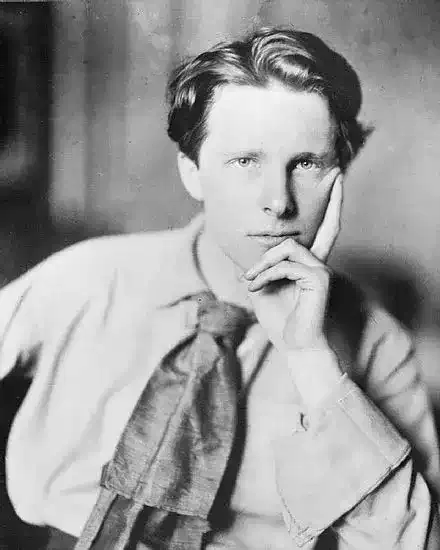
Rupert Brooke
Way That Lovers Use, The
Way That Lovers Use, The
The way that lovers use is this;
They bow, catch hands, with never a word,
And their lips meet, and they do kiss,
-- So I have heard.
They queerly find some healing so,
And strange attainment in the touch;
There is a secret lovers know,
-- I have read as much.
And theirs no longer joy nor smart,
Changing or ending, night or day;
But mouth to mouth, and heart on heart,
-- So lovers say.
The way that lovers use is this;
They bow, catch hands, with never a word,
And their lips meet, and they do kiss,
-- So I have heard.
They queerly find some healing so,
And strange attainment in the touch;
There is a secret lovers know,
-- I have read as much.
And theirs no longer joy nor smart,
Changing or ending, night or day;
But mouth to mouth, and heart on heart,
-- So lovers say.
201
Rupert Brooke
Wagner
Wagner
Creeps in half wanton, half asleep,
One with a fat wide hairless face.
He likes love-music that is cheap;
Likes women in a crowded place;
And wants to hear the noise they're making.
His heavy eyelids droop half-over,
Great pouches swing beneath his eyes.
He listens, thinks himself the lover,
Heaves from his stomach wheezy sighs;
He likes to feel his heart's a-breaking.
The music swells. His gross legs quiver.
His little lips are bright with slime.
The music swells. The women shiver.
And all the while, in perfect time,
His pendulous stomach hangs a-shaking.
Creeps in half wanton, half asleep,
One with a fat wide hairless face.
He likes love-music that is cheap;
Likes women in a crowded place;
And wants to hear the noise they're making.
His heavy eyelids droop half-over,
Great pouches swing beneath his eyes.
He listens, thinks himself the lover,
Heaves from his stomach wheezy sighs;
He likes to feel his heart's a-breaking.
The music swells. His gross legs quiver.
His little lips are bright with slime.
The music swells. The women shiver.
And all the while, in perfect time,
His pendulous stomach hangs a-shaking.
231
Rupert Brooke
V. The Soldier
V. The Soldier
If I should die, think only this of me:
That there's some corner of a foreign field
That is for ever England. There shall be
In that rich earth a richer dust concealed;
A dust whom England bore, shaped, made aware,
Gave, once, her flowers to love, her ways to roam,
A body of England's, breathing English air,
Washed by the rivers, blest by suns of home.
And think, this heart, all evil shed away,
A pulse in the eternal mind, no less
Gives somewhere back the thoughts by England given;
Her sights and sounds; dreams happy as her day;
And laughter, learnt of friends; and gentleness,
In hearts at peace, under an English heaven.
If I should die, think only this of me:
That there's some corner of a foreign field
That is for ever England. There shall be
In that rich earth a richer dust concealed;
A dust whom England bore, shaped, made aware,
Gave, once, her flowers to love, her ways to roam,
A body of England's, breathing English air,
Washed by the rivers, blest by suns of home.
And think, this heart, all evil shed away,
A pulse in the eternal mind, no less
Gives somewhere back the thoughts by England given;
Her sights and sounds; dreams happy as her day;
And laughter, learnt of friends; and gentleness,
In hearts at peace, under an English heaven.
220
Rupert Brooke
Tiare Tahiti
Tiare Tahiti
Mamua, when our laughter ends,
And hearts and bodies, brown as white,
Are dust about the doors of friends,
Or scent ablowing down the night,
Then, oh! then, the wise agree,
Comes our immortality.
Mamua, there waits a land
Hard for us to understand.
Out of time, beyond the sun,
All are one in Paradise,
You and Pupure are one,
And Tau, and the ungainly wise.
There the Eternals are, and there
The Good, the Lovely, and the True,
And Types, whose earthly copies were
The foolish broken things we knew;
There is the Face, whose ghosts we are;
The real, the never-setting Star;
And the Flower, of which we love
Faint and fading shadows here;
Never a tear, but only Grief;
Dance, but not the limbs that move;
Songs in Song shall disappear;
Instead of lovers, Love shall be;
For hearts, Immutability;
And there, on the Ideal Reef,
Thunders the Everlasting Sea!
And my laughter, and my pain,
Shall home to the Eternal Brain.
And all lovely things, they say,
Meet in Loveliness again;
Miri's laugh, Teipo's feet,
And the hands of Matua,
Stars and sunlight there shall meet,
Coral's hues and rainbows there,
And Teura's braided hair;
And with the starred `tiare's' white,
And white birds in the dark ravine,
And `flamboyants' ablaze at night,
And jewels, and evening's after-green,
And dawns of pearl and gold and red,
Mamua, your lovelier head!
And there'll no more be one who dreams
Under the ferns, of crumbling stuff,
Eyes of illusion, mouth that seems,
All time-entangled human love.
And you'll no longer swing and sway
Divinely down the scented shade,
Where feet to Ambulation fade,
And moons are lost in endless Day.
How shall we wind these wreaths of ours,
Where there are neither heads nor flowers?
Oh, Heaven's Heaven! -- but we'll be missing
The palms, and sunlight, and the south;
And there's an end, I think, of kissing,
When our mouths are one with Mouth. . . .
`Tau here', Mamua,
Crown the hair, and come away!
Hear the calling of the moon,
And the whispering scents that stray
About the idle warm lagoon.
Hasten, hand in human hand,
Down the dark, the flowered way,
Along the whiteness of the sand,
And in the water's soft caress,
Wash the mind of foolishness,
Mamua, until the day.
Spend the glittering moonlight there
Pursuing down the soundless deep
Limbs that gleam and shadowy hair,
Or floating lazy, half-asleep.
Dive and double and follow after,
Snare in flowers, and kiss, and call,
With lips that fade, and human laughter
And faces individual,
Well this side of Paradise! . . .
There's little comfort in the wise.
Papeete, February
Mamua, when our laughter ends,
And hearts and bodies, brown as white,
Are dust about the doors of friends,
Or scent ablowing down the night,
Then, oh! then, the wise agree,
Comes our immortality.
Mamua, there waits a land
Hard for us to understand.
Out of time, beyond the sun,
All are one in Paradise,
You and Pupure are one,
And Tau, and the ungainly wise.
There the Eternals are, and there
The Good, the Lovely, and the True,
And Types, whose earthly copies were
The foolish broken things we knew;
There is the Face, whose ghosts we are;
The real, the never-setting Star;
And the Flower, of which we love
Faint and fading shadows here;
Never a tear, but only Grief;
Dance, but not the limbs that move;
Songs in Song shall disappear;
Instead of lovers, Love shall be;
For hearts, Immutability;
And there, on the Ideal Reef,
Thunders the Everlasting Sea!
And my laughter, and my pain,
Shall home to the Eternal Brain.
And all lovely things, they say,
Meet in Loveliness again;
Miri's laugh, Teipo's feet,
And the hands of Matua,
Stars and sunlight there shall meet,
Coral's hues and rainbows there,
And Teura's braided hair;
And with the starred `tiare's' white,
And white birds in the dark ravine,
And `flamboyants' ablaze at night,
And jewels, and evening's after-green,
And dawns of pearl and gold and red,
Mamua, your lovelier head!
And there'll no more be one who dreams
Under the ferns, of crumbling stuff,
Eyes of illusion, mouth that seems,
All time-entangled human love.
And you'll no longer swing and sway
Divinely down the scented shade,
Where feet to Ambulation fade,
And moons are lost in endless Day.
How shall we wind these wreaths of ours,
Where there are neither heads nor flowers?
Oh, Heaven's Heaven! -- but we'll be missing
The palms, and sunlight, and the south;
And there's an end, I think, of kissing,
When our mouths are one with Mouth. . . .
`Tau here', Mamua,
Crown the hair, and come away!
Hear the calling of the moon,
And the whispering scents that stray
About the idle warm lagoon.
Hasten, hand in human hand,
Down the dark, the flowered way,
Along the whiteness of the sand,
And in the water's soft caress,
Wash the mind of foolishness,
Mamua, until the day.
Spend the glittering moonlight there
Pursuing down the soundless deep
Limbs that gleam and shadowy hair,
Or floating lazy, half-asleep.
Dive and double and follow after,
Snare in flowers, and kiss, and call,
With lips that fade, and human laughter
And faces individual,
Well this side of Paradise! . . .
There's little comfort in the wise.
Papeete, February
235
Rupert Brooke
Tiare Tahiti
Tiare Tahiti
Mamua, when our laughter ends,
And hearts and bodies, brown as white,
Are dust about the doors of friends,
Or scent ablowing down the night,
Then, oh! then, the wise agree,
Comes our immortality.
Mamua, there waits a land
Hard for us to understand.
Out of time, beyond the sun,
All are one in Paradise,
You and Pupure are one,
And Tau, and the ungainly wise.
There the Eternals are, and there
The Good, the Lovely, and the True,
And Types, whose earthly copies were
The foolish broken things we knew;
There is the Face, whose ghosts we are;
The real, the never-setting Star;
And the Flower, of which we love
Faint and fading shadows here;
Never a tear, but only Grief;
Dance, but not the limbs that move;
Songs in Song shall disappear;
Instead of lovers, Love shall be;
For hearts, Immutability;
And there, on the Ideal Reef,
Thunders the Everlasting Sea!
And my laughter, and my pain,
Shall home to the Eternal Brain.
And all lovely things, they say,
Meet in Loveliness again;
Miri's laugh, Teipo's feet,
And the hands of Matua,
Stars and sunlight there shall meet,
Coral's hues and rainbows there,
And Teura's braided hair;
And with the starred `tiare's' white,
And white birds in the dark ravine,
And `flamboyants' ablaze at night,
And jewels, and evening's after-green,
And dawns of pearl and gold and red,
Mamua, your lovelier head!
And there'll no more be one who dreams
Under the ferns, of crumbling stuff,
Eyes of illusion, mouth that seems,
All time-entangled human love.
And you'll no longer swing and sway
Divinely down the scented shade,
Where feet to Ambulation fade,
And moons are lost in endless Day.
How shall we wind these wreaths of ours,
Where there are neither heads nor flowers?
Oh, Heaven's Heaven! -- but we'll be missing
The palms, and sunlight, and the south;
And there's an end, I think, of kissing,
When our mouths are one with Mouth. . . .
`Tau here', Mamua,
Crown the hair, and come away!
Hear the calling of the moon,
And the whispering scents that stray
About the idle warm lagoon.
Hasten, hand in human hand,
Down the dark, the flowered way,
Along the whiteness of the sand,
And in the water's soft caress,
Wash the mind of foolishness,
Mamua, until the day.
Spend the glittering moonlight there
Pursuing down the soundless deep
Limbs that gleam and shadowy hair,
Or floating lazy, half-asleep.
Dive and double and follow after,
Snare in flowers, and kiss, and call,
With lips that fade, and human laughter
And faces individual,
Well this side of Paradise! . . .
There's little comfort in the wise.
Papeete, February
Mamua, when our laughter ends,
And hearts and bodies, brown as white,
Are dust about the doors of friends,
Or scent ablowing down the night,
Then, oh! then, the wise agree,
Comes our immortality.
Mamua, there waits a land
Hard for us to understand.
Out of time, beyond the sun,
All are one in Paradise,
You and Pupure are one,
And Tau, and the ungainly wise.
There the Eternals are, and there
The Good, the Lovely, and the True,
And Types, whose earthly copies were
The foolish broken things we knew;
There is the Face, whose ghosts we are;
The real, the never-setting Star;
And the Flower, of which we love
Faint and fading shadows here;
Never a tear, but only Grief;
Dance, but not the limbs that move;
Songs in Song shall disappear;
Instead of lovers, Love shall be;
For hearts, Immutability;
And there, on the Ideal Reef,
Thunders the Everlasting Sea!
And my laughter, and my pain,
Shall home to the Eternal Brain.
And all lovely things, they say,
Meet in Loveliness again;
Miri's laugh, Teipo's feet,
And the hands of Matua,
Stars and sunlight there shall meet,
Coral's hues and rainbows there,
And Teura's braided hair;
And with the starred `tiare's' white,
And white birds in the dark ravine,
And `flamboyants' ablaze at night,
And jewels, and evening's after-green,
And dawns of pearl and gold and red,
Mamua, your lovelier head!
And there'll no more be one who dreams
Under the ferns, of crumbling stuff,
Eyes of illusion, mouth that seems,
All time-entangled human love.
And you'll no longer swing and sway
Divinely down the scented shade,
Where feet to Ambulation fade,
And moons are lost in endless Day.
How shall we wind these wreaths of ours,
Where there are neither heads nor flowers?
Oh, Heaven's Heaven! -- but we'll be missing
The palms, and sunlight, and the south;
And there's an end, I think, of kissing,
When our mouths are one with Mouth. . . .
`Tau here', Mamua,
Crown the hair, and come away!
Hear the calling of the moon,
And the whispering scents that stray
About the idle warm lagoon.
Hasten, hand in human hand,
Down the dark, the flowered way,
Along the whiteness of the sand,
And in the water's soft caress,
Wash the mind of foolishness,
Mamua, until the day.
Spend the glittering moonlight there
Pursuing down the soundless deep
Limbs that gleam and shadowy hair,
Or floating lazy, half-asleep.
Dive and double and follow after,
Snare in flowers, and kiss, and call,
With lips that fade, and human laughter
And faces individual,
Well this side of Paradise! . . .
There's little comfort in the wise.
Papeete, February
235
Rupert Brooke
The Way That Lovers Use
The Way That Lovers Use
The Way that lovers use is this;
They bow, catch hands, with never a word,
And their lips meet, and they do kiss,
—So I have heard.
They queerly find some healing so,
And strange attainment in the touch;
There is a secret lovers know,
—I have read as much.
And theirs no longer joy nor smart,
Changing or ending, night or day;
But mouth to mouth, and heart on heart,
—So lovers say.
The Way that lovers use is this;
They bow, catch hands, with never a word,
And their lips meet, and they do kiss,
—So I have heard.
They queerly find some healing so,
And strange attainment in the touch;
There is a secret lovers know,
—I have read as much.
And theirs no longer joy nor smart,
Changing or ending, night or day;
But mouth to mouth, and heart on heart,
—So lovers say.
205
Rupert Brooke
The Song of the Pilgrims
The Song of the Pilgrims
(Halted around the fire by night, after moon-set, they sing this beneath the
trees.)
What light of unremembered skies
Hast thou relumed within our eyes,
Thou whom we seek, whom we shall find?…
A certain odour on the wind,
Thy hidden face beyond the west,
These things have called us; on a quest
Older than any road we trod,
More endless than desire.…
Far God,
Sigh with thy cruel voice, that fills
The soul with longing for dim hills
And faint horizons! For there come
Grey moments of the antient dumb
Sickness of travel, when no song
Can cheer us; but the way seems long;
And one remembers.…
Ah! the beat
Of weary unreturning feet,
And songs of pilgrims unreturning!…
The fires we left are always burning
On the old shrines of home. Our kin
Have built them temples, and therein
Pray to the Gods we know; and dwell
In little houses lovable,
Being happy (we remember how!)
And peaceful even to death...
O Thou,
God of all long desirous roaming,
Our hearts are sick of fruitless homing,
And crying after lost desire.
Hearten us onward! as with fire
Consuming dreams of other bliss.
The best Thou givest, giving this
Sufficient thing—to travel still
Over the plain, beyond the hill,
Unhesitating through the shade,
Amid the silence unafraid,
Till, at some sudden turn, one sees
Against the black and muttering trees
Thine altar, wonderfully white,
Among the Forests of the Night.
(Halted around the fire by night, after moon-set, they sing this beneath the
trees.)
What light of unremembered skies
Hast thou relumed within our eyes,
Thou whom we seek, whom we shall find?…
A certain odour on the wind,
Thy hidden face beyond the west,
These things have called us; on a quest
Older than any road we trod,
More endless than desire.…
Far God,
Sigh with thy cruel voice, that fills
The soul with longing for dim hills
And faint horizons! For there come
Grey moments of the antient dumb
Sickness of travel, when no song
Can cheer us; but the way seems long;
And one remembers.…
Ah! the beat
Of weary unreturning feet,
And songs of pilgrims unreturning!…
The fires we left are always burning
On the old shrines of home. Our kin
Have built them temples, and therein
Pray to the Gods we know; and dwell
In little houses lovable,
Being happy (we remember how!)
And peaceful even to death...
O Thou,
God of all long desirous roaming,
Our hearts are sick of fruitless homing,
And crying after lost desire.
Hearten us onward! as with fire
Consuming dreams of other bliss.
The best Thou givest, giving this
Sufficient thing—to travel still
Over the plain, beyond the hill,
Unhesitating through the shade,
Amid the silence unafraid,
Till, at some sudden turn, one sees
Against the black and muttering trees
Thine altar, wonderfully white,
Among the Forests of the Night.
214
Rupert Brooke
The Old Vicarage, Grantchester
The Old Vicarage, Grantchester
Just now the lilac is in bloom,
All before my little room;
And in my flower-beds, I think,
Smile the carnation and the pink;
And down the borders, well I know,
The poppy and the pansy blow . . .
Oh! there the chestnuts, summer through,
Beside the river make for you
A tunnel of green gloom, and sleep
Deeply above; and green and deep
The stream mysterious glides beneath,
Green as a dream and deep as death.
-- Oh, damn! I know it! and I know
How the May fields all golden show,
And when the day is young and sweet,
Gild gloriously the bare feet
That run to bathe . . .
`Du lieber Gott!'
Here am I, sweating, sick, and hot,
And there the shadowed waters fresh
Lean up to embrace the naked flesh.
Temperamentvoll German Jews
Drink beer around; -- and THERE the dews
Are soft beneath a morn of gold.
Here tulips bloom as they are told;
Unkempt about those hedges blows
An English unofficial rose;
And there the unregulated sun
Slopes down to rest when day is done,
And wakes a vague unpunctual star,
A slippered Hesper; and there are
Meads towards Haslingfield and Coton
Where das Betreten's not verboten.
ei'qe genoi mhn . . . would I were
In Grantchester, in Grantchester! --
Some, it may be, can get in touch
With Nature there, or Earth, or such.
And clever modern men have seen
A Faun a-peeping through the green,
And felt the Classics were not dead,
To glimpse a Naiad's reedy head,
Or hear the Goat-foot piping low: . . .
But these are things I do not know.
I only know that you may lie
Day long and watch the Cambridge sky,
And, flower-lulled in sleepy grass,
Hear the cool lapse of hours pass,
Until the centuries blend and blur
In Grantchester, in Grantchester. . . .
Still in the dawnlit waters cool
His ghostly Lordship swims his pool,
And tries the strokes, essays the tricks,
Long learnt on Hellespont, or Styx.
Dan Chaucer hears his river still
Chatter beneath a phantom mill.
Tennyson notes, with studious eye,
How Cambridge waters hurry by . . .
And in that garden, black and white,
Creep whispers through the grass all night;
And spectral dance, before the dawn,
A hundred Vicars down the lawn;
Curates, long dust, will come and go
On lissom, clerical, printless toe;
And oft between the boughs is seen
The sly shade of a Rural Dean . . .
Till, at a shiver in the skies,
Vanishing with Satanic cries,
The prim ecclesiastic rout
Leaves but a startled sleeper-out,
Grey heavens, the first bird's drowsy calls,
The falling house that never falls.
epsilon-iota'-theta-epsilon gamma-epsilon-nu-omicron-iota -mu-eta-nu
God! I will pack, and take a train,
And get me to England once again!
For England's the one land, I know,
Where men with Splendid Hearts may go;
And Cambridgeshire, of all England,
The shire for Men who Understand;
And of THAT district I prefer
The lovely hamlet Grantchester.
For Cambridge people rarely smile,
Being urban, squat, and packed with guile;
And Royston men in the far South
Are black and fierce and strange of mouth;
At Over they fling oaths at one,
And worse than oaths at Trumpington,
And Ditton girls are mean and dirty,
And there's none in Harston under thirty,
And folks in Shelford and those parts
Have twisted lips and twisted hearts,
And Barton men make Cockney rhymes,
And Coton's full of nameless crimes,
And things are done you'd not believe
At Madingley on Christmas Eve.
Strong men have run for miles and miles,
When one from Cherry Hinton smiles;
Strong men have blanched, and shot their wives,
Rather than send them to St. Ives;
Strong men have cried like babes, bydam,
To hear what happened at Babraham.
But Grantchester! ah, Grantchester!
There's peace and holy quiet there,
Great clouds along pacific skies,
And men and women with straight eyes,
Lithe children lovelier than a dream,
A bosky wood, a slumbrous stream,
And little kindly winds that creep
Round twilight corners, half asleep.
In Grantchester their skins are white;
They bathe by day, they bathe by night;
The women there do all they ought;
The men observe the Rules of Thought.
They love the Good; they worship Truth;
They laugh uproariously in youth;
(And when they get to feeling old,
They up and shoot themselves, I'm told) . . .
Ah God! to see the branches stir
Across the moon at Grantchester!
To smell the thrilling-sweet and rotten
Unforgettable, unforgotten
River-smell, and hear the breeze
Sobbing in the little trees.
Say, do the elm-clumps greatly stand
Still guardians of that holy land?
The chestnuts shade, in reverend dream,
The yet unacademic stream?
Is dawn a secret shy and cold
Anadyomene, silver-gold?
And sunset still a golden sea
From Haslingfield to Madingley?
And after, ere the night is born,
Do hares come out about the corn?
Oh, is the water sweet and cool,
Gentle and brown, above the pool?
And laughs the immortal river still
Under the mill, under the mill?
Say, is there Beauty yet to find?
And Certainty? and Quiet kind?
Deep meadows yet, for to forget
The lies, and truths, and pain? . . . oh! yet
Stands the Church clock at ten to three?
And is there honey still for tea?
Just now the lilac is in bloom,
All before my little room;
And in my flower-beds, I think,
Smile the carnation and the pink;
And down the borders, well I know,
The poppy and the pansy blow . . .
Oh! there the chestnuts, summer through,
Beside the river make for you
A tunnel of green gloom, and sleep
Deeply above; and green and deep
The stream mysterious glides beneath,
Green as a dream and deep as death.
-- Oh, damn! I know it! and I know
How the May fields all golden show,
And when the day is young and sweet,
Gild gloriously the bare feet
That run to bathe . . .
`Du lieber Gott!'
Here am I, sweating, sick, and hot,
And there the shadowed waters fresh
Lean up to embrace the naked flesh.
Temperamentvoll German Jews
Drink beer around; -- and THERE the dews
Are soft beneath a morn of gold.
Here tulips bloom as they are told;
Unkempt about those hedges blows
An English unofficial rose;
And there the unregulated sun
Slopes down to rest when day is done,
And wakes a vague unpunctual star,
A slippered Hesper; and there are
Meads towards Haslingfield and Coton
Where das Betreten's not verboten.
ei'qe genoi mhn . . . would I were
In Grantchester, in Grantchester! --
Some, it may be, can get in touch
With Nature there, or Earth, or such.
And clever modern men have seen
A Faun a-peeping through the green,
And felt the Classics were not dead,
To glimpse a Naiad's reedy head,
Or hear the Goat-foot piping low: . . .
But these are things I do not know.
I only know that you may lie
Day long and watch the Cambridge sky,
And, flower-lulled in sleepy grass,
Hear the cool lapse of hours pass,
Until the centuries blend and blur
In Grantchester, in Grantchester. . . .
Still in the dawnlit waters cool
His ghostly Lordship swims his pool,
And tries the strokes, essays the tricks,
Long learnt on Hellespont, or Styx.
Dan Chaucer hears his river still
Chatter beneath a phantom mill.
Tennyson notes, with studious eye,
How Cambridge waters hurry by . . .
And in that garden, black and white,
Creep whispers through the grass all night;
And spectral dance, before the dawn,
A hundred Vicars down the lawn;
Curates, long dust, will come and go
On lissom, clerical, printless toe;
And oft between the boughs is seen
The sly shade of a Rural Dean . . .
Till, at a shiver in the skies,
Vanishing with Satanic cries,
The prim ecclesiastic rout
Leaves but a startled sleeper-out,
Grey heavens, the first bird's drowsy calls,
The falling house that never falls.
epsilon-iota'-theta-epsilon gamma-epsilon-nu-omicron-iota -mu-eta-nu
God! I will pack, and take a train,
And get me to England once again!
For England's the one land, I know,
Where men with Splendid Hearts may go;
And Cambridgeshire, of all England,
The shire for Men who Understand;
And of THAT district I prefer
The lovely hamlet Grantchester.
For Cambridge people rarely smile,
Being urban, squat, and packed with guile;
And Royston men in the far South
Are black and fierce and strange of mouth;
At Over they fling oaths at one,
And worse than oaths at Trumpington,
And Ditton girls are mean and dirty,
And there's none in Harston under thirty,
And folks in Shelford and those parts
Have twisted lips and twisted hearts,
And Barton men make Cockney rhymes,
And Coton's full of nameless crimes,
And things are done you'd not believe
At Madingley on Christmas Eve.
Strong men have run for miles and miles,
When one from Cherry Hinton smiles;
Strong men have blanched, and shot their wives,
Rather than send them to St. Ives;
Strong men have cried like babes, bydam,
To hear what happened at Babraham.
But Grantchester! ah, Grantchester!
There's peace and holy quiet there,
Great clouds along pacific skies,
And men and women with straight eyes,
Lithe children lovelier than a dream,
A bosky wood, a slumbrous stream,
And little kindly winds that creep
Round twilight corners, half asleep.
In Grantchester their skins are white;
They bathe by day, they bathe by night;
The women there do all they ought;
The men observe the Rules of Thought.
They love the Good; they worship Truth;
They laugh uproariously in youth;
(And when they get to feeling old,
They up and shoot themselves, I'm told) . . .
Ah God! to see the branches stir
Across the moon at Grantchester!
To smell the thrilling-sweet and rotten
Unforgettable, unforgotten
River-smell, and hear the breeze
Sobbing in the little trees.
Say, do the elm-clumps greatly stand
Still guardians of that holy land?
The chestnuts shade, in reverend dream,
The yet unacademic stream?
Is dawn a secret shy and cold
Anadyomene, silver-gold?
And sunset still a golden sea
From Haslingfield to Madingley?
And after, ere the night is born,
Do hares come out about the corn?
Oh, is the water sweet and cool,
Gentle and brown, above the pool?
And laughs the immortal river still
Under the mill, under the mill?
Say, is there Beauty yet to find?
And Certainty? and Quiet kind?
Deep meadows yet, for to forget
The lies, and truths, and pain? . . . oh! yet
Stands the Church clock at ten to three?
And is there honey still for tea?
235
Rupert Brooke
The Life Beyond
The Life Beyond
He wakes, who never thought to wake again,
Who held the end was Death. He opens eyes
Slowly, to one long livid oozing plain
Closed down by the strange eyeless heavens.
He lies;
And waits; and once in timeless sick surmise
Through the dead air heaves up an unknown hand,
Like a dry branch. No life is in that land,
Himself not lives, but is a thing that cries;
An unmeaning point upon the mud; a speck
Of moveless horror; an Immortal One
Cleansed of the world, sentient and dead; a fly
Fast-stuck in grey sweat on a corpse’s neck.
I though when love for you died, I should die.
It’s dead. Alone, most strangely, I live on.
He wakes, who never thought to wake again,
Who held the end was Death. He opens eyes
Slowly, to one long livid oozing plain
Closed down by the strange eyeless heavens.
He lies;
And waits; and once in timeless sick surmise
Through the dead air heaves up an unknown hand,
Like a dry branch. No life is in that land,
Himself not lives, but is a thing that cries;
An unmeaning point upon the mud; a speck
Of moveless horror; an Immortal One
Cleansed of the world, sentient and dead; a fly
Fast-stuck in grey sweat on a corpse’s neck.
I though when love for you died, I should die.
It’s dead. Alone, most strangely, I live on.
205
Rupert Brooke
The Dead
The Dead
Blow out, you bugles, over the rich Dead!
There's none of these so lonely and poor of old,
But, dying, has made us rarer gifts than gold.
These laid the world away; poured out the red
Sweet wine of youth; gave up the years to be
Of work and joy, and that unhoped serene,
That men call age; and those who would have been,
Their sons, they gave, their immortality.
Blow, bugles, blow! They brought us, for our dearth,
Holiness, lacked so long, and Love, and Pain.
Honour has come back, as a king, to earth,
And paid his subjects with a royal wage;
And Nobleness walks in our ways again;
And we have come into our heritage.
Blow out, you bugles, over the rich Dead!
There's none of these so lonely and poor of old,
But, dying, has made us rarer gifts than gold.
These laid the world away; poured out the red
Sweet wine of youth; gave up the years to be
Of work and joy, and that unhoped serene,
That men call age; and those who would have been,
Their sons, they gave, their immortality.
Blow, bugles, blow! They brought us, for our dearth,
Holiness, lacked so long, and Love, and Pain.
Honour has come back, as a king, to earth,
And paid his subjects with a royal wage;
And Nobleness walks in our ways again;
And we have come into our heritage.
197