

Poems in this topic
Emotions and Feelings
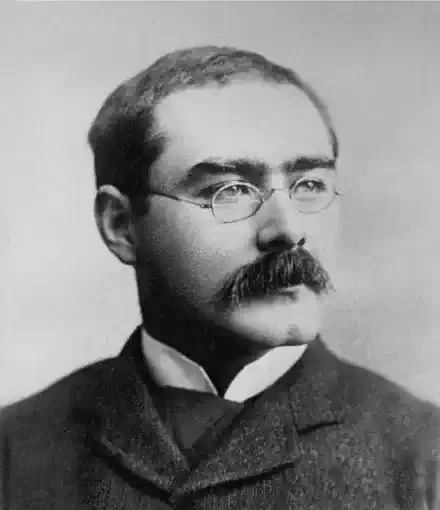
Rudyard Kipling
The Second Voyage
The Second Voyage
We've sent our little Cupids all ashore --
They were frightened, they were tired, they were cold:
Our sails of silk and purple go to store,
And we've cut away our mast of beaten gold
(Foul weather!)
Oh 'tis hemp and singing pine for to stand against the brine,
But Love he is our master as of old!
The sea has shorn our galleries away,
The salt has soiled our gilding past remede;
Our paint is flaked and blistered by the spray,
Our sides are half a fathom furred in weed
(Foul weather!)
And the Doves of Venus fled and the petrels came instead,
But Love he was our master at our need!
'Was Youth would keep no vigil at the bow,
'Was Pleasure at the helm too drunk to steer --
We've shipped three able quartermasters now.
Men call them Custom, Reverence, and Fear
(Foul weather!)
They are old and scarred and plain, but we'll run no risk again
From any Port o' Paphos mutineer!
We seek no more the tempest for delight,
We skirt no more the indraught and the shoal --
We ask no more of any day or night
Than to come with least adventure to our goal
(Foul weather!)
What we find we needs must brook, but we do not go to look,
Nor tempt the Lord our God that saved us whole.
Yet, caring so, not overmuch we care
To brace and trim for every foolish blast,
If the squall be pleased to seep us unaware,
He may bellow off to leeward like the last
(Foul weather!)
We will blame it on the deep (for the watch must have their sleep),
And Love can come and wake us when 'tis past.
Oh launch them down with music from the beach,
Oh warp them out with garlands from the quays --
Most resolute -- a damsel unto each --
New prows that seek the old Hesperides!
(Foul weather!)
Though we know their voyage is vain, yet we see our path again
In the saffroned bridesails scenting all the seas!
(Foul weather!)
We've sent our little Cupids all ashore --
They were frightened, they were tired, they were cold:
Our sails of silk and purple go to store,
And we've cut away our mast of beaten gold
(Foul weather!)
Oh 'tis hemp and singing pine for to stand against the brine,
But Love he is our master as of old!
The sea has shorn our galleries away,
The salt has soiled our gilding past remede;
Our paint is flaked and blistered by the spray,
Our sides are half a fathom furred in weed
(Foul weather!)
And the Doves of Venus fled and the petrels came instead,
But Love he was our master at our need!
'Was Youth would keep no vigil at the bow,
'Was Pleasure at the helm too drunk to steer --
We've shipped three able quartermasters now.
Men call them Custom, Reverence, and Fear
(Foul weather!)
They are old and scarred and plain, but we'll run no risk again
From any Port o' Paphos mutineer!
We seek no more the tempest for delight,
We skirt no more the indraught and the shoal --
We ask no more of any day or night
Than to come with least adventure to our goal
(Foul weather!)
What we find we needs must brook, but we do not go to look,
Nor tempt the Lord our God that saved us whole.
Yet, caring so, not overmuch we care
To brace and trim for every foolish blast,
If the squall be pleased to seep us unaware,
He may bellow off to leeward like the last
(Foul weather!)
We will blame it on the deep (for the watch must have their sleep),
And Love can come and wake us when 'tis past.
Oh launch them down with music from the beach,
Oh warp them out with garlands from the quays --
Most resolute -- a damsel unto each --
New prows that seek the old Hesperides!
(Foul weather!)
Though we know their voyage is vain, yet we see our path again
In the saffroned bridesails scenting all the seas!
(Foul weather!)
460
Rudyard Kipling
The Rupaiyat of Omar Kal'vin
The Rupaiyat of Omar Kal'vin
Allowing for the difference 'twixt prose and rhymed exaggeration, this ought to
reproduce the sense of what Sir A-- told the nation sometime ago, when the
Government struck from our incomes two per cent.
Now the New Year, reviving last Year's Debt,
The Thoughtful Fisher casteth wide his Net;
So I with begging Dish and ready Tongue
Assail all Men for all that I can get.
Imports indeed are gone with all their Dues --
Lo! Salt a Lever that I dare not use,
Nor may I ask the Tillers in Bengal --
Surely my Kith and Kin will not refuse!
Pay -- and I promise by the Dust of Spring,
Retrenchment. If my promises can bring
Comfort, Ye have Them now a thousandfold --
By Allah! I will promise Anything!
Indeed, indeed, Retrenchment oft before
I swore -- but did I mean it when I swore?
And then, and then, We wandered to the Hills,
And so the Little Less became Much More.
Whether a Boileaugunge or Babylon,
I know not how the wretched Thing is done,
The Items of Receipt grow surely small;
The Items of Expense mount one by one.
I cannot help it. What have I to do
With One and Five, or Four, or Three, or Two?
Let Scribes spit Blood and Sulphur as they please,
Or Statesmen call me foolish -- Heed not you.
Behold, I promise -- Anything You will.
Behold, I greet you with an empty Till --
Ah! Fellow-Sinners, of your Charity
Seek not the Reason of the Dearth, but fill.
For if I sinned and fell, where lies the Gain
Of Knowledge? Would it ease you of your Pain
To know the tangled Threads of Revenue,
I ravel deeper in a hopeless Skein?
"Who hath not Prudence" -- what was it I said,
Of Her who paints her Eyes and tires Her Head,
And gibes and mocks and People in the Street,
And fawns upon them for Her thriftless Bread?
Accursed is She of Eve's daughters -- She
Hath cast off Prudence, and Her End shall be
Destruction . . . Brethren, of your Bounty
Some portion of your daily Bread to Me.
Allowing for the difference 'twixt prose and rhymed exaggeration, this ought to
reproduce the sense of what Sir A-- told the nation sometime ago, when the
Government struck from our incomes two per cent.
Now the New Year, reviving last Year's Debt,
The Thoughtful Fisher casteth wide his Net;
So I with begging Dish and ready Tongue
Assail all Men for all that I can get.
Imports indeed are gone with all their Dues --
Lo! Salt a Lever that I dare not use,
Nor may I ask the Tillers in Bengal --
Surely my Kith and Kin will not refuse!
Pay -- and I promise by the Dust of Spring,
Retrenchment. If my promises can bring
Comfort, Ye have Them now a thousandfold --
By Allah! I will promise Anything!
Indeed, indeed, Retrenchment oft before
I swore -- but did I mean it when I swore?
And then, and then, We wandered to the Hills,
And so the Little Less became Much More.
Whether a Boileaugunge or Babylon,
I know not how the wretched Thing is done,
The Items of Receipt grow surely small;
The Items of Expense mount one by one.
I cannot help it. What have I to do
With One and Five, or Four, or Three, or Two?
Let Scribes spit Blood and Sulphur as they please,
Or Statesmen call me foolish -- Heed not you.
Behold, I promise -- Anything You will.
Behold, I greet you with an empty Till --
Ah! Fellow-Sinners, of your Charity
Seek not the Reason of the Dearth, but fill.
For if I sinned and fell, where lies the Gain
Of Knowledge? Would it ease you of your Pain
To know the tangled Threads of Revenue,
I ravel deeper in a hopeless Skein?
"Who hath not Prudence" -- what was it I said,
Of Her who paints her Eyes and tires Her Head,
And gibes and mocks and People in the Street,
And fawns upon them for Her thriftless Bread?
Accursed is She of Eve's daughters -- She
Hath cast off Prudence, and Her End shall be
Destruction . . . Brethren, of your Bounty
Some portion of your daily Bread to Me.
454
Rudyard Kipling
The Rout of the White Hussars
The Rout of the White Hussars
It was not in the open fight
We threw away the sword,
But in the lonely watching
In the darkness by the ford.
The waters lapped, the night-wind blew,
Full-armed the Fear was born and grew,
And we were flying ere we knew
From panic in the night.
It was not in the open fight
We threw away the sword,
But in the lonely watching
In the darkness by the ford.
The waters lapped, the night-wind blew,
Full-armed the Fear was born and grew,
And we were flying ere we knew
From panic in the night.
438
Rudyard Kipling
The Rout of the White Hussars
The Rout of the White Hussars
It was not in the open fight
We threw away the sword,
But in the lonely watching
In the darkness by the ford.
The waters lapped, the night-wind blew,
Full-armed the Fear was born and grew,
And we were flying ere we knew
From panic in the night.
It was not in the open fight
We threw away the sword,
But in the lonely watching
In the darkness by the ford.
The waters lapped, the night-wind blew,
Full-armed the Fear was born and grew,
And we were flying ere we knew
From panic in the night.
438
Rudyard Kipling
The Rhyme Of The Three Captains
The Rhyme Of The Three Captains
. . . At the close of a winter day,
Their anchors down, by London town, the Three Great Captains lay;
And one was Admiral of the North from Solway Firth to Skye,
And one was Lord of the Wessex coast and all the lands thereby,
And one was Master of the Thames from Limehouse to Blackwall,
And he was Captain of the Fleet -- the bravest of them all.
Their good guns guarded their great gray sides
that were thirty foot in the sheer,
When there came a certain trading-brig with news of a privateer.
Her rigging was rough with the clotted drift that drives in a Northern breeze,
Her sides were clogged with the lazy weed that spawns in the Eastern seas.
Light she rode in the rude tide-rip, to left and right she rolled,
And the skipper sat on the scuttle-butt and stared at an empty hold.
"I ha' paid Port dues for your Law," quoth he, "and where is the Law ye boast
If I sail unscathed from a heathen port to be robbed on a Christian coast?
Ye have smoked the hives of the Laccadives as we burn the lice in a bunk,
We tack not now to a Gallang prow or a plunging Pei-ho junk;
I had no fear but the seas were clear as far as a sail might fare
Till I met with a lime-washed Yankee brig that rode off Finisterre.
There were canvas blinds to his bow-gun ports to screen the weight he bore,
And the signals ran for a merchantman from Sandy Hook to the Nore.
He would not fly the Rovers' flag -- the bloody or the black,
But now he floated the Gridiron and now he flaunted the Jack.
He spoke of the Law as he crimped my crew -- he swore it was only a loan;
But when I would ask for my own again, he swore it was none of my own.
He has taken my little parrakeets that nest beneath the Line,
He has stripped my rails of the shaddock-frails and the green unripened pine;
He has taken my bale of dammer and spice I won beyond the seas,
He has taken my grinning heathen gods -- and what should he want o' these?
My foremast would not mend his boom, my deckhouse patch his boats;
He has whittled the two, this Yank Yahoo, to peddle for shoe-peg oats.
I could not fight for the failing light and a rough beam-sea beside,
But I hulled him once for a clumsy crimp and twice because he lied.
Had I had guns (as I had goods) to work my Christian harm,
I had run him up from his quarter-deck to trade with his own yard-arm;
I had nailed his ears to my capstan-head, and ripped them off with a saw,
And soused them in the bilgewater, and served them to him raw;
I had flung him blind in a rudderless boat to rot in the rocking dark,
I had towed him aft of his own craft, a bait for his brother shark;
I had lapped him round with cocoa husk, and drenched him with the oil,
And lashed him fast to his own mast to blaze above my spoil;
I had stripped his hide for my hammock-side,
and tasselled his beard i' the mesh,
And spitted his crew on the live bamboo
that grows through the gangrened flesh;
I had hove him down by the mangroves brown,
where the mud-reef sucks and draws,
Moored by the heel to his own keel to wait for the land-crab's claws!
He is lazar within and lime without, ye can nose him far enow,
For he carries the taint of a musky ship -- the reek of the slaver's dhow!"
The skipper looked at the tiering guns and the bulwarks tall and cold,
And the Captains Three full courteously peered down at the gutted hold,
And the Captains Three called courteously from deck to scuttle-butt: --
"Good Sir, we ha' dealt with that merchantman or ever your teeth were cut.
Your words be words of a lawless race, and the Law it standeth thus:
He comes of a race that have never a Law, and he never has boarded us.
We ha' sold him canvas and rope and spar -- we know that his price is fair,
And we know that he weeps for the lack of a Law as he rides off Finisterre.
And since he is damned for a gallows-thief by you and better than you,
We hold it meet that the English fleet should know that we hold him true."
The skipper called to the tall taffrail: -- "And what is that to me?
Did ever you hear of a Yankee brig that rifled a Seventy-three?
Do I loom so large from your quarter-deck that I lift like a ship o' the Line?
He has learned to run from a shotted gun and harry such craft as mine.
There is never a Law on the Cocos Keys to hold a white man in,
But we do not steal the niggers' meal, for that is a nigger's sin.
Must he have his Law as a quid to chaw, or laid in brass on his wheel?
Does he steal with tears when he buccaneers?
'Fore Gad, then, why does he steal?"
The skipper bit on a deep-sea word, and the word it was not sweet,
For he could see the Captains Three had signalled to the Fleet.
But three and two, in white and blue, the whimpering flags began: --
"We have heard a tale of a -- foreign sail, but he is a merchantman."
The skipper peered beneath his palm and swore by the Great Horn Spoon: --
"'Fore Gad, the Chaplain of the Fleet would bless my picaroon!"
By two and three the flags blew free to lash the laughing air: --
"We have sold our spars to the merchantman -- we know that his price is fair."
The skipper winked his Western eye, and swore by a China storm: --
"They ha' rigged him a Joseph's jury-coat to keep his honour warm."
The halliards twanged against the tops, the bunting bellied broad,
The skipper spat in the empty hold and mourned for a wasted cord.
Masthead -- masthead, the signal sped by the line o' the British craft;
The skipper called to his Lascar crew, and put her about and laughed: --
"It's mainsail haul, my bully boys all -- we'll out to the seas again --
Ere they set us to paint their pirate saint, or scrub at his grapnel-chain.
It's fore-sheet free, with her head to the sea,
and the swing of the unbought brine --
We'll make no sport in an English court till we come as a ship o' the Line:
Till we come as a ship o' the Line, my lads, of thirty foot in the sheer,
Lifting again from the outer main with news of a privateer;
Flying his pluck at our mizzen-truck for weft of Admiralty,
Heaving his head for our dipsey-lead in sign that we keep the sea.
Then fore-sheet home as she lifts to the foam -- we stand on the outward tack,
We are paid in the coin of the white man's trade --
the bezant is hard, ay, and black.
The frigate-bird shall carry my word to the Kling and the Orang-Laut
How a man may sail from a heathen coast to be robbed in a Christian port;
How a man may be robbed in Christian port while Three Great Captains there
Shall dip their flag to a slaver's rag -- to show that his trade is fair!"
. . . At the close of a winter day,
Their anchors down, by London town, the Three Great Captains lay;
And one was Admiral of the North from Solway Firth to Skye,
And one was Lord of the Wessex coast and all the lands thereby,
And one was Master of the Thames from Limehouse to Blackwall,
And he was Captain of the Fleet -- the bravest of them all.
Their good guns guarded their great gray sides
that were thirty foot in the sheer,
When there came a certain trading-brig with news of a privateer.
Her rigging was rough with the clotted drift that drives in a Northern breeze,
Her sides were clogged with the lazy weed that spawns in the Eastern seas.
Light she rode in the rude tide-rip, to left and right she rolled,
And the skipper sat on the scuttle-butt and stared at an empty hold.
"I ha' paid Port dues for your Law," quoth he, "and where is the Law ye boast
If I sail unscathed from a heathen port to be robbed on a Christian coast?
Ye have smoked the hives of the Laccadives as we burn the lice in a bunk,
We tack not now to a Gallang prow or a plunging Pei-ho junk;
I had no fear but the seas were clear as far as a sail might fare
Till I met with a lime-washed Yankee brig that rode off Finisterre.
There were canvas blinds to his bow-gun ports to screen the weight he bore,
And the signals ran for a merchantman from Sandy Hook to the Nore.
He would not fly the Rovers' flag -- the bloody or the black,
But now he floated the Gridiron and now he flaunted the Jack.
He spoke of the Law as he crimped my crew -- he swore it was only a loan;
But when I would ask for my own again, he swore it was none of my own.
He has taken my little parrakeets that nest beneath the Line,
He has stripped my rails of the shaddock-frails and the green unripened pine;
He has taken my bale of dammer and spice I won beyond the seas,
He has taken my grinning heathen gods -- and what should he want o' these?
My foremast would not mend his boom, my deckhouse patch his boats;
He has whittled the two, this Yank Yahoo, to peddle for shoe-peg oats.
I could not fight for the failing light and a rough beam-sea beside,
But I hulled him once for a clumsy crimp and twice because he lied.
Had I had guns (as I had goods) to work my Christian harm,
I had run him up from his quarter-deck to trade with his own yard-arm;
I had nailed his ears to my capstan-head, and ripped them off with a saw,
And soused them in the bilgewater, and served them to him raw;
I had flung him blind in a rudderless boat to rot in the rocking dark,
I had towed him aft of his own craft, a bait for his brother shark;
I had lapped him round with cocoa husk, and drenched him with the oil,
And lashed him fast to his own mast to blaze above my spoil;
I had stripped his hide for my hammock-side,
and tasselled his beard i' the mesh,
And spitted his crew on the live bamboo
that grows through the gangrened flesh;
I had hove him down by the mangroves brown,
where the mud-reef sucks and draws,
Moored by the heel to his own keel to wait for the land-crab's claws!
He is lazar within and lime without, ye can nose him far enow,
For he carries the taint of a musky ship -- the reek of the slaver's dhow!"
The skipper looked at the tiering guns and the bulwarks tall and cold,
And the Captains Three full courteously peered down at the gutted hold,
And the Captains Three called courteously from deck to scuttle-butt: --
"Good Sir, we ha' dealt with that merchantman or ever your teeth were cut.
Your words be words of a lawless race, and the Law it standeth thus:
He comes of a race that have never a Law, and he never has boarded us.
We ha' sold him canvas and rope and spar -- we know that his price is fair,
And we know that he weeps for the lack of a Law as he rides off Finisterre.
And since he is damned for a gallows-thief by you and better than you,
We hold it meet that the English fleet should know that we hold him true."
The skipper called to the tall taffrail: -- "And what is that to me?
Did ever you hear of a Yankee brig that rifled a Seventy-three?
Do I loom so large from your quarter-deck that I lift like a ship o' the Line?
He has learned to run from a shotted gun and harry such craft as mine.
There is never a Law on the Cocos Keys to hold a white man in,
But we do not steal the niggers' meal, for that is a nigger's sin.
Must he have his Law as a quid to chaw, or laid in brass on his wheel?
Does he steal with tears when he buccaneers?
'Fore Gad, then, why does he steal?"
The skipper bit on a deep-sea word, and the word it was not sweet,
For he could see the Captains Three had signalled to the Fleet.
But three and two, in white and blue, the whimpering flags began: --
"We have heard a tale of a -- foreign sail, but he is a merchantman."
The skipper peered beneath his palm and swore by the Great Horn Spoon: --
"'Fore Gad, the Chaplain of the Fleet would bless my picaroon!"
By two and three the flags blew free to lash the laughing air: --
"We have sold our spars to the merchantman -- we know that his price is fair."
The skipper winked his Western eye, and swore by a China storm: --
"They ha' rigged him a Joseph's jury-coat to keep his honour warm."
The halliards twanged against the tops, the bunting bellied broad,
The skipper spat in the empty hold and mourned for a wasted cord.
Masthead -- masthead, the signal sped by the line o' the British craft;
The skipper called to his Lascar crew, and put her about and laughed: --
"It's mainsail haul, my bully boys all -- we'll out to the seas again --
Ere they set us to paint their pirate saint, or scrub at his grapnel-chain.
It's fore-sheet free, with her head to the sea,
and the swing of the unbought brine --
We'll make no sport in an English court till we come as a ship o' the Line:
Till we come as a ship o' the Line, my lads, of thirty foot in the sheer,
Lifting again from the outer main with news of a privateer;
Flying his pluck at our mizzen-truck for weft of Admiralty,
Heaving his head for our dipsey-lead in sign that we keep the sea.
Then fore-sheet home as she lifts to the foam -- we stand on the outward tack,
We are paid in the coin of the white man's trade --
the bezant is hard, ay, and black.
The frigate-bird shall carry my word to the Kling and the Orang-Laut
How a man may sail from a heathen coast to be robbed in a Christian port;
How a man may be robbed in Christian port while Three Great Captains there
Shall dip their flag to a slaver's rag -- to show that his trade is fair!"
424
Rudyard Kipling
The Return
The Return
Peace is declared, and I return
To 'Ackneystadt, but not the same;
Things 'ave transpired which made me learn
The size and meanin' of the game.
I did no more than others did,
I don't know where the change began;
I started as a average kid,
I finished as a thinkin' man.
If England was what England seems
An' not the England of our dreams,
But only putty, brass, an' paint,
'Ow quick we'd drop 'er! But she ain't!
Before my gappin' mouth could speak
I 'eard it in my comrade's tone;
I saw it on my neighbour's cheek
Before I felt it flush my own.
An' last it come to me--not pride,
Nor yet conceit, but on the 'ole
(If such a term may be applied),
The makin's of a bloomin' soul.
Rivers at night that cluck an' jeer,
Plains which the moonshine turns to sea,
Mountains that never let you near,
An' stars to all eternity;
An' the quick-breathin' dark that fills
The 'ollows of the wilderness,
When the wind worries through the 'ills--
These may 'ave taught me more or less.
Towns without people, ten times took,
An' ten times left an' burned at last;
An' starvin' dogs that come to look
For owners when a column passed;
An' quiet, 'omesick talks between
Men, met by night, you never knew
Until--'is face--by shellfire seen--
Once--an' struck off. They taught me, too.
The day's lay-out--the mornin' sun
Beneath your 'at-brim as you sight;
The dinner-'ush from noon till one,
An' the full roar that lasts till night;
An' the pore dead that look so old
An' was so young an hour ago,
An' legs tied down before they're cold--
These are the things which make you know.
Also Time runnin' into years--
A thousand Places left be'ind--
An' Men from both two 'emispheres
Discussin' things of every kind;
So much more near than I 'ad known,
So much more great than I 'ad guessed--
An' me, like all the rest, alone--
But reachin' out to all the rest!
So 'ath it come to me--not pride,
Nor yet conceit, but on the 'ole
(If such a term may be applied),
The makin's of a bloomin' soul.
But now, discharged, I fall away
To do with little things again....
Gawd, 'oo knows all I cannot say,
Look after me in Thamesfontein!
If England was what England seems
An' not the England of our dreams,
But only putty, brass, an' paint,
'Ow quick we'd chuck 'er! But she ain't!
Peace is declared, and I return
To 'Ackneystadt, but not the same;
Things 'ave transpired which made me learn
The size and meanin' of the game.
I did no more than others did,
I don't know where the change began;
I started as a average kid,
I finished as a thinkin' man.
If England was what England seems
An' not the England of our dreams,
But only putty, brass, an' paint,
'Ow quick we'd drop 'er! But she ain't!
Before my gappin' mouth could speak
I 'eard it in my comrade's tone;
I saw it on my neighbour's cheek
Before I felt it flush my own.
An' last it come to me--not pride,
Nor yet conceit, but on the 'ole
(If such a term may be applied),
The makin's of a bloomin' soul.
Rivers at night that cluck an' jeer,
Plains which the moonshine turns to sea,
Mountains that never let you near,
An' stars to all eternity;
An' the quick-breathin' dark that fills
The 'ollows of the wilderness,
When the wind worries through the 'ills--
These may 'ave taught me more or less.
Towns without people, ten times took,
An' ten times left an' burned at last;
An' starvin' dogs that come to look
For owners when a column passed;
An' quiet, 'omesick talks between
Men, met by night, you never knew
Until--'is face--by shellfire seen--
Once--an' struck off. They taught me, too.
The day's lay-out--the mornin' sun
Beneath your 'at-brim as you sight;
The dinner-'ush from noon till one,
An' the full roar that lasts till night;
An' the pore dead that look so old
An' was so young an hour ago,
An' legs tied down before they're cold--
These are the things which make you know.
Also Time runnin' into years--
A thousand Places left be'ind--
An' Men from both two 'emispheres
Discussin' things of every kind;
So much more near than I 'ad known,
So much more great than I 'ad guessed--
An' me, like all the rest, alone--
But reachin' out to all the rest!
So 'ath it come to me--not pride,
Nor yet conceit, but on the 'ole
(If such a term may be applied),
The makin's of a bloomin' soul.
But now, discharged, I fall away
To do with little things again....
Gawd, 'oo knows all I cannot say,
Look after me in Thamesfontein!
If England was what England seems
An' not the England of our dreams,
But only putty, brass, an' paint,
'Ow quick we'd chuck 'er! But she ain't!
457
Rudyard Kipling
The Rabbi's Song
The Rabbi's Song
Samuel XIV. .
If Thought can reach to Heaven,
On Heaven let it dwell,
For fear the Thought be given
Like power to reach to Hell.
For fear the desolation
And darkness of thy mind
Perplex an habitation
Which thou hast left behind.
Let nothing linger after--
No whimpering gost remain,
In wall, or beam, or rafter,
Of any hate or pain.
Cleans and call home thy spirit,
Deny her leave to cast,
On aught thy heirs inherit,
The shadow of her past.
For think, in all thy sadness,
What road our griefs may take;
Whose brain reflect our madness,
Or whom our terrors shake:
For think, lest any languish
By cause of thy distress--
The arrows of our anguish
Fly farther than we guess.
Our lives, our tears, as water,
Are spilled upon the ground;
God giveth no man quarter,
Yet God a means hath found,
Though Faith and Hope have vanished,
And even Love grows dim--
A means whereby His banished
Be not expelled from Him!
Samuel XIV. .
If Thought can reach to Heaven,
On Heaven let it dwell,
For fear the Thought be given
Like power to reach to Hell.
For fear the desolation
And darkness of thy mind
Perplex an habitation
Which thou hast left behind.
Let nothing linger after--
No whimpering gost remain,
In wall, or beam, or rafter,
Of any hate or pain.
Cleans and call home thy spirit,
Deny her leave to cast,
On aught thy heirs inherit,
The shadow of her past.
For think, in all thy sadness,
What road our griefs may take;
Whose brain reflect our madness,
Or whom our terrors shake:
For think, lest any languish
By cause of thy distress--
The arrows of our anguish
Fly farther than we guess.
Our lives, our tears, as water,
Are spilled upon the ground;
God giveth no man quarter,
Yet God a means hath found,
Though Faith and Hope have vanished,
And even Love grows dim--
A means whereby His banished
Be not expelled from Him!
408
Rudyard Kipling
The Queen's Men
The Queen's Men
Valour and Innocence
Have latterly gone hence
To certain death by certain shame attended.
Envy--ah! even to tears! --
The fortune of their years
Which, though so few, yet so divinely ended.
Scarce had they lifted up
Life's full and fiery cup,
Than they had set it down untouched before them.
Before their day arose
They beckoned it to close--
Close in confusion and destruction o'er them.
They did not stay to ask
What prize should crown their task--
Well sure that prize was such as no man strives for;
But passed into eclipse,
Her kiss upon their lips--
Even Belphoebe's, whom they gave their lives for!
Valour and Innocence
Have latterly gone hence
To certain death by certain shame attended.
Envy--ah! even to tears! --
The fortune of their years
Which, though so few, yet so divinely ended.
Scarce had they lifted up
Life's full and fiery cup,
Than they had set it down untouched before them.
Before their day arose
They beckoned it to close--
Close in confusion and destruction o'er them.
They did not stay to ask
What prize should crown their task--
Well sure that prize was such as no man strives for;
But passed into eclipse,
Her kiss upon their lips--
Even Belphoebe's, whom they gave their lives for!
493
Rudyard Kipling
The Prodigal Son
The Prodigal Son
Here come I to my own again,
Fed, forgiven and known again,
Claimed by bone of my bone again
And cheered by flesh of my flesh.
The fatted calf is dressed for me,
But the husks have greater rest for me,
I think my pigs will be best for me,
So I'm off to the Yards afresh.
I never was very refined, you see,
(And it weighs on my brother's mind, you see)
But there's no reproach among swine, d'you see,
For being a bit of a swine.
So I'm off with wallet and staff to eat
The bread that is three parts chaff to wheat,
But glory be! - there's a laugh to it,
Which isn't the case when we dine.
My father glooms and advises me,
My brother sulks and despises me,
And Mother catechises me
Till I want to go out and swear.
And, in spite of the butler's gravity,
I know that the servants have it I
Am a monster of moral depravity,
And I'm damned if I think it's fair!
I wasted my substance, I know I did,
On riotous living, so I did,
But there's nothing on record to show I did
Worse than my betters have done.
They talk of the money I spent out there -
They hint at the pace that I went out there -
But they all forget I was sent out there
Alone as a rich man's son.
So I was a mark for plunder at once,
And lost my cash (can you wonder?) at once,
But I didn't give up and knock under at once,
I worked in the Yards, for a spell,
Where I spent my nights and my days with hogs.
And shared their milk and maize with hogs,
Till, I guess, I have learned what pays with hogs
And - I have that knowledge to sell!
So back I go to my job again,
Not so easy to rob again,
Or quite so ready to sob again
On any neck that's around.
I'm leaving, Pater. Good-bye to you!
God bless you, Mater! I'll write to you!
I wouldn't be impolite to you,
But, Brother, you are a hound!
Here come I to my own again,
Fed, forgiven and known again,
Claimed by bone of my bone again
And cheered by flesh of my flesh.
The fatted calf is dressed for me,
But the husks have greater rest for me,
I think my pigs will be best for me,
So I'm off to the Yards afresh.
I never was very refined, you see,
(And it weighs on my brother's mind, you see)
But there's no reproach among swine, d'you see,
For being a bit of a swine.
So I'm off with wallet and staff to eat
The bread that is three parts chaff to wheat,
But glory be! - there's a laugh to it,
Which isn't the case when we dine.
My father glooms and advises me,
My brother sulks and despises me,
And Mother catechises me
Till I want to go out and swear.
And, in spite of the butler's gravity,
I know that the servants have it I
Am a monster of moral depravity,
And I'm damned if I think it's fair!
I wasted my substance, I know I did,
On riotous living, so I did,
But there's nothing on record to show I did
Worse than my betters have done.
They talk of the money I spent out there -
They hint at the pace that I went out there -
But they all forget I was sent out there
Alone as a rich man's son.
So I was a mark for plunder at once,
And lost my cash (can you wonder?) at once,
But I didn't give up and knock under at once,
I worked in the Yards, for a spell,
Where I spent my nights and my days with hogs.
And shared their milk and maize with hogs,
Till, I guess, I have learned what pays with hogs
And - I have that knowledge to sell!
So back I go to my job again,
Not so easy to rob again,
Or quite so ready to sob again
On any neck that's around.
I'm leaving, Pater. Good-bye to you!
God bless you, Mater! I'll write to you!
I wouldn't be impolite to you,
But, Brother, you are a hound!
501
Rudyard Kipling
The Prayer
The Prayer
My brother kneels, so saith Kabir,
To stone and brass in heathen wise,
But in my brother's voice I hear
My own unanswered agonies.
His God is as his fates assign,
His prayer is all the world's--and mine.
My brother kneels, so saith Kabir,
To stone and brass in heathen wise,
But in my brother's voice I hear
My own unanswered agonies.
His God is as his fates assign,
His prayer is all the world's--and mine.
469
Rudyard Kipling
The Portent
The Portent
Horace, BK. V. Ode .
Oh, late withdrawn from human-kind
And following dreams we never knew!
Varus, what dream has Fate assigned
To trouble you?
Such virtue as commends of law
Of Virtue to the vulgar horde
Suffices not. You needs must draw
A righteous sword;
And, flagrant in well-doing, smite
The priests of Bacchus at their fane,
Lest any worshipper invite
The God again.
Whence public strife and naked crime
And-deadlier than the cup you shun--
A people schooled to mock, in time,
All law--not one.
Cease, then, to fashion State-made sin,
Nor give thy children cause to doubt
That Virtue springs from Iron within--
Not lead without.
Horace, BK. V. Ode .
Oh, late withdrawn from human-kind
And following dreams we never knew!
Varus, what dream has Fate assigned
To trouble you?
Such virtue as commends of law
Of Virtue to the vulgar horde
Suffices not. You needs must draw
A righteous sword;
And, flagrant in well-doing, smite
The priests of Bacchus at their fane,
Lest any worshipper invite
The God again.
Whence public strife and naked crime
And-deadlier than the cup you shun--
A people schooled to mock, in time,
All law--not one.
Cease, then, to fashion State-made sin,
Nor give thy children cause to doubt
That Virtue springs from Iron within--
Not lead without.
459
Rudyard Kipling
The Penalty
The Penalty
Once in life I watched a Star;
But I whistled, "Let her go!
There are others, fairer far,
Which my favouring skies shall show
Here I lied, and herein I
Stood to pay the penalty.
Marvellous the Planets shone
As I ranged from coast to coast--
But beyond comparison
Rode the Star that I had lost.
I had lied, and only I
Did not guess the penalty! . . .
When my Heavens were turned to blood,
When the dark had filled my day,
Furthest, but most faithful, stood
That lone Star I cast away.
I had loved myself, and I
Have not lived and dare not die!
Once in life I watched a Star;
But I whistled, "Let her go!
There are others, fairer far,
Which my favouring skies shall show
Here I lied, and herein I
Stood to pay the penalty.
Marvellous the Planets shone
As I ranged from coast to coast--
But beyond comparison
Rode the Star that I had lost.
I had lied, and only I
Did not guess the penalty! . . .
When my Heavens were turned to blood,
When the dark had filled my day,
Furthest, but most faithful, stood
That lone Star I cast away.
I had loved myself, and I
Have not lived and dare not die!
448
Rudyard Kipling
The Penalty
The Penalty
Once in life I watched a Star;
But I whistled, "Let her go!
There are others, fairer far,
Which my favouring skies shall show
Here I lied, and herein I
Stood to pay the penalty.
Marvellous the Planets shone
As I ranged from coast to coast--
But beyond comparison
Rode the Star that I had lost.
I had lied, and only I
Did not guess the penalty! . . .
When my Heavens were turned to blood,
When the dark had filled my day,
Furthest, but most faithful, stood
That lone Star I cast away.
I had loved myself, and I
Have not lived and dare not die!
Once in life I watched a Star;
But I whistled, "Let her go!
There are others, fairer far,
Which my favouring skies shall show
Here I lied, and herein I
Stood to pay the penalty.
Marvellous the Planets shone
As I ranged from coast to coast--
But beyond comparison
Rode the Star that I had lost.
I had lied, and only I
Did not guess the penalty! . . .
When my Heavens were turned to blood,
When the dark had filled my day,
Furthest, but most faithful, stood
That lone Star I cast away.
I had loved myself, and I
Have not lived and dare not die!
448
Rudyard Kipling
The Playmate
The Playmate
She is not Folly -- that I know.
Her steadfast eyelids tell me so
When, at the hour the lights divide,
She steals as summonsed to my side.
When, finger on the pursed lip
In secret, mirthful fellowship,
She, heralding new -- framed delights,
Breathes, "This shall be a Night of Nights!"
Then, out of Time and out of Space,
Is built an Hour and a Place
Where all an earnest, baffled Earth
Blunders and trips to make us mirth;
Whence from the trivial flux of Things,
Rise inconceived miscarryings,
Outrageous but immortal, shown,
Of Her great love, to me alone...
She is not Wisdom, but, maybe,
Wiser than all the Norns is She:
And more than Wisdom I prefer
To wait on Her, -- to wait on Her!
She is not Folly -- that I know.
Her steadfast eyelids tell me so
When, at the hour the lights divide,
She steals as summonsed to my side.
When, finger on the pursed lip
In secret, mirthful fellowship,
She, heralding new -- framed delights,
Breathes, "This shall be a Night of Nights!"
Then, out of Time and out of Space,
Is built an Hour and a Place
Where all an earnest, baffled Earth
Blunders and trips to make us mirth;
Whence from the trivial flux of Things,
Rise inconceived miscarryings,
Outrageous but immortal, shown,
Of Her great love, to me alone...
She is not Wisdom, but, maybe,
Wiser than all the Norns is She:
And more than Wisdom I prefer
To wait on Her, -- to wait on Her!
444
Rudyard Kipling
The Playmate
The Playmate
She is not Folly -- that I know.
Her steadfast eyelids tell me so
When, at the hour the lights divide,
She steals as summonsed to my side.
When, finger on the pursed lip
In secret, mirthful fellowship,
She, heralding new -- framed delights,
Breathes, "This shall be a Night of Nights!"
Then, out of Time and out of Space,
Is built an Hour and a Place
Where all an earnest, baffled Earth
Blunders and trips to make us mirth;
Whence from the trivial flux of Things,
Rise inconceived miscarryings,
Outrageous but immortal, shown,
Of Her great love, to me alone...
She is not Wisdom, but, maybe,
Wiser than all the Norns is She:
And more than Wisdom I prefer
To wait on Her, -- to wait on Her!
She is not Folly -- that I know.
Her steadfast eyelids tell me so
When, at the hour the lights divide,
She steals as summonsed to my side.
When, finger on the pursed lip
In secret, mirthful fellowship,
She, heralding new -- framed delights,
Breathes, "This shall be a Night of Nights!"
Then, out of Time and out of Space,
Is built an Hour and a Place
Where all an earnest, baffled Earth
Blunders and trips to make us mirth;
Whence from the trivial flux of Things,
Rise inconceived miscarryings,
Outrageous but immortal, shown,
Of Her great love, to me alone...
She is not Wisdom, but, maybe,
Wiser than all the Norns is She:
And more than Wisdom I prefer
To wait on Her, -- to wait on Her!
444
Rudyard Kipling
The Outlaws
The Outlaws
Through learned and laborious years
They set themselves to find
Fresh terrors and undreamed-of fears
To heap upon mankind.
ALl that they drew from Heaven above
Or digged from earth beneath,
They laid into their treasure-trove
And arsenals of death:
While, for well-weighed advantage sake,
Ruler and ruled alike
Built up the faith they meant to break
When the fit hour should strike.
They traded with the careless earth,
And good return it gave:
They plotted by their neighbour's hearth
The means to make him slave.
When all was ready to their hand
They loosed their hidden sword,
And utterly laid waste a land
Their oath was pledged to guard.
Coldly they went about to raise
To life and make more dread
Abominations of old days,
That men believed were dead.
They paid the price to reach their goal
Across a world in flame;
But their own hate slew their own soul
Before that victory came.
Through learned and laborious years
They set themselves to find
Fresh terrors and undreamed-of fears
To heap upon mankind.
ALl that they drew from Heaven above
Or digged from earth beneath,
They laid into their treasure-trove
And arsenals of death:
While, for well-weighed advantage sake,
Ruler and ruled alike
Built up the faith they meant to break
When the fit hour should strike.
They traded with the careless earth,
And good return it gave:
They plotted by their neighbour's hearth
The means to make him slave.
When all was ready to their hand
They loosed their hidden sword,
And utterly laid waste a land
Their oath was pledged to guard.
Coldly they went about to raise
To life and make more dread
Abominations of old days,
That men believed were dead.
They paid the price to reach their goal
Across a world in flame;
But their own hate slew their own soul
Before that victory came.
419
Rudyard Kipling
The Only Son
The Only Son
She dropped the bar, she shot the bolt, she fed the fire anew
For she heard a whimper under the sill and a great grey paw came through.
The fresh flame comforted the hut and shone on the roof-beam,
And the Only Son lay down again and dreamed that he dreamed a dream.
The last ash fell from the withered log with the click of a falling spark,
And the Only Son woke up again, and called across the dark:--
"Now was I born of womankind and laid in a mother's breast?
For I have dreamed of a shaggy hide whereon I went to rest.
And was I born of womankind and laid on a father's arm?
For I have dreamed of clashing teeth that guarded me from harm.
And was I born an Only Son and did I play alone?
For I have dreamed of comrades twain that bit me to the bone.
And did I break the barley-cake and steep it in the tyre?
For I have dreamed of a youngling kid new-riven from the byre:
For I have dreamed of a midnight sky and a midnight call to blood
And red-mouthed shadows racing by, that thrust me from my food.
'Tis an hour yet and an hour yet to the rising of the moon,
But I can see the black roof-tree as plain as it were noon.
'Tis a league and a league to the Lena Falls where the trooping blackbuck go;
But I can hear the little fawn that bleats behind the doe.
'Tis a league and a league to the Lena Falls where the crop and the upland meet,
But I Can smell the wet dawn-wind that wakes the sprouting wheat.
Unbar the door. I may not bide, but I must out and see
If those are wolves that wait outside or my own kin to me!"
. . . . .
She loosed the bar, she slid the bolt, she opened the door anon,
And a grey bitch-wolf came out of the dark and fawned on the Only Son!
She dropped the bar, she shot the bolt, she fed the fire anew
For she heard a whimper under the sill and a great grey paw came through.
The fresh flame comforted the hut and shone on the roof-beam,
And the Only Son lay down again and dreamed that he dreamed a dream.
The last ash fell from the withered log with the click of a falling spark,
And the Only Son woke up again, and called across the dark:--
"Now was I born of womankind and laid in a mother's breast?
For I have dreamed of a shaggy hide whereon I went to rest.
And was I born of womankind and laid on a father's arm?
For I have dreamed of clashing teeth that guarded me from harm.
And was I born an Only Son and did I play alone?
For I have dreamed of comrades twain that bit me to the bone.
And did I break the barley-cake and steep it in the tyre?
For I have dreamed of a youngling kid new-riven from the byre:
For I have dreamed of a midnight sky and a midnight call to blood
And red-mouthed shadows racing by, that thrust me from my food.
'Tis an hour yet and an hour yet to the rising of the moon,
But I can see the black roof-tree as plain as it were noon.
'Tis a league and a league to the Lena Falls where the trooping blackbuck go;
But I can hear the little fawn that bleats behind the doe.
'Tis a league and a league to the Lena Falls where the crop and the upland meet,
But I Can smell the wet dawn-wind that wakes the sprouting wheat.
Unbar the door. I may not bide, but I must out and see
If those are wolves that wait outside or my own kin to me!"
. . . . .
She loosed the bar, she slid the bolt, she opened the door anon,
And a grey bitch-wolf came out of the dark and fawned on the Only Son!
448
Rudyard Kipling
The Necessitarian
The Necessitarian
I know not in Whose hands are laid
To empty upon earth
From unsuspected ambuscade
The very Urns of Mirth;
Who bids the Heavenly Lark arise
And cheer our solemn round--
The Jest beheld with streaming eyes
And grovellings on the ground;
Who joins the flats of Time and Chance
Behind the prey preferred,
And thrones on Shrieking Circumstance
The Sacredly Absurd,
Till Laughter, voiceless through excess,
Waves mute appeal and sore,
Above the midriff's deep distress,
For breath to laugh once more.
No creed hath dared to hail Him Lord,
No raptured choirs proclaim,
And Nature's strenuous Overword
Hath nowhere breathed His Name.
Yet, it must be, on wayside jape,
The selfsame Power bestows
The selfsame power as went to shape
His Planet or His Rose.
I know not in Whose hands are laid
To empty upon earth
From unsuspected ambuscade
The very Urns of Mirth;
Who bids the Heavenly Lark arise
And cheer our solemn round--
The Jest beheld with streaming eyes
And grovellings on the ground;
Who joins the flats of Time and Chance
Behind the prey preferred,
And thrones on Shrieking Circumstance
The Sacredly Absurd,
Till Laughter, voiceless through excess,
Waves mute appeal and sore,
Above the midriff's deep distress,
For breath to laugh once more.
No creed hath dared to hail Him Lord,
No raptured choirs proclaim,
And Nature's strenuous Overword
Hath nowhere breathed His Name.
Yet, it must be, on wayside jape,
The selfsame Power bestows
The selfsame power as went to shape
His Planet or His Rose.
474
Rudyard Kipling
The Mother's Son
The Mother's Son
I have a dream -- a dreadful dream --
A dream that is never done.
I watch a man go out of his mind,
And he is My Mother's Son.
They pushed him into a Mental Home,
And that is like the grave:
For they do not let you sleep upstairs,
And you aren't allowed to shave.
And it was not disease or crime
Which got him landed there,
But because They laid on My Mother's Son
More than a man could bear.
What with noise, and fear of death,
Waking, and wounds and cold,
They filled the Cup for My Mother's Son
Fuller than it could hold.
They broke his body and his mind
And yet They made him live,
And They asked more of My Mother's Son
Than any man could give.
For, just because he had not died,
Nor been discharged nor sick,
They dragged it out with My Mother's Son
Longer than he could stick....
And no one knows when he'll get well --
So, there he'll have to be:
And, 'spite of the beard in the looking-glass,
I know that man is me!
I have a dream -- a dreadful dream --
A dream that is never done.
I watch a man go out of his mind,
And he is My Mother's Son.
They pushed him into a Mental Home,
And that is like the grave:
For they do not let you sleep upstairs,
And you aren't allowed to shave.
And it was not disease or crime
Which got him landed there,
But because They laid on My Mother's Son
More than a man could bear.
What with noise, and fear of death,
Waking, and wounds and cold,
They filled the Cup for My Mother's Son
Fuller than it could hold.
They broke his body and his mind
And yet They made him live,
And They asked more of My Mother's Son
Than any man could give.
For, just because he had not died,
Nor been discharged nor sick,
They dragged it out with My Mother's Son
Longer than he could stick....
And no one knows when he'll get well --
So, there he'll have to be:
And, 'spite of the beard in the looking-glass,
I know that man is me!
473
Rudyard Kipling
The Mother's Son
The Mother's Son
I have a dream -- a dreadful dream --
A dream that is never done.
I watch a man go out of his mind,
And he is My Mother's Son.
They pushed him into a Mental Home,
And that is like the grave:
For they do not let you sleep upstairs,
And you aren't allowed to shave.
And it was not disease or crime
Which got him landed there,
But because They laid on My Mother's Son
More than a man could bear.
What with noise, and fear of death,
Waking, and wounds and cold,
They filled the Cup for My Mother's Son
Fuller than it could hold.
They broke his body and his mind
And yet They made him live,
And They asked more of My Mother's Son
Than any man could give.
For, just because he had not died,
Nor been discharged nor sick,
They dragged it out with My Mother's Son
Longer than he could stick....
And no one knows when he'll get well --
So, there he'll have to be:
And, 'spite of the beard in the looking-glass,
I know that man is me!
I have a dream -- a dreadful dream --
A dream that is never done.
I watch a man go out of his mind,
And he is My Mother's Son.
They pushed him into a Mental Home,
And that is like the grave:
For they do not let you sleep upstairs,
And you aren't allowed to shave.
And it was not disease or crime
Which got him landed there,
But because They laid on My Mother's Son
More than a man could bear.
What with noise, and fear of death,
Waking, and wounds and cold,
They filled the Cup for My Mother's Son
Fuller than it could hold.
They broke his body and his mind
And yet They made him live,
And They asked more of My Mother's Son
Than any man could give.
For, just because he had not died,
Nor been discharged nor sick,
They dragged it out with My Mother's Son
Longer than he could stick....
And no one knows when he'll get well --
So, there he'll have to be:
And, 'spite of the beard in the looking-glass,
I know that man is me!
473
Rudyard Kipling
The Moon of Other Days
The Moon of Other Days
Beneath the deep veranda's shade,
When bats begin to fly,
I sit me down and watch -- alas! --
Another evening die.
Blood-red behind the sere ferash
She rises through the haze.
Sainted Diana! can that be
The Moon of Other Days?
Ah! shade of little Kitty Smith,
Sweet Saint of Kensington!
Say, was it ever thus at Home
The Moon of August shone,
When arm in arm we wandered long
Through Putney's evening haze,
And Hammersmith was Heaven beneath
The moon of Other Days?
But Wandle's stream is Sutlej now,
And Putney's evening haze
The dust that half a hundered kine
Before my window raise.
Unkempt, unclean, athwart the mist
The seething city looms,
In place of Putney's golden gorse
The sickly babul blooms.
Glare down, old Hecate, through the dust,
And bid the pie-dog yell,
Draw from the drain its typhoid-term,
From each bazaar its smell;
Yea, suck the fever from the tank
And sap my strength therewith:
Thank Heaven, you show a smiling face
To little Kitty Smith!
Beneath the deep veranda's shade,
When bats begin to fly,
I sit me down and watch -- alas! --
Another evening die.
Blood-red behind the sere ferash
She rises through the haze.
Sainted Diana! can that be
The Moon of Other Days?
Ah! shade of little Kitty Smith,
Sweet Saint of Kensington!
Say, was it ever thus at Home
The Moon of August shone,
When arm in arm we wandered long
Through Putney's evening haze,
And Hammersmith was Heaven beneath
The moon of Other Days?
But Wandle's stream is Sutlej now,
And Putney's evening haze
The dust that half a hundered kine
Before my window raise.
Unkempt, unclean, athwart the mist
The seething city looms,
In place of Putney's golden gorse
The sickly babul blooms.
Glare down, old Hecate, through the dust,
And bid the pie-dog yell,
Draw from the drain its typhoid-term,
From each bazaar its smell;
Yea, suck the fever from the tank
And sap my strength therewith:
Thank Heaven, you show a smiling face
To little Kitty Smith!
429
Rudyard Kipling
The Moon of Other Days
The Moon of Other Days
Beneath the deep veranda's shade,
When bats begin to fly,
I sit me down and watch -- alas! --
Another evening die.
Blood-red behind the sere ferash
She rises through the haze.
Sainted Diana! can that be
The Moon of Other Days?
Ah! shade of little Kitty Smith,
Sweet Saint of Kensington!
Say, was it ever thus at Home
The Moon of August shone,
When arm in arm we wandered long
Through Putney's evening haze,
And Hammersmith was Heaven beneath
The moon of Other Days?
But Wandle's stream is Sutlej now,
And Putney's evening haze
The dust that half a hundered kine
Before my window raise.
Unkempt, unclean, athwart the mist
The seething city looms,
In place of Putney's golden gorse
The sickly babul blooms.
Glare down, old Hecate, through the dust,
And bid the pie-dog yell,
Draw from the drain its typhoid-term,
From each bazaar its smell;
Yea, suck the fever from the tank
And sap my strength therewith:
Thank Heaven, you show a smiling face
To little Kitty Smith!
Beneath the deep veranda's shade,
When bats begin to fly,
I sit me down and watch -- alas! --
Another evening die.
Blood-red behind the sere ferash
She rises through the haze.
Sainted Diana! can that be
The Moon of Other Days?
Ah! shade of little Kitty Smith,
Sweet Saint of Kensington!
Say, was it ever thus at Home
The Moon of August shone,
When arm in arm we wandered long
Through Putney's evening haze,
And Hammersmith was Heaven beneath
The moon of Other Days?
But Wandle's stream is Sutlej now,
And Putney's evening haze
The dust that half a hundered kine
Before my window raise.
Unkempt, unclean, athwart the mist
The seething city looms,
In place of Putney's golden gorse
The sickly babul blooms.
Glare down, old Hecate, through the dust,
And bid the pie-dog yell,
Draw from the drain its typhoid-term,
From each bazaar its smell;
Yea, suck the fever from the tank
And sap my strength therewith:
Thank Heaven, you show a smiling face
To little Kitty Smith!
429
Rudyard Kipling
The Merchantmen
The Merchantmen
King Solomon drew merchantmen,
Because of his desire
For peacocks, apes, and ivory,
From Tarshish unto Tyre:
With cedars out of Lebanon
Which Hiram rafted down,
But we be only sailormen
That use in London Town.
Coastwise -- cross-seas -- round the world and back again --
Where the flaw shall head us or the full Trade suits --
Plain-sail -- storm-sail -- lay your board and tack again --
And that's the way we'll pay Paddy Doyle for his boots!
We bring no store of ingots,
Of spice or precious stones,
But that we have we gathered
With sweat and aching bones:
In flame beneath the tropics,
In frost upon the floe,
And jeopardy of every wind
That does between them go.
And some we got by purchase,
And some we had by trade,
And some we found by courtesy
Of pike and carronade --
At midnight, 'mid-sea meetings,
For charity to keep,
And light the rolling homeward-bound
That rode a foot too deep.
By sport of bitter weather
We're walty, strained, and scarred
From the kentledge on the kelson
To the slings upon the yard.
Six oceans had their will of us
To carry all away --
Our galley's in the Baltic,
And our boom's in Mossel Bay!
We've floundered off the Texel,
Awash with sodden deals,
We've slipped from Valparaiso
With the Norther at our heels:
We've ratched beyond the Crossets
That tusk the Southern Pole,
And dipped our gunnels under
To the dread Agulhas roll.
Beyond all outer charting
We sailed where none have sailed,
And saw the land-lights burning
On islands none have hailed;
Our hair stood up for wonder,
But, when the night was done,
There danced the deep to windward
Blue-empty 'neath the sun!
Strange consorts rode beside us
And brought us evil luck;
The witch-fire climbed our channels,
And flared on vane and truck:
Till, through the red tornado,
That lashed us nigh to blind,
We saw The Dutchman plunging,
Full canvas, head to wind!
We've heard the Midnight Leadsman
That calls the black deep down --
Ay, thrice we've heard The Swimmer,
The Thing that may not drown.
On frozen bunt and gasket
The sleet-cloud drave her hosts,
When, manned by more than signed with us,
We passed the Isle o' Ghosts!
And north, amid the hummocks,
A biscuit-toss below,
We met the silent shallop
That frighted whalers know;
For, down a cruel ice-lane,
That opened as he sped,
We saw dead Henry Hudson
Steer, North by West, his dead.
So dealt God's waters with us
Beneath the roaring skies,
So walked His signs and marvels
All naked to our eyes:
But we were heading homeward
With trade to lose or make --
Good Lord, they slipped behind us
In the tailing of our wake!
Let go, let go the anchors;
Now shamed at heart are we
To bring so poor a cargo home
That had for gift the sea!
Let go the great bow-anchors --
Ah, fools were we and blind --
The worst we stored with utter toil,
The best we left behind!
Coastwise -- cross-seas -- round the world and back again,
Whither flaw shall fail us or the Trades drive down:
Plain-sail -- storm-sail -- lay your board and tack again --
And all to bring a cargo up to London Town!
King Solomon drew merchantmen,
Because of his desire
For peacocks, apes, and ivory,
From Tarshish unto Tyre:
With cedars out of Lebanon
Which Hiram rafted down,
But we be only sailormen
That use in London Town.
Coastwise -- cross-seas -- round the world and back again --
Where the flaw shall head us or the full Trade suits --
Plain-sail -- storm-sail -- lay your board and tack again --
And that's the way we'll pay Paddy Doyle for his boots!
We bring no store of ingots,
Of spice or precious stones,
But that we have we gathered
With sweat and aching bones:
In flame beneath the tropics,
In frost upon the floe,
And jeopardy of every wind
That does between them go.
And some we got by purchase,
And some we had by trade,
And some we found by courtesy
Of pike and carronade --
At midnight, 'mid-sea meetings,
For charity to keep,
And light the rolling homeward-bound
That rode a foot too deep.
By sport of bitter weather
We're walty, strained, and scarred
From the kentledge on the kelson
To the slings upon the yard.
Six oceans had their will of us
To carry all away --
Our galley's in the Baltic,
And our boom's in Mossel Bay!
We've floundered off the Texel,
Awash with sodden deals,
We've slipped from Valparaiso
With the Norther at our heels:
We've ratched beyond the Crossets
That tusk the Southern Pole,
And dipped our gunnels under
To the dread Agulhas roll.
Beyond all outer charting
We sailed where none have sailed,
And saw the land-lights burning
On islands none have hailed;
Our hair stood up for wonder,
But, when the night was done,
There danced the deep to windward
Blue-empty 'neath the sun!
Strange consorts rode beside us
And brought us evil luck;
The witch-fire climbed our channels,
And flared on vane and truck:
Till, through the red tornado,
That lashed us nigh to blind,
We saw The Dutchman plunging,
Full canvas, head to wind!
We've heard the Midnight Leadsman
That calls the black deep down --
Ay, thrice we've heard The Swimmer,
The Thing that may not drown.
On frozen bunt and gasket
The sleet-cloud drave her hosts,
When, manned by more than signed with us,
We passed the Isle o' Ghosts!
And north, amid the hummocks,
A biscuit-toss below,
We met the silent shallop
That frighted whalers know;
For, down a cruel ice-lane,
That opened as he sped,
We saw dead Henry Hudson
Steer, North by West, his dead.
So dealt God's waters with us
Beneath the roaring skies,
So walked His signs and marvels
All naked to our eyes:
But we were heading homeward
With trade to lose or make --
Good Lord, they slipped behind us
In the tailing of our wake!
Let go, let go the anchors;
Now shamed at heart are we
To bring so poor a cargo home
That had for gift the sea!
Let go the great bow-anchors --
Ah, fools were we and blind --
The worst we stored with utter toil,
The best we left behind!
Coastwise -- cross-seas -- round the world and back again,
Whither flaw shall fail us or the Trades drive down:
Plain-sail -- storm-sail -- lay your board and tack again --
And all to bring a cargo up to London Town!
480
Rudyard Kipling
The Mary Gloster
The Mary Gloster
I've paid for your sickest fancies; I've humoured your crackedest whim --
Dick, it's your daddy, dying; you've got to listen to him!
Good for a fortnight, am I? The doctor told you? He lied.
I shall go under by morning, and -- Put that nurse outside.
'Never seen death yet, Dickie? Well, now is your time to learn,
And you'll wish you held my record before it comes to your turn.
Not counting the Line and the Foundry, the yards and the village, too,
I've made myself and a million; but I'm damned if I made you.
Master at two-and-twenty, and married at twenty-three --
Ten thousand men on the pay-roll, and forty freighters at sea
Fifty years between'em, and every year of it fight,
And now I'm Sir Anthony Gloster, dying, a baronite:
For I lunched with his Royal 'Ighness -- what was it the papers had?
"Not the least of our merchant-princes." Dickie, that's me, your dad!
I didn't begin with askings. I took my job and I stuck;
I took the chances they wouldn't, an' now they're calling it luck.
Lord, what boats I've handled -- rotten and leaky and old --
Ran 'em, or -- opened the bilge-cock, precisely as I was told.
Grub that 'ud bind you crazy, and crews that 'ud turn you grey,
And a big fat lump of insurance to cover the risk on the way.
The others they dursn't do it; they said they valued their life
(They've served me since as skippers). I went, and I took my wife.
Over the world I drove 'em, married at twenty-three,
And your mother saving the money and making a man of me.
I was content to be master, but she said there was better behind;
She took the chances I wouldn't, and I followed your mother blind.
She egged me to borrow the money, an' she helped me to clear the loan,
When we bougnt half-shares in a cheap 'un and hoisted a flag of our own.
Patching and coaling on credit, and living the Lord knew how,
We started the Red Ox freighters -- we've eight-and-thirty now.
And those were the days of clippers, and the freights were clipper-freights,
And we knew we were making our fortune, but she died in Macassar Straits --
By the Little Patemosters, as you come to the Union Bank --
And we dropped her in fourteen fathom: I pricked it off where she sank.
Owners we were, full owners, and the boat was christened for her,
And she died in the Mary Gloster. My heart; how young we were!
So I went on a spree round Java and well-nigh ran her ashore,
But your mother came and warned me and I would't liquor no more:
Strict I stuck to my business, afraid to stop or I'd think,
Saving the money (she warned me), and letting the other men drink.
And I met M'Cullough in London (I'd saved five 'undred then ),
And 'tween us we started the Foundry -- three forges and twenty men.
Cheap repairs for the cheap 'uns. It paid, and the business grew;
For I bought me a steam-lathe patent, and that was a gold mine too.
"Cheaper to build 'em than buy 'em;" I said, but M'Cullough he shied,
And we wasted a year in talking before we moved to the Clyde.
And the Lines were all beginning, and we all of us started fair,
Building our engines like houses and staying the boilers square.
But M'Cullough 'e wanted cabins with marble and maple and all,
And Brussels an' Utrecht velvet, and baths and a Social Hall,
And pipes for closets all over, and cutting the frames too light,
But M'Cullough he died in the Sixties, and ---- Well, I'm dying to-night...
I knew -- I knew what was coming, when we bid on the Byfleet's keel --
They piddled and piffled with iron, I'd given my orders for steel!
Steel and the first expansions. It paid, I tell you, it paid,
When we came with our nine-knot freighters and collared the long-run trade!
And they asked me how I did it; and I gave 'em the Scripture text,
"You keep your light so shining a little in front o' the next!"
They copied all they could follow, but they couldn't copy my mind,
And I left 'em sweating and stealing a year and a half behind.
Then came the armour-contracts, but that was M'Cullough's side;
He was always best in the Foundry, but better, perhaps, he died.
I went through his private papers; the notes was plainer than print;
And I'm no fool to finish if a man'll give me a hint.
(I remember his widow was angry.) So I saw what his drawings meant;
And I started the six-inch rollers, and it paid me sixty per cent.
Sixty per cent with failures, and more than twice we could do,
And a quarter-million to credit, and I saved it all for you!
I thought -- it doesn't matter -- you seemed to favour your ma,
But you're nearer forty than thirty, and I know the kind you are.
Harrer an' Trinity College! I ought to ha' sent you to sea --
But I stood you an education, an' what have you done for me?
The things I knew was proper you wouldn't thank me to give,
And the things I knew was rotten you said was the way to live.
For you muddled with books and pictures, an' china an' etchin's an'fans.
And your rooms at college was beastly -- more like a whore's than a man's;
Till you married that thin-flanked woman, as white and as stale as a bone,
An' she gave you your social nonsense; but where's that kid o' your own?
I've seen your carriages blocking the half o' the Cromwell Road,
But never the doctor's brougham to help the missus unload.
(So there isn't even a grandchild, an' the Gloster family's done. )
Not like your mother, she isn't. She carried her freight each run.
But they died, the pore little beggars! At sea she had 'em -- they died.
Only you, an' you stood it. You haven't stood much beside.
Weak, a liar, and idle, and mean as a collier's whelp
Nosing for scraps in the galley. No help --- my son was no help!
So he gets three 'undred thousand, in trust and the interest paid.
I wouldn't give it you, Dickie -- you see, I made it in trade.
You're saved from soiling your fingers, and if you have no child,
It all comes back to the business. 'Gad, won't your wife be wild!
'Calls and calls in her carriage, her 'andkerchief up to 'er eye:
"Daddy! dear daddy's dyin'!" and doing her best to cry.
Grateful? Oh, yes, I'm grateful, but keep her away from here.
Your mother 'ud never ha' stood 'er, and, anyhow, women are queer.
There's women will say I've married a second time. Not quite!
But give pore Aggie a hundred, and tell her your lawyers'll fight.
She was the best o' the boiling -- you'll meet her before it ends.
I'm in for a row with the mother -- I'll leave you settle my friends.
For a man he must go with a woman, which women don't understand --
Or the sort that say they can see it they aren't the marrying brand.
But I wanted to speak o' your mother that's Lady Gloster still;
I'm going to up and see her, without its hurting the will.
Here! Take your hand off the bell-pull. Five thousand's waiting for you,
If you'll only listen a minute, and do as I bid you do.
They'll try to prove me crazy, and, if you bungle, they can;
And I've only you to trust to! (O God, why ain't it a man? )
There's some waste money on marbles, the same as M'Cullough tried --
Marbles and mausoleums -- but I call that sinful pride.
There's some ship bodies for burial -- we've Pied 'em, soldered and packed,
Down in their wills they wrote it, and nobody called them cracked.
But me -- I've too much money, and people might . . . All my fault:
It come o' hoping for grandsons and buying that Wokin' vault. . . .
I'm sick o' the 'ole dam' business. I'm going back where I came.
Dick, you're the son o' my body, and you'll take charge o' the same!
I want to lie by your mother, ten thousand mile away,
And they'll want to send me to Woking; and that's where you'll earn your pay.
I've thought it out on the quiet, the same as it ought to be done --
Quiet, and decent, and proper -- an' here's your orders, my son.
You know the Line? You don't, though. You write to the Board, and tell
Your father's death has upset you an' you're going to cruise for a spell,
An' you'd like the Mary Gloster -- I've held her ready for this --
They'll put her in working order and you'll take her out as she is.
Yes, it was money idle when I patched her and laid her aside
(Thank God, I can pay for my fancies!) -- the boat where your mother died,
By the Little Paternosters, as you come to the Union Bank,
We dropped her -- I think I told you -- and I pricked it off where she sank.
['Tiny she looked on the grating -- that oily, treacly sea --]
'Hundred and Eighteen East, remember, and South just Three.
Easy bearings to carry -- Three South-Three to the dot;
But I gave McAndrew a copy in case of dying -- or not.
And so you'll write to McAndrew, he's Chief of the Maori Line
They'Il give him leave, if you ask 'em and say it's business o' mine.
I built three boats for the Maoris, an' very well pleased they were,
An I've known Mac since the Fifties, and Mac knew me -- and her.
After the first stroke warned me I sent him the money to keep
Against the time you'd claim it, committin' your dad to the deep;
For you are the son o' my body, and Mac was my oldest friend,
I've never asked 'im to dinner, but he'll see it out to the end.
Stiff-necked Glasgow beggar! I've heard he's prayed for my soul,
But he couldn't lie if you paid him, and he'd starve before he stole.
He'll take the Mary in ballast -- you'll find her a lively ship;
And you'll take Sir Anthony Gloster, that goes on 'is wedding-trip,
Lashed in our old deck-cabin with all three port-holes wide,
The kick o' the screw beneath him and the round blue seas outside!
Sir Anthony Gloster's carriage -- our 'ouse-flag flyin' free --
Ten thousand men on the pay-roll and forty freighters at sea!
He made himself and a million, but this world is a fleetin' show,
And he'll go to the wife of 'is bosom the same as he ought to go --
By the heel of the Paternosters -- there isn't a chance to mistake --
And Mac'll pay you the money as soon as the bubbles break!
Five thousand for six weeks' cruising, the staunchest freighter afloat,
And Mac he'll give you your bonus the minute I'm out o' the boat!
He'll take you round to Macassar, and you'll come back alone;
He knows what I want o' the Mary . . . . I'll do what I please with my own.
Your mother 'ud call it wasteful, but I've seven-and-thirty more;
I'll come in my private carriage and bid it wait at the door. . . .
For my son 'e was never a credit: 'e muddled with books and art,
And e' lived on Sir Anthony's money and 'e broke Sir Anthony's heart.
There isn't even a grandchild, and the Gloster family's done --
The only one you left me -- O mother, the only one!
Harrer and Trinity College -- me slavin'early an' late --
An' he thinks I'm dying crazy, and you're in Macassar Strait!
Flesh o' my flesh, my dearie, for ever an' ever amen,
That first stroke come for a warning. I ought to ha' gone to you then.
But -- cheap repairs for a cheap 'un -- the doctor said I'd do.
Mary, why didn't you warn me? I've allus heeded to you,
Excep' -- I know -- about women; but you are a spirit now;
An', wife, they was only women, and I was a man. That's how.
An' a man 'e must go with a woman, as you could not understand;
But I never talked 'em secrets. I paid 'em out o' hand.
Thank Gawd, I can pay for my fancies! Now what's five thousand to me,
For a berth off the Paternosters in the haven where I would be?
I believe in the Resurrection, if I read my Bible plain,
But I wouldn't trust 'em at Wokin'; we're safer at sea again.
For the heart it shall go with the treasure -- go down to the sea in ships.
I'm sick of the hired women. I'll kiss my girl on her lips!
I'll be content with my fountain. I'll drink from my own well,
And the wife of my youth shall charm me -- an'the rest can go to Hell!
(Dickie, he will, that's certain.) I'll lie in our standin'-bed,
An' Mac'll take her in ballast -- an' she trims best by the head. . . .
Down by the head an' sinkin', her fires are drawn and cold,
And the water's splashin' hollow on the skin of the empty hold --
Churning an' choking and chuckling, quiet and scummy and dark --
Full to her lower hatches and risin' steady. Hark!
That was the after-bulkhead. . . . She's flooded from stem to stern. . . .
'Never seen death yet, Dickie? . . . Well, now is your time to learn!
I've paid for your sickest fancies; I've humoured your crackedest whim --
Dick, it's your daddy, dying; you've got to listen to him!
Good for a fortnight, am I? The doctor told you? He lied.
I shall go under by morning, and -- Put that nurse outside.
'Never seen death yet, Dickie? Well, now is your time to learn,
And you'll wish you held my record before it comes to your turn.
Not counting the Line and the Foundry, the yards and the village, too,
I've made myself and a million; but I'm damned if I made you.
Master at two-and-twenty, and married at twenty-three --
Ten thousand men on the pay-roll, and forty freighters at sea
Fifty years between'em, and every year of it fight,
And now I'm Sir Anthony Gloster, dying, a baronite:
For I lunched with his Royal 'Ighness -- what was it the papers had?
"Not the least of our merchant-princes." Dickie, that's me, your dad!
I didn't begin with askings. I took my job and I stuck;
I took the chances they wouldn't, an' now they're calling it luck.
Lord, what boats I've handled -- rotten and leaky and old --
Ran 'em, or -- opened the bilge-cock, precisely as I was told.
Grub that 'ud bind you crazy, and crews that 'ud turn you grey,
And a big fat lump of insurance to cover the risk on the way.
The others they dursn't do it; they said they valued their life
(They've served me since as skippers). I went, and I took my wife.
Over the world I drove 'em, married at twenty-three,
And your mother saving the money and making a man of me.
I was content to be master, but she said there was better behind;
She took the chances I wouldn't, and I followed your mother blind.
She egged me to borrow the money, an' she helped me to clear the loan,
When we bougnt half-shares in a cheap 'un and hoisted a flag of our own.
Patching and coaling on credit, and living the Lord knew how,
We started the Red Ox freighters -- we've eight-and-thirty now.
And those were the days of clippers, and the freights were clipper-freights,
And we knew we were making our fortune, but she died in Macassar Straits --
By the Little Patemosters, as you come to the Union Bank --
And we dropped her in fourteen fathom: I pricked it off where she sank.
Owners we were, full owners, and the boat was christened for her,
And she died in the Mary Gloster. My heart; how young we were!
So I went on a spree round Java and well-nigh ran her ashore,
But your mother came and warned me and I would't liquor no more:
Strict I stuck to my business, afraid to stop or I'd think,
Saving the money (she warned me), and letting the other men drink.
And I met M'Cullough in London (I'd saved five 'undred then ),
And 'tween us we started the Foundry -- three forges and twenty men.
Cheap repairs for the cheap 'uns. It paid, and the business grew;
For I bought me a steam-lathe patent, and that was a gold mine too.
"Cheaper to build 'em than buy 'em;" I said, but M'Cullough he shied,
And we wasted a year in talking before we moved to the Clyde.
And the Lines were all beginning, and we all of us started fair,
Building our engines like houses and staying the boilers square.
But M'Cullough 'e wanted cabins with marble and maple and all,
And Brussels an' Utrecht velvet, and baths and a Social Hall,
And pipes for closets all over, and cutting the frames too light,
But M'Cullough he died in the Sixties, and ---- Well, I'm dying to-night...
I knew -- I knew what was coming, when we bid on the Byfleet's keel --
They piddled and piffled with iron, I'd given my orders for steel!
Steel and the first expansions. It paid, I tell you, it paid,
When we came with our nine-knot freighters and collared the long-run trade!
And they asked me how I did it; and I gave 'em the Scripture text,
"You keep your light so shining a little in front o' the next!"
They copied all they could follow, but they couldn't copy my mind,
And I left 'em sweating and stealing a year and a half behind.
Then came the armour-contracts, but that was M'Cullough's side;
He was always best in the Foundry, but better, perhaps, he died.
I went through his private papers; the notes was plainer than print;
And I'm no fool to finish if a man'll give me a hint.
(I remember his widow was angry.) So I saw what his drawings meant;
And I started the six-inch rollers, and it paid me sixty per cent.
Sixty per cent with failures, and more than twice we could do,
And a quarter-million to credit, and I saved it all for you!
I thought -- it doesn't matter -- you seemed to favour your ma,
But you're nearer forty than thirty, and I know the kind you are.
Harrer an' Trinity College! I ought to ha' sent you to sea --
But I stood you an education, an' what have you done for me?
The things I knew was proper you wouldn't thank me to give,
And the things I knew was rotten you said was the way to live.
For you muddled with books and pictures, an' china an' etchin's an'fans.
And your rooms at college was beastly -- more like a whore's than a man's;
Till you married that thin-flanked woman, as white and as stale as a bone,
An' she gave you your social nonsense; but where's that kid o' your own?
I've seen your carriages blocking the half o' the Cromwell Road,
But never the doctor's brougham to help the missus unload.
(So there isn't even a grandchild, an' the Gloster family's done. )
Not like your mother, she isn't. She carried her freight each run.
But they died, the pore little beggars! At sea she had 'em -- they died.
Only you, an' you stood it. You haven't stood much beside.
Weak, a liar, and idle, and mean as a collier's whelp
Nosing for scraps in the galley. No help --- my son was no help!
So he gets three 'undred thousand, in trust and the interest paid.
I wouldn't give it you, Dickie -- you see, I made it in trade.
You're saved from soiling your fingers, and if you have no child,
It all comes back to the business. 'Gad, won't your wife be wild!
'Calls and calls in her carriage, her 'andkerchief up to 'er eye:
"Daddy! dear daddy's dyin'!" and doing her best to cry.
Grateful? Oh, yes, I'm grateful, but keep her away from here.
Your mother 'ud never ha' stood 'er, and, anyhow, women are queer.
There's women will say I've married a second time. Not quite!
But give pore Aggie a hundred, and tell her your lawyers'll fight.
She was the best o' the boiling -- you'll meet her before it ends.
I'm in for a row with the mother -- I'll leave you settle my friends.
For a man he must go with a woman, which women don't understand --
Or the sort that say they can see it they aren't the marrying brand.
But I wanted to speak o' your mother that's Lady Gloster still;
I'm going to up and see her, without its hurting the will.
Here! Take your hand off the bell-pull. Five thousand's waiting for you,
If you'll only listen a minute, and do as I bid you do.
They'll try to prove me crazy, and, if you bungle, they can;
And I've only you to trust to! (O God, why ain't it a man? )
There's some waste money on marbles, the same as M'Cullough tried --
Marbles and mausoleums -- but I call that sinful pride.
There's some ship bodies for burial -- we've Pied 'em, soldered and packed,
Down in their wills they wrote it, and nobody called them cracked.
But me -- I've too much money, and people might . . . All my fault:
It come o' hoping for grandsons and buying that Wokin' vault. . . .
I'm sick o' the 'ole dam' business. I'm going back where I came.
Dick, you're the son o' my body, and you'll take charge o' the same!
I want to lie by your mother, ten thousand mile away,
And they'll want to send me to Woking; and that's where you'll earn your pay.
I've thought it out on the quiet, the same as it ought to be done --
Quiet, and decent, and proper -- an' here's your orders, my son.
You know the Line? You don't, though. You write to the Board, and tell
Your father's death has upset you an' you're going to cruise for a spell,
An' you'd like the Mary Gloster -- I've held her ready for this --
They'll put her in working order and you'll take her out as she is.
Yes, it was money idle when I patched her and laid her aside
(Thank God, I can pay for my fancies!) -- the boat where your mother died,
By the Little Paternosters, as you come to the Union Bank,
We dropped her -- I think I told you -- and I pricked it off where she sank.
['Tiny she looked on the grating -- that oily, treacly sea --]
'Hundred and Eighteen East, remember, and South just Three.
Easy bearings to carry -- Three South-Three to the dot;
But I gave McAndrew a copy in case of dying -- or not.
And so you'll write to McAndrew, he's Chief of the Maori Line
They'Il give him leave, if you ask 'em and say it's business o' mine.
I built three boats for the Maoris, an' very well pleased they were,
An I've known Mac since the Fifties, and Mac knew me -- and her.
After the first stroke warned me I sent him the money to keep
Against the time you'd claim it, committin' your dad to the deep;
For you are the son o' my body, and Mac was my oldest friend,
I've never asked 'im to dinner, but he'll see it out to the end.
Stiff-necked Glasgow beggar! I've heard he's prayed for my soul,
But he couldn't lie if you paid him, and he'd starve before he stole.
He'll take the Mary in ballast -- you'll find her a lively ship;
And you'll take Sir Anthony Gloster, that goes on 'is wedding-trip,
Lashed in our old deck-cabin with all three port-holes wide,
The kick o' the screw beneath him and the round blue seas outside!
Sir Anthony Gloster's carriage -- our 'ouse-flag flyin' free --
Ten thousand men on the pay-roll and forty freighters at sea!
He made himself and a million, but this world is a fleetin' show,
And he'll go to the wife of 'is bosom the same as he ought to go --
By the heel of the Paternosters -- there isn't a chance to mistake --
And Mac'll pay you the money as soon as the bubbles break!
Five thousand for six weeks' cruising, the staunchest freighter afloat,
And Mac he'll give you your bonus the minute I'm out o' the boat!
He'll take you round to Macassar, and you'll come back alone;
He knows what I want o' the Mary . . . . I'll do what I please with my own.
Your mother 'ud call it wasteful, but I've seven-and-thirty more;
I'll come in my private carriage and bid it wait at the door. . . .
For my son 'e was never a credit: 'e muddled with books and art,
And e' lived on Sir Anthony's money and 'e broke Sir Anthony's heart.
There isn't even a grandchild, and the Gloster family's done --
The only one you left me -- O mother, the only one!
Harrer and Trinity College -- me slavin'early an' late --
An' he thinks I'm dying crazy, and you're in Macassar Strait!
Flesh o' my flesh, my dearie, for ever an' ever amen,
That first stroke come for a warning. I ought to ha' gone to you then.
But -- cheap repairs for a cheap 'un -- the doctor said I'd do.
Mary, why didn't you warn me? I've allus heeded to you,
Excep' -- I know -- about women; but you are a spirit now;
An', wife, they was only women, and I was a man. That's how.
An' a man 'e must go with a woman, as you could not understand;
But I never talked 'em secrets. I paid 'em out o' hand.
Thank Gawd, I can pay for my fancies! Now what's five thousand to me,
For a berth off the Paternosters in the haven where I would be?
I believe in the Resurrection, if I read my Bible plain,
But I wouldn't trust 'em at Wokin'; we're safer at sea again.
For the heart it shall go with the treasure -- go down to the sea in ships.
I'm sick of the hired women. I'll kiss my girl on her lips!
I'll be content with my fountain. I'll drink from my own well,
And the wife of my youth shall charm me -- an'the rest can go to Hell!
(Dickie, he will, that's certain.) I'll lie in our standin'-bed,
An' Mac'll take her in ballast -- an' she trims best by the head. . . .
Down by the head an' sinkin', her fires are drawn and cold,
And the water's splashin' hollow on the skin of the empty hold --
Churning an' choking and chuckling, quiet and scummy and dark --
Full to her lower hatches and risin' steady. Hark!
That was the after-bulkhead. . . . She's flooded from stem to stern. . . .
'Never seen death yet, Dickie? . . . Well, now is your time to learn!
457