

Poems in this topic
Emotions and Feelings
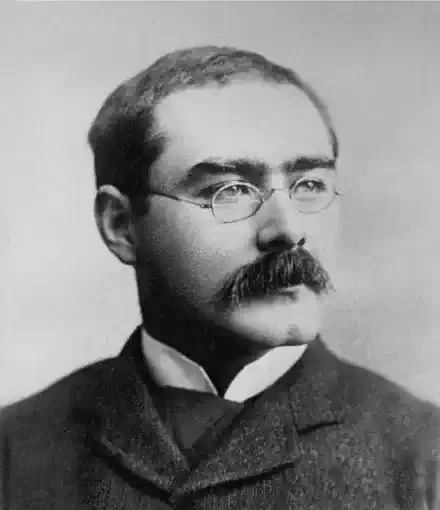
Rudyard Kipling
The Ballad of Bolivar
The Ballad of Bolivar
Seven men from all the world, back to Docks again,
Rolling down the Ratcliffe Road drunk and raising Cain:
Give the girls another drink 'fore we sign away --
We that took the ~Bolivar~ out across the Bay!
We put out from Sunderland loaded down with rails;
We put back to Sunderland 'cause our cargo shifted;
We put out from Sunderland -- met the winter gales --
Seven days and seven nights to the Start we drifted.
Racketing her rivets loose, smoke-stack white as snow,
All the coals adrift adeck, half the rails below,
Leaking like a lobster-pot, steering like a dray --
Out we took the ~Bolivar~, out across the Bay!
One by one the Lights came up, winked and let us by;
Mile by mile we waddled on, coal and fo'c'sle short;
Met a blow that laid us down, heard a bulkhead fly;
Left the ~Wolf~ behind us with a two-foot list to port.
Trailing like a wounded duck, working out her soul;
Clanging like a smithy-shop after every roll;
Just a funnel and a mast lurching through the spray --
So we threshed the ~Bolivar~ out across the Bay!
'Felt her hog and felt her sag, betted when she'd break;
Wondered every time she raced if she'd stand the shock;
Heard the seas like drunken men pounding at her strake;
Hoped the Lord 'ud keep his thumb on the plummer-block.
Banged against the iron decks, bilges choked with coal;
Flayed and frozen foot and hand, sick of heart and soul;
Last we prayed she'd buck herself into judgment Day --
Hi! we cursed the ~Bolivar~ knocking round the Bay!
O her nose flung up to sky, groaning to be still --
Up and down and back we went, never time for breath;
Then the money paid at Lloyd's caught her by the heel,
And the stars ran round and round dancin' at our death.
Aching for an hour's sleep, dozing off between;
'Heard the rotten rivets draw when she took it green;
'Watched the compass chase its tail like a cat at play --
That was on the ~Bolivar~, south across the Bay.
Once we saw between the squalls, lyin' head to swell --
Mad with work and weariness, wishin' they was we --
Some damned Liner's lights go by like a long hotel;
Cheered her from the ~Bolivar~ swampin' in the sea.
Then a grayback cleared us out, then the skipper laughed;
"Boys, the wheel has gone to Hell -- rig the winches aft!
Yoke the kicking rudder-head -- get her under way!"
So we steered her, pulley-haul, out across the Bay!
Just a pack o' rotten plates puttied up with tar,
In we came, an' time enough, 'cross Bilbao Bar.
Overloaded, undermanned, meant to founder, we
Euchred God Almighty's storm, bluffed the Eternal Sea!
Seven men from all the world, back to town again,
Rollin' down the Ratcliffe Road drunk and raising Cain:
Seven men from out of Hell. Ain't the owners gay,
'Cause we took the "Bolivar" safe across the Bay?
Seven men from all the world, back to Docks again,
Rolling down the Ratcliffe Road drunk and raising Cain:
Give the girls another drink 'fore we sign away --
We that took the ~Bolivar~ out across the Bay!
We put out from Sunderland loaded down with rails;
We put back to Sunderland 'cause our cargo shifted;
We put out from Sunderland -- met the winter gales --
Seven days and seven nights to the Start we drifted.
Racketing her rivets loose, smoke-stack white as snow,
All the coals adrift adeck, half the rails below,
Leaking like a lobster-pot, steering like a dray --
Out we took the ~Bolivar~, out across the Bay!
One by one the Lights came up, winked and let us by;
Mile by mile we waddled on, coal and fo'c'sle short;
Met a blow that laid us down, heard a bulkhead fly;
Left the ~Wolf~ behind us with a two-foot list to port.
Trailing like a wounded duck, working out her soul;
Clanging like a smithy-shop after every roll;
Just a funnel and a mast lurching through the spray --
So we threshed the ~Bolivar~ out across the Bay!
'Felt her hog and felt her sag, betted when she'd break;
Wondered every time she raced if she'd stand the shock;
Heard the seas like drunken men pounding at her strake;
Hoped the Lord 'ud keep his thumb on the plummer-block.
Banged against the iron decks, bilges choked with coal;
Flayed and frozen foot and hand, sick of heart and soul;
Last we prayed she'd buck herself into judgment Day --
Hi! we cursed the ~Bolivar~ knocking round the Bay!
O her nose flung up to sky, groaning to be still --
Up and down and back we went, never time for breath;
Then the money paid at Lloyd's caught her by the heel,
And the stars ran round and round dancin' at our death.
Aching for an hour's sleep, dozing off between;
'Heard the rotten rivets draw when she took it green;
'Watched the compass chase its tail like a cat at play --
That was on the ~Bolivar~, south across the Bay.
Once we saw between the squalls, lyin' head to swell --
Mad with work and weariness, wishin' they was we --
Some damned Liner's lights go by like a long hotel;
Cheered her from the ~Bolivar~ swampin' in the sea.
Then a grayback cleared us out, then the skipper laughed;
"Boys, the wheel has gone to Hell -- rig the winches aft!
Yoke the kicking rudder-head -- get her under way!"
So we steered her, pulley-haul, out across the Bay!
Just a pack o' rotten plates puttied up with tar,
In we came, an' time enough, 'cross Bilbao Bar.
Overloaded, undermanned, meant to founder, we
Euchred God Almighty's storm, bluffed the Eternal Sea!
Seven men from all the world, back to town again,
Rollin' down the Ratcliffe Road drunk and raising Cain:
Seven men from out of Hell. Ain't the owners gay,
'Cause we took the "Bolivar" safe across the Bay?
581
Rudyard Kipling
The American Rebellion
The American Rebellion
Before
Twas not while England's sword unsheathed
Put half a world to flight,
Nor while their new-built cities breathed
Secure behind her might;
Not while she poured from Pole to Line
Treasure and ships and men--
These worshippers at Freedoms shrine
They did not quit her then!
Not till their toes were driven forth
By England o'er the main--
Not till the Frenchman from the North
Had gone with shattered Spain;
Not till the clean-swept oceans showed
No hostile flag unrolled,
Did they remember that they owed
To Freedom--and were bold!
After
The snow lies thick on Valley Forge,
The ice on the Delaware,
But the poor dead soldiers of King George
They neither know nor care.
Not though the earliest primrose break
On the sunny side of the lane,
And scuffling rookeries awake
Their England' s spring again.
They will not stir when the drifts are gone,
Or the ice melts out of the bay:
And the men that served with Washington
Lie all as still as they.
They will not stir though the mayflower blows
In the moist dark woods of pine,
And every rock-strewn pasture shows
Mullein and columbine.
Each for his land, in a fair fight,
Encountered strove, and died,
And the kindly earth that knows no spite
Covers them side by side.
She is too busy to think of war;
She has all the world to make gay;
And, behold, the yearly flowers are
Where they were in our fathers' day!
Golden-rod by the pasture-wall
When the columbine is dead,
And sumach leaves that turn, in fall,
Bright as the blood they shed.
Before
Twas not while England's sword unsheathed
Put half a world to flight,
Nor while their new-built cities breathed
Secure behind her might;
Not while she poured from Pole to Line
Treasure and ships and men--
These worshippers at Freedoms shrine
They did not quit her then!
Not till their toes were driven forth
By England o'er the main--
Not till the Frenchman from the North
Had gone with shattered Spain;
Not till the clean-swept oceans showed
No hostile flag unrolled,
Did they remember that they owed
To Freedom--and were bold!
After
The snow lies thick on Valley Forge,
The ice on the Delaware,
But the poor dead soldiers of King George
They neither know nor care.
Not though the earliest primrose break
On the sunny side of the lane,
And scuffling rookeries awake
Their England' s spring again.
They will not stir when the drifts are gone,
Or the ice melts out of the bay:
And the men that served with Washington
Lie all as still as they.
They will not stir though the mayflower blows
In the moist dark woods of pine,
And every rock-strewn pasture shows
Mullein and columbine.
Each for his land, in a fair fight,
Encountered strove, and died,
And the kindly earth that knows no spite
Covers them side by side.
She is too busy to think of war;
She has all the world to make gay;
And, behold, the yearly flowers are
Where they were in our fathers' day!
Golden-rod by the pasture-wall
When the columbine is dead,
And sumach leaves that turn, in fall,
Bright as the blood they shed.
481
Rudyard Kipling
The Mary Gloster
The "Mary Gloster"
I've paid for your sickest fancies; I've humoured your crackedest whim --
Dick, it's your daddy, dying; you've got to listen to him!
Good for a fortnight, am I? The doctor told you? He lied.
I shall go under by morning, and -- Put that nurse outside.
'Never seen death yet, Dickie? Well, now is your time to learn,
And you'll wish you held my record before it comes to your turn.
Not counting the Line and the Foundry, the yards and the village, too,
I've made myself and a million; but I'm damned if I made you.
Master at two-and-twenty, and married at twenty-three --
Ten thousand men on the pay-roll, and forty freighters at sea!
Fifty years between 'em, and every year of it fight,
And now I'm Sir Anthony Gloster, dying, a baronite:
For I lunched with his Royal 'Ighness -- what was it the papers a-had?
"Not least of our merchant-princes." Dickie, that's me, your dad!
~I~ didn't begin with askings. ~I~ took my job and I stuck;
And I took the chances they wouldn't, an' now they're calling it luck.
Lord, what boats I've handled -- rotten and leaky and old!
Ran 'em, or -- opened the bilge-cock, precisely as I was told.
Grub that 'ud bind you crazy, and crews that 'ud turn you grey,
And a big fat lump of insurance to cover the risk on the way.
The others they dursn't do it; they said they valued their life
(They've served me since as skippers). ~I~ went, and I took my wife.
Over the world I drove 'em, married at twenty-three,
And your mother saving the money and making a man of me.
~I~ was content to be master, but she said there was better behind;
She took the chances I wouldn't, and I followed your mother blind.
She egged me to borrow the money, an' she helped me to clear the loan,
When we bought half shares in a cheap 'un and hoisted a flag of our own.
Patching and coaling on credit, and living the Lord knew how,
We started the Red Ox freighters -- we've eight-and-thirty now.
And those were the days of clippers, and the freights were clipper-freights,
And we knew we were making our fortune, but she died in Macassar Straits --
By the Little Paternosters, as you come to the Union Bank --
And we dropped her in fourteen fathom; I pricked it off where she sank.
Owners we were, full owners, and the boat was christened for her,
And she died in the ~Mary Gloster~. My heart, how young we were!
So I went on a spree round Java and well-nigh ran her ashore,
But your mother came and warned me and I wouldn't liquor no more:
Strict I stuck to my business, afraid to stop or I'd think,
Saving the money (she warned me), and letting the other men drink.
And I met M'Cullough in London (I'd turned five 'undred then),
And 'tween us we started the Foundry -- three forges and twenty men:
Cheap repairs for the cheap 'uns. It paid, and the business grew,
For I bought me a steam-lathe patent, and that was a gold mine too.
"Cheaper to build 'em than buy 'em," ~I~ said, but M'Cullough he shied,
And we wasted a year in talking before we moved to the Clyde.
And the Lines were all beginning, and we all of us started fair,
Building our engines like houses and staying the boilers square.
But M'Cullough 'e wanted cabins with marble and maple and all,
And Brussels an' Utrecht velvet, and baths and a Social Hall,
And pipes for closets all over, and cutting the frames too light,
But M'Cullough he died in the Sixties, and -- Well, I'm dying to-night. . . .
I knew -- ~I~ knew what was coming, when we bid on the ~Byfleet~'s keel --
They piddled and piffled with iron: I'd given my orders for steel!
Steel and the first expansions. It paid, I tell you, it paid,
When we came with our nine-knot freighters and collared the long-run trade!
And they asked me how I did it, and I gave 'em the Scripture text,
"You keep your light so shining a little in front o' the next!"
They copied all they could follow, but they couldn't copy my mind,
And I left 'em sweating and stealing a year and a half behind.
Then came the armour-contracts, but that was M'Cullough's side;
He was always best in the Foundry, but better, perhaps, he died.
I went through his private papers; the notes was plainer than print;
And I'm no fool to finish if a man'll give me a hint.
(I remember his widow was angry.) So I saw what the drawings meant,
And I started the six-inch rollers, and it paid me sixty per cent --
Sixty per cent ~with~ failures, and more than twice we could do,
And a quarter-million to credit, and I saved it all for you!
I thought -- it doesn't matter -- you seemed to favour your ma,
But you're nearer forty than thirty, and I know the kind you are.
Harrer an' Trinity College! I ought to ha' sent you to sea --
But I stood you an education, an' what have you done for me?
The things I knew was proper you wouldn't thank me to give,
And the things I knew was rotten you said was the way to live.
For you muddled with books and pictures, an' china an' etchin's an' fans,
And your rooms at college was beastly -- more like a whore's than a man's --
Till you married that thin-flanked woman, as white and as stale as a bone,
An' she gave you your social nonsense; but where's that kid o' your own?
I've seen your carriages blocking the half o' the Cromwell Road,
But never the doctor's brougham to help the missus unload.
(So there isn't even a grandchild, an' the Gloster family's done.)
Not like your mother, she isn't. ~She~ carried her freight each run.
But they died, the pore little beggars! At sea she had 'em -- they died.
Only you, an' you stood it; you haven't stood much beside.
Weak, a liar, and idle, and mean as a collier's whelp
Nosing for scraps in the galley. No help -- my son was no help!
So he gets three 'undred thousand, in trust and the interest paid.
I wouldn't give it you, Dickie -- you see, I made it in trade.
You're saved from soiling your fingers, and if you have no child,
It all comes back to the business. Gad, won't your wife be wild!
'Calls and calls in her carriage, her 'andkerchief up to 'er eye:
"Daddy! dear daddy's dyin'!" and doing her best to cry.
Grateful? Oh, yes, I'm grateful, but keep her away from here.
Your mother 'ud never ha' stood 'er, and, anyhow, women are queer. . . .
There's women will say I've married a second time.
Not quite! But give pore Aggie a hundred, and tell her your lawyers'll fight.
She was the best o' the boiling -- you'll meet her before it ends;
I'm in for a row with the mother -- I'll leave you settle my friends:
For a man he must go with a woman, which women don't understand --
Or the sort that say they can see it they aren't the marrying brand.
But I wanted to speak o' your mother that's Lady Gloster still --
I'm going to up and see her, without it's hurting the will.
Here! Take your hand off the bell-pull. Five thousand's waiting for you,
If you'll only listen a minute, and do as I bid you do.
They'll try to prove me crazy, and, if you bungle, they can;
And I've only you to trust to! (O God, why ain't he a man?)
There's some waste money on marbles, the same as M'Cullough tried --
Marbles and mausoleums -- but I call that sinful pride.
There's some ship bodies for burial -- we've carried 'em, soldered and packed;
Down in their wills they wrote it, and nobody called ~them~ cracked.
But me -- I've too much money, and people might. . . . All my fault:
It come o' hoping for grandsons and buying that Wokin' vault.
I'm sick o' the 'ole dam' business; I'm going back where I came.
Dick, you're the son o' my body, and you'll take charge o' the same!
I want to lie by your mother, ten thousand mile away,
And they'll want to send me to Woking; and that's where you'll earn your pay.
I've thought it out on the quiet, the same as it ought to be done --
Quiet, and decent, and proper -- an' here's your orders, my son.
You know the Line? You don't, though. You write to the Board, and tell
Your father's death has upset you an' you're goin' to cruise for a spell,
An' you'd like the ~Mary Gloster~ -- I've held her ready for this --
They'll put her in working order and you'll take her out as she is.
Yes, it was money idle when I patched her and put her aside
(Thank God, I can pay for my fancies!) -- the boat where your mother died,
By the Little Paternosters, as you come to the Union Bank,
We dropped her -- I think I told you -- and I pricked it off where she sank --
['Tiny she looked on the grating -- that oily, treacly sea --]
'Hundred and eighteen East, remember, and South just three.
Easy bearings to carry -- three South -- three to the dot;
But I gave M'Andrew a copy in case of dying -- or not.
And so you'll write to M'Andrew, he's Chief of the Maori Line;
They'll give him leave, if you ask 'em and say it's business o' mine.
I built three boats for the Maoris, an' very well pleased they were,
An' I've known Mac since the Fifties, and Mac knew me -- and her.
After the first stroke warned me I sent him the money to keep
Against the time you'd claim it, committin' your dad to the deep;
For you are the son o' my body, and Mac was my oldest friend,
I've never asked 'im to dinner, but he'll see it out to the end.
Stiff-necked Glasgow beggar, I've heard he's prayed for my soul,
But he couldn't lie if you paid him, and he'd starve before he stole!
He'll take the ~Mary~ in ballast -- you'll find her a lively ship;
And you'll take Sir Anthony Gloster, that goes on 'is wedding-trip,
Lashed in our old deck-cabin with all three port-holes wide,
The kick o' the screw beneath him and the round blue seas outside!
Sir Anthony Gloster's carriage -- our 'ouse-flag flyin' free --
Ten thousand men on the pay-roll and forty freighters at sea!
He made himself and a million, but this world is a fleetin' show,
And he'll go to the wife of 'is bosom the same as he ought to go --
By the heel of the Paternosters -- there isn't a chance to mistake --
And Mac'll pay you the money as soon as the bubbles break!
Five thousand for six weeks' cruising, the staunchest freighter afloat,
And Mac he'll give you your bonus the minute I'm out o' the boat!
He'll take you round to Macassar, and you'll come back alone;
He knows what I want o' the ~Mary~. . . . I'll do what I please with my own.
Your mother 'ud call it wasteful, but I've seven-and-thirty more;
I'll come in my private carriage and bid it wait at the door. . . .
For my son 'e was never a credit: 'e muddled with books and art,
And 'e lived on Sir Anthony's money and 'e broke Sir Anthony's heart.
There isn't even a grandchild, and the Gloster family's done --
The only one you left me, O mother, the only one!
Harrer and Trinity College -- me slavin' early an' late --
An' he thinks I'm dying crazy, and you're in Macassar Strait!
Flesh o' my flesh, my dearie, for ever an' ever amen,
That first stroke come for a warning; I ought to ha' gone to you then,
But -- cheap repairs for a cheap 'un -- the doctors said I'd do:
Mary, why didn't ~you~ warn me? I've allus heeded to you,
Excep' -- I know -- about women; but you are a spirit now;
An', wife, they was only women, and I was a man. That's how.
An' a man 'e must go with a woman, as you could not understand;
But I never talked 'em secrets. I paid 'em out o' hand.
Thank Gawd, I can pay for my fancies! Now what's five thousand to me,
For a berth off the Paternosters in the haven where I would be?
~I~ believe in the Resurrection, if I read my Bible plain,
But I wouldn't trust 'em at Wokin'; we're safer at sea again.
For the heart it shall go with the treasure -- go down to the sea in ships.
I'm sick of the hired women -- I'll kiss my girl on her lips!
I'll be content with my fountain, I'll drink from my own well,
And the wife of my youth shall charm me -- an' the rest can go to Hell!
(Dickie, ~he~ will, that's certain.) I'll lie in our standin'-bed,
An' Mac'll take her in ballast -- an' she trims best by the head. . . .
Down by the head an' sinkin', her fires are drawn and cold,
And the water's splashin' hollow on the skin of the empty hold --
Churning an' choking and chuckling, quiet and scummy and dark --
Full to her lower hatches and risin' steady. Hark!
That was the after-bulkhead. . . . She's flooded from stem to stern. . . .
Never seen death yet, Dickie? . . . Well, now is your time to learn!
I've paid for your sickest fancies; I've humoured your crackedest whim --
Dick, it's your daddy, dying; you've got to listen to him!
Good for a fortnight, am I? The doctor told you? He lied.
I shall go under by morning, and -- Put that nurse outside.
'Never seen death yet, Dickie? Well, now is your time to learn,
And you'll wish you held my record before it comes to your turn.
Not counting the Line and the Foundry, the yards and the village, too,
I've made myself and a million; but I'm damned if I made you.
Master at two-and-twenty, and married at twenty-three --
Ten thousand men on the pay-roll, and forty freighters at sea!
Fifty years between 'em, and every year of it fight,
And now I'm Sir Anthony Gloster, dying, a baronite:
For I lunched with his Royal 'Ighness -- what was it the papers a-had?
"Not least of our merchant-princes." Dickie, that's me, your dad!
~I~ didn't begin with askings. ~I~ took my job and I stuck;
And I took the chances they wouldn't, an' now they're calling it luck.
Lord, what boats I've handled -- rotten and leaky and old!
Ran 'em, or -- opened the bilge-cock, precisely as I was told.
Grub that 'ud bind you crazy, and crews that 'ud turn you grey,
And a big fat lump of insurance to cover the risk on the way.
The others they dursn't do it; they said they valued their life
(They've served me since as skippers). ~I~ went, and I took my wife.
Over the world I drove 'em, married at twenty-three,
And your mother saving the money and making a man of me.
~I~ was content to be master, but she said there was better behind;
She took the chances I wouldn't, and I followed your mother blind.
She egged me to borrow the money, an' she helped me to clear the loan,
When we bought half shares in a cheap 'un and hoisted a flag of our own.
Patching and coaling on credit, and living the Lord knew how,
We started the Red Ox freighters -- we've eight-and-thirty now.
And those were the days of clippers, and the freights were clipper-freights,
And we knew we were making our fortune, but she died in Macassar Straits --
By the Little Paternosters, as you come to the Union Bank --
And we dropped her in fourteen fathom; I pricked it off where she sank.
Owners we were, full owners, and the boat was christened for her,
And she died in the ~Mary Gloster~. My heart, how young we were!
So I went on a spree round Java and well-nigh ran her ashore,
But your mother came and warned me and I wouldn't liquor no more:
Strict I stuck to my business, afraid to stop or I'd think,
Saving the money (she warned me), and letting the other men drink.
And I met M'Cullough in London (I'd turned five 'undred then),
And 'tween us we started the Foundry -- three forges and twenty men:
Cheap repairs for the cheap 'uns. It paid, and the business grew,
For I bought me a steam-lathe patent, and that was a gold mine too.
"Cheaper to build 'em than buy 'em," ~I~ said, but M'Cullough he shied,
And we wasted a year in talking before we moved to the Clyde.
And the Lines were all beginning, and we all of us started fair,
Building our engines like houses and staying the boilers square.
But M'Cullough 'e wanted cabins with marble and maple and all,
And Brussels an' Utrecht velvet, and baths and a Social Hall,
And pipes for closets all over, and cutting the frames too light,
But M'Cullough he died in the Sixties, and -- Well, I'm dying to-night. . . .
I knew -- ~I~ knew what was coming, when we bid on the ~Byfleet~'s keel --
They piddled and piffled with iron: I'd given my orders for steel!
Steel and the first expansions. It paid, I tell you, it paid,
When we came with our nine-knot freighters and collared the long-run trade!
And they asked me how I did it, and I gave 'em the Scripture text,
"You keep your light so shining a little in front o' the next!"
They copied all they could follow, but they couldn't copy my mind,
And I left 'em sweating and stealing a year and a half behind.
Then came the armour-contracts, but that was M'Cullough's side;
He was always best in the Foundry, but better, perhaps, he died.
I went through his private papers; the notes was plainer than print;
And I'm no fool to finish if a man'll give me a hint.
(I remember his widow was angry.) So I saw what the drawings meant,
And I started the six-inch rollers, and it paid me sixty per cent --
Sixty per cent ~with~ failures, and more than twice we could do,
And a quarter-million to credit, and I saved it all for you!
I thought -- it doesn't matter -- you seemed to favour your ma,
But you're nearer forty than thirty, and I know the kind you are.
Harrer an' Trinity College! I ought to ha' sent you to sea --
But I stood you an education, an' what have you done for me?
The things I knew was proper you wouldn't thank me to give,
And the things I knew was rotten you said was the way to live.
For you muddled with books and pictures, an' china an' etchin's an' fans,
And your rooms at college was beastly -- more like a whore's than a man's --
Till you married that thin-flanked woman, as white and as stale as a bone,
An' she gave you your social nonsense; but where's that kid o' your own?
I've seen your carriages blocking the half o' the Cromwell Road,
But never the doctor's brougham to help the missus unload.
(So there isn't even a grandchild, an' the Gloster family's done.)
Not like your mother, she isn't. ~She~ carried her freight each run.
But they died, the pore little beggars! At sea she had 'em -- they died.
Only you, an' you stood it; you haven't stood much beside.
Weak, a liar, and idle, and mean as a collier's whelp
Nosing for scraps in the galley. No help -- my son was no help!
So he gets three 'undred thousand, in trust and the interest paid.
I wouldn't give it you, Dickie -- you see, I made it in trade.
You're saved from soiling your fingers, and if you have no child,
It all comes back to the business. Gad, won't your wife be wild!
'Calls and calls in her carriage, her 'andkerchief up to 'er eye:
"Daddy! dear daddy's dyin'!" and doing her best to cry.
Grateful? Oh, yes, I'm grateful, but keep her away from here.
Your mother 'ud never ha' stood 'er, and, anyhow, women are queer. . . .
There's women will say I've married a second time.
Not quite! But give pore Aggie a hundred, and tell her your lawyers'll fight.
She was the best o' the boiling -- you'll meet her before it ends;
I'm in for a row with the mother -- I'll leave you settle my friends:
For a man he must go with a woman, which women don't understand --
Or the sort that say they can see it they aren't the marrying brand.
But I wanted to speak o' your mother that's Lady Gloster still --
I'm going to up and see her, without it's hurting the will.
Here! Take your hand off the bell-pull. Five thousand's waiting for you,
If you'll only listen a minute, and do as I bid you do.
They'll try to prove me crazy, and, if you bungle, they can;
And I've only you to trust to! (O God, why ain't he a man?)
There's some waste money on marbles, the same as M'Cullough tried --
Marbles and mausoleums -- but I call that sinful pride.
There's some ship bodies for burial -- we've carried 'em, soldered and packed;
Down in their wills they wrote it, and nobody called ~them~ cracked.
But me -- I've too much money, and people might. . . . All my fault:
It come o' hoping for grandsons and buying that Wokin' vault.
I'm sick o' the 'ole dam' business; I'm going back where I came.
Dick, you're the son o' my body, and you'll take charge o' the same!
I want to lie by your mother, ten thousand mile away,
And they'll want to send me to Woking; and that's where you'll earn your pay.
I've thought it out on the quiet, the same as it ought to be done --
Quiet, and decent, and proper -- an' here's your orders, my son.
You know the Line? You don't, though. You write to the Board, and tell
Your father's death has upset you an' you're goin' to cruise for a spell,
An' you'd like the ~Mary Gloster~ -- I've held her ready for this --
They'll put her in working order and you'll take her out as she is.
Yes, it was money idle when I patched her and put her aside
(Thank God, I can pay for my fancies!) -- the boat where your mother died,
By the Little Paternosters, as you come to the Union Bank,
We dropped her -- I think I told you -- and I pricked it off where she sank --
['Tiny she looked on the grating -- that oily, treacly sea --]
'Hundred and eighteen East, remember, and South just three.
Easy bearings to carry -- three South -- three to the dot;
But I gave M'Andrew a copy in case of dying -- or not.
And so you'll write to M'Andrew, he's Chief of the Maori Line;
They'll give him leave, if you ask 'em and say it's business o' mine.
I built three boats for the Maoris, an' very well pleased they were,
An' I've known Mac since the Fifties, and Mac knew me -- and her.
After the first stroke warned me I sent him the money to keep
Against the time you'd claim it, committin' your dad to the deep;
For you are the son o' my body, and Mac was my oldest friend,
I've never asked 'im to dinner, but he'll see it out to the end.
Stiff-necked Glasgow beggar, I've heard he's prayed for my soul,
But he couldn't lie if you paid him, and he'd starve before he stole!
He'll take the ~Mary~ in ballast -- you'll find her a lively ship;
And you'll take Sir Anthony Gloster, that goes on 'is wedding-trip,
Lashed in our old deck-cabin with all three port-holes wide,
The kick o' the screw beneath him and the round blue seas outside!
Sir Anthony Gloster's carriage -- our 'ouse-flag flyin' free --
Ten thousand men on the pay-roll and forty freighters at sea!
He made himself and a million, but this world is a fleetin' show,
And he'll go to the wife of 'is bosom the same as he ought to go --
By the heel of the Paternosters -- there isn't a chance to mistake --
And Mac'll pay you the money as soon as the bubbles break!
Five thousand for six weeks' cruising, the staunchest freighter afloat,
And Mac he'll give you your bonus the minute I'm out o' the boat!
He'll take you round to Macassar, and you'll come back alone;
He knows what I want o' the ~Mary~. . . . I'll do what I please with my own.
Your mother 'ud call it wasteful, but I've seven-and-thirty more;
I'll come in my private carriage and bid it wait at the door. . . .
For my son 'e was never a credit: 'e muddled with books and art,
And 'e lived on Sir Anthony's money and 'e broke Sir Anthony's heart.
There isn't even a grandchild, and the Gloster family's done --
The only one you left me, O mother, the only one!
Harrer and Trinity College -- me slavin' early an' late --
An' he thinks I'm dying crazy, and you're in Macassar Strait!
Flesh o' my flesh, my dearie, for ever an' ever amen,
That first stroke come for a warning; I ought to ha' gone to you then,
But -- cheap repairs for a cheap 'un -- the doctors said I'd do:
Mary, why didn't ~you~ warn me? I've allus heeded to you,
Excep' -- I know -- about women; but you are a spirit now;
An', wife, they was only women, and I was a man. That's how.
An' a man 'e must go with a woman, as you could not understand;
But I never talked 'em secrets. I paid 'em out o' hand.
Thank Gawd, I can pay for my fancies! Now what's five thousand to me,
For a berth off the Paternosters in the haven where I would be?
~I~ believe in the Resurrection, if I read my Bible plain,
But I wouldn't trust 'em at Wokin'; we're safer at sea again.
For the heart it shall go with the treasure -- go down to the sea in ships.
I'm sick of the hired women -- I'll kiss my girl on her lips!
I'll be content with my fountain, I'll drink from my own well,
And the wife of my youth shall charm me -- an' the rest can go to Hell!
(Dickie, ~he~ will, that's certain.) I'll lie in our standin'-bed,
An' Mac'll take her in ballast -- an' she trims best by the head. . . .
Down by the head an' sinkin', her fires are drawn and cold,
And the water's splashin' hollow on the skin of the empty hold --
Churning an' choking and chuckling, quiet and scummy and dark --
Full to her lower hatches and risin' steady. Hark!
That was the after-bulkhead. . . . She's flooded from stem to stern. . . .
Never seen death yet, Dickie? . . . Well, now is your time to learn!
823
Rudyard Kipling
The Mary Gloster
The "Mary Gloster"
I've paid for your sickest fancies; I've humoured your crackedest whim --
Dick, it's your daddy, dying; you've got to listen to him!
Good for a fortnight, am I? The doctor told you? He lied.
I shall go under by morning, and -- Put that nurse outside.
'Never seen death yet, Dickie? Well, now is your time to learn,
And you'll wish you held my record before it comes to your turn.
Not counting the Line and the Foundry, the yards and the village, too,
I've made myself and a million; but I'm damned if I made you.
Master at two-and-twenty, and married at twenty-three --
Ten thousand men on the pay-roll, and forty freighters at sea!
Fifty years between 'em, and every year of it fight,
And now I'm Sir Anthony Gloster, dying, a baronite:
For I lunched with his Royal 'Ighness -- what was it the papers a-had?
"Not least of our merchant-princes." Dickie, that's me, your dad!
~I~ didn't begin with askings. ~I~ took my job and I stuck;
And I took the chances they wouldn't, an' now they're calling it luck.
Lord, what boats I've handled -- rotten and leaky and old!
Ran 'em, or -- opened the bilge-cock, precisely as I was told.
Grub that 'ud bind you crazy, and crews that 'ud turn you grey,
And a big fat lump of insurance to cover the risk on the way.
The others they dursn't do it; they said they valued their life
(They've served me since as skippers). ~I~ went, and I took my wife.
Over the world I drove 'em, married at twenty-three,
And your mother saving the money and making a man of me.
~I~ was content to be master, but she said there was better behind;
She took the chances I wouldn't, and I followed your mother blind.
She egged me to borrow the money, an' she helped me to clear the loan,
When we bought half shares in a cheap 'un and hoisted a flag of our own.
Patching and coaling on credit, and living the Lord knew how,
We started the Red Ox freighters -- we've eight-and-thirty now.
And those were the days of clippers, and the freights were clipper-freights,
And we knew we were making our fortune, but she died in Macassar Straits --
By the Little Paternosters, as you come to the Union Bank --
And we dropped her in fourteen fathom; I pricked it off where she sank.
Owners we were, full owners, and the boat was christened for her,
And she died in the ~Mary Gloster~. My heart, how young we were!
So I went on a spree round Java and well-nigh ran her ashore,
But your mother came and warned me and I wouldn't liquor no more:
Strict I stuck to my business, afraid to stop or I'd think,
Saving the money (she warned me), and letting the other men drink.
And I met M'Cullough in London (I'd turned five 'undred then),
And 'tween us we started the Foundry -- three forges and twenty men:
Cheap repairs for the cheap 'uns. It paid, and the business grew,
For I bought me a steam-lathe patent, and that was a gold mine too.
"Cheaper to build 'em than buy 'em," ~I~ said, but M'Cullough he shied,
And we wasted a year in talking before we moved to the Clyde.
And the Lines were all beginning, and we all of us started fair,
Building our engines like houses and staying the boilers square.
But M'Cullough 'e wanted cabins with marble and maple and all,
And Brussels an' Utrecht velvet, and baths and a Social Hall,
And pipes for closets all over, and cutting the frames too light,
But M'Cullough he died in the Sixties, and -- Well, I'm dying to-night. . . .
I knew -- ~I~ knew what was coming, when we bid on the ~Byfleet~'s keel --
They piddled and piffled with iron: I'd given my orders for steel!
Steel and the first expansions. It paid, I tell you, it paid,
When we came with our nine-knot freighters and collared the long-run trade!
And they asked me how I did it, and I gave 'em the Scripture text,
"You keep your light so shining a little in front o' the next!"
They copied all they could follow, but they couldn't copy my mind,
And I left 'em sweating and stealing a year and a half behind.
Then came the armour-contracts, but that was M'Cullough's side;
He was always best in the Foundry, but better, perhaps, he died.
I went through his private papers; the notes was plainer than print;
And I'm no fool to finish if a man'll give me a hint.
(I remember his widow was angry.) So I saw what the drawings meant,
And I started the six-inch rollers, and it paid me sixty per cent --
Sixty per cent ~with~ failures, and more than twice we could do,
And a quarter-million to credit, and I saved it all for you!
I thought -- it doesn't matter -- you seemed to favour your ma,
But you're nearer forty than thirty, and I know the kind you are.
Harrer an' Trinity College! I ought to ha' sent you to sea --
But I stood you an education, an' what have you done for me?
The things I knew was proper you wouldn't thank me to give,
And the things I knew was rotten you said was the way to live.
For you muddled with books and pictures, an' china an' etchin's an' fans,
And your rooms at college was beastly -- more like a whore's than a man's --
Till you married that thin-flanked woman, as white and as stale as a bone,
An' she gave you your social nonsense; but where's that kid o' your own?
I've seen your carriages blocking the half o' the Cromwell Road,
But never the doctor's brougham to help the missus unload.
(So there isn't even a grandchild, an' the Gloster family's done.)
Not like your mother, she isn't. ~She~ carried her freight each run.
But they died, the pore little beggars! At sea she had 'em -- they died.
Only you, an' you stood it; you haven't stood much beside.
Weak, a liar, and idle, and mean as a collier's whelp
Nosing for scraps in the galley. No help -- my son was no help!
So he gets three 'undred thousand, in trust and the interest paid.
I wouldn't give it you, Dickie -- you see, I made it in trade.
You're saved from soiling your fingers, and if you have no child,
It all comes back to the business. Gad, won't your wife be wild!
'Calls and calls in her carriage, her 'andkerchief up to 'er eye:
"Daddy! dear daddy's dyin'!" and doing her best to cry.
Grateful? Oh, yes, I'm grateful, but keep her away from here.
Your mother 'ud never ha' stood 'er, and, anyhow, women are queer. . . .
There's women will say I've married a second time.
Not quite! But give pore Aggie a hundred, and tell her your lawyers'll fight.
She was the best o' the boiling -- you'll meet her before it ends;
I'm in for a row with the mother -- I'll leave you settle my friends:
For a man he must go with a woman, which women don't understand --
Or the sort that say they can see it they aren't the marrying brand.
But I wanted to speak o' your mother that's Lady Gloster still --
I'm going to up and see her, without it's hurting the will.
Here! Take your hand off the bell-pull. Five thousand's waiting for you,
If you'll only listen a minute, and do as I bid you do.
They'll try to prove me crazy, and, if you bungle, they can;
And I've only you to trust to! (O God, why ain't he a man?)
There's some waste money on marbles, the same as M'Cullough tried --
Marbles and mausoleums -- but I call that sinful pride.
There's some ship bodies for burial -- we've carried 'em, soldered and packed;
Down in their wills they wrote it, and nobody called ~them~ cracked.
But me -- I've too much money, and people might. . . . All my fault:
It come o' hoping for grandsons and buying that Wokin' vault.
I'm sick o' the 'ole dam' business; I'm going back where I came.
Dick, you're the son o' my body, and you'll take charge o' the same!
I want to lie by your mother, ten thousand mile away,
And they'll want to send me to Woking; and that's where you'll earn your pay.
I've thought it out on the quiet, the same as it ought to be done --
Quiet, and decent, and proper -- an' here's your orders, my son.
You know the Line? You don't, though. You write to the Board, and tell
Your father's death has upset you an' you're goin' to cruise for a spell,
An' you'd like the ~Mary Gloster~ -- I've held her ready for this --
They'll put her in working order and you'll take her out as she is.
Yes, it was money idle when I patched her and put her aside
(Thank God, I can pay for my fancies!) -- the boat where your mother died,
By the Little Paternosters, as you come to the Union Bank,
We dropped her -- I think I told you -- and I pricked it off where she sank --
['Tiny she looked on the grating -- that oily, treacly sea --]
'Hundred and eighteen East, remember, and South just three.
Easy bearings to carry -- three South -- three to the dot;
But I gave M'Andrew a copy in case of dying -- or not.
And so you'll write to M'Andrew, he's Chief of the Maori Line;
They'll give him leave, if you ask 'em and say it's business o' mine.
I built three boats for the Maoris, an' very well pleased they were,
An' I've known Mac since the Fifties, and Mac knew me -- and her.
After the first stroke warned me I sent him the money to keep
Against the time you'd claim it, committin' your dad to the deep;
For you are the son o' my body, and Mac was my oldest friend,
I've never asked 'im to dinner, but he'll see it out to the end.
Stiff-necked Glasgow beggar, I've heard he's prayed for my soul,
But he couldn't lie if you paid him, and he'd starve before he stole!
He'll take the ~Mary~ in ballast -- you'll find her a lively ship;
And you'll take Sir Anthony Gloster, that goes on 'is wedding-trip,
Lashed in our old deck-cabin with all three port-holes wide,
The kick o' the screw beneath him and the round blue seas outside!
Sir Anthony Gloster's carriage -- our 'ouse-flag flyin' free --
Ten thousand men on the pay-roll and forty freighters at sea!
He made himself and a million, but this world is a fleetin' show,
And he'll go to the wife of 'is bosom the same as he ought to go --
By the heel of the Paternosters -- there isn't a chance to mistake --
And Mac'll pay you the money as soon as the bubbles break!
Five thousand for six weeks' cruising, the staunchest freighter afloat,
And Mac he'll give you your bonus the minute I'm out o' the boat!
He'll take you round to Macassar, and you'll come back alone;
He knows what I want o' the ~Mary~. . . . I'll do what I please with my own.
Your mother 'ud call it wasteful, but I've seven-and-thirty more;
I'll come in my private carriage and bid it wait at the door. . . .
For my son 'e was never a credit: 'e muddled with books and art,
And 'e lived on Sir Anthony's money and 'e broke Sir Anthony's heart.
There isn't even a grandchild, and the Gloster family's done --
The only one you left me, O mother, the only one!
Harrer and Trinity College -- me slavin' early an' late --
An' he thinks I'm dying crazy, and you're in Macassar Strait!
Flesh o' my flesh, my dearie, for ever an' ever amen,
That first stroke come for a warning; I ought to ha' gone to you then,
But -- cheap repairs for a cheap 'un -- the doctors said I'd do:
Mary, why didn't ~you~ warn me? I've allus heeded to you,
Excep' -- I know -- about women; but you are a spirit now;
An', wife, they was only women, and I was a man. That's how.
An' a man 'e must go with a woman, as you could not understand;
But I never talked 'em secrets. I paid 'em out o' hand.
Thank Gawd, I can pay for my fancies! Now what's five thousand to me,
For a berth off the Paternosters in the haven where I would be?
~I~ believe in the Resurrection, if I read my Bible plain,
But I wouldn't trust 'em at Wokin'; we're safer at sea again.
For the heart it shall go with the treasure -- go down to the sea in ships.
I'm sick of the hired women -- I'll kiss my girl on her lips!
I'll be content with my fountain, I'll drink from my own well,
And the wife of my youth shall charm me -- an' the rest can go to Hell!
(Dickie, ~he~ will, that's certain.) I'll lie in our standin'-bed,
An' Mac'll take her in ballast -- an' she trims best by the head. . . .
Down by the head an' sinkin', her fires are drawn and cold,
And the water's splashin' hollow on the skin of the empty hold --
Churning an' choking and chuckling, quiet and scummy and dark --
Full to her lower hatches and risin' steady. Hark!
That was the after-bulkhead. . . . She's flooded from stem to stern. . . .
Never seen death yet, Dickie? . . . Well, now is your time to learn!
I've paid for your sickest fancies; I've humoured your crackedest whim --
Dick, it's your daddy, dying; you've got to listen to him!
Good for a fortnight, am I? The doctor told you? He lied.
I shall go under by morning, and -- Put that nurse outside.
'Never seen death yet, Dickie? Well, now is your time to learn,
And you'll wish you held my record before it comes to your turn.
Not counting the Line and the Foundry, the yards and the village, too,
I've made myself and a million; but I'm damned if I made you.
Master at two-and-twenty, and married at twenty-three --
Ten thousand men on the pay-roll, and forty freighters at sea!
Fifty years between 'em, and every year of it fight,
And now I'm Sir Anthony Gloster, dying, a baronite:
For I lunched with his Royal 'Ighness -- what was it the papers a-had?
"Not least of our merchant-princes." Dickie, that's me, your dad!
~I~ didn't begin with askings. ~I~ took my job and I stuck;
And I took the chances they wouldn't, an' now they're calling it luck.
Lord, what boats I've handled -- rotten and leaky and old!
Ran 'em, or -- opened the bilge-cock, precisely as I was told.
Grub that 'ud bind you crazy, and crews that 'ud turn you grey,
And a big fat lump of insurance to cover the risk on the way.
The others they dursn't do it; they said they valued their life
(They've served me since as skippers). ~I~ went, and I took my wife.
Over the world I drove 'em, married at twenty-three,
And your mother saving the money and making a man of me.
~I~ was content to be master, but she said there was better behind;
She took the chances I wouldn't, and I followed your mother blind.
She egged me to borrow the money, an' she helped me to clear the loan,
When we bought half shares in a cheap 'un and hoisted a flag of our own.
Patching and coaling on credit, and living the Lord knew how,
We started the Red Ox freighters -- we've eight-and-thirty now.
And those were the days of clippers, and the freights were clipper-freights,
And we knew we were making our fortune, but she died in Macassar Straits --
By the Little Paternosters, as you come to the Union Bank --
And we dropped her in fourteen fathom; I pricked it off where she sank.
Owners we were, full owners, and the boat was christened for her,
And she died in the ~Mary Gloster~. My heart, how young we were!
So I went on a spree round Java and well-nigh ran her ashore,
But your mother came and warned me and I wouldn't liquor no more:
Strict I stuck to my business, afraid to stop or I'd think,
Saving the money (she warned me), and letting the other men drink.
And I met M'Cullough in London (I'd turned five 'undred then),
And 'tween us we started the Foundry -- three forges and twenty men:
Cheap repairs for the cheap 'uns. It paid, and the business grew,
For I bought me a steam-lathe patent, and that was a gold mine too.
"Cheaper to build 'em than buy 'em," ~I~ said, but M'Cullough he shied,
And we wasted a year in talking before we moved to the Clyde.
And the Lines were all beginning, and we all of us started fair,
Building our engines like houses and staying the boilers square.
But M'Cullough 'e wanted cabins with marble and maple and all,
And Brussels an' Utrecht velvet, and baths and a Social Hall,
And pipes for closets all over, and cutting the frames too light,
But M'Cullough he died in the Sixties, and -- Well, I'm dying to-night. . . .
I knew -- ~I~ knew what was coming, when we bid on the ~Byfleet~'s keel --
They piddled and piffled with iron: I'd given my orders for steel!
Steel and the first expansions. It paid, I tell you, it paid,
When we came with our nine-knot freighters and collared the long-run trade!
And they asked me how I did it, and I gave 'em the Scripture text,
"You keep your light so shining a little in front o' the next!"
They copied all they could follow, but they couldn't copy my mind,
And I left 'em sweating and stealing a year and a half behind.
Then came the armour-contracts, but that was M'Cullough's side;
He was always best in the Foundry, but better, perhaps, he died.
I went through his private papers; the notes was plainer than print;
And I'm no fool to finish if a man'll give me a hint.
(I remember his widow was angry.) So I saw what the drawings meant,
And I started the six-inch rollers, and it paid me sixty per cent --
Sixty per cent ~with~ failures, and more than twice we could do,
And a quarter-million to credit, and I saved it all for you!
I thought -- it doesn't matter -- you seemed to favour your ma,
But you're nearer forty than thirty, and I know the kind you are.
Harrer an' Trinity College! I ought to ha' sent you to sea --
But I stood you an education, an' what have you done for me?
The things I knew was proper you wouldn't thank me to give,
And the things I knew was rotten you said was the way to live.
For you muddled with books and pictures, an' china an' etchin's an' fans,
And your rooms at college was beastly -- more like a whore's than a man's --
Till you married that thin-flanked woman, as white and as stale as a bone,
An' she gave you your social nonsense; but where's that kid o' your own?
I've seen your carriages blocking the half o' the Cromwell Road,
But never the doctor's brougham to help the missus unload.
(So there isn't even a grandchild, an' the Gloster family's done.)
Not like your mother, she isn't. ~She~ carried her freight each run.
But they died, the pore little beggars! At sea she had 'em -- they died.
Only you, an' you stood it; you haven't stood much beside.
Weak, a liar, and idle, and mean as a collier's whelp
Nosing for scraps in the galley. No help -- my son was no help!
So he gets three 'undred thousand, in trust and the interest paid.
I wouldn't give it you, Dickie -- you see, I made it in trade.
You're saved from soiling your fingers, and if you have no child,
It all comes back to the business. Gad, won't your wife be wild!
'Calls and calls in her carriage, her 'andkerchief up to 'er eye:
"Daddy! dear daddy's dyin'!" and doing her best to cry.
Grateful? Oh, yes, I'm grateful, but keep her away from here.
Your mother 'ud never ha' stood 'er, and, anyhow, women are queer. . . .
There's women will say I've married a second time.
Not quite! But give pore Aggie a hundred, and tell her your lawyers'll fight.
She was the best o' the boiling -- you'll meet her before it ends;
I'm in for a row with the mother -- I'll leave you settle my friends:
For a man he must go with a woman, which women don't understand --
Or the sort that say they can see it they aren't the marrying brand.
But I wanted to speak o' your mother that's Lady Gloster still --
I'm going to up and see her, without it's hurting the will.
Here! Take your hand off the bell-pull. Five thousand's waiting for you,
If you'll only listen a minute, and do as I bid you do.
They'll try to prove me crazy, and, if you bungle, they can;
And I've only you to trust to! (O God, why ain't he a man?)
There's some waste money on marbles, the same as M'Cullough tried --
Marbles and mausoleums -- but I call that sinful pride.
There's some ship bodies for burial -- we've carried 'em, soldered and packed;
Down in their wills they wrote it, and nobody called ~them~ cracked.
But me -- I've too much money, and people might. . . . All my fault:
It come o' hoping for grandsons and buying that Wokin' vault.
I'm sick o' the 'ole dam' business; I'm going back where I came.
Dick, you're the son o' my body, and you'll take charge o' the same!
I want to lie by your mother, ten thousand mile away,
And they'll want to send me to Woking; and that's where you'll earn your pay.
I've thought it out on the quiet, the same as it ought to be done --
Quiet, and decent, and proper -- an' here's your orders, my son.
You know the Line? You don't, though. You write to the Board, and tell
Your father's death has upset you an' you're goin' to cruise for a spell,
An' you'd like the ~Mary Gloster~ -- I've held her ready for this --
They'll put her in working order and you'll take her out as she is.
Yes, it was money idle when I patched her and put her aside
(Thank God, I can pay for my fancies!) -- the boat where your mother died,
By the Little Paternosters, as you come to the Union Bank,
We dropped her -- I think I told you -- and I pricked it off where she sank --
['Tiny she looked on the grating -- that oily, treacly sea --]
'Hundred and eighteen East, remember, and South just three.
Easy bearings to carry -- three South -- three to the dot;
But I gave M'Andrew a copy in case of dying -- or not.
And so you'll write to M'Andrew, he's Chief of the Maori Line;
They'll give him leave, if you ask 'em and say it's business o' mine.
I built three boats for the Maoris, an' very well pleased they were,
An' I've known Mac since the Fifties, and Mac knew me -- and her.
After the first stroke warned me I sent him the money to keep
Against the time you'd claim it, committin' your dad to the deep;
For you are the son o' my body, and Mac was my oldest friend,
I've never asked 'im to dinner, but he'll see it out to the end.
Stiff-necked Glasgow beggar, I've heard he's prayed for my soul,
But he couldn't lie if you paid him, and he'd starve before he stole!
He'll take the ~Mary~ in ballast -- you'll find her a lively ship;
And you'll take Sir Anthony Gloster, that goes on 'is wedding-trip,
Lashed in our old deck-cabin with all three port-holes wide,
The kick o' the screw beneath him and the round blue seas outside!
Sir Anthony Gloster's carriage -- our 'ouse-flag flyin' free --
Ten thousand men on the pay-roll and forty freighters at sea!
He made himself and a million, but this world is a fleetin' show,
And he'll go to the wife of 'is bosom the same as he ought to go --
By the heel of the Paternosters -- there isn't a chance to mistake --
And Mac'll pay you the money as soon as the bubbles break!
Five thousand for six weeks' cruising, the staunchest freighter afloat,
And Mac he'll give you your bonus the minute I'm out o' the boat!
He'll take you round to Macassar, and you'll come back alone;
He knows what I want o' the ~Mary~. . . . I'll do what I please with my own.
Your mother 'ud call it wasteful, but I've seven-and-thirty more;
I'll come in my private carriage and bid it wait at the door. . . .
For my son 'e was never a credit: 'e muddled with books and art,
And 'e lived on Sir Anthony's money and 'e broke Sir Anthony's heart.
There isn't even a grandchild, and the Gloster family's done --
The only one you left me, O mother, the only one!
Harrer and Trinity College -- me slavin' early an' late --
An' he thinks I'm dying crazy, and you're in Macassar Strait!
Flesh o' my flesh, my dearie, for ever an' ever amen,
That first stroke come for a warning; I ought to ha' gone to you then,
But -- cheap repairs for a cheap 'un -- the doctors said I'd do:
Mary, why didn't ~you~ warn me? I've allus heeded to you,
Excep' -- I know -- about women; but you are a spirit now;
An', wife, they was only women, and I was a man. That's how.
An' a man 'e must go with a woman, as you could not understand;
But I never talked 'em secrets. I paid 'em out o' hand.
Thank Gawd, I can pay for my fancies! Now what's five thousand to me,
For a berth off the Paternosters in the haven where I would be?
~I~ believe in the Resurrection, if I read my Bible plain,
But I wouldn't trust 'em at Wokin'; we're safer at sea again.
For the heart it shall go with the treasure -- go down to the sea in ships.
I'm sick of the hired women -- I'll kiss my girl on her lips!
I'll be content with my fountain, I'll drink from my own well,
And the wife of my youth shall charm me -- an' the rest can go to Hell!
(Dickie, ~he~ will, that's certain.) I'll lie in our standin'-bed,
An' Mac'll take her in ballast -- an' she trims best by the head. . . .
Down by the head an' sinkin', her fires are drawn and cold,
And the water's splashin' hollow on the skin of the empty hold --
Churning an' choking and chuckling, quiet and scummy and dark --
Full to her lower hatches and risin' steady. Hark!
That was the after-bulkhead. . . . She's flooded from stem to stern. . . .
Never seen death yet, Dickie? . . . Well, now is your time to learn!
823
Rudyard Kipling
Tarrant Moss
Tarrant Moss
I closed and drew for my love's sake
That now is false to me,
And I slew the Reiver of Tarrant Moss
And set Dumeny free.
They have gone down, they have gone down,
They are standing all arow -
Twenty knights in the peat-water,
That never struck a blow!
Their armour shall not dull nor rust,
Their flesh shall not decay,
For Tarrant Moss holds them in trust,
Until the Judgment Day.
Their soul went from them in their youth,
Ah God, that mine had gone,
Whenas I leaned on my love's truth
And not on my sword alone!
Whenas I leaned on lad's belief
And not on my naked blade -
And I slew a thief, and an honest thief,
For the sake of a worthless maid.
They have laid the Reiver low in his place,
They have set me up on high,
But the twenty knights in the peat-water
Are luckier than I!
And ever they give me gold and praise
And ever I mourn my loss -
For I struck the blow for my false love's sake
And not for the Men of the Moss!
I closed and drew for my love's sake
That now is false to me,
And I slew the Reiver of Tarrant Moss
And set Dumeny free.
They have gone down, they have gone down,
They are standing all arow -
Twenty knights in the peat-water,
That never struck a blow!
Their armour shall not dull nor rust,
Their flesh shall not decay,
For Tarrant Moss holds them in trust,
Until the Judgment Day.
Their soul went from them in their youth,
Ah God, that mine had gone,
Whenas I leaned on my love's truth
And not on my sword alone!
Whenas I leaned on lad's belief
And not on my naked blade -
And I slew a thief, and an honest thief,
For the sake of a worthless maid.
They have laid the Reiver low in his place,
They have set me up on high,
But the twenty knights in the peat-water
Are luckier than I!
And ever they give me gold and praise
And ever I mourn my loss -
For I struck the blow for my false love's sake
And not for the Men of the Moss!
479
Rudyard Kipling
Snarleyow
Snarleyow
This 'appened in a battle to a batt'ry of the corps
Which is first among the women an' amazin' first in war;
An' what the bloomin' battle was I don't remember now,
But Two's off-lead 'e answered to the name o' ~Snarleyow~.
Down in the Infantry, nobody cares;
Down in the Cavalry, Colonel 'e swears;
But down in the lead with the wheel at the flog
Turns the bold Bombardier to a little whipped dog!
They was movin' into action, they was needed very sore,
To learn a little schoolin' to a native army corps,
They 'ad nipped against an uphill, they was tuckin' down the brow,
When a tricky, trundlin' roundshot give the knock to ~Snarleyow~.
They cut 'im loose an' left 'im -- 'e was almost tore in two --
But he tried to follow after as a well-trained 'orse should do;
'E went an' fouled the limber, an' the Driver's Brother squeals:
"Pull up, pull up for ~Snarleyow~ -- 'is head's between 'is 'eels!"
The Driver 'umped 'is shoulder, for the wheels was goin' round,
An' there ain't no "Stop, conductor!" when a batt'ry's changin' ground;
Sez 'e: "I broke the beggar in, an' very sad I feels,
But I couldn't pull up, not for ~you~ -- your 'ead between your 'eels!"
'E 'adn't 'ardly spoke the word, before a droppin' shell
A little right the batt'ry an' between the sections fell;
An' when the smoke 'ad cleared away, before the limber wheels,
There lay the Driver's Brother with 'is 'ead between 'is 'eels.
Then sez the Driver's Brother, an' 'is words was very plain,
"For Gawd's own sake get over me, an' put me out o' pain."
They saw 'is wounds was mortial, an' they judged that it was best,
So they took an' drove the limber straight across 'is back an' chest.
The Driver 'e give nothin' 'cept a little coughin' grunt,
But 'e swung 'is 'orses 'andsome when it came to "Action Front!"
An' if one wheel was juicy, you may lay your Monday head
'Twas juicier for the niggers when the case begun to spread.
The moril of this story, it is plainly to be seen:
You 'avn't got no families when servin' of the Queen --
You 'avn't got no brothers, fathers, sisters, wives, or sons --
If you want to win your battles take an' work your bloomin' guns!
Down in the Infantry, nobody cares;
Down in the Cavalry, Colonel 'e swears;
But down in the lead with the wheel at the flog
Turns the bold Bombardier to a little whipped dog!
This 'appened in a battle to a batt'ry of the corps
Which is first among the women an' amazin' first in war;
An' what the bloomin' battle was I don't remember now,
But Two's off-lead 'e answered to the name o' ~Snarleyow~.
Down in the Infantry, nobody cares;
Down in the Cavalry, Colonel 'e swears;
But down in the lead with the wheel at the flog
Turns the bold Bombardier to a little whipped dog!
They was movin' into action, they was needed very sore,
To learn a little schoolin' to a native army corps,
They 'ad nipped against an uphill, they was tuckin' down the brow,
When a tricky, trundlin' roundshot give the knock to ~Snarleyow~.
They cut 'im loose an' left 'im -- 'e was almost tore in two --
But he tried to follow after as a well-trained 'orse should do;
'E went an' fouled the limber, an' the Driver's Brother squeals:
"Pull up, pull up for ~Snarleyow~ -- 'is head's between 'is 'eels!"
The Driver 'umped 'is shoulder, for the wheels was goin' round,
An' there ain't no "Stop, conductor!" when a batt'ry's changin' ground;
Sez 'e: "I broke the beggar in, an' very sad I feels,
But I couldn't pull up, not for ~you~ -- your 'ead between your 'eels!"
'E 'adn't 'ardly spoke the word, before a droppin' shell
A little right the batt'ry an' between the sections fell;
An' when the smoke 'ad cleared away, before the limber wheels,
There lay the Driver's Brother with 'is 'ead between 'is 'eels.
Then sez the Driver's Brother, an' 'is words was very plain,
"For Gawd's own sake get over me, an' put me out o' pain."
They saw 'is wounds was mortial, an' they judged that it was best,
So they took an' drove the limber straight across 'is back an' chest.
The Driver 'e give nothin' 'cept a little coughin' grunt,
But 'e swung 'is 'orses 'andsome when it came to "Action Front!"
An' if one wheel was juicy, you may lay your Monday head
'Twas juicier for the niggers when the case begun to spread.
The moril of this story, it is plainly to be seen:
You 'avn't got no families when servin' of the Queen --
You 'avn't got no brothers, fathers, sisters, wives, or sons --
If you want to win your battles take an' work your bloomin' guns!
Down in the Infantry, nobody cares;
Down in the Cavalry, Colonel 'e swears;
But down in the lead with the wheel at the flog
Turns the bold Bombardier to a little whipped dog!
466
Rudyard Kipling
Sestina Of The Tramp-Royal
Sestina Of The Tramp-Royal
Speakin' in general, I 'ave tried 'em all,
The 'appy roads that take you o'er the world.
Speakin' in general, I 'ave found them good
For such as cannot use one bed too long,
But must get 'ence, the same as I 'ave done,
An' go observin' matters till they die.
What do it matter where or 'ow we die,
So long as we've our 'ealth to watch it all --
The different ways that different things are done,
An' men an' women lovin' in this world --
Takin' our chances as they come along,
An' when they ain't, pretendin' they are good?
In cash or credit -- no, it aren't no good;
You 'ave to 'ave the 'abit or you'd die,
Unless you lived your life but one day long,
Nor didn't prophesy nor fret at all,
But drew your tucker some'ow from the world,
An' never bothered what you might ha' done.
But, Gawd, what things are they I 'aven't done?
I've turned my 'and to most, an' turned it good,
In various situations round the world --
For 'im that doth not work must surely die;
But that's no reason man should labour all
'Is life on one same shift; life's none so long.
Therefore, from job to job I've moved along.
Pay couldn't 'old me when my time was done,
For something in my 'ead upset me all,
Till I 'ad dropped whatever 'twas for good,
An', out at sea, be'eld the dock-lights die,
An' met my mate -- the wind that tramps the world!
It's like a book, I think, this bloomin' world,
Which you can read and care for just so long,
But presently you feel that you will die
Unless you get the page you're readin' done,
An' turn another -- likely not so good;
But what you're after is to turn 'em all.
Gawd bless this world! Whatever she 'ath done --
Excep' when awful long -- I've found it good.
So write, before I die, "'E liked it all!"
Speakin' in general, I 'ave tried 'em all,
The 'appy roads that take you o'er the world.
Speakin' in general, I 'ave found them good
For such as cannot use one bed too long,
But must get 'ence, the same as I 'ave done,
An' go observin' matters till they die.
What do it matter where or 'ow we die,
So long as we've our 'ealth to watch it all --
The different ways that different things are done,
An' men an' women lovin' in this world --
Takin' our chances as they come along,
An' when they ain't, pretendin' they are good?
In cash or credit -- no, it aren't no good;
You 'ave to 'ave the 'abit or you'd die,
Unless you lived your life but one day long,
Nor didn't prophesy nor fret at all,
But drew your tucker some'ow from the world,
An' never bothered what you might ha' done.
But, Gawd, what things are they I 'aven't done?
I've turned my 'and to most, an' turned it good,
In various situations round the world --
For 'im that doth not work must surely die;
But that's no reason man should labour all
'Is life on one same shift; life's none so long.
Therefore, from job to job I've moved along.
Pay couldn't 'old me when my time was done,
For something in my 'ead upset me all,
Till I 'ad dropped whatever 'twas for good,
An', out at sea, be'eld the dock-lights die,
An' met my mate -- the wind that tramps the world!
It's like a book, I think, this bloomin' world,
Which you can read and care for just so long,
But presently you feel that you will die
Unless you get the page you're readin' done,
An' turn another -- likely not so good;
But what you're after is to turn 'em all.
Gawd bless this world! Whatever she 'ath done --
Excep' when awful long -- I've found it good.
So write, before I die, "'E liked it all!"
567
Rudyard Kipling
Shillin' A Day
Shillin' A Day
My name is O'Kelly, I've heard the Revelly
From Birr to Bareilly, from Leeds to Lahore,
Hong-Kong and Peshawur,
Lucknow and Etawah,
And fifty-five more all endin' in "pore".
Black Death and his quickness, the depth and the thickness,
Of sorrow and sickness I've known on my way,
But I'm old and I'm nervis,
I'm cast from the Service,
And all I deserve is a shillin' a day.
(~Chorus~) Shillin' a day,
Bloomin' good pay --
Lucky to touch it, a shillin' a day!
Oh, it drives me half crazy to think of the days I
Went slap for the Ghazi, my sword at my side,
When we rode Hell-for-leather
Both squadrons together,
That didn't care whether we lived or we died.
But it's no use despairin', my wife must go charin'
An' me commissairin' the pay-bills to better,
So if me you be'old
In the wet and the cold,
By the Grand Metropold, won't you give me a letter?
(~Full chorus~) Give 'im a letter --
'Can't do no better,
Late Troop-Sergeant-Major an' -- runs with a letter!
Think what 'e's been,
Think what 'e's seen,
Think of his pension an' ----
GAWD SAVE THE QUEEN.
My name is O'Kelly, I've heard the Revelly
From Birr to Bareilly, from Leeds to Lahore,
Hong-Kong and Peshawur,
Lucknow and Etawah,
And fifty-five more all endin' in "pore".
Black Death and his quickness, the depth and the thickness,
Of sorrow and sickness I've known on my way,
But I'm old and I'm nervis,
I'm cast from the Service,
And all I deserve is a shillin' a day.
(~Chorus~) Shillin' a day,
Bloomin' good pay --
Lucky to touch it, a shillin' a day!
Oh, it drives me half crazy to think of the days I
Went slap for the Ghazi, my sword at my side,
When we rode Hell-for-leather
Both squadrons together,
That didn't care whether we lived or we died.
But it's no use despairin', my wife must go charin'
An' me commissairin' the pay-bills to better,
So if me you be'old
In the wet and the cold,
By the Grand Metropold, won't you give me a letter?
(~Full chorus~) Give 'im a letter --
'Can't do no better,
Late Troop-Sergeant-Major an' -- runs with a letter!
Think what 'e's been,
Think what 'e's seen,
Think of his pension an' ----
GAWD SAVE THE QUEEN.
475
Rudyard Kipling
Screw-Guns
Screw-Guns
Smokin' my pipe on the mountings, sniffin' the mornin' cool,
I walks in my old brown gaiters along o' my old brown mule,
With seventy gunners be'ind me, an' never a beggar forgets
It's only the pick of the Army
that handles the dear little pets -- 'Tss! 'Tss!
For you all love the screw-guns -- the screw-guns they all love you!
So when we call round with a few guns,
o' course you will know what to do -- hoo! hoo!
Jest send in your Chief an' surrender --
it's worse if you fights or you runs:
You can go where you please, you can skid up the trees,
but you don't get away from the guns!
They sends us along where the roads are, but mostly we goes where they ain't:
We'd climb up the side of a sign-board an' trust to the stick o' the paint:
We've chivied the Naga an' Looshai, we've give the Afreedeeman fits,
For we fancies ourselves at two thousand,
we guns that are built in two bits -- 'Tss! 'Tss!
For you all love the screw-guns . . .
If a man doesn't work, why, we drills 'im an' teaches 'im 'ow to behave;
If a beggar can't march, why, we kills 'im an' rattles 'im into 'is grave.
You've got to stand up to our business an' spring without snatchin' or fuss.
D'you say that you sweat with the field-guns?
By God, you must lather with us -- 'Tss! 'Tss!
For you all love the screw-guns . . .
The eagles is screamin' around us, the river's a-moanin' below,
We're clear o' the pine an' the oak-scrub,
we're out on the rocks an' the snow,
An' the wind is as thin as a whip-lash what carries away to the plains
The rattle an' stamp o' the lead-mules --
the jinglety-jink o' the chains -- 'Tss! 'Tss!
For you all love the screw-guns . . .
There's a wheel on the Horns o' the Mornin',
an' a wheel on the edge o' the Pit,
An' a drop into nothin' beneath you as straight as a beggar can spit:
With the sweat runnin' out o' your shirt-sleeves,
an' the sun off the snow in your face,
An' 'arf o' the men on the drag-ropes
to hold the old gun in 'er place -- 'Tss! 'Tss!
For you all love the screw-guns . . .
Smokin' my pipe on the mountings, sniffin' the mornin' cool,
I climbs in my old brown gaiters along o' my old brown mule.
The monkey can say what our road was --
the wild-goat 'e knows where we passed.
Stand easy, you long-eared old darlin's!
Out drag-ropes! With shrapnel! Hold fast -- 'Tss! 'Tss!
For you all love the screw-guns -- the screw-guns they all love you!
So when we take tea with a few guns,
o' course you will know what to do -- hoo! hoo!
Jest send in your Chief an' surrender --
it's worse if you fights or you runs:
You may hide in the caves, they'll be only your graves,
but you can't get away from the guns!
Smokin' my pipe on the mountings, sniffin' the mornin' cool,
I walks in my old brown gaiters along o' my old brown mule,
With seventy gunners be'ind me, an' never a beggar forgets
It's only the pick of the Army
that handles the dear little pets -- 'Tss! 'Tss!
For you all love the screw-guns -- the screw-guns they all love you!
So when we call round with a few guns,
o' course you will know what to do -- hoo! hoo!
Jest send in your Chief an' surrender --
it's worse if you fights or you runs:
You can go where you please, you can skid up the trees,
but you don't get away from the guns!
They sends us along where the roads are, but mostly we goes where they ain't:
We'd climb up the side of a sign-board an' trust to the stick o' the paint:
We've chivied the Naga an' Looshai, we've give the Afreedeeman fits,
For we fancies ourselves at two thousand,
we guns that are built in two bits -- 'Tss! 'Tss!
For you all love the screw-guns . . .
If a man doesn't work, why, we drills 'im an' teaches 'im 'ow to behave;
If a beggar can't march, why, we kills 'im an' rattles 'im into 'is grave.
You've got to stand up to our business an' spring without snatchin' or fuss.
D'you say that you sweat with the field-guns?
By God, you must lather with us -- 'Tss! 'Tss!
For you all love the screw-guns . . .
The eagles is screamin' around us, the river's a-moanin' below,
We're clear o' the pine an' the oak-scrub,
we're out on the rocks an' the snow,
An' the wind is as thin as a whip-lash what carries away to the plains
The rattle an' stamp o' the lead-mules --
the jinglety-jink o' the chains -- 'Tss! 'Tss!
For you all love the screw-guns . . .
There's a wheel on the Horns o' the Mornin',
an' a wheel on the edge o' the Pit,
An' a drop into nothin' beneath you as straight as a beggar can spit:
With the sweat runnin' out o' your shirt-sleeves,
an' the sun off the snow in your face,
An' 'arf o' the men on the drag-ropes
to hold the old gun in 'er place -- 'Tss! 'Tss!
For you all love the screw-guns . . .
Smokin' my pipe on the mountings, sniffin' the mornin' cool,
I climbs in my old brown gaiters along o' my old brown mule.
The monkey can say what our road was --
the wild-goat 'e knows where we passed.
Stand easy, you long-eared old darlin's!
Out drag-ropes! With shrapnel! Hold fast -- 'Tss! 'Tss!
For you all love the screw-guns -- the screw-guns they all love you!
So when we take tea with a few guns,
o' course you will know what to do -- hoo! hoo!
Jest send in your Chief an' surrender --
it's worse if you fights or you runs:
You may hide in the caves, they'll be only your graves,
but you can't get away from the guns!
635
Rudyard Kipling
Sea-Wife
Sea-Wife
There dwells a wife by the Northern Gate,
And a wealthy wife is she;
She breeds a breed o' rovin' men
And casts them over sea.
And some are drowned in deep water,
And some in sight o' shore,
And word goes back to the weary wife
And ever she sends more.
For since that wife had gate or gear,
Or hearth or garth or bield,
She willed her sons to the white harvest,
And that is a bitter yield.
She wills her sons to the wet ploughing,
To ride the horse of tree,
And syne her sons come back again
Far-spent from out the sea.
The good wife's sons come home again
With little into their hands,
But the lore of men that ha' dealt with men
In the new and naked lands;
But the faith of men that ha' brothered men
By more than easy breath,
And the eyes o' men that ha' read wi' men
In the open books of death.
Rich are they, rich in wonders seen,
But poor in the goods o' men;
So what they ha' got by the skin o' their teeth
They sell for their teeth again.
For whether they lose to the naked life
Or win to their hearts' desire,
They tell it all to the weary wife
That nods beside the fire.
Her hearth is wide to every wind
That makes the white ash spin;
And tide and tide and 'tween the tides
Her sons go out and in;
(Out with great mirth that do desire
Hazard of trackless ways,
In with content to wait their watch
And warm before the blaze);
And some return by failing light,
And some in waking dream,
For she hears the heels of the dripping ghosts
That ride the rough roof-beam.
Home, they come home from all the ports,
The living and the dead;
The good wife's sons come home again
For her blessing on their head!
There dwells a wife by the Northern Gate,
And a wealthy wife is she;
She breeds a breed o' rovin' men
And casts them over sea.
And some are drowned in deep water,
And some in sight o' shore,
And word goes back to the weary wife
And ever she sends more.
For since that wife had gate or gear,
Or hearth or garth or bield,
She willed her sons to the white harvest,
And that is a bitter yield.
She wills her sons to the wet ploughing,
To ride the horse of tree,
And syne her sons come back again
Far-spent from out the sea.
The good wife's sons come home again
With little into their hands,
But the lore of men that ha' dealt with men
In the new and naked lands;
But the faith of men that ha' brothered men
By more than easy breath,
And the eyes o' men that ha' read wi' men
In the open books of death.
Rich are they, rich in wonders seen,
But poor in the goods o' men;
So what they ha' got by the skin o' their teeth
They sell for their teeth again.
For whether they lose to the naked life
Or win to their hearts' desire,
They tell it all to the weary wife
That nods beside the fire.
Her hearth is wide to every wind
That makes the white ash spin;
And tide and tide and 'tween the tides
Her sons go out and in;
(Out with great mirth that do desire
Hazard of trackless ways,
In with content to wait their watch
And warm before the blaze);
And some return by failing light,
And some in waking dream,
For she hears the heels of the dripping ghosts
That ride the rough roof-beam.
Home, they come home from all the ports,
The living and the dead;
The good wife's sons come home again
For her blessing on their head!
476
Rudyard Kipling
Russia to the Pacifists
Russia to the Pacifists
God rest you, peaceful gentlemen, let nothing you dismay,
But--leave your sports a little while--the dead are borne
this way!
Armies dead and Cities dead, past all count or care.
God rest you, merry gentlemen, what portent see you there?
Singing:--Break ground for a wearied host
That have no ground to keep.
Give them the rest that they covet most . . .
And who shall next to sleep, good sirs,
In such a trench to sleep?
God rest you, peaceful gentlemen, but give us leave to pass.
We go to dig a nation's grave as great as England was.
For this Kingdom and this Glory and this Power and this Pride
Three hundred years it flourished--in three hundred days it
died.
Singing:--Pour oil for a frozen throng,
That lie about the ways.
Give them the warmth they have lacked so
long . . .
And what shall be next to blaze, good sirs,
On such a pyre to blaze?
God rest you, thoughtful gentlemen, and send your sleep is light!
Remains of this dominion no shadow, sound, or sight,
Except the sound of weeping and the sight of burning fire,
And the shadow of a people that is trampled into mire.
Singing:--Break bread for a starving folk
That perish in the field.
Give them their food as they take the yoke . . .
And who shall be next to yield, good sirs,
For such a bribe to yield?
God rest you merry gentlemen, and keep you in your mirth!
Was ever Kingdom turned so soon to ashes, blood and earth?
'Twixt the summer and the snow-seeding-time and frost--
Arms and victual, hope and counsel, name and country lost!
Singing:--Let down by the foot and the head--
Shovel and smooth it all !
So do we bury a Nation dead . . .
And who shall be next to fall, good sirs,
With your good help to fall?
God rest you, peaceful gentlemen, let nothing you dismay,
But--leave your sports a little while--the dead are borne
this way!
Armies dead and Cities dead, past all count or care.
God rest you, merry gentlemen, what portent see you there?
Singing:--Break ground for a wearied host
That have no ground to keep.
Give them the rest that they covet most . . .
And who shall next to sleep, good sirs,
In such a trench to sleep?
God rest you, peaceful gentlemen, but give us leave to pass.
We go to dig a nation's grave as great as England was.
For this Kingdom and this Glory and this Power and this Pride
Three hundred years it flourished--in three hundred days it
died.
Singing:--Pour oil for a frozen throng,
That lie about the ways.
Give them the warmth they have lacked so
long . . .
And what shall be next to blaze, good sirs,
On such a pyre to blaze?
God rest you, thoughtful gentlemen, and send your sleep is light!
Remains of this dominion no shadow, sound, or sight,
Except the sound of weeping and the sight of burning fire,
And the shadow of a people that is trampled into mire.
Singing:--Break bread for a starving folk
That perish in the field.
Give them their food as they take the yoke . . .
And who shall be next to yield, good sirs,
For such a bribe to yield?
God rest you merry gentlemen, and keep you in your mirth!
Was ever Kingdom turned so soon to ashes, blood and earth?
'Twixt the summer and the snow-seeding-time and frost--
Arms and victual, hope and counsel, name and country lost!
Singing:--Let down by the foot and the head--
Shovel and smooth it all !
So do we bury a Nation dead . . .
And who shall be next to fall, good sirs,
With your good help to fall?
458
Rudyard Kipling
Red Dog
Red Dog
For our white and our excellent nights--for the nights of swift
running,
Fair ranging, far seeing, good hunting, sure cunning!
For the smells of the dawning, untainted, ere dew has departed!
For the rush through the mist, and the quarry blind-started!
For the cry of our mates when the sambhur has wheeled and is
standing at bay!
For the risk and the riot of night!
For the sleep at the lair-mouth by day!
It is met, and we go to the fight.
Bay! O bay!
For our white and our excellent nights--for the nights of swift
running,
Fair ranging, far seeing, good hunting, sure cunning!
For the smells of the dawning, untainted, ere dew has departed!
For the rush through the mist, and the quarry blind-started!
For the cry of our mates when the sambhur has wheeled and is
standing at bay!
For the risk and the riot of night!
For the sleep at the lair-mouth by day!
It is met, and we go to the fight.
Bay! O bay!
402
Rudyard Kipling
Red Dog
Red Dog
For our white and our excellent nights--for the nights of swift
running,
Fair ranging, far seeing, good hunting, sure cunning!
For the smells of the dawning, untainted, ere dew has departed!
For the rush through the mist, and the quarry blind-started!
For the cry of our mates when the sambhur has wheeled and is
standing at bay!
For the risk and the riot of night!
For the sleep at the lair-mouth by day!
It is met, and we go to the fight.
Bay! O bay!
For our white and our excellent nights--for the nights of swift
running,
Fair ranging, far seeing, good hunting, sure cunning!
For the smells of the dawning, untainted, ere dew has departed!
For the rush through the mist, and the quarry blind-started!
For the cry of our mates when the sambhur has wheeled and is
standing at bay!
For the risk and the riot of night!
For the sleep at the lair-mouth by day!
It is met, and we go to the fight.
Bay! O bay!
402
Rudyard Kipling
Prelude
Prelude
I have eaten your bread and salt.
I have drunk your water and wine.
In deaths ye died I have watched beside,
And the lives ye led were mine.
Was there aught that I did not share
In vigil or toil or ease, --
One joy or woe that I did not know,
Dear hearts across the seas?
I have written the tale of our life
For a sheltered people's mirth,
In jesting guise -- but ye are wise,
And ye know what the jest is worth.
I have eaten your bread and salt.
I have drunk your water and wine.
In deaths ye died I have watched beside,
And the lives ye led were mine.
Was there aught that I did not share
In vigil or toil or ease, --
One joy or woe that I did not know,
Dear hearts across the seas?
I have written the tale of our life
For a sheltered people's mirth,
In jesting guise -- but ye are wise,
And ye know what the jest is worth.
510
Rudyard Kipling
Prelude
Prelude
I have eaten your bread and salt.
I have drunk your water and wine.
In deaths ye died I have watched beside,
And the lives ye led were mine.
Was there aught that I did not share
In vigil or toil or ease, --
One joy or woe that I did not know,
Dear hearts across the seas?
I have written the tale of our life
For a sheltered people's mirth,
In jesting guise -- but ye are wise,
And ye know what the jest is worth.
I have eaten your bread and salt.
I have drunk your water and wine.
In deaths ye died I have watched beside,
And the lives ye led were mine.
Was there aught that I did not share
In vigil or toil or ease, --
One joy or woe that I did not know,
Dear hearts across the seas?
I have written the tale of our life
For a sheltered people's mirth,
In jesting guise -- but ye are wise,
And ye know what the jest is worth.
510
Rudyard Kipling
Philadelphia
Philadelphia
If you're off to Philadelphia in the morning,
You mustn't take my stories for a guide.
There's little left, indeed, of the city you will read of,
And all the folk I write about have died.
Now few will understand if you mention Talleyrand,
Or remember what his cunning and his skill did;
And the cabmen at the wharf do not know Count Zinzendorf,
Nor the Church in Philadelphia he builded.
It is gone, gone, gone with lost Atlantis,
(Never say I didn't give you warning).
In Seventeen Ninety-three 'twas there for all to see,
But it's not in Philadelphia this morning.
If you're off to Philadelphia in the morning,
You mustn't go by anything I've said.
Bob Bicknell's Southern Stages have been laid aside for ages,
But the Limited will take you there instead.
Toby Hirte can't be seen at One Hundred and Eighteen
North Second Street--no matter when you call;
And I fear you'll search in vain for the wash-house down the lane
Where Pharaoh played the fiddle at the ball.
It is gone, gone, gone with Thebes the Golden,
(Never say I didn't give you warning).
In Seventeen Ninety-four 'twas a famous dancing floor--
But it's not in Philadelphia this morning.
If you're off to Philadelphia in the morning,
You must telegraph for rooms at some Hotel.
You needn't try your luck at Epply's or "The Buck,"
Though the Father of his Country liked them well.
It is not the slightest use to inquire for Adam Goos,
Or to ask where Pastor Meder has removed--so
You must treat as out of date the story I relate
Of the Church in Philadelphia he loved so.
He is gone, gone, gone with Martin Luther
(Never say I didn't give you warning)
In Seventeen Ninety-five he was, (rest his soul!) alive.
But he's not in Philadelphia this morning.
If you're off to Philadelphia this morning,
And wish to prove the truth of what I say,
I pledge my word you'll find the pleasant land behind
Unaltered since Red Jacket rode that way.
Still the pine-woods scent the noon; still the catbird sings his
tune;
Still autumn sets the maple-forest blazing;
Still the grape-vine through the dusk flings her soul-compelling
musk;
Still the fire-flies in the corn make night amazing!
They are there, there, there with Earth immortal
( Citizens, I give you friendly warning )
The thins that truly last when men and times have passed,
They are all in Pennsylvania this morning!
If you're off to Philadelphia in the morning,
You mustn't take my stories for a guide.
There's little left, indeed, of the city you will read of,
And all the folk I write about have died.
Now few will understand if you mention Talleyrand,
Or remember what his cunning and his skill did;
And the cabmen at the wharf do not know Count Zinzendorf,
Nor the Church in Philadelphia he builded.
It is gone, gone, gone with lost Atlantis,
(Never say I didn't give you warning).
In Seventeen Ninety-three 'twas there for all to see,
But it's not in Philadelphia this morning.
If you're off to Philadelphia in the morning,
You mustn't go by anything I've said.
Bob Bicknell's Southern Stages have been laid aside for ages,
But the Limited will take you there instead.
Toby Hirte can't be seen at One Hundred and Eighteen
North Second Street--no matter when you call;
And I fear you'll search in vain for the wash-house down the lane
Where Pharaoh played the fiddle at the ball.
It is gone, gone, gone with Thebes the Golden,
(Never say I didn't give you warning).
In Seventeen Ninety-four 'twas a famous dancing floor--
But it's not in Philadelphia this morning.
If you're off to Philadelphia in the morning,
You must telegraph for rooms at some Hotel.
You needn't try your luck at Epply's or "The Buck,"
Though the Father of his Country liked them well.
It is not the slightest use to inquire for Adam Goos,
Or to ask where Pastor Meder has removed--so
You must treat as out of date the story I relate
Of the Church in Philadelphia he loved so.
He is gone, gone, gone with Martin Luther
(Never say I didn't give you warning)
In Seventeen Ninety-five he was, (rest his soul!) alive.
But he's not in Philadelphia this morning.
If you're off to Philadelphia this morning,
And wish to prove the truth of what I say,
I pledge my word you'll find the pleasant land behind
Unaltered since Red Jacket rode that way.
Still the pine-woods scent the noon; still the catbird sings his
tune;
Still autumn sets the maple-forest blazing;
Still the grape-vine through the dusk flings her soul-compelling
musk;
Still the fire-flies in the corn make night amazing!
They are there, there, there with Earth immortal
( Citizens, I give you friendly warning )
The thins that truly last when men and times have passed,
They are all in Pennsylvania this morning!
497
Rudyard Kipling
Outsong in the Jungle
Outsong in the Jungle
Baloo
For the sake of him who showed
One wise Frog the Jungle-Road,
Keep the Law the Man-Pack make
For thy blind old Baloo's sake!
Clean or tainted, hot or stale,
Hold it as it were the Trail,
Through the day and through the night,
Questing neither left nor right.
For the sake of him who loves
Thee beyond all else that moves,
When thy Pack would make thee pain,
Say: " Tabaqui sings again."
When thy Pack would work thee ill,
Say: "Shere Khan is yet to kill."
When the knife is drawn to slay,
Keep the Law and go thy way.
(Root and honey, palm and spathe,
Guard a cub from harm and scathe!)
Wood and Water, Wind and Tree,
Jungle-Favour go with thee!
Kaa
Anger is the egg of Fear--
Only lidless eyes see clear.
Cobra-poison none may leech--
Even so with Cobra-speech.
Open talk shall call to thee
Strength, whose mate is Courtesy.
Send no lunge beyond thy length.
Lend no rotten bough thy strength.
Gauge thy gape with buck or goat,
Lest thine eye should choke thy throat.
After gorging, wouldst thou sleep ?
Look thy den be hid and deep,
Lest a wrong, by thee forgot,
Draw thy killer to the spot.
East and West and North and South,
Wash thy hide and close thy mouth.
(Pit and rift and blue pool-brim,
Middle-Jungle follow him!)
Wood and Water, Wind and Tree,
Jungle-Favour go with thee!
Bagheera
In the cage my life began;
Well I know the worth of Man.
By the Broken Lock that freed--
Man-cub, ware the Man-cub's breed!
Scenting-dew or starlight pale,
Choose no tangled tree-cat trail.
Pack or council, hunt or den,
Cry no truce with Jackal-Men.
Feed them silence when they say:
"Come with us an easy way."
Feed them silence when they seek
Help of thine to hurt the weak.
Make no bandar's boast of skill;
Hold thy peace above the kill.
Let nor call nor song nor sign
Turn thee from thy hunting-line.
(Morning mist or twilight clear,
Serve him, Wardens of the Deer!)
Wood and Water, Wind and Tree,
Jungle-Favour go with thee!
The Three
On the trail that thou must tread
To the threshold of our dread,
Where the Flower blossoms red;
Through the nights when thou shalt lie
Prisoned from our Mother-sky,
Hearing us, thy loves, go by;
In the dawns when thou. shalt wake
To the toil thou canst not break,
Heartsick for the Jungle's sake;
Wood and Water, Wind air Tree,
Wisdom, Strength, and Courtesy,
Jungle-Favour go with thee!
Baloo
For the sake of him who showed
One wise Frog the Jungle-Road,
Keep the Law the Man-Pack make
For thy blind old Baloo's sake!
Clean or tainted, hot or stale,
Hold it as it were the Trail,
Through the day and through the night,
Questing neither left nor right.
For the sake of him who loves
Thee beyond all else that moves,
When thy Pack would make thee pain,
Say: " Tabaqui sings again."
When thy Pack would work thee ill,
Say: "Shere Khan is yet to kill."
When the knife is drawn to slay,
Keep the Law and go thy way.
(Root and honey, palm and spathe,
Guard a cub from harm and scathe!)
Wood and Water, Wind and Tree,
Jungle-Favour go with thee!
Kaa
Anger is the egg of Fear--
Only lidless eyes see clear.
Cobra-poison none may leech--
Even so with Cobra-speech.
Open talk shall call to thee
Strength, whose mate is Courtesy.
Send no lunge beyond thy length.
Lend no rotten bough thy strength.
Gauge thy gape with buck or goat,
Lest thine eye should choke thy throat.
After gorging, wouldst thou sleep ?
Look thy den be hid and deep,
Lest a wrong, by thee forgot,
Draw thy killer to the spot.
East and West and North and South,
Wash thy hide and close thy mouth.
(Pit and rift and blue pool-brim,
Middle-Jungle follow him!)
Wood and Water, Wind and Tree,
Jungle-Favour go with thee!
Bagheera
In the cage my life began;
Well I know the worth of Man.
By the Broken Lock that freed--
Man-cub, ware the Man-cub's breed!
Scenting-dew or starlight pale,
Choose no tangled tree-cat trail.
Pack or council, hunt or den,
Cry no truce with Jackal-Men.
Feed them silence when they say:
"Come with us an easy way."
Feed them silence when they seek
Help of thine to hurt the weak.
Make no bandar's boast of skill;
Hold thy peace above the kill.
Let nor call nor song nor sign
Turn thee from thy hunting-line.
(Morning mist or twilight clear,
Serve him, Wardens of the Deer!)
Wood and Water, Wind and Tree,
Jungle-Favour go with thee!
The Three
On the trail that thou must tread
To the threshold of our dread,
Where the Flower blossoms red;
Through the nights when thou shalt lie
Prisoned from our Mother-sky,
Hearing us, thy loves, go by;
In the dawns when thou. shalt wake
To the toil thou canst not break,
Heartsick for the Jungle's sake;
Wood and Water, Wind air Tree,
Wisdom, Strength, and Courtesy,
Jungle-Favour go with thee!
432
Rudyard Kipling
Neighbours
Neighbours
The man that is open of heart to his neighbour,
And stops to consider his likes and dislikes,
His blood shall be wholesome whatever his labour,
His luck shall be with him whatever he strikes.
The Splendour of Morning shall duly possess him,
That he may not be sad at the falling of eve.
And, when he has done with mere living--God bless him!--
A many shall sigh, and one Woman shall grieve!
But he that is costive of soul toward his fellow,
Through the ways, and the works, and the woes of this life,
Him food shall not fatten, him drink shall not mellow;
And his innards shall brew him perpetual strife.
His eye shall be blind to God's Glory above him;
His ear shall be deaf to Earth's Laughter around;
His Friends and his Club and his Dog shall not love him;
And his Widow shall skip when he goes underground!
The man that is open of heart to his neighbour,
And stops to consider his likes and dislikes,
His blood shall be wholesome whatever his labour,
His luck shall be with him whatever he strikes.
The Splendour of Morning shall duly possess him,
That he may not be sad at the falling of eve.
And, when he has done with mere living--God bless him!--
A many shall sigh, and one Woman shall grieve!
But he that is costive of soul toward his fellow,
Through the ways, and the works, and the woes of this life,
Him food shall not fatten, him drink shall not mellow;
And his innards shall brew him perpetual strife.
His eye shall be blind to God's Glory above him;
His ear shall be deaf to Earth's Laughter around;
His Friends and his Club and his Dog shall not love him;
And his Widow shall skip when he goes underground!
404
Rudyard Kipling
Neighbours
Neighbours
The man that is open of heart to his neighbour,
And stops to consider his likes and dislikes,
His blood shall be wholesome whatever his labour,
His luck shall be with him whatever he strikes.
The Splendour of Morning shall duly possess him,
That he may not be sad at the falling of eve.
And, when he has done with mere living--God bless him!--
A many shall sigh, and one Woman shall grieve!
But he that is costive of soul toward his fellow,
Through the ways, and the works, and the woes of this life,
Him food shall not fatten, him drink shall not mellow;
And his innards shall brew him perpetual strife.
His eye shall be blind to God's Glory above him;
His ear shall be deaf to Earth's Laughter around;
His Friends and his Club and his Dog shall not love him;
And his Widow shall skip when he goes underground!
The man that is open of heart to his neighbour,
And stops to consider his likes and dislikes,
His blood shall be wholesome whatever his labour,
His luck shall be with him whatever he strikes.
The Splendour of Morning shall duly possess him,
That he may not be sad at the falling of eve.
And, when he has done with mere living--God bless him!--
A many shall sigh, and one Woman shall grieve!
But he that is costive of soul toward his fellow,
Through the ways, and the works, and the woes of this life,
Him food shall not fatten, him drink shall not mellow;
And his innards shall brew him perpetual strife.
His eye shall be blind to God's Glory above him;
His ear shall be deaf to Earth's Laughter around;
His Friends and his Club and his Dog shall not love him;
And his Widow shall skip when he goes underground!
404
Rudyard Kipling
Old Fighting-Men
Old Fighting-Men
All the world over, nursing their scars,
Sit the old fighting-men broke in the wars--
Sit the old fighting-men, surly and grim
Mocking the lilt of the conquerors' hymn.
Dust of the battle o'erwhelmed them and hid.
Fame never found them for aught that they did.
Wounded and spent to the lazar they drew,
Lining the road where the Legions roll through.
Sons of the Laurel who press to your meed,
(Worthy God's pity most--you who succeed!)
Ere you go triumphing, crowned, to the stars,
Pity poor fighting-men, broke in the wars!
All the world over, nursing their scars,
Sit the old fighting-men broke in the wars--
Sit the old fighting-men, surly and grim
Mocking the lilt of the conquerors' hymn.
Dust of the battle o'erwhelmed them and hid.
Fame never found them for aught that they did.
Wounded and spent to the lazar they drew,
Lining the road where the Legions roll through.
Sons of the Laurel who press to your meed,
(Worthy God's pity most--you who succeed!)
Ere you go triumphing, crowned, to the stars,
Pity poor fighting-men, broke in the wars!
399
Rudyard Kipling
My Lady's Law
My Lady's Law
The Law whereby my lady moves
Was never Law to me,
But 'tis enough that she approves
Whatever Law it be.
For in that Law, and by that Law
My constant course I'll steer;
Not that I heed or deem it dread,
But that she holds it dear.
Tho' Asia sent for my content
Her richest argosies,
Those would I spurn, and bid return,
If that should give her ease.
With equal heart I'd watch depart
Each spiced sail from sight;
Sans bitterness, desiring less
Great gear than her delight.
Though Kings made swift with many a gift
My proven sword to hire--
I would not go nor serve 'em so--
Except at her desire.
With even mind, I'd put behind
Adventure and acclaim,
And clean give o'er, esteeming more
Her favour than my fame.
Yet such am I, yea, such am I--
Sore bond and freest free,
The Law that sways my lady's ways
Is mystery to me!
The Law whereby my lady moves
Was never Law to me,
But 'tis enough that she approves
Whatever Law it be.
For in that Law, and by that Law
My constant course I'll steer;
Not that I heed or deem it dread,
But that she holds it dear.
Tho' Asia sent for my content
Her richest argosies,
Those would I spurn, and bid return,
If that should give her ease.
With equal heart I'd watch depart
Each spiced sail from sight;
Sans bitterness, desiring less
Great gear than her delight.
Though Kings made swift with many a gift
My proven sword to hire--
I would not go nor serve 'em so--
Except at her desire.
With even mind, I'd put behind
Adventure and acclaim,
And clean give o'er, esteeming more
Her favour than my fame.
Yet such am I, yea, such am I--
Sore bond and freest free,
The Law that sways my lady's ways
Is mystery to me!
408
Rudyard Kipling
My Rival
My Rival
I go to concert, party, ball --
What profit is in these?
I sit alone against the wall
And strive to look at ease.
The incense that is mine by right
They burn before her shrine;
And that's because I'm seventeen
And She is forty-nine.
I cannot check my girlish blush,
My color comes and goes;
I redden to my finger-tips,
And sometimes to my nose.
But She is white where white should be,
And red where red should shine.
The blush that flies at seventeen
Is fixed at forty-nine.
I wish I had Her constant cheek;
I wish that I could sing
All sorts of funny little songs,
Not quite the proper thing.
I'm very gauche and very shy,
Her jokes aren't in my line;
And, worst of all, I'm seventeen
While She is forty-nine.
The young men come, the young men go
Each pink and white and neat,
She's older than their mothers, but
They grovel at Her feet.
They walk beside Her 'rickshaw wheels --
None ever walk by mine;
And that's because I'm seventeen
And She is foty-nine.
She rides with half a dozen men,
(She calls them "boys" and "mashers")
I trot along the Mall alone;
My prettiest frocks and sashes
Don't help to fill my programme-card,
And vainly I repine
From ten to two A.M. Ah me!
Would I were forty-nine!
She calls me "darling," "pet," and "dear,"
And "sweet retiring maid."
I'm always at the back, I know,
She puts me in the shade.
She introduces me to men,
"Cast" lovers, I opine,
For sixty takes to seventeen,
Nineteen to foty-nine.
But even She must older grow
And end Her dancing days,
She can't go on forever so
At concerts, balls and plays.
One ray of priceless hope I see
Before my footsteps shine;
Just think, that She'll be eighty-one
When I am forty-nine.
I go to concert, party, ball --
What profit is in these?
I sit alone against the wall
And strive to look at ease.
The incense that is mine by right
They burn before her shrine;
And that's because I'm seventeen
And She is forty-nine.
I cannot check my girlish blush,
My color comes and goes;
I redden to my finger-tips,
And sometimes to my nose.
But She is white where white should be,
And red where red should shine.
The blush that flies at seventeen
Is fixed at forty-nine.
I wish I had Her constant cheek;
I wish that I could sing
All sorts of funny little songs,
Not quite the proper thing.
I'm very gauche and very shy,
Her jokes aren't in my line;
And, worst of all, I'm seventeen
While She is forty-nine.
The young men come, the young men go
Each pink and white and neat,
She's older than their mothers, but
They grovel at Her feet.
They walk beside Her 'rickshaw wheels --
None ever walk by mine;
And that's because I'm seventeen
And She is foty-nine.
She rides with half a dozen men,
(She calls them "boys" and "mashers")
I trot along the Mall alone;
My prettiest frocks and sashes
Don't help to fill my programme-card,
And vainly I repine
From ten to two A.M. Ah me!
Would I were forty-nine!
She calls me "darling," "pet," and "dear,"
And "sweet retiring maid."
I'm always at the back, I know,
She puts me in the shade.
She introduces me to men,
"Cast" lovers, I opine,
For sixty takes to seventeen,
Nineteen to foty-nine.
But even She must older grow
And end Her dancing days,
She can't go on forever so
At concerts, balls and plays.
One ray of priceless hope I see
Before my footsteps shine;
Just think, that She'll be eighty-one
When I am forty-nine.
454
Rudyard Kipling
My Rival
My Rival
I go to concert, party, ball --
What profit is in these?
I sit alone against the wall
And strive to look at ease.
The incense that is mine by right
They burn before her shrine;
And that's because I'm seventeen
And She is forty-nine.
I cannot check my girlish blush,
My color comes and goes;
I redden to my finger-tips,
And sometimes to my nose.
But She is white where white should be,
And red where red should shine.
The blush that flies at seventeen
Is fixed at forty-nine.
I wish I had Her constant cheek;
I wish that I could sing
All sorts of funny little songs,
Not quite the proper thing.
I'm very gauche and very shy,
Her jokes aren't in my line;
And, worst of all, I'm seventeen
While She is forty-nine.
The young men come, the young men go
Each pink and white and neat,
She's older than their mothers, but
They grovel at Her feet.
They walk beside Her 'rickshaw wheels --
None ever walk by mine;
And that's because I'm seventeen
And She is foty-nine.
She rides with half a dozen men,
(She calls them "boys" and "mashers")
I trot along the Mall alone;
My prettiest frocks and sashes
Don't help to fill my programme-card,
And vainly I repine
From ten to two A.M. Ah me!
Would I were forty-nine!
She calls me "darling," "pet," and "dear,"
And "sweet retiring maid."
I'm always at the back, I know,
She puts me in the shade.
She introduces me to men,
"Cast" lovers, I opine,
For sixty takes to seventeen,
Nineteen to foty-nine.
But even She must older grow
And end Her dancing days,
She can't go on forever so
At concerts, balls and plays.
One ray of priceless hope I see
Before my footsteps shine;
Just think, that She'll be eighty-one
When I am forty-nine.
I go to concert, party, ball --
What profit is in these?
I sit alone against the wall
And strive to look at ease.
The incense that is mine by right
They burn before her shrine;
And that's because I'm seventeen
And She is forty-nine.
I cannot check my girlish blush,
My color comes and goes;
I redden to my finger-tips,
And sometimes to my nose.
But She is white where white should be,
And red where red should shine.
The blush that flies at seventeen
Is fixed at forty-nine.
I wish I had Her constant cheek;
I wish that I could sing
All sorts of funny little songs,
Not quite the proper thing.
I'm very gauche and very shy,
Her jokes aren't in my line;
And, worst of all, I'm seventeen
While She is forty-nine.
The young men come, the young men go
Each pink and white and neat,
She's older than their mothers, but
They grovel at Her feet.
They walk beside Her 'rickshaw wheels --
None ever walk by mine;
And that's because I'm seventeen
And She is foty-nine.
She rides with half a dozen men,
(She calls them "boys" and "mashers")
I trot along the Mall alone;
My prettiest frocks and sashes
Don't help to fill my programme-card,
And vainly I repine
From ten to two A.M. Ah me!
Would I were forty-nine!
She calls me "darling," "pet," and "dear,"
And "sweet retiring maid."
I'm always at the back, I know,
She puts me in the shade.
She introduces me to men,
"Cast" lovers, I opine,
For sixty takes to seventeen,
Nineteen to foty-nine.
But even She must older grow
And end Her dancing days,
She can't go on forever so
At concerts, balls and plays.
One ray of priceless hope I see
Before my footsteps shine;
Just think, that She'll be eighty-one
When I am forty-nine.
454
Rudyard Kipling
My Boy Jack
My Boy Jack
-
'Have you news of my boy Jack?'
Not this tide.
'When d'you think that he'll come back?'
Not with this wind blowing, and this tide.
'Has anyone else had word of him?'
Not this tide.
For what is sunk will hardly swim,
Not with this wind blowing and this tide.
'Oh, dear, what comfort can I find?'
None this tide,
Nor any tide,
Except he did not shame his kind-
Not even with that wind blowing, and that tide.
Then hold your head up all the more,
This tide,
And every tide;
Because he was the son you bore,
And gave to that wind blowing and that tide!
-
'Have you news of my boy Jack?'
Not this tide.
'When d'you think that he'll come back?'
Not with this wind blowing, and this tide.
'Has anyone else had word of him?'
Not this tide.
For what is sunk will hardly swim,
Not with this wind blowing and this tide.
'Oh, dear, what comfort can I find?'
None this tide,
Nor any tide,
Except he did not shame his kind-
Not even with that wind blowing, and that tide.
Then hold your head up all the more,
This tide,
And every tide;
Because he was the son you bore,
And gave to that wind blowing and that tide!
465