

Poems in this topic
Emotions and Feelings
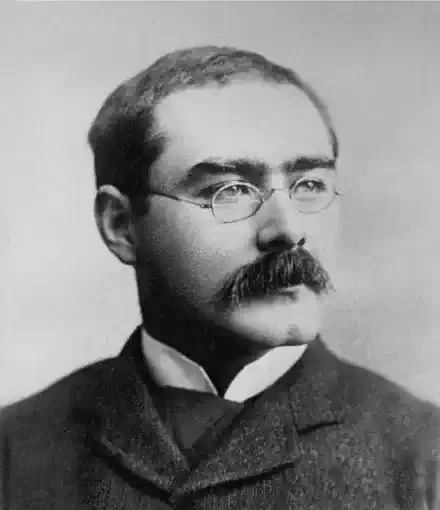
Rudyard Kipling
Mulholland's Contract
Mulholland's Contract
The fear was on the cattle, for the gale was on the sea,
An' the pens broke up on the lower deck an' let the creatures free --
An' the lights went out on the lower deck, an' no one near but me.
I had been singin' to them to keep 'em quiet there,
For the lower deck is the dangerousest, requirin' constant care,
An' give to me as the strongest man, though used to drink and swear.
I see my chance was certain of bein' horned or trod,
For the lower deck was packed with steers thicker'n peas in a pod,
An' more pens broke at every roll -- so I made a Contract with God.
An' by the terms of the Contract, as I have read the same,
If He got me to port alive I would exalt His Name,
An' praise His Holy Majesty till further orders came.
He saved me from the cattle an' He saved me from the sea,
For they found me 'tween two drownded ones where the roll had landed me --
An' a four-inch crack on top of my head, as crazy as could be.
But that were done by a stanchion, an' not by a bullock at all,
An' I lay still for seven weeks convalessing of the fall,
An' readin' the shiny Scripture texts in the Seaman's Hospital.
An' I spoke to God of our Contract, an' He says to my prayer:
"I never puts on My ministers no more than they can bear.
So back you go to the cattle-boats an' preach My Gospel there.
"For human life is chancy at any kind of trade,
But most of all, as well you know, when the steers are mad-afraid;
So you go back to the cattle-boats an' preach 'em as I've said.
"They must quit drinkin' an' swearin', they mustn't knife on a blow,
They must quit gamblin' their wages, and you must preach it so;
For now those boats are more like Hell than anything else I know."
I didn't want to do it, for I knew what I should get,
An' I wanted to preach Religion, handsome an' out of the wet,
But the Word of the Lord were lain on me, an' I done what I was set.
I have been smit an' bruis]\ed, as warned would be the case,
An' turned my cheek to the smiter exactly as Scripture says;
But following that, I knocked him down an' led him up to Grace.
An' we have preaching on Sundays whenever the sea is calm,
An' I use no knife or pistol an' I never take no harm,
For the Lord abideth back of me to guide my fighting arm.
An' I sign for four-pound-ten a month and save the money clear,
An' I am in charge of the lower deck, an' I never lose a steer;
An' I believe in Almighty God an' preach His Gospel here.
The skippers say I'm crazy, but I can prove 'em wrong,
For I am in charge of the lower deck with all that doth belong --
~Which they would not give to a lunatic, and the competition so strong!~
The fear was on the cattle, for the gale was on the sea,
An' the pens broke up on the lower deck an' let the creatures free --
An' the lights went out on the lower deck, an' no one near but me.
I had been singin' to them to keep 'em quiet there,
For the lower deck is the dangerousest, requirin' constant care,
An' give to me as the strongest man, though used to drink and swear.
I see my chance was certain of bein' horned or trod,
For the lower deck was packed with steers thicker'n peas in a pod,
An' more pens broke at every roll -- so I made a Contract with God.
An' by the terms of the Contract, as I have read the same,
If He got me to port alive I would exalt His Name,
An' praise His Holy Majesty till further orders came.
He saved me from the cattle an' He saved me from the sea,
For they found me 'tween two drownded ones where the roll had landed me --
An' a four-inch crack on top of my head, as crazy as could be.
But that were done by a stanchion, an' not by a bullock at all,
An' I lay still for seven weeks convalessing of the fall,
An' readin' the shiny Scripture texts in the Seaman's Hospital.
An' I spoke to God of our Contract, an' He says to my prayer:
"I never puts on My ministers no more than they can bear.
So back you go to the cattle-boats an' preach My Gospel there.
"For human life is chancy at any kind of trade,
But most of all, as well you know, when the steers are mad-afraid;
So you go back to the cattle-boats an' preach 'em as I've said.
"They must quit drinkin' an' swearin', they mustn't knife on a blow,
They must quit gamblin' their wages, and you must preach it so;
For now those boats are more like Hell than anything else I know."
I didn't want to do it, for I knew what I should get,
An' I wanted to preach Religion, handsome an' out of the wet,
But the Word of the Lord were lain on me, an' I done what I was set.
I have been smit an' bruis]\ed, as warned would be the case,
An' turned my cheek to the smiter exactly as Scripture says;
But following that, I knocked him down an' led him up to Grace.
An' we have preaching on Sundays whenever the sea is calm,
An' I use no knife or pistol an' I never take no harm,
For the Lord abideth back of me to guide my fighting arm.
An' I sign for four-pound-ten a month and save the money clear,
An' I am in charge of the lower deck, an' I never lose a steer;
An' I believe in Almighty God an' preach His Gospel here.
The skippers say I'm crazy, but I can prove 'em wrong,
For I am in charge of the lower deck with all that doth belong --
~Which they would not give to a lunatic, and the competition so strong!~
485
Rudyard Kipling
Mother o' Mine
Mother o' Mine
If I were hanged on the highest hill,
Mother o' mine, O mother o' mine!
I know whose love would follow me still,
Mother o' mine, O mother o' mine!
If I were drowned in the deepest sea,
Mother o' mine, O mother o' mine!
I know whose tears would come down to me,
Mother o' mine, O mother o' mine!
If I were damned of body and soul,
I know whose prayers would make me whole,
Mother o' mine, O mother o' mine!
If I were hanged on the highest hill,
Mother o' mine, O mother o' mine!
I know whose love would follow me still,
Mother o' mine, O mother o' mine!
If I were drowned in the deepest sea,
Mother o' mine, O mother o' mine!
I know whose tears would come down to me,
Mother o' mine, O mother o' mine!
If I were damned of body and soul,
I know whose prayers would make me whole,
Mother o' mine, O mother o' mine!
518
Rudyard Kipling
Mary, Pity Women!
Mary, Pity Women!
You call yourself a man,
For all you used to swear,
An' leave me, as you can,
My certain shame to bear?
I 'ear! You do not care --
You done the worst you know.
I 'ate you, grinnin' there. . . .
Ah, Gawd, I love you so!
Nice while it lasted, an' now it is over --
Tear out your 'eart an' good-bye to your lover!
What's the use o' grievin', when the mother that bore you
(Mary, pity women!) knew it all before you?
It aren't no false alarm,
The finish to your fun;
You -- you 'ave brung the 'arm,
An' I'm the ruined one;
An' now you'll off an' run
With some new fool in tow.
Your 'eart? You 'aven't none. . . .
Ah, Gawd, I love you so!
When a man is tired there is naught will bind 'im;
All 'e solemn promised 'e will shove be'ind 'im.
What's the good o' prayin' for The Wrath to strike 'im
(Mary, pity women!), when the rest are like 'im?
What 'ope for me or -- it?
What's left for us to do?
I've walked with men a bit,
But this -- but this is you.
So 'elp me Christ, it's true!
Where can I 'ide or go?
You coward through and through! . . .
Ah, Gawd, I love you so!
All the more you give 'em the less are they for givin' --
Love lies dead, an' you cannot kiss 'im livin'.
Down the road 'e led you there is no returnin'
(Mary, pity women!), but you're late in learnin'!
You'd like to treat me fair?
You can't, because we're pore?
We'd starve? What do I care!
We might, but ~this~ is shore!
I want the name -- no more --
The name, an' lines to show,
An' not to be an 'ore. . . .
Ah, Gawd, I love you so!
What's the good o' pleadin', when the mother that bore you
(Mary, pity women!) knew it all before you?
Sleep on 'is promises an' wake to your sorrow
(Mary, pity women!), for we sail to-morrow!
You call yourself a man,
For all you used to swear,
An' leave me, as you can,
My certain shame to bear?
I 'ear! You do not care --
You done the worst you know.
I 'ate you, grinnin' there. . . .
Ah, Gawd, I love you so!
Nice while it lasted, an' now it is over --
Tear out your 'eart an' good-bye to your lover!
What's the use o' grievin', when the mother that bore you
(Mary, pity women!) knew it all before you?
It aren't no false alarm,
The finish to your fun;
You -- you 'ave brung the 'arm,
An' I'm the ruined one;
An' now you'll off an' run
With some new fool in tow.
Your 'eart? You 'aven't none. . . .
Ah, Gawd, I love you so!
When a man is tired there is naught will bind 'im;
All 'e solemn promised 'e will shove be'ind 'im.
What's the good o' prayin' for The Wrath to strike 'im
(Mary, pity women!), when the rest are like 'im?
What 'ope for me or -- it?
What's left for us to do?
I've walked with men a bit,
But this -- but this is you.
So 'elp me Christ, it's true!
Where can I 'ide or go?
You coward through and through! . . .
Ah, Gawd, I love you so!
All the more you give 'em the less are they for givin' --
Love lies dead, an' you cannot kiss 'im livin'.
Down the road 'e led you there is no returnin'
(Mary, pity women!), but you're late in learnin'!
You'd like to treat me fair?
You can't, because we're pore?
We'd starve? What do I care!
We might, but ~this~ is shore!
I want the name -- no more --
The name, an' lines to show,
An' not to be an 'ore. . . .
Ah, Gawd, I love you so!
What's the good o' pleadin', when the mother that bore you
(Mary, pity women!) knew it all before you?
Sleep on 'is promises an' wake to your sorrow
(Mary, pity women!), for we sail to-morrow!
465
Rudyard Kipling
M'Andrew's Hymn
M'Andrew's Hymn
Lord, Thou hast made this world below the shadow of a dream,
An', taught by time, I tak' it so -- exceptin' always Steam.
From coupler-flange to spindle-guide I see Thy Hand, O God --
Predestination in the stride o' yon connectin'-rod.
John Calvin might ha' forged the same -- enorrmous, certain, slow --
Ay, wrought it in the furnace-flame -- ~my~ "Institutio".
I cannot get my sleep to-night; old bones are hard to please;
I'll stand the middle watch up here -- alone wi' God an' these
My engines, after ninety days o' race an' rack an' strain
Through all the seas of all Thy world, slam-bangin' home again.
Slam-bang too much -- they knock a wee -- the crosshead-gibs are loose;
But thirty thousand mile o' sea has gied them fair excuse. . . .
Fine, clear an' dark -- a full-draught breeze, wi' Ushant out o' sight,
An' Ferguson relievin' Hay. Old girl, ye'll walk to-night!
His wife's at Plymouth. . . . Seventy --
One -- Two -- Three since he began --
Three turns for Mistress Ferguson. . .and who's to blame the man?
There's none at any port for me, by drivin' fast or slow,
Since Elsie Campbell went to Thee, Lord, thirty years ago.
(The year the ~Sarah Sands~ was burned. Oh roads we used to tread,
Fra' Maryhill to Pollokshaws -- fra' Govan to Parkhead!)
Not but they're ceevil on the Board. Ye'll hear Sir Kenneth say:
"Good-morrn, M'Andrew! Back again? An' how's your bilge to-day?"
Miscallin' technicalities but handin' me my chair
To drink Madeira wi' three Earls -- the auld Fleet Engineer,
That started as a boiler-whelp -- when steam and he were low.
I mind the time we used to serve a broken pipe wi' tow.
Ten pound was all the pressure then -- Eh! Eh! -- a man wad drive;
An' here, our workin' gauges give one hunder fifty-five!
We're creepin' on wi' each new rig -- less weight an' larger power:
There'll be the loco-boiler next an' thirty knots an hour!
Thirty an' more. What I ha' seen since ocean-steam began
Leaves me no doot for the machine: but what about the man?
The man that counts, wi' all his runs, one million mile o' sea:
Four time the span from earth to moon. . . . How far, O Lord, from Thee?
That wast beside him night an' day. Ye mind my first typhoon?
It scoughed the skipper on his way to jock wi' the saloon.
Three feet were on the stokehold-floor -- just slappin' to an' fro --
An' cast me on a furnace-door. I have the marks to show.
Marks! I ha' marks o' more than burns -- deep in my soul an' black,
An' times like this, when things go smooth, my wickudness comes back.
The sins o' four and forty years, all up an' down the seas,
Clack an' repeat like valves half-fed. . . . Forgie's our trespasses.
Nights when I'd come on deck to mark, wi' envy in my gaze,
The couples kittlin' in the dark between the funnel stays;
Years when I raked the ports wi' pride to fill my cup o' wrong --
Judge not, O Lord, my steps aside at Gay Street in Hong-Kong!
Blot out the wastrel hours of mine in sin when I abode --
Jane Harrigan's an' Number Nine, The Reddick an' Grant Road!
An' waur than all -- my crownin' sin -- rank blasphemy an' wild.
I was not four and twenty then -- Ye wadna judge a child?
I'd seen the Tropics first that run -- new fruit, new smells, new air --
How could I tell -- blind-fou wi' sun -- the Deil was lurkin' there?
By day like playhouse-scenes the shore slid past our sleepy eyes;
By night those soft, lasceevious stars leered from those velvet skies,
In port (we used no cargo-steam) I'd daunder down the streets --
An ijjit grinnin' in a dream -- for shells an' parrakeets,
An' walkin'-sticks o' carved bamboo an' blowfish stuffed an' dried --
Fillin' my bunk wi' rubbishry the Chief put overside.
Till, off Sambawa Head, Ye mind, I heard a land-breeze ca',
Milk-warm wi' breath o' spice an' bloom: "M'Andrew, come awa'!"
Firm, clear an' low -- no haste, no hate -- the ghostly whisper went,
Just statin' eevidential facts beyon' all argument:
"Your mither's God's a graspin' deil, the shadow o' yoursel',
Got out o' books by meenisters clean daft on Heaven an' Hell.
They mak' Him in the Broomielaw, o' Glasgie cold an' dirt,
A jealous, pridefu' fetich, lad, that's only strong to hurt,
Ye'll not go back to Him again an' kiss His red-hot rod,
But come wi' Us" (Now, who were ~They~?) "an' know the Leevin' God,
That does not kipper souls for sport or break a life in jest,
But swells the ripenin' cocoanuts an' ripes the woman's breast."
An' there it stopped: cut off: no more; that quiet, certain voice --
For me, six months o' twenty-four, to leave or take at choice.
'Twas on me like a thunderclap -- it racked me through an' through --
Temptation past the show o' speech, unnameable an' new --
The Sin against the Holy Ghost? . . . An' under all, our screw.
That storm blew by but left behind her anchor-shiftin' swell,
Thou knowest all my heart an' mind, Thou knowest, Lord, I fell.
Third on the ~Mary Gloster~ then, and first that night in Hell!
Yet was Thy hand beneath my head, about my feet Thy care --
Fra' Deli clear to Torres Strait, the trial o' despair,
But when we touched the Barrier Reef Thy answer to my prayer!
We dared not run that sea by night but lay an' held our fire,
An' I was drowsin' on the hatch -- sick -- sick wi' doubt an' tire:
"~Better the sight of eyes that see than wanderin' o' desire!~"
Ye mind that word? Clear as our gongs -- again, an' once again,
When rippin' down through coral-trash ran out our moorin'-chain;
An' by Thy Grace I had the Light to see my duty plain.
Light on the engine-room -- no more -- bright as our carbons burn.
I've lost it since a thousand times, but never past return.
Obsairve. Per annum we'll have here two thousand souls aboard --
Think not I dare to justify myself before the Lord,
But -- average fifteen hunder souls safe-borne fra' port to port --
I ~am~ o' service to my kind. Ye wadna blame the thought?
Maybe they steam from grace to wrath -- to sin by folly led, --
It isna mine to judge their path -- their lives are on my head.
Mine at the last -- when all is done it all comes back to me,
The fault that leaves six thousand ton a log upon the sea.
We'll tak' one stretch -- three weeks an' odd by any road ye steer --
Fra' Cape Town east to Wellington -- ye need an engineer.
Fail there -- ye've time to weld your shaft -- ay, eat it, ere ye're spoke;
Or make Kerguelen under sail -- three jiggers burned wi' smoke!
An' home again, the Rio run: it's no child's play to go
Steamin' to bell for fourteen days o' snow an' floe an' blow --
The bergs like kelpies overside that girn an' turn an' shift
Whaur, grindin' like the Mills o' God, goes by the big South drift.
(Hail, snow an' ice that praise the Lord: I've met them at their work,
An' wished we had anither route or they anither kirk.)
Yon's strain, hard strain, o' head an' hand, for though Thy Power brings
All skill to naught, Ye'll understand a man must think o' things.
Then, at the last, we'll get to port an' hoist their baggage clear --
The passengers, wi' gloves an' canes -- an' this is what I'll hear:
"Well, thank ye for a pleasant voyage. The tender's comin' now."
While I go testin' follower-bolts an' watch the skipper bow.
They've words for every one but me -- shake hands wi' half the crew,
Except the dour Scots engineer, the man they never knew.
An' yet I like the wark for all we've dam' few pickin's here --
No pension, an' the most we earn's four hunder pound a year.
Better myself abroad? Maybe. ~I'd~ sooner starve than sail
Wi' such as call a snifter-rod ~ross~. . .French for nightingale.
Commeesion on my stores? Some do; but I can not afford
To lie like stewards wi' patty-pans --. I'm older than the Board.
A bonus on the coal I save? Ou ay, the Scots are close,
But when I grudge the strength Ye gave I'll grudge their food to ~those~.
(There's bricks that I might recommend -- an' clink the fire-bars cruel.
No! Welsh -- Wangarti at the worst -- an' damn all patent fuel!)
Inventions? Ye must stay in port to mak' a patent pay.
My Deeferential Valve-Gear taught me how that business lay,
I blame no chaps wi' clearer head for aught they make or sell.
~I~ found that I could not invent an' look to these -- as well.
So, wrestled wi' Apollyon -- Nah! -- fretted like a bairn --
But burned the workin'-plans last run wi' all I hoped to earn.
Ye know how hard an Idol dies, an' what that meant to me --
E'en tak' it for a sacrifice acceptable to Thee. . . .
~Below there! Oiler! What's your wark? Ye find it runnin' hard?
Ye needn't swill the cap wi' oil -- this isn't the Cunard!
Ye thought? Ye are not paid to think. Go, sweat that off again!~
Tck! Tck! It's deeficult to sweer nor tak' The Name in vain!
Men, ay an' women, call me stern. Wi' these to oversee
Ye'll note I've little time to burn on social repartee.
The bairns see what their elders miss; they'll hunt me to an' fro,
Till for the sake of -- well, a kiss -- I tak' 'em down below.
That minds me of our Viscount loon -- Sir Kenneth's kin -- the chap
Wi' Russia leather tennis-shoon an' spar-decked yachtin'-cap.
I showed him round last week, o'er all -- an' at the last says he:
"Mister M'Andrew, don't you think steam spoils romance at sea?"
Damned ijjit! I'd been doon that morn to see what ailed the throws,
Manholin', on my back -- the cranks three inches off my nose.
Romance! Those first-class passengers they like it very well,
Printed an' bound in little books; but why don't poets tell?
I'm sick of all their quirks an' turns -- the loves an' doves they dream --
Lord, send a man like Robbie Burns to sing the Song o' Steam!
To match wi' Scotia's noblest speech yon orchestra sublime
Whaurto -- uplifted like the Just -- the tail-rods mark the time.
The crank-throws give the double-bass, the feed-pump sobs an' heaves,
An' now the main eccentrics start their quarrel on the sheaves:
Her time, her own appointed time, the rocking link-head bides,
Till -- hear that note? -- the rod's return
whings glimmerin' through the guides.
They're all awa'! True beat, full power, the clangin' chorus goes
Clear to the tunnel where they sit, my purrin' dynamos.
Interdependence absolute, foreseen, ordained, decreed,
To work, Ye'll note, at any tilt an' every rate o' speed.
Fra' skylight-lift to furnace-bars, backed, bolted, braced an' stayed,
An' singin' like the Mornin' Stars for joy that they are made;
While, out o' touch o' vanity, the sweatin' thrust-block says:
"Not unto us the praise, or man -- not unto us the praise!"
Now, a' together, hear them lift their lesson -- theirs an' mine:
"Law, Orrder, Duty an' Restraint, Obedience, Discipline!"
Mill, forge an' try-pit taught them that when roarin' they arose,
An' whiles I wonder if a soul was gied them wi' the blows.
Oh for a man to weld it then, in one trip-hammer strain,
Till even first-class passengers could tell the meanin' plain!
But no one cares except mysel' that serve an' understand
My seven thousand horse-power here.
Eh, Lord! They're grand -- they're grand!
Uplift am I? When first in store the new-made beasties stood,
Were Ye cast down that breathed the Word declarin' all things good?
Not so! O' that warld-liftin' joy no after-fall could vex,
Ye've left a glimmer still to cheer the Man -- the Arrtifex!
~That~ holds, in spite o' knock and scale, o' friction, waste an' slip,
An' by that light -- now, mark my word -- we'll build the Perfect Ship.
I'll never last to judge her lines or take her curve -- not I.
But I ha' lived an' I ha' worked. 'Be thanks to Thee, Most High!
An' I ha' done what I ha' done -- judge Thou if ill or well --
Always Thy Grace preventin' me. . . .
Losh! Yon's the "Stand by" bell.
Pilot so soon? His flare it is. The mornin'-watch is set.
Well, God be thanked, as I was sayin', I'm no Pelagian yet.
Now I'll tak' on. . . .
~'Morrn, Ferguson. Man, have ye ever thought
What your good leddy costs in coal? . . . I'll burn 'em down to port.
Lord, Thou hast made this world below the shadow of a dream,
An', taught by time, I tak' it so -- exceptin' always Steam.
From coupler-flange to spindle-guide I see Thy Hand, O God --
Predestination in the stride o' yon connectin'-rod.
John Calvin might ha' forged the same -- enorrmous, certain, slow --
Ay, wrought it in the furnace-flame -- ~my~ "Institutio".
I cannot get my sleep to-night; old bones are hard to please;
I'll stand the middle watch up here -- alone wi' God an' these
My engines, after ninety days o' race an' rack an' strain
Through all the seas of all Thy world, slam-bangin' home again.
Slam-bang too much -- they knock a wee -- the crosshead-gibs are loose;
But thirty thousand mile o' sea has gied them fair excuse. . . .
Fine, clear an' dark -- a full-draught breeze, wi' Ushant out o' sight,
An' Ferguson relievin' Hay. Old girl, ye'll walk to-night!
His wife's at Plymouth. . . . Seventy --
One -- Two -- Three since he began --
Three turns for Mistress Ferguson. . .and who's to blame the man?
There's none at any port for me, by drivin' fast or slow,
Since Elsie Campbell went to Thee, Lord, thirty years ago.
(The year the ~Sarah Sands~ was burned. Oh roads we used to tread,
Fra' Maryhill to Pollokshaws -- fra' Govan to Parkhead!)
Not but they're ceevil on the Board. Ye'll hear Sir Kenneth say:
"Good-morrn, M'Andrew! Back again? An' how's your bilge to-day?"
Miscallin' technicalities but handin' me my chair
To drink Madeira wi' three Earls -- the auld Fleet Engineer,
That started as a boiler-whelp -- when steam and he were low.
I mind the time we used to serve a broken pipe wi' tow.
Ten pound was all the pressure then -- Eh! Eh! -- a man wad drive;
An' here, our workin' gauges give one hunder fifty-five!
We're creepin' on wi' each new rig -- less weight an' larger power:
There'll be the loco-boiler next an' thirty knots an hour!
Thirty an' more. What I ha' seen since ocean-steam began
Leaves me no doot for the machine: but what about the man?
The man that counts, wi' all his runs, one million mile o' sea:
Four time the span from earth to moon. . . . How far, O Lord, from Thee?
That wast beside him night an' day. Ye mind my first typhoon?
It scoughed the skipper on his way to jock wi' the saloon.
Three feet were on the stokehold-floor -- just slappin' to an' fro --
An' cast me on a furnace-door. I have the marks to show.
Marks! I ha' marks o' more than burns -- deep in my soul an' black,
An' times like this, when things go smooth, my wickudness comes back.
The sins o' four and forty years, all up an' down the seas,
Clack an' repeat like valves half-fed. . . . Forgie's our trespasses.
Nights when I'd come on deck to mark, wi' envy in my gaze,
The couples kittlin' in the dark between the funnel stays;
Years when I raked the ports wi' pride to fill my cup o' wrong --
Judge not, O Lord, my steps aside at Gay Street in Hong-Kong!
Blot out the wastrel hours of mine in sin when I abode --
Jane Harrigan's an' Number Nine, The Reddick an' Grant Road!
An' waur than all -- my crownin' sin -- rank blasphemy an' wild.
I was not four and twenty then -- Ye wadna judge a child?
I'd seen the Tropics first that run -- new fruit, new smells, new air --
How could I tell -- blind-fou wi' sun -- the Deil was lurkin' there?
By day like playhouse-scenes the shore slid past our sleepy eyes;
By night those soft, lasceevious stars leered from those velvet skies,
In port (we used no cargo-steam) I'd daunder down the streets --
An ijjit grinnin' in a dream -- for shells an' parrakeets,
An' walkin'-sticks o' carved bamboo an' blowfish stuffed an' dried --
Fillin' my bunk wi' rubbishry the Chief put overside.
Till, off Sambawa Head, Ye mind, I heard a land-breeze ca',
Milk-warm wi' breath o' spice an' bloom: "M'Andrew, come awa'!"
Firm, clear an' low -- no haste, no hate -- the ghostly whisper went,
Just statin' eevidential facts beyon' all argument:
"Your mither's God's a graspin' deil, the shadow o' yoursel',
Got out o' books by meenisters clean daft on Heaven an' Hell.
They mak' Him in the Broomielaw, o' Glasgie cold an' dirt,
A jealous, pridefu' fetich, lad, that's only strong to hurt,
Ye'll not go back to Him again an' kiss His red-hot rod,
But come wi' Us" (Now, who were ~They~?) "an' know the Leevin' God,
That does not kipper souls for sport or break a life in jest,
But swells the ripenin' cocoanuts an' ripes the woman's breast."
An' there it stopped: cut off: no more; that quiet, certain voice --
For me, six months o' twenty-four, to leave or take at choice.
'Twas on me like a thunderclap -- it racked me through an' through --
Temptation past the show o' speech, unnameable an' new --
The Sin against the Holy Ghost? . . . An' under all, our screw.
That storm blew by but left behind her anchor-shiftin' swell,
Thou knowest all my heart an' mind, Thou knowest, Lord, I fell.
Third on the ~Mary Gloster~ then, and first that night in Hell!
Yet was Thy hand beneath my head, about my feet Thy care --
Fra' Deli clear to Torres Strait, the trial o' despair,
But when we touched the Barrier Reef Thy answer to my prayer!
We dared not run that sea by night but lay an' held our fire,
An' I was drowsin' on the hatch -- sick -- sick wi' doubt an' tire:
"~Better the sight of eyes that see than wanderin' o' desire!~"
Ye mind that word? Clear as our gongs -- again, an' once again,
When rippin' down through coral-trash ran out our moorin'-chain;
An' by Thy Grace I had the Light to see my duty plain.
Light on the engine-room -- no more -- bright as our carbons burn.
I've lost it since a thousand times, but never past return.
Obsairve. Per annum we'll have here two thousand souls aboard --
Think not I dare to justify myself before the Lord,
But -- average fifteen hunder souls safe-borne fra' port to port --
I ~am~ o' service to my kind. Ye wadna blame the thought?
Maybe they steam from grace to wrath -- to sin by folly led, --
It isna mine to judge their path -- their lives are on my head.
Mine at the last -- when all is done it all comes back to me,
The fault that leaves six thousand ton a log upon the sea.
We'll tak' one stretch -- three weeks an' odd by any road ye steer --
Fra' Cape Town east to Wellington -- ye need an engineer.
Fail there -- ye've time to weld your shaft -- ay, eat it, ere ye're spoke;
Or make Kerguelen under sail -- three jiggers burned wi' smoke!
An' home again, the Rio run: it's no child's play to go
Steamin' to bell for fourteen days o' snow an' floe an' blow --
The bergs like kelpies overside that girn an' turn an' shift
Whaur, grindin' like the Mills o' God, goes by the big South drift.
(Hail, snow an' ice that praise the Lord: I've met them at their work,
An' wished we had anither route or they anither kirk.)
Yon's strain, hard strain, o' head an' hand, for though Thy Power brings
All skill to naught, Ye'll understand a man must think o' things.
Then, at the last, we'll get to port an' hoist their baggage clear --
The passengers, wi' gloves an' canes -- an' this is what I'll hear:
"Well, thank ye for a pleasant voyage. The tender's comin' now."
While I go testin' follower-bolts an' watch the skipper bow.
They've words for every one but me -- shake hands wi' half the crew,
Except the dour Scots engineer, the man they never knew.
An' yet I like the wark for all we've dam' few pickin's here --
No pension, an' the most we earn's four hunder pound a year.
Better myself abroad? Maybe. ~I'd~ sooner starve than sail
Wi' such as call a snifter-rod ~ross~. . .French for nightingale.
Commeesion on my stores? Some do; but I can not afford
To lie like stewards wi' patty-pans --. I'm older than the Board.
A bonus on the coal I save? Ou ay, the Scots are close,
But when I grudge the strength Ye gave I'll grudge their food to ~those~.
(There's bricks that I might recommend -- an' clink the fire-bars cruel.
No! Welsh -- Wangarti at the worst -- an' damn all patent fuel!)
Inventions? Ye must stay in port to mak' a patent pay.
My Deeferential Valve-Gear taught me how that business lay,
I blame no chaps wi' clearer head for aught they make or sell.
~I~ found that I could not invent an' look to these -- as well.
So, wrestled wi' Apollyon -- Nah! -- fretted like a bairn --
But burned the workin'-plans last run wi' all I hoped to earn.
Ye know how hard an Idol dies, an' what that meant to me --
E'en tak' it for a sacrifice acceptable to Thee. . . .
~Below there! Oiler! What's your wark? Ye find it runnin' hard?
Ye needn't swill the cap wi' oil -- this isn't the Cunard!
Ye thought? Ye are not paid to think. Go, sweat that off again!~
Tck! Tck! It's deeficult to sweer nor tak' The Name in vain!
Men, ay an' women, call me stern. Wi' these to oversee
Ye'll note I've little time to burn on social repartee.
The bairns see what their elders miss; they'll hunt me to an' fro,
Till for the sake of -- well, a kiss -- I tak' 'em down below.
That minds me of our Viscount loon -- Sir Kenneth's kin -- the chap
Wi' Russia leather tennis-shoon an' spar-decked yachtin'-cap.
I showed him round last week, o'er all -- an' at the last says he:
"Mister M'Andrew, don't you think steam spoils romance at sea?"
Damned ijjit! I'd been doon that morn to see what ailed the throws,
Manholin', on my back -- the cranks three inches off my nose.
Romance! Those first-class passengers they like it very well,
Printed an' bound in little books; but why don't poets tell?
I'm sick of all their quirks an' turns -- the loves an' doves they dream --
Lord, send a man like Robbie Burns to sing the Song o' Steam!
To match wi' Scotia's noblest speech yon orchestra sublime
Whaurto -- uplifted like the Just -- the tail-rods mark the time.
The crank-throws give the double-bass, the feed-pump sobs an' heaves,
An' now the main eccentrics start their quarrel on the sheaves:
Her time, her own appointed time, the rocking link-head bides,
Till -- hear that note? -- the rod's return
whings glimmerin' through the guides.
They're all awa'! True beat, full power, the clangin' chorus goes
Clear to the tunnel where they sit, my purrin' dynamos.
Interdependence absolute, foreseen, ordained, decreed,
To work, Ye'll note, at any tilt an' every rate o' speed.
Fra' skylight-lift to furnace-bars, backed, bolted, braced an' stayed,
An' singin' like the Mornin' Stars for joy that they are made;
While, out o' touch o' vanity, the sweatin' thrust-block says:
"Not unto us the praise, or man -- not unto us the praise!"
Now, a' together, hear them lift their lesson -- theirs an' mine:
"Law, Orrder, Duty an' Restraint, Obedience, Discipline!"
Mill, forge an' try-pit taught them that when roarin' they arose,
An' whiles I wonder if a soul was gied them wi' the blows.
Oh for a man to weld it then, in one trip-hammer strain,
Till even first-class passengers could tell the meanin' plain!
But no one cares except mysel' that serve an' understand
My seven thousand horse-power here.
Eh, Lord! They're grand -- they're grand!
Uplift am I? When first in store the new-made beasties stood,
Were Ye cast down that breathed the Word declarin' all things good?
Not so! O' that warld-liftin' joy no after-fall could vex,
Ye've left a glimmer still to cheer the Man -- the Arrtifex!
~That~ holds, in spite o' knock and scale, o' friction, waste an' slip,
An' by that light -- now, mark my word -- we'll build the Perfect Ship.
I'll never last to judge her lines or take her curve -- not I.
But I ha' lived an' I ha' worked. 'Be thanks to Thee, Most High!
An' I ha' done what I ha' done -- judge Thou if ill or well --
Always Thy Grace preventin' me. . . .
Losh! Yon's the "Stand by" bell.
Pilot so soon? His flare it is. The mornin'-watch is set.
Well, God be thanked, as I was sayin', I'm no Pelagian yet.
Now I'll tak' on. . . .
~'Morrn, Ferguson. Man, have ye ever thought
What your good leddy costs in coal? . . . I'll burn 'em down to port.
431
Rudyard Kipling
M'Andrew's Hymn
M'Andrew's Hymn
Lord, Thou hast made this world below the shadow of a dream,
An', taught by time, I tak' it so -- exceptin' always Steam.
From coupler-flange to spindle-guide I see Thy Hand, O God --
Predestination in the stride o' yon connectin'-rod.
John Calvin might ha' forged the same -- enorrmous, certain, slow --
Ay, wrought it in the furnace-flame -- ~my~ "Institutio".
I cannot get my sleep to-night; old bones are hard to please;
I'll stand the middle watch up here -- alone wi' God an' these
My engines, after ninety days o' race an' rack an' strain
Through all the seas of all Thy world, slam-bangin' home again.
Slam-bang too much -- they knock a wee -- the crosshead-gibs are loose;
But thirty thousand mile o' sea has gied them fair excuse. . . .
Fine, clear an' dark -- a full-draught breeze, wi' Ushant out o' sight,
An' Ferguson relievin' Hay. Old girl, ye'll walk to-night!
His wife's at Plymouth. . . . Seventy --
One -- Two -- Three since he began --
Three turns for Mistress Ferguson. . .and who's to blame the man?
There's none at any port for me, by drivin' fast or slow,
Since Elsie Campbell went to Thee, Lord, thirty years ago.
(The year the ~Sarah Sands~ was burned. Oh roads we used to tread,
Fra' Maryhill to Pollokshaws -- fra' Govan to Parkhead!)
Not but they're ceevil on the Board. Ye'll hear Sir Kenneth say:
"Good-morrn, M'Andrew! Back again? An' how's your bilge to-day?"
Miscallin' technicalities but handin' me my chair
To drink Madeira wi' three Earls -- the auld Fleet Engineer,
That started as a boiler-whelp -- when steam and he were low.
I mind the time we used to serve a broken pipe wi' tow.
Ten pound was all the pressure then -- Eh! Eh! -- a man wad drive;
An' here, our workin' gauges give one hunder fifty-five!
We're creepin' on wi' each new rig -- less weight an' larger power:
There'll be the loco-boiler next an' thirty knots an hour!
Thirty an' more. What I ha' seen since ocean-steam began
Leaves me no doot for the machine: but what about the man?
The man that counts, wi' all his runs, one million mile o' sea:
Four time the span from earth to moon. . . . How far, O Lord, from Thee?
That wast beside him night an' day. Ye mind my first typhoon?
It scoughed the skipper on his way to jock wi' the saloon.
Three feet were on the stokehold-floor -- just slappin' to an' fro --
An' cast me on a furnace-door. I have the marks to show.
Marks! I ha' marks o' more than burns -- deep in my soul an' black,
An' times like this, when things go smooth, my wickudness comes back.
The sins o' four and forty years, all up an' down the seas,
Clack an' repeat like valves half-fed. . . . Forgie's our trespasses.
Nights when I'd come on deck to mark, wi' envy in my gaze,
The couples kittlin' in the dark between the funnel stays;
Years when I raked the ports wi' pride to fill my cup o' wrong --
Judge not, O Lord, my steps aside at Gay Street in Hong-Kong!
Blot out the wastrel hours of mine in sin when I abode --
Jane Harrigan's an' Number Nine, The Reddick an' Grant Road!
An' waur than all -- my crownin' sin -- rank blasphemy an' wild.
I was not four and twenty then -- Ye wadna judge a child?
I'd seen the Tropics first that run -- new fruit, new smells, new air --
How could I tell -- blind-fou wi' sun -- the Deil was lurkin' there?
By day like playhouse-scenes the shore slid past our sleepy eyes;
By night those soft, lasceevious stars leered from those velvet skies,
In port (we used no cargo-steam) I'd daunder down the streets --
An ijjit grinnin' in a dream -- for shells an' parrakeets,
An' walkin'-sticks o' carved bamboo an' blowfish stuffed an' dried --
Fillin' my bunk wi' rubbishry the Chief put overside.
Till, off Sambawa Head, Ye mind, I heard a land-breeze ca',
Milk-warm wi' breath o' spice an' bloom: "M'Andrew, come awa'!"
Firm, clear an' low -- no haste, no hate -- the ghostly whisper went,
Just statin' eevidential facts beyon' all argument:
"Your mither's God's a graspin' deil, the shadow o' yoursel',
Got out o' books by meenisters clean daft on Heaven an' Hell.
They mak' Him in the Broomielaw, o' Glasgie cold an' dirt,
A jealous, pridefu' fetich, lad, that's only strong to hurt,
Ye'll not go back to Him again an' kiss His red-hot rod,
But come wi' Us" (Now, who were ~They~?) "an' know the Leevin' God,
That does not kipper souls for sport or break a life in jest,
But swells the ripenin' cocoanuts an' ripes the woman's breast."
An' there it stopped: cut off: no more; that quiet, certain voice --
For me, six months o' twenty-four, to leave or take at choice.
'Twas on me like a thunderclap -- it racked me through an' through --
Temptation past the show o' speech, unnameable an' new --
The Sin against the Holy Ghost? . . . An' under all, our screw.
That storm blew by but left behind her anchor-shiftin' swell,
Thou knowest all my heart an' mind, Thou knowest, Lord, I fell.
Third on the ~Mary Gloster~ then, and first that night in Hell!
Yet was Thy hand beneath my head, about my feet Thy care --
Fra' Deli clear to Torres Strait, the trial o' despair,
But when we touched the Barrier Reef Thy answer to my prayer!
We dared not run that sea by night but lay an' held our fire,
An' I was drowsin' on the hatch -- sick -- sick wi' doubt an' tire:
"~Better the sight of eyes that see than wanderin' o' desire!~"
Ye mind that word? Clear as our gongs -- again, an' once again,
When rippin' down through coral-trash ran out our moorin'-chain;
An' by Thy Grace I had the Light to see my duty plain.
Light on the engine-room -- no more -- bright as our carbons burn.
I've lost it since a thousand times, but never past return.
Obsairve. Per annum we'll have here two thousand souls aboard --
Think not I dare to justify myself before the Lord,
But -- average fifteen hunder souls safe-borne fra' port to port --
I ~am~ o' service to my kind. Ye wadna blame the thought?
Maybe they steam from grace to wrath -- to sin by folly led, --
It isna mine to judge their path -- their lives are on my head.
Mine at the last -- when all is done it all comes back to me,
The fault that leaves six thousand ton a log upon the sea.
We'll tak' one stretch -- three weeks an' odd by any road ye steer --
Fra' Cape Town east to Wellington -- ye need an engineer.
Fail there -- ye've time to weld your shaft -- ay, eat it, ere ye're spoke;
Or make Kerguelen under sail -- three jiggers burned wi' smoke!
An' home again, the Rio run: it's no child's play to go
Steamin' to bell for fourteen days o' snow an' floe an' blow --
The bergs like kelpies overside that girn an' turn an' shift
Whaur, grindin' like the Mills o' God, goes by the big South drift.
(Hail, snow an' ice that praise the Lord: I've met them at their work,
An' wished we had anither route or they anither kirk.)
Yon's strain, hard strain, o' head an' hand, for though Thy Power brings
All skill to naught, Ye'll understand a man must think o' things.
Then, at the last, we'll get to port an' hoist their baggage clear --
The passengers, wi' gloves an' canes -- an' this is what I'll hear:
"Well, thank ye for a pleasant voyage. The tender's comin' now."
While I go testin' follower-bolts an' watch the skipper bow.
They've words for every one but me -- shake hands wi' half the crew,
Except the dour Scots engineer, the man they never knew.
An' yet I like the wark for all we've dam' few pickin's here --
No pension, an' the most we earn's four hunder pound a year.
Better myself abroad? Maybe. ~I'd~ sooner starve than sail
Wi' such as call a snifter-rod ~ross~. . .French for nightingale.
Commeesion on my stores? Some do; but I can not afford
To lie like stewards wi' patty-pans --. I'm older than the Board.
A bonus on the coal I save? Ou ay, the Scots are close,
But when I grudge the strength Ye gave I'll grudge their food to ~those~.
(There's bricks that I might recommend -- an' clink the fire-bars cruel.
No! Welsh -- Wangarti at the worst -- an' damn all patent fuel!)
Inventions? Ye must stay in port to mak' a patent pay.
My Deeferential Valve-Gear taught me how that business lay,
I blame no chaps wi' clearer head for aught they make or sell.
~I~ found that I could not invent an' look to these -- as well.
So, wrestled wi' Apollyon -- Nah! -- fretted like a bairn --
But burned the workin'-plans last run wi' all I hoped to earn.
Ye know how hard an Idol dies, an' what that meant to me --
E'en tak' it for a sacrifice acceptable to Thee. . . .
~Below there! Oiler! What's your wark? Ye find it runnin' hard?
Ye needn't swill the cap wi' oil -- this isn't the Cunard!
Ye thought? Ye are not paid to think. Go, sweat that off again!~
Tck! Tck! It's deeficult to sweer nor tak' The Name in vain!
Men, ay an' women, call me stern. Wi' these to oversee
Ye'll note I've little time to burn on social repartee.
The bairns see what their elders miss; they'll hunt me to an' fro,
Till for the sake of -- well, a kiss -- I tak' 'em down below.
That minds me of our Viscount loon -- Sir Kenneth's kin -- the chap
Wi' Russia leather tennis-shoon an' spar-decked yachtin'-cap.
I showed him round last week, o'er all -- an' at the last says he:
"Mister M'Andrew, don't you think steam spoils romance at sea?"
Damned ijjit! I'd been doon that morn to see what ailed the throws,
Manholin', on my back -- the cranks three inches off my nose.
Romance! Those first-class passengers they like it very well,
Printed an' bound in little books; but why don't poets tell?
I'm sick of all their quirks an' turns -- the loves an' doves they dream --
Lord, send a man like Robbie Burns to sing the Song o' Steam!
To match wi' Scotia's noblest speech yon orchestra sublime
Whaurto -- uplifted like the Just -- the tail-rods mark the time.
The crank-throws give the double-bass, the feed-pump sobs an' heaves,
An' now the main eccentrics start their quarrel on the sheaves:
Her time, her own appointed time, the rocking link-head bides,
Till -- hear that note? -- the rod's return
whings glimmerin' through the guides.
They're all awa'! True beat, full power, the clangin' chorus goes
Clear to the tunnel where they sit, my purrin' dynamos.
Interdependence absolute, foreseen, ordained, decreed,
To work, Ye'll note, at any tilt an' every rate o' speed.
Fra' skylight-lift to furnace-bars, backed, bolted, braced an' stayed,
An' singin' like the Mornin' Stars for joy that they are made;
While, out o' touch o' vanity, the sweatin' thrust-block says:
"Not unto us the praise, or man -- not unto us the praise!"
Now, a' together, hear them lift their lesson -- theirs an' mine:
"Law, Orrder, Duty an' Restraint, Obedience, Discipline!"
Mill, forge an' try-pit taught them that when roarin' they arose,
An' whiles I wonder if a soul was gied them wi' the blows.
Oh for a man to weld it then, in one trip-hammer strain,
Till even first-class passengers could tell the meanin' plain!
But no one cares except mysel' that serve an' understand
My seven thousand horse-power here.
Eh, Lord! They're grand -- they're grand!
Uplift am I? When first in store the new-made beasties stood,
Were Ye cast down that breathed the Word declarin' all things good?
Not so! O' that warld-liftin' joy no after-fall could vex,
Ye've left a glimmer still to cheer the Man -- the Arrtifex!
~That~ holds, in spite o' knock and scale, o' friction, waste an' slip,
An' by that light -- now, mark my word -- we'll build the Perfect Ship.
I'll never last to judge her lines or take her curve -- not I.
But I ha' lived an' I ha' worked. 'Be thanks to Thee, Most High!
An' I ha' done what I ha' done -- judge Thou if ill or well --
Always Thy Grace preventin' me. . . .
Losh! Yon's the "Stand by" bell.
Pilot so soon? His flare it is. The mornin'-watch is set.
Well, God be thanked, as I was sayin', I'm no Pelagian yet.
Now I'll tak' on. . . .
~'Morrn, Ferguson. Man, have ye ever thought
What your good leddy costs in coal? . . . I'll burn 'em down to port.
Lord, Thou hast made this world below the shadow of a dream,
An', taught by time, I tak' it so -- exceptin' always Steam.
From coupler-flange to spindle-guide I see Thy Hand, O God --
Predestination in the stride o' yon connectin'-rod.
John Calvin might ha' forged the same -- enorrmous, certain, slow --
Ay, wrought it in the furnace-flame -- ~my~ "Institutio".
I cannot get my sleep to-night; old bones are hard to please;
I'll stand the middle watch up here -- alone wi' God an' these
My engines, after ninety days o' race an' rack an' strain
Through all the seas of all Thy world, slam-bangin' home again.
Slam-bang too much -- they knock a wee -- the crosshead-gibs are loose;
But thirty thousand mile o' sea has gied them fair excuse. . . .
Fine, clear an' dark -- a full-draught breeze, wi' Ushant out o' sight,
An' Ferguson relievin' Hay. Old girl, ye'll walk to-night!
His wife's at Plymouth. . . . Seventy --
One -- Two -- Three since he began --
Three turns for Mistress Ferguson. . .and who's to blame the man?
There's none at any port for me, by drivin' fast or slow,
Since Elsie Campbell went to Thee, Lord, thirty years ago.
(The year the ~Sarah Sands~ was burned. Oh roads we used to tread,
Fra' Maryhill to Pollokshaws -- fra' Govan to Parkhead!)
Not but they're ceevil on the Board. Ye'll hear Sir Kenneth say:
"Good-morrn, M'Andrew! Back again? An' how's your bilge to-day?"
Miscallin' technicalities but handin' me my chair
To drink Madeira wi' three Earls -- the auld Fleet Engineer,
That started as a boiler-whelp -- when steam and he were low.
I mind the time we used to serve a broken pipe wi' tow.
Ten pound was all the pressure then -- Eh! Eh! -- a man wad drive;
An' here, our workin' gauges give one hunder fifty-five!
We're creepin' on wi' each new rig -- less weight an' larger power:
There'll be the loco-boiler next an' thirty knots an hour!
Thirty an' more. What I ha' seen since ocean-steam began
Leaves me no doot for the machine: but what about the man?
The man that counts, wi' all his runs, one million mile o' sea:
Four time the span from earth to moon. . . . How far, O Lord, from Thee?
That wast beside him night an' day. Ye mind my first typhoon?
It scoughed the skipper on his way to jock wi' the saloon.
Three feet were on the stokehold-floor -- just slappin' to an' fro --
An' cast me on a furnace-door. I have the marks to show.
Marks! I ha' marks o' more than burns -- deep in my soul an' black,
An' times like this, when things go smooth, my wickudness comes back.
The sins o' four and forty years, all up an' down the seas,
Clack an' repeat like valves half-fed. . . . Forgie's our trespasses.
Nights when I'd come on deck to mark, wi' envy in my gaze,
The couples kittlin' in the dark between the funnel stays;
Years when I raked the ports wi' pride to fill my cup o' wrong --
Judge not, O Lord, my steps aside at Gay Street in Hong-Kong!
Blot out the wastrel hours of mine in sin when I abode --
Jane Harrigan's an' Number Nine, The Reddick an' Grant Road!
An' waur than all -- my crownin' sin -- rank blasphemy an' wild.
I was not four and twenty then -- Ye wadna judge a child?
I'd seen the Tropics first that run -- new fruit, new smells, new air --
How could I tell -- blind-fou wi' sun -- the Deil was lurkin' there?
By day like playhouse-scenes the shore slid past our sleepy eyes;
By night those soft, lasceevious stars leered from those velvet skies,
In port (we used no cargo-steam) I'd daunder down the streets --
An ijjit grinnin' in a dream -- for shells an' parrakeets,
An' walkin'-sticks o' carved bamboo an' blowfish stuffed an' dried --
Fillin' my bunk wi' rubbishry the Chief put overside.
Till, off Sambawa Head, Ye mind, I heard a land-breeze ca',
Milk-warm wi' breath o' spice an' bloom: "M'Andrew, come awa'!"
Firm, clear an' low -- no haste, no hate -- the ghostly whisper went,
Just statin' eevidential facts beyon' all argument:
"Your mither's God's a graspin' deil, the shadow o' yoursel',
Got out o' books by meenisters clean daft on Heaven an' Hell.
They mak' Him in the Broomielaw, o' Glasgie cold an' dirt,
A jealous, pridefu' fetich, lad, that's only strong to hurt,
Ye'll not go back to Him again an' kiss His red-hot rod,
But come wi' Us" (Now, who were ~They~?) "an' know the Leevin' God,
That does not kipper souls for sport or break a life in jest,
But swells the ripenin' cocoanuts an' ripes the woman's breast."
An' there it stopped: cut off: no more; that quiet, certain voice --
For me, six months o' twenty-four, to leave or take at choice.
'Twas on me like a thunderclap -- it racked me through an' through --
Temptation past the show o' speech, unnameable an' new --
The Sin against the Holy Ghost? . . . An' under all, our screw.
That storm blew by but left behind her anchor-shiftin' swell,
Thou knowest all my heart an' mind, Thou knowest, Lord, I fell.
Third on the ~Mary Gloster~ then, and first that night in Hell!
Yet was Thy hand beneath my head, about my feet Thy care --
Fra' Deli clear to Torres Strait, the trial o' despair,
But when we touched the Barrier Reef Thy answer to my prayer!
We dared not run that sea by night but lay an' held our fire,
An' I was drowsin' on the hatch -- sick -- sick wi' doubt an' tire:
"~Better the sight of eyes that see than wanderin' o' desire!~"
Ye mind that word? Clear as our gongs -- again, an' once again,
When rippin' down through coral-trash ran out our moorin'-chain;
An' by Thy Grace I had the Light to see my duty plain.
Light on the engine-room -- no more -- bright as our carbons burn.
I've lost it since a thousand times, but never past return.
Obsairve. Per annum we'll have here two thousand souls aboard --
Think not I dare to justify myself before the Lord,
But -- average fifteen hunder souls safe-borne fra' port to port --
I ~am~ o' service to my kind. Ye wadna blame the thought?
Maybe they steam from grace to wrath -- to sin by folly led, --
It isna mine to judge their path -- their lives are on my head.
Mine at the last -- when all is done it all comes back to me,
The fault that leaves six thousand ton a log upon the sea.
We'll tak' one stretch -- three weeks an' odd by any road ye steer --
Fra' Cape Town east to Wellington -- ye need an engineer.
Fail there -- ye've time to weld your shaft -- ay, eat it, ere ye're spoke;
Or make Kerguelen under sail -- three jiggers burned wi' smoke!
An' home again, the Rio run: it's no child's play to go
Steamin' to bell for fourteen days o' snow an' floe an' blow --
The bergs like kelpies overside that girn an' turn an' shift
Whaur, grindin' like the Mills o' God, goes by the big South drift.
(Hail, snow an' ice that praise the Lord: I've met them at their work,
An' wished we had anither route or they anither kirk.)
Yon's strain, hard strain, o' head an' hand, for though Thy Power brings
All skill to naught, Ye'll understand a man must think o' things.
Then, at the last, we'll get to port an' hoist their baggage clear --
The passengers, wi' gloves an' canes -- an' this is what I'll hear:
"Well, thank ye for a pleasant voyage. The tender's comin' now."
While I go testin' follower-bolts an' watch the skipper bow.
They've words for every one but me -- shake hands wi' half the crew,
Except the dour Scots engineer, the man they never knew.
An' yet I like the wark for all we've dam' few pickin's here --
No pension, an' the most we earn's four hunder pound a year.
Better myself abroad? Maybe. ~I'd~ sooner starve than sail
Wi' such as call a snifter-rod ~ross~. . .French for nightingale.
Commeesion on my stores? Some do; but I can not afford
To lie like stewards wi' patty-pans --. I'm older than the Board.
A bonus on the coal I save? Ou ay, the Scots are close,
But when I grudge the strength Ye gave I'll grudge their food to ~those~.
(There's bricks that I might recommend -- an' clink the fire-bars cruel.
No! Welsh -- Wangarti at the worst -- an' damn all patent fuel!)
Inventions? Ye must stay in port to mak' a patent pay.
My Deeferential Valve-Gear taught me how that business lay,
I blame no chaps wi' clearer head for aught they make or sell.
~I~ found that I could not invent an' look to these -- as well.
So, wrestled wi' Apollyon -- Nah! -- fretted like a bairn --
But burned the workin'-plans last run wi' all I hoped to earn.
Ye know how hard an Idol dies, an' what that meant to me --
E'en tak' it for a sacrifice acceptable to Thee. . . .
~Below there! Oiler! What's your wark? Ye find it runnin' hard?
Ye needn't swill the cap wi' oil -- this isn't the Cunard!
Ye thought? Ye are not paid to think. Go, sweat that off again!~
Tck! Tck! It's deeficult to sweer nor tak' The Name in vain!
Men, ay an' women, call me stern. Wi' these to oversee
Ye'll note I've little time to burn on social repartee.
The bairns see what their elders miss; they'll hunt me to an' fro,
Till for the sake of -- well, a kiss -- I tak' 'em down below.
That minds me of our Viscount loon -- Sir Kenneth's kin -- the chap
Wi' Russia leather tennis-shoon an' spar-decked yachtin'-cap.
I showed him round last week, o'er all -- an' at the last says he:
"Mister M'Andrew, don't you think steam spoils romance at sea?"
Damned ijjit! I'd been doon that morn to see what ailed the throws,
Manholin', on my back -- the cranks three inches off my nose.
Romance! Those first-class passengers they like it very well,
Printed an' bound in little books; but why don't poets tell?
I'm sick of all their quirks an' turns -- the loves an' doves they dream --
Lord, send a man like Robbie Burns to sing the Song o' Steam!
To match wi' Scotia's noblest speech yon orchestra sublime
Whaurto -- uplifted like the Just -- the tail-rods mark the time.
The crank-throws give the double-bass, the feed-pump sobs an' heaves,
An' now the main eccentrics start their quarrel on the sheaves:
Her time, her own appointed time, the rocking link-head bides,
Till -- hear that note? -- the rod's return
whings glimmerin' through the guides.
They're all awa'! True beat, full power, the clangin' chorus goes
Clear to the tunnel where they sit, my purrin' dynamos.
Interdependence absolute, foreseen, ordained, decreed,
To work, Ye'll note, at any tilt an' every rate o' speed.
Fra' skylight-lift to furnace-bars, backed, bolted, braced an' stayed,
An' singin' like the Mornin' Stars for joy that they are made;
While, out o' touch o' vanity, the sweatin' thrust-block says:
"Not unto us the praise, or man -- not unto us the praise!"
Now, a' together, hear them lift their lesson -- theirs an' mine:
"Law, Orrder, Duty an' Restraint, Obedience, Discipline!"
Mill, forge an' try-pit taught them that when roarin' they arose,
An' whiles I wonder if a soul was gied them wi' the blows.
Oh for a man to weld it then, in one trip-hammer strain,
Till even first-class passengers could tell the meanin' plain!
But no one cares except mysel' that serve an' understand
My seven thousand horse-power here.
Eh, Lord! They're grand -- they're grand!
Uplift am I? When first in store the new-made beasties stood,
Were Ye cast down that breathed the Word declarin' all things good?
Not so! O' that warld-liftin' joy no after-fall could vex,
Ye've left a glimmer still to cheer the Man -- the Arrtifex!
~That~ holds, in spite o' knock and scale, o' friction, waste an' slip,
An' by that light -- now, mark my word -- we'll build the Perfect Ship.
I'll never last to judge her lines or take her curve -- not I.
But I ha' lived an' I ha' worked. 'Be thanks to Thee, Most High!
An' I ha' done what I ha' done -- judge Thou if ill or well --
Always Thy Grace preventin' me. . . .
Losh! Yon's the "Stand by" bell.
Pilot so soon? His flare it is. The mornin'-watch is set.
Well, God be thanked, as I was sayin', I'm no Pelagian yet.
Now I'll tak' on. . . .
~'Morrn, Ferguson. Man, have ye ever thought
What your good leddy costs in coal? . . . I'll burn 'em down to port.
431
Rudyard Kipling
Lord Roberts
Lord Roberts
He passed in the very battle-smoke
Of the war that he had descried.
Three hundred mile of cannon spoke
When the Master-Gunner died.
He passed to the very sound of the guns;
But, before his eye grew dim,
He had seen the faces of the sons
Whose sires had served with him,
He had touched their sword-hilts and greeted
With the old sure word of praise;
And there was virtue in touch and speech
As it had been in old days.
So he dismissed them and took his rest,
And the steadfast spirit went forth
Between the adoring East and West
And the tireless guns of the North.
Clean, simple, valiant, well-beloved,
Flawless in faith and fame,
Whom neither ease nor honours moved
An hair's-breadth from his aim.
Never again the war-wise face,
The weighed and urgent word
That pleaded in the market-place-
Pleaded and was not heard!
Yet from his life a new life springs
Through all the hosts to come,
And Glory is the least of things
That follow this man home.
He passed in the very battle-smoke
Of the war that he had descried.
Three hundred mile of cannon spoke
When the Master-Gunner died.
He passed to the very sound of the guns;
But, before his eye grew dim,
He had seen the faces of the sons
Whose sires had served with him,
He had touched their sword-hilts and greeted
With the old sure word of praise;
And there was virtue in touch and speech
As it had been in old days.
So he dismissed them and took his rest,
And the steadfast spirit went forth
Between the adoring East and West
And the tireless guns of the North.
Clean, simple, valiant, well-beloved,
Flawless in faith and fame,
Whom neither ease nor honours moved
An hair's-breadth from his aim.
Never again the war-wise face,
The weighed and urgent word
That pleaded in the market-place-
Pleaded and was not heard!
Yet from his life a new life springs
Through all the hosts to come,
And Glory is the least of things
That follow this man home.
432
Rudyard Kipling
Late Came the God
Late Came the God
Late came the God, having sent his forerunners who were
not regarded--
Late, but in wrath;
Saying: "The wrong shall be paid, the contempt be rewarded
On all that she hath."
He poisoned the blade and struck home, the full bosom receiving
The wound and the venom in one, past cure or relieving.
He made treaty with Time to stand still that the grief might
be fresh--
Daily renewed and nightly pursued through her soul to her
flesh--
Mornings of memory, noontides of agony, midnights unslaked
for her,
Till the stones of the streets of her Hells and her Paradise ached
for her.
So she lived while her body corrupted upon her.
And she called on the Night for a sign, and a Sign was allowed,
And she builded an Altar and served by the light of her Vision--
Alone, without hope of regard or reward, but uncowed,
Resolute, selfless, divine.
These things she did in Love's honour...
What is a God beside Woman? Dust and derision!
Late came the God, having sent his forerunners who were
not regarded--
Late, but in wrath;
Saying: "The wrong shall be paid, the contempt be rewarded
On all that she hath."
He poisoned the blade and struck home, the full bosom receiving
The wound and the venom in one, past cure or relieving.
He made treaty with Time to stand still that the grief might
be fresh--
Daily renewed and nightly pursued through her soul to her
flesh--
Mornings of memory, noontides of agony, midnights unslaked
for her,
Till the stones of the streets of her Hells and her Paradise ached
for her.
So she lived while her body corrupted upon her.
And she called on the Night for a sign, and a Sign was allowed,
And she builded an Altar and served by the light of her Vision--
Alone, without hope of regard or reward, but uncowed,
Resolute, selfless, divine.
These things she did in Love's honour...
What is a God beside Woman? Dust and derision!
477
Rudyard Kipling
Late Came the God
Late Came the God
Late came the God, having sent his forerunners who were
not regarded--
Late, but in wrath;
Saying: "The wrong shall be paid, the contempt be rewarded
On all that she hath."
He poisoned the blade and struck home, the full bosom receiving
The wound and the venom in one, past cure or relieving.
He made treaty with Time to stand still that the grief might
be fresh--
Daily renewed and nightly pursued through her soul to her
flesh--
Mornings of memory, noontides of agony, midnights unslaked
for her,
Till the stones of the streets of her Hells and her Paradise ached
for her.
So she lived while her body corrupted upon her.
And she called on the Night for a sign, and a Sign was allowed,
And she builded an Altar and served by the light of her Vision--
Alone, without hope of regard or reward, but uncowed,
Resolute, selfless, divine.
These things she did in Love's honour...
What is a God beside Woman? Dust and derision!
Late came the God, having sent his forerunners who were
not regarded--
Late, but in wrath;
Saying: "The wrong shall be paid, the contempt be rewarded
On all that she hath."
He poisoned the blade and struck home, the full bosom receiving
The wound and the venom in one, past cure or relieving.
He made treaty with Time to stand still that the grief might
be fresh--
Daily renewed and nightly pursued through her soul to her
flesh--
Mornings of memory, noontides of agony, midnights unslaked
for her,
Till the stones of the streets of her Hells and her Paradise ached
for her.
So she lived while her body corrupted upon her.
And she called on the Night for a sign, and a Sign was allowed,
And she builded an Altar and served by the light of her Vision--
Alone, without hope of regard or reward, but uncowed,
Resolute, selfless, divine.
These things she did in Love's honour...
What is a God beside Woman? Dust and derision!
477
Rudyard Kipling
L'envoi To Life's Handicap
L'envoi To "Life's Handicap"
My new-cut ashlar takes the light
Where crimson-blank the windows flare;
By my own work, before the night,
Great Overseer I make my prayer.
If there be good in that I wrought,
Thy hand compelled it, Master, Thine;
Where I have failed to meet Thy thought
I know, through Thee, the blame is mine.
One instant's toil to Thee denied
Stands all Eternity's offence,
Of that I did with Thee to guide
To Thee, through Thee, be excellence.
Who, lest all thought of Eden fade,
Bring'st Eden to the craftsman's brain,
Godlike to muse o'er his own trade
And Manlike stand with God again.
The depth and dream of my desire,
The bitter paths wherein I stray,
Thou knowest Who hast made the Fire,
Thou knowest Who hast made the Clay!
One stone the more swings to her place
In that dread Temple of Thy Worth --
It is enough that through Thy grace
I saw naught common on Thy earth.
Take not that vision from my ken;
Oh whatsoe'er may spoil or speed,
Help me to need no aid from men
That I may help such men as need!
My new-cut ashlar takes the light
Where crimson-blank the windows flare;
By my own work, before the night,
Great Overseer I make my prayer.
If there be good in that I wrought,
Thy hand compelled it, Master, Thine;
Where I have failed to meet Thy thought
I know, through Thee, the blame is mine.
One instant's toil to Thee denied
Stands all Eternity's offence,
Of that I did with Thee to guide
To Thee, through Thee, be excellence.
Who, lest all thought of Eden fade,
Bring'st Eden to the craftsman's brain,
Godlike to muse o'er his own trade
And Manlike stand with God again.
The depth and dream of my desire,
The bitter paths wherein I stray,
Thou knowest Who hast made the Fire,
Thou knowest Who hast made the Clay!
One stone the more swings to her place
In that dread Temple of Thy Worth --
It is enough that through Thy grace
I saw naught common on Thy earth.
Take not that vision from my ken;
Oh whatsoe'er may spoil or speed,
Help me to need no aid from men
That I may help such men as need!
459
Rudyard Kipling
La Nuit Blanche
La Nuit Blanche
A much-discerning Public hold
The Singer generally sings
And prints and sells his past for gold.
Whatever I may here disclaim,
The very clever folk I sing to
Will most indubitably cling to
Their pet delusion, just the same.
I had seen, as the dawn was breaking
And I staggered to my rest,
Tari Devi softly shaking
From the Cart Road to the crest.
I had seen the spurs of Jakko
Heave and quiver, swell and sink.
Was it Earthquake or tobacco,
Day of Doom, or Night of Drink?
In the full, fresh fragrant morning
I observed a camel crawl,
Laws of gravitation scorning,
On the ceiling and the wall;
Then I watched a fender walking,
And I heard grey leeches sing,
And a red-hot monkey talking
Did not seem the proper thing.
Then a Creature, skinned and crimson,
Ran about the floor and cried,
And they said that I had the "jims" on,
And they dosed me with bromide,
And they locked me in my bedroom --
Me and one wee Blood Red Mouse --
Though I said: "To give my head room
You had best unroof the house."
But my words were all unheeded,
Though I told the grave M.D.
That the treatment really needed
Was a dip in open sea
That was lapping just below me,
Smooth as silver, white as snow,
And it took three men to throw me
When I found I could not go.
Half the night I watched the Heavens
Fizz like ' champagne --
Fly to sixes and to sevens,
Wheel and thunder back again;
And when all was peace and order
Save one planet nailed askew,
Much I wept because my warder
Would not let me sit it true.
After frenzied hours of wating,
When the Earth and Skies were dumb,
Pealed an awful voice dictating
An interminable sum,
Changing to a tangle story --
"What she said you said I said" --
Till the Moon arose in glory,
And I found her . . . in my head;
Then a Face came, blind and weeping,
And It couldn't wipe its eyes,
And It muttered I was keeping
Back the moonlight from the skies;
So I patted it for pity,
But it whistled shrill with wrath,
And a huge black Devil City
Poured its peoples on my path.
So I fled with steps uncertain
On a thousand-year long race,
But the bellying of the curtain
Kept me always in one place;
While the tumult rose and maddened
To the roar of Earth on fire,
Ere it ebbed and sank and saddened
To a whisper tense as wire.
In tolerable stillness
Rose one little, little star,
And it chuckled at my illness,
And it mocked me from afar;
And its breathren came and eyed me,
Called the Universe to aid,
Till I lay, with naught to hide me,
'Neath' the Scorn of All Things Made.
Dun and saffron, robed and splendid,
Broke the solemn, pitying Day,
And I knew my pains were ended,
And I turned and tried to pray;
But my speech was shattered wholly,
And I wept as children weep.
Till the dawn-wind, softly, slowly,
Brought to burning eyelids sleep.
A much-discerning Public hold
The Singer generally sings
And prints and sells his past for gold.
Whatever I may here disclaim,
The very clever folk I sing to
Will most indubitably cling to
Their pet delusion, just the same.
I had seen, as the dawn was breaking
And I staggered to my rest,
Tari Devi softly shaking
From the Cart Road to the crest.
I had seen the spurs of Jakko
Heave and quiver, swell and sink.
Was it Earthquake or tobacco,
Day of Doom, or Night of Drink?
In the full, fresh fragrant morning
I observed a camel crawl,
Laws of gravitation scorning,
On the ceiling and the wall;
Then I watched a fender walking,
And I heard grey leeches sing,
And a red-hot monkey talking
Did not seem the proper thing.
Then a Creature, skinned and crimson,
Ran about the floor and cried,
And they said that I had the "jims" on,
And they dosed me with bromide,
And they locked me in my bedroom --
Me and one wee Blood Red Mouse --
Though I said: "To give my head room
You had best unroof the house."
But my words were all unheeded,
Though I told the grave M.D.
That the treatment really needed
Was a dip in open sea
That was lapping just below me,
Smooth as silver, white as snow,
And it took three men to throw me
When I found I could not go.
Half the night I watched the Heavens
Fizz like ' champagne --
Fly to sixes and to sevens,
Wheel and thunder back again;
And when all was peace and order
Save one planet nailed askew,
Much I wept because my warder
Would not let me sit it true.
After frenzied hours of wating,
When the Earth and Skies were dumb,
Pealed an awful voice dictating
An interminable sum,
Changing to a tangle story --
"What she said you said I said" --
Till the Moon arose in glory,
And I found her . . . in my head;
Then a Face came, blind and weeping,
And It couldn't wipe its eyes,
And It muttered I was keeping
Back the moonlight from the skies;
So I patted it for pity,
But it whistled shrill with wrath,
And a huge black Devil City
Poured its peoples on my path.
So I fled with steps uncertain
On a thousand-year long race,
But the bellying of the curtain
Kept me always in one place;
While the tumult rose and maddened
To the roar of Earth on fire,
Ere it ebbed and sank and saddened
To a whisper tense as wire.
In tolerable stillness
Rose one little, little star,
And it chuckled at my illness,
And it mocked me from afar;
And its breathren came and eyed me,
Called the Universe to aid,
Till I lay, with naught to hide me,
'Neath' the Scorn of All Things Made.
Dun and saffron, robed and splendid,
Broke the solemn, pitying Day,
And I knew my pains were ended,
And I turned and tried to pray;
But my speech was shattered wholly,
And I wept as children weep.
Till the dawn-wind, softly, slowly,
Brought to burning eyelids sleep.
576
Rudyard Kipling
La Nuit Blanche
La Nuit Blanche
A much-discerning Public hold
The Singer generally sings
And prints and sells his past for gold.
Whatever I may here disclaim,
The very clever folk I sing to
Will most indubitably cling to
Their pet delusion, just the same.
I had seen, as the dawn was breaking
And I staggered to my rest,
Tari Devi softly shaking
From the Cart Road to the crest.
I had seen the spurs of Jakko
Heave and quiver, swell and sink.
Was it Earthquake or tobacco,
Day of Doom, or Night of Drink?
In the full, fresh fragrant morning
I observed a camel crawl,
Laws of gravitation scorning,
On the ceiling and the wall;
Then I watched a fender walking,
And I heard grey leeches sing,
And a red-hot monkey talking
Did not seem the proper thing.
Then a Creature, skinned and crimson,
Ran about the floor and cried,
And they said that I had the "jims" on,
And they dosed me with bromide,
And they locked me in my bedroom --
Me and one wee Blood Red Mouse --
Though I said: "To give my head room
You had best unroof the house."
But my words were all unheeded,
Though I told the grave M.D.
That the treatment really needed
Was a dip in open sea
That was lapping just below me,
Smooth as silver, white as snow,
And it took three men to throw me
When I found I could not go.
Half the night I watched the Heavens
Fizz like ' champagne --
Fly to sixes and to sevens,
Wheel and thunder back again;
And when all was peace and order
Save one planet nailed askew,
Much I wept because my warder
Would not let me sit it true.
After frenzied hours of wating,
When the Earth and Skies were dumb,
Pealed an awful voice dictating
An interminable sum,
Changing to a tangle story --
"What she said you said I said" --
Till the Moon arose in glory,
And I found her . . . in my head;
Then a Face came, blind and weeping,
And It couldn't wipe its eyes,
And It muttered I was keeping
Back the moonlight from the skies;
So I patted it for pity,
But it whistled shrill with wrath,
And a huge black Devil City
Poured its peoples on my path.
So I fled with steps uncertain
On a thousand-year long race,
But the bellying of the curtain
Kept me always in one place;
While the tumult rose and maddened
To the roar of Earth on fire,
Ere it ebbed and sank and saddened
To a whisper tense as wire.
In tolerable stillness
Rose one little, little star,
And it chuckled at my illness,
And it mocked me from afar;
And its breathren came and eyed me,
Called the Universe to aid,
Till I lay, with naught to hide me,
'Neath' the Scorn of All Things Made.
Dun and saffron, robed and splendid,
Broke the solemn, pitying Day,
And I knew my pains were ended,
And I turned and tried to pray;
But my speech was shattered wholly,
And I wept as children weep.
Till the dawn-wind, softly, slowly,
Brought to burning eyelids sleep.
A much-discerning Public hold
The Singer generally sings
And prints and sells his past for gold.
Whatever I may here disclaim,
The very clever folk I sing to
Will most indubitably cling to
Their pet delusion, just the same.
I had seen, as the dawn was breaking
And I staggered to my rest,
Tari Devi softly shaking
From the Cart Road to the crest.
I had seen the spurs of Jakko
Heave and quiver, swell and sink.
Was it Earthquake or tobacco,
Day of Doom, or Night of Drink?
In the full, fresh fragrant morning
I observed a camel crawl,
Laws of gravitation scorning,
On the ceiling and the wall;
Then I watched a fender walking,
And I heard grey leeches sing,
And a red-hot monkey talking
Did not seem the proper thing.
Then a Creature, skinned and crimson,
Ran about the floor and cried,
And they said that I had the "jims" on,
And they dosed me with bromide,
And they locked me in my bedroom --
Me and one wee Blood Red Mouse --
Though I said: "To give my head room
You had best unroof the house."
But my words were all unheeded,
Though I told the grave M.D.
That the treatment really needed
Was a dip in open sea
That was lapping just below me,
Smooth as silver, white as snow,
And it took three men to throw me
When I found I could not go.
Half the night I watched the Heavens
Fizz like ' champagne --
Fly to sixes and to sevens,
Wheel and thunder back again;
And when all was peace and order
Save one planet nailed askew,
Much I wept because my warder
Would not let me sit it true.
After frenzied hours of wating,
When the Earth and Skies were dumb,
Pealed an awful voice dictating
An interminable sum,
Changing to a tangle story --
"What she said you said I said" --
Till the Moon arose in glory,
And I found her . . . in my head;
Then a Face came, blind and weeping,
And It couldn't wipe its eyes,
And It muttered I was keeping
Back the moonlight from the skies;
So I patted it for pity,
But it whistled shrill with wrath,
And a huge black Devil City
Poured its peoples on my path.
So I fled with steps uncertain
On a thousand-year long race,
But the bellying of the curtain
Kept me always in one place;
While the tumult rose and maddened
To the roar of Earth on fire,
Ere it ebbed and sank and saddened
To a whisper tense as wire.
In tolerable stillness
Rose one little, little star,
And it chuckled at my illness,
And it mocked me from afar;
And its breathren came and eyed me,
Called the Universe to aid,
Till I lay, with naught to hide me,
'Neath' the Scorn of All Things Made.
Dun and saffron, robed and splendid,
Broke the solemn, pitying Day,
And I knew my pains were ended,
And I turned and tried to pray;
But my speech was shattered wholly,
And I wept as children weep.
Till the dawn-wind, softly, slowly,
Brought to burning eyelids sleep.
576
Rudyard Kipling
La Nuit Blanche
La Nuit Blanche
A much-discerning Public hold
The Singer generally sings
And prints and sells his past for gold.
Whatever I may here disclaim,
The very clever folk I sing to
Will most indubitably cling to
Their pet delusion, just the same.
I had seen, as the dawn was breaking
And I staggered to my rest,
Tari Devi softly shaking
From the Cart Road to the crest.
I had seen the spurs of Jakko
Heave and quiver, swell and sink.
Was it Earthquake or tobacco,
Day of Doom, or Night of Drink?
In the full, fresh fragrant morning
I observed a camel crawl,
Laws of gravitation scorning,
On the ceiling and the wall;
Then I watched a fender walking,
And I heard grey leeches sing,
And a red-hot monkey talking
Did not seem the proper thing.
Then a Creature, skinned and crimson,
Ran about the floor and cried,
And they said that I had the "jims" on,
And they dosed me with bromide,
And they locked me in my bedroom --
Me and one wee Blood Red Mouse --
Though I said: "To give my head room
You had best unroof the house."
But my words were all unheeded,
Though I told the grave M.D.
That the treatment really needed
Was a dip in open sea
That was lapping just below me,
Smooth as silver, white as snow,
And it took three men to throw me
When I found I could not go.
Half the night I watched the Heavens
Fizz like ' champagne --
Fly to sixes and to sevens,
Wheel and thunder back again;
And when all was peace and order
Save one planet nailed askew,
Much I wept because my warder
Would not let me sit it true.
After frenzied hours of wating,
When the Earth and Skies were dumb,
Pealed an awful voice dictating
An interminable sum,
Changing to a tangle story --
"What she said you said I said" --
Till the Moon arose in glory,
And I found her . . . in my head;
Then a Face came, blind and weeping,
And It couldn't wipe its eyes,
And It muttered I was keeping
Back the moonlight from the skies;
So I patted it for pity,
But it whistled shrill with wrath,
And a huge black Devil City
Poured its peoples on my path.
So I fled with steps uncertain
On a thousand-year long race,
But the bellying of the curtain
Kept me always in one place;
While the tumult rose and maddened
To the roar of Earth on fire,
Ere it ebbed and sank and saddened
To a whisper tense as wire.
In tolerable stillness
Rose one little, little star,
And it chuckled at my illness,
And it mocked me from afar;
And its breathren came and eyed me,
Called the Universe to aid,
Till I lay, with naught to hide me,
'Neath' the Scorn of All Things Made.
Dun and saffron, robed and splendid,
Broke the solemn, pitying Day,
And I knew my pains were ended,
And I turned and tried to pray;
But my speech was shattered wholly,
And I wept as children weep.
Till the dawn-wind, softly, slowly,
Brought to burning eyelids sleep.
A much-discerning Public hold
The Singer generally sings
And prints and sells his past for gold.
Whatever I may here disclaim,
The very clever folk I sing to
Will most indubitably cling to
Their pet delusion, just the same.
I had seen, as the dawn was breaking
And I staggered to my rest,
Tari Devi softly shaking
From the Cart Road to the crest.
I had seen the spurs of Jakko
Heave and quiver, swell and sink.
Was it Earthquake or tobacco,
Day of Doom, or Night of Drink?
In the full, fresh fragrant morning
I observed a camel crawl,
Laws of gravitation scorning,
On the ceiling and the wall;
Then I watched a fender walking,
And I heard grey leeches sing,
And a red-hot monkey talking
Did not seem the proper thing.
Then a Creature, skinned and crimson,
Ran about the floor and cried,
And they said that I had the "jims" on,
And they dosed me with bromide,
And they locked me in my bedroom --
Me and one wee Blood Red Mouse --
Though I said: "To give my head room
You had best unroof the house."
But my words were all unheeded,
Though I told the grave M.D.
That the treatment really needed
Was a dip in open sea
That was lapping just below me,
Smooth as silver, white as snow,
And it took three men to throw me
When I found I could not go.
Half the night I watched the Heavens
Fizz like ' champagne --
Fly to sixes and to sevens,
Wheel and thunder back again;
And when all was peace and order
Save one planet nailed askew,
Much I wept because my warder
Would not let me sit it true.
After frenzied hours of wating,
When the Earth and Skies were dumb,
Pealed an awful voice dictating
An interminable sum,
Changing to a tangle story --
"What she said you said I said" --
Till the Moon arose in glory,
And I found her . . . in my head;
Then a Face came, blind and weeping,
And It couldn't wipe its eyes,
And It muttered I was keeping
Back the moonlight from the skies;
So I patted it for pity,
But it whistled shrill with wrath,
And a huge black Devil City
Poured its peoples on my path.
So I fled with steps uncertain
On a thousand-year long race,
But the bellying of the curtain
Kept me always in one place;
While the tumult rose and maddened
To the roar of Earth on fire,
Ere it ebbed and sank and saddened
To a whisper tense as wire.
In tolerable stillness
Rose one little, little star,
And it chuckled at my illness,
And it mocked me from afar;
And its breathren came and eyed me,
Called the Universe to aid,
Till I lay, with naught to hide me,
'Neath' the Scorn of All Things Made.
Dun and saffron, robed and splendid,
Broke the solemn, pitying Day,
And I knew my pains were ended,
And I turned and tried to pray;
But my speech was shattered wholly,
And I wept as children weep.
Till the dawn-wind, softly, slowly,
Brought to burning eyelids sleep.
576
Rudyard Kipling
In the Matter of One Compass
In the Matter of One Compass
When, foot to wheel and back to wind,
The helmsman dare not look behind,
But hears beyond his compass-light,
The blind bow thunder through the night,
And, like a harpstring ere it snaps,
The rigging sing beneath the caps;
Above the shriek of storm in sail
Or rattle of the blocks blown free,
Set for the peace beyond the gale,
This song the Needle sings the Sea;
Oh, drunken Wave! Oh, driving Cloud!
Rage of the Deep and sterile Rain,
By love upheld, by God allowed,
We go, but we return again!
When leagued about the 'wildered boat
The rainbow Jellies fill and float,
And, lilting where the laver lingers,
The Starfish trips on all her fingers;
Where, 'neath his myriad spines ashock,
The Sea-egg ripples down the rock,
An orange wonder dimly guessed
From darkness where the Cuttles rest,
Moored o'er the darker deeps that hide
The blind white Sea-snake and his bride,
Who, drowsing, nose the long-lost Ships
Let down through darkness to their lips --
Safe-swung above the glassy death,
Hear what the constant Needle saith:
Oh, lisping Reef! Oh, listless Cloud,
In slumber on a pulseless main!
By Love upheld, by God allowed,
We go, but we return again!
E'en so through Tropic and through Trade,
Awed by the shadow of new skies,
As we shall watch old planets fade
And mark the stranger stars arise,
So, surely, back through Sun and Cloud,
So, surely, from the outward main
By Love recalled, by God allowed,
Shall we return -- return again!
Yea, we return -- return again!
When, foot to wheel and back to wind,
The helmsman dare not look behind,
But hears beyond his compass-light,
The blind bow thunder through the night,
And, like a harpstring ere it snaps,
The rigging sing beneath the caps;
Above the shriek of storm in sail
Or rattle of the blocks blown free,
Set for the peace beyond the gale,
This song the Needle sings the Sea;
Oh, drunken Wave! Oh, driving Cloud!
Rage of the Deep and sterile Rain,
By love upheld, by God allowed,
We go, but we return again!
When leagued about the 'wildered boat
The rainbow Jellies fill and float,
And, lilting where the laver lingers,
The Starfish trips on all her fingers;
Where, 'neath his myriad spines ashock,
The Sea-egg ripples down the rock,
An orange wonder dimly guessed
From darkness where the Cuttles rest,
Moored o'er the darker deeps that hide
The blind white Sea-snake and his bride,
Who, drowsing, nose the long-lost Ships
Let down through darkness to their lips --
Safe-swung above the glassy death,
Hear what the constant Needle saith:
Oh, lisping Reef! Oh, listless Cloud,
In slumber on a pulseless main!
By Love upheld, by God allowed,
We go, but we return again!
E'en so through Tropic and through Trade,
Awed by the shadow of new skies,
As we shall watch old planets fade
And mark the stranger stars arise,
So, surely, back through Sun and Cloud,
So, surely, from the outward main
By Love recalled, by God allowed,
Shall we return -- return again!
Yea, we return -- return again!
445
Rudyard Kipling
In Springtime
In Springtime
My garden blazes brightly with the rose-bush and the peach,
And the koil sings above it, in the siris by the well,
From the creeper-covered trellis comes the squirrel's chattering speech,
And the blue jay screams and flutters where the cheery sat-bhai dwell.
But the rose has lost its fragrance, and the koil's note is strange;
I am sick of endless sunshine, sick of blossom-burdened bough.
Give me back the leafless woodlands where the winds of Springtime range --
Give me back one day in England, for it's Spring in England now!
Through the pines the gusts are booming, o'er the brown fields blowing chill,
From the furrow of the ploughshare streams the fragrance of the loam,
And the hawk nests on the cliffside and the jackdaw in the hill,
And my heart is back in England 'mid the sights and sounds of Home.
But the garland of the sacrifice this wealth of rose and peach is,
Ah! koil, little koil, singing on the siris bough,
In my ears the knell of exile your ceaseless bell like speech is --
Can you tell me aught of England or of Spring in England now?
My garden blazes brightly with the rose-bush and the peach,
And the koil sings above it, in the siris by the well,
From the creeper-covered trellis comes the squirrel's chattering speech,
And the blue jay screams and flutters where the cheery sat-bhai dwell.
But the rose has lost its fragrance, and the koil's note is strange;
I am sick of endless sunshine, sick of blossom-burdened bough.
Give me back the leafless woodlands where the winds of Springtime range --
Give me back one day in England, for it's Spring in England now!
Through the pines the gusts are booming, o'er the brown fields blowing chill,
From the furrow of the ploughshare streams the fragrance of the loam,
And the hawk nests on the cliffside and the jackdaw in the hill,
And my heart is back in England 'mid the sights and sounds of Home.
But the garland of the sacrifice this wealth of rose and peach is,
Ah! koil, little koil, singing on the siris bough,
In my ears the knell of exile your ceaseless bell like speech is --
Can you tell me aught of England or of Spring in England now?
463
Rudyard Kipling
In Springtime
In Springtime
My garden blazes brightly with the rose-bush and the peach,
And the koil sings above it, in the siris by the well,
From the creeper-covered trellis comes the squirrel's chattering speech,
And the blue jay screams and flutters where the cheery sat-bhai dwell.
But the rose has lost its fragrance, and the koil's note is strange;
I am sick of endless sunshine, sick of blossom-burdened bough.
Give me back the leafless woodlands where the winds of Springtime range --
Give me back one day in England, for it's Spring in England now!
Through the pines the gusts are booming, o'er the brown fields blowing chill,
From the furrow of the ploughshare streams the fragrance of the loam,
And the hawk nests on the cliffside and the jackdaw in the hill,
And my heart is back in England 'mid the sights and sounds of Home.
But the garland of the sacrifice this wealth of rose and peach is,
Ah! koil, little koil, singing on the siris bough,
In my ears the knell of exile your ceaseless bell like speech is --
Can you tell me aught of England or of Spring in England now?
My garden blazes brightly with the rose-bush and the peach,
And the koil sings above it, in the siris by the well,
From the creeper-covered trellis comes the squirrel's chattering speech,
And the blue jay screams and flutters where the cheery sat-bhai dwell.
But the rose has lost its fragrance, and the koil's note is strange;
I am sick of endless sunshine, sick of blossom-burdened bough.
Give me back the leafless woodlands where the winds of Springtime range --
Give me back one day in England, for it's Spring in England now!
Through the pines the gusts are booming, o'er the brown fields blowing chill,
From the furrow of the ploughshare streams the fragrance of the loam,
And the hawk nests on the cliffside and the jackdaw in the hill,
And my heart is back in England 'mid the sights and sounds of Home.
But the garland of the sacrifice this wealth of rose and peach is,
Ah! koil, little koil, singing on the siris bough,
In my ears the knell of exile your ceaseless bell like speech is --
Can you tell me aught of England or of Spring in England now?
463
Rudyard Kipling
If -
If -
If you can keep your head when all about you
Are losing theirs and blaming it on you;
If you can trust yourself when all men doubt you,
But make allowance for their doubting too;
If you can wait and not be tired by waiting,
Or, being lied about, don't deal in lies,
Or, being hated, don't give way to hating,
And yet don't look too good, nor talk too wise;
If you can dream - and not make dreams your master;
If you can think - and not make thoughts your aim;
If you can meet with triumph and disaster
And treat those two imposters just the same;
If you can bear to hear the truth you've spoken
Twisted by knaves to make a trap for fools,
Or watch the things you gave your life to broken,
And stoop and build 'em up with wornout tools;
If you can make one heap of all your winnings
And risk it on one turn of pitch-and-toss,
And lose, and start again at your beginnings
And never breath a word about your loss;
If you can force your heart and nerve and sinew
To serve your turn long after they are gone,
And so hold on when there is nothing in you
Except the Will which says to them: "Hold on";
If you can talk with crowds and keep your virtue,
Or walk with kings - nor lose the common touch;
If neither foes nor loving friends can hurt you;
If all men count with you, but none too much;
If you can fill the unforgiving minute
With sixty seconds' worth of distance run -
Yours is the Earth and everything that's in it,
And - which is more - you'll be a Man my son!
If you can keep your head when all about you
Are losing theirs and blaming it on you;
If you can trust yourself when all men doubt you,
But make allowance for their doubting too;
If you can wait and not be tired by waiting,
Or, being lied about, don't deal in lies,
Or, being hated, don't give way to hating,
And yet don't look too good, nor talk too wise;
If you can dream - and not make dreams your master;
If you can think - and not make thoughts your aim;
If you can meet with triumph and disaster
And treat those two imposters just the same;
If you can bear to hear the truth you've spoken
Twisted by knaves to make a trap for fools,
Or watch the things you gave your life to broken,
And stoop and build 'em up with wornout tools;
If you can make one heap of all your winnings
And risk it on one turn of pitch-and-toss,
And lose, and start again at your beginnings
And never breath a word about your loss;
If you can force your heart and nerve and sinew
To serve your turn long after they are gone,
And so hold on when there is nothing in you
Except the Will which says to them: "Hold on";
If you can talk with crowds and keep your virtue,
Or walk with kings - nor lose the common touch;
If neither foes nor loving friends can hurt you;
If all men count with you, but none too much;
If you can fill the unforgiving minute
With sixty seconds' worth of distance run -
Yours is the Earth and everything that's in it,
And - which is more - you'll be a Man my son!
529
Rudyard Kipling
If
If
If you can keep your head when all about you
Are losing theirs and blaming it on you;
If you can trust yourself when all men doubt you,
But make allowance for their doubting too:
If you can wait and not be tired by waiting,
Or, being lied about, don't deal in lies,
Or being hated don't give way to hating,
And yet don't look too good, nor talk too wise;
If you can dream---and not make dreams your master;
If you can think---and not make thoughts your aim,
If you can meet with Triumph and Disaster
And treat those two impostors just the same:.
If you can bear to hear the truth you've spoken
Twisted by knaves to make a trap for fools,
Or watch the things you gave your life to, broken,
And stoop and build'em up with worn-out tools;
If you can make one heap of all your winnings
And risk it on one turn of pitch-and-toss,
And lose, and start again at your beginnings,
And never breathe a word about your loss:
If you can force your heart and nerve and sinew
To serve your turn long after they are gone,
And so hold on when there is nothing in you
Except the Will which says to them: "Hold on!"
If you can talk with crowds and keep your virtue,
Or walk with Kings---nor lose the common touch,
If neither foes nor loving friends can hurt you,
If all men count with you, but none too much:
If you can fill the unforgiving minute
With sixty seconds' worth of distance run,
Yours is the Earth and everything that's in it,
And---which is more---you'll be a Man, my son!
If you can keep your head when all about you
Are losing theirs and blaming it on you;
If you can trust yourself when all men doubt you,
But make allowance for their doubting too:
If you can wait and not be tired by waiting,
Or, being lied about, don't deal in lies,
Or being hated don't give way to hating,
And yet don't look too good, nor talk too wise;
If you can dream---and not make dreams your master;
If you can think---and not make thoughts your aim,
If you can meet with Triumph and Disaster
And treat those two impostors just the same:.
If you can bear to hear the truth you've spoken
Twisted by knaves to make a trap for fools,
Or watch the things you gave your life to, broken,
And stoop and build'em up with worn-out tools;
If you can make one heap of all your winnings
And risk it on one turn of pitch-and-toss,
And lose, and start again at your beginnings,
And never breathe a word about your loss:
If you can force your heart and nerve and sinew
To serve your turn long after they are gone,
And so hold on when there is nothing in you
Except the Will which says to them: "Hold on!"
If you can talk with crowds and keep your virtue,
Or walk with Kings---nor lose the common touch,
If neither foes nor loving friends can hurt you,
If all men count with you, but none too much:
If you can fill the unforgiving minute
With sixty seconds' worth of distance run,
Yours is the Earth and everything that's in it,
And---which is more---you'll be a Man, my son!
669
Rudyard Kipling
If
If
If you can keep your head when all about you
Are losing theirs and blaming it on you;
If you can trust yourself when all men doubt you,
But make allowance for their doubting too:
If you can wait and not be tired by waiting,
Or, being lied about, don't deal in lies,
Or being hated don't give way to hating,
And yet don't look too good, nor talk too wise;
If you can dream---and not make dreams your master;
If you can think---and not make thoughts your aim,
If you can meet with Triumph and Disaster
And treat those two impostors just the same:.
If you can bear to hear the truth you've spoken
Twisted by knaves to make a trap for fools,
Or watch the things you gave your life to, broken,
And stoop and build'em up with worn-out tools;
If you can make one heap of all your winnings
And risk it on one turn of pitch-and-toss,
And lose, and start again at your beginnings,
And never breathe a word about your loss:
If you can force your heart and nerve and sinew
To serve your turn long after they are gone,
And so hold on when there is nothing in you
Except the Will which says to them: "Hold on!"
If you can talk with crowds and keep your virtue,
Or walk with Kings---nor lose the common touch,
If neither foes nor loving friends can hurt you,
If all men count with you, but none too much:
If you can fill the unforgiving minute
With sixty seconds' worth of distance run,
Yours is the Earth and everything that's in it,
And---which is more---you'll be a Man, my son!
If you can keep your head when all about you
Are losing theirs and blaming it on you;
If you can trust yourself when all men doubt you,
But make allowance for their doubting too:
If you can wait and not be tired by waiting,
Or, being lied about, don't deal in lies,
Or being hated don't give way to hating,
And yet don't look too good, nor talk too wise;
If you can dream---and not make dreams your master;
If you can think---and not make thoughts your aim,
If you can meet with Triumph and Disaster
And treat those two impostors just the same:.
If you can bear to hear the truth you've spoken
Twisted by knaves to make a trap for fools,
Or watch the things you gave your life to, broken,
And stoop and build'em up with worn-out tools;
If you can make one heap of all your winnings
And risk it on one turn of pitch-and-toss,
And lose, and start again at your beginnings,
And never breathe a word about your loss:
If you can force your heart and nerve and sinew
To serve your turn long after they are gone,
And so hold on when there is nothing in you
Except the Will which says to them: "Hold on!"
If you can talk with crowds and keep your virtue,
Or walk with Kings---nor lose the common touch,
If neither foes nor loving friends can hurt you,
If all men count with you, but none too much:
If you can fill the unforgiving minute
With sixty seconds' worth of distance run,
Yours is the Earth and everything that's in it,
And---which is more---you'll be a Man, my son!
669
Rudyard Kipling
Hymn to Physical Pain
Hymn to Physical Pain
Dread Mother of Forgetfulness
Who, when Thy reign begins,
Wipest away the Soul's distress,
And memory of her sins.
The trusty Worm that dieth not--
The steadfast Fire also,
By Thy contrivance are forgot
In a completer woe.
Thine are the lidless eyes of night
That stare upon our tears,
Through certain hours which in our sight
Exceed a thousand years:
Thine is the thickness of the Dark
That presses in our pain,
As Thine the Dawn that bids us mark
Life's grinning face again.
Thine is the weariness outworn
No promise shall relieve,
That says at eve, "Would God 'twere morn"
At morn, "Would God 'twere eve!"
And when Thy tender mercies cease
And life unvexed is due,
Instant upon the false release
The Worm and Fire renew.
Wherefore we praise Thee in the deep,
And on our beds we pray
For Thy return that Thou may'st keep
The Pains of Hell at bay!
Dread Mother of Forgetfulness
Who, when Thy reign begins,
Wipest away the Soul's distress,
And memory of her sins.
The trusty Worm that dieth not--
The steadfast Fire also,
By Thy contrivance are forgot
In a completer woe.
Thine are the lidless eyes of night
That stare upon our tears,
Through certain hours which in our sight
Exceed a thousand years:
Thine is the thickness of the Dark
That presses in our pain,
As Thine the Dawn that bids us mark
Life's grinning face again.
Thine is the weariness outworn
No promise shall relieve,
That says at eve, "Would God 'twere morn"
At morn, "Would God 'twere eve!"
And when Thy tender mercies cease
And life unvexed is due,
Instant upon the false release
The Worm and Fire renew.
Wherefore we praise Thee in the deep,
And on our beds we pray
For Thy return that Thou may'st keep
The Pains of Hell at bay!
448
Rudyard Kipling
Hymn to Physical Pain
Hymn to Physical Pain
Dread Mother of Forgetfulness
Who, when Thy reign begins,
Wipest away the Soul's distress,
And memory of her sins.
The trusty Worm that dieth not--
The steadfast Fire also,
By Thy contrivance are forgot
In a completer woe.
Thine are the lidless eyes of night
That stare upon our tears,
Through certain hours which in our sight
Exceed a thousand years:
Thine is the thickness of the Dark
That presses in our pain,
As Thine the Dawn that bids us mark
Life's grinning face again.
Thine is the weariness outworn
No promise shall relieve,
That says at eve, "Would God 'twere morn"
At morn, "Would God 'twere eve!"
And when Thy tender mercies cease
And life unvexed is due,
Instant upon the false release
The Worm and Fire renew.
Wherefore we praise Thee in the deep,
And on our beds we pray
For Thy return that Thou may'st keep
The Pains of Hell at bay!
Dread Mother of Forgetfulness
Who, when Thy reign begins,
Wipest away the Soul's distress,
And memory of her sins.
The trusty Worm that dieth not--
The steadfast Fire also,
By Thy contrivance are forgot
In a completer woe.
Thine are the lidless eyes of night
That stare upon our tears,
Through certain hours which in our sight
Exceed a thousand years:
Thine is the thickness of the Dark
That presses in our pain,
As Thine the Dawn that bids us mark
Life's grinning face again.
Thine is the weariness outworn
No promise shall relieve,
That says at eve, "Would God 'twere morn"
At morn, "Would God 'twere eve!"
And when Thy tender mercies cease
And life unvexed is due,
Instant upon the false release
The Worm and Fire renew.
Wherefore we praise Thee in the deep,
And on our beds we pray
For Thy return that Thou may'st keep
The Pains of Hell at bay!
448
Rudyard Kipling
Hunting Song of the Seeonee Pack
Hunting Song of the Seeonee Pack
As the dawn was breaking the Sambhur belled
Once, twice, and again!
And a doe leaped up -- and a doe leaped up
From the pond in the wood where the wild deer sup.
This I, scouting alone, beheld,
Once, twice, and again!
As the dawn was breaking the Sambhur belled
Once, twice, and again!
And a wolf stole back -- and a wolf stole back
To carry the word to the waiting Pack;
And we sought and we found and we bayed on his track
Once, twice, and again!
As the dawn was breaking the Wolf-pack yelled
Once, twice, and again!
Feet in the jungle that leave no mark!
Eyes that can see in the dark -- the dark!
Tongue -- give tongue to it! Hark! O Hark!
Once, twice, and again!
His spots are the joy of the Leopard: his horns are the Buffalo's pride --
Be clean, for the strength of the hunter is known by the gloss of his hide.
If ye find that the Bullock can toss you, or the heavy-browed Sambhur can gore;
Ye need not stop work to inform us; we knew it ten seasons before.
Oppress not the cubs of the stranger, but hail them as Sister and Brother,
For though they are little and fubsy, it may be the Bear is their mother.
"There is none like to me!" says the Cub in the pride of his earliest kill;
But the Jungle is large and the Cub he is small. Let him think and be still.
As the dawn was breaking the Sambhur belled
Once, twice, and again!
And a doe leaped up -- and a doe leaped up
From the pond in the wood where the wild deer sup.
This I, scouting alone, beheld,
Once, twice, and again!
As the dawn was breaking the Sambhur belled
Once, twice, and again!
And a wolf stole back -- and a wolf stole back
To carry the word to the waiting Pack;
And we sought and we found and we bayed on his track
Once, twice, and again!
As the dawn was breaking the Wolf-pack yelled
Once, twice, and again!
Feet in the jungle that leave no mark!
Eyes that can see in the dark -- the dark!
Tongue -- give tongue to it! Hark! O Hark!
Once, twice, and again!
His spots are the joy of the Leopard: his horns are the Buffalo's pride --
Be clean, for the strength of the hunter is known by the gloss of his hide.
If ye find that the Bullock can toss you, or the heavy-browed Sambhur can gore;
Ye need not stop work to inform us; we knew it ten seasons before.
Oppress not the cubs of the stranger, but hail them as Sister and Brother,
For though they are little and fubsy, it may be the Bear is their mother.
"There is none like to me!" says the Cub in the pride of his earliest kill;
But the Jungle is large and the Cub he is small. Let him think and be still.
499
Rudyard Kipling
How the Camel Got His Hump
How the Camel Got His Hump
The Camel's hump is an ugly lump
Which well you may see at the Zoo;
But uglier yet is the hump we get
From having too little to do.
Kiddies and grown-ups too-oo-oo,
If we haven't enough to do-oo-oo,
We get the hump--
Cameelious hump--
The hump that is black and blue!
We climb out of bed with a frouzly head,
And a snarly-yarly voice.
We shiver and scowl and we grunt and we growl
At our bath and our boots and our toys;
And there ought to be a corner for me
(And I know' there is one for you)
When we get the hump--
Cameelious hump--
The hump that is black and blue!
The cure for this ill is not to sit still,
Or frowst with a book by the fire;
But to take a large hoe and a shovel also,
And dig till you gently perspire;
And then you will find that the sun and the wind,
And the Djinn of the Garden too,
Have lifted the hump--
The horrible hump--
The hump that is black and blue!
I get it as well as you-oo-oo--
If I haven't enough to do-oo-oo!
We all get hump--
Cameelious hump--
Kiddies and grown-ups too!
The Camel's hump is an ugly lump
Which well you may see at the Zoo;
But uglier yet is the hump we get
From having too little to do.
Kiddies and grown-ups too-oo-oo,
If we haven't enough to do-oo-oo,
We get the hump--
Cameelious hump--
The hump that is black and blue!
We climb out of bed with a frouzly head,
And a snarly-yarly voice.
We shiver and scowl and we grunt and we growl
At our bath and our boots and our toys;
And there ought to be a corner for me
(And I know' there is one for you)
When we get the hump--
Cameelious hump--
The hump that is black and blue!
The cure for this ill is not to sit still,
Or frowst with a book by the fire;
But to take a large hoe and a shovel also,
And dig till you gently perspire;
And then you will find that the sun and the wind,
And the Djinn of the Garden too,
Have lifted the hump--
The horrible hump--
The hump that is black and blue!
I get it as well as you-oo-oo--
If I haven't enough to do-oo-oo!
We all get hump--
Cameelious hump--
Kiddies and grown-ups too!
486
Rudyard Kipling
How the Camel Got His Hump
How the Camel Got His Hump
The Camel's hump is an ugly lump
Which well you may see at the Zoo;
But uglier yet is the hump we get
From having too little to do.
Kiddies and grown-ups too-oo-oo,
If we haven't enough to do-oo-oo,
We get the hump--
Cameelious hump--
The hump that is black and blue!
We climb out of bed with a frouzly head,
And a snarly-yarly voice.
We shiver and scowl and we grunt and we growl
At our bath and our boots and our toys;
And there ought to be a corner for me
(And I know' there is one for you)
When we get the hump--
Cameelious hump--
The hump that is black and blue!
The cure for this ill is not to sit still,
Or frowst with a book by the fire;
But to take a large hoe and a shovel also,
And dig till you gently perspire;
And then you will find that the sun and the wind,
And the Djinn of the Garden too,
Have lifted the hump--
The horrible hump--
The hump that is black and blue!
I get it as well as you-oo-oo--
If I haven't enough to do-oo-oo!
We all get hump--
Cameelious hump--
Kiddies and grown-ups too!
The Camel's hump is an ugly lump
Which well you may see at the Zoo;
But uglier yet is the hump we get
From having too little to do.
Kiddies and grown-ups too-oo-oo,
If we haven't enough to do-oo-oo,
We get the hump--
Cameelious hump--
The hump that is black and blue!
We climb out of bed with a frouzly head,
And a snarly-yarly voice.
We shiver and scowl and we grunt and we growl
At our bath and our boots and our toys;
And there ought to be a corner for me
(And I know' there is one for you)
When we get the hump--
Cameelious hump--
The hump that is black and blue!
The cure for this ill is not to sit still,
Or frowst with a book by the fire;
But to take a large hoe and a shovel also,
And dig till you gently perspire;
And then you will find that the sun and the wind,
And the Djinn of the Garden too,
Have lifted the hump--
The horrible hump--
The hump that is black and blue!
I get it as well as you-oo-oo--
If I haven't enough to do-oo-oo!
We all get hump--
Cameelious hump--
Kiddies and grown-ups too!
486
Rudyard Kipling
Heriot's Ford
Heriot's Ford
"What's that that hirples at my side?"
The foe that you must fight, my lord.
"That rides as fast as I can ride?"
The shadow of your might, my lord.
"Then wheel my horse against the foe!"
He's down and overpast, my lord.
You war against the sunset-glow,
The judgment follows fast, my lord!
"Oh, who will stay the sun's descent?"
King Joshua he is dead, my lord.
"I need an hour to repent!"
'Tis what our sister said, my lord.
"Oh, do not slay me in my sins!"
You're safe awhile with us, my lord.
"Nay, kill me ere my fear begins!"
We would not serve you thus, my lord.
"Where is the doom that I must face?"
Three little leagues away, my lord.
"Then mend the horses' laggard pace!"
We need them for next day, my lord.
"Next day--next day! Unloose my cords!"
Our sister needed none, my lord.
You had no mind to face our swords,
And--where can cowards run, my lord?
"You would not kill the soul alive?"
'Twas thus our sister cried, my lord.
"I dare not die with none to shrive."
But so our sister died, my lord.
"Then wipe the sweat from brow and cheek."
It runnels forth afresh, my lord.
"Uphold me--for the flesh is weak."
You've finished with the Flesh, my lord!
"What's that that hirples at my side?"
The foe that you must fight, my lord.
"That rides as fast as I can ride?"
The shadow of your might, my lord.
"Then wheel my horse against the foe!"
He's down and overpast, my lord.
You war against the sunset-glow,
The judgment follows fast, my lord!
"Oh, who will stay the sun's descent?"
King Joshua he is dead, my lord.
"I need an hour to repent!"
'Tis what our sister said, my lord.
"Oh, do not slay me in my sins!"
You're safe awhile with us, my lord.
"Nay, kill me ere my fear begins!"
We would not serve you thus, my lord.
"Where is the doom that I must face?"
Three little leagues away, my lord.
"Then mend the horses' laggard pace!"
We need them for next day, my lord.
"Next day--next day! Unloose my cords!"
Our sister needed none, my lord.
You had no mind to face our swords,
And--where can cowards run, my lord?
"You would not kill the soul alive?"
'Twas thus our sister cried, my lord.
"I dare not die with none to shrive."
But so our sister died, my lord.
"Then wipe the sweat from brow and cheek."
It runnels forth afresh, my lord.
"Uphold me--for the flesh is weak."
You've finished with the Flesh, my lord!
454