

Poems in this topic
Life and Existence
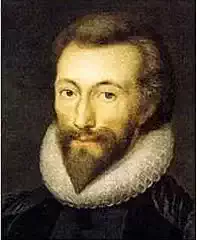
John Donne
Holy Sonnet X: Death Be Not Proud
Holy Sonnet X: Death Be Not Proud
Death, be not proud, though some have callèd thee
Mighty and dreadful, for thou art not so;
For those whom thou think'st thou dost overthrow
Die not, poor death, nor yet canst thou kill me.
From rest and sleep, which yet thy pictures be,
Much pleasure, then from thee much more, must low
And soonest our best men with thee do go,
Rest of their bones and soul's delivery.
Thou art slave to fate, chance, kings and desperate men
And dost with poison, war and sickness dwell,
And poppy or charms can make us sleep as well
And better than thy stroke; why swell'st thou then ?
One short sleep past, we wake eternally,
And death shall be no more; death, thou shalt die.
Death, be not proud, though some have callèd thee
Mighty and dreadful, for thou art not so;
For those whom thou think'st thou dost overthrow
Die not, poor death, nor yet canst thou kill me.
From rest and sleep, which yet thy pictures be,
Much pleasure, then from thee much more, must low
And soonest our best men with thee do go,
Rest of their bones and soul's delivery.
Thou art slave to fate, chance, kings and desperate men
And dost with poison, war and sickness dwell,
And poppy or charms can make us sleep as well
And better than thy stroke; why swell'st thou then ?
One short sleep past, we wake eternally,
And death shall be no more; death, thou shalt die.
330
John Donne
Holy Sonnet X: Death Be Not Proud
Holy Sonnet X: Death Be Not Proud
Death, be not proud, though some have callèd thee
Mighty and dreadful, for thou art not so;
For those whom thou think'st thou dost overthrow
Die not, poor death, nor yet canst thou kill me.
From rest and sleep, which yet thy pictures be,
Much pleasure, then from thee much more, must low
And soonest our best men with thee do go,
Rest of their bones and soul's delivery.
Thou art slave to fate, chance, kings and desperate men
And dost with poison, war and sickness dwell,
And poppy or charms can make us sleep as well
And better than thy stroke; why swell'st thou then ?
One short sleep past, we wake eternally,
And death shall be no more; death, thou shalt die.
Death, be not proud, though some have callèd thee
Mighty and dreadful, for thou art not so;
For those whom thou think'st thou dost overthrow
Die not, poor death, nor yet canst thou kill me.
From rest and sleep, which yet thy pictures be,
Much pleasure, then from thee much more, must low
And soonest our best men with thee do go,
Rest of their bones and soul's delivery.
Thou art slave to fate, chance, kings and desperate men
And dost with poison, war and sickness dwell,
And poppy or charms can make us sleep as well
And better than thy stroke; why swell'st thou then ?
One short sleep past, we wake eternally,
And death shall be no more; death, thou shalt die.
330
John Donne
Holy Sonnet XI: Spit In My Face You Jewes
Holy Sonnet XI: Spit In My Face You Jewes
Spit in my face you Jewes, and pierce my side,
Buffet, and scoffe, scourge, and crucifie mee,
For I have sinn'd, and sinn'd, and onely hee,
Who could do no iniquitie, hath dyed:
But by my death can not be satisfied
My sinnes, which passe the Jewes impiety:
They kill'd once an inglorious man, but I
Crucifie him daily, being now glorified.
Oh let mee then, his strange love still admire:
Kings pardon, but he bore our punishment.
And Jacob came cloth'd in vile harsh attire
But to supplant, and with gainfull intent:
God cloth'd himselfe in vile mans flesh, that so
Hee might be weake enough to suffer woe.
Spit in my face you Jewes, and pierce my side,
Buffet, and scoffe, scourge, and crucifie mee,
For I have sinn'd, and sinn'd, and onely hee,
Who could do no iniquitie, hath dyed:
But by my death can not be satisfied
My sinnes, which passe the Jewes impiety:
They kill'd once an inglorious man, but I
Crucifie him daily, being now glorified.
Oh let mee then, his strange love still admire:
Kings pardon, but he bore our punishment.
And Jacob came cloth'd in vile harsh attire
But to supplant, and with gainfull intent:
God cloth'd himselfe in vile mans flesh, that so
Hee might be weake enough to suffer woe.
306
John Donne
Holy Sonnet VII: At The Round Earth's Imagined Corners Blow
Holy Sonnet VII: At The Round Earth's Imagined Corners Blow
At the round earth's imagined corners blow
Your trumpets, angels, and arise, arise
From death, you numberless infinities
Of souls, and to your scattered bodies go,
All whom the flood did, and fire shall, overthrow,
All whom war, dearth, age, agues, tyrannies,
Despair, law, chance, hath slain, and you whose eyes
Shall behold God, and never taste death's woe.
But let them sleep, Lord, and me mourn a space,
For, if above all these my sins abound,
'Tis late to ask abundance of Thy grace,
When we are there. Here on this lowly ground
Teach me how to repent; for that's as good
As if Thou'dst sealed my pardon, with Thy blood.
At the round earth's imagined corners blow
Your trumpets, angels, and arise, arise
From death, you numberless infinities
Of souls, and to your scattered bodies go,
All whom the flood did, and fire shall, overthrow,
All whom war, dearth, age, agues, tyrannies,
Despair, law, chance, hath slain, and you whose eyes
Shall behold God, and never taste death's woe.
But let them sleep, Lord, and me mourn a space,
For, if above all these my sins abound,
'Tis late to ask abundance of Thy grace,
When we are there. Here on this lowly ground
Teach me how to repent; for that's as good
As if Thou'dst sealed my pardon, with Thy blood.
304
John Donne
Holy Sonnet VII: At The Round Earth's Imagined Corners Blow
Holy Sonnet VII: At The Round Earth's Imagined Corners Blow
At the round earth's imagined corners blow
Your trumpets, angels, and arise, arise
From death, you numberless infinities
Of souls, and to your scattered bodies go,
All whom the flood did, and fire shall, overthrow,
All whom war, dearth, age, agues, tyrannies,
Despair, law, chance, hath slain, and you whose eyes
Shall behold God, and never taste death's woe.
But let them sleep, Lord, and me mourn a space,
For, if above all these my sins abound,
'Tis late to ask abundance of Thy grace,
When we are there. Here on this lowly ground
Teach me how to repent; for that's as good
As if Thou'dst sealed my pardon, with Thy blood.
At the round earth's imagined corners blow
Your trumpets, angels, and arise, arise
From death, you numberless infinities
Of souls, and to your scattered bodies go,
All whom the flood did, and fire shall, overthrow,
All whom war, dearth, age, agues, tyrannies,
Despair, law, chance, hath slain, and you whose eyes
Shall behold God, and never taste death's woe.
But let them sleep, Lord, and me mourn a space,
For, if above all these my sins abound,
'Tis late to ask abundance of Thy grace,
When we are there. Here on this lowly ground
Teach me how to repent; for that's as good
As if Thou'dst sealed my pardon, with Thy blood.
304
John Donne
Holy Sonnet VIII: If Faithfull Soules
Holy Sonnet VIII: If Faithfull Soules
If faithfull soules be alike glorifi'd
As Angels, then my fathers soul doth see,
And adds this even to full felecitie,
That valiantly I hels wide mouth o'stride:
But if our mindes to these soules be descry'd
By circumstances, and by signes that be
Apparent in us, not immediately,
How shall my mindes white truth by them be try'd?
They see idolatrous lovers weepe and mourne,
And vile blasphemous Conjurers to call
On Jesus name, and Pharisaicall
Dissemblers feigne devotion. Then turne
O pensive soule, to God, for he knows best
Thy true griefe, for he put it in my breast.
If faithfull soules be alike glorifi'd
As Angels, then my fathers soul doth see,
And adds this even to full felecitie,
That valiantly I hels wide mouth o'stride:
But if our mindes to these soules be descry'd
By circumstances, and by signes that be
Apparent in us, not immediately,
How shall my mindes white truth by them be try'd?
They see idolatrous lovers weepe and mourne,
And vile blasphemous Conjurers to call
On Jesus name, and Pharisaicall
Dissemblers feigne devotion. Then turne
O pensive soule, to God, for he knows best
Thy true griefe, for he put it in my breast.
270
John Donne
Holy Sonnet VIII: If Faithfull Soules
Holy Sonnet VIII: If Faithfull Soules
If faithfull soules be alike glorifi'd
As Angels, then my fathers soul doth see,
And adds this even to full felecitie,
That valiantly I hels wide mouth o'stride:
But if our mindes to these soules be descry'd
By circumstances, and by signes that be
Apparent in us, not immediately,
How shall my mindes white truth by them be try'd?
They see idolatrous lovers weepe and mourne,
And vile blasphemous Conjurers to call
On Jesus name, and Pharisaicall
Dissemblers feigne devotion. Then turne
O pensive soule, to God, for he knows best
Thy true griefe, for he put it in my breast.
If faithfull soules be alike glorifi'd
As Angels, then my fathers soul doth see,
And adds this even to full felecitie,
That valiantly I hels wide mouth o'stride:
But if our mindes to these soules be descry'd
By circumstances, and by signes that be
Apparent in us, not immediately,
How shall my mindes white truth by them be try'd?
They see idolatrous lovers weepe and mourne,
And vile blasphemous Conjurers to call
On Jesus name, and Pharisaicall
Dissemblers feigne devotion. Then turne
O pensive soule, to God, for he knows best
Thy true griefe, for he put it in my breast.
270
John Donne
Holy Sonnet VI: This Is My Playes Last Scene
Holy Sonnet VI: This Is My Playes Last Scene
This is my playes last scene, here heavens appoint
My pilgrimages last mile; and my race
Idly, yet quickly runne, hath this last pace,
My spans last inch, my minutes latest point,
And gluttonous death, will instantly unjoynt
My body, and soule, and I shall sleepe a space,
But my'ever-waking part shall see that face,
Whose feare already shakes my every joynt;
Then, as my soule, to'heaven her first seate, takes flight,
And earth-borne body, in the earth shall dwell,
So, fall my sinnes, that all may have their right,
To where they're bred, and would presse me, to hell.
Impute me righteous, thus purg'd of evill,
For thus I leave the world, the flesh, the devill.
This is my playes last scene, here heavens appoint
My pilgrimages last mile; and my race
Idly, yet quickly runne, hath this last pace,
My spans last inch, my minutes latest point,
And gluttonous death, will instantly unjoynt
My body, and soule, and I shall sleepe a space,
But my'ever-waking part shall see that face,
Whose feare already shakes my every joynt;
Then, as my soule, to'heaven her first seate, takes flight,
And earth-borne body, in the earth shall dwell,
So, fall my sinnes, that all may have their right,
To where they're bred, and would presse me, to hell.
Impute me righteous, thus purg'd of evill,
For thus I leave the world, the flesh, the devill.
330
John Donne
Holy Sonnet VI: This Is My Playes Last Scene
Holy Sonnet VI: This Is My Playes Last Scene
This is my playes last scene, here heavens appoint
My pilgrimages last mile; and my race
Idly, yet quickly runne, hath this last pace,
My spans last inch, my minutes latest point,
And gluttonous death, will instantly unjoynt
My body, and soule, and I shall sleepe a space,
But my'ever-waking part shall see that face,
Whose feare already shakes my every joynt;
Then, as my soule, to'heaven her first seate, takes flight,
And earth-borne body, in the earth shall dwell,
So, fall my sinnes, that all may have their right,
To where they're bred, and would presse me, to hell.
Impute me righteous, thus purg'd of evill,
For thus I leave the world, the flesh, the devill.
This is my playes last scene, here heavens appoint
My pilgrimages last mile; and my race
Idly, yet quickly runne, hath this last pace,
My spans last inch, my minutes latest point,
And gluttonous death, will instantly unjoynt
My body, and soule, and I shall sleepe a space,
But my'ever-waking part shall see that face,
Whose feare already shakes my every joynt;
Then, as my soule, to'heaven her first seate, takes flight,
And earth-borne body, in the earth shall dwell,
So, fall my sinnes, that all may have their right,
To where they're bred, and would presse me, to hell.
Impute me righteous, thus purg'd of evill,
For thus I leave the world, the flesh, the devill.
330
John Donne
Holy Sonnet V: I Am a Little World
Holy Sonnet V: I Am a Little World
I am a little world made cunningly
Of Elements, and an Angelike spright,
But black sinne hath betraid to endlesse night
My worlds both parts, and (oh) both parts must die.
You which beyond that heaven which was most high
Have found new sphears, and of new lands can write,
Powre new seas in mine eyes, that so I might
Drowne my world with my weeping earnestly,
Or wash it if it must be drown'd no more;
But oh it must be burnt! alas the fire
Of lust and envie have burnt it heretofore,
And made it fouler; Let their flames retire,
And burne me o Lord, with a fiery zeale
Of thee and thy house, which doth in eating heale.
I am a little world made cunningly
Of Elements, and an Angelike spright,
But black sinne hath betraid to endlesse night
My worlds both parts, and (oh) both parts must die.
You which beyond that heaven which was most high
Have found new sphears, and of new lands can write,
Powre new seas in mine eyes, that so I might
Drowne my world with my weeping earnestly,
Or wash it if it must be drown'd no more;
But oh it must be burnt! alas the fire
Of lust and envie have burnt it heretofore,
And made it fouler; Let their flames retire,
And burne me o Lord, with a fiery zeale
Of thee and thy house, which doth in eating heale.
358
John Donne
Holy Sonnet IV: Oh my black soul!
Holy Sonnet IV: Oh my black soul!
Oh my black soul! now art thou summoned
By sickness, death's herald, and champion;
Thou art like a pilgrim, which abroad hath done
Treason, and durst not turn to whence he is fled;
Or like a thief, which till death's doom be read,
Wisheth himself delivered from prison,
But damned and haled to execution,
Wisheth that still he might be imprisoned.
Yet grace, if thou repent, thou canst not lack;
But who shall give thee that grace to begin?
Oh make thy self with holy mourning black,
And red with blushing, as thou art with sin;
Or wash thee in Christ's blood, which hath this might
That being red, it dyes red souls to white.
Oh my black soul! now art thou summoned
By sickness, death's herald, and champion;
Thou art like a pilgrim, which abroad hath done
Treason, and durst not turn to whence he is fled;
Or like a thief, which till death's doom be read,
Wisheth himself delivered from prison,
But damned and haled to execution,
Wisheth that still he might be imprisoned.
Yet grace, if thou repent, thou canst not lack;
But who shall give thee that grace to begin?
Oh make thy self with holy mourning black,
And red with blushing, as thou art with sin;
Or wash thee in Christ's blood, which hath this might
That being red, it dyes red souls to white.
303
John Donne
Holy Sonnet IV: Oh my black soul!
Holy Sonnet IV: Oh my black soul!
Oh my black soul! now art thou summoned
By sickness, death's herald, and champion;
Thou art like a pilgrim, which abroad hath done
Treason, and durst not turn to whence he is fled;
Or like a thief, which till death's doom be read,
Wisheth himself delivered from prison,
But damned and haled to execution,
Wisheth that still he might be imprisoned.
Yet grace, if thou repent, thou canst not lack;
But who shall give thee that grace to begin?
Oh make thy self with holy mourning black,
And red with blushing, as thou art with sin;
Or wash thee in Christ's blood, which hath this might
That being red, it dyes red souls to white.
Oh my black soul! now art thou summoned
By sickness, death's herald, and champion;
Thou art like a pilgrim, which abroad hath done
Treason, and durst not turn to whence he is fled;
Or like a thief, which till death's doom be read,
Wisheth himself delivered from prison,
But damned and haled to execution,
Wisheth that still he might be imprisoned.
Yet grace, if thou repent, thou canst not lack;
But who shall give thee that grace to begin?
Oh make thy self with holy mourning black,
And red with blushing, as thou art with sin;
Or wash thee in Christ's blood, which hath this might
That being red, it dyes red souls to white.
303
John Donne
Holy Sonnet II: As Due By Many Titles I Resign
Holy Sonnet II: As Due By Many Titles I Resign
As due by many titles I resign
My self to Thee, O God; first I was made
By Thee, and for Thee, and when I was decayed
Thy blood bought that, the which before was Thine;
I am Thy son, made with Thy Self to shine,
Thy servant, whose pains Thou hast still repaid,
Thy sheep, thine image, and, till I betrayed
My self, a temple of Thy Spirit divine;
Why doth the devil then usurp on me?
Why doth he steal, nay ravish that's thy right?
Except thou rise and for thine own work fight,
Oh I shall soon despair, when I do see
That thou lov'st mankind well, yet wilt not choose me,
And Satan hates me, yet is loth to lose me.
As due by many titles I resign
My self to Thee, O God; first I was made
By Thee, and for Thee, and when I was decayed
Thy blood bought that, the which before was Thine;
I am Thy son, made with Thy Self to shine,
Thy servant, whose pains Thou hast still repaid,
Thy sheep, thine image, and, till I betrayed
My self, a temple of Thy Spirit divine;
Why doth the devil then usurp on me?
Why doth he steal, nay ravish that's thy right?
Except thou rise and for thine own work fight,
Oh I shall soon despair, when I do see
That thou lov'st mankind well, yet wilt not choose me,
And Satan hates me, yet is loth to lose me.
334
John Donne
Holy Sonnet I: Thou Hast Made Me
Holy Sonnet I: Thou Hast Made Me
Thou hast made me, and shall thy work decay?
Repair me now, for now mine end doth haste;
I run to death, and death meets me as fast,
And all my pleasures are like yesterday.
I dare not move my dim eyes any way,
Despair behind, and death before doth cast
Such terror, and my feeble flesh doth waste
By sin in it, which it towards hell doth weigh.
Only thou art above, and when towards thee
By thy leave I can look, I rise again;
But our old subtle foe so tempteth me
That not one hour myself I can sustain.
Thy grace may wing me to prevent his art,
And thou like adamant draw mine iron heart.
Thou hast made me, and shall thy work decay?
Repair me now, for now mine end doth haste;
I run to death, and death meets me as fast,
And all my pleasures are like yesterday.
I dare not move my dim eyes any way,
Despair behind, and death before doth cast
Such terror, and my feeble flesh doth waste
By sin in it, which it towards hell doth weigh.
Only thou art above, and when towards thee
By thy leave I can look, I rise again;
But our old subtle foe so tempteth me
That not one hour myself I can sustain.
Thy grace may wing me to prevent his art,
And thou like adamant draw mine iron heart.
351
John Donne
Hero and Leander
Hero and Leander
Both robb'd of air, we both lie in one ground ;
Both whom one fire had burnt, one water drown'd
Both robb'd of air, we both lie in one ground ;
Both whom one fire had burnt, one water drown'd
313
John Donne
Good Friday, 1613. Riding Westward
Good Friday, 1613. Riding Westward
Let mans Soule be a Spheare, and then, in this,
The intelligence that moves, devotion is
And as the other Spheares, by being growne
Subject to forraigne motions, lose their owne
And being by others hurried every day,
Scarce in a yeare their natural! forme obey:
Pleasure or businesse, so, our Soules admit
For their first mover, and are whirld by it.
Hence is's, that I am carryed towards the West
This day, when my Soules forme bends toward the East.
There I should see a Sunne, by rising set,
And by that setting endlesse day beget;
But that Christ on this Crosse, did rise and fall,
Sinne had eternally benighted all.
Yet dare ['almost be glad, I do not see
That spectacle of too much weight for meet
Who sees Gods face, that is selfe life, must dye;
What a death were it then to see God dye?
It made his owne Lieutenant Nature shrinke,
It made his footstoole crack, and the Sunne winke.
Could I behold those hands which span the Poles,
And tune all spheares at once, peirc'd with those holes?
Could I behold that endlesse height which is
Zenith to us, and to'our Antipodes,
Humbled below us? or that blood which is
The seat of all our Soules, if not of his,
Make curt of dust, or that flesh which was worne
By God, for his apparel!, rag'd, and tome?
If on these things I durst not looke, durst I
Upon his miserable mother cast mine eye,
Who was Gods partner here, and furnish'd thus
Halfe of that Sacrifice, which ransom'd us?
Though these things, as I ride, be from mine eye,
They'are present yet unto my memory,
For that looks towards them; and thou look'st towards mee,
O Saviour, as thou hang'st upon the tree;
I turne my backe to thee, but to receive
Corrections, till thy mercies bid thee leave.
O thinke mee worth shine anger, punish mee,
Burne off my rusts, and my deformity,
Restore shine Image, so much, by thy grace,
That thou may'st know mee, and I'll turne my face.
Let mans Soule be a Spheare, and then, in this,
The intelligence that moves, devotion is
And as the other Spheares, by being growne
Subject to forraigne motions, lose their owne
And being by others hurried every day,
Scarce in a yeare their natural! forme obey:
Pleasure or businesse, so, our Soules admit
For their first mover, and are whirld by it.
Hence is's, that I am carryed towards the West
This day, when my Soules forme bends toward the East.
There I should see a Sunne, by rising set,
And by that setting endlesse day beget;
But that Christ on this Crosse, did rise and fall,
Sinne had eternally benighted all.
Yet dare ['almost be glad, I do not see
That spectacle of too much weight for meet
Who sees Gods face, that is selfe life, must dye;
What a death were it then to see God dye?
It made his owne Lieutenant Nature shrinke,
It made his footstoole crack, and the Sunne winke.
Could I behold those hands which span the Poles,
And tune all spheares at once, peirc'd with those holes?
Could I behold that endlesse height which is
Zenith to us, and to'our Antipodes,
Humbled below us? or that blood which is
The seat of all our Soules, if not of his,
Make curt of dust, or that flesh which was worne
By God, for his apparel!, rag'd, and tome?
If on these things I durst not looke, durst I
Upon his miserable mother cast mine eye,
Who was Gods partner here, and furnish'd thus
Halfe of that Sacrifice, which ransom'd us?
Though these things, as I ride, be from mine eye,
They'are present yet unto my memory,
For that looks towards them; and thou look'st towards mee,
O Saviour, as thou hang'st upon the tree;
I turne my backe to thee, but to receive
Corrections, till thy mercies bid thee leave.
O thinke mee worth shine anger, punish mee,
Burne off my rusts, and my deformity,
Restore shine Image, so much, by thy grace,
That thou may'st know mee, and I'll turne my face.
293
John Donne
From ‘The Cross’
From ‘The Cross’
Who can blot out the Cross, which th’instrument
Of God, dew’d on me in the Sacrament?
Who can deny me power, and liberty
To stretch mine arms, and mine own Cross to be?
Swim, and at every stroke, thou art thy Cross;
The Mast and yard make one, where seas do toss;
Look down, thou spiest out Crosses in small things;
Look up, thou seest birds rais’d on crossed wings;
All the Globes frame, and spheres, is nothing else
But the Meridians crossing Parallels.
Material Crosses then, good physic bee,
But yet spiritual have chief dignity.
These for extracted chemic medicine serve,
And cure much better, and as well preserve;
Then are you your own physic, or need none,
When Still’d, or purg’d by tribulation.
For when that Cross ungrudg’d, unto you sticks,
Then are you to your self, a Crucifix.
As perchance, Carvers do not faces make,
But that away, which hid them there, do take;
Let Crosses, so, take what hid Christ in thee,
And be his image, or not his, but he.
Who can blot out the Cross, which th’instrument
Of God, dew’d on me in the Sacrament?
Who can deny me power, and liberty
To stretch mine arms, and mine own Cross to be?
Swim, and at every stroke, thou art thy Cross;
The Mast and yard make one, where seas do toss;
Look down, thou spiest out Crosses in small things;
Look up, thou seest birds rais’d on crossed wings;
All the Globes frame, and spheres, is nothing else
But the Meridians crossing Parallels.
Material Crosses then, good physic bee,
But yet spiritual have chief dignity.
These for extracted chemic medicine serve,
And cure much better, and as well preserve;
Then are you your own physic, or need none,
When Still’d, or purg’d by tribulation.
For when that Cross ungrudg’d, unto you sticks,
Then are you to your self, a Crucifix.
As perchance, Carvers do not faces make,
But that away, which hid them there, do take;
Let Crosses, so, take what hid Christ in thee,
And be his image, or not his, but he.
295
John Donne
Farewell to Love
Farewell to Love
Whilst yet to prove,
I thought there was some deity in love
So did I reverence, and gave
Worship, as atheists at their dying hour
Call, what they cannot name, an unknown power,
As ignorantly did I crave:
Thus when
Things not yet known are coveted by men,
Our desires give them fashion, and so
As they wax lesser, fall, as they size, grow.
But, from late fair
His highness sitting in a golden chair,
Is not less cared for after three days
By children, than the thing which lovers so
Blindly admire, and with such worship woo;
Being had, enjoying it decays:
And thence,
What before pleased them all, takes but one sense,
And that so lamely, as it leaves behind
A kind of sorrowing dullness to the mind.
Ah cannot we,
As well as cocks and lions jocund be,
After such pleasures ? Unless wise
Nature decreed (since each such act, they say
Diminish the length of life a day)
This; as she would man should despise
The sport,
Because that other curse of being short,
And only for a minute made to be
Eager, desires to raise posterity.
Since so, my mind
Shall not desire what no man else can find,
I`ll no more dote and run
To purse things which had, endamaged me.
And when I come where moving beauties be,
As men do when the summer’s sun
Grows great,
Though I admire their greatness, shun their heat;
Each place can afford shadow. If all fail,
’Tis but applying worm-seed to the tail.
Whilst yet to prove,
I thought there was some deity in love
So did I reverence, and gave
Worship, as atheists at their dying hour
Call, what they cannot name, an unknown power,
As ignorantly did I crave:
Thus when
Things not yet known are coveted by men,
Our desires give them fashion, and so
As they wax lesser, fall, as they size, grow.
But, from late fair
His highness sitting in a golden chair,
Is not less cared for after three days
By children, than the thing which lovers so
Blindly admire, and with such worship woo;
Being had, enjoying it decays:
And thence,
What before pleased them all, takes but one sense,
And that so lamely, as it leaves behind
A kind of sorrowing dullness to the mind.
Ah cannot we,
As well as cocks and lions jocund be,
After such pleasures ? Unless wise
Nature decreed (since each such act, they say
Diminish the length of life a day)
This; as she would man should despise
The sport,
Because that other curse of being short,
And only for a minute made to be
Eager, desires to raise posterity.
Since so, my mind
Shall not desire what no man else can find,
I`ll no more dote and run
To purse things which had, endamaged me.
And when I come where moving beauties be,
As men do when the summer’s sun
Grows great,
Though I admire their greatness, shun their heat;
Each place can afford shadow. If all fail,
’Tis but applying worm-seed to the tail.
375
John Donne
Epithalamion Made At Lincoln's Inn
Epithalamion Made At Lincoln's Inn
I
HAIL sun-beams in the east are spread ;
Leave, leave, fair bride, your solitary bed ;
No more shall you return to it alone ;
It nurseth sadness, and your body's print,
Like to a grave, the yielding down doth dint ;
You, and your other you, meet there anon.
Put forth, put forth, that warm balm-breathing thigh,
Which when next time you in these sheets will smother,
There it must meet another,
Which never was, but must be, oft, more nigh.
Come glad from thence, go gladder than you came ;
To-day put on perfection, and a woman's name.
Daughters of London, you which be
Our golden mines, and furnish'd treasury ;
You which are angels, yet still bring with you
Thousands of angels on your marriage days ;
Help with your presence, and devise to praise
These rites, which also unto you grow due ;
Conceitedly dress her, and be assign'd,
By you fit place for every flower and jewel ;
Make her for love fit fuel,
As gay as Flora and as rich as Ind ;
So may she, fair and rich in nothing lame,
To-day put on perfection, and a woman's name.
And you frolic patricians,
Sons of those senators, wealth's deep oceans ;
Ye painted courtiers, barrels of other's wits ;
Ye countrymen, who but your beasts love none ;
Ye of those fellowships, whereof he's one,
Of study and play made strange hermaphrodites,
Here shine ; this bridegroom to the temple bring.
Lo, in yon path which store of strew'd flowers graceth,
The sober virgin paceth ;
Except my sight fail, 'tis no other thing.
Weep not, nor blush, here is no grief nor shame,
To-day put on perfection, and a woman's name.
Thy two-leaved gates, fair temple, unfold,
And these two in thy sacred bosom hold,
Till mystically join'd but one they be ;
Then may thy lean and hunger-starvèd womb
Long time expect their bodies, and their tomb,
Long after their own parents fatten thee.
All elder claims, and all cold barrenness,
All yielding to new loves, be far for ever,
Which might these two dissever ;
Always, all th'other may each one possess ;
For the best bride, best worthy of praise and fame,
To-day puts on perfection, and a woman's name.
Winter days bring much delight,
Not for themselves, but for they soon bring night ;
Other sweets wait thee than these diverse meats,
Other disports than dancing jollities,
Other love-tricks than glancing with the eyes,
But that the sun still in our half sphere sweats ;
He flies in winter, but he now stands still.
Yet shadows turn ; noon point he hath attain'd ;
His steeds will be restrain'd,
But gallop lively down the western hill.
Thou shalt, when he hath run the heaven's half frame,
To-night put on perfection, and a woman's name.
The amorous evening star is rose,
Why then should not our amorous star inclose
Herself in her wish'd bed ? Release your strings,
Musicians ; and dancers take some truce
With these your pleasing labours, for great use
As much weariness as perfection brings.
You, and not only you, but all toil'd beasts
Rest duly ; at night all their toils are dispensed ;
But in their beds commenced
Are other labours, and more dainty feasts.
She goes a maid, who, lest she turn the same,
To-night puts on perfection, and a woman's name.
Thy virgin's girdle now untie,
And in thy nuptial bed, love's altar, lie
A pleasing sacrifice ; now dispossess
Thee of these chains and robes, which were put on
To adorn the day, not thee ; for thou, alone,
Like virtue and truth, art best in nakedness.
This bed is only to virginity
A grave, but to a better state, a cradle.
Till now thou wast but able
To be, what now thou art ; then, that by thee
No more be said, “ I may be,” but, “ I am,”
To-night put on perfection, and a woman's name.
Even like a faithful man content,
That this life for a better should be spent,
So she a mother's rich stile doth prefer,
And at the bridegroom's wish'd approach doth lie,
Like an appointed lamb, when tenderly
The priest comes on his knees to embowel her.
Now sleep or watch with more joy ; and, O light
Of heaven, to-morrow rise thou hot, and early ;
This sun will love so dearly
Her rest, that long, long we shall want her sight.
Wonders are wrought, for she, which had no maim,
To-night puts on perfection, and a woman's name.
I
HAIL sun-beams in the east are spread ;
Leave, leave, fair bride, your solitary bed ;
No more shall you return to it alone ;
It nurseth sadness, and your body's print,
Like to a grave, the yielding down doth dint ;
You, and your other you, meet there anon.
Put forth, put forth, that warm balm-breathing thigh,
Which when next time you in these sheets will smother,
There it must meet another,
Which never was, but must be, oft, more nigh.
Come glad from thence, go gladder than you came ;
To-day put on perfection, and a woman's name.
Daughters of London, you which be
Our golden mines, and furnish'd treasury ;
You which are angels, yet still bring with you
Thousands of angels on your marriage days ;
Help with your presence, and devise to praise
These rites, which also unto you grow due ;
Conceitedly dress her, and be assign'd,
By you fit place for every flower and jewel ;
Make her for love fit fuel,
As gay as Flora and as rich as Ind ;
So may she, fair and rich in nothing lame,
To-day put on perfection, and a woman's name.
And you frolic patricians,
Sons of those senators, wealth's deep oceans ;
Ye painted courtiers, barrels of other's wits ;
Ye countrymen, who but your beasts love none ;
Ye of those fellowships, whereof he's one,
Of study and play made strange hermaphrodites,
Here shine ; this bridegroom to the temple bring.
Lo, in yon path which store of strew'd flowers graceth,
The sober virgin paceth ;
Except my sight fail, 'tis no other thing.
Weep not, nor blush, here is no grief nor shame,
To-day put on perfection, and a woman's name.
Thy two-leaved gates, fair temple, unfold,
And these two in thy sacred bosom hold,
Till mystically join'd but one they be ;
Then may thy lean and hunger-starvèd womb
Long time expect their bodies, and their tomb,
Long after their own parents fatten thee.
All elder claims, and all cold barrenness,
All yielding to new loves, be far for ever,
Which might these two dissever ;
Always, all th'other may each one possess ;
For the best bride, best worthy of praise and fame,
To-day puts on perfection, and a woman's name.
Winter days bring much delight,
Not for themselves, but for they soon bring night ;
Other sweets wait thee than these diverse meats,
Other disports than dancing jollities,
Other love-tricks than glancing with the eyes,
But that the sun still in our half sphere sweats ;
He flies in winter, but he now stands still.
Yet shadows turn ; noon point he hath attain'd ;
His steeds will be restrain'd,
But gallop lively down the western hill.
Thou shalt, when he hath run the heaven's half frame,
To-night put on perfection, and a woman's name.
The amorous evening star is rose,
Why then should not our amorous star inclose
Herself in her wish'd bed ? Release your strings,
Musicians ; and dancers take some truce
With these your pleasing labours, for great use
As much weariness as perfection brings.
You, and not only you, but all toil'd beasts
Rest duly ; at night all their toils are dispensed ;
But in their beds commenced
Are other labours, and more dainty feasts.
She goes a maid, who, lest she turn the same,
To-night puts on perfection, and a woman's name.
Thy virgin's girdle now untie,
And in thy nuptial bed, love's altar, lie
A pleasing sacrifice ; now dispossess
Thee of these chains and robes, which were put on
To adorn the day, not thee ; for thou, alone,
Like virtue and truth, art best in nakedness.
This bed is only to virginity
A grave, but to a better state, a cradle.
Till now thou wast but able
To be, what now thou art ; then, that by thee
No more be said, “ I may be,” but, “ I am,”
To-night put on perfection, and a woman's name.
Even like a faithful man content,
That this life for a better should be spent,
So she a mother's rich stile doth prefer,
And at the bridegroom's wish'd approach doth lie,
Like an appointed lamb, when tenderly
The priest comes on his knees to embowel her.
Now sleep or watch with more joy ; and, O light
Of heaven, to-morrow rise thou hot, and early ;
This sun will love so dearly
Her rest, that long, long we shall want her sight.
Wonders are wrought, for she, which had no maim,
To-night puts on perfection, and a woman's name.
464
John Donne
Elegy:The End of Funeral Elegies
Elegy:The End of Funeral Elegies
MADAM—
That I might make your cabinet my tomb,
And for my fame, which I love next my soul,
Next to my soul provide the happiest room,
Admit to that place this last funeral scroll.
Others by wills give legacies, but I
Dying, of you do beg a legacy.
My fortune and my will this custom break,
When we are senseless grown to make stones speak,
Though no stone tell thee what I was, yet thou
In my grave's inside seest what thou art now,
Yet thou 'rt not yet so good ; till death us lay
To ripe and mellow there, we're stubborn clay.
Parents make us earth, and souls dignify
Us to be glass ; here to grow gold we lie.
Whilst in our souls sin bred and pamper'd is,
Our souls become worm-eaten carcases.
MADAM—
That I might make your cabinet my tomb,
And for my fame, which I love next my soul,
Next to my soul provide the happiest room,
Admit to that place this last funeral scroll.
Others by wills give legacies, but I
Dying, of you do beg a legacy.
My fortune and my will this custom break,
When we are senseless grown to make stones speak,
Though no stone tell thee what I was, yet thou
In my grave's inside seest what thou art now,
Yet thou 'rt not yet so good ; till death us lay
To ripe and mellow there, we're stubborn clay.
Parents make us earth, and souls dignify
Us to be glass ; here to grow gold we lie.
Whilst in our souls sin bred and pamper'd is,
Our souls become worm-eaten carcases.
292
John Donne
Elegy:The End of Funeral Elegies
Elegy:The End of Funeral Elegies
MADAM—
That I might make your cabinet my tomb,
And for my fame, which I love next my soul,
Next to my soul provide the happiest room,
Admit to that place this last funeral scroll.
Others by wills give legacies, but I
Dying, of you do beg a legacy.
My fortune and my will this custom break,
When we are senseless grown to make stones speak,
Though no stone tell thee what I was, yet thou
In my grave's inside seest what thou art now,
Yet thou 'rt not yet so good ; till death us lay
To ripe and mellow there, we're stubborn clay.
Parents make us earth, and souls dignify
Us to be glass ; here to grow gold we lie.
Whilst in our souls sin bred and pamper'd is,
Our souls become worm-eaten carcases.
MADAM—
That I might make your cabinet my tomb,
And for my fame, which I love next my soul,
Next to my soul provide the happiest room,
Admit to that place this last funeral scroll.
Others by wills give legacies, but I
Dying, of you do beg a legacy.
My fortune and my will this custom break,
When we are senseless grown to make stones speak,
Though no stone tell thee what I was, yet thou
In my grave's inside seest what thou art now,
Yet thou 'rt not yet so good ; till death us lay
To ripe and mellow there, we're stubborn clay.
Parents make us earth, and souls dignify
Us to be glass ; here to grow gold we lie.
Whilst in our souls sin bred and pamper'd is,
Our souls become worm-eaten carcases.
292
John Donne
Elegy VIII: The Comparison
Elegy VIII: The Comparison
As the sweet sweat of roses in a still,
As that which from chafed musk-cats' pores doth trill,
As the almighty balm of th' early East,
Such are the sweat drops of my mistress' breast,
And on her brow her skin such lustre sets,
They seem no sweat drops, but pearl coronets.
Rank sweaty froth thy Mistress's brow defiles,
Like spermatic issue of ripe menstruous boils,
Or like the scum, which, by need's lawless law
Enforced, Sanserra's starved men did draw
From parboiled shoes and boots, and all the rest
Which were with any sovereigne fatness blest,
And like vile lying stones in saffroned tin,
Or warts, or weals, they hang upon her skin.
Round as the world's her head, on every side,
Like to the fatal ball which fell on Ide,
Or that whereof God had such jealousy,
As, for the ravishing thereof we die.
Thy head is like a rough-hewn statue of jet,
Where marks for eyes, nose, mouth, are yet scarce set;
Like the first Chaos, or flat-seeming face
Of Cynthia, when th' earth's shadows her embrace.
Like Proserpine's white beauty-keeping chest,
Or Jove's best fortunes urn, is her fair breast.
Thine's like worm-eaten trunks, clothed in seals' skin,
Or grave, that's dust without, and stink within.
And like that slender stalk, at whose end stands
The woodbine quivering, are her arms and hands.
Like rough barked elm-boughs, or the russet skin
Of men late scourged for madness, or for sin,
Like sun-parched quarters on the city gate,
Such is thy tanned skin's lamentable state.
And like a bunch of ragged carrots stand
The short swol'n fingers of thy gouty hand.
Then like the Chimic's masculine equal fire,
Which in the Lymbecks warm womb doth inspire
Into th' earth's worthless dirt a soul of gold,
Such cherishing heat her best loved part doth hold.
Thine's like the dread mouth of a fired gun,
Or like hot liquid metals newly run
Into clay moulds, or like to that Etna
Where round about the grass is burnt away.
Are not your kisses then as filthy, and more,
As a worm sucking an envenomed sore?
Doth not thy feareful hand in feeling quake,
As one which gath'ring flowers still fears a snake?
Is not your last act harsh, and violent,
As when a plough a stony ground doth rent?
So kiss good turtles, so devoutly nice
Are priests in handling reverent sacrifice,
And such in searching wounds the surgeon is
As we, when we embrace, or touch, or kiss.
Leave her, and I will leave comparing thus,
She, and comparisons are odious.
As the sweet sweat of roses in a still,
As that which from chafed musk-cats' pores doth trill,
As the almighty balm of th' early East,
Such are the sweat drops of my mistress' breast,
And on her brow her skin such lustre sets,
They seem no sweat drops, but pearl coronets.
Rank sweaty froth thy Mistress's brow defiles,
Like spermatic issue of ripe menstruous boils,
Or like the scum, which, by need's lawless law
Enforced, Sanserra's starved men did draw
From parboiled shoes and boots, and all the rest
Which were with any sovereigne fatness blest,
And like vile lying stones in saffroned tin,
Or warts, or weals, they hang upon her skin.
Round as the world's her head, on every side,
Like to the fatal ball which fell on Ide,
Or that whereof God had such jealousy,
As, for the ravishing thereof we die.
Thy head is like a rough-hewn statue of jet,
Where marks for eyes, nose, mouth, are yet scarce set;
Like the first Chaos, or flat-seeming face
Of Cynthia, when th' earth's shadows her embrace.
Like Proserpine's white beauty-keeping chest,
Or Jove's best fortunes urn, is her fair breast.
Thine's like worm-eaten trunks, clothed in seals' skin,
Or grave, that's dust without, and stink within.
And like that slender stalk, at whose end stands
The woodbine quivering, are her arms and hands.
Like rough barked elm-boughs, or the russet skin
Of men late scourged for madness, or for sin,
Like sun-parched quarters on the city gate,
Such is thy tanned skin's lamentable state.
And like a bunch of ragged carrots stand
The short swol'n fingers of thy gouty hand.
Then like the Chimic's masculine equal fire,
Which in the Lymbecks warm womb doth inspire
Into th' earth's worthless dirt a soul of gold,
Such cherishing heat her best loved part doth hold.
Thine's like the dread mouth of a fired gun,
Or like hot liquid metals newly run
Into clay moulds, or like to that Etna
Where round about the grass is burnt away.
Are not your kisses then as filthy, and more,
As a worm sucking an envenomed sore?
Doth not thy feareful hand in feeling quake,
As one which gath'ring flowers still fears a snake?
Is not your last act harsh, and violent,
As when a plough a stony ground doth rent?
So kiss good turtles, so devoutly nice
Are priests in handling reverent sacrifice,
And such in searching wounds the surgeon is
As we, when we embrace, or touch, or kiss.
Leave her, and I will leave comparing thus,
She, and comparisons are odious.
307
John Donne
Elegy III: Change
Elegy III: Change
Although thy hand and faith, and good works too,
Have seal'd thy love which nothing should undo,
Yea though thou fall back, that apostasy
Confirm thy love; yet much, much I fear thee.
Women are like the Arts, forc'd unto none,
Open to'all searchers, unpriz'd, if unknown.
If I have caught a bird, and let him fly,
Another fouler using these means, as I,
May catch the same bird; and, as these things be,
Women are made for men, not him, nor me.
Foxes and goats; all beasts change when they please,
Shall women, more hot, wily, wild then these,
Be bound to one man, and did Nature then
Idly make them apter to endure than men?
They are our clogges, not their owne; if a man be
Chain'd to a galley, yet the galley is free;
Who hath a plow-land, casts all his seed corn there,
And yet allows his ground more corn should bear;
Though Danuby into the sea must flow,
The sea receives the Rhene, Volga, and Po.
By nature, which gave it, this liberty
Thou lov'st, but Oh! canst thou love it and me?
Likeness glues love: Then if so thou do,
To make us like and love, must I change too?
More than thy hate, I hate it, rather let me
Allow her change, then change as oft as she,
And so not teach, but force my opinion
To love not any one, nor every one.
To live in one land is captivity,
To run all countries, a wild roguery;
Waters stink soon, if in one place they bide,
And in the vast sea are worse putrified:
But when they kiss one bank, and leaving this
Never look back, but the next bank do kiss,
Then are they purest; Change is the nursery
Of music, joy, life, and eternity.
Although thy hand and faith, and good works too,
Have seal'd thy love which nothing should undo,
Yea though thou fall back, that apostasy
Confirm thy love; yet much, much I fear thee.
Women are like the Arts, forc'd unto none,
Open to'all searchers, unpriz'd, if unknown.
If I have caught a bird, and let him fly,
Another fouler using these means, as I,
May catch the same bird; and, as these things be,
Women are made for men, not him, nor me.
Foxes and goats; all beasts change when they please,
Shall women, more hot, wily, wild then these,
Be bound to one man, and did Nature then
Idly make them apter to endure than men?
They are our clogges, not their owne; if a man be
Chain'd to a galley, yet the galley is free;
Who hath a plow-land, casts all his seed corn there,
And yet allows his ground more corn should bear;
Though Danuby into the sea must flow,
The sea receives the Rhene, Volga, and Po.
By nature, which gave it, this liberty
Thou lov'st, but Oh! canst thou love it and me?
Likeness glues love: Then if so thou do,
To make us like and love, must I change too?
More than thy hate, I hate it, rather let me
Allow her change, then change as oft as she,
And so not teach, but force my opinion
To love not any one, nor every one.
To live in one land is captivity,
To run all countries, a wild roguery;
Waters stink soon, if in one place they bide,
And in the vast sea are worse putrified:
But when they kiss one bank, and leaving this
Never look back, but the next bank do kiss,
Then are they purest; Change is the nursery
Of music, joy, life, and eternity.
377
John Donne
Elegy IX: The Autumnal
Elegy IX: The Autumnal
No spring nor summer beauty hath such grace
As I have seen in one autumnal face.
Young beauties force our love, and that's a rape,
This doth but counsel, yet you cannot scape.
If 'twere a shame to love, here 'twere no shame;
Affection here takes reverence's name.
Were her first years the golden age? That's true,
But now she's gold oft tried and ever new.
That was her torrid and inflaming time,
This is her tolerable tropic clime.
Fair eyes, who asks more heat than comes from hence,
He in a fever wishes pestilence.
Call not these wrinkles, graves; if graves they were,
They were Love's graves, for else he is no where.
Yet lies not Love dead here, but here doth sit
Vow'd to this trench, like an anachorit;
And here till hers, which must be his death, come,
He doth not dig a grave, but build a tomb.
Here dwells he; though he sojourn ev'rywhere
In progress, yet his standing house is here:
Here where still evening is, not noon nor night,
Where no voluptuousness, yet all delight.
In all her words, unto all hearers fit,
You may at revels, you at council, sit.
This is Love's timber, youth his underwood;
There he, as wine in June, enrages blood,
Which then comes seasonabliest when our taste
And appetite to other things is past.
Xerxes' strange Lydian love, the platan tree,
Was lov'd for age, none being so large as she,
Or else because, being young, nature did bless
Her youth with age's glory, barrenness.
If we love things long sought, age is a thing
Which we are fifty years in compassing;
If transitory things, which soon decay,
Age must be loveliest at the latest day.
But name not winter faces, whose skin's slack,
Lank as an unthrift's purse, but a soul's sack;
Whose eyes seek light within, for all here's shade;
Whose mouths are holes, rather worn out than made;
Whose every tooth to a several place is gone,
To vex their souls at resurrection:
Name not these living death's-heads unto me,
For these, not ancient, but antique be.
I hate extremes, yet I had rather stay
With tombs than cradles, to wear out a day.
Since such love's natural lation is, may still
My love descend, and journey down the hill,
Not panting after growing beauties. So,
I shall ebb on with them who homeward go.
No spring nor summer beauty hath such grace
As I have seen in one autumnal face.
Young beauties force our love, and that's a rape,
This doth but counsel, yet you cannot scape.
If 'twere a shame to love, here 'twere no shame;
Affection here takes reverence's name.
Were her first years the golden age? That's true,
But now she's gold oft tried and ever new.
That was her torrid and inflaming time,
This is her tolerable tropic clime.
Fair eyes, who asks more heat than comes from hence,
He in a fever wishes pestilence.
Call not these wrinkles, graves; if graves they were,
They were Love's graves, for else he is no where.
Yet lies not Love dead here, but here doth sit
Vow'd to this trench, like an anachorit;
And here till hers, which must be his death, come,
He doth not dig a grave, but build a tomb.
Here dwells he; though he sojourn ev'rywhere
In progress, yet his standing house is here:
Here where still evening is, not noon nor night,
Where no voluptuousness, yet all delight.
In all her words, unto all hearers fit,
You may at revels, you at council, sit.
This is Love's timber, youth his underwood;
There he, as wine in June, enrages blood,
Which then comes seasonabliest when our taste
And appetite to other things is past.
Xerxes' strange Lydian love, the platan tree,
Was lov'd for age, none being so large as she,
Or else because, being young, nature did bless
Her youth with age's glory, barrenness.
If we love things long sought, age is a thing
Which we are fifty years in compassing;
If transitory things, which soon decay,
Age must be loveliest at the latest day.
But name not winter faces, whose skin's slack,
Lank as an unthrift's purse, but a soul's sack;
Whose eyes seek light within, for all here's shade;
Whose mouths are holes, rather worn out than made;
Whose every tooth to a several place is gone,
To vex their souls at resurrection:
Name not these living death's-heads unto me,
For these, not ancient, but antique be.
I hate extremes, yet I had rather stay
With tombs than cradles, to wear out a day.
Since such love's natural lation is, may still
My love descend, and journey down the hill,
Not panting after growing beauties. So,
I shall ebb on with them who homeward go.
283