

Poems in this topic
Life and Existence
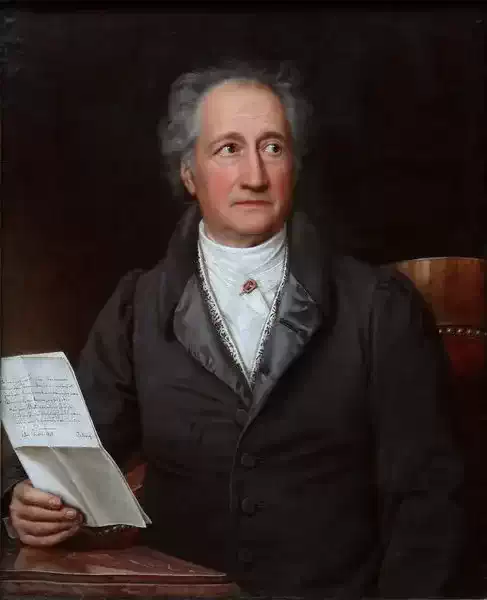
Johann Wolfgang von Goethe
Book Of Suleika - The Reunion
Book Of Suleika - The Reunion
CAN it be! of stars the star,
Do I press thee to my heart?
In the night of distance far,
What deep gulf, what bitter smart!
Yes, 'tis thou, indeed, at last,
Of my joys the partner dear!
Mindful, though, of sorrows past,
I the present needs must fear.
When the still-unfashion'd earth
Lay on God's eternal breast,
He ordain'd its hour of birth,
With creative joy possess'd.
Then a heavy sigh arose,
When He spake the sentence:--"Be!"
And the All, with mighty throes,
Burst into reality.
And when thus was born the light,
Darkness near it fear'd to stay,
And the elements with might
Fled on every side away;
Each on some far-distant trace,
Each with visions wild employ,
Numb, in boundless realm of space,
Harmony and feeling-void.
Dumb was all, all still and dead,
For the first time, God alone!
Then He form'd the morning-red,
Which soon made its kindness known:
It unravelled from the waste,
Bright and glowing harmony,
And once more with love was grac'd
What contended formerly.
And with earnest, noble strife,
Each its own Peculiar sought;
Back to full, unbounded life
Sight and feeling soon were brought.
Wherefore, if 'tis done, explore
How? why give the manner, name?
Allah need create no more,
We his world ourselves can frame.
So, with morning pinions bright,
To thy mouth was I impell'd;
Stamped with thousand seals by night,
Star-clear is the bond fast held.
Paragons on earth are we
Both of grief and joy sublime,
And a second sentence:--"Be!"
Parts us not a second time.
CAN it be! of stars the star,
Do I press thee to my heart?
In the night of distance far,
What deep gulf, what bitter smart!
Yes, 'tis thou, indeed, at last,
Of my joys the partner dear!
Mindful, though, of sorrows past,
I the present needs must fear.
When the still-unfashion'd earth
Lay on God's eternal breast,
He ordain'd its hour of birth,
With creative joy possess'd.
Then a heavy sigh arose,
When He spake the sentence:--"Be!"
And the All, with mighty throes,
Burst into reality.
And when thus was born the light,
Darkness near it fear'd to stay,
And the elements with might
Fled on every side away;
Each on some far-distant trace,
Each with visions wild employ,
Numb, in boundless realm of space,
Harmony and feeling-void.
Dumb was all, all still and dead,
For the first time, God alone!
Then He form'd the morning-red,
Which soon made its kindness known:
It unravelled from the waste,
Bright and glowing harmony,
And once more with love was grac'd
What contended formerly.
And with earnest, noble strife,
Each its own Peculiar sought;
Back to full, unbounded life
Sight and feeling soon were brought.
Wherefore, if 'tis done, explore
How? why give the manner, name?
Allah need create no more,
We his world ourselves can frame.
So, with morning pinions bright,
To thy mouth was I impell'd;
Stamped with thousand seals by night,
Star-clear is the bond fast held.
Paragons on earth are we
Both of grief and joy sublime,
And a second sentence:--"Be!"
Parts us not a second time.
499
Johann Wolfgang von Goethe
Book Of Suleika - The Reunion
Book Of Suleika - The Reunion
CAN it be! of stars the star,
Do I press thee to my heart?
In the night of distance far,
What deep gulf, what bitter smart!
Yes, 'tis thou, indeed, at last,
Of my joys the partner dear!
Mindful, though, of sorrows past,
I the present needs must fear.
When the still-unfashion'd earth
Lay on God's eternal breast,
He ordain'd its hour of birth,
With creative joy possess'd.
Then a heavy sigh arose,
When He spake the sentence:--"Be!"
And the All, with mighty throes,
Burst into reality.
And when thus was born the light,
Darkness near it fear'd to stay,
And the elements with might
Fled on every side away;
Each on some far-distant trace,
Each with visions wild employ,
Numb, in boundless realm of space,
Harmony and feeling-void.
Dumb was all, all still and dead,
For the first time, God alone!
Then He form'd the morning-red,
Which soon made its kindness known:
It unravelled from the waste,
Bright and glowing harmony,
And once more with love was grac'd
What contended formerly.
And with earnest, noble strife,
Each its own Peculiar sought;
Back to full, unbounded life
Sight and feeling soon were brought.
Wherefore, if 'tis done, explore
How? why give the manner, name?
Allah need create no more,
We his world ourselves can frame.
So, with morning pinions bright,
To thy mouth was I impell'd;
Stamped with thousand seals by night,
Star-clear is the bond fast held.
Paragons on earth are we
Both of grief and joy sublime,
And a second sentence:--"Be!"
Parts us not a second time.
CAN it be! of stars the star,
Do I press thee to my heart?
In the night of distance far,
What deep gulf, what bitter smart!
Yes, 'tis thou, indeed, at last,
Of my joys the partner dear!
Mindful, though, of sorrows past,
I the present needs must fear.
When the still-unfashion'd earth
Lay on God's eternal breast,
He ordain'd its hour of birth,
With creative joy possess'd.
Then a heavy sigh arose,
When He spake the sentence:--"Be!"
And the All, with mighty throes,
Burst into reality.
And when thus was born the light,
Darkness near it fear'd to stay,
And the elements with might
Fled on every side away;
Each on some far-distant trace,
Each with visions wild employ,
Numb, in boundless realm of space,
Harmony and feeling-void.
Dumb was all, all still and dead,
For the first time, God alone!
Then He form'd the morning-red,
Which soon made its kindness known:
It unravelled from the waste,
Bright and glowing harmony,
And once more with love was grac'd
What contended formerly.
And with earnest, noble strife,
Each its own Peculiar sought;
Back to full, unbounded life
Sight and feeling soon were brought.
Wherefore, if 'tis done, explore
How? why give the manner, name?
Allah need create no more,
We his world ourselves can frame.
So, with morning pinions bright,
To thy mouth was I impell'd;
Stamped with thousand seals by night,
Star-clear is the bond fast held.
Paragons on earth are we
Both of grief and joy sublime,
And a second sentence:--"Be!"
Parts us not a second time.
499
Johann Wolfgang von Goethe
Book Of Parables - In The Koran With Strange Delight
Book Of Parables - In The Koran With Strange Delight
In the Koran with strange delight
A peacock's feather met my sight:
Thou'rt welcome in this holy place,
The highest prize on earth's wide face!
As in the stars of heaven, in thee,
God's greatness in the small we see;
For he whose gaze whole worlds bath bless'd
His eye hath even here impress'd,
And the light down in beauty dress'd,
So that e'en monarchs cannot hope
In splendour with the bird to cope.
Meekly enjoy thy happy lot,
And so deserve that holy spot!
In the Koran with strange delight
A peacock's feather met my sight:
Thou'rt welcome in this holy place,
The highest prize on earth's wide face!
As in the stars of heaven, in thee,
God's greatness in the small we see;
For he whose gaze whole worlds bath bless'd
His eye hath even here impress'd,
And the light down in beauty dress'd,
So that e'en monarchs cannot hope
In splendour with the bird to cope.
Meekly enjoy thy happy lot,
And so deserve that holy spot!
279
Johann Wolfgang von Goethe
Book Of Paradise - The Privileged Men
Book Of Paradise - The Privileged Men
AFTER THE BATTLE OF BADE, BENEATH THE CANOPY OF HEAVEN.
MAHOMET (Speaks).
LET the foeman sorrow o'er his dead,
Ne'er will they return again to light;
O'er our brethren let no tear be shed,
For they dwell above yon spheres so bright.
All the seven planets open throw
All their metal doors with mighty shock,
And the forms of those we loved below
At the gates of Eden boldly knock.
There they find, with bliss ne'er dream'd before,
Glories that my flight first show'd to eye,
When the wondrous steed my person bore
In one second through the realms on high.
Wisdom's trees, in cypress-order growing,
High uphold the golden apples sweet;
Trees of life, their spreading shadows throwing,
Shade each blossoming plant, each flow'ry seat.
Now a balmy zephyr from the East
Brings the heavenly maidens to thy view;
With the eye thou now dost taste the feast,
Soon the sight pervades thee through and through.
There they stand, to ask thee thy career:
Mighty plans? or dangerous bloody rout?
Thou'rt a hero, know they,--for Thourt here,
What a hero?--This they'll fathom out.
By thy wounds soon clearly this is shown,
Wounds that write thy fame's undying story;
Wounds the true believer mark alone,
When have perish'd joy and earthly glory.
To chiosks and arbors thou art brought,
Fill'd with checkered marble columns bright;
To the noble grape-juice, solace-fraught,
They the guest with kindly sips invite.
Youth! Thou'rt welcome more than e'er was youth
All alike are radiant and serene;
When thou tak'st one to thine heart with truth,
Of thy band she'll be the friend and queen.
So prepare thee for this place of rest,
Never can it now be changed again;
Maids like these will ever make thee blest,
Wines like these will never harm thy brain.
AFTER THE BATTLE OF BADE, BENEATH THE CANOPY OF HEAVEN.
MAHOMET (Speaks).
LET the foeman sorrow o'er his dead,
Ne'er will they return again to light;
O'er our brethren let no tear be shed,
For they dwell above yon spheres so bright.
All the seven planets open throw
All their metal doors with mighty shock,
And the forms of those we loved below
At the gates of Eden boldly knock.
There they find, with bliss ne'er dream'd before,
Glories that my flight first show'd to eye,
When the wondrous steed my person bore
In one second through the realms on high.
Wisdom's trees, in cypress-order growing,
High uphold the golden apples sweet;
Trees of life, their spreading shadows throwing,
Shade each blossoming plant, each flow'ry seat.
Now a balmy zephyr from the East
Brings the heavenly maidens to thy view;
With the eye thou now dost taste the feast,
Soon the sight pervades thee through and through.
There they stand, to ask thee thy career:
Mighty plans? or dangerous bloody rout?
Thou'rt a hero, know they,--for Thourt here,
What a hero?--This they'll fathom out.
By thy wounds soon clearly this is shown,
Wounds that write thy fame's undying story;
Wounds the true believer mark alone,
When have perish'd joy and earthly glory.
To chiosks and arbors thou art brought,
Fill'd with checkered marble columns bright;
To the noble grape-juice, solace-fraught,
They the guest with kindly sips invite.
Youth! Thou'rt welcome more than e'er was youth
All alike are radiant and serene;
When thou tak'st one to thine heart with truth,
Of thy band she'll be the friend and queen.
So prepare thee for this place of rest,
Never can it now be changed again;
Maids like these will ever make thee blest,
Wines like these will never harm thy brain.
393
Johann Wolfgang von Goethe
Book Of Parables - Bulbul's Song
Book Of Parables - Bulbul's Song
BULBUL'S song, through night hours cold,
Rose to Allah's throne on high;
To reward her melody,
Giveth he a cage of gold.
Such a cage are limbs of men,--
Though at first she feels confin'd,
Yet when all she brings to mind,
Straight the spirit sings again.
BULBUL'S song, through night hours cold,
Rose to Allah's throne on high;
To reward her melody,
Giveth he a cage of gold.
Such a cage are limbs of men,--
Though at first she feels confin'd,
Yet when all she brings to mind,
Straight the spirit sings again.
340
Johann Wolfgang von Goethe
Book Of Parables - Bulbul's Song
Book Of Parables - Bulbul's Song
BULBUL'S song, through night hours cold,
Rose to Allah's throne on high;
To reward her melody,
Giveth he a cage of gold.
Such a cage are limbs of men,--
Though at first she feels confin'd,
Yet when all she brings to mind,
Straight the spirit sings again.
BULBUL'S song, through night hours cold,
Rose to Allah's throne on high;
To reward her melody,
Giveth he a cage of gold.
Such a cage are limbs of men,--
Though at first she feels confin'd,
Yet when all she brings to mind,
Straight the spirit sings again.
340
Johann Wolfgang von Goethe
Book Of Hafis - The Unlimited
Book Of Hafis - The Unlimited
THAT thou can't never end, doth make thee great,
And that thou ne'er beginnest, is thy fate.
Thy song is changeful as yon starry frame,
End and beginning evermore the same;
And what the middle bringeth, but contains
What was at first, and what at last remains.
Thou art of joy the true and minstrel-source,
From thee pours wave on wave with ceaseless force.
A mouth that's aye prepared to kiss,
A breast whence flows a loving song,
A throat that finds no draught amiss,
An open heart that knows no wrong.
And what though all the world should sink!
Hafis, with thee, alone with thee
Will I contend! joy, misery,
The portion of us twain shall be;
Like thee to love, like thee to drink,--
This be my pride,--this, life to me!
Now, Song, with thine own fire be sung,--
For thou art older, thou more young!
THAT thou can't never end, doth make thee great,
And that thou ne'er beginnest, is thy fate.
Thy song is changeful as yon starry frame,
End and beginning evermore the same;
And what the middle bringeth, but contains
What was at first, and what at last remains.
Thou art of joy the true and minstrel-source,
From thee pours wave on wave with ceaseless force.
A mouth that's aye prepared to kiss,
A breast whence flows a loving song,
A throat that finds no draught amiss,
An open heart that knows no wrong.
And what though all the world should sink!
Hafis, with thee, alone with thee
Will I contend! joy, misery,
The portion of us twain shall be;
Like thee to love, like thee to drink,--
This be my pride,--this, life to me!
Now, Song, with thine own fire be sung,--
For thou art older, thou more young!
395
Johann Wolfgang von Goethe
Book Of Contemplation - Five Things
Book Of Contemplation - Five Things
WHAT makes time short to me?
Activity!
What makes it long and spiritless?
'Tis idleness!
What brings us to debt?
To delay and forget!
What makes us succeed?
Decision with speed
How to fame to ascend?
Oneself to defend!
WHAT makes time short to me?
Activity!
What makes it long and spiritless?
'Tis idleness!
What brings us to debt?
To delay and forget!
What makes us succeed?
Decision with speed
How to fame to ascend?
Oneself to defend!
419
Johann Wolfgang von Goethe
As Broad As It's Long
As Broad As It's Long
MODEST men must needs endure,
And the bold must humbly bow;
Thus thy fate's the same, be sure,
Whether bold or modest thou.
MODEST men must needs endure,
And the bold must humbly bow;
Thus thy fate's the same, be sure,
Whether bold or modest thou.
393
Johann Wolfgang von Goethe
As Broad As It's Long
As Broad As It's Long
MODEST men must needs endure,
And the bold must humbly bow;
Thus thy fate's the same, be sure,
Whether bold or modest thou.
MODEST men must needs endure,
And the bold must humbly bow;
Thus thy fate's the same, be sure,
Whether bold or modest thou.
393
Johann Wolfgang von Goethe
Another
Another
Go! obedient to my call,
Turn to profit thy young days,
Wiser make betimes thy breast
In Fate's balance as it sways,
Seldom is the cock at rest;
Thou must either mount, or fall,
Thou must either rule and win,
Or submissively give in,
Triumph, or else yield to clamour:
Be the anvil or the hammer.
Go! obedient to my call,
Turn to profit thy young days,
Wiser make betimes thy breast
In Fate's balance as it sways,
Seldom is the cock at rest;
Thou must either mount, or fall,
Thou must either rule and win,
Or submissively give in,
Triumph, or else yield to clamour:
Be the anvil or the hammer.
392
Johann Wolfgang von Goethe
A Symbol
A Symbol
THE mason's trade Observe them well,
Resembles life, And watch them revealing
With all its strife,--How solemn feeling
Is like the stir made And wonderment swell
By man on earth's face. The hearts of the brave.
Though weal and woe The voice of the blest,
The future may hide, And of spirits on high
Unterrified Seems loudly to cry:
We onward go "To do what is best,
In ne'er changing race. Unceasing endeavour!
A veil of dread "In silence eterne
Hangs heavier still. Here chaplets are twin'd,
Deep slumbers fill That each noble mind
The stars over-head, Its guerdon may earn.--
And the foot-trodden grave. Then hope ye for ever!"
THE mason's trade Observe them well,
Resembles life, And watch them revealing
With all its strife,--How solemn feeling
Is like the stir made And wonderment swell
By man on earth's face. The hearts of the brave.
Though weal and woe The voice of the blest,
The future may hide, And of spirits on high
Unterrified Seems loudly to cry:
We onward go "To do what is best,
In ne'er changing race. Unceasing endeavour!
A veil of dread "In silence eterne
Hangs heavier still. Here chaplets are twin'd,
Deep slumbers fill That each noble mind
The stars over-head, Its guerdon may earn.--
And the foot-trodden grave. Then hope ye for ever!"
483
Johann Wolfgang von Goethe
A Parable
A Parable
I PICKED a rustic nosegay lately,
And bore it homewards, musing greatly;
When, heated by my hand, I found
The heads all drooping tow'rd the ground.
I plac'd them in a well-cool'd glass,
And what a wonder came to pass
The heads soon raised themselves once more.
The stalks were blooming as before,
And all were in as good a case
As when they left their native place.
So felt I, when I wond'ring heard
My song to foreign tongues transferr'd.
I PICKED a rustic nosegay lately,
And bore it homewards, musing greatly;
When, heated by my hand, I found
The heads all drooping tow'rd the ground.
I plac'd them in a well-cool'd glass,
And what a wonder came to pass
The heads soon raised themselves once more.
The stalks were blooming as before,
And all were in as good a case
As when they left their native place.
So felt I, when I wond'ring heard
My song to foreign tongues transferr'd.
436
Johann Wolfgang von Goethe
A Legacy
A Legacy
No living atom comes at last to naught!
Active in each is still the eternal Thought:
Hold fast to Being if thou wouldst be blest.
Being is without end; for changeless laws
Bind that from which the All its glory draws
Of living treasures endlessly possessed.
Unto the wise of old this truth was known,
Such wisdom knit their noble souls in one;
Then hold thou still the lore of ancient days!
To that high power thou ow'st it, son of man,
By whose decree the earth its circuit ran
And all the planets went their various ways.
Then inward turn at once thy searching eyes;
Thence shalt thou see the central truth arise
From which no lofty soul goes e'er astray;
There shalt thou miss no needful guiding sign-
For conscience lives, and still its light divine
Shall be the sun of all thy moral day.
Next shalt thou trust thy senses' evidence,
And fear from them no treacherous offence
While the mind's watchful eye thy road commands:
With lively pleasure contemplate the scene
And roam securely, teachable, serene,
At will throughout a world of fruitful lands.
Enjoy in moderation all life gives:
Where it rejoices in each thing that lives
Let reason be thy guide and make thee see.
Then shall the distant past be present still,
The future, ere it comes, thy vision fill-
Each single moment touch eternity.
Then at the last shalt thou achieve thy quest,
And in one final, firm conviction rest:
What bears for thee true fruit alone is true.
Prove all things, watch the movement of the world
As down the various ways its tribes are whirled;
Take thou thy stand among the chosen few.
Thus hath it been of old; in solitude
The artist shaped what thing to him seemed good,
The wise man hearkened to his own soul's voice.
Thus also shalt thou find thy greatest bliss;
To lead where the elect shall follow-this
And this alone is worth a hero's choice.
No living atom comes at last to naught!
Active in each is still the eternal Thought:
Hold fast to Being if thou wouldst be blest.
Being is without end; for changeless laws
Bind that from which the All its glory draws
Of living treasures endlessly possessed.
Unto the wise of old this truth was known,
Such wisdom knit their noble souls in one;
Then hold thou still the lore of ancient days!
To that high power thou ow'st it, son of man,
By whose decree the earth its circuit ran
And all the planets went their various ways.
Then inward turn at once thy searching eyes;
Thence shalt thou see the central truth arise
From which no lofty soul goes e'er astray;
There shalt thou miss no needful guiding sign-
For conscience lives, and still its light divine
Shall be the sun of all thy moral day.
Next shalt thou trust thy senses' evidence,
And fear from them no treacherous offence
While the mind's watchful eye thy road commands:
With lively pleasure contemplate the scene
And roam securely, teachable, serene,
At will throughout a world of fruitful lands.
Enjoy in moderation all life gives:
Where it rejoices in each thing that lives
Let reason be thy guide and make thee see.
Then shall the distant past be present still,
The future, ere it comes, thy vision fill-
Each single moment touch eternity.
Then at the last shalt thou achieve thy quest,
And in one final, firm conviction rest:
What bears for thee true fruit alone is true.
Prove all things, watch the movement of the world
As down the various ways its tribes are whirled;
Take thou thy stand among the chosen few.
Thus hath it been of old; in solitude
The artist shaped what thing to him seemed good,
The wise man hearkened to his own soul's voice.
Thus also shalt thou find thy greatest bliss;
To lead where the elect shall follow-this
And this alone is worth a hero's choice.
484
Johann Wolfgang von Goethe
A Legacy
A Legacy
No living atom comes at last to naught!
Active in each is still the eternal Thought:
Hold fast to Being if thou wouldst be blest.
Being is without end; for changeless laws
Bind that from which the All its glory draws
Of living treasures endlessly possessed.
Unto the wise of old this truth was known,
Such wisdom knit their noble souls in one;
Then hold thou still the lore of ancient days!
To that high power thou ow'st it, son of man,
By whose decree the earth its circuit ran
And all the planets went their various ways.
Then inward turn at once thy searching eyes;
Thence shalt thou see the central truth arise
From which no lofty soul goes e'er astray;
There shalt thou miss no needful guiding sign-
For conscience lives, and still its light divine
Shall be the sun of all thy moral day.
Next shalt thou trust thy senses' evidence,
And fear from them no treacherous offence
While the mind's watchful eye thy road commands:
With lively pleasure contemplate the scene
And roam securely, teachable, serene,
At will throughout a world of fruitful lands.
Enjoy in moderation all life gives:
Where it rejoices in each thing that lives
Let reason be thy guide and make thee see.
Then shall the distant past be present still,
The future, ere it comes, thy vision fill-
Each single moment touch eternity.
Then at the last shalt thou achieve thy quest,
And in one final, firm conviction rest:
What bears for thee true fruit alone is true.
Prove all things, watch the movement of the world
As down the various ways its tribes are whirled;
Take thou thy stand among the chosen few.
Thus hath it been of old; in solitude
The artist shaped what thing to him seemed good,
The wise man hearkened to his own soul's voice.
Thus also shalt thou find thy greatest bliss;
To lead where the elect shall follow-this
And this alone is worth a hero's choice.
No living atom comes at last to naught!
Active in each is still the eternal Thought:
Hold fast to Being if thou wouldst be blest.
Being is without end; for changeless laws
Bind that from which the All its glory draws
Of living treasures endlessly possessed.
Unto the wise of old this truth was known,
Such wisdom knit their noble souls in one;
Then hold thou still the lore of ancient days!
To that high power thou ow'st it, son of man,
By whose decree the earth its circuit ran
And all the planets went their various ways.
Then inward turn at once thy searching eyes;
Thence shalt thou see the central truth arise
From which no lofty soul goes e'er astray;
There shalt thou miss no needful guiding sign-
For conscience lives, and still its light divine
Shall be the sun of all thy moral day.
Next shalt thou trust thy senses' evidence,
And fear from them no treacherous offence
While the mind's watchful eye thy road commands:
With lively pleasure contemplate the scene
And roam securely, teachable, serene,
At will throughout a world of fruitful lands.
Enjoy in moderation all life gives:
Where it rejoices in each thing that lives
Let reason be thy guide and make thee see.
Then shall the distant past be present still,
The future, ere it comes, thy vision fill-
Each single moment touch eternity.
Then at the last shalt thou achieve thy quest,
And in one final, firm conviction rest:
What bears for thee true fruit alone is true.
Prove all things, watch the movement of the world
As down the various ways its tribes are whirled;
Take thou thy stand among the chosen few.
Thus hath it been of old; in solitude
The artist shaped what thing to him seemed good,
The wise man hearkened to his own soul's voice.
Thus also shalt thou find thy greatest bliss;
To lead where the elect shall follow-this
And this alone is worth a hero's choice.
484
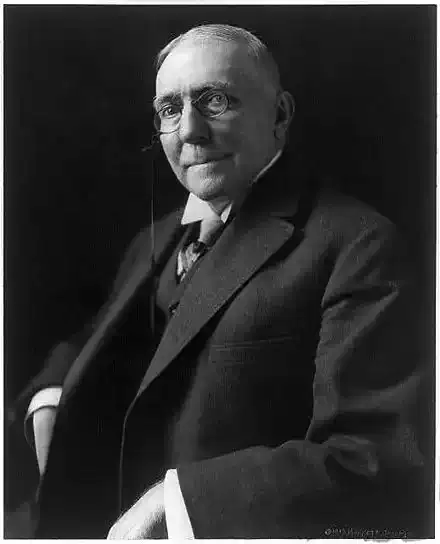
James Whitcomb Riley
Who Santy-Claus Wuz
Who Santy-Claus Wuz
Jes' a little bit o' feller--I remember still--
Ust to almost cry fer Christmas, like a youngster will.
Fourth o' July's nothin' to it!--New Year's ain't a smell!
Easter-Sunday--Circus-day--jes' all dead in the shell!
Lawzy, though! at night, you know, to set around an' hear
The old folks work the story off about the sledge an' deer,
An' 'Santy' skootin' round the roof, all wrapt in fur an' fuzz--
Long afore
I knowed who
'Santy-Claus' wuz!
Ust to wait, an' set up late, a week er two ahead;
Couldn't hardly keep awake, ner wouldn't go to bed;
Kittle stewin' on the fire, an' Mother settin' here
Darnin' socks, an' rockin' in the skreeky rockin'-cheer;
Pap gap', an' wonder where it wuz the money went,
An' quar'l with his frosted heels, an' spill his liniment;
An' me a-dreamin' sleigh-bells when the clock 'ud whir an' buzz,
Long afore
I knowed who
'Santy-Claus' wuz!
Size the fire-place up an' figger how 'Ole Santy' could
Manage to come down the chimbly, like they said he would;
Wisht 'at I could hide an' see him--wunderd what he'd say
Ef he ketched a feller layin' fer him thataway!
But I _bet_ on him, an' _liked_ him, same as ef he had
Turned to pat me on the back an' say, 'Look here, my lad,
Here's my pack,--jes' he'p yourse'f, like all good boys does!'
Long afore
I knowed who
'Santy-Claus' wuz!
Wisht that yarn was true about him, as it 'peared to be--
Truth made out o' lies like that-un's good enough fer me!--
Wisht I still wuz so confidin' I could jes' go wild
Over hangin' up my stockin's, like the little child
Climbin' in my lap to-night, an' beggin' me to tell
'Bout them reindeers, and 'Old Santy' that she loves so well
I'm half sorry fer this little-girl-sweetheart of his--
Long afore
She knows who
'Santy-Claus' is!
Jes' a little bit o' feller--I remember still--
Ust to almost cry fer Christmas, like a youngster will.
Fourth o' July's nothin' to it!--New Year's ain't a smell!
Easter-Sunday--Circus-day--jes' all dead in the shell!
Lawzy, though! at night, you know, to set around an' hear
The old folks work the story off about the sledge an' deer,
An' 'Santy' skootin' round the roof, all wrapt in fur an' fuzz--
Long afore
I knowed who
'Santy-Claus' wuz!
Ust to wait, an' set up late, a week er two ahead;
Couldn't hardly keep awake, ner wouldn't go to bed;
Kittle stewin' on the fire, an' Mother settin' here
Darnin' socks, an' rockin' in the skreeky rockin'-cheer;
Pap gap', an' wonder where it wuz the money went,
An' quar'l with his frosted heels, an' spill his liniment;
An' me a-dreamin' sleigh-bells when the clock 'ud whir an' buzz,
Long afore
I knowed who
'Santy-Claus' wuz!
Size the fire-place up an' figger how 'Ole Santy' could
Manage to come down the chimbly, like they said he would;
Wisht 'at I could hide an' see him--wunderd what he'd say
Ef he ketched a feller layin' fer him thataway!
But I _bet_ on him, an' _liked_ him, same as ef he had
Turned to pat me on the back an' say, 'Look here, my lad,
Here's my pack,--jes' he'p yourse'f, like all good boys does!'
Long afore
I knowed who
'Santy-Claus' wuz!
Wisht that yarn was true about him, as it 'peared to be--
Truth made out o' lies like that-un's good enough fer me!--
Wisht I still wuz so confidin' I could jes' go wild
Over hangin' up my stockin's, like the little child
Climbin' in my lap to-night, an' beggin' me to tell
'Bout them reindeers, and 'Old Santy' that she loves so well
I'm half sorry fer this little-girl-sweetheart of his--
Long afore
She knows who
'Santy-Claus' is!
295
James Whitcomb Riley
When The Hearse Comes Back
When The Hearse Comes Back
A thing 'at's 'bout as tryin' as a healthy man kin meet
Is some poor feller's funeral a-joggin' 'long the street:
The slow hearse and the hosses-- slow enough, to say at least,
Fer to even tax the patience of gentleman deceased!
The low scrunch of the gravel-- and the slow grind of the wheels--,
The slow, slow go of ev'ry woe 'at ev'rybody feels!
So I ruther like the contrast when I hear the whip-lash crack
A quickstep fer the hosses,
When the
Hearse
Comes
Back!
Meet it goin' to'rds the cimet'ry, you'll want to drap yer eyes--
But ef the plumes don't fetch you, it'll ketch you otherwise-You'll
haf to see the caskit, though you'd ort to look away
And 'conomize and save yer sighs fer any other day!
Yer sympathizin' won't wake up the sleeper from his rest--
Yer tears won't thaw them hands o' his 'at's froze acrost his breast!
And this is why-- when airth and sky's a gittin blurred and black--
I like the flash and hurry
When the
Hearse
Comes
Back!
It's not 'cause I don't 'preciate it ain't no time fer jokes,
Ner 'cause I' got no common human feelin' fer the folks--;
I've went to funerals myse'f, and tuk on some, perhaps--
Fer my hearth's 'bout as mal'able as any other chap's--,
I've buried father, mother-- But I'll haf to jes' git you
To 'excuse me,' as the feller says--. The p'int I'm drivin' to
Is simply when we're plum broke down and all knocked out o' whack,
It he'ps to shape us up like,
When the
Hearse
Comes
Back!
The idy! Wadin round here over shoe-mouth deep in woe,
When they's a graded 'pike o' joy and sunshine don't you know!
When evening strikes the pastur', cows'll pull out fer the bars,
And skittish-like from out the night'll prance the happy stars.
And so when my time comes to die, and I've got ary friend
'At wants expressed my last request-- I'll mebby, rickommend
To drive slow, ef they haf to, goin' 'long the out'ard track,
But I'll smile and say, 'You speed 'em
When the
Hearse
Comes
Back!'
A thing 'at's 'bout as tryin' as a healthy man kin meet
Is some poor feller's funeral a-joggin' 'long the street:
The slow hearse and the hosses-- slow enough, to say at least,
Fer to even tax the patience of gentleman deceased!
The low scrunch of the gravel-- and the slow grind of the wheels--,
The slow, slow go of ev'ry woe 'at ev'rybody feels!
So I ruther like the contrast when I hear the whip-lash crack
A quickstep fer the hosses,
When the
Hearse
Comes
Back!
Meet it goin' to'rds the cimet'ry, you'll want to drap yer eyes--
But ef the plumes don't fetch you, it'll ketch you otherwise-You'll
haf to see the caskit, though you'd ort to look away
And 'conomize and save yer sighs fer any other day!
Yer sympathizin' won't wake up the sleeper from his rest--
Yer tears won't thaw them hands o' his 'at's froze acrost his breast!
And this is why-- when airth and sky's a gittin blurred and black--
I like the flash and hurry
When the
Hearse
Comes
Back!
It's not 'cause I don't 'preciate it ain't no time fer jokes,
Ner 'cause I' got no common human feelin' fer the folks--;
I've went to funerals myse'f, and tuk on some, perhaps--
Fer my hearth's 'bout as mal'able as any other chap's--,
I've buried father, mother-- But I'll haf to jes' git you
To 'excuse me,' as the feller says--. The p'int I'm drivin' to
Is simply when we're plum broke down and all knocked out o' whack,
It he'ps to shape us up like,
When the
Hearse
Comes
Back!
The idy! Wadin round here over shoe-mouth deep in woe,
When they's a graded 'pike o' joy and sunshine don't you know!
When evening strikes the pastur', cows'll pull out fer the bars,
And skittish-like from out the night'll prance the happy stars.
And so when my time comes to die, and I've got ary friend
'At wants expressed my last request-- I'll mebby, rickommend
To drive slow, ef they haf to, goin' 'long the out'ard track,
But I'll smile and say, 'You speed 'em
When the
Hearse
Comes
Back!'
294
James Whitcomb Riley
When The Hearse Comes Back
When The Hearse Comes Back
A thing 'at's 'bout as tryin' as a healthy man kin meet
Is some poor feller's funeral a-joggin' 'long the street:
The slow hearse and the hosses-- slow enough, to say at least,
Fer to even tax the patience of gentleman deceased!
The low scrunch of the gravel-- and the slow grind of the wheels--,
The slow, slow go of ev'ry woe 'at ev'rybody feels!
So I ruther like the contrast when I hear the whip-lash crack
A quickstep fer the hosses,
When the
Hearse
Comes
Back!
Meet it goin' to'rds the cimet'ry, you'll want to drap yer eyes--
But ef the plumes don't fetch you, it'll ketch you otherwise-You'll
haf to see the caskit, though you'd ort to look away
And 'conomize and save yer sighs fer any other day!
Yer sympathizin' won't wake up the sleeper from his rest--
Yer tears won't thaw them hands o' his 'at's froze acrost his breast!
And this is why-- when airth and sky's a gittin blurred and black--
I like the flash and hurry
When the
Hearse
Comes
Back!
It's not 'cause I don't 'preciate it ain't no time fer jokes,
Ner 'cause I' got no common human feelin' fer the folks--;
I've went to funerals myse'f, and tuk on some, perhaps--
Fer my hearth's 'bout as mal'able as any other chap's--,
I've buried father, mother-- But I'll haf to jes' git you
To 'excuse me,' as the feller says--. The p'int I'm drivin' to
Is simply when we're plum broke down and all knocked out o' whack,
It he'ps to shape us up like,
When the
Hearse
Comes
Back!
The idy! Wadin round here over shoe-mouth deep in woe,
When they's a graded 'pike o' joy and sunshine don't you know!
When evening strikes the pastur', cows'll pull out fer the bars,
And skittish-like from out the night'll prance the happy stars.
And so when my time comes to die, and I've got ary friend
'At wants expressed my last request-- I'll mebby, rickommend
To drive slow, ef they haf to, goin' 'long the out'ard track,
But I'll smile and say, 'You speed 'em
When the
Hearse
Comes
Back!'
A thing 'at's 'bout as tryin' as a healthy man kin meet
Is some poor feller's funeral a-joggin' 'long the street:
The slow hearse and the hosses-- slow enough, to say at least,
Fer to even tax the patience of gentleman deceased!
The low scrunch of the gravel-- and the slow grind of the wheels--,
The slow, slow go of ev'ry woe 'at ev'rybody feels!
So I ruther like the contrast when I hear the whip-lash crack
A quickstep fer the hosses,
When the
Hearse
Comes
Back!
Meet it goin' to'rds the cimet'ry, you'll want to drap yer eyes--
But ef the plumes don't fetch you, it'll ketch you otherwise-You'll
haf to see the caskit, though you'd ort to look away
And 'conomize and save yer sighs fer any other day!
Yer sympathizin' won't wake up the sleeper from his rest--
Yer tears won't thaw them hands o' his 'at's froze acrost his breast!
And this is why-- when airth and sky's a gittin blurred and black--
I like the flash and hurry
When the
Hearse
Comes
Back!
It's not 'cause I don't 'preciate it ain't no time fer jokes,
Ner 'cause I' got no common human feelin' fer the folks--;
I've went to funerals myse'f, and tuk on some, perhaps--
Fer my hearth's 'bout as mal'able as any other chap's--,
I've buried father, mother-- But I'll haf to jes' git you
To 'excuse me,' as the feller says--. The p'int I'm drivin' to
Is simply when we're plum broke down and all knocked out o' whack,
It he'ps to shape us up like,
When the
Hearse
Comes
Back!
The idy! Wadin round here over shoe-mouth deep in woe,
When they's a graded 'pike o' joy and sunshine don't you know!
When evening strikes the pastur', cows'll pull out fer the bars,
And skittish-like from out the night'll prance the happy stars.
And so when my time comes to die, and I've got ary friend
'At wants expressed my last request-- I'll mebby, rickommend
To drive slow, ef they haf to, goin' 'long the out'ard track,
But I'll smile and say, 'You speed 'em
When the
Hearse
Comes
Back!'
294
James Whitcomb Riley
When Old Jack Died
When Old Jack Died
I.
When old Jack died, we staid from school (they said,
At home, we needn't go that day), and none
Of us ate any breakfast--only one,
And that was Papa--and his eyes were red
When he came round where we were, by the shed
Where Jack was lying, half way in the sun
And half way in the shade. When we begun
To cry out loud, Pa turned and dropped his head
And went away; and Mamma, she went back
Into the kitchen. Then, for a long while,
All to ourselves, like, we stood there and cried.
We thought so many good things of Old Jack,
And funny things--although we didn't smile--We
couldn't only cry when Old Jack died.
II.
When Old Jack died, it seemed a human friend
Had suddenly gone from us; that some face
That we had loved to fondle and embrace
From babyhood, no more would condescend
To smile on us forever. We might bend
With tearful eyes above him, interlace
Our chubby fingers o'er him, romp and race,
Plead with him, call and coax--aye, we might send
The old halloo up for him, whistle, hist,
(If sobs had let us) or, as wildly vain,
Snapped thumbs, called 'speak,' and he had not replied;
We might have gone down on our knees and kissed
The tousled ears, and yet they must remain
Deaf, motionless, we knew--when Old Jack died.
III.
When Old Jack died, it seemed to us, some way,
That all the other dogs in town were pained
With our bereavement, and some that were chained,
Even, unslipped their collars on that day
To visit Jack in state, as though to pay
A last, sad tribute there, while neighbors craned
Their heads above the high board fence, and deigned
To sigh 'Poor dog!' remembering how they
Had cuffed him, when alive, perchance, because,
For love of them he leaped to lick their hands--
Now, that he could not, were they satisfied?
We children thought that, as we crossed his paws,
And o'er his grave, 'way down the bottom-lands,
Wrote 'Our First Love Lies Here,' when Old Jack died.
I.
When old Jack died, we staid from school (they said,
At home, we needn't go that day), and none
Of us ate any breakfast--only one,
And that was Papa--and his eyes were red
When he came round where we were, by the shed
Where Jack was lying, half way in the sun
And half way in the shade. When we begun
To cry out loud, Pa turned and dropped his head
And went away; and Mamma, she went back
Into the kitchen. Then, for a long while,
All to ourselves, like, we stood there and cried.
We thought so many good things of Old Jack,
And funny things--although we didn't smile--We
couldn't only cry when Old Jack died.
II.
When Old Jack died, it seemed a human friend
Had suddenly gone from us; that some face
That we had loved to fondle and embrace
From babyhood, no more would condescend
To smile on us forever. We might bend
With tearful eyes above him, interlace
Our chubby fingers o'er him, romp and race,
Plead with him, call and coax--aye, we might send
The old halloo up for him, whistle, hist,
(If sobs had let us) or, as wildly vain,
Snapped thumbs, called 'speak,' and he had not replied;
We might have gone down on our knees and kissed
The tousled ears, and yet they must remain
Deaf, motionless, we knew--when Old Jack died.
III.
When Old Jack died, it seemed to us, some way,
That all the other dogs in town were pained
With our bereavement, and some that were chained,
Even, unslipped their collars on that day
To visit Jack in state, as though to pay
A last, sad tribute there, while neighbors craned
Their heads above the high board fence, and deigned
To sigh 'Poor dog!' remembering how they
Had cuffed him, when alive, perchance, because,
For love of them he leaped to lick their hands--
Now, that he could not, were they satisfied?
We children thought that, as we crossed his paws,
And o'er his grave, 'way down the bottom-lands,
Wrote 'Our First Love Lies Here,' when Old Jack died.
292
James Whitcomb Riley
When Old Jack Died
When Old Jack Died
I.
When old Jack died, we staid from school (they said,
At home, we needn't go that day), and none
Of us ate any breakfast--only one,
And that was Papa--and his eyes were red
When he came round where we were, by the shed
Where Jack was lying, half way in the sun
And half way in the shade. When we begun
To cry out loud, Pa turned and dropped his head
And went away; and Mamma, she went back
Into the kitchen. Then, for a long while,
All to ourselves, like, we stood there and cried.
We thought so many good things of Old Jack,
And funny things--although we didn't smile--We
couldn't only cry when Old Jack died.
II.
When Old Jack died, it seemed a human friend
Had suddenly gone from us; that some face
That we had loved to fondle and embrace
From babyhood, no more would condescend
To smile on us forever. We might bend
With tearful eyes above him, interlace
Our chubby fingers o'er him, romp and race,
Plead with him, call and coax--aye, we might send
The old halloo up for him, whistle, hist,
(If sobs had let us) or, as wildly vain,
Snapped thumbs, called 'speak,' and he had not replied;
We might have gone down on our knees and kissed
The tousled ears, and yet they must remain
Deaf, motionless, we knew--when Old Jack died.
III.
When Old Jack died, it seemed to us, some way,
That all the other dogs in town were pained
With our bereavement, and some that were chained,
Even, unslipped their collars on that day
To visit Jack in state, as though to pay
A last, sad tribute there, while neighbors craned
Their heads above the high board fence, and deigned
To sigh 'Poor dog!' remembering how they
Had cuffed him, when alive, perchance, because,
For love of them he leaped to lick their hands--
Now, that he could not, were they satisfied?
We children thought that, as we crossed his paws,
And o'er his grave, 'way down the bottom-lands,
Wrote 'Our First Love Lies Here,' when Old Jack died.
I.
When old Jack died, we staid from school (they said,
At home, we needn't go that day), and none
Of us ate any breakfast--only one,
And that was Papa--and his eyes were red
When he came round where we were, by the shed
Where Jack was lying, half way in the sun
And half way in the shade. When we begun
To cry out loud, Pa turned and dropped his head
And went away; and Mamma, she went back
Into the kitchen. Then, for a long while,
All to ourselves, like, we stood there and cried.
We thought so many good things of Old Jack,
And funny things--although we didn't smile--We
couldn't only cry when Old Jack died.
II.
When Old Jack died, it seemed a human friend
Had suddenly gone from us; that some face
That we had loved to fondle and embrace
From babyhood, no more would condescend
To smile on us forever. We might bend
With tearful eyes above him, interlace
Our chubby fingers o'er him, romp and race,
Plead with him, call and coax--aye, we might send
The old halloo up for him, whistle, hist,
(If sobs had let us) or, as wildly vain,
Snapped thumbs, called 'speak,' and he had not replied;
We might have gone down on our knees and kissed
The tousled ears, and yet they must remain
Deaf, motionless, we knew--when Old Jack died.
III.
When Old Jack died, it seemed to us, some way,
That all the other dogs in town were pained
With our bereavement, and some that were chained,
Even, unslipped their collars on that day
To visit Jack in state, as though to pay
A last, sad tribute there, while neighbors craned
Their heads above the high board fence, and deigned
To sigh 'Poor dog!' remembering how they
Had cuffed him, when alive, perchance, because,
For love of them he leaped to lick their hands--
Now, that he could not, were they satisfied?
We children thought that, as we crossed his paws,
And o'er his grave, 'way down the bottom-lands,
Wrote 'Our First Love Lies Here,' when Old Jack died.
292
James Whitcomb Riley
When Mother Combed My Hair
When Mother Combed My Hair
When Memory, with gentle hand,
Has led me to that foreign land
Of childhood days, I long to be
Again the boy on bended knee,
With head a-bow, and drowsy smile
Hid in a mother's lap the while,
With tender touch and kindly care,
She bends above and combs my hair.
Ere threats of Time, or ghosts of cares
Had paled it to the hue it wears,
Its tangled threads of amber light
Fell o'er a forehead, fair and white,
That only knew the light caress
Of loving hands, or sudden press
Of kisses that were sifted there
The times when mother combed my hair.
But its last gleams of gold have slipped
Away; and Sorrow's manuscript
Is fashioned of the snowy brow--
So lined and underscored now
That you, to see it, scarce would guess
It e'er had felt the fond caress
Of loving lips, or known the care
Of those dear hands that combed my hair.
. . . . . . . .
I am so tired! Let me be
A moment at my mother's knee;
One moment--that I may forget
The trials waiting for me yet:
One moment free from every pain--
O! Mother! Comb my hair again!
And I will, oh, so humbly bow,
For I've a wife that combs it now.
When Memory, with gentle hand,
Has led me to that foreign land
Of childhood days, I long to be
Again the boy on bended knee,
With head a-bow, and drowsy smile
Hid in a mother's lap the while,
With tender touch and kindly care,
She bends above and combs my hair.
Ere threats of Time, or ghosts of cares
Had paled it to the hue it wears,
Its tangled threads of amber light
Fell o'er a forehead, fair and white,
That only knew the light caress
Of loving hands, or sudden press
Of kisses that were sifted there
The times when mother combed my hair.
But its last gleams of gold have slipped
Away; and Sorrow's manuscript
Is fashioned of the snowy brow--
So lined and underscored now
That you, to see it, scarce would guess
It e'er had felt the fond caress
Of loving lips, or known the care
Of those dear hands that combed my hair.
. . . . . . . .
I am so tired! Let me be
A moment at my mother's knee;
One moment--that I may forget
The trials waiting for me yet:
One moment free from every pain--
O! Mother! Comb my hair again!
And I will, oh, so humbly bow,
For I've a wife that combs it now.
254
James Whitcomb Riley
When Bessie Died
When Bessie Died
If from your own the dimpled hands had slipped,
And ne'er would nestle in your palm again;
If the white feet into the grave had tripped--'
When Bessie died--
We braided the brown hair, and tied
It just as her own little hands
Had fastened back the silken strands
A thousand times-- the crimson bit
Of ribbon woven into it
That she had worn with childish pride--
Smoothed down the dainty bow-- and cried
When Bessie died.
When Bessie died--
We drew the nursery blinds aside,
And as the morning in the room
Burst like a primrose into bloom,
Her pet canary's cage we hung
Where she might hear him when he sung--
And yet not any note he tried,
Though she lay listening folded-eyed.
When Bessie died--
We writhed in prayer unsatisfied:
We begged of God, and He did smile
In silence on us all the while;
And we did see Him, through our tears,
Enfolding that fair form of hers,
She laughing back against His love
The kisses had nothing of--
And death to us He still denied,
When Bessie died--
When Bessie died.
If from your own the dimpled hands had slipped,
And ne'er would nestle in your palm again;
If the white feet into the grave had tripped--'
When Bessie died--
We braided the brown hair, and tied
It just as her own little hands
Had fastened back the silken strands
A thousand times-- the crimson bit
Of ribbon woven into it
That she had worn with childish pride--
Smoothed down the dainty bow-- and cried
When Bessie died.
When Bessie died--
We drew the nursery blinds aside,
And as the morning in the room
Burst like a primrose into bloom,
Her pet canary's cage we hung
Where she might hear him when he sung--
And yet not any note he tried,
Though she lay listening folded-eyed.
When Bessie died--
We writhed in prayer unsatisfied:
We begged of God, and He did smile
In silence on us all the while;
And we did see Him, through our tears,
Enfolding that fair form of hers,
She laughing back against His love
The kisses had nothing of--
And death to us He still denied,
When Bessie died--
When Bessie died.
273
James Whitcomb Riley
When Bessie Died
When Bessie Died
If from your own the dimpled hands had slipped,
And ne'er would nestle in your palm again;
If the white feet into the grave had tripped--'
When Bessie died--
We braided the brown hair, and tied
It just as her own little hands
Had fastened back the silken strands
A thousand times-- the crimson bit
Of ribbon woven into it
That she had worn with childish pride--
Smoothed down the dainty bow-- and cried
When Bessie died.
When Bessie died--
We drew the nursery blinds aside,
And as the morning in the room
Burst like a primrose into bloom,
Her pet canary's cage we hung
Where she might hear him when he sung--
And yet not any note he tried,
Though she lay listening folded-eyed.
When Bessie died--
We writhed in prayer unsatisfied:
We begged of God, and He did smile
In silence on us all the while;
And we did see Him, through our tears,
Enfolding that fair form of hers,
She laughing back against His love
The kisses had nothing of--
And death to us He still denied,
When Bessie died--
When Bessie died.
If from your own the dimpled hands had slipped,
And ne'er would nestle in your palm again;
If the white feet into the grave had tripped--'
When Bessie died--
We braided the brown hair, and tied
It just as her own little hands
Had fastened back the silken strands
A thousand times-- the crimson bit
Of ribbon woven into it
That she had worn with childish pride--
Smoothed down the dainty bow-- and cried
When Bessie died.
When Bessie died--
We drew the nursery blinds aside,
And as the morning in the room
Burst like a primrose into bloom,
Her pet canary's cage we hung
Where she might hear him when he sung--
And yet not any note he tried,
Though she lay listening folded-eyed.
When Bessie died--
We writhed in prayer unsatisfied:
We begged of God, and He did smile
In silence on us all the while;
And we did see Him, through our tears,
Enfolding that fair form of hers,
She laughing back against His love
The kisses had nothing of--
And death to us He still denied,
When Bessie died--
When Bessie died.
273
James Whitcomb Riley
What Chris'mas Fetched The Wigginses
What Chris'mas Fetched The Wigginses
Wintertime, er Summertime,
Of late years I notice I'm,
Kindo'-like, more subjec' to
What the _weather_ is. Now, you
Folks 'at lives in town, I s'pose,
Thinks its bully when it snows;
But the chap 'at chops and hauls
Yer wood fer ye, and then stalls,
And snapps tuggs and swingletrees,
And then has to walk er freeze,
Haint so much 'stuck on' the snow
As stuck _in_ it--Bless ye, no!--
When its packed, and sleighin's good,
And _church_ in the neighborhood,
Them 'at's _got_ their girls, I guess,
Takes 'em, likely, more er less,
Tell the plain facts o' the case,
No men-folks about our place
On'y me and Pap--and he
'Lows 'at young folks' company
Allus made him sick! So I
Jes don't want, and jes don't try!
Chinkypin, the dad-burn town,
'S too fur off to loaf aroun'
Either day er night--and no
Law compellin' me to go!-'
Less 'n some Old-Settlers' Day,
Er big-doin's thataway-_
Then_, to tell the p'inted fac',
I've went more so's to come back
By old Guthrie's 'still-house, where
Minors _has_ got licker there-That's
pervidin' we could show 'em
Old folks sent fer it from home!
Visit roun' the neighbors some,
When the boys wants me to come.-Coon-
hunt with 'em; er set traps
Fer mussrats; er jes, perhaps,
Lay in roun' the stove, you know,
And parch corn, and let her snow!
Mostly, nights like these, you'll be
(Ef you' got a writ fer _me_)
Ap' to skeer me up, I guess,
In about the Wigginses.
Nothin' roun' _our_ place to keep
Me at home--with Pap asleep
'Fore it's dark; and Mother in
Mango pickles to her chin;
And the girls, all still as death,
Piecin' quilts.--Sence I drawed breath
Twenty year' ago, and heerd
Some girls whispern' so's it 'peared
Like they had a row o' pins
In their mouth--right there begins
My first rickollections, built
On that-air blame old piece-quilt!
Summertime, it's jes the same-'
Cause I've noticed,--and I claim,
As I said afore, I'm more
Subjec' to the weather, _shore_,
'Proachin' my majority,
Than I ever ust to be!
Callin' back _last_ Summer, say,-Don't
seem hardly past away--
With night closin' in, and all
S' lonesome-like in the dew-fail:
Bats--ad-drat their ugly muggs!--
Flickern' by; and lightnin'-bugs
Huckstern' roun' the airly night
Little sickly gasps o' light;-Whip-
poor-wills, like all possessed,
Moanin' out their mournfullest;--
Frogs and katydids and things
Jes clubs in and sings and sings
Their _ding-dangdest_!--Stock's all fed,
And Pap's washed his feet fer bed;--
Mother and the girls all down
At the milk-shed, foolin' roun'--
No wunder 'at I git blue,
And lite out--and so would you!
I caint stay aroun' no place
Whur they haint no livin' face:-'
Crost the fields and thue the gaps
Of the hills they's friends, perhaps,
Waitin' somers, 'at kin be
Kindo' comfertin' to me!
Neighbors all 'is plenty good,
Scattered thue this neighberhood;
Yit, of all, I like to jes
Drap in on the Wigginses.--
Old man, and old lady too,
'Pear-like, makes so much o' you--,
Least, they've allus pampered me
Like one of the fambily.--
The boys, too, 's all thataway--
Want you jes to come and stay;--
Price, and Chape, and Mandaville,
Poke, Chasteen, and 'Catfish Bill'-Poke's
the runt of all the rest,
But he's jes the beatinest
Little schemer, fer fourteen,
Anybody ever seen!-
'Like his namesake,' old man claims,
'Jeems K. Poke, the first o' names!
Full o' tricks and jokes--and you
Never know what _Poke's_ go' do!'
Genius, too, that-air boy is,
With them awk'ard hands o' his:
Gits this blame pokeberry-juice,
Er some stuff, fer ink--and goose-
Quill pen-p'ints: And then he'll draw
Dogdest pictures yevver saw!
Er make deers and eagles good
As a writin'-teacher could!
Then they's two twin boys they've riz
Of old Coonrod Wigginses
'At's deceast--and glad of it,
'Cause his widder's livin' yit!
Course _the boys_ is mostly jes'
Why I go to Wigginses.---
Though _Melviney_, sometimes, _she_
Gits her slate and algebry
And jes' sets there ciphern' thue
Sums old Ray hisse'f caint do!--
Jes' sets there, and tilts her chair
Forreds tel, 'pear-like, her hair
Jes' _spills_ in her lap--and then
She jes' dips it up again
With her hands, as white, I swan,
As the apern she's got on!
Talk o' hospitality!--
Go to Wigginses with me--
Overhet, or froze plum thue,
You'll find welcome waitin' you:-Th'ow
out yer tobacker 'fore
You set foot acrost that floor,-'
Got to eat whatever's set--
Got to drink whatever's wet!'
Old man's sentimuns--them's his---
And means jes the best they is!
Then he lights his pipe; and she,
The old lady, presen'ly
She lights her'n; and Chape and Poke.
I haint got none, ner don't smoke,-(
In the crick afore their door--
Sorto so's 'at I'd be shore--
Drownded mine one night and says
'I won't smoke at _Wigginses_!')
Price he's mostly talkin' 'bout
Politics, and 'thieves turned out'--
What he's go' to be, ef he
Ever 'gits there'--and 'we'll see!'-
Poke he 'lows they's blame few men
Go' to hold their breath tel then!
Then Melviney smiles, as she
Goes on with her algebry,
And the clouds clear, and the room's
Sweeter 'n crabapple-blooms!
(That Melviney, she' got some
Most surprisin' ways, I gum!-Don't
'pear like she ever _says_
Nothin', yit you'll _listen_ jes
Like she was a-talkin', and
Half-way seem to understand,
But not quite,--_Poke_ does, I know,
'Cause he good as told me so,-Poke's
her favo-rite; and he--
That is, confidentially-He's
_my_ favo-rite--and I
Got my whurfore and my why!)
I haint never ben no hand
Much at talkin', understand,
But they's _thoughts_ o' mine 'at's jes
Jealous o' them Wigginses!--
Gift o' talkin 's what they got,
Whether they want to er not-F'r
instunce, start the old man on
Huntin'-scrapes, 'fore game was gone,
'Way back in the Forties, when
Bears stold pigs right out the pen,
Er went waltzin' 'crost the farm
With a bee-hive on their arm!-And--
sir, _ping_! the old man's gun
Has plumped-over many a one,
Firin' at him from afore
That-air very cabin-door!
Yes--and _painters_, prowlin' 'bout,
Allus darkest nights.--Lay out
Clost yer cattle.--Great, big red
Eyes a-blazin' in their head,
Glittern' 'long the timber-line--
Shine out some, and then _un_-shine,
And shine back--Then, stiddy! whizz!
'N there yer Mr. Painter is
With a hole bored spang between
Them-air eyes! Er start Chasteen,
Say, on blooded racin'-stock,
Ef you want to hear him talk;
Er tobacker--how to raise,
Store, and k-yore it, so's she pays:
The old lady--and she'll cote
Scriptur' tel she'll git yer vote!
Prove to you 'at wrong is right,
Jes as plain as black is white:
Prove when you're asleep in bed
You're a-standin' on yer head,
And yer train 'at's goin' West,
'S goin' East its level best;
And when bees dies, it's their wings
Wears out--and a thousand things!
And the boys is 'chips,' you know;
'Off the old block'--So I go
To the Wigginses, 'cause--jes
'Cause I _like_ the Wigginses--
Even ef Melviney _she_
Hardly 'pears to notice me!
Rid to Chinkypin this week-Yisterd'y.--
No snow to speak
Of, and didn't have no sleigh
Anyhow; so, as I say,
I rid in--and froze one ear
And both heels--and I don't keer!-'
Mother and the girls kin jes
Bother 'bout their Chris'mases
_Next_ time fer _theirse'vs_, I jack!'
Thinks-says-I, a-startin' back,--
Whole durn meal-bag full of things
Wrapped in paper-sacks, and strings
Liable to snap their holt
Jes at any little jolt!
That in front o' me, and _wind_
With _nicks_ in it, 'at jes skinned
Me alive!--I'm here to say
Nine mile' hossback thataway
Would a-walked my log! But, as
Somepin' allus comes to pass,
As I topped old Guthrie's hill.
Saw a buggy, front the 'Still,
P'inted home'ards, and a thin
Little chap jes climbin' in.
Six more minutes I were there
On the groun's'--And course it were--
It were little Poke--and he
Nearly fainted to see me!-'
You ben in to Chinky, too?'
'Yes; and go' ride back with you,'
I-says-I. He he'pped me find
Room fer my things in behind--
Stript my hoss's reins down, and
Put his mitt' on the right hand
So's to lead--'Pile in!' says he,
'But you 've struck pore company!'
Noticed he was pale--looked sick,
Kindo-like, and had a quick
Way o' flickin' them-air eyes
0' his roun' 'at didn't size
Up right with his usual style-s'
I, 'You well?' He tried to smile,
But his chin shuck and tears come.-'_
I've run 'Viney 'way from home_!'
Don't know jes what all occurred
Next ten seconds--Nary word,
But my heart jes drapt, stobbed thue,
And whirlt over and come to.--
Wrenched a big quart bottle from
That fool-boy!--and cut my thumb
On his little fiste-teeth--helt
Him snug in one arm, and felt
That-air little heart o' his
Churn the blood o' Wigginses
Into that old bead 'at spun
Roun' her, spilt at Lexington!
His k'niptions, like enough,
He'pped us both,--though it was rough--
Rough on him, and rougher on
Me when last his nerve was gone,
And he laid there still, his face
Fishin' fer some hidin'-place
Jes a leetle lower down
In my breast than he 'd yit foun'!
Last I kindo' soothed him, so's
He could talk.--And what you s'pose
Them-air revelations of
Poke's was? . . . He'd ben writin' love-
Letters to Melviney, and
Givin her to understand
They was from 'a young man who
Loved her,' and--'the violet's blue
'N sugar's sweet'--and Lord knows what!
Tel, 'peared-like, Melviney got
S' interested in 'the young
Man,' Poke _he_ says, 'at she brung
A' answer onc't fer him to take,
Statin' 'she'd die fer his sake,'
And writ fifty xs 'fer
Love-kisses fer him from her!'
I was standin' in the road
By the buggy, all I knowed
When Poke got that fer.--'That's why,'
Poke says, 'I 'fessed up the lie-_
Had_ to--'cause I see,' says he,
''Viney was in airnest--she
Cried, too, when I told her.--Then
She swore me, and smiled again,
And got Pap and Mother to
Let me hitch and drive her thue
Into Chinkypin, to be
At Aunt 'Rindy's Chris'mas-tree-That's
to-night.' Says I, 'Poke--durn
Your lyin' soul!--'s that beau o' hern--
That--_she_--loves--Does _he_ live in
That hellhole o' Chinkypin?'
'No,' says Poke, 'er 'Viney would
Went some _other_ neighborhood.'
'Who _is_ the blame whelp?' says I.
'Promised 'Viney, hope I'd die
Ef I ever told!' says Poke,
Pittiful and jes heart-broke-''
Sides that's why she left the place,-'
She caint look him in the face
Now no more on earth!' she says.--'
And the child broke down and jes
Sobbed! Says I, 'Poke, I p'tend
T' be _your_ friend, and your _Pap's_ friend,
And your _Mother's_ friend, and all
The _boys_' friend, little, large and small--
The _whole fambily's_ friend--and you
Know that means _Melviney_, too.-Now--
you hush yer troublin!'--I'm
Go' to he'p friends ever' time-On'y
in _this_ case, _you_ got
To he'p _me_--and, like as not
I kin he'p Melviney then,
And we'll have her home again.
And now, Poke, with your consent,
I'm go' go to that-air gent
She's in love with, and confer
With _him_ on his views o' _her_.--
Blast him! give the man _some_ show.--
Who is he?--_I'm go' to know_!'
Somepin' struck the little chap
Funny, 'peared-like.--Give a slap
On his leg--laughed thue the dew
In his eyes, and says: 'It's you!'
Yes, and--'cordin' to the last
Love-letters of ours 'at passed
Thue his hands--we was to be
Married Chris'mas.--'Gee-mun-_nee_!
Poke,' says I, 'it's _suddent_--yit
We _kin_ make it! You're to git
Up tomorry, say, 'bout _three_--
Tell your folks you're go' with me:-We'll
hitch up, and jes drive in
'N take the town o' Chinkypin!'
Wintertime, er Summertime,
Of late years I notice I'm,
Kindo'-like, more subjec' to
What the _weather_ is. Now, you
Folks 'at lives in town, I s'pose,
Thinks its bully when it snows;
But the chap 'at chops and hauls
Yer wood fer ye, and then stalls,
And snapps tuggs and swingletrees,
And then has to walk er freeze,
Haint so much 'stuck on' the snow
As stuck _in_ it--Bless ye, no!--
When its packed, and sleighin's good,
And _church_ in the neighborhood,
Them 'at's _got_ their girls, I guess,
Takes 'em, likely, more er less,
Tell the plain facts o' the case,
No men-folks about our place
On'y me and Pap--and he
'Lows 'at young folks' company
Allus made him sick! So I
Jes don't want, and jes don't try!
Chinkypin, the dad-burn town,
'S too fur off to loaf aroun'
Either day er night--and no
Law compellin' me to go!-'
Less 'n some Old-Settlers' Day,
Er big-doin's thataway-_
Then_, to tell the p'inted fac',
I've went more so's to come back
By old Guthrie's 'still-house, where
Minors _has_ got licker there-That's
pervidin' we could show 'em
Old folks sent fer it from home!
Visit roun' the neighbors some,
When the boys wants me to come.-Coon-
hunt with 'em; er set traps
Fer mussrats; er jes, perhaps,
Lay in roun' the stove, you know,
And parch corn, and let her snow!
Mostly, nights like these, you'll be
(Ef you' got a writ fer _me_)
Ap' to skeer me up, I guess,
In about the Wigginses.
Nothin' roun' _our_ place to keep
Me at home--with Pap asleep
'Fore it's dark; and Mother in
Mango pickles to her chin;
And the girls, all still as death,
Piecin' quilts.--Sence I drawed breath
Twenty year' ago, and heerd
Some girls whispern' so's it 'peared
Like they had a row o' pins
In their mouth--right there begins
My first rickollections, built
On that-air blame old piece-quilt!
Summertime, it's jes the same-'
Cause I've noticed,--and I claim,
As I said afore, I'm more
Subjec' to the weather, _shore_,
'Proachin' my majority,
Than I ever ust to be!
Callin' back _last_ Summer, say,-Don't
seem hardly past away--
With night closin' in, and all
S' lonesome-like in the dew-fail:
Bats--ad-drat their ugly muggs!--
Flickern' by; and lightnin'-bugs
Huckstern' roun' the airly night
Little sickly gasps o' light;-Whip-
poor-wills, like all possessed,
Moanin' out their mournfullest;--
Frogs and katydids and things
Jes clubs in and sings and sings
Their _ding-dangdest_!--Stock's all fed,
And Pap's washed his feet fer bed;--
Mother and the girls all down
At the milk-shed, foolin' roun'--
No wunder 'at I git blue,
And lite out--and so would you!
I caint stay aroun' no place
Whur they haint no livin' face:-'
Crost the fields and thue the gaps
Of the hills they's friends, perhaps,
Waitin' somers, 'at kin be
Kindo' comfertin' to me!
Neighbors all 'is plenty good,
Scattered thue this neighberhood;
Yit, of all, I like to jes
Drap in on the Wigginses.--
Old man, and old lady too,
'Pear-like, makes so much o' you--,
Least, they've allus pampered me
Like one of the fambily.--
The boys, too, 's all thataway--
Want you jes to come and stay;--
Price, and Chape, and Mandaville,
Poke, Chasteen, and 'Catfish Bill'-Poke's
the runt of all the rest,
But he's jes the beatinest
Little schemer, fer fourteen,
Anybody ever seen!-
'Like his namesake,' old man claims,
'Jeems K. Poke, the first o' names!
Full o' tricks and jokes--and you
Never know what _Poke's_ go' do!'
Genius, too, that-air boy is,
With them awk'ard hands o' his:
Gits this blame pokeberry-juice,
Er some stuff, fer ink--and goose-
Quill pen-p'ints: And then he'll draw
Dogdest pictures yevver saw!
Er make deers and eagles good
As a writin'-teacher could!
Then they's two twin boys they've riz
Of old Coonrod Wigginses
'At's deceast--and glad of it,
'Cause his widder's livin' yit!
Course _the boys_ is mostly jes'
Why I go to Wigginses.---
Though _Melviney_, sometimes, _she_
Gits her slate and algebry
And jes' sets there ciphern' thue
Sums old Ray hisse'f caint do!--
Jes' sets there, and tilts her chair
Forreds tel, 'pear-like, her hair
Jes' _spills_ in her lap--and then
She jes' dips it up again
With her hands, as white, I swan,
As the apern she's got on!
Talk o' hospitality!--
Go to Wigginses with me--
Overhet, or froze plum thue,
You'll find welcome waitin' you:-Th'ow
out yer tobacker 'fore
You set foot acrost that floor,-'
Got to eat whatever's set--
Got to drink whatever's wet!'
Old man's sentimuns--them's his---
And means jes the best they is!
Then he lights his pipe; and she,
The old lady, presen'ly
She lights her'n; and Chape and Poke.
I haint got none, ner don't smoke,-(
In the crick afore their door--
Sorto so's 'at I'd be shore--
Drownded mine one night and says
'I won't smoke at _Wigginses_!')
Price he's mostly talkin' 'bout
Politics, and 'thieves turned out'--
What he's go' to be, ef he
Ever 'gits there'--and 'we'll see!'-
Poke he 'lows they's blame few men
Go' to hold their breath tel then!
Then Melviney smiles, as she
Goes on with her algebry,
And the clouds clear, and the room's
Sweeter 'n crabapple-blooms!
(That Melviney, she' got some
Most surprisin' ways, I gum!-Don't
'pear like she ever _says_
Nothin', yit you'll _listen_ jes
Like she was a-talkin', and
Half-way seem to understand,
But not quite,--_Poke_ does, I know,
'Cause he good as told me so,-Poke's
her favo-rite; and he--
That is, confidentially-He's
_my_ favo-rite--and I
Got my whurfore and my why!)
I haint never ben no hand
Much at talkin', understand,
But they's _thoughts_ o' mine 'at's jes
Jealous o' them Wigginses!--
Gift o' talkin 's what they got,
Whether they want to er not-F'r
instunce, start the old man on
Huntin'-scrapes, 'fore game was gone,
'Way back in the Forties, when
Bears stold pigs right out the pen,
Er went waltzin' 'crost the farm
With a bee-hive on their arm!-And--
sir, _ping_! the old man's gun
Has plumped-over many a one,
Firin' at him from afore
That-air very cabin-door!
Yes--and _painters_, prowlin' 'bout,
Allus darkest nights.--Lay out
Clost yer cattle.--Great, big red
Eyes a-blazin' in their head,
Glittern' 'long the timber-line--
Shine out some, and then _un_-shine,
And shine back--Then, stiddy! whizz!
'N there yer Mr. Painter is
With a hole bored spang between
Them-air eyes! Er start Chasteen,
Say, on blooded racin'-stock,
Ef you want to hear him talk;
Er tobacker--how to raise,
Store, and k-yore it, so's she pays:
The old lady--and she'll cote
Scriptur' tel she'll git yer vote!
Prove to you 'at wrong is right,
Jes as plain as black is white:
Prove when you're asleep in bed
You're a-standin' on yer head,
And yer train 'at's goin' West,
'S goin' East its level best;
And when bees dies, it's their wings
Wears out--and a thousand things!
And the boys is 'chips,' you know;
'Off the old block'--So I go
To the Wigginses, 'cause--jes
'Cause I _like_ the Wigginses--
Even ef Melviney _she_
Hardly 'pears to notice me!
Rid to Chinkypin this week-Yisterd'y.--
No snow to speak
Of, and didn't have no sleigh
Anyhow; so, as I say,
I rid in--and froze one ear
And both heels--and I don't keer!-'
Mother and the girls kin jes
Bother 'bout their Chris'mases
_Next_ time fer _theirse'vs_, I jack!'
Thinks-says-I, a-startin' back,--
Whole durn meal-bag full of things
Wrapped in paper-sacks, and strings
Liable to snap their holt
Jes at any little jolt!
That in front o' me, and _wind_
With _nicks_ in it, 'at jes skinned
Me alive!--I'm here to say
Nine mile' hossback thataway
Would a-walked my log! But, as
Somepin' allus comes to pass,
As I topped old Guthrie's hill.
Saw a buggy, front the 'Still,
P'inted home'ards, and a thin
Little chap jes climbin' in.
Six more minutes I were there
On the groun's'--And course it were--
It were little Poke--and he
Nearly fainted to see me!-'
You ben in to Chinky, too?'
'Yes; and go' ride back with you,'
I-says-I. He he'pped me find
Room fer my things in behind--
Stript my hoss's reins down, and
Put his mitt' on the right hand
So's to lead--'Pile in!' says he,
'But you 've struck pore company!'
Noticed he was pale--looked sick,
Kindo-like, and had a quick
Way o' flickin' them-air eyes
0' his roun' 'at didn't size
Up right with his usual style-s'
I, 'You well?' He tried to smile,
But his chin shuck and tears come.-'_
I've run 'Viney 'way from home_!'
Don't know jes what all occurred
Next ten seconds--Nary word,
But my heart jes drapt, stobbed thue,
And whirlt over and come to.--
Wrenched a big quart bottle from
That fool-boy!--and cut my thumb
On his little fiste-teeth--helt
Him snug in one arm, and felt
That-air little heart o' his
Churn the blood o' Wigginses
Into that old bead 'at spun
Roun' her, spilt at Lexington!
His k'niptions, like enough,
He'pped us both,--though it was rough--
Rough on him, and rougher on
Me when last his nerve was gone,
And he laid there still, his face
Fishin' fer some hidin'-place
Jes a leetle lower down
In my breast than he 'd yit foun'!
Last I kindo' soothed him, so's
He could talk.--And what you s'pose
Them-air revelations of
Poke's was? . . . He'd ben writin' love-
Letters to Melviney, and
Givin her to understand
They was from 'a young man who
Loved her,' and--'the violet's blue
'N sugar's sweet'--and Lord knows what!
Tel, 'peared-like, Melviney got
S' interested in 'the young
Man,' Poke _he_ says, 'at she brung
A' answer onc't fer him to take,
Statin' 'she'd die fer his sake,'
And writ fifty xs 'fer
Love-kisses fer him from her!'
I was standin' in the road
By the buggy, all I knowed
When Poke got that fer.--'That's why,'
Poke says, 'I 'fessed up the lie-_
Had_ to--'cause I see,' says he,
''Viney was in airnest--she
Cried, too, when I told her.--Then
She swore me, and smiled again,
And got Pap and Mother to
Let me hitch and drive her thue
Into Chinkypin, to be
At Aunt 'Rindy's Chris'mas-tree-That's
to-night.' Says I, 'Poke--durn
Your lyin' soul!--'s that beau o' hern--
That--_she_--loves--Does _he_ live in
That hellhole o' Chinkypin?'
'No,' says Poke, 'er 'Viney would
Went some _other_ neighborhood.'
'Who _is_ the blame whelp?' says I.
'Promised 'Viney, hope I'd die
Ef I ever told!' says Poke,
Pittiful and jes heart-broke-''
Sides that's why she left the place,-'
She caint look him in the face
Now no more on earth!' she says.--'
And the child broke down and jes
Sobbed! Says I, 'Poke, I p'tend
T' be _your_ friend, and your _Pap's_ friend,
And your _Mother's_ friend, and all
The _boys_' friend, little, large and small--
The _whole fambily's_ friend--and you
Know that means _Melviney_, too.-Now--
you hush yer troublin!'--I'm
Go' to he'p friends ever' time-On'y
in _this_ case, _you_ got
To he'p _me_--and, like as not
I kin he'p Melviney then,
And we'll have her home again.
And now, Poke, with your consent,
I'm go' go to that-air gent
She's in love with, and confer
With _him_ on his views o' _her_.--
Blast him! give the man _some_ show.--
Who is he?--_I'm go' to know_!'
Somepin' struck the little chap
Funny, 'peared-like.--Give a slap
On his leg--laughed thue the dew
In his eyes, and says: 'It's you!'
Yes, and--'cordin' to the last
Love-letters of ours 'at passed
Thue his hands--we was to be
Married Chris'mas.--'Gee-mun-_nee_!
Poke,' says I, 'it's _suddent_--yit
We _kin_ make it! You're to git
Up tomorry, say, 'bout _three_--
Tell your folks you're go' with me:-We'll
hitch up, and jes drive in
'N take the town o' Chinkypin!'
227