

Poems in this topic
Life and Existence
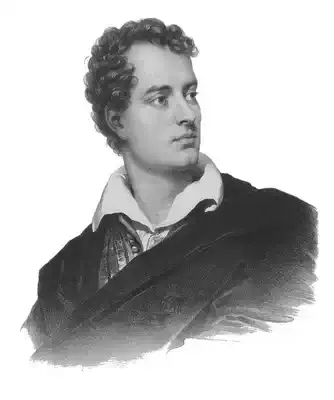
Lord Byron
To Edward Noel Long, Esq.
To Edward Noel Long, Esq.
'Nil ego contulerim jucundo sanus amico.'~Horace.
Dear Long, in this sequester'd scene,
While all around in slumber lie,
The joyous days, which ours have been
Come rolling fresh on Fancy's eye;
Thus, if, amidst the gathering storm,
While clouds the darken'd noon deform,
Yon heaven assumes a varied glow,
I hail the sky's celestial bow,
Which spreads the sign of future peace,
And bids the war of tempests cease.
Ah! though the present brings but pain,
I think those days may come again;
Or if, in melancholy mood,
Some lurking envious fear intrude,
To check my bosom's fondest thought,
And interrupt the golden dream
I crush the fiend with malice fraught,
And, still, indulge my wonted theme.
Although we ne'er again can trace,
In Granta's vale, the pedant's lore,
Nor through the groves of Ida chace
Our raptured visions, as before;
Though Youth has flown on rosy pinion,
And Manhood claims his stern dominion,
Age will not every hope destroy,
But yields some hours of sober joy.
Yes, I will hope that Time's broad wing
Will shed around some dews of spring:
But, if his scythe must sweep the flowers
Which bloom among the fairy bowers,
Where smiling Youth delights to dwell,
And hearts with early rapture swell;
In frowning Age, with cold control,
Confines the current of the soul,
Congeals the tear of Pity's eye,
Or checks the sympathetic sigh,
Or hears, unmov'd, Misfortune's groan,
And bids me feel for self alone;
Oh! may my bosom never learn
To soothe its wonted heedless flow;
Still may I rove untutor'd, wild,
But ne'er forget another's woe.
Yes, as you knew me in the days
O'er which Remembrance yet delays
And even in age, at heart a child.
Though, now, on airy visions borne,
To you my soul is still the same.
Oft has it ben my fate to mourn,
And all my former joys are tame:
But, hence! ye hours of sabl hue!
Your frowns are gone, my sorrows o'er:
By every bliss my childhood knew,
I'll think upon your shade no more.
Thus, when the whirlwind's rage is past,
And caves their sullen roar enclose,
We heed no more the wintery blast,
When lull'd by zephyr to repose.
Full often has my infant Muse
Attun'd to love her languid lyre;
But, now, without a theme to choose,
The strains in stolen sighs expire.
My youthful nymps, alas! are flown;
E — is a wife, and C — a mother,
And Carolina sighs alone,
And Mary's given to another;
And Cora's eye, which roll'd on me,
Can now no more my love recall In
truth, dear LONG, 'twas time to flee For
Cora's eye will shine on all.
And though the Sun, with genial rays,
His beams aike to all displays,
And every lady's eye's a sun,
These last should be confin'd to one.
The souls' meridian don't become her,
Whose sun desplays a general summer!
Thus faint is every former flame,
And Passion's self is now a name;
As, when the ebbing flames are low,
The aid which once improv'd their light,
And bade them burn with fiercer glow,
Now quenches all their sparks in night;
Thus has it been with Passion's fires,
As many a boy and girl remembers,
While all the force of love expires,
Extinguish'd with the dying embers.
But now, dear LONG, 'tis midnight's noon,
And clouds obscure the watery moon,
Whose beauties I shall not rehearse,
Describ'd in every stripling's verse;
For why should I the path go o'er
Which every bard has trod before?
Yet ere yon silver lamp of night
Has thrice perform'd her stated round,
Has thrice retraced her path of light,
And chased away the gloom profound,
I trust that we, my gentle Friend,
Shall see her rolling orbit wend,
Above the dearloved
peaceful seat,
Which once contain'd our youth's retreat;
And then, with those our childhood knew,
We'll mingle in the festive crew;
While many a tale of former day
Shall wing the laughing hours away;
And all the flow of souls shall pour
Tha sacred intellectual shower,
Nor cease, till Luna's waning horn
Scarce glimmers through the mist of Morn.
'Nil ego contulerim jucundo sanus amico.'~Horace.
Dear Long, in this sequester'd scene,
While all around in slumber lie,
The joyous days, which ours have been
Come rolling fresh on Fancy's eye;
Thus, if, amidst the gathering storm,
While clouds the darken'd noon deform,
Yon heaven assumes a varied glow,
I hail the sky's celestial bow,
Which spreads the sign of future peace,
And bids the war of tempests cease.
Ah! though the present brings but pain,
I think those days may come again;
Or if, in melancholy mood,
Some lurking envious fear intrude,
To check my bosom's fondest thought,
And interrupt the golden dream
I crush the fiend with malice fraught,
And, still, indulge my wonted theme.
Although we ne'er again can trace,
In Granta's vale, the pedant's lore,
Nor through the groves of Ida chace
Our raptured visions, as before;
Though Youth has flown on rosy pinion,
And Manhood claims his stern dominion,
Age will not every hope destroy,
But yields some hours of sober joy.
Yes, I will hope that Time's broad wing
Will shed around some dews of spring:
But, if his scythe must sweep the flowers
Which bloom among the fairy bowers,
Where smiling Youth delights to dwell,
And hearts with early rapture swell;
In frowning Age, with cold control,
Confines the current of the soul,
Congeals the tear of Pity's eye,
Or checks the sympathetic sigh,
Or hears, unmov'd, Misfortune's groan,
And bids me feel for self alone;
Oh! may my bosom never learn
To soothe its wonted heedless flow;
Still may I rove untutor'd, wild,
But ne'er forget another's woe.
Yes, as you knew me in the days
O'er which Remembrance yet delays
And even in age, at heart a child.
Though, now, on airy visions borne,
To you my soul is still the same.
Oft has it ben my fate to mourn,
And all my former joys are tame:
But, hence! ye hours of sabl hue!
Your frowns are gone, my sorrows o'er:
By every bliss my childhood knew,
I'll think upon your shade no more.
Thus, when the whirlwind's rage is past,
And caves their sullen roar enclose,
We heed no more the wintery blast,
When lull'd by zephyr to repose.
Full often has my infant Muse
Attun'd to love her languid lyre;
But, now, without a theme to choose,
The strains in stolen sighs expire.
My youthful nymps, alas! are flown;
E — is a wife, and C — a mother,
And Carolina sighs alone,
And Mary's given to another;
And Cora's eye, which roll'd on me,
Can now no more my love recall In
truth, dear LONG, 'twas time to flee For
Cora's eye will shine on all.
And though the Sun, with genial rays,
His beams aike to all displays,
And every lady's eye's a sun,
These last should be confin'd to one.
The souls' meridian don't become her,
Whose sun desplays a general summer!
Thus faint is every former flame,
And Passion's self is now a name;
As, when the ebbing flames are low,
The aid which once improv'd their light,
And bade them burn with fiercer glow,
Now quenches all their sparks in night;
Thus has it been with Passion's fires,
As many a boy and girl remembers,
While all the force of love expires,
Extinguish'd with the dying embers.
But now, dear LONG, 'tis midnight's noon,
And clouds obscure the watery moon,
Whose beauties I shall not rehearse,
Describ'd in every stripling's verse;
For why should I the path go o'er
Which every bard has trod before?
Yet ere yon silver lamp of night
Has thrice perform'd her stated round,
Has thrice retraced her path of light,
And chased away the gloom profound,
I trust that we, my gentle Friend,
Shall see her rolling orbit wend,
Above the dearloved
peaceful seat,
Which once contain'd our youth's retreat;
And then, with those our childhood knew,
We'll mingle in the festive crew;
While many a tale of former day
Shall wing the laughing hours away;
And all the flow of souls shall pour
Tha sacred intellectual shower,
Nor cease, till Luna's waning horn
Scarce glimmers through the mist of Morn.
534
Lord Byron
To Caroline: When I Hear That You Express An Affection So Warm
To Caroline: When I Hear That You Express An Affection So Warm
When I hear that you express an affection so warm,
Ne'er think, my beloved, that I do not believe;
For your lip would the soul of suspicion disarm,
And your eye beams a ray which can never deceive.
Yet, still, this fond bosom regrets, while adoring,
That love, like the leaf, must fall into the sear;
That age will come on, when remembrance, deploring,
Contemplates the scenes of her youth with a tear;
That the time must arrive, when, no longer retaining
Their auburn, those locks must wave thin to the breeze,
When a few silver hairs of those tresses remaining
Prove nature a prey to decay and disease.
'Tis this, my beloved, which spreads gloom o'er my features,
Though I ne'er shall presume to arraign the decree,
Which God has proclaim'd as the fate of his creatures,
In the death which will one day deprive you of me.
Mistake not, sweet sceptic, the cause of emotion,
No doubt can the mind of your lover invade;
He worships each look with such faithful devotion,
A smile can enchant, or a tear can dissuade.
But as death, my beloved, soon or late shall o'ertake us,
And our breasts, which alive with such sympathy glow,
Will sleep in the grave till the blast shall awake us,
When calling the dead, in earth's bosom laid low,
Oh! then let us drain, while we may, draughts of pleasure,
Which from passion like ours may unceasingly flow;
Let us pass round the cup of love's bliss in full measure,
And quaff the contents as our nectar below.
1805
When I hear that you express an affection so warm,
Ne'er think, my beloved, that I do not believe;
For your lip would the soul of suspicion disarm,
And your eye beams a ray which can never deceive.
Yet, still, this fond bosom regrets, while adoring,
That love, like the leaf, must fall into the sear;
That age will come on, when remembrance, deploring,
Contemplates the scenes of her youth with a tear;
That the time must arrive, when, no longer retaining
Their auburn, those locks must wave thin to the breeze,
When a few silver hairs of those tresses remaining
Prove nature a prey to decay and disease.
'Tis this, my beloved, which spreads gloom o'er my features,
Though I ne'er shall presume to arraign the decree,
Which God has proclaim'd as the fate of his creatures,
In the death which will one day deprive you of me.
Mistake not, sweet sceptic, the cause of emotion,
No doubt can the mind of your lover invade;
He worships each look with such faithful devotion,
A smile can enchant, or a tear can dissuade.
But as death, my beloved, soon or late shall o'ertake us,
And our breasts, which alive with such sympathy glow,
Will sleep in the grave till the blast shall awake us,
When calling the dead, in earth's bosom laid low,
Oh! then let us drain, while we may, draughts of pleasure,
Which from passion like ours may unceasingly flow;
Let us pass round the cup of love's bliss in full measure,
And quaff the contents as our nectar below.
1805
452
Lord Byron
To Caroline: When I Hear That You Express An Affection So Warm
To Caroline: When I Hear That You Express An Affection So Warm
When I hear that you express an affection so warm,
Ne'er think, my beloved, that I do not believe;
For your lip would the soul of suspicion disarm,
And your eye beams a ray which can never deceive.
Yet, still, this fond bosom regrets, while adoring,
That love, like the leaf, must fall into the sear;
That age will come on, when remembrance, deploring,
Contemplates the scenes of her youth with a tear;
That the time must arrive, when, no longer retaining
Their auburn, those locks must wave thin to the breeze,
When a few silver hairs of those tresses remaining
Prove nature a prey to decay and disease.
'Tis this, my beloved, which spreads gloom o'er my features,
Though I ne'er shall presume to arraign the decree,
Which God has proclaim'd as the fate of his creatures,
In the death which will one day deprive you of me.
Mistake not, sweet sceptic, the cause of emotion,
No doubt can the mind of your lover invade;
He worships each look with such faithful devotion,
A smile can enchant, or a tear can dissuade.
But as death, my beloved, soon or late shall o'ertake us,
And our breasts, which alive with such sympathy glow,
Will sleep in the grave till the blast shall awake us,
When calling the dead, in earth's bosom laid low,
Oh! then let us drain, while we may, draughts of pleasure,
Which from passion like ours may unceasingly flow;
Let us pass round the cup of love's bliss in full measure,
And quaff the contents as our nectar below.
1805
When I hear that you express an affection so warm,
Ne'er think, my beloved, that I do not believe;
For your lip would the soul of suspicion disarm,
And your eye beams a ray which can never deceive.
Yet, still, this fond bosom regrets, while adoring,
That love, like the leaf, must fall into the sear;
That age will come on, when remembrance, deploring,
Contemplates the scenes of her youth with a tear;
That the time must arrive, when, no longer retaining
Their auburn, those locks must wave thin to the breeze,
When a few silver hairs of those tresses remaining
Prove nature a prey to decay and disease.
'Tis this, my beloved, which spreads gloom o'er my features,
Though I ne'er shall presume to arraign the decree,
Which God has proclaim'd as the fate of his creatures,
In the death which will one day deprive you of me.
Mistake not, sweet sceptic, the cause of emotion,
No doubt can the mind of your lover invade;
He worships each look with such faithful devotion,
A smile can enchant, or a tear can dissuade.
But as death, my beloved, soon or late shall o'ertake us,
And our breasts, which alive with such sympathy glow,
Will sleep in the grave till the blast shall awake us,
When calling the dead, in earth's bosom laid low,
Oh! then let us drain, while we may, draughts of pleasure,
Which from passion like ours may unceasingly flow;
Let us pass round the cup of love's bliss in full measure,
And quaff the contents as our nectar below.
1805
452
Lord Byron
To An Oak At Newstead
To An Oak At Newstead
Young Oak! when I planted thee deep in the ground,
I hoped that thy days would be longer than mine;
That thy dark‑waving branches would flourish around,
And ivy thy trunk with its mantle entwine.
Such, such was my hope, when in infancy's
On the land of my fathers I rear'd thee with pride;
They are past, and I water thy stem with my tears,
Thy decay not the weeds that surround thee can hide.
I left thee, my Oak, and, since that fatal hour,
A stranger has dwelt in the hall of my sire;
Till manhood shall crown me, not mine is the power,
But his, whose neglect may have bade thee expire.
Oh! hardy thou wenteven
now little care
Might revive thy young head, and thy wounds gently heal:
But thou went not fated affection to shareFor
who could suppose that a stranger would feel!
Ah, droop not, my Oak! lift thy head for a while;
Ere twice round yon Glory this planet shall run,
The hand of thy Master will teach thee to smile,
When Infancy's years of probation are done.
Oh, live then, my Oak! tow'r aloft from the weeds,
That clog thy young growth, and assist thy decay,
For still in thy bosom are life's early seeds,
And still may thy branches their beauty display.
Oh! yet, if maturity's years may be thine,
Though I shall lie low in the cavern of death,
On thy leaves yet the day‑beam of ages may shine,
Uninjured by time, or the rude winter's breath.
For centuries still may thy boughs lightly wave
O'er the Gorse of thy lord in thy canopy laid;
While the branches thus gratefully shelter his grave,
The chief who survives may recline in thy shade.
And as he, with his boys, shall revisit this spot,
He will tell them is whispers more softly to tread.
Oh! surely, by these I shall ne'er be forgot;
Remembrance still hallows the dust of the dead.
And here, will they say, when in life's glowing prime,
Perhaps he has pour'd forth his young simple lay,
And here must he sleep, till the moments of time
Are lost in the hours of Eternity's day.
Young Oak! when I planted thee deep in the ground,
I hoped that thy days would be longer than mine;
That thy dark‑waving branches would flourish around,
And ivy thy trunk with its mantle entwine.
Such, such was my hope, when in infancy's
On the land of my fathers I rear'd thee with pride;
They are past, and I water thy stem with my tears,
Thy decay not the weeds that surround thee can hide.
I left thee, my Oak, and, since that fatal hour,
A stranger has dwelt in the hall of my sire;
Till manhood shall crown me, not mine is the power,
But his, whose neglect may have bade thee expire.
Oh! hardy thou wenteven
now little care
Might revive thy young head, and thy wounds gently heal:
But thou went not fated affection to shareFor
who could suppose that a stranger would feel!
Ah, droop not, my Oak! lift thy head for a while;
Ere twice round yon Glory this planet shall run,
The hand of thy Master will teach thee to smile,
When Infancy's years of probation are done.
Oh, live then, my Oak! tow'r aloft from the weeds,
That clog thy young growth, and assist thy decay,
For still in thy bosom are life's early seeds,
And still may thy branches their beauty display.
Oh! yet, if maturity's years may be thine,
Though I shall lie low in the cavern of death,
On thy leaves yet the day‑beam of ages may shine,
Uninjured by time, or the rude winter's breath.
For centuries still may thy boughs lightly wave
O'er the Gorse of thy lord in thy canopy laid;
While the branches thus gratefully shelter his grave,
The chief who survives may recline in thy shade.
And as he, with his boys, shall revisit this spot,
He will tell them is whispers more softly to tread.
Oh! surely, by these I shall ne'er be forgot;
Remembrance still hallows the dust of the dead.
And here, will they say, when in life's glowing prime,
Perhaps he has pour'd forth his young simple lay,
And here must he sleep, till the moments of time
Are lost in the hours of Eternity's day.
552
Lord Byron
To An Oak At Newstead
To An Oak At Newstead
Young Oak! when I planted thee deep in the ground,
I hoped that thy days would be longer than mine;
That thy dark‑waving branches would flourish around,
And ivy thy trunk with its mantle entwine.
Such, such was my hope, when in infancy's
On the land of my fathers I rear'd thee with pride;
They are past, and I water thy stem with my tears,
Thy decay not the weeds that surround thee can hide.
I left thee, my Oak, and, since that fatal hour,
A stranger has dwelt in the hall of my sire;
Till manhood shall crown me, not mine is the power,
But his, whose neglect may have bade thee expire.
Oh! hardy thou wenteven
now little care
Might revive thy young head, and thy wounds gently heal:
But thou went not fated affection to shareFor
who could suppose that a stranger would feel!
Ah, droop not, my Oak! lift thy head for a while;
Ere twice round yon Glory this planet shall run,
The hand of thy Master will teach thee to smile,
When Infancy's years of probation are done.
Oh, live then, my Oak! tow'r aloft from the weeds,
That clog thy young growth, and assist thy decay,
For still in thy bosom are life's early seeds,
And still may thy branches their beauty display.
Oh! yet, if maturity's years may be thine,
Though I shall lie low in the cavern of death,
On thy leaves yet the day‑beam of ages may shine,
Uninjured by time, or the rude winter's breath.
For centuries still may thy boughs lightly wave
O'er the Gorse of thy lord in thy canopy laid;
While the branches thus gratefully shelter his grave,
The chief who survives may recline in thy shade.
And as he, with his boys, shall revisit this spot,
He will tell them is whispers more softly to tread.
Oh! surely, by these I shall ne'er be forgot;
Remembrance still hallows the dust of the dead.
And here, will they say, when in life's glowing prime,
Perhaps he has pour'd forth his young simple lay,
And here must he sleep, till the moments of time
Are lost in the hours of Eternity's day.
Young Oak! when I planted thee deep in the ground,
I hoped that thy days would be longer than mine;
That thy dark‑waving branches would flourish around,
And ivy thy trunk with its mantle entwine.
Such, such was my hope, when in infancy's
On the land of my fathers I rear'd thee with pride;
They are past, and I water thy stem with my tears,
Thy decay not the weeds that surround thee can hide.
I left thee, my Oak, and, since that fatal hour,
A stranger has dwelt in the hall of my sire;
Till manhood shall crown me, not mine is the power,
But his, whose neglect may have bade thee expire.
Oh! hardy thou wenteven
now little care
Might revive thy young head, and thy wounds gently heal:
But thou went not fated affection to shareFor
who could suppose that a stranger would feel!
Ah, droop not, my Oak! lift thy head for a while;
Ere twice round yon Glory this planet shall run,
The hand of thy Master will teach thee to smile,
When Infancy's years of probation are done.
Oh, live then, my Oak! tow'r aloft from the weeds,
That clog thy young growth, and assist thy decay,
For still in thy bosom are life's early seeds,
And still may thy branches their beauty display.
Oh! yet, if maturity's years may be thine,
Though I shall lie low in the cavern of death,
On thy leaves yet the day‑beam of ages may shine,
Uninjured by time, or the rude winter's breath.
For centuries still may thy boughs lightly wave
O'er the Gorse of thy lord in thy canopy laid;
While the branches thus gratefully shelter his grave,
The chief who survives may recline in thy shade.
And as he, with his boys, shall revisit this spot,
He will tell them is whispers more softly to tread.
Oh! surely, by these I shall ne'er be forgot;
Remembrance still hallows the dust of the dead.
And here, will they say, when in life's glowing prime,
Perhaps he has pour'd forth his young simple lay,
And here must he sleep, till the moments of time
Are lost in the hours of Eternity's day.
552
Lord Byron
To A Lady, Who Presented The Author With The Velvet Band Which Bound Her
To A Lady, Who Presented The Author With The Velvet Band Which Bound Her
Tresses
This Band, which bound thy yellow hair,
Is mine, sweet girl! Thy pledge of love;
It claims my warmest, dearest care,
Like relics left of saints above.
Oh! I will wear it next my heart;
'Twill blind my soul in bonds to thee;
From me again 't will ne'er depart,
But mingle in the grave with me.
The dew I gather from thy lip
Is not so dear to me as this;
That I but for a moment sip,
And banquet on a transient bliss:
This will recall each youthful scene,
E'en when our lives are on the wane;
The leaves of Love will still be green
When Memory bids them bud again.
Oh! little lock of golden hue,
In gently waving ringlet curl'd
By the dear head on which you grow,
I would not lose you for a world.
Not though a thousand more adorn
The polish'd brow where once you shone,
Like rays which gild a cloudless morn,
Beneath Columbia's fervid zone.
Tresses
This Band, which bound thy yellow hair,
Is mine, sweet girl! Thy pledge of love;
It claims my warmest, dearest care,
Like relics left of saints above.
Oh! I will wear it next my heart;
'Twill blind my soul in bonds to thee;
From me again 't will ne'er depart,
But mingle in the grave with me.
The dew I gather from thy lip
Is not so dear to me as this;
That I but for a moment sip,
And banquet on a transient bliss:
This will recall each youthful scene,
E'en when our lives are on the wane;
The leaves of Love will still be green
When Memory bids them bud again.
Oh! little lock of golden hue,
In gently waving ringlet curl'd
By the dear head on which you grow,
I would not lose you for a world.
Not though a thousand more adorn
The polish'd brow where once you shone,
Like rays which gild a cloudless morn,
Beneath Columbia's fervid zone.
494
Lord Byron
To A Lady
To A Lady
O! had my Fate been join'd with thine,
As once this pledge appear'd a token,
These follies had not, then, been mine,
For, then, my peace had not been broken.
To thee, these early faults I owe,
To thee, the wise and old reproving:
They know my sins, but do not know
'Twas thine to break the bonds of loving.
For once my soul, like thine, was pure,
And all its rising fires could smother;
But, now, thy vows no more endure,
Bestow'd by thee upon another.
Perhaps, his peace I could destroy,
And spoil the blisses that await him;
Yet let my Rival smile in joy,
For thy dear sake, I cannot hate him.
Ah! since thy angel form is gone,
My heart no more can rest with any;
But what it sought in thee alone,
Attempts, alas! to find in many.
Then, fare thee well, deceitful Maid!
'Twere vain and fruitless to regret thee;
Nor Hope, nor Memory yield their aid,
But Pride may teach me to forget thee.
Yet all this giddy waste of years,
This tiresome round of palling pleasures;
These varied loves, these matrons' fears,
These thoughtless strains to Passion's measures
If thou wert mine, had all been hush'd:This
cheek, now pale from early riot,
With Passion's hectic ne'er had flush'd,
But bloom'd in calm domestic quiet.
Yes, once the rural Scene was sweet,
For Nature seem'd to smile before thee;
And once my Breast abhorr'd deceit,For
then it beat but to adore thee.
But, now, I seek for other joysTo
think, would drive my soul to madness;
In thoughtless throngs, and empty noise,
I conquer half my Bosom's sadness.
Yet, even in these, a thought will steal,
In spite of every vain endeavor;
And fiends might pity what I feelTo
know that thou art lost for ever.
O! had my Fate been join'd with thine,
As once this pledge appear'd a token,
These follies had not, then, been mine,
For, then, my peace had not been broken.
To thee, these early faults I owe,
To thee, the wise and old reproving:
They know my sins, but do not know
'Twas thine to break the bonds of loving.
For once my soul, like thine, was pure,
And all its rising fires could smother;
But, now, thy vows no more endure,
Bestow'd by thee upon another.
Perhaps, his peace I could destroy,
And spoil the blisses that await him;
Yet let my Rival smile in joy,
For thy dear sake, I cannot hate him.
Ah! since thy angel form is gone,
My heart no more can rest with any;
But what it sought in thee alone,
Attempts, alas! to find in many.
Then, fare thee well, deceitful Maid!
'Twere vain and fruitless to regret thee;
Nor Hope, nor Memory yield their aid,
But Pride may teach me to forget thee.
Yet all this giddy waste of years,
This tiresome round of palling pleasures;
These varied loves, these matrons' fears,
These thoughtless strains to Passion's measures
If thou wert mine, had all been hush'd:This
cheek, now pale from early riot,
With Passion's hectic ne'er had flush'd,
But bloom'd in calm domestic quiet.
Yes, once the rural Scene was sweet,
For Nature seem'd to smile before thee;
And once my Breast abhorr'd deceit,For
then it beat but to adore thee.
But, now, I seek for other joysTo
think, would drive my soul to madness;
In thoughtless throngs, and empty noise,
I conquer half my Bosom's sadness.
Yet, even in these, a thought will steal,
In spite of every vain endeavor;
And fiends might pity what I feelTo
know that thou art lost for ever.
554
Lord Byron
The Vision of Judgment
The Vision of Judgment
I
Saint Peter sat by the celestial gate:
His keys were rusty, and the lock was dull,
So little trouble had been given of late;
Not that the place by any means was full,
But since the Gallic era 'eighteight'
The devils had ta'en a longer, stronger pull,
And 'a pull altogether,' as they say
At sea — which drew most souls another way.
II
The angels all were singing out of tune,
And hoarse with having little else to do,
Excepting to wind up the sun and moon,
Or curb a runaway young star or two,
Or wild colt of a comet, which too soon
Broke out of bounds o'er th' ethereal blue,
Splitting some planet with its playful tail,
As boats are sometimes by a wanton whale.
III
The guardian seraphs had retired on high,
Finding their charges past all care below;
Terrestrial business fill'd nought in the sky
Save the recording angel's black bureau;
Who found, indeed, the facts to multiply
With such rapidity of vice and woe,
That he had stripp'd off both his wings in quills,
And yet was in arrear of human ills.
IV
His business so augmented of late years,
That he was forced, against his will no doubt,
(Just like those cherubs, earthly ministers,)
For some resource to turn himself about,
And claim the help of his celestial peers,
To aid him ere he should be quite worn out
By the increased demand for his remarks:
Six angels and twelve saints were named his clerks.
V
This was a handsome board — at least for heaven;
And yet they had even then enough to do,
So many conqueror's cars were daily driven,
So many kingdoms fitted up anew;
Each day too slew its thousands six or seven,
Till at the crowning carnage, Waterloo,
They threw their pens down in divine disgust —
The page was so besmear'd with blood and dust.
VI
This by the way: 'tis not mine to record
What angels shrink Wrom: ZAAFXISHJEXXIMQZUIVO
On this occasion his own work abhorr'd,
So surfeited with the infernal revel:
Though he himself had sharpen'd every sword,
It almost quench'd his innate thirst of evil.
(Here Satan's sole good work deserves insertion —
'Tis, that he has both generals in reveration.)
VII
Let's skip a few short years of hollow peace,
Which peopled earth no better, hell as wont,
And heaven none — they form the tyrant's lease,
With nothing but new names subscribed upon't;
'Twill one day finish: meantime they increase,
'With seven heads and ten horns,' and all in front,
Like Saint John's foretold beast; but ours are born
Less formidable in the head than horn.
VIII
In the first year of freedom's second dawn
Died George the Third; although no tyrant, one
Who shielded tyrants, till each sense withdrawn
Left him nor mental nor external sun:
A better farmer ne'er brush'd dew from lawn,
A worse king never left a realm undone!
He died — but left his subjects still behind,
One half as mad — and t'other no less blind.
IX
He died! his death made no great stir on earth:
His burial made some pomp; there was profusion
Of velvet, gilding, brass, and no great dearth
Of aught but tears — save those shed by collusion.
For these things may be bought at their true worth;
Of elegy there was the due infusion —
Bought also; and the torches, cloaks, and banners,
Heralds, and relics of old Gothic manners,
X
Form'd a sepulchral melodrame.
Of all
The fools who flack's to swell or see the show,
Who cared about the corpse? The funeral
Made the attraction, and the black the woe.
There throbbed not there a thought which pierced the pall;
And when the gorgeous coffin was laid low,
It seamed the mockery of hell to fold
The rottenness of eighty years in gold.
XI
So mix his body with the dust! It might
Return to what it must far sooner, were
The natural compound left alone to fight
Its way back into earth, and fire, and air;
But the unnatural balsams merely blight
What nature made him at his birth, as bare
As the mere million's base unmarried clay —
Yet all his spices but prolong decay.
XII
He's dead — and upper earth with him has done;
He's buried; save the undertaker's bill,
Or lapidary scrawl, the world is gone
For him, unless he left a German will:
But where's the proctor who will ask his son?
In whom his qualities are reigning still,
Except that household virtue, most uncommon,
Of constancy to a bad, ugly woman.
XIII
'God save the king!' It is a large economy
In God to save the like; but if he will
Be saving, all the better; for not one am I
Of those who think damnation better still:
I hardly know too if not quite alone am I
In this small hope of bettering future ill
By circumscribing, with some slight restriction,
The eternity of hell's hot jurisdiction.
XIV
I know this is unpopular; I know
'Tis blasphemous; I know one may be damned
For hoping no one else may ever be so;
I know my catechism; I know we're caromed
With the best doctrines till we quite o'erflow;
I know that all save England's church have shamm'd,
And that the other twice two hundred churches
And synagogues have made a damn'd bad purchase.
XV
God help us all! God help me too! I am,
God knows, as helpless as the devil can wish,
And not a whit more difficult to damn,
Than is to bring to land a latehook'd
fish,
Or to the butcher to purvey the lamb;
Not that I'm fit for such a noble dish,
As one day will be that immortal fry
Of almost everybody born to die.
XVI
Saint Peter sat by the celestial gate,
And nodded o'er his keys; when, lo! there came
A wondrous noise he had not heard of late —
A rushing sound of wind, and stream, and flame;
In short, a roar of things extremely great,
Which would have made aught save a saint exclaim;
But he, with first a start and then a wink,
Said, 'There's another star gone out, I think!'
XVII
But ere he could return to his repose,
A cherub flapp'd his right wing o'er his eyes —
At which St. Peter yawn'd, and rubb'd his hose:
'Saint porter,' said the angel, 'prithee rise!'
Waving a goodly wing, which glow'd, as glows
An earthly peacock's tail, with heavenly dyes;
To which the saint replied, 'Well, what's the matter?
'Is Lucifer come back with all this clatter?'
XVIII
'No,' quoth the cherub; 'George the Third is dead.'
'And who is George the Third?' replied the apostle;
'What George? what Third?' 'The king of England,' said
The angel. 'Well, he won't find kings to jostle
Him on his way; but does he wear his head?
Because the last we saw here had a tussle,
And ne'er would have got into heaven's good graces,
Had he not flung his head in all our faces.
XIX
'He was, if I remember, king of France;
That head of his, which could not keep a crown
On earth, yet ventured in my face to advance
A claim to those of martyrs — like my own:
If I had had my sword, as I had once
When I cut ears off, I had cut him down;
But having but my keys, and not my brand,
I only knock'd his head from out his hand.
XX
'And then he set up such a headless howl,
That all the saints came out and took him in;
And there he sits by St. Paul, cheek by jowl;
That fellow Paul— the parvenù! The skin
Of St. Bartholomew, which makes his cowl
In heaven, and upon earth redeem'd his sin,
So as to make a martyr, never sped
Better than did this weak and wooden head.
XXI
'But had it come up here upon its shoulders,
There would have been a different tale to tell;
The fellowfeeling
in the saint's beholders
Seems to have acted on them like a spell,
And so this very foolish head heaven solders
Back on its trunk: it may be very well,
And seems the custom here to overthrow
Whatever has been wisely done below.'
XXII
The angel answer'd, 'Peter! do not pout:
The king who comes has head and all entire,
And never knew much what it was about —
He did as doth the puppet — by its wire,
And will be judged like all the rest, no doubt:
My business and your own is not to inquire
Into such matters, but to mind our cue —
Which is to act as we are bid to do.'
XXIII
While thus they spake, the angelic caravan,
Arriving like a rush of mighty wind,
Cleaving the fields of space, as doth the swan
Some silver stream (say Ganges, Nile, or Inde,
Or Thames, or Tweed), and 'midst them an old man
With an old soul, and both extremely blind,
Halted before the gate, and in his shroud
Seated their fellow traveller on a cloud.
XXIV
But bringing up the rear of this bright host
A Spirit of a different aspect waves
His wings, like thunderclouds
above some coast
Whose barren beach with frequent wrecks is paved;
His brow was like the deep when tempesttoss'd;
Fierce and unfathomable thoughts engraved
Eternal wrath on his immortal face,
And where he gazed a gloom pervaded space.
XXV
As he drew near, he gazed upon the gate
Ne'er to be enter'd more by him or Sin,
With such a glance of supernatural hate,
As made Saint Peter wish himself within;
He potter'd with his keys at a great rate,
And sweated through his apostolic skin:
Of course his perspiration was but ichor,
Or some such other spiritual liquor.
XXIV
The very cherubs huddled all together,
Like birds when soars the falcon; and they felt
A tingling to the top of every feather,
And form'd a circle like Orion's belt
Around their poor old charge; who scarce knew whither
His guards had led him, though they gently dealt
With royal manes (for by many stories,
And true, we learn the angels all are Tories.)
XXVII
As things were in this posture, the gate flew
Asunder, and the flashing of its hinges
Flung over space an universal hue
Of manycolour'd
flame, until its tinges
Reach'd even our speck of earth, and made a new
Aurora borealis spread its fringes
O'er the North Pole; the same seen, when icebound,
By Captain Parry's crew, in 'Melville's Sound.'
XXVIII
And from the gate thrown open issued beaming
A beautiful and mighty Thing of Light,
Radiant with glory, like a banner streaming
Victorious from some worldo'erthrowing
fight:
My poor comparisons must needs be teeming
With earthly likenesses, for here the night
Of clay obscures our best conceptions, saving
Johanna Southcote, or Bob Southey raving.
XXIX
'Twas the archangel Michael; all men know
The make of angels and archangels, since
There's scarce a scribbler has not one to show,
From the fiends' leader to the angels' prince;
There also are some altarpieces,
though
I really can't say that they much evince
One's inner notions of immortal spirits;
But let the connoisseurs explain their merits.
XXX
Michael flew forth in glory and in good;
A goodly work of him from whom all glory
And good arise; the portal past — he stood;
Before him the young cherubs and saints hoary —
(I say young, begging to be understood
By looks, not years; and should be very sorry
To state, they were not older than St. Peter,
But merely that they seem'd a little sweeter.
XXXI
The cherubs and the saints bow'd down before
That archangelic
Hierarch, the first
Of essences angelical, who wore
The aspect of a god; but this ne'er nursed
Pride in his heavenly bosom, in whose core
No thought, save for his Master's service, durst
Intrude, however glorified and high;
He knew him but the viceroy of the sky.
XXXII
He and the sombre, silent Spirit met —
They knew each other both for good and ill;
Such was their power, that neither could forget
His former friend and future foe; but still
There was a high, immortal, proud regret
In either's eye, as if 'twere less their will
Than destiny to make the eternal years
Their date of war, and their 'champ clos' the spheres.
XXXIII
But here they were in neutral space: we know
From Job, that Satan hath the power to pay
A heavenly visit thrice a year or so;
And that the 'sons of God', like those of clay,
Must keep him company; and we might show
From the same book, in how polite a way
The dialogue is held between the Powers
Of Good and Evil — but 'twould take up hours.
XXXIV
And this is not a theologic tract,
To prove with Hebrew and with Arabic,
If Job be allegory or a fact,
But a true narrative; and thus I pick
From out the whole but such and such an act
As sets aside the slightest thought of trick.
'Tis every tittle true, beyond suspicion,
And accurate as any other vision.
XXXV
The spirits were in neutral space, before
The gates of heaven; like eastern thresholds is
The place where Death's grand cause is argued o'er,
And souls despatch'd to that world or to this;
And therefore Michael and the other wore
A civil aspect: though they did not kiss,
Yet still between his Darkness and his Brightness
There pass'd a mutual glance of great politeness.
XXXVI
The Archangel bow'd, not like a modern beau,
But with a graceful Oriental bend,
Pressing one radiant arm just where below
The heart in good men is supposed to tend;
He turn'd as to an equal, not too low,
But kindly; Satan met his ancient friend
With more hauteur, as might an old Castilian
Poor noble meet a mushroom rich civilian.
XXXVII
He merely bent his diabolic brow
An instant; and then raising it, he stood
In act to assert his right or wrong, and show
Cause why King George by no means could or should
Make out a case to be exempt from woe
Eternal, more than other kings, endued
With better sense and hearts, whom history mentions,
Who long have 'paved hell with their good intentions.'
XXXVIII
Michael began: 'What wouldst thou with this man,
Now dead, and brought before the Lord? What ill
Hath he wrought since his mortal race began,
That thou cans't claim him? Speak! and do thy will,
If it be just: if in this earthly span
He hath been greatly failing to fulfil
His duties as a king and mortal, say,
And he is thine; if not, let him have way.'
XXXIX
'Michael!' replied the Prince of Air, 'even here,
Before the Gate of him thou servest, must
I claim my subject: and will make appear
That as he was my worshipper in dust,
So shall he be in spirit, although dear
To thee and thine, because nor wine nor lust
Were of his weaknesses; yet on the throne
He reign'd o'er millions to serve me alone.
XL
'Look to our earth, or rather mine; it was,
Once, more thy master's: but I triumph not
In this poor planet's conquest; nor, alas!
Need he thou servest envy me my lot:
With all the myriads of bright worlds which pass
In worship round him, he may have forgot
Yon weak creation of such paltry things;
I think few worth damnation save their kings, —
XLI
'And these but as a kind of quitrent,
to
Assert my right as lord: and even had
I such an inclination, 'twere (as you
Well know) superfluous; they are grown so bad,
That hell has nothing better left to do
Than leave them to themselves: so much more mad
And evil by their own internal curse,
Heaven cannot make them better, nor I worse.
XLII
'Look to the earth, I said, and say again:
When this old, blind, mad, helpless, weak, poor worm
Began in youth's first bloom and flush to reign,
The world and he both wore a different form,
And must of earth and all the watery plain
Of ocean call'd him king: through many a storm
His isles had floated on the abyss of time;
For the rough virtues chose them for their clime.
XLIII
'He came to his sceptre young: he leaves it old:
Look to the state in which he found his realm,
And left it; and his annals too behold,
How to a minion first he gave the helm;
How grew upon his heart a thirst for gold,
The beggar's vice, which can but overwhelm
The meanest of hearts; and for the rest, but glance
Thine eye along America and France.
XLIV
'Tis true, he was a tool from first to last
(I have the workmen safe); but as a tool
So let him be consumed. From out the past
Of ages, since mankind have known the rule
Of monarchs — from the bloody rolls amass'd
Of sin and slaughter — from the Cæsar's school,
Take the worst pupil; and produce a reign
More drench'd with gore, more cumber'd with the slain.
XLV
'He ever warr'd with freedom and the free:
Nations as men, home subjects, foreign foes,
So that they utter'd the word "Liberty!"
Found George the Third their first opponent. Whose
History was ever stain'd as his will be
With national and individual woes?
I grant his household abstinence; I grant
His neutral virtues, which most monarchs want;
XLVI
'I know he was a constant consort; own
He was a decent sire, and middling lord.
All this is much, and most upon a throne;
As temperance, if at Apicius' board,
Is more than at an anchorite's supper shown.
I grant him all the kindest can accord;
And this was well for him, but not for those
Millions who found him what oppression chose.
XLVII
'The New World shook him off; the Old yet groans
Beneath what he and his prepared, if not
Completed: he leaves heirs on many thrones
To all his vices, without what begot
Compassion for him — his tame virtues; drones
Who sleep, or despots who have not forgot
A lesson which shall be retaught
them, wake
Upon the thrones of earth; but let them quake!
XLVIII
'Five millions of the primitive, who hold
The faith which makes ye great on earth, implored
A part of that vast all they held of old, —
Freedom to worship — not alone your Lord,
Michael, but you, and you, Saint Peter! Cold
Must be your souls, if you have not abhorr'd
The foe to Catholic participation
In all the license of a Christian nation.
XLIX
'True! he allow'd them to pray God; but as
A consequence of prayer, refused the law
Which would have placed them upon the same base
With those who did not hold the saints in awe.'
But here Saint Peter started from his place,
And cried, 'You may the prisoner withdraw:
Ere heaven shall ope her portals to this Guelph,
While I am guard, may I be damn'd myself!
L
'Sooner will I with Cerberus exchange
My office (and his no sinecure)
Than see this royal Bedlam bigot range
The azure fields of heaven, of that be sure!'
'Saint!' replied Satan, 'you do well to avenge
The wrongs he made your satellites endure;
And if to this exchange you should be given,
I'll try to coax our Cerberus up to heaven!'
LI
Here Michael interposed: 'Good saint! and devil!
Pray, not so fast; you both outrun discretion.
Saint Peter! you were wont to be more civil!
Satan! excuse this warmth of his expression,
And condescension to the vulgar's level:
Event saints sometimes forget themselves in session.
Have you got more to say?' — 'No.' — If you please
I'll trouble you to call your witnesses.'
LII
Then Satan turn'd and waved his swarthy hand,
Which stirr'd with its electric qualities
Clouds farther off than we can understand,
Although we find him sometimes in our skies;
Infernal thunder shook both sea and land
In all the planets, and hell's batteries
Let off the artillery, which Milton mentions
As one of Satan's most sublime inventions.
LIII
This was a signal unto such damn'd souls
As have the privilege of their damnation
Extended far beyond the mere controls
Of worlds past, present, or to come; no station
Is theirs particularly in the rolls
Of hell assign'd; but where their inclination
Or business carries them in search of game,
They may range freely — being damn'd the same.
LIV
They're proud of this — as very well they may,
It being a sort of knighthood, or gilt key
Stuck in their loins; or like to an 'entré'
Up the back stairs, or such freemasonry.
I borrow my comparisons from clay,
Being clay myself. Let not those spirits be
Offended with such base low likenesses;
We know their posts are nobler far than these.
LV
When the great signal ran from heaven to hell —
About ten million times the distance reckon'd
From our sun to its earth, as we can tell
How much time it takes up, even to a second,
For every ray that travels to dispel
The fogs of London, through which, dimly beacon'd,
The weathercocks are gilt some thrice a year,
If that the summer is not too severe;
LVI
I say that I can tell — 'twas half a minute;
I know the solar beams take up more time
Ere, pack'd up for their journey, they begin it;
But then their telegraph is less sublime,
And if they ran a race, they would not win it
'Gainst Satan's couriers bound for their own clime.
The sun takes up some years for every ray
To reach its goal — the devil not half a day.
LVII
Upon the verge of space, about the size
Of halfacrown,
a little speck appear'd
(I've seen a something like it in the skies
In the Ægean, ere a squall); it near'd,
And growing bigger, took another guise;
Like an aërial ship it tack'd, and steer'd,
Or was steer'd (I am doubtful of the grammar
Of the last phrase, which makes the stanza stammer; —
LVIII
But take your choice): and then it grew a cloud;
And so it was — a cloud of witnesses.
But such a cloud! No land e'er saw a crowd
Of locusts numerous as the heavens saw these;
They shadow'd with their myriads space; their loud
And varied cries were like those of wild geese
(If nations may be liken'd to a goose),
And realised the phrase of 'hell broke loose.'
LIX
Here crash'd a sturdy oath of stout John Bull,
Who damn'd away his eyes as heretofore:
There Paddy brogued, 'By Jasus!' — 'What's your wull?'
The temperate Scot exclaim'd: the French ghost swore
In certain terms I shan't translate in full,
As the first coachman will; and 'midst the roar,
The voice of Jonathan was heard to express,
'Our president is going to war, I guess.'
LX
Besides there were the Spaniard, Dutch, and Dane;
In short, an universal shoal of shades,
From Otaheite's isle to Salisbury Plain,
Of all climes and professions, years and trades,
Ready to swear against the good king's reign,
Bitter as clubs in cards are against spades:
All summon'd by this grand 'subpoena,' to
Try if kings mayn't be damn'd like me or you.
LXI
When Michael saw this host, he first grew pale,
As angels can; next, like Italian twilight,
He turn'd all colours — as a peacock's tail,
Or sunset streaming through a Gothic skylight
In some old abbey, or a trout not stale,
Or distant lightning on the horizon by night,
Or a fresh rainbow, or a grand review
Of thirty regiments in red, green, and blue.
LXII
Then he address'd himself to Satan: 'Why —
My good old friend, for such I deem you, though
Our different parties make us fight so shy,
I ne'er mistake you for a personal foe;
Our difference is political, and I
Trust that, whatever may occur below,
You know my great respect for you; and this
Makes me regret whate'er you do amiss —
LXIII
'Why, my dear Lucifer, would you abuse
My call for witnesses? I did not mean
That you should half of earth and hell produce;
'Tis even superfluous, since two honest, clean
True testimonies are enough: we lose
Our time, nay, our eternity, between
The accusation and defence: if we
Hear both, 'twill stretch our immortality.'
LXIV
Satan replied, 'To me the matter is
Indifferent, in a personal point of view;
I can have fifty better souls than this
With far less trouble than we have gone through
Already; and I merely argued his
Late majesty of Britain's case with you
Upon a point of form: you may dispose
Of him; I've kings enough below, God knows!'
LXV
Thus spoke the Demon (late call'd 'multifaced'
By multoscribbling
Southey). 'Then we'll call
One or two persons of the myriads placed
Around our congress, and dispense with all
The rest,' quoth Michael: 'Who may be so graced
As to speak first? there's choice enough — who shall
It be?' Then Satan answer'd, 'There are many;
But you may choose Jack Wilkes as well as any.'
LXVI
A merry, cockeyed,
curiouslooking
sprite
Upon the instant started from the throng,
Dress'd in a fashion now forgotten quite;
For all the fashions of the flesh stick long
By people in the next world; where unite
All the costumes since Adam's, right or wrong,
From Eve's figleaf
down to the petticoat,
Almost as scanty, of days less remote.
LXVII
The spirit look'd around upon the crowds
Assembled, and exclaim'd, 'My friends of all
The spheres, we shall catch cold amongst these clouds;
So let's to business: why this general call?
If those are freeholders I see in shrouds,
And 'tis for an election that they bawl,
Behold a candidate with unturn'd coat!
Saint Peter, may I count upon your vote?'
LXVIII
'Sir,' replied Michael, 'you mistake; these things
Are of a former life, and what we do
Above is more august; to judge of kings
Is the tribunal met: so now you know.'
'Then I presume those gentlemen with wings,'
Said Wilkes, 'are cherubs; and that soul below
Looks much like George the Third, but to my mind
A good deal older — Bless me! is he blind?'
LXIX
'He is what you behold him, and his doom
Depends upon his deeds,' the Angel said;
'If you have aught to arraign in him, the tomb
Give licence to the humblest beggar's head
To lift itself against the loftiest.' — 'Some,'
Said Wilkes, 'don't wait to see them laid in lead,
For such a liberty — and I, for one,
Have told them what I though beneath the sun.'
LXX
'Above the sun repeat, then, what thou hast
To urge against him,' said the Archangel. 'Why,'
Replied the spirit, 'since old scores are past,
Must I turn evidence? In faith, not I.
Besides, I beat him hollow at the last,
With all his Lords and Commons: in the sky
I don't like ripping up old stories, since
His conduct was but natural in a prince.
LXXI
'Foolish, no doubt, and wicked, to oppress
A poor unlucky devil without a shilling;
But then I blame the man himself much less
Than Bute and Grafton, and shall be unwilling
To see him punish'd here for their excess,
Since they were both damn'd long ago, and still in
Their place below: for me, I have forgiven,
And vote his "habeas corpus" into heaven.'
LXXII
'Wilkes,' said the Devil, 'I understand all this;
You turn'd to half a courtier ere you died,
And seem to think it would not be amiss
To grow a whole one on the other side
Of Charon's ferry; you forget that his
Reign is concluded; whatso'er betide,
He won't be sovereign more: you've lost your labor,
For at the best he will be but your neighbour.
LXXIII
'However, I knew what to think of it,
When I beheld you in your jesting way,
Flitting and whispering round about the spit
Where Belial, upon duty for the day,
With Fox's lard was basting William Pitt,
His pupil; I knew what to think, I say:
That fellow even in hell breeds farther ills;
I'll have him gagg'd — 'twas one of his own bills.
LXXIV
'Call Junius!' From the crowd a shadow stalk'd,
And at the same there was a general squeeze,
So that the very ghosts no longer walk'd
In comfort, at their own aërial ease,
But were all ramm'd, and jamm'd (but to be balk'd,
As we shall see), and jostled hands and knees,
Like wind compress'd and pent within a bladder,
Or like a human colic, which is sadder.
LXXV
The shadow came — a tall, thin, greyhair'd
figure,
That look'd as it had been a shade on earth;
Quick in it motions, with an air of vigour,
But nought to mar its breeding or its birth;
Now it wax'd little, then again grew bigger,
With now an air of gloom, or savage mirth;
But as you gazed upon its features, they
Changed every instant — to what, none could say.
LXXVI
The more intently the ghosts gazed, the less
Could they distinguish whose the features were;
The Devil himself seem'd puzzled even to guess;
They varied like a dream — now here, now there;
And several people swore from out the press
They knew him perfectly; and one could swear
He was his father: upon which another
Was sure he was his mother's cousin's brother:
LXXVII
Another, that he was a duke, or a knight,
An orator, a lawyer, or a priest,
A nabob, a manmidwife;
but the wight
Mysterious changed his countenance at least
As oft as they their minds; though in full sight
He stood, the puzzle only was increased;
The man was a phantasmagoria in
Himself — he was so volatile and thin.
LXXVIII
The moment that you had pronounce him one,
Presto! his face change'd and he was another;
And when that change was hardly well put on,
It varied, till I don't think his own mother
(If that he had a mother) would her son
Have known, he shifted so from one to t'other;
Till guessing from a pleasure grew a task,
At this epistolary 'Iron Mask.'
LXXIX
For sometimes he like Cerberus would seem —
'Three gentlemen at once' (as sagely says
Good Mrs. Malaprop); then you might deem
That he was not even one; now many rays
Were flashing round him; and now a thick steam
Hid him from sight — like fogs on London days:
Now Burke, now Tooke he grew to people's fancies,
And certes often like Sir Philip Francis.
LXXX
I've an hypothesis — 'tis quite my own;
I never let it out till now, for fear
Of doing people harm about the throne,
And injuring some minister or peer,
On whom the stigma might perhaps be blown;
It is — my gentle public, lend thine ear!
'Tis, that what Junius we are wont to call
Was really, truly, nobody at all.
LXXXI
I don't see wherefore letters should not be
Written without hands, since we daily view
Them written without heads; and books, we see,
Are fill'd as well without the latter too:
And really till we fix on somebody
For certain sure to claim them as his due,
Their author, like the Niger's mouth, will bother
The world to say if there be mouth or author.
LXXXII
'And who and what art thou?' the Archangel said.
'For that you may consult my titlepage,'
Replied this mighty shadow of a shade:
'If I have kept my secret half an age,
I scarce shall tell it now.' — 'Canst thou upbraid,'
Continued Michael, 'George Rex, or allege
Aught further?' Junius answer'd, 'You had better
First ask him for his answer to my letter:
LXXXIII
'My charges upon record will outlast
The brass of both his epitaph and tomb.'
'Repent'st thou not,' said Michael, 'of some past
Exaggeration? something which may doom
Thyself if false, as him if true? Thou wast
Too bitter — is it not so? — in thy gloom
Of passion?' — 'Passion!' cried the phantom dim,
'I loved my country, and I hated him.
LXXXIV
'What I have written, I have written: let
The rest be on his head or mine!' So spoke
Old 'Nominis Umbra'; and while speaking yet,
Away he melted in celestial smoke.
Then Satan said to Michael, 'Don't forget
To call George Washington, and John Horne Tooke,
And Franklin;' — but at this time was heard
A cry for room, though not a phantom stirr'd.
LXXXV
At length with jostling, elbowing, and the aid
Of cherubim appointed to that post,
The devil Asmodeus to the circle made
His way, and look'd as if his journey cost
Some trouble. When his burden down he laid,
'What's this?' cried Michael; 'why, 'tis not a ghost?'
'I know it,' quoth the incubus; 'but he
Shall be one, if you leave the affair to me.
LXXXVI
'Confound the renegado! I have sprain'd
My left wing, he's so heavy; one would think
Some of his works about his neck were chain'd.
But to the point; while hovering o'er the brink
Of Skiddaw (where as usual it still rain'd),
I saw a taper, far below me, wink,
And stooping, caught this fellow at a libel —
No less on history than the Holy Bible.
LXXXVII
'The former is the devil's scripture, and
The latter yours, good Michael: so the affair
Belongs to all of us, you understand.
I snatch'd him up just as you see him there,
And brought him off for sentence out of hand:
I've scarcely been ten minutes in the air —
At least a quarter it can hardly be:
I dare say that his wife is still at tea.'
LXXXVIII
Here Satan said, 'I know this man of old,
And have expected him for some time here;
A sillier fellow you will scarce behold,
Or more conceited in his petty sphere:
But surely it was not worth while to fold
Such trash below your wing, Asmodeus dear:
We had the poor wretch safe (without being bored
With carriage) coming of his own accord.
LXXXIX
'But since he's here, let's see what he has done.'
'Done!' cried Asmodeus, 'he anticipates
The very business you are now upon,
And scribbles as if head clerk to the Fates,
Who knows to what his ribaldry may run,
When such an ass as this, like Balaam's, prates?'
'Let's hear,' quoth Michael, 'what he has to say;
You know we're bound to that in every way.'
XC
Now the bard, glad to get an audience which
By no means oft was his case below,
Began to cough, and hawk, and hem, and pitch
His voice into that awful note of woe
To all unhappy hearers within reach
Of poets when the tide of rhyme's in flow;
But stuck fast with his first hexameter,
Not one of all whose gouty feet would stir.
XCI
But ere the spavin'd dactyls could be spurr'd
Into recitative, in great dismay
Both cherubim and seraphim were heard
To murmur loudly through their long array:
And Michael rose ere he could get a word
Of all his founder'd verses under way.
And cried, 'For God's sake stop, my friend! 'twere best —
Non Di, non homines —you
know the rest.'
XCII
A general bustle spread throughout the throng.
Which seem'd to hold all verse in detestation;
The angels had of course enough of song
When upon service; and the generation
Of ghosts had heard too much in life, not long
Before, to profit by a new occasion;
The monarch, mute till then, exclaim'd, 'What! What!
Pye come again? No more — no more of that!'
XCIII
The tumult grew; an universal cough
Convulsed the skies, as during a debate
When Castlereagh has been up long enough
(Before he was first minister of state,
I mean — the slaves hear now); some cried 'off, off!'
As at a farce; till, grown quite desperate,
The bard Saint Peter pray'd to interpose
(Himself an author) only for his prose.
XCIV
The varlet was not an illfavour'd
knave;
A good deal like a vulture in the face,
With a hook nose and a hawk'd eye, which gave
A smart and sharperlooking
sort of grace
To his whole aspect, which, though rather grave,
Was by no means so ugly as his case;
But that, indeed, was hopeless as can be,
Quite a poetic felony, 'de se.'
XCV
Then Michael blew his trump, and still'd the noise
With one still greater, as is yet the mode
On earth besides; except some grumbling voice,
Which now and then will make a slight inroad
Upon decorous silence, few will twice
Lift up their lungs when fairly overcrow'd;
And now the bard could plead his own bad cause,
With all the attitudes of selfapplause.
XCVI
He said — (I only give the heads) — he said,
He meant no harm in scribbling; 'twas his way
Upon all topics; 'twas, besides, his bread,
Of which he butter'd both sides; 'twould delay
Too long the assembly (he was pleased to dread),
And take up rather more time than a day,
To name his works — he would but cite a few —
'Wat Tyler' — 'Rhymes on Blenheim' — 'Waterloo.'
XCVII
He had written praises of a regicide:
He had written praises of all kings whatever;
He had written for republics far and wide;
And then against them bitterer than ever;
For pantisocracy he once had cried
Aloud, a scheme less moral than 'twas clever;
Then grew a hearty antiJacobin
—
Had turn'd his coat — and would have turn'd his skin.
XCVIII
He had sung against all battles, and again
In their high praise and glory; he had call'd
Reviewing (1)'the ungentle craft,' and then
Become as base a critic as e'er crawl'd —
Fed, paid, and pamper'd by the very men
By whom his muse and morals had been maul'd:
He had written much blank verse, and blanker prose,
And more of both than anybody knows.
XCIX
He had written Wesley's life: — here turning round
To Satan, 'Sir, I'm ready to write yours,
In two octavo volumes, nicely bound,
With notes and preface, all that most allures
The pious purchaser; and there's no ground
For fear, for I can choose my own reviews:
So let me have the proper documents,
That I may add you to my other saints.'
C
Satan bow'd, and was silent. 'Well, if you,
With amiable modesty, decline
My offer, what says Michael? There are few
Whose memoirs could be render'd more divine.
Mine is a pen of all work; not so new
As it once was, but I would make you shine
Like your own trumpet. By the way, my own
Has more of brass in it, and is as well blown.
CI
'But talking about trumpets, here's my Vision!
Now you shall judge, all people; yes, you shall
Judge with my judgment, and by my decision
Be guided who shall enter heaven or fall.
I settle all these things by intuition,
Times present, past, to come, heaven, hell, and all,
Like King Alfonso(2). When I thus see double,
I save the Deity some worlds of trouble.'
CII
He ceased, and drew forth an MS.; and no
Persuasion on the part of devils, saints,
Or angels, now could stop the torrent; so
He read the first three lines of the contents;
But at the fourth, the whole spiritual show
Had vanish'd, with variety of scents,
Ambrosial and sulphureous, as they sprang,
Like lightning, off from his 'melodious twang.' (3)
CIII
Those grand heroics acted as a spell:
The angels stopp'd their ears and plied their pinions;
The devils ran howling, deafen'd, down to hell;
The ghosts fled, gibbering, for their own dominions —
(For 'tis not yet decided where they dwell,
And I leave every man to his opinions);
Michael took refuge in his trump — but, lo!
His teeth were set on edge, he could not blow!
CIV
Saint Peter, who has hitherto been known
For an impetuous saint, upraised his keys,
And at the fifth line knock'd the poet down;
Who fell like Phaeton, but more at ease,
Into his lake, for there he did not drown;
A different web being by the Destinies
Woven for the Laureate's final wreath, whene'er
Reform shall happen either here or there.
CV
He first sank to the bottom like
his works,
But soon rose to the surface — like himself;
For all corrupted things are bouy'd like corks,(4)
By their own rottenness, light as an elf,
Or wisp that flits o'er a morass: he lurks,
It may be, still, like dull books on a shelf,
In his own den, to scrawl some 'Life' or 'Vision,'
As Welborn says — 'the devil turn'd precisian.'
CVI
As for the rest, to come to the conclusion
Of this true dream, the telescope is gone
Which kept my optics free from all delusion,
And show'd me what I in my turn have shown;
All I saw farther, in the last confusion,
Was, that King George slipp'd into heaven for one;
And when the tumult dwindled to a calm,
I left him practising the hundredth psalm.
I
Saint Peter sat by the celestial gate:
His keys were rusty, and the lock was dull,
So little trouble had been given of late;
Not that the place by any means was full,
But since the Gallic era 'eighteight'
The devils had ta'en a longer, stronger pull,
And 'a pull altogether,' as they say
At sea — which drew most souls another way.
II
The angels all were singing out of tune,
And hoarse with having little else to do,
Excepting to wind up the sun and moon,
Or curb a runaway young star or two,
Or wild colt of a comet, which too soon
Broke out of bounds o'er th' ethereal blue,
Splitting some planet with its playful tail,
As boats are sometimes by a wanton whale.
III
The guardian seraphs had retired on high,
Finding their charges past all care below;
Terrestrial business fill'd nought in the sky
Save the recording angel's black bureau;
Who found, indeed, the facts to multiply
With such rapidity of vice and woe,
That he had stripp'd off both his wings in quills,
And yet was in arrear of human ills.
IV
His business so augmented of late years,
That he was forced, against his will no doubt,
(Just like those cherubs, earthly ministers,)
For some resource to turn himself about,
And claim the help of his celestial peers,
To aid him ere he should be quite worn out
By the increased demand for his remarks:
Six angels and twelve saints were named his clerks.
V
This was a handsome board — at least for heaven;
And yet they had even then enough to do,
So many conqueror's cars were daily driven,
So many kingdoms fitted up anew;
Each day too slew its thousands six or seven,
Till at the crowning carnage, Waterloo,
They threw their pens down in divine disgust —
The page was so besmear'd with blood and dust.
VI
This by the way: 'tis not mine to record
What angels shrink Wrom: ZAAFXISHJEXXIMQZUIVO
On this occasion his own work abhorr'd,
So surfeited with the infernal revel:
Though he himself had sharpen'd every sword,
It almost quench'd his innate thirst of evil.
(Here Satan's sole good work deserves insertion —
'Tis, that he has both generals in reveration.)
VII
Let's skip a few short years of hollow peace,
Which peopled earth no better, hell as wont,
And heaven none — they form the tyrant's lease,
With nothing but new names subscribed upon't;
'Twill one day finish: meantime they increase,
'With seven heads and ten horns,' and all in front,
Like Saint John's foretold beast; but ours are born
Less formidable in the head than horn.
VIII
In the first year of freedom's second dawn
Died George the Third; although no tyrant, one
Who shielded tyrants, till each sense withdrawn
Left him nor mental nor external sun:
A better farmer ne'er brush'd dew from lawn,
A worse king never left a realm undone!
He died — but left his subjects still behind,
One half as mad — and t'other no less blind.
IX
He died! his death made no great stir on earth:
His burial made some pomp; there was profusion
Of velvet, gilding, brass, and no great dearth
Of aught but tears — save those shed by collusion.
For these things may be bought at their true worth;
Of elegy there was the due infusion —
Bought also; and the torches, cloaks, and banners,
Heralds, and relics of old Gothic manners,
X
Form'd a sepulchral melodrame.
Of all
The fools who flack's to swell or see the show,
Who cared about the corpse? The funeral
Made the attraction, and the black the woe.
There throbbed not there a thought which pierced the pall;
And when the gorgeous coffin was laid low,
It seamed the mockery of hell to fold
The rottenness of eighty years in gold.
XI
So mix his body with the dust! It might
Return to what it must far sooner, were
The natural compound left alone to fight
Its way back into earth, and fire, and air;
But the unnatural balsams merely blight
What nature made him at his birth, as bare
As the mere million's base unmarried clay —
Yet all his spices but prolong decay.
XII
He's dead — and upper earth with him has done;
He's buried; save the undertaker's bill,
Or lapidary scrawl, the world is gone
For him, unless he left a German will:
But where's the proctor who will ask his son?
In whom his qualities are reigning still,
Except that household virtue, most uncommon,
Of constancy to a bad, ugly woman.
XIII
'God save the king!' It is a large economy
In God to save the like; but if he will
Be saving, all the better; for not one am I
Of those who think damnation better still:
I hardly know too if not quite alone am I
In this small hope of bettering future ill
By circumscribing, with some slight restriction,
The eternity of hell's hot jurisdiction.
XIV
I know this is unpopular; I know
'Tis blasphemous; I know one may be damned
For hoping no one else may ever be so;
I know my catechism; I know we're caromed
With the best doctrines till we quite o'erflow;
I know that all save England's church have shamm'd,
And that the other twice two hundred churches
And synagogues have made a damn'd bad purchase.
XV
God help us all! God help me too! I am,
God knows, as helpless as the devil can wish,
And not a whit more difficult to damn,
Than is to bring to land a latehook'd
fish,
Or to the butcher to purvey the lamb;
Not that I'm fit for such a noble dish,
As one day will be that immortal fry
Of almost everybody born to die.
XVI
Saint Peter sat by the celestial gate,
And nodded o'er his keys; when, lo! there came
A wondrous noise he had not heard of late —
A rushing sound of wind, and stream, and flame;
In short, a roar of things extremely great,
Which would have made aught save a saint exclaim;
But he, with first a start and then a wink,
Said, 'There's another star gone out, I think!'
XVII
But ere he could return to his repose,
A cherub flapp'd his right wing o'er his eyes —
At which St. Peter yawn'd, and rubb'd his hose:
'Saint porter,' said the angel, 'prithee rise!'
Waving a goodly wing, which glow'd, as glows
An earthly peacock's tail, with heavenly dyes;
To which the saint replied, 'Well, what's the matter?
'Is Lucifer come back with all this clatter?'
XVIII
'No,' quoth the cherub; 'George the Third is dead.'
'And who is George the Third?' replied the apostle;
'What George? what Third?' 'The king of England,' said
The angel. 'Well, he won't find kings to jostle
Him on his way; but does he wear his head?
Because the last we saw here had a tussle,
And ne'er would have got into heaven's good graces,
Had he not flung his head in all our faces.
XIX
'He was, if I remember, king of France;
That head of his, which could not keep a crown
On earth, yet ventured in my face to advance
A claim to those of martyrs — like my own:
If I had had my sword, as I had once
When I cut ears off, I had cut him down;
But having but my keys, and not my brand,
I only knock'd his head from out his hand.
XX
'And then he set up such a headless howl,
That all the saints came out and took him in;
And there he sits by St. Paul, cheek by jowl;
That fellow Paul— the parvenù! The skin
Of St. Bartholomew, which makes his cowl
In heaven, and upon earth redeem'd his sin,
So as to make a martyr, never sped
Better than did this weak and wooden head.
XXI
'But had it come up here upon its shoulders,
There would have been a different tale to tell;
The fellowfeeling
in the saint's beholders
Seems to have acted on them like a spell,
And so this very foolish head heaven solders
Back on its trunk: it may be very well,
And seems the custom here to overthrow
Whatever has been wisely done below.'
XXII
The angel answer'd, 'Peter! do not pout:
The king who comes has head and all entire,
And never knew much what it was about —
He did as doth the puppet — by its wire,
And will be judged like all the rest, no doubt:
My business and your own is not to inquire
Into such matters, but to mind our cue —
Which is to act as we are bid to do.'
XXIII
While thus they spake, the angelic caravan,
Arriving like a rush of mighty wind,
Cleaving the fields of space, as doth the swan
Some silver stream (say Ganges, Nile, or Inde,
Or Thames, or Tweed), and 'midst them an old man
With an old soul, and both extremely blind,
Halted before the gate, and in his shroud
Seated their fellow traveller on a cloud.
XXIV
But bringing up the rear of this bright host
A Spirit of a different aspect waves
His wings, like thunderclouds
above some coast
Whose barren beach with frequent wrecks is paved;
His brow was like the deep when tempesttoss'd;
Fierce and unfathomable thoughts engraved
Eternal wrath on his immortal face,
And where he gazed a gloom pervaded space.
XXV
As he drew near, he gazed upon the gate
Ne'er to be enter'd more by him or Sin,
With such a glance of supernatural hate,
As made Saint Peter wish himself within;
He potter'd with his keys at a great rate,
And sweated through his apostolic skin:
Of course his perspiration was but ichor,
Or some such other spiritual liquor.
XXIV
The very cherubs huddled all together,
Like birds when soars the falcon; and they felt
A tingling to the top of every feather,
And form'd a circle like Orion's belt
Around their poor old charge; who scarce knew whither
His guards had led him, though they gently dealt
With royal manes (for by many stories,
And true, we learn the angels all are Tories.)
XXVII
As things were in this posture, the gate flew
Asunder, and the flashing of its hinges
Flung over space an universal hue
Of manycolour'd
flame, until its tinges
Reach'd even our speck of earth, and made a new
Aurora borealis spread its fringes
O'er the North Pole; the same seen, when icebound,
By Captain Parry's crew, in 'Melville's Sound.'
XXVIII
And from the gate thrown open issued beaming
A beautiful and mighty Thing of Light,
Radiant with glory, like a banner streaming
Victorious from some worldo'erthrowing
fight:
My poor comparisons must needs be teeming
With earthly likenesses, for here the night
Of clay obscures our best conceptions, saving
Johanna Southcote, or Bob Southey raving.
XXIX
'Twas the archangel Michael; all men know
The make of angels and archangels, since
There's scarce a scribbler has not one to show,
From the fiends' leader to the angels' prince;
There also are some altarpieces,
though
I really can't say that they much evince
One's inner notions of immortal spirits;
But let the connoisseurs explain their merits.
XXX
Michael flew forth in glory and in good;
A goodly work of him from whom all glory
And good arise; the portal past — he stood;
Before him the young cherubs and saints hoary —
(I say young, begging to be understood
By looks, not years; and should be very sorry
To state, they were not older than St. Peter,
But merely that they seem'd a little sweeter.
XXXI
The cherubs and the saints bow'd down before
That archangelic
Hierarch, the first
Of essences angelical, who wore
The aspect of a god; but this ne'er nursed
Pride in his heavenly bosom, in whose core
No thought, save for his Master's service, durst
Intrude, however glorified and high;
He knew him but the viceroy of the sky.
XXXII
He and the sombre, silent Spirit met —
They knew each other both for good and ill;
Such was their power, that neither could forget
His former friend and future foe; but still
There was a high, immortal, proud regret
In either's eye, as if 'twere less their will
Than destiny to make the eternal years
Their date of war, and their 'champ clos' the spheres.
XXXIII
But here they were in neutral space: we know
From Job, that Satan hath the power to pay
A heavenly visit thrice a year or so;
And that the 'sons of God', like those of clay,
Must keep him company; and we might show
From the same book, in how polite a way
The dialogue is held between the Powers
Of Good and Evil — but 'twould take up hours.
XXXIV
And this is not a theologic tract,
To prove with Hebrew and with Arabic,
If Job be allegory or a fact,
But a true narrative; and thus I pick
From out the whole but such and such an act
As sets aside the slightest thought of trick.
'Tis every tittle true, beyond suspicion,
And accurate as any other vision.
XXXV
The spirits were in neutral space, before
The gates of heaven; like eastern thresholds is
The place where Death's grand cause is argued o'er,
And souls despatch'd to that world or to this;
And therefore Michael and the other wore
A civil aspect: though they did not kiss,
Yet still between his Darkness and his Brightness
There pass'd a mutual glance of great politeness.
XXXVI
The Archangel bow'd, not like a modern beau,
But with a graceful Oriental bend,
Pressing one radiant arm just where below
The heart in good men is supposed to tend;
He turn'd as to an equal, not too low,
But kindly; Satan met his ancient friend
With more hauteur, as might an old Castilian
Poor noble meet a mushroom rich civilian.
XXXVII
He merely bent his diabolic brow
An instant; and then raising it, he stood
In act to assert his right or wrong, and show
Cause why King George by no means could or should
Make out a case to be exempt from woe
Eternal, more than other kings, endued
With better sense and hearts, whom history mentions,
Who long have 'paved hell with their good intentions.'
XXXVIII
Michael began: 'What wouldst thou with this man,
Now dead, and brought before the Lord? What ill
Hath he wrought since his mortal race began,
That thou cans't claim him? Speak! and do thy will,
If it be just: if in this earthly span
He hath been greatly failing to fulfil
His duties as a king and mortal, say,
And he is thine; if not, let him have way.'
XXXIX
'Michael!' replied the Prince of Air, 'even here,
Before the Gate of him thou servest, must
I claim my subject: and will make appear
That as he was my worshipper in dust,
So shall he be in spirit, although dear
To thee and thine, because nor wine nor lust
Were of his weaknesses; yet on the throne
He reign'd o'er millions to serve me alone.
XL
'Look to our earth, or rather mine; it was,
Once, more thy master's: but I triumph not
In this poor planet's conquest; nor, alas!
Need he thou servest envy me my lot:
With all the myriads of bright worlds which pass
In worship round him, he may have forgot
Yon weak creation of such paltry things;
I think few worth damnation save their kings, —
XLI
'And these but as a kind of quitrent,
to
Assert my right as lord: and even had
I such an inclination, 'twere (as you
Well know) superfluous; they are grown so bad,
That hell has nothing better left to do
Than leave them to themselves: so much more mad
And evil by their own internal curse,
Heaven cannot make them better, nor I worse.
XLII
'Look to the earth, I said, and say again:
When this old, blind, mad, helpless, weak, poor worm
Began in youth's first bloom and flush to reign,
The world and he both wore a different form,
And must of earth and all the watery plain
Of ocean call'd him king: through many a storm
His isles had floated on the abyss of time;
For the rough virtues chose them for their clime.
XLIII
'He came to his sceptre young: he leaves it old:
Look to the state in which he found his realm,
And left it; and his annals too behold,
How to a minion first he gave the helm;
How grew upon his heart a thirst for gold,
The beggar's vice, which can but overwhelm
The meanest of hearts; and for the rest, but glance
Thine eye along America and France.
XLIV
'Tis true, he was a tool from first to last
(I have the workmen safe); but as a tool
So let him be consumed. From out the past
Of ages, since mankind have known the rule
Of monarchs — from the bloody rolls amass'd
Of sin and slaughter — from the Cæsar's school,
Take the worst pupil; and produce a reign
More drench'd with gore, more cumber'd with the slain.
XLV
'He ever warr'd with freedom and the free:
Nations as men, home subjects, foreign foes,
So that they utter'd the word "Liberty!"
Found George the Third their first opponent. Whose
History was ever stain'd as his will be
With national and individual woes?
I grant his household abstinence; I grant
His neutral virtues, which most monarchs want;
XLVI
'I know he was a constant consort; own
He was a decent sire, and middling lord.
All this is much, and most upon a throne;
As temperance, if at Apicius' board,
Is more than at an anchorite's supper shown.
I grant him all the kindest can accord;
And this was well for him, but not for those
Millions who found him what oppression chose.
XLVII
'The New World shook him off; the Old yet groans
Beneath what he and his prepared, if not
Completed: he leaves heirs on many thrones
To all his vices, without what begot
Compassion for him — his tame virtues; drones
Who sleep, or despots who have not forgot
A lesson which shall be retaught
them, wake
Upon the thrones of earth; but let them quake!
XLVIII
'Five millions of the primitive, who hold
The faith which makes ye great on earth, implored
A part of that vast all they held of old, —
Freedom to worship — not alone your Lord,
Michael, but you, and you, Saint Peter! Cold
Must be your souls, if you have not abhorr'd
The foe to Catholic participation
In all the license of a Christian nation.
XLIX
'True! he allow'd them to pray God; but as
A consequence of prayer, refused the law
Which would have placed them upon the same base
With those who did not hold the saints in awe.'
But here Saint Peter started from his place,
And cried, 'You may the prisoner withdraw:
Ere heaven shall ope her portals to this Guelph,
While I am guard, may I be damn'd myself!
L
'Sooner will I with Cerberus exchange
My office (and his no sinecure)
Than see this royal Bedlam bigot range
The azure fields of heaven, of that be sure!'
'Saint!' replied Satan, 'you do well to avenge
The wrongs he made your satellites endure;
And if to this exchange you should be given,
I'll try to coax our Cerberus up to heaven!'
LI
Here Michael interposed: 'Good saint! and devil!
Pray, not so fast; you both outrun discretion.
Saint Peter! you were wont to be more civil!
Satan! excuse this warmth of his expression,
And condescension to the vulgar's level:
Event saints sometimes forget themselves in session.
Have you got more to say?' — 'No.' — If you please
I'll trouble you to call your witnesses.'
LII
Then Satan turn'd and waved his swarthy hand,
Which stirr'd with its electric qualities
Clouds farther off than we can understand,
Although we find him sometimes in our skies;
Infernal thunder shook both sea and land
In all the planets, and hell's batteries
Let off the artillery, which Milton mentions
As one of Satan's most sublime inventions.
LIII
This was a signal unto such damn'd souls
As have the privilege of their damnation
Extended far beyond the mere controls
Of worlds past, present, or to come; no station
Is theirs particularly in the rolls
Of hell assign'd; but where their inclination
Or business carries them in search of game,
They may range freely — being damn'd the same.
LIV
They're proud of this — as very well they may,
It being a sort of knighthood, or gilt key
Stuck in their loins; or like to an 'entré'
Up the back stairs, or such freemasonry.
I borrow my comparisons from clay,
Being clay myself. Let not those spirits be
Offended with such base low likenesses;
We know their posts are nobler far than these.
LV
When the great signal ran from heaven to hell —
About ten million times the distance reckon'd
From our sun to its earth, as we can tell
How much time it takes up, even to a second,
For every ray that travels to dispel
The fogs of London, through which, dimly beacon'd,
The weathercocks are gilt some thrice a year,
If that the summer is not too severe;
LVI
I say that I can tell — 'twas half a minute;
I know the solar beams take up more time
Ere, pack'd up for their journey, they begin it;
But then their telegraph is less sublime,
And if they ran a race, they would not win it
'Gainst Satan's couriers bound for their own clime.
The sun takes up some years for every ray
To reach its goal — the devil not half a day.
LVII
Upon the verge of space, about the size
Of halfacrown,
a little speck appear'd
(I've seen a something like it in the skies
In the Ægean, ere a squall); it near'd,
And growing bigger, took another guise;
Like an aërial ship it tack'd, and steer'd,
Or was steer'd (I am doubtful of the grammar
Of the last phrase, which makes the stanza stammer; —
LVIII
But take your choice): and then it grew a cloud;
And so it was — a cloud of witnesses.
But such a cloud! No land e'er saw a crowd
Of locusts numerous as the heavens saw these;
They shadow'd with their myriads space; their loud
And varied cries were like those of wild geese
(If nations may be liken'd to a goose),
And realised the phrase of 'hell broke loose.'
LIX
Here crash'd a sturdy oath of stout John Bull,
Who damn'd away his eyes as heretofore:
There Paddy brogued, 'By Jasus!' — 'What's your wull?'
The temperate Scot exclaim'd: the French ghost swore
In certain terms I shan't translate in full,
As the first coachman will; and 'midst the roar,
The voice of Jonathan was heard to express,
'Our president is going to war, I guess.'
LX
Besides there were the Spaniard, Dutch, and Dane;
In short, an universal shoal of shades,
From Otaheite's isle to Salisbury Plain,
Of all climes and professions, years and trades,
Ready to swear against the good king's reign,
Bitter as clubs in cards are against spades:
All summon'd by this grand 'subpoena,' to
Try if kings mayn't be damn'd like me or you.
LXI
When Michael saw this host, he first grew pale,
As angels can; next, like Italian twilight,
He turn'd all colours — as a peacock's tail,
Or sunset streaming through a Gothic skylight
In some old abbey, or a trout not stale,
Or distant lightning on the horizon by night,
Or a fresh rainbow, or a grand review
Of thirty regiments in red, green, and blue.
LXII
Then he address'd himself to Satan: 'Why —
My good old friend, for such I deem you, though
Our different parties make us fight so shy,
I ne'er mistake you for a personal foe;
Our difference is political, and I
Trust that, whatever may occur below,
You know my great respect for you; and this
Makes me regret whate'er you do amiss —
LXIII
'Why, my dear Lucifer, would you abuse
My call for witnesses? I did not mean
That you should half of earth and hell produce;
'Tis even superfluous, since two honest, clean
True testimonies are enough: we lose
Our time, nay, our eternity, between
The accusation and defence: if we
Hear both, 'twill stretch our immortality.'
LXIV
Satan replied, 'To me the matter is
Indifferent, in a personal point of view;
I can have fifty better souls than this
With far less trouble than we have gone through
Already; and I merely argued his
Late majesty of Britain's case with you
Upon a point of form: you may dispose
Of him; I've kings enough below, God knows!'
LXV
Thus spoke the Demon (late call'd 'multifaced'
By multoscribbling
Southey). 'Then we'll call
One or two persons of the myriads placed
Around our congress, and dispense with all
The rest,' quoth Michael: 'Who may be so graced
As to speak first? there's choice enough — who shall
It be?' Then Satan answer'd, 'There are many;
But you may choose Jack Wilkes as well as any.'
LXVI
A merry, cockeyed,
curiouslooking
sprite
Upon the instant started from the throng,
Dress'd in a fashion now forgotten quite;
For all the fashions of the flesh stick long
By people in the next world; where unite
All the costumes since Adam's, right or wrong,
From Eve's figleaf
down to the petticoat,
Almost as scanty, of days less remote.
LXVII
The spirit look'd around upon the crowds
Assembled, and exclaim'd, 'My friends of all
The spheres, we shall catch cold amongst these clouds;
So let's to business: why this general call?
If those are freeholders I see in shrouds,
And 'tis for an election that they bawl,
Behold a candidate with unturn'd coat!
Saint Peter, may I count upon your vote?'
LXVIII
'Sir,' replied Michael, 'you mistake; these things
Are of a former life, and what we do
Above is more august; to judge of kings
Is the tribunal met: so now you know.'
'Then I presume those gentlemen with wings,'
Said Wilkes, 'are cherubs; and that soul below
Looks much like George the Third, but to my mind
A good deal older — Bless me! is he blind?'
LXIX
'He is what you behold him, and his doom
Depends upon his deeds,' the Angel said;
'If you have aught to arraign in him, the tomb
Give licence to the humblest beggar's head
To lift itself against the loftiest.' — 'Some,'
Said Wilkes, 'don't wait to see them laid in lead,
For such a liberty — and I, for one,
Have told them what I though beneath the sun.'
LXX
'Above the sun repeat, then, what thou hast
To urge against him,' said the Archangel. 'Why,'
Replied the spirit, 'since old scores are past,
Must I turn evidence? In faith, not I.
Besides, I beat him hollow at the last,
With all his Lords and Commons: in the sky
I don't like ripping up old stories, since
His conduct was but natural in a prince.
LXXI
'Foolish, no doubt, and wicked, to oppress
A poor unlucky devil without a shilling;
But then I blame the man himself much less
Than Bute and Grafton, and shall be unwilling
To see him punish'd here for their excess,
Since they were both damn'd long ago, and still in
Their place below: for me, I have forgiven,
And vote his "habeas corpus" into heaven.'
LXXII
'Wilkes,' said the Devil, 'I understand all this;
You turn'd to half a courtier ere you died,
And seem to think it would not be amiss
To grow a whole one on the other side
Of Charon's ferry; you forget that his
Reign is concluded; whatso'er betide,
He won't be sovereign more: you've lost your labor,
For at the best he will be but your neighbour.
LXXIII
'However, I knew what to think of it,
When I beheld you in your jesting way,
Flitting and whispering round about the spit
Where Belial, upon duty for the day,
With Fox's lard was basting William Pitt,
His pupil; I knew what to think, I say:
That fellow even in hell breeds farther ills;
I'll have him gagg'd — 'twas one of his own bills.
LXXIV
'Call Junius!' From the crowd a shadow stalk'd,
And at the same there was a general squeeze,
So that the very ghosts no longer walk'd
In comfort, at their own aërial ease,
But were all ramm'd, and jamm'd (but to be balk'd,
As we shall see), and jostled hands and knees,
Like wind compress'd and pent within a bladder,
Or like a human colic, which is sadder.
LXXV
The shadow came — a tall, thin, greyhair'd
figure,
That look'd as it had been a shade on earth;
Quick in it motions, with an air of vigour,
But nought to mar its breeding or its birth;
Now it wax'd little, then again grew bigger,
With now an air of gloom, or savage mirth;
But as you gazed upon its features, they
Changed every instant — to what, none could say.
LXXVI
The more intently the ghosts gazed, the less
Could they distinguish whose the features were;
The Devil himself seem'd puzzled even to guess;
They varied like a dream — now here, now there;
And several people swore from out the press
They knew him perfectly; and one could swear
He was his father: upon which another
Was sure he was his mother's cousin's brother:
LXXVII
Another, that he was a duke, or a knight,
An orator, a lawyer, or a priest,
A nabob, a manmidwife;
but the wight
Mysterious changed his countenance at least
As oft as they their minds; though in full sight
He stood, the puzzle only was increased;
The man was a phantasmagoria in
Himself — he was so volatile and thin.
LXXVIII
The moment that you had pronounce him one,
Presto! his face change'd and he was another;
And when that change was hardly well put on,
It varied, till I don't think his own mother
(If that he had a mother) would her son
Have known, he shifted so from one to t'other;
Till guessing from a pleasure grew a task,
At this epistolary 'Iron Mask.'
LXXIX
For sometimes he like Cerberus would seem —
'Three gentlemen at once' (as sagely says
Good Mrs. Malaprop); then you might deem
That he was not even one; now many rays
Were flashing round him; and now a thick steam
Hid him from sight — like fogs on London days:
Now Burke, now Tooke he grew to people's fancies,
And certes often like Sir Philip Francis.
LXXX
I've an hypothesis — 'tis quite my own;
I never let it out till now, for fear
Of doing people harm about the throne,
And injuring some minister or peer,
On whom the stigma might perhaps be blown;
It is — my gentle public, lend thine ear!
'Tis, that what Junius we are wont to call
Was really, truly, nobody at all.
LXXXI
I don't see wherefore letters should not be
Written without hands, since we daily view
Them written without heads; and books, we see,
Are fill'd as well without the latter too:
And really till we fix on somebody
For certain sure to claim them as his due,
Their author, like the Niger's mouth, will bother
The world to say if there be mouth or author.
LXXXII
'And who and what art thou?' the Archangel said.
'For that you may consult my titlepage,'
Replied this mighty shadow of a shade:
'If I have kept my secret half an age,
I scarce shall tell it now.' — 'Canst thou upbraid,'
Continued Michael, 'George Rex, or allege
Aught further?' Junius answer'd, 'You had better
First ask him for his answer to my letter:
LXXXIII
'My charges upon record will outlast
The brass of both his epitaph and tomb.'
'Repent'st thou not,' said Michael, 'of some past
Exaggeration? something which may doom
Thyself if false, as him if true? Thou wast
Too bitter — is it not so? — in thy gloom
Of passion?' — 'Passion!' cried the phantom dim,
'I loved my country, and I hated him.
LXXXIV
'What I have written, I have written: let
The rest be on his head or mine!' So spoke
Old 'Nominis Umbra'; and while speaking yet,
Away he melted in celestial smoke.
Then Satan said to Michael, 'Don't forget
To call George Washington, and John Horne Tooke,
And Franklin;' — but at this time was heard
A cry for room, though not a phantom stirr'd.
LXXXV
At length with jostling, elbowing, and the aid
Of cherubim appointed to that post,
The devil Asmodeus to the circle made
His way, and look'd as if his journey cost
Some trouble. When his burden down he laid,
'What's this?' cried Michael; 'why, 'tis not a ghost?'
'I know it,' quoth the incubus; 'but he
Shall be one, if you leave the affair to me.
LXXXVI
'Confound the renegado! I have sprain'd
My left wing, he's so heavy; one would think
Some of his works about his neck were chain'd.
But to the point; while hovering o'er the brink
Of Skiddaw (where as usual it still rain'd),
I saw a taper, far below me, wink,
And stooping, caught this fellow at a libel —
No less on history than the Holy Bible.
LXXXVII
'The former is the devil's scripture, and
The latter yours, good Michael: so the affair
Belongs to all of us, you understand.
I snatch'd him up just as you see him there,
And brought him off for sentence out of hand:
I've scarcely been ten minutes in the air —
At least a quarter it can hardly be:
I dare say that his wife is still at tea.'
LXXXVIII
Here Satan said, 'I know this man of old,
And have expected him for some time here;
A sillier fellow you will scarce behold,
Or more conceited in his petty sphere:
But surely it was not worth while to fold
Such trash below your wing, Asmodeus dear:
We had the poor wretch safe (without being bored
With carriage) coming of his own accord.
LXXXIX
'But since he's here, let's see what he has done.'
'Done!' cried Asmodeus, 'he anticipates
The very business you are now upon,
And scribbles as if head clerk to the Fates,
Who knows to what his ribaldry may run,
When such an ass as this, like Balaam's, prates?'
'Let's hear,' quoth Michael, 'what he has to say;
You know we're bound to that in every way.'
XC
Now the bard, glad to get an audience which
By no means oft was his case below,
Began to cough, and hawk, and hem, and pitch
His voice into that awful note of woe
To all unhappy hearers within reach
Of poets when the tide of rhyme's in flow;
But stuck fast with his first hexameter,
Not one of all whose gouty feet would stir.
XCI
But ere the spavin'd dactyls could be spurr'd
Into recitative, in great dismay
Both cherubim and seraphim were heard
To murmur loudly through their long array:
And Michael rose ere he could get a word
Of all his founder'd verses under way.
And cried, 'For God's sake stop, my friend! 'twere best —
Non Di, non homines —you
know the rest.'
XCII
A general bustle spread throughout the throng.
Which seem'd to hold all verse in detestation;
The angels had of course enough of song
When upon service; and the generation
Of ghosts had heard too much in life, not long
Before, to profit by a new occasion;
The monarch, mute till then, exclaim'd, 'What! What!
Pye come again? No more — no more of that!'
XCIII
The tumult grew; an universal cough
Convulsed the skies, as during a debate
When Castlereagh has been up long enough
(Before he was first minister of state,
I mean — the slaves hear now); some cried 'off, off!'
As at a farce; till, grown quite desperate,
The bard Saint Peter pray'd to interpose
(Himself an author) only for his prose.
XCIV
The varlet was not an illfavour'd
knave;
A good deal like a vulture in the face,
With a hook nose and a hawk'd eye, which gave
A smart and sharperlooking
sort of grace
To his whole aspect, which, though rather grave,
Was by no means so ugly as his case;
But that, indeed, was hopeless as can be,
Quite a poetic felony, 'de se.'
XCV
Then Michael blew his trump, and still'd the noise
With one still greater, as is yet the mode
On earth besides; except some grumbling voice,
Which now and then will make a slight inroad
Upon decorous silence, few will twice
Lift up their lungs when fairly overcrow'd;
And now the bard could plead his own bad cause,
With all the attitudes of selfapplause.
XCVI
He said — (I only give the heads) — he said,
He meant no harm in scribbling; 'twas his way
Upon all topics; 'twas, besides, his bread,
Of which he butter'd both sides; 'twould delay
Too long the assembly (he was pleased to dread),
And take up rather more time than a day,
To name his works — he would but cite a few —
'Wat Tyler' — 'Rhymes on Blenheim' — 'Waterloo.'
XCVII
He had written praises of a regicide:
He had written praises of all kings whatever;
He had written for republics far and wide;
And then against them bitterer than ever;
For pantisocracy he once had cried
Aloud, a scheme less moral than 'twas clever;
Then grew a hearty antiJacobin
—
Had turn'd his coat — and would have turn'd his skin.
XCVIII
He had sung against all battles, and again
In their high praise and glory; he had call'd
Reviewing (1)'the ungentle craft,' and then
Become as base a critic as e'er crawl'd —
Fed, paid, and pamper'd by the very men
By whom his muse and morals had been maul'd:
He had written much blank verse, and blanker prose,
And more of both than anybody knows.
XCIX
He had written Wesley's life: — here turning round
To Satan, 'Sir, I'm ready to write yours,
In two octavo volumes, nicely bound,
With notes and preface, all that most allures
The pious purchaser; and there's no ground
For fear, for I can choose my own reviews:
So let me have the proper documents,
That I may add you to my other saints.'
C
Satan bow'd, and was silent. 'Well, if you,
With amiable modesty, decline
My offer, what says Michael? There are few
Whose memoirs could be render'd more divine.
Mine is a pen of all work; not so new
As it once was, but I would make you shine
Like your own trumpet. By the way, my own
Has more of brass in it, and is as well blown.
CI
'But talking about trumpets, here's my Vision!
Now you shall judge, all people; yes, you shall
Judge with my judgment, and by my decision
Be guided who shall enter heaven or fall.
I settle all these things by intuition,
Times present, past, to come, heaven, hell, and all,
Like King Alfonso(2). When I thus see double,
I save the Deity some worlds of trouble.'
CII
He ceased, and drew forth an MS.; and no
Persuasion on the part of devils, saints,
Or angels, now could stop the torrent; so
He read the first three lines of the contents;
But at the fourth, the whole spiritual show
Had vanish'd, with variety of scents,
Ambrosial and sulphureous, as they sprang,
Like lightning, off from his 'melodious twang.' (3)
CIII
Those grand heroics acted as a spell:
The angels stopp'd their ears and plied their pinions;
The devils ran howling, deafen'd, down to hell;
The ghosts fled, gibbering, for their own dominions —
(For 'tis not yet decided where they dwell,
And I leave every man to his opinions);
Michael took refuge in his trump — but, lo!
His teeth were set on edge, he could not blow!
CIV
Saint Peter, who has hitherto been known
For an impetuous saint, upraised his keys,
And at the fifth line knock'd the poet down;
Who fell like Phaeton, but more at ease,
Into his lake, for there he did not drown;
A different web being by the Destinies
Woven for the Laureate's final wreath, whene'er
Reform shall happen either here or there.
CV
He first sank to the bottom like
his works,
But soon rose to the surface — like himself;
For all corrupted things are bouy'd like corks,(4)
By their own rottenness, light as an elf,
Or wisp that flits o'er a morass: he lurks,
It may be, still, like dull books on a shelf,
In his own den, to scrawl some 'Life' or 'Vision,'
As Welborn says — 'the devil turn'd precisian.'
CVI
As for the rest, to come to the conclusion
Of this true dream, the telescope is gone
Which kept my optics free from all delusion,
And show'd me what I in my turn have shown;
All I saw farther, in the last confusion,
Was, that King George slipp'd into heaven for one;
And when the tumult dwindled to a calm,
I left him practising the hundredth psalm.
1,051
Lord Byron
The Prayer Of Nature
The Prayer Of Nature
Father of Light! great God of Heaven!
Hear'st thou the accents of despair?
Can guilt like man's be e'er forgiven?
Can vice atone for crimes by prayer?
Father of Light, on thee I call!
Thou seest my soul is dark within;
Thou who canst'mark the sparrow's fall,
Avert from me the death of sin.
No shrine I seek, to sects unknown;
Oh, point to me the path of truth!
Thy dread omnipotence I own;
Spare, yet amend, the faults of youth.
Let bigots rear a gloomy fane,
Let superstitition hail the pile,
Let priests, to spread their sable reign,
With tales of mystic rites beguile.
Shall man confine his Maker's sway
To Gothic domes of mouldering stone?
Thy temple is the face of the day;
Earth, ocean, heaven, thy boundless throne.
Shall man condemn his race to hell,
Unless they bend in pompous form?
Tell us that all, of one who fell,
Must perish in the mingling storm?
Shall each pretend to reach the skies,
Yet doom his brother to expire,
Whose soul a different hope supplies,
Or doctrines less severe inspire?
Shall these, by creeds they can't expound,
Prepare a fancied bliss or woe?
Shall reptiles, grovelling on the ground,
Their great Creator's purpose know?
Shall those, who live for self alone,
Whose years float on in a daily crime Shall
they by Faith for guilt atone,
And live beyond the bounds of Time?
Father! no prophet's laws I seek,Thy
laws in Nature's works appear;I
own myself corrupt and weak,
Yet will I pray, for thou wilt hear!
Thou, who canst guide the wandering star
Through trackness realms of other's space;
Who calm'st the elemental war,
Whose hand from pole to pole I trace.
Thou, who in wisdom placed me here,
Who, when thou wilt, canst take me hence,
Ah! whilst I tread this earthly sphere,
Extend to me thy wide defence.
To Thee, my God, to thee I call!
Whatever weal or woe betide,
By thy command I rise or fall,
In thy protection I confide.
If, when this dust to dust's restored,
My soul shall float on airy wing,
How shall thy glorious name adored
Inspire her feedle voice to sing!
But, if this fleeting spirit share
With clay the gaves eternal bed,
While life yet throbs I raise my prayer,
Though doom'd no more to quit the dead.
To Thee I breathe my humble strain;
Grateful for all thy mercies past,
And hope, my God, to thee again
This erring life may fly at last.
December 29, 1806
Father of Light! great God of Heaven!
Hear'st thou the accents of despair?
Can guilt like man's be e'er forgiven?
Can vice atone for crimes by prayer?
Father of Light, on thee I call!
Thou seest my soul is dark within;
Thou who canst'mark the sparrow's fall,
Avert from me the death of sin.
No shrine I seek, to sects unknown;
Oh, point to me the path of truth!
Thy dread omnipotence I own;
Spare, yet amend, the faults of youth.
Let bigots rear a gloomy fane,
Let superstitition hail the pile,
Let priests, to spread their sable reign,
With tales of mystic rites beguile.
Shall man confine his Maker's sway
To Gothic domes of mouldering stone?
Thy temple is the face of the day;
Earth, ocean, heaven, thy boundless throne.
Shall man condemn his race to hell,
Unless they bend in pompous form?
Tell us that all, of one who fell,
Must perish in the mingling storm?
Shall each pretend to reach the skies,
Yet doom his brother to expire,
Whose soul a different hope supplies,
Or doctrines less severe inspire?
Shall these, by creeds they can't expound,
Prepare a fancied bliss or woe?
Shall reptiles, grovelling on the ground,
Their great Creator's purpose know?
Shall those, who live for self alone,
Whose years float on in a daily crime Shall
they by Faith for guilt atone,
And live beyond the bounds of Time?
Father! no prophet's laws I seek,Thy
laws in Nature's works appear;I
own myself corrupt and weak,
Yet will I pray, for thou wilt hear!
Thou, who canst guide the wandering star
Through trackness realms of other's space;
Who calm'st the elemental war,
Whose hand from pole to pole I trace.
Thou, who in wisdom placed me here,
Who, when thou wilt, canst take me hence,
Ah! whilst I tread this earthly sphere,
Extend to me thy wide defence.
To Thee, my God, to thee I call!
Whatever weal or woe betide,
By thy command I rise or fall,
In thy protection I confide.
If, when this dust to dust's restored,
My soul shall float on airy wing,
How shall thy glorious name adored
Inspire her feedle voice to sing!
But, if this fleeting spirit share
With clay the gaves eternal bed,
While life yet throbs I raise my prayer,
Though doom'd no more to quit the dead.
To Thee I breathe my humble strain;
Grateful for all thy mercies past,
And hope, my God, to thee again
This erring life may fly at last.
December 29, 1806
577
Lord Byron
The Island: Canto III.
The Island: Canto III.
I.
The fight was o'er; the flashing through the gloom,
Which robes the cannon as he wings a tomb,
Had ceased; and sulphury vapours upward driven
Had left the Earth, and but polluted Heaven:
The rattling roar which rung in every volley
Had left the echoes to their melancholy;
No more they shrieked their horror, boom for boom;
The strife was done, the vanquished had their doom;
The mutineers were crushed, dispersed, or ta'en,
Or lived to deem the happiest were the slain.
Few, few escaped, and these were hunted o'er
The isle they loved beyond their native shore.
No further home was theirs, it seemed, on earth,
Once renegades to that which gave them birth;
Tracked like wild beasts, like them they sought the wild,
As to a Mother's bosom flies the child;
But vainly wolves and lions seek their den,
And still more vainly men escape from men,
II.
Beneath a rock whose jutting base protrudes
Far over Ocean in its fiercest moods,
When scaling his enormous crag the wave
Is hurled down headlong, like the foremost brave,
And falls back on the foaming crowd behind,
Which fight beneath the banners of the wind,
But now at rest, a little remnant drew
Together, bleeding, thirsty, faint, and few;
But still their weapons in their hands, and still
With something of the pride of former will,
As men not all unused to meditate,
And strive much more than wonder at their fate.
Their present lot was what they had foreseen,
And dared as what was likely to have been;
Yet still the lingering hope, which deemed their lot
Not pardoned, but unsought for or forgot,
Or trusted that, if sought, their distant caves
Might still be missed amidst the world of waves,
Had weaned their thoughts in part from what they saw
And felt, the vengeance of their country's law.
Their seagreen
isle, their guiltwon
Paradise,
No more could shield their Virtue or their Vice:
Their better feelings, if such were, were thrown
Back on themselves,their
sins remained alone.
Proscribed even in their second country, they
Were lost; in vain the World before them lay;
All outlets seemed secured. Their new allies
Had fought and bled in mutual sacrifice;
But what availed the club and spear, and arm
Of Hercules, against the sulphury charm,
The magic of the thunder, which destroyed
The warrior ere his strength could be employed?
Dug, like a spreading pestilence, the grave
No less of human bravery than the brave!
Their own scant numbers acted all the few
Against the many oft will dare and do;
But though the choice seems native to die free,
Even Greece can boast but one Thermopylae,
Till now, when she has forged her broken chain
Back to a sword, and dies and lives again!
III.
Beside the jutting rock the few appeared,
Like the last remnant of the reddeer's
herd;
Their eyes were feverish, and their aspect worn,
But still the hunter's blood was on their horn.
A little stream came tumbling from the height,
And straggling into ocean as it might,
Its bounding crystal frolicked in the ray,
And gushed from cliff to crag with saltless spray;
Close on the wild, wide ocean, yet as pure
And fresh as Innocettce, and more secure,
Its silver torrent glittered o'er the deep,
As the shy chamois' eye o'erlooks the steep,
While far below the vast and sullen swell
Of Ocean's alpine azure rose and fell.
To this young spring they rushed,all
feelings first
Absorbed in Passion's and in Nature's thirst,Drank
as they do who drink their last, and threw
Their arms aside to revel in its dew;
Cooled their scorched throats, and washed the gory stains
From wounds whose only bandage might be chains;
Then,when their drought was quenched, looked sadly round,
As wondering how so many still were found
Alive and fetterless:but
silent all,
Each sought his fellow's eyes, as if to call
On him for language which his lips denied,
As though their voices with their cause had died.
IV.
Stern, and aloof a little from the rest,
Stood Christian, with his arms across his chest.
The ruddy, reckless, dauntless hue once spread
Along his cheek was livid now as lead;
His lightbrown
locks, so graceful in their flow,
Now rose like startled vipers o'er his brow.
Still as a statue, with his lips coinprest
To stifle even the breath within his breast,
Fast by the rock, all menacing, but mute,
He stood; and, save a slight beat of his foot,
Which deepened now and then the sandy dint
Beneath his heel, his form seemed turned to flint.
Some paces further Torquil leaned his head
Against a bank, and spoke not, but he bled,Not
mortally:his
worst wound was within;
His brow was pale, his blue eyes sunken in,too
And blooddrops,
sprinkled o'er his yellow hair,
Showed that his faintness came not from despair,
But Nature's ebb. Beside him was another,
Rough as a bear, but willing as a brother,Ben
Bunting, who essayed to wash, and wipe,
And bind his woundthen
calmly lit his pipe,
A trophy which survived a hundred fights,
A beacon which had cheered ten thousand nights.
The fourth and last of this deserted group
Walked up and downat
times would stand, then stoop
To pick a pebble upthen
let it dropThen
hurry as in hastethen
quickly stopThen
cast his eyes on his companionsthen
Half whistle half a tune, and pause againAnd
then his former movements would redouble,
With something between carelessness and trouble.
This is a long description, but applies
To scarce five minutes passed before the eyes;
But yet what minutes! Moments like to these
Rend men's lives into immortalities.
V.
At length Jack Skyscrape, a mercurial man,
Who fluttered over all things like a fan,
More brave than firm, and more disposed to dare
And die at once than wrestle with despair,
Exclaimed, 'Gd
damn I'those
syllables intense,Nucleus
of England's native eloquence,
As the Turk's 'Allah!' or the Roman's more
Pagan 'Proh Jupiter!' was wont of yore
To give their first impressions such a vent,
By way of echo to embarrassment.
Jack was embarrassed,never
hero more,
Till on the surf their skimming paddles play,
Buoyant as wings, and flitting through the spray;Now
perching on the wave's high curl, and now
Dashed downward in the thundering foam below,
Which flings it broad and boiling sheet on sheet,
And slings its high flakes, shivered into sleet:
But floating still through surf and swell, drew nigh
The barks, like small birds through a lowering sky.
Their art seemed naturesuch
the skill to sweep
The wave of these born playmates of the deep.
VIII.
And who the first that, springing on the strand,
Leaped like a Nereid from her shell to land,
With dark but brilliant skin, and dewy eye
Shining with love, and, hope, and constancy?
Neuhathe
fond, the faithful, the adoredHer
heart on Torquil's like a torrent poured;
And smiled, and wept, and near, and nearer clasped,
As if to be assured 'twas him she grasped;
Shuddered to see his yet warm wound, and then,
To find it trivial, smiled and wept again.
She was a warrior's daughter, and could bear
Such sights, and feel, and mourn, but not despair.
Her lover lived,nor
foes nor fears could blight
That fullblown
moment in its all delight:
Joy trickled in her tears, joy filled the sob
That rocked her heart till almost HEARD to throb;
And Paradise was breathing in the sigh
Of Nature's child in Nature's ecstasy.
IX.
The sterner spirits who beheld that meeting
Were not unmoved; who are, when hearts are greeting?
Even Christian gazed upon the maid and boy
With tearless eye, but yet a gloomy joy
Mixed with those bitter thoughts the soul arrays
In hopeless visions of our better days,
When all 's goneto
the rainbow's latest ray.
'And but for me!' he said, and turned away;
Then gazed upon the pair, as in his den
A lion looks upon his cubs again;
And then relapsed into his sullen guise,
As heedless of his further destinies.
X.
But brief their time for good or evil thought;
The billows round the promontory brought
The plash of hostile oars.Alas!
who made
That sound a dread? All around them seemed arrayed
Against them, save the bride of Toobonai
She, as she caught the first glimpse o'er the bay
Of the armed boats, which hurried to complete
The remnant's ruin with their flying feet,
Beckoned the natives round her to their prows,
Embarked their guests and launched their light canoes;
In one placed Christian and his comrades twainBut
she and Torquil must not part again.
She fixed him in her own.Away!
away!
They cleared the breakers, dart along the bay,
And towards a group of islets, such as bear
The seabird's
nest and seal's surfhollowed
lair,
They skim the blue tops of the billows; fast
They flew, and fast their fierce pursuers chased.
They gain upon themnow
they lose again,Again
make way and menace o'er the main;
And now the two canoes in chase divide,
Arid follow different courses o'er the tide,
To baffle the pursuit.Away!
away!
As Life is on each paddle's flight today,
And more than Life or lives to Neuha: Love
Freights the frail bark and urges to the cove;
And now the refuge and the foe are nighYet,
yet a moment! Fly, thou light ark, fly!
I.
The fight was o'er; the flashing through the gloom,
Which robes the cannon as he wings a tomb,
Had ceased; and sulphury vapours upward driven
Had left the Earth, and but polluted Heaven:
The rattling roar which rung in every volley
Had left the echoes to their melancholy;
No more they shrieked their horror, boom for boom;
The strife was done, the vanquished had their doom;
The mutineers were crushed, dispersed, or ta'en,
Or lived to deem the happiest were the slain.
Few, few escaped, and these were hunted o'er
The isle they loved beyond their native shore.
No further home was theirs, it seemed, on earth,
Once renegades to that which gave them birth;
Tracked like wild beasts, like them they sought the wild,
As to a Mother's bosom flies the child;
But vainly wolves and lions seek their den,
And still more vainly men escape from men,
II.
Beneath a rock whose jutting base protrudes
Far over Ocean in its fiercest moods,
When scaling his enormous crag the wave
Is hurled down headlong, like the foremost brave,
And falls back on the foaming crowd behind,
Which fight beneath the banners of the wind,
But now at rest, a little remnant drew
Together, bleeding, thirsty, faint, and few;
But still their weapons in their hands, and still
With something of the pride of former will,
As men not all unused to meditate,
And strive much more than wonder at their fate.
Their present lot was what they had foreseen,
And dared as what was likely to have been;
Yet still the lingering hope, which deemed their lot
Not pardoned, but unsought for or forgot,
Or trusted that, if sought, their distant caves
Might still be missed amidst the world of waves,
Had weaned their thoughts in part from what they saw
And felt, the vengeance of their country's law.
Their seagreen
isle, their guiltwon
Paradise,
No more could shield their Virtue or their Vice:
Their better feelings, if such were, were thrown
Back on themselves,their
sins remained alone.
Proscribed even in their second country, they
Were lost; in vain the World before them lay;
All outlets seemed secured. Their new allies
Had fought and bled in mutual sacrifice;
But what availed the club and spear, and arm
Of Hercules, against the sulphury charm,
The magic of the thunder, which destroyed
The warrior ere his strength could be employed?
Dug, like a spreading pestilence, the grave
No less of human bravery than the brave!
Their own scant numbers acted all the few
Against the many oft will dare and do;
But though the choice seems native to die free,
Even Greece can boast but one Thermopylae,
Till now, when she has forged her broken chain
Back to a sword, and dies and lives again!
III.
Beside the jutting rock the few appeared,
Like the last remnant of the reddeer's
herd;
Their eyes were feverish, and their aspect worn,
But still the hunter's blood was on their horn.
A little stream came tumbling from the height,
And straggling into ocean as it might,
Its bounding crystal frolicked in the ray,
And gushed from cliff to crag with saltless spray;
Close on the wild, wide ocean, yet as pure
And fresh as Innocettce, and more secure,
Its silver torrent glittered o'er the deep,
As the shy chamois' eye o'erlooks the steep,
While far below the vast and sullen swell
Of Ocean's alpine azure rose and fell.
To this young spring they rushed,all
feelings first
Absorbed in Passion's and in Nature's thirst,Drank
as they do who drink their last, and threw
Their arms aside to revel in its dew;
Cooled their scorched throats, and washed the gory stains
From wounds whose only bandage might be chains;
Then,when their drought was quenched, looked sadly round,
As wondering how so many still were found
Alive and fetterless:but
silent all,
Each sought his fellow's eyes, as if to call
On him for language which his lips denied,
As though their voices with their cause had died.
IV.
Stern, and aloof a little from the rest,
Stood Christian, with his arms across his chest.
The ruddy, reckless, dauntless hue once spread
Along his cheek was livid now as lead;
His lightbrown
locks, so graceful in their flow,
Now rose like startled vipers o'er his brow.
Still as a statue, with his lips coinprest
To stifle even the breath within his breast,
Fast by the rock, all menacing, but mute,
He stood; and, save a slight beat of his foot,
Which deepened now and then the sandy dint
Beneath his heel, his form seemed turned to flint.
Some paces further Torquil leaned his head
Against a bank, and spoke not, but he bled,Not
mortally:his
worst wound was within;
His brow was pale, his blue eyes sunken in,too
And blooddrops,
sprinkled o'er his yellow hair,
Showed that his faintness came not from despair,
But Nature's ebb. Beside him was another,
Rough as a bear, but willing as a brother,Ben
Bunting, who essayed to wash, and wipe,
And bind his woundthen
calmly lit his pipe,
A trophy which survived a hundred fights,
A beacon which had cheered ten thousand nights.
The fourth and last of this deserted group
Walked up and downat
times would stand, then stoop
To pick a pebble upthen
let it dropThen
hurry as in hastethen
quickly stopThen
cast his eyes on his companionsthen
Half whistle half a tune, and pause againAnd
then his former movements would redouble,
With something between carelessness and trouble.
This is a long description, but applies
To scarce five minutes passed before the eyes;
But yet what minutes! Moments like to these
Rend men's lives into immortalities.
V.
At length Jack Skyscrape, a mercurial man,
Who fluttered over all things like a fan,
More brave than firm, and more disposed to dare
And die at once than wrestle with despair,
Exclaimed, 'Gd
damn I'those
syllables intense,Nucleus
of England's native eloquence,
As the Turk's 'Allah!' or the Roman's more
Pagan 'Proh Jupiter!' was wont of yore
To give their first impressions such a vent,
By way of echo to embarrassment.
Jack was embarrassed,never
hero more,
Till on the surf their skimming paddles play,
Buoyant as wings, and flitting through the spray;Now
perching on the wave's high curl, and now
Dashed downward in the thundering foam below,
Which flings it broad and boiling sheet on sheet,
And slings its high flakes, shivered into sleet:
But floating still through surf and swell, drew nigh
The barks, like small birds through a lowering sky.
Their art seemed naturesuch
the skill to sweep
The wave of these born playmates of the deep.
VIII.
And who the first that, springing on the strand,
Leaped like a Nereid from her shell to land,
With dark but brilliant skin, and dewy eye
Shining with love, and, hope, and constancy?
Neuhathe
fond, the faithful, the adoredHer
heart on Torquil's like a torrent poured;
And smiled, and wept, and near, and nearer clasped,
As if to be assured 'twas him she grasped;
Shuddered to see his yet warm wound, and then,
To find it trivial, smiled and wept again.
She was a warrior's daughter, and could bear
Such sights, and feel, and mourn, but not despair.
Her lover lived,nor
foes nor fears could blight
That fullblown
moment in its all delight:
Joy trickled in her tears, joy filled the sob
That rocked her heart till almost HEARD to throb;
And Paradise was breathing in the sigh
Of Nature's child in Nature's ecstasy.
IX.
The sterner spirits who beheld that meeting
Were not unmoved; who are, when hearts are greeting?
Even Christian gazed upon the maid and boy
With tearless eye, but yet a gloomy joy
Mixed with those bitter thoughts the soul arrays
In hopeless visions of our better days,
When all 's goneto
the rainbow's latest ray.
'And but for me!' he said, and turned away;
Then gazed upon the pair, as in his den
A lion looks upon his cubs again;
And then relapsed into his sullen guise,
As heedless of his further destinies.
X.
But brief their time for good or evil thought;
The billows round the promontory brought
The plash of hostile oars.Alas!
who made
That sound a dread? All around them seemed arrayed
Against them, save the bride of Toobonai
She, as she caught the first glimpse o'er the bay
Of the armed boats, which hurried to complete
The remnant's ruin with their flying feet,
Beckoned the natives round her to their prows,
Embarked their guests and launched their light canoes;
In one placed Christian and his comrades twainBut
she and Torquil must not part again.
She fixed him in her own.Away!
away!
They cleared the breakers, dart along the bay,
And towards a group of islets, such as bear
The seabird's
nest and seal's surfhollowed
lair,
They skim the blue tops of the billows; fast
They flew, and fast their fierce pursuers chased.
They gain upon themnow
they lose again,Again
make way and menace o'er the main;
And now the two canoes in chase divide,
Arid follow different courses o'er the tide,
To baffle the pursuit.Away!
away!
As Life is on each paddle's flight today,
And more than Life or lives to Neuha: Love
Freights the frail bark and urges to the cove;
And now the refuge and the foe are nighYet,
yet a moment! Fly, thou light ark, fly!
541
Lord Byron
The Harp The Monarch Minstrel Swept
The Harp The Monarch Minstrel Swept
The harp the monarch minstrel swept,
The King of men, the loved of Heaven,
Which Music hallow'd while she wept
O'er tones her heart of hearts had given,
Redoubled be her tears, its chords are riven!
It soften'd men of iron mould,
It gave them virtues not their own;
No ear so dull, no soul so cold,
That felt not, fired not to the tone,
Till David's lyre grew mightier than his throne!
It told the triumphs of our King,
It wafted glory to our God;
It made our gladden'd valleys ring,
The cedars bow, the mountains nod;
Its sound aspired to heaven and there abode!
Since then, though heard on earth no more,
Devotion and her daughter Love
Still bid the bursting spirit soar
To sounds that seem as from above,
In dreams that day's broad light can not remove.
The harp the monarch minstrel swept,
The King of men, the loved of Heaven,
Which Music hallow'd while she wept
O'er tones her heart of hearts had given,
Redoubled be her tears, its chords are riven!
It soften'd men of iron mould,
It gave them virtues not their own;
No ear so dull, no soul so cold,
That felt not, fired not to the tone,
Till David's lyre grew mightier than his throne!
It told the triumphs of our King,
It wafted glory to our God;
It made our gladden'd valleys ring,
The cedars bow, the mountains nod;
Its sound aspired to heaven and there abode!
Since then, though heard on earth no more,
Devotion and her daughter Love
Still bid the bursting spirit soar
To sounds that seem as from above,
In dreams that day's broad light can not remove.
469
Lord Byron
The Eve Of Waterloo
The Eve Of Waterloo
There was a sound of revelry by night,
And Belgium's capital had gathered then
Her beauty and her chivalry, and bright
The lamps shone o'er fair women and brave men.
A thousand hearts beat happily; and when
Music arose with its voluptuous swell,
Soft eyes looked love to eyes which spake again,
And all went merry as a marriage bell;
But hush! hark! a deep sound strikes like a rising knell!
Did ye not hear it? No;
'twas but the wind,
Or the car rattling o'er the stony street;
On with the dance! let joy be unconfined;
No sleep till morn, when youth and pleasure meet
To chase the glowing hours with flying feet.
But hark! that
heavy sound breaks in once more,
As if the clouds its echo would repeat;
And nearer, clearer, deadlier than before;
Arm! arm! it is it
is the
cannon's opening roar!
Within a windowed niche of that high hall
Sate Brunswick's fated chieftain; he did hear
That sound the first amidst the festival,
And caught its tone with death's prophetic ear;
And when they smiled because he deemed it near,
His heart more truly knew that peal too well
Which stretched his father on a bloody bier,
And roused the vengeance blood alone could quell;
He rushed into the field, and, foremost fighting, fell.
Ah! then and there was hurrying to and fro,
And gathering tears, and tremblings of distress,
And cheeks all pale, which, but an hour ago,
Blushed at the praise of their own loveliness.
And there were sudden partings, such as press
The life from out young hearts, and choking sighs
Which ne'er might be repeated; who would guess
If ever more should meet those mutual eyes,
Since upon night so sweet such awful morn could rise!
And there was mounting in hot haste; the steed,
The mustering squadron, and the clattering car,
Went pouring forward with impetuous speed,
And swiftly forming in the ranks of war;
And the deep thunder, peal on peal afar;
And near, the beat of the alarming drum
Roused up the soldier ere the morning star;
While thronged the citizens with terror dumb,
Or whispering, with white lips '
The foe! they come! they come!'
There was a sound of revelry by night,
And Belgium's capital had gathered then
Her beauty and her chivalry, and bright
The lamps shone o'er fair women and brave men.
A thousand hearts beat happily; and when
Music arose with its voluptuous swell,
Soft eyes looked love to eyes which spake again,
And all went merry as a marriage bell;
But hush! hark! a deep sound strikes like a rising knell!
Did ye not hear it? No;
'twas but the wind,
Or the car rattling o'er the stony street;
On with the dance! let joy be unconfined;
No sleep till morn, when youth and pleasure meet
To chase the glowing hours with flying feet.
But hark! that
heavy sound breaks in once more,
As if the clouds its echo would repeat;
And nearer, clearer, deadlier than before;
Arm! arm! it is it
is the
cannon's opening roar!
Within a windowed niche of that high hall
Sate Brunswick's fated chieftain; he did hear
That sound the first amidst the festival,
And caught its tone with death's prophetic ear;
And when they smiled because he deemed it near,
His heart more truly knew that peal too well
Which stretched his father on a bloody bier,
And roused the vengeance blood alone could quell;
He rushed into the field, and, foremost fighting, fell.
Ah! then and there was hurrying to and fro,
And gathering tears, and tremblings of distress,
And cheeks all pale, which, but an hour ago,
Blushed at the praise of their own loveliness.
And there were sudden partings, such as press
The life from out young hearts, and choking sighs
Which ne'er might be repeated; who would guess
If ever more should meet those mutual eyes,
Since upon night so sweet such awful morn could rise!
And there was mounting in hot haste; the steed,
The mustering squadron, and the clattering car,
Went pouring forward with impetuous speed,
And swiftly forming in the ranks of war;
And the deep thunder, peal on peal afar;
And near, the beat of the alarming drum
Roused up the soldier ere the morning star;
While thronged the citizens with terror dumb,
Or whispering, with white lips '
The foe! they come! they come!'
460
Lord Byron
The Dream
The Dream
I
Our life is twofold; Sleep hath its own world,
A boundary between the things misnamed
Death and existence: Sleep hath its own world,
And a wide realm of wild reality,
And dreams in their development have breath,
And tears, and tortures, and the touch of joy;
They leave a weight upon our waking thoughts,
They take a weight from off waking toils,
They do divide our being; they become
A portion of ourselves as of our time,
And look like heralds of eternity;
They pass like spirits of the past they
speak
Like sibyls of the future; they have power The
tyranny of pleasure and of pain;
They make us what we were not what
they will,
And shake us with the vision that's gone by,
The dread of vanished shadows Are
they so?
Is not the past all shadow? What
are they?
Creations of the mind? The
mind can make
Substances, and people planets of its own
With beings brighter than have been, and give
A breath to forms which can outlive all flesh.
I would recall a vision which I dreamed
Perchance in sleep for
in itself a thought,
A slumbering thought, is capable of years,
And curdles a long life into one hour.
II
I saw two beings in the hues of youth
Standing upon a hill, a gentle hill,
Green and of mild declivity, the last
As 'twere the cape of a long ridge of such,
Save that there was no sea to lave its base,
But a most living landscape, and the wave
Of woods and cornfields,
and the abodes of men
Scattered at intervals, and wreathing smoke
Arising from such rustic roofs: the hill
Was crowned with a peculiar diadem
Of trees, in circular array, so fixed,
Not by the sport of nature, but of man:
These two, a maiden and a youth, were there
Gazing the
one on all that was beneath
Fair as herself but
the boy gazed on her;
And both were young, and one was beautiful:
And both were young yet
not alike in youth.
As the sweet moon on the horizon's verge,
The maid was on the eve of womanhood;
The boy had fewer summers, but his heart
Had far outgrown his years, and to his eye
There was but one beloved face on earth,
And that was shining on him; he had looked
Upon it till it could not pass away;
He had no breath, no being, but in hers:
She was his voice; he did not speak to her,
But trembled on her words; she was his sight,
For his eye followed hers, and saw with hers,
Which coloured all his objects; he
had ceased
To live within himself: she was his life,
The ocean to the river of his thoughts,
Which terminated all; upon a tone,
A touch of hers, his blood would ebb and flow,
And his cheek change tempestuously his
heart
Unknowing of its cause of agony.
But she in these fond feelings had no share:
Her sighs were not for him; to her he was
Even as a brother but
no more; 'twas much,
For brotherless she was, save in the name
Her infant friendship had bestowed on him;
Herself the solitary scion left
Of a timehonoured
race. It
was a name
Which pleased him, and yet pleased him not and
why?
Time taught him a deep answer when
she loved
Another; even now she loved another,
And on the summit of that hill she stood
Looking afar if yet her lover's steed
Kept pace with her expectancy, and flew.
III
A change came o'er the spirit of my dream.
There was an ancient mansion, and before
Its walls there was a steed caparisoned:
Within an antique Oratory stood
The Boy of whom I spake; he
was alone,
And pale, and pacing to and fro: anon
He sate him down, and seized a pen, and traced
Words which I could not guess of; then he leaned
His bowed head on his hands and shook, as 'twere
With a convulsion then
rose again,
And with his teeth and quivering hands did tear
What he had written, but he shed no tears.
And he did calm himself, and fix his brow
Into a kind of quiet: as he paused,
The Lady of his love reentered
there;
She was serene and smiling then, and yet
She knew she was by him beloved; she knew For
quickly comes such knowledge that
his heart
Was darkened with her shadow, and she saw
That he was wretched, but she saw not all.
He rose, and with a cold and gentle grasp
He took her hand; a moment o'er his face
A tablet of unutterable thoughts
Was traced, and then it faded, as it came;
He dropped the hand he held, and with slow steps
Retired, but not as bidding her adieu,
For they did part with mutual smiles; he passed
From out the massy gate of that old Hall,
And mounting on his steed he went his way;
And ne'er repassed that hoary threshold more.
IV
A change came o'er the spirit of my dream.
The Boy was sprung to manhood: in the wilds
Of fiery climes he made himself a home,
And his Soul drank their sunbeams; he was girt
With strange and dusky aspects; he was not
Himself like what he had been; on the sea
And on the shore he was a wanderer;
There was a mass of many images
Crowded like waves upon me, but he was
A part of all; and in the last he lay
Reposing from the noontide sultriness,
Couched among fallen columns, in the shade
Of ruined walls that had survived the names
Of those who reared them; by his sleeping side
Stood camels grazing, and some goodly steeds
Were fastened near a fountain; and a man,
Glad in a flowing garb, did watch the while,
While many of his tribe slumbered around:
And they were canopied by the blue sky,
So cloudless, clear, and purely beautiful,
That God alone was to be seen in heaven.
V
A change came o'er the spirit of my dream.
The Lady of his love was wed with One
Who did not love her better: in her home,
A thousand leagues from his, her
native home,
She dwelt, begirt with growing Infancy,
Daughters and sons of Beauty, but
behold!
Upon her face there was a tint of grief,
The settled shadow of an inward strife,
And an unquiet drooping of the eye,
As if its lid were charged with unshed tears.
What could her grief be? she
had all she loved,
And he who had so loved her was not there
To trouble with bad hopes, or evil wish,
Or illrepressed
affliction, her pure thoughts.
What could her grief be? she
had loved him not,
Nor given him cause to deem himself beloved,
Nor could he be a part of that which preyed
Upon her mind a
spectre of the past.
VI
A change came o'er the spirit of my dream.
The Wanderer was returned. I
saw him stand
Before an altar with
a gentle bride;
Her face was fair, but was not that which made
The Starlight of his Boyhood; as
he stood
Even at the altar, o'er his brow there came
The selfsame aspect and the quivering shock
That in the antique Oratory shook
His bosom in its solitude; and then As
in that hour a
moment o'er his face
The tablet of unutterable thoughts
Was traced and
then it faded as it came,
And he stood calm and quiet, and he spoke
The fitting vows, but heard not his own words,
And all things reeled around him; he could see
Not that which was, nor that which should have been But
the old mansion, and the accustomed hall,
And the remembered chambers, and the place,
The day, the hour, the sunshine, and the shade,
All things pertaining to that place and hour,
And her who was his destiny, came back
And thrust themselves between him and the light;
What business had they there at such a time?
VII
A change came o'er the spirit of my dream.
The Lady of his love; Oh!
she was changed,
As by the sickness of the soul; her mind
Had wandered from its dwelling, and her eyes,
They had not their own lustre, but the look
Which is not of the earth; she was become
The queen of a fantastic realm; her thoughts
Were combinations of disjointed things;
And forms impalpable and unperceived
Of others' sight familiar were to hers.
And this the world calls frenzy; but the wise
Have a far deeper madness, and the glance
Of melancholy is a fearful gift;
What is it but the telescope of truth?
Which strips the distance of its fantasies,
And brings life near in utter nakedness,
Making the cold reality too real!
VIII
A change came o'er the spirit of my dream.
The Wanderer was alone as heretofore,
The beings which surrounded him were gone,
Or were at war with him; he was a mark
For blight and desolation, compassed round
With Hatred and Contention; Pain was mixed
In all which was served up to him, until,
Like to the Pontic monarch of old days,
He fed on poisons, and they had no power,
But were a kind of nutriment; he lived
Through that which had been death to many men,
And made him friends of mountains; with the stars
And the quick Spirit of the Universe
He held his dialogues: and they did teach
To him the magic of their mysteries;
To him the book of Night was opened wide,
And voices from the deep abyss revealed
A marvel and a secret. Be
it so.
IX
My dream is past; it had no further change.
It was of a strange order, that the doom
Of these two creatures should be thus traced out
Almost like a reality the
one
To end in madness both
in misery.
I
Our life is twofold; Sleep hath its own world,
A boundary between the things misnamed
Death and existence: Sleep hath its own world,
And a wide realm of wild reality,
And dreams in their development have breath,
And tears, and tortures, and the touch of joy;
They leave a weight upon our waking thoughts,
They take a weight from off waking toils,
They do divide our being; they become
A portion of ourselves as of our time,
And look like heralds of eternity;
They pass like spirits of the past they
speak
Like sibyls of the future; they have power The
tyranny of pleasure and of pain;
They make us what we were not what
they will,
And shake us with the vision that's gone by,
The dread of vanished shadows Are
they so?
Is not the past all shadow? What
are they?
Creations of the mind? The
mind can make
Substances, and people planets of its own
With beings brighter than have been, and give
A breath to forms which can outlive all flesh.
I would recall a vision which I dreamed
Perchance in sleep for
in itself a thought,
A slumbering thought, is capable of years,
And curdles a long life into one hour.
II
I saw two beings in the hues of youth
Standing upon a hill, a gentle hill,
Green and of mild declivity, the last
As 'twere the cape of a long ridge of such,
Save that there was no sea to lave its base,
But a most living landscape, and the wave
Of woods and cornfields,
and the abodes of men
Scattered at intervals, and wreathing smoke
Arising from such rustic roofs: the hill
Was crowned with a peculiar diadem
Of trees, in circular array, so fixed,
Not by the sport of nature, but of man:
These two, a maiden and a youth, were there
Gazing the
one on all that was beneath
Fair as herself but
the boy gazed on her;
And both were young, and one was beautiful:
And both were young yet
not alike in youth.
As the sweet moon on the horizon's verge,
The maid was on the eve of womanhood;
The boy had fewer summers, but his heart
Had far outgrown his years, and to his eye
There was but one beloved face on earth,
And that was shining on him; he had looked
Upon it till it could not pass away;
He had no breath, no being, but in hers:
She was his voice; he did not speak to her,
But trembled on her words; she was his sight,
For his eye followed hers, and saw with hers,
Which coloured all his objects; he
had ceased
To live within himself: she was his life,
The ocean to the river of his thoughts,
Which terminated all; upon a tone,
A touch of hers, his blood would ebb and flow,
And his cheek change tempestuously his
heart
Unknowing of its cause of agony.
But she in these fond feelings had no share:
Her sighs were not for him; to her he was
Even as a brother but
no more; 'twas much,
For brotherless she was, save in the name
Her infant friendship had bestowed on him;
Herself the solitary scion left
Of a timehonoured
race. It
was a name
Which pleased him, and yet pleased him not and
why?
Time taught him a deep answer when
she loved
Another; even now she loved another,
And on the summit of that hill she stood
Looking afar if yet her lover's steed
Kept pace with her expectancy, and flew.
III
A change came o'er the spirit of my dream.
There was an ancient mansion, and before
Its walls there was a steed caparisoned:
Within an antique Oratory stood
The Boy of whom I spake; he
was alone,
And pale, and pacing to and fro: anon
He sate him down, and seized a pen, and traced
Words which I could not guess of; then he leaned
His bowed head on his hands and shook, as 'twere
With a convulsion then
rose again,
And with his teeth and quivering hands did tear
What he had written, but he shed no tears.
And he did calm himself, and fix his brow
Into a kind of quiet: as he paused,
The Lady of his love reentered
there;
She was serene and smiling then, and yet
She knew she was by him beloved; she knew For
quickly comes such knowledge that
his heart
Was darkened with her shadow, and she saw
That he was wretched, but she saw not all.
He rose, and with a cold and gentle grasp
He took her hand; a moment o'er his face
A tablet of unutterable thoughts
Was traced, and then it faded, as it came;
He dropped the hand he held, and with slow steps
Retired, but not as bidding her adieu,
For they did part with mutual smiles; he passed
From out the massy gate of that old Hall,
And mounting on his steed he went his way;
And ne'er repassed that hoary threshold more.
IV
A change came o'er the spirit of my dream.
The Boy was sprung to manhood: in the wilds
Of fiery climes he made himself a home,
And his Soul drank their sunbeams; he was girt
With strange and dusky aspects; he was not
Himself like what he had been; on the sea
And on the shore he was a wanderer;
There was a mass of many images
Crowded like waves upon me, but he was
A part of all; and in the last he lay
Reposing from the noontide sultriness,
Couched among fallen columns, in the shade
Of ruined walls that had survived the names
Of those who reared them; by his sleeping side
Stood camels grazing, and some goodly steeds
Were fastened near a fountain; and a man,
Glad in a flowing garb, did watch the while,
While many of his tribe slumbered around:
And they were canopied by the blue sky,
So cloudless, clear, and purely beautiful,
That God alone was to be seen in heaven.
V
A change came o'er the spirit of my dream.
The Lady of his love was wed with One
Who did not love her better: in her home,
A thousand leagues from his, her
native home,
She dwelt, begirt with growing Infancy,
Daughters and sons of Beauty, but
behold!
Upon her face there was a tint of grief,
The settled shadow of an inward strife,
And an unquiet drooping of the eye,
As if its lid were charged with unshed tears.
What could her grief be? she
had all she loved,
And he who had so loved her was not there
To trouble with bad hopes, or evil wish,
Or illrepressed
affliction, her pure thoughts.
What could her grief be? she
had loved him not,
Nor given him cause to deem himself beloved,
Nor could he be a part of that which preyed
Upon her mind a
spectre of the past.
VI
A change came o'er the spirit of my dream.
The Wanderer was returned. I
saw him stand
Before an altar with
a gentle bride;
Her face was fair, but was not that which made
The Starlight of his Boyhood; as
he stood
Even at the altar, o'er his brow there came
The selfsame aspect and the quivering shock
That in the antique Oratory shook
His bosom in its solitude; and then As
in that hour a
moment o'er his face
The tablet of unutterable thoughts
Was traced and
then it faded as it came,
And he stood calm and quiet, and he spoke
The fitting vows, but heard not his own words,
And all things reeled around him; he could see
Not that which was, nor that which should have been But
the old mansion, and the accustomed hall,
And the remembered chambers, and the place,
The day, the hour, the sunshine, and the shade,
All things pertaining to that place and hour,
And her who was his destiny, came back
And thrust themselves between him and the light;
What business had they there at such a time?
VII
A change came o'er the spirit of my dream.
The Lady of his love; Oh!
she was changed,
As by the sickness of the soul; her mind
Had wandered from its dwelling, and her eyes,
They had not their own lustre, but the look
Which is not of the earth; she was become
The queen of a fantastic realm; her thoughts
Were combinations of disjointed things;
And forms impalpable and unperceived
Of others' sight familiar were to hers.
And this the world calls frenzy; but the wise
Have a far deeper madness, and the glance
Of melancholy is a fearful gift;
What is it but the telescope of truth?
Which strips the distance of its fantasies,
And brings life near in utter nakedness,
Making the cold reality too real!
VIII
A change came o'er the spirit of my dream.
The Wanderer was alone as heretofore,
The beings which surrounded him were gone,
Or were at war with him; he was a mark
For blight and desolation, compassed round
With Hatred and Contention; Pain was mixed
In all which was served up to him, until,
Like to the Pontic monarch of old days,
He fed on poisons, and they had no power,
But were a kind of nutriment; he lived
Through that which had been death to many men,
And made him friends of mountains; with the stars
And the quick Spirit of the Universe
He held his dialogues: and they did teach
To him the magic of their mysteries;
To him the book of Night was opened wide,
And voices from the deep abyss revealed
A marvel and a secret. Be
it so.
IX
My dream is past; it had no further change.
It was of a strange order, that the doom
Of these two creatures should be thus traced out
Almost like a reality the
one
To end in madness both
in misery.
704
Lord Byron
The Destruction of Sennacherib
The Destruction of Sennacherib
The Assyrian came down like the wolf on the fold,
And his cohorts were gleaming in purple and gold;
And the sheen of their spears was like stars on the sea,
When the blue wave rolls nightly on deep Galilee.
Like the leaves of the forest when Summer is green,
That host with their banners at sunset were seen:
Like the leaves of the forest when Autumn hath blown,
That host on the morrow lay withered and strown.
For the Angel of Death spread his wings on the blast,
And breathed in the face of the foe as he passed;
And the eyes of the sleepers waxed deadly and chill,
And their hearts but once heaved, and for ever grew still!
And there lay the steed with his nostril all wide,
But through it there rolled not the breath of his pride;
And the foam of his gasping lay white on the turf,
And cold as the spray of the rockbeating
surf.
And there lay the rider distorted and pale,
With the dew on his brow, and the rust on his mail:
And the tents were all silent, the banners alone,
The lances unlifted, the trumpet unblown.
And the widows of Ashur are loud in their wail,
And the idols are broke in the temple of Baal;
And the might of the Gentile, unsmote by the sword,
Hath melted like snow in the glance of the Lord!
The Assyrian came down like the wolf on the fold,
And his cohorts were gleaming in purple and gold;
And the sheen of their spears was like stars on the sea,
When the blue wave rolls nightly on deep Galilee.
Like the leaves of the forest when Summer is green,
That host with their banners at sunset were seen:
Like the leaves of the forest when Autumn hath blown,
That host on the morrow lay withered and strown.
For the Angel of Death spread his wings on the blast,
And breathed in the face of the foe as he passed;
And the eyes of the sleepers waxed deadly and chill,
And their hearts but once heaved, and for ever grew still!
And there lay the steed with his nostril all wide,
But through it there rolled not the breath of his pride;
And the foam of his gasping lay white on the turf,
And cold as the spray of the rockbeating
surf.
And there lay the rider distorted and pale,
With the dew on his brow, and the rust on his mail:
And the tents were all silent, the banners alone,
The lances unlifted, the trumpet unblown.
And the widows of Ashur are loud in their wail,
And the idols are broke in the temple of Baal;
And the might of the Gentile, unsmote by the sword,
Hath melted like snow in the glance of the Lord!
657
Lord Byron
The Adieu
The Adieu
Written Under The Impression That The Author Would Soon Die.
Adieu, thou Hill! where early joy
Spread roses o'er my brow;
Where Science seeks each loitering boy
With knowledge to endow.
Adieu, my youthful friends or foes,
Partners of former bliss or woes;
No more through Ida's paths we stray;
Soon must I share the gloomy cell,
Whose ever‑slumbering inmates dwell
Unconscious of the day.
Adieu, ye hoary Regal Fanes,
Ye spires of Granta's vale,
Where Learning robed in sable reigns,
And Melancholy pale.
Ye comrades of the jovial hour,
Ye tenants of the classic bower,
On Cama's verdant margin placed,
Adieu! while memory still is mine,
For, offerings on Oblivion's shrine,
These scenes must be effaced.
Adieu, ye mountains of the clime
Where grew my youthful years;
Where Loch na Garr in snows sublime
His giant summit rears.
Why did my childhood wander forth
From you, ye regions of the North,
With sons of pride to roam?
Why did I quit my Highland cave,
Mar's dusky heath, and Dee's clear wave,
To seek a Sotheron home!
Hall of my Sires! a long farewellYet
why to thee adieu?
Thy vaults will echo back my knell,
Thy towers my tomb will view:
The faltering tongue which sung thy fall,
And former glories of thy Hall,
Forgets its wonted simple noteBut
yet the Lyre retains the strings,
And sometimes, on Æolian wings,
In dying strains may float.
Fields which surround yon rustic cot,
While yet I linger here,
Adieu! you are not now forgot,
To retrospection dear.
Streamlet! along whose rippling surge
My youthful limbs were wont to urge,
At noontide heat, their pliant course;
Plunging with ardour from the shore,
Thy springs will lave these limbs no more,
Deprived of active force.
And shall I here forget the scene,
Still nearest to my breast?
Rocks rise and rivers roll between
The spot which passion blest;
Yet, Mary, all thy beauties seem
Fresh as in Love's bewitching dream,
To me in smiles display'd;
Till slow disease resigns his prey
To Death, the parent of decay,
Thine image cannot fade.
And thou, my Friend! whose gentle love
Yet thrills my bosom's chords,
How much thy friendship was above
Description's power of words!
Still near my breast thy gift I wear
Which sparkled once with Feeling's tear,
Of Love the pure, the sacred gem;
Our souls were equal, and our lot
In that dear moment quite forgot;
Let Pride alone condemn!
All, all is dark and cheerless now!
No smile of Love's deceit
Can warm my veins with wonted glow,
Can bid Life's pulses beat:
Not e'en the hope of future fame
Can wake my faint, exhausted frame,
Or crown with fancied wreaths my head.
Mine is a short inglorious race,To
humble in the dust my face,
And mingle with the dead.
Oh Fame! thou goddess of my heart;
On him who gains thy praise,
Pointless must fall the Spectre's dart,
Consumed in Glory's blaze;
But me she beckons from the earth,
My name obscure, unmark'd my birth,
My life a short and vulgar dream:
Lost in the dull, ignoble crowd,
My hopes recline within a shroud,
My fate is Lathe's stream.
When I repose beneath the sod,
Unheeded in the clay,
Where once my playful footsteps trod,
Where now my head must lay,
The weed of Pity will be shed
In dewdrops
o'er my narrow bed,
By nightly skies, and storms alone;
No mortal eye will deign to steep
With tears the dark sepulchral deep
Which hides a name unknown.
Forget this world, my restless sprite,
Turn, turn thy thoughts to Heaven:
There must thou soon direct thy flight,
If errors are forgiven.
To bigots and to sects unknown,
Bow down beneath the Almighty's Throne;
To Him address thy trembling prayer:
He, who is merciful and just,
Will not reject a child of dust,
Although his meanest care.
Father of Light! to Thee I call;
My soul is dark within:
Thou who canst mark the sparrow's fall,
Avert the death of sin.
Thou, who canst guide the wandering star,
Who calm'st the elemental war,
Whose mantle is yon boundless sky,
My thoughts, my words, my crimes forgive:
And, since I soon must cease to live,
Instruct me how to die.
Written Under The Impression That The Author Would Soon Die.
Adieu, thou Hill! where early joy
Spread roses o'er my brow;
Where Science seeks each loitering boy
With knowledge to endow.
Adieu, my youthful friends or foes,
Partners of former bliss or woes;
No more through Ida's paths we stray;
Soon must I share the gloomy cell,
Whose ever‑slumbering inmates dwell
Unconscious of the day.
Adieu, ye hoary Regal Fanes,
Ye spires of Granta's vale,
Where Learning robed in sable reigns,
And Melancholy pale.
Ye comrades of the jovial hour,
Ye tenants of the classic bower,
On Cama's verdant margin placed,
Adieu! while memory still is mine,
For, offerings on Oblivion's shrine,
These scenes must be effaced.
Adieu, ye mountains of the clime
Where grew my youthful years;
Where Loch na Garr in snows sublime
His giant summit rears.
Why did my childhood wander forth
From you, ye regions of the North,
With sons of pride to roam?
Why did I quit my Highland cave,
Mar's dusky heath, and Dee's clear wave,
To seek a Sotheron home!
Hall of my Sires! a long farewellYet
why to thee adieu?
Thy vaults will echo back my knell,
Thy towers my tomb will view:
The faltering tongue which sung thy fall,
And former glories of thy Hall,
Forgets its wonted simple noteBut
yet the Lyre retains the strings,
And sometimes, on Æolian wings,
In dying strains may float.
Fields which surround yon rustic cot,
While yet I linger here,
Adieu! you are not now forgot,
To retrospection dear.
Streamlet! along whose rippling surge
My youthful limbs were wont to urge,
At noontide heat, their pliant course;
Plunging with ardour from the shore,
Thy springs will lave these limbs no more,
Deprived of active force.
And shall I here forget the scene,
Still nearest to my breast?
Rocks rise and rivers roll between
The spot which passion blest;
Yet, Mary, all thy beauties seem
Fresh as in Love's bewitching dream,
To me in smiles display'd;
Till slow disease resigns his prey
To Death, the parent of decay,
Thine image cannot fade.
And thou, my Friend! whose gentle love
Yet thrills my bosom's chords,
How much thy friendship was above
Description's power of words!
Still near my breast thy gift I wear
Which sparkled once with Feeling's tear,
Of Love the pure, the sacred gem;
Our souls were equal, and our lot
In that dear moment quite forgot;
Let Pride alone condemn!
All, all is dark and cheerless now!
No smile of Love's deceit
Can warm my veins with wonted glow,
Can bid Life's pulses beat:
Not e'en the hope of future fame
Can wake my faint, exhausted frame,
Or crown with fancied wreaths my head.
Mine is a short inglorious race,To
humble in the dust my face,
And mingle with the dead.
Oh Fame! thou goddess of my heart;
On him who gains thy praise,
Pointless must fall the Spectre's dart,
Consumed in Glory's blaze;
But me she beckons from the earth,
My name obscure, unmark'd my birth,
My life a short and vulgar dream:
Lost in the dull, ignoble crowd,
My hopes recline within a shroud,
My fate is Lathe's stream.
When I repose beneath the sod,
Unheeded in the clay,
Where once my playful footsteps trod,
Where now my head must lay,
The weed of Pity will be shed
In dewdrops
o'er my narrow bed,
By nightly skies, and storms alone;
No mortal eye will deign to steep
With tears the dark sepulchral deep
Which hides a name unknown.
Forget this world, my restless sprite,
Turn, turn thy thoughts to Heaven:
There must thou soon direct thy flight,
If errors are forgiven.
To bigots and to sects unknown,
Bow down beneath the Almighty's Throne;
To Him address thy trembling prayer:
He, who is merciful and just,
Will not reject a child of dust,
Although his meanest care.
Father of Light! to Thee I call;
My soul is dark within:
Thou who canst mark the sparrow's fall,
Avert the death of sin.
Thou, who canst guide the wandering star,
Who calm'st the elemental war,
Whose mantle is yon boundless sky,
My thoughts, my words, my crimes forgive:
And, since I soon must cease to live,
Instruct me how to die.
505
Lord Byron
Substitute For An Epitaph
Substitute For An Epitaph
Kind Reader! take your choice to cry or laugh;
Here HAROLD lies, but where's his Epitaph?
If such you seek, try Westminster, and view
Ten thousand just as fit for him as you.
Athens
Kind Reader! take your choice to cry or laugh;
Here HAROLD lies, but where's his Epitaph?
If such you seek, try Westminster, and view
Ten thousand just as fit for him as you.
Athens
445
Lord Byron
Stanzas To The Po
Stanzas To The Po
River, that rollest by the ancient walls,
Where dwells the Lady of my love, when she
Walks by thy brink, and there perchance recalls
A faint and fleeting memory of me:
What if thy deep and ample stream should be
A mirror of my heart, where she may read
The thousand thoughts I now betray to thee,
Wild as thy wave, and headlong as thy speed!
What do I saya
mirror of my heart?
Are not thy waters sweeping, dark, and strong?
Such as my feelings were and are, thou art;
And such as thou art were my passions long.
Time may have somewhat tamed them,not
for ever
Thou overflow'st thy banks, and not for aye
Thy bosom overboils, congenial river!
Thy floods subside, and mine have sunk away:
But left long wrecks behind, and now again,
Borne in our old unchanged career, we move:
Thou tendest wildly onwards to the main,
And Ito
loving one I should not love.
The current I behold will sweep beneath
Her native walls, and murmur at her feet;
Her eyes will look on thee, when she shall breathe
The twilight air, unharmed by summer's heat.
She will look on thee,I
have looked on thee,
Full of that thought: and, from that moment, ne'er
Thy waters could I dream of, name, or see,
Without the inseparable sigh for her!
Her bright eyes will be imaged in thy stream,Yes!
they will meet the wave I gaze on now:
Mine cannot witness, even in a dream,
That happy wave repass me in its flow!
The wave that bears my tears returns no more:
Will she return by whom that wave shall sweep?Both
tread thy banks, both wander on thy shore,
I by thy source, she by the darkblue
deep.
But that which keepeth us apart is not
Distance, nor depth of wave, nor space of earth,
But the distraction of a various lot,
As various as the climates of our birth.
A stranger loves the Lady of the land;
Born far beyond the mountains, but his blood
Is all meridian, as if never fanned
By the black wind that chills the polar flood.
My blood is all meridian; were it not
I had not left my clime, nor should I be,
In spite of tortures, ne'er to be forgot
A slave again of love,at
least of thee.
'Tis vain to strugglelet
me perish youngLive
as I lived, and love as I have loved;
To dust if I return, from dust I sprung,
And then, at least, my heart can ne'er be moved.
River, that rollest by the ancient walls,
Where dwells the Lady of my love, when she
Walks by thy brink, and there perchance recalls
A faint and fleeting memory of me:
What if thy deep and ample stream should be
A mirror of my heart, where she may read
The thousand thoughts I now betray to thee,
Wild as thy wave, and headlong as thy speed!
What do I saya
mirror of my heart?
Are not thy waters sweeping, dark, and strong?
Such as my feelings were and are, thou art;
And such as thou art were my passions long.
Time may have somewhat tamed them,not
for ever
Thou overflow'st thy banks, and not for aye
Thy bosom overboils, congenial river!
Thy floods subside, and mine have sunk away:
But left long wrecks behind, and now again,
Borne in our old unchanged career, we move:
Thou tendest wildly onwards to the main,
And Ito
loving one I should not love.
The current I behold will sweep beneath
Her native walls, and murmur at her feet;
Her eyes will look on thee, when she shall breathe
The twilight air, unharmed by summer's heat.
She will look on thee,I
have looked on thee,
Full of that thought: and, from that moment, ne'er
Thy waters could I dream of, name, or see,
Without the inseparable sigh for her!
Her bright eyes will be imaged in thy stream,Yes!
they will meet the wave I gaze on now:
Mine cannot witness, even in a dream,
That happy wave repass me in its flow!
The wave that bears my tears returns no more:
Will she return by whom that wave shall sweep?Both
tread thy banks, both wander on thy shore,
I by thy source, she by the darkblue
deep.
But that which keepeth us apart is not
Distance, nor depth of wave, nor space of earth,
But the distraction of a various lot,
As various as the climates of our birth.
A stranger loves the Lady of the land;
Born far beyond the mountains, but his blood
Is all meridian, as if never fanned
By the black wind that chills the polar flood.
My blood is all meridian; were it not
I had not left my clime, nor should I be,
In spite of tortures, ne'er to be forgot
A slave again of love,at
least of thee.
'Tis vain to strugglelet
me perish youngLive
as I lived, and love as I have loved;
To dust if I return, from dust I sprung,
And then, at least, my heart can ne'er be moved.
592
Lord Byron
Stanzas Written On The Road Between Florence And Pisa
Stanzas Written On The Road Between Florence And Pisa
Oh, talk not to me of a name great in story;
The days of our youth are the days of our glory;
And the myrtle and ivy of sweet twoandtwenty
Are worth all your laurels, though ever so plenty.
What are garlands and crowns to the brow that is wrinkled?
'Tis but as a dead flower with Maydew
besprinkled:
Then away with all such from the head that is hoary!
What care I for the wreaths that can only give glory?
O Fame!—if I e'er took delight in thy praises,
'Twas less for the sake of thy highsounding
phrases,
Than to see the bright eyes of the dear one discover
She thought that I was not unworthy to love her.
There chiefly I sought thee, there only I found thee;
Her glance was the best of the rays that surround thee;
When it sparkled o'er aught that was bright in my story,
I knew it was love, and I felt it was glory.
Oh, talk not to me of a name great in story;
The days of our youth are the days of our glory;
And the myrtle and ivy of sweet twoandtwenty
Are worth all your laurels, though ever so plenty.
What are garlands and crowns to the brow that is wrinkled?
'Tis but as a dead flower with Maydew
besprinkled:
Then away with all such from the head that is hoary!
What care I for the wreaths that can only give glory?
O Fame!—if I e'er took delight in thy praises,
'Twas less for the sake of thy highsounding
phrases,
Than to see the bright eyes of the dear one discover
She thought that I was not unworthy to love her.
There chiefly I sought thee, there only I found thee;
Her glance was the best of the rays that surround thee;
When it sparkled o'er aught that was bright in my story,
I knew it was love, and I felt it was glory.
458
Lord Byron
Stanzas Written On The Road Between Florence And Pisa
Stanzas Written On The Road Between Florence And Pisa
Oh, talk not to me of a name great in story;
The days of our youth are the days of our glory;
And the myrtle and ivy of sweet twoandtwenty
Are worth all your laurels, though ever so plenty.
What are garlands and crowns to the brow that is wrinkled?
'Tis but as a dead flower with Maydew
besprinkled:
Then away with all such from the head that is hoary!
What care I for the wreaths that can only give glory?
O Fame!—if I e'er took delight in thy praises,
'Twas less for the sake of thy highsounding
phrases,
Than to see the bright eyes of the dear one discover
She thought that I was not unworthy to love her.
There chiefly I sought thee, there only I found thee;
Her glance was the best of the rays that surround thee;
When it sparkled o'er aught that was bright in my story,
I knew it was love, and I felt it was glory.
Oh, talk not to me of a name great in story;
The days of our youth are the days of our glory;
And the myrtle and ivy of sweet twoandtwenty
Are worth all your laurels, though ever so plenty.
What are garlands and crowns to the brow that is wrinkled?
'Tis but as a dead flower with Maydew
besprinkled:
Then away with all such from the head that is hoary!
What care I for the wreaths that can only give glory?
O Fame!—if I e'er took delight in thy praises,
'Twas less for the sake of thy highsounding
phrases,
Than to see the bright eyes of the dear one discover
She thought that I was not unworthy to love her.
There chiefly I sought thee, there only I found thee;
Her glance was the best of the rays that surround thee;
When it sparkled o'er aught that was bright in my story,
I knew it was love, and I felt it was glory.
458
Lord Byron
Sonnet to Lake Leman
Sonnet to Lake Leman
Rousseau Voltaire
our
Gibbon De
Staël Leman!
these names are worthy of thy shore,
Thy shore of names like these! wert thou no more,
Their memory thy remembrance would recall:
To them thy banks were lovely as to all,
But they have made them lovelier, for the lore
Of mighty minds doth hallow in the core
Of human hearts the ruin of a wall
Where dwelt the wise and wondrous; but by thee
How much more, Lake of Beauty! do we feel,
In sweetly gliding o'er thy crystal sea,
The wild glow of that not ungentle zeal,
Which of the heirs of immortality
Is proud, and makes the breath of glory real!
Rousseau Voltaire
our
Gibbon De
Staël Leman!
these names are worthy of thy shore,
Thy shore of names like these! wert thou no more,
Their memory thy remembrance would recall:
To them thy banks were lovely as to all,
But they have made them lovelier, for the lore
Of mighty minds doth hallow in the core
Of human hearts the ruin of a wall
Where dwelt the wise and wondrous; but by thee
How much more, Lake of Beauty! do we feel,
In sweetly gliding o'er thy crystal sea,
The wild glow of that not ungentle zeal,
Which of the heirs of immortality
Is proud, and makes the breath of glory real!
576
Lord Byron
So We'll Go No More a-Roving
So We'll Go No More a-Roving
So we'll go no more aroving
So late into the night,
Though the heart still be as loving,
And the moon still be as bright.
For the sword outwears its sheath,
And the soul outwears the breast,
And the heart must pause to breathe,
And love itself have rest.
Though the night was made for loving,
And the day returns too soon,
Yet we'll go no more aroving
By the light of the moon.
So we'll go no more aroving
So late into the night,
Though the heart still be as loving,
And the moon still be as bright.
For the sword outwears its sheath,
And the soul outwears the breast,
And the heart must pause to breathe,
And love itself have rest.
Though the night was made for loving,
And the day returns too soon,
Yet we'll go no more aroving
By the light of the moon.
600
Lord Byron
Remind Me Not, Remind Me Not
Remind Me Not, Remind Me Not
Remind me not, remind me not,
Of those beloved, those vanish'd hours,
When all my soul was given to thee;
Hours that may never be forgot,
Till Time unnerves our vital powers,
And thou and I shall cease to be.
Can I forgetcanst
thou forget,
When playing with thy golden hair,
How quick thy fluttering heart did move?
Oh! by my soul, I see thee yet,
With eyes so languid, breast so fair,
And lips, though silent, breathing love.
When thus reclining on my breast,
Those eyes threw back a glance so sweet,
As half reproach'd yet rais'd desire,
And still we near and nearer prest,
And still our glowing lips would meet,
As if in kisses to expire.
And then those pensive eyes would close,
And bid their lids each other seek,
Veiling the azure orbs below;
While their long lashes' darken'd gloss
Seem'd stealing o'er thy brilliant cheek,
Like raven's plumage smooth'd on snow.
I dreamt last night our love return'd,
And, sooth to say, that very dream
Was sweeter in its phantasy,
Than if for other hearts I burn'd,
For eyes that ne'er like thine could beam
In Rapture's wild reality.
Then tell me not, remind me not,
Of hours which, though for ever gone,
Can still a pleasing dream restore,
Till Thou and I shall be forgot,
And senseless, as the mouldering stone
Which tells that we shall be no more.
Remind me not, remind me not,
Of those beloved, those vanish'd hours,
When all my soul was given to thee;
Hours that may never be forgot,
Till Time unnerves our vital powers,
And thou and I shall cease to be.
Can I forgetcanst
thou forget,
When playing with thy golden hair,
How quick thy fluttering heart did move?
Oh! by my soul, I see thee yet,
With eyes so languid, breast so fair,
And lips, though silent, breathing love.
When thus reclining on my breast,
Those eyes threw back a glance so sweet,
As half reproach'd yet rais'd desire,
And still we near and nearer prest,
And still our glowing lips would meet,
As if in kisses to expire.
And then those pensive eyes would close,
And bid their lids each other seek,
Veiling the azure orbs below;
While their long lashes' darken'd gloss
Seem'd stealing o'er thy brilliant cheek,
Like raven's plumage smooth'd on snow.
I dreamt last night our love return'd,
And, sooth to say, that very dream
Was sweeter in its phantasy,
Than if for other hearts I burn'd,
For eyes that ne'er like thine could beam
In Rapture's wild reality.
Then tell me not, remind me not,
Of hours which, though for ever gone,
Can still a pleasing dream restore,
Till Thou and I shall be forgot,
And senseless, as the mouldering stone
Which tells that we shall be no more.
510
Lord Byron
Saul
Saul
Thou whose spell can raise the dead,
Bid the prophet's form appear.
'Samuel, raise thy buried head!
King, behold the phantom seer!'
Earth yawn'd; he stood the centre of a cloud:
Light changed its hue, retiring from his shroud.
Death stood all glassy in his fixed eye:
His hand was wither'd, and his veins were dry;
His foot, in bony whiteness, glitter'd there,
Shrunken and sinewless, and ghastly bare;
From lips that moved not and unbreathing frame,
Like cavern'd winds, the hollow acccents came.
Saul saw, and fell to earth, as falls the oak,
At once, and blasted by the thunderstroke.
'Why is my sleep disquieted?
Who is he that calls the dead?
Is it thou, O King? Behold,
Bloodless are these limbs, and cold:
Such are mine; and such shall be
Thine tomorrow,
when with me:
Ere the coming day is done,
Such shalt thou be, such thy son.
Fare thee well, bur for a day,
Then we mix our mouldering clay.
Thou, thy race, lie pale and low,
Pierced by shafts of many a bow;
And the falchion by thy side
To thy heart thy hand shall guide:
Crownless, breathless, headless fall,
Son and sire, the house of Saul!'
Thou whose spell can raise the dead,
Bid the prophet's form appear.
'Samuel, raise thy buried head!
King, behold the phantom seer!'
Earth yawn'd; he stood the centre of a cloud:
Light changed its hue, retiring from his shroud.
Death stood all glassy in his fixed eye:
His hand was wither'd, and his veins were dry;
His foot, in bony whiteness, glitter'd there,
Shrunken and sinewless, and ghastly bare;
From lips that moved not and unbreathing frame,
Like cavern'd winds, the hollow acccents came.
Saul saw, and fell to earth, as falls the oak,
At once, and blasted by the thunderstroke.
'Why is my sleep disquieted?
Who is he that calls the dead?
Is it thou, O King? Behold,
Bloodless are these limbs, and cold:
Such are mine; and such shall be
Thine tomorrow,
when with me:
Ere the coming day is done,
Such shalt thou be, such thy son.
Fare thee well, bur for a day,
Then we mix our mouldering clay.
Thou, thy race, lie pale and low,
Pierced by shafts of many a bow;
And the falchion by thy side
To thy heart thy hand shall guide:
Crownless, breathless, headless fall,
Son and sire, the house of Saul!'
580
Lord Byron
Saul
Saul
Thou whose spell can raise the dead,
Bid the prophet's form appear.
'Samuel, raise thy buried head!
King, behold the phantom seer!'
Earth yawn'd; he stood the centre of a cloud:
Light changed its hue, retiring from his shroud.
Death stood all glassy in his fixed eye:
His hand was wither'd, and his veins were dry;
His foot, in bony whiteness, glitter'd there,
Shrunken and sinewless, and ghastly bare;
From lips that moved not and unbreathing frame,
Like cavern'd winds, the hollow acccents came.
Saul saw, and fell to earth, as falls the oak,
At once, and blasted by the thunderstroke.
'Why is my sleep disquieted?
Who is he that calls the dead?
Is it thou, O King? Behold,
Bloodless are these limbs, and cold:
Such are mine; and such shall be
Thine tomorrow,
when with me:
Ere the coming day is done,
Such shalt thou be, such thy son.
Fare thee well, bur for a day,
Then we mix our mouldering clay.
Thou, thy race, lie pale and low,
Pierced by shafts of many a bow;
And the falchion by thy side
To thy heart thy hand shall guide:
Crownless, breathless, headless fall,
Son and sire, the house of Saul!'
Thou whose spell can raise the dead,
Bid the prophet's form appear.
'Samuel, raise thy buried head!
King, behold the phantom seer!'
Earth yawn'd; he stood the centre of a cloud:
Light changed its hue, retiring from his shroud.
Death stood all glassy in his fixed eye:
His hand was wither'd, and his veins were dry;
His foot, in bony whiteness, glitter'd there,
Shrunken and sinewless, and ghastly bare;
From lips that moved not and unbreathing frame,
Like cavern'd winds, the hollow acccents came.
Saul saw, and fell to earth, as falls the oak,
At once, and blasted by the thunderstroke.
'Why is my sleep disquieted?
Who is he that calls the dead?
Is it thou, O King? Behold,
Bloodless are these limbs, and cold:
Such are mine; and such shall be
Thine tomorrow,
when with me:
Ere the coming day is done,
Such shalt thou be, such thy son.
Fare thee well, bur for a day,
Then we mix our mouldering clay.
Thou, thy race, lie pale and low,
Pierced by shafts of many a bow;
And the falchion by thy side
To thy heart thy hand shall guide:
Crownless, breathless, headless fall,
Son and sire, the house of Saul!'
580