

Poems in this topic
Life and Existence
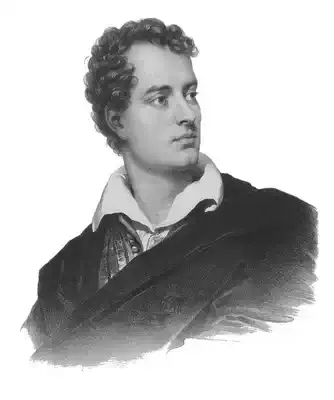
Lord Byron
I would to heaven that I were so much clay
I would to heaven that I were so much clay
I would to heaven that I were so much clay,
As I am blood, bone, marrow, passion, feeling Because
at least the past were passed away And
for the future (
but I write this reeling,
Having got drunk exceedingly today,
So that I seem to stand upon the ceiling)
I say the
future is a serious matter And
so for
God's sake hock
and soda water!
I would to heaven that I were so much clay,
As I am blood, bone, marrow, passion, feeling Because
at least the past were passed away And
for the future (
but I write this reeling,
Having got drunk exceedingly today,
So that I seem to stand upon the ceiling)
I say the
future is a serious matter And
so for
God's sake hock
and soda water!
441
Lord Byron
From The Prometheus Vinctus Of Aeschylus
From The Prometheus Vinctus Of Aeschylus
Great Jove, to whose almighty throne
Both gods and mortals homage pay,
Ne'er may my soul thy power disown,
Thy dread behests ne'er disobey.
Oft shall the sacred victim fall
In seagirt
Ocean's mossy hall;
My voice shall raise no impious strain
'Gainst him who rules the sky and azure main.
How different now thy joyless fate,
Since first Hesione thy bride,
When placed aloft in godlike state,
The blushing beauty by the side,
Thou sat'st, while reverend Ocean smiled,
And mirthful strains the hours beguiled;
The Nymphs and Tritons dances around,
Nor yet thy doom was fix'd, nor Jove relentless frown'd.
Great Jove, to whose almighty throne
Both gods and mortals homage pay,
Ne'er may my soul thy power disown,
Thy dread behests ne'er disobey.
Oft shall the sacred victim fall
In seagirt
Ocean's mossy hall;
My voice shall raise no impious strain
'Gainst him who rules the sky and azure main.
How different now thy joyless fate,
Since first Hesione thy bride,
When placed aloft in godlike state,
The blushing beauty by the side,
Thou sat'st, while reverend Ocean smiled,
And mirthful strains the hours beguiled;
The Nymphs and Tritons dances around,
Nor yet thy doom was fix'd, nor Jove relentless frown'd.
544
Lord Byron
From The Last Hill That Looks On Thy Once Holy Dome
From The Last Hill That Looks On Thy Once Holy Dome
I.
From the last hill that looks on thy once holy dome,
I beheld thee, Oh Sion! when rendered to Rome:
'Twas thy last sun went down, and the flames of thy fall
Flash'd back on the last glance I gave to thy wall.
II.
I look'd for thy temple, I look'd for my home,
And forgot for a moment my bondage to come;
I beheld but the deathfire
that fed on thy fane,
And the fastfetter'd
hands that made vengeance in vain.
III.
Oh many an eve, the high spot whence I gazed
Had reflected the last beam of day as it blazed;
While I stood on the height, and beheld the decline
Of the rays from the mountain that shone on thy shrine.
IV.
And now on that mountain I stood on that day,
But I marked not the twilight beam melting away;
Oh! would that the lightning had glared in its stead,
And the thunderbolt burst on the conqueror's head!
V.
But the Gods of the Pagan shall never profane
The shrine where Jehovah disdain'd not to reign;
And scattered and scorn'd as thy people may be,
Our worship, oh Father! is only for thee.
I.
From the last hill that looks on thy once holy dome,
I beheld thee, Oh Sion! when rendered to Rome:
'Twas thy last sun went down, and the flames of thy fall
Flash'd back on the last glance I gave to thy wall.
II.
I look'd for thy temple, I look'd for my home,
And forgot for a moment my bondage to come;
I beheld but the deathfire
that fed on thy fane,
And the fastfetter'd
hands that made vengeance in vain.
III.
Oh many an eve, the high spot whence I gazed
Had reflected the last beam of day as it blazed;
While I stood on the height, and beheld the decline
Of the rays from the mountain that shone on thy shrine.
IV.
And now on that mountain I stood on that day,
But I marked not the twilight beam melting away;
Oh! would that the lightning had glared in its stead,
And the thunderbolt burst on the conqueror's head!
V.
But the Gods of the Pagan shall never profane
The shrine where Jehovah disdain'd not to reign;
And scattered and scorn'd as thy people may be,
Our worship, oh Father! is only for thee.
478
Lord Byron
Fill The Goblet Again: A Song
Fill The Goblet Again: A Song
Fill the goblet again! for I never before
Felt the glow which now gladdens my heart to its core;
Let us drink!who
would not?since,
through life's varied round,
In the goblet alone no deception is found.
I have tried in its turn all that life can supply;
I have bask'd in the beam of a dark rolling eye;
I have loved!who
has not?but
what heart can declare
That pleasure existed while passion was there?
In the days of my youth, when the heart's in its spring,
And dreams that affection can never take wing,
I had friends!who
has not?but
what tongue will avow,
That friends, rosy wine! are so faithful as thou?
The heart of a mistress some boy may estrange,
Friendship shifts with the sunbeamthou
never canst change;
Thou grow'st oldwho
does not?but
on earth what appears,
Whose virtues, like thine, still increase with its years?
Yet if blest to the utmost that love can bestow,
Should a rival bow down to our idol below,
We aree jealous!who
is not?thou
hast no such alloy;
For the more that enjoy thee, the more we enjoy.
Then the season of youth and its vanities past,
For refuge we fly to the goblet at last;
There we finddo
we not?in
the flow of the soul,
That truth, as of yore, is confined to the bowl.
When the box of Pandora was opened on earth,
And Misery's triumph commenced over Mirth,
Hope was left,was
she not?but
the goblet we kiss,
And care not for Hope, who are certain of bliss.
Long life to the grape! for when summer is flown,
The age of our nectar shall gladden our own:
We must diewho
shall not?May
our sins be forgiven,
And Hebe shall never be idle in heaven.
Fill the goblet again! for I never before
Felt the glow which now gladdens my heart to its core;
Let us drink!who
would not?since,
through life's varied round,
In the goblet alone no deception is found.
I have tried in its turn all that life can supply;
I have bask'd in the beam of a dark rolling eye;
I have loved!who
has not?but
what heart can declare
That pleasure existed while passion was there?
In the days of my youth, when the heart's in its spring,
And dreams that affection can never take wing,
I had friends!who
has not?but
what tongue will avow,
That friends, rosy wine! are so faithful as thou?
The heart of a mistress some boy may estrange,
Friendship shifts with the sunbeamthou
never canst change;
Thou grow'st oldwho
does not?but
on earth what appears,
Whose virtues, like thine, still increase with its years?
Yet if blest to the utmost that love can bestow,
Should a rival bow down to our idol below,
We aree jealous!who
is not?thou
hast no such alloy;
For the more that enjoy thee, the more we enjoy.
Then the season of youth and its vanities past,
For refuge we fly to the goblet at last;
There we finddo
we not?in
the flow of the soul,
That truth, as of yore, is confined to the bowl.
When the box of Pandora was opened on earth,
And Misery's triumph commenced over Mirth,
Hope was left,was
she not?but
the goblet we kiss,
And care not for Hope, who are certain of bliss.
Long life to the grape! for when summer is flown,
The age of our nectar shall gladden our own:
We must diewho
shall not?May
our sins be forgiven,
And Hebe shall never be idle in heaven.
469
Lord Byron
Epitaph On John Adams, Of Southwell - A Carrier, Who Died Of Drunkenness
Epitaph On John Adams, Of Southwell - A Carrier, Who Died Of Drunkenness
JOHN ADAMS lies here, of the parish of Southwell,
A Carrier who carried his can to his mouth well:
He carried so much, and he carried so fast,
He could carry no more‑so was carried at last;
For, the liquor he drank, being too much for one,
He could not carry off,so
he's now carrion.
JOHN ADAMS lies here, of the parish of Southwell,
A Carrier who carried his can to his mouth well:
He carried so much, and he carried so fast,
He could carry no more‑so was carried at last;
For, the liquor he drank, being too much for one,
He could not carry off,so
he's now carrion.
490
Lord Byron
Epitaph For William Pitt
Epitaph For William Pitt
With death doom'd to grapple,
Beneath this cold slab, he
Who lied in the Chapel
Now lies in the Abbey.
With death doom'd to grapple,
Beneath this cold slab, he
Who lied in the Chapel
Now lies in the Abbey.
460
Lord Byron
Epistle To Augusta
Epistle To Augusta
I.
My sister! my sweet sister! if a name
Dearer and purer were, it should be thine;
Mountains and seas divide us, but I claim
No tears, but tenderness to answer mine:
Go where I will, to me thou art the sameA
loved regret which I would not resign,
There yet are two things in my destiny,
A
world to roam through, and a home with thee.
II.
The first were nothinghad
I still the last,
It were the haven of my happiness;
But other claims and other ties thou hast,
And mine is not the wish to make them less.
A strange doom is thy father's son's, and past
Recalling, as it lies beyond redress;
Reversed for him our grandsire's fate of yore,
He had no rest at sea, nor I on shore.
III.
If my inheritance of storms hath been
In other elements, and on the rocks
Of perils, overlook'd or unforeseen,
I have sustain'd my share of worldly shocks,
The fault was mine; nor do I seek to screen
My errors with defensive paradox;
I have been cunning in mine overthrow,
The careful pilot of my proper woe.
IV.
Mine were my faults, and mine be their reward.
My whole life was a contest, since the day
That gave me being, gave me that which marr'd
The gift,a
fate, or will, that walk'd astray;
And I at times have found the struggle hard,
And thought of shaking off my bonds of clay:
But now I fain would for a time survive,
If but to see what next can well arrive.
V.
Kingdoms and empires in my little day
I have outlived, and yet I am not old;
And when I look on this, the petty spray
Of my own years of trouble, which have roll'd
Like a wild bay of breakers, melts away
SomethingI
know not whatdoes
still uphold
A spirit of slight patience; not in vain,
Even for its own sake, do we purchase pain.
VI.
Perhaps the workings of defiance stir
Within me or
perhaps a cold despair,
Brought on when ills habitually recur,
Perhaps a kinder clime, or purer air,
(For even to this may change of soul refer,
And with light armour we may learn to bear,)
Have taught me a strange quiet, which was not
The chief companion of a calmer lot.
VII.
I feel almost at times as I have felt
In happy childhood; trees, and flowers, and brooks,
Which do remember me of where I dwelt
Ere my young mind was sacrificed to books,
Come as of yore upon me, and can melt
My heart with recognition of their looks;
And even at moments I could think I see
Some living thing to lovebut
none like thee.
VIII.
Here are the Alpine landscapes which create
A fund for contemplation;to
admire
Is a brief feeling of a trivial date;
But something worthier do such scenes inspire:
Here to be lonely is not desolate'
For much I view which I could most desire,
And, above all, a lake I can behold
Lovelier, not dearer, than our own of old.
IX.
Oh that thou wert but with me! but
I grow
The fool of my own wishes, and forget
The solitude which I have vaunted so
Has lost its praise in this but one regret;
There may be others which I less may show
I am not of the plaintive mood, and yet
I feel an ebb in my philosophy,
And the tide rising in my alter'd eye.
X.
I did remind thee of our own dear Lake,
By the old Hall which may be mine no more.
Leman's is fair; but think not I forsake
The sweet remembrance of a dearer shore:
Sad havoc Time must with my memory make,
Ere that or thou can fade these eyes before;
Though, like all things which I have loved they are
Resign 'd For ever, or divided far.
XI.
The world is all before me; I but ask
Of Nature that with which she will comply
It is but in her summer's sun to bask,
To mingle with the quiet of her sky,
To see her gentle face without a mask,
And never gaze on it with apathy.
She was my early friend, and now shall be
My sister till
I look again on thee.
XII.
I can reduce all feelings but this one;
And that I would not; for at length I see
Such scenes as those wherein my life begun.
The earliest even
the only paths for me Had
I but sooner learnt the crowd to shun,
I had been better than I now can be;
The passions which have torn me would have slept;
I had not suffer'd, and thou hadst not wept.
XIII.
With false Ambition what had I to do?
Little with Love, and least of all with Fame;
And yet they came unsought, and with me grew,
And made me all which they can make a
name.
Yet this was not the end I did pursue;
Surely I once beheld a nobler aim.
But all is over I
am one the more
To baffled millions which have gone before.
XIV.
And for the future, this world's future may
From me demand but little of my care;
I have outlived myself by many a day;
Having survived so many things that were;
My years have been no slumber, but the prey
Of ceaseless vigils; for I had the share
Of life which might have fill'd a century,
Before its fourth in time had pass'd me by.
XV.
And for the remnant which may be to come
I am content; and for the past I feel
Not thankless,for
within the crowded sum
Of struggles, happiness at times would steal,
And for the present, I would not benumb
My feelings further. Nor
shall I conceal
That with all this I still can look around,
And worship Nature with a thought profound.
XVI.
For thee, my own sweet sister, in thy heart
I know myself secure, as thou in mine;
We were and are I
am, even as thou art
Beings who ne'er each other can resign;
It is the same, together or apart,
From life's commencement to its slow decline
We are entwinedlet
death come slow or fast,
The tie which bound the first endures the last!
I.
My sister! my sweet sister! if a name
Dearer and purer were, it should be thine;
Mountains and seas divide us, but I claim
No tears, but tenderness to answer mine:
Go where I will, to me thou art the sameA
loved regret which I would not resign,
There yet are two things in my destiny,
A
world to roam through, and a home with thee.
II.
The first were nothinghad
I still the last,
It were the haven of my happiness;
But other claims and other ties thou hast,
And mine is not the wish to make them less.
A strange doom is thy father's son's, and past
Recalling, as it lies beyond redress;
Reversed for him our grandsire's fate of yore,
He had no rest at sea, nor I on shore.
III.
If my inheritance of storms hath been
In other elements, and on the rocks
Of perils, overlook'd or unforeseen,
I have sustain'd my share of worldly shocks,
The fault was mine; nor do I seek to screen
My errors with defensive paradox;
I have been cunning in mine overthrow,
The careful pilot of my proper woe.
IV.
Mine were my faults, and mine be their reward.
My whole life was a contest, since the day
That gave me being, gave me that which marr'd
The gift,a
fate, or will, that walk'd astray;
And I at times have found the struggle hard,
And thought of shaking off my bonds of clay:
But now I fain would for a time survive,
If but to see what next can well arrive.
V.
Kingdoms and empires in my little day
I have outlived, and yet I am not old;
And when I look on this, the petty spray
Of my own years of trouble, which have roll'd
Like a wild bay of breakers, melts away
SomethingI
know not whatdoes
still uphold
A spirit of slight patience; not in vain,
Even for its own sake, do we purchase pain.
VI.
Perhaps the workings of defiance stir
Within me or
perhaps a cold despair,
Brought on when ills habitually recur,
Perhaps a kinder clime, or purer air,
(For even to this may change of soul refer,
And with light armour we may learn to bear,)
Have taught me a strange quiet, which was not
The chief companion of a calmer lot.
VII.
I feel almost at times as I have felt
In happy childhood; trees, and flowers, and brooks,
Which do remember me of where I dwelt
Ere my young mind was sacrificed to books,
Come as of yore upon me, and can melt
My heart with recognition of their looks;
And even at moments I could think I see
Some living thing to lovebut
none like thee.
VIII.
Here are the Alpine landscapes which create
A fund for contemplation;to
admire
Is a brief feeling of a trivial date;
But something worthier do such scenes inspire:
Here to be lonely is not desolate'
For much I view which I could most desire,
And, above all, a lake I can behold
Lovelier, not dearer, than our own of old.
IX.
Oh that thou wert but with me! but
I grow
The fool of my own wishes, and forget
The solitude which I have vaunted so
Has lost its praise in this but one regret;
There may be others which I less may show
I am not of the plaintive mood, and yet
I feel an ebb in my philosophy,
And the tide rising in my alter'd eye.
X.
I did remind thee of our own dear Lake,
By the old Hall which may be mine no more.
Leman's is fair; but think not I forsake
The sweet remembrance of a dearer shore:
Sad havoc Time must with my memory make,
Ere that or thou can fade these eyes before;
Though, like all things which I have loved they are
Resign 'd For ever, or divided far.
XI.
The world is all before me; I but ask
Of Nature that with which she will comply
It is but in her summer's sun to bask,
To mingle with the quiet of her sky,
To see her gentle face without a mask,
And never gaze on it with apathy.
She was my early friend, and now shall be
My sister till
I look again on thee.
XII.
I can reduce all feelings but this one;
And that I would not; for at length I see
Such scenes as those wherein my life begun.
The earliest even
the only paths for me Had
I but sooner learnt the crowd to shun,
I had been better than I now can be;
The passions which have torn me would have slept;
I had not suffer'd, and thou hadst not wept.
XIII.
With false Ambition what had I to do?
Little with Love, and least of all with Fame;
And yet they came unsought, and with me grew,
And made me all which they can make a
name.
Yet this was not the end I did pursue;
Surely I once beheld a nobler aim.
But all is over I
am one the more
To baffled millions which have gone before.
XIV.
And for the future, this world's future may
From me demand but little of my care;
I have outlived myself by many a day;
Having survived so many things that were;
My years have been no slumber, but the prey
Of ceaseless vigils; for I had the share
Of life which might have fill'd a century,
Before its fourth in time had pass'd me by.
XV.
And for the remnant which may be to come
I am content; and for the past I feel
Not thankless,for
within the crowded sum
Of struggles, happiness at times would steal,
And for the present, I would not benumb
My feelings further. Nor
shall I conceal
That with all this I still can look around,
And worship Nature with a thought profound.
XVI.
For thee, my own sweet sister, in thy heart
I know myself secure, as thou in mine;
We were and are I
am, even as thou art
Beings who ne'er each other can resign;
It is the same, together or apart,
From life's commencement to its slow decline
We are entwinedlet
death come slow or fast,
The tie which bound the first endures the last!
552
Lord Byron
Epistle To Augusta
Epistle To Augusta
I.
My sister! my sweet sister! if a name
Dearer and purer were, it should be thine;
Mountains and seas divide us, but I claim
No tears, but tenderness to answer mine:
Go where I will, to me thou art the sameA
loved regret which I would not resign,
There yet are two things in my destiny,
A
world to roam through, and a home with thee.
II.
The first were nothinghad
I still the last,
It were the haven of my happiness;
But other claims and other ties thou hast,
And mine is not the wish to make them less.
A strange doom is thy father's son's, and past
Recalling, as it lies beyond redress;
Reversed for him our grandsire's fate of yore,
He had no rest at sea, nor I on shore.
III.
If my inheritance of storms hath been
In other elements, and on the rocks
Of perils, overlook'd or unforeseen,
I have sustain'd my share of worldly shocks,
The fault was mine; nor do I seek to screen
My errors with defensive paradox;
I have been cunning in mine overthrow,
The careful pilot of my proper woe.
IV.
Mine were my faults, and mine be their reward.
My whole life was a contest, since the day
That gave me being, gave me that which marr'd
The gift,a
fate, or will, that walk'd astray;
And I at times have found the struggle hard,
And thought of shaking off my bonds of clay:
But now I fain would for a time survive,
If but to see what next can well arrive.
V.
Kingdoms and empires in my little day
I have outlived, and yet I am not old;
And when I look on this, the petty spray
Of my own years of trouble, which have roll'd
Like a wild bay of breakers, melts away
SomethingI
know not whatdoes
still uphold
A spirit of slight patience; not in vain,
Even for its own sake, do we purchase pain.
VI.
Perhaps the workings of defiance stir
Within me or
perhaps a cold despair,
Brought on when ills habitually recur,
Perhaps a kinder clime, or purer air,
(For even to this may change of soul refer,
And with light armour we may learn to bear,)
Have taught me a strange quiet, which was not
The chief companion of a calmer lot.
VII.
I feel almost at times as I have felt
In happy childhood; trees, and flowers, and brooks,
Which do remember me of where I dwelt
Ere my young mind was sacrificed to books,
Come as of yore upon me, and can melt
My heart with recognition of their looks;
And even at moments I could think I see
Some living thing to lovebut
none like thee.
VIII.
Here are the Alpine landscapes which create
A fund for contemplation;to
admire
Is a brief feeling of a trivial date;
But something worthier do such scenes inspire:
Here to be lonely is not desolate'
For much I view which I could most desire,
And, above all, a lake I can behold
Lovelier, not dearer, than our own of old.
IX.
Oh that thou wert but with me! but
I grow
The fool of my own wishes, and forget
The solitude which I have vaunted so
Has lost its praise in this but one regret;
There may be others which I less may show
I am not of the plaintive mood, and yet
I feel an ebb in my philosophy,
And the tide rising in my alter'd eye.
X.
I did remind thee of our own dear Lake,
By the old Hall which may be mine no more.
Leman's is fair; but think not I forsake
The sweet remembrance of a dearer shore:
Sad havoc Time must with my memory make,
Ere that or thou can fade these eyes before;
Though, like all things which I have loved they are
Resign 'd For ever, or divided far.
XI.
The world is all before me; I but ask
Of Nature that with which she will comply
It is but in her summer's sun to bask,
To mingle with the quiet of her sky,
To see her gentle face without a mask,
And never gaze on it with apathy.
She was my early friend, and now shall be
My sister till
I look again on thee.
XII.
I can reduce all feelings but this one;
And that I would not; for at length I see
Such scenes as those wherein my life begun.
The earliest even
the only paths for me Had
I but sooner learnt the crowd to shun,
I had been better than I now can be;
The passions which have torn me would have slept;
I had not suffer'd, and thou hadst not wept.
XIII.
With false Ambition what had I to do?
Little with Love, and least of all with Fame;
And yet they came unsought, and with me grew,
And made me all which they can make a
name.
Yet this was not the end I did pursue;
Surely I once beheld a nobler aim.
But all is over I
am one the more
To baffled millions which have gone before.
XIV.
And for the future, this world's future may
From me demand but little of my care;
I have outlived myself by many a day;
Having survived so many things that were;
My years have been no slumber, but the prey
Of ceaseless vigils; for I had the share
Of life which might have fill'd a century,
Before its fourth in time had pass'd me by.
XV.
And for the remnant which may be to come
I am content; and for the past I feel
Not thankless,for
within the crowded sum
Of struggles, happiness at times would steal,
And for the present, I would not benumb
My feelings further. Nor
shall I conceal
That with all this I still can look around,
And worship Nature with a thought profound.
XVI.
For thee, my own sweet sister, in thy heart
I know myself secure, as thou in mine;
We were and are I
am, even as thou art
Beings who ne'er each other can resign;
It is the same, together or apart,
From life's commencement to its slow decline
We are entwinedlet
death come slow or fast,
The tie which bound the first endures the last!
I.
My sister! my sweet sister! if a name
Dearer and purer were, it should be thine;
Mountains and seas divide us, but I claim
No tears, but tenderness to answer mine:
Go where I will, to me thou art the sameA
loved regret which I would not resign,
There yet are two things in my destiny,
A
world to roam through, and a home with thee.
II.
The first were nothinghad
I still the last,
It were the haven of my happiness;
But other claims and other ties thou hast,
And mine is not the wish to make them less.
A strange doom is thy father's son's, and past
Recalling, as it lies beyond redress;
Reversed for him our grandsire's fate of yore,
He had no rest at sea, nor I on shore.
III.
If my inheritance of storms hath been
In other elements, and on the rocks
Of perils, overlook'd or unforeseen,
I have sustain'd my share of worldly shocks,
The fault was mine; nor do I seek to screen
My errors with defensive paradox;
I have been cunning in mine overthrow,
The careful pilot of my proper woe.
IV.
Mine were my faults, and mine be their reward.
My whole life was a contest, since the day
That gave me being, gave me that which marr'd
The gift,a
fate, or will, that walk'd astray;
And I at times have found the struggle hard,
And thought of shaking off my bonds of clay:
But now I fain would for a time survive,
If but to see what next can well arrive.
V.
Kingdoms and empires in my little day
I have outlived, and yet I am not old;
And when I look on this, the petty spray
Of my own years of trouble, which have roll'd
Like a wild bay of breakers, melts away
SomethingI
know not whatdoes
still uphold
A spirit of slight patience; not in vain,
Even for its own sake, do we purchase pain.
VI.
Perhaps the workings of defiance stir
Within me or
perhaps a cold despair,
Brought on when ills habitually recur,
Perhaps a kinder clime, or purer air,
(For even to this may change of soul refer,
And with light armour we may learn to bear,)
Have taught me a strange quiet, which was not
The chief companion of a calmer lot.
VII.
I feel almost at times as I have felt
In happy childhood; trees, and flowers, and brooks,
Which do remember me of where I dwelt
Ere my young mind was sacrificed to books,
Come as of yore upon me, and can melt
My heart with recognition of their looks;
And even at moments I could think I see
Some living thing to lovebut
none like thee.
VIII.
Here are the Alpine landscapes which create
A fund for contemplation;to
admire
Is a brief feeling of a trivial date;
But something worthier do such scenes inspire:
Here to be lonely is not desolate'
For much I view which I could most desire,
And, above all, a lake I can behold
Lovelier, not dearer, than our own of old.
IX.
Oh that thou wert but with me! but
I grow
The fool of my own wishes, and forget
The solitude which I have vaunted so
Has lost its praise in this but one regret;
There may be others which I less may show
I am not of the plaintive mood, and yet
I feel an ebb in my philosophy,
And the tide rising in my alter'd eye.
X.
I did remind thee of our own dear Lake,
By the old Hall which may be mine no more.
Leman's is fair; but think not I forsake
The sweet remembrance of a dearer shore:
Sad havoc Time must with my memory make,
Ere that or thou can fade these eyes before;
Though, like all things which I have loved they are
Resign 'd For ever, or divided far.
XI.
The world is all before me; I but ask
Of Nature that with which she will comply
It is but in her summer's sun to bask,
To mingle with the quiet of her sky,
To see her gentle face without a mask,
And never gaze on it with apathy.
She was my early friend, and now shall be
My sister till
I look again on thee.
XII.
I can reduce all feelings but this one;
And that I would not; for at length I see
Such scenes as those wherein my life begun.
The earliest even
the only paths for me Had
I but sooner learnt the crowd to shun,
I had been better than I now can be;
The passions which have torn me would have slept;
I had not suffer'd, and thou hadst not wept.
XIII.
With false Ambition what had I to do?
Little with Love, and least of all with Fame;
And yet they came unsought, and with me grew,
And made me all which they can make a
name.
Yet this was not the end I did pursue;
Surely I once beheld a nobler aim.
But all is over I
am one the more
To baffled millions which have gone before.
XIV.
And for the future, this world's future may
From me demand but little of my care;
I have outlived myself by many a day;
Having survived so many things that were;
My years have been no slumber, but the prey
Of ceaseless vigils; for I had the share
Of life which might have fill'd a century,
Before its fourth in time had pass'd me by.
XV.
And for the remnant which may be to come
I am content; and for the past I feel
Not thankless,for
within the crowded sum
Of struggles, happiness at times would steal,
And for the present, I would not benumb
My feelings further. Nor
shall I conceal
That with all this I still can look around,
And worship Nature with a thought profound.
XVI.
For thee, my own sweet sister, in thy heart
I know myself secure, as thou in mine;
We were and are I
am, even as thou art
Beings who ne'er each other can resign;
It is the same, together or apart,
From life's commencement to its slow decline
We are entwinedlet
death come slow or fast,
The tie which bound the first endures the last!
552
Lord Byron
Epitaph
Epitaph
Posterity will ne'er survey
A nobler grave than this:
Here lie the bones of Castlereagh:
Stop, traveler
Posterity will ne'er survey
A nobler grave than this:
Here lie the bones of Castlereagh:
Stop, traveler
464
Lord Byron
Elegy On Newstead Abbey
Elegy On Newstead Abbey
'It is the voice of years that are gone!
they roll before me with all their deeds.'~OSSIAN
Newstead! fastfalling,
onceresplendent
dome!
Religion's shrine! repentant HENRY's pride!
Of warriors, monks, and dames the cloister'd tomb,
Whose pensive shades around thy ruins glide,
Hail to thy pile! more honour'd in thy fall
Than modern mansions in their pillar'd state;
Proudly majestic frowns thy vaulted hall,
Scowling defiance on the blasts of fate.
No mailclad
serfs, obedient to their lord,
In grim array the crimson cross demand;
Or gay assemble round the festive board
Their chief's retainers, an immortal band:
Else might inspiting Fancy's magic eye
Retrace their progress through the lapse of time,
Marking each ardent youth, ordaln'd to die,
A votive pilgrim in Judea's clime.
But not from thee, dark pile! departs the chief;
His feudal realm in other regions lay:
In thee the wounded conscience courts relief,
Retiring from the garish blare of day.
Yes! in thy gloomy cells and shades profound
The monk abjured a world he ne'er could view;
Or bloodstain'd
guilt repenting solace found,
Or innocence from stern oppression flew.
A monarch bade thee from that wild arise,
Where Sherwood's outlaws once were wont to prowl;
And Superstition's crimes, of various dyes,
Sought shelter in the priest's protecting cowl.
Where now the grass exhales a murky dew,
The humid pail of lifeextinguish'd
clay,
In sainted fame the sacred fathers grew,
Nor raised their pious voices but to pray.
Where now the bats their wavering wings extend
Soon as the gloaming spreads her waning shade,
The choir did oft their mingling vespers blend,
Or matin orisons to Mary pald.
Years roll on years; to ages, ages yield;
Abbots to abbots, in a line, succeed;
Religion's charter their protecting shield,
Till royal sacrilege their doom decreed,
One holy HENRY rear'd the Gothic walls,
And bade the pious inmates rest in peace
Another HENRY the kind gift recalls,
And bids devotion's hallow'd echos cease.
Vain is each threat or supplicating prayer;
He drives them exiles from their blest abode,
To roam a dreary world in deep despair —
No friend, no home, no refuge, but their God.
Hark how the hall, resounding to the strain
Shakes with the martial music's novel din!
The heralds of a warrior's haughty reign,
High crested banners wave thy wails within.
Of changing sentinels the distant hum,
The mirth of feasts, the clang of burnish'd arms,
The braying trumpet and the hoarser drum,
Unite in concert with increased alarms.
An abbey once, a regal fortress now,
Encircled by insulting rebel powers,
War's dread machines o'erhang thy threat'ning brow,
And dart destruction in sulphureous showers.
Ah vain defence! the hostile traitor's siege,
Though oft repulsed, by guile o'ercomes
the brave;
His thronging foes oppress the faithful liege,
Rebellion's reeking standards o'er him wave.
Not unavenged the raging baron yields;
The blood of traitors smears the purple plain
Unconqu'r'd still, his falchion there he wields,
And days of glory yet for him remain.
Still in that hour the warrior wish'd to strew
Selfgather'd
laurel on a selfsought
grave;
But Charles' protecting genius hither flew,
The monarch's friend, the monarch's hope, to save.
Trembling, she snatch'd him ftom th' unequal strife,
In other fields the torrent to repel;
For nobler combats, here reservedhis life,
To lead the hand where godlike FALKLAND fell
From thee, poor pile! to lawless plunder given,
While dying groans their painful requiem sound,
Far different incense now ascends to heaven,
Such victims wallow on the gory ground.
There many a pale and ruthless robber's corse,
Noisome and ghast, defiles thy sacred sod;
O'er mingling man, and horse commix'd with horse,
Corruption's heap, the savage spoilers trod.
Graves, long with rank and sighing weeds o'erspread,
Ransack'd, resign perforce their mortal mould:
From ruffian fangs escape not e'en the dead,
Raked from repose in search of buried gold.
Hush'd is the harp, unstrung the warlike lyre'
The minstrel's palsied hand reclines in death;
No more he strikes the quivering chords with fire,
Or sings the glories of the martial wreath.
At length the sated murderers, gorged with prey,
Retire: the clamour of the fight is o'er;
Silence again resumes her awful sway,
And sable Horror guards the massy door.
Here Desolation holds her dreary court:
What satellites declare her dismal reign!
Shrieking their dirge, illomen'd
birds resort,
To flit their vigils in the hoary fane.
Soon a new morn's restoring beams dispel
The clouds of anarchy from Britain's skies;
The fierce usurper seeks his native hell,
And Nature triumphs as the tyrant dies.
With storms she welcomes his expiring groans
Whirlwinds, responsive, greet his labouring breath;
Earth shudders as her caves receive his bones,
Loathing the offering of so dark a death.
The legal ruler now resumes the helm,
He guides through gentle seas the prow of state
Hope cheers, with wonted smiles, the peaceful realm,
And heals the bleeding wounds of wearied hate.
The gloomy tenants, Newstead! of thy cells,
Howling, resign their violated nest;
Again the master on his tenure dwells,
Enjoy'd, from absence, with enraptured zest.
Vassals, within thy hospitable pale,
Loudly carousing, bless their lord's return.
Culture again adorns the gladdening vale,
And matrons, once lamenting, cease to mourn.
A thousand songs on tuneful echo float,
Unwonted foliage mantles o'er the trees;
And hark! the horns proclalm a mellow note,
The hunters' cry hangs lengthening on the breeze.
Beneath their coursers' hoofs the valleys shake:
What fears, what anxious hopes attend the chase!
The dying stag seeks refuge in the lake;
Exulting shouts announce the finish'd race.
Ah happy days! too happy to endure!
Such simple sports our plain forefathers knew
No splendid vices glitter'd to allure;
Their joys were many, as their cares were few.
From these descending, sons to sires succeed
Time steals along, and Death uprears the dart;
Another chief impels the foaming steed,
Another crowd pursue the panting hart.
Newstead! what saddening change of scene is thine!
Thy yawning arch betokens slow decay;
The last and youngest of a noble line
Now holds thy mouldering turrets in his sway.
Deserted now, he scans thy gray worn towers;
Thy vaults, where dead of feudal ages sleep;
Thy cloisters, pervious to the wintry showers
These, these he views, and views them but to weep.
Yet are his tears no emblem of regret:
Cherish'd affection only bids them flow.
Pride, hope, and love forbid him to forget
But warm his bosom with irnpassion'd glow.
Yet he prefers thee to the gilded domes
Or gewgaw grottos of the vainly great,
Yet lingers 'mid thy damp and mossy tombs,
Nor breathes a murmur 'gainst the will of fate.
Haply thy sun, emerging, yet may shine,
Thee to irradiate with meridian ray;
Hours splendid as the past may still be thine,
And bless thy future as thy former day.
'It is the voice of years that are gone!
they roll before me with all their deeds.'~OSSIAN
Newstead! fastfalling,
onceresplendent
dome!
Religion's shrine! repentant HENRY's pride!
Of warriors, monks, and dames the cloister'd tomb,
Whose pensive shades around thy ruins glide,
Hail to thy pile! more honour'd in thy fall
Than modern mansions in their pillar'd state;
Proudly majestic frowns thy vaulted hall,
Scowling defiance on the blasts of fate.
No mailclad
serfs, obedient to their lord,
In grim array the crimson cross demand;
Or gay assemble round the festive board
Their chief's retainers, an immortal band:
Else might inspiting Fancy's magic eye
Retrace their progress through the lapse of time,
Marking each ardent youth, ordaln'd to die,
A votive pilgrim in Judea's clime.
But not from thee, dark pile! departs the chief;
His feudal realm in other regions lay:
In thee the wounded conscience courts relief,
Retiring from the garish blare of day.
Yes! in thy gloomy cells and shades profound
The monk abjured a world he ne'er could view;
Or bloodstain'd
guilt repenting solace found,
Or innocence from stern oppression flew.
A monarch bade thee from that wild arise,
Where Sherwood's outlaws once were wont to prowl;
And Superstition's crimes, of various dyes,
Sought shelter in the priest's protecting cowl.
Where now the grass exhales a murky dew,
The humid pail of lifeextinguish'd
clay,
In sainted fame the sacred fathers grew,
Nor raised their pious voices but to pray.
Where now the bats their wavering wings extend
Soon as the gloaming spreads her waning shade,
The choir did oft their mingling vespers blend,
Or matin orisons to Mary pald.
Years roll on years; to ages, ages yield;
Abbots to abbots, in a line, succeed;
Religion's charter their protecting shield,
Till royal sacrilege their doom decreed,
One holy HENRY rear'd the Gothic walls,
And bade the pious inmates rest in peace
Another HENRY the kind gift recalls,
And bids devotion's hallow'd echos cease.
Vain is each threat or supplicating prayer;
He drives them exiles from their blest abode,
To roam a dreary world in deep despair —
No friend, no home, no refuge, but their God.
Hark how the hall, resounding to the strain
Shakes with the martial music's novel din!
The heralds of a warrior's haughty reign,
High crested banners wave thy wails within.
Of changing sentinels the distant hum,
The mirth of feasts, the clang of burnish'd arms,
The braying trumpet and the hoarser drum,
Unite in concert with increased alarms.
An abbey once, a regal fortress now,
Encircled by insulting rebel powers,
War's dread machines o'erhang thy threat'ning brow,
And dart destruction in sulphureous showers.
Ah vain defence! the hostile traitor's siege,
Though oft repulsed, by guile o'ercomes
the brave;
His thronging foes oppress the faithful liege,
Rebellion's reeking standards o'er him wave.
Not unavenged the raging baron yields;
The blood of traitors smears the purple plain
Unconqu'r'd still, his falchion there he wields,
And days of glory yet for him remain.
Still in that hour the warrior wish'd to strew
Selfgather'd
laurel on a selfsought
grave;
But Charles' protecting genius hither flew,
The monarch's friend, the monarch's hope, to save.
Trembling, she snatch'd him ftom th' unequal strife,
In other fields the torrent to repel;
For nobler combats, here reservedhis life,
To lead the hand where godlike FALKLAND fell
From thee, poor pile! to lawless plunder given,
While dying groans their painful requiem sound,
Far different incense now ascends to heaven,
Such victims wallow on the gory ground.
There many a pale and ruthless robber's corse,
Noisome and ghast, defiles thy sacred sod;
O'er mingling man, and horse commix'd with horse,
Corruption's heap, the savage spoilers trod.
Graves, long with rank and sighing weeds o'erspread,
Ransack'd, resign perforce their mortal mould:
From ruffian fangs escape not e'en the dead,
Raked from repose in search of buried gold.
Hush'd is the harp, unstrung the warlike lyre'
The minstrel's palsied hand reclines in death;
No more he strikes the quivering chords with fire,
Or sings the glories of the martial wreath.
At length the sated murderers, gorged with prey,
Retire: the clamour of the fight is o'er;
Silence again resumes her awful sway,
And sable Horror guards the massy door.
Here Desolation holds her dreary court:
What satellites declare her dismal reign!
Shrieking their dirge, illomen'd
birds resort,
To flit their vigils in the hoary fane.
Soon a new morn's restoring beams dispel
The clouds of anarchy from Britain's skies;
The fierce usurper seeks his native hell,
And Nature triumphs as the tyrant dies.
With storms she welcomes his expiring groans
Whirlwinds, responsive, greet his labouring breath;
Earth shudders as her caves receive his bones,
Loathing the offering of so dark a death.
The legal ruler now resumes the helm,
He guides through gentle seas the prow of state
Hope cheers, with wonted smiles, the peaceful realm,
And heals the bleeding wounds of wearied hate.
The gloomy tenants, Newstead! of thy cells,
Howling, resign their violated nest;
Again the master on his tenure dwells,
Enjoy'd, from absence, with enraptured zest.
Vassals, within thy hospitable pale,
Loudly carousing, bless their lord's return.
Culture again adorns the gladdening vale,
And matrons, once lamenting, cease to mourn.
A thousand songs on tuneful echo float,
Unwonted foliage mantles o'er the trees;
And hark! the horns proclalm a mellow note,
The hunters' cry hangs lengthening on the breeze.
Beneath their coursers' hoofs the valleys shake:
What fears, what anxious hopes attend the chase!
The dying stag seeks refuge in the lake;
Exulting shouts announce the finish'd race.
Ah happy days! too happy to endure!
Such simple sports our plain forefathers knew
No splendid vices glitter'd to allure;
Their joys were many, as their cares were few.
From these descending, sons to sires succeed
Time steals along, and Death uprears the dart;
Another chief impels the foaming steed,
Another crowd pursue the panting hart.
Newstead! what saddening change of scene is thine!
Thy yawning arch betokens slow decay;
The last and youngest of a noble line
Now holds thy mouldering turrets in his sway.
Deserted now, he scans thy gray worn towers;
Thy vaults, where dead of feudal ages sleep;
Thy cloisters, pervious to the wintry showers
These, these he views, and views them but to weep.
Yet are his tears no emblem of regret:
Cherish'd affection only bids them flow.
Pride, hope, and love forbid him to forget
But warm his bosom with irnpassion'd glow.
Yet he prefers thee to the gilded domes
Or gewgaw grottos of the vainly great,
Yet lingers 'mid thy damp and mossy tombs,
Nor breathes a murmur 'gainst the will of fate.
Haply thy sun, emerging, yet may shine,
Thee to irradiate with meridian ray;
Hours splendid as the past may still be thine,
And bless thy future as thy former day.
496
Lord Byron
Elegy On Newstead Abbey
Elegy On Newstead Abbey
'It is the voice of years that are gone!
they roll before me with all their deeds.'~OSSIAN
Newstead! fastfalling,
onceresplendent
dome!
Religion's shrine! repentant HENRY's pride!
Of warriors, monks, and dames the cloister'd tomb,
Whose pensive shades around thy ruins glide,
Hail to thy pile! more honour'd in thy fall
Than modern mansions in their pillar'd state;
Proudly majestic frowns thy vaulted hall,
Scowling defiance on the blasts of fate.
No mailclad
serfs, obedient to their lord,
In grim array the crimson cross demand;
Or gay assemble round the festive board
Their chief's retainers, an immortal band:
Else might inspiting Fancy's magic eye
Retrace their progress through the lapse of time,
Marking each ardent youth, ordaln'd to die,
A votive pilgrim in Judea's clime.
But not from thee, dark pile! departs the chief;
His feudal realm in other regions lay:
In thee the wounded conscience courts relief,
Retiring from the garish blare of day.
Yes! in thy gloomy cells and shades profound
The monk abjured a world he ne'er could view;
Or bloodstain'd
guilt repenting solace found,
Or innocence from stern oppression flew.
A monarch bade thee from that wild arise,
Where Sherwood's outlaws once were wont to prowl;
And Superstition's crimes, of various dyes,
Sought shelter in the priest's protecting cowl.
Where now the grass exhales a murky dew,
The humid pail of lifeextinguish'd
clay,
In sainted fame the sacred fathers grew,
Nor raised their pious voices but to pray.
Where now the bats their wavering wings extend
Soon as the gloaming spreads her waning shade,
The choir did oft their mingling vespers blend,
Or matin orisons to Mary pald.
Years roll on years; to ages, ages yield;
Abbots to abbots, in a line, succeed;
Religion's charter their protecting shield,
Till royal sacrilege their doom decreed,
One holy HENRY rear'd the Gothic walls,
And bade the pious inmates rest in peace
Another HENRY the kind gift recalls,
And bids devotion's hallow'd echos cease.
Vain is each threat or supplicating prayer;
He drives them exiles from their blest abode,
To roam a dreary world in deep despair —
No friend, no home, no refuge, but their God.
Hark how the hall, resounding to the strain
Shakes with the martial music's novel din!
The heralds of a warrior's haughty reign,
High crested banners wave thy wails within.
Of changing sentinels the distant hum,
The mirth of feasts, the clang of burnish'd arms,
The braying trumpet and the hoarser drum,
Unite in concert with increased alarms.
An abbey once, a regal fortress now,
Encircled by insulting rebel powers,
War's dread machines o'erhang thy threat'ning brow,
And dart destruction in sulphureous showers.
Ah vain defence! the hostile traitor's siege,
Though oft repulsed, by guile o'ercomes
the brave;
His thronging foes oppress the faithful liege,
Rebellion's reeking standards o'er him wave.
Not unavenged the raging baron yields;
The blood of traitors smears the purple plain
Unconqu'r'd still, his falchion there he wields,
And days of glory yet for him remain.
Still in that hour the warrior wish'd to strew
Selfgather'd
laurel on a selfsought
grave;
But Charles' protecting genius hither flew,
The monarch's friend, the monarch's hope, to save.
Trembling, she snatch'd him ftom th' unequal strife,
In other fields the torrent to repel;
For nobler combats, here reservedhis life,
To lead the hand where godlike FALKLAND fell
From thee, poor pile! to lawless plunder given,
While dying groans their painful requiem sound,
Far different incense now ascends to heaven,
Such victims wallow on the gory ground.
There many a pale and ruthless robber's corse,
Noisome and ghast, defiles thy sacred sod;
O'er mingling man, and horse commix'd with horse,
Corruption's heap, the savage spoilers trod.
Graves, long with rank and sighing weeds o'erspread,
Ransack'd, resign perforce their mortal mould:
From ruffian fangs escape not e'en the dead,
Raked from repose in search of buried gold.
Hush'd is the harp, unstrung the warlike lyre'
The minstrel's palsied hand reclines in death;
No more he strikes the quivering chords with fire,
Or sings the glories of the martial wreath.
At length the sated murderers, gorged with prey,
Retire: the clamour of the fight is o'er;
Silence again resumes her awful sway,
And sable Horror guards the massy door.
Here Desolation holds her dreary court:
What satellites declare her dismal reign!
Shrieking their dirge, illomen'd
birds resort,
To flit their vigils in the hoary fane.
Soon a new morn's restoring beams dispel
The clouds of anarchy from Britain's skies;
The fierce usurper seeks his native hell,
And Nature triumphs as the tyrant dies.
With storms she welcomes his expiring groans
Whirlwinds, responsive, greet his labouring breath;
Earth shudders as her caves receive his bones,
Loathing the offering of so dark a death.
The legal ruler now resumes the helm,
He guides through gentle seas the prow of state
Hope cheers, with wonted smiles, the peaceful realm,
And heals the bleeding wounds of wearied hate.
The gloomy tenants, Newstead! of thy cells,
Howling, resign their violated nest;
Again the master on his tenure dwells,
Enjoy'd, from absence, with enraptured zest.
Vassals, within thy hospitable pale,
Loudly carousing, bless their lord's return.
Culture again adorns the gladdening vale,
And matrons, once lamenting, cease to mourn.
A thousand songs on tuneful echo float,
Unwonted foliage mantles o'er the trees;
And hark! the horns proclalm a mellow note,
The hunters' cry hangs lengthening on the breeze.
Beneath their coursers' hoofs the valleys shake:
What fears, what anxious hopes attend the chase!
The dying stag seeks refuge in the lake;
Exulting shouts announce the finish'd race.
Ah happy days! too happy to endure!
Such simple sports our plain forefathers knew
No splendid vices glitter'd to allure;
Their joys were many, as their cares were few.
From these descending, sons to sires succeed
Time steals along, and Death uprears the dart;
Another chief impels the foaming steed,
Another crowd pursue the panting hart.
Newstead! what saddening change of scene is thine!
Thy yawning arch betokens slow decay;
The last and youngest of a noble line
Now holds thy mouldering turrets in his sway.
Deserted now, he scans thy gray worn towers;
Thy vaults, where dead of feudal ages sleep;
Thy cloisters, pervious to the wintry showers
These, these he views, and views them but to weep.
Yet are his tears no emblem of regret:
Cherish'd affection only bids them flow.
Pride, hope, and love forbid him to forget
But warm his bosom with irnpassion'd glow.
Yet he prefers thee to the gilded domes
Or gewgaw grottos of the vainly great,
Yet lingers 'mid thy damp and mossy tombs,
Nor breathes a murmur 'gainst the will of fate.
Haply thy sun, emerging, yet may shine,
Thee to irradiate with meridian ray;
Hours splendid as the past may still be thine,
And bless thy future as thy former day.
'It is the voice of years that are gone!
they roll before me with all their deeds.'~OSSIAN
Newstead! fastfalling,
onceresplendent
dome!
Religion's shrine! repentant HENRY's pride!
Of warriors, monks, and dames the cloister'd tomb,
Whose pensive shades around thy ruins glide,
Hail to thy pile! more honour'd in thy fall
Than modern mansions in their pillar'd state;
Proudly majestic frowns thy vaulted hall,
Scowling defiance on the blasts of fate.
No mailclad
serfs, obedient to their lord,
In grim array the crimson cross demand;
Or gay assemble round the festive board
Their chief's retainers, an immortal band:
Else might inspiting Fancy's magic eye
Retrace their progress through the lapse of time,
Marking each ardent youth, ordaln'd to die,
A votive pilgrim in Judea's clime.
But not from thee, dark pile! departs the chief;
His feudal realm in other regions lay:
In thee the wounded conscience courts relief,
Retiring from the garish blare of day.
Yes! in thy gloomy cells and shades profound
The monk abjured a world he ne'er could view;
Or bloodstain'd
guilt repenting solace found,
Or innocence from stern oppression flew.
A monarch bade thee from that wild arise,
Where Sherwood's outlaws once were wont to prowl;
And Superstition's crimes, of various dyes,
Sought shelter in the priest's protecting cowl.
Where now the grass exhales a murky dew,
The humid pail of lifeextinguish'd
clay,
In sainted fame the sacred fathers grew,
Nor raised their pious voices but to pray.
Where now the bats their wavering wings extend
Soon as the gloaming spreads her waning shade,
The choir did oft their mingling vespers blend,
Or matin orisons to Mary pald.
Years roll on years; to ages, ages yield;
Abbots to abbots, in a line, succeed;
Religion's charter their protecting shield,
Till royal sacrilege their doom decreed,
One holy HENRY rear'd the Gothic walls,
And bade the pious inmates rest in peace
Another HENRY the kind gift recalls,
And bids devotion's hallow'd echos cease.
Vain is each threat or supplicating prayer;
He drives them exiles from their blest abode,
To roam a dreary world in deep despair —
No friend, no home, no refuge, but their God.
Hark how the hall, resounding to the strain
Shakes with the martial music's novel din!
The heralds of a warrior's haughty reign,
High crested banners wave thy wails within.
Of changing sentinels the distant hum,
The mirth of feasts, the clang of burnish'd arms,
The braying trumpet and the hoarser drum,
Unite in concert with increased alarms.
An abbey once, a regal fortress now,
Encircled by insulting rebel powers,
War's dread machines o'erhang thy threat'ning brow,
And dart destruction in sulphureous showers.
Ah vain defence! the hostile traitor's siege,
Though oft repulsed, by guile o'ercomes
the brave;
His thronging foes oppress the faithful liege,
Rebellion's reeking standards o'er him wave.
Not unavenged the raging baron yields;
The blood of traitors smears the purple plain
Unconqu'r'd still, his falchion there he wields,
And days of glory yet for him remain.
Still in that hour the warrior wish'd to strew
Selfgather'd
laurel on a selfsought
grave;
But Charles' protecting genius hither flew,
The monarch's friend, the monarch's hope, to save.
Trembling, she snatch'd him ftom th' unequal strife,
In other fields the torrent to repel;
For nobler combats, here reservedhis life,
To lead the hand where godlike FALKLAND fell
From thee, poor pile! to lawless plunder given,
While dying groans their painful requiem sound,
Far different incense now ascends to heaven,
Such victims wallow on the gory ground.
There many a pale and ruthless robber's corse,
Noisome and ghast, defiles thy sacred sod;
O'er mingling man, and horse commix'd with horse,
Corruption's heap, the savage spoilers trod.
Graves, long with rank and sighing weeds o'erspread,
Ransack'd, resign perforce their mortal mould:
From ruffian fangs escape not e'en the dead,
Raked from repose in search of buried gold.
Hush'd is the harp, unstrung the warlike lyre'
The minstrel's palsied hand reclines in death;
No more he strikes the quivering chords with fire,
Or sings the glories of the martial wreath.
At length the sated murderers, gorged with prey,
Retire: the clamour of the fight is o'er;
Silence again resumes her awful sway,
And sable Horror guards the massy door.
Here Desolation holds her dreary court:
What satellites declare her dismal reign!
Shrieking their dirge, illomen'd
birds resort,
To flit their vigils in the hoary fane.
Soon a new morn's restoring beams dispel
The clouds of anarchy from Britain's skies;
The fierce usurper seeks his native hell,
And Nature triumphs as the tyrant dies.
With storms she welcomes his expiring groans
Whirlwinds, responsive, greet his labouring breath;
Earth shudders as her caves receive his bones,
Loathing the offering of so dark a death.
The legal ruler now resumes the helm,
He guides through gentle seas the prow of state
Hope cheers, with wonted smiles, the peaceful realm,
And heals the bleeding wounds of wearied hate.
The gloomy tenants, Newstead! of thy cells,
Howling, resign their violated nest;
Again the master on his tenure dwells,
Enjoy'd, from absence, with enraptured zest.
Vassals, within thy hospitable pale,
Loudly carousing, bless their lord's return.
Culture again adorns the gladdening vale,
And matrons, once lamenting, cease to mourn.
A thousand songs on tuneful echo float,
Unwonted foliage mantles o'er the trees;
And hark! the horns proclalm a mellow note,
The hunters' cry hangs lengthening on the breeze.
Beneath their coursers' hoofs the valleys shake:
What fears, what anxious hopes attend the chase!
The dying stag seeks refuge in the lake;
Exulting shouts announce the finish'd race.
Ah happy days! too happy to endure!
Such simple sports our plain forefathers knew
No splendid vices glitter'd to allure;
Their joys were many, as their cares were few.
From these descending, sons to sires succeed
Time steals along, and Death uprears the dart;
Another chief impels the foaming steed,
Another crowd pursue the panting hart.
Newstead! what saddening change of scene is thine!
Thy yawning arch betokens slow decay;
The last and youngest of a noble line
Now holds thy mouldering turrets in his sway.
Deserted now, he scans thy gray worn towers;
Thy vaults, where dead of feudal ages sleep;
Thy cloisters, pervious to the wintry showers
These, these he views, and views them but to weep.
Yet are his tears no emblem of regret:
Cherish'd affection only bids them flow.
Pride, hope, and love forbid him to forget
But warm his bosom with irnpassion'd glow.
Yet he prefers thee to the gilded domes
Or gewgaw grottos of the vainly great,
Yet lingers 'mid thy damp and mossy tombs,
Nor breathes a murmur 'gainst the will of fate.
Haply thy sun, emerging, yet may shine,
Thee to irradiate with meridian ray;
Hours splendid as the past may still be thine,
And bless thy future as thy former day.
496
Lord Byron
Elegy On Newstead Abbey
Elegy On Newstead Abbey
'It is the voice of years that are gone!
they roll before me with all their deeds.'~OSSIAN
Newstead! fastfalling,
onceresplendent
dome!
Religion's shrine! repentant HENRY's pride!
Of warriors, monks, and dames the cloister'd tomb,
Whose pensive shades around thy ruins glide,
Hail to thy pile! more honour'd in thy fall
Than modern mansions in their pillar'd state;
Proudly majestic frowns thy vaulted hall,
Scowling defiance on the blasts of fate.
No mailclad
serfs, obedient to their lord,
In grim array the crimson cross demand;
Or gay assemble round the festive board
Their chief's retainers, an immortal band:
Else might inspiting Fancy's magic eye
Retrace their progress through the lapse of time,
Marking each ardent youth, ordaln'd to die,
A votive pilgrim in Judea's clime.
But not from thee, dark pile! departs the chief;
His feudal realm in other regions lay:
In thee the wounded conscience courts relief,
Retiring from the garish blare of day.
Yes! in thy gloomy cells and shades profound
The monk abjured a world he ne'er could view;
Or bloodstain'd
guilt repenting solace found,
Or innocence from stern oppression flew.
A monarch bade thee from that wild arise,
Where Sherwood's outlaws once were wont to prowl;
And Superstition's crimes, of various dyes,
Sought shelter in the priest's protecting cowl.
Where now the grass exhales a murky dew,
The humid pail of lifeextinguish'd
clay,
In sainted fame the sacred fathers grew,
Nor raised their pious voices but to pray.
Where now the bats their wavering wings extend
Soon as the gloaming spreads her waning shade,
The choir did oft their mingling vespers blend,
Or matin orisons to Mary pald.
Years roll on years; to ages, ages yield;
Abbots to abbots, in a line, succeed;
Religion's charter their protecting shield,
Till royal sacrilege their doom decreed,
One holy HENRY rear'd the Gothic walls,
And bade the pious inmates rest in peace
Another HENRY the kind gift recalls,
And bids devotion's hallow'd echos cease.
Vain is each threat or supplicating prayer;
He drives them exiles from their blest abode,
To roam a dreary world in deep despair —
No friend, no home, no refuge, but their God.
Hark how the hall, resounding to the strain
Shakes with the martial music's novel din!
The heralds of a warrior's haughty reign,
High crested banners wave thy wails within.
Of changing sentinels the distant hum,
The mirth of feasts, the clang of burnish'd arms,
The braying trumpet and the hoarser drum,
Unite in concert with increased alarms.
An abbey once, a regal fortress now,
Encircled by insulting rebel powers,
War's dread machines o'erhang thy threat'ning brow,
And dart destruction in sulphureous showers.
Ah vain defence! the hostile traitor's siege,
Though oft repulsed, by guile o'ercomes
the brave;
His thronging foes oppress the faithful liege,
Rebellion's reeking standards o'er him wave.
Not unavenged the raging baron yields;
The blood of traitors smears the purple plain
Unconqu'r'd still, his falchion there he wields,
And days of glory yet for him remain.
Still in that hour the warrior wish'd to strew
Selfgather'd
laurel on a selfsought
grave;
But Charles' protecting genius hither flew,
The monarch's friend, the monarch's hope, to save.
Trembling, she snatch'd him ftom th' unequal strife,
In other fields the torrent to repel;
For nobler combats, here reservedhis life,
To lead the hand where godlike FALKLAND fell
From thee, poor pile! to lawless plunder given,
While dying groans their painful requiem sound,
Far different incense now ascends to heaven,
Such victims wallow on the gory ground.
There many a pale and ruthless robber's corse,
Noisome and ghast, defiles thy sacred sod;
O'er mingling man, and horse commix'd with horse,
Corruption's heap, the savage spoilers trod.
Graves, long with rank and sighing weeds o'erspread,
Ransack'd, resign perforce their mortal mould:
From ruffian fangs escape not e'en the dead,
Raked from repose in search of buried gold.
Hush'd is the harp, unstrung the warlike lyre'
The minstrel's palsied hand reclines in death;
No more he strikes the quivering chords with fire,
Or sings the glories of the martial wreath.
At length the sated murderers, gorged with prey,
Retire: the clamour of the fight is o'er;
Silence again resumes her awful sway,
And sable Horror guards the massy door.
Here Desolation holds her dreary court:
What satellites declare her dismal reign!
Shrieking their dirge, illomen'd
birds resort,
To flit their vigils in the hoary fane.
Soon a new morn's restoring beams dispel
The clouds of anarchy from Britain's skies;
The fierce usurper seeks his native hell,
And Nature triumphs as the tyrant dies.
With storms she welcomes his expiring groans
Whirlwinds, responsive, greet his labouring breath;
Earth shudders as her caves receive his bones,
Loathing the offering of so dark a death.
The legal ruler now resumes the helm,
He guides through gentle seas the prow of state
Hope cheers, with wonted smiles, the peaceful realm,
And heals the bleeding wounds of wearied hate.
The gloomy tenants, Newstead! of thy cells,
Howling, resign their violated nest;
Again the master on his tenure dwells,
Enjoy'd, from absence, with enraptured zest.
Vassals, within thy hospitable pale,
Loudly carousing, bless their lord's return.
Culture again adorns the gladdening vale,
And matrons, once lamenting, cease to mourn.
A thousand songs on tuneful echo float,
Unwonted foliage mantles o'er the trees;
And hark! the horns proclalm a mellow note,
The hunters' cry hangs lengthening on the breeze.
Beneath their coursers' hoofs the valleys shake:
What fears, what anxious hopes attend the chase!
The dying stag seeks refuge in the lake;
Exulting shouts announce the finish'd race.
Ah happy days! too happy to endure!
Such simple sports our plain forefathers knew
No splendid vices glitter'd to allure;
Their joys were many, as their cares were few.
From these descending, sons to sires succeed
Time steals along, and Death uprears the dart;
Another chief impels the foaming steed,
Another crowd pursue the panting hart.
Newstead! what saddening change of scene is thine!
Thy yawning arch betokens slow decay;
The last and youngest of a noble line
Now holds thy mouldering turrets in his sway.
Deserted now, he scans thy gray worn towers;
Thy vaults, where dead of feudal ages sleep;
Thy cloisters, pervious to the wintry showers
These, these he views, and views them but to weep.
Yet are his tears no emblem of regret:
Cherish'd affection only bids them flow.
Pride, hope, and love forbid him to forget
But warm his bosom with irnpassion'd glow.
Yet he prefers thee to the gilded domes
Or gewgaw grottos of the vainly great,
Yet lingers 'mid thy damp and mossy tombs,
Nor breathes a murmur 'gainst the will of fate.
Haply thy sun, emerging, yet may shine,
Thee to irradiate with meridian ray;
Hours splendid as the past may still be thine,
And bless thy future as thy former day.
'It is the voice of years that are gone!
they roll before me with all their deeds.'~OSSIAN
Newstead! fastfalling,
onceresplendent
dome!
Religion's shrine! repentant HENRY's pride!
Of warriors, monks, and dames the cloister'd tomb,
Whose pensive shades around thy ruins glide,
Hail to thy pile! more honour'd in thy fall
Than modern mansions in their pillar'd state;
Proudly majestic frowns thy vaulted hall,
Scowling defiance on the blasts of fate.
No mailclad
serfs, obedient to their lord,
In grim array the crimson cross demand;
Or gay assemble round the festive board
Their chief's retainers, an immortal band:
Else might inspiting Fancy's magic eye
Retrace their progress through the lapse of time,
Marking each ardent youth, ordaln'd to die,
A votive pilgrim in Judea's clime.
But not from thee, dark pile! departs the chief;
His feudal realm in other regions lay:
In thee the wounded conscience courts relief,
Retiring from the garish blare of day.
Yes! in thy gloomy cells and shades profound
The monk abjured a world he ne'er could view;
Or bloodstain'd
guilt repenting solace found,
Or innocence from stern oppression flew.
A monarch bade thee from that wild arise,
Where Sherwood's outlaws once were wont to prowl;
And Superstition's crimes, of various dyes,
Sought shelter in the priest's protecting cowl.
Where now the grass exhales a murky dew,
The humid pail of lifeextinguish'd
clay,
In sainted fame the sacred fathers grew,
Nor raised their pious voices but to pray.
Where now the bats their wavering wings extend
Soon as the gloaming spreads her waning shade,
The choir did oft their mingling vespers blend,
Or matin orisons to Mary pald.
Years roll on years; to ages, ages yield;
Abbots to abbots, in a line, succeed;
Religion's charter their protecting shield,
Till royal sacrilege their doom decreed,
One holy HENRY rear'd the Gothic walls,
And bade the pious inmates rest in peace
Another HENRY the kind gift recalls,
And bids devotion's hallow'd echos cease.
Vain is each threat or supplicating prayer;
He drives them exiles from their blest abode,
To roam a dreary world in deep despair —
No friend, no home, no refuge, but their God.
Hark how the hall, resounding to the strain
Shakes with the martial music's novel din!
The heralds of a warrior's haughty reign,
High crested banners wave thy wails within.
Of changing sentinels the distant hum,
The mirth of feasts, the clang of burnish'd arms,
The braying trumpet and the hoarser drum,
Unite in concert with increased alarms.
An abbey once, a regal fortress now,
Encircled by insulting rebel powers,
War's dread machines o'erhang thy threat'ning brow,
And dart destruction in sulphureous showers.
Ah vain defence! the hostile traitor's siege,
Though oft repulsed, by guile o'ercomes
the brave;
His thronging foes oppress the faithful liege,
Rebellion's reeking standards o'er him wave.
Not unavenged the raging baron yields;
The blood of traitors smears the purple plain
Unconqu'r'd still, his falchion there he wields,
And days of glory yet for him remain.
Still in that hour the warrior wish'd to strew
Selfgather'd
laurel on a selfsought
grave;
But Charles' protecting genius hither flew,
The monarch's friend, the monarch's hope, to save.
Trembling, she snatch'd him ftom th' unequal strife,
In other fields the torrent to repel;
For nobler combats, here reservedhis life,
To lead the hand where godlike FALKLAND fell
From thee, poor pile! to lawless plunder given,
While dying groans their painful requiem sound,
Far different incense now ascends to heaven,
Such victims wallow on the gory ground.
There many a pale and ruthless robber's corse,
Noisome and ghast, defiles thy sacred sod;
O'er mingling man, and horse commix'd with horse,
Corruption's heap, the savage spoilers trod.
Graves, long with rank and sighing weeds o'erspread,
Ransack'd, resign perforce their mortal mould:
From ruffian fangs escape not e'en the dead,
Raked from repose in search of buried gold.
Hush'd is the harp, unstrung the warlike lyre'
The minstrel's palsied hand reclines in death;
No more he strikes the quivering chords with fire,
Or sings the glories of the martial wreath.
At length the sated murderers, gorged with prey,
Retire: the clamour of the fight is o'er;
Silence again resumes her awful sway,
And sable Horror guards the massy door.
Here Desolation holds her dreary court:
What satellites declare her dismal reign!
Shrieking their dirge, illomen'd
birds resort,
To flit their vigils in the hoary fane.
Soon a new morn's restoring beams dispel
The clouds of anarchy from Britain's skies;
The fierce usurper seeks his native hell,
And Nature triumphs as the tyrant dies.
With storms she welcomes his expiring groans
Whirlwinds, responsive, greet his labouring breath;
Earth shudders as her caves receive his bones,
Loathing the offering of so dark a death.
The legal ruler now resumes the helm,
He guides through gentle seas the prow of state
Hope cheers, with wonted smiles, the peaceful realm,
And heals the bleeding wounds of wearied hate.
The gloomy tenants, Newstead! of thy cells,
Howling, resign their violated nest;
Again the master on his tenure dwells,
Enjoy'd, from absence, with enraptured zest.
Vassals, within thy hospitable pale,
Loudly carousing, bless their lord's return.
Culture again adorns the gladdening vale,
And matrons, once lamenting, cease to mourn.
A thousand songs on tuneful echo float,
Unwonted foliage mantles o'er the trees;
And hark! the horns proclalm a mellow note,
The hunters' cry hangs lengthening on the breeze.
Beneath their coursers' hoofs the valleys shake:
What fears, what anxious hopes attend the chase!
The dying stag seeks refuge in the lake;
Exulting shouts announce the finish'd race.
Ah happy days! too happy to endure!
Such simple sports our plain forefathers knew
No splendid vices glitter'd to allure;
Their joys were many, as their cares were few.
From these descending, sons to sires succeed
Time steals along, and Death uprears the dart;
Another chief impels the foaming steed,
Another crowd pursue the panting hart.
Newstead! what saddening change of scene is thine!
Thy yawning arch betokens slow decay;
The last and youngest of a noble line
Now holds thy mouldering turrets in his sway.
Deserted now, he scans thy gray worn towers;
Thy vaults, where dead of feudal ages sleep;
Thy cloisters, pervious to the wintry showers
These, these he views, and views them but to weep.
Yet are his tears no emblem of regret:
Cherish'd affection only bids them flow.
Pride, hope, and love forbid him to forget
But warm his bosom with irnpassion'd glow.
Yet he prefers thee to the gilded domes
Or gewgaw grottos of the vainly great,
Yet lingers 'mid thy damp and mossy tombs,
Nor breathes a murmur 'gainst the will of fate.
Haply thy sun, emerging, yet may shine,
Thee to irradiate with meridian ray;
Hours splendid as the past may still be thine,
And bless thy future as thy former day.
496
Lord Byron
Don Juan: Canto The Thirteenth
Don Juan: Canto The Thirteenth
I now mean to be serious;it
is time,
Since laughter nowadays
is deem'd too serious.
A jest at Vice by Virtue's call'd a crime,
And critically held as deleterious:
Besides, the sad's a source of the sublime,
Although when long a little apt to weary us;
And therefore shall my lay soar high and solemn,
As an old temple dwindled to a column.
The Lady Adeline Amundeville
('Tis an old Norman name, and to be found
In pedigrees, by those who wander still
Along the last fields of that Gothic ground)
Was highborn,
wealthy by her father's will,
And beauteous, even where beauties most abound,
In Britain which
of course true patriots find
The goodliest soil of body and of mind.
I'll not gainsay them; it is not my cue;
I'll leave them to their taste, no doubt the best:
An eye's an eye, and whether black or blue,
Is no great matter, so 'tis in request,
'Tis nonsense to dispute about a hue The
kindest may be taken as a test.
The fair sex should be always fair; and no man,
Till thirty, should perceive there 's a plain woman.
And after that serene and somewhat dull
Epoch, that awkward corner turn'd for days
More quiet, when our moon's no more at full,
We may presume to criticise or praise;
Because indifference begins to lull
Our passions, and we walk in wisdom's ways;
Also because the figure and the face
Hint, that 'tis time to give the younger place.
I know that some would fain postpone this era,
Reluctant as all placemen to resign
Their post; but theirs is merely a chimera,
For they have pass'd life's equinoctial line:
But then they have their claret and Madeira
To irrigate the dryness of decline;
And county meetings, and the parliament,
And debt, and what not, for their solace sent.
And is there not religion, and reform,
Peace, war, the taxes, and what's call'd the 'Nation'?
The struggle to be pilots in a storm?
The landed and the monied speculation?
The joys of mutual hate to keep them warm,
Instead of love, that mere hallucination?
Now hatred is by far the longest pleasure;
Men love in haste, but they detest at leisure.
Rough Johnson, the great moralist, profess'd,
Right honestly, 'he liked an honest hater!'The
only truth that yet has been confest
Within these latest thousand years or later.
Perhaps the fine old fellow spoke in jest:For
my part, I am but a mere spectator,
And gaze where'er the palace or the hovel is,
Much in the mode of Goethe's Mephistopheles;
But neither love nor hate in much excess;
Though 'twas not once so. If I sneer sometimes,
It is because I cannot well do less,
And now and then it also suits my rhymes.
I should be very willing to redress
Men's wrongs, and rather check than punish crimes,
Had not Cervantes, in that too true tale
Of Quixote, shown how all such efforts fail.
Of all tales 'tis the saddest and
more sad,
Because it makes us smile: his hero 's right,
And still pursues the right;to
curb the bad
His only object, and 'gainst odds to fight
His guerdon: 'tis his virtue makes him mad!
But his adventures form a sorry sight;
A sorrier still is the great moral taught
By that real epic unto all who have thought.
Redressing injury, revenging wrong,
To aid the damsel and destroy the caitiff;
Opposing singly the united strong,
From foreign yoke to free the helpless native:Alas!
must noblest views, like an old song,
Be for mere fancy's sport a theme creative,
A jest, a riddle, Fame through thin and thick sought!
And Socrates himself but Wisdom's Quixote?
Cervantes smiled Spain's chivalry away;
A single laugh demolish'd the right arm
Of his own country;seldom
since that day
Has Spain had heroes. While Romance could charm,
The world gave ground before her bright array;
And therefore have his volumes done such harm,
That all their glory, as a composition,
Was dearly purchased by his land's perdition.
I'm 'at my old lunes'digression,
and forget
The Lady Adeline Amundeville;
The fair most fatal Juan ever met,
Although she was not evil nor meant ill;
But Destiny and Passion spread the net
(Fate is a good excuse for our own will),
And caught them;what
do they not catch, methinks?
But I 'm not OEdipus, and life's a Sphinx.
I tell the tale as it is told, nor dare
To venture a solution: 'Davus sum!'
And now I will proceed upon the pair.
Sweet Adeline, amidst the gay world's hum,
Was the Queen Bee,
the glass of all that 's fair;
Whose charms made all men speak, and women dumb.
The last's a miracle, and such was reckon'd,
And since that time there has not been a second.
Chaste was she, to detraction's desperation,
And wedded unto one she had loved well A
man known in the councils of the nation,
Cool, and quite English, imperturbable,
Though apt to act with fire upon occasion,
Proud of himself and her: the world could tell
Nought against either, and both seem'd secure She
in her virtue, he in his hauteur.
It chanced some diplomatical relations,
Arising out of business, often brought
Himself and Juan in their mutual stations
Into close contact. Though reserved, nor caught
By specious seeming, Juan's youth, and patience,
And talent, on his haughty spirit wrought,
And form'd a basis of esteem, which ends
In making men what courtesy calls friends.
And thus Lord Henry, who was cautious as
Reserve and pride could make him, and full slow
In judging men when
once his judgment was
Determined, right or wrong, on friend or foe,
Had all the pertinacity pride has,
Which knows no ebb to its imperious flow,
And loves or hates, disdaining to be guided,
Because its own good pleasure hath decided.
His friendships, therefore, and no less aversions,
Though oft well founded, which confirm'd but more
His prepossessions, like the laws of Persians
And Medes, would ne'er revoke what went before.
His feelings had not those strange fits, like tertians,
Of common likings, which make some deplore
What they should laugh at the
mere ague still
Of men's regard, the fever or the chill.
''Tis not in mortals to command success:
But do you more, Sempronius don't
deserve it,'
And take my word, you won't have any less.
Be wary, watch the time, and always serve it;
Give gently way, when there's too great a press;
And for your conscience, only learn to nerve it,
For, like a racer, or a boxer training,
'Twill make, if proved, vast efforts without paining.
Lord Henry also liked to be superior,
As most men do, the little or the great;
The very lowest find out an inferior,
At least they think so, to exert their state
Upon: for there are very few things wearier
Than solitary Pride's oppressive weight,
Which mortals generously would divide,
By bidding others carry while they ride.
In birth, in rank, in fortune likewise equal,
O'er Juan he could no distinction claim;
In years he had the advantage of time's sequel;
And, as he thought, in country much the same Because
bold Britons have a tongue and free quill,
At which all modern nations vainly aim;
And the Lord Henry was a great debater,
So that few members kept the house up later.
These were advantages: and then he thought It
was his foible, but by no means sinister That
few or none more than himself had caught
Court mysteries, having been himself a minister:
He liked to teach that which he had been taught,
And greatly shone whenever there had been a stir;
And reconciled all qualities which grace man,
Always a patriot, and sometimes a placeman.
He liked the gentle Spaniard for his gravity;
He almost honour'd him for his docility;
Because, though young, he acquiesced with suavity,
Or contradicted but with proud humility.
He knew the world, and would not see depravity
In faults which sometimes show the soil's fertility,
If that the weeds o'erlive not the first crop For
then they are very difficult to stop.
And then he talk'd with him about Madrid,
Constantinople, and such distant places;
Where people always did as they were bid,
Or did what they should not with foreign graces.
Of coursers also spake they: Henry rid
Well, like most Englishmen, and loved the races;
And Juan, like a trueborn
Andalusian,
Could back a horse, as despots ride a Russian.
And thus acquaintance grew, at noble routs,
And diplomatic dinners, or at other For
Juan stood well both with Ins and Outs,
As in freemasonry a higher brother.
Upon his talent Henry had no doubts;
His manner show'd him sprung from a high mother;
And all men like to show their hospitality
To him whose breeding matches with his quality.
At BlankBlank
Square;for
we will break no squares
By naming streets: since men are so censorious,
And apt to sow an author's wheat with tares,
Reaping allusions private and inglorious,
Where none were dreamt of, unto love's affairs,
Which were, or are, or are to be notorious,
That therefore do I previously declare,
Lord Henry's mansion was in BlankBlank
Square.
Also there bin another pious reason
For making squares and streets anonymous;
Which is, that there is scarce a single season
Which doth not shake some very splendid house
With some slight heartquake
of domestic treason A
topic scandal doth delight to rouse:
Such I might stumble over unawares,
Unless I knew the very chastest squares.
'Tis true, I might have chosen Piccadilly,
A place where peccadillos are unknown;
But I have motives, whether wise or silly,
For letting that pure sanctuary alone.
Therefore I name not square, street, place, until I
Find one where nothing naughty can be shown,
A vestal shrine of innocence of heart:
At Henry's mansion then, in BlankBlank
Square,
Was Juan a recherche, welcome guest,
As many other noble scions were;
And some who had but talent for their crest;
Or wealth, which is a passport every where;
Or even mere fashion, which indeed's the best
Recommendation; and to be well drest
Will very often supersede the rest.
And since 'there's safety in a multitude
Of counsellors,' as Solomon has said,
Or some one for him, in some sage, grave mood;Indeed
we see the daily proof display'd
In senates, at the bar, in wordy feud,
Where'er collective wisdom can parade,
Which is the only cause that we can guess
Of Britain's present wealth and happiness;
But as 'there's safety' grafted in the number
'Of counsellors' for men, thus for the sex
A large acquaintance lets not Virtue slumber;
Or should it shake, the choice will more perplex Variety
itself will more encumber.
'Midst many rocks we guard more against wrecks;
And thus with women: howsoe'er it shocks some's
Selflove,
there's safety in a crowd of coxcombs.
But Adeline had not the least occasion
For such a shield, which leaves but little merit
To virtue proper, or good education.
Her chief resource was in her own high spirit,
Which judged mankind at their due estimation;
And for coquetry, she disdain'd to wear it:
Secure of admiration, its impression
Was faint, as of an everyday
possession.
To all she was polite without parade;
To some she show'd attention of that kind
Which flatters, but is flattery convey'd
In such a sort as cannot leave behind
A trace unworthy either wife or maid;A
gentle, genial courtesy of mind,
To those who were, or pass'd for meritorious,
Just to console sad glory for being glorious;
Which is in all respects, save now and then,
A dull and desolate appendage. Gaze
Upon the shades of those distinguish'd men
Who were or are the puppetshows
of praise,
The praise of persecution; gaze again
On the most favour'd; and amidst the blaze
Of sunset halos o'er the laurelbrow'd,
What can ye recognise?a
gilded cloud.
There also was of course in Adeline
That calm patrician polish in the address,
Which ne'er can pass the equinoctial line
Of any thing which nature would express;
Just as a mandarin finds nothing fine,At
least his manner suffers not to guess
That any thing he views can greatly please.
Perhaps we have borrow'd this from the Chinese
Perhaps from Horace: his 'Nil admirari'
Was what he call'd the 'Art of Happiness;'
An art on which the artists greatly vary,
And have not yet attain'd to much success.
However, 'tis expedient to be wary:
Indifference certes don't produce distress;
And rash enthusiasm in good society
Were nothing but a moral inebriety.
But Adeline was not indifferent: for
(Now for a commonplace!)
beneath the snow,
As a volcano holds the lava more
Withinet
caetera. Shall I go on?No!
I hate to hunt down a tired metaphor,
So let the oftenused
volcano go.
Poor thing! How frequently, by me and others,
It hath been stirr'd up till its smoke quite smothers!
I'll have another figure in a trice:What
say you to a bottle of champagne?
Frozen into a very vinous ice,
Which leaves few drops of that immortal rain,
Yet in the very centre, past all price,
About a liquid glassful will remain;
And this is stronger than the strongest grape
Could e'er express in its expanded shape:
'Tis the whole spirit brought to a quintessence;
And thus the chilliest aspects may concentre
A hidden nectar under a cold presence.
And such are many though
I only meant her
From whom I now deduce these moral lessons,
On which the Muse has always sought to enter.
And your cold people are beyond all price,
When once you have broken their confounded ice.
But after all they are a NorthWest
Passage
Unto the glowing India of the soul;
And as the good ships sent upon that message
Have not exactly ascertain'd the Pole
(Though Parry's efforts look a lucky presage),
Thus gentlemen may run upon a shoal;
For if the Pole's not open, but all frost
(A chance still), 'tis a voyage or vessel lost.
And young beginners may as well commence
With quiet cruising o'er the ocean woman;
While those who are not beginners should have sense
Enough to make for port, ere time shall summon
With his grey signalflag;
and the past tense,
The dreary 'Fuimus' of all things human,
Must be declined, while life's thin thread's spun out
Between the gaping heir and gnawing gout.
But heaven must be diverted; its diversion
Is sometimes truculent but
never mind:
The world upon the whole is worth the assertion
(If but for comfort) that all things are kind:
And that same devilish doctrine of the Persian,
Of the two principles, but leaves behind
As many doubts as any other doctrine
Has ever puzzled Faith withal, or yoked her in.
The English winter ending
in July,
To recommence in August now
was done.
'Tis the postilion's paradise: wheels fly;
On roads, east, south, north, west, there is a run.
But for posthorses
who finds sympathy?
Man's pity's for himself, or for his son,
Always premising that said son at college
Has not contracted much more debt than knowledge.
The London winter's ended in July Sometimes
a little later. I don't err
In this: whatever other blunders lie
Upon my shoulders, here I must aver
My Muse a glass of weatherology;
For parliament is our barometer:
Let radicals its other acts attack,
Its sessions form our only almanack.
When its quicksilver's down at zero,lo
Coach, chariot, luggage, baggage, equipage!
Wheels whirl from Carlton palace to Soho,
And happiest they who horses can engage;
The turnpikes glow with dust; and Rotten Row
Sleeps from the chivalry of this bright age;
And tradesmen, with long bills and longer faces,
Sigh as
the postboys fasten on the traces.
They and their bills, 'Arcadians both,' are left
To the Greek kalends of another session.
Alas! to them of ready cash bereft,
What hope remains? Of hope the full possession,
Or generous draft, conceded as a gift,
At a long date till
they can get a fresh one Hawk'd
about at a discount, small or large;
Also the solace of an overcharge.
But these are trifles. Downward flies my lord,
Nodding beside my lady in his carriage.
Away! away! 'Fresh horses!' are the word,
And changed as quickly as hearts after marriage;
The obsequious landlord hath the change restored;
The postboys have no reason to disparage
Their fee; but ere the water'd wheels may hiss hence,
The ostler pleads too for a reminiscence.
'Tis granted; and the valet mounts the dickey That
gentleman of lords and gentlemen;
Also my lady's gentlewoman, tricky,
Trick'd out, but modest more than poet's pen
Can paint,'
Cosi viaggino i Ricchi!'
(Excuse a foreign slipslop now and then,
If but to show I've travell'd; and what's travel,
Unless it teaches one to quote and cavil?)
The London winter and the country summer
Were well nigh over. 'Tis perhaps a pity,
When nature wears the gown that doth become her,
To lose those best months in a sweaty city,
And wait until the nightingale grows dumber,
Listening debates not very wise or witty,
Ere patriots their true country can remember;But
there 's no shooting (save grouse) till September.
I've done with my tirade. The world was gone;
The twice two thousand, for whom earth was made,
Were vanish'd to be what they call alone That
is, with thirty servants for parade,
As many guests, or more; before whom groan
As many covers, duly, daily, laid.
Let none accuse Old England's hospitality Its
quantity is but condensed to quality.
Lord Henry and the Lady Adeline
Departed like the rest of their compeers,
The peerage, to a mansion very fine;
The Gothic Babel of a thousand years.
None than themselves could boast a longer line,
Where time through heroes and through beauties steers;
And oaks as olden as their pedigree
Told of their sires, a tomb in every tree.
A paragraph in every paper told
Of their departure: such is modern fame:
'Tis pity that it takes no farther hold
Than an advertisement, or much the same;
When, ere the ink be dry, the sound grows cold.
The Morning Post was foremost to proclaim '
Departure, for his country seat, today,
Lord H. Amundeville and Lady A.
'We understand the splendid host intends
To entertain, this autumn, a select
And numerous party of his noble friends;
'Midst whom we have heard, from sources quite correct,
With many more by rank and fashion deck'd;
Also a foreigner of high condition,
The envoy of the secret Russian mission.'
And thus we see who
doubts the Morning Post?
(Whose articles are like the 'Thirty nine,'
Which those most swear to who believe them most)Our
gay Russ Spaniard was ordain'd to shine,
Deck'd by the rays reflected from his host,
With those who, Pope says, 'greatly daring dine.'
'T is odd, but true,last
war the News abounded
More with these dinners than the kill'd or wounded;
As thus: 'On Thursday there was a grand dinner;
Present, Lords A. B. C.'Earls,
dukes, by name
Announced with no less pomp than victory's winner:
Then underneath, and in the very same
Column; date, 'Falmouth. There has lately been here
The Slapdash
regiment, so well known to fame,
Whose loss in the late action we regret:
The vacancies are fill'd up see
Gazette.'
To Norman Abbey whirl'd the noble pair,An
old, old monastery once, and now
Still older mansion; of a rich and rare
Mix'd Gothic, such as artists all allow
Few specimens yet left us can compare
Withal: it lies perhaps a little low,
Because the monks preferr'd a hill behind,
To shelter their devotion from the wind.
It stood embosom'd in a happy valley,
Crown'd by high woodlands, where the Druid oak
Stood like Caractacus in act to rally
His host, with broad arms 'gainst the thunderstroke;
And from beneath his boughs were seen to sally
The dappled foresters as
day awoke,
The branching stag swept down with all his herd,
To quaff a brook which murmur'd like a bird.
Before the mansion lay a lucid lake,
Broad as transparent, deep, and freshly fed
By a river, which its soften'd way did take
In currents through the calmer water spread
Around: the wildfowl nestled in the brake
And sedges, brooding in their liquid bed:
The woods sloped downwards to its brink, and stood
With their green faces fix'd upon the flood.
Its outlet dash'd into a deep cascade,
Sparkling with foam, until again subsiding,
Its shriller echoes like
an infant made
Quiet sank
into softer ripples, gliding
Into a rivulet; and thus allay'd,
Pursued its course, now gleaming, and now hiding
Its windings through the woods; now clear, now blue,
According as the skies their shadows threw.
A glorious remnant of the Gothic pile
(While yet the church was Rome's) stood half apart
In a grand arch, which once screen'd many an aisle.
These last had disappear'd a
loss to art:
The first yet frown'd superbly o'er the soil,
And kindled feelings in the roughest heart,
Which mourn'd the power of time's or tempest's march,
In gazing on that venerable arch.
Within a niche, nigh to its pinnacle,
Twelve saints had once stood sanctified in stone;
But these had fallen, not when the friars fell,
But in the war which struck Charles from his throne,
When each house was a fortalice, as tell
The annals of full many a line undone,The
gallant cavaliers, who fought in vain
For those who knew not to resign or reign.
But in a higher niche, alone, but crowned,
The Virgin Mother of the God born
Child,
With her Son in her blessed arms, look'd round,
Spared by some chance when all beside was spoil'd;
She made the earth below seem holy ground.
This may be superstition, weak or wild,
But even the faintest relics of a shrine
Of any worship wake some thoughts divine.
A mighty window, hollow in the centre,
Shorn of its glass of thousand colourings,
Through which the deepen'd glories once could enter,
Streaming from off the sun like seraph's wings,
Now yawns all desolate: now loud, now fainter,
The gale sweeps through its fretwork, and oft sings
The owl his anthem, where the silenced quire
Lie with their hallelujahs quench'd like fire.
But in the noontide of the moon, and when
The wind is winged from one point of heaven,
There moans a strange unearthly sound, which then
Is musical a
dying accent driven
Through the huge arch, which soars and sinks again.
Some deem it but the distant echo given
Back to the night wind by the waterfall,
And harmonised by the old choral wall:
Others, that some original shape, or form
Shaped by decay perchance, hath given the power
(Though less than that of Memnon's statue, warm
In Egypt's rays, to harp at a fix'd hour)
To this grey ruin, with a voice to charm.
Sad, but serene, it sweeps o'er tree or tower;
The cause I know not, nor can solve; but such
The fact:I
've heard it once
perhaps too much.
Amidst the court a Gothic fountain play'd,
Symmetrical, but deck'd with carvings quaint Strange
faces, like to men in masquerade,
And here perhaps a monster, there a saint:
The spring gush'd through grim mouths of granite made,
And sparkled into basins, where it spent
Its little torrent in a thousand bubbles,
Like man's vain glory, and his vainer troubles.
The mansion's self was vast and venerable,
With more of the monastic than has been
Elsewhere preserved: the cloisters still were stable,
The cells, too, and refectory, I ween:
An exquisite small chapel had been able,
Still unimpair'd, to decorate the scene;
The rest had been reform'd, replaced, or sunk,
And spoke more of the baron than the monk.
Huge halls, long galleries, spacious chambers, join'd
By no quite lawful marriage of the arts,
Might shock a connoisseur; but when combined,
Form'd a whole which, irregular in parts,
Yet left a grand impression on the mind,
At least of those whose eyes are in their hearts:
We gaze upon a giant for his stature,
Nor judge at first if all be true to nature.
Steel barons, molten the next generation
To silken rows of gay and garter'd earls,
Glanced from the walls in goodly preservation;
And Lady Marys blooming into girls,
With fair long locks, had also kept their station;
And countesses mature in robes and pearls:
Also some beauties of Sir Peter Lely,
Whose drapery hints we may admire them freely.
Judges in very formidable ermine
Were there, with brows that did not much invite
The accused to think their lordships would determine
His cause by leaning much from might to right:
Bishops, who had not left a single sermon:
Attorneys general,
awful to the sight,
As hinting more (unless our judgments warp us)
Of the 'Star Chamber' than of 'Habeas Corpus.'
Generals, some all in armour, of the old
And iron time, ere lead had ta'en the lead;
Others in wigs of Marlborough's martial fold,
Huger than twelve of our degenerate breed:
Lordlings, with staves of white or keys of gold:
Nimrods, whose canvass scarce contain'd the steed;
And here and there some stern high patriot stood,
Who could not get the place for which he sued.
But ever and anon, to soothe your vision,
Fatigued with these hereditary glories,
There rose a Carlo Dolce or a Titian,
Or wilder group of savage Salvatore's;
Here danced Albano's boys, and here the sea shone
In Vernet's ocean lights; and there the stories
Of martyrs awed, as Spagnoletto tainted
His brush with all the blood of all the sainted.
Here sweetly spread a landscape of Lorraine;
There Rembrandt made his darkness equal light,
Or gloomy Caravaggio's gloomier stain
Bronzed o'er some lean and stoic anchorite:But,
lo! a Teniers woos, and not in vain,
Your eyes to revel in a livelier sight:
His bell mouth'd
goblet makes me feel quite Danish
Or Dutch with thirst What,
ho! a flask of Rhenish.
O reader! if that thou canst read,and
know,
'T is not enough to spell, or even to read,
To constitute a reader; there must go
Virtues of which both you and I have need;Firstly,
begin with the beginning (though
That clause is hard); and secondly, proceed;
Thirdly, commence not with the end or,
sinning
In this sort, end at least with the beginning.
But, reader, thou hast patient been of late,
While I, without remorse of rhyme, or fear,
Have built and laid out ground at such a rate,
Dan Phoebus takes me for an auctioneer.
That poets were so from their earliest date,
By Homer's 'Catalogue of ships' is clear;
But a mere modern must be moderate I
spare you then the furniture and plate.
The mellow autumn came, and with it came
The promised party, to enjoy its sweets.
The corn is cut, the manor full of game;
The pointer ranges, and the sportsman beats
In russet jacket:lynx
like
is his aim;
Full grows his bag, and wonderful his feats.
Ah, nut brown
partridges! Ah, brilliant pheasants!
And ah, ye poachers!'
T is no sport for peasants.
An English autumn, though it hath no vines,
Blushing with Bacchant coronals along
The paths, o'er which the far festoon entwines
The red grape in the sunny lands of song,
Hath yet a purchased choice of choicest wines;
The claret light, and the Madeira strong.
If Britain mourn her bleakness, we can tell her,
The very best of vineyards is the cellar.
Then, if she hath not that serene decline
Which makes the southern autumn's day appear
As if 't would to a second spring resign
The season, rather than to winter drear,
Of in door
comforts still she hath a mine,The
sea coal
fires the 'earliest of the year;'
Without doors, too, she may compete in mellow,
As what is lost in green is gain'd in yellow.
And for the effeminate villeggiatura Rife
with more horns than hounds she
hath the chase,
So animated that it might allure
Saint from his beads to join the jocund race;
Even Nimrod's self might leave the plains of Dura,
And wear the Melton jacket for a space:
If she hath no wild boars, she hath a tame
Preserve of bores, who ought to be made game.
The noble guests, assembled at the Abbey,
Consisted of we
give the sex the pas The
Duchess of Fitz Fulke;
the Countess Crabby;
The Ladies Scilly, Busey;Miss
Eclat,
Miss Bombazeen, Miss Mackstay, Miss O'Tabby,
And Mrs. Rabbi, the rich banker's squaw;
Also the honourable Mrs. Sleep,
Who look'd a white lamb, yet was a black sheep:
With other Countesses of Blank but
rank;
At once the 'lie' and the 'elite' of crowds;
Who pass like water filter'd in a tank,
All purged and pious from their native clouds;
Or paper turn'd to money by the Bank:
No matter how or why, the passport shrouds
The 'passee' and the past; for good society
Is no less famed for tolerance than piety,
That is, up to a certain point; which point
Forms the most difficult in punctuation.
Appearances appear to form the joint
On which it hinges in a higher station;
And so that no explosion cry 'Aroint
Thee, witch!' or each Medea has her Jason;
Or (to the point with Horace and with Pulci)
'Omne tulit punctum, quae miscuit utile dulci.'
I can't exactly trace their rule of right,
Which hath a little leaning to a lottery.
I 've seen a virtuous woman put down quite
By the mere combination of a coterie;
Also a so so
matron boldly fight
Her way back to the world by dint of plottery,
And shine the very Siria of the spheres,
Escaping with a few slight, scarless sneers.
I have seen more than I 'll say:but
we will see
How our villeggiatura will get on.
The party might consist of thirty three
Of highest caste the
Brahmins of the ton.
I have named a few, not foremost in degree,
But ta'en at hazard as the rhyme may run.
By way of sprinkling, scatter'd amongst these,
There also were some Irish absentees.
There was Parolles, too, the legal bully,
Who limits all his battles to the bar
And senate: when invited elsewhere, truly,
He shows more appetite for words than war.
There was the young bard Rackrhyme, who had newly
Come out and glimmer'd as a six weeks' star.
There was Lord Pyrrho, too, the great freethinker;
And Sir John Pottledeep, the mighty drinker.
There was the Duke of Dash, who was a duke,
'Ay, every inch a' duke; there were twelve peers
Like Charlemagne's and
all such peers in look
And intellect, that neither eyes nor ears
For commoners had ever them mistook.
There were the six Miss Rawbolds pretty
dears!
All song and sentiment; whose hearts were set
Less on a convent than a coronet.
There were four Honourable Misters, whose
Honour was more before their names than after;
There was the preux Chevalier de la Ruse,
Whom France and Fortune lately deign'd to waft here,
Whose chiefly harmless talent was to amuse;
But the clubs found it rather serious laughter,
Because such
was his magic power to please The
dice seem'd charm'd, too, with his repartees.
There was Dick Dubious, the metaphysician,
Who loved philosophy and a good dinner;
Angle, the soi disant
mathematician;
Sir Henry Silvercup, the great race winner.
There was the Reverend Rodomont Precisian,
Who did not hate so much the sin as sinner;
And Lord Augustus Fitz Plantagenet,
Good at all things, but better at a bet.
There was jack jargon, the gigantic guardsman;
And General Fireface, famous in the field,
A great tactician, and no less a swordsman,
Who ate, last war, more Yankees than he kill'd.
There was the waggish Welsh Judge, Jefferies Hardsman,
In his grave office so completely skill'd,
That when a culprit came far condemnation,
He had his judge's joke for consolation.
Good company 's a chess board
there
are kings,
Queens, bishops, knights, rooks, pawns; the world 's a game;
Save that the puppets pull at their own strings,
Methinks gay Punch hath something of the same.
My Muse, the butterfly hath but her wings,
Not stings, and flits through ether without aim,
Alighting rarely:were
she but a hornet,
Perhaps there might be vices which would mourn it.
I had forgotten but
must not forget An
orator, the latest of the session,
Who had deliver'd well a very set
Smooth speech, his first and maidenly transgression
Upon debate: the papers echoed yet
With his debut, which made a strong impression,
And rank'd with what is every day display'd '
The best first speech that ever yet was made.'
Proud of his 'Hear hims!' proud, too, of his vote
And lost virginity of oratory,
Proud of his learning (just enough to quote),
He revell'd in his Ciceronian glory:
With memory excellent to get by rote,
With wit to hatch a pun or tell a story,
Graced with some merit, and with more effrontery,
'His country's pride,' he came down to the country.
There also were two wits by acclamation,
Longbow from Ireland, Strongbow from the Tweed,
Both lawyers and both men of education;
But Strongbow's wit was of more polish'd breed:
Longbow was rich in an imagination
As beautiful and bounding as a steed,
But sometimes stumbling over a potato,While
Strongbow's best things might have come from Cato.
Strongbow was like a new tuned
harpsichord;
But Longbow wild as an AEolian harp,
With which the winds of heaven can claim accord,
And make a music, whether flat or sharp.
Of Strongbow's talk you would not change a word:
At Longbow's phrases you might sometimes carp:
Both wits one
born so, and the other bred This
by his heart, his rival by his head.
If all these seem a heterogeneous mas
To be assembled at a country seat,
Yet think, a specimen of every class
Is better than a humdrum tete a
tete.
The days of Comedy are gone, alas!
When Congreve's fool could vie with Moliere's bete:
Society is smooth'd to that excess,
That manners hardly differ more than dress.
Our ridicules are kept in the back ground
Ridiculous
enough, but also dull;
Professions, too, are no more to be found
Professional; and there is nought to cull
Of folly's fruit; for though your fools abound,
They're barren, and not worth the pains to pull.
Society is now one polish'd horde,
Form'd of two mighty tribes, the Bores and Bored.
But from being farmers, we turn gleaners, gleaning
The scanty but right well
thresh'd ears of truth;
And, gentle reader! when you gather meaning,
You may be Boaz, and I modest
Ruth.
Farther I 'd quote, but Scripture intervening
Forbids. it great impression in my youth
Was made by Mrs. Adams, where she cries,
'That Scriptures out of church are blasphemies.'
But what we can we glean in this vile age
Of chaff, although our gleanings be not grist.
I must not quite omit the talking sage,
Kit Cat,
the famous Conversationist,
Who, in his common place
book, had a page
Prepared each morn for evenings. 'List, oh, list!''
Alas, poor ghost!'What
unexpected woes
Await those who have studied their bon mots!
Firstly, they must allure the conversation
By many windings to their clever clinch;
And secondly, must let slip no occasion,
Nor bate (abate) their hearers of an inch,
But take an ell and
make a great sensation,
If possible; and thirdly, never flinch
When some smart talker puts them to the test,
But seize the last word, which no doubt 's the best.
Lord Henry and his lady were the hosts;
The party we have touch'd on were the guests:
Their table was a board to tempt even ghosts
To pass the Styx for more substantial feasts.
I will not dwell upon ragouts or roasts,
Albeit all human history attests
That happiness for man the
hungry sinner!Since
Eve ate apples, much depends on dinner.
Witness the lands which 'flow'd with milk and honey,'
Held out unto the hungry Israelites;
To this we have added since, the love of money,
The only sort of pleasure which requites.
Youth fades, and leaves our days no longer sunny;
We tire of mistresses and parasites;
But oh, ambrosial cash! Ah! who would lose thee?
When we no more can use, or even abuse thee!
The gentlemen got up betimes to shoot,
Or hunt: the young, because they liked the sport The
first thing boys like after play and fruit;
The middle aged
to make the day more short;
For ennui is a growth of English root,
Though nameless in our language:we
retort
The fact for words, and let the French translate
That awful yawn which sleep can not abate.
The elderly walk'd through the library,
And tumbled books, or criticised the pictures,
Or saunter'd through the gardens piteously,
And made upon the hot house
several strictures,
Or rode a nag which trotted not too high,
Or on the morning papers read their lectures,
Or on the watch their longing eyes would fix,
Longing at sixty for the hour of six.
But none were 'gene:' the great hour of union
Was rung by dinner's knell; till then all were
Masters of their own time or
in communion,
Or solitary, as they chose to bear
The hours, which how to pass is but to few known.
Each rose up at his own, and had to spare
What time he chose for dress, and broke his fast
When, where, and how he chose for that repast.
The ladies some
rouged, some a little pale Met
the morn as they might. If fine, they rode,
Or walk'd; if foul, they read, or told a tale,
Sung, or rehearsed the last dance from abroad;
Discuss'd the fashion which might next prevail,
And settled bonnets by the newest code,
Or cramm'd twelve sheets into one little letter,
To make each correspondent a new debtor.
For some had absent lovers, all had friends.
The earth has nothing like a she epistle,
And hardly heaven because
it never ends.
I love the mystery of a female missal,
Which, like a creed, ne'er says all it intends,
But full of cunning as Ulysses' whistle,
When he allured poor Dolon:you
had better
Take care what you reply to such a letter.
Then there were billiards; cards, too, but no dice;Save
in the clubs no man of honour plays;Boats
when 't was water, skating when 't was ice,
And the hard frost destroy'd the scenting days:
And angling, too, that solitary vice,
Whatever Izaak Walton sings or says;
The quaint, old, cruel coxcomb, in his gullet
Should have a hook, and a small trout to pull it.
With evening came the banquet and the wine;
The conversazione; the duet,
Attuned by voices more or less divine
(My heart or head aches with the memory yet).
The four Miss Rawbolds in a glee would shine;
But the two youngest loved more to be set
Down to the harp because
to music's charms
They added graceful necks, white hands and arms.
Sometimes a dance (though rarely on field days,
For then the gentlemen were rather tired)
Display'd some sylph like
figures in its maze;
Then there was small talk
ready when required;
Flirtation but
decorous; the mere praise
Of charms that should or should not be admired.
The hunters fought their fox hunt
o'er again,
And then retreated soberly at
ten.
The politicians, in a nook apart,
Discuss'd the world, and settled all the spheres;
The wits watch'd every loophole for their art,
To introduce a bon mot
head and ears;
Small is the rest of those who would be smart,
A moment's good thing may have cost them years
Before they find an hour to introduce it;
And then, even then, some bore may make them lose it.
But all was gentle and aristocratic
In this our party; polish'd, smooth, and cold,
As Phidian forms cut out of marble Attic.
There now are no Squire Westerns as of old;
And our Sophias are not so emphatic,
But fair as then, or fairer to behold.
We have no accomplish'd blackguards, like Tom Jones,
But gentlemen in stays, as stiff as stones.
They separated at an early hour;
That is, ere midnight which
is London's noon:
But in the country ladies seek their bower
A little earlier than the waning moon.
Peace to the slumbers of each folded flower May
the rose call back its true colour soon!
Good hours of fair cheeks are the fairest tinters,
And lower the price of rouge at
least some winters.
I now mean to be serious;it
is time,
Since laughter nowadays
is deem'd too serious.
A jest at Vice by Virtue's call'd a crime,
And critically held as deleterious:
Besides, the sad's a source of the sublime,
Although when long a little apt to weary us;
And therefore shall my lay soar high and solemn,
As an old temple dwindled to a column.
The Lady Adeline Amundeville
('Tis an old Norman name, and to be found
In pedigrees, by those who wander still
Along the last fields of that Gothic ground)
Was highborn,
wealthy by her father's will,
And beauteous, even where beauties most abound,
In Britain which
of course true patriots find
The goodliest soil of body and of mind.
I'll not gainsay them; it is not my cue;
I'll leave them to their taste, no doubt the best:
An eye's an eye, and whether black or blue,
Is no great matter, so 'tis in request,
'Tis nonsense to dispute about a hue The
kindest may be taken as a test.
The fair sex should be always fair; and no man,
Till thirty, should perceive there 's a plain woman.
And after that serene and somewhat dull
Epoch, that awkward corner turn'd for days
More quiet, when our moon's no more at full,
We may presume to criticise or praise;
Because indifference begins to lull
Our passions, and we walk in wisdom's ways;
Also because the figure and the face
Hint, that 'tis time to give the younger place.
I know that some would fain postpone this era,
Reluctant as all placemen to resign
Their post; but theirs is merely a chimera,
For they have pass'd life's equinoctial line:
But then they have their claret and Madeira
To irrigate the dryness of decline;
And county meetings, and the parliament,
And debt, and what not, for their solace sent.
And is there not religion, and reform,
Peace, war, the taxes, and what's call'd the 'Nation'?
The struggle to be pilots in a storm?
The landed and the monied speculation?
The joys of mutual hate to keep them warm,
Instead of love, that mere hallucination?
Now hatred is by far the longest pleasure;
Men love in haste, but they detest at leisure.
Rough Johnson, the great moralist, profess'd,
Right honestly, 'he liked an honest hater!'The
only truth that yet has been confest
Within these latest thousand years or later.
Perhaps the fine old fellow spoke in jest:For
my part, I am but a mere spectator,
And gaze where'er the palace or the hovel is,
Much in the mode of Goethe's Mephistopheles;
But neither love nor hate in much excess;
Though 'twas not once so. If I sneer sometimes,
It is because I cannot well do less,
And now and then it also suits my rhymes.
I should be very willing to redress
Men's wrongs, and rather check than punish crimes,
Had not Cervantes, in that too true tale
Of Quixote, shown how all such efforts fail.
Of all tales 'tis the saddest and
more sad,
Because it makes us smile: his hero 's right,
And still pursues the right;to
curb the bad
His only object, and 'gainst odds to fight
His guerdon: 'tis his virtue makes him mad!
But his adventures form a sorry sight;
A sorrier still is the great moral taught
By that real epic unto all who have thought.
Redressing injury, revenging wrong,
To aid the damsel and destroy the caitiff;
Opposing singly the united strong,
From foreign yoke to free the helpless native:Alas!
must noblest views, like an old song,
Be for mere fancy's sport a theme creative,
A jest, a riddle, Fame through thin and thick sought!
And Socrates himself but Wisdom's Quixote?
Cervantes smiled Spain's chivalry away;
A single laugh demolish'd the right arm
Of his own country;seldom
since that day
Has Spain had heroes. While Romance could charm,
The world gave ground before her bright array;
And therefore have his volumes done such harm,
That all their glory, as a composition,
Was dearly purchased by his land's perdition.
I'm 'at my old lunes'digression,
and forget
The Lady Adeline Amundeville;
The fair most fatal Juan ever met,
Although she was not evil nor meant ill;
But Destiny and Passion spread the net
(Fate is a good excuse for our own will),
And caught them;what
do they not catch, methinks?
But I 'm not OEdipus, and life's a Sphinx.
I tell the tale as it is told, nor dare
To venture a solution: 'Davus sum!'
And now I will proceed upon the pair.
Sweet Adeline, amidst the gay world's hum,
Was the Queen Bee,
the glass of all that 's fair;
Whose charms made all men speak, and women dumb.
The last's a miracle, and such was reckon'd,
And since that time there has not been a second.
Chaste was she, to detraction's desperation,
And wedded unto one she had loved well A
man known in the councils of the nation,
Cool, and quite English, imperturbable,
Though apt to act with fire upon occasion,
Proud of himself and her: the world could tell
Nought against either, and both seem'd secure She
in her virtue, he in his hauteur.
It chanced some diplomatical relations,
Arising out of business, often brought
Himself and Juan in their mutual stations
Into close contact. Though reserved, nor caught
By specious seeming, Juan's youth, and patience,
And talent, on his haughty spirit wrought,
And form'd a basis of esteem, which ends
In making men what courtesy calls friends.
And thus Lord Henry, who was cautious as
Reserve and pride could make him, and full slow
In judging men when
once his judgment was
Determined, right or wrong, on friend or foe,
Had all the pertinacity pride has,
Which knows no ebb to its imperious flow,
And loves or hates, disdaining to be guided,
Because its own good pleasure hath decided.
His friendships, therefore, and no less aversions,
Though oft well founded, which confirm'd but more
His prepossessions, like the laws of Persians
And Medes, would ne'er revoke what went before.
His feelings had not those strange fits, like tertians,
Of common likings, which make some deplore
What they should laugh at the
mere ague still
Of men's regard, the fever or the chill.
''Tis not in mortals to command success:
But do you more, Sempronius don't
deserve it,'
And take my word, you won't have any less.
Be wary, watch the time, and always serve it;
Give gently way, when there's too great a press;
And for your conscience, only learn to nerve it,
For, like a racer, or a boxer training,
'Twill make, if proved, vast efforts without paining.
Lord Henry also liked to be superior,
As most men do, the little or the great;
The very lowest find out an inferior,
At least they think so, to exert their state
Upon: for there are very few things wearier
Than solitary Pride's oppressive weight,
Which mortals generously would divide,
By bidding others carry while they ride.
In birth, in rank, in fortune likewise equal,
O'er Juan he could no distinction claim;
In years he had the advantage of time's sequel;
And, as he thought, in country much the same Because
bold Britons have a tongue and free quill,
At which all modern nations vainly aim;
And the Lord Henry was a great debater,
So that few members kept the house up later.
These were advantages: and then he thought It
was his foible, but by no means sinister That
few or none more than himself had caught
Court mysteries, having been himself a minister:
He liked to teach that which he had been taught,
And greatly shone whenever there had been a stir;
And reconciled all qualities which grace man,
Always a patriot, and sometimes a placeman.
He liked the gentle Spaniard for his gravity;
He almost honour'd him for his docility;
Because, though young, he acquiesced with suavity,
Or contradicted but with proud humility.
He knew the world, and would not see depravity
In faults which sometimes show the soil's fertility,
If that the weeds o'erlive not the first crop For
then they are very difficult to stop.
And then he talk'd with him about Madrid,
Constantinople, and such distant places;
Where people always did as they were bid,
Or did what they should not with foreign graces.
Of coursers also spake they: Henry rid
Well, like most Englishmen, and loved the races;
And Juan, like a trueborn
Andalusian,
Could back a horse, as despots ride a Russian.
And thus acquaintance grew, at noble routs,
And diplomatic dinners, or at other For
Juan stood well both with Ins and Outs,
As in freemasonry a higher brother.
Upon his talent Henry had no doubts;
His manner show'd him sprung from a high mother;
And all men like to show their hospitality
To him whose breeding matches with his quality.
At BlankBlank
Square;for
we will break no squares
By naming streets: since men are so censorious,
And apt to sow an author's wheat with tares,
Reaping allusions private and inglorious,
Where none were dreamt of, unto love's affairs,
Which were, or are, or are to be notorious,
That therefore do I previously declare,
Lord Henry's mansion was in BlankBlank
Square.
Also there bin another pious reason
For making squares and streets anonymous;
Which is, that there is scarce a single season
Which doth not shake some very splendid house
With some slight heartquake
of domestic treason A
topic scandal doth delight to rouse:
Such I might stumble over unawares,
Unless I knew the very chastest squares.
'Tis true, I might have chosen Piccadilly,
A place where peccadillos are unknown;
But I have motives, whether wise or silly,
For letting that pure sanctuary alone.
Therefore I name not square, street, place, until I
Find one where nothing naughty can be shown,
A vestal shrine of innocence of heart:
At Henry's mansion then, in BlankBlank
Square,
Was Juan a recherche, welcome guest,
As many other noble scions were;
And some who had but talent for their crest;
Or wealth, which is a passport every where;
Or even mere fashion, which indeed's the best
Recommendation; and to be well drest
Will very often supersede the rest.
And since 'there's safety in a multitude
Of counsellors,' as Solomon has said,
Or some one for him, in some sage, grave mood;Indeed
we see the daily proof display'd
In senates, at the bar, in wordy feud,
Where'er collective wisdom can parade,
Which is the only cause that we can guess
Of Britain's present wealth and happiness;
But as 'there's safety' grafted in the number
'Of counsellors' for men, thus for the sex
A large acquaintance lets not Virtue slumber;
Or should it shake, the choice will more perplex Variety
itself will more encumber.
'Midst many rocks we guard more against wrecks;
And thus with women: howsoe'er it shocks some's
Selflove,
there's safety in a crowd of coxcombs.
But Adeline had not the least occasion
For such a shield, which leaves but little merit
To virtue proper, or good education.
Her chief resource was in her own high spirit,
Which judged mankind at their due estimation;
And for coquetry, she disdain'd to wear it:
Secure of admiration, its impression
Was faint, as of an everyday
possession.
To all she was polite without parade;
To some she show'd attention of that kind
Which flatters, but is flattery convey'd
In such a sort as cannot leave behind
A trace unworthy either wife or maid;A
gentle, genial courtesy of mind,
To those who were, or pass'd for meritorious,
Just to console sad glory for being glorious;
Which is in all respects, save now and then,
A dull and desolate appendage. Gaze
Upon the shades of those distinguish'd men
Who were or are the puppetshows
of praise,
The praise of persecution; gaze again
On the most favour'd; and amidst the blaze
Of sunset halos o'er the laurelbrow'd,
What can ye recognise?a
gilded cloud.
There also was of course in Adeline
That calm patrician polish in the address,
Which ne'er can pass the equinoctial line
Of any thing which nature would express;
Just as a mandarin finds nothing fine,At
least his manner suffers not to guess
That any thing he views can greatly please.
Perhaps we have borrow'd this from the Chinese
Perhaps from Horace: his 'Nil admirari'
Was what he call'd the 'Art of Happiness;'
An art on which the artists greatly vary,
And have not yet attain'd to much success.
However, 'tis expedient to be wary:
Indifference certes don't produce distress;
And rash enthusiasm in good society
Were nothing but a moral inebriety.
But Adeline was not indifferent: for
(Now for a commonplace!)
beneath the snow,
As a volcano holds the lava more
Withinet
caetera. Shall I go on?No!
I hate to hunt down a tired metaphor,
So let the oftenused
volcano go.
Poor thing! How frequently, by me and others,
It hath been stirr'd up till its smoke quite smothers!
I'll have another figure in a trice:What
say you to a bottle of champagne?
Frozen into a very vinous ice,
Which leaves few drops of that immortal rain,
Yet in the very centre, past all price,
About a liquid glassful will remain;
And this is stronger than the strongest grape
Could e'er express in its expanded shape:
'Tis the whole spirit brought to a quintessence;
And thus the chilliest aspects may concentre
A hidden nectar under a cold presence.
And such are many though
I only meant her
From whom I now deduce these moral lessons,
On which the Muse has always sought to enter.
And your cold people are beyond all price,
When once you have broken their confounded ice.
But after all they are a NorthWest
Passage
Unto the glowing India of the soul;
And as the good ships sent upon that message
Have not exactly ascertain'd the Pole
(Though Parry's efforts look a lucky presage),
Thus gentlemen may run upon a shoal;
For if the Pole's not open, but all frost
(A chance still), 'tis a voyage or vessel lost.
And young beginners may as well commence
With quiet cruising o'er the ocean woman;
While those who are not beginners should have sense
Enough to make for port, ere time shall summon
With his grey signalflag;
and the past tense,
The dreary 'Fuimus' of all things human,
Must be declined, while life's thin thread's spun out
Between the gaping heir and gnawing gout.
But heaven must be diverted; its diversion
Is sometimes truculent but
never mind:
The world upon the whole is worth the assertion
(If but for comfort) that all things are kind:
And that same devilish doctrine of the Persian,
Of the two principles, but leaves behind
As many doubts as any other doctrine
Has ever puzzled Faith withal, or yoked her in.
The English winter ending
in July,
To recommence in August now
was done.
'Tis the postilion's paradise: wheels fly;
On roads, east, south, north, west, there is a run.
But for posthorses
who finds sympathy?
Man's pity's for himself, or for his son,
Always premising that said son at college
Has not contracted much more debt than knowledge.
The London winter's ended in July Sometimes
a little later. I don't err
In this: whatever other blunders lie
Upon my shoulders, here I must aver
My Muse a glass of weatherology;
For parliament is our barometer:
Let radicals its other acts attack,
Its sessions form our only almanack.
When its quicksilver's down at zero,lo
Coach, chariot, luggage, baggage, equipage!
Wheels whirl from Carlton palace to Soho,
And happiest they who horses can engage;
The turnpikes glow with dust; and Rotten Row
Sleeps from the chivalry of this bright age;
And tradesmen, with long bills and longer faces,
Sigh as
the postboys fasten on the traces.
They and their bills, 'Arcadians both,' are left
To the Greek kalends of another session.
Alas! to them of ready cash bereft,
What hope remains? Of hope the full possession,
Or generous draft, conceded as a gift,
At a long date till
they can get a fresh one Hawk'd
about at a discount, small or large;
Also the solace of an overcharge.
But these are trifles. Downward flies my lord,
Nodding beside my lady in his carriage.
Away! away! 'Fresh horses!' are the word,
And changed as quickly as hearts after marriage;
The obsequious landlord hath the change restored;
The postboys have no reason to disparage
Their fee; but ere the water'd wheels may hiss hence,
The ostler pleads too for a reminiscence.
'Tis granted; and the valet mounts the dickey That
gentleman of lords and gentlemen;
Also my lady's gentlewoman, tricky,
Trick'd out, but modest more than poet's pen
Can paint,'
Cosi viaggino i Ricchi!'
(Excuse a foreign slipslop now and then,
If but to show I've travell'd; and what's travel,
Unless it teaches one to quote and cavil?)
The London winter and the country summer
Were well nigh over. 'Tis perhaps a pity,
When nature wears the gown that doth become her,
To lose those best months in a sweaty city,
And wait until the nightingale grows dumber,
Listening debates not very wise or witty,
Ere patriots their true country can remember;But
there 's no shooting (save grouse) till September.
I've done with my tirade. The world was gone;
The twice two thousand, for whom earth was made,
Were vanish'd to be what they call alone That
is, with thirty servants for parade,
As many guests, or more; before whom groan
As many covers, duly, daily, laid.
Let none accuse Old England's hospitality Its
quantity is but condensed to quality.
Lord Henry and the Lady Adeline
Departed like the rest of their compeers,
The peerage, to a mansion very fine;
The Gothic Babel of a thousand years.
None than themselves could boast a longer line,
Where time through heroes and through beauties steers;
And oaks as olden as their pedigree
Told of their sires, a tomb in every tree.
A paragraph in every paper told
Of their departure: such is modern fame:
'Tis pity that it takes no farther hold
Than an advertisement, or much the same;
When, ere the ink be dry, the sound grows cold.
The Morning Post was foremost to proclaim '
Departure, for his country seat, today,
Lord H. Amundeville and Lady A.
'We understand the splendid host intends
To entertain, this autumn, a select
And numerous party of his noble friends;
'Midst whom we have heard, from sources quite correct,
With many more by rank and fashion deck'd;
Also a foreigner of high condition,
The envoy of the secret Russian mission.'
And thus we see who
doubts the Morning Post?
(Whose articles are like the 'Thirty nine,'
Which those most swear to who believe them most)Our
gay Russ Spaniard was ordain'd to shine,
Deck'd by the rays reflected from his host,
With those who, Pope says, 'greatly daring dine.'
'T is odd, but true,last
war the News abounded
More with these dinners than the kill'd or wounded;
As thus: 'On Thursday there was a grand dinner;
Present, Lords A. B. C.'Earls,
dukes, by name
Announced with no less pomp than victory's winner:
Then underneath, and in the very same
Column; date, 'Falmouth. There has lately been here
The Slapdash
regiment, so well known to fame,
Whose loss in the late action we regret:
The vacancies are fill'd up see
Gazette.'
To Norman Abbey whirl'd the noble pair,An
old, old monastery once, and now
Still older mansion; of a rich and rare
Mix'd Gothic, such as artists all allow
Few specimens yet left us can compare
Withal: it lies perhaps a little low,
Because the monks preferr'd a hill behind,
To shelter their devotion from the wind.
It stood embosom'd in a happy valley,
Crown'd by high woodlands, where the Druid oak
Stood like Caractacus in act to rally
His host, with broad arms 'gainst the thunderstroke;
And from beneath his boughs were seen to sally
The dappled foresters as
day awoke,
The branching stag swept down with all his herd,
To quaff a brook which murmur'd like a bird.
Before the mansion lay a lucid lake,
Broad as transparent, deep, and freshly fed
By a river, which its soften'd way did take
In currents through the calmer water spread
Around: the wildfowl nestled in the brake
And sedges, brooding in their liquid bed:
The woods sloped downwards to its brink, and stood
With their green faces fix'd upon the flood.
Its outlet dash'd into a deep cascade,
Sparkling with foam, until again subsiding,
Its shriller echoes like
an infant made
Quiet sank
into softer ripples, gliding
Into a rivulet; and thus allay'd,
Pursued its course, now gleaming, and now hiding
Its windings through the woods; now clear, now blue,
According as the skies their shadows threw.
A glorious remnant of the Gothic pile
(While yet the church was Rome's) stood half apart
In a grand arch, which once screen'd many an aisle.
These last had disappear'd a
loss to art:
The first yet frown'd superbly o'er the soil,
And kindled feelings in the roughest heart,
Which mourn'd the power of time's or tempest's march,
In gazing on that venerable arch.
Within a niche, nigh to its pinnacle,
Twelve saints had once stood sanctified in stone;
But these had fallen, not when the friars fell,
But in the war which struck Charles from his throne,
When each house was a fortalice, as tell
The annals of full many a line undone,The
gallant cavaliers, who fought in vain
For those who knew not to resign or reign.
But in a higher niche, alone, but crowned,
The Virgin Mother of the God born
Child,
With her Son in her blessed arms, look'd round,
Spared by some chance when all beside was spoil'd;
She made the earth below seem holy ground.
This may be superstition, weak or wild,
But even the faintest relics of a shrine
Of any worship wake some thoughts divine.
A mighty window, hollow in the centre,
Shorn of its glass of thousand colourings,
Through which the deepen'd glories once could enter,
Streaming from off the sun like seraph's wings,
Now yawns all desolate: now loud, now fainter,
The gale sweeps through its fretwork, and oft sings
The owl his anthem, where the silenced quire
Lie with their hallelujahs quench'd like fire.
But in the noontide of the moon, and when
The wind is winged from one point of heaven,
There moans a strange unearthly sound, which then
Is musical a
dying accent driven
Through the huge arch, which soars and sinks again.
Some deem it but the distant echo given
Back to the night wind by the waterfall,
And harmonised by the old choral wall:
Others, that some original shape, or form
Shaped by decay perchance, hath given the power
(Though less than that of Memnon's statue, warm
In Egypt's rays, to harp at a fix'd hour)
To this grey ruin, with a voice to charm.
Sad, but serene, it sweeps o'er tree or tower;
The cause I know not, nor can solve; but such
The fact:I
've heard it once
perhaps too much.
Amidst the court a Gothic fountain play'd,
Symmetrical, but deck'd with carvings quaint Strange
faces, like to men in masquerade,
And here perhaps a monster, there a saint:
The spring gush'd through grim mouths of granite made,
And sparkled into basins, where it spent
Its little torrent in a thousand bubbles,
Like man's vain glory, and his vainer troubles.
The mansion's self was vast and venerable,
With more of the monastic than has been
Elsewhere preserved: the cloisters still were stable,
The cells, too, and refectory, I ween:
An exquisite small chapel had been able,
Still unimpair'd, to decorate the scene;
The rest had been reform'd, replaced, or sunk,
And spoke more of the baron than the monk.
Huge halls, long galleries, spacious chambers, join'd
By no quite lawful marriage of the arts,
Might shock a connoisseur; but when combined,
Form'd a whole which, irregular in parts,
Yet left a grand impression on the mind,
At least of those whose eyes are in their hearts:
We gaze upon a giant for his stature,
Nor judge at first if all be true to nature.
Steel barons, molten the next generation
To silken rows of gay and garter'd earls,
Glanced from the walls in goodly preservation;
And Lady Marys blooming into girls,
With fair long locks, had also kept their station;
And countesses mature in robes and pearls:
Also some beauties of Sir Peter Lely,
Whose drapery hints we may admire them freely.
Judges in very formidable ermine
Were there, with brows that did not much invite
The accused to think their lordships would determine
His cause by leaning much from might to right:
Bishops, who had not left a single sermon:
Attorneys general,
awful to the sight,
As hinting more (unless our judgments warp us)
Of the 'Star Chamber' than of 'Habeas Corpus.'
Generals, some all in armour, of the old
And iron time, ere lead had ta'en the lead;
Others in wigs of Marlborough's martial fold,
Huger than twelve of our degenerate breed:
Lordlings, with staves of white or keys of gold:
Nimrods, whose canvass scarce contain'd the steed;
And here and there some stern high patriot stood,
Who could not get the place for which he sued.
But ever and anon, to soothe your vision,
Fatigued with these hereditary glories,
There rose a Carlo Dolce or a Titian,
Or wilder group of savage Salvatore's;
Here danced Albano's boys, and here the sea shone
In Vernet's ocean lights; and there the stories
Of martyrs awed, as Spagnoletto tainted
His brush with all the blood of all the sainted.
Here sweetly spread a landscape of Lorraine;
There Rembrandt made his darkness equal light,
Or gloomy Caravaggio's gloomier stain
Bronzed o'er some lean and stoic anchorite:But,
lo! a Teniers woos, and not in vain,
Your eyes to revel in a livelier sight:
His bell mouth'd
goblet makes me feel quite Danish
Or Dutch with thirst What,
ho! a flask of Rhenish.
O reader! if that thou canst read,and
know,
'T is not enough to spell, or even to read,
To constitute a reader; there must go
Virtues of which both you and I have need;Firstly,
begin with the beginning (though
That clause is hard); and secondly, proceed;
Thirdly, commence not with the end or,
sinning
In this sort, end at least with the beginning.
But, reader, thou hast patient been of late,
While I, without remorse of rhyme, or fear,
Have built and laid out ground at such a rate,
Dan Phoebus takes me for an auctioneer.
That poets were so from their earliest date,
By Homer's 'Catalogue of ships' is clear;
But a mere modern must be moderate I
spare you then the furniture and plate.
The mellow autumn came, and with it came
The promised party, to enjoy its sweets.
The corn is cut, the manor full of game;
The pointer ranges, and the sportsman beats
In russet jacket:lynx
like
is his aim;
Full grows his bag, and wonderful his feats.
Ah, nut brown
partridges! Ah, brilliant pheasants!
And ah, ye poachers!'
T is no sport for peasants.
An English autumn, though it hath no vines,
Blushing with Bacchant coronals along
The paths, o'er which the far festoon entwines
The red grape in the sunny lands of song,
Hath yet a purchased choice of choicest wines;
The claret light, and the Madeira strong.
If Britain mourn her bleakness, we can tell her,
The very best of vineyards is the cellar.
Then, if she hath not that serene decline
Which makes the southern autumn's day appear
As if 't would to a second spring resign
The season, rather than to winter drear,
Of in door
comforts still she hath a mine,The
sea coal
fires the 'earliest of the year;'
Without doors, too, she may compete in mellow,
As what is lost in green is gain'd in yellow.
And for the effeminate villeggiatura Rife
with more horns than hounds she
hath the chase,
So animated that it might allure
Saint from his beads to join the jocund race;
Even Nimrod's self might leave the plains of Dura,
And wear the Melton jacket for a space:
If she hath no wild boars, she hath a tame
Preserve of bores, who ought to be made game.
The noble guests, assembled at the Abbey,
Consisted of we
give the sex the pas The
Duchess of Fitz Fulke;
the Countess Crabby;
The Ladies Scilly, Busey;Miss
Eclat,
Miss Bombazeen, Miss Mackstay, Miss O'Tabby,
And Mrs. Rabbi, the rich banker's squaw;
Also the honourable Mrs. Sleep,
Who look'd a white lamb, yet was a black sheep:
With other Countesses of Blank but
rank;
At once the 'lie' and the 'elite' of crowds;
Who pass like water filter'd in a tank,
All purged and pious from their native clouds;
Or paper turn'd to money by the Bank:
No matter how or why, the passport shrouds
The 'passee' and the past; for good society
Is no less famed for tolerance than piety,
That is, up to a certain point; which point
Forms the most difficult in punctuation.
Appearances appear to form the joint
On which it hinges in a higher station;
And so that no explosion cry 'Aroint
Thee, witch!' or each Medea has her Jason;
Or (to the point with Horace and with Pulci)
'Omne tulit punctum, quae miscuit utile dulci.'
I can't exactly trace their rule of right,
Which hath a little leaning to a lottery.
I 've seen a virtuous woman put down quite
By the mere combination of a coterie;
Also a so so
matron boldly fight
Her way back to the world by dint of plottery,
And shine the very Siria of the spheres,
Escaping with a few slight, scarless sneers.
I have seen more than I 'll say:but
we will see
How our villeggiatura will get on.
The party might consist of thirty three
Of highest caste the
Brahmins of the ton.
I have named a few, not foremost in degree,
But ta'en at hazard as the rhyme may run.
By way of sprinkling, scatter'd amongst these,
There also were some Irish absentees.
There was Parolles, too, the legal bully,
Who limits all his battles to the bar
And senate: when invited elsewhere, truly,
He shows more appetite for words than war.
There was the young bard Rackrhyme, who had newly
Come out and glimmer'd as a six weeks' star.
There was Lord Pyrrho, too, the great freethinker;
And Sir John Pottledeep, the mighty drinker.
There was the Duke of Dash, who was a duke,
'Ay, every inch a' duke; there were twelve peers
Like Charlemagne's and
all such peers in look
And intellect, that neither eyes nor ears
For commoners had ever them mistook.
There were the six Miss Rawbolds pretty
dears!
All song and sentiment; whose hearts were set
Less on a convent than a coronet.
There were four Honourable Misters, whose
Honour was more before their names than after;
There was the preux Chevalier de la Ruse,
Whom France and Fortune lately deign'd to waft here,
Whose chiefly harmless talent was to amuse;
But the clubs found it rather serious laughter,
Because such
was his magic power to please The
dice seem'd charm'd, too, with his repartees.
There was Dick Dubious, the metaphysician,
Who loved philosophy and a good dinner;
Angle, the soi disant
mathematician;
Sir Henry Silvercup, the great race winner.
There was the Reverend Rodomont Precisian,
Who did not hate so much the sin as sinner;
And Lord Augustus Fitz Plantagenet,
Good at all things, but better at a bet.
There was jack jargon, the gigantic guardsman;
And General Fireface, famous in the field,
A great tactician, and no less a swordsman,
Who ate, last war, more Yankees than he kill'd.
There was the waggish Welsh Judge, Jefferies Hardsman,
In his grave office so completely skill'd,
That when a culprit came far condemnation,
He had his judge's joke for consolation.
Good company 's a chess board
there
are kings,
Queens, bishops, knights, rooks, pawns; the world 's a game;
Save that the puppets pull at their own strings,
Methinks gay Punch hath something of the same.
My Muse, the butterfly hath but her wings,
Not stings, and flits through ether without aim,
Alighting rarely:were
she but a hornet,
Perhaps there might be vices which would mourn it.
I had forgotten but
must not forget An
orator, the latest of the session,
Who had deliver'd well a very set
Smooth speech, his first and maidenly transgression
Upon debate: the papers echoed yet
With his debut, which made a strong impression,
And rank'd with what is every day display'd '
The best first speech that ever yet was made.'
Proud of his 'Hear hims!' proud, too, of his vote
And lost virginity of oratory,
Proud of his learning (just enough to quote),
He revell'd in his Ciceronian glory:
With memory excellent to get by rote,
With wit to hatch a pun or tell a story,
Graced with some merit, and with more effrontery,
'His country's pride,' he came down to the country.
There also were two wits by acclamation,
Longbow from Ireland, Strongbow from the Tweed,
Both lawyers and both men of education;
But Strongbow's wit was of more polish'd breed:
Longbow was rich in an imagination
As beautiful and bounding as a steed,
But sometimes stumbling over a potato,While
Strongbow's best things might have come from Cato.
Strongbow was like a new tuned
harpsichord;
But Longbow wild as an AEolian harp,
With which the winds of heaven can claim accord,
And make a music, whether flat or sharp.
Of Strongbow's talk you would not change a word:
At Longbow's phrases you might sometimes carp:
Both wits one
born so, and the other bred This
by his heart, his rival by his head.
If all these seem a heterogeneous mas
To be assembled at a country seat,
Yet think, a specimen of every class
Is better than a humdrum tete a
tete.
The days of Comedy are gone, alas!
When Congreve's fool could vie with Moliere's bete:
Society is smooth'd to that excess,
That manners hardly differ more than dress.
Our ridicules are kept in the back ground
Ridiculous
enough, but also dull;
Professions, too, are no more to be found
Professional; and there is nought to cull
Of folly's fruit; for though your fools abound,
They're barren, and not worth the pains to pull.
Society is now one polish'd horde,
Form'd of two mighty tribes, the Bores and Bored.
But from being farmers, we turn gleaners, gleaning
The scanty but right well
thresh'd ears of truth;
And, gentle reader! when you gather meaning,
You may be Boaz, and I modest
Ruth.
Farther I 'd quote, but Scripture intervening
Forbids. it great impression in my youth
Was made by Mrs. Adams, where she cries,
'That Scriptures out of church are blasphemies.'
But what we can we glean in this vile age
Of chaff, although our gleanings be not grist.
I must not quite omit the talking sage,
Kit Cat,
the famous Conversationist,
Who, in his common place
book, had a page
Prepared each morn for evenings. 'List, oh, list!''
Alas, poor ghost!'What
unexpected woes
Await those who have studied their bon mots!
Firstly, they must allure the conversation
By many windings to their clever clinch;
And secondly, must let slip no occasion,
Nor bate (abate) their hearers of an inch,
But take an ell and
make a great sensation,
If possible; and thirdly, never flinch
When some smart talker puts them to the test,
But seize the last word, which no doubt 's the best.
Lord Henry and his lady were the hosts;
The party we have touch'd on were the guests:
Their table was a board to tempt even ghosts
To pass the Styx for more substantial feasts.
I will not dwell upon ragouts or roasts,
Albeit all human history attests
That happiness for man the
hungry sinner!Since
Eve ate apples, much depends on dinner.
Witness the lands which 'flow'd with milk and honey,'
Held out unto the hungry Israelites;
To this we have added since, the love of money,
The only sort of pleasure which requites.
Youth fades, and leaves our days no longer sunny;
We tire of mistresses and parasites;
But oh, ambrosial cash! Ah! who would lose thee?
When we no more can use, or even abuse thee!
The gentlemen got up betimes to shoot,
Or hunt: the young, because they liked the sport The
first thing boys like after play and fruit;
The middle aged
to make the day more short;
For ennui is a growth of English root,
Though nameless in our language:we
retort
The fact for words, and let the French translate
That awful yawn which sleep can not abate.
The elderly walk'd through the library,
And tumbled books, or criticised the pictures,
Or saunter'd through the gardens piteously,
And made upon the hot house
several strictures,
Or rode a nag which trotted not too high,
Or on the morning papers read their lectures,
Or on the watch their longing eyes would fix,
Longing at sixty for the hour of six.
But none were 'gene:' the great hour of union
Was rung by dinner's knell; till then all were
Masters of their own time or
in communion,
Or solitary, as they chose to bear
The hours, which how to pass is but to few known.
Each rose up at his own, and had to spare
What time he chose for dress, and broke his fast
When, where, and how he chose for that repast.
The ladies some
rouged, some a little pale Met
the morn as they might. If fine, they rode,
Or walk'd; if foul, they read, or told a tale,
Sung, or rehearsed the last dance from abroad;
Discuss'd the fashion which might next prevail,
And settled bonnets by the newest code,
Or cramm'd twelve sheets into one little letter,
To make each correspondent a new debtor.
For some had absent lovers, all had friends.
The earth has nothing like a she epistle,
And hardly heaven because
it never ends.
I love the mystery of a female missal,
Which, like a creed, ne'er says all it intends,
But full of cunning as Ulysses' whistle,
When he allured poor Dolon:you
had better
Take care what you reply to such a letter.
Then there were billiards; cards, too, but no dice;Save
in the clubs no man of honour plays;Boats
when 't was water, skating when 't was ice,
And the hard frost destroy'd the scenting days:
And angling, too, that solitary vice,
Whatever Izaak Walton sings or says;
The quaint, old, cruel coxcomb, in his gullet
Should have a hook, and a small trout to pull it.
With evening came the banquet and the wine;
The conversazione; the duet,
Attuned by voices more or less divine
(My heart or head aches with the memory yet).
The four Miss Rawbolds in a glee would shine;
But the two youngest loved more to be set
Down to the harp because
to music's charms
They added graceful necks, white hands and arms.
Sometimes a dance (though rarely on field days,
For then the gentlemen were rather tired)
Display'd some sylph like
figures in its maze;
Then there was small talk
ready when required;
Flirtation but
decorous; the mere praise
Of charms that should or should not be admired.
The hunters fought their fox hunt
o'er again,
And then retreated soberly at
ten.
The politicians, in a nook apart,
Discuss'd the world, and settled all the spheres;
The wits watch'd every loophole for their art,
To introduce a bon mot
head and ears;
Small is the rest of those who would be smart,
A moment's good thing may have cost them years
Before they find an hour to introduce it;
And then, even then, some bore may make them lose it.
But all was gentle and aristocratic
In this our party; polish'd, smooth, and cold,
As Phidian forms cut out of marble Attic.
There now are no Squire Westerns as of old;
And our Sophias are not so emphatic,
But fair as then, or fairer to behold.
We have no accomplish'd blackguards, like Tom Jones,
But gentlemen in stays, as stiff as stones.
They separated at an early hour;
That is, ere midnight which
is London's noon:
But in the country ladies seek their bower
A little earlier than the waning moon.
Peace to the slumbers of each folded flower May
the rose call back its true colour soon!
Good hours of fair cheeks are the fairest tinters,
And lower the price of rouge at
least some winters.
464
Lord Byron
Don Juan: Canto The Sixteenth
Don Juan: Canto The Sixteenth
The antique Persians taught three useful things,
To draw the bow, to ride, and speak the truth.
This was the mode of Cyrus, best of kingsA
mode adopted since by modern youth.
Bows have they, generally with two strings;
Horses they ride without remorse or ruth;
At speaking truth perhaps they are less clever,
But draw the long bow better now than ever.
The cause of this effect, or this defect,'
For this effect defective comes by cause,'Is
what I have not leisure to inspect;
But this I must say in my own applause,
Of all the Muses that I recollect,
Whate'er may be her follies or her flaws
In some things, mine's beyond all contradiction
The most sincere that ever dealt in fiction.
And as she treats all things, and ne'er retreats
From any thing, this epic will contain
A wilderness of the most rare conceits,
Which you might elsewhere hope to find in vain.
'Tis true there be some bitters with the sweets,
Yet mix'd so slightly, that you can't complain,
But wonder they so few are, since my tale is
'De rebus cunctis et quibusdam aliis.'
But of all truths which she has told, the most
True is that which she is about to tell.
I said it was a story of a ghostWhat
then? I only know it so befell.
Have you explored the limits of the coast,
Where all the dwellers of the earth must dwell?
'Tis time to strike such puny doubters dumb as
The sceptics who would not believe Columbus.
Some people would impose now with authority,
Turpin's or Monmouth Geoffry's Chronicle;
Men whose historical superiority
Is always greatest at a miracle.
But Saint Augustine has the great priority,
Who bids all men believe the impossible,
Because 'tis so. Who nibble, scribble, quibble, he
Quiets at once with 'quia impossibile.'
And therefore, mortals, cavil not at all;
Believe:if
'tis improbable you must,
And if it is impossible, you shall:
'Tis always best to take things upon trust.
I do not speak profanely, to recall
Those holier mysteries which the wise and just
Receive as gospel, and which grow more rooted,
As all truths must, the more they are disputed:
I merely mean to say what Johnson said,
That in the course of some six thousand years,
All nations have believed that from the dead
A visitant at intervals appears;
And what is strangest upon this strange head,
Is, that whatever bar the reason rears
'Gainst such belief, there's something stronger still
In its behalf, let those deny who will.
The dinner and the soiree too were done,
The supper too discuss'd, the dames admired,
The banqueteers had dropp'd off one by one The
song was silent, and the dance expired:
The last thin petticoats were vanish'd, gone
Like fleecy Clouds into the sky retired,
And nothing brighter gleam'd through the saloon
Than dying tapers and
the peeping moon.
The evaporation of a joyous day
Is like the last glass of champagne, without
The foam which made its virgin bumper gay;
Or like a system coupled with a doubt;
Or like a soda bottle when its spray
Has sparkled and let half its spirit out;
Or like a billow left by storms behind,
Without the animation of the wind;
Or like an opiate, which brings troubled rest,
Or none; or likelike
nothing that I know
Except itself;such
is the human breast;
A thing, of which similitudes can show
No real likeness,like
the old Tyrian vest
Dyed purple, none at present can tell how,
If from a shellfish
or from cochineal.
So perish every tyrant's robe piece meal!
But next to dressing for a rout or ball,
Undressing is a woe; our robe de chambre
May sit like that of Nessus, and recall
Thoughts quite as yellow, but less clear than amber.
Titus exclaim'd, 'I've lost a day!' Of all
The nights and days most people can remember
(I have had of both, some not to be disdain'd),
I wish they 'd state how many they have gain'd.
And Juan, on retiring for the night,
Felt restless, and perplex'd, and compromised:
He thought Aurora Raby's eyes more bright
Than Adeline (such is advice) advised;
If he had known exactly his own plight,
He probably would have philosophised:
A great resource to all, and ne'er denied
Till wanted; therefore Juan only sigh'd.
He sigh'd;the
next resource is the full moon,
Where all sighs are deposited; and now
It happen'd luckily, the chaste orb shone
As clear as such a climate will allow;
And Juan's mind was in the proper tone
To hail her with the apostrophe'
O thou!'
Of amatory egotism the Tuism,
Which further to explain would be a truism.
But lover, poet, or astronomer,
Shepherd, or swain, whoever may behold,
Feel some abstraction when they gaze on her:
Great thoughts we catch from thence (besides a cold
Sometimes, unless my feelings rather err);
Deep secrets to her rolling light are told;
The ocean's tides and mortals' brains she sways,
And also hearts, if there be truth in lays.
Juan felt somewhat pensive, and disposed
For contemplation rather than his pillow:
The Gothic chamber, where he was enclosed,
Let in the rippling sound of the lake's billow,
With all the mystery by midnight caused;
Below his window waved (of course) a willow;
And he stood gazing out on the cascade
That flash'd and after darken'd in the shade.
Upon his table or his toilet,which
Of these is not exactly ascertain'd
(I state this, for I am cautious to a pitch
Of nicety, where a fact is to be gain'd),A
lamp burn'd high, while he leant from a niche,
Where many a Gothic ornament remain'd,
In chisell'd stone and painted glass, and all
That time has left our fathers of their hall.
Then, as the night was clear though cold, he threw
His chamber door wide open and
went forth
Into a gallery, of a sombre hue,
Long, furnish'd with old pictures of great worth,
Of knights and dames heroic and chaste too,
As doubtless should be people of high birth.
But by dim lights the portraits of the dead
Have something ghastly, desolate, and dread.
The forms of the grim knight and pictured saint
Look living in the moon; and as you turn
Backward and forward to the echoes faint
Of your own footsteps voices
from the urn
Appear to wake, and shadows wild and quaint
Start from the frames which fence their aspects stern,
As if to ask how you can dare to keep
A vigil there, where all but death should sleep.
And the pale smile of beauties in the grave,
The charms of other days, in starlight gleams,
Glimmer on high; their buried locks still wave
Along the canvas; their eyes glance like dreams
On ours, or spars within some dusky cave,
But death is imaged in their shadowy beams.
A picture is the past; even ere its frame
Be gilt, who sate hath ceased to be the same.
As Juan mused on mutability,
Or on his mistress terms
synonymous No
sound except the echo of his sigh
Or step ran sadly through that antique house;
When suddenly he heard, or thought so, nigh,
A supernatural agent or
a mouse,
Whose little nibbling rustle will embarrass
Most people as it plays along the arras.
It was no mouse, but lo! a monk, array'd
In cowl and beads and dusky garb, appear'd,
Now in the moonlight, and now lapsed in shade,
With steps that trod as heavy, yet unheard;
His garments only a slight murmur made;
He moved as shadowy as the sisters weird,
But slowly; and as he pass'd Juan by,
Glanced, without pausing, on him a bright eye.
Juan was petrified; he had heard a hint
Of such a spirit in these halls of old,
But thought, like most men, there was nothing in't
Beyond the rumour which such spots unfold,
Coin'd from surviving superstition's mint,
Which passes ghosts in currency like gold,
But rarely seen, like gold compared with paper.
And did he see this? or was it a vapour?
Once, twice, thrice pass'd, repass'dthe
thing of air,
Or earth beneath, or heaven, or t'other place;
And Juan gazed upon it with a stare,
Yet could not speak or move; but, on its base
As stands a statue, stood: he felt his hair
Twine like a knot of snakes around his face;
He tax'd his tongue for words, which were not granted,
To ask the reverend person what he wanted.
The third time, after a still longer pause,
The shadow pass'd awaybut
where? the hall
Was long, and thus far there was no great cause
To think his vanishing unnatural:
Doors there were many, through which, by the laws
Of physics, bodies whether short or tall
Might come or go; but Juan could not state
Through which the spectre seem'd to evaporate.
He stood how
long he knew not, but it seem'd
An age expectant,
powerless, with his eyes
Strain'd on the spot where first the figure gleam'd;
Then by degrees recall'd his energies,
And would have pass'd the whole off as a dream,
But could not wake; he was, he did surmise,
Waking already, and return'd at length
Back to his chamber, shorn of half his strength.
All there was as he left it: still his taper
Burnt, and not blue, as modest tapers use,
Receiving sprites with sympathetic vapour;
He rubb'd his eyes, and they did not refuse
Their office; he took up an old newspaper;
The paper was right easy to peruse;
He read an article the king attacking,
And a long eulogy of 'patent blacking.'
This savour'd of this world; but his hand shookHe
shut his door, and after having read
A paragraph, I think about Horne Tooke,
Undrest, and rather slowly went to bed.
There, couch'd all snugly on his pillow's nook,
With what he had seen his phantasy he fed;
And though it was no opiate, slumber crept
Upon him by degrees, and so he slept.
He woke betimes; and, as may be supposed,
Ponder'd upon his visitant or vision,
And whether it ought not to be disclosed,
At risk of being quizz'd for superstition.
The more he thought, the more his mind was posed:
In the mean time, his valet, whose precision
Was great, because his master brook'd no less,
Knock'd to inform him it was time to dress.
He dress'd; and like young people he was wont
To take some trouble with his toilet, but
This morning rather spent less time upon't;
Aside his very mirror soon was put;
His curls fell negligently o'er his front,
His clothes were not curb'd to their usual cut,
His very neckcloth's Gordian knot was tied
Almost an hair's breadth too much on one side.
And when he walk'd down into the saloon,
He sate him pensive o'er a dish of tea,
Which he perhaps had not discover'd soon,
Had it not happen'd scalding hot to be,
Which made him have recourse unto his spoon;
So much distrait he was, that all could see
That something was the matter Adeline
The first but
what she could not well divine.
She look'd, and saw him pale, and turn'd as pale
Herself; then hastily look'd down, and mutter'd
Something, but what's not stated in my tale.
Lord Henry said his muffin was ill butter'd;
The Duchess of FitzFulke
play'd with her veil,
And look'd at Juan hard, but nothing utter'd.
Aurora Raby with her large dark eyes
Survey'd him with a kind of calm surprise.
But seeing him all cold and silent still,
And everybody wondering more or less,
Fair Adeline enquired, 'If he were ill?'
He started, and said, 'Yesnoratheryes.'
The family physician had great skill,
And being present, now began to express
His readiness to feel his pulse and tell
The cause, but Juan said, 'He was quite well.'
'Quite well; yes,no.'
These
answers were mysterious,
And yet his looks appear'd to sanction both,
However they might savour of delirious;
Something like illness of a sudden growth
Weigh'd on his spirit, though by no means serious:
But for the rest, as he himself seem'd loth
To state the case, it might be ta'en for granted
It was not the physician that he wanted.
Lord Henry, who had now discuss'd his chocolate,
Also the muffin whereof he complain'd,
Said, Juan had not got his usual look elate,
At which he marvell'd, since it had not rain'd;
Then ask'd her Grace what news were of the duke of late?
Her Grace replied, his Grace was rather pain'd
With some slight, light, hereditary twinges
Of gout, which rusts aristocratic hinges.
Then Henry turn'd to Juan, and address'd
A few words of condolence on his state:
'You look,' quoth he, 'as if you had had your rest
Broke in upon by the Black Friar of late.'
'What friar?' said Juan; and he did his best
To put the question with an air sedate,
Or careless; but the effort was not valid
To hinder him from growing still more pallid.
'Oh! have you never heard of the Black Friar?
The spirit of these walls?''
In truth not I.'
'Why Famebut
Fame you know 's sometimes a liarTells
an odd story, of which by and by:
Whether with time the spectre has grown shyer,
Or that our sires had a more gifted eye
For such sights, though the tale is half believed,
The friar of late has not been oft perceived.
(Who watch'd the changes of Don Juan's brow,
And from its context thought she could divine
Connexions stronger then he chose to avow
With this same legend)'
if you but design
To jest, you'll choose some other theme just now,
Because the present tale has oft been told,
And is not much improved by growing old.'
'Jest!' quoth Milor; 'why, Adeline, you know
That we ourselves '
twas in the honeymoonBut,
come, I'll set your story to a tune.'
Graceful as Dian, when she draws her bow,
She seized her harp, whose strings were kindled soon
As touch'd, and plaintively began to play
The air of ''Twas a Friar of Orders Gray.'
'But add the words,' cried Henry, 'which you made;
For Adeline is half a poetess,'
Turning round to the rest, he smiling said.
Of course the others could not but express
In courtesy their wish to see display'd
By one three talents, for there were no lessThe
voice, the words, the harper's skill, at once
Could hardly be united by a dunce.
After some fascinating hesitation,The
charming of these charmers, who seem bound,
I can't tell why, to this dissimulation,Fair
Adeline, with eyes fix'd on the ground
At first, then kindling into animation,
Added her sweet voice to the lyric sound,
And sang with much simplicity,a
merit
Not the less precious, that we seldom hear it.
Beware! beware! of the Black Friar,
Who sitteth by Norman stone,
For he mutters his prayer in the midnight air,
And his mass of the days that are gone.
When the Lord of the Hill, Amundeville,
Made Norman Church his prey,
And expell'd the friars, one friar still
Would not be driven away.
Though he came in his might, with King Henry's right,
To turn church lands to lay,
With sword in hand, and torch to light
Their walls, if they said nay;
A monk remain'd, unchased, unchain'd,
And he did not seem form'd of clay,
For he's seen in the porch, and he 's seen in the church,
Though he is not seen by day.
And whether for good, or whether for ill,
It is not mine to say;
But still with the house of Amundeville
He abideth night and day.
By the marriagebed
of their lords, 'tis said,
He flits on the bridal eve;
And 'tis held as faith, to their bed of death
He comes but
not to grieve.
When an heir is born, he's heard to mourn,
And when aught is to befall
That ancient line, in the 'we moonshine
He walks from hall to hall.
His form you may trace, but not his face,
'Tis shadow'd by his cowl;
But his eyes may be seen from the folds between,
And they seem of a parted soul.
But beware! beware! of the Black Friar,
He still retains his sway,
For he is yet the church's heir
Whoever may be the lay.
Amundeville is lord by day,
But the monk is lord by night;
Nor wine nor wassail could raise a vassal
To question that friar's right.
Say nought to him as he walks the hall,
And he'll say nought to you;
He sweeps along in his dusky pall,
As o'er the grass the dew.
Then grammercy! for the Black Friar;
Heaven sain him, fair or foul!
And whatsoe'er may be his prayer,
Let ours be for his soul.
The lady's voice ceased, and the thrilling wires
Died from the touch that kindled them to sound;
And the pause follow'd, which when song expires
Pervades a moment those who listen round;
And then of course the circle much admires,
Nor less applauds, as in politeness bound,
The tones, the feeling, and the execution,
To the performer's diffident confusion.
Fair Adeline, though in a careless way,
As if she rated such accomplishment
As the mere pastime of an idle day,
Pursued an instant for her own content,
Would now and then as 'twere without display,
Yet with display in fact, at times relent
To such performances with haughty smile,
To show she could, if it were worth her while.
Now this (but we will whisper it aside)
Was pardon
the pedantic illustrationTrampling
on Plato's pride with greater pride,
As did the Cynic on some like occasion;
Deeming the sage would be much mortified,
Or thrown into a philosophic passion,
For a spoil'd carpet but
the 'Attic Bee'
Was much consoled by his own repartee.
Thus Adeline would throw into the shade
(By doing easily, whene'er she chose,
What dilettanti do with vast parade)
Their sort of half profession; for it grows
To something like this when too oft display'd;
And that it is so everybody knows
Who have heard Miss That or This, or Lady T'other,
Show off to
please their company or mother.
Oh! the long evenings of duets and trios!
The admirations and the speculations;
The 'Mamma Mia's!' and the 'Amor Mio's!'
The 'Tanti palpiti's' on such occasions:
The 'Lasciami's,' and quavering 'Addio's!'
Amongst our own most musical of nations;
With 'Tu mi chamas's' from Portingale,
To soothe our ears, lest Italy should fail.
In Babylon's bravuras as
the home
Heartballads
of Green Erin or Gray Highlands,
That bring Lochaber back to eyes that roam
O'er far Atlantic continents or islands,
The calentures of music which o'ercome
All mountaineers with dreams that they are nigh lands,
No more to be beheld but in such visions Was
Adeline well versed, as compositions.
She also had a twilight tinge of 'Blue,'
Could write rhymes, and compose more than she wrote,
Made epigrams occasionally too
Upon her friends, as everybody ought.
But still from that sublimer azure hue,
So much the present dye, she was remote;
Was weak enough to deem Pope a great poet,
And what was worse, was not ashamed to show it.
Aurora since
we are touching upon taste,
Which nowadays
is the thermometer
By whose degrees all characters are class'd Was
more Shakspearian, if I do not err.
The worlds beyond this world's perplexing waste
Had more of her existence, for in her
There was a depth of feeling to embrace
Thoughts, boundless, deep, but silent too as Space.
Not so her gracious, graceful, graceless Grace,
The fullgrown
Hebe of FitzFulke,
whose mind,
If she had any, was upon her face,
And that was of a fascinating kind.
A little turn for mischief you might trace
Also thereon,but
that's not much; we find
Few females without some such gentle leaven,
For fear we should suppose us quite in heaven.
I have not heard she was at all poetic,
Though once she was seen reading the 'Bath Guide,'
And 'Hayley's Triumphs,' which she deem'd pathetic,
Because she said her temper had been tried
So much, the bard had really been prophetic
Of what she had gone through with since
a bride.
But of all verse, what most ensured her praise
Were sonnets to herself, or 'bouts rimes.'
'Twere difficult to say what was the object
Of Adeline, in bringing this same lay
To bear on what appear'd to her the subject
Of Juan's nervous feelings on that day.
Perhaps she merely had the simple project
To laugh him out of his supposed dismay;
Perhaps she might wish to confirm him in it,
Though why I cannot say at
least this minute.
But so far the immediate effect
Was to restore him to his self propriety,
A thing quite necessary to the elect,
Who wish to take the tone of their society:
In which you cannot be too circumspect,
Whether the mode be persiflage or piety,
But wear the newest mantle of hypocrisy,
On pain of much displeasing the gynocracy.
And therefore Juan now began to rally
His spirits, and without more explanation
To jest upon such themes in many a sally.
Her Grace, too, also seized the same occasion,
With various similar remarks to tally,
But wish'd for a still more detail'd narration
Of this same mystic friar's curious doings,
About the present family's deaths and wooings.
Of these few could say more than has been said;
They pass'd as such things do, for superstition
With some, while others, who had more in dread
The theme, half credited the strange tradition;
And much was talk'd on all sides on that head:
But Juan, when crossquestion'd
on the vision,
Which some supposed (though he had not avow'd it)
Had stirr'd him, answer'd in a way to cloud it.
And then, the midday
having worn to one,
The company prepared to separate;
Some to their several pastimes, or to none,
Some wondering 'twas so early, some so late.
There was a goodly match too, to be run
Between some greyhounds on my lord's estate,
And a young racehorse
of old pedigree
Match'd for the spring, whom several went to see.
There was a picturedealer
who had brought
A special Titian, warranted original,
So precious that it was not to be bought,
Though princes the possessor were besieging all.
The king himself had cheapen'd it, but thought
The civil list he deigns to accept (obliging all
His subjects by his gracious acceptation)
Too scanty, in these times of low taxation.
But as Lord Henry was a connoisseur,The
friend of artists, if not arts,the
owner,
With motives the most classical and pure,
So that he would have been the very donor,
Rather than seller, had his wants been fewer,
So much he deem'd his patronage an honour,
Had brought the capo d'opera, not for sale,
But for his judgment never
known to fail.
There was a modern Goth, I mean a Gothic
Bricklayer of Babel, call'd an architect,
Brought to survey these grey walls, which though so thick,
Might have from time acquired some slight defect;
Who after rummaging the Abbey through thick
And thin, produced a plan whereby to erect
New buildings of correctest conformation,
And throw down old which
he call'd restoration.
The cost would be a trifle an
'old song,'
Set to some thousands ('tis the usual burden
Of that same tune, when people hum it long)The
price would speedily repay its worth in
An edifice no less sublime than strong,
By which Lord Henry's good taste would go forth in
Its glory, through all ages shining sunny,
For Gothic daring shown in English money.
There were two lawyers busy on a mortgage
Lord Henry wish'd to raise for a new purchase;
Also a lawsuit upon tenures burgage,
And one on tithes, which sure are Discord's torches,
Kindling Religion till she throws down her gage,
'Untying' squires 'to fight against the churches;'
There was a prize ox, a prize pig, and ploughman,
For Henry was a sort of Sabine showman.
There were two poachers caught in a steel trap,
Ready for gaol, their place of convalescence;
There was a country girl in a close cap
And scarlet cloak (I hate the sight to see, sinceSincesincein
youth, I had the sad mishapBut
luckily I have paid few parish fees since):
That scarlet cloak, alas! unclosed with rigour,
Presents the problem of a double figure.
A reel within a bottle is a mystery,
One can't tell how it e'er got in or out;
Therefore the present piece of natural history
I leave to those who are fond of solving doubt;
And merely state, though not for the consistory,
Lord Henry was a justice, and that Scout
The constable, beneath a warrant's banner,
Had bagg'd this poacher upon Nature's manor.
Now justices of peace must judge all pieces
Of mischief of all kinds, and keep the game
And morals of the country from caprices
Of those who have not a license for the same;
And of all things, excepting tithes and leases,
Perhaps these are most difficult to tame:
Preserving partridges and pretty wenches
Are puzzles to the most precautious benches.
The present culprit was extremely pale,
Pale as if painted so; her cheek being red
By nature, as in higher dames less hale
'Tis white, at least when they just rise from bed.
Perhaps she was ashamed of seeming frail,
Poor soul! for she was country born and bred,
And knew no better in her immorality
Than to wax white for
blushes are for quality.
Her black, bright, downcast, yet espiegle eye,
Had gather'd a large tear into its corner,
Which the poor thing at times essay'd to dry,
For she was not a sentimental mourner
Parading all her sensibility,
Nor insolent enough to scorn the scorner,
But stood in trembling, patient tribulation,
To be call'd up for her examination.
Of course these groups were scatter'd here and there,
Not nigh the gay saloon of ladies gent.
The lawyers in the study; and in air
The prize pig, ploughman, poachers; the men sent
From town, viz., architect and dealer, were
Both busy (as a general in his tent
Writing despatches) in their several stations,
Exulting in their brilliant lucubrations.
But this poor girl was left in the great hall,
While Scout, the parish guardian of the frail,
Discuss'd (he hated beer yclept the 'small')
A mighty mug of moral double ale.
She waited until justice could recall
Its kind attentions to their proper pale,
To name a thing in nomenclature rather
Perplexing for most virgins a
child's father.
You see here was enough of occupation
For the Lord Henry, link'd with dogs and horses.
There was much bustle too, and preparation
Below stairs on the score of second courses;
Because, as suits their rank and situation,
Those who in counties have great land resources
Have 'Public days,' when all men may carouse,
Though not exactly what's call'd 'open house.'
But once a week or fortnight, uninvited
(Thus we translate a general invitation),
All country gentlemen, esquired or knighted,
May drop in without cards, and take their station
At the full board, and sit alike delighted
With fashionable wines and conversation;
And, as the isthmus of the grand connection,
Talk o'er themselves the past and next election.
Lord Henry was a great electioneerer,
Burrowing for boroughs like a rat or rabbit;
But county contests cost him rather dearer,
Because the neighbouring Scotch Earl of Giftgabbit
Had English influence in the selfsame
sphere here;
His son, the Honourable Dick Dicedrabbit,
Was member for the 'other interest' (meaning
The same selfinterest,
with a different leaning).
Courteous and cautious therefore in his county,
He was all things to all men, and dispensed
To some civility, to others bounty,
And promises to all which
last commenced
To gather to a somewhat large amount, he
Not calculating how much they condensed;
But what with keeping some, and breaking others,
His word had the same value as another's.
A friend to freedom and freeholdersyet
No less a friend to governmenthe
held,
That he exactly the just medium hit
'Twixt place and patriotismalbeit
compell'd,
Such was his sovereign's pleasure (though unfit,
He added modestly, when rebels rail'd),
To hold some sinecures he wish'd abolish'd,
But that with them all law would be demolish'd.
He was 'free to confess' (whence comes this phrase?
Is't English? No'
tis only parliamentary)
That innovation's spirit nowadays
Had made more progress than for the last century.
He would not tread a factious path to praise,
Though for the public weal disposed to venture high;
As for his place, he could but say this of it,
That the fatigue was greater than the profit.
Heaven, and his friends, knew that a private life
Had ever been his sole and whole ambition;
But could he quit his king in times of strife,
Which threaten'd the whole country with perdition?
When demagogues would with a butcher's knife
Cut through and through (oh! damnable incision!)
The Gordian or the Geordian
knot, whose strings
Have tied together commons, lords, and kings.
Sooner 'come lace into the civil list
And champion him to the utmost'he
would keep it,
Till duly disappointed or dismiss'd:
Profit he care not for, let others reap it;
But should the day come when place ceased to exist,
The country would have far more cause to weep it:
For how could it go on? Explain who can!
He gloried in the name of Englishman.
He was as independentay,
much more
Than those who were not paid for independence,
As common soldiers, or a commonshore,
Have in their several arts or parts ascendance
O'er the irregulars in lust or gore,
Who do not give professional attendance.
Thus on the mob all statesmen are as eager
To prove their pride, as footmen to a beggar.
All this (save the last stanza) Henry said,
And thought. I say no moreI've
said too much;
For all of us have either heard or readOffor
upon the hustingssome
slight such
Hints from the independent heart or head
Of the official candidate. I'll touch
No more on thisthe
dinnerbell
hath rung,
And grace is said; the grace I should have sung
But I'm too late, and therefore must make play.
'Twas a great banquet, such as Albion old
Was wont to boastas
if a glutton's tray
Were something very glorious to behold.
But 'twas a public feast and public day,Quite
full, right dull, guests hot, and dishes cold,
Great plenty, much formality, small cheer,
And every body out of their own sphere.
The squires familiarly formal, and
My lords and ladies proudly condescending;
The very servants puzzling how to hand
Their plateswithout
it might be too much bending
From their high places by the sideboard's standYet,
like their masters, fearful of offending.
For any deviation from the graces
Might cost both man and master tootheir
places.
There were some hunters bold, and coursers keen,
Whose hounds ne'er err'd, nor greyhounds deign'd to lurch;
Some deadly shots too, Septembrizers, seen
Earliest to rise, and last to quit the search
Of the poor partridge through his stubble screen.
There were some massy members of the church,
Takers of tithes, and makers of good matches,
And several who sung fewer psalms than catches.
There were some country wags too and,
alas!
Some exiles from the town, who had been driven
To gaze, instead of pavement, upon grass,
And rise at nine in lieu of long eleven.
And lo! upon that day it came to pass,
I sate next that o'erwhelming son of heaven,
The very powerful parson, Peter Pith,
The loudest wit I e'er was deafen'd with.
I knew him in his livelier London days,
A brilliant diner out, though but a curate;
And not a joke he cut but earn'd its praise,
Until preferment, coming at a sure rate
(O Providence! how wondrous are thy ways!
Who would suppose thy gifts sometimes obdurate?),
Gave him, to lay the devil who looks o'er Lincoln,
A fat fen vicarage, and nought to think on.
His jokes were sermons, and his sermons jokes;
But both were thrown away amongst the fens;
For wit hath no great friend in aguish folks.
No longer ready ears and shorthand
pens
Imbibed the gay bonmot,
or happy hoax:
The poor priest was reduced to common sense,
Or to coarse efforts very loud and long,
To hammer a horse laugh from the thick throng.
There is a difference, says the song, 'between
A beggar and a queen,' or was (of late
The latter worse used of the two we've seenBut
we'll say nothing of affairs of state);
A difference ''twixt a bishop and a dean,'
A difference between crockery ware and plate,
As between English beef and Spartan brothAnd
yet great heroes have been bred by both.
But of all nature's discrepancies, none
Upon the whole is greater than the difference
Beheld between the country and the town,
Of which the latter merits every preference
From those who have few resources of their own,
And only think, or act, or feel, with reference
To some small plan of interest or ambitionBoth
which are limited to no condition.
But 'en avant!' The light loves languish o'er
Long banquets and too many guests, although
A slight repast makes people love much more,
Bacchus and Ceres being, as we know
Even from our grammar upwards, friends of yore
With vivifying Venus, who doth owe
To these the invention of champagne and truffles:
Temperance delights her, but long fasting ruffles.
Dully past o'er the dinner of the day;
And Juan took his place, he knew not where,
Confused, in the confusion, and distrait,
And sitting as if nail'd upon his chair:
Though knives and forks clank'd round as in a fray,
He seem'd unconscious of all passing there,
Till some one, with a groan, exprest a wish
(Unheeded twice) to have a fin of fish.
On which, at the third asking of the bans,
He started; and perceiving smiles around
Broadening to grins, he colour'd more than once,
And hastilyas
nothing can confound
A wise man more than laughter from a dunceInflicted
on the dish a deadly wound,
And with such hurry, that ere he could curb it
He had paid his neighbour's prayer with half a turbot.
This was no bad mistake, as it occurr'd,
The supplicator being an amateur;
But others, who were left with scarce a third,
Were angryas
they well might, to be sure.
They wonder'd how a young man so absurd
Lord Henry at his table should endure;
And this, and his not knowing how much oats
Had fallen last market, cost his host three votes.
They little knew, or might have sympathised,
That he the night before had seen a ghost,
A prologue which but slightly harmonised
With the substantial company engross'd
By matter, and so much materialised,
That one scarce knew at what to marvel most
Of two thingshow
(the question rather odd is)
Such bodies could have souls, or souls such bodies.
But what confused him more than smile or stare
From all the 'squires and 'squiresses around,
Who wonder'd at the abstraction of his air,
Especially as he had been renown'd
For some vivacity among the fair,
Even in the country circle's narrow bound
(For little things upon my lord's estate
Were good small talk for others still less great)
Was, that he caught Aurora's eye on his,
And something like a smile upon her cheek.
Now this he really rather took amiss:
In those who rarely smile, their smiles bespeak
A strong external motive; and in this
Smile of Aurora's there was nought to pique
Or hope, or love, with any of the wiles
Which some pretend to trace in ladies' smiles.
'Twas a mere quiet smile of contemplation,
Indicative of some surprise and pity;
And Juan grew carnation with vexation,
Which was not very wise, and still less witty,
Since he had gain'd at least her observation,
A most important outwork of the cityAs
Juan should have known, had not his senses
By last night's ghost been driven from their defences.
But what was bad, she did not blush in turn,
Nor seem embarrass'dquite
the contrary;
Her aspect was as usual, stillnot
sternAnd
she withdrew, but cast not down, her eye,
Yet grew a little palewith
what? concern?
I know not; but her colour ne'er was highThough
sometimes faintly flush'dand
always clear,
As deep seas in a sunny atmosphere.
But Adeline was occupied by fame
This day; and watching, witching, condescending
To the consumers of fish, fowl, and game,
And dignity with courtesy so blending,
As all must blend whose part it is to aim
(Especially as the sixth year is ending)
At their lord's, son's, or similar connection's
Safe conduct through the rocks of reelections.
Though this was most expedient on the whole,
And usualJuan,
when he cast a glance
On Adeline while playing her grand role,
Which she went through as though it were a dance,
Betraying only now and then her soul
By a look scarce perceptibly askance
(Of weariness or scorn), began to feel
Some doubt how much of Adeline was real;
So well she acted all and every part
By turnswith
that vivacious versatility,
Which many people take for want of heart.
They err'
tis merely what is call'd mobility,
A thing of temperament and not of art,
Though seeming so, from its supposed facility;
And falsethough
true; for surely they 're sincerest
Who are strongly acted on by what is nearest.
This makes your actors, artists, and romancers,
Heroes sometimes, though seldomsages
never;
But speakers, bards, diplomatists, and dancers,
Little that's great, but much of what is clever;
Most orators, but very few financiers,
Though all Exchequer chancellors endeavour,
Of late years, to dispense with Cocker's rigours,
And grow quite figurative with their figures.
The poets of arithmetic are they
Who, though they prove not two and two to be
Five, as they might do in a modest way,
Have plainly made it out that four are three,
Judging by what they take, and what they pay.
The Sinking Fund's unfathomable sea,
That most unliquidating liquid, leaves
The debt unsunk, yet sinks all it receives.
While Adeline dispensed her airs and graces,
The fair FitzFulke
seem'd very much at ease;
Though too well bred to quiz men to their faces,
Her laughing blue eyes with a glance could seize
The ridicules of people in all places That
honey of your fashionable bees And
store it up for mischievous enjoyment;
And this at present was her kind employment.
However, the day closed, as days must close;
The evening also waned and
coffee came.
Each carriage was announced, and ladies rose,
And curtsying off, as curtsies country dame,
Retired: with most unfashionable bows
Their docile esquires also did the same,
Delighted with their dinner and their host,
But with the Lady Adeline the most.
Some praised her beauty; others her great grace;
The warmth of her politeness, whose sincerity
Was obvious in each feature of her face,
Whose traits were radiant with the rays of verity.
Yes; she was truly worthy her high place!
No one could envy her deserved prosperity.
And then her dress what
beautiful simplicity
Draperied her form with curious felicity!
Meanwhile Sweet Adeline deserved their praises,
By an impartial indemnification
For all her past exertion and soft phrases,
In a most edifying conversation,
Which turn'd upon their late guests' miens and faces,
And families, even to the last relation;
Their hideous wives, their horrid selves and dresses,
And truculent distortion of their tresses.
True, she said little '
twas the rest that broke
Forth into universal epigram;
But then 'twas to the purpose what she spoke:
Like Addison's 'faint praise,' so wont to damn,
Her own but served to set off every joke,
As music chimes in with a melodrame.
How sweet the task to shield an absent friend!
I ask but this of mine, to not
defend.
There were but two exceptions to this keen
Skirmish of wits o'er the departed; one
Aurora, with her pure and placid mien;
And Juan, too, in general behind none
In gay remark on what he had heard or seen,
Sate silent now, his usual spirits gone:
In vain he heard the others rail or rally,
He would not join them in a single sally.
'Tis true he saw Aurora look as though
She approved his silence; she perhaps mistook
Its motive for that charity we owe
But seldom pay the absent, nor would look
Farther it
might or might not be so.
But Juan, sitting silent in his nook,
Observing little in his reverie,
Yet saw this much, which he was glad to see.
The ghost at least had done him this much good,
In making him as silent as a ghost,
If in the circumstances which ensued
He gain'd esteem where it was worth the most.
And certainly Aurora had renew'd
In him some feelings he had lately lost,
Or harden'd; feelings which, perhaps ideal,
Are so divine, that I must deem them real:
The love of higher things and better days;
The unbounded hope, and heavenly ignorance
Of what is call'd the world, and the world's ways;
The moments when we gather from a glance
More joy than from all future pride or praise,
Which kindle manhood, but can ne'er entrance
The heart in an existence of its own,
Of which another's bosom is the zone.
Who would not sigh Ai ai Tan Kuuerheian
That hath a memory, or that had a heart?
Alas! her star must fade like that of Dian:
Ray fades on ray, as years on years depart.
Anacreon only had the soul to tie an
Unwithering myrtle round the unblunted dart
Of Eros: but though thou hast play'd us many tricks,
Still we respect thee, 'Alma Venus Genetrix!'
And full of sentiments, sublime as billows
Heaving between this world and worlds beyond,
Don Juan, when the midnight hour of pillows
Arrived, retired to his; but to despond
Rather than rest. Instead of poppies, willows
Waved o'er his couch; he meditated, fond
Of those sweet bitter thoughts which banish sleep,
And make the worldling sneer, the youngling weep.
The night was as before: he was undrest,
Saving his nightgown,
which is an undress;
Completely 'sans culotte,' and without vest;
In short, he hardly could be clothed with less:
But apprehensive of his spectral guest,
He sate with feelings awkward to express
(By those who have not had such visitations),
Expectant of the ghost's fresh operations.
And not in vain he listen'd;Hush!
what's that?
I seeI
seeAh,
no!'
tis notyet
'tisYe
powers! it is thethethePooh!
the cat!
The devil may take that stealthy pace of his!
So like a spiritual pitapat,
Or tiptoe of an amatory Miss,
Gliding the first time to a rendezvous,
And dreading the chaste echoes of her shoe.
Againwhat
is't? The wind? No, nothis
time
It is the sable friar as before,
With awful footsteps regular as rhyme,
Or (as rhymes may be in these days) much more.
Again through shadows of the night sublime,
When deep sleep fell on men, and the world wore
The starry darkness round her like a girdle
Spangled with gemsthe
monk made his blood curdle.
A noise like to wet fingers drawn on glass,
Which sets the teeth on edge; and a slight clatter,
Like showers which on the midnight gusts will pass,
Sounding like very supernatural water,
Came over Juan's ear, which throbb'd, alas!
For immaterialism's a serious matter;
So that even those whose faith is the most great
In souls immortal, shun them teteatete.
Were his eyes open?Yes!
and his mouth too.
Surprise has this effectto
make one dumb,
Yet leave the gate which eloquence slips through
As wide as if a long speech were to come.
Nigh and more nigh the awful echoes drew,
Tremendous to a mortal tympanum:
His eyes were open, and (as was before
Stated) his mouth. What open'd next?the
door.
It open'd with a most infernal creak,
Like that of hell. 'Lasciate ogni speranza
Voi che entrate!' The hinge seem'd to speak,
Dreadful as Dante's rhima, or this stanza;
Or but
all words upon such themes are weak:
A single shade's sufficient to entrance
Hero for
what is substance to a spirit?
Or how is't matter trembles to come near it?
The door flew wide,not
swiftly, but, as fly
The sea gulls,
with a steady, sober flight,
And then swung back, nor close, but stood awry,
Half letting in long shadows on the light,
Which still in Juan's candlesticks burned high,
For he had two, both tolerably bright,
And in the doorway, darkening darkness, stood
The sable Friar in his solemn hood.
Between two worlds life hovers like a star,
'Twixt night and morn, upon the horizon's verge.
How little do we know that which we are!
How less what we may be! The eternal surge
Of time and tide rolls on, and bears afar
Our bubbles; as the old burst, new emerge,
Lash'd from the foam of ages; while the graves
Of empires heave but like some passing waves.
Don Juan shook, as erst he had been shaken
The night before, but being sick of shaking,
He first inclined to think he had been mistaken,
And then to be ashamed of such mistaking.
His own internal ghost began to awaken
Within him and to quell his corporal quaking,
Hinting that soul and body on the whole
Were odds against a disembodied soul.
And then his dread grew wrath, and his wrath fierce,
And he arose, advanced. The shade retreated,
But Juan, eager now the truth to pierce,
Followed, his veins no longer cold, but heated,
Resolved to thrust the mystery carte and tierce,
At whatsoever risk of being defeated.
The ghost stopped, menaced, then retired, until
He reached the ancient wall, then stood stone still.
Juan put forth one arm. Eternal powers!
It touched no soul nor body, but the wall,
On which the moonbeams fell in silvery showers
Checkered with all the tracery of the hall.
He shuddered, as no doubt the bravest cowers
When he can't tell what 'tis that doth appal.
How odd, a single hobgoblin's nonentity
Should cause more fear than a whole host's identity.
But still the shade remained, the blue eyes glared,
And rather variably for stony death.
Yet one thing rather good the grave had spared;
The ghost had a remarkably sweet breath.
A straggling curl showed he had been fairhaired.
A red lip with two rows of pearls beneath
Gleamed forth, as through the casement's ivy shroud
The moon peeped, just escaped from a grey cloud.
And Juan, puzzled but still curious, thrust
His other arm forth. Wonder upon wonder!
It pressed upon a hard but glowing bust,
Which beat as if there was a warm heart under.
He found, as people on most trials must,
That he had made at first a silly blunder
And that in his confusion he had caught
Only the wall, instead of what he sought
The ghost, if ghost it were, seemed a sweet soul
As ever lurked beneath a holy hood.
A dimpled chin, a neck of ivory stole
Forth into something much like flesh and blood.
Back fell the sable frock and dreary cowl
And they revealed, alas, that ere they should,
In full, voluptuous, but not o'ergrown bulk,
The phantom of her frolic Grace FitaFulke!
The antique Persians taught three useful things,
To draw the bow, to ride, and speak the truth.
This was the mode of Cyrus, best of kingsA
mode adopted since by modern youth.
Bows have they, generally with two strings;
Horses they ride without remorse or ruth;
At speaking truth perhaps they are less clever,
But draw the long bow better now than ever.
The cause of this effect, or this defect,'
For this effect defective comes by cause,'Is
what I have not leisure to inspect;
But this I must say in my own applause,
Of all the Muses that I recollect,
Whate'er may be her follies or her flaws
In some things, mine's beyond all contradiction
The most sincere that ever dealt in fiction.
And as she treats all things, and ne'er retreats
From any thing, this epic will contain
A wilderness of the most rare conceits,
Which you might elsewhere hope to find in vain.
'Tis true there be some bitters with the sweets,
Yet mix'd so slightly, that you can't complain,
But wonder they so few are, since my tale is
'De rebus cunctis et quibusdam aliis.'
But of all truths which she has told, the most
True is that which she is about to tell.
I said it was a story of a ghostWhat
then? I only know it so befell.
Have you explored the limits of the coast,
Where all the dwellers of the earth must dwell?
'Tis time to strike such puny doubters dumb as
The sceptics who would not believe Columbus.
Some people would impose now with authority,
Turpin's or Monmouth Geoffry's Chronicle;
Men whose historical superiority
Is always greatest at a miracle.
But Saint Augustine has the great priority,
Who bids all men believe the impossible,
Because 'tis so. Who nibble, scribble, quibble, he
Quiets at once with 'quia impossibile.'
And therefore, mortals, cavil not at all;
Believe:if
'tis improbable you must,
And if it is impossible, you shall:
'Tis always best to take things upon trust.
I do not speak profanely, to recall
Those holier mysteries which the wise and just
Receive as gospel, and which grow more rooted,
As all truths must, the more they are disputed:
I merely mean to say what Johnson said,
That in the course of some six thousand years,
All nations have believed that from the dead
A visitant at intervals appears;
And what is strangest upon this strange head,
Is, that whatever bar the reason rears
'Gainst such belief, there's something stronger still
In its behalf, let those deny who will.
The dinner and the soiree too were done,
The supper too discuss'd, the dames admired,
The banqueteers had dropp'd off one by one The
song was silent, and the dance expired:
The last thin petticoats were vanish'd, gone
Like fleecy Clouds into the sky retired,
And nothing brighter gleam'd through the saloon
Than dying tapers and
the peeping moon.
The evaporation of a joyous day
Is like the last glass of champagne, without
The foam which made its virgin bumper gay;
Or like a system coupled with a doubt;
Or like a soda bottle when its spray
Has sparkled and let half its spirit out;
Or like a billow left by storms behind,
Without the animation of the wind;
Or like an opiate, which brings troubled rest,
Or none; or likelike
nothing that I know
Except itself;such
is the human breast;
A thing, of which similitudes can show
No real likeness,like
the old Tyrian vest
Dyed purple, none at present can tell how,
If from a shellfish
or from cochineal.
So perish every tyrant's robe piece meal!
But next to dressing for a rout or ball,
Undressing is a woe; our robe de chambre
May sit like that of Nessus, and recall
Thoughts quite as yellow, but less clear than amber.
Titus exclaim'd, 'I've lost a day!' Of all
The nights and days most people can remember
(I have had of both, some not to be disdain'd),
I wish they 'd state how many they have gain'd.
And Juan, on retiring for the night,
Felt restless, and perplex'd, and compromised:
He thought Aurora Raby's eyes more bright
Than Adeline (such is advice) advised;
If he had known exactly his own plight,
He probably would have philosophised:
A great resource to all, and ne'er denied
Till wanted; therefore Juan only sigh'd.
He sigh'd;the
next resource is the full moon,
Where all sighs are deposited; and now
It happen'd luckily, the chaste orb shone
As clear as such a climate will allow;
And Juan's mind was in the proper tone
To hail her with the apostrophe'
O thou!'
Of amatory egotism the Tuism,
Which further to explain would be a truism.
But lover, poet, or astronomer,
Shepherd, or swain, whoever may behold,
Feel some abstraction when they gaze on her:
Great thoughts we catch from thence (besides a cold
Sometimes, unless my feelings rather err);
Deep secrets to her rolling light are told;
The ocean's tides and mortals' brains she sways,
And also hearts, if there be truth in lays.
Juan felt somewhat pensive, and disposed
For contemplation rather than his pillow:
The Gothic chamber, where he was enclosed,
Let in the rippling sound of the lake's billow,
With all the mystery by midnight caused;
Below his window waved (of course) a willow;
And he stood gazing out on the cascade
That flash'd and after darken'd in the shade.
Upon his table or his toilet,which
Of these is not exactly ascertain'd
(I state this, for I am cautious to a pitch
Of nicety, where a fact is to be gain'd),A
lamp burn'd high, while he leant from a niche,
Where many a Gothic ornament remain'd,
In chisell'd stone and painted glass, and all
That time has left our fathers of their hall.
Then, as the night was clear though cold, he threw
His chamber door wide open and
went forth
Into a gallery, of a sombre hue,
Long, furnish'd with old pictures of great worth,
Of knights and dames heroic and chaste too,
As doubtless should be people of high birth.
But by dim lights the portraits of the dead
Have something ghastly, desolate, and dread.
The forms of the grim knight and pictured saint
Look living in the moon; and as you turn
Backward and forward to the echoes faint
Of your own footsteps voices
from the urn
Appear to wake, and shadows wild and quaint
Start from the frames which fence their aspects stern,
As if to ask how you can dare to keep
A vigil there, where all but death should sleep.
And the pale smile of beauties in the grave,
The charms of other days, in starlight gleams,
Glimmer on high; their buried locks still wave
Along the canvas; their eyes glance like dreams
On ours, or spars within some dusky cave,
But death is imaged in their shadowy beams.
A picture is the past; even ere its frame
Be gilt, who sate hath ceased to be the same.
As Juan mused on mutability,
Or on his mistress terms
synonymous No
sound except the echo of his sigh
Or step ran sadly through that antique house;
When suddenly he heard, or thought so, nigh,
A supernatural agent or
a mouse,
Whose little nibbling rustle will embarrass
Most people as it plays along the arras.
It was no mouse, but lo! a monk, array'd
In cowl and beads and dusky garb, appear'd,
Now in the moonlight, and now lapsed in shade,
With steps that trod as heavy, yet unheard;
His garments only a slight murmur made;
He moved as shadowy as the sisters weird,
But slowly; and as he pass'd Juan by,
Glanced, without pausing, on him a bright eye.
Juan was petrified; he had heard a hint
Of such a spirit in these halls of old,
But thought, like most men, there was nothing in't
Beyond the rumour which such spots unfold,
Coin'd from surviving superstition's mint,
Which passes ghosts in currency like gold,
But rarely seen, like gold compared with paper.
And did he see this? or was it a vapour?
Once, twice, thrice pass'd, repass'dthe
thing of air,
Or earth beneath, or heaven, or t'other place;
And Juan gazed upon it with a stare,
Yet could not speak or move; but, on its base
As stands a statue, stood: he felt his hair
Twine like a knot of snakes around his face;
He tax'd his tongue for words, which were not granted,
To ask the reverend person what he wanted.
The third time, after a still longer pause,
The shadow pass'd awaybut
where? the hall
Was long, and thus far there was no great cause
To think his vanishing unnatural:
Doors there were many, through which, by the laws
Of physics, bodies whether short or tall
Might come or go; but Juan could not state
Through which the spectre seem'd to evaporate.
He stood how
long he knew not, but it seem'd
An age expectant,
powerless, with his eyes
Strain'd on the spot where first the figure gleam'd;
Then by degrees recall'd his energies,
And would have pass'd the whole off as a dream,
But could not wake; he was, he did surmise,
Waking already, and return'd at length
Back to his chamber, shorn of half his strength.
All there was as he left it: still his taper
Burnt, and not blue, as modest tapers use,
Receiving sprites with sympathetic vapour;
He rubb'd his eyes, and they did not refuse
Their office; he took up an old newspaper;
The paper was right easy to peruse;
He read an article the king attacking,
And a long eulogy of 'patent blacking.'
This savour'd of this world; but his hand shookHe
shut his door, and after having read
A paragraph, I think about Horne Tooke,
Undrest, and rather slowly went to bed.
There, couch'd all snugly on his pillow's nook,
With what he had seen his phantasy he fed;
And though it was no opiate, slumber crept
Upon him by degrees, and so he slept.
He woke betimes; and, as may be supposed,
Ponder'd upon his visitant or vision,
And whether it ought not to be disclosed,
At risk of being quizz'd for superstition.
The more he thought, the more his mind was posed:
In the mean time, his valet, whose precision
Was great, because his master brook'd no less,
Knock'd to inform him it was time to dress.
He dress'd; and like young people he was wont
To take some trouble with his toilet, but
This morning rather spent less time upon't;
Aside his very mirror soon was put;
His curls fell negligently o'er his front,
His clothes were not curb'd to their usual cut,
His very neckcloth's Gordian knot was tied
Almost an hair's breadth too much on one side.
And when he walk'd down into the saloon,
He sate him pensive o'er a dish of tea,
Which he perhaps had not discover'd soon,
Had it not happen'd scalding hot to be,
Which made him have recourse unto his spoon;
So much distrait he was, that all could see
That something was the matter Adeline
The first but
what she could not well divine.
She look'd, and saw him pale, and turn'd as pale
Herself; then hastily look'd down, and mutter'd
Something, but what's not stated in my tale.
Lord Henry said his muffin was ill butter'd;
The Duchess of FitzFulke
play'd with her veil,
And look'd at Juan hard, but nothing utter'd.
Aurora Raby with her large dark eyes
Survey'd him with a kind of calm surprise.
But seeing him all cold and silent still,
And everybody wondering more or less,
Fair Adeline enquired, 'If he were ill?'
He started, and said, 'Yesnoratheryes.'
The family physician had great skill,
And being present, now began to express
His readiness to feel his pulse and tell
The cause, but Juan said, 'He was quite well.'
'Quite well; yes,no.'
These
answers were mysterious,
And yet his looks appear'd to sanction both,
However they might savour of delirious;
Something like illness of a sudden growth
Weigh'd on his spirit, though by no means serious:
But for the rest, as he himself seem'd loth
To state the case, it might be ta'en for granted
It was not the physician that he wanted.
Lord Henry, who had now discuss'd his chocolate,
Also the muffin whereof he complain'd,
Said, Juan had not got his usual look elate,
At which he marvell'd, since it had not rain'd;
Then ask'd her Grace what news were of the duke of late?
Her Grace replied, his Grace was rather pain'd
With some slight, light, hereditary twinges
Of gout, which rusts aristocratic hinges.
Then Henry turn'd to Juan, and address'd
A few words of condolence on his state:
'You look,' quoth he, 'as if you had had your rest
Broke in upon by the Black Friar of late.'
'What friar?' said Juan; and he did his best
To put the question with an air sedate,
Or careless; but the effort was not valid
To hinder him from growing still more pallid.
'Oh! have you never heard of the Black Friar?
The spirit of these walls?''
In truth not I.'
'Why Famebut
Fame you know 's sometimes a liarTells
an odd story, of which by and by:
Whether with time the spectre has grown shyer,
Or that our sires had a more gifted eye
For such sights, though the tale is half believed,
The friar of late has not been oft perceived.
(Who watch'd the changes of Don Juan's brow,
And from its context thought she could divine
Connexions stronger then he chose to avow
With this same legend)'
if you but design
To jest, you'll choose some other theme just now,
Because the present tale has oft been told,
And is not much improved by growing old.'
'Jest!' quoth Milor; 'why, Adeline, you know
That we ourselves '
twas in the honeymoonBut,
come, I'll set your story to a tune.'
Graceful as Dian, when she draws her bow,
She seized her harp, whose strings were kindled soon
As touch'd, and plaintively began to play
The air of ''Twas a Friar of Orders Gray.'
'But add the words,' cried Henry, 'which you made;
For Adeline is half a poetess,'
Turning round to the rest, he smiling said.
Of course the others could not but express
In courtesy their wish to see display'd
By one three talents, for there were no lessThe
voice, the words, the harper's skill, at once
Could hardly be united by a dunce.
After some fascinating hesitation,The
charming of these charmers, who seem bound,
I can't tell why, to this dissimulation,Fair
Adeline, with eyes fix'd on the ground
At first, then kindling into animation,
Added her sweet voice to the lyric sound,
And sang with much simplicity,a
merit
Not the less precious, that we seldom hear it.
Beware! beware! of the Black Friar,
Who sitteth by Norman stone,
For he mutters his prayer in the midnight air,
And his mass of the days that are gone.
When the Lord of the Hill, Amundeville,
Made Norman Church his prey,
And expell'd the friars, one friar still
Would not be driven away.
Though he came in his might, with King Henry's right,
To turn church lands to lay,
With sword in hand, and torch to light
Their walls, if they said nay;
A monk remain'd, unchased, unchain'd,
And he did not seem form'd of clay,
For he's seen in the porch, and he 's seen in the church,
Though he is not seen by day.
And whether for good, or whether for ill,
It is not mine to say;
But still with the house of Amundeville
He abideth night and day.
By the marriagebed
of their lords, 'tis said,
He flits on the bridal eve;
And 'tis held as faith, to their bed of death
He comes but
not to grieve.
When an heir is born, he's heard to mourn,
And when aught is to befall
That ancient line, in the 'we moonshine
He walks from hall to hall.
His form you may trace, but not his face,
'Tis shadow'd by his cowl;
But his eyes may be seen from the folds between,
And they seem of a parted soul.
But beware! beware! of the Black Friar,
He still retains his sway,
For he is yet the church's heir
Whoever may be the lay.
Amundeville is lord by day,
But the monk is lord by night;
Nor wine nor wassail could raise a vassal
To question that friar's right.
Say nought to him as he walks the hall,
And he'll say nought to you;
He sweeps along in his dusky pall,
As o'er the grass the dew.
Then grammercy! for the Black Friar;
Heaven sain him, fair or foul!
And whatsoe'er may be his prayer,
Let ours be for his soul.
The lady's voice ceased, and the thrilling wires
Died from the touch that kindled them to sound;
And the pause follow'd, which when song expires
Pervades a moment those who listen round;
And then of course the circle much admires,
Nor less applauds, as in politeness bound,
The tones, the feeling, and the execution,
To the performer's diffident confusion.
Fair Adeline, though in a careless way,
As if she rated such accomplishment
As the mere pastime of an idle day,
Pursued an instant for her own content,
Would now and then as 'twere without display,
Yet with display in fact, at times relent
To such performances with haughty smile,
To show she could, if it were worth her while.
Now this (but we will whisper it aside)
Was pardon
the pedantic illustrationTrampling
on Plato's pride with greater pride,
As did the Cynic on some like occasion;
Deeming the sage would be much mortified,
Or thrown into a philosophic passion,
For a spoil'd carpet but
the 'Attic Bee'
Was much consoled by his own repartee.
Thus Adeline would throw into the shade
(By doing easily, whene'er she chose,
What dilettanti do with vast parade)
Their sort of half profession; for it grows
To something like this when too oft display'd;
And that it is so everybody knows
Who have heard Miss That or This, or Lady T'other,
Show off to
please their company or mother.
Oh! the long evenings of duets and trios!
The admirations and the speculations;
The 'Mamma Mia's!' and the 'Amor Mio's!'
The 'Tanti palpiti's' on such occasions:
The 'Lasciami's,' and quavering 'Addio's!'
Amongst our own most musical of nations;
With 'Tu mi chamas's' from Portingale,
To soothe our ears, lest Italy should fail.
In Babylon's bravuras as
the home
Heartballads
of Green Erin or Gray Highlands,
That bring Lochaber back to eyes that roam
O'er far Atlantic continents or islands,
The calentures of music which o'ercome
All mountaineers with dreams that they are nigh lands,
No more to be beheld but in such visions Was
Adeline well versed, as compositions.
She also had a twilight tinge of 'Blue,'
Could write rhymes, and compose more than she wrote,
Made epigrams occasionally too
Upon her friends, as everybody ought.
But still from that sublimer azure hue,
So much the present dye, she was remote;
Was weak enough to deem Pope a great poet,
And what was worse, was not ashamed to show it.
Aurora since
we are touching upon taste,
Which nowadays
is the thermometer
By whose degrees all characters are class'd Was
more Shakspearian, if I do not err.
The worlds beyond this world's perplexing waste
Had more of her existence, for in her
There was a depth of feeling to embrace
Thoughts, boundless, deep, but silent too as Space.
Not so her gracious, graceful, graceless Grace,
The fullgrown
Hebe of FitzFulke,
whose mind,
If she had any, was upon her face,
And that was of a fascinating kind.
A little turn for mischief you might trace
Also thereon,but
that's not much; we find
Few females without some such gentle leaven,
For fear we should suppose us quite in heaven.
I have not heard she was at all poetic,
Though once she was seen reading the 'Bath Guide,'
And 'Hayley's Triumphs,' which she deem'd pathetic,
Because she said her temper had been tried
So much, the bard had really been prophetic
Of what she had gone through with since
a bride.
But of all verse, what most ensured her praise
Were sonnets to herself, or 'bouts rimes.'
'Twere difficult to say what was the object
Of Adeline, in bringing this same lay
To bear on what appear'd to her the subject
Of Juan's nervous feelings on that day.
Perhaps she merely had the simple project
To laugh him out of his supposed dismay;
Perhaps she might wish to confirm him in it,
Though why I cannot say at
least this minute.
But so far the immediate effect
Was to restore him to his self propriety,
A thing quite necessary to the elect,
Who wish to take the tone of their society:
In which you cannot be too circumspect,
Whether the mode be persiflage or piety,
But wear the newest mantle of hypocrisy,
On pain of much displeasing the gynocracy.
And therefore Juan now began to rally
His spirits, and without more explanation
To jest upon such themes in many a sally.
Her Grace, too, also seized the same occasion,
With various similar remarks to tally,
But wish'd for a still more detail'd narration
Of this same mystic friar's curious doings,
About the present family's deaths and wooings.
Of these few could say more than has been said;
They pass'd as such things do, for superstition
With some, while others, who had more in dread
The theme, half credited the strange tradition;
And much was talk'd on all sides on that head:
But Juan, when crossquestion'd
on the vision,
Which some supposed (though he had not avow'd it)
Had stirr'd him, answer'd in a way to cloud it.
And then, the midday
having worn to one,
The company prepared to separate;
Some to their several pastimes, or to none,
Some wondering 'twas so early, some so late.
There was a goodly match too, to be run
Between some greyhounds on my lord's estate,
And a young racehorse
of old pedigree
Match'd for the spring, whom several went to see.
There was a picturedealer
who had brought
A special Titian, warranted original,
So precious that it was not to be bought,
Though princes the possessor were besieging all.
The king himself had cheapen'd it, but thought
The civil list he deigns to accept (obliging all
His subjects by his gracious acceptation)
Too scanty, in these times of low taxation.
But as Lord Henry was a connoisseur,The
friend of artists, if not arts,the
owner,
With motives the most classical and pure,
So that he would have been the very donor,
Rather than seller, had his wants been fewer,
So much he deem'd his patronage an honour,
Had brought the capo d'opera, not for sale,
But for his judgment never
known to fail.
There was a modern Goth, I mean a Gothic
Bricklayer of Babel, call'd an architect,
Brought to survey these grey walls, which though so thick,
Might have from time acquired some slight defect;
Who after rummaging the Abbey through thick
And thin, produced a plan whereby to erect
New buildings of correctest conformation,
And throw down old which
he call'd restoration.
The cost would be a trifle an
'old song,'
Set to some thousands ('tis the usual burden
Of that same tune, when people hum it long)The
price would speedily repay its worth in
An edifice no less sublime than strong,
By which Lord Henry's good taste would go forth in
Its glory, through all ages shining sunny,
For Gothic daring shown in English money.
There were two lawyers busy on a mortgage
Lord Henry wish'd to raise for a new purchase;
Also a lawsuit upon tenures burgage,
And one on tithes, which sure are Discord's torches,
Kindling Religion till she throws down her gage,
'Untying' squires 'to fight against the churches;'
There was a prize ox, a prize pig, and ploughman,
For Henry was a sort of Sabine showman.
There were two poachers caught in a steel trap,
Ready for gaol, their place of convalescence;
There was a country girl in a close cap
And scarlet cloak (I hate the sight to see, sinceSincesincein
youth, I had the sad mishapBut
luckily I have paid few parish fees since):
That scarlet cloak, alas! unclosed with rigour,
Presents the problem of a double figure.
A reel within a bottle is a mystery,
One can't tell how it e'er got in or out;
Therefore the present piece of natural history
I leave to those who are fond of solving doubt;
And merely state, though not for the consistory,
Lord Henry was a justice, and that Scout
The constable, beneath a warrant's banner,
Had bagg'd this poacher upon Nature's manor.
Now justices of peace must judge all pieces
Of mischief of all kinds, and keep the game
And morals of the country from caprices
Of those who have not a license for the same;
And of all things, excepting tithes and leases,
Perhaps these are most difficult to tame:
Preserving partridges and pretty wenches
Are puzzles to the most precautious benches.
The present culprit was extremely pale,
Pale as if painted so; her cheek being red
By nature, as in higher dames less hale
'Tis white, at least when they just rise from bed.
Perhaps she was ashamed of seeming frail,
Poor soul! for she was country born and bred,
And knew no better in her immorality
Than to wax white for
blushes are for quality.
Her black, bright, downcast, yet espiegle eye,
Had gather'd a large tear into its corner,
Which the poor thing at times essay'd to dry,
For she was not a sentimental mourner
Parading all her sensibility,
Nor insolent enough to scorn the scorner,
But stood in trembling, patient tribulation,
To be call'd up for her examination.
Of course these groups were scatter'd here and there,
Not nigh the gay saloon of ladies gent.
The lawyers in the study; and in air
The prize pig, ploughman, poachers; the men sent
From town, viz., architect and dealer, were
Both busy (as a general in his tent
Writing despatches) in their several stations,
Exulting in their brilliant lucubrations.
But this poor girl was left in the great hall,
While Scout, the parish guardian of the frail,
Discuss'd (he hated beer yclept the 'small')
A mighty mug of moral double ale.
She waited until justice could recall
Its kind attentions to their proper pale,
To name a thing in nomenclature rather
Perplexing for most virgins a
child's father.
You see here was enough of occupation
For the Lord Henry, link'd with dogs and horses.
There was much bustle too, and preparation
Below stairs on the score of second courses;
Because, as suits their rank and situation,
Those who in counties have great land resources
Have 'Public days,' when all men may carouse,
Though not exactly what's call'd 'open house.'
But once a week or fortnight, uninvited
(Thus we translate a general invitation),
All country gentlemen, esquired or knighted,
May drop in without cards, and take their station
At the full board, and sit alike delighted
With fashionable wines and conversation;
And, as the isthmus of the grand connection,
Talk o'er themselves the past and next election.
Lord Henry was a great electioneerer,
Burrowing for boroughs like a rat or rabbit;
But county contests cost him rather dearer,
Because the neighbouring Scotch Earl of Giftgabbit
Had English influence in the selfsame
sphere here;
His son, the Honourable Dick Dicedrabbit,
Was member for the 'other interest' (meaning
The same selfinterest,
with a different leaning).
Courteous and cautious therefore in his county,
He was all things to all men, and dispensed
To some civility, to others bounty,
And promises to all which
last commenced
To gather to a somewhat large amount, he
Not calculating how much they condensed;
But what with keeping some, and breaking others,
His word had the same value as another's.
A friend to freedom and freeholdersyet
No less a friend to governmenthe
held,
That he exactly the just medium hit
'Twixt place and patriotismalbeit
compell'd,
Such was his sovereign's pleasure (though unfit,
He added modestly, when rebels rail'd),
To hold some sinecures he wish'd abolish'd,
But that with them all law would be demolish'd.
He was 'free to confess' (whence comes this phrase?
Is't English? No'
tis only parliamentary)
That innovation's spirit nowadays
Had made more progress than for the last century.
He would not tread a factious path to praise,
Though for the public weal disposed to venture high;
As for his place, he could but say this of it,
That the fatigue was greater than the profit.
Heaven, and his friends, knew that a private life
Had ever been his sole and whole ambition;
But could he quit his king in times of strife,
Which threaten'd the whole country with perdition?
When demagogues would with a butcher's knife
Cut through and through (oh! damnable incision!)
The Gordian or the Geordian
knot, whose strings
Have tied together commons, lords, and kings.
Sooner 'come lace into the civil list
And champion him to the utmost'he
would keep it,
Till duly disappointed or dismiss'd:
Profit he care not for, let others reap it;
But should the day come when place ceased to exist,
The country would have far more cause to weep it:
For how could it go on? Explain who can!
He gloried in the name of Englishman.
He was as independentay,
much more
Than those who were not paid for independence,
As common soldiers, or a commonshore,
Have in their several arts or parts ascendance
O'er the irregulars in lust or gore,
Who do not give professional attendance.
Thus on the mob all statesmen are as eager
To prove their pride, as footmen to a beggar.
All this (save the last stanza) Henry said,
And thought. I say no moreI've
said too much;
For all of us have either heard or readOffor
upon the hustingssome
slight such
Hints from the independent heart or head
Of the official candidate. I'll touch
No more on thisthe
dinnerbell
hath rung,
And grace is said; the grace I should have sung
But I'm too late, and therefore must make play.
'Twas a great banquet, such as Albion old
Was wont to boastas
if a glutton's tray
Were something very glorious to behold.
But 'twas a public feast and public day,Quite
full, right dull, guests hot, and dishes cold,
Great plenty, much formality, small cheer,
And every body out of their own sphere.
The squires familiarly formal, and
My lords and ladies proudly condescending;
The very servants puzzling how to hand
Their plateswithout
it might be too much bending
From their high places by the sideboard's standYet,
like their masters, fearful of offending.
For any deviation from the graces
Might cost both man and master tootheir
places.
There were some hunters bold, and coursers keen,
Whose hounds ne'er err'd, nor greyhounds deign'd to lurch;
Some deadly shots too, Septembrizers, seen
Earliest to rise, and last to quit the search
Of the poor partridge through his stubble screen.
There were some massy members of the church,
Takers of tithes, and makers of good matches,
And several who sung fewer psalms than catches.
There were some country wags too and,
alas!
Some exiles from the town, who had been driven
To gaze, instead of pavement, upon grass,
And rise at nine in lieu of long eleven.
And lo! upon that day it came to pass,
I sate next that o'erwhelming son of heaven,
The very powerful parson, Peter Pith,
The loudest wit I e'er was deafen'd with.
I knew him in his livelier London days,
A brilliant diner out, though but a curate;
And not a joke he cut but earn'd its praise,
Until preferment, coming at a sure rate
(O Providence! how wondrous are thy ways!
Who would suppose thy gifts sometimes obdurate?),
Gave him, to lay the devil who looks o'er Lincoln,
A fat fen vicarage, and nought to think on.
His jokes were sermons, and his sermons jokes;
But both were thrown away amongst the fens;
For wit hath no great friend in aguish folks.
No longer ready ears and shorthand
pens
Imbibed the gay bonmot,
or happy hoax:
The poor priest was reduced to common sense,
Or to coarse efforts very loud and long,
To hammer a horse laugh from the thick throng.
There is a difference, says the song, 'between
A beggar and a queen,' or was (of late
The latter worse used of the two we've seenBut
we'll say nothing of affairs of state);
A difference ''twixt a bishop and a dean,'
A difference between crockery ware and plate,
As between English beef and Spartan brothAnd
yet great heroes have been bred by both.
But of all nature's discrepancies, none
Upon the whole is greater than the difference
Beheld between the country and the town,
Of which the latter merits every preference
From those who have few resources of their own,
And only think, or act, or feel, with reference
To some small plan of interest or ambitionBoth
which are limited to no condition.
But 'en avant!' The light loves languish o'er
Long banquets and too many guests, although
A slight repast makes people love much more,
Bacchus and Ceres being, as we know
Even from our grammar upwards, friends of yore
With vivifying Venus, who doth owe
To these the invention of champagne and truffles:
Temperance delights her, but long fasting ruffles.
Dully past o'er the dinner of the day;
And Juan took his place, he knew not where,
Confused, in the confusion, and distrait,
And sitting as if nail'd upon his chair:
Though knives and forks clank'd round as in a fray,
He seem'd unconscious of all passing there,
Till some one, with a groan, exprest a wish
(Unheeded twice) to have a fin of fish.
On which, at the third asking of the bans,
He started; and perceiving smiles around
Broadening to grins, he colour'd more than once,
And hastilyas
nothing can confound
A wise man more than laughter from a dunceInflicted
on the dish a deadly wound,
And with such hurry, that ere he could curb it
He had paid his neighbour's prayer with half a turbot.
This was no bad mistake, as it occurr'd,
The supplicator being an amateur;
But others, who were left with scarce a third,
Were angryas
they well might, to be sure.
They wonder'd how a young man so absurd
Lord Henry at his table should endure;
And this, and his not knowing how much oats
Had fallen last market, cost his host three votes.
They little knew, or might have sympathised,
That he the night before had seen a ghost,
A prologue which but slightly harmonised
With the substantial company engross'd
By matter, and so much materialised,
That one scarce knew at what to marvel most
Of two thingshow
(the question rather odd is)
Such bodies could have souls, or souls such bodies.
But what confused him more than smile or stare
From all the 'squires and 'squiresses around,
Who wonder'd at the abstraction of his air,
Especially as he had been renown'd
For some vivacity among the fair,
Even in the country circle's narrow bound
(For little things upon my lord's estate
Were good small talk for others still less great)
Was, that he caught Aurora's eye on his,
And something like a smile upon her cheek.
Now this he really rather took amiss:
In those who rarely smile, their smiles bespeak
A strong external motive; and in this
Smile of Aurora's there was nought to pique
Or hope, or love, with any of the wiles
Which some pretend to trace in ladies' smiles.
'Twas a mere quiet smile of contemplation,
Indicative of some surprise and pity;
And Juan grew carnation with vexation,
Which was not very wise, and still less witty,
Since he had gain'd at least her observation,
A most important outwork of the cityAs
Juan should have known, had not his senses
By last night's ghost been driven from their defences.
But what was bad, she did not blush in turn,
Nor seem embarrass'dquite
the contrary;
Her aspect was as usual, stillnot
sternAnd
she withdrew, but cast not down, her eye,
Yet grew a little palewith
what? concern?
I know not; but her colour ne'er was highThough
sometimes faintly flush'dand
always clear,
As deep seas in a sunny atmosphere.
But Adeline was occupied by fame
This day; and watching, witching, condescending
To the consumers of fish, fowl, and game,
And dignity with courtesy so blending,
As all must blend whose part it is to aim
(Especially as the sixth year is ending)
At their lord's, son's, or similar connection's
Safe conduct through the rocks of reelections.
Though this was most expedient on the whole,
And usualJuan,
when he cast a glance
On Adeline while playing her grand role,
Which she went through as though it were a dance,
Betraying only now and then her soul
By a look scarce perceptibly askance
(Of weariness or scorn), began to feel
Some doubt how much of Adeline was real;
So well she acted all and every part
By turnswith
that vivacious versatility,
Which many people take for want of heart.
They err'
tis merely what is call'd mobility,
A thing of temperament and not of art,
Though seeming so, from its supposed facility;
And falsethough
true; for surely they 're sincerest
Who are strongly acted on by what is nearest.
This makes your actors, artists, and romancers,
Heroes sometimes, though seldomsages
never;
But speakers, bards, diplomatists, and dancers,
Little that's great, but much of what is clever;
Most orators, but very few financiers,
Though all Exchequer chancellors endeavour,
Of late years, to dispense with Cocker's rigours,
And grow quite figurative with their figures.
The poets of arithmetic are they
Who, though they prove not two and two to be
Five, as they might do in a modest way,
Have plainly made it out that four are three,
Judging by what they take, and what they pay.
The Sinking Fund's unfathomable sea,
That most unliquidating liquid, leaves
The debt unsunk, yet sinks all it receives.
While Adeline dispensed her airs and graces,
The fair FitzFulke
seem'd very much at ease;
Though too well bred to quiz men to their faces,
Her laughing blue eyes with a glance could seize
The ridicules of people in all places That
honey of your fashionable bees And
store it up for mischievous enjoyment;
And this at present was her kind employment.
However, the day closed, as days must close;
The evening also waned and
coffee came.
Each carriage was announced, and ladies rose,
And curtsying off, as curtsies country dame,
Retired: with most unfashionable bows
Their docile esquires also did the same,
Delighted with their dinner and their host,
But with the Lady Adeline the most.
Some praised her beauty; others her great grace;
The warmth of her politeness, whose sincerity
Was obvious in each feature of her face,
Whose traits were radiant with the rays of verity.
Yes; she was truly worthy her high place!
No one could envy her deserved prosperity.
And then her dress what
beautiful simplicity
Draperied her form with curious felicity!
Meanwhile Sweet Adeline deserved their praises,
By an impartial indemnification
For all her past exertion and soft phrases,
In a most edifying conversation,
Which turn'd upon their late guests' miens and faces,
And families, even to the last relation;
Their hideous wives, their horrid selves and dresses,
And truculent distortion of their tresses.
True, she said little '
twas the rest that broke
Forth into universal epigram;
But then 'twas to the purpose what she spoke:
Like Addison's 'faint praise,' so wont to damn,
Her own but served to set off every joke,
As music chimes in with a melodrame.
How sweet the task to shield an absent friend!
I ask but this of mine, to not
defend.
There were but two exceptions to this keen
Skirmish of wits o'er the departed; one
Aurora, with her pure and placid mien;
And Juan, too, in general behind none
In gay remark on what he had heard or seen,
Sate silent now, his usual spirits gone:
In vain he heard the others rail or rally,
He would not join them in a single sally.
'Tis true he saw Aurora look as though
She approved his silence; she perhaps mistook
Its motive for that charity we owe
But seldom pay the absent, nor would look
Farther it
might or might not be so.
But Juan, sitting silent in his nook,
Observing little in his reverie,
Yet saw this much, which he was glad to see.
The ghost at least had done him this much good,
In making him as silent as a ghost,
If in the circumstances which ensued
He gain'd esteem where it was worth the most.
And certainly Aurora had renew'd
In him some feelings he had lately lost,
Or harden'd; feelings which, perhaps ideal,
Are so divine, that I must deem them real:
The love of higher things and better days;
The unbounded hope, and heavenly ignorance
Of what is call'd the world, and the world's ways;
The moments when we gather from a glance
More joy than from all future pride or praise,
Which kindle manhood, but can ne'er entrance
The heart in an existence of its own,
Of which another's bosom is the zone.
Who would not sigh Ai ai Tan Kuuerheian
That hath a memory, or that had a heart?
Alas! her star must fade like that of Dian:
Ray fades on ray, as years on years depart.
Anacreon only had the soul to tie an
Unwithering myrtle round the unblunted dart
Of Eros: but though thou hast play'd us many tricks,
Still we respect thee, 'Alma Venus Genetrix!'
And full of sentiments, sublime as billows
Heaving between this world and worlds beyond,
Don Juan, when the midnight hour of pillows
Arrived, retired to his; but to despond
Rather than rest. Instead of poppies, willows
Waved o'er his couch; he meditated, fond
Of those sweet bitter thoughts which banish sleep,
And make the worldling sneer, the youngling weep.
The night was as before: he was undrest,
Saving his nightgown,
which is an undress;
Completely 'sans culotte,' and without vest;
In short, he hardly could be clothed with less:
But apprehensive of his spectral guest,
He sate with feelings awkward to express
(By those who have not had such visitations),
Expectant of the ghost's fresh operations.
And not in vain he listen'd;Hush!
what's that?
I seeI
seeAh,
no!'
tis notyet
'tisYe
powers! it is thethethePooh!
the cat!
The devil may take that stealthy pace of his!
So like a spiritual pitapat,
Or tiptoe of an amatory Miss,
Gliding the first time to a rendezvous,
And dreading the chaste echoes of her shoe.
Againwhat
is't? The wind? No, nothis
time
It is the sable friar as before,
With awful footsteps regular as rhyme,
Or (as rhymes may be in these days) much more.
Again through shadows of the night sublime,
When deep sleep fell on men, and the world wore
The starry darkness round her like a girdle
Spangled with gemsthe
monk made his blood curdle.
A noise like to wet fingers drawn on glass,
Which sets the teeth on edge; and a slight clatter,
Like showers which on the midnight gusts will pass,
Sounding like very supernatural water,
Came over Juan's ear, which throbb'd, alas!
For immaterialism's a serious matter;
So that even those whose faith is the most great
In souls immortal, shun them teteatete.
Were his eyes open?Yes!
and his mouth too.
Surprise has this effectto
make one dumb,
Yet leave the gate which eloquence slips through
As wide as if a long speech were to come.
Nigh and more nigh the awful echoes drew,
Tremendous to a mortal tympanum:
His eyes were open, and (as was before
Stated) his mouth. What open'd next?the
door.
It open'd with a most infernal creak,
Like that of hell. 'Lasciate ogni speranza
Voi che entrate!' The hinge seem'd to speak,
Dreadful as Dante's rhima, or this stanza;
Or but
all words upon such themes are weak:
A single shade's sufficient to entrance
Hero for
what is substance to a spirit?
Or how is't matter trembles to come near it?
The door flew wide,not
swiftly, but, as fly
The sea gulls,
with a steady, sober flight,
And then swung back, nor close, but stood awry,
Half letting in long shadows on the light,
Which still in Juan's candlesticks burned high,
For he had two, both tolerably bright,
And in the doorway, darkening darkness, stood
The sable Friar in his solemn hood.
Between two worlds life hovers like a star,
'Twixt night and morn, upon the horizon's verge.
How little do we know that which we are!
How less what we may be! The eternal surge
Of time and tide rolls on, and bears afar
Our bubbles; as the old burst, new emerge,
Lash'd from the foam of ages; while the graves
Of empires heave but like some passing waves.
Don Juan shook, as erst he had been shaken
The night before, but being sick of shaking,
He first inclined to think he had been mistaken,
And then to be ashamed of such mistaking.
His own internal ghost began to awaken
Within him and to quell his corporal quaking,
Hinting that soul and body on the whole
Were odds against a disembodied soul.
And then his dread grew wrath, and his wrath fierce,
And he arose, advanced. The shade retreated,
But Juan, eager now the truth to pierce,
Followed, his veins no longer cold, but heated,
Resolved to thrust the mystery carte and tierce,
At whatsoever risk of being defeated.
The ghost stopped, menaced, then retired, until
He reached the ancient wall, then stood stone still.
Juan put forth one arm. Eternal powers!
It touched no soul nor body, but the wall,
On which the moonbeams fell in silvery showers
Checkered with all the tracery of the hall.
He shuddered, as no doubt the bravest cowers
When he can't tell what 'tis that doth appal.
How odd, a single hobgoblin's nonentity
Should cause more fear than a whole host's identity.
But still the shade remained, the blue eyes glared,
And rather variably for stony death.
Yet one thing rather good the grave had spared;
The ghost had a remarkably sweet breath.
A straggling curl showed he had been fairhaired.
A red lip with two rows of pearls beneath
Gleamed forth, as through the casement's ivy shroud
The moon peeped, just escaped from a grey cloud.
And Juan, puzzled but still curious, thrust
His other arm forth. Wonder upon wonder!
It pressed upon a hard but glowing bust,
Which beat as if there was a warm heart under.
He found, as people on most trials must,
That he had made at first a silly blunder
And that in his confusion he had caught
Only the wall, instead of what he sought
The ghost, if ghost it were, seemed a sweet soul
As ever lurked beneath a holy hood.
A dimpled chin, a neck of ivory stole
Forth into something much like flesh and blood.
Back fell the sable frock and dreary cowl
And they revealed, alas, that ere they should,
In full, voluptuous, but not o'ergrown bulk,
The phantom of her frolic Grace FitaFulke!
539
Lord Byron
Don Juan: Canto The Tenth
Don Juan: Canto The Tenth
When Newton saw an apple fall, he found
In that slight startle from his contemplation'
Tis said (for I 'll not answer above ground
For any sage's creed or calculation)A
mode of proving that the earth turn'd round
In a most natural whirl, called 'gravitation;'
And this is the sole mortal who could grapple,
Since Adam, with a fall or with an apple.
Man fell with apples, and with apples rose,
If this be true; for we must deem the mode
In which Sir Isaac Newton could disclose
Through the then unpaved stars the turnpike road,
A thing to counterbalance human woes:
For ever since immortal man hath glow'd
With all kinds of mechanics, and full soon
Steamengines
will conduct him to the moon.
And wherefore this exordium?Why,
just now,
In taking up this paltry sheet of paper,
My bosom underwent a glorious glow,
And my internal spirit cut a caper:
And though so much inferior, as I know,
To those who, by the dint of glass and vapour,
Discover stars and sail in the wind's eye,
I wish to do as much by poesy.
In the wind's eye I have sail'd, and sail; but for
The stars, I own my telescope is dim:
But at least I have shunn'd the common shore,
And leaving land far out of sight, would skim
The ocean of eternity: the roar
Of breakers has not daunted my slight, trim,
But still seaworthy
skiff; and she may float
Where ships have founder'd, as doth many a boat.
We left our hero, Juan, in the bloom
Of favouritism, but not yet in the blush;
And far be it from my Muses to presume
(For I have more than one Muse at a push)
To follow him beyond the drawingroom:
It is enough that Fortune found him flush
Of youth, and vigour, beauty, and those things
Which for an instant clip enjoyment's wings.
But soon they grow again and leave their nest.
'Oh!' saith the Psalmist, 'that I had a dove's
Pinions to flee away, and be at rest!'
And who that recollects young years and loves,Though
hoary now, and with a withering breast,
And palsied fancy, which no longer roves
Beyond its dimm'd eye's sphere,but
would much rather
Sigh like his son, than cough like his grandfather?
But sighs subside, and tears (even widows') shrink,
Like Arno in the summer, to a shallow,
So narrow as to shame their wintry brink,
Which threatens inundations deep and yellow!
Such difference doth a few months make. You 'd think
Grief a rich field which never would lie fallow;
No more it doth, its ploughs but change their boys,
Who furrow some new soil to sow for joys.
But coughs will come when sighs departand
now
And then before sighs cease; for oft the one
Will bring the other, ere the lakelike
brow
Is ruffled by a wrinkle, or the sun
Of life reach'd ten o'clock: and while a glow,
Hectic and brief as summer's day nigh done,
O'erspreads the cheek which seems too pure for clay,
Thousands blaze, love, hope, die,how
happy they!
But Juan was not meant to die so soon.
We left him in the focus of such glory
As may be won by favour of the moon
Or ladies' fanciesrather
transitory
Perhaps; but who would scorn the month of June,
Because December, with his breath so hoary,
Must come? Much rather should he court the ray,
To hoard up warmth against a wintry day.
Besides, he had some qualities which fix
Middleaged
ladies even more than young:
The former know what's what; while newfledged
chicks
Know little more of love than what is sung
In rhymes, or dreamt (for fancy will play tricks)
In visions of those skies from whence Love sprung.
Some reckon women by their suns or years,
I rather think the moon should date the dears.
And why? because she's changeable and chaste.
I know no other reason, whatsoe'er
Suspicious people, who find fault in haste,
May choose to tax me with; which is not fair,
Nor flattering to 'their temper or their taste,'
As my friend Jeffrey writes with such an air:
However, I forgive him, and I trust
He will forgive himself;if
not, I must.
Old enemies who have become new friends
Should so continue'
tis a point of honour;
And I know nothing which could make amends
For a return to hatred: I would shun her
Like garlic, howsoever she extends
Her hundred arms and legs, and fain outrun her.
Old flames, new wives, become our bitterest foesConverted
foes should scorn to join with those.
This were the worst desertion:renegadoes,
Even shuffling Southey, that incarnate lie,
Would scarcely join again the 'reformadoes,'
Whom he forsook to fill the laureate's sty:
And honest men from Iceland to Barbadoes,
Whether in Caledon or Italy,
Should not veer round with every breath, nor seize
To pain, the moment when you cease to please.
The lawyer and the critic but behold
The baser sides of literature and life,
And nought remains unseen, but much untold,
By those who scour those double vales of strife.
While common men grow ignorantly old,
The lawyer's brief is like the surgeon's knife,
Dissecting the whole inside of a question,
And with it all the process of digestion.
A legal broom's a moral chimneysweeper,
And that's the reason he himself's so dirty;
The endless soot bestows a tint far deeper
Than can be hid by altering his shirt; he
Retains the sable stains of the dark creeper,
At least some twentynine
do out of thirty,
In all their habits;not
so you, I own;
As Caesar wore his robe you wear your gown.
And all our little feuds, at least all mine,
Dear Jefferson, once my most redoubted foe
(As far as rhyme and criticism combine
To make such puppets of us things below),
Are over: Here's a health to 'Auld Lang Syne!'
I do not know you, and may never know
Your facebut
you have acted on the whole
Most nobly, and I own it from my soul.
And when I use the phrase of 'Auld Lang Syne!'
'Tis not address'd to youthe
more 's the pity
For me, for I would rather take my wine
With you, than aught (save Scott) in your proud city.
But somehow,it
may seem a schoolboy's whine,
And yet I seek not to be grand nor witty,
But I am half a Scot by birth, and bred
A whole one, and my heart flies to my head,
As 'Auld Lang Syne' brings Scotland, one and all,
Scotch plaids, Scotch snoods, the blue hills, and clear streams,
The Dee, the Don, Balgounie's brig's black wall,
All my boy feelings, all my gentler dreams
Of what I then dreamt, clothed in their own pall,
Like Banquo's offspring;floating
past me seems
My childhood in this childishness of mine:
I care not'
tis a glimpse of 'Auld Lang Syne.'
And though, as you remember, in a fit
Of wrath and rhyme, when juvenile and curly,
I rail'd at Scots to show my wrath and wit,
Which must be own'd was sensitive and surly,
Yet 't is in vain such sallies to permit,
They cannot quench young feelings fresh and early:
I 'scotch'd not kill'd' the Scotchman in my blood,
And love the land of 'mountain and of flood.'
Don Juan, who was real, or ideal,For
both are much the same, since what men think
Exists when the once thinkers are less real
Than what they thought, for mind can never sink,
And 'gainst the body makes a strong appeal;
And yet 'tis very puzzling on the brink
Of what is call'd eternity, to stare,
And know no more of what is here, than there;
Don Juan grew a very polish'd RussianHow
we won't mention, why we need not say:
Few youthful minds can stand the strong concussion
Of any slight temptation in their way;
But his just now were spread as is a cushion
Smooth'd for a monarch's seat of honour; gay
Damsels, and dances, revels, ready money,
Made ice seem paradise, and winter sunny.
The favour of the empress was agreeable;
And though the duty wax'd a little hard,
Young people at his time of life should be able
To come off handsomely in that regard.
He was now growing up like a green tree, able
For love, war, or ambition, which reward
Their luckier votaries, till old age's tedium
Make some prefer the circulating medium.
About this time, as might have been anticipated,
Seduced by youth and dangerous examples,
Don Juan grew, I fear, a little dissipated;
Which is a sad thing, and not only tramples
On our fresh feelings, butas
being participated
With all kinds of incorrigible samples
Of frail humanitymust
make us selfish,
And shut our souls up in us like a shellfish.
This we pass over. We will also pass
The usual progress of intrigues between
Unequal matches, such as are, alas!
A young lieutenant's with a not old queen,
But one who is not so youthful as she was
In all the royalty of sweet seventeen.
Sovereigns may sway materials, but not matter,
And Death, the sovereign's sovereign, though the great
Gracchus of all mortality, who levels
With his Agrarian laws the high estate
Of him who feasts, and fights, and roars, and revels,
To one small grassgrown
patch (which must await
Corruption for its crop) with the poor devils
Who never had a foot of land till now,Death's
a reformer, all men must allow.
He lived (not Death, but Juan) in a hurry
Of waste, and haste, and glare, and gloss, and glitter,
In this gay clime of bearskins
black and furryWhich
(though I hate to say a thing that 's bitter)
Peep out sometimes, when things are in a flurry,
Through all the 'purple and fine linen,' fitter
For Babylon's than Russia's royal harlotAnd
neutralize her outward show of scarlet.
And this same state we won't describe: we would
Perhaps from hearsay, or from recollection;
But getting nigh grim Dante's 'obscure wood,'
That horrid equinox, that hateful section
Of human years, that halfway
house, that rude
Hut, whence wise travellers drive with circumspection
Life's sad posthorses
o'er the dreary frontier
Of age, and looking back to youth, give one tear;
I won't describe,that
is, if I can help
Description; and I won't reflect,that
is,
If I can stave off thought, whichas
a whelp
Clings to its teatsticks
to me through the abyss
Of this odd labyrinth; or as the kelp
Holds by the rock; or as a lover's kiss
Drains its first draught of lips:but,
as I said,
I won't philosophise, and will be read.
Juan, instead of courting courts, was courted,A
thing which happens rarely: this he owed
Much to his youth, and much to his reported
Valour; much also to the blood he show'd,
Like a racehorse;
much to each dress he sported,
Which set the beauty off in which he glow'd,
As purple clouds befringe the sun; but most
He owed to an old woman and his post.
He wrote to Spain:and
all his near relations,
Perceiving fie was in a handsome way
Of getting on himself, and finding stations
For cousins also, answer'd the same day.
Several prepared themselves for emigrations;
And eating ices, were o'erheard to say,
That with the addition of a slight pelisse,
Madrid's and Moscow's climes were of a piece.
His mother, Donna Inez, finding, too,
That in the lieu of drawing on his banker,
Where his assets were waxing rather few,
He had brought his spending to a handsome anchor,Replied,
'that she was glad to see him through
Those pleasures after which wild youth will hanker;
As the sole sign of man's being in his senses
Is, learning to reduce his past expenses.
'She also recommended him to God,
And no less to God's Son, as well as Mother,
Warn'd him against Greek worship, which looks odd
In Catholic eyes; but told him, too, to smother
Outward dislike, which don't look well abroad;
Inform'd him that he had a little brother
Born in a second wedlock; and above
All, praised the empress's maternal love.
'She could not too much give her approbation
Unto an empress, who preferr'd young men
Whose age, and what was better still, whose nation
And climate, stopp'd all scandal (now and then):At
home it might have given her some vexation;
But where thermometers sunk down to ten,
Or five, or one, or zero, she could never
Believe that virtue thaw'd before the river.'
Oh for a fortyparson
power to chant
Thy praise, Hypocrisy! Oh for a hymn
Loud as the virtues thou dost loudly vaunt,
Not practise! Oh for trumps of cherubim!
Or the eartrumpet
of my good old aunt,
Who, though her spectacles at last grew dim,
Drew quiet consolation through its hint,
When she no more could read the pious print.
She was no hypocrite at least, poor soul,
But went to heaven in as sincere a way
As any body on the elected roll,
Which portions out upon the judgment day
Heaven's freeholds, in a sort of doomsday scroll,
Such as the conqueror William did repay
His knights with, lotting others' properties
Into some sixty thousand new knights' fees.
I can't complain, whose ancestors are there,
Erneis, Radulphuseightandforty
manors
(If that my memory doth not greatly err)
Were their reward for following Billy's banners:
And though I can't help thinking 'twas scarce fair
To strip the Saxons of their hydes, like tanners;
Yet as they founded churches with the produce,
You'll deem, no doubt, they put it to a good use.
The gentle Juan flourish'd, though at times
He felt like other plants called sensitive,
Which shrink from touch, as monarchs do from rhymes,
Save such as Southey can afford to give.
Perhaps he long'd in bitter frosts for climes
In which the Neva's ice would cease to live
Before Mayday:
perhaps, despite his duty,
In royalty's vast arms he sigh d for beauty:
Perhapsbut,
sans perhaps, we need not seek
For causes young or old: the cankerworm
Will feed upon the fairest, freshest cheek,
As well as further drain the wither'd form:
Care, like a housekeeper, brings every week
His bills in, and however we may storm,
They must be paid: though six days smoothly run,
The seventh will bring blue devils or a dun.
I don't know how it was, but he grew sick:
The empress was alarm'd, and her physician
(The same who physick'd Peter) found the tick
Of his fierce pulse betoken a condition
Which augur'd of the dead, however quick
Itself, and show'd a feverish disposition;
At which the whole court was extremely troubled,
The sovereign shock'd, and all his medicines doubled.
Low were the whispers, manifold the rumours:
Some said he had been poison'd by Potemkin;
Others talk'd learnedly of certain tumours,
Exhaustion, or disorders of the same kin;
Some said 'twas a concoction of the humours,
Which with the blood too readily will claim kin;
Others again were ready to maintain,
''Twas only the fatigue of last campaign.'
But here is one prescription out of many:
'Sodae sulphat. 3vj. 3fs. Mannae optim.
Aq. fervent. f. 3ifs. 3ij. tinct. Sennae
Haustus' (And here the surgeon came and cupp'd him)
'Rx Pulv Com gr. iij. Ipecacuanhae'
(With more beside if Juan had not stopp'd 'em).
'Bolus Potassae Sulphuret. sumendus,
Et haustus ter in die capiendus.'
This is the way physicians mend or end us,
Secundum artem: but although we sneer
In healthwhen
ill, we call them to attend us,
Without the least propensity to jeer:
While that 'hiatus maxime deflendus'
To be fill'd up by spade or mattock's near,
Instead of gliding graciously down Lethe,
We tease mild Baillie, or soft Abernethy.
Juan demurr'd at this first notice to
Quit; and though death had threaten'd an ejection,
His youth and constitution bore him through,
And sent the doctors in a new direction.
But still his state was delicate: the hue
Of health but flicker'd with a faint reflection
Along his wasted cheek, and seem'd to gravel
The facultywho
said that he must travel.
The climate was too cold, they said, for him,
Meridianborn,
to bloom in. This opinion
Made the chaste Catherine look a little grim,
Who did not like at first to lose her minion:
But when she saw his dazzling eye wax dim,
And drooping like an eagle's with clipt pinion,
She then resolved to send him on a mission,
But in a style becoming his condition.
There was just then a kind of a discussion,
A sort of treaty or negotiation
Between the British cabinet and Russian,
Maintain'd with all the due prevarication
With which great states such things are apt to push on;
Something about the Baltic's navigation,
Hides, trainoil,
tallow, and the rights of Thetis,
Which Britons deem their 'uti possidetis.'
So Catherine, who had a handsome way
Of fitting out her favourites, conferr'd
This secret charge on Juan, to display
At once her royal splendour, and reward
His services. He kiss'd hands the next day,
Received instructions how to play his card,
Was laden with all kinds of gifts and honours,
Which show'd what great discernment was the donor's.
But she was lucky, and luck 's all. Your queens
Are generally prosperous in reigning;
Which puzzles us to know what Fortune means.
But to continue: though her years were waning
Her climacteric teased her like her teens;
And though her dignity brook'd no complaining,
So much did Juan's setting off distress her,
She could not find at first a fit successor.
But time, the comforter, will come at last;
And fourandtwenty
hours, and twice that number
Of candidates requesting to be placed,
Made Catherine taste next night a quiet slumber:Not
that she meant to fix again in haste,
Nor did she find the quantity encumber,
But always choosing with deliberation,
Kept the place open for their emulation.
While this high post of honour's in abeyance,
For one or two days, reader, we request
You'll mount with our young hero the conveyance
Which wafted him from Petersburgh: the best
Barouche, which had the glory to display once
The fair czarina's autocratic crest,
When, a new lphigene, she went to Tauris,
Was given to her favourite, and now bore his.
A bulldog,
and a bullfinch, and an ermine,
All private favourites of Don Juan;for
(Let deeper sages the true cause determine)
He had a kind of inclination, or
Weakness, for what most people deem mere vermin,
Live animals: an old maid of threescore
For cats and birds more penchant ne'er display'd,
Although he was not old, nor even a maid;
The animals aforesaid occupied
Their station: there were valets, secretaries,
In other vehicles; but at his side
Sat little Leila, who survived the parries
He made 'gainst Cossacque sabres, in the wide
Slaughter of Ismail. Though my wild Muse varies
Her note, she don't forget the infant girl
Whom he preserved, a pure and living pearl
Poor little thing! She was as fair as docile,
And with that gentle, serious character,
As rare in living beings as a fossile
Man, 'midst thy mouldy mammoths, 'grand Cuvier!'
Ill fitted was her ignorance to jostle
With this o'erwhelming world, where all must err:
But she was yet but ten years old, and therefore
Was tranquil, though she knew not why or wherefore.
Don Juan loved her, and she loved him, as
Nor brother, father, sister, daughter love.
I cannot tell exactly what it was;
He was not yet quite old enough to prove
Parental feelings, and the other class,
Call'd brotherly affection, could not move
His bosom,for
he never had a sister:
Ah! if he had, how much he would have miss'd her!
And still less was it sensual; for besides
That he was not an ancient debauchee
(Who like sour fruit, to stir their veins' salt tides,
As acids rouse a dormant alkali),
Although ('twill happen as our planet guides)
His youth was not the chastest that might be,
There was the purest Platonism at bottom
Of all his feelingsonly
he forgot 'em.
Just now there was no peril of temptation;
He loved the infant orphan he had saved,
As patriots (now and then) may love a nation;
His pride, too, felt that she was not enslaved
Owing to him;as
also her salvation
Through his means and the church's might be paved.
But one thing's odd, which here must be inserted,
The little Turk refused to be converted.
'Twas strange enough she should retain the impression
Through such a scene of change, and dread, and slaughter;
But though three bishops told her the transgression,
She show'd a great dislike to holy water:
She also had no passion for confession;
Perhaps she had nothing to confess:no
matter,
Whate'er the cause, the church made little of itShe
still held out that Mahomet was a prophet.
In fact, the only Christian she could bear
Was Juan; whom she seem'd to have selected
In place of what her home and friends once were.
He naturally loved what he protected:
And thus they form'd a rather curious pair,
A guardian green in years, a ward connected
In neither clime, time, blood, with her defender;
And yet this want of ties made theirs more tender.
They journey'd on through Poland and through Warsaw,
Famous for mines of salt and yokes of iron:
Through Courland also, which that famous farce saw
Which gave her dukes the graceless name of 'Biron.'
'Tis the same landscape which the modern Mars saw,
Who march'd to Moscow, led by Fame, the siren!
To lose by one month's frost some twenty years
Of conquest, and his guard of grenadiers.
Let this not seem an anticlimax:
'
Oh!
My guard! my old guard exclaim'd!' exclaim'd that god of day.
Think of the Thunderer's falling down below
Carotidarterycutting
Castlereagh!
Alas, that glory should be chill'd by snow!
But should we wish to warm us on our way
Through Poland, there is Kosciusko's name
Might scatter fire through ice, like Hecla's flame.
From Poland they came on through Prussia Proper,
And Konigsberg the capital, whose vaunt,
Besides some veins of iron, lead, or copper,
Has lately been the great Professor Kant.
Juan, who cared not a tobaccostopper
About philosophy, pursued his jaunt
To Germany, whose somewhat tardy millions
Have princes who spur more than their postilions.
And thence through Berlin, Dresden, and the like,
Until he reach'd the castellated Rhine:Ye
glorious Gothic scenes! how much ye strike
All phantasies, not even excepting mine;
A grey wall, a green ruin, rusty pike,
Make my soul pass the equinoctial line
Between the present and past worlds, and hover
Upon their airy confine, halfseasover.
But Juan posted on through Manheim, Bonn,
Which Drachenfels frowns over like a spectre
Of the good feudal times forever gone,
On which I have not time just now to lecture.
From thence he was drawn onwards to Cologne,
A city which presents to the inspector
Eleven thousand maidenheads of bone,
The greatest number flesh hath ever known.
From thence to Holland's Hague and Helvoetsluys,
That waterland
of Dutchmen and of ditches,
Where juniper expresses its best juice,
The poor man's sparkling substitute for riches.
Senates and sages have condemn'd its useBut
to deny the mob a cordial, which is
Too often all the clothing, meat, or fuel,
Good government has left them, seems but cruel.
Here he embark'd, and with a flowing sail
Went bounding for the island of the free,
Towards which the impatient wind blew half a gale;
High dash'd the spray, the bows dipp'd in the sea,
And seasick
passengers turn'd somewhat pale;
But Juan, season'd, as he well might be,
By former voyages, stood to watch the skiffs
Which pass'd, or catch the first glimpse of the cliffs.
At length they rose, like a white wall along
The blue sea's border; and I Don Juan feltWhat
even young strangers feel a little strong
At the first sight of Albion's chalky beltA
kind of pride that he should be among
Those haughty shopkeepers, who sternly dealt
Their goods and edicts out from pole to pole,
And made the very billows pay them toll.
I've no great cause to love that spot of earth,
Which holds what might have been the noblest nation;
But though I owe it little but my birth,
I feel a mix'd regret and veneration
For its decaying fame and former worth.
Seven years (the usual term of transportation)
Of absence lay one's old resentments level,
When a man's country 's going to the devil.
Alas! could she but fully, truly, know
How her great name is now throughout abhorr'd:
How eager all the earth is for the blow
Which shall lay bare her bosom to the sword;
How all the nations deem her their worst foe,
That worse than worst of foes, the once adored
False friend, who held out freedom to mankind,
And now would chain them, to the very mind:
Would she be proud, or boast herself the free,
Who is but first of slaves? The nations are
In prison,but
the gaoler, what is he?
No less a victim to the bolt and bar.
Is the poor privilege to turn the key
Upon the captive, freedom? He's as far
From the enjoyment of the earth and air
Who watches o'er the chain, as they who wear.
Don Juan now saw Albion's earliest beauties,
Thy cliffs, dear Dover! harbour, and hotel;
Thy customhouse,
with all its delicate duties;
Thy waiters running mucks at every bell;
Thy packets, all whose passengers are booties
To those who upon land or water dwell;
And last, not least, to strangers uninstructed,
Thy long, long bills, whence nothing is deducted.
Juan, though careless, young, and magnifique,
And rich in rubles, diamonds, cash, and credit,
Who did not limit much his bills per week,
Yet stared at this a little, though he paid it
(His Maggior Duomo, a smart, subtle Greek,
Before him summ'd the awful scroll and read it);
But doubtless as the air, though seldom sunny,
Is free, the respiration's worth the money.
On with the horses! Off to Canterbury!
Tramp, tramp o'er pebble, and splash, splash through puddle;
Hurrah! how swiftly speeds the post so merry!
Not like slow Germany, wherein they muddle
Along the road, as if they went to bury
Their fare; and also pause besides, to fuddle
With 'schnapps'sad
dogs! whom 'Hundsfot,' or 'Verflucter,'
Affect no more than lightning a conductor.
Now there is nothing gives a man such spirits,
Leavening his blood as cayenne doth a curry,
As going at full speedno
matter where its
Direction be, so 'tis but in a hurry,
And merely for the sake of its own merits;
For the less cause there is for all this flurry,
The greater is the pleasure in arriving
At the great end of travelwhich
is driving.
They saw at Canterbury the cathedral;
Black Edward's helm, and Becket's bloody stone,
Were pointed out as usual by the bedral,
In the same quaint, uninterested tone:There's
glory again for you, gentle reader! All
Ends in a rusty casque and dubious bone,
Halfsolved
into these sodas or magnesias;
Which form that bitter draught, the human species.
The effect on Juan was of course sublime:
He breathed a thousand Cressys, as he saw
That casque, which never stoop'd except to Time.
Even the bold Churchman's tomb excited awe,
Who died in the then great attempt to climb
O'er kings, who now at least must talk of law
Before they butcher. Little Leila gazed,
And ask'd why such a structure had been raised:
And being told it was 'God's house,' she said
He was well lodged, but only wonder'd how
He suffer'd Infidels in his homestead,
The cruel Nazarenes, who had laid low
His holy temples in the lands which bred
The True Believers:and
her infant brow
Was bent with grief that Mahomet should resign
A mosque so noble, flung like pearls to swine.
Oh! oh! through meadows managed like a garden,
A paradise of hops and high production;
For after years of travel by a bard in
Countries of greater heat, but lesser suction,
A green field is a sight which makes him pardon
The absence of that more sublime construction,
Which mixes up vines, olives, precipices,
Glaciers, volcanos, oranges, and ices.
And when I think upon a pot of beerBut
I won't weep!and
so drive on, postilions!
As the smart boys spurr'd fast in their career,
Juan admired these highways of free millions;
A country in all senses the most dear
To foreigner or native, save some silly ones,
Who 'kick against the pricks' just at this juncture,
And for their pains get only a fresh puncture.
What a delightful thing's a turnpike road!
So smooth, so level, such a mode of shaving
The earth, as scarce the eagle in the broad
Air can accomplish, with his wide wings waving.
Had such been cut in Phaeton's time, the god
Had told his son to satisfy his craving
With the York mail;but
onward as we roll,
'Surgit amari aliquid'the
toll
Alas, how deeply painful is all payment!
Take lives, take wives, take aught except men's purses:
As Machiavel shows those in purple raiment,
Such is the shortest way to general curses.
They hate a murderer much less than a claimant
On that sweet ore which every body nurses;Kill
a man's family, and he may brook it,
But keep your hands out of his breeches' pocket.
So said the Florentine: ye monarchs, hearken
To your instructor. Juan now was borne,
Just as the day began to wane and darken,
O'er the high hill, which looks with pride or scorn
Toward the great city.Ye
who have a spark in
Your veins of Cockney spirit, smile or mourn
According as you take things well or ill;Bold
Britons, we are now on Shooter's Hill!
The sun went down, the smoke rose up, as from
A halfunquench'd
volcano, o'er a space
Which well beseem'd the 'Devil's drawingroom,'
As some have qualified that wondrous place:
But Juan felt, though not approaching home,
As one who, though he were not of the race,
Revered the soil, of those true sons the mother,
Who butcher'd half the earth, and bullied t'other.
A mighty mass of brick, and smoke, and shipping,
Dirty and dusky, but as wide as eye
Could reach, with here and there a sail just skipping
In sight, then lost amidst the forestry
Of masts; a wilderness of steeples peeping
On tiptoe through their seacoal
canopy;
A huge, dun cupola, like a foolscap crown
On a fool's headand
there is London Town!
But Juan saw not this: each wreath of smoke
Appear'd to him but as the magic vapour
Of some alchymic furnace, from whence broke
The wealth of worlds (a wealth of tax and paper):
The gloomy clouds, which o'er it as a yoke
Are bow'd, and put the sun out like a taper,
Were nothing but the natural atmosphere,
Extremely wholesome, though but rarely clear.
He pausedand
so will I; as doth a crew
Before they give their broadside. By and by,
My gentle countrymen, we will renew
Our old acquaintance; and at least I 'll try
To tell you truths you will not take as true,
Because they are so;a
male Mrs. Fry,
With a soft besom will I sweep your halls,
And brush a web or two from off the walls.
Oh Mrs. Fry! Why go to Newgate? Why
Preach to poor rogues? And wherefore not begin
With Carlton, or with other houses? Try
Your head at harden'd and imperial sin.
To mend the people 's an absurdity,
A jargon, a mere philanthropic din,
Unless you make their betters better:Fy!
I thought you had more religion, Mrs. Fry.
Teach them the decencies of good threescore;
Cure them of tours, hussar and highland dresses;
Tell them that youth once gone returns no more,
That hired huzzas redeem no land's distresses;
Tell them Sir William Curtis is a bore,
Too dull even for the dullest of excesses,
The witless Falstaff of a hoary Hal,
A fool whose bells have ceased to ring at all.
Tell them, though it may be perhaps too late,
On life's worn confine, jaded, bloated, sated,
To set up vain pretence of being great,
'T is not so to be good; and be it stated,
The worthiest kings have ever loved least state;
And tell themBut
you won't, and I have prated
Just now enough; but by and by I'll prattle
Like Roland's horn in Roncesvalles' battle.
When Newton saw an apple fall, he found
In that slight startle from his contemplation'
Tis said (for I 'll not answer above ground
For any sage's creed or calculation)A
mode of proving that the earth turn'd round
In a most natural whirl, called 'gravitation;'
And this is the sole mortal who could grapple,
Since Adam, with a fall or with an apple.
Man fell with apples, and with apples rose,
If this be true; for we must deem the mode
In which Sir Isaac Newton could disclose
Through the then unpaved stars the turnpike road,
A thing to counterbalance human woes:
For ever since immortal man hath glow'd
With all kinds of mechanics, and full soon
Steamengines
will conduct him to the moon.
And wherefore this exordium?Why,
just now,
In taking up this paltry sheet of paper,
My bosom underwent a glorious glow,
And my internal spirit cut a caper:
And though so much inferior, as I know,
To those who, by the dint of glass and vapour,
Discover stars and sail in the wind's eye,
I wish to do as much by poesy.
In the wind's eye I have sail'd, and sail; but for
The stars, I own my telescope is dim:
But at least I have shunn'd the common shore,
And leaving land far out of sight, would skim
The ocean of eternity: the roar
Of breakers has not daunted my slight, trim,
But still seaworthy
skiff; and she may float
Where ships have founder'd, as doth many a boat.
We left our hero, Juan, in the bloom
Of favouritism, but not yet in the blush;
And far be it from my Muses to presume
(For I have more than one Muse at a push)
To follow him beyond the drawingroom:
It is enough that Fortune found him flush
Of youth, and vigour, beauty, and those things
Which for an instant clip enjoyment's wings.
But soon they grow again and leave their nest.
'Oh!' saith the Psalmist, 'that I had a dove's
Pinions to flee away, and be at rest!'
And who that recollects young years and loves,Though
hoary now, and with a withering breast,
And palsied fancy, which no longer roves
Beyond its dimm'd eye's sphere,but
would much rather
Sigh like his son, than cough like his grandfather?
But sighs subside, and tears (even widows') shrink,
Like Arno in the summer, to a shallow,
So narrow as to shame their wintry brink,
Which threatens inundations deep and yellow!
Such difference doth a few months make. You 'd think
Grief a rich field which never would lie fallow;
No more it doth, its ploughs but change their boys,
Who furrow some new soil to sow for joys.
But coughs will come when sighs departand
now
And then before sighs cease; for oft the one
Will bring the other, ere the lakelike
brow
Is ruffled by a wrinkle, or the sun
Of life reach'd ten o'clock: and while a glow,
Hectic and brief as summer's day nigh done,
O'erspreads the cheek which seems too pure for clay,
Thousands blaze, love, hope, die,how
happy they!
But Juan was not meant to die so soon.
We left him in the focus of such glory
As may be won by favour of the moon
Or ladies' fanciesrather
transitory
Perhaps; but who would scorn the month of June,
Because December, with his breath so hoary,
Must come? Much rather should he court the ray,
To hoard up warmth against a wintry day.
Besides, he had some qualities which fix
Middleaged
ladies even more than young:
The former know what's what; while newfledged
chicks
Know little more of love than what is sung
In rhymes, or dreamt (for fancy will play tricks)
In visions of those skies from whence Love sprung.
Some reckon women by their suns or years,
I rather think the moon should date the dears.
And why? because she's changeable and chaste.
I know no other reason, whatsoe'er
Suspicious people, who find fault in haste,
May choose to tax me with; which is not fair,
Nor flattering to 'their temper or their taste,'
As my friend Jeffrey writes with such an air:
However, I forgive him, and I trust
He will forgive himself;if
not, I must.
Old enemies who have become new friends
Should so continue'
tis a point of honour;
And I know nothing which could make amends
For a return to hatred: I would shun her
Like garlic, howsoever she extends
Her hundred arms and legs, and fain outrun her.
Old flames, new wives, become our bitterest foesConverted
foes should scorn to join with those.
This were the worst desertion:renegadoes,
Even shuffling Southey, that incarnate lie,
Would scarcely join again the 'reformadoes,'
Whom he forsook to fill the laureate's sty:
And honest men from Iceland to Barbadoes,
Whether in Caledon or Italy,
Should not veer round with every breath, nor seize
To pain, the moment when you cease to please.
The lawyer and the critic but behold
The baser sides of literature and life,
And nought remains unseen, but much untold,
By those who scour those double vales of strife.
While common men grow ignorantly old,
The lawyer's brief is like the surgeon's knife,
Dissecting the whole inside of a question,
And with it all the process of digestion.
A legal broom's a moral chimneysweeper,
And that's the reason he himself's so dirty;
The endless soot bestows a tint far deeper
Than can be hid by altering his shirt; he
Retains the sable stains of the dark creeper,
At least some twentynine
do out of thirty,
In all their habits;not
so you, I own;
As Caesar wore his robe you wear your gown.
And all our little feuds, at least all mine,
Dear Jefferson, once my most redoubted foe
(As far as rhyme and criticism combine
To make such puppets of us things below),
Are over: Here's a health to 'Auld Lang Syne!'
I do not know you, and may never know
Your facebut
you have acted on the whole
Most nobly, and I own it from my soul.
And when I use the phrase of 'Auld Lang Syne!'
'Tis not address'd to youthe
more 's the pity
For me, for I would rather take my wine
With you, than aught (save Scott) in your proud city.
But somehow,it
may seem a schoolboy's whine,
And yet I seek not to be grand nor witty,
But I am half a Scot by birth, and bred
A whole one, and my heart flies to my head,
As 'Auld Lang Syne' brings Scotland, one and all,
Scotch plaids, Scotch snoods, the blue hills, and clear streams,
The Dee, the Don, Balgounie's brig's black wall,
All my boy feelings, all my gentler dreams
Of what I then dreamt, clothed in their own pall,
Like Banquo's offspring;floating
past me seems
My childhood in this childishness of mine:
I care not'
tis a glimpse of 'Auld Lang Syne.'
And though, as you remember, in a fit
Of wrath and rhyme, when juvenile and curly,
I rail'd at Scots to show my wrath and wit,
Which must be own'd was sensitive and surly,
Yet 't is in vain such sallies to permit,
They cannot quench young feelings fresh and early:
I 'scotch'd not kill'd' the Scotchman in my blood,
And love the land of 'mountain and of flood.'
Don Juan, who was real, or ideal,For
both are much the same, since what men think
Exists when the once thinkers are less real
Than what they thought, for mind can never sink,
And 'gainst the body makes a strong appeal;
And yet 'tis very puzzling on the brink
Of what is call'd eternity, to stare,
And know no more of what is here, than there;
Don Juan grew a very polish'd RussianHow
we won't mention, why we need not say:
Few youthful minds can stand the strong concussion
Of any slight temptation in their way;
But his just now were spread as is a cushion
Smooth'd for a monarch's seat of honour; gay
Damsels, and dances, revels, ready money,
Made ice seem paradise, and winter sunny.
The favour of the empress was agreeable;
And though the duty wax'd a little hard,
Young people at his time of life should be able
To come off handsomely in that regard.
He was now growing up like a green tree, able
For love, war, or ambition, which reward
Their luckier votaries, till old age's tedium
Make some prefer the circulating medium.
About this time, as might have been anticipated,
Seduced by youth and dangerous examples,
Don Juan grew, I fear, a little dissipated;
Which is a sad thing, and not only tramples
On our fresh feelings, butas
being participated
With all kinds of incorrigible samples
Of frail humanitymust
make us selfish,
And shut our souls up in us like a shellfish.
This we pass over. We will also pass
The usual progress of intrigues between
Unequal matches, such as are, alas!
A young lieutenant's with a not old queen,
But one who is not so youthful as she was
In all the royalty of sweet seventeen.
Sovereigns may sway materials, but not matter,
And Death, the sovereign's sovereign, though the great
Gracchus of all mortality, who levels
With his Agrarian laws the high estate
Of him who feasts, and fights, and roars, and revels,
To one small grassgrown
patch (which must await
Corruption for its crop) with the poor devils
Who never had a foot of land till now,Death's
a reformer, all men must allow.
He lived (not Death, but Juan) in a hurry
Of waste, and haste, and glare, and gloss, and glitter,
In this gay clime of bearskins
black and furryWhich
(though I hate to say a thing that 's bitter)
Peep out sometimes, when things are in a flurry,
Through all the 'purple and fine linen,' fitter
For Babylon's than Russia's royal harlotAnd
neutralize her outward show of scarlet.
And this same state we won't describe: we would
Perhaps from hearsay, or from recollection;
But getting nigh grim Dante's 'obscure wood,'
That horrid equinox, that hateful section
Of human years, that halfway
house, that rude
Hut, whence wise travellers drive with circumspection
Life's sad posthorses
o'er the dreary frontier
Of age, and looking back to youth, give one tear;
I won't describe,that
is, if I can help
Description; and I won't reflect,that
is,
If I can stave off thought, whichas
a whelp
Clings to its teatsticks
to me through the abyss
Of this odd labyrinth; or as the kelp
Holds by the rock; or as a lover's kiss
Drains its first draught of lips:but,
as I said,
I won't philosophise, and will be read.
Juan, instead of courting courts, was courted,A
thing which happens rarely: this he owed
Much to his youth, and much to his reported
Valour; much also to the blood he show'd,
Like a racehorse;
much to each dress he sported,
Which set the beauty off in which he glow'd,
As purple clouds befringe the sun; but most
He owed to an old woman and his post.
He wrote to Spain:and
all his near relations,
Perceiving fie was in a handsome way
Of getting on himself, and finding stations
For cousins also, answer'd the same day.
Several prepared themselves for emigrations;
And eating ices, were o'erheard to say,
That with the addition of a slight pelisse,
Madrid's and Moscow's climes were of a piece.
His mother, Donna Inez, finding, too,
That in the lieu of drawing on his banker,
Where his assets were waxing rather few,
He had brought his spending to a handsome anchor,Replied,
'that she was glad to see him through
Those pleasures after which wild youth will hanker;
As the sole sign of man's being in his senses
Is, learning to reduce his past expenses.
'She also recommended him to God,
And no less to God's Son, as well as Mother,
Warn'd him against Greek worship, which looks odd
In Catholic eyes; but told him, too, to smother
Outward dislike, which don't look well abroad;
Inform'd him that he had a little brother
Born in a second wedlock; and above
All, praised the empress's maternal love.
'She could not too much give her approbation
Unto an empress, who preferr'd young men
Whose age, and what was better still, whose nation
And climate, stopp'd all scandal (now and then):At
home it might have given her some vexation;
But where thermometers sunk down to ten,
Or five, or one, or zero, she could never
Believe that virtue thaw'd before the river.'
Oh for a fortyparson
power to chant
Thy praise, Hypocrisy! Oh for a hymn
Loud as the virtues thou dost loudly vaunt,
Not practise! Oh for trumps of cherubim!
Or the eartrumpet
of my good old aunt,
Who, though her spectacles at last grew dim,
Drew quiet consolation through its hint,
When she no more could read the pious print.
She was no hypocrite at least, poor soul,
But went to heaven in as sincere a way
As any body on the elected roll,
Which portions out upon the judgment day
Heaven's freeholds, in a sort of doomsday scroll,
Such as the conqueror William did repay
His knights with, lotting others' properties
Into some sixty thousand new knights' fees.
I can't complain, whose ancestors are there,
Erneis, Radulphuseightandforty
manors
(If that my memory doth not greatly err)
Were their reward for following Billy's banners:
And though I can't help thinking 'twas scarce fair
To strip the Saxons of their hydes, like tanners;
Yet as they founded churches with the produce,
You'll deem, no doubt, they put it to a good use.
The gentle Juan flourish'd, though at times
He felt like other plants called sensitive,
Which shrink from touch, as monarchs do from rhymes,
Save such as Southey can afford to give.
Perhaps he long'd in bitter frosts for climes
In which the Neva's ice would cease to live
Before Mayday:
perhaps, despite his duty,
In royalty's vast arms he sigh d for beauty:
Perhapsbut,
sans perhaps, we need not seek
For causes young or old: the cankerworm
Will feed upon the fairest, freshest cheek,
As well as further drain the wither'd form:
Care, like a housekeeper, brings every week
His bills in, and however we may storm,
They must be paid: though six days smoothly run,
The seventh will bring blue devils or a dun.
I don't know how it was, but he grew sick:
The empress was alarm'd, and her physician
(The same who physick'd Peter) found the tick
Of his fierce pulse betoken a condition
Which augur'd of the dead, however quick
Itself, and show'd a feverish disposition;
At which the whole court was extremely troubled,
The sovereign shock'd, and all his medicines doubled.
Low were the whispers, manifold the rumours:
Some said he had been poison'd by Potemkin;
Others talk'd learnedly of certain tumours,
Exhaustion, or disorders of the same kin;
Some said 'twas a concoction of the humours,
Which with the blood too readily will claim kin;
Others again were ready to maintain,
''Twas only the fatigue of last campaign.'
But here is one prescription out of many:
'Sodae sulphat. 3vj. 3fs. Mannae optim.
Aq. fervent. f. 3ifs. 3ij. tinct. Sennae
Haustus' (And here the surgeon came and cupp'd him)
'Rx Pulv Com gr. iij. Ipecacuanhae'
(With more beside if Juan had not stopp'd 'em).
'Bolus Potassae Sulphuret. sumendus,
Et haustus ter in die capiendus.'
This is the way physicians mend or end us,
Secundum artem: but although we sneer
In healthwhen
ill, we call them to attend us,
Without the least propensity to jeer:
While that 'hiatus maxime deflendus'
To be fill'd up by spade or mattock's near,
Instead of gliding graciously down Lethe,
We tease mild Baillie, or soft Abernethy.
Juan demurr'd at this first notice to
Quit; and though death had threaten'd an ejection,
His youth and constitution bore him through,
And sent the doctors in a new direction.
But still his state was delicate: the hue
Of health but flicker'd with a faint reflection
Along his wasted cheek, and seem'd to gravel
The facultywho
said that he must travel.
The climate was too cold, they said, for him,
Meridianborn,
to bloom in. This opinion
Made the chaste Catherine look a little grim,
Who did not like at first to lose her minion:
But when she saw his dazzling eye wax dim,
And drooping like an eagle's with clipt pinion,
She then resolved to send him on a mission,
But in a style becoming his condition.
There was just then a kind of a discussion,
A sort of treaty or negotiation
Between the British cabinet and Russian,
Maintain'd with all the due prevarication
With which great states such things are apt to push on;
Something about the Baltic's navigation,
Hides, trainoil,
tallow, and the rights of Thetis,
Which Britons deem their 'uti possidetis.'
So Catherine, who had a handsome way
Of fitting out her favourites, conferr'd
This secret charge on Juan, to display
At once her royal splendour, and reward
His services. He kiss'd hands the next day,
Received instructions how to play his card,
Was laden with all kinds of gifts and honours,
Which show'd what great discernment was the donor's.
But she was lucky, and luck 's all. Your queens
Are generally prosperous in reigning;
Which puzzles us to know what Fortune means.
But to continue: though her years were waning
Her climacteric teased her like her teens;
And though her dignity brook'd no complaining,
So much did Juan's setting off distress her,
She could not find at first a fit successor.
But time, the comforter, will come at last;
And fourandtwenty
hours, and twice that number
Of candidates requesting to be placed,
Made Catherine taste next night a quiet slumber:Not
that she meant to fix again in haste,
Nor did she find the quantity encumber,
But always choosing with deliberation,
Kept the place open for their emulation.
While this high post of honour's in abeyance,
For one or two days, reader, we request
You'll mount with our young hero the conveyance
Which wafted him from Petersburgh: the best
Barouche, which had the glory to display once
The fair czarina's autocratic crest,
When, a new lphigene, she went to Tauris,
Was given to her favourite, and now bore his.
A bulldog,
and a bullfinch, and an ermine,
All private favourites of Don Juan;for
(Let deeper sages the true cause determine)
He had a kind of inclination, or
Weakness, for what most people deem mere vermin,
Live animals: an old maid of threescore
For cats and birds more penchant ne'er display'd,
Although he was not old, nor even a maid;
The animals aforesaid occupied
Their station: there were valets, secretaries,
In other vehicles; but at his side
Sat little Leila, who survived the parries
He made 'gainst Cossacque sabres, in the wide
Slaughter of Ismail. Though my wild Muse varies
Her note, she don't forget the infant girl
Whom he preserved, a pure and living pearl
Poor little thing! She was as fair as docile,
And with that gentle, serious character,
As rare in living beings as a fossile
Man, 'midst thy mouldy mammoths, 'grand Cuvier!'
Ill fitted was her ignorance to jostle
With this o'erwhelming world, where all must err:
But she was yet but ten years old, and therefore
Was tranquil, though she knew not why or wherefore.
Don Juan loved her, and she loved him, as
Nor brother, father, sister, daughter love.
I cannot tell exactly what it was;
He was not yet quite old enough to prove
Parental feelings, and the other class,
Call'd brotherly affection, could not move
His bosom,for
he never had a sister:
Ah! if he had, how much he would have miss'd her!
And still less was it sensual; for besides
That he was not an ancient debauchee
(Who like sour fruit, to stir their veins' salt tides,
As acids rouse a dormant alkali),
Although ('twill happen as our planet guides)
His youth was not the chastest that might be,
There was the purest Platonism at bottom
Of all his feelingsonly
he forgot 'em.
Just now there was no peril of temptation;
He loved the infant orphan he had saved,
As patriots (now and then) may love a nation;
His pride, too, felt that she was not enslaved
Owing to him;as
also her salvation
Through his means and the church's might be paved.
But one thing's odd, which here must be inserted,
The little Turk refused to be converted.
'Twas strange enough she should retain the impression
Through such a scene of change, and dread, and slaughter;
But though three bishops told her the transgression,
She show'd a great dislike to holy water:
She also had no passion for confession;
Perhaps she had nothing to confess:no
matter,
Whate'er the cause, the church made little of itShe
still held out that Mahomet was a prophet.
In fact, the only Christian she could bear
Was Juan; whom she seem'd to have selected
In place of what her home and friends once were.
He naturally loved what he protected:
And thus they form'd a rather curious pair,
A guardian green in years, a ward connected
In neither clime, time, blood, with her defender;
And yet this want of ties made theirs more tender.
They journey'd on through Poland and through Warsaw,
Famous for mines of salt and yokes of iron:
Through Courland also, which that famous farce saw
Which gave her dukes the graceless name of 'Biron.'
'Tis the same landscape which the modern Mars saw,
Who march'd to Moscow, led by Fame, the siren!
To lose by one month's frost some twenty years
Of conquest, and his guard of grenadiers.
Let this not seem an anticlimax:
'
Oh!
My guard! my old guard exclaim'd!' exclaim'd that god of day.
Think of the Thunderer's falling down below
Carotidarterycutting
Castlereagh!
Alas, that glory should be chill'd by snow!
But should we wish to warm us on our way
Through Poland, there is Kosciusko's name
Might scatter fire through ice, like Hecla's flame.
From Poland they came on through Prussia Proper,
And Konigsberg the capital, whose vaunt,
Besides some veins of iron, lead, or copper,
Has lately been the great Professor Kant.
Juan, who cared not a tobaccostopper
About philosophy, pursued his jaunt
To Germany, whose somewhat tardy millions
Have princes who spur more than their postilions.
And thence through Berlin, Dresden, and the like,
Until he reach'd the castellated Rhine:Ye
glorious Gothic scenes! how much ye strike
All phantasies, not even excepting mine;
A grey wall, a green ruin, rusty pike,
Make my soul pass the equinoctial line
Between the present and past worlds, and hover
Upon their airy confine, halfseasover.
But Juan posted on through Manheim, Bonn,
Which Drachenfels frowns over like a spectre
Of the good feudal times forever gone,
On which I have not time just now to lecture.
From thence he was drawn onwards to Cologne,
A city which presents to the inspector
Eleven thousand maidenheads of bone,
The greatest number flesh hath ever known.
From thence to Holland's Hague and Helvoetsluys,
That waterland
of Dutchmen and of ditches,
Where juniper expresses its best juice,
The poor man's sparkling substitute for riches.
Senates and sages have condemn'd its useBut
to deny the mob a cordial, which is
Too often all the clothing, meat, or fuel,
Good government has left them, seems but cruel.
Here he embark'd, and with a flowing sail
Went bounding for the island of the free,
Towards which the impatient wind blew half a gale;
High dash'd the spray, the bows dipp'd in the sea,
And seasick
passengers turn'd somewhat pale;
But Juan, season'd, as he well might be,
By former voyages, stood to watch the skiffs
Which pass'd, or catch the first glimpse of the cliffs.
At length they rose, like a white wall along
The blue sea's border; and I Don Juan feltWhat
even young strangers feel a little strong
At the first sight of Albion's chalky beltA
kind of pride that he should be among
Those haughty shopkeepers, who sternly dealt
Their goods and edicts out from pole to pole,
And made the very billows pay them toll.
I've no great cause to love that spot of earth,
Which holds what might have been the noblest nation;
But though I owe it little but my birth,
I feel a mix'd regret and veneration
For its decaying fame and former worth.
Seven years (the usual term of transportation)
Of absence lay one's old resentments level,
When a man's country 's going to the devil.
Alas! could she but fully, truly, know
How her great name is now throughout abhorr'd:
How eager all the earth is for the blow
Which shall lay bare her bosom to the sword;
How all the nations deem her their worst foe,
That worse than worst of foes, the once adored
False friend, who held out freedom to mankind,
And now would chain them, to the very mind:
Would she be proud, or boast herself the free,
Who is but first of slaves? The nations are
In prison,but
the gaoler, what is he?
No less a victim to the bolt and bar.
Is the poor privilege to turn the key
Upon the captive, freedom? He's as far
From the enjoyment of the earth and air
Who watches o'er the chain, as they who wear.
Don Juan now saw Albion's earliest beauties,
Thy cliffs, dear Dover! harbour, and hotel;
Thy customhouse,
with all its delicate duties;
Thy waiters running mucks at every bell;
Thy packets, all whose passengers are booties
To those who upon land or water dwell;
And last, not least, to strangers uninstructed,
Thy long, long bills, whence nothing is deducted.
Juan, though careless, young, and magnifique,
And rich in rubles, diamonds, cash, and credit,
Who did not limit much his bills per week,
Yet stared at this a little, though he paid it
(His Maggior Duomo, a smart, subtle Greek,
Before him summ'd the awful scroll and read it);
But doubtless as the air, though seldom sunny,
Is free, the respiration's worth the money.
On with the horses! Off to Canterbury!
Tramp, tramp o'er pebble, and splash, splash through puddle;
Hurrah! how swiftly speeds the post so merry!
Not like slow Germany, wherein they muddle
Along the road, as if they went to bury
Their fare; and also pause besides, to fuddle
With 'schnapps'sad
dogs! whom 'Hundsfot,' or 'Verflucter,'
Affect no more than lightning a conductor.
Now there is nothing gives a man such spirits,
Leavening his blood as cayenne doth a curry,
As going at full speedno
matter where its
Direction be, so 'tis but in a hurry,
And merely for the sake of its own merits;
For the less cause there is for all this flurry,
The greater is the pleasure in arriving
At the great end of travelwhich
is driving.
They saw at Canterbury the cathedral;
Black Edward's helm, and Becket's bloody stone,
Were pointed out as usual by the bedral,
In the same quaint, uninterested tone:There's
glory again for you, gentle reader! All
Ends in a rusty casque and dubious bone,
Halfsolved
into these sodas or magnesias;
Which form that bitter draught, the human species.
The effect on Juan was of course sublime:
He breathed a thousand Cressys, as he saw
That casque, which never stoop'd except to Time.
Even the bold Churchman's tomb excited awe,
Who died in the then great attempt to climb
O'er kings, who now at least must talk of law
Before they butcher. Little Leila gazed,
And ask'd why such a structure had been raised:
And being told it was 'God's house,' she said
He was well lodged, but only wonder'd how
He suffer'd Infidels in his homestead,
The cruel Nazarenes, who had laid low
His holy temples in the lands which bred
The True Believers:and
her infant brow
Was bent with grief that Mahomet should resign
A mosque so noble, flung like pearls to swine.
Oh! oh! through meadows managed like a garden,
A paradise of hops and high production;
For after years of travel by a bard in
Countries of greater heat, but lesser suction,
A green field is a sight which makes him pardon
The absence of that more sublime construction,
Which mixes up vines, olives, precipices,
Glaciers, volcanos, oranges, and ices.
And when I think upon a pot of beerBut
I won't weep!and
so drive on, postilions!
As the smart boys spurr'd fast in their career,
Juan admired these highways of free millions;
A country in all senses the most dear
To foreigner or native, save some silly ones,
Who 'kick against the pricks' just at this juncture,
And for their pains get only a fresh puncture.
What a delightful thing's a turnpike road!
So smooth, so level, such a mode of shaving
The earth, as scarce the eagle in the broad
Air can accomplish, with his wide wings waving.
Had such been cut in Phaeton's time, the god
Had told his son to satisfy his craving
With the York mail;but
onward as we roll,
'Surgit amari aliquid'the
toll
Alas, how deeply painful is all payment!
Take lives, take wives, take aught except men's purses:
As Machiavel shows those in purple raiment,
Such is the shortest way to general curses.
They hate a murderer much less than a claimant
On that sweet ore which every body nurses;Kill
a man's family, and he may brook it,
But keep your hands out of his breeches' pocket.
So said the Florentine: ye monarchs, hearken
To your instructor. Juan now was borne,
Just as the day began to wane and darken,
O'er the high hill, which looks with pride or scorn
Toward the great city.Ye
who have a spark in
Your veins of Cockney spirit, smile or mourn
According as you take things well or ill;Bold
Britons, we are now on Shooter's Hill!
The sun went down, the smoke rose up, as from
A halfunquench'd
volcano, o'er a space
Which well beseem'd the 'Devil's drawingroom,'
As some have qualified that wondrous place:
But Juan felt, though not approaching home,
As one who, though he were not of the race,
Revered the soil, of those true sons the mother,
Who butcher'd half the earth, and bullied t'other.
A mighty mass of brick, and smoke, and shipping,
Dirty and dusky, but as wide as eye
Could reach, with here and there a sail just skipping
In sight, then lost amidst the forestry
Of masts; a wilderness of steeples peeping
On tiptoe through their seacoal
canopy;
A huge, dun cupola, like a foolscap crown
On a fool's headand
there is London Town!
But Juan saw not this: each wreath of smoke
Appear'd to him but as the magic vapour
Of some alchymic furnace, from whence broke
The wealth of worlds (a wealth of tax and paper):
The gloomy clouds, which o'er it as a yoke
Are bow'd, and put the sun out like a taper,
Were nothing but the natural atmosphere,
Extremely wholesome, though but rarely clear.
He pausedand
so will I; as doth a crew
Before they give their broadside. By and by,
My gentle countrymen, we will renew
Our old acquaintance; and at least I 'll try
To tell you truths you will not take as true,
Because they are so;a
male Mrs. Fry,
With a soft besom will I sweep your halls,
And brush a web or two from off the walls.
Oh Mrs. Fry! Why go to Newgate? Why
Preach to poor rogues? And wherefore not begin
With Carlton, or with other houses? Try
Your head at harden'd and imperial sin.
To mend the people 's an absurdity,
A jargon, a mere philanthropic din,
Unless you make their betters better:Fy!
I thought you had more religion, Mrs. Fry.
Teach them the decencies of good threescore;
Cure them of tours, hussar and highland dresses;
Tell them that youth once gone returns no more,
That hired huzzas redeem no land's distresses;
Tell them Sir William Curtis is a bore,
Too dull even for the dullest of excesses,
The witless Falstaff of a hoary Hal,
A fool whose bells have ceased to ring at all.
Tell them, though it may be perhaps too late,
On life's worn confine, jaded, bloated, sated,
To set up vain pretence of being great,
'T is not so to be good; and be it stated,
The worthiest kings have ever loved least state;
And tell themBut
you won't, and I have prated
Just now enough; but by and by I'll prattle
Like Roland's horn in Roncesvalles' battle.
467
Lord Byron
Don Juan: Canto The Seventeenth
Don Juan: Canto The Seventeenth
The world is full of orphans: firstly, those
Who are so in the strict sense of the phrase
(But many a lonely tree the loftier grows
Than others crowded in the forest's maze);
The next are such as are not doomed to lose
Their tender parents in their budding days,
But merely their parental tenderness,
Which leaves them orphans of the heart no less.
The next are 'only children', as they are styled,
Who grow up children only, since the old saw
Pronounces that an 'only' 's a spoilt child.
But not to go too far, I hold it law
That where their education, harsh or mild,
'Transgresses the great bounds of love or awe,
The sufferers, be't in heart or intellect,
Whate'er the cause are orphans in effect.
But to return unto the stricter rule
(As far as words make rules), our common notion
Of orphans paints at once a parish school,
A halfstarved
babe, a wreck upon life's ocean,
A human (what the Italians nickname) 'mule',
A theme for pity or some worse emotion;
Yet, if examined, it might be admitted
The wealthiest orphans are to be more pitied.
Too soon they are parents to themselves; for what
Are tutors, guardians, and so forth, compared
With Nature's genial genitors, so that
A child of Chancery, that Star Chamber ward
(I'll take the likeness I can first come at),
Is like a duckling by Dame Partlett reared
And frights, especially if 'tis a daughter,
The old hen by running headlong to the water.
There is a commonplace book argument,
Which glibly glides from every vulgar tongue
When any dare a new light to present:
'If you are right, then everybody's wrong.'
Suppose the converse of this precedent
So often urged, so loudly and so long:
'If you are wrong, then everybody's right.'
Was ever everybody yet so quite?
Therefore I would solicit free discussion
Upon all points, no matter what or whose,
Because as ages upon ages push on,
The last is apt the former to accuse
Of pillowing its head on a pincushion,
Heedless of pricks because it was obtuse.
What was a paradox becomes a truth or
A something like it, as bear witness Luther.
The sacraments have been reduced to two
And witches unto none, though somewhat late
Since burning aged women (save a few,
Not witches, only bitches, who create
Mischief in families, as some know or knew,
Should still be singed, but slightly let me state)
Has been declared an act of inurbanity,
Malgé Sir Matthew Hale's great humanity.
Great Galileo was debarred the sun,
Because he fixed it, and to stop his talking
How earth could round the solar orbit run,
Found his own legs embargoed from mere walking.
The man was well nigh dead, ere men begun
To think his skull had not some need of caulking,
But now it seems he's right, his notion just,
No doubt a consolation to his dust.
Pythagoras, Locke, Socrates but
pages
Might be filled up, as vainly as before,
With the sad usage of all sorts of sages,
Who in his lifetime each was deemed a bore.
The loftiest minds outrun their tardy ages;
This they must bear with and perhaps much more.
The wise man's sure when he no more can share it, he
Will have a firm post~obit on posterity.
If such doom waits each intellectual giant,
We little people in our lesser way
To life's small rubs should surely be more pliant,
And so for one will I, as well I may.
Would that I were less bilious but
oh fie on't!
Just as I make my mind up everyday
To be a totus teres stoic, sage,
The wind shifts and I fly into a rage.
Temperate I am, yet never had a temper;
Modest I am, yet with some slight assurance;
Changeable too, yet somehow idem semper;
Patient, but not enamoured of endurance;
Cheerful, but sometimes rather apt to whimper;
Mild, but at times a sort of Hercules furens;
So that I almost think that the same skin
For one without has two or three within.
Our hero was in canto the sixteenth
Left in a tender moonlight situation,
Such as enables man to show his strength
Moral or physical On this occasion
Whether his virtue triumphed, or at length
His vice for
he was of a kindling nation Is
more than I shall venture to describe,
Unless some beauty with a kiss should bribe.
I leave the thing a problem, like all things.
The morning came, and breakfast, tea and toast,
Of which most men partake, but no one sings.
The company, whose birth, wealth, worth have cost
My trembling lyre already several strings,
Assembled with our hostess and mine host.
The guests dropped in, the last but one, Her Grace,
The latest, Juan with his virgin face.
Which best is to encounter, ghost or none,
'Twere difficult to say, but Juan looked
As if he had combated with more than one,
Being wan and worn, with eyes that hardly brooked
The light that through the Gothic windows shone.
Her Grace too had a sort of air rebuked,
Seemed pale and shivered, as if she had kept
A vigil or dreamt rather more than slept.
The world is full of orphans: firstly, those
Who are so in the strict sense of the phrase
(But many a lonely tree the loftier grows
Than others crowded in the forest's maze);
The next are such as are not doomed to lose
Their tender parents in their budding days,
But merely their parental tenderness,
Which leaves them orphans of the heart no less.
The next are 'only children', as they are styled,
Who grow up children only, since the old saw
Pronounces that an 'only' 's a spoilt child.
But not to go too far, I hold it law
That where their education, harsh or mild,
'Transgresses the great bounds of love or awe,
The sufferers, be't in heart or intellect,
Whate'er the cause are orphans in effect.
But to return unto the stricter rule
(As far as words make rules), our common notion
Of orphans paints at once a parish school,
A halfstarved
babe, a wreck upon life's ocean,
A human (what the Italians nickname) 'mule',
A theme for pity or some worse emotion;
Yet, if examined, it might be admitted
The wealthiest orphans are to be more pitied.
Too soon they are parents to themselves; for what
Are tutors, guardians, and so forth, compared
With Nature's genial genitors, so that
A child of Chancery, that Star Chamber ward
(I'll take the likeness I can first come at),
Is like a duckling by Dame Partlett reared
And frights, especially if 'tis a daughter,
The old hen by running headlong to the water.
There is a commonplace book argument,
Which glibly glides from every vulgar tongue
When any dare a new light to present:
'If you are right, then everybody's wrong.'
Suppose the converse of this precedent
So often urged, so loudly and so long:
'If you are wrong, then everybody's right.'
Was ever everybody yet so quite?
Therefore I would solicit free discussion
Upon all points, no matter what or whose,
Because as ages upon ages push on,
The last is apt the former to accuse
Of pillowing its head on a pincushion,
Heedless of pricks because it was obtuse.
What was a paradox becomes a truth or
A something like it, as bear witness Luther.
The sacraments have been reduced to two
And witches unto none, though somewhat late
Since burning aged women (save a few,
Not witches, only bitches, who create
Mischief in families, as some know or knew,
Should still be singed, but slightly let me state)
Has been declared an act of inurbanity,
Malgé Sir Matthew Hale's great humanity.
Great Galileo was debarred the sun,
Because he fixed it, and to stop his talking
How earth could round the solar orbit run,
Found his own legs embargoed from mere walking.
The man was well nigh dead, ere men begun
To think his skull had not some need of caulking,
But now it seems he's right, his notion just,
No doubt a consolation to his dust.
Pythagoras, Locke, Socrates but
pages
Might be filled up, as vainly as before,
With the sad usage of all sorts of sages,
Who in his lifetime each was deemed a bore.
The loftiest minds outrun their tardy ages;
This they must bear with and perhaps much more.
The wise man's sure when he no more can share it, he
Will have a firm post~obit on posterity.
If such doom waits each intellectual giant,
We little people in our lesser way
To life's small rubs should surely be more pliant,
And so for one will I, as well I may.
Would that I were less bilious but
oh fie on't!
Just as I make my mind up everyday
To be a totus teres stoic, sage,
The wind shifts and I fly into a rage.
Temperate I am, yet never had a temper;
Modest I am, yet with some slight assurance;
Changeable too, yet somehow idem semper;
Patient, but not enamoured of endurance;
Cheerful, but sometimes rather apt to whimper;
Mild, but at times a sort of Hercules furens;
So that I almost think that the same skin
For one without has two or three within.
Our hero was in canto the sixteenth
Left in a tender moonlight situation,
Such as enables man to show his strength
Moral or physical On this occasion
Whether his virtue triumphed, or at length
His vice for
he was of a kindling nation Is
more than I shall venture to describe,
Unless some beauty with a kiss should bribe.
I leave the thing a problem, like all things.
The morning came, and breakfast, tea and toast,
Of which most men partake, but no one sings.
The company, whose birth, wealth, worth have cost
My trembling lyre already several strings,
Assembled with our hostess and mine host.
The guests dropped in, the last but one, Her Grace,
The latest, Juan with his virgin face.
Which best is to encounter, ghost or none,
'Twere difficult to say, but Juan looked
As if he had combated with more than one,
Being wan and worn, with eyes that hardly brooked
The light that through the Gothic windows shone.
Her Grace too had a sort of air rebuked,
Seemed pale and shivered, as if she had kept
A vigil or dreamt rather more than slept.
522
Lord Byron
Don Juan: Canto The Seventeenth
Don Juan: Canto The Seventeenth
The world is full of orphans: firstly, those
Who are so in the strict sense of the phrase
(But many a lonely tree the loftier grows
Than others crowded in the forest's maze);
The next are such as are not doomed to lose
Their tender parents in their budding days,
But merely their parental tenderness,
Which leaves them orphans of the heart no less.
The next are 'only children', as they are styled,
Who grow up children only, since the old saw
Pronounces that an 'only' 's a spoilt child.
But not to go too far, I hold it law
That where their education, harsh or mild,
'Transgresses the great bounds of love or awe,
The sufferers, be't in heart or intellect,
Whate'er the cause are orphans in effect.
But to return unto the stricter rule
(As far as words make rules), our common notion
Of orphans paints at once a parish school,
A halfstarved
babe, a wreck upon life's ocean,
A human (what the Italians nickname) 'mule',
A theme for pity or some worse emotion;
Yet, if examined, it might be admitted
The wealthiest orphans are to be more pitied.
Too soon they are parents to themselves; for what
Are tutors, guardians, and so forth, compared
With Nature's genial genitors, so that
A child of Chancery, that Star Chamber ward
(I'll take the likeness I can first come at),
Is like a duckling by Dame Partlett reared
And frights, especially if 'tis a daughter,
The old hen by running headlong to the water.
There is a commonplace book argument,
Which glibly glides from every vulgar tongue
When any dare a new light to present:
'If you are right, then everybody's wrong.'
Suppose the converse of this precedent
So often urged, so loudly and so long:
'If you are wrong, then everybody's right.'
Was ever everybody yet so quite?
Therefore I would solicit free discussion
Upon all points, no matter what or whose,
Because as ages upon ages push on,
The last is apt the former to accuse
Of pillowing its head on a pincushion,
Heedless of pricks because it was obtuse.
What was a paradox becomes a truth or
A something like it, as bear witness Luther.
The sacraments have been reduced to two
And witches unto none, though somewhat late
Since burning aged women (save a few,
Not witches, only bitches, who create
Mischief in families, as some know or knew,
Should still be singed, but slightly let me state)
Has been declared an act of inurbanity,
Malgé Sir Matthew Hale's great humanity.
Great Galileo was debarred the sun,
Because he fixed it, and to stop his talking
How earth could round the solar orbit run,
Found his own legs embargoed from mere walking.
The man was well nigh dead, ere men begun
To think his skull had not some need of caulking,
But now it seems he's right, his notion just,
No doubt a consolation to his dust.
Pythagoras, Locke, Socrates but
pages
Might be filled up, as vainly as before,
With the sad usage of all sorts of sages,
Who in his lifetime each was deemed a bore.
The loftiest minds outrun their tardy ages;
This they must bear with and perhaps much more.
The wise man's sure when he no more can share it, he
Will have a firm post~obit on posterity.
If such doom waits each intellectual giant,
We little people in our lesser way
To life's small rubs should surely be more pliant,
And so for one will I, as well I may.
Would that I were less bilious but
oh fie on't!
Just as I make my mind up everyday
To be a totus teres stoic, sage,
The wind shifts and I fly into a rage.
Temperate I am, yet never had a temper;
Modest I am, yet with some slight assurance;
Changeable too, yet somehow idem semper;
Patient, but not enamoured of endurance;
Cheerful, but sometimes rather apt to whimper;
Mild, but at times a sort of Hercules furens;
So that I almost think that the same skin
For one without has two or three within.
Our hero was in canto the sixteenth
Left in a tender moonlight situation,
Such as enables man to show his strength
Moral or physical On this occasion
Whether his virtue triumphed, or at length
His vice for
he was of a kindling nation Is
more than I shall venture to describe,
Unless some beauty with a kiss should bribe.
I leave the thing a problem, like all things.
The morning came, and breakfast, tea and toast,
Of which most men partake, but no one sings.
The company, whose birth, wealth, worth have cost
My trembling lyre already several strings,
Assembled with our hostess and mine host.
The guests dropped in, the last but one, Her Grace,
The latest, Juan with his virgin face.
Which best is to encounter, ghost or none,
'Twere difficult to say, but Juan looked
As if he had combated with more than one,
Being wan and worn, with eyes that hardly brooked
The light that through the Gothic windows shone.
Her Grace too had a sort of air rebuked,
Seemed pale and shivered, as if she had kept
A vigil or dreamt rather more than slept.
The world is full of orphans: firstly, those
Who are so in the strict sense of the phrase
(But many a lonely tree the loftier grows
Than others crowded in the forest's maze);
The next are such as are not doomed to lose
Their tender parents in their budding days,
But merely their parental tenderness,
Which leaves them orphans of the heart no less.
The next are 'only children', as they are styled,
Who grow up children only, since the old saw
Pronounces that an 'only' 's a spoilt child.
But not to go too far, I hold it law
That where their education, harsh or mild,
'Transgresses the great bounds of love or awe,
The sufferers, be't in heart or intellect,
Whate'er the cause are orphans in effect.
But to return unto the stricter rule
(As far as words make rules), our common notion
Of orphans paints at once a parish school,
A halfstarved
babe, a wreck upon life's ocean,
A human (what the Italians nickname) 'mule',
A theme for pity or some worse emotion;
Yet, if examined, it might be admitted
The wealthiest orphans are to be more pitied.
Too soon they are parents to themselves; for what
Are tutors, guardians, and so forth, compared
With Nature's genial genitors, so that
A child of Chancery, that Star Chamber ward
(I'll take the likeness I can first come at),
Is like a duckling by Dame Partlett reared
And frights, especially if 'tis a daughter,
The old hen by running headlong to the water.
There is a commonplace book argument,
Which glibly glides from every vulgar tongue
When any dare a new light to present:
'If you are right, then everybody's wrong.'
Suppose the converse of this precedent
So often urged, so loudly and so long:
'If you are wrong, then everybody's right.'
Was ever everybody yet so quite?
Therefore I would solicit free discussion
Upon all points, no matter what or whose,
Because as ages upon ages push on,
The last is apt the former to accuse
Of pillowing its head on a pincushion,
Heedless of pricks because it was obtuse.
What was a paradox becomes a truth or
A something like it, as bear witness Luther.
The sacraments have been reduced to two
And witches unto none, though somewhat late
Since burning aged women (save a few,
Not witches, only bitches, who create
Mischief in families, as some know or knew,
Should still be singed, but slightly let me state)
Has been declared an act of inurbanity,
Malgé Sir Matthew Hale's great humanity.
Great Galileo was debarred the sun,
Because he fixed it, and to stop his talking
How earth could round the solar orbit run,
Found his own legs embargoed from mere walking.
The man was well nigh dead, ere men begun
To think his skull had not some need of caulking,
But now it seems he's right, his notion just,
No doubt a consolation to his dust.
Pythagoras, Locke, Socrates but
pages
Might be filled up, as vainly as before,
With the sad usage of all sorts of sages,
Who in his lifetime each was deemed a bore.
The loftiest minds outrun their tardy ages;
This they must bear with and perhaps much more.
The wise man's sure when he no more can share it, he
Will have a firm post~obit on posterity.
If such doom waits each intellectual giant,
We little people in our lesser way
To life's small rubs should surely be more pliant,
And so for one will I, as well I may.
Would that I were less bilious but
oh fie on't!
Just as I make my mind up everyday
To be a totus teres stoic, sage,
The wind shifts and I fly into a rage.
Temperate I am, yet never had a temper;
Modest I am, yet with some slight assurance;
Changeable too, yet somehow idem semper;
Patient, but not enamoured of endurance;
Cheerful, but sometimes rather apt to whimper;
Mild, but at times a sort of Hercules furens;
So that I almost think that the same skin
For one without has two or three within.
Our hero was in canto the sixteenth
Left in a tender moonlight situation,
Such as enables man to show his strength
Moral or physical On this occasion
Whether his virtue triumphed, or at length
His vice for
he was of a kindling nation Is
more than I shall venture to describe,
Unless some beauty with a kiss should bribe.
I leave the thing a problem, like all things.
The morning came, and breakfast, tea and toast,
Of which most men partake, but no one sings.
The company, whose birth, wealth, worth have cost
My trembling lyre already several strings,
Assembled with our hostess and mine host.
The guests dropped in, the last but one, Her Grace,
The latest, Juan with his virgin face.
Which best is to encounter, ghost or none,
'Twere difficult to say, but Juan looked
As if he had combated with more than one,
Being wan and worn, with eyes that hardly brooked
The light that through the Gothic windows shone.
Her Grace too had a sort of air rebuked,
Seemed pale and shivered, as if she had kept
A vigil or dreamt rather more than slept.
522
Lord Byron
Don Juan: Canto The Fourteenth
Don Juan: Canto The Fourteenth
If from great nature's or our own abyss
Of thought we could but snatch a certainty,
Perhaps mankind might find the path they missBut
then 'twould spoil much good philosophy.
One system eats another up, and this
Much as old Saturn ate his progeny;
For when his pious consort gave him stones
In lieu of sons, of these he made no bones.
But System doth reverse the Titan's breakfast,
And eats her parents, albeit the digestion
Is difficult. Pray tell me, can you make fast,
After due search, your faith to any question?
Look back o'er ages, ere unto the stake fast
You bind yourself, and call some mode the best one.
Nothing more true than not to trust your senses;
And yet what are your other evidences?
For me, I know nought; nothing I deny,
Admit, reject, contemn; and what know you,
Except perhaps that you were born to die?
And both may after all turn out untrue.
An age may come, Font of Eternity,
When nothing shall be either old or new.
Death, so call'd, is a thing which makes men weep,
And yet a third of life is pass'd in sleep.
A sleep without dreams, after a rough day
Of toil, is what we covet most; and yet
How clay shrinks back from more quiescent clay!
The very Suicide that pays his debt
At once without instalments (an old way
Of paying debts, which creditors regret)
Lets out impatiently his rushing breath,
Less from disgust of life than dread of death.
'Tis round him, near him, here, there, every where;
And there's a courage which grows out of fear,
Perhaps of all most desperate, which will dare
The worst to know it:when
the mountains rear
Their peaks beneath your human foot, and there
You look down o'er the precipice, and drear
The gulf of rock yawns,you
can't gaze a minute
Without an awful wish to plunge within it.
'Tis true, you don't but,
pale and struck with terror,
Retire: but look into your past impression!
And you will find, though shuddering at the mirror
Of your own thoughts, in all their selfconfession,
The lurking bias, be it truth or error,
To the unknown; a secret prepossession,
To plunge with all your fears but
where? You know not,
And that's the reason why you do or
do not.
But what's this to the purpose? you will say.
Gent. reader, nothing; a mere speculation,
For which my sole excuse is '
tis my way;
Sometimes with and sometimes without occasion
I write what's uppermost, without delay:
This narrative is not meant for narration,
But a mere airy and fantastic basis,
To build up common things with common places.
You know, or don't know, that great Bacon saith,
'Fling up a straw, 'twill show the way the wind blows;'
And such a straw, borne on by human breath,
Is poesy, according as the mind glows;
A paper kite which flies 'twixt life and death,
A shadow which the onward soul behind throws:
And mine's a bubble, not blown up for praise,
But just to play with, as an infant plays.
The world is all before me or
behind;
For I have seen a portion of that same,
And quite enough for me to keep in mind;Of
passions, too, I have proved enough to blame,
To the great pleasure of our friends, mankind,
Who like to mix some slight alloy with fame;
For I was rather famous in my time,
Until I fairly knock'd it up with rhyme.
I have brought this world about my ears, and eke
The other; that's to say, the clergy, who
Upon my head have bid their thunders break
In pious libels by no means a few.
And yet I can't help scribbling once a week,
Tiring old readers, nor discovering new.
In youth I wrote because my mind was full,
And now because I feel it growing dull.
But 'why then publish?'There
are no rewards
Of fame or profit when the world grows weary.
I ask in turn,Why
do you play at cards?
Why drink? Why read?To
make some hour less dreary.
It occupies me to turn back regards
On what I've seen or ponder'd, sad or cheery;
And what I write I cast upon the stream,
To swim or sink I
have had at least my dream.
I think that were I certain of success,
I hardly could compose another line:
So long I've battled either more or less,
That no defeat can drive me from the Nine.
This feeling 'tis not easy to express,
And yet 'tis not affected, I opine.
In play, there are two pleasures for your choosing The
one is winning, and the other losing.
Besides, my Muse by no means deals in fiction:
She gathers a repertory of facts,
Of course with some reserve and slight restriction,
But mostly sings of human things and acts And
that's one cause she meets with contradiction;
For too much truth, at first sight, ne'er attracts;
And were her object only what's call'd glory,
With more ease too she 'd tell a different story.
Love, war, a tempest surely
there 's variety;
Also a seasoning slight of lucubration;
A bird'seye
view, too, of that wild, Society;
A slight glance thrown on men of every station.
If you have nought else, here 's at least satiety
Both in performance and in preparation;
And though these lines should only line portmanteaus,
Trade will be all the better for these Cantos.
The portion of this world which I at present
Have taken up to fill the following sermon,
Is one of which there's no description recent.
The reason why is easy to determine:
Although it seems both prominent and pleasant,
There is a sameness in its gems and ermine,
A dull and family likeness through all ages,
Of no great promise for poetic pages.
With much to excite, there's little to exalt;
Nothing that speaks to all men and all times;
A sort of varnish over every fault;
A kind of commonplace,
even in their crimes;
Factitious passions, wit without much salt,
A want of that true nature which sublimes
Whate'er it shows with truth; a smooth monotony
Of character, in those at least who have got any.
Sometimes, indeed, like soldiers off parade,
They break their ranks and gladly leave the drill;
But then the rollcall
draws them back afraid,
And they must be or seem what they were: still
Doubtless it is a brilliant masquerade;
But when of the first sight you have had your fill,
It palls at
least it did so upon me,
This paradise of pleasure and ennui.
When we have made our love, and gamed our gaming,
Drest, voted, shone, and, may be, something more;
With dandies dined; heard senators declaiming;
Seen beauties brought to market by the score,
Sad rakes to sadder husbands chastely taming;
There's little left but to be bored or bore.
Witness those 'cidevant
jeunes hommes' who stem
The stream, nor leave the world which leaveth them.
'Tis said indeed
a general complaint That
no one has succeeded in describing
The monde, exactly as they ought to paint:
Some say, that authors only snatch, by bribing
The porter, some slight scandals strange and quaint,
To furnish matter for their moral gibing;
And that their books have but one style in common My
lady's prattle, filter'd through her woman.
But this can't well be true, just now; for writers
Are grown of the beau monde a part potential:
I've seen them balance even the scale with fighters,
Especially when young, for that's essential.
Why do their sketches fail them as inditers
Of what they deem themselves most consequential,
The real portrait of the highest tribe?
'Tis that, in fact, there's little to describe.
'Haud ignara loquor;' these are Nugae, 'quarum
Pars parva fui,' but still art and part.
Now I could much more easily sketch a harem,
A battle, wreck, or history of the heart,
Than these things; and besides, I wish to spare 'em,
For reasons which I choose to keep apart.
'Vetabo Cereris sacrum qui vulgarit'
Which means that vulgar people must not share it.
And therefore what I throw off is ideal Lower'd,
leaven'd, like a history of freemasons;
Which bears the same relation to the real,
As Captain Parry's voyage may do to Jason's.
The grand arcanum's not for men to see all;
My music has some mystic diapasons;
And there is much which could not be appreciated
In any manner by the uninitiated.
Alas! worlds fall and
woman, since she fell'd
The world (as, since that history less polite
Than true, hath been a creed so strictly held)
Has not yet given up the practice quite.
Poor thing of usages! coerced, compell'd,
Victim when wrong, and martyr oft when right,
Condemn'd to childbed,
as men for their sins
Have shaving too entail'd upon their chins,
A daily plague, which in the aggregate
May average on the whole with parturition.
But as to women, who can penetrate
The real sufferings of their she condition?
Man's very sympathy with their estate
Has much of selfishness, and more suspicion.
Their love, their virtue, beauty, education,
But form good housekeepers, to breed a nation.
All this were very well, and can't be better;
But even this is difficult, Heaven knows,
So many troubles from her birth beset her,
Such small distinction between friends and foes,
The gilding wears so soon from off her fetter,
That but
ask any woman if she'd choose
(Take her at thirty, that is) to have been
Female or male? a schoolboy or a queen?
'Petticoat influence' is a great reproach,
Which even those who obey would fain be thought
To fly from, as from hungry pikes a roach;
But since beneath it upon earth we are brought,
By various joltings of life's hackney coach,
I for one venerate a petticoatA
garment of a mystical sublimity,
No matter whether russet, silk, or dimity.
Much I respect, and much I have adored,
In my young days, that chaste and goodly veil,
Which holds a treasure, like a miser's hoard,
And more attracts by all it doth concealA
golden scabbard on a Damasque sword,
A loving letter with a mystic seal,
A cure for grief for
what can ever rankle
Before a petticoat and peeping ankle?
And when upon a silent, sullen day,
With a sirocco, for example, blowing,
When even the sea looks dim with all its spray,
And sulkily the river's ripple's flowing,
And the sky shows that very ancient gray,
The sober, sad antithesis to glowing,'
Tis pleasant, if then any thing is pleasant,
To catch a glimpse even of a pretty peasant.
We left our heroes and our heroines
In that fair clime which don't depend on climate,
Quite independent of the Zodiac's signs,
Though certainly more difficult to rhyme at,
Because the sun, and stars, and aught that shines,
Mountains, and all we can be most sublime at,
Are there oft dull and dreary as a dun Whether
a sky's or tradesman's is all one.
An indoor
life is less poetical;
And out of door hath showers, and mists, and sleet,
With which I could not brew a pastoral.
But be it as it may, a bard must meet
All difficulties, whether great or small,
To spoil his undertaking or complete,
And work away like spirit upon matter,
Embarrass'd somewhat both with fire and water.
Juan in
this respect, at least, like saints Was
all things unto people of all sorts,
And lived contentedly, without complaints,
In camps, in ships, in cottages, or courts Born
with that happy soul which seldom faints,
And mingling modestly in toils or sports.
He likewise could be most things to all women,
Without the coxcombry of certain she men.
A fox hunt
to a foreigner is strange;
'T is also subject to the double danger
Of tumbling first, and having in exchange
Some pleasant jesting at the awkward stranger:
But Juan had been early taught to range
The wilds, as doth an Arab turn'd avenger,
So that his horse, or charger, hunter, hack,
Knew that he had a rider on his back.
And now in this new field, with some applause,
He clear'd hedge, ditch, and double post, and rail,
And never craned, and made but few 'faux pas,'
And only fretted when the scent 'gan fail.
He broke, 'tis true, some statutes of the laws
Of hunting for
the sagest youth is frail;
Rode o'er the hounds, it may be, now and then,
And once o'er several country gentlemen.
But on the whole, to general admiration
He acquitted both himself and horse: the squires
Marvell'd at merit of another nation;
The boors cried 'Dang it? who'd have thought it?'Sires,
The Nestors of the sporting generation,
Swore praises, and recall'd their former fires;
The huntsman's self relented to a grin,
And rated him almost a whipperin.
Such were his trophiesnot
of spear and shield,
But leaps, and bursts, and sometimes foxes' brushes;
Yet I must own,although
in this I yield
To patriot sympathy a Briton's blushes,He
thought at heart like courtly Chesterfield,
Who, after a long chase o'er hills, dales, bushes,
And what not, though he rode beyond all price,
Ask'd next day, 'If men ever hunted twice?'
He also had a quality uncommon
To early risers after a long chase,
Who wake in winter ere the cock can summon
December's drowsy day to his dull race,A
quality agreeable to woman,
When her soft, liquid words run on apace,
Who likes a listener, whether saint or sinner,He
did not fall asleep just after dinner;
But, light and airy, stood on the alert,
And shone in the best part of dialogue,
By humouring always what they might assert,
And listening to the topics most in vogue;
Now grave, now gay, but never dull or pert;
And smiling but in secretcunning
rogue!
He ne'er presumed to make an error clearer;In
short, there never was a better hearer.
And then he danced;all
foreigners excel
The serious Angles in the eloquence
Of pantomime;he
danced, I say, right well,
With emphasis, and also with good senseA
thing in footing indispensable;
He danced without theatrical pretence,
Not like a balletmaster
in the van
Of his drill'd nymphs, but like a gentleman.
Chaste were his steps, each kept within due bound,
And elegance was sprinkled o'er his figure;
Like swift Camilla, he scarce skimm'd the ground,
And rather held in than put forth his vigour;
And then he had an ear for music's sound,
Which might defy a crotchet critic's rigour.
Such classic passans
flawsset
off our hero,
He glanced like a personified Bolero;
Or, like a flying Hour before Aurora,
In Guido's famous fresco which alone
Is worth a tour to Rome, although no more a
Remnant were there of the old world's sole throne.
The 'tout ensemble' of his movements wore a
Grace of the soft ideal, seldom shown,
And ne'er to be described; for to the dolour
Of bards and prosers, words are void of colour.
No marvel then he was a favourite;
A full grown
Cupid, very much admired;
A little spoilt, but by no means so quite;
At least he kept his vanity retired.
Such was his tact, he could alike delight
The chaste, and those who are not so much inspired.
The Duchess of FitzFulke,
who loved 'tracasserie,'
Began to treat him with some small 'agacerie.'
She was a fine and somewhat fullblown
blonde,
Desirable, distinguish'd, celebrated
For several winters in the grand, grand monde.
I'd rather not say what might be related
Of her exploits, for this were ticklish ground;
Besides there might be falsehood in what's stated:
Her late performance had been a dead set
At Lord Augustus FitzPlantagenet.
This noble personage began to look
A little black upon this new flirtation;
But such small licences must lovers brook,
Mere freedoms of the female corporation.
Woe to the man who ventures a rebuke!
'Twill but precipitate a situation
Extremely disagreeable, but common
To calculators when they count on woman.
The circle smiled, then whisper'd, and then sneer'd;
The Misses bridled, and the matrons frown'd;
Some hoped things might not turn out as they fear'd;
Some would not deem such women could be found;
Some ne'er believed one half of what they heard;
Some look'd perplex'd, and others look'd profound;
And several pitied with sincere regret
Poor Lord Augustus FitzPlantagenet.
But what is odd, none ever named the duke,
Who, one might think, was something in the affair;
True, he was absent, and, 'twas rumour'd, took
But small concern about the when, or where,
Or what his consort did: if he could brook
Her gaieties, none had a right to stare:
Theirs was that best of unions, past all doubt,
Which never meets, and therefore can't fall out.
But, oh! that I should ever pen so sad a line!
Fired with an abstract love of virtue, she,
My Dian of the Ephesians, Lady Adeline,
Began to think the duchess' conduct free;
Regretting much that she had chosen so bad a line,
And waxing chiller in her courtesy,
Look'd grave and pale to see her friend's fragility,
For which most friends reserve their sensibility.
There's nought in this bad world like sympathy:
'Tis so becoming to the soul and face,
Sets to soft music the harmonious sigh,
And robes sweet friendship in a Brussels lace.
Without a friend, what were humanity,
To hunt our errors up with a good grace?
Consoling us with '
Would you had thought twice!
Ah, if you had but follow'd my advice!'
O job! you had two friends: one's quite enough,
Especially when we are ill at ease;
They are but bad pilots when the weather's rough,
Doctors less famous for their cures than fees.
Let no man grumble when his friends fall off,
As they will do like leaves at the first breeze:
When your affairs come round, one way or t'other,
Go to the coffeehouse,
and take another.
But this is not my maxim: had it been,
Some heartaches
had been spared me: yet I care notI
would not be a tortoise in his screen
Of stubborn shell, which waves and weather wear not.
'Tis better on the whole to have felt and seen
That which humanity may bear, or bear not:
'Twill teach discernment to the sensitive,
And not to pour their ocean in a sieve.
Of all the horrid, hideous notes of woe,
Sadder than owlsongs
or the midnight blast,
Is that portentous phrase, 'I told you so,'
Utter'd by friends, those prophets of the past,
Who, 'stead of saying what you now should do,
Own they foresaw that you would fall at last,
And solace your slight lapse 'gainst 'bonos mores,'
With a long memorandum of old stories.
The Lady Adeline's serene severity
Was not confined to feeling for her friend,
Whose fame she rather doubted with posterity,
Unless her habits should begin to mend:
But Juan also shared in her austerity,
But mix'd with pity, pure as e'er was penn'd:
His inexperience moved her gentle ruth,
And (as her junior by six weeks) his youth.
These forty days' advantage of her yearsAnd
hers were those which can face calculation,
Boldly referring to the list of peers
And noble births, nor dread the enumerationGave
her a right to have maternal fears
For a young gentleman's fit education,
Though she was far from that leap year, whose leap,
In female dates, strikes Time all of a heap.
This may be fix'd at somewhere before thirtySay
sevenandtwenty;
for I never knew
The strictest in chronology and virtue
Advance beyond, while they could pass for new.
O Time! why dost not pause? Thy scythe, so dirty
With rust, should surely cease to hack and hew.
Reset it; shave more smoothly, also slower,
If but to keep thy credit as a mower.
But Adeline was far from that ripe age,
Whose ripeness is but bitter at the best:
'Twas rather her experience made her sage,
For she had seen the world and stood its test,
As I have said inI
forget what page;
My Muse despises reference, as you have guess'd
By this time;but
strike six from seven and
twenty,
And you will find her sum of years in plenty.
At sixteen she came out; presented, vaunted,
She put all coronets into commotion:
At seventeen, too, the world was still enchanted
With the new Venus of their brilliant ocean:
At eighteen, though below her feet still panted
A hecatomb of suitors with devotion,
She had consented to create again
That Adam, call'd 'The happiest of men.'
Since then she had sparkled through three glowing winters,
Admired, adored; but also so correct,
That she had puzzled all the acutest hinters,
Without the apparel of being circumspect:
They could not even glean the slightest splinters
From off the marble, which had no defect.
She had also snatch'd a moment since her marriage
To bear a son and heir and
one miscarriage.
Fondly the wheeling fireflies
flew around her,
Those little glitterers of the London night;
But none of these possess'd a sting to wound her She
was a pitch beyond a coxcomb's flight.
Perhaps she wish'd an aspirant profounder;
But whatsoe'er she wish'd, she acted right;
And whether coldness, pride, or virtue dignify
A woman, so she's good, what does it signify?
I hate a motive, like a lingering bottle
Which with the landlord makes too long a stand,
Leaving allclaretless
the unmoisten'd throttle,
Especially with politics on hand;
I hate it, as I hate a drove of cattle,
Who whirl the dust as simooms whirl the sand;
I hate it, as I hate an argument,
A laureate's ode, or servile peer's 'content.'
'Tis sad to hack into the roots of things,
They are so much intertwisted with the earth;
So that the branch a goodly verdure flings,
I reck not if an acorn gave it birth.
To trace all actions to their secret springs
Would make indeed some melancholy mirth;
But this is not at present my concern,
And I refer you to wise Oxenstiern.
With the kind view of saving an eclat,
Both to the duchess and diplomatist,
The Lady Adeline, as soon's she saw
That Juan was unlikely to resist
(For foreigners don't know that a faux pas
In England ranks quite on a different list
From those of other lands unblest with juries,
Whose verdict for such sin a certain cure is);
The Lady Adeline resolved to take
Such measures as she thought might best impede
The farther progress of this sad mistake.
She thought with some simplicity indeed;
But innocence is bold even at the stake,
And simple in the world, and doth not need
Nor use those palisades by dames erected,
Whose virtue lies in never being detected.
It was not that she fear'd the very worst:
His Grace was an enduring, married man,
And was not likely all at once to burst
Into a scene, and swell the clients' clan
Of Doctors' Commons: but she dreaded first
The magic of her Grace's talisman,
And next a quarrel (as he seem'd to fret)
With Lord Augustus FitzPlantagenet.
Her Grace, too, pass'd for being an intrigante,
And somewhat mechante in her amorous sphere;
One of those pretty, precious plagues, which haunt
A lover with caprices soft and dear,
That like to make a quarrel, when they can't
Find one, each day of the delightful year;
Bewitching, torturing, as they freeze or glow,
And what
is worst of all won't
let you go:
The sort of thing to turn a young man's head,
Or make a Werter of him in the end.
No wonder then a purer soul should dread
This sort of chaste liaison for a friend;
It were much better to be wed or dead,
Than wear a heart a woman loves to rend.
'T is best to pause, and think, ere you rush on,
If that a 'bonne fortune' be really 'bonne.'
And first, in the o'erflowing of her heart,
Which really knew or thought it knew no guile,
She call'd her husband now and then apart,
And bade him counsel Juan. With a smile
Lord Henry heard her plans of artless art
To wean Don Juan from the siren's wile;
And answer'd, like a statesman or a prophet,
In such guise that she could make nothing of it.
Firstly, he said, 'he never interfered
In any body's business but the king's:'
Next, that 'he never judged from what appear'd,
Without strong reason, of those sort of things:'
Thirdly, that 'Juan had more brain than beard,
And was not to be held in leading strings;'
And fourthly, what need hardly be said twice,
'That good but rarely came from good advice.'
And, therefore, doubtless to approve the truth
Of the last axiom, he advised his spouse
To leave the parties to themselves, forsooth At
least as far as bienseance allows:
That time would temper Juan's faults of youth;
That young men rarely made monastic vows;
That opposition only more attaches But
here a messenger brought in despatches:
And being of the council call'd 'the Privy,'
Lord Henry walk'd into his cabinet,
To furnish matter for some future Livy
To tell how he reduced the nation's debt;
And if their full contents I do not give ye,
It is because I do not know them yet;
But I shall add them in a brief appendix,
To come between mine epic and its index.
But ere he went, he added a slight hint,
Another gentle commonplace
or two,
Such as are coin'd in conversation's mint,
And pass, for want of better, though not new:
Then broke his packet, to see what was in 't,
And having casually glanced it through,
Retired; and, as went out, calmly kiss'd her,
Less like a young wife than an aged sister.
He was a cold, good, honourable man,
Proud of his birth, and proud of every thing;
A goodly spirit for a state divan,
A figure fit to walk before a king;
Tall, stately, form'd to lead the courtly van
On birthdays, glorious with a star and string;
The very model of a chamberlainAnd
such I mean to make him when I reign.
But there was something wanting on the wholeI
don't know what, and therefore cannot tellWhich
pretty womenthe
sweet souls!call
soul.
Certes it was not body; he was well
Proportion'd, as a poplar or a pole,
A handsome man, that human miracle;
And in each circumstance of love or war
Had still preserved his perpendicular.
Still there was something wanting, as I've said That
undefinable 'Je ne scais quoi,'
Which, for what I know, may of yore have led
To Homer's Iliad, since it drew to Troy
The Greek Eve, Helen, from the Spartan's bed;
Though on the whole, no doubt, the Dardan boy
Was much inferior to King Menelaus:But
thus it is some women will betray us.
There is an awkward thing which much perplexes,
Unless like wise Tiresias we had proved
By turns the difference of the several sexes;
Neither can show quite how they would be loved.
The sensual for a short time but connects us,
The sentimental boasts to be unmoved;
But both together form a kind of centaur,
Upon whose back 'tis better not to venture.
A something allsufficient
for the heart
Is that for which the sex are always seeking:
But how to fill up that same vacant part?
There lies the ruband
this they are but weak in.
Frail mariners afloat without a chart,
They run before the wind through high seas breaking;
And when they have made the shore through every shock,
'Tis odd, or odds, it may turn out a rock.
There is a flower call'd 'Love in Idleness,'
For which see Shakspeare's everblooming garden;I
will not make his great description less,
And beg his British godship's humble pardon,
If in my extremity of rhyme's distress,
I touch a single leaf where he is warden;But
though the flower is different, with the French
Or Swiss Rousseau, cry 'Voila la Pervenche!'
Eureka! I have found it! What I mean
To say is, not that love is idleness,
But that in love such idleness has been
An accessory, as I have cause to guess.
Hard labour's an indifferent gobetween;
Your men of business are not apt to express
Much passion, since the merchantship,
the Argo,
Convey'd Medea as her supercargo.
'Beatus ille procul!' from 'negotiis,'
Saith Horace; the great little poet's wrong;
His other maxim, 'Noscitur a sociis,'
Is much more to the purpose of his song;
Though even that were sometimes too ferocious,
Unless good company be kept too long;
But, in his teeth, whate'er their state or station,
Thrice happy they who have an occupation!
Adam exchanged his Paradise for ploughing,
Eve made up millinery with fig leaves The
earliest knowledge from the tree so knowing,
As far as I know, that the church receives:
And since that time it need not cost much showing,
That many of the ills o'er which man grieves,
And still more women, spring from not employing
Some hours to make the remnant worth enjoying.
And hence high life is oft a dreary void,
A rack of pleasures, where we must invent
A something wherewithal to be annoy'd.
Bards may sing what they please about Content;
Contented, when translated, means but cloy'd;
And hence arise the woes of sentiment,
Blue devils, and blue stockings,
and romances
Reduced to practice, and perform'd like dances.
I do declare, upon an affidavit,
Romances I ne'er read like those I have seen;
Nor, if unto the world I ever gave it,
Would some believe that such a tale had been:
But such intent I never had, nor have it;
Some truths are better kept behind a screen,
Especially when they would look like lies;
I therefore deal in generalities.
'An oyster may be cross'd in love,'and
why?
Because he mopeth idly in his shell,
And heaves a lonely subterraqueous sigh,
Much as a monk may do within his cell:
And apropos
of monks, their piety
With sloth hath found it difficult to dwell;
Those vegetables of the Catholic creed
Are apt exceedingly to run to seed.
O Wilberforce! thou man of black renown,
Whose merit none enough can sing or say,
Thou hast struck one immense Colossus down,
Thou moral Washington of Africa!
But there's another little thing, I own,
Which you should perpetrate some summer's day,
And set the other halt of earth to rights;
You have freed the blacks now
pray shut up the whites.
Shut up the baldcoot
bully Alexander!
Ship off the Holy Three to Senegal;
Teach them that 'sauce for goose is sauce for gander,'
And ask them how they like to be in thrall?
Shut up each high heroic salamander,
Who eats fire gratis (since the pay's but small);
Shut up no,
not the King, but the Pavilion,
Or else 'twill cost us all another million.
Shut up the world at large, let Bedlam out;
And you will be perhaps surprised to find
All things pursue exactly the same route,
As now with those of soi disant
sound mind.
This I could prove beyond a single doubt,
Were there a jot of sense among mankind;
But till that point d'appui is found, alas!
Like Archimedes, I leave earth as 'twas.
Our gentle Adeline had one defectHer
heart was vacant, though a splendid mansion;
Her conduct had been perfectly correct,
As she had seen nought claiming its expansion.
A wavering spirit may be easier wreck'd,
Because 'tis frailer, doubtless, than a stanch one;
But when the latter works its own undoing,
Its inner crash is like an earthquake's ruin.
She loved her lord, or thought so; but that love
Cost her an effort, which is a sad toil,
The stone of Sisyphus, if once we move
Our feelings 'gainst the nature of the soil.
She had nothing to complain of, or reprove,
No bickerings, no connubial turmoil:
Their union was a model to behold,
Serene and noble,conjugal,
but cold.
There was no great disparity of years,
Though much in temper; but they never clash'd:
They moved like stars united in their spheres,
Or like the Rhone by Leman's waters wash'd,
Where mingled and yet separate appears
The river from the lake, all bluely dash'd
Through the serene and placid glassy deep,
Which fain would lull its riverchild
to sleep.
Now when she once had ta'en an interest
In any thing, however she might flatter
Herself that her intentions were the best,
Intense intentions are a dangerous matter:
Impressions were much stronger than she guess'd,
And gather'd as they run like growing water
Upon her mind; the more so, as her breast
Was not at first too readily impress'd.
But when it was, she had that lurking demon
Of double nature, and thus doubly named Firmness
yclept in heroes, kings, and seamen,
That is, when they succeed; but greatly blamed
As obstinacy, both in men and women,
Whene'er their triumph pales, or star is tamed:And
'twill perplex the casuist in morality
To fix the due bounds of this dangerous quality.
Had Buonaparte won at Waterloo,
It had been firmness; now 'tis pertinacity:
Must the event decide between the two?
I leave it to your people of sagacity
To draw the line between the false and true,
If such can e'er be drawn by man's capacity:
My business is with Lady Adeline,
Who in her way too was a heroine.
She knew not her own heart; then how should I?
I think not she was then in love with Juan:
If so, she would have had the strength to fly
The wild sensation, unto her a new one:
She merely felt a common sympathy
(I will not say it was a false or true one)
In him, because she thought he was in danger,Her
husband's friend, her own, young, and a stranger,
She was, or thought she was, his friend and
this
Without the farce of friendship, or romance
Of Platonism, which leads so oft amiss
Ladies who have studied friendship but in France,
Or Germany, where people purely kiss.
To thus much Adeline would not advance;
But of such friendship as man's may to man be
She was as capable as woman can be.
No doubt the secret influence of the sex
Will there, as also in the ties of blood,
An innocent predominance annex,
And tune the concord to a finer mood.
If free from passion, which all friendship checks,
And your true feelings fully understood,
No friend like to a woman earth discovers,
So that you have not been nor will be lovers.
Love bears within its breast the very germ
Of change; and how should this be otherwise?
That violent things more quickly find a term
Is shown through nature's whole analogies;
And how should the most fierce of all be firm?
Would you have endless lightning in the skies?
Methinks Love's very title says enough:
How should 'the tender passion' e'er be tough?
Alas! by all experience, seldom yet
(I merely quote what I have heard from many)
Had lovers not some reason to regret
The passion which made Solomon a zany.
I've also seen some wives (not to forget
The marriage state, the best or worst of any)
Who were the very paragons of wives,
Yet made the misery of at least two lives.
I've also seen some female friends ('tis odd,
But trueas,
if expedient, I could prove)
That faithful were through thick and thin, abroad,
At home, far more than ever yet was LoveWho
did not quit me when Oppression trod
Upon me; whom no scandal could remove;
Who fought, and fight, in absence, too, my battles,
Despite the snake Society's loud rattles.
Whether Don Juan and chaste Adeline
Grew friends in this or any other sense,
Will be discuss'd hereafter, I opine:
At present I am glad of a pretence
To leave them hovering, as the effect is fine,
And keeps the atrocious reader in suspense;
The surest way for ladies and for books
To bait their tender, or their tenter, hooks.
Whether they rode, or walk'd, or studied Spanish
To read Don Quixote in the original,
A pleasure before which all others vanish;
Whether their talk was of the kind call'd 'small,'
Or serious, are the topics I must banish
To the next Canto; where perhaps I shall
Say something to the purpose, and display
Considerable talent in my way.
Above all, I beg all men to forbear
Anticipating aught about the matter:
They'll only make mistakes about the fair,
And Juan too, especially the latter.
And I shall take a much more serious air
Than I have yet done, in this epic satire.
It is not clear that Adeline and Juan
Will fall; but if they do, 'twill be their ruin.
But great things spring from little:Would
you think,
That in our youth, as dangerous a passion
As e'er brought man and woman to the brink
Of ruin, rose from such a slight occasion,
As few would ever dream could form the link
Of such a sentimental situation?
You'll never guess, I 'll bet you millions, milliardsIt
all sprung from a harmless game at billiards.
'Tis strange,but
true; for truth is always strange;
Stranger than fiction; if it could be told,
How much would novels gain by the exchange!
How differently the world would men behold!
How oft would vice and virtue places change!
The new world would be nothing to the old,
If some Columbus of the moral seas
Would show mankind their souls' antipodes.
What 'antres vast and deserts idle' then
Would be discover'd in the human soul!
What icebergs in the hearts of mighty men,
With selflove
in the centre as their pole!
What Anthropophagi are nine of ten
Of those who hold the kingdoms in control
Were things but only call'd by their right name,
Caesar himself would be ashamed of fame.
If from great nature's or our own abyss
Of thought we could but snatch a certainty,
Perhaps mankind might find the path they missBut
then 'twould spoil much good philosophy.
One system eats another up, and this
Much as old Saturn ate his progeny;
For when his pious consort gave him stones
In lieu of sons, of these he made no bones.
But System doth reverse the Titan's breakfast,
And eats her parents, albeit the digestion
Is difficult. Pray tell me, can you make fast,
After due search, your faith to any question?
Look back o'er ages, ere unto the stake fast
You bind yourself, and call some mode the best one.
Nothing more true than not to trust your senses;
And yet what are your other evidences?
For me, I know nought; nothing I deny,
Admit, reject, contemn; and what know you,
Except perhaps that you were born to die?
And both may after all turn out untrue.
An age may come, Font of Eternity,
When nothing shall be either old or new.
Death, so call'd, is a thing which makes men weep,
And yet a third of life is pass'd in sleep.
A sleep without dreams, after a rough day
Of toil, is what we covet most; and yet
How clay shrinks back from more quiescent clay!
The very Suicide that pays his debt
At once without instalments (an old way
Of paying debts, which creditors regret)
Lets out impatiently his rushing breath,
Less from disgust of life than dread of death.
'Tis round him, near him, here, there, every where;
And there's a courage which grows out of fear,
Perhaps of all most desperate, which will dare
The worst to know it:when
the mountains rear
Their peaks beneath your human foot, and there
You look down o'er the precipice, and drear
The gulf of rock yawns,you
can't gaze a minute
Without an awful wish to plunge within it.
'Tis true, you don't but,
pale and struck with terror,
Retire: but look into your past impression!
And you will find, though shuddering at the mirror
Of your own thoughts, in all their selfconfession,
The lurking bias, be it truth or error,
To the unknown; a secret prepossession,
To plunge with all your fears but
where? You know not,
And that's the reason why you do or
do not.
But what's this to the purpose? you will say.
Gent. reader, nothing; a mere speculation,
For which my sole excuse is '
tis my way;
Sometimes with and sometimes without occasion
I write what's uppermost, without delay:
This narrative is not meant for narration,
But a mere airy and fantastic basis,
To build up common things with common places.
You know, or don't know, that great Bacon saith,
'Fling up a straw, 'twill show the way the wind blows;'
And such a straw, borne on by human breath,
Is poesy, according as the mind glows;
A paper kite which flies 'twixt life and death,
A shadow which the onward soul behind throws:
And mine's a bubble, not blown up for praise,
But just to play with, as an infant plays.
The world is all before me or
behind;
For I have seen a portion of that same,
And quite enough for me to keep in mind;Of
passions, too, I have proved enough to blame,
To the great pleasure of our friends, mankind,
Who like to mix some slight alloy with fame;
For I was rather famous in my time,
Until I fairly knock'd it up with rhyme.
I have brought this world about my ears, and eke
The other; that's to say, the clergy, who
Upon my head have bid their thunders break
In pious libels by no means a few.
And yet I can't help scribbling once a week,
Tiring old readers, nor discovering new.
In youth I wrote because my mind was full,
And now because I feel it growing dull.
But 'why then publish?'There
are no rewards
Of fame or profit when the world grows weary.
I ask in turn,Why
do you play at cards?
Why drink? Why read?To
make some hour less dreary.
It occupies me to turn back regards
On what I've seen or ponder'd, sad or cheery;
And what I write I cast upon the stream,
To swim or sink I
have had at least my dream.
I think that were I certain of success,
I hardly could compose another line:
So long I've battled either more or less,
That no defeat can drive me from the Nine.
This feeling 'tis not easy to express,
And yet 'tis not affected, I opine.
In play, there are two pleasures for your choosing The
one is winning, and the other losing.
Besides, my Muse by no means deals in fiction:
She gathers a repertory of facts,
Of course with some reserve and slight restriction,
But mostly sings of human things and acts And
that's one cause she meets with contradiction;
For too much truth, at first sight, ne'er attracts;
And were her object only what's call'd glory,
With more ease too she 'd tell a different story.
Love, war, a tempest surely
there 's variety;
Also a seasoning slight of lucubration;
A bird'seye
view, too, of that wild, Society;
A slight glance thrown on men of every station.
If you have nought else, here 's at least satiety
Both in performance and in preparation;
And though these lines should only line portmanteaus,
Trade will be all the better for these Cantos.
The portion of this world which I at present
Have taken up to fill the following sermon,
Is one of which there's no description recent.
The reason why is easy to determine:
Although it seems both prominent and pleasant,
There is a sameness in its gems and ermine,
A dull and family likeness through all ages,
Of no great promise for poetic pages.
With much to excite, there's little to exalt;
Nothing that speaks to all men and all times;
A sort of varnish over every fault;
A kind of commonplace,
even in their crimes;
Factitious passions, wit without much salt,
A want of that true nature which sublimes
Whate'er it shows with truth; a smooth monotony
Of character, in those at least who have got any.
Sometimes, indeed, like soldiers off parade,
They break their ranks and gladly leave the drill;
But then the rollcall
draws them back afraid,
And they must be or seem what they were: still
Doubtless it is a brilliant masquerade;
But when of the first sight you have had your fill,
It palls at
least it did so upon me,
This paradise of pleasure and ennui.
When we have made our love, and gamed our gaming,
Drest, voted, shone, and, may be, something more;
With dandies dined; heard senators declaiming;
Seen beauties brought to market by the score,
Sad rakes to sadder husbands chastely taming;
There's little left but to be bored or bore.
Witness those 'cidevant
jeunes hommes' who stem
The stream, nor leave the world which leaveth them.
'Tis said indeed
a general complaint That
no one has succeeded in describing
The monde, exactly as they ought to paint:
Some say, that authors only snatch, by bribing
The porter, some slight scandals strange and quaint,
To furnish matter for their moral gibing;
And that their books have but one style in common My
lady's prattle, filter'd through her woman.
But this can't well be true, just now; for writers
Are grown of the beau monde a part potential:
I've seen them balance even the scale with fighters,
Especially when young, for that's essential.
Why do their sketches fail them as inditers
Of what they deem themselves most consequential,
The real portrait of the highest tribe?
'Tis that, in fact, there's little to describe.
'Haud ignara loquor;' these are Nugae, 'quarum
Pars parva fui,' but still art and part.
Now I could much more easily sketch a harem,
A battle, wreck, or history of the heart,
Than these things; and besides, I wish to spare 'em,
For reasons which I choose to keep apart.
'Vetabo Cereris sacrum qui vulgarit'
Which means that vulgar people must not share it.
And therefore what I throw off is ideal Lower'd,
leaven'd, like a history of freemasons;
Which bears the same relation to the real,
As Captain Parry's voyage may do to Jason's.
The grand arcanum's not for men to see all;
My music has some mystic diapasons;
And there is much which could not be appreciated
In any manner by the uninitiated.
Alas! worlds fall and
woman, since she fell'd
The world (as, since that history less polite
Than true, hath been a creed so strictly held)
Has not yet given up the practice quite.
Poor thing of usages! coerced, compell'd,
Victim when wrong, and martyr oft when right,
Condemn'd to childbed,
as men for their sins
Have shaving too entail'd upon their chins,
A daily plague, which in the aggregate
May average on the whole with parturition.
But as to women, who can penetrate
The real sufferings of their she condition?
Man's very sympathy with their estate
Has much of selfishness, and more suspicion.
Their love, their virtue, beauty, education,
But form good housekeepers, to breed a nation.
All this were very well, and can't be better;
But even this is difficult, Heaven knows,
So many troubles from her birth beset her,
Such small distinction between friends and foes,
The gilding wears so soon from off her fetter,
That but
ask any woman if she'd choose
(Take her at thirty, that is) to have been
Female or male? a schoolboy or a queen?
'Petticoat influence' is a great reproach,
Which even those who obey would fain be thought
To fly from, as from hungry pikes a roach;
But since beneath it upon earth we are brought,
By various joltings of life's hackney coach,
I for one venerate a petticoatA
garment of a mystical sublimity,
No matter whether russet, silk, or dimity.
Much I respect, and much I have adored,
In my young days, that chaste and goodly veil,
Which holds a treasure, like a miser's hoard,
And more attracts by all it doth concealA
golden scabbard on a Damasque sword,
A loving letter with a mystic seal,
A cure for grief for
what can ever rankle
Before a petticoat and peeping ankle?
And when upon a silent, sullen day,
With a sirocco, for example, blowing,
When even the sea looks dim with all its spray,
And sulkily the river's ripple's flowing,
And the sky shows that very ancient gray,
The sober, sad antithesis to glowing,'
Tis pleasant, if then any thing is pleasant,
To catch a glimpse even of a pretty peasant.
We left our heroes and our heroines
In that fair clime which don't depend on climate,
Quite independent of the Zodiac's signs,
Though certainly more difficult to rhyme at,
Because the sun, and stars, and aught that shines,
Mountains, and all we can be most sublime at,
Are there oft dull and dreary as a dun Whether
a sky's or tradesman's is all one.
An indoor
life is less poetical;
And out of door hath showers, and mists, and sleet,
With which I could not brew a pastoral.
But be it as it may, a bard must meet
All difficulties, whether great or small,
To spoil his undertaking or complete,
And work away like spirit upon matter,
Embarrass'd somewhat both with fire and water.
Juan in
this respect, at least, like saints Was
all things unto people of all sorts,
And lived contentedly, without complaints,
In camps, in ships, in cottages, or courts Born
with that happy soul which seldom faints,
And mingling modestly in toils or sports.
He likewise could be most things to all women,
Without the coxcombry of certain she men.
A fox hunt
to a foreigner is strange;
'T is also subject to the double danger
Of tumbling first, and having in exchange
Some pleasant jesting at the awkward stranger:
But Juan had been early taught to range
The wilds, as doth an Arab turn'd avenger,
So that his horse, or charger, hunter, hack,
Knew that he had a rider on his back.
And now in this new field, with some applause,
He clear'd hedge, ditch, and double post, and rail,
And never craned, and made but few 'faux pas,'
And only fretted when the scent 'gan fail.
He broke, 'tis true, some statutes of the laws
Of hunting for
the sagest youth is frail;
Rode o'er the hounds, it may be, now and then,
And once o'er several country gentlemen.
But on the whole, to general admiration
He acquitted both himself and horse: the squires
Marvell'd at merit of another nation;
The boors cried 'Dang it? who'd have thought it?'Sires,
The Nestors of the sporting generation,
Swore praises, and recall'd their former fires;
The huntsman's self relented to a grin,
And rated him almost a whipperin.
Such were his trophiesnot
of spear and shield,
But leaps, and bursts, and sometimes foxes' brushes;
Yet I must own,although
in this I yield
To patriot sympathy a Briton's blushes,He
thought at heart like courtly Chesterfield,
Who, after a long chase o'er hills, dales, bushes,
And what not, though he rode beyond all price,
Ask'd next day, 'If men ever hunted twice?'
He also had a quality uncommon
To early risers after a long chase,
Who wake in winter ere the cock can summon
December's drowsy day to his dull race,A
quality agreeable to woman,
When her soft, liquid words run on apace,
Who likes a listener, whether saint or sinner,He
did not fall asleep just after dinner;
But, light and airy, stood on the alert,
And shone in the best part of dialogue,
By humouring always what they might assert,
And listening to the topics most in vogue;
Now grave, now gay, but never dull or pert;
And smiling but in secretcunning
rogue!
He ne'er presumed to make an error clearer;In
short, there never was a better hearer.
And then he danced;all
foreigners excel
The serious Angles in the eloquence
Of pantomime;he
danced, I say, right well,
With emphasis, and also with good senseA
thing in footing indispensable;
He danced without theatrical pretence,
Not like a balletmaster
in the van
Of his drill'd nymphs, but like a gentleman.
Chaste were his steps, each kept within due bound,
And elegance was sprinkled o'er his figure;
Like swift Camilla, he scarce skimm'd the ground,
And rather held in than put forth his vigour;
And then he had an ear for music's sound,
Which might defy a crotchet critic's rigour.
Such classic passans
flawsset
off our hero,
He glanced like a personified Bolero;
Or, like a flying Hour before Aurora,
In Guido's famous fresco which alone
Is worth a tour to Rome, although no more a
Remnant were there of the old world's sole throne.
The 'tout ensemble' of his movements wore a
Grace of the soft ideal, seldom shown,
And ne'er to be described; for to the dolour
Of bards and prosers, words are void of colour.
No marvel then he was a favourite;
A full grown
Cupid, very much admired;
A little spoilt, but by no means so quite;
At least he kept his vanity retired.
Such was his tact, he could alike delight
The chaste, and those who are not so much inspired.
The Duchess of FitzFulke,
who loved 'tracasserie,'
Began to treat him with some small 'agacerie.'
She was a fine and somewhat fullblown
blonde,
Desirable, distinguish'd, celebrated
For several winters in the grand, grand monde.
I'd rather not say what might be related
Of her exploits, for this were ticklish ground;
Besides there might be falsehood in what's stated:
Her late performance had been a dead set
At Lord Augustus FitzPlantagenet.
This noble personage began to look
A little black upon this new flirtation;
But such small licences must lovers brook,
Mere freedoms of the female corporation.
Woe to the man who ventures a rebuke!
'Twill but precipitate a situation
Extremely disagreeable, but common
To calculators when they count on woman.
The circle smiled, then whisper'd, and then sneer'd;
The Misses bridled, and the matrons frown'd;
Some hoped things might not turn out as they fear'd;
Some would not deem such women could be found;
Some ne'er believed one half of what they heard;
Some look'd perplex'd, and others look'd profound;
And several pitied with sincere regret
Poor Lord Augustus FitzPlantagenet.
But what is odd, none ever named the duke,
Who, one might think, was something in the affair;
True, he was absent, and, 'twas rumour'd, took
But small concern about the when, or where,
Or what his consort did: if he could brook
Her gaieties, none had a right to stare:
Theirs was that best of unions, past all doubt,
Which never meets, and therefore can't fall out.
But, oh! that I should ever pen so sad a line!
Fired with an abstract love of virtue, she,
My Dian of the Ephesians, Lady Adeline,
Began to think the duchess' conduct free;
Regretting much that she had chosen so bad a line,
And waxing chiller in her courtesy,
Look'd grave and pale to see her friend's fragility,
For which most friends reserve their sensibility.
There's nought in this bad world like sympathy:
'Tis so becoming to the soul and face,
Sets to soft music the harmonious sigh,
And robes sweet friendship in a Brussels lace.
Without a friend, what were humanity,
To hunt our errors up with a good grace?
Consoling us with '
Would you had thought twice!
Ah, if you had but follow'd my advice!'
O job! you had two friends: one's quite enough,
Especially when we are ill at ease;
They are but bad pilots when the weather's rough,
Doctors less famous for their cures than fees.
Let no man grumble when his friends fall off,
As they will do like leaves at the first breeze:
When your affairs come round, one way or t'other,
Go to the coffeehouse,
and take another.
But this is not my maxim: had it been,
Some heartaches
had been spared me: yet I care notI
would not be a tortoise in his screen
Of stubborn shell, which waves and weather wear not.
'Tis better on the whole to have felt and seen
That which humanity may bear, or bear not:
'Twill teach discernment to the sensitive,
And not to pour their ocean in a sieve.
Of all the horrid, hideous notes of woe,
Sadder than owlsongs
or the midnight blast,
Is that portentous phrase, 'I told you so,'
Utter'd by friends, those prophets of the past,
Who, 'stead of saying what you now should do,
Own they foresaw that you would fall at last,
And solace your slight lapse 'gainst 'bonos mores,'
With a long memorandum of old stories.
The Lady Adeline's serene severity
Was not confined to feeling for her friend,
Whose fame she rather doubted with posterity,
Unless her habits should begin to mend:
But Juan also shared in her austerity,
But mix'd with pity, pure as e'er was penn'd:
His inexperience moved her gentle ruth,
And (as her junior by six weeks) his youth.
These forty days' advantage of her yearsAnd
hers were those which can face calculation,
Boldly referring to the list of peers
And noble births, nor dread the enumerationGave
her a right to have maternal fears
For a young gentleman's fit education,
Though she was far from that leap year, whose leap,
In female dates, strikes Time all of a heap.
This may be fix'd at somewhere before thirtySay
sevenandtwenty;
for I never knew
The strictest in chronology and virtue
Advance beyond, while they could pass for new.
O Time! why dost not pause? Thy scythe, so dirty
With rust, should surely cease to hack and hew.
Reset it; shave more smoothly, also slower,
If but to keep thy credit as a mower.
But Adeline was far from that ripe age,
Whose ripeness is but bitter at the best:
'Twas rather her experience made her sage,
For she had seen the world and stood its test,
As I have said inI
forget what page;
My Muse despises reference, as you have guess'd
By this time;but
strike six from seven and
twenty,
And you will find her sum of years in plenty.
At sixteen she came out; presented, vaunted,
She put all coronets into commotion:
At seventeen, too, the world was still enchanted
With the new Venus of their brilliant ocean:
At eighteen, though below her feet still panted
A hecatomb of suitors with devotion,
She had consented to create again
That Adam, call'd 'The happiest of men.'
Since then she had sparkled through three glowing winters,
Admired, adored; but also so correct,
That she had puzzled all the acutest hinters,
Without the apparel of being circumspect:
They could not even glean the slightest splinters
From off the marble, which had no defect.
She had also snatch'd a moment since her marriage
To bear a son and heir and
one miscarriage.
Fondly the wheeling fireflies
flew around her,
Those little glitterers of the London night;
But none of these possess'd a sting to wound her She
was a pitch beyond a coxcomb's flight.
Perhaps she wish'd an aspirant profounder;
But whatsoe'er she wish'd, she acted right;
And whether coldness, pride, or virtue dignify
A woman, so she's good, what does it signify?
I hate a motive, like a lingering bottle
Which with the landlord makes too long a stand,
Leaving allclaretless
the unmoisten'd throttle,
Especially with politics on hand;
I hate it, as I hate a drove of cattle,
Who whirl the dust as simooms whirl the sand;
I hate it, as I hate an argument,
A laureate's ode, or servile peer's 'content.'
'Tis sad to hack into the roots of things,
They are so much intertwisted with the earth;
So that the branch a goodly verdure flings,
I reck not if an acorn gave it birth.
To trace all actions to their secret springs
Would make indeed some melancholy mirth;
But this is not at present my concern,
And I refer you to wise Oxenstiern.
With the kind view of saving an eclat,
Both to the duchess and diplomatist,
The Lady Adeline, as soon's she saw
That Juan was unlikely to resist
(For foreigners don't know that a faux pas
In England ranks quite on a different list
From those of other lands unblest with juries,
Whose verdict for such sin a certain cure is);
The Lady Adeline resolved to take
Such measures as she thought might best impede
The farther progress of this sad mistake.
She thought with some simplicity indeed;
But innocence is bold even at the stake,
And simple in the world, and doth not need
Nor use those palisades by dames erected,
Whose virtue lies in never being detected.
It was not that she fear'd the very worst:
His Grace was an enduring, married man,
And was not likely all at once to burst
Into a scene, and swell the clients' clan
Of Doctors' Commons: but she dreaded first
The magic of her Grace's talisman,
And next a quarrel (as he seem'd to fret)
With Lord Augustus FitzPlantagenet.
Her Grace, too, pass'd for being an intrigante,
And somewhat mechante in her amorous sphere;
One of those pretty, precious plagues, which haunt
A lover with caprices soft and dear,
That like to make a quarrel, when they can't
Find one, each day of the delightful year;
Bewitching, torturing, as they freeze or glow,
And what
is worst of all won't
let you go:
The sort of thing to turn a young man's head,
Or make a Werter of him in the end.
No wonder then a purer soul should dread
This sort of chaste liaison for a friend;
It were much better to be wed or dead,
Than wear a heart a woman loves to rend.
'T is best to pause, and think, ere you rush on,
If that a 'bonne fortune' be really 'bonne.'
And first, in the o'erflowing of her heart,
Which really knew or thought it knew no guile,
She call'd her husband now and then apart,
And bade him counsel Juan. With a smile
Lord Henry heard her plans of artless art
To wean Don Juan from the siren's wile;
And answer'd, like a statesman or a prophet,
In such guise that she could make nothing of it.
Firstly, he said, 'he never interfered
In any body's business but the king's:'
Next, that 'he never judged from what appear'd,
Without strong reason, of those sort of things:'
Thirdly, that 'Juan had more brain than beard,
And was not to be held in leading strings;'
And fourthly, what need hardly be said twice,
'That good but rarely came from good advice.'
And, therefore, doubtless to approve the truth
Of the last axiom, he advised his spouse
To leave the parties to themselves, forsooth At
least as far as bienseance allows:
That time would temper Juan's faults of youth;
That young men rarely made monastic vows;
That opposition only more attaches But
here a messenger brought in despatches:
And being of the council call'd 'the Privy,'
Lord Henry walk'd into his cabinet,
To furnish matter for some future Livy
To tell how he reduced the nation's debt;
And if their full contents I do not give ye,
It is because I do not know them yet;
But I shall add them in a brief appendix,
To come between mine epic and its index.
But ere he went, he added a slight hint,
Another gentle commonplace
or two,
Such as are coin'd in conversation's mint,
And pass, for want of better, though not new:
Then broke his packet, to see what was in 't,
And having casually glanced it through,
Retired; and, as went out, calmly kiss'd her,
Less like a young wife than an aged sister.
He was a cold, good, honourable man,
Proud of his birth, and proud of every thing;
A goodly spirit for a state divan,
A figure fit to walk before a king;
Tall, stately, form'd to lead the courtly van
On birthdays, glorious with a star and string;
The very model of a chamberlainAnd
such I mean to make him when I reign.
But there was something wanting on the wholeI
don't know what, and therefore cannot tellWhich
pretty womenthe
sweet souls!call
soul.
Certes it was not body; he was well
Proportion'd, as a poplar or a pole,
A handsome man, that human miracle;
And in each circumstance of love or war
Had still preserved his perpendicular.
Still there was something wanting, as I've said That
undefinable 'Je ne scais quoi,'
Which, for what I know, may of yore have led
To Homer's Iliad, since it drew to Troy
The Greek Eve, Helen, from the Spartan's bed;
Though on the whole, no doubt, the Dardan boy
Was much inferior to King Menelaus:But
thus it is some women will betray us.
There is an awkward thing which much perplexes,
Unless like wise Tiresias we had proved
By turns the difference of the several sexes;
Neither can show quite how they would be loved.
The sensual for a short time but connects us,
The sentimental boasts to be unmoved;
But both together form a kind of centaur,
Upon whose back 'tis better not to venture.
A something allsufficient
for the heart
Is that for which the sex are always seeking:
But how to fill up that same vacant part?
There lies the ruband
this they are but weak in.
Frail mariners afloat without a chart,
They run before the wind through high seas breaking;
And when they have made the shore through every shock,
'Tis odd, or odds, it may turn out a rock.
There is a flower call'd 'Love in Idleness,'
For which see Shakspeare's everblooming garden;I
will not make his great description less,
And beg his British godship's humble pardon,
If in my extremity of rhyme's distress,
I touch a single leaf where he is warden;But
though the flower is different, with the French
Or Swiss Rousseau, cry 'Voila la Pervenche!'
Eureka! I have found it! What I mean
To say is, not that love is idleness,
But that in love such idleness has been
An accessory, as I have cause to guess.
Hard labour's an indifferent gobetween;
Your men of business are not apt to express
Much passion, since the merchantship,
the Argo,
Convey'd Medea as her supercargo.
'Beatus ille procul!' from 'negotiis,'
Saith Horace; the great little poet's wrong;
His other maxim, 'Noscitur a sociis,'
Is much more to the purpose of his song;
Though even that were sometimes too ferocious,
Unless good company be kept too long;
But, in his teeth, whate'er their state or station,
Thrice happy they who have an occupation!
Adam exchanged his Paradise for ploughing,
Eve made up millinery with fig leaves The
earliest knowledge from the tree so knowing,
As far as I know, that the church receives:
And since that time it need not cost much showing,
That many of the ills o'er which man grieves,
And still more women, spring from not employing
Some hours to make the remnant worth enjoying.
And hence high life is oft a dreary void,
A rack of pleasures, where we must invent
A something wherewithal to be annoy'd.
Bards may sing what they please about Content;
Contented, when translated, means but cloy'd;
And hence arise the woes of sentiment,
Blue devils, and blue stockings,
and romances
Reduced to practice, and perform'd like dances.
I do declare, upon an affidavit,
Romances I ne'er read like those I have seen;
Nor, if unto the world I ever gave it,
Would some believe that such a tale had been:
But such intent I never had, nor have it;
Some truths are better kept behind a screen,
Especially when they would look like lies;
I therefore deal in generalities.
'An oyster may be cross'd in love,'and
why?
Because he mopeth idly in his shell,
And heaves a lonely subterraqueous sigh,
Much as a monk may do within his cell:
And apropos
of monks, their piety
With sloth hath found it difficult to dwell;
Those vegetables of the Catholic creed
Are apt exceedingly to run to seed.
O Wilberforce! thou man of black renown,
Whose merit none enough can sing or say,
Thou hast struck one immense Colossus down,
Thou moral Washington of Africa!
But there's another little thing, I own,
Which you should perpetrate some summer's day,
And set the other halt of earth to rights;
You have freed the blacks now
pray shut up the whites.
Shut up the baldcoot
bully Alexander!
Ship off the Holy Three to Senegal;
Teach them that 'sauce for goose is sauce for gander,'
And ask them how they like to be in thrall?
Shut up each high heroic salamander,
Who eats fire gratis (since the pay's but small);
Shut up no,
not the King, but the Pavilion,
Or else 'twill cost us all another million.
Shut up the world at large, let Bedlam out;
And you will be perhaps surprised to find
All things pursue exactly the same route,
As now with those of soi disant
sound mind.
This I could prove beyond a single doubt,
Were there a jot of sense among mankind;
But till that point d'appui is found, alas!
Like Archimedes, I leave earth as 'twas.
Our gentle Adeline had one defectHer
heart was vacant, though a splendid mansion;
Her conduct had been perfectly correct,
As she had seen nought claiming its expansion.
A wavering spirit may be easier wreck'd,
Because 'tis frailer, doubtless, than a stanch one;
But when the latter works its own undoing,
Its inner crash is like an earthquake's ruin.
She loved her lord, or thought so; but that love
Cost her an effort, which is a sad toil,
The stone of Sisyphus, if once we move
Our feelings 'gainst the nature of the soil.
She had nothing to complain of, or reprove,
No bickerings, no connubial turmoil:
Their union was a model to behold,
Serene and noble,conjugal,
but cold.
There was no great disparity of years,
Though much in temper; but they never clash'd:
They moved like stars united in their spheres,
Or like the Rhone by Leman's waters wash'd,
Where mingled and yet separate appears
The river from the lake, all bluely dash'd
Through the serene and placid glassy deep,
Which fain would lull its riverchild
to sleep.
Now when she once had ta'en an interest
In any thing, however she might flatter
Herself that her intentions were the best,
Intense intentions are a dangerous matter:
Impressions were much stronger than she guess'd,
And gather'd as they run like growing water
Upon her mind; the more so, as her breast
Was not at first too readily impress'd.
But when it was, she had that lurking demon
Of double nature, and thus doubly named Firmness
yclept in heroes, kings, and seamen,
That is, when they succeed; but greatly blamed
As obstinacy, both in men and women,
Whene'er their triumph pales, or star is tamed:And
'twill perplex the casuist in morality
To fix the due bounds of this dangerous quality.
Had Buonaparte won at Waterloo,
It had been firmness; now 'tis pertinacity:
Must the event decide between the two?
I leave it to your people of sagacity
To draw the line between the false and true,
If such can e'er be drawn by man's capacity:
My business is with Lady Adeline,
Who in her way too was a heroine.
She knew not her own heart; then how should I?
I think not she was then in love with Juan:
If so, she would have had the strength to fly
The wild sensation, unto her a new one:
She merely felt a common sympathy
(I will not say it was a false or true one)
In him, because she thought he was in danger,Her
husband's friend, her own, young, and a stranger,
She was, or thought she was, his friend and
this
Without the farce of friendship, or romance
Of Platonism, which leads so oft amiss
Ladies who have studied friendship but in France,
Or Germany, where people purely kiss.
To thus much Adeline would not advance;
But of such friendship as man's may to man be
She was as capable as woman can be.
No doubt the secret influence of the sex
Will there, as also in the ties of blood,
An innocent predominance annex,
And tune the concord to a finer mood.
If free from passion, which all friendship checks,
And your true feelings fully understood,
No friend like to a woman earth discovers,
So that you have not been nor will be lovers.
Love bears within its breast the very germ
Of change; and how should this be otherwise?
That violent things more quickly find a term
Is shown through nature's whole analogies;
And how should the most fierce of all be firm?
Would you have endless lightning in the skies?
Methinks Love's very title says enough:
How should 'the tender passion' e'er be tough?
Alas! by all experience, seldom yet
(I merely quote what I have heard from many)
Had lovers not some reason to regret
The passion which made Solomon a zany.
I've also seen some wives (not to forget
The marriage state, the best or worst of any)
Who were the very paragons of wives,
Yet made the misery of at least two lives.
I've also seen some female friends ('tis odd,
But trueas,
if expedient, I could prove)
That faithful were through thick and thin, abroad,
At home, far more than ever yet was LoveWho
did not quit me when Oppression trod
Upon me; whom no scandal could remove;
Who fought, and fight, in absence, too, my battles,
Despite the snake Society's loud rattles.
Whether Don Juan and chaste Adeline
Grew friends in this or any other sense,
Will be discuss'd hereafter, I opine:
At present I am glad of a pretence
To leave them hovering, as the effect is fine,
And keeps the atrocious reader in suspense;
The surest way for ladies and for books
To bait their tender, or their tenter, hooks.
Whether they rode, or walk'd, or studied Spanish
To read Don Quixote in the original,
A pleasure before which all others vanish;
Whether their talk was of the kind call'd 'small,'
Or serious, are the topics I must banish
To the next Canto; where perhaps I shall
Say something to the purpose, and display
Considerable talent in my way.
Above all, I beg all men to forbear
Anticipating aught about the matter:
They'll only make mistakes about the fair,
And Juan too, especially the latter.
And I shall take a much more serious air
Than I have yet done, in this epic satire.
It is not clear that Adeline and Juan
Will fall; but if they do, 'twill be their ruin.
But great things spring from little:Would
you think,
That in our youth, as dangerous a passion
As e'er brought man and woman to the brink
Of ruin, rose from such a slight occasion,
As few would ever dream could form the link
Of such a sentimental situation?
You'll never guess, I 'll bet you millions, milliardsIt
all sprung from a harmless game at billiards.
'Tis strange,but
true; for truth is always strange;
Stranger than fiction; if it could be told,
How much would novels gain by the exchange!
How differently the world would men behold!
How oft would vice and virtue places change!
The new world would be nothing to the old,
If some Columbus of the moral seas
Would show mankind their souls' antipodes.
What 'antres vast and deserts idle' then
Would be discover'd in the human soul!
What icebergs in the hearts of mighty men,
With selflove
in the centre as their pole!
What Anthropophagi are nine of ten
Of those who hold the kingdoms in control
Were things but only call'd by their right name,
Caesar himself would be ashamed of fame.
528
Lord Byron
Don Juan: Canto The Fourteenth
Don Juan: Canto The Fourteenth
If from great nature's or our own abyss
Of thought we could but snatch a certainty,
Perhaps mankind might find the path they missBut
then 'twould spoil much good philosophy.
One system eats another up, and this
Much as old Saturn ate his progeny;
For when his pious consort gave him stones
In lieu of sons, of these he made no bones.
But System doth reverse the Titan's breakfast,
And eats her parents, albeit the digestion
Is difficult. Pray tell me, can you make fast,
After due search, your faith to any question?
Look back o'er ages, ere unto the stake fast
You bind yourself, and call some mode the best one.
Nothing more true than not to trust your senses;
And yet what are your other evidences?
For me, I know nought; nothing I deny,
Admit, reject, contemn; and what know you,
Except perhaps that you were born to die?
And both may after all turn out untrue.
An age may come, Font of Eternity,
When nothing shall be either old or new.
Death, so call'd, is a thing which makes men weep,
And yet a third of life is pass'd in sleep.
A sleep without dreams, after a rough day
Of toil, is what we covet most; and yet
How clay shrinks back from more quiescent clay!
The very Suicide that pays his debt
At once without instalments (an old way
Of paying debts, which creditors regret)
Lets out impatiently his rushing breath,
Less from disgust of life than dread of death.
'Tis round him, near him, here, there, every where;
And there's a courage which grows out of fear,
Perhaps of all most desperate, which will dare
The worst to know it:when
the mountains rear
Their peaks beneath your human foot, and there
You look down o'er the precipice, and drear
The gulf of rock yawns,you
can't gaze a minute
Without an awful wish to plunge within it.
'Tis true, you don't but,
pale and struck with terror,
Retire: but look into your past impression!
And you will find, though shuddering at the mirror
Of your own thoughts, in all their selfconfession,
The lurking bias, be it truth or error,
To the unknown; a secret prepossession,
To plunge with all your fears but
where? You know not,
And that's the reason why you do or
do not.
But what's this to the purpose? you will say.
Gent. reader, nothing; a mere speculation,
For which my sole excuse is '
tis my way;
Sometimes with and sometimes without occasion
I write what's uppermost, without delay:
This narrative is not meant for narration,
But a mere airy and fantastic basis,
To build up common things with common places.
You know, or don't know, that great Bacon saith,
'Fling up a straw, 'twill show the way the wind blows;'
And such a straw, borne on by human breath,
Is poesy, according as the mind glows;
A paper kite which flies 'twixt life and death,
A shadow which the onward soul behind throws:
And mine's a bubble, not blown up for praise,
But just to play with, as an infant plays.
The world is all before me or
behind;
For I have seen a portion of that same,
And quite enough for me to keep in mind;Of
passions, too, I have proved enough to blame,
To the great pleasure of our friends, mankind,
Who like to mix some slight alloy with fame;
For I was rather famous in my time,
Until I fairly knock'd it up with rhyme.
I have brought this world about my ears, and eke
The other; that's to say, the clergy, who
Upon my head have bid their thunders break
In pious libels by no means a few.
And yet I can't help scribbling once a week,
Tiring old readers, nor discovering new.
In youth I wrote because my mind was full,
And now because I feel it growing dull.
But 'why then publish?'There
are no rewards
Of fame or profit when the world grows weary.
I ask in turn,Why
do you play at cards?
Why drink? Why read?To
make some hour less dreary.
It occupies me to turn back regards
On what I've seen or ponder'd, sad or cheery;
And what I write I cast upon the stream,
To swim or sink I
have had at least my dream.
I think that were I certain of success,
I hardly could compose another line:
So long I've battled either more or less,
That no defeat can drive me from the Nine.
This feeling 'tis not easy to express,
And yet 'tis not affected, I opine.
In play, there are two pleasures for your choosing The
one is winning, and the other losing.
Besides, my Muse by no means deals in fiction:
She gathers a repertory of facts,
Of course with some reserve and slight restriction,
But mostly sings of human things and acts And
that's one cause she meets with contradiction;
For too much truth, at first sight, ne'er attracts;
And were her object only what's call'd glory,
With more ease too she 'd tell a different story.
Love, war, a tempest surely
there 's variety;
Also a seasoning slight of lucubration;
A bird'seye
view, too, of that wild, Society;
A slight glance thrown on men of every station.
If you have nought else, here 's at least satiety
Both in performance and in preparation;
And though these lines should only line portmanteaus,
Trade will be all the better for these Cantos.
The portion of this world which I at present
Have taken up to fill the following sermon,
Is one of which there's no description recent.
The reason why is easy to determine:
Although it seems both prominent and pleasant,
There is a sameness in its gems and ermine,
A dull and family likeness through all ages,
Of no great promise for poetic pages.
With much to excite, there's little to exalt;
Nothing that speaks to all men and all times;
A sort of varnish over every fault;
A kind of commonplace,
even in their crimes;
Factitious passions, wit without much salt,
A want of that true nature which sublimes
Whate'er it shows with truth; a smooth monotony
Of character, in those at least who have got any.
Sometimes, indeed, like soldiers off parade,
They break their ranks and gladly leave the drill;
But then the rollcall
draws them back afraid,
And they must be or seem what they were: still
Doubtless it is a brilliant masquerade;
But when of the first sight you have had your fill,
It palls at
least it did so upon me,
This paradise of pleasure and ennui.
When we have made our love, and gamed our gaming,
Drest, voted, shone, and, may be, something more;
With dandies dined; heard senators declaiming;
Seen beauties brought to market by the score,
Sad rakes to sadder husbands chastely taming;
There's little left but to be bored or bore.
Witness those 'cidevant
jeunes hommes' who stem
The stream, nor leave the world which leaveth them.
'Tis said indeed
a general complaint That
no one has succeeded in describing
The monde, exactly as they ought to paint:
Some say, that authors only snatch, by bribing
The porter, some slight scandals strange and quaint,
To furnish matter for their moral gibing;
And that their books have but one style in common My
lady's prattle, filter'd through her woman.
But this can't well be true, just now; for writers
Are grown of the beau monde a part potential:
I've seen them balance even the scale with fighters,
Especially when young, for that's essential.
Why do their sketches fail them as inditers
Of what they deem themselves most consequential,
The real portrait of the highest tribe?
'Tis that, in fact, there's little to describe.
'Haud ignara loquor;' these are Nugae, 'quarum
Pars parva fui,' but still art and part.
Now I could much more easily sketch a harem,
A battle, wreck, or history of the heart,
Than these things; and besides, I wish to spare 'em,
For reasons which I choose to keep apart.
'Vetabo Cereris sacrum qui vulgarit'
Which means that vulgar people must not share it.
And therefore what I throw off is ideal Lower'd,
leaven'd, like a history of freemasons;
Which bears the same relation to the real,
As Captain Parry's voyage may do to Jason's.
The grand arcanum's not for men to see all;
My music has some mystic diapasons;
And there is much which could not be appreciated
In any manner by the uninitiated.
Alas! worlds fall and
woman, since she fell'd
The world (as, since that history less polite
Than true, hath been a creed so strictly held)
Has not yet given up the practice quite.
Poor thing of usages! coerced, compell'd,
Victim when wrong, and martyr oft when right,
Condemn'd to childbed,
as men for their sins
Have shaving too entail'd upon their chins,
A daily plague, which in the aggregate
May average on the whole with parturition.
But as to women, who can penetrate
The real sufferings of their she condition?
Man's very sympathy with their estate
Has much of selfishness, and more suspicion.
Their love, their virtue, beauty, education,
But form good housekeepers, to breed a nation.
All this were very well, and can't be better;
But even this is difficult, Heaven knows,
So many troubles from her birth beset her,
Such small distinction between friends and foes,
The gilding wears so soon from off her fetter,
That but
ask any woman if she'd choose
(Take her at thirty, that is) to have been
Female or male? a schoolboy or a queen?
'Petticoat influence' is a great reproach,
Which even those who obey would fain be thought
To fly from, as from hungry pikes a roach;
But since beneath it upon earth we are brought,
By various joltings of life's hackney coach,
I for one venerate a petticoatA
garment of a mystical sublimity,
No matter whether russet, silk, or dimity.
Much I respect, and much I have adored,
In my young days, that chaste and goodly veil,
Which holds a treasure, like a miser's hoard,
And more attracts by all it doth concealA
golden scabbard on a Damasque sword,
A loving letter with a mystic seal,
A cure for grief for
what can ever rankle
Before a petticoat and peeping ankle?
And when upon a silent, sullen day,
With a sirocco, for example, blowing,
When even the sea looks dim with all its spray,
And sulkily the river's ripple's flowing,
And the sky shows that very ancient gray,
The sober, sad antithesis to glowing,'
Tis pleasant, if then any thing is pleasant,
To catch a glimpse even of a pretty peasant.
We left our heroes and our heroines
In that fair clime which don't depend on climate,
Quite independent of the Zodiac's signs,
Though certainly more difficult to rhyme at,
Because the sun, and stars, and aught that shines,
Mountains, and all we can be most sublime at,
Are there oft dull and dreary as a dun Whether
a sky's or tradesman's is all one.
An indoor
life is less poetical;
And out of door hath showers, and mists, and sleet,
With which I could not brew a pastoral.
But be it as it may, a bard must meet
All difficulties, whether great or small,
To spoil his undertaking or complete,
And work away like spirit upon matter,
Embarrass'd somewhat both with fire and water.
Juan in
this respect, at least, like saints Was
all things unto people of all sorts,
And lived contentedly, without complaints,
In camps, in ships, in cottages, or courts Born
with that happy soul which seldom faints,
And mingling modestly in toils or sports.
He likewise could be most things to all women,
Without the coxcombry of certain she men.
A fox hunt
to a foreigner is strange;
'T is also subject to the double danger
Of tumbling first, and having in exchange
Some pleasant jesting at the awkward stranger:
But Juan had been early taught to range
The wilds, as doth an Arab turn'd avenger,
So that his horse, or charger, hunter, hack,
Knew that he had a rider on his back.
And now in this new field, with some applause,
He clear'd hedge, ditch, and double post, and rail,
And never craned, and made but few 'faux pas,'
And only fretted when the scent 'gan fail.
He broke, 'tis true, some statutes of the laws
Of hunting for
the sagest youth is frail;
Rode o'er the hounds, it may be, now and then,
And once o'er several country gentlemen.
But on the whole, to general admiration
He acquitted both himself and horse: the squires
Marvell'd at merit of another nation;
The boors cried 'Dang it? who'd have thought it?'Sires,
The Nestors of the sporting generation,
Swore praises, and recall'd their former fires;
The huntsman's self relented to a grin,
And rated him almost a whipperin.
Such were his trophiesnot
of spear and shield,
But leaps, and bursts, and sometimes foxes' brushes;
Yet I must own,although
in this I yield
To patriot sympathy a Briton's blushes,He
thought at heart like courtly Chesterfield,
Who, after a long chase o'er hills, dales, bushes,
And what not, though he rode beyond all price,
Ask'd next day, 'If men ever hunted twice?'
He also had a quality uncommon
To early risers after a long chase,
Who wake in winter ere the cock can summon
December's drowsy day to his dull race,A
quality agreeable to woman,
When her soft, liquid words run on apace,
Who likes a listener, whether saint or sinner,He
did not fall asleep just after dinner;
But, light and airy, stood on the alert,
And shone in the best part of dialogue,
By humouring always what they might assert,
And listening to the topics most in vogue;
Now grave, now gay, but never dull or pert;
And smiling but in secretcunning
rogue!
He ne'er presumed to make an error clearer;In
short, there never was a better hearer.
And then he danced;all
foreigners excel
The serious Angles in the eloquence
Of pantomime;he
danced, I say, right well,
With emphasis, and also with good senseA
thing in footing indispensable;
He danced without theatrical pretence,
Not like a balletmaster
in the van
Of his drill'd nymphs, but like a gentleman.
Chaste were his steps, each kept within due bound,
And elegance was sprinkled o'er his figure;
Like swift Camilla, he scarce skimm'd the ground,
And rather held in than put forth his vigour;
And then he had an ear for music's sound,
Which might defy a crotchet critic's rigour.
Such classic passans
flawsset
off our hero,
He glanced like a personified Bolero;
Or, like a flying Hour before Aurora,
In Guido's famous fresco which alone
Is worth a tour to Rome, although no more a
Remnant were there of the old world's sole throne.
The 'tout ensemble' of his movements wore a
Grace of the soft ideal, seldom shown,
And ne'er to be described; for to the dolour
Of bards and prosers, words are void of colour.
No marvel then he was a favourite;
A full grown
Cupid, very much admired;
A little spoilt, but by no means so quite;
At least he kept his vanity retired.
Such was his tact, he could alike delight
The chaste, and those who are not so much inspired.
The Duchess of FitzFulke,
who loved 'tracasserie,'
Began to treat him with some small 'agacerie.'
She was a fine and somewhat fullblown
blonde,
Desirable, distinguish'd, celebrated
For several winters in the grand, grand monde.
I'd rather not say what might be related
Of her exploits, for this were ticklish ground;
Besides there might be falsehood in what's stated:
Her late performance had been a dead set
At Lord Augustus FitzPlantagenet.
This noble personage began to look
A little black upon this new flirtation;
But such small licences must lovers brook,
Mere freedoms of the female corporation.
Woe to the man who ventures a rebuke!
'Twill but precipitate a situation
Extremely disagreeable, but common
To calculators when they count on woman.
The circle smiled, then whisper'd, and then sneer'd;
The Misses bridled, and the matrons frown'd;
Some hoped things might not turn out as they fear'd;
Some would not deem such women could be found;
Some ne'er believed one half of what they heard;
Some look'd perplex'd, and others look'd profound;
And several pitied with sincere regret
Poor Lord Augustus FitzPlantagenet.
But what is odd, none ever named the duke,
Who, one might think, was something in the affair;
True, he was absent, and, 'twas rumour'd, took
But small concern about the when, or where,
Or what his consort did: if he could brook
Her gaieties, none had a right to stare:
Theirs was that best of unions, past all doubt,
Which never meets, and therefore can't fall out.
But, oh! that I should ever pen so sad a line!
Fired with an abstract love of virtue, she,
My Dian of the Ephesians, Lady Adeline,
Began to think the duchess' conduct free;
Regretting much that she had chosen so bad a line,
And waxing chiller in her courtesy,
Look'd grave and pale to see her friend's fragility,
For which most friends reserve their sensibility.
There's nought in this bad world like sympathy:
'Tis so becoming to the soul and face,
Sets to soft music the harmonious sigh,
And robes sweet friendship in a Brussels lace.
Without a friend, what were humanity,
To hunt our errors up with a good grace?
Consoling us with '
Would you had thought twice!
Ah, if you had but follow'd my advice!'
O job! you had two friends: one's quite enough,
Especially when we are ill at ease;
They are but bad pilots when the weather's rough,
Doctors less famous for their cures than fees.
Let no man grumble when his friends fall off,
As they will do like leaves at the first breeze:
When your affairs come round, one way or t'other,
Go to the coffeehouse,
and take another.
But this is not my maxim: had it been,
Some heartaches
had been spared me: yet I care notI
would not be a tortoise in his screen
Of stubborn shell, which waves and weather wear not.
'Tis better on the whole to have felt and seen
That which humanity may bear, or bear not:
'Twill teach discernment to the sensitive,
And not to pour their ocean in a sieve.
Of all the horrid, hideous notes of woe,
Sadder than owlsongs
or the midnight blast,
Is that portentous phrase, 'I told you so,'
Utter'd by friends, those prophets of the past,
Who, 'stead of saying what you now should do,
Own they foresaw that you would fall at last,
And solace your slight lapse 'gainst 'bonos mores,'
With a long memorandum of old stories.
The Lady Adeline's serene severity
Was not confined to feeling for her friend,
Whose fame she rather doubted with posterity,
Unless her habits should begin to mend:
But Juan also shared in her austerity,
But mix'd with pity, pure as e'er was penn'd:
His inexperience moved her gentle ruth,
And (as her junior by six weeks) his youth.
These forty days' advantage of her yearsAnd
hers were those which can face calculation,
Boldly referring to the list of peers
And noble births, nor dread the enumerationGave
her a right to have maternal fears
For a young gentleman's fit education,
Though she was far from that leap year, whose leap,
In female dates, strikes Time all of a heap.
This may be fix'd at somewhere before thirtySay
sevenandtwenty;
for I never knew
The strictest in chronology and virtue
Advance beyond, while they could pass for new.
O Time! why dost not pause? Thy scythe, so dirty
With rust, should surely cease to hack and hew.
Reset it; shave more smoothly, also slower,
If but to keep thy credit as a mower.
But Adeline was far from that ripe age,
Whose ripeness is but bitter at the best:
'Twas rather her experience made her sage,
For she had seen the world and stood its test,
As I have said inI
forget what page;
My Muse despises reference, as you have guess'd
By this time;but
strike six from seven and
twenty,
And you will find her sum of years in plenty.
At sixteen she came out; presented, vaunted,
She put all coronets into commotion:
At seventeen, too, the world was still enchanted
With the new Venus of their brilliant ocean:
At eighteen, though below her feet still panted
A hecatomb of suitors with devotion,
She had consented to create again
That Adam, call'd 'The happiest of men.'
Since then she had sparkled through three glowing winters,
Admired, adored; but also so correct,
That she had puzzled all the acutest hinters,
Without the apparel of being circumspect:
They could not even glean the slightest splinters
From off the marble, which had no defect.
She had also snatch'd a moment since her marriage
To bear a son and heir and
one miscarriage.
Fondly the wheeling fireflies
flew around her,
Those little glitterers of the London night;
But none of these possess'd a sting to wound her She
was a pitch beyond a coxcomb's flight.
Perhaps she wish'd an aspirant profounder;
But whatsoe'er she wish'd, she acted right;
And whether coldness, pride, or virtue dignify
A woman, so she's good, what does it signify?
I hate a motive, like a lingering bottle
Which with the landlord makes too long a stand,
Leaving allclaretless
the unmoisten'd throttle,
Especially with politics on hand;
I hate it, as I hate a drove of cattle,
Who whirl the dust as simooms whirl the sand;
I hate it, as I hate an argument,
A laureate's ode, or servile peer's 'content.'
'Tis sad to hack into the roots of things,
They are so much intertwisted with the earth;
So that the branch a goodly verdure flings,
I reck not if an acorn gave it birth.
To trace all actions to their secret springs
Would make indeed some melancholy mirth;
But this is not at present my concern,
And I refer you to wise Oxenstiern.
With the kind view of saving an eclat,
Both to the duchess and diplomatist,
The Lady Adeline, as soon's she saw
That Juan was unlikely to resist
(For foreigners don't know that a faux pas
In England ranks quite on a different list
From those of other lands unblest with juries,
Whose verdict for such sin a certain cure is);
The Lady Adeline resolved to take
Such measures as she thought might best impede
The farther progress of this sad mistake.
She thought with some simplicity indeed;
But innocence is bold even at the stake,
And simple in the world, and doth not need
Nor use those palisades by dames erected,
Whose virtue lies in never being detected.
It was not that she fear'd the very worst:
His Grace was an enduring, married man,
And was not likely all at once to burst
Into a scene, and swell the clients' clan
Of Doctors' Commons: but she dreaded first
The magic of her Grace's talisman,
And next a quarrel (as he seem'd to fret)
With Lord Augustus FitzPlantagenet.
Her Grace, too, pass'd for being an intrigante,
And somewhat mechante in her amorous sphere;
One of those pretty, precious plagues, which haunt
A lover with caprices soft and dear,
That like to make a quarrel, when they can't
Find one, each day of the delightful year;
Bewitching, torturing, as they freeze or glow,
And what
is worst of all won't
let you go:
The sort of thing to turn a young man's head,
Or make a Werter of him in the end.
No wonder then a purer soul should dread
This sort of chaste liaison for a friend;
It were much better to be wed or dead,
Than wear a heart a woman loves to rend.
'T is best to pause, and think, ere you rush on,
If that a 'bonne fortune' be really 'bonne.'
And first, in the o'erflowing of her heart,
Which really knew or thought it knew no guile,
She call'd her husband now and then apart,
And bade him counsel Juan. With a smile
Lord Henry heard her plans of artless art
To wean Don Juan from the siren's wile;
And answer'd, like a statesman or a prophet,
In such guise that she could make nothing of it.
Firstly, he said, 'he never interfered
In any body's business but the king's:'
Next, that 'he never judged from what appear'd,
Without strong reason, of those sort of things:'
Thirdly, that 'Juan had more brain than beard,
And was not to be held in leading strings;'
And fourthly, what need hardly be said twice,
'That good but rarely came from good advice.'
And, therefore, doubtless to approve the truth
Of the last axiom, he advised his spouse
To leave the parties to themselves, forsooth At
least as far as bienseance allows:
That time would temper Juan's faults of youth;
That young men rarely made monastic vows;
That opposition only more attaches But
here a messenger brought in despatches:
And being of the council call'd 'the Privy,'
Lord Henry walk'd into his cabinet,
To furnish matter for some future Livy
To tell how he reduced the nation's debt;
And if their full contents I do not give ye,
It is because I do not know them yet;
But I shall add them in a brief appendix,
To come between mine epic and its index.
But ere he went, he added a slight hint,
Another gentle commonplace
or two,
Such as are coin'd in conversation's mint,
And pass, for want of better, though not new:
Then broke his packet, to see what was in 't,
And having casually glanced it through,
Retired; and, as went out, calmly kiss'd her,
Less like a young wife than an aged sister.
He was a cold, good, honourable man,
Proud of his birth, and proud of every thing;
A goodly spirit for a state divan,
A figure fit to walk before a king;
Tall, stately, form'd to lead the courtly van
On birthdays, glorious with a star and string;
The very model of a chamberlainAnd
such I mean to make him when I reign.
But there was something wanting on the wholeI
don't know what, and therefore cannot tellWhich
pretty womenthe
sweet souls!call
soul.
Certes it was not body; he was well
Proportion'd, as a poplar or a pole,
A handsome man, that human miracle;
And in each circumstance of love or war
Had still preserved his perpendicular.
Still there was something wanting, as I've said That
undefinable 'Je ne scais quoi,'
Which, for what I know, may of yore have led
To Homer's Iliad, since it drew to Troy
The Greek Eve, Helen, from the Spartan's bed;
Though on the whole, no doubt, the Dardan boy
Was much inferior to King Menelaus:But
thus it is some women will betray us.
There is an awkward thing which much perplexes,
Unless like wise Tiresias we had proved
By turns the difference of the several sexes;
Neither can show quite how they would be loved.
The sensual for a short time but connects us,
The sentimental boasts to be unmoved;
But both together form a kind of centaur,
Upon whose back 'tis better not to venture.
A something allsufficient
for the heart
Is that for which the sex are always seeking:
But how to fill up that same vacant part?
There lies the ruband
this they are but weak in.
Frail mariners afloat without a chart,
They run before the wind through high seas breaking;
And when they have made the shore through every shock,
'Tis odd, or odds, it may turn out a rock.
There is a flower call'd 'Love in Idleness,'
For which see Shakspeare's everblooming garden;I
will not make his great description less,
And beg his British godship's humble pardon,
If in my extremity of rhyme's distress,
I touch a single leaf where he is warden;But
though the flower is different, with the French
Or Swiss Rousseau, cry 'Voila la Pervenche!'
Eureka! I have found it! What I mean
To say is, not that love is idleness,
But that in love such idleness has been
An accessory, as I have cause to guess.
Hard labour's an indifferent gobetween;
Your men of business are not apt to express
Much passion, since the merchantship,
the Argo,
Convey'd Medea as her supercargo.
'Beatus ille procul!' from 'negotiis,'
Saith Horace; the great little poet's wrong;
His other maxim, 'Noscitur a sociis,'
Is much more to the purpose of his song;
Though even that were sometimes too ferocious,
Unless good company be kept too long;
But, in his teeth, whate'er their state or station,
Thrice happy they who have an occupation!
Adam exchanged his Paradise for ploughing,
Eve made up millinery with fig leaves The
earliest knowledge from the tree so knowing,
As far as I know, that the church receives:
And since that time it need not cost much showing,
That many of the ills o'er which man grieves,
And still more women, spring from not employing
Some hours to make the remnant worth enjoying.
And hence high life is oft a dreary void,
A rack of pleasures, where we must invent
A something wherewithal to be annoy'd.
Bards may sing what they please about Content;
Contented, when translated, means but cloy'd;
And hence arise the woes of sentiment,
Blue devils, and blue stockings,
and romances
Reduced to practice, and perform'd like dances.
I do declare, upon an affidavit,
Romances I ne'er read like those I have seen;
Nor, if unto the world I ever gave it,
Would some believe that such a tale had been:
But such intent I never had, nor have it;
Some truths are better kept behind a screen,
Especially when they would look like lies;
I therefore deal in generalities.
'An oyster may be cross'd in love,'and
why?
Because he mopeth idly in his shell,
And heaves a lonely subterraqueous sigh,
Much as a monk may do within his cell:
And apropos
of monks, their piety
With sloth hath found it difficult to dwell;
Those vegetables of the Catholic creed
Are apt exceedingly to run to seed.
O Wilberforce! thou man of black renown,
Whose merit none enough can sing or say,
Thou hast struck one immense Colossus down,
Thou moral Washington of Africa!
But there's another little thing, I own,
Which you should perpetrate some summer's day,
And set the other halt of earth to rights;
You have freed the blacks now
pray shut up the whites.
Shut up the baldcoot
bully Alexander!
Ship off the Holy Three to Senegal;
Teach them that 'sauce for goose is sauce for gander,'
And ask them how they like to be in thrall?
Shut up each high heroic salamander,
Who eats fire gratis (since the pay's but small);
Shut up no,
not the King, but the Pavilion,
Or else 'twill cost us all another million.
Shut up the world at large, let Bedlam out;
And you will be perhaps surprised to find
All things pursue exactly the same route,
As now with those of soi disant
sound mind.
This I could prove beyond a single doubt,
Were there a jot of sense among mankind;
But till that point d'appui is found, alas!
Like Archimedes, I leave earth as 'twas.
Our gentle Adeline had one defectHer
heart was vacant, though a splendid mansion;
Her conduct had been perfectly correct,
As she had seen nought claiming its expansion.
A wavering spirit may be easier wreck'd,
Because 'tis frailer, doubtless, than a stanch one;
But when the latter works its own undoing,
Its inner crash is like an earthquake's ruin.
She loved her lord, or thought so; but that love
Cost her an effort, which is a sad toil,
The stone of Sisyphus, if once we move
Our feelings 'gainst the nature of the soil.
She had nothing to complain of, or reprove,
No bickerings, no connubial turmoil:
Their union was a model to behold,
Serene and noble,conjugal,
but cold.
There was no great disparity of years,
Though much in temper; but they never clash'd:
They moved like stars united in their spheres,
Or like the Rhone by Leman's waters wash'd,
Where mingled and yet separate appears
The river from the lake, all bluely dash'd
Through the serene and placid glassy deep,
Which fain would lull its riverchild
to sleep.
Now when she once had ta'en an interest
In any thing, however she might flatter
Herself that her intentions were the best,
Intense intentions are a dangerous matter:
Impressions were much stronger than she guess'd,
And gather'd as they run like growing water
Upon her mind; the more so, as her breast
Was not at first too readily impress'd.
But when it was, she had that lurking demon
Of double nature, and thus doubly named Firmness
yclept in heroes, kings, and seamen,
That is, when they succeed; but greatly blamed
As obstinacy, both in men and women,
Whene'er their triumph pales, or star is tamed:And
'twill perplex the casuist in morality
To fix the due bounds of this dangerous quality.
Had Buonaparte won at Waterloo,
It had been firmness; now 'tis pertinacity:
Must the event decide between the two?
I leave it to your people of sagacity
To draw the line between the false and true,
If such can e'er be drawn by man's capacity:
My business is with Lady Adeline,
Who in her way too was a heroine.
She knew not her own heart; then how should I?
I think not she was then in love with Juan:
If so, she would have had the strength to fly
The wild sensation, unto her a new one:
She merely felt a common sympathy
(I will not say it was a false or true one)
In him, because she thought he was in danger,Her
husband's friend, her own, young, and a stranger,
She was, or thought she was, his friend and
this
Without the farce of friendship, or romance
Of Platonism, which leads so oft amiss
Ladies who have studied friendship but in France,
Or Germany, where people purely kiss.
To thus much Adeline would not advance;
But of such friendship as man's may to man be
She was as capable as woman can be.
No doubt the secret influence of the sex
Will there, as also in the ties of blood,
An innocent predominance annex,
And tune the concord to a finer mood.
If free from passion, which all friendship checks,
And your true feelings fully understood,
No friend like to a woman earth discovers,
So that you have not been nor will be lovers.
Love bears within its breast the very germ
Of change; and how should this be otherwise?
That violent things more quickly find a term
Is shown through nature's whole analogies;
And how should the most fierce of all be firm?
Would you have endless lightning in the skies?
Methinks Love's very title says enough:
How should 'the tender passion' e'er be tough?
Alas! by all experience, seldom yet
(I merely quote what I have heard from many)
Had lovers not some reason to regret
The passion which made Solomon a zany.
I've also seen some wives (not to forget
The marriage state, the best or worst of any)
Who were the very paragons of wives,
Yet made the misery of at least two lives.
I've also seen some female friends ('tis odd,
But trueas,
if expedient, I could prove)
That faithful were through thick and thin, abroad,
At home, far more than ever yet was LoveWho
did not quit me when Oppression trod
Upon me; whom no scandal could remove;
Who fought, and fight, in absence, too, my battles,
Despite the snake Society's loud rattles.
Whether Don Juan and chaste Adeline
Grew friends in this or any other sense,
Will be discuss'd hereafter, I opine:
At present I am glad of a pretence
To leave them hovering, as the effect is fine,
And keeps the atrocious reader in suspense;
The surest way for ladies and for books
To bait their tender, or their tenter, hooks.
Whether they rode, or walk'd, or studied Spanish
To read Don Quixote in the original,
A pleasure before which all others vanish;
Whether their talk was of the kind call'd 'small,'
Or serious, are the topics I must banish
To the next Canto; where perhaps I shall
Say something to the purpose, and display
Considerable talent in my way.
Above all, I beg all men to forbear
Anticipating aught about the matter:
They'll only make mistakes about the fair,
And Juan too, especially the latter.
And I shall take a much more serious air
Than I have yet done, in this epic satire.
It is not clear that Adeline and Juan
Will fall; but if they do, 'twill be their ruin.
But great things spring from little:Would
you think,
That in our youth, as dangerous a passion
As e'er brought man and woman to the brink
Of ruin, rose from such a slight occasion,
As few would ever dream could form the link
Of such a sentimental situation?
You'll never guess, I 'll bet you millions, milliardsIt
all sprung from a harmless game at billiards.
'Tis strange,but
true; for truth is always strange;
Stranger than fiction; if it could be told,
How much would novels gain by the exchange!
How differently the world would men behold!
How oft would vice and virtue places change!
The new world would be nothing to the old,
If some Columbus of the moral seas
Would show mankind their souls' antipodes.
What 'antres vast and deserts idle' then
Would be discover'd in the human soul!
What icebergs in the hearts of mighty men,
With selflove
in the centre as their pole!
What Anthropophagi are nine of ten
Of those who hold the kingdoms in control
Were things but only call'd by their right name,
Caesar himself would be ashamed of fame.
If from great nature's or our own abyss
Of thought we could but snatch a certainty,
Perhaps mankind might find the path they missBut
then 'twould spoil much good philosophy.
One system eats another up, and this
Much as old Saturn ate his progeny;
For when his pious consort gave him stones
In lieu of sons, of these he made no bones.
But System doth reverse the Titan's breakfast,
And eats her parents, albeit the digestion
Is difficult. Pray tell me, can you make fast,
After due search, your faith to any question?
Look back o'er ages, ere unto the stake fast
You bind yourself, and call some mode the best one.
Nothing more true than not to trust your senses;
And yet what are your other evidences?
For me, I know nought; nothing I deny,
Admit, reject, contemn; and what know you,
Except perhaps that you were born to die?
And both may after all turn out untrue.
An age may come, Font of Eternity,
When nothing shall be either old or new.
Death, so call'd, is a thing which makes men weep,
And yet a third of life is pass'd in sleep.
A sleep without dreams, after a rough day
Of toil, is what we covet most; and yet
How clay shrinks back from more quiescent clay!
The very Suicide that pays his debt
At once without instalments (an old way
Of paying debts, which creditors regret)
Lets out impatiently his rushing breath,
Less from disgust of life than dread of death.
'Tis round him, near him, here, there, every where;
And there's a courage which grows out of fear,
Perhaps of all most desperate, which will dare
The worst to know it:when
the mountains rear
Their peaks beneath your human foot, and there
You look down o'er the precipice, and drear
The gulf of rock yawns,you
can't gaze a minute
Without an awful wish to plunge within it.
'Tis true, you don't but,
pale and struck with terror,
Retire: but look into your past impression!
And you will find, though shuddering at the mirror
Of your own thoughts, in all their selfconfession,
The lurking bias, be it truth or error,
To the unknown; a secret prepossession,
To plunge with all your fears but
where? You know not,
And that's the reason why you do or
do not.
But what's this to the purpose? you will say.
Gent. reader, nothing; a mere speculation,
For which my sole excuse is '
tis my way;
Sometimes with and sometimes without occasion
I write what's uppermost, without delay:
This narrative is not meant for narration,
But a mere airy and fantastic basis,
To build up common things with common places.
You know, or don't know, that great Bacon saith,
'Fling up a straw, 'twill show the way the wind blows;'
And such a straw, borne on by human breath,
Is poesy, according as the mind glows;
A paper kite which flies 'twixt life and death,
A shadow which the onward soul behind throws:
And mine's a bubble, not blown up for praise,
But just to play with, as an infant plays.
The world is all before me or
behind;
For I have seen a portion of that same,
And quite enough for me to keep in mind;Of
passions, too, I have proved enough to blame,
To the great pleasure of our friends, mankind,
Who like to mix some slight alloy with fame;
For I was rather famous in my time,
Until I fairly knock'd it up with rhyme.
I have brought this world about my ears, and eke
The other; that's to say, the clergy, who
Upon my head have bid their thunders break
In pious libels by no means a few.
And yet I can't help scribbling once a week,
Tiring old readers, nor discovering new.
In youth I wrote because my mind was full,
And now because I feel it growing dull.
But 'why then publish?'There
are no rewards
Of fame or profit when the world grows weary.
I ask in turn,Why
do you play at cards?
Why drink? Why read?To
make some hour less dreary.
It occupies me to turn back regards
On what I've seen or ponder'd, sad or cheery;
And what I write I cast upon the stream,
To swim or sink I
have had at least my dream.
I think that were I certain of success,
I hardly could compose another line:
So long I've battled either more or less,
That no defeat can drive me from the Nine.
This feeling 'tis not easy to express,
And yet 'tis not affected, I opine.
In play, there are two pleasures for your choosing The
one is winning, and the other losing.
Besides, my Muse by no means deals in fiction:
She gathers a repertory of facts,
Of course with some reserve and slight restriction,
But mostly sings of human things and acts And
that's one cause she meets with contradiction;
For too much truth, at first sight, ne'er attracts;
And were her object only what's call'd glory,
With more ease too she 'd tell a different story.
Love, war, a tempest surely
there 's variety;
Also a seasoning slight of lucubration;
A bird'seye
view, too, of that wild, Society;
A slight glance thrown on men of every station.
If you have nought else, here 's at least satiety
Both in performance and in preparation;
And though these lines should only line portmanteaus,
Trade will be all the better for these Cantos.
The portion of this world which I at present
Have taken up to fill the following sermon,
Is one of which there's no description recent.
The reason why is easy to determine:
Although it seems both prominent and pleasant,
There is a sameness in its gems and ermine,
A dull and family likeness through all ages,
Of no great promise for poetic pages.
With much to excite, there's little to exalt;
Nothing that speaks to all men and all times;
A sort of varnish over every fault;
A kind of commonplace,
even in their crimes;
Factitious passions, wit without much salt,
A want of that true nature which sublimes
Whate'er it shows with truth; a smooth monotony
Of character, in those at least who have got any.
Sometimes, indeed, like soldiers off parade,
They break their ranks and gladly leave the drill;
But then the rollcall
draws them back afraid,
And they must be or seem what they were: still
Doubtless it is a brilliant masquerade;
But when of the first sight you have had your fill,
It palls at
least it did so upon me,
This paradise of pleasure and ennui.
When we have made our love, and gamed our gaming,
Drest, voted, shone, and, may be, something more;
With dandies dined; heard senators declaiming;
Seen beauties brought to market by the score,
Sad rakes to sadder husbands chastely taming;
There's little left but to be bored or bore.
Witness those 'cidevant
jeunes hommes' who stem
The stream, nor leave the world which leaveth them.
'Tis said indeed
a general complaint That
no one has succeeded in describing
The monde, exactly as they ought to paint:
Some say, that authors only snatch, by bribing
The porter, some slight scandals strange and quaint,
To furnish matter for their moral gibing;
And that their books have but one style in common My
lady's prattle, filter'd through her woman.
But this can't well be true, just now; for writers
Are grown of the beau monde a part potential:
I've seen them balance even the scale with fighters,
Especially when young, for that's essential.
Why do their sketches fail them as inditers
Of what they deem themselves most consequential,
The real portrait of the highest tribe?
'Tis that, in fact, there's little to describe.
'Haud ignara loquor;' these are Nugae, 'quarum
Pars parva fui,' but still art and part.
Now I could much more easily sketch a harem,
A battle, wreck, or history of the heart,
Than these things; and besides, I wish to spare 'em,
For reasons which I choose to keep apart.
'Vetabo Cereris sacrum qui vulgarit'
Which means that vulgar people must not share it.
And therefore what I throw off is ideal Lower'd,
leaven'd, like a history of freemasons;
Which bears the same relation to the real,
As Captain Parry's voyage may do to Jason's.
The grand arcanum's not for men to see all;
My music has some mystic diapasons;
And there is much which could not be appreciated
In any manner by the uninitiated.
Alas! worlds fall and
woman, since she fell'd
The world (as, since that history less polite
Than true, hath been a creed so strictly held)
Has not yet given up the practice quite.
Poor thing of usages! coerced, compell'd,
Victim when wrong, and martyr oft when right,
Condemn'd to childbed,
as men for their sins
Have shaving too entail'd upon their chins,
A daily plague, which in the aggregate
May average on the whole with parturition.
But as to women, who can penetrate
The real sufferings of their she condition?
Man's very sympathy with their estate
Has much of selfishness, and more suspicion.
Their love, their virtue, beauty, education,
But form good housekeepers, to breed a nation.
All this were very well, and can't be better;
But even this is difficult, Heaven knows,
So many troubles from her birth beset her,
Such small distinction between friends and foes,
The gilding wears so soon from off her fetter,
That but
ask any woman if she'd choose
(Take her at thirty, that is) to have been
Female or male? a schoolboy or a queen?
'Petticoat influence' is a great reproach,
Which even those who obey would fain be thought
To fly from, as from hungry pikes a roach;
But since beneath it upon earth we are brought,
By various joltings of life's hackney coach,
I for one venerate a petticoatA
garment of a mystical sublimity,
No matter whether russet, silk, or dimity.
Much I respect, and much I have adored,
In my young days, that chaste and goodly veil,
Which holds a treasure, like a miser's hoard,
And more attracts by all it doth concealA
golden scabbard on a Damasque sword,
A loving letter with a mystic seal,
A cure for grief for
what can ever rankle
Before a petticoat and peeping ankle?
And when upon a silent, sullen day,
With a sirocco, for example, blowing,
When even the sea looks dim with all its spray,
And sulkily the river's ripple's flowing,
And the sky shows that very ancient gray,
The sober, sad antithesis to glowing,'
Tis pleasant, if then any thing is pleasant,
To catch a glimpse even of a pretty peasant.
We left our heroes and our heroines
In that fair clime which don't depend on climate,
Quite independent of the Zodiac's signs,
Though certainly more difficult to rhyme at,
Because the sun, and stars, and aught that shines,
Mountains, and all we can be most sublime at,
Are there oft dull and dreary as a dun Whether
a sky's or tradesman's is all one.
An indoor
life is less poetical;
And out of door hath showers, and mists, and sleet,
With which I could not brew a pastoral.
But be it as it may, a bard must meet
All difficulties, whether great or small,
To spoil his undertaking or complete,
And work away like spirit upon matter,
Embarrass'd somewhat both with fire and water.
Juan in
this respect, at least, like saints Was
all things unto people of all sorts,
And lived contentedly, without complaints,
In camps, in ships, in cottages, or courts Born
with that happy soul which seldom faints,
And mingling modestly in toils or sports.
He likewise could be most things to all women,
Without the coxcombry of certain she men.
A fox hunt
to a foreigner is strange;
'T is also subject to the double danger
Of tumbling first, and having in exchange
Some pleasant jesting at the awkward stranger:
But Juan had been early taught to range
The wilds, as doth an Arab turn'd avenger,
So that his horse, or charger, hunter, hack,
Knew that he had a rider on his back.
And now in this new field, with some applause,
He clear'd hedge, ditch, and double post, and rail,
And never craned, and made but few 'faux pas,'
And only fretted when the scent 'gan fail.
He broke, 'tis true, some statutes of the laws
Of hunting for
the sagest youth is frail;
Rode o'er the hounds, it may be, now and then,
And once o'er several country gentlemen.
But on the whole, to general admiration
He acquitted both himself and horse: the squires
Marvell'd at merit of another nation;
The boors cried 'Dang it? who'd have thought it?'Sires,
The Nestors of the sporting generation,
Swore praises, and recall'd their former fires;
The huntsman's self relented to a grin,
And rated him almost a whipperin.
Such were his trophiesnot
of spear and shield,
But leaps, and bursts, and sometimes foxes' brushes;
Yet I must own,although
in this I yield
To patriot sympathy a Briton's blushes,He
thought at heart like courtly Chesterfield,
Who, after a long chase o'er hills, dales, bushes,
And what not, though he rode beyond all price,
Ask'd next day, 'If men ever hunted twice?'
He also had a quality uncommon
To early risers after a long chase,
Who wake in winter ere the cock can summon
December's drowsy day to his dull race,A
quality agreeable to woman,
When her soft, liquid words run on apace,
Who likes a listener, whether saint or sinner,He
did not fall asleep just after dinner;
But, light and airy, stood on the alert,
And shone in the best part of dialogue,
By humouring always what they might assert,
And listening to the topics most in vogue;
Now grave, now gay, but never dull or pert;
And smiling but in secretcunning
rogue!
He ne'er presumed to make an error clearer;In
short, there never was a better hearer.
And then he danced;all
foreigners excel
The serious Angles in the eloquence
Of pantomime;he
danced, I say, right well,
With emphasis, and also with good senseA
thing in footing indispensable;
He danced without theatrical pretence,
Not like a balletmaster
in the van
Of his drill'd nymphs, but like a gentleman.
Chaste were his steps, each kept within due bound,
And elegance was sprinkled o'er his figure;
Like swift Camilla, he scarce skimm'd the ground,
And rather held in than put forth his vigour;
And then he had an ear for music's sound,
Which might defy a crotchet critic's rigour.
Such classic passans
flawsset
off our hero,
He glanced like a personified Bolero;
Or, like a flying Hour before Aurora,
In Guido's famous fresco which alone
Is worth a tour to Rome, although no more a
Remnant were there of the old world's sole throne.
The 'tout ensemble' of his movements wore a
Grace of the soft ideal, seldom shown,
And ne'er to be described; for to the dolour
Of bards and prosers, words are void of colour.
No marvel then he was a favourite;
A full grown
Cupid, very much admired;
A little spoilt, but by no means so quite;
At least he kept his vanity retired.
Such was his tact, he could alike delight
The chaste, and those who are not so much inspired.
The Duchess of FitzFulke,
who loved 'tracasserie,'
Began to treat him with some small 'agacerie.'
She was a fine and somewhat fullblown
blonde,
Desirable, distinguish'd, celebrated
For several winters in the grand, grand monde.
I'd rather not say what might be related
Of her exploits, for this were ticklish ground;
Besides there might be falsehood in what's stated:
Her late performance had been a dead set
At Lord Augustus FitzPlantagenet.
This noble personage began to look
A little black upon this new flirtation;
But such small licences must lovers brook,
Mere freedoms of the female corporation.
Woe to the man who ventures a rebuke!
'Twill but precipitate a situation
Extremely disagreeable, but common
To calculators when they count on woman.
The circle smiled, then whisper'd, and then sneer'd;
The Misses bridled, and the matrons frown'd;
Some hoped things might not turn out as they fear'd;
Some would not deem such women could be found;
Some ne'er believed one half of what they heard;
Some look'd perplex'd, and others look'd profound;
And several pitied with sincere regret
Poor Lord Augustus FitzPlantagenet.
But what is odd, none ever named the duke,
Who, one might think, was something in the affair;
True, he was absent, and, 'twas rumour'd, took
But small concern about the when, or where,
Or what his consort did: if he could brook
Her gaieties, none had a right to stare:
Theirs was that best of unions, past all doubt,
Which never meets, and therefore can't fall out.
But, oh! that I should ever pen so sad a line!
Fired with an abstract love of virtue, she,
My Dian of the Ephesians, Lady Adeline,
Began to think the duchess' conduct free;
Regretting much that she had chosen so bad a line,
And waxing chiller in her courtesy,
Look'd grave and pale to see her friend's fragility,
For which most friends reserve their sensibility.
There's nought in this bad world like sympathy:
'Tis so becoming to the soul and face,
Sets to soft music the harmonious sigh,
And robes sweet friendship in a Brussels lace.
Without a friend, what were humanity,
To hunt our errors up with a good grace?
Consoling us with '
Would you had thought twice!
Ah, if you had but follow'd my advice!'
O job! you had two friends: one's quite enough,
Especially when we are ill at ease;
They are but bad pilots when the weather's rough,
Doctors less famous for their cures than fees.
Let no man grumble when his friends fall off,
As they will do like leaves at the first breeze:
When your affairs come round, one way or t'other,
Go to the coffeehouse,
and take another.
But this is not my maxim: had it been,
Some heartaches
had been spared me: yet I care notI
would not be a tortoise in his screen
Of stubborn shell, which waves and weather wear not.
'Tis better on the whole to have felt and seen
That which humanity may bear, or bear not:
'Twill teach discernment to the sensitive,
And not to pour their ocean in a sieve.
Of all the horrid, hideous notes of woe,
Sadder than owlsongs
or the midnight blast,
Is that portentous phrase, 'I told you so,'
Utter'd by friends, those prophets of the past,
Who, 'stead of saying what you now should do,
Own they foresaw that you would fall at last,
And solace your slight lapse 'gainst 'bonos mores,'
With a long memorandum of old stories.
The Lady Adeline's serene severity
Was not confined to feeling for her friend,
Whose fame she rather doubted with posterity,
Unless her habits should begin to mend:
But Juan also shared in her austerity,
But mix'd with pity, pure as e'er was penn'd:
His inexperience moved her gentle ruth,
And (as her junior by six weeks) his youth.
These forty days' advantage of her yearsAnd
hers were those which can face calculation,
Boldly referring to the list of peers
And noble births, nor dread the enumerationGave
her a right to have maternal fears
For a young gentleman's fit education,
Though she was far from that leap year, whose leap,
In female dates, strikes Time all of a heap.
This may be fix'd at somewhere before thirtySay
sevenandtwenty;
for I never knew
The strictest in chronology and virtue
Advance beyond, while they could pass for new.
O Time! why dost not pause? Thy scythe, so dirty
With rust, should surely cease to hack and hew.
Reset it; shave more smoothly, also slower,
If but to keep thy credit as a mower.
But Adeline was far from that ripe age,
Whose ripeness is but bitter at the best:
'Twas rather her experience made her sage,
For she had seen the world and stood its test,
As I have said inI
forget what page;
My Muse despises reference, as you have guess'd
By this time;but
strike six from seven and
twenty,
And you will find her sum of years in plenty.
At sixteen she came out; presented, vaunted,
She put all coronets into commotion:
At seventeen, too, the world was still enchanted
With the new Venus of their brilliant ocean:
At eighteen, though below her feet still panted
A hecatomb of suitors with devotion,
She had consented to create again
That Adam, call'd 'The happiest of men.'
Since then she had sparkled through three glowing winters,
Admired, adored; but also so correct,
That she had puzzled all the acutest hinters,
Without the apparel of being circumspect:
They could not even glean the slightest splinters
From off the marble, which had no defect.
She had also snatch'd a moment since her marriage
To bear a son and heir and
one miscarriage.
Fondly the wheeling fireflies
flew around her,
Those little glitterers of the London night;
But none of these possess'd a sting to wound her She
was a pitch beyond a coxcomb's flight.
Perhaps she wish'd an aspirant profounder;
But whatsoe'er she wish'd, she acted right;
And whether coldness, pride, or virtue dignify
A woman, so she's good, what does it signify?
I hate a motive, like a lingering bottle
Which with the landlord makes too long a stand,
Leaving allclaretless
the unmoisten'd throttle,
Especially with politics on hand;
I hate it, as I hate a drove of cattle,
Who whirl the dust as simooms whirl the sand;
I hate it, as I hate an argument,
A laureate's ode, or servile peer's 'content.'
'Tis sad to hack into the roots of things,
They are so much intertwisted with the earth;
So that the branch a goodly verdure flings,
I reck not if an acorn gave it birth.
To trace all actions to their secret springs
Would make indeed some melancholy mirth;
But this is not at present my concern,
And I refer you to wise Oxenstiern.
With the kind view of saving an eclat,
Both to the duchess and diplomatist,
The Lady Adeline, as soon's she saw
That Juan was unlikely to resist
(For foreigners don't know that a faux pas
In England ranks quite on a different list
From those of other lands unblest with juries,
Whose verdict for such sin a certain cure is);
The Lady Adeline resolved to take
Such measures as she thought might best impede
The farther progress of this sad mistake.
She thought with some simplicity indeed;
But innocence is bold even at the stake,
And simple in the world, and doth not need
Nor use those palisades by dames erected,
Whose virtue lies in never being detected.
It was not that she fear'd the very worst:
His Grace was an enduring, married man,
And was not likely all at once to burst
Into a scene, and swell the clients' clan
Of Doctors' Commons: but she dreaded first
The magic of her Grace's talisman,
And next a quarrel (as he seem'd to fret)
With Lord Augustus FitzPlantagenet.
Her Grace, too, pass'd for being an intrigante,
And somewhat mechante in her amorous sphere;
One of those pretty, precious plagues, which haunt
A lover with caprices soft and dear,
That like to make a quarrel, when they can't
Find one, each day of the delightful year;
Bewitching, torturing, as they freeze or glow,
And what
is worst of all won't
let you go:
The sort of thing to turn a young man's head,
Or make a Werter of him in the end.
No wonder then a purer soul should dread
This sort of chaste liaison for a friend;
It were much better to be wed or dead,
Than wear a heart a woman loves to rend.
'T is best to pause, and think, ere you rush on,
If that a 'bonne fortune' be really 'bonne.'
And first, in the o'erflowing of her heart,
Which really knew or thought it knew no guile,
She call'd her husband now and then apart,
And bade him counsel Juan. With a smile
Lord Henry heard her plans of artless art
To wean Don Juan from the siren's wile;
And answer'd, like a statesman or a prophet,
In such guise that she could make nothing of it.
Firstly, he said, 'he never interfered
In any body's business but the king's:'
Next, that 'he never judged from what appear'd,
Without strong reason, of those sort of things:'
Thirdly, that 'Juan had more brain than beard,
And was not to be held in leading strings;'
And fourthly, what need hardly be said twice,
'That good but rarely came from good advice.'
And, therefore, doubtless to approve the truth
Of the last axiom, he advised his spouse
To leave the parties to themselves, forsooth At
least as far as bienseance allows:
That time would temper Juan's faults of youth;
That young men rarely made monastic vows;
That opposition only more attaches But
here a messenger brought in despatches:
And being of the council call'd 'the Privy,'
Lord Henry walk'd into his cabinet,
To furnish matter for some future Livy
To tell how he reduced the nation's debt;
And if their full contents I do not give ye,
It is because I do not know them yet;
But I shall add them in a brief appendix,
To come between mine epic and its index.
But ere he went, he added a slight hint,
Another gentle commonplace
or two,
Such as are coin'd in conversation's mint,
And pass, for want of better, though not new:
Then broke his packet, to see what was in 't,
And having casually glanced it through,
Retired; and, as went out, calmly kiss'd her,
Less like a young wife than an aged sister.
He was a cold, good, honourable man,
Proud of his birth, and proud of every thing;
A goodly spirit for a state divan,
A figure fit to walk before a king;
Tall, stately, form'd to lead the courtly van
On birthdays, glorious with a star and string;
The very model of a chamberlainAnd
such I mean to make him when I reign.
But there was something wanting on the wholeI
don't know what, and therefore cannot tellWhich
pretty womenthe
sweet souls!call
soul.
Certes it was not body; he was well
Proportion'd, as a poplar or a pole,
A handsome man, that human miracle;
And in each circumstance of love or war
Had still preserved his perpendicular.
Still there was something wanting, as I've said That
undefinable 'Je ne scais quoi,'
Which, for what I know, may of yore have led
To Homer's Iliad, since it drew to Troy
The Greek Eve, Helen, from the Spartan's bed;
Though on the whole, no doubt, the Dardan boy
Was much inferior to King Menelaus:But
thus it is some women will betray us.
There is an awkward thing which much perplexes,
Unless like wise Tiresias we had proved
By turns the difference of the several sexes;
Neither can show quite how they would be loved.
The sensual for a short time but connects us,
The sentimental boasts to be unmoved;
But both together form a kind of centaur,
Upon whose back 'tis better not to venture.
A something allsufficient
for the heart
Is that for which the sex are always seeking:
But how to fill up that same vacant part?
There lies the ruband
this they are but weak in.
Frail mariners afloat without a chart,
They run before the wind through high seas breaking;
And when they have made the shore through every shock,
'Tis odd, or odds, it may turn out a rock.
There is a flower call'd 'Love in Idleness,'
For which see Shakspeare's everblooming garden;I
will not make his great description less,
And beg his British godship's humble pardon,
If in my extremity of rhyme's distress,
I touch a single leaf where he is warden;But
though the flower is different, with the French
Or Swiss Rousseau, cry 'Voila la Pervenche!'
Eureka! I have found it! What I mean
To say is, not that love is idleness,
But that in love such idleness has been
An accessory, as I have cause to guess.
Hard labour's an indifferent gobetween;
Your men of business are not apt to express
Much passion, since the merchantship,
the Argo,
Convey'd Medea as her supercargo.
'Beatus ille procul!' from 'negotiis,'
Saith Horace; the great little poet's wrong;
His other maxim, 'Noscitur a sociis,'
Is much more to the purpose of his song;
Though even that were sometimes too ferocious,
Unless good company be kept too long;
But, in his teeth, whate'er their state or station,
Thrice happy they who have an occupation!
Adam exchanged his Paradise for ploughing,
Eve made up millinery with fig leaves The
earliest knowledge from the tree so knowing,
As far as I know, that the church receives:
And since that time it need not cost much showing,
That many of the ills o'er which man grieves,
And still more women, spring from not employing
Some hours to make the remnant worth enjoying.
And hence high life is oft a dreary void,
A rack of pleasures, where we must invent
A something wherewithal to be annoy'd.
Bards may sing what they please about Content;
Contented, when translated, means but cloy'd;
And hence arise the woes of sentiment,
Blue devils, and blue stockings,
and romances
Reduced to practice, and perform'd like dances.
I do declare, upon an affidavit,
Romances I ne'er read like those I have seen;
Nor, if unto the world I ever gave it,
Would some believe that such a tale had been:
But such intent I never had, nor have it;
Some truths are better kept behind a screen,
Especially when they would look like lies;
I therefore deal in generalities.
'An oyster may be cross'd in love,'and
why?
Because he mopeth idly in his shell,
And heaves a lonely subterraqueous sigh,
Much as a monk may do within his cell:
And apropos
of monks, their piety
With sloth hath found it difficult to dwell;
Those vegetables of the Catholic creed
Are apt exceedingly to run to seed.
O Wilberforce! thou man of black renown,
Whose merit none enough can sing or say,
Thou hast struck one immense Colossus down,
Thou moral Washington of Africa!
But there's another little thing, I own,
Which you should perpetrate some summer's day,
And set the other halt of earth to rights;
You have freed the blacks now
pray shut up the whites.
Shut up the baldcoot
bully Alexander!
Ship off the Holy Three to Senegal;
Teach them that 'sauce for goose is sauce for gander,'
And ask them how they like to be in thrall?
Shut up each high heroic salamander,
Who eats fire gratis (since the pay's but small);
Shut up no,
not the King, but the Pavilion,
Or else 'twill cost us all another million.
Shut up the world at large, let Bedlam out;
And you will be perhaps surprised to find
All things pursue exactly the same route,
As now with those of soi disant
sound mind.
This I could prove beyond a single doubt,
Were there a jot of sense among mankind;
But till that point d'appui is found, alas!
Like Archimedes, I leave earth as 'twas.
Our gentle Adeline had one defectHer
heart was vacant, though a splendid mansion;
Her conduct had been perfectly correct,
As she had seen nought claiming its expansion.
A wavering spirit may be easier wreck'd,
Because 'tis frailer, doubtless, than a stanch one;
But when the latter works its own undoing,
Its inner crash is like an earthquake's ruin.
She loved her lord, or thought so; but that love
Cost her an effort, which is a sad toil,
The stone of Sisyphus, if once we move
Our feelings 'gainst the nature of the soil.
She had nothing to complain of, or reprove,
No bickerings, no connubial turmoil:
Their union was a model to behold,
Serene and noble,conjugal,
but cold.
There was no great disparity of years,
Though much in temper; but they never clash'd:
They moved like stars united in their spheres,
Or like the Rhone by Leman's waters wash'd,
Where mingled and yet separate appears
The river from the lake, all bluely dash'd
Through the serene and placid glassy deep,
Which fain would lull its riverchild
to sleep.
Now when she once had ta'en an interest
In any thing, however she might flatter
Herself that her intentions were the best,
Intense intentions are a dangerous matter:
Impressions were much stronger than she guess'd,
And gather'd as they run like growing water
Upon her mind; the more so, as her breast
Was not at first too readily impress'd.
But when it was, she had that lurking demon
Of double nature, and thus doubly named Firmness
yclept in heroes, kings, and seamen,
That is, when they succeed; but greatly blamed
As obstinacy, both in men and women,
Whene'er their triumph pales, or star is tamed:And
'twill perplex the casuist in morality
To fix the due bounds of this dangerous quality.
Had Buonaparte won at Waterloo,
It had been firmness; now 'tis pertinacity:
Must the event decide between the two?
I leave it to your people of sagacity
To draw the line between the false and true,
If such can e'er be drawn by man's capacity:
My business is with Lady Adeline,
Who in her way too was a heroine.
She knew not her own heart; then how should I?
I think not she was then in love with Juan:
If so, she would have had the strength to fly
The wild sensation, unto her a new one:
She merely felt a common sympathy
(I will not say it was a false or true one)
In him, because she thought he was in danger,Her
husband's friend, her own, young, and a stranger,
She was, or thought she was, his friend and
this
Without the farce of friendship, or romance
Of Platonism, which leads so oft amiss
Ladies who have studied friendship but in France,
Or Germany, where people purely kiss.
To thus much Adeline would not advance;
But of such friendship as man's may to man be
She was as capable as woman can be.
No doubt the secret influence of the sex
Will there, as also in the ties of blood,
An innocent predominance annex,
And tune the concord to a finer mood.
If free from passion, which all friendship checks,
And your true feelings fully understood,
No friend like to a woman earth discovers,
So that you have not been nor will be lovers.
Love bears within its breast the very germ
Of change; and how should this be otherwise?
That violent things more quickly find a term
Is shown through nature's whole analogies;
And how should the most fierce of all be firm?
Would you have endless lightning in the skies?
Methinks Love's very title says enough:
How should 'the tender passion' e'er be tough?
Alas! by all experience, seldom yet
(I merely quote what I have heard from many)
Had lovers not some reason to regret
The passion which made Solomon a zany.
I've also seen some wives (not to forget
The marriage state, the best or worst of any)
Who were the very paragons of wives,
Yet made the misery of at least two lives.
I've also seen some female friends ('tis odd,
But trueas,
if expedient, I could prove)
That faithful were through thick and thin, abroad,
At home, far more than ever yet was LoveWho
did not quit me when Oppression trod
Upon me; whom no scandal could remove;
Who fought, and fight, in absence, too, my battles,
Despite the snake Society's loud rattles.
Whether Don Juan and chaste Adeline
Grew friends in this or any other sense,
Will be discuss'd hereafter, I opine:
At present I am glad of a pretence
To leave them hovering, as the effect is fine,
And keeps the atrocious reader in suspense;
The surest way for ladies and for books
To bait their tender, or their tenter, hooks.
Whether they rode, or walk'd, or studied Spanish
To read Don Quixote in the original,
A pleasure before which all others vanish;
Whether their talk was of the kind call'd 'small,'
Or serious, are the topics I must banish
To the next Canto; where perhaps I shall
Say something to the purpose, and display
Considerable talent in my way.
Above all, I beg all men to forbear
Anticipating aught about the matter:
They'll only make mistakes about the fair,
And Juan too, especially the latter.
And I shall take a much more serious air
Than I have yet done, in this epic satire.
It is not clear that Adeline and Juan
Will fall; but if they do, 'twill be their ruin.
But great things spring from little:Would
you think,
That in our youth, as dangerous a passion
As e'er brought man and woman to the brink
Of ruin, rose from such a slight occasion,
As few would ever dream could form the link
Of such a sentimental situation?
You'll never guess, I 'll bet you millions, milliardsIt
all sprung from a harmless game at billiards.
'Tis strange,but
true; for truth is always strange;
Stranger than fiction; if it could be told,
How much would novels gain by the exchange!
How differently the world would men behold!
How oft would vice and virtue places change!
The new world would be nothing to the old,
If some Columbus of the moral seas
Would show mankind their souls' antipodes.
What 'antres vast and deserts idle' then
Would be discover'd in the human soul!
What icebergs in the hearts of mighty men,
With selflove
in the centre as their pole!
What Anthropophagi are nine of ten
Of those who hold the kingdoms in control
Were things but only call'd by their right name,
Caesar himself would be ashamed of fame.
528
Lord Byron
Don Juan: Canto The Fourteenth
Don Juan: Canto The Fourteenth
If from great nature's or our own abyss
Of thought we could but snatch a certainty,
Perhaps mankind might find the path they missBut
then 'twould spoil much good philosophy.
One system eats another up, and this
Much as old Saturn ate his progeny;
For when his pious consort gave him stones
In lieu of sons, of these he made no bones.
But System doth reverse the Titan's breakfast,
And eats her parents, albeit the digestion
Is difficult. Pray tell me, can you make fast,
After due search, your faith to any question?
Look back o'er ages, ere unto the stake fast
You bind yourself, and call some mode the best one.
Nothing more true than not to trust your senses;
And yet what are your other evidences?
For me, I know nought; nothing I deny,
Admit, reject, contemn; and what know you,
Except perhaps that you were born to die?
And both may after all turn out untrue.
An age may come, Font of Eternity,
When nothing shall be either old or new.
Death, so call'd, is a thing which makes men weep,
And yet a third of life is pass'd in sleep.
A sleep without dreams, after a rough day
Of toil, is what we covet most; and yet
How clay shrinks back from more quiescent clay!
The very Suicide that pays his debt
At once without instalments (an old way
Of paying debts, which creditors regret)
Lets out impatiently his rushing breath,
Less from disgust of life than dread of death.
'Tis round him, near him, here, there, every where;
And there's a courage which grows out of fear,
Perhaps of all most desperate, which will dare
The worst to know it:when
the mountains rear
Their peaks beneath your human foot, and there
You look down o'er the precipice, and drear
The gulf of rock yawns,you
can't gaze a minute
Without an awful wish to plunge within it.
'Tis true, you don't but,
pale and struck with terror,
Retire: but look into your past impression!
And you will find, though shuddering at the mirror
Of your own thoughts, in all their selfconfession,
The lurking bias, be it truth or error,
To the unknown; a secret prepossession,
To plunge with all your fears but
where? You know not,
And that's the reason why you do or
do not.
But what's this to the purpose? you will say.
Gent. reader, nothing; a mere speculation,
For which my sole excuse is '
tis my way;
Sometimes with and sometimes without occasion
I write what's uppermost, without delay:
This narrative is not meant for narration,
But a mere airy and fantastic basis,
To build up common things with common places.
You know, or don't know, that great Bacon saith,
'Fling up a straw, 'twill show the way the wind blows;'
And such a straw, borne on by human breath,
Is poesy, according as the mind glows;
A paper kite which flies 'twixt life and death,
A shadow which the onward soul behind throws:
And mine's a bubble, not blown up for praise,
But just to play with, as an infant plays.
The world is all before me or
behind;
For I have seen a portion of that same,
And quite enough for me to keep in mind;Of
passions, too, I have proved enough to blame,
To the great pleasure of our friends, mankind,
Who like to mix some slight alloy with fame;
For I was rather famous in my time,
Until I fairly knock'd it up with rhyme.
I have brought this world about my ears, and eke
The other; that's to say, the clergy, who
Upon my head have bid their thunders break
In pious libels by no means a few.
And yet I can't help scribbling once a week,
Tiring old readers, nor discovering new.
In youth I wrote because my mind was full,
And now because I feel it growing dull.
But 'why then publish?'There
are no rewards
Of fame or profit when the world grows weary.
I ask in turn,Why
do you play at cards?
Why drink? Why read?To
make some hour less dreary.
It occupies me to turn back regards
On what I've seen or ponder'd, sad or cheery;
And what I write I cast upon the stream,
To swim or sink I
have had at least my dream.
I think that were I certain of success,
I hardly could compose another line:
So long I've battled either more or less,
That no defeat can drive me from the Nine.
This feeling 'tis not easy to express,
And yet 'tis not affected, I opine.
In play, there are two pleasures for your choosing The
one is winning, and the other losing.
Besides, my Muse by no means deals in fiction:
She gathers a repertory of facts,
Of course with some reserve and slight restriction,
But mostly sings of human things and acts And
that's one cause she meets with contradiction;
For too much truth, at first sight, ne'er attracts;
And were her object only what's call'd glory,
With more ease too she 'd tell a different story.
Love, war, a tempest surely
there 's variety;
Also a seasoning slight of lucubration;
A bird'seye
view, too, of that wild, Society;
A slight glance thrown on men of every station.
If you have nought else, here 's at least satiety
Both in performance and in preparation;
And though these lines should only line portmanteaus,
Trade will be all the better for these Cantos.
The portion of this world which I at present
Have taken up to fill the following sermon,
Is one of which there's no description recent.
The reason why is easy to determine:
Although it seems both prominent and pleasant,
There is a sameness in its gems and ermine,
A dull and family likeness through all ages,
Of no great promise for poetic pages.
With much to excite, there's little to exalt;
Nothing that speaks to all men and all times;
A sort of varnish over every fault;
A kind of commonplace,
even in their crimes;
Factitious passions, wit without much salt,
A want of that true nature which sublimes
Whate'er it shows with truth; a smooth monotony
Of character, in those at least who have got any.
Sometimes, indeed, like soldiers off parade,
They break their ranks and gladly leave the drill;
But then the rollcall
draws them back afraid,
And they must be or seem what they were: still
Doubtless it is a brilliant masquerade;
But when of the first sight you have had your fill,
It palls at
least it did so upon me,
This paradise of pleasure and ennui.
When we have made our love, and gamed our gaming,
Drest, voted, shone, and, may be, something more;
With dandies dined; heard senators declaiming;
Seen beauties brought to market by the score,
Sad rakes to sadder husbands chastely taming;
There's little left but to be bored or bore.
Witness those 'cidevant
jeunes hommes' who stem
The stream, nor leave the world which leaveth them.
'Tis said indeed
a general complaint That
no one has succeeded in describing
The monde, exactly as they ought to paint:
Some say, that authors only snatch, by bribing
The porter, some slight scandals strange and quaint,
To furnish matter for their moral gibing;
And that their books have but one style in common My
lady's prattle, filter'd through her woman.
But this can't well be true, just now; for writers
Are grown of the beau monde a part potential:
I've seen them balance even the scale with fighters,
Especially when young, for that's essential.
Why do their sketches fail them as inditers
Of what they deem themselves most consequential,
The real portrait of the highest tribe?
'Tis that, in fact, there's little to describe.
'Haud ignara loquor;' these are Nugae, 'quarum
Pars parva fui,' but still art and part.
Now I could much more easily sketch a harem,
A battle, wreck, or history of the heart,
Than these things; and besides, I wish to spare 'em,
For reasons which I choose to keep apart.
'Vetabo Cereris sacrum qui vulgarit'
Which means that vulgar people must not share it.
And therefore what I throw off is ideal Lower'd,
leaven'd, like a history of freemasons;
Which bears the same relation to the real,
As Captain Parry's voyage may do to Jason's.
The grand arcanum's not for men to see all;
My music has some mystic diapasons;
And there is much which could not be appreciated
In any manner by the uninitiated.
Alas! worlds fall and
woman, since she fell'd
The world (as, since that history less polite
Than true, hath been a creed so strictly held)
Has not yet given up the practice quite.
Poor thing of usages! coerced, compell'd,
Victim when wrong, and martyr oft when right,
Condemn'd to childbed,
as men for their sins
Have shaving too entail'd upon their chins,
A daily plague, which in the aggregate
May average on the whole with parturition.
But as to women, who can penetrate
The real sufferings of their she condition?
Man's very sympathy with their estate
Has much of selfishness, and more suspicion.
Their love, their virtue, beauty, education,
But form good housekeepers, to breed a nation.
All this were very well, and can't be better;
But even this is difficult, Heaven knows,
So many troubles from her birth beset her,
Such small distinction between friends and foes,
The gilding wears so soon from off her fetter,
That but
ask any woman if she'd choose
(Take her at thirty, that is) to have been
Female or male? a schoolboy or a queen?
'Petticoat influence' is a great reproach,
Which even those who obey would fain be thought
To fly from, as from hungry pikes a roach;
But since beneath it upon earth we are brought,
By various joltings of life's hackney coach,
I for one venerate a petticoatA
garment of a mystical sublimity,
No matter whether russet, silk, or dimity.
Much I respect, and much I have adored,
In my young days, that chaste and goodly veil,
Which holds a treasure, like a miser's hoard,
And more attracts by all it doth concealA
golden scabbard on a Damasque sword,
A loving letter with a mystic seal,
A cure for grief for
what can ever rankle
Before a petticoat and peeping ankle?
And when upon a silent, sullen day,
With a sirocco, for example, blowing,
When even the sea looks dim with all its spray,
And sulkily the river's ripple's flowing,
And the sky shows that very ancient gray,
The sober, sad antithesis to glowing,'
Tis pleasant, if then any thing is pleasant,
To catch a glimpse even of a pretty peasant.
We left our heroes and our heroines
In that fair clime which don't depend on climate,
Quite independent of the Zodiac's signs,
Though certainly more difficult to rhyme at,
Because the sun, and stars, and aught that shines,
Mountains, and all we can be most sublime at,
Are there oft dull and dreary as a dun Whether
a sky's or tradesman's is all one.
An indoor
life is less poetical;
And out of door hath showers, and mists, and sleet,
With which I could not brew a pastoral.
But be it as it may, a bard must meet
All difficulties, whether great or small,
To spoil his undertaking or complete,
And work away like spirit upon matter,
Embarrass'd somewhat both with fire and water.
Juan in
this respect, at least, like saints Was
all things unto people of all sorts,
And lived contentedly, without complaints,
In camps, in ships, in cottages, or courts Born
with that happy soul which seldom faints,
And mingling modestly in toils or sports.
He likewise could be most things to all women,
Without the coxcombry of certain she men.
A fox hunt
to a foreigner is strange;
'T is also subject to the double danger
Of tumbling first, and having in exchange
Some pleasant jesting at the awkward stranger:
But Juan had been early taught to range
The wilds, as doth an Arab turn'd avenger,
So that his horse, or charger, hunter, hack,
Knew that he had a rider on his back.
And now in this new field, with some applause,
He clear'd hedge, ditch, and double post, and rail,
And never craned, and made but few 'faux pas,'
And only fretted when the scent 'gan fail.
He broke, 'tis true, some statutes of the laws
Of hunting for
the sagest youth is frail;
Rode o'er the hounds, it may be, now and then,
And once o'er several country gentlemen.
But on the whole, to general admiration
He acquitted both himself and horse: the squires
Marvell'd at merit of another nation;
The boors cried 'Dang it? who'd have thought it?'Sires,
The Nestors of the sporting generation,
Swore praises, and recall'd their former fires;
The huntsman's self relented to a grin,
And rated him almost a whipperin.
Such were his trophiesnot
of spear and shield,
But leaps, and bursts, and sometimes foxes' brushes;
Yet I must own,although
in this I yield
To patriot sympathy a Briton's blushes,He
thought at heart like courtly Chesterfield,
Who, after a long chase o'er hills, dales, bushes,
And what not, though he rode beyond all price,
Ask'd next day, 'If men ever hunted twice?'
He also had a quality uncommon
To early risers after a long chase,
Who wake in winter ere the cock can summon
December's drowsy day to his dull race,A
quality agreeable to woman,
When her soft, liquid words run on apace,
Who likes a listener, whether saint or sinner,He
did not fall asleep just after dinner;
But, light and airy, stood on the alert,
And shone in the best part of dialogue,
By humouring always what they might assert,
And listening to the topics most in vogue;
Now grave, now gay, but never dull or pert;
And smiling but in secretcunning
rogue!
He ne'er presumed to make an error clearer;In
short, there never was a better hearer.
And then he danced;all
foreigners excel
The serious Angles in the eloquence
Of pantomime;he
danced, I say, right well,
With emphasis, and also with good senseA
thing in footing indispensable;
He danced without theatrical pretence,
Not like a balletmaster
in the van
Of his drill'd nymphs, but like a gentleman.
Chaste were his steps, each kept within due bound,
And elegance was sprinkled o'er his figure;
Like swift Camilla, he scarce skimm'd the ground,
And rather held in than put forth his vigour;
And then he had an ear for music's sound,
Which might defy a crotchet critic's rigour.
Such classic passans
flawsset
off our hero,
He glanced like a personified Bolero;
Or, like a flying Hour before Aurora,
In Guido's famous fresco which alone
Is worth a tour to Rome, although no more a
Remnant were there of the old world's sole throne.
The 'tout ensemble' of his movements wore a
Grace of the soft ideal, seldom shown,
And ne'er to be described; for to the dolour
Of bards and prosers, words are void of colour.
No marvel then he was a favourite;
A full grown
Cupid, very much admired;
A little spoilt, but by no means so quite;
At least he kept his vanity retired.
Such was his tact, he could alike delight
The chaste, and those who are not so much inspired.
The Duchess of FitzFulke,
who loved 'tracasserie,'
Began to treat him with some small 'agacerie.'
She was a fine and somewhat fullblown
blonde,
Desirable, distinguish'd, celebrated
For several winters in the grand, grand monde.
I'd rather not say what might be related
Of her exploits, for this were ticklish ground;
Besides there might be falsehood in what's stated:
Her late performance had been a dead set
At Lord Augustus FitzPlantagenet.
This noble personage began to look
A little black upon this new flirtation;
But such small licences must lovers brook,
Mere freedoms of the female corporation.
Woe to the man who ventures a rebuke!
'Twill but precipitate a situation
Extremely disagreeable, but common
To calculators when they count on woman.
The circle smiled, then whisper'd, and then sneer'd;
The Misses bridled, and the matrons frown'd;
Some hoped things might not turn out as they fear'd;
Some would not deem such women could be found;
Some ne'er believed one half of what they heard;
Some look'd perplex'd, and others look'd profound;
And several pitied with sincere regret
Poor Lord Augustus FitzPlantagenet.
But what is odd, none ever named the duke,
Who, one might think, was something in the affair;
True, he was absent, and, 'twas rumour'd, took
But small concern about the when, or where,
Or what his consort did: if he could brook
Her gaieties, none had a right to stare:
Theirs was that best of unions, past all doubt,
Which never meets, and therefore can't fall out.
But, oh! that I should ever pen so sad a line!
Fired with an abstract love of virtue, she,
My Dian of the Ephesians, Lady Adeline,
Began to think the duchess' conduct free;
Regretting much that she had chosen so bad a line,
And waxing chiller in her courtesy,
Look'd grave and pale to see her friend's fragility,
For which most friends reserve their sensibility.
There's nought in this bad world like sympathy:
'Tis so becoming to the soul and face,
Sets to soft music the harmonious sigh,
And robes sweet friendship in a Brussels lace.
Without a friend, what were humanity,
To hunt our errors up with a good grace?
Consoling us with '
Would you had thought twice!
Ah, if you had but follow'd my advice!'
O job! you had two friends: one's quite enough,
Especially when we are ill at ease;
They are but bad pilots when the weather's rough,
Doctors less famous for their cures than fees.
Let no man grumble when his friends fall off,
As they will do like leaves at the first breeze:
When your affairs come round, one way or t'other,
Go to the coffeehouse,
and take another.
But this is not my maxim: had it been,
Some heartaches
had been spared me: yet I care notI
would not be a tortoise in his screen
Of stubborn shell, which waves and weather wear not.
'Tis better on the whole to have felt and seen
That which humanity may bear, or bear not:
'Twill teach discernment to the sensitive,
And not to pour their ocean in a sieve.
Of all the horrid, hideous notes of woe,
Sadder than owlsongs
or the midnight blast,
Is that portentous phrase, 'I told you so,'
Utter'd by friends, those prophets of the past,
Who, 'stead of saying what you now should do,
Own they foresaw that you would fall at last,
And solace your slight lapse 'gainst 'bonos mores,'
With a long memorandum of old stories.
The Lady Adeline's serene severity
Was not confined to feeling for her friend,
Whose fame she rather doubted with posterity,
Unless her habits should begin to mend:
But Juan also shared in her austerity,
But mix'd with pity, pure as e'er was penn'd:
His inexperience moved her gentle ruth,
And (as her junior by six weeks) his youth.
These forty days' advantage of her yearsAnd
hers were those which can face calculation,
Boldly referring to the list of peers
And noble births, nor dread the enumerationGave
her a right to have maternal fears
For a young gentleman's fit education,
Though she was far from that leap year, whose leap,
In female dates, strikes Time all of a heap.
This may be fix'd at somewhere before thirtySay
sevenandtwenty;
for I never knew
The strictest in chronology and virtue
Advance beyond, while they could pass for new.
O Time! why dost not pause? Thy scythe, so dirty
With rust, should surely cease to hack and hew.
Reset it; shave more smoothly, also slower,
If but to keep thy credit as a mower.
But Adeline was far from that ripe age,
Whose ripeness is but bitter at the best:
'Twas rather her experience made her sage,
For she had seen the world and stood its test,
As I have said inI
forget what page;
My Muse despises reference, as you have guess'd
By this time;but
strike six from seven and
twenty,
And you will find her sum of years in plenty.
At sixteen she came out; presented, vaunted,
She put all coronets into commotion:
At seventeen, too, the world was still enchanted
With the new Venus of their brilliant ocean:
At eighteen, though below her feet still panted
A hecatomb of suitors with devotion,
She had consented to create again
That Adam, call'd 'The happiest of men.'
Since then she had sparkled through three glowing winters,
Admired, adored; but also so correct,
That she had puzzled all the acutest hinters,
Without the apparel of being circumspect:
They could not even glean the slightest splinters
From off the marble, which had no defect.
She had also snatch'd a moment since her marriage
To bear a son and heir and
one miscarriage.
Fondly the wheeling fireflies
flew around her,
Those little glitterers of the London night;
But none of these possess'd a sting to wound her She
was a pitch beyond a coxcomb's flight.
Perhaps she wish'd an aspirant profounder;
But whatsoe'er she wish'd, she acted right;
And whether coldness, pride, or virtue dignify
A woman, so she's good, what does it signify?
I hate a motive, like a lingering bottle
Which with the landlord makes too long a stand,
Leaving allclaretless
the unmoisten'd throttle,
Especially with politics on hand;
I hate it, as I hate a drove of cattle,
Who whirl the dust as simooms whirl the sand;
I hate it, as I hate an argument,
A laureate's ode, or servile peer's 'content.'
'Tis sad to hack into the roots of things,
They are so much intertwisted with the earth;
So that the branch a goodly verdure flings,
I reck not if an acorn gave it birth.
To trace all actions to their secret springs
Would make indeed some melancholy mirth;
But this is not at present my concern,
And I refer you to wise Oxenstiern.
With the kind view of saving an eclat,
Both to the duchess and diplomatist,
The Lady Adeline, as soon's she saw
That Juan was unlikely to resist
(For foreigners don't know that a faux pas
In England ranks quite on a different list
From those of other lands unblest with juries,
Whose verdict for such sin a certain cure is);
The Lady Adeline resolved to take
Such measures as she thought might best impede
The farther progress of this sad mistake.
She thought with some simplicity indeed;
But innocence is bold even at the stake,
And simple in the world, and doth not need
Nor use those palisades by dames erected,
Whose virtue lies in never being detected.
It was not that she fear'd the very worst:
His Grace was an enduring, married man,
And was not likely all at once to burst
Into a scene, and swell the clients' clan
Of Doctors' Commons: but she dreaded first
The magic of her Grace's talisman,
And next a quarrel (as he seem'd to fret)
With Lord Augustus FitzPlantagenet.
Her Grace, too, pass'd for being an intrigante,
And somewhat mechante in her amorous sphere;
One of those pretty, precious plagues, which haunt
A lover with caprices soft and dear,
That like to make a quarrel, when they can't
Find one, each day of the delightful year;
Bewitching, torturing, as they freeze or glow,
And what
is worst of all won't
let you go:
The sort of thing to turn a young man's head,
Or make a Werter of him in the end.
No wonder then a purer soul should dread
This sort of chaste liaison for a friend;
It were much better to be wed or dead,
Than wear a heart a woman loves to rend.
'T is best to pause, and think, ere you rush on,
If that a 'bonne fortune' be really 'bonne.'
And first, in the o'erflowing of her heart,
Which really knew or thought it knew no guile,
She call'd her husband now and then apart,
And bade him counsel Juan. With a smile
Lord Henry heard her plans of artless art
To wean Don Juan from the siren's wile;
And answer'd, like a statesman or a prophet,
In such guise that she could make nothing of it.
Firstly, he said, 'he never interfered
In any body's business but the king's:'
Next, that 'he never judged from what appear'd,
Without strong reason, of those sort of things:'
Thirdly, that 'Juan had more brain than beard,
And was not to be held in leading strings;'
And fourthly, what need hardly be said twice,
'That good but rarely came from good advice.'
And, therefore, doubtless to approve the truth
Of the last axiom, he advised his spouse
To leave the parties to themselves, forsooth At
least as far as bienseance allows:
That time would temper Juan's faults of youth;
That young men rarely made monastic vows;
That opposition only more attaches But
here a messenger brought in despatches:
And being of the council call'd 'the Privy,'
Lord Henry walk'd into his cabinet,
To furnish matter for some future Livy
To tell how he reduced the nation's debt;
And if their full contents I do not give ye,
It is because I do not know them yet;
But I shall add them in a brief appendix,
To come between mine epic and its index.
But ere he went, he added a slight hint,
Another gentle commonplace
or two,
Such as are coin'd in conversation's mint,
And pass, for want of better, though not new:
Then broke his packet, to see what was in 't,
And having casually glanced it through,
Retired; and, as went out, calmly kiss'd her,
Less like a young wife than an aged sister.
He was a cold, good, honourable man,
Proud of his birth, and proud of every thing;
A goodly spirit for a state divan,
A figure fit to walk before a king;
Tall, stately, form'd to lead the courtly van
On birthdays, glorious with a star and string;
The very model of a chamberlainAnd
such I mean to make him when I reign.
But there was something wanting on the wholeI
don't know what, and therefore cannot tellWhich
pretty womenthe
sweet souls!call
soul.
Certes it was not body; he was well
Proportion'd, as a poplar or a pole,
A handsome man, that human miracle;
And in each circumstance of love or war
Had still preserved his perpendicular.
Still there was something wanting, as I've said That
undefinable 'Je ne scais quoi,'
Which, for what I know, may of yore have led
To Homer's Iliad, since it drew to Troy
The Greek Eve, Helen, from the Spartan's bed;
Though on the whole, no doubt, the Dardan boy
Was much inferior to King Menelaus:But
thus it is some women will betray us.
There is an awkward thing which much perplexes,
Unless like wise Tiresias we had proved
By turns the difference of the several sexes;
Neither can show quite how they would be loved.
The sensual for a short time but connects us,
The sentimental boasts to be unmoved;
But both together form a kind of centaur,
Upon whose back 'tis better not to venture.
A something allsufficient
for the heart
Is that for which the sex are always seeking:
But how to fill up that same vacant part?
There lies the ruband
this they are but weak in.
Frail mariners afloat without a chart,
They run before the wind through high seas breaking;
And when they have made the shore through every shock,
'Tis odd, or odds, it may turn out a rock.
There is a flower call'd 'Love in Idleness,'
For which see Shakspeare's everblooming garden;I
will not make his great description less,
And beg his British godship's humble pardon,
If in my extremity of rhyme's distress,
I touch a single leaf where he is warden;But
though the flower is different, with the French
Or Swiss Rousseau, cry 'Voila la Pervenche!'
Eureka! I have found it! What I mean
To say is, not that love is idleness,
But that in love such idleness has been
An accessory, as I have cause to guess.
Hard labour's an indifferent gobetween;
Your men of business are not apt to express
Much passion, since the merchantship,
the Argo,
Convey'd Medea as her supercargo.
'Beatus ille procul!' from 'negotiis,'
Saith Horace; the great little poet's wrong;
His other maxim, 'Noscitur a sociis,'
Is much more to the purpose of his song;
Though even that were sometimes too ferocious,
Unless good company be kept too long;
But, in his teeth, whate'er their state or station,
Thrice happy they who have an occupation!
Adam exchanged his Paradise for ploughing,
Eve made up millinery with fig leaves The
earliest knowledge from the tree so knowing,
As far as I know, that the church receives:
And since that time it need not cost much showing,
That many of the ills o'er which man grieves,
And still more women, spring from not employing
Some hours to make the remnant worth enjoying.
And hence high life is oft a dreary void,
A rack of pleasures, where we must invent
A something wherewithal to be annoy'd.
Bards may sing what they please about Content;
Contented, when translated, means but cloy'd;
And hence arise the woes of sentiment,
Blue devils, and blue stockings,
and romances
Reduced to practice, and perform'd like dances.
I do declare, upon an affidavit,
Romances I ne'er read like those I have seen;
Nor, if unto the world I ever gave it,
Would some believe that such a tale had been:
But such intent I never had, nor have it;
Some truths are better kept behind a screen,
Especially when they would look like lies;
I therefore deal in generalities.
'An oyster may be cross'd in love,'and
why?
Because he mopeth idly in his shell,
And heaves a lonely subterraqueous sigh,
Much as a monk may do within his cell:
And apropos
of monks, their piety
With sloth hath found it difficult to dwell;
Those vegetables of the Catholic creed
Are apt exceedingly to run to seed.
O Wilberforce! thou man of black renown,
Whose merit none enough can sing or say,
Thou hast struck one immense Colossus down,
Thou moral Washington of Africa!
But there's another little thing, I own,
Which you should perpetrate some summer's day,
And set the other halt of earth to rights;
You have freed the blacks now
pray shut up the whites.
Shut up the baldcoot
bully Alexander!
Ship off the Holy Three to Senegal;
Teach them that 'sauce for goose is sauce for gander,'
And ask them how they like to be in thrall?
Shut up each high heroic salamander,
Who eats fire gratis (since the pay's but small);
Shut up no,
not the King, but the Pavilion,
Or else 'twill cost us all another million.
Shut up the world at large, let Bedlam out;
And you will be perhaps surprised to find
All things pursue exactly the same route,
As now with those of soi disant
sound mind.
This I could prove beyond a single doubt,
Were there a jot of sense among mankind;
But till that point d'appui is found, alas!
Like Archimedes, I leave earth as 'twas.
Our gentle Adeline had one defectHer
heart was vacant, though a splendid mansion;
Her conduct had been perfectly correct,
As she had seen nought claiming its expansion.
A wavering spirit may be easier wreck'd,
Because 'tis frailer, doubtless, than a stanch one;
But when the latter works its own undoing,
Its inner crash is like an earthquake's ruin.
She loved her lord, or thought so; but that love
Cost her an effort, which is a sad toil,
The stone of Sisyphus, if once we move
Our feelings 'gainst the nature of the soil.
She had nothing to complain of, or reprove,
No bickerings, no connubial turmoil:
Their union was a model to behold,
Serene and noble,conjugal,
but cold.
There was no great disparity of years,
Though much in temper; but they never clash'd:
They moved like stars united in their spheres,
Or like the Rhone by Leman's waters wash'd,
Where mingled and yet separate appears
The river from the lake, all bluely dash'd
Through the serene and placid glassy deep,
Which fain would lull its riverchild
to sleep.
Now when she once had ta'en an interest
In any thing, however she might flatter
Herself that her intentions were the best,
Intense intentions are a dangerous matter:
Impressions were much stronger than she guess'd,
And gather'd as they run like growing water
Upon her mind; the more so, as her breast
Was not at first too readily impress'd.
But when it was, she had that lurking demon
Of double nature, and thus doubly named Firmness
yclept in heroes, kings, and seamen,
That is, when they succeed; but greatly blamed
As obstinacy, both in men and women,
Whene'er their triumph pales, or star is tamed:And
'twill perplex the casuist in morality
To fix the due bounds of this dangerous quality.
Had Buonaparte won at Waterloo,
It had been firmness; now 'tis pertinacity:
Must the event decide between the two?
I leave it to your people of sagacity
To draw the line between the false and true,
If such can e'er be drawn by man's capacity:
My business is with Lady Adeline,
Who in her way too was a heroine.
She knew not her own heart; then how should I?
I think not she was then in love with Juan:
If so, she would have had the strength to fly
The wild sensation, unto her a new one:
She merely felt a common sympathy
(I will not say it was a false or true one)
In him, because she thought he was in danger,Her
husband's friend, her own, young, and a stranger,
She was, or thought she was, his friend and
this
Without the farce of friendship, or romance
Of Platonism, which leads so oft amiss
Ladies who have studied friendship but in France,
Or Germany, where people purely kiss.
To thus much Adeline would not advance;
But of such friendship as man's may to man be
She was as capable as woman can be.
No doubt the secret influence of the sex
Will there, as also in the ties of blood,
An innocent predominance annex,
And tune the concord to a finer mood.
If free from passion, which all friendship checks,
And your true feelings fully understood,
No friend like to a woman earth discovers,
So that you have not been nor will be lovers.
Love bears within its breast the very germ
Of change; and how should this be otherwise?
That violent things more quickly find a term
Is shown through nature's whole analogies;
And how should the most fierce of all be firm?
Would you have endless lightning in the skies?
Methinks Love's very title says enough:
How should 'the tender passion' e'er be tough?
Alas! by all experience, seldom yet
(I merely quote what I have heard from many)
Had lovers not some reason to regret
The passion which made Solomon a zany.
I've also seen some wives (not to forget
The marriage state, the best or worst of any)
Who were the very paragons of wives,
Yet made the misery of at least two lives.
I've also seen some female friends ('tis odd,
But trueas,
if expedient, I could prove)
That faithful were through thick and thin, abroad,
At home, far more than ever yet was LoveWho
did not quit me when Oppression trod
Upon me; whom no scandal could remove;
Who fought, and fight, in absence, too, my battles,
Despite the snake Society's loud rattles.
Whether Don Juan and chaste Adeline
Grew friends in this or any other sense,
Will be discuss'd hereafter, I opine:
At present I am glad of a pretence
To leave them hovering, as the effect is fine,
And keeps the atrocious reader in suspense;
The surest way for ladies and for books
To bait their tender, or their tenter, hooks.
Whether they rode, or walk'd, or studied Spanish
To read Don Quixote in the original,
A pleasure before which all others vanish;
Whether their talk was of the kind call'd 'small,'
Or serious, are the topics I must banish
To the next Canto; where perhaps I shall
Say something to the purpose, and display
Considerable talent in my way.
Above all, I beg all men to forbear
Anticipating aught about the matter:
They'll only make mistakes about the fair,
And Juan too, especially the latter.
And I shall take a much more serious air
Than I have yet done, in this epic satire.
It is not clear that Adeline and Juan
Will fall; but if they do, 'twill be their ruin.
But great things spring from little:Would
you think,
That in our youth, as dangerous a passion
As e'er brought man and woman to the brink
Of ruin, rose from such a slight occasion,
As few would ever dream could form the link
Of such a sentimental situation?
You'll never guess, I 'll bet you millions, milliardsIt
all sprung from a harmless game at billiards.
'Tis strange,but
true; for truth is always strange;
Stranger than fiction; if it could be told,
How much would novels gain by the exchange!
How differently the world would men behold!
How oft would vice and virtue places change!
The new world would be nothing to the old,
If some Columbus of the moral seas
Would show mankind their souls' antipodes.
What 'antres vast and deserts idle' then
Would be discover'd in the human soul!
What icebergs in the hearts of mighty men,
With selflove
in the centre as their pole!
What Anthropophagi are nine of ten
Of those who hold the kingdoms in control
Were things but only call'd by their right name,
Caesar himself would be ashamed of fame.
If from great nature's or our own abyss
Of thought we could but snatch a certainty,
Perhaps mankind might find the path they missBut
then 'twould spoil much good philosophy.
One system eats another up, and this
Much as old Saturn ate his progeny;
For when his pious consort gave him stones
In lieu of sons, of these he made no bones.
But System doth reverse the Titan's breakfast,
And eats her parents, albeit the digestion
Is difficult. Pray tell me, can you make fast,
After due search, your faith to any question?
Look back o'er ages, ere unto the stake fast
You bind yourself, and call some mode the best one.
Nothing more true than not to trust your senses;
And yet what are your other evidences?
For me, I know nought; nothing I deny,
Admit, reject, contemn; and what know you,
Except perhaps that you were born to die?
And both may after all turn out untrue.
An age may come, Font of Eternity,
When nothing shall be either old or new.
Death, so call'd, is a thing which makes men weep,
And yet a third of life is pass'd in sleep.
A sleep without dreams, after a rough day
Of toil, is what we covet most; and yet
How clay shrinks back from more quiescent clay!
The very Suicide that pays his debt
At once without instalments (an old way
Of paying debts, which creditors regret)
Lets out impatiently his rushing breath,
Less from disgust of life than dread of death.
'Tis round him, near him, here, there, every where;
And there's a courage which grows out of fear,
Perhaps of all most desperate, which will dare
The worst to know it:when
the mountains rear
Their peaks beneath your human foot, and there
You look down o'er the precipice, and drear
The gulf of rock yawns,you
can't gaze a minute
Without an awful wish to plunge within it.
'Tis true, you don't but,
pale and struck with terror,
Retire: but look into your past impression!
And you will find, though shuddering at the mirror
Of your own thoughts, in all their selfconfession,
The lurking bias, be it truth or error,
To the unknown; a secret prepossession,
To plunge with all your fears but
where? You know not,
And that's the reason why you do or
do not.
But what's this to the purpose? you will say.
Gent. reader, nothing; a mere speculation,
For which my sole excuse is '
tis my way;
Sometimes with and sometimes without occasion
I write what's uppermost, without delay:
This narrative is not meant for narration,
But a mere airy and fantastic basis,
To build up common things with common places.
You know, or don't know, that great Bacon saith,
'Fling up a straw, 'twill show the way the wind blows;'
And such a straw, borne on by human breath,
Is poesy, according as the mind glows;
A paper kite which flies 'twixt life and death,
A shadow which the onward soul behind throws:
And mine's a bubble, not blown up for praise,
But just to play with, as an infant plays.
The world is all before me or
behind;
For I have seen a portion of that same,
And quite enough for me to keep in mind;Of
passions, too, I have proved enough to blame,
To the great pleasure of our friends, mankind,
Who like to mix some slight alloy with fame;
For I was rather famous in my time,
Until I fairly knock'd it up with rhyme.
I have brought this world about my ears, and eke
The other; that's to say, the clergy, who
Upon my head have bid their thunders break
In pious libels by no means a few.
And yet I can't help scribbling once a week,
Tiring old readers, nor discovering new.
In youth I wrote because my mind was full,
And now because I feel it growing dull.
But 'why then publish?'There
are no rewards
Of fame or profit when the world grows weary.
I ask in turn,Why
do you play at cards?
Why drink? Why read?To
make some hour less dreary.
It occupies me to turn back regards
On what I've seen or ponder'd, sad or cheery;
And what I write I cast upon the stream,
To swim or sink I
have had at least my dream.
I think that were I certain of success,
I hardly could compose another line:
So long I've battled either more or less,
That no defeat can drive me from the Nine.
This feeling 'tis not easy to express,
And yet 'tis not affected, I opine.
In play, there are two pleasures for your choosing The
one is winning, and the other losing.
Besides, my Muse by no means deals in fiction:
She gathers a repertory of facts,
Of course with some reserve and slight restriction,
But mostly sings of human things and acts And
that's one cause she meets with contradiction;
For too much truth, at first sight, ne'er attracts;
And were her object only what's call'd glory,
With more ease too she 'd tell a different story.
Love, war, a tempest surely
there 's variety;
Also a seasoning slight of lucubration;
A bird'seye
view, too, of that wild, Society;
A slight glance thrown on men of every station.
If you have nought else, here 's at least satiety
Both in performance and in preparation;
And though these lines should only line portmanteaus,
Trade will be all the better for these Cantos.
The portion of this world which I at present
Have taken up to fill the following sermon,
Is one of which there's no description recent.
The reason why is easy to determine:
Although it seems both prominent and pleasant,
There is a sameness in its gems and ermine,
A dull and family likeness through all ages,
Of no great promise for poetic pages.
With much to excite, there's little to exalt;
Nothing that speaks to all men and all times;
A sort of varnish over every fault;
A kind of commonplace,
even in their crimes;
Factitious passions, wit without much salt,
A want of that true nature which sublimes
Whate'er it shows with truth; a smooth monotony
Of character, in those at least who have got any.
Sometimes, indeed, like soldiers off parade,
They break their ranks and gladly leave the drill;
But then the rollcall
draws them back afraid,
And they must be or seem what they were: still
Doubtless it is a brilliant masquerade;
But when of the first sight you have had your fill,
It palls at
least it did so upon me,
This paradise of pleasure and ennui.
When we have made our love, and gamed our gaming,
Drest, voted, shone, and, may be, something more;
With dandies dined; heard senators declaiming;
Seen beauties brought to market by the score,
Sad rakes to sadder husbands chastely taming;
There's little left but to be bored or bore.
Witness those 'cidevant
jeunes hommes' who stem
The stream, nor leave the world which leaveth them.
'Tis said indeed
a general complaint That
no one has succeeded in describing
The monde, exactly as they ought to paint:
Some say, that authors only snatch, by bribing
The porter, some slight scandals strange and quaint,
To furnish matter for their moral gibing;
And that their books have but one style in common My
lady's prattle, filter'd through her woman.
But this can't well be true, just now; for writers
Are grown of the beau monde a part potential:
I've seen them balance even the scale with fighters,
Especially when young, for that's essential.
Why do their sketches fail them as inditers
Of what they deem themselves most consequential,
The real portrait of the highest tribe?
'Tis that, in fact, there's little to describe.
'Haud ignara loquor;' these are Nugae, 'quarum
Pars parva fui,' but still art and part.
Now I could much more easily sketch a harem,
A battle, wreck, or history of the heart,
Than these things; and besides, I wish to spare 'em,
For reasons which I choose to keep apart.
'Vetabo Cereris sacrum qui vulgarit'
Which means that vulgar people must not share it.
And therefore what I throw off is ideal Lower'd,
leaven'd, like a history of freemasons;
Which bears the same relation to the real,
As Captain Parry's voyage may do to Jason's.
The grand arcanum's not for men to see all;
My music has some mystic diapasons;
And there is much which could not be appreciated
In any manner by the uninitiated.
Alas! worlds fall and
woman, since she fell'd
The world (as, since that history less polite
Than true, hath been a creed so strictly held)
Has not yet given up the practice quite.
Poor thing of usages! coerced, compell'd,
Victim when wrong, and martyr oft when right,
Condemn'd to childbed,
as men for their sins
Have shaving too entail'd upon their chins,
A daily plague, which in the aggregate
May average on the whole with parturition.
But as to women, who can penetrate
The real sufferings of their she condition?
Man's very sympathy with their estate
Has much of selfishness, and more suspicion.
Their love, their virtue, beauty, education,
But form good housekeepers, to breed a nation.
All this were very well, and can't be better;
But even this is difficult, Heaven knows,
So many troubles from her birth beset her,
Such small distinction between friends and foes,
The gilding wears so soon from off her fetter,
That but
ask any woman if she'd choose
(Take her at thirty, that is) to have been
Female or male? a schoolboy or a queen?
'Petticoat influence' is a great reproach,
Which even those who obey would fain be thought
To fly from, as from hungry pikes a roach;
But since beneath it upon earth we are brought,
By various joltings of life's hackney coach,
I for one venerate a petticoatA
garment of a mystical sublimity,
No matter whether russet, silk, or dimity.
Much I respect, and much I have adored,
In my young days, that chaste and goodly veil,
Which holds a treasure, like a miser's hoard,
And more attracts by all it doth concealA
golden scabbard on a Damasque sword,
A loving letter with a mystic seal,
A cure for grief for
what can ever rankle
Before a petticoat and peeping ankle?
And when upon a silent, sullen day,
With a sirocco, for example, blowing,
When even the sea looks dim with all its spray,
And sulkily the river's ripple's flowing,
And the sky shows that very ancient gray,
The sober, sad antithesis to glowing,'
Tis pleasant, if then any thing is pleasant,
To catch a glimpse even of a pretty peasant.
We left our heroes and our heroines
In that fair clime which don't depend on climate,
Quite independent of the Zodiac's signs,
Though certainly more difficult to rhyme at,
Because the sun, and stars, and aught that shines,
Mountains, and all we can be most sublime at,
Are there oft dull and dreary as a dun Whether
a sky's or tradesman's is all one.
An indoor
life is less poetical;
And out of door hath showers, and mists, and sleet,
With which I could not brew a pastoral.
But be it as it may, a bard must meet
All difficulties, whether great or small,
To spoil his undertaking or complete,
And work away like spirit upon matter,
Embarrass'd somewhat both with fire and water.
Juan in
this respect, at least, like saints Was
all things unto people of all sorts,
And lived contentedly, without complaints,
In camps, in ships, in cottages, or courts Born
with that happy soul which seldom faints,
And mingling modestly in toils or sports.
He likewise could be most things to all women,
Without the coxcombry of certain she men.
A fox hunt
to a foreigner is strange;
'T is also subject to the double danger
Of tumbling first, and having in exchange
Some pleasant jesting at the awkward stranger:
But Juan had been early taught to range
The wilds, as doth an Arab turn'd avenger,
So that his horse, or charger, hunter, hack,
Knew that he had a rider on his back.
And now in this new field, with some applause,
He clear'd hedge, ditch, and double post, and rail,
And never craned, and made but few 'faux pas,'
And only fretted when the scent 'gan fail.
He broke, 'tis true, some statutes of the laws
Of hunting for
the sagest youth is frail;
Rode o'er the hounds, it may be, now and then,
And once o'er several country gentlemen.
But on the whole, to general admiration
He acquitted both himself and horse: the squires
Marvell'd at merit of another nation;
The boors cried 'Dang it? who'd have thought it?'Sires,
The Nestors of the sporting generation,
Swore praises, and recall'd their former fires;
The huntsman's self relented to a grin,
And rated him almost a whipperin.
Such were his trophiesnot
of spear and shield,
But leaps, and bursts, and sometimes foxes' brushes;
Yet I must own,although
in this I yield
To patriot sympathy a Briton's blushes,He
thought at heart like courtly Chesterfield,
Who, after a long chase o'er hills, dales, bushes,
And what not, though he rode beyond all price,
Ask'd next day, 'If men ever hunted twice?'
He also had a quality uncommon
To early risers after a long chase,
Who wake in winter ere the cock can summon
December's drowsy day to his dull race,A
quality agreeable to woman,
When her soft, liquid words run on apace,
Who likes a listener, whether saint or sinner,He
did not fall asleep just after dinner;
But, light and airy, stood on the alert,
And shone in the best part of dialogue,
By humouring always what they might assert,
And listening to the topics most in vogue;
Now grave, now gay, but never dull or pert;
And smiling but in secretcunning
rogue!
He ne'er presumed to make an error clearer;In
short, there never was a better hearer.
And then he danced;all
foreigners excel
The serious Angles in the eloquence
Of pantomime;he
danced, I say, right well,
With emphasis, and also with good senseA
thing in footing indispensable;
He danced without theatrical pretence,
Not like a balletmaster
in the van
Of his drill'd nymphs, but like a gentleman.
Chaste were his steps, each kept within due bound,
And elegance was sprinkled o'er his figure;
Like swift Camilla, he scarce skimm'd the ground,
And rather held in than put forth his vigour;
And then he had an ear for music's sound,
Which might defy a crotchet critic's rigour.
Such classic passans
flawsset
off our hero,
He glanced like a personified Bolero;
Or, like a flying Hour before Aurora,
In Guido's famous fresco which alone
Is worth a tour to Rome, although no more a
Remnant were there of the old world's sole throne.
The 'tout ensemble' of his movements wore a
Grace of the soft ideal, seldom shown,
And ne'er to be described; for to the dolour
Of bards and prosers, words are void of colour.
No marvel then he was a favourite;
A full grown
Cupid, very much admired;
A little spoilt, but by no means so quite;
At least he kept his vanity retired.
Such was his tact, he could alike delight
The chaste, and those who are not so much inspired.
The Duchess of FitzFulke,
who loved 'tracasserie,'
Began to treat him with some small 'agacerie.'
She was a fine and somewhat fullblown
blonde,
Desirable, distinguish'd, celebrated
For several winters in the grand, grand monde.
I'd rather not say what might be related
Of her exploits, for this were ticklish ground;
Besides there might be falsehood in what's stated:
Her late performance had been a dead set
At Lord Augustus FitzPlantagenet.
This noble personage began to look
A little black upon this new flirtation;
But such small licences must lovers brook,
Mere freedoms of the female corporation.
Woe to the man who ventures a rebuke!
'Twill but precipitate a situation
Extremely disagreeable, but common
To calculators when they count on woman.
The circle smiled, then whisper'd, and then sneer'd;
The Misses bridled, and the matrons frown'd;
Some hoped things might not turn out as they fear'd;
Some would not deem such women could be found;
Some ne'er believed one half of what they heard;
Some look'd perplex'd, and others look'd profound;
And several pitied with sincere regret
Poor Lord Augustus FitzPlantagenet.
But what is odd, none ever named the duke,
Who, one might think, was something in the affair;
True, he was absent, and, 'twas rumour'd, took
But small concern about the when, or where,
Or what his consort did: if he could brook
Her gaieties, none had a right to stare:
Theirs was that best of unions, past all doubt,
Which never meets, and therefore can't fall out.
But, oh! that I should ever pen so sad a line!
Fired with an abstract love of virtue, she,
My Dian of the Ephesians, Lady Adeline,
Began to think the duchess' conduct free;
Regretting much that she had chosen so bad a line,
And waxing chiller in her courtesy,
Look'd grave and pale to see her friend's fragility,
For which most friends reserve their sensibility.
There's nought in this bad world like sympathy:
'Tis so becoming to the soul and face,
Sets to soft music the harmonious sigh,
And robes sweet friendship in a Brussels lace.
Without a friend, what were humanity,
To hunt our errors up with a good grace?
Consoling us with '
Would you had thought twice!
Ah, if you had but follow'd my advice!'
O job! you had two friends: one's quite enough,
Especially when we are ill at ease;
They are but bad pilots when the weather's rough,
Doctors less famous for their cures than fees.
Let no man grumble when his friends fall off,
As they will do like leaves at the first breeze:
When your affairs come round, one way or t'other,
Go to the coffeehouse,
and take another.
But this is not my maxim: had it been,
Some heartaches
had been spared me: yet I care notI
would not be a tortoise in his screen
Of stubborn shell, which waves and weather wear not.
'Tis better on the whole to have felt and seen
That which humanity may bear, or bear not:
'Twill teach discernment to the sensitive,
And not to pour their ocean in a sieve.
Of all the horrid, hideous notes of woe,
Sadder than owlsongs
or the midnight blast,
Is that portentous phrase, 'I told you so,'
Utter'd by friends, those prophets of the past,
Who, 'stead of saying what you now should do,
Own they foresaw that you would fall at last,
And solace your slight lapse 'gainst 'bonos mores,'
With a long memorandum of old stories.
The Lady Adeline's serene severity
Was not confined to feeling for her friend,
Whose fame she rather doubted with posterity,
Unless her habits should begin to mend:
But Juan also shared in her austerity,
But mix'd with pity, pure as e'er was penn'd:
His inexperience moved her gentle ruth,
And (as her junior by six weeks) his youth.
These forty days' advantage of her yearsAnd
hers were those which can face calculation,
Boldly referring to the list of peers
And noble births, nor dread the enumerationGave
her a right to have maternal fears
For a young gentleman's fit education,
Though she was far from that leap year, whose leap,
In female dates, strikes Time all of a heap.
This may be fix'd at somewhere before thirtySay
sevenandtwenty;
for I never knew
The strictest in chronology and virtue
Advance beyond, while they could pass for new.
O Time! why dost not pause? Thy scythe, so dirty
With rust, should surely cease to hack and hew.
Reset it; shave more smoothly, also slower,
If but to keep thy credit as a mower.
But Adeline was far from that ripe age,
Whose ripeness is but bitter at the best:
'Twas rather her experience made her sage,
For she had seen the world and stood its test,
As I have said inI
forget what page;
My Muse despises reference, as you have guess'd
By this time;but
strike six from seven and
twenty,
And you will find her sum of years in plenty.
At sixteen she came out; presented, vaunted,
She put all coronets into commotion:
At seventeen, too, the world was still enchanted
With the new Venus of their brilliant ocean:
At eighteen, though below her feet still panted
A hecatomb of suitors with devotion,
She had consented to create again
That Adam, call'd 'The happiest of men.'
Since then she had sparkled through three glowing winters,
Admired, adored; but also so correct,
That she had puzzled all the acutest hinters,
Without the apparel of being circumspect:
They could not even glean the slightest splinters
From off the marble, which had no defect.
She had also snatch'd a moment since her marriage
To bear a son and heir and
one miscarriage.
Fondly the wheeling fireflies
flew around her,
Those little glitterers of the London night;
But none of these possess'd a sting to wound her She
was a pitch beyond a coxcomb's flight.
Perhaps she wish'd an aspirant profounder;
But whatsoe'er she wish'd, she acted right;
And whether coldness, pride, or virtue dignify
A woman, so she's good, what does it signify?
I hate a motive, like a lingering bottle
Which with the landlord makes too long a stand,
Leaving allclaretless
the unmoisten'd throttle,
Especially with politics on hand;
I hate it, as I hate a drove of cattle,
Who whirl the dust as simooms whirl the sand;
I hate it, as I hate an argument,
A laureate's ode, or servile peer's 'content.'
'Tis sad to hack into the roots of things,
They are so much intertwisted with the earth;
So that the branch a goodly verdure flings,
I reck not if an acorn gave it birth.
To trace all actions to their secret springs
Would make indeed some melancholy mirth;
But this is not at present my concern,
And I refer you to wise Oxenstiern.
With the kind view of saving an eclat,
Both to the duchess and diplomatist,
The Lady Adeline, as soon's she saw
That Juan was unlikely to resist
(For foreigners don't know that a faux pas
In England ranks quite on a different list
From those of other lands unblest with juries,
Whose verdict for such sin a certain cure is);
The Lady Adeline resolved to take
Such measures as she thought might best impede
The farther progress of this sad mistake.
She thought with some simplicity indeed;
But innocence is bold even at the stake,
And simple in the world, and doth not need
Nor use those palisades by dames erected,
Whose virtue lies in never being detected.
It was not that she fear'd the very worst:
His Grace was an enduring, married man,
And was not likely all at once to burst
Into a scene, and swell the clients' clan
Of Doctors' Commons: but she dreaded first
The magic of her Grace's talisman,
And next a quarrel (as he seem'd to fret)
With Lord Augustus FitzPlantagenet.
Her Grace, too, pass'd for being an intrigante,
And somewhat mechante in her amorous sphere;
One of those pretty, precious plagues, which haunt
A lover with caprices soft and dear,
That like to make a quarrel, when they can't
Find one, each day of the delightful year;
Bewitching, torturing, as they freeze or glow,
And what
is worst of all won't
let you go:
The sort of thing to turn a young man's head,
Or make a Werter of him in the end.
No wonder then a purer soul should dread
This sort of chaste liaison for a friend;
It were much better to be wed or dead,
Than wear a heart a woman loves to rend.
'T is best to pause, and think, ere you rush on,
If that a 'bonne fortune' be really 'bonne.'
And first, in the o'erflowing of her heart,
Which really knew or thought it knew no guile,
She call'd her husband now and then apart,
And bade him counsel Juan. With a smile
Lord Henry heard her plans of artless art
To wean Don Juan from the siren's wile;
And answer'd, like a statesman or a prophet,
In such guise that she could make nothing of it.
Firstly, he said, 'he never interfered
In any body's business but the king's:'
Next, that 'he never judged from what appear'd,
Without strong reason, of those sort of things:'
Thirdly, that 'Juan had more brain than beard,
And was not to be held in leading strings;'
And fourthly, what need hardly be said twice,
'That good but rarely came from good advice.'
And, therefore, doubtless to approve the truth
Of the last axiom, he advised his spouse
To leave the parties to themselves, forsooth At
least as far as bienseance allows:
That time would temper Juan's faults of youth;
That young men rarely made monastic vows;
That opposition only more attaches But
here a messenger brought in despatches:
And being of the council call'd 'the Privy,'
Lord Henry walk'd into his cabinet,
To furnish matter for some future Livy
To tell how he reduced the nation's debt;
And if their full contents I do not give ye,
It is because I do not know them yet;
But I shall add them in a brief appendix,
To come between mine epic and its index.
But ere he went, he added a slight hint,
Another gentle commonplace
or two,
Such as are coin'd in conversation's mint,
And pass, for want of better, though not new:
Then broke his packet, to see what was in 't,
And having casually glanced it through,
Retired; and, as went out, calmly kiss'd her,
Less like a young wife than an aged sister.
He was a cold, good, honourable man,
Proud of his birth, and proud of every thing;
A goodly spirit for a state divan,
A figure fit to walk before a king;
Tall, stately, form'd to lead the courtly van
On birthdays, glorious with a star and string;
The very model of a chamberlainAnd
such I mean to make him when I reign.
But there was something wanting on the wholeI
don't know what, and therefore cannot tellWhich
pretty womenthe
sweet souls!call
soul.
Certes it was not body; he was well
Proportion'd, as a poplar or a pole,
A handsome man, that human miracle;
And in each circumstance of love or war
Had still preserved his perpendicular.
Still there was something wanting, as I've said That
undefinable 'Je ne scais quoi,'
Which, for what I know, may of yore have led
To Homer's Iliad, since it drew to Troy
The Greek Eve, Helen, from the Spartan's bed;
Though on the whole, no doubt, the Dardan boy
Was much inferior to King Menelaus:But
thus it is some women will betray us.
There is an awkward thing which much perplexes,
Unless like wise Tiresias we had proved
By turns the difference of the several sexes;
Neither can show quite how they would be loved.
The sensual for a short time but connects us,
The sentimental boasts to be unmoved;
But both together form a kind of centaur,
Upon whose back 'tis better not to venture.
A something allsufficient
for the heart
Is that for which the sex are always seeking:
But how to fill up that same vacant part?
There lies the ruband
this they are but weak in.
Frail mariners afloat without a chart,
They run before the wind through high seas breaking;
And when they have made the shore through every shock,
'Tis odd, or odds, it may turn out a rock.
There is a flower call'd 'Love in Idleness,'
For which see Shakspeare's everblooming garden;I
will not make his great description less,
And beg his British godship's humble pardon,
If in my extremity of rhyme's distress,
I touch a single leaf where he is warden;But
though the flower is different, with the French
Or Swiss Rousseau, cry 'Voila la Pervenche!'
Eureka! I have found it! What I mean
To say is, not that love is idleness,
But that in love such idleness has been
An accessory, as I have cause to guess.
Hard labour's an indifferent gobetween;
Your men of business are not apt to express
Much passion, since the merchantship,
the Argo,
Convey'd Medea as her supercargo.
'Beatus ille procul!' from 'negotiis,'
Saith Horace; the great little poet's wrong;
His other maxim, 'Noscitur a sociis,'
Is much more to the purpose of his song;
Though even that were sometimes too ferocious,
Unless good company be kept too long;
But, in his teeth, whate'er their state or station,
Thrice happy they who have an occupation!
Adam exchanged his Paradise for ploughing,
Eve made up millinery with fig leaves The
earliest knowledge from the tree so knowing,
As far as I know, that the church receives:
And since that time it need not cost much showing,
That many of the ills o'er which man grieves,
And still more women, spring from not employing
Some hours to make the remnant worth enjoying.
And hence high life is oft a dreary void,
A rack of pleasures, where we must invent
A something wherewithal to be annoy'd.
Bards may sing what they please about Content;
Contented, when translated, means but cloy'd;
And hence arise the woes of sentiment,
Blue devils, and blue stockings,
and romances
Reduced to practice, and perform'd like dances.
I do declare, upon an affidavit,
Romances I ne'er read like those I have seen;
Nor, if unto the world I ever gave it,
Would some believe that such a tale had been:
But such intent I never had, nor have it;
Some truths are better kept behind a screen,
Especially when they would look like lies;
I therefore deal in generalities.
'An oyster may be cross'd in love,'and
why?
Because he mopeth idly in his shell,
And heaves a lonely subterraqueous sigh,
Much as a monk may do within his cell:
And apropos
of monks, their piety
With sloth hath found it difficult to dwell;
Those vegetables of the Catholic creed
Are apt exceedingly to run to seed.
O Wilberforce! thou man of black renown,
Whose merit none enough can sing or say,
Thou hast struck one immense Colossus down,
Thou moral Washington of Africa!
But there's another little thing, I own,
Which you should perpetrate some summer's day,
And set the other halt of earth to rights;
You have freed the blacks now
pray shut up the whites.
Shut up the baldcoot
bully Alexander!
Ship off the Holy Three to Senegal;
Teach them that 'sauce for goose is sauce for gander,'
And ask them how they like to be in thrall?
Shut up each high heroic salamander,
Who eats fire gratis (since the pay's but small);
Shut up no,
not the King, but the Pavilion,
Or else 'twill cost us all another million.
Shut up the world at large, let Bedlam out;
And you will be perhaps surprised to find
All things pursue exactly the same route,
As now with those of soi disant
sound mind.
This I could prove beyond a single doubt,
Were there a jot of sense among mankind;
But till that point d'appui is found, alas!
Like Archimedes, I leave earth as 'twas.
Our gentle Adeline had one defectHer
heart was vacant, though a splendid mansion;
Her conduct had been perfectly correct,
As she had seen nought claiming its expansion.
A wavering spirit may be easier wreck'd,
Because 'tis frailer, doubtless, than a stanch one;
But when the latter works its own undoing,
Its inner crash is like an earthquake's ruin.
She loved her lord, or thought so; but that love
Cost her an effort, which is a sad toil,
The stone of Sisyphus, if once we move
Our feelings 'gainst the nature of the soil.
She had nothing to complain of, or reprove,
No bickerings, no connubial turmoil:
Their union was a model to behold,
Serene and noble,conjugal,
but cold.
There was no great disparity of years,
Though much in temper; but they never clash'd:
They moved like stars united in their spheres,
Or like the Rhone by Leman's waters wash'd,
Where mingled and yet separate appears
The river from the lake, all bluely dash'd
Through the serene and placid glassy deep,
Which fain would lull its riverchild
to sleep.
Now when she once had ta'en an interest
In any thing, however she might flatter
Herself that her intentions were the best,
Intense intentions are a dangerous matter:
Impressions were much stronger than she guess'd,
And gather'd as they run like growing water
Upon her mind; the more so, as her breast
Was not at first too readily impress'd.
But when it was, she had that lurking demon
Of double nature, and thus doubly named Firmness
yclept in heroes, kings, and seamen,
That is, when they succeed; but greatly blamed
As obstinacy, both in men and women,
Whene'er their triumph pales, or star is tamed:And
'twill perplex the casuist in morality
To fix the due bounds of this dangerous quality.
Had Buonaparte won at Waterloo,
It had been firmness; now 'tis pertinacity:
Must the event decide between the two?
I leave it to your people of sagacity
To draw the line between the false and true,
If such can e'er be drawn by man's capacity:
My business is with Lady Adeline,
Who in her way too was a heroine.
She knew not her own heart; then how should I?
I think not she was then in love with Juan:
If so, she would have had the strength to fly
The wild sensation, unto her a new one:
She merely felt a common sympathy
(I will not say it was a false or true one)
In him, because she thought he was in danger,Her
husband's friend, her own, young, and a stranger,
She was, or thought she was, his friend and
this
Without the farce of friendship, or romance
Of Platonism, which leads so oft amiss
Ladies who have studied friendship but in France,
Or Germany, where people purely kiss.
To thus much Adeline would not advance;
But of such friendship as man's may to man be
She was as capable as woman can be.
No doubt the secret influence of the sex
Will there, as also in the ties of blood,
An innocent predominance annex,
And tune the concord to a finer mood.
If free from passion, which all friendship checks,
And your true feelings fully understood,
No friend like to a woman earth discovers,
So that you have not been nor will be lovers.
Love bears within its breast the very germ
Of change; and how should this be otherwise?
That violent things more quickly find a term
Is shown through nature's whole analogies;
And how should the most fierce of all be firm?
Would you have endless lightning in the skies?
Methinks Love's very title says enough:
How should 'the tender passion' e'er be tough?
Alas! by all experience, seldom yet
(I merely quote what I have heard from many)
Had lovers not some reason to regret
The passion which made Solomon a zany.
I've also seen some wives (not to forget
The marriage state, the best or worst of any)
Who were the very paragons of wives,
Yet made the misery of at least two lives.
I've also seen some female friends ('tis odd,
But trueas,
if expedient, I could prove)
That faithful were through thick and thin, abroad,
At home, far more than ever yet was LoveWho
did not quit me when Oppression trod
Upon me; whom no scandal could remove;
Who fought, and fight, in absence, too, my battles,
Despite the snake Society's loud rattles.
Whether Don Juan and chaste Adeline
Grew friends in this or any other sense,
Will be discuss'd hereafter, I opine:
At present I am glad of a pretence
To leave them hovering, as the effect is fine,
And keeps the atrocious reader in suspense;
The surest way for ladies and for books
To bait their tender, or their tenter, hooks.
Whether they rode, or walk'd, or studied Spanish
To read Don Quixote in the original,
A pleasure before which all others vanish;
Whether their talk was of the kind call'd 'small,'
Or serious, are the topics I must banish
To the next Canto; where perhaps I shall
Say something to the purpose, and display
Considerable talent in my way.
Above all, I beg all men to forbear
Anticipating aught about the matter:
They'll only make mistakes about the fair,
And Juan too, especially the latter.
And I shall take a much more serious air
Than I have yet done, in this epic satire.
It is not clear that Adeline and Juan
Will fall; but if they do, 'twill be their ruin.
But great things spring from little:Would
you think,
That in our youth, as dangerous a passion
As e'er brought man and woman to the brink
Of ruin, rose from such a slight occasion,
As few would ever dream could form the link
Of such a sentimental situation?
You'll never guess, I 'll bet you millions, milliardsIt
all sprung from a harmless game at billiards.
'Tis strange,but
true; for truth is always strange;
Stranger than fiction; if it could be told,
How much would novels gain by the exchange!
How differently the world would men behold!
How oft would vice and virtue places change!
The new world would be nothing to the old,
If some Columbus of the moral seas
Would show mankind their souls' antipodes.
What 'antres vast and deserts idle' then
Would be discover'd in the human soul!
What icebergs in the hearts of mighty men,
With selflove
in the centre as their pole!
What Anthropophagi are nine of ten
Of those who hold the kingdoms in control
Were things but only call'd by their right name,
Caesar himself would be ashamed of fame.
528
Lord Byron
Don Juan: Canto The Fourteenth
Don Juan: Canto The Fourteenth
If from great nature's or our own abyss
Of thought we could but snatch a certainty,
Perhaps mankind might find the path they missBut
then 'twould spoil much good philosophy.
One system eats another up, and this
Much as old Saturn ate his progeny;
For when his pious consort gave him stones
In lieu of sons, of these he made no bones.
But System doth reverse the Titan's breakfast,
And eats her parents, albeit the digestion
Is difficult. Pray tell me, can you make fast,
After due search, your faith to any question?
Look back o'er ages, ere unto the stake fast
You bind yourself, and call some mode the best one.
Nothing more true than not to trust your senses;
And yet what are your other evidences?
For me, I know nought; nothing I deny,
Admit, reject, contemn; and what know you,
Except perhaps that you were born to die?
And both may after all turn out untrue.
An age may come, Font of Eternity,
When nothing shall be either old or new.
Death, so call'd, is a thing which makes men weep,
And yet a third of life is pass'd in sleep.
A sleep without dreams, after a rough day
Of toil, is what we covet most; and yet
How clay shrinks back from more quiescent clay!
The very Suicide that pays his debt
At once without instalments (an old way
Of paying debts, which creditors regret)
Lets out impatiently his rushing breath,
Less from disgust of life than dread of death.
'Tis round him, near him, here, there, every where;
And there's a courage which grows out of fear,
Perhaps of all most desperate, which will dare
The worst to know it:when
the mountains rear
Their peaks beneath your human foot, and there
You look down o'er the precipice, and drear
The gulf of rock yawns,you
can't gaze a minute
Without an awful wish to plunge within it.
'Tis true, you don't but,
pale and struck with terror,
Retire: but look into your past impression!
And you will find, though shuddering at the mirror
Of your own thoughts, in all their selfconfession,
The lurking bias, be it truth or error,
To the unknown; a secret prepossession,
To plunge with all your fears but
where? You know not,
And that's the reason why you do or
do not.
But what's this to the purpose? you will say.
Gent. reader, nothing; a mere speculation,
For which my sole excuse is '
tis my way;
Sometimes with and sometimes without occasion
I write what's uppermost, without delay:
This narrative is not meant for narration,
But a mere airy and fantastic basis,
To build up common things with common places.
You know, or don't know, that great Bacon saith,
'Fling up a straw, 'twill show the way the wind blows;'
And such a straw, borne on by human breath,
Is poesy, according as the mind glows;
A paper kite which flies 'twixt life and death,
A shadow which the onward soul behind throws:
And mine's a bubble, not blown up for praise,
But just to play with, as an infant plays.
The world is all before me or
behind;
For I have seen a portion of that same,
And quite enough for me to keep in mind;Of
passions, too, I have proved enough to blame,
To the great pleasure of our friends, mankind,
Who like to mix some slight alloy with fame;
For I was rather famous in my time,
Until I fairly knock'd it up with rhyme.
I have brought this world about my ears, and eke
The other; that's to say, the clergy, who
Upon my head have bid their thunders break
In pious libels by no means a few.
And yet I can't help scribbling once a week,
Tiring old readers, nor discovering new.
In youth I wrote because my mind was full,
And now because I feel it growing dull.
But 'why then publish?'There
are no rewards
Of fame or profit when the world grows weary.
I ask in turn,Why
do you play at cards?
Why drink? Why read?To
make some hour less dreary.
It occupies me to turn back regards
On what I've seen or ponder'd, sad or cheery;
And what I write I cast upon the stream,
To swim or sink I
have had at least my dream.
I think that were I certain of success,
I hardly could compose another line:
So long I've battled either more or less,
That no defeat can drive me from the Nine.
This feeling 'tis not easy to express,
And yet 'tis not affected, I opine.
In play, there are two pleasures for your choosing The
one is winning, and the other losing.
Besides, my Muse by no means deals in fiction:
She gathers a repertory of facts,
Of course with some reserve and slight restriction,
But mostly sings of human things and acts And
that's one cause she meets with contradiction;
For too much truth, at first sight, ne'er attracts;
And were her object only what's call'd glory,
With more ease too she 'd tell a different story.
Love, war, a tempest surely
there 's variety;
Also a seasoning slight of lucubration;
A bird'seye
view, too, of that wild, Society;
A slight glance thrown on men of every station.
If you have nought else, here 's at least satiety
Both in performance and in preparation;
And though these lines should only line portmanteaus,
Trade will be all the better for these Cantos.
The portion of this world which I at present
Have taken up to fill the following sermon,
Is one of which there's no description recent.
The reason why is easy to determine:
Although it seems both prominent and pleasant,
There is a sameness in its gems and ermine,
A dull and family likeness through all ages,
Of no great promise for poetic pages.
With much to excite, there's little to exalt;
Nothing that speaks to all men and all times;
A sort of varnish over every fault;
A kind of commonplace,
even in their crimes;
Factitious passions, wit without much salt,
A want of that true nature which sublimes
Whate'er it shows with truth; a smooth monotony
Of character, in those at least who have got any.
Sometimes, indeed, like soldiers off parade,
They break their ranks and gladly leave the drill;
But then the rollcall
draws them back afraid,
And they must be or seem what they were: still
Doubtless it is a brilliant masquerade;
But when of the first sight you have had your fill,
It palls at
least it did so upon me,
This paradise of pleasure and ennui.
When we have made our love, and gamed our gaming,
Drest, voted, shone, and, may be, something more;
With dandies dined; heard senators declaiming;
Seen beauties brought to market by the score,
Sad rakes to sadder husbands chastely taming;
There's little left but to be bored or bore.
Witness those 'cidevant
jeunes hommes' who stem
The stream, nor leave the world which leaveth them.
'Tis said indeed
a general complaint That
no one has succeeded in describing
The monde, exactly as they ought to paint:
Some say, that authors only snatch, by bribing
The porter, some slight scandals strange and quaint,
To furnish matter for their moral gibing;
And that their books have but one style in common My
lady's prattle, filter'd through her woman.
But this can't well be true, just now; for writers
Are grown of the beau monde a part potential:
I've seen them balance even the scale with fighters,
Especially when young, for that's essential.
Why do their sketches fail them as inditers
Of what they deem themselves most consequential,
The real portrait of the highest tribe?
'Tis that, in fact, there's little to describe.
'Haud ignara loquor;' these are Nugae, 'quarum
Pars parva fui,' but still art and part.
Now I could much more easily sketch a harem,
A battle, wreck, or history of the heart,
Than these things; and besides, I wish to spare 'em,
For reasons which I choose to keep apart.
'Vetabo Cereris sacrum qui vulgarit'
Which means that vulgar people must not share it.
And therefore what I throw off is ideal Lower'd,
leaven'd, like a history of freemasons;
Which bears the same relation to the real,
As Captain Parry's voyage may do to Jason's.
The grand arcanum's not for men to see all;
My music has some mystic diapasons;
And there is much which could not be appreciated
In any manner by the uninitiated.
Alas! worlds fall and
woman, since she fell'd
The world (as, since that history less polite
Than true, hath been a creed so strictly held)
Has not yet given up the practice quite.
Poor thing of usages! coerced, compell'd,
Victim when wrong, and martyr oft when right,
Condemn'd to childbed,
as men for their sins
Have shaving too entail'd upon their chins,
A daily plague, which in the aggregate
May average on the whole with parturition.
But as to women, who can penetrate
The real sufferings of their she condition?
Man's very sympathy with their estate
Has much of selfishness, and more suspicion.
Their love, their virtue, beauty, education,
But form good housekeepers, to breed a nation.
All this were very well, and can't be better;
But even this is difficult, Heaven knows,
So many troubles from her birth beset her,
Such small distinction between friends and foes,
The gilding wears so soon from off her fetter,
That but
ask any woman if she'd choose
(Take her at thirty, that is) to have been
Female or male? a schoolboy or a queen?
'Petticoat influence' is a great reproach,
Which even those who obey would fain be thought
To fly from, as from hungry pikes a roach;
But since beneath it upon earth we are brought,
By various joltings of life's hackney coach,
I for one venerate a petticoatA
garment of a mystical sublimity,
No matter whether russet, silk, or dimity.
Much I respect, and much I have adored,
In my young days, that chaste and goodly veil,
Which holds a treasure, like a miser's hoard,
And more attracts by all it doth concealA
golden scabbard on a Damasque sword,
A loving letter with a mystic seal,
A cure for grief for
what can ever rankle
Before a petticoat and peeping ankle?
And when upon a silent, sullen day,
With a sirocco, for example, blowing,
When even the sea looks dim with all its spray,
And sulkily the river's ripple's flowing,
And the sky shows that very ancient gray,
The sober, sad antithesis to glowing,'
Tis pleasant, if then any thing is pleasant,
To catch a glimpse even of a pretty peasant.
We left our heroes and our heroines
In that fair clime which don't depend on climate,
Quite independent of the Zodiac's signs,
Though certainly more difficult to rhyme at,
Because the sun, and stars, and aught that shines,
Mountains, and all we can be most sublime at,
Are there oft dull and dreary as a dun Whether
a sky's or tradesman's is all one.
An indoor
life is less poetical;
And out of door hath showers, and mists, and sleet,
With which I could not brew a pastoral.
But be it as it may, a bard must meet
All difficulties, whether great or small,
To spoil his undertaking or complete,
And work away like spirit upon matter,
Embarrass'd somewhat both with fire and water.
Juan in
this respect, at least, like saints Was
all things unto people of all sorts,
And lived contentedly, without complaints,
In camps, in ships, in cottages, or courts Born
with that happy soul which seldom faints,
And mingling modestly in toils or sports.
He likewise could be most things to all women,
Without the coxcombry of certain she men.
A fox hunt
to a foreigner is strange;
'T is also subject to the double danger
Of tumbling first, and having in exchange
Some pleasant jesting at the awkward stranger:
But Juan had been early taught to range
The wilds, as doth an Arab turn'd avenger,
So that his horse, or charger, hunter, hack,
Knew that he had a rider on his back.
And now in this new field, with some applause,
He clear'd hedge, ditch, and double post, and rail,
And never craned, and made but few 'faux pas,'
And only fretted when the scent 'gan fail.
He broke, 'tis true, some statutes of the laws
Of hunting for
the sagest youth is frail;
Rode o'er the hounds, it may be, now and then,
And once o'er several country gentlemen.
But on the whole, to general admiration
He acquitted both himself and horse: the squires
Marvell'd at merit of another nation;
The boors cried 'Dang it? who'd have thought it?'Sires,
The Nestors of the sporting generation,
Swore praises, and recall'd their former fires;
The huntsman's self relented to a grin,
And rated him almost a whipperin.
Such were his trophiesnot
of spear and shield,
But leaps, and bursts, and sometimes foxes' brushes;
Yet I must own,although
in this I yield
To patriot sympathy a Briton's blushes,He
thought at heart like courtly Chesterfield,
Who, after a long chase o'er hills, dales, bushes,
And what not, though he rode beyond all price,
Ask'd next day, 'If men ever hunted twice?'
He also had a quality uncommon
To early risers after a long chase,
Who wake in winter ere the cock can summon
December's drowsy day to his dull race,A
quality agreeable to woman,
When her soft, liquid words run on apace,
Who likes a listener, whether saint or sinner,He
did not fall asleep just after dinner;
But, light and airy, stood on the alert,
And shone in the best part of dialogue,
By humouring always what they might assert,
And listening to the topics most in vogue;
Now grave, now gay, but never dull or pert;
And smiling but in secretcunning
rogue!
He ne'er presumed to make an error clearer;In
short, there never was a better hearer.
And then he danced;all
foreigners excel
The serious Angles in the eloquence
Of pantomime;he
danced, I say, right well,
With emphasis, and also with good senseA
thing in footing indispensable;
He danced without theatrical pretence,
Not like a balletmaster
in the van
Of his drill'd nymphs, but like a gentleman.
Chaste were his steps, each kept within due bound,
And elegance was sprinkled o'er his figure;
Like swift Camilla, he scarce skimm'd the ground,
And rather held in than put forth his vigour;
And then he had an ear for music's sound,
Which might defy a crotchet critic's rigour.
Such classic passans
flawsset
off our hero,
He glanced like a personified Bolero;
Or, like a flying Hour before Aurora,
In Guido's famous fresco which alone
Is worth a tour to Rome, although no more a
Remnant were there of the old world's sole throne.
The 'tout ensemble' of his movements wore a
Grace of the soft ideal, seldom shown,
And ne'er to be described; for to the dolour
Of bards and prosers, words are void of colour.
No marvel then he was a favourite;
A full grown
Cupid, very much admired;
A little spoilt, but by no means so quite;
At least he kept his vanity retired.
Such was his tact, he could alike delight
The chaste, and those who are not so much inspired.
The Duchess of FitzFulke,
who loved 'tracasserie,'
Began to treat him with some small 'agacerie.'
She was a fine and somewhat fullblown
blonde,
Desirable, distinguish'd, celebrated
For several winters in the grand, grand monde.
I'd rather not say what might be related
Of her exploits, for this were ticklish ground;
Besides there might be falsehood in what's stated:
Her late performance had been a dead set
At Lord Augustus FitzPlantagenet.
This noble personage began to look
A little black upon this new flirtation;
But such small licences must lovers brook,
Mere freedoms of the female corporation.
Woe to the man who ventures a rebuke!
'Twill but precipitate a situation
Extremely disagreeable, but common
To calculators when they count on woman.
The circle smiled, then whisper'd, and then sneer'd;
The Misses bridled, and the matrons frown'd;
Some hoped things might not turn out as they fear'd;
Some would not deem such women could be found;
Some ne'er believed one half of what they heard;
Some look'd perplex'd, and others look'd profound;
And several pitied with sincere regret
Poor Lord Augustus FitzPlantagenet.
But what is odd, none ever named the duke,
Who, one might think, was something in the affair;
True, he was absent, and, 'twas rumour'd, took
But small concern about the when, or where,
Or what his consort did: if he could brook
Her gaieties, none had a right to stare:
Theirs was that best of unions, past all doubt,
Which never meets, and therefore can't fall out.
But, oh! that I should ever pen so sad a line!
Fired with an abstract love of virtue, she,
My Dian of the Ephesians, Lady Adeline,
Began to think the duchess' conduct free;
Regretting much that she had chosen so bad a line,
And waxing chiller in her courtesy,
Look'd grave and pale to see her friend's fragility,
For which most friends reserve their sensibility.
There's nought in this bad world like sympathy:
'Tis so becoming to the soul and face,
Sets to soft music the harmonious sigh,
And robes sweet friendship in a Brussels lace.
Without a friend, what were humanity,
To hunt our errors up with a good grace?
Consoling us with '
Would you had thought twice!
Ah, if you had but follow'd my advice!'
O job! you had two friends: one's quite enough,
Especially when we are ill at ease;
They are but bad pilots when the weather's rough,
Doctors less famous for their cures than fees.
Let no man grumble when his friends fall off,
As they will do like leaves at the first breeze:
When your affairs come round, one way or t'other,
Go to the coffeehouse,
and take another.
But this is not my maxim: had it been,
Some heartaches
had been spared me: yet I care notI
would not be a tortoise in his screen
Of stubborn shell, which waves and weather wear not.
'Tis better on the whole to have felt and seen
That which humanity may bear, or bear not:
'Twill teach discernment to the sensitive,
And not to pour their ocean in a sieve.
Of all the horrid, hideous notes of woe,
Sadder than owlsongs
or the midnight blast,
Is that portentous phrase, 'I told you so,'
Utter'd by friends, those prophets of the past,
Who, 'stead of saying what you now should do,
Own they foresaw that you would fall at last,
And solace your slight lapse 'gainst 'bonos mores,'
With a long memorandum of old stories.
The Lady Adeline's serene severity
Was not confined to feeling for her friend,
Whose fame she rather doubted with posterity,
Unless her habits should begin to mend:
But Juan also shared in her austerity,
But mix'd with pity, pure as e'er was penn'd:
His inexperience moved her gentle ruth,
And (as her junior by six weeks) his youth.
These forty days' advantage of her yearsAnd
hers were those which can face calculation,
Boldly referring to the list of peers
And noble births, nor dread the enumerationGave
her a right to have maternal fears
For a young gentleman's fit education,
Though she was far from that leap year, whose leap,
In female dates, strikes Time all of a heap.
This may be fix'd at somewhere before thirtySay
sevenandtwenty;
for I never knew
The strictest in chronology and virtue
Advance beyond, while they could pass for new.
O Time! why dost not pause? Thy scythe, so dirty
With rust, should surely cease to hack and hew.
Reset it; shave more smoothly, also slower,
If but to keep thy credit as a mower.
But Adeline was far from that ripe age,
Whose ripeness is but bitter at the best:
'Twas rather her experience made her sage,
For she had seen the world and stood its test,
As I have said inI
forget what page;
My Muse despises reference, as you have guess'd
By this time;but
strike six from seven and
twenty,
And you will find her sum of years in plenty.
At sixteen she came out; presented, vaunted,
She put all coronets into commotion:
At seventeen, too, the world was still enchanted
With the new Venus of their brilliant ocean:
At eighteen, though below her feet still panted
A hecatomb of suitors with devotion,
She had consented to create again
That Adam, call'd 'The happiest of men.'
Since then she had sparkled through three glowing winters,
Admired, adored; but also so correct,
That she had puzzled all the acutest hinters,
Without the apparel of being circumspect:
They could not even glean the slightest splinters
From off the marble, which had no defect.
She had also snatch'd a moment since her marriage
To bear a son and heir and
one miscarriage.
Fondly the wheeling fireflies
flew around her,
Those little glitterers of the London night;
But none of these possess'd a sting to wound her She
was a pitch beyond a coxcomb's flight.
Perhaps she wish'd an aspirant profounder;
But whatsoe'er she wish'd, she acted right;
And whether coldness, pride, or virtue dignify
A woman, so she's good, what does it signify?
I hate a motive, like a lingering bottle
Which with the landlord makes too long a stand,
Leaving allclaretless
the unmoisten'd throttle,
Especially with politics on hand;
I hate it, as I hate a drove of cattle,
Who whirl the dust as simooms whirl the sand;
I hate it, as I hate an argument,
A laureate's ode, or servile peer's 'content.'
'Tis sad to hack into the roots of things,
They are so much intertwisted with the earth;
So that the branch a goodly verdure flings,
I reck not if an acorn gave it birth.
To trace all actions to their secret springs
Would make indeed some melancholy mirth;
But this is not at present my concern,
And I refer you to wise Oxenstiern.
With the kind view of saving an eclat,
Both to the duchess and diplomatist,
The Lady Adeline, as soon's she saw
That Juan was unlikely to resist
(For foreigners don't know that a faux pas
In England ranks quite on a different list
From those of other lands unblest with juries,
Whose verdict for such sin a certain cure is);
The Lady Adeline resolved to take
Such measures as she thought might best impede
The farther progress of this sad mistake.
She thought with some simplicity indeed;
But innocence is bold even at the stake,
And simple in the world, and doth not need
Nor use those palisades by dames erected,
Whose virtue lies in never being detected.
It was not that she fear'd the very worst:
His Grace was an enduring, married man,
And was not likely all at once to burst
Into a scene, and swell the clients' clan
Of Doctors' Commons: but she dreaded first
The magic of her Grace's talisman,
And next a quarrel (as he seem'd to fret)
With Lord Augustus FitzPlantagenet.
Her Grace, too, pass'd for being an intrigante,
And somewhat mechante in her amorous sphere;
One of those pretty, precious plagues, which haunt
A lover with caprices soft and dear,
That like to make a quarrel, when they can't
Find one, each day of the delightful year;
Bewitching, torturing, as they freeze or glow,
And what
is worst of all won't
let you go:
The sort of thing to turn a young man's head,
Or make a Werter of him in the end.
No wonder then a purer soul should dread
This sort of chaste liaison for a friend;
It were much better to be wed or dead,
Than wear a heart a woman loves to rend.
'T is best to pause, and think, ere you rush on,
If that a 'bonne fortune' be really 'bonne.'
And first, in the o'erflowing of her heart,
Which really knew or thought it knew no guile,
She call'd her husband now and then apart,
And bade him counsel Juan. With a smile
Lord Henry heard her plans of artless art
To wean Don Juan from the siren's wile;
And answer'd, like a statesman or a prophet,
In such guise that she could make nothing of it.
Firstly, he said, 'he never interfered
In any body's business but the king's:'
Next, that 'he never judged from what appear'd,
Without strong reason, of those sort of things:'
Thirdly, that 'Juan had more brain than beard,
And was not to be held in leading strings;'
And fourthly, what need hardly be said twice,
'That good but rarely came from good advice.'
And, therefore, doubtless to approve the truth
Of the last axiom, he advised his spouse
To leave the parties to themselves, forsooth At
least as far as bienseance allows:
That time would temper Juan's faults of youth;
That young men rarely made monastic vows;
That opposition only more attaches But
here a messenger brought in despatches:
And being of the council call'd 'the Privy,'
Lord Henry walk'd into his cabinet,
To furnish matter for some future Livy
To tell how he reduced the nation's debt;
And if their full contents I do not give ye,
It is because I do not know them yet;
But I shall add them in a brief appendix,
To come between mine epic and its index.
But ere he went, he added a slight hint,
Another gentle commonplace
or two,
Such as are coin'd in conversation's mint,
And pass, for want of better, though not new:
Then broke his packet, to see what was in 't,
And having casually glanced it through,
Retired; and, as went out, calmly kiss'd her,
Less like a young wife than an aged sister.
He was a cold, good, honourable man,
Proud of his birth, and proud of every thing;
A goodly spirit for a state divan,
A figure fit to walk before a king;
Tall, stately, form'd to lead the courtly van
On birthdays, glorious with a star and string;
The very model of a chamberlainAnd
such I mean to make him when I reign.
But there was something wanting on the wholeI
don't know what, and therefore cannot tellWhich
pretty womenthe
sweet souls!call
soul.
Certes it was not body; he was well
Proportion'd, as a poplar or a pole,
A handsome man, that human miracle;
And in each circumstance of love or war
Had still preserved his perpendicular.
Still there was something wanting, as I've said That
undefinable 'Je ne scais quoi,'
Which, for what I know, may of yore have led
To Homer's Iliad, since it drew to Troy
The Greek Eve, Helen, from the Spartan's bed;
Though on the whole, no doubt, the Dardan boy
Was much inferior to King Menelaus:But
thus it is some women will betray us.
There is an awkward thing which much perplexes,
Unless like wise Tiresias we had proved
By turns the difference of the several sexes;
Neither can show quite how they would be loved.
The sensual for a short time but connects us,
The sentimental boasts to be unmoved;
But both together form a kind of centaur,
Upon whose back 'tis better not to venture.
A something allsufficient
for the heart
Is that for which the sex are always seeking:
But how to fill up that same vacant part?
There lies the ruband
this they are but weak in.
Frail mariners afloat without a chart,
They run before the wind through high seas breaking;
And when they have made the shore through every shock,
'Tis odd, or odds, it may turn out a rock.
There is a flower call'd 'Love in Idleness,'
For which see Shakspeare's everblooming garden;I
will not make his great description less,
And beg his British godship's humble pardon,
If in my extremity of rhyme's distress,
I touch a single leaf where he is warden;But
though the flower is different, with the French
Or Swiss Rousseau, cry 'Voila la Pervenche!'
Eureka! I have found it! What I mean
To say is, not that love is idleness,
But that in love such idleness has been
An accessory, as I have cause to guess.
Hard labour's an indifferent gobetween;
Your men of business are not apt to express
Much passion, since the merchantship,
the Argo,
Convey'd Medea as her supercargo.
'Beatus ille procul!' from 'negotiis,'
Saith Horace; the great little poet's wrong;
His other maxim, 'Noscitur a sociis,'
Is much more to the purpose of his song;
Though even that were sometimes too ferocious,
Unless good company be kept too long;
But, in his teeth, whate'er their state or station,
Thrice happy they who have an occupation!
Adam exchanged his Paradise for ploughing,
Eve made up millinery with fig leaves The
earliest knowledge from the tree so knowing,
As far as I know, that the church receives:
And since that time it need not cost much showing,
That many of the ills o'er which man grieves,
And still more women, spring from not employing
Some hours to make the remnant worth enjoying.
And hence high life is oft a dreary void,
A rack of pleasures, where we must invent
A something wherewithal to be annoy'd.
Bards may sing what they please about Content;
Contented, when translated, means but cloy'd;
And hence arise the woes of sentiment,
Blue devils, and blue stockings,
and romances
Reduced to practice, and perform'd like dances.
I do declare, upon an affidavit,
Romances I ne'er read like those I have seen;
Nor, if unto the world I ever gave it,
Would some believe that such a tale had been:
But such intent I never had, nor have it;
Some truths are better kept behind a screen,
Especially when they would look like lies;
I therefore deal in generalities.
'An oyster may be cross'd in love,'and
why?
Because he mopeth idly in his shell,
And heaves a lonely subterraqueous sigh,
Much as a monk may do within his cell:
And apropos
of monks, their piety
With sloth hath found it difficult to dwell;
Those vegetables of the Catholic creed
Are apt exceedingly to run to seed.
O Wilberforce! thou man of black renown,
Whose merit none enough can sing or say,
Thou hast struck one immense Colossus down,
Thou moral Washington of Africa!
But there's another little thing, I own,
Which you should perpetrate some summer's day,
And set the other halt of earth to rights;
You have freed the blacks now
pray shut up the whites.
Shut up the baldcoot
bully Alexander!
Ship off the Holy Three to Senegal;
Teach them that 'sauce for goose is sauce for gander,'
And ask them how they like to be in thrall?
Shut up each high heroic salamander,
Who eats fire gratis (since the pay's but small);
Shut up no,
not the King, but the Pavilion,
Or else 'twill cost us all another million.
Shut up the world at large, let Bedlam out;
And you will be perhaps surprised to find
All things pursue exactly the same route,
As now with those of soi disant
sound mind.
This I could prove beyond a single doubt,
Were there a jot of sense among mankind;
But till that point d'appui is found, alas!
Like Archimedes, I leave earth as 'twas.
Our gentle Adeline had one defectHer
heart was vacant, though a splendid mansion;
Her conduct had been perfectly correct,
As she had seen nought claiming its expansion.
A wavering spirit may be easier wreck'd,
Because 'tis frailer, doubtless, than a stanch one;
But when the latter works its own undoing,
Its inner crash is like an earthquake's ruin.
She loved her lord, or thought so; but that love
Cost her an effort, which is a sad toil,
The stone of Sisyphus, if once we move
Our feelings 'gainst the nature of the soil.
She had nothing to complain of, or reprove,
No bickerings, no connubial turmoil:
Their union was a model to behold,
Serene and noble,conjugal,
but cold.
There was no great disparity of years,
Though much in temper; but they never clash'd:
They moved like stars united in their spheres,
Or like the Rhone by Leman's waters wash'd,
Where mingled and yet separate appears
The river from the lake, all bluely dash'd
Through the serene and placid glassy deep,
Which fain would lull its riverchild
to sleep.
Now when she once had ta'en an interest
In any thing, however she might flatter
Herself that her intentions were the best,
Intense intentions are a dangerous matter:
Impressions were much stronger than she guess'd,
And gather'd as they run like growing water
Upon her mind; the more so, as her breast
Was not at first too readily impress'd.
But when it was, she had that lurking demon
Of double nature, and thus doubly named Firmness
yclept in heroes, kings, and seamen,
That is, when they succeed; but greatly blamed
As obstinacy, both in men and women,
Whene'er their triumph pales, or star is tamed:And
'twill perplex the casuist in morality
To fix the due bounds of this dangerous quality.
Had Buonaparte won at Waterloo,
It had been firmness; now 'tis pertinacity:
Must the event decide between the two?
I leave it to your people of sagacity
To draw the line between the false and true,
If such can e'er be drawn by man's capacity:
My business is with Lady Adeline,
Who in her way too was a heroine.
She knew not her own heart; then how should I?
I think not she was then in love with Juan:
If so, she would have had the strength to fly
The wild sensation, unto her a new one:
She merely felt a common sympathy
(I will not say it was a false or true one)
In him, because she thought he was in danger,Her
husband's friend, her own, young, and a stranger,
She was, or thought she was, his friend and
this
Without the farce of friendship, or romance
Of Platonism, which leads so oft amiss
Ladies who have studied friendship but in France,
Or Germany, where people purely kiss.
To thus much Adeline would not advance;
But of such friendship as man's may to man be
She was as capable as woman can be.
No doubt the secret influence of the sex
Will there, as also in the ties of blood,
An innocent predominance annex,
And tune the concord to a finer mood.
If free from passion, which all friendship checks,
And your true feelings fully understood,
No friend like to a woman earth discovers,
So that you have not been nor will be lovers.
Love bears within its breast the very germ
Of change; and how should this be otherwise?
That violent things more quickly find a term
Is shown through nature's whole analogies;
And how should the most fierce of all be firm?
Would you have endless lightning in the skies?
Methinks Love's very title says enough:
How should 'the tender passion' e'er be tough?
Alas! by all experience, seldom yet
(I merely quote what I have heard from many)
Had lovers not some reason to regret
The passion which made Solomon a zany.
I've also seen some wives (not to forget
The marriage state, the best or worst of any)
Who were the very paragons of wives,
Yet made the misery of at least two lives.
I've also seen some female friends ('tis odd,
But trueas,
if expedient, I could prove)
That faithful were through thick and thin, abroad,
At home, far more than ever yet was LoveWho
did not quit me when Oppression trod
Upon me; whom no scandal could remove;
Who fought, and fight, in absence, too, my battles,
Despite the snake Society's loud rattles.
Whether Don Juan and chaste Adeline
Grew friends in this or any other sense,
Will be discuss'd hereafter, I opine:
At present I am glad of a pretence
To leave them hovering, as the effect is fine,
And keeps the atrocious reader in suspense;
The surest way for ladies and for books
To bait their tender, or their tenter, hooks.
Whether they rode, or walk'd, or studied Spanish
To read Don Quixote in the original,
A pleasure before which all others vanish;
Whether their talk was of the kind call'd 'small,'
Or serious, are the topics I must banish
To the next Canto; where perhaps I shall
Say something to the purpose, and display
Considerable talent in my way.
Above all, I beg all men to forbear
Anticipating aught about the matter:
They'll only make mistakes about the fair,
And Juan too, especially the latter.
And I shall take a much more serious air
Than I have yet done, in this epic satire.
It is not clear that Adeline and Juan
Will fall; but if they do, 'twill be their ruin.
But great things spring from little:Would
you think,
That in our youth, as dangerous a passion
As e'er brought man and woman to the brink
Of ruin, rose from such a slight occasion,
As few would ever dream could form the link
Of such a sentimental situation?
You'll never guess, I 'll bet you millions, milliardsIt
all sprung from a harmless game at billiards.
'Tis strange,but
true; for truth is always strange;
Stranger than fiction; if it could be told,
How much would novels gain by the exchange!
How differently the world would men behold!
How oft would vice and virtue places change!
The new world would be nothing to the old,
If some Columbus of the moral seas
Would show mankind their souls' antipodes.
What 'antres vast and deserts idle' then
Would be discover'd in the human soul!
What icebergs in the hearts of mighty men,
With selflove
in the centre as their pole!
What Anthropophagi are nine of ten
Of those who hold the kingdoms in control
Were things but only call'd by their right name,
Caesar himself would be ashamed of fame.
If from great nature's or our own abyss
Of thought we could but snatch a certainty,
Perhaps mankind might find the path they missBut
then 'twould spoil much good philosophy.
One system eats another up, and this
Much as old Saturn ate his progeny;
For when his pious consort gave him stones
In lieu of sons, of these he made no bones.
But System doth reverse the Titan's breakfast,
And eats her parents, albeit the digestion
Is difficult. Pray tell me, can you make fast,
After due search, your faith to any question?
Look back o'er ages, ere unto the stake fast
You bind yourself, and call some mode the best one.
Nothing more true than not to trust your senses;
And yet what are your other evidences?
For me, I know nought; nothing I deny,
Admit, reject, contemn; and what know you,
Except perhaps that you were born to die?
And both may after all turn out untrue.
An age may come, Font of Eternity,
When nothing shall be either old or new.
Death, so call'd, is a thing which makes men weep,
And yet a third of life is pass'd in sleep.
A sleep without dreams, after a rough day
Of toil, is what we covet most; and yet
How clay shrinks back from more quiescent clay!
The very Suicide that pays his debt
At once without instalments (an old way
Of paying debts, which creditors regret)
Lets out impatiently his rushing breath,
Less from disgust of life than dread of death.
'Tis round him, near him, here, there, every where;
And there's a courage which grows out of fear,
Perhaps of all most desperate, which will dare
The worst to know it:when
the mountains rear
Their peaks beneath your human foot, and there
You look down o'er the precipice, and drear
The gulf of rock yawns,you
can't gaze a minute
Without an awful wish to plunge within it.
'Tis true, you don't but,
pale and struck with terror,
Retire: but look into your past impression!
And you will find, though shuddering at the mirror
Of your own thoughts, in all their selfconfession,
The lurking bias, be it truth or error,
To the unknown; a secret prepossession,
To plunge with all your fears but
where? You know not,
And that's the reason why you do or
do not.
But what's this to the purpose? you will say.
Gent. reader, nothing; a mere speculation,
For which my sole excuse is '
tis my way;
Sometimes with and sometimes without occasion
I write what's uppermost, without delay:
This narrative is not meant for narration,
But a mere airy and fantastic basis,
To build up common things with common places.
You know, or don't know, that great Bacon saith,
'Fling up a straw, 'twill show the way the wind blows;'
And such a straw, borne on by human breath,
Is poesy, according as the mind glows;
A paper kite which flies 'twixt life and death,
A shadow which the onward soul behind throws:
And mine's a bubble, not blown up for praise,
But just to play with, as an infant plays.
The world is all before me or
behind;
For I have seen a portion of that same,
And quite enough for me to keep in mind;Of
passions, too, I have proved enough to blame,
To the great pleasure of our friends, mankind,
Who like to mix some slight alloy with fame;
For I was rather famous in my time,
Until I fairly knock'd it up with rhyme.
I have brought this world about my ears, and eke
The other; that's to say, the clergy, who
Upon my head have bid their thunders break
In pious libels by no means a few.
And yet I can't help scribbling once a week,
Tiring old readers, nor discovering new.
In youth I wrote because my mind was full,
And now because I feel it growing dull.
But 'why then publish?'There
are no rewards
Of fame or profit when the world grows weary.
I ask in turn,Why
do you play at cards?
Why drink? Why read?To
make some hour less dreary.
It occupies me to turn back regards
On what I've seen or ponder'd, sad or cheery;
And what I write I cast upon the stream,
To swim or sink I
have had at least my dream.
I think that were I certain of success,
I hardly could compose another line:
So long I've battled either more or less,
That no defeat can drive me from the Nine.
This feeling 'tis not easy to express,
And yet 'tis not affected, I opine.
In play, there are two pleasures for your choosing The
one is winning, and the other losing.
Besides, my Muse by no means deals in fiction:
She gathers a repertory of facts,
Of course with some reserve and slight restriction,
But mostly sings of human things and acts And
that's one cause she meets with contradiction;
For too much truth, at first sight, ne'er attracts;
And were her object only what's call'd glory,
With more ease too she 'd tell a different story.
Love, war, a tempest surely
there 's variety;
Also a seasoning slight of lucubration;
A bird'seye
view, too, of that wild, Society;
A slight glance thrown on men of every station.
If you have nought else, here 's at least satiety
Both in performance and in preparation;
And though these lines should only line portmanteaus,
Trade will be all the better for these Cantos.
The portion of this world which I at present
Have taken up to fill the following sermon,
Is one of which there's no description recent.
The reason why is easy to determine:
Although it seems both prominent and pleasant,
There is a sameness in its gems and ermine,
A dull and family likeness through all ages,
Of no great promise for poetic pages.
With much to excite, there's little to exalt;
Nothing that speaks to all men and all times;
A sort of varnish over every fault;
A kind of commonplace,
even in their crimes;
Factitious passions, wit without much salt,
A want of that true nature which sublimes
Whate'er it shows with truth; a smooth monotony
Of character, in those at least who have got any.
Sometimes, indeed, like soldiers off parade,
They break their ranks and gladly leave the drill;
But then the rollcall
draws them back afraid,
And they must be or seem what they were: still
Doubtless it is a brilliant masquerade;
But when of the first sight you have had your fill,
It palls at
least it did so upon me,
This paradise of pleasure and ennui.
When we have made our love, and gamed our gaming,
Drest, voted, shone, and, may be, something more;
With dandies dined; heard senators declaiming;
Seen beauties brought to market by the score,
Sad rakes to sadder husbands chastely taming;
There's little left but to be bored or bore.
Witness those 'cidevant
jeunes hommes' who stem
The stream, nor leave the world which leaveth them.
'Tis said indeed
a general complaint That
no one has succeeded in describing
The monde, exactly as they ought to paint:
Some say, that authors only snatch, by bribing
The porter, some slight scandals strange and quaint,
To furnish matter for their moral gibing;
And that their books have but one style in common My
lady's prattle, filter'd through her woman.
But this can't well be true, just now; for writers
Are grown of the beau monde a part potential:
I've seen them balance even the scale with fighters,
Especially when young, for that's essential.
Why do their sketches fail them as inditers
Of what they deem themselves most consequential,
The real portrait of the highest tribe?
'Tis that, in fact, there's little to describe.
'Haud ignara loquor;' these are Nugae, 'quarum
Pars parva fui,' but still art and part.
Now I could much more easily sketch a harem,
A battle, wreck, or history of the heart,
Than these things; and besides, I wish to spare 'em,
For reasons which I choose to keep apart.
'Vetabo Cereris sacrum qui vulgarit'
Which means that vulgar people must not share it.
And therefore what I throw off is ideal Lower'd,
leaven'd, like a history of freemasons;
Which bears the same relation to the real,
As Captain Parry's voyage may do to Jason's.
The grand arcanum's not for men to see all;
My music has some mystic diapasons;
And there is much which could not be appreciated
In any manner by the uninitiated.
Alas! worlds fall and
woman, since she fell'd
The world (as, since that history less polite
Than true, hath been a creed so strictly held)
Has not yet given up the practice quite.
Poor thing of usages! coerced, compell'd,
Victim when wrong, and martyr oft when right,
Condemn'd to childbed,
as men for their sins
Have shaving too entail'd upon their chins,
A daily plague, which in the aggregate
May average on the whole with parturition.
But as to women, who can penetrate
The real sufferings of their she condition?
Man's very sympathy with their estate
Has much of selfishness, and more suspicion.
Their love, their virtue, beauty, education,
But form good housekeepers, to breed a nation.
All this were very well, and can't be better;
But even this is difficult, Heaven knows,
So many troubles from her birth beset her,
Such small distinction between friends and foes,
The gilding wears so soon from off her fetter,
That but
ask any woman if she'd choose
(Take her at thirty, that is) to have been
Female or male? a schoolboy or a queen?
'Petticoat influence' is a great reproach,
Which even those who obey would fain be thought
To fly from, as from hungry pikes a roach;
But since beneath it upon earth we are brought,
By various joltings of life's hackney coach,
I for one venerate a petticoatA
garment of a mystical sublimity,
No matter whether russet, silk, or dimity.
Much I respect, and much I have adored,
In my young days, that chaste and goodly veil,
Which holds a treasure, like a miser's hoard,
And more attracts by all it doth concealA
golden scabbard on a Damasque sword,
A loving letter with a mystic seal,
A cure for grief for
what can ever rankle
Before a petticoat and peeping ankle?
And when upon a silent, sullen day,
With a sirocco, for example, blowing,
When even the sea looks dim with all its spray,
And sulkily the river's ripple's flowing,
And the sky shows that very ancient gray,
The sober, sad antithesis to glowing,'
Tis pleasant, if then any thing is pleasant,
To catch a glimpse even of a pretty peasant.
We left our heroes and our heroines
In that fair clime which don't depend on climate,
Quite independent of the Zodiac's signs,
Though certainly more difficult to rhyme at,
Because the sun, and stars, and aught that shines,
Mountains, and all we can be most sublime at,
Are there oft dull and dreary as a dun Whether
a sky's or tradesman's is all one.
An indoor
life is less poetical;
And out of door hath showers, and mists, and sleet,
With which I could not brew a pastoral.
But be it as it may, a bard must meet
All difficulties, whether great or small,
To spoil his undertaking or complete,
And work away like spirit upon matter,
Embarrass'd somewhat both with fire and water.
Juan in
this respect, at least, like saints Was
all things unto people of all sorts,
And lived contentedly, without complaints,
In camps, in ships, in cottages, or courts Born
with that happy soul which seldom faints,
And mingling modestly in toils or sports.
He likewise could be most things to all women,
Without the coxcombry of certain she men.
A fox hunt
to a foreigner is strange;
'T is also subject to the double danger
Of tumbling first, and having in exchange
Some pleasant jesting at the awkward stranger:
But Juan had been early taught to range
The wilds, as doth an Arab turn'd avenger,
So that his horse, or charger, hunter, hack,
Knew that he had a rider on his back.
And now in this new field, with some applause,
He clear'd hedge, ditch, and double post, and rail,
And never craned, and made but few 'faux pas,'
And only fretted when the scent 'gan fail.
He broke, 'tis true, some statutes of the laws
Of hunting for
the sagest youth is frail;
Rode o'er the hounds, it may be, now and then,
And once o'er several country gentlemen.
But on the whole, to general admiration
He acquitted both himself and horse: the squires
Marvell'd at merit of another nation;
The boors cried 'Dang it? who'd have thought it?'Sires,
The Nestors of the sporting generation,
Swore praises, and recall'd their former fires;
The huntsman's self relented to a grin,
And rated him almost a whipperin.
Such were his trophiesnot
of spear and shield,
But leaps, and bursts, and sometimes foxes' brushes;
Yet I must own,although
in this I yield
To patriot sympathy a Briton's blushes,He
thought at heart like courtly Chesterfield,
Who, after a long chase o'er hills, dales, bushes,
And what not, though he rode beyond all price,
Ask'd next day, 'If men ever hunted twice?'
He also had a quality uncommon
To early risers after a long chase,
Who wake in winter ere the cock can summon
December's drowsy day to his dull race,A
quality agreeable to woman,
When her soft, liquid words run on apace,
Who likes a listener, whether saint or sinner,He
did not fall asleep just after dinner;
But, light and airy, stood on the alert,
And shone in the best part of dialogue,
By humouring always what they might assert,
And listening to the topics most in vogue;
Now grave, now gay, but never dull or pert;
And smiling but in secretcunning
rogue!
He ne'er presumed to make an error clearer;In
short, there never was a better hearer.
And then he danced;all
foreigners excel
The serious Angles in the eloquence
Of pantomime;he
danced, I say, right well,
With emphasis, and also with good senseA
thing in footing indispensable;
He danced without theatrical pretence,
Not like a balletmaster
in the van
Of his drill'd nymphs, but like a gentleman.
Chaste were his steps, each kept within due bound,
And elegance was sprinkled o'er his figure;
Like swift Camilla, he scarce skimm'd the ground,
And rather held in than put forth his vigour;
And then he had an ear for music's sound,
Which might defy a crotchet critic's rigour.
Such classic passans
flawsset
off our hero,
He glanced like a personified Bolero;
Or, like a flying Hour before Aurora,
In Guido's famous fresco which alone
Is worth a tour to Rome, although no more a
Remnant were there of the old world's sole throne.
The 'tout ensemble' of his movements wore a
Grace of the soft ideal, seldom shown,
And ne'er to be described; for to the dolour
Of bards and prosers, words are void of colour.
No marvel then he was a favourite;
A full grown
Cupid, very much admired;
A little spoilt, but by no means so quite;
At least he kept his vanity retired.
Such was his tact, he could alike delight
The chaste, and those who are not so much inspired.
The Duchess of FitzFulke,
who loved 'tracasserie,'
Began to treat him with some small 'agacerie.'
She was a fine and somewhat fullblown
blonde,
Desirable, distinguish'd, celebrated
For several winters in the grand, grand monde.
I'd rather not say what might be related
Of her exploits, for this were ticklish ground;
Besides there might be falsehood in what's stated:
Her late performance had been a dead set
At Lord Augustus FitzPlantagenet.
This noble personage began to look
A little black upon this new flirtation;
But such small licences must lovers brook,
Mere freedoms of the female corporation.
Woe to the man who ventures a rebuke!
'Twill but precipitate a situation
Extremely disagreeable, but common
To calculators when they count on woman.
The circle smiled, then whisper'd, and then sneer'd;
The Misses bridled, and the matrons frown'd;
Some hoped things might not turn out as they fear'd;
Some would not deem such women could be found;
Some ne'er believed one half of what they heard;
Some look'd perplex'd, and others look'd profound;
And several pitied with sincere regret
Poor Lord Augustus FitzPlantagenet.
But what is odd, none ever named the duke,
Who, one might think, was something in the affair;
True, he was absent, and, 'twas rumour'd, took
But small concern about the when, or where,
Or what his consort did: if he could brook
Her gaieties, none had a right to stare:
Theirs was that best of unions, past all doubt,
Which never meets, and therefore can't fall out.
But, oh! that I should ever pen so sad a line!
Fired with an abstract love of virtue, she,
My Dian of the Ephesians, Lady Adeline,
Began to think the duchess' conduct free;
Regretting much that she had chosen so bad a line,
And waxing chiller in her courtesy,
Look'd grave and pale to see her friend's fragility,
For which most friends reserve their sensibility.
There's nought in this bad world like sympathy:
'Tis so becoming to the soul and face,
Sets to soft music the harmonious sigh,
And robes sweet friendship in a Brussels lace.
Without a friend, what were humanity,
To hunt our errors up with a good grace?
Consoling us with '
Would you had thought twice!
Ah, if you had but follow'd my advice!'
O job! you had two friends: one's quite enough,
Especially when we are ill at ease;
They are but bad pilots when the weather's rough,
Doctors less famous for their cures than fees.
Let no man grumble when his friends fall off,
As they will do like leaves at the first breeze:
When your affairs come round, one way or t'other,
Go to the coffeehouse,
and take another.
But this is not my maxim: had it been,
Some heartaches
had been spared me: yet I care notI
would not be a tortoise in his screen
Of stubborn shell, which waves and weather wear not.
'Tis better on the whole to have felt and seen
That which humanity may bear, or bear not:
'Twill teach discernment to the sensitive,
And not to pour their ocean in a sieve.
Of all the horrid, hideous notes of woe,
Sadder than owlsongs
or the midnight blast,
Is that portentous phrase, 'I told you so,'
Utter'd by friends, those prophets of the past,
Who, 'stead of saying what you now should do,
Own they foresaw that you would fall at last,
And solace your slight lapse 'gainst 'bonos mores,'
With a long memorandum of old stories.
The Lady Adeline's serene severity
Was not confined to feeling for her friend,
Whose fame she rather doubted with posterity,
Unless her habits should begin to mend:
But Juan also shared in her austerity,
But mix'd with pity, pure as e'er was penn'd:
His inexperience moved her gentle ruth,
And (as her junior by six weeks) his youth.
These forty days' advantage of her yearsAnd
hers were those which can face calculation,
Boldly referring to the list of peers
And noble births, nor dread the enumerationGave
her a right to have maternal fears
For a young gentleman's fit education,
Though she was far from that leap year, whose leap,
In female dates, strikes Time all of a heap.
This may be fix'd at somewhere before thirtySay
sevenandtwenty;
for I never knew
The strictest in chronology and virtue
Advance beyond, while they could pass for new.
O Time! why dost not pause? Thy scythe, so dirty
With rust, should surely cease to hack and hew.
Reset it; shave more smoothly, also slower,
If but to keep thy credit as a mower.
But Adeline was far from that ripe age,
Whose ripeness is but bitter at the best:
'Twas rather her experience made her sage,
For she had seen the world and stood its test,
As I have said inI
forget what page;
My Muse despises reference, as you have guess'd
By this time;but
strike six from seven and
twenty,
And you will find her sum of years in plenty.
At sixteen she came out; presented, vaunted,
She put all coronets into commotion:
At seventeen, too, the world was still enchanted
With the new Venus of their brilliant ocean:
At eighteen, though below her feet still panted
A hecatomb of suitors with devotion,
She had consented to create again
That Adam, call'd 'The happiest of men.'
Since then she had sparkled through three glowing winters,
Admired, adored; but also so correct,
That she had puzzled all the acutest hinters,
Without the apparel of being circumspect:
They could not even glean the slightest splinters
From off the marble, which had no defect.
She had also snatch'd a moment since her marriage
To bear a son and heir and
one miscarriage.
Fondly the wheeling fireflies
flew around her,
Those little glitterers of the London night;
But none of these possess'd a sting to wound her She
was a pitch beyond a coxcomb's flight.
Perhaps she wish'd an aspirant profounder;
But whatsoe'er she wish'd, she acted right;
And whether coldness, pride, or virtue dignify
A woman, so she's good, what does it signify?
I hate a motive, like a lingering bottle
Which with the landlord makes too long a stand,
Leaving allclaretless
the unmoisten'd throttle,
Especially with politics on hand;
I hate it, as I hate a drove of cattle,
Who whirl the dust as simooms whirl the sand;
I hate it, as I hate an argument,
A laureate's ode, or servile peer's 'content.'
'Tis sad to hack into the roots of things,
They are so much intertwisted with the earth;
So that the branch a goodly verdure flings,
I reck not if an acorn gave it birth.
To trace all actions to their secret springs
Would make indeed some melancholy mirth;
But this is not at present my concern,
And I refer you to wise Oxenstiern.
With the kind view of saving an eclat,
Both to the duchess and diplomatist,
The Lady Adeline, as soon's she saw
That Juan was unlikely to resist
(For foreigners don't know that a faux pas
In England ranks quite on a different list
From those of other lands unblest with juries,
Whose verdict for such sin a certain cure is);
The Lady Adeline resolved to take
Such measures as she thought might best impede
The farther progress of this sad mistake.
She thought with some simplicity indeed;
But innocence is bold even at the stake,
And simple in the world, and doth not need
Nor use those palisades by dames erected,
Whose virtue lies in never being detected.
It was not that she fear'd the very worst:
His Grace was an enduring, married man,
And was not likely all at once to burst
Into a scene, and swell the clients' clan
Of Doctors' Commons: but she dreaded first
The magic of her Grace's talisman,
And next a quarrel (as he seem'd to fret)
With Lord Augustus FitzPlantagenet.
Her Grace, too, pass'd for being an intrigante,
And somewhat mechante in her amorous sphere;
One of those pretty, precious plagues, which haunt
A lover with caprices soft and dear,
That like to make a quarrel, when they can't
Find one, each day of the delightful year;
Bewitching, torturing, as they freeze or glow,
And what
is worst of all won't
let you go:
The sort of thing to turn a young man's head,
Or make a Werter of him in the end.
No wonder then a purer soul should dread
This sort of chaste liaison for a friend;
It were much better to be wed or dead,
Than wear a heart a woman loves to rend.
'T is best to pause, and think, ere you rush on,
If that a 'bonne fortune' be really 'bonne.'
And first, in the o'erflowing of her heart,
Which really knew or thought it knew no guile,
She call'd her husband now and then apart,
And bade him counsel Juan. With a smile
Lord Henry heard her plans of artless art
To wean Don Juan from the siren's wile;
And answer'd, like a statesman or a prophet,
In such guise that she could make nothing of it.
Firstly, he said, 'he never interfered
In any body's business but the king's:'
Next, that 'he never judged from what appear'd,
Without strong reason, of those sort of things:'
Thirdly, that 'Juan had more brain than beard,
And was not to be held in leading strings;'
And fourthly, what need hardly be said twice,
'That good but rarely came from good advice.'
And, therefore, doubtless to approve the truth
Of the last axiom, he advised his spouse
To leave the parties to themselves, forsooth At
least as far as bienseance allows:
That time would temper Juan's faults of youth;
That young men rarely made monastic vows;
That opposition only more attaches But
here a messenger brought in despatches:
And being of the council call'd 'the Privy,'
Lord Henry walk'd into his cabinet,
To furnish matter for some future Livy
To tell how he reduced the nation's debt;
And if their full contents I do not give ye,
It is because I do not know them yet;
But I shall add them in a brief appendix,
To come between mine epic and its index.
But ere he went, he added a slight hint,
Another gentle commonplace
or two,
Such as are coin'd in conversation's mint,
And pass, for want of better, though not new:
Then broke his packet, to see what was in 't,
And having casually glanced it through,
Retired; and, as went out, calmly kiss'd her,
Less like a young wife than an aged sister.
He was a cold, good, honourable man,
Proud of his birth, and proud of every thing;
A goodly spirit for a state divan,
A figure fit to walk before a king;
Tall, stately, form'd to lead the courtly van
On birthdays, glorious with a star and string;
The very model of a chamberlainAnd
such I mean to make him when I reign.
But there was something wanting on the wholeI
don't know what, and therefore cannot tellWhich
pretty womenthe
sweet souls!call
soul.
Certes it was not body; he was well
Proportion'd, as a poplar or a pole,
A handsome man, that human miracle;
And in each circumstance of love or war
Had still preserved his perpendicular.
Still there was something wanting, as I've said That
undefinable 'Je ne scais quoi,'
Which, for what I know, may of yore have led
To Homer's Iliad, since it drew to Troy
The Greek Eve, Helen, from the Spartan's bed;
Though on the whole, no doubt, the Dardan boy
Was much inferior to King Menelaus:But
thus it is some women will betray us.
There is an awkward thing which much perplexes,
Unless like wise Tiresias we had proved
By turns the difference of the several sexes;
Neither can show quite how they would be loved.
The sensual for a short time but connects us,
The sentimental boasts to be unmoved;
But both together form a kind of centaur,
Upon whose back 'tis better not to venture.
A something allsufficient
for the heart
Is that for which the sex are always seeking:
But how to fill up that same vacant part?
There lies the ruband
this they are but weak in.
Frail mariners afloat without a chart,
They run before the wind through high seas breaking;
And when they have made the shore through every shock,
'Tis odd, or odds, it may turn out a rock.
There is a flower call'd 'Love in Idleness,'
For which see Shakspeare's everblooming garden;I
will not make his great description less,
And beg his British godship's humble pardon,
If in my extremity of rhyme's distress,
I touch a single leaf where he is warden;But
though the flower is different, with the French
Or Swiss Rousseau, cry 'Voila la Pervenche!'
Eureka! I have found it! What I mean
To say is, not that love is idleness,
But that in love such idleness has been
An accessory, as I have cause to guess.
Hard labour's an indifferent gobetween;
Your men of business are not apt to express
Much passion, since the merchantship,
the Argo,
Convey'd Medea as her supercargo.
'Beatus ille procul!' from 'negotiis,'
Saith Horace; the great little poet's wrong;
His other maxim, 'Noscitur a sociis,'
Is much more to the purpose of his song;
Though even that were sometimes too ferocious,
Unless good company be kept too long;
But, in his teeth, whate'er their state or station,
Thrice happy they who have an occupation!
Adam exchanged his Paradise for ploughing,
Eve made up millinery with fig leaves The
earliest knowledge from the tree so knowing,
As far as I know, that the church receives:
And since that time it need not cost much showing,
That many of the ills o'er which man grieves,
And still more women, spring from not employing
Some hours to make the remnant worth enjoying.
And hence high life is oft a dreary void,
A rack of pleasures, where we must invent
A something wherewithal to be annoy'd.
Bards may sing what they please about Content;
Contented, when translated, means but cloy'd;
And hence arise the woes of sentiment,
Blue devils, and blue stockings,
and romances
Reduced to practice, and perform'd like dances.
I do declare, upon an affidavit,
Romances I ne'er read like those I have seen;
Nor, if unto the world I ever gave it,
Would some believe that such a tale had been:
But such intent I never had, nor have it;
Some truths are better kept behind a screen,
Especially when they would look like lies;
I therefore deal in generalities.
'An oyster may be cross'd in love,'and
why?
Because he mopeth idly in his shell,
And heaves a lonely subterraqueous sigh,
Much as a monk may do within his cell:
And apropos
of monks, their piety
With sloth hath found it difficult to dwell;
Those vegetables of the Catholic creed
Are apt exceedingly to run to seed.
O Wilberforce! thou man of black renown,
Whose merit none enough can sing or say,
Thou hast struck one immense Colossus down,
Thou moral Washington of Africa!
But there's another little thing, I own,
Which you should perpetrate some summer's day,
And set the other halt of earth to rights;
You have freed the blacks now
pray shut up the whites.
Shut up the baldcoot
bully Alexander!
Ship off the Holy Three to Senegal;
Teach them that 'sauce for goose is sauce for gander,'
And ask them how they like to be in thrall?
Shut up each high heroic salamander,
Who eats fire gratis (since the pay's but small);
Shut up no,
not the King, but the Pavilion,
Or else 'twill cost us all another million.
Shut up the world at large, let Bedlam out;
And you will be perhaps surprised to find
All things pursue exactly the same route,
As now with those of soi disant
sound mind.
This I could prove beyond a single doubt,
Were there a jot of sense among mankind;
But till that point d'appui is found, alas!
Like Archimedes, I leave earth as 'twas.
Our gentle Adeline had one defectHer
heart was vacant, though a splendid mansion;
Her conduct had been perfectly correct,
As she had seen nought claiming its expansion.
A wavering spirit may be easier wreck'd,
Because 'tis frailer, doubtless, than a stanch one;
But when the latter works its own undoing,
Its inner crash is like an earthquake's ruin.
She loved her lord, or thought so; but that love
Cost her an effort, which is a sad toil,
The stone of Sisyphus, if once we move
Our feelings 'gainst the nature of the soil.
She had nothing to complain of, or reprove,
No bickerings, no connubial turmoil:
Their union was a model to behold,
Serene and noble,conjugal,
but cold.
There was no great disparity of years,
Though much in temper; but they never clash'd:
They moved like stars united in their spheres,
Or like the Rhone by Leman's waters wash'd,
Where mingled and yet separate appears
The river from the lake, all bluely dash'd
Through the serene and placid glassy deep,
Which fain would lull its riverchild
to sleep.
Now when she once had ta'en an interest
In any thing, however she might flatter
Herself that her intentions were the best,
Intense intentions are a dangerous matter:
Impressions were much stronger than she guess'd,
And gather'd as they run like growing water
Upon her mind; the more so, as her breast
Was not at first too readily impress'd.
But when it was, she had that lurking demon
Of double nature, and thus doubly named Firmness
yclept in heroes, kings, and seamen,
That is, when they succeed; but greatly blamed
As obstinacy, both in men and women,
Whene'er their triumph pales, or star is tamed:And
'twill perplex the casuist in morality
To fix the due bounds of this dangerous quality.
Had Buonaparte won at Waterloo,
It had been firmness; now 'tis pertinacity:
Must the event decide between the two?
I leave it to your people of sagacity
To draw the line between the false and true,
If such can e'er be drawn by man's capacity:
My business is with Lady Adeline,
Who in her way too was a heroine.
She knew not her own heart; then how should I?
I think not she was then in love with Juan:
If so, she would have had the strength to fly
The wild sensation, unto her a new one:
She merely felt a common sympathy
(I will not say it was a false or true one)
In him, because she thought he was in danger,Her
husband's friend, her own, young, and a stranger,
She was, or thought she was, his friend and
this
Without the farce of friendship, or romance
Of Platonism, which leads so oft amiss
Ladies who have studied friendship but in France,
Or Germany, where people purely kiss.
To thus much Adeline would not advance;
But of such friendship as man's may to man be
She was as capable as woman can be.
No doubt the secret influence of the sex
Will there, as also in the ties of blood,
An innocent predominance annex,
And tune the concord to a finer mood.
If free from passion, which all friendship checks,
And your true feelings fully understood,
No friend like to a woman earth discovers,
So that you have not been nor will be lovers.
Love bears within its breast the very germ
Of change; and how should this be otherwise?
That violent things more quickly find a term
Is shown through nature's whole analogies;
And how should the most fierce of all be firm?
Would you have endless lightning in the skies?
Methinks Love's very title says enough:
How should 'the tender passion' e'er be tough?
Alas! by all experience, seldom yet
(I merely quote what I have heard from many)
Had lovers not some reason to regret
The passion which made Solomon a zany.
I've also seen some wives (not to forget
The marriage state, the best or worst of any)
Who were the very paragons of wives,
Yet made the misery of at least two lives.
I've also seen some female friends ('tis odd,
But trueas,
if expedient, I could prove)
That faithful were through thick and thin, abroad,
At home, far more than ever yet was LoveWho
did not quit me when Oppression trod
Upon me; whom no scandal could remove;
Who fought, and fight, in absence, too, my battles,
Despite the snake Society's loud rattles.
Whether Don Juan and chaste Adeline
Grew friends in this or any other sense,
Will be discuss'd hereafter, I opine:
At present I am glad of a pretence
To leave them hovering, as the effect is fine,
And keeps the atrocious reader in suspense;
The surest way for ladies and for books
To bait their tender, or their tenter, hooks.
Whether they rode, or walk'd, or studied Spanish
To read Don Quixote in the original,
A pleasure before which all others vanish;
Whether their talk was of the kind call'd 'small,'
Or serious, are the topics I must banish
To the next Canto; where perhaps I shall
Say something to the purpose, and display
Considerable talent in my way.
Above all, I beg all men to forbear
Anticipating aught about the matter:
They'll only make mistakes about the fair,
And Juan too, especially the latter.
And I shall take a much more serious air
Than I have yet done, in this epic satire.
It is not clear that Adeline and Juan
Will fall; but if they do, 'twill be their ruin.
But great things spring from little:Would
you think,
That in our youth, as dangerous a passion
As e'er brought man and woman to the brink
Of ruin, rose from such a slight occasion,
As few would ever dream could form the link
Of such a sentimental situation?
You'll never guess, I 'll bet you millions, milliardsIt
all sprung from a harmless game at billiards.
'Tis strange,but
true; for truth is always strange;
Stranger than fiction; if it could be told,
How much would novels gain by the exchange!
How differently the world would men behold!
How oft would vice and virtue places change!
The new world would be nothing to the old,
If some Columbus of the moral seas
Would show mankind their souls' antipodes.
What 'antres vast and deserts idle' then
Would be discover'd in the human soul!
What icebergs in the hearts of mighty men,
With selflove
in the centre as their pole!
What Anthropophagi are nine of ten
Of those who hold the kingdoms in control
Were things but only call'd by their right name,
Caesar himself would be ashamed of fame.
528
Lord Byron
Don Juan: Canto the Eleventh
Don Juan: Canto the Eleventh
I
When Bishop Berkeley said "there was no matter,"
And proved it'
twas no matter what he sald:
They say his system 'tis in vain to batter,
Too subtle for the airiest human head;
And yet who can believe it! I would shatter
Gladly all matters down to stone or lead,
Or adamant, to find the World a spirit,
And wear my head, denying that I wear it.II
What a sublime discovery 'twas to make the
Universe universal egotism,
That all's idealall
ourselves: I'll stake the
World (be it what you will) that that's no schism.
Oh Doubt!if
thou be'st Doubt, for which some take thee,
But which I doubt extremelythou
sole prism
Of the Truth's rays, spoil not my draught of spirit!
Heaven's brandy, though our brain can hardly bear it.III
For ever and anon comes Indigestion
(Not the most "dainty Ariel") and perplexes
Our soarings with another sort of question:
And that which after all my spirit vexes,
Is, that I find no spot where Man can rest eye on,
Without confusion of the sorts and sexes,
Of beings, stars, and this unriddled wonder,
The World, which at the worst's a glorious blunderIV
If it be chanceor,
if it be according
To the Old Text, still better: lest it should
Turn out so, we'll say nothing 'gainst the wording,
As several people think such hazards rude.
They're right; our days are too brief for affording
Space to dispute what no one ever could
Decide, and everybody one day will
Know very clearlyor
at least lie still.V
And therefore will I leave off metaphysical
Discussion, which is neither here nor there:
If I agree that what is, is; then this I call
Being quite perspicuous and extremely fair.
The truth is, I've grown lately rather phthisical:
I don't know what the reason isthe
air
Perhaps; but as I suffer from the shocks
Of illness, I grow much more orthodox.VI
The first attack at once prov'd the Divinity
(But that I never doubted, nor the Devil);
The next, the Virgin's mystical virginity;
The third, the usual Origin of Evil;
The fourth at once establish'd the whole Trinity
On so uncontrovertible a level,
That I devoutly wish'd the three were four
On purpose to believe so much the more.VII
To our theme.The
man who has stood on the Acropolis,
And look'd down over Attica; or he
Who has sail'd where picturesque Constantinople is,
Or seen Timbuctoo, or hath taken tea
In smalley'd
China's crockeryware
metropolis,
Or sat amidst the bricks of Nineveh,
May not think much of London's first appearanceBut
ask him what he thinks of it a year hence!VIII
Don Juan had got out on Shooter's Hill;
Sunset the time, the place the same declivity
Which looks along that vale of good and ill
Where London streets ferment in full activity,
While everything around was calm and still,
Except the creak of wheels, which on their pivot he
Heard, and that beelike,
bubbling, busy hum
Of cities, that boil over with their scumIX
I say, Don Juan, wrapp'd in contemplation,
Walk'd on behind his carriage, o'er the summit,
And lost in wonder of so great a nation,
Gave way to't, since he could not overcome it.
"And here," he cried, "is Freedom's chosen station;
Here peals the People's voice nor can entomb it
Racks, prisons, inquisitions; resurrection
Awaits it, each new meeting or election.X
"Here are chaste wives, pure lives; her people pay
But what they please; and if that things be dear,
'Tis only that they love to throw away
Their cash, to show how much they have ayear.
Here laws are all inviolate; none lay
Traps for the traveller; every highway's clear;
Here"he
was interrupted by a knife,
With"
Damn your eyes! your money or your life!"XI
These freeborn
sounds proceeded from four pads
In ambush laid, who had perceiv'd him loiter
Behind his carriage; and, like handy lads,
Had seiz'd the lucky hour to reconnoitre,
In which the heedless gentleman who gads
Upon the road, unless he prove a fighter
May find himself within that isle of riches
Expos'd to lose his life as well as breeches.XII
Juan, who did not understand a word
Of English, save their shibboleth, "God damn!"
And even that he had so rarely heard,
He sometimes thought 'twas only their Salam,"
Or "God be with you!"and
'tis not absurd
To think so, for half English as I am
(To my misfortune) never can I say
I heard them wish "God with you," save that wayXIII
Juan yet quickly understood their gesture,
And being somewhat choleric and sudden,
Drew forth a pocket pistol from his vesture,
And fired it into one assailant's pudding,
Who fell, as rolls an ox o'er in his pasture,
And roar'd out, as he writh'd his native mud in,
Unto his nearest follower or henchman,
"Oh Jack! I'm floor'd by that ere bloody Frenchman!"XIV
On which Jack and his train set off at speed,
And Juan's suite, late scatter'd at a distance,
Came up, all marvelling at such a deed,
And offering, as usual, late assistance.
Juan, who saw the moon's late minion bleed
As if his veins would pour out his existence,
Stood calling out for bandages and lint,
And wish'd he had been less hasty with his flint.XV
"Perhaps,"thought he,"it is the country's wont
To welcome foreigners in this way: now
I recollect some innkeepers who don't
Differ, except in robbing with a bow,
In lieu of a bare blade and brazen front.
But what is to be done? I can't allow
The fellow to lie groaning on the road:
So take him up, I'll help you with the load."XVI
But ere they could perform this pious duty,
The dying man cried, "Hold! I've got my gruel!
Oh! for a glass of max ! We've miss'd our bootyLet
me die where I am!" And as the fuel
Of life shrunk in his heart, and thick and sooty
The drops fell from his deathwound,
and he drew ill
His breath, he from his swelling throat untied
A kerchief, crying "Give Sal that!"and
died.XVII
The cravat stain'd with bloody drops fell down
Before Don Juan's feet: he could not tell
Exactly why it was before him thrown,
Nor what the meaning of the man's farewell.
Poor Tom was once a kiddy upon town,
A thorough varmint, and a real swell,
Full flash, all fancy, until fairly diddled,
His pockets first and then his body riddled.XVIII
Don Juan, having done the best he could
In all the circumstances of the case,
As soon as "Crowner's 'quest" allow'd, pursu'd
His travels to the capital apace;
Esteeming it a little hard he should
In twelve hours' time, and very little space,
Have been oblig'd to slay a freeborn
native
In selfdefence:
this made him meditative.XIX
He from the world had cut off a great man,
Who in his time had made heroic bustle.
Who in a row like Tom could lead the van,
Booze in the ken, or at the spellken hustle?
Who queer a flat? Who (spite of Bowstreet's ban)
On the high tobyspice
so flash the muzzle?
Who on a lark, with blackeyed
Sal (his blowing),
So prime, so swell, so nutty, and so knowing?XX
But Tom's no moreand
so no more of Tom.
Heroes must die; and by God's blessing 'tis
Not long before the most of them go home.
Hail! Thamis, hail! Upon thy verge it is
That Juan's chariot, rolling like a drum
In thunder, holds the way it can't well miss,
Through Kennington and all the other "tons,"
Which make us wish ourselves in town at once;XXI
Through Groves, so called as being void of trees,
(Like lucus from no light); through prospects nam'd
Mount Pleasant, as containing nought to please,
Nor much to climb; through little boxes fram'd
Of bricks, to let the dust in at your ease,
With "To be let," upon their doors proclaim'd;
Through "Rows" most modestly call'd "Paradise,"
Which Eve might quit without much sacrifice;XXII
Through coaches, drays, chok'd turnpikes, and a whirl
Of wheels, and roar of voices, and confusion;
Here taverns wooing to a pint of "purl,"
There mails fast flying off like a delusion;
There barbers' blocks with periwigs in curl
In windows; here the lamplighter's infusion
Slowly distill'd into the glimmering glass
(For in those days we had not got to gas);XXIII
Through this, and much, and more, is the approach
Of travellers to mighty Babylon:
Whether they come by horse, or chaise, or coach,
With slight exceptions, all the ways seem one.
I could say more, but do not choose to encroach
Upon the guidebook's
privilege. The sun
Had set some time, and night was on the ridge
Of twilight, as the party cross'd the bridge.XXIV
That's rather fine, the gentle sound of ThamisWho
vindicates a moment, too, his streamThough
hardly heard through multifarious "damme's":
The lamps of Westminster's more regular gleam,
The breadth of pavement, and yon shrine where Fame is
A spectral residentwhose
pallid beam
In shape of moonshine hovers o'er the pileMake
this a sacred part of Albion's Isle.XXV
The Druid's groves are goneso
much the better:
Stonehenge is notbut
what the devil is it?But
Bedlam still exists with its sage fetter,
That madmen may not bite you on a visit;
The Bench too seats or suits full many a debtor;
The Mansion House too (though some people quiz it)
To me appears a stiff yet grand erection;
But then the Abbey's worth the whole collection.XXVI
The line of lights too, up to Charing Cross,
Pall Mall, and so forth, have a coruscation
Like gold as in comparison to dross,
Match'd with the Continent's illumination,
Whose cities Night by no means deigns to gloss.
The French were not yet a lamplighting
nation,
And when they grew soon
their newfound
lantern,
Instead of wicks, they made a wicked man turn.XXVII
A row of Gentlemen along the streets
Suspended may illuminate mankind,
As also bonfires made of country seats;
But the old way is best for the purblind:
The other looks like phosphorus on sheets,
A sort of [lang l]ignis fatuus[lang e] to the mind,
Which, though 'tis certain to perplex and frighten,
Must burn more mildly ere it can enlighten.XXVIII
But London's so well lit, that if Diogenes
Could recommence to hunt his honest man
And found him not amidst the various progenies
Of this enormous city's spreading spawn,
'Twere not for want of lamps to aid his dodging his
Yet undiscover'd treasure. What I can,
I've done to find the same throughout life's journey,
But see the World is only one attorney.XXIX
Over the stones still rattling, up Pall Mall,
Through crowds and carriages, but waxing thinner
As thunder'd knockers broke the long seal'd spell
Of doors 'gainst duns, and to an early dinner
Admitted a small party as night fell,
Don Juan, our young diplomatic sinner,
Pursu'd his path, and drove past some hotels,
St. James's Palace, and St. James's "Hells."XXX
They reach'd the hotel: forth stream'd from the front door
A tide of wellclad
waiters, and around
The mob stood, and as usual several score
Of those pedestrian Paphians who abound
In decent London when the daylight's o'er;
Commodious but immoral, they are found
Useful, like Malthus, in promoting marriage:
But Juan now is stepping from his carriageXXXI
Into one of the sweetest of hotels,
Especially for foreignersand
mostly
For those whom favour or whom fortune swells,
And cannot find a bill's small items costly.
There many an envoy either dwelt or dwells
(The den of many a diplomatic lost lie),
Until to some conspicuous square they pass,
And blazon o'er the door their names in brass.XXXII
Juan, whose was a delicate commission,
Private, though publicly important, bore
No title to point out with due precision
The exact affair on which he was sent o'er.
'Twas merely known, that on a secret mission
A foreigner of rank had grac'd our shore,
Young, handsome and accomplish'd, who was said
(In whispers) to have turn'd his Sovereign's head.XXXIII
Some rumour also of some strange adventures
Had gone before him, and his wars and loves;
And as romantic heads are pretty painters,
And, above all, an Englishwoman's roves
Into the excursive, breaking the indentures
Of sober reason, wheresoe'er it moves,
He found himself extremely in the fashion,
Which serves our thinking people for a passion.XXXIV
I don't mean that they are passionless, but quite
The contrary; but then 'tis in the head;
Yet as the consequences are as bright
As if they acted with the heart instead,
What after all can signify the site
Of ladies' lucubrations? So they lead
In safety to the place for which you start,
What matters if the road be head or heart?XXXV
Juan presented in the proper place,
To proper placement, every Russ credential;
And was receiv'd with all the due grimace
By those who govern in the mood potential,
Who, seeing a handsome stripling with smooth face,
Thought (what in state affairs is most essential)
That they as easily might do the youngster,
As hawks may pounce upon a woodland songster.XXXVI
They err'd, as aged men will do; but by
And by we'll talk of that; and if we don't,
'T will be because our notion is not high
Of politicians and their double front,
Who live by lies, yet dare not boldly lie:
Now, what I love in women is, they won't
Or can't do otherwise than lie, but do it
So well, the very truth seems falsehood to it.XXXVII
And, after all, what is a lie? 'Tis but
The truth in masquerade; and I defy
Historians, heroes, lawyers, priests, to put
A fact without some leaven of a lie.
The very shadow of true Truth would shut
Up annals, revelations, poesy,
And prophecyexcept
it should be dated
Some years before the incidents related.XXXVIII
Prais'd be all liars and all lies! Who now
Can tax my mild Muse with misanthropy?
She rings the World's "Te Deum," and her brow
Blushes for those who will not: but to sigh
Is idle; let us like most others bow,
Kiss hands, feet, any part of Majesty,
After the good example of "Green Erin,"
Whose shamrock now seems rather worse for wearing.XXXIX
Don Juan was presented, and his dress
And mien excited general admiration;
I don't know which was more admir'd or less:
One monstrous diamond drew much observation,
Which Catherine in a moment of "ivresse"
(In love or brandy's fervent fermentation)
Bestow'd upon him, as the public learn'd;
And, to say truth, it had been fairly earn'd.XL
Besides the ministers and underlings,
Who must be courteous to the accredited
Diplomatists of rather wavering kings,
Until their royal riddle's fully read,
The very clerksthose
somewhat dirty springs
Of Office, or the House of Office, fed
By foul corruption into streamseven
they
Were hardly rude enough to earn their pay.XLI
And insolence no doubt is what they are
Employ'd for, since it is their daily labour,
In the dear offices of peace or war;
And should you doubt, pray ask of your next neighbour,
When for a passport, or some other bar
To freedom, he applied (a grief and a bore),
If he found not this spawn of taxborn
riches,
Like lapdogs,
the least civil sons of b{}{
}{
}{
}{
}
s.XLII
But Juan was receiv'd with much "empressement" These
phrases of refinement I must borrow
From our next neighbours' land, where, like a chessman,
There is a move set down for joy or sorrow,
Not only in mere talking, but the press. Man
In islands is, it seems, downright and thorough,
More than on continentsas
if the sea
(See Billingsgate) made even the tongue more free.XLIII
And yet the British "Damme" 's rather Attic,
Your continental oaths are but incontinent,
And turn on things which no aristocratic
Spirit would name, and therefore even I won't anent
This subject quote; as it would be schismatic
In politesse, and have a sound affronting in 't;
But "Damme" 's quite ethereal, though too daringPlatonic
blasphemy, the soul of swearing.XLIV
For downright rudeness, ye may stay at home;
For true or false politeness (and scarce that
Now) you may cross the blue deep and white foam:
The first the emblem (rarely though) of what
You leave behind, the next of much you come
To meet. However, 'tis no time to chat
On general topics: poems must confine
Themselves to Unity, like this of mine.XLV
In the great worldwhich,
being interpreted,
Meaneth the West or worst end of a city,
And about twice two thousand people bred
By no means to be very wise or witty,
But to sit up while others lie in bed,
And look down on the Universe with pityJuan,
as an inveterate patrician,
Was well receiv'd by persons of condition.XLVI
He was a bachelor, which is a matter
Of import both to virgin and to bride,
The former's hymeneal hopes to flatter;
And (should she not hold fast by love or pride)
'Tis also of some momemt to the latter:
A rib's a thorn in a wed gallant's side,
Requires decorum, and is apt to double
The horrid sinand
what's still worse the trouble.XLVII
But Juan was a bachelorof
arts,
And parts, and hearts: he danc'd and sung, and had
An air as sentimental as Mozart's
Softest of melodies; and could be sad
Or cheerful, without any "flaws or starts,"
Just at the proper time; and though a lad,
Had seen the worldwhich
is a curious sight,
And very much unlike what people write.XLVIII
Fair virgins blush'd upon him; wedded dames
Bloom'd also in less transitory hues;
For both commodities dwell by the Thames
The painting and the painted; Youth, Ceruse,
Against his heart preferr'd their usual claims,
Such as no gentleman can quite refuse;
Daughters admir'd his dress, and pious mothers
Inquir'd his income, and if he had brothers.XLIX
The milliners who furnish "drapery Misses"
Throughout the season, upon speculation
Of payment ere the Honeymoon's last kisses
Have wan'd into a crescent's coruscation,
Thought such an opportunity as this is,
Of a rich foreigner's initiation,
Not to be overlook'dand
gave such credit,
That future bridegrooms swore, and sigh'd, and paid it.L
The Blues, that tender tribe, who sigh o'er sonnets,
And with the pages of the last Review
Line the interior of their heads or bonnets,
Advanc'd in all their azure's highest hue:
They talk'd bad French or Spanish, and upon its
Late authors ask'd him for a hint or two;
And which was softest, Russian or Castilian?
And whether in his travels he saw Ilion?LI
Juan, who was a little superficial,
And not in literature a great Drawcansir,
Examin'd by this learned and especial
Jury of matrons, scarce knew what to answer:
His duties warlike, loving or official,
His steady application as a dancer,
Had kept him from the brink of Hippocrene,
Which now he found was blue instead of green.LII
However, he replied at hazard, with
A modest confidence and calm assurance,
Which lent his learned lucubrations pith,
And pass'd for arguments of good endurance.
That prodigy, Miss Araminta Smith
(Who at sixteen translated "Hercules Furens"
Into as furious English), with her best look,
Set down his sayings in her commonplace
book.LIII
Juan knew several languagesas
well
He mightand
brought them up with skill, in time
To save his fame with each accomplish'd belle,
Who still regretted that he did not rhyme.
There wanted but this requisite to swell
His qualities (with them) into sublime:
Lady FitzFrisky,
and Miss M{ae}via Mannish,
Both long'd extremely to be sung in Spanish.LIV
However, he did pretty well, and was
Admitted as an aspirant to all
The coteries, and, as in Banquo's glass,
At great assemblies or in parties small,
He saw ten thousand living authors pass,
That being about their average numeral;
Also the eighty "greatest living poets,"
As every paltry magazine can show it's .LV
In twice five years the "greatest living poet,"
Like to the champion in the fisty ring,
Is call'd on to support his claim, or show it,
Although 'tis an imaginary thing,
Even Ialbeit
I'm sure I did not know it,
Nor sought of foolscap subjects to be kingWas
reckon'd, a considerable time,
The grand Napoleon of the realms of rhyme.LVI
But Juan was my Moscow, and Faliero
My Leipsic, and my Mont Saint Jean seem Cain:
"La Belle Alliance" of dunces down at zero,
Now that the Lion's fall'n, may rise again,
But I will fall at least as fell my hero;
Nor reign at all, or as a monarch reign;
Or to some lonely isle of jailors go,
With turncoat Southey for my turnkey Lowe.LVII
Sir Walter reign'd before me; Moore and Campbell
Before and after; but now grown more holy,
The Muses upon Sion's hill must ramble
With poets almost clergymen, or wholly;
And Pegasus has a psalmodic amble
Beneath the very Reverend Rowley Powley,
Who shoes the glorious animal with stilts,
A modern Ancient Pistol"
by the hilts!"LVIII
Still he excels that artificial hard
Labourer in the same vineyard, though the vine
Yields him but vinegar for his rewardThat
neutralis'd dull Dorus of the Nine;
That swarthy Sporus, neither man nor bard;
That ox of verse, who ploughs for every line:
Cambyses' roaring Romans beat at least
The howling Hebrews of Cybele's priest.LIX
Then there's my gentle Euphues, who, they say,
Sets up for being a sort of moral me ;
He'll find it rather difficult some day
To turn out both, or either, it may be.
Some persons think that Coleridge hath the sway;
And Wordsworth has supporters, two or three;
And that deepmouth'd
Boeotian "Savage Landor"
Has taken for a swan rogue Southey's gander.LX
John Keats, who was kill'd off by one critique,
Just as he really promis'd something great,
If not intelligible, without Greek
Contriv'd to talk about the gods of late,
Much as they might have been suppos'd to speak.
Poor fellow! His was an untoward fate;
'Tis strange the mind, that very fiery particle,
Should let itself be snuff'd out by an article.LXI
The list grows long of live and dead pretenders
To that which none will gainor
none will know
The conqueror at least; who, ere Time renders
His last award, will have the long grass grow
Above his burntout
brain, and sapless cinders.
If I might augur, I should rate but low
Their chances; they're too numerous, like the thirty
Mock tyrants, when Rome's annals wax'd but dirty.LXII
This is the literary lower empire,
Where the pr{ae}torian bands take up the matter;
A "dreadful trade," like his who "gathers samphire,"
The insolent soldiery to soothe and flatter,
With the same feelings as you'd coax a vampire,
Now, were I once at home, and in good satire,
I'd try conclusions with those Janizaries,
And show them what an intellectual war is.LXIII
I think I know a trick or two, would turn
Their flanks; but it is hardly worth my while,
With such small gear to give myself concern:
Indeed I've not the necessary bile;
My natural temper's really aught but stern,
And even my Muse's worst reproof's a smile;
And then she drops a brief and modern curtsy,
And glides away, assur'd she never hurts ye.LXIV
My Juan, whom I left in deadly peril
Amongst live poets and blue ladies, pass'd
With some small profit through that field so sterile,
Being tir'd in time, and, neither least nor last,
Left it before he had been treated very ill;
And henceforth found himself more gaily class'd
Amongst the higher spirits of the day,
The sun's true son, no vapour, but a ray.LXV
His morns he pass'd in businesswhich
dissected,
Was, like all business, a laborious nothing
That leads to lassitude, the most infected
And CentaurNessus
garb of mortal clothing,
And on our sofas makes us lie dejected,
And talk in tender horrors of our loathing
All kinds of toil, save for our country's goodWhich
grows no better, though 'tis time it should.LXVI
His afternoons he pass'd in visits, luncheons,
Lounging and boxing; and the twilight hour
In riding round those vegetable puncheons
Call'd "Parks," where there is neither fruit nor flower
Enough to gratify a bee's slight munchings;
But after all it is the only "bower"
(In Moore's phrase) where the fashionable fair
Can form a slight acquaintance with fresh air.LXVII
Then dress, then dinner, then awakes the world!
Then glare the lamps, then whirl the wheels, then roar
Through street and square fast flashing chariots hurl'd
Like harness'd meteors; then along the floor
Chalk mimics painting; then festoons are twirl'd;
Then roll the brazen thunders of the door,
Which opens to the thousand happy few
An earthly Paradise of "Or Molu."LXVIII
There stands the noble hostess, nor shall sink
With the threethousandth
curtsy; there the waltz,
The only dance which teaches girls to think,
Makes one in love even with its very faults.
Saloon, room, hall, o'erflow beyond their brink,
And long the latest of arrivals halts,
'Midst royal dukes and dames condemn'd to climb,
And gain an inch of staircase at a time.LXIX
Thrice happy he who, after a survey
Of the good company, can win a corner,
A door that's in or boudoir out of the way,
Where he may fix himself like small "Jack Horner,"
And let the Babel round run as it may,
And look on as a mourner, or a scorner,
Or an approver, or a mere spectator,
Yawning a little as the night grows later.LXX
But this won't do, save by and by; and he
Who, like Don Juan, takes an active share
Must steer with care through all that glittering sea
Of gems and plumes and pearls and silks, to where
He deems it is his proper place to be;
Dissolving in the waltz to some soft air,
Or proudlier prancing with mercurial skill,
Where Science marshals forth her own quadrille.LXXI
Or, if he dance not, but hath higher views
Upon an heiress or his neighbour's bride,
Let him take care that that which he pursues
Is not at once too palpably descried.
Full many an eager gentleman oft rues
His haste; impatience is a blundering guide
Amongst a people famous for reflection,
Who like to play the fool with circumspection.LXXII
But, if you can contrive, get next at supper;
Or, if forestalled, get opposite and ogle:
Oh, ye ambrosial moments! always upper
In mind, a sort of sentimental bogle,
Which sits for ever upon Memory's crupper,
The ghost of vanish'd pleasures once in vogue! Ill
Can tender souls relate the rise and fall
Of hopes and fears which shake a single ball.LXXIII
But these precautionary hints can touch
Only the common run, who must pursue,
And watch and ward; whose plans a word too much
Or little overturns; and not the few
Or many (for the number's sometimes such)
Whom a good mien, especially if new,
Or fame, or name, for wit, war, sense or nonsense,
Permits whate'er they please, or did not long since.LXXIV
Our hero, as a hero young and handsome,
Noble, rich, celebrated, and a stranger,
Like other slaves of course must pay his ransom
Before he can escape from so much danger
As will environ a conspicuous man. Some
Talk about poetry, and "rack and manger,"
And ugliness, disease, as toil and troubleI
wish they knew the life of a young noble.LXXV
They are young, but know not youthit
is anticipated;
Handsome but wasted, rich without a sou;
Their vigour in a thousand arms is dissipated;
Their cash comes from , their wealth goes to a Jew;
Both senates see their nightly votes participated
Between the tyrant's and the tribunes' crew;
And having voted, din'd, drunk, gam'd and whor'd,
The family vault receives another lord.LXXVI
"Where is the World," cries Young, "at eighty ? Where
The World in which a man was born?" Alas!
Where is the world of eight years past? 'Twas there I
look for it'
tis gone, a Globe of Glass!
Crack'd, shiver'd, vanish'd, scarcely gaz'd on, ere
A silent change dissolves the glittering mass.
Statesmen, chiefs, orators, queens, patriots, kings,
And dandiesall
are gone on the wind's wings.LXXVII
Where is Napoleon the Grand? God knows:
Where little Castlereagh? The devil can tell:
Where Grattan, Curran, Sheridan, all those
Who bound the Bar or Senate in their spell?
Where is the unhappy Queen, with all her woes?
And where the Daughter, whom the Isles lov'd well?
Where are those martyr'd saints the Five per Cents?
And whereoh,
where the devil are the Rents?LXXVIII
Where's Brummell? Dish'd. Where's Long Pole Wellesley? Diddled.
Where's Whitbread? Romilly? Where's George the Third?
Where is his will? (That's not so soon unriddled.)
And where is "Fum" the Fourth, our "royal bird"?
Gone down, it seems, to Scotland to be fiddled
Unto by Sawney's violin, we have heard:
"Caw me, caw thee"for
six months hath been hatching
This scene of royal itch and loyal scratching.LXXIX
Where is Lord This? And where my Lady That?
The Honourable Mistresses and Misses?
Some laid aside like an old Opera hat,
Married, unmarried, and remarried (this is
An evolution oft perform'd of late).
Where are the Dublin shoutsand
London hisses?
Where are the Grenvilles? Turn'd as usual. Where
My friends the Whigs? Exactly where they were.LXXX
Where are the Lady Carolines and Franceses?
Divorc'd or doing thereanent. Ye annals
So brilliant, where the list of routs and dances is,
Thou Morning Post, sole record of the panels
Broken in carriages, and all the phantasies
Of fashion, say what streams now fill those channels?
Some die, some fly, some languish on the Continent,
Because the times have hardly left them one tenant.LXXXI
Some who once set their caps at cautious dukes,
Have taken up at length with younger brothers:
Some heiresses have bit at sharpers' hooks:
Some maids have been made wives, some merely mothers:
Others have lost their fresh and fairy looks:
In short, the list of alterations bothers.
There's little strange in this, but something strange is
The unusual quickness of these common changes.LXXXII
Talk not of seventy years as age! in seven
I have seen more changes, down from monarchs to
The humblest individuals under heaven,
Than might suffice a moderate century through.
I knew that nought was lasting, but now even
Change grows too changeable, without being new:
Nought's permanent among the human race,
Except the Whigs not getting into place.LXXXIII
I have seen Napoleon, who seem'd quite a Jupiter,
Shrink to a Saturn. I have seen a Duke
(No matter which) turn politician stupider,
If that can well be, than his wooden look.
But it is time that I should hoist my "blue Peter,"
And sail for a new theme: I have seenand
shook
To see itthe
King hiss'd, and then caress'd;
But don't pretend to settle which was best.LXXXIV
I have seen the Landholders without a rapI
have seen Joanna SouthcoteI
have seen
The House of Commons turn'd to a taxtrapI
have seen that sad affair of the late QueenI
have seen crowns worn instead of a fool's cap
I have seen a Congress doing all that's meanI
have seen some nations, like o'erloaded asses,
Kick off their burthensmeaning
the high classes.LXXXV
I have seen small poets, and great prosers, and
Interminablenot
eternal speakersI
have seen the funds at war with house and landI
have seen the country gentlemen turn squeakers
I have seen the people ridden o'er like sand
By slaves on horsebackI
have seen malt liquors
Exchang'd for "thin potations" by John BullI
have seen John half detect himself a fool.LXXXVI
But "carpe diem," Juan, "carpe, carpe!"
Tomorrow
sees another race as gay
And transient, and devour'd by the same harpy.
"Life's a poor player"then
"play out the play,
Ye villains!" and above all keep a sharp eye
Much less on what you do than what you say:
Be hypocritical, be cautious, be
Not what you seem , but always what you see .LXXXVII
But how shall I relate in other cantos
Of what befell our hero in the land,
Which 'tis the common cry and lie to vaunt as
A moral country? But I hold my handFor
I disdain to write an Atalantis;
But 'tis as well at once to understand,
You are not a moral people, and you know it,
Without the aid of too sincere a poet.LXXXVIII
What Juan saw and underwent shall be
My topic, with of course the due restriction
Which is requir'd by proper courtesy;
And recollect the work is only fiction,
And that I sing of neither mine nor me,
Though every scribe, in some slight turn of diction,
Will hint allusions never meant . Ne'er doubt
This when
I speak, I don't hint , but speak out .LXXXIX
Whether he married with the third or fourth
Offspring of some sage husbandhunting
countess,
Or whether with some virgin of more worth
(I mean in Fortune's matrimonial bounties),
He took to regularly peopling Earth,
Of which your lawful, awful wedlock fount isOr
whether he was taken in for damages,
For being too excursive in his homagesXC
Is yet within the unread events of time.
Thus far, go forth, thou Lay, which I will back
Against the same given quantity of rhyme,
For being as much the subject of attack
As ever yet was any work sublime,
By those who love to say that white is black.
So much the better!I
may stand alone,
But would not change my free thoughts for a throne.
I
When Bishop Berkeley said "there was no matter,"
And proved it'
twas no matter what he sald:
They say his system 'tis in vain to batter,
Too subtle for the airiest human head;
And yet who can believe it! I would shatter
Gladly all matters down to stone or lead,
Or adamant, to find the World a spirit,
And wear my head, denying that I wear it.II
What a sublime discovery 'twas to make the
Universe universal egotism,
That all's idealall
ourselves: I'll stake the
World (be it what you will) that that's no schism.
Oh Doubt!if
thou be'st Doubt, for which some take thee,
But which I doubt extremelythou
sole prism
Of the Truth's rays, spoil not my draught of spirit!
Heaven's brandy, though our brain can hardly bear it.III
For ever and anon comes Indigestion
(Not the most "dainty Ariel") and perplexes
Our soarings with another sort of question:
And that which after all my spirit vexes,
Is, that I find no spot where Man can rest eye on,
Without confusion of the sorts and sexes,
Of beings, stars, and this unriddled wonder,
The World, which at the worst's a glorious blunderIV
If it be chanceor,
if it be according
To the Old Text, still better: lest it should
Turn out so, we'll say nothing 'gainst the wording,
As several people think such hazards rude.
They're right; our days are too brief for affording
Space to dispute what no one ever could
Decide, and everybody one day will
Know very clearlyor
at least lie still.V
And therefore will I leave off metaphysical
Discussion, which is neither here nor there:
If I agree that what is, is; then this I call
Being quite perspicuous and extremely fair.
The truth is, I've grown lately rather phthisical:
I don't know what the reason isthe
air
Perhaps; but as I suffer from the shocks
Of illness, I grow much more orthodox.VI
The first attack at once prov'd the Divinity
(But that I never doubted, nor the Devil);
The next, the Virgin's mystical virginity;
The third, the usual Origin of Evil;
The fourth at once establish'd the whole Trinity
On so uncontrovertible a level,
That I devoutly wish'd the three were four
On purpose to believe so much the more.VII
To our theme.The
man who has stood on the Acropolis,
And look'd down over Attica; or he
Who has sail'd where picturesque Constantinople is,
Or seen Timbuctoo, or hath taken tea
In smalley'd
China's crockeryware
metropolis,
Or sat amidst the bricks of Nineveh,
May not think much of London's first appearanceBut
ask him what he thinks of it a year hence!VIII
Don Juan had got out on Shooter's Hill;
Sunset the time, the place the same declivity
Which looks along that vale of good and ill
Where London streets ferment in full activity,
While everything around was calm and still,
Except the creak of wheels, which on their pivot he
Heard, and that beelike,
bubbling, busy hum
Of cities, that boil over with their scumIX
I say, Don Juan, wrapp'd in contemplation,
Walk'd on behind his carriage, o'er the summit,
And lost in wonder of so great a nation,
Gave way to't, since he could not overcome it.
"And here," he cried, "is Freedom's chosen station;
Here peals the People's voice nor can entomb it
Racks, prisons, inquisitions; resurrection
Awaits it, each new meeting or election.X
"Here are chaste wives, pure lives; her people pay
But what they please; and if that things be dear,
'Tis only that they love to throw away
Their cash, to show how much they have ayear.
Here laws are all inviolate; none lay
Traps for the traveller; every highway's clear;
Here"he
was interrupted by a knife,
With"
Damn your eyes! your money or your life!"XI
These freeborn
sounds proceeded from four pads
In ambush laid, who had perceiv'd him loiter
Behind his carriage; and, like handy lads,
Had seiz'd the lucky hour to reconnoitre,
In which the heedless gentleman who gads
Upon the road, unless he prove a fighter
May find himself within that isle of riches
Expos'd to lose his life as well as breeches.XII
Juan, who did not understand a word
Of English, save their shibboleth, "God damn!"
And even that he had so rarely heard,
He sometimes thought 'twas only their Salam,"
Or "God be with you!"and
'tis not absurd
To think so, for half English as I am
(To my misfortune) never can I say
I heard them wish "God with you," save that wayXIII
Juan yet quickly understood their gesture,
And being somewhat choleric and sudden,
Drew forth a pocket pistol from his vesture,
And fired it into one assailant's pudding,
Who fell, as rolls an ox o'er in his pasture,
And roar'd out, as he writh'd his native mud in,
Unto his nearest follower or henchman,
"Oh Jack! I'm floor'd by that ere bloody Frenchman!"XIV
On which Jack and his train set off at speed,
And Juan's suite, late scatter'd at a distance,
Came up, all marvelling at such a deed,
And offering, as usual, late assistance.
Juan, who saw the moon's late minion bleed
As if his veins would pour out his existence,
Stood calling out for bandages and lint,
And wish'd he had been less hasty with his flint.XV
"Perhaps,"thought he,"it is the country's wont
To welcome foreigners in this way: now
I recollect some innkeepers who don't
Differ, except in robbing with a bow,
In lieu of a bare blade and brazen front.
But what is to be done? I can't allow
The fellow to lie groaning on the road:
So take him up, I'll help you with the load."XVI
But ere they could perform this pious duty,
The dying man cried, "Hold! I've got my gruel!
Oh! for a glass of max ! We've miss'd our bootyLet
me die where I am!" And as the fuel
Of life shrunk in his heart, and thick and sooty
The drops fell from his deathwound,
and he drew ill
His breath, he from his swelling throat untied
A kerchief, crying "Give Sal that!"and
died.XVII
The cravat stain'd with bloody drops fell down
Before Don Juan's feet: he could not tell
Exactly why it was before him thrown,
Nor what the meaning of the man's farewell.
Poor Tom was once a kiddy upon town,
A thorough varmint, and a real swell,
Full flash, all fancy, until fairly diddled,
His pockets first and then his body riddled.XVIII
Don Juan, having done the best he could
In all the circumstances of the case,
As soon as "Crowner's 'quest" allow'd, pursu'd
His travels to the capital apace;
Esteeming it a little hard he should
In twelve hours' time, and very little space,
Have been oblig'd to slay a freeborn
native
In selfdefence:
this made him meditative.XIX
He from the world had cut off a great man,
Who in his time had made heroic bustle.
Who in a row like Tom could lead the van,
Booze in the ken, or at the spellken hustle?
Who queer a flat? Who (spite of Bowstreet's ban)
On the high tobyspice
so flash the muzzle?
Who on a lark, with blackeyed
Sal (his blowing),
So prime, so swell, so nutty, and so knowing?XX
But Tom's no moreand
so no more of Tom.
Heroes must die; and by God's blessing 'tis
Not long before the most of them go home.
Hail! Thamis, hail! Upon thy verge it is
That Juan's chariot, rolling like a drum
In thunder, holds the way it can't well miss,
Through Kennington and all the other "tons,"
Which make us wish ourselves in town at once;XXI
Through Groves, so called as being void of trees,
(Like lucus from no light); through prospects nam'd
Mount Pleasant, as containing nought to please,
Nor much to climb; through little boxes fram'd
Of bricks, to let the dust in at your ease,
With "To be let," upon their doors proclaim'd;
Through "Rows" most modestly call'd "Paradise,"
Which Eve might quit without much sacrifice;XXII
Through coaches, drays, chok'd turnpikes, and a whirl
Of wheels, and roar of voices, and confusion;
Here taverns wooing to a pint of "purl,"
There mails fast flying off like a delusion;
There barbers' blocks with periwigs in curl
In windows; here the lamplighter's infusion
Slowly distill'd into the glimmering glass
(For in those days we had not got to gas);XXIII
Through this, and much, and more, is the approach
Of travellers to mighty Babylon:
Whether they come by horse, or chaise, or coach,
With slight exceptions, all the ways seem one.
I could say more, but do not choose to encroach
Upon the guidebook's
privilege. The sun
Had set some time, and night was on the ridge
Of twilight, as the party cross'd the bridge.XXIV
That's rather fine, the gentle sound of ThamisWho
vindicates a moment, too, his streamThough
hardly heard through multifarious "damme's":
The lamps of Westminster's more regular gleam,
The breadth of pavement, and yon shrine where Fame is
A spectral residentwhose
pallid beam
In shape of moonshine hovers o'er the pileMake
this a sacred part of Albion's Isle.XXV
The Druid's groves are goneso
much the better:
Stonehenge is notbut
what the devil is it?But
Bedlam still exists with its sage fetter,
That madmen may not bite you on a visit;
The Bench too seats or suits full many a debtor;
The Mansion House too (though some people quiz it)
To me appears a stiff yet grand erection;
But then the Abbey's worth the whole collection.XXVI
The line of lights too, up to Charing Cross,
Pall Mall, and so forth, have a coruscation
Like gold as in comparison to dross,
Match'd with the Continent's illumination,
Whose cities Night by no means deigns to gloss.
The French were not yet a lamplighting
nation,
And when they grew soon
their newfound
lantern,
Instead of wicks, they made a wicked man turn.XXVII
A row of Gentlemen along the streets
Suspended may illuminate mankind,
As also bonfires made of country seats;
But the old way is best for the purblind:
The other looks like phosphorus on sheets,
A sort of [lang l]ignis fatuus[lang e] to the mind,
Which, though 'tis certain to perplex and frighten,
Must burn more mildly ere it can enlighten.XXVIII
But London's so well lit, that if Diogenes
Could recommence to hunt his honest man
And found him not amidst the various progenies
Of this enormous city's spreading spawn,
'Twere not for want of lamps to aid his dodging his
Yet undiscover'd treasure. What I can,
I've done to find the same throughout life's journey,
But see the World is only one attorney.XXIX
Over the stones still rattling, up Pall Mall,
Through crowds and carriages, but waxing thinner
As thunder'd knockers broke the long seal'd spell
Of doors 'gainst duns, and to an early dinner
Admitted a small party as night fell,
Don Juan, our young diplomatic sinner,
Pursu'd his path, and drove past some hotels,
St. James's Palace, and St. James's "Hells."XXX
They reach'd the hotel: forth stream'd from the front door
A tide of wellclad
waiters, and around
The mob stood, and as usual several score
Of those pedestrian Paphians who abound
In decent London when the daylight's o'er;
Commodious but immoral, they are found
Useful, like Malthus, in promoting marriage:
But Juan now is stepping from his carriageXXXI
Into one of the sweetest of hotels,
Especially for foreignersand
mostly
For those whom favour or whom fortune swells,
And cannot find a bill's small items costly.
There many an envoy either dwelt or dwells
(The den of many a diplomatic lost lie),
Until to some conspicuous square they pass,
And blazon o'er the door their names in brass.XXXII
Juan, whose was a delicate commission,
Private, though publicly important, bore
No title to point out with due precision
The exact affair on which he was sent o'er.
'Twas merely known, that on a secret mission
A foreigner of rank had grac'd our shore,
Young, handsome and accomplish'd, who was said
(In whispers) to have turn'd his Sovereign's head.XXXIII
Some rumour also of some strange adventures
Had gone before him, and his wars and loves;
And as romantic heads are pretty painters,
And, above all, an Englishwoman's roves
Into the excursive, breaking the indentures
Of sober reason, wheresoe'er it moves,
He found himself extremely in the fashion,
Which serves our thinking people for a passion.XXXIV
I don't mean that they are passionless, but quite
The contrary; but then 'tis in the head;
Yet as the consequences are as bright
As if they acted with the heart instead,
What after all can signify the site
Of ladies' lucubrations? So they lead
In safety to the place for which you start,
What matters if the road be head or heart?XXXV
Juan presented in the proper place,
To proper placement, every Russ credential;
And was receiv'd with all the due grimace
By those who govern in the mood potential,
Who, seeing a handsome stripling with smooth face,
Thought (what in state affairs is most essential)
That they as easily might do the youngster,
As hawks may pounce upon a woodland songster.XXXVI
They err'd, as aged men will do; but by
And by we'll talk of that; and if we don't,
'T will be because our notion is not high
Of politicians and their double front,
Who live by lies, yet dare not boldly lie:
Now, what I love in women is, they won't
Or can't do otherwise than lie, but do it
So well, the very truth seems falsehood to it.XXXVII
And, after all, what is a lie? 'Tis but
The truth in masquerade; and I defy
Historians, heroes, lawyers, priests, to put
A fact without some leaven of a lie.
The very shadow of true Truth would shut
Up annals, revelations, poesy,
And prophecyexcept
it should be dated
Some years before the incidents related.XXXVIII
Prais'd be all liars and all lies! Who now
Can tax my mild Muse with misanthropy?
She rings the World's "Te Deum," and her brow
Blushes for those who will not: but to sigh
Is idle; let us like most others bow,
Kiss hands, feet, any part of Majesty,
After the good example of "Green Erin,"
Whose shamrock now seems rather worse for wearing.XXXIX
Don Juan was presented, and his dress
And mien excited general admiration;
I don't know which was more admir'd or less:
One monstrous diamond drew much observation,
Which Catherine in a moment of "ivresse"
(In love or brandy's fervent fermentation)
Bestow'd upon him, as the public learn'd;
And, to say truth, it had been fairly earn'd.XL
Besides the ministers and underlings,
Who must be courteous to the accredited
Diplomatists of rather wavering kings,
Until their royal riddle's fully read,
The very clerksthose
somewhat dirty springs
Of Office, or the House of Office, fed
By foul corruption into streamseven
they
Were hardly rude enough to earn their pay.XLI
And insolence no doubt is what they are
Employ'd for, since it is their daily labour,
In the dear offices of peace or war;
And should you doubt, pray ask of your next neighbour,
When for a passport, or some other bar
To freedom, he applied (a grief and a bore),
If he found not this spawn of taxborn
riches,
Like lapdogs,
the least civil sons of b{}{
}{
}{
}{
}
s.XLII
But Juan was receiv'd with much "empressement" These
phrases of refinement I must borrow
From our next neighbours' land, where, like a chessman,
There is a move set down for joy or sorrow,
Not only in mere talking, but the press. Man
In islands is, it seems, downright and thorough,
More than on continentsas
if the sea
(See Billingsgate) made even the tongue more free.XLIII
And yet the British "Damme" 's rather Attic,
Your continental oaths are but incontinent,
And turn on things which no aristocratic
Spirit would name, and therefore even I won't anent
This subject quote; as it would be schismatic
In politesse, and have a sound affronting in 't;
But "Damme" 's quite ethereal, though too daringPlatonic
blasphemy, the soul of swearing.XLIV
For downright rudeness, ye may stay at home;
For true or false politeness (and scarce that
Now) you may cross the blue deep and white foam:
The first the emblem (rarely though) of what
You leave behind, the next of much you come
To meet. However, 'tis no time to chat
On general topics: poems must confine
Themselves to Unity, like this of mine.XLV
In the great worldwhich,
being interpreted,
Meaneth the West or worst end of a city,
And about twice two thousand people bred
By no means to be very wise or witty,
But to sit up while others lie in bed,
And look down on the Universe with pityJuan,
as an inveterate patrician,
Was well receiv'd by persons of condition.XLVI
He was a bachelor, which is a matter
Of import both to virgin and to bride,
The former's hymeneal hopes to flatter;
And (should she not hold fast by love or pride)
'Tis also of some momemt to the latter:
A rib's a thorn in a wed gallant's side,
Requires decorum, and is apt to double
The horrid sinand
what's still worse the trouble.XLVII
But Juan was a bachelorof
arts,
And parts, and hearts: he danc'd and sung, and had
An air as sentimental as Mozart's
Softest of melodies; and could be sad
Or cheerful, without any "flaws or starts,"
Just at the proper time; and though a lad,
Had seen the worldwhich
is a curious sight,
And very much unlike what people write.XLVIII
Fair virgins blush'd upon him; wedded dames
Bloom'd also in less transitory hues;
For both commodities dwell by the Thames
The painting and the painted; Youth, Ceruse,
Against his heart preferr'd their usual claims,
Such as no gentleman can quite refuse;
Daughters admir'd his dress, and pious mothers
Inquir'd his income, and if he had brothers.XLIX
The milliners who furnish "drapery Misses"
Throughout the season, upon speculation
Of payment ere the Honeymoon's last kisses
Have wan'd into a crescent's coruscation,
Thought such an opportunity as this is,
Of a rich foreigner's initiation,
Not to be overlook'dand
gave such credit,
That future bridegrooms swore, and sigh'd, and paid it.L
The Blues, that tender tribe, who sigh o'er sonnets,
And with the pages of the last Review
Line the interior of their heads or bonnets,
Advanc'd in all their azure's highest hue:
They talk'd bad French or Spanish, and upon its
Late authors ask'd him for a hint or two;
And which was softest, Russian or Castilian?
And whether in his travels he saw Ilion?LI
Juan, who was a little superficial,
And not in literature a great Drawcansir,
Examin'd by this learned and especial
Jury of matrons, scarce knew what to answer:
His duties warlike, loving or official,
His steady application as a dancer,
Had kept him from the brink of Hippocrene,
Which now he found was blue instead of green.LII
However, he replied at hazard, with
A modest confidence and calm assurance,
Which lent his learned lucubrations pith,
And pass'd for arguments of good endurance.
That prodigy, Miss Araminta Smith
(Who at sixteen translated "Hercules Furens"
Into as furious English), with her best look,
Set down his sayings in her commonplace
book.LIII
Juan knew several languagesas
well
He mightand
brought them up with skill, in time
To save his fame with each accomplish'd belle,
Who still regretted that he did not rhyme.
There wanted but this requisite to swell
His qualities (with them) into sublime:
Lady FitzFrisky,
and Miss M{ae}via Mannish,
Both long'd extremely to be sung in Spanish.LIV
However, he did pretty well, and was
Admitted as an aspirant to all
The coteries, and, as in Banquo's glass,
At great assemblies or in parties small,
He saw ten thousand living authors pass,
That being about their average numeral;
Also the eighty "greatest living poets,"
As every paltry magazine can show it's .LV
In twice five years the "greatest living poet,"
Like to the champion in the fisty ring,
Is call'd on to support his claim, or show it,
Although 'tis an imaginary thing,
Even Ialbeit
I'm sure I did not know it,
Nor sought of foolscap subjects to be kingWas
reckon'd, a considerable time,
The grand Napoleon of the realms of rhyme.LVI
But Juan was my Moscow, and Faliero
My Leipsic, and my Mont Saint Jean seem Cain:
"La Belle Alliance" of dunces down at zero,
Now that the Lion's fall'n, may rise again,
But I will fall at least as fell my hero;
Nor reign at all, or as a monarch reign;
Or to some lonely isle of jailors go,
With turncoat Southey for my turnkey Lowe.LVII
Sir Walter reign'd before me; Moore and Campbell
Before and after; but now grown more holy,
The Muses upon Sion's hill must ramble
With poets almost clergymen, or wholly;
And Pegasus has a psalmodic amble
Beneath the very Reverend Rowley Powley,
Who shoes the glorious animal with stilts,
A modern Ancient Pistol"
by the hilts!"LVIII
Still he excels that artificial hard
Labourer in the same vineyard, though the vine
Yields him but vinegar for his rewardThat
neutralis'd dull Dorus of the Nine;
That swarthy Sporus, neither man nor bard;
That ox of verse, who ploughs for every line:
Cambyses' roaring Romans beat at least
The howling Hebrews of Cybele's priest.LIX
Then there's my gentle Euphues, who, they say,
Sets up for being a sort of moral me ;
He'll find it rather difficult some day
To turn out both, or either, it may be.
Some persons think that Coleridge hath the sway;
And Wordsworth has supporters, two or three;
And that deepmouth'd
Boeotian "Savage Landor"
Has taken for a swan rogue Southey's gander.LX
John Keats, who was kill'd off by one critique,
Just as he really promis'd something great,
If not intelligible, without Greek
Contriv'd to talk about the gods of late,
Much as they might have been suppos'd to speak.
Poor fellow! His was an untoward fate;
'Tis strange the mind, that very fiery particle,
Should let itself be snuff'd out by an article.LXI
The list grows long of live and dead pretenders
To that which none will gainor
none will know
The conqueror at least; who, ere Time renders
His last award, will have the long grass grow
Above his burntout
brain, and sapless cinders.
If I might augur, I should rate but low
Their chances; they're too numerous, like the thirty
Mock tyrants, when Rome's annals wax'd but dirty.LXII
This is the literary lower empire,
Where the pr{ae}torian bands take up the matter;
A "dreadful trade," like his who "gathers samphire,"
The insolent soldiery to soothe and flatter,
With the same feelings as you'd coax a vampire,
Now, were I once at home, and in good satire,
I'd try conclusions with those Janizaries,
And show them what an intellectual war is.LXIII
I think I know a trick or two, would turn
Their flanks; but it is hardly worth my while,
With such small gear to give myself concern:
Indeed I've not the necessary bile;
My natural temper's really aught but stern,
And even my Muse's worst reproof's a smile;
And then she drops a brief and modern curtsy,
And glides away, assur'd she never hurts ye.LXIV
My Juan, whom I left in deadly peril
Amongst live poets and blue ladies, pass'd
With some small profit through that field so sterile,
Being tir'd in time, and, neither least nor last,
Left it before he had been treated very ill;
And henceforth found himself more gaily class'd
Amongst the higher spirits of the day,
The sun's true son, no vapour, but a ray.LXV
His morns he pass'd in businesswhich
dissected,
Was, like all business, a laborious nothing
That leads to lassitude, the most infected
And CentaurNessus
garb of mortal clothing,
And on our sofas makes us lie dejected,
And talk in tender horrors of our loathing
All kinds of toil, save for our country's goodWhich
grows no better, though 'tis time it should.LXVI
His afternoons he pass'd in visits, luncheons,
Lounging and boxing; and the twilight hour
In riding round those vegetable puncheons
Call'd "Parks," where there is neither fruit nor flower
Enough to gratify a bee's slight munchings;
But after all it is the only "bower"
(In Moore's phrase) where the fashionable fair
Can form a slight acquaintance with fresh air.LXVII
Then dress, then dinner, then awakes the world!
Then glare the lamps, then whirl the wheels, then roar
Through street and square fast flashing chariots hurl'd
Like harness'd meteors; then along the floor
Chalk mimics painting; then festoons are twirl'd;
Then roll the brazen thunders of the door,
Which opens to the thousand happy few
An earthly Paradise of "Or Molu."LXVIII
There stands the noble hostess, nor shall sink
With the threethousandth
curtsy; there the waltz,
The only dance which teaches girls to think,
Makes one in love even with its very faults.
Saloon, room, hall, o'erflow beyond their brink,
And long the latest of arrivals halts,
'Midst royal dukes and dames condemn'd to climb,
And gain an inch of staircase at a time.LXIX
Thrice happy he who, after a survey
Of the good company, can win a corner,
A door that's in or boudoir out of the way,
Where he may fix himself like small "Jack Horner,"
And let the Babel round run as it may,
And look on as a mourner, or a scorner,
Or an approver, or a mere spectator,
Yawning a little as the night grows later.LXX
But this won't do, save by and by; and he
Who, like Don Juan, takes an active share
Must steer with care through all that glittering sea
Of gems and plumes and pearls and silks, to where
He deems it is his proper place to be;
Dissolving in the waltz to some soft air,
Or proudlier prancing with mercurial skill,
Where Science marshals forth her own quadrille.LXXI
Or, if he dance not, but hath higher views
Upon an heiress or his neighbour's bride,
Let him take care that that which he pursues
Is not at once too palpably descried.
Full many an eager gentleman oft rues
His haste; impatience is a blundering guide
Amongst a people famous for reflection,
Who like to play the fool with circumspection.LXXII
But, if you can contrive, get next at supper;
Or, if forestalled, get opposite and ogle:
Oh, ye ambrosial moments! always upper
In mind, a sort of sentimental bogle,
Which sits for ever upon Memory's crupper,
The ghost of vanish'd pleasures once in vogue! Ill
Can tender souls relate the rise and fall
Of hopes and fears which shake a single ball.LXXIII
But these precautionary hints can touch
Only the common run, who must pursue,
And watch and ward; whose plans a word too much
Or little overturns; and not the few
Or many (for the number's sometimes such)
Whom a good mien, especially if new,
Or fame, or name, for wit, war, sense or nonsense,
Permits whate'er they please, or did not long since.LXXIV
Our hero, as a hero young and handsome,
Noble, rich, celebrated, and a stranger,
Like other slaves of course must pay his ransom
Before he can escape from so much danger
As will environ a conspicuous man. Some
Talk about poetry, and "rack and manger,"
And ugliness, disease, as toil and troubleI
wish they knew the life of a young noble.LXXV
They are young, but know not youthit
is anticipated;
Handsome but wasted, rich without a sou;
Their vigour in a thousand arms is dissipated;
Their cash comes from , their wealth goes to a Jew;
Both senates see their nightly votes participated
Between the tyrant's and the tribunes' crew;
And having voted, din'd, drunk, gam'd and whor'd,
The family vault receives another lord.LXXVI
"Where is the World," cries Young, "at eighty ? Where
The World in which a man was born?" Alas!
Where is the world of eight years past? 'Twas there I
look for it'
tis gone, a Globe of Glass!
Crack'd, shiver'd, vanish'd, scarcely gaz'd on, ere
A silent change dissolves the glittering mass.
Statesmen, chiefs, orators, queens, patriots, kings,
And dandiesall
are gone on the wind's wings.LXXVII
Where is Napoleon the Grand? God knows:
Where little Castlereagh? The devil can tell:
Where Grattan, Curran, Sheridan, all those
Who bound the Bar or Senate in their spell?
Where is the unhappy Queen, with all her woes?
And where the Daughter, whom the Isles lov'd well?
Where are those martyr'd saints the Five per Cents?
And whereoh,
where the devil are the Rents?LXXVIII
Where's Brummell? Dish'd. Where's Long Pole Wellesley? Diddled.
Where's Whitbread? Romilly? Where's George the Third?
Where is his will? (That's not so soon unriddled.)
And where is "Fum" the Fourth, our "royal bird"?
Gone down, it seems, to Scotland to be fiddled
Unto by Sawney's violin, we have heard:
"Caw me, caw thee"for
six months hath been hatching
This scene of royal itch and loyal scratching.LXXIX
Where is Lord This? And where my Lady That?
The Honourable Mistresses and Misses?
Some laid aside like an old Opera hat,
Married, unmarried, and remarried (this is
An evolution oft perform'd of late).
Where are the Dublin shoutsand
London hisses?
Where are the Grenvilles? Turn'd as usual. Where
My friends the Whigs? Exactly where they were.LXXX
Where are the Lady Carolines and Franceses?
Divorc'd or doing thereanent. Ye annals
So brilliant, where the list of routs and dances is,
Thou Morning Post, sole record of the panels
Broken in carriages, and all the phantasies
Of fashion, say what streams now fill those channels?
Some die, some fly, some languish on the Continent,
Because the times have hardly left them one tenant.LXXXI
Some who once set their caps at cautious dukes,
Have taken up at length with younger brothers:
Some heiresses have bit at sharpers' hooks:
Some maids have been made wives, some merely mothers:
Others have lost their fresh and fairy looks:
In short, the list of alterations bothers.
There's little strange in this, but something strange is
The unusual quickness of these common changes.LXXXII
Talk not of seventy years as age! in seven
I have seen more changes, down from monarchs to
The humblest individuals under heaven,
Than might suffice a moderate century through.
I knew that nought was lasting, but now even
Change grows too changeable, without being new:
Nought's permanent among the human race,
Except the Whigs not getting into place.LXXXIII
I have seen Napoleon, who seem'd quite a Jupiter,
Shrink to a Saturn. I have seen a Duke
(No matter which) turn politician stupider,
If that can well be, than his wooden look.
But it is time that I should hoist my "blue Peter,"
And sail for a new theme: I have seenand
shook
To see itthe
King hiss'd, and then caress'd;
But don't pretend to settle which was best.LXXXIV
I have seen the Landholders without a rapI
have seen Joanna SouthcoteI
have seen
The House of Commons turn'd to a taxtrapI
have seen that sad affair of the late QueenI
have seen crowns worn instead of a fool's cap
I have seen a Congress doing all that's meanI
have seen some nations, like o'erloaded asses,
Kick off their burthensmeaning
the high classes.LXXXV
I have seen small poets, and great prosers, and
Interminablenot
eternal speakersI
have seen the funds at war with house and landI
have seen the country gentlemen turn squeakers
I have seen the people ridden o'er like sand
By slaves on horsebackI
have seen malt liquors
Exchang'd for "thin potations" by John BullI
have seen John half detect himself a fool.LXXXVI
But "carpe diem," Juan, "carpe, carpe!"
Tomorrow
sees another race as gay
And transient, and devour'd by the same harpy.
"Life's a poor player"then
"play out the play,
Ye villains!" and above all keep a sharp eye
Much less on what you do than what you say:
Be hypocritical, be cautious, be
Not what you seem , but always what you see .LXXXVII
But how shall I relate in other cantos
Of what befell our hero in the land,
Which 'tis the common cry and lie to vaunt as
A moral country? But I hold my handFor
I disdain to write an Atalantis;
But 'tis as well at once to understand,
You are not a moral people, and you know it,
Without the aid of too sincere a poet.LXXXVIII
What Juan saw and underwent shall be
My topic, with of course the due restriction
Which is requir'd by proper courtesy;
And recollect the work is only fiction,
And that I sing of neither mine nor me,
Though every scribe, in some slight turn of diction,
Will hint allusions never meant . Ne'er doubt
This when
I speak, I don't hint , but speak out .LXXXIX
Whether he married with the third or fourth
Offspring of some sage husbandhunting
countess,
Or whether with some virgin of more worth
(I mean in Fortune's matrimonial bounties),
He took to regularly peopling Earth,
Of which your lawful, awful wedlock fount isOr
whether he was taken in for damages,
For being too excursive in his homagesXC
Is yet within the unread events of time.
Thus far, go forth, thou Lay, which I will back
Against the same given quantity of rhyme,
For being as much the subject of attack
As ever yet was any work sublime,
By those who love to say that white is black.
So much the better!I
may stand alone,
But would not change my free thoughts for a throne.
590
Lord Byron
Childe Harold's Pilgrimage: A Romaunt. Canto III.
Childe Harold's Pilgrimage: A Romaunt. Canto III.
I.
Is thy face like thy mother's, my fair child!
Ada! sole daughter of my house and heart?
When last I saw thy young blue eyes they smiled,
And then we parted,not
as now we part,
But with a hope.Awaking
with a start,
The waters heave around me; and on high
The winds lift up their voices: I depart,
Whither I know not; but the hour's gone by,
When Albion's lessening shores could grieve or glad mine eye.
II.
Once more upon the waters! yet once more!
And the waves bound beneath me as a steed
That knows his rider. Welcome, to their roar!
Swift be their guidance, wheresoe'er it lead!
Though the strain'd mast should quiver as a reed,
And the rent canvas fluttering strew the gale,
Still must I on; for I am as a weed,
Flung from the rock, on Ocean's foam, to sail
Where'er the surge may sweep, or tempest's breath prevail.
III.
In my youth's summer I did sing of One,
The wandering outlaw of his own dark mind;
Again I seize the theme then but begun,
And bear it with me, as the rushing wind
Bears the cloud onwards: in that Tale I find
The furrows of long thought, and driedup
tears,
Which, ebbing, leave a sterile track behind,
O'er which all heavily the journeying years
Plod the last sands of life,where
not a flower appears.
IV.
Since my young days of passionjoy,
or pain,
Perchance my heart and harp have lost a string,
And both may jar: it may be, that in vain
I would essay as I have sung to sing.
Yet, though a dreary strain, to this I cling;
So that it wean me from the weary dream
Of selfish grief or gladnessso
it fling
Forgetfulness around meit
shall seem
To me, though to none else, a not ungrateful theme.
V.
He, who grown aged in this world of woe,
In deeds, not years, piercing the depths of life,
So that no wonder waits him; nor below
Can love, or sorrow, fame, ambition, strife,
Cut to his heart again with the keen knife
Of silent, sharp endurance: he can tell
Why thought seeks refuge in lone caves, yet rife
With airy images, and shapes which dwell
Still unimpair'd, though old, in the soul's haunted cell.
VI.
'Tis to create, and in creating life
A being more intense, that we endow
With form our fancy, gaining as we give
The life we image, even as I do now.
What am I? Nothing; but not so art thou,
Soul of my thought! with whom I traverse earth,
Invisible but gazing, as I grow
Mix'd with thy spirit, blended with thy birth,
And feeling still with thee in my crush'd feeling's dearth.
VII.
Yet must I think less wildly:I
have thought
Too long and darkly, till my brain became,
In its own eddy boiling and o'erwrought,
A whirling gulf of phantasy and flame:
And thus, untaught in youth my heart to tame,
My springs of life were poison'd. 'Tis too late!
Yet am I chang'd; though still enough the same
In strength to bear what time can not abate,
And feed on bitter fruits without accusing Fate.
VIII.
Something too much of this:but
now 'tis past,
And the spell closes with its silent seal.
Long absent HAROLD reappears
at last;
He of the breast which fain no more would feel,
Wrung with the wounds which kill not, but ne'er heal;
Yet Time, who changes all, had altered him
In sould and aspect as in age: years steal
Fire from the mind as vigour from the limb;
And life's enchanted cup but sparkles near the brim.
IX.
His had been quaff'd too quickly, and he found
The dregs were wormwood; but he fill'd again,
And from a purer fount, on holier ground,
And deem'd its spring perpetual; but in vain!
Still round him clung invisibly a chain
Which gall'd for ever, fettering though unseen,
And heavy though it clank'd not; worn with pain,
Which pined although it spoke not, and grew keen,
Entering with every step, he took, through many a scene.
X.
Secure in guarded coldness, he had mix'd
Again in fancied safety with his kind,
And deem'd his spirit now so firmly fix'd
And sheath'd with an invulnerable mind,
That, if no joy, no sorrow lurk'd behind;
And he, as one, might midst the many stand
Unheeded, searching through the crowd to find
Fit speculation! such as in strange land
He found in wonderworks
of God and Nature's hand.
XI.
But who can view the ripened rose, nor seek
To wear it? who can curiously behold
The smoothness and the sheen of beauty's cheek,
Nor feel the heart can never all grow old?
Who can contemplate Fame through clouds unfold
The star which rises o'er her steep, nor climb?
Harold, once more within the vortex, roll'd
On with the giddy circle, chasing Time,
Yet with a nobler aim than in his youth's fond prime.
XII.
But soon he knew himself the most unfit
Of men to herd with man; with whom he held
Little in common; untaught to submit
His thoughts to others, though his soul was quell'd
In youth by his own thoughts; still uncompell'd,
He would not yield dominion of his mind
To spirits against whom his own rebell'd;
Proud though in desolation; which could find
A life within itself, to breathe without mankind.
XIII.
Where rose the mountains, there to him were friends;
Where roll'd the ocean, theron was his home;
Where a blue sky, and glowing clime, extends,
He had the passion and the power to roam;
The desert, forest, cavern, breaker's foam,
Were unto him companionship; they spake
A mutual language, clearer than the tome
Of his land's tongue, which he would oft forsake
For Nature's pages glass'd by sunbeams on the lake.
XIV.
Like the Chaldean, he could watch the stars,
Till he had peopled them with beings bright
As their own beams; and earth, and earthborn
jars,
And human frailties, were forgotten quite:
Could he have kept his spirit to that flight
He had been happy; but this clay will sink
Its spark immortal, envying it the light
To which it mounts, as if to break the link
That keeps us from yon heaven which woos us to its brink.
XV.
But in Man's dwellings he became a thing
Restless and worn, and stern and wearisome,
Droop'd as a wildborn
falcon with clipt wing,
To whom the boundless air alone were home:
Then came his fit again, which to o'ercome,
As eagerly the barr'dup
bird will beat
His breast and beak against his wiry dome
Till the blood tinge his plumage, so the heat
Of his impeded soul would through his bosom eat.
XVI.
Selfexiled
Harold wanders forth again,
With nought of hope left, but with less of gloom;
The very knowledge that he lived in vain,
That all was over on this side the tomb,
Had made Despair a smilingness assume,
Which, though 'twer wild,as
on the plundered wreck
When mariners would madly meet their doom
With draughts intemperate on the sinking deck,Did
yet inspire a cheer, which he forbore to check.
XVII.
Stop!for
thy tread is on an Empire's dust!
An earthquake's spoil is sepulchred below!
Is the spot mark'd with no colossal bust?
Nor column trophied for triumphal show?
None; but the moral's truth tells simpler so,
As the ground was before, thus let it be;How
that red rain hath made the harvest grow!
And is this all the world has gained by thee
Thou first and last of fields! kingmaking
Victory?
XVIII.
And Harold stands upon this place of skulls,
The grave of France, the deadly Waterloo!
How in an hour the power which gave annuls
Its gifts, transferring fame as fleeting too!
In 'pride of place' here last the eagle flew,
Then tore with bloody talon the rent plain,
Pierced by the shaft of banded nations through;
Ambition's life and labours all were vain;
He wears the shattered links of the world's broken chain.
XIX.
Fit retribution! Gaul may champ the bit
And foam in fetters;but
is Earth more free?
Did nations combat to make One submit;
Or league to teach all kings true sovereignty?
What! shall reviving Thraldom again be
The patchedup
idol of enlightened days?
Shall we, who struck the Lion down, shall we
Pay the Wolf homage? proffering lowly gaze
And servile knees to thrones? No; prove before ye praise!
XX.
If not, o'er one fallen despot boast no more!
In vain fair cheeks were furrowed with hot tears
For Europe's flowers long rooted up before
The trampler of her vineyards; in vain years
Of death, depopulation, bondage, fears,
Have all been borne, and broken by the accord
Of rousedup
millions: all tha tmost endears
Glory, is when the myrtle wreathes a sword
Such as Harmodius drew on Athen's tyrant lord.
XXI.
There was a sound of revelry by night,
And Belgium's capital had gathered then
Her Beauty and her Chivalry, and bright
The lamps shone o'er fair women and brave men;
A thousand hearts beat happily; and when
Music arose with its voluptuous swell,
Soft eyes look'd love to eyes which spake again,
And all went merry as a marriagebell;
But hush! hark! a deep sound strikes like a rising knell!
XXII.
Did ye not hear it?No;
'twas but the wind,
Or the car rattling o'er the stony stret;
On with the dance! let joy e unconfined;
No sleep till morn, when Youth and Pleasure meet
To chase the glowing Hours with flying feetBut,
hark!that
heavy sound breaks in once more,
As if the clouds its echo would repeat;
And nearer, clearer, deadlier than before!
Arm! Arm! and outit
isthe
cannon's opening roar!
XXIII.
Within a windowed niche of that high hall
Sate Brunswick's fated chieftain; he did hear
That sound the first amidst the festival,
And caught its tone with Death's prophetic ear;
And when they smiled because he deem'd it near,
His heart more turly knew hat peal too well
Which stretch'd his father on a bloody bier,
And roused the vengeance blood alone could quell:
He rush'd into the field, and, foremost fighting, fell.
XXIV.
Ah! then and there was hurrying to and fro,
And gathering tears, and tremblings of distress,
And cheeks all pale, which but an hour ago
Blush'd at the priase of their own loveliness;
And there were sudden partings, such as press
The life from out young hearts, and choking sighs
Which ne'er might be repeated; who could guess
If ever more should meet those mutual eyes,
Since upon nights so sweet such awful morn could rise?
XXV.
And there was mounting in hot haste: the steed,
The mustering squadron, and the clattering car,
Went pouring forward in impetuous speed,
And swiftly forming in the ranks of war;
And the deep thunder peal on peal afar;
And near, the beat of the alarming drum
Roused up the soldier ere the morning star;
While throng'd the citizens with terror dumb,
Or whispering, with white lips'
The foe! They come! they come!'
XXVI.
And wild and high the 'Cameron's gathering' rose!
The warnote
of Lochiel, which Albyn's hills
Have heard, and heard, too, have her Saxon foes:How
in the noon of night that pibroch thrills,
Savage and shrill! But with the breath which fills
Their mountainpipe,
so fill the mountaineers
With the fierce native daring which instils
The stirring memory of a thousand years,
And Evan's, Donald's fame rings in each clansman's ears!
XXVII.
And Ardennes waves above them her green leaves,
Dewy with nature's teardrops,
as they pass,
Grieving, if aught inanimate e'er grieves,
Over the unreturning brave,alas!
Ere evening to be trodden like the grass
Which now beneath them, but above shall grow
In its next verdure, when this fiery mass
Of living valour, rolling on the foe
And burning with high hope, shall moulder cold and low.
XXVIII.
Last noon beheld them full of lusty life,
Last eve in Beauty's circle proudly gay,
The midnight brought the signalsound
of strife,
The morn the marshalling in arms,the
day
Battle's magnificentlystern
array!
The thunderclouds
close o'er it, which when rent
The earth is covered thick with other clay,
Which her own clay shall cover, heaped and pent,
Rider and horse,friend,
foe,in
one red burial blent!
XXIX.
Their praise is hymn'd by loftier harps than mine;
Yet one I would select from that proud throng,
Partly because they blend me with his line,
And partly that I did his sire some wrong,
And partly that bright names will hallow song;
And his was of the bravest, and when shower'd
The deathbolts
deadliest the thinn'd files along,
Even where the thickest of war's tempest lower'd,
They reach'd no nobler breast than thine, young, gallant Howard!
XXX.
There have been tears and breaking hearts for thee,
And mine were nothing, had I such to give;
But when I stood beneath the fresh green tree,
Which living waves where thou didst cease to live,
And saw around me the wide field revive
With fruits and fertile promise, and the Spring
Come forth her work of gladness to contrive,
With all her reckless birds upon the wing,
I turn'd from all she brought to those she could not bring.
XXXI.
I turn'd to thee, to thousands, of whom each
And one as all a ghastly gap did make
In his own kind and kindred, whom to teach
Forgetfulness were mercy for their sake;
The Archangel's trump, not Glory's, must awake
Those whom they thirst for; though the sound of Fame
May for a moment sooth, it cannot slake
The fever of vain longing, and the name
So honoured but assumes a stronger, bitterer claim.
XXXII.
They mourn, but smile at length; and, smiling, mourn:
The tree will wither long before it fall;
The hull drives on, though mast and sail be torn;
The rooftree
sinks, but moulders on the hall
In massy hoariness; the ruined wall
Stands when its windworn
batlements are gone;
The bars survive the captive they enthral;
The day drags through though storms keep out the sun;
And thus the heart will break, yet brokenly live on:
XXXIII.
Even as a broken mirrow, which the glass
In every fragment multiplies; and makes
A thousand images of one that was,
The same, and still the more, the more it breaks;
And thus the heart will do which not forsakes,
Living in shattered guise, and still, and cold,
And bloodless, with its sleepless sorrow aches,
Yet withers on till all without is old,
Shewing no visible sign, for such things are untold.
XXXIV.
There is a very life in our despair,
Vitality of poison,a
quick root
Which feeds these deadly brances; for it were
As nothing did we die; but Life will suit
Itself to Sorrow's most detested fruit,
Like to the apples on the Dead Sea's shore,
All ashes to the taste: Did man compute
Existence by enjoyment, and count o'er
Such hours 'gainst years of life,says,
would he name threescore?
XXXV.
The Psalmist numbered out the years of man:
They are enough; and if thy tale be true,
Thou, who didst grudge him even that fleeting span,
More than enough, thoufatal Waterloo!
Millions of tongues record thee, and anew
Their children's lips shall echo them, and say'
Here, where the sword united nations drew,
Our countrymen were warring on that day!'
And this is much, and all which will not pass away.
XXXVI.
There sunk the greatest, nor the worst of men,
Whose spirit antithetically mixt
One moment of the mightiest, and again
On little objects with like firmness fixt,
Extreme in all things! hadst thou been betwixt,
Thy throne had still been thine, or never been;
For daring made thy rise as fall: thou seek'st
Even now to reassume
the imperial mien,
And shake the world, the Thunderer of the scene!
XXXVII.
Conqueror and captive of the earth art thou!
She trembles at thee still, and thy wild name
Was ne'er more bruited in men's minds than now
That thou art nothing, save the jest of Fame,
Who wooed thee once, thy vassal, and became
The flatterer of thy fierceness, till thou wert
A god unto thyself; nor less the same
To the astounded kingdoms all inert,
Who deem'd thee for a time whate'er thou didst assert.
XXXVIII.
Oh, more or less than manin
high or low,
Battling with nations, flying from the field;
Now making monarchs' necks thy footstool, now
More than thy meanest soldier taught to yield;
An empire thou couldst crush, command, rebuild,
But govern not thy pettiest passion, nor,
However deeply in men's spirits skill'd,
Look through thine own, nor curb the lust of war,
Nor learn that tempted Fate will leave the loftiest star.
XXXIX.
Yet well thy sould hath brook'd the turning tide
With that untaught innate philosophy,
Which, be it wisdom, coldness, or deep pride,
Is gall and wormwood to an enemy.
When the whole host of hatred stood hard by,
To watch and mock thee shrinking, thou hast smiled
With a sedate and allenduring
eye;When
Fortune fled her spoil'd and favourite child,
He stood unbowed beneath the ills upon him piled.
XL.
Sager than in thy fortunes; for in them
Ambition steel'd thee on too far to show
That just habitual scorn which could contemn
Men and their thoughts; 'twas wise to feel, not so
To wear it ever on thy lip and brow,
And spurn the instruments thou wert to use
Till they were turn'd unto thine overthrow:
'Tis but a worthless world to win or lose;
So hath it proved to thee, and all such lot who choose.
XLI.
If, like a tower upon a headlong rock,
Thou hadst been made to stand or fall alone,
Such scorn of man had help'd to brave the shock;
But men's thoughts were the steps which paved thy throne,
Their admiratio nthy best weapon sone;
The part of Philip's son was thine, not then
(Unless aside thy purple had been thrown)
Like stern Diogenes to mock at men;
For sceptred cynics earth were far too wide a den.
XLII.
But quiet to quick bosoms is a hell,
And there had been thy bane; there is a fire
And motion of the sould which will not dwell
In its own narrow being, but aspire
Beyond the fitting medium of desire;
And, but once kindled, quenchless evermore,
Preys upon high adventure, nor can tire
Of aught but rest; a fever at the core,
Fatal to him who bears, to all who ever bore.
XLIII.
This makes the madmen who have made men mad
By their contagion; Conquerors and Kings,
Founders of sects and systems, to whom add
Sophists, Bards, Statesmen, all unquiet things
Which stir too strongly the soul's secret springs,
And are themselves the fools to whose they fool;
Envied, yet how unenviable! what stings
Are theirs! One breast laid open were a school
Which would unteach mankind the lust to shine or rule:
XLIV.
Their breath is agitation, and their life
A storm whereon they ride, to sink at last,
And yet so nurs'd and bigotted to strife,
That should their days, surviving perils past,
Melt to calm twilight, they feel overcast
With sorrow and supineness, and so die;
Even as a flame unfed, which runs to waste
With its own flickering, or a sword laid by
Which eats into itself, and rusts ingloriously.
XLV.
He who ascends to mountaintops,
shall find
The loftiest peaks most wrapt in clouds and snow;
He who surpasses or subdues mankind,
Must look down on the hate of those below.
Though high above the sun of glory glow,
And far beneath the earth and ocean ocean spread,
Round him are icy rocks, and loudly blow
Contending tempests on his naked head,
And thus reward the toils which to those summits led.
XLVI.
Away with these! true Wisdom's world will be
Within its own creation, or in thine,
Maternal Nature! for who teems like thee,
Thus on the banks of thy majestic Rhine?
There Harold gazes on a work divine,
A blending of all beauties; streams and dells,
Fruit, foilage, crag, wood, cornfield, mountain, vine,
And chiefless castles breathing stern farewells
From gray but leafy walls, where Ruin greenly dwells.
XLVII.
And there they stand, as stands a lofty mind,
Worn, but unstooping to the baser crowd,
All tenantless, save to the crannying wind,
Or holding dark communion with the cloud.
There was a day when they were young and proud,
Banners on high, and battles pass'd below;
But they who fought are in a bloody shroud,
And those which waved are shredless dust ere now,
And the bleak battlements shall bear no future blow.
XLVIII.
Beneath these battlements, within those walls,
Power dwelt amidst her passions; in proud state
Each robber chief upheld his armed halls,
Doing his evil will, nor less elate
Than mightier heroes of a longer date.
What want these outlaws conquerors should have
But History's purchased page to call them great?
A wider space, an ornamented grave?
Their hopes were not less warm, their souls were full as brave.
XLIX.
In their baronial feuds and single fields,
What deed of prowess unrecorded died!
And Love, which lent a blazon to their shields,
With emblems well devised by amorous pride,
Through all the mail of iron hearts would glide;
But still their flame was fierceness, and drew on
Keen contest and destruction near allied,
And many a tower for some fair mischief won,
Saw the discoloured Rhine beneath its ruin run.
L.
But Thou, exulting and abounding river!
Making thy waves a blessing as they flow
Through banks whose beauty would endure for ever
Could man but leave thy bright creation so,
Nor its fair promise from the surface mow
With the sharp scythe of conflict,then
to see
Thy valley of sweet waters, were to know
Earth paved like Heaven; and to seem such to me
Even now what wants thy stream?that
it should Lethe be.
LI.
A thousand battles have assail'd thy banks,
But these and half their fame have pass'd away,
And Slaughter heap'd on high his weltering ranks;
Their very graves are gone, band what are they?
Thy tide wash'd down the blood of yesterday,
And all was stainless, and on thy clear stream
Glass'd with its dancing light the sunny ray;
But o'er the blackened memory's blighting dream
Thy waves would vainly roll, all sweeping as they seem.
LII.
Thus Harold inly said, and pass'd along,
Yet not insensibly to all which here
Awoke the jocund birds to early song
In glens which might have made even exile dear:
Though on his brow were graven lines austere,
And tranquil sternnes which had ta'en the place
Of feelings fierier far but less severe,
Joy was not always absent from his face,
But o'er it in such scenes would steal with transient trace.
LIII.
Nor was all love shut from him, though his days
Of passion had consumed themselves to dust.
It is in vain that we would coldly gaze
On such as smile upon us; the heart must
Leak kindly back to kindness, though disgust
Hath wean'd it from all worldlings: thus he felt,
For there was soft remembrance, and sweet trust
In one fond breast, to which his own would melt,
And in its tenderer hour on that his bosom dwelt.
LIV.
And he had learn'd to love,I
know not why,
For this in such as him seems strange of mood,The
helpless looks of blooming infancy,
Even in its earliest nurture; what subdued,
To change like this, a mind so far imbued
With scorn of man, it little boots to know;
But thus it was; and though in solitude
Small power the nipp'd affections have to grow,
In him this glowed when all beside had ceased to glow.
LV.
And there was one soft breast, as hath been said,
Which unto his was bound by stronger ties
Than the church links withal; and, though unwed,
That love was pure, and, far above disguise,
Had stood the test of mortal enmities
Still undivided, and cemented more
By peril, dreaded most in female eyes;
But this was firm, and from a foreign shore
Well to that heart might his these absent greetings pour!
1
The castled crag of Drachenfels
Frowns o'er the wide and winding Rhine,
Whose breast of waters broadly swells
Between the banks which bear the vine,
And hills all rich with blossomed trees,
And fields which promise corn and wine,
And scattered cities crowning these,
Whose far white walls along them shine,
Have strewed a scene, which I should see
With double joy were thou with me!
2
And peasant girls, with deep blue eyes,
And hand which offer early flowers,
Walk smiling o'er this paradise
Above, the frequent feudal towers
Through green leaves lift their walls of grey,
And many a rock which steeply lours,
And noble arch in proud decay,
Look o'er this vale of vintagebowers;
But one thing want these banks of Rhine,Thy
gentle hand to clasp in mine!
3
I send the lilies given to me;
Though long before thy hand they touch,
I know that they must withered be,
But yet reject them not as such;
For I have cherish'd them as dear,
Because they yet may meet thine eye,
And guide thy sould to mine even here,
When thou behold'st them drooping night,
And knowst them gathered by the Rhine,
And offered from my heart to thine!
4
The river nobly foams and flows,
The charm of this enchanted ground,
And all its thousand turns disclose
Some fresher beauty varying round;
The haughtiest breast its wish might bound
Through life to dwell delighted here;
Nor could on earth a spot be found
To nature and to me so dear,
Could thy dear eyes in following mine
Still sweeten more these banks of Rhine!
LVI.
By Coblentz, on a rise of gentle ground,
There is a small and simply pyramid,
Crowning the summit of the verdant mound;
Beneath its base are heroes' ashes hid,
Our enemy's,but
let not that forbid
Honour to Marceau! o'er whose early tomb
Tears, big tears, gush'd from the rough soldier's lid,
Lamenting and yet envying such a doom,
Falling for France, whose rights he battled to resume.
LVII.
Brief, brave, and glorious was his young career,His
mourners were two hosts, his friends and foes;
And fitly may the stranger lingering here
Pray for his gallant spirit's bright repose;
For he was Freedom's champion, one of those,
The few in number, who had not o'erstept
The charter to chastise which she bestows
On such as wield her weapons; he had kept
The whiteness of his soul, and thus men o'er him wept.
LVIII.
Here Ehrenbreitstein, with her shattered wall
Black with the miner's blast, upon her height
Yet shows of what she was, when shell and ball
Rebounding idly on her strength did light;
A tower of victory! from whence the flight
Of baffled foes was watch'd along the plain:
But Peace destroy'd what War could never blight,
And laid those proud roofs bare to Summer's rainOn
which the iron shower for years had pour'd in vain.
LIX.
Adieu to thee, fair Rhine! How long delighted
The stranger fain would linger on his way!
Thine is a scene alike where souls united
Or lonely Contemplation thus might stray;
And could the ceaseless vultures cease to prey
On selfcondemning
bosoms, it were here,
Where Nature, nor too sombre nor too gay,
Wild but not rude, awful yet not austere,
Is to the mellow Earth as Autumn to the year.
LX.
Adieu to thee again! a vain adieu!
There can be found no farewell to scene like thine;
The mind is coloured by thy every hue;
And if reluctantly the eyes resign
Their cherish'd gaze upon thee, lovely Rhine!
'Tis with the thankful glance of parting praise;
More mighty spots may risemore
glaring shine,
But none unite in one attaching maze
The brilliant, fair, and soft,the
glories of old days,
LXI.
The negligently grand, the fruitful bloom
Of coming ripeness, the white city's sheen,
The rolling stream, the precipice's gloom,
The forest's growth, and Gothic's walls between,
The wild rocks shaped as they had turrets been
In mockery of man's art; and these withal
A race of faces happy as the scene,
Whose fertile bounties extend to all,
Still sprining o'er thy banks, though Empires near them fall.
LXII.
But these recede. Above me are the Alps,
The palaces of Nature, whose vast walls
Have pinnacled in clouds their snowy scalps,
And throned Eternity in icy halls
Of cold sublimity, where forms and falls
The avalanchethe
thunderbolt of snow!
All which expands the spirit, yet appals,
Gather around these summits, as to show
How Earth may pierce to Heaven, yet leave vain man below.
LXIII.
But ere these matchless heights I dare to scan,
There is a spot should not be pass'd in vain,Morat!
the proud, the patriot field! where man
May gaze on ghastly trophies of the slain,
Nor blush for those who conquered on that plain;
Here Burgundy bequeath'd his tombless host,
A bony heap, through ages to remain,
Themselves their monument;the
Stygian coast
Unsepulchred they roam'd, and shriek'd each wandering ghost.
LXIV.
While Waterloo with Cannae's carnage vies,
Morat and Marathon twin names shall stand;
They were true Glory's stainless victories,
Won by the unambitious heart and hand
Of a proud, brotherly, and civic band,
All unbought champions in no princely cause
Of viceentail'd
Corruption; they no land
Doom'd to bewail the blasphemy of laws
Making kings' rights divine, by some Draconic clause.
LXV.
By a lone wall a lonelier column rears
A gray and griefworn
aspect of old days,
'Tis the last remnant of the wreck of years,
And looks as with the wildbewildered
gaze
Of one to stone converted by amaze,
Yet still with consciousness; and there it stands
Making a marvel that it not decays,
When the coeval pride of human hands,
Levell'd Aventicum, hath strewed her subject lands.
LXVI.
And thereoh!
sweet and sacred be the name!Juliathe
daughter, the devotedgave
Her youth to Heaven; her heart, beneath a claim
Nearest to Heaven's, broke o'er a father's grave.
Justice is sworn 'gainst tears, and hers would crave
The life she lived in; but the judge was just,
And then she died on him she could not save.
Their tomb was simple, and without a bust,
And held within their urn one mind, one heart, one dust.
LXVII.
But these are deeds which should not ass away,
And names that must not wither, though the earth
Forgets her empires with a just decay,
The enslavers and the enslaved, their death and birth;
The high, the mountainmajesty
of worth
Should be, and shall, survivor of its woe,
And from its immortality look forth
In the sun's face, like yonder Alpine snow;
Imperishably pure beyond all things below.
LXVIII.
Lake Leman woos me with its crystal face,
The mirror where the stars and mountains view
The stillness of their aspect in each trace
Its clear depth yields of their far height and hue:
There is too much of man here, to look through
With a fit mindt he might which I behold;
But soon in me shall Loneliness renew
Thoughts hid, but not less cherish'd than of old,
Ere mingling with the herd had penn'd me in their fold.
LXIX.
To fly from, need not be to hate, mankind;
All are not fit with them to stire and toil,
Nor is it discontent to keep the mind
Deep in its fountain, lest it overvoil
In the hot throng, where we become the spoil
Of our infection, till too late and long
We may deplore and struggle with the coil,
In wretched interchange of wrong for wrong
'Midst a contentious world, striving where none are strong.
LXX.
There, in a moment, we may plunge our years
In fatal penitence, and in the blight
Of our own soul, turn all our blood to tears,
And colour things to come with hues of Night;
The race of life becomes a hopeless flight
To those that walk in darkness: on the sea,
The boldest steer but where their ports invite,
But there are wanderers o'er Eternity
Whose bark drives on and one, and anchored ne'er shall be.
LXXI.
Is it not better, then, to be alone,
And love Earth only for its earthly sake?
By the blue rushing of the arrowy Rhone,
Or the pure bosom of its nursing lake,
Which feeds it as a mother who doth make
A fair but froward infant her own care,
Kissing its cries away as these awake;Is
it not better thus our lives to wear,
Than join the crushing crowd, doom'd to inflict or bear?
LXXII.
I live not in myself, but I become
Portion of that around me; and to me
High mountains are a feeling, but the hum
Of human cities torture: I can see
Nothing to loathe in nature, save to be
A link reluctant in a fleshly chain,
Class'd among creatures, when the soul can flee,
And with the sky, the peak, the heaving plain
Of ocean, or the stars, mingle, and not in vain.
LXXIII.
And thus I am absorb'd, and this is life:
I look upon the peopled desart past,
As on a place of agony and strife,
Where, for some sin, to Sorrow I was cast,
To act and suffer, but remount at last
With a fresh pinion; which I feel to spring,
Though young, yet waxing vigorous, as the blast
Which it would cope with, on delighted wing,
Spurning the claycold
bonds with round our being cling.
LXXIV.
And when, at length, the mind shall all be free
From what it hates in this degraded form,
Reft of its carnal life, save what shall be
Existent happier in the fly and worm,When
elements to elements conform,
And dust is as it should be, shall I note
Feel all I see, less dazzling, but more warm?
The bodiless thought? the Spirit of each spot?
Of which, even now, I share at times the immortal lot?
LXXV.
Are not the mountains, waves, and skies, a part
Of me and of my soul, as I of them?
Is not the love of these deep in my heart
With a pure passion? should I not contemn
All objects, if compared with these? and stem
A tide of suffering, rather than forego
Such feelings for the hard and worldly phlegm
Of those whose eyes are only turn'd below,
Gazing upon the ground, with thoughts which dare not glow?
LXXVI.
But this is not my theme; and I return
To that which is immediate, and require
Those who find contemplation in the urn,
To look on One, whose dust was once all fire,
A native of the land where I respire
The clear air for a whilea
passing guest,
Where he became a being,whose
desire
Was to be glorious; 'twas a foolish quest,
The which to gain and keep, he sacrificied all rest.
LXXVII.
Here the selftorturing
sophist, wild Rousseau,
The apostle of affliction, he who threw
Enchantment over passion, and from woe
Wrung overwhelming eloquence, first drew
The breath which made him wretched; yet he knew
How to make madness beautiful, and cast
O'er erring deeds and thoughts, a heavenly hue
Of words, like sunbeams, dazzling as they past
The eyes, which o'er them shed tears feelingly and fast.
LXXVIII.
His love was passion's essenceas
a tree
On fire by lightning; with ethereal flame
Kindled he was, and blasted; for to be
Thus, and enamoured, were in him the same.
But his was not the love of living dame,
Nor of the dead who rise upon our dreams
But of ideal beauty, which became
In him existence, and o'erflowering teems
Along his burning page, distempered though it seems
LXXIX.
This breathed itself to life in Júlie, this
Invested her with all that's wild and sweet;
This hallowed, too, the memorable kiss
Which every morn his fevered lip would greet,
From hers, who but with friendship his would meet;
But to that gentle touch, through brain and breast
Flash'd the thrill'd spirit's lovedevouring
heat;
In that absorbing sigh perchance more blest,
Than vulgar minds may be with all they seek possest.
LXXX.
His life was one long war with selfsought
foes,
Or friends by him selfbanish'd;
for his mind
Had grown Suspicion's sanctuary, and chose
For its own cruel sacrifice, the kind,
'Gainst whom he raged with fury strange and blind.
But he was phrenzied,wherefore,
who may know?
Since cause might be which skill could never find;
But he was phrenzied by disease or woe,
To that worst pitch of all, which wears a reasoning show.
LXXXI.
For then he was inspired, and from him came,
As from the Pythian's mystic cave of your,
Those oracles which set the world in flame,
Nor ceased to burn till kingdoms were no more:
Did he not this for France? which lay before
Bowed to the inborn tyranny of years?
Broken and trembling, to the yoke she bore,
Till by the voice of him and his compeers,
Roused up too much wrath which follows o'ergrown fears?
LXXXII.
They made themselves a fearful monument!
The wreck of old opinionsthings
which grew
Breathed from the birth of time: the veil they rent,
And what behind it lay, all earth shall view.
But good with ill they also overthrew,
Leaving but ruins, wherewith to rebuild
Upon the same foundation, and renew
Dungeons and thrones, which the same hour refill'd,
As heretofore, because ambitio was selfwill'd.
LXXXIII.
But this will not endure, nor be endured!
Mankind have felt their strength, and made it felt.
They might have used it better, but, allured
By their new vigour, sternly have they dealt
On one another; pity ceased to melt
With her once natural charities. But they,
Who in oppression's darkness caved had dwelt,
They were not eagles, nourish'd with the day;
What marvel then, at times, if they mistook their prey?
LXXXIV.
What deep wounds ever closed without a scar?
The heart's bleed longest, and but heal to wear
That which disfigures it; and they who war
With their own hopes, and have been vanquish'd, bear
Silence, but not submission: in his lair
Fix'd Passion holds his breath, until the hour
Which shall atone for years; none need despair:
It came, it cometh, and will come,the
power
To punish or forgivein
one we shall be slower.
LXXXV.
Clear, placid Leman! thy contrasted lake,
With the wild world I dwelt in, is a thing
Which warns me, with its stillness, to forsake
Earth's troubled waters for a purer spring.
This quiet sail is as a noiseless wing
To waft me from distraction; once I loved
Torn ocean's roar, but thy soft murmuring
Sounds sweet as if a sister's voice reproved,
That I with stern delights should e'er have been so moved.
LXXXVI.
It is the hush of night, and all between
Thy margin and the mountains, dusk, yet clear,
Mellowed and mingling, yet distinctly seen,
Save darken'd Jura, whose capt heights appear
Precipitously steep; and drawing near,
There breathes a living fragrance from the shore,
Of flowers yet fresh with childhood; on the ear
Drops the light drip of the suspended oar,
Or chirps the grasshopped one goodnight
carol more;
LXXXVII.
He is an evening reveller, who makes
His life an infancy, and sings his fill;
At intervals, some bird from out the brakes,
Starts into voice a moment, then is still.
There seems a floating whisper on the hill,
But that is fancy, for the starlight dews
All silently their tears of love instil,
Weeping themselves away, till they infuse
Deep into Nature's breast the spirit of her hues.
LXXXVIII.
Ye stars! which are the poetry of heaven!
If in your bright leaves we would read the fate
Of men and empires,'
tis to be forgiven,
That in our aspirations to be great,
Our destinies o'erleap their mortal state,
And claim a kindred with you; for ye are
A beauty and a mystery, and create
In us such love and reverence from afar,
That fortune, fame, power, life, have named themselves a star.
LXXXIX.
All heaven and earth are stillthough
not in sleep,
But breathless, as we grow when feeling most;
And silent, as we stand in thoughts too deep:All
heaven and earth are still: From the high host
Of stars, to the lull'd lake and mountaincoast,
All is concentered in a life intense,
Where not a beam, nor air, nor leaf is lost,
But hath a part of beings, and a sense
Of that which is of all Creator and defence.
XC.
Then stirs the feeling infinite, so felt
In solitude, where we are least alone;
A truth, which through our being then doth melt
And purifies from self: it is a tone,
The soul and source of music, which makes known
Eternal harmony, and sheds a charm,
Like to the fabled Cytherea's zone,
Binding all things with beauty;'
twould disarm
The spectre Death, had he substantial power to harm.
XCI.
Not vainly did the early Persian make
His altar the high places and the peak
Of eartho'ergazing
mountains, and thus take
A fit and unwall'd temple, there to seek
The Spirit, in whose honour shrines are weak,
Uprear'd of human hands. Come, and compare
Columns and idoldwellings,
Goth or Greek,
With Nature's realms of worship, earth and air,
Nor fix on fond abodes to circumscribe thy prayer!
XCII.
The sky is changed!and
such a change! Oh night,
And storm, and darkness, ye are wondrous strong,
Yet lovely in your strength, as is the light
Of a dark eye in woman! Far along,
From peak to peak, the rattling crags among
Leaps the live thunder! Not from one lone cloud,
But every mountain now hath found a tongue,
And Jura answers, through her misty shroud,
Back to the joyous Alps, who call to her aloud!
XCIII.
And this is in the night:Most
glorious night!
Thou wert not sent for slumber! let me be
A sharer in thy fierce and far delight,A
portion of the tempest and of thee!
How the lit lake shines, a phosphoric sea,
And the big rain comes dancing to the earth!
And now again 'tis black,and
now, the glee
Of the loud hills shakes with its mountainmirth,
As if they did rejoice o'er a young earthquake's birth.
XCIV.
Now, where the swift Rhone cleaves his way between
Heights which appear as lovers who have parted
In hate, whose mining depths so intervene,
That they can meet no more, though brokenhearted;
Though in their souls, which thus each other thwarted,
Love was the very root of the fond rage
Which blighted their life's bloom, and then departed:Itself
expired, but leaving them an age
Of years all winters,war
within themselves to wage.
XCV.
Now, where the quick Rhone thus hath cleft his way,
The mightiest of the storms hath ta'en his stand:
For here, not one, but many, make their play,
And fling their thunderbolts
from hand to hand,
Flashinig and cast around: of all the band,
The brightest throught these parted hills hath fork'd
His lightnings,as
if he did understand,
That in such gaps as desolation work'd,
There the hot shaft should blast whatever therein lurk'd.
XCVI.
Sky, mountains, river, winds, lake, lightnings! ye!
With night, and clouds, and thunder, and a soul
To make these felt and feeling, well may be
Things that have made me watchful; the far rool
Of your departing voices, is the knoll
Of what in me is sleepless,if
I rest.
But where of ye, oh tempests! is the goal?
Are ye like those within the human breast?
Or do ye find, at length, like eagles, some high nest?
XCVII.
Could I embody and unbosom now
That which is most within me,could
I wreak
My thoughts upon expression, and thus throw
Soul, heart, mind, passions, feelings, strong or weak,
All that I would have sought, and all I seek,
Bear, know, feel, and yet breathinto
one word,
And that one word were Lightning, I would speak;
But as it is, I live and die unheard,
With a most voiceless thought, sheathing it as a sword.
XCVIII.
The morn is up again, the dewy morn,
With breath all incense, and with cheek all bloom,
Laughing the clouds away with playful scorn,
And living as if earth contain'd no tomb,And
glowing into day: we may resume
The march of our existence: and thus I,
Still on thy shores, fair Leman! may find room
And food for meditation, nor pass by
Much, that may give us pause, if pondered fittingly.
XCIX.
Clarens! sweet Clarens, birthplace
of deep Love!
Thine air is the young breath of passionate thought;
Thy trees take root in Love; the snows above
The very Glaciers have his colours caught,
And sunset
into rosehues
sees them wrought
By rays which sleep there lovingly: the rocks,
The permanent crags, tell here of Love, who sought
In them a refuge from the worldly shocks,
Which stir and sting the soul with hope that woos, then mocks.
C.
Clarens! by heavenly feet thy paths are trod,Undying
Love's who here ascends a throne
To which the steps are mountains; where the god
Is a pervading life and light,so
shown
Not on those summits solely, nor alone
In the still cave and forest: o'er the flower
His eye is sparkling, and his breath hath blown,
His soft and summer breath, whose tender power
Passes the strength of storms in their most desolate hour.
CI.
All things are here of him; from the black pines,
Which are his shade on high, and the loud roar
Of torrents, where he listeneth, to the vines
Which slope his green path downward to the shore,
Where the bowed waters meet him, and adore,
Kissing his feet with murmurs; and the wood,
The covert of old trees, with trunks all hoar,
But light leaves, young as joy, stands were it stood,
Offering to him, and his, a populous solitude,
CII.
A populous solitude of bees and birds,
And fairy form'd and many coloured things,
Who worship him with notes more sweet than words,
And innocently open their glad wings,
Fearless and full of life: the gush of springs,
And fall of lofty fountains, and the bend
Of stirring brances, and the bud which brings
The swiftest thought of beauty, here extend,
Mingling, and made by Love, unto one mighty end.
CIII.
He who hath loved not, here would learn that lore,
And make his heart a spirit; he who knows
That tender mystery, will love the more,
For this is Love's recess, where vain men's woes,
And the world's waste, have driven him far from those,
For 'tis his nature to advance or die;
He stands not still, but or decays, or grows
Into a boundless blessing, which may vie
With the immortal lights, in its eternity!
CIV.
'Twas not for fiction chose Rousseau this spot,
Peopling it with affections; but he found
It was the scene which passio nmust allot
To the mind's purifed beings; 'twas the ground
Where early Love his Psyche's zone unbound,
And hallowed it with loveliness: 'tis ne,
And wonderful, and deep, and hath a sound,
And sense, and sight of sweetness; here the Rhone
Hath spread himself a couch, the Alps have rear'd a throne.
CV.
Lausanne! and Ferney! ye have been the abodes
Of names which unto you bequeath'd a name;
Mortals, who sought and found, by dangerous roads,
A path to perpetuity of fame:
They were gigantic minds, and their steep aim,
Was, Titanlike,
on daring doubts to pile
Thoughts which should call down thunder, and the flame
Of Heaven, again assail'd, if Heaven the while
On man and man's research could deign to more than smile.
CVI.
The one was fire and fickleness, a child,
Most mutable in wishes, but in mind,
A wit as various,gay,
grave, sage, or wild,Historian,
board, philosopher, combined;
He multiplied himself among mankind,
The Proteus of their talents: But his own
Breathed most in ridicult,which,
as the wind,
Blew where it listed, laying all things prine,Now
to o'erthrow a fool, and now to shake a throne.
CVII.
The other, deep and slow, exhausting thought,
And hiving wisdom with each studious year,
In meditation dwelt, with learning wrought,
And shaped his weapon with an edge severe,
Sapping a solemn creed with solemn sneer;
The lord of irony,that
masterspell,
Which stung his foes to wrath, which grew from fear,
And doom'd him to the zealot's ready Hell,
Which answers to all doubts so eloquently well.
CVIII.
Yet, peace be with their ashes,for
by them,
If merited, the penalty is paid;
It is not ours to judge,far
less condemn;
The hour must come when such things shall be made
Known unto all,or
hope and dread allay'd
By slumber, on one pillow,in
the dust,
Which, thus much we are sure, must lie decay'd;
And when it shall revive, as is our trust,
'Twill be to be forgiven, or suffer what is just.
CIX.
But let me quit man's works, again to read
His Maker's, spread around me, and suspend
This page, which from my reveries I feed,
Until it seems prolonging without end.
The clouds above me to the white Alps tend,
And I must pierce them, and survey whate'er
May be permitted, as my steps I bend
To their most great and growing region, where
The earth to her embrace compels the powers of air.
CX.
Italia! too, Italia! looking on thee,
Full flashes on the soul the light of ages,
Since the fierce Carthaginian almost won thee,
TO the last halo of the chiefs and sages,
Who glorify thy consecrated pages;
Thou wert the throne and grave of empires; still,
The fount at which the panting mind assuages
Her thirst for knowledge, quaffing there her fill,
Flowers from the eternal source of Rome's imperial hill.
CXI.
Thus far I have proceeded in a theme
Renewed with no kind auspices:to
feel
We are not what we have been, and to deem
We are not what we should be,and
to steel
The heart against itself; and to conceal,
With a proud caution, love, or hate, or aught,Passion
or feeling, purpose, grief or zeal,Which
is the tyrant spirit of our thought,
Is a stern task of soul:No
matter,it
is taught.
CXII.
And for these words, thus woven into song,
It may be that they are a harmless wile,The
colouring of the scenes which fleet along,
Which I would seize, in passing, to beguile
My breast, or that of others, for a while.
Fame is the thirst of youth,but
I am not
So young as to regard men's frown or smile,
As loss or guerdon of a glorious lot;
I stood and stand alone,remembered
or forgot.
CXIII.
I have not loved the world, nor the world me;
I have not flattered its rank breath, nor bow'd
To its idolatries a patient knee,Nor
coin'd my cheek to smiles,nor
cried aloud
In worship of an echo; in the crowd
They could not deem me one of such; I stood
Among them, but not of them; in a shroud
Of thoughts which were not their thoughts, and still could,
Had I not filed my mind, which thus itself subdued.
CXIV.
I have not loved the world, nor the world me,But
let us part fair foes; I do believe,
Though I have found them not, that there may be
Words which are things,hopes
which will not deceive,
And virtues which are merciful, nor weave
Snares for the failing: I would also deem
O'er others' griefs that some sincerely grieve;
That two, or one, are almost what the seem,That
goodness is no name, and happiness no dream.
CXV.
My daughter! with thy name this song begunMy
daughter! with thy name thus much shall endI
see thee not,I
hear thee not,but
none
Can be so wrapt in thee; thou art the friend
To whom the shadows of far years extend:
Albeit my brow thou never should'st behold,
My voice shall with thy future visions blend,
And reach into thy heart,when
mine is cold,A
token and a tone, even from thy father's mould.
CXVI.
To aid thy mind's development,to
watch
Thy dawn of litle joys,to
sit and see
Almost thy very growth,to
view thee catch
Knowledge of objects,wonders
yet to thee!
To hold thee lightly on a gentle knee,
And print on thy soft cheek a parent's kiss,Thsi,
it should seem, was not reserv'd for me;
Yet this was in my nature:as
it is,
I know not what is there, yet something like to this.
CXVII.
Yet, though dull Hate as duty should be taught,
I know that thou wilt love me; though my name
Should be shut from thee, as a spell still fraught
With desolation,and
a broken claim:
Though the grave closed between us,'
twere the same,
I know that thou wilt love me; thought to drain
My blood from out thy being, were an aim,
And an attainment,all
would be in vain,Still
thou would'st love me, still that more than life retain.
CXVIII.
The child of love,though
born in bitterness,
And nurtured in convulsion,of
thy sire
These were the elements,and
thine no less.
As yet such are around thee,but
thy fire
Shall be more tempered, and thy hope far higher.
Sweet be thy cradled slumbers! O'er the sea,
And from the mountains where I now respire,
Fain would I waft such blessing upon thee,
As, with a sigh, I deem thou might'st have been to me!
I.
Is thy face like thy mother's, my fair child!
Ada! sole daughter of my house and heart?
When last I saw thy young blue eyes they smiled,
And then we parted,not
as now we part,
But with a hope.Awaking
with a start,
The waters heave around me; and on high
The winds lift up their voices: I depart,
Whither I know not; but the hour's gone by,
When Albion's lessening shores could grieve or glad mine eye.
II.
Once more upon the waters! yet once more!
And the waves bound beneath me as a steed
That knows his rider. Welcome, to their roar!
Swift be their guidance, wheresoe'er it lead!
Though the strain'd mast should quiver as a reed,
And the rent canvas fluttering strew the gale,
Still must I on; for I am as a weed,
Flung from the rock, on Ocean's foam, to sail
Where'er the surge may sweep, or tempest's breath prevail.
III.
In my youth's summer I did sing of One,
The wandering outlaw of his own dark mind;
Again I seize the theme then but begun,
And bear it with me, as the rushing wind
Bears the cloud onwards: in that Tale I find
The furrows of long thought, and driedup
tears,
Which, ebbing, leave a sterile track behind,
O'er which all heavily the journeying years
Plod the last sands of life,where
not a flower appears.
IV.
Since my young days of passionjoy,
or pain,
Perchance my heart and harp have lost a string,
And both may jar: it may be, that in vain
I would essay as I have sung to sing.
Yet, though a dreary strain, to this I cling;
So that it wean me from the weary dream
Of selfish grief or gladnessso
it fling
Forgetfulness around meit
shall seem
To me, though to none else, a not ungrateful theme.
V.
He, who grown aged in this world of woe,
In deeds, not years, piercing the depths of life,
So that no wonder waits him; nor below
Can love, or sorrow, fame, ambition, strife,
Cut to his heart again with the keen knife
Of silent, sharp endurance: he can tell
Why thought seeks refuge in lone caves, yet rife
With airy images, and shapes which dwell
Still unimpair'd, though old, in the soul's haunted cell.
VI.
'Tis to create, and in creating life
A being more intense, that we endow
With form our fancy, gaining as we give
The life we image, even as I do now.
What am I? Nothing; but not so art thou,
Soul of my thought! with whom I traverse earth,
Invisible but gazing, as I grow
Mix'd with thy spirit, blended with thy birth,
And feeling still with thee in my crush'd feeling's dearth.
VII.
Yet must I think less wildly:I
have thought
Too long and darkly, till my brain became,
In its own eddy boiling and o'erwrought,
A whirling gulf of phantasy and flame:
And thus, untaught in youth my heart to tame,
My springs of life were poison'd. 'Tis too late!
Yet am I chang'd; though still enough the same
In strength to bear what time can not abate,
And feed on bitter fruits without accusing Fate.
VIII.
Something too much of this:but
now 'tis past,
And the spell closes with its silent seal.
Long absent HAROLD reappears
at last;
He of the breast which fain no more would feel,
Wrung with the wounds which kill not, but ne'er heal;
Yet Time, who changes all, had altered him
In sould and aspect as in age: years steal
Fire from the mind as vigour from the limb;
And life's enchanted cup but sparkles near the brim.
IX.
His had been quaff'd too quickly, and he found
The dregs were wormwood; but he fill'd again,
And from a purer fount, on holier ground,
And deem'd its spring perpetual; but in vain!
Still round him clung invisibly a chain
Which gall'd for ever, fettering though unseen,
And heavy though it clank'd not; worn with pain,
Which pined although it spoke not, and grew keen,
Entering with every step, he took, through many a scene.
X.
Secure in guarded coldness, he had mix'd
Again in fancied safety with his kind,
And deem'd his spirit now so firmly fix'd
And sheath'd with an invulnerable mind,
That, if no joy, no sorrow lurk'd behind;
And he, as one, might midst the many stand
Unheeded, searching through the crowd to find
Fit speculation! such as in strange land
He found in wonderworks
of God and Nature's hand.
XI.
But who can view the ripened rose, nor seek
To wear it? who can curiously behold
The smoothness and the sheen of beauty's cheek,
Nor feel the heart can never all grow old?
Who can contemplate Fame through clouds unfold
The star which rises o'er her steep, nor climb?
Harold, once more within the vortex, roll'd
On with the giddy circle, chasing Time,
Yet with a nobler aim than in his youth's fond prime.
XII.
But soon he knew himself the most unfit
Of men to herd with man; with whom he held
Little in common; untaught to submit
His thoughts to others, though his soul was quell'd
In youth by his own thoughts; still uncompell'd,
He would not yield dominion of his mind
To spirits against whom his own rebell'd;
Proud though in desolation; which could find
A life within itself, to breathe without mankind.
XIII.
Where rose the mountains, there to him were friends;
Where roll'd the ocean, theron was his home;
Where a blue sky, and glowing clime, extends,
He had the passion and the power to roam;
The desert, forest, cavern, breaker's foam,
Were unto him companionship; they spake
A mutual language, clearer than the tome
Of his land's tongue, which he would oft forsake
For Nature's pages glass'd by sunbeams on the lake.
XIV.
Like the Chaldean, he could watch the stars,
Till he had peopled them with beings bright
As their own beams; and earth, and earthborn
jars,
And human frailties, were forgotten quite:
Could he have kept his spirit to that flight
He had been happy; but this clay will sink
Its spark immortal, envying it the light
To which it mounts, as if to break the link
That keeps us from yon heaven which woos us to its brink.
XV.
But in Man's dwellings he became a thing
Restless and worn, and stern and wearisome,
Droop'd as a wildborn
falcon with clipt wing,
To whom the boundless air alone were home:
Then came his fit again, which to o'ercome,
As eagerly the barr'dup
bird will beat
His breast and beak against his wiry dome
Till the blood tinge his plumage, so the heat
Of his impeded soul would through his bosom eat.
XVI.
Selfexiled
Harold wanders forth again,
With nought of hope left, but with less of gloom;
The very knowledge that he lived in vain,
That all was over on this side the tomb,
Had made Despair a smilingness assume,
Which, though 'twer wild,as
on the plundered wreck
When mariners would madly meet their doom
With draughts intemperate on the sinking deck,Did
yet inspire a cheer, which he forbore to check.
XVII.
Stop!for
thy tread is on an Empire's dust!
An earthquake's spoil is sepulchred below!
Is the spot mark'd with no colossal bust?
Nor column trophied for triumphal show?
None; but the moral's truth tells simpler so,
As the ground was before, thus let it be;How
that red rain hath made the harvest grow!
And is this all the world has gained by thee
Thou first and last of fields! kingmaking
Victory?
XVIII.
And Harold stands upon this place of skulls,
The grave of France, the deadly Waterloo!
How in an hour the power which gave annuls
Its gifts, transferring fame as fleeting too!
In 'pride of place' here last the eagle flew,
Then tore with bloody talon the rent plain,
Pierced by the shaft of banded nations through;
Ambition's life and labours all were vain;
He wears the shattered links of the world's broken chain.
XIX.
Fit retribution! Gaul may champ the bit
And foam in fetters;but
is Earth more free?
Did nations combat to make One submit;
Or league to teach all kings true sovereignty?
What! shall reviving Thraldom again be
The patchedup
idol of enlightened days?
Shall we, who struck the Lion down, shall we
Pay the Wolf homage? proffering lowly gaze
And servile knees to thrones? No; prove before ye praise!
XX.
If not, o'er one fallen despot boast no more!
In vain fair cheeks were furrowed with hot tears
For Europe's flowers long rooted up before
The trampler of her vineyards; in vain years
Of death, depopulation, bondage, fears,
Have all been borne, and broken by the accord
Of rousedup
millions: all tha tmost endears
Glory, is when the myrtle wreathes a sword
Such as Harmodius drew on Athen's tyrant lord.
XXI.
There was a sound of revelry by night,
And Belgium's capital had gathered then
Her Beauty and her Chivalry, and bright
The lamps shone o'er fair women and brave men;
A thousand hearts beat happily; and when
Music arose with its voluptuous swell,
Soft eyes look'd love to eyes which spake again,
And all went merry as a marriagebell;
But hush! hark! a deep sound strikes like a rising knell!
XXII.
Did ye not hear it?No;
'twas but the wind,
Or the car rattling o'er the stony stret;
On with the dance! let joy e unconfined;
No sleep till morn, when Youth and Pleasure meet
To chase the glowing Hours with flying feetBut,
hark!that
heavy sound breaks in once more,
As if the clouds its echo would repeat;
And nearer, clearer, deadlier than before!
Arm! Arm! and outit
isthe
cannon's opening roar!
XXIII.
Within a windowed niche of that high hall
Sate Brunswick's fated chieftain; he did hear
That sound the first amidst the festival,
And caught its tone with Death's prophetic ear;
And when they smiled because he deem'd it near,
His heart more turly knew hat peal too well
Which stretch'd his father on a bloody bier,
And roused the vengeance blood alone could quell:
He rush'd into the field, and, foremost fighting, fell.
XXIV.
Ah! then and there was hurrying to and fro,
And gathering tears, and tremblings of distress,
And cheeks all pale, which but an hour ago
Blush'd at the priase of their own loveliness;
And there were sudden partings, such as press
The life from out young hearts, and choking sighs
Which ne'er might be repeated; who could guess
If ever more should meet those mutual eyes,
Since upon nights so sweet such awful morn could rise?
XXV.
And there was mounting in hot haste: the steed,
The mustering squadron, and the clattering car,
Went pouring forward in impetuous speed,
And swiftly forming in the ranks of war;
And the deep thunder peal on peal afar;
And near, the beat of the alarming drum
Roused up the soldier ere the morning star;
While throng'd the citizens with terror dumb,
Or whispering, with white lips'
The foe! They come! they come!'
XXVI.
And wild and high the 'Cameron's gathering' rose!
The warnote
of Lochiel, which Albyn's hills
Have heard, and heard, too, have her Saxon foes:How
in the noon of night that pibroch thrills,
Savage and shrill! But with the breath which fills
Their mountainpipe,
so fill the mountaineers
With the fierce native daring which instils
The stirring memory of a thousand years,
And Evan's, Donald's fame rings in each clansman's ears!
XXVII.
And Ardennes waves above them her green leaves,
Dewy with nature's teardrops,
as they pass,
Grieving, if aught inanimate e'er grieves,
Over the unreturning brave,alas!
Ere evening to be trodden like the grass
Which now beneath them, but above shall grow
In its next verdure, when this fiery mass
Of living valour, rolling on the foe
And burning with high hope, shall moulder cold and low.
XXVIII.
Last noon beheld them full of lusty life,
Last eve in Beauty's circle proudly gay,
The midnight brought the signalsound
of strife,
The morn the marshalling in arms,the
day
Battle's magnificentlystern
array!
The thunderclouds
close o'er it, which when rent
The earth is covered thick with other clay,
Which her own clay shall cover, heaped and pent,
Rider and horse,friend,
foe,in
one red burial blent!
XXIX.
Their praise is hymn'd by loftier harps than mine;
Yet one I would select from that proud throng,
Partly because they blend me with his line,
And partly that I did his sire some wrong,
And partly that bright names will hallow song;
And his was of the bravest, and when shower'd
The deathbolts
deadliest the thinn'd files along,
Even where the thickest of war's tempest lower'd,
They reach'd no nobler breast than thine, young, gallant Howard!
XXX.
There have been tears and breaking hearts for thee,
And mine were nothing, had I such to give;
But when I stood beneath the fresh green tree,
Which living waves where thou didst cease to live,
And saw around me the wide field revive
With fruits and fertile promise, and the Spring
Come forth her work of gladness to contrive,
With all her reckless birds upon the wing,
I turn'd from all she brought to those she could not bring.
XXXI.
I turn'd to thee, to thousands, of whom each
And one as all a ghastly gap did make
In his own kind and kindred, whom to teach
Forgetfulness were mercy for their sake;
The Archangel's trump, not Glory's, must awake
Those whom they thirst for; though the sound of Fame
May for a moment sooth, it cannot slake
The fever of vain longing, and the name
So honoured but assumes a stronger, bitterer claim.
XXXII.
They mourn, but smile at length; and, smiling, mourn:
The tree will wither long before it fall;
The hull drives on, though mast and sail be torn;
The rooftree
sinks, but moulders on the hall
In massy hoariness; the ruined wall
Stands when its windworn
batlements are gone;
The bars survive the captive they enthral;
The day drags through though storms keep out the sun;
And thus the heart will break, yet brokenly live on:
XXXIII.
Even as a broken mirrow, which the glass
In every fragment multiplies; and makes
A thousand images of one that was,
The same, and still the more, the more it breaks;
And thus the heart will do which not forsakes,
Living in shattered guise, and still, and cold,
And bloodless, with its sleepless sorrow aches,
Yet withers on till all without is old,
Shewing no visible sign, for such things are untold.
XXXIV.
There is a very life in our despair,
Vitality of poison,a
quick root
Which feeds these deadly brances; for it were
As nothing did we die; but Life will suit
Itself to Sorrow's most detested fruit,
Like to the apples on the Dead Sea's shore,
All ashes to the taste: Did man compute
Existence by enjoyment, and count o'er
Such hours 'gainst years of life,says,
would he name threescore?
XXXV.
The Psalmist numbered out the years of man:
They are enough; and if thy tale be true,
Thou, who didst grudge him even that fleeting span,
More than enough, thoufatal Waterloo!
Millions of tongues record thee, and anew
Their children's lips shall echo them, and say'
Here, where the sword united nations drew,
Our countrymen were warring on that day!'
And this is much, and all which will not pass away.
XXXVI.
There sunk the greatest, nor the worst of men,
Whose spirit antithetically mixt
One moment of the mightiest, and again
On little objects with like firmness fixt,
Extreme in all things! hadst thou been betwixt,
Thy throne had still been thine, or never been;
For daring made thy rise as fall: thou seek'st
Even now to reassume
the imperial mien,
And shake the world, the Thunderer of the scene!
XXXVII.
Conqueror and captive of the earth art thou!
She trembles at thee still, and thy wild name
Was ne'er more bruited in men's minds than now
That thou art nothing, save the jest of Fame,
Who wooed thee once, thy vassal, and became
The flatterer of thy fierceness, till thou wert
A god unto thyself; nor less the same
To the astounded kingdoms all inert,
Who deem'd thee for a time whate'er thou didst assert.
XXXVIII.
Oh, more or less than manin
high or low,
Battling with nations, flying from the field;
Now making monarchs' necks thy footstool, now
More than thy meanest soldier taught to yield;
An empire thou couldst crush, command, rebuild,
But govern not thy pettiest passion, nor,
However deeply in men's spirits skill'd,
Look through thine own, nor curb the lust of war,
Nor learn that tempted Fate will leave the loftiest star.
XXXIX.
Yet well thy sould hath brook'd the turning tide
With that untaught innate philosophy,
Which, be it wisdom, coldness, or deep pride,
Is gall and wormwood to an enemy.
When the whole host of hatred stood hard by,
To watch and mock thee shrinking, thou hast smiled
With a sedate and allenduring
eye;When
Fortune fled her spoil'd and favourite child,
He stood unbowed beneath the ills upon him piled.
XL.
Sager than in thy fortunes; for in them
Ambition steel'd thee on too far to show
That just habitual scorn which could contemn
Men and their thoughts; 'twas wise to feel, not so
To wear it ever on thy lip and brow,
And spurn the instruments thou wert to use
Till they were turn'd unto thine overthrow:
'Tis but a worthless world to win or lose;
So hath it proved to thee, and all such lot who choose.
XLI.
If, like a tower upon a headlong rock,
Thou hadst been made to stand or fall alone,
Such scorn of man had help'd to brave the shock;
But men's thoughts were the steps which paved thy throne,
Their admiratio nthy best weapon sone;
The part of Philip's son was thine, not then
(Unless aside thy purple had been thrown)
Like stern Diogenes to mock at men;
For sceptred cynics earth were far too wide a den.
XLII.
But quiet to quick bosoms is a hell,
And there had been thy bane; there is a fire
And motion of the sould which will not dwell
In its own narrow being, but aspire
Beyond the fitting medium of desire;
And, but once kindled, quenchless evermore,
Preys upon high adventure, nor can tire
Of aught but rest; a fever at the core,
Fatal to him who bears, to all who ever bore.
XLIII.
This makes the madmen who have made men mad
By their contagion; Conquerors and Kings,
Founders of sects and systems, to whom add
Sophists, Bards, Statesmen, all unquiet things
Which stir too strongly the soul's secret springs,
And are themselves the fools to whose they fool;
Envied, yet how unenviable! what stings
Are theirs! One breast laid open were a school
Which would unteach mankind the lust to shine or rule:
XLIV.
Their breath is agitation, and their life
A storm whereon they ride, to sink at last,
And yet so nurs'd and bigotted to strife,
That should their days, surviving perils past,
Melt to calm twilight, they feel overcast
With sorrow and supineness, and so die;
Even as a flame unfed, which runs to waste
With its own flickering, or a sword laid by
Which eats into itself, and rusts ingloriously.
XLV.
He who ascends to mountaintops,
shall find
The loftiest peaks most wrapt in clouds and snow;
He who surpasses or subdues mankind,
Must look down on the hate of those below.
Though high above the sun of glory glow,
And far beneath the earth and ocean ocean spread,
Round him are icy rocks, and loudly blow
Contending tempests on his naked head,
And thus reward the toils which to those summits led.
XLVI.
Away with these! true Wisdom's world will be
Within its own creation, or in thine,
Maternal Nature! for who teems like thee,
Thus on the banks of thy majestic Rhine?
There Harold gazes on a work divine,
A blending of all beauties; streams and dells,
Fruit, foilage, crag, wood, cornfield, mountain, vine,
And chiefless castles breathing stern farewells
From gray but leafy walls, where Ruin greenly dwells.
XLVII.
And there they stand, as stands a lofty mind,
Worn, but unstooping to the baser crowd,
All tenantless, save to the crannying wind,
Or holding dark communion with the cloud.
There was a day when they were young and proud,
Banners on high, and battles pass'd below;
But they who fought are in a bloody shroud,
And those which waved are shredless dust ere now,
And the bleak battlements shall bear no future blow.
XLVIII.
Beneath these battlements, within those walls,
Power dwelt amidst her passions; in proud state
Each robber chief upheld his armed halls,
Doing his evil will, nor less elate
Than mightier heroes of a longer date.
What want these outlaws conquerors should have
But History's purchased page to call them great?
A wider space, an ornamented grave?
Their hopes were not less warm, their souls were full as brave.
XLIX.
In their baronial feuds and single fields,
What deed of prowess unrecorded died!
And Love, which lent a blazon to their shields,
With emblems well devised by amorous pride,
Through all the mail of iron hearts would glide;
But still their flame was fierceness, and drew on
Keen contest and destruction near allied,
And many a tower for some fair mischief won,
Saw the discoloured Rhine beneath its ruin run.
L.
But Thou, exulting and abounding river!
Making thy waves a blessing as they flow
Through banks whose beauty would endure for ever
Could man but leave thy bright creation so,
Nor its fair promise from the surface mow
With the sharp scythe of conflict,then
to see
Thy valley of sweet waters, were to know
Earth paved like Heaven; and to seem such to me
Even now what wants thy stream?that
it should Lethe be.
LI.
A thousand battles have assail'd thy banks,
But these and half their fame have pass'd away,
And Slaughter heap'd on high his weltering ranks;
Their very graves are gone, band what are they?
Thy tide wash'd down the blood of yesterday,
And all was stainless, and on thy clear stream
Glass'd with its dancing light the sunny ray;
But o'er the blackened memory's blighting dream
Thy waves would vainly roll, all sweeping as they seem.
LII.
Thus Harold inly said, and pass'd along,
Yet not insensibly to all which here
Awoke the jocund birds to early song
In glens which might have made even exile dear:
Though on his brow were graven lines austere,
And tranquil sternnes which had ta'en the place
Of feelings fierier far but less severe,
Joy was not always absent from his face,
But o'er it in such scenes would steal with transient trace.
LIII.
Nor was all love shut from him, though his days
Of passion had consumed themselves to dust.
It is in vain that we would coldly gaze
On such as smile upon us; the heart must
Leak kindly back to kindness, though disgust
Hath wean'd it from all worldlings: thus he felt,
For there was soft remembrance, and sweet trust
In one fond breast, to which his own would melt,
And in its tenderer hour on that his bosom dwelt.
LIV.
And he had learn'd to love,I
know not why,
For this in such as him seems strange of mood,The
helpless looks of blooming infancy,
Even in its earliest nurture; what subdued,
To change like this, a mind so far imbued
With scorn of man, it little boots to know;
But thus it was; and though in solitude
Small power the nipp'd affections have to grow,
In him this glowed when all beside had ceased to glow.
LV.
And there was one soft breast, as hath been said,
Which unto his was bound by stronger ties
Than the church links withal; and, though unwed,
That love was pure, and, far above disguise,
Had stood the test of mortal enmities
Still undivided, and cemented more
By peril, dreaded most in female eyes;
But this was firm, and from a foreign shore
Well to that heart might his these absent greetings pour!
1
The castled crag of Drachenfels
Frowns o'er the wide and winding Rhine,
Whose breast of waters broadly swells
Between the banks which bear the vine,
And hills all rich with blossomed trees,
And fields which promise corn and wine,
And scattered cities crowning these,
Whose far white walls along them shine,
Have strewed a scene, which I should see
With double joy were thou with me!
2
And peasant girls, with deep blue eyes,
And hand which offer early flowers,
Walk smiling o'er this paradise
Above, the frequent feudal towers
Through green leaves lift their walls of grey,
And many a rock which steeply lours,
And noble arch in proud decay,
Look o'er this vale of vintagebowers;
But one thing want these banks of Rhine,Thy
gentle hand to clasp in mine!
3
I send the lilies given to me;
Though long before thy hand they touch,
I know that they must withered be,
But yet reject them not as such;
For I have cherish'd them as dear,
Because they yet may meet thine eye,
And guide thy sould to mine even here,
When thou behold'st them drooping night,
And knowst them gathered by the Rhine,
And offered from my heart to thine!
4
The river nobly foams and flows,
The charm of this enchanted ground,
And all its thousand turns disclose
Some fresher beauty varying round;
The haughtiest breast its wish might bound
Through life to dwell delighted here;
Nor could on earth a spot be found
To nature and to me so dear,
Could thy dear eyes in following mine
Still sweeten more these banks of Rhine!
LVI.
By Coblentz, on a rise of gentle ground,
There is a small and simply pyramid,
Crowning the summit of the verdant mound;
Beneath its base are heroes' ashes hid,
Our enemy's,but
let not that forbid
Honour to Marceau! o'er whose early tomb
Tears, big tears, gush'd from the rough soldier's lid,
Lamenting and yet envying such a doom,
Falling for France, whose rights he battled to resume.
LVII.
Brief, brave, and glorious was his young career,His
mourners were two hosts, his friends and foes;
And fitly may the stranger lingering here
Pray for his gallant spirit's bright repose;
For he was Freedom's champion, one of those,
The few in number, who had not o'erstept
The charter to chastise which she bestows
On such as wield her weapons; he had kept
The whiteness of his soul, and thus men o'er him wept.
LVIII.
Here Ehrenbreitstein, with her shattered wall
Black with the miner's blast, upon her height
Yet shows of what she was, when shell and ball
Rebounding idly on her strength did light;
A tower of victory! from whence the flight
Of baffled foes was watch'd along the plain:
But Peace destroy'd what War could never blight,
And laid those proud roofs bare to Summer's rainOn
which the iron shower for years had pour'd in vain.
LIX.
Adieu to thee, fair Rhine! How long delighted
The stranger fain would linger on his way!
Thine is a scene alike where souls united
Or lonely Contemplation thus might stray;
And could the ceaseless vultures cease to prey
On selfcondemning
bosoms, it were here,
Where Nature, nor too sombre nor too gay,
Wild but not rude, awful yet not austere,
Is to the mellow Earth as Autumn to the year.
LX.
Adieu to thee again! a vain adieu!
There can be found no farewell to scene like thine;
The mind is coloured by thy every hue;
And if reluctantly the eyes resign
Their cherish'd gaze upon thee, lovely Rhine!
'Tis with the thankful glance of parting praise;
More mighty spots may risemore
glaring shine,
But none unite in one attaching maze
The brilliant, fair, and soft,the
glories of old days,
LXI.
The negligently grand, the fruitful bloom
Of coming ripeness, the white city's sheen,
The rolling stream, the precipice's gloom,
The forest's growth, and Gothic's walls between,
The wild rocks shaped as they had turrets been
In mockery of man's art; and these withal
A race of faces happy as the scene,
Whose fertile bounties extend to all,
Still sprining o'er thy banks, though Empires near them fall.
LXII.
But these recede. Above me are the Alps,
The palaces of Nature, whose vast walls
Have pinnacled in clouds their snowy scalps,
And throned Eternity in icy halls
Of cold sublimity, where forms and falls
The avalanchethe
thunderbolt of snow!
All which expands the spirit, yet appals,
Gather around these summits, as to show
How Earth may pierce to Heaven, yet leave vain man below.
LXIII.
But ere these matchless heights I dare to scan,
There is a spot should not be pass'd in vain,Morat!
the proud, the patriot field! where man
May gaze on ghastly trophies of the slain,
Nor blush for those who conquered on that plain;
Here Burgundy bequeath'd his tombless host,
A bony heap, through ages to remain,
Themselves their monument;the
Stygian coast
Unsepulchred they roam'd, and shriek'd each wandering ghost.
LXIV.
While Waterloo with Cannae's carnage vies,
Morat and Marathon twin names shall stand;
They were true Glory's stainless victories,
Won by the unambitious heart and hand
Of a proud, brotherly, and civic band,
All unbought champions in no princely cause
Of viceentail'd
Corruption; they no land
Doom'd to bewail the blasphemy of laws
Making kings' rights divine, by some Draconic clause.
LXV.
By a lone wall a lonelier column rears
A gray and griefworn
aspect of old days,
'Tis the last remnant of the wreck of years,
And looks as with the wildbewildered
gaze
Of one to stone converted by amaze,
Yet still with consciousness; and there it stands
Making a marvel that it not decays,
When the coeval pride of human hands,
Levell'd Aventicum, hath strewed her subject lands.
LXVI.
And thereoh!
sweet and sacred be the name!Juliathe
daughter, the devotedgave
Her youth to Heaven; her heart, beneath a claim
Nearest to Heaven's, broke o'er a father's grave.
Justice is sworn 'gainst tears, and hers would crave
The life she lived in; but the judge was just,
And then she died on him she could not save.
Their tomb was simple, and without a bust,
And held within their urn one mind, one heart, one dust.
LXVII.
But these are deeds which should not ass away,
And names that must not wither, though the earth
Forgets her empires with a just decay,
The enslavers and the enslaved, their death and birth;
The high, the mountainmajesty
of worth
Should be, and shall, survivor of its woe,
And from its immortality look forth
In the sun's face, like yonder Alpine snow;
Imperishably pure beyond all things below.
LXVIII.
Lake Leman woos me with its crystal face,
The mirror where the stars and mountains view
The stillness of their aspect in each trace
Its clear depth yields of their far height and hue:
There is too much of man here, to look through
With a fit mindt he might which I behold;
But soon in me shall Loneliness renew
Thoughts hid, but not less cherish'd than of old,
Ere mingling with the herd had penn'd me in their fold.
LXIX.
To fly from, need not be to hate, mankind;
All are not fit with them to stire and toil,
Nor is it discontent to keep the mind
Deep in its fountain, lest it overvoil
In the hot throng, where we become the spoil
Of our infection, till too late and long
We may deplore and struggle with the coil,
In wretched interchange of wrong for wrong
'Midst a contentious world, striving where none are strong.
LXX.
There, in a moment, we may plunge our years
In fatal penitence, and in the blight
Of our own soul, turn all our blood to tears,
And colour things to come with hues of Night;
The race of life becomes a hopeless flight
To those that walk in darkness: on the sea,
The boldest steer but where their ports invite,
But there are wanderers o'er Eternity
Whose bark drives on and one, and anchored ne'er shall be.
LXXI.
Is it not better, then, to be alone,
And love Earth only for its earthly sake?
By the blue rushing of the arrowy Rhone,
Or the pure bosom of its nursing lake,
Which feeds it as a mother who doth make
A fair but froward infant her own care,
Kissing its cries away as these awake;Is
it not better thus our lives to wear,
Than join the crushing crowd, doom'd to inflict or bear?
LXXII.
I live not in myself, but I become
Portion of that around me; and to me
High mountains are a feeling, but the hum
Of human cities torture: I can see
Nothing to loathe in nature, save to be
A link reluctant in a fleshly chain,
Class'd among creatures, when the soul can flee,
And with the sky, the peak, the heaving plain
Of ocean, or the stars, mingle, and not in vain.
LXXIII.
And thus I am absorb'd, and this is life:
I look upon the peopled desart past,
As on a place of agony and strife,
Where, for some sin, to Sorrow I was cast,
To act and suffer, but remount at last
With a fresh pinion; which I feel to spring,
Though young, yet waxing vigorous, as the blast
Which it would cope with, on delighted wing,
Spurning the claycold
bonds with round our being cling.
LXXIV.
And when, at length, the mind shall all be free
From what it hates in this degraded form,
Reft of its carnal life, save what shall be
Existent happier in the fly and worm,When
elements to elements conform,
And dust is as it should be, shall I note
Feel all I see, less dazzling, but more warm?
The bodiless thought? the Spirit of each spot?
Of which, even now, I share at times the immortal lot?
LXXV.
Are not the mountains, waves, and skies, a part
Of me and of my soul, as I of them?
Is not the love of these deep in my heart
With a pure passion? should I not contemn
All objects, if compared with these? and stem
A tide of suffering, rather than forego
Such feelings for the hard and worldly phlegm
Of those whose eyes are only turn'd below,
Gazing upon the ground, with thoughts which dare not glow?
LXXVI.
But this is not my theme; and I return
To that which is immediate, and require
Those who find contemplation in the urn,
To look on One, whose dust was once all fire,
A native of the land where I respire
The clear air for a whilea
passing guest,
Where he became a being,whose
desire
Was to be glorious; 'twas a foolish quest,
The which to gain and keep, he sacrificied all rest.
LXXVII.
Here the selftorturing
sophist, wild Rousseau,
The apostle of affliction, he who threw
Enchantment over passion, and from woe
Wrung overwhelming eloquence, first drew
The breath which made him wretched; yet he knew
How to make madness beautiful, and cast
O'er erring deeds and thoughts, a heavenly hue
Of words, like sunbeams, dazzling as they past
The eyes, which o'er them shed tears feelingly and fast.
LXXVIII.
His love was passion's essenceas
a tree
On fire by lightning; with ethereal flame
Kindled he was, and blasted; for to be
Thus, and enamoured, were in him the same.
But his was not the love of living dame,
Nor of the dead who rise upon our dreams
But of ideal beauty, which became
In him existence, and o'erflowering teems
Along his burning page, distempered though it seems
LXXIX.
This breathed itself to life in Júlie, this
Invested her with all that's wild and sweet;
This hallowed, too, the memorable kiss
Which every morn his fevered lip would greet,
From hers, who but with friendship his would meet;
But to that gentle touch, through brain and breast
Flash'd the thrill'd spirit's lovedevouring
heat;
In that absorbing sigh perchance more blest,
Than vulgar minds may be with all they seek possest.
LXXX.
His life was one long war with selfsought
foes,
Or friends by him selfbanish'd;
for his mind
Had grown Suspicion's sanctuary, and chose
For its own cruel sacrifice, the kind,
'Gainst whom he raged with fury strange and blind.
But he was phrenzied,wherefore,
who may know?
Since cause might be which skill could never find;
But he was phrenzied by disease or woe,
To that worst pitch of all, which wears a reasoning show.
LXXXI.
For then he was inspired, and from him came,
As from the Pythian's mystic cave of your,
Those oracles which set the world in flame,
Nor ceased to burn till kingdoms were no more:
Did he not this for France? which lay before
Bowed to the inborn tyranny of years?
Broken and trembling, to the yoke she bore,
Till by the voice of him and his compeers,
Roused up too much wrath which follows o'ergrown fears?
LXXXII.
They made themselves a fearful monument!
The wreck of old opinionsthings
which grew
Breathed from the birth of time: the veil they rent,
And what behind it lay, all earth shall view.
But good with ill they also overthrew,
Leaving but ruins, wherewith to rebuild
Upon the same foundation, and renew
Dungeons and thrones, which the same hour refill'd,
As heretofore, because ambitio was selfwill'd.
LXXXIII.
But this will not endure, nor be endured!
Mankind have felt their strength, and made it felt.
They might have used it better, but, allured
By their new vigour, sternly have they dealt
On one another; pity ceased to melt
With her once natural charities. But they,
Who in oppression's darkness caved had dwelt,
They were not eagles, nourish'd with the day;
What marvel then, at times, if they mistook their prey?
LXXXIV.
What deep wounds ever closed without a scar?
The heart's bleed longest, and but heal to wear
That which disfigures it; and they who war
With their own hopes, and have been vanquish'd, bear
Silence, but not submission: in his lair
Fix'd Passion holds his breath, until the hour
Which shall atone for years; none need despair:
It came, it cometh, and will come,the
power
To punish or forgivein
one we shall be slower.
LXXXV.
Clear, placid Leman! thy contrasted lake,
With the wild world I dwelt in, is a thing
Which warns me, with its stillness, to forsake
Earth's troubled waters for a purer spring.
This quiet sail is as a noiseless wing
To waft me from distraction; once I loved
Torn ocean's roar, but thy soft murmuring
Sounds sweet as if a sister's voice reproved,
That I with stern delights should e'er have been so moved.
LXXXVI.
It is the hush of night, and all between
Thy margin and the mountains, dusk, yet clear,
Mellowed and mingling, yet distinctly seen,
Save darken'd Jura, whose capt heights appear
Precipitously steep; and drawing near,
There breathes a living fragrance from the shore,
Of flowers yet fresh with childhood; on the ear
Drops the light drip of the suspended oar,
Or chirps the grasshopped one goodnight
carol more;
LXXXVII.
He is an evening reveller, who makes
His life an infancy, and sings his fill;
At intervals, some bird from out the brakes,
Starts into voice a moment, then is still.
There seems a floating whisper on the hill,
But that is fancy, for the starlight dews
All silently their tears of love instil,
Weeping themselves away, till they infuse
Deep into Nature's breast the spirit of her hues.
LXXXVIII.
Ye stars! which are the poetry of heaven!
If in your bright leaves we would read the fate
Of men and empires,'
tis to be forgiven,
That in our aspirations to be great,
Our destinies o'erleap their mortal state,
And claim a kindred with you; for ye are
A beauty and a mystery, and create
In us such love and reverence from afar,
That fortune, fame, power, life, have named themselves a star.
LXXXIX.
All heaven and earth are stillthough
not in sleep,
But breathless, as we grow when feeling most;
And silent, as we stand in thoughts too deep:All
heaven and earth are still: From the high host
Of stars, to the lull'd lake and mountaincoast,
All is concentered in a life intense,
Where not a beam, nor air, nor leaf is lost,
But hath a part of beings, and a sense
Of that which is of all Creator and defence.
XC.
Then stirs the feeling infinite, so felt
In solitude, where we are least alone;
A truth, which through our being then doth melt
And purifies from self: it is a tone,
The soul and source of music, which makes known
Eternal harmony, and sheds a charm,
Like to the fabled Cytherea's zone,
Binding all things with beauty;'
twould disarm
The spectre Death, had he substantial power to harm.
XCI.
Not vainly did the early Persian make
His altar the high places and the peak
Of eartho'ergazing
mountains, and thus take
A fit and unwall'd temple, there to seek
The Spirit, in whose honour shrines are weak,
Uprear'd of human hands. Come, and compare
Columns and idoldwellings,
Goth or Greek,
With Nature's realms of worship, earth and air,
Nor fix on fond abodes to circumscribe thy prayer!
XCII.
The sky is changed!and
such a change! Oh night,
And storm, and darkness, ye are wondrous strong,
Yet lovely in your strength, as is the light
Of a dark eye in woman! Far along,
From peak to peak, the rattling crags among
Leaps the live thunder! Not from one lone cloud,
But every mountain now hath found a tongue,
And Jura answers, through her misty shroud,
Back to the joyous Alps, who call to her aloud!
XCIII.
And this is in the night:Most
glorious night!
Thou wert not sent for slumber! let me be
A sharer in thy fierce and far delight,A
portion of the tempest and of thee!
How the lit lake shines, a phosphoric sea,
And the big rain comes dancing to the earth!
And now again 'tis black,and
now, the glee
Of the loud hills shakes with its mountainmirth,
As if they did rejoice o'er a young earthquake's birth.
XCIV.
Now, where the swift Rhone cleaves his way between
Heights which appear as lovers who have parted
In hate, whose mining depths so intervene,
That they can meet no more, though brokenhearted;
Though in their souls, which thus each other thwarted,
Love was the very root of the fond rage
Which blighted their life's bloom, and then departed:Itself
expired, but leaving them an age
Of years all winters,war
within themselves to wage.
XCV.
Now, where the quick Rhone thus hath cleft his way,
The mightiest of the storms hath ta'en his stand:
For here, not one, but many, make their play,
And fling their thunderbolts
from hand to hand,
Flashinig and cast around: of all the band,
The brightest throught these parted hills hath fork'd
His lightnings,as
if he did understand,
That in such gaps as desolation work'd,
There the hot shaft should blast whatever therein lurk'd.
XCVI.
Sky, mountains, river, winds, lake, lightnings! ye!
With night, and clouds, and thunder, and a soul
To make these felt and feeling, well may be
Things that have made me watchful; the far rool
Of your departing voices, is the knoll
Of what in me is sleepless,if
I rest.
But where of ye, oh tempests! is the goal?
Are ye like those within the human breast?
Or do ye find, at length, like eagles, some high nest?
XCVII.
Could I embody and unbosom now
That which is most within me,could
I wreak
My thoughts upon expression, and thus throw
Soul, heart, mind, passions, feelings, strong or weak,
All that I would have sought, and all I seek,
Bear, know, feel, and yet breathinto
one word,
And that one word were Lightning, I would speak;
But as it is, I live and die unheard,
With a most voiceless thought, sheathing it as a sword.
XCVIII.
The morn is up again, the dewy morn,
With breath all incense, and with cheek all bloom,
Laughing the clouds away with playful scorn,
And living as if earth contain'd no tomb,And
glowing into day: we may resume
The march of our existence: and thus I,
Still on thy shores, fair Leman! may find room
And food for meditation, nor pass by
Much, that may give us pause, if pondered fittingly.
XCIX.
Clarens! sweet Clarens, birthplace
of deep Love!
Thine air is the young breath of passionate thought;
Thy trees take root in Love; the snows above
The very Glaciers have his colours caught,
And sunset
into rosehues
sees them wrought
By rays which sleep there lovingly: the rocks,
The permanent crags, tell here of Love, who sought
In them a refuge from the worldly shocks,
Which stir and sting the soul with hope that woos, then mocks.
C.
Clarens! by heavenly feet thy paths are trod,Undying
Love's who here ascends a throne
To which the steps are mountains; where the god
Is a pervading life and light,so
shown
Not on those summits solely, nor alone
In the still cave and forest: o'er the flower
His eye is sparkling, and his breath hath blown,
His soft and summer breath, whose tender power
Passes the strength of storms in their most desolate hour.
CI.
All things are here of him; from the black pines,
Which are his shade on high, and the loud roar
Of torrents, where he listeneth, to the vines
Which slope his green path downward to the shore,
Where the bowed waters meet him, and adore,
Kissing his feet with murmurs; and the wood,
The covert of old trees, with trunks all hoar,
But light leaves, young as joy, stands were it stood,
Offering to him, and his, a populous solitude,
CII.
A populous solitude of bees and birds,
And fairy form'd and many coloured things,
Who worship him with notes more sweet than words,
And innocently open their glad wings,
Fearless and full of life: the gush of springs,
And fall of lofty fountains, and the bend
Of stirring brances, and the bud which brings
The swiftest thought of beauty, here extend,
Mingling, and made by Love, unto one mighty end.
CIII.
He who hath loved not, here would learn that lore,
And make his heart a spirit; he who knows
That tender mystery, will love the more,
For this is Love's recess, where vain men's woes,
And the world's waste, have driven him far from those,
For 'tis his nature to advance or die;
He stands not still, but or decays, or grows
Into a boundless blessing, which may vie
With the immortal lights, in its eternity!
CIV.
'Twas not for fiction chose Rousseau this spot,
Peopling it with affections; but he found
It was the scene which passio nmust allot
To the mind's purifed beings; 'twas the ground
Where early Love his Psyche's zone unbound,
And hallowed it with loveliness: 'tis ne,
And wonderful, and deep, and hath a sound,
And sense, and sight of sweetness; here the Rhone
Hath spread himself a couch, the Alps have rear'd a throne.
CV.
Lausanne! and Ferney! ye have been the abodes
Of names which unto you bequeath'd a name;
Mortals, who sought and found, by dangerous roads,
A path to perpetuity of fame:
They were gigantic minds, and their steep aim,
Was, Titanlike,
on daring doubts to pile
Thoughts which should call down thunder, and the flame
Of Heaven, again assail'd, if Heaven the while
On man and man's research could deign to more than smile.
CVI.
The one was fire and fickleness, a child,
Most mutable in wishes, but in mind,
A wit as various,gay,
grave, sage, or wild,Historian,
board, philosopher, combined;
He multiplied himself among mankind,
The Proteus of their talents: But his own
Breathed most in ridicult,which,
as the wind,
Blew where it listed, laying all things prine,Now
to o'erthrow a fool, and now to shake a throne.
CVII.
The other, deep and slow, exhausting thought,
And hiving wisdom with each studious year,
In meditation dwelt, with learning wrought,
And shaped his weapon with an edge severe,
Sapping a solemn creed with solemn sneer;
The lord of irony,that
masterspell,
Which stung his foes to wrath, which grew from fear,
And doom'd him to the zealot's ready Hell,
Which answers to all doubts so eloquently well.
CVIII.
Yet, peace be with their ashes,for
by them,
If merited, the penalty is paid;
It is not ours to judge,far
less condemn;
The hour must come when such things shall be made
Known unto all,or
hope and dread allay'd
By slumber, on one pillow,in
the dust,
Which, thus much we are sure, must lie decay'd;
And when it shall revive, as is our trust,
'Twill be to be forgiven, or suffer what is just.
CIX.
But let me quit man's works, again to read
His Maker's, spread around me, and suspend
This page, which from my reveries I feed,
Until it seems prolonging without end.
The clouds above me to the white Alps tend,
And I must pierce them, and survey whate'er
May be permitted, as my steps I bend
To their most great and growing region, where
The earth to her embrace compels the powers of air.
CX.
Italia! too, Italia! looking on thee,
Full flashes on the soul the light of ages,
Since the fierce Carthaginian almost won thee,
TO the last halo of the chiefs and sages,
Who glorify thy consecrated pages;
Thou wert the throne and grave of empires; still,
The fount at which the panting mind assuages
Her thirst for knowledge, quaffing there her fill,
Flowers from the eternal source of Rome's imperial hill.
CXI.
Thus far I have proceeded in a theme
Renewed with no kind auspices:to
feel
We are not what we have been, and to deem
We are not what we should be,and
to steel
The heart against itself; and to conceal,
With a proud caution, love, or hate, or aught,Passion
or feeling, purpose, grief or zeal,Which
is the tyrant spirit of our thought,
Is a stern task of soul:No
matter,it
is taught.
CXII.
And for these words, thus woven into song,
It may be that they are a harmless wile,The
colouring of the scenes which fleet along,
Which I would seize, in passing, to beguile
My breast, or that of others, for a while.
Fame is the thirst of youth,but
I am not
So young as to regard men's frown or smile,
As loss or guerdon of a glorious lot;
I stood and stand alone,remembered
or forgot.
CXIII.
I have not loved the world, nor the world me;
I have not flattered its rank breath, nor bow'd
To its idolatries a patient knee,Nor
coin'd my cheek to smiles,nor
cried aloud
In worship of an echo; in the crowd
They could not deem me one of such; I stood
Among them, but not of them; in a shroud
Of thoughts which were not their thoughts, and still could,
Had I not filed my mind, which thus itself subdued.
CXIV.
I have not loved the world, nor the world me,But
let us part fair foes; I do believe,
Though I have found them not, that there may be
Words which are things,hopes
which will not deceive,
And virtues which are merciful, nor weave
Snares for the failing: I would also deem
O'er others' griefs that some sincerely grieve;
That two, or one, are almost what the seem,That
goodness is no name, and happiness no dream.
CXV.
My daughter! with thy name this song begunMy
daughter! with thy name thus much shall endI
see thee not,I
hear thee not,but
none
Can be so wrapt in thee; thou art the friend
To whom the shadows of far years extend:
Albeit my brow thou never should'st behold,
My voice shall with thy future visions blend,
And reach into thy heart,when
mine is cold,A
token and a tone, even from thy father's mould.
CXVI.
To aid thy mind's development,to
watch
Thy dawn of litle joys,to
sit and see
Almost thy very growth,to
view thee catch
Knowledge of objects,wonders
yet to thee!
To hold thee lightly on a gentle knee,
And print on thy soft cheek a parent's kiss,Thsi,
it should seem, was not reserv'd for me;
Yet this was in my nature:as
it is,
I know not what is there, yet something like to this.
CXVII.
Yet, though dull Hate as duty should be taught,
I know that thou wilt love me; though my name
Should be shut from thee, as a spell still fraught
With desolation,and
a broken claim:
Though the grave closed between us,'
twere the same,
I know that thou wilt love me; thought to drain
My blood from out thy being, were an aim,
And an attainment,all
would be in vain,Still
thou would'st love me, still that more than life retain.
CXVIII.
The child of love,though
born in bitterness,
And nurtured in convulsion,of
thy sire
These were the elements,and
thine no less.
As yet such are around thee,but
thy fire
Shall be more tempered, and thy hope far higher.
Sweet be thy cradled slumbers! O'er the sea,
And from the mountains where I now respire,
Fain would I waft such blessing upon thee,
As, with a sigh, I deem thou might'st have been to me!
658
Lord Byron
Childe Harold's Pilgrimage: A Romaunt. Canto IV.
Childe Harold's Pilgrimage: A Romaunt. Canto IV.
I.
I stood in Venice, on the Bridge of Sighs;
A palace and a prison on each hand:
I saw from out the wave her structures rise
As from the stroke of the enchanter's wand:
A thousand years their cloudy wings expand
Around me, and a dying Glory smiles
O'er the far times, when many a subject land
Look'd to the winged Lion's marble piles,
Where Venice sate in state, thron'd on her hundred isles!
II.
She looks a sea Cybele, fresh from ocean,
Rising with her tiara of proud towers
At airy distance, with majestic motion,
A ruler of the waters and their powers:
And such she was; her daughters had their dowers
From spoils of nations, and the exhaustless East
Pour'd in her lap all gems in sparkling showers.
In purple was she rob'd, and of her feast
Monarchs partook, and deem'd their dignity increas'd.
III.
In Venice Tasso's echoes are no more,
And silent rows the songless gondolier;
Her palaces are crumbling to the shore,
And music meets not always now the ear:
Those days are gone but
Beauty still is here.
States fall, arts fade but
Nature doth not die,
Nor yet forget how Venice once was dear,
The pleasant place of all festivity,
The revel of the earth, the masque of Italy!
IV.
But unto us she hath a spell beyond
Her name in story, and her long array
Of mighty shadows, whose dim forms despond
Above the dogeless city's vanish'd sway;
Ours is a trophy which will not decay
With the Rialto; Shylock and the Moor,
And Pierre, cannot be swept or worn away The
keystones of the arch! though all were o'er,
For us repeopl'd were the solitary shore.
V.
The beings of the mind are not of clay;
Essentially immortal, they create
And multiply in us a brighter ray
And more belov'd existence: that which Fate
Prohibits to dull life, in this our state
Of mortal bondage, by these spirits supplied,
First exiles, then replaces what we hate;
Watering the heart whose early flowers have died,
And with a fresher growth replenishing the void.
VI.
Such is the refuge of our youth and age,
The first from Hope, the last from Vacancy;
And this worn feeling peoples many a page,
And, maybe, that which grows beneath mine eye:
Yet there are things whose strong reality
Outshines our fairyland;
in shape and hues
More beautiful than our fantastic sky,
And the strange constellations which the Muse
O'er her wild universe is skilful to diffuse:
VII.
I saw or dream'd of such but
let them go;
They came like truth and
disappear'd like dreams;
And whatsoe'er they were are
now but so:
I could replace them if I would; still teems
My mind with many a form which aptly seems
Such as I sought for, and at moments found;
Let these too go for
waking Reason deems
Such overweening fantasies unsound,
And other voices speak, and other sights surround.
VIII.
I've taught me other tongues, and in strange eyes
Have made me not a stranger; to the mind
Which is itself, no changes bring surprise;
Nor is it harsh to make, nor hard to find
A country with ay,
or without mankind;
Yet was I born where men are proud to be Not
without cause; and should I leave behind
The inviolate island of the sage and free,
And seek me out a home by a remoter sea,
IX.
Perhaps I lov'd it well: and should I lay
My ashes in a soil which is not mine,
My spirit shall resume it if
we may
Unbodied choose a sanctuary. I twine
My hopes of being remember'd in my line
With my land's language: if too fond and far
These aspirations in their scope incline,
If my fame should be, as my fortunes are,
Of hasty growth and blight, and dull Oblivion bar
X.
My name from out the temple where the dead
Are honour'd by the nations let
it be And
light the laurels on a loftier head!
And be the Spartan's epitaph on me www.
PoemHunter.com The
World's Poetry Archive
'Sparta hath many a worthier son than he.'
Meantime I seek no sympathies, nor need;
The thorns which I have reap'd are of the tree
I planted: they have torn me, and I bleed:
I should have known what fruit would spring from such a seed.
XI.
The spouseless Adriatic mourns her lord;
And annual marriage now no more renew'd,
The Bucentaur lies rotting unrestored,
Neglected garment of her widowhood!
St. Mark yet sees his lion where he stood
Stand, but in mockery of his wither'd power,
Over he proud Place where an Emperor sued,
And monarchs gaz'd and envied in the hour
When Venice was a queen with an unequall'd dower.
XII.
The Suabian sued, and now the Austrian reigns An
Emperor tramples where an Emperor knelt;
Kingdoms are shrunk to provinces, and chains
Clank over sceptred cities, nations melt
From power's high pinnacle, when they have felt
The sunshine for a while, and downward go
Like Lauwine loosen'd from the mountain's belt;
Oh for one hour of blind old Dandolo!
Th' octogenarian chief, Byzantium's conquering foe!
XIII.
Before St. Mark still glow his steeds of brass,
Their gilded collars glittering in the sun;
But is not Doria's menace come to pass?
Are they not bridled? Venice,
lost and won,
Her thirteen hundred years of freedom done,
Sinks, like a seaweed,
into whence she rose!
Better be whelm'd beneath the waves, and shun,
Even in destruction's depth, her foreign foes,
From whom submission wrings an infamous repose.
XIV.
In youth she was all glory, a new Tyre,
Her very byword
sprung from victory,
The 'Planter of the Lion,' which through fire
And blood she bore o'er subject earth and sea;
Though making many slaves, herself still free,
And Europe's bulwark 'gainst the Ottomite;
Witness Troy's rival, Candia! Vouch it, ye
Immortal waves that saw Lepanto's fight!
For ye are names no time nor tyranny can blight.
XV.
Statues of glass all
shiver'd the
long file
Of her dead Doges are declin'd to dust;
But where they dwelt, the vast and sumptuous pile
Bespeaks the pageant of their splendid trust;
Their sceptre broken, and their sword in rust,
Have yielded to the stranger: empty halls,
Thin streets, and foreign aspects, such as must
Too oft remind her who and what enthralls,
Have flung a desolate cloud o'er Venice' lovely walls.
XVI.
When Athens' armies fell at Syracuse,
And fetter'd thousands bore the yoke of war,
Redemption rose up in the Attic Muse,
Her voice their only ransom from afar:
See! as they chant the tragic hymn, the car
Of the o'ermaster'd victor stops, the reins
Fall from his hands his
idle scimitar
Starts from its belt he
rends his captive's chains,
And bids him thank the bard for freedom and his strains.
XVII.
Thus, Venice! if no stronger claim were thine,
Were all thy proud historic deeds forgot,
Thy choral memory of the Bard divine,
Thy love of Tasso, should have cut the knot
Which ties thee to thy tyrants; and thy lot
Is shameful to the nations most
of all,
Albion, to thee: the Ocean queen should not
Abandon Ocean's children; in the fall
Of Venice think of thine, despite thy watery wall.
XVIII.
I loved her from my boyhood; she to me
Was as a fairy city of the heart,
Rising like watercolumns
from the sea,
Of joy the sojourn, and of wealth the mart;
And Otway, Radcliffe, Schiller, Shakespeare's art,
Had stamp'd her image in me, and even so,
Although I found her thus, we did not part;
Perchance even dearer in her day of woe,
Than when she was a boast, a marvel, and a show.
XIX.
I can repeople with the past and
of
The present there is still for eye and thought,
And meditation chasten'd down, enough;
And more, it may be, than I hoped or sought;
And of the happiest moments which were wrought
Within the web of my existence, some
From thee, fair Venice! have their colours caught:
There are some feelings Time cannot benumb,
Nor Torture shake, or mine would now be cold and dumb.
XX.
But from their nature will the Tannen grow
Loftiest on loftiest and least shelter'd rocks,
Rooted in barrenness, where nought below
Of soil supports them 'gainst the Alpine shocks
Of eddying storms; yet springs the trunk, and mocks
The howling tempest, till its height and frame
Are worthy of the mountains from whose blocks
Of bleak, gray granite into life it came,
And grew a giant tree; the
mind may grow the same.
XXI
Existence may be borne, and the deep root
Of life and sufferance make its firm abode
The bare and desolated bosoms: mute
The camel labours with the heaviest load,
And the wolf dies in silence, not
bestow'd
In vain should such example be; if they,
Things of ignoble or of savage mood,
Endure and shrink not, we of nobler clay
May temper it to bear, it
is but for a day.
XXII
All suffering doth destroy, or is destroy'd,
Even by the sufferer; and, in each event,
Ends: Some,
with hope replenish'd and rebuoy'd,
Return to whence they came with
like intent,
And weave their web again; some, bow'd and bent,
Wax gray and ghastly, withering ere their time,
And perish with the reed on which they leant;
Some seek devotion, toil, war, good or crime,
According as their souls were form'd to sink or climb.
XXIII
But ever and anon of griefs subdued
There comes a token like a scorpion's sting,
Scarce seen, but with fresh bitterness imbued;
And slight withal may be the things which bring
Back on the heart the weight which it would fling
Aside for ever: it may be a sound A
tone of music summer's
eve or
spring A
flower the
wind the
ocean which
shall wound,
Striking the electric chain wherewith we are darkly bound;
XXIV
And how and why we know not, nor can trace
Home to its cloud this lightning of the mind,
But feel the shock renew'd, nor can efface
The blight and blackening which it leaves behind,
Which out of things familiar, undesign'd,
When least we deem of such, calls up to view
The spectres whom no exorcism can bind, The
cold, the changed, perchance the dead anew,
The mourn'd, the loved, the lost too
many! yet how few!
XXV
But my soul wanders: I demand it back
To meditate amongst decay, and stand
A ruin amidst ruins; there to track
Fall'n states and buried greatness, o'er a land
Which was the mightiest in its old command,
And is the loveliest, and must ever be
The master mould of Nature's heavenly hand;
Wherein were cast the heroic and the free,
The beautiful, the brave, the lords of earth and sea,
XXVI
The commonwealth of kings, the men of Rome!
And even since, and now, fair Italy!
Thou art the garden of the world, the home
Of all Art yields, and Nature can decree;
Even in thy desert, what is like to thee?
Thy very weeds are beautiful, thy waste
More rich than other climes' fertility;
Thy wreck a glory, and thy ruin graced
With an immaculate charm which cannot be defaced.
XXVII
The moon is up, and yet it is not night;
Sunset divides the sky with her; a sea
Of glory streams along the Alpine height
Of blue Friuli's mountains; Heaven is free
From clouds, but of all colours seems to be, Melted
to one vast Iris of the West, Where
the Day joins the past Eternity,
While, on the other hand, meek Dian's crest
Floats through the azure air an
island of the blest!
XXVIII
A single star is at her side, and reigns
With her o'er half the lovely heaven; but still
Yon sunny sea heaves brightly, and remains
Roll'd o'er the peak of the far Rhætian hill,
As Day and Night contending were, until
Nature reclaim'd her order: gently
flows
The deepdyed
Brenta, where their hues instil
The odorous purple of a newborn
rose,
Which streams upon her stream, and glass'd within it glows,
XXIX
Fill'd with the face of heaven, which, from afar,
Comes down upon the waters; all its hues,
From the rich sunset to the rising star,
Their magical variety diffuse:
And now they change; a paler shadow strews
Its mantle o'er the mountains; parting day
Dies like the dolphin, whom each pang imbues
With a new colour as it gasps away The
last still loveliest, till
'
tis gone and
all is gray.
XXX
There is a tomb at Arqua; rear'd
in air,
Pillar'd in their sarcophagus, repose
The bones of Laura's lover: here repair
Many familiar with his wellsung
woes,
The pilgrims of his genius. He arose
To raise a language, and his land reclaim
From the dull yoke of her barbaric foes:
Watering the tree which bears his lady's name
With his melodious tears, he gave himself to fame.
XXXI
They keep his dust in Arqua, where he died;
The mountainvillage
where his latter days
Went down the vale of years; and 'tis their pride An
honest pride and
let it be their praise,
To offer to the passing stranger's gaze
His mansion and his sepulchre; both plain
And venerably simple, such as raise
A feeling more accordant with his train
Than if a pyramid form'd his monumental fane.
XXXII
And the soft quiet hamlet where he dwelt
Is one of that complexion which seems made
For those who their mortality have felt,
And sought a refuge from their hopes decay'd
In the deep umbrage of a green hill's shade,
Which shows a distant prospect far away
Of busy cities, now in vain display'd,
For they can lure no further; and the ray
Of a bright sun can make sufficient holiday,
XXXIII
Developing the mountains, leaves, and flowers,
And shining in the brawling brook, whereby,
Clear as its current, glide the sauntering hours
With a calm languor, which, though to the eye
Idlesse it seem, hath its mortality.
If from society we learn to live,
'Tis solitude should teach us how to die;
It hath no flatters; vanity can give
No hollow aid; alone man
with his God must strive:
XXXIV
Or, it may be, with demons, who impair
The strength of better thoughts, and seek their prey
In melancholy bosoms, such as were
Of moody texture, from their earliest day,
And loved to dwell in darkness and dismay,
Deeming themselves predestined to a doom
Which is not of the pangs that pass away;
Making the sun like blood, the earth a tomb,
The tomb a hell, and hell itself a murkier gloom.
XXXV
Ferrara! in thy wide and grassgrown
streets,
Whose symmetry was not for solitude,
There seems as 'twere a curse upon the seats
Of former sovereigns, and the antique brood
Of Este, which for many an age made good
Its strength within thy walls, ad was of yore
Patron or tyrant, as the changing mood
Of petty power impell'd, of those who wore
The wreath which Dante's brow alone had worn before.
XXXVI
And Tasso is their glory and their shame.
Hark to his strain! and then survey his cell!
And see how dearly earn'd Torquato's fame,
And where Alfonso bade his poet dwell:
The miserable despot could not quell
The insulted mind he sought to quench, and blend
With the surrounding maniacs, in the hell
Where he had plunged it. Glory without end
Scatter'd the clouds away; and on that name attend
XXXVII
The tears and praises of all time; while thine
Would rot in its oblivion in
the sink
Of worthless dust, which from thy boasted line
Is shaken into nothing but
the link
Thou formest in his fortunes bids us think
Of thy poor malice, naming thee with scorn:
Alfonso! how thy ducal pageants shrink
From thee! if in another station born,
Scarce fit to be the slave of him thou madest to mourn:
XXXVIII
Thou! form'd to eat, and be despised, and die,
Even as the beasts that perish, save that thou
Hadst a more splendid trough and wider sty:
He! with a glory round his furrow'd brow,
Which emanated then, and dazzles now,
In face of all his foes, the Cruscan quire,
And Boileau, whose rash envy could allow
No strain which shamed his country's creaking lyre,
That whetstone of the teeth monotony
in wire!
XXXIX
Peace to Torquato's injured shade! twas his
In life and death to be the mark where Wrong
Aim'd with her poison'd arrows, but to miss.
O, victor unsurpass'd in modern song!
Each year brings forth its millions; but how long
The tide of generations shall roll on,
And not the whole combined and countless throng
Compose a mind like thine? though all in one
Condensed their scatter'd rays, they would not form a sun.
XL
Great as thou art, yet parallel'd by those,
Thy countrymen, before thee born to shine,
The Bards of Hell and Chivalry: first rose
The Tuscan father's Comedy Divine;
Then, not unequal to the Florentine,
The southern Scott, the minstrel who call'd forth
A new creation with his magic line,
And, like the Ariosto of the North,
Sang ladyelove
and war, romance and knightly worth.
XLI
The lightning rent from Ariosto's bust
The iron crown of laurel's mimick'd leaves;
Nor was the ominous element unjust
For the true laurelwreath
which Glory weaves
Is of the tree no bolt of thunder cleaves,
And the false semblance but disgraced his brow;
Yet still, if fondly Superstition grieves,
Know, that the lightning sanctifies below
Whate'er it strikes; yon
head is doubly sacred now.
XLII
Italia! oh Italia! thou who hast
The fatal gift of beauty, which became
A funeral dower of present woes and past,
On thy sweet brow is sorrow plough'd by shame,
And annals graved in characters of flame.
Oh, God! that thou wert in thy nakedness
Less lovely or more powerful, and couldst claim
Thy right, and awe the robbers back, who press
To shed thy blood, and drink the tears of thy distress;
XLIII
Then might'st thou more appal; or, less desired,
Be homely and be peaceful, undeplored
For thy destructive charms; then, still untired,
Would not be seen the armed torrents pour'd
Down the deep Alps; nor would the hostile horde
Of manynation'd
spoilers from the Po
Quaff blood and water; nor the stranger's sword
Be thy sad weapon of defence, and so,
Victor or vanquish'd, thou the slave of friend or foe.
XLIV
Wandering in youth, I traced the path of him,
The Roman friend of Rome's leastmortal
mind,
The friend of Tully: as my bark did skim
The bright blue waters with a fanning wind,
Came Megara before me, and behind
Ægina lay, Piræus on the right,
And Corinth on the left; I lay reclined
Along the prow, and saw all these unite
In ruin, even as he had seen the desolate sight;
XLV
For Time hath not rebuilt them, but uprear'd
Barbaric dwellings on their shatter'd site,
Which only make more mourn'd and more endear'd
The few last rays of their farscatter'd
light,
And the crush'd relics of their vanish'd might.
The Roman saw these tombs in his own age,
These sepulchres of cities, which excite
Sad wonder, and his yet surviving page
The moral lesson bears, drawn from such pilgrimage.
XLVI
That page is now before me, and on mine
His country's ruin added to the mass
Of perish'd states he mourn'd in their decline,
And I in desolation: all that was
Of then destruction is; and now, alas!
Rome Rome
imperial, bows her to the storm,
In the same dust and blackness, and we pass
The skeleton of her Titanic form,
Wrecks of another world, whose ashes still are warm.
XLVII
Yet, Italy! through every other land
Thy wrongs should ring, and shall, from side to side;
Mother of Arts! as once of arms; thy hand
Was then our guardian, and is still our guide;
Parent of our religion! whom the wide
Nations have knelt to for the keys of heaven!
Europe, repentent of her parricide,
Shall yet redeem thee, and, all backward driven,
Roll the barbarian tide, and sue to be forgiven.
XLVIII
But Arno wins us to the fair white walls,
Where the Etrurian Athens claims and keeps
A softer feeling for her fairy halls.
Girt by her theatre of hills, she reaps
Her corn, and wine, and oil, and Plenty leaps
To laughing life, with her redundant horn.
Along the banks where smiling Arno sweeps
Was modern Luxury of Commerce born,
And buried Learning rose, redeem'd to new morn.
XLIX
There, too, the Goddess loves in stone, and fills
The air around with beauty; we inhale
The ambrosial aspect, which, beheld, instils
Part of its immortality; the veil
Of heaven is half undrawn; within the pale
We stand, and in that form and face behold
What Mind can make, when Nature's self would fail;
And to the fond idolators of old
Envy the innate flash which such a soul could mould:
L
We gaze and turn away, and know not where,
Dazzled and drunk with beauty, till the heart
Reels with its fulness; there for
ever there Chain'd
to the chariot of triumphal Art,
We stand as captives, and would not depart.
Away! there
needs no words nor terms precise,
The paltry jargon of the marble mart,
Where Pedantry gulls Folly we
have eyes:
Blood, pulse, and breast confirm the Dardan Shepherd's prize.
LI
Appear'dst thou not to Paris in this guise?
Or to more deeply blest Anchises? or,
In all thy perfect Goddessship,
when lies
Before thee thy own vanquish'd Lord of War?
And gazing in thy face as toward a star,
Laid on thy lap, his eyes to thee upturn,
Feeding on thy sweet cheek! while thy lips are
With lava kisses melting while they burn,
Shower'd on his eyelids, brow, and mouth, as from an urn?
LII
Glowing, and circumfused in speechless love
Their full divinity inadequate
That feeling to express, or to improve,
The gods become as mortals, and man's fate
Has moments like their brightest; but the weight
Of earth recoils upon us; let
it go!
We can recall such visions, and create,
From what has been, or might be, things which grow
Into thy statue's form, and look like gods below.
LIII
I leave to learned fingers and wise hands,
The artist and his ape, to teach and tell
How well his connoisseurship understands
The graceful bend, and the voluptuous swell:
Let these describe the undescribable:
I would not their vile breath should crisp the stream
Wherein that image shall for ever dwell;
The unruffled mirror of the loveliest dream
That ever left the sky on the deep soul to beam.
LIV
In Santa Croce's holy precincts lie
Ashes which make it holier, dust which is
Even in itself an immortality,
Though there were nothing save the past, and this,
The particle of those sublimities
Which have relapsed to chaos: here repose
Angelo's, Alfieri's bones, and his,
The starry Galileo, with his woes;
Here Machiavelli's earth return'd to whence it rose.
LV
These are four minds, which, like the elements,
Might furnish forth creation: Italy!
Time, which hath wrong'd thee with ten thousand rents
Of thine imperal garment, shall deny,
And hath denied, to every other sky,
Spirits which soar from ruin: thy decay
Is still impregnate with divinity,
Which gilds it with revivifying ray;
Such as the great of yore, Canova is today.
LVI
But where repose the all Etruscan three Dante,
and Petrarch, and, scarce less thatn they,
The Bard of Prose, creative spirit! he
Of the Hundred Tales of love where
did they lay
Their bones, distinguish'd from our common clay
In death as life? Are they resolved to dust,
And have their country's marbles nought to say?
Could not her quarries furnish forth one bust?
Did they not to her breast their filial earth entrust?
LVII
Ungrateful Florence! Dante sleeps afar,
Like Scipio, buried by the upbraiding shore:
Thy factions, in their worse than civil war,
Proscribed the bard whose name forevermore
Their children's children would in vain adore
With the remorse of ages; and the crown
Which Petrarch's laureate brow supremely wore,
Upon a far and foreign soil had grown,
His life, his fame, his grave, though rifled not
thine own.
LVIII
Boccaccio to his parent earth bequeath'd
His dust, and
lies it not her great among,
With many a sweet and solemn requiem breathed
O'er him who form'd the Tuscan's siren tongue?
That music in itself, whose sounds are song,
The poetry of speech? No; even
his tomb
Uptorn, must bear the hyæna bigot's wrong,
No more amidst the meaner dead find room,
Nor claim a passing sigh, because it told for whom!
LIX
And Santa Croce wants their mighty dust;
Yet for this want more noted, as of yore
The Cæsar's pageant, shorn of Brutus' bust,
Did but of Rome's best Son remind her more:
Happier Ravenna! on thy hoary shore,
Fortress of falling empire! honour'd sleeps
The immortal exile; Arqua,
too her store
Of tuneful relics proudly claims and keeps,
While Florence vainly begs her banish'd dead and weeps.
LX
What is her pyramid of precious stones?
Of porphyry, jasper, agate, and all hues
Of gem and marble, to encrust the bones
Of merchantdukes?
the momentary dews
Which, sparkling to the twilight stars, infuse
Freshness in the green turf that wraps the dead,
Whose names are mausoleums of the Muse,
Are gently prest with far more reverent tread
Than ever paced the slab which paves the princely head.
LXI
There be more things to greet the heart and eyes
In Arno's dome of Art's most princely shrine,
Where Sculpture with her rainbow sister vies;
There be more marvels yet but
not for mine;
For I have been accustom'd to entwine
My thoughts with Nature rather in the fields,
Than Art in galleries; though a work divine
Calls for my spirit's homage, yet it yields
Less than it feels, because the weapon which it wields
LXII
Is of another temper, and I roam
By Thrasimene's lake, in the defiles
Fatal to Roman rashness, more at home;
For there the Carthaginian's warlike wiles
Come back before me, as his skill beguiles
The host between the mountains the the shore,
Where Courage falls in her despairing files,
And torrents swoll'n to rivers with their gore,
Reek through the sultry plain, with legions scatter'd o'er,
LXIII
Like to a forest fell'd by mountain winds;
And such the storm of battle on this day,
And such the frenzy, whose convulsion blinds
To all save carnage, that, beneath the fray,
An earthquake reel'd unheededly away!
None felt stern Nature rocking at his feet,
And yawning forth a grave for those who lay
Upon their bucklers for a windingsheet;
Such is the absorbing hate when warring nations meet!
LXIV
The Earth to them was as a rolling bark
Which bore them to Eternity; they saw
The Ocean round, but had not time to mark
The motions of their vessel; Nature's law,
In them suspended, reck'd not of the awe
Which reigns when mountains tremble, and the birds
Plunge in the clouds for refuge, and withdraw
From their downtoppling
nests; and bellowing herds
Stumble o'er heaving plains, and man's dread hath no words.
LXV
Far other scene is Thrasimene now;
Her lake a sheet of silver, and her plain
Rent by no ravage save the gentle plough;
Her aged trees rise thick as once the slain
Lay where their roots are; but a brook hath ta'en A
little rill of scanty stream and bed A
name of blood from that day's sanguine rain;
And Sanguinetto tells ye where the dead
Made the earth wet, and turn'd the unwilling waters red.
LXVI
But thou, Clitumnus! in thy sweetest wave
Of the most living crystal that was e'er
The haunt of river nymph, to gaze and lave
Her limbs where nothing hid them, thou dost rear
Thy grassy banks whereon the milkwhite
steer
Grazes; the purest god of gentle waters!
And most serene of aspect, and most clear;
Surely that stream was unprofaned by slaughters,
A mirror and a bath for Beauty's youngest daughters!
LXVII
And on thy happy shore a Temple still,
Of small and delicate proportion, keeps,
Upon a mild declivity of hill,
Its memory of thee; beneath it sweeps
Thy current's calmness; oft from out it leaps
The finny darter with the glittering scales,
Who dwells and revels in thy glassy deeps;
While, chance, some scatter'd waterlily sails
Down were the shallower wave still tells its bubbling tales.
LXVIII
Pass not unblest the Genius of the place!
If through the air a zephyr more serene
Win to the brow, 'tis his; and if ye trace
Along his margin a more eloquent green,
If on the heart the freshness of the scene
Sprinkle its coolness, and from the dry dust
Of weary life a moment lave it clean
With Nature's baptism, '
tis to him ye must
Pay orisons for this suspension of disgust.
LXIX
The roar of waters! from
the headlong height
Velino cleaves the waveworn
precipice;
The fall of waters! rapid as the light
The flashing mass foams shaking the abyss;
The hell of waters! where they howl and hiss,
And boil in endless torture; while the sweat
Of their great agony, wrung out from this
Their Phlegethon, curls round the rocks of jet
That guard the gulf around, in pitiless horror set,
LXX
And mounts in spray the skies, and thence again
Returns in an unceasing shower, which round,
With its unemptied cloud of gentle rain,
Is an eternal April to the ground,
Making it all one emerald: how
profound
The gulf! and how the giant element
From rock to rock leaps with delirious bound,
Crushing the cliffs, which, downward worn and rent
With his fierce footsteps, yields in chasms a fearful vent
LXXI
To the broad column which rolls on, and shows
More like the fountain of an infant sea
Torn from the womb of mountains by the throes
Of a new world, than only thus to be
Parent of rivers, which glow gushingly,
With many windings, through the vale: Look
back!
Lo! where it comes like an eternity,
As if to sweep down all things in its track,
Charming the eye with dread, a
matchless cataract,
LXXII
Horribly beautiful! but on the verge,
From side to side, beneath the glittering morn,
An Iris sits, amidst the infernal surge,
Like Hope upon a deathbed,
and, unworn
Its steady dyes, while all around is torn
By the distracted waters, bears serene
Its brilliant hues with all their beams unshorn:
Resembling, 'mid the torture of the scene,
Love watching Madness with unalterable mien.
LXXIII
Once more upon the woody Apennine,
The infant Alps, which had
I not before
Gazed on their mightier parents, where the pine
Sits on more shaggy summits, and where roar
The thundering Lauwine might
be worshipp'd more;
But I have seen the soaring Jungfrau rear
Her nevertrodden
snow, and seen the hoar
Glaciers of bleak Mont Blanc both far and near,
And in Chimari heard the thunderhills
of fear,
LXXIV
Th' Acroceraunian mountains of old name;
And on Parnassus seen the eagles fly
Like spirits of the spot, as 'twere for fame,
For still they soared unutterably high:
I've look'd on Ida with a Trojan's eye;
Athos, Olympus, Ætna, Atlas, made
These hills seem things of lesser dignity,
All, save the lone Soracte's height, display'd
Not now in snow, which asks the lyric Roman's aid
LXXV
For our remembrance, and from out the plain
Heaves like a longswept
wave about to break,
And on the curl hangs pausing: not in vain
May he, who will, his recollections rake,
And quote in classic raptures, and awake
The hills with Latian echoes; I abhorr'd
Too much, to conquer for the poet's sake,
The drill'd dull lesson, forced down word by word
In my repugnant youth, with pleasure to record
LXXVI
Aught that recalls the daily drug which turn'd
My sickening memory; and, though Time hath taught
My mind to meditate what then it learn'd,
Yet such the fix'd inveteracy, wrought
By the impatience of my early thought,
That with the freshness wearing out before
My mind could relish what it might have sought,
If free to choose, I cannot now restore
Its health; but what it then detested, still abhor.
LXXVII
Then farewell, Horace; whom I hated so,
Not for thy faults, but mine; it is a curse
To understand, not feel thy lyric flow,
To comprehend, but never love thy verse:
Although no deeper Moralist rehearse
Our little life, nor Bard prescribe his art,
Nor livelier Satirist the conscience pierce,
Awakening without wounding the touch'd heart,
Yet fare thee well upon
Soracte's ridge we part.
LXXVIII
Oh Rome! my country! city of the soul!
The orphans of the heart must turn to thee,
Lone mother of dead empires! and control
In their shut breasts their petty misery.
What are our woes and sufferance? Come and see
The cypress, hear the owl, and plod your way
O'er steps of broken thrones and temples, Ye!
Whose agonies are evils of day A
world is at our feet as fragile as our clay.
LXXIX
The Niobe of nations! there she stands,
Childless and crownless, in her voiceless woe;
An empty urn within her wither'd hands,
Whose holy dust was scatter'd long ago;
The Scipios' tomb contains no ashes now;
The very sepulchres lie tenantless
Of their heroic dwellers: dost thou flow,
Old Tiber! through a marble wilderness?
Rise, with thy yellow waves, and mantle her distress.
LXXX
The Goth, the Christian, Time, War, Flood, and Fire,
Have dealt upon the sevenhill'd
city's pride;
She saw her glories star by star expire,
And up the steep barbarian monarchs ride,
Where the car climb'd the Capitol; far and wide
Temple and tower went down, nor left a site:
Chaos of ruins! who shall trace the void,
O'er the dim fragments cast a lunar light,
And say, 'here was, or is,' where all is doubly night?
LXXXI
The double night of ages, and of her,
Night's daughter, Ignorance, hath wrapt and wrap
All round us: we but feel our way to err:
The ocean hath his chart, and stars their map,
And Knowledge spreads them on her ample lap;
But Rome is as the desert, where we steer
Stumbling o'er recollections; now we clap
Our hands, and cry 'Eureka!' it is clear When
but some false mirage or ruin rises near.
LXXXII
Alas! the lofty city! and alas!
The trebly hundred triumphs! and the day
When Brutus made the dagger's edge surpass
The conqueror's sword in bearing fame away!
Alas, for Tully's voice, and Virgil's lay,
And Livy's pictured page! but
these shall be
Her resurrection; all beside decay.
Alas for Earth, for never shall we see
That brightness in her eye she bore when Rome was free!
LXXXIII
O thou, whose chariot roll'd on Fortune's wheel,
Triumphant Sylla! Thou, who didst subdue
Thy country's foes ere thou wouldst pause to feel
The wrath of thy own wrongs, or reap the due
Of hoarded vengeance till thine eagles flew
O'er prostrate Asia; thou,
who with thy frown
Annihilated senates Roman,
too.
With all thy vices, for thou didst lay down
With an atoning smile a more than earthly crown
LXXXIV
The dictatorial wreath couldst
thou divine
To what would one day dwindle that which made
Thee more than mortal? and that so supine
By aught than Romans Rome should thus be laid?
She who was named Eternal, and array'd
Her warriors but to conquer she
who veil'd
Earth with her haughty shadow, and display'd,
Until the o'ercanopied
horizon fail'd,
Her rushing wings Oh!
she who was Almighty hail'd!
LXXXV
Sylla was first of victors; but our own,
The sagest of usurpers, Cromwell! he
Too swept off senates while he hew'd the throne
Down to a block immortal
rebel! See
What crimes it costs to be a moment free,
And famous through all ages! but beneath
His fate the moral lurks of destiny;
His day of double victory and death
Beheld him win two realms, and, happier, yield his breath.
LXXXVI
The third of the same moon whose former course
Had all but crown'd him, on the selfsame day
Deposed him gently from his throne of force,
And laid him with the earth's preceding clay.
And show'd not Fortune thus how fame and sway,
And all we deem delightful, and consume
Our souls to compass through each arduous way,
Are in her eyes less happy than the tomb?
Were they but so in man's how different were his doom!
LXXXVII
And thou, dread statue! yet existent in
The austerest form of naked majesty,
Thou who beheldest, 'mid the assassins' din,
At thy bathed base the bloody Cæsar lie,
Folding his robe in dying dignity,
An offering to thine altar from the queen
Of gods and men, great Nemesis! did he die,
And thou, too, perish, Pompey? have ye been
Victors of countless kings, or puppets of a scene?
LXXXVIII
And thou, the thunderstricken
nurse of Rome!
Shewolf!
whose brazenimaged
dugs impart
The milk of conquest yet within the dome
Where, as a monument of antique art,
Thou standest: Mother
of the mighty heart,
Which the great founder suck'd from thy wild teat,
Scorch'd by the Roman Jove's ethereal dart,
And thy limbs black with lightning dost
thou yet
Guard thine immoral cubs, nor thy fond charge forget?
LXXXIX
Thou dost; but all thy fosterbabes
are dead The
men of iron: and the world hath rear'd
Cities from out their sepulchres: men bled
In imitation of the things they fear'd,
And fought and conquer'd, and the same course steer'd,
At apish distance; but as yet none have,
Nor could the same supremacy have near'd,
Save one vain man, who is not in the grave,
But, vanquish'd by himself, to his own slaves a slave
XC
The fool of false dominion and
a kind
Of bastard Cæsar, following him of old
With steps unequal; for the Roman's mind
Was modell'd in a less terrestrial mould,
With passions fiercer, yet a judgment cold,
And an immortal instinct which redeem'd
The frailties of a heart so soft, yet bold,
Alcides with the distaff now he seem'd
At Cleopatra's feet, and
now himself he beam'd,
XCI
And came and
saw and
conquer'd ! But the man
Who would have tamed his eagles down to flee,
Like a train'd falcon, in the Gallic van,
Which he, in sooth, long led to victory
With a deaf heart, which never seem'd to be
A listener to itself, was strangely framed;
With but one weakest weakness vanity,
Coquettish in ambition, still he aim'd At
what? can he avouch, or answer what he claim'd?
XCII
And would be all or nothing nor
could wait
For the sure grave to level him; few years
Had fix'd him with the Cæsars in his fate,
On whom we tread; for this the conqueror rears
The arch of triumph and for this the tears
And blood of earth flow on as they have flow'd,
An universal deluge, which appears
Without an ark for wretched man's abode,
And ebbs but to reflow! Renew thy rainbow, God!
XCIII
What from this barren being do we reap?
Our senses narrow, and our reason frail,
Life short, and truth a gem which loves the deep,
And all things weigh'd in custom's falsest scale;
Opinion an omnipotence, whose
veil
Mantles the earth with darkness, until right
And wrong are accidents, and men grow pale
Lest their own judgments should become too bright,
And their free thoughts be crimes, and earth have too much light.
XCIV
And thus they plod in sluggish misery,
Rotting from sire to son, and age to age,
Proud of their trampled nature, and so die,
Bequeathing their hereditary rage
To the new race of inborn slaves, who wage
War for their chains, and rather than be free,
Bleed gladiatorlike,
and still engage
Within the same arena where they see
Their fellows fall before, like leaves of the same tree.
XCV
I speak not of men's creeds they
rest between
Man and his Maker but
of things allow'd,
Averr'd, and known, and daily, hourly seen The
yoke that is upon us doubly bow'd,
And the intent of tyranny avow'd,
The edict of Earth's rulers, who are grown
The apes of him who humbled once the proud,
And shook them from their slumbers on the throne:
Too glorious, were this all his mighty arm had done.
XCVI
Can tyrants but by tyrants conquer'd be,
And Freedom find no champion and no child
Such as Columbia saw arise when she
Sprung forth a Pallas, arm'd and undefiled?
Or must such minds be nourish'd in the wild,
Deep in the unpruned forest, 'midst the roar
Of cataracts, where nursing Nature smiled
On infant Washington? Has Earth no more
Such seeds within her breast, or Europe no such shore?
XCVII
But France got drunk with blood to vomit crime,
And fatal have her Saturnalia been
To Freedom's cause, in every age an clime;
Because the deadly days which we have seen,
And vile Ambition, that built up between
Man and his hopes an adamantine wall,
And the base pageant last upon the scene,
Are grown the pretext for the eternal thrall
Which nips life's tree, and dooms man's worst his
second fall.
XCVIII
Yet, Freedom! yet thy banner, torn, but flying,
Streams like the thunderstorm
against the wind;
Thy trumpet voice, though broken now and dying,
The loudest still the tempest leaves behind;
Thy tree hath lost its blossoms, and the rind,
Chopp'd by the axe, looks rough and little worth,
But the sap lasts, and
still the seed we find
Sown deep, even in the bosom of the North;
So shall a better spring less better fruit bring forth.
XCIX
There is a stern round tower of other days,
Firm as a fortress, with its fence of stone,
Such as an army's baffled strength delays,
Standing with half its battlements alone,
And with two thousand years of ivy grown,
The garland of eternity, where wave
The green leaves over all by time o'er thrown; Where
was this tower of strength? within its case
What treasure lay, so lock'd, so hid? A
woman's grave.
C
But who was she, the lady of the dead,
Tomb'd in a palace? Was she chaste and fair?
Worthy a king's, or more a
Roman's bed?
What race of chiefs and heroes did she bear?
What daughter of her beauties was she heir?
How lived, how loved, how died she? Was she not
So honoured and
conspicuously there,
Where meaner relics must not dare to rot,
Placed to commemorate a more than mortal lot?
CI
Was she as those who love their lords, or they
Who love the lords of others? such have been
Even in the olden time, Rome's annals say.
Was she a matron of Cornelia's mien,
Or the light air of Egypt's graceful queen,
Profuse of joy or
'gainst it did she war
Inveterate in virtue? Did she lean
To the soft side of the heart, or wisely bar
Love from amongst her griefs? for
such the affections are.
CII
Perchance she died in youth: it may be, bow'd
With woes far heavier than the ponderous tomb
That weigh'd upon her gentle dust, a cloud
Might gather o'er her beauty, and a gloom
In her dark eye, prophetic of the doom
Heaven gives its favourites early
death; yet shed
A sunset charm around her, and illume
With hectic light, the Hesperus of the dead,
Of her consuming cheek the autumnal leaflike
red.
CIII
Perchance she died in age surviving
all,
Charms, kindred, children with
the silver gray
On her long tresses, which might yet recall,
It may be, still a something of the day
When they were braided, and her proud array
And lovely form were envied, praised, and eyed
By Rome But
whither would Conjecture stray?
Thus much alone we know Metella
died,
The wealthiest Roman's wife: Behold his love or pride!
CIV
I know not why but
standing thus by thee
It seems as if I had thine inmate known,
Thou Tomb! and other days come back on me
With recollected music, though the tone
Is changed and solemn, like the cloudy groan
Of dying thunder on the distant wind;
Yet could I set me by this ivied stone
Till I had bodied forth the heated mind,
Forms from the floating wreck which Ruin leaves behind;
CV
And from the planks, far shatter'd o'er the rocks,
Built me a little bark of hope, once more
To battle with the ocean and the shocks
Of the loud breakers, and the ceaseless roar
Which rushes on the solitary shore
Where all lies founder'd that was ever dear:
But could I gather from the waveworn
store
Enough for my rude boat, where should I steer?
There woos no home, nor hope, nor life, save what is here.
CVI
Then let the winds howl on! their harmony
Shall henceforth be my music, and the night
The sound shall temper with the owlets' cry,
As I now hear them, in the fading light
Dim o'er the bird of darkness' native site,
Answering each other on the Palatine,
With their large eyes, all glistening gray and bright,
And sailing pinions. Upon
such a shrine
What are our petty griefs? let
me not number mine.
CVII
Cypress and ivy, weed and wallflower grown,
Matted and mass'd together, hillocks heap'd
On what were chambers, arch crush'd, column strown
In fragments, choked up vaults, and frescos steep'd
In subterranean damps, where the owl peep'd,
Deeming it midnight: Temples,
baths, or halls?
Pronounce who can; for all that Learning reap'd
From her research hath been, that these are walls Behold
thee Imperial Mount! 'tis thus the mighty falls.
CVIII
There is the moral of all human tales;
'Tis but the same rehearsal of the past,
First Freedom, and then Glory when
that fails,
Wealth, vice , corruption, barbarism
at last.
And History, with all her volumes vast,
Hath but one page, '
tis better written here
Where gorgeous Tyranny hath thus amass'd
All treasures, all delights, that eye or ear,
Heart, soul, could seek, tongue ask Away
with words! draw near,
CIX
Admire, exult, despise, laugh, weep, for
here
There is such matter for all feeling: Man!
Thou pendulum betwixt a smile and tear,
Ages and realms are crowded in this span,
This mountain, whose obliterated plan
The pyramid of empires pinnacled,
Of Glory's gewgaws shining in the van
Till the sun's rays with added flame were fill'd!
Where are its golden roofs? where those who dared to build?
CX
Tully was not so eloquent as thou,
Thou nameless column with the buried base!
What are the laurels of the Cæsar's brow?
Crown me with ivy from his dwellingplace.
Whose arch or pillar meets me in the face,
Titus or Trajan's? No '
tis that of Time:
Triumph, arch, pillar, all he doth displace
Scoffing; and apostolic statues climb
To crush the imperial urn, whose ashes slept sublime,
CXI
Buried in air, the deep blue sky of Rome,
And looking to the stars; they had contain'd
A spirit which with thee would find a home,
The last of those who o'er the whole earth reign'd,
The Roman globe, for after none sustain'd,
But yielded back his conquests: he
was more
Than a mere Alexander, and unstain'd
With household blood and wine, serenely wore
His sovereign virtues still
we Trajan's name adore.
CXII
Where is the rock of Triumph, the high place
Where Rome embraced her heroes? where the steep
Tarpeian? fittest goal of Treason's race,
The promontory whence the Traitor's Leap
Cured all ambition. Did the conquerors heap
Their spoils here? Yes; and in yon field below,
A thousand years of silenced faction sleep The
Forum, where the immortal accents glow,
And still the eloquent air breathes burns
with Cicero!
CXIII
The field of freedom, faction, fame, and blood:
Here a proud people's passions were exhaled,
From the first hour of empire in the bud
To that when further worlds to conquer fail'd;
But long before had Freedom's face been veil'd,
And Anarchy assumed her attributes;
Till every lawless soldier who assail'd
Trod on the trembling senate's slavish mutes,
Or raised the venal voice of baser prostitutes.
CXIV
Then turn we to her latest tribune's name,
From her ten thousand tyrants turn to thee,
Redeemer of dark centuries of shame The
friend of Petrarch hope
of Italy
Rienzi! last of Romans! While the tree
Of freedom's wither'd trunk puts forth a leaf
Even for thy tomb a garland let it be The
forum's champion, and the people's chief Her
newborn
Numa thou with
reign, alas! too brief.
CXV
Egeria! sweet creation of some heart
Which found no mortal restingplace
so fair
As thine ideal breast; whate'er thou art
Or wert, a
young Aurora of the air,
The nympholepsy of some fond despair;
Or, it might be, a beauty of the earth,
Who found a more than common votary there
Too much adoring; whatsoe'er thy birth,
Thou wert a beautiful thought, and softly bodied forth.
CXVI
The mosses of thy fountain still are sprinkled
With thine Elysian waterdrops;
the face
Of thy caveguarded
spring with years unwrinkled,
Reflects the meekeyed
genius of the place,
Whose green, wild margin now no more erase
Art's works; nor must the delicate waters sleep,
Prison'd in marble bubbling
from the base
Of the cleft statue, with a gentle leap
The rill runs o'er and
round fern,
flowers, and ivy creep,
CXVII
Fantastically tangled: the green hills
Are clothed with early blossoms, through the grass
The quickeyed
lizard rustles, and the bills
Of summerbirds
sing welcome as ye pass;
Flowers fresh in hue, and many in their class,
Implore the pausing step, and with their dyes,
Dance in the soft breeze in a fairy mass;
The sweetness of the violet's deep blue eyes,
Kiss'd by the breath of heaven, seems colour'd by its skies.
CXVIII
Here didst thou dwell, in this enchanted cover,
Egeria! thy all heavenly bosom beating
For the far footsteps of thy mortal lover;
The purple Midnight veil'd that mystic meeting
With her most starry canopy, and seating
Thyself by thine adorer, what befell?
This cave was surely shaped out for the greeting
Of an enamour'd Goddess, and the cell
Haunted by holy Love the
earliest oracle!
CXIX
And didst thou not, thy breast to his replying,
Blend a celestial with a human heart;
And Love, which dies as it was born, in sighing,
Share with immortal transports? could thine art
Make them indeed immortal, and impart
The purity of heaven to earthly joys,
Expel the venom and not blunt the dart The
dull satiety which all destroys And
root from out the soul the deadly weed which cloys?
CXX
Alas! our young affections run to waste,
Or water but the desert; whence arise
But weeds of dark luxuriance, tares of haste,
Rank at the core, though tempting to the eyes,
Flowers whose wild odours breathe but agonies,
And trees whose gums are poisons; such the plants
Which spring beneath her steps as Passion flies
O'er the world's wilderness, and vainly pants
For some celestial fruit forbidden to our wants.
CXXI
Oh, Love! no habitant of earth thou art An
unseen seraph, we believe in thee, A
faith whose martyrs are the broken heart, But
never yet hath seen, nor e'er shall see
The naked eye, thy form, as it should be;
The mind hath made thee, as it peopled heaven,
Even with its own desiring phantasy,
And to a thought such shape and image given,
As haunts the unquench'd soul parch'd,
wearied, wrung, and riven.
CXXII
Of its own beauty is the mind diseased,
And fevers into false creation: where,
Where are the forms the sculptor's soul hath seiz'd?
In him alone. Can Nature show so fair?
Where are the charms and virtues which we dare
Conceive in boyhood and pursue as men,
The unreach'd Paradise of our despair,
Which o'erinforms
the pencil and the pen,
And overpowers the page where it would bloom again?
CXXIII
Who loves, raves '
tis youth's frenzy but
the cure
Is bitterer still, as charm by charm unwinds
Which robed our idols, and we see too sure
Nor worth nor beauty dwells from out the mind's
Ideal shape of such; yet still it binds
The fatal spell, and still it draws us on,
Reaping the whirlwind from the oftsown winds;
The stubborn heart, its alchemy begun,
Seems ever near the prize wealthiest
when most undone.
CXXIV
We wither from our youth, we gasp away Sick
sick;
unfound the boon, unslaked the thirst,
Though to the last, in verge of our decay,
Some phantom lures, such as we sought at first But
all too late, so
are we doubly curst.
Love, fame, ambition, avarice '
tis the same,
Each idle, and all ill, and none the worst For
we all are meteors with a different name,
And Death the sable smoke where vanishes the flame.
CXXV
Few none
find
what they love or could have loved,
Though accident, blind contact, and the strong
Necessity of loving, have removed
Antipathies but
to recur, ere long,
Envenom'd with irrevocable wrong;
And Circumstance, that unspiritual god
And miscreator, makes and helps along
Our coming evils with a crutchlike
rod,
Whose touch turns Hope to dust, the
dust we all have trod.
CXXVI
Our life is a false nature: 'tis not in
The harmony of things, this
hard decree,
This uneradicable taint of sin
This boundless upas, this allblasting
tree,
Whose root is earth, whose leaves and branches be
The skies which rain their plagues on men like dew Disease,
death, bondage all
the woes we see,
And worse, the woes we see not which
throb through
The immedicable soul, with heartaches
ever new.
CXXVII
Yet let us ponder boldly '
tis a base
Abandonment of reason to resign
Our right of thought our
last and only place
Of refuge; this, at least, shall still be mine:
Though from our birth the faculty divine
Is chain'd and tortured cabin'd,
cribb'd, confined,
And bred in darkness, lest the truth should shine
Too brightly on the unpreparèd mind,
The beam pours in, for time and skill will couch the blind.
CXXVIII
Arches on arches! as it were that Rome,
Collecting the chief trophies of her line,
Would build up all her triumphs in one dome,
Her coliseum stands; the moonbeams shine
As 'twere its natural torches, for divine
Should be the light which streams here to illume
This longexplored
but still exhaustless mine
Of contemplation; and the azure gloom
Of an Italian night, where the deep skies assume
CXXIX
Hues which have words, and speak to ye of heaven,
Floats o'er this vast and wondrous monument,
And shadows forth its glory. There is given
Unto the things of earth, which Time hath bent
A spirit's feeling, and where he hath leant
His hand, but broke his scythe, there is a power
And magic in the ruin'd battlement,
For which the palace of the present hour
Must yield its pomp, and wait till ages are its dower.
CXXX
Oh Time! the beautifier of the dead,
Adorner of the ruin, comforter
And only healer when the heart hath bled;
Time! the corrector where our judgments err,
The test of truth, love, sole
philosopher,
For all beside are sophists from
thy thrift,
Which never loses though it doth defer Time,
the avenger! unto thee I lift
My hands, and eyes, and heart, and crave of thee a gift:
CXXXI
Amidst this wreck, where thou hast made a shrine
And temple more divinely desolate,
Among thy mightier offerings here are mine,
Ruins of years, though few, yet full of fate:
If thou hast ever seen me too elate,
Hear me not; but if calmly I have borne
Good, and reserved my pride against the hate
Which shall not whelm me, let me not have worn
This iron in my soul in vain shall
they not mourn?
CXXXII
And thou, who never yet of human wrong
Left the unbalanced scale, great Nemesis!
Here, where the ancient paid thee homage long Thou
who didst call the Furies from the abyss,
And round Orestes bade them howl and hiss
For that unnatural retribution just,
Had it but been from hands less near in
this
Thy former realm, I call thee from the dust!
Dost thou not hear my heart? Awake!
thou shalt, and must.
CXXXIII
It is not that I may not have incurr'd
For my ancestral faults or mine the wound
I bleed withal, and, had it been conferr'd
With a just weapon, it had flow'd unbound;
But now my blood shall not sink in the ground;
To thee I do devote it. thou
shalt take
The vengeance, which shall yet be sought and found,
Which if I have not taken for the sake But
let that pass I
sleep, but thou shalt yet awake.
CXXXIV
And if my voice break forth, 'tis not that now
I shrink from what is suffer'd: let him speak
Who hath beheld decline upon my brow,
Or seen my mind's convulsion leave it weak;
But in this page a record will I seek.
Not in the air shall these my words disperse,
Though I be ashes; a far hour shall wreak
The deep prophetic fulness of this verse,
And pile on human heads the mountain of my curse!
CXXXV
That curse shall be Forgiveness. Have
I not Hear
me, my mother Earth! behold it, Heaven!
Have I not had to wrestle with my lot?
Have I not suffer'd things to be forgiven?
Have I not had my brain sear'd, my heart riven,
Hopes sapp'd, name blighted, Life's life lied away?
And only not to desperation driven,
Because not altogether of such clay
As rots into the souls of those whom I survey.
CXXXVI
From mighty wrongs to petty perfidy
Have I not seen what human things could do?
From the loud roar of foaming calumny
To the small whisper of the as paltry few,
And subtler venom of the reptile crew,
The Janus glance of whose significant eye,
Learning to lie with silence, would seem true,
And without utterance, save the shrug or sign,
Deal round to happy fools its speechless obloquy.
CXXXVII
But I have lived, and have not lived in vain:
My mind may lose its force, my blood its fire,
And my frame perish even in conquering pain;
But there is that within me which shall tire
Torture and Time, and breathe when I expire;
Something unearthly, which they deem not of,
Like the remember'd tone of a mute lyre,
Shall on their soften'd spirits sink, and move
In hearts all rocky now the late remorse of love.
CXXXVIII
The seal is set. Now
welcome, thou dread power!
Nameless, yet thus omnipotent, which here
Walk'st in the shadow of the midnight hour
With a deep awe, yet all distinct from fear;
Thy haunts are ever where the dead walls rear
Their ivy mantles, and the solemn scene
Derives from thee a sense so deep and clear
That we become a part of what has been,
And grow unto the spot, allseeing
but unseen.
CXXXIX
And here the buzz of eager nations ran,
In murmur'd pity, or loudroar'd
applause,
As man was slaughter'd by his fellowman.
And wherefore slaughter'd? wherefore, but because
Such were the bloody Circus' genial laws,
And the imperial pleasure. Wherefore
not?
What matters where we fall to fill the maws
Of worms on
battleplains
or listed spot?
Both are but theatres where
the chief actors rot.
CXL
I see before me the Gladiator lie:
He leans upon his hand his
manly brow
Consents to death, but conquers agony,
And his droop'd head sinks gradually low And
through his side the last drops, ebbing slow
From the red gash, fall heavy, one by one,
Like the first of a thundershower;
and now
The arena swims around him he
is gone,
Ere ceased the inhuman shout which hail'd the wretch who won.
CXLI
He heard it, but he heeded not his
eyes
Were with his heart, and that was far away;
He reck'd not of the life he lost nor prize,
But where his rude hut by the Danube lay,
There where his young barbarians all at play,
There was their Dacian mother he,
their sire,
Butcher'd to make a Roman holiday All
this rush'd with his blood Shall
he expire
And unavenged? Arise! ye Goths, and glut your ire!
CXLII
But here, where Murder breathed her bloody steam;
And here, where buzzing nations choked the ways,
And roar'd or murmur'd like a mountain stream
Dashing or winding as its torrent strays;
Here, where the Roman million's blame or praise
Was death or life, the playthings of a crowd,
My voice sounds much and
fall the stars faint rays
On the arena void seats
crush'd walls
bow'd
And galleries, where my steps seem echoes strangely loud.
CXLIII
A ruin yet
what a ruin! from its mass
Walls, palaces, halfcities,
have been rear'd;
Yet oft the enormous skeleton ye pass,
And marvel where the spoil could have appear'd.
Hath it indeed been plunder'd, or but clear'd?
Alas! developed, opens the decay,
When the colossal fabric's form is near'd:
It will not bear the brightness of the day,
Which streams too much on all years
man
have
reft away.
CXLIV
But when the rising moon begins to climb
Its topmost arch, and gently pauses there;
When the stars twinkle through the loops of time,
And the low nightbreeze
waves along the air
The garlandforest,
which the gray walls wear,
Like laurels on the bald first Cæsar's head;
When the light shines serene but doth not glare,
Then in this magic circle raise the dead:
Heroes have trod this spot '
tis on their dust ye tread.
CXLV
'While stands the Coliseum, Rome shall stand;
'When falls the Coliseum, Rome shall fall;
'And when Rome falls the
World.' From our own land
Thus spake the pilgrims o'er this mighty wall
In Saxon times, which we are wont to call
Ancient; and these three mortal things are still
On their foundations, and unalter'd all;
Rome and her Ruin past Redemption's skill,
The World, the same wide den of
thieves, or what ye will.
CXLVI
Simple, erect, severe, austere, sublime Shrine
of all saints and temple of all gods,
From Jove to Jesus spared
and blest by time;
Looking tranquillity, while falls or nods
Arch, empire, each thing round thee, and man plods
His way through thorns to ashes glorious
dome!
Shalt thou not last? Time's scythe and tyrants' rods
Shiver upon thee sanctuary
and home
Of art and piety Pantheon!
pride
of Rome!
CXLVII
Relic of nobler days, and noblest arts!
Despoil'd yet perfect, with thy circle spreads
A holiness appealing to all hearts To
art a model; and to him who treads
Rome for the sake of ages, Glory sheds
Her light through thy sole aperture; to those
Who worship, here are altars for their beads;
And they who feel for genius may repose
Their eyes on honour'd forms, whose busts around them close.
CXLVIII
There is a dungeon, in whose dim drear light
What do I gaze on? Nothing: Look again!
Two forms are slowly shadow'd on my sight Two
insulated phantoms of the brain:
It is not so; I see them full and plain An
old man, and a female young and fair,
Fresh as a nursing mother, in whose vein
The blood is nectar: but
what doth she there,
With her unmantled neck, and bosom white and bare?
CXLIX
Full swells the deep pure fountain of young life,
Where on the heart and from the heart we took
Our first and sweetest nurture, when the wife,
Blest into mother, in the innocent look,
Or even the piping cry of lips that brook
No pain and small suspense, a joy perceives
Man knows not, when from out its cradled nook
She sees her little bud put forth its leaves What
may the fruit be yet? I know not Cain
was Eve's.
CL
But here youth offers to old age the food,
The milk of his own gift: it is her sire
To whom she renders back the debt of blood
Born with her birth. No; he shall not expire
While in those warm and lovely veins the fire
Of health and holy feeling can provide
Great Nature's Nile, whose deep stream rises higher
Than Egypt's river: from that gentle side
Drink, drink and live, old man! Heaven's realm holds no such tide.
CLI
The starry fable of the milky way
Has not thy story's purity; it is
A constellation of a sweeter ray,
And sacred Nature triumphs more in this
Reverse of her decree, than in the abyss
Where sparkle distant worlds: Oh,
holiest nurse!
No drop of that clear stream its way shall miss
To thy sire's heart, replenishing its source
With life, as our freed souls rejoin the universe.
CLII
Turn to the mole which Hadrian rear'd on high,
Imperial mimic of old Egypt's piles,
Colossal copyist of deformity
Whose travell'd phantasy from the far Nile's
Enormous model, doom'd the artist's toils
To build for giants, and for his vain earth,
His shrunken ashes, raise this dome: How smiles
The gazer's eyes with philosophic mirth,
To view the huge design which sprung from such a birth!
CLIII
But lo! the dome the
vast and wondrous dome,
To which Diana's marvel was a cell Christ's
mighty shrine above his martyr's tomb!
I have beheld the Ephesian's miracle; Its
columns strew the wilderness, and dwell
The hyæna and the jackal in their shade;
I have beheld Sophia's bright roofs swell
Their glittering mass i' the sun, and have survey'd
Its sanctuary the while the usurping Moslem pray'd;
CLIV
But thou, of temples old, or altars new,
Standest alone, with nothing like to thee Worthiest
of God, the holy and the true.
Since Zion's desolation, when that He
Forsook his former city, what could be,
Of earthly structures, in his honour piled,
Of a sublimer aspect? Majesty,
Power, Glory, Strength, and Beauty all are aisled
In this eternal ark of worship undefiled.
CLV
Enter: its grandeur overwhelms thee not;
And why? It is not lessen'd; but thy mind,
Expanded by the genius of the spot,
Has grown colossal, and can only find
A fit abode wherein appear enshrined
Thy hopes of immortality; and thou
Shalt one day, if found worthy, so defined,
See thy God face to face, as thou dost now
His Holy of Holies, nor be blasted by his brow.
CLVI
Thou movest, but increasing with the advance,
Like climbing some great Alp, which still doth rise,
Deceived by its gigantic elegance;
Vastness which grows, but grows to harmonise All
musical in its immensities;
Rich marbles, richer painting shrines
where flame
The lamps of gold and
haughty dome which view
In air with Earth's chief structures, though their frame
Sits on the firmset
ground, and this the clouds must claim.
CLVII
Thou seest not all; but piecemeal thou must break,
To separate contemplation, the great whole;
And as the ocean many bays will make
That ask the eye so
here condense thy soul
To more immediate objects, and control
Thy thoughts until thy mind hath got by heart
Its eloquent proportions, and unroll
In mighty graduations, part by part,
The glory which at once upon thee did not dart,
CLVIII
Not by its fault but
thine: Our outward sense
Is but of gradual grasp and
as it is
That what we have of feeling most intense
Outstrips our faint expression; even so this
Outshining and o'erwhelming edifice
Fools our fond gaze,and greatest of the great
Defies at first our Nature's littleness,
Till growing with its growth, we thus dilate
Our spirits to the size of that they contemplate.
CLVIX
Then pause, and be enlighten'd; there is more
In such a survey than the sating gaze
Of wonder pleased, or awe which would adore
The worship of the place, or the mere praise
Of art and its great masters, who could raise
What former time, nor skill, nor thought could plan;
The fountain of sublimity displays
Its depth, and thence may draw the mind of man
Its golden sands, and learn what great conceptions can.
CLX
Or, turning to the Vatican, go see
Laocoön's torture dignifying pain A
father's love and mortal's agony
With an immortal's patience blending: Vain
The struggle vain, against the coiling strain
And gripe, and deepening of the dragon's grasp,
The old man's clench; the long unvenom'd chain
Rivets the living links, the
enormous asp
Enforces pang on pang, and stifles gasp on gasp.
CLXI
Or view the Lord of the unerring bow,
The God of life, and poesy, and light The
Sun in human limbs array'd, and brow
All radiant from his triumph in the fight;
The shaft hath just been shot the
arrow bright
With an immortal's vengeance; in his eye
And nostril beautiful disdain, and might
And majesty, flash their full lightnings by,
Developing in that once glance the Deity.
CLXII
But in his delicate form a
dream of Love,
Shaped by some solitary nymph, whose breast
Long'd for a deathless lover from above,
And madden'd in that vision are
exprest
All that ideal beauty ever bless'd
The mind with in its most unearthly mood,
When each conception was a heavenly guest A
ray of immortality and
stood
Starlike, around, until they gather'd to a god!
CLXIII
And if it be Prometheus stole from Heaven
The fire which we endure, it was repaid
By him to whom the energy was given
Which this poetic marble hath array'd
With an eternal glory which,
if made
By human hands, is not of human thought;
And Time himself hath hallow'd it, nor laid
One ringlet in the dust nor
hath it caught
A tinge of years, but breathes the flame with which 'twas wrought.
CLXIV
But where is he, the Pilgrim of my song,
The being who upheld it through the past?
Methinks he cometh late and tarries long.
He is no more these
breathings are his last;
His wanderings done, his visions ebbing fast,
And he himself as nothing: if
he was
Aught but a phantasy, and could be class'd
With forms which live and suffer let
that pass His
shadow fades away into Destruction's mass,
CLXV
Which gathers shadow, substance, life, and all
That we inherit in its mortal shroud,
And spreads the dim and universal pall
Through which all things grow phantoms; and the cloud
Between us sinks and all which ever glow'd,
Till Glory's self is twilight, and displays
A melancholy halo scarce allow'd
To hover on the verge of darkness; rays
Sadder than saddest night, for they distract the gaze,
CLXVI
And send us prying into the abyss,
To gather what we shall be when the frame
Shall be resolved to something less than this
Its wretched essence; and to dream of fame,
And wipe the dust from off the idle name
We never more shall hear, but
never more
Oh, happier thought! can we be made the same:
It is enough in sooth that once we bore
These fardels of the heart the
heart whose sweat was gore.
CLXVII
Hark! forth from the abyss a voice proceeds,
A long low distant murmur of dread sound,
Such as arises when a nation bleeds
With some deep and immedicable wound;
Through storm and darkness yawns the rending ground,
The gulf is thick with phantoms, but the chief
Seems royal still, though with her head discrown'd,
And pale, but lovely, with maternal grief
She clasps a babe, to whom her breast yields no relief.
CLXVIII
Scion of chiefs and monarchs, where art thou?
Fond hope of many nations, art thou dead?
Could not the grave forget thee, and lay low
Some less majestic, less beloved head?
In the sad midnight, while thy heart still bled,
The mother of a moment, o'er thy boy,
Death hush'd that pang for ever: with thee fled
The present happiness and promised joy
Which fill'd the imperial isles so full it seem'd to cloy.
CLXIX
Peasants bring forth in safety. Can
it be,
Oh thou that wert so happy, so adored!
Those who weep not for kings shall weep for thee,
And Freedom's heart, grown heavy, cease to hoard
Her many griefs for ONE; for she had pour'd
Her orisons for thee, and o'er thy head
Beheld her Iris. Thou,
too, lonely lord,
And desolate consort vainly
wert thou wed!
The husband of a year! the father of the dead!
CLXX
Of sackcloth was thy wedding garment made;
Thy bridal's fruit is ashes: in the dust
The fairhair'd
Daughter of the Isles is laid,
The love of millions! How we did intrust
Futurity to her! and, though it must
Darken above our bones, yet fondly deem'd
Our children should obey her child, and bless'd
Her and her hopedfor
seed, whose promise seem'd
Like stars to shepherds' eyes: '
twas but a meteor beam'd.
CLXXI
Woe unto us, not her; for she sleeps well:
The fickle reek of popular breath, the tongue
Of hollow counsel, the false oracle,
Which from the birth of monarchy hath run
Its knell in princely ears, till the o'erstung
Nations have arm'd in madness, the strange fate
Which tumbles mightiest sovereigns, and hath flung
Against their blind omnipotence a weight
Within the opposing scale, which crushes soon or late,
CLXXII
These might have been her destiny; but no,
Our hearts deny it: and so young, so fair,
Good without effort, great without a foe;
But now a bride and mother and
now there!
How many ties did that stern moment tear!
From thy Sire's to his humblest subject's breast
Is link'd the electric chain of that despair,
Whose shock was as an earthquake's, and opprest
The land which loved thee so that none could love thee best.
CLXXIII
Lo, Nemi! navell'd in the woody hills
So far, that the uprooting wind which tears
The oak from his foundation, and which spills
The ocean o'er its boundary, and bears
Its foam against the skies, reluctant spares
The oval mirror of thy glassy lake;
And calm as cherish'd hate, its surface wears
A deep cold settled aspect nought can shake,
All coil'd into itself and round, as sleeps the snake.
CLXXIV
And near, Albano's scarce divided waves
Shine from a sister valley; and
afar
The Tiber winds, and the broad ocean laves
The Latian coast where sprung the Epic war,
'Arms and the Man,' whose reascending
star
Rose o'er an empire: but
beneath thy right
Tully reposed from Rome; and
where yon bar
Of girdling mountains intercepts the sight
The Sabine farm was till'd, the weary bard's delight.
CLXXV
But I forget. My
Pilgrim's shrine is won,
And he and I must part, so
let it be, His
task and mine alike are nearly done;
Yet once more let us look upon the sea;
The midland ocean breaks on him and me,
And from the Alban Mount we now behold
Our friend of youth, that Ocean, which when we
Beheld it last by Calpe's rock unfold
Those waves, we follow'd on till the dark Euxine roll'd
CLXXVI
Upon the blue Symplegades: long years Long,
though not very many since
have done
Their work on both; some suffering and some tears
Have left us nearly where we had begun:
Yet not in vain our mortal race hath run;
We have had our reward, and it is here, That
we can yet feel gladden'd by the sun,
And reap from earth, sea, joy almost as dear
As if there were no man to trouble what is clear.
CLXXVII
Oh! that the Desert were my dwellingplace,
With one fair Spirit for my minister,
That I might all forget the human race,
And, hating no one, love but only her!
Ye elements! in
whose enobling stir
I feel myself exalted Can
ye not
Accord me such a being? Do I err
In deeming such inhabit many a spot?
Though with them to converse can rarely be our lot.
CLXXVIII
There is a pleasure in the pathless woods,
There is a rapture on the lonely shore,
There is society, where none intrudes,
By the deep Sea, and music in its roar;
I love not Man the less, but Nature more,
From these our interviews, in which I steal
From all I may be, or have been before,
To mingle with the Universe, and feel
What I can ne'er express, yet cannot all conceal.
CLXXIX
Roll on, thou deep and dark blue Ocean roll!
Ten thousand fleets sweep over thee in vain;
Man marks the earth with ruin his
control
Stops with the shore; upon the watery plain
The wrecks are all thy deed, nor doth remain
A shadow of man's ravage, save his own,
When, for a moment, like a drop of rain,
He sinks into thy depths with bubbling groan,
Without a grave, unknell'd, uncoffin'd, and unknown.
CLXXX
His steps are not upon thy paths, thy
fields
Are not a spoil for him thou
dost arise
And shake him from thee; the vile strength he wields
For earth's destruction thou dost all despise,
Spurning him from thy bosom to the skies,
And send'st him shivering in thy playful spray
And howling, to his Gods, where haply lies
His petty hope in some near port or bay,
And dashest him again to earth: there
let him lay.
CLXXXI
The armaments which thunderstrike the walls
Of rockbuilt
cities. bidding nations quake,
And monarchs tremble in their capitals,
The oak leviathons, whose huge ribs make
Their clay creator the vain title take
Of lord of thee, and arbiter of war These
are thy toys, and, as the snowy flake,
They melt into thy yeast of waves, which mar
Alike the Armada's pride or spoils of Trafalgar.
CLXXXII
Thy shores are empires, changed in all save thee Assyria,
Greece, Rome, Carthage, what are they?
Thy waters wash'd them power while they were free,
And many a tyrant since; their shores obey
The stranger, slave, or savage; their decay
Has dried up realms to deserts: not
so thou; Unchangeable,
save to thy wild waves' play,
Time writes no wrinkle on thine azure brow:
Such as creation's dawn beheld, thou rollest now.
CLXXXIII
Thou glorious mirror, where the Almighty's form
Glasses itself in tempests; in all time, Calm
or convulsed, in breeze, or gale, or storm,
Icing the pole, or in the torrid clime
Darkheaving
boundless,
endless, and sublime,
The image of eternity, the throne
Of the Invisible; even from out thy slime
The monsters of the deep are made; each zone
Obeys thee; thou goest forth, dread, fathomless, alone.
CLXXXIV
And I have loved thee, Ocean! and my joy
Of youthful sports was on thy breast to be
Borne, like thy bubbles, onward: from a boy
I wanton'd with thy breakers they
to me
Were a delight; and if the freshening sea
Made them a terror '
twas a pleasing fear,
For I was as it were a child of thee,
And trusted to thy billows far and near,
And laid my hand upon thy mane as
I do here.
CLXXXV
My task is done, my song hath ceased, my theme
Has died into an echo; it is fit
The spell should break of this protracted dream.
The torch shall be extinguish'd which hath lit
My midnight lamp and
what is writ, is writ;
Would it were worthier! but I am not now
That which I have been and
my visions flit
Less palpably before me and
the glow
Which, in my spirit dwelt is fluttering, faint, and low.
CLXXXVI
Farewell! a word that must be, and hath been A
sound which makes us linger; yet
farewell!
Ye! who have traced the Pilgrim to the scene
Which is his last, if in your memories dwell
A thought which once was his, if on ye swell
A single recollection, not in vain
He wore his sandalshoon
and scallopshell;
Farewell! with him alone may rest the pain
If such there were with
you, the moral of his strain.
I.
I stood in Venice, on the Bridge of Sighs;
A palace and a prison on each hand:
I saw from out the wave her structures rise
As from the stroke of the enchanter's wand:
A thousand years their cloudy wings expand
Around me, and a dying Glory smiles
O'er the far times, when many a subject land
Look'd to the winged Lion's marble piles,
Where Venice sate in state, thron'd on her hundred isles!
II.
She looks a sea Cybele, fresh from ocean,
Rising with her tiara of proud towers
At airy distance, with majestic motion,
A ruler of the waters and their powers:
And such she was; her daughters had their dowers
From spoils of nations, and the exhaustless East
Pour'd in her lap all gems in sparkling showers.
In purple was she rob'd, and of her feast
Monarchs partook, and deem'd their dignity increas'd.
III.
In Venice Tasso's echoes are no more,
And silent rows the songless gondolier;
Her palaces are crumbling to the shore,
And music meets not always now the ear:
Those days are gone but
Beauty still is here.
States fall, arts fade but
Nature doth not die,
Nor yet forget how Venice once was dear,
The pleasant place of all festivity,
The revel of the earth, the masque of Italy!
IV.
But unto us she hath a spell beyond
Her name in story, and her long array
Of mighty shadows, whose dim forms despond
Above the dogeless city's vanish'd sway;
Ours is a trophy which will not decay
With the Rialto; Shylock and the Moor,
And Pierre, cannot be swept or worn away The
keystones of the arch! though all were o'er,
For us repeopl'd were the solitary shore.
V.
The beings of the mind are not of clay;
Essentially immortal, they create
And multiply in us a brighter ray
And more belov'd existence: that which Fate
Prohibits to dull life, in this our state
Of mortal bondage, by these spirits supplied,
First exiles, then replaces what we hate;
Watering the heart whose early flowers have died,
And with a fresher growth replenishing the void.
VI.
Such is the refuge of our youth and age,
The first from Hope, the last from Vacancy;
And this worn feeling peoples many a page,
And, maybe, that which grows beneath mine eye:
Yet there are things whose strong reality
Outshines our fairyland;
in shape and hues
More beautiful than our fantastic sky,
And the strange constellations which the Muse
O'er her wild universe is skilful to diffuse:
VII.
I saw or dream'd of such but
let them go;
They came like truth and
disappear'd like dreams;
And whatsoe'er they were are
now but so:
I could replace them if I would; still teems
My mind with many a form which aptly seems
Such as I sought for, and at moments found;
Let these too go for
waking Reason deems
Such overweening fantasies unsound,
And other voices speak, and other sights surround.
VIII.
I've taught me other tongues, and in strange eyes
Have made me not a stranger; to the mind
Which is itself, no changes bring surprise;
Nor is it harsh to make, nor hard to find
A country with ay,
or without mankind;
Yet was I born where men are proud to be Not
without cause; and should I leave behind
The inviolate island of the sage and free,
And seek me out a home by a remoter sea,
IX.
Perhaps I lov'd it well: and should I lay
My ashes in a soil which is not mine,
My spirit shall resume it if
we may
Unbodied choose a sanctuary. I twine
My hopes of being remember'd in my line
With my land's language: if too fond and far
These aspirations in their scope incline,
If my fame should be, as my fortunes are,
Of hasty growth and blight, and dull Oblivion bar
X.
My name from out the temple where the dead
Are honour'd by the nations let
it be And
light the laurels on a loftier head!
And be the Spartan's epitaph on me www.
PoemHunter.com The
World's Poetry Archive
'Sparta hath many a worthier son than he.'
Meantime I seek no sympathies, nor need;
The thorns which I have reap'd are of the tree
I planted: they have torn me, and I bleed:
I should have known what fruit would spring from such a seed.
XI.
The spouseless Adriatic mourns her lord;
And annual marriage now no more renew'd,
The Bucentaur lies rotting unrestored,
Neglected garment of her widowhood!
St. Mark yet sees his lion where he stood
Stand, but in mockery of his wither'd power,
Over he proud Place where an Emperor sued,
And monarchs gaz'd and envied in the hour
When Venice was a queen with an unequall'd dower.
XII.
The Suabian sued, and now the Austrian reigns An
Emperor tramples where an Emperor knelt;
Kingdoms are shrunk to provinces, and chains
Clank over sceptred cities, nations melt
From power's high pinnacle, when they have felt
The sunshine for a while, and downward go
Like Lauwine loosen'd from the mountain's belt;
Oh for one hour of blind old Dandolo!
Th' octogenarian chief, Byzantium's conquering foe!
XIII.
Before St. Mark still glow his steeds of brass,
Their gilded collars glittering in the sun;
But is not Doria's menace come to pass?
Are they not bridled? Venice,
lost and won,
Her thirteen hundred years of freedom done,
Sinks, like a seaweed,
into whence she rose!
Better be whelm'd beneath the waves, and shun,
Even in destruction's depth, her foreign foes,
From whom submission wrings an infamous repose.
XIV.
In youth she was all glory, a new Tyre,
Her very byword
sprung from victory,
The 'Planter of the Lion,' which through fire
And blood she bore o'er subject earth and sea;
Though making many slaves, herself still free,
And Europe's bulwark 'gainst the Ottomite;
Witness Troy's rival, Candia! Vouch it, ye
Immortal waves that saw Lepanto's fight!
For ye are names no time nor tyranny can blight.
XV.
Statues of glass all
shiver'd the
long file
Of her dead Doges are declin'd to dust;
But where they dwelt, the vast and sumptuous pile
Bespeaks the pageant of their splendid trust;
Their sceptre broken, and their sword in rust,
Have yielded to the stranger: empty halls,
Thin streets, and foreign aspects, such as must
Too oft remind her who and what enthralls,
Have flung a desolate cloud o'er Venice' lovely walls.
XVI.
When Athens' armies fell at Syracuse,
And fetter'd thousands bore the yoke of war,
Redemption rose up in the Attic Muse,
Her voice their only ransom from afar:
See! as they chant the tragic hymn, the car
Of the o'ermaster'd victor stops, the reins
Fall from his hands his
idle scimitar
Starts from its belt he
rends his captive's chains,
And bids him thank the bard for freedom and his strains.
XVII.
Thus, Venice! if no stronger claim were thine,
Were all thy proud historic deeds forgot,
Thy choral memory of the Bard divine,
Thy love of Tasso, should have cut the knot
Which ties thee to thy tyrants; and thy lot
Is shameful to the nations most
of all,
Albion, to thee: the Ocean queen should not
Abandon Ocean's children; in the fall
Of Venice think of thine, despite thy watery wall.
XVIII.
I loved her from my boyhood; she to me
Was as a fairy city of the heart,
Rising like watercolumns
from the sea,
Of joy the sojourn, and of wealth the mart;
And Otway, Radcliffe, Schiller, Shakespeare's art,
Had stamp'd her image in me, and even so,
Although I found her thus, we did not part;
Perchance even dearer in her day of woe,
Than when she was a boast, a marvel, and a show.
XIX.
I can repeople with the past and
of
The present there is still for eye and thought,
And meditation chasten'd down, enough;
And more, it may be, than I hoped or sought;
And of the happiest moments which were wrought
Within the web of my existence, some
From thee, fair Venice! have their colours caught:
There are some feelings Time cannot benumb,
Nor Torture shake, or mine would now be cold and dumb.
XX.
But from their nature will the Tannen grow
Loftiest on loftiest and least shelter'd rocks,
Rooted in barrenness, where nought below
Of soil supports them 'gainst the Alpine shocks
Of eddying storms; yet springs the trunk, and mocks
The howling tempest, till its height and frame
Are worthy of the mountains from whose blocks
Of bleak, gray granite into life it came,
And grew a giant tree; the
mind may grow the same.
XXI
Existence may be borne, and the deep root
Of life and sufferance make its firm abode
The bare and desolated bosoms: mute
The camel labours with the heaviest load,
And the wolf dies in silence, not
bestow'd
In vain should such example be; if they,
Things of ignoble or of savage mood,
Endure and shrink not, we of nobler clay
May temper it to bear, it
is but for a day.
XXII
All suffering doth destroy, or is destroy'd,
Even by the sufferer; and, in each event,
Ends: Some,
with hope replenish'd and rebuoy'd,
Return to whence they came with
like intent,
And weave their web again; some, bow'd and bent,
Wax gray and ghastly, withering ere their time,
And perish with the reed on which they leant;
Some seek devotion, toil, war, good or crime,
According as their souls were form'd to sink or climb.
XXIII
But ever and anon of griefs subdued
There comes a token like a scorpion's sting,
Scarce seen, but with fresh bitterness imbued;
And slight withal may be the things which bring
Back on the heart the weight which it would fling
Aside for ever: it may be a sound A
tone of music summer's
eve or
spring A
flower the
wind the
ocean which
shall wound,
Striking the electric chain wherewith we are darkly bound;
XXIV
And how and why we know not, nor can trace
Home to its cloud this lightning of the mind,
But feel the shock renew'd, nor can efface
The blight and blackening which it leaves behind,
Which out of things familiar, undesign'd,
When least we deem of such, calls up to view
The spectres whom no exorcism can bind, The
cold, the changed, perchance the dead anew,
The mourn'd, the loved, the lost too
many! yet how few!
XXV
But my soul wanders: I demand it back
To meditate amongst decay, and stand
A ruin amidst ruins; there to track
Fall'n states and buried greatness, o'er a land
Which was the mightiest in its old command,
And is the loveliest, and must ever be
The master mould of Nature's heavenly hand;
Wherein were cast the heroic and the free,
The beautiful, the brave, the lords of earth and sea,
XXVI
The commonwealth of kings, the men of Rome!
And even since, and now, fair Italy!
Thou art the garden of the world, the home
Of all Art yields, and Nature can decree;
Even in thy desert, what is like to thee?
Thy very weeds are beautiful, thy waste
More rich than other climes' fertility;
Thy wreck a glory, and thy ruin graced
With an immaculate charm which cannot be defaced.
XXVII
The moon is up, and yet it is not night;
Sunset divides the sky with her; a sea
Of glory streams along the Alpine height
Of blue Friuli's mountains; Heaven is free
From clouds, but of all colours seems to be, Melted
to one vast Iris of the West, Where
the Day joins the past Eternity,
While, on the other hand, meek Dian's crest
Floats through the azure air an
island of the blest!
XXVIII
A single star is at her side, and reigns
With her o'er half the lovely heaven; but still
Yon sunny sea heaves brightly, and remains
Roll'd o'er the peak of the far Rhætian hill,
As Day and Night contending were, until
Nature reclaim'd her order: gently
flows
The deepdyed
Brenta, where their hues instil
The odorous purple of a newborn
rose,
Which streams upon her stream, and glass'd within it glows,
XXIX
Fill'd with the face of heaven, which, from afar,
Comes down upon the waters; all its hues,
From the rich sunset to the rising star,
Their magical variety diffuse:
And now they change; a paler shadow strews
Its mantle o'er the mountains; parting day
Dies like the dolphin, whom each pang imbues
With a new colour as it gasps away The
last still loveliest, till
'
tis gone and
all is gray.
XXX
There is a tomb at Arqua; rear'd
in air,
Pillar'd in their sarcophagus, repose
The bones of Laura's lover: here repair
Many familiar with his wellsung
woes,
The pilgrims of his genius. He arose
To raise a language, and his land reclaim
From the dull yoke of her barbaric foes:
Watering the tree which bears his lady's name
With his melodious tears, he gave himself to fame.
XXXI
They keep his dust in Arqua, where he died;
The mountainvillage
where his latter days
Went down the vale of years; and 'tis their pride An
honest pride and
let it be their praise,
To offer to the passing stranger's gaze
His mansion and his sepulchre; both plain
And venerably simple, such as raise
A feeling more accordant with his train
Than if a pyramid form'd his monumental fane.
XXXII
And the soft quiet hamlet where he dwelt
Is one of that complexion which seems made
For those who their mortality have felt,
And sought a refuge from their hopes decay'd
In the deep umbrage of a green hill's shade,
Which shows a distant prospect far away
Of busy cities, now in vain display'd,
For they can lure no further; and the ray
Of a bright sun can make sufficient holiday,
XXXIII
Developing the mountains, leaves, and flowers,
And shining in the brawling brook, whereby,
Clear as its current, glide the sauntering hours
With a calm languor, which, though to the eye
Idlesse it seem, hath its mortality.
If from society we learn to live,
'Tis solitude should teach us how to die;
It hath no flatters; vanity can give
No hollow aid; alone man
with his God must strive:
XXXIV
Or, it may be, with demons, who impair
The strength of better thoughts, and seek their prey
In melancholy bosoms, such as were
Of moody texture, from their earliest day,
And loved to dwell in darkness and dismay,
Deeming themselves predestined to a doom
Which is not of the pangs that pass away;
Making the sun like blood, the earth a tomb,
The tomb a hell, and hell itself a murkier gloom.
XXXV
Ferrara! in thy wide and grassgrown
streets,
Whose symmetry was not for solitude,
There seems as 'twere a curse upon the seats
Of former sovereigns, and the antique brood
Of Este, which for many an age made good
Its strength within thy walls, ad was of yore
Patron or tyrant, as the changing mood
Of petty power impell'd, of those who wore
The wreath which Dante's brow alone had worn before.
XXXVI
And Tasso is their glory and their shame.
Hark to his strain! and then survey his cell!
And see how dearly earn'd Torquato's fame,
And where Alfonso bade his poet dwell:
The miserable despot could not quell
The insulted mind he sought to quench, and blend
With the surrounding maniacs, in the hell
Where he had plunged it. Glory without end
Scatter'd the clouds away; and on that name attend
XXXVII
The tears and praises of all time; while thine
Would rot in its oblivion in
the sink
Of worthless dust, which from thy boasted line
Is shaken into nothing but
the link
Thou formest in his fortunes bids us think
Of thy poor malice, naming thee with scorn:
Alfonso! how thy ducal pageants shrink
From thee! if in another station born,
Scarce fit to be the slave of him thou madest to mourn:
XXXVIII
Thou! form'd to eat, and be despised, and die,
Even as the beasts that perish, save that thou
Hadst a more splendid trough and wider sty:
He! with a glory round his furrow'd brow,
Which emanated then, and dazzles now,
In face of all his foes, the Cruscan quire,
And Boileau, whose rash envy could allow
No strain which shamed his country's creaking lyre,
That whetstone of the teeth monotony
in wire!
XXXIX
Peace to Torquato's injured shade! twas his
In life and death to be the mark where Wrong
Aim'd with her poison'd arrows, but to miss.
O, victor unsurpass'd in modern song!
Each year brings forth its millions; but how long
The tide of generations shall roll on,
And not the whole combined and countless throng
Compose a mind like thine? though all in one
Condensed their scatter'd rays, they would not form a sun.
XL
Great as thou art, yet parallel'd by those,
Thy countrymen, before thee born to shine,
The Bards of Hell and Chivalry: first rose
The Tuscan father's Comedy Divine;
Then, not unequal to the Florentine,
The southern Scott, the minstrel who call'd forth
A new creation with his magic line,
And, like the Ariosto of the North,
Sang ladyelove
and war, romance and knightly worth.
XLI
The lightning rent from Ariosto's bust
The iron crown of laurel's mimick'd leaves;
Nor was the ominous element unjust
For the true laurelwreath
which Glory weaves
Is of the tree no bolt of thunder cleaves,
And the false semblance but disgraced his brow;
Yet still, if fondly Superstition grieves,
Know, that the lightning sanctifies below
Whate'er it strikes; yon
head is doubly sacred now.
XLII
Italia! oh Italia! thou who hast
The fatal gift of beauty, which became
A funeral dower of present woes and past,
On thy sweet brow is sorrow plough'd by shame,
And annals graved in characters of flame.
Oh, God! that thou wert in thy nakedness
Less lovely or more powerful, and couldst claim
Thy right, and awe the robbers back, who press
To shed thy blood, and drink the tears of thy distress;
XLIII
Then might'st thou more appal; or, less desired,
Be homely and be peaceful, undeplored
For thy destructive charms; then, still untired,
Would not be seen the armed torrents pour'd
Down the deep Alps; nor would the hostile horde
Of manynation'd
spoilers from the Po
Quaff blood and water; nor the stranger's sword
Be thy sad weapon of defence, and so,
Victor or vanquish'd, thou the slave of friend or foe.
XLIV
Wandering in youth, I traced the path of him,
The Roman friend of Rome's leastmortal
mind,
The friend of Tully: as my bark did skim
The bright blue waters with a fanning wind,
Came Megara before me, and behind
Ægina lay, Piræus on the right,
And Corinth on the left; I lay reclined
Along the prow, and saw all these unite
In ruin, even as he had seen the desolate sight;
XLV
For Time hath not rebuilt them, but uprear'd
Barbaric dwellings on their shatter'd site,
Which only make more mourn'd and more endear'd
The few last rays of their farscatter'd
light,
And the crush'd relics of their vanish'd might.
The Roman saw these tombs in his own age,
These sepulchres of cities, which excite
Sad wonder, and his yet surviving page
The moral lesson bears, drawn from such pilgrimage.
XLVI
That page is now before me, and on mine
His country's ruin added to the mass
Of perish'd states he mourn'd in their decline,
And I in desolation: all that was
Of then destruction is; and now, alas!
Rome Rome
imperial, bows her to the storm,
In the same dust and blackness, and we pass
The skeleton of her Titanic form,
Wrecks of another world, whose ashes still are warm.
XLVII
Yet, Italy! through every other land
Thy wrongs should ring, and shall, from side to side;
Mother of Arts! as once of arms; thy hand
Was then our guardian, and is still our guide;
Parent of our religion! whom the wide
Nations have knelt to for the keys of heaven!
Europe, repentent of her parricide,
Shall yet redeem thee, and, all backward driven,
Roll the barbarian tide, and sue to be forgiven.
XLVIII
But Arno wins us to the fair white walls,
Where the Etrurian Athens claims and keeps
A softer feeling for her fairy halls.
Girt by her theatre of hills, she reaps
Her corn, and wine, and oil, and Plenty leaps
To laughing life, with her redundant horn.
Along the banks where smiling Arno sweeps
Was modern Luxury of Commerce born,
And buried Learning rose, redeem'd to new morn.
XLIX
There, too, the Goddess loves in stone, and fills
The air around with beauty; we inhale
The ambrosial aspect, which, beheld, instils
Part of its immortality; the veil
Of heaven is half undrawn; within the pale
We stand, and in that form and face behold
What Mind can make, when Nature's self would fail;
And to the fond idolators of old
Envy the innate flash which such a soul could mould:
L
We gaze and turn away, and know not where,
Dazzled and drunk with beauty, till the heart
Reels with its fulness; there for
ever there Chain'd
to the chariot of triumphal Art,
We stand as captives, and would not depart.
Away! there
needs no words nor terms precise,
The paltry jargon of the marble mart,
Where Pedantry gulls Folly we
have eyes:
Blood, pulse, and breast confirm the Dardan Shepherd's prize.
LI
Appear'dst thou not to Paris in this guise?
Or to more deeply blest Anchises? or,
In all thy perfect Goddessship,
when lies
Before thee thy own vanquish'd Lord of War?
And gazing in thy face as toward a star,
Laid on thy lap, his eyes to thee upturn,
Feeding on thy sweet cheek! while thy lips are
With lava kisses melting while they burn,
Shower'd on his eyelids, brow, and mouth, as from an urn?
LII
Glowing, and circumfused in speechless love
Their full divinity inadequate
That feeling to express, or to improve,
The gods become as mortals, and man's fate
Has moments like their brightest; but the weight
Of earth recoils upon us; let
it go!
We can recall such visions, and create,
From what has been, or might be, things which grow
Into thy statue's form, and look like gods below.
LIII
I leave to learned fingers and wise hands,
The artist and his ape, to teach and tell
How well his connoisseurship understands
The graceful bend, and the voluptuous swell:
Let these describe the undescribable:
I would not their vile breath should crisp the stream
Wherein that image shall for ever dwell;
The unruffled mirror of the loveliest dream
That ever left the sky on the deep soul to beam.
LIV
In Santa Croce's holy precincts lie
Ashes which make it holier, dust which is
Even in itself an immortality,
Though there were nothing save the past, and this,
The particle of those sublimities
Which have relapsed to chaos: here repose
Angelo's, Alfieri's bones, and his,
The starry Galileo, with his woes;
Here Machiavelli's earth return'd to whence it rose.
LV
These are four minds, which, like the elements,
Might furnish forth creation: Italy!
Time, which hath wrong'd thee with ten thousand rents
Of thine imperal garment, shall deny,
And hath denied, to every other sky,
Spirits which soar from ruin: thy decay
Is still impregnate with divinity,
Which gilds it with revivifying ray;
Such as the great of yore, Canova is today.
LVI
But where repose the all Etruscan three Dante,
and Petrarch, and, scarce less thatn they,
The Bard of Prose, creative spirit! he
Of the Hundred Tales of love where
did they lay
Their bones, distinguish'd from our common clay
In death as life? Are they resolved to dust,
And have their country's marbles nought to say?
Could not her quarries furnish forth one bust?
Did they not to her breast their filial earth entrust?
LVII
Ungrateful Florence! Dante sleeps afar,
Like Scipio, buried by the upbraiding shore:
Thy factions, in their worse than civil war,
Proscribed the bard whose name forevermore
Their children's children would in vain adore
With the remorse of ages; and the crown
Which Petrarch's laureate brow supremely wore,
Upon a far and foreign soil had grown,
His life, his fame, his grave, though rifled not
thine own.
LVIII
Boccaccio to his parent earth bequeath'd
His dust, and
lies it not her great among,
With many a sweet and solemn requiem breathed
O'er him who form'd the Tuscan's siren tongue?
That music in itself, whose sounds are song,
The poetry of speech? No; even
his tomb
Uptorn, must bear the hyæna bigot's wrong,
No more amidst the meaner dead find room,
Nor claim a passing sigh, because it told for whom!
LIX
And Santa Croce wants their mighty dust;
Yet for this want more noted, as of yore
The Cæsar's pageant, shorn of Brutus' bust,
Did but of Rome's best Son remind her more:
Happier Ravenna! on thy hoary shore,
Fortress of falling empire! honour'd sleeps
The immortal exile; Arqua,
too her store
Of tuneful relics proudly claims and keeps,
While Florence vainly begs her banish'd dead and weeps.
LX
What is her pyramid of precious stones?
Of porphyry, jasper, agate, and all hues
Of gem and marble, to encrust the bones
Of merchantdukes?
the momentary dews
Which, sparkling to the twilight stars, infuse
Freshness in the green turf that wraps the dead,
Whose names are mausoleums of the Muse,
Are gently prest with far more reverent tread
Than ever paced the slab which paves the princely head.
LXI
There be more things to greet the heart and eyes
In Arno's dome of Art's most princely shrine,
Where Sculpture with her rainbow sister vies;
There be more marvels yet but
not for mine;
For I have been accustom'd to entwine
My thoughts with Nature rather in the fields,
Than Art in galleries; though a work divine
Calls for my spirit's homage, yet it yields
Less than it feels, because the weapon which it wields
LXII
Is of another temper, and I roam
By Thrasimene's lake, in the defiles
Fatal to Roman rashness, more at home;
For there the Carthaginian's warlike wiles
Come back before me, as his skill beguiles
The host between the mountains the the shore,
Where Courage falls in her despairing files,
And torrents swoll'n to rivers with their gore,
Reek through the sultry plain, with legions scatter'd o'er,
LXIII
Like to a forest fell'd by mountain winds;
And such the storm of battle on this day,
And such the frenzy, whose convulsion blinds
To all save carnage, that, beneath the fray,
An earthquake reel'd unheededly away!
None felt stern Nature rocking at his feet,
And yawning forth a grave for those who lay
Upon their bucklers for a windingsheet;
Such is the absorbing hate when warring nations meet!
LXIV
The Earth to them was as a rolling bark
Which bore them to Eternity; they saw
The Ocean round, but had not time to mark
The motions of their vessel; Nature's law,
In them suspended, reck'd not of the awe
Which reigns when mountains tremble, and the birds
Plunge in the clouds for refuge, and withdraw
From their downtoppling
nests; and bellowing herds
Stumble o'er heaving plains, and man's dread hath no words.
LXV
Far other scene is Thrasimene now;
Her lake a sheet of silver, and her plain
Rent by no ravage save the gentle plough;
Her aged trees rise thick as once the slain
Lay where their roots are; but a brook hath ta'en A
little rill of scanty stream and bed A
name of blood from that day's sanguine rain;
And Sanguinetto tells ye where the dead
Made the earth wet, and turn'd the unwilling waters red.
LXVI
But thou, Clitumnus! in thy sweetest wave
Of the most living crystal that was e'er
The haunt of river nymph, to gaze and lave
Her limbs where nothing hid them, thou dost rear
Thy grassy banks whereon the milkwhite
steer
Grazes; the purest god of gentle waters!
And most serene of aspect, and most clear;
Surely that stream was unprofaned by slaughters,
A mirror and a bath for Beauty's youngest daughters!
LXVII
And on thy happy shore a Temple still,
Of small and delicate proportion, keeps,
Upon a mild declivity of hill,
Its memory of thee; beneath it sweeps
Thy current's calmness; oft from out it leaps
The finny darter with the glittering scales,
Who dwells and revels in thy glassy deeps;
While, chance, some scatter'd waterlily sails
Down were the shallower wave still tells its bubbling tales.
LXVIII
Pass not unblest the Genius of the place!
If through the air a zephyr more serene
Win to the brow, 'tis his; and if ye trace
Along his margin a more eloquent green,
If on the heart the freshness of the scene
Sprinkle its coolness, and from the dry dust
Of weary life a moment lave it clean
With Nature's baptism, '
tis to him ye must
Pay orisons for this suspension of disgust.
LXIX
The roar of waters! from
the headlong height
Velino cleaves the waveworn
precipice;
The fall of waters! rapid as the light
The flashing mass foams shaking the abyss;
The hell of waters! where they howl and hiss,
And boil in endless torture; while the sweat
Of their great agony, wrung out from this
Their Phlegethon, curls round the rocks of jet
That guard the gulf around, in pitiless horror set,
LXX
And mounts in spray the skies, and thence again
Returns in an unceasing shower, which round,
With its unemptied cloud of gentle rain,
Is an eternal April to the ground,
Making it all one emerald: how
profound
The gulf! and how the giant element
From rock to rock leaps with delirious bound,
Crushing the cliffs, which, downward worn and rent
With his fierce footsteps, yields in chasms a fearful vent
LXXI
To the broad column which rolls on, and shows
More like the fountain of an infant sea
Torn from the womb of mountains by the throes
Of a new world, than only thus to be
Parent of rivers, which glow gushingly,
With many windings, through the vale: Look
back!
Lo! where it comes like an eternity,
As if to sweep down all things in its track,
Charming the eye with dread, a
matchless cataract,
LXXII
Horribly beautiful! but on the verge,
From side to side, beneath the glittering morn,
An Iris sits, amidst the infernal surge,
Like Hope upon a deathbed,
and, unworn
Its steady dyes, while all around is torn
By the distracted waters, bears serene
Its brilliant hues with all their beams unshorn:
Resembling, 'mid the torture of the scene,
Love watching Madness with unalterable mien.
LXXIII
Once more upon the woody Apennine,
The infant Alps, which had
I not before
Gazed on their mightier parents, where the pine
Sits on more shaggy summits, and where roar
The thundering Lauwine might
be worshipp'd more;
But I have seen the soaring Jungfrau rear
Her nevertrodden
snow, and seen the hoar
Glaciers of bleak Mont Blanc both far and near,
And in Chimari heard the thunderhills
of fear,
LXXIV
Th' Acroceraunian mountains of old name;
And on Parnassus seen the eagles fly
Like spirits of the spot, as 'twere for fame,
For still they soared unutterably high:
I've look'd on Ida with a Trojan's eye;
Athos, Olympus, Ætna, Atlas, made
These hills seem things of lesser dignity,
All, save the lone Soracte's height, display'd
Not now in snow, which asks the lyric Roman's aid
LXXV
For our remembrance, and from out the plain
Heaves like a longswept
wave about to break,
And on the curl hangs pausing: not in vain
May he, who will, his recollections rake,
And quote in classic raptures, and awake
The hills with Latian echoes; I abhorr'd
Too much, to conquer for the poet's sake,
The drill'd dull lesson, forced down word by word
In my repugnant youth, with pleasure to record
LXXVI
Aught that recalls the daily drug which turn'd
My sickening memory; and, though Time hath taught
My mind to meditate what then it learn'd,
Yet such the fix'd inveteracy, wrought
By the impatience of my early thought,
That with the freshness wearing out before
My mind could relish what it might have sought,
If free to choose, I cannot now restore
Its health; but what it then detested, still abhor.
LXXVII
Then farewell, Horace; whom I hated so,
Not for thy faults, but mine; it is a curse
To understand, not feel thy lyric flow,
To comprehend, but never love thy verse:
Although no deeper Moralist rehearse
Our little life, nor Bard prescribe his art,
Nor livelier Satirist the conscience pierce,
Awakening without wounding the touch'd heart,
Yet fare thee well upon
Soracte's ridge we part.
LXXVIII
Oh Rome! my country! city of the soul!
The orphans of the heart must turn to thee,
Lone mother of dead empires! and control
In their shut breasts their petty misery.
What are our woes and sufferance? Come and see
The cypress, hear the owl, and plod your way
O'er steps of broken thrones and temples, Ye!
Whose agonies are evils of day A
world is at our feet as fragile as our clay.
LXXIX
The Niobe of nations! there she stands,
Childless and crownless, in her voiceless woe;
An empty urn within her wither'd hands,
Whose holy dust was scatter'd long ago;
The Scipios' tomb contains no ashes now;
The very sepulchres lie tenantless
Of their heroic dwellers: dost thou flow,
Old Tiber! through a marble wilderness?
Rise, with thy yellow waves, and mantle her distress.
LXXX
The Goth, the Christian, Time, War, Flood, and Fire,
Have dealt upon the sevenhill'd
city's pride;
She saw her glories star by star expire,
And up the steep barbarian monarchs ride,
Where the car climb'd the Capitol; far and wide
Temple and tower went down, nor left a site:
Chaos of ruins! who shall trace the void,
O'er the dim fragments cast a lunar light,
And say, 'here was, or is,' where all is doubly night?
LXXXI
The double night of ages, and of her,
Night's daughter, Ignorance, hath wrapt and wrap
All round us: we but feel our way to err:
The ocean hath his chart, and stars their map,
And Knowledge spreads them on her ample lap;
But Rome is as the desert, where we steer
Stumbling o'er recollections; now we clap
Our hands, and cry 'Eureka!' it is clear When
but some false mirage or ruin rises near.
LXXXII
Alas! the lofty city! and alas!
The trebly hundred triumphs! and the day
When Brutus made the dagger's edge surpass
The conqueror's sword in bearing fame away!
Alas, for Tully's voice, and Virgil's lay,
And Livy's pictured page! but
these shall be
Her resurrection; all beside decay.
Alas for Earth, for never shall we see
That brightness in her eye she bore when Rome was free!
LXXXIII
O thou, whose chariot roll'd on Fortune's wheel,
Triumphant Sylla! Thou, who didst subdue
Thy country's foes ere thou wouldst pause to feel
The wrath of thy own wrongs, or reap the due
Of hoarded vengeance till thine eagles flew
O'er prostrate Asia; thou,
who with thy frown
Annihilated senates Roman,
too.
With all thy vices, for thou didst lay down
With an atoning smile a more than earthly crown
LXXXIV
The dictatorial wreath couldst
thou divine
To what would one day dwindle that which made
Thee more than mortal? and that so supine
By aught than Romans Rome should thus be laid?
She who was named Eternal, and array'd
Her warriors but to conquer she
who veil'd
Earth with her haughty shadow, and display'd,
Until the o'ercanopied
horizon fail'd,
Her rushing wings Oh!
she who was Almighty hail'd!
LXXXV
Sylla was first of victors; but our own,
The sagest of usurpers, Cromwell! he
Too swept off senates while he hew'd the throne
Down to a block immortal
rebel! See
What crimes it costs to be a moment free,
And famous through all ages! but beneath
His fate the moral lurks of destiny;
His day of double victory and death
Beheld him win two realms, and, happier, yield his breath.
LXXXVI
The third of the same moon whose former course
Had all but crown'd him, on the selfsame day
Deposed him gently from his throne of force,
And laid him with the earth's preceding clay.
And show'd not Fortune thus how fame and sway,
And all we deem delightful, and consume
Our souls to compass through each arduous way,
Are in her eyes less happy than the tomb?
Were they but so in man's how different were his doom!
LXXXVII
And thou, dread statue! yet existent in
The austerest form of naked majesty,
Thou who beheldest, 'mid the assassins' din,
At thy bathed base the bloody Cæsar lie,
Folding his robe in dying dignity,
An offering to thine altar from the queen
Of gods and men, great Nemesis! did he die,
And thou, too, perish, Pompey? have ye been
Victors of countless kings, or puppets of a scene?
LXXXVIII
And thou, the thunderstricken
nurse of Rome!
Shewolf!
whose brazenimaged
dugs impart
The milk of conquest yet within the dome
Where, as a monument of antique art,
Thou standest: Mother
of the mighty heart,
Which the great founder suck'd from thy wild teat,
Scorch'd by the Roman Jove's ethereal dart,
And thy limbs black with lightning dost
thou yet
Guard thine immoral cubs, nor thy fond charge forget?
LXXXIX
Thou dost; but all thy fosterbabes
are dead The
men of iron: and the world hath rear'd
Cities from out their sepulchres: men bled
In imitation of the things they fear'd,
And fought and conquer'd, and the same course steer'd,
At apish distance; but as yet none have,
Nor could the same supremacy have near'd,
Save one vain man, who is not in the grave,
But, vanquish'd by himself, to his own slaves a slave
XC
The fool of false dominion and
a kind
Of bastard Cæsar, following him of old
With steps unequal; for the Roman's mind
Was modell'd in a less terrestrial mould,
With passions fiercer, yet a judgment cold,
And an immortal instinct which redeem'd
The frailties of a heart so soft, yet bold,
Alcides with the distaff now he seem'd
At Cleopatra's feet, and
now himself he beam'd,
XCI
And came and
saw and
conquer'd ! But the man
Who would have tamed his eagles down to flee,
Like a train'd falcon, in the Gallic van,
Which he, in sooth, long led to victory
With a deaf heart, which never seem'd to be
A listener to itself, was strangely framed;
With but one weakest weakness vanity,
Coquettish in ambition, still he aim'd At
what? can he avouch, or answer what he claim'd?
XCII
And would be all or nothing nor
could wait
For the sure grave to level him; few years
Had fix'd him with the Cæsars in his fate,
On whom we tread; for this the conqueror rears
The arch of triumph and for this the tears
And blood of earth flow on as they have flow'd,
An universal deluge, which appears
Without an ark for wretched man's abode,
And ebbs but to reflow! Renew thy rainbow, God!
XCIII
What from this barren being do we reap?
Our senses narrow, and our reason frail,
Life short, and truth a gem which loves the deep,
And all things weigh'd in custom's falsest scale;
Opinion an omnipotence, whose
veil
Mantles the earth with darkness, until right
And wrong are accidents, and men grow pale
Lest their own judgments should become too bright,
And their free thoughts be crimes, and earth have too much light.
XCIV
And thus they plod in sluggish misery,
Rotting from sire to son, and age to age,
Proud of their trampled nature, and so die,
Bequeathing their hereditary rage
To the new race of inborn slaves, who wage
War for their chains, and rather than be free,
Bleed gladiatorlike,
and still engage
Within the same arena where they see
Their fellows fall before, like leaves of the same tree.
XCV
I speak not of men's creeds they
rest between
Man and his Maker but
of things allow'd,
Averr'd, and known, and daily, hourly seen The
yoke that is upon us doubly bow'd,
And the intent of tyranny avow'd,
The edict of Earth's rulers, who are grown
The apes of him who humbled once the proud,
And shook them from their slumbers on the throne:
Too glorious, were this all his mighty arm had done.
XCVI
Can tyrants but by tyrants conquer'd be,
And Freedom find no champion and no child
Such as Columbia saw arise when she
Sprung forth a Pallas, arm'd and undefiled?
Or must such minds be nourish'd in the wild,
Deep in the unpruned forest, 'midst the roar
Of cataracts, where nursing Nature smiled
On infant Washington? Has Earth no more
Such seeds within her breast, or Europe no such shore?
XCVII
But France got drunk with blood to vomit crime,
And fatal have her Saturnalia been
To Freedom's cause, in every age an clime;
Because the deadly days which we have seen,
And vile Ambition, that built up between
Man and his hopes an adamantine wall,
And the base pageant last upon the scene,
Are grown the pretext for the eternal thrall
Which nips life's tree, and dooms man's worst his
second fall.
XCVIII
Yet, Freedom! yet thy banner, torn, but flying,
Streams like the thunderstorm
against the wind;
Thy trumpet voice, though broken now and dying,
The loudest still the tempest leaves behind;
Thy tree hath lost its blossoms, and the rind,
Chopp'd by the axe, looks rough and little worth,
But the sap lasts, and
still the seed we find
Sown deep, even in the bosom of the North;
So shall a better spring less better fruit bring forth.
XCIX
There is a stern round tower of other days,
Firm as a fortress, with its fence of stone,
Such as an army's baffled strength delays,
Standing with half its battlements alone,
And with two thousand years of ivy grown,
The garland of eternity, where wave
The green leaves over all by time o'er thrown; Where
was this tower of strength? within its case
What treasure lay, so lock'd, so hid? A
woman's grave.
C
But who was she, the lady of the dead,
Tomb'd in a palace? Was she chaste and fair?
Worthy a king's, or more a
Roman's bed?
What race of chiefs and heroes did she bear?
What daughter of her beauties was she heir?
How lived, how loved, how died she? Was she not
So honoured and
conspicuously there,
Where meaner relics must not dare to rot,
Placed to commemorate a more than mortal lot?
CI
Was she as those who love their lords, or they
Who love the lords of others? such have been
Even in the olden time, Rome's annals say.
Was she a matron of Cornelia's mien,
Or the light air of Egypt's graceful queen,
Profuse of joy or
'gainst it did she war
Inveterate in virtue? Did she lean
To the soft side of the heart, or wisely bar
Love from amongst her griefs? for
such the affections are.
CII
Perchance she died in youth: it may be, bow'd
With woes far heavier than the ponderous tomb
That weigh'd upon her gentle dust, a cloud
Might gather o'er her beauty, and a gloom
In her dark eye, prophetic of the doom
Heaven gives its favourites early
death; yet shed
A sunset charm around her, and illume
With hectic light, the Hesperus of the dead,
Of her consuming cheek the autumnal leaflike
red.
CIII
Perchance she died in age surviving
all,
Charms, kindred, children with
the silver gray
On her long tresses, which might yet recall,
It may be, still a something of the day
When they were braided, and her proud array
And lovely form were envied, praised, and eyed
By Rome But
whither would Conjecture stray?
Thus much alone we know Metella
died,
The wealthiest Roman's wife: Behold his love or pride!
CIV
I know not why but
standing thus by thee
It seems as if I had thine inmate known,
Thou Tomb! and other days come back on me
With recollected music, though the tone
Is changed and solemn, like the cloudy groan
Of dying thunder on the distant wind;
Yet could I set me by this ivied stone
Till I had bodied forth the heated mind,
Forms from the floating wreck which Ruin leaves behind;
CV
And from the planks, far shatter'd o'er the rocks,
Built me a little bark of hope, once more
To battle with the ocean and the shocks
Of the loud breakers, and the ceaseless roar
Which rushes on the solitary shore
Where all lies founder'd that was ever dear:
But could I gather from the waveworn
store
Enough for my rude boat, where should I steer?
There woos no home, nor hope, nor life, save what is here.
CVI
Then let the winds howl on! their harmony
Shall henceforth be my music, and the night
The sound shall temper with the owlets' cry,
As I now hear them, in the fading light
Dim o'er the bird of darkness' native site,
Answering each other on the Palatine,
With their large eyes, all glistening gray and bright,
And sailing pinions. Upon
such a shrine
What are our petty griefs? let
me not number mine.
CVII
Cypress and ivy, weed and wallflower grown,
Matted and mass'd together, hillocks heap'd
On what were chambers, arch crush'd, column strown
In fragments, choked up vaults, and frescos steep'd
In subterranean damps, where the owl peep'd,
Deeming it midnight: Temples,
baths, or halls?
Pronounce who can; for all that Learning reap'd
From her research hath been, that these are walls Behold
thee Imperial Mount! 'tis thus the mighty falls.
CVIII
There is the moral of all human tales;
'Tis but the same rehearsal of the past,
First Freedom, and then Glory when
that fails,
Wealth, vice , corruption, barbarism
at last.
And History, with all her volumes vast,
Hath but one page, '
tis better written here
Where gorgeous Tyranny hath thus amass'd
All treasures, all delights, that eye or ear,
Heart, soul, could seek, tongue ask Away
with words! draw near,
CIX
Admire, exult, despise, laugh, weep, for
here
There is such matter for all feeling: Man!
Thou pendulum betwixt a smile and tear,
Ages and realms are crowded in this span,
This mountain, whose obliterated plan
The pyramid of empires pinnacled,
Of Glory's gewgaws shining in the van
Till the sun's rays with added flame were fill'd!
Where are its golden roofs? where those who dared to build?
CX
Tully was not so eloquent as thou,
Thou nameless column with the buried base!
What are the laurels of the Cæsar's brow?
Crown me with ivy from his dwellingplace.
Whose arch or pillar meets me in the face,
Titus or Trajan's? No '
tis that of Time:
Triumph, arch, pillar, all he doth displace
Scoffing; and apostolic statues climb
To crush the imperial urn, whose ashes slept sublime,
CXI
Buried in air, the deep blue sky of Rome,
And looking to the stars; they had contain'd
A spirit which with thee would find a home,
The last of those who o'er the whole earth reign'd,
The Roman globe, for after none sustain'd,
But yielded back his conquests: he
was more
Than a mere Alexander, and unstain'd
With household blood and wine, serenely wore
His sovereign virtues still
we Trajan's name adore.
CXII
Where is the rock of Triumph, the high place
Where Rome embraced her heroes? where the steep
Tarpeian? fittest goal of Treason's race,
The promontory whence the Traitor's Leap
Cured all ambition. Did the conquerors heap
Their spoils here? Yes; and in yon field below,
A thousand years of silenced faction sleep The
Forum, where the immortal accents glow,
And still the eloquent air breathes burns
with Cicero!
CXIII
The field of freedom, faction, fame, and blood:
Here a proud people's passions were exhaled,
From the first hour of empire in the bud
To that when further worlds to conquer fail'd;
But long before had Freedom's face been veil'd,
And Anarchy assumed her attributes;
Till every lawless soldier who assail'd
Trod on the trembling senate's slavish mutes,
Or raised the venal voice of baser prostitutes.
CXIV
Then turn we to her latest tribune's name,
From her ten thousand tyrants turn to thee,
Redeemer of dark centuries of shame The
friend of Petrarch hope
of Italy
Rienzi! last of Romans! While the tree
Of freedom's wither'd trunk puts forth a leaf
Even for thy tomb a garland let it be The
forum's champion, and the people's chief Her
newborn
Numa thou with
reign, alas! too brief.
CXV
Egeria! sweet creation of some heart
Which found no mortal restingplace
so fair
As thine ideal breast; whate'er thou art
Or wert, a
young Aurora of the air,
The nympholepsy of some fond despair;
Or, it might be, a beauty of the earth,
Who found a more than common votary there
Too much adoring; whatsoe'er thy birth,
Thou wert a beautiful thought, and softly bodied forth.
CXVI
The mosses of thy fountain still are sprinkled
With thine Elysian waterdrops;
the face
Of thy caveguarded
spring with years unwrinkled,
Reflects the meekeyed
genius of the place,
Whose green, wild margin now no more erase
Art's works; nor must the delicate waters sleep,
Prison'd in marble bubbling
from the base
Of the cleft statue, with a gentle leap
The rill runs o'er and
round fern,
flowers, and ivy creep,
CXVII
Fantastically tangled: the green hills
Are clothed with early blossoms, through the grass
The quickeyed
lizard rustles, and the bills
Of summerbirds
sing welcome as ye pass;
Flowers fresh in hue, and many in their class,
Implore the pausing step, and with their dyes,
Dance in the soft breeze in a fairy mass;
The sweetness of the violet's deep blue eyes,
Kiss'd by the breath of heaven, seems colour'd by its skies.
CXVIII
Here didst thou dwell, in this enchanted cover,
Egeria! thy all heavenly bosom beating
For the far footsteps of thy mortal lover;
The purple Midnight veil'd that mystic meeting
With her most starry canopy, and seating
Thyself by thine adorer, what befell?
This cave was surely shaped out for the greeting
Of an enamour'd Goddess, and the cell
Haunted by holy Love the
earliest oracle!
CXIX
And didst thou not, thy breast to his replying,
Blend a celestial with a human heart;
And Love, which dies as it was born, in sighing,
Share with immortal transports? could thine art
Make them indeed immortal, and impart
The purity of heaven to earthly joys,
Expel the venom and not blunt the dart The
dull satiety which all destroys And
root from out the soul the deadly weed which cloys?
CXX
Alas! our young affections run to waste,
Or water but the desert; whence arise
But weeds of dark luxuriance, tares of haste,
Rank at the core, though tempting to the eyes,
Flowers whose wild odours breathe but agonies,
And trees whose gums are poisons; such the plants
Which spring beneath her steps as Passion flies
O'er the world's wilderness, and vainly pants
For some celestial fruit forbidden to our wants.
CXXI
Oh, Love! no habitant of earth thou art An
unseen seraph, we believe in thee, A
faith whose martyrs are the broken heart, But
never yet hath seen, nor e'er shall see
The naked eye, thy form, as it should be;
The mind hath made thee, as it peopled heaven,
Even with its own desiring phantasy,
And to a thought such shape and image given,
As haunts the unquench'd soul parch'd,
wearied, wrung, and riven.
CXXII
Of its own beauty is the mind diseased,
And fevers into false creation: where,
Where are the forms the sculptor's soul hath seiz'd?
In him alone. Can Nature show so fair?
Where are the charms and virtues which we dare
Conceive in boyhood and pursue as men,
The unreach'd Paradise of our despair,
Which o'erinforms
the pencil and the pen,
And overpowers the page where it would bloom again?
CXXIII
Who loves, raves '
tis youth's frenzy but
the cure
Is bitterer still, as charm by charm unwinds
Which robed our idols, and we see too sure
Nor worth nor beauty dwells from out the mind's
Ideal shape of such; yet still it binds
The fatal spell, and still it draws us on,
Reaping the whirlwind from the oftsown winds;
The stubborn heart, its alchemy begun,
Seems ever near the prize wealthiest
when most undone.
CXXIV
We wither from our youth, we gasp away Sick
sick;
unfound the boon, unslaked the thirst,
Though to the last, in verge of our decay,
Some phantom lures, such as we sought at first But
all too late, so
are we doubly curst.
Love, fame, ambition, avarice '
tis the same,
Each idle, and all ill, and none the worst For
we all are meteors with a different name,
And Death the sable smoke where vanishes the flame.
CXXV
Few none
find
what they love or could have loved,
Though accident, blind contact, and the strong
Necessity of loving, have removed
Antipathies but
to recur, ere long,
Envenom'd with irrevocable wrong;
And Circumstance, that unspiritual god
And miscreator, makes and helps along
Our coming evils with a crutchlike
rod,
Whose touch turns Hope to dust, the
dust we all have trod.
CXXVI
Our life is a false nature: 'tis not in
The harmony of things, this
hard decree,
This uneradicable taint of sin
This boundless upas, this allblasting
tree,
Whose root is earth, whose leaves and branches be
The skies which rain their plagues on men like dew Disease,
death, bondage all
the woes we see,
And worse, the woes we see not which
throb through
The immedicable soul, with heartaches
ever new.
CXXVII
Yet let us ponder boldly '
tis a base
Abandonment of reason to resign
Our right of thought our
last and only place
Of refuge; this, at least, shall still be mine:
Though from our birth the faculty divine
Is chain'd and tortured cabin'd,
cribb'd, confined,
And bred in darkness, lest the truth should shine
Too brightly on the unpreparèd mind,
The beam pours in, for time and skill will couch the blind.
CXXVIII
Arches on arches! as it were that Rome,
Collecting the chief trophies of her line,
Would build up all her triumphs in one dome,
Her coliseum stands; the moonbeams shine
As 'twere its natural torches, for divine
Should be the light which streams here to illume
This longexplored
but still exhaustless mine
Of contemplation; and the azure gloom
Of an Italian night, where the deep skies assume
CXXIX
Hues which have words, and speak to ye of heaven,
Floats o'er this vast and wondrous monument,
And shadows forth its glory. There is given
Unto the things of earth, which Time hath bent
A spirit's feeling, and where he hath leant
His hand, but broke his scythe, there is a power
And magic in the ruin'd battlement,
For which the palace of the present hour
Must yield its pomp, and wait till ages are its dower.
CXXX
Oh Time! the beautifier of the dead,
Adorner of the ruin, comforter
And only healer when the heart hath bled;
Time! the corrector where our judgments err,
The test of truth, love, sole
philosopher,
For all beside are sophists from
thy thrift,
Which never loses though it doth defer Time,
the avenger! unto thee I lift
My hands, and eyes, and heart, and crave of thee a gift:
CXXXI
Amidst this wreck, where thou hast made a shrine
And temple more divinely desolate,
Among thy mightier offerings here are mine,
Ruins of years, though few, yet full of fate:
If thou hast ever seen me too elate,
Hear me not; but if calmly I have borne
Good, and reserved my pride against the hate
Which shall not whelm me, let me not have worn
This iron in my soul in vain shall
they not mourn?
CXXXII
And thou, who never yet of human wrong
Left the unbalanced scale, great Nemesis!
Here, where the ancient paid thee homage long Thou
who didst call the Furies from the abyss,
And round Orestes bade them howl and hiss
For that unnatural retribution just,
Had it but been from hands less near in
this
Thy former realm, I call thee from the dust!
Dost thou not hear my heart? Awake!
thou shalt, and must.
CXXXIII
It is not that I may not have incurr'd
For my ancestral faults or mine the wound
I bleed withal, and, had it been conferr'd
With a just weapon, it had flow'd unbound;
But now my blood shall not sink in the ground;
To thee I do devote it. thou
shalt take
The vengeance, which shall yet be sought and found,
Which if I have not taken for the sake But
let that pass I
sleep, but thou shalt yet awake.
CXXXIV
And if my voice break forth, 'tis not that now
I shrink from what is suffer'd: let him speak
Who hath beheld decline upon my brow,
Or seen my mind's convulsion leave it weak;
But in this page a record will I seek.
Not in the air shall these my words disperse,
Though I be ashes; a far hour shall wreak
The deep prophetic fulness of this verse,
And pile on human heads the mountain of my curse!
CXXXV
That curse shall be Forgiveness. Have
I not Hear
me, my mother Earth! behold it, Heaven!
Have I not had to wrestle with my lot?
Have I not suffer'd things to be forgiven?
Have I not had my brain sear'd, my heart riven,
Hopes sapp'd, name blighted, Life's life lied away?
And only not to desperation driven,
Because not altogether of such clay
As rots into the souls of those whom I survey.
CXXXVI
From mighty wrongs to petty perfidy
Have I not seen what human things could do?
From the loud roar of foaming calumny
To the small whisper of the as paltry few,
And subtler venom of the reptile crew,
The Janus glance of whose significant eye,
Learning to lie with silence, would seem true,
And without utterance, save the shrug or sign,
Deal round to happy fools its speechless obloquy.
CXXXVII
But I have lived, and have not lived in vain:
My mind may lose its force, my blood its fire,
And my frame perish even in conquering pain;
But there is that within me which shall tire
Torture and Time, and breathe when I expire;
Something unearthly, which they deem not of,
Like the remember'd tone of a mute lyre,
Shall on their soften'd spirits sink, and move
In hearts all rocky now the late remorse of love.
CXXXVIII
The seal is set. Now
welcome, thou dread power!
Nameless, yet thus omnipotent, which here
Walk'st in the shadow of the midnight hour
With a deep awe, yet all distinct from fear;
Thy haunts are ever where the dead walls rear
Their ivy mantles, and the solemn scene
Derives from thee a sense so deep and clear
That we become a part of what has been,
And grow unto the spot, allseeing
but unseen.
CXXXIX
And here the buzz of eager nations ran,
In murmur'd pity, or loudroar'd
applause,
As man was slaughter'd by his fellowman.
And wherefore slaughter'd? wherefore, but because
Such were the bloody Circus' genial laws,
And the imperial pleasure. Wherefore
not?
What matters where we fall to fill the maws
Of worms on
battleplains
or listed spot?
Both are but theatres where
the chief actors rot.
CXL
I see before me the Gladiator lie:
He leans upon his hand his
manly brow
Consents to death, but conquers agony,
And his droop'd head sinks gradually low And
through his side the last drops, ebbing slow
From the red gash, fall heavy, one by one,
Like the first of a thundershower;
and now
The arena swims around him he
is gone,
Ere ceased the inhuman shout which hail'd the wretch who won.
CXLI
He heard it, but he heeded not his
eyes
Were with his heart, and that was far away;
He reck'd not of the life he lost nor prize,
But where his rude hut by the Danube lay,
There where his young barbarians all at play,
There was their Dacian mother he,
their sire,
Butcher'd to make a Roman holiday All
this rush'd with his blood Shall
he expire
And unavenged? Arise! ye Goths, and glut your ire!
CXLII
But here, where Murder breathed her bloody steam;
And here, where buzzing nations choked the ways,
And roar'd or murmur'd like a mountain stream
Dashing or winding as its torrent strays;
Here, where the Roman million's blame or praise
Was death or life, the playthings of a crowd,
My voice sounds much and
fall the stars faint rays
On the arena void seats
crush'd walls
bow'd
And galleries, where my steps seem echoes strangely loud.
CXLIII
A ruin yet
what a ruin! from its mass
Walls, palaces, halfcities,
have been rear'd;
Yet oft the enormous skeleton ye pass,
And marvel where the spoil could have appear'd.
Hath it indeed been plunder'd, or but clear'd?
Alas! developed, opens the decay,
When the colossal fabric's form is near'd:
It will not bear the brightness of the day,
Which streams too much on all years
man
have
reft away.
CXLIV
But when the rising moon begins to climb
Its topmost arch, and gently pauses there;
When the stars twinkle through the loops of time,
And the low nightbreeze
waves along the air
The garlandforest,
which the gray walls wear,
Like laurels on the bald first Cæsar's head;
When the light shines serene but doth not glare,
Then in this magic circle raise the dead:
Heroes have trod this spot '
tis on their dust ye tread.
CXLV
'While stands the Coliseum, Rome shall stand;
'When falls the Coliseum, Rome shall fall;
'And when Rome falls the
World.' From our own land
Thus spake the pilgrims o'er this mighty wall
In Saxon times, which we are wont to call
Ancient; and these three mortal things are still
On their foundations, and unalter'd all;
Rome and her Ruin past Redemption's skill,
The World, the same wide den of
thieves, or what ye will.
CXLVI
Simple, erect, severe, austere, sublime Shrine
of all saints and temple of all gods,
From Jove to Jesus spared
and blest by time;
Looking tranquillity, while falls or nods
Arch, empire, each thing round thee, and man plods
His way through thorns to ashes glorious
dome!
Shalt thou not last? Time's scythe and tyrants' rods
Shiver upon thee sanctuary
and home
Of art and piety Pantheon!
pride
of Rome!
CXLVII
Relic of nobler days, and noblest arts!
Despoil'd yet perfect, with thy circle spreads
A holiness appealing to all hearts To
art a model; and to him who treads
Rome for the sake of ages, Glory sheds
Her light through thy sole aperture; to those
Who worship, here are altars for their beads;
And they who feel for genius may repose
Their eyes on honour'd forms, whose busts around them close.
CXLVIII
There is a dungeon, in whose dim drear light
What do I gaze on? Nothing: Look again!
Two forms are slowly shadow'd on my sight Two
insulated phantoms of the brain:
It is not so; I see them full and plain An
old man, and a female young and fair,
Fresh as a nursing mother, in whose vein
The blood is nectar: but
what doth she there,
With her unmantled neck, and bosom white and bare?
CXLIX
Full swells the deep pure fountain of young life,
Where on the heart and from the heart we took
Our first and sweetest nurture, when the wife,
Blest into mother, in the innocent look,
Or even the piping cry of lips that brook
No pain and small suspense, a joy perceives
Man knows not, when from out its cradled nook
She sees her little bud put forth its leaves What
may the fruit be yet? I know not Cain
was Eve's.
CL
But here youth offers to old age the food,
The milk of his own gift: it is her sire
To whom she renders back the debt of blood
Born with her birth. No; he shall not expire
While in those warm and lovely veins the fire
Of health and holy feeling can provide
Great Nature's Nile, whose deep stream rises higher
Than Egypt's river: from that gentle side
Drink, drink and live, old man! Heaven's realm holds no such tide.
CLI
The starry fable of the milky way
Has not thy story's purity; it is
A constellation of a sweeter ray,
And sacred Nature triumphs more in this
Reverse of her decree, than in the abyss
Where sparkle distant worlds: Oh,
holiest nurse!
No drop of that clear stream its way shall miss
To thy sire's heart, replenishing its source
With life, as our freed souls rejoin the universe.
CLII
Turn to the mole which Hadrian rear'd on high,
Imperial mimic of old Egypt's piles,
Colossal copyist of deformity
Whose travell'd phantasy from the far Nile's
Enormous model, doom'd the artist's toils
To build for giants, and for his vain earth,
His shrunken ashes, raise this dome: How smiles
The gazer's eyes with philosophic mirth,
To view the huge design which sprung from such a birth!
CLIII
But lo! the dome the
vast and wondrous dome,
To which Diana's marvel was a cell Christ's
mighty shrine above his martyr's tomb!
I have beheld the Ephesian's miracle; Its
columns strew the wilderness, and dwell
The hyæna and the jackal in their shade;
I have beheld Sophia's bright roofs swell
Their glittering mass i' the sun, and have survey'd
Its sanctuary the while the usurping Moslem pray'd;
CLIV
But thou, of temples old, or altars new,
Standest alone, with nothing like to thee Worthiest
of God, the holy and the true.
Since Zion's desolation, when that He
Forsook his former city, what could be,
Of earthly structures, in his honour piled,
Of a sublimer aspect? Majesty,
Power, Glory, Strength, and Beauty all are aisled
In this eternal ark of worship undefiled.
CLV
Enter: its grandeur overwhelms thee not;
And why? It is not lessen'd; but thy mind,
Expanded by the genius of the spot,
Has grown colossal, and can only find
A fit abode wherein appear enshrined
Thy hopes of immortality; and thou
Shalt one day, if found worthy, so defined,
See thy God face to face, as thou dost now
His Holy of Holies, nor be blasted by his brow.
CLVI
Thou movest, but increasing with the advance,
Like climbing some great Alp, which still doth rise,
Deceived by its gigantic elegance;
Vastness which grows, but grows to harmonise All
musical in its immensities;
Rich marbles, richer painting shrines
where flame
The lamps of gold and
haughty dome which view
In air with Earth's chief structures, though their frame
Sits on the firmset
ground, and this the clouds must claim.
CLVII
Thou seest not all; but piecemeal thou must break,
To separate contemplation, the great whole;
And as the ocean many bays will make
That ask the eye so
here condense thy soul
To more immediate objects, and control
Thy thoughts until thy mind hath got by heart
Its eloquent proportions, and unroll
In mighty graduations, part by part,
The glory which at once upon thee did not dart,
CLVIII
Not by its fault but
thine: Our outward sense
Is but of gradual grasp and
as it is
That what we have of feeling most intense
Outstrips our faint expression; even so this
Outshining and o'erwhelming edifice
Fools our fond gaze,and greatest of the great
Defies at first our Nature's littleness,
Till growing with its growth, we thus dilate
Our spirits to the size of that they contemplate.
CLVIX
Then pause, and be enlighten'd; there is more
In such a survey than the sating gaze
Of wonder pleased, or awe which would adore
The worship of the place, or the mere praise
Of art and its great masters, who could raise
What former time, nor skill, nor thought could plan;
The fountain of sublimity displays
Its depth, and thence may draw the mind of man
Its golden sands, and learn what great conceptions can.
CLX
Or, turning to the Vatican, go see
Laocoön's torture dignifying pain A
father's love and mortal's agony
With an immortal's patience blending: Vain
The struggle vain, against the coiling strain
And gripe, and deepening of the dragon's grasp,
The old man's clench; the long unvenom'd chain
Rivets the living links, the
enormous asp
Enforces pang on pang, and stifles gasp on gasp.
CLXI
Or view the Lord of the unerring bow,
The God of life, and poesy, and light The
Sun in human limbs array'd, and brow
All radiant from his triumph in the fight;
The shaft hath just been shot the
arrow bright
With an immortal's vengeance; in his eye
And nostril beautiful disdain, and might
And majesty, flash their full lightnings by,
Developing in that once glance the Deity.
CLXII
But in his delicate form a
dream of Love,
Shaped by some solitary nymph, whose breast
Long'd for a deathless lover from above,
And madden'd in that vision are
exprest
All that ideal beauty ever bless'd
The mind with in its most unearthly mood,
When each conception was a heavenly guest A
ray of immortality and
stood
Starlike, around, until they gather'd to a god!
CLXIII
And if it be Prometheus stole from Heaven
The fire which we endure, it was repaid
By him to whom the energy was given
Which this poetic marble hath array'd
With an eternal glory which,
if made
By human hands, is not of human thought;
And Time himself hath hallow'd it, nor laid
One ringlet in the dust nor
hath it caught
A tinge of years, but breathes the flame with which 'twas wrought.
CLXIV
But where is he, the Pilgrim of my song,
The being who upheld it through the past?
Methinks he cometh late and tarries long.
He is no more these
breathings are his last;
His wanderings done, his visions ebbing fast,
And he himself as nothing: if
he was
Aught but a phantasy, and could be class'd
With forms which live and suffer let
that pass His
shadow fades away into Destruction's mass,
CLXV
Which gathers shadow, substance, life, and all
That we inherit in its mortal shroud,
And spreads the dim and universal pall
Through which all things grow phantoms; and the cloud
Between us sinks and all which ever glow'd,
Till Glory's self is twilight, and displays
A melancholy halo scarce allow'd
To hover on the verge of darkness; rays
Sadder than saddest night, for they distract the gaze,
CLXVI
And send us prying into the abyss,
To gather what we shall be when the frame
Shall be resolved to something less than this
Its wretched essence; and to dream of fame,
And wipe the dust from off the idle name
We never more shall hear, but
never more
Oh, happier thought! can we be made the same:
It is enough in sooth that once we bore
These fardels of the heart the
heart whose sweat was gore.
CLXVII
Hark! forth from the abyss a voice proceeds,
A long low distant murmur of dread sound,
Such as arises when a nation bleeds
With some deep and immedicable wound;
Through storm and darkness yawns the rending ground,
The gulf is thick with phantoms, but the chief
Seems royal still, though with her head discrown'd,
And pale, but lovely, with maternal grief
She clasps a babe, to whom her breast yields no relief.
CLXVIII
Scion of chiefs and monarchs, where art thou?
Fond hope of many nations, art thou dead?
Could not the grave forget thee, and lay low
Some less majestic, less beloved head?
In the sad midnight, while thy heart still bled,
The mother of a moment, o'er thy boy,
Death hush'd that pang for ever: with thee fled
The present happiness and promised joy
Which fill'd the imperial isles so full it seem'd to cloy.
CLXIX
Peasants bring forth in safety. Can
it be,
Oh thou that wert so happy, so adored!
Those who weep not for kings shall weep for thee,
And Freedom's heart, grown heavy, cease to hoard
Her many griefs for ONE; for she had pour'd
Her orisons for thee, and o'er thy head
Beheld her Iris. Thou,
too, lonely lord,
And desolate consort vainly
wert thou wed!
The husband of a year! the father of the dead!
CLXX
Of sackcloth was thy wedding garment made;
Thy bridal's fruit is ashes: in the dust
The fairhair'd
Daughter of the Isles is laid,
The love of millions! How we did intrust
Futurity to her! and, though it must
Darken above our bones, yet fondly deem'd
Our children should obey her child, and bless'd
Her and her hopedfor
seed, whose promise seem'd
Like stars to shepherds' eyes: '
twas but a meteor beam'd.
CLXXI
Woe unto us, not her; for she sleeps well:
The fickle reek of popular breath, the tongue
Of hollow counsel, the false oracle,
Which from the birth of monarchy hath run
Its knell in princely ears, till the o'erstung
Nations have arm'd in madness, the strange fate
Which tumbles mightiest sovereigns, and hath flung
Against their blind omnipotence a weight
Within the opposing scale, which crushes soon or late,
CLXXII
These might have been her destiny; but no,
Our hearts deny it: and so young, so fair,
Good without effort, great without a foe;
But now a bride and mother and
now there!
How many ties did that stern moment tear!
From thy Sire's to his humblest subject's breast
Is link'd the electric chain of that despair,
Whose shock was as an earthquake's, and opprest
The land which loved thee so that none could love thee best.
CLXXIII
Lo, Nemi! navell'd in the woody hills
So far, that the uprooting wind which tears
The oak from his foundation, and which spills
The ocean o'er its boundary, and bears
Its foam against the skies, reluctant spares
The oval mirror of thy glassy lake;
And calm as cherish'd hate, its surface wears
A deep cold settled aspect nought can shake,
All coil'd into itself and round, as sleeps the snake.
CLXXIV
And near, Albano's scarce divided waves
Shine from a sister valley; and
afar
The Tiber winds, and the broad ocean laves
The Latian coast where sprung the Epic war,
'Arms and the Man,' whose reascending
star
Rose o'er an empire: but
beneath thy right
Tully reposed from Rome; and
where yon bar
Of girdling mountains intercepts the sight
The Sabine farm was till'd, the weary bard's delight.
CLXXV
But I forget. My
Pilgrim's shrine is won,
And he and I must part, so
let it be, His
task and mine alike are nearly done;
Yet once more let us look upon the sea;
The midland ocean breaks on him and me,
And from the Alban Mount we now behold
Our friend of youth, that Ocean, which when we
Beheld it last by Calpe's rock unfold
Those waves, we follow'd on till the dark Euxine roll'd
CLXXVI
Upon the blue Symplegades: long years Long,
though not very many since
have done
Their work on both; some suffering and some tears
Have left us nearly where we had begun:
Yet not in vain our mortal race hath run;
We have had our reward, and it is here, That
we can yet feel gladden'd by the sun,
And reap from earth, sea, joy almost as dear
As if there were no man to trouble what is clear.
CLXXVII
Oh! that the Desert were my dwellingplace,
With one fair Spirit for my minister,
That I might all forget the human race,
And, hating no one, love but only her!
Ye elements! in
whose enobling stir
I feel myself exalted Can
ye not
Accord me such a being? Do I err
In deeming such inhabit many a spot?
Though with them to converse can rarely be our lot.
CLXXVIII
There is a pleasure in the pathless woods,
There is a rapture on the lonely shore,
There is society, where none intrudes,
By the deep Sea, and music in its roar;
I love not Man the less, but Nature more,
From these our interviews, in which I steal
From all I may be, or have been before,
To mingle with the Universe, and feel
What I can ne'er express, yet cannot all conceal.
CLXXIX
Roll on, thou deep and dark blue Ocean roll!
Ten thousand fleets sweep over thee in vain;
Man marks the earth with ruin his
control
Stops with the shore; upon the watery plain
The wrecks are all thy deed, nor doth remain
A shadow of man's ravage, save his own,
When, for a moment, like a drop of rain,
He sinks into thy depths with bubbling groan,
Without a grave, unknell'd, uncoffin'd, and unknown.
CLXXX
His steps are not upon thy paths, thy
fields
Are not a spoil for him thou
dost arise
And shake him from thee; the vile strength he wields
For earth's destruction thou dost all despise,
Spurning him from thy bosom to the skies,
And send'st him shivering in thy playful spray
And howling, to his Gods, where haply lies
His petty hope in some near port or bay,
And dashest him again to earth: there
let him lay.
CLXXXI
The armaments which thunderstrike the walls
Of rockbuilt
cities. bidding nations quake,
And monarchs tremble in their capitals,
The oak leviathons, whose huge ribs make
Their clay creator the vain title take
Of lord of thee, and arbiter of war These
are thy toys, and, as the snowy flake,
They melt into thy yeast of waves, which mar
Alike the Armada's pride or spoils of Trafalgar.
CLXXXII
Thy shores are empires, changed in all save thee Assyria,
Greece, Rome, Carthage, what are they?
Thy waters wash'd them power while they were free,
And many a tyrant since; their shores obey
The stranger, slave, or savage; their decay
Has dried up realms to deserts: not
so thou; Unchangeable,
save to thy wild waves' play,
Time writes no wrinkle on thine azure brow:
Such as creation's dawn beheld, thou rollest now.
CLXXXIII
Thou glorious mirror, where the Almighty's form
Glasses itself in tempests; in all time, Calm
or convulsed, in breeze, or gale, or storm,
Icing the pole, or in the torrid clime
Darkheaving
boundless,
endless, and sublime,
The image of eternity, the throne
Of the Invisible; even from out thy slime
The monsters of the deep are made; each zone
Obeys thee; thou goest forth, dread, fathomless, alone.
CLXXXIV
And I have loved thee, Ocean! and my joy
Of youthful sports was on thy breast to be
Borne, like thy bubbles, onward: from a boy
I wanton'd with thy breakers they
to me
Were a delight; and if the freshening sea
Made them a terror '
twas a pleasing fear,
For I was as it were a child of thee,
And trusted to thy billows far and near,
And laid my hand upon thy mane as
I do here.
CLXXXV
My task is done, my song hath ceased, my theme
Has died into an echo; it is fit
The spell should break of this protracted dream.
The torch shall be extinguish'd which hath lit
My midnight lamp and
what is writ, is writ;
Would it were worthier! but I am not now
That which I have been and
my visions flit
Less palpably before me and
the glow
Which, in my spirit dwelt is fluttering, faint, and low.
CLXXXVI
Farewell! a word that must be, and hath been A
sound which makes us linger; yet
farewell!
Ye! who have traced the Pilgrim to the scene
Which is his last, if in your memories dwell
A thought which once was his, if on ye swell
A single recollection, not in vain
He wore his sandalshoon
and scallopshell;
Farewell! with him alone may rest the pain
If such there were with
you, the moral of his strain.
485