

Poems in this topic
Life and Existence
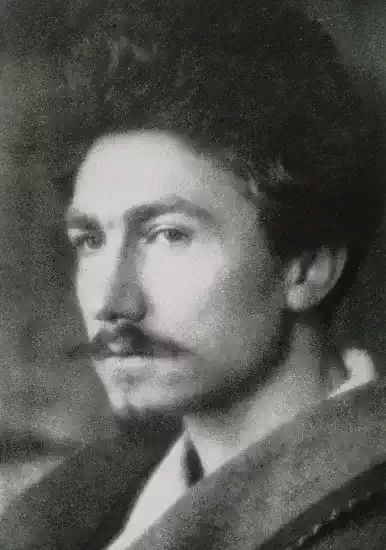
Ezra Pound
Monumentum Aere, Etc.
Monumentum Aere, Etc.
You say that I take a good deal upon myself;
That I strut in the robes of assumption.
In a few years no one will remember the buffo,
No one will remember the trivial parts of me,
The comic detail will be absent.
As for you, you will rot in the earth,
And it is doubtful if even your manure will be rich
enough
To keep grass
Over your grave.
You say that I take a good deal upon myself;
That I strut in the robes of assumption.
In a few years no one will remember the buffo,
No one will remember the trivial parts of me,
The comic detail will be absent.
As for you, you will rot in the earth,
And it is doubtful if even your manure will be rich
enough
To keep grass
Over your grave.
472
Ezra Pound
Meditatio
Meditatio
When I carefully consider the curious habits of dogs
I am compelled to conclude
That man is the superior animal.
When I consider the curious habits of man
I confess, my friend, I am puzzled.
When I carefully consider the curious habits of dogs
I am compelled to conclude
That man is the superior animal.
When I consider the curious habits of man
I confess, my friend, I am puzzled.
513
Ezra Pound
Liu Ch'e
Liu Ch'e
The rustling of the silk is discontinued,
Dust drifts over the court-yard,
There is no sound of foot-fall, and the leaves
Scurry into heaps and lie still,
And she the rejoicer of the heart is beneath them:
A wet leaf that clings to the threshold.
The rustling of the silk is discontinued,
Dust drifts over the court-yard,
There is no sound of foot-fall, and the leaves
Scurry into heaps and lie still,
And she the rejoicer of the heart is beneath them:
A wet leaf that clings to the threshold.
434
Ezra Pound
Liu Ch'e
Liu Ch'e
The rustling of the silk is discontinued,
Dust drifts over the court-yard,
There is no sound of foot-fall, and the leaves
Scurry into heaps and lie still,
And she the rejoicer of the heart is beneath them:
A wet leaf that clings to the threshold.
The rustling of the silk is discontinued,
Dust drifts over the court-yard,
There is no sound of foot-fall, and the leaves
Scurry into heaps and lie still,
And she the rejoicer of the heart is beneath them:
A wet leaf that clings to the threshold.
434
Ezra Pound
In Tempore Senectutis
In Tempore Senectutis
When I am old
I will not have you look apart
From me, into the cold,
Friend of my heart,
Nor be sad in your remembrance
Of the careless, mad-heart semblance
That the wind hath blown away
When I am old.
When I am old
And the white hot wonder-fire
Unto the world seem cold,
My soul's desire
Know you then that all life's shower,
The rain of the years, that hour
Shall make blow for us one flower,
Including all, when we are old.
When I am old
If you remember
Any love save what is then
Hearth light unto life's December
Be your joy of past sweet chalices
To know then naught but this
"How many wonders are less sweet
Than love I bear to thee
When I am old."
When I am old
I will not have you look apart
From me, into the cold,
Friend of my heart,
Nor be sad in your remembrance
Of the careless, mad-heart semblance
That the wind hath blown away
When I am old.
When I am old
And the white hot wonder-fire
Unto the world seem cold,
My soul's desire
Know you then that all life's shower,
The rain of the years, that hour
Shall make blow for us one flower,
Including all, when we are old.
When I am old
If you remember
Any love save what is then
Hearth light unto life's December
Be your joy of past sweet chalices
To know then naught but this
"How many wonders are less sweet
Than love I bear to thee
When I am old."
474
Ezra Pound
Hugh Selwyn Mauberly (Part I)
Hugh Selwyn Mauberly (Part I)
"Vocat aestus in umbram"
Nemesianus Es. IV.
E. P. Ode pour l'élection de son sépulchre
For three years, out of key with his time,
He strove to resuscitate the dead art
Of poetry; to maintain "the sublime"
In the old sense. Wrong from the start --
No, hardly, but, seeing he had been born
In a half savage country, out of date;
Bent resolutely on wringing lilies from the acorn;
Capaneus; trout for factitious bait:
"Idmen gar toi panth, os eni Troie
Caught in the unstopped ear;
Giving the rocks small lee-way
The chopped seas held him, therefore, that year.
His true Penelope was Flaubert,
He fished by obstinate isles;
Observed the elegance of Circe's hair
Rather than the mottoes on sun-dials.
Unaffected by "the march of events",
He passed from men's memory in l'an trentiesme
De son eage; the case presents
No adjunct to the Muses' diadem.
II.
The age demanded an image
Of its accelerated grimace,
Something for the modern stage,
Not, at any rate, an Attic grace;
Not, not certainly, the obscure reveries
Of the inward gaze;
Better mendacities
Than the classics in paraphrase!
The "age demanded" chiefly a mould in plaster,
Made with no loss of time,
A prose kinema, not, not assuredly, alabaster
Or the "sculpture" of rhyme.
III.
The tea-rose, tea-gown, etc.
Supplants the mousseline of Cos,
The pianola "replaces"
Sappho's barbitos.
Christ follows Dionysus,
Phallic and ambrosial
Made way for macerations;
Caliban casts out Ariel.
All things are a flowing,
Sage Heracleitus says;
But a tawdry cheapness
Shall reign throughout our days.
Even the Christian beauty
Defects -- after Samothrace;
We see to kalon
Decreed in the market place.
Faun's flesh is not to us,
Nor the saint's vision.
We have the press for wafer;
Franchise for circumcision.
All men, in law, are equals.
Free of Peisistratus,
We choose a knave or an eunuch
To rule over us.
A bright Apollo,
tin andra, tin eroa, tina theon,
What god, man, or hero
Shall I place a tin wreath upon?
IV.
These fought, in any case,
and some believing, pro domo, in any case ..
Some quick to arm,
some for adventure,
some from fear of weakness,
some from fear of censure,
some for love of slaughter, in imagination,
learning later ...
some in fear, learning love of slaughter;
Died some pro patria, non dulce non et decor" ..
walked eye-deep in hell
believing in old men's lies, then unbelieving
came home, home to a lie,
home to many deceits,
home to old lies and new infamy;
usury age-old and age-thick
and liars in public places.
Daring as never before, wastage as never before.
Young blood and high blood,
Fair cheeks, and fine bodies;
fortitude as never before
frankness as never before,
disillusions as never told in the old days,
hysterias, trench confessions,
laughter out of dead bellies.
V.
There died a myriad,
And of the best, among them,
For an old bitch gone in the teeth,
For a botched civilization.
Charm, smiling at the good mouth,
Quick eyes gone under earth's lid,
For two gross of broken statues,
For a few thousand battered books.
Yeux Glauques
Gladstone was still respected,
When John Ruskin produced
"Kings Treasuries"; Swinburne
And Rossetti still abused.
Foetid Buchanan lifted up his voice
When that faun's head of hers
Became a pastime for
Painters and adulterers.
The Burne-Jones cartons
Have preserved her eyes;
Still, at the Tate, they teach
Cophetua to rhapsodize;
Thin like brook-water,
With a vacant gaze.
The English Rubaiyat was still-born
In those days.
The thin, clear gaze, the same
Still darts out faun-like from the half-ruin'd face,
Questing and passive ....
"Ah, poor Jenny's case" ...
Bewildered that a world
Shows no surprise
At her last maquero's
Adulteries.
"Siena Mi Fe', Disfecemi Maremma"
Among the pickled foetuses and bottled bones,
Engaged in perfecting the catalogue,
I found the last scion of the
Senatorial families of Strasbourg, Monsieur Verog.
For two hours he talked of Gallifet;
Of Dowson; of the Rhymers' Club;
Told me how Johnson (Lionel) died
By falling from a high stool in a pub ...
But showed no trace of alcohol
At the autopsy, privately performed --
Tissue preserved -- the pure mind
Arose toward Newman as the whiskey warmed.
Dowson found harlots cheaper than hotels;
Headlam for uplift; Image impartially imbued
With raptures for Bacchus, Terpsichore and the Church.
So spoke the author of "The Dorian Mood",
M. Verog, out of step with the decade,
Detached from his contemporaries,
Neglected by the young,
Because of these reveries.
Brennbaum.
The sky-like limpid eyes,
The circular infant's face,
The stiffness from spats to collar
Never relaxing into grace;
The heavy memories of Horeb, Sinai and the forty years,
Showed only when the daylight fell
Level across the face
Of Brennbaum "The Impeccable".
Mr. Nixon
In the cream gilded cabin of his steam yacht
Mr. Nixon advised me kindly, to advance with fewer
Dangers of delay. "Consider
Carefully the reviewer.
"I was as poor as you are;
"When I began I got, of course,
"Advance on royalties, fifty at first", said Mr. Nixon,
"Follow me, and take a column,
"Even if you have to work free.
"Butter reviewers. From fifty to three hundred
"I rose in eighteen months;
"The hardest nut I had to crack
"Was Dr. Dundas.
"I never mentioned a man but with the view
"Of selling my own works.
"The tip's a good one, as for literature
"It gives no man a sinecure."
And no one knows, at sight a masterpiece.
And give up verse, my boy,
There's nothing in it."
* * *
Likewise a friend of Bloughram's once advised me:
Don't kick against the pricks,
Accept opinion. The "Nineties" tried your game
And died, there's nothing in it.
X.
Beneath the sagging roof
The stylist has taken shelter,
Unpaid, uncelebrated,
At last from the world's welter
Nature receives him,
With a placid and uneducated mistress
He exercises his talents
And the soil meets his distress.
The haven from sophistications and contentions
Leaks through its thatch;
He offers succulent cooking;
The door has a creaking latch.
XI.
"Conservatrix of Milésien"
Habits of mind and feeling,
Possibly. But in Ealing
With the most bank-clerkly of Englishmen?
No, "Milésian" is an exaggeration.
No instinct has survived in her
Older than those her grandmother
Told her would fit her station.
XII.
"Daphne with her thighs in bark
Stretches toward me her leafy hands", --
Subjectively. In the stuffed-satin drawing-room
I await The Lady Valentine's commands,
Knowing my coat has never been
Of precisely the fashion
To stimulate, in her,
A durable passion;
Doubtful, somewhat, of the value
Of well-gowned approbation
Of literary effort,
But never of The Lady Valentine's vocation:
Poetry, her border of ideas,
The edge, uncertain, but a means of blending
With other strata
Where the lower and higher have ending;
A hook to catch the Lady Jane's attention,
A modulation toward the theatre,
Also, in the case of revolution,
A possible friend and comforter.
* * *
Conduct, on the other hand, the soul
"Which the highest cultures have nourished"
To Fleet St. where
Dr. Johnson flourished;
Beside this thoroughfare
The sale of half-hose has
Long since superseded the cultivation
Of Pierian roses.
"Vocat aestus in umbram"
Nemesianus Es. IV.
E. P. Ode pour l'élection de son sépulchre
For three years, out of key with his time,
He strove to resuscitate the dead art
Of poetry; to maintain "the sublime"
In the old sense. Wrong from the start --
No, hardly, but, seeing he had been born
In a half savage country, out of date;
Bent resolutely on wringing lilies from the acorn;
Capaneus; trout for factitious bait:
"Idmen gar toi panth, os eni Troie
Caught in the unstopped ear;
Giving the rocks small lee-way
The chopped seas held him, therefore, that year.
His true Penelope was Flaubert,
He fished by obstinate isles;
Observed the elegance of Circe's hair
Rather than the mottoes on sun-dials.
Unaffected by "the march of events",
He passed from men's memory in l'an trentiesme
De son eage; the case presents
No adjunct to the Muses' diadem.
II.
The age demanded an image
Of its accelerated grimace,
Something for the modern stage,
Not, at any rate, an Attic grace;
Not, not certainly, the obscure reveries
Of the inward gaze;
Better mendacities
Than the classics in paraphrase!
The "age demanded" chiefly a mould in plaster,
Made with no loss of time,
A prose kinema, not, not assuredly, alabaster
Or the "sculpture" of rhyme.
III.
The tea-rose, tea-gown, etc.
Supplants the mousseline of Cos,
The pianola "replaces"
Sappho's barbitos.
Christ follows Dionysus,
Phallic and ambrosial
Made way for macerations;
Caliban casts out Ariel.
All things are a flowing,
Sage Heracleitus says;
But a tawdry cheapness
Shall reign throughout our days.
Even the Christian beauty
Defects -- after Samothrace;
We see to kalon
Decreed in the market place.
Faun's flesh is not to us,
Nor the saint's vision.
We have the press for wafer;
Franchise for circumcision.
All men, in law, are equals.
Free of Peisistratus,
We choose a knave or an eunuch
To rule over us.
A bright Apollo,
tin andra, tin eroa, tina theon,
What god, man, or hero
Shall I place a tin wreath upon?
IV.
These fought, in any case,
and some believing, pro domo, in any case ..
Some quick to arm,
some for adventure,
some from fear of weakness,
some from fear of censure,
some for love of slaughter, in imagination,
learning later ...
some in fear, learning love of slaughter;
Died some pro patria, non dulce non et decor" ..
walked eye-deep in hell
believing in old men's lies, then unbelieving
came home, home to a lie,
home to many deceits,
home to old lies and new infamy;
usury age-old and age-thick
and liars in public places.
Daring as never before, wastage as never before.
Young blood and high blood,
Fair cheeks, and fine bodies;
fortitude as never before
frankness as never before,
disillusions as never told in the old days,
hysterias, trench confessions,
laughter out of dead bellies.
V.
There died a myriad,
And of the best, among them,
For an old bitch gone in the teeth,
For a botched civilization.
Charm, smiling at the good mouth,
Quick eyes gone under earth's lid,
For two gross of broken statues,
For a few thousand battered books.
Yeux Glauques
Gladstone was still respected,
When John Ruskin produced
"Kings Treasuries"; Swinburne
And Rossetti still abused.
Foetid Buchanan lifted up his voice
When that faun's head of hers
Became a pastime for
Painters and adulterers.
The Burne-Jones cartons
Have preserved her eyes;
Still, at the Tate, they teach
Cophetua to rhapsodize;
Thin like brook-water,
With a vacant gaze.
The English Rubaiyat was still-born
In those days.
The thin, clear gaze, the same
Still darts out faun-like from the half-ruin'd face,
Questing and passive ....
"Ah, poor Jenny's case" ...
Bewildered that a world
Shows no surprise
At her last maquero's
Adulteries.
"Siena Mi Fe', Disfecemi Maremma"
Among the pickled foetuses and bottled bones,
Engaged in perfecting the catalogue,
I found the last scion of the
Senatorial families of Strasbourg, Monsieur Verog.
For two hours he talked of Gallifet;
Of Dowson; of the Rhymers' Club;
Told me how Johnson (Lionel) died
By falling from a high stool in a pub ...
But showed no trace of alcohol
At the autopsy, privately performed --
Tissue preserved -- the pure mind
Arose toward Newman as the whiskey warmed.
Dowson found harlots cheaper than hotels;
Headlam for uplift; Image impartially imbued
With raptures for Bacchus, Terpsichore and the Church.
So spoke the author of "The Dorian Mood",
M. Verog, out of step with the decade,
Detached from his contemporaries,
Neglected by the young,
Because of these reveries.
Brennbaum.
The sky-like limpid eyes,
The circular infant's face,
The stiffness from spats to collar
Never relaxing into grace;
The heavy memories of Horeb, Sinai and the forty years,
Showed only when the daylight fell
Level across the face
Of Brennbaum "The Impeccable".
Mr. Nixon
In the cream gilded cabin of his steam yacht
Mr. Nixon advised me kindly, to advance with fewer
Dangers of delay. "Consider
Carefully the reviewer.
"I was as poor as you are;
"When I began I got, of course,
"Advance on royalties, fifty at first", said Mr. Nixon,
"Follow me, and take a column,
"Even if you have to work free.
"Butter reviewers. From fifty to three hundred
"I rose in eighteen months;
"The hardest nut I had to crack
"Was Dr. Dundas.
"I never mentioned a man but with the view
"Of selling my own works.
"The tip's a good one, as for literature
"It gives no man a sinecure."
And no one knows, at sight a masterpiece.
And give up verse, my boy,
There's nothing in it."
* * *
Likewise a friend of Bloughram's once advised me:
Don't kick against the pricks,
Accept opinion. The "Nineties" tried your game
And died, there's nothing in it.
X.
Beneath the sagging roof
The stylist has taken shelter,
Unpaid, uncelebrated,
At last from the world's welter
Nature receives him,
With a placid and uneducated mistress
He exercises his talents
And the soil meets his distress.
The haven from sophistications and contentions
Leaks through its thatch;
He offers succulent cooking;
The door has a creaking latch.
XI.
"Conservatrix of Milésien"
Habits of mind and feeling,
Possibly. But in Ealing
With the most bank-clerkly of Englishmen?
No, "Milésian" is an exaggeration.
No instinct has survived in her
Older than those her grandmother
Told her would fit her station.
XII.
"Daphne with her thighs in bark
Stretches toward me her leafy hands", --
Subjectively. In the stuffed-satin drawing-room
I await The Lady Valentine's commands,
Knowing my coat has never been
Of precisely the fashion
To stimulate, in her,
A durable passion;
Doubtful, somewhat, of the value
Of well-gowned approbation
Of literary effort,
But never of The Lady Valentine's vocation:
Poetry, her border of ideas,
The edge, uncertain, but a means of blending
With other strata
Where the lower and higher have ending;
A hook to catch the Lady Jane's attention,
A modulation toward the theatre,
Also, in the case of revolution,
A possible friend and comforter.
* * *
Conduct, on the other hand, the soul
"Which the highest cultures have nourished"
To Fleet St. where
Dr. Johnson flourished;
Beside this thoroughfare
The sale of half-hose has
Long since superseded the cultivation
Of Pierian roses.
504
Ezra Pound
Homage To Sextus Propertius - VII
Homage To Sextus Propertius - VII
Me happy, night, night full of brightness;
Oh couch made happy by iny long delectations;
How many words talked out with abundant candles;
Struggles when the lights were taken away;
Now with bared breasts she wrestled against me,
Tunic spread in delay;
And she then opening my eyelids fallen in sleep,
Her lips upon them; and it was her mouth saying:
Sluggard!
In how many varied embraces, our changing arms,
Her kisses, how many, lingering on my lips.
'Turn not Venus into a blinded motion,
Eyes are the guides of love,
Paris took Helen naked coming from the bed of Menelaus,
Endymion's naked body, bright bait for Diana,'
such at least is the story.
While our fates twine together, sate we our eyes with love;
For long night comes upon you
and a day when no day returns.
Let the gods lay chains upon us
so that no day shall unbind them.
Fool who would set a term to love's madness,
For the sun shall drive with black horses,
earth shall bring wheat from barley,
The flood shall move toward the fountain
Ere love know moderations,
The fish shall swim in dry streams.
No, now while it may be, let not the fruit of life cease.
Dry wreaths drop their petals,
their stalks are woven in baskets,
To-day we take the great breath of lovers,
to-morrow fate shuts us in.
Though you give all your kisses
you give but few.
Nor can I shift my pains to other,
Hers will I be dead,
If she confer such nights upon me,
long is my life, long in years,
If she give me many,
God am I for the time.
Me happy, night, night full of brightness;
Oh couch made happy by iny long delectations;
How many words talked out with abundant candles;
Struggles when the lights were taken away;
Now with bared breasts she wrestled against me,
Tunic spread in delay;
And she then opening my eyelids fallen in sleep,
Her lips upon them; and it was her mouth saying:
Sluggard!
In how many varied embraces, our changing arms,
Her kisses, how many, lingering on my lips.
'Turn not Venus into a blinded motion,
Eyes are the guides of love,
Paris took Helen naked coming from the bed of Menelaus,
Endymion's naked body, bright bait for Diana,'
such at least is the story.
While our fates twine together, sate we our eyes with love;
For long night comes upon you
and a day when no day returns.
Let the gods lay chains upon us
so that no day shall unbind them.
Fool who would set a term to love's madness,
For the sun shall drive with black horses,
earth shall bring wheat from barley,
The flood shall move toward the fountain
Ere love know moderations,
The fish shall swim in dry streams.
No, now while it may be, let not the fruit of life cease.
Dry wreaths drop their petals,
their stalks are woven in baskets,
To-day we take the great breath of lovers,
to-morrow fate shuts us in.
Though you give all your kisses
you give but few.
Nor can I shift my pains to other,
Hers will I be dead,
If she confer such nights upon me,
long is my life, long in years,
If she give me many,
God am I for the time.
475
Ezra Pound
Historion
Historion
No man hath dared to write this thing as yet,
And yet I know, how that the souls of all men great
At times pass athrough us,
And we are melted into them, and are not
Save reflexions of their souls.
Thus am I Dante for a space and am
One Francois Villon, ballad-lord and thief,
Or am such holy ones I may not write
Lest blasphemy be writ against my name;
This for an instant and the flame is gone.
'Tis as in midmost us there glows a sphere
Translucent, molten gold, that is the "I"
And into this some form projects itself:
Christus, or John, or eke the Florentine;
And as the clear space is not if a form's
Imposed thereon,
So cease we from all being for the time,
And these, the Masters of the Soul, live on.
No man hath dared to write this thing as yet,
And yet I know, how that the souls of all men great
At times pass athrough us,
And we are melted into them, and are not
Save reflexions of their souls.
Thus am I Dante for a space and am
One Francois Villon, ballad-lord and thief,
Or am such holy ones I may not write
Lest blasphemy be writ against my name;
This for an instant and the flame is gone.
'Tis as in midmost us there glows a sphere
Translucent, molten gold, that is the "I"
And into this some form projects itself:
Christus, or John, or eke the Florentine;
And as the clear space is not if a form's
Imposed thereon,
So cease we from all being for the time,
And these, the Masters of the Soul, live on.
454
Ezra Pound
Grace Before Song
Grace Before Song
Lord God of heaven that with mercy dight
Th'alternate prayer wheel of the night and light
Eternal hath to thee, and in whose sight
Our days as rain drops in the sea surge fall,
As bright white drops upon a leaden sea
Grant so my songs to this grey folk may be:
As drops that dream and gleam and falling catch the sun
Evan'scent mirrors every opal one
Of such his splendor as their compass is,
So, bold My Songs, seek ye such death as this.
Lord God of heaven that with mercy dight
Th'alternate prayer wheel of the night and light
Eternal hath to thee, and in whose sight
Our days as rain drops in the sea surge fall,
As bright white drops upon a leaden sea
Grant so my songs to this grey folk may be:
As drops that dream and gleam and falling catch the sun
Evan'scent mirrors every opal one
Of such his splendor as their compass is,
So, bold My Songs, seek ye such death as this.
401
Ezra Pound
Fan-Piece, For Her Imperial Lord
Fan-Piece, For Her Imperial Lord
O fan of white silk,
clear as frost on the grass-blade,
You also are laid aside.
O fan of white silk,
clear as frost on the grass-blade,
You also are laid aside.
486
Ezra Pound
For E. McC
For E. McC
Gone while your tastes were keen to you,
Gone where the grey winds call to you,
By that high fencer, even Death,
Struck of the blade that no man parrieth;
Such is your fence, one saith,
One that hath known you.
Drew you your sword most gallantly
Made you your pass most valiantly
'Gainst that grey fencer, even Death.
Gone as a gust of breath
Faith! no man tarrieth,
‘Se il cor ti manca,’ but it failed thee not!
'Non ti fidar,’ it is the sword that speaks
‘In me.’
Thou trusted'st in thyself and met the blade
'Thout mask or gauntlet, and art laid
As memorable broken blades that be
Kept as bold trophies of old pageantry.
As old Toledos past their days of war
Are kept mnemonic of the strokes they bore,
So art thou with us, being good to keep
In our heart's sword-rack, though thy sword-arm sleep.
ENVOI
Struck of the blade that no man parrieth
Pierced of the point that toucheth lastly all,
'Gainst that grey fencer, even Death,
Behold the shield! He shall not take thee all.
Gone while your tastes were keen to you,
Gone where the grey winds call to you,
By that high fencer, even Death,
Struck of the blade that no man parrieth;
Such is your fence, one saith,
One that hath known you.
Drew you your sword most gallantly
Made you your pass most valiantly
'Gainst that grey fencer, even Death.
Gone as a gust of breath
Faith! no man tarrieth,
‘Se il cor ti manca,’ but it failed thee not!
'Non ti fidar,’ it is the sword that speaks
‘In me.’
Thou trusted'st in thyself and met the blade
'Thout mask or gauntlet, and art laid
As memorable broken blades that be
Kept as bold trophies of old pageantry.
As old Toledos past their days of war
Are kept mnemonic of the strokes they bore,
So art thou with us, being good to keep
In our heart's sword-rack, though thy sword-arm sleep.
ENVOI
Struck of the blade that no man parrieth
Pierced of the point that toucheth lastly all,
'Gainst that grey fencer, even Death,
Behold the shield! He shall not take thee all.
483
Ezra Pound
For E. McC
For E. McC
Gone while your tastes were keen to you,
Gone where the grey winds call to you,
By that high fencer, even Death,
Struck of the blade that no man parrieth;
Such is your fence, one saith,
One that hath known you.
Drew you your sword most gallantly
Made you your pass most valiantly
'Gainst that grey fencer, even Death.
Gone as a gust of breath
Faith! no man tarrieth,
‘Se il cor ti manca,’ but it failed thee not!
'Non ti fidar,’ it is the sword that speaks
‘In me.’
Thou trusted'st in thyself and met the blade
'Thout mask or gauntlet, and art laid
As memorable broken blades that be
Kept as bold trophies of old pageantry.
As old Toledos past their days of war
Are kept mnemonic of the strokes they bore,
So art thou with us, being good to keep
In our heart's sword-rack, though thy sword-arm sleep.
ENVOI
Struck of the blade that no man parrieth
Pierced of the point that toucheth lastly all,
'Gainst that grey fencer, even Death,
Behold the shield! He shall not take thee all.
Gone while your tastes were keen to you,
Gone where the grey winds call to you,
By that high fencer, even Death,
Struck of the blade that no man parrieth;
Such is your fence, one saith,
One that hath known you.
Drew you your sword most gallantly
Made you your pass most valiantly
'Gainst that grey fencer, even Death.
Gone as a gust of breath
Faith! no man tarrieth,
‘Se il cor ti manca,’ but it failed thee not!
'Non ti fidar,’ it is the sword that speaks
‘In me.’
Thou trusted'st in thyself and met the blade
'Thout mask or gauntlet, and art laid
As memorable broken blades that be
Kept as bold trophies of old pageantry.
As old Toledos past their days of war
Are kept mnemonic of the strokes they bore,
So art thou with us, being good to keep
In our heart's sword-rack, though thy sword-arm sleep.
ENVOI
Struck of the blade that no man parrieth
Pierced of the point that toucheth lastly all,
'Gainst that grey fencer, even Death,
Behold the shield! He shall not take thee all.
483
Ezra Pound
Erat Hora
Erat Hora
‘Thank you, whatever comes.' And then she turned
And, as the ray of sun on hanging flowers
Fades when the wind hath lifted them aside,
Went swiftly from me. Nay, whatever comes
One hour was sunlit and the most high gods
May not make boast of any better thing
Than to have watched that hour as it passed.
‘Thank you, whatever comes.' And then she turned
And, as the ray of sun on hanging flowers
Fades when the wind hath lifted them aside,
Went swiftly from me. Nay, whatever comes
One hour was sunlit and the most high gods
May not make boast of any better thing
Than to have watched that hour as it passed.
431
Ezra Pound
Envoi
Envoi
Go, dumb-born book,
Tell her that sang me once that song of Lawes:
Hadst thou but song
As thou hast subjects known,
Then were there cause in thee that should condone
Even my faults that heavy upon me lie
And build her glories their longevity.
Tell her that sheds
Such treasure in the air,
Recking naught else but that her graces give
Life to the moment,
I would bid them live
As roses might, in magic amber laid,
Red overwrought with orange and all made
One substance and one colour
Braving time.
Tell her that goes
With song upon her lips
But sings not out the song, nor knows
The maker of it, some other mouth,
May be as fair as hers,
Might, in new ages, gain her worshippers,
When our two dusts with Waller's shall be laid,
Siftings on siftings in oblivion,
Till change hath broken down
All things save Beauty alone.
Go, dumb-born book,
Tell her that sang me once that song of Lawes:
Hadst thou but song
As thou hast subjects known,
Then were there cause in thee that should condone
Even my faults that heavy upon me lie
And build her glories their longevity.
Tell her that sheds
Such treasure in the air,
Recking naught else but that her graces give
Life to the moment,
I would bid them live
As roses might, in magic amber laid,
Red overwrought with orange and all made
One substance and one colour
Braving time.
Tell her that goes
With song upon her lips
But sings not out the song, nor knows
The maker of it, some other mouth,
May be as fair as hers,
Might, in new ages, gain her worshippers,
When our two dusts with Waller's shall be laid,
Siftings on siftings in oblivion,
Till change hath broken down
All things save Beauty alone.
466
Ezra Pound
Come To My Cantilations
Come To My Cantilations
Come my cantilations,
Let us dump our hatreds into one bunch and be done with them,
Hot sun, clear water, fresh wind,
Let me be free of pavements,
Let me be free of the printers.
Let come beautiful people
Wearing raw silk of good colour,
Let come the graceful speakers,
Let come the ready of wit,
Let come the gay of manner, the insolent and the exulting.
We speak of burnished lakes,
Of dry air, as clear as metal.
Come my cantilations,
Let us dump our hatreds into one bunch and be done with them,
Hot sun, clear water, fresh wind,
Let me be free of pavements,
Let me be free of the printers.
Let come beautiful people
Wearing raw silk of good colour,
Let come the graceful speakers,
Let come the ready of wit,
Let come the gay of manner, the insolent and the exulting.
We speak of burnished lakes,
Of dry air, as clear as metal.
439
Ezra Pound
Coda
Coda
O My songs,
Why do you look so eagerly and so curiously into
people's faces,
Will you find your lost dead among them?
O My songs,
Why do you look so eagerly and so curiously into
people's faces,
Will you find your lost dead among them?
449
Ezra Pound
Coda
Coda
O My songs,
Why do you look so eagerly and so curiously into
people's faces,
Will you find your lost dead among them?
O My songs,
Why do you look so eagerly and so curiously into
people's faces,
Will you find your lost dead among them?
449
Ezra Pound
Canto XLIX: For the Seven Lakes
Canto XLIX: For the Seven Lakes
For the seven lakes, and by no man these verses:
Rain; empty river; a voyage,
Fire from frozen cloud, heavy rain in the twilight
Under the cabin roof was one lantern.
The reeds are heavy; bent;
and the bamboos speak as if weeping.
Autumn moon; hills rise about lakes
against sunset
Evening is like a curtain of cloud,
a blurr above ripples; and through it
sharp long spikes of the cinnamon,
a cold tune amid reeds.
Behind hill the monk's bell
borne on the wind.
Sail passed here in April; may return in October
Boat fades in silver; slowly;
Sun blaze alone on the river.
Where wine flag catches the sunset
Sparse chimneys smoke in the cross light
Comes then snow scur on the river
And a world is covered with jade
Small boat floats like a lanthorn,
The flowing water closts as with cold. And at San Yin
they are a people of leisure.
Wild geese swoop to the sand-bar,
Clouds gather about the hole of the window
Broad water; geese line out with the autumn
Rooks clatter over the fishermen's lanthorns,
A light moves on the north sky line;
where the young boys prod stones for shrimp.
In seventeen hundred came Tsing to these hill lakes.
A light moves on the South sky line.
State by creating riches shd. thereby get into debt?
This is infamy; this is Geryon.
This canal goes still to TenShi
Though the old king built it for pleasure
K E I M E N R A N K E I
K I U M A N M A N K E I
JITSU GETSU K O K W A
T A N FUKU T A N K A I
Sun up; work
sundown; to rest
dig well and drink of the water
dig field; eat of the grain
Imperial power is? and to us what is it?
The fourth; the dimension of stillness.
And the power over wild beasts.
For the seven lakes, and by no man these verses:
Rain; empty river; a voyage,
Fire from frozen cloud, heavy rain in the twilight
Under the cabin roof was one lantern.
The reeds are heavy; bent;
and the bamboos speak as if weeping.
Autumn moon; hills rise about lakes
against sunset
Evening is like a curtain of cloud,
a blurr above ripples; and through it
sharp long spikes of the cinnamon,
a cold tune amid reeds.
Behind hill the monk's bell
borne on the wind.
Sail passed here in April; may return in October
Boat fades in silver; slowly;
Sun blaze alone on the river.
Where wine flag catches the sunset
Sparse chimneys smoke in the cross light
Comes then snow scur on the river
And a world is covered with jade
Small boat floats like a lanthorn,
The flowing water closts as with cold. And at San Yin
they are a people of leisure.
Wild geese swoop to the sand-bar,
Clouds gather about the hole of the window
Broad water; geese line out with the autumn
Rooks clatter over the fishermen's lanthorns,
A light moves on the north sky line;
where the young boys prod stones for shrimp.
In seventeen hundred came Tsing to these hill lakes.
A light moves on the South sky line.
State by creating riches shd. thereby get into debt?
This is infamy; this is Geryon.
This canal goes still to TenShi
Though the old king built it for pleasure
K E I M E N R A N K E I
K I U M A N M A N K E I
JITSU GETSU K O K W A
T A N FUKU T A N K A I
Sun up; work
sundown; to rest
dig well and drink of the water
dig field; eat of the grain
Imperial power is? and to us what is it?
The fourth; the dimension of stillness.
And the power over wild beasts.
392
Ezra Pound
Canto I
Canto I
And then went down to the ship,
Set keel to breakers, forth on the godly sea, and
We set up mast and sail on tha swart ship,
Bore sheep aboard her, and our bodies also
Heavy with weeping, so winds from sternward
Bore us out onward with bellying canvas,
Circe's this craft, the trim-coifed goddess.
Then sat we amidships, wind jamming the tiller,
Thus with stretched sail, we went over sea till day's end.
Sun to his slumber, shadows o'er all the ocean,
Came we then to the bounds of deepest water,
To the Kimmerian lands, and peopled cities
Covered with close-webbed mist, unpierced ever
With glitter of sun-rays
Nor with stars stretched, nor looking back from heaven
Swartest night stretched over wretched men there.
The ocean flowing backward, came we then to the place
Aforesaid by Circe.
Here did they rites, Perimedes and Eurylochus,
And drawing sword from my hip
I dug the ell-square pitkin;
Poured we libations unto each the dead,
First mead and then sweet wine, water mixed with white flour.
Then prayed I many a prayer to the sickly death's-head;
As set in Ithaca, sterile bulls of the best
For sacrifice, heaping the pyre with goods,
A sheep to Tiresias only, black and a bell-sheep.
Dark blood flowed in the fosse,
Souls out of Erebus, cadaverous dead, of brides
Of youths and at the old who had borne much;
Souls stained with recent tears, girls tender,
Men many, mauled with bronze lance heads,
Battle spoil, bearing yet dreory arms,
These many crowded about me; with shouting,
Pallor upon me, cried to my men for more beasts;
Slaughtered the heards, sheep slain of bronze;
Poured ointment, cried to the gods,
To Pluto the strong, and praised Proserpine;
Unsheathed the narrow sword,
I sat to keep off the impetuous impotent dead,
Till I should hear Tiresias.
But first Elpenor came, our friend Elpenor,
Unburied, cast on the wide earth,
Limbs that we left in the house of Circe,
Unwept, unwrapped in sepulchre, since toils urged other.
Pitiful spirit.And I cried in hurried speech:
"Elpenor, how art thou come to this dark coast?
Cam'st thou afoot, outstripping seamen?"
And he in heavy speech:
"Ill fate and abundant wine. I slept in Circe's ingle.
Going down the long ladder unguarded,
I fell against the buttress,
Shattered the nape-nerve, the soul sought Avernus.
But thou, O King, I bid remember me, unwept, unburied,
Heap up mine arms, be tomb by sea-bord, and inscribed:
A man of no fortune, and with a name to come.
And set my oar up, that I swung mid fellows."
And Anticlea came, whom I beat off, and then Tiresias Theban,
Holding his golden wand, knew me, and spoke first:
"A second time? why? man of ill star,
Facing the sunless dead and this joyless region?
Stand from the fosse, leave me my bloody bever
For soothsay."
And I stepped back,
And he stong with the blood, said then: "Odysseus
Shalt return through spiteful Neptune, over dark seas,
Lose all companions." And then Anticlea came.
Lie quiet Divus. I mean, that is Andreas Divus,
In officina Wecheli, 1538, out of Homer.
And he sailed, by Sirens and thence outward and away
And unto Circe.
Venerandam,
In the Creatan's phrase, with the golden crown, Aphrodite,
Cypri munimenta sortita est, mirthful, orichalchi, with golden
Girdles and breast bands, thou with dark eyelids
Bearing the golden bough of Argicida. So that:
And then went down to the ship,
Set keel to breakers, forth on the godly sea, and
We set up mast and sail on tha swart ship,
Bore sheep aboard her, and our bodies also
Heavy with weeping, so winds from sternward
Bore us out onward with bellying canvas,
Circe's this craft, the trim-coifed goddess.
Then sat we amidships, wind jamming the tiller,
Thus with stretched sail, we went over sea till day's end.
Sun to his slumber, shadows o'er all the ocean,
Came we then to the bounds of deepest water,
To the Kimmerian lands, and peopled cities
Covered with close-webbed mist, unpierced ever
With glitter of sun-rays
Nor with stars stretched, nor looking back from heaven
Swartest night stretched over wretched men there.
The ocean flowing backward, came we then to the place
Aforesaid by Circe.
Here did they rites, Perimedes and Eurylochus,
And drawing sword from my hip
I dug the ell-square pitkin;
Poured we libations unto each the dead,
First mead and then sweet wine, water mixed with white flour.
Then prayed I many a prayer to the sickly death's-head;
As set in Ithaca, sterile bulls of the best
For sacrifice, heaping the pyre with goods,
A sheep to Tiresias only, black and a bell-sheep.
Dark blood flowed in the fosse,
Souls out of Erebus, cadaverous dead, of brides
Of youths and at the old who had borne much;
Souls stained with recent tears, girls tender,
Men many, mauled with bronze lance heads,
Battle spoil, bearing yet dreory arms,
These many crowded about me; with shouting,
Pallor upon me, cried to my men for more beasts;
Slaughtered the heards, sheep slain of bronze;
Poured ointment, cried to the gods,
To Pluto the strong, and praised Proserpine;
Unsheathed the narrow sword,
I sat to keep off the impetuous impotent dead,
Till I should hear Tiresias.
But first Elpenor came, our friend Elpenor,
Unburied, cast on the wide earth,
Limbs that we left in the house of Circe,
Unwept, unwrapped in sepulchre, since toils urged other.
Pitiful spirit.And I cried in hurried speech:
"Elpenor, how art thou come to this dark coast?
Cam'st thou afoot, outstripping seamen?"
And he in heavy speech:
"Ill fate and abundant wine. I slept in Circe's ingle.
Going down the long ladder unguarded,
I fell against the buttress,
Shattered the nape-nerve, the soul sought Avernus.
But thou, O King, I bid remember me, unwept, unburied,
Heap up mine arms, be tomb by sea-bord, and inscribed:
A man of no fortune, and with a name to come.
And set my oar up, that I swung mid fellows."
And Anticlea came, whom I beat off, and then Tiresias Theban,
Holding his golden wand, knew me, and spoke first:
"A second time? why? man of ill star,
Facing the sunless dead and this joyless region?
Stand from the fosse, leave me my bloody bever
For soothsay."
And I stepped back,
And he stong with the blood, said then: "Odysseus
Shalt return through spiteful Neptune, over dark seas,
Lose all companions." And then Anticlea came.
Lie quiet Divus. I mean, that is Andreas Divus,
In officina Wecheli, 1538, out of Homer.
And he sailed, by Sirens and thence outward and away
And unto Circe.
Venerandam,
In the Creatan's phrase, with the golden crown, Aphrodite,
Cypri munimenta sortita est, mirthful, orichalchi, with golden
Girdles and breast bands, thou with dark eyelids
Bearing the golden bough of Argicida. So that:
491
Ezra Pound
Ballad for Gloom
Ballad for Gloom
For God, our God is a gallant foe
That playeth behind the veil.
I have loved my God as a child at heart
That seeketh deep bosoms for rest,
I have loved my God as a maid to man—
But lo, this thing is best:
To love your God as a gallant foe that plays behind the veil;
To meet your God as the night winds meet beyond Arcturus' pale.
I have played with God for a woman,
I have staked with my God for truth,
I have lost to my God as a man, clear-eyed—
His dice be not of ruth.
For I am made as a naked blade,
But hear ye this thing in sooth:
Who loseth to God as man to man
Shall win at the turn of the game.
I have drawn my blade where the lightnings meet
But the ending is the same:
Who loseth to God as the sword blades lose
Shall win at the end of the game.
For God, our God is a gallant foe that playeth behind the veil.
Whom God deigns not to overthrow hath need of triple mail.
For God, our God is a gallant foe
That playeth behind the veil.
I have loved my God as a child at heart
That seeketh deep bosoms for rest,
I have loved my God as a maid to man—
But lo, this thing is best:
To love your God as a gallant foe that plays behind the veil;
To meet your God as the night winds meet beyond Arcturus' pale.
I have played with God for a woman,
I have staked with my God for truth,
I have lost to my God as a man, clear-eyed—
His dice be not of ruth.
For I am made as a naked blade,
But hear ye this thing in sooth:
Who loseth to God as man to man
Shall win at the turn of the game.
I have drawn my blade where the lightnings meet
But the ending is the same:
Who loseth to God as the sword blades lose
Shall win at the end of the game.
For God, our God is a gallant foe that playeth behind the veil.
Whom God deigns not to overthrow hath need of triple mail.
552
Ezra Pound
Au Jardin
Au Jardin
O you away high there,
you that lean
From amber lattices upon the cobalt night,
I am below amid the pine trees,
Amid the little pine trees, hear me!
'The jester walked in the garden.'
Did he so?
Well, there's no use your loving me
That way, Lady;
For I've nothing but songs to give you.
I am set wide upon the world's ways
To say that life is, some way, a gay thing,
But you never string two days upon one wire
But there'll come sorrow of it.
And I loved a love once,
Over beyond the moon there,
I loved a love once,
And, may be, more times,
But she danced like a pink moth in the shrubbery.
Oh, I know you women from the 'other folk',
And it'll all come right,
O' Sundays.
'The jester walked in the garden.'
Did he so?
O you away high there,
you that lean
From amber lattices upon the cobalt night,
I am below amid the pine trees,
Amid the little pine trees, hear me!
'The jester walked in the garden.'
Did he so?
Well, there's no use your loving me
That way, Lady;
For I've nothing but songs to give you.
I am set wide upon the world's ways
To say that life is, some way, a gay thing,
But you never string two days upon one wire
But there'll come sorrow of it.
And I loved a love once,
Over beyond the moon there,
I loved a love once,
And, may be, more times,
But she danced like a pink moth in the shrubbery.
Oh, I know you women from the 'other folk',
And it'll all come right,
O' Sundays.
'The jester walked in the garden.'
Did he so?
479
Ezra Pound
A Song Of The Degrees
A Song Of The Degrees
I
Rest me with Chinese colours,
For I think the glass is evil.
II
The wind moves above the wheat-
With a silver crashing,
A thin war of metal.
I have known the golden disc,
I have seen it melting above me.
I have known the stone-bright place,
The hall of clear colours.
III
O glass subtly evil, O confusion of colours !
O light bound and bent in, soul of the captive,
Why am I warned? Why am I sent away?
Why is your glitter full of curious mistrust?
O glass subtle and cunning, O powdery gold!
O filaments of amber, two-faced iridescence!
I
Rest me with Chinese colours,
For I think the glass is evil.
II
The wind moves above the wheat-
With a silver crashing,
A thin war of metal.
I have known the golden disc,
I have seen it melting above me.
I have known the stone-bright place,
The hall of clear colours.
III
O glass subtly evil, O confusion of colours !
O light bound and bent in, soul of the captive,
Why am I warned? Why am I sent away?
Why is your glitter full of curious mistrust?
O glass subtle and cunning, O powdery gold!
O filaments of amber, two-faced iridescence!
583
Ezra Pound
A Girl
A Girl
The tree has entered my hands,
The sap has ascended my arms,
The tree has grown in my breast -
Downward,
The branches grow out of me, like arms.
Tree you are,
Moss you are,
You are violets with wind above them.
A child - so high - you are,
And all this is folly to the world.
The tree has entered my hands,
The sap has ascended my arms,
The tree has grown in my breast -
Downward,
The branches grow out of me, like arms.
Tree you are,
Moss you are,
You are violets with wind above them.
A child - so high - you are,
And all this is folly to the world.
711
Ezra Pound
A Girl
A Girl
The tree has entered my hands,
The sap has ascended my arms,
The tree has grown in my breast -
Downward,
The branches grow out of me, like arms.
Tree you are,
Moss you are,
You are violets with wind above them.
A child - so high - you are,
And all this is folly to the world.
The tree has entered my hands,
The sap has ascended my arms,
The tree has grown in my breast -
Downward,
The branches grow out of me, like arms.
Tree you are,
Moss you are,
You are violets with wind above them.
A child - so high - you are,
And all this is folly to the world.
711