

Poems in this topic
Life and Existence
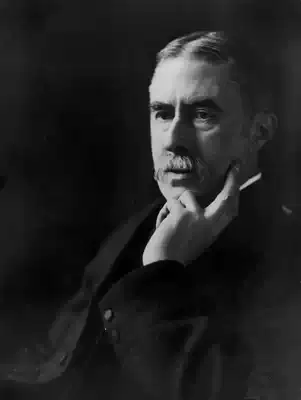
Alfred Edward Housman
Diffugere Nives
Diffugere Nives
Horace, Odes, iv, 7
The snows are fled away, leaves on the shaws
And grasses in the mead renew their birth,
The river to the river-bed withdraws,
And altered is the fashion of the earth.
The Nymphs and Graces three put off their fear
And unapparelled in the woodland play.
The swift hour and the brief prime of the year
Say to the soul, Thou wast not born for aye.
Thaw follows frost; hard on the heel of spring
Treads summer sure to die, for hard on hers
Comes autumn with his apples scattering;
Then back to wintertide, when nothing stirs.
But oh, whate'er the sky-led seasons mar,
Moon upon moon rebuilds it with her beams;
Come we where Tullus and where Ancus are
And good Aeneas, we are dust and dreams.
Torquatus, if the gods in heaven shall add
The morrow to the day, what tongue has told?
Feast then thy heart, for what thy heart has had
The fingers of no heir will ever hold.
When thou descendest once the shades among,
The stern assize and equal judgment o'er,
Not thy long lineage nor thy golden tongue,
No, nor thy righteousness, shall friend thee more.
Night holds Hippolytus the pure of stain,
Diana steads him nothing, he must stay;
And Theseus leafves Pirithous in the chain
The love of comrades cannot take away.
Horace, Odes, iv, 7
The snows are fled away, leaves on the shaws
And grasses in the mead renew their birth,
The river to the river-bed withdraws,
And altered is the fashion of the earth.
The Nymphs and Graces three put off their fear
And unapparelled in the woodland play.
The swift hour and the brief prime of the year
Say to the soul, Thou wast not born for aye.
Thaw follows frost; hard on the heel of spring
Treads summer sure to die, for hard on hers
Comes autumn with his apples scattering;
Then back to wintertide, when nothing stirs.
But oh, whate'er the sky-led seasons mar,
Moon upon moon rebuilds it with her beams;
Come we where Tullus and where Ancus are
And good Aeneas, we are dust and dreams.
Torquatus, if the gods in heaven shall add
The morrow to the day, what tongue has told?
Feast then thy heart, for what thy heart has had
The fingers of no heir will ever hold.
When thou descendest once the shades among,
The stern assize and equal judgment o'er,
Not thy long lineage nor thy golden tongue,
No, nor thy righteousness, shall friend thee more.
Night holds Hippolytus the pure of stain,
Diana steads him nothing, he must stay;
And Theseus leafves Pirithous in the chain
The love of comrades cannot take away.
499
Alfred Edward Housman
Along The Field as We Came By
Along The Field as We Came By
ALONG the field as we came by
A year ago, my love and I,
The aspen over stile and stone
Was talking to itself alone.
‘Oh who are these that kiss and pass?
A country lover and his lass;
Two lovers looking to be wed;
And time shall put them both to bed,
But she shall lie with earth above,
And he beside another love.’
And sure enough beneath the tree
There walks another love with me,
And overhead the aspen heaves
Its rainy-sounding silver leaves;
And I spell nothing in their stir,
But now perhaps they speak to her,
And plain for her to understand
They talk about a time at hand
When I shall sleep with clover clad,
And she beside another lad.
ALONG the field as we came by
A year ago, my love and I,
The aspen over stile and stone
Was talking to itself alone.
‘Oh who are these that kiss and pass?
A country lover and his lass;
Two lovers looking to be wed;
And time shall put them both to bed,
But she shall lie with earth above,
And he beside another love.’
And sure enough beneath the tree
There walks another love with me,
And overhead the aspen heaves
Its rainy-sounding silver leaves;
And I spell nothing in their stir,
But now perhaps they speak to her,
And plain for her to understand
They talk about a time at hand
When I shall sleep with clover clad,
And she beside another lad.
477
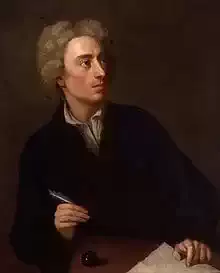
Alexander Pope
Winter - The Fourth Pastoral, or Daphne
Winter - The Fourth Pastoral, or Daphne
Lycidas.
Thyrsis, the music of that murm'ring spring,
Is not so mournful as the strains you sing.
Nor rivers winding thro' the vales below,
So sweetly warble, or so smoothly flow.
Now sleeping flocks on their soft fleeces lie,
The moon, serene in glory, mounts the sky,
Wile silent birds forget their tuneful lays,
Oh sing of Daphne's fate, and Daphne's praise!
Thyrsis.
Behold the groves that shine with silver frost,
Their beauty wither'd, and their verdure lost.
Here shall I try the sweet Alexis' strain,
That call'd the list'ning Dryads to the plain?
Thames heard the numbers as he flow'd along,
And bade his willows learn the moving song.
Lycidas.
So may kind rains their vital moisture yield,
And swell the future harvest of the field.
Begin; this charge the dying Daphne gave,
And said; 'Ye shepherds, sing around my grave!
Sing, while beside the shaded tomb I mourn,
And with fresh bays her rural shrine adorn.'
Thyrsis.
Ye gentle Muses, leave your crystal spring,
Let Nymphs and Sylvans cypress garlands bring;
Ye weeping Loves, the stream with myrtles hide,
And break your vows, as when Adonis died;
And with your golden darts, now useless grown,
Inscribe a verse on this relenting stone:
'Let nature change, let heav'n and earth deplore,
Fair Daphne's dead, and love is now no more!'
'Tis done, and nature's various charms decay,
See gloomy clouds obscure the cheerful day!
Now hung with pearls the dropping trees appear,
Their faded honours scatter'd on her bier.
See, where on earth the flow'ry glories lie,
With her they flourish'd, and with her they die.
Ah what avail the beauties nature wore?
Fair Daphne's dead, and beauty is no more!
For her the flocks refuse their verdant food,
Nor thirsty heifers seek the gliding flood.
The silver swans her hapless fate bemoan,
In notes more sad than when they sing their own;
In hollow caves sweet Echo silent lies,
Silent, or only to her name replies;
Her name with pleasure once she taught the shore,
Now Daphne's dead, and pleasure is no more!
No grateful dews descend from ev'ning skies,
Nor morning odours from the flow'rs arise;
No rich perfumes refresh the fruitful field,
Nor fragrant herbs their native incense yield.
The balmy Zephyrs, silent since her death,
Lament the ceasing of a sweeter breath;
Th' industrious bees neglect their golden store;
Fair Daphne's dead, and sweetness is no more!
No more the mounting larks, while Daphne sings,
Shall list'ning in mid air suspend their wings;
No more the birds shall imitate her lays,
Or hush'd with wonder, hearken from the sprays;
No more the streams their murmur shall forbear,
A sweeter music than their own to hear,
But tell the reeds, and tell the vocal shore,
Fair Daphne's dead, and music is no more!
Her fate is whisper'd by the gentle breeze,
And told in sighs to all the trembling trees;
The trembling trees, in ev'ry plain and wood,
Her fate remurmur to the silver flood;
The silver flood, so lately calm, appears
Swell'd with new passion, and o'erflows with tears;
The winds and trees and floods her death deplore,
Daphne, our grief! our glory now no more!
But see! where Daphne wond'ring mounts on high
Above the clouds, above the starry sky!
Eternal beauties grace the shining scene,
Fields ever fresh, and groves for ever green!
There while you rest in Amaranthine bow'rs,
Or from those meads select unfading flow'rs,
Behold us kindly, who your name implore,
Daphne, our Goddess, and our grief no more!
Lycidas.
How all things listen, while thy Muse complains!
Such silence waits on Philomela's strains,
In some still ev'ning, when the whisp'ring breeze
Pants on the leaves, and dies upon the trees.
To thee, bright goddess, oft a lamb shall bleed,
If teeming ewes increase my fleecy breed.
While plants their shade, or flow'rs their odours give,
Thy name, thy honour, and thy praise shall live!
Thyrsis.
But see, Orion sheds unwholesome dews,
Arise, the pines a noxious shade diffuse;
Sharp Boreas blows, and Nature feels decay,
Time conquers all, and we must Time obey.
Adieu, ye vales, ye mountains, streams and groves,
Adieu, ye shepherd's rural lays and loves;
Adieu, my flocks, farewell ye sylvan crew,
Daphne, farewell, and all the world adieu!
Lycidas.
Thyrsis, the music of that murm'ring spring,
Is not so mournful as the strains you sing.
Nor rivers winding thro' the vales below,
So sweetly warble, or so smoothly flow.
Now sleeping flocks on their soft fleeces lie,
The moon, serene in glory, mounts the sky,
Wile silent birds forget their tuneful lays,
Oh sing of Daphne's fate, and Daphne's praise!
Thyrsis.
Behold the groves that shine with silver frost,
Their beauty wither'd, and their verdure lost.
Here shall I try the sweet Alexis' strain,
That call'd the list'ning Dryads to the plain?
Thames heard the numbers as he flow'd along,
And bade his willows learn the moving song.
Lycidas.
So may kind rains their vital moisture yield,
And swell the future harvest of the field.
Begin; this charge the dying Daphne gave,
And said; 'Ye shepherds, sing around my grave!
Sing, while beside the shaded tomb I mourn,
And with fresh bays her rural shrine adorn.'
Thyrsis.
Ye gentle Muses, leave your crystal spring,
Let Nymphs and Sylvans cypress garlands bring;
Ye weeping Loves, the stream with myrtles hide,
And break your vows, as when Adonis died;
And with your golden darts, now useless grown,
Inscribe a verse on this relenting stone:
'Let nature change, let heav'n and earth deplore,
Fair Daphne's dead, and love is now no more!'
'Tis done, and nature's various charms decay,
See gloomy clouds obscure the cheerful day!
Now hung with pearls the dropping trees appear,
Their faded honours scatter'd on her bier.
See, where on earth the flow'ry glories lie,
With her they flourish'd, and with her they die.
Ah what avail the beauties nature wore?
Fair Daphne's dead, and beauty is no more!
For her the flocks refuse their verdant food,
Nor thirsty heifers seek the gliding flood.
The silver swans her hapless fate bemoan,
In notes more sad than when they sing their own;
In hollow caves sweet Echo silent lies,
Silent, or only to her name replies;
Her name with pleasure once she taught the shore,
Now Daphne's dead, and pleasure is no more!
No grateful dews descend from ev'ning skies,
Nor morning odours from the flow'rs arise;
No rich perfumes refresh the fruitful field,
Nor fragrant herbs their native incense yield.
The balmy Zephyrs, silent since her death,
Lament the ceasing of a sweeter breath;
Th' industrious bees neglect their golden store;
Fair Daphne's dead, and sweetness is no more!
No more the mounting larks, while Daphne sings,
Shall list'ning in mid air suspend their wings;
No more the birds shall imitate her lays,
Or hush'd with wonder, hearken from the sprays;
No more the streams their murmur shall forbear,
A sweeter music than their own to hear,
But tell the reeds, and tell the vocal shore,
Fair Daphne's dead, and music is no more!
Her fate is whisper'd by the gentle breeze,
And told in sighs to all the trembling trees;
The trembling trees, in ev'ry plain and wood,
Her fate remurmur to the silver flood;
The silver flood, so lately calm, appears
Swell'd with new passion, and o'erflows with tears;
The winds and trees and floods her death deplore,
Daphne, our grief! our glory now no more!
But see! where Daphne wond'ring mounts on high
Above the clouds, above the starry sky!
Eternal beauties grace the shining scene,
Fields ever fresh, and groves for ever green!
There while you rest in Amaranthine bow'rs,
Or from those meads select unfading flow'rs,
Behold us kindly, who your name implore,
Daphne, our Goddess, and our grief no more!
Lycidas.
How all things listen, while thy Muse complains!
Such silence waits on Philomela's strains,
In some still ev'ning, when the whisp'ring breeze
Pants on the leaves, and dies upon the trees.
To thee, bright goddess, oft a lamb shall bleed,
If teeming ewes increase my fleecy breed.
While plants their shade, or flow'rs their odours give,
Thy name, thy honour, and thy praise shall live!
Thyrsis.
But see, Orion sheds unwholesome dews,
Arise, the pines a noxious shade diffuse;
Sharp Boreas blows, and Nature feels decay,
Time conquers all, and we must Time obey.
Adieu, ye vales, ye mountains, streams and groves,
Adieu, ye shepherd's rural lays and loves;
Adieu, my flocks, farewell ye sylvan crew,
Daphne, farewell, and all the world adieu!
448
Alexander Pope
Translation of a Prayer of Brutus
Translation of a Prayer of Brutus
Goddess of woods, tremendous in the chase,
To mountain wolves and all the savage race,
Wide o'er the aerial vault extend thy sway,
And o'er the infernal regions void of day.
On thy third reign look down; disclose our fate,
In what new station shall we fix our seat?
When shall we next thy hallow'd altars raise,
And choirs of virgins celebrate thy praise?
Goddess of woods, tremendous in the chase,
To mountain wolves and all the savage race,
Wide o'er the aerial vault extend thy sway,
And o'er the infernal regions void of day.
On thy third reign look down; disclose our fate,
In what new station shall we fix our seat?
When shall we next thy hallow'd altars raise,
And choirs of virgins celebrate thy praise?
355
Alexander Pope
Universal Prayer
Universal Prayer
Father of all! In every age,
In ev'ry clime ador'd,
By saint, by savage, and by sage,
Jehovah, Jove, or Lord!
Thou Great First Cause, least understood,
Who all my sense confin'd
To know but this, that Thou art good,
And that myself am blind:
Yet gave me, in this dark estate,
To see the good from ill;
And, binding Nature fast in Fate,
Left free the human Will.
What Conscience dictates to be done,
Or warns me not to do;
This teach me more than Hell to shun,
That more than Heav'n pursue.
What blessings thy free bounty gives
Let me not cast away;
For God is paid when man receives;
T' enjoy is to obey.
Yet not to earth's contracted span
Thy goodness let me bound,
Or think thee Lord alone of man,
When thousand worlds are round.
Let not this weak, unknowing hand
Presume thy bolts to throw,
And teach damnation round the land
On each I judge thy foe.
If I am right, thy grace impart,
Still in the right to stay;
If I am wrong, O teach my heart
To find that better way.
Save me alike from foolish Pride
Or impious Discontent,
At aught thy wisdom has denied,
Or aught that goodness lent.
Teach me to feel another's woe,
To right the fault I see:
That mercy I to others show,
That mercy show to me.
Mean tho' I am, not wholly so,
Since quicken'd by thy breath;
O lead me whereso'er I go,
Thro' this day's life or death!
This day be bread and peace my lot:
All else beneath the sun
Though know'st if best bestow'd or not,
And let Thy will be done.
To Thee, whose temple is of Space,
Whose altar earth, sea, skies,
One chorus let all Beings raise!
All Nature's incense rise!
Father of all! In every age,
In ev'ry clime ador'd,
By saint, by savage, and by sage,
Jehovah, Jove, or Lord!
Thou Great First Cause, least understood,
Who all my sense confin'd
To know but this, that Thou art good,
And that myself am blind:
Yet gave me, in this dark estate,
To see the good from ill;
And, binding Nature fast in Fate,
Left free the human Will.
What Conscience dictates to be done,
Or warns me not to do;
This teach me more than Hell to shun,
That more than Heav'n pursue.
What blessings thy free bounty gives
Let me not cast away;
For God is paid when man receives;
T' enjoy is to obey.
Yet not to earth's contracted span
Thy goodness let me bound,
Or think thee Lord alone of man,
When thousand worlds are round.
Let not this weak, unknowing hand
Presume thy bolts to throw,
And teach damnation round the land
On each I judge thy foe.
If I am right, thy grace impart,
Still in the right to stay;
If I am wrong, O teach my heart
To find that better way.
Save me alike from foolish Pride
Or impious Discontent,
At aught thy wisdom has denied,
Or aught that goodness lent.
Teach me to feel another's woe,
To right the fault I see:
That mercy I to others show,
That mercy show to me.
Mean tho' I am, not wholly so,
Since quicken'd by thy breath;
O lead me whereso'er I go,
Thro' this day's life or death!
This day be bread and peace my lot:
All else beneath the sun
Though know'st if best bestow'd or not,
And let Thy will be done.
To Thee, whose temple is of Space,
Whose altar earth, sea, skies,
One chorus let all Beings raise!
All Nature's incense rise!
435
Alexander Pope
Universal Prayer
Universal Prayer
Father of all! In every age,
In ev'ry clime ador'd,
By saint, by savage, and by sage,
Jehovah, Jove, or Lord!
Thou Great First Cause, least understood,
Who all my sense confin'd
To know but this, that Thou art good,
And that myself am blind:
Yet gave me, in this dark estate,
To see the good from ill;
And, binding Nature fast in Fate,
Left free the human Will.
What Conscience dictates to be done,
Or warns me not to do;
This teach me more than Hell to shun,
That more than Heav'n pursue.
What blessings thy free bounty gives
Let me not cast away;
For God is paid when man receives;
T' enjoy is to obey.
Yet not to earth's contracted span
Thy goodness let me bound,
Or think thee Lord alone of man,
When thousand worlds are round.
Let not this weak, unknowing hand
Presume thy bolts to throw,
And teach damnation round the land
On each I judge thy foe.
If I am right, thy grace impart,
Still in the right to stay;
If I am wrong, O teach my heart
To find that better way.
Save me alike from foolish Pride
Or impious Discontent,
At aught thy wisdom has denied,
Or aught that goodness lent.
Teach me to feel another's woe,
To right the fault I see:
That mercy I to others show,
That mercy show to me.
Mean tho' I am, not wholly so,
Since quicken'd by thy breath;
O lead me whereso'er I go,
Thro' this day's life or death!
This day be bread and peace my lot:
All else beneath the sun
Though know'st if best bestow'd or not,
And let Thy will be done.
To Thee, whose temple is of Space,
Whose altar earth, sea, skies,
One chorus let all Beings raise!
All Nature's incense rise!
Father of all! In every age,
In ev'ry clime ador'd,
By saint, by savage, and by sage,
Jehovah, Jove, or Lord!
Thou Great First Cause, least understood,
Who all my sense confin'd
To know but this, that Thou art good,
And that myself am blind:
Yet gave me, in this dark estate,
To see the good from ill;
And, binding Nature fast in Fate,
Left free the human Will.
What Conscience dictates to be done,
Or warns me not to do;
This teach me more than Hell to shun,
That more than Heav'n pursue.
What blessings thy free bounty gives
Let me not cast away;
For God is paid when man receives;
T' enjoy is to obey.
Yet not to earth's contracted span
Thy goodness let me bound,
Or think thee Lord alone of man,
When thousand worlds are round.
Let not this weak, unknowing hand
Presume thy bolts to throw,
And teach damnation round the land
On each I judge thy foe.
If I am right, thy grace impart,
Still in the right to stay;
If I am wrong, O teach my heart
To find that better way.
Save me alike from foolish Pride
Or impious Discontent,
At aught thy wisdom has denied,
Or aught that goodness lent.
Teach me to feel another's woe,
To right the fault I see:
That mercy I to others show,
That mercy show to me.
Mean tho' I am, not wholly so,
Since quicken'd by thy breath;
O lead me whereso'er I go,
Thro' this day's life or death!
This day be bread and peace my lot:
All else beneath the sun
Though know'st if best bestow'd or not,
And let Thy will be done.
To Thee, whose temple is of Space,
Whose altar earth, sea, skies,
One chorus let all Beings raise!
All Nature's incense rise!
435
Alexander Pope
To Mrs. M. B. On Her Birthday
To Mrs. M. B. On Her Birthday
Oh be thou blest with all that Heav'n can send,
Long Health, long Youth, long Pleasure, and a Friend:
Not with those Toys the female world admire,
Riches that vex, and Vanities that tire.
With added years if Life bring nothing new,
But, like a Sieve, let ev'ry blessing thro',
Some joy still lost, as each vain year runs o'er,
And all we gain, some sad Reflection more;
Is that a Birth-Day? 'tis alas! too clear,
'Tis but the funeral of the former year.
Let Joy or Ease, let Affluence or Content,
And the gay Conscience of a life well spent,
Calm ev'ry thought, inspirit ev'ry grace.
Glow in thy heart, and smile upon thy face.
Let day improve on day, and year on year,
Without a Pain, a Trouble, or a Fear;
Till Death unfelt that tender frame destroy,
In some soft Dream, or Extasy of joy,
Peaceful sleep out the Sabbath of the Tomb,
And wake to Raptures in a Life to come.
Oh be thou blest with all that Heav'n can send,
Long Health, long Youth, long Pleasure, and a Friend:
Not with those Toys the female world admire,
Riches that vex, and Vanities that tire.
With added years if Life bring nothing new,
But, like a Sieve, let ev'ry blessing thro',
Some joy still lost, as each vain year runs o'er,
And all we gain, some sad Reflection more;
Is that a Birth-Day? 'tis alas! too clear,
'Tis but the funeral of the former year.
Let Joy or Ease, let Affluence or Content,
And the gay Conscience of a life well spent,
Calm ev'ry thought, inspirit ev'ry grace.
Glow in thy heart, and smile upon thy face.
Let day improve on day, and year on year,
Without a Pain, a Trouble, or a Fear;
Till Death unfelt that tender frame destroy,
In some soft Dream, or Extasy of joy,
Peaceful sleep out the Sabbath of the Tomb,
And wake to Raptures in a Life to come.
381
Alexander Pope
The Temple of Fame
The Temple of Fame
In that soft season, when descending show'rs
Call forth the greens, and wake the rising flow'rs;
When op'ning buds salute the welcome day,
And earth relenting feels the genial day,
As balmy sleep had charm'd my cares to rest,
And love itself was banish'd from my breast,
(What time the morn mysterious visions brings,
While purer slumbers spread their golden wings)
A train of phantoms in wild order rose,
And, join'd, this intellectual sense compose.
I stood, methought, betwixt earth, seas, and skies;
The whole creation open to my eyes:
In air self-balanc'd hung the globe below,
Where mountains rise and circling oceans flow;
Here naked rocks, and empty wastes were seen,
There tow'ry cities, and the forests green:
Here sailing ships delight the wand'ring eyes:
There trees, and intermingled temples rise;
Now a clear sun the shining scene displays,
The transient landscape now in clouds decays.
O'er the wide Prospect as I gaz'd around,
Sudden I heard a wild promiscuous sound,
Like broken thunders that at distance roar,
Then gazing up, a glorious pile beheld,
Whose tow'ring summit ambient clouds conceal'd.
High on a rock of Ice the structure lay,
Steep its ascent, and slipp'ry was the way;
The wond'rous rock like Parian marble shone,
And seem'd, to distant sight, of solid stone.
Inscriptions here of various Names I view'd,
The greater part by hostile time subdu'd;
Yet wide was spread their fame in ages past,
And Poets once had promis'd they should last.
Some fresh engrav'd appear'd of Wits renown'd;
I look'd again, nor could their trace be found.
Critics I saw, that other names deface,
And fix their own, with labour, in their place:
Their own, like others, soon their place resign'd,
Or disappear'd, and left the first behind.
Nor was the work impair'd by storms alone,
But felt th' approaches of too warm a sun;
For Fame, impatient of extremes, decays
Not more by Envy than excess of Praise.
Yet part no injuries of heav'n could feel,
Like crystal faithful to th' graving steel:
The rock's high summit, in the temple's shade,
Nor heat could melt, nor beating storm invade.
Their names inscrib'd, unnumber'd ages past
From time's first birth, with time itself shall last;
These ever new, nor subject to decays,
Spread, and grow brighter with the length of days.
So Zembla's rocks (the beauteous work of frost)
Rise white in air, and glitter o'er the coast;
Pale suns, unfelt, at distance roll away,
And on th' impassive ice the light'nings play;
Eternal snows the growing mass supply,
Till the bright mountains prop th' incumbent sky:
As Atlas fix'd, each hoary pile appears,
The gather'd winter of a thousand years.
On this foundation Fame's high temple stands;
Stupendous pile! not rear'd by mortal hands.
Whate'er proud Rome or artful Greece beheld,
Or elder Babylon, its frame excell'd.
Four faces had the dome, and ev'ry face
Of various structure, but of equal grace:
Four brazen gates, on columns lifted high,
Salute the diff'rent quarters of the sky.
Here fabled Chiefs in darker ages born,
Or Worthies old, whom arms or arts adorn,
Who cities rais'd, or tam'd a monstrous race;
The walls in venerable order grace:
Heroes in animated marble frown,
And Legislators seem to think in stone.
Westward, a sumptuous frontispiece appear'd,
On Doric pillars of white marble rear'd,
Crown'd with an architrave of antique mold,
And sculpture rising on the roughen'd mold,
In shaggy spoils here Theseus was beheld,
And Perseus dreadful with Minerva's shield:
There great Alcides stooping with his toil,
Rests on his club, and holds th' Hesperian spoil.
Here Orpheus sings; trees moving to the sound
Start from their roots, and form a shade around:
Amphion there the loud creating lyre
Strikes, and beholds a sudden Thebes aspire!
Cithaeron's echoes answer to his call,
And half the mountain rolls into a wall:
There might you see the length'ning spires ascend,
The domes swell up, the wid'ning arches bend,
The growing tow'rs, like exhalations rise,
And the huge columns heave into the skies.
The Eastern front was glorious to behold,
With di'mond flaming, and Barbaric gold.
There Ninus shone, who spread th' Assyrian fame,
And the great founder of the Persian name:
There in long robes the royal Magi stand,
Grave Zoroaster waves the circling wand,
The sage Chaldaeans rob'd in white appear'd,
And Brahmans, deep in desert woods rever'd.
These stop'd the moon, and call'd th' unbody'd shades
To midnight banquets in the glimm'ring glades;
Made visionary fabrics round them rise,
And airy spectres skim before their eyes;
Of Talismans and Sigils knew the pow'r,
And careful watch'd the Planetary hour.
Superior, and alone, Confucius stood,
Who taught that useful science, to be good.
But on the South, a long majestic race
Of AEgypt's Priests the gilded niches grace,
Who measur'd earth, describ'd the starry spheres,
And trac'd the long records of lunar years.
High on his car Sesostris struck my view,
Whom scepter'd slaves in golden harness drew:
His hands a bow and pointed javelin hold;
His giant limbs are arm'd in scales of gold.
Between the statues Obelisks were plac'd,
And the learn'd walls with Hieroglyphics grac'd.
Of Gothic structure was the Northern side,
O'erwrought with ornaments of barb'rous pride.
There huge Colosses rose, with trophies crown'd,
And Runic characters were grav'd around.
There sate Zamolxis with erected eyes,
And Odin here in mimic trances dies.
There on rude iron columns, smear'd with blood,
The horrid forms of Scythian heroes stood,
Druids and Bards (their once loud harps unstrung)
And youths that died to be by Poets sung.
These and a thousand more of doubtful fame,
To whom old fables gave a lasting name,
In ranks adorn'd the Temple's outward face;
The wall in lustre and effect like Glass,
Which o'er each object casting various dyes,
Enlarges some, and others multiplies:
Nor void of emblem was the mystic wall,
For thus romantic Fame increases all.
The Temple shakes, the sounding gates unfold,
Wide vaults appear, and roofs of fretted gold:
Rais'd on a thousand pillars, wreath'd around
With laurel-foliage, and with eagles crown'd:
Of bright, transparent beryl were the walls,
The friezes gold, an gold the capitals:
As heav'n with stars, the roof with jewels glows,
And ever-living lamps depend in rows.
Full in the passage of each spacious gate,
The sage Historians in white garments wait;
Grav'd o'er their seats the form of Time was found,
His scythe revers'd, and both his pinions bound.
Within stood Heroes, who thro' loud alarms
In bloody fields pursu'd renown in arms.
High on a throne with trophies charg'd, I view'd
The Youth that all things but himself subdu'd;
His feet on sceptres and tiara's trod,
And his horn'd head bely'd the Libyan God.
There Caesar, grac'd with both Minerva's, shone;
Unmov'd, superior still in ev'ry state,
And scarce detested in his Country's fate.
But chief were those, who not for empire fought,
But with their toils their people's safety bought:
High o'er the rest Epaminondas stood;
Timoleon, glorious in his brother's blood;
Bold Scipio, saviour of the Roman state;
Great in his triumphs, in retirement great;
And wise Aurelius, in whose well-taught mind
With boundless pow'r unbounded virtue join'd,
His own strict judge, and patron of mankind.
Much-suff'ring heroes next their honours claim,
Those of less noisy, and less guilty fame,
Fair Virtue's silent train: supreme of these
Here ever shines the godlike Socrates:
He whom ungrateful Athens could expell,
At all times just, but when he sign'd the Shell:
Here his abode the martyr'd Phocion claims,
With Agis, not the last of Spartan names:
Unconquered Cato shews the wound he tore,
And Brutus his ill Genius meets no more.
But in the centre of the hallow'd choir,
Six pompous columns o'er the rest aspire;
Around the shrine itself of Fame they stand,
Hold the chief honours, and the fane command.
High on the first, the mighty Homer shone;
Eternal Adamant compos'd his throne;
Father of verse! in holy fillets drest,
His silver beard wav'd gently o'er his breast;
Tho' blind, a boldness in his looks appears;
In years he seem'd, but not impair'd by years.
The wars of Troy were round the Pillar seen:
Here fierce Tydides wounds the Cyprian Queen;
Here Hector glorious from Patroclus' fall,
Here dragg'd in triumph round the Trojan wall,
Motion and life did ev'ry part inspire,
Bold was the work, and prov'd the master's fire;
A strong expression most he seem'd t' affect,
And here and there disclos'd a brave neglect.
A golden column next in rank appear'd,
On which a shrine of purest gold was rear'd;
Finish'd the whole, and labour'd ev'ry part,
With patient touches of unweary'd art:
The Mantuan there in sober triumph sate,
Compos'd his posture, and his look sedate;
On Homer still he fix'd a rev'rend eye,
Great without pride, in modest majesty.
In living sculpture on the sides were spread
The Latian Wars, and haughty Turnus dead;
Eliza stretch'd upon the fun'ral pyre,
AEneas ending with his aged sire:
Troy flam'd in burning gold, and o'er the throne
Arms of the Man in golden cyphers shone.
Four swans sustain a car of silver bright,
With heads advanc'd, and pinions stretch'd for flight:
Here, like some furious prophet, Pindar rode,
And seem'd to labour with th' inspiring God.
Across the harp a careless hand he flings,
And boldly sinks into the sounding strings.
The figur'd games of Greece the column grace,
Neptune and Jove survey the rapid race.
The youths hand o'er their chariots as they run;
The fiery steeds seem starting from the stone;
The champions in distorted postures threat;
And all appear'd irregularly great.
Here happy Horace tun'd th' Ausonian lyre
To sweeter sounds, and temper'd Pindar's fire:
Pleas'd with Alcaeus' manly rage t' infuse
The softer spirit of the Sapphic Muse.
The polish'd pillar diff'rent sculptures grace;
A work outlasting monumental brass.
Here smiling Loves and Bacchanals appear,
The Julian star, and great Augustus here,
The Doves that round the infant poet spread
Myrtles and bays, hung hov'ring o'er his head.
Here in a shrine that cast a dazzling light,
Sate fix'd in thought the mighty Stagirite;
His sacred head a radiant Zodiac crown'd,
And various Animals his sides surround;
His piercing eyes, erect, appear to view
Superior worlds, and look all Nature through.
With equal rays immortal Tully shone,
The Roman Rostra deck'd the Consul's throne:
Gath'ring his flowing robe, he seem'd to stand
In act to speak, and graceful stretch'd his hand.
Behind, Rome's Genius waits with Civic crowns,
And the great Father of his country owns.
These massy columns in a circle rise,
O'er which a pompous dome invades the skies:
Scarce to the top I stretch'd my aching sight,
So large it spread, and swell'd to such a height.
Full in the midst proud Fame's imperial seat,
With jewels blaz'd, magnificently great;
The vivid em'ralds there revive the eye,
The flaming rubies shew their sanguine dye,
Bright azure rays from lively sapphrys stream,
And lucid amber casts a golden gleam.
With various-colour'd light the pavement shone,
And all on fire appear'd the glowing throne;
The dome's high arch reflects the mingled blaze,
And forms a rainbow of alternate rays.
When on the Goddess first I cast my sight,
Scarce seem'd her stature of a cubit's height;
But swell'd to larger size, the more I gaz'd,
Till to the roof her tow'ring front she rais'd.
With her, the Temple ev'ry moment grew,
And ampler Vista's open'd to my view:
Upward the columns shoot, the roofs ascend,
And arches widen, and long aisles extend.
Such was her form as ancient bards have told,
Wings raise her arms, and wings her feet infold;
A thousand busy tongues the Goddess bears,
And thousand open eyes, and thousand list'ning ears.
Beneath, in order rang'd, the tuneful Nine
(Her virgin handmaids) still attend the shrine:
With eyes on Fame for ever fix'd, they sing;
For Fame they raise the voice, and tune the string;
With time's first birth began the heav'nly lays,
And last, eternal, thro' the length of days.
Around these wonders as I cast a look,
The trumpet sounded, and the temple shoo,
And all the nations, summon'd at the call,
From diff'rent quarters fill the crowded hall:
Of various tongues the mingled sounds were heard;
In various garbs promiscuous throngs appear'd;
Thick as the bees, that with the spring renew
Their flow'ry toils, and sip the fragrant dew,
When the wing'd colonies first tempt the sky,
O'er dusky fields and shaded waters fly,
Or settling, seize the sweets the blossoms yield,
And a low murmur runs along the field.
Millions of suppliant crowds the shrine attend,
And all degrees before the Goddess bend;
The poor, the rich, the valiant and the sage,
And boasting youth, and narrative old-age.
Their pleas were diff'rent, their request the same:
For good and bad alike are fond of Fame.
Some she disgrac'd, and some with honours crown'd;
Unlike successes equal merits found.
Thus her blind sister, fickle Fortune, reigns,
And, undiscerning, scatters crowns and chains.
First at the shrine the Learned world appear,
And to the Goddess thus prefer their play'r.
'Long have we sought t' instruct and please mankind,
With studies pale, with midnight vigils blind;
But thank'd by few, rewarded yet by none,
We here appeal to thy superior throne:
On wit and learning the just prize bestow,
For fame is all we must expect below.'
The Goddess heard, and bade the Muses raise
The golden Trumpet of eternal Praise:
From pole to pole the winds diffuse the sound,
That fills the circuit of the world around;
Not all at once, as thunder breaks the cloud;
The notes at first were rather sweet than loud:
By just degrees they ev'ry moment rise,
Fill the wide earth, and gain upon the skies.
At ev'ry breath were balmy odours shed,
Which still grew sweeter as they wider spread;
Less fragrant scents th' unfolding rose exhales,
Or spices breathing in Arabian gales.
Next these the good and just, an awful train,
Thus on their knees address the sacred fane.
'Since living virtue is with envy curs'd,
And the best men are treated like the worst,
Do thou, just Goddess, call our merits forth,
And give each deed th' exact intrinsic worth.'
'Not with bare justice shall your act be crown'd'
(Said Fame) 'but high above desert renown'd:
Let fuller notes th' applauding world amaze,
And the full loud clarion labour in your praise.'
This band dismiss'd, behold another croud
The constant tenour of whose well-spent days
No less deserv'd a just return of praise.
But strait the direful Trump of Slander sounds;
Thro' the big dome the doubling thunder bounds;
Loud as the burst of cannon rends the skies,
The dire report thro' ev'ry region flies,
In ev'ry ear incessant rumours rung,
And gath'ring scandals grew on ev'ry tongue.
From the black trumpet's rusty concave broke
Sulphureous flames, and clouds of rolling smoke:
The pois'nous vapour blots the purple skies,
And withers all before it as it flies.
A troop came next, who crowns and armour wore,
And proud defiance in their looks they bore:
'For thee' (they cry'd) 'amidst alarms and strife,
We sail'd in tempests down the stream of life;
For thee whole nations fill'd with flames and blood,
And swam to empire thro' the purple flood.
Those ills we dar'd, thy inspiration own,
What virtue seem'd, was done for thee alone.'
'Ambitious fools!' (the Queen reply'd, and frown'd)
'Be all your acts in dark oblivion drown'd;
There sleep forgot, with mighty tyrants gone,
Your statues moulder'd, and your names unknown!'
A sudden cloud straight snatch'd them from my sight,
And each majestic phantom sunk in night.
Then came the smallest tribe I yet had seen;
Plain was their dress, and modest was their mien.
'Great idol of mankind! we neither claim
The praise of merit, nor aspire to fame!
But safe in deserts from th' applause of men,
Would die unheard of, as we liv'd unseen,
'Tis all we beg thee, to conceal from sight
Those acts of goodness, which themselves requite.
To follow virtue ev'n for virtue's sake.'
'And live there men, who slight immortal fame?
Who then with incense shall adore our name?
But mortals! know, 'tis still our greatest pride
To blaze those virtues, which the good would hide.
Rise! Muses, rise; add all your tuneful breath,
These must not sleep in darkness and in death.'
She said: in air the trembling music floats,
And on the winds triumphant swell the notes;
So soft, tho' high, so loud, and yet so clear,
Ev'n list'ning Angels lean'd from heav'n to hear:
To farthest shores th' Ambrosial spirit flies,
Sweet to the world, and grateful to the skies.
Next these a youthful train their vows express'd,
With feathers crown'd, with gay embroid'ry dress'd:
'Hither,' they cry'd, 'direct your eyes, and see
The men of pleasure, dress, and gallantry;
Ours is the place at banquets, balls, and plays,
Sprightly our nights, polite are all our days;
Courts we frequent, where 'tis our pleasing care
To pay due visits, and address the fair:
In fact, 'tis true, no nymph we could persuade,
But still in fancy vanquish'd ev'ry maid;
Of unknown Duchesses lewd tales we tell,
Yet, would the world believe us, all were well.
The joy let others have, and we the name,
And what we want in pleasure, grant in fame.'
The Queen assents, the trumpet rends the skies,
And at each blast a Lady's honour dies.
Pleas'd with the strange success, vast numbers prest
Around the shrine, and made the same request:
'What? you,' (she cry'd) 'unlearn'd in arts to please,
Slaves to yourselves, and ev'n fatigu'd with ease,
Who lose a length of undeserving days,
Would you usurp the lover's dear-bought praise?
To just contempt, ye vain pretenders, fall,
The people's fable, and the scorn of all.'
Straight the black clarion sends a horrid sound,
Loud laughs burst out, and bitter scoffs fly round,
Whispers are heard, with taunts reviling loud,
And scornful hisses run thro' the crowd.
Last, those who boast of mighty mischiefs done,
Enslave their country, or usurp a throne;
Or who their glory's dire foundation lay'd
On Sov'reigns ruin'd, or on friends betray'd;
Calm, thinking villains, whom no faith could fix,
Of crooked counsels and dark politics;
Of these a gloomy tribe surround the throne,
And beg to make th' immortal treasons known.
The trumpet roars, long flaky flames expire,
With sparks, that seem'd to set the world on fire.
At the dread sound, pale mortals stood aghast,
And startled nature trembled with the blast.
This having heard and seen, and snatch'd me from the throne.
Before my view appear'd a structure fair,
Its site uncertain, if in earth or air;
With rapid motion turn'd the mansion round;
With ceaseless noise the ringing walls resound;
Not less in number were the spacious doors,
Than leaves on trees, or sand upon the shores;
Which still unfolded stand, by night, by day,
Pervious to winds, and open ev'ry way.
As flames by nature to the skies ascend,
As weighty bodies to the centre tend,
As to the sea returning rivers toll,
And the touch'd needle trembles to the pole;
Hither, as to their proper place, arise
All various sounds from earth, and seas, and skies,
Or spoke aloud, or whisper'd in the ear;
Nor ever silence, rest, or peace is here.
As on the smooth expanse of crystal lakes
The sinking stone at first a circle makes;
The trembling surface by the motion stir'd,
Spreads in a second circle, then a third;
Wide, and more wide, the floating rings advance,
Fill all the wat'ry plain, and to the margin dance:
Thus ev'ry voice and sound, when first they break,
On neighb'ring air a soft impression make;
Another ambient circle then they move;
That, in its turn, impels the next above;
Thro' undulating air the sounds are sent,
And spread o'er all the fluid element.
There various news I heard of love and strife,
Of peace and war, health, sickness, death, and life,
Of loss and gain, of famine and of store,
Of storms at sea, and travels on the shore,
Of prodigies, and portents seen in air,
Of fires and plagues, and stars with blazing hair,
Of turns of fortune, changes in the state,
The falls of fav'rites, projects of the great,
Of old mismanagements, taxations new:
All neither wholly false, nor wholly true.
Above, below, without, within, around.
Confus'd, unnumber'd multitudes are found,
Who pass, repass, advance, and glide away;
Hosts rais'd by fear, and phantoms of a day:
Astrologers, that future fates foreshew,
Projectors, quacks, and lawyers not a few;
And priests, and party-zealots, num'rous bands
With home-born lies, or tales from foreign lands;
Each talk'd aloud, or in some secret place,
And wild impatience star'd in ev'ry face.
The flying rumours gather'd as they roll'd,
Scarce any tale was sooner heard than told;
And all who told it added something new,
And all who heard it, made enlargements too,
In ev'ry ear it spread, on ev'ry tongue it grew.
Thus flying east and west, and north and south,
News travel'd with increase from mouth to mouth.
So from a spark, that kindled first by chance,
With gath'ring force the quick'ning flames advance;
Till to the clouds their curling heads aspire,
And tow'rs and temples sink in floods of fire.
When thus ripe lies are to perfection sprung,
Full grown, and fit to grace a mortal tongue,
Thro' thousand vents, impatient, forth they flow,
And rush in millions on the world below.
Fame sits aloft, and points them out their course,
Their date determines, and prescribes their force:
Some to remain, and some to perish soon;
Or wane and wax alternate like the moon.
Around, a thousand winged wonders fly,
Borne by the trumpet's blast, and scatter'd thro' the sky.
There, at one passage, oft you might survey
A lie and truth contending for the way;
And long 'twas doubtful, both so closely pent,
Which first should issue thro' the narrow vent:
At last agreed, together out they fly,
Inseparable now, the truth and lie;
The strict companions are for ever join'd,
And this or that unmix'd, no mortal e'er shall find.
While thus I stood, intent to see and hear,
One came, methought, and whisper'd in my ear:
What could thus high thy rash ambition raise?
Art thou, fond youth, a candidate for praise?
'Tis true, said I, not void of hopes I came,
For who so fond as youthful bards of Fame?
But few, alas! the casual blessing boast,
So hard to gain, so easy to be lost.
How vain that second life in others breath,
Th' estate which wits inherit after death!
Ease, health, and life, for this they must resign,
(Unsure the tenure, but how vast the fine!)
The great man's curse, without the gains endure,
Be envy'd, wretched, and be flatter'd, poor;
All luckless wits their enemies profest,
And all successful, jealous friends at best.
Nor Fame I slight, nor for her favours call;
She comes unlook'd for, if she comes at all.
But if the purchase costs so dear a price,
As soothing Folly, or exalting Vice:
Oh! if the Muse must flatter lawless sway,
And follow still where fortune leads the way;
Or if no basis bear my rising name,
But the fall'n ruin of another's fame;
Then teach me, heav'n! to scorn the guilty bays,
Drive from my breast that wretched lust of praise,
Unblemish'd let me live, or die unknown;
Oh grant an honest fame, or grant me none!
In that soft season, when descending show'rs
Call forth the greens, and wake the rising flow'rs;
When op'ning buds salute the welcome day,
And earth relenting feels the genial day,
As balmy sleep had charm'd my cares to rest,
And love itself was banish'd from my breast,
(What time the morn mysterious visions brings,
While purer slumbers spread their golden wings)
A train of phantoms in wild order rose,
And, join'd, this intellectual sense compose.
I stood, methought, betwixt earth, seas, and skies;
The whole creation open to my eyes:
In air self-balanc'd hung the globe below,
Where mountains rise and circling oceans flow;
Here naked rocks, and empty wastes were seen,
There tow'ry cities, and the forests green:
Here sailing ships delight the wand'ring eyes:
There trees, and intermingled temples rise;
Now a clear sun the shining scene displays,
The transient landscape now in clouds decays.
O'er the wide Prospect as I gaz'd around,
Sudden I heard a wild promiscuous sound,
Like broken thunders that at distance roar,
Then gazing up, a glorious pile beheld,
Whose tow'ring summit ambient clouds conceal'd.
High on a rock of Ice the structure lay,
Steep its ascent, and slipp'ry was the way;
The wond'rous rock like Parian marble shone,
And seem'd, to distant sight, of solid stone.
Inscriptions here of various Names I view'd,
The greater part by hostile time subdu'd;
Yet wide was spread their fame in ages past,
And Poets once had promis'd they should last.
Some fresh engrav'd appear'd of Wits renown'd;
I look'd again, nor could their trace be found.
Critics I saw, that other names deface,
And fix their own, with labour, in their place:
Their own, like others, soon their place resign'd,
Or disappear'd, and left the first behind.
Nor was the work impair'd by storms alone,
But felt th' approaches of too warm a sun;
For Fame, impatient of extremes, decays
Not more by Envy than excess of Praise.
Yet part no injuries of heav'n could feel,
Like crystal faithful to th' graving steel:
The rock's high summit, in the temple's shade,
Nor heat could melt, nor beating storm invade.
Their names inscrib'd, unnumber'd ages past
From time's first birth, with time itself shall last;
These ever new, nor subject to decays,
Spread, and grow brighter with the length of days.
So Zembla's rocks (the beauteous work of frost)
Rise white in air, and glitter o'er the coast;
Pale suns, unfelt, at distance roll away,
And on th' impassive ice the light'nings play;
Eternal snows the growing mass supply,
Till the bright mountains prop th' incumbent sky:
As Atlas fix'd, each hoary pile appears,
The gather'd winter of a thousand years.
On this foundation Fame's high temple stands;
Stupendous pile! not rear'd by mortal hands.
Whate'er proud Rome or artful Greece beheld,
Or elder Babylon, its frame excell'd.
Four faces had the dome, and ev'ry face
Of various structure, but of equal grace:
Four brazen gates, on columns lifted high,
Salute the diff'rent quarters of the sky.
Here fabled Chiefs in darker ages born,
Or Worthies old, whom arms or arts adorn,
Who cities rais'd, or tam'd a monstrous race;
The walls in venerable order grace:
Heroes in animated marble frown,
And Legislators seem to think in stone.
Westward, a sumptuous frontispiece appear'd,
On Doric pillars of white marble rear'd,
Crown'd with an architrave of antique mold,
And sculpture rising on the roughen'd mold,
In shaggy spoils here Theseus was beheld,
And Perseus dreadful with Minerva's shield:
There great Alcides stooping with his toil,
Rests on his club, and holds th' Hesperian spoil.
Here Orpheus sings; trees moving to the sound
Start from their roots, and form a shade around:
Amphion there the loud creating lyre
Strikes, and beholds a sudden Thebes aspire!
Cithaeron's echoes answer to his call,
And half the mountain rolls into a wall:
There might you see the length'ning spires ascend,
The domes swell up, the wid'ning arches bend,
The growing tow'rs, like exhalations rise,
And the huge columns heave into the skies.
The Eastern front was glorious to behold,
With di'mond flaming, and Barbaric gold.
There Ninus shone, who spread th' Assyrian fame,
And the great founder of the Persian name:
There in long robes the royal Magi stand,
Grave Zoroaster waves the circling wand,
The sage Chaldaeans rob'd in white appear'd,
And Brahmans, deep in desert woods rever'd.
These stop'd the moon, and call'd th' unbody'd shades
To midnight banquets in the glimm'ring glades;
Made visionary fabrics round them rise,
And airy spectres skim before their eyes;
Of Talismans and Sigils knew the pow'r,
And careful watch'd the Planetary hour.
Superior, and alone, Confucius stood,
Who taught that useful science, to be good.
But on the South, a long majestic race
Of AEgypt's Priests the gilded niches grace,
Who measur'd earth, describ'd the starry spheres,
And trac'd the long records of lunar years.
High on his car Sesostris struck my view,
Whom scepter'd slaves in golden harness drew:
His hands a bow and pointed javelin hold;
His giant limbs are arm'd in scales of gold.
Between the statues Obelisks were plac'd,
And the learn'd walls with Hieroglyphics grac'd.
Of Gothic structure was the Northern side,
O'erwrought with ornaments of barb'rous pride.
There huge Colosses rose, with trophies crown'd,
And Runic characters were grav'd around.
There sate Zamolxis with erected eyes,
And Odin here in mimic trances dies.
There on rude iron columns, smear'd with blood,
The horrid forms of Scythian heroes stood,
Druids and Bards (their once loud harps unstrung)
And youths that died to be by Poets sung.
These and a thousand more of doubtful fame,
To whom old fables gave a lasting name,
In ranks adorn'd the Temple's outward face;
The wall in lustre and effect like Glass,
Which o'er each object casting various dyes,
Enlarges some, and others multiplies:
Nor void of emblem was the mystic wall,
For thus romantic Fame increases all.
The Temple shakes, the sounding gates unfold,
Wide vaults appear, and roofs of fretted gold:
Rais'd on a thousand pillars, wreath'd around
With laurel-foliage, and with eagles crown'd:
Of bright, transparent beryl were the walls,
The friezes gold, an gold the capitals:
As heav'n with stars, the roof with jewels glows,
And ever-living lamps depend in rows.
Full in the passage of each spacious gate,
The sage Historians in white garments wait;
Grav'd o'er their seats the form of Time was found,
His scythe revers'd, and both his pinions bound.
Within stood Heroes, who thro' loud alarms
In bloody fields pursu'd renown in arms.
High on a throne with trophies charg'd, I view'd
The Youth that all things but himself subdu'd;
His feet on sceptres and tiara's trod,
And his horn'd head bely'd the Libyan God.
There Caesar, grac'd with both Minerva's, shone;
Unmov'd, superior still in ev'ry state,
And scarce detested in his Country's fate.
But chief were those, who not for empire fought,
But with their toils their people's safety bought:
High o'er the rest Epaminondas stood;
Timoleon, glorious in his brother's blood;
Bold Scipio, saviour of the Roman state;
Great in his triumphs, in retirement great;
And wise Aurelius, in whose well-taught mind
With boundless pow'r unbounded virtue join'd,
His own strict judge, and patron of mankind.
Much-suff'ring heroes next their honours claim,
Those of less noisy, and less guilty fame,
Fair Virtue's silent train: supreme of these
Here ever shines the godlike Socrates:
He whom ungrateful Athens could expell,
At all times just, but when he sign'd the Shell:
Here his abode the martyr'd Phocion claims,
With Agis, not the last of Spartan names:
Unconquered Cato shews the wound he tore,
And Brutus his ill Genius meets no more.
But in the centre of the hallow'd choir,
Six pompous columns o'er the rest aspire;
Around the shrine itself of Fame they stand,
Hold the chief honours, and the fane command.
High on the first, the mighty Homer shone;
Eternal Adamant compos'd his throne;
Father of verse! in holy fillets drest,
His silver beard wav'd gently o'er his breast;
Tho' blind, a boldness in his looks appears;
In years he seem'd, but not impair'd by years.
The wars of Troy were round the Pillar seen:
Here fierce Tydides wounds the Cyprian Queen;
Here Hector glorious from Patroclus' fall,
Here dragg'd in triumph round the Trojan wall,
Motion and life did ev'ry part inspire,
Bold was the work, and prov'd the master's fire;
A strong expression most he seem'd t' affect,
And here and there disclos'd a brave neglect.
A golden column next in rank appear'd,
On which a shrine of purest gold was rear'd;
Finish'd the whole, and labour'd ev'ry part,
With patient touches of unweary'd art:
The Mantuan there in sober triumph sate,
Compos'd his posture, and his look sedate;
On Homer still he fix'd a rev'rend eye,
Great without pride, in modest majesty.
In living sculpture on the sides were spread
The Latian Wars, and haughty Turnus dead;
Eliza stretch'd upon the fun'ral pyre,
AEneas ending with his aged sire:
Troy flam'd in burning gold, and o'er the throne
Arms of the Man in golden cyphers shone.
Four swans sustain a car of silver bright,
With heads advanc'd, and pinions stretch'd for flight:
Here, like some furious prophet, Pindar rode,
And seem'd to labour with th' inspiring God.
Across the harp a careless hand he flings,
And boldly sinks into the sounding strings.
The figur'd games of Greece the column grace,
Neptune and Jove survey the rapid race.
The youths hand o'er their chariots as they run;
The fiery steeds seem starting from the stone;
The champions in distorted postures threat;
And all appear'd irregularly great.
Here happy Horace tun'd th' Ausonian lyre
To sweeter sounds, and temper'd Pindar's fire:
Pleas'd with Alcaeus' manly rage t' infuse
The softer spirit of the Sapphic Muse.
The polish'd pillar diff'rent sculptures grace;
A work outlasting monumental brass.
Here smiling Loves and Bacchanals appear,
The Julian star, and great Augustus here,
The Doves that round the infant poet spread
Myrtles and bays, hung hov'ring o'er his head.
Here in a shrine that cast a dazzling light,
Sate fix'd in thought the mighty Stagirite;
His sacred head a radiant Zodiac crown'd,
And various Animals his sides surround;
His piercing eyes, erect, appear to view
Superior worlds, and look all Nature through.
With equal rays immortal Tully shone,
The Roman Rostra deck'd the Consul's throne:
Gath'ring his flowing robe, he seem'd to stand
In act to speak, and graceful stretch'd his hand.
Behind, Rome's Genius waits with Civic crowns,
And the great Father of his country owns.
These massy columns in a circle rise,
O'er which a pompous dome invades the skies:
Scarce to the top I stretch'd my aching sight,
So large it spread, and swell'd to such a height.
Full in the midst proud Fame's imperial seat,
With jewels blaz'd, magnificently great;
The vivid em'ralds there revive the eye,
The flaming rubies shew their sanguine dye,
Bright azure rays from lively sapphrys stream,
And lucid amber casts a golden gleam.
With various-colour'd light the pavement shone,
And all on fire appear'd the glowing throne;
The dome's high arch reflects the mingled blaze,
And forms a rainbow of alternate rays.
When on the Goddess first I cast my sight,
Scarce seem'd her stature of a cubit's height;
But swell'd to larger size, the more I gaz'd,
Till to the roof her tow'ring front she rais'd.
With her, the Temple ev'ry moment grew,
And ampler Vista's open'd to my view:
Upward the columns shoot, the roofs ascend,
And arches widen, and long aisles extend.
Such was her form as ancient bards have told,
Wings raise her arms, and wings her feet infold;
A thousand busy tongues the Goddess bears,
And thousand open eyes, and thousand list'ning ears.
Beneath, in order rang'd, the tuneful Nine
(Her virgin handmaids) still attend the shrine:
With eyes on Fame for ever fix'd, they sing;
For Fame they raise the voice, and tune the string;
With time's first birth began the heav'nly lays,
And last, eternal, thro' the length of days.
Around these wonders as I cast a look,
The trumpet sounded, and the temple shoo,
And all the nations, summon'd at the call,
From diff'rent quarters fill the crowded hall:
Of various tongues the mingled sounds were heard;
In various garbs promiscuous throngs appear'd;
Thick as the bees, that with the spring renew
Their flow'ry toils, and sip the fragrant dew,
When the wing'd colonies first tempt the sky,
O'er dusky fields and shaded waters fly,
Or settling, seize the sweets the blossoms yield,
And a low murmur runs along the field.
Millions of suppliant crowds the shrine attend,
And all degrees before the Goddess bend;
The poor, the rich, the valiant and the sage,
And boasting youth, and narrative old-age.
Their pleas were diff'rent, their request the same:
For good and bad alike are fond of Fame.
Some she disgrac'd, and some with honours crown'd;
Unlike successes equal merits found.
Thus her blind sister, fickle Fortune, reigns,
And, undiscerning, scatters crowns and chains.
First at the shrine the Learned world appear,
And to the Goddess thus prefer their play'r.
'Long have we sought t' instruct and please mankind,
With studies pale, with midnight vigils blind;
But thank'd by few, rewarded yet by none,
We here appeal to thy superior throne:
On wit and learning the just prize bestow,
For fame is all we must expect below.'
The Goddess heard, and bade the Muses raise
The golden Trumpet of eternal Praise:
From pole to pole the winds diffuse the sound,
That fills the circuit of the world around;
Not all at once, as thunder breaks the cloud;
The notes at first were rather sweet than loud:
By just degrees they ev'ry moment rise,
Fill the wide earth, and gain upon the skies.
At ev'ry breath were balmy odours shed,
Which still grew sweeter as they wider spread;
Less fragrant scents th' unfolding rose exhales,
Or spices breathing in Arabian gales.
Next these the good and just, an awful train,
Thus on their knees address the sacred fane.
'Since living virtue is with envy curs'd,
And the best men are treated like the worst,
Do thou, just Goddess, call our merits forth,
And give each deed th' exact intrinsic worth.'
'Not with bare justice shall your act be crown'd'
(Said Fame) 'but high above desert renown'd:
Let fuller notes th' applauding world amaze,
And the full loud clarion labour in your praise.'
This band dismiss'd, behold another croud
The constant tenour of whose well-spent days
No less deserv'd a just return of praise.
But strait the direful Trump of Slander sounds;
Thro' the big dome the doubling thunder bounds;
Loud as the burst of cannon rends the skies,
The dire report thro' ev'ry region flies,
In ev'ry ear incessant rumours rung,
And gath'ring scandals grew on ev'ry tongue.
From the black trumpet's rusty concave broke
Sulphureous flames, and clouds of rolling smoke:
The pois'nous vapour blots the purple skies,
And withers all before it as it flies.
A troop came next, who crowns and armour wore,
And proud defiance in their looks they bore:
'For thee' (they cry'd) 'amidst alarms and strife,
We sail'd in tempests down the stream of life;
For thee whole nations fill'd with flames and blood,
And swam to empire thro' the purple flood.
Those ills we dar'd, thy inspiration own,
What virtue seem'd, was done for thee alone.'
'Ambitious fools!' (the Queen reply'd, and frown'd)
'Be all your acts in dark oblivion drown'd;
There sleep forgot, with mighty tyrants gone,
Your statues moulder'd, and your names unknown!'
A sudden cloud straight snatch'd them from my sight,
And each majestic phantom sunk in night.
Then came the smallest tribe I yet had seen;
Plain was their dress, and modest was their mien.
'Great idol of mankind! we neither claim
The praise of merit, nor aspire to fame!
But safe in deserts from th' applause of men,
Would die unheard of, as we liv'd unseen,
'Tis all we beg thee, to conceal from sight
Those acts of goodness, which themselves requite.
To follow virtue ev'n for virtue's sake.'
'And live there men, who slight immortal fame?
Who then with incense shall adore our name?
But mortals! know, 'tis still our greatest pride
To blaze those virtues, which the good would hide.
Rise! Muses, rise; add all your tuneful breath,
These must not sleep in darkness and in death.'
She said: in air the trembling music floats,
And on the winds triumphant swell the notes;
So soft, tho' high, so loud, and yet so clear,
Ev'n list'ning Angels lean'd from heav'n to hear:
To farthest shores th' Ambrosial spirit flies,
Sweet to the world, and grateful to the skies.
Next these a youthful train their vows express'd,
With feathers crown'd, with gay embroid'ry dress'd:
'Hither,' they cry'd, 'direct your eyes, and see
The men of pleasure, dress, and gallantry;
Ours is the place at banquets, balls, and plays,
Sprightly our nights, polite are all our days;
Courts we frequent, where 'tis our pleasing care
To pay due visits, and address the fair:
In fact, 'tis true, no nymph we could persuade,
But still in fancy vanquish'd ev'ry maid;
Of unknown Duchesses lewd tales we tell,
Yet, would the world believe us, all were well.
The joy let others have, and we the name,
And what we want in pleasure, grant in fame.'
The Queen assents, the trumpet rends the skies,
And at each blast a Lady's honour dies.
Pleas'd with the strange success, vast numbers prest
Around the shrine, and made the same request:
'What? you,' (she cry'd) 'unlearn'd in arts to please,
Slaves to yourselves, and ev'n fatigu'd with ease,
Who lose a length of undeserving days,
Would you usurp the lover's dear-bought praise?
To just contempt, ye vain pretenders, fall,
The people's fable, and the scorn of all.'
Straight the black clarion sends a horrid sound,
Loud laughs burst out, and bitter scoffs fly round,
Whispers are heard, with taunts reviling loud,
And scornful hisses run thro' the crowd.
Last, those who boast of mighty mischiefs done,
Enslave their country, or usurp a throne;
Or who their glory's dire foundation lay'd
On Sov'reigns ruin'd, or on friends betray'd;
Calm, thinking villains, whom no faith could fix,
Of crooked counsels and dark politics;
Of these a gloomy tribe surround the throne,
And beg to make th' immortal treasons known.
The trumpet roars, long flaky flames expire,
With sparks, that seem'd to set the world on fire.
At the dread sound, pale mortals stood aghast,
And startled nature trembled with the blast.
This having heard and seen, and snatch'd me from the throne.
Before my view appear'd a structure fair,
Its site uncertain, if in earth or air;
With rapid motion turn'd the mansion round;
With ceaseless noise the ringing walls resound;
Not less in number were the spacious doors,
Than leaves on trees, or sand upon the shores;
Which still unfolded stand, by night, by day,
Pervious to winds, and open ev'ry way.
As flames by nature to the skies ascend,
As weighty bodies to the centre tend,
As to the sea returning rivers toll,
And the touch'd needle trembles to the pole;
Hither, as to their proper place, arise
All various sounds from earth, and seas, and skies,
Or spoke aloud, or whisper'd in the ear;
Nor ever silence, rest, or peace is here.
As on the smooth expanse of crystal lakes
The sinking stone at first a circle makes;
The trembling surface by the motion stir'd,
Spreads in a second circle, then a third;
Wide, and more wide, the floating rings advance,
Fill all the wat'ry plain, and to the margin dance:
Thus ev'ry voice and sound, when first they break,
On neighb'ring air a soft impression make;
Another ambient circle then they move;
That, in its turn, impels the next above;
Thro' undulating air the sounds are sent,
And spread o'er all the fluid element.
There various news I heard of love and strife,
Of peace and war, health, sickness, death, and life,
Of loss and gain, of famine and of store,
Of storms at sea, and travels on the shore,
Of prodigies, and portents seen in air,
Of fires and plagues, and stars with blazing hair,
Of turns of fortune, changes in the state,
The falls of fav'rites, projects of the great,
Of old mismanagements, taxations new:
All neither wholly false, nor wholly true.
Above, below, without, within, around.
Confus'd, unnumber'd multitudes are found,
Who pass, repass, advance, and glide away;
Hosts rais'd by fear, and phantoms of a day:
Astrologers, that future fates foreshew,
Projectors, quacks, and lawyers not a few;
And priests, and party-zealots, num'rous bands
With home-born lies, or tales from foreign lands;
Each talk'd aloud, or in some secret place,
And wild impatience star'd in ev'ry face.
The flying rumours gather'd as they roll'd,
Scarce any tale was sooner heard than told;
And all who told it added something new,
And all who heard it, made enlargements too,
In ev'ry ear it spread, on ev'ry tongue it grew.
Thus flying east and west, and north and south,
News travel'd with increase from mouth to mouth.
So from a spark, that kindled first by chance,
With gath'ring force the quick'ning flames advance;
Till to the clouds their curling heads aspire,
And tow'rs and temples sink in floods of fire.
When thus ripe lies are to perfection sprung,
Full grown, and fit to grace a mortal tongue,
Thro' thousand vents, impatient, forth they flow,
And rush in millions on the world below.
Fame sits aloft, and points them out their course,
Their date determines, and prescribes their force:
Some to remain, and some to perish soon;
Or wane and wax alternate like the moon.
Around, a thousand winged wonders fly,
Borne by the trumpet's blast, and scatter'd thro' the sky.
There, at one passage, oft you might survey
A lie and truth contending for the way;
And long 'twas doubtful, both so closely pent,
Which first should issue thro' the narrow vent:
At last agreed, together out they fly,
Inseparable now, the truth and lie;
The strict companions are for ever join'd,
And this or that unmix'd, no mortal e'er shall find.
While thus I stood, intent to see and hear,
One came, methought, and whisper'd in my ear:
What could thus high thy rash ambition raise?
Art thou, fond youth, a candidate for praise?
'Tis true, said I, not void of hopes I came,
For who so fond as youthful bards of Fame?
But few, alas! the casual blessing boast,
So hard to gain, so easy to be lost.
How vain that second life in others breath,
Th' estate which wits inherit after death!
Ease, health, and life, for this they must resign,
(Unsure the tenure, but how vast the fine!)
The great man's curse, without the gains endure,
Be envy'd, wretched, and be flatter'd, poor;
All luckless wits their enemies profest,
And all successful, jealous friends at best.
Nor Fame I slight, nor for her favours call;
She comes unlook'd for, if she comes at all.
But if the purchase costs so dear a price,
As soothing Folly, or exalting Vice:
Oh! if the Muse must flatter lawless sway,
And follow still where fortune leads the way;
Or if no basis bear my rising name,
But the fall'n ruin of another's fame;
Then teach me, heav'n! to scorn the guilty bays,
Drive from my breast that wretched lust of praise,
Unblemish'd let me live, or die unknown;
Oh grant an honest fame, or grant me none!
373
Alexander Pope
The Temple of Fame
The Temple of Fame
In that soft season, when descending show'rs
Call forth the greens, and wake the rising flow'rs;
When op'ning buds salute the welcome day,
And earth relenting feels the genial day,
As balmy sleep had charm'd my cares to rest,
And love itself was banish'd from my breast,
(What time the morn mysterious visions brings,
While purer slumbers spread their golden wings)
A train of phantoms in wild order rose,
And, join'd, this intellectual sense compose.
I stood, methought, betwixt earth, seas, and skies;
The whole creation open to my eyes:
In air self-balanc'd hung the globe below,
Where mountains rise and circling oceans flow;
Here naked rocks, and empty wastes were seen,
There tow'ry cities, and the forests green:
Here sailing ships delight the wand'ring eyes:
There trees, and intermingled temples rise;
Now a clear sun the shining scene displays,
The transient landscape now in clouds decays.
O'er the wide Prospect as I gaz'd around,
Sudden I heard a wild promiscuous sound,
Like broken thunders that at distance roar,
Then gazing up, a glorious pile beheld,
Whose tow'ring summit ambient clouds conceal'd.
High on a rock of Ice the structure lay,
Steep its ascent, and slipp'ry was the way;
The wond'rous rock like Parian marble shone,
And seem'd, to distant sight, of solid stone.
Inscriptions here of various Names I view'd,
The greater part by hostile time subdu'd;
Yet wide was spread their fame in ages past,
And Poets once had promis'd they should last.
Some fresh engrav'd appear'd of Wits renown'd;
I look'd again, nor could their trace be found.
Critics I saw, that other names deface,
And fix their own, with labour, in their place:
Their own, like others, soon their place resign'd,
Or disappear'd, and left the first behind.
Nor was the work impair'd by storms alone,
But felt th' approaches of too warm a sun;
For Fame, impatient of extremes, decays
Not more by Envy than excess of Praise.
Yet part no injuries of heav'n could feel,
Like crystal faithful to th' graving steel:
The rock's high summit, in the temple's shade,
Nor heat could melt, nor beating storm invade.
Their names inscrib'd, unnumber'd ages past
From time's first birth, with time itself shall last;
These ever new, nor subject to decays,
Spread, and grow brighter with the length of days.
So Zembla's rocks (the beauteous work of frost)
Rise white in air, and glitter o'er the coast;
Pale suns, unfelt, at distance roll away,
And on th' impassive ice the light'nings play;
Eternal snows the growing mass supply,
Till the bright mountains prop th' incumbent sky:
As Atlas fix'd, each hoary pile appears,
The gather'd winter of a thousand years.
On this foundation Fame's high temple stands;
Stupendous pile! not rear'd by mortal hands.
Whate'er proud Rome or artful Greece beheld,
Or elder Babylon, its frame excell'd.
Four faces had the dome, and ev'ry face
Of various structure, but of equal grace:
Four brazen gates, on columns lifted high,
Salute the diff'rent quarters of the sky.
Here fabled Chiefs in darker ages born,
Or Worthies old, whom arms or arts adorn,
Who cities rais'd, or tam'd a monstrous race;
The walls in venerable order grace:
Heroes in animated marble frown,
And Legislators seem to think in stone.
Westward, a sumptuous frontispiece appear'd,
On Doric pillars of white marble rear'd,
Crown'd with an architrave of antique mold,
And sculpture rising on the roughen'd mold,
In shaggy spoils here Theseus was beheld,
And Perseus dreadful with Minerva's shield:
There great Alcides stooping with his toil,
Rests on his club, and holds th' Hesperian spoil.
Here Orpheus sings; trees moving to the sound
Start from their roots, and form a shade around:
Amphion there the loud creating lyre
Strikes, and beholds a sudden Thebes aspire!
Cithaeron's echoes answer to his call,
And half the mountain rolls into a wall:
There might you see the length'ning spires ascend,
The domes swell up, the wid'ning arches bend,
The growing tow'rs, like exhalations rise,
And the huge columns heave into the skies.
The Eastern front was glorious to behold,
With di'mond flaming, and Barbaric gold.
There Ninus shone, who spread th' Assyrian fame,
And the great founder of the Persian name:
There in long robes the royal Magi stand,
Grave Zoroaster waves the circling wand,
The sage Chaldaeans rob'd in white appear'd,
And Brahmans, deep in desert woods rever'd.
These stop'd the moon, and call'd th' unbody'd shades
To midnight banquets in the glimm'ring glades;
Made visionary fabrics round them rise,
And airy spectres skim before their eyes;
Of Talismans and Sigils knew the pow'r,
And careful watch'd the Planetary hour.
Superior, and alone, Confucius stood,
Who taught that useful science, to be good.
But on the South, a long majestic race
Of AEgypt's Priests the gilded niches grace,
Who measur'd earth, describ'd the starry spheres,
And trac'd the long records of lunar years.
High on his car Sesostris struck my view,
Whom scepter'd slaves in golden harness drew:
His hands a bow and pointed javelin hold;
His giant limbs are arm'd in scales of gold.
Between the statues Obelisks were plac'd,
And the learn'd walls with Hieroglyphics grac'd.
Of Gothic structure was the Northern side,
O'erwrought with ornaments of barb'rous pride.
There huge Colosses rose, with trophies crown'd,
And Runic characters were grav'd around.
There sate Zamolxis with erected eyes,
And Odin here in mimic trances dies.
There on rude iron columns, smear'd with blood,
The horrid forms of Scythian heroes stood,
Druids and Bards (their once loud harps unstrung)
And youths that died to be by Poets sung.
These and a thousand more of doubtful fame,
To whom old fables gave a lasting name,
In ranks adorn'd the Temple's outward face;
The wall in lustre and effect like Glass,
Which o'er each object casting various dyes,
Enlarges some, and others multiplies:
Nor void of emblem was the mystic wall,
For thus romantic Fame increases all.
The Temple shakes, the sounding gates unfold,
Wide vaults appear, and roofs of fretted gold:
Rais'd on a thousand pillars, wreath'd around
With laurel-foliage, and with eagles crown'd:
Of bright, transparent beryl were the walls,
The friezes gold, an gold the capitals:
As heav'n with stars, the roof with jewels glows,
And ever-living lamps depend in rows.
Full in the passage of each spacious gate,
The sage Historians in white garments wait;
Grav'd o'er their seats the form of Time was found,
His scythe revers'd, and both his pinions bound.
Within stood Heroes, who thro' loud alarms
In bloody fields pursu'd renown in arms.
High on a throne with trophies charg'd, I view'd
The Youth that all things but himself subdu'd;
His feet on sceptres and tiara's trod,
And his horn'd head bely'd the Libyan God.
There Caesar, grac'd with both Minerva's, shone;
Unmov'd, superior still in ev'ry state,
And scarce detested in his Country's fate.
But chief were those, who not for empire fought,
But with their toils their people's safety bought:
High o'er the rest Epaminondas stood;
Timoleon, glorious in his brother's blood;
Bold Scipio, saviour of the Roman state;
Great in his triumphs, in retirement great;
And wise Aurelius, in whose well-taught mind
With boundless pow'r unbounded virtue join'd,
His own strict judge, and patron of mankind.
Much-suff'ring heroes next their honours claim,
Those of less noisy, and less guilty fame,
Fair Virtue's silent train: supreme of these
Here ever shines the godlike Socrates:
He whom ungrateful Athens could expell,
At all times just, but when he sign'd the Shell:
Here his abode the martyr'd Phocion claims,
With Agis, not the last of Spartan names:
Unconquered Cato shews the wound he tore,
And Brutus his ill Genius meets no more.
But in the centre of the hallow'd choir,
Six pompous columns o'er the rest aspire;
Around the shrine itself of Fame they stand,
Hold the chief honours, and the fane command.
High on the first, the mighty Homer shone;
Eternal Adamant compos'd his throne;
Father of verse! in holy fillets drest,
His silver beard wav'd gently o'er his breast;
Tho' blind, a boldness in his looks appears;
In years he seem'd, but not impair'd by years.
The wars of Troy were round the Pillar seen:
Here fierce Tydides wounds the Cyprian Queen;
Here Hector glorious from Patroclus' fall,
Here dragg'd in triumph round the Trojan wall,
Motion and life did ev'ry part inspire,
Bold was the work, and prov'd the master's fire;
A strong expression most he seem'd t' affect,
And here and there disclos'd a brave neglect.
A golden column next in rank appear'd,
On which a shrine of purest gold was rear'd;
Finish'd the whole, and labour'd ev'ry part,
With patient touches of unweary'd art:
The Mantuan there in sober triumph sate,
Compos'd his posture, and his look sedate;
On Homer still he fix'd a rev'rend eye,
Great without pride, in modest majesty.
In living sculpture on the sides were spread
The Latian Wars, and haughty Turnus dead;
Eliza stretch'd upon the fun'ral pyre,
AEneas ending with his aged sire:
Troy flam'd in burning gold, and o'er the throne
Arms of the Man in golden cyphers shone.
Four swans sustain a car of silver bright,
With heads advanc'd, and pinions stretch'd for flight:
Here, like some furious prophet, Pindar rode,
And seem'd to labour with th' inspiring God.
Across the harp a careless hand he flings,
And boldly sinks into the sounding strings.
The figur'd games of Greece the column grace,
Neptune and Jove survey the rapid race.
The youths hand o'er their chariots as they run;
The fiery steeds seem starting from the stone;
The champions in distorted postures threat;
And all appear'd irregularly great.
Here happy Horace tun'd th' Ausonian lyre
To sweeter sounds, and temper'd Pindar's fire:
Pleas'd with Alcaeus' manly rage t' infuse
The softer spirit of the Sapphic Muse.
The polish'd pillar diff'rent sculptures grace;
A work outlasting monumental brass.
Here smiling Loves and Bacchanals appear,
The Julian star, and great Augustus here,
The Doves that round the infant poet spread
Myrtles and bays, hung hov'ring o'er his head.
Here in a shrine that cast a dazzling light,
Sate fix'd in thought the mighty Stagirite;
His sacred head a radiant Zodiac crown'd,
And various Animals his sides surround;
His piercing eyes, erect, appear to view
Superior worlds, and look all Nature through.
With equal rays immortal Tully shone,
The Roman Rostra deck'd the Consul's throne:
Gath'ring his flowing robe, he seem'd to stand
In act to speak, and graceful stretch'd his hand.
Behind, Rome's Genius waits with Civic crowns,
And the great Father of his country owns.
These massy columns in a circle rise,
O'er which a pompous dome invades the skies:
Scarce to the top I stretch'd my aching sight,
So large it spread, and swell'd to such a height.
Full in the midst proud Fame's imperial seat,
With jewels blaz'd, magnificently great;
The vivid em'ralds there revive the eye,
The flaming rubies shew their sanguine dye,
Bright azure rays from lively sapphrys stream,
And lucid amber casts a golden gleam.
With various-colour'd light the pavement shone,
And all on fire appear'd the glowing throne;
The dome's high arch reflects the mingled blaze,
And forms a rainbow of alternate rays.
When on the Goddess first I cast my sight,
Scarce seem'd her stature of a cubit's height;
But swell'd to larger size, the more I gaz'd,
Till to the roof her tow'ring front she rais'd.
With her, the Temple ev'ry moment grew,
And ampler Vista's open'd to my view:
Upward the columns shoot, the roofs ascend,
And arches widen, and long aisles extend.
Such was her form as ancient bards have told,
Wings raise her arms, and wings her feet infold;
A thousand busy tongues the Goddess bears,
And thousand open eyes, and thousand list'ning ears.
Beneath, in order rang'd, the tuneful Nine
(Her virgin handmaids) still attend the shrine:
With eyes on Fame for ever fix'd, they sing;
For Fame they raise the voice, and tune the string;
With time's first birth began the heav'nly lays,
And last, eternal, thro' the length of days.
Around these wonders as I cast a look,
The trumpet sounded, and the temple shoo,
And all the nations, summon'd at the call,
From diff'rent quarters fill the crowded hall:
Of various tongues the mingled sounds were heard;
In various garbs promiscuous throngs appear'd;
Thick as the bees, that with the spring renew
Their flow'ry toils, and sip the fragrant dew,
When the wing'd colonies first tempt the sky,
O'er dusky fields and shaded waters fly,
Or settling, seize the sweets the blossoms yield,
And a low murmur runs along the field.
Millions of suppliant crowds the shrine attend,
And all degrees before the Goddess bend;
The poor, the rich, the valiant and the sage,
And boasting youth, and narrative old-age.
Their pleas were diff'rent, their request the same:
For good and bad alike are fond of Fame.
Some she disgrac'd, and some with honours crown'd;
Unlike successes equal merits found.
Thus her blind sister, fickle Fortune, reigns,
And, undiscerning, scatters crowns and chains.
First at the shrine the Learned world appear,
And to the Goddess thus prefer their play'r.
'Long have we sought t' instruct and please mankind,
With studies pale, with midnight vigils blind;
But thank'd by few, rewarded yet by none,
We here appeal to thy superior throne:
On wit and learning the just prize bestow,
For fame is all we must expect below.'
The Goddess heard, and bade the Muses raise
The golden Trumpet of eternal Praise:
From pole to pole the winds diffuse the sound,
That fills the circuit of the world around;
Not all at once, as thunder breaks the cloud;
The notes at first were rather sweet than loud:
By just degrees they ev'ry moment rise,
Fill the wide earth, and gain upon the skies.
At ev'ry breath were balmy odours shed,
Which still grew sweeter as they wider spread;
Less fragrant scents th' unfolding rose exhales,
Or spices breathing in Arabian gales.
Next these the good and just, an awful train,
Thus on their knees address the sacred fane.
'Since living virtue is with envy curs'd,
And the best men are treated like the worst,
Do thou, just Goddess, call our merits forth,
And give each deed th' exact intrinsic worth.'
'Not with bare justice shall your act be crown'd'
(Said Fame) 'but high above desert renown'd:
Let fuller notes th' applauding world amaze,
And the full loud clarion labour in your praise.'
This band dismiss'd, behold another croud
The constant tenour of whose well-spent days
No less deserv'd a just return of praise.
But strait the direful Trump of Slander sounds;
Thro' the big dome the doubling thunder bounds;
Loud as the burst of cannon rends the skies,
The dire report thro' ev'ry region flies,
In ev'ry ear incessant rumours rung,
And gath'ring scandals grew on ev'ry tongue.
From the black trumpet's rusty concave broke
Sulphureous flames, and clouds of rolling smoke:
The pois'nous vapour blots the purple skies,
And withers all before it as it flies.
A troop came next, who crowns and armour wore,
And proud defiance in their looks they bore:
'For thee' (they cry'd) 'amidst alarms and strife,
We sail'd in tempests down the stream of life;
For thee whole nations fill'd with flames and blood,
And swam to empire thro' the purple flood.
Those ills we dar'd, thy inspiration own,
What virtue seem'd, was done for thee alone.'
'Ambitious fools!' (the Queen reply'd, and frown'd)
'Be all your acts in dark oblivion drown'd;
There sleep forgot, with mighty tyrants gone,
Your statues moulder'd, and your names unknown!'
A sudden cloud straight snatch'd them from my sight,
And each majestic phantom sunk in night.
Then came the smallest tribe I yet had seen;
Plain was their dress, and modest was their mien.
'Great idol of mankind! we neither claim
The praise of merit, nor aspire to fame!
But safe in deserts from th' applause of men,
Would die unheard of, as we liv'd unseen,
'Tis all we beg thee, to conceal from sight
Those acts of goodness, which themselves requite.
To follow virtue ev'n for virtue's sake.'
'And live there men, who slight immortal fame?
Who then with incense shall adore our name?
But mortals! know, 'tis still our greatest pride
To blaze those virtues, which the good would hide.
Rise! Muses, rise; add all your tuneful breath,
These must not sleep in darkness and in death.'
She said: in air the trembling music floats,
And on the winds triumphant swell the notes;
So soft, tho' high, so loud, and yet so clear,
Ev'n list'ning Angels lean'd from heav'n to hear:
To farthest shores th' Ambrosial spirit flies,
Sweet to the world, and grateful to the skies.
Next these a youthful train their vows express'd,
With feathers crown'd, with gay embroid'ry dress'd:
'Hither,' they cry'd, 'direct your eyes, and see
The men of pleasure, dress, and gallantry;
Ours is the place at banquets, balls, and plays,
Sprightly our nights, polite are all our days;
Courts we frequent, where 'tis our pleasing care
To pay due visits, and address the fair:
In fact, 'tis true, no nymph we could persuade,
But still in fancy vanquish'd ev'ry maid;
Of unknown Duchesses lewd tales we tell,
Yet, would the world believe us, all were well.
The joy let others have, and we the name,
And what we want in pleasure, grant in fame.'
The Queen assents, the trumpet rends the skies,
And at each blast a Lady's honour dies.
Pleas'd with the strange success, vast numbers prest
Around the shrine, and made the same request:
'What? you,' (she cry'd) 'unlearn'd in arts to please,
Slaves to yourselves, and ev'n fatigu'd with ease,
Who lose a length of undeserving days,
Would you usurp the lover's dear-bought praise?
To just contempt, ye vain pretenders, fall,
The people's fable, and the scorn of all.'
Straight the black clarion sends a horrid sound,
Loud laughs burst out, and bitter scoffs fly round,
Whispers are heard, with taunts reviling loud,
And scornful hisses run thro' the crowd.
Last, those who boast of mighty mischiefs done,
Enslave their country, or usurp a throne;
Or who their glory's dire foundation lay'd
On Sov'reigns ruin'd, or on friends betray'd;
Calm, thinking villains, whom no faith could fix,
Of crooked counsels and dark politics;
Of these a gloomy tribe surround the throne,
And beg to make th' immortal treasons known.
The trumpet roars, long flaky flames expire,
With sparks, that seem'd to set the world on fire.
At the dread sound, pale mortals stood aghast,
And startled nature trembled with the blast.
This having heard and seen, and snatch'd me from the throne.
Before my view appear'd a structure fair,
Its site uncertain, if in earth or air;
With rapid motion turn'd the mansion round;
With ceaseless noise the ringing walls resound;
Not less in number were the spacious doors,
Than leaves on trees, or sand upon the shores;
Which still unfolded stand, by night, by day,
Pervious to winds, and open ev'ry way.
As flames by nature to the skies ascend,
As weighty bodies to the centre tend,
As to the sea returning rivers toll,
And the touch'd needle trembles to the pole;
Hither, as to their proper place, arise
All various sounds from earth, and seas, and skies,
Or spoke aloud, or whisper'd in the ear;
Nor ever silence, rest, or peace is here.
As on the smooth expanse of crystal lakes
The sinking stone at first a circle makes;
The trembling surface by the motion stir'd,
Spreads in a second circle, then a third;
Wide, and more wide, the floating rings advance,
Fill all the wat'ry plain, and to the margin dance:
Thus ev'ry voice and sound, when first they break,
On neighb'ring air a soft impression make;
Another ambient circle then they move;
That, in its turn, impels the next above;
Thro' undulating air the sounds are sent,
And spread o'er all the fluid element.
There various news I heard of love and strife,
Of peace and war, health, sickness, death, and life,
Of loss and gain, of famine and of store,
Of storms at sea, and travels on the shore,
Of prodigies, and portents seen in air,
Of fires and plagues, and stars with blazing hair,
Of turns of fortune, changes in the state,
The falls of fav'rites, projects of the great,
Of old mismanagements, taxations new:
All neither wholly false, nor wholly true.
Above, below, without, within, around.
Confus'd, unnumber'd multitudes are found,
Who pass, repass, advance, and glide away;
Hosts rais'd by fear, and phantoms of a day:
Astrologers, that future fates foreshew,
Projectors, quacks, and lawyers not a few;
And priests, and party-zealots, num'rous bands
With home-born lies, or tales from foreign lands;
Each talk'd aloud, or in some secret place,
And wild impatience star'd in ev'ry face.
The flying rumours gather'd as they roll'd,
Scarce any tale was sooner heard than told;
And all who told it added something new,
And all who heard it, made enlargements too,
In ev'ry ear it spread, on ev'ry tongue it grew.
Thus flying east and west, and north and south,
News travel'd with increase from mouth to mouth.
So from a spark, that kindled first by chance,
With gath'ring force the quick'ning flames advance;
Till to the clouds their curling heads aspire,
And tow'rs and temples sink in floods of fire.
When thus ripe lies are to perfection sprung,
Full grown, and fit to grace a mortal tongue,
Thro' thousand vents, impatient, forth they flow,
And rush in millions on the world below.
Fame sits aloft, and points them out their course,
Their date determines, and prescribes their force:
Some to remain, and some to perish soon;
Or wane and wax alternate like the moon.
Around, a thousand winged wonders fly,
Borne by the trumpet's blast, and scatter'd thro' the sky.
There, at one passage, oft you might survey
A lie and truth contending for the way;
And long 'twas doubtful, both so closely pent,
Which first should issue thro' the narrow vent:
At last agreed, together out they fly,
Inseparable now, the truth and lie;
The strict companions are for ever join'd,
And this or that unmix'd, no mortal e'er shall find.
While thus I stood, intent to see and hear,
One came, methought, and whisper'd in my ear:
What could thus high thy rash ambition raise?
Art thou, fond youth, a candidate for praise?
'Tis true, said I, not void of hopes I came,
For who so fond as youthful bards of Fame?
But few, alas! the casual blessing boast,
So hard to gain, so easy to be lost.
How vain that second life in others breath,
Th' estate which wits inherit after death!
Ease, health, and life, for this they must resign,
(Unsure the tenure, but how vast the fine!)
The great man's curse, without the gains endure,
Be envy'd, wretched, and be flatter'd, poor;
All luckless wits their enemies profest,
And all successful, jealous friends at best.
Nor Fame I slight, nor for her favours call;
She comes unlook'd for, if she comes at all.
But if the purchase costs so dear a price,
As soothing Folly, or exalting Vice:
Oh! if the Muse must flatter lawless sway,
And follow still where fortune leads the way;
Or if no basis bear my rising name,
But the fall'n ruin of another's fame;
Then teach me, heav'n! to scorn the guilty bays,
Drive from my breast that wretched lust of praise,
Unblemish'd let me live, or die unknown;
Oh grant an honest fame, or grant me none!
In that soft season, when descending show'rs
Call forth the greens, and wake the rising flow'rs;
When op'ning buds salute the welcome day,
And earth relenting feels the genial day,
As balmy sleep had charm'd my cares to rest,
And love itself was banish'd from my breast,
(What time the morn mysterious visions brings,
While purer slumbers spread their golden wings)
A train of phantoms in wild order rose,
And, join'd, this intellectual sense compose.
I stood, methought, betwixt earth, seas, and skies;
The whole creation open to my eyes:
In air self-balanc'd hung the globe below,
Where mountains rise and circling oceans flow;
Here naked rocks, and empty wastes were seen,
There tow'ry cities, and the forests green:
Here sailing ships delight the wand'ring eyes:
There trees, and intermingled temples rise;
Now a clear sun the shining scene displays,
The transient landscape now in clouds decays.
O'er the wide Prospect as I gaz'd around,
Sudden I heard a wild promiscuous sound,
Like broken thunders that at distance roar,
Then gazing up, a glorious pile beheld,
Whose tow'ring summit ambient clouds conceal'd.
High on a rock of Ice the structure lay,
Steep its ascent, and slipp'ry was the way;
The wond'rous rock like Parian marble shone,
And seem'd, to distant sight, of solid stone.
Inscriptions here of various Names I view'd,
The greater part by hostile time subdu'd;
Yet wide was spread their fame in ages past,
And Poets once had promis'd they should last.
Some fresh engrav'd appear'd of Wits renown'd;
I look'd again, nor could their trace be found.
Critics I saw, that other names deface,
And fix their own, with labour, in their place:
Their own, like others, soon their place resign'd,
Or disappear'd, and left the first behind.
Nor was the work impair'd by storms alone,
But felt th' approaches of too warm a sun;
For Fame, impatient of extremes, decays
Not more by Envy than excess of Praise.
Yet part no injuries of heav'n could feel,
Like crystal faithful to th' graving steel:
The rock's high summit, in the temple's shade,
Nor heat could melt, nor beating storm invade.
Their names inscrib'd, unnumber'd ages past
From time's first birth, with time itself shall last;
These ever new, nor subject to decays,
Spread, and grow brighter with the length of days.
So Zembla's rocks (the beauteous work of frost)
Rise white in air, and glitter o'er the coast;
Pale suns, unfelt, at distance roll away,
And on th' impassive ice the light'nings play;
Eternal snows the growing mass supply,
Till the bright mountains prop th' incumbent sky:
As Atlas fix'd, each hoary pile appears,
The gather'd winter of a thousand years.
On this foundation Fame's high temple stands;
Stupendous pile! not rear'd by mortal hands.
Whate'er proud Rome or artful Greece beheld,
Or elder Babylon, its frame excell'd.
Four faces had the dome, and ev'ry face
Of various structure, but of equal grace:
Four brazen gates, on columns lifted high,
Salute the diff'rent quarters of the sky.
Here fabled Chiefs in darker ages born,
Or Worthies old, whom arms or arts adorn,
Who cities rais'd, or tam'd a monstrous race;
The walls in venerable order grace:
Heroes in animated marble frown,
And Legislators seem to think in stone.
Westward, a sumptuous frontispiece appear'd,
On Doric pillars of white marble rear'd,
Crown'd with an architrave of antique mold,
And sculpture rising on the roughen'd mold,
In shaggy spoils here Theseus was beheld,
And Perseus dreadful with Minerva's shield:
There great Alcides stooping with his toil,
Rests on his club, and holds th' Hesperian spoil.
Here Orpheus sings; trees moving to the sound
Start from their roots, and form a shade around:
Amphion there the loud creating lyre
Strikes, and beholds a sudden Thebes aspire!
Cithaeron's echoes answer to his call,
And half the mountain rolls into a wall:
There might you see the length'ning spires ascend,
The domes swell up, the wid'ning arches bend,
The growing tow'rs, like exhalations rise,
And the huge columns heave into the skies.
The Eastern front was glorious to behold,
With di'mond flaming, and Barbaric gold.
There Ninus shone, who spread th' Assyrian fame,
And the great founder of the Persian name:
There in long robes the royal Magi stand,
Grave Zoroaster waves the circling wand,
The sage Chaldaeans rob'd in white appear'd,
And Brahmans, deep in desert woods rever'd.
These stop'd the moon, and call'd th' unbody'd shades
To midnight banquets in the glimm'ring glades;
Made visionary fabrics round them rise,
And airy spectres skim before their eyes;
Of Talismans and Sigils knew the pow'r,
And careful watch'd the Planetary hour.
Superior, and alone, Confucius stood,
Who taught that useful science, to be good.
But on the South, a long majestic race
Of AEgypt's Priests the gilded niches grace,
Who measur'd earth, describ'd the starry spheres,
And trac'd the long records of lunar years.
High on his car Sesostris struck my view,
Whom scepter'd slaves in golden harness drew:
His hands a bow and pointed javelin hold;
His giant limbs are arm'd in scales of gold.
Between the statues Obelisks were plac'd,
And the learn'd walls with Hieroglyphics grac'd.
Of Gothic structure was the Northern side,
O'erwrought with ornaments of barb'rous pride.
There huge Colosses rose, with trophies crown'd,
And Runic characters were grav'd around.
There sate Zamolxis with erected eyes,
And Odin here in mimic trances dies.
There on rude iron columns, smear'd with blood,
The horrid forms of Scythian heroes stood,
Druids and Bards (their once loud harps unstrung)
And youths that died to be by Poets sung.
These and a thousand more of doubtful fame,
To whom old fables gave a lasting name,
In ranks adorn'd the Temple's outward face;
The wall in lustre and effect like Glass,
Which o'er each object casting various dyes,
Enlarges some, and others multiplies:
Nor void of emblem was the mystic wall,
For thus romantic Fame increases all.
The Temple shakes, the sounding gates unfold,
Wide vaults appear, and roofs of fretted gold:
Rais'd on a thousand pillars, wreath'd around
With laurel-foliage, and with eagles crown'd:
Of bright, transparent beryl were the walls,
The friezes gold, an gold the capitals:
As heav'n with stars, the roof with jewels glows,
And ever-living lamps depend in rows.
Full in the passage of each spacious gate,
The sage Historians in white garments wait;
Grav'd o'er their seats the form of Time was found,
His scythe revers'd, and both his pinions bound.
Within stood Heroes, who thro' loud alarms
In bloody fields pursu'd renown in arms.
High on a throne with trophies charg'd, I view'd
The Youth that all things but himself subdu'd;
His feet on sceptres and tiara's trod,
And his horn'd head bely'd the Libyan God.
There Caesar, grac'd with both Minerva's, shone;
Unmov'd, superior still in ev'ry state,
And scarce detested in his Country's fate.
But chief were those, who not for empire fought,
But with their toils their people's safety bought:
High o'er the rest Epaminondas stood;
Timoleon, glorious in his brother's blood;
Bold Scipio, saviour of the Roman state;
Great in his triumphs, in retirement great;
And wise Aurelius, in whose well-taught mind
With boundless pow'r unbounded virtue join'd,
His own strict judge, and patron of mankind.
Much-suff'ring heroes next their honours claim,
Those of less noisy, and less guilty fame,
Fair Virtue's silent train: supreme of these
Here ever shines the godlike Socrates:
He whom ungrateful Athens could expell,
At all times just, but when he sign'd the Shell:
Here his abode the martyr'd Phocion claims,
With Agis, not the last of Spartan names:
Unconquered Cato shews the wound he tore,
And Brutus his ill Genius meets no more.
But in the centre of the hallow'd choir,
Six pompous columns o'er the rest aspire;
Around the shrine itself of Fame they stand,
Hold the chief honours, and the fane command.
High on the first, the mighty Homer shone;
Eternal Adamant compos'd his throne;
Father of verse! in holy fillets drest,
His silver beard wav'd gently o'er his breast;
Tho' blind, a boldness in his looks appears;
In years he seem'd, but not impair'd by years.
The wars of Troy were round the Pillar seen:
Here fierce Tydides wounds the Cyprian Queen;
Here Hector glorious from Patroclus' fall,
Here dragg'd in triumph round the Trojan wall,
Motion and life did ev'ry part inspire,
Bold was the work, and prov'd the master's fire;
A strong expression most he seem'd t' affect,
And here and there disclos'd a brave neglect.
A golden column next in rank appear'd,
On which a shrine of purest gold was rear'd;
Finish'd the whole, and labour'd ev'ry part,
With patient touches of unweary'd art:
The Mantuan there in sober triumph sate,
Compos'd his posture, and his look sedate;
On Homer still he fix'd a rev'rend eye,
Great without pride, in modest majesty.
In living sculpture on the sides were spread
The Latian Wars, and haughty Turnus dead;
Eliza stretch'd upon the fun'ral pyre,
AEneas ending with his aged sire:
Troy flam'd in burning gold, and o'er the throne
Arms of the Man in golden cyphers shone.
Four swans sustain a car of silver bright,
With heads advanc'd, and pinions stretch'd for flight:
Here, like some furious prophet, Pindar rode,
And seem'd to labour with th' inspiring God.
Across the harp a careless hand he flings,
And boldly sinks into the sounding strings.
The figur'd games of Greece the column grace,
Neptune and Jove survey the rapid race.
The youths hand o'er their chariots as they run;
The fiery steeds seem starting from the stone;
The champions in distorted postures threat;
And all appear'd irregularly great.
Here happy Horace tun'd th' Ausonian lyre
To sweeter sounds, and temper'd Pindar's fire:
Pleas'd with Alcaeus' manly rage t' infuse
The softer spirit of the Sapphic Muse.
The polish'd pillar diff'rent sculptures grace;
A work outlasting monumental brass.
Here smiling Loves and Bacchanals appear,
The Julian star, and great Augustus here,
The Doves that round the infant poet spread
Myrtles and bays, hung hov'ring o'er his head.
Here in a shrine that cast a dazzling light,
Sate fix'd in thought the mighty Stagirite;
His sacred head a radiant Zodiac crown'd,
And various Animals his sides surround;
His piercing eyes, erect, appear to view
Superior worlds, and look all Nature through.
With equal rays immortal Tully shone,
The Roman Rostra deck'd the Consul's throne:
Gath'ring his flowing robe, he seem'd to stand
In act to speak, and graceful stretch'd his hand.
Behind, Rome's Genius waits with Civic crowns,
And the great Father of his country owns.
These massy columns in a circle rise,
O'er which a pompous dome invades the skies:
Scarce to the top I stretch'd my aching sight,
So large it spread, and swell'd to such a height.
Full in the midst proud Fame's imperial seat,
With jewels blaz'd, magnificently great;
The vivid em'ralds there revive the eye,
The flaming rubies shew their sanguine dye,
Bright azure rays from lively sapphrys stream,
And lucid amber casts a golden gleam.
With various-colour'd light the pavement shone,
And all on fire appear'd the glowing throne;
The dome's high arch reflects the mingled blaze,
And forms a rainbow of alternate rays.
When on the Goddess first I cast my sight,
Scarce seem'd her stature of a cubit's height;
But swell'd to larger size, the more I gaz'd,
Till to the roof her tow'ring front she rais'd.
With her, the Temple ev'ry moment grew,
And ampler Vista's open'd to my view:
Upward the columns shoot, the roofs ascend,
And arches widen, and long aisles extend.
Such was her form as ancient bards have told,
Wings raise her arms, and wings her feet infold;
A thousand busy tongues the Goddess bears,
And thousand open eyes, and thousand list'ning ears.
Beneath, in order rang'd, the tuneful Nine
(Her virgin handmaids) still attend the shrine:
With eyes on Fame for ever fix'd, they sing;
For Fame they raise the voice, and tune the string;
With time's first birth began the heav'nly lays,
And last, eternal, thro' the length of days.
Around these wonders as I cast a look,
The trumpet sounded, and the temple shoo,
And all the nations, summon'd at the call,
From diff'rent quarters fill the crowded hall:
Of various tongues the mingled sounds were heard;
In various garbs promiscuous throngs appear'd;
Thick as the bees, that with the spring renew
Their flow'ry toils, and sip the fragrant dew,
When the wing'd colonies first tempt the sky,
O'er dusky fields and shaded waters fly,
Or settling, seize the sweets the blossoms yield,
And a low murmur runs along the field.
Millions of suppliant crowds the shrine attend,
And all degrees before the Goddess bend;
The poor, the rich, the valiant and the sage,
And boasting youth, and narrative old-age.
Their pleas were diff'rent, their request the same:
For good and bad alike are fond of Fame.
Some she disgrac'd, and some with honours crown'd;
Unlike successes equal merits found.
Thus her blind sister, fickle Fortune, reigns,
And, undiscerning, scatters crowns and chains.
First at the shrine the Learned world appear,
And to the Goddess thus prefer their play'r.
'Long have we sought t' instruct and please mankind,
With studies pale, with midnight vigils blind;
But thank'd by few, rewarded yet by none,
We here appeal to thy superior throne:
On wit and learning the just prize bestow,
For fame is all we must expect below.'
The Goddess heard, and bade the Muses raise
The golden Trumpet of eternal Praise:
From pole to pole the winds diffuse the sound,
That fills the circuit of the world around;
Not all at once, as thunder breaks the cloud;
The notes at first were rather sweet than loud:
By just degrees they ev'ry moment rise,
Fill the wide earth, and gain upon the skies.
At ev'ry breath were balmy odours shed,
Which still grew sweeter as they wider spread;
Less fragrant scents th' unfolding rose exhales,
Or spices breathing in Arabian gales.
Next these the good and just, an awful train,
Thus on their knees address the sacred fane.
'Since living virtue is with envy curs'd,
And the best men are treated like the worst,
Do thou, just Goddess, call our merits forth,
And give each deed th' exact intrinsic worth.'
'Not with bare justice shall your act be crown'd'
(Said Fame) 'but high above desert renown'd:
Let fuller notes th' applauding world amaze,
And the full loud clarion labour in your praise.'
This band dismiss'd, behold another croud
The constant tenour of whose well-spent days
No less deserv'd a just return of praise.
But strait the direful Trump of Slander sounds;
Thro' the big dome the doubling thunder bounds;
Loud as the burst of cannon rends the skies,
The dire report thro' ev'ry region flies,
In ev'ry ear incessant rumours rung,
And gath'ring scandals grew on ev'ry tongue.
From the black trumpet's rusty concave broke
Sulphureous flames, and clouds of rolling smoke:
The pois'nous vapour blots the purple skies,
And withers all before it as it flies.
A troop came next, who crowns and armour wore,
And proud defiance in their looks they bore:
'For thee' (they cry'd) 'amidst alarms and strife,
We sail'd in tempests down the stream of life;
For thee whole nations fill'd with flames and blood,
And swam to empire thro' the purple flood.
Those ills we dar'd, thy inspiration own,
What virtue seem'd, was done for thee alone.'
'Ambitious fools!' (the Queen reply'd, and frown'd)
'Be all your acts in dark oblivion drown'd;
There sleep forgot, with mighty tyrants gone,
Your statues moulder'd, and your names unknown!'
A sudden cloud straight snatch'd them from my sight,
And each majestic phantom sunk in night.
Then came the smallest tribe I yet had seen;
Plain was their dress, and modest was their mien.
'Great idol of mankind! we neither claim
The praise of merit, nor aspire to fame!
But safe in deserts from th' applause of men,
Would die unheard of, as we liv'd unseen,
'Tis all we beg thee, to conceal from sight
Those acts of goodness, which themselves requite.
To follow virtue ev'n for virtue's sake.'
'And live there men, who slight immortal fame?
Who then with incense shall adore our name?
But mortals! know, 'tis still our greatest pride
To blaze those virtues, which the good would hide.
Rise! Muses, rise; add all your tuneful breath,
These must not sleep in darkness and in death.'
She said: in air the trembling music floats,
And on the winds triumphant swell the notes;
So soft, tho' high, so loud, and yet so clear,
Ev'n list'ning Angels lean'd from heav'n to hear:
To farthest shores th' Ambrosial spirit flies,
Sweet to the world, and grateful to the skies.
Next these a youthful train their vows express'd,
With feathers crown'd, with gay embroid'ry dress'd:
'Hither,' they cry'd, 'direct your eyes, and see
The men of pleasure, dress, and gallantry;
Ours is the place at banquets, balls, and plays,
Sprightly our nights, polite are all our days;
Courts we frequent, where 'tis our pleasing care
To pay due visits, and address the fair:
In fact, 'tis true, no nymph we could persuade,
But still in fancy vanquish'd ev'ry maid;
Of unknown Duchesses lewd tales we tell,
Yet, would the world believe us, all were well.
The joy let others have, and we the name,
And what we want in pleasure, grant in fame.'
The Queen assents, the trumpet rends the skies,
And at each blast a Lady's honour dies.
Pleas'd with the strange success, vast numbers prest
Around the shrine, and made the same request:
'What? you,' (she cry'd) 'unlearn'd in arts to please,
Slaves to yourselves, and ev'n fatigu'd with ease,
Who lose a length of undeserving days,
Would you usurp the lover's dear-bought praise?
To just contempt, ye vain pretenders, fall,
The people's fable, and the scorn of all.'
Straight the black clarion sends a horrid sound,
Loud laughs burst out, and bitter scoffs fly round,
Whispers are heard, with taunts reviling loud,
And scornful hisses run thro' the crowd.
Last, those who boast of mighty mischiefs done,
Enslave their country, or usurp a throne;
Or who their glory's dire foundation lay'd
On Sov'reigns ruin'd, or on friends betray'd;
Calm, thinking villains, whom no faith could fix,
Of crooked counsels and dark politics;
Of these a gloomy tribe surround the throne,
And beg to make th' immortal treasons known.
The trumpet roars, long flaky flames expire,
With sparks, that seem'd to set the world on fire.
At the dread sound, pale mortals stood aghast,
And startled nature trembled with the blast.
This having heard and seen, and snatch'd me from the throne.
Before my view appear'd a structure fair,
Its site uncertain, if in earth or air;
With rapid motion turn'd the mansion round;
With ceaseless noise the ringing walls resound;
Not less in number were the spacious doors,
Than leaves on trees, or sand upon the shores;
Which still unfolded stand, by night, by day,
Pervious to winds, and open ev'ry way.
As flames by nature to the skies ascend,
As weighty bodies to the centre tend,
As to the sea returning rivers toll,
And the touch'd needle trembles to the pole;
Hither, as to their proper place, arise
All various sounds from earth, and seas, and skies,
Or spoke aloud, or whisper'd in the ear;
Nor ever silence, rest, or peace is here.
As on the smooth expanse of crystal lakes
The sinking stone at first a circle makes;
The trembling surface by the motion stir'd,
Spreads in a second circle, then a third;
Wide, and more wide, the floating rings advance,
Fill all the wat'ry plain, and to the margin dance:
Thus ev'ry voice and sound, when first they break,
On neighb'ring air a soft impression make;
Another ambient circle then they move;
That, in its turn, impels the next above;
Thro' undulating air the sounds are sent,
And spread o'er all the fluid element.
There various news I heard of love and strife,
Of peace and war, health, sickness, death, and life,
Of loss and gain, of famine and of store,
Of storms at sea, and travels on the shore,
Of prodigies, and portents seen in air,
Of fires and plagues, and stars with blazing hair,
Of turns of fortune, changes in the state,
The falls of fav'rites, projects of the great,
Of old mismanagements, taxations new:
All neither wholly false, nor wholly true.
Above, below, without, within, around.
Confus'd, unnumber'd multitudes are found,
Who pass, repass, advance, and glide away;
Hosts rais'd by fear, and phantoms of a day:
Astrologers, that future fates foreshew,
Projectors, quacks, and lawyers not a few;
And priests, and party-zealots, num'rous bands
With home-born lies, or tales from foreign lands;
Each talk'd aloud, or in some secret place,
And wild impatience star'd in ev'ry face.
The flying rumours gather'd as they roll'd,
Scarce any tale was sooner heard than told;
And all who told it added something new,
And all who heard it, made enlargements too,
In ev'ry ear it spread, on ev'ry tongue it grew.
Thus flying east and west, and north and south,
News travel'd with increase from mouth to mouth.
So from a spark, that kindled first by chance,
With gath'ring force the quick'ning flames advance;
Till to the clouds their curling heads aspire,
And tow'rs and temples sink in floods of fire.
When thus ripe lies are to perfection sprung,
Full grown, and fit to grace a mortal tongue,
Thro' thousand vents, impatient, forth they flow,
And rush in millions on the world below.
Fame sits aloft, and points them out their course,
Their date determines, and prescribes their force:
Some to remain, and some to perish soon;
Or wane and wax alternate like the moon.
Around, a thousand winged wonders fly,
Borne by the trumpet's blast, and scatter'd thro' the sky.
There, at one passage, oft you might survey
A lie and truth contending for the way;
And long 'twas doubtful, both so closely pent,
Which first should issue thro' the narrow vent:
At last agreed, together out they fly,
Inseparable now, the truth and lie;
The strict companions are for ever join'd,
And this or that unmix'd, no mortal e'er shall find.
While thus I stood, intent to see and hear,
One came, methought, and whisper'd in my ear:
What could thus high thy rash ambition raise?
Art thou, fond youth, a candidate for praise?
'Tis true, said I, not void of hopes I came,
For who so fond as youthful bards of Fame?
But few, alas! the casual blessing boast,
So hard to gain, so easy to be lost.
How vain that second life in others breath,
Th' estate which wits inherit after death!
Ease, health, and life, for this they must resign,
(Unsure the tenure, but how vast the fine!)
The great man's curse, without the gains endure,
Be envy'd, wretched, and be flatter'd, poor;
All luckless wits their enemies profest,
And all successful, jealous friends at best.
Nor Fame I slight, nor for her favours call;
She comes unlook'd for, if she comes at all.
But if the purchase costs so dear a price,
As soothing Folly, or exalting Vice:
Oh! if the Muse must flatter lawless sway,
And follow still where fortune leads the way;
Or if no basis bear my rising name,
But the fall'n ruin of another's fame;
Then teach me, heav'n! to scorn the guilty bays,
Drive from my breast that wretched lust of praise,
Unblemish'd let me live, or die unknown;
Oh grant an honest fame, or grant me none!
373
Alexander Pope
The Iliad: Book VI (excerpt)
The Iliad: Book VI (excerpt)
He said, and pass'd with sad presaging heart
To seek his spouse, his soul's far dearer part;
At home he sought her, but he sought in vain:
She, with one maid of all her menial train,
Had thence retir'd; and, with her second joy,
The young Astyanax, the hope of Troy,
Pensive she stood on Ilion's tow'ry height,
Beheld the war, and sicken'd at the sight;
There her sad eyes in vain her lord explore,
Or weep the wounds her bleeding country bore.
But he, who found not whom his soul desir'd,
Whose virtue charm'd him as her beauty fir'd,
Stood in the gates, and ask'd what way she bent
Her parting steps; if to the fane she went,
Where late the mourning matrons made resort,
Or sought her sisters in the Trojan court.
"Not to the court" replied th' attendant train,
"Nor, mixed with matrons, to Minerva's fane;
To Ilion's steepy tow'r she bent her way,
To mark the fortunes of the doubtful day.
Troy fled, she heard, before the Grecian sword;
She heard, and trembled for her absent lord.
Distracted with surprise, she seem'd to fly,
Fear on her cheek and sorrow in her eye.
The nurse attended with her infant boy,
The young Astyanax, the hope of Troy."
Hector, this heard, return'd without delay;
Swift through the town he trod his former way
Through streets of palaces and walks of state,
And met the mourner at the Scæan gate.
With haste to meet him sprung the joyful fair,
His blameless wife, E{"e}tion's wealthy heir
(Cilician Thebè great E{"e}tion sway'd,
And Hippoplacus' wide-extended shade);
The nurse stood near, in whose embraces prest
His only hope hung smiling at her breast,
Whom each soft charm and early grace adorn,
Fair as the new-born star that gilds the morn.
To this lov'd infant Hector gave the name
Scamandrius, from Scamander's honour'd stream;
Astyanax the Trojans call'd the boy,
From his great father, the defence of Troy.
Silent the warrior smil'd, and pleas'd, resign'd
To tender passions all his mighty mind:
His beauteous princess cast a mournful look,
Hung on his hand, and then dejected spoke;
Her bosom labour'd with a boding sigh,
And the big tear stood trembling in her eye.
"Too daring prince! ah whither dost thou run?
Ah, too forgetful of thy wife and son!
And think'st thou not how wretched we shall be,
A widow I, a helpless orphan he!
For sure such courage length of life denies,
And thou must fall, thy virtue's sacrifice.
Greece in her single heroes strove in vain;
Now hosts oppose thee, and thou must be slain!
Oh, grant me, gods! e'er Hector meets his doom,
All I can ask of heav'n, an early tomb!
So shall my days in one sad tenor run,
And end with sorrows as they first begun.
No parent now remains, my griefs to share,
No father's aid, no mother's tender care.
The fierce Achilles wrapp'd our walls in fire,
Laid Thebè waste, and slew my warlike sire!
His fate compassion in the victor bred;
Stern as he was, he yet rever'd the dead,
His radiant arms preserv'd from hostile spoil,
And laid him decent on the fun'ral pile;
Then rais'd a mountain where his bones were burn'd:
The mountain nymphs the rural tomb adorn'd;
Jove's sylvan daughters bade their elms bestow
A barren shade, and in his honour grow.
"By the same arm my sev'n brave brothers fell;
In one sad day beheld the gates of hell:
While the fat herds and snowy flocks they fed,
Amid their fields the hapless heroes bled!
My mother liv'd to bear the victor's bands,
The queen of Hippoplacia's sylvan lands;
Redeem'd too late, she scarce beheld again
Her pleasing empire and her native plain,
When, ah! oppress'd by life-consuming woe,
She fell a victim to Diana's bow.
"Yet while my Hector still survives, I see
My father, mother, brethren, all, in thee:
Alas! my parents, brothers, kindred, all,
Once more will perish if my Hector fall.
Thy wife, thy infant, in thy danger share:
Oh, prove a husband's and a father's care!
That quarter most the skilful Greeks annoy,
Where yon wild fig-trees join the wall of Troy:
Thou from this tow'r defend th' important post
There Agamemnon points his dreadful host,
That pass Tydides, Ajax, strive to gain,
And there the vengeful Spartan fires his train.
Thrice our bold foes the fierce attack have giv'n,
Or led by hopes, or dictated from heav'n.
Let others in the field their arms employ,
But stay my Hector here, and guard his Troy."
The chief replied: "That post shall be my care,
Not that alone, but all the works of war.
How would the sons of Troy, in arms renown'd,
And Troy's proud dames, whose garments sweep the ground,
Attaint the lustre of my former name,
Should Hector basely quit the field of fame?
My early youth was bred to martial pains,
My soul impels me to th' embattled plains:
Let me be foremost to defend the throne,
And guard my father's glories, and my own.
Yet come it will, the day decreed by fates,
(How my heart trembles while my tongue relates!)
The day when thou, imperial Troy! must bend,
And see thy warriors fall, thy glories end.
And yet no dire presage so wounds my mind,
My mother's death, the ruin of my kind,
Not Priam's hoary hairs defil'd with gore,
Not all my brothers gasping on the shore,
As thine, Andromache! thy griefs I dread;
I see thee trembling, weeping, captive led.
In Argive looms our battles to design,
And woes, of which so large a part was thine!
To bear the victor's hard commands, or bring
The weight of waters from Hyperia's spring!
There, while you groan beneath the load of life,
They cry, 'Behold the mighty Hector's wife!'
Some haughty Greek, who lives thy tears to see,
Embitters all thy woes by naming me.
The thoughts of glory past and present shame,
A thousand griefs, shall waken at the name!
May I lie cold before that dreadful day,
Press'd with a load of monumental clay!
Thy Hector, wrapp'd in everlasting sleep,
Shall neither hear thee sigh, nor see thee weep."
Thus having spoke, th' illustrious chief of Troy
Stretch'd his fond arms to clasp the lovely boy.
The babe clung crying to his nurse's breast,
Scar'd at the dazzling helm and nodding crest.
With secret pleasure each fond parent smil'd,
And Hector hasted to relieve his child;
The glitt'ring terrors from his brows unbound,
And plac'd the beaming helmet on the ground.
Then kiss'd the child, and, lifting high in air,
Thus to the gods preferr'd a father's pray'r:
"O thou! whose glory fills th' ethereal throne,
And all ye deathless pow'rs! protect my son!
Grant him, like me, to purchase just renown,
To guard the Trojans, to defend the crown,
Against his country's foes the war to wage,
And rise the Hector of the future age!
So when, triumphant from successful toils,
Of heroes slain he bears the reeking spoils,
Whole hosts may hail him with deserv'd acclaim,
And say, 'This chief transcends his father's fame':
While pleas'd, amidst the gen'ral shouts of Troy,
His mother's conscious heart o'erflows with joy."
He spoke, and fondly gazing on her charms,
Restor'd the pleasing burthen to her arms;
Soft on her fragrant breast the babe she laid,
Hush'd to repose, and with a smile survey'd.
The troubled pleasure soon chastis'd by fear,
She mingled with the smile a tender tear.
The soften'd chief with kind compassion view'd,
And dried the falling drops, and thus pursu'd:
"Andromache! my soul's far better part,
Why with untimely sorrows heaves thy heart?
No hostile hand can antedate my doom,
Till fate condemns me to the silent tomb.
Fix'd is the term to all the race of earth,
And such the hard condition of our birth.
No force can then resist, no flight can save;
All sink alike, the fearful and the brave.
No more--but hasten to thy tasks at home,
There guide the spindle, and direct the loom;
Me glory summons to the martial scene,
The field of combat is the sphere for men.
Where heroes war, the foremost place I claim,
The first in danger as the first in fame."
He said, and pass'd with sad presaging heart
To seek his spouse, his soul's far dearer part;
At home he sought her, but he sought in vain:
She, with one maid of all her menial train,
Had thence retir'd; and, with her second joy,
The young Astyanax, the hope of Troy,
Pensive she stood on Ilion's tow'ry height,
Beheld the war, and sicken'd at the sight;
There her sad eyes in vain her lord explore,
Or weep the wounds her bleeding country bore.
But he, who found not whom his soul desir'd,
Whose virtue charm'd him as her beauty fir'd,
Stood in the gates, and ask'd what way she bent
Her parting steps; if to the fane she went,
Where late the mourning matrons made resort,
Or sought her sisters in the Trojan court.
"Not to the court" replied th' attendant train,
"Nor, mixed with matrons, to Minerva's fane;
To Ilion's steepy tow'r she bent her way,
To mark the fortunes of the doubtful day.
Troy fled, she heard, before the Grecian sword;
She heard, and trembled for her absent lord.
Distracted with surprise, she seem'd to fly,
Fear on her cheek and sorrow in her eye.
The nurse attended with her infant boy,
The young Astyanax, the hope of Troy."
Hector, this heard, return'd without delay;
Swift through the town he trod his former way
Through streets of palaces and walks of state,
And met the mourner at the Scæan gate.
With haste to meet him sprung the joyful fair,
His blameless wife, E{"e}tion's wealthy heir
(Cilician Thebè great E{"e}tion sway'd,
And Hippoplacus' wide-extended shade);
The nurse stood near, in whose embraces prest
His only hope hung smiling at her breast,
Whom each soft charm and early grace adorn,
Fair as the new-born star that gilds the morn.
To this lov'd infant Hector gave the name
Scamandrius, from Scamander's honour'd stream;
Astyanax the Trojans call'd the boy,
From his great father, the defence of Troy.
Silent the warrior smil'd, and pleas'd, resign'd
To tender passions all his mighty mind:
His beauteous princess cast a mournful look,
Hung on his hand, and then dejected spoke;
Her bosom labour'd with a boding sigh,
And the big tear stood trembling in her eye.
"Too daring prince! ah whither dost thou run?
Ah, too forgetful of thy wife and son!
And think'st thou not how wretched we shall be,
A widow I, a helpless orphan he!
For sure such courage length of life denies,
And thou must fall, thy virtue's sacrifice.
Greece in her single heroes strove in vain;
Now hosts oppose thee, and thou must be slain!
Oh, grant me, gods! e'er Hector meets his doom,
All I can ask of heav'n, an early tomb!
So shall my days in one sad tenor run,
And end with sorrows as they first begun.
No parent now remains, my griefs to share,
No father's aid, no mother's tender care.
The fierce Achilles wrapp'd our walls in fire,
Laid Thebè waste, and slew my warlike sire!
His fate compassion in the victor bred;
Stern as he was, he yet rever'd the dead,
His radiant arms preserv'd from hostile spoil,
And laid him decent on the fun'ral pile;
Then rais'd a mountain where his bones were burn'd:
The mountain nymphs the rural tomb adorn'd;
Jove's sylvan daughters bade their elms bestow
A barren shade, and in his honour grow.
"By the same arm my sev'n brave brothers fell;
In one sad day beheld the gates of hell:
While the fat herds and snowy flocks they fed,
Amid their fields the hapless heroes bled!
My mother liv'd to bear the victor's bands,
The queen of Hippoplacia's sylvan lands;
Redeem'd too late, she scarce beheld again
Her pleasing empire and her native plain,
When, ah! oppress'd by life-consuming woe,
She fell a victim to Diana's bow.
"Yet while my Hector still survives, I see
My father, mother, brethren, all, in thee:
Alas! my parents, brothers, kindred, all,
Once more will perish if my Hector fall.
Thy wife, thy infant, in thy danger share:
Oh, prove a husband's and a father's care!
That quarter most the skilful Greeks annoy,
Where yon wild fig-trees join the wall of Troy:
Thou from this tow'r defend th' important post
There Agamemnon points his dreadful host,
That pass Tydides, Ajax, strive to gain,
And there the vengeful Spartan fires his train.
Thrice our bold foes the fierce attack have giv'n,
Or led by hopes, or dictated from heav'n.
Let others in the field their arms employ,
But stay my Hector here, and guard his Troy."
The chief replied: "That post shall be my care,
Not that alone, but all the works of war.
How would the sons of Troy, in arms renown'd,
And Troy's proud dames, whose garments sweep the ground,
Attaint the lustre of my former name,
Should Hector basely quit the field of fame?
My early youth was bred to martial pains,
My soul impels me to th' embattled plains:
Let me be foremost to defend the throne,
And guard my father's glories, and my own.
Yet come it will, the day decreed by fates,
(How my heart trembles while my tongue relates!)
The day when thou, imperial Troy! must bend,
And see thy warriors fall, thy glories end.
And yet no dire presage so wounds my mind,
My mother's death, the ruin of my kind,
Not Priam's hoary hairs defil'd with gore,
Not all my brothers gasping on the shore,
As thine, Andromache! thy griefs I dread;
I see thee trembling, weeping, captive led.
In Argive looms our battles to design,
And woes, of which so large a part was thine!
To bear the victor's hard commands, or bring
The weight of waters from Hyperia's spring!
There, while you groan beneath the load of life,
They cry, 'Behold the mighty Hector's wife!'
Some haughty Greek, who lives thy tears to see,
Embitters all thy woes by naming me.
The thoughts of glory past and present shame,
A thousand griefs, shall waken at the name!
May I lie cold before that dreadful day,
Press'd with a load of monumental clay!
Thy Hector, wrapp'd in everlasting sleep,
Shall neither hear thee sigh, nor see thee weep."
Thus having spoke, th' illustrious chief of Troy
Stretch'd his fond arms to clasp the lovely boy.
The babe clung crying to his nurse's breast,
Scar'd at the dazzling helm and nodding crest.
With secret pleasure each fond parent smil'd,
And Hector hasted to relieve his child;
The glitt'ring terrors from his brows unbound,
And plac'd the beaming helmet on the ground.
Then kiss'd the child, and, lifting high in air,
Thus to the gods preferr'd a father's pray'r:
"O thou! whose glory fills th' ethereal throne,
And all ye deathless pow'rs! protect my son!
Grant him, like me, to purchase just renown,
To guard the Trojans, to defend the crown,
Against his country's foes the war to wage,
And rise the Hector of the future age!
So when, triumphant from successful toils,
Of heroes slain he bears the reeking spoils,
Whole hosts may hail him with deserv'd acclaim,
And say, 'This chief transcends his father's fame':
While pleas'd, amidst the gen'ral shouts of Troy,
His mother's conscious heart o'erflows with joy."
He spoke, and fondly gazing on her charms,
Restor'd the pleasing burthen to her arms;
Soft on her fragrant breast the babe she laid,
Hush'd to repose, and with a smile survey'd.
The troubled pleasure soon chastis'd by fear,
She mingled with the smile a tender tear.
The soften'd chief with kind compassion view'd,
And dried the falling drops, and thus pursu'd:
"Andromache! my soul's far better part,
Why with untimely sorrows heaves thy heart?
No hostile hand can antedate my doom,
Till fate condemns me to the silent tomb.
Fix'd is the term to all the race of earth,
And such the hard condition of our birth.
No force can then resist, no flight can save;
All sink alike, the fearful and the brave.
No more--but hasten to thy tasks at home,
There guide the spindle, and direct the loom;
Me glory summons to the martial scene,
The field of combat is the sphere for men.
Where heroes war, the foremost place I claim,
The first in danger as the first in fame."
412
Alexander Pope
The Messiah : A Sacred Eclogue
The Messiah : A Sacred Eclogue
Ye nymphs of Solyma! begin the song,
To heavenly themes sublimer strains belong.
The mossy fountains, and the sylvan shades,
The dreams of Pindus, and the Aonian maids,
Delight no more - O thou, my voice inspire,
Who touched Isaiah's hallowed lips with fire!
Rapt into future times the bard begun,
A virgin shall conceive, a Virgin bear a son!
From Jesse's root behold a branch arise,
Whose sacred flower with fragrance fills the skies;
The ethereal Spirit o'er its leaves shall move,
And on its top descend the mystic Dove.
Ye heavens! from high the dewy nectar pour,
And in soft silence shed the kindly shower!
The sick and weak, the healing Plant shall aid,
From storms a shelter, and from heat a shade.
All crimes shall cease, and ancient fraud shall fail;
Returning justice lift aloft her scale.
Peace o'er the world her olive wand extend,
And white robed innocence from heaven descend.
Swift fly the years, and rise the expected morn!
O spring to light, auspicious Babe, be born!
See! nature hastes her earliest wreaths to bring,
WIth all the incense of the breathing spring!
See! lofty Lebanon his head advance,
See! nodding forests on the mountains dance:
See! spicy clouds from lowly Sharon rise;
And Carmel's flowery top perfumes the skies.
Hark! a glad voice the lonely desart cheers;
Prepare the way! a God, a God appears:
A God, a God! the vocal hills reply,
The rocks proclaim the approaching Deity.
Lo! earth receives him from the bending skies!
Sink down ye mountains, and ye vallies rise!
With heads declined ye cedars homage pay!
Be smooth ye rocks, ye rapid floods give way!
The Saviour comes! by ancient bards foretold:
Hear him ye deaf, and all ye blind, behold!
He from thick films shall purge the visual ray,
And on the sightless eye-ball pour the day.
'Tis he the obstructed paths of sound shall clear,
The dumb shall sing, the lame his crutch forego,
And leap exulting like the bounding roe:
No sigh, no murmer the wide world shall hear;
From every face he wipes off every tear.
In adamantine chains shall death be bound,
And hell's grim tyrant feel the eternal wound.
As the good shepherd tends his fleecy care,
Seeks freshest pastures and the purest air:
Explores the lost, the wandering sheep directs,
By day o'ersees them, and by night protects;
The tender lambs he raises in his arms,
Feeds from his hand, and in his bosom warms!
Thus shall mankind his guardian care engage,
The promis'd father of the future age.
No more shall nation against nation rise,
Nor ardent warriors meet with hateful eyes;
Nor fields with gleaming steel be cover'd o'er,
The brazen trumpets kindle rage no more;
But useless lances into scythes shall bend,
And the broad faulchion in a plough-share end.
Then palaces shall rise: the joyful son
Shall finish what his short-liv'd fire begun;
Their vines a shadow to their race shall yield,
And the same hand that sow'd, shall reap the field.
The swain in barren desarts with surprise
Sees lillies spring, and sudden verdure rise,
And starts amidst the thirsty wilds to hear
New falls of water murmuring in his ear;
On rifted rocks, the dragon's late abodes,
The green reed trembles, and the bulrush nods.
Waste sandy vallies once perplex'd with thorn,
The spiry fir and shapely box adorn;
The leafless shrubs the flow'ring palms succeed,
And odorous myrtle to the noisome weed.
The lambs with wolves shall grace the verdant mead,
And boys in flow'ry bands the tyger lead;
The steer and lion at one crib shall meet,
And harmless serpents lick the pilgrim's feet.
The smiling infant in his hand shall take
The crested basilisk and speckled snake;
Pleas'd, the green lustres of the scales survey,
And with their forky tongues shall innocently play.
Rise, crown'd with light, imperial Salem rise!
Exalt thy tow'ry head, and lift thy eyes!
See! a long race thy spacious courts adorn;
See! future sons and daughters yet unborn,
In crowding ranks on ev'ry side arise,
Demanding life, impatient for the skies!
See! barb'rous nations at thy gates attend,
Walk in thy light, and in thy temple bend;
See! thy bright altars throng'd with prostrate kings,
And heap'd with products of Sabaean springs!
For thee Idume's spicy forests blow,
And seeds of gold in Ophir's mountains glow.
See! heav'n its sparkling portals wide display,
And break upon thee in a flood of day!
No more the rising sun shall gild the morn,
Nor ev'ning Cynthia fill her silver horn;
But lost, dissolv'd in thy superior rays,
One tide of glory, one unclouded blaze,
O'erflow thy courts: the Light Himself shall shine
Reveal'd, and God's eternal day be thine!
The seas shall waste, the skies in smoke decay,
Rocks fall to dust, and mountains melt away;
But fix'd his word, his saving pow'r remains,
Thy realm for ever lasts, thy own Messiah reigns.
Ye nymphs of Solyma! begin the song,
To heavenly themes sublimer strains belong.
The mossy fountains, and the sylvan shades,
The dreams of Pindus, and the Aonian maids,
Delight no more - O thou, my voice inspire,
Who touched Isaiah's hallowed lips with fire!
Rapt into future times the bard begun,
A virgin shall conceive, a Virgin bear a son!
From Jesse's root behold a branch arise,
Whose sacred flower with fragrance fills the skies;
The ethereal Spirit o'er its leaves shall move,
And on its top descend the mystic Dove.
Ye heavens! from high the dewy nectar pour,
And in soft silence shed the kindly shower!
The sick and weak, the healing Plant shall aid,
From storms a shelter, and from heat a shade.
All crimes shall cease, and ancient fraud shall fail;
Returning justice lift aloft her scale.
Peace o'er the world her olive wand extend,
And white robed innocence from heaven descend.
Swift fly the years, and rise the expected morn!
O spring to light, auspicious Babe, be born!
See! nature hastes her earliest wreaths to bring,
WIth all the incense of the breathing spring!
See! lofty Lebanon his head advance,
See! nodding forests on the mountains dance:
See! spicy clouds from lowly Sharon rise;
And Carmel's flowery top perfumes the skies.
Hark! a glad voice the lonely desart cheers;
Prepare the way! a God, a God appears:
A God, a God! the vocal hills reply,
The rocks proclaim the approaching Deity.
Lo! earth receives him from the bending skies!
Sink down ye mountains, and ye vallies rise!
With heads declined ye cedars homage pay!
Be smooth ye rocks, ye rapid floods give way!
The Saviour comes! by ancient bards foretold:
Hear him ye deaf, and all ye blind, behold!
He from thick films shall purge the visual ray,
And on the sightless eye-ball pour the day.
'Tis he the obstructed paths of sound shall clear,
The dumb shall sing, the lame his crutch forego,
And leap exulting like the bounding roe:
No sigh, no murmer the wide world shall hear;
From every face he wipes off every tear.
In adamantine chains shall death be bound,
And hell's grim tyrant feel the eternal wound.
As the good shepherd tends his fleecy care,
Seeks freshest pastures and the purest air:
Explores the lost, the wandering sheep directs,
By day o'ersees them, and by night protects;
The tender lambs he raises in his arms,
Feeds from his hand, and in his bosom warms!
Thus shall mankind his guardian care engage,
The promis'd father of the future age.
No more shall nation against nation rise,
Nor ardent warriors meet with hateful eyes;
Nor fields with gleaming steel be cover'd o'er,
The brazen trumpets kindle rage no more;
But useless lances into scythes shall bend,
And the broad faulchion in a plough-share end.
Then palaces shall rise: the joyful son
Shall finish what his short-liv'd fire begun;
Their vines a shadow to their race shall yield,
And the same hand that sow'd, shall reap the field.
The swain in barren desarts with surprise
Sees lillies spring, and sudden verdure rise,
And starts amidst the thirsty wilds to hear
New falls of water murmuring in his ear;
On rifted rocks, the dragon's late abodes,
The green reed trembles, and the bulrush nods.
Waste sandy vallies once perplex'd with thorn,
The spiry fir and shapely box adorn;
The leafless shrubs the flow'ring palms succeed,
And odorous myrtle to the noisome weed.
The lambs with wolves shall grace the verdant mead,
And boys in flow'ry bands the tyger lead;
The steer and lion at one crib shall meet,
And harmless serpents lick the pilgrim's feet.
The smiling infant in his hand shall take
The crested basilisk and speckled snake;
Pleas'd, the green lustres of the scales survey,
And with their forky tongues shall innocently play.
Rise, crown'd with light, imperial Salem rise!
Exalt thy tow'ry head, and lift thy eyes!
See! a long race thy spacious courts adorn;
See! future sons and daughters yet unborn,
In crowding ranks on ev'ry side arise,
Demanding life, impatient for the skies!
See! barb'rous nations at thy gates attend,
Walk in thy light, and in thy temple bend;
See! thy bright altars throng'd with prostrate kings,
And heap'd with products of Sabaean springs!
For thee Idume's spicy forests blow,
And seeds of gold in Ophir's mountains glow.
See! heav'n its sparkling portals wide display,
And break upon thee in a flood of day!
No more the rising sun shall gild the morn,
Nor ev'ning Cynthia fill her silver horn;
But lost, dissolv'd in thy superior rays,
One tide of glory, one unclouded blaze,
O'erflow thy courts: the Light Himself shall shine
Reveal'd, and God's eternal day be thine!
The seas shall waste, the skies in smoke decay,
Rocks fall to dust, and mountains melt away;
But fix'd his word, his saving pow'r remains,
Thy realm for ever lasts, thy own Messiah reigns.
421
Alexander Pope
The Messiah : A Sacred Eclogue
The Messiah : A Sacred Eclogue
Ye nymphs of Solyma! begin the song,
To heavenly themes sublimer strains belong.
The mossy fountains, and the sylvan shades,
The dreams of Pindus, and the Aonian maids,
Delight no more - O thou, my voice inspire,
Who touched Isaiah's hallowed lips with fire!
Rapt into future times the bard begun,
A virgin shall conceive, a Virgin bear a son!
From Jesse's root behold a branch arise,
Whose sacred flower with fragrance fills the skies;
The ethereal Spirit o'er its leaves shall move,
And on its top descend the mystic Dove.
Ye heavens! from high the dewy nectar pour,
And in soft silence shed the kindly shower!
The sick and weak, the healing Plant shall aid,
From storms a shelter, and from heat a shade.
All crimes shall cease, and ancient fraud shall fail;
Returning justice lift aloft her scale.
Peace o'er the world her olive wand extend,
And white robed innocence from heaven descend.
Swift fly the years, and rise the expected morn!
O spring to light, auspicious Babe, be born!
See! nature hastes her earliest wreaths to bring,
WIth all the incense of the breathing spring!
See! lofty Lebanon his head advance,
See! nodding forests on the mountains dance:
See! spicy clouds from lowly Sharon rise;
And Carmel's flowery top perfumes the skies.
Hark! a glad voice the lonely desart cheers;
Prepare the way! a God, a God appears:
A God, a God! the vocal hills reply,
The rocks proclaim the approaching Deity.
Lo! earth receives him from the bending skies!
Sink down ye mountains, and ye vallies rise!
With heads declined ye cedars homage pay!
Be smooth ye rocks, ye rapid floods give way!
The Saviour comes! by ancient bards foretold:
Hear him ye deaf, and all ye blind, behold!
He from thick films shall purge the visual ray,
And on the sightless eye-ball pour the day.
'Tis he the obstructed paths of sound shall clear,
The dumb shall sing, the lame his crutch forego,
And leap exulting like the bounding roe:
No sigh, no murmer the wide world shall hear;
From every face he wipes off every tear.
In adamantine chains shall death be bound,
And hell's grim tyrant feel the eternal wound.
As the good shepherd tends his fleecy care,
Seeks freshest pastures and the purest air:
Explores the lost, the wandering sheep directs,
By day o'ersees them, and by night protects;
The tender lambs he raises in his arms,
Feeds from his hand, and in his bosom warms!
Thus shall mankind his guardian care engage,
The promis'd father of the future age.
No more shall nation against nation rise,
Nor ardent warriors meet with hateful eyes;
Nor fields with gleaming steel be cover'd o'er,
The brazen trumpets kindle rage no more;
But useless lances into scythes shall bend,
And the broad faulchion in a plough-share end.
Then palaces shall rise: the joyful son
Shall finish what his short-liv'd fire begun;
Their vines a shadow to their race shall yield,
And the same hand that sow'd, shall reap the field.
The swain in barren desarts with surprise
Sees lillies spring, and sudden verdure rise,
And starts amidst the thirsty wilds to hear
New falls of water murmuring in his ear;
On rifted rocks, the dragon's late abodes,
The green reed trembles, and the bulrush nods.
Waste sandy vallies once perplex'd with thorn,
The spiry fir and shapely box adorn;
The leafless shrubs the flow'ring palms succeed,
And odorous myrtle to the noisome weed.
The lambs with wolves shall grace the verdant mead,
And boys in flow'ry bands the tyger lead;
The steer and lion at one crib shall meet,
And harmless serpents lick the pilgrim's feet.
The smiling infant in his hand shall take
The crested basilisk and speckled snake;
Pleas'd, the green lustres of the scales survey,
And with their forky tongues shall innocently play.
Rise, crown'd with light, imperial Salem rise!
Exalt thy tow'ry head, and lift thy eyes!
See! a long race thy spacious courts adorn;
See! future sons and daughters yet unborn,
In crowding ranks on ev'ry side arise,
Demanding life, impatient for the skies!
See! barb'rous nations at thy gates attend,
Walk in thy light, and in thy temple bend;
See! thy bright altars throng'd with prostrate kings,
And heap'd with products of Sabaean springs!
For thee Idume's spicy forests blow,
And seeds of gold in Ophir's mountains glow.
See! heav'n its sparkling portals wide display,
And break upon thee in a flood of day!
No more the rising sun shall gild the morn,
Nor ev'ning Cynthia fill her silver horn;
But lost, dissolv'd in thy superior rays,
One tide of glory, one unclouded blaze,
O'erflow thy courts: the Light Himself shall shine
Reveal'd, and God's eternal day be thine!
The seas shall waste, the skies in smoke decay,
Rocks fall to dust, and mountains melt away;
But fix'd his word, his saving pow'r remains,
Thy realm for ever lasts, thy own Messiah reigns.
Ye nymphs of Solyma! begin the song,
To heavenly themes sublimer strains belong.
The mossy fountains, and the sylvan shades,
The dreams of Pindus, and the Aonian maids,
Delight no more - O thou, my voice inspire,
Who touched Isaiah's hallowed lips with fire!
Rapt into future times the bard begun,
A virgin shall conceive, a Virgin bear a son!
From Jesse's root behold a branch arise,
Whose sacred flower with fragrance fills the skies;
The ethereal Spirit o'er its leaves shall move,
And on its top descend the mystic Dove.
Ye heavens! from high the dewy nectar pour,
And in soft silence shed the kindly shower!
The sick and weak, the healing Plant shall aid,
From storms a shelter, and from heat a shade.
All crimes shall cease, and ancient fraud shall fail;
Returning justice lift aloft her scale.
Peace o'er the world her olive wand extend,
And white robed innocence from heaven descend.
Swift fly the years, and rise the expected morn!
O spring to light, auspicious Babe, be born!
See! nature hastes her earliest wreaths to bring,
WIth all the incense of the breathing spring!
See! lofty Lebanon his head advance,
See! nodding forests on the mountains dance:
See! spicy clouds from lowly Sharon rise;
And Carmel's flowery top perfumes the skies.
Hark! a glad voice the lonely desart cheers;
Prepare the way! a God, a God appears:
A God, a God! the vocal hills reply,
The rocks proclaim the approaching Deity.
Lo! earth receives him from the bending skies!
Sink down ye mountains, and ye vallies rise!
With heads declined ye cedars homage pay!
Be smooth ye rocks, ye rapid floods give way!
The Saviour comes! by ancient bards foretold:
Hear him ye deaf, and all ye blind, behold!
He from thick films shall purge the visual ray,
And on the sightless eye-ball pour the day.
'Tis he the obstructed paths of sound shall clear,
The dumb shall sing, the lame his crutch forego,
And leap exulting like the bounding roe:
No sigh, no murmer the wide world shall hear;
From every face he wipes off every tear.
In adamantine chains shall death be bound,
And hell's grim tyrant feel the eternal wound.
As the good shepherd tends his fleecy care,
Seeks freshest pastures and the purest air:
Explores the lost, the wandering sheep directs,
By day o'ersees them, and by night protects;
The tender lambs he raises in his arms,
Feeds from his hand, and in his bosom warms!
Thus shall mankind his guardian care engage,
The promis'd father of the future age.
No more shall nation against nation rise,
Nor ardent warriors meet with hateful eyes;
Nor fields with gleaming steel be cover'd o'er,
The brazen trumpets kindle rage no more;
But useless lances into scythes shall bend,
And the broad faulchion in a plough-share end.
Then palaces shall rise: the joyful son
Shall finish what his short-liv'd fire begun;
Their vines a shadow to their race shall yield,
And the same hand that sow'd, shall reap the field.
The swain in barren desarts with surprise
Sees lillies spring, and sudden verdure rise,
And starts amidst the thirsty wilds to hear
New falls of water murmuring in his ear;
On rifted rocks, the dragon's late abodes,
The green reed trembles, and the bulrush nods.
Waste sandy vallies once perplex'd with thorn,
The spiry fir and shapely box adorn;
The leafless shrubs the flow'ring palms succeed,
And odorous myrtle to the noisome weed.
The lambs with wolves shall grace the verdant mead,
And boys in flow'ry bands the tyger lead;
The steer and lion at one crib shall meet,
And harmless serpents lick the pilgrim's feet.
The smiling infant in his hand shall take
The crested basilisk and speckled snake;
Pleas'd, the green lustres of the scales survey,
And with their forky tongues shall innocently play.
Rise, crown'd with light, imperial Salem rise!
Exalt thy tow'ry head, and lift thy eyes!
See! a long race thy spacious courts adorn;
See! future sons and daughters yet unborn,
In crowding ranks on ev'ry side arise,
Demanding life, impatient for the skies!
See! barb'rous nations at thy gates attend,
Walk in thy light, and in thy temple bend;
See! thy bright altars throng'd with prostrate kings,
And heap'd with products of Sabaean springs!
For thee Idume's spicy forests blow,
And seeds of gold in Ophir's mountains glow.
See! heav'n its sparkling portals wide display,
And break upon thee in a flood of day!
No more the rising sun shall gild the morn,
Nor ev'ning Cynthia fill her silver horn;
But lost, dissolv'd in thy superior rays,
One tide of glory, one unclouded blaze,
O'erflow thy courts: the Light Himself shall shine
Reveal'd, and God's eternal day be thine!
The seas shall waste, the skies in smoke decay,
Rocks fall to dust, and mountains melt away;
But fix'd his word, his saving pow'r remains,
Thy realm for ever lasts, thy own Messiah reigns.
421
Alexander Pope
The Dying Christian to His Soul
The Dying Christian to His Soul
Vital spark of heav’nly flame!
Quit, O quit this mortal frame:
Trembling, hoping, ling’ring, flying,
O the pain, the bliss of dying!
Cease, fond Nature, cease thy strife,
And let me languish into life.
Hark! they whisper; angels say,
Sister Spirit, come away!
What is this absorbs me quite?
Steals my senses, shuts my sight,
Drowns my spirits, draws my breath?
Tell me, my soul, can this be death?
The world recedes; it disappears!
Heav’n opens on my eyes! my ears
With sounds seraphic ring!
Lend, lend your wings! I mount! I fly!
O Grave! where is thy victory?
O Death! where is thy sting?
Vital spark of heav’nly flame!
Quit, O quit this mortal frame:
Trembling, hoping, ling’ring, flying,
O the pain, the bliss of dying!
Cease, fond Nature, cease thy strife,
And let me languish into life.
Hark! they whisper; angels say,
Sister Spirit, come away!
What is this absorbs me quite?
Steals my senses, shuts my sight,
Drowns my spirits, draws my breath?
Tell me, my soul, can this be death?
The world recedes; it disappears!
Heav’n opens on my eyes! my ears
With sounds seraphic ring!
Lend, lend your wings! I mount! I fly!
O Grave! where is thy victory?
O Death! where is thy sting?
331
Alexander Pope
The Dying Christian to His Soul
The Dying Christian to His Soul
Vital spark of heav’nly flame!
Quit, O quit this mortal frame:
Trembling, hoping, ling’ring, flying,
O the pain, the bliss of dying!
Cease, fond Nature, cease thy strife,
And let me languish into life.
Hark! they whisper; angels say,
Sister Spirit, come away!
What is this absorbs me quite?
Steals my senses, shuts my sight,
Drowns my spirits, draws my breath?
Tell me, my soul, can this be death?
The world recedes; it disappears!
Heav’n opens on my eyes! my ears
With sounds seraphic ring!
Lend, lend your wings! I mount! I fly!
O Grave! where is thy victory?
O Death! where is thy sting?
Vital spark of heav’nly flame!
Quit, O quit this mortal frame:
Trembling, hoping, ling’ring, flying,
O the pain, the bliss of dying!
Cease, fond Nature, cease thy strife,
And let me languish into life.
Hark! they whisper; angels say,
Sister Spirit, come away!
What is this absorbs me quite?
Steals my senses, shuts my sight,
Drowns my spirits, draws my breath?
Tell me, my soul, can this be death?
The world recedes; it disappears!
Heav’n opens on my eyes! my ears
With sounds seraphic ring!
Lend, lend your wings! I mount! I fly!
O Grave! where is thy victory?
O Death! where is thy sting?
331
Alexander Pope
The Challenge: A Court Ballad
The Challenge: A Court Ballad
I.
To one fair lady out of Court,
And two fair ladies in,
Who think the Turk and Pope a sport,
And wit and love no sin!
Come, these soft lines, with nothing stiff in,
To Bellenden, Lepell, and Griffin.
With a fa, la, la.
II.
What passes in the dark third row,
And what behind the scene,
Couches and crippled chairs I know,
And garrets hung with green;
I know the swing of sinful hack,
Where many damsels cry alack.
With a fa, la, la.
III.
Then why to Courts should I repair,
Where's such ado with Townsend?
To hear each mortal stamp and swear,
And every speech with 'Zounds' end;
To hear them rail at honest Sunderland,
And rashly blame the realm of Blunderland.
With a fa, la, la.
IV.
Alas! like Schutz I cannot pun,
Like Grafton court the Germans;
Tell Pickenbourg how slim she's grown,
Like Meadows run to sermons;
To court ambitious men may roam,
But I and Marlbro' stay at home.
With a fa, la, la.
V.
In truth, by what I can discern,
Of courtiers, 'twixt you three,
Some wit you have, and more may learn
From Court, than Gay or Me:
Perhaps, in time, you'll leave high diet,
To sup with us on milk and quiet.
With a fa, la, la.
VI.
At Leicester Fields, a house full nigh,
With door all painted green,
(A Milliner, I mean);
There may you meet us three to three,
For Gay can well make two of Me.
With a fa, la, la.
VII.
But should you catch the prudish itch,
And each become a coward,
Bring sometimes with you lady Rich,
And sometimes mistress Howard;
For virgins, to keep chaste, must go
Abroad with such as are not so.
With a fa, la, la.
VIII.
And thus, fair maids, my ballad ends;
God send the king safe landing;
And make all honest ladies friends
To armies that are standing;
Preserve the limits of those nations,
And take off ladies' limitations.
With a fa, la, la.
I.
To one fair lady out of Court,
And two fair ladies in,
Who think the Turk and Pope a sport,
And wit and love no sin!
Come, these soft lines, with nothing stiff in,
To Bellenden, Lepell, and Griffin.
With a fa, la, la.
II.
What passes in the dark third row,
And what behind the scene,
Couches and crippled chairs I know,
And garrets hung with green;
I know the swing of sinful hack,
Where many damsels cry alack.
With a fa, la, la.
III.
Then why to Courts should I repair,
Where's such ado with Townsend?
To hear each mortal stamp and swear,
And every speech with 'Zounds' end;
To hear them rail at honest Sunderland,
And rashly blame the realm of Blunderland.
With a fa, la, la.
IV.
Alas! like Schutz I cannot pun,
Like Grafton court the Germans;
Tell Pickenbourg how slim she's grown,
Like Meadows run to sermons;
To court ambitious men may roam,
But I and Marlbro' stay at home.
With a fa, la, la.
V.
In truth, by what I can discern,
Of courtiers, 'twixt you three,
Some wit you have, and more may learn
From Court, than Gay or Me:
Perhaps, in time, you'll leave high diet,
To sup with us on milk and quiet.
With a fa, la, la.
VI.
At Leicester Fields, a house full nigh,
With door all painted green,
(A Milliner, I mean);
There may you meet us three to three,
For Gay can well make two of Me.
With a fa, la, la.
VII.
But should you catch the prudish itch,
And each become a coward,
Bring sometimes with you lady Rich,
And sometimes mistress Howard;
For virgins, to keep chaste, must go
Abroad with such as are not so.
With a fa, la, la.
VIII.
And thus, fair maids, my ballad ends;
God send the king safe landing;
And make all honest ladies friends
To armies that are standing;
Preserve the limits of those nations,
And take off ladies' limitations.
With a fa, la, la.
340
Alexander Pope
Prayer of St. Francis Xavier
Prayer of St. Francis Xavier
Thou art my God, sole object of my love;
Not for the hope of endless joys above;
Nor for the fear of endless pains below,
Which they who love thee not must undergo.
For me, and such as me, thou deign'st to bear
An ignominious cross, the nails, the spear:
A thorny crown transpierc'd thy sacred brow,
While bloody sweats from ev'ry member flow.
For me in tortures thou resignd'st thy breath,
Embrac'd me on the cross, and sav'd me by thy death.
And can these sufferings fail my heart to move?
What but thyself can now deserve my love?
Such as then was, and is, thy love to me,
Such is, and shall be still, my love to thee -
To thee, Redeemer! mercy's sacred spring!
My God, my Father, Maker, and my King!
Thou art my God, sole object of my love;
Not for the hope of endless joys above;
Nor for the fear of endless pains below,
Which they who love thee not must undergo.
For me, and such as me, thou deign'st to bear
An ignominious cross, the nails, the spear:
A thorny crown transpierc'd thy sacred brow,
While bloody sweats from ev'ry member flow.
For me in tortures thou resignd'st thy breath,
Embrac'd me on the cross, and sav'd me by thy death.
And can these sufferings fail my heart to move?
What but thyself can now deserve my love?
Such as then was, and is, thy love to me,
Such is, and shall be still, my love to thee -
To thee, Redeemer! mercy's sacred spring!
My God, my Father, Maker, and my King!
359
Alexander Pope
From an Essay on Man
From an Essay on Man
Heav'n from all creatures hides the book of fate,
All but the page prescrib'd, their present state:
From brutes what men, from men what spirits know:
Or who could suffer being here below?
The lamb thy riot dooms to bleed today,
Had he thy reason, would he skip and play?
Pleas'd to the last, he crops the flow'ry food,
And licks the hand just rais'd to shed his blood.
Oh blindness to the future! kindly giv'n,
That each may fill the circle mark'd by Heav'n:
Who sees with equal eye, as God of all,
A hero perish, or a sparrow fall,
Atoms or systems into ruin hurl'd,
And now a bubble burst, and now a world.
Hope humbly then; with trembling pinions soar;
Wait the great teacher Death; and God adore.
What future bliss, he gives not thee to know,
But gives that hope to be thy blessing now.
Hope springs eternal in the human breast:
Man never is, but always to be blest:
The soul, uneasy and confin'd from home,
Rests and expatiates in a life to come.
Lo! the poor Indian, whose untutor'd mind
Sees God in clouds, or hears him in the wind;
His soul, proud science never taught to stray
Far as the solar walk, or milky way;
Yet simple nature to his hope has giv'n,
Behind the cloud topp'd hill, an humbler heav'n;
Some safer world in depth of woods embrac'd,
Some happier island in the wat'ry waste,
Where slaves once more their native land behold,
No fiends torment, no Christians thirst for gold.
To be, contents his natural desire,
He asks no angel's wing, no seraph's fire;
But thinks, admitted to that equal sky.
Heav'n from all creatures hides the book of fate,
All but the page prescrib'd, their present state:
From brutes what men, from men what spirits know:
Or who could suffer being here below?
The lamb thy riot dooms to bleed today,
Had he thy reason, would he skip and play?
Pleas'd to the last, he crops the flow'ry food,
And licks the hand just rais'd to shed his blood.
Oh blindness to the future! kindly giv'n,
That each may fill the circle mark'd by Heav'n:
Who sees with equal eye, as God of all,
A hero perish, or a sparrow fall,
Atoms or systems into ruin hurl'd,
And now a bubble burst, and now a world.
Hope humbly then; with trembling pinions soar;
Wait the great teacher Death; and God adore.
What future bliss, he gives not thee to know,
But gives that hope to be thy blessing now.
Hope springs eternal in the human breast:
Man never is, but always to be blest:
The soul, uneasy and confin'd from home,
Rests and expatiates in a life to come.
Lo! the poor Indian, whose untutor'd mind
Sees God in clouds, or hears him in the wind;
His soul, proud science never taught to stray
Far as the solar walk, or milky way;
Yet simple nature to his hope has giv'n,
Behind the cloud topp'd hill, an humbler heav'n;
Some safer world in depth of woods embrac'd,
Some happier island in the wat'ry waste,
Where slaves once more their native land behold,
No fiends torment, no Christians thirst for gold.
To be, contents his natural desire,
He asks no angel's wing, no seraph's fire;
But thinks, admitted to that equal sky.
371
Alexander Pope
From an Essay on Man
From an Essay on Man
Heav'n from all creatures hides the book of fate,
All but the page prescrib'd, their present state:
From brutes what men, from men what spirits know:
Or who could suffer being here below?
The lamb thy riot dooms to bleed today,
Had he thy reason, would he skip and play?
Pleas'd to the last, he crops the flow'ry food,
And licks the hand just rais'd to shed his blood.
Oh blindness to the future! kindly giv'n,
That each may fill the circle mark'd by Heav'n:
Who sees with equal eye, as God of all,
A hero perish, or a sparrow fall,
Atoms or systems into ruin hurl'd,
And now a bubble burst, and now a world.
Hope humbly then; with trembling pinions soar;
Wait the great teacher Death; and God adore.
What future bliss, he gives not thee to know,
But gives that hope to be thy blessing now.
Hope springs eternal in the human breast:
Man never is, but always to be blest:
The soul, uneasy and confin'd from home,
Rests and expatiates in a life to come.
Lo! the poor Indian, whose untutor'd mind
Sees God in clouds, or hears him in the wind;
His soul, proud science never taught to stray
Far as the solar walk, or milky way;
Yet simple nature to his hope has giv'n,
Behind the cloud topp'd hill, an humbler heav'n;
Some safer world in depth of woods embrac'd,
Some happier island in the wat'ry waste,
Where slaves once more their native land behold,
No fiends torment, no Christians thirst for gold.
To be, contents his natural desire,
He asks no angel's wing, no seraph's fire;
But thinks, admitted to that equal sky.
Heav'n from all creatures hides the book of fate,
All but the page prescrib'd, their present state:
From brutes what men, from men what spirits know:
Or who could suffer being here below?
The lamb thy riot dooms to bleed today,
Had he thy reason, would he skip and play?
Pleas'd to the last, he crops the flow'ry food,
And licks the hand just rais'd to shed his blood.
Oh blindness to the future! kindly giv'n,
That each may fill the circle mark'd by Heav'n:
Who sees with equal eye, as God of all,
A hero perish, or a sparrow fall,
Atoms or systems into ruin hurl'd,
And now a bubble burst, and now a world.
Hope humbly then; with trembling pinions soar;
Wait the great teacher Death; and God adore.
What future bliss, he gives not thee to know,
But gives that hope to be thy blessing now.
Hope springs eternal in the human breast:
Man never is, but always to be blest:
The soul, uneasy and confin'd from home,
Rests and expatiates in a life to come.
Lo! the poor Indian, whose untutor'd mind
Sees God in clouds, or hears him in the wind;
His soul, proud science never taught to stray
Far as the solar walk, or milky way;
Yet simple nature to his hope has giv'n,
Behind the cloud topp'd hill, an humbler heav'n;
Some safer world in depth of woods embrac'd,
Some happier island in the wat'ry waste,
Where slaves once more their native land behold,
No fiends torment, no Christians thirst for gold.
To be, contents his natural desire,
He asks no angel's wing, no seraph's fire;
But thinks, admitted to that equal sky.
371
Alexander Pope
From an Essay on Man
From an Essay on Man
Heav'n from all creatures hides the book of fate,
All but the page prescrib'd, their present state:
From brutes what men, from men what spirits know:
Or who could suffer being here below?
The lamb thy riot dooms to bleed today,
Had he thy reason, would he skip and play?
Pleas'd to the last, he crops the flow'ry food,
And licks the hand just rais'd to shed his blood.
Oh blindness to the future! kindly giv'n,
That each may fill the circle mark'd by Heav'n:
Who sees with equal eye, as God of all,
A hero perish, or a sparrow fall,
Atoms or systems into ruin hurl'd,
And now a bubble burst, and now a world.
Hope humbly then; with trembling pinions soar;
Wait the great teacher Death; and God adore.
What future bliss, he gives not thee to know,
But gives that hope to be thy blessing now.
Hope springs eternal in the human breast:
Man never is, but always to be blest:
The soul, uneasy and confin'd from home,
Rests and expatiates in a life to come.
Lo! the poor Indian, whose untutor'd mind
Sees God in clouds, or hears him in the wind;
His soul, proud science never taught to stray
Far as the solar walk, or milky way;
Yet simple nature to his hope has giv'n,
Behind the cloud topp'd hill, an humbler heav'n;
Some safer world in depth of woods embrac'd,
Some happier island in the wat'ry waste,
Where slaves once more their native land behold,
No fiends torment, no Christians thirst for gold.
To be, contents his natural desire,
He asks no angel's wing, no seraph's fire;
But thinks, admitted to that equal sky.
Heav'n from all creatures hides the book of fate,
All but the page prescrib'd, their present state:
From brutes what men, from men what spirits know:
Or who could suffer being here below?
The lamb thy riot dooms to bleed today,
Had he thy reason, would he skip and play?
Pleas'd to the last, he crops the flow'ry food,
And licks the hand just rais'd to shed his blood.
Oh blindness to the future! kindly giv'n,
That each may fill the circle mark'd by Heav'n:
Who sees with equal eye, as God of all,
A hero perish, or a sparrow fall,
Atoms or systems into ruin hurl'd,
And now a bubble burst, and now a world.
Hope humbly then; with trembling pinions soar;
Wait the great teacher Death; and God adore.
What future bliss, he gives not thee to know,
But gives that hope to be thy blessing now.
Hope springs eternal in the human breast:
Man never is, but always to be blest:
The soul, uneasy and confin'd from home,
Rests and expatiates in a life to come.
Lo! the poor Indian, whose untutor'd mind
Sees God in clouds, or hears him in the wind;
His soul, proud science never taught to stray
Far as the solar walk, or milky way;
Yet simple nature to his hope has giv'n,
Behind the cloud topp'd hill, an humbler heav'n;
Some safer world in depth of woods embrac'd,
Some happier island in the wat'ry waste,
Where slaves once more their native land behold,
No fiends torment, no Christians thirst for gold.
To be, contents his natural desire,
He asks no angel's wing, no seraph's fire;
But thinks, admitted to that equal sky.
371
Alexander Pope
Essay on Man
Essay on Man
The First Epistle
Awake, my ST. JOHN!(1) leave all meaner things
To low ambition, and the pride of Kings.
Let us (since Life can little more supply
Than just to look about us and to die)
Expatiate(2) free o'er all this scene of Man;
A mighty maze! but not without a plan;
A Wild, where weeds and flow'rs promiscuous shoot,
Or Garden, tempting with forbidden fruit.
Together let us beat this ample field,
Try what the open, what the covert yield;
The latent tracts(3), the giddy heights explore
Of all who blindly creep, or sightless soar;
Eye Nature's walks, shoot Folly as it flies,
And catch the Manners living as they rise;
Laugh where we must, be candid where we can;
But vindicate(4) the ways of God to Man.
1. Say first, of God above, or Man below,
What can we reason, but from what we know?
Of Man what see we, but his station here,
From which to reason, or to which refer?
Thro' worlds unnumber'd tho' the God be known,
'Tis ours to trace him only in our own.
He, who thro' vast immensity can pierce,
See worlds on worlds compose one universe,
Observe how system into system runs,
What other planets circle other suns,
What vary'd being peoples ev'ry star,
May tell why Heav'n has made us as we are.
But of this frame the bearings, and the ties,
The strong connections, nice dependencies,
Gradations just, has thy pervading soul
Look'd thro'? or can a part contain the whole?
Is the great chain, that draws all to agree,
And drawn supports, upheld by God, or thee?
II. Presumptuous Man! the reason wouldst thou find,
Why form'd so weak, so little, and so blind!
First, if thou canst, the harder reason guess,
Why form'd no weaker, blinder, and no less!
Ask of thy mother earth, why oaks are made
Taller or stronger than the weeds they shade?
Or ask of yonder argent fields(5) above,
Why JOVE'S Satellites are less than JOVE?(6)
Of Systems possible, if 'tis confest
That Wisdom infinite must form the best,
Where all must full or not coherent be,
And all that rises, rise in due degree;
Then, in the scale of reas'ning life, 'tis plain
There must be, somewhere, such rank as Man;
And all the question (wrangle e'er so long)
Is only this, if God has plac'd him wrong?
Respecting Man, whatever wrong we call,
Nay, must be right, as relative to all.
In human works, tho' labour'd on with pain,
A thousand movements scarce one purpose gain;
In God's, one single can its end produce;
Yet serves to second too some other use.
So Man, who here seems principal alone,
Perhaps acts second to some sphere unknown,
Touches some wheel, or verges to some goal;
'Tis but a part we see, and not a whole.
When the proud steed shall know why Man restrains
His fiery course, or drives him o'er the plains;
When the dull Ox, why now he breaks the clod,
Is now a victim, and now Egypt's God:(7)
Then shall Man's pride and dullness comprehend
His actions', passions', being's, use and end;
Why doing, suff'ring, check'd, impell'd; and why
This hour a slave, the next a deity.
Then say not Man's imperfect, Heav'n in fault;
Say rather, Man's as perfect as he ought;
His knowledge measur'd to his state and place,
His time a moment, and a point his space.
If to be perfect in a certain sphere,
What matter, soon or late, or here or there?
The blest today is as completely so,
As who began a thousand years ago.
III. Heav'n from all creatures hides the book of Fate,
All but the page prescrib'd, their present state;
From brutes what men, from men what spirits know:
Or who could suffer Being here below?
The lamb thy riot dooms to bleed to-day,
Had he thy Reason, would he skip and play?
Pleas'd to the last, he crops the flow'ry food,
And licks the hand just rais'd to shed his blood.
Oh blindness to the future! kindly giv'n,
That each may fill the circle mark'd by Heav'n;
Who sees with equal eye, as God of all,
A hero perish, or a sparrow fall,
Atoms or systems into ruin hurl'd,
And now a bubble burst, and now a world.
Hope humbly then; with trembling pinions soar;
Wait the great teacher Death, and God adore!
What future bliss, he gives not thee to know,
But gives that Hope to be thy blessing now.
Hope springs eternal in the human breast:
Man never Is, but always To be blest:
The soul, uneasy and confin'd from home,
Rests and expatiates in a life to come.
Lo! the poor Indian, whose untutor'd mind
Sees God in clouds, or hears him in the wind;
His soul proud Science never taught to stray
Far as the solar walk, or milky way;
Yet simple Nature to his hope has giv'n,
Behind the cloud-topt hill, an humbler heav'n;
Some safer world in depth of woods embrac'd,
Some happier island in the watry waste,
Where slaves once more their native land behold,
No fiends torment, no Christians thirst for gold!
To Be, contents his natural desire,
He asks no Angel's wing, no Seraph's(8) fire;
But thinks, admitted to that equal sky,
His faithful dog shall bear him company.
IV. Go, wiser thou! and in thy scale of sense
Weigh thy Opinion against Providence;
Call Imperfection what thou fancy'st such,
Say, here he gives too little, there too much;
Destroy all creatures for thy sport or gust,(9)
Yet cry, If Man's unhappy, God's unjust;
If Man alone ingross not Heav'n's high care,
Alone made perfect here, immortal there:
Snatch from his hand the balance(10) and the rod,
Re-judge his justice, be the GOD of GOD!
In Pride, in reas'ning Pride, our error lies;
All quit their sphere, and rush into the skies.
Pride still is aiming at the blest abodes,
Men would be Angels, Angels would be Gods.
Aspiring to be Gods, if Angels fell,
Aspiring to be Angels, Men rebel;
And who but wishes to invert the laws
Of ORDER, sins against th' Eternal Cause.
V. Ask for what end the heav'nly bodies shine,
Earth for whose use? Pride answers, "Tis for mine:
For me kind Nature wakes her genial pow'r,
Suckles each herb, and spreads out ev'ry flow'r;
Annual for me, the grape, the rose renew
The juice nectareous, and the balmy dew;
For me, the mine a thousand treasures brings;
For me, health gushes from a thousand springs;
Seas roll to waft me, suns to light me rise;
My foot-stool earth, my canopy the skies."
But errs not Nature from this gracious end,
From burning suns when livid deaths descend,
When earthquakes swallow, or when tempests sweep
Towns to one grave, whole nations to the deep?
"No ('tis reply'd) the first Almighty Cause
Acts not by partial, but by gen'ral laws;
Th' exceptions few; some change since all began,
And what created perfect?" -- Why then Man?
If the great end be human Happiness,
Then Nature deviates; and can Man do less?
As much that end a constant course requires
Of show'rs and sun-shine, as of Man's desires;
As much eternal springs and cloudless skies,
As Men for ever temp'rate, calm, and wise.
If plagues or earthquakes break not Heav'n's design,
Why then a Borgia,(11) or a Catiline?(12)
Who knows but he, whose hand the light'ning forms,
Who heaves old Ocean, and who wings the storms,
Pours fierce Ambition in a Caesar's(13) mind,
Or turns young Ammon(14) loose to scourge mankind?
From pride, from pride, our very reas'ning springs;
Account for moral as for nat'ral things:
Why charge we Heav'n in those, in these acquit?
In both, to reason right is to submit.
Better for Us, perhaps, it might appear,
Were there all harmony, all virtue here;
That never air or ocean felt the wind;
That never passion discompos'd the mind:
But ALL subsists by elemental strife;
and Passions are the elements of Life.
The gen'ral ORDER, since the whole began,
Is kept in Nature, and is kept in Man.
VI. What would this Man? Now upward will he soar,
And little less than Angel,(15) would be more;
Now looking downwards, just as griev'd appears
To want the strength of bulls, the fur of bears.
Made for his use all creatures if he call,
Say what their use, had he the pow'rs of all?
Nature to these, without profusion kind,
The proper organs, proper pow'rs assign'd;
Each seeming want compensated of course,
Here with degrees of swiftness, there of force;
All in exact proportion to the state;
Nothing to add, and nothing to abate.
Each beast, each insect, happy in its own;
Is Heav'n unkind to Man, and Man alone?
Shall he alone, whom rational we call,
Be pleas'd with nothing, if not bless'd with all?
The bliss of Man (could Pride that blessing find)
Is not to act or think beyond mankind;
No pow'rs of body or of soul to share,
But what his nature and his state can bear.
Why has not Man a microscopic eye?
For this plain reason, Man is not a Fly.
Say what the use, were finer optics giv'n,
T' inspect a mite,(16) not comprehend the heav'n?
Or touch, if tremblingly alive all o'er,
To smart and agonize at ev'ry pore?
Or quick effluvia(17) darting thro' the brain,
Die of a rose in aromatic pain?
If nature thunder'd in his op'ning ears,
And stunn'd him with the music of the spheres,
How would he wish that Heav'n had left him still
The whisp'ring Zephyr,(18) and the purling rill?(19)
Who finds not Providence all good and wise,
Alike in what it gives, and what denies?
VII. Far as Creation's ample range extends,
The scale of sensual, mental pow'rs ascends:
Mark how it mounts, to Man's imperial race,
From the green myriads in the people grass:
What modes of sight betwixt each wide extreme,
The mole's dim curtain, and the lynx's beam:
Of smell, the headlong lioness between,
And hound sagacious(20) on the tainted(21) green:
Of hearing, from the life that fills the flood,(22)
To that which warbles thro' the vernal(23) wood:
The spider's touch, how exquisitely fine!
Feels at each thread, and lives along the line:
In the nice bee, what sense so subtly true
From pois'nous herbs extracts the healing dew:(24)
How Instinct varies in the grov'ling swine,
Compar'd, half-reas'ning elephant, with thine:
'Twixt that, and Reason, what a nice barrier;
For ever sep'rate, yet for ever near!
Remembrance and Reflection how ally'd;
What thin partitions Sense from Thought divide:
And Middle natures,(25) how they long to join,
Yet never pass th' insuperable line!
Without this just gradation, could they be
Subjected these to those, or all to thee?
The pow'rs of all subdu'd by thee alone,
Is not thy Reason all these pow'rs in one?
VIII. See, thro' this air, this ocean, and this earth,
All matter quick, and bursting into birth.
Above, how high progressive life may go!
Around, how wide! how deep extend below!
Vast chain of being, which from God began,
Natures ethereal,(26) human, angel, man
Beast, bird, fish, insect! what no eye can see,
No glass can reach! from Infinite to thee,
From thee to Nothing! -- On superior pow'rs
Were we to press, inferior might on ours:
Or in the full creation leave a void,
Where, one step broken, the great scale's destoy'd:
From Nature's chain whatever link you strike,
Tenth or ten thousandth, breaks the chain alike.
And if each system in gradation roll,
Alike essential to th' amazing whole;
The least confusion but in one, not all
That system only, but the whole must fall.
Let Earth unbalanc'd from her orbit fly,
Planets and Suns run lawless thro' the sky,
Let ruling Angels from their spheres be hurl'd,
Being on being wreck'd, and world on world,
Heav'n's whole foundations to their centre nod,
And Nature tremble to the throne of God:
All this dread ORDER break -- for whom? for thee?
Vile worm! -- oh, Madness, Pride, Impiety!
IX. What if the foot, ordain'd the dust to tread,
Or hand to toil, aspir'd to be the head?
What if the head, the eye, or ear repin'd(27)
To serve mere engines to the ruling Mind?
Just as absurd, to mourn the tasks or pains
The great directing MIND of ALL ordains.
All are but parts of one stupendous whole,
Whose body, Nature is, and God the soul;
That, chang'd thro' all, and yet in all the same,
Great in the earth, as in th' ethereal frame,
Warms in the sun, refreshes in the breeze,
Glows in the stars, and blossoms in the trees,
Lives thro' all life, extends thro' all extent,
Spreads undivided, operates unspent,
Breathes in our soul, informs our mortal parts,
As full, as perfect, in a hair as heart;
As full, as perfect, in vile Man that mourns,
As the rapt Seraph that adores and burns;
To him no high, no low, no great, no small;
He fills, he bounds, connects, and equals all.
X. Cease then, nor ORDER Imperfection name:
Our proper bliss depends on what we blame.
Know thy own point: This kind, this due degree
Of blindness, weakness, Heav'n bestows on thee.
Submit -- In this, or any other sphere,
Secure to be as blest as thou canst bear:
Safe in the hand of one disposing Pow'r,
Or in the natal, or the mortal hour.
All Nature is but Art, unknown to thee;
All Chance, Direction, which thou canst not see;
All Discord, Harmony, not understood;
All partial Evil, universal Good:
And, spite of Pride, in erring Reason's spite,
One truth is clear, "Whatever IS, is RIGHT."
Argument of the Second Epistle:
Of the Nature and State of Man, with respect to Himself, as an Individual. The business
of Man not to pry into God, but
to study himself.
Know then thyself, presume not God to scan;
The proper study of Mankind is Man.
Plac'd on this isthmus of a middle state,(28)
A being darkly wise, and rudely great:
With too much knowledge for the Sceptic side,
With too much weakness for the Stoic's pride,
He hangs between; in doubt to act, or rest,
In doubt to deem himself a God, or Beast;
In doubt his Mind or Body to prefer,
Born but to die, and reas'ning but to err;
Alike in ignorance, his reason such,
Whether he thinks too little, or too much:
Chaos of Thought and Passion, all confus'd;
Still by himself abus'd, or disabus'd;
Created half to rise, and half to fall;
Great lord of all things, yet a prey to all;
Sole judge of Truth, in endless Error hurl'd:
The glory, jest, and riddle of the world!
ENDNOTES:
1[His friend, Henry St. John, Lord Bolingbroke]
2[to wander]
3[hidden areas]
4[explain or defend]
5[silvery fields, i.e., the heavens]
6[the planet Jupiter]
7[ancient Egyptians sometimes worshipped oxen]
8[the highest level of angels]
9[pleasure]
10[the balance used to weigh justice]
11[Caesar Borgia (1476-1507) who used any cruelty to achieve his ends]
12[Lucious Sergius Catilina (108-62 B.C.) who was a traitor to Rome]
13[Julius Caesar (100-44 B.C.) who was thought to be overly ambitious Roman]
14[Alexander the Great (356-323 B.C.)]
15[Psalm 8:5--"Thou hast made him [man] a little lower than the angels...."]
16[small insect]
17[vapors which were believed to pass odors to the brain]
18[the West Wind]
19[stream]
20[able to pick up a scent]
21[having the odor of an animal]
22[ocean]
23[green]
24[honey was thought to have medicinal properties]
25[Animals slightly below humans on the chain of being]
26[heavenly]
27[complained]
28[i.e., on the chain of being between angels and animals]
The First Epistle
Awake, my ST. JOHN!(1) leave all meaner things
To low ambition, and the pride of Kings.
Let us (since Life can little more supply
Than just to look about us and to die)
Expatiate(2) free o'er all this scene of Man;
A mighty maze! but not without a plan;
A Wild, where weeds and flow'rs promiscuous shoot,
Or Garden, tempting with forbidden fruit.
Together let us beat this ample field,
Try what the open, what the covert yield;
The latent tracts(3), the giddy heights explore
Of all who blindly creep, or sightless soar;
Eye Nature's walks, shoot Folly as it flies,
And catch the Manners living as they rise;
Laugh where we must, be candid where we can;
But vindicate(4) the ways of God to Man.
1. Say first, of God above, or Man below,
What can we reason, but from what we know?
Of Man what see we, but his station here,
From which to reason, or to which refer?
Thro' worlds unnumber'd tho' the God be known,
'Tis ours to trace him only in our own.
He, who thro' vast immensity can pierce,
See worlds on worlds compose one universe,
Observe how system into system runs,
What other planets circle other suns,
What vary'd being peoples ev'ry star,
May tell why Heav'n has made us as we are.
But of this frame the bearings, and the ties,
The strong connections, nice dependencies,
Gradations just, has thy pervading soul
Look'd thro'? or can a part contain the whole?
Is the great chain, that draws all to agree,
And drawn supports, upheld by God, or thee?
II. Presumptuous Man! the reason wouldst thou find,
Why form'd so weak, so little, and so blind!
First, if thou canst, the harder reason guess,
Why form'd no weaker, blinder, and no less!
Ask of thy mother earth, why oaks are made
Taller or stronger than the weeds they shade?
Or ask of yonder argent fields(5) above,
Why JOVE'S Satellites are less than JOVE?(6)
Of Systems possible, if 'tis confest
That Wisdom infinite must form the best,
Where all must full or not coherent be,
And all that rises, rise in due degree;
Then, in the scale of reas'ning life, 'tis plain
There must be, somewhere, such rank as Man;
And all the question (wrangle e'er so long)
Is only this, if God has plac'd him wrong?
Respecting Man, whatever wrong we call,
Nay, must be right, as relative to all.
In human works, tho' labour'd on with pain,
A thousand movements scarce one purpose gain;
In God's, one single can its end produce;
Yet serves to second too some other use.
So Man, who here seems principal alone,
Perhaps acts second to some sphere unknown,
Touches some wheel, or verges to some goal;
'Tis but a part we see, and not a whole.
When the proud steed shall know why Man restrains
His fiery course, or drives him o'er the plains;
When the dull Ox, why now he breaks the clod,
Is now a victim, and now Egypt's God:(7)
Then shall Man's pride and dullness comprehend
His actions', passions', being's, use and end;
Why doing, suff'ring, check'd, impell'd; and why
This hour a slave, the next a deity.
Then say not Man's imperfect, Heav'n in fault;
Say rather, Man's as perfect as he ought;
His knowledge measur'd to his state and place,
His time a moment, and a point his space.
If to be perfect in a certain sphere,
What matter, soon or late, or here or there?
The blest today is as completely so,
As who began a thousand years ago.
III. Heav'n from all creatures hides the book of Fate,
All but the page prescrib'd, their present state;
From brutes what men, from men what spirits know:
Or who could suffer Being here below?
The lamb thy riot dooms to bleed to-day,
Had he thy Reason, would he skip and play?
Pleas'd to the last, he crops the flow'ry food,
And licks the hand just rais'd to shed his blood.
Oh blindness to the future! kindly giv'n,
That each may fill the circle mark'd by Heav'n;
Who sees with equal eye, as God of all,
A hero perish, or a sparrow fall,
Atoms or systems into ruin hurl'd,
And now a bubble burst, and now a world.
Hope humbly then; with trembling pinions soar;
Wait the great teacher Death, and God adore!
What future bliss, he gives not thee to know,
But gives that Hope to be thy blessing now.
Hope springs eternal in the human breast:
Man never Is, but always To be blest:
The soul, uneasy and confin'd from home,
Rests and expatiates in a life to come.
Lo! the poor Indian, whose untutor'd mind
Sees God in clouds, or hears him in the wind;
His soul proud Science never taught to stray
Far as the solar walk, or milky way;
Yet simple Nature to his hope has giv'n,
Behind the cloud-topt hill, an humbler heav'n;
Some safer world in depth of woods embrac'd,
Some happier island in the watry waste,
Where slaves once more their native land behold,
No fiends torment, no Christians thirst for gold!
To Be, contents his natural desire,
He asks no Angel's wing, no Seraph's(8) fire;
But thinks, admitted to that equal sky,
His faithful dog shall bear him company.
IV. Go, wiser thou! and in thy scale of sense
Weigh thy Opinion against Providence;
Call Imperfection what thou fancy'st such,
Say, here he gives too little, there too much;
Destroy all creatures for thy sport or gust,(9)
Yet cry, If Man's unhappy, God's unjust;
If Man alone ingross not Heav'n's high care,
Alone made perfect here, immortal there:
Snatch from his hand the balance(10) and the rod,
Re-judge his justice, be the GOD of GOD!
In Pride, in reas'ning Pride, our error lies;
All quit their sphere, and rush into the skies.
Pride still is aiming at the blest abodes,
Men would be Angels, Angels would be Gods.
Aspiring to be Gods, if Angels fell,
Aspiring to be Angels, Men rebel;
And who but wishes to invert the laws
Of ORDER, sins against th' Eternal Cause.
V. Ask for what end the heav'nly bodies shine,
Earth for whose use? Pride answers, "Tis for mine:
For me kind Nature wakes her genial pow'r,
Suckles each herb, and spreads out ev'ry flow'r;
Annual for me, the grape, the rose renew
The juice nectareous, and the balmy dew;
For me, the mine a thousand treasures brings;
For me, health gushes from a thousand springs;
Seas roll to waft me, suns to light me rise;
My foot-stool earth, my canopy the skies."
But errs not Nature from this gracious end,
From burning suns when livid deaths descend,
When earthquakes swallow, or when tempests sweep
Towns to one grave, whole nations to the deep?
"No ('tis reply'd) the first Almighty Cause
Acts not by partial, but by gen'ral laws;
Th' exceptions few; some change since all began,
And what created perfect?" -- Why then Man?
If the great end be human Happiness,
Then Nature deviates; and can Man do less?
As much that end a constant course requires
Of show'rs and sun-shine, as of Man's desires;
As much eternal springs and cloudless skies,
As Men for ever temp'rate, calm, and wise.
If plagues or earthquakes break not Heav'n's design,
Why then a Borgia,(11) or a Catiline?(12)
Who knows but he, whose hand the light'ning forms,
Who heaves old Ocean, and who wings the storms,
Pours fierce Ambition in a Caesar's(13) mind,
Or turns young Ammon(14) loose to scourge mankind?
From pride, from pride, our very reas'ning springs;
Account for moral as for nat'ral things:
Why charge we Heav'n in those, in these acquit?
In both, to reason right is to submit.
Better for Us, perhaps, it might appear,
Were there all harmony, all virtue here;
That never air or ocean felt the wind;
That never passion discompos'd the mind:
But ALL subsists by elemental strife;
and Passions are the elements of Life.
The gen'ral ORDER, since the whole began,
Is kept in Nature, and is kept in Man.
VI. What would this Man? Now upward will he soar,
And little less than Angel,(15) would be more;
Now looking downwards, just as griev'd appears
To want the strength of bulls, the fur of bears.
Made for his use all creatures if he call,
Say what their use, had he the pow'rs of all?
Nature to these, without profusion kind,
The proper organs, proper pow'rs assign'd;
Each seeming want compensated of course,
Here with degrees of swiftness, there of force;
All in exact proportion to the state;
Nothing to add, and nothing to abate.
Each beast, each insect, happy in its own;
Is Heav'n unkind to Man, and Man alone?
Shall he alone, whom rational we call,
Be pleas'd with nothing, if not bless'd with all?
The bliss of Man (could Pride that blessing find)
Is not to act or think beyond mankind;
No pow'rs of body or of soul to share,
But what his nature and his state can bear.
Why has not Man a microscopic eye?
For this plain reason, Man is not a Fly.
Say what the use, were finer optics giv'n,
T' inspect a mite,(16) not comprehend the heav'n?
Or touch, if tremblingly alive all o'er,
To smart and agonize at ev'ry pore?
Or quick effluvia(17) darting thro' the brain,
Die of a rose in aromatic pain?
If nature thunder'd in his op'ning ears,
And stunn'd him with the music of the spheres,
How would he wish that Heav'n had left him still
The whisp'ring Zephyr,(18) and the purling rill?(19)
Who finds not Providence all good and wise,
Alike in what it gives, and what denies?
VII. Far as Creation's ample range extends,
The scale of sensual, mental pow'rs ascends:
Mark how it mounts, to Man's imperial race,
From the green myriads in the people grass:
What modes of sight betwixt each wide extreme,
The mole's dim curtain, and the lynx's beam:
Of smell, the headlong lioness between,
And hound sagacious(20) on the tainted(21) green:
Of hearing, from the life that fills the flood,(22)
To that which warbles thro' the vernal(23) wood:
The spider's touch, how exquisitely fine!
Feels at each thread, and lives along the line:
In the nice bee, what sense so subtly true
From pois'nous herbs extracts the healing dew:(24)
How Instinct varies in the grov'ling swine,
Compar'd, half-reas'ning elephant, with thine:
'Twixt that, and Reason, what a nice barrier;
For ever sep'rate, yet for ever near!
Remembrance and Reflection how ally'd;
What thin partitions Sense from Thought divide:
And Middle natures,(25) how they long to join,
Yet never pass th' insuperable line!
Without this just gradation, could they be
Subjected these to those, or all to thee?
The pow'rs of all subdu'd by thee alone,
Is not thy Reason all these pow'rs in one?
VIII. See, thro' this air, this ocean, and this earth,
All matter quick, and bursting into birth.
Above, how high progressive life may go!
Around, how wide! how deep extend below!
Vast chain of being, which from God began,
Natures ethereal,(26) human, angel, man
Beast, bird, fish, insect! what no eye can see,
No glass can reach! from Infinite to thee,
From thee to Nothing! -- On superior pow'rs
Were we to press, inferior might on ours:
Or in the full creation leave a void,
Where, one step broken, the great scale's destoy'd:
From Nature's chain whatever link you strike,
Tenth or ten thousandth, breaks the chain alike.
And if each system in gradation roll,
Alike essential to th' amazing whole;
The least confusion but in one, not all
That system only, but the whole must fall.
Let Earth unbalanc'd from her orbit fly,
Planets and Suns run lawless thro' the sky,
Let ruling Angels from their spheres be hurl'd,
Being on being wreck'd, and world on world,
Heav'n's whole foundations to their centre nod,
And Nature tremble to the throne of God:
All this dread ORDER break -- for whom? for thee?
Vile worm! -- oh, Madness, Pride, Impiety!
IX. What if the foot, ordain'd the dust to tread,
Or hand to toil, aspir'd to be the head?
What if the head, the eye, or ear repin'd(27)
To serve mere engines to the ruling Mind?
Just as absurd, to mourn the tasks or pains
The great directing MIND of ALL ordains.
All are but parts of one stupendous whole,
Whose body, Nature is, and God the soul;
That, chang'd thro' all, and yet in all the same,
Great in the earth, as in th' ethereal frame,
Warms in the sun, refreshes in the breeze,
Glows in the stars, and blossoms in the trees,
Lives thro' all life, extends thro' all extent,
Spreads undivided, operates unspent,
Breathes in our soul, informs our mortal parts,
As full, as perfect, in a hair as heart;
As full, as perfect, in vile Man that mourns,
As the rapt Seraph that adores and burns;
To him no high, no low, no great, no small;
He fills, he bounds, connects, and equals all.
X. Cease then, nor ORDER Imperfection name:
Our proper bliss depends on what we blame.
Know thy own point: This kind, this due degree
Of blindness, weakness, Heav'n bestows on thee.
Submit -- In this, or any other sphere,
Secure to be as blest as thou canst bear:
Safe in the hand of one disposing Pow'r,
Or in the natal, or the mortal hour.
All Nature is but Art, unknown to thee;
All Chance, Direction, which thou canst not see;
All Discord, Harmony, not understood;
All partial Evil, universal Good:
And, spite of Pride, in erring Reason's spite,
One truth is clear, "Whatever IS, is RIGHT."
Argument of the Second Epistle:
Of the Nature and State of Man, with respect to Himself, as an Individual. The business
of Man not to pry into God, but
to study himself.
Know then thyself, presume not God to scan;
The proper study of Mankind is Man.
Plac'd on this isthmus of a middle state,(28)
A being darkly wise, and rudely great:
With too much knowledge for the Sceptic side,
With too much weakness for the Stoic's pride,
He hangs between; in doubt to act, or rest,
In doubt to deem himself a God, or Beast;
In doubt his Mind or Body to prefer,
Born but to die, and reas'ning but to err;
Alike in ignorance, his reason such,
Whether he thinks too little, or too much:
Chaos of Thought and Passion, all confus'd;
Still by himself abus'd, or disabus'd;
Created half to rise, and half to fall;
Great lord of all things, yet a prey to all;
Sole judge of Truth, in endless Error hurl'd:
The glory, jest, and riddle of the world!
ENDNOTES:
1[His friend, Henry St. John, Lord Bolingbroke]
2[to wander]
3[hidden areas]
4[explain or defend]
5[silvery fields, i.e., the heavens]
6[the planet Jupiter]
7[ancient Egyptians sometimes worshipped oxen]
8[the highest level of angels]
9[pleasure]
10[the balance used to weigh justice]
11[Caesar Borgia (1476-1507) who used any cruelty to achieve his ends]
12[Lucious Sergius Catilina (108-62 B.C.) who was a traitor to Rome]
13[Julius Caesar (100-44 B.C.) who was thought to be overly ambitious Roman]
14[Alexander the Great (356-323 B.C.)]
15[Psalm 8:5--"Thou hast made him [man] a little lower than the angels...."]
16[small insect]
17[vapors which were believed to pass odors to the brain]
18[the West Wind]
19[stream]
20[able to pick up a scent]
21[having the odor of an animal]
22[ocean]
23[green]
24[honey was thought to have medicinal properties]
25[Animals slightly below humans on the chain of being]
26[heavenly]
27[complained]
28[i.e., on the chain of being between angels and animals]
606
Alexander Pope
Essay on Man
Essay on Man
The First Epistle
Awake, my ST. JOHN!(1) leave all meaner things
To low ambition, and the pride of Kings.
Let us (since Life can little more supply
Than just to look about us and to die)
Expatiate(2) free o'er all this scene of Man;
A mighty maze! but not without a plan;
A Wild, where weeds and flow'rs promiscuous shoot,
Or Garden, tempting with forbidden fruit.
Together let us beat this ample field,
Try what the open, what the covert yield;
The latent tracts(3), the giddy heights explore
Of all who blindly creep, or sightless soar;
Eye Nature's walks, shoot Folly as it flies,
And catch the Manners living as they rise;
Laugh where we must, be candid where we can;
But vindicate(4) the ways of God to Man.
1. Say first, of God above, or Man below,
What can we reason, but from what we know?
Of Man what see we, but his station here,
From which to reason, or to which refer?
Thro' worlds unnumber'd tho' the God be known,
'Tis ours to trace him only in our own.
He, who thro' vast immensity can pierce,
See worlds on worlds compose one universe,
Observe how system into system runs,
What other planets circle other suns,
What vary'd being peoples ev'ry star,
May tell why Heav'n has made us as we are.
But of this frame the bearings, and the ties,
The strong connections, nice dependencies,
Gradations just, has thy pervading soul
Look'd thro'? or can a part contain the whole?
Is the great chain, that draws all to agree,
And drawn supports, upheld by God, or thee?
II. Presumptuous Man! the reason wouldst thou find,
Why form'd so weak, so little, and so blind!
First, if thou canst, the harder reason guess,
Why form'd no weaker, blinder, and no less!
Ask of thy mother earth, why oaks are made
Taller or stronger than the weeds they shade?
Or ask of yonder argent fields(5) above,
Why JOVE'S Satellites are less than JOVE?(6)
Of Systems possible, if 'tis confest
That Wisdom infinite must form the best,
Where all must full or not coherent be,
And all that rises, rise in due degree;
Then, in the scale of reas'ning life, 'tis plain
There must be, somewhere, such rank as Man;
And all the question (wrangle e'er so long)
Is only this, if God has plac'd him wrong?
Respecting Man, whatever wrong we call,
Nay, must be right, as relative to all.
In human works, tho' labour'd on with pain,
A thousand movements scarce one purpose gain;
In God's, one single can its end produce;
Yet serves to second too some other use.
So Man, who here seems principal alone,
Perhaps acts second to some sphere unknown,
Touches some wheel, or verges to some goal;
'Tis but a part we see, and not a whole.
When the proud steed shall know why Man restrains
His fiery course, or drives him o'er the plains;
When the dull Ox, why now he breaks the clod,
Is now a victim, and now Egypt's God:(7)
Then shall Man's pride and dullness comprehend
His actions', passions', being's, use and end;
Why doing, suff'ring, check'd, impell'd; and why
This hour a slave, the next a deity.
Then say not Man's imperfect, Heav'n in fault;
Say rather, Man's as perfect as he ought;
His knowledge measur'd to his state and place,
His time a moment, and a point his space.
If to be perfect in a certain sphere,
What matter, soon or late, or here or there?
The blest today is as completely so,
As who began a thousand years ago.
III. Heav'n from all creatures hides the book of Fate,
All but the page prescrib'd, their present state;
From brutes what men, from men what spirits know:
Or who could suffer Being here below?
The lamb thy riot dooms to bleed to-day,
Had he thy Reason, would he skip and play?
Pleas'd to the last, he crops the flow'ry food,
And licks the hand just rais'd to shed his blood.
Oh blindness to the future! kindly giv'n,
That each may fill the circle mark'd by Heav'n;
Who sees with equal eye, as God of all,
A hero perish, or a sparrow fall,
Atoms or systems into ruin hurl'd,
And now a bubble burst, and now a world.
Hope humbly then; with trembling pinions soar;
Wait the great teacher Death, and God adore!
What future bliss, he gives not thee to know,
But gives that Hope to be thy blessing now.
Hope springs eternal in the human breast:
Man never Is, but always To be blest:
The soul, uneasy and confin'd from home,
Rests and expatiates in a life to come.
Lo! the poor Indian, whose untutor'd mind
Sees God in clouds, or hears him in the wind;
His soul proud Science never taught to stray
Far as the solar walk, or milky way;
Yet simple Nature to his hope has giv'n,
Behind the cloud-topt hill, an humbler heav'n;
Some safer world in depth of woods embrac'd,
Some happier island in the watry waste,
Where slaves once more their native land behold,
No fiends torment, no Christians thirst for gold!
To Be, contents his natural desire,
He asks no Angel's wing, no Seraph's(8) fire;
But thinks, admitted to that equal sky,
His faithful dog shall bear him company.
IV. Go, wiser thou! and in thy scale of sense
Weigh thy Opinion against Providence;
Call Imperfection what thou fancy'st such,
Say, here he gives too little, there too much;
Destroy all creatures for thy sport or gust,(9)
Yet cry, If Man's unhappy, God's unjust;
If Man alone ingross not Heav'n's high care,
Alone made perfect here, immortal there:
Snatch from his hand the balance(10) and the rod,
Re-judge his justice, be the GOD of GOD!
In Pride, in reas'ning Pride, our error lies;
All quit their sphere, and rush into the skies.
Pride still is aiming at the blest abodes,
Men would be Angels, Angels would be Gods.
Aspiring to be Gods, if Angels fell,
Aspiring to be Angels, Men rebel;
And who but wishes to invert the laws
Of ORDER, sins against th' Eternal Cause.
V. Ask for what end the heav'nly bodies shine,
Earth for whose use? Pride answers, "Tis for mine:
For me kind Nature wakes her genial pow'r,
Suckles each herb, and spreads out ev'ry flow'r;
Annual for me, the grape, the rose renew
The juice nectareous, and the balmy dew;
For me, the mine a thousand treasures brings;
For me, health gushes from a thousand springs;
Seas roll to waft me, suns to light me rise;
My foot-stool earth, my canopy the skies."
But errs not Nature from this gracious end,
From burning suns when livid deaths descend,
When earthquakes swallow, or when tempests sweep
Towns to one grave, whole nations to the deep?
"No ('tis reply'd) the first Almighty Cause
Acts not by partial, but by gen'ral laws;
Th' exceptions few; some change since all began,
And what created perfect?" -- Why then Man?
If the great end be human Happiness,
Then Nature deviates; and can Man do less?
As much that end a constant course requires
Of show'rs and sun-shine, as of Man's desires;
As much eternal springs and cloudless skies,
As Men for ever temp'rate, calm, and wise.
If plagues or earthquakes break not Heav'n's design,
Why then a Borgia,(11) or a Catiline?(12)
Who knows but he, whose hand the light'ning forms,
Who heaves old Ocean, and who wings the storms,
Pours fierce Ambition in a Caesar's(13) mind,
Or turns young Ammon(14) loose to scourge mankind?
From pride, from pride, our very reas'ning springs;
Account for moral as for nat'ral things:
Why charge we Heav'n in those, in these acquit?
In both, to reason right is to submit.
Better for Us, perhaps, it might appear,
Were there all harmony, all virtue here;
That never air or ocean felt the wind;
That never passion discompos'd the mind:
But ALL subsists by elemental strife;
and Passions are the elements of Life.
The gen'ral ORDER, since the whole began,
Is kept in Nature, and is kept in Man.
VI. What would this Man? Now upward will he soar,
And little less than Angel,(15) would be more;
Now looking downwards, just as griev'd appears
To want the strength of bulls, the fur of bears.
Made for his use all creatures if he call,
Say what their use, had he the pow'rs of all?
Nature to these, without profusion kind,
The proper organs, proper pow'rs assign'd;
Each seeming want compensated of course,
Here with degrees of swiftness, there of force;
All in exact proportion to the state;
Nothing to add, and nothing to abate.
Each beast, each insect, happy in its own;
Is Heav'n unkind to Man, and Man alone?
Shall he alone, whom rational we call,
Be pleas'd with nothing, if not bless'd with all?
The bliss of Man (could Pride that blessing find)
Is not to act or think beyond mankind;
No pow'rs of body or of soul to share,
But what his nature and his state can bear.
Why has not Man a microscopic eye?
For this plain reason, Man is not a Fly.
Say what the use, were finer optics giv'n,
T' inspect a mite,(16) not comprehend the heav'n?
Or touch, if tremblingly alive all o'er,
To smart and agonize at ev'ry pore?
Or quick effluvia(17) darting thro' the brain,
Die of a rose in aromatic pain?
If nature thunder'd in his op'ning ears,
And stunn'd him with the music of the spheres,
How would he wish that Heav'n had left him still
The whisp'ring Zephyr,(18) and the purling rill?(19)
Who finds not Providence all good and wise,
Alike in what it gives, and what denies?
VII. Far as Creation's ample range extends,
The scale of sensual, mental pow'rs ascends:
Mark how it mounts, to Man's imperial race,
From the green myriads in the people grass:
What modes of sight betwixt each wide extreme,
The mole's dim curtain, and the lynx's beam:
Of smell, the headlong lioness between,
And hound sagacious(20) on the tainted(21) green:
Of hearing, from the life that fills the flood,(22)
To that which warbles thro' the vernal(23) wood:
The spider's touch, how exquisitely fine!
Feels at each thread, and lives along the line:
In the nice bee, what sense so subtly true
From pois'nous herbs extracts the healing dew:(24)
How Instinct varies in the grov'ling swine,
Compar'd, half-reas'ning elephant, with thine:
'Twixt that, and Reason, what a nice barrier;
For ever sep'rate, yet for ever near!
Remembrance and Reflection how ally'd;
What thin partitions Sense from Thought divide:
And Middle natures,(25) how they long to join,
Yet never pass th' insuperable line!
Without this just gradation, could they be
Subjected these to those, or all to thee?
The pow'rs of all subdu'd by thee alone,
Is not thy Reason all these pow'rs in one?
VIII. See, thro' this air, this ocean, and this earth,
All matter quick, and bursting into birth.
Above, how high progressive life may go!
Around, how wide! how deep extend below!
Vast chain of being, which from God began,
Natures ethereal,(26) human, angel, man
Beast, bird, fish, insect! what no eye can see,
No glass can reach! from Infinite to thee,
From thee to Nothing! -- On superior pow'rs
Were we to press, inferior might on ours:
Or in the full creation leave a void,
Where, one step broken, the great scale's destoy'd:
From Nature's chain whatever link you strike,
Tenth or ten thousandth, breaks the chain alike.
And if each system in gradation roll,
Alike essential to th' amazing whole;
The least confusion but in one, not all
That system only, but the whole must fall.
Let Earth unbalanc'd from her orbit fly,
Planets and Suns run lawless thro' the sky,
Let ruling Angels from their spheres be hurl'd,
Being on being wreck'd, and world on world,
Heav'n's whole foundations to their centre nod,
And Nature tremble to the throne of God:
All this dread ORDER break -- for whom? for thee?
Vile worm! -- oh, Madness, Pride, Impiety!
IX. What if the foot, ordain'd the dust to tread,
Or hand to toil, aspir'd to be the head?
What if the head, the eye, or ear repin'd(27)
To serve mere engines to the ruling Mind?
Just as absurd, to mourn the tasks or pains
The great directing MIND of ALL ordains.
All are but parts of one stupendous whole,
Whose body, Nature is, and God the soul;
That, chang'd thro' all, and yet in all the same,
Great in the earth, as in th' ethereal frame,
Warms in the sun, refreshes in the breeze,
Glows in the stars, and blossoms in the trees,
Lives thro' all life, extends thro' all extent,
Spreads undivided, operates unspent,
Breathes in our soul, informs our mortal parts,
As full, as perfect, in a hair as heart;
As full, as perfect, in vile Man that mourns,
As the rapt Seraph that adores and burns;
To him no high, no low, no great, no small;
He fills, he bounds, connects, and equals all.
X. Cease then, nor ORDER Imperfection name:
Our proper bliss depends on what we blame.
Know thy own point: This kind, this due degree
Of blindness, weakness, Heav'n bestows on thee.
Submit -- In this, or any other sphere,
Secure to be as blest as thou canst bear:
Safe in the hand of one disposing Pow'r,
Or in the natal, or the mortal hour.
All Nature is but Art, unknown to thee;
All Chance, Direction, which thou canst not see;
All Discord, Harmony, not understood;
All partial Evil, universal Good:
And, spite of Pride, in erring Reason's spite,
One truth is clear, "Whatever IS, is RIGHT."
Argument of the Second Epistle:
Of the Nature and State of Man, with respect to Himself, as an Individual. The business
of Man not to pry into God, but
to study himself.
Know then thyself, presume not God to scan;
The proper study of Mankind is Man.
Plac'd on this isthmus of a middle state,(28)
A being darkly wise, and rudely great:
With too much knowledge for the Sceptic side,
With too much weakness for the Stoic's pride,
He hangs between; in doubt to act, or rest,
In doubt to deem himself a God, or Beast;
In doubt his Mind or Body to prefer,
Born but to die, and reas'ning but to err;
Alike in ignorance, his reason such,
Whether he thinks too little, or too much:
Chaos of Thought and Passion, all confus'd;
Still by himself abus'd, or disabus'd;
Created half to rise, and half to fall;
Great lord of all things, yet a prey to all;
Sole judge of Truth, in endless Error hurl'd:
The glory, jest, and riddle of the world!
ENDNOTES:
1[His friend, Henry St. John, Lord Bolingbroke]
2[to wander]
3[hidden areas]
4[explain or defend]
5[silvery fields, i.e., the heavens]
6[the planet Jupiter]
7[ancient Egyptians sometimes worshipped oxen]
8[the highest level of angels]
9[pleasure]
10[the balance used to weigh justice]
11[Caesar Borgia (1476-1507) who used any cruelty to achieve his ends]
12[Lucious Sergius Catilina (108-62 B.C.) who was a traitor to Rome]
13[Julius Caesar (100-44 B.C.) who was thought to be overly ambitious Roman]
14[Alexander the Great (356-323 B.C.)]
15[Psalm 8:5--"Thou hast made him [man] a little lower than the angels...."]
16[small insect]
17[vapors which were believed to pass odors to the brain]
18[the West Wind]
19[stream]
20[able to pick up a scent]
21[having the odor of an animal]
22[ocean]
23[green]
24[honey was thought to have medicinal properties]
25[Animals slightly below humans on the chain of being]
26[heavenly]
27[complained]
28[i.e., on the chain of being between angels and animals]
The First Epistle
Awake, my ST. JOHN!(1) leave all meaner things
To low ambition, and the pride of Kings.
Let us (since Life can little more supply
Than just to look about us and to die)
Expatiate(2) free o'er all this scene of Man;
A mighty maze! but not without a plan;
A Wild, where weeds and flow'rs promiscuous shoot,
Or Garden, tempting with forbidden fruit.
Together let us beat this ample field,
Try what the open, what the covert yield;
The latent tracts(3), the giddy heights explore
Of all who blindly creep, or sightless soar;
Eye Nature's walks, shoot Folly as it flies,
And catch the Manners living as they rise;
Laugh where we must, be candid where we can;
But vindicate(4) the ways of God to Man.
1. Say first, of God above, or Man below,
What can we reason, but from what we know?
Of Man what see we, but his station here,
From which to reason, or to which refer?
Thro' worlds unnumber'd tho' the God be known,
'Tis ours to trace him only in our own.
He, who thro' vast immensity can pierce,
See worlds on worlds compose one universe,
Observe how system into system runs,
What other planets circle other suns,
What vary'd being peoples ev'ry star,
May tell why Heav'n has made us as we are.
But of this frame the bearings, and the ties,
The strong connections, nice dependencies,
Gradations just, has thy pervading soul
Look'd thro'? or can a part contain the whole?
Is the great chain, that draws all to agree,
And drawn supports, upheld by God, or thee?
II. Presumptuous Man! the reason wouldst thou find,
Why form'd so weak, so little, and so blind!
First, if thou canst, the harder reason guess,
Why form'd no weaker, blinder, and no less!
Ask of thy mother earth, why oaks are made
Taller or stronger than the weeds they shade?
Or ask of yonder argent fields(5) above,
Why JOVE'S Satellites are less than JOVE?(6)
Of Systems possible, if 'tis confest
That Wisdom infinite must form the best,
Where all must full or not coherent be,
And all that rises, rise in due degree;
Then, in the scale of reas'ning life, 'tis plain
There must be, somewhere, such rank as Man;
And all the question (wrangle e'er so long)
Is only this, if God has plac'd him wrong?
Respecting Man, whatever wrong we call,
Nay, must be right, as relative to all.
In human works, tho' labour'd on with pain,
A thousand movements scarce one purpose gain;
In God's, one single can its end produce;
Yet serves to second too some other use.
So Man, who here seems principal alone,
Perhaps acts second to some sphere unknown,
Touches some wheel, or verges to some goal;
'Tis but a part we see, and not a whole.
When the proud steed shall know why Man restrains
His fiery course, or drives him o'er the plains;
When the dull Ox, why now he breaks the clod,
Is now a victim, and now Egypt's God:(7)
Then shall Man's pride and dullness comprehend
His actions', passions', being's, use and end;
Why doing, suff'ring, check'd, impell'd; and why
This hour a slave, the next a deity.
Then say not Man's imperfect, Heav'n in fault;
Say rather, Man's as perfect as he ought;
His knowledge measur'd to his state and place,
His time a moment, and a point his space.
If to be perfect in a certain sphere,
What matter, soon or late, or here or there?
The blest today is as completely so,
As who began a thousand years ago.
III. Heav'n from all creatures hides the book of Fate,
All but the page prescrib'd, their present state;
From brutes what men, from men what spirits know:
Or who could suffer Being here below?
The lamb thy riot dooms to bleed to-day,
Had he thy Reason, would he skip and play?
Pleas'd to the last, he crops the flow'ry food,
And licks the hand just rais'd to shed his blood.
Oh blindness to the future! kindly giv'n,
That each may fill the circle mark'd by Heav'n;
Who sees with equal eye, as God of all,
A hero perish, or a sparrow fall,
Atoms or systems into ruin hurl'd,
And now a bubble burst, and now a world.
Hope humbly then; with trembling pinions soar;
Wait the great teacher Death, and God adore!
What future bliss, he gives not thee to know,
But gives that Hope to be thy blessing now.
Hope springs eternal in the human breast:
Man never Is, but always To be blest:
The soul, uneasy and confin'd from home,
Rests and expatiates in a life to come.
Lo! the poor Indian, whose untutor'd mind
Sees God in clouds, or hears him in the wind;
His soul proud Science never taught to stray
Far as the solar walk, or milky way;
Yet simple Nature to his hope has giv'n,
Behind the cloud-topt hill, an humbler heav'n;
Some safer world in depth of woods embrac'd,
Some happier island in the watry waste,
Where slaves once more their native land behold,
No fiends torment, no Christians thirst for gold!
To Be, contents his natural desire,
He asks no Angel's wing, no Seraph's(8) fire;
But thinks, admitted to that equal sky,
His faithful dog shall bear him company.
IV. Go, wiser thou! and in thy scale of sense
Weigh thy Opinion against Providence;
Call Imperfection what thou fancy'st such,
Say, here he gives too little, there too much;
Destroy all creatures for thy sport or gust,(9)
Yet cry, If Man's unhappy, God's unjust;
If Man alone ingross not Heav'n's high care,
Alone made perfect here, immortal there:
Snatch from his hand the balance(10) and the rod,
Re-judge his justice, be the GOD of GOD!
In Pride, in reas'ning Pride, our error lies;
All quit their sphere, and rush into the skies.
Pride still is aiming at the blest abodes,
Men would be Angels, Angels would be Gods.
Aspiring to be Gods, if Angels fell,
Aspiring to be Angels, Men rebel;
And who but wishes to invert the laws
Of ORDER, sins against th' Eternal Cause.
V. Ask for what end the heav'nly bodies shine,
Earth for whose use? Pride answers, "Tis for mine:
For me kind Nature wakes her genial pow'r,
Suckles each herb, and spreads out ev'ry flow'r;
Annual for me, the grape, the rose renew
The juice nectareous, and the balmy dew;
For me, the mine a thousand treasures brings;
For me, health gushes from a thousand springs;
Seas roll to waft me, suns to light me rise;
My foot-stool earth, my canopy the skies."
But errs not Nature from this gracious end,
From burning suns when livid deaths descend,
When earthquakes swallow, or when tempests sweep
Towns to one grave, whole nations to the deep?
"No ('tis reply'd) the first Almighty Cause
Acts not by partial, but by gen'ral laws;
Th' exceptions few; some change since all began,
And what created perfect?" -- Why then Man?
If the great end be human Happiness,
Then Nature deviates; and can Man do less?
As much that end a constant course requires
Of show'rs and sun-shine, as of Man's desires;
As much eternal springs and cloudless skies,
As Men for ever temp'rate, calm, and wise.
If plagues or earthquakes break not Heav'n's design,
Why then a Borgia,(11) or a Catiline?(12)
Who knows but he, whose hand the light'ning forms,
Who heaves old Ocean, and who wings the storms,
Pours fierce Ambition in a Caesar's(13) mind,
Or turns young Ammon(14) loose to scourge mankind?
From pride, from pride, our very reas'ning springs;
Account for moral as for nat'ral things:
Why charge we Heav'n in those, in these acquit?
In both, to reason right is to submit.
Better for Us, perhaps, it might appear,
Were there all harmony, all virtue here;
That never air or ocean felt the wind;
That never passion discompos'd the mind:
But ALL subsists by elemental strife;
and Passions are the elements of Life.
The gen'ral ORDER, since the whole began,
Is kept in Nature, and is kept in Man.
VI. What would this Man? Now upward will he soar,
And little less than Angel,(15) would be more;
Now looking downwards, just as griev'd appears
To want the strength of bulls, the fur of bears.
Made for his use all creatures if he call,
Say what their use, had he the pow'rs of all?
Nature to these, without profusion kind,
The proper organs, proper pow'rs assign'd;
Each seeming want compensated of course,
Here with degrees of swiftness, there of force;
All in exact proportion to the state;
Nothing to add, and nothing to abate.
Each beast, each insect, happy in its own;
Is Heav'n unkind to Man, and Man alone?
Shall he alone, whom rational we call,
Be pleas'd with nothing, if not bless'd with all?
The bliss of Man (could Pride that blessing find)
Is not to act or think beyond mankind;
No pow'rs of body or of soul to share,
But what his nature and his state can bear.
Why has not Man a microscopic eye?
For this plain reason, Man is not a Fly.
Say what the use, were finer optics giv'n,
T' inspect a mite,(16) not comprehend the heav'n?
Or touch, if tremblingly alive all o'er,
To smart and agonize at ev'ry pore?
Or quick effluvia(17) darting thro' the brain,
Die of a rose in aromatic pain?
If nature thunder'd in his op'ning ears,
And stunn'd him with the music of the spheres,
How would he wish that Heav'n had left him still
The whisp'ring Zephyr,(18) and the purling rill?(19)
Who finds not Providence all good and wise,
Alike in what it gives, and what denies?
VII. Far as Creation's ample range extends,
The scale of sensual, mental pow'rs ascends:
Mark how it mounts, to Man's imperial race,
From the green myriads in the people grass:
What modes of sight betwixt each wide extreme,
The mole's dim curtain, and the lynx's beam:
Of smell, the headlong lioness between,
And hound sagacious(20) on the tainted(21) green:
Of hearing, from the life that fills the flood,(22)
To that which warbles thro' the vernal(23) wood:
The spider's touch, how exquisitely fine!
Feels at each thread, and lives along the line:
In the nice bee, what sense so subtly true
From pois'nous herbs extracts the healing dew:(24)
How Instinct varies in the grov'ling swine,
Compar'd, half-reas'ning elephant, with thine:
'Twixt that, and Reason, what a nice barrier;
For ever sep'rate, yet for ever near!
Remembrance and Reflection how ally'd;
What thin partitions Sense from Thought divide:
And Middle natures,(25) how they long to join,
Yet never pass th' insuperable line!
Without this just gradation, could they be
Subjected these to those, or all to thee?
The pow'rs of all subdu'd by thee alone,
Is not thy Reason all these pow'rs in one?
VIII. See, thro' this air, this ocean, and this earth,
All matter quick, and bursting into birth.
Above, how high progressive life may go!
Around, how wide! how deep extend below!
Vast chain of being, which from God began,
Natures ethereal,(26) human, angel, man
Beast, bird, fish, insect! what no eye can see,
No glass can reach! from Infinite to thee,
From thee to Nothing! -- On superior pow'rs
Were we to press, inferior might on ours:
Or in the full creation leave a void,
Where, one step broken, the great scale's destoy'd:
From Nature's chain whatever link you strike,
Tenth or ten thousandth, breaks the chain alike.
And if each system in gradation roll,
Alike essential to th' amazing whole;
The least confusion but in one, not all
That system only, but the whole must fall.
Let Earth unbalanc'd from her orbit fly,
Planets and Suns run lawless thro' the sky,
Let ruling Angels from their spheres be hurl'd,
Being on being wreck'd, and world on world,
Heav'n's whole foundations to their centre nod,
And Nature tremble to the throne of God:
All this dread ORDER break -- for whom? for thee?
Vile worm! -- oh, Madness, Pride, Impiety!
IX. What if the foot, ordain'd the dust to tread,
Or hand to toil, aspir'd to be the head?
What if the head, the eye, or ear repin'd(27)
To serve mere engines to the ruling Mind?
Just as absurd, to mourn the tasks or pains
The great directing MIND of ALL ordains.
All are but parts of one stupendous whole,
Whose body, Nature is, and God the soul;
That, chang'd thro' all, and yet in all the same,
Great in the earth, as in th' ethereal frame,
Warms in the sun, refreshes in the breeze,
Glows in the stars, and blossoms in the trees,
Lives thro' all life, extends thro' all extent,
Spreads undivided, operates unspent,
Breathes in our soul, informs our mortal parts,
As full, as perfect, in a hair as heart;
As full, as perfect, in vile Man that mourns,
As the rapt Seraph that adores and burns;
To him no high, no low, no great, no small;
He fills, he bounds, connects, and equals all.
X. Cease then, nor ORDER Imperfection name:
Our proper bliss depends on what we blame.
Know thy own point: This kind, this due degree
Of blindness, weakness, Heav'n bestows on thee.
Submit -- In this, or any other sphere,
Secure to be as blest as thou canst bear:
Safe in the hand of one disposing Pow'r,
Or in the natal, or the mortal hour.
All Nature is but Art, unknown to thee;
All Chance, Direction, which thou canst not see;
All Discord, Harmony, not understood;
All partial Evil, universal Good:
And, spite of Pride, in erring Reason's spite,
One truth is clear, "Whatever IS, is RIGHT."
Argument of the Second Epistle:
Of the Nature and State of Man, with respect to Himself, as an Individual. The business
of Man not to pry into God, but
to study himself.
Know then thyself, presume not God to scan;
The proper study of Mankind is Man.
Plac'd on this isthmus of a middle state,(28)
A being darkly wise, and rudely great:
With too much knowledge for the Sceptic side,
With too much weakness for the Stoic's pride,
He hangs between; in doubt to act, or rest,
In doubt to deem himself a God, or Beast;
In doubt his Mind or Body to prefer,
Born but to die, and reas'ning but to err;
Alike in ignorance, his reason such,
Whether he thinks too little, or too much:
Chaos of Thought and Passion, all confus'd;
Still by himself abus'd, or disabus'd;
Created half to rise, and half to fall;
Great lord of all things, yet a prey to all;
Sole judge of Truth, in endless Error hurl'd:
The glory, jest, and riddle of the world!
ENDNOTES:
1[His friend, Henry St. John, Lord Bolingbroke]
2[to wander]
3[hidden areas]
4[explain or defend]
5[silvery fields, i.e., the heavens]
6[the planet Jupiter]
7[ancient Egyptians sometimes worshipped oxen]
8[the highest level of angels]
9[pleasure]
10[the balance used to weigh justice]
11[Caesar Borgia (1476-1507) who used any cruelty to achieve his ends]
12[Lucious Sergius Catilina (108-62 B.C.) who was a traitor to Rome]
13[Julius Caesar (100-44 B.C.) who was thought to be overly ambitious Roman]
14[Alexander the Great (356-323 B.C.)]
15[Psalm 8:5--"Thou hast made him [man] a little lower than the angels...."]
16[small insect]
17[vapors which were believed to pass odors to the brain]
18[the West Wind]
19[stream]
20[able to pick up a scent]
21[having the odor of an animal]
22[ocean]
23[green]
24[honey was thought to have medicinal properties]
25[Animals slightly below humans on the chain of being]
26[heavenly]
27[complained]
28[i.e., on the chain of being between angels and animals]
606
Alexander Pope
EPISTLE II: TO A LADY (Of the Characters of Women )
EPISTLE II: TO A LADY (Of the Characters of Women )
NOTHING so true as what you once let fall,
"Most Women have no Characters at all."
Matter too soft a lasting mark to bear,
And best distinguish'd by black, brown, or fair.
How many pictures of one Nymph we view,
All how unlike each other, all how true!
Arcadia's Countess, here, in ermin'd pride,
Is, there, Pastora by a fountain side.
Here Fannia, leering on her own good man,
And there, a naked Leda with a Swan.
Let then the Fair one beautifully cry,
In Magdalen's loose hair and lifted eye,
Or drest in smiles of sweet Cecilia shine,
With simpering Angels, Palms, and Harps divine;
Whether the Charmer sinner it, or saint it,
If Folly grow romantic, I must paint it.
Come then, the colours and the ground prepare!
Dip in the Rainbow, trick her off in Air;
Choose a firm Cloud, before it fall, and in it
Catch, ere she change, the Cynthia of this minute.
Rufa, whose eye quick-glancing o'er the Park,
Attracts each light gay meteor of a Spark,
Agrees as ill with Rufa studying Locke,
As Sappho's diamonds with her dirty smock;
Or Sappho at her toilet's greasy task,
With Sappho fragrant at an evening Masque:
So morning Insects that in muck begun,
Shine, buzz, and flyblow in the setting sun.
How soft is Silia! fearful to offend;
The Frail one's advocate, the Weak one's friend:
To her, Calista prov'd her conduct nice;
And good Simplicius asks of her advice.
Sudden, she storms! she raves! You tip the wink,
But spare your censure; Silia does not drink.
All eyes may see from what the change arose,
All eyes may see--a Pimple on her nose.
Papillia, wedded to her amorous spark,
Sighs for the shades--"How charming is a Park!"
A Park is purchas'd, but the Fair he sees
All bath'd in tears--"Oh odious, odious Trees!"
Ladies, like variegated Tulips, show;
'Tis to their Changes half their charms we owe;
Fine by defect, and delicately weak,
Their happy Spots the nice admirer take,
'Twas thus Calypso once each heart alarm'd,
Aw'd without Virtue, without Beauty charmed;
Her tongue bewitch'd as oddly as her Eyes,
Less Wit than Mimic, more a Wit than wise;
Strange graces still, and stranger flights she had,
Was just not ugly, and was just not mad;
Yet ne'er so sure our passion to create,
As when she touch'd the brink of all we hate.
Narcissa's nature, tolerably mild,
To make a wash, would hardly stew a child;
Has ev'n been prov'd to grant a Lover's pray'r,
And paid a Tradesman once to make him stare;
Gave alms at Easter, in a Christian trim,
And made a Widow happy, for a whim.
Why then declare Good-nature is her scorn,
When 'tis by that alone she can be borne?
Why pique all mortals, yet affect a name?
A fool to Pleasure, yet a slave to Fame:
Now deep in Taylor and the Book of Martyrs,
Now drinking citron with his Grace and Chartres:
Now Conscience chills her, and now Passion burns;
And Atheism and Religion take their turns;
A very Heathen in the carnal part,
Yet still a sad, good Christian at her heart.
See Sin in State, majestically drunk;
Proud as a Peeress, prouder as a Punk;
Chaste to her Husband, frank to all beside,
A teeming Mistress, but a barren Bride.
What then? let Blood and Body bear the fault,
Her Head's untouch'd, that noble Seat of Thought:
Such this day's doctrine--in another fit
She sins with Poets thro' pure Love of Wit.
What has not fir'd her bosom or her brain?
Caesar and Tallboy, Charles and Charlemagne.
As Helluo, late Dictator of the Feast,
The Nose of Hautgout, and the Tip of Taste,
Critick'd your wine, and analyz'd your meat,
Yet on plain Pudding deign'd at home to eat;
So Philomede, lecturing all mankind
On the soft Passion, and the Taste refin'd,
Th' Address, the Delicacy--stoops at once,
And makes her hearty meal upon a Dunce.
Flavia's a Wit, has too much sense to Pray;
To Toast our wants and wishes, is her way;
Nor asks of God, but of her Stars, to give
The mighty blessing, "while we live, to live."
Then all for Death, that Opiate of the soul!
Lucretia's dagger, Rosamonda's bowl.
Say, what can cause such impotence of mind?
A spark too fickle, or a Spouse too kind.
Wise Wretch! with Pleasures too refin'd to please;
With too much Spirit to be e'er at ease;
With too much Quickness ever to be taught;
With too much Thinking to have common Thought:
You purchase Pain with all that Joy can give,
And die of nothing but a Rage to live.
Turn then from Wits; and look on Simo's Mate,
No Ass so meek, no Ass so obstinate.
Or her, that owns her Faults, but never mends,
Because she's honest, and the best of Friends.
Or her, whose life the Church and Scandal share,
For ever in a Passion, or a Pray'r.
Or her, who laughs at Hell, but (like her Grace)
Cries, "Ah! how charming, if there's no such place!"
Or who in sweet vicissitude appears
Of Mirth and Opium, Ratafie and Tears,
The daily Anodyne, and nightly Draught,
To kill those foes to Fair ones, Time and Thought.
Woman and Fool are two hard things to hit;
For true No-meaning puzzles more than Wit.
But what are these to great Atossa's mind?
Scarce once herself, by turns all Womankind!
Who, with herself, or others, from her birth
Finds all her life one warfare upon earth:
Shines, in exposing Knaves, and painting Fools,
Yet is, whate'er she hates and ridicules.
No Thought advances, but her Eddy Brain
Whisks it about, and down it goes again.
Full sixty years the World has been her Trade,
The wisest Fool much Time has ever made.
From loveless youth to unrespected age,
No passion gratify'd except her Rage.
So much the Fury still outran the Wit,
The Pleasure miss'd her, and the Scandal hit.
Who breaks with her, provokes Revenge from Hell,
But he's a bolder man who dares be well.
Her ev'ry turn with Violence pursu'd,
Nor more a storm her Hate than Gratitude:
To that each Passion turns, or soon or late;
Love, if it makes her yield, must make her hate:
Superiors? death! and Equals? what a curse!
But an Inferior not dependant? worse.
Offend her, and she knows not to forgive;
Oblige her, and she'll hate you while you live:
But die, and she'll adore you--Then the Bust
And Temple rise--then fall again to dust.
Last night, her Lord was all that's good and great;
A Knave this morning, and his Will a Cheat.
Strange! by the Means defeated of the Ends,
By Spirit robb'd of Pow'r, by Warmth of Friends,
By Wealth of Followers! without one distress
Sick of herself thro' very selfishness!
Atossa, curs'd with ev'ry granted pray'r,
Childless with all her Children, wants an Heir.
To Heirs unknown descends th' unguarded store,
Or wanders, Heav'n-directed, to the Poor.
Pictures like these, dear Madam, to design,
Asks no firm hand, and no unerring line;
Some wandering touches, some reflected light,
Some flying stroke alone can hit 'em right:
For how should equal Colours do the knack?
Chameleons who can paint in white and black?
"Yet Chloe sure was form'd without a spot--"
Nature in her then err'd not, but forgot.
"With ev'ry pleasing, ev'ry prudent part,
Say, what can Chloe want?"--She wants a Heart.
She speaks, behaves, and acts just as she ought;
But never, never, reach'd one gen'rous Thought.
Virtue she finds too painful an endeavour,
Content to dwell in Decencies for ever.
So very reasonable, so unmov'd,
As never yet to love, or to be lov'd.
She, while her Lover pants upon her breast,
Can mark the figures on an Indian chest;
And when she sees her Friend in deep despair,
Observes how much a Chintz exceeds Mohair.
Forbid it Heav'n, a Favour or a Debt
She e'er should cancel--but she may forget.
Safe is your Secret still in Chloe's ear;
But none of Chloe's shall you ever hear.
Of all her Dears she never slander'd one,
But cares not if a thousand are undone.
Would Chloe know if you're alive or dead?
She bids her Footman put it in her head.
Chloe is prudent--Would you too be wise?
Then never break your heart when Chloe dies.
One certain Portrait may (I grant) be seen,
Which Heav'n has varnish'd out, and made a Queen:
The same for ever! and describ'd by all
With Truth and Goodness, as with Crown and Ball.
Poets heap Virtues, Painters Gems at will,
And show their zeal, and hide their want of skill.
'Tis well--but, Artists! who can paint or write,
To draw the Naked is your true delight.
That robe of Quality so struts and swells,
None see what Parts of Nature it conceals:
Th' exactest traits of Body or of Mind,
We owe to models of an humble kind.
If QUEENSBURY to strip there's no compelling,
'Tis from a Handmaid we must take a Helen.
From Peer or Bishop 'tis no easy thing
To draw the man who loves his God, or King:
Alas! I copy (or my draught would fail)
From honest Mah'met, or plain Parson Hale.
But grant, in Public Men sometimes are shown,
A Woman's seen in Private life alone:
Our bolder Talents in full light displayed;
Your Virtues open fairest in the shade.
Bred to disguise, in Public 'tis you hide;
There, none distinguish twixt your Shame or Pride,
Weakness or Delicacy; all so nice,
That each may seem a Virtue, or a Vice.
In Men, we various Ruling Passions find;
In Women, two almost divide the kind;
Those, only fix'd, they first or last obey,
The Love of Pleasure, and the Love of Sway.
That, Nature gives; and where the lesson taught
Is but to please, can Pleasure seem a fault?
Experience, this; by Man's oppression curst,
They seek the second not to lose the first.
Men, some to Business, some to pleasure take;
But ev'ry Woman is at heart a Rake:
Men, some to Quiet, some to public Strife;
But ev'ry Lady would be Queen for life.
Yet mark the fate of a whole Sex of Queens!
Pow'r all their end, but Beauty all the means:
In Youth they conquer, with so wild a rage,
As leaves them scarce a subject in their Age:
For foreign glory, foreign joy, they roam;
No thought of peace or happiness at home.
But Wisdom's triumph is a well-tim'd Retreat,
As hard a science to the Fair as Great!
Beauties, like Tyrants, old and friendless grown,
Yet hate repose, and dread to be alone,
Worn out in public, weary ev'ry eye,
Nor leave one sigh behind them when they die.
Pleasures the sex, as children Birds, pursue,
Still out of reach, yet never out of view;
Sure, if they catch, to spoil the Toy at most,
To covet flying, and regret when lost:
At last, to follies Youth could scarce defend,
It grows their Age's prudence to pretend;
Asham'd to own they gave delight before,
Reduc'd to feign it, when they give no more:
As Hags hold Sabbaths, less for joy than spite,
So these their merry, miserable Night;
Still round and round the Ghosts of Beauty glide,
And haunt the places where their Honour died.
See how the World its Veterans rewards!
A Youth of Frolics, an old Age of Cards;
Fair to no purpose, artful to no end,
Young without Lovers, old without a Friend;
A Fop their Passion, but their Prize a Sot;
Alive, ridiculous, and dead, forgot!
Ah Friend! to dazzle let the Vain design;
To raise the Thought, and touch the Heart be thine!
That Charm shall grow, while what fatigues the Ring,
Flaunts and goes down, an unregarded thing:
So when the Sun's broad beam has tir'd the sight,
All mild ascends the Moon's more sober light,
Serene in Virgin Modesty she shines,
And unobserv'd the glaring Orb declines.
Oh! blest with Temper, whose unclouded ray
Can make tomorrow cheerful as today;
She, who can love a Sister's charms, or hear
Sighs for a Daughter with unwounded ear;
She, who ne'er answers till a Husband cools,
Or, if she rules him, never shows she rules;
Charms by accepting, by submitting sways,
Yet has her humour most, when she obeys;
Let Fops or Fortune fly which way they will;
Disdains all loss of Tickets, or Codille;
Spleen, Vapours, or Smallpox, above them all,
And Mistress of herself, though China fall.
And yet, believe me, good as well as ill,
Woman's at best a Contradiction still.
Heav'n, when it strives to polish all it can
Its last best work, but forms a softer Man;
Picks from each sex, to make the Favorite blest,
Your love of Pleasure, our desire of Rest:
Blends, in exception to all general rules,
Your Taste of Follies, with our Scorn of Fools:
Reserve with Frankness, Art with Truth ally'd,
Courage with Softness, Modesty with Pride;
Fix'd Principles, with Fancy ever new;
Shakes all together, and produces--You.
Be this a Woman's Fame: with this unblest,
Toasts live a scorn, and Queens may die a jest.
This Phoebus promis'd (I forget the year)
When those blue eyes first open'd on the sphere;
Ascendant Phoebus watch'd that hour with care,
Averted half your Parents' simple Pray'r;
And gave you Beauty, but deny'd the Pelf
That buys your sex a Tyrant o'er itself.
The generous God, who Wit and Gold refines,
And ripens Spirits as he ripens Mines,
Kept Dross for Duchesses, the world shall know it,
To you gave Sense, Good Humour, and a Poet.
NOTHING so true as what you once let fall,
"Most Women have no Characters at all."
Matter too soft a lasting mark to bear,
And best distinguish'd by black, brown, or fair.
How many pictures of one Nymph we view,
All how unlike each other, all how true!
Arcadia's Countess, here, in ermin'd pride,
Is, there, Pastora by a fountain side.
Here Fannia, leering on her own good man,
And there, a naked Leda with a Swan.
Let then the Fair one beautifully cry,
In Magdalen's loose hair and lifted eye,
Or drest in smiles of sweet Cecilia shine,
With simpering Angels, Palms, and Harps divine;
Whether the Charmer sinner it, or saint it,
If Folly grow romantic, I must paint it.
Come then, the colours and the ground prepare!
Dip in the Rainbow, trick her off in Air;
Choose a firm Cloud, before it fall, and in it
Catch, ere she change, the Cynthia of this minute.
Rufa, whose eye quick-glancing o'er the Park,
Attracts each light gay meteor of a Spark,
Agrees as ill with Rufa studying Locke,
As Sappho's diamonds with her dirty smock;
Or Sappho at her toilet's greasy task,
With Sappho fragrant at an evening Masque:
So morning Insects that in muck begun,
Shine, buzz, and flyblow in the setting sun.
How soft is Silia! fearful to offend;
The Frail one's advocate, the Weak one's friend:
To her, Calista prov'd her conduct nice;
And good Simplicius asks of her advice.
Sudden, she storms! she raves! You tip the wink,
But spare your censure; Silia does not drink.
All eyes may see from what the change arose,
All eyes may see--a Pimple on her nose.
Papillia, wedded to her amorous spark,
Sighs for the shades--"How charming is a Park!"
A Park is purchas'd, but the Fair he sees
All bath'd in tears--"Oh odious, odious Trees!"
Ladies, like variegated Tulips, show;
'Tis to their Changes half their charms we owe;
Fine by defect, and delicately weak,
Their happy Spots the nice admirer take,
'Twas thus Calypso once each heart alarm'd,
Aw'd without Virtue, without Beauty charmed;
Her tongue bewitch'd as oddly as her Eyes,
Less Wit than Mimic, more a Wit than wise;
Strange graces still, and stranger flights she had,
Was just not ugly, and was just not mad;
Yet ne'er so sure our passion to create,
As when she touch'd the brink of all we hate.
Narcissa's nature, tolerably mild,
To make a wash, would hardly stew a child;
Has ev'n been prov'd to grant a Lover's pray'r,
And paid a Tradesman once to make him stare;
Gave alms at Easter, in a Christian trim,
And made a Widow happy, for a whim.
Why then declare Good-nature is her scorn,
When 'tis by that alone she can be borne?
Why pique all mortals, yet affect a name?
A fool to Pleasure, yet a slave to Fame:
Now deep in Taylor and the Book of Martyrs,
Now drinking citron with his Grace and Chartres:
Now Conscience chills her, and now Passion burns;
And Atheism and Religion take their turns;
A very Heathen in the carnal part,
Yet still a sad, good Christian at her heart.
See Sin in State, majestically drunk;
Proud as a Peeress, prouder as a Punk;
Chaste to her Husband, frank to all beside,
A teeming Mistress, but a barren Bride.
What then? let Blood and Body bear the fault,
Her Head's untouch'd, that noble Seat of Thought:
Such this day's doctrine--in another fit
She sins with Poets thro' pure Love of Wit.
What has not fir'd her bosom or her brain?
Caesar and Tallboy, Charles and Charlemagne.
As Helluo, late Dictator of the Feast,
The Nose of Hautgout, and the Tip of Taste,
Critick'd your wine, and analyz'd your meat,
Yet on plain Pudding deign'd at home to eat;
So Philomede, lecturing all mankind
On the soft Passion, and the Taste refin'd,
Th' Address, the Delicacy--stoops at once,
And makes her hearty meal upon a Dunce.
Flavia's a Wit, has too much sense to Pray;
To Toast our wants and wishes, is her way;
Nor asks of God, but of her Stars, to give
The mighty blessing, "while we live, to live."
Then all for Death, that Opiate of the soul!
Lucretia's dagger, Rosamonda's bowl.
Say, what can cause such impotence of mind?
A spark too fickle, or a Spouse too kind.
Wise Wretch! with Pleasures too refin'd to please;
With too much Spirit to be e'er at ease;
With too much Quickness ever to be taught;
With too much Thinking to have common Thought:
You purchase Pain with all that Joy can give,
And die of nothing but a Rage to live.
Turn then from Wits; and look on Simo's Mate,
No Ass so meek, no Ass so obstinate.
Or her, that owns her Faults, but never mends,
Because she's honest, and the best of Friends.
Or her, whose life the Church and Scandal share,
For ever in a Passion, or a Pray'r.
Or her, who laughs at Hell, but (like her Grace)
Cries, "Ah! how charming, if there's no such place!"
Or who in sweet vicissitude appears
Of Mirth and Opium, Ratafie and Tears,
The daily Anodyne, and nightly Draught,
To kill those foes to Fair ones, Time and Thought.
Woman and Fool are two hard things to hit;
For true No-meaning puzzles more than Wit.
But what are these to great Atossa's mind?
Scarce once herself, by turns all Womankind!
Who, with herself, or others, from her birth
Finds all her life one warfare upon earth:
Shines, in exposing Knaves, and painting Fools,
Yet is, whate'er she hates and ridicules.
No Thought advances, but her Eddy Brain
Whisks it about, and down it goes again.
Full sixty years the World has been her Trade,
The wisest Fool much Time has ever made.
From loveless youth to unrespected age,
No passion gratify'd except her Rage.
So much the Fury still outran the Wit,
The Pleasure miss'd her, and the Scandal hit.
Who breaks with her, provokes Revenge from Hell,
But he's a bolder man who dares be well.
Her ev'ry turn with Violence pursu'd,
Nor more a storm her Hate than Gratitude:
To that each Passion turns, or soon or late;
Love, if it makes her yield, must make her hate:
Superiors? death! and Equals? what a curse!
But an Inferior not dependant? worse.
Offend her, and she knows not to forgive;
Oblige her, and she'll hate you while you live:
But die, and she'll adore you--Then the Bust
And Temple rise--then fall again to dust.
Last night, her Lord was all that's good and great;
A Knave this morning, and his Will a Cheat.
Strange! by the Means defeated of the Ends,
By Spirit robb'd of Pow'r, by Warmth of Friends,
By Wealth of Followers! without one distress
Sick of herself thro' very selfishness!
Atossa, curs'd with ev'ry granted pray'r,
Childless with all her Children, wants an Heir.
To Heirs unknown descends th' unguarded store,
Or wanders, Heav'n-directed, to the Poor.
Pictures like these, dear Madam, to design,
Asks no firm hand, and no unerring line;
Some wandering touches, some reflected light,
Some flying stroke alone can hit 'em right:
For how should equal Colours do the knack?
Chameleons who can paint in white and black?
"Yet Chloe sure was form'd without a spot--"
Nature in her then err'd not, but forgot.
"With ev'ry pleasing, ev'ry prudent part,
Say, what can Chloe want?"--She wants a Heart.
She speaks, behaves, and acts just as she ought;
But never, never, reach'd one gen'rous Thought.
Virtue she finds too painful an endeavour,
Content to dwell in Decencies for ever.
So very reasonable, so unmov'd,
As never yet to love, or to be lov'd.
She, while her Lover pants upon her breast,
Can mark the figures on an Indian chest;
And when she sees her Friend in deep despair,
Observes how much a Chintz exceeds Mohair.
Forbid it Heav'n, a Favour or a Debt
She e'er should cancel--but she may forget.
Safe is your Secret still in Chloe's ear;
But none of Chloe's shall you ever hear.
Of all her Dears she never slander'd one,
But cares not if a thousand are undone.
Would Chloe know if you're alive or dead?
She bids her Footman put it in her head.
Chloe is prudent--Would you too be wise?
Then never break your heart when Chloe dies.
One certain Portrait may (I grant) be seen,
Which Heav'n has varnish'd out, and made a Queen:
The same for ever! and describ'd by all
With Truth and Goodness, as with Crown and Ball.
Poets heap Virtues, Painters Gems at will,
And show their zeal, and hide their want of skill.
'Tis well--but, Artists! who can paint or write,
To draw the Naked is your true delight.
That robe of Quality so struts and swells,
None see what Parts of Nature it conceals:
Th' exactest traits of Body or of Mind,
We owe to models of an humble kind.
If QUEENSBURY to strip there's no compelling,
'Tis from a Handmaid we must take a Helen.
From Peer or Bishop 'tis no easy thing
To draw the man who loves his God, or King:
Alas! I copy (or my draught would fail)
From honest Mah'met, or plain Parson Hale.
But grant, in Public Men sometimes are shown,
A Woman's seen in Private life alone:
Our bolder Talents in full light displayed;
Your Virtues open fairest in the shade.
Bred to disguise, in Public 'tis you hide;
There, none distinguish twixt your Shame or Pride,
Weakness or Delicacy; all so nice,
That each may seem a Virtue, or a Vice.
In Men, we various Ruling Passions find;
In Women, two almost divide the kind;
Those, only fix'd, they first or last obey,
The Love of Pleasure, and the Love of Sway.
That, Nature gives; and where the lesson taught
Is but to please, can Pleasure seem a fault?
Experience, this; by Man's oppression curst,
They seek the second not to lose the first.
Men, some to Business, some to pleasure take;
But ev'ry Woman is at heart a Rake:
Men, some to Quiet, some to public Strife;
But ev'ry Lady would be Queen for life.
Yet mark the fate of a whole Sex of Queens!
Pow'r all their end, but Beauty all the means:
In Youth they conquer, with so wild a rage,
As leaves them scarce a subject in their Age:
For foreign glory, foreign joy, they roam;
No thought of peace or happiness at home.
But Wisdom's triumph is a well-tim'd Retreat,
As hard a science to the Fair as Great!
Beauties, like Tyrants, old and friendless grown,
Yet hate repose, and dread to be alone,
Worn out in public, weary ev'ry eye,
Nor leave one sigh behind them when they die.
Pleasures the sex, as children Birds, pursue,
Still out of reach, yet never out of view;
Sure, if they catch, to spoil the Toy at most,
To covet flying, and regret when lost:
At last, to follies Youth could scarce defend,
It grows their Age's prudence to pretend;
Asham'd to own they gave delight before,
Reduc'd to feign it, when they give no more:
As Hags hold Sabbaths, less for joy than spite,
So these their merry, miserable Night;
Still round and round the Ghosts of Beauty glide,
And haunt the places where their Honour died.
See how the World its Veterans rewards!
A Youth of Frolics, an old Age of Cards;
Fair to no purpose, artful to no end,
Young without Lovers, old without a Friend;
A Fop their Passion, but their Prize a Sot;
Alive, ridiculous, and dead, forgot!
Ah Friend! to dazzle let the Vain design;
To raise the Thought, and touch the Heart be thine!
That Charm shall grow, while what fatigues the Ring,
Flaunts and goes down, an unregarded thing:
So when the Sun's broad beam has tir'd the sight,
All mild ascends the Moon's more sober light,
Serene in Virgin Modesty she shines,
And unobserv'd the glaring Orb declines.
Oh! blest with Temper, whose unclouded ray
Can make tomorrow cheerful as today;
She, who can love a Sister's charms, or hear
Sighs for a Daughter with unwounded ear;
She, who ne'er answers till a Husband cools,
Or, if she rules him, never shows she rules;
Charms by accepting, by submitting sways,
Yet has her humour most, when she obeys;
Let Fops or Fortune fly which way they will;
Disdains all loss of Tickets, or Codille;
Spleen, Vapours, or Smallpox, above them all,
And Mistress of herself, though China fall.
And yet, believe me, good as well as ill,
Woman's at best a Contradiction still.
Heav'n, when it strives to polish all it can
Its last best work, but forms a softer Man;
Picks from each sex, to make the Favorite blest,
Your love of Pleasure, our desire of Rest:
Blends, in exception to all general rules,
Your Taste of Follies, with our Scorn of Fools:
Reserve with Frankness, Art with Truth ally'd,
Courage with Softness, Modesty with Pride;
Fix'd Principles, with Fancy ever new;
Shakes all together, and produces--You.
Be this a Woman's Fame: with this unblest,
Toasts live a scorn, and Queens may die a jest.
This Phoebus promis'd (I forget the year)
When those blue eyes first open'd on the sphere;
Ascendant Phoebus watch'd that hour with care,
Averted half your Parents' simple Pray'r;
And gave you Beauty, but deny'd the Pelf
That buys your sex a Tyrant o'er itself.
The generous God, who Wit and Gold refines,
And ripens Spirits as he ripens Mines,
Kept Dross for Duchesses, the world shall know it,
To you gave Sense, Good Humour, and a Poet.
355
Alexander Pope
An Essay on Man in Four Epistles: Epistle 1
An Essay on Man in Four Epistles: Epistle 1
To Henry St. John, Lord Bolingbroke
Awake, my St. John! leave all meaner things
To low ambition, and the pride of kings.
Let us (since life can little more supply
Than just to look about us and to die)
Expatiate free o'er all this scene of man;
A mighty maze! but not without a plan;
A wild, where weeds and flow'rs promiscuous shoot;
Or garden, tempting with forbidden fruit.
Together let us beat this ample field,
Try what the open, what the covert yield;
The latent tracts, the giddy heights explore
Of all who blindly creep, or sightless soar;
Eye Nature's walks, shoot folly as it flies,
And catch the manners living as they rise;
Laugh where we must, be candid where we can;
But vindicate the ways of God to man.I.
Say first, of God above, or man below,
What can we reason, but from what we know?
Of man what see we, but his station here,
From which to reason, or to which refer?
Through worlds unnumber'd though the God be known,
'Tis ours to trace him only in our own.
He, who through vast immensity can pierce,
See worlds on worlds compose one universe,
Observe how system into system runs,
What other planets circle other suns,
What varied being peoples ev'ry star,
May tell why Heav'n has made us as we are.
But of this frame the bearings, and the ties,
The strong connections, nice dependencies,
Gradations just, has thy pervading soul
Look'd through? or can a part contain the whole?
Is the great chain, that draws all to agree,
And drawn supports, upheld by God, or thee?II.
Presumptuous man! the reason wouldst thou find,
Why form'd so weak, so little, and so blind?
First, if thou canst, the harder reason guess,
Why form'd no weaker, blinder, and no less?
Ask of thy mother earth, why oaks are made
Taller or stronger than the weeds they shade?
Or ask of yonder argent fields above,
Why Jove's satellites are less than Jove?
Of systems possible, if 'tis confest
That Wisdom infinite must form the best,
Where all must full or not coherent be,
And all that rises, rise in due degree;
Then, in the scale of reas'ning life, 'tis plain
There must be somewhere, such a rank as man:
And all the question (wrangle e'er so long)
Is only this, if God has plac'd him wrong?
Respecting man, whatever wrong we call,
May, must be right, as relative to all.
In human works, though labour'd on with pain,
A thousand movements scarce one purpose gain;
In God's, one single can its end produce;
Yet serves to second too some other use.
So man, who here seems principal alone,
Perhaps acts second to some sphere unknown,
Touches some wheel, or verges to some goal;
'Tis but a part we see, and not a whole.
When the proud steed shall know why man restrains
His fiery course, or drives him o'er the plains:
When the dull ox, why now he breaks the clod,
Is now a victim, and now Egypt's God:
Then shall man's pride and dulness comprehend
His actions', passions', being's, use and end;
Why doing, suff'ring, check'd, impell'd; and why
This hour a slave, the next a deity.
Then say not man's imperfect, Heav'n in fault;
Say rather, man's as perfect as he ought:
His knowledge measur'd to his state and place;
His time a moment, and a point his space.
If to be perfect in a certain sphere,
What matter, soon or late, or here or there?
The blest today is as completely so,
As who began a thousand years ago.III.
Heav'n from all creatures hides the book of fate,
All but the page prescrib'd, their present state:
From brutes what men, from men what spirits know:
Or who could suffer being here below?
The lamb thy riot dooms to bleed today,
Had he thy reason, would he skip and play?
Pleas'd to the last, he crops the flow'ry food,
And licks the hand just rais'd to shed his blood.
Oh blindness to the future! kindly giv'n,
That each may fill the circle mark'd by Heav'n:
Who sees with equal eye, as God of all,
A hero perish, or a sparrow fall,
Atoms or systems into ruin hurl'd,
And now a bubble burst, and now a world.
Hope humbly then; with trembling pinions soar;
Wait the great teacher Death; and God adore.
What future bliss, he gives not thee to know,
But gives that hope to be thy blessing now.
Hope springs eternal in the human breast:
Man never is, but always to be blest:
The soul, uneasy and confin'd from home,
Rests and expatiates in a life to come.
Lo! the poor Indian, whose untutor'd mind
Sees God in clouds, or hears him in the wind;
His soul, proud science never taught to stray
Far as the solar walk, or milky way;
Yet simple nature to his hope has giv'n,
Behind the cloud topp'd hill, an humbler heav'n;
Some safer world in depth of woods embrac'd,
Some happier island in the wat'ry waste,
Where slaves once more their native land behold,
No fiends torment, no Christians thirst for gold.
To be, contents his natural desire,
He asks no angel's wing, no seraph's fire;
But thinks, admitted to that equal sky,
His faithful dog shall bear him company.IV.
Go, wiser thou! and, in thy scale of sense
Weigh thy opinion against Providence;
Call imperfection what thou fanciest such,
Say, here he gives too little, there too much:
Destroy all creatures for thy sport or gust,
Yet cry, if man's unhappy, God's unjust;
If man alone engross not Heav'n's high care,
Alone made perfect here, immortal there:
Snatch from his hand the balance and the rod,
Rejudge his justice, be the God of God.
In pride, in reas'ning pride, our error lies;
All quit their sphere, and rush into the skies.
Pride still is aiming at the blest abodes,
Men would be angels, angels would be gods.
Aspiring to be gods, if angels fell,
Aspiring to be angels, men rebel:
And who but wishes to invert the laws
Of order, sins against th' Eternal Cause.V.
Ask for what end the heav'nly bodies shine,
Earth for whose use? Pride answers, " 'Tis for mine:
For me kind Nature wakes her genial pow'r,
Suckles each herb, and spreads out ev'ry flow'r;
Annual for me, the grape, the rose renew,
The juice nectareous, and the balmy dew;
For me, the mine a thousand treasures brings;
For me, health gushes from a thousand springs;
Seas roll to waft me, suns to light me rise;
My foot-stool earth, my canopy the skies."
But errs not Nature from this gracious end,
From burning suns when livid deaths descend,
When earthquakes swallow, or when tempests sweep
Towns to one grave, whole nations to the deep?
"No, ('tis replied) the first Almighty Cause
Acts not by partial, but by gen'ral laws;
Th' exceptions few; some change since all began:
And what created perfect?"--Why then man?
If the great end be human happiness,
Then Nature deviates; and can man do less?
As much that end a constant course requires
Of show'rs and sunshine, as of man's desires;
As much eternal springs and cloudless skies,
As men for ever temp'rate, calm, and wise.
If plagues or earthquakes break not Heav'n's design,
Why then a Borgia, or a Catiline?
Who knows but he, whose hand the lightning forms,
Who heaves old ocean, and who wings the storms;
Pours fierce ambition in a Cæsar's mind,
Or turns young Ammon loose to scourge mankind?
From pride, from pride, our very reas'ning springs;
Account for moral, as for nat'ral things:
Why charge we Heav'n in those, in these acquit?
In both, to reason right is to submit.
Better for us, perhaps, it might appear,
Were there all harmony, all virtue here;
That never air or ocean felt the wind;
That never passion discompos'd the mind.
But ALL subsists by elemental strife;
And passions are the elements of life.
The gen'ral order, since the whole began,
Is kept in nature, and is kept in man.VI.
What would this man? Now upward will he soar,
And little less than angel, would be more;
Now looking downwards, just as griev'd appears
To want the strength of bulls, the fur of bears.
Made for his use all creatures if he call,
Say what their use, had he the pow'rs of all?
Nature to these, without profusion, kind,
The proper organs, proper pow'rs assign'd;
Each seeming want compensated of course,
Here with degrees of swiftness, there of force;
All in exact proportion to the state;
Nothing to add, and nothing to abate.
Each beast, each insect, happy in its own:
Is Heav'n unkind to man, and man alone?
Shall he alone, whom rational we call,
Be pleas'd with nothing, if not bless'd with all?
The bliss of man (could pride that blessing find)
Is not to act or think beyond mankind;
No pow'rs of body or of soul to share,
But what his nature and his state can bear.
Why has not man a microscopic eye?
For this plain reason, man is not a fly.
Say what the use, were finer optics giv'n,
T' inspect a mite, not comprehend the heav'n?
Or touch, if tremblingly alive all o'er,
To smart and agonize at ev'ry pore?
Or quick effluvia darting through the brain,
Die of a rose in aromatic pain?
If nature thunder'd in his op'ning ears,
And stunn'd him with the music of the spheres,
How would he wish that Heav'n had left him still
The whisp'ring zephyr, and the purling rill?
Who finds not Providence all good and wise,
Alike in what it gives, and what denies?VII.
Far as creation's ample range extends,
The scale of sensual, mental pow'rs ascends:
Mark how it mounts, to man's imperial race,
From the green myriads in the peopled grass:
What modes of sight betwixt each wide extreme,
The mole's dim curtain, and the lynx's beam:
Of smell, the headlong lioness between,
And hound sagacious on the tainted green:
Of hearing, from the life that fills the flood,
To that which warbles through the vernal wood:
The spider's touch, how exquisitely fine!
Feels at each thread, and lives along the line:
In the nice bee, what sense so subtly true
From pois'nous herbs extracts the healing dew?
How instinct varies in the grov'lling swine,
Compar'd, half-reas'ning elephant, with thine!
'Twixt that, and reason, what a nice barrier;
For ever sep'rate, yet for ever near!
Remembrance and reflection how allied;
What thin partitions sense from thought divide:
And middle natures, how they long to join,
Yet never pass th' insuperable line!
Without this just gradation, could they be
Subjected, these to those, or all to thee?
The pow'rs of all subdu'd by thee alone,
Is not thy reason all these pow'rs in one?VIII.
See, through this air, this ocean, and this earth,
All matter quick, and bursting into birth.
Above, how high, progressive life may go!
Around, how wide! how deep extend below!
Vast chain of being, which from God began,
Natures ethereal, human, angel, man,
Beast, bird, fish, insect! what no eye can see,
No glass can reach! from infinite to thee,
From thee to nothing!--On superior pow'rs
Were we to press, inferior might on ours:
Or in the full creation leave a void,
Where, one step broken, the great scale's destroy'd:
From nature's chain whatever link you strike,
Tenth or ten thousandth, breaks the chain alike.
And, if each system in gradation roll
Alike essential to th' amazing whole,
The least confusion but in one, not all
That system only, but the whole must fall.
Let earth unbalanc'd from her orbit fly,
Planets and suns run lawless through the sky;
Let ruling angels from their spheres be hurl'd,
Being on being wreck'd, and world on world;
Heav'n's whole foundations to their centre nod,
And nature trembles to the throne of God.
All this dread order break--for whom? for thee?
Vile worm!--Oh madness, pride, impiety!IX.
What if the foot ordain'd the dust to tread,
Or hand, to toil, aspir'd to be the head?
What if the head, the eye, or ear repin'd
To serve mere engines to the ruling mind?
Just as absurd for any part to claim
To be another, in this gen'ral frame:
Just as absurd, to mourn the tasks or pains,
The great directing Mind of All ordains.
All are but parts of one stupendous whole,
Whose body Nature is, and God the soul;
That, chang'd through all, and yet in all the same,
Great in the earth, as in th' ethereal frame,
Warms in the sun, refreshes in the breeze,
Glows in the stars, and blossoms in the trees,
Lives through all life, extends through all extent,
Spreads undivided, operates unspent,
Breathes in our soul, informs our mortal part,
As full, as perfect, in a hair as heart;
As full, as perfect, in vile man that mourns,
As the rapt seraph that adores and burns;
To him no high, no low, no great, no small;
He fills, he bounds, connects, and equals all.X.
Cease then, nor order imperfection name:
Our proper bliss depends on what we blame.
Know thy own point: This kind, this due degree
Of blindness, weakness, Heav'n bestows on thee.
Submit.--In this, or any other sphere,
Secure to be as blest as thou canst bear:
Safe in the hand of one disposing pow'r,
Or in the natal, or the mortal hour.
All nature is but art, unknown to thee;
All chance, direction, which thou canst not see;
All discord, harmony, not understood;
All partial evil, universal good:
And, spite of pride, in erring reason's spite,
One truth is clear, Whatever is, is right.
To Henry St. John, Lord Bolingbroke
Awake, my St. John! leave all meaner things
To low ambition, and the pride of kings.
Let us (since life can little more supply
Than just to look about us and to die)
Expatiate free o'er all this scene of man;
A mighty maze! but not without a plan;
A wild, where weeds and flow'rs promiscuous shoot;
Or garden, tempting with forbidden fruit.
Together let us beat this ample field,
Try what the open, what the covert yield;
The latent tracts, the giddy heights explore
Of all who blindly creep, or sightless soar;
Eye Nature's walks, shoot folly as it flies,
And catch the manners living as they rise;
Laugh where we must, be candid where we can;
But vindicate the ways of God to man.I.
Say first, of God above, or man below,
What can we reason, but from what we know?
Of man what see we, but his station here,
From which to reason, or to which refer?
Through worlds unnumber'd though the God be known,
'Tis ours to trace him only in our own.
He, who through vast immensity can pierce,
See worlds on worlds compose one universe,
Observe how system into system runs,
What other planets circle other suns,
What varied being peoples ev'ry star,
May tell why Heav'n has made us as we are.
But of this frame the bearings, and the ties,
The strong connections, nice dependencies,
Gradations just, has thy pervading soul
Look'd through? or can a part contain the whole?
Is the great chain, that draws all to agree,
And drawn supports, upheld by God, or thee?II.
Presumptuous man! the reason wouldst thou find,
Why form'd so weak, so little, and so blind?
First, if thou canst, the harder reason guess,
Why form'd no weaker, blinder, and no less?
Ask of thy mother earth, why oaks are made
Taller or stronger than the weeds they shade?
Or ask of yonder argent fields above,
Why Jove's satellites are less than Jove?
Of systems possible, if 'tis confest
That Wisdom infinite must form the best,
Where all must full or not coherent be,
And all that rises, rise in due degree;
Then, in the scale of reas'ning life, 'tis plain
There must be somewhere, such a rank as man:
And all the question (wrangle e'er so long)
Is only this, if God has plac'd him wrong?
Respecting man, whatever wrong we call,
May, must be right, as relative to all.
In human works, though labour'd on with pain,
A thousand movements scarce one purpose gain;
In God's, one single can its end produce;
Yet serves to second too some other use.
So man, who here seems principal alone,
Perhaps acts second to some sphere unknown,
Touches some wheel, or verges to some goal;
'Tis but a part we see, and not a whole.
When the proud steed shall know why man restrains
His fiery course, or drives him o'er the plains:
When the dull ox, why now he breaks the clod,
Is now a victim, and now Egypt's God:
Then shall man's pride and dulness comprehend
His actions', passions', being's, use and end;
Why doing, suff'ring, check'd, impell'd; and why
This hour a slave, the next a deity.
Then say not man's imperfect, Heav'n in fault;
Say rather, man's as perfect as he ought:
His knowledge measur'd to his state and place;
His time a moment, and a point his space.
If to be perfect in a certain sphere,
What matter, soon or late, or here or there?
The blest today is as completely so,
As who began a thousand years ago.III.
Heav'n from all creatures hides the book of fate,
All but the page prescrib'd, their present state:
From brutes what men, from men what spirits know:
Or who could suffer being here below?
The lamb thy riot dooms to bleed today,
Had he thy reason, would he skip and play?
Pleas'd to the last, he crops the flow'ry food,
And licks the hand just rais'd to shed his blood.
Oh blindness to the future! kindly giv'n,
That each may fill the circle mark'd by Heav'n:
Who sees with equal eye, as God of all,
A hero perish, or a sparrow fall,
Atoms or systems into ruin hurl'd,
And now a bubble burst, and now a world.
Hope humbly then; with trembling pinions soar;
Wait the great teacher Death; and God adore.
What future bliss, he gives not thee to know,
But gives that hope to be thy blessing now.
Hope springs eternal in the human breast:
Man never is, but always to be blest:
The soul, uneasy and confin'd from home,
Rests and expatiates in a life to come.
Lo! the poor Indian, whose untutor'd mind
Sees God in clouds, or hears him in the wind;
His soul, proud science never taught to stray
Far as the solar walk, or milky way;
Yet simple nature to his hope has giv'n,
Behind the cloud topp'd hill, an humbler heav'n;
Some safer world in depth of woods embrac'd,
Some happier island in the wat'ry waste,
Where slaves once more their native land behold,
No fiends torment, no Christians thirst for gold.
To be, contents his natural desire,
He asks no angel's wing, no seraph's fire;
But thinks, admitted to that equal sky,
His faithful dog shall bear him company.IV.
Go, wiser thou! and, in thy scale of sense
Weigh thy opinion against Providence;
Call imperfection what thou fanciest such,
Say, here he gives too little, there too much:
Destroy all creatures for thy sport or gust,
Yet cry, if man's unhappy, God's unjust;
If man alone engross not Heav'n's high care,
Alone made perfect here, immortal there:
Snatch from his hand the balance and the rod,
Rejudge his justice, be the God of God.
In pride, in reas'ning pride, our error lies;
All quit their sphere, and rush into the skies.
Pride still is aiming at the blest abodes,
Men would be angels, angels would be gods.
Aspiring to be gods, if angels fell,
Aspiring to be angels, men rebel:
And who but wishes to invert the laws
Of order, sins against th' Eternal Cause.V.
Ask for what end the heav'nly bodies shine,
Earth for whose use? Pride answers, " 'Tis for mine:
For me kind Nature wakes her genial pow'r,
Suckles each herb, and spreads out ev'ry flow'r;
Annual for me, the grape, the rose renew,
The juice nectareous, and the balmy dew;
For me, the mine a thousand treasures brings;
For me, health gushes from a thousand springs;
Seas roll to waft me, suns to light me rise;
My foot-stool earth, my canopy the skies."
But errs not Nature from this gracious end,
From burning suns when livid deaths descend,
When earthquakes swallow, or when tempests sweep
Towns to one grave, whole nations to the deep?
"No, ('tis replied) the first Almighty Cause
Acts not by partial, but by gen'ral laws;
Th' exceptions few; some change since all began:
And what created perfect?"--Why then man?
If the great end be human happiness,
Then Nature deviates; and can man do less?
As much that end a constant course requires
Of show'rs and sunshine, as of man's desires;
As much eternal springs and cloudless skies,
As men for ever temp'rate, calm, and wise.
If plagues or earthquakes break not Heav'n's design,
Why then a Borgia, or a Catiline?
Who knows but he, whose hand the lightning forms,
Who heaves old ocean, and who wings the storms;
Pours fierce ambition in a Cæsar's mind,
Or turns young Ammon loose to scourge mankind?
From pride, from pride, our very reas'ning springs;
Account for moral, as for nat'ral things:
Why charge we Heav'n in those, in these acquit?
In both, to reason right is to submit.
Better for us, perhaps, it might appear,
Were there all harmony, all virtue here;
That never air or ocean felt the wind;
That never passion discompos'd the mind.
But ALL subsists by elemental strife;
And passions are the elements of life.
The gen'ral order, since the whole began,
Is kept in nature, and is kept in man.VI.
What would this man? Now upward will he soar,
And little less than angel, would be more;
Now looking downwards, just as griev'd appears
To want the strength of bulls, the fur of bears.
Made for his use all creatures if he call,
Say what their use, had he the pow'rs of all?
Nature to these, without profusion, kind,
The proper organs, proper pow'rs assign'd;
Each seeming want compensated of course,
Here with degrees of swiftness, there of force;
All in exact proportion to the state;
Nothing to add, and nothing to abate.
Each beast, each insect, happy in its own:
Is Heav'n unkind to man, and man alone?
Shall he alone, whom rational we call,
Be pleas'd with nothing, if not bless'd with all?
The bliss of man (could pride that blessing find)
Is not to act or think beyond mankind;
No pow'rs of body or of soul to share,
But what his nature and his state can bear.
Why has not man a microscopic eye?
For this plain reason, man is not a fly.
Say what the use, were finer optics giv'n,
T' inspect a mite, not comprehend the heav'n?
Or touch, if tremblingly alive all o'er,
To smart and agonize at ev'ry pore?
Or quick effluvia darting through the brain,
Die of a rose in aromatic pain?
If nature thunder'd in his op'ning ears,
And stunn'd him with the music of the spheres,
How would he wish that Heav'n had left him still
The whisp'ring zephyr, and the purling rill?
Who finds not Providence all good and wise,
Alike in what it gives, and what denies?VII.
Far as creation's ample range extends,
The scale of sensual, mental pow'rs ascends:
Mark how it mounts, to man's imperial race,
From the green myriads in the peopled grass:
What modes of sight betwixt each wide extreme,
The mole's dim curtain, and the lynx's beam:
Of smell, the headlong lioness between,
And hound sagacious on the tainted green:
Of hearing, from the life that fills the flood,
To that which warbles through the vernal wood:
The spider's touch, how exquisitely fine!
Feels at each thread, and lives along the line:
In the nice bee, what sense so subtly true
From pois'nous herbs extracts the healing dew?
How instinct varies in the grov'lling swine,
Compar'd, half-reas'ning elephant, with thine!
'Twixt that, and reason, what a nice barrier;
For ever sep'rate, yet for ever near!
Remembrance and reflection how allied;
What thin partitions sense from thought divide:
And middle natures, how they long to join,
Yet never pass th' insuperable line!
Without this just gradation, could they be
Subjected, these to those, or all to thee?
The pow'rs of all subdu'd by thee alone,
Is not thy reason all these pow'rs in one?VIII.
See, through this air, this ocean, and this earth,
All matter quick, and bursting into birth.
Above, how high, progressive life may go!
Around, how wide! how deep extend below!
Vast chain of being, which from God began,
Natures ethereal, human, angel, man,
Beast, bird, fish, insect! what no eye can see,
No glass can reach! from infinite to thee,
From thee to nothing!--On superior pow'rs
Were we to press, inferior might on ours:
Or in the full creation leave a void,
Where, one step broken, the great scale's destroy'd:
From nature's chain whatever link you strike,
Tenth or ten thousandth, breaks the chain alike.
And, if each system in gradation roll
Alike essential to th' amazing whole,
The least confusion but in one, not all
That system only, but the whole must fall.
Let earth unbalanc'd from her orbit fly,
Planets and suns run lawless through the sky;
Let ruling angels from their spheres be hurl'd,
Being on being wreck'd, and world on world;
Heav'n's whole foundations to their centre nod,
And nature trembles to the throne of God.
All this dread order break--for whom? for thee?
Vile worm!--Oh madness, pride, impiety!IX.
What if the foot ordain'd the dust to tread,
Or hand, to toil, aspir'd to be the head?
What if the head, the eye, or ear repin'd
To serve mere engines to the ruling mind?
Just as absurd for any part to claim
To be another, in this gen'ral frame:
Just as absurd, to mourn the tasks or pains,
The great directing Mind of All ordains.
All are but parts of one stupendous whole,
Whose body Nature is, and God the soul;
That, chang'd through all, and yet in all the same,
Great in the earth, as in th' ethereal frame,
Warms in the sun, refreshes in the breeze,
Glows in the stars, and blossoms in the trees,
Lives through all life, extends through all extent,
Spreads undivided, operates unspent,
Breathes in our soul, informs our mortal part,
As full, as perfect, in a hair as heart;
As full, as perfect, in vile man that mourns,
As the rapt seraph that adores and burns;
To him no high, no low, no great, no small;
He fills, he bounds, connects, and equals all.X.
Cease then, nor order imperfection name:
Our proper bliss depends on what we blame.
Know thy own point: This kind, this due degree
Of blindness, weakness, Heav'n bestows on thee.
Submit.--In this, or any other sphere,
Secure to be as blest as thou canst bear:
Safe in the hand of one disposing pow'r,
Or in the natal, or the mortal hour.
All nature is but art, unknown to thee;
All chance, direction, which thou canst not see;
All discord, harmony, not understood;
All partial evil, universal good:
And, spite of pride, in erring reason's spite,
One truth is clear, Whatever is, is right.
445
Alexander Pope
Argus
Argus
When wise Ulysses, from his native coast
Long kept by wars, and long by tempests toss'd,
Arrived at last, poor, old, disguised, alone,
To all his friends, and ev'n his Queen unknown,
Changed as he was, with age, and toils, and cares,
Furrow'd his rev'rend face, and white his hairs,
In his own palace forc'd to ask his bread,
Scorn'd by those slaves his former bounty fed,
Forgot of all his own domestic crew,
The faithful Dog alone his rightful master knew!
Unfed, unhous'd, neglected, on the clay
Like an old servant now cashier'd, he lay;
Touch'd with resentment of ungrateful man,
And longing to behold his ancient lord again.
Him when he saw he rose, and crawl'd to meet,
('Twas all he could) and fawn'd and kiss'd his feet,
Seiz'd with dumb joy; then falling by his side,
Own'd his returning lord, look'd up, and died!
When wise Ulysses, from his native coast
Long kept by wars, and long by tempests toss'd,
Arrived at last, poor, old, disguised, alone,
To all his friends, and ev'n his Queen unknown,
Changed as he was, with age, and toils, and cares,
Furrow'd his rev'rend face, and white his hairs,
In his own palace forc'd to ask his bread,
Scorn'd by those slaves his former bounty fed,
Forgot of all his own domestic crew,
The faithful Dog alone his rightful master knew!
Unfed, unhous'd, neglected, on the clay
Like an old servant now cashier'd, he lay;
Touch'd with resentment of ungrateful man,
And longing to behold his ancient lord again.
Him when he saw he rose, and crawl'd to meet,
('Twas all he could) and fawn'd and kiss'd his feet,
Seiz'd with dumb joy; then falling by his side,
Own'd his returning lord, look'd up, and died!
406