

Poems in this topic
Life and Existence
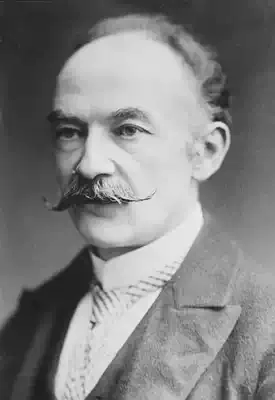
Thomas Hardy
Mad Judy
Mad Judy
When the hamlet hailed a birth
Judy used to cry:
When she heard our christening mirth
She would kneel and sigh.
She was crazed, we knew, and we
Humoured her infirmity.
When the daughters and the sons
Gathered them to wed,
And we like-intending ones
Danced till dawn was red,
She would rock and mutter, "More
Comers to this stony shore!"
When old Headsman Death laid hands
On a babe or twain,
She would feast, and by her brands
Sing her songs again.
What she liked we let her do,
Judy was insane, we knew.
When the hamlet hailed a birth
Judy used to cry:
When she heard our christening mirth
She would kneel and sigh.
She was crazed, we knew, and we
Humoured her infirmity.
When the daughters and the sons
Gathered them to wed,
And we like-intending ones
Danced till dawn was red,
She would rock and mutter, "More
Comers to this stony shore!"
When old Headsman Death laid hands
On a babe or twain,
She would feast, and by her brands
Sing her songs again.
What she liked we let her do,
Judy was insane, we knew.
237
Thomas Hardy
Mad Judy
Mad Judy
When the hamlet hailed a birth
Judy used to cry:
When she heard our christening mirth
She would kneel and sigh.
She was crazed, we knew, and we
Humoured her infirmity.
When the daughters and the sons
Gathered them to wed,
And we like-intending ones
Danced till dawn was red,
She would rock and mutter, "More
Comers to this stony shore!"
When old Headsman Death laid hands
On a babe or twain,
She would feast, and by her brands
Sing her songs again.
What she liked we let her do,
Judy was insane, we knew.
When the hamlet hailed a birth
Judy used to cry:
When she heard our christening mirth
She would kneel and sigh.
She was crazed, we knew, and we
Humoured her infirmity.
When the daughters and the sons
Gathered them to wed,
And we like-intending ones
Danced till dawn was red,
She would rock and mutter, "More
Comers to this stony shore!"
When old Headsman Death laid hands
On a babe or twain,
She would feast, and by her brands
Sing her songs again.
What she liked we let her do,
Judy was insane, we knew.
237
Thomas Hardy
Middle-Age Enthusiasms
Middle-Age Enthusiasms
To M. H.
WE passed where flag and flower
Signalled a jocund throng;
We said: "Go to, the hour
Is apt!"--and joined the song;
And, kindling, laughed at life and care,
Although we knew no laugh lay there.
We walked where shy birds stood
Watching us, wonder-dumb;
Their friendship met our mood;
We cried: "We'll often come:
We'll come morn, noon, eve, everywhen!"
--We doubted we should come again.
We joyed to see strange sheens
Leap from quaint leaves in shade;
A secret light of greens
They'd for their pleasure made.
We said: "We'll set such sorts as these!"
--We knew with night the wish would cease.
"So sweet the place," we said,
"Its tacit tales so dear,
Our thoughts, when breath has sped,
Will meet and mingle here!"...
"Words!" mused we. "Passed the mortal door,
Our thoughts will reach this nook no more."
To M. H.
WE passed where flag and flower
Signalled a jocund throng;
We said: "Go to, the hour
Is apt!"--and joined the song;
And, kindling, laughed at life and care,
Although we knew no laugh lay there.
We walked where shy birds stood
Watching us, wonder-dumb;
Their friendship met our mood;
We cried: "We'll often come:
We'll come morn, noon, eve, everywhen!"
--We doubted we should come again.
We joyed to see strange sheens
Leap from quaint leaves in shade;
A secret light of greens
They'd for their pleasure made.
We said: "We'll set such sorts as these!"
--We knew with night the wish would cease.
"So sweet the place," we said,
"Its tacit tales so dear,
Our thoughts, when breath has sped,
Will meet and mingle here!"...
"Words!" mused we. "Passed the mortal door,
Our thoughts will reach this nook no more."
258
Thomas Hardy
Middle-Age Enthusiasms
Middle-Age Enthusiasms
To M. H.
WE passed where flag and flower
Signalled a jocund throng;
We said: "Go to, the hour
Is apt!"--and joined the song;
And, kindling, laughed at life and care,
Although we knew no laugh lay there.
We walked where shy birds stood
Watching us, wonder-dumb;
Their friendship met our mood;
We cried: "We'll often come:
We'll come morn, noon, eve, everywhen!"
--We doubted we should come again.
We joyed to see strange sheens
Leap from quaint leaves in shade;
A secret light of greens
They'd for their pleasure made.
We said: "We'll set such sorts as these!"
--We knew with night the wish would cease.
"So sweet the place," we said,
"Its tacit tales so dear,
Our thoughts, when breath has sped,
Will meet and mingle here!"...
"Words!" mused we. "Passed the mortal door,
Our thoughts will reach this nook no more."
To M. H.
WE passed where flag and flower
Signalled a jocund throng;
We said: "Go to, the hour
Is apt!"--and joined the song;
And, kindling, laughed at life and care,
Although we knew no laugh lay there.
We walked where shy birds stood
Watching us, wonder-dumb;
Their friendship met our mood;
We cried: "We'll often come:
We'll come morn, noon, eve, everywhen!"
--We doubted we should come again.
We joyed to see strange sheens
Leap from quaint leaves in shade;
A secret light of greens
They'd for their pleasure made.
We said: "We'll set such sorts as these!"
--We knew with night the wish would cease.
"So sweet the place," we said,
"Its tacit tales so dear,
Our thoughts, when breath has sped,
Will meet and mingle here!"...
"Words!" mused we. "Passed the mortal door,
Our thoughts will reach this nook no more."
258
Thomas Hardy
Let Me Enjoy
Let Me Enjoy
Minor Key
I
Let me enjoy the earth no less
Because the all-enacting Might
That fashioned forth its loveliness
Had other aims than my delight.
II
About my path there flits a Fair,
Who throws me not a word or sign;
I'll charm me with her ignoring air,
And laud the lips not meant for mine.
III
From manuscripts of moving song
Inspired by scenes and dreams unknown
I'll pour out raptures that belong
To others, as they were my own.
IV
And some day hence, towards Paradise
And all its blest -- if such should be --
I will lift glad, afar-off eyes
Though it contain no place for me.
Minor Key
I
Let me enjoy the earth no less
Because the all-enacting Might
That fashioned forth its loveliness
Had other aims than my delight.
II
About my path there flits a Fair,
Who throws me not a word or sign;
I'll charm me with her ignoring air,
And laud the lips not meant for mine.
III
From manuscripts of moving song
Inspired by scenes and dreams unknown
I'll pour out raptures that belong
To others, as they were my own.
IV
And some day hence, towards Paradise
And all its blest -- if such should be --
I will lift glad, afar-off eyes
Though it contain no place for me.
235
Thomas Hardy
Lines On The Loss Of The Titanic
Lines On The Loss Of The "Titanic"
In a solitude of the sea
Deep from human vanity,
And the Pride of Life that planned her, stilly couches she.
Steel chambers, late the pyres
Of her salamandrine fires,
Cold currents thrid, and turn to rhythmic tidal lyres.
Over the mirrors meant
To glass the opulent
The sea-worm crawls -- grotesque, slimed, dumb, indifferent.
Jewels in joy designed
To ravish the sensuous mind
Lie lightless, all their sparkles bleared and black and blind.
Dim moon-eyed fishes near
Gaze at the gilded gear
And query: "What does this vaingloriousness down here?" ...
Well: while was fashioning
This creature of cleaving wing,
The Immanent Will that stirs and urges everything
Prepared a sinister mate
For her -- so gaily great --
A Shape of Ice, for the time far and dissociate.
And as the smart ship grew
In stature, grace, and hue,
In shadowy silent distance grew the Iceberg too.
Alien they seemed to be;
No mortal eye could see
The intimate welding of their later history,
Or sign that they were bent
By paths coincident
On being anon twin halves of one august event,
Till the Spinner of the Years
Said "Now!" And each one hears,
And consummation comes, and jars two hemispheres.
In a solitude of the sea
Deep from human vanity,
And the Pride of Life that planned her, stilly couches she.
Steel chambers, late the pyres
Of her salamandrine fires,
Cold currents thrid, and turn to rhythmic tidal lyres.
Over the mirrors meant
To glass the opulent
The sea-worm crawls -- grotesque, slimed, dumb, indifferent.
Jewels in joy designed
To ravish the sensuous mind
Lie lightless, all their sparkles bleared and black and blind.
Dim moon-eyed fishes near
Gaze at the gilded gear
And query: "What does this vaingloriousness down here?" ...
Well: while was fashioning
This creature of cleaving wing,
The Immanent Will that stirs and urges everything
Prepared a sinister mate
For her -- so gaily great --
A Shape of Ice, for the time far and dissociate.
And as the smart ship grew
In stature, grace, and hue,
In shadowy silent distance grew the Iceberg too.
Alien they seemed to be;
No mortal eye could see
The intimate welding of their later history,
Or sign that they were bent
By paths coincident
On being anon twin halves of one august event,
Till the Spinner of the Years
Said "Now!" And each one hears,
And consummation comes, and jars two hemispheres.
370
Thomas Hardy
In Vision I Roamed
In Vision I Roamed
IN vision I roamed the flashing Firmament,
So fierce in blazon that the Night waxed wan,
As though with an awed sense of such ostent;
And as I thought my spirit ranged on and on
In footless traverse through ghast heights of sky,
To the last chambers of the monstrous Dome,
Where stars the brightest here to darkness die:
Then, any spot on our own Earth seemed Home!
And the sick grief that you were far away
Grew pleasant thankfulness that you were near,
Who might have been, set on some outstep sphere,
Less than a Want to me, as day by day
I lived unware, uncaring all that lay
Locked in that Universe taciturn and drear.
IN vision I roamed the flashing Firmament,
So fierce in blazon that the Night waxed wan,
As though with an awed sense of such ostent;
And as I thought my spirit ranged on and on
In footless traverse through ghast heights of sky,
To the last chambers of the monstrous Dome,
Where stars the brightest here to darkness die:
Then, any spot on our own Earth seemed Home!
And the sick grief that you were far away
Grew pleasant thankfulness that you were near,
Who might have been, set on some outstep sphere,
Less than a Want to me, as day by day
I lived unware, uncaring all that lay
Locked in that Universe taciturn and drear.
274
Thomas Hardy
In Time Of The Breaking Of Nations
In Time Of "The Breaking Of Nations"
I
Only a man harrowing clods
In a slow silent walk
With an old horse that stumbles and nods
Half asleep as they stalk.
II
Only thin smoke without flame
From the heaps of couch-grass;
Yet this will go onwards the same
Though Dynasties pass.
III
Yonder a maid and her wight
Go whispering by:
War's annals will cloud into night
Ere their story die.
I
Only a man harrowing clods
In a slow silent walk
With an old horse that stumbles and nods
Half asleep as they stalk.
II
Only thin smoke without flame
From the heaps of couch-grass;
Yet this will go onwards the same
Though Dynasties pass.
III
Yonder a maid and her wight
Go whispering by:
War's annals will cloud into night
Ere their story die.
219
Thomas Hardy
In Tenebris
In Tenebris
Wintertime nighs;
But my bereavement-pain
It cannot bring again:
Twice no one dies.
Flower-petals flee;
But since it once hath been,
No more that severing scene
Can harrow me.
Birds faint in dread:
I shall not lose old strength
In the lone frost's black length:
Strength long since fled!
Leaves freeze to dun;
But friends cannot turn cold
This season as of old
For him with none.
Tempests may scath;
But love cannot make smart
Again this year his heart
Who no heart hath.
Black is night's cope;
But death will not appal
One, who past doubtings all,
Waits in unhope.
Wintertime nighs;
But my bereavement-pain
It cannot bring again:
Twice no one dies.
Flower-petals flee;
But since it once hath been,
No more that severing scene
Can harrow me.
Birds faint in dread:
I shall not lose old strength
In the lone frost's black length:
Strength long since fled!
Leaves freeze to dun;
But friends cannot turn cold
This season as of old
For him with none.
Tempests may scath;
But love cannot make smart
Again this year his heart
Who no heart hath.
Black is night's cope;
But death will not appal
One, who past doubtings all,
Waits in unhope.
221
Thomas Hardy
In Tenebris
In Tenebris
Wintertime nighs;
But my bereavement-pain
It cannot bring again:
Twice no one dies.
Flower-petals flee;
But since it once hath been,
No more that severing scene
Can harrow me.
Birds faint in dread:
I shall not lose old strength
In the lone frost's black length:
Strength long since fled!
Leaves freeze to dun;
But friends cannot turn cold
This season as of old
For him with none.
Tempests may scath;
But love cannot make smart
Again this year his heart
Who no heart hath.
Black is night's cope;
But death will not appal
One, who past doubtings all,
Waits in unhope.
Wintertime nighs;
But my bereavement-pain
It cannot bring again:
Twice no one dies.
Flower-petals flee;
But since it once hath been,
No more that severing scene
Can harrow me.
Birds faint in dread:
I shall not lose old strength
In the lone frost's black length:
Strength long since fled!
Leaves freeze to dun;
But friends cannot turn cold
This season as of old
For him with none.
Tempests may scath;
But love cannot make smart
Again this year his heart
Who no heart hath.
Black is night's cope;
But death will not appal
One, who past doubtings all,
Waits in unhope.
221
Thomas Hardy
In the Old Theatre, Fiesole (April, )
In the Old Theatre, Fiesole (April, )
I traced the Circus whose gray stones incline
Where Rome and dim Etruria interjoin,
Till came a child who showed an ancient coin
That bore the image of a Constantine.
She lightly passed; nor did she once opine
How, better than all books, she had raised for me
In swift perspective Europe's history
Through the vast years of Caesar's sceptred line.
For in my distant plot of English loam
'Twas but to delve, and straightway there to find
Coins of like impress. As with one half blind
Whom common simples cure, her act flashed home
In that mute moment to my opened mind
The power, the pride, the reach of perished Rome.
I traced the Circus whose gray stones incline
Where Rome and dim Etruria interjoin,
Till came a child who showed an ancient coin
That bore the image of a Constantine.
She lightly passed; nor did she once opine
How, better than all books, she had raised for me
In swift perspective Europe's history
Through the vast years of Caesar's sceptred line.
For in my distant plot of English loam
'Twas but to delve, and straightway there to find
Coins of like impress. As with one half blind
Whom common simples cure, her act flashed home
In that mute moment to my opened mind
The power, the pride, the reach of perished Rome.
183
Thomas Hardy
In the Old Theatre, Fiesole (April, )
In the Old Theatre, Fiesole (April, )
I traced the Circus whose gray stones incline
Where Rome and dim Etruria interjoin,
Till came a child who showed an ancient coin
That bore the image of a Constantine.
She lightly passed; nor did she once opine
How, better than all books, she had raised for me
In swift perspective Europe's history
Through the vast years of Caesar's sceptred line.
For in my distant plot of English loam
'Twas but to delve, and straightway there to find
Coins of like impress. As with one half blind
Whom common simples cure, her act flashed home
In that mute moment to my opened mind
The power, the pride, the reach of perished Rome.
I traced the Circus whose gray stones incline
Where Rome and dim Etruria interjoin,
Till came a child who showed an ancient coin
That bore the image of a Constantine.
She lightly passed; nor did she once opine
How, better than all books, she had raised for me
In swift perspective Europe's history
Through the vast years of Caesar's sceptred line.
For in my distant plot of English loam
'Twas but to delve, and straightway there to find
Coins of like impress. As with one half blind
Whom common simples cure, her act flashed home
In that mute moment to my opened mind
The power, the pride, the reach of perished Rome.
183
Thomas Hardy
I have lived with Shades
I have lived with Shades
I
I have lived with Shades so long,
So long have talked to them,
I sped to street and throng,
That sometimes they
In their dim style
Will pause awhile
To hear my say;
II
And take me by the hand,
And lead me through their rooms
In the To-Be, where Dooms
Half-wove and shapeless stand:
And show from there
The dwindled dust
And rot and rust
Of things that were.
III
"Now turn," they said to me
One day: "Look whence we came,
And signify his name
Who gazes thence at thee" --
-- "Nor name nor race
Know I, or can,"
I said, "Of man
So commonplace."
IV
"He moves me not at all:
I note no ray or jot
Of rareness in his lot,
Or star exceptional.
Into the dim
Dead throngs around
He'll sink, nor sound
Be left of him."
V
"Yet," said they, "his frail speech,
Hath accents pitched like thine --
Thy mould and his define
A likeness each to each --
But go! Deep pain
Alas, would be
His name to thee,
And told in vain!"
I
I have lived with Shades so long,
So long have talked to them,
I sped to street and throng,
That sometimes they
In their dim style
Will pause awhile
To hear my say;
II
And take me by the hand,
And lead me through their rooms
In the To-Be, where Dooms
Half-wove and shapeless stand:
And show from there
The dwindled dust
And rot and rust
Of things that were.
III
"Now turn," they said to me
One day: "Look whence we came,
And signify his name
Who gazes thence at thee" --
-- "Nor name nor race
Know I, or can,"
I said, "Of man
So commonplace."
IV
"He moves me not at all:
I note no ray or jot
Of rareness in his lot,
Or star exceptional.
Into the dim
Dead throngs around
He'll sink, nor sound
Be left of him."
V
"Yet," said they, "his frail speech,
Hath accents pitched like thine --
Thy mould and his define
A likeness each to each --
But go! Deep pain
Alas, would be
His name to thee,
And told in vain!"
220
Thomas Hardy
I have lived with Shades
I have lived with Shades
I
I have lived with Shades so long,
So long have talked to them,
I sped to street and throng,
That sometimes they
In their dim style
Will pause awhile
To hear my say;
II
And take me by the hand,
And lead me through their rooms
In the To-Be, where Dooms
Half-wove and shapeless stand:
And show from there
The dwindled dust
And rot and rust
Of things that were.
III
"Now turn," they said to me
One day: "Look whence we came,
And signify his name
Who gazes thence at thee" --
-- "Nor name nor race
Know I, or can,"
I said, "Of man
So commonplace."
IV
"He moves me not at all:
I note no ray or jot
Of rareness in his lot,
Or star exceptional.
Into the dim
Dead throngs around
He'll sink, nor sound
Be left of him."
V
"Yet," said they, "his frail speech,
Hath accents pitched like thine --
Thy mould and his define
A likeness each to each --
But go! Deep pain
Alas, would be
His name to thee,
And told in vain!"
I
I have lived with Shades so long,
So long have talked to them,
I sped to street and throng,
That sometimes they
In their dim style
Will pause awhile
To hear my say;
II
And take me by the hand,
And lead me through their rooms
In the To-Be, where Dooms
Half-wove and shapeless stand:
And show from there
The dwindled dust
And rot and rust
Of things that were.
III
"Now turn," they said to me
One day: "Look whence we came,
And signify his name
Who gazes thence at thee" --
-- "Nor name nor race
Know I, or can,"
I said, "Of man
So commonplace."
IV
"He moves me not at all:
I note no ray or jot
Of rareness in his lot,
Or star exceptional.
Into the dim
Dead throngs around
He'll sink, nor sound
Be left of him."
V
"Yet," said they, "his frail speech,
Hath accents pitched like thine --
Thy mould and his define
A likeness each to each --
But go! Deep pain
Alas, would be
His name to thee,
And told in vain!"
220
Thomas Hardy
I have lived with Shades
I have lived with Shades
I
I have lived with Shades so long,
So long have talked to them,
I sped to street and throng,
That sometimes they
In their dim style
Will pause awhile
To hear my say;
II
And take me by the hand,
And lead me through their rooms
In the To-Be, where Dooms
Half-wove and shapeless stand:
And show from there
The dwindled dust
And rot and rust
Of things that were.
III
"Now turn," they said to me
One day: "Look whence we came,
And signify his name
Who gazes thence at thee" --
-- "Nor name nor race
Know I, or can,"
I said, "Of man
So commonplace."
IV
"He moves me not at all:
I note no ray or jot
Of rareness in his lot,
Or star exceptional.
Into the dim
Dead throngs around
He'll sink, nor sound
Be left of him."
V
"Yet," said they, "his frail speech,
Hath accents pitched like thine --
Thy mould and his define
A likeness each to each --
But go! Deep pain
Alas, would be
His name to thee,
And told in vain!"
I
I have lived with Shades so long,
So long have talked to them,
I sped to street and throng,
That sometimes they
In their dim style
Will pause awhile
To hear my say;
II
And take me by the hand,
And lead me through their rooms
In the To-Be, where Dooms
Half-wove and shapeless stand:
And show from there
The dwindled dust
And rot and rust
Of things that were.
III
"Now turn," they said to me
One day: "Look whence we came,
And signify his name
Who gazes thence at thee" --
-- "Nor name nor race
Know I, or can,"
I said, "Of man
So commonplace."
IV
"He moves me not at all:
I note no ray or jot
Of rareness in his lot,
Or star exceptional.
Into the dim
Dead throngs around
He'll sink, nor sound
Be left of him."
V
"Yet," said they, "his frail speech,
Hath accents pitched like thine --
Thy mould and his define
A likeness each to each --
But go! Deep pain
Alas, would be
His name to thee,
And told in vain!"
220
Thomas Hardy
Heredity
Heredity
I am the family face;
Flesh perishes, I live on,
Projecting trait and trace
Through time to times anon,
And leaping from place to place
Over oblivion.
The years-heired feature that can
In curve and voice and eye
Despise the human span
Of durance -- that is I;
The eternal thing in man,
That heeds no call to die
I am the family face;
Flesh perishes, I live on,
Projecting trait and trace
Through time to times anon,
And leaping from place to place
Over oblivion.
The years-heired feature that can
In curve and voice and eye
Despise the human span
Of durance -- that is I;
The eternal thing in man,
That heeds no call to die
200
Thomas Hardy
Her Late Husband (King's-Hintock, -.)
Her Late Husband (King's-Hintock, -.)
"No--not where I shall make my own;
But dig his grave just by
The woman's with the initialed stone -
As near as he can lie -
After whose death he seemed to ail,
Though none considered why.
"And when I also claim a nook,
And your feet tread me in,
Bestow me, under my old name,
Among my kith and kin,
That strangers gazing may not dream
I did a husband win."
"Widow, your wish shall be obeyed;
Though, thought I, certainly
You'd lay him where your folk are laid,
And your grave, too, will be,
As custom hath it; you to right,
And on the left hand he."
"Aye, sexton; such the Hintock rule,
And none has said it nay;
But now it haps a native here
Eschews that ancient way . . .
And it may be, some Christmas night,
When angels walk, they'll say:
"'O strange interment! Civilized lands
Afford few types thereof;
Here is a man who takes his rest
Beside his very Love,
Beside the one who was his wife
In our sight up above!'"
"No--not where I shall make my own;
But dig his grave just by
The woman's with the initialed stone -
As near as he can lie -
After whose death he seemed to ail,
Though none considered why.
"And when I also claim a nook,
And your feet tread me in,
Bestow me, under my old name,
Among my kith and kin,
That strangers gazing may not dream
I did a husband win."
"Widow, your wish shall be obeyed;
Though, thought I, certainly
You'd lay him where your folk are laid,
And your grave, too, will be,
As custom hath it; you to right,
And on the left hand he."
"Aye, sexton; such the Hintock rule,
And none has said it nay;
But now it haps a native here
Eschews that ancient way . . .
And it may be, some Christmas night,
When angels walk, they'll say:
"'O strange interment! Civilized lands
Afford few types thereof;
Here is a man who takes his rest
Beside his very Love,
Beside the one who was his wife
In our sight up above!'"
250
Thomas Hardy
Her Late Husband (King's-Hintock, -.)
Her Late Husband (King's-Hintock, -.)
"No--not where I shall make my own;
But dig his grave just by
The woman's with the initialed stone -
As near as he can lie -
After whose death he seemed to ail,
Though none considered why.
"And when I also claim a nook,
And your feet tread me in,
Bestow me, under my old name,
Among my kith and kin,
That strangers gazing may not dream
I did a husband win."
"Widow, your wish shall be obeyed;
Though, thought I, certainly
You'd lay him where your folk are laid,
And your grave, too, will be,
As custom hath it; you to right,
And on the left hand he."
"Aye, sexton; such the Hintock rule,
And none has said it nay;
But now it haps a native here
Eschews that ancient way . . .
And it may be, some Christmas night,
When angels walk, they'll say:
"'O strange interment! Civilized lands
Afford few types thereof;
Here is a man who takes his rest
Beside his very Love,
Beside the one who was his wife
In our sight up above!'"
"No--not where I shall make my own;
But dig his grave just by
The woman's with the initialed stone -
As near as he can lie -
After whose death he seemed to ail,
Though none considered why.
"And when I also claim a nook,
And your feet tread me in,
Bestow me, under my old name,
Among my kith and kin,
That strangers gazing may not dream
I did a husband win."
"Widow, your wish shall be obeyed;
Though, thought I, certainly
You'd lay him where your folk are laid,
And your grave, too, will be,
As custom hath it; you to right,
And on the left hand he."
"Aye, sexton; such the Hintock rule,
And none has said it nay;
But now it haps a native here
Eschews that ancient way . . .
And it may be, some Christmas night,
When angels walk, they'll say:
"'O strange interment! Civilized lands
Afford few types thereof;
Here is a man who takes his rest
Beside his very Love,
Beside the one who was his wife
In our sight up above!'"
250
Thomas Hardy
Her Initals
Her Initals
UPON a poet's page I wrote
Of old two letters of her name;
Part seemed she of the effulgent thought
Whence that high singer's rapture came.
--When now I turn the leaf the same
Immortal light illumes the lay
But from the letters of her name
The radiance has died away.
UPON a poet's page I wrote
Of old two letters of her name;
Part seemed she of the effulgent thought
Whence that high singer's rapture came.
--When now I turn the leaf the same
Immortal light illumes the lay
But from the letters of her name
The radiance has died away.
149
Thomas Hardy
Her Dilemma
Her Dilemma
THE two were silent in a sunless church,
Whose mildewed walls, uneven paving-stones,
And wasted carvings passed antique research;
And nothing broke the clock's dull monotones.
Leaning against a wormy poppy-head,
So wan and worn that he could scarcely stand,
--For he was soon to die,--he softly said,
"Tell me you love me!"--holding hard her hand.
She would have given a world to breathe "yes" truly,
So much his life seemed hanging on her mind,
And hence she lied, her heart persuaded throughly,
'Twas worth her soul to be a moment kind.
But the sad need thereof, his nearing death,
So mocked humanity that she shamed to prize
A world conditioned thus, or care for breath
Where Nature such dilemmas could devise.
THE two were silent in a sunless church,
Whose mildewed walls, uneven paving-stones,
And wasted carvings passed antique research;
And nothing broke the clock's dull monotones.
Leaning against a wormy poppy-head,
So wan and worn that he could scarcely stand,
--For he was soon to die,--he softly said,
"Tell me you love me!"--holding hard her hand.
She would have given a world to breathe "yes" truly,
So much his life seemed hanging on her mind,
And hence she lied, her heart persuaded throughly,
'Twas worth her soul to be a moment kind.
But the sad need thereof, his nearing death,
So mocked humanity that she shamed to prize
A world conditioned thus, or care for breath
Where Nature such dilemmas could devise.
277
Thomas Hardy
Hap
Hap
IF but some vengeful god would call to me
From up the sky, and laugh: "Thou suffering thing,
Know that thy sorrow is my ecstasy,
That thy love's loss is my hate's profiting!"
Then would I bear, and clench myself, and die,
Steeled by the sense of ire unmerited;
Half-eased, too, that a Powerfuller than I
Had willed and meted me the tears I shed.
But not so. How arrives it joy lies slain,
And why unblooms the best hope ever sown?
--Crass Casualty obstructs the sun and rain,
And dicing Time for gladness casts a moan....
These purblind Doomsters had as readily strown
Blisses about my pilgrimage as pain.
IF but some vengeful god would call to me
From up the sky, and laugh: "Thou suffering thing,
Know that thy sorrow is my ecstasy,
That thy love's loss is my hate's profiting!"
Then would I bear, and clench myself, and die,
Steeled by the sense of ire unmerited;
Half-eased, too, that a Powerfuller than I
Had willed and meted me the tears I shed.
But not so. How arrives it joy lies slain,
And why unblooms the best hope ever sown?
--Crass Casualty obstructs the sun and rain,
And dicing Time for gladness casts a moan....
These purblind Doomsters had as readily strown
Blisses about my pilgrimage as pain.
241
Thomas Hardy
Heiress And Architect
Heiress And Architect
For A. W. B.
SHE sought the Studios, beckoning to her side
An arch-designer, for she planned to build.
He was of wise contrivance, deeply skilled
In every intervolve of high and wide--
Well fit to be her guide.
"Whatever it be,"
Responded he,
With cold, clear voice, and cold, clear view,
"In true accord with prudent fashionings
For such vicissitudes as living brings,
And thwarting not the law of stable things,
That will I do."
"Shape me," she said, "high walls with tracery
And open ogive-work, that scent and hue
Of buds, and travelling bees, may come in through,
The note of birds, and singings of the sea,
For these are much to me."
"An idle whim!"
Broke forth from him
Whom nought could warm to gallantries:
"Cede all these buds and birds, the zephyr's call,
And scents, and hues, and things that falter all,
And choose as best the close and surly wall,
For winter's freeze."
"Then frame," she cried, "wide fronts of crystal glass,
That I may show my laughter and my light--
Light like the sun's by day, the stars' by night--
Till rival heart-queens, envying, wail, 'Alas,
Her glory!' as they pass."
"O maid misled!"
He sternly said,
Whose facile foresight pierced her dire;
"Where shall abide the soul when, sick of glee,
It shrinks, and hides, and prays no eye may see?
Those house them best who house for secrecy,
For you will tire."
"A little chamber, then, with swan and dove
Ranged thickly, and engrailed with rare device
Of reds and purples, for a Paradise
Wherein my Love may greet me, I my Love,
When he shall know thereof?"
"This, too, is ill,"
He answered still,
The man who swayed her like a shade.
"An hour will come when sight of such sweet nook
Would bring a bitterness too sharp to brook,
When brighter eyes have won away his look;
For you will fade."
Then said she faintly: "O, contrive some way--
Some narrow winding turret, quite mine own,
To reach a loft where I may grieve alone!
It is a slight thing; hence do not, I pray,
This last dear fancy slay!"
"Such winding ways
Fit not your days,"
Said he, the man of measuring eye;
"I must even fashion as my rule declares,
To wit: Give space (since life ends unawares)
To hale a coffined corpse adown the stairs;
For you will die."
For A. W. B.
SHE sought the Studios, beckoning to her side
An arch-designer, for she planned to build.
He was of wise contrivance, deeply skilled
In every intervolve of high and wide--
Well fit to be her guide.
"Whatever it be,"
Responded he,
With cold, clear voice, and cold, clear view,
"In true accord with prudent fashionings
For such vicissitudes as living brings,
And thwarting not the law of stable things,
That will I do."
"Shape me," she said, "high walls with tracery
And open ogive-work, that scent and hue
Of buds, and travelling bees, may come in through,
The note of birds, and singings of the sea,
For these are much to me."
"An idle whim!"
Broke forth from him
Whom nought could warm to gallantries:
"Cede all these buds and birds, the zephyr's call,
And scents, and hues, and things that falter all,
And choose as best the close and surly wall,
For winter's freeze."
"Then frame," she cried, "wide fronts of crystal glass,
That I may show my laughter and my light--
Light like the sun's by day, the stars' by night--
Till rival heart-queens, envying, wail, 'Alas,
Her glory!' as they pass."
"O maid misled!"
He sternly said,
Whose facile foresight pierced her dire;
"Where shall abide the soul when, sick of glee,
It shrinks, and hides, and prays no eye may see?
Those house them best who house for secrecy,
For you will tire."
"A little chamber, then, with swan and dove
Ranged thickly, and engrailed with rare device
Of reds and purples, for a Paradise
Wherein my Love may greet me, I my Love,
When he shall know thereof?"
"This, too, is ill,"
He answered still,
The man who swayed her like a shade.
"An hour will come when sight of such sweet nook
Would bring a bitterness too sharp to brook,
When brighter eyes have won away his look;
For you will fade."
Then said she faintly: "O, contrive some way--
Some narrow winding turret, quite mine own,
To reach a loft where I may grieve alone!
It is a slight thing; hence do not, I pray,
This last dear fancy slay!"
"Such winding ways
Fit not your days,"
Said he, the man of measuring eye;
"I must even fashion as my rule declares,
To wit: Give space (since life ends unawares)
To hale a coffined corpse adown the stairs;
For you will die."
271
Thomas Hardy
God-Forgotten
God-Forgotten
I towered far, and lo! I stood within
The presence of the Lord Most High,
Sent thither by the sons of earth, to win
Some answer to their cry.
--"The Earth, say'st thou? The Human race?
By Me created? Sad its lot?
Nay: I have no remembrance of such place:
Such world I fashioned not." -
--"O Lord, forgive me when I say
Thou spak'st the word, and mad'st it all." -
"The Earth of men--let me bethink me . . . Yea!
I dimly do recall
"Some tiny sphere I built long back
(Mid millions of such shapes of mine)
So named . . . It perished, surely--not a wrack
Remaining, or a sign?
"It lost my interest from the first,
My aims therefor succeeding ill;
Haply it died of doing as it durst?" -
"Lord, it existeth still." -
"Dark, then, its life! For not a cry
Of aught it bears do I now hear;
Of its own act the threads were snapt whereby
Its plaints had reached mine ear.
"It used to ask for gifts of good,
Till came its severance self-entailed,
When sudden silence on that side ensued,
And has till now prevailed.
"All other orbs have kept in touch;
Their voicings reach me speedily:
Thy people took upon them overmuch
In sundering them from me!
"And it is strange--though sad enough -
Earth's race should think that one whose call
Frames, daily, shining spheres of flawless stuff
Must heed their tainted ball! . . .
"But say'st thou 'tis by pangs distraught,
And strife, and silent suffering? -
Deep grieved am I that injury should be wrought
Even on so poor a thing!
"Thou should'st have learnt that Not to Mend
For Me could mean but Not to Know:
Hence, Messengers! and straightway put an end
To what men undergo." . . .
Homing at dawn, I thought to see
One of the Messengers standing by.
- Oh, childish thought! . . . Yet oft it comes to me
When trouble hovers nigh.
I towered far, and lo! I stood within
The presence of the Lord Most High,
Sent thither by the sons of earth, to win
Some answer to their cry.
--"The Earth, say'st thou? The Human race?
By Me created? Sad its lot?
Nay: I have no remembrance of such place:
Such world I fashioned not." -
--"O Lord, forgive me when I say
Thou spak'st the word, and mad'st it all." -
"The Earth of men--let me bethink me . . . Yea!
I dimly do recall
"Some tiny sphere I built long back
(Mid millions of such shapes of mine)
So named . . . It perished, surely--not a wrack
Remaining, or a sign?
"It lost my interest from the first,
My aims therefor succeeding ill;
Haply it died of doing as it durst?" -
"Lord, it existeth still." -
"Dark, then, its life! For not a cry
Of aught it bears do I now hear;
Of its own act the threads were snapt whereby
Its plaints had reached mine ear.
"It used to ask for gifts of good,
Till came its severance self-entailed,
When sudden silence on that side ensued,
And has till now prevailed.
"All other orbs have kept in touch;
Their voicings reach me speedily:
Thy people took upon them overmuch
In sundering them from me!
"And it is strange--though sad enough -
Earth's race should think that one whose call
Frames, daily, shining spheres of flawless stuff
Must heed their tainted ball! . . .
"But say'st thou 'tis by pangs distraught,
And strife, and silent suffering? -
Deep grieved am I that injury should be wrought
Even on so poor a thing!
"Thou should'st have learnt that Not to Mend
For Me could mean but Not to Know:
Hence, Messengers! and straightway put an end
To what men undergo." . . .
Homing at dawn, I thought to see
One of the Messengers standing by.
- Oh, childish thought! . . . Yet oft it comes to me
When trouble hovers nigh.
336
Thomas Hardy
God-Forgotten
God-Forgotten
I towered far, and lo! I stood within
The presence of the Lord Most High,
Sent thither by the sons of earth, to win
Some answer to their cry.
--"The Earth, say'st thou? The Human race?
By Me created? Sad its lot?
Nay: I have no remembrance of such place:
Such world I fashioned not." -
--"O Lord, forgive me when I say
Thou spak'st the word, and mad'st it all." -
"The Earth of men--let me bethink me . . . Yea!
I dimly do recall
"Some tiny sphere I built long back
(Mid millions of such shapes of mine)
So named . . . It perished, surely--not a wrack
Remaining, or a sign?
"It lost my interest from the first,
My aims therefor succeeding ill;
Haply it died of doing as it durst?" -
"Lord, it existeth still." -
"Dark, then, its life! For not a cry
Of aught it bears do I now hear;
Of its own act the threads were snapt whereby
Its plaints had reached mine ear.
"It used to ask for gifts of good,
Till came its severance self-entailed,
When sudden silence on that side ensued,
And has till now prevailed.
"All other orbs have kept in touch;
Their voicings reach me speedily:
Thy people took upon them overmuch
In sundering them from me!
"And it is strange--though sad enough -
Earth's race should think that one whose call
Frames, daily, shining spheres of flawless stuff
Must heed their tainted ball! . . .
"But say'st thou 'tis by pangs distraught,
And strife, and silent suffering? -
Deep grieved am I that injury should be wrought
Even on so poor a thing!
"Thou should'st have learnt that Not to Mend
For Me could mean but Not to Know:
Hence, Messengers! and straightway put an end
To what men undergo." . . .
Homing at dawn, I thought to see
One of the Messengers standing by.
- Oh, childish thought! . . . Yet oft it comes to me
When trouble hovers nigh.
I towered far, and lo! I stood within
The presence of the Lord Most High,
Sent thither by the sons of earth, to win
Some answer to their cry.
--"The Earth, say'st thou? The Human race?
By Me created? Sad its lot?
Nay: I have no remembrance of such place:
Such world I fashioned not." -
--"O Lord, forgive me when I say
Thou spak'st the word, and mad'st it all." -
"The Earth of men--let me bethink me . . . Yea!
I dimly do recall
"Some tiny sphere I built long back
(Mid millions of such shapes of mine)
So named . . . It perished, surely--not a wrack
Remaining, or a sign?
"It lost my interest from the first,
My aims therefor succeeding ill;
Haply it died of doing as it durst?" -
"Lord, it existeth still." -
"Dark, then, its life! For not a cry
Of aught it bears do I now hear;
Of its own act the threads were snapt whereby
Its plaints had reached mine ear.
"It used to ask for gifts of good,
Till came its severance self-entailed,
When sudden silence on that side ensued,
And has till now prevailed.
"All other orbs have kept in touch;
Their voicings reach me speedily:
Thy people took upon them overmuch
In sundering them from me!
"And it is strange--though sad enough -
Earth's race should think that one whose call
Frames, daily, shining spheres of flawless stuff
Must heed their tainted ball! . . .
"But say'st thou 'tis by pangs distraught,
And strife, and silent suffering? -
Deep grieved am I that injury should be wrought
Even on so poor a thing!
"Thou should'st have learnt that Not to Mend
For Me could mean but Not to Know:
Hence, Messengers! and straightway put an end
To what men undergo." . . .
Homing at dawn, I thought to see
One of the Messengers standing by.
- Oh, childish thought! . . . Yet oft it comes to me
When trouble hovers nigh.
336