

Poems in this topic
Life and Existence
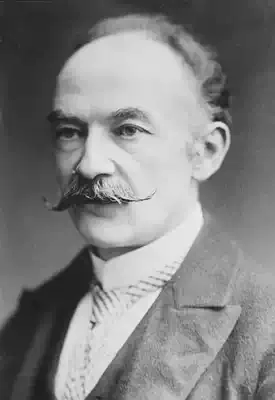
Thomas Hardy
Fragment
Fragment
At last I entered a long dark gallery,
Catacomb-lined; and ranged at the side
Were the bodies of men from far and wide
Who, motion past, were nevertheless not dead.
"The sense of waiting here strikes strong;
Everyone's waiting, waiting, it seems to me;
What are you waiting for so long? --
What is to happen?" I said.
"O we are waiting for one called God," said they,
"(Though by some the Will, or Force, or Laws;
And, vaguely, by some, the Ultimate Cause;)
Waiting for him to see us before we are clay.
Yes; waiting, waiting, for God to know it." ...
"To know what?" questioned I.
"To know how things have been going on earth and below it:
It is clear he must know some day."
I thereon asked them why.
"Since he made us humble pioneers
Of himself in consciousness of Life's tears,
It needs no mighty prophecy
To tell that what he could mindlessly show
His creatures, he himself will know.
"By some still close-cowled mystery
We have reached feeling faster than he,
But he will overtake us anon,
If the world goes on."
At last I entered a long dark gallery,
Catacomb-lined; and ranged at the side
Were the bodies of men from far and wide
Who, motion past, were nevertheless not dead.
"The sense of waiting here strikes strong;
Everyone's waiting, waiting, it seems to me;
What are you waiting for so long? --
What is to happen?" I said.
"O we are waiting for one called God," said they,
"(Though by some the Will, or Force, or Laws;
And, vaguely, by some, the Ultimate Cause;)
Waiting for him to see us before we are clay.
Yes; waiting, waiting, for God to know it." ...
"To know what?" questioned I.
"To know how things have been going on earth and below it:
It is clear he must know some day."
I thereon asked them why.
"Since he made us humble pioneers
Of himself in consciousness of Life's tears,
It needs no mighty prophecy
To tell that what he could mindlessly show
His creatures, he himself will know.
"By some still close-cowled mystery
We have reached feeling faster than he,
But he will overtake us anon,
If the world goes on."
249
Thomas Hardy
Fragment
Fragment
At last I entered a long dark gallery,
Catacomb-lined; and ranged at the side
Were the bodies of men from far and wide
Who, motion past, were nevertheless not dead.
"The sense of waiting here strikes strong;
Everyone's waiting, waiting, it seems to me;
What are you waiting for so long? --
What is to happen?" I said.
"O we are waiting for one called God," said they,
"(Though by some the Will, or Force, or Laws;
And, vaguely, by some, the Ultimate Cause;)
Waiting for him to see us before we are clay.
Yes; waiting, waiting, for God to know it." ...
"To know what?" questioned I.
"To know how things have been going on earth and below it:
It is clear he must know some day."
I thereon asked them why.
"Since he made us humble pioneers
Of himself in consciousness of Life's tears,
It needs no mighty prophecy
To tell that what he could mindlessly show
His creatures, he himself will know.
"By some still close-cowled mystery
We have reached feeling faster than he,
But he will overtake us anon,
If the world goes on."
At last I entered a long dark gallery,
Catacomb-lined; and ranged at the side
Were the bodies of men from far and wide
Who, motion past, were nevertheless not dead.
"The sense of waiting here strikes strong;
Everyone's waiting, waiting, it seems to me;
What are you waiting for so long? --
What is to happen?" I said.
"O we are waiting for one called God," said they,
"(Though by some the Will, or Force, or Laws;
And, vaguely, by some, the Ultimate Cause;)
Waiting for him to see us before we are clay.
Yes; waiting, waiting, for God to know it." ...
"To know what?" questioned I.
"To know how things have been going on earth and below it:
It is clear he must know some day."
I thereon asked them why.
"Since he made us humble pioneers
Of himself in consciousness of Life's tears,
It needs no mighty prophecy
To tell that what he could mindlessly show
His creatures, he himself will know.
"By some still close-cowled mystery
We have reached feeling faster than he,
But he will overtake us anon,
If the world goes on."
249
Thomas Hardy
Fragment
Fragment
At last I entered a long dark gallery,
Catacomb-lined; and ranged at the side
Were the bodies of men from far and wide
Who, motion past, were nevertheless not dead.
"The sense of waiting here strikes strong;
Everyone's waiting, waiting, it seems to me;
What are you waiting for so long? --
What is to happen?" I said.
"O we are waiting for one called God," said they,
"(Though by some the Will, or Force, or Laws;
And, vaguely, by some, the Ultimate Cause;)
Waiting for him to see us before we are clay.
Yes; waiting, waiting, for God to know it." ...
"To know what?" questioned I.
"To know how things have been going on earth and below it:
It is clear he must know some day."
I thereon asked them why.
"Since he made us humble pioneers
Of himself in consciousness of Life's tears,
It needs no mighty prophecy
To tell that what he could mindlessly show
His creatures, he himself will know.
"By some still close-cowled mystery
We have reached feeling faster than he,
But he will overtake us anon,
If the world goes on."
At last I entered a long dark gallery,
Catacomb-lined; and ranged at the side
Were the bodies of men from far and wide
Who, motion past, were nevertheless not dead.
"The sense of waiting here strikes strong;
Everyone's waiting, waiting, it seems to me;
What are you waiting for so long? --
What is to happen?" I said.
"O we are waiting for one called God," said they,
"(Though by some the Will, or Force, or Laws;
And, vaguely, by some, the Ultimate Cause;)
Waiting for him to see us before we are clay.
Yes; waiting, waiting, for God to know it." ...
"To know what?" questioned I.
"To know how things have been going on earth and below it:
It is clear he must know some day."
I thereon asked them why.
"Since he made us humble pioneers
Of himself in consciousness of Life's tears,
It needs no mighty prophecy
To tell that what he could mindlessly show
His creatures, he himself will know.
"By some still close-cowled mystery
We have reached feeling faster than he,
But he will overtake us anon,
If the world goes on."
249
Thomas Hardy
During Wind and Rain
During Wind and Rain
THEY sing their dearest songs--
He, she, all of them--yea,
Treble and tenor and bass.
And one to play;
With the candles mooning each face....
Ah, no; the years O!
How the sick leaves reel down in throngs!
They clear the creeping moss--
Elders and juniors--aye,
Making the pathways neat
And the garden gay;
And they build a shady seat....
Ah, no; the years, the years;
See, the white storm-birds wing across!
They are blithely breakfasting all--
Men and maidens--yea,
Under the summer tree,
With a glimpse of the bay,
While pet fowl come to the knee....
Ah, no; the years O!
And the rotten rose is ripped from the wall.
They change to a high new house,
He, she, all of them--aye,
Clocks and carpets and chairs
On the lawn all day,
And brightest things that are theirs....
Ah, no; the years, the years;
Down their carved names the raindrop plows.
THEY sing their dearest songs--
He, she, all of them--yea,
Treble and tenor and bass.
And one to play;
With the candles mooning each face....
Ah, no; the years O!
How the sick leaves reel down in throngs!
They clear the creeping moss--
Elders and juniors--aye,
Making the pathways neat
And the garden gay;
And they build a shady seat....
Ah, no; the years, the years;
See, the white storm-birds wing across!
They are blithely breakfasting all--
Men and maidens--yea,
Under the summer tree,
With a glimpse of the bay,
While pet fowl come to the knee....
Ah, no; the years O!
And the rotten rose is ripped from the wall.
They change to a high new house,
He, she, all of them--aye,
Clocks and carpets and chairs
On the lawn all day,
And brightest things that are theirs....
Ah, no; the years, the years;
Down their carved names the raindrop plows.
257
Thomas Hardy
During Wind and Rain
During Wind and Rain
THEY sing their dearest songs--
He, she, all of them--yea,
Treble and tenor and bass.
And one to play;
With the candles mooning each face....
Ah, no; the years O!
How the sick leaves reel down in throngs!
They clear the creeping moss--
Elders and juniors--aye,
Making the pathways neat
And the garden gay;
And they build a shady seat....
Ah, no; the years, the years;
See, the white storm-birds wing across!
They are blithely breakfasting all--
Men and maidens--yea,
Under the summer tree,
With a glimpse of the bay,
While pet fowl come to the knee....
Ah, no; the years O!
And the rotten rose is ripped from the wall.
They change to a high new house,
He, she, all of them--aye,
Clocks and carpets and chairs
On the lawn all day,
And brightest things that are theirs....
Ah, no; the years, the years;
Down their carved names the raindrop plows.
THEY sing their dearest songs--
He, she, all of them--yea,
Treble and tenor and bass.
And one to play;
With the candles mooning each face....
Ah, no; the years O!
How the sick leaves reel down in throngs!
They clear the creeping moss--
Elders and juniors--aye,
Making the pathways neat
And the garden gay;
And they build a shady seat....
Ah, no; the years, the years;
See, the white storm-birds wing across!
They are blithely breakfasting all--
Men and maidens--yea,
Under the summer tree,
With a glimpse of the bay,
While pet fowl come to the knee....
Ah, no; the years O!
And the rotten rose is ripped from the wall.
They change to a high new house,
He, she, all of them--aye,
Clocks and carpets and chairs
On the lawn all day,
And brightest things that are theirs....
Ah, no; the years, the years;
Down their carved names the raindrop plows.
257
Thomas Hardy
Embarcation (Southampton Docks: October, )
Embarcation (Southampton Docks: October, )
Here, where Vespasian's legions struck the sands,
And Cerdic with his Saxons entered in,
And Henry's army leapt afloat to win
Convincing triumphs over neighbour lands,
Vaster battalions press for further strands,
To argue in the self-same bloody mode
Which this late age of thought, and pact, and code,
Still fails to mend.--Now deckward tramp the bands,
Yellow as autumn leaves, alive as spring;
And as each host draws out upon the sea
Beyond which lies the tragical To-be,
None dubious of the cause, none murmuring,
Wives, sisters, parents, wave white hands and smile,
As if they knew not that they weep the while.
Here, where Vespasian's legions struck the sands,
And Cerdic with his Saxons entered in,
And Henry's army leapt afloat to win
Convincing triumphs over neighbour lands,
Vaster battalions press for further strands,
To argue in the self-same bloody mode
Which this late age of thought, and pact, and code,
Still fails to mend.--Now deckward tramp the bands,
Yellow as autumn leaves, alive as spring;
And as each host draws out upon the sea
Beyond which lies the tragical To-be,
None dubious of the cause, none murmuring,
Wives, sisters, parents, wave white hands and smile,
As if they knew not that they weep the while.
179
Thomas Hardy
Doom and She
Doom and She
I
There dwells a mighty pair -
Slow, statuesque, intense -
Amid the vague Immense:
None can their chronicle declare,
Nor why they be, nor whence.
,h II
Mother of all things made,
Matchless in artistry,
Unlit with sight is she. -
And though her ever well-obeyed
Vacant of feeling he.
III
The Matron mildly asks -
A throb in every word -
"Our clay-made creatures, lord,
How fare they in their mortal tasks
Upon Earth's bounded bord?
IV
"The fate of those I bear,
Dear lord, pray turn and view,
And notify me true;
Shapings that eyelessly I dare
Maybe I would undo.
V
"Sometimes from lairs of life
Methinks I catch a groan,
Or multitudinous moan,
As though I had schemed a world of strife,
Working by touch alone."
VI
"World-weaver!" he replies,
"I scan all thy domain;
But since nor joy nor pain
Doth my clear substance recognize,
I read thy realms in vain.
VII
"World-weaver! what IS Grief?
And what are Right, and Wrong,
And Feeling, that belong
To creatures all who owe thee fief?
What worse is Weak than Strong?" . . .
VIII
--Unlightened, curious, meek,
She broods in sad surmise . . .
--Some say they have heard her sighs
On Alpine height or Polar peak
When the night tempests rise.
I
There dwells a mighty pair -
Slow, statuesque, intense -
Amid the vague Immense:
None can their chronicle declare,
Nor why they be, nor whence.
,h II
Mother of all things made,
Matchless in artistry,
Unlit with sight is she. -
And though her ever well-obeyed
Vacant of feeling he.
III
The Matron mildly asks -
A throb in every word -
"Our clay-made creatures, lord,
How fare they in their mortal tasks
Upon Earth's bounded bord?
IV
"The fate of those I bear,
Dear lord, pray turn and view,
And notify me true;
Shapings that eyelessly I dare
Maybe I would undo.
V
"Sometimes from lairs of life
Methinks I catch a groan,
Or multitudinous moan,
As though I had schemed a world of strife,
Working by touch alone."
VI
"World-weaver!" he replies,
"I scan all thy domain;
But since nor joy nor pain
Doth my clear substance recognize,
I read thy realms in vain.
VII
"World-weaver! what IS Grief?
And what are Right, and Wrong,
And Feeling, that belong
To creatures all who owe thee fief?
What worse is Weak than Strong?" . . .
VIII
--Unlightened, curious, meek,
She broods in sad surmise . . .
--Some say they have heard her sighs
On Alpine height or Polar peak
When the night tempests rise.
273
Thomas Hardy
Doom and She
Doom and She
I
There dwells a mighty pair -
Slow, statuesque, intense -
Amid the vague Immense:
None can their chronicle declare,
Nor why they be, nor whence.
,h II
Mother of all things made,
Matchless in artistry,
Unlit with sight is she. -
And though her ever well-obeyed
Vacant of feeling he.
III
The Matron mildly asks -
A throb in every word -
"Our clay-made creatures, lord,
How fare they in their mortal tasks
Upon Earth's bounded bord?
IV
"The fate of those I bear,
Dear lord, pray turn and view,
And notify me true;
Shapings that eyelessly I dare
Maybe I would undo.
V
"Sometimes from lairs of life
Methinks I catch a groan,
Or multitudinous moan,
As though I had schemed a world of strife,
Working by touch alone."
VI
"World-weaver!" he replies,
"I scan all thy domain;
But since nor joy nor pain
Doth my clear substance recognize,
I read thy realms in vain.
VII
"World-weaver! what IS Grief?
And what are Right, and Wrong,
And Feeling, that belong
To creatures all who owe thee fief?
What worse is Weak than Strong?" . . .
VIII
--Unlightened, curious, meek,
She broods in sad surmise . . .
--Some say they have heard her sighs
On Alpine height or Polar peak
When the night tempests rise.
I
There dwells a mighty pair -
Slow, statuesque, intense -
Amid the vague Immense:
None can their chronicle declare,
Nor why they be, nor whence.
,h II
Mother of all things made,
Matchless in artistry,
Unlit with sight is she. -
And though her ever well-obeyed
Vacant of feeling he.
III
The Matron mildly asks -
A throb in every word -
"Our clay-made creatures, lord,
How fare they in their mortal tasks
Upon Earth's bounded bord?
IV
"The fate of those I bear,
Dear lord, pray turn and view,
And notify me true;
Shapings that eyelessly I dare
Maybe I would undo.
V
"Sometimes from lairs of life
Methinks I catch a groan,
Or multitudinous moan,
As though I had schemed a world of strife,
Working by touch alone."
VI
"World-weaver!" he replies,
"I scan all thy domain;
But since nor joy nor pain
Doth my clear substance recognize,
I read thy realms in vain.
VII
"World-weaver! what IS Grief?
And what are Right, and Wrong,
And Feeling, that belong
To creatures all who owe thee fief?
What worse is Weak than Strong?" . . .
VIII
--Unlightened, curious, meek,
She broods in sad surmise . . .
--Some say they have heard her sighs
On Alpine height or Polar peak
When the night tempests rise.
273
Thomas Hardy
Ditty
Ditty
(E. L. G.)
BENEATH a knap where flown
Nestlings play,
Within walls of weathered stone,
Far away
From the files of formal houses,
By the bough the firstling browses,
Lives a Sweet: no merchants meet,
No man barters, no man sells
Where she dwells.
Upon that fabric fair
"Here is she!"
Seems written everywhere
Unto me.
But to friends and nodding neighbors,
Fellow wights in lot and labors,
Who descry the times as I,
No such lucid legend tells
Where she dwells.
Should I lapse to what I was
In days by--
(Such cannot be, but because
Some loves die
Let me feign it)--none would notice
That where she I know by rote is
Spread a strange and withering change,
Like a drying of the wells
Where she dwells.
To feel I might have kissed--
Loved as true--
Otherwhere, nor Mine have missed
My life through,
Had I never wandered near her,
Is a smart severe--severer
In the thought that she is nought,
Even as I, beyond the dells
Where she dwells.
And Devotion droops her glance
To recall
What bond-servants of Chance
We are all.
I but found her in that, going
On my errant path unknowing,
I did not out-skirt the spot
That no spot on earth excels--
Where she dwells!
(E. L. G.)
BENEATH a knap where flown
Nestlings play,
Within walls of weathered stone,
Far away
From the files of formal houses,
By the bough the firstling browses,
Lives a Sweet: no merchants meet,
No man barters, no man sells
Where she dwells.
Upon that fabric fair
"Here is she!"
Seems written everywhere
Unto me.
But to friends and nodding neighbors,
Fellow wights in lot and labors,
Who descry the times as I,
No such lucid legend tells
Where she dwells.
Should I lapse to what I was
In days by--
(Such cannot be, but because
Some loves die
Let me feign it)--none would notice
That where she I know by rote is
Spread a strange and withering change,
Like a drying of the wells
Where she dwells.
To feel I might have kissed--
Loved as true--
Otherwhere, nor Mine have missed
My life through,
Had I never wandered near her,
Is a smart severe--severer
In the thought that she is nought,
Even as I, beyond the dells
Where she dwells.
And Devotion droops her glance
To recall
What bond-servants of Chance
We are all.
I but found her in that, going
On my errant path unknowing,
I did not out-skirt the spot
That no spot on earth excels--
Where she dwells!
287
Thomas Hardy
Channel Firing
Channel Firing
That night your great guns, unawares,
Shook all our coffins as we lay,
And broke the chancel window-squares,
We thought it was the judgement day
And sat upright. While drearisome
Arose the howl of wakened hounds:
The mouse let fall the altar-crumb,
The worms drew back into the mounds,
The glebe cow drooled. Till God called, "No;
It's gunnery practice out at sea
Just as before you went below;
The world is as it used to be:
"All nations striving strong to make
Red war yet redder. Mad as hatters
They do more for Christés sake
Than you who are helpless in such matters.
"That this is not the judgment hour
For some of them's a blessed thing,
For if it were they'd have to scour
Hells floor for so much threatening...
"Ha, ha. It will be warmer when
I blow the trumpet (if indeed
I ever do; for you are men,
And rest eternal sorely need)."
So down we lay again. "I wonder,
Will the world ever saner be,"
Said one, "than when He sent us under
In our indifferent century!"
And many a skeleton shook his head.
"Instead of preaching forty year,"
My neighbor Oarson Thirdly said,
"I wish I had stuck to pipes and beer."
Again the guns disturbed the hour,
Roaring their readiness to avenge,
As far inland as Stourton Tower,
And Camelot, and starlit Stonehenge.
That night your great guns, unawares,
Shook all our coffins as we lay,
And broke the chancel window-squares,
We thought it was the judgement day
And sat upright. While drearisome
Arose the howl of wakened hounds:
The mouse let fall the altar-crumb,
The worms drew back into the mounds,
The glebe cow drooled. Till God called, "No;
It's gunnery practice out at sea
Just as before you went below;
The world is as it used to be:
"All nations striving strong to make
Red war yet redder. Mad as hatters
They do more for Christés sake
Than you who are helpless in such matters.
"That this is not the judgment hour
For some of them's a blessed thing,
For if it were they'd have to scour
Hells floor for so much threatening...
"Ha, ha. It will be warmer when
I blow the trumpet (if indeed
I ever do; for you are men,
And rest eternal sorely need)."
So down we lay again. "I wonder,
Will the world ever saner be,"
Said one, "than when He sent us under
In our indifferent century!"
And many a skeleton shook his head.
"Instead of preaching forty year,"
My neighbor Oarson Thirdly said,
"I wish I had stuck to pipes and beer."
Again the guns disturbed the hour,
Roaring their readiness to avenge,
As far inland as Stourton Tower,
And Camelot, and starlit Stonehenge.
248
Thomas Hardy
Cardinal Bembo's Epitaph on Raphael
Cardinal Bembo's Epitaph on Raphael
Here's one in whom Nature feared--faint at such vying -
Eclipse while he lived, and decease at his dying.
Here's one in whom Nature feared--faint at such vying -
Eclipse while he lived, and decease at his dying.
276
Thomas Hardy
At the War Office, London (Affixing the Lists of Killed and Wounded:
At the War Office, London (Affixing the Lists of Killed and Wounded:
December, )
I
Last year I called this world of gain-givings
The darkest thinkable, and questioned sadly
If my own land could heave its pulse less gladly,
So charged it seemed with circumstance whence springs
The tragedy of things.
II
Yet at that censured time no heart was rent
Or feature blanched of parent, wife, or daughter
By hourly blazoned sheets of listed slaughter;
Death waited Nature's wont; Peace smiled unshent
From Ind to Occident.
December, )
I
Last year I called this world of gain-givings
The darkest thinkable, and questioned sadly
If my own land could heave its pulse less gladly,
So charged it seemed with circumstance whence springs
The tragedy of things.
II
Yet at that censured time no heart was rent
Or feature blanched of parent, wife, or daughter
By hourly blazoned sheets of listed slaughter;
Death waited Nature's wont; Peace smiled unshent
From Ind to Occident.
204
Thomas Hardy
Beeny Cliff
Beeny Cliff
I
O the opal and the sapphire of that wandering western sea,
And the woman riding high above with bright hair flapping free-
The woman whom I loved so, and who loyally loved me.
I I
The pale mews plained below us, and the waves seemed far away
In a nether sky, engrossed in saying their ceaseless babbling say,
As we laughed light-heartedly aloft on that clear-sunned March day.
III
A little cloud then cloaked us, and there flew an irised rain,
And the Atlantic dyed its levels with a dull misfeatured stain,
And then the sun burst out again, and purples prinked the main.
IV
-Still in all its chasmal beauty bulks old Beeny to the sky,
And shall she and I not go there once again now March is nigh,
And the sweet things said in that March say anew there by and by?
V
What if still in chasmal beauty looms that wild weird western shore,
The woman now is-elsewhere-whom the ambling pony bore,
And nor knows nor cares for Beeny, and will laugh there nevermore.
I
O the opal and the sapphire of that wandering western sea,
And the woman riding high above with bright hair flapping free-
The woman whom I loved so, and who loyally loved me.
I I
The pale mews plained below us, and the waves seemed far away
In a nether sky, engrossed in saying their ceaseless babbling say,
As we laughed light-heartedly aloft on that clear-sunned March day.
III
A little cloud then cloaked us, and there flew an irised rain,
And the Atlantic dyed its levels with a dull misfeatured stain,
And then the sun burst out again, and purples prinked the main.
IV
-Still in all its chasmal beauty bulks old Beeny to the sky,
And shall she and I not go there once again now March is nigh,
And the sweet things said in that March say anew there by and by?
V
What if still in chasmal beauty looms that wild weird western shore,
The woman now is-elsewhere-whom the ambling pony bore,
And nor knows nor cares for Beeny, and will laugh there nevermore.
283
Thomas Hardy
At Lulworth Cove a Century Back
At Lulworth Cove a Century Back
Had I but lived a hundred years ago
I might have gone, as I have gone this year,
By Warmwell Cross on to a Cove I know,
And Time have placed his finger on me there:
"You see that man?" -- I might have looked, and said,
"O yes: I see him. One that boat has brought
Which dropped down Channel round Saint Alban's Head.
So commonplace a youth calls not my thought."
"You see that man?" -- "Why yes; I told you; yes:
Of an idling town-sort; thin; hair brown in hue;
And as the evening light scants less and less
He looks up at a star, as many do."
"You see that man?" -- "Nay, leave me!" then I plead,
"I have fifteen miles to vamp across the lea,
And it grows dark, and I am weary-kneed:
I have said the third time; yes, that man I see!"
"Good. That man goes to Rome -- to death, despair;
And no one notes him now but you and I:
A hundred years, and the world will follow him there,
And bend with reverence where his ashes lie."
Had I but lived a hundred years ago
I might have gone, as I have gone this year,
By Warmwell Cross on to a Cove I know,
And Time have placed his finger on me there:
"You see that man?" -- I might have looked, and said,
"O yes: I see him. One that boat has brought
Which dropped down Channel round Saint Alban's Head.
So commonplace a youth calls not my thought."
"You see that man?" -- "Why yes; I told you; yes:
Of an idling town-sort; thin; hair brown in hue;
And as the evening light scants less and less
He looks up at a star, as many do."
"You see that man?" -- "Nay, leave me!" then I plead,
"I have fifteen miles to vamp across the lea,
And it grows dark, and I am weary-kneed:
I have said the third time; yes, that man I see!"
"Good. That man goes to Rome -- to death, despair;
And no one notes him now but you and I:
A hundred years, and the world will follow him there,
And bend with reverence where his ashes lie."
254
Thomas Hardy
At Lulworth Cove a Century Back
At Lulworth Cove a Century Back
Had I but lived a hundred years ago
I might have gone, as I have gone this year,
By Warmwell Cross on to a Cove I know,
And Time have placed his finger on me there:
"You see that man?" -- I might have looked, and said,
"O yes: I see him. One that boat has brought
Which dropped down Channel round Saint Alban's Head.
So commonplace a youth calls not my thought."
"You see that man?" -- "Why yes; I told you; yes:
Of an idling town-sort; thin; hair brown in hue;
And as the evening light scants less and less
He looks up at a star, as many do."
"You see that man?" -- "Nay, leave me!" then I plead,
"I have fifteen miles to vamp across the lea,
And it grows dark, and I am weary-kneed:
I have said the third time; yes, that man I see!"
"Good. That man goes to Rome -- to death, despair;
And no one notes him now but you and I:
A hundred years, and the world will follow him there,
And bend with reverence where his ashes lie."
Had I but lived a hundred years ago
I might have gone, as I have gone this year,
By Warmwell Cross on to a Cove I know,
And Time have placed his finger on me there:
"You see that man?" -- I might have looked, and said,
"O yes: I see him. One that boat has brought
Which dropped down Channel round Saint Alban's Head.
So commonplace a youth calls not my thought."
"You see that man?" -- "Why yes; I told you; yes:
Of an idling town-sort; thin; hair brown in hue;
And as the evening light scants less and less
He looks up at a star, as many do."
"You see that man?" -- "Nay, leave me!" then I plead,
"I have fifteen miles to vamp across the lea,
And it grows dark, and I am weary-kneed:
I have said the third time; yes, that man I see!"
"Good. That man goes to Rome -- to death, despair;
And no one notes him now but you and I:
A hundred years, and the world will follow him there,
And bend with reverence where his ashes lie."
254
Thomas Hardy
At A Bridal
At A Bridal
WHEN you paced forth, to wait maternity,
A dream of other offspring held my mind,
Compounded of us twain as Love designed;
Rare forms, that corporate now will never be!
Should I, too, wed as slave to Mode's decree,
And each thus found apart, of false desire,
A stolid line, whom no high aims will fire
As had fired ours could ever have mingled we;
And, grieved that lives so matched should miscompose,
Each mourn the double waste; and question dare
To the Great Dame whence incarnation flows,
Why those high-purposed children never were:
What will she answer? That she does not care
If the race all such sovereign types unknows.
WHEN you paced forth, to wait maternity,
A dream of other offspring held my mind,
Compounded of us twain as Love designed;
Rare forms, that corporate now will never be!
Should I, too, wed as slave to Mode's decree,
And each thus found apart, of false desire,
A stolid line, whom no high aims will fire
As had fired ours could ever have mingled we;
And, grieved that lives so matched should miscompose,
Each mourn the double waste; and question dare
To the Great Dame whence incarnation flows,
Why those high-purposed children never were:
What will she answer? That she does not care
If the race all such sovereign types unknows.
291
Thomas Hardy
An Ancient to Ancients
An Ancient to Ancients
Where once we danced, where once we sang,
Gentlemen,
The floors are sunken, cobwebs hang,
And cracks creep; worms have fed upon
The doors. Yea, sprightlier times were then
Than now, with harps and tabrets gone,
Gentlemen!
Where once we rowed, where once we sailed,
Gentlemen,
And damsels took the tiller, veiled
Against too strong a stare (God wot
Their fancy, then or anywhen!)
Upon that shore we are clean forgot,
Gentlemen!
We have lost somewhat of that, afar and near,
Gentlemen,
The thinning of our ranks each year
Affords a hint we are nigh undone,
That shall not be ever again
The marked of many, loved of one,
Gentlemen.
In dance the polka hit our wish,
Gentlemen,
The paced quadrille, the spry schottische,
"Sir Roger."--And in opera spheres
The "Girl" (the famed "Bohemian"),
And "Trovatore" held the ears,
Gentlemen.
This season's paintings do not please,
Gentlemen
Like Etty, Mulready, Maclise;
Throbbing romance had waned and wanned;
No wizard wields the witching pen
Of Bulwer, Scott, Dumas, and Sand,
Gentlemen.
The bower we shrined to Tennyson,
Gentlemen,
Is roof-wrecked; damps there drip upon
Sagged seats, the creeper-nails are rust,
The spider is sole denizen;
Even she who voiced those rhymes is dust,
Gentlemen!
We who met sunrise sanguine-souled,
Gentlemen,
Are wearing weary. We are old;
These younger press; we feel our rout
Is imminent to Aïdes' den,--
That evening shades are stretching out,
Gentlemen!
And yet, though ours be failing frames,
Gentlemen,
So were some others' history names,
Who trode their track light-limbed and fast
As these youth, and not alien
From enterprise, to their long last,
Gentlemen.
Sophocles, Plato, Socrates,
Gentlemen,
Pythagoras, Thucydides,
Herodotus, and Homer,--yea,
Clement, Augustin, Origen,
Burnt brightlier towards their setting-day,
Gentlemen.
And ye, red-lipped and smooth-browed; list,
Gentlemen;
Much is there waits you we have missed;
Much lore we leave you worth the knowing,
Much, much has lain outside our ken;
Nay, rush not: time serves: we are going,
Gentlemen.
Where once we danced, where once we sang,
Gentlemen,
The floors are sunken, cobwebs hang,
And cracks creep; worms have fed upon
The doors. Yea, sprightlier times were then
Than now, with harps and tabrets gone,
Gentlemen!
Where once we rowed, where once we sailed,
Gentlemen,
And damsels took the tiller, veiled
Against too strong a stare (God wot
Their fancy, then or anywhen!)
Upon that shore we are clean forgot,
Gentlemen!
We have lost somewhat of that, afar and near,
Gentlemen,
The thinning of our ranks each year
Affords a hint we are nigh undone,
That shall not be ever again
The marked of many, loved of one,
Gentlemen.
In dance the polka hit our wish,
Gentlemen,
The paced quadrille, the spry schottische,
"Sir Roger."--And in opera spheres
The "Girl" (the famed "Bohemian"),
And "Trovatore" held the ears,
Gentlemen.
This season's paintings do not please,
Gentlemen
Like Etty, Mulready, Maclise;
Throbbing romance had waned and wanned;
No wizard wields the witching pen
Of Bulwer, Scott, Dumas, and Sand,
Gentlemen.
The bower we shrined to Tennyson,
Gentlemen,
Is roof-wrecked; damps there drip upon
Sagged seats, the creeper-nails are rust,
The spider is sole denizen;
Even she who voiced those rhymes is dust,
Gentlemen!
We who met sunrise sanguine-souled,
Gentlemen,
Are wearing weary. We are old;
These younger press; we feel our rout
Is imminent to Aïdes' den,--
That evening shades are stretching out,
Gentlemen!
And yet, though ours be failing frames,
Gentlemen,
So were some others' history names,
Who trode their track light-limbed and fast
As these youth, and not alien
From enterprise, to their long last,
Gentlemen.
Sophocles, Plato, Socrates,
Gentlemen,
Pythagoras, Thucydides,
Herodotus, and Homer,--yea,
Clement, Augustin, Origen,
Burnt brightlier towards their setting-day,
Gentlemen.
And ye, red-lipped and smooth-browed; list,
Gentlemen;
Much is there waits you we have missed;
Much lore we leave you worth the knowing,
Much, much has lain outside our ken;
Nay, rush not: time serves: we are going,
Gentlemen.
288
Thomas Hardy
An Ancient to Ancients
An Ancient to Ancients
Where once we danced, where once we sang,
Gentlemen,
The floors are sunken, cobwebs hang,
And cracks creep; worms have fed upon
The doors. Yea, sprightlier times were then
Than now, with harps and tabrets gone,
Gentlemen!
Where once we rowed, where once we sailed,
Gentlemen,
And damsels took the tiller, veiled
Against too strong a stare (God wot
Their fancy, then or anywhen!)
Upon that shore we are clean forgot,
Gentlemen!
We have lost somewhat of that, afar and near,
Gentlemen,
The thinning of our ranks each year
Affords a hint we are nigh undone,
That shall not be ever again
The marked of many, loved of one,
Gentlemen.
In dance the polka hit our wish,
Gentlemen,
The paced quadrille, the spry schottische,
"Sir Roger."--And in opera spheres
The "Girl" (the famed "Bohemian"),
And "Trovatore" held the ears,
Gentlemen.
This season's paintings do not please,
Gentlemen
Like Etty, Mulready, Maclise;
Throbbing romance had waned and wanned;
No wizard wields the witching pen
Of Bulwer, Scott, Dumas, and Sand,
Gentlemen.
The bower we shrined to Tennyson,
Gentlemen,
Is roof-wrecked; damps there drip upon
Sagged seats, the creeper-nails are rust,
The spider is sole denizen;
Even she who voiced those rhymes is dust,
Gentlemen!
We who met sunrise sanguine-souled,
Gentlemen,
Are wearing weary. We are old;
These younger press; we feel our rout
Is imminent to Aïdes' den,--
That evening shades are stretching out,
Gentlemen!
And yet, though ours be failing frames,
Gentlemen,
So were some others' history names,
Who trode their track light-limbed and fast
As these youth, and not alien
From enterprise, to their long last,
Gentlemen.
Sophocles, Plato, Socrates,
Gentlemen,
Pythagoras, Thucydides,
Herodotus, and Homer,--yea,
Clement, Augustin, Origen,
Burnt brightlier towards their setting-day,
Gentlemen.
And ye, red-lipped and smooth-browed; list,
Gentlemen;
Much is there waits you we have missed;
Much lore we leave you worth the knowing,
Much, much has lain outside our ken;
Nay, rush not: time serves: we are going,
Gentlemen.
Where once we danced, where once we sang,
Gentlemen,
The floors are sunken, cobwebs hang,
And cracks creep; worms have fed upon
The doors. Yea, sprightlier times were then
Than now, with harps and tabrets gone,
Gentlemen!
Where once we rowed, where once we sailed,
Gentlemen,
And damsels took the tiller, veiled
Against too strong a stare (God wot
Their fancy, then or anywhen!)
Upon that shore we are clean forgot,
Gentlemen!
We have lost somewhat of that, afar and near,
Gentlemen,
The thinning of our ranks each year
Affords a hint we are nigh undone,
That shall not be ever again
The marked of many, loved of one,
Gentlemen.
In dance the polka hit our wish,
Gentlemen,
The paced quadrille, the spry schottische,
"Sir Roger."--And in opera spheres
The "Girl" (the famed "Bohemian"),
And "Trovatore" held the ears,
Gentlemen.
This season's paintings do not please,
Gentlemen
Like Etty, Mulready, Maclise;
Throbbing romance had waned and wanned;
No wizard wields the witching pen
Of Bulwer, Scott, Dumas, and Sand,
Gentlemen.
The bower we shrined to Tennyson,
Gentlemen,
Is roof-wrecked; damps there drip upon
Sagged seats, the creeper-nails are rust,
The spider is sole denizen;
Even she who voiced those rhymes is dust,
Gentlemen!
We who met sunrise sanguine-souled,
Gentlemen,
Are wearing weary. We are old;
These younger press; we feel our rout
Is imminent to Aïdes' den,--
That evening shades are stretching out,
Gentlemen!
And yet, though ours be failing frames,
Gentlemen,
So were some others' history names,
Who trode their track light-limbed and fast
As these youth, and not alien
From enterprise, to their long last,
Gentlemen.
Sophocles, Plato, Socrates,
Gentlemen,
Pythagoras, Thucydides,
Herodotus, and Homer,--yea,
Clement, Augustin, Origen,
Burnt brightlier towards their setting-day,
Gentlemen.
And ye, red-lipped and smooth-browed; list,
Gentlemen;
Much is there waits you we have missed;
Much lore we leave you worth the knowing,
Much, much has lain outside our ken;
Nay, rush not: time serves: we are going,
Gentlemen.
288
Thomas Hardy
Ah, Are You Digging on My Grave?
Ah, Are You Digging on My Grave?
"Ah, are you digging on my grave,
My loved one? -- planting rue?"
-- "No: yesterday he went to wed
One of the brightest wealth has bred.
'It cannot hurt her now,' he said,
'That I should not be true.'"
"Then who is digging on my grave,
My nearest dearest kin?"
-- "Ah, no: they sit and think, 'What use!
What good will planting flowers produce?
No tendance of her mound can loose
Her spirit from Death's gin.'"
"But someone digs upon my grave?
My enemy? -- prodding sly?"
-- "Nay: when she heard you had passed the Gate
That shuts on all flesh soon or late,
She thought you no more worth her hate,
And cares not where you lie.
"Then, who is digging on my grave?
Say -- since I have not guessed!"
-- "O it is I, my mistress dear,
Your little dog , who still lives near,
And much I hope my movements here
Have not disturbed your rest?"
"Ah yes! You dig upon my grave...
Why flashed it not to me
That one true heart was left behind!
What feeling do we ever find
To equal among human kind
A dog's fidelity!"
"Mistress, I dug upon your grave
To bury a bone, in case
I should be hungry near this spot
When passing on my daily trot.
I am sorry, but I quite forgot
It was your resting place."
"Ah, are you digging on my grave,
My loved one? -- planting rue?"
-- "No: yesterday he went to wed
One of the brightest wealth has bred.
'It cannot hurt her now,' he said,
'That I should not be true.'"
"Then who is digging on my grave,
My nearest dearest kin?"
-- "Ah, no: they sit and think, 'What use!
What good will planting flowers produce?
No tendance of her mound can loose
Her spirit from Death's gin.'"
"But someone digs upon my grave?
My enemy? -- prodding sly?"
-- "Nay: when she heard you had passed the Gate
That shuts on all flesh soon or late,
She thought you no more worth her hate,
And cares not where you lie.
"Then, who is digging on my grave?
Say -- since I have not guessed!"
-- "O it is I, my mistress dear,
Your little dog , who still lives near,
And much I hope my movements here
Have not disturbed your rest?"
"Ah yes! You dig upon my grave...
Why flashed it not to me
That one true heart was left behind!
What feeling do we ever find
To equal among human kind
A dog's fidelity!"
"Mistress, I dug upon your grave
To bury a bone, in case
I should be hungry near this spot
When passing on my daily trot.
I am sorry, but I quite forgot
It was your resting place."
338
Thomas Hardy
A Wife in London (December, )
A Wife in London (December, )
I--The Tragedy
She sits in the tawny vapour
That the City lanes have uprolled,
Behind whose webby fold on fold
Like a waning taper
The street-lamp glimmers cold.
A messenger's knock cracks smartly,
Flashed news is in her hand
Of meaning it dazes to understand
Though shaped so shortly:
He--has fallen--in the far South Land . . .
II--The Irony
'Tis the morrow; the fog hangs thicker,
The postman nears and goes:
A letter is brought whose lines disclose
By the firelight flicker
His hand, whom the worm now knows:
Fresh--firm--penned in highest feather -
Page-full of his hoped return,
And of home-planned jaunts by brake and burn
In the summer weather,
And of new love that they would learn.
I--The Tragedy
She sits in the tawny vapour
That the City lanes have uprolled,
Behind whose webby fold on fold
Like a waning taper
The street-lamp glimmers cold.
A messenger's knock cracks smartly,
Flashed news is in her hand
Of meaning it dazes to understand
Though shaped so shortly:
He--has fallen--in the far South Land . . .
II--The Irony
'Tis the morrow; the fog hangs thicker,
The postman nears and goes:
A letter is brought whose lines disclose
By the firelight flicker
His hand, whom the worm now knows:
Fresh--firm--penned in highest feather -
Page-full of his hoped return,
And of home-planned jaunts by brake and burn
In the summer weather,
And of new love that they would learn.
293
Thomas Hardy
A Meeting With Despair
A Meeting With Despair
AS evening shaped I found me on a moor
Which sight could scarce sustain:
The black lean land, of featureless contour,
Was like a tract in pain.
"This scene, like my own life," I said, "is one
Where many glooms abide;
Toned by its fortune to a deadly dun--
Lightless on every side.
I glanced aloft and halted, pleasure-caught
To see the contrast there:
The ray-lit clouds gleamed glory; and I thought,
"There's solace everywhere!"
Then bitter self-reproaches as I stood
I dealt me silently
As one perverse--misrepresenting Good
In graceless mutiny.
Against the horizon's dim-descernèd wheel
A form rose, strange of mould:
That he was hideous, hopeless, I could feel
Rather than could behold.
"'Tis a dead spot, where even the light lies spent
To darkness!" croaked the Thing.
"Not if you look aloft!" said I, intent
On my new reasoning.
"Yea--but await awhile!" he cried. "Ho-ho!--
Look now aloft and see!"
I looked. There, too, sat night: Heaven's radiant show
Had gone. Then chuckled he.
AS evening shaped I found me on a moor
Which sight could scarce sustain:
The black lean land, of featureless contour,
Was like a tract in pain.
"This scene, like my own life," I said, "is one
Where many glooms abide;
Toned by its fortune to a deadly dun--
Lightless on every side.
I glanced aloft and halted, pleasure-caught
To see the contrast there:
The ray-lit clouds gleamed glory; and I thought,
"There's solace everywhere!"
Then bitter self-reproaches as I stood
I dealt me silently
As one perverse--misrepresenting Good
In graceless mutiny.
Against the horizon's dim-descernèd wheel
A form rose, strange of mould:
That he was hideous, hopeless, I could feel
Rather than could behold.
"'Tis a dead spot, where even the light lies spent
To darkness!" croaked the Thing.
"Not if you look aloft!" said I, intent
On my new reasoning.
"Yea--but await awhile!" he cried. "Ho-ho!--
Look now aloft and see!"
I looked. There, too, sat night: Heaven's radiant show
Had gone. Then chuckled he.
256
Thomas Hardy
A Spot
A Spot
In years defaced and lost,
Two sat here, transport-tossed,
Lit by a living love
The wilted world knew nothing of:
Scared momently
By gaingivings,
Then hoping things
That could not be.
Of love and us no trace
Abides upon the place;
The sun and shadows wheel,
Season and season sereward steal;
Foul days and fair
Here, too, prevail,
And gust and gale
As everywhere.
But lonely shepherd souls
Who bask amid these knolls
May catch a faery sound
On sleepy noontides from the ground:
"O not again
Till Earth outwears
Shall love like theirs
Suffuse this glen!"
In years defaced and lost,
Two sat here, transport-tossed,
Lit by a living love
The wilted world knew nothing of:
Scared momently
By gaingivings,
Then hoping things
That could not be.
Of love and us no trace
Abides upon the place;
The sun and shadows wheel,
Season and season sereward steal;
Foul days and fair
Here, too, prevail,
And gust and gale
As everywhere.
But lonely shepherd souls
Who bask amid these knolls
May catch a faery sound
On sleepy noontides from the ground:
"O not again
Till Earth outwears
Shall love like theirs
Suffuse this glen!"
287
Thomas Hardy
A Confession To A Friend in Trouble
A Confession To A Friend in Trouble
YOUR troubles shrink not, though I feel them less
Here, far away, than when I tarried near;
I even smile old smiles--with listlessness--
Yet smiles they are, not ghastly mockeries mere.
A thought too strange to house within my brain
Haunting its outer precincts I discern:
--That I will not show zeal again to learn
Your griefs, and, sharing them, renew my pain....
It goes, like murky bird or buccaneer
That shapes its lawless figure on the main,
And each new impulse tends to make outflee
The unseemly instinct that had lodgment here;
Yet, comrade old, can bitterer knowledge be
Than that, though banned, such instinct was in me!
YOUR troubles shrink not, though I feel them less
Here, far away, than when I tarried near;
I even smile old smiles--with listlessness--
Yet smiles they are, not ghastly mockeries mere.
A thought too strange to house within my brain
Haunting its outer precincts I discern:
--That I will not show zeal again to learn
Your griefs, and, sharing them, renew my pain....
It goes, like murky bird or buccaneer
That shapes its lawless figure on the main,
And each new impulse tends to make outflee
The unseemly instinct that had lodgment here;
Yet, comrade old, can bitterer knowledge be
Than that, though banned, such instinct was in me!
257
Thomas Hardy
A Commonplace Day
A Commonplace Day
The day is turning ghost,
And scuttles from the kalendar in fits and furtively,
To join the anonymous host
Of those that throng oblivion; ceding his place, maybe,
To one of like degree.
I part the fire-gnawed logs,
Rake forth the embers, spoil the busy flames, and lay the ends
Upon the shining dogs;
Further and further from the nooks the twilight's stride extends,
And beamless black impends.
Nothing of tiniest worth
Have I wrought, pondered, planned; no one thing asking blame or
praise,
Since the pale corpse-like birth
Of this diurnal unit, bearing blanks in all its rays -
Dullest of dull-hued Days!
Wanly upon the panes
The rain slides as have slid since morn my colourless thoughts; and
yet
Here, while Day's presence wanes,
And over him the sepulchre-lid is slowly lowered and set,
He wakens my regret.
Regret--though nothing dear
That I wot of, was toward in the wide world at his prime,
Or bloomed elsewhere than here,
To die with his decease, and leave a memory sweet, sublime,
Or mark him out in Time . . .
--Yet, maybe, in some soul,
In some spot undiscerned on sea or land, some impulse rose,
Or some intent upstole
Of that enkindling ardency from whose maturer glows
The world's amendment flows;
But which, benumbed at birth
By momentary chance or wile, has missed its hope to be
Embodied on the earth;
And undervoicings of this loss to man's futurity
May wake regret in me.
The day is turning ghost,
And scuttles from the kalendar in fits and furtively,
To join the anonymous host
Of those that throng oblivion; ceding his place, maybe,
To one of like degree.
I part the fire-gnawed logs,
Rake forth the embers, spoil the busy flames, and lay the ends
Upon the shining dogs;
Further and further from the nooks the twilight's stride extends,
And beamless black impends.
Nothing of tiniest worth
Have I wrought, pondered, planned; no one thing asking blame or
praise,
Since the pale corpse-like birth
Of this diurnal unit, bearing blanks in all its rays -
Dullest of dull-hued Days!
Wanly upon the panes
The rain slides as have slid since morn my colourless thoughts; and
yet
Here, while Day's presence wanes,
And over him the sepulchre-lid is slowly lowered and set,
He wakens my regret.
Regret--though nothing dear
That I wot of, was toward in the wide world at his prime,
Or bloomed elsewhere than here,
To die with his decease, and leave a memory sweet, sublime,
Or mark him out in Time . . .
--Yet, maybe, in some soul,
In some spot undiscerned on sea or land, some impulse rose,
Or some intent upstole
Of that enkindling ardency from whose maturer glows
The world's amendment flows;
But which, benumbed at birth
By momentary chance or wile, has missed its hope to be
Embodied on the earth;
And undervoicings of this loss to man's futurity
May wake regret in me.
226