

Poems in this topic
Life and Existence
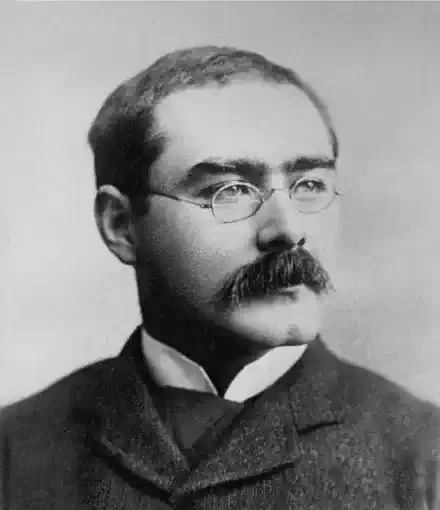
Rudyard Kipling
The Gods Of The Copybook Headings
The Gods Of The Copybook Headings
As I pass through my incarnations in every age and race,
I make my proper protestations to the Gods of the Market-Place.
Peering through reverent fingers I watch them flourish and fall.
And the Gods of the Copybook Headings, I notice, outlast them all.
We were living in trees when they met us. They showed us each in turn.
That water would certainly wet us, as Fire would certainly burn:
But we found them lacking in Uplift, Vision, and Breadth of Mind,
So we left them to teach the Gorilas while we followed the March of Mankind.
We moved as the Spirit listed. They never altered their pace,
Being neither clud nor wind-borne like the Gods of the Market-Place;
But they always caught up with our progress, and presently word would come
That a tribe had been wiped off its icefield, or the lights had gone out in Rome.
With the Hopes that our World is built on they were utterly out of touch.
They denied that the Moon was Stilton; they denied she was even Dutch.
They denied that Wishes were Horses; they denied that a Pig had Wings.
So we worshiped the Gods of the Market Who promiced these beautiful things.
When the Cambrian measures were forming, They promiced perpetual peace.
They swore, if we gave them our weapons, that the wars of the tribes would cease.
But when we disarmed They sold us and delivered us bound to our foe,
And the Gods of the Copybook Headings said: 'Stick to the Devil you know.'
On the first Feminian Sandstones we were promiced the Fuller Life
(Which started by loving our neighbor and ended by loving his wife)
Till our women had no more children and the men lost reason and faith,
And the Gods of the Copybook Headings said: 'The Wages of Sin is Death/'
In the Carboniferous Epoch we were promised abundance for all,
By robbing selective Peter to pay for collective Paul;
But, though we had plenty of money, there was nothing our money could buy,
And the Gods of the Copybook Headings said: 'If you don't work you die.'
The the Gods of the Market tumbled, and their smooth-tounged wizards withdrew,
And the hearts of the meanest were humbled and began to belive it was true
That All is not Gold that Glitters, and Two and Two make Four---
And the Gods of the Copybook Headings limped up to explain it once more
As it will be in the future, it was at the birth of Man---
There are only four things certain since Social Progress began:---
That the Dog returns to his Vomit and the Sow returns to her mire,
And the burnt Fool's bandaged finger goes wabbling back to the Fire;
And that after this is accomplished, and the brave new world begins
When all men are paid for existing and no man must pay for his sins,
As surely as Water will wet us, as surely as Fire will burn,
The Gods of the Copybook Headings with terror and slaughter return!
As I pass through my incarnations in every age and race,
I make my proper protestations to the Gods of the Market-Place.
Peering through reverent fingers I watch them flourish and fall.
And the Gods of the Copybook Headings, I notice, outlast them all.
We were living in trees when they met us. They showed us each in turn.
That water would certainly wet us, as Fire would certainly burn:
But we found them lacking in Uplift, Vision, and Breadth of Mind,
So we left them to teach the Gorilas while we followed the March of Mankind.
We moved as the Spirit listed. They never altered their pace,
Being neither clud nor wind-borne like the Gods of the Market-Place;
But they always caught up with our progress, and presently word would come
That a tribe had been wiped off its icefield, or the lights had gone out in Rome.
With the Hopes that our World is built on they were utterly out of touch.
They denied that the Moon was Stilton; they denied she was even Dutch.
They denied that Wishes were Horses; they denied that a Pig had Wings.
So we worshiped the Gods of the Market Who promiced these beautiful things.
When the Cambrian measures were forming, They promiced perpetual peace.
They swore, if we gave them our weapons, that the wars of the tribes would cease.
But when we disarmed They sold us and delivered us bound to our foe,
And the Gods of the Copybook Headings said: 'Stick to the Devil you know.'
On the first Feminian Sandstones we were promiced the Fuller Life
(Which started by loving our neighbor and ended by loving his wife)
Till our women had no more children and the men lost reason and faith,
And the Gods of the Copybook Headings said: 'The Wages of Sin is Death/'
In the Carboniferous Epoch we were promised abundance for all,
By robbing selective Peter to pay for collective Paul;
But, though we had plenty of money, there was nothing our money could buy,
And the Gods of the Copybook Headings said: 'If you don't work you die.'
The the Gods of the Market tumbled, and their smooth-tounged wizards withdrew,
And the hearts of the meanest were humbled and began to belive it was true
That All is not Gold that Glitters, and Two and Two make Four---
And the Gods of the Copybook Headings limped up to explain it once more
As it will be in the future, it was at the birth of Man---
There are only four things certain since Social Progress began:---
That the Dog returns to his Vomit and the Sow returns to her mire,
And the burnt Fool's bandaged finger goes wabbling back to the Fire;
And that after this is accomplished, and the brave new world begins
When all men are paid for existing and no man must pay for his sins,
As surely as Water will wet us, as surely as Fire will burn,
The Gods of the Copybook Headings with terror and slaughter return!
528
Rudyard Kipling
The Gods Of The Copybook Headings
The Gods Of The Copybook Headings
As I pass through my incarnations in every age and race,
I make my proper protestations to the Gods of the Market-Place.
Peering through reverent fingers I watch them flourish and fall.
And the Gods of the Copybook Headings, I notice, outlast them all.
We were living in trees when they met us. They showed us each in turn.
That water would certainly wet us, as Fire would certainly burn:
But we found them lacking in Uplift, Vision, and Breadth of Mind,
So we left them to teach the Gorilas while we followed the March of Mankind.
We moved as the Spirit listed. They never altered their pace,
Being neither clud nor wind-borne like the Gods of the Market-Place;
But they always caught up with our progress, and presently word would come
That a tribe had been wiped off its icefield, or the lights had gone out in Rome.
With the Hopes that our World is built on they were utterly out of touch.
They denied that the Moon was Stilton; they denied she was even Dutch.
They denied that Wishes were Horses; they denied that a Pig had Wings.
So we worshiped the Gods of the Market Who promiced these beautiful things.
When the Cambrian measures were forming, They promiced perpetual peace.
They swore, if we gave them our weapons, that the wars of the tribes would cease.
But when we disarmed They sold us and delivered us bound to our foe,
And the Gods of the Copybook Headings said: 'Stick to the Devil you know.'
On the first Feminian Sandstones we were promiced the Fuller Life
(Which started by loving our neighbor and ended by loving his wife)
Till our women had no more children and the men lost reason and faith,
And the Gods of the Copybook Headings said: 'The Wages of Sin is Death/'
In the Carboniferous Epoch we were promised abundance for all,
By robbing selective Peter to pay for collective Paul;
But, though we had plenty of money, there was nothing our money could buy,
And the Gods of the Copybook Headings said: 'If you don't work you die.'
The the Gods of the Market tumbled, and their smooth-tounged wizards withdrew,
And the hearts of the meanest were humbled and began to belive it was true
That All is not Gold that Glitters, and Two and Two make Four---
And the Gods of the Copybook Headings limped up to explain it once more
As it will be in the future, it was at the birth of Man---
There are only four things certain since Social Progress began:---
That the Dog returns to his Vomit and the Sow returns to her mire,
And the burnt Fool's bandaged finger goes wabbling back to the Fire;
And that after this is accomplished, and the brave new world begins
When all men are paid for existing and no man must pay for his sins,
As surely as Water will wet us, as surely as Fire will burn,
The Gods of the Copybook Headings with terror and slaughter return!
As I pass through my incarnations in every age and race,
I make my proper protestations to the Gods of the Market-Place.
Peering through reverent fingers I watch them flourish and fall.
And the Gods of the Copybook Headings, I notice, outlast them all.
We were living in trees when they met us. They showed us each in turn.
That water would certainly wet us, as Fire would certainly burn:
But we found them lacking in Uplift, Vision, and Breadth of Mind,
So we left them to teach the Gorilas while we followed the March of Mankind.
We moved as the Spirit listed. They never altered their pace,
Being neither clud nor wind-borne like the Gods of the Market-Place;
But they always caught up with our progress, and presently word would come
That a tribe had been wiped off its icefield, or the lights had gone out in Rome.
With the Hopes that our World is built on they were utterly out of touch.
They denied that the Moon was Stilton; they denied she was even Dutch.
They denied that Wishes were Horses; they denied that a Pig had Wings.
So we worshiped the Gods of the Market Who promiced these beautiful things.
When the Cambrian measures were forming, They promiced perpetual peace.
They swore, if we gave them our weapons, that the wars of the tribes would cease.
But when we disarmed They sold us and delivered us bound to our foe,
And the Gods of the Copybook Headings said: 'Stick to the Devil you know.'
On the first Feminian Sandstones we were promiced the Fuller Life
(Which started by loving our neighbor and ended by loving his wife)
Till our women had no more children and the men lost reason and faith,
And the Gods of the Copybook Headings said: 'The Wages of Sin is Death/'
In the Carboniferous Epoch we were promised abundance for all,
By robbing selective Peter to pay for collective Paul;
But, though we had plenty of money, there was nothing our money could buy,
And the Gods of the Copybook Headings said: 'If you don't work you die.'
The the Gods of the Market tumbled, and their smooth-tounged wizards withdrew,
And the hearts of the meanest were humbled and began to belive it was true
That All is not Gold that Glitters, and Two and Two make Four---
And the Gods of the Copybook Headings limped up to explain it once more
As it will be in the future, it was at the birth of Man---
There are only four things certain since Social Progress began:---
That the Dog returns to his Vomit and the Sow returns to her mire,
And the burnt Fool's bandaged finger goes wabbling back to the Fire;
And that after this is accomplished, and the brave new world begins
When all men are paid for existing and no man must pay for his sins,
As surely as Water will wet us, as surely as Fire will burn,
The Gods of the Copybook Headings with terror and slaughter return!
528
Rudyard Kipling
The Gift Of The Sea
The Gift Of The Sea
The dead child lay in the shroud,
And the widow watched beside;
And her mother slept, and the Channel swept
The gale in the teeth of the tide.
But the mother laughed at all.
"I have lost my man in the sea,
And the child is dead. Be still," she said,
"What more can ye do to me?"
The widow watched the dead,
And the candle guttered low,
And she tried to sing the Passing Song
That bids the poor soul go.
And "Mary take you now," she sang,
"That lay against my heart."
And "Mary smooth your crib to-night,"
But she could not say "Depart."
Then came a cry from the sea,
But the sea-rime blinded the glass,
And "Heard ye nothing, mother?" she said,
"'Tis the child that waits to pass."
And the nodding mother sighed.
"'Tis a lambing ewe in the whin,
For why should the christened soul cry out
That never knew of sin?"
"O feet I have held in my hand,
O hands at my heart to catch,
How should they know the road to go,
And how should they lift the latch?"
They laid a sheet to the door,
With the little quilt atop,
That it might not hurt from the cold or the dirt,
But the crying would not stop.
The widow lifted the latch
And strained her eyes to see,
And opened the door on the bitter shore
To let the soul go free.
There was neither glimmer nor ghost,
There was neither spirit nor spark,
And "Heard ye nothing, mother?" she said,
"'Tis crying for me in the dark."
And the nodding mother sighed:
"'Tis sorrow makes ye dull;
Have ye yet to learn the cry of the tern,
Or the wail of the wind-blown gull?"
"The terns are blown inland,
The gray gull follows the plough.
'Twas never a bird, the voice I heard,
O mother, I hear it now!"
"Lie still, dear lamb, lie still;
The child is passed from harm,
'Tis the ache in your breast that broke your rest,
And the feel of an empty arm."
She put her mother aside,
"In Mary's name let be!
For the peace of my soul I must go," she said,
And she went to the calling sea.
In the heel of the wind-bit pier,
Where the twisted weed was piled,
She came to the life she had missed by an hour,
For she came to a little child.
She laid it into her breast,
And back to her mother she came,
But it would not feed and it would not heed,
Though she gave it her own child's name.
And the dead child dripped on her breast,
And her own in the shroud lay stark;
And "God forgive us, mother," she said,
"We let it die in the dark!"
The dead child lay in the shroud,
And the widow watched beside;
And her mother slept, and the Channel swept
The gale in the teeth of the tide.
But the mother laughed at all.
"I have lost my man in the sea,
And the child is dead. Be still," she said,
"What more can ye do to me?"
The widow watched the dead,
And the candle guttered low,
And she tried to sing the Passing Song
That bids the poor soul go.
And "Mary take you now," she sang,
"That lay against my heart."
And "Mary smooth your crib to-night,"
But she could not say "Depart."
Then came a cry from the sea,
But the sea-rime blinded the glass,
And "Heard ye nothing, mother?" she said,
"'Tis the child that waits to pass."
And the nodding mother sighed.
"'Tis a lambing ewe in the whin,
For why should the christened soul cry out
That never knew of sin?"
"O feet I have held in my hand,
O hands at my heart to catch,
How should they know the road to go,
And how should they lift the latch?"
They laid a sheet to the door,
With the little quilt atop,
That it might not hurt from the cold or the dirt,
But the crying would not stop.
The widow lifted the latch
And strained her eyes to see,
And opened the door on the bitter shore
To let the soul go free.
There was neither glimmer nor ghost,
There was neither spirit nor spark,
And "Heard ye nothing, mother?" she said,
"'Tis crying for me in the dark."
And the nodding mother sighed:
"'Tis sorrow makes ye dull;
Have ye yet to learn the cry of the tern,
Or the wail of the wind-blown gull?"
"The terns are blown inland,
The gray gull follows the plough.
'Twas never a bird, the voice I heard,
O mother, I hear it now!"
"Lie still, dear lamb, lie still;
The child is passed from harm,
'Tis the ache in your breast that broke your rest,
And the feel of an empty arm."
She put her mother aside,
"In Mary's name let be!
For the peace of my soul I must go," she said,
And she went to the calling sea.
In the heel of the wind-bit pier,
Where the twisted weed was piled,
She came to the life she had missed by an hour,
For she came to a little child.
She laid it into her breast,
And back to her mother she came,
But it would not feed and it would not heed,
Though she gave it her own child's name.
And the dead child dripped on her breast,
And her own in the shroud lay stark;
And "God forgive us, mother," she said,
"We let it die in the dark!"
421
Rudyard Kipling
The Floods
The Floods
The rain it rains without a stay
In the hills above us, in the hills;
And presently the floods break way
Whose strength is in the hills.
The trees they suck from every cloud,
The valley brooks they roar aloud--
Bank-high for the lowlands, lowlands,
Lowlands under the hills!
The first wood down is sere and small,
From the hills--the brishings off the hills;
And then come by the bats and all
We cut last year in the hills;
And then the roots we tried to cleave
But found too tough and had to leave--
Polting through the lowlands, lowlands,
Lowlands under the hills!
The eye shall look, the ear shall hark
To the hills, the doings in the hills,
And rivers mating in the dark
With tokens from the hills.
Now what is weak will! surely go,
And what is strong must prove it so--
Stand Fast in the lowlands, lowlands,
Lowlands under the hills!
The floods they shall not be afraid--
Nor the hills above 'em, nor the hills--
Of any fence which man has made
Betwixt him and the hills.
The waters shall not reckon twice
For any work of man's device,
But bid it down to the lowlands, lowlands,
Lowlands under the hills!
The floods shall sweep corruption clean--
By the hills, the blessing of the hills--
That more the meadows may be green
New-mended from the hills.
The crops and cattle shall increase,
Nor little children shall not cease.
Go--plough the lowlands, lowlands,
Lowlands under the hills!
The rain it rains without a stay
In the hills above us, in the hills;
And presently the floods break way
Whose strength is in the hills.
The trees they suck from every cloud,
The valley brooks they roar aloud--
Bank-high for the lowlands, lowlands,
Lowlands under the hills!
The first wood down is sere and small,
From the hills--the brishings off the hills;
And then come by the bats and all
We cut last year in the hills;
And then the roots we tried to cleave
But found too tough and had to leave--
Polting through the lowlands, lowlands,
Lowlands under the hills!
The eye shall look, the ear shall hark
To the hills, the doings in the hills,
And rivers mating in the dark
With tokens from the hills.
Now what is weak will! surely go,
And what is strong must prove it so--
Stand Fast in the lowlands, lowlands,
Lowlands under the hills!
The floods they shall not be afraid--
Nor the hills above 'em, nor the hills--
Of any fence which man has made
Betwixt him and the hills.
The waters shall not reckon twice
For any work of man's device,
But bid it down to the lowlands, lowlands,
Lowlands under the hills!
The floods shall sweep corruption clean--
By the hills, the blessing of the hills--
That more the meadows may be green
New-mended from the hills.
The crops and cattle shall increase,
Nor little children shall not cease.
Go--plough the lowlands, lowlands,
Lowlands under the hills!
636
Rudyard Kipling
The Four Angels
The Four Angels
As Adam lay a-dreaming beneath the Apple Tree
The Angel of the Earth came down, and offered Earth in fee;
But Adam did not need it,
Nor the plough he would not speed it,
Singing: --"Earth and Water, Air and Fire,
What more can mortal man desire?"
(The Apple Tree's in bud)
As Adam lay a-dreaming beneath the Apple Tree
The Angel of the Waters offered all the Seas in fee;
But Adam would not take 'em,
Nor the ships he wouldn't make 'em,
Singing:--"Water, Earth and Air and Fire,
What more can mortal man desire? "
(The Apple Tree's in leaf.)
As Adam lay a-dreaming beneath the Apple Tree
The Angel of the Air he offered all the Air in fee;
But Adam did not crave it,
Nor the flight he wouldn't brave it,
Singing: --"Air and Water, Earth and Fire,
What more can mortal man desire:"
(The Apple Tree's in bloom.)
As Adam lay a-dreaming beneath the Apple Tree
The Angel of the Fire rose up and not a word said he;
But he wished a flame and made it,
And in Adam's heart he laid it,
Singing: --"Fire, Fire, burning Fire!
Stand up, and reach your heart's desire!"
(The Apple Blossom's set.)
As Adam was a-working outside of Eden-Wall,
He used the Earth, he used the Seas, he used the Air and all;
Till out of black disaster
He arose to be a master
Of Earth and Water, Air and Fire,
But never reached his heart's desire!
(The Apple Tree's cut down!)
As Adam lay a-dreaming beneath the Apple Tree
The Angel of the Earth came down, and offered Earth in fee;
But Adam did not need it,
Nor the plough he would not speed it,
Singing: --"Earth and Water, Air and Fire,
What more can mortal man desire?"
(The Apple Tree's in bud)
As Adam lay a-dreaming beneath the Apple Tree
The Angel of the Waters offered all the Seas in fee;
But Adam would not take 'em,
Nor the ships he wouldn't make 'em,
Singing:--"Water, Earth and Air and Fire,
What more can mortal man desire? "
(The Apple Tree's in leaf.)
As Adam lay a-dreaming beneath the Apple Tree
The Angel of the Air he offered all the Air in fee;
But Adam did not crave it,
Nor the flight he wouldn't brave it,
Singing: --"Air and Water, Earth and Fire,
What more can mortal man desire:"
(The Apple Tree's in bloom.)
As Adam lay a-dreaming beneath the Apple Tree
The Angel of the Fire rose up and not a word said he;
But he wished a flame and made it,
And in Adam's heart he laid it,
Singing: --"Fire, Fire, burning Fire!
Stand up, and reach your heart's desire!"
(The Apple Blossom's set.)
As Adam was a-working outside of Eden-Wall,
He used the Earth, he used the Seas, he used the Air and all;
Till out of black disaster
He arose to be a master
Of Earth and Water, Air and Fire,
But never reached his heart's desire!
(The Apple Tree's cut down!)
485
Rudyard Kipling
The First Chantey
The First Chantey
Mine was the woman to me, darkling I found her;
Haling her dumb from the camp, took her and bound her.
Hot rose her tribe on our track ere I had proved her;
Hearing her laugh in the gloom, greatly I loved her.
Swift through the forest we ran; none stood to guard us,
Few were my people and far; then the flood barred us --
Him we call Son of the Sea, sullen and swollen.
Panting we waited the death, stealer and stolen.
Yet ere they came to my lance laid for the slaughter,
Lightly she leaped to a log lapped in the water;
Holding on high and apart skins that arrayed her,
Called she the God of the Wind that He should aid her.
Life had the tree at that word (Praise we the Giver!)
Otter-like left he the bank for the full river.
Far fell their axes behind, flashing and ringing,
Wonder was on me and fear -- yet she was singing!
Low lay the land we had left. Now the blue bound us,
Even the Floor of the Gods level around us.
Whisper there was not, nor word, shadow nor showing,
Till the light stirred on the deep, glowing and growing.
Then did He leap to His place flaring from under,
He the Compeller, the Sun, bared to our wonder.
Nay, not a league from our eyes blinded with gazing,
Cleared He the gate of the world, huge and amazing!
This we beheld (and we live) -- the Pit of the Burning!
Then the God spoke to the tree for our returning;
Back to the beach of our flight, fearless and slowly,
Back to our slayers went he: but we were holy.
Men that were hot in that hunt, women that followed,
Babes that were promised our bones, trembled and wallowed:
Over the necks of the Tribe crouching and fawning --
Prophet and priestess we came back from the dawning!
Mine was the woman to me, darkling I found her;
Haling her dumb from the camp, took her and bound her.
Hot rose her tribe on our track ere I had proved her;
Hearing her laugh in the gloom, greatly I loved her.
Swift through the forest we ran; none stood to guard us,
Few were my people and far; then the flood barred us --
Him we call Son of the Sea, sullen and swollen.
Panting we waited the death, stealer and stolen.
Yet ere they came to my lance laid for the slaughter,
Lightly she leaped to a log lapped in the water;
Holding on high and apart skins that arrayed her,
Called she the God of the Wind that He should aid her.
Life had the tree at that word (Praise we the Giver!)
Otter-like left he the bank for the full river.
Far fell their axes behind, flashing and ringing,
Wonder was on me and fear -- yet she was singing!
Low lay the land we had left. Now the blue bound us,
Even the Floor of the Gods level around us.
Whisper there was not, nor word, shadow nor showing,
Till the light stirred on the deep, glowing and growing.
Then did He leap to His place flaring from under,
He the Compeller, the Sun, bared to our wonder.
Nay, not a league from our eyes blinded with gazing,
Cleared He the gate of the world, huge and amazing!
This we beheld (and we live) -- the Pit of the Burning!
Then the God spoke to the tree for our returning;
Back to the beach of our flight, fearless and slowly,
Back to our slayers went he: but we were holy.
Men that were hot in that hunt, women that followed,
Babes that were promised our bones, trembled and wallowed:
Over the necks of the Tribe crouching and fawning --
Prophet and priestess we came back from the dawning!
416
Rudyard Kipling
The Fall of Jock Gillespie
The Fall of Jock Gillespie
This fell when dinner-time was done --
'Twixt the first an' the second rub --
That oor mon Jock cam' hame again
To his rooms ahist the Club.
An' syne he laughed, an' syne he sang,
An' syne we thocht him fou,
An' syne he trumped his partner's trick,
An' garred his partner rue.
Then up and spake an elder mon,
That held the Spade its Ace --
God save the lad! Whence comes the licht
"That wimples on his face?"
An' Jock he sniggered, an' Jock he smiled,
An' ower the card-brim wunk: --
"I'm a' too fresh fra' the stirrup-peg,
"May be that I am drunk."
"There's whusky brewed in Galashils
"An' L. L. L. forbye;
"But never liquor lit the lowe
"That keeks fra' oot your eye.
"There's a third o' hair on your dress-coat breast,
"Aboon the heart a wee?"
"Oh! that is fra' the lang-haired Skye
"That slobbers ower me."
"Oh! lang-haired Skyes are lovin' beasts,
"An' terrier dogs are fair,
"But never yet was terrier born,
"Wi' ell-lang gowden hair!
"There's a smirch o' pouther on your breast,
"Below the left lappel?"
"Oh! that is fra' my auld cigar,
"Whenas the stump-end fell."
"Mon Jock, ye smoke the Trichi coarse,
"For ye are short o' cash,
"An' best Havanas Couldna leave
"Sae white an' pure an ash.
"This nicht ye stopped a story braid,
"An' stopped it wi' a curse.
"Last nicht ye told that tale yoursel' --
"An' capped it wi' a worse!
"Oh! we're no fou! Oh! we're no fou!
"But plainly we can ken
"Ye're fallin', fallin' fra the band
"O' cantie single men!"
An' it fell when sirris-shaws were sere,
An' the nichts were lang and mirk,
In braw new breeks, wi' a gowden ring,
Oor Jocke gaed to the Kirk!
This fell when dinner-time was done --
'Twixt the first an' the second rub --
That oor mon Jock cam' hame again
To his rooms ahist the Club.
An' syne he laughed, an' syne he sang,
An' syne we thocht him fou,
An' syne he trumped his partner's trick,
An' garred his partner rue.
Then up and spake an elder mon,
That held the Spade its Ace --
God save the lad! Whence comes the licht
"That wimples on his face?"
An' Jock he sniggered, an' Jock he smiled,
An' ower the card-brim wunk: --
"I'm a' too fresh fra' the stirrup-peg,
"May be that I am drunk."
"There's whusky brewed in Galashils
"An' L. L. L. forbye;
"But never liquor lit the lowe
"That keeks fra' oot your eye.
"There's a third o' hair on your dress-coat breast,
"Aboon the heart a wee?"
"Oh! that is fra' the lang-haired Skye
"That slobbers ower me."
"Oh! lang-haired Skyes are lovin' beasts,
"An' terrier dogs are fair,
"But never yet was terrier born,
"Wi' ell-lang gowden hair!
"There's a smirch o' pouther on your breast,
"Below the left lappel?"
"Oh! that is fra' my auld cigar,
"Whenas the stump-end fell."
"Mon Jock, ye smoke the Trichi coarse,
"For ye are short o' cash,
"An' best Havanas Couldna leave
"Sae white an' pure an ash.
"This nicht ye stopped a story braid,
"An' stopped it wi' a curse.
"Last nicht ye told that tale yoursel' --
"An' capped it wi' a worse!
"Oh! we're no fou! Oh! we're no fou!
"But plainly we can ken
"Ye're fallin', fallin' fra the band
"O' cantie single men!"
An' it fell when sirris-shaws were sere,
An' the nichts were lang and mirk,
In braw new breeks, wi' a gowden ring,
Oor Jocke gaed to the Kirk!
481
Rudyard Kipling
The Explanation
The Explanation
Love and Death once ceased their strife
At the Tavern of Man's Life.
Called for wine, and threw -- alas! --
Each his quiver on the grass.
When the bout was o'er they found
Mingled arrows strewed the ground.
Hastily they gathered then
Each the loves and lives of men.
Ah, the fateful dawn deceived!
Mingled arrows each one sheaved;
Death's dread armoury was stored
With the shafts he most abhorred;
Love's light quiver groaned beneath
Venom-headed darts of Death.
Thus it was they wrought our woe
At the Tavern long ago.
Tell me, do our masters know,
Loosing blindly as they fly,
Old men love while young men die?
Love and Death once ceased their strife
At the Tavern of Man's Life.
Called for wine, and threw -- alas! --
Each his quiver on the grass.
When the bout was o'er they found
Mingled arrows strewed the ground.
Hastily they gathered then
Each the loves and lives of men.
Ah, the fateful dawn deceived!
Mingled arrows each one sheaved;
Death's dread armoury was stored
With the shafts he most abhorred;
Love's light quiver groaned beneath
Venom-headed darts of Death.
Thus it was they wrought our woe
At the Tavern long ago.
Tell me, do our masters know,
Loosing blindly as they fly,
Old men love while young men die?
397
Rudyard Kipling
The Disciple
The Disciple
He that hath a Gospel
To loose upon Mankind,
Though he serve it utterly--
Body, soul and mind--
Though he go to Calvary
Daily for its gain--
It is His Disciple
Shall make his labour vain.
He that hath a Gospel
For all earth to own--
Though he etch it on the steel,
Or carve it on the stone--
Not to be misdoubted
Through the after-days--
It is His Disciple
Shall read it many ways.
It is His Disciple
(Ere Those Bones are dust )
Who shall change the Charter,
Who shall split the Trust--
Amplify distinctions,
Rationalize the Claim;
Preaching that the Master
Would have done the same.
It is His Disciple
Who shall tell us how
Much the Master would have scrapped
Had he lived till now--
What he would have modified
Of what he said before.
It is His Disciple
Shall do this and more....
He that hath a Gospel
Whereby Heaven is won
( Carpenter, or cameleer,
Or Maya's dreaming son ),
Many swords shall pierce Him,
Mingling blood with gall;
But His Own Disciple
Shall wound Him worst of all!
He that hath a Gospel
To loose upon Mankind,
Though he serve it utterly--
Body, soul and mind--
Though he go to Calvary
Daily for its gain--
It is His Disciple
Shall make his labour vain.
He that hath a Gospel
For all earth to own--
Though he etch it on the steel,
Or carve it on the stone--
Not to be misdoubted
Through the after-days--
It is His Disciple
Shall read it many ways.
It is His Disciple
(Ere Those Bones are dust )
Who shall change the Charter,
Who shall split the Trust--
Amplify distinctions,
Rationalize the Claim;
Preaching that the Master
Would have done the same.
It is His Disciple
Who shall tell us how
Much the Master would have scrapped
Had he lived till now--
What he would have modified
Of what he said before.
It is His Disciple
Shall do this and more....
He that hath a Gospel
Whereby Heaven is won
( Carpenter, or cameleer,
Or Maya's dreaming son ),
Many swords shall pierce Him,
Mingling blood with gall;
But His Own Disciple
Shall wound Him worst of all!
488
Rudyard Kipling
The Conversion of Aurelian McGoggin
The Conversion of Aurelian McGoggin
Ride with an idle whip, ride with an unused heel,
But, once in a way, there will come a day
When the colt must be taught to feel
The lash that falls, and the curb that galls, and the sting
of the rowelled steel.
Ride with an idle whip, ride with an unused heel,
But, once in a way, there will come a day
When the colt must be taught to feel
The lash that falls, and the curb that galls, and the sting
of the rowelled steel.
373
Rudyard Kipling
The Consolations of Memory
The Consolations of Memory
Circa -- Done out of Boethius by Geoffrey Chaucer
Blessed was our first age and morning-time. Then were no
waies tarren, ne no cars numberen, but each followed his owne
playing-busyness to go about singly or by large interspaces,
for to leden his viage after his luste and layen under clene hedge.
Jungling there was not, nor the overtaking wheele, and all those
now cruel clarions were full-hushed and full-still. Then nobile
horses, lest they should make the chariots moveable to run by
cause of this new feare, we did not press, and were apayed by
sweete thankes of him that drave. There was not cursings ne
adventure of death blinded bankes betweene, but good-fellowship
of yoke-mates at ignorance equal, and a one pillar of dust covered
all exodus.... But, see now how the blacke road hath
strippen herself of hearte and beauty where the dumbe lampe of
Tartarus winketh red, etc.
Circa -- Done out of Boethius by Geoffrey Chaucer
Blessed was our first age and morning-time. Then were no
waies tarren, ne no cars numberen, but each followed his owne
playing-busyness to go about singly or by large interspaces,
for to leden his viage after his luste and layen under clene hedge.
Jungling there was not, nor the overtaking wheele, and all those
now cruel clarions were full-hushed and full-still. Then nobile
horses, lest they should make the chariots moveable to run by
cause of this new feare, we did not press, and were apayed by
sweete thankes of him that drave. There was not cursings ne
adventure of death blinded bankes betweene, but good-fellowship
of yoke-mates at ignorance equal, and a one pillar of dust covered
all exodus.... But, see now how the blacke road hath
strippen herself of hearte and beauty where the dumbe lampe of
Tartarus winketh red, etc.
481
Rudyard Kipling
The Consolations of Memory
The Consolations of Memory
Circa -- Done out of Boethius by Geoffrey Chaucer
Blessed was our first age and morning-time. Then were no
waies tarren, ne no cars numberen, but each followed his owne
playing-busyness to go about singly or by large interspaces,
for to leden his viage after his luste and layen under clene hedge.
Jungling there was not, nor the overtaking wheele, and all those
now cruel clarions were full-hushed and full-still. Then nobile
horses, lest they should make the chariots moveable to run by
cause of this new feare, we did not press, and were apayed by
sweete thankes of him that drave. There was not cursings ne
adventure of death blinded bankes betweene, but good-fellowship
of yoke-mates at ignorance equal, and a one pillar of dust covered
all exodus.... But, see now how the blacke road hath
strippen herself of hearte and beauty where the dumbe lampe of
Tartarus winketh red, etc.
Circa -- Done out of Boethius by Geoffrey Chaucer
Blessed was our first age and morning-time. Then were no
waies tarren, ne no cars numberen, but each followed his owne
playing-busyness to go about singly or by large interspaces,
for to leden his viage after his luste and layen under clene hedge.
Jungling there was not, nor the overtaking wheele, and all those
now cruel clarions were full-hushed and full-still. Then nobile
horses, lest they should make the chariots moveable to run by
cause of this new feare, we did not press, and were apayed by
sweete thankes of him that drave. There was not cursings ne
adventure of death blinded bankes betweene, but good-fellowship
of yoke-mates at ignorance equal, and a one pillar of dust covered
all exodus.... But, see now how the blacke road hath
strippen herself of hearte and beauty where the dumbe lampe of
Tartarus winketh red, etc.
481
Rudyard Kipling
The Changelings
The Changelings
R.N.V.R, Sea Constables
Or ever the battered liners sank
With their passengers to the dark
I was head of a Walworth Bank,
And you were a grocer's clerk.
I was a dealer in stocks and shares,
And you in butters and teas;
And we both abandoned our own affairs
And took to the dreadful seas.
Wet and worry about our ways--
Panic, onset and flight--
Had us in charge for a thousand days
And thousand-year-long night.
We saw more than the nights could hide--
More than the waves could keep--
And--certain faces over the side
Which do not go from our sleep.
We were more tired than words can tell
While the pied craft fled by,
And the swinging mounds of the Western swell
Hoisted us Heavens-high...
Now there is nothing -- not even our rank--
To witness what we have been;
And I am returned to my Walworth Bank
And you to your margarine!
R.N.V.R, Sea Constables
Or ever the battered liners sank
With their passengers to the dark
I was head of a Walworth Bank,
And you were a grocer's clerk.
I was a dealer in stocks and shares,
And you in butters and teas;
And we both abandoned our own affairs
And took to the dreadful seas.
Wet and worry about our ways--
Panic, onset and flight--
Had us in charge for a thousand days
And thousand-year-long night.
We saw more than the nights could hide--
More than the waves could keep--
And--certain faces over the side
Which do not go from our sleep.
We were more tired than words can tell
While the pied craft fled by,
And the swinging mounds of the Western swell
Hoisted us Heavens-high...
Now there is nothing -- not even our rank--
To witness what we have been;
And I am returned to my Walworth Bank
And you to your margarine!
492
Rudyard Kipling
The Changelings
The Changelings
R.N.V.R, Sea Constables
Or ever the battered liners sank
With their passengers to the dark
I was head of a Walworth Bank,
And you were a grocer's clerk.
I was a dealer in stocks and shares,
And you in butters and teas;
And we both abandoned our own affairs
And took to the dreadful seas.
Wet and worry about our ways--
Panic, onset and flight--
Had us in charge for a thousand days
And thousand-year-long night.
We saw more than the nights could hide--
More than the waves could keep--
And--certain faces over the side
Which do not go from our sleep.
We were more tired than words can tell
While the pied craft fled by,
And the swinging mounds of the Western swell
Hoisted us Heavens-high...
Now there is nothing -- not even our rank--
To witness what we have been;
And I am returned to my Walworth Bank
And you to your margarine!
R.N.V.R, Sea Constables
Or ever the battered liners sank
With their passengers to the dark
I was head of a Walworth Bank,
And you were a grocer's clerk.
I was a dealer in stocks and shares,
And you in butters and teas;
And we both abandoned our own affairs
And took to the dreadful seas.
Wet and worry about our ways--
Panic, onset and flight--
Had us in charge for a thousand days
And thousand-year-long night.
We saw more than the nights could hide--
More than the waves could keep--
And--certain faces over the side
Which do not go from our sleep.
We were more tired than words can tell
While the pied craft fled by,
And the swinging mounds of the Western swell
Hoisted us Heavens-high...
Now there is nothing -- not even our rank--
To witness what we have been;
And I am returned to my Walworth Bank
And you to your margarine!
492
Rudyard Kipling
The Burden
The Burden
One grief on me is laid
Each day of every year,
Wherein no soul can aid,
Whereof no soul can hear:
Whereto no end is seen
Except to grieve again--
Ah, Mary Magdalene,
Where is there greater pain?
To dream on dear disgrace
Each hour of every day--
To bring no honest face
To aught I do or say:
To lie from morn till e'en--
To know my lies are vain--
Ah, Mary Magdalene,
Where can be greater pain?
To watch my steadfast fear
Attend mine every way
Each day of every year--
Each hour of every day:
To burn, and chill between--
To quake and rage again--
Ah, Mary Magdalene,
Where shall be greater pain:
One grave to me was given--
To guard till Judgment Day--
But God looked down from Heaven
And rolled the Stone away!
One day of all my years--
One hour of that one day--
His Angel saw my tears
And rolled the Stone away!
One grief on me is laid
Each day of every year,
Wherein no soul can aid,
Whereof no soul can hear:
Whereto no end is seen
Except to grieve again--
Ah, Mary Magdalene,
Where is there greater pain?
To dream on dear disgrace
Each hour of every day--
To bring no honest face
To aught I do or say:
To lie from morn till e'en--
To know my lies are vain--
Ah, Mary Magdalene,
Where can be greater pain?
To watch my steadfast fear
Attend mine every way
Each day of every year--
Each hour of every day:
To burn, and chill between--
To quake and rage again--
Ah, Mary Magdalene,
Where shall be greater pain:
One grave to me was given--
To guard till Judgment Day--
But God looked down from Heaven
And rolled the Stone away!
One day of all my years--
One hour of that one day--
His Angel saw my tears
And rolled the Stone away!
457
Rudyard Kipling
The Benefactors
The Benefactors
Ah! What avails the classic bent
And what the cultured word,
Against the undoctored incident
That actually occurred?
And what is Art whereto we press
Through paint and prose and rhyme--
When Nature in her nakedness
Defeats us every time?
It is not learning, grace nor gear,
Nor easy meat and drink,
But bitter pinch of pain and fear
That makes creation think.
When in this world's unpleasing youth
Our godlike race began,
The longest arm, the sharpest tooth,
Gave man control of man;
Till, bruised and bitten to the bone
And taught by pain and fear,
He learned to deal the far-off stone,
And poke the long, safe spear.
So tooth and nail were obsolete
As means against a foe,
Till, bored by uniform defeat,
Some genius built the bow.
Then stone and javelin proved as vain
As old-time tooth and nail;
Till, spurred anew by fear and pain,
Man fashioned coats of mail.
Then was there safety for the rich
And danger for the poor,
Till someone mixed a powder which
Redressed the scale once more.
Helmet and armour disappeared
With sword and bow and pike,
And, when the smoke of battle cleared,
All men were armed alike. . . .
And when ten million such were slain
To please one crazy king,
Man, schooled in bulk by fear and pain,
Grew weary of the thing;
And, at the very hour designed,
To enslave him past recall,
His tooth-stone-arrow-gun-shy mind
Turned and abolished all.
All Power, each Tyrant, every Mob
Whose head has grown too large,
Ends by destroying its own job
And works its own discharge;
And Man, whose mere necessities
Move all things from his path,
Trembles meanwhile at their decrees,
And deprecates their wrath!
Ah! What avails the classic bent
And what the cultured word,
Against the undoctored incident
That actually occurred?
And what is Art whereto we press
Through paint and prose and rhyme--
When Nature in her nakedness
Defeats us every time?
It is not learning, grace nor gear,
Nor easy meat and drink,
But bitter pinch of pain and fear
That makes creation think.
When in this world's unpleasing youth
Our godlike race began,
The longest arm, the sharpest tooth,
Gave man control of man;
Till, bruised and bitten to the bone
And taught by pain and fear,
He learned to deal the far-off stone,
And poke the long, safe spear.
So tooth and nail were obsolete
As means against a foe,
Till, bored by uniform defeat,
Some genius built the bow.
Then stone and javelin proved as vain
As old-time tooth and nail;
Till, spurred anew by fear and pain,
Man fashioned coats of mail.
Then was there safety for the rich
And danger for the poor,
Till someone mixed a powder which
Redressed the scale once more.
Helmet and armour disappeared
With sword and bow and pike,
And, when the smoke of battle cleared,
All men were armed alike. . . .
And when ten million such were slain
To please one crazy king,
Man, schooled in bulk by fear and pain,
Grew weary of the thing;
And, at the very hour designed,
To enslave him past recall,
His tooth-stone-arrow-gun-shy mind
Turned and abolished all.
All Power, each Tyrant, every Mob
Whose head has grown too large,
Ends by destroying its own job
And works its own discharge;
And Man, whose mere necessities
Move all things from his path,
Trembles meanwhile at their decrees,
And deprecates their wrath!
499
Rudyard Kipling
The Bell Buoy
The Bell Buoy
They christened my brother of old--
And a saintly name he bears--
They gave him his place to hold
At the head of the belfry-stairs,
Where the minister-towers stand
And the breeding kestrels cry.
Would I change with my brother a league inland?
(Shoal! 'Ware shoal!) Not I!
In the flush of the hot June prime,
O'er sleek flood-tides afire,
I hear him hurry the chime
To the bidding of checked Desire;
Till the sweated ringers tire
And the wild bob-majors die.
Could I wait for my turn in the godly choir?
(Shoal! 'Ware shoal!) Not I!
When the smoking scud is blown--
When the greasy wind-rack lowers--
Apart and at peace and alone,
He counts the changeless hours.
He wars with darkling Powers
(I war with a darkling sea);
Would he stoop to my work in the gusty mirk?
(Shoal! 'Ware shoal!) Not he!
There was never a priest to pray
There was never a hand to toll,
When they made me guard of the bay,
And moored me over the shoal.
I rock, I reel, and I roll--
My four great hammers ply--
Could I speak or be still at the Church's will?
(Shoal! 'Ware shoal!) Not I!
The landward marks have failed,
The fog-bank glides unguessed,
The seaward lights are veiled,
The spent deep feigns her rest:
But my ear is laid to her breast,
I lift to the swell--I cry!
Could I wait in sloth on the Church's oath?
(Shoal! 'Ware shoal!) Not I!
At the careless end of night
I thrill to the nearing screw;
I turn in the clearing light
And I call to the drowsy crew;
And the mud boils foul and blue
As the blind bow backs away.
Will they give me their thanks if they clear the banks?
(Shoal! 'Ware shoal!) Not they!
The beach-pools cake and skim,
The bursting spray-heads freeze,
I gather on crown and rim
The grey, grained ice of the seas,
Where, sheathed from bitt to trees,
The plunging colliers lie.
Would I barter my place for the Church's grace?
(Shoal! 'Ware shoal!) Not I!
Through the blur of the whirling snow,
Or the black of the inky sleet,
The lanterns gather and grow,
And I look for the homeward fleet.
Rattle of block and sheet--
"Ready about-stand by!"
Shall I ask them a fee ere they fetch the quay?
(Shoal! 'Ware shoal!) Not I!
I dip and I surge and I swing
In the rip of the racing tide,
By the gates of doom I sing,
On the horns of death I ride.
A ship-length overside,
Between the course and the sand,
Fretted and bound I bide
Peril whereof I cry.
Would I change with my brother a league inland?
(Shoal! 'Ware shoal!) Not I!
They christened my brother of old--
And a saintly name he bears--
They gave him his place to hold
At the head of the belfry-stairs,
Where the minister-towers stand
And the breeding kestrels cry.
Would I change with my brother a league inland?
(Shoal! 'Ware shoal!) Not I!
In the flush of the hot June prime,
O'er sleek flood-tides afire,
I hear him hurry the chime
To the bidding of checked Desire;
Till the sweated ringers tire
And the wild bob-majors die.
Could I wait for my turn in the godly choir?
(Shoal! 'Ware shoal!) Not I!
When the smoking scud is blown--
When the greasy wind-rack lowers--
Apart and at peace and alone,
He counts the changeless hours.
He wars with darkling Powers
(I war with a darkling sea);
Would he stoop to my work in the gusty mirk?
(Shoal! 'Ware shoal!) Not he!
There was never a priest to pray
There was never a hand to toll,
When they made me guard of the bay,
And moored me over the shoal.
I rock, I reel, and I roll--
My four great hammers ply--
Could I speak or be still at the Church's will?
(Shoal! 'Ware shoal!) Not I!
The landward marks have failed,
The fog-bank glides unguessed,
The seaward lights are veiled,
The spent deep feigns her rest:
But my ear is laid to her breast,
I lift to the swell--I cry!
Could I wait in sloth on the Church's oath?
(Shoal! 'Ware shoal!) Not I!
At the careless end of night
I thrill to the nearing screw;
I turn in the clearing light
And I call to the drowsy crew;
And the mud boils foul and blue
As the blind bow backs away.
Will they give me their thanks if they clear the banks?
(Shoal! 'Ware shoal!) Not they!
The beach-pools cake and skim,
The bursting spray-heads freeze,
I gather on crown and rim
The grey, grained ice of the seas,
Where, sheathed from bitt to trees,
The plunging colliers lie.
Would I barter my place for the Church's grace?
(Shoal! 'Ware shoal!) Not I!
Through the blur of the whirling snow,
Or the black of the inky sleet,
The lanterns gather and grow,
And I look for the homeward fleet.
Rattle of block and sheet--
"Ready about-stand by!"
Shall I ask them a fee ere they fetch the quay?
(Shoal! 'Ware shoal!) Not I!
I dip and I surge and I swing
In the rip of the racing tide,
By the gates of doom I sing,
On the horns of death I ride.
A ship-length overside,
Between the course and the sand,
Fretted and bound I bide
Peril whereof I cry.
Would I change with my brother a league inland?
(Shoal! 'Ware shoal!) Not I!
475
Rudyard Kipling
The Bee-Boy's Song
The Bee-Boy's Song
Bees! Bees! Hark to your bees!
"Hide from your neigbours as much as you please,
But all that has happened, to us you must tell,
Or else we will give you no honey to sell!"
A maiden in her glory,
Upon her wedding - day,
Must tell her Bees the story,
Or else they'll fly away.
Fly away -- die away --
Dwindle down and leave you!
But if you don't deceive your Bees,
Your Bees will not deceive you.
Marriage, birth or buryin',
News across the seas,
All you're sad or merry in,
You must tell the Bees.
Tell 'em coming in an' out,
Where the Fanners fan,
'Cause the Bees are just about
As curious as a man!
Don't you wait where the trees are,
When the lightnings play,
Nor don't you hate where Bees are,
Or else they'll pine away.
Pine away -- dwine away --
Anything to leave you!
But if you never grieve your Bees,
Your Bees'll never grieve you.
Bees! Bees! Hark to your bees!
"Hide from your neigbours as much as you please,
But all that has happened, to us you must tell,
Or else we will give you no honey to sell!"
A maiden in her glory,
Upon her wedding - day,
Must tell her Bees the story,
Or else they'll fly away.
Fly away -- die away --
Dwindle down and leave you!
But if you don't deceive your Bees,
Your Bees will not deceive you.
Marriage, birth or buryin',
News across the seas,
All you're sad or merry in,
You must tell the Bees.
Tell 'em coming in an' out,
Where the Fanners fan,
'Cause the Bees are just about
As curious as a man!
Don't you wait where the trees are,
When the lightnings play,
Nor don't you hate where Bees are,
Or else they'll pine away.
Pine away -- dwine away --
Anything to leave you!
But if you never grieve your Bees,
Your Bees'll never grieve you.
487
Rudyard Kipling
The Ballad of Bolivar
The Ballad of Bolivar
Seven men from all the world, back to Docks again,
Rolling down the Ratcliffe Road drunk and raising Cain:
Give the girls another drink 'fore we sign away --
We that took the ~Bolivar~ out across the Bay!
We put out from Sunderland loaded down with rails;
We put back to Sunderland 'cause our cargo shifted;
We put out from Sunderland -- met the winter gales --
Seven days and seven nights to the Start we drifted.
Racketing her rivets loose, smoke-stack white as snow,
All the coals adrift adeck, half the rails below,
Leaking like a lobster-pot, steering like a dray --
Out we took the ~Bolivar~, out across the Bay!
One by one the Lights came up, winked and let us by;
Mile by mile we waddled on, coal and fo'c'sle short;
Met a blow that laid us down, heard a bulkhead fly;
Left the ~Wolf~ behind us with a two-foot list to port.
Trailing like a wounded duck, working out her soul;
Clanging like a smithy-shop after every roll;
Just a funnel and a mast lurching through the spray --
So we threshed the ~Bolivar~ out across the Bay!
'Felt her hog and felt her sag, betted when she'd break;
Wondered every time she raced if she'd stand the shock;
Heard the seas like drunken men pounding at her strake;
Hoped the Lord 'ud keep his thumb on the plummer-block.
Banged against the iron decks, bilges choked with coal;
Flayed and frozen foot and hand, sick of heart and soul;
Last we prayed she'd buck herself into judgment Day --
Hi! we cursed the ~Bolivar~ knocking round the Bay!
O her nose flung up to sky, groaning to be still --
Up and down and back we went, never time for breath;
Then the money paid at Lloyd's caught her by the heel,
And the stars ran round and round dancin' at our death.
Aching for an hour's sleep, dozing off between;
'Heard the rotten rivets draw when she took it green;
'Watched the compass chase its tail like a cat at play --
That was on the ~Bolivar~, south across the Bay.
Once we saw between the squalls, lyin' head to swell --
Mad with work and weariness, wishin' they was we --
Some damned Liner's lights go by like a long hotel;
Cheered her from the ~Bolivar~ swampin' in the sea.
Then a grayback cleared us out, then the skipper laughed;
"Boys, the wheel has gone to Hell -- rig the winches aft!
Yoke the kicking rudder-head -- get her under way!"
So we steered her, pulley-haul, out across the Bay!
Just a pack o' rotten plates puttied up with tar,
In we came, an' time enough, 'cross Bilbao Bar.
Overloaded, undermanned, meant to founder, we
Euchred God Almighty's storm, bluffed the Eternal Sea!
Seven men from all the world, back to town again,
Rollin' down the Ratcliffe Road drunk and raising Cain:
Seven men from out of Hell. Ain't the owners gay,
'Cause we took the "Bolivar" safe across the Bay?
Seven men from all the world, back to Docks again,
Rolling down the Ratcliffe Road drunk and raising Cain:
Give the girls another drink 'fore we sign away --
We that took the ~Bolivar~ out across the Bay!
We put out from Sunderland loaded down with rails;
We put back to Sunderland 'cause our cargo shifted;
We put out from Sunderland -- met the winter gales --
Seven days and seven nights to the Start we drifted.
Racketing her rivets loose, smoke-stack white as snow,
All the coals adrift adeck, half the rails below,
Leaking like a lobster-pot, steering like a dray --
Out we took the ~Bolivar~, out across the Bay!
One by one the Lights came up, winked and let us by;
Mile by mile we waddled on, coal and fo'c'sle short;
Met a blow that laid us down, heard a bulkhead fly;
Left the ~Wolf~ behind us with a two-foot list to port.
Trailing like a wounded duck, working out her soul;
Clanging like a smithy-shop after every roll;
Just a funnel and a mast lurching through the spray --
So we threshed the ~Bolivar~ out across the Bay!
'Felt her hog and felt her sag, betted when she'd break;
Wondered every time she raced if she'd stand the shock;
Heard the seas like drunken men pounding at her strake;
Hoped the Lord 'ud keep his thumb on the plummer-block.
Banged against the iron decks, bilges choked with coal;
Flayed and frozen foot and hand, sick of heart and soul;
Last we prayed she'd buck herself into judgment Day --
Hi! we cursed the ~Bolivar~ knocking round the Bay!
O her nose flung up to sky, groaning to be still --
Up and down and back we went, never time for breath;
Then the money paid at Lloyd's caught her by the heel,
And the stars ran round and round dancin' at our death.
Aching for an hour's sleep, dozing off between;
'Heard the rotten rivets draw when she took it green;
'Watched the compass chase its tail like a cat at play --
That was on the ~Bolivar~, south across the Bay.
Once we saw between the squalls, lyin' head to swell --
Mad with work and weariness, wishin' they was we --
Some damned Liner's lights go by like a long hotel;
Cheered her from the ~Bolivar~ swampin' in the sea.
Then a grayback cleared us out, then the skipper laughed;
"Boys, the wheel has gone to Hell -- rig the winches aft!
Yoke the kicking rudder-head -- get her under way!"
So we steered her, pulley-haul, out across the Bay!
Just a pack o' rotten plates puttied up with tar,
In we came, an' time enough, 'cross Bilbao Bar.
Overloaded, undermanned, meant to founder, we
Euchred God Almighty's storm, bluffed the Eternal Sea!
Seven men from all the world, back to town again,
Rollin' down the Ratcliffe Road drunk and raising Cain:
Seven men from out of Hell. Ain't the owners gay,
'Cause we took the "Bolivar" safe across the Bay?
581
Rudyard Kipling
The Mary Gloster
The "Mary Gloster"
I've paid for your sickest fancies; I've humoured your crackedest whim --
Dick, it's your daddy, dying; you've got to listen to him!
Good for a fortnight, am I? The doctor told you? He lied.
I shall go under by morning, and -- Put that nurse outside.
'Never seen death yet, Dickie? Well, now is your time to learn,
And you'll wish you held my record before it comes to your turn.
Not counting the Line and the Foundry, the yards and the village, too,
I've made myself and a million; but I'm damned if I made you.
Master at two-and-twenty, and married at twenty-three --
Ten thousand men on the pay-roll, and forty freighters at sea!
Fifty years between 'em, and every year of it fight,
And now I'm Sir Anthony Gloster, dying, a baronite:
For I lunched with his Royal 'Ighness -- what was it the papers a-had?
"Not least of our merchant-princes." Dickie, that's me, your dad!
~I~ didn't begin with askings. ~I~ took my job and I stuck;
And I took the chances they wouldn't, an' now they're calling it luck.
Lord, what boats I've handled -- rotten and leaky and old!
Ran 'em, or -- opened the bilge-cock, precisely as I was told.
Grub that 'ud bind you crazy, and crews that 'ud turn you grey,
And a big fat lump of insurance to cover the risk on the way.
The others they dursn't do it; they said they valued their life
(They've served me since as skippers). ~I~ went, and I took my wife.
Over the world I drove 'em, married at twenty-three,
And your mother saving the money and making a man of me.
~I~ was content to be master, but she said there was better behind;
She took the chances I wouldn't, and I followed your mother blind.
She egged me to borrow the money, an' she helped me to clear the loan,
When we bought half shares in a cheap 'un and hoisted a flag of our own.
Patching and coaling on credit, and living the Lord knew how,
We started the Red Ox freighters -- we've eight-and-thirty now.
And those were the days of clippers, and the freights were clipper-freights,
And we knew we were making our fortune, but she died in Macassar Straits --
By the Little Paternosters, as you come to the Union Bank --
And we dropped her in fourteen fathom; I pricked it off where she sank.
Owners we were, full owners, and the boat was christened for her,
And she died in the ~Mary Gloster~. My heart, how young we were!
So I went on a spree round Java and well-nigh ran her ashore,
But your mother came and warned me and I wouldn't liquor no more:
Strict I stuck to my business, afraid to stop or I'd think,
Saving the money (she warned me), and letting the other men drink.
And I met M'Cullough in London (I'd turned five 'undred then),
And 'tween us we started the Foundry -- three forges and twenty men:
Cheap repairs for the cheap 'uns. It paid, and the business grew,
For I bought me a steam-lathe patent, and that was a gold mine too.
"Cheaper to build 'em than buy 'em," ~I~ said, but M'Cullough he shied,
And we wasted a year in talking before we moved to the Clyde.
And the Lines were all beginning, and we all of us started fair,
Building our engines like houses and staying the boilers square.
But M'Cullough 'e wanted cabins with marble and maple and all,
And Brussels an' Utrecht velvet, and baths and a Social Hall,
And pipes for closets all over, and cutting the frames too light,
But M'Cullough he died in the Sixties, and -- Well, I'm dying to-night. . . .
I knew -- ~I~ knew what was coming, when we bid on the ~Byfleet~'s keel --
They piddled and piffled with iron: I'd given my orders for steel!
Steel and the first expansions. It paid, I tell you, it paid,
When we came with our nine-knot freighters and collared the long-run trade!
And they asked me how I did it, and I gave 'em the Scripture text,
"You keep your light so shining a little in front o' the next!"
They copied all they could follow, but they couldn't copy my mind,
And I left 'em sweating and stealing a year and a half behind.
Then came the armour-contracts, but that was M'Cullough's side;
He was always best in the Foundry, but better, perhaps, he died.
I went through his private papers; the notes was plainer than print;
And I'm no fool to finish if a man'll give me a hint.
(I remember his widow was angry.) So I saw what the drawings meant,
And I started the six-inch rollers, and it paid me sixty per cent --
Sixty per cent ~with~ failures, and more than twice we could do,
And a quarter-million to credit, and I saved it all for you!
I thought -- it doesn't matter -- you seemed to favour your ma,
But you're nearer forty than thirty, and I know the kind you are.
Harrer an' Trinity College! I ought to ha' sent you to sea --
But I stood you an education, an' what have you done for me?
The things I knew was proper you wouldn't thank me to give,
And the things I knew was rotten you said was the way to live.
For you muddled with books and pictures, an' china an' etchin's an' fans,
And your rooms at college was beastly -- more like a whore's than a man's --
Till you married that thin-flanked woman, as white and as stale as a bone,
An' she gave you your social nonsense; but where's that kid o' your own?
I've seen your carriages blocking the half o' the Cromwell Road,
But never the doctor's brougham to help the missus unload.
(So there isn't even a grandchild, an' the Gloster family's done.)
Not like your mother, she isn't. ~She~ carried her freight each run.
But they died, the pore little beggars! At sea she had 'em -- they died.
Only you, an' you stood it; you haven't stood much beside.
Weak, a liar, and idle, and mean as a collier's whelp
Nosing for scraps in the galley. No help -- my son was no help!
So he gets three 'undred thousand, in trust and the interest paid.
I wouldn't give it you, Dickie -- you see, I made it in trade.
You're saved from soiling your fingers, and if you have no child,
It all comes back to the business. Gad, won't your wife be wild!
'Calls and calls in her carriage, her 'andkerchief up to 'er eye:
"Daddy! dear daddy's dyin'!" and doing her best to cry.
Grateful? Oh, yes, I'm grateful, but keep her away from here.
Your mother 'ud never ha' stood 'er, and, anyhow, women are queer. . . .
There's women will say I've married a second time.
Not quite! But give pore Aggie a hundred, and tell her your lawyers'll fight.
She was the best o' the boiling -- you'll meet her before it ends;
I'm in for a row with the mother -- I'll leave you settle my friends:
For a man he must go with a woman, which women don't understand --
Or the sort that say they can see it they aren't the marrying brand.
But I wanted to speak o' your mother that's Lady Gloster still --
I'm going to up and see her, without it's hurting the will.
Here! Take your hand off the bell-pull. Five thousand's waiting for you,
If you'll only listen a minute, and do as I bid you do.
They'll try to prove me crazy, and, if you bungle, they can;
And I've only you to trust to! (O God, why ain't he a man?)
There's some waste money on marbles, the same as M'Cullough tried --
Marbles and mausoleums -- but I call that sinful pride.
There's some ship bodies for burial -- we've carried 'em, soldered and packed;
Down in their wills they wrote it, and nobody called ~them~ cracked.
But me -- I've too much money, and people might. . . . All my fault:
It come o' hoping for grandsons and buying that Wokin' vault.
I'm sick o' the 'ole dam' business; I'm going back where I came.
Dick, you're the son o' my body, and you'll take charge o' the same!
I want to lie by your mother, ten thousand mile away,
And they'll want to send me to Woking; and that's where you'll earn your pay.
I've thought it out on the quiet, the same as it ought to be done --
Quiet, and decent, and proper -- an' here's your orders, my son.
You know the Line? You don't, though. You write to the Board, and tell
Your father's death has upset you an' you're goin' to cruise for a spell,
An' you'd like the ~Mary Gloster~ -- I've held her ready for this --
They'll put her in working order and you'll take her out as she is.
Yes, it was money idle when I patched her and put her aside
(Thank God, I can pay for my fancies!) -- the boat where your mother died,
By the Little Paternosters, as you come to the Union Bank,
We dropped her -- I think I told you -- and I pricked it off where she sank --
['Tiny she looked on the grating -- that oily, treacly sea --]
'Hundred and eighteen East, remember, and South just three.
Easy bearings to carry -- three South -- three to the dot;
But I gave M'Andrew a copy in case of dying -- or not.
And so you'll write to M'Andrew, he's Chief of the Maori Line;
They'll give him leave, if you ask 'em and say it's business o' mine.
I built three boats for the Maoris, an' very well pleased they were,
An' I've known Mac since the Fifties, and Mac knew me -- and her.
After the first stroke warned me I sent him the money to keep
Against the time you'd claim it, committin' your dad to the deep;
For you are the son o' my body, and Mac was my oldest friend,
I've never asked 'im to dinner, but he'll see it out to the end.
Stiff-necked Glasgow beggar, I've heard he's prayed for my soul,
But he couldn't lie if you paid him, and he'd starve before he stole!
He'll take the ~Mary~ in ballast -- you'll find her a lively ship;
And you'll take Sir Anthony Gloster, that goes on 'is wedding-trip,
Lashed in our old deck-cabin with all three port-holes wide,
The kick o' the screw beneath him and the round blue seas outside!
Sir Anthony Gloster's carriage -- our 'ouse-flag flyin' free --
Ten thousand men on the pay-roll and forty freighters at sea!
He made himself and a million, but this world is a fleetin' show,
And he'll go to the wife of 'is bosom the same as he ought to go --
By the heel of the Paternosters -- there isn't a chance to mistake --
And Mac'll pay you the money as soon as the bubbles break!
Five thousand for six weeks' cruising, the staunchest freighter afloat,
And Mac he'll give you your bonus the minute I'm out o' the boat!
He'll take you round to Macassar, and you'll come back alone;
He knows what I want o' the ~Mary~. . . . I'll do what I please with my own.
Your mother 'ud call it wasteful, but I've seven-and-thirty more;
I'll come in my private carriage and bid it wait at the door. . . .
For my son 'e was never a credit: 'e muddled with books and art,
And 'e lived on Sir Anthony's money and 'e broke Sir Anthony's heart.
There isn't even a grandchild, and the Gloster family's done --
The only one you left me, O mother, the only one!
Harrer and Trinity College -- me slavin' early an' late --
An' he thinks I'm dying crazy, and you're in Macassar Strait!
Flesh o' my flesh, my dearie, for ever an' ever amen,
That first stroke come for a warning; I ought to ha' gone to you then,
But -- cheap repairs for a cheap 'un -- the doctors said I'd do:
Mary, why didn't ~you~ warn me? I've allus heeded to you,
Excep' -- I know -- about women; but you are a spirit now;
An', wife, they was only women, and I was a man. That's how.
An' a man 'e must go with a woman, as you could not understand;
But I never talked 'em secrets. I paid 'em out o' hand.
Thank Gawd, I can pay for my fancies! Now what's five thousand to me,
For a berth off the Paternosters in the haven where I would be?
~I~ believe in the Resurrection, if I read my Bible plain,
But I wouldn't trust 'em at Wokin'; we're safer at sea again.
For the heart it shall go with the treasure -- go down to the sea in ships.
I'm sick of the hired women -- I'll kiss my girl on her lips!
I'll be content with my fountain, I'll drink from my own well,
And the wife of my youth shall charm me -- an' the rest can go to Hell!
(Dickie, ~he~ will, that's certain.) I'll lie in our standin'-bed,
An' Mac'll take her in ballast -- an' she trims best by the head. . . .
Down by the head an' sinkin', her fires are drawn and cold,
And the water's splashin' hollow on the skin of the empty hold --
Churning an' choking and chuckling, quiet and scummy and dark --
Full to her lower hatches and risin' steady. Hark!
That was the after-bulkhead. . . . She's flooded from stem to stern. . . .
Never seen death yet, Dickie? . . . Well, now is your time to learn!
I've paid for your sickest fancies; I've humoured your crackedest whim --
Dick, it's your daddy, dying; you've got to listen to him!
Good for a fortnight, am I? The doctor told you? He lied.
I shall go under by morning, and -- Put that nurse outside.
'Never seen death yet, Dickie? Well, now is your time to learn,
And you'll wish you held my record before it comes to your turn.
Not counting the Line and the Foundry, the yards and the village, too,
I've made myself and a million; but I'm damned if I made you.
Master at two-and-twenty, and married at twenty-three --
Ten thousand men on the pay-roll, and forty freighters at sea!
Fifty years between 'em, and every year of it fight,
And now I'm Sir Anthony Gloster, dying, a baronite:
For I lunched with his Royal 'Ighness -- what was it the papers a-had?
"Not least of our merchant-princes." Dickie, that's me, your dad!
~I~ didn't begin with askings. ~I~ took my job and I stuck;
And I took the chances they wouldn't, an' now they're calling it luck.
Lord, what boats I've handled -- rotten and leaky and old!
Ran 'em, or -- opened the bilge-cock, precisely as I was told.
Grub that 'ud bind you crazy, and crews that 'ud turn you grey,
And a big fat lump of insurance to cover the risk on the way.
The others they dursn't do it; they said they valued their life
(They've served me since as skippers). ~I~ went, and I took my wife.
Over the world I drove 'em, married at twenty-three,
And your mother saving the money and making a man of me.
~I~ was content to be master, but she said there was better behind;
She took the chances I wouldn't, and I followed your mother blind.
She egged me to borrow the money, an' she helped me to clear the loan,
When we bought half shares in a cheap 'un and hoisted a flag of our own.
Patching and coaling on credit, and living the Lord knew how,
We started the Red Ox freighters -- we've eight-and-thirty now.
And those were the days of clippers, and the freights were clipper-freights,
And we knew we were making our fortune, but she died in Macassar Straits --
By the Little Paternosters, as you come to the Union Bank --
And we dropped her in fourteen fathom; I pricked it off where she sank.
Owners we were, full owners, and the boat was christened for her,
And she died in the ~Mary Gloster~. My heart, how young we were!
So I went on a spree round Java and well-nigh ran her ashore,
But your mother came and warned me and I wouldn't liquor no more:
Strict I stuck to my business, afraid to stop or I'd think,
Saving the money (she warned me), and letting the other men drink.
And I met M'Cullough in London (I'd turned five 'undred then),
And 'tween us we started the Foundry -- three forges and twenty men:
Cheap repairs for the cheap 'uns. It paid, and the business grew,
For I bought me a steam-lathe patent, and that was a gold mine too.
"Cheaper to build 'em than buy 'em," ~I~ said, but M'Cullough he shied,
And we wasted a year in talking before we moved to the Clyde.
And the Lines were all beginning, and we all of us started fair,
Building our engines like houses and staying the boilers square.
But M'Cullough 'e wanted cabins with marble and maple and all,
And Brussels an' Utrecht velvet, and baths and a Social Hall,
And pipes for closets all over, and cutting the frames too light,
But M'Cullough he died in the Sixties, and -- Well, I'm dying to-night. . . .
I knew -- ~I~ knew what was coming, when we bid on the ~Byfleet~'s keel --
They piddled and piffled with iron: I'd given my orders for steel!
Steel and the first expansions. It paid, I tell you, it paid,
When we came with our nine-knot freighters and collared the long-run trade!
And they asked me how I did it, and I gave 'em the Scripture text,
"You keep your light so shining a little in front o' the next!"
They copied all they could follow, but they couldn't copy my mind,
And I left 'em sweating and stealing a year and a half behind.
Then came the armour-contracts, but that was M'Cullough's side;
He was always best in the Foundry, but better, perhaps, he died.
I went through his private papers; the notes was plainer than print;
And I'm no fool to finish if a man'll give me a hint.
(I remember his widow was angry.) So I saw what the drawings meant,
And I started the six-inch rollers, and it paid me sixty per cent --
Sixty per cent ~with~ failures, and more than twice we could do,
And a quarter-million to credit, and I saved it all for you!
I thought -- it doesn't matter -- you seemed to favour your ma,
But you're nearer forty than thirty, and I know the kind you are.
Harrer an' Trinity College! I ought to ha' sent you to sea --
But I stood you an education, an' what have you done for me?
The things I knew was proper you wouldn't thank me to give,
And the things I knew was rotten you said was the way to live.
For you muddled with books and pictures, an' china an' etchin's an' fans,
And your rooms at college was beastly -- more like a whore's than a man's --
Till you married that thin-flanked woman, as white and as stale as a bone,
An' she gave you your social nonsense; but where's that kid o' your own?
I've seen your carriages blocking the half o' the Cromwell Road,
But never the doctor's brougham to help the missus unload.
(So there isn't even a grandchild, an' the Gloster family's done.)
Not like your mother, she isn't. ~She~ carried her freight each run.
But they died, the pore little beggars! At sea she had 'em -- they died.
Only you, an' you stood it; you haven't stood much beside.
Weak, a liar, and idle, and mean as a collier's whelp
Nosing for scraps in the galley. No help -- my son was no help!
So he gets three 'undred thousand, in trust and the interest paid.
I wouldn't give it you, Dickie -- you see, I made it in trade.
You're saved from soiling your fingers, and if you have no child,
It all comes back to the business. Gad, won't your wife be wild!
'Calls and calls in her carriage, her 'andkerchief up to 'er eye:
"Daddy! dear daddy's dyin'!" and doing her best to cry.
Grateful? Oh, yes, I'm grateful, but keep her away from here.
Your mother 'ud never ha' stood 'er, and, anyhow, women are queer. . . .
There's women will say I've married a second time.
Not quite! But give pore Aggie a hundred, and tell her your lawyers'll fight.
She was the best o' the boiling -- you'll meet her before it ends;
I'm in for a row with the mother -- I'll leave you settle my friends:
For a man he must go with a woman, which women don't understand --
Or the sort that say they can see it they aren't the marrying brand.
But I wanted to speak o' your mother that's Lady Gloster still --
I'm going to up and see her, without it's hurting the will.
Here! Take your hand off the bell-pull. Five thousand's waiting for you,
If you'll only listen a minute, and do as I bid you do.
They'll try to prove me crazy, and, if you bungle, they can;
And I've only you to trust to! (O God, why ain't he a man?)
There's some waste money on marbles, the same as M'Cullough tried --
Marbles and mausoleums -- but I call that sinful pride.
There's some ship bodies for burial -- we've carried 'em, soldered and packed;
Down in their wills they wrote it, and nobody called ~them~ cracked.
But me -- I've too much money, and people might. . . . All my fault:
It come o' hoping for grandsons and buying that Wokin' vault.
I'm sick o' the 'ole dam' business; I'm going back where I came.
Dick, you're the son o' my body, and you'll take charge o' the same!
I want to lie by your mother, ten thousand mile away,
And they'll want to send me to Woking; and that's where you'll earn your pay.
I've thought it out on the quiet, the same as it ought to be done --
Quiet, and decent, and proper -- an' here's your orders, my son.
You know the Line? You don't, though. You write to the Board, and tell
Your father's death has upset you an' you're goin' to cruise for a spell,
An' you'd like the ~Mary Gloster~ -- I've held her ready for this --
They'll put her in working order and you'll take her out as she is.
Yes, it was money idle when I patched her and put her aside
(Thank God, I can pay for my fancies!) -- the boat where your mother died,
By the Little Paternosters, as you come to the Union Bank,
We dropped her -- I think I told you -- and I pricked it off where she sank --
['Tiny she looked on the grating -- that oily, treacly sea --]
'Hundred and eighteen East, remember, and South just three.
Easy bearings to carry -- three South -- three to the dot;
But I gave M'Andrew a copy in case of dying -- or not.
And so you'll write to M'Andrew, he's Chief of the Maori Line;
They'll give him leave, if you ask 'em and say it's business o' mine.
I built three boats for the Maoris, an' very well pleased they were,
An' I've known Mac since the Fifties, and Mac knew me -- and her.
After the first stroke warned me I sent him the money to keep
Against the time you'd claim it, committin' your dad to the deep;
For you are the son o' my body, and Mac was my oldest friend,
I've never asked 'im to dinner, but he'll see it out to the end.
Stiff-necked Glasgow beggar, I've heard he's prayed for my soul,
But he couldn't lie if you paid him, and he'd starve before he stole!
He'll take the ~Mary~ in ballast -- you'll find her a lively ship;
And you'll take Sir Anthony Gloster, that goes on 'is wedding-trip,
Lashed in our old deck-cabin with all three port-holes wide,
The kick o' the screw beneath him and the round blue seas outside!
Sir Anthony Gloster's carriage -- our 'ouse-flag flyin' free --
Ten thousand men on the pay-roll and forty freighters at sea!
He made himself and a million, but this world is a fleetin' show,
And he'll go to the wife of 'is bosom the same as he ought to go --
By the heel of the Paternosters -- there isn't a chance to mistake --
And Mac'll pay you the money as soon as the bubbles break!
Five thousand for six weeks' cruising, the staunchest freighter afloat,
And Mac he'll give you your bonus the minute I'm out o' the boat!
He'll take you round to Macassar, and you'll come back alone;
He knows what I want o' the ~Mary~. . . . I'll do what I please with my own.
Your mother 'ud call it wasteful, but I've seven-and-thirty more;
I'll come in my private carriage and bid it wait at the door. . . .
For my son 'e was never a credit: 'e muddled with books and art,
And 'e lived on Sir Anthony's money and 'e broke Sir Anthony's heart.
There isn't even a grandchild, and the Gloster family's done --
The only one you left me, O mother, the only one!
Harrer and Trinity College -- me slavin' early an' late --
An' he thinks I'm dying crazy, and you're in Macassar Strait!
Flesh o' my flesh, my dearie, for ever an' ever amen,
That first stroke come for a warning; I ought to ha' gone to you then,
But -- cheap repairs for a cheap 'un -- the doctors said I'd do:
Mary, why didn't ~you~ warn me? I've allus heeded to you,
Excep' -- I know -- about women; but you are a spirit now;
An', wife, they was only women, and I was a man. That's how.
An' a man 'e must go with a woman, as you could not understand;
But I never talked 'em secrets. I paid 'em out o' hand.
Thank Gawd, I can pay for my fancies! Now what's five thousand to me,
For a berth off the Paternosters in the haven where I would be?
~I~ believe in the Resurrection, if I read my Bible plain,
But I wouldn't trust 'em at Wokin'; we're safer at sea again.
For the heart it shall go with the treasure -- go down to the sea in ships.
I'm sick of the hired women -- I'll kiss my girl on her lips!
I'll be content with my fountain, I'll drink from my own well,
And the wife of my youth shall charm me -- an' the rest can go to Hell!
(Dickie, ~he~ will, that's certain.) I'll lie in our standin'-bed,
An' Mac'll take her in ballast -- an' she trims best by the head. . . .
Down by the head an' sinkin', her fires are drawn and cold,
And the water's splashin' hollow on the skin of the empty hold --
Churning an' choking and chuckling, quiet and scummy and dark --
Full to her lower hatches and risin' steady. Hark!
That was the after-bulkhead. . . . She's flooded from stem to stern. . . .
Never seen death yet, Dickie? . . . Well, now is your time to learn!
823
Rudyard Kipling
The Mary Gloster
The "Mary Gloster"
I've paid for your sickest fancies; I've humoured your crackedest whim --
Dick, it's your daddy, dying; you've got to listen to him!
Good for a fortnight, am I? The doctor told you? He lied.
I shall go under by morning, and -- Put that nurse outside.
'Never seen death yet, Dickie? Well, now is your time to learn,
And you'll wish you held my record before it comes to your turn.
Not counting the Line and the Foundry, the yards and the village, too,
I've made myself and a million; but I'm damned if I made you.
Master at two-and-twenty, and married at twenty-three --
Ten thousand men on the pay-roll, and forty freighters at sea!
Fifty years between 'em, and every year of it fight,
And now I'm Sir Anthony Gloster, dying, a baronite:
For I lunched with his Royal 'Ighness -- what was it the papers a-had?
"Not least of our merchant-princes." Dickie, that's me, your dad!
~I~ didn't begin with askings. ~I~ took my job and I stuck;
And I took the chances they wouldn't, an' now they're calling it luck.
Lord, what boats I've handled -- rotten and leaky and old!
Ran 'em, or -- opened the bilge-cock, precisely as I was told.
Grub that 'ud bind you crazy, and crews that 'ud turn you grey,
And a big fat lump of insurance to cover the risk on the way.
The others they dursn't do it; they said they valued their life
(They've served me since as skippers). ~I~ went, and I took my wife.
Over the world I drove 'em, married at twenty-three,
And your mother saving the money and making a man of me.
~I~ was content to be master, but she said there was better behind;
She took the chances I wouldn't, and I followed your mother blind.
She egged me to borrow the money, an' she helped me to clear the loan,
When we bought half shares in a cheap 'un and hoisted a flag of our own.
Patching and coaling on credit, and living the Lord knew how,
We started the Red Ox freighters -- we've eight-and-thirty now.
And those were the days of clippers, and the freights were clipper-freights,
And we knew we were making our fortune, but she died in Macassar Straits --
By the Little Paternosters, as you come to the Union Bank --
And we dropped her in fourteen fathom; I pricked it off where she sank.
Owners we were, full owners, and the boat was christened for her,
And she died in the ~Mary Gloster~. My heart, how young we were!
So I went on a spree round Java and well-nigh ran her ashore,
But your mother came and warned me and I wouldn't liquor no more:
Strict I stuck to my business, afraid to stop or I'd think,
Saving the money (she warned me), and letting the other men drink.
And I met M'Cullough in London (I'd turned five 'undred then),
And 'tween us we started the Foundry -- three forges and twenty men:
Cheap repairs for the cheap 'uns. It paid, and the business grew,
For I bought me a steam-lathe patent, and that was a gold mine too.
"Cheaper to build 'em than buy 'em," ~I~ said, but M'Cullough he shied,
And we wasted a year in talking before we moved to the Clyde.
And the Lines were all beginning, and we all of us started fair,
Building our engines like houses and staying the boilers square.
But M'Cullough 'e wanted cabins with marble and maple and all,
And Brussels an' Utrecht velvet, and baths and a Social Hall,
And pipes for closets all over, and cutting the frames too light,
But M'Cullough he died in the Sixties, and -- Well, I'm dying to-night. . . .
I knew -- ~I~ knew what was coming, when we bid on the ~Byfleet~'s keel --
They piddled and piffled with iron: I'd given my orders for steel!
Steel and the first expansions. It paid, I tell you, it paid,
When we came with our nine-knot freighters and collared the long-run trade!
And they asked me how I did it, and I gave 'em the Scripture text,
"You keep your light so shining a little in front o' the next!"
They copied all they could follow, but they couldn't copy my mind,
And I left 'em sweating and stealing a year and a half behind.
Then came the armour-contracts, but that was M'Cullough's side;
He was always best in the Foundry, but better, perhaps, he died.
I went through his private papers; the notes was plainer than print;
And I'm no fool to finish if a man'll give me a hint.
(I remember his widow was angry.) So I saw what the drawings meant,
And I started the six-inch rollers, and it paid me sixty per cent --
Sixty per cent ~with~ failures, and more than twice we could do,
And a quarter-million to credit, and I saved it all for you!
I thought -- it doesn't matter -- you seemed to favour your ma,
But you're nearer forty than thirty, and I know the kind you are.
Harrer an' Trinity College! I ought to ha' sent you to sea --
But I stood you an education, an' what have you done for me?
The things I knew was proper you wouldn't thank me to give,
And the things I knew was rotten you said was the way to live.
For you muddled with books and pictures, an' china an' etchin's an' fans,
And your rooms at college was beastly -- more like a whore's than a man's --
Till you married that thin-flanked woman, as white and as stale as a bone,
An' she gave you your social nonsense; but where's that kid o' your own?
I've seen your carriages blocking the half o' the Cromwell Road,
But never the doctor's brougham to help the missus unload.
(So there isn't even a grandchild, an' the Gloster family's done.)
Not like your mother, she isn't. ~She~ carried her freight each run.
But they died, the pore little beggars! At sea she had 'em -- they died.
Only you, an' you stood it; you haven't stood much beside.
Weak, a liar, and idle, and mean as a collier's whelp
Nosing for scraps in the galley. No help -- my son was no help!
So he gets three 'undred thousand, in trust and the interest paid.
I wouldn't give it you, Dickie -- you see, I made it in trade.
You're saved from soiling your fingers, and if you have no child,
It all comes back to the business. Gad, won't your wife be wild!
'Calls and calls in her carriage, her 'andkerchief up to 'er eye:
"Daddy! dear daddy's dyin'!" and doing her best to cry.
Grateful? Oh, yes, I'm grateful, but keep her away from here.
Your mother 'ud never ha' stood 'er, and, anyhow, women are queer. . . .
There's women will say I've married a second time.
Not quite! But give pore Aggie a hundred, and tell her your lawyers'll fight.
She was the best o' the boiling -- you'll meet her before it ends;
I'm in for a row with the mother -- I'll leave you settle my friends:
For a man he must go with a woman, which women don't understand --
Or the sort that say they can see it they aren't the marrying brand.
But I wanted to speak o' your mother that's Lady Gloster still --
I'm going to up and see her, without it's hurting the will.
Here! Take your hand off the bell-pull. Five thousand's waiting for you,
If you'll only listen a minute, and do as I bid you do.
They'll try to prove me crazy, and, if you bungle, they can;
And I've only you to trust to! (O God, why ain't he a man?)
There's some waste money on marbles, the same as M'Cullough tried --
Marbles and mausoleums -- but I call that sinful pride.
There's some ship bodies for burial -- we've carried 'em, soldered and packed;
Down in their wills they wrote it, and nobody called ~them~ cracked.
But me -- I've too much money, and people might. . . . All my fault:
It come o' hoping for grandsons and buying that Wokin' vault.
I'm sick o' the 'ole dam' business; I'm going back where I came.
Dick, you're the son o' my body, and you'll take charge o' the same!
I want to lie by your mother, ten thousand mile away,
And they'll want to send me to Woking; and that's where you'll earn your pay.
I've thought it out on the quiet, the same as it ought to be done --
Quiet, and decent, and proper -- an' here's your orders, my son.
You know the Line? You don't, though. You write to the Board, and tell
Your father's death has upset you an' you're goin' to cruise for a spell,
An' you'd like the ~Mary Gloster~ -- I've held her ready for this --
They'll put her in working order and you'll take her out as she is.
Yes, it was money idle when I patched her and put her aside
(Thank God, I can pay for my fancies!) -- the boat where your mother died,
By the Little Paternosters, as you come to the Union Bank,
We dropped her -- I think I told you -- and I pricked it off where she sank --
['Tiny she looked on the grating -- that oily, treacly sea --]
'Hundred and eighteen East, remember, and South just three.
Easy bearings to carry -- three South -- three to the dot;
But I gave M'Andrew a copy in case of dying -- or not.
And so you'll write to M'Andrew, he's Chief of the Maori Line;
They'll give him leave, if you ask 'em and say it's business o' mine.
I built three boats for the Maoris, an' very well pleased they were,
An' I've known Mac since the Fifties, and Mac knew me -- and her.
After the first stroke warned me I sent him the money to keep
Against the time you'd claim it, committin' your dad to the deep;
For you are the son o' my body, and Mac was my oldest friend,
I've never asked 'im to dinner, but he'll see it out to the end.
Stiff-necked Glasgow beggar, I've heard he's prayed for my soul,
But he couldn't lie if you paid him, and he'd starve before he stole!
He'll take the ~Mary~ in ballast -- you'll find her a lively ship;
And you'll take Sir Anthony Gloster, that goes on 'is wedding-trip,
Lashed in our old deck-cabin with all three port-holes wide,
The kick o' the screw beneath him and the round blue seas outside!
Sir Anthony Gloster's carriage -- our 'ouse-flag flyin' free --
Ten thousand men on the pay-roll and forty freighters at sea!
He made himself and a million, but this world is a fleetin' show,
And he'll go to the wife of 'is bosom the same as he ought to go --
By the heel of the Paternosters -- there isn't a chance to mistake --
And Mac'll pay you the money as soon as the bubbles break!
Five thousand for six weeks' cruising, the staunchest freighter afloat,
And Mac he'll give you your bonus the minute I'm out o' the boat!
He'll take you round to Macassar, and you'll come back alone;
He knows what I want o' the ~Mary~. . . . I'll do what I please with my own.
Your mother 'ud call it wasteful, but I've seven-and-thirty more;
I'll come in my private carriage and bid it wait at the door. . . .
For my son 'e was never a credit: 'e muddled with books and art,
And 'e lived on Sir Anthony's money and 'e broke Sir Anthony's heart.
There isn't even a grandchild, and the Gloster family's done --
The only one you left me, O mother, the only one!
Harrer and Trinity College -- me slavin' early an' late --
An' he thinks I'm dying crazy, and you're in Macassar Strait!
Flesh o' my flesh, my dearie, for ever an' ever amen,
That first stroke come for a warning; I ought to ha' gone to you then,
But -- cheap repairs for a cheap 'un -- the doctors said I'd do:
Mary, why didn't ~you~ warn me? I've allus heeded to you,
Excep' -- I know -- about women; but you are a spirit now;
An', wife, they was only women, and I was a man. That's how.
An' a man 'e must go with a woman, as you could not understand;
But I never talked 'em secrets. I paid 'em out o' hand.
Thank Gawd, I can pay for my fancies! Now what's five thousand to me,
For a berth off the Paternosters in the haven where I would be?
~I~ believe in the Resurrection, if I read my Bible plain,
But I wouldn't trust 'em at Wokin'; we're safer at sea again.
For the heart it shall go with the treasure -- go down to the sea in ships.
I'm sick of the hired women -- I'll kiss my girl on her lips!
I'll be content with my fountain, I'll drink from my own well,
And the wife of my youth shall charm me -- an' the rest can go to Hell!
(Dickie, ~he~ will, that's certain.) I'll lie in our standin'-bed,
An' Mac'll take her in ballast -- an' she trims best by the head. . . .
Down by the head an' sinkin', her fires are drawn and cold,
And the water's splashin' hollow on the skin of the empty hold --
Churning an' choking and chuckling, quiet and scummy and dark --
Full to her lower hatches and risin' steady. Hark!
That was the after-bulkhead. . . . She's flooded from stem to stern. . . .
Never seen death yet, Dickie? . . . Well, now is your time to learn!
I've paid for your sickest fancies; I've humoured your crackedest whim --
Dick, it's your daddy, dying; you've got to listen to him!
Good for a fortnight, am I? The doctor told you? He lied.
I shall go under by morning, and -- Put that nurse outside.
'Never seen death yet, Dickie? Well, now is your time to learn,
And you'll wish you held my record before it comes to your turn.
Not counting the Line and the Foundry, the yards and the village, too,
I've made myself and a million; but I'm damned if I made you.
Master at two-and-twenty, and married at twenty-three --
Ten thousand men on the pay-roll, and forty freighters at sea!
Fifty years between 'em, and every year of it fight,
And now I'm Sir Anthony Gloster, dying, a baronite:
For I lunched with his Royal 'Ighness -- what was it the papers a-had?
"Not least of our merchant-princes." Dickie, that's me, your dad!
~I~ didn't begin with askings. ~I~ took my job and I stuck;
And I took the chances they wouldn't, an' now they're calling it luck.
Lord, what boats I've handled -- rotten and leaky and old!
Ran 'em, or -- opened the bilge-cock, precisely as I was told.
Grub that 'ud bind you crazy, and crews that 'ud turn you grey,
And a big fat lump of insurance to cover the risk on the way.
The others they dursn't do it; they said they valued their life
(They've served me since as skippers). ~I~ went, and I took my wife.
Over the world I drove 'em, married at twenty-three,
And your mother saving the money and making a man of me.
~I~ was content to be master, but she said there was better behind;
She took the chances I wouldn't, and I followed your mother blind.
She egged me to borrow the money, an' she helped me to clear the loan,
When we bought half shares in a cheap 'un and hoisted a flag of our own.
Patching and coaling on credit, and living the Lord knew how,
We started the Red Ox freighters -- we've eight-and-thirty now.
And those were the days of clippers, and the freights were clipper-freights,
And we knew we were making our fortune, but she died in Macassar Straits --
By the Little Paternosters, as you come to the Union Bank --
And we dropped her in fourteen fathom; I pricked it off where she sank.
Owners we were, full owners, and the boat was christened for her,
And she died in the ~Mary Gloster~. My heart, how young we were!
So I went on a spree round Java and well-nigh ran her ashore,
But your mother came and warned me and I wouldn't liquor no more:
Strict I stuck to my business, afraid to stop or I'd think,
Saving the money (she warned me), and letting the other men drink.
And I met M'Cullough in London (I'd turned five 'undred then),
And 'tween us we started the Foundry -- three forges and twenty men:
Cheap repairs for the cheap 'uns. It paid, and the business grew,
For I bought me a steam-lathe patent, and that was a gold mine too.
"Cheaper to build 'em than buy 'em," ~I~ said, but M'Cullough he shied,
And we wasted a year in talking before we moved to the Clyde.
And the Lines were all beginning, and we all of us started fair,
Building our engines like houses and staying the boilers square.
But M'Cullough 'e wanted cabins with marble and maple and all,
And Brussels an' Utrecht velvet, and baths and a Social Hall,
And pipes for closets all over, and cutting the frames too light,
But M'Cullough he died in the Sixties, and -- Well, I'm dying to-night. . . .
I knew -- ~I~ knew what was coming, when we bid on the ~Byfleet~'s keel --
They piddled and piffled with iron: I'd given my orders for steel!
Steel and the first expansions. It paid, I tell you, it paid,
When we came with our nine-knot freighters and collared the long-run trade!
And they asked me how I did it, and I gave 'em the Scripture text,
"You keep your light so shining a little in front o' the next!"
They copied all they could follow, but they couldn't copy my mind,
And I left 'em sweating and stealing a year and a half behind.
Then came the armour-contracts, but that was M'Cullough's side;
He was always best in the Foundry, but better, perhaps, he died.
I went through his private papers; the notes was plainer than print;
And I'm no fool to finish if a man'll give me a hint.
(I remember his widow was angry.) So I saw what the drawings meant,
And I started the six-inch rollers, and it paid me sixty per cent --
Sixty per cent ~with~ failures, and more than twice we could do,
And a quarter-million to credit, and I saved it all for you!
I thought -- it doesn't matter -- you seemed to favour your ma,
But you're nearer forty than thirty, and I know the kind you are.
Harrer an' Trinity College! I ought to ha' sent you to sea --
But I stood you an education, an' what have you done for me?
The things I knew was proper you wouldn't thank me to give,
And the things I knew was rotten you said was the way to live.
For you muddled with books and pictures, an' china an' etchin's an' fans,
And your rooms at college was beastly -- more like a whore's than a man's --
Till you married that thin-flanked woman, as white and as stale as a bone,
An' she gave you your social nonsense; but where's that kid o' your own?
I've seen your carriages blocking the half o' the Cromwell Road,
But never the doctor's brougham to help the missus unload.
(So there isn't even a grandchild, an' the Gloster family's done.)
Not like your mother, she isn't. ~She~ carried her freight each run.
But they died, the pore little beggars! At sea she had 'em -- they died.
Only you, an' you stood it; you haven't stood much beside.
Weak, a liar, and idle, and mean as a collier's whelp
Nosing for scraps in the galley. No help -- my son was no help!
So he gets three 'undred thousand, in trust and the interest paid.
I wouldn't give it you, Dickie -- you see, I made it in trade.
You're saved from soiling your fingers, and if you have no child,
It all comes back to the business. Gad, won't your wife be wild!
'Calls and calls in her carriage, her 'andkerchief up to 'er eye:
"Daddy! dear daddy's dyin'!" and doing her best to cry.
Grateful? Oh, yes, I'm grateful, but keep her away from here.
Your mother 'ud never ha' stood 'er, and, anyhow, women are queer. . . .
There's women will say I've married a second time.
Not quite! But give pore Aggie a hundred, and tell her your lawyers'll fight.
She was the best o' the boiling -- you'll meet her before it ends;
I'm in for a row with the mother -- I'll leave you settle my friends:
For a man he must go with a woman, which women don't understand --
Or the sort that say they can see it they aren't the marrying brand.
But I wanted to speak o' your mother that's Lady Gloster still --
I'm going to up and see her, without it's hurting the will.
Here! Take your hand off the bell-pull. Five thousand's waiting for you,
If you'll only listen a minute, and do as I bid you do.
They'll try to prove me crazy, and, if you bungle, they can;
And I've only you to trust to! (O God, why ain't he a man?)
There's some waste money on marbles, the same as M'Cullough tried --
Marbles and mausoleums -- but I call that sinful pride.
There's some ship bodies for burial -- we've carried 'em, soldered and packed;
Down in their wills they wrote it, and nobody called ~them~ cracked.
But me -- I've too much money, and people might. . . . All my fault:
It come o' hoping for grandsons and buying that Wokin' vault.
I'm sick o' the 'ole dam' business; I'm going back where I came.
Dick, you're the son o' my body, and you'll take charge o' the same!
I want to lie by your mother, ten thousand mile away,
And they'll want to send me to Woking; and that's where you'll earn your pay.
I've thought it out on the quiet, the same as it ought to be done --
Quiet, and decent, and proper -- an' here's your orders, my son.
You know the Line? You don't, though. You write to the Board, and tell
Your father's death has upset you an' you're goin' to cruise for a spell,
An' you'd like the ~Mary Gloster~ -- I've held her ready for this --
They'll put her in working order and you'll take her out as she is.
Yes, it was money idle when I patched her and put her aside
(Thank God, I can pay for my fancies!) -- the boat where your mother died,
By the Little Paternosters, as you come to the Union Bank,
We dropped her -- I think I told you -- and I pricked it off where she sank --
['Tiny she looked on the grating -- that oily, treacly sea --]
'Hundred and eighteen East, remember, and South just three.
Easy bearings to carry -- three South -- three to the dot;
But I gave M'Andrew a copy in case of dying -- or not.
And so you'll write to M'Andrew, he's Chief of the Maori Line;
They'll give him leave, if you ask 'em and say it's business o' mine.
I built three boats for the Maoris, an' very well pleased they were,
An' I've known Mac since the Fifties, and Mac knew me -- and her.
After the first stroke warned me I sent him the money to keep
Against the time you'd claim it, committin' your dad to the deep;
For you are the son o' my body, and Mac was my oldest friend,
I've never asked 'im to dinner, but he'll see it out to the end.
Stiff-necked Glasgow beggar, I've heard he's prayed for my soul,
But he couldn't lie if you paid him, and he'd starve before he stole!
He'll take the ~Mary~ in ballast -- you'll find her a lively ship;
And you'll take Sir Anthony Gloster, that goes on 'is wedding-trip,
Lashed in our old deck-cabin with all three port-holes wide,
The kick o' the screw beneath him and the round blue seas outside!
Sir Anthony Gloster's carriage -- our 'ouse-flag flyin' free --
Ten thousand men on the pay-roll and forty freighters at sea!
He made himself and a million, but this world is a fleetin' show,
And he'll go to the wife of 'is bosom the same as he ought to go --
By the heel of the Paternosters -- there isn't a chance to mistake --
And Mac'll pay you the money as soon as the bubbles break!
Five thousand for six weeks' cruising, the staunchest freighter afloat,
And Mac he'll give you your bonus the minute I'm out o' the boat!
He'll take you round to Macassar, and you'll come back alone;
He knows what I want o' the ~Mary~. . . . I'll do what I please with my own.
Your mother 'ud call it wasteful, but I've seven-and-thirty more;
I'll come in my private carriage and bid it wait at the door. . . .
For my son 'e was never a credit: 'e muddled with books and art,
And 'e lived on Sir Anthony's money and 'e broke Sir Anthony's heart.
There isn't even a grandchild, and the Gloster family's done --
The only one you left me, O mother, the only one!
Harrer and Trinity College -- me slavin' early an' late --
An' he thinks I'm dying crazy, and you're in Macassar Strait!
Flesh o' my flesh, my dearie, for ever an' ever amen,
That first stroke come for a warning; I ought to ha' gone to you then,
But -- cheap repairs for a cheap 'un -- the doctors said I'd do:
Mary, why didn't ~you~ warn me? I've allus heeded to you,
Excep' -- I know -- about women; but you are a spirit now;
An', wife, they was only women, and I was a man. That's how.
An' a man 'e must go with a woman, as you could not understand;
But I never talked 'em secrets. I paid 'em out o' hand.
Thank Gawd, I can pay for my fancies! Now what's five thousand to me,
For a berth off the Paternosters in the haven where I would be?
~I~ believe in the Resurrection, if I read my Bible plain,
But I wouldn't trust 'em at Wokin'; we're safer at sea again.
For the heart it shall go with the treasure -- go down to the sea in ships.
I'm sick of the hired women -- I'll kiss my girl on her lips!
I'll be content with my fountain, I'll drink from my own well,
And the wife of my youth shall charm me -- an' the rest can go to Hell!
(Dickie, ~he~ will, that's certain.) I'll lie in our standin'-bed,
An' Mac'll take her in ballast -- an' she trims best by the head. . . .
Down by the head an' sinkin', her fires are drawn and cold,
And the water's splashin' hollow on the skin of the empty hold --
Churning an' choking and chuckling, quiet and scummy and dark --
Full to her lower hatches and risin' steady. Hark!
That was the after-bulkhead. . . . She's flooded from stem to stern. . . .
Never seen death yet, Dickie? . . . Well, now is your time to learn!
823
Rudyard Kipling
Song of the Fifth River
Song of the Fifth River
Where first by Eden Tree
The Four Great Rivers ran,
To each was appointed a Man
Her Prince and Ruler to be.
But after this was ordained
(The ancient legends' tell),
There came dark Israel,
For whom no River remained.
Then He Whom the Rivers obey
Said to him: "Fling on the ground
A handful of yellow clay,
And a Fifth Great River shall run,
Mightier than these Four,
In secret the Earth around;
And Her secret evermore,
Shall be shown to thee and thy Race."
So it was said and done.
And, deep in the veins of Earth,
And, fed by a thousand springs
That comfort the market-place,
Or sap the power of King,
The Fifth Great River had birth,
Even as it was foretold--
The Secret River of Gold!
And Israel laid down
His sceptre and his crown,
To brood on that River bank
Where the waters flashed and sank
And burrowed in earth and fell
And bided a season below,
For reason that none might know,
Save only Israel
He is Lord of the Last--
The Fifth, most wonderful, Flood.
He hears Her thunder past
And Her Song is in his blood.
He can foresay: "She will fall,"
For he knows which fountain dries
Behind which desert-belt
A thousand leagues to the South.
He can foresay: "She will rise."
He knows what far snows melt
Along what mountain-wall
A thousand leagues to the North,
He snuffs the coming drouth
As he snuffs the coming rain,
He knows what each will bring forth,
And turns it to his gain.
A Ruler without a Throne,
A Prince without a Sword,
Israel follows his quest.
In every land a guest,
Of many lands a lord,
In no land King is he.
But the Fifth Great River keeps
The secret of Her deeps
For Israel alone,
As it was ordered to be.
Where first by Eden Tree
The Four Great Rivers ran,
To each was appointed a Man
Her Prince and Ruler to be.
But after this was ordained
(The ancient legends' tell),
There came dark Israel,
For whom no River remained.
Then He Whom the Rivers obey
Said to him: "Fling on the ground
A handful of yellow clay,
And a Fifth Great River shall run,
Mightier than these Four,
In secret the Earth around;
And Her secret evermore,
Shall be shown to thee and thy Race."
So it was said and done.
And, deep in the veins of Earth,
And, fed by a thousand springs
That comfort the market-place,
Or sap the power of King,
The Fifth Great River had birth,
Even as it was foretold--
The Secret River of Gold!
And Israel laid down
His sceptre and his crown,
To brood on that River bank
Where the waters flashed and sank
And burrowed in earth and fell
And bided a season below,
For reason that none might know,
Save only Israel
He is Lord of the Last--
The Fifth, most wonderful, Flood.
He hears Her thunder past
And Her Song is in his blood.
He can foresay: "She will fall,"
For he knows which fountain dries
Behind which desert-belt
A thousand leagues to the South.
He can foresay: "She will rise."
He knows what far snows melt
Along what mountain-wall
A thousand leagues to the North,
He snuffs the coming drouth
As he snuffs the coming rain,
He knows what each will bring forth,
And turns it to his gain.
A Ruler without a Throne,
A Prince without a Sword,
Israel follows his quest.
In every land a guest,
Of many lands a lord,
In no land King is he.
But the Fifth Great River keeps
The secret of Her deeps
For Israel alone,
As it was ordered to be.
558
Rudyard Kipling
Soldier, Soldier
Soldier, Soldier
"Soldier, soldier come from the wars,
Why don't you march with my true love?"
"We're fresh from off the ship an' 'e's maybe give the slip,
An' you'd best go look for a new love."
New love! True love!
Best go look for a new love,
The dead they cannot rise, an' you'd better dry your eyes,
An' you'd best go look for a new love.
"Soldier, soldier come from the wars,
What did you see o' my true love?"
"I seed 'im serve the Queen in a suit o' rifle-green,
An' you'd best go look for a new love."
"Soldier, soldier come from the wars,
Did ye see no more o' my true love?"
"I seed 'im runnin' by when the shots begun to fly --
But you'd best go look for a new love."
"Soldier, soldier come from the wars,
Did aught take 'arm to my true love?"
"I couldn't see the fight, for the smoke it lay so white --
An' you'd best go look for a new love."
"Soldier, soldier come from the wars,
I'll up an' tend to my true love!"
"'E's lying on the dead with a bullet through 'is 'ead,
An' you'd best go look for a new love."
"Soldier, soldier come from the wars,
I'll down an' die with my true love!"
"The pit we dug'll 'ide 'im an' the twenty men beside 'im --
An' you'd best go look for a new love."
"Soldier, soldier come from the wars,
Do you bring no sign from my true love?"
"I bring a lock of 'air that 'e allus used to wear,
An' you'd best go look for a new love."
"Soldier, soldier come from the wars,
O then I know it's true I've lost my true love!"
"An' I tell you truth again -- when you've lost the feel o' pain
You'd best take me for your true love."
True love! New love!
Best take 'im for a new love,
The dead they cannot rise, an' you'd better dry your eyes,
An' you'd best take 'im for your true love.
"Soldier, soldier come from the wars,
Why don't you march with my true love?"
"We're fresh from off the ship an' 'e's maybe give the slip,
An' you'd best go look for a new love."
New love! True love!
Best go look for a new love,
The dead they cannot rise, an' you'd better dry your eyes,
An' you'd best go look for a new love.
"Soldier, soldier come from the wars,
What did you see o' my true love?"
"I seed 'im serve the Queen in a suit o' rifle-green,
An' you'd best go look for a new love."
"Soldier, soldier come from the wars,
Did ye see no more o' my true love?"
"I seed 'im runnin' by when the shots begun to fly --
But you'd best go look for a new love."
"Soldier, soldier come from the wars,
Did aught take 'arm to my true love?"
"I couldn't see the fight, for the smoke it lay so white --
An' you'd best go look for a new love."
"Soldier, soldier come from the wars,
I'll up an' tend to my true love!"
"'E's lying on the dead with a bullet through 'is 'ead,
An' you'd best go look for a new love."
"Soldier, soldier come from the wars,
I'll down an' die with my true love!"
"The pit we dug'll 'ide 'im an' the twenty men beside 'im --
An' you'd best go look for a new love."
"Soldier, soldier come from the wars,
Do you bring no sign from my true love?"
"I bring a lock of 'air that 'e allus used to wear,
An' you'd best go look for a new love."
"Soldier, soldier come from the wars,
O then I know it's true I've lost my true love!"
"An' I tell you truth again -- when you've lost the feel o' pain
You'd best take me for your true love."
True love! New love!
Best take 'im for a new love,
The dead they cannot rise, an' you'd better dry your eyes,
An' you'd best take 'im for your true love.
462
Rudyard Kipling
Sestina Of The Tramp-Royal
Sestina Of The Tramp-Royal
Speakin' in general, I 'ave tried 'em all,
The 'appy roads that take you o'er the world.
Speakin' in general, I 'ave found them good
For such as cannot use one bed too long,
But must get 'ence, the same as I 'ave done,
An' go observin' matters till they die.
What do it matter where or 'ow we die,
So long as we've our 'ealth to watch it all --
The different ways that different things are done,
An' men an' women lovin' in this world --
Takin' our chances as they come along,
An' when they ain't, pretendin' they are good?
In cash or credit -- no, it aren't no good;
You 'ave to 'ave the 'abit or you'd die,
Unless you lived your life but one day long,
Nor didn't prophesy nor fret at all,
But drew your tucker some'ow from the world,
An' never bothered what you might ha' done.
But, Gawd, what things are they I 'aven't done?
I've turned my 'and to most, an' turned it good,
In various situations round the world --
For 'im that doth not work must surely die;
But that's no reason man should labour all
'Is life on one same shift; life's none so long.
Therefore, from job to job I've moved along.
Pay couldn't 'old me when my time was done,
For something in my 'ead upset me all,
Till I 'ad dropped whatever 'twas for good,
An', out at sea, be'eld the dock-lights die,
An' met my mate -- the wind that tramps the world!
It's like a book, I think, this bloomin' world,
Which you can read and care for just so long,
But presently you feel that you will die
Unless you get the page you're readin' done,
An' turn another -- likely not so good;
But what you're after is to turn 'em all.
Gawd bless this world! Whatever she 'ath done --
Excep' when awful long -- I've found it good.
So write, before I die, "'E liked it all!"
Speakin' in general, I 'ave tried 'em all,
The 'appy roads that take you o'er the world.
Speakin' in general, I 'ave found them good
For such as cannot use one bed too long,
But must get 'ence, the same as I 'ave done,
An' go observin' matters till they die.
What do it matter where or 'ow we die,
So long as we've our 'ealth to watch it all --
The different ways that different things are done,
An' men an' women lovin' in this world --
Takin' our chances as they come along,
An' when they ain't, pretendin' they are good?
In cash or credit -- no, it aren't no good;
You 'ave to 'ave the 'abit or you'd die,
Unless you lived your life but one day long,
Nor didn't prophesy nor fret at all,
But drew your tucker some'ow from the world,
An' never bothered what you might ha' done.
But, Gawd, what things are they I 'aven't done?
I've turned my 'and to most, an' turned it good,
In various situations round the world --
For 'im that doth not work must surely die;
But that's no reason man should labour all
'Is life on one same shift; life's none so long.
Therefore, from job to job I've moved along.
Pay couldn't 'old me when my time was done,
For something in my 'ead upset me all,
Till I 'ad dropped whatever 'twas for good,
An', out at sea, be'eld the dock-lights die,
An' met my mate -- the wind that tramps the world!
It's like a book, I think, this bloomin' world,
Which you can read and care for just so long,
But presently you feel that you will die
Unless you get the page you're readin' done,
An' turn another -- likely not so good;
But what you're after is to turn 'em all.
Gawd bless this world! Whatever she 'ath done --
Excep' when awful long -- I've found it good.
So write, before I die, "'E liked it all!"
567