

Poems in this topic
Life and Existence
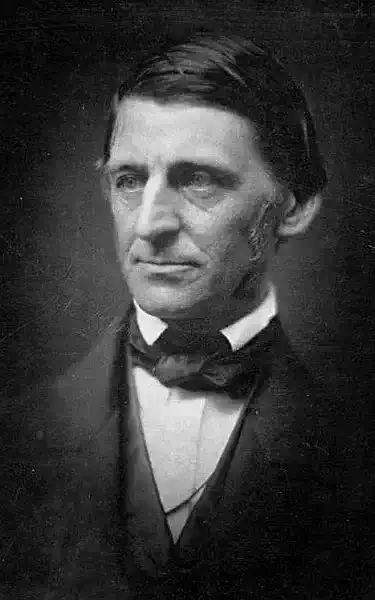
Ralph Waldo Emerson
The Forerunners
The Forerunners
Long I followed happy guides,—
I could never reach their sides.
Their step is forth, and, ere the day,
Breaks up their leaguer, and away.
Keen my sense, my heart was young,
Right goodwill my sinews strung,
But no speed of mine avails
To hunt upon their shining trails.
On and away, their hasting feet
Make the morning proud and sweet.
Flowers they strew, I catch the scent,
Or tone of silver instrument
Leaves on the wind melodious trace,
Yet I could never see their face.
On eastern hills I see their smokes
Mixed with mist by distant lochs.
I meet many travellers
Who the road had surely kept,—
They saw not my fine revellers,—
These had crossed them while they slept.
Some had heard their fair report
In the country or the court.
Fleetest couriers alive
Never yet could once arrive,
As they went or they returned,
At the house where these sojourned.
Sometimes their strong speed they slacken,
Though they are not overtaken:
In sleep, their jubilant troop is near,
I tuneful voices overhear,
It may be in wood or waste,—
At unawares 'tis come and passed.
Their near camp my spirit knows
By signs gracious as rainbows.
I thenceforward and long after
Listen for their harplike laughter,
And carry in my heart for days
Peace that hallows rudest ways.—
Long I followed happy guides,—
I could never reach their sides.
Their step is forth, and, ere the day,
Breaks up their leaguer, and away.
Keen my sense, my heart was young,
Right goodwill my sinews strung,
But no speed of mine avails
To hunt upon their shining trails.
On and away, their hasting feet
Make the morning proud and sweet.
Flowers they strew, I catch the scent,
Or tone of silver instrument
Leaves on the wind melodious trace,
Yet I could never see their face.
On eastern hills I see their smokes
Mixed with mist by distant lochs.
I meet many travellers
Who the road had surely kept,—
They saw not my fine revellers,—
These had crossed them while they slept.
Some had heard their fair report
In the country or the court.
Fleetest couriers alive
Never yet could once arrive,
As they went or they returned,
At the house where these sojourned.
Sometimes their strong speed they slacken,
Though they are not overtaken:
In sleep, their jubilant troop is near,
I tuneful voices overhear,
It may be in wood or waste,—
At unawares 'tis come and passed.
Their near camp my spirit knows
By signs gracious as rainbows.
I thenceforward and long after
Listen for their harplike laughter,
And carry in my heart for days
Peace that hallows rudest ways.—
289
Ralph Waldo Emerson
The Park
The Park
The prosperous and beautiful
To me seem not to wear
The yoke of conscience masterful,
Which galls me everywhere.
I cannot shake off the god;
On my neck he makes his seat;
I look at my face in the glass,
My eyes his eye-balls meet.
Enchanters! enchantresses!
Your gold makes you seem wise:
The morning mist within your grounds
More proudly rolls, more softly lies.
Yet spake yon purple mountain,
Yet said yon ancient wood,
That night or day, that love or crime
Lead all souls to the Good.
The prosperous and beautiful
To me seem not to wear
The yoke of conscience masterful,
Which galls me everywhere.
I cannot shake off the god;
On my neck he makes his seat;
I look at my face in the glass,
My eyes his eye-balls meet.
Enchanters! enchantresses!
Your gold makes you seem wise:
The morning mist within your grounds
More proudly rolls, more softly lies.
Yet spake yon purple mountain,
Yet said yon ancient wood,
That night or day, that love or crime
Lead all souls to the Good.
367
Ralph Waldo Emerson
The Park
The Park
The prosperous and beautiful
To me seem not to wear
The yoke of conscience masterful,
Which galls me everywhere.
I cannot shake off the god;
On my neck he makes his seat;
I look at my face in the glass,
My eyes his eye-balls meet.
Enchanters! enchantresses!
Your gold makes you seem wise:
The morning mist within your grounds
More proudly rolls, more softly lies.
Yet spake yon purple mountain,
Yet said yon ancient wood,
That night or day, that love or crime
Lead all souls to the Good.
The prosperous and beautiful
To me seem not to wear
The yoke of conscience masterful,
Which galls me everywhere.
I cannot shake off the god;
On my neck he makes his seat;
I look at my face in the glass,
My eyes his eye-balls meet.
Enchanters! enchantresses!
Your gold makes you seem wise:
The morning mist within your grounds
More proudly rolls, more softly lies.
Yet spake yon purple mountain,
Yet said yon ancient wood,
That night or day, that love or crime
Lead all souls to the Good.
367
Ralph Waldo Emerson
The Bell
The Bell
I love thy music, mellow bell,
I love thine iron chime,
To life or death, to heaven or hell,
Which calls the sons of Time.
Thy voice upon the deep
The home-bound sea-boy hails,
It charms his cares to sleep,
It cheers him as he sails.
To house of God and heavenly joys
Thy summons called our sires,
And good men thought thy sacred voice
Disarmed the thunder's fires.
And soon thy music, sad death-bell,
Shall lift its notes once more,
And mix my requiem with the wind
That sweeps my native shore.
I love thy music, mellow bell,
I love thine iron chime,
To life or death, to heaven or hell,
Which calls the sons of Time.
Thy voice upon the deep
The home-bound sea-boy hails,
It charms his cares to sleep,
It cheers him as he sails.
To house of God and heavenly joys
Thy summons called our sires,
And good men thought thy sacred voice
Disarmed the thunder's fires.
And soon thy music, sad death-bell,
Shall lift its notes once more,
And mix my requiem with the wind
That sweeps my native shore.
339
Ralph Waldo Emerson
The Amulet
The Amulet
Your picture smiles as first it smiled,
The ring you gave is still the same,
Your letter tells, O changing child,
No tidings since it came.
Give me an amulet
That keeps intelligence with you,
Red when you love, and rosier red,
And when you love not, pale and blue.
Alas, that neither bonds nor vows
Can certify possession;
Torments me still the fear that love
Died in its last expression.
Your picture smiles as first it smiled,
The ring you gave is still the same,
Your letter tells, O changing child,
No tidings since it came.
Give me an amulet
That keeps intelligence with you,
Red when you love, and rosier red,
And when you love not, pale and blue.
Alas, that neither bonds nor vows
Can certify possession;
Torments me still the fear that love
Died in its last expression.
402
Ralph Waldo Emerson
Tact
Tact
What boots it, thy virtue,
What profit thy parts,
While one thing thou lackest,
The art of all arts!
The only credentials,
Passport to success,
Opens castle and parlor,—
Address, man, Address.
The maiden in danger
Was saved by the swain,
His stout arm restored her
To Broadway again:
The maid would reward him,—
Gay company come,—
They laugh, she laughs with them,
He is moonstruck and dumb.
This clenches the bargain,
Sails out of the bay,
Gets the vote in the Senate,
Spite of Webster and Clay;
Has for genius no mercy,
For speeches no heed,—
It lurks in the eyebeam,
It leaps to its deed.
Church, tavern, and market,
Bed and board it will sway;
It has no to-morrow,
It ends with to-day.
What boots it, thy virtue,
What profit thy parts,
While one thing thou lackest,
The art of all arts!
The only credentials,
Passport to success,
Opens castle and parlor,—
Address, man, Address.
The maiden in danger
Was saved by the swain,
His stout arm restored her
To Broadway again:
The maid would reward him,—
Gay company come,—
They laugh, she laughs with them,
He is moonstruck and dumb.
This clenches the bargain,
Sails out of the bay,
Gets the vote in the Senate,
Spite of Webster and Clay;
Has for genius no mercy,
For speeches no heed,—
It lurks in the eyebeam,
It leaps to its deed.
Church, tavern, and market,
Bed and board it will sway;
It has no to-morrow,
It ends with to-day.
378
Ralph Waldo Emerson
Sursum Corda
Sursum Corda
Seek not the Spirit, if it hide,
Inexorable to thy zeal:
Baby, do not whine and chide;
Art thou not also real?
Why should'st thou stoop to poor excuse?
Turn on the Accuser roundly; say,
"Here am I, here will I remain
Forever to myself soothfast,
Go thou, sweet Heaven, or, at thy pleasure stay."—
Already Heaven with thee its lot has cast,
For it only can absolutely deal.
Seek not the Spirit, if it hide,
Inexorable to thy zeal:
Baby, do not whine and chide;
Art thou not also real?
Why should'st thou stoop to poor excuse?
Turn on the Accuser roundly; say,
"Here am I, here will I remain
Forever to myself soothfast,
Go thou, sweet Heaven, or, at thy pleasure stay."—
Already Heaven with thee its lot has cast,
For it only can absolutely deal.
384
Ralph Waldo Emerson
Seashore
Seashore
I heard or seemed to hear the chiding Sea
Say, Pilgrim, why so late and slow to come?
Am I not always here, thy summer home?
Is not my voice thy music, morn and eve?
My breath thy healthful climate in the heats,
My touch thy antidote, my bay thy bath?
Was ever building like my terraces?
Was ever couch magnificent as mine?
Lie on the warm rock-ledges, and there learn
A little hut suffices like a town.
I make your sculptured architecture vain,
Vain beside mine. I drive my wedges home,
And carve the coastwise mountain into caves.
Lo! here is Rome and Nineveh and Thebes,
Karnak and Pyramid and Giant's Stairs
Half piled or prostrate; and my newest slab
Older than all thy race.
Behold the Sea,
The opaline, the plentiful and strong,
Yet beautiful as is the rose in June,
Fresh as the trickling rainbow of July;
Sea full of food, the nourisher of kinds,
Purger of earth, and medicine of men;
Creating a sweet climate by my breath,
Washing out harms and griefs from memory,
And, in my mathematic ebb and flow,
Giving a hint of that which changes not.
Rich are the sea-gods:--who gives gifts but they?
They grope the sea for pearls, but more than pearls:
They pluck Force thence, and give it to the wise.
For every wave is wealth to Dædalus,
Wealth to the cunning artist who can work
This matchless strength. Where shall he find, O waves!
A load your Atlas shoulders cannot lift?
I with my hammer pounding evermore
The rocky coast, smite Andes into dust,
Strewing my bed, and, in another age,
Rebuild a continent of better men.
Then I unbar the doors: my paths lead out
The exodus of nations: I dispersed
Men to all shores that front the hoary main.
I too have arts and sorceries;
Illusion dwells forever with the wave.
I know what spells are laid. Leave me to deal
With credulous and imaginative man;
For, though he scoop my water in his palm,
A few rods off he deems it gems and clouds.
Planting strange fruits and sunshine on the shore,
I make some coast alluring, some lone isle,
To distant men, who must go there, or die.
I heard or seemed to hear the chiding Sea
Say, Pilgrim, why so late and slow to come?
Am I not always here, thy summer home?
Is not my voice thy music, morn and eve?
My breath thy healthful climate in the heats,
My touch thy antidote, my bay thy bath?
Was ever building like my terraces?
Was ever couch magnificent as mine?
Lie on the warm rock-ledges, and there learn
A little hut suffices like a town.
I make your sculptured architecture vain,
Vain beside mine. I drive my wedges home,
And carve the coastwise mountain into caves.
Lo! here is Rome and Nineveh and Thebes,
Karnak and Pyramid and Giant's Stairs
Half piled or prostrate; and my newest slab
Older than all thy race.
Behold the Sea,
The opaline, the plentiful and strong,
Yet beautiful as is the rose in June,
Fresh as the trickling rainbow of July;
Sea full of food, the nourisher of kinds,
Purger of earth, and medicine of men;
Creating a sweet climate by my breath,
Washing out harms and griefs from memory,
And, in my mathematic ebb and flow,
Giving a hint of that which changes not.
Rich are the sea-gods:--who gives gifts but they?
They grope the sea for pearls, but more than pearls:
They pluck Force thence, and give it to the wise.
For every wave is wealth to Dædalus,
Wealth to the cunning artist who can work
This matchless strength. Where shall he find, O waves!
A load your Atlas shoulders cannot lift?
I with my hammer pounding evermore
The rocky coast, smite Andes into dust,
Strewing my bed, and, in another age,
Rebuild a continent of better men.
Then I unbar the doors: my paths lead out
The exodus of nations: I dispersed
Men to all shores that front the hoary main.
I too have arts and sorceries;
Illusion dwells forever with the wave.
I know what spells are laid. Leave me to deal
With credulous and imaginative man;
For, though he scoop my water in his palm,
A few rods off he deems it gems and clouds.
Planting strange fruits and sunshine on the shore,
I make some coast alluring, some lone isle,
To distant men, who must go there, or die.
396
Ralph Waldo Emerson
Monadnoc
Monadnoc
Thousand minstrels woke within me,
"Our music's in the hills; "—
Gayest pictures rose to win me,
Leopard-colored rills.
Up!—If thou knew'st who calls
To twilight parks of beech and pine,
High over the river intervals,
Above the ploughman's highest line,
Over the owner's farthest walls;—
Up!—where the airy citadel
O'erlooks the purging landscape's swell.
Let not unto the stones the day
Her lily and rose, her sea and land display;
Read the celestial sign!
Lo! the South answers to the North;
Bookworm, break this sloth urbane;
A greater Spirit bids thee forth,
Than the gray dreams which thee detain.
Mark how the climbing Oreads
Beckon thee to their arcades;
Youth, for a moment free as they,
Teach thy feet to feel the ground,
Ere yet arrive the wintry day
When Time thy feet has bound.
Accept the bounty of thy birth;
Taste the lordship of the earth.
I heard and I obeyed,
Assured that he who pressed the claim,
Well-known, but loving not a name,
Was not to be gainsaid.
Ere yet the summoning voice was still,
I turned to Cheshire's haughty hill.
From the fixed cone the cloud-rack flowed
Like ample banner flung abroad
Round about, a hundred miles,
With invitation to the sea, and to the bordering isles.
In his own loom's garment drest,
By his own bounty blest,
Fast abides this constant giver,
Pouring many a cheerful river;
To far eyes, an aërial isle,
Unploughed, which finer spirits pile,
Which morn and crimson evening paint
For bard, for lover, and for saint;
The country's core,
Inspirer, prophet evermore,
Pillar which God aloft had set
So that men might it not forget,
It should be their life's ornament,
And mix itself with each event;
Their calendar and dial,
Barometer, and chemic phial,
Garden of berries, perch of birds,
Pasture of pool-haunting herds,
Graced by each change of sum untold,
Earth-baking heat, stone-cleaving cold.
The Titan minds his sky-affairs,
Rich rents and wide alliance shares;
Mysteries of color daily laid
By the great sun in light and shade,
And, sweet varieties of chance,
And the mystic seasons' dance,
And thief-like step of liberal hours
Which thawed the snow-drift into flowers.
O wondrous craft of plant and stone
By eldest science done and shown!
Happy, I said, whose home is here,
Fair fortunes to the mountaineer!
Boon nature to his poorest shed
Has royal pleasure-grounds outspread.
Intent I searched the region round,
And in low hut my monarch found.
He was no eagle and no earl,
Alas! my foundling was a churl,
With heart of cat, and eyes of bug,
Dull victim of his pipe and mug;
Woe is me for my hopes' downfall!
Lord! is yon squalid peasant all
That this proud nursery could breed
For God's vicegerency and stead?
Time out of mind this forge of ores,
Quarry of spars in mountain pores,
Old cradle, hunting ground, and bier
Of wolf and otter, bear, and deer;
Well-built abode of many a race;
Tower of observance searching space;
Factory of river, and of rain;
Link in the alps' globe-girding chain;
By million changes skilled to tell
What in the Eternal standeth well,
And what obedient nature can,—
Is this colossal talisman
Kindly to creature, blood, and kind,
And speechless to the master's mind?
I thought to find the patriots
In whom the stock of freedom roots.
To myself I oft recount
Tales of many a famous mount.—
Wales, Scotland, Uri, Hungary's dells,
Roys, and Scanderbegs, and Tells.
Here now shall nature crowd her powers,
Her music, and her meteors,
And, lifting man to the blue deep
Where stars their perfect courses keep,
Like wise preceptor lure his eye
To sound the science of the sky,
And carry learning to its height
Of untried power and sane delight;
The Indian cheer, the frosty skies
Breed purer wits, inventive eyes,
Eyes that frame cities where none be,
And hands that stablish what these see:
And, by the moral of his place,
Hint summits of heroic grace;
Man in these crags a fastness find
To fight pollution of the mind;
In the wide thaw and ooze of wrong,
Adhere like this foundation strong,
The insanity of towns to stem
With simpleness for stratagem.
But if the brave old mould is broke,
And end in clowns the mountain-folk,
In tavern cheer and tavern joke,—
Sink, O mountain! in the swamp,
Hide in thy skies, O sovereign lap!
Perish like leaves the highland breed!
No sire survive, no son succeed!
Soft! let not the offended muse
Toil's hard hap with scorn accuse.
Many hamlets sought I then,
Many farms of mountain men;—
Found I not a minstrel seed,
But men of bone, and good at need.
Rallying round a parish steeple
Nestle warm the highland people,
Coarse and boisterous, yet mild,
Strong as giant, slow as child,
Smoking in a squalid room,
Where yet the westland breezes come.
Close hid in those rough guises lurk
Western magians, here they work;
Sweat and season are their arts,
Their talismans are ploughs and carts;
And well the youngest can command
Honey from the frozen land,
With sweet hay the swamp adorn,
Change the running sand to corn,
For wolves and foxes, lowing herds,
And for cold mosses, cream and curds;
Weave wood to canisters and mats,
Drain sweet maple-juice in vats.
No bird is safe that cuts the air,
From their rifle or their snare;
No fish in river or in lake,
But their long hands it thence will take;
And the country's iron face
Like wax their fashioning skill betrays,
To fill the hollows, sink the hills,
Bridge gulfs, drain swamps, build dams and mills,
And fit the bleak and howling place
For gardens of a finer race,
The world-soul knows his own affair,
Fore-looking when his hands prepare
For the next ages men of mould,
Well embodied, well ensouled,
He cools the present's fiery glow,
Sets the life pulse strong, but slow.
Bitter winds and fasts austere.
His quarantines and grottos, where
He slowly cures decrepit flesh,
And brings it infantile and fresh.
These exercises are the toys
And games with which he breathes his boys.
They bide their time, and well can prove,
If need were, their line from Jove,
Of the same stuff, and so allayed,
As that whereof the sun is made;
And of that fibre quick and strong
Whose throbs are love, whose thrills are song.
Now in sordid weeds they sleep,
Their secret now in dulness keep.
Yet, will you learn our ancient speech,
These the masters who can teach,
Fourscore or a hundred words
All their vocal muse affords,
These they turn in other fashion
Than the writer or the parson.
I can spare the college-bell,
And the learned lecture well.
Spare the clergy and libraries,
Institutes and dictionaries,
For the hardy English root
Thrives here unvalued underfoot.
Rude poets of the tavern hearth,
Squandering your unquoted mirth,
Which keeps the ground and never soars,
While Jake retorts and Reuben roars,
Tough and screaming as birch-bark,
Goes like bullet to its mark,
While the solid curse and jeer
Never balk the waiting ear:
To student ears keen-relished jokes
On truck, and stock, and farming-folks,—
Nought the mountain yields thereof
But savage health and sinews tough.
On the summit as I stood,
O'er the wide floor of plain and flood,
Seemed to me the towering hill
Was not altogether still,
But a quiet sense conveyed;
If I err not, thus it said:
Many feet in summer seek
Betimes my far-appearing peak;
In the dreaded winter-time,
None save dappling shadows climb
Under clouds my lonely head,
Old as the sun, old almost as the shade.
And comest thou
To see strange forests and new snow,
And tread uplifted land?
And leavest thou thy lowland race,
Here amid clouds to stand,
And would'st be my companion,
Where I gaze
And shall gaze
When forests fall, and man is gone,
Over tribes and over times
As the burning Lyre
Nearing me,
With its stars of northern fire,
In many a thousand years.
Ah! welcome, if thou bring
My secret in thy brain;
To mountain-top may muse's wing
With good allowance strain.
Gentle pilgrim, if thou know
The gamut old of Pan,
And how the hills began,
The frank blessings of the hill
Fall on thee, as fall they will.
'Tis the law of bush and stone—
Each can only take his own.
Let him heed who can and will,—
Enchantment fixed me here
To stand the hurts of time, until
In mightier chant I disappear.
If thou trowest
How the chemic eddies play
Pole to pole, and what they say,
And that these gray crags
Not on crags are hung,
But beads are of a rosary
On prayer and music strung;
And, credulous, through the granite seeming
Seest the smile of Reason beaming;
Can thy style-discerning eye
The hidden-working Builder spy,
Who builds, yet makes no chips, no din,
With hammer soft as snow-flake's flight;
Knowest thou this?
O pilgrim, wandering not amiss!
Already my rocks lie light,
And soon my cone will spin.
For the world was built in order,
And the atoms march in tune,
Rhyme the pipe, and time the warder,
Cannot forget the sun, the moon.
Orb and atom forth they prance,
When they hear from far the rune,
None so backward in the troop,
When the music and the dance
Reach his place and circumstance,
But knows the sun-creating sound,
And, though a pyramid, will bound.
Monadnoc is a mountain strong,
Tall and good my kind among,
But well I know, no mountain can
Measure with a perfect man;
For it is on Zodiack's writ,
Adamant is soft to wit;
And when the greater comes again,
With my music in his brain,
I shall pass as glides my shadow
Daily over hill and meadow.
Through all time
I hear the approaching feet
Along the flinty pathway beat
Of him that cometh, and shall come,—
Of him who shall as lightly bear
My daily load of woods and streams,
As now the round sky-cleaving boat
Which never strains its rocky beams,
Whose timbers, as they silent float,
Alps and Caucasus uprear,
And the long Alleghanies here,
And all town-sprinkled lands that be,
Sailing through stars with all their history.
Every morn I lift my head,
Gaze o'er New England underspread
South from Saint Lawrence to the Sound,
From Katshill east to the sea-bound.
Anchored fast for many an age,
I await the bard and sage,
Who in large thoughts, like fair pearl-seed,
Shall string Monadnoc like a bead.
Comes that cheerful troubadour,
This mound shall throb his face before,
As when with inward fires and pain
It rose a bubble from the plain.
When he cometh, I shall shed
From this well-spring in my head
Fountain drop of spicier worth
Than all vintage of the earth.
There's fruit upon my barren soil
Costlier far than wine or oil;
There's a berry blue and gold,—
Autumn-ripe its juices hold,
Sparta's stoutness, Bethlehem's heart,
Asia's rancor, Athens' art,
Slowsure Britain's secular might,
And the German's inward sight;
I will give my son to eat
Best of Pan's immortal meat,
Bread to eat and juice to drink,
So the thoughts that he shall think
Shall not be forms of stars, but stars,
Nor pictures pale, but Jove and Mars.
He comes, but not of that race bred
Who daily climb my specular head.
Oft as morning wreathes my scarf,
Fled the last plumule of the dark,
Pants up hither the spruce clerk
From South-Cove and City-wharf;
I take him up my rugged sides,
Half-repentant, scant of breath,—
Bead-eyes my granite chaos show,
And my midsummer snow;
Open the daunting map beneath,—
All his county, sea and land,
Dwarfed to measure of his hand;
His day's ride is a furlong space,
His city tops a glimmering haze:
I plant his eyes on the sky-hoop bounding;—
See there the grim gray rounding
Of the bullet of the earth
Whereon ye sail,
Tumbling steep
In the uncontinented deep;—
He looks on that, and he turns pale:
'Tis even so, this treacherous kite,
Farm-furrowed, town-incrusted sphere,
Thoughtless of its anxious freight,
Plunges eyeless on for ever,
And he, poor parasite,—
Cooped in a ship he cannot steer,
Who is the captain he knows not,
Port or pilot trows not,—
Risk or ruin he must share.
I scowl on him with my cloud,
With my north wind chill his blood,
I lame him clattering down the rocks,
And to live he is in fear.
Then, at last, I let him down
Once more into his dapper town,
To chatter frightened to his clan,
And forget me, if he can.
As in the old poetic fame
The gods are blind and lame,
And the simular despite
Betrays the more abounding might,
So call not waste that barren cone
Above the floral zone,
Where forests starve:
It is pure use;
What sheaves like those which here we glean and bind,
Of a celestial Ceres, and the Muse?
Ages are thy days,
Thou grand expressor of the present tense,
And type of permanence,
Firm ensign of the fatal Being,
Amid these coward shapes of joy and grief
That will not bide the seeing.
Hither we bring
Our insect miseries to the rocks,
And the whole flight with pestering wing
Vanish and end their murmuring,
Vanish beside these dedicated blocks,
Which, who can tell what mason laid?
Spoils of a front none need restore,
Replacing frieze and architrave;
Yet flowers each stone rosette and metope brave,
Still is the haughty pile erect
Of the old building Intellect.
Complement of human kind,
Having us at vantage still,
Our sumptuous indigence,
O barren mound! thy plenties fill.
We fool and prate,—
Thou art silent and sedate.
To million kinds and times one sense
The constant mountain doth dispense,
Shedding on all its snows and leaves,
One joy it joys, one grief it grieves.
Thou seest, O watchman tall!
Our towns and races grow and fall,
And imagest the stable Good
For which we all our lifetime grope,
In shifting form the formless mind;
And though the substance us elude,
We in thee the shadow find.
Thou in our astronomy
An opaker star,
Seen, haply, from afar,
Above the horizon's hoop.
A moment by the railway troop,
As o'er some bolder height they speed,—
By circumspect ambition,
By errant Gain,
By feasters, and the frivolous,—
Recallest us,
And makest sane.
Mute orator! well-skilled to plead,
And send conviction without phrase,
Thou dost supply
The shortness of our days,
And promise, on thy Founder's truth,
Long morrow to this mortal youth.
Thousand minstrels woke within me,
"Our music's in the hills; "—
Gayest pictures rose to win me,
Leopard-colored rills.
Up!—If thou knew'st who calls
To twilight parks of beech and pine,
High over the river intervals,
Above the ploughman's highest line,
Over the owner's farthest walls;—
Up!—where the airy citadel
O'erlooks the purging landscape's swell.
Let not unto the stones the day
Her lily and rose, her sea and land display;
Read the celestial sign!
Lo! the South answers to the North;
Bookworm, break this sloth urbane;
A greater Spirit bids thee forth,
Than the gray dreams which thee detain.
Mark how the climbing Oreads
Beckon thee to their arcades;
Youth, for a moment free as they,
Teach thy feet to feel the ground,
Ere yet arrive the wintry day
When Time thy feet has bound.
Accept the bounty of thy birth;
Taste the lordship of the earth.
I heard and I obeyed,
Assured that he who pressed the claim,
Well-known, but loving not a name,
Was not to be gainsaid.
Ere yet the summoning voice was still,
I turned to Cheshire's haughty hill.
From the fixed cone the cloud-rack flowed
Like ample banner flung abroad
Round about, a hundred miles,
With invitation to the sea, and to the bordering isles.
In his own loom's garment drest,
By his own bounty blest,
Fast abides this constant giver,
Pouring many a cheerful river;
To far eyes, an aërial isle,
Unploughed, which finer spirits pile,
Which morn and crimson evening paint
For bard, for lover, and for saint;
The country's core,
Inspirer, prophet evermore,
Pillar which God aloft had set
So that men might it not forget,
It should be their life's ornament,
And mix itself with each event;
Their calendar and dial,
Barometer, and chemic phial,
Garden of berries, perch of birds,
Pasture of pool-haunting herds,
Graced by each change of sum untold,
Earth-baking heat, stone-cleaving cold.
The Titan minds his sky-affairs,
Rich rents and wide alliance shares;
Mysteries of color daily laid
By the great sun in light and shade,
And, sweet varieties of chance,
And the mystic seasons' dance,
And thief-like step of liberal hours
Which thawed the snow-drift into flowers.
O wondrous craft of plant and stone
By eldest science done and shown!
Happy, I said, whose home is here,
Fair fortunes to the mountaineer!
Boon nature to his poorest shed
Has royal pleasure-grounds outspread.
Intent I searched the region round,
And in low hut my monarch found.
He was no eagle and no earl,
Alas! my foundling was a churl,
With heart of cat, and eyes of bug,
Dull victim of his pipe and mug;
Woe is me for my hopes' downfall!
Lord! is yon squalid peasant all
That this proud nursery could breed
For God's vicegerency and stead?
Time out of mind this forge of ores,
Quarry of spars in mountain pores,
Old cradle, hunting ground, and bier
Of wolf and otter, bear, and deer;
Well-built abode of many a race;
Tower of observance searching space;
Factory of river, and of rain;
Link in the alps' globe-girding chain;
By million changes skilled to tell
What in the Eternal standeth well,
And what obedient nature can,—
Is this colossal talisman
Kindly to creature, blood, and kind,
And speechless to the master's mind?
I thought to find the patriots
In whom the stock of freedom roots.
To myself I oft recount
Tales of many a famous mount.—
Wales, Scotland, Uri, Hungary's dells,
Roys, and Scanderbegs, and Tells.
Here now shall nature crowd her powers,
Her music, and her meteors,
And, lifting man to the blue deep
Where stars their perfect courses keep,
Like wise preceptor lure his eye
To sound the science of the sky,
And carry learning to its height
Of untried power and sane delight;
The Indian cheer, the frosty skies
Breed purer wits, inventive eyes,
Eyes that frame cities where none be,
And hands that stablish what these see:
And, by the moral of his place,
Hint summits of heroic grace;
Man in these crags a fastness find
To fight pollution of the mind;
In the wide thaw and ooze of wrong,
Adhere like this foundation strong,
The insanity of towns to stem
With simpleness for stratagem.
But if the brave old mould is broke,
And end in clowns the mountain-folk,
In tavern cheer and tavern joke,—
Sink, O mountain! in the swamp,
Hide in thy skies, O sovereign lap!
Perish like leaves the highland breed!
No sire survive, no son succeed!
Soft! let not the offended muse
Toil's hard hap with scorn accuse.
Many hamlets sought I then,
Many farms of mountain men;—
Found I not a minstrel seed,
But men of bone, and good at need.
Rallying round a parish steeple
Nestle warm the highland people,
Coarse and boisterous, yet mild,
Strong as giant, slow as child,
Smoking in a squalid room,
Where yet the westland breezes come.
Close hid in those rough guises lurk
Western magians, here they work;
Sweat and season are their arts,
Their talismans are ploughs and carts;
And well the youngest can command
Honey from the frozen land,
With sweet hay the swamp adorn,
Change the running sand to corn,
For wolves and foxes, lowing herds,
And for cold mosses, cream and curds;
Weave wood to canisters and mats,
Drain sweet maple-juice in vats.
No bird is safe that cuts the air,
From their rifle or their snare;
No fish in river or in lake,
But their long hands it thence will take;
And the country's iron face
Like wax their fashioning skill betrays,
To fill the hollows, sink the hills,
Bridge gulfs, drain swamps, build dams and mills,
And fit the bleak and howling place
For gardens of a finer race,
The world-soul knows his own affair,
Fore-looking when his hands prepare
For the next ages men of mould,
Well embodied, well ensouled,
He cools the present's fiery glow,
Sets the life pulse strong, but slow.
Bitter winds and fasts austere.
His quarantines and grottos, where
He slowly cures decrepit flesh,
And brings it infantile and fresh.
These exercises are the toys
And games with which he breathes his boys.
They bide their time, and well can prove,
If need were, their line from Jove,
Of the same stuff, and so allayed,
As that whereof the sun is made;
And of that fibre quick and strong
Whose throbs are love, whose thrills are song.
Now in sordid weeds they sleep,
Their secret now in dulness keep.
Yet, will you learn our ancient speech,
These the masters who can teach,
Fourscore or a hundred words
All their vocal muse affords,
These they turn in other fashion
Than the writer or the parson.
I can spare the college-bell,
And the learned lecture well.
Spare the clergy and libraries,
Institutes and dictionaries,
For the hardy English root
Thrives here unvalued underfoot.
Rude poets of the tavern hearth,
Squandering your unquoted mirth,
Which keeps the ground and never soars,
While Jake retorts and Reuben roars,
Tough and screaming as birch-bark,
Goes like bullet to its mark,
While the solid curse and jeer
Never balk the waiting ear:
To student ears keen-relished jokes
On truck, and stock, and farming-folks,—
Nought the mountain yields thereof
But savage health and sinews tough.
On the summit as I stood,
O'er the wide floor of plain and flood,
Seemed to me the towering hill
Was not altogether still,
But a quiet sense conveyed;
If I err not, thus it said:
Many feet in summer seek
Betimes my far-appearing peak;
In the dreaded winter-time,
None save dappling shadows climb
Under clouds my lonely head,
Old as the sun, old almost as the shade.
And comest thou
To see strange forests and new snow,
And tread uplifted land?
And leavest thou thy lowland race,
Here amid clouds to stand,
And would'st be my companion,
Where I gaze
And shall gaze
When forests fall, and man is gone,
Over tribes and over times
As the burning Lyre
Nearing me,
With its stars of northern fire,
In many a thousand years.
Ah! welcome, if thou bring
My secret in thy brain;
To mountain-top may muse's wing
With good allowance strain.
Gentle pilgrim, if thou know
The gamut old of Pan,
And how the hills began,
The frank blessings of the hill
Fall on thee, as fall they will.
'Tis the law of bush and stone—
Each can only take his own.
Let him heed who can and will,—
Enchantment fixed me here
To stand the hurts of time, until
In mightier chant I disappear.
If thou trowest
How the chemic eddies play
Pole to pole, and what they say,
And that these gray crags
Not on crags are hung,
But beads are of a rosary
On prayer and music strung;
And, credulous, through the granite seeming
Seest the smile of Reason beaming;
Can thy style-discerning eye
The hidden-working Builder spy,
Who builds, yet makes no chips, no din,
With hammer soft as snow-flake's flight;
Knowest thou this?
O pilgrim, wandering not amiss!
Already my rocks lie light,
And soon my cone will spin.
For the world was built in order,
And the atoms march in tune,
Rhyme the pipe, and time the warder,
Cannot forget the sun, the moon.
Orb and atom forth they prance,
When they hear from far the rune,
None so backward in the troop,
When the music and the dance
Reach his place and circumstance,
But knows the sun-creating sound,
And, though a pyramid, will bound.
Monadnoc is a mountain strong,
Tall and good my kind among,
But well I know, no mountain can
Measure with a perfect man;
For it is on Zodiack's writ,
Adamant is soft to wit;
And when the greater comes again,
With my music in his brain,
I shall pass as glides my shadow
Daily over hill and meadow.
Through all time
I hear the approaching feet
Along the flinty pathway beat
Of him that cometh, and shall come,—
Of him who shall as lightly bear
My daily load of woods and streams,
As now the round sky-cleaving boat
Which never strains its rocky beams,
Whose timbers, as they silent float,
Alps and Caucasus uprear,
And the long Alleghanies here,
And all town-sprinkled lands that be,
Sailing through stars with all their history.
Every morn I lift my head,
Gaze o'er New England underspread
South from Saint Lawrence to the Sound,
From Katshill east to the sea-bound.
Anchored fast for many an age,
I await the bard and sage,
Who in large thoughts, like fair pearl-seed,
Shall string Monadnoc like a bead.
Comes that cheerful troubadour,
This mound shall throb his face before,
As when with inward fires and pain
It rose a bubble from the plain.
When he cometh, I shall shed
From this well-spring in my head
Fountain drop of spicier worth
Than all vintage of the earth.
There's fruit upon my barren soil
Costlier far than wine or oil;
There's a berry blue and gold,—
Autumn-ripe its juices hold,
Sparta's stoutness, Bethlehem's heart,
Asia's rancor, Athens' art,
Slowsure Britain's secular might,
And the German's inward sight;
I will give my son to eat
Best of Pan's immortal meat,
Bread to eat and juice to drink,
So the thoughts that he shall think
Shall not be forms of stars, but stars,
Nor pictures pale, but Jove and Mars.
He comes, but not of that race bred
Who daily climb my specular head.
Oft as morning wreathes my scarf,
Fled the last plumule of the dark,
Pants up hither the spruce clerk
From South-Cove and City-wharf;
I take him up my rugged sides,
Half-repentant, scant of breath,—
Bead-eyes my granite chaos show,
And my midsummer snow;
Open the daunting map beneath,—
All his county, sea and land,
Dwarfed to measure of his hand;
His day's ride is a furlong space,
His city tops a glimmering haze:
I plant his eyes on the sky-hoop bounding;—
See there the grim gray rounding
Of the bullet of the earth
Whereon ye sail,
Tumbling steep
In the uncontinented deep;—
He looks on that, and he turns pale:
'Tis even so, this treacherous kite,
Farm-furrowed, town-incrusted sphere,
Thoughtless of its anxious freight,
Plunges eyeless on for ever,
And he, poor parasite,—
Cooped in a ship he cannot steer,
Who is the captain he knows not,
Port or pilot trows not,—
Risk or ruin he must share.
I scowl on him with my cloud,
With my north wind chill his blood,
I lame him clattering down the rocks,
And to live he is in fear.
Then, at last, I let him down
Once more into his dapper town,
To chatter frightened to his clan,
And forget me, if he can.
As in the old poetic fame
The gods are blind and lame,
And the simular despite
Betrays the more abounding might,
So call not waste that barren cone
Above the floral zone,
Where forests starve:
It is pure use;
What sheaves like those which here we glean and bind,
Of a celestial Ceres, and the Muse?
Ages are thy days,
Thou grand expressor of the present tense,
And type of permanence,
Firm ensign of the fatal Being,
Amid these coward shapes of joy and grief
That will not bide the seeing.
Hither we bring
Our insect miseries to the rocks,
And the whole flight with pestering wing
Vanish and end their murmuring,
Vanish beside these dedicated blocks,
Which, who can tell what mason laid?
Spoils of a front none need restore,
Replacing frieze and architrave;
Yet flowers each stone rosette and metope brave,
Still is the haughty pile erect
Of the old building Intellect.
Complement of human kind,
Having us at vantage still,
Our sumptuous indigence,
O barren mound! thy plenties fill.
We fool and prate,—
Thou art silent and sedate.
To million kinds and times one sense
The constant mountain doth dispense,
Shedding on all its snows and leaves,
One joy it joys, one grief it grieves.
Thou seest, O watchman tall!
Our towns and races grow and fall,
And imagest the stable Good
For which we all our lifetime grope,
In shifting form the formless mind;
And though the substance us elude,
We in thee the shadow find.
Thou in our astronomy
An opaker star,
Seen, haply, from afar,
Above the horizon's hoop.
A moment by the railway troop,
As o'er some bolder height they speed,—
By circumspect ambition,
By errant Gain,
By feasters, and the frivolous,—
Recallest us,
And makest sane.
Mute orator! well-skilled to plead,
And send conviction without phrase,
Thou dost supply
The shortness of our days,
And promise, on thy Founder's truth,
Long morrow to this mortal youth.
477
Ralph Waldo Emerson
Monadnoc
Monadnoc
Thousand minstrels woke within me,
"Our music's in the hills; "—
Gayest pictures rose to win me,
Leopard-colored rills.
Up!—If thou knew'st who calls
To twilight parks of beech and pine,
High over the river intervals,
Above the ploughman's highest line,
Over the owner's farthest walls;—
Up!—where the airy citadel
O'erlooks the purging landscape's swell.
Let not unto the stones the day
Her lily and rose, her sea and land display;
Read the celestial sign!
Lo! the South answers to the North;
Bookworm, break this sloth urbane;
A greater Spirit bids thee forth,
Than the gray dreams which thee detain.
Mark how the climbing Oreads
Beckon thee to their arcades;
Youth, for a moment free as they,
Teach thy feet to feel the ground,
Ere yet arrive the wintry day
When Time thy feet has bound.
Accept the bounty of thy birth;
Taste the lordship of the earth.
I heard and I obeyed,
Assured that he who pressed the claim,
Well-known, but loving not a name,
Was not to be gainsaid.
Ere yet the summoning voice was still,
I turned to Cheshire's haughty hill.
From the fixed cone the cloud-rack flowed
Like ample banner flung abroad
Round about, a hundred miles,
With invitation to the sea, and to the bordering isles.
In his own loom's garment drest,
By his own bounty blest,
Fast abides this constant giver,
Pouring many a cheerful river;
To far eyes, an aërial isle,
Unploughed, which finer spirits pile,
Which morn and crimson evening paint
For bard, for lover, and for saint;
The country's core,
Inspirer, prophet evermore,
Pillar which God aloft had set
So that men might it not forget,
It should be their life's ornament,
And mix itself with each event;
Their calendar and dial,
Barometer, and chemic phial,
Garden of berries, perch of birds,
Pasture of pool-haunting herds,
Graced by each change of sum untold,
Earth-baking heat, stone-cleaving cold.
The Titan minds his sky-affairs,
Rich rents and wide alliance shares;
Mysteries of color daily laid
By the great sun in light and shade,
And, sweet varieties of chance,
And the mystic seasons' dance,
And thief-like step of liberal hours
Which thawed the snow-drift into flowers.
O wondrous craft of plant and stone
By eldest science done and shown!
Happy, I said, whose home is here,
Fair fortunes to the mountaineer!
Boon nature to his poorest shed
Has royal pleasure-grounds outspread.
Intent I searched the region round,
And in low hut my monarch found.
He was no eagle and no earl,
Alas! my foundling was a churl,
With heart of cat, and eyes of bug,
Dull victim of his pipe and mug;
Woe is me for my hopes' downfall!
Lord! is yon squalid peasant all
That this proud nursery could breed
For God's vicegerency and stead?
Time out of mind this forge of ores,
Quarry of spars in mountain pores,
Old cradle, hunting ground, and bier
Of wolf and otter, bear, and deer;
Well-built abode of many a race;
Tower of observance searching space;
Factory of river, and of rain;
Link in the alps' globe-girding chain;
By million changes skilled to tell
What in the Eternal standeth well,
And what obedient nature can,—
Is this colossal talisman
Kindly to creature, blood, and kind,
And speechless to the master's mind?
I thought to find the patriots
In whom the stock of freedom roots.
To myself I oft recount
Tales of many a famous mount.—
Wales, Scotland, Uri, Hungary's dells,
Roys, and Scanderbegs, and Tells.
Here now shall nature crowd her powers,
Her music, and her meteors,
And, lifting man to the blue deep
Where stars their perfect courses keep,
Like wise preceptor lure his eye
To sound the science of the sky,
And carry learning to its height
Of untried power and sane delight;
The Indian cheer, the frosty skies
Breed purer wits, inventive eyes,
Eyes that frame cities where none be,
And hands that stablish what these see:
And, by the moral of his place,
Hint summits of heroic grace;
Man in these crags a fastness find
To fight pollution of the mind;
In the wide thaw and ooze of wrong,
Adhere like this foundation strong,
The insanity of towns to stem
With simpleness for stratagem.
But if the brave old mould is broke,
And end in clowns the mountain-folk,
In tavern cheer and tavern joke,—
Sink, O mountain! in the swamp,
Hide in thy skies, O sovereign lap!
Perish like leaves the highland breed!
No sire survive, no son succeed!
Soft! let not the offended muse
Toil's hard hap with scorn accuse.
Many hamlets sought I then,
Many farms of mountain men;—
Found I not a minstrel seed,
But men of bone, and good at need.
Rallying round a parish steeple
Nestle warm the highland people,
Coarse and boisterous, yet mild,
Strong as giant, slow as child,
Smoking in a squalid room,
Where yet the westland breezes come.
Close hid in those rough guises lurk
Western magians, here they work;
Sweat and season are their arts,
Their talismans are ploughs and carts;
And well the youngest can command
Honey from the frozen land,
With sweet hay the swamp adorn,
Change the running sand to corn,
For wolves and foxes, lowing herds,
And for cold mosses, cream and curds;
Weave wood to canisters and mats,
Drain sweet maple-juice in vats.
No bird is safe that cuts the air,
From their rifle or their snare;
No fish in river or in lake,
But their long hands it thence will take;
And the country's iron face
Like wax their fashioning skill betrays,
To fill the hollows, sink the hills,
Bridge gulfs, drain swamps, build dams and mills,
And fit the bleak and howling place
For gardens of a finer race,
The world-soul knows his own affair,
Fore-looking when his hands prepare
For the next ages men of mould,
Well embodied, well ensouled,
He cools the present's fiery glow,
Sets the life pulse strong, but slow.
Bitter winds and fasts austere.
His quarantines and grottos, where
He slowly cures decrepit flesh,
And brings it infantile and fresh.
These exercises are the toys
And games with which he breathes his boys.
They bide their time, and well can prove,
If need were, their line from Jove,
Of the same stuff, and so allayed,
As that whereof the sun is made;
And of that fibre quick and strong
Whose throbs are love, whose thrills are song.
Now in sordid weeds they sleep,
Their secret now in dulness keep.
Yet, will you learn our ancient speech,
These the masters who can teach,
Fourscore or a hundred words
All their vocal muse affords,
These they turn in other fashion
Than the writer or the parson.
I can spare the college-bell,
And the learned lecture well.
Spare the clergy and libraries,
Institutes and dictionaries,
For the hardy English root
Thrives here unvalued underfoot.
Rude poets of the tavern hearth,
Squandering your unquoted mirth,
Which keeps the ground and never soars,
While Jake retorts and Reuben roars,
Tough and screaming as birch-bark,
Goes like bullet to its mark,
While the solid curse and jeer
Never balk the waiting ear:
To student ears keen-relished jokes
On truck, and stock, and farming-folks,—
Nought the mountain yields thereof
But savage health and sinews tough.
On the summit as I stood,
O'er the wide floor of plain and flood,
Seemed to me the towering hill
Was not altogether still,
But a quiet sense conveyed;
If I err not, thus it said:
Many feet in summer seek
Betimes my far-appearing peak;
In the dreaded winter-time,
None save dappling shadows climb
Under clouds my lonely head,
Old as the sun, old almost as the shade.
And comest thou
To see strange forests and new snow,
And tread uplifted land?
And leavest thou thy lowland race,
Here amid clouds to stand,
And would'st be my companion,
Where I gaze
And shall gaze
When forests fall, and man is gone,
Over tribes and over times
As the burning Lyre
Nearing me,
With its stars of northern fire,
In many a thousand years.
Ah! welcome, if thou bring
My secret in thy brain;
To mountain-top may muse's wing
With good allowance strain.
Gentle pilgrim, if thou know
The gamut old of Pan,
And how the hills began,
The frank blessings of the hill
Fall on thee, as fall they will.
'Tis the law of bush and stone—
Each can only take his own.
Let him heed who can and will,—
Enchantment fixed me here
To stand the hurts of time, until
In mightier chant I disappear.
If thou trowest
How the chemic eddies play
Pole to pole, and what they say,
And that these gray crags
Not on crags are hung,
But beads are of a rosary
On prayer and music strung;
And, credulous, through the granite seeming
Seest the smile of Reason beaming;
Can thy style-discerning eye
The hidden-working Builder spy,
Who builds, yet makes no chips, no din,
With hammer soft as snow-flake's flight;
Knowest thou this?
O pilgrim, wandering not amiss!
Already my rocks lie light,
And soon my cone will spin.
For the world was built in order,
And the atoms march in tune,
Rhyme the pipe, and time the warder,
Cannot forget the sun, the moon.
Orb and atom forth they prance,
When they hear from far the rune,
None so backward in the troop,
When the music and the dance
Reach his place and circumstance,
But knows the sun-creating sound,
And, though a pyramid, will bound.
Monadnoc is a mountain strong,
Tall and good my kind among,
But well I know, no mountain can
Measure with a perfect man;
For it is on Zodiack's writ,
Adamant is soft to wit;
And when the greater comes again,
With my music in his brain,
I shall pass as glides my shadow
Daily over hill and meadow.
Through all time
I hear the approaching feet
Along the flinty pathway beat
Of him that cometh, and shall come,—
Of him who shall as lightly bear
My daily load of woods and streams,
As now the round sky-cleaving boat
Which never strains its rocky beams,
Whose timbers, as they silent float,
Alps and Caucasus uprear,
And the long Alleghanies here,
And all town-sprinkled lands that be,
Sailing through stars with all their history.
Every morn I lift my head,
Gaze o'er New England underspread
South from Saint Lawrence to the Sound,
From Katshill east to the sea-bound.
Anchored fast for many an age,
I await the bard and sage,
Who in large thoughts, like fair pearl-seed,
Shall string Monadnoc like a bead.
Comes that cheerful troubadour,
This mound shall throb his face before,
As when with inward fires and pain
It rose a bubble from the plain.
When he cometh, I shall shed
From this well-spring in my head
Fountain drop of spicier worth
Than all vintage of the earth.
There's fruit upon my barren soil
Costlier far than wine or oil;
There's a berry blue and gold,—
Autumn-ripe its juices hold,
Sparta's stoutness, Bethlehem's heart,
Asia's rancor, Athens' art,
Slowsure Britain's secular might,
And the German's inward sight;
I will give my son to eat
Best of Pan's immortal meat,
Bread to eat and juice to drink,
So the thoughts that he shall think
Shall not be forms of stars, but stars,
Nor pictures pale, but Jove and Mars.
He comes, but not of that race bred
Who daily climb my specular head.
Oft as morning wreathes my scarf,
Fled the last plumule of the dark,
Pants up hither the spruce clerk
From South-Cove and City-wharf;
I take him up my rugged sides,
Half-repentant, scant of breath,—
Bead-eyes my granite chaos show,
And my midsummer snow;
Open the daunting map beneath,—
All his county, sea and land,
Dwarfed to measure of his hand;
His day's ride is a furlong space,
His city tops a glimmering haze:
I plant his eyes on the sky-hoop bounding;—
See there the grim gray rounding
Of the bullet of the earth
Whereon ye sail,
Tumbling steep
In the uncontinented deep;—
He looks on that, and he turns pale:
'Tis even so, this treacherous kite,
Farm-furrowed, town-incrusted sphere,
Thoughtless of its anxious freight,
Plunges eyeless on for ever,
And he, poor parasite,—
Cooped in a ship he cannot steer,
Who is the captain he knows not,
Port or pilot trows not,—
Risk or ruin he must share.
I scowl on him with my cloud,
With my north wind chill his blood,
I lame him clattering down the rocks,
And to live he is in fear.
Then, at last, I let him down
Once more into his dapper town,
To chatter frightened to his clan,
And forget me, if he can.
As in the old poetic fame
The gods are blind and lame,
And the simular despite
Betrays the more abounding might,
So call not waste that barren cone
Above the floral zone,
Where forests starve:
It is pure use;
What sheaves like those which here we glean and bind,
Of a celestial Ceres, and the Muse?
Ages are thy days,
Thou grand expressor of the present tense,
And type of permanence,
Firm ensign of the fatal Being,
Amid these coward shapes of joy and grief
That will not bide the seeing.
Hither we bring
Our insect miseries to the rocks,
And the whole flight with pestering wing
Vanish and end their murmuring,
Vanish beside these dedicated blocks,
Which, who can tell what mason laid?
Spoils of a front none need restore,
Replacing frieze and architrave;
Yet flowers each stone rosette and metope brave,
Still is the haughty pile erect
Of the old building Intellect.
Complement of human kind,
Having us at vantage still,
Our sumptuous indigence,
O barren mound! thy plenties fill.
We fool and prate,—
Thou art silent and sedate.
To million kinds and times one sense
The constant mountain doth dispense,
Shedding on all its snows and leaves,
One joy it joys, one grief it grieves.
Thou seest, O watchman tall!
Our towns and races grow and fall,
And imagest the stable Good
For which we all our lifetime grope,
In shifting form the formless mind;
And though the substance us elude,
We in thee the shadow find.
Thou in our astronomy
An opaker star,
Seen, haply, from afar,
Above the horizon's hoop.
A moment by the railway troop,
As o'er some bolder height they speed,—
By circumspect ambition,
By errant Gain,
By feasters, and the frivolous,—
Recallest us,
And makest sane.
Mute orator! well-skilled to plead,
And send conviction without phrase,
Thou dost supply
The shortness of our days,
And promise, on thy Founder's truth,
Long morrow to this mortal youth.
Thousand minstrels woke within me,
"Our music's in the hills; "—
Gayest pictures rose to win me,
Leopard-colored rills.
Up!—If thou knew'st who calls
To twilight parks of beech and pine,
High over the river intervals,
Above the ploughman's highest line,
Over the owner's farthest walls;—
Up!—where the airy citadel
O'erlooks the purging landscape's swell.
Let not unto the stones the day
Her lily and rose, her sea and land display;
Read the celestial sign!
Lo! the South answers to the North;
Bookworm, break this sloth urbane;
A greater Spirit bids thee forth,
Than the gray dreams which thee detain.
Mark how the climbing Oreads
Beckon thee to their arcades;
Youth, for a moment free as they,
Teach thy feet to feel the ground,
Ere yet arrive the wintry day
When Time thy feet has bound.
Accept the bounty of thy birth;
Taste the lordship of the earth.
I heard and I obeyed,
Assured that he who pressed the claim,
Well-known, but loving not a name,
Was not to be gainsaid.
Ere yet the summoning voice was still,
I turned to Cheshire's haughty hill.
From the fixed cone the cloud-rack flowed
Like ample banner flung abroad
Round about, a hundred miles,
With invitation to the sea, and to the bordering isles.
In his own loom's garment drest,
By his own bounty blest,
Fast abides this constant giver,
Pouring many a cheerful river;
To far eyes, an aërial isle,
Unploughed, which finer spirits pile,
Which morn and crimson evening paint
For bard, for lover, and for saint;
The country's core,
Inspirer, prophet evermore,
Pillar which God aloft had set
So that men might it not forget,
It should be their life's ornament,
And mix itself with each event;
Their calendar and dial,
Barometer, and chemic phial,
Garden of berries, perch of birds,
Pasture of pool-haunting herds,
Graced by each change of sum untold,
Earth-baking heat, stone-cleaving cold.
The Titan minds his sky-affairs,
Rich rents and wide alliance shares;
Mysteries of color daily laid
By the great sun in light and shade,
And, sweet varieties of chance,
And the mystic seasons' dance,
And thief-like step of liberal hours
Which thawed the snow-drift into flowers.
O wondrous craft of plant and stone
By eldest science done and shown!
Happy, I said, whose home is here,
Fair fortunes to the mountaineer!
Boon nature to his poorest shed
Has royal pleasure-grounds outspread.
Intent I searched the region round,
And in low hut my monarch found.
He was no eagle and no earl,
Alas! my foundling was a churl,
With heart of cat, and eyes of bug,
Dull victim of his pipe and mug;
Woe is me for my hopes' downfall!
Lord! is yon squalid peasant all
That this proud nursery could breed
For God's vicegerency and stead?
Time out of mind this forge of ores,
Quarry of spars in mountain pores,
Old cradle, hunting ground, and bier
Of wolf and otter, bear, and deer;
Well-built abode of many a race;
Tower of observance searching space;
Factory of river, and of rain;
Link in the alps' globe-girding chain;
By million changes skilled to tell
What in the Eternal standeth well,
And what obedient nature can,—
Is this colossal talisman
Kindly to creature, blood, and kind,
And speechless to the master's mind?
I thought to find the patriots
In whom the stock of freedom roots.
To myself I oft recount
Tales of many a famous mount.—
Wales, Scotland, Uri, Hungary's dells,
Roys, and Scanderbegs, and Tells.
Here now shall nature crowd her powers,
Her music, and her meteors,
And, lifting man to the blue deep
Where stars their perfect courses keep,
Like wise preceptor lure his eye
To sound the science of the sky,
And carry learning to its height
Of untried power and sane delight;
The Indian cheer, the frosty skies
Breed purer wits, inventive eyes,
Eyes that frame cities where none be,
And hands that stablish what these see:
And, by the moral of his place,
Hint summits of heroic grace;
Man in these crags a fastness find
To fight pollution of the mind;
In the wide thaw and ooze of wrong,
Adhere like this foundation strong,
The insanity of towns to stem
With simpleness for stratagem.
But if the brave old mould is broke,
And end in clowns the mountain-folk,
In tavern cheer and tavern joke,—
Sink, O mountain! in the swamp,
Hide in thy skies, O sovereign lap!
Perish like leaves the highland breed!
No sire survive, no son succeed!
Soft! let not the offended muse
Toil's hard hap with scorn accuse.
Many hamlets sought I then,
Many farms of mountain men;—
Found I not a minstrel seed,
But men of bone, and good at need.
Rallying round a parish steeple
Nestle warm the highland people,
Coarse and boisterous, yet mild,
Strong as giant, slow as child,
Smoking in a squalid room,
Where yet the westland breezes come.
Close hid in those rough guises lurk
Western magians, here they work;
Sweat and season are their arts,
Their talismans are ploughs and carts;
And well the youngest can command
Honey from the frozen land,
With sweet hay the swamp adorn,
Change the running sand to corn,
For wolves and foxes, lowing herds,
And for cold mosses, cream and curds;
Weave wood to canisters and mats,
Drain sweet maple-juice in vats.
No bird is safe that cuts the air,
From their rifle or their snare;
No fish in river or in lake,
But their long hands it thence will take;
And the country's iron face
Like wax their fashioning skill betrays,
To fill the hollows, sink the hills,
Bridge gulfs, drain swamps, build dams and mills,
And fit the bleak and howling place
For gardens of a finer race,
The world-soul knows his own affair,
Fore-looking when his hands prepare
For the next ages men of mould,
Well embodied, well ensouled,
He cools the present's fiery glow,
Sets the life pulse strong, but slow.
Bitter winds and fasts austere.
His quarantines and grottos, where
He slowly cures decrepit flesh,
And brings it infantile and fresh.
These exercises are the toys
And games with which he breathes his boys.
They bide their time, and well can prove,
If need were, their line from Jove,
Of the same stuff, and so allayed,
As that whereof the sun is made;
And of that fibre quick and strong
Whose throbs are love, whose thrills are song.
Now in sordid weeds they sleep,
Their secret now in dulness keep.
Yet, will you learn our ancient speech,
These the masters who can teach,
Fourscore or a hundred words
All their vocal muse affords,
These they turn in other fashion
Than the writer or the parson.
I can spare the college-bell,
And the learned lecture well.
Spare the clergy and libraries,
Institutes and dictionaries,
For the hardy English root
Thrives here unvalued underfoot.
Rude poets of the tavern hearth,
Squandering your unquoted mirth,
Which keeps the ground and never soars,
While Jake retorts and Reuben roars,
Tough and screaming as birch-bark,
Goes like bullet to its mark,
While the solid curse and jeer
Never balk the waiting ear:
To student ears keen-relished jokes
On truck, and stock, and farming-folks,—
Nought the mountain yields thereof
But savage health and sinews tough.
On the summit as I stood,
O'er the wide floor of plain and flood,
Seemed to me the towering hill
Was not altogether still,
But a quiet sense conveyed;
If I err not, thus it said:
Many feet in summer seek
Betimes my far-appearing peak;
In the dreaded winter-time,
None save dappling shadows climb
Under clouds my lonely head,
Old as the sun, old almost as the shade.
And comest thou
To see strange forests and new snow,
And tread uplifted land?
And leavest thou thy lowland race,
Here amid clouds to stand,
And would'st be my companion,
Where I gaze
And shall gaze
When forests fall, and man is gone,
Over tribes and over times
As the burning Lyre
Nearing me,
With its stars of northern fire,
In many a thousand years.
Ah! welcome, if thou bring
My secret in thy brain;
To mountain-top may muse's wing
With good allowance strain.
Gentle pilgrim, if thou know
The gamut old of Pan,
And how the hills began,
The frank blessings of the hill
Fall on thee, as fall they will.
'Tis the law of bush and stone—
Each can only take his own.
Let him heed who can and will,—
Enchantment fixed me here
To stand the hurts of time, until
In mightier chant I disappear.
If thou trowest
How the chemic eddies play
Pole to pole, and what they say,
And that these gray crags
Not on crags are hung,
But beads are of a rosary
On prayer and music strung;
And, credulous, through the granite seeming
Seest the smile of Reason beaming;
Can thy style-discerning eye
The hidden-working Builder spy,
Who builds, yet makes no chips, no din,
With hammer soft as snow-flake's flight;
Knowest thou this?
O pilgrim, wandering not amiss!
Already my rocks lie light,
And soon my cone will spin.
For the world was built in order,
And the atoms march in tune,
Rhyme the pipe, and time the warder,
Cannot forget the sun, the moon.
Orb and atom forth they prance,
When they hear from far the rune,
None so backward in the troop,
When the music and the dance
Reach his place and circumstance,
But knows the sun-creating sound,
And, though a pyramid, will bound.
Monadnoc is a mountain strong,
Tall and good my kind among,
But well I know, no mountain can
Measure with a perfect man;
For it is on Zodiack's writ,
Adamant is soft to wit;
And when the greater comes again,
With my music in his brain,
I shall pass as glides my shadow
Daily over hill and meadow.
Through all time
I hear the approaching feet
Along the flinty pathway beat
Of him that cometh, and shall come,—
Of him who shall as lightly bear
My daily load of woods and streams,
As now the round sky-cleaving boat
Which never strains its rocky beams,
Whose timbers, as they silent float,
Alps and Caucasus uprear,
And the long Alleghanies here,
And all town-sprinkled lands that be,
Sailing through stars with all their history.
Every morn I lift my head,
Gaze o'er New England underspread
South from Saint Lawrence to the Sound,
From Katshill east to the sea-bound.
Anchored fast for many an age,
I await the bard and sage,
Who in large thoughts, like fair pearl-seed,
Shall string Monadnoc like a bead.
Comes that cheerful troubadour,
This mound shall throb his face before,
As when with inward fires and pain
It rose a bubble from the plain.
When he cometh, I shall shed
From this well-spring in my head
Fountain drop of spicier worth
Than all vintage of the earth.
There's fruit upon my barren soil
Costlier far than wine or oil;
There's a berry blue and gold,—
Autumn-ripe its juices hold,
Sparta's stoutness, Bethlehem's heart,
Asia's rancor, Athens' art,
Slowsure Britain's secular might,
And the German's inward sight;
I will give my son to eat
Best of Pan's immortal meat,
Bread to eat and juice to drink,
So the thoughts that he shall think
Shall not be forms of stars, but stars,
Nor pictures pale, but Jove and Mars.
He comes, but not of that race bred
Who daily climb my specular head.
Oft as morning wreathes my scarf,
Fled the last plumule of the dark,
Pants up hither the spruce clerk
From South-Cove and City-wharf;
I take him up my rugged sides,
Half-repentant, scant of breath,—
Bead-eyes my granite chaos show,
And my midsummer snow;
Open the daunting map beneath,—
All his county, sea and land,
Dwarfed to measure of his hand;
His day's ride is a furlong space,
His city tops a glimmering haze:
I plant his eyes on the sky-hoop bounding;—
See there the grim gray rounding
Of the bullet of the earth
Whereon ye sail,
Tumbling steep
In the uncontinented deep;—
He looks on that, and he turns pale:
'Tis even so, this treacherous kite,
Farm-furrowed, town-incrusted sphere,
Thoughtless of its anxious freight,
Plunges eyeless on for ever,
And he, poor parasite,—
Cooped in a ship he cannot steer,
Who is the captain he knows not,
Port or pilot trows not,—
Risk or ruin he must share.
I scowl on him with my cloud,
With my north wind chill his blood,
I lame him clattering down the rocks,
And to live he is in fear.
Then, at last, I let him down
Once more into his dapper town,
To chatter frightened to his clan,
And forget me, if he can.
As in the old poetic fame
The gods are blind and lame,
And the simular despite
Betrays the more abounding might,
So call not waste that barren cone
Above the floral zone,
Where forests starve:
It is pure use;
What sheaves like those which here we glean and bind,
Of a celestial Ceres, and the Muse?
Ages are thy days,
Thou grand expressor of the present tense,
And type of permanence,
Firm ensign of the fatal Being,
Amid these coward shapes of joy and grief
That will not bide the seeing.
Hither we bring
Our insect miseries to the rocks,
And the whole flight with pestering wing
Vanish and end their murmuring,
Vanish beside these dedicated blocks,
Which, who can tell what mason laid?
Spoils of a front none need restore,
Replacing frieze and architrave;
Yet flowers each stone rosette and metope brave,
Still is the haughty pile erect
Of the old building Intellect.
Complement of human kind,
Having us at vantage still,
Our sumptuous indigence,
O barren mound! thy plenties fill.
We fool and prate,—
Thou art silent and sedate.
To million kinds and times one sense
The constant mountain doth dispense,
Shedding on all its snows and leaves,
One joy it joys, one grief it grieves.
Thou seest, O watchman tall!
Our towns and races grow and fall,
And imagest the stable Good
For which we all our lifetime grope,
In shifting form the formless mind;
And though the substance us elude,
We in thee the shadow find.
Thou in our astronomy
An opaker star,
Seen, haply, from afar,
Above the horizon's hoop.
A moment by the railway troop,
As o'er some bolder height they speed,—
By circumspect ambition,
By errant Gain,
By feasters, and the frivolous,—
Recallest us,
And makest sane.
Mute orator! well-skilled to plead,
And send conviction without phrase,
Thou dost supply
The shortness of our days,
And promise, on thy Founder's truth,
Long morrow to this mortal youth.
477
Ralph Waldo Emerson
Initial Love
Initial Love
Venus, when her son was lost,
Cried him up and down the coast,
In hamlets, palaces, and parks,
And told the truant by his marks,
Golden curls, and quiver, and bow;—
This befell long ago.
Time and tide are strangely changed,
Men and manners much deranged;
None will now find Cupid latent
By this foolish antique patent.
He came late along the waste,
Shod like a traveller for haste,
With malice dared me to proclaim him,
That the maids and boys might name him.
Boy no more, he wears all coats,
Frocks, and blouses, capes, capôtes,
He bears no bow, or quiver, or wand,
Nor chaplet on his head or hand:
Leave his weeds and heed his eyes,
All the rest he can disguise.
In the pit of his eyes a spark
Would bring back day if it were dark,
And,—if I tell you all my thought,
Though I comprehend it not,—
In those unfathomable orbs
Every function he absorbs;
He doth eat, and drink, and fish, and shoot,
And write, and reason, and compute,
And ride, and run, and have, and hold,
And whine, and flatter, and regret,
And kiss, and couple, and beget,
By those roving eye-balls bold;
Undaunted are their courages,
Right Cossacks in their forages;
Fleeter they than any creature,
They are his steeds and not his feature,
Inquisitive, and fierce, and fasting,
Restless, predatory, hasting,—
And they pounce on other eyes,
As lions on their prey;
And round their circles is writ,
Plainer than the day,
Underneath, within, above,
Love, love, love, love.
He lives in his eyes,
There doth digest, and work, and spin,
And buy, and sell, and lose, and win;
He rolls them with delighted motion,
Joy-tides swell their mimic ocean.
Yet holds he them with tortest rein,
That they may seize and entertain
The glance that to their glance opposes,
Like fiery honey sucked from roses.
He palmistry can understand,
Imbibing virtue by his hand
As if it were a living root;
The pulse of hands will make him mute;
With all his force he gathers balms
Into those wise thrilling palms.
Cupid is a casuist,
A mystic, and a cabalist,
Can your lurking Thought surprise,
And interpret your device;
Mainly versed in occult science,
In magic, and in clairvoyance.
Oft he keeps his fine ear strained,
And reason on her tiptoe pained,
For aery intelligence,
And for strange coincidence.
But it touches his quick heart
When Fate by omens takes his part,
And chance-dropt hints from Nature's sphere
Deeply soothe his anxious ear.
Heralds high before him run,
He has ushers many a one,
Spreads his welcome where he goes,
And touches all things with his rose.
All things wait for and divine him,—
How shall I dare to malign him,
Or accuse the god of sport?—
I must end my true report,
Painting him from head to foot,
In as far as I took note,
Trusting well the matchless power
Of this young-eyed emperor
Will clear his fame from every cloud,
With the bards, and with the crowd.
He is wilful, mutable,
Shy, untamed, inscrutable,
Swifter-fashioned than the fairies,
Substance mixed of pure contraries,
His vice some elder virtue's token,
And his good is evil spoken.
Failing sometimes of his own,
He is headstrong and alone;
He affects the wood and wild,
Like a flower-hunting child,
Buries himself in summer waves,
In trees, with beasts, in mines, and caves,
Loves nature like a horned cow,
Bird, or deer, or cariboo.
Shun him, nymphs, on the fleet horses!
He has a total world of wit,
O how wise are his discourses!
But he is the arch-hypocrite,
And through all science and all art,
Seeks alone his counterpart.
He is a Pundit of the east,
He is an augur and a priest,
And his soul will melt in prayer,
But word and wisdom are a snare;
Corrupted by the present toy,
He follows joy, and only joy.
There is no mask but he will wear,
He invented oaths to swear,
He paints, he carves, he chants, he prays,
And holds all stars in his embrace,
Godlike, —but 'tis for his fine pelf,
The social quintessence of self.
Well, said I, he is hypocrite,
And folly the end of his subtle wit,
He takes a sovran privilege
Not allowed to any liege,
For he does go behind all law,
And right into himself does draw,
For he is sovranly allied.
Heaven's oldest blood flows in his side,
And interchangeably at one
With every king on every throne,
That no God dare say him nay,
Or see the fault, or seen betray;
He has the Muses by the heart,
And the Parcæ all are of his part.
His many signs cannot be told,
He has not one mode, but manifold,
Many fashions and addresses,
Piques, reproaches, hurts, caresses,
Action, service, badinage,
He will preach like a friar,
And jump like Harlequin,
He will read like a crier,
And fight like a Paladin.
Boundless is his memory,
Plans immense his term prolong,
He is not of counted age,
Meaning always to be young.
And his wish is intimacy,
Intimater intimacy,
And a stricter privacy,
The impossible shall yet be done,
And being two shall still be one.
As the wave breaks to foam on shelves,
Then runs into a wave again,
So lovers melt their sundered selves,
Yet melted would be twain.
Venus, when her son was lost,
Cried him up and down the coast,
In hamlets, palaces, and parks,
And told the truant by his marks,
Golden curls, and quiver, and bow;—
This befell long ago.
Time and tide are strangely changed,
Men and manners much deranged;
None will now find Cupid latent
By this foolish antique patent.
He came late along the waste,
Shod like a traveller for haste,
With malice dared me to proclaim him,
That the maids and boys might name him.
Boy no more, he wears all coats,
Frocks, and blouses, capes, capôtes,
He bears no bow, or quiver, or wand,
Nor chaplet on his head or hand:
Leave his weeds and heed his eyes,
All the rest he can disguise.
In the pit of his eyes a spark
Would bring back day if it were dark,
And,—if I tell you all my thought,
Though I comprehend it not,—
In those unfathomable orbs
Every function he absorbs;
He doth eat, and drink, and fish, and shoot,
And write, and reason, and compute,
And ride, and run, and have, and hold,
And whine, and flatter, and regret,
And kiss, and couple, and beget,
By those roving eye-balls bold;
Undaunted are their courages,
Right Cossacks in their forages;
Fleeter they than any creature,
They are his steeds and not his feature,
Inquisitive, and fierce, and fasting,
Restless, predatory, hasting,—
And they pounce on other eyes,
As lions on their prey;
And round their circles is writ,
Plainer than the day,
Underneath, within, above,
Love, love, love, love.
He lives in his eyes,
There doth digest, and work, and spin,
And buy, and sell, and lose, and win;
He rolls them with delighted motion,
Joy-tides swell their mimic ocean.
Yet holds he them with tortest rein,
That they may seize and entertain
The glance that to their glance opposes,
Like fiery honey sucked from roses.
He palmistry can understand,
Imbibing virtue by his hand
As if it were a living root;
The pulse of hands will make him mute;
With all his force he gathers balms
Into those wise thrilling palms.
Cupid is a casuist,
A mystic, and a cabalist,
Can your lurking Thought surprise,
And interpret your device;
Mainly versed in occult science,
In magic, and in clairvoyance.
Oft he keeps his fine ear strained,
And reason on her tiptoe pained,
For aery intelligence,
And for strange coincidence.
But it touches his quick heart
When Fate by omens takes his part,
And chance-dropt hints from Nature's sphere
Deeply soothe his anxious ear.
Heralds high before him run,
He has ushers many a one,
Spreads his welcome where he goes,
And touches all things with his rose.
All things wait for and divine him,—
How shall I dare to malign him,
Or accuse the god of sport?—
I must end my true report,
Painting him from head to foot,
In as far as I took note,
Trusting well the matchless power
Of this young-eyed emperor
Will clear his fame from every cloud,
With the bards, and with the crowd.
He is wilful, mutable,
Shy, untamed, inscrutable,
Swifter-fashioned than the fairies,
Substance mixed of pure contraries,
His vice some elder virtue's token,
And his good is evil spoken.
Failing sometimes of his own,
He is headstrong and alone;
He affects the wood and wild,
Like a flower-hunting child,
Buries himself in summer waves,
In trees, with beasts, in mines, and caves,
Loves nature like a horned cow,
Bird, or deer, or cariboo.
Shun him, nymphs, on the fleet horses!
He has a total world of wit,
O how wise are his discourses!
But he is the arch-hypocrite,
And through all science and all art,
Seeks alone his counterpart.
He is a Pundit of the east,
He is an augur and a priest,
And his soul will melt in prayer,
But word and wisdom are a snare;
Corrupted by the present toy,
He follows joy, and only joy.
There is no mask but he will wear,
He invented oaths to swear,
He paints, he carves, he chants, he prays,
And holds all stars in his embrace,
Godlike, —but 'tis for his fine pelf,
The social quintessence of self.
Well, said I, he is hypocrite,
And folly the end of his subtle wit,
He takes a sovran privilege
Not allowed to any liege,
For he does go behind all law,
And right into himself does draw,
For he is sovranly allied.
Heaven's oldest blood flows in his side,
And interchangeably at one
With every king on every throne,
That no God dare say him nay,
Or see the fault, or seen betray;
He has the Muses by the heart,
And the Parcæ all are of his part.
His many signs cannot be told,
He has not one mode, but manifold,
Many fashions and addresses,
Piques, reproaches, hurts, caresses,
Action, service, badinage,
He will preach like a friar,
And jump like Harlequin,
He will read like a crier,
And fight like a Paladin.
Boundless is his memory,
Plans immense his term prolong,
He is not of counted age,
Meaning always to be young.
And his wish is intimacy,
Intimater intimacy,
And a stricter privacy,
The impossible shall yet be done,
And being two shall still be one.
As the wave breaks to foam on shelves,
Then runs into a wave again,
So lovers melt their sundered selves,
Yet melted would be twain.
433
Ralph Waldo Emerson
Grace
Grace
How much, preventing God! how much I owe
To the defenses thou hast round me set:
Example, custom, fear, occasional slow,
These scorned bondmen were my parapet.
I dare not peep over this parapet
To gauge with glance the roaring gulf beelow,
The depths of sin to which I had descended,
Had not these me against myself defended.
How much, preventing God! how much I owe
To the defenses thou hast round me set:
Example, custom, fear, occasional slow,
These scorned bondmen were my parapet.
I dare not peep over this parapet
To gauge with glance the roaring gulf beelow,
The depths of sin to which I had descended,
Had not these me against myself defended.
389
Ralph Waldo Emerson
Grace
Grace
How much, preventing God! how much I owe
To the defenses thou hast round me set:
Example, custom, fear, occasional slow,
These scorned bondmen were my parapet.
I dare not peep over this parapet
To gauge with glance the roaring gulf beelow,
The depths of sin to which I had descended,
Had not these me against myself defended.
How much, preventing God! how much I owe
To the defenses thou hast round me set:
Example, custom, fear, occasional slow,
These scorned bondmen were my parapet.
I dare not peep over this parapet
To gauge with glance the roaring gulf beelow,
The depths of sin to which I had descended,
Had not these me against myself defended.
389
Ralph Waldo Emerson
Dirge
Dirge
Knows he who tills this lonely field
To reap its scanty corn,
What mystic fruit his acres yield
At midnight and at morn?
In the long sunny afternoon,
The plain was full of ghosts,
I wandered up, I wandered down,
Beset by pensive hosts.
The winding Concord gleamed below,
Pouring as wide a flood
As when my brothers long ago,
Came with me to the wood.
But they are gone,— the holy ones,
Who trod with me this lonely vale,
The strong, star-bright companions
Are silent, low, and pale.
My good, my noble, in their prime,
Who made this world the feast it was,
Who learned with me the lore of time,
Who loved this dwelling-place.
They took this valley for their toy,
They played with it in every mood,
A cell for prayer, a hall for joy,
They treated nature as they would.
They colored the horizon round,
Stars flamed and faded as they bade,
All echoes hearkened for their sound,
They made the woodlands glad or mad.
I touch this flower of silken leaf
Which once our childhood knew
Its soft leaves wound me with a grief
Whose balsam never grew.
Hearken to yon pine warbler
Singing aloft in the tree;
Hearest thou, O traveller!
What he singeth to me?
Not unless God made sharp thine ear
With sorrow such as mine,
Out of that delicate lay couldst thou
The heavy dirge divine.
Go, lonely man, it saith,
They loved thee from their birth,
Their hands were pure, and pure their faith,
There are no such hearts on earth.
Ye drew one mother's milk,
One chamber held ye all;
A very tender history
Did in your childhood fall.
Ye cannot unlock your heart,
The key is gone with them;
The silent organ loudest chants
The master's requiem.
Knows he who tills this lonely field
To reap its scanty corn,
What mystic fruit his acres yield
At midnight and at morn?
In the long sunny afternoon,
The plain was full of ghosts,
I wandered up, I wandered down,
Beset by pensive hosts.
The winding Concord gleamed below,
Pouring as wide a flood
As when my brothers long ago,
Came with me to the wood.
But they are gone,— the holy ones,
Who trod with me this lonely vale,
The strong, star-bright companions
Are silent, low, and pale.
My good, my noble, in their prime,
Who made this world the feast it was,
Who learned with me the lore of time,
Who loved this dwelling-place.
They took this valley for their toy,
They played with it in every mood,
A cell for prayer, a hall for joy,
They treated nature as they would.
They colored the horizon round,
Stars flamed and faded as they bade,
All echoes hearkened for their sound,
They made the woodlands glad or mad.
I touch this flower of silken leaf
Which once our childhood knew
Its soft leaves wound me with a grief
Whose balsam never grew.
Hearken to yon pine warbler
Singing aloft in the tree;
Hearest thou, O traveller!
What he singeth to me?
Not unless God made sharp thine ear
With sorrow such as mine,
Out of that delicate lay couldst thou
The heavy dirge divine.
Go, lonely man, it saith,
They loved thee from their birth,
Their hands were pure, and pure their faith,
There are no such hearts on earth.
Ye drew one mother's milk,
One chamber held ye all;
A very tender history
Did in your childhood fall.
Ye cannot unlock your heart,
The key is gone with them;
The silent organ loudest chants
The master's requiem.
319
Ralph Waldo Emerson
Dirge
Dirge
Knows he who tills this lonely field
To reap its scanty corn,
What mystic fruit his acres yield
At midnight and at morn?
In the long sunny afternoon,
The plain was full of ghosts,
I wandered up, I wandered down,
Beset by pensive hosts.
The winding Concord gleamed below,
Pouring as wide a flood
As when my brothers long ago,
Came with me to the wood.
But they are gone,— the holy ones,
Who trod with me this lonely vale,
The strong, star-bright companions
Are silent, low, and pale.
My good, my noble, in their prime,
Who made this world the feast it was,
Who learned with me the lore of time,
Who loved this dwelling-place.
They took this valley for their toy,
They played with it in every mood,
A cell for prayer, a hall for joy,
They treated nature as they would.
They colored the horizon round,
Stars flamed and faded as they bade,
All echoes hearkened for their sound,
They made the woodlands glad or mad.
I touch this flower of silken leaf
Which once our childhood knew
Its soft leaves wound me with a grief
Whose balsam never grew.
Hearken to yon pine warbler
Singing aloft in the tree;
Hearest thou, O traveller!
What he singeth to me?
Not unless God made sharp thine ear
With sorrow such as mine,
Out of that delicate lay couldst thou
The heavy dirge divine.
Go, lonely man, it saith,
They loved thee from their birth,
Their hands were pure, and pure their faith,
There are no such hearts on earth.
Ye drew one mother's milk,
One chamber held ye all;
A very tender history
Did in your childhood fall.
Ye cannot unlock your heart,
The key is gone with them;
The silent organ loudest chants
The master's requiem.
Knows he who tills this lonely field
To reap its scanty corn,
What mystic fruit his acres yield
At midnight and at morn?
In the long sunny afternoon,
The plain was full of ghosts,
I wandered up, I wandered down,
Beset by pensive hosts.
The winding Concord gleamed below,
Pouring as wide a flood
As when my brothers long ago,
Came with me to the wood.
But they are gone,— the holy ones,
Who trod with me this lonely vale,
The strong, star-bright companions
Are silent, low, and pale.
My good, my noble, in their prime,
Who made this world the feast it was,
Who learned with me the lore of time,
Who loved this dwelling-place.
They took this valley for their toy,
They played with it in every mood,
A cell for prayer, a hall for joy,
They treated nature as they would.
They colored the horizon round,
Stars flamed and faded as they bade,
All echoes hearkened for their sound,
They made the woodlands glad or mad.
I touch this flower of silken leaf
Which once our childhood knew
Its soft leaves wound me with a grief
Whose balsam never grew.
Hearken to yon pine warbler
Singing aloft in the tree;
Hearest thou, O traveller!
What he singeth to me?
Not unless God made sharp thine ear
With sorrow such as mine,
Out of that delicate lay couldst thou
The heavy dirge divine.
Go, lonely man, it saith,
They loved thee from their birth,
Their hands were pure, and pure their faith,
There are no such hearts on earth.
Ye drew one mother's milk,
One chamber held ye all;
A very tender history
Did in your childhood fall.
Ye cannot unlock your heart,
The key is gone with them;
The silent organ loudest chants
The master's requiem.
319
Ralph Waldo Emerson
Dæmonic Love
Dæmonic Love
Man was made of social earth,
Child and brother from his birth;
Tethered by a liquid cord
Of blood through veins of kindred poured,
Next his heart the fireside band
Of mother, father, sister, stand;
Names from awful childhood heard,
Throbs of a wild religion stirred,
Their good was heaven, their harm was vice,
Till Beauty came to snap all ties,
The maid, abolishing the past,
With lotus-wine obliterates
Dear memory's stone-incarved traits,
And by herself supplants alone
Friends year by year more inly known.
When her calm eyes opened bright,
All were foreign in their light.
It was ever the self-same tale,
The old experience will not fail,—
Only two in the garden walked,
And with snake and seraph talked.
But God said;
I will have a purer gift,
There is smoke in the flame;
New flowerets bring, new prayers uplift,
And love without a name.
Fond children, ye desire
To please each other well;
Another round, a higher,
Ye shall climb on the heavenly stair,
And selfish preference forbear;
And in right deserving,
And without a swerving
Each from your proper state,
Weave roses for your mate.
Deep, deep are loving eyes,
Flowed with naphtha fiery sweet,
And the point is Paradise
Where their glances meet:
Their reach shall yet be more profound,
And a vision without bound:
The axis of those eyes sun-clear
Be the axis of the sphere;
Then shall the lights ye pour amain
Go without check or intervals,
Through from the empyrean walls,
Unto the same again.
Close, close to men,
Like undulating layer of air,
Right above their heads,
The potent plain of Dæmons spreads.
Stands to each human soul its own,
For watch, and ward, and furtherance
In the snares of nature's dance;
And the lustre and the grace
Which fascinate each human heart,
Beaming from another part,
Translucent through the mortal covers,
Is the Dæmon's form and face.
To and fro the Genius hies,
A gleam which plays and hovers
Over the maiden's head,
And dips sometimes as low as to her eyes.
Unknown, — albeit lying near, —
To men the path to the Dæmon sphere,
And they that swiftly come and go,
Leave no track on the heavenly snow.
Sometimes the airy synod bends,
And the mighty choir descends,
And the brains of men thenceforth,
In crowded and in still resorts,
Teem with unwonted thoughts.
As when a shower of meteors
Cross the orbit of the earth,
And, lit by fringent air,
Blaze near and far.
Mortals deem the planets bright
Have slipped their sacred bars,
And the lone seaman all the night
Sails astonished amid stars.
Beauty of a richer vein,
Graces of a subtler strain,
Unto men these moon-men lend,
And our shrinking sky extend.
So is man's narrow path
By strength and terror skirted,
Also (from the song the wrath
Of the Genii be averted!
The Muse the truth uncolored speaking),
The Dæmons are self-seeking;
Their fierce and limitary will
Draws men to their likeness still.
The erring painter made Love blind,
Highest Love who shines on all;
Him radiant, sharpest-sighted god
None can bewilder;
Whose eyes pierce
The Universe,
Path-finder, road-builder,
Mediator, royal giver,
Rightly-seeing, rightly-seen,
Of joyful and transparent mien.
'Tis a sparkle passing
From each to each, from me to thee,
Perpetually,
Sharing all, daring all,
Levelling, misplacing
Each obstruction, it unites
Equals remote, and seeming opposites.
And ever and forever Love
Delights to build a road;
Unheeded Danger near him strides,
Love laughs, and on a lion rides.
But Cupid wears another face
Born into Dæmons less divine,
His roses bleach apace,
His nectar smacks of wine.
The Dæmon ever builds a wall,
Himself incloses and includes,
Solitude in solitudes:
In like sort his love doth fall.
He is an oligarch,
He prizes wonder, fame, and mark,
He loveth crowns,
He scorneth drones;
He doth elect
The beautiful and fortunate,
And the sons of intellect,
And the souls of ample fate,
Who the Future's gates unbar,
Minions of the Morning Star.
In his prowess he exults,
And the multitude insults.
His impatient looks devour
Oft the humble and the poor,
And, seeing his eye glare,
They drop their few pale flowers
Gathered with hope to please
Along the mountain towers,
Lose courage, and despair.
He will never be gainsaid,
Pitiless, will not be stayed.
His hot tyranny
Burns up every other tie;
Therefore comes an hour from Jove
Which his ruthless will defies,
And the dogs of Fate unties.
Shiver the palaces of glass,
Shrivel the rainbow-colored walls
Where in bright art each god and sibyl dwelt
Secure as in the Zodiack's belt;
And the galleries and halls
Wherein every Siren sung,
Like a meteor pass.
For this fortune wanted root
In the core of God's abysm,
Was a weed of self and schism:
And ever the Dæmonic Love
Is the ancestor of wars,
And the parent of remorse.
Man was made of social earth,
Child and brother from his birth;
Tethered by a liquid cord
Of blood through veins of kindred poured,
Next his heart the fireside band
Of mother, father, sister, stand;
Names from awful childhood heard,
Throbs of a wild religion stirred,
Their good was heaven, their harm was vice,
Till Beauty came to snap all ties,
The maid, abolishing the past,
With lotus-wine obliterates
Dear memory's stone-incarved traits,
And by herself supplants alone
Friends year by year more inly known.
When her calm eyes opened bright,
All were foreign in their light.
It was ever the self-same tale,
The old experience will not fail,—
Only two in the garden walked,
And with snake and seraph talked.
But God said;
I will have a purer gift,
There is smoke in the flame;
New flowerets bring, new prayers uplift,
And love without a name.
Fond children, ye desire
To please each other well;
Another round, a higher,
Ye shall climb on the heavenly stair,
And selfish preference forbear;
And in right deserving,
And without a swerving
Each from your proper state,
Weave roses for your mate.
Deep, deep are loving eyes,
Flowed with naphtha fiery sweet,
And the point is Paradise
Where their glances meet:
Their reach shall yet be more profound,
And a vision without bound:
The axis of those eyes sun-clear
Be the axis of the sphere;
Then shall the lights ye pour amain
Go without check or intervals,
Through from the empyrean walls,
Unto the same again.
Close, close to men,
Like undulating layer of air,
Right above their heads,
The potent plain of Dæmons spreads.
Stands to each human soul its own,
For watch, and ward, and furtherance
In the snares of nature's dance;
And the lustre and the grace
Which fascinate each human heart,
Beaming from another part,
Translucent through the mortal covers,
Is the Dæmon's form and face.
To and fro the Genius hies,
A gleam which plays and hovers
Over the maiden's head,
And dips sometimes as low as to her eyes.
Unknown, — albeit lying near, —
To men the path to the Dæmon sphere,
And they that swiftly come and go,
Leave no track on the heavenly snow.
Sometimes the airy synod bends,
And the mighty choir descends,
And the brains of men thenceforth,
In crowded and in still resorts,
Teem with unwonted thoughts.
As when a shower of meteors
Cross the orbit of the earth,
And, lit by fringent air,
Blaze near and far.
Mortals deem the planets bright
Have slipped their sacred bars,
And the lone seaman all the night
Sails astonished amid stars.
Beauty of a richer vein,
Graces of a subtler strain,
Unto men these moon-men lend,
And our shrinking sky extend.
So is man's narrow path
By strength and terror skirted,
Also (from the song the wrath
Of the Genii be averted!
The Muse the truth uncolored speaking),
The Dæmons are self-seeking;
Their fierce and limitary will
Draws men to their likeness still.
The erring painter made Love blind,
Highest Love who shines on all;
Him radiant, sharpest-sighted god
None can bewilder;
Whose eyes pierce
The Universe,
Path-finder, road-builder,
Mediator, royal giver,
Rightly-seeing, rightly-seen,
Of joyful and transparent mien.
'Tis a sparkle passing
From each to each, from me to thee,
Perpetually,
Sharing all, daring all,
Levelling, misplacing
Each obstruction, it unites
Equals remote, and seeming opposites.
And ever and forever Love
Delights to build a road;
Unheeded Danger near him strides,
Love laughs, and on a lion rides.
But Cupid wears another face
Born into Dæmons less divine,
His roses bleach apace,
His nectar smacks of wine.
The Dæmon ever builds a wall,
Himself incloses and includes,
Solitude in solitudes:
In like sort his love doth fall.
He is an oligarch,
He prizes wonder, fame, and mark,
He loveth crowns,
He scorneth drones;
He doth elect
The beautiful and fortunate,
And the sons of intellect,
And the souls of ample fate,
Who the Future's gates unbar,
Minions of the Morning Star.
In his prowess he exults,
And the multitude insults.
His impatient looks devour
Oft the humble and the poor,
And, seeing his eye glare,
They drop their few pale flowers
Gathered with hope to please
Along the mountain towers,
Lose courage, and despair.
He will never be gainsaid,
Pitiless, will not be stayed.
His hot tyranny
Burns up every other tie;
Therefore comes an hour from Jove
Which his ruthless will defies,
And the dogs of Fate unties.
Shiver the palaces of glass,
Shrivel the rainbow-colored walls
Where in bright art each god and sibyl dwelt
Secure as in the Zodiack's belt;
And the galleries and halls
Wherein every Siren sung,
Like a meteor pass.
For this fortune wanted root
In the core of God's abysm,
Was a weed of self and schism:
And ever the Dæmonic Love
Is the ancestor of wars,
And the parent of remorse.
328
Ralph Waldo Emerson
Brahma
Brahma
If the red slayer think he slays,
Or if the slain think he is slain,
They know not well the subtle ways
I keep, and pass, and turn again.
Far or forgot to me is near;
Shadow and sunlight are the same;
The vanished gods to me appear;
And one to me are shame and fame.
They reckon ill who leave me out;
When me they fly, I am the wings;
I am the doubter and the doubt,
And I the hymn the Brahmin sings.
The strong gods pine for my abode,
And pine in vain the sacred Seven;
But thou, meek lover of the good!
Find me, and turn thy back on heaven.
If the red slayer think he slays,
Or if the slain think he is slain,
They know not well the subtle ways
I keep, and pass, and turn again.
Far or forgot to me is near;
Shadow and sunlight are the same;
The vanished gods to me appear;
And one to me are shame and fame.
They reckon ill who leave me out;
When me they fly, I am the wings;
I am the doubter and the doubt,
And I the hymn the Brahmin sings.
The strong gods pine for my abode,
And pine in vain the sacred Seven;
But thou, meek lover of the good!
Find me, and turn thy back on heaven.
413
Ralph Waldo Emerson
Brahma
Brahma
If the red slayer think he slays,
Or if the slain think he is slain,
They know not well the subtle ways
I keep, and pass, and turn again.
Far or forgot to me is near;
Shadow and sunlight are the same;
The vanished gods to me appear;
And one to me are shame and fame.
They reckon ill who leave me out;
When me they fly, I am the wings;
I am the doubter and the doubt,
And I the hymn the Brahmin sings.
The strong gods pine for my abode,
And pine in vain the sacred Seven;
But thou, meek lover of the good!
Find me, and turn thy back on heaven.
If the red slayer think he slays,
Or if the slain think he is slain,
They know not well the subtle ways
I keep, and pass, and turn again.
Far or forgot to me is near;
Shadow and sunlight are the same;
The vanished gods to me appear;
And one to me are shame and fame.
They reckon ill who leave me out;
When me they fly, I am the wings;
I am the doubter and the doubt,
And I the hymn the Brahmin sings.
The strong gods pine for my abode,
And pine in vain the sacred Seven;
But thou, meek lover of the good!
Find me, and turn thy back on heaven.
413
Ralph Waldo Emerson
Compensation
Compensation
Why should I keep holiday,
When other men have none?
Why but because when these are gay,
I sit and mourn alone.
And why when mirth unseals all tongues
Should mine alone be dumb?
Ah! late I spoke to silent throngs,
And now their hour is come.
Why should I keep holiday,
When other men have none?
Why but because when these are gay,
I sit and mourn alone.
And why when mirth unseals all tongues
Should mine alone be dumb?
Ah! late I spoke to silent throngs,
And now their hour is come.
276
Ralph Waldo Emerson
Astræ
Astræ
Himself it was who wrote
His rank, and quartered his own coat.
There is no king nor sovereign state
That can fix a hero's rate;
Each to all is venerable,
Cap-a-pie invulnerable,
Until he write, where all eyes rest,
Slave or master on his breast.
I saw men go up and down
In the country and the town,
With this prayer upon their neck,
"Judgment and a judge we seek."
Not to monarchs they repair,
Nor to learned jurist's chair,
But they hurry to their peers,
To their kinsfolk and their dears,
Louder than with speech they pray,
What am I? companion; say.
And the friend not hesitates
To assign just place and mates,
Answers not in word or letter,
Yet is understood the better;—
Is to his friend a looking-glass,
Reflects his figure that doth pass.
Every wayfarer he meets
What himself declared, repeats;
What himself confessed, records;
Sentences him in his words,
The form is his own corporal form,
And his thought the penal worm.
Yet shine for ever virgin minds,
Loved by stars and purest winds,
Which, o'er passion throned sedate,
Have not hazarded their state,
Disconcert the searching spy,
Rendering to a curious eye
The durance of a granite ledge
To those who gaze from the sea's edge.
It is there for benefit,
It is there for purging light,
There for purifying storms,
And its depths reflect all forms;
It cannot parley with the mean,
Pure by impure is not seen.
For there's no sequestered grot,
Lone mountain tam, or isle forgot,
But justice journeying in the sphere
Daily stoops to harbor there.
Himself it was who wrote
His rank, and quartered his own coat.
There is no king nor sovereign state
That can fix a hero's rate;
Each to all is venerable,
Cap-a-pie invulnerable,
Until he write, where all eyes rest,
Slave or master on his breast.
I saw men go up and down
In the country and the town,
With this prayer upon their neck,
"Judgment and a judge we seek."
Not to monarchs they repair,
Nor to learned jurist's chair,
But they hurry to their peers,
To their kinsfolk and their dears,
Louder than with speech they pray,
What am I? companion; say.
And the friend not hesitates
To assign just place and mates,
Answers not in word or letter,
Yet is understood the better;—
Is to his friend a looking-glass,
Reflects his figure that doth pass.
Every wayfarer he meets
What himself declared, repeats;
What himself confessed, records;
Sentences him in his words,
The form is his own corporal form,
And his thought the penal worm.
Yet shine for ever virgin minds,
Loved by stars and purest winds,
Which, o'er passion throned sedate,
Have not hazarded their state,
Disconcert the searching spy,
Rendering to a curious eye
The durance of a granite ledge
To those who gaze from the sea's edge.
It is there for benefit,
It is there for purging light,
There for purifying storms,
And its depths reflect all forms;
It cannot parley with the mean,
Pure by impure is not seen.
For there's no sequestered grot,
Lone mountain tam, or isle forgot,
But justice journeying in the sphere
Daily stoops to harbor there.
352
Ralph Waldo Emerson
You have tried famine: no more try it;
You have tried famine: no more try it;
Ply us now with a full diet;
Teach your pupils now with plenty,
For one sun supply us twenty:
I have thought it thoroughly over,
State of hermit, state of lover;
We must have society,
We cannot spare variety.
Hear you, then, celestial fellows!
Fits not to be over zealous;
Steads not to work on the clean jump,
Nor wine nor brains perpetual pump;
Men and gods are too extense,—
Could you slacken and condense?
Your rank overgrowths reduce,
Till your kinds abound with juice;
Earth crowded cries, "Too many men,"—
My counsel is, Kill nine in ten,
And bestow the shares of all
On the remnant decimal.
Add their nine lives to this cat;
Stuff their nine brains in his hat;
Make his frame and forces square
With the labors he must dare;
Thatch his flesh, and even his years
With the marble which he rears;
There growing slowly old at ease,
No faster than his planted trees,
He may, by warrant of his age,
In schemes of broader scope engage:
So shall ye have a man of the sphere,
Fit to grace the solar year.
Ply us now with a full diet;
Teach your pupils now with plenty,
For one sun supply us twenty:
I have thought it thoroughly over,
State of hermit, state of lover;
We must have society,
We cannot spare variety.
Hear you, then, celestial fellows!
Fits not to be over zealous;
Steads not to work on the clean jump,
Nor wine nor brains perpetual pump;
Men and gods are too extense,—
Could you slacken and condense?
Your rank overgrowths reduce,
Till your kinds abound with juice;
Earth crowded cries, "Too many men,"—
My counsel is, Kill nine in ten,
And bestow the shares of all
On the remnant decimal.
Add their nine lives to this cat;
Stuff their nine brains in his hat;
Make his frame and forces square
With the labors he must dare;
Thatch his flesh, and even his years
With the marble which he rears;
There growing slowly old at ease,
No faster than his planted trees,
He may, by warrant of his age,
In schemes of broader scope engage:
So shall ye have a man of the sphere,
Fit to grace the solar year.
326
Rabindranath Tagore
When The Two Sisters Go To Fetch Water
When The Two Sisters Go To Fetch Water
WHEN the two sisters go to fetch water, they come to this spot and they smile.
They must be aware of somebody who stands behind the trees whenever they go to
fetch water.
The two sisters whisper to each other when they pass this spot.
They must have guessed the secret of that somebody who stands behind the trees
whenever they go to fetch water.
Their pitchers lurch suddenly, and water spills when they reach this spot.
They must have found out that somebody's heart is beating who stands behind the
trees whenever they go to fetch water.
The two sisters glance at each other when they come to this spot, and they smile.
There is a laughter in their swift-stepping feet, which makes confusion in somebody's
mind who stands behind the trees whenever they go to fetch water.
WHEN the two sisters go to fetch water, they come to this spot and they smile.
They must be aware of somebody who stands behind the trees whenever they go to
fetch water.
The two sisters whisper to each other when they pass this spot.
They must have guessed the secret of that somebody who stands behind the trees
whenever they go to fetch water.
Their pitchers lurch suddenly, and water spills when they reach this spot.
They must have found out that somebody's heart is beating who stands behind the
trees whenever they go to fetch water.
The two sisters glance at each other when they come to this spot, and they smile.
There is a laughter in their swift-stepping feet, which makes confusion in somebody's
mind who stands behind the trees whenever they go to fetch water.
625
Rabindranath Tagore
Untimely Leave
Untimely Leave
No more noisy, loud words from me---such is my master's will.
Henceforth I deal in whispers.
The speech of my heart will be carried on in murmurings of a song.
Men hasten to the King's market. All the buyers and sellers are there.
But I have my untimely leave in the middle of the day, in the thick of work.
Let then the flowers come out in my garden, though it is not their time;
and let the midday bees strike up their lazy hum.
Full many an hour have I spent in the strife of the good and the evil,
but now it is the pleasure of my playmate of the empty days to draw my heart on to
him;
and I know not why is this sudden call to what useless inconsequence!
No more noisy, loud words from me---such is my master's will.
Henceforth I deal in whispers.
The speech of my heart will be carried on in murmurings of a song.
Men hasten to the King's market. All the buyers and sellers are there.
But I have my untimely leave in the middle of the day, in the thick of work.
Let then the flowers come out in my garden, though it is not their time;
and let the midday bees strike up their lazy hum.
Full many an hour have I spent in the strife of the good and the evil,
but now it is the pleasure of my playmate of the empty days to draw my heart on to
him;
and I know not why is this sudden call to what useless inconsequence!
501
Rabindranath Tagore
Untimely Leave
Untimely Leave
No more noisy, loud words from me---such is my master's will.
Henceforth I deal in whispers.
The speech of my heart will be carried on in murmurings of a song.
Men hasten to the King's market. All the buyers and sellers are there.
But I have my untimely leave in the middle of the day, in the thick of work.
Let then the flowers come out in my garden, though it is not their time;
and let the midday bees strike up their lazy hum.
Full many an hour have I spent in the strife of the good and the evil,
but now it is the pleasure of my playmate of the empty days to draw my heart on to
him;
and I know not why is this sudden call to what useless inconsequence!
No more noisy, loud words from me---such is my master's will.
Henceforth I deal in whispers.
The speech of my heart will be carried on in murmurings of a song.
Men hasten to the King's market. All the buyers and sellers are there.
But I have my untimely leave in the middle of the day, in the thick of work.
Let then the flowers come out in my garden, though it is not their time;
and let the midday bees strike up their lazy hum.
Full many an hour have I spent in the strife of the good and the evil,
but now it is the pleasure of my playmate of the empty days to draw my heart on to
him;
and I know not why is this sudden call to what useless inconsequence!
501