

Poems in this topic
Society and the World
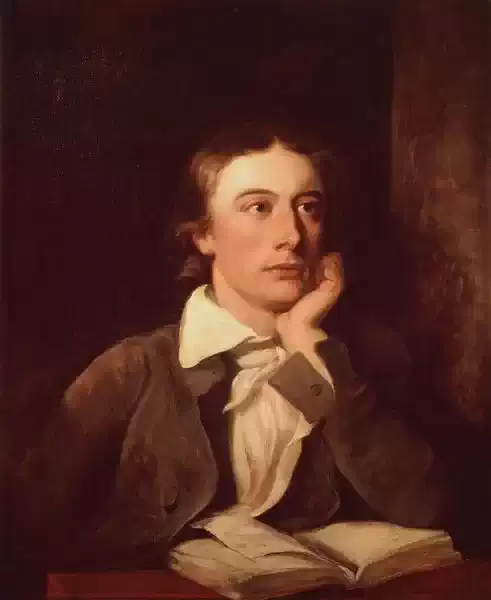
John Keats
Sonnet XIII. Addressed To Haydon
Sonnet XIII. Addressed To Haydon
High-mindedness, a jealousy for good,
A loving-kindness for the great man's fame,
Dwells here and there with people of no name,
In noisome alley, and in pathless wood:
And where we think the truth least understood,
Oft may be found a 'singleness of aim,'
That ought to frighten into hooded shame
A money-mongering, pitiable brood.
How glorious this affection for the cause
Of steadfast genius, toiling gallantly!
What when a stout unbending champion awes
Envy and malice to their native sty?
Unnumbered souls breathe out a still applause,
Proud to behold him in his country's eye.
High-mindedness, a jealousy for good,
A loving-kindness for the great man's fame,
Dwells here and there with people of no name,
In noisome alley, and in pathless wood:
And where we think the truth least understood,
Oft may be found a 'singleness of aim,'
That ought to frighten into hooded shame
A money-mongering, pitiable brood.
How glorious this affection for the cause
Of steadfast genius, toiling gallantly!
What when a stout unbending champion awes
Envy and malice to their native sty?
Unnumbered souls breathe out a still applause,
Proud to behold him in his country's eye.
298
John Keats
Sonnet XI. On First Looking Into Chapman's Homer
Sonnet XI. On First Looking Into Chapman's Homer
Much have I travell'd in the realms of gold,
And many goodly states and kingdoms seen;
Round many western islands have I been
Which bards in fealty to Apollo hold.
Oft of one wide expanse had I been told
That deep-brow'd Homer ruled as his demesne;
Yet did I never breathe its pure serene
Till I heard Chapman speak out loud and bold:
Then felt I like some watcher of the skies
When a new planet swims into his ken;
Or like stout Cortez when with eagle eyes
He star'd at the Pacific -- and all his men
Look'd at each other with a wild surmise --
Silent, upon a peak in Darien.
Much have I travell'd in the realms of gold,
And many goodly states and kingdoms seen;
Round many western islands have I been
Which bards in fealty to Apollo hold.
Oft of one wide expanse had I been told
That deep-brow'd Homer ruled as his demesne;
Yet did I never breathe its pure serene
Till I heard Chapman speak out loud and bold:
Then felt I like some watcher of the skies
When a new planet swims into his ken;
Or like stout Cortez when with eagle eyes
He star'd at the Pacific -- and all his men
Look'd at each other with a wild surmise --
Silent, upon a peak in Darien.
438
John Keats
Sonnet To The Nile
Sonnet To The Nile
Son of the old Moon-mountains African!
Chief of the Pyramid and Crocodile!
We call thee fruitful, and that very while
A desert fills our seeing's inward span:
Nurse of swart nations since the world began,
Art thou so fruitful? or dost thou beguile
Such men to honour thee, who, worn with toil,
Rest for a space 'twixt Cairo and Decan?
O may dark fancies err! They surely do;
'Tis ignorance that makes a barren waste
Of all beyond itself. Thou dost bedew
Green rushes like our rivers, and dost taste
The pleasant sunrise. Green isles hast thou too,
And to the sea as happily dost haste.
Son of the old Moon-mountains African!
Chief of the Pyramid and Crocodile!
We call thee fruitful, and that very while
A desert fills our seeing's inward span:
Nurse of swart nations since the world began,
Art thou so fruitful? or dost thou beguile
Such men to honour thee, who, worn with toil,
Rest for a space 'twixt Cairo and Decan?
O may dark fancies err! They surely do;
'Tis ignorance that makes a barren waste
Of all beyond itself. Thou dost bedew
Green rushes like our rivers, and dost taste
The pleasant sunrise. Green isles hast thou too,
And to the sea as happily dost haste.
442
John Keats
Sonnet III. Written On The Day That Mr. Leigh Hunt Left Prison
Sonnet III. Written On The Day That Mr. Leigh Hunt Left Prison
What though, for showing truth to flatter'd state,
Kind Hunt was shut in prison, yet has he,
In his immortal spirit, been as free
As the sky-searching lark, and as elate.
Minion of grandeur! think you he did wait?
Think you he nought but prison-walls did see,
Till, so unwilling, thou unturn'dst the key?
Ah, no! far happier, nobler was his fate!
In Spenser's halls he stray'd, and bowers fair,
Culling enchanted flowers; and he flew
With daring Milton through the fields of air:
To regions of his own his genius true
Took happy flights. Who shall his fame impair
When thou art dead, and all thy wretched crew?
What though, for showing truth to flatter'd state,
Kind Hunt was shut in prison, yet has he,
In his immortal spirit, been as free
As the sky-searching lark, and as elate.
Minion of grandeur! think you he did wait?
Think you he nought but prison-walls did see,
Till, so unwilling, thou unturn'dst the key?
Ah, no! far happier, nobler was his fate!
In Spenser's halls he stray'd, and bowers fair,
Culling enchanted flowers; and he flew
With daring Milton through the fields of air:
To regions of his own his genius true
Took happy flights. Who shall his fame impair
When thou art dead, and all thy wretched crew?
456
John Keats
Robin Hood
Robin Hood
NO! those days are gone away,
And their hours are old and gray,
And their minutes buried all
Under the down-trodden pall
Ofthe leaves of many years:
Many times have winter's shears,
Frozen North, and chilling East,
Sounded tempests to the feast
Of the forest's whispering fleeces,
Since men knew nor rent nor leases.
No, the bugle sounds no more,
And the twanging bow no more;
Silent is the ivory shrill
Past the heath and up the hill;
There is no mid-forest laugh,
Where lone Echo gives the half
To some wight, amaz'd to hear
Jesting, deep in forest drear.
On the fairest time of June
You may go, with sun or moon,
Or the seven stars to light you,
Or the polar ray to right you;
But you never may behold
Little John, or Robin bold;
Never one, of all the clan,
Thrumming on an empty can
Some old hunting ditty, while
He doth his green way beguile
To fair hostess Merriment,
Down beside the pasture Trent;
For he left the merry tale,
Messenger for spicy ale.
Gone, the merry morris din;
Gone, the song of Gamelyn;
Gone, the tough-belted outlaw
Idling in the "grene shawe";
All are gone away and past!
And if Robin should be cast
Sudden from his turfed grave,
And if Marian should have
Once again her forest days,
She would weep, and he would craze:
He would swear, for all his oaks,
Fall'n beneath the dockyard strokes,
Have rotted on the briny seas;
She would weep that her wild bees
Sang not to her---strange! that honey
Can't be got without hard money!
So it is; yet let us sing
Honour to the old bow-string!
Honour to the bugle-horn!
Honour to the woods unshorn!
Honour to the Lincoln green!
Honour to the archer keen!
Honour to tight little John,
And the horse he rode upon!
Honour to bold Robin Hood,
Sleeping in the underwood!
Honour to maid Marian,
And to all the Sherwood clan!
Though their days have hurried by
Let us two a burden try.
NO! those days are gone away,
And their hours are old and gray,
And their minutes buried all
Under the down-trodden pall
Ofthe leaves of many years:
Many times have winter's shears,
Frozen North, and chilling East,
Sounded tempests to the feast
Of the forest's whispering fleeces,
Since men knew nor rent nor leases.
No, the bugle sounds no more,
And the twanging bow no more;
Silent is the ivory shrill
Past the heath and up the hill;
There is no mid-forest laugh,
Where lone Echo gives the half
To some wight, amaz'd to hear
Jesting, deep in forest drear.
On the fairest time of June
You may go, with sun or moon,
Or the seven stars to light you,
Or the polar ray to right you;
But you never may behold
Little John, or Robin bold;
Never one, of all the clan,
Thrumming on an empty can
Some old hunting ditty, while
He doth his green way beguile
To fair hostess Merriment,
Down beside the pasture Trent;
For he left the merry tale,
Messenger for spicy ale.
Gone, the merry morris din;
Gone, the song of Gamelyn;
Gone, the tough-belted outlaw
Idling in the "grene shawe";
All are gone away and past!
And if Robin should be cast
Sudden from his turfed grave,
And if Marian should have
Once again her forest days,
She would weep, and he would craze:
He would swear, for all his oaks,
Fall'n beneath the dockyard strokes,
Have rotted on the briny seas;
She would weep that her wild bees
Sang not to her---strange! that honey
Can't be got without hard money!
So it is; yet let us sing
Honour to the old bow-string!
Honour to the bugle-horn!
Honour to the woods unshorn!
Honour to the Lincoln green!
Honour to the archer keen!
Honour to tight little John,
And the horse he rode upon!
Honour to bold Robin Hood,
Sleeping in the underwood!
Honour to maid Marian,
And to all the Sherwood clan!
Though their days have hurried by
Let us two a burden try.
562
John Keats
Otho The Great - Act IV
Otho The Great - Act IV
SCENE I.
AURANTHE'S Apartment.
AURANTHE and CONRAD discovered.
Conrad. Well, well, I know what ugly jeopardy
We are cag'd in; you need not pester that
Into my ears. Prythee, let me be spared
A foolish tongue, that I may bethink me
Of remedies with some deliberation.
You cannot doubt but 'tis in Albert's power
To crush or save us?
Auranthe. No, I cannot doubt.
He has, assure yourself, by some strange means,
My secret ; which I ever hid from him,
Knowing his mawkish honesty.
Conrad. Curs'd slave!
Auranthe. Ay, I could almost curse him now myself.
Wretched impediment! Evil genius!
A glue upon my wings, that cannot spread,
When they should span the provinces! A snake,
A scorpion, sprawling on the first gold step,
Conducting to the throne, high canopied.
Conrad. You would not hear my council, when his life
Might have been trodden out, all sure and hush'd;
Now the dull animal forsooth must be
Intreated, managed! When can you contrive
The interview he demands?
Auranthe. As speedily
It must be done as my brib'd woman can
Unseen conduct him to me; but I fear
Twill be impossible, while the broad day
Comes through the panes with persecuting glare.
Methinks, if 't now were night I could intrigue
With darkness, bring the stars to second me,
And settle all this trouble.
Conrad. Nonsense! Child!
See him immediately; why not now?
Auranthe. Do you forget that even the senseless door-posts
Are on the watch and gape through all the house?
How many whispers there are about,
Hungry for evidence to ruin me ;
Men I have spurn 'd, and women I have taunted?
Besides, the foolish prince sends, minute whiles,
His pages so they tell me to enquire
After my health, entreating, if I please,
To see me.
Conrad. Well, suppose this Albert here;
What is your power with him?
Auranthe. He should be
My echo, my taught parrot! but I fear
He will be cur enough to bark at me ;
Have his own say ; read me some silly creed
'Bout shame and pity.
Conrad. What will you do then?
Auranthe. What I shall do, I know not: what L would
Cannot be done; for see, this chain her-floor
Will not yield to the pick-axe and the spade,
Here is no quiet depth of hollow ground.
Conrad. Sister, you have grown sensible and wise,
Seconding, ere I speak it, what is now,
I hope, resolv'd between us.
Auranthe. Say, what is 't?
Conrad. You need not be his sexton too: a man
May carry that with him shall make him die
Elsewhere, give that to him; pretend the while
You will to-morrow succumb to his wishes,
Be what they may, and send him from the Castle
On some fool's errand; let his latest groan
Frighten the wolves!
Auranthe. Alas! he must not die!
Conrad. Would you were both hears'd up in stifling lead!
Detested
Auranthe. Conrad, hold! I would not bear
The little thunder of your fretful tongue,
Tho; I alone were taken in these toils,
And you could free me; but remember, sir,
You live alone in my security:
So keep your wits at work, for your own sake,
Not mine, and be more mannerly.
Conrad. Thou wasp!
If my domains were emptied of these folk,
And I had thee to starve
Auranthe. O, marvellous!
But Conrad, now be gone; the Host is look'd for;
Cringe to the Emperor, entertain the Lords,
And, do ye mind, above all things, proclaim
My sickness, with a brother's sadden'd eye,
Condoling with Prince Ludolph. In fit time
Return to me.
Conrad. I leave you to your thoughts. [Exit.
Auranthe (sola) Down, down, proud temper! down,
Auranthe's pride!
Why do I anger him when I should kneel?
Conrad! Albert! help! help! What can I do?
wretched woman! lost, wreck'd, swallow'd up,
Accursed, blasted ! O, thou golden Crown,
Orbing along the serene firmament
Of a wide empire, like a glowing moon;
And thou, bright sceptre! lustrous in my eyes,
There as the fabled fair Hesperian tree,
Bearing a fruit more precious! graceful thing.
Delicate, godlike, magic! must I leave
Thee to melt in the visionary air,
Ere, by one grasp, this common hand is made
Imperial? I do not know the time
When I have wept for sorrow; but methinks
I could now sit upon the ground, and shed
Tears, tears of misery. O, the heavy day!
How shall I bear my life till Albert comes?
Ludolph! Erminia! Proofs! O heavy day!
Bring me some mourning weeds, that I may 'tire
Myself, as fits one wailing her own death:
Cut off these curls, and brand this lilly hand,
And throw these jewels from my loathing sight,
Fetch me a missal, and a string of beads,
A cup of bitter'd water, and a crust,
I will confess, O holy Abbot How!
What is this? Auranthe! thou fool, dolt,
Whimpering idiot! up! up! act and quell!
I am safe! Coward! why am I in fear?
Albert! he cannot stickle, chew the cud
In such a fine extreme, impossible!
Who knocks? [Goes to the Door, listens, and opens it.
Enter ALBERT.
Albert, I have been waiting for you here
With such an aching heart, such swooning throbs
On my poor brain, such cruel cruel sorrow,
That I should claim your pity! Art not well?
Albert. Yes, lady, well.
Auranthe. You look not so, alas!
But pale, as if you brought some heavy news.
Albert. You know full well what makes me look so pale.
Auranthe. No! Do I? Surely I am still to learn
Some horror; all I know, this present, is
I am near hustled to a dangerous gulph,
Which you can save me from, and therefore safe,
So trusting in thy love; that should not make
Thee pale, my Albert.
Albert. It doth make me freeze.
Auranthe. Why should it, love?
Albert. You should not ask me that,
But make your own heart monitor, and save
Me the great pain of telling. You must know.
Auranthe. Something has vexed you, Albert. There are times
When simplest things put on a sombre cast;
A melancholy mood will haunt a man,
Until most easy matters take the shape
Of unachievable tasks; small rivulets
Then seem impassable.
Albert. Do not cheat yourself
With hope that gloss of words, or suppliant action,
Or tears, or ravings, or self-threaten 'd death,
Can alter my resolve.
Auranthe. You make me tremble;
Not so much at your threats, as at your voice.
Untun'd. and harsh, and barren of all love.
Albert. You suffocate me! Stop this devil's parley,
And listen to me; know me once for all.
Auranthe. I thought I did. Alas! I am deceiv'd.
Albert. No, you are not deceiv'd. You took me for
A man detesting all inhuman crime;
And therefore kept from me your demon's plot
Against Erminia. Silent? Be so still;
For ever! Speak no more; but hear my words,
Thy fate. Your safety I have bought to-day
By blazoning a lie, which in the dawn
I expiate with truth.
Auranthe. O cruel traitor!
Albert. For I would not set eyes upon thy shame;
I would not see thee dragg'd to death by the hair,
Penanc'd, and taunted on a scaffolding!
To-night, upon the skirts of the blind wood
That blackens northward of these horrid towers,
I wait for you with horses. Choose your fate.
Farewell.
Auranthe. Albert, you jest; I'm sure you must.
You, an ambitious Soldier! I, a Queen,
One who could say, Here, rule these Provinces!
Take tribute from those cities for thyself!
Empty these armouries, these treasuries,
Muster thy warlike thousands at a nod !
Go! conquer Italy!
Albert. Auranthe, you have made
The whole world chaff to me. Your doom is fix'd.
Auranthe. Out, villain! dastard!
Albert. Look there to the door!
Who is it?
Auranthe. Conrad, traitor!
Albert. Let him in.
Enter CONRAD.
Do not affect amazement, hypocrite,
At seeing me in this chamber.
Conrad. Auranthe?
Albert. Talk not with eyes, but speak your curses out
Against me, who would sooner crush and grind
A brace of toads, than league with them to oppress
An innocent lady, gull an Emperor,
More generous to me than autumn's sun
To ripening harvests.
Auranthe. No more insult, sir!
Albert. Aye, clutch your scabbard; but, for prudence sake,
Draw not the sword; 'twould make an uproar, Duke,
You would not hear the end of. At nightfall
Your lady sister, if I guess aright,
Will leave this busy castle. You had best
Take farewell too of worldly vanities.
Conrad. Vassal!
Albert. To-morrow, when the Emperor sends
For loving Conrad, see you fawn on him.
Good even !
Auranthe. You'll be seen!
Albert. See the coast clear then.
Auranthe (as he goes). Remorseless Albert! Cruel,
cruel wretch!
[She lets him out.
Conrad. So, we must lick the dust?
Auranthe. I follow him.
Conrad. How? Where? The plan of your escape?
Auranthe. He waits
For me with horses by the forest-side,
Northward.
Conrad. Good, good! he dies. You go, say you?
Auranthe. Perforce.
Conrad. Be speedy, darkness! Till that comes,
Fiends keep you company! [Exit.
Auranthe. And you! And you!
And all men! Vanish!
[Retires to an inner Apartment.
SCENE II. An Apartment in the Castle.
Enter LUDOLPH and Page.
Page. Still very sick, my Lord; but now I went
Knowing my duty to so good a Prince;
And there her women in a mournful throng
Stood in the passage whispering: if any
Mov'd 'twas with careful steps and hush'd as death;
They bid me stop.
Ludolph. Good fellow, once again
Make soft enquiry; prythee be not stay'd
By any hindrance, but with gentlest force
Break through her weeping servants, till thou com'st
E'en to her chamber door, and there, fair boy,
If with thy mother's milk thou hast suck'd in
Any diviner eloquence ; woo her ears
With plaints for me more tender than the voice
Of dying Echo, echoed.
Page. Kindest master!
To know thee sad thus, will unloose my tongue
In mournful syllables. Let but my words reach
Her ears and she shall take them coupled with
Moans from my heart and sighs not counterfeit.
May I speed better! [Exit Page.
Ludolph. Auranthe! My Life!
Long have I lov'd thee, yet till now not lov'd:
Remembering, as I do, hard-hearted times
When I had heard even of thy death perhaps,
And thoughtless, suffered to pass alone
Into Elysium! now I follow thee
A substance or a shadow, wheresoe'er
Thou leadest me, whether thy white feet press,
With pleasant weight, the amorous-aching earth,
Or thro' the air thou pioneerest me,
A shade! Yet sadly I predestinate!
O unbenignest Love, why wilt thou let
Darkness steal out upon the sleepy world
So wearily; as if night's chariot wheels
Were clog'd in some thick cloud. O, changeful Love,
Let not her steeds with drowsy-footed pace
Pass the high stars, before sweet embassage
Comes from the pillow 'd beauty of that fair
Completion of all delicate nature's wit.
Pout her faint lips anew with rubious health
And with thine infant fingers lift the fringe
Of her sick eyelids ; that those eyes may glow
With wooing light upon me, ere the Morn
Peers with disrelish, grey, barren, and cold.
Enter GERSA and Courtiers.
Otho calls me his Lion should I blush
To be so tam'd, so
Gersa. Do me the courtesy
Gentlemen to pass on.
Courtier. We are your servants.
[Exeunt Courtiers.
Ludolph. It seems then, Sir, you have found out the man
You would confer with; me?
Gersa. If I break not
Too much upon your thoughtful mood, I will
Claim a brief while your patience.
Ludolph. For what cause
Soe'er I shall be honour 'd.
Gersa. I not less.
Ludolph. What may it be? No trifle can take place
Of such deliberate prologue, serious 'haviour.
But be it what it may I cannot fail
To listen with no common interest
For though so new your presence is to me,
I have a soldier's friendship for your fame
Please you explain.
Gersa. As thus for, pardon me,
I cannot in plain terms grossly assault
A noble nature ; and would faintly sketch
What your quick apprehension will fill up
So finely I esteem you.
Ludolph. I attend
Gersa. Your generous Father, most illustrious Otho,
Sits in the Banquet room among his chiefs
His wine is bitter, for you are not there
His eyes are fix'd still on the open doors,
And every passer in he frowns upon
Seeing no Ludolph comes.
Ludolph. I do neglect
Gersa. And for your absence, may I guess the cause?
Ludolph. Stay there! no guess? more princely you must be
Than to make guesses at me. ‘Tis enough,
I'm sorry I can hear no more.
Gersa. And I
As griev'd to force it on you so abrupt;
Yet one day you must know a grief whose sting
Will sharpen more the longer 'tis concealed.
Ludolph. Say it at once, sir, dead, dead, is she dead?
Gersa. Mine is a cruel task : she is not dead
And would for your sake she were innocent
Ludolph. Thou liest! thou amazest me beyond
All scope of thought; convulsest my heart's blood
To deadly churning Gersa you are young
As I am ; let me observe you face to face ;
Not grey-brow'd like the poisonous Ethelbert,
No rheumed eyes, no furrowing of age,
No wrinkles where all vices nestle in
Like crannied vermin no, but fresh and young
And hopeful featured. Ha! by heaven you weep
Tears, human tears Do you repent you then
Of a curs'd torturer's office! Why shouldst join
Tell me, the league of Devils? Confess confess
The Lie.
Gersa. Lie!- but begone all ceremonious points
Of honour battailous. I could not turn
My wrath against thee for the orbed world.
Ludolph. Your wrath, weak boy? Tremble at mine unless
Retraction follow close upon the heels
Of that late stounding insult: why has my sword
Not done already a sheer judgment on thee?
Despair, or eat thy words. Why, thou wast nigh
Whimpering away my reason: hark ye, Sir,
It is no secret; that Erminia,
Erminia, Sir, was hidden in your tent;
O bless 'd asylum! comfortable home!
Begone, I pity thee, thou art a Gull
Erminia's last new puppet
Gersa. Furious fire!
Thou mak'st me boil as hot as thou canst flame!
And in thy teeth I give thee back the lie!
Thou liest! Thou, Auranthe's fool, a wittol
Ludolph. Look! look at this bright sword;
There is no part of it to the very hilt
But shall indulge itself about thine heart
Draw but remember thou must cower thy plumes,
As yesterday the Arab made thee stoop
Gersa. Patience! not here, I would not spill thy blood
Here underneath this roof where Otho breathes,
Thy father almost mine
Ludolph. O faltering coward
Re-enter PAGE.
Stay, stay, here is one I have half a word with
Well What ails thee child?
Page. My lord,
Ludolph. Good fellow
Page. They are fled!
Ludolph. They who?
Page. When anxiously
I hasten 'd back, your grieving messenger,
I found the stairs all dark, the lamps extinct,
And not a foot or whisper to be heard.
I thought her dead, and on the lowest step
Sat listening; when presently came by
Two muffled up, one sighing heavily,
The other cursing low, whose voice I knew
For the Duke Conrad's. Close I follow'd them
Thro' the dark ways they chose to the open air;
And, as I follow'd, heard my lady speak.
Ludolph. Thy life answers the truth!
Page. The chamber's empty!
Ludolph. As I will be of mercy! So, at last,
This nail is in my temples!
Gersa. Be calm in this.
Ludolph. I am.
Gersa. And Albert too has disappeared;
Ere I met you, I sought him everywhere ;
You would not hearken.
Ludolph. Which way went they, boy?
Gersa. I'll hunt with you.
Ludolph. No, no, no. My senses are
Still whole. I have surviv'd. My arm is strong
My appetite sharp for revenge! I'll no sharer
In my feast; my injury is all my own,
And so is my revenge, my lawful chattels!
Terrier, ferret them out! Burn burn the witch!
Trace me their footsteps! Away!
[Exeunt.
SCENE I.
AURANTHE'S Apartment.
AURANTHE and CONRAD discovered.
Conrad. Well, well, I know what ugly jeopardy
We are cag'd in; you need not pester that
Into my ears. Prythee, let me be spared
A foolish tongue, that I may bethink me
Of remedies with some deliberation.
You cannot doubt but 'tis in Albert's power
To crush or save us?
Auranthe. No, I cannot doubt.
He has, assure yourself, by some strange means,
My secret ; which I ever hid from him,
Knowing his mawkish honesty.
Conrad. Curs'd slave!
Auranthe. Ay, I could almost curse him now myself.
Wretched impediment! Evil genius!
A glue upon my wings, that cannot spread,
When they should span the provinces! A snake,
A scorpion, sprawling on the first gold step,
Conducting to the throne, high canopied.
Conrad. You would not hear my council, when his life
Might have been trodden out, all sure and hush'd;
Now the dull animal forsooth must be
Intreated, managed! When can you contrive
The interview he demands?
Auranthe. As speedily
It must be done as my brib'd woman can
Unseen conduct him to me; but I fear
Twill be impossible, while the broad day
Comes through the panes with persecuting glare.
Methinks, if 't now were night I could intrigue
With darkness, bring the stars to second me,
And settle all this trouble.
Conrad. Nonsense! Child!
See him immediately; why not now?
Auranthe. Do you forget that even the senseless door-posts
Are on the watch and gape through all the house?
How many whispers there are about,
Hungry for evidence to ruin me ;
Men I have spurn 'd, and women I have taunted?
Besides, the foolish prince sends, minute whiles,
His pages so they tell me to enquire
After my health, entreating, if I please,
To see me.
Conrad. Well, suppose this Albert here;
What is your power with him?
Auranthe. He should be
My echo, my taught parrot! but I fear
He will be cur enough to bark at me ;
Have his own say ; read me some silly creed
'Bout shame and pity.
Conrad. What will you do then?
Auranthe. What I shall do, I know not: what L would
Cannot be done; for see, this chain her-floor
Will not yield to the pick-axe and the spade,
Here is no quiet depth of hollow ground.
Conrad. Sister, you have grown sensible and wise,
Seconding, ere I speak it, what is now,
I hope, resolv'd between us.
Auranthe. Say, what is 't?
Conrad. You need not be his sexton too: a man
May carry that with him shall make him die
Elsewhere, give that to him; pretend the while
You will to-morrow succumb to his wishes,
Be what they may, and send him from the Castle
On some fool's errand; let his latest groan
Frighten the wolves!
Auranthe. Alas! he must not die!
Conrad. Would you were both hears'd up in stifling lead!
Detested
Auranthe. Conrad, hold! I would not bear
The little thunder of your fretful tongue,
Tho; I alone were taken in these toils,
And you could free me; but remember, sir,
You live alone in my security:
So keep your wits at work, for your own sake,
Not mine, and be more mannerly.
Conrad. Thou wasp!
If my domains were emptied of these folk,
And I had thee to starve
Auranthe. O, marvellous!
But Conrad, now be gone; the Host is look'd for;
Cringe to the Emperor, entertain the Lords,
And, do ye mind, above all things, proclaim
My sickness, with a brother's sadden'd eye,
Condoling with Prince Ludolph. In fit time
Return to me.
Conrad. I leave you to your thoughts. [Exit.
Auranthe (sola) Down, down, proud temper! down,
Auranthe's pride!
Why do I anger him when I should kneel?
Conrad! Albert! help! help! What can I do?
wretched woman! lost, wreck'd, swallow'd up,
Accursed, blasted ! O, thou golden Crown,
Orbing along the serene firmament
Of a wide empire, like a glowing moon;
And thou, bright sceptre! lustrous in my eyes,
There as the fabled fair Hesperian tree,
Bearing a fruit more precious! graceful thing.
Delicate, godlike, magic! must I leave
Thee to melt in the visionary air,
Ere, by one grasp, this common hand is made
Imperial? I do not know the time
When I have wept for sorrow; but methinks
I could now sit upon the ground, and shed
Tears, tears of misery. O, the heavy day!
How shall I bear my life till Albert comes?
Ludolph! Erminia! Proofs! O heavy day!
Bring me some mourning weeds, that I may 'tire
Myself, as fits one wailing her own death:
Cut off these curls, and brand this lilly hand,
And throw these jewels from my loathing sight,
Fetch me a missal, and a string of beads,
A cup of bitter'd water, and a crust,
I will confess, O holy Abbot How!
What is this? Auranthe! thou fool, dolt,
Whimpering idiot! up! up! act and quell!
I am safe! Coward! why am I in fear?
Albert! he cannot stickle, chew the cud
In such a fine extreme, impossible!
Who knocks? [Goes to the Door, listens, and opens it.
Enter ALBERT.
Albert, I have been waiting for you here
With such an aching heart, such swooning throbs
On my poor brain, such cruel cruel sorrow,
That I should claim your pity! Art not well?
Albert. Yes, lady, well.
Auranthe. You look not so, alas!
But pale, as if you brought some heavy news.
Albert. You know full well what makes me look so pale.
Auranthe. No! Do I? Surely I am still to learn
Some horror; all I know, this present, is
I am near hustled to a dangerous gulph,
Which you can save me from, and therefore safe,
So trusting in thy love; that should not make
Thee pale, my Albert.
Albert. It doth make me freeze.
Auranthe. Why should it, love?
Albert. You should not ask me that,
But make your own heart monitor, and save
Me the great pain of telling. You must know.
Auranthe. Something has vexed you, Albert. There are times
When simplest things put on a sombre cast;
A melancholy mood will haunt a man,
Until most easy matters take the shape
Of unachievable tasks; small rivulets
Then seem impassable.
Albert. Do not cheat yourself
With hope that gloss of words, or suppliant action,
Or tears, or ravings, or self-threaten 'd death,
Can alter my resolve.
Auranthe. You make me tremble;
Not so much at your threats, as at your voice.
Untun'd. and harsh, and barren of all love.
Albert. You suffocate me! Stop this devil's parley,
And listen to me; know me once for all.
Auranthe. I thought I did. Alas! I am deceiv'd.
Albert. No, you are not deceiv'd. You took me for
A man detesting all inhuman crime;
And therefore kept from me your demon's plot
Against Erminia. Silent? Be so still;
For ever! Speak no more; but hear my words,
Thy fate. Your safety I have bought to-day
By blazoning a lie, which in the dawn
I expiate with truth.
Auranthe. O cruel traitor!
Albert. For I would not set eyes upon thy shame;
I would not see thee dragg'd to death by the hair,
Penanc'd, and taunted on a scaffolding!
To-night, upon the skirts of the blind wood
That blackens northward of these horrid towers,
I wait for you with horses. Choose your fate.
Farewell.
Auranthe. Albert, you jest; I'm sure you must.
You, an ambitious Soldier! I, a Queen,
One who could say, Here, rule these Provinces!
Take tribute from those cities for thyself!
Empty these armouries, these treasuries,
Muster thy warlike thousands at a nod !
Go! conquer Italy!
Albert. Auranthe, you have made
The whole world chaff to me. Your doom is fix'd.
Auranthe. Out, villain! dastard!
Albert. Look there to the door!
Who is it?
Auranthe. Conrad, traitor!
Albert. Let him in.
Enter CONRAD.
Do not affect amazement, hypocrite,
At seeing me in this chamber.
Conrad. Auranthe?
Albert. Talk not with eyes, but speak your curses out
Against me, who would sooner crush and grind
A brace of toads, than league with them to oppress
An innocent lady, gull an Emperor,
More generous to me than autumn's sun
To ripening harvests.
Auranthe. No more insult, sir!
Albert. Aye, clutch your scabbard; but, for prudence sake,
Draw not the sword; 'twould make an uproar, Duke,
You would not hear the end of. At nightfall
Your lady sister, if I guess aright,
Will leave this busy castle. You had best
Take farewell too of worldly vanities.
Conrad. Vassal!
Albert. To-morrow, when the Emperor sends
For loving Conrad, see you fawn on him.
Good even !
Auranthe. You'll be seen!
Albert. See the coast clear then.
Auranthe (as he goes). Remorseless Albert! Cruel,
cruel wretch!
[She lets him out.
Conrad. So, we must lick the dust?
Auranthe. I follow him.
Conrad. How? Where? The plan of your escape?
Auranthe. He waits
For me with horses by the forest-side,
Northward.
Conrad. Good, good! he dies. You go, say you?
Auranthe. Perforce.
Conrad. Be speedy, darkness! Till that comes,
Fiends keep you company! [Exit.
Auranthe. And you! And you!
And all men! Vanish!
[Retires to an inner Apartment.
SCENE II. An Apartment in the Castle.
Enter LUDOLPH and Page.
Page. Still very sick, my Lord; but now I went
Knowing my duty to so good a Prince;
And there her women in a mournful throng
Stood in the passage whispering: if any
Mov'd 'twas with careful steps and hush'd as death;
They bid me stop.
Ludolph. Good fellow, once again
Make soft enquiry; prythee be not stay'd
By any hindrance, but with gentlest force
Break through her weeping servants, till thou com'st
E'en to her chamber door, and there, fair boy,
If with thy mother's milk thou hast suck'd in
Any diviner eloquence ; woo her ears
With plaints for me more tender than the voice
Of dying Echo, echoed.
Page. Kindest master!
To know thee sad thus, will unloose my tongue
In mournful syllables. Let but my words reach
Her ears and she shall take them coupled with
Moans from my heart and sighs not counterfeit.
May I speed better! [Exit Page.
Ludolph. Auranthe! My Life!
Long have I lov'd thee, yet till now not lov'd:
Remembering, as I do, hard-hearted times
When I had heard even of thy death perhaps,
And thoughtless, suffered to pass alone
Into Elysium! now I follow thee
A substance or a shadow, wheresoe'er
Thou leadest me, whether thy white feet press,
With pleasant weight, the amorous-aching earth,
Or thro' the air thou pioneerest me,
A shade! Yet sadly I predestinate!
O unbenignest Love, why wilt thou let
Darkness steal out upon the sleepy world
So wearily; as if night's chariot wheels
Were clog'd in some thick cloud. O, changeful Love,
Let not her steeds with drowsy-footed pace
Pass the high stars, before sweet embassage
Comes from the pillow 'd beauty of that fair
Completion of all delicate nature's wit.
Pout her faint lips anew with rubious health
And with thine infant fingers lift the fringe
Of her sick eyelids ; that those eyes may glow
With wooing light upon me, ere the Morn
Peers with disrelish, grey, barren, and cold.
Enter GERSA and Courtiers.
Otho calls me his Lion should I blush
To be so tam'd, so
Gersa. Do me the courtesy
Gentlemen to pass on.
Courtier. We are your servants.
[Exeunt Courtiers.
Ludolph. It seems then, Sir, you have found out the man
You would confer with; me?
Gersa. If I break not
Too much upon your thoughtful mood, I will
Claim a brief while your patience.
Ludolph. For what cause
Soe'er I shall be honour 'd.
Gersa. I not less.
Ludolph. What may it be? No trifle can take place
Of such deliberate prologue, serious 'haviour.
But be it what it may I cannot fail
To listen with no common interest
For though so new your presence is to me,
I have a soldier's friendship for your fame
Please you explain.
Gersa. As thus for, pardon me,
I cannot in plain terms grossly assault
A noble nature ; and would faintly sketch
What your quick apprehension will fill up
So finely I esteem you.
Ludolph. I attend
Gersa. Your generous Father, most illustrious Otho,
Sits in the Banquet room among his chiefs
His wine is bitter, for you are not there
His eyes are fix'd still on the open doors,
And every passer in he frowns upon
Seeing no Ludolph comes.
Ludolph. I do neglect
Gersa. And for your absence, may I guess the cause?
Ludolph. Stay there! no guess? more princely you must be
Than to make guesses at me. ‘Tis enough,
I'm sorry I can hear no more.
Gersa. And I
As griev'd to force it on you so abrupt;
Yet one day you must know a grief whose sting
Will sharpen more the longer 'tis concealed.
Ludolph. Say it at once, sir, dead, dead, is she dead?
Gersa. Mine is a cruel task : she is not dead
And would for your sake she were innocent
Ludolph. Thou liest! thou amazest me beyond
All scope of thought; convulsest my heart's blood
To deadly churning Gersa you are young
As I am ; let me observe you face to face ;
Not grey-brow'd like the poisonous Ethelbert,
No rheumed eyes, no furrowing of age,
No wrinkles where all vices nestle in
Like crannied vermin no, but fresh and young
And hopeful featured. Ha! by heaven you weep
Tears, human tears Do you repent you then
Of a curs'd torturer's office! Why shouldst join
Tell me, the league of Devils? Confess confess
The Lie.
Gersa. Lie!- but begone all ceremonious points
Of honour battailous. I could not turn
My wrath against thee for the orbed world.
Ludolph. Your wrath, weak boy? Tremble at mine unless
Retraction follow close upon the heels
Of that late stounding insult: why has my sword
Not done already a sheer judgment on thee?
Despair, or eat thy words. Why, thou wast nigh
Whimpering away my reason: hark ye, Sir,
It is no secret; that Erminia,
Erminia, Sir, was hidden in your tent;
O bless 'd asylum! comfortable home!
Begone, I pity thee, thou art a Gull
Erminia's last new puppet
Gersa. Furious fire!
Thou mak'st me boil as hot as thou canst flame!
And in thy teeth I give thee back the lie!
Thou liest! Thou, Auranthe's fool, a wittol
Ludolph. Look! look at this bright sword;
There is no part of it to the very hilt
But shall indulge itself about thine heart
Draw but remember thou must cower thy plumes,
As yesterday the Arab made thee stoop
Gersa. Patience! not here, I would not spill thy blood
Here underneath this roof where Otho breathes,
Thy father almost mine
Ludolph. O faltering coward
Re-enter PAGE.
Stay, stay, here is one I have half a word with
Well What ails thee child?
Page. My lord,
Ludolph. Good fellow
Page. They are fled!
Ludolph. They who?
Page. When anxiously
I hasten 'd back, your grieving messenger,
I found the stairs all dark, the lamps extinct,
And not a foot or whisper to be heard.
I thought her dead, and on the lowest step
Sat listening; when presently came by
Two muffled up, one sighing heavily,
The other cursing low, whose voice I knew
For the Duke Conrad's. Close I follow'd them
Thro' the dark ways they chose to the open air;
And, as I follow'd, heard my lady speak.
Ludolph. Thy life answers the truth!
Page. The chamber's empty!
Ludolph. As I will be of mercy! So, at last,
This nail is in my temples!
Gersa. Be calm in this.
Ludolph. I am.
Gersa. And Albert too has disappeared;
Ere I met you, I sought him everywhere ;
You would not hearken.
Ludolph. Which way went they, boy?
Gersa. I'll hunt with you.
Ludolph. No, no, no. My senses are
Still whole. I have surviv'd. My arm is strong
My appetite sharp for revenge! I'll no sharer
In my feast; my injury is all my own,
And so is my revenge, my lawful chattels!
Terrier, ferret them out! Burn burn the witch!
Trace me their footsteps! Away!
[Exeunt.
454
John Keats
Otho The Great - Act IV
Otho The Great - Act IV
SCENE I.
AURANTHE'S Apartment.
AURANTHE and CONRAD discovered.
Conrad. Well, well, I know what ugly jeopardy
We are cag'd in; you need not pester that
Into my ears. Prythee, let me be spared
A foolish tongue, that I may bethink me
Of remedies with some deliberation.
You cannot doubt but 'tis in Albert's power
To crush or save us?
Auranthe. No, I cannot doubt.
He has, assure yourself, by some strange means,
My secret ; which I ever hid from him,
Knowing his mawkish honesty.
Conrad. Curs'd slave!
Auranthe. Ay, I could almost curse him now myself.
Wretched impediment! Evil genius!
A glue upon my wings, that cannot spread,
When they should span the provinces! A snake,
A scorpion, sprawling on the first gold step,
Conducting to the throne, high canopied.
Conrad. You would not hear my council, when his life
Might have been trodden out, all sure and hush'd;
Now the dull animal forsooth must be
Intreated, managed! When can you contrive
The interview he demands?
Auranthe. As speedily
It must be done as my brib'd woman can
Unseen conduct him to me; but I fear
Twill be impossible, while the broad day
Comes through the panes with persecuting glare.
Methinks, if 't now were night I could intrigue
With darkness, bring the stars to second me,
And settle all this trouble.
Conrad. Nonsense! Child!
See him immediately; why not now?
Auranthe. Do you forget that even the senseless door-posts
Are on the watch and gape through all the house?
How many whispers there are about,
Hungry for evidence to ruin me ;
Men I have spurn 'd, and women I have taunted?
Besides, the foolish prince sends, minute whiles,
His pages so they tell me to enquire
After my health, entreating, if I please,
To see me.
Conrad. Well, suppose this Albert here;
What is your power with him?
Auranthe. He should be
My echo, my taught parrot! but I fear
He will be cur enough to bark at me ;
Have his own say ; read me some silly creed
'Bout shame and pity.
Conrad. What will you do then?
Auranthe. What I shall do, I know not: what L would
Cannot be done; for see, this chain her-floor
Will not yield to the pick-axe and the spade,
Here is no quiet depth of hollow ground.
Conrad. Sister, you have grown sensible and wise,
Seconding, ere I speak it, what is now,
I hope, resolv'd between us.
Auranthe. Say, what is 't?
Conrad. You need not be his sexton too: a man
May carry that with him shall make him die
Elsewhere, give that to him; pretend the while
You will to-morrow succumb to his wishes,
Be what they may, and send him from the Castle
On some fool's errand; let his latest groan
Frighten the wolves!
Auranthe. Alas! he must not die!
Conrad. Would you were both hears'd up in stifling lead!
Detested
Auranthe. Conrad, hold! I would not bear
The little thunder of your fretful tongue,
Tho; I alone were taken in these toils,
And you could free me; but remember, sir,
You live alone in my security:
So keep your wits at work, for your own sake,
Not mine, and be more mannerly.
Conrad. Thou wasp!
If my domains were emptied of these folk,
And I had thee to starve
Auranthe. O, marvellous!
But Conrad, now be gone; the Host is look'd for;
Cringe to the Emperor, entertain the Lords,
And, do ye mind, above all things, proclaim
My sickness, with a brother's sadden'd eye,
Condoling with Prince Ludolph. In fit time
Return to me.
Conrad. I leave you to your thoughts. [Exit.
Auranthe (sola) Down, down, proud temper! down,
Auranthe's pride!
Why do I anger him when I should kneel?
Conrad! Albert! help! help! What can I do?
wretched woman! lost, wreck'd, swallow'd up,
Accursed, blasted ! O, thou golden Crown,
Orbing along the serene firmament
Of a wide empire, like a glowing moon;
And thou, bright sceptre! lustrous in my eyes,
There as the fabled fair Hesperian tree,
Bearing a fruit more precious! graceful thing.
Delicate, godlike, magic! must I leave
Thee to melt in the visionary air,
Ere, by one grasp, this common hand is made
Imperial? I do not know the time
When I have wept for sorrow; but methinks
I could now sit upon the ground, and shed
Tears, tears of misery. O, the heavy day!
How shall I bear my life till Albert comes?
Ludolph! Erminia! Proofs! O heavy day!
Bring me some mourning weeds, that I may 'tire
Myself, as fits one wailing her own death:
Cut off these curls, and brand this lilly hand,
And throw these jewels from my loathing sight,
Fetch me a missal, and a string of beads,
A cup of bitter'd water, and a crust,
I will confess, O holy Abbot How!
What is this? Auranthe! thou fool, dolt,
Whimpering idiot! up! up! act and quell!
I am safe! Coward! why am I in fear?
Albert! he cannot stickle, chew the cud
In such a fine extreme, impossible!
Who knocks? [Goes to the Door, listens, and opens it.
Enter ALBERT.
Albert, I have been waiting for you here
With such an aching heart, such swooning throbs
On my poor brain, such cruel cruel sorrow,
That I should claim your pity! Art not well?
Albert. Yes, lady, well.
Auranthe. You look not so, alas!
But pale, as if you brought some heavy news.
Albert. You know full well what makes me look so pale.
Auranthe. No! Do I? Surely I am still to learn
Some horror; all I know, this present, is
I am near hustled to a dangerous gulph,
Which you can save me from, and therefore safe,
So trusting in thy love; that should not make
Thee pale, my Albert.
Albert. It doth make me freeze.
Auranthe. Why should it, love?
Albert. You should not ask me that,
But make your own heart monitor, and save
Me the great pain of telling. You must know.
Auranthe. Something has vexed you, Albert. There are times
When simplest things put on a sombre cast;
A melancholy mood will haunt a man,
Until most easy matters take the shape
Of unachievable tasks; small rivulets
Then seem impassable.
Albert. Do not cheat yourself
With hope that gloss of words, or suppliant action,
Or tears, or ravings, or self-threaten 'd death,
Can alter my resolve.
Auranthe. You make me tremble;
Not so much at your threats, as at your voice.
Untun'd. and harsh, and barren of all love.
Albert. You suffocate me! Stop this devil's parley,
And listen to me; know me once for all.
Auranthe. I thought I did. Alas! I am deceiv'd.
Albert. No, you are not deceiv'd. You took me for
A man detesting all inhuman crime;
And therefore kept from me your demon's plot
Against Erminia. Silent? Be so still;
For ever! Speak no more; but hear my words,
Thy fate. Your safety I have bought to-day
By blazoning a lie, which in the dawn
I expiate with truth.
Auranthe. O cruel traitor!
Albert. For I would not set eyes upon thy shame;
I would not see thee dragg'd to death by the hair,
Penanc'd, and taunted on a scaffolding!
To-night, upon the skirts of the blind wood
That blackens northward of these horrid towers,
I wait for you with horses. Choose your fate.
Farewell.
Auranthe. Albert, you jest; I'm sure you must.
You, an ambitious Soldier! I, a Queen,
One who could say, Here, rule these Provinces!
Take tribute from those cities for thyself!
Empty these armouries, these treasuries,
Muster thy warlike thousands at a nod !
Go! conquer Italy!
Albert. Auranthe, you have made
The whole world chaff to me. Your doom is fix'd.
Auranthe. Out, villain! dastard!
Albert. Look there to the door!
Who is it?
Auranthe. Conrad, traitor!
Albert. Let him in.
Enter CONRAD.
Do not affect amazement, hypocrite,
At seeing me in this chamber.
Conrad. Auranthe?
Albert. Talk not with eyes, but speak your curses out
Against me, who would sooner crush and grind
A brace of toads, than league with them to oppress
An innocent lady, gull an Emperor,
More generous to me than autumn's sun
To ripening harvests.
Auranthe. No more insult, sir!
Albert. Aye, clutch your scabbard; but, for prudence sake,
Draw not the sword; 'twould make an uproar, Duke,
You would not hear the end of. At nightfall
Your lady sister, if I guess aright,
Will leave this busy castle. You had best
Take farewell too of worldly vanities.
Conrad. Vassal!
Albert. To-morrow, when the Emperor sends
For loving Conrad, see you fawn on him.
Good even !
Auranthe. You'll be seen!
Albert. See the coast clear then.
Auranthe (as he goes). Remorseless Albert! Cruel,
cruel wretch!
[She lets him out.
Conrad. So, we must lick the dust?
Auranthe. I follow him.
Conrad. How? Where? The plan of your escape?
Auranthe. He waits
For me with horses by the forest-side,
Northward.
Conrad. Good, good! he dies. You go, say you?
Auranthe. Perforce.
Conrad. Be speedy, darkness! Till that comes,
Fiends keep you company! [Exit.
Auranthe. And you! And you!
And all men! Vanish!
[Retires to an inner Apartment.
SCENE II. An Apartment in the Castle.
Enter LUDOLPH and Page.
Page. Still very sick, my Lord; but now I went
Knowing my duty to so good a Prince;
And there her women in a mournful throng
Stood in the passage whispering: if any
Mov'd 'twas with careful steps and hush'd as death;
They bid me stop.
Ludolph. Good fellow, once again
Make soft enquiry; prythee be not stay'd
By any hindrance, but with gentlest force
Break through her weeping servants, till thou com'st
E'en to her chamber door, and there, fair boy,
If with thy mother's milk thou hast suck'd in
Any diviner eloquence ; woo her ears
With plaints for me more tender than the voice
Of dying Echo, echoed.
Page. Kindest master!
To know thee sad thus, will unloose my tongue
In mournful syllables. Let but my words reach
Her ears and she shall take them coupled with
Moans from my heart and sighs not counterfeit.
May I speed better! [Exit Page.
Ludolph. Auranthe! My Life!
Long have I lov'd thee, yet till now not lov'd:
Remembering, as I do, hard-hearted times
When I had heard even of thy death perhaps,
And thoughtless, suffered to pass alone
Into Elysium! now I follow thee
A substance or a shadow, wheresoe'er
Thou leadest me, whether thy white feet press,
With pleasant weight, the amorous-aching earth,
Or thro' the air thou pioneerest me,
A shade! Yet sadly I predestinate!
O unbenignest Love, why wilt thou let
Darkness steal out upon the sleepy world
So wearily; as if night's chariot wheels
Were clog'd in some thick cloud. O, changeful Love,
Let not her steeds with drowsy-footed pace
Pass the high stars, before sweet embassage
Comes from the pillow 'd beauty of that fair
Completion of all delicate nature's wit.
Pout her faint lips anew with rubious health
And with thine infant fingers lift the fringe
Of her sick eyelids ; that those eyes may glow
With wooing light upon me, ere the Morn
Peers with disrelish, grey, barren, and cold.
Enter GERSA and Courtiers.
Otho calls me his Lion should I blush
To be so tam'd, so
Gersa. Do me the courtesy
Gentlemen to pass on.
Courtier. We are your servants.
[Exeunt Courtiers.
Ludolph. It seems then, Sir, you have found out the man
You would confer with; me?
Gersa. If I break not
Too much upon your thoughtful mood, I will
Claim a brief while your patience.
Ludolph. For what cause
Soe'er I shall be honour 'd.
Gersa. I not less.
Ludolph. What may it be? No trifle can take place
Of such deliberate prologue, serious 'haviour.
But be it what it may I cannot fail
To listen with no common interest
For though so new your presence is to me,
I have a soldier's friendship for your fame
Please you explain.
Gersa. As thus for, pardon me,
I cannot in plain terms grossly assault
A noble nature ; and would faintly sketch
What your quick apprehension will fill up
So finely I esteem you.
Ludolph. I attend
Gersa. Your generous Father, most illustrious Otho,
Sits in the Banquet room among his chiefs
His wine is bitter, for you are not there
His eyes are fix'd still on the open doors,
And every passer in he frowns upon
Seeing no Ludolph comes.
Ludolph. I do neglect
Gersa. And for your absence, may I guess the cause?
Ludolph. Stay there! no guess? more princely you must be
Than to make guesses at me. ‘Tis enough,
I'm sorry I can hear no more.
Gersa. And I
As griev'd to force it on you so abrupt;
Yet one day you must know a grief whose sting
Will sharpen more the longer 'tis concealed.
Ludolph. Say it at once, sir, dead, dead, is she dead?
Gersa. Mine is a cruel task : she is not dead
And would for your sake she were innocent
Ludolph. Thou liest! thou amazest me beyond
All scope of thought; convulsest my heart's blood
To deadly churning Gersa you are young
As I am ; let me observe you face to face ;
Not grey-brow'd like the poisonous Ethelbert,
No rheumed eyes, no furrowing of age,
No wrinkles where all vices nestle in
Like crannied vermin no, but fresh and young
And hopeful featured. Ha! by heaven you weep
Tears, human tears Do you repent you then
Of a curs'd torturer's office! Why shouldst join
Tell me, the league of Devils? Confess confess
The Lie.
Gersa. Lie!- but begone all ceremonious points
Of honour battailous. I could not turn
My wrath against thee for the orbed world.
Ludolph. Your wrath, weak boy? Tremble at mine unless
Retraction follow close upon the heels
Of that late stounding insult: why has my sword
Not done already a sheer judgment on thee?
Despair, or eat thy words. Why, thou wast nigh
Whimpering away my reason: hark ye, Sir,
It is no secret; that Erminia,
Erminia, Sir, was hidden in your tent;
O bless 'd asylum! comfortable home!
Begone, I pity thee, thou art a Gull
Erminia's last new puppet
Gersa. Furious fire!
Thou mak'st me boil as hot as thou canst flame!
And in thy teeth I give thee back the lie!
Thou liest! Thou, Auranthe's fool, a wittol
Ludolph. Look! look at this bright sword;
There is no part of it to the very hilt
But shall indulge itself about thine heart
Draw but remember thou must cower thy plumes,
As yesterday the Arab made thee stoop
Gersa. Patience! not here, I would not spill thy blood
Here underneath this roof where Otho breathes,
Thy father almost mine
Ludolph. O faltering coward
Re-enter PAGE.
Stay, stay, here is one I have half a word with
Well What ails thee child?
Page. My lord,
Ludolph. Good fellow
Page. They are fled!
Ludolph. They who?
Page. When anxiously
I hasten 'd back, your grieving messenger,
I found the stairs all dark, the lamps extinct,
And not a foot or whisper to be heard.
I thought her dead, and on the lowest step
Sat listening; when presently came by
Two muffled up, one sighing heavily,
The other cursing low, whose voice I knew
For the Duke Conrad's. Close I follow'd them
Thro' the dark ways they chose to the open air;
And, as I follow'd, heard my lady speak.
Ludolph. Thy life answers the truth!
Page. The chamber's empty!
Ludolph. As I will be of mercy! So, at last,
This nail is in my temples!
Gersa. Be calm in this.
Ludolph. I am.
Gersa. And Albert too has disappeared;
Ere I met you, I sought him everywhere ;
You would not hearken.
Ludolph. Which way went they, boy?
Gersa. I'll hunt with you.
Ludolph. No, no, no. My senses are
Still whole. I have surviv'd. My arm is strong
My appetite sharp for revenge! I'll no sharer
In my feast; my injury is all my own,
And so is my revenge, my lawful chattels!
Terrier, ferret them out! Burn burn the witch!
Trace me their footsteps! Away!
[Exeunt.
SCENE I.
AURANTHE'S Apartment.
AURANTHE and CONRAD discovered.
Conrad. Well, well, I know what ugly jeopardy
We are cag'd in; you need not pester that
Into my ears. Prythee, let me be spared
A foolish tongue, that I may bethink me
Of remedies with some deliberation.
You cannot doubt but 'tis in Albert's power
To crush or save us?
Auranthe. No, I cannot doubt.
He has, assure yourself, by some strange means,
My secret ; which I ever hid from him,
Knowing his mawkish honesty.
Conrad. Curs'd slave!
Auranthe. Ay, I could almost curse him now myself.
Wretched impediment! Evil genius!
A glue upon my wings, that cannot spread,
When they should span the provinces! A snake,
A scorpion, sprawling on the first gold step,
Conducting to the throne, high canopied.
Conrad. You would not hear my council, when his life
Might have been trodden out, all sure and hush'd;
Now the dull animal forsooth must be
Intreated, managed! When can you contrive
The interview he demands?
Auranthe. As speedily
It must be done as my brib'd woman can
Unseen conduct him to me; but I fear
Twill be impossible, while the broad day
Comes through the panes with persecuting glare.
Methinks, if 't now were night I could intrigue
With darkness, bring the stars to second me,
And settle all this trouble.
Conrad. Nonsense! Child!
See him immediately; why not now?
Auranthe. Do you forget that even the senseless door-posts
Are on the watch and gape through all the house?
How many whispers there are about,
Hungry for evidence to ruin me ;
Men I have spurn 'd, and women I have taunted?
Besides, the foolish prince sends, minute whiles,
His pages so they tell me to enquire
After my health, entreating, if I please,
To see me.
Conrad. Well, suppose this Albert here;
What is your power with him?
Auranthe. He should be
My echo, my taught parrot! but I fear
He will be cur enough to bark at me ;
Have his own say ; read me some silly creed
'Bout shame and pity.
Conrad. What will you do then?
Auranthe. What I shall do, I know not: what L would
Cannot be done; for see, this chain her-floor
Will not yield to the pick-axe and the spade,
Here is no quiet depth of hollow ground.
Conrad. Sister, you have grown sensible and wise,
Seconding, ere I speak it, what is now,
I hope, resolv'd between us.
Auranthe. Say, what is 't?
Conrad. You need not be his sexton too: a man
May carry that with him shall make him die
Elsewhere, give that to him; pretend the while
You will to-morrow succumb to his wishes,
Be what they may, and send him from the Castle
On some fool's errand; let his latest groan
Frighten the wolves!
Auranthe. Alas! he must not die!
Conrad. Would you were both hears'd up in stifling lead!
Detested
Auranthe. Conrad, hold! I would not bear
The little thunder of your fretful tongue,
Tho; I alone were taken in these toils,
And you could free me; but remember, sir,
You live alone in my security:
So keep your wits at work, for your own sake,
Not mine, and be more mannerly.
Conrad. Thou wasp!
If my domains were emptied of these folk,
And I had thee to starve
Auranthe. O, marvellous!
But Conrad, now be gone; the Host is look'd for;
Cringe to the Emperor, entertain the Lords,
And, do ye mind, above all things, proclaim
My sickness, with a brother's sadden'd eye,
Condoling with Prince Ludolph. In fit time
Return to me.
Conrad. I leave you to your thoughts. [Exit.
Auranthe (sola) Down, down, proud temper! down,
Auranthe's pride!
Why do I anger him when I should kneel?
Conrad! Albert! help! help! What can I do?
wretched woman! lost, wreck'd, swallow'd up,
Accursed, blasted ! O, thou golden Crown,
Orbing along the serene firmament
Of a wide empire, like a glowing moon;
And thou, bright sceptre! lustrous in my eyes,
There as the fabled fair Hesperian tree,
Bearing a fruit more precious! graceful thing.
Delicate, godlike, magic! must I leave
Thee to melt in the visionary air,
Ere, by one grasp, this common hand is made
Imperial? I do not know the time
When I have wept for sorrow; but methinks
I could now sit upon the ground, and shed
Tears, tears of misery. O, the heavy day!
How shall I bear my life till Albert comes?
Ludolph! Erminia! Proofs! O heavy day!
Bring me some mourning weeds, that I may 'tire
Myself, as fits one wailing her own death:
Cut off these curls, and brand this lilly hand,
And throw these jewels from my loathing sight,
Fetch me a missal, and a string of beads,
A cup of bitter'd water, and a crust,
I will confess, O holy Abbot How!
What is this? Auranthe! thou fool, dolt,
Whimpering idiot! up! up! act and quell!
I am safe! Coward! why am I in fear?
Albert! he cannot stickle, chew the cud
In such a fine extreme, impossible!
Who knocks? [Goes to the Door, listens, and opens it.
Enter ALBERT.
Albert, I have been waiting for you here
With such an aching heart, such swooning throbs
On my poor brain, such cruel cruel sorrow,
That I should claim your pity! Art not well?
Albert. Yes, lady, well.
Auranthe. You look not so, alas!
But pale, as if you brought some heavy news.
Albert. You know full well what makes me look so pale.
Auranthe. No! Do I? Surely I am still to learn
Some horror; all I know, this present, is
I am near hustled to a dangerous gulph,
Which you can save me from, and therefore safe,
So trusting in thy love; that should not make
Thee pale, my Albert.
Albert. It doth make me freeze.
Auranthe. Why should it, love?
Albert. You should not ask me that,
But make your own heart monitor, and save
Me the great pain of telling. You must know.
Auranthe. Something has vexed you, Albert. There are times
When simplest things put on a sombre cast;
A melancholy mood will haunt a man,
Until most easy matters take the shape
Of unachievable tasks; small rivulets
Then seem impassable.
Albert. Do not cheat yourself
With hope that gloss of words, or suppliant action,
Or tears, or ravings, or self-threaten 'd death,
Can alter my resolve.
Auranthe. You make me tremble;
Not so much at your threats, as at your voice.
Untun'd. and harsh, and barren of all love.
Albert. You suffocate me! Stop this devil's parley,
And listen to me; know me once for all.
Auranthe. I thought I did. Alas! I am deceiv'd.
Albert. No, you are not deceiv'd. You took me for
A man detesting all inhuman crime;
And therefore kept from me your demon's plot
Against Erminia. Silent? Be so still;
For ever! Speak no more; but hear my words,
Thy fate. Your safety I have bought to-day
By blazoning a lie, which in the dawn
I expiate with truth.
Auranthe. O cruel traitor!
Albert. For I would not set eyes upon thy shame;
I would not see thee dragg'd to death by the hair,
Penanc'd, and taunted on a scaffolding!
To-night, upon the skirts of the blind wood
That blackens northward of these horrid towers,
I wait for you with horses. Choose your fate.
Farewell.
Auranthe. Albert, you jest; I'm sure you must.
You, an ambitious Soldier! I, a Queen,
One who could say, Here, rule these Provinces!
Take tribute from those cities for thyself!
Empty these armouries, these treasuries,
Muster thy warlike thousands at a nod !
Go! conquer Italy!
Albert. Auranthe, you have made
The whole world chaff to me. Your doom is fix'd.
Auranthe. Out, villain! dastard!
Albert. Look there to the door!
Who is it?
Auranthe. Conrad, traitor!
Albert. Let him in.
Enter CONRAD.
Do not affect amazement, hypocrite,
At seeing me in this chamber.
Conrad. Auranthe?
Albert. Talk not with eyes, but speak your curses out
Against me, who would sooner crush and grind
A brace of toads, than league with them to oppress
An innocent lady, gull an Emperor,
More generous to me than autumn's sun
To ripening harvests.
Auranthe. No more insult, sir!
Albert. Aye, clutch your scabbard; but, for prudence sake,
Draw not the sword; 'twould make an uproar, Duke,
You would not hear the end of. At nightfall
Your lady sister, if I guess aright,
Will leave this busy castle. You had best
Take farewell too of worldly vanities.
Conrad. Vassal!
Albert. To-morrow, when the Emperor sends
For loving Conrad, see you fawn on him.
Good even !
Auranthe. You'll be seen!
Albert. See the coast clear then.
Auranthe (as he goes). Remorseless Albert! Cruel,
cruel wretch!
[She lets him out.
Conrad. So, we must lick the dust?
Auranthe. I follow him.
Conrad. How? Where? The plan of your escape?
Auranthe. He waits
For me with horses by the forest-side,
Northward.
Conrad. Good, good! he dies. You go, say you?
Auranthe. Perforce.
Conrad. Be speedy, darkness! Till that comes,
Fiends keep you company! [Exit.
Auranthe. And you! And you!
And all men! Vanish!
[Retires to an inner Apartment.
SCENE II. An Apartment in the Castle.
Enter LUDOLPH and Page.
Page. Still very sick, my Lord; but now I went
Knowing my duty to so good a Prince;
And there her women in a mournful throng
Stood in the passage whispering: if any
Mov'd 'twas with careful steps and hush'd as death;
They bid me stop.
Ludolph. Good fellow, once again
Make soft enquiry; prythee be not stay'd
By any hindrance, but with gentlest force
Break through her weeping servants, till thou com'st
E'en to her chamber door, and there, fair boy,
If with thy mother's milk thou hast suck'd in
Any diviner eloquence ; woo her ears
With plaints for me more tender than the voice
Of dying Echo, echoed.
Page. Kindest master!
To know thee sad thus, will unloose my tongue
In mournful syllables. Let but my words reach
Her ears and she shall take them coupled with
Moans from my heart and sighs not counterfeit.
May I speed better! [Exit Page.
Ludolph. Auranthe! My Life!
Long have I lov'd thee, yet till now not lov'd:
Remembering, as I do, hard-hearted times
When I had heard even of thy death perhaps,
And thoughtless, suffered to pass alone
Into Elysium! now I follow thee
A substance or a shadow, wheresoe'er
Thou leadest me, whether thy white feet press,
With pleasant weight, the amorous-aching earth,
Or thro' the air thou pioneerest me,
A shade! Yet sadly I predestinate!
O unbenignest Love, why wilt thou let
Darkness steal out upon the sleepy world
So wearily; as if night's chariot wheels
Were clog'd in some thick cloud. O, changeful Love,
Let not her steeds with drowsy-footed pace
Pass the high stars, before sweet embassage
Comes from the pillow 'd beauty of that fair
Completion of all delicate nature's wit.
Pout her faint lips anew with rubious health
And with thine infant fingers lift the fringe
Of her sick eyelids ; that those eyes may glow
With wooing light upon me, ere the Morn
Peers with disrelish, grey, barren, and cold.
Enter GERSA and Courtiers.
Otho calls me his Lion should I blush
To be so tam'd, so
Gersa. Do me the courtesy
Gentlemen to pass on.
Courtier. We are your servants.
[Exeunt Courtiers.
Ludolph. It seems then, Sir, you have found out the man
You would confer with; me?
Gersa. If I break not
Too much upon your thoughtful mood, I will
Claim a brief while your patience.
Ludolph. For what cause
Soe'er I shall be honour 'd.
Gersa. I not less.
Ludolph. What may it be? No trifle can take place
Of such deliberate prologue, serious 'haviour.
But be it what it may I cannot fail
To listen with no common interest
For though so new your presence is to me,
I have a soldier's friendship for your fame
Please you explain.
Gersa. As thus for, pardon me,
I cannot in plain terms grossly assault
A noble nature ; and would faintly sketch
What your quick apprehension will fill up
So finely I esteem you.
Ludolph. I attend
Gersa. Your generous Father, most illustrious Otho,
Sits in the Banquet room among his chiefs
His wine is bitter, for you are not there
His eyes are fix'd still on the open doors,
And every passer in he frowns upon
Seeing no Ludolph comes.
Ludolph. I do neglect
Gersa. And for your absence, may I guess the cause?
Ludolph. Stay there! no guess? more princely you must be
Than to make guesses at me. ‘Tis enough,
I'm sorry I can hear no more.
Gersa. And I
As griev'd to force it on you so abrupt;
Yet one day you must know a grief whose sting
Will sharpen more the longer 'tis concealed.
Ludolph. Say it at once, sir, dead, dead, is she dead?
Gersa. Mine is a cruel task : she is not dead
And would for your sake she were innocent
Ludolph. Thou liest! thou amazest me beyond
All scope of thought; convulsest my heart's blood
To deadly churning Gersa you are young
As I am ; let me observe you face to face ;
Not grey-brow'd like the poisonous Ethelbert,
No rheumed eyes, no furrowing of age,
No wrinkles where all vices nestle in
Like crannied vermin no, but fresh and young
And hopeful featured. Ha! by heaven you weep
Tears, human tears Do you repent you then
Of a curs'd torturer's office! Why shouldst join
Tell me, the league of Devils? Confess confess
The Lie.
Gersa. Lie!- but begone all ceremonious points
Of honour battailous. I could not turn
My wrath against thee for the orbed world.
Ludolph. Your wrath, weak boy? Tremble at mine unless
Retraction follow close upon the heels
Of that late stounding insult: why has my sword
Not done already a sheer judgment on thee?
Despair, or eat thy words. Why, thou wast nigh
Whimpering away my reason: hark ye, Sir,
It is no secret; that Erminia,
Erminia, Sir, was hidden in your tent;
O bless 'd asylum! comfortable home!
Begone, I pity thee, thou art a Gull
Erminia's last new puppet
Gersa. Furious fire!
Thou mak'st me boil as hot as thou canst flame!
And in thy teeth I give thee back the lie!
Thou liest! Thou, Auranthe's fool, a wittol
Ludolph. Look! look at this bright sword;
There is no part of it to the very hilt
But shall indulge itself about thine heart
Draw but remember thou must cower thy plumes,
As yesterday the Arab made thee stoop
Gersa. Patience! not here, I would not spill thy blood
Here underneath this roof where Otho breathes,
Thy father almost mine
Ludolph. O faltering coward
Re-enter PAGE.
Stay, stay, here is one I have half a word with
Well What ails thee child?
Page. My lord,
Ludolph. Good fellow
Page. They are fled!
Ludolph. They who?
Page. When anxiously
I hasten 'd back, your grieving messenger,
I found the stairs all dark, the lamps extinct,
And not a foot or whisper to be heard.
I thought her dead, and on the lowest step
Sat listening; when presently came by
Two muffled up, one sighing heavily,
The other cursing low, whose voice I knew
For the Duke Conrad's. Close I follow'd them
Thro' the dark ways they chose to the open air;
And, as I follow'd, heard my lady speak.
Ludolph. Thy life answers the truth!
Page. The chamber's empty!
Ludolph. As I will be of mercy! So, at last,
This nail is in my temples!
Gersa. Be calm in this.
Ludolph. I am.
Gersa. And Albert too has disappeared;
Ere I met you, I sought him everywhere ;
You would not hearken.
Ludolph. Which way went they, boy?
Gersa. I'll hunt with you.
Ludolph. No, no, no. My senses are
Still whole. I have surviv'd. My arm is strong
My appetite sharp for revenge! I'll no sharer
In my feast; my injury is all my own,
And so is my revenge, my lawful chattels!
Terrier, ferret them out! Burn burn the witch!
Trace me their footsteps! Away!
[Exeunt.
454
John Keats
Otho The Great - Act II
Otho The Great - Act II
SCENE I.
An Ante-chamber in the Castle.
Enter LUDOLPH and SIGIFRED.
Ludolph. No more advices, no more cautioning:
I leave it all to fate to any thing!
I cannot square my conduct to time, place,
Or circumstances; to me 'tis all a mist!
Sigifred. I say no more.
Ludolph. It seems I am to wait
Here in the ante-room; that may be a trifle.
You see now how I dance attendance here,
Without that tyrant temper, you so blame,
Snapping the rein. You have medicin'd me
With good advices; and I here remain,
In this most honourable ante-room,
Your patient scholar.
Sigifred. Do not wrong me, Prince.
By Heavens, I'd rather kiss Duke Conrad's slipper,
When in the morning he doth yawn with pride,
Than see you humbled but a half-degree!
Truth is, the Emperor would fain dismiss
The nobles ere he sees you.
Enter GONFRED from the Council-room.
Ludolph. Well, sir! What?
Gonfred. Great honour to the Prince! The Emperor,
Hearing that his brave son had re-appeared,
Instant dismiss 'd the Council from his sight,
As Jove fans off the clouds. Even now they pass.
[Exit.
Enter the Nobles from the Council-room. They cross the stage,
bowing unth respect to LUDOLPH, he frowning on them.
CONRAD follows. Exeunt Nobles.
Ludolph. Not the discoloured poisons of a fen,
Which he who breathes feels warning of his death,
Could taste so nauseous to the bodily sense,
As these prodigious sycophants disgust
The soul's fine palate.
Conrad. Princely Ludolph, hail!
Welcome, thou younger sceptre to the realm!
Strength to thy virgin crownet's golden buds,
That they, against the winter of thy sire,
May burst, and swell, and flourish round thy brows,
Maturing to a weighty diadem!
Yet be that hour far off; and may he live,
Who waits for thee, as the chapp'd earth for rain.
Set my life's star! I have lived long enough,
Since under my glad roof, propitiously,
Father and son each other re-possess.
Ludolph. Fine wording, Duke! but words could never yet
Forestall the fates; have you not learnt that yet?
Let me look well: your features are the same;
Your gait the same; your hair of the same shade;
As one I knew some passed weeks ago,
Who sung far different notes into mine ears.
I have mine own particular comments on 't;
You have your own, perhaps.
Conrad. My gracious Prince,
All men may err. In truth I was deceived
In your great father's nature, as you were.
Had I known that of him I have since known,
And what you soon will learn, I would have turned
My sword to my own throat, rather than held
Its threatening edge against a good King's quiet:
Or with one word fever'd you, gentle Prince,
Who seem'd to me, as rugged times then went,
Indeed too much oppress'd. May I be bold
To tell the Emperor you will haste to him?
Ludolph. Your Dukedom's privilege will grant so much.
[Exit CONRAD
He's very close to Otho, a tight leech!
Your hand I go. Ha! here the thunder comes
Sullen against the wind! If in two angry brows
My safety lies, then Sigifred, I'm safe.
Enter OTHO and CONRAD.
Otho. Will you make Titan play the lackey-page &
To chattering pigmies? I would have you know
That such neglect of our high Majesty
Annuls all feel of kindred. What is son,
Or friend, or brother, or all ties of blood,
When the whole kingdom, centred in ourself,
Is rudely slighted ? Who am I to wait ?
By Peter's chair! I have upon my tongue
A word to fright the proudest spirit here!
Death! and slow tortures to the hardy fool,
Who dares take such large charter from our smiles!
Conrad, we would be private. Sigifred!
Off! And none pass this way on pain of death!
[Exeunt CONRAD and SIGIFRED,
Ludolph. This was but half expected, my good sire,
Yet I am griev'd at it, to the full height,
As though my hopes of favour had been whole.
Otho. How you indulge yourself! What can you hope for?
Ludolph. Nothing, my liege ; I have to hope for nothing.
I come to greet you as a loving son,
And then depart, if I may be so free,
Seeing that blood of yours in my warm veins
Has not yet mitigated into milk.
Otho. What would you, sir?
Ludolph. A lenient banishment;
So please you let me unmolested pass
This Conrad's gates, to the wide air again.
I want no more. A rebel wants no more.
Otho. And shall I let a rebel loose again
To muster kites and eagles 'gainst my head?
No, obstinate boy, you shall be kept cag'd up,
Serv'd with harsh food, with scum for Sunday-drink.
Ludolph. Indeed!
Otho. And chains too heavy for your life:
I'll choose a gaoler, whose swart monstrous face
Shall be a hell to look upon, and she
Ludolph. Ha!
Otho. Shall be your fair Auranthe.
Ludolph. Amaze! Amaze!
Otho. To-day you marry her.
Ludolph. This is a sharp jest!
Otho. No. None at all. When have I said a lie?
Ludolph. If I sleep not, I am a waking wretch.
Otho. Not a word more. Let me embrace my child.
Ludolph. I dare not. 'Twould pollute so good a father!
heavy crime! that your son's blinded eyes
Could not see all his parent's love aright,
As now I see it. Be not kind to me
Punish me not with favour.
Otho. Are you sure,
Ludolph, you have no saving plea in store?
Ludolph. My father, none!
Otho. Then you astonish me.
Ludolph. No, I have no plea. Disobedience,
Rebellion, obstinacy, blasphemy,
Are all my counsellors. If they can make
My crooked deeds show good and plausible,
Then grant me loving pardon, but not else,
Good Gods! not else, in any way, my liege!
Otho. You are a most perplexing, noble boy.
Ludolph. You not less a perplexing noble father.
Otho. Well, you shall have free passport through the gates.
Farewell!
Ludolph. Farewell! and by these tears believe,
And still remember, I repent in pain
All my misdeeds!
Otho. Ludolph, I will! I will!
But, Ludolph, ere you go, I would enquire
If you, in all your wandering, ever met
A certain Arab haunting in these parts.
Ludolph. No, my good lord, I cannot say I did.
Otho. Make not your father blind before his time;
Nor let these arms paternal hunger more
For an embrace, to dull the appetite
Of my great love for thee, my supreme child!
Come close, and let me breathe into thine ear.
knew you through disguise. You are the Arab!
You can't deny it. [Embracing him.
Ludolph. Happiest of days!
Otho. We'll make it so.
Ludolph. 'Stead of one fatted calf
Ten hecatombs shall bellow out their last,
Smote 'twixt the horns by the death-stunning mace
Of Mars, and all the soldiery shall feast
Nobly as Nimrod's masons, when the towers
Of Nineveh new kiss'd the parted clouds!
Otho. Large as a God speak out, where all is thine.
Ludolph. Aye, father, but the fire in my sad breast
Is quench 'd with inward tears! I must rejoice
For you, whose wings so shadow over me
In tender victory, but for myself
I still must mourn. The fair Auranthe mine!
Too great a boon! I prythee let me ask I
What more than I know of could so have changed
Your purpose touching her?
Otho. At a word, this:
In no deed did you give me more offense
Than your rejection of Erminia.
To my appalling, I saw too good proof
Of your keen-eyed suspicion, she is naught!
Ludolph. You are convinced?
Otho. Aye, spite of her sweet looks.
O, that my brother's daughter should so fall!
Her fame has pass'd into the grosser lips
Of soldiers in their cups.
Lndolph. 'Tis very sad.
Otho. No more of her. Auranthe Ludolph, come!
This marriage be the bond of endless peace! [Exeunt.
SCENE II. The Entrance of GERSA'S Tent in the Hungarian Camp.
Enter ERMINIA.
Erminia. Where! where! where shall I find a messenger?
A trusty soul? A good man in the camp?
Shall I go myself? Monstrous wickedness!
O cursed Conrad devilish Auranthe!
Here is proof palpable as the bright sun!
O for a voice to reach the Emperor's ears!
[Shouts in the Camp.
Enter an HUNGARIAN CAPTAIN.
Captain. Fair prisoner, hear you those joyous shouts?
The king aye, now our king, but still your slave,
Young Gersa, from a short captivity
Has just return'd. He bids me say, bright Dame,
That even the homage of his ranged chiefs
Cures not his keen impatience to behold
Such beauty once again. What ails you, lady?
Erminia. Say, is not that a German, yonder? There!
Captain. Methinks by his stout bearing he should be
Yes 'tis one Albert; a brave German knight,
And much in the emperor's favour.
Erminia. I would fain
Enquire of friends and kinsfolk; how they fared
In these rough times. Brave soldier, as you pass
To royal Gersa with my humble thanks,
Will you send yonder knight to me?
Captain. I will. [Exit.
Ermina. Yes, he was ever known to be a man
Frank, open, generous; Albert I may trust.
proof! proof! proof! Albert's an honest man;
Not Ethelbert the monk, if he were here,
Would I hold more trustworthy. Now!
Enter ALBERT.
Albert. Good Gods!
Lady Erminia! are you prisoner
In this beleaguer 'd camp? Or are you here
Of your own will? You pleas'd to send for me.
By Venus, 'tis a pity I knew not
Your plight before, and, by her Son, I swear
To do you every service you can ask.
What would the fairest?
Erminia. Albert, will you swear?
Albert. I have. Well?
Erminia. Albert, you have fame to lose.
If men, in court and camp, lie not outright,
You should be, from a thousand, chosen forth
To do an honest deed. Shall I confide?
Albert. Aye, anything to me, fair creature. Do;
Dictate my task. Sweet woman,
Erminia. Truce with that.
You understand me not; and, in your speech,
see how far the slander is abroad.
Without proof could you think me innocent?
Albert. Lady, I should rejoice to know you so.
Erminia. If you have any pity for a maid,
Suffering a daily death from evil tongues;
Any compassion for that Emperor's niece,
Who, for your bright sword and clear honesty,
Lifted you from the crowd of common men
Into the lap of honour; save me, knight!
Albert. How? Make it clear; if it be possible,
I, by the banner of Saint Maurice, swear
To right you.
Erminia. Possible! Easy. O my heart!
This letter's not so soil'd but you may read it;
Possible! There that letter! Read read it,
[Gives him a letter.
Albert (reading). 'To the Duke Conrad. Forget the threat you
made at parting, and I will forget to send the Emperor letters and
papers of your's I have become possessed of. His life is no trifle to
me; his death you shall find none to yourself.' (Speaks to himself
‘Tis me my life that's pleaded for! (Reads.) 'He, for his
own sake, will be dumb as the grave. Erminia has my shame fix'd
upon her, sure as a wen. We are safe.
AURANTHE.'A she-devil! A dragon! I her imp!
Fire of Hell! Auranthe lewd demon!
Where got you this? Where? When?
Erminia. I found it in the tent, among some spoils
Which, being noble, fell to Gersa's lot.
Come in, and see. [They go in and return.
Albert. Villainy! Villainy!
Conrad's sword, his corslet, and his helm,
And his letter. Caitiff, he shall feel
Erminia. I see you are thunderstruck. Haste, haste away!
Albert. O I am tortured by this villainy.
Erminia. You needs must be. Carry it swift to Otho;
Tell him, moreover, I am prisoner
Here in this camp, where all the sisterhood,
Forc'd from their quiet cells, are parcell'd out
For slaves among these Huns. Away! Away!
Albert. I am gone.
Erminia. Swift be your steed! Within this hour
The Emperor will see it.
Albert. Ere I sleep:
That I can swear. [Hurries out.
Gersa (without). Brave captains! thanks. Enough
Of loyal homage now!
Enter GERSA.
Erminia. Hail, royal Hun!
Gersa. What means this, fair one? Why in such alarm?
Who was it hurried by me so distract?
It seem'd you were in deep discourse together;
Your doctrine has not been so harsh to him
As to my poor deserts. Come, come, be plain.
I am no jealous fool to kill you both,
Or, for such trifles, rob the adorned world
Of such a beauteous vestal.
Erminia. I grieve, my Lord,
To hear you condescend to ribald phrase.
Gersa. This is too much! Hearken, my lady pure!
Erminia. Silence! and hear the magic of a name
Erminia! I am she, the Emperor's niece!
Prais'd be the Heavens, I now dare own myself!
Gersa. Erminia! Indeed! I've heard of her.
Prythee, fair lady, what chance brought you here?
Erminia. Ask your own soldiers.
Gersa. And you dare own your name.
For loveliness you may and for the rest
My vein is not censorious.
Erminia. Alas! poor me!
‘Tis false indeed.
Gersa. Indeed you are too fair:
the swan, soft leaning on her fledgy breast,
When to the stream she launches, looks not back
With such a tender grace ; nor are her wings
So white as your soul is, if that but be
Twin-picture to your face. Erminia!
To-day, for the first day, I am a king,
Yet would I give my unworn crown away
To know you spotless.
Erminia. Trust me one day more,
Generously, without more certain guarantee,
Than this poor face you deign to praise so much;
After that, say and do whate'er you please.
If I have any knowledge of you, sir,
I think, nay I am sure, you will grieve much
To hear my story. O be gentle to me,
For I am sick and faint with many wrongs,
Tir'd out, and weary-worn with contumelies.
Gersa. Poor lady!
Enter ETHELBERT.
Erminia. Gentle Prince, 'tis false indeed.
Good morrow, holy father! I have had
Your prayers, though I look'd for you in vain.
Ethelbert. Blessings upon you, daughter! Sure you look
Too cheerful for these foul pernicious days.
Young man, you heard this virgin say 'twas false,
‘Tis false, I say. What! can you not employ
Your temper elsewhere, 'mong these burly tents,
But you must taunt this dove, for she hath lost
The Eagle Otho to beat off assault?
Fie! fie! But I will be her guard myself;
In the Emperor's name. I here demand of you
Herself, and all her sisterhood. She false!
Gersa. Peace! peace, old man! I cannot think she is.
Ethelbert. Whom I have known from her first infancy,
Baptized her in the bosom of the Church,
Watch'd her, as anxious husbandmen the grain,
From the first shoot till the unripe mid-May,
Then to the tender ear of her June days,
Which, lifting sweet abroad its timid green,
Is blighted by the touch of calumny;
You cannot credit such a monstrous tale.
Gersa. I cannot. Take her. Fair Erminia,
I follow you to Friedburg, is't not so?
Erminia. Aye, so we purpose.
Ethelbert. Daughter, do you so?
How's this? I marvel! Yet you look not mad.
Erminia. I have good news to tell you, Ethelbert.
Gersa. Ho! ho, there! Guards!
Your blessing, father! Sweet Erminia,
Believe me, I am well nigh sure
Erminia . Farewell!
Short time will show. [Enter Chiefs.
Yes, father Ethelbert,
I have news precious as we pass along.
Ethelbert. Dear daughter, you shall guide me.
Erminia. To no ill.
Gersa. Command an escort to the Friedburg lines.
[Exeunt Chiefs.
Pray let me lead. Fair lady, forget not
Gersa, how he believ'd you innocent.
I follow you to Friedburg with all speed. [Exeunt.
SCENE I.
An Ante-chamber in the Castle.
Enter LUDOLPH and SIGIFRED.
Ludolph. No more advices, no more cautioning:
I leave it all to fate to any thing!
I cannot square my conduct to time, place,
Or circumstances; to me 'tis all a mist!
Sigifred. I say no more.
Ludolph. It seems I am to wait
Here in the ante-room; that may be a trifle.
You see now how I dance attendance here,
Without that tyrant temper, you so blame,
Snapping the rein. You have medicin'd me
With good advices; and I here remain,
In this most honourable ante-room,
Your patient scholar.
Sigifred. Do not wrong me, Prince.
By Heavens, I'd rather kiss Duke Conrad's slipper,
When in the morning he doth yawn with pride,
Than see you humbled but a half-degree!
Truth is, the Emperor would fain dismiss
The nobles ere he sees you.
Enter GONFRED from the Council-room.
Ludolph. Well, sir! What?
Gonfred. Great honour to the Prince! The Emperor,
Hearing that his brave son had re-appeared,
Instant dismiss 'd the Council from his sight,
As Jove fans off the clouds. Even now they pass.
[Exit.
Enter the Nobles from the Council-room. They cross the stage,
bowing unth respect to LUDOLPH, he frowning on them.
CONRAD follows. Exeunt Nobles.
Ludolph. Not the discoloured poisons of a fen,
Which he who breathes feels warning of his death,
Could taste so nauseous to the bodily sense,
As these prodigious sycophants disgust
The soul's fine palate.
Conrad. Princely Ludolph, hail!
Welcome, thou younger sceptre to the realm!
Strength to thy virgin crownet's golden buds,
That they, against the winter of thy sire,
May burst, and swell, and flourish round thy brows,
Maturing to a weighty diadem!
Yet be that hour far off; and may he live,
Who waits for thee, as the chapp'd earth for rain.
Set my life's star! I have lived long enough,
Since under my glad roof, propitiously,
Father and son each other re-possess.
Ludolph. Fine wording, Duke! but words could never yet
Forestall the fates; have you not learnt that yet?
Let me look well: your features are the same;
Your gait the same; your hair of the same shade;
As one I knew some passed weeks ago,
Who sung far different notes into mine ears.
I have mine own particular comments on 't;
You have your own, perhaps.
Conrad. My gracious Prince,
All men may err. In truth I was deceived
In your great father's nature, as you were.
Had I known that of him I have since known,
And what you soon will learn, I would have turned
My sword to my own throat, rather than held
Its threatening edge against a good King's quiet:
Or with one word fever'd you, gentle Prince,
Who seem'd to me, as rugged times then went,
Indeed too much oppress'd. May I be bold
To tell the Emperor you will haste to him?
Ludolph. Your Dukedom's privilege will grant so much.
[Exit CONRAD
He's very close to Otho, a tight leech!
Your hand I go. Ha! here the thunder comes
Sullen against the wind! If in two angry brows
My safety lies, then Sigifred, I'm safe.
Enter OTHO and CONRAD.
Otho. Will you make Titan play the lackey-page &
To chattering pigmies? I would have you know
That such neglect of our high Majesty
Annuls all feel of kindred. What is son,
Or friend, or brother, or all ties of blood,
When the whole kingdom, centred in ourself,
Is rudely slighted ? Who am I to wait ?
By Peter's chair! I have upon my tongue
A word to fright the proudest spirit here!
Death! and slow tortures to the hardy fool,
Who dares take such large charter from our smiles!
Conrad, we would be private. Sigifred!
Off! And none pass this way on pain of death!
[Exeunt CONRAD and SIGIFRED,
Ludolph. This was but half expected, my good sire,
Yet I am griev'd at it, to the full height,
As though my hopes of favour had been whole.
Otho. How you indulge yourself! What can you hope for?
Ludolph. Nothing, my liege ; I have to hope for nothing.
I come to greet you as a loving son,
And then depart, if I may be so free,
Seeing that blood of yours in my warm veins
Has not yet mitigated into milk.
Otho. What would you, sir?
Ludolph. A lenient banishment;
So please you let me unmolested pass
This Conrad's gates, to the wide air again.
I want no more. A rebel wants no more.
Otho. And shall I let a rebel loose again
To muster kites and eagles 'gainst my head?
No, obstinate boy, you shall be kept cag'd up,
Serv'd with harsh food, with scum for Sunday-drink.
Ludolph. Indeed!
Otho. And chains too heavy for your life:
I'll choose a gaoler, whose swart monstrous face
Shall be a hell to look upon, and she
Ludolph. Ha!
Otho. Shall be your fair Auranthe.
Ludolph. Amaze! Amaze!
Otho. To-day you marry her.
Ludolph. This is a sharp jest!
Otho. No. None at all. When have I said a lie?
Ludolph. If I sleep not, I am a waking wretch.
Otho. Not a word more. Let me embrace my child.
Ludolph. I dare not. 'Twould pollute so good a father!
heavy crime! that your son's blinded eyes
Could not see all his parent's love aright,
As now I see it. Be not kind to me
Punish me not with favour.
Otho. Are you sure,
Ludolph, you have no saving plea in store?
Ludolph. My father, none!
Otho. Then you astonish me.
Ludolph. No, I have no plea. Disobedience,
Rebellion, obstinacy, blasphemy,
Are all my counsellors. If they can make
My crooked deeds show good and plausible,
Then grant me loving pardon, but not else,
Good Gods! not else, in any way, my liege!
Otho. You are a most perplexing, noble boy.
Ludolph. You not less a perplexing noble father.
Otho. Well, you shall have free passport through the gates.
Farewell!
Ludolph. Farewell! and by these tears believe,
And still remember, I repent in pain
All my misdeeds!
Otho. Ludolph, I will! I will!
But, Ludolph, ere you go, I would enquire
If you, in all your wandering, ever met
A certain Arab haunting in these parts.
Ludolph. No, my good lord, I cannot say I did.
Otho. Make not your father blind before his time;
Nor let these arms paternal hunger more
For an embrace, to dull the appetite
Of my great love for thee, my supreme child!
Come close, and let me breathe into thine ear.
knew you through disguise. You are the Arab!
You can't deny it. [Embracing him.
Ludolph. Happiest of days!
Otho. We'll make it so.
Ludolph. 'Stead of one fatted calf
Ten hecatombs shall bellow out their last,
Smote 'twixt the horns by the death-stunning mace
Of Mars, and all the soldiery shall feast
Nobly as Nimrod's masons, when the towers
Of Nineveh new kiss'd the parted clouds!
Otho. Large as a God speak out, where all is thine.
Ludolph. Aye, father, but the fire in my sad breast
Is quench 'd with inward tears! I must rejoice
For you, whose wings so shadow over me
In tender victory, but for myself
I still must mourn. The fair Auranthe mine!
Too great a boon! I prythee let me ask I
What more than I know of could so have changed
Your purpose touching her?
Otho. At a word, this:
In no deed did you give me more offense
Than your rejection of Erminia.
To my appalling, I saw too good proof
Of your keen-eyed suspicion, she is naught!
Ludolph. You are convinced?
Otho. Aye, spite of her sweet looks.
O, that my brother's daughter should so fall!
Her fame has pass'd into the grosser lips
Of soldiers in their cups.
Lndolph. 'Tis very sad.
Otho. No more of her. Auranthe Ludolph, come!
This marriage be the bond of endless peace! [Exeunt.
SCENE II. The Entrance of GERSA'S Tent in the Hungarian Camp.
Enter ERMINIA.
Erminia. Where! where! where shall I find a messenger?
A trusty soul? A good man in the camp?
Shall I go myself? Monstrous wickedness!
O cursed Conrad devilish Auranthe!
Here is proof palpable as the bright sun!
O for a voice to reach the Emperor's ears!
[Shouts in the Camp.
Enter an HUNGARIAN CAPTAIN.
Captain. Fair prisoner, hear you those joyous shouts?
The king aye, now our king, but still your slave,
Young Gersa, from a short captivity
Has just return'd. He bids me say, bright Dame,
That even the homage of his ranged chiefs
Cures not his keen impatience to behold
Such beauty once again. What ails you, lady?
Erminia. Say, is not that a German, yonder? There!
Captain. Methinks by his stout bearing he should be
Yes 'tis one Albert; a brave German knight,
And much in the emperor's favour.
Erminia. I would fain
Enquire of friends and kinsfolk; how they fared
In these rough times. Brave soldier, as you pass
To royal Gersa with my humble thanks,
Will you send yonder knight to me?
Captain. I will. [Exit.
Ermina. Yes, he was ever known to be a man
Frank, open, generous; Albert I may trust.
proof! proof! proof! Albert's an honest man;
Not Ethelbert the monk, if he were here,
Would I hold more trustworthy. Now!
Enter ALBERT.
Albert. Good Gods!
Lady Erminia! are you prisoner
In this beleaguer 'd camp? Or are you here
Of your own will? You pleas'd to send for me.
By Venus, 'tis a pity I knew not
Your plight before, and, by her Son, I swear
To do you every service you can ask.
What would the fairest?
Erminia. Albert, will you swear?
Albert. I have. Well?
Erminia. Albert, you have fame to lose.
If men, in court and camp, lie not outright,
You should be, from a thousand, chosen forth
To do an honest deed. Shall I confide?
Albert. Aye, anything to me, fair creature. Do;
Dictate my task. Sweet woman,
Erminia. Truce with that.
You understand me not; and, in your speech,
see how far the slander is abroad.
Without proof could you think me innocent?
Albert. Lady, I should rejoice to know you so.
Erminia. If you have any pity for a maid,
Suffering a daily death from evil tongues;
Any compassion for that Emperor's niece,
Who, for your bright sword and clear honesty,
Lifted you from the crowd of common men
Into the lap of honour; save me, knight!
Albert. How? Make it clear; if it be possible,
I, by the banner of Saint Maurice, swear
To right you.
Erminia. Possible! Easy. O my heart!
This letter's not so soil'd but you may read it;
Possible! There that letter! Read read it,
[Gives him a letter.
Albert (reading). 'To the Duke Conrad. Forget the threat you
made at parting, and I will forget to send the Emperor letters and
papers of your's I have become possessed of. His life is no trifle to
me; his death you shall find none to yourself.' (Speaks to himself
‘Tis me my life that's pleaded for! (Reads.) 'He, for his
own sake, will be dumb as the grave. Erminia has my shame fix'd
upon her, sure as a wen. We are safe.
AURANTHE.'A she-devil! A dragon! I her imp!
Fire of Hell! Auranthe lewd demon!
Where got you this? Where? When?
Erminia. I found it in the tent, among some spoils
Which, being noble, fell to Gersa's lot.
Come in, and see. [They go in and return.
Albert. Villainy! Villainy!
Conrad's sword, his corslet, and his helm,
And his letter. Caitiff, he shall feel
Erminia. I see you are thunderstruck. Haste, haste away!
Albert. O I am tortured by this villainy.
Erminia. You needs must be. Carry it swift to Otho;
Tell him, moreover, I am prisoner
Here in this camp, where all the sisterhood,
Forc'd from their quiet cells, are parcell'd out
For slaves among these Huns. Away! Away!
Albert. I am gone.
Erminia. Swift be your steed! Within this hour
The Emperor will see it.
Albert. Ere I sleep:
That I can swear. [Hurries out.
Gersa (without). Brave captains! thanks. Enough
Of loyal homage now!
Enter GERSA.
Erminia. Hail, royal Hun!
Gersa. What means this, fair one? Why in such alarm?
Who was it hurried by me so distract?
It seem'd you were in deep discourse together;
Your doctrine has not been so harsh to him
As to my poor deserts. Come, come, be plain.
I am no jealous fool to kill you both,
Or, for such trifles, rob the adorned world
Of such a beauteous vestal.
Erminia. I grieve, my Lord,
To hear you condescend to ribald phrase.
Gersa. This is too much! Hearken, my lady pure!
Erminia. Silence! and hear the magic of a name
Erminia! I am she, the Emperor's niece!
Prais'd be the Heavens, I now dare own myself!
Gersa. Erminia! Indeed! I've heard of her.
Prythee, fair lady, what chance brought you here?
Erminia. Ask your own soldiers.
Gersa. And you dare own your name.
For loveliness you may and for the rest
My vein is not censorious.
Erminia. Alas! poor me!
‘Tis false indeed.
Gersa. Indeed you are too fair:
the swan, soft leaning on her fledgy breast,
When to the stream she launches, looks not back
With such a tender grace ; nor are her wings
So white as your soul is, if that but be
Twin-picture to your face. Erminia!
To-day, for the first day, I am a king,
Yet would I give my unworn crown away
To know you spotless.
Erminia. Trust me one day more,
Generously, without more certain guarantee,
Than this poor face you deign to praise so much;
After that, say and do whate'er you please.
If I have any knowledge of you, sir,
I think, nay I am sure, you will grieve much
To hear my story. O be gentle to me,
For I am sick and faint with many wrongs,
Tir'd out, and weary-worn with contumelies.
Gersa. Poor lady!
Enter ETHELBERT.
Erminia. Gentle Prince, 'tis false indeed.
Good morrow, holy father! I have had
Your prayers, though I look'd for you in vain.
Ethelbert. Blessings upon you, daughter! Sure you look
Too cheerful for these foul pernicious days.
Young man, you heard this virgin say 'twas false,
‘Tis false, I say. What! can you not employ
Your temper elsewhere, 'mong these burly tents,
But you must taunt this dove, for she hath lost
The Eagle Otho to beat off assault?
Fie! fie! But I will be her guard myself;
In the Emperor's name. I here demand of you
Herself, and all her sisterhood. She false!
Gersa. Peace! peace, old man! I cannot think she is.
Ethelbert. Whom I have known from her first infancy,
Baptized her in the bosom of the Church,
Watch'd her, as anxious husbandmen the grain,
From the first shoot till the unripe mid-May,
Then to the tender ear of her June days,
Which, lifting sweet abroad its timid green,
Is blighted by the touch of calumny;
You cannot credit such a monstrous tale.
Gersa. I cannot. Take her. Fair Erminia,
I follow you to Friedburg, is't not so?
Erminia. Aye, so we purpose.
Ethelbert. Daughter, do you so?
How's this? I marvel! Yet you look not mad.
Erminia. I have good news to tell you, Ethelbert.
Gersa. Ho! ho, there! Guards!
Your blessing, father! Sweet Erminia,
Believe me, I am well nigh sure
Erminia . Farewell!
Short time will show. [Enter Chiefs.
Yes, father Ethelbert,
I have news precious as we pass along.
Ethelbert. Dear daughter, you shall guide me.
Erminia. To no ill.
Gersa. Command an escort to the Friedburg lines.
[Exeunt Chiefs.
Pray let me lead. Fair lady, forget not
Gersa, how he believ'd you innocent.
I follow you to Friedburg with all speed. [Exeunt.
487
John Keats
Otho The Great - Act II
Otho The Great - Act II
SCENE I.
An Ante-chamber in the Castle.
Enter LUDOLPH and SIGIFRED.
Ludolph. No more advices, no more cautioning:
I leave it all to fate to any thing!
I cannot square my conduct to time, place,
Or circumstances; to me 'tis all a mist!
Sigifred. I say no more.
Ludolph. It seems I am to wait
Here in the ante-room; that may be a trifle.
You see now how I dance attendance here,
Without that tyrant temper, you so blame,
Snapping the rein. You have medicin'd me
With good advices; and I here remain,
In this most honourable ante-room,
Your patient scholar.
Sigifred. Do not wrong me, Prince.
By Heavens, I'd rather kiss Duke Conrad's slipper,
When in the morning he doth yawn with pride,
Than see you humbled but a half-degree!
Truth is, the Emperor would fain dismiss
The nobles ere he sees you.
Enter GONFRED from the Council-room.
Ludolph. Well, sir! What?
Gonfred. Great honour to the Prince! The Emperor,
Hearing that his brave son had re-appeared,
Instant dismiss 'd the Council from his sight,
As Jove fans off the clouds. Even now they pass.
[Exit.
Enter the Nobles from the Council-room. They cross the stage,
bowing unth respect to LUDOLPH, he frowning on them.
CONRAD follows. Exeunt Nobles.
Ludolph. Not the discoloured poisons of a fen,
Which he who breathes feels warning of his death,
Could taste so nauseous to the bodily sense,
As these prodigious sycophants disgust
The soul's fine palate.
Conrad. Princely Ludolph, hail!
Welcome, thou younger sceptre to the realm!
Strength to thy virgin crownet's golden buds,
That they, against the winter of thy sire,
May burst, and swell, and flourish round thy brows,
Maturing to a weighty diadem!
Yet be that hour far off; and may he live,
Who waits for thee, as the chapp'd earth for rain.
Set my life's star! I have lived long enough,
Since under my glad roof, propitiously,
Father and son each other re-possess.
Ludolph. Fine wording, Duke! but words could never yet
Forestall the fates; have you not learnt that yet?
Let me look well: your features are the same;
Your gait the same; your hair of the same shade;
As one I knew some passed weeks ago,
Who sung far different notes into mine ears.
I have mine own particular comments on 't;
You have your own, perhaps.
Conrad. My gracious Prince,
All men may err. In truth I was deceived
In your great father's nature, as you were.
Had I known that of him I have since known,
And what you soon will learn, I would have turned
My sword to my own throat, rather than held
Its threatening edge against a good King's quiet:
Or with one word fever'd you, gentle Prince,
Who seem'd to me, as rugged times then went,
Indeed too much oppress'd. May I be bold
To tell the Emperor you will haste to him?
Ludolph. Your Dukedom's privilege will grant so much.
[Exit CONRAD
He's very close to Otho, a tight leech!
Your hand I go. Ha! here the thunder comes
Sullen against the wind! If in two angry brows
My safety lies, then Sigifred, I'm safe.
Enter OTHO and CONRAD.
Otho. Will you make Titan play the lackey-page &
To chattering pigmies? I would have you know
That such neglect of our high Majesty
Annuls all feel of kindred. What is son,
Or friend, or brother, or all ties of blood,
When the whole kingdom, centred in ourself,
Is rudely slighted ? Who am I to wait ?
By Peter's chair! I have upon my tongue
A word to fright the proudest spirit here!
Death! and slow tortures to the hardy fool,
Who dares take such large charter from our smiles!
Conrad, we would be private. Sigifred!
Off! And none pass this way on pain of death!
[Exeunt CONRAD and SIGIFRED,
Ludolph. This was but half expected, my good sire,
Yet I am griev'd at it, to the full height,
As though my hopes of favour had been whole.
Otho. How you indulge yourself! What can you hope for?
Ludolph. Nothing, my liege ; I have to hope for nothing.
I come to greet you as a loving son,
And then depart, if I may be so free,
Seeing that blood of yours in my warm veins
Has not yet mitigated into milk.
Otho. What would you, sir?
Ludolph. A lenient banishment;
So please you let me unmolested pass
This Conrad's gates, to the wide air again.
I want no more. A rebel wants no more.
Otho. And shall I let a rebel loose again
To muster kites and eagles 'gainst my head?
No, obstinate boy, you shall be kept cag'd up,
Serv'd with harsh food, with scum for Sunday-drink.
Ludolph. Indeed!
Otho. And chains too heavy for your life:
I'll choose a gaoler, whose swart monstrous face
Shall be a hell to look upon, and she
Ludolph. Ha!
Otho. Shall be your fair Auranthe.
Ludolph. Amaze! Amaze!
Otho. To-day you marry her.
Ludolph. This is a sharp jest!
Otho. No. None at all. When have I said a lie?
Ludolph. If I sleep not, I am a waking wretch.
Otho. Not a word more. Let me embrace my child.
Ludolph. I dare not. 'Twould pollute so good a father!
heavy crime! that your son's blinded eyes
Could not see all his parent's love aright,
As now I see it. Be not kind to me
Punish me not with favour.
Otho. Are you sure,
Ludolph, you have no saving plea in store?
Ludolph. My father, none!
Otho. Then you astonish me.
Ludolph. No, I have no plea. Disobedience,
Rebellion, obstinacy, blasphemy,
Are all my counsellors. If they can make
My crooked deeds show good and plausible,
Then grant me loving pardon, but not else,
Good Gods! not else, in any way, my liege!
Otho. You are a most perplexing, noble boy.
Ludolph. You not less a perplexing noble father.
Otho. Well, you shall have free passport through the gates.
Farewell!
Ludolph. Farewell! and by these tears believe,
And still remember, I repent in pain
All my misdeeds!
Otho. Ludolph, I will! I will!
But, Ludolph, ere you go, I would enquire
If you, in all your wandering, ever met
A certain Arab haunting in these parts.
Ludolph. No, my good lord, I cannot say I did.
Otho. Make not your father blind before his time;
Nor let these arms paternal hunger more
For an embrace, to dull the appetite
Of my great love for thee, my supreme child!
Come close, and let me breathe into thine ear.
knew you through disguise. You are the Arab!
You can't deny it. [Embracing him.
Ludolph. Happiest of days!
Otho. We'll make it so.
Ludolph. 'Stead of one fatted calf
Ten hecatombs shall bellow out their last,
Smote 'twixt the horns by the death-stunning mace
Of Mars, and all the soldiery shall feast
Nobly as Nimrod's masons, when the towers
Of Nineveh new kiss'd the parted clouds!
Otho. Large as a God speak out, where all is thine.
Ludolph. Aye, father, but the fire in my sad breast
Is quench 'd with inward tears! I must rejoice
For you, whose wings so shadow over me
In tender victory, but for myself
I still must mourn. The fair Auranthe mine!
Too great a boon! I prythee let me ask I
What more than I know of could so have changed
Your purpose touching her?
Otho. At a word, this:
In no deed did you give me more offense
Than your rejection of Erminia.
To my appalling, I saw too good proof
Of your keen-eyed suspicion, she is naught!
Ludolph. You are convinced?
Otho. Aye, spite of her sweet looks.
O, that my brother's daughter should so fall!
Her fame has pass'd into the grosser lips
Of soldiers in their cups.
Lndolph. 'Tis very sad.
Otho. No more of her. Auranthe Ludolph, come!
This marriage be the bond of endless peace! [Exeunt.
SCENE II. The Entrance of GERSA'S Tent in the Hungarian Camp.
Enter ERMINIA.
Erminia. Where! where! where shall I find a messenger?
A trusty soul? A good man in the camp?
Shall I go myself? Monstrous wickedness!
O cursed Conrad devilish Auranthe!
Here is proof palpable as the bright sun!
O for a voice to reach the Emperor's ears!
[Shouts in the Camp.
Enter an HUNGARIAN CAPTAIN.
Captain. Fair prisoner, hear you those joyous shouts?
The king aye, now our king, but still your slave,
Young Gersa, from a short captivity
Has just return'd. He bids me say, bright Dame,
That even the homage of his ranged chiefs
Cures not his keen impatience to behold
Such beauty once again. What ails you, lady?
Erminia. Say, is not that a German, yonder? There!
Captain. Methinks by his stout bearing he should be
Yes 'tis one Albert; a brave German knight,
And much in the emperor's favour.
Erminia. I would fain
Enquire of friends and kinsfolk; how they fared
In these rough times. Brave soldier, as you pass
To royal Gersa with my humble thanks,
Will you send yonder knight to me?
Captain. I will. [Exit.
Ermina. Yes, he was ever known to be a man
Frank, open, generous; Albert I may trust.
proof! proof! proof! Albert's an honest man;
Not Ethelbert the monk, if he were here,
Would I hold more trustworthy. Now!
Enter ALBERT.
Albert. Good Gods!
Lady Erminia! are you prisoner
In this beleaguer 'd camp? Or are you here
Of your own will? You pleas'd to send for me.
By Venus, 'tis a pity I knew not
Your plight before, and, by her Son, I swear
To do you every service you can ask.
What would the fairest?
Erminia. Albert, will you swear?
Albert. I have. Well?
Erminia. Albert, you have fame to lose.
If men, in court and camp, lie not outright,
You should be, from a thousand, chosen forth
To do an honest deed. Shall I confide?
Albert. Aye, anything to me, fair creature. Do;
Dictate my task. Sweet woman,
Erminia. Truce with that.
You understand me not; and, in your speech,
see how far the slander is abroad.
Without proof could you think me innocent?
Albert. Lady, I should rejoice to know you so.
Erminia. If you have any pity for a maid,
Suffering a daily death from evil tongues;
Any compassion for that Emperor's niece,
Who, for your bright sword and clear honesty,
Lifted you from the crowd of common men
Into the lap of honour; save me, knight!
Albert. How? Make it clear; if it be possible,
I, by the banner of Saint Maurice, swear
To right you.
Erminia. Possible! Easy. O my heart!
This letter's not so soil'd but you may read it;
Possible! There that letter! Read read it,
[Gives him a letter.
Albert (reading). 'To the Duke Conrad. Forget the threat you
made at parting, and I will forget to send the Emperor letters and
papers of your's I have become possessed of. His life is no trifle to
me; his death you shall find none to yourself.' (Speaks to himself
‘Tis me my life that's pleaded for! (Reads.) 'He, for his
own sake, will be dumb as the grave. Erminia has my shame fix'd
upon her, sure as a wen. We are safe.
AURANTHE.'A she-devil! A dragon! I her imp!
Fire of Hell! Auranthe lewd demon!
Where got you this? Where? When?
Erminia. I found it in the tent, among some spoils
Which, being noble, fell to Gersa's lot.
Come in, and see. [They go in and return.
Albert. Villainy! Villainy!
Conrad's sword, his corslet, and his helm,
And his letter. Caitiff, he shall feel
Erminia. I see you are thunderstruck. Haste, haste away!
Albert. O I am tortured by this villainy.
Erminia. You needs must be. Carry it swift to Otho;
Tell him, moreover, I am prisoner
Here in this camp, where all the sisterhood,
Forc'd from their quiet cells, are parcell'd out
For slaves among these Huns. Away! Away!
Albert. I am gone.
Erminia. Swift be your steed! Within this hour
The Emperor will see it.
Albert. Ere I sleep:
That I can swear. [Hurries out.
Gersa (without). Brave captains! thanks. Enough
Of loyal homage now!
Enter GERSA.
Erminia. Hail, royal Hun!
Gersa. What means this, fair one? Why in such alarm?
Who was it hurried by me so distract?
It seem'd you were in deep discourse together;
Your doctrine has not been so harsh to him
As to my poor deserts. Come, come, be plain.
I am no jealous fool to kill you both,
Or, for such trifles, rob the adorned world
Of such a beauteous vestal.
Erminia. I grieve, my Lord,
To hear you condescend to ribald phrase.
Gersa. This is too much! Hearken, my lady pure!
Erminia. Silence! and hear the magic of a name
Erminia! I am she, the Emperor's niece!
Prais'd be the Heavens, I now dare own myself!
Gersa. Erminia! Indeed! I've heard of her.
Prythee, fair lady, what chance brought you here?
Erminia. Ask your own soldiers.
Gersa. And you dare own your name.
For loveliness you may and for the rest
My vein is not censorious.
Erminia. Alas! poor me!
‘Tis false indeed.
Gersa. Indeed you are too fair:
the swan, soft leaning on her fledgy breast,
When to the stream she launches, looks not back
With such a tender grace ; nor are her wings
So white as your soul is, if that but be
Twin-picture to your face. Erminia!
To-day, for the first day, I am a king,
Yet would I give my unworn crown away
To know you spotless.
Erminia. Trust me one day more,
Generously, without more certain guarantee,
Than this poor face you deign to praise so much;
After that, say and do whate'er you please.
If I have any knowledge of you, sir,
I think, nay I am sure, you will grieve much
To hear my story. O be gentle to me,
For I am sick and faint with many wrongs,
Tir'd out, and weary-worn with contumelies.
Gersa. Poor lady!
Enter ETHELBERT.
Erminia. Gentle Prince, 'tis false indeed.
Good morrow, holy father! I have had
Your prayers, though I look'd for you in vain.
Ethelbert. Blessings upon you, daughter! Sure you look
Too cheerful for these foul pernicious days.
Young man, you heard this virgin say 'twas false,
‘Tis false, I say. What! can you not employ
Your temper elsewhere, 'mong these burly tents,
But you must taunt this dove, for she hath lost
The Eagle Otho to beat off assault?
Fie! fie! But I will be her guard myself;
In the Emperor's name. I here demand of you
Herself, and all her sisterhood. She false!
Gersa. Peace! peace, old man! I cannot think she is.
Ethelbert. Whom I have known from her first infancy,
Baptized her in the bosom of the Church,
Watch'd her, as anxious husbandmen the grain,
From the first shoot till the unripe mid-May,
Then to the tender ear of her June days,
Which, lifting sweet abroad its timid green,
Is blighted by the touch of calumny;
You cannot credit such a monstrous tale.
Gersa. I cannot. Take her. Fair Erminia,
I follow you to Friedburg, is't not so?
Erminia. Aye, so we purpose.
Ethelbert. Daughter, do you so?
How's this? I marvel! Yet you look not mad.
Erminia. I have good news to tell you, Ethelbert.
Gersa. Ho! ho, there! Guards!
Your blessing, father! Sweet Erminia,
Believe me, I am well nigh sure
Erminia . Farewell!
Short time will show. [Enter Chiefs.
Yes, father Ethelbert,
I have news precious as we pass along.
Ethelbert. Dear daughter, you shall guide me.
Erminia. To no ill.
Gersa. Command an escort to the Friedburg lines.
[Exeunt Chiefs.
Pray let me lead. Fair lady, forget not
Gersa, how he believ'd you innocent.
I follow you to Friedburg with all speed. [Exeunt.
SCENE I.
An Ante-chamber in the Castle.
Enter LUDOLPH and SIGIFRED.
Ludolph. No more advices, no more cautioning:
I leave it all to fate to any thing!
I cannot square my conduct to time, place,
Or circumstances; to me 'tis all a mist!
Sigifred. I say no more.
Ludolph. It seems I am to wait
Here in the ante-room; that may be a trifle.
You see now how I dance attendance here,
Without that tyrant temper, you so blame,
Snapping the rein. You have medicin'd me
With good advices; and I here remain,
In this most honourable ante-room,
Your patient scholar.
Sigifred. Do not wrong me, Prince.
By Heavens, I'd rather kiss Duke Conrad's slipper,
When in the morning he doth yawn with pride,
Than see you humbled but a half-degree!
Truth is, the Emperor would fain dismiss
The nobles ere he sees you.
Enter GONFRED from the Council-room.
Ludolph. Well, sir! What?
Gonfred. Great honour to the Prince! The Emperor,
Hearing that his brave son had re-appeared,
Instant dismiss 'd the Council from his sight,
As Jove fans off the clouds. Even now they pass.
[Exit.
Enter the Nobles from the Council-room. They cross the stage,
bowing unth respect to LUDOLPH, he frowning on them.
CONRAD follows. Exeunt Nobles.
Ludolph. Not the discoloured poisons of a fen,
Which he who breathes feels warning of his death,
Could taste so nauseous to the bodily sense,
As these prodigious sycophants disgust
The soul's fine palate.
Conrad. Princely Ludolph, hail!
Welcome, thou younger sceptre to the realm!
Strength to thy virgin crownet's golden buds,
That they, against the winter of thy sire,
May burst, and swell, and flourish round thy brows,
Maturing to a weighty diadem!
Yet be that hour far off; and may he live,
Who waits for thee, as the chapp'd earth for rain.
Set my life's star! I have lived long enough,
Since under my glad roof, propitiously,
Father and son each other re-possess.
Ludolph. Fine wording, Duke! but words could never yet
Forestall the fates; have you not learnt that yet?
Let me look well: your features are the same;
Your gait the same; your hair of the same shade;
As one I knew some passed weeks ago,
Who sung far different notes into mine ears.
I have mine own particular comments on 't;
You have your own, perhaps.
Conrad. My gracious Prince,
All men may err. In truth I was deceived
In your great father's nature, as you were.
Had I known that of him I have since known,
And what you soon will learn, I would have turned
My sword to my own throat, rather than held
Its threatening edge against a good King's quiet:
Or with one word fever'd you, gentle Prince,
Who seem'd to me, as rugged times then went,
Indeed too much oppress'd. May I be bold
To tell the Emperor you will haste to him?
Ludolph. Your Dukedom's privilege will grant so much.
[Exit CONRAD
He's very close to Otho, a tight leech!
Your hand I go. Ha! here the thunder comes
Sullen against the wind! If in two angry brows
My safety lies, then Sigifred, I'm safe.
Enter OTHO and CONRAD.
Otho. Will you make Titan play the lackey-page &
To chattering pigmies? I would have you know
That such neglect of our high Majesty
Annuls all feel of kindred. What is son,
Or friend, or brother, or all ties of blood,
When the whole kingdom, centred in ourself,
Is rudely slighted ? Who am I to wait ?
By Peter's chair! I have upon my tongue
A word to fright the proudest spirit here!
Death! and slow tortures to the hardy fool,
Who dares take such large charter from our smiles!
Conrad, we would be private. Sigifred!
Off! And none pass this way on pain of death!
[Exeunt CONRAD and SIGIFRED,
Ludolph. This was but half expected, my good sire,
Yet I am griev'd at it, to the full height,
As though my hopes of favour had been whole.
Otho. How you indulge yourself! What can you hope for?
Ludolph. Nothing, my liege ; I have to hope for nothing.
I come to greet you as a loving son,
And then depart, if I may be so free,
Seeing that blood of yours in my warm veins
Has not yet mitigated into milk.
Otho. What would you, sir?
Ludolph. A lenient banishment;
So please you let me unmolested pass
This Conrad's gates, to the wide air again.
I want no more. A rebel wants no more.
Otho. And shall I let a rebel loose again
To muster kites and eagles 'gainst my head?
No, obstinate boy, you shall be kept cag'd up,
Serv'd with harsh food, with scum for Sunday-drink.
Ludolph. Indeed!
Otho. And chains too heavy for your life:
I'll choose a gaoler, whose swart monstrous face
Shall be a hell to look upon, and she
Ludolph. Ha!
Otho. Shall be your fair Auranthe.
Ludolph. Amaze! Amaze!
Otho. To-day you marry her.
Ludolph. This is a sharp jest!
Otho. No. None at all. When have I said a lie?
Ludolph. If I sleep not, I am a waking wretch.
Otho. Not a word more. Let me embrace my child.
Ludolph. I dare not. 'Twould pollute so good a father!
heavy crime! that your son's blinded eyes
Could not see all his parent's love aright,
As now I see it. Be not kind to me
Punish me not with favour.
Otho. Are you sure,
Ludolph, you have no saving plea in store?
Ludolph. My father, none!
Otho. Then you astonish me.
Ludolph. No, I have no plea. Disobedience,
Rebellion, obstinacy, blasphemy,
Are all my counsellors. If they can make
My crooked deeds show good and plausible,
Then grant me loving pardon, but not else,
Good Gods! not else, in any way, my liege!
Otho. You are a most perplexing, noble boy.
Ludolph. You not less a perplexing noble father.
Otho. Well, you shall have free passport through the gates.
Farewell!
Ludolph. Farewell! and by these tears believe,
And still remember, I repent in pain
All my misdeeds!
Otho. Ludolph, I will! I will!
But, Ludolph, ere you go, I would enquire
If you, in all your wandering, ever met
A certain Arab haunting in these parts.
Ludolph. No, my good lord, I cannot say I did.
Otho. Make not your father blind before his time;
Nor let these arms paternal hunger more
For an embrace, to dull the appetite
Of my great love for thee, my supreme child!
Come close, and let me breathe into thine ear.
knew you through disguise. You are the Arab!
You can't deny it. [Embracing him.
Ludolph. Happiest of days!
Otho. We'll make it so.
Ludolph. 'Stead of one fatted calf
Ten hecatombs shall bellow out their last,
Smote 'twixt the horns by the death-stunning mace
Of Mars, and all the soldiery shall feast
Nobly as Nimrod's masons, when the towers
Of Nineveh new kiss'd the parted clouds!
Otho. Large as a God speak out, where all is thine.
Ludolph. Aye, father, but the fire in my sad breast
Is quench 'd with inward tears! I must rejoice
For you, whose wings so shadow over me
In tender victory, but for myself
I still must mourn. The fair Auranthe mine!
Too great a boon! I prythee let me ask I
What more than I know of could so have changed
Your purpose touching her?
Otho. At a word, this:
In no deed did you give me more offense
Than your rejection of Erminia.
To my appalling, I saw too good proof
Of your keen-eyed suspicion, she is naught!
Ludolph. You are convinced?
Otho. Aye, spite of her sweet looks.
O, that my brother's daughter should so fall!
Her fame has pass'd into the grosser lips
Of soldiers in their cups.
Lndolph. 'Tis very sad.
Otho. No more of her. Auranthe Ludolph, come!
This marriage be the bond of endless peace! [Exeunt.
SCENE II. The Entrance of GERSA'S Tent in the Hungarian Camp.
Enter ERMINIA.
Erminia. Where! where! where shall I find a messenger?
A trusty soul? A good man in the camp?
Shall I go myself? Monstrous wickedness!
O cursed Conrad devilish Auranthe!
Here is proof palpable as the bright sun!
O for a voice to reach the Emperor's ears!
[Shouts in the Camp.
Enter an HUNGARIAN CAPTAIN.
Captain. Fair prisoner, hear you those joyous shouts?
The king aye, now our king, but still your slave,
Young Gersa, from a short captivity
Has just return'd. He bids me say, bright Dame,
That even the homage of his ranged chiefs
Cures not his keen impatience to behold
Such beauty once again. What ails you, lady?
Erminia. Say, is not that a German, yonder? There!
Captain. Methinks by his stout bearing he should be
Yes 'tis one Albert; a brave German knight,
And much in the emperor's favour.
Erminia. I would fain
Enquire of friends and kinsfolk; how they fared
In these rough times. Brave soldier, as you pass
To royal Gersa with my humble thanks,
Will you send yonder knight to me?
Captain. I will. [Exit.
Ermina. Yes, he was ever known to be a man
Frank, open, generous; Albert I may trust.
proof! proof! proof! Albert's an honest man;
Not Ethelbert the monk, if he were here,
Would I hold more trustworthy. Now!
Enter ALBERT.
Albert. Good Gods!
Lady Erminia! are you prisoner
In this beleaguer 'd camp? Or are you here
Of your own will? You pleas'd to send for me.
By Venus, 'tis a pity I knew not
Your plight before, and, by her Son, I swear
To do you every service you can ask.
What would the fairest?
Erminia. Albert, will you swear?
Albert. I have. Well?
Erminia. Albert, you have fame to lose.
If men, in court and camp, lie not outright,
You should be, from a thousand, chosen forth
To do an honest deed. Shall I confide?
Albert. Aye, anything to me, fair creature. Do;
Dictate my task. Sweet woman,
Erminia. Truce with that.
You understand me not; and, in your speech,
see how far the slander is abroad.
Without proof could you think me innocent?
Albert. Lady, I should rejoice to know you so.
Erminia. If you have any pity for a maid,
Suffering a daily death from evil tongues;
Any compassion for that Emperor's niece,
Who, for your bright sword and clear honesty,
Lifted you from the crowd of common men
Into the lap of honour; save me, knight!
Albert. How? Make it clear; if it be possible,
I, by the banner of Saint Maurice, swear
To right you.
Erminia. Possible! Easy. O my heart!
This letter's not so soil'd but you may read it;
Possible! There that letter! Read read it,
[Gives him a letter.
Albert (reading). 'To the Duke Conrad. Forget the threat you
made at parting, and I will forget to send the Emperor letters and
papers of your's I have become possessed of. His life is no trifle to
me; his death you shall find none to yourself.' (Speaks to himself
‘Tis me my life that's pleaded for! (Reads.) 'He, for his
own sake, will be dumb as the grave. Erminia has my shame fix'd
upon her, sure as a wen. We are safe.
AURANTHE.'A she-devil! A dragon! I her imp!
Fire of Hell! Auranthe lewd demon!
Where got you this? Where? When?
Erminia. I found it in the tent, among some spoils
Which, being noble, fell to Gersa's lot.
Come in, and see. [They go in and return.
Albert. Villainy! Villainy!
Conrad's sword, his corslet, and his helm,
And his letter. Caitiff, he shall feel
Erminia. I see you are thunderstruck. Haste, haste away!
Albert. O I am tortured by this villainy.
Erminia. You needs must be. Carry it swift to Otho;
Tell him, moreover, I am prisoner
Here in this camp, where all the sisterhood,
Forc'd from their quiet cells, are parcell'd out
For slaves among these Huns. Away! Away!
Albert. I am gone.
Erminia. Swift be your steed! Within this hour
The Emperor will see it.
Albert. Ere I sleep:
That I can swear. [Hurries out.
Gersa (without). Brave captains! thanks. Enough
Of loyal homage now!
Enter GERSA.
Erminia. Hail, royal Hun!
Gersa. What means this, fair one? Why in such alarm?
Who was it hurried by me so distract?
It seem'd you were in deep discourse together;
Your doctrine has not been so harsh to him
As to my poor deserts. Come, come, be plain.
I am no jealous fool to kill you both,
Or, for such trifles, rob the adorned world
Of such a beauteous vestal.
Erminia. I grieve, my Lord,
To hear you condescend to ribald phrase.
Gersa. This is too much! Hearken, my lady pure!
Erminia. Silence! and hear the magic of a name
Erminia! I am she, the Emperor's niece!
Prais'd be the Heavens, I now dare own myself!
Gersa. Erminia! Indeed! I've heard of her.
Prythee, fair lady, what chance brought you here?
Erminia. Ask your own soldiers.
Gersa. And you dare own your name.
For loveliness you may and for the rest
My vein is not censorious.
Erminia. Alas! poor me!
‘Tis false indeed.
Gersa. Indeed you are too fair:
the swan, soft leaning on her fledgy breast,
When to the stream she launches, looks not back
With such a tender grace ; nor are her wings
So white as your soul is, if that but be
Twin-picture to your face. Erminia!
To-day, for the first day, I am a king,
Yet would I give my unworn crown away
To know you spotless.
Erminia. Trust me one day more,
Generously, without more certain guarantee,
Than this poor face you deign to praise so much;
After that, say and do whate'er you please.
If I have any knowledge of you, sir,
I think, nay I am sure, you will grieve much
To hear my story. O be gentle to me,
For I am sick and faint with many wrongs,
Tir'd out, and weary-worn with contumelies.
Gersa. Poor lady!
Enter ETHELBERT.
Erminia. Gentle Prince, 'tis false indeed.
Good morrow, holy father! I have had
Your prayers, though I look'd for you in vain.
Ethelbert. Blessings upon you, daughter! Sure you look
Too cheerful for these foul pernicious days.
Young man, you heard this virgin say 'twas false,
‘Tis false, I say. What! can you not employ
Your temper elsewhere, 'mong these burly tents,
But you must taunt this dove, for she hath lost
The Eagle Otho to beat off assault?
Fie! fie! But I will be her guard myself;
In the Emperor's name. I here demand of you
Herself, and all her sisterhood. She false!
Gersa. Peace! peace, old man! I cannot think she is.
Ethelbert. Whom I have known from her first infancy,
Baptized her in the bosom of the Church,
Watch'd her, as anxious husbandmen the grain,
From the first shoot till the unripe mid-May,
Then to the tender ear of her June days,
Which, lifting sweet abroad its timid green,
Is blighted by the touch of calumny;
You cannot credit such a monstrous tale.
Gersa. I cannot. Take her. Fair Erminia,
I follow you to Friedburg, is't not so?
Erminia. Aye, so we purpose.
Ethelbert. Daughter, do you so?
How's this? I marvel! Yet you look not mad.
Erminia. I have good news to tell you, Ethelbert.
Gersa. Ho! ho, there! Guards!
Your blessing, father! Sweet Erminia,
Believe me, I am well nigh sure
Erminia . Farewell!
Short time will show. [Enter Chiefs.
Yes, father Ethelbert,
I have news precious as we pass along.
Ethelbert. Dear daughter, you shall guide me.
Erminia. To no ill.
Gersa. Command an escort to the Friedburg lines.
[Exeunt Chiefs.
Pray let me lead. Fair lady, forget not
Gersa, how he believ'd you innocent.
I follow you to Friedburg with all speed. [Exeunt.
487
John Keats
Lines Rhymed In A Letter From Oxford
Lines Rhymed In A Letter From Oxford
I.
The Gothic looks solemn,
The plain Doric column
Supports an old Bishop and Crosier;
The mouldering arch,
Shaded o'er by a larch
Stands next door to Wilson the Hosier.
II.
Vice--that is, by turns,-O'er
pale faces mourns
The black tassell'd trencher and common hat;
The Chantry boy sings,
The Steeple-bell rings,
And as for the Chancellor--dominat.
III.
There are plenty of trees,
And plenty of ease,
And plenty of fat deer for Parsons;
And when it is venison,
Short is the benison,--
Then each on a leg or thigh fastens.
I.
The Gothic looks solemn,
The plain Doric column
Supports an old Bishop and Crosier;
The mouldering arch,
Shaded o'er by a larch
Stands next door to Wilson the Hosier.
II.
Vice--that is, by turns,-O'er
pale faces mourns
The black tassell'd trencher and common hat;
The Chantry boy sings,
The Steeple-bell rings,
And as for the Chancellor--dominat.
III.
There are plenty of trees,
And plenty of ease,
And plenty of fat deer for Parsons;
And when it is venison,
Short is the benison,--
Then each on a leg or thigh fastens.
464
John Keats
Lines Written In The Highlands After A Visit To Burns's Country
Lines Written In The Highlands After A Visit To Burns's Country
There is a charm in footing slow across a silent plain,
Where patriot battle has been fought, where glory had the gain;
There is a pleasure on the heath where Druids old have been,
Where mantles grey have rustled by and swept the nettles green;
There is a joy in every spot made known by times of old,
New to the feet, although each tale a hundred times be told;
There is a deeper joy than all, more solemn in the heart,
More parching to the tongue than all, of more divine a smart,
When weary steps forget themselves upon a pleasant turf,
Upon hot sand, or flinty road, or sea-shore iron scurf,
Toward the castle or the cot, where long ago was born
One who was great through mortal days, and died of fame unshorn.
Light heather-bells may tremble then, but they are far away;
Wood-lark may sing from sandy fern, -- the Sun may hear this lay;
Runnels may kiss the grass on shelves and shallows clear,
But their low voices are not heard, though come on travels drear;
Blood-red the Sun may set behind the black mountain peaks;
Blue tides may sluice and drench their time in caves and weedy creeks;
Eagles may seem to sleep wing-side upon the air;
Ring-dove may fly convuls'd across to some high-cedar'd lair;
But the forgotten eye is still fast lidded to the ground,
As Palmer's, that with weariness, mid-desert shrine hath found.
At such a time the soul's a child, in childhood is the brain;
Forgotten is the worldly heart -- alone, it beats in vain.--
Aye, if a madman could have leave to pass a healthful day
To tell his forehead's swoon and faint when first began decay,
He might make tremble many a one whose spirit had gone forth
To find a Bard's low cradle-place about the silent North!
Scanty the hour and few the steps, because a longer stay
Would bar return, and make a man forget his mortal way:
O horrible! to lose the sight of well remember'd face,
Of Brother's eyes, of Sister's brow -- constant to every place;
Filling the air, as on we move, with portraiture intense;
More warm than those heroic tints that pain a painter's sense,
When shapes of old come striding by, and visages of old,
Locks shining black, hair scanty grey, and passions manifold.
No, no, that horror cannot be, for at the cable's length
Man feels the gentle anchor pull and gladdens in its strength:--
One hour, half-idiot, he stands by mossy waterfall,
But in the very next he reads his soul's memorial:--
He reads it on the mountain's height, where chance he may sit down
Upon rough marble diadem -- that hill's eternal crown.
Yet be his anchor e'er so fast, room is there for a prayer
That man may never lose his mind on mountains black and bare;
That he may stray league after league some great birth-place to find
And keep his vision clear from speck, his inward sight unblind.
There is a charm in footing slow across a silent plain,
Where patriot battle has been fought, where glory had the gain;
There is a pleasure on the heath where Druids old have been,
Where mantles grey have rustled by and swept the nettles green;
There is a joy in every spot made known by times of old,
New to the feet, although each tale a hundred times be told;
There is a deeper joy than all, more solemn in the heart,
More parching to the tongue than all, of more divine a smart,
When weary steps forget themselves upon a pleasant turf,
Upon hot sand, or flinty road, or sea-shore iron scurf,
Toward the castle or the cot, where long ago was born
One who was great through mortal days, and died of fame unshorn.
Light heather-bells may tremble then, but they are far away;
Wood-lark may sing from sandy fern, -- the Sun may hear this lay;
Runnels may kiss the grass on shelves and shallows clear,
But their low voices are not heard, though come on travels drear;
Blood-red the Sun may set behind the black mountain peaks;
Blue tides may sluice and drench their time in caves and weedy creeks;
Eagles may seem to sleep wing-side upon the air;
Ring-dove may fly convuls'd across to some high-cedar'd lair;
But the forgotten eye is still fast lidded to the ground,
As Palmer's, that with weariness, mid-desert shrine hath found.
At such a time the soul's a child, in childhood is the brain;
Forgotten is the worldly heart -- alone, it beats in vain.--
Aye, if a madman could have leave to pass a healthful day
To tell his forehead's swoon and faint when first began decay,
He might make tremble many a one whose spirit had gone forth
To find a Bard's low cradle-place about the silent North!
Scanty the hour and few the steps, because a longer stay
Would bar return, and make a man forget his mortal way:
O horrible! to lose the sight of well remember'd face,
Of Brother's eyes, of Sister's brow -- constant to every place;
Filling the air, as on we move, with portraiture intense;
More warm than those heroic tints that pain a painter's sense,
When shapes of old come striding by, and visages of old,
Locks shining black, hair scanty grey, and passions manifold.
No, no, that horror cannot be, for at the cable's length
Man feels the gentle anchor pull and gladdens in its strength:--
One hour, half-idiot, he stands by mossy waterfall,
But in the very next he reads his soul's memorial:--
He reads it on the mountain's height, where chance he may sit down
Upon rough marble diadem -- that hill's eternal crown.
Yet be his anchor e'er so fast, room is there for a prayer
That man may never lose his mind on mountains black and bare;
That he may stray league after league some great birth-place to find
And keep his vision clear from speck, his inward sight unblind.
435
John Keats
King Stephen
King Stephen
A FRAGMENT OF A TRAGEDY
ACT I.
SCENE I. Field of Battle.
Alarum. Enter King STEPHEN, Knights, and Soldiers.
Stephen. If shame can on a soldier's vein-swoll’n front
Spread deeper crimson than the battle's toil,
Blush in your casing helmets! for see, see!
Yonder my chivalry, my pride of war,
Wrench'd with an iron hand from firm array,
Are routed loose about the plashy meads,
Of honour forfeit. O that my known voice
Could reach your dastard ears, and fright you more!
Fly, cowards, fly! Glocester is at your backs!
Throw your slack bridles o'er the flurried manes,
Ply well the rowel with faint trembling heels,
Scampering to death at last!
First Knight. The enemy
Bears his flaunt standard close upon their rear.
Second Knight. Sure of a bloody prey, seeing the fens
Will swamp them girth-deep.
Stephen. Over head and ears,
No matter! 'Tis a gallant enemy;
How like a comet he goes streaming on.
But we must plague him in the flank, hey, friends?
We are well breathed, follow!
Enter Earl BALDWIN and Soldiers, as defeated.
Stephen. De Redvers!
What is the monstrous bugbear that can fright
Baldwin?
Baldwin. No scare-crow, but the fortunate star
Of boisterous Chester, whose fell truncheon now
Points level to the goal of victory.
This way he comes, and if you would maintain
Your person unaffronted by vile odds,
Take horse, my Lord.
Stephen. And which way spur for life?
Now I thank Heaven I am in the toils,
That soldiers may bear witness how my arm
Can burst the meshes. Not the eagle more
Loves to beat up against a tyrannous blast,
Than I to meet the torrent of my foes.
This is a brag, be 't so, but if I fall,
Carve it upon my 'scutcheon'd sepulchre.
On, fellow soldiers! Earl of Redvers, back!
Not twenty Earls of Chester shall brow-beat
The diadem. [Exeunt. Alarum.
SCENE II. Another part of the Field.
Trumpets sounding a Victory. Enter GLOCESTER. Knights, and Forces.
Glocester. Now may we lift our bruised vizors up,
And take the flattering freshness of the air,
While the wide din of battle dies away
Into times past, yet to be echoed sure
In the silent pages of our chroniclers.
First Knight. Will Stephen's death be marked there, my good
Lord,
Or that we gave him lodging in yon towers?
Glocester. Fain would I know the great usurper's fate.
Enter two Captains severally.
First Captain. My Lord!
Second Captain. Most noble Earl!
First Captain. The King
Second Captain. The Empress greets
Glocester. What of the King?
First Captain. He sole and lone maintains
A hopeless bustle mid our swarming arms,
And with a nimble savageness attacks,
Escapes, makes fiercer onset, then anew
Eludes death, giving death to most that dare
Trespass within the circuit of his sword!
He must by this have fallen. Baldwin is taken;
And for the Duke of Bretagne, like a stag
He flies, for the Welsh beagles to hunt down.
God save the Empress!
Glocester. Now our dreaded Queen:
What message from her Highness?
Second Captain. Royal Maud
From the throng'd towers of Lincoln hath look'd down,
Like Pallas from the walls of Ilion,
And seen her enemies havock'd at her feet.
She greets most noble Glocester from her heart,
Intreating him, his captains, and brave knights,
To grace a banquet. The high city gates
Are envious which shall see your triumph pass;
The streets are full of music.
Enter Second Knight.
Glocester. Whence come you?
Second Knight. From Stephen, my good Prince, Stephen!
Stephen!
Glocester. Why do you make such echoing of his name?
Second Knight. Because I think, my lord, he is no man,
But a fierce demon, Anointed safe from wounds,
And misbaptized with a Christian name.
Glocester. A mighty soldier! Does he still hold out?
Second Knight. He shames our victory. His valour still
Keeps elbow-room amid our eager swords,
And holds our bladed falchions all aloof
His gleaming battle-axe being slaughter-sick,
Smote on the morion of a Flemish knight,
Broke short in his hand; upon the which he flung
The heft away with such a vengeful force,
It paunch'd the Earl of Chester's horse, who then
Spleen-hearted came in full career at him.
Glocester. Did no one take him at a vantage then?
Second Knight. Three then with tiger leap upon him flew,
Whom, with his sword swift-drawn and nimbly held,
He stung away again, and stood to breathe,
Smiling. Anon upon him rush'd once more
A throng of foes, and in this renew'd strife,
My sword met his and snapp'd off at the hilts.
Glocester. Come, lead me to this Mars and let us move
In silence, not insulting his sad doom
With clamorous trumpets. To the Empress bear
My salutation as befits the time.
[Exeunt GLOCESTER and Forces.
SCENE III. The Field of Battle. Enter STEPHEN unarmed.
Stephen. Another sword! And what if I could seize
One from Bellona's gleaming armoury,
Or choose the fairest of her sheaved spears!
Where are my enemies? Here, close at hand,
Here come the testy brood. O for a sword!
I'm faint a biting sword! A noble sword!
A hedge-stake or a ponderous stone to hurl
With brawny vengeance, like the labourer Cain.
Come on! Farewell my kingdom, and all hail
Thou superb, plum'd, and helmeted renown,
All hail I would not truck this brilliant day
To rule in Pylos with a Nestor's beard
Come on!
Enter DE KAIMS and Knights, &c.
De Kaims. Is 't madness, or a hunger after death,
That makes thee thus unarm'd throw taunts at us?
Yield, Stephen, or my sword's point dip in
'he gloomy current of a traitor's heart.
Stephen. Do it, De Kaims, I will not budge an inch.
De Kaims. Yes, of thy madness thou shalt take the meed.
Stephen. Darest thou?
De Kaims. How dare, against a man disarmed?
Stephen. What weapons has the lion but himself?
Come not near me, De Kaims, for by the price
Of all the glory I have won this day,
Being a king, I will not yield alive
To any but the second man of the realm,
Robert of Glocester.
De Kaims. Thou shalt vail to me.
Stephen. Shall I, when I have sworn against it, sir?
Thou think'st it brave to take a breathing king,
That, on a court-day bow'd to haughty Maud,
The awed presence-chamber may be bold
To whisper, there's the man who took alive
Stephen me prisoner. Certes, De Kaims,
The ambition is a noble one.
De Kaims. 'Tis true,
And, Stephen, I must compass it.
Stephen. No, no,
Do not tempt me to throttle you on the gorge,
Or with my gauntlet crush your hollow breast,
Just when your knighthood is grown ripe and full
For lordship.
A Soldier. Is an honest yeoman's spear
Of no use at a need? Take that.
Stephen. Ah, dastard!
De Kaims. What, you are vulnerable! my prisoner I
Stephen. No, not yet. I disclaim it, and demand
Death as a sovereign right unto a king
Who 'sdains to yield to any but his peer,
If not in title, yet in noble deeds,
The Earl of Glocester. Stab to the hilts, De Kaims,
For I will never by mean hands be led
From this so famous field. Do ye hear! Be quick!
[Trumpets. Enter the Earl of CHESTER and Knights.
SCENE IV. A Presence Chamber. Queen MAUD in a Chair of State, the
Earls of GLOCESTER and CHESTER, Lords, Attendants.
Maud. Glocester, no more: I will behold that Boulogne:
Set him before me. Not for the poor sake
Of regal pomp and a vain-glorious hour,
As thou with wary speech, yet near enough,
Hast hinted.
Glocester. Faithful counsel have I given ;
If wary, for your Highness' benefit.
Maud. The Heavens forbid that I should not think so,
For by thy valour have I won this realm,
Which by thy wisdom I will ever keep.
To sage advisers let me ever bend
'A meek attentive ear, so that they treat
Of the wide kingdom's rule and government,
Not trenching on our actions personal.
Advis'd, not school'd, I would be; and henceforth
Spoken to in clear, plain, and open terms,
Not side-ways sermon'd at.
Glocester. Then, in plain terms,
Once more for the fallen king
Maud. Your pardon, Brother,
I would no more of that; for, as I said,
‘Tis not for worldly pomp I wish to see
The rebel, but as dooming judge to give
A sentence something worthy of his guilt.
Glocester. If 't must be so, I'll bring him to your presence.
[Exit GLOCESTER,
Maud. A meaner summoner might do as well
My Lord of Chester, is 't true what I hear
Of Stephen of Boulogne, our prisoner,
That he, as a fit penance for his crimes,
Eats wholesome, sweet, and palatable food
Off Glocester's golden dishes drinks pure wine,
Lodgest soft?
Chester. More than that, my gracious Queen,
Has anger'd me. The noble Earl, methinks,
Full soldier as he is, and without peer
In counsel, dreams too much among his books.
It may read well, but sure 'tis out of date
To play the Alexander with Darius.
Maud. Truth! I think so. By Heavens it shall not last!
Chester. It would amaze your Highness now to mark
How Glocester overstrains his courtesy
To that crime-loving rebel, that Boulogne
Maud. That ingrate!
Chester. For whose vast ingratitude
To our late sovereign lord, your noble sire,
The generous Earl condoles in his mishaps,
And with a sort of lackeying friendliness,
Talks off the mighty frowning from his brow,
Woos him to hold a duet in a smile,
Or, if it please him, play an hour at chess
Maud. A perjured slave!
Chester. And for his perjury,
Glocester has fit rewards nay, I believe,
He sets his bustling household's wits at work
For flatteries to ease this Stephen's hours,
And make a heaven of his purgatory ;
Adorning bondage with the pleasant gloss
Of feasts and music, and all idle shows
Of indoor pageantry; while syren whispers,
Predestined for his ear, 'scape as half-check'd
From lips the courtliest and the rubiest
Of all the realm, admiring of his deeds.
Maud. A frost upon his summer!
Chester. A queen's nod
Can make his June December. Here he comes
A FRAGMENT OF A TRAGEDY
ACT I.
SCENE I. Field of Battle.
Alarum. Enter King STEPHEN, Knights, and Soldiers.
Stephen. If shame can on a soldier's vein-swoll’n front
Spread deeper crimson than the battle's toil,
Blush in your casing helmets! for see, see!
Yonder my chivalry, my pride of war,
Wrench'd with an iron hand from firm array,
Are routed loose about the plashy meads,
Of honour forfeit. O that my known voice
Could reach your dastard ears, and fright you more!
Fly, cowards, fly! Glocester is at your backs!
Throw your slack bridles o'er the flurried manes,
Ply well the rowel with faint trembling heels,
Scampering to death at last!
First Knight. The enemy
Bears his flaunt standard close upon their rear.
Second Knight. Sure of a bloody prey, seeing the fens
Will swamp them girth-deep.
Stephen. Over head and ears,
No matter! 'Tis a gallant enemy;
How like a comet he goes streaming on.
But we must plague him in the flank, hey, friends?
We are well breathed, follow!
Enter Earl BALDWIN and Soldiers, as defeated.
Stephen. De Redvers!
What is the monstrous bugbear that can fright
Baldwin?
Baldwin. No scare-crow, but the fortunate star
Of boisterous Chester, whose fell truncheon now
Points level to the goal of victory.
This way he comes, and if you would maintain
Your person unaffronted by vile odds,
Take horse, my Lord.
Stephen. And which way spur for life?
Now I thank Heaven I am in the toils,
That soldiers may bear witness how my arm
Can burst the meshes. Not the eagle more
Loves to beat up against a tyrannous blast,
Than I to meet the torrent of my foes.
This is a brag, be 't so, but if I fall,
Carve it upon my 'scutcheon'd sepulchre.
On, fellow soldiers! Earl of Redvers, back!
Not twenty Earls of Chester shall brow-beat
The diadem. [Exeunt. Alarum.
SCENE II. Another part of the Field.
Trumpets sounding a Victory. Enter GLOCESTER. Knights, and Forces.
Glocester. Now may we lift our bruised vizors up,
And take the flattering freshness of the air,
While the wide din of battle dies away
Into times past, yet to be echoed sure
In the silent pages of our chroniclers.
First Knight. Will Stephen's death be marked there, my good
Lord,
Or that we gave him lodging in yon towers?
Glocester. Fain would I know the great usurper's fate.
Enter two Captains severally.
First Captain. My Lord!
Second Captain. Most noble Earl!
First Captain. The King
Second Captain. The Empress greets
Glocester. What of the King?
First Captain. He sole and lone maintains
A hopeless bustle mid our swarming arms,
And with a nimble savageness attacks,
Escapes, makes fiercer onset, then anew
Eludes death, giving death to most that dare
Trespass within the circuit of his sword!
He must by this have fallen. Baldwin is taken;
And for the Duke of Bretagne, like a stag
He flies, for the Welsh beagles to hunt down.
God save the Empress!
Glocester. Now our dreaded Queen:
What message from her Highness?
Second Captain. Royal Maud
From the throng'd towers of Lincoln hath look'd down,
Like Pallas from the walls of Ilion,
And seen her enemies havock'd at her feet.
She greets most noble Glocester from her heart,
Intreating him, his captains, and brave knights,
To grace a banquet. The high city gates
Are envious which shall see your triumph pass;
The streets are full of music.
Enter Second Knight.
Glocester. Whence come you?
Second Knight. From Stephen, my good Prince, Stephen!
Stephen!
Glocester. Why do you make such echoing of his name?
Second Knight. Because I think, my lord, he is no man,
But a fierce demon, Anointed safe from wounds,
And misbaptized with a Christian name.
Glocester. A mighty soldier! Does he still hold out?
Second Knight. He shames our victory. His valour still
Keeps elbow-room amid our eager swords,
And holds our bladed falchions all aloof
His gleaming battle-axe being slaughter-sick,
Smote on the morion of a Flemish knight,
Broke short in his hand; upon the which he flung
The heft away with such a vengeful force,
It paunch'd the Earl of Chester's horse, who then
Spleen-hearted came in full career at him.
Glocester. Did no one take him at a vantage then?
Second Knight. Three then with tiger leap upon him flew,
Whom, with his sword swift-drawn and nimbly held,
He stung away again, and stood to breathe,
Smiling. Anon upon him rush'd once more
A throng of foes, and in this renew'd strife,
My sword met his and snapp'd off at the hilts.
Glocester. Come, lead me to this Mars and let us move
In silence, not insulting his sad doom
With clamorous trumpets. To the Empress bear
My salutation as befits the time.
[Exeunt GLOCESTER and Forces.
SCENE III. The Field of Battle. Enter STEPHEN unarmed.
Stephen. Another sword! And what if I could seize
One from Bellona's gleaming armoury,
Or choose the fairest of her sheaved spears!
Where are my enemies? Here, close at hand,
Here come the testy brood. O for a sword!
I'm faint a biting sword! A noble sword!
A hedge-stake or a ponderous stone to hurl
With brawny vengeance, like the labourer Cain.
Come on! Farewell my kingdom, and all hail
Thou superb, plum'd, and helmeted renown,
All hail I would not truck this brilliant day
To rule in Pylos with a Nestor's beard
Come on!
Enter DE KAIMS and Knights, &c.
De Kaims. Is 't madness, or a hunger after death,
That makes thee thus unarm'd throw taunts at us?
Yield, Stephen, or my sword's point dip in
'he gloomy current of a traitor's heart.
Stephen. Do it, De Kaims, I will not budge an inch.
De Kaims. Yes, of thy madness thou shalt take the meed.
Stephen. Darest thou?
De Kaims. How dare, against a man disarmed?
Stephen. What weapons has the lion but himself?
Come not near me, De Kaims, for by the price
Of all the glory I have won this day,
Being a king, I will not yield alive
To any but the second man of the realm,
Robert of Glocester.
De Kaims. Thou shalt vail to me.
Stephen. Shall I, when I have sworn against it, sir?
Thou think'st it brave to take a breathing king,
That, on a court-day bow'd to haughty Maud,
The awed presence-chamber may be bold
To whisper, there's the man who took alive
Stephen me prisoner. Certes, De Kaims,
The ambition is a noble one.
De Kaims. 'Tis true,
And, Stephen, I must compass it.
Stephen. No, no,
Do not tempt me to throttle you on the gorge,
Or with my gauntlet crush your hollow breast,
Just when your knighthood is grown ripe and full
For lordship.
A Soldier. Is an honest yeoman's spear
Of no use at a need? Take that.
Stephen. Ah, dastard!
De Kaims. What, you are vulnerable! my prisoner I
Stephen. No, not yet. I disclaim it, and demand
Death as a sovereign right unto a king
Who 'sdains to yield to any but his peer,
If not in title, yet in noble deeds,
The Earl of Glocester. Stab to the hilts, De Kaims,
For I will never by mean hands be led
From this so famous field. Do ye hear! Be quick!
[Trumpets. Enter the Earl of CHESTER and Knights.
SCENE IV. A Presence Chamber. Queen MAUD in a Chair of State, the
Earls of GLOCESTER and CHESTER, Lords, Attendants.
Maud. Glocester, no more: I will behold that Boulogne:
Set him before me. Not for the poor sake
Of regal pomp and a vain-glorious hour,
As thou with wary speech, yet near enough,
Hast hinted.
Glocester. Faithful counsel have I given ;
If wary, for your Highness' benefit.
Maud. The Heavens forbid that I should not think so,
For by thy valour have I won this realm,
Which by thy wisdom I will ever keep.
To sage advisers let me ever bend
'A meek attentive ear, so that they treat
Of the wide kingdom's rule and government,
Not trenching on our actions personal.
Advis'd, not school'd, I would be; and henceforth
Spoken to in clear, plain, and open terms,
Not side-ways sermon'd at.
Glocester. Then, in plain terms,
Once more for the fallen king
Maud. Your pardon, Brother,
I would no more of that; for, as I said,
‘Tis not for worldly pomp I wish to see
The rebel, but as dooming judge to give
A sentence something worthy of his guilt.
Glocester. If 't must be so, I'll bring him to your presence.
[Exit GLOCESTER,
Maud. A meaner summoner might do as well
My Lord of Chester, is 't true what I hear
Of Stephen of Boulogne, our prisoner,
That he, as a fit penance for his crimes,
Eats wholesome, sweet, and palatable food
Off Glocester's golden dishes drinks pure wine,
Lodgest soft?
Chester. More than that, my gracious Queen,
Has anger'd me. The noble Earl, methinks,
Full soldier as he is, and without peer
In counsel, dreams too much among his books.
It may read well, but sure 'tis out of date
To play the Alexander with Darius.
Maud. Truth! I think so. By Heavens it shall not last!
Chester. It would amaze your Highness now to mark
How Glocester overstrains his courtesy
To that crime-loving rebel, that Boulogne
Maud. That ingrate!
Chester. For whose vast ingratitude
To our late sovereign lord, your noble sire,
The generous Earl condoles in his mishaps,
And with a sort of lackeying friendliness,
Talks off the mighty frowning from his brow,
Woos him to hold a duet in a smile,
Or, if it please him, play an hour at chess
Maud. A perjured slave!
Chester. And for his perjury,
Glocester has fit rewards nay, I believe,
He sets his bustling household's wits at work
For flatteries to ease this Stephen's hours,
And make a heaven of his purgatory ;
Adorning bondage with the pleasant gloss
Of feasts and music, and all idle shows
Of indoor pageantry; while syren whispers,
Predestined for his ear, 'scape as half-check'd
From lips the courtliest and the rubiest
Of all the realm, admiring of his deeds.
Maud. A frost upon his summer!
Chester. A queen's nod
Can make his June December. Here he comes
498
John Keats
If By Dull Rhymes Our English Must Be Chain'd
If By Dull Rhymes Our English Must Be Chain'd
If by dull rhymes our English must be chain'd,
And, like Andromeda, the Sonnet sweet
Fetter'd, in spite of pained loveliness;
Let us find out, if we must be constrain'd,
Sandals more interwoven and complete
To fit the naked foot of poesy;
Let us inspect the lyre, and weigh the stress
Of every chord, and see what may be gain'd
By ear industrious, and attention meet:
Misers of sound and syllable, no less
Than Midas of his coinage, let us be
Jealous of dead leaves in the bay wreath crown;
So, if we may not let the Muse be free,
She will be bound with garlands of her own.
If by dull rhymes our English must be chain'd,
And, like Andromeda, the Sonnet sweet
Fetter'd, in spite of pained loveliness;
Let us find out, if we must be constrain'd,
Sandals more interwoven and complete
To fit the naked foot of poesy;
Let us inspect the lyre, and weigh the stress
Of every chord, and see what may be gain'd
By ear industrious, and attention meet:
Misers of sound and syllable, no less
Than Midas of his coinage, let us be
Jealous of dead leaves in the bay wreath crown;
So, if we may not let the Muse be free,
She will be bound with garlands of her own.
403
John Keats
Happy Is England! I Could Be Content
Happy Is England! I Could Be Content
Happy is England! I could be content
To see no other verdure than its own;
To feel no other breezes than are blown
Through its tall woods with high romances blent;
Yet do I sometimes feel a languishment
For skies Italian, and an inward groan
To sit upon an Alp as on a throne,
And half forget what world or worldling meant.
Happy is England, sweet her artless daughters;
Enough their simple loveliness for me,
Enough their whitest arms in silence clinging;
Yet do I often warmly burn to see
Beauties of deeper glance, and hear their singing,
And float with them about the summer waters.
Happy is England! I could be content
To see no other verdure than its own;
To feel no other breezes than are blown
Through its tall woods with high romances blent;
Yet do I sometimes feel a languishment
For skies Italian, and an inward groan
To sit upon an Alp as on a throne,
And half forget what world or worldling meant.
Happy is England, sweet her artless daughters;
Enough their simple loveliness for me,
Enough their whitest arms in silence clinging;
Yet do I often warmly burn to see
Beauties of deeper glance, and hear their singing,
And float with them about the summer waters.
379
John Keats
Bards of Passion and of Mirth, written on the Blank Page before Beaumont and
Bards of Passion and of Mirth, written on the Blank Page before Beaumont and
Fletcher's Tragi-Comedy 'The Fair Maid of the Inn'
BARDS of Passion and of Mirth,
Ye have left your souls on earth!
Have ye souls in heaven too,
Doubled-lived in regions new?
Yes, and those of heaven commune
With the spheres of sun and moon;
With the noise of fountains wondrous,
And the parle of voices thund'rous;
With the whisper of heaven's trees
And one another, in soft ease
Seated on Elysian lawns
Browsed by none but Dian's fawns;
Underneath large blue-bells tented,
Where the daisies are rose-scented,
And the rose herself has got
Perfume which on earth is not;
Where the nightingale doth sing
Not a senseless, tranced thing,
But divine melodious truth;
Philosophic numbers smooth;
Tales and golden histories
Of heaven and its mysteries.
Thus ye live on high, and then
On the earth ye live again;
And the souls ye left behind you
Teach us, here, the way to find you,
Where your other souls are joying,
Never slumber'd, never cloying.
Here, your earth-born souls still speak
To mortals, of their little week;
Of their sorrows and delights;
Of their passions and their spites;
Of their glory and their shame;
What doth strengthen and what maim.
Thus ye teach us, every day,
Wisdom, though fled far away.
Bards of Passion and of Mirth,
Ye have left your souls on earth!
Ye have souls in heaven too,
Double-lived in regions new!
Fletcher's Tragi-Comedy 'The Fair Maid of the Inn'
BARDS of Passion and of Mirth,
Ye have left your souls on earth!
Have ye souls in heaven too,
Doubled-lived in regions new?
Yes, and those of heaven commune
With the spheres of sun and moon;
With the noise of fountains wondrous,
And the parle of voices thund'rous;
With the whisper of heaven's trees
And one another, in soft ease
Seated on Elysian lawns
Browsed by none but Dian's fawns;
Underneath large blue-bells tented,
Where the daisies are rose-scented,
And the rose herself has got
Perfume which on earth is not;
Where the nightingale doth sing
Not a senseless, tranced thing,
But divine melodious truth;
Philosophic numbers smooth;
Tales and golden histories
Of heaven and its mysteries.
Thus ye live on high, and then
On the earth ye live again;
And the souls ye left behind you
Teach us, here, the way to find you,
Where your other souls are joying,
Never slumber'd, never cloying.
Here, your earth-born souls still speak
To mortals, of their little week;
Of their sorrows and delights;
Of their passions and their spites;
Of their glory and their shame;
What doth strengthen and what maim.
Thus ye teach us, every day,
Wisdom, though fled far away.
Bards of Passion and of Mirth,
Ye have left your souls on earth!
Ye have souls in heaven too,
Double-lived in regions new!
451
John Keats
An Extempore
An Extempore
When they were come into Faery's Court
They rang -- no one at home -- all gone to sport
And dance and kiss and love as faerys do
For Faries be as human lovers true --
Amid the woods they were so lone and wild
Where even the Robin feels himself exil'd
And where the very books as if affraid
Hurry along to some less magic shade.
'No one at home'! the fretful princess cry'd
'And all for nothing such a dre[a]ry ride
And all for nothing my new diamond cross
No one to see my persian feathers toss
No one to see my Ape, my Dwarf, my Fool
Or how I pace my Otaheitan mule.
Ape, Dwarf and Fool why stand you gaping there
Burst the door open, quick -- or I declare
I'll switch you soundly and in pieces tear.'
The Dwarf began to tremble and the Ape
Star'd at the Fool, the Fool was all agape
The Princess grasp'd her switch but just in time
The Dwarf with piteous face began to rhyme.
'O mighty Princess did you ne'er hear tell
What your poor servants know but too too well
Know you the three great crimes in faery land
The first alas! poor Dwarf I understand
I made a whipstock of a faery's wand
The next is snoring in their company
The next the last the direst of the three
Is making free when they are not at home.
I was a Prince -- a baby prince -- my doom
You see, I made a whipstock of a wand
My top has henceforth slept in faery land.
He was a Prince the Fool, a grown up Prince
But he has never been a King's son since
He fell a snoring at a faery Ball
Your poor Ape was a Prince and he poor thing
But ape -- so pray your highness stay awhile
'Tis sooth indeed we know it to our sorrow --
Persist and you may be an ape tomorrow --
While the Dwarf spake the Princess all for spite
Peal'd the brown hazel twig to lilly white
Clench'd her small teeth, and held her lips apart
Try'd to look unconcerned with beating heart.
They saw her highness had made up her mind
And quaver'd like the reeds before the wind
And they had had it, but O happy chance
The Ape for very fear began to dance
And grin'd as all his uglyness did ache--
She staid her vixen fingers for his sake
He was so very ugly: then she took
Her pocket mirror and began to look
First at herself and [then] at him and then
She smil'd at her own beauteous face again.
Yet for all this -- for all her pretty face
She took it in her head to see the place.
Women gain little from experience
Either in Lovers, husbands or expense.
The more their beauty the more fortune too
Beauty before the wide world never knew.
So each fair reasons -- tho' it oft miscarries.
She thought her pretty face would please the fa[e]ries.
'My darling Ape I wont whip you today
Give me the Picklock sirrah and go play.'
They all three wept but counsel was as vain
As crying cup biddy to drops of rain.
Yet lingeringly did the sad Ape forth draw
The Picklock from the Pocket in his Jaw.
The Princess took it and dismounting straight
Trip'd in blue silver'd slippers to the gate
And touch'd the wards, the Door full courteously
Opened -- she enter'd with her servants three.
Again it clos'd and there was nothing seen
But the Mule grasing on the herbage green.
End of Canto xii.
Canto the xiii.
The Mule no sooner saw himself alone
Than he prick'd up his Ears -- and said 'well done!
At least unhappy Prince I may be free --
No more a Princess shall side saddle me
O King of Othaiete -- tho' a Mule
'Aye every inch a King' -- tho' 'Fortune's fool.'
Well done -- for by what Mr. Dwarfy said
I would not give a sixpence for her head.'
Even as he spake he trotted in high glee
To the knotty side of an old Pollard tree
And rub'd his sides against the mossed bark
Till his Girths burst and left him naked stark
Except his Bridle -- how get rid of that
Buckled and tied with many a twist and plait.
At last it struck him to pretend to sleep
And then the thievish Monkies down would creep
And filch the unpleasant trammels quite away.
No sooner thought of than adown he lay
Sham'd a good snore -- the Monkey-men descended
And whom they thought to injure they befriended.
They hung his Bridle on a topmost bough
And of[f] he went run, trot, or anyhow--
When they were come into Faery's Court
They rang -- no one at home -- all gone to sport
And dance and kiss and love as faerys do
For Faries be as human lovers true --
Amid the woods they were so lone and wild
Where even the Robin feels himself exil'd
And where the very books as if affraid
Hurry along to some less magic shade.
'No one at home'! the fretful princess cry'd
'And all for nothing such a dre[a]ry ride
And all for nothing my new diamond cross
No one to see my persian feathers toss
No one to see my Ape, my Dwarf, my Fool
Or how I pace my Otaheitan mule.
Ape, Dwarf and Fool why stand you gaping there
Burst the door open, quick -- or I declare
I'll switch you soundly and in pieces tear.'
The Dwarf began to tremble and the Ape
Star'd at the Fool, the Fool was all agape
The Princess grasp'd her switch but just in time
The Dwarf with piteous face began to rhyme.
'O mighty Princess did you ne'er hear tell
What your poor servants know but too too well
Know you the three great crimes in faery land
The first alas! poor Dwarf I understand
I made a whipstock of a faery's wand
The next is snoring in their company
The next the last the direst of the three
Is making free when they are not at home.
I was a Prince -- a baby prince -- my doom
You see, I made a whipstock of a wand
My top has henceforth slept in faery land.
He was a Prince the Fool, a grown up Prince
But he has never been a King's son since
He fell a snoring at a faery Ball
Your poor Ape was a Prince and he poor thing
But ape -- so pray your highness stay awhile
'Tis sooth indeed we know it to our sorrow --
Persist and you may be an ape tomorrow --
While the Dwarf spake the Princess all for spite
Peal'd the brown hazel twig to lilly white
Clench'd her small teeth, and held her lips apart
Try'd to look unconcerned with beating heart.
They saw her highness had made up her mind
And quaver'd like the reeds before the wind
And they had had it, but O happy chance
The Ape for very fear began to dance
And grin'd as all his uglyness did ache--
She staid her vixen fingers for his sake
He was so very ugly: then she took
Her pocket mirror and began to look
First at herself and [then] at him and then
She smil'd at her own beauteous face again.
Yet for all this -- for all her pretty face
She took it in her head to see the place.
Women gain little from experience
Either in Lovers, husbands or expense.
The more their beauty the more fortune too
Beauty before the wide world never knew.
So each fair reasons -- tho' it oft miscarries.
She thought her pretty face would please the fa[e]ries.
'My darling Ape I wont whip you today
Give me the Picklock sirrah and go play.'
They all three wept but counsel was as vain
As crying cup biddy to drops of rain.
Yet lingeringly did the sad Ape forth draw
The Picklock from the Pocket in his Jaw.
The Princess took it and dismounting straight
Trip'd in blue silver'd slippers to the gate
And touch'd the wards, the Door full courteously
Opened -- she enter'd with her servants three.
Again it clos'd and there was nothing seen
But the Mule grasing on the herbage green.
End of Canto xii.
Canto the xiii.
The Mule no sooner saw himself alone
Than he prick'd up his Ears -- and said 'well done!
At least unhappy Prince I may be free --
No more a Princess shall side saddle me
O King of Othaiete -- tho' a Mule
'Aye every inch a King' -- tho' 'Fortune's fool.'
Well done -- for by what Mr. Dwarfy said
I would not give a sixpence for her head.'
Even as he spake he trotted in high glee
To the knotty side of an old Pollard tree
And rub'd his sides against the mossed bark
Till his Girths burst and left him naked stark
Except his Bridle -- how get rid of that
Buckled and tied with many a twist and plait.
At last it struck him to pretend to sleep
And then the thievish Monkies down would creep
And filch the unpleasant trammels quite away.
No sooner thought of than adown he lay
Sham'd a good snore -- the Monkey-men descended
And whom they thought to injure they befriended.
They hung his Bridle on a topmost bough
And of[f] he went run, trot, or anyhow--
566
John Keats
A Party Of Lovers
A Party Of Lovers
Pensive they sit, and roll their languid eyes,
Nibble their toast, and cool their tea with sighs,
Or else forget the purpose of the night,
Forget their tea -- forget their appetite.
See with cross'd arms they sit -- ah! happy crew,
The fire is going out and no one rings
For coals, and therefore no coals Betty brings.
A fly is in the milk-pot -- must he die
By a humane society?
No, no; there Mr. Werter takes his spoon,
Inserts it, dips the handle, and lo! soon
The little straggler, sav'd from perils dark,
Across the teaboard draws a long wet mark.
Arise! take snuffers by the handle,
There's a large cauliflower in each candle.
A winding-sheet, ah me! I must away
To No. 7, just beyond the circus gay.
'Alas, my friend! your coat sits very well;
Where may your tailor live?' 'I may not tell.
O pardon me -- I'm absent now and then.
Where might my tailor live? I say again
I cannot tell, let me no more be teaz'd --
He lives in Wapping, might live where he pleas'd.'
Pensive they sit, and roll their languid eyes,
Nibble their toast, and cool their tea with sighs,
Or else forget the purpose of the night,
Forget their tea -- forget their appetite.
See with cross'd arms they sit -- ah! happy crew,
The fire is going out and no one rings
For coals, and therefore no coals Betty brings.
A fly is in the milk-pot -- must he die
By a humane society?
No, no; there Mr. Werter takes his spoon,
Inserts it, dips the handle, and lo! soon
The little straggler, sav'd from perils dark,
Across the teaboard draws a long wet mark.
Arise! take snuffers by the handle,
There's a large cauliflower in each candle.
A winding-sheet, ah me! I must away
To No. 7, just beyond the circus gay.
'Alas, my friend! your coat sits very well;
Where may your tailor live?' 'I may not tell.
O pardon me -- I'm absent now and then.
Where might my tailor live? I say again
I cannot tell, let me no more be teaz'd --
He lives in Wapping, might live where he pleas'd.'
463
John Keats
A Song About Myself
A Song About Myself
I.
There was a naughty boy,
A naughty boy was he,
He would not stop at home,
He could not quiet be-
He took
In his knapsack
A book
Full of vowels
And a shirt
With some towels,
A slight cap
For night cap,
A hair brush,
Comb ditto,
New stockings
For old ones
Would split O!
This knapsack
Tight at's back
He rivetted close
And followed his nose
To the north,
To the north,
And follow'd his nose
To the north.
II.
There was a naughty boy
And a naughty boy was he,
For nothing would he do
But scribble poetry-
He took
An ink stand
In his hand
And a pen
Big as ten
In the other,
And away
In a pother
He ran
To the mountains
And fountains
And ghostes
And postes
And witches
And ditches
And wrote
In his coat
When the weather
Was cool,
Fear of gout,
And without
When the weather
Was warm-
Och the charm
When we choose
To follow one's nose
To the north,
To the north,
To follow one's nose
To the north!
III.
There was a naughty boy
And a naughty boy was he,
He kept little fishes
In washing tubs three
In spite
Of the might
Of the maid
Nor afraid
Of his Granny-good-
He often would
Hurly burly
Get up early
And go
By hook or crook
To the brook
And bring home
Miller's thumb,
Tittlebat
Not over fat,
Minnows small
As the stall
Of a glove,
Not above
The size
Of a nice
Little baby's
Little fingers-
O he made
'Twas his trade
Of fish a pretty kettle
A kettle-
A kettle
Of fish a pretty kettle
A kettle!
IV.
There was a naughty boy,
And a naughty boy was he,
He ran away to Scotland
The people for to seewww.
PoemHunter.com - The World's Poetry Archive
There he found
That the ground
Was as hard,
That a yard
Was as long,
That a song
Was as merry,
That a cherry
Was as red,
That lead
Was as weighty,
That fourscore
Was as eighty,
That a door
Was as wooden
As in England-
So he stood in his shoes
And he wonder'd,
He wonder'd,
He stood in his
Shoes and he wonder'd.
I.
There was a naughty boy,
A naughty boy was he,
He would not stop at home,
He could not quiet be-
He took
In his knapsack
A book
Full of vowels
And a shirt
With some towels,
A slight cap
For night cap,
A hair brush,
Comb ditto,
New stockings
For old ones
Would split O!
This knapsack
Tight at's back
He rivetted close
And followed his nose
To the north,
To the north,
And follow'd his nose
To the north.
II.
There was a naughty boy
And a naughty boy was he,
For nothing would he do
But scribble poetry-
He took
An ink stand
In his hand
And a pen
Big as ten
In the other,
And away
In a pother
He ran
To the mountains
And fountains
And ghostes
And postes
And witches
And ditches
And wrote
In his coat
When the weather
Was cool,
Fear of gout,
And without
When the weather
Was warm-
Och the charm
When we choose
To follow one's nose
To the north,
To the north,
To follow one's nose
To the north!
III.
There was a naughty boy
And a naughty boy was he,
He kept little fishes
In washing tubs three
In spite
Of the might
Of the maid
Nor afraid
Of his Granny-good-
He often would
Hurly burly
Get up early
And go
By hook or crook
To the brook
And bring home
Miller's thumb,
Tittlebat
Not over fat,
Minnows small
As the stall
Of a glove,
Not above
The size
Of a nice
Little baby's
Little fingers-
O he made
'Twas his trade
Of fish a pretty kettle
A kettle-
A kettle
Of fish a pretty kettle
A kettle!
IV.
There was a naughty boy,
And a naughty boy was he,
He ran away to Scotland
The people for to seewww.
PoemHunter.com - The World's Poetry Archive
There he found
That the ground
Was as hard,
That a yard
Was as long,
That a song
Was as merry,
That a cherry
Was as red,
That lead
Was as weighty,
That fourscore
Was as eighty,
That a door
Was as wooden
As in England-
So he stood in his shoes
And he wonder'd,
He wonder'd,
He stood in his
Shoes and he wonder'd.
605
John Greenleaf Whittier
Yorktown
Yorktown
YORKTOWN.
FROM Yorktown's ruins, ranked and still,
Two lines stretch far o'er vale and hill:
Who curbs his steed at head of one?
Hark! the low murmur: Washington!
Who bends his keen, approving glance,
Where down the gorgeous line of France
Shine knightly star and plume of snow?
Thou too art victor, Rochambeau!
The earth which bears this calm array
Shook with the war-charge yesterday,
Ploughed deep with hurrying hoof and wheel,
Shot-sown and bladed thick with steel;
October's clear and noonday sun
Paled in the breath-smoke of the gun,
And down night's double blackness fell,
Like a dropped star, the blazing shell.
Now all is hushed: the gleaming lines
Stand moveless as the neighboring pines;
While through them, sullen, grim, and slow,
The conquered hosts of England go:
O'Hara's brow belies his dress,
Gay Tarleton's troop rides bannerless:
Shout, from thy fired and wasted homes,
Thy scourge, Virginia, captive comes!
Nor thou alone: with one glad voice
Let all thy sister States rejoice;
Let Freedom, in whatever clime
She waits with sleepless eye her time,
Shouting from cave and mountain wood
Make glad her desert solitude,
While they who hunt her quail with fear;
The New World's chain lies broken here!
But who are they, who, cowering, wait
Within the shattered fortress gate?
Dark tillers of Virginia's soil,
Classed with the battle's common spoil,
With household stuffs, and fowl, and swine,
With Indian weed and planters' wine,
With stolen beeves, and foraged corn, —
Are they not men, Virginian born?
Oh, veil your faces, young and brave!
Sleep, Scammel, in thy soldier grave!
Sons of the Northland, ye who set
Stout hearts against the bayonet,
And pressed with steady footfall near
The moated battery's blazing tier,
Turn your scarred faces from the sight,
Let shame do homage to the right!
Lo! fourscore years have passed; and where
The Gallic bugles stirred the air,
And, through breached batteries, side by side,
To victory stormed the hosts allied,
And brave foes grounded, pale with pain,
The arms they might not lift again,
As abject as in that old day
The slave still toils his life away.
Oh, fields still green and fresh in story,
Old days of pride, old names of glory,
Old marvels of the tongue and pen,
Old thoughts which stirred the hearts of men,
Ye spared the wrong; and over all
Behold the avenging shadow fall!
Your world-wide honor stained with shame, —
Your freedom's self a hollow name!
Where's now the flag of that old war?
Where flows its stripe? Where burns its star?
Bear witness, Palo Alto's day,
Dark Vale of Palms, red Monterey,
Where Mexic Freedom, young and weak,
Fleshes the Northern eagle's beak;
Symbol of terror and despair,
Of chains and slaves, go seek it there!
Laugh, Prussia, midst thy iron ranks!
Laugh, Russia, from thy Neva's banks!
Brave sport to see the fledgling born
Of freedom by its parent torn!
Safe now is Speilberg's dungeon cell,
Safe drear Siberia's frozen hell:
With Slavery's flag o'er both unrolled,
What of the New World fears the Old?
YORKTOWN.
FROM Yorktown's ruins, ranked and still,
Two lines stretch far o'er vale and hill:
Who curbs his steed at head of one?
Hark! the low murmur: Washington!
Who bends his keen, approving glance,
Where down the gorgeous line of France
Shine knightly star and plume of snow?
Thou too art victor, Rochambeau!
The earth which bears this calm array
Shook with the war-charge yesterday,
Ploughed deep with hurrying hoof and wheel,
Shot-sown and bladed thick with steel;
October's clear and noonday sun
Paled in the breath-smoke of the gun,
And down night's double blackness fell,
Like a dropped star, the blazing shell.
Now all is hushed: the gleaming lines
Stand moveless as the neighboring pines;
While through them, sullen, grim, and slow,
The conquered hosts of England go:
O'Hara's brow belies his dress,
Gay Tarleton's troop rides bannerless:
Shout, from thy fired and wasted homes,
Thy scourge, Virginia, captive comes!
Nor thou alone: with one glad voice
Let all thy sister States rejoice;
Let Freedom, in whatever clime
She waits with sleepless eye her time,
Shouting from cave and mountain wood
Make glad her desert solitude,
While they who hunt her quail with fear;
The New World's chain lies broken here!
But who are they, who, cowering, wait
Within the shattered fortress gate?
Dark tillers of Virginia's soil,
Classed with the battle's common spoil,
With household stuffs, and fowl, and swine,
With Indian weed and planters' wine,
With stolen beeves, and foraged corn, —
Are they not men, Virginian born?
Oh, veil your faces, young and brave!
Sleep, Scammel, in thy soldier grave!
Sons of the Northland, ye who set
Stout hearts against the bayonet,
And pressed with steady footfall near
The moated battery's blazing tier,
Turn your scarred faces from the sight,
Let shame do homage to the right!
Lo! fourscore years have passed; and where
The Gallic bugles stirred the air,
And, through breached batteries, side by side,
To victory stormed the hosts allied,
And brave foes grounded, pale with pain,
The arms they might not lift again,
As abject as in that old day
The slave still toils his life away.
Oh, fields still green and fresh in story,
Old days of pride, old names of glory,
Old marvels of the tongue and pen,
Old thoughts which stirred the hearts of men,
Ye spared the wrong; and over all
Behold the avenging shadow fall!
Your world-wide honor stained with shame, —
Your freedom's self a hollow name!
Where's now the flag of that old war?
Where flows its stripe? Where burns its star?
Bear witness, Palo Alto's day,
Dark Vale of Palms, red Monterey,
Where Mexic Freedom, young and weak,
Fleshes the Northern eagle's beak;
Symbol of terror and despair,
Of chains and slaves, go seek it there!
Laugh, Prussia, midst thy iron ranks!
Laugh, Russia, from thy Neva's banks!
Brave sport to see the fledgling born
Of freedom by its parent torn!
Safe now is Speilberg's dungeon cell,
Safe drear Siberia's frozen hell:
With Slavery's flag o'er both unrolled,
What of the New World fears the Old?
321
John Greenleaf Whittier
Yorktown
Yorktown
YORKTOWN.
FROM Yorktown's ruins, ranked and still,
Two lines stretch far o'er vale and hill:
Who curbs his steed at head of one?
Hark! the low murmur: Washington!
Who bends his keen, approving glance,
Where down the gorgeous line of France
Shine knightly star and plume of snow?
Thou too art victor, Rochambeau!
The earth which bears this calm array
Shook with the war-charge yesterday,
Ploughed deep with hurrying hoof and wheel,
Shot-sown and bladed thick with steel;
October's clear and noonday sun
Paled in the breath-smoke of the gun,
And down night's double blackness fell,
Like a dropped star, the blazing shell.
Now all is hushed: the gleaming lines
Stand moveless as the neighboring pines;
While through them, sullen, grim, and slow,
The conquered hosts of England go:
O'Hara's brow belies his dress,
Gay Tarleton's troop rides bannerless:
Shout, from thy fired and wasted homes,
Thy scourge, Virginia, captive comes!
Nor thou alone: with one glad voice
Let all thy sister States rejoice;
Let Freedom, in whatever clime
She waits with sleepless eye her time,
Shouting from cave and mountain wood
Make glad her desert solitude,
While they who hunt her quail with fear;
The New World's chain lies broken here!
But who are they, who, cowering, wait
Within the shattered fortress gate?
Dark tillers of Virginia's soil,
Classed with the battle's common spoil,
With household stuffs, and fowl, and swine,
With Indian weed and planters' wine,
With stolen beeves, and foraged corn, —
Are they not men, Virginian born?
Oh, veil your faces, young and brave!
Sleep, Scammel, in thy soldier grave!
Sons of the Northland, ye who set
Stout hearts against the bayonet,
And pressed with steady footfall near
The moated battery's blazing tier,
Turn your scarred faces from the sight,
Let shame do homage to the right!
Lo! fourscore years have passed; and where
The Gallic bugles stirred the air,
And, through breached batteries, side by side,
To victory stormed the hosts allied,
And brave foes grounded, pale with pain,
The arms they might not lift again,
As abject as in that old day
The slave still toils his life away.
Oh, fields still green and fresh in story,
Old days of pride, old names of glory,
Old marvels of the tongue and pen,
Old thoughts which stirred the hearts of men,
Ye spared the wrong; and over all
Behold the avenging shadow fall!
Your world-wide honor stained with shame, —
Your freedom's self a hollow name!
Where's now the flag of that old war?
Where flows its stripe? Where burns its star?
Bear witness, Palo Alto's day,
Dark Vale of Palms, red Monterey,
Where Mexic Freedom, young and weak,
Fleshes the Northern eagle's beak;
Symbol of terror and despair,
Of chains and slaves, go seek it there!
Laugh, Prussia, midst thy iron ranks!
Laugh, Russia, from thy Neva's banks!
Brave sport to see the fledgling born
Of freedom by its parent torn!
Safe now is Speilberg's dungeon cell,
Safe drear Siberia's frozen hell:
With Slavery's flag o'er both unrolled,
What of the New World fears the Old?
YORKTOWN.
FROM Yorktown's ruins, ranked and still,
Two lines stretch far o'er vale and hill:
Who curbs his steed at head of one?
Hark! the low murmur: Washington!
Who bends his keen, approving glance,
Where down the gorgeous line of France
Shine knightly star and plume of snow?
Thou too art victor, Rochambeau!
The earth which bears this calm array
Shook with the war-charge yesterday,
Ploughed deep with hurrying hoof and wheel,
Shot-sown and bladed thick with steel;
October's clear and noonday sun
Paled in the breath-smoke of the gun,
And down night's double blackness fell,
Like a dropped star, the blazing shell.
Now all is hushed: the gleaming lines
Stand moveless as the neighboring pines;
While through them, sullen, grim, and slow,
The conquered hosts of England go:
O'Hara's brow belies his dress,
Gay Tarleton's troop rides bannerless:
Shout, from thy fired and wasted homes,
Thy scourge, Virginia, captive comes!
Nor thou alone: with one glad voice
Let all thy sister States rejoice;
Let Freedom, in whatever clime
She waits with sleepless eye her time,
Shouting from cave and mountain wood
Make glad her desert solitude,
While they who hunt her quail with fear;
The New World's chain lies broken here!
But who are they, who, cowering, wait
Within the shattered fortress gate?
Dark tillers of Virginia's soil,
Classed with the battle's common spoil,
With household stuffs, and fowl, and swine,
With Indian weed and planters' wine,
With stolen beeves, and foraged corn, —
Are they not men, Virginian born?
Oh, veil your faces, young and brave!
Sleep, Scammel, in thy soldier grave!
Sons of the Northland, ye who set
Stout hearts against the bayonet,
And pressed with steady footfall near
The moated battery's blazing tier,
Turn your scarred faces from the sight,
Let shame do homage to the right!
Lo! fourscore years have passed; and where
The Gallic bugles stirred the air,
And, through breached batteries, side by side,
To victory stormed the hosts allied,
And brave foes grounded, pale with pain,
The arms they might not lift again,
As abject as in that old day
The slave still toils his life away.
Oh, fields still green and fresh in story,
Old days of pride, old names of glory,
Old marvels of the tongue and pen,
Old thoughts which stirred the hearts of men,
Ye spared the wrong; and over all
Behold the avenging shadow fall!
Your world-wide honor stained with shame, —
Your freedom's self a hollow name!
Where's now the flag of that old war?
Where flows its stripe? Where burns its star?
Bear witness, Palo Alto's day,
Dark Vale of Palms, red Monterey,
Where Mexic Freedom, young and weak,
Fleshes the Northern eagle's beak;
Symbol of terror and despair,
Of chains and slaves, go seek it there!
Laugh, Prussia, midst thy iron ranks!
Laugh, Russia, from thy Neva's banks!
Brave sport to see the fledgling born
Of freedom by its parent torn!
Safe now is Speilberg's dungeon cell,
Safe drear Siberia's frozen hell:
With Slavery's flag o'er both unrolled,
What of the New World fears the Old?
321
John Greenleaf Whittier
Yorktown
Yorktown
YORKTOWN.
FROM Yorktown's ruins, ranked and still,
Two lines stretch far o'er vale and hill:
Who curbs his steed at head of one?
Hark! the low murmur: Washington!
Who bends his keen, approving glance,
Where down the gorgeous line of France
Shine knightly star and plume of snow?
Thou too art victor, Rochambeau!
The earth which bears this calm array
Shook with the war-charge yesterday,
Ploughed deep with hurrying hoof and wheel,
Shot-sown and bladed thick with steel;
October's clear and noonday sun
Paled in the breath-smoke of the gun,
And down night's double blackness fell,
Like a dropped star, the blazing shell.
Now all is hushed: the gleaming lines
Stand moveless as the neighboring pines;
While through them, sullen, grim, and slow,
The conquered hosts of England go:
O'Hara's brow belies his dress,
Gay Tarleton's troop rides bannerless:
Shout, from thy fired and wasted homes,
Thy scourge, Virginia, captive comes!
Nor thou alone: with one glad voice
Let all thy sister States rejoice;
Let Freedom, in whatever clime
She waits with sleepless eye her time,
Shouting from cave and mountain wood
Make glad her desert solitude,
While they who hunt her quail with fear;
The New World's chain lies broken here!
But who are they, who, cowering, wait
Within the shattered fortress gate?
Dark tillers of Virginia's soil,
Classed with the battle's common spoil,
With household stuffs, and fowl, and swine,
With Indian weed and planters' wine,
With stolen beeves, and foraged corn, —
Are they not men, Virginian born?
Oh, veil your faces, young and brave!
Sleep, Scammel, in thy soldier grave!
Sons of the Northland, ye who set
Stout hearts against the bayonet,
And pressed with steady footfall near
The moated battery's blazing tier,
Turn your scarred faces from the sight,
Let shame do homage to the right!
Lo! fourscore years have passed; and where
The Gallic bugles stirred the air,
And, through breached batteries, side by side,
To victory stormed the hosts allied,
And brave foes grounded, pale with pain,
The arms they might not lift again,
As abject as in that old day
The slave still toils his life away.
Oh, fields still green and fresh in story,
Old days of pride, old names of glory,
Old marvels of the tongue and pen,
Old thoughts which stirred the hearts of men,
Ye spared the wrong; and over all
Behold the avenging shadow fall!
Your world-wide honor stained with shame, —
Your freedom's self a hollow name!
Where's now the flag of that old war?
Where flows its stripe? Where burns its star?
Bear witness, Palo Alto's day,
Dark Vale of Palms, red Monterey,
Where Mexic Freedom, young and weak,
Fleshes the Northern eagle's beak;
Symbol of terror and despair,
Of chains and slaves, go seek it there!
Laugh, Prussia, midst thy iron ranks!
Laugh, Russia, from thy Neva's banks!
Brave sport to see the fledgling born
Of freedom by its parent torn!
Safe now is Speilberg's dungeon cell,
Safe drear Siberia's frozen hell:
With Slavery's flag o'er both unrolled,
What of the New World fears the Old?
YORKTOWN.
FROM Yorktown's ruins, ranked and still,
Two lines stretch far o'er vale and hill:
Who curbs his steed at head of one?
Hark! the low murmur: Washington!
Who bends his keen, approving glance,
Where down the gorgeous line of France
Shine knightly star and plume of snow?
Thou too art victor, Rochambeau!
The earth which bears this calm array
Shook with the war-charge yesterday,
Ploughed deep with hurrying hoof and wheel,
Shot-sown and bladed thick with steel;
October's clear and noonday sun
Paled in the breath-smoke of the gun,
And down night's double blackness fell,
Like a dropped star, the blazing shell.
Now all is hushed: the gleaming lines
Stand moveless as the neighboring pines;
While through them, sullen, grim, and slow,
The conquered hosts of England go:
O'Hara's brow belies his dress,
Gay Tarleton's troop rides bannerless:
Shout, from thy fired and wasted homes,
Thy scourge, Virginia, captive comes!
Nor thou alone: with one glad voice
Let all thy sister States rejoice;
Let Freedom, in whatever clime
She waits with sleepless eye her time,
Shouting from cave and mountain wood
Make glad her desert solitude,
While they who hunt her quail with fear;
The New World's chain lies broken here!
But who are they, who, cowering, wait
Within the shattered fortress gate?
Dark tillers of Virginia's soil,
Classed with the battle's common spoil,
With household stuffs, and fowl, and swine,
With Indian weed and planters' wine,
With stolen beeves, and foraged corn, —
Are they not men, Virginian born?
Oh, veil your faces, young and brave!
Sleep, Scammel, in thy soldier grave!
Sons of the Northland, ye who set
Stout hearts against the bayonet,
And pressed with steady footfall near
The moated battery's blazing tier,
Turn your scarred faces from the sight,
Let shame do homage to the right!
Lo! fourscore years have passed; and where
The Gallic bugles stirred the air,
And, through breached batteries, side by side,
To victory stormed the hosts allied,
And brave foes grounded, pale with pain,
The arms they might not lift again,
As abject as in that old day
The slave still toils his life away.
Oh, fields still green and fresh in story,
Old days of pride, old names of glory,
Old marvels of the tongue and pen,
Old thoughts which stirred the hearts of men,
Ye spared the wrong; and over all
Behold the avenging shadow fall!
Your world-wide honor stained with shame, —
Your freedom's self a hollow name!
Where's now the flag of that old war?
Where flows its stripe? Where burns its star?
Bear witness, Palo Alto's day,
Dark Vale of Palms, red Monterey,
Where Mexic Freedom, young and weak,
Fleshes the Northern eagle's beak;
Symbol of terror and despair,
Of chains and slaves, go seek it there!
Laugh, Prussia, midst thy iron ranks!
Laugh, Russia, from thy Neva's banks!
Brave sport to see the fledgling born
Of freedom by its parent torn!
Safe now is Speilberg's dungeon cell,
Safe drear Siberia's frozen hell:
With Slavery's flag o'er both unrolled,
What of the New World fears the Old?
321
John Greenleaf Whittier
Yorktown
Yorktown
YORKTOWN.
FROM Yorktown's ruins, ranked and still,
Two lines stretch far o'er vale and hill:
Who curbs his steed at head of one?
Hark! the low murmur: Washington!
Who bends his keen, approving glance,
Where down the gorgeous line of France
Shine knightly star and plume of snow?
Thou too art victor, Rochambeau!
The earth which bears this calm array
Shook with the war-charge yesterday,
Ploughed deep with hurrying hoof and wheel,
Shot-sown and bladed thick with steel;
October's clear and noonday sun
Paled in the breath-smoke of the gun,
And down night's double blackness fell,
Like a dropped star, the blazing shell.
Now all is hushed: the gleaming lines
Stand moveless as the neighboring pines;
While through them, sullen, grim, and slow,
The conquered hosts of England go:
O'Hara's brow belies his dress,
Gay Tarleton's troop rides bannerless:
Shout, from thy fired and wasted homes,
Thy scourge, Virginia, captive comes!
Nor thou alone: with one glad voice
Let all thy sister States rejoice;
Let Freedom, in whatever clime
She waits with sleepless eye her time,
Shouting from cave and mountain wood
Make glad her desert solitude,
While they who hunt her quail with fear;
The New World's chain lies broken here!
But who are they, who, cowering, wait
Within the shattered fortress gate?
Dark tillers of Virginia's soil,
Classed with the battle's common spoil,
With household stuffs, and fowl, and swine,
With Indian weed and planters' wine,
With stolen beeves, and foraged corn, —
Are they not men, Virginian born?
Oh, veil your faces, young and brave!
Sleep, Scammel, in thy soldier grave!
Sons of the Northland, ye who set
Stout hearts against the bayonet,
And pressed with steady footfall near
The moated battery's blazing tier,
Turn your scarred faces from the sight,
Let shame do homage to the right!
Lo! fourscore years have passed; and where
The Gallic bugles stirred the air,
And, through breached batteries, side by side,
To victory stormed the hosts allied,
And brave foes grounded, pale with pain,
The arms they might not lift again,
As abject as in that old day
The slave still toils his life away.
Oh, fields still green and fresh in story,
Old days of pride, old names of glory,
Old marvels of the tongue and pen,
Old thoughts which stirred the hearts of men,
Ye spared the wrong; and over all
Behold the avenging shadow fall!
Your world-wide honor stained with shame, —
Your freedom's self a hollow name!
Where's now the flag of that old war?
Where flows its stripe? Where burns its star?
Bear witness, Palo Alto's day,
Dark Vale of Palms, red Monterey,
Where Mexic Freedom, young and weak,
Fleshes the Northern eagle's beak;
Symbol of terror and despair,
Of chains and slaves, go seek it there!
Laugh, Prussia, midst thy iron ranks!
Laugh, Russia, from thy Neva's banks!
Brave sport to see the fledgling born
Of freedom by its parent torn!
Safe now is Speilberg's dungeon cell,
Safe drear Siberia's frozen hell:
With Slavery's flag o'er both unrolled,
What of the New World fears the Old?
YORKTOWN.
FROM Yorktown's ruins, ranked and still,
Two lines stretch far o'er vale and hill:
Who curbs his steed at head of one?
Hark! the low murmur: Washington!
Who bends his keen, approving glance,
Where down the gorgeous line of France
Shine knightly star and plume of snow?
Thou too art victor, Rochambeau!
The earth which bears this calm array
Shook with the war-charge yesterday,
Ploughed deep with hurrying hoof and wheel,
Shot-sown and bladed thick with steel;
October's clear and noonday sun
Paled in the breath-smoke of the gun,
And down night's double blackness fell,
Like a dropped star, the blazing shell.
Now all is hushed: the gleaming lines
Stand moveless as the neighboring pines;
While through them, sullen, grim, and slow,
The conquered hosts of England go:
O'Hara's brow belies his dress,
Gay Tarleton's troop rides bannerless:
Shout, from thy fired and wasted homes,
Thy scourge, Virginia, captive comes!
Nor thou alone: with one glad voice
Let all thy sister States rejoice;
Let Freedom, in whatever clime
She waits with sleepless eye her time,
Shouting from cave and mountain wood
Make glad her desert solitude,
While they who hunt her quail with fear;
The New World's chain lies broken here!
But who are they, who, cowering, wait
Within the shattered fortress gate?
Dark tillers of Virginia's soil,
Classed with the battle's common spoil,
With household stuffs, and fowl, and swine,
With Indian weed and planters' wine,
With stolen beeves, and foraged corn, —
Are they not men, Virginian born?
Oh, veil your faces, young and brave!
Sleep, Scammel, in thy soldier grave!
Sons of the Northland, ye who set
Stout hearts against the bayonet,
And pressed with steady footfall near
The moated battery's blazing tier,
Turn your scarred faces from the sight,
Let shame do homage to the right!
Lo! fourscore years have passed; and where
The Gallic bugles stirred the air,
And, through breached batteries, side by side,
To victory stormed the hosts allied,
And brave foes grounded, pale with pain,
The arms they might not lift again,
As abject as in that old day
The slave still toils his life away.
Oh, fields still green and fresh in story,
Old days of pride, old names of glory,
Old marvels of the tongue and pen,
Old thoughts which stirred the hearts of men,
Ye spared the wrong; and over all
Behold the avenging shadow fall!
Your world-wide honor stained with shame, —
Your freedom's self a hollow name!
Where's now the flag of that old war?
Where flows its stripe? Where burns its star?
Bear witness, Palo Alto's day,
Dark Vale of Palms, red Monterey,
Where Mexic Freedom, young and weak,
Fleshes the Northern eagle's beak;
Symbol of terror and despair,
Of chains and slaves, go seek it there!
Laugh, Prussia, midst thy iron ranks!
Laugh, Russia, from thy Neva's banks!
Brave sport to see the fledgling born
Of freedom by its parent torn!
Safe now is Speilberg's dungeon cell,
Safe drear Siberia's frozen hell:
With Slavery's flag o'er both unrolled,
What of the New World fears the Old?
321
John Greenleaf Whittier
Yorktown
Yorktown
YORKTOWN.
FROM Yorktown's ruins, ranked and still,
Two lines stretch far o'er vale and hill:
Who curbs his steed at head of one?
Hark! the low murmur: Washington!
Who bends his keen, approving glance,
Where down the gorgeous line of France
Shine knightly star and plume of snow?
Thou too art victor, Rochambeau!
The earth which bears this calm array
Shook with the war-charge yesterday,
Ploughed deep with hurrying hoof and wheel,
Shot-sown and bladed thick with steel;
October's clear and noonday sun
Paled in the breath-smoke of the gun,
And down night's double blackness fell,
Like a dropped star, the blazing shell.
Now all is hushed: the gleaming lines
Stand moveless as the neighboring pines;
While through them, sullen, grim, and slow,
The conquered hosts of England go:
O'Hara's brow belies his dress,
Gay Tarleton's troop rides bannerless:
Shout, from thy fired and wasted homes,
Thy scourge, Virginia, captive comes!
Nor thou alone: with one glad voice
Let all thy sister States rejoice;
Let Freedom, in whatever clime
She waits with sleepless eye her time,
Shouting from cave and mountain wood
Make glad her desert solitude,
While they who hunt her quail with fear;
The New World's chain lies broken here!
But who are they, who, cowering, wait
Within the shattered fortress gate?
Dark tillers of Virginia's soil,
Classed with the battle's common spoil,
With household stuffs, and fowl, and swine,
With Indian weed and planters' wine,
With stolen beeves, and foraged corn, —
Are they not men, Virginian born?
Oh, veil your faces, young and brave!
Sleep, Scammel, in thy soldier grave!
Sons of the Northland, ye who set
Stout hearts against the bayonet,
And pressed with steady footfall near
The moated battery's blazing tier,
Turn your scarred faces from the sight,
Let shame do homage to the right!
Lo! fourscore years have passed; and where
The Gallic bugles stirred the air,
And, through breached batteries, side by side,
To victory stormed the hosts allied,
And brave foes grounded, pale with pain,
The arms they might not lift again,
As abject as in that old day
The slave still toils his life away.
Oh, fields still green and fresh in story,
Old days of pride, old names of glory,
Old marvels of the tongue and pen,
Old thoughts which stirred the hearts of men,
Ye spared the wrong; and over all
Behold the avenging shadow fall!
Your world-wide honor stained with shame, —
Your freedom's self a hollow name!
Where's now the flag of that old war?
Where flows its stripe? Where burns its star?
Bear witness, Palo Alto's day,
Dark Vale of Palms, red Monterey,
Where Mexic Freedom, young and weak,
Fleshes the Northern eagle's beak;
Symbol of terror and despair,
Of chains and slaves, go seek it there!
Laugh, Prussia, midst thy iron ranks!
Laugh, Russia, from thy Neva's banks!
Brave sport to see the fledgling born
Of freedom by its parent torn!
Safe now is Speilberg's dungeon cell,
Safe drear Siberia's frozen hell:
With Slavery's flag o'er both unrolled,
What of the New World fears the Old?
YORKTOWN.
FROM Yorktown's ruins, ranked and still,
Two lines stretch far o'er vale and hill:
Who curbs his steed at head of one?
Hark! the low murmur: Washington!
Who bends his keen, approving glance,
Where down the gorgeous line of France
Shine knightly star and plume of snow?
Thou too art victor, Rochambeau!
The earth which bears this calm array
Shook with the war-charge yesterday,
Ploughed deep with hurrying hoof and wheel,
Shot-sown and bladed thick with steel;
October's clear and noonday sun
Paled in the breath-smoke of the gun,
And down night's double blackness fell,
Like a dropped star, the blazing shell.
Now all is hushed: the gleaming lines
Stand moveless as the neighboring pines;
While through them, sullen, grim, and slow,
The conquered hosts of England go:
O'Hara's brow belies his dress,
Gay Tarleton's troop rides bannerless:
Shout, from thy fired and wasted homes,
Thy scourge, Virginia, captive comes!
Nor thou alone: with one glad voice
Let all thy sister States rejoice;
Let Freedom, in whatever clime
She waits with sleepless eye her time,
Shouting from cave and mountain wood
Make glad her desert solitude,
While they who hunt her quail with fear;
The New World's chain lies broken here!
But who are they, who, cowering, wait
Within the shattered fortress gate?
Dark tillers of Virginia's soil,
Classed with the battle's common spoil,
With household stuffs, and fowl, and swine,
With Indian weed and planters' wine,
With stolen beeves, and foraged corn, —
Are they not men, Virginian born?
Oh, veil your faces, young and brave!
Sleep, Scammel, in thy soldier grave!
Sons of the Northland, ye who set
Stout hearts against the bayonet,
And pressed with steady footfall near
The moated battery's blazing tier,
Turn your scarred faces from the sight,
Let shame do homage to the right!
Lo! fourscore years have passed; and where
The Gallic bugles stirred the air,
And, through breached batteries, side by side,
To victory stormed the hosts allied,
And brave foes grounded, pale with pain,
The arms they might not lift again,
As abject as in that old day
The slave still toils his life away.
Oh, fields still green and fresh in story,
Old days of pride, old names of glory,
Old marvels of the tongue and pen,
Old thoughts which stirred the hearts of men,
Ye spared the wrong; and over all
Behold the avenging shadow fall!
Your world-wide honor stained with shame, —
Your freedom's self a hollow name!
Where's now the flag of that old war?
Where flows its stripe? Where burns its star?
Bear witness, Palo Alto's day,
Dark Vale of Palms, red Monterey,
Where Mexic Freedom, young and weak,
Fleshes the Northern eagle's beak;
Symbol of terror and despair,
Of chains and slaves, go seek it there!
Laugh, Prussia, midst thy iron ranks!
Laugh, Russia, from thy Neva's banks!
Brave sport to see the fledgling born
Of freedom by its parent torn!
Safe now is Speilberg's dungeon cell,
Safe drear Siberia's frozen hell:
With Slavery's flag o'er both unrolled,
What of the New World fears the Old?
321
John Greenleaf Whittier
William Francis Bartlett
William Francis Bartlett
Oh, well may Essex sit forlorn
Beside her sea-blown shore;
Her well beloved, her noblest born,
Is hers in life no more!
No lapse of years can render less
Her memory's sacred claim;
No fountain of forgetfulness
Can wet the lips of Fame.
A grief alike to wound and heal,
A thought to soothe and pain,
The sad, sweet pride that mothers feel
To her must still remain.
Good men and true she has not lacked,
And brave men yet shall be;
The perfect flower, the crowning fact,
Of all her years was he!
As Galahad pure, as Merlin sage,
What worthier knight was found
To grace in Arthur's golden age
The fabled Table Round?
A voice, the battle's trumpet-note,
To welcome and restore;
A hand, that all unwilling smote,
To heal and build once more;
A soul of fire, a tender heart
Too warm for hate, he knew
The generous victor's graceful part
To sheathe the sword he drew.
When Earth, as if on evil dreams,
Looks back upon her wars,
And the white light of Christ outstreams
From the red disk of Mars,
His fame who led the stormy van
Of battle well may cease,
But never that which crowns the man
Whose victory was Peace.
Mourn, Essex, on thy sea-blown shore
Thy beautiful and brave,
Whose failing hand the olive bore,
Whose dying lips forgave!
Let age lament the youthful chief,
And tender eyes be dim;
The tears are more of joy than grief
That fall for one like him!
Oh, well may Essex sit forlorn
Beside her sea-blown shore;
Her well beloved, her noblest born,
Is hers in life no more!
No lapse of years can render less
Her memory's sacred claim;
No fountain of forgetfulness
Can wet the lips of Fame.
A grief alike to wound and heal,
A thought to soothe and pain,
The sad, sweet pride that mothers feel
To her must still remain.
Good men and true she has not lacked,
And brave men yet shall be;
The perfect flower, the crowning fact,
Of all her years was he!
As Galahad pure, as Merlin sage,
What worthier knight was found
To grace in Arthur's golden age
The fabled Table Round?
A voice, the battle's trumpet-note,
To welcome and restore;
A hand, that all unwilling smote,
To heal and build once more;
A soul of fire, a tender heart
Too warm for hate, he knew
The generous victor's graceful part
To sheathe the sword he drew.
When Earth, as if on evil dreams,
Looks back upon her wars,
And the white light of Christ outstreams
From the red disk of Mars,
His fame who led the stormy van
Of battle well may cease,
But never that which crowns the man
Whose victory was Peace.
Mourn, Essex, on thy sea-blown shore
Thy beautiful and brave,
Whose failing hand the olive bore,
Whose dying lips forgave!
Let age lament the youthful chief,
And tender eyes be dim;
The tears are more of joy than grief
That fall for one like him!
283