

Poems in this topic
Society and the World
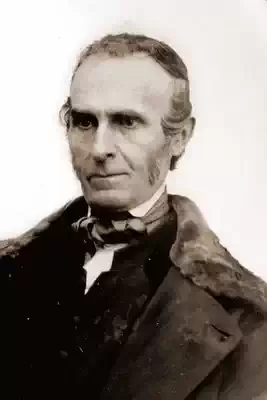
John Greenleaf Whittier
At Washington
At Washington
WITH a cold and wintry noon-light.
On its roofs and steeples shed,
Shadows weaving with t e sunlight
From the gray sky overhead,
Broadly, vaguely, all around me, lies the half-built town outspread.
Through this broad street, restless ever,
Ebbs and flows a human tide,
Wave on wave a living river;
Wealth and fashion side by side;
Toiler, idler, slave and master, in the same quick current glide.
Underneath yon dome, whose coping
Springs above them, vast and tall,
Grave men in the dust are groping.
For the largess, base and small,
Which the hand of Power is scattering, crumbs which from its table fall.
Base of heart! They vilely barter
Honor's wealth for party's place;
Step by step on Freedom's charter
Leaving footprints of disgrace;
For to-day's poor pittance turning from the great hope of their race.
Yet, where festal lamps are throwing
Glory round the dancer's hair,
Gold-tressed, like an angel's, flowing
Backward on the sunset air;
And the low quick pulse of music beats its measure sweet and rare:
There to-night shall woman's glances,
Star-like, welcome give to them;
Fawning fools with shy advances
Seek to touch their garments' hem,
With the tongue of flattery glozing deeds which God and Truth condemn.
From this glittering lie my vision
Takes a broader, sadder range,
Full before me have arisen
Other pictures dark and strange;
From the parlor to the prison must the scene and witness change.
Hark! the heavy gate is swinging
On its hinges, harsh and slow;
One pale prison lamp is flinging
On a fearful group below
Such a light as leaves to terror whatsoe'er it does not show.
Pitying God! Is that a woman
On whose wrist the shackles clash?
Is that shriek she utters human,
Underneath the stinging lash?
Are they men whose eyes of madness from that sad procession flash?
Still the dance goes gayly onward!
What is it to Wealth and Pride
That without the stars are looking
On a scene which earth should hide?
That the slave-ship lies in waiting, rocking on Potomac's tide!
Vainly to that mean Ambition
Which, upon a rival's fall,
Winds above its old condition,
With a reptile's slimy crawl,
Shall the pleading voice of sorrow, shall the slave in anguish call.
Vainly to the child of Fashion,
Giving to ideal woe
Graceful luxury of compassion,
Shall the stricken mourner go;
Hateful seems the earnest sorrow, beautiful the hollow show!
Nay, my words are all too sweeping:
In this crowded human mart,
Feeling is not dead, but sleeping;
Man's strong will and woman's heart,
In the coming strife for Freedom, yet shall bear their generous part.
And from yonder sunny valleys,
Southward in the distance lost,
Freedom yet shall summon allies
Worthier than the North can boast,
With the Evil by their hearth-stones grappling at severer cost.
Now, the soul alone is willing.
Faint the heart and weak the knee;
And as yet no lip is thrilling
With the mighty words, 'Be Free!'
Tarrieth long the land's Good Angel, but his advent is to be!
Meanwhile, turning from the revel
To the prison-cell my sight,
For intenser hate of evil,
For a keener sense of right,
Shaking off thy dust, I thank thee, City of the Slaves, to-night!
'To thy duty now and ever!
Dream no more of rest or stay:
Give to Freedom's great endeavor
All thou art and hast to-day:'
Thus, above the city's murmur, saith a Voice, or seems to say.
Ye with heart and vision gifted
To discern and love the right,
Whose worn faces have been lifted
To the slowly-growing light,
Where from Freedom's sunrise drifted slowly back the murk of night!
Ye who through long years of trial
Still have held your purpose fast,
While a lengthening shade the dial
From the westering sunshine cast,
And of hope each hour's denial seemed an echo of the last!
O my brothers! O my sisters!
Would to God that ye were near,
Gazing with me down the vistas
Of a sorrow strange and drear;
Would to God that ye were listeners to the Voice I seem to hear!
With the storm above us driving,
With the false earth mined below,
Who shall marvel if thus striving
We have counted friend as foe;
Unto one another giving in the darkness blow for blow.
Well it may be that our natures
Have grown sterner and more hard,
And the freshness of their features
Somewhat harsh and battle-scarred,
And their harmonies of feeling overtasked and rudely jarred.
Be it so. It should not swerve us
From a purpose true and brave;
Dearer Freedom's rugged service
Than the pastime of the slave;
Better is the storm above it than the quiet of the grave.
Let us then, uniting, bury
All our idle feuds in dust,
And to future conflicts carry
Mutual faith and common trust;
Always he who most forgiveth in his brother is most just.
From the eternal shadow rounding
All our sun and starlight here,
Voices of our lost ones sounding
Bid us be of heart and cheer,
Through the silence, down the spaces, falling on the inward ear.
Know we not our dead are looking
Downward with a sad surprise,
All our strife of words rebuking
With their mild and loving eyes?
Shall we grieve the holy angels? Shall we cloud their blessed skies?
Let us draw their mantles o'er us,
Which have fallen in our way;
Let us do the work before us,
Cheerly, bravely, while we may,
Ere the long night-silence cometh, and with us it is not day!
WITH a cold and wintry noon-light.
On its roofs and steeples shed,
Shadows weaving with t e sunlight
From the gray sky overhead,
Broadly, vaguely, all around me, lies the half-built town outspread.
Through this broad street, restless ever,
Ebbs and flows a human tide,
Wave on wave a living river;
Wealth and fashion side by side;
Toiler, idler, slave and master, in the same quick current glide.
Underneath yon dome, whose coping
Springs above them, vast and tall,
Grave men in the dust are groping.
For the largess, base and small,
Which the hand of Power is scattering, crumbs which from its table fall.
Base of heart! They vilely barter
Honor's wealth for party's place;
Step by step on Freedom's charter
Leaving footprints of disgrace;
For to-day's poor pittance turning from the great hope of their race.
Yet, where festal lamps are throwing
Glory round the dancer's hair,
Gold-tressed, like an angel's, flowing
Backward on the sunset air;
And the low quick pulse of music beats its measure sweet and rare:
There to-night shall woman's glances,
Star-like, welcome give to them;
Fawning fools with shy advances
Seek to touch their garments' hem,
With the tongue of flattery glozing deeds which God and Truth condemn.
From this glittering lie my vision
Takes a broader, sadder range,
Full before me have arisen
Other pictures dark and strange;
From the parlor to the prison must the scene and witness change.
Hark! the heavy gate is swinging
On its hinges, harsh and slow;
One pale prison lamp is flinging
On a fearful group below
Such a light as leaves to terror whatsoe'er it does not show.
Pitying God! Is that a woman
On whose wrist the shackles clash?
Is that shriek she utters human,
Underneath the stinging lash?
Are they men whose eyes of madness from that sad procession flash?
Still the dance goes gayly onward!
What is it to Wealth and Pride
That without the stars are looking
On a scene which earth should hide?
That the slave-ship lies in waiting, rocking on Potomac's tide!
Vainly to that mean Ambition
Which, upon a rival's fall,
Winds above its old condition,
With a reptile's slimy crawl,
Shall the pleading voice of sorrow, shall the slave in anguish call.
Vainly to the child of Fashion,
Giving to ideal woe
Graceful luxury of compassion,
Shall the stricken mourner go;
Hateful seems the earnest sorrow, beautiful the hollow show!
Nay, my words are all too sweeping:
In this crowded human mart,
Feeling is not dead, but sleeping;
Man's strong will and woman's heart,
In the coming strife for Freedom, yet shall bear their generous part.
And from yonder sunny valleys,
Southward in the distance lost,
Freedom yet shall summon allies
Worthier than the North can boast,
With the Evil by their hearth-stones grappling at severer cost.
Now, the soul alone is willing.
Faint the heart and weak the knee;
And as yet no lip is thrilling
With the mighty words, 'Be Free!'
Tarrieth long the land's Good Angel, but his advent is to be!
Meanwhile, turning from the revel
To the prison-cell my sight,
For intenser hate of evil,
For a keener sense of right,
Shaking off thy dust, I thank thee, City of the Slaves, to-night!
'To thy duty now and ever!
Dream no more of rest or stay:
Give to Freedom's great endeavor
All thou art and hast to-day:'
Thus, above the city's murmur, saith a Voice, or seems to say.
Ye with heart and vision gifted
To discern and love the right,
Whose worn faces have been lifted
To the slowly-growing light,
Where from Freedom's sunrise drifted slowly back the murk of night!
Ye who through long years of trial
Still have held your purpose fast,
While a lengthening shade the dial
From the westering sunshine cast,
And of hope each hour's denial seemed an echo of the last!
O my brothers! O my sisters!
Would to God that ye were near,
Gazing with me down the vistas
Of a sorrow strange and drear;
Would to God that ye were listeners to the Voice I seem to hear!
With the storm above us driving,
With the false earth mined below,
Who shall marvel if thus striving
We have counted friend as foe;
Unto one another giving in the darkness blow for blow.
Well it may be that our natures
Have grown sterner and more hard,
And the freshness of their features
Somewhat harsh and battle-scarred,
And their harmonies of feeling overtasked and rudely jarred.
Be it so. It should not swerve us
From a purpose true and brave;
Dearer Freedom's rugged service
Than the pastime of the slave;
Better is the storm above it than the quiet of the grave.
Let us then, uniting, bury
All our idle feuds in dust,
And to future conflicts carry
Mutual faith and common trust;
Always he who most forgiveth in his brother is most just.
From the eternal shadow rounding
All our sun and starlight here,
Voices of our lost ones sounding
Bid us be of heart and cheer,
Through the silence, down the spaces, falling on the inward ear.
Know we not our dead are looking
Downward with a sad surprise,
All our strife of words rebuking
With their mild and loving eyes?
Shall we grieve the holy angels? Shall we cloud their blessed skies?
Let us draw their mantles o'er us,
Which have fallen in our way;
Let us do the work before us,
Cheerly, bravely, while we may,
Ere the long night-silence cometh, and with us it is not day!
324
John Greenleaf Whittier
At Washington
At Washington
WITH a cold and wintry noon-light.
On its roofs and steeples shed,
Shadows weaving with t e sunlight
From the gray sky overhead,
Broadly, vaguely, all around me, lies the half-built town outspread.
Through this broad street, restless ever,
Ebbs and flows a human tide,
Wave on wave a living river;
Wealth and fashion side by side;
Toiler, idler, slave and master, in the same quick current glide.
Underneath yon dome, whose coping
Springs above them, vast and tall,
Grave men in the dust are groping.
For the largess, base and small,
Which the hand of Power is scattering, crumbs which from its table fall.
Base of heart! They vilely barter
Honor's wealth for party's place;
Step by step on Freedom's charter
Leaving footprints of disgrace;
For to-day's poor pittance turning from the great hope of their race.
Yet, where festal lamps are throwing
Glory round the dancer's hair,
Gold-tressed, like an angel's, flowing
Backward on the sunset air;
And the low quick pulse of music beats its measure sweet and rare:
There to-night shall woman's glances,
Star-like, welcome give to them;
Fawning fools with shy advances
Seek to touch their garments' hem,
With the tongue of flattery glozing deeds which God and Truth condemn.
From this glittering lie my vision
Takes a broader, sadder range,
Full before me have arisen
Other pictures dark and strange;
From the parlor to the prison must the scene and witness change.
Hark! the heavy gate is swinging
On its hinges, harsh and slow;
One pale prison lamp is flinging
On a fearful group below
Such a light as leaves to terror whatsoe'er it does not show.
Pitying God! Is that a woman
On whose wrist the shackles clash?
Is that shriek she utters human,
Underneath the stinging lash?
Are they men whose eyes of madness from that sad procession flash?
Still the dance goes gayly onward!
What is it to Wealth and Pride
That without the stars are looking
On a scene which earth should hide?
That the slave-ship lies in waiting, rocking on Potomac's tide!
Vainly to that mean Ambition
Which, upon a rival's fall,
Winds above its old condition,
With a reptile's slimy crawl,
Shall the pleading voice of sorrow, shall the slave in anguish call.
Vainly to the child of Fashion,
Giving to ideal woe
Graceful luxury of compassion,
Shall the stricken mourner go;
Hateful seems the earnest sorrow, beautiful the hollow show!
Nay, my words are all too sweeping:
In this crowded human mart,
Feeling is not dead, but sleeping;
Man's strong will and woman's heart,
In the coming strife for Freedom, yet shall bear their generous part.
And from yonder sunny valleys,
Southward in the distance lost,
Freedom yet shall summon allies
Worthier than the North can boast,
With the Evil by their hearth-stones grappling at severer cost.
Now, the soul alone is willing.
Faint the heart and weak the knee;
And as yet no lip is thrilling
With the mighty words, 'Be Free!'
Tarrieth long the land's Good Angel, but his advent is to be!
Meanwhile, turning from the revel
To the prison-cell my sight,
For intenser hate of evil,
For a keener sense of right,
Shaking off thy dust, I thank thee, City of the Slaves, to-night!
'To thy duty now and ever!
Dream no more of rest or stay:
Give to Freedom's great endeavor
All thou art and hast to-day:'
Thus, above the city's murmur, saith a Voice, or seems to say.
Ye with heart and vision gifted
To discern and love the right,
Whose worn faces have been lifted
To the slowly-growing light,
Where from Freedom's sunrise drifted slowly back the murk of night!
Ye who through long years of trial
Still have held your purpose fast,
While a lengthening shade the dial
From the westering sunshine cast,
And of hope each hour's denial seemed an echo of the last!
O my brothers! O my sisters!
Would to God that ye were near,
Gazing with me down the vistas
Of a sorrow strange and drear;
Would to God that ye were listeners to the Voice I seem to hear!
With the storm above us driving,
With the false earth mined below,
Who shall marvel if thus striving
We have counted friend as foe;
Unto one another giving in the darkness blow for blow.
Well it may be that our natures
Have grown sterner and more hard,
And the freshness of their features
Somewhat harsh and battle-scarred,
And their harmonies of feeling overtasked and rudely jarred.
Be it so. It should not swerve us
From a purpose true and brave;
Dearer Freedom's rugged service
Than the pastime of the slave;
Better is the storm above it than the quiet of the grave.
Let us then, uniting, bury
All our idle feuds in dust,
And to future conflicts carry
Mutual faith and common trust;
Always he who most forgiveth in his brother is most just.
From the eternal shadow rounding
All our sun and starlight here,
Voices of our lost ones sounding
Bid us be of heart and cheer,
Through the silence, down the spaces, falling on the inward ear.
Know we not our dead are looking
Downward with a sad surprise,
All our strife of words rebuking
With their mild and loving eyes?
Shall we grieve the holy angels? Shall we cloud their blessed skies?
Let us draw their mantles o'er us,
Which have fallen in our way;
Let us do the work before us,
Cheerly, bravely, while we may,
Ere the long night-silence cometh, and with us it is not day!
WITH a cold and wintry noon-light.
On its roofs and steeples shed,
Shadows weaving with t e sunlight
From the gray sky overhead,
Broadly, vaguely, all around me, lies the half-built town outspread.
Through this broad street, restless ever,
Ebbs and flows a human tide,
Wave on wave a living river;
Wealth and fashion side by side;
Toiler, idler, slave and master, in the same quick current glide.
Underneath yon dome, whose coping
Springs above them, vast and tall,
Grave men in the dust are groping.
For the largess, base and small,
Which the hand of Power is scattering, crumbs which from its table fall.
Base of heart! They vilely barter
Honor's wealth for party's place;
Step by step on Freedom's charter
Leaving footprints of disgrace;
For to-day's poor pittance turning from the great hope of their race.
Yet, where festal lamps are throwing
Glory round the dancer's hair,
Gold-tressed, like an angel's, flowing
Backward on the sunset air;
And the low quick pulse of music beats its measure sweet and rare:
There to-night shall woman's glances,
Star-like, welcome give to them;
Fawning fools with shy advances
Seek to touch their garments' hem,
With the tongue of flattery glozing deeds which God and Truth condemn.
From this glittering lie my vision
Takes a broader, sadder range,
Full before me have arisen
Other pictures dark and strange;
From the parlor to the prison must the scene and witness change.
Hark! the heavy gate is swinging
On its hinges, harsh and slow;
One pale prison lamp is flinging
On a fearful group below
Such a light as leaves to terror whatsoe'er it does not show.
Pitying God! Is that a woman
On whose wrist the shackles clash?
Is that shriek she utters human,
Underneath the stinging lash?
Are they men whose eyes of madness from that sad procession flash?
Still the dance goes gayly onward!
What is it to Wealth and Pride
That without the stars are looking
On a scene which earth should hide?
That the slave-ship lies in waiting, rocking on Potomac's tide!
Vainly to that mean Ambition
Which, upon a rival's fall,
Winds above its old condition,
With a reptile's slimy crawl,
Shall the pleading voice of sorrow, shall the slave in anguish call.
Vainly to the child of Fashion,
Giving to ideal woe
Graceful luxury of compassion,
Shall the stricken mourner go;
Hateful seems the earnest sorrow, beautiful the hollow show!
Nay, my words are all too sweeping:
In this crowded human mart,
Feeling is not dead, but sleeping;
Man's strong will and woman's heart,
In the coming strife for Freedom, yet shall bear their generous part.
And from yonder sunny valleys,
Southward in the distance lost,
Freedom yet shall summon allies
Worthier than the North can boast,
With the Evil by their hearth-stones grappling at severer cost.
Now, the soul alone is willing.
Faint the heart and weak the knee;
And as yet no lip is thrilling
With the mighty words, 'Be Free!'
Tarrieth long the land's Good Angel, but his advent is to be!
Meanwhile, turning from the revel
To the prison-cell my sight,
For intenser hate of evil,
For a keener sense of right,
Shaking off thy dust, I thank thee, City of the Slaves, to-night!
'To thy duty now and ever!
Dream no more of rest or stay:
Give to Freedom's great endeavor
All thou art and hast to-day:'
Thus, above the city's murmur, saith a Voice, or seems to say.
Ye with heart and vision gifted
To discern and love the right,
Whose worn faces have been lifted
To the slowly-growing light,
Where from Freedom's sunrise drifted slowly back the murk of night!
Ye who through long years of trial
Still have held your purpose fast,
While a lengthening shade the dial
From the westering sunshine cast,
And of hope each hour's denial seemed an echo of the last!
O my brothers! O my sisters!
Would to God that ye were near,
Gazing with me down the vistas
Of a sorrow strange and drear;
Would to God that ye were listeners to the Voice I seem to hear!
With the storm above us driving,
With the false earth mined below,
Who shall marvel if thus striving
We have counted friend as foe;
Unto one another giving in the darkness blow for blow.
Well it may be that our natures
Have grown sterner and more hard,
And the freshness of their features
Somewhat harsh and battle-scarred,
And their harmonies of feeling overtasked and rudely jarred.
Be it so. It should not swerve us
From a purpose true and brave;
Dearer Freedom's rugged service
Than the pastime of the slave;
Better is the storm above it than the quiet of the grave.
Let us then, uniting, bury
All our idle feuds in dust,
And to future conflicts carry
Mutual faith and common trust;
Always he who most forgiveth in his brother is most just.
From the eternal shadow rounding
All our sun and starlight here,
Voices of our lost ones sounding
Bid us be of heart and cheer,
Through the silence, down the spaces, falling on the inward ear.
Know we not our dead are looking
Downward with a sad surprise,
All our strife of words rebuking
With their mild and loving eyes?
Shall we grieve the holy angels? Shall we cloud their blessed skies?
Let us draw their mantles o'er us,
Which have fallen in our way;
Let us do the work before us,
Cheerly, bravely, while we may,
Ere the long night-silence cometh, and with us it is not day!
324
John Greenleaf Whittier
At Eventide
At Eventide
Poor and inadequate the shadow-play
Of gain and loss, of waking and of dream,
Against life's solemn background needs must seem
At this late hour. Yet, not unthankfully,
I call to mind the fountains by the way,
The breath of flowers, the bird-song on the spray,
Dear friends, sweet human loves, the joy of giving
And of receiving, the great boon of living
In grand historic years when Liberty
Had need of word and work, quick sympathies
For all who fail and suffer, song's relief,
Nature's uncloying loveliness; and chief,
The kind restraining hand of Providence,
The inward witness, the assuring sense
Of an Eternal Good which overlies
The sorrow of the world, Love which outlives
All sin and wrong, Compassion which forgives
To the uttermost, and Justice whose clear eyes
Through lapse and failure look to the intent,
And judge our frailty by the life we meant.
Poor and inadequate the shadow-play
Of gain and loss, of waking and of dream,
Against life's solemn background needs must seem
At this late hour. Yet, not unthankfully,
I call to mind the fountains by the way,
The breath of flowers, the bird-song on the spray,
Dear friends, sweet human loves, the joy of giving
And of receiving, the great boon of living
In grand historic years when Liberty
Had need of word and work, quick sympathies
For all who fail and suffer, song's relief,
Nature's uncloying loveliness; and chief,
The kind restraining hand of Providence,
The inward witness, the assuring sense
Of an Eternal Good which overlies
The sorrow of the world, Love which outlives
All sin and wrong, Compassion which forgives
To the uttermost, and Justice whose clear eyes
Through lapse and failure look to the intent,
And judge our frailty by the life we meant.
288
John Greenleaf Whittier
Astraea
Astraea
'Jove means to settle
Astraea in her seat again,
And let down his golden chain
An age of better metal.'
Ben Johnson 1615
O POET rare and old!
Thy words are prophecies;
Forward the age of gold,
The new Saturnian lies.
The universal prayer
And hope are not in vain;
Rise, brothers! and prepare
The way for Saturn's reign.
Perish shall all which takes
From labor's board and can;
Perish shall all which makes
A spaniel of the man!
Free from its bonds the mind,
The body from the rod;
Broken all chains that bind
The image of our God.
Just men no longer pine
Behind their prison-bars;
Through the rent dungeon shine
The free sun and the stars.
Earth own, at last, untrod
By sect, or caste, or clan,
The fatherhood of God,
The brotherhood of man!
Fraud fail, craft perish, forth
The money-changers driven,
And God's will done on earth,
As now in heaven;
'Jove means to settle
Astraea in her seat again,
And let down his golden chain
An age of better metal.'
Ben Johnson 1615
O POET rare and old!
Thy words are prophecies;
Forward the age of gold,
The new Saturnian lies.
The universal prayer
And hope are not in vain;
Rise, brothers! and prepare
The way for Saturn's reign.
Perish shall all which takes
From labor's board and can;
Perish shall all which makes
A spaniel of the man!
Free from its bonds the mind,
The body from the rod;
Broken all chains that bind
The image of our God.
Just men no longer pine
Behind their prison-bars;
Through the rent dungeon shine
The free sun and the stars.
Earth own, at last, untrod
By sect, or caste, or clan,
The fatherhood of God,
The brotherhood of man!
Fraud fail, craft perish, forth
The money-changers driven,
And God's will done on earth,
As now in heaven;
325
John Greenleaf Whittier
Astraea
Astraea
'Jove means to settle
Astraea in her seat again,
And let down his golden chain
An age of better metal.'
Ben Johnson 1615
O POET rare and old!
Thy words are prophecies;
Forward the age of gold,
The new Saturnian lies.
The universal prayer
And hope are not in vain;
Rise, brothers! and prepare
The way for Saturn's reign.
Perish shall all which takes
From labor's board and can;
Perish shall all which makes
A spaniel of the man!
Free from its bonds the mind,
The body from the rod;
Broken all chains that bind
The image of our God.
Just men no longer pine
Behind their prison-bars;
Through the rent dungeon shine
The free sun and the stars.
Earth own, at last, untrod
By sect, or caste, or clan,
The fatherhood of God,
The brotherhood of man!
Fraud fail, craft perish, forth
The money-changers driven,
And God's will done on earth,
As now in heaven;
'Jove means to settle
Astraea in her seat again,
And let down his golden chain
An age of better metal.'
Ben Johnson 1615
O POET rare and old!
Thy words are prophecies;
Forward the age of gold,
The new Saturnian lies.
The universal prayer
And hope are not in vain;
Rise, brothers! and prepare
The way for Saturn's reign.
Perish shall all which takes
From labor's board and can;
Perish shall all which makes
A spaniel of the man!
Free from its bonds the mind,
The body from the rod;
Broken all chains that bind
The image of our God.
Just men no longer pine
Behind their prison-bars;
Through the rent dungeon shine
The free sun and the stars.
Earth own, at last, untrod
By sect, or caste, or clan,
The fatherhood of God,
The brotherhood of man!
Fraud fail, craft perish, forth
The money-changers driven,
And God's will done on earth,
As now in heaven;
325
John Greenleaf Whittier
Astraea
Astraea
'Jove means to settle
Astraea in her seat again,
And let down his golden chain
An age of better metal.'
Ben Johnson 1615
O POET rare and old!
Thy words are prophecies;
Forward the age of gold,
The new Saturnian lies.
The universal prayer
And hope are not in vain;
Rise, brothers! and prepare
The way for Saturn's reign.
Perish shall all which takes
From labor's board and can;
Perish shall all which makes
A spaniel of the man!
Free from its bonds the mind,
The body from the rod;
Broken all chains that bind
The image of our God.
Just men no longer pine
Behind their prison-bars;
Through the rent dungeon shine
The free sun and the stars.
Earth own, at last, untrod
By sect, or caste, or clan,
The fatherhood of God,
The brotherhood of man!
Fraud fail, craft perish, forth
The money-changers driven,
And God's will done on earth,
As now in heaven;
'Jove means to settle
Astraea in her seat again,
And let down his golden chain
An age of better metal.'
Ben Johnson 1615
O POET rare and old!
Thy words are prophecies;
Forward the age of gold,
The new Saturnian lies.
The universal prayer
And hope are not in vain;
Rise, brothers! and prepare
The way for Saturn's reign.
Perish shall all which takes
From labor's board and can;
Perish shall all which makes
A spaniel of the man!
Free from its bonds the mind,
The body from the rod;
Broken all chains that bind
The image of our God.
Just men no longer pine
Behind their prison-bars;
Through the rent dungeon shine
The free sun and the stars.
Earth own, at last, untrod
By sect, or caste, or clan,
The fatherhood of God,
The brotherhood of man!
Fraud fail, craft perish, forth
The money-changers driven,
And God's will done on earth,
As now in heaven;
325
John Greenleaf Whittier
Astraea
Astraea
'Jove means to settle
Astraea in her seat again,
And let down his golden chain
An age of better metal.'
Ben Johnson 1615
O POET rare and old!
Thy words are prophecies;
Forward the age of gold,
The new Saturnian lies.
The universal prayer
And hope are not in vain;
Rise, brothers! and prepare
The way for Saturn's reign.
Perish shall all which takes
From labor's board and can;
Perish shall all which makes
A spaniel of the man!
Free from its bonds the mind,
The body from the rod;
Broken all chains that bind
The image of our God.
Just men no longer pine
Behind their prison-bars;
Through the rent dungeon shine
The free sun and the stars.
Earth own, at last, untrod
By sect, or caste, or clan,
The fatherhood of God,
The brotherhood of man!
Fraud fail, craft perish, forth
The money-changers driven,
And God's will done on earth,
As now in heaven;
'Jove means to settle
Astraea in her seat again,
And let down his golden chain
An age of better metal.'
Ben Johnson 1615
O POET rare and old!
Thy words are prophecies;
Forward the age of gold,
The new Saturnian lies.
The universal prayer
And hope are not in vain;
Rise, brothers! and prepare
The way for Saturn's reign.
Perish shall all which takes
From labor's board and can;
Perish shall all which makes
A spaniel of the man!
Free from its bonds the mind,
The body from the rod;
Broken all chains that bind
The image of our God.
Just men no longer pine
Behind their prison-bars;
Through the rent dungeon shine
The free sun and the stars.
Earth own, at last, untrod
By sect, or caste, or clan,
The fatherhood of God,
The brotherhood of man!
Fraud fail, craft perish, forth
The money-changers driven,
And God's will done on earth,
As now in heaven;
325
John Greenleaf Whittier
Andrew Rykman’s Prayer
Andrew Rykman’s Prayer
Andrew Rykman's dead and gone;
You can see his leaning slate
In the graveyard, and thereon
Read his name and date.
Trust is truer than our fears
Runs the legend through the moss,
Gain is not in added years,
Nor in death is loss
Still the feet that thither trod,
All the friendly eyes are dim;
Only Nature, now, and God
Have a care for him.
There the dews of quiet fall,
Singing birds and soft winds stray:
Shall the tender Heart of all
Be less kind than they?
What he was and what he is
They who ask may haply find,
If they read this prayer of his
Which he left behind.
. . . .
Pardon, Lord, the lips that dare
Shape in words a mortal's prayer!
Prayer, that, when my day is done,
And I see its setting sun,
Shorn and beamless, cold and dim,
Sink beneath the horizon's rim,-When
this ball of rock and clay
Crumbles from my feet away,
And the solid shores of sense
Melt into the vague immense,
Father! I may come to Thee
Even with the beggar's plea,
As the poorest of Thy poor,
With my needs, and nothing more.
Not as one who seeks his home
With a step assured I come;
Still behind the tread I hear
Of my life-companion, Fear;
Still a shadow deep and vast
From my westering feet is cast,
Wavering, doubtful, undefined,
Never shapen nor outlined
From myself the fear has grown,
And the shadow is my own.
Yet, O Lord, through all a sense
Of Thy tender providence
Stays my failing heart on Thee,
And confirms the feeble knee;
And, at times, my worn feet press
Spaces of cool quietness,
Lilied whiteness shone upon
Not by light of moon or sun.
Hours there be of inmost calm,
Broken but by grateful psalm,
When I love Thee more than fear Thee,
And Thy blessed Christ seems near me,
With forgiving look, as when
He beheld the Magdalen.
Well I know that all things move
To the spheral rhythm of love,-That
to Thee, O Lord of all!
Nothing can of chance befall
Child and seraph, mote and star,
Well Thou knowest what we are
Through Thy vast creative plan
Looking, from the worm to man,
There is pity in Thine eyes,
But no hatred nor surprise.
Not in blind caprice of will,
Not in cunning sleight of skill,
Not for show of power, was wrought
Nature's marvel in Thy thought.
Never careless hand and vain
Smites these chords of joy and pain;
No immortal selfishness
Plays the game of curse and bless
Heaven and earth are witnesses
That Thy glory goodness is.
Not for sport of mind and force
Hast Thou made Thy universe,
But as atmosphere and zone
Of Thy loving heart alone.
Man, who walketh in a show,
Sees before him, to and fro,
Shadow and illusion go;
All things flow and fluctuate,
Now contract and now dilate.
In the welter of this sea,
Nothing stable is but Thee;
In this whirl of swooning trance,
Thou alone art permanence;
All without Thee only seems,
All beside is choice of dreams.
Never yet in darkest mood
Doubted I that Thou wast good,
Nor mistook my will for fate,
Pain of sin for heavenly hate,-Never
dreamed the gates of pearl
Rise from out the burning marl,
Or that good can only live
Of the bad conservative,
And through counterpoise of hell
Heaven alone be possible.
For myself alone I doubt;
All is well, I know, without;
I alone the beauty mar,
I alone the music jar.
Yet, with hands by evil stained,
And an ear by discord pained,
I am groping for the keys
Of the heavenly harmonies;
Still within my heart I bear
Love for all things good and fair.
Hands of want or souls in pain
Have not sought my door in vain;
I have kept my fealty good
To the human brotherhood;
Scarcely have I asked in prayer
That which others might not share.
I, who hear with secret shame
Praise that paineth more than blame,
Rich alone in favors lent,
Virtuous by accident,
Doubtful where I fain would rest,
Frailest where I seem the best,
Only strong for lack of test,-What
am I, that I should press
Special pleas of selfishness,
Coolly mounting into heaven
On my neighbor unforgiven?
Ne'er to me, howe'er disguised,
Comes a saint unrecognized;
Never fails my heart to greet
Noble deed with warmer beat;
Halt and maimed, I own not less
All the grace of holiness;
Nor, through shame or self-distrust,
Less I love the pure and just.
Lord, forgive these words of mine
What have I that is not Thine?
Whatsoe'er I fain would boast
Needs Thy pitying pardon most.
Thou, O Elder Brother! who
In Thy flesh our trial knew,
Thou, who hast been touched by these
Our most sad infirmities,
Thou alone the gulf canst span
In the dual heart of man,
And between the soul and sense
Reconcile all difference,
Change the dream of me and mine
For the truth of Thee and Thine,
And, through chaos, doubt, and strife,
Interfuse Thy calm of life.
Haply, thus by Thee renewed,
In Thy borrowed goodness good,
Some sweet morning yet in God's
Dim, veonian periods,
Joyful I shall wake to see
Those I love who rest in Thee,
And to them in Thee allied
Shall my soul be satisfied.
Scarcely Hope hath shaped for me
What the future life may be.
Other lips may well be bold;
Like the publican of old,
I can only urge the plea,
'Lord, be merciful to me!'
Nothing of desert I claim,
Unto me belongeth shame.
Not for me the, crowns of gold,
Palms, and harpings manifold;
Not for erring eye and feet
Jasper wall and golden street.
What thou wilt, O Father, give I
All is gain that I receive.
If my voice I may not raise
In the elders' song of praise,
If I may not, sin-defiled,
Claim my birthright as a child,
Suffer it that I to Thee
As an hired servant be;
Let the lowliest task be mine,
Grateful, so the work be Thine;
Let me find the humblest place
In the shadow of Thy grace
Blest to me were any spot
Where temptation whispers not.
If there be some weaker one,
Give me strength to help him on
If a blinder soul there be,
Let me guide him nearer Thee.
Make my mortal dreams come true
With the work I fain would do;
Clothe with life the weak intent,
Let me be the thing I meant;
Let me find in Thy employ
Peace that dearer is than joy;
Out of self to love be led
And to heaven acclimated,
Until all things sweet and good
Seem my natural habitude.
. . . .
So we read the prayer of him
Who, with John of Labadie,
Trod, of old, the oozy rim
Of the Zuyder Zee.
Thus did Andrew Rykman pray.
Are we wiser, better grown,
That we may not, in our day,
Make his prayer our own?
Andrew Rykman's dead and gone;
You can see his leaning slate
In the graveyard, and thereon
Read his name and date.
Trust is truer than our fears
Runs the legend through the moss,
Gain is not in added years,
Nor in death is loss
Still the feet that thither trod,
All the friendly eyes are dim;
Only Nature, now, and God
Have a care for him.
There the dews of quiet fall,
Singing birds and soft winds stray:
Shall the tender Heart of all
Be less kind than they?
What he was and what he is
They who ask may haply find,
If they read this prayer of his
Which he left behind.
. . . .
Pardon, Lord, the lips that dare
Shape in words a mortal's prayer!
Prayer, that, when my day is done,
And I see its setting sun,
Shorn and beamless, cold and dim,
Sink beneath the horizon's rim,-When
this ball of rock and clay
Crumbles from my feet away,
And the solid shores of sense
Melt into the vague immense,
Father! I may come to Thee
Even with the beggar's plea,
As the poorest of Thy poor,
With my needs, and nothing more.
Not as one who seeks his home
With a step assured I come;
Still behind the tread I hear
Of my life-companion, Fear;
Still a shadow deep and vast
From my westering feet is cast,
Wavering, doubtful, undefined,
Never shapen nor outlined
From myself the fear has grown,
And the shadow is my own.
Yet, O Lord, through all a sense
Of Thy tender providence
Stays my failing heart on Thee,
And confirms the feeble knee;
And, at times, my worn feet press
Spaces of cool quietness,
Lilied whiteness shone upon
Not by light of moon or sun.
Hours there be of inmost calm,
Broken but by grateful psalm,
When I love Thee more than fear Thee,
And Thy blessed Christ seems near me,
With forgiving look, as when
He beheld the Magdalen.
Well I know that all things move
To the spheral rhythm of love,-That
to Thee, O Lord of all!
Nothing can of chance befall
Child and seraph, mote and star,
Well Thou knowest what we are
Through Thy vast creative plan
Looking, from the worm to man,
There is pity in Thine eyes,
But no hatred nor surprise.
Not in blind caprice of will,
Not in cunning sleight of skill,
Not for show of power, was wrought
Nature's marvel in Thy thought.
Never careless hand and vain
Smites these chords of joy and pain;
No immortal selfishness
Plays the game of curse and bless
Heaven and earth are witnesses
That Thy glory goodness is.
Not for sport of mind and force
Hast Thou made Thy universe,
But as atmosphere and zone
Of Thy loving heart alone.
Man, who walketh in a show,
Sees before him, to and fro,
Shadow and illusion go;
All things flow and fluctuate,
Now contract and now dilate.
In the welter of this sea,
Nothing stable is but Thee;
In this whirl of swooning trance,
Thou alone art permanence;
All without Thee only seems,
All beside is choice of dreams.
Never yet in darkest mood
Doubted I that Thou wast good,
Nor mistook my will for fate,
Pain of sin for heavenly hate,-Never
dreamed the gates of pearl
Rise from out the burning marl,
Or that good can only live
Of the bad conservative,
And through counterpoise of hell
Heaven alone be possible.
For myself alone I doubt;
All is well, I know, without;
I alone the beauty mar,
I alone the music jar.
Yet, with hands by evil stained,
And an ear by discord pained,
I am groping for the keys
Of the heavenly harmonies;
Still within my heart I bear
Love for all things good and fair.
Hands of want or souls in pain
Have not sought my door in vain;
I have kept my fealty good
To the human brotherhood;
Scarcely have I asked in prayer
That which others might not share.
I, who hear with secret shame
Praise that paineth more than blame,
Rich alone in favors lent,
Virtuous by accident,
Doubtful where I fain would rest,
Frailest where I seem the best,
Only strong for lack of test,-What
am I, that I should press
Special pleas of selfishness,
Coolly mounting into heaven
On my neighbor unforgiven?
Ne'er to me, howe'er disguised,
Comes a saint unrecognized;
Never fails my heart to greet
Noble deed with warmer beat;
Halt and maimed, I own not less
All the grace of holiness;
Nor, through shame or self-distrust,
Less I love the pure and just.
Lord, forgive these words of mine
What have I that is not Thine?
Whatsoe'er I fain would boast
Needs Thy pitying pardon most.
Thou, O Elder Brother! who
In Thy flesh our trial knew,
Thou, who hast been touched by these
Our most sad infirmities,
Thou alone the gulf canst span
In the dual heart of man,
And between the soul and sense
Reconcile all difference,
Change the dream of me and mine
For the truth of Thee and Thine,
And, through chaos, doubt, and strife,
Interfuse Thy calm of life.
Haply, thus by Thee renewed,
In Thy borrowed goodness good,
Some sweet morning yet in God's
Dim, veonian periods,
Joyful I shall wake to see
Those I love who rest in Thee,
And to them in Thee allied
Shall my soul be satisfied.
Scarcely Hope hath shaped for me
What the future life may be.
Other lips may well be bold;
Like the publican of old,
I can only urge the plea,
'Lord, be merciful to me!'
Nothing of desert I claim,
Unto me belongeth shame.
Not for me the, crowns of gold,
Palms, and harpings manifold;
Not for erring eye and feet
Jasper wall and golden street.
What thou wilt, O Father, give I
All is gain that I receive.
If my voice I may not raise
In the elders' song of praise,
If I may not, sin-defiled,
Claim my birthright as a child,
Suffer it that I to Thee
As an hired servant be;
Let the lowliest task be mine,
Grateful, so the work be Thine;
Let me find the humblest place
In the shadow of Thy grace
Blest to me were any spot
Where temptation whispers not.
If there be some weaker one,
Give me strength to help him on
If a blinder soul there be,
Let me guide him nearer Thee.
Make my mortal dreams come true
With the work I fain would do;
Clothe with life the weak intent,
Let me be the thing I meant;
Let me find in Thy employ
Peace that dearer is than joy;
Out of self to love be led
And to heaven acclimated,
Until all things sweet and good
Seem my natural habitude.
. . . .
So we read the prayer of him
Who, with John of Labadie,
Trod, of old, the oozy rim
Of the Zuyder Zee.
Thus did Andrew Rykman pray.
Are we wiser, better grown,
That we may not, in our day,
Make his prayer our own?
273
John Greenleaf Whittier
An Artist Of The Beautiful
An Artist Of The Beautiful
GEORGE FULLER
Haunted of Beauty, like the marvellous youth
Who sang Saint Agnes' Eve! How passing fair
Her shapes took color in thy homestead air!
How on thy canvas even her dreams were truth!
Magician! who from commonest elements
Called up divine ideals, clothed upon
By mystic lights soft blending into one
Womanly grace and child-like innocence.
Teacher I thy lesson was not given in vain.
Beauty is goodness; ugliness is sin;
Art's place is sacred: nothing foul therein
May crawl or tread with bestial feet profane.
If rightly choosing is the painter's test,
Thy choice, O master, ever was the best.
GEORGE FULLER
Haunted of Beauty, like the marvellous youth
Who sang Saint Agnes' Eve! How passing fair
Her shapes took color in thy homestead air!
How on thy canvas even her dreams were truth!
Magician! who from commonest elements
Called up divine ideals, clothed upon
By mystic lights soft blending into one
Womanly grace and child-like innocence.
Teacher I thy lesson was not given in vain.
Beauty is goodness; ugliness is sin;
Art's place is sacred: nothing foul therein
May crawl or tread with bestial feet profane.
If rightly choosing is the painter's test,
Thy choice, O master, ever was the best.
372
John Greenleaf Whittier
Among the Hills
Among the Hills
PRELUDE
ALONG the roadside, like the flowers of gold
That tawny Incas for their gardens wrought,
Heavy with sunshine droops the golden-rod,
And the red pennons of the cardinal-flowers
Hang motionless upon their upright staves.
The sky is hot and hazy, and the wind,
Vying-weary with its long flight from the south,
Unfelt; yet, closely scanned, yon maple leaf
With faintest motion, as one stirs in dreams,
Confesses it. The locust by the wall
Stabs the noon-silence with his sharp alarm.
A single hay-cart down the dusty road
Creaks slowly, with its driver fast asleep
On the load’s top. Against the neighboring hill,
Huddled along the stone wall’s shady side,
The sheep show white, as if a snowdrift still
Defied the dog-star. Through the open door
A drowsy smell of flowers-gray heliotrope,
And white sweet clover, and shy mignonette—
Comes faintly in, and silent chorus lends
To the pervading symphony of peace.
No time is this for hands long over-worn
To task their strength; and (unto Him be praise
Who giveth quietness!) the stress and strain
Of years that did the work of centuries
Have ceased, and we can draw our breath once more
Freely and full. So, as yon harvesters
Make glad their nooning underneath the elms
With tale and riddle and old snatch of song,
I lay aside grave themes, and idly turn
The leaves of memory’s sketch-book, dreaming o’er
Old summer pictures of the quiet hills,
And human life, as quiet, at their feet.
And yet not idly all. A farmer’s son,
Proud of field-lore and harvest craft, and feeling
All their fine possibilities, how rich
And restful even poverty and toil
Become when beauty, harmony, and love
Sit at their humble hearth as angels sat
At evening in the patriarch’s tent, when man
Makes labor noble, and his farmer’s frock
The symbol of a Christian chivalry
Tender and just and generous to her
Who clothes with grace all duty; still, I know
Too well the picture has another side,—
How wearily the grind of toil goes on
Where love is wanting, how the eye and ear
And heart are starved amidst the plenitude
Of nature, and how hard and colorless
Is life without an atmosphere. I look
Across the lapse of half a century,
And call to mind old homesteads, where no flower
Told that the spring had come, but evil weeds,
Nightshade and rough-leaved burdock in the place
Of the sweet doorway greeting of the rose
And honeysuckle, where the house walls seemed
Blistering in sun, without a tree or vine
To cast the tremulous shadow of its leaves
Across the curtainless windows, from whose panes
Fluttered the signal rags of shiftlessness.
Within, the cluttered kitchen-floor, unwashed
(Broom-clean I think they called it); the best room
Stifling with cellar damp, shut from the air
In hot midsummer, bookless, pictureless,
Save the inevitable sampler hung
Over the fireplace, or a mourning piece,
A green-haired woman, peony-cheeked, beneath
Impossible willows; the wide-throated hearth
Bristling with faded pine-boughs half concealing
The piled-up rubbish at the chimney’s back;
And, in sad keeping with all things about them,
Shrill, querulous-women, sour and sullen men,
Untidy, loveless, old before their time,
With scarce a human interest save their own
Monotonous round of small economies,
Or the poor scandal of the neighborhood;
Blind to the beauty everywhere revealed,
Treading the May-flowers with regardless feet;
For them the song-sparrow and the bobolink
Sang not, nor winds made music in the leaves;
For them in vain October’s holocaust
Burned, gold and crimson, over all the hills,
The sacramental mystery of the woods.
Church-goers, fearful of the unseen Powers,
But grumbling over pulpit-tax and pew-rent,
Saving, as shrewd economists, their souls
And winter pork with the least possible outlay
Of salt and sanctity; in daily life
Showing as little actual comprehension
Of Christian charity and love and duty,
As if the Sermon on the Mount had been
Outdated like a last year’s almanac
Rich in broad woodlands and in half-tilled fields,
And yet so pinched and bare and comfortless,
The veriest straggler limping on his rounds,
The sun and air his sole inheritance,
Laughed at a poverty that paid its taxes,
And hugged his rags in self-complacency!
Not such should be the homesteads of a land
Where whoso wisely wills and acts may dwell
As king and lawgiver, in broad-acred state,
With beauty, art, taste, culture, books, to make
His hour of leisure richer than a life
Of fourscore to the barons of old time,
Our yeoman should be equal to his home
Set in the fair, green valleys, purple walled,
A man to match his mountains, not to creep
Dwarfed and abased below them. I would fain
In this light way (of which I needs must own
With the knife-grinder of whom Canning sings,
“Story, God bless you! I have none to tell you!”)
Invite the eye to see and heart to feel
The beauty and the joy within their reach,—
Home, and home loves, and the beatitudes
Of nature free to all. Haply in years
That wait to take the places of our own,
Heard where some breezy balcony looks down
On happy homes, or where the lake in the moon
Sleeps dreaming of the mountains, fair as Ruth,
In the old Hebrew pastoral, at the feet
Of Boaz, even this simple lay of mine
May seem the burden of a prophecy,
Finding its late fulfilment in a change
Slow as the oak’s growth, lifting manhood up
Through broader culture, finer manners, love,
And reverence, to the level of the hills.
O Golden Age, whose light is of the dawn,
And not of sunset, forward, not behind,
Flood the new heavens and earth, and with thee bring
All the old virtues, whatsoever things
Are pure and honest and of good repute,
But add thereto whatever bard has sung
Or seer has told of when in trance and dream
They saw the Happy Isles of prophecy
Let Justice hold her scale, and Truth divide
Between the right and wrong; but give the heart
The freedom of its fair inheritance;
Let the poor prisoner, cramped and starved so long,
At Nature’s table feast his ear and eye
With joy and wonder; let all harmonies
Of sound, form, color, motion, wait upon
The princely guest, whether in soft attire
Of leisure clad, or the coarse frock of toil,
And, lending life to the dead form of faith,
Give human nature reverence for the sake
Of One who bore it, making it divine
With the ineffable tenderness of God;
Let common need, the brotherhood of prayer,
The heirship of an unknown destiny,
The unsolved mystery round about us, make
A man more precious than the gold of Ophir.
Sacred, inviolate, unto whom all things
Should minister, as outward types and signs
Of the eternal beauty which fulfils
The one great purpose of creation, Love,
The sole necessity of Earth and Heaven!
. . . . .
For weeks the clouds had raked the hills
And vexed the vales with raining,
And all the woods were sad with mist,
And all the brooks complaining.
At last, a sudden night-storm tore
The mountain veils asunder,
And swept the valleys clean before
The bosom of the thunder.
Through Sandwich notch the west-wind sang
Good morrow to the cotter;
And once again Chocorua’s horn
Of shadow pierced the water.
Above his broad lake Ossipee,
Once more the sunshine wearing,
Stooped, tracing on that silver shield
His grim armorial bearing.
Clear drawn against the hard blue sky,
The peaks had winter’s keenness;
And, close on autumn’s frost, the vales
Had more than June’s fresh greenness.
Again the sodden forest floors
With golden lights were checkered,
Once more rejoicing leaves in wind
And sunshine danced and flickered.
It was as if the summer’s late
Atoning for it’s sadness
Had borrowed every season’s charm
To end its days in gladness.
I call to mind those banded vales
Of shadow and of shining,
Through which, my hostess at my side,
I drove in day’s declining.
We held our sideling way above
The river’s whitening shallows,
By homesteads old, with wide-flung barns
Swept through and through by swallows,—
By maple orchards, belts of pine
And larches climbing darkly
The mountain slopes, and, over all,
The great peaks rising starkly.
You should have seen that long hill-range
With gaps of brightness riven,—
How through each pass and hollow streamed
The purpling lights of heaven,—
Rivers of gold-mist flowing down
From far celestial fountains,—
The great sun flaming through the rifts
Beyond the wall of mountains.
We paused at last where home-bound cows
Brought down the pasture’s treasure,
And in the barn the rhythmic flails
Beat out a harvest measure.
We heard the night-hawk’s sullen plunge,
The crow his tree-mates calling:
The shadows lengthening down the slopes
About our feet were falling.
And through them smote the level sun
In broken lines of splendor,
Touched the gray rocks and made the green
Of the shorn grass more tender.
The maples bending o’er the gate,
Their arch of leaves just tinted
With yellow warmth, the golden glow
Of coming autumn hinted.
Keen white between the farm-house showed,
And smiled on porch and trellis,
The fair democracy of flowers
That equals cot and palace.
And weaving garlands for her dog,
’Twixt chidings and caresses,
A human flower of childhood shook
The sunshine from her tresses.
On either hand we saw the signs
Of fancy and of shrewdness,
Where taste had wound its arms of vines
Round thrift’s uncomely rudeness.
The sun-brown farmer in his frock
Shook hands, and called to Mary
Bare-armed, as Juno might, she came,
White-aproned from her dairy.
Her air, her smile, her motions, told
Of womanly completeness;
A music as of household songs
Was in her voice of sweetness.
Not fair alone in curve and line,
But something more and better,
The secret charm eluding art,
Its spirit, not its letter;—
An inborn grace that nothing lacked
Of culture or appliance,
The warmth of genial courtesy,
The calm of self-reliance.
Before her queenly womanhood
How dared our hostess utter
The paltry errand of her need
To buy her fresh-churned butter?
She led the way with housewife pride,
Her goodly store disclosing,
Full tenderly the golden balls
With practised hands disposing.
Then, while along the western hills
We watched the changeful glory
Of sunset, on our homeward way,
I heard her simple story.
The early crickets sang; the stream
Plashed through my friend’s narration:
Her rustic patois of the hills
Lost in my free-translation.
“More wise,” she said, “than those who swarm
Our hills in middle summer,
She came, when June’s first roses blow,
To greet the early comer.
“From school and ball and rout she came,
The city’s fair, pale daughter,
To drink the wine of mountain air
Beside the Bearcamp Water.
“Her step grew firmer on the hills
That watch our homesteads over;
On cheek and lip, from summer fields,
She caught the bloom of clover.
“For health comes sparkling in the streams
From cool Chocorua stealing:
There’s iron in our Northern winds;
Our pines are trees of healing.
“She sat beneath the broad-armed elms
That skirt the mowing-meadow,
And watched the gentle west-wind weave
The grass with shine and shadow.
“Beside her, from the summer heat
To share her grateful screening,
With forehead bared, the farmer stood,
Upon his pitchfork leaning.
“Framed in its damp, dark locks, his face
Had nothing mean or common,—
Strong, manly, true, the tenderness
And pride beloved of woman.
“She looked up, glowing with the health
The country air had brought her,
And, laughing, said: ‘You lack a wife,
Your mother lacks a daughter.
“‘To mend your frock and bake your bread
You do not need a lady:
Be sure among these brown old homes
Is some one waiting ready,—
“‘Some fair, sweet girl with skilful hand
And cheerful heart for treasure,
Who never played with ivory keys,
Or danced the polka’s measure.’
“He bent his black brows to a frown,
He set his white teeth tightly.
‘’T is well,’ he said, ‘for one like you
To choose for me so lightly.
“You think, because my life is rude
I take no note of sweetness:
I tell you love has naught to do
With meetness or unmeetness.
“‘Itself its best excuse, it asks
No leave of pride or fashion
When silken zone or homespun frock
It stirs with throbs of passion.
“‘You think me deaf and blind: you bring
Your winning graces hither
As free as if from cradle-time
We two had played together.
“‘You tempt me with your laughing eyes,
Your cheek of sundown’s blushes,
A motion as of waving grain,
A music as of thrushes.
“‘The plaything of your summer sport,
The spells you weave around me
You cannot at your will undo,
Nor leave me as you found me.
“‘You go as lightly as you came,
Your life is well without me;
What care you that these hills will close
Like prison-walls about me?
“‘No mood is mine to seek a wife,
Or daughter for my mother
Who loves you loses in that love
All power to love another!
“‘I dare your pity or your scorn,
With pride your own exceeding;
I fling my heart into your lap
Without a word of pleading.’
“She looked up in his face of pain
So archly, yet so tender
‘And if I lend you mine,’ she said,
‘Will you forgive the lender?
“‘Nor frock nor tan can hide the man;
And see you not, my farmer,
How weak and fond a woman waits
Behind this silken armor?
“‘I love you: on that love alone,
And not my worth, presuming,
Will you not trust for summer fruit
The tree in May-day blooming?’
“Alone the hangbird overhead,
His hair-swung cradle straining,
Looked down to see love’s miracle,—
The giving that is gaining.
“And so the farmer found a wife,
His mother found a daughter
There looks no happier home than hers
On pleasant Bearcamp Water.
“Flowers spring to blossom where she walks
The careful ways of duty;
Our hard, stiff lines of life with her
Are flowing curves of beauty.
“Our homes are cheerier for her sake,
Our door-yards brighter blooming,
And all about the social air
Is sweeter for her coming.
“Unspoken homilies of peace
Her daily life is preaching;
The still refreshment of the dew
Is her unconscious teaching.
“And never tenderer hand than hers
Unknits the brow of ailing;
Her garments to the sick man’s ear
Have music in their trailing.
“And when, in pleasant harvest moons,
The youthful huskers gather,
Or sleigh-drives on the mountain ways
Defy the winter weather,—
“In sugar-camps, when south and warm
The winds of March are blowing,
And sweetly from its thawing veins
The maple’s blood is flowing,—
“In summer, where some lilied pond
Its virgin zone is baring,
Or where the ruddy autumn fire
Lights up the apple-paring,—
“The coarseness of a ruder time
Her finer mirth displaces,
A subtler sense of pleasure fills
Each rustic sport she graces.
“Her presence lends its warmth and health
To all who come before it.
If woman lost us Eden, such
As she alone restore it.
“For larger life and wiser aims
The farmer is her debtor;
Who holds to his another’s heart
Must needs be worse or better.
“Through her his civic service shows
A purer-toned ambition;
No double consciousness divides
The man and politician.
“In party’s doubtful ways he trusts
Her instincts to determine;
At the loud polls, the thought of her
Recalls Christ’s Mountain Sermon.
“He owns her logic of the heart,
And wisdom of unreason,
Supplying, while he doubts and weighs,
The needed word in season.
“He sees with pride her richer thought,
Her fancy’s freer ranges;
And love thus deepened to respect
Is proof against all changes.
“And if she walks at ease in ways
His feet are slow to travel,
And if she reads with cultured eyes
What his may scarce unravel,
“Still clearer, for her keener sight
Of beauty and of wonder,
He learns the meaning of the hills
He dwelt from childhood under.
“And higher, warmed with summer lights,
Or winter-crowned and hoary,
The ridged horizon lifts for him
Its inner veils of glory.
“He has his own free, bookless lore,
The lessons nature taught him,
The wisdom which the woods and hills
And toiling men have brought him:
“The steady force of will whereby
Her flexile grace seems sweeter;
The sturdy counterpoise which makes
Her woman’s life completer.
“A latent fire of soul which lacks
No breath of love to fan it;
And wit, that, like his native brooks,
Plays over solid granite.
“How dwarfed against his manliness
She sees the poor pretension,
The wants, the aims, the follies, born
Of fashion and convention.
“How life behind its accidents
Stands strong and self-sustaining,
The human fact transcending all
The losing and the gaining.
“And so in grateful interchange
Of teacher and of hearer,
Their lives their true distinctness keep
While daily drawing nearer.
“And if the husband or the wife
In home’s strong light discovers
Such slight defaults as failed to meet
The blinded eyes of lovers,
“Why need we care to ask?—who dreams
Without their thorns of roses,
Or wonders that the truest steel
The readiest spark discloses?
“For still in mutual sufferance lies
The secret of true living;
Love scarce is love that never knows
The sweetness of forgiving.
“We send the Squire to General Court,
He takes his young wife thither;
No prouder man election day
Rides through the sweet June weather.
“He sees with eyes of manly trust
All hearts to her inclining;
Not less for him his household light
That others share its shining.”
Thus, while my hostess spake, there grew
Before me, warmer tinted
And outlined with a tenderer grace,
The picture that she hinted.
The sunset smouldered as we drove
Beneath the deep hill-shadows.
Below us wreaths of white fog walked
Like ghosts the haunted meadows.
Sounding the summer night, the stars
Dropped down their golden plummets;
The pale arc of the Northern lights
Rose o’er the mountain summits,—
Until, at last, beneath its bridge,
We heard the Bearcamp flowing,
And saw across the mapled lawn
The welcome home lights glowing;—
And, musing on the tale I heard,
’T were well, thought I, if often
To rugged farm-life came the gift
To harmonize and soften;—
If more and more we found the troth
Of fact and fancy plighted,
And culture’s charm and labor’s strength
In rural homes united,—
The simple life, the homely hearth,
With beauty’s sphere surrounding,
And blessing toil where toil abounds
With graces more abounding.
PRELUDE
ALONG the roadside, like the flowers of gold
That tawny Incas for their gardens wrought,
Heavy with sunshine droops the golden-rod,
And the red pennons of the cardinal-flowers
Hang motionless upon their upright staves.
The sky is hot and hazy, and the wind,
Vying-weary with its long flight from the south,
Unfelt; yet, closely scanned, yon maple leaf
With faintest motion, as one stirs in dreams,
Confesses it. The locust by the wall
Stabs the noon-silence with his sharp alarm.
A single hay-cart down the dusty road
Creaks slowly, with its driver fast asleep
On the load’s top. Against the neighboring hill,
Huddled along the stone wall’s shady side,
The sheep show white, as if a snowdrift still
Defied the dog-star. Through the open door
A drowsy smell of flowers-gray heliotrope,
And white sweet clover, and shy mignonette—
Comes faintly in, and silent chorus lends
To the pervading symphony of peace.
No time is this for hands long over-worn
To task their strength; and (unto Him be praise
Who giveth quietness!) the stress and strain
Of years that did the work of centuries
Have ceased, and we can draw our breath once more
Freely and full. So, as yon harvesters
Make glad their nooning underneath the elms
With tale and riddle and old snatch of song,
I lay aside grave themes, and idly turn
The leaves of memory’s sketch-book, dreaming o’er
Old summer pictures of the quiet hills,
And human life, as quiet, at their feet.
And yet not idly all. A farmer’s son,
Proud of field-lore and harvest craft, and feeling
All their fine possibilities, how rich
And restful even poverty and toil
Become when beauty, harmony, and love
Sit at their humble hearth as angels sat
At evening in the patriarch’s tent, when man
Makes labor noble, and his farmer’s frock
The symbol of a Christian chivalry
Tender and just and generous to her
Who clothes with grace all duty; still, I know
Too well the picture has another side,—
How wearily the grind of toil goes on
Where love is wanting, how the eye and ear
And heart are starved amidst the plenitude
Of nature, and how hard and colorless
Is life without an atmosphere. I look
Across the lapse of half a century,
And call to mind old homesteads, where no flower
Told that the spring had come, but evil weeds,
Nightshade and rough-leaved burdock in the place
Of the sweet doorway greeting of the rose
And honeysuckle, where the house walls seemed
Blistering in sun, without a tree or vine
To cast the tremulous shadow of its leaves
Across the curtainless windows, from whose panes
Fluttered the signal rags of shiftlessness.
Within, the cluttered kitchen-floor, unwashed
(Broom-clean I think they called it); the best room
Stifling with cellar damp, shut from the air
In hot midsummer, bookless, pictureless,
Save the inevitable sampler hung
Over the fireplace, or a mourning piece,
A green-haired woman, peony-cheeked, beneath
Impossible willows; the wide-throated hearth
Bristling with faded pine-boughs half concealing
The piled-up rubbish at the chimney’s back;
And, in sad keeping with all things about them,
Shrill, querulous-women, sour and sullen men,
Untidy, loveless, old before their time,
With scarce a human interest save their own
Monotonous round of small economies,
Or the poor scandal of the neighborhood;
Blind to the beauty everywhere revealed,
Treading the May-flowers with regardless feet;
For them the song-sparrow and the bobolink
Sang not, nor winds made music in the leaves;
For them in vain October’s holocaust
Burned, gold and crimson, over all the hills,
The sacramental mystery of the woods.
Church-goers, fearful of the unseen Powers,
But grumbling over pulpit-tax and pew-rent,
Saving, as shrewd economists, their souls
And winter pork with the least possible outlay
Of salt and sanctity; in daily life
Showing as little actual comprehension
Of Christian charity and love and duty,
As if the Sermon on the Mount had been
Outdated like a last year’s almanac
Rich in broad woodlands and in half-tilled fields,
And yet so pinched and bare and comfortless,
The veriest straggler limping on his rounds,
The sun and air his sole inheritance,
Laughed at a poverty that paid its taxes,
And hugged his rags in self-complacency!
Not such should be the homesteads of a land
Where whoso wisely wills and acts may dwell
As king and lawgiver, in broad-acred state,
With beauty, art, taste, culture, books, to make
His hour of leisure richer than a life
Of fourscore to the barons of old time,
Our yeoman should be equal to his home
Set in the fair, green valleys, purple walled,
A man to match his mountains, not to creep
Dwarfed and abased below them. I would fain
In this light way (of which I needs must own
With the knife-grinder of whom Canning sings,
“Story, God bless you! I have none to tell you!”)
Invite the eye to see and heart to feel
The beauty and the joy within their reach,—
Home, and home loves, and the beatitudes
Of nature free to all. Haply in years
That wait to take the places of our own,
Heard where some breezy balcony looks down
On happy homes, or where the lake in the moon
Sleeps dreaming of the mountains, fair as Ruth,
In the old Hebrew pastoral, at the feet
Of Boaz, even this simple lay of mine
May seem the burden of a prophecy,
Finding its late fulfilment in a change
Slow as the oak’s growth, lifting manhood up
Through broader culture, finer manners, love,
And reverence, to the level of the hills.
O Golden Age, whose light is of the dawn,
And not of sunset, forward, not behind,
Flood the new heavens and earth, and with thee bring
All the old virtues, whatsoever things
Are pure and honest and of good repute,
But add thereto whatever bard has sung
Or seer has told of when in trance and dream
They saw the Happy Isles of prophecy
Let Justice hold her scale, and Truth divide
Between the right and wrong; but give the heart
The freedom of its fair inheritance;
Let the poor prisoner, cramped and starved so long,
At Nature’s table feast his ear and eye
With joy and wonder; let all harmonies
Of sound, form, color, motion, wait upon
The princely guest, whether in soft attire
Of leisure clad, or the coarse frock of toil,
And, lending life to the dead form of faith,
Give human nature reverence for the sake
Of One who bore it, making it divine
With the ineffable tenderness of God;
Let common need, the brotherhood of prayer,
The heirship of an unknown destiny,
The unsolved mystery round about us, make
A man more precious than the gold of Ophir.
Sacred, inviolate, unto whom all things
Should minister, as outward types and signs
Of the eternal beauty which fulfils
The one great purpose of creation, Love,
The sole necessity of Earth and Heaven!
. . . . .
For weeks the clouds had raked the hills
And vexed the vales with raining,
And all the woods were sad with mist,
And all the brooks complaining.
At last, a sudden night-storm tore
The mountain veils asunder,
And swept the valleys clean before
The bosom of the thunder.
Through Sandwich notch the west-wind sang
Good morrow to the cotter;
And once again Chocorua’s horn
Of shadow pierced the water.
Above his broad lake Ossipee,
Once more the sunshine wearing,
Stooped, tracing on that silver shield
His grim armorial bearing.
Clear drawn against the hard blue sky,
The peaks had winter’s keenness;
And, close on autumn’s frost, the vales
Had more than June’s fresh greenness.
Again the sodden forest floors
With golden lights were checkered,
Once more rejoicing leaves in wind
And sunshine danced and flickered.
It was as if the summer’s late
Atoning for it’s sadness
Had borrowed every season’s charm
To end its days in gladness.
I call to mind those banded vales
Of shadow and of shining,
Through which, my hostess at my side,
I drove in day’s declining.
We held our sideling way above
The river’s whitening shallows,
By homesteads old, with wide-flung barns
Swept through and through by swallows,—
By maple orchards, belts of pine
And larches climbing darkly
The mountain slopes, and, over all,
The great peaks rising starkly.
You should have seen that long hill-range
With gaps of brightness riven,—
How through each pass and hollow streamed
The purpling lights of heaven,—
Rivers of gold-mist flowing down
From far celestial fountains,—
The great sun flaming through the rifts
Beyond the wall of mountains.
We paused at last where home-bound cows
Brought down the pasture’s treasure,
And in the barn the rhythmic flails
Beat out a harvest measure.
We heard the night-hawk’s sullen plunge,
The crow his tree-mates calling:
The shadows lengthening down the slopes
About our feet were falling.
And through them smote the level sun
In broken lines of splendor,
Touched the gray rocks and made the green
Of the shorn grass more tender.
The maples bending o’er the gate,
Their arch of leaves just tinted
With yellow warmth, the golden glow
Of coming autumn hinted.
Keen white between the farm-house showed,
And smiled on porch and trellis,
The fair democracy of flowers
That equals cot and palace.
And weaving garlands for her dog,
’Twixt chidings and caresses,
A human flower of childhood shook
The sunshine from her tresses.
On either hand we saw the signs
Of fancy and of shrewdness,
Where taste had wound its arms of vines
Round thrift’s uncomely rudeness.
The sun-brown farmer in his frock
Shook hands, and called to Mary
Bare-armed, as Juno might, she came,
White-aproned from her dairy.
Her air, her smile, her motions, told
Of womanly completeness;
A music as of household songs
Was in her voice of sweetness.
Not fair alone in curve and line,
But something more and better,
The secret charm eluding art,
Its spirit, not its letter;—
An inborn grace that nothing lacked
Of culture or appliance,
The warmth of genial courtesy,
The calm of self-reliance.
Before her queenly womanhood
How dared our hostess utter
The paltry errand of her need
To buy her fresh-churned butter?
She led the way with housewife pride,
Her goodly store disclosing,
Full tenderly the golden balls
With practised hands disposing.
Then, while along the western hills
We watched the changeful glory
Of sunset, on our homeward way,
I heard her simple story.
The early crickets sang; the stream
Plashed through my friend’s narration:
Her rustic patois of the hills
Lost in my free-translation.
“More wise,” she said, “than those who swarm
Our hills in middle summer,
She came, when June’s first roses blow,
To greet the early comer.
“From school and ball and rout she came,
The city’s fair, pale daughter,
To drink the wine of mountain air
Beside the Bearcamp Water.
“Her step grew firmer on the hills
That watch our homesteads over;
On cheek and lip, from summer fields,
She caught the bloom of clover.
“For health comes sparkling in the streams
From cool Chocorua stealing:
There’s iron in our Northern winds;
Our pines are trees of healing.
“She sat beneath the broad-armed elms
That skirt the mowing-meadow,
And watched the gentle west-wind weave
The grass with shine and shadow.
“Beside her, from the summer heat
To share her grateful screening,
With forehead bared, the farmer stood,
Upon his pitchfork leaning.
“Framed in its damp, dark locks, his face
Had nothing mean or common,—
Strong, manly, true, the tenderness
And pride beloved of woman.
“She looked up, glowing with the health
The country air had brought her,
And, laughing, said: ‘You lack a wife,
Your mother lacks a daughter.
“‘To mend your frock and bake your bread
You do not need a lady:
Be sure among these brown old homes
Is some one waiting ready,—
“‘Some fair, sweet girl with skilful hand
And cheerful heart for treasure,
Who never played with ivory keys,
Or danced the polka’s measure.’
“He bent his black brows to a frown,
He set his white teeth tightly.
‘’T is well,’ he said, ‘for one like you
To choose for me so lightly.
“You think, because my life is rude
I take no note of sweetness:
I tell you love has naught to do
With meetness or unmeetness.
“‘Itself its best excuse, it asks
No leave of pride or fashion
When silken zone or homespun frock
It stirs with throbs of passion.
“‘You think me deaf and blind: you bring
Your winning graces hither
As free as if from cradle-time
We two had played together.
“‘You tempt me with your laughing eyes,
Your cheek of sundown’s blushes,
A motion as of waving grain,
A music as of thrushes.
“‘The plaything of your summer sport,
The spells you weave around me
You cannot at your will undo,
Nor leave me as you found me.
“‘You go as lightly as you came,
Your life is well without me;
What care you that these hills will close
Like prison-walls about me?
“‘No mood is mine to seek a wife,
Or daughter for my mother
Who loves you loses in that love
All power to love another!
“‘I dare your pity or your scorn,
With pride your own exceeding;
I fling my heart into your lap
Without a word of pleading.’
“She looked up in his face of pain
So archly, yet so tender
‘And if I lend you mine,’ she said,
‘Will you forgive the lender?
“‘Nor frock nor tan can hide the man;
And see you not, my farmer,
How weak and fond a woman waits
Behind this silken armor?
“‘I love you: on that love alone,
And not my worth, presuming,
Will you not trust for summer fruit
The tree in May-day blooming?’
“Alone the hangbird overhead,
His hair-swung cradle straining,
Looked down to see love’s miracle,—
The giving that is gaining.
“And so the farmer found a wife,
His mother found a daughter
There looks no happier home than hers
On pleasant Bearcamp Water.
“Flowers spring to blossom where she walks
The careful ways of duty;
Our hard, stiff lines of life with her
Are flowing curves of beauty.
“Our homes are cheerier for her sake,
Our door-yards brighter blooming,
And all about the social air
Is sweeter for her coming.
“Unspoken homilies of peace
Her daily life is preaching;
The still refreshment of the dew
Is her unconscious teaching.
“And never tenderer hand than hers
Unknits the brow of ailing;
Her garments to the sick man’s ear
Have music in their trailing.
“And when, in pleasant harvest moons,
The youthful huskers gather,
Or sleigh-drives on the mountain ways
Defy the winter weather,—
“In sugar-camps, when south and warm
The winds of March are blowing,
And sweetly from its thawing veins
The maple’s blood is flowing,—
“In summer, where some lilied pond
Its virgin zone is baring,
Or where the ruddy autumn fire
Lights up the apple-paring,—
“The coarseness of a ruder time
Her finer mirth displaces,
A subtler sense of pleasure fills
Each rustic sport she graces.
“Her presence lends its warmth and health
To all who come before it.
If woman lost us Eden, such
As she alone restore it.
“For larger life and wiser aims
The farmer is her debtor;
Who holds to his another’s heart
Must needs be worse or better.
“Through her his civic service shows
A purer-toned ambition;
No double consciousness divides
The man and politician.
“In party’s doubtful ways he trusts
Her instincts to determine;
At the loud polls, the thought of her
Recalls Christ’s Mountain Sermon.
“He owns her logic of the heart,
And wisdom of unreason,
Supplying, while he doubts and weighs,
The needed word in season.
“He sees with pride her richer thought,
Her fancy’s freer ranges;
And love thus deepened to respect
Is proof against all changes.
“And if she walks at ease in ways
His feet are slow to travel,
And if she reads with cultured eyes
What his may scarce unravel,
“Still clearer, for her keener sight
Of beauty and of wonder,
He learns the meaning of the hills
He dwelt from childhood under.
“And higher, warmed with summer lights,
Or winter-crowned and hoary,
The ridged horizon lifts for him
Its inner veils of glory.
“He has his own free, bookless lore,
The lessons nature taught him,
The wisdom which the woods and hills
And toiling men have brought him:
“The steady force of will whereby
Her flexile grace seems sweeter;
The sturdy counterpoise which makes
Her woman’s life completer.
“A latent fire of soul which lacks
No breath of love to fan it;
And wit, that, like his native brooks,
Plays over solid granite.
“How dwarfed against his manliness
She sees the poor pretension,
The wants, the aims, the follies, born
Of fashion and convention.
“How life behind its accidents
Stands strong and self-sustaining,
The human fact transcending all
The losing and the gaining.
“And so in grateful interchange
Of teacher and of hearer,
Their lives their true distinctness keep
While daily drawing nearer.
“And if the husband or the wife
In home’s strong light discovers
Such slight defaults as failed to meet
The blinded eyes of lovers,
“Why need we care to ask?—who dreams
Without their thorns of roses,
Or wonders that the truest steel
The readiest spark discloses?
“For still in mutual sufferance lies
The secret of true living;
Love scarce is love that never knows
The sweetness of forgiving.
“We send the Squire to General Court,
He takes his young wife thither;
No prouder man election day
Rides through the sweet June weather.
“He sees with eyes of manly trust
All hearts to her inclining;
Not less for him his household light
That others share its shining.”
Thus, while my hostess spake, there grew
Before me, warmer tinted
And outlined with a tenderer grace,
The picture that she hinted.
The sunset smouldered as we drove
Beneath the deep hill-shadows.
Below us wreaths of white fog walked
Like ghosts the haunted meadows.
Sounding the summer night, the stars
Dropped down their golden plummets;
The pale arc of the Northern lights
Rose o’er the mountain summits,—
Until, at last, beneath its bridge,
We heard the Bearcamp flowing,
And saw across the mapled lawn
The welcome home lights glowing;—
And, musing on the tale I heard,
’T were well, thought I, if often
To rugged farm-life came the gift
To harmonize and soften;—
If more and more we found the troth
Of fact and fancy plighted,
And culture’s charm and labor’s strength
In rural homes united,—
The simple life, the homely hearth,
With beauty’s sphere surrounding,
And blessing toil where toil abounds
With graces more abounding.
310
John Greenleaf Whittier
After Election
After Election
THE day's sharp strife is ended now,
Our work is done, God knoweth how!
As on the thronged, unrestful town
The patience of the moon looks down,
I wait to hear, beside the wire,
The voices of its tongues of fire.
Slow, doubtful, faint,they seem at first:
Be strong, my heart, to know the worst!
Hark! there the Alleghanies spoke;
That sound from lake and prairie broke,
That sunset-gun of triumph rent
The silence of a continent!
That signal from Nebraska sprung,
This, from Nevada's mountain tongue!
Is that thy answer, strong and free,
O loyal heart of Tennessee?
What strange, glad voice is that which calls
From Wagner's grave and Sumter's walls?
From Mississippi's fountain-head
A sound as of the hisoh's tread!
There rustled freedom's Charter Oak!
In that wild burst the Ozarks spoke!
Cheer answers cheer from rise to set
Of sun. We have a country yet!
The praise, O God, be thine alone!
Thou givest not for bread a stone;
Thou hast not led us through the night
To blind us with returning light;
Not through the furnace have we passed,
To perish at its mouth at last.
O night of peace, thy flight restrain!
November's moon, be slow to wane!
Shine on the freedman's cabin floor,
On brows of prayer a blessing pour;
And give, with full assurance blest,
The weary heart of Freedom rest!
THE day's sharp strife is ended now,
Our work is done, God knoweth how!
As on the thronged, unrestful town
The patience of the moon looks down,
I wait to hear, beside the wire,
The voices of its tongues of fire.
Slow, doubtful, faint,they seem at first:
Be strong, my heart, to know the worst!
Hark! there the Alleghanies spoke;
That sound from lake and prairie broke,
That sunset-gun of triumph rent
The silence of a continent!
That signal from Nebraska sprung,
This, from Nevada's mountain tongue!
Is that thy answer, strong and free,
O loyal heart of Tennessee?
What strange, glad voice is that which calls
From Wagner's grave and Sumter's walls?
From Mississippi's fountain-head
A sound as of the hisoh's tread!
There rustled freedom's Charter Oak!
In that wild burst the Ozarks spoke!
Cheer answers cheer from rise to set
Of sun. We have a country yet!
The praise, O God, be thine alone!
Thou givest not for bread a stone;
Thou hast not led us through the night
To blind us with returning light;
Not through the furnace have we passed,
To perish at its mouth at last.
O night of peace, thy flight restrain!
November's moon, be slow to wane!
Shine on the freedman's cabin floor,
On brows of prayer a blessing pour;
And give, with full assurance blest,
The weary heart of Freedom rest!
377
John Greenleaf Whittier
After Election
After Election
THE day's sharp strife is ended now,
Our work is done, God knoweth how!
As on the thronged, unrestful town
The patience of the moon looks down,
I wait to hear, beside the wire,
The voices of its tongues of fire.
Slow, doubtful, faint,they seem at first:
Be strong, my heart, to know the worst!
Hark! there the Alleghanies spoke;
That sound from lake and prairie broke,
That sunset-gun of triumph rent
The silence of a continent!
That signal from Nebraska sprung,
This, from Nevada's mountain tongue!
Is that thy answer, strong and free,
O loyal heart of Tennessee?
What strange, glad voice is that which calls
From Wagner's grave and Sumter's walls?
From Mississippi's fountain-head
A sound as of the hisoh's tread!
There rustled freedom's Charter Oak!
In that wild burst the Ozarks spoke!
Cheer answers cheer from rise to set
Of sun. We have a country yet!
The praise, O God, be thine alone!
Thou givest not for bread a stone;
Thou hast not led us through the night
To blind us with returning light;
Not through the furnace have we passed,
To perish at its mouth at last.
O night of peace, thy flight restrain!
November's moon, be slow to wane!
Shine on the freedman's cabin floor,
On brows of prayer a blessing pour;
And give, with full assurance blest,
The weary heart of Freedom rest!
THE day's sharp strife is ended now,
Our work is done, God knoweth how!
As on the thronged, unrestful town
The patience of the moon looks down,
I wait to hear, beside the wire,
The voices of its tongues of fire.
Slow, doubtful, faint,they seem at first:
Be strong, my heart, to know the worst!
Hark! there the Alleghanies spoke;
That sound from lake and prairie broke,
That sunset-gun of triumph rent
The silence of a continent!
That signal from Nebraska sprung,
This, from Nevada's mountain tongue!
Is that thy answer, strong and free,
O loyal heart of Tennessee?
What strange, glad voice is that which calls
From Wagner's grave and Sumter's walls?
From Mississippi's fountain-head
A sound as of the hisoh's tread!
There rustled freedom's Charter Oak!
In that wild burst the Ozarks spoke!
Cheer answers cheer from rise to set
Of sun. We have a country yet!
The praise, O God, be thine alone!
Thou givest not for bread a stone;
Thou hast not led us through the night
To blind us with returning light;
Not through the furnace have we passed,
To perish at its mouth at last.
O night of peace, thy flight restrain!
November's moon, be slow to wane!
Shine on the freedman's cabin floor,
On brows of prayer a blessing pour;
And give, with full assurance blest,
The weary heart of Freedom rest!
377
John Greenleaf Whittier
After Election
After Election
THE day's sharp strife is ended now,
Our work is done, God knoweth how!
As on the thronged, unrestful town
The patience of the moon looks down,
I wait to hear, beside the wire,
The voices of its tongues of fire.
Slow, doubtful, faint,they seem at first:
Be strong, my heart, to know the worst!
Hark! there the Alleghanies spoke;
That sound from lake and prairie broke,
That sunset-gun of triumph rent
The silence of a continent!
That signal from Nebraska sprung,
This, from Nevada's mountain tongue!
Is that thy answer, strong and free,
O loyal heart of Tennessee?
What strange, glad voice is that which calls
From Wagner's grave and Sumter's walls?
From Mississippi's fountain-head
A sound as of the hisoh's tread!
There rustled freedom's Charter Oak!
In that wild burst the Ozarks spoke!
Cheer answers cheer from rise to set
Of sun. We have a country yet!
The praise, O God, be thine alone!
Thou givest not for bread a stone;
Thou hast not led us through the night
To blind us with returning light;
Not through the furnace have we passed,
To perish at its mouth at last.
O night of peace, thy flight restrain!
November's moon, be slow to wane!
Shine on the freedman's cabin floor,
On brows of prayer a blessing pour;
And give, with full assurance blest,
The weary heart of Freedom rest!
THE day's sharp strife is ended now,
Our work is done, God knoweth how!
As on the thronged, unrestful town
The patience of the moon looks down,
I wait to hear, beside the wire,
The voices of its tongues of fire.
Slow, doubtful, faint,they seem at first:
Be strong, my heart, to know the worst!
Hark! there the Alleghanies spoke;
That sound from lake and prairie broke,
That sunset-gun of triumph rent
The silence of a continent!
That signal from Nebraska sprung,
This, from Nevada's mountain tongue!
Is that thy answer, strong and free,
O loyal heart of Tennessee?
What strange, glad voice is that which calls
From Wagner's grave and Sumter's walls?
From Mississippi's fountain-head
A sound as of the hisoh's tread!
There rustled freedom's Charter Oak!
In that wild burst the Ozarks spoke!
Cheer answers cheer from rise to set
Of sun. We have a country yet!
The praise, O God, be thine alone!
Thou givest not for bread a stone;
Thou hast not led us through the night
To blind us with returning light;
Not through the furnace have we passed,
To perish at its mouth at last.
O night of peace, thy flight restrain!
November's moon, be slow to wane!
Shine on the freedman's cabin floor,
On brows of prayer a blessing pour;
And give, with full assurance blest,
The weary heart of Freedom rest!
377
John Greenleaf Whittier
Abraham Davenport
Abraham Davenport
In the old days (a custom laid aside
With breeches and cocked hats) the people sent
Their wisest men to make the public laws.
And so, from a brown homestead, where the Sound
Drinks the small tribute of the Mianas,
Waved over by the woods of Rippowams,
And hallowed by pure lives and tranquil deaths,
Stamford sent up to the councils of the State
Wisdom and grace in Abraham Davenport.
'T was on a May-day of the far old year
Seventeen hundred eighty, that there fell
Over the bloom and sweet life of the Spring,
Over the fresh earth and the heaven of noon,
A horror of great darkness, like the night
In day of which the Norland sagas tell,-
The Twilight of the Gods. The low-hung sky
Was black with ominous clouds, save where its rim
Was fringed with a dull glow, like that which climbs
The crater's sides from the red hell below.
Birds ceased to sing, and all the barn-yard fowls
Roosted; the cattle at the pasture bars
Lowed, and looked homeward; bats on leathern wings
Flitted abroad; the sounds of labor died;
Men prayed, and women wept; all ears grew sharp
To hear the doom-blast of the trumpet shatter
The black sky, that the dreadful face of Christ
Might look from the rent clouds, not as he looked
A loving guest at Bethany, but stern
As Justice and inexorable Law.
Meanwhile in the old State House, dim as ghosts,
Sat the lawgivers of Connecticut,
Trembling beneath their legislative robes.
'It is the Lord's Great Day! Let us adjourn,'
Some said; and then, as if with one accord,
All eyes were turned to Abraham Davenport.
He rose, slow cleaving with his steady voice
The intolerable hush. 'This well may be
The Day of Judgment which the world awaits;
But be it so or not, I only know
My present duty, and my Lord's command
To occupy till He come. So at the post
Where He hath set me in His providence,
I choose, for one, to meet Him face to face,-No
faithless servant frightened from my task,
But ready when the Lord of the harvest calls;
And therefore, with all reverence, I would say,
Let God do His work, we will see to ours.
Bring in the candles.' And they brought them in.
Then by the flaring lights the Speaker read,
Albeit with husky voice and shaking hands,
An act to amend an act to regulate
The shad and alewive fisheries. Whereupon
Wisely and well spake Abraham Davenport,
Straight to the question, with no figures of speech
Save the ten Arab signs, yet not without
The shrewd dry humor natural to the man
His awe-struck colleagues listening all the while,
Between the pauses of his argument,
To hear the thunder of the wrath of God
Break from the hollow trumpet of the cloud.
And there he stands in memory to this day,
Erect, self-poised, a rugged face, half seen
Against the background of unnatural dark,
A witness to the ages as they pass,
That simple duty hath no place for fear.
. . . . .
He ceased: just then the ocean seemed
To lift a half-faced moon in sight;
And, shore-ward, o'er the waters gleamed,
From crest to crest, a line of light,
Such as of old, with solemn awe,
The fishers by Gennesaret saw,
When dry-shod o'er it walked the Son of God,
Tracking the waves with light where'er his sandals trod.
Silently for a space each eye
Upon that sudden glory turned
Cool from the land the breeze blew by,
The tent-ropes flapped, the long beach churned
Its waves to foam; on either hand
Stretched, far as sight, the hills of sand;
With bays of marsh, and capes of bush and tree,
The wood's black shore-line loomed beyond the meadowy sea.
The lady rose to leave. 'One song,
Or hymn,' they urged, 'before we part.'
And she, with lips to which belong
Sweet intuitions of all art,
Gave to the winds of night a strain
Which they who heard would hear again;
And to her voice the solemn ocean lent,
Touching its harp of sand, a deep accompaniment.
In the old days (a custom laid aside
With breeches and cocked hats) the people sent
Their wisest men to make the public laws.
And so, from a brown homestead, where the Sound
Drinks the small tribute of the Mianas,
Waved over by the woods of Rippowams,
And hallowed by pure lives and tranquil deaths,
Stamford sent up to the councils of the State
Wisdom and grace in Abraham Davenport.
'T was on a May-day of the far old year
Seventeen hundred eighty, that there fell
Over the bloom and sweet life of the Spring,
Over the fresh earth and the heaven of noon,
A horror of great darkness, like the night
In day of which the Norland sagas tell,-
The Twilight of the Gods. The low-hung sky
Was black with ominous clouds, save where its rim
Was fringed with a dull glow, like that which climbs
The crater's sides from the red hell below.
Birds ceased to sing, and all the barn-yard fowls
Roosted; the cattle at the pasture bars
Lowed, and looked homeward; bats on leathern wings
Flitted abroad; the sounds of labor died;
Men prayed, and women wept; all ears grew sharp
To hear the doom-blast of the trumpet shatter
The black sky, that the dreadful face of Christ
Might look from the rent clouds, not as he looked
A loving guest at Bethany, but stern
As Justice and inexorable Law.
Meanwhile in the old State House, dim as ghosts,
Sat the lawgivers of Connecticut,
Trembling beneath their legislative robes.
'It is the Lord's Great Day! Let us adjourn,'
Some said; and then, as if with one accord,
All eyes were turned to Abraham Davenport.
He rose, slow cleaving with his steady voice
The intolerable hush. 'This well may be
The Day of Judgment which the world awaits;
But be it so or not, I only know
My present duty, and my Lord's command
To occupy till He come. So at the post
Where He hath set me in His providence,
I choose, for one, to meet Him face to face,-No
faithless servant frightened from my task,
But ready when the Lord of the harvest calls;
And therefore, with all reverence, I would say,
Let God do His work, we will see to ours.
Bring in the candles.' And they brought them in.
Then by the flaring lights the Speaker read,
Albeit with husky voice and shaking hands,
An act to amend an act to regulate
The shad and alewive fisheries. Whereupon
Wisely and well spake Abraham Davenport,
Straight to the question, with no figures of speech
Save the ten Arab signs, yet not without
The shrewd dry humor natural to the man
His awe-struck colleagues listening all the while,
Between the pauses of his argument,
To hear the thunder of the wrath of God
Break from the hollow trumpet of the cloud.
And there he stands in memory to this day,
Erect, self-poised, a rugged face, half seen
Against the background of unnatural dark,
A witness to the ages as they pass,
That simple duty hath no place for fear.
. . . . .
He ceased: just then the ocean seemed
To lift a half-faced moon in sight;
And, shore-ward, o'er the waters gleamed,
From crest to crest, a line of light,
Such as of old, with solemn awe,
The fishers by Gennesaret saw,
When dry-shod o'er it walked the Son of God,
Tracking the waves with light where'er his sandals trod.
Silently for a space each eye
Upon that sudden glory turned
Cool from the land the breeze blew by,
The tent-ropes flapped, the long beach churned
Its waves to foam; on either hand
Stretched, far as sight, the hills of sand;
With bays of marsh, and capes of bush and tree,
The wood's black shore-line loomed beyond the meadowy sea.
The lady rose to leave. 'One song,
Or hymn,' they urged, 'before we part.'
And she, with lips to which belong
Sweet intuitions of all art,
Gave to the winds of night a strain
Which they who heard would hear again;
And to her voice the solemn ocean lent,
Touching its harp of sand, a deep accompaniment.
336
John Greenleaf Whittier
Abraham Davenport
Abraham Davenport
In the old days (a custom laid aside
With breeches and cocked hats) the people sent
Their wisest men to make the public laws.
And so, from a brown homestead, where the Sound
Drinks the small tribute of the Mianas,
Waved over by the woods of Rippowams,
And hallowed by pure lives and tranquil deaths,
Stamford sent up to the councils of the State
Wisdom and grace in Abraham Davenport.
'T was on a May-day of the far old year
Seventeen hundred eighty, that there fell
Over the bloom and sweet life of the Spring,
Over the fresh earth and the heaven of noon,
A horror of great darkness, like the night
In day of which the Norland sagas tell,-
The Twilight of the Gods. The low-hung sky
Was black with ominous clouds, save where its rim
Was fringed with a dull glow, like that which climbs
The crater's sides from the red hell below.
Birds ceased to sing, and all the barn-yard fowls
Roosted; the cattle at the pasture bars
Lowed, and looked homeward; bats on leathern wings
Flitted abroad; the sounds of labor died;
Men prayed, and women wept; all ears grew sharp
To hear the doom-blast of the trumpet shatter
The black sky, that the dreadful face of Christ
Might look from the rent clouds, not as he looked
A loving guest at Bethany, but stern
As Justice and inexorable Law.
Meanwhile in the old State House, dim as ghosts,
Sat the lawgivers of Connecticut,
Trembling beneath their legislative robes.
'It is the Lord's Great Day! Let us adjourn,'
Some said; and then, as if with one accord,
All eyes were turned to Abraham Davenport.
He rose, slow cleaving with his steady voice
The intolerable hush. 'This well may be
The Day of Judgment which the world awaits;
But be it so or not, I only know
My present duty, and my Lord's command
To occupy till He come. So at the post
Where He hath set me in His providence,
I choose, for one, to meet Him face to face,-No
faithless servant frightened from my task,
But ready when the Lord of the harvest calls;
And therefore, with all reverence, I would say,
Let God do His work, we will see to ours.
Bring in the candles.' And they brought them in.
Then by the flaring lights the Speaker read,
Albeit with husky voice and shaking hands,
An act to amend an act to regulate
The shad and alewive fisheries. Whereupon
Wisely and well spake Abraham Davenport,
Straight to the question, with no figures of speech
Save the ten Arab signs, yet not without
The shrewd dry humor natural to the man
His awe-struck colleagues listening all the while,
Between the pauses of his argument,
To hear the thunder of the wrath of God
Break from the hollow trumpet of the cloud.
And there he stands in memory to this day,
Erect, self-poised, a rugged face, half seen
Against the background of unnatural dark,
A witness to the ages as they pass,
That simple duty hath no place for fear.
. . . . .
He ceased: just then the ocean seemed
To lift a half-faced moon in sight;
And, shore-ward, o'er the waters gleamed,
From crest to crest, a line of light,
Such as of old, with solemn awe,
The fishers by Gennesaret saw,
When dry-shod o'er it walked the Son of God,
Tracking the waves with light where'er his sandals trod.
Silently for a space each eye
Upon that sudden glory turned
Cool from the land the breeze blew by,
The tent-ropes flapped, the long beach churned
Its waves to foam; on either hand
Stretched, far as sight, the hills of sand;
With bays of marsh, and capes of bush and tree,
The wood's black shore-line loomed beyond the meadowy sea.
The lady rose to leave. 'One song,
Or hymn,' they urged, 'before we part.'
And she, with lips to which belong
Sweet intuitions of all art,
Gave to the winds of night a strain
Which they who heard would hear again;
And to her voice the solemn ocean lent,
Touching its harp of sand, a deep accompaniment.
In the old days (a custom laid aside
With breeches and cocked hats) the people sent
Their wisest men to make the public laws.
And so, from a brown homestead, where the Sound
Drinks the small tribute of the Mianas,
Waved over by the woods of Rippowams,
And hallowed by pure lives and tranquil deaths,
Stamford sent up to the councils of the State
Wisdom and grace in Abraham Davenport.
'T was on a May-day of the far old year
Seventeen hundred eighty, that there fell
Over the bloom and sweet life of the Spring,
Over the fresh earth and the heaven of noon,
A horror of great darkness, like the night
In day of which the Norland sagas tell,-
The Twilight of the Gods. The low-hung sky
Was black with ominous clouds, save where its rim
Was fringed with a dull glow, like that which climbs
The crater's sides from the red hell below.
Birds ceased to sing, and all the barn-yard fowls
Roosted; the cattle at the pasture bars
Lowed, and looked homeward; bats on leathern wings
Flitted abroad; the sounds of labor died;
Men prayed, and women wept; all ears grew sharp
To hear the doom-blast of the trumpet shatter
The black sky, that the dreadful face of Christ
Might look from the rent clouds, not as he looked
A loving guest at Bethany, but stern
As Justice and inexorable Law.
Meanwhile in the old State House, dim as ghosts,
Sat the lawgivers of Connecticut,
Trembling beneath their legislative robes.
'It is the Lord's Great Day! Let us adjourn,'
Some said; and then, as if with one accord,
All eyes were turned to Abraham Davenport.
He rose, slow cleaving with his steady voice
The intolerable hush. 'This well may be
The Day of Judgment which the world awaits;
But be it so or not, I only know
My present duty, and my Lord's command
To occupy till He come. So at the post
Where He hath set me in His providence,
I choose, for one, to meet Him face to face,-No
faithless servant frightened from my task,
But ready when the Lord of the harvest calls;
And therefore, with all reverence, I would say,
Let God do His work, we will see to ours.
Bring in the candles.' And they brought them in.
Then by the flaring lights the Speaker read,
Albeit with husky voice and shaking hands,
An act to amend an act to regulate
The shad and alewive fisheries. Whereupon
Wisely and well spake Abraham Davenport,
Straight to the question, with no figures of speech
Save the ten Arab signs, yet not without
The shrewd dry humor natural to the man
His awe-struck colleagues listening all the while,
Between the pauses of his argument,
To hear the thunder of the wrath of God
Break from the hollow trumpet of the cloud.
And there he stands in memory to this day,
Erect, self-poised, a rugged face, half seen
Against the background of unnatural dark,
A witness to the ages as they pass,
That simple duty hath no place for fear.
. . . . .
He ceased: just then the ocean seemed
To lift a half-faced moon in sight;
And, shore-ward, o'er the waters gleamed,
From crest to crest, a line of light,
Such as of old, with solemn awe,
The fishers by Gennesaret saw,
When dry-shod o'er it walked the Son of God,
Tracking the waves with light where'er his sandals trod.
Silently for a space each eye
Upon that sudden glory turned
Cool from the land the breeze blew by,
The tent-ropes flapped, the long beach churned
Its waves to foam; on either hand
Stretched, far as sight, the hills of sand;
With bays of marsh, and capes of bush and tree,
The wood's black shore-line loomed beyond the meadowy sea.
The lady rose to leave. 'One song,
Or hymn,' they urged, 'before we part.'
And she, with lips to which belong
Sweet intuitions of all art,
Gave to the winds of night a strain
Which they who heard would hear again;
And to her voice the solemn ocean lent,
Touching its harp of sand, a deep accompaniment.
336
John Greenleaf Whittier
Adjustment
Adjustment
The tree of Faith its bare, dry boughs must shed
That nearer heaven the living ones may climb;
The false must fail, though from our shores of time
The old lament be heard, 'Great Pan is dead!'
That wail is Error's, from his high place hurled;
This sharp recoil is Evil undertrod;
Our time's unrest, an angel sent of God
Troubling with life the waters of the world.
Even as they list the winds of the Spirit blow
To turn or break our century-rusted vanes;
Sands shift and waste; the rock alone remains
Where, led of Heaven, the strong tides come and go,
And storm-clouds, rent by thunderbolt and wind,
Leave, free of mist, the permanent stars behind.
Therefore I trust, although to outward sense
Both true and false seem shaken; I will hold
With newer light my reverence for the old,
And calmly wait the births of Providence.
No gain is lost; the clear-eyed saints look down
Untroubled on the wreck of schemes and creeds;
Love yet remains, its rosary of good deeds
Counting in task-field and o'erpeopled town;
Truth has charmed life; the Inward Word survives,
And, day by day, its revelation brings;
Faith, hope, and charity, whatsoever things
Which cannot be shaken, stand. Still holy lives
Reveal the Christ of whom the letter told,
And the new gospel verifies the old.
The tree of Faith its bare, dry boughs must shed
That nearer heaven the living ones may climb;
The false must fail, though from our shores of time
The old lament be heard, 'Great Pan is dead!'
That wail is Error's, from his high place hurled;
This sharp recoil is Evil undertrod;
Our time's unrest, an angel sent of God
Troubling with life the waters of the world.
Even as they list the winds of the Spirit blow
To turn or break our century-rusted vanes;
Sands shift and waste; the rock alone remains
Where, led of Heaven, the strong tides come and go,
And storm-clouds, rent by thunderbolt and wind,
Leave, free of mist, the permanent stars behind.
Therefore I trust, although to outward sense
Both true and false seem shaken; I will hold
With newer light my reverence for the old,
And calmly wait the births of Providence.
No gain is lost; the clear-eyed saints look down
Untroubled on the wreck of schemes and creeds;
Love yet remains, its rosary of good deeds
Counting in task-field and o'erpeopled town;
Truth has charmed life; the Inward Word survives,
And, day by day, its revelation brings;
Faith, hope, and charity, whatsoever things
Which cannot be shaken, stand. Still holy lives
Reveal the Christ of whom the letter told,
And the new gospel verifies the old.
347
John Greenleaf Whittier
A Word for the Hour
A Word for the Hour
The firmament breaks up. In black eclipse
Light after light goes out. One evil star,
Luridly glaring through the smoke of war,
As in the dream of the Apocalypse,
Drags others down. Let us not weakly weep
Nor rashly threaten. Give us grace to keep
Our faith and patience; wherefore should we leap
On one hand into fratricidal fight,
Or, on the other, yield eternal right,
Frame lies of laws, and good and ill confound?
What fear we? Safe on freedom's vantage ground
Our feet are planted; let us there remain
In unrevengeful calm, no means untried
Which truth can sanction, no just claim denied,
The sad spectators of a suicide!
They break the lines of Union: shall we light
The fires of hell to weld anew the chain
On that red anvil where each blow is pain?
Draw we not even now a freer breath,
As from our shoulders falls a load of death
Loathsome as that the Tuscan's victim bore
When keen with life to a dead horror bound?
Why take we up the accursed thing again?
Pity, forgive, but urge them back no more
Who, drunk with passion, flaunt disunion's rag
With its vile reptile blazon. Let us press
The golden cluster on our brave old flag
In closer union, and, if numbering less,
Brighter shall shine the stars which still remain.
The firmament breaks up. In black eclipse
Light after light goes out. One evil star,
Luridly glaring through the smoke of war,
As in the dream of the Apocalypse,
Drags others down. Let us not weakly weep
Nor rashly threaten. Give us grace to keep
Our faith and patience; wherefore should we leap
On one hand into fratricidal fight,
Or, on the other, yield eternal right,
Frame lies of laws, and good and ill confound?
What fear we? Safe on freedom's vantage ground
Our feet are planted; let us there remain
In unrevengeful calm, no means untried
Which truth can sanction, no just claim denied,
The sad spectators of a suicide!
They break the lines of Union: shall we light
The fires of hell to weld anew the chain
On that red anvil where each blow is pain?
Draw we not even now a freer breath,
As from our shoulders falls a load of death
Loathsome as that the Tuscan's victim bore
When keen with life to a dead horror bound?
Why take we up the accursed thing again?
Pity, forgive, but urge them back no more
Who, drunk with passion, flaunt disunion's rag
With its vile reptile blazon. Let us press
The golden cluster on our brave old flag
In closer union, and, if numbering less,
Brighter shall shine the stars which still remain.
364
John Greenleaf Whittier
A Word for the Hour
A Word for the Hour
The firmament breaks up. In black eclipse
Light after light goes out. One evil star,
Luridly glaring through the smoke of war,
As in the dream of the Apocalypse,
Drags others down. Let us not weakly weep
Nor rashly threaten. Give us grace to keep
Our faith and patience; wherefore should we leap
On one hand into fratricidal fight,
Or, on the other, yield eternal right,
Frame lies of laws, and good and ill confound?
What fear we? Safe on freedom's vantage ground
Our feet are planted; let us there remain
In unrevengeful calm, no means untried
Which truth can sanction, no just claim denied,
The sad spectators of a suicide!
They break the lines of Union: shall we light
The fires of hell to weld anew the chain
On that red anvil where each blow is pain?
Draw we not even now a freer breath,
As from our shoulders falls a load of death
Loathsome as that the Tuscan's victim bore
When keen with life to a dead horror bound?
Why take we up the accursed thing again?
Pity, forgive, but urge them back no more
Who, drunk with passion, flaunt disunion's rag
With its vile reptile blazon. Let us press
The golden cluster on our brave old flag
In closer union, and, if numbering less,
Brighter shall shine the stars which still remain.
The firmament breaks up. In black eclipse
Light after light goes out. One evil star,
Luridly glaring through the smoke of war,
As in the dream of the Apocalypse,
Drags others down. Let us not weakly weep
Nor rashly threaten. Give us grace to keep
Our faith and patience; wherefore should we leap
On one hand into fratricidal fight,
Or, on the other, yield eternal right,
Frame lies of laws, and good and ill confound?
What fear we? Safe on freedom's vantage ground
Our feet are planted; let us there remain
In unrevengeful calm, no means untried
Which truth can sanction, no just claim denied,
The sad spectators of a suicide!
They break the lines of Union: shall we light
The fires of hell to weld anew the chain
On that red anvil where each blow is pain?
Draw we not even now a freer breath,
As from our shoulders falls a load of death
Loathsome as that the Tuscan's victim bore
When keen with life to a dead horror bound?
Why take we up the accursed thing again?
Pity, forgive, but urge them back no more
Who, drunk with passion, flaunt disunion's rag
With its vile reptile blazon. Let us press
The golden cluster on our brave old flag
In closer union, and, if numbering less,
Brighter shall shine the stars which still remain.
364
John Greenleaf Whittier
A Word for the Hour
A Word for the Hour
The firmament breaks up. In black eclipse
Light after light goes out. One evil star,
Luridly glaring through the smoke of war,
As in the dream of the Apocalypse,
Drags others down. Let us not weakly weep
Nor rashly threaten. Give us grace to keep
Our faith and patience; wherefore should we leap
On one hand into fratricidal fight,
Or, on the other, yield eternal right,
Frame lies of laws, and good and ill confound?
What fear we? Safe on freedom's vantage ground
Our feet are planted; let us there remain
In unrevengeful calm, no means untried
Which truth can sanction, no just claim denied,
The sad spectators of a suicide!
They break the lines of Union: shall we light
The fires of hell to weld anew the chain
On that red anvil where each blow is pain?
Draw we not even now a freer breath,
As from our shoulders falls a load of death
Loathsome as that the Tuscan's victim bore
When keen with life to a dead horror bound?
Why take we up the accursed thing again?
Pity, forgive, but urge them back no more
Who, drunk with passion, flaunt disunion's rag
With its vile reptile blazon. Let us press
The golden cluster on our brave old flag
In closer union, and, if numbering less,
Brighter shall shine the stars which still remain.
The firmament breaks up. In black eclipse
Light after light goes out. One evil star,
Luridly glaring through the smoke of war,
As in the dream of the Apocalypse,
Drags others down. Let us not weakly weep
Nor rashly threaten. Give us grace to keep
Our faith and patience; wherefore should we leap
On one hand into fratricidal fight,
Or, on the other, yield eternal right,
Frame lies of laws, and good and ill confound?
What fear we? Safe on freedom's vantage ground
Our feet are planted; let us there remain
In unrevengeful calm, no means untried
Which truth can sanction, no just claim denied,
The sad spectators of a suicide!
They break the lines of Union: shall we light
The fires of hell to weld anew the chain
On that red anvil where each blow is pain?
Draw we not even now a freer breath,
As from our shoulders falls a load of death
Loathsome as that the Tuscan's victim bore
When keen with life to a dead horror bound?
Why take we up the accursed thing again?
Pity, forgive, but urge them back no more
Who, drunk with passion, flaunt disunion's rag
With its vile reptile blazon. Let us press
The golden cluster on our brave old flag
In closer union, and, if numbering less,
Brighter shall shine the stars which still remain.
364
John Greenleaf Whittier
A Word for the Hour
A Word for the Hour
The firmament breaks up. In black eclipse
Light after light goes out. One evil star,
Luridly glaring through the smoke of war,
As in the dream of the Apocalypse,
Drags others down. Let us not weakly weep
Nor rashly threaten. Give us grace to keep
Our faith and patience; wherefore should we leap
On one hand into fratricidal fight,
Or, on the other, yield eternal right,
Frame lies of laws, and good and ill confound?
What fear we? Safe on freedom's vantage ground
Our feet are planted; let us there remain
In unrevengeful calm, no means untried
Which truth can sanction, no just claim denied,
The sad spectators of a suicide!
They break the lines of Union: shall we light
The fires of hell to weld anew the chain
On that red anvil where each blow is pain?
Draw we not even now a freer breath,
As from our shoulders falls a load of death
Loathsome as that the Tuscan's victim bore
When keen with life to a dead horror bound?
Why take we up the accursed thing again?
Pity, forgive, but urge them back no more
Who, drunk with passion, flaunt disunion's rag
With its vile reptile blazon. Let us press
The golden cluster on our brave old flag
In closer union, and, if numbering less,
Brighter shall shine the stars which still remain.
The firmament breaks up. In black eclipse
Light after light goes out. One evil star,
Luridly glaring through the smoke of war,
As in the dream of the Apocalypse,
Drags others down. Let us not weakly weep
Nor rashly threaten. Give us grace to keep
Our faith and patience; wherefore should we leap
On one hand into fratricidal fight,
Or, on the other, yield eternal right,
Frame lies of laws, and good and ill confound?
What fear we? Safe on freedom's vantage ground
Our feet are planted; let us there remain
In unrevengeful calm, no means untried
Which truth can sanction, no just claim denied,
The sad spectators of a suicide!
They break the lines of Union: shall we light
The fires of hell to weld anew the chain
On that red anvil where each blow is pain?
Draw we not even now a freer breath,
As from our shoulders falls a load of death
Loathsome as that the Tuscan's victim bore
When keen with life to a dead horror bound?
Why take we up the accursed thing again?
Pity, forgive, but urge them back no more
Who, drunk with passion, flaunt disunion's rag
With its vile reptile blazon. Let us press
The golden cluster on our brave old flag
In closer union, and, if numbering less,
Brighter shall shine the stars which still remain.
364
John Greenleaf Whittier
A Summer Pilgrimage
A Summer Pilgrimage
To kneel before some saintly shrine,
To breathe the health of airs divine,
Or bathe where sacred rivers flow,
The cowled and turbaned pilgrims go.
I too, a palmer, take, as they
With staff and scallop-shell, my way
To feel, from burdening cares and ills,
The strong uplifting of the hills.
The years are many since, at first,
For dreamed-of wonders all athirst,
I saw on Winnipesaukee fall
The shadow of the mountain wall.
Ah! where are they who sailed with me
The beautiful island-studded sea?
And am I he whose keen surprise
Flashed out from such unclouded eyes?
Still, when the sun of summer burns,
My longing for the hills returns;
And northward, leaving at my back
The warm vale of the Merrimac,
I go to meet the winds of morn,
Blown down the hill-gaps, mountain-born,
Breathe scent of pines, and satisfy
The hunger of a lowland eye.
Again I see the day decline
Along a ridged horizon line;
Touching the hill-tops, as a nun
Her beaded rosary, sinks the sun.
One lake lies golden, which shall soon
Be silver in the rising moon;
And one, the crimson of the skies
And mountain purple multiplies.
With the untroubled quiet blends
The distance-softened voice of friends;
The girl's light laugh no discord brings
To the low song the pine-tree sings;
And, not unwelcome, comes the hail
Of boyhood from his nearing sail.
The human presence breaks no spell,
And sunset still is miracle!
Calm as the hour, methinks I feel
A sense of worship o'er me steal;
Not that of satyr-charming Pan,
No cult of Nature shaming man,
Not Beauty's self, but that which lives
And shines through all the veils it weaves,-Soul
of the mountain, lake, and wood,
Their witness to the Eternal Good!
And if, by fond illusion, here
The earth to heaven seems drawing near,
And yon outlying range invites
To other and serener heights,
Scarce hid behind its topmost swell,
The shining Mounts Delectable
A dream may hint of truth no less
Than the sharp light of wakefulness.
As through her vale of incense smoke.
Of old the spell-rapt priestess spoke,
More than her heathen oracle,
May not this trance of sunset tell
That Nature's forms of loveliness
Their heavenly archetypes confess,
Fashioned like Israel's ark alone
From patterns in the Mount made known?
A holier beauty overbroods
These fair and faint similitudes;
Yet not unblest is he who sees
Shadows of God's realities,
And knows beyond this masquerade
Of shape and color, light and shade,
And dawn and set, and wax and wane,
Eternal verities remain.
O gems of sapphire, granite set!
O hills that charmed horizons fret
I know how fair your morns can break,
In rosy light on isle and lake;
How over wooded slopes can run
The noonday play of cloud and sun,
And evening droop her oriflamme
Of gold and red in still Asquam.
The summer moons may round again,
And careless feet these hills profane;
These sunsets waste on vacant eyes
The lavish splendor of the skies;
Fashion and folly, misplaced here,
Sigh for their natural atmosphere,
And travelled pride the outlook scorn
Of lesser heights than Matterhorn.
But let me dream that hill and sky
Of unseen beauty prophesy;
And in these tinted lakes behold
The trailing of the raiment fold
Of that which, still eluding gaze,
Allures to upward-tending ways,
Whose footprints make, wherever found,
Our common earth a holy ground.
To kneel before some saintly shrine,
To breathe the health of airs divine,
Or bathe where sacred rivers flow,
The cowled and turbaned pilgrims go.
I too, a palmer, take, as they
With staff and scallop-shell, my way
To feel, from burdening cares and ills,
The strong uplifting of the hills.
The years are many since, at first,
For dreamed-of wonders all athirst,
I saw on Winnipesaukee fall
The shadow of the mountain wall.
Ah! where are they who sailed with me
The beautiful island-studded sea?
And am I he whose keen surprise
Flashed out from such unclouded eyes?
Still, when the sun of summer burns,
My longing for the hills returns;
And northward, leaving at my back
The warm vale of the Merrimac,
I go to meet the winds of morn,
Blown down the hill-gaps, mountain-born,
Breathe scent of pines, and satisfy
The hunger of a lowland eye.
Again I see the day decline
Along a ridged horizon line;
Touching the hill-tops, as a nun
Her beaded rosary, sinks the sun.
One lake lies golden, which shall soon
Be silver in the rising moon;
And one, the crimson of the skies
And mountain purple multiplies.
With the untroubled quiet blends
The distance-softened voice of friends;
The girl's light laugh no discord brings
To the low song the pine-tree sings;
And, not unwelcome, comes the hail
Of boyhood from his nearing sail.
The human presence breaks no spell,
And sunset still is miracle!
Calm as the hour, methinks I feel
A sense of worship o'er me steal;
Not that of satyr-charming Pan,
No cult of Nature shaming man,
Not Beauty's self, but that which lives
And shines through all the veils it weaves,-Soul
of the mountain, lake, and wood,
Their witness to the Eternal Good!
And if, by fond illusion, here
The earth to heaven seems drawing near,
And yon outlying range invites
To other and serener heights,
Scarce hid behind its topmost swell,
The shining Mounts Delectable
A dream may hint of truth no less
Than the sharp light of wakefulness.
As through her vale of incense smoke.
Of old the spell-rapt priestess spoke,
More than her heathen oracle,
May not this trance of sunset tell
That Nature's forms of loveliness
Their heavenly archetypes confess,
Fashioned like Israel's ark alone
From patterns in the Mount made known?
A holier beauty overbroods
These fair and faint similitudes;
Yet not unblest is he who sees
Shadows of God's realities,
And knows beyond this masquerade
Of shape and color, light and shade,
And dawn and set, and wax and wane,
Eternal verities remain.
O gems of sapphire, granite set!
O hills that charmed horizons fret
I know how fair your morns can break,
In rosy light on isle and lake;
How over wooded slopes can run
The noonday play of cloud and sun,
And evening droop her oriflamme
Of gold and red in still Asquam.
The summer moons may round again,
And careless feet these hills profane;
These sunsets waste on vacant eyes
The lavish splendor of the skies;
Fashion and folly, misplaced here,
Sigh for their natural atmosphere,
And travelled pride the outlook scorn
Of lesser heights than Matterhorn.
But let me dream that hill and sky
Of unseen beauty prophesy;
And in these tinted lakes behold
The trailing of the raiment fold
Of that which, still eluding gaze,
Allures to upward-tending ways,
Whose footprints make, wherever found,
Our common earth a holy ground.
305
John Greenleaf Whittier
A Song Inscribed To The Fremont Clubs
A Song Inscribed To The Fremont Clubs
BENEATH thy skies, November!
Thy skies of cloud and rain,
Around our blazing camp-fires
We close our ranks again.
Then sound again the bugles,
Call the muster-roll anew;
If months have well-nigh won the field,
What may not four years do?
For God be praised! New England
Takes once more her ancient place;
Again the Pilgrim's banner
Leads the vanguard of the race.
Then sound again the bugles, etc.
Along the lordly Hudson,
A shout of triumph breaks;
The Empire State is speaking,
From the ocean to the lakes.
Then sound again the bugles, etc.
The Northern hills are blazing,
The Northern skies are bright;
And the fair young West is turning
Her forehead to the light!
Then sound again the bugles,. etc.
Push every outpost nearer,
Press hard the hostile towers!
Another Balaklava,
And the Malakoff is ours!
Then sound again the bugles,
Call the muster-roll anew;
If months have well-nigh won the field,
What may not four years do?
BENEATH thy skies, November!
Thy skies of cloud and rain,
Around our blazing camp-fires
We close our ranks again.
Then sound again the bugles,
Call the muster-roll anew;
If months have well-nigh won the field,
What may not four years do?
For God be praised! New England
Takes once more her ancient place;
Again the Pilgrim's banner
Leads the vanguard of the race.
Then sound again the bugles, etc.
Along the lordly Hudson,
A shout of triumph breaks;
The Empire State is speaking,
From the ocean to the lakes.
Then sound again the bugles, etc.
The Northern hills are blazing,
The Northern skies are bright;
And the fair young West is turning
Her forehead to the light!
Then sound again the bugles,. etc.
Push every outpost nearer,
Press hard the hostile towers!
Another Balaklava,
And the Malakoff is ours!
Then sound again the bugles,
Call the muster-roll anew;
If months have well-nigh won the field,
What may not four years do?
206
John Greenleaf Whittier
A Song Inscribed To The Fremont Clubs
A Song Inscribed To The Fremont Clubs
BENEATH thy skies, November!
Thy skies of cloud and rain,
Around our blazing camp-fires
We close our ranks again.
Then sound again the bugles,
Call the muster-roll anew;
If months have well-nigh won the field,
What may not four years do?
For God be praised! New England
Takes once more her ancient place;
Again the Pilgrim's banner
Leads the vanguard of the race.
Then sound again the bugles, etc.
Along the lordly Hudson,
A shout of triumph breaks;
The Empire State is speaking,
From the ocean to the lakes.
Then sound again the bugles, etc.
The Northern hills are blazing,
The Northern skies are bright;
And the fair young West is turning
Her forehead to the light!
Then sound again the bugles,. etc.
Push every outpost nearer,
Press hard the hostile towers!
Another Balaklava,
And the Malakoff is ours!
Then sound again the bugles,
Call the muster-roll anew;
If months have well-nigh won the field,
What may not four years do?
BENEATH thy skies, November!
Thy skies of cloud and rain,
Around our blazing camp-fires
We close our ranks again.
Then sound again the bugles,
Call the muster-roll anew;
If months have well-nigh won the field,
What may not four years do?
For God be praised! New England
Takes once more her ancient place;
Again the Pilgrim's banner
Leads the vanguard of the race.
Then sound again the bugles, etc.
Along the lordly Hudson,
A shout of triumph breaks;
The Empire State is speaking,
From the ocean to the lakes.
Then sound again the bugles, etc.
The Northern hills are blazing,
The Northern skies are bright;
And the fair young West is turning
Her forehead to the light!
Then sound again the bugles,. etc.
Push every outpost nearer,
Press hard the hostile towers!
Another Balaklava,
And the Malakoff is ours!
Then sound again the bugles,
Call the muster-roll anew;
If months have well-nigh won the field,
What may not four years do?
206
John Greenleaf Whittier
A Song Inscribed To The Fremont Clubs
A Song Inscribed To The Fremont Clubs
BENEATH thy skies, November!
Thy skies of cloud and rain,
Around our blazing camp-fires
We close our ranks again.
Then sound again the bugles,
Call the muster-roll anew;
If months have well-nigh won the field,
What may not four years do?
For God be praised! New England
Takes once more her ancient place;
Again the Pilgrim's banner
Leads the vanguard of the race.
Then sound again the bugles, etc.
Along the lordly Hudson,
A shout of triumph breaks;
The Empire State is speaking,
From the ocean to the lakes.
Then sound again the bugles, etc.
The Northern hills are blazing,
The Northern skies are bright;
And the fair young West is turning
Her forehead to the light!
Then sound again the bugles,. etc.
Push every outpost nearer,
Press hard the hostile towers!
Another Balaklava,
And the Malakoff is ours!
Then sound again the bugles,
Call the muster-roll anew;
If months have well-nigh won the field,
What may not four years do?
BENEATH thy skies, November!
Thy skies of cloud and rain,
Around our blazing camp-fires
We close our ranks again.
Then sound again the bugles,
Call the muster-roll anew;
If months have well-nigh won the field,
What may not four years do?
For God be praised! New England
Takes once more her ancient place;
Again the Pilgrim's banner
Leads the vanguard of the race.
Then sound again the bugles, etc.
Along the lordly Hudson,
A shout of triumph breaks;
The Empire State is speaking,
From the ocean to the lakes.
Then sound again the bugles, etc.
The Northern hills are blazing,
The Northern skies are bright;
And the fair young West is turning
Her forehead to the light!
Then sound again the bugles,. etc.
Push every outpost nearer,
Press hard the hostile towers!
Another Balaklava,
And the Malakoff is ours!
Then sound again the bugles,
Call the muster-roll anew;
If months have well-nigh won the field,
What may not four years do?
206