

Poems in this topic
Society and the World
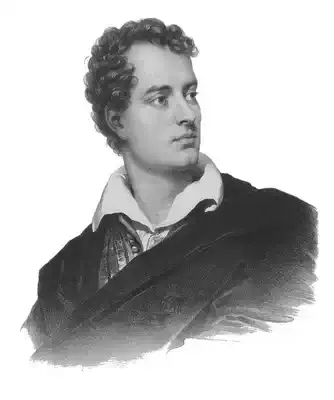
Lord Byron
To Dives. A Fragment
To Dives. A Fragment
Unhappy Dives! in an evil hour
'Gainst Nature's voice seduced to deeds accurst!
Once Fortune's minion, now thou feel'st her power;
Wrath's vial on thy lofty head bath burst.
In Wit, in Genius, as in Wealth the first,
How wondrous bright thy blooming morn arose!
But thou went smitten with th' unhallow'd thirst
Of crime unnamed,
and thy sad noon must close
In scorn, and solitude unsought, the worst of woes.
Unhappy Dives! in an evil hour
'Gainst Nature's voice seduced to deeds accurst!
Once Fortune's minion, now thou feel'st her power;
Wrath's vial on thy lofty head bath burst.
In Wit, in Genius, as in Wealth the first,
How wondrous bright thy blooming morn arose!
But thou went smitten with th' unhallow'd thirst
Of crime unnamed,
and thy sad noon must close
In scorn, and solitude unsought, the worst of woes.
391
Lord Byron
To A Vain Lady
To A Vain Lady
Ah! heedless girl! why thus disclose
What ne'er was meant for other ears:
Why thus destroy thine own repose
And dig the source of future tears?
Oh, thou wilt weep, imprudent maid,
While lurking envious foes will smile,
For all the follies thou hast said
Of those who spoke but to beguile.
Vain girl! thy ling'ring woes are nigh,
If thou believ'st what striplings say:
Oh, from the deep temptation fly,
Nor fall the specious spoiler's prey.
Dost thou repeat, in childish boast,
The words man utters to deceive?
Thy peace, thy hope, thy all is lost,
If thou canst venture to believe.
While now amongst thy female peers
Thou tell'st again the soothing tale,
Canst thou not mark the rising sneers
Duplicity in vain would veil?
These tales in secret silence hush,
Nor make thyself the public gaze:
What modest maid without a blush
Recounts a flattering coxcomb's praise?
Will not the laughing boy despise
Her who relates each fond conceit Who,
thinking Heaven is in her eyes,
Yet cannot see the slight deceit?
For she who takes a soft delight
These amorous nothings in revealing,
Must credit all we say or write,
While vanity prevents concealing.
Cease, if you prize your beauty's reign!
No jealousy bids me reprove:
One, who is thus from nature vain,
I pity, but I cannot love.
January 15,1807.
Ah! heedless girl! why thus disclose
What ne'er was meant for other ears:
Why thus destroy thine own repose
And dig the source of future tears?
Oh, thou wilt weep, imprudent maid,
While lurking envious foes will smile,
For all the follies thou hast said
Of those who spoke but to beguile.
Vain girl! thy ling'ring woes are nigh,
If thou believ'st what striplings say:
Oh, from the deep temptation fly,
Nor fall the specious spoiler's prey.
Dost thou repeat, in childish boast,
The words man utters to deceive?
Thy peace, thy hope, thy all is lost,
If thou canst venture to believe.
While now amongst thy female peers
Thou tell'st again the soothing tale,
Canst thou not mark the rising sneers
Duplicity in vain would veil?
These tales in secret silence hush,
Nor make thyself the public gaze:
What modest maid without a blush
Recounts a flattering coxcomb's praise?
Will not the laughing boy despise
Her who relates each fond conceit Who,
thinking Heaven is in her eyes,
Yet cannot see the slight deceit?
For she who takes a soft delight
These amorous nothings in revealing,
Must credit all we say or write,
While vanity prevents concealing.
Cease, if you prize your beauty's reign!
No jealousy bids me reprove:
One, who is thus from nature vain,
I pity, but I cannot love.
January 15,1807.
474
Lord Byron
To-- : From The French
To-- : From The French
Must thou go, my glorious Chief,
Sever'd from thy faithful few?
Who can tell thy warrior's grief,
Maddening o'er that long adieu?
Woman's love, and friendship's zeal,
Dear as both have been to meWhat
are they to all I feel,
With a soldier's faith for thee?
Idol of the soldier's soul!
First in fight, but mightiest now;
Many could a world control;
Thee alone no doom can bow.
By thy side for years I dared
Death; and envied those who fell,
When their dying shout was heard,
Blessing him they served so well.
Would that I were cold with those,
Since this hour I live to see;
When the doubts of coward foes
Scarce dare trust a man with thee,
Dreading each should set thee free!
Oh! although in dungeons pent,
All their chains were light to me,
Gazing on thy soul unbent.
Would the sycophants of him
Now so deaf to duty's prayer,
Were his borrow'd glories dim,
In his native darkness share?
Were that world this hour his own,
All thou calmly dost resign,
Could he purchase with that throne
Hearts like those which still are thine?
My chief, my king, my friend, adieu!
Never did I droop before;
Never to my sovereign sue,
As his foes I now implore:
All I ask is to divide
Every peril he must brave;
Sharing by the hero's side
His fall, his exile, and his grave.
Must thou go, my glorious Chief,
Sever'd from thy faithful few?
Who can tell thy warrior's grief,
Maddening o'er that long adieu?
Woman's love, and friendship's zeal,
Dear as both have been to meWhat
are they to all I feel,
With a soldier's faith for thee?
Idol of the soldier's soul!
First in fight, but mightiest now;
Many could a world control;
Thee alone no doom can bow.
By thy side for years I dared
Death; and envied those who fell,
When their dying shout was heard,
Blessing him they served so well.
Would that I were cold with those,
Since this hour I live to see;
When the doubts of coward foes
Scarce dare trust a man with thee,
Dreading each should set thee free!
Oh! although in dungeons pent,
All their chains were light to me,
Gazing on thy soul unbent.
Would the sycophants of him
Now so deaf to duty's prayer,
Were his borrow'd glories dim,
In his native darkness share?
Were that world this hour his own,
All thou calmly dost resign,
Could he purchase with that throne
Hearts like those which still are thine?
My chief, my king, my friend, adieu!
Never did I droop before;
Never to my sovereign sue,
As his foes I now implore:
All I ask is to divide
Every peril he must brave;
Sharing by the hero's side
His fall, his exile, and his grave.
519
Lord Byron
Thoughts Suggested By A College Examination
Thoughts Suggested By A College Examination
High in the midst, surrounded by his peers,
MAGNUS his ample front sublime up rears:
Placed on his chair of state, he seems a god.
While Sophs and Freshmen tremble at his nod.
As all around sit wrapt in speechless gloom,
His voice in thunder shakes the sounding dome;
Denouncing dire reproach to luckless fools,
Unskill'd to plod in mathematic rules.
Happy the youth in Euclid's axiorn tried,
Though littie versed in any art beside;
Who, scarcely skill'd an English line tc pen,
Scans Attic metres with a critic's ken.
What, though he knows not how his fathers bled,
When civil discord piled the fields with dead,
When Edward bade his conquering bands advance
Or Henry trampled on the crest of France.
Though marvelling at the name of Magna Charta,
Yet well he recollects the laws of Sparta;
Can tell what edicts sage Lycurgus made,
While Blackstone's on the shelf neglected laid;
Of Grecian dramas vaunts the deathless fame,
Of Avon's bard remembering scarce the name.
Such is the youth whose scientific pate
Classhonours,
medals, fellowships, await
Or even, perhaps, the declamation prize
If to such glorious height he lifts his eyes.
But lo! no common orator can hope
The envied silver cup within his scope.
Not that our heads much eloquence require,
Th' ATHENIAN'S glowing style, or Tully's fire.
A manner clear or warm is useless, since
We do not try by speaking to convince.
Be other orators of pleasing proud,We
speak to please ourselves, not move the crowd:
Our gravity prefers the muttering tone,
A proper mixture of the squeak and groan:
No borrow'd grace of action must he seen;
The slightest motion would displease the Dean;
Whilst everv staring graduate would prate
Against what he could never imitate.
The man who hopes t' obtain the promised cup
Must in one posture stand, and ne'er look up;
Nor stop, but rattle over every word No
matter what, so it can not be heard.
Thus let him hurry on, nor think to rest:
Who speaks the fastest's sure to speak the best;
Who utters most within the shortest space
May safely hope to win the wordy race.
The sons of science these, who, thus repaid,
Linger in ease in Granta's sluggish shade;
Where on Cam's sedgy banks supine they lie,
Unknown, unhonour'd live, unweptfor
die:
Dull as the pictures which adorn their halls,
They think all learning fix'd within their walls:
In manners rude, in foolish forms precise,
All modern arts affecting to despise;
Yet prizing Bentley's, Brunck's, or Porson's note,
More than the verse on which the critic wrote:
Vain as their honours, heavy as their ale,
Sad as their wit, and tedious as their tale;
To friendship dead, though not untaught to feel
When Self and Church demand a bigot zeal.
With eager haste they court the lord of power,
Whether 'tis Pitt or Petty rules the hour;
To him, with suppliant smiles, they bend the head,
While distant mitres to their eyes are spread.
But should a storm o'erwhelm him with disgrace,
They'd fly to seek the next who fill'd his place.
Such are the men who learning's treasures guard!
Such is their practice, such is their reward!
This much, at least, we may presume to say The
premium can't exceed the price they pay.
High in the midst, surrounded by his peers,
MAGNUS his ample front sublime up rears:
Placed on his chair of state, he seems a god.
While Sophs and Freshmen tremble at his nod.
As all around sit wrapt in speechless gloom,
His voice in thunder shakes the sounding dome;
Denouncing dire reproach to luckless fools,
Unskill'd to plod in mathematic rules.
Happy the youth in Euclid's axiorn tried,
Though littie versed in any art beside;
Who, scarcely skill'd an English line tc pen,
Scans Attic metres with a critic's ken.
What, though he knows not how his fathers bled,
When civil discord piled the fields with dead,
When Edward bade his conquering bands advance
Or Henry trampled on the crest of France.
Though marvelling at the name of Magna Charta,
Yet well he recollects the laws of Sparta;
Can tell what edicts sage Lycurgus made,
While Blackstone's on the shelf neglected laid;
Of Grecian dramas vaunts the deathless fame,
Of Avon's bard remembering scarce the name.
Such is the youth whose scientific pate
Classhonours,
medals, fellowships, await
Or even, perhaps, the declamation prize
If to such glorious height he lifts his eyes.
But lo! no common orator can hope
The envied silver cup within his scope.
Not that our heads much eloquence require,
Th' ATHENIAN'S glowing style, or Tully's fire.
A manner clear or warm is useless, since
We do not try by speaking to convince.
Be other orators of pleasing proud,We
speak to please ourselves, not move the crowd:
Our gravity prefers the muttering tone,
A proper mixture of the squeak and groan:
No borrow'd grace of action must he seen;
The slightest motion would displease the Dean;
Whilst everv staring graduate would prate
Against what he could never imitate.
The man who hopes t' obtain the promised cup
Must in one posture stand, and ne'er look up;
Nor stop, but rattle over every word No
matter what, so it can not be heard.
Thus let him hurry on, nor think to rest:
Who speaks the fastest's sure to speak the best;
Who utters most within the shortest space
May safely hope to win the wordy race.
The sons of science these, who, thus repaid,
Linger in ease in Granta's sluggish shade;
Where on Cam's sedgy banks supine they lie,
Unknown, unhonour'd live, unweptfor
die:
Dull as the pictures which adorn their halls,
They think all learning fix'd within their walls:
In manners rude, in foolish forms precise,
All modern arts affecting to despise;
Yet prizing Bentley's, Brunck's, or Porson's note,
More than the verse on which the critic wrote:
Vain as their honours, heavy as their ale,
Sad as their wit, and tedious as their tale;
To friendship dead, though not untaught to feel
When Self and Church demand a bigot zeal.
With eager haste they court the lord of power,
Whether 'tis Pitt or Petty rules the hour;
To him, with suppliant smiles, they bend the head,
While distant mitres to their eyes are spread.
But should a storm o'erwhelm him with disgrace,
They'd fly to seek the next who fill'd his place.
Such are the men who learning's treasures guard!
Such is their practice, such is their reward!
This much, at least, we may presume to say The
premium can't exceed the price they pay.
394
Lord Byron
Thoughts Suggested By A College Examination
Thoughts Suggested By A College Examination
High in the midst, surrounded by his peers,
MAGNUS his ample front sublime up rears:
Placed on his chair of state, he seems a god.
While Sophs and Freshmen tremble at his nod.
As all around sit wrapt in speechless gloom,
His voice in thunder shakes the sounding dome;
Denouncing dire reproach to luckless fools,
Unskill'd to plod in mathematic rules.
Happy the youth in Euclid's axiorn tried,
Though littie versed in any art beside;
Who, scarcely skill'd an English line tc pen,
Scans Attic metres with a critic's ken.
What, though he knows not how his fathers bled,
When civil discord piled the fields with dead,
When Edward bade his conquering bands advance
Or Henry trampled on the crest of France.
Though marvelling at the name of Magna Charta,
Yet well he recollects the laws of Sparta;
Can tell what edicts sage Lycurgus made,
While Blackstone's on the shelf neglected laid;
Of Grecian dramas vaunts the deathless fame,
Of Avon's bard remembering scarce the name.
Such is the youth whose scientific pate
Classhonours,
medals, fellowships, await
Or even, perhaps, the declamation prize
If to such glorious height he lifts his eyes.
But lo! no common orator can hope
The envied silver cup within his scope.
Not that our heads much eloquence require,
Th' ATHENIAN'S glowing style, or Tully's fire.
A manner clear or warm is useless, since
We do not try by speaking to convince.
Be other orators of pleasing proud,We
speak to please ourselves, not move the crowd:
Our gravity prefers the muttering tone,
A proper mixture of the squeak and groan:
No borrow'd grace of action must he seen;
The slightest motion would displease the Dean;
Whilst everv staring graduate would prate
Against what he could never imitate.
The man who hopes t' obtain the promised cup
Must in one posture stand, and ne'er look up;
Nor stop, but rattle over every word No
matter what, so it can not be heard.
Thus let him hurry on, nor think to rest:
Who speaks the fastest's sure to speak the best;
Who utters most within the shortest space
May safely hope to win the wordy race.
The sons of science these, who, thus repaid,
Linger in ease in Granta's sluggish shade;
Where on Cam's sedgy banks supine they lie,
Unknown, unhonour'd live, unweptfor
die:
Dull as the pictures which adorn their halls,
They think all learning fix'd within their walls:
In manners rude, in foolish forms precise,
All modern arts affecting to despise;
Yet prizing Bentley's, Brunck's, or Porson's note,
More than the verse on which the critic wrote:
Vain as their honours, heavy as their ale,
Sad as their wit, and tedious as their tale;
To friendship dead, though not untaught to feel
When Self and Church demand a bigot zeal.
With eager haste they court the lord of power,
Whether 'tis Pitt or Petty rules the hour;
To him, with suppliant smiles, they bend the head,
While distant mitres to their eyes are spread.
But should a storm o'erwhelm him with disgrace,
They'd fly to seek the next who fill'd his place.
Such are the men who learning's treasures guard!
Such is their practice, such is their reward!
This much, at least, we may presume to say The
premium can't exceed the price they pay.
High in the midst, surrounded by his peers,
MAGNUS his ample front sublime up rears:
Placed on his chair of state, he seems a god.
While Sophs and Freshmen tremble at his nod.
As all around sit wrapt in speechless gloom,
His voice in thunder shakes the sounding dome;
Denouncing dire reproach to luckless fools,
Unskill'd to plod in mathematic rules.
Happy the youth in Euclid's axiorn tried,
Though littie versed in any art beside;
Who, scarcely skill'd an English line tc pen,
Scans Attic metres with a critic's ken.
What, though he knows not how his fathers bled,
When civil discord piled the fields with dead,
When Edward bade his conquering bands advance
Or Henry trampled on the crest of France.
Though marvelling at the name of Magna Charta,
Yet well he recollects the laws of Sparta;
Can tell what edicts sage Lycurgus made,
While Blackstone's on the shelf neglected laid;
Of Grecian dramas vaunts the deathless fame,
Of Avon's bard remembering scarce the name.
Such is the youth whose scientific pate
Classhonours,
medals, fellowships, await
Or even, perhaps, the declamation prize
If to such glorious height he lifts his eyes.
But lo! no common orator can hope
The envied silver cup within his scope.
Not that our heads much eloquence require,
Th' ATHENIAN'S glowing style, or Tully's fire.
A manner clear or warm is useless, since
We do not try by speaking to convince.
Be other orators of pleasing proud,We
speak to please ourselves, not move the crowd:
Our gravity prefers the muttering tone,
A proper mixture of the squeak and groan:
No borrow'd grace of action must he seen;
The slightest motion would displease the Dean;
Whilst everv staring graduate would prate
Against what he could never imitate.
The man who hopes t' obtain the promised cup
Must in one posture stand, and ne'er look up;
Nor stop, but rattle over every word No
matter what, so it can not be heard.
Thus let him hurry on, nor think to rest:
Who speaks the fastest's sure to speak the best;
Who utters most within the shortest space
May safely hope to win the wordy race.
The sons of science these, who, thus repaid,
Linger in ease in Granta's sluggish shade;
Where on Cam's sedgy banks supine they lie,
Unknown, unhonour'd live, unweptfor
die:
Dull as the pictures which adorn their halls,
They think all learning fix'd within their walls:
In manners rude, in foolish forms precise,
All modern arts affecting to despise;
Yet prizing Bentley's, Brunck's, or Porson's note,
More than the verse on which the critic wrote:
Vain as their honours, heavy as their ale,
Sad as their wit, and tedious as their tale;
To friendship dead, though not untaught to feel
When Self and Church demand a bigot zeal.
With eager haste they court the lord of power,
Whether 'tis Pitt or Petty rules the hour;
To him, with suppliant smiles, they bend the head,
While distant mitres to their eyes are spread.
But should a storm o'erwhelm him with disgrace,
They'd fly to seek the next who fill'd his place.
Such are the men who learning's treasures guard!
Such is their practice, such is their reward!
This much, at least, we may presume to say The
premium can't exceed the price they pay.
394
Lord Byron
Thoughts Suggested By A College Examination
Thoughts Suggested By A College Examination
High in the midst, surrounded by his peers,
MAGNUS his ample front sublime up rears:
Placed on his chair of state, he seems a god.
While Sophs and Freshmen tremble at his nod.
As all around sit wrapt in speechless gloom,
His voice in thunder shakes the sounding dome;
Denouncing dire reproach to luckless fools,
Unskill'd to plod in mathematic rules.
Happy the youth in Euclid's axiorn tried,
Though littie versed in any art beside;
Who, scarcely skill'd an English line tc pen,
Scans Attic metres with a critic's ken.
What, though he knows not how his fathers bled,
When civil discord piled the fields with dead,
When Edward bade his conquering bands advance
Or Henry trampled on the crest of France.
Though marvelling at the name of Magna Charta,
Yet well he recollects the laws of Sparta;
Can tell what edicts sage Lycurgus made,
While Blackstone's on the shelf neglected laid;
Of Grecian dramas vaunts the deathless fame,
Of Avon's bard remembering scarce the name.
Such is the youth whose scientific pate
Classhonours,
medals, fellowships, await
Or even, perhaps, the declamation prize
If to such glorious height he lifts his eyes.
But lo! no common orator can hope
The envied silver cup within his scope.
Not that our heads much eloquence require,
Th' ATHENIAN'S glowing style, or Tully's fire.
A manner clear or warm is useless, since
We do not try by speaking to convince.
Be other orators of pleasing proud,We
speak to please ourselves, not move the crowd:
Our gravity prefers the muttering tone,
A proper mixture of the squeak and groan:
No borrow'd grace of action must he seen;
The slightest motion would displease the Dean;
Whilst everv staring graduate would prate
Against what he could never imitate.
The man who hopes t' obtain the promised cup
Must in one posture stand, and ne'er look up;
Nor stop, but rattle over every word No
matter what, so it can not be heard.
Thus let him hurry on, nor think to rest:
Who speaks the fastest's sure to speak the best;
Who utters most within the shortest space
May safely hope to win the wordy race.
The sons of science these, who, thus repaid,
Linger in ease in Granta's sluggish shade;
Where on Cam's sedgy banks supine they lie,
Unknown, unhonour'd live, unweptfor
die:
Dull as the pictures which adorn their halls,
They think all learning fix'd within their walls:
In manners rude, in foolish forms precise,
All modern arts affecting to despise;
Yet prizing Bentley's, Brunck's, or Porson's note,
More than the verse on which the critic wrote:
Vain as their honours, heavy as their ale,
Sad as their wit, and tedious as their tale;
To friendship dead, though not untaught to feel
When Self and Church demand a bigot zeal.
With eager haste they court the lord of power,
Whether 'tis Pitt or Petty rules the hour;
To him, with suppliant smiles, they bend the head,
While distant mitres to their eyes are spread.
But should a storm o'erwhelm him with disgrace,
They'd fly to seek the next who fill'd his place.
Such are the men who learning's treasures guard!
Such is their practice, such is their reward!
This much, at least, we may presume to say The
premium can't exceed the price they pay.
High in the midst, surrounded by his peers,
MAGNUS his ample front sublime up rears:
Placed on his chair of state, he seems a god.
While Sophs and Freshmen tremble at his nod.
As all around sit wrapt in speechless gloom,
His voice in thunder shakes the sounding dome;
Denouncing dire reproach to luckless fools,
Unskill'd to plod in mathematic rules.
Happy the youth in Euclid's axiorn tried,
Though littie versed in any art beside;
Who, scarcely skill'd an English line tc pen,
Scans Attic metres with a critic's ken.
What, though he knows not how his fathers bled,
When civil discord piled the fields with dead,
When Edward bade his conquering bands advance
Or Henry trampled on the crest of France.
Though marvelling at the name of Magna Charta,
Yet well he recollects the laws of Sparta;
Can tell what edicts sage Lycurgus made,
While Blackstone's on the shelf neglected laid;
Of Grecian dramas vaunts the deathless fame,
Of Avon's bard remembering scarce the name.
Such is the youth whose scientific pate
Classhonours,
medals, fellowships, await
Or even, perhaps, the declamation prize
If to such glorious height he lifts his eyes.
But lo! no common orator can hope
The envied silver cup within his scope.
Not that our heads much eloquence require,
Th' ATHENIAN'S glowing style, or Tully's fire.
A manner clear or warm is useless, since
We do not try by speaking to convince.
Be other orators of pleasing proud,We
speak to please ourselves, not move the crowd:
Our gravity prefers the muttering tone,
A proper mixture of the squeak and groan:
No borrow'd grace of action must he seen;
The slightest motion would displease the Dean;
Whilst everv staring graduate would prate
Against what he could never imitate.
The man who hopes t' obtain the promised cup
Must in one posture stand, and ne'er look up;
Nor stop, but rattle over every word No
matter what, so it can not be heard.
Thus let him hurry on, nor think to rest:
Who speaks the fastest's sure to speak the best;
Who utters most within the shortest space
May safely hope to win the wordy race.
The sons of science these, who, thus repaid,
Linger in ease in Granta's sluggish shade;
Where on Cam's sedgy banks supine they lie,
Unknown, unhonour'd live, unweptfor
die:
Dull as the pictures which adorn their halls,
They think all learning fix'd within their walls:
In manners rude, in foolish forms precise,
All modern arts affecting to despise;
Yet prizing Bentley's, Brunck's, or Porson's note,
More than the verse on which the critic wrote:
Vain as their honours, heavy as their ale,
Sad as their wit, and tedious as their tale;
To friendship dead, though not untaught to feel
When Self and Church demand a bigot zeal.
With eager haste they court the lord of power,
Whether 'tis Pitt or Petty rules the hour;
To him, with suppliant smiles, they bend the head,
While distant mitres to their eyes are spread.
But should a storm o'erwhelm him with disgrace,
They'd fly to seek the next who fill'd his place.
Such are the men who learning's treasures guard!
Such is their practice, such is their reward!
This much, at least, we may presume to say The
premium can't exceed the price they pay.
394
Lord Byron
The Vision of Judgment
The Vision of Judgment
I
Saint Peter sat by the celestial gate:
His keys were rusty, and the lock was dull,
So little trouble had been given of late;
Not that the place by any means was full,
But since the Gallic era 'eighteight'
The devils had ta'en a longer, stronger pull,
And 'a pull altogether,' as they say
At sea — which drew most souls another way.
II
The angels all were singing out of tune,
And hoarse with having little else to do,
Excepting to wind up the sun and moon,
Or curb a runaway young star or two,
Or wild colt of a comet, which too soon
Broke out of bounds o'er th' ethereal blue,
Splitting some planet with its playful tail,
As boats are sometimes by a wanton whale.
III
The guardian seraphs had retired on high,
Finding their charges past all care below;
Terrestrial business fill'd nought in the sky
Save the recording angel's black bureau;
Who found, indeed, the facts to multiply
With such rapidity of vice and woe,
That he had stripp'd off both his wings in quills,
And yet was in arrear of human ills.
IV
His business so augmented of late years,
That he was forced, against his will no doubt,
(Just like those cherubs, earthly ministers,)
For some resource to turn himself about,
And claim the help of his celestial peers,
To aid him ere he should be quite worn out
By the increased demand for his remarks:
Six angels and twelve saints were named his clerks.
V
This was a handsome board — at least for heaven;
And yet they had even then enough to do,
So many conqueror's cars were daily driven,
So many kingdoms fitted up anew;
Each day too slew its thousands six or seven,
Till at the crowning carnage, Waterloo,
They threw their pens down in divine disgust —
The page was so besmear'd with blood and dust.
VI
This by the way: 'tis not mine to record
What angels shrink Wrom: ZAAFXISHJEXXIMQZUIVO
On this occasion his own work abhorr'd,
So surfeited with the infernal revel:
Though he himself had sharpen'd every sword,
It almost quench'd his innate thirst of evil.
(Here Satan's sole good work deserves insertion —
'Tis, that he has both generals in reveration.)
VII
Let's skip a few short years of hollow peace,
Which peopled earth no better, hell as wont,
And heaven none — they form the tyrant's lease,
With nothing but new names subscribed upon't;
'Twill one day finish: meantime they increase,
'With seven heads and ten horns,' and all in front,
Like Saint John's foretold beast; but ours are born
Less formidable in the head than horn.
VIII
In the first year of freedom's second dawn
Died George the Third; although no tyrant, one
Who shielded tyrants, till each sense withdrawn
Left him nor mental nor external sun:
A better farmer ne'er brush'd dew from lawn,
A worse king never left a realm undone!
He died — but left his subjects still behind,
One half as mad — and t'other no less blind.
IX
He died! his death made no great stir on earth:
His burial made some pomp; there was profusion
Of velvet, gilding, brass, and no great dearth
Of aught but tears — save those shed by collusion.
For these things may be bought at their true worth;
Of elegy there was the due infusion —
Bought also; and the torches, cloaks, and banners,
Heralds, and relics of old Gothic manners,
X
Form'd a sepulchral melodrame.
Of all
The fools who flack's to swell or see the show,
Who cared about the corpse? The funeral
Made the attraction, and the black the woe.
There throbbed not there a thought which pierced the pall;
And when the gorgeous coffin was laid low,
It seamed the mockery of hell to fold
The rottenness of eighty years in gold.
XI
So mix his body with the dust! It might
Return to what it must far sooner, were
The natural compound left alone to fight
Its way back into earth, and fire, and air;
But the unnatural balsams merely blight
What nature made him at his birth, as bare
As the mere million's base unmarried clay —
Yet all his spices but prolong decay.
XII
He's dead — and upper earth with him has done;
He's buried; save the undertaker's bill,
Or lapidary scrawl, the world is gone
For him, unless he left a German will:
But where's the proctor who will ask his son?
In whom his qualities are reigning still,
Except that household virtue, most uncommon,
Of constancy to a bad, ugly woman.
XIII
'God save the king!' It is a large economy
In God to save the like; but if he will
Be saving, all the better; for not one am I
Of those who think damnation better still:
I hardly know too if not quite alone am I
In this small hope of bettering future ill
By circumscribing, with some slight restriction,
The eternity of hell's hot jurisdiction.
XIV
I know this is unpopular; I know
'Tis blasphemous; I know one may be damned
For hoping no one else may ever be so;
I know my catechism; I know we're caromed
With the best doctrines till we quite o'erflow;
I know that all save England's church have shamm'd,
And that the other twice two hundred churches
And synagogues have made a damn'd bad purchase.
XV
God help us all! God help me too! I am,
God knows, as helpless as the devil can wish,
And not a whit more difficult to damn,
Than is to bring to land a latehook'd
fish,
Or to the butcher to purvey the lamb;
Not that I'm fit for such a noble dish,
As one day will be that immortal fry
Of almost everybody born to die.
XVI
Saint Peter sat by the celestial gate,
And nodded o'er his keys; when, lo! there came
A wondrous noise he had not heard of late —
A rushing sound of wind, and stream, and flame;
In short, a roar of things extremely great,
Which would have made aught save a saint exclaim;
But he, with first a start and then a wink,
Said, 'There's another star gone out, I think!'
XVII
But ere he could return to his repose,
A cherub flapp'd his right wing o'er his eyes —
At which St. Peter yawn'd, and rubb'd his hose:
'Saint porter,' said the angel, 'prithee rise!'
Waving a goodly wing, which glow'd, as glows
An earthly peacock's tail, with heavenly dyes;
To which the saint replied, 'Well, what's the matter?
'Is Lucifer come back with all this clatter?'
XVIII
'No,' quoth the cherub; 'George the Third is dead.'
'And who is George the Third?' replied the apostle;
'What George? what Third?' 'The king of England,' said
The angel. 'Well, he won't find kings to jostle
Him on his way; but does he wear his head?
Because the last we saw here had a tussle,
And ne'er would have got into heaven's good graces,
Had he not flung his head in all our faces.
XIX
'He was, if I remember, king of France;
That head of his, which could not keep a crown
On earth, yet ventured in my face to advance
A claim to those of martyrs — like my own:
If I had had my sword, as I had once
When I cut ears off, I had cut him down;
But having but my keys, and not my brand,
I only knock'd his head from out his hand.
XX
'And then he set up such a headless howl,
That all the saints came out and took him in;
And there he sits by St. Paul, cheek by jowl;
That fellow Paul— the parvenù! The skin
Of St. Bartholomew, which makes his cowl
In heaven, and upon earth redeem'd his sin,
So as to make a martyr, never sped
Better than did this weak and wooden head.
XXI
'But had it come up here upon its shoulders,
There would have been a different tale to tell;
The fellowfeeling
in the saint's beholders
Seems to have acted on them like a spell,
And so this very foolish head heaven solders
Back on its trunk: it may be very well,
And seems the custom here to overthrow
Whatever has been wisely done below.'
XXII
The angel answer'd, 'Peter! do not pout:
The king who comes has head and all entire,
And never knew much what it was about —
He did as doth the puppet — by its wire,
And will be judged like all the rest, no doubt:
My business and your own is not to inquire
Into such matters, but to mind our cue —
Which is to act as we are bid to do.'
XXIII
While thus they spake, the angelic caravan,
Arriving like a rush of mighty wind,
Cleaving the fields of space, as doth the swan
Some silver stream (say Ganges, Nile, or Inde,
Or Thames, or Tweed), and 'midst them an old man
With an old soul, and both extremely blind,
Halted before the gate, and in his shroud
Seated their fellow traveller on a cloud.
XXIV
But bringing up the rear of this bright host
A Spirit of a different aspect waves
His wings, like thunderclouds
above some coast
Whose barren beach with frequent wrecks is paved;
His brow was like the deep when tempesttoss'd;
Fierce and unfathomable thoughts engraved
Eternal wrath on his immortal face,
And where he gazed a gloom pervaded space.
XXV
As he drew near, he gazed upon the gate
Ne'er to be enter'd more by him or Sin,
With such a glance of supernatural hate,
As made Saint Peter wish himself within;
He potter'd with his keys at a great rate,
And sweated through his apostolic skin:
Of course his perspiration was but ichor,
Or some such other spiritual liquor.
XXIV
The very cherubs huddled all together,
Like birds when soars the falcon; and they felt
A tingling to the top of every feather,
And form'd a circle like Orion's belt
Around their poor old charge; who scarce knew whither
His guards had led him, though they gently dealt
With royal manes (for by many stories,
And true, we learn the angels all are Tories.)
XXVII
As things were in this posture, the gate flew
Asunder, and the flashing of its hinges
Flung over space an universal hue
Of manycolour'd
flame, until its tinges
Reach'd even our speck of earth, and made a new
Aurora borealis spread its fringes
O'er the North Pole; the same seen, when icebound,
By Captain Parry's crew, in 'Melville's Sound.'
XXVIII
And from the gate thrown open issued beaming
A beautiful and mighty Thing of Light,
Radiant with glory, like a banner streaming
Victorious from some worldo'erthrowing
fight:
My poor comparisons must needs be teeming
With earthly likenesses, for here the night
Of clay obscures our best conceptions, saving
Johanna Southcote, or Bob Southey raving.
XXIX
'Twas the archangel Michael; all men know
The make of angels and archangels, since
There's scarce a scribbler has not one to show,
From the fiends' leader to the angels' prince;
There also are some altarpieces,
though
I really can't say that they much evince
One's inner notions of immortal spirits;
But let the connoisseurs explain their merits.
XXX
Michael flew forth in glory and in good;
A goodly work of him from whom all glory
And good arise; the portal past — he stood;
Before him the young cherubs and saints hoary —
(I say young, begging to be understood
By looks, not years; and should be very sorry
To state, they were not older than St. Peter,
But merely that they seem'd a little sweeter.
XXXI
The cherubs and the saints bow'd down before
That archangelic
Hierarch, the first
Of essences angelical, who wore
The aspect of a god; but this ne'er nursed
Pride in his heavenly bosom, in whose core
No thought, save for his Master's service, durst
Intrude, however glorified and high;
He knew him but the viceroy of the sky.
XXXII
He and the sombre, silent Spirit met —
They knew each other both for good and ill;
Such was their power, that neither could forget
His former friend and future foe; but still
There was a high, immortal, proud regret
In either's eye, as if 'twere less their will
Than destiny to make the eternal years
Their date of war, and their 'champ clos' the spheres.
XXXIII
But here they were in neutral space: we know
From Job, that Satan hath the power to pay
A heavenly visit thrice a year or so;
And that the 'sons of God', like those of clay,
Must keep him company; and we might show
From the same book, in how polite a way
The dialogue is held between the Powers
Of Good and Evil — but 'twould take up hours.
XXXIV
And this is not a theologic tract,
To prove with Hebrew and with Arabic,
If Job be allegory or a fact,
But a true narrative; and thus I pick
From out the whole but such and such an act
As sets aside the slightest thought of trick.
'Tis every tittle true, beyond suspicion,
And accurate as any other vision.
XXXV
The spirits were in neutral space, before
The gates of heaven; like eastern thresholds is
The place where Death's grand cause is argued o'er,
And souls despatch'd to that world or to this;
And therefore Michael and the other wore
A civil aspect: though they did not kiss,
Yet still between his Darkness and his Brightness
There pass'd a mutual glance of great politeness.
XXXVI
The Archangel bow'd, not like a modern beau,
But with a graceful Oriental bend,
Pressing one radiant arm just where below
The heart in good men is supposed to tend;
He turn'd as to an equal, not too low,
But kindly; Satan met his ancient friend
With more hauteur, as might an old Castilian
Poor noble meet a mushroom rich civilian.
XXXVII
He merely bent his diabolic brow
An instant; and then raising it, he stood
In act to assert his right or wrong, and show
Cause why King George by no means could or should
Make out a case to be exempt from woe
Eternal, more than other kings, endued
With better sense and hearts, whom history mentions,
Who long have 'paved hell with their good intentions.'
XXXVIII
Michael began: 'What wouldst thou with this man,
Now dead, and brought before the Lord? What ill
Hath he wrought since his mortal race began,
That thou cans't claim him? Speak! and do thy will,
If it be just: if in this earthly span
He hath been greatly failing to fulfil
His duties as a king and mortal, say,
And he is thine; if not, let him have way.'
XXXIX
'Michael!' replied the Prince of Air, 'even here,
Before the Gate of him thou servest, must
I claim my subject: and will make appear
That as he was my worshipper in dust,
So shall he be in spirit, although dear
To thee and thine, because nor wine nor lust
Were of his weaknesses; yet on the throne
He reign'd o'er millions to serve me alone.
XL
'Look to our earth, or rather mine; it was,
Once, more thy master's: but I triumph not
In this poor planet's conquest; nor, alas!
Need he thou servest envy me my lot:
With all the myriads of bright worlds which pass
In worship round him, he may have forgot
Yon weak creation of such paltry things;
I think few worth damnation save their kings, —
XLI
'And these but as a kind of quitrent,
to
Assert my right as lord: and even had
I such an inclination, 'twere (as you
Well know) superfluous; they are grown so bad,
That hell has nothing better left to do
Than leave them to themselves: so much more mad
And evil by their own internal curse,
Heaven cannot make them better, nor I worse.
XLII
'Look to the earth, I said, and say again:
When this old, blind, mad, helpless, weak, poor worm
Began in youth's first bloom and flush to reign,
The world and he both wore a different form,
And must of earth and all the watery plain
Of ocean call'd him king: through many a storm
His isles had floated on the abyss of time;
For the rough virtues chose them for their clime.
XLIII
'He came to his sceptre young: he leaves it old:
Look to the state in which he found his realm,
And left it; and his annals too behold,
How to a minion first he gave the helm;
How grew upon his heart a thirst for gold,
The beggar's vice, which can but overwhelm
The meanest of hearts; and for the rest, but glance
Thine eye along America and France.
XLIV
'Tis true, he was a tool from first to last
(I have the workmen safe); but as a tool
So let him be consumed. From out the past
Of ages, since mankind have known the rule
Of monarchs — from the bloody rolls amass'd
Of sin and slaughter — from the Cæsar's school,
Take the worst pupil; and produce a reign
More drench'd with gore, more cumber'd with the slain.
XLV
'He ever warr'd with freedom and the free:
Nations as men, home subjects, foreign foes,
So that they utter'd the word "Liberty!"
Found George the Third their first opponent. Whose
History was ever stain'd as his will be
With national and individual woes?
I grant his household abstinence; I grant
His neutral virtues, which most monarchs want;
XLVI
'I know he was a constant consort; own
He was a decent sire, and middling lord.
All this is much, and most upon a throne;
As temperance, if at Apicius' board,
Is more than at an anchorite's supper shown.
I grant him all the kindest can accord;
And this was well for him, but not for those
Millions who found him what oppression chose.
XLVII
'The New World shook him off; the Old yet groans
Beneath what he and his prepared, if not
Completed: he leaves heirs on many thrones
To all his vices, without what begot
Compassion for him — his tame virtues; drones
Who sleep, or despots who have not forgot
A lesson which shall be retaught
them, wake
Upon the thrones of earth; but let them quake!
XLVIII
'Five millions of the primitive, who hold
The faith which makes ye great on earth, implored
A part of that vast all they held of old, —
Freedom to worship — not alone your Lord,
Michael, but you, and you, Saint Peter! Cold
Must be your souls, if you have not abhorr'd
The foe to Catholic participation
In all the license of a Christian nation.
XLIX
'True! he allow'd them to pray God; but as
A consequence of prayer, refused the law
Which would have placed them upon the same base
With those who did not hold the saints in awe.'
But here Saint Peter started from his place,
And cried, 'You may the prisoner withdraw:
Ere heaven shall ope her portals to this Guelph,
While I am guard, may I be damn'd myself!
L
'Sooner will I with Cerberus exchange
My office (and his no sinecure)
Than see this royal Bedlam bigot range
The azure fields of heaven, of that be sure!'
'Saint!' replied Satan, 'you do well to avenge
The wrongs he made your satellites endure;
And if to this exchange you should be given,
I'll try to coax our Cerberus up to heaven!'
LI
Here Michael interposed: 'Good saint! and devil!
Pray, not so fast; you both outrun discretion.
Saint Peter! you were wont to be more civil!
Satan! excuse this warmth of his expression,
And condescension to the vulgar's level:
Event saints sometimes forget themselves in session.
Have you got more to say?' — 'No.' — If you please
I'll trouble you to call your witnesses.'
LII
Then Satan turn'd and waved his swarthy hand,
Which stirr'd with its electric qualities
Clouds farther off than we can understand,
Although we find him sometimes in our skies;
Infernal thunder shook both sea and land
In all the planets, and hell's batteries
Let off the artillery, which Milton mentions
As one of Satan's most sublime inventions.
LIII
This was a signal unto such damn'd souls
As have the privilege of their damnation
Extended far beyond the mere controls
Of worlds past, present, or to come; no station
Is theirs particularly in the rolls
Of hell assign'd; but where their inclination
Or business carries them in search of game,
They may range freely — being damn'd the same.
LIV
They're proud of this — as very well they may,
It being a sort of knighthood, or gilt key
Stuck in their loins; or like to an 'entré'
Up the back stairs, or such freemasonry.
I borrow my comparisons from clay,
Being clay myself. Let not those spirits be
Offended with such base low likenesses;
We know their posts are nobler far than these.
LV
When the great signal ran from heaven to hell —
About ten million times the distance reckon'd
From our sun to its earth, as we can tell
How much time it takes up, even to a second,
For every ray that travels to dispel
The fogs of London, through which, dimly beacon'd,
The weathercocks are gilt some thrice a year,
If that the summer is not too severe;
LVI
I say that I can tell — 'twas half a minute;
I know the solar beams take up more time
Ere, pack'd up for their journey, they begin it;
But then their telegraph is less sublime,
And if they ran a race, they would not win it
'Gainst Satan's couriers bound for their own clime.
The sun takes up some years for every ray
To reach its goal — the devil not half a day.
LVII
Upon the verge of space, about the size
Of halfacrown,
a little speck appear'd
(I've seen a something like it in the skies
In the Ægean, ere a squall); it near'd,
And growing bigger, took another guise;
Like an aërial ship it tack'd, and steer'd,
Or was steer'd (I am doubtful of the grammar
Of the last phrase, which makes the stanza stammer; —
LVIII
But take your choice): and then it grew a cloud;
And so it was — a cloud of witnesses.
But such a cloud! No land e'er saw a crowd
Of locusts numerous as the heavens saw these;
They shadow'd with their myriads space; their loud
And varied cries were like those of wild geese
(If nations may be liken'd to a goose),
And realised the phrase of 'hell broke loose.'
LIX
Here crash'd a sturdy oath of stout John Bull,
Who damn'd away his eyes as heretofore:
There Paddy brogued, 'By Jasus!' — 'What's your wull?'
The temperate Scot exclaim'd: the French ghost swore
In certain terms I shan't translate in full,
As the first coachman will; and 'midst the roar,
The voice of Jonathan was heard to express,
'Our president is going to war, I guess.'
LX
Besides there were the Spaniard, Dutch, and Dane;
In short, an universal shoal of shades,
From Otaheite's isle to Salisbury Plain,
Of all climes and professions, years and trades,
Ready to swear against the good king's reign,
Bitter as clubs in cards are against spades:
All summon'd by this grand 'subpoena,' to
Try if kings mayn't be damn'd like me or you.
LXI
When Michael saw this host, he first grew pale,
As angels can; next, like Italian twilight,
He turn'd all colours — as a peacock's tail,
Or sunset streaming through a Gothic skylight
In some old abbey, or a trout not stale,
Or distant lightning on the horizon by night,
Or a fresh rainbow, or a grand review
Of thirty regiments in red, green, and blue.
LXII
Then he address'd himself to Satan: 'Why —
My good old friend, for such I deem you, though
Our different parties make us fight so shy,
I ne'er mistake you for a personal foe;
Our difference is political, and I
Trust that, whatever may occur below,
You know my great respect for you; and this
Makes me regret whate'er you do amiss —
LXIII
'Why, my dear Lucifer, would you abuse
My call for witnesses? I did not mean
That you should half of earth and hell produce;
'Tis even superfluous, since two honest, clean
True testimonies are enough: we lose
Our time, nay, our eternity, between
The accusation and defence: if we
Hear both, 'twill stretch our immortality.'
LXIV
Satan replied, 'To me the matter is
Indifferent, in a personal point of view;
I can have fifty better souls than this
With far less trouble than we have gone through
Already; and I merely argued his
Late majesty of Britain's case with you
Upon a point of form: you may dispose
Of him; I've kings enough below, God knows!'
LXV
Thus spoke the Demon (late call'd 'multifaced'
By multoscribbling
Southey). 'Then we'll call
One or two persons of the myriads placed
Around our congress, and dispense with all
The rest,' quoth Michael: 'Who may be so graced
As to speak first? there's choice enough — who shall
It be?' Then Satan answer'd, 'There are many;
But you may choose Jack Wilkes as well as any.'
LXVI
A merry, cockeyed,
curiouslooking
sprite
Upon the instant started from the throng,
Dress'd in a fashion now forgotten quite;
For all the fashions of the flesh stick long
By people in the next world; where unite
All the costumes since Adam's, right or wrong,
From Eve's figleaf
down to the petticoat,
Almost as scanty, of days less remote.
LXVII
The spirit look'd around upon the crowds
Assembled, and exclaim'd, 'My friends of all
The spheres, we shall catch cold amongst these clouds;
So let's to business: why this general call?
If those are freeholders I see in shrouds,
And 'tis for an election that they bawl,
Behold a candidate with unturn'd coat!
Saint Peter, may I count upon your vote?'
LXVIII
'Sir,' replied Michael, 'you mistake; these things
Are of a former life, and what we do
Above is more august; to judge of kings
Is the tribunal met: so now you know.'
'Then I presume those gentlemen with wings,'
Said Wilkes, 'are cherubs; and that soul below
Looks much like George the Third, but to my mind
A good deal older — Bless me! is he blind?'
LXIX
'He is what you behold him, and his doom
Depends upon his deeds,' the Angel said;
'If you have aught to arraign in him, the tomb
Give licence to the humblest beggar's head
To lift itself against the loftiest.' — 'Some,'
Said Wilkes, 'don't wait to see them laid in lead,
For such a liberty — and I, for one,
Have told them what I though beneath the sun.'
LXX
'Above the sun repeat, then, what thou hast
To urge against him,' said the Archangel. 'Why,'
Replied the spirit, 'since old scores are past,
Must I turn evidence? In faith, not I.
Besides, I beat him hollow at the last,
With all his Lords and Commons: in the sky
I don't like ripping up old stories, since
His conduct was but natural in a prince.
LXXI
'Foolish, no doubt, and wicked, to oppress
A poor unlucky devil without a shilling;
But then I blame the man himself much less
Than Bute and Grafton, and shall be unwilling
To see him punish'd here for their excess,
Since they were both damn'd long ago, and still in
Their place below: for me, I have forgiven,
And vote his "habeas corpus" into heaven.'
LXXII
'Wilkes,' said the Devil, 'I understand all this;
You turn'd to half a courtier ere you died,
And seem to think it would not be amiss
To grow a whole one on the other side
Of Charon's ferry; you forget that his
Reign is concluded; whatso'er betide,
He won't be sovereign more: you've lost your labor,
For at the best he will be but your neighbour.
LXXIII
'However, I knew what to think of it,
When I beheld you in your jesting way,
Flitting and whispering round about the spit
Where Belial, upon duty for the day,
With Fox's lard was basting William Pitt,
His pupil; I knew what to think, I say:
That fellow even in hell breeds farther ills;
I'll have him gagg'd — 'twas one of his own bills.
LXXIV
'Call Junius!' From the crowd a shadow stalk'd,
And at the same there was a general squeeze,
So that the very ghosts no longer walk'd
In comfort, at their own aërial ease,
But were all ramm'd, and jamm'd (but to be balk'd,
As we shall see), and jostled hands and knees,
Like wind compress'd and pent within a bladder,
Or like a human colic, which is sadder.
LXXV
The shadow came — a tall, thin, greyhair'd
figure,
That look'd as it had been a shade on earth;
Quick in it motions, with an air of vigour,
But nought to mar its breeding or its birth;
Now it wax'd little, then again grew bigger,
With now an air of gloom, or savage mirth;
But as you gazed upon its features, they
Changed every instant — to what, none could say.
LXXVI
The more intently the ghosts gazed, the less
Could they distinguish whose the features were;
The Devil himself seem'd puzzled even to guess;
They varied like a dream — now here, now there;
And several people swore from out the press
They knew him perfectly; and one could swear
He was his father: upon which another
Was sure he was his mother's cousin's brother:
LXXVII
Another, that he was a duke, or a knight,
An orator, a lawyer, or a priest,
A nabob, a manmidwife;
but the wight
Mysterious changed his countenance at least
As oft as they their minds; though in full sight
He stood, the puzzle only was increased;
The man was a phantasmagoria in
Himself — he was so volatile and thin.
LXXVIII
The moment that you had pronounce him one,
Presto! his face change'd and he was another;
And when that change was hardly well put on,
It varied, till I don't think his own mother
(If that he had a mother) would her son
Have known, he shifted so from one to t'other;
Till guessing from a pleasure grew a task,
At this epistolary 'Iron Mask.'
LXXIX
For sometimes he like Cerberus would seem —
'Three gentlemen at once' (as sagely says
Good Mrs. Malaprop); then you might deem
That he was not even one; now many rays
Were flashing round him; and now a thick steam
Hid him from sight — like fogs on London days:
Now Burke, now Tooke he grew to people's fancies,
And certes often like Sir Philip Francis.
LXXX
I've an hypothesis — 'tis quite my own;
I never let it out till now, for fear
Of doing people harm about the throne,
And injuring some minister or peer,
On whom the stigma might perhaps be blown;
It is — my gentle public, lend thine ear!
'Tis, that what Junius we are wont to call
Was really, truly, nobody at all.
LXXXI
I don't see wherefore letters should not be
Written without hands, since we daily view
Them written without heads; and books, we see,
Are fill'd as well without the latter too:
And really till we fix on somebody
For certain sure to claim them as his due,
Their author, like the Niger's mouth, will bother
The world to say if there be mouth or author.
LXXXII
'And who and what art thou?' the Archangel said.
'For that you may consult my titlepage,'
Replied this mighty shadow of a shade:
'If I have kept my secret half an age,
I scarce shall tell it now.' — 'Canst thou upbraid,'
Continued Michael, 'George Rex, or allege
Aught further?' Junius answer'd, 'You had better
First ask him for his answer to my letter:
LXXXIII
'My charges upon record will outlast
The brass of both his epitaph and tomb.'
'Repent'st thou not,' said Michael, 'of some past
Exaggeration? something which may doom
Thyself if false, as him if true? Thou wast
Too bitter — is it not so? — in thy gloom
Of passion?' — 'Passion!' cried the phantom dim,
'I loved my country, and I hated him.
LXXXIV
'What I have written, I have written: let
The rest be on his head or mine!' So spoke
Old 'Nominis Umbra'; and while speaking yet,
Away he melted in celestial smoke.
Then Satan said to Michael, 'Don't forget
To call George Washington, and John Horne Tooke,
And Franklin;' — but at this time was heard
A cry for room, though not a phantom stirr'd.
LXXXV
At length with jostling, elbowing, and the aid
Of cherubim appointed to that post,
The devil Asmodeus to the circle made
His way, and look'd as if his journey cost
Some trouble. When his burden down he laid,
'What's this?' cried Michael; 'why, 'tis not a ghost?'
'I know it,' quoth the incubus; 'but he
Shall be one, if you leave the affair to me.
LXXXVI
'Confound the renegado! I have sprain'd
My left wing, he's so heavy; one would think
Some of his works about his neck were chain'd.
But to the point; while hovering o'er the brink
Of Skiddaw (where as usual it still rain'd),
I saw a taper, far below me, wink,
And stooping, caught this fellow at a libel —
No less on history than the Holy Bible.
LXXXVII
'The former is the devil's scripture, and
The latter yours, good Michael: so the affair
Belongs to all of us, you understand.
I snatch'd him up just as you see him there,
And brought him off for sentence out of hand:
I've scarcely been ten minutes in the air —
At least a quarter it can hardly be:
I dare say that his wife is still at tea.'
LXXXVIII
Here Satan said, 'I know this man of old,
And have expected him for some time here;
A sillier fellow you will scarce behold,
Or more conceited in his petty sphere:
But surely it was not worth while to fold
Such trash below your wing, Asmodeus dear:
We had the poor wretch safe (without being bored
With carriage) coming of his own accord.
LXXXIX
'But since he's here, let's see what he has done.'
'Done!' cried Asmodeus, 'he anticipates
The very business you are now upon,
And scribbles as if head clerk to the Fates,
Who knows to what his ribaldry may run,
When such an ass as this, like Balaam's, prates?'
'Let's hear,' quoth Michael, 'what he has to say;
You know we're bound to that in every way.'
XC
Now the bard, glad to get an audience which
By no means oft was his case below,
Began to cough, and hawk, and hem, and pitch
His voice into that awful note of woe
To all unhappy hearers within reach
Of poets when the tide of rhyme's in flow;
But stuck fast with his first hexameter,
Not one of all whose gouty feet would stir.
XCI
But ere the spavin'd dactyls could be spurr'd
Into recitative, in great dismay
Both cherubim and seraphim were heard
To murmur loudly through their long array:
And Michael rose ere he could get a word
Of all his founder'd verses under way.
And cried, 'For God's sake stop, my friend! 'twere best —
Non Di, non homines —you
know the rest.'
XCII
A general bustle spread throughout the throng.
Which seem'd to hold all verse in detestation;
The angels had of course enough of song
When upon service; and the generation
Of ghosts had heard too much in life, not long
Before, to profit by a new occasion;
The monarch, mute till then, exclaim'd, 'What! What!
Pye come again? No more — no more of that!'
XCIII
The tumult grew; an universal cough
Convulsed the skies, as during a debate
When Castlereagh has been up long enough
(Before he was first minister of state,
I mean — the slaves hear now); some cried 'off, off!'
As at a farce; till, grown quite desperate,
The bard Saint Peter pray'd to interpose
(Himself an author) only for his prose.
XCIV
The varlet was not an illfavour'd
knave;
A good deal like a vulture in the face,
With a hook nose and a hawk'd eye, which gave
A smart and sharperlooking
sort of grace
To his whole aspect, which, though rather grave,
Was by no means so ugly as his case;
But that, indeed, was hopeless as can be,
Quite a poetic felony, 'de se.'
XCV
Then Michael blew his trump, and still'd the noise
With one still greater, as is yet the mode
On earth besides; except some grumbling voice,
Which now and then will make a slight inroad
Upon decorous silence, few will twice
Lift up their lungs when fairly overcrow'd;
And now the bard could plead his own bad cause,
With all the attitudes of selfapplause.
XCVI
He said — (I only give the heads) — he said,
He meant no harm in scribbling; 'twas his way
Upon all topics; 'twas, besides, his bread,
Of which he butter'd both sides; 'twould delay
Too long the assembly (he was pleased to dread),
And take up rather more time than a day,
To name his works — he would but cite a few —
'Wat Tyler' — 'Rhymes on Blenheim' — 'Waterloo.'
XCVII
He had written praises of a regicide:
He had written praises of all kings whatever;
He had written for republics far and wide;
And then against them bitterer than ever;
For pantisocracy he once had cried
Aloud, a scheme less moral than 'twas clever;
Then grew a hearty antiJacobin
—
Had turn'd his coat — and would have turn'd his skin.
XCVIII
He had sung against all battles, and again
In their high praise and glory; he had call'd
Reviewing (1)'the ungentle craft,' and then
Become as base a critic as e'er crawl'd —
Fed, paid, and pamper'd by the very men
By whom his muse and morals had been maul'd:
He had written much blank verse, and blanker prose,
And more of both than anybody knows.
XCIX
He had written Wesley's life: — here turning round
To Satan, 'Sir, I'm ready to write yours,
In two octavo volumes, nicely bound,
With notes and preface, all that most allures
The pious purchaser; and there's no ground
For fear, for I can choose my own reviews:
So let me have the proper documents,
That I may add you to my other saints.'
C
Satan bow'd, and was silent. 'Well, if you,
With amiable modesty, decline
My offer, what says Michael? There are few
Whose memoirs could be render'd more divine.
Mine is a pen of all work; not so new
As it once was, but I would make you shine
Like your own trumpet. By the way, my own
Has more of brass in it, and is as well blown.
CI
'But talking about trumpets, here's my Vision!
Now you shall judge, all people; yes, you shall
Judge with my judgment, and by my decision
Be guided who shall enter heaven or fall.
I settle all these things by intuition,
Times present, past, to come, heaven, hell, and all,
Like King Alfonso(2). When I thus see double,
I save the Deity some worlds of trouble.'
CII
He ceased, and drew forth an MS.; and no
Persuasion on the part of devils, saints,
Or angels, now could stop the torrent; so
He read the first three lines of the contents;
But at the fourth, the whole spiritual show
Had vanish'd, with variety of scents,
Ambrosial and sulphureous, as they sprang,
Like lightning, off from his 'melodious twang.' (3)
CIII
Those grand heroics acted as a spell:
The angels stopp'd their ears and plied their pinions;
The devils ran howling, deafen'd, down to hell;
The ghosts fled, gibbering, for their own dominions —
(For 'tis not yet decided where they dwell,
And I leave every man to his opinions);
Michael took refuge in his trump — but, lo!
His teeth were set on edge, he could not blow!
CIV
Saint Peter, who has hitherto been known
For an impetuous saint, upraised his keys,
And at the fifth line knock'd the poet down;
Who fell like Phaeton, but more at ease,
Into his lake, for there he did not drown;
A different web being by the Destinies
Woven for the Laureate's final wreath, whene'er
Reform shall happen either here or there.
CV
He first sank to the bottom like
his works,
But soon rose to the surface — like himself;
For all corrupted things are bouy'd like corks,(4)
By their own rottenness, light as an elf,
Or wisp that flits o'er a morass: he lurks,
It may be, still, like dull books on a shelf,
In his own den, to scrawl some 'Life' or 'Vision,'
As Welborn says — 'the devil turn'd precisian.'
CVI
As for the rest, to come to the conclusion
Of this true dream, the telescope is gone
Which kept my optics free from all delusion,
And show'd me what I in my turn have shown;
All I saw farther, in the last confusion,
Was, that King George slipp'd into heaven for one;
And when the tumult dwindled to a calm,
I left him practising the hundredth psalm.
I
Saint Peter sat by the celestial gate:
His keys were rusty, and the lock was dull,
So little trouble had been given of late;
Not that the place by any means was full,
But since the Gallic era 'eighteight'
The devils had ta'en a longer, stronger pull,
And 'a pull altogether,' as they say
At sea — which drew most souls another way.
II
The angels all were singing out of tune,
And hoarse with having little else to do,
Excepting to wind up the sun and moon,
Or curb a runaway young star or two,
Or wild colt of a comet, which too soon
Broke out of bounds o'er th' ethereal blue,
Splitting some planet with its playful tail,
As boats are sometimes by a wanton whale.
III
The guardian seraphs had retired on high,
Finding their charges past all care below;
Terrestrial business fill'd nought in the sky
Save the recording angel's black bureau;
Who found, indeed, the facts to multiply
With such rapidity of vice and woe,
That he had stripp'd off both his wings in quills,
And yet was in arrear of human ills.
IV
His business so augmented of late years,
That he was forced, against his will no doubt,
(Just like those cherubs, earthly ministers,)
For some resource to turn himself about,
And claim the help of his celestial peers,
To aid him ere he should be quite worn out
By the increased demand for his remarks:
Six angels and twelve saints were named his clerks.
V
This was a handsome board — at least for heaven;
And yet they had even then enough to do,
So many conqueror's cars were daily driven,
So many kingdoms fitted up anew;
Each day too slew its thousands six or seven,
Till at the crowning carnage, Waterloo,
They threw their pens down in divine disgust —
The page was so besmear'd with blood and dust.
VI
This by the way: 'tis not mine to record
What angels shrink Wrom: ZAAFXISHJEXXIMQZUIVO
On this occasion his own work abhorr'd,
So surfeited with the infernal revel:
Though he himself had sharpen'd every sword,
It almost quench'd his innate thirst of evil.
(Here Satan's sole good work deserves insertion —
'Tis, that he has both generals in reveration.)
VII
Let's skip a few short years of hollow peace,
Which peopled earth no better, hell as wont,
And heaven none — they form the tyrant's lease,
With nothing but new names subscribed upon't;
'Twill one day finish: meantime they increase,
'With seven heads and ten horns,' and all in front,
Like Saint John's foretold beast; but ours are born
Less formidable in the head than horn.
VIII
In the first year of freedom's second dawn
Died George the Third; although no tyrant, one
Who shielded tyrants, till each sense withdrawn
Left him nor mental nor external sun:
A better farmer ne'er brush'd dew from lawn,
A worse king never left a realm undone!
He died — but left his subjects still behind,
One half as mad — and t'other no less blind.
IX
He died! his death made no great stir on earth:
His burial made some pomp; there was profusion
Of velvet, gilding, brass, and no great dearth
Of aught but tears — save those shed by collusion.
For these things may be bought at their true worth;
Of elegy there was the due infusion —
Bought also; and the torches, cloaks, and banners,
Heralds, and relics of old Gothic manners,
X
Form'd a sepulchral melodrame.
Of all
The fools who flack's to swell or see the show,
Who cared about the corpse? The funeral
Made the attraction, and the black the woe.
There throbbed not there a thought which pierced the pall;
And when the gorgeous coffin was laid low,
It seamed the mockery of hell to fold
The rottenness of eighty years in gold.
XI
So mix his body with the dust! It might
Return to what it must far sooner, were
The natural compound left alone to fight
Its way back into earth, and fire, and air;
But the unnatural balsams merely blight
What nature made him at his birth, as bare
As the mere million's base unmarried clay —
Yet all his spices but prolong decay.
XII
He's dead — and upper earth with him has done;
He's buried; save the undertaker's bill,
Or lapidary scrawl, the world is gone
For him, unless he left a German will:
But where's the proctor who will ask his son?
In whom his qualities are reigning still,
Except that household virtue, most uncommon,
Of constancy to a bad, ugly woman.
XIII
'God save the king!' It is a large economy
In God to save the like; but if he will
Be saving, all the better; for not one am I
Of those who think damnation better still:
I hardly know too if not quite alone am I
In this small hope of bettering future ill
By circumscribing, with some slight restriction,
The eternity of hell's hot jurisdiction.
XIV
I know this is unpopular; I know
'Tis blasphemous; I know one may be damned
For hoping no one else may ever be so;
I know my catechism; I know we're caromed
With the best doctrines till we quite o'erflow;
I know that all save England's church have shamm'd,
And that the other twice two hundred churches
And synagogues have made a damn'd bad purchase.
XV
God help us all! God help me too! I am,
God knows, as helpless as the devil can wish,
And not a whit more difficult to damn,
Than is to bring to land a latehook'd
fish,
Or to the butcher to purvey the lamb;
Not that I'm fit for such a noble dish,
As one day will be that immortal fry
Of almost everybody born to die.
XVI
Saint Peter sat by the celestial gate,
And nodded o'er his keys; when, lo! there came
A wondrous noise he had not heard of late —
A rushing sound of wind, and stream, and flame;
In short, a roar of things extremely great,
Which would have made aught save a saint exclaim;
But he, with first a start and then a wink,
Said, 'There's another star gone out, I think!'
XVII
But ere he could return to his repose,
A cherub flapp'd his right wing o'er his eyes —
At which St. Peter yawn'd, and rubb'd his hose:
'Saint porter,' said the angel, 'prithee rise!'
Waving a goodly wing, which glow'd, as glows
An earthly peacock's tail, with heavenly dyes;
To which the saint replied, 'Well, what's the matter?
'Is Lucifer come back with all this clatter?'
XVIII
'No,' quoth the cherub; 'George the Third is dead.'
'And who is George the Third?' replied the apostle;
'What George? what Third?' 'The king of England,' said
The angel. 'Well, he won't find kings to jostle
Him on his way; but does he wear his head?
Because the last we saw here had a tussle,
And ne'er would have got into heaven's good graces,
Had he not flung his head in all our faces.
XIX
'He was, if I remember, king of France;
That head of his, which could not keep a crown
On earth, yet ventured in my face to advance
A claim to those of martyrs — like my own:
If I had had my sword, as I had once
When I cut ears off, I had cut him down;
But having but my keys, and not my brand,
I only knock'd his head from out his hand.
XX
'And then he set up such a headless howl,
That all the saints came out and took him in;
And there he sits by St. Paul, cheek by jowl;
That fellow Paul— the parvenù! The skin
Of St. Bartholomew, which makes his cowl
In heaven, and upon earth redeem'd his sin,
So as to make a martyr, never sped
Better than did this weak and wooden head.
XXI
'But had it come up here upon its shoulders,
There would have been a different tale to tell;
The fellowfeeling
in the saint's beholders
Seems to have acted on them like a spell,
And so this very foolish head heaven solders
Back on its trunk: it may be very well,
And seems the custom here to overthrow
Whatever has been wisely done below.'
XXII
The angel answer'd, 'Peter! do not pout:
The king who comes has head and all entire,
And never knew much what it was about —
He did as doth the puppet — by its wire,
And will be judged like all the rest, no doubt:
My business and your own is not to inquire
Into such matters, but to mind our cue —
Which is to act as we are bid to do.'
XXIII
While thus they spake, the angelic caravan,
Arriving like a rush of mighty wind,
Cleaving the fields of space, as doth the swan
Some silver stream (say Ganges, Nile, or Inde,
Or Thames, or Tweed), and 'midst them an old man
With an old soul, and both extremely blind,
Halted before the gate, and in his shroud
Seated their fellow traveller on a cloud.
XXIV
But bringing up the rear of this bright host
A Spirit of a different aspect waves
His wings, like thunderclouds
above some coast
Whose barren beach with frequent wrecks is paved;
His brow was like the deep when tempesttoss'd;
Fierce and unfathomable thoughts engraved
Eternal wrath on his immortal face,
And where he gazed a gloom pervaded space.
XXV
As he drew near, he gazed upon the gate
Ne'er to be enter'd more by him or Sin,
With such a glance of supernatural hate,
As made Saint Peter wish himself within;
He potter'd with his keys at a great rate,
And sweated through his apostolic skin:
Of course his perspiration was but ichor,
Or some such other spiritual liquor.
XXIV
The very cherubs huddled all together,
Like birds when soars the falcon; and they felt
A tingling to the top of every feather,
And form'd a circle like Orion's belt
Around their poor old charge; who scarce knew whither
His guards had led him, though they gently dealt
With royal manes (for by many stories,
And true, we learn the angels all are Tories.)
XXVII
As things were in this posture, the gate flew
Asunder, and the flashing of its hinges
Flung over space an universal hue
Of manycolour'd
flame, until its tinges
Reach'd even our speck of earth, and made a new
Aurora borealis spread its fringes
O'er the North Pole; the same seen, when icebound,
By Captain Parry's crew, in 'Melville's Sound.'
XXVIII
And from the gate thrown open issued beaming
A beautiful and mighty Thing of Light,
Radiant with glory, like a banner streaming
Victorious from some worldo'erthrowing
fight:
My poor comparisons must needs be teeming
With earthly likenesses, for here the night
Of clay obscures our best conceptions, saving
Johanna Southcote, or Bob Southey raving.
XXIX
'Twas the archangel Michael; all men know
The make of angels and archangels, since
There's scarce a scribbler has not one to show,
From the fiends' leader to the angels' prince;
There also are some altarpieces,
though
I really can't say that they much evince
One's inner notions of immortal spirits;
But let the connoisseurs explain their merits.
XXX
Michael flew forth in glory and in good;
A goodly work of him from whom all glory
And good arise; the portal past — he stood;
Before him the young cherubs and saints hoary —
(I say young, begging to be understood
By looks, not years; and should be very sorry
To state, they were not older than St. Peter,
But merely that they seem'd a little sweeter.
XXXI
The cherubs and the saints bow'd down before
That archangelic
Hierarch, the first
Of essences angelical, who wore
The aspect of a god; but this ne'er nursed
Pride in his heavenly bosom, in whose core
No thought, save for his Master's service, durst
Intrude, however glorified and high;
He knew him but the viceroy of the sky.
XXXII
He and the sombre, silent Spirit met —
They knew each other both for good and ill;
Such was their power, that neither could forget
His former friend and future foe; but still
There was a high, immortal, proud regret
In either's eye, as if 'twere less their will
Than destiny to make the eternal years
Their date of war, and their 'champ clos' the spheres.
XXXIII
But here they were in neutral space: we know
From Job, that Satan hath the power to pay
A heavenly visit thrice a year or so;
And that the 'sons of God', like those of clay,
Must keep him company; and we might show
From the same book, in how polite a way
The dialogue is held between the Powers
Of Good and Evil — but 'twould take up hours.
XXXIV
And this is not a theologic tract,
To prove with Hebrew and with Arabic,
If Job be allegory or a fact,
But a true narrative; and thus I pick
From out the whole but such and such an act
As sets aside the slightest thought of trick.
'Tis every tittle true, beyond suspicion,
And accurate as any other vision.
XXXV
The spirits were in neutral space, before
The gates of heaven; like eastern thresholds is
The place where Death's grand cause is argued o'er,
And souls despatch'd to that world or to this;
And therefore Michael and the other wore
A civil aspect: though they did not kiss,
Yet still between his Darkness and his Brightness
There pass'd a mutual glance of great politeness.
XXXVI
The Archangel bow'd, not like a modern beau,
But with a graceful Oriental bend,
Pressing one radiant arm just where below
The heart in good men is supposed to tend;
He turn'd as to an equal, not too low,
But kindly; Satan met his ancient friend
With more hauteur, as might an old Castilian
Poor noble meet a mushroom rich civilian.
XXXVII
He merely bent his diabolic brow
An instant; and then raising it, he stood
In act to assert his right or wrong, and show
Cause why King George by no means could or should
Make out a case to be exempt from woe
Eternal, more than other kings, endued
With better sense and hearts, whom history mentions,
Who long have 'paved hell with their good intentions.'
XXXVIII
Michael began: 'What wouldst thou with this man,
Now dead, and brought before the Lord? What ill
Hath he wrought since his mortal race began,
That thou cans't claim him? Speak! and do thy will,
If it be just: if in this earthly span
He hath been greatly failing to fulfil
His duties as a king and mortal, say,
And he is thine; if not, let him have way.'
XXXIX
'Michael!' replied the Prince of Air, 'even here,
Before the Gate of him thou servest, must
I claim my subject: and will make appear
That as he was my worshipper in dust,
So shall he be in spirit, although dear
To thee and thine, because nor wine nor lust
Were of his weaknesses; yet on the throne
He reign'd o'er millions to serve me alone.
XL
'Look to our earth, or rather mine; it was,
Once, more thy master's: but I triumph not
In this poor planet's conquest; nor, alas!
Need he thou servest envy me my lot:
With all the myriads of bright worlds which pass
In worship round him, he may have forgot
Yon weak creation of such paltry things;
I think few worth damnation save their kings, —
XLI
'And these but as a kind of quitrent,
to
Assert my right as lord: and even had
I such an inclination, 'twere (as you
Well know) superfluous; they are grown so bad,
That hell has nothing better left to do
Than leave them to themselves: so much more mad
And evil by their own internal curse,
Heaven cannot make them better, nor I worse.
XLII
'Look to the earth, I said, and say again:
When this old, blind, mad, helpless, weak, poor worm
Began in youth's first bloom and flush to reign,
The world and he both wore a different form,
And must of earth and all the watery plain
Of ocean call'd him king: through many a storm
His isles had floated on the abyss of time;
For the rough virtues chose them for their clime.
XLIII
'He came to his sceptre young: he leaves it old:
Look to the state in which he found his realm,
And left it; and his annals too behold,
How to a minion first he gave the helm;
How grew upon his heart a thirst for gold,
The beggar's vice, which can but overwhelm
The meanest of hearts; and for the rest, but glance
Thine eye along America and France.
XLIV
'Tis true, he was a tool from first to last
(I have the workmen safe); but as a tool
So let him be consumed. From out the past
Of ages, since mankind have known the rule
Of monarchs — from the bloody rolls amass'd
Of sin and slaughter — from the Cæsar's school,
Take the worst pupil; and produce a reign
More drench'd with gore, more cumber'd with the slain.
XLV
'He ever warr'd with freedom and the free:
Nations as men, home subjects, foreign foes,
So that they utter'd the word "Liberty!"
Found George the Third their first opponent. Whose
History was ever stain'd as his will be
With national and individual woes?
I grant his household abstinence; I grant
His neutral virtues, which most monarchs want;
XLVI
'I know he was a constant consort; own
He was a decent sire, and middling lord.
All this is much, and most upon a throne;
As temperance, if at Apicius' board,
Is more than at an anchorite's supper shown.
I grant him all the kindest can accord;
And this was well for him, but not for those
Millions who found him what oppression chose.
XLVII
'The New World shook him off; the Old yet groans
Beneath what he and his prepared, if not
Completed: he leaves heirs on many thrones
To all his vices, without what begot
Compassion for him — his tame virtues; drones
Who sleep, or despots who have not forgot
A lesson which shall be retaught
them, wake
Upon the thrones of earth; but let them quake!
XLVIII
'Five millions of the primitive, who hold
The faith which makes ye great on earth, implored
A part of that vast all they held of old, —
Freedom to worship — not alone your Lord,
Michael, but you, and you, Saint Peter! Cold
Must be your souls, if you have not abhorr'd
The foe to Catholic participation
In all the license of a Christian nation.
XLIX
'True! he allow'd them to pray God; but as
A consequence of prayer, refused the law
Which would have placed them upon the same base
With those who did not hold the saints in awe.'
But here Saint Peter started from his place,
And cried, 'You may the prisoner withdraw:
Ere heaven shall ope her portals to this Guelph,
While I am guard, may I be damn'd myself!
L
'Sooner will I with Cerberus exchange
My office (and his no sinecure)
Than see this royal Bedlam bigot range
The azure fields of heaven, of that be sure!'
'Saint!' replied Satan, 'you do well to avenge
The wrongs he made your satellites endure;
And if to this exchange you should be given,
I'll try to coax our Cerberus up to heaven!'
LI
Here Michael interposed: 'Good saint! and devil!
Pray, not so fast; you both outrun discretion.
Saint Peter! you were wont to be more civil!
Satan! excuse this warmth of his expression,
And condescension to the vulgar's level:
Event saints sometimes forget themselves in session.
Have you got more to say?' — 'No.' — If you please
I'll trouble you to call your witnesses.'
LII
Then Satan turn'd and waved his swarthy hand,
Which stirr'd with its electric qualities
Clouds farther off than we can understand,
Although we find him sometimes in our skies;
Infernal thunder shook both sea and land
In all the planets, and hell's batteries
Let off the artillery, which Milton mentions
As one of Satan's most sublime inventions.
LIII
This was a signal unto such damn'd souls
As have the privilege of their damnation
Extended far beyond the mere controls
Of worlds past, present, or to come; no station
Is theirs particularly in the rolls
Of hell assign'd; but where their inclination
Or business carries them in search of game,
They may range freely — being damn'd the same.
LIV
They're proud of this — as very well they may,
It being a sort of knighthood, or gilt key
Stuck in their loins; or like to an 'entré'
Up the back stairs, or such freemasonry.
I borrow my comparisons from clay,
Being clay myself. Let not those spirits be
Offended with such base low likenesses;
We know their posts are nobler far than these.
LV
When the great signal ran from heaven to hell —
About ten million times the distance reckon'd
From our sun to its earth, as we can tell
How much time it takes up, even to a second,
For every ray that travels to dispel
The fogs of London, through which, dimly beacon'd,
The weathercocks are gilt some thrice a year,
If that the summer is not too severe;
LVI
I say that I can tell — 'twas half a minute;
I know the solar beams take up more time
Ere, pack'd up for their journey, they begin it;
But then their telegraph is less sublime,
And if they ran a race, they would not win it
'Gainst Satan's couriers bound for their own clime.
The sun takes up some years for every ray
To reach its goal — the devil not half a day.
LVII
Upon the verge of space, about the size
Of halfacrown,
a little speck appear'd
(I've seen a something like it in the skies
In the Ægean, ere a squall); it near'd,
And growing bigger, took another guise;
Like an aërial ship it tack'd, and steer'd,
Or was steer'd (I am doubtful of the grammar
Of the last phrase, which makes the stanza stammer; —
LVIII
But take your choice): and then it grew a cloud;
And so it was — a cloud of witnesses.
But such a cloud! No land e'er saw a crowd
Of locusts numerous as the heavens saw these;
They shadow'd with their myriads space; their loud
And varied cries were like those of wild geese
(If nations may be liken'd to a goose),
And realised the phrase of 'hell broke loose.'
LIX
Here crash'd a sturdy oath of stout John Bull,
Who damn'd away his eyes as heretofore:
There Paddy brogued, 'By Jasus!' — 'What's your wull?'
The temperate Scot exclaim'd: the French ghost swore
In certain terms I shan't translate in full,
As the first coachman will; and 'midst the roar,
The voice of Jonathan was heard to express,
'Our president is going to war, I guess.'
LX
Besides there were the Spaniard, Dutch, and Dane;
In short, an universal shoal of shades,
From Otaheite's isle to Salisbury Plain,
Of all climes and professions, years and trades,
Ready to swear against the good king's reign,
Bitter as clubs in cards are against spades:
All summon'd by this grand 'subpoena,' to
Try if kings mayn't be damn'd like me or you.
LXI
When Michael saw this host, he first grew pale,
As angels can; next, like Italian twilight,
He turn'd all colours — as a peacock's tail,
Or sunset streaming through a Gothic skylight
In some old abbey, or a trout not stale,
Or distant lightning on the horizon by night,
Or a fresh rainbow, or a grand review
Of thirty regiments in red, green, and blue.
LXII
Then he address'd himself to Satan: 'Why —
My good old friend, for such I deem you, though
Our different parties make us fight so shy,
I ne'er mistake you for a personal foe;
Our difference is political, and I
Trust that, whatever may occur below,
You know my great respect for you; and this
Makes me regret whate'er you do amiss —
LXIII
'Why, my dear Lucifer, would you abuse
My call for witnesses? I did not mean
That you should half of earth and hell produce;
'Tis even superfluous, since two honest, clean
True testimonies are enough: we lose
Our time, nay, our eternity, between
The accusation and defence: if we
Hear both, 'twill stretch our immortality.'
LXIV
Satan replied, 'To me the matter is
Indifferent, in a personal point of view;
I can have fifty better souls than this
With far less trouble than we have gone through
Already; and I merely argued his
Late majesty of Britain's case with you
Upon a point of form: you may dispose
Of him; I've kings enough below, God knows!'
LXV
Thus spoke the Demon (late call'd 'multifaced'
By multoscribbling
Southey). 'Then we'll call
One or two persons of the myriads placed
Around our congress, and dispense with all
The rest,' quoth Michael: 'Who may be so graced
As to speak first? there's choice enough — who shall
It be?' Then Satan answer'd, 'There are many;
But you may choose Jack Wilkes as well as any.'
LXVI
A merry, cockeyed,
curiouslooking
sprite
Upon the instant started from the throng,
Dress'd in a fashion now forgotten quite;
For all the fashions of the flesh stick long
By people in the next world; where unite
All the costumes since Adam's, right or wrong,
From Eve's figleaf
down to the petticoat,
Almost as scanty, of days less remote.
LXVII
The spirit look'd around upon the crowds
Assembled, and exclaim'd, 'My friends of all
The spheres, we shall catch cold amongst these clouds;
So let's to business: why this general call?
If those are freeholders I see in shrouds,
And 'tis for an election that they bawl,
Behold a candidate with unturn'd coat!
Saint Peter, may I count upon your vote?'
LXVIII
'Sir,' replied Michael, 'you mistake; these things
Are of a former life, and what we do
Above is more august; to judge of kings
Is the tribunal met: so now you know.'
'Then I presume those gentlemen with wings,'
Said Wilkes, 'are cherubs; and that soul below
Looks much like George the Third, but to my mind
A good deal older — Bless me! is he blind?'
LXIX
'He is what you behold him, and his doom
Depends upon his deeds,' the Angel said;
'If you have aught to arraign in him, the tomb
Give licence to the humblest beggar's head
To lift itself against the loftiest.' — 'Some,'
Said Wilkes, 'don't wait to see them laid in lead,
For such a liberty — and I, for one,
Have told them what I though beneath the sun.'
LXX
'Above the sun repeat, then, what thou hast
To urge against him,' said the Archangel. 'Why,'
Replied the spirit, 'since old scores are past,
Must I turn evidence? In faith, not I.
Besides, I beat him hollow at the last,
With all his Lords and Commons: in the sky
I don't like ripping up old stories, since
His conduct was but natural in a prince.
LXXI
'Foolish, no doubt, and wicked, to oppress
A poor unlucky devil without a shilling;
But then I blame the man himself much less
Than Bute and Grafton, and shall be unwilling
To see him punish'd here for their excess,
Since they were both damn'd long ago, and still in
Their place below: for me, I have forgiven,
And vote his "habeas corpus" into heaven.'
LXXII
'Wilkes,' said the Devil, 'I understand all this;
You turn'd to half a courtier ere you died,
And seem to think it would not be amiss
To grow a whole one on the other side
Of Charon's ferry; you forget that his
Reign is concluded; whatso'er betide,
He won't be sovereign more: you've lost your labor,
For at the best he will be but your neighbour.
LXXIII
'However, I knew what to think of it,
When I beheld you in your jesting way,
Flitting and whispering round about the spit
Where Belial, upon duty for the day,
With Fox's lard was basting William Pitt,
His pupil; I knew what to think, I say:
That fellow even in hell breeds farther ills;
I'll have him gagg'd — 'twas one of his own bills.
LXXIV
'Call Junius!' From the crowd a shadow stalk'd,
And at the same there was a general squeeze,
So that the very ghosts no longer walk'd
In comfort, at their own aërial ease,
But were all ramm'd, and jamm'd (but to be balk'd,
As we shall see), and jostled hands and knees,
Like wind compress'd and pent within a bladder,
Or like a human colic, which is sadder.
LXXV
The shadow came — a tall, thin, greyhair'd
figure,
That look'd as it had been a shade on earth;
Quick in it motions, with an air of vigour,
But nought to mar its breeding or its birth;
Now it wax'd little, then again grew bigger,
With now an air of gloom, or savage mirth;
But as you gazed upon its features, they
Changed every instant — to what, none could say.
LXXVI
The more intently the ghosts gazed, the less
Could they distinguish whose the features were;
The Devil himself seem'd puzzled even to guess;
They varied like a dream — now here, now there;
And several people swore from out the press
They knew him perfectly; and one could swear
He was his father: upon which another
Was sure he was his mother's cousin's brother:
LXXVII
Another, that he was a duke, or a knight,
An orator, a lawyer, or a priest,
A nabob, a manmidwife;
but the wight
Mysterious changed his countenance at least
As oft as they their minds; though in full sight
He stood, the puzzle only was increased;
The man was a phantasmagoria in
Himself — he was so volatile and thin.
LXXVIII
The moment that you had pronounce him one,
Presto! his face change'd and he was another;
And when that change was hardly well put on,
It varied, till I don't think his own mother
(If that he had a mother) would her son
Have known, he shifted so from one to t'other;
Till guessing from a pleasure grew a task,
At this epistolary 'Iron Mask.'
LXXIX
For sometimes he like Cerberus would seem —
'Three gentlemen at once' (as sagely says
Good Mrs. Malaprop); then you might deem
That he was not even one; now many rays
Were flashing round him; and now a thick steam
Hid him from sight — like fogs on London days:
Now Burke, now Tooke he grew to people's fancies,
And certes often like Sir Philip Francis.
LXXX
I've an hypothesis — 'tis quite my own;
I never let it out till now, for fear
Of doing people harm about the throne,
And injuring some minister or peer,
On whom the stigma might perhaps be blown;
It is — my gentle public, lend thine ear!
'Tis, that what Junius we are wont to call
Was really, truly, nobody at all.
LXXXI
I don't see wherefore letters should not be
Written without hands, since we daily view
Them written without heads; and books, we see,
Are fill'd as well without the latter too:
And really till we fix on somebody
For certain sure to claim them as his due,
Their author, like the Niger's mouth, will bother
The world to say if there be mouth or author.
LXXXII
'And who and what art thou?' the Archangel said.
'For that you may consult my titlepage,'
Replied this mighty shadow of a shade:
'If I have kept my secret half an age,
I scarce shall tell it now.' — 'Canst thou upbraid,'
Continued Michael, 'George Rex, or allege
Aught further?' Junius answer'd, 'You had better
First ask him for his answer to my letter:
LXXXIII
'My charges upon record will outlast
The brass of both his epitaph and tomb.'
'Repent'st thou not,' said Michael, 'of some past
Exaggeration? something which may doom
Thyself if false, as him if true? Thou wast
Too bitter — is it not so? — in thy gloom
Of passion?' — 'Passion!' cried the phantom dim,
'I loved my country, and I hated him.
LXXXIV
'What I have written, I have written: let
The rest be on his head or mine!' So spoke
Old 'Nominis Umbra'; and while speaking yet,
Away he melted in celestial smoke.
Then Satan said to Michael, 'Don't forget
To call George Washington, and John Horne Tooke,
And Franklin;' — but at this time was heard
A cry for room, though not a phantom stirr'd.
LXXXV
At length with jostling, elbowing, and the aid
Of cherubim appointed to that post,
The devil Asmodeus to the circle made
His way, and look'd as if his journey cost
Some trouble. When his burden down he laid,
'What's this?' cried Michael; 'why, 'tis not a ghost?'
'I know it,' quoth the incubus; 'but he
Shall be one, if you leave the affair to me.
LXXXVI
'Confound the renegado! I have sprain'd
My left wing, he's so heavy; one would think
Some of his works about his neck were chain'd.
But to the point; while hovering o'er the brink
Of Skiddaw (where as usual it still rain'd),
I saw a taper, far below me, wink,
And stooping, caught this fellow at a libel —
No less on history than the Holy Bible.
LXXXVII
'The former is the devil's scripture, and
The latter yours, good Michael: so the affair
Belongs to all of us, you understand.
I snatch'd him up just as you see him there,
And brought him off for sentence out of hand:
I've scarcely been ten minutes in the air —
At least a quarter it can hardly be:
I dare say that his wife is still at tea.'
LXXXVIII
Here Satan said, 'I know this man of old,
And have expected him for some time here;
A sillier fellow you will scarce behold,
Or more conceited in his petty sphere:
But surely it was not worth while to fold
Such trash below your wing, Asmodeus dear:
We had the poor wretch safe (without being bored
With carriage) coming of his own accord.
LXXXIX
'But since he's here, let's see what he has done.'
'Done!' cried Asmodeus, 'he anticipates
The very business you are now upon,
And scribbles as if head clerk to the Fates,
Who knows to what his ribaldry may run,
When such an ass as this, like Balaam's, prates?'
'Let's hear,' quoth Michael, 'what he has to say;
You know we're bound to that in every way.'
XC
Now the bard, glad to get an audience which
By no means oft was his case below,
Began to cough, and hawk, and hem, and pitch
His voice into that awful note of woe
To all unhappy hearers within reach
Of poets when the tide of rhyme's in flow;
But stuck fast with his first hexameter,
Not one of all whose gouty feet would stir.
XCI
But ere the spavin'd dactyls could be spurr'd
Into recitative, in great dismay
Both cherubim and seraphim were heard
To murmur loudly through their long array:
And Michael rose ere he could get a word
Of all his founder'd verses under way.
And cried, 'For God's sake stop, my friend! 'twere best —
Non Di, non homines —you
know the rest.'
XCII
A general bustle spread throughout the throng.
Which seem'd to hold all verse in detestation;
The angels had of course enough of song
When upon service; and the generation
Of ghosts had heard too much in life, not long
Before, to profit by a new occasion;
The monarch, mute till then, exclaim'd, 'What! What!
Pye come again? No more — no more of that!'
XCIII
The tumult grew; an universal cough
Convulsed the skies, as during a debate
When Castlereagh has been up long enough
(Before he was first minister of state,
I mean — the slaves hear now); some cried 'off, off!'
As at a farce; till, grown quite desperate,
The bard Saint Peter pray'd to interpose
(Himself an author) only for his prose.
XCIV
The varlet was not an illfavour'd
knave;
A good deal like a vulture in the face,
With a hook nose and a hawk'd eye, which gave
A smart and sharperlooking
sort of grace
To his whole aspect, which, though rather grave,
Was by no means so ugly as his case;
But that, indeed, was hopeless as can be,
Quite a poetic felony, 'de se.'
XCV
Then Michael blew his trump, and still'd the noise
With one still greater, as is yet the mode
On earth besides; except some grumbling voice,
Which now and then will make a slight inroad
Upon decorous silence, few will twice
Lift up their lungs when fairly overcrow'd;
And now the bard could plead his own bad cause,
With all the attitudes of selfapplause.
XCVI
He said — (I only give the heads) — he said,
He meant no harm in scribbling; 'twas his way
Upon all topics; 'twas, besides, his bread,
Of which he butter'd both sides; 'twould delay
Too long the assembly (he was pleased to dread),
And take up rather more time than a day,
To name his works — he would but cite a few —
'Wat Tyler' — 'Rhymes on Blenheim' — 'Waterloo.'
XCVII
He had written praises of a regicide:
He had written praises of all kings whatever;
He had written for republics far and wide;
And then against them bitterer than ever;
For pantisocracy he once had cried
Aloud, a scheme less moral than 'twas clever;
Then grew a hearty antiJacobin
—
Had turn'd his coat — and would have turn'd his skin.
XCVIII
He had sung against all battles, and again
In their high praise and glory; he had call'd
Reviewing (1)'the ungentle craft,' and then
Become as base a critic as e'er crawl'd —
Fed, paid, and pamper'd by the very men
By whom his muse and morals had been maul'd:
He had written much blank verse, and blanker prose,
And more of both than anybody knows.
XCIX
He had written Wesley's life: — here turning round
To Satan, 'Sir, I'm ready to write yours,
In two octavo volumes, nicely bound,
With notes and preface, all that most allures
The pious purchaser; and there's no ground
For fear, for I can choose my own reviews:
So let me have the proper documents,
That I may add you to my other saints.'
C
Satan bow'd, and was silent. 'Well, if you,
With amiable modesty, decline
My offer, what says Michael? There are few
Whose memoirs could be render'd more divine.
Mine is a pen of all work; not so new
As it once was, but I would make you shine
Like your own trumpet. By the way, my own
Has more of brass in it, and is as well blown.
CI
'But talking about trumpets, here's my Vision!
Now you shall judge, all people; yes, you shall
Judge with my judgment, and by my decision
Be guided who shall enter heaven or fall.
I settle all these things by intuition,
Times present, past, to come, heaven, hell, and all,
Like King Alfonso(2). When I thus see double,
I save the Deity some worlds of trouble.'
CII
He ceased, and drew forth an MS.; and no
Persuasion on the part of devils, saints,
Or angels, now could stop the torrent; so
He read the first three lines of the contents;
But at the fourth, the whole spiritual show
Had vanish'd, with variety of scents,
Ambrosial and sulphureous, as they sprang,
Like lightning, off from his 'melodious twang.' (3)
CIII
Those grand heroics acted as a spell:
The angels stopp'd their ears and plied their pinions;
The devils ran howling, deafen'd, down to hell;
The ghosts fled, gibbering, for their own dominions —
(For 'tis not yet decided where they dwell,
And I leave every man to his opinions);
Michael took refuge in his trump — but, lo!
His teeth were set on edge, he could not blow!
CIV
Saint Peter, who has hitherto been known
For an impetuous saint, upraised his keys,
And at the fifth line knock'd the poet down;
Who fell like Phaeton, but more at ease,
Into his lake, for there he did not drown;
A different web being by the Destinies
Woven for the Laureate's final wreath, whene'er
Reform shall happen either here or there.
CV
He first sank to the bottom like
his works,
But soon rose to the surface — like himself;
For all corrupted things are bouy'd like corks,(4)
By their own rottenness, light as an elf,
Or wisp that flits o'er a morass: he lurks,
It may be, still, like dull books on a shelf,
In his own den, to scrawl some 'Life' or 'Vision,'
As Welborn says — 'the devil turn'd precisian.'
CVI
As for the rest, to come to the conclusion
Of this true dream, the telescope is gone
Which kept my optics free from all delusion,
And show'd me what I in my turn have shown;
All I saw farther, in the last confusion,
Was, that King George slipp'd into heaven for one;
And when the tumult dwindled to a calm,
I left him practising the hundredth psalm.
1,051
Lord Byron
The Vision of Judgment
The Vision of Judgment
I
Saint Peter sat by the celestial gate:
His keys were rusty, and the lock was dull,
So little trouble had been given of late;
Not that the place by any means was full,
But since the Gallic era 'eighteight'
The devils had ta'en a longer, stronger pull,
And 'a pull altogether,' as they say
At sea — which drew most souls another way.
II
The angels all were singing out of tune,
And hoarse with having little else to do,
Excepting to wind up the sun and moon,
Or curb a runaway young star or two,
Or wild colt of a comet, which too soon
Broke out of bounds o'er th' ethereal blue,
Splitting some planet with its playful tail,
As boats are sometimes by a wanton whale.
III
The guardian seraphs had retired on high,
Finding their charges past all care below;
Terrestrial business fill'd nought in the sky
Save the recording angel's black bureau;
Who found, indeed, the facts to multiply
With such rapidity of vice and woe,
That he had stripp'd off both his wings in quills,
And yet was in arrear of human ills.
IV
His business so augmented of late years,
That he was forced, against his will no doubt,
(Just like those cherubs, earthly ministers,)
For some resource to turn himself about,
And claim the help of his celestial peers,
To aid him ere he should be quite worn out
By the increased demand for his remarks:
Six angels and twelve saints were named his clerks.
V
This was a handsome board — at least for heaven;
And yet they had even then enough to do,
So many conqueror's cars were daily driven,
So many kingdoms fitted up anew;
Each day too slew its thousands six or seven,
Till at the crowning carnage, Waterloo,
They threw their pens down in divine disgust —
The page was so besmear'd with blood and dust.
VI
This by the way: 'tis not mine to record
What angels shrink Wrom: ZAAFXISHJEXXIMQZUIVO
On this occasion his own work abhorr'd,
So surfeited with the infernal revel:
Though he himself had sharpen'd every sword,
It almost quench'd his innate thirst of evil.
(Here Satan's sole good work deserves insertion —
'Tis, that he has both generals in reveration.)
VII
Let's skip a few short years of hollow peace,
Which peopled earth no better, hell as wont,
And heaven none — they form the tyrant's lease,
With nothing but new names subscribed upon't;
'Twill one day finish: meantime they increase,
'With seven heads and ten horns,' and all in front,
Like Saint John's foretold beast; but ours are born
Less formidable in the head than horn.
VIII
In the first year of freedom's second dawn
Died George the Third; although no tyrant, one
Who shielded tyrants, till each sense withdrawn
Left him nor mental nor external sun:
A better farmer ne'er brush'd dew from lawn,
A worse king never left a realm undone!
He died — but left his subjects still behind,
One half as mad — and t'other no less blind.
IX
He died! his death made no great stir on earth:
His burial made some pomp; there was profusion
Of velvet, gilding, brass, and no great dearth
Of aught but tears — save those shed by collusion.
For these things may be bought at their true worth;
Of elegy there was the due infusion —
Bought also; and the torches, cloaks, and banners,
Heralds, and relics of old Gothic manners,
X
Form'd a sepulchral melodrame.
Of all
The fools who flack's to swell or see the show,
Who cared about the corpse? The funeral
Made the attraction, and the black the woe.
There throbbed not there a thought which pierced the pall;
And when the gorgeous coffin was laid low,
It seamed the mockery of hell to fold
The rottenness of eighty years in gold.
XI
So mix his body with the dust! It might
Return to what it must far sooner, were
The natural compound left alone to fight
Its way back into earth, and fire, and air;
But the unnatural balsams merely blight
What nature made him at his birth, as bare
As the mere million's base unmarried clay —
Yet all his spices but prolong decay.
XII
He's dead — and upper earth with him has done;
He's buried; save the undertaker's bill,
Or lapidary scrawl, the world is gone
For him, unless he left a German will:
But where's the proctor who will ask his son?
In whom his qualities are reigning still,
Except that household virtue, most uncommon,
Of constancy to a bad, ugly woman.
XIII
'God save the king!' It is a large economy
In God to save the like; but if he will
Be saving, all the better; for not one am I
Of those who think damnation better still:
I hardly know too if not quite alone am I
In this small hope of bettering future ill
By circumscribing, with some slight restriction,
The eternity of hell's hot jurisdiction.
XIV
I know this is unpopular; I know
'Tis blasphemous; I know one may be damned
For hoping no one else may ever be so;
I know my catechism; I know we're caromed
With the best doctrines till we quite o'erflow;
I know that all save England's church have shamm'd,
And that the other twice two hundred churches
And synagogues have made a damn'd bad purchase.
XV
God help us all! God help me too! I am,
God knows, as helpless as the devil can wish,
And not a whit more difficult to damn,
Than is to bring to land a latehook'd
fish,
Or to the butcher to purvey the lamb;
Not that I'm fit for such a noble dish,
As one day will be that immortal fry
Of almost everybody born to die.
XVI
Saint Peter sat by the celestial gate,
And nodded o'er his keys; when, lo! there came
A wondrous noise he had not heard of late —
A rushing sound of wind, and stream, and flame;
In short, a roar of things extremely great,
Which would have made aught save a saint exclaim;
But he, with first a start and then a wink,
Said, 'There's another star gone out, I think!'
XVII
But ere he could return to his repose,
A cherub flapp'd his right wing o'er his eyes —
At which St. Peter yawn'd, and rubb'd his hose:
'Saint porter,' said the angel, 'prithee rise!'
Waving a goodly wing, which glow'd, as glows
An earthly peacock's tail, with heavenly dyes;
To which the saint replied, 'Well, what's the matter?
'Is Lucifer come back with all this clatter?'
XVIII
'No,' quoth the cherub; 'George the Third is dead.'
'And who is George the Third?' replied the apostle;
'What George? what Third?' 'The king of England,' said
The angel. 'Well, he won't find kings to jostle
Him on his way; but does he wear his head?
Because the last we saw here had a tussle,
And ne'er would have got into heaven's good graces,
Had he not flung his head in all our faces.
XIX
'He was, if I remember, king of France;
That head of his, which could not keep a crown
On earth, yet ventured in my face to advance
A claim to those of martyrs — like my own:
If I had had my sword, as I had once
When I cut ears off, I had cut him down;
But having but my keys, and not my brand,
I only knock'd his head from out his hand.
XX
'And then he set up such a headless howl,
That all the saints came out and took him in;
And there he sits by St. Paul, cheek by jowl;
That fellow Paul— the parvenù! The skin
Of St. Bartholomew, which makes his cowl
In heaven, and upon earth redeem'd his sin,
So as to make a martyr, never sped
Better than did this weak and wooden head.
XXI
'But had it come up here upon its shoulders,
There would have been a different tale to tell;
The fellowfeeling
in the saint's beholders
Seems to have acted on them like a spell,
And so this very foolish head heaven solders
Back on its trunk: it may be very well,
And seems the custom here to overthrow
Whatever has been wisely done below.'
XXII
The angel answer'd, 'Peter! do not pout:
The king who comes has head and all entire,
And never knew much what it was about —
He did as doth the puppet — by its wire,
And will be judged like all the rest, no doubt:
My business and your own is not to inquire
Into such matters, but to mind our cue —
Which is to act as we are bid to do.'
XXIII
While thus they spake, the angelic caravan,
Arriving like a rush of mighty wind,
Cleaving the fields of space, as doth the swan
Some silver stream (say Ganges, Nile, or Inde,
Or Thames, or Tweed), and 'midst them an old man
With an old soul, and both extremely blind,
Halted before the gate, and in his shroud
Seated their fellow traveller on a cloud.
XXIV
But bringing up the rear of this bright host
A Spirit of a different aspect waves
His wings, like thunderclouds
above some coast
Whose barren beach with frequent wrecks is paved;
His brow was like the deep when tempesttoss'd;
Fierce and unfathomable thoughts engraved
Eternal wrath on his immortal face,
And where he gazed a gloom pervaded space.
XXV
As he drew near, he gazed upon the gate
Ne'er to be enter'd more by him or Sin,
With such a glance of supernatural hate,
As made Saint Peter wish himself within;
He potter'd with his keys at a great rate,
And sweated through his apostolic skin:
Of course his perspiration was but ichor,
Or some such other spiritual liquor.
XXIV
The very cherubs huddled all together,
Like birds when soars the falcon; and they felt
A tingling to the top of every feather,
And form'd a circle like Orion's belt
Around their poor old charge; who scarce knew whither
His guards had led him, though they gently dealt
With royal manes (for by many stories,
And true, we learn the angels all are Tories.)
XXVII
As things were in this posture, the gate flew
Asunder, and the flashing of its hinges
Flung over space an universal hue
Of manycolour'd
flame, until its tinges
Reach'd even our speck of earth, and made a new
Aurora borealis spread its fringes
O'er the North Pole; the same seen, when icebound,
By Captain Parry's crew, in 'Melville's Sound.'
XXVIII
And from the gate thrown open issued beaming
A beautiful and mighty Thing of Light,
Radiant with glory, like a banner streaming
Victorious from some worldo'erthrowing
fight:
My poor comparisons must needs be teeming
With earthly likenesses, for here the night
Of clay obscures our best conceptions, saving
Johanna Southcote, or Bob Southey raving.
XXIX
'Twas the archangel Michael; all men know
The make of angels and archangels, since
There's scarce a scribbler has not one to show,
From the fiends' leader to the angels' prince;
There also are some altarpieces,
though
I really can't say that they much evince
One's inner notions of immortal spirits;
But let the connoisseurs explain their merits.
XXX
Michael flew forth in glory and in good;
A goodly work of him from whom all glory
And good arise; the portal past — he stood;
Before him the young cherubs and saints hoary —
(I say young, begging to be understood
By looks, not years; and should be very sorry
To state, they were not older than St. Peter,
But merely that they seem'd a little sweeter.
XXXI
The cherubs and the saints bow'd down before
That archangelic
Hierarch, the first
Of essences angelical, who wore
The aspect of a god; but this ne'er nursed
Pride in his heavenly bosom, in whose core
No thought, save for his Master's service, durst
Intrude, however glorified and high;
He knew him but the viceroy of the sky.
XXXII
He and the sombre, silent Spirit met —
They knew each other both for good and ill;
Such was their power, that neither could forget
His former friend and future foe; but still
There was a high, immortal, proud regret
In either's eye, as if 'twere less their will
Than destiny to make the eternal years
Their date of war, and their 'champ clos' the spheres.
XXXIII
But here they were in neutral space: we know
From Job, that Satan hath the power to pay
A heavenly visit thrice a year or so;
And that the 'sons of God', like those of clay,
Must keep him company; and we might show
From the same book, in how polite a way
The dialogue is held between the Powers
Of Good and Evil — but 'twould take up hours.
XXXIV
And this is not a theologic tract,
To prove with Hebrew and with Arabic,
If Job be allegory or a fact,
But a true narrative; and thus I pick
From out the whole but such and such an act
As sets aside the slightest thought of trick.
'Tis every tittle true, beyond suspicion,
And accurate as any other vision.
XXXV
The spirits were in neutral space, before
The gates of heaven; like eastern thresholds is
The place where Death's grand cause is argued o'er,
And souls despatch'd to that world or to this;
And therefore Michael and the other wore
A civil aspect: though they did not kiss,
Yet still between his Darkness and his Brightness
There pass'd a mutual glance of great politeness.
XXXVI
The Archangel bow'd, not like a modern beau,
But with a graceful Oriental bend,
Pressing one radiant arm just where below
The heart in good men is supposed to tend;
He turn'd as to an equal, not too low,
But kindly; Satan met his ancient friend
With more hauteur, as might an old Castilian
Poor noble meet a mushroom rich civilian.
XXXVII
He merely bent his diabolic brow
An instant; and then raising it, he stood
In act to assert his right or wrong, and show
Cause why King George by no means could or should
Make out a case to be exempt from woe
Eternal, more than other kings, endued
With better sense and hearts, whom history mentions,
Who long have 'paved hell with their good intentions.'
XXXVIII
Michael began: 'What wouldst thou with this man,
Now dead, and brought before the Lord? What ill
Hath he wrought since his mortal race began,
That thou cans't claim him? Speak! and do thy will,
If it be just: if in this earthly span
He hath been greatly failing to fulfil
His duties as a king and mortal, say,
And he is thine; if not, let him have way.'
XXXIX
'Michael!' replied the Prince of Air, 'even here,
Before the Gate of him thou servest, must
I claim my subject: and will make appear
That as he was my worshipper in dust,
So shall he be in spirit, although dear
To thee and thine, because nor wine nor lust
Were of his weaknesses; yet on the throne
He reign'd o'er millions to serve me alone.
XL
'Look to our earth, or rather mine; it was,
Once, more thy master's: but I triumph not
In this poor planet's conquest; nor, alas!
Need he thou servest envy me my lot:
With all the myriads of bright worlds which pass
In worship round him, he may have forgot
Yon weak creation of such paltry things;
I think few worth damnation save their kings, —
XLI
'And these but as a kind of quitrent,
to
Assert my right as lord: and even had
I such an inclination, 'twere (as you
Well know) superfluous; they are grown so bad,
That hell has nothing better left to do
Than leave them to themselves: so much more mad
And evil by their own internal curse,
Heaven cannot make them better, nor I worse.
XLII
'Look to the earth, I said, and say again:
When this old, blind, mad, helpless, weak, poor worm
Began in youth's first bloom and flush to reign,
The world and he both wore a different form,
And must of earth and all the watery plain
Of ocean call'd him king: through many a storm
His isles had floated on the abyss of time;
For the rough virtues chose them for their clime.
XLIII
'He came to his sceptre young: he leaves it old:
Look to the state in which he found his realm,
And left it; and his annals too behold,
How to a minion first he gave the helm;
How grew upon his heart a thirst for gold,
The beggar's vice, which can but overwhelm
The meanest of hearts; and for the rest, but glance
Thine eye along America and France.
XLIV
'Tis true, he was a tool from first to last
(I have the workmen safe); but as a tool
So let him be consumed. From out the past
Of ages, since mankind have known the rule
Of monarchs — from the bloody rolls amass'd
Of sin and slaughter — from the Cæsar's school,
Take the worst pupil; and produce a reign
More drench'd with gore, more cumber'd with the slain.
XLV
'He ever warr'd with freedom and the free:
Nations as men, home subjects, foreign foes,
So that they utter'd the word "Liberty!"
Found George the Third their first opponent. Whose
History was ever stain'd as his will be
With national and individual woes?
I grant his household abstinence; I grant
His neutral virtues, which most monarchs want;
XLVI
'I know he was a constant consort; own
He was a decent sire, and middling lord.
All this is much, and most upon a throne;
As temperance, if at Apicius' board,
Is more than at an anchorite's supper shown.
I grant him all the kindest can accord;
And this was well for him, but not for those
Millions who found him what oppression chose.
XLVII
'The New World shook him off; the Old yet groans
Beneath what he and his prepared, if not
Completed: he leaves heirs on many thrones
To all his vices, without what begot
Compassion for him — his tame virtues; drones
Who sleep, or despots who have not forgot
A lesson which shall be retaught
them, wake
Upon the thrones of earth; but let them quake!
XLVIII
'Five millions of the primitive, who hold
The faith which makes ye great on earth, implored
A part of that vast all they held of old, —
Freedom to worship — not alone your Lord,
Michael, but you, and you, Saint Peter! Cold
Must be your souls, if you have not abhorr'd
The foe to Catholic participation
In all the license of a Christian nation.
XLIX
'True! he allow'd them to pray God; but as
A consequence of prayer, refused the law
Which would have placed them upon the same base
With those who did not hold the saints in awe.'
But here Saint Peter started from his place,
And cried, 'You may the prisoner withdraw:
Ere heaven shall ope her portals to this Guelph,
While I am guard, may I be damn'd myself!
L
'Sooner will I with Cerberus exchange
My office (and his no sinecure)
Than see this royal Bedlam bigot range
The azure fields of heaven, of that be sure!'
'Saint!' replied Satan, 'you do well to avenge
The wrongs he made your satellites endure;
And if to this exchange you should be given,
I'll try to coax our Cerberus up to heaven!'
LI
Here Michael interposed: 'Good saint! and devil!
Pray, not so fast; you both outrun discretion.
Saint Peter! you were wont to be more civil!
Satan! excuse this warmth of his expression,
And condescension to the vulgar's level:
Event saints sometimes forget themselves in session.
Have you got more to say?' — 'No.' — If you please
I'll trouble you to call your witnesses.'
LII
Then Satan turn'd and waved his swarthy hand,
Which stirr'd with its electric qualities
Clouds farther off than we can understand,
Although we find him sometimes in our skies;
Infernal thunder shook both sea and land
In all the planets, and hell's batteries
Let off the artillery, which Milton mentions
As one of Satan's most sublime inventions.
LIII
This was a signal unto such damn'd souls
As have the privilege of their damnation
Extended far beyond the mere controls
Of worlds past, present, or to come; no station
Is theirs particularly in the rolls
Of hell assign'd; but where their inclination
Or business carries them in search of game,
They may range freely — being damn'd the same.
LIV
They're proud of this — as very well they may,
It being a sort of knighthood, or gilt key
Stuck in their loins; or like to an 'entré'
Up the back stairs, or such freemasonry.
I borrow my comparisons from clay,
Being clay myself. Let not those spirits be
Offended with such base low likenesses;
We know their posts are nobler far than these.
LV
When the great signal ran from heaven to hell —
About ten million times the distance reckon'd
From our sun to its earth, as we can tell
How much time it takes up, even to a second,
For every ray that travels to dispel
The fogs of London, through which, dimly beacon'd,
The weathercocks are gilt some thrice a year,
If that the summer is not too severe;
LVI
I say that I can tell — 'twas half a minute;
I know the solar beams take up more time
Ere, pack'd up for their journey, they begin it;
But then their telegraph is less sublime,
And if they ran a race, they would not win it
'Gainst Satan's couriers bound for their own clime.
The sun takes up some years for every ray
To reach its goal — the devil not half a day.
LVII
Upon the verge of space, about the size
Of halfacrown,
a little speck appear'd
(I've seen a something like it in the skies
In the Ægean, ere a squall); it near'd,
And growing bigger, took another guise;
Like an aërial ship it tack'd, and steer'd,
Or was steer'd (I am doubtful of the grammar
Of the last phrase, which makes the stanza stammer; —
LVIII
But take your choice): and then it grew a cloud;
And so it was — a cloud of witnesses.
But such a cloud! No land e'er saw a crowd
Of locusts numerous as the heavens saw these;
They shadow'd with their myriads space; their loud
And varied cries were like those of wild geese
(If nations may be liken'd to a goose),
And realised the phrase of 'hell broke loose.'
LIX
Here crash'd a sturdy oath of stout John Bull,
Who damn'd away his eyes as heretofore:
There Paddy brogued, 'By Jasus!' — 'What's your wull?'
The temperate Scot exclaim'd: the French ghost swore
In certain terms I shan't translate in full,
As the first coachman will; and 'midst the roar,
The voice of Jonathan was heard to express,
'Our president is going to war, I guess.'
LX
Besides there were the Spaniard, Dutch, and Dane;
In short, an universal shoal of shades,
From Otaheite's isle to Salisbury Plain,
Of all climes and professions, years and trades,
Ready to swear against the good king's reign,
Bitter as clubs in cards are against spades:
All summon'd by this grand 'subpoena,' to
Try if kings mayn't be damn'd like me or you.
LXI
When Michael saw this host, he first grew pale,
As angels can; next, like Italian twilight,
He turn'd all colours — as a peacock's tail,
Or sunset streaming through a Gothic skylight
In some old abbey, or a trout not stale,
Or distant lightning on the horizon by night,
Or a fresh rainbow, or a grand review
Of thirty regiments in red, green, and blue.
LXII
Then he address'd himself to Satan: 'Why —
My good old friend, for such I deem you, though
Our different parties make us fight so shy,
I ne'er mistake you for a personal foe;
Our difference is political, and I
Trust that, whatever may occur below,
You know my great respect for you; and this
Makes me regret whate'er you do amiss —
LXIII
'Why, my dear Lucifer, would you abuse
My call for witnesses? I did not mean
That you should half of earth and hell produce;
'Tis even superfluous, since two honest, clean
True testimonies are enough: we lose
Our time, nay, our eternity, between
The accusation and defence: if we
Hear both, 'twill stretch our immortality.'
LXIV
Satan replied, 'To me the matter is
Indifferent, in a personal point of view;
I can have fifty better souls than this
With far less trouble than we have gone through
Already; and I merely argued his
Late majesty of Britain's case with you
Upon a point of form: you may dispose
Of him; I've kings enough below, God knows!'
LXV
Thus spoke the Demon (late call'd 'multifaced'
By multoscribbling
Southey). 'Then we'll call
One or two persons of the myriads placed
Around our congress, and dispense with all
The rest,' quoth Michael: 'Who may be so graced
As to speak first? there's choice enough — who shall
It be?' Then Satan answer'd, 'There are many;
But you may choose Jack Wilkes as well as any.'
LXVI
A merry, cockeyed,
curiouslooking
sprite
Upon the instant started from the throng,
Dress'd in a fashion now forgotten quite;
For all the fashions of the flesh stick long
By people in the next world; where unite
All the costumes since Adam's, right or wrong,
From Eve's figleaf
down to the petticoat,
Almost as scanty, of days less remote.
LXVII
The spirit look'd around upon the crowds
Assembled, and exclaim'd, 'My friends of all
The spheres, we shall catch cold amongst these clouds;
So let's to business: why this general call?
If those are freeholders I see in shrouds,
And 'tis for an election that they bawl,
Behold a candidate with unturn'd coat!
Saint Peter, may I count upon your vote?'
LXVIII
'Sir,' replied Michael, 'you mistake; these things
Are of a former life, and what we do
Above is more august; to judge of kings
Is the tribunal met: so now you know.'
'Then I presume those gentlemen with wings,'
Said Wilkes, 'are cherubs; and that soul below
Looks much like George the Third, but to my mind
A good deal older — Bless me! is he blind?'
LXIX
'He is what you behold him, and his doom
Depends upon his deeds,' the Angel said;
'If you have aught to arraign in him, the tomb
Give licence to the humblest beggar's head
To lift itself against the loftiest.' — 'Some,'
Said Wilkes, 'don't wait to see them laid in lead,
For such a liberty — and I, for one,
Have told them what I though beneath the sun.'
LXX
'Above the sun repeat, then, what thou hast
To urge against him,' said the Archangel. 'Why,'
Replied the spirit, 'since old scores are past,
Must I turn evidence? In faith, not I.
Besides, I beat him hollow at the last,
With all his Lords and Commons: in the sky
I don't like ripping up old stories, since
His conduct was but natural in a prince.
LXXI
'Foolish, no doubt, and wicked, to oppress
A poor unlucky devil without a shilling;
But then I blame the man himself much less
Than Bute and Grafton, and shall be unwilling
To see him punish'd here for their excess,
Since they were both damn'd long ago, and still in
Their place below: for me, I have forgiven,
And vote his "habeas corpus" into heaven.'
LXXII
'Wilkes,' said the Devil, 'I understand all this;
You turn'd to half a courtier ere you died,
And seem to think it would not be amiss
To grow a whole one on the other side
Of Charon's ferry; you forget that his
Reign is concluded; whatso'er betide,
He won't be sovereign more: you've lost your labor,
For at the best he will be but your neighbour.
LXXIII
'However, I knew what to think of it,
When I beheld you in your jesting way,
Flitting and whispering round about the spit
Where Belial, upon duty for the day,
With Fox's lard was basting William Pitt,
His pupil; I knew what to think, I say:
That fellow even in hell breeds farther ills;
I'll have him gagg'd — 'twas one of his own bills.
LXXIV
'Call Junius!' From the crowd a shadow stalk'd,
And at the same there was a general squeeze,
So that the very ghosts no longer walk'd
In comfort, at their own aërial ease,
But were all ramm'd, and jamm'd (but to be balk'd,
As we shall see), and jostled hands and knees,
Like wind compress'd and pent within a bladder,
Or like a human colic, which is sadder.
LXXV
The shadow came — a tall, thin, greyhair'd
figure,
That look'd as it had been a shade on earth;
Quick in it motions, with an air of vigour,
But nought to mar its breeding or its birth;
Now it wax'd little, then again grew bigger,
With now an air of gloom, or savage mirth;
But as you gazed upon its features, they
Changed every instant — to what, none could say.
LXXVI
The more intently the ghosts gazed, the less
Could they distinguish whose the features were;
The Devil himself seem'd puzzled even to guess;
They varied like a dream — now here, now there;
And several people swore from out the press
They knew him perfectly; and one could swear
He was his father: upon which another
Was sure he was his mother's cousin's brother:
LXXVII
Another, that he was a duke, or a knight,
An orator, a lawyer, or a priest,
A nabob, a manmidwife;
but the wight
Mysterious changed his countenance at least
As oft as they their minds; though in full sight
He stood, the puzzle only was increased;
The man was a phantasmagoria in
Himself — he was so volatile and thin.
LXXVIII
The moment that you had pronounce him one,
Presto! his face change'd and he was another;
And when that change was hardly well put on,
It varied, till I don't think his own mother
(If that he had a mother) would her son
Have known, he shifted so from one to t'other;
Till guessing from a pleasure grew a task,
At this epistolary 'Iron Mask.'
LXXIX
For sometimes he like Cerberus would seem —
'Three gentlemen at once' (as sagely says
Good Mrs. Malaprop); then you might deem
That he was not even one; now many rays
Were flashing round him; and now a thick steam
Hid him from sight — like fogs on London days:
Now Burke, now Tooke he grew to people's fancies,
And certes often like Sir Philip Francis.
LXXX
I've an hypothesis — 'tis quite my own;
I never let it out till now, for fear
Of doing people harm about the throne,
And injuring some minister or peer,
On whom the stigma might perhaps be blown;
It is — my gentle public, lend thine ear!
'Tis, that what Junius we are wont to call
Was really, truly, nobody at all.
LXXXI
I don't see wherefore letters should not be
Written without hands, since we daily view
Them written without heads; and books, we see,
Are fill'd as well without the latter too:
And really till we fix on somebody
For certain sure to claim them as his due,
Their author, like the Niger's mouth, will bother
The world to say if there be mouth or author.
LXXXII
'And who and what art thou?' the Archangel said.
'For that you may consult my titlepage,'
Replied this mighty shadow of a shade:
'If I have kept my secret half an age,
I scarce shall tell it now.' — 'Canst thou upbraid,'
Continued Michael, 'George Rex, or allege
Aught further?' Junius answer'd, 'You had better
First ask him for his answer to my letter:
LXXXIII
'My charges upon record will outlast
The brass of both his epitaph and tomb.'
'Repent'st thou not,' said Michael, 'of some past
Exaggeration? something which may doom
Thyself if false, as him if true? Thou wast
Too bitter — is it not so? — in thy gloom
Of passion?' — 'Passion!' cried the phantom dim,
'I loved my country, and I hated him.
LXXXIV
'What I have written, I have written: let
The rest be on his head or mine!' So spoke
Old 'Nominis Umbra'; and while speaking yet,
Away he melted in celestial smoke.
Then Satan said to Michael, 'Don't forget
To call George Washington, and John Horne Tooke,
And Franklin;' — but at this time was heard
A cry for room, though not a phantom stirr'd.
LXXXV
At length with jostling, elbowing, and the aid
Of cherubim appointed to that post,
The devil Asmodeus to the circle made
His way, and look'd as if his journey cost
Some trouble. When his burden down he laid,
'What's this?' cried Michael; 'why, 'tis not a ghost?'
'I know it,' quoth the incubus; 'but he
Shall be one, if you leave the affair to me.
LXXXVI
'Confound the renegado! I have sprain'd
My left wing, he's so heavy; one would think
Some of his works about his neck were chain'd.
But to the point; while hovering o'er the brink
Of Skiddaw (where as usual it still rain'd),
I saw a taper, far below me, wink,
And stooping, caught this fellow at a libel —
No less on history than the Holy Bible.
LXXXVII
'The former is the devil's scripture, and
The latter yours, good Michael: so the affair
Belongs to all of us, you understand.
I snatch'd him up just as you see him there,
And brought him off for sentence out of hand:
I've scarcely been ten minutes in the air —
At least a quarter it can hardly be:
I dare say that his wife is still at tea.'
LXXXVIII
Here Satan said, 'I know this man of old,
And have expected him for some time here;
A sillier fellow you will scarce behold,
Or more conceited in his petty sphere:
But surely it was not worth while to fold
Such trash below your wing, Asmodeus dear:
We had the poor wretch safe (without being bored
With carriage) coming of his own accord.
LXXXIX
'But since he's here, let's see what he has done.'
'Done!' cried Asmodeus, 'he anticipates
The very business you are now upon,
And scribbles as if head clerk to the Fates,
Who knows to what his ribaldry may run,
When such an ass as this, like Balaam's, prates?'
'Let's hear,' quoth Michael, 'what he has to say;
You know we're bound to that in every way.'
XC
Now the bard, glad to get an audience which
By no means oft was his case below,
Began to cough, and hawk, and hem, and pitch
His voice into that awful note of woe
To all unhappy hearers within reach
Of poets when the tide of rhyme's in flow;
But stuck fast with his first hexameter,
Not one of all whose gouty feet would stir.
XCI
But ere the spavin'd dactyls could be spurr'd
Into recitative, in great dismay
Both cherubim and seraphim were heard
To murmur loudly through their long array:
And Michael rose ere he could get a word
Of all his founder'd verses under way.
And cried, 'For God's sake stop, my friend! 'twere best —
Non Di, non homines —you
know the rest.'
XCII
A general bustle spread throughout the throng.
Which seem'd to hold all verse in detestation;
The angels had of course enough of song
When upon service; and the generation
Of ghosts had heard too much in life, not long
Before, to profit by a new occasion;
The monarch, mute till then, exclaim'd, 'What! What!
Pye come again? No more — no more of that!'
XCIII
The tumult grew; an universal cough
Convulsed the skies, as during a debate
When Castlereagh has been up long enough
(Before he was first minister of state,
I mean — the slaves hear now); some cried 'off, off!'
As at a farce; till, grown quite desperate,
The bard Saint Peter pray'd to interpose
(Himself an author) only for his prose.
XCIV
The varlet was not an illfavour'd
knave;
A good deal like a vulture in the face,
With a hook nose and a hawk'd eye, which gave
A smart and sharperlooking
sort of grace
To his whole aspect, which, though rather grave,
Was by no means so ugly as his case;
But that, indeed, was hopeless as can be,
Quite a poetic felony, 'de se.'
XCV
Then Michael blew his trump, and still'd the noise
With one still greater, as is yet the mode
On earth besides; except some grumbling voice,
Which now and then will make a slight inroad
Upon decorous silence, few will twice
Lift up their lungs when fairly overcrow'd;
And now the bard could plead his own bad cause,
With all the attitudes of selfapplause.
XCVI
He said — (I only give the heads) — he said,
He meant no harm in scribbling; 'twas his way
Upon all topics; 'twas, besides, his bread,
Of which he butter'd both sides; 'twould delay
Too long the assembly (he was pleased to dread),
And take up rather more time than a day,
To name his works — he would but cite a few —
'Wat Tyler' — 'Rhymes on Blenheim' — 'Waterloo.'
XCVII
He had written praises of a regicide:
He had written praises of all kings whatever;
He had written for republics far and wide;
And then against them bitterer than ever;
For pantisocracy he once had cried
Aloud, a scheme less moral than 'twas clever;
Then grew a hearty antiJacobin
—
Had turn'd his coat — and would have turn'd his skin.
XCVIII
He had sung against all battles, and again
In their high praise and glory; he had call'd
Reviewing (1)'the ungentle craft,' and then
Become as base a critic as e'er crawl'd —
Fed, paid, and pamper'd by the very men
By whom his muse and morals had been maul'd:
He had written much blank verse, and blanker prose,
And more of both than anybody knows.
XCIX
He had written Wesley's life: — here turning round
To Satan, 'Sir, I'm ready to write yours,
In two octavo volumes, nicely bound,
With notes and preface, all that most allures
The pious purchaser; and there's no ground
For fear, for I can choose my own reviews:
So let me have the proper documents,
That I may add you to my other saints.'
C
Satan bow'd, and was silent. 'Well, if you,
With amiable modesty, decline
My offer, what says Michael? There are few
Whose memoirs could be render'd more divine.
Mine is a pen of all work; not so new
As it once was, but I would make you shine
Like your own trumpet. By the way, my own
Has more of brass in it, and is as well blown.
CI
'But talking about trumpets, here's my Vision!
Now you shall judge, all people; yes, you shall
Judge with my judgment, and by my decision
Be guided who shall enter heaven or fall.
I settle all these things by intuition,
Times present, past, to come, heaven, hell, and all,
Like King Alfonso(2). When I thus see double,
I save the Deity some worlds of trouble.'
CII
He ceased, and drew forth an MS.; and no
Persuasion on the part of devils, saints,
Or angels, now could stop the torrent; so
He read the first three lines of the contents;
But at the fourth, the whole spiritual show
Had vanish'd, with variety of scents,
Ambrosial and sulphureous, as they sprang,
Like lightning, off from his 'melodious twang.' (3)
CIII
Those grand heroics acted as a spell:
The angels stopp'd their ears and plied their pinions;
The devils ran howling, deafen'd, down to hell;
The ghosts fled, gibbering, for their own dominions —
(For 'tis not yet decided where they dwell,
And I leave every man to his opinions);
Michael took refuge in his trump — but, lo!
His teeth were set on edge, he could not blow!
CIV
Saint Peter, who has hitherto been known
For an impetuous saint, upraised his keys,
And at the fifth line knock'd the poet down;
Who fell like Phaeton, but more at ease,
Into his lake, for there he did not drown;
A different web being by the Destinies
Woven for the Laureate's final wreath, whene'er
Reform shall happen either here or there.
CV
He first sank to the bottom like
his works,
But soon rose to the surface — like himself;
For all corrupted things are bouy'd like corks,(4)
By their own rottenness, light as an elf,
Or wisp that flits o'er a morass: he lurks,
It may be, still, like dull books on a shelf,
In his own den, to scrawl some 'Life' or 'Vision,'
As Welborn says — 'the devil turn'd precisian.'
CVI
As for the rest, to come to the conclusion
Of this true dream, the telescope is gone
Which kept my optics free from all delusion,
And show'd me what I in my turn have shown;
All I saw farther, in the last confusion,
Was, that King George slipp'd into heaven for one;
And when the tumult dwindled to a calm,
I left him practising the hundredth psalm.
I
Saint Peter sat by the celestial gate:
His keys were rusty, and the lock was dull,
So little trouble had been given of late;
Not that the place by any means was full,
But since the Gallic era 'eighteight'
The devils had ta'en a longer, stronger pull,
And 'a pull altogether,' as they say
At sea — which drew most souls another way.
II
The angels all were singing out of tune,
And hoarse with having little else to do,
Excepting to wind up the sun and moon,
Or curb a runaway young star or two,
Or wild colt of a comet, which too soon
Broke out of bounds o'er th' ethereal blue,
Splitting some planet with its playful tail,
As boats are sometimes by a wanton whale.
III
The guardian seraphs had retired on high,
Finding their charges past all care below;
Terrestrial business fill'd nought in the sky
Save the recording angel's black bureau;
Who found, indeed, the facts to multiply
With such rapidity of vice and woe,
That he had stripp'd off both his wings in quills,
And yet was in arrear of human ills.
IV
His business so augmented of late years,
That he was forced, against his will no doubt,
(Just like those cherubs, earthly ministers,)
For some resource to turn himself about,
And claim the help of his celestial peers,
To aid him ere he should be quite worn out
By the increased demand for his remarks:
Six angels and twelve saints were named his clerks.
V
This was a handsome board — at least for heaven;
And yet they had even then enough to do,
So many conqueror's cars were daily driven,
So many kingdoms fitted up anew;
Each day too slew its thousands six or seven,
Till at the crowning carnage, Waterloo,
They threw their pens down in divine disgust —
The page was so besmear'd with blood and dust.
VI
This by the way: 'tis not mine to record
What angels shrink Wrom: ZAAFXISHJEXXIMQZUIVO
On this occasion his own work abhorr'd,
So surfeited with the infernal revel:
Though he himself had sharpen'd every sword,
It almost quench'd his innate thirst of evil.
(Here Satan's sole good work deserves insertion —
'Tis, that he has both generals in reveration.)
VII
Let's skip a few short years of hollow peace,
Which peopled earth no better, hell as wont,
And heaven none — they form the tyrant's lease,
With nothing but new names subscribed upon't;
'Twill one day finish: meantime they increase,
'With seven heads and ten horns,' and all in front,
Like Saint John's foretold beast; but ours are born
Less formidable in the head than horn.
VIII
In the first year of freedom's second dawn
Died George the Third; although no tyrant, one
Who shielded tyrants, till each sense withdrawn
Left him nor mental nor external sun:
A better farmer ne'er brush'd dew from lawn,
A worse king never left a realm undone!
He died — but left his subjects still behind,
One half as mad — and t'other no less blind.
IX
He died! his death made no great stir on earth:
His burial made some pomp; there was profusion
Of velvet, gilding, brass, and no great dearth
Of aught but tears — save those shed by collusion.
For these things may be bought at their true worth;
Of elegy there was the due infusion —
Bought also; and the torches, cloaks, and banners,
Heralds, and relics of old Gothic manners,
X
Form'd a sepulchral melodrame.
Of all
The fools who flack's to swell or see the show,
Who cared about the corpse? The funeral
Made the attraction, and the black the woe.
There throbbed not there a thought which pierced the pall;
And when the gorgeous coffin was laid low,
It seamed the mockery of hell to fold
The rottenness of eighty years in gold.
XI
So mix his body with the dust! It might
Return to what it must far sooner, were
The natural compound left alone to fight
Its way back into earth, and fire, and air;
But the unnatural balsams merely blight
What nature made him at his birth, as bare
As the mere million's base unmarried clay —
Yet all his spices but prolong decay.
XII
He's dead — and upper earth with him has done;
He's buried; save the undertaker's bill,
Or lapidary scrawl, the world is gone
For him, unless he left a German will:
But where's the proctor who will ask his son?
In whom his qualities are reigning still,
Except that household virtue, most uncommon,
Of constancy to a bad, ugly woman.
XIII
'God save the king!' It is a large economy
In God to save the like; but if he will
Be saving, all the better; for not one am I
Of those who think damnation better still:
I hardly know too if not quite alone am I
In this small hope of bettering future ill
By circumscribing, with some slight restriction,
The eternity of hell's hot jurisdiction.
XIV
I know this is unpopular; I know
'Tis blasphemous; I know one may be damned
For hoping no one else may ever be so;
I know my catechism; I know we're caromed
With the best doctrines till we quite o'erflow;
I know that all save England's church have shamm'd,
And that the other twice two hundred churches
And synagogues have made a damn'd bad purchase.
XV
God help us all! God help me too! I am,
God knows, as helpless as the devil can wish,
And not a whit more difficult to damn,
Than is to bring to land a latehook'd
fish,
Or to the butcher to purvey the lamb;
Not that I'm fit for such a noble dish,
As one day will be that immortal fry
Of almost everybody born to die.
XVI
Saint Peter sat by the celestial gate,
And nodded o'er his keys; when, lo! there came
A wondrous noise he had not heard of late —
A rushing sound of wind, and stream, and flame;
In short, a roar of things extremely great,
Which would have made aught save a saint exclaim;
But he, with first a start and then a wink,
Said, 'There's another star gone out, I think!'
XVII
But ere he could return to his repose,
A cherub flapp'd his right wing o'er his eyes —
At which St. Peter yawn'd, and rubb'd his hose:
'Saint porter,' said the angel, 'prithee rise!'
Waving a goodly wing, which glow'd, as glows
An earthly peacock's tail, with heavenly dyes;
To which the saint replied, 'Well, what's the matter?
'Is Lucifer come back with all this clatter?'
XVIII
'No,' quoth the cherub; 'George the Third is dead.'
'And who is George the Third?' replied the apostle;
'What George? what Third?' 'The king of England,' said
The angel. 'Well, he won't find kings to jostle
Him on his way; but does he wear his head?
Because the last we saw here had a tussle,
And ne'er would have got into heaven's good graces,
Had he not flung his head in all our faces.
XIX
'He was, if I remember, king of France;
That head of his, which could not keep a crown
On earth, yet ventured in my face to advance
A claim to those of martyrs — like my own:
If I had had my sword, as I had once
When I cut ears off, I had cut him down;
But having but my keys, and not my brand,
I only knock'd his head from out his hand.
XX
'And then he set up such a headless howl,
That all the saints came out and took him in;
And there he sits by St. Paul, cheek by jowl;
That fellow Paul— the parvenù! The skin
Of St. Bartholomew, which makes his cowl
In heaven, and upon earth redeem'd his sin,
So as to make a martyr, never sped
Better than did this weak and wooden head.
XXI
'But had it come up here upon its shoulders,
There would have been a different tale to tell;
The fellowfeeling
in the saint's beholders
Seems to have acted on them like a spell,
And so this very foolish head heaven solders
Back on its trunk: it may be very well,
And seems the custom here to overthrow
Whatever has been wisely done below.'
XXII
The angel answer'd, 'Peter! do not pout:
The king who comes has head and all entire,
And never knew much what it was about —
He did as doth the puppet — by its wire,
And will be judged like all the rest, no doubt:
My business and your own is not to inquire
Into such matters, but to mind our cue —
Which is to act as we are bid to do.'
XXIII
While thus they spake, the angelic caravan,
Arriving like a rush of mighty wind,
Cleaving the fields of space, as doth the swan
Some silver stream (say Ganges, Nile, or Inde,
Or Thames, or Tweed), and 'midst them an old man
With an old soul, and both extremely blind,
Halted before the gate, and in his shroud
Seated their fellow traveller on a cloud.
XXIV
But bringing up the rear of this bright host
A Spirit of a different aspect waves
His wings, like thunderclouds
above some coast
Whose barren beach with frequent wrecks is paved;
His brow was like the deep when tempesttoss'd;
Fierce and unfathomable thoughts engraved
Eternal wrath on his immortal face,
And where he gazed a gloom pervaded space.
XXV
As he drew near, he gazed upon the gate
Ne'er to be enter'd more by him or Sin,
With such a glance of supernatural hate,
As made Saint Peter wish himself within;
He potter'd with his keys at a great rate,
And sweated through his apostolic skin:
Of course his perspiration was but ichor,
Or some such other spiritual liquor.
XXIV
The very cherubs huddled all together,
Like birds when soars the falcon; and they felt
A tingling to the top of every feather,
And form'd a circle like Orion's belt
Around their poor old charge; who scarce knew whither
His guards had led him, though they gently dealt
With royal manes (for by many stories,
And true, we learn the angels all are Tories.)
XXVII
As things were in this posture, the gate flew
Asunder, and the flashing of its hinges
Flung over space an universal hue
Of manycolour'd
flame, until its tinges
Reach'd even our speck of earth, and made a new
Aurora borealis spread its fringes
O'er the North Pole; the same seen, when icebound,
By Captain Parry's crew, in 'Melville's Sound.'
XXVIII
And from the gate thrown open issued beaming
A beautiful and mighty Thing of Light,
Radiant with glory, like a banner streaming
Victorious from some worldo'erthrowing
fight:
My poor comparisons must needs be teeming
With earthly likenesses, for here the night
Of clay obscures our best conceptions, saving
Johanna Southcote, or Bob Southey raving.
XXIX
'Twas the archangel Michael; all men know
The make of angels and archangels, since
There's scarce a scribbler has not one to show,
From the fiends' leader to the angels' prince;
There also are some altarpieces,
though
I really can't say that they much evince
One's inner notions of immortal spirits;
But let the connoisseurs explain their merits.
XXX
Michael flew forth in glory and in good;
A goodly work of him from whom all glory
And good arise; the portal past — he stood;
Before him the young cherubs and saints hoary —
(I say young, begging to be understood
By looks, not years; and should be very sorry
To state, they were not older than St. Peter,
But merely that they seem'd a little sweeter.
XXXI
The cherubs and the saints bow'd down before
That archangelic
Hierarch, the first
Of essences angelical, who wore
The aspect of a god; but this ne'er nursed
Pride in his heavenly bosom, in whose core
No thought, save for his Master's service, durst
Intrude, however glorified and high;
He knew him but the viceroy of the sky.
XXXII
He and the sombre, silent Spirit met —
They knew each other both for good and ill;
Such was their power, that neither could forget
His former friend and future foe; but still
There was a high, immortal, proud regret
In either's eye, as if 'twere less their will
Than destiny to make the eternal years
Their date of war, and their 'champ clos' the spheres.
XXXIII
But here they were in neutral space: we know
From Job, that Satan hath the power to pay
A heavenly visit thrice a year or so;
And that the 'sons of God', like those of clay,
Must keep him company; and we might show
From the same book, in how polite a way
The dialogue is held between the Powers
Of Good and Evil — but 'twould take up hours.
XXXIV
And this is not a theologic tract,
To prove with Hebrew and with Arabic,
If Job be allegory or a fact,
But a true narrative; and thus I pick
From out the whole but such and such an act
As sets aside the slightest thought of trick.
'Tis every tittle true, beyond suspicion,
And accurate as any other vision.
XXXV
The spirits were in neutral space, before
The gates of heaven; like eastern thresholds is
The place where Death's grand cause is argued o'er,
And souls despatch'd to that world or to this;
And therefore Michael and the other wore
A civil aspect: though they did not kiss,
Yet still between his Darkness and his Brightness
There pass'd a mutual glance of great politeness.
XXXVI
The Archangel bow'd, not like a modern beau,
But with a graceful Oriental bend,
Pressing one radiant arm just where below
The heart in good men is supposed to tend;
He turn'd as to an equal, not too low,
But kindly; Satan met his ancient friend
With more hauteur, as might an old Castilian
Poor noble meet a mushroom rich civilian.
XXXVII
He merely bent his diabolic brow
An instant; and then raising it, he stood
In act to assert his right or wrong, and show
Cause why King George by no means could or should
Make out a case to be exempt from woe
Eternal, more than other kings, endued
With better sense and hearts, whom history mentions,
Who long have 'paved hell with their good intentions.'
XXXVIII
Michael began: 'What wouldst thou with this man,
Now dead, and brought before the Lord? What ill
Hath he wrought since his mortal race began,
That thou cans't claim him? Speak! and do thy will,
If it be just: if in this earthly span
He hath been greatly failing to fulfil
His duties as a king and mortal, say,
And he is thine; if not, let him have way.'
XXXIX
'Michael!' replied the Prince of Air, 'even here,
Before the Gate of him thou servest, must
I claim my subject: and will make appear
That as he was my worshipper in dust,
So shall he be in spirit, although dear
To thee and thine, because nor wine nor lust
Were of his weaknesses; yet on the throne
He reign'd o'er millions to serve me alone.
XL
'Look to our earth, or rather mine; it was,
Once, more thy master's: but I triumph not
In this poor planet's conquest; nor, alas!
Need he thou servest envy me my lot:
With all the myriads of bright worlds which pass
In worship round him, he may have forgot
Yon weak creation of such paltry things;
I think few worth damnation save their kings, —
XLI
'And these but as a kind of quitrent,
to
Assert my right as lord: and even had
I such an inclination, 'twere (as you
Well know) superfluous; they are grown so bad,
That hell has nothing better left to do
Than leave them to themselves: so much more mad
And evil by their own internal curse,
Heaven cannot make them better, nor I worse.
XLII
'Look to the earth, I said, and say again:
When this old, blind, mad, helpless, weak, poor worm
Began in youth's first bloom and flush to reign,
The world and he both wore a different form,
And must of earth and all the watery plain
Of ocean call'd him king: through many a storm
His isles had floated on the abyss of time;
For the rough virtues chose them for their clime.
XLIII
'He came to his sceptre young: he leaves it old:
Look to the state in which he found his realm,
And left it; and his annals too behold,
How to a minion first he gave the helm;
How grew upon his heart a thirst for gold,
The beggar's vice, which can but overwhelm
The meanest of hearts; and for the rest, but glance
Thine eye along America and France.
XLIV
'Tis true, he was a tool from first to last
(I have the workmen safe); but as a tool
So let him be consumed. From out the past
Of ages, since mankind have known the rule
Of monarchs — from the bloody rolls amass'd
Of sin and slaughter — from the Cæsar's school,
Take the worst pupil; and produce a reign
More drench'd with gore, more cumber'd with the slain.
XLV
'He ever warr'd with freedom and the free:
Nations as men, home subjects, foreign foes,
So that they utter'd the word "Liberty!"
Found George the Third their first opponent. Whose
History was ever stain'd as his will be
With national and individual woes?
I grant his household abstinence; I grant
His neutral virtues, which most monarchs want;
XLVI
'I know he was a constant consort; own
He was a decent sire, and middling lord.
All this is much, and most upon a throne;
As temperance, if at Apicius' board,
Is more than at an anchorite's supper shown.
I grant him all the kindest can accord;
And this was well for him, but not for those
Millions who found him what oppression chose.
XLVII
'The New World shook him off; the Old yet groans
Beneath what he and his prepared, if not
Completed: he leaves heirs on many thrones
To all his vices, without what begot
Compassion for him — his tame virtues; drones
Who sleep, or despots who have not forgot
A lesson which shall be retaught
them, wake
Upon the thrones of earth; but let them quake!
XLVIII
'Five millions of the primitive, who hold
The faith which makes ye great on earth, implored
A part of that vast all they held of old, —
Freedom to worship — not alone your Lord,
Michael, but you, and you, Saint Peter! Cold
Must be your souls, if you have not abhorr'd
The foe to Catholic participation
In all the license of a Christian nation.
XLIX
'True! he allow'd them to pray God; but as
A consequence of prayer, refused the law
Which would have placed them upon the same base
With those who did not hold the saints in awe.'
But here Saint Peter started from his place,
And cried, 'You may the prisoner withdraw:
Ere heaven shall ope her portals to this Guelph,
While I am guard, may I be damn'd myself!
L
'Sooner will I with Cerberus exchange
My office (and his no sinecure)
Than see this royal Bedlam bigot range
The azure fields of heaven, of that be sure!'
'Saint!' replied Satan, 'you do well to avenge
The wrongs he made your satellites endure;
And if to this exchange you should be given,
I'll try to coax our Cerberus up to heaven!'
LI
Here Michael interposed: 'Good saint! and devil!
Pray, not so fast; you both outrun discretion.
Saint Peter! you were wont to be more civil!
Satan! excuse this warmth of his expression,
And condescension to the vulgar's level:
Event saints sometimes forget themselves in session.
Have you got more to say?' — 'No.' — If you please
I'll trouble you to call your witnesses.'
LII
Then Satan turn'd and waved his swarthy hand,
Which stirr'd with its electric qualities
Clouds farther off than we can understand,
Although we find him sometimes in our skies;
Infernal thunder shook both sea and land
In all the planets, and hell's batteries
Let off the artillery, which Milton mentions
As one of Satan's most sublime inventions.
LIII
This was a signal unto such damn'd souls
As have the privilege of their damnation
Extended far beyond the mere controls
Of worlds past, present, or to come; no station
Is theirs particularly in the rolls
Of hell assign'd; but where their inclination
Or business carries them in search of game,
They may range freely — being damn'd the same.
LIV
They're proud of this — as very well they may,
It being a sort of knighthood, or gilt key
Stuck in their loins; or like to an 'entré'
Up the back stairs, or such freemasonry.
I borrow my comparisons from clay,
Being clay myself. Let not those spirits be
Offended with such base low likenesses;
We know their posts are nobler far than these.
LV
When the great signal ran from heaven to hell —
About ten million times the distance reckon'd
From our sun to its earth, as we can tell
How much time it takes up, even to a second,
For every ray that travels to dispel
The fogs of London, through which, dimly beacon'd,
The weathercocks are gilt some thrice a year,
If that the summer is not too severe;
LVI
I say that I can tell — 'twas half a minute;
I know the solar beams take up more time
Ere, pack'd up for their journey, they begin it;
But then their telegraph is less sublime,
And if they ran a race, they would not win it
'Gainst Satan's couriers bound for their own clime.
The sun takes up some years for every ray
To reach its goal — the devil not half a day.
LVII
Upon the verge of space, about the size
Of halfacrown,
a little speck appear'd
(I've seen a something like it in the skies
In the Ægean, ere a squall); it near'd,
And growing bigger, took another guise;
Like an aërial ship it tack'd, and steer'd,
Or was steer'd (I am doubtful of the grammar
Of the last phrase, which makes the stanza stammer; —
LVIII
But take your choice): and then it grew a cloud;
And so it was — a cloud of witnesses.
But such a cloud! No land e'er saw a crowd
Of locusts numerous as the heavens saw these;
They shadow'd with their myriads space; their loud
And varied cries were like those of wild geese
(If nations may be liken'd to a goose),
And realised the phrase of 'hell broke loose.'
LIX
Here crash'd a sturdy oath of stout John Bull,
Who damn'd away his eyes as heretofore:
There Paddy brogued, 'By Jasus!' — 'What's your wull?'
The temperate Scot exclaim'd: the French ghost swore
In certain terms I shan't translate in full,
As the first coachman will; and 'midst the roar,
The voice of Jonathan was heard to express,
'Our president is going to war, I guess.'
LX
Besides there were the Spaniard, Dutch, and Dane;
In short, an universal shoal of shades,
From Otaheite's isle to Salisbury Plain,
Of all climes and professions, years and trades,
Ready to swear against the good king's reign,
Bitter as clubs in cards are against spades:
All summon'd by this grand 'subpoena,' to
Try if kings mayn't be damn'd like me or you.
LXI
When Michael saw this host, he first grew pale,
As angels can; next, like Italian twilight,
He turn'd all colours — as a peacock's tail,
Or sunset streaming through a Gothic skylight
In some old abbey, or a trout not stale,
Or distant lightning on the horizon by night,
Or a fresh rainbow, or a grand review
Of thirty regiments in red, green, and blue.
LXII
Then he address'd himself to Satan: 'Why —
My good old friend, for such I deem you, though
Our different parties make us fight so shy,
I ne'er mistake you for a personal foe;
Our difference is political, and I
Trust that, whatever may occur below,
You know my great respect for you; and this
Makes me regret whate'er you do amiss —
LXIII
'Why, my dear Lucifer, would you abuse
My call for witnesses? I did not mean
That you should half of earth and hell produce;
'Tis even superfluous, since two honest, clean
True testimonies are enough: we lose
Our time, nay, our eternity, between
The accusation and defence: if we
Hear both, 'twill stretch our immortality.'
LXIV
Satan replied, 'To me the matter is
Indifferent, in a personal point of view;
I can have fifty better souls than this
With far less trouble than we have gone through
Already; and I merely argued his
Late majesty of Britain's case with you
Upon a point of form: you may dispose
Of him; I've kings enough below, God knows!'
LXV
Thus spoke the Demon (late call'd 'multifaced'
By multoscribbling
Southey). 'Then we'll call
One or two persons of the myriads placed
Around our congress, and dispense with all
The rest,' quoth Michael: 'Who may be so graced
As to speak first? there's choice enough — who shall
It be?' Then Satan answer'd, 'There are many;
But you may choose Jack Wilkes as well as any.'
LXVI
A merry, cockeyed,
curiouslooking
sprite
Upon the instant started from the throng,
Dress'd in a fashion now forgotten quite;
For all the fashions of the flesh stick long
By people in the next world; where unite
All the costumes since Adam's, right or wrong,
From Eve's figleaf
down to the petticoat,
Almost as scanty, of days less remote.
LXVII
The spirit look'd around upon the crowds
Assembled, and exclaim'd, 'My friends of all
The spheres, we shall catch cold amongst these clouds;
So let's to business: why this general call?
If those are freeholders I see in shrouds,
And 'tis for an election that they bawl,
Behold a candidate with unturn'd coat!
Saint Peter, may I count upon your vote?'
LXVIII
'Sir,' replied Michael, 'you mistake; these things
Are of a former life, and what we do
Above is more august; to judge of kings
Is the tribunal met: so now you know.'
'Then I presume those gentlemen with wings,'
Said Wilkes, 'are cherubs; and that soul below
Looks much like George the Third, but to my mind
A good deal older — Bless me! is he blind?'
LXIX
'He is what you behold him, and his doom
Depends upon his deeds,' the Angel said;
'If you have aught to arraign in him, the tomb
Give licence to the humblest beggar's head
To lift itself against the loftiest.' — 'Some,'
Said Wilkes, 'don't wait to see them laid in lead,
For such a liberty — and I, for one,
Have told them what I though beneath the sun.'
LXX
'Above the sun repeat, then, what thou hast
To urge against him,' said the Archangel. 'Why,'
Replied the spirit, 'since old scores are past,
Must I turn evidence? In faith, not I.
Besides, I beat him hollow at the last,
With all his Lords and Commons: in the sky
I don't like ripping up old stories, since
His conduct was but natural in a prince.
LXXI
'Foolish, no doubt, and wicked, to oppress
A poor unlucky devil without a shilling;
But then I blame the man himself much less
Than Bute and Grafton, and shall be unwilling
To see him punish'd here for their excess,
Since they were both damn'd long ago, and still in
Their place below: for me, I have forgiven,
And vote his "habeas corpus" into heaven.'
LXXII
'Wilkes,' said the Devil, 'I understand all this;
You turn'd to half a courtier ere you died,
And seem to think it would not be amiss
To grow a whole one on the other side
Of Charon's ferry; you forget that his
Reign is concluded; whatso'er betide,
He won't be sovereign more: you've lost your labor,
For at the best he will be but your neighbour.
LXXIII
'However, I knew what to think of it,
When I beheld you in your jesting way,
Flitting and whispering round about the spit
Where Belial, upon duty for the day,
With Fox's lard was basting William Pitt,
His pupil; I knew what to think, I say:
That fellow even in hell breeds farther ills;
I'll have him gagg'd — 'twas one of his own bills.
LXXIV
'Call Junius!' From the crowd a shadow stalk'd,
And at the same there was a general squeeze,
So that the very ghosts no longer walk'd
In comfort, at their own aërial ease,
But were all ramm'd, and jamm'd (but to be balk'd,
As we shall see), and jostled hands and knees,
Like wind compress'd and pent within a bladder,
Or like a human colic, which is sadder.
LXXV
The shadow came — a tall, thin, greyhair'd
figure,
That look'd as it had been a shade on earth;
Quick in it motions, with an air of vigour,
But nought to mar its breeding or its birth;
Now it wax'd little, then again grew bigger,
With now an air of gloom, or savage mirth;
But as you gazed upon its features, they
Changed every instant — to what, none could say.
LXXVI
The more intently the ghosts gazed, the less
Could they distinguish whose the features were;
The Devil himself seem'd puzzled even to guess;
They varied like a dream — now here, now there;
And several people swore from out the press
They knew him perfectly; and one could swear
He was his father: upon which another
Was sure he was his mother's cousin's brother:
LXXVII
Another, that he was a duke, or a knight,
An orator, a lawyer, or a priest,
A nabob, a manmidwife;
but the wight
Mysterious changed his countenance at least
As oft as they their minds; though in full sight
He stood, the puzzle only was increased;
The man was a phantasmagoria in
Himself — he was so volatile and thin.
LXXVIII
The moment that you had pronounce him one,
Presto! his face change'd and he was another;
And when that change was hardly well put on,
It varied, till I don't think his own mother
(If that he had a mother) would her son
Have known, he shifted so from one to t'other;
Till guessing from a pleasure grew a task,
At this epistolary 'Iron Mask.'
LXXIX
For sometimes he like Cerberus would seem —
'Three gentlemen at once' (as sagely says
Good Mrs. Malaprop); then you might deem
That he was not even one; now many rays
Were flashing round him; and now a thick steam
Hid him from sight — like fogs on London days:
Now Burke, now Tooke he grew to people's fancies,
And certes often like Sir Philip Francis.
LXXX
I've an hypothesis — 'tis quite my own;
I never let it out till now, for fear
Of doing people harm about the throne,
And injuring some minister or peer,
On whom the stigma might perhaps be blown;
It is — my gentle public, lend thine ear!
'Tis, that what Junius we are wont to call
Was really, truly, nobody at all.
LXXXI
I don't see wherefore letters should not be
Written without hands, since we daily view
Them written without heads; and books, we see,
Are fill'd as well without the latter too:
And really till we fix on somebody
For certain sure to claim them as his due,
Their author, like the Niger's mouth, will bother
The world to say if there be mouth or author.
LXXXII
'And who and what art thou?' the Archangel said.
'For that you may consult my titlepage,'
Replied this mighty shadow of a shade:
'If I have kept my secret half an age,
I scarce shall tell it now.' — 'Canst thou upbraid,'
Continued Michael, 'George Rex, or allege
Aught further?' Junius answer'd, 'You had better
First ask him for his answer to my letter:
LXXXIII
'My charges upon record will outlast
The brass of both his epitaph and tomb.'
'Repent'st thou not,' said Michael, 'of some past
Exaggeration? something which may doom
Thyself if false, as him if true? Thou wast
Too bitter — is it not so? — in thy gloom
Of passion?' — 'Passion!' cried the phantom dim,
'I loved my country, and I hated him.
LXXXIV
'What I have written, I have written: let
The rest be on his head or mine!' So spoke
Old 'Nominis Umbra'; and while speaking yet,
Away he melted in celestial smoke.
Then Satan said to Michael, 'Don't forget
To call George Washington, and John Horne Tooke,
And Franklin;' — but at this time was heard
A cry for room, though not a phantom stirr'd.
LXXXV
At length with jostling, elbowing, and the aid
Of cherubim appointed to that post,
The devil Asmodeus to the circle made
His way, and look'd as if his journey cost
Some trouble. When his burden down he laid,
'What's this?' cried Michael; 'why, 'tis not a ghost?'
'I know it,' quoth the incubus; 'but he
Shall be one, if you leave the affair to me.
LXXXVI
'Confound the renegado! I have sprain'd
My left wing, he's so heavy; one would think
Some of his works about his neck were chain'd.
But to the point; while hovering o'er the brink
Of Skiddaw (where as usual it still rain'd),
I saw a taper, far below me, wink,
And stooping, caught this fellow at a libel —
No less on history than the Holy Bible.
LXXXVII
'The former is the devil's scripture, and
The latter yours, good Michael: so the affair
Belongs to all of us, you understand.
I snatch'd him up just as you see him there,
And brought him off for sentence out of hand:
I've scarcely been ten minutes in the air —
At least a quarter it can hardly be:
I dare say that his wife is still at tea.'
LXXXVIII
Here Satan said, 'I know this man of old,
And have expected him for some time here;
A sillier fellow you will scarce behold,
Or more conceited in his petty sphere:
But surely it was not worth while to fold
Such trash below your wing, Asmodeus dear:
We had the poor wretch safe (without being bored
With carriage) coming of his own accord.
LXXXIX
'But since he's here, let's see what he has done.'
'Done!' cried Asmodeus, 'he anticipates
The very business you are now upon,
And scribbles as if head clerk to the Fates,
Who knows to what his ribaldry may run,
When such an ass as this, like Balaam's, prates?'
'Let's hear,' quoth Michael, 'what he has to say;
You know we're bound to that in every way.'
XC
Now the bard, glad to get an audience which
By no means oft was his case below,
Began to cough, and hawk, and hem, and pitch
His voice into that awful note of woe
To all unhappy hearers within reach
Of poets when the tide of rhyme's in flow;
But stuck fast with his first hexameter,
Not one of all whose gouty feet would stir.
XCI
But ere the spavin'd dactyls could be spurr'd
Into recitative, in great dismay
Both cherubim and seraphim were heard
To murmur loudly through their long array:
And Michael rose ere he could get a word
Of all his founder'd verses under way.
And cried, 'For God's sake stop, my friend! 'twere best —
Non Di, non homines —you
know the rest.'
XCII
A general bustle spread throughout the throng.
Which seem'd to hold all verse in detestation;
The angels had of course enough of song
When upon service; and the generation
Of ghosts had heard too much in life, not long
Before, to profit by a new occasion;
The monarch, mute till then, exclaim'd, 'What! What!
Pye come again? No more — no more of that!'
XCIII
The tumult grew; an universal cough
Convulsed the skies, as during a debate
When Castlereagh has been up long enough
(Before he was first minister of state,
I mean — the slaves hear now); some cried 'off, off!'
As at a farce; till, grown quite desperate,
The bard Saint Peter pray'd to interpose
(Himself an author) only for his prose.
XCIV
The varlet was not an illfavour'd
knave;
A good deal like a vulture in the face,
With a hook nose and a hawk'd eye, which gave
A smart and sharperlooking
sort of grace
To his whole aspect, which, though rather grave,
Was by no means so ugly as his case;
But that, indeed, was hopeless as can be,
Quite a poetic felony, 'de se.'
XCV
Then Michael blew his trump, and still'd the noise
With one still greater, as is yet the mode
On earth besides; except some grumbling voice,
Which now and then will make a slight inroad
Upon decorous silence, few will twice
Lift up their lungs when fairly overcrow'd;
And now the bard could plead his own bad cause,
With all the attitudes of selfapplause.
XCVI
He said — (I only give the heads) — he said,
He meant no harm in scribbling; 'twas his way
Upon all topics; 'twas, besides, his bread,
Of which he butter'd both sides; 'twould delay
Too long the assembly (he was pleased to dread),
And take up rather more time than a day,
To name his works — he would but cite a few —
'Wat Tyler' — 'Rhymes on Blenheim' — 'Waterloo.'
XCVII
He had written praises of a regicide:
He had written praises of all kings whatever;
He had written for republics far and wide;
And then against them bitterer than ever;
For pantisocracy he once had cried
Aloud, a scheme less moral than 'twas clever;
Then grew a hearty antiJacobin
—
Had turn'd his coat — and would have turn'd his skin.
XCVIII
He had sung against all battles, and again
In their high praise and glory; he had call'd
Reviewing (1)'the ungentle craft,' and then
Become as base a critic as e'er crawl'd —
Fed, paid, and pamper'd by the very men
By whom his muse and morals had been maul'd:
He had written much blank verse, and blanker prose,
And more of both than anybody knows.
XCIX
He had written Wesley's life: — here turning round
To Satan, 'Sir, I'm ready to write yours,
In two octavo volumes, nicely bound,
With notes and preface, all that most allures
The pious purchaser; and there's no ground
For fear, for I can choose my own reviews:
So let me have the proper documents,
That I may add you to my other saints.'
C
Satan bow'd, and was silent. 'Well, if you,
With amiable modesty, decline
My offer, what says Michael? There are few
Whose memoirs could be render'd more divine.
Mine is a pen of all work; not so new
As it once was, but I would make you shine
Like your own trumpet. By the way, my own
Has more of brass in it, and is as well blown.
CI
'But talking about trumpets, here's my Vision!
Now you shall judge, all people; yes, you shall
Judge with my judgment, and by my decision
Be guided who shall enter heaven or fall.
I settle all these things by intuition,
Times present, past, to come, heaven, hell, and all,
Like King Alfonso(2). When I thus see double,
I save the Deity some worlds of trouble.'
CII
He ceased, and drew forth an MS.; and no
Persuasion on the part of devils, saints,
Or angels, now could stop the torrent; so
He read the first three lines of the contents;
But at the fourth, the whole spiritual show
Had vanish'd, with variety of scents,
Ambrosial and sulphureous, as they sprang,
Like lightning, off from his 'melodious twang.' (3)
CIII
Those grand heroics acted as a spell:
The angels stopp'd their ears and plied their pinions;
The devils ran howling, deafen'd, down to hell;
The ghosts fled, gibbering, for their own dominions —
(For 'tis not yet decided where they dwell,
And I leave every man to his opinions);
Michael took refuge in his trump — but, lo!
His teeth were set on edge, he could not blow!
CIV
Saint Peter, who has hitherto been known
For an impetuous saint, upraised his keys,
And at the fifth line knock'd the poet down;
Who fell like Phaeton, but more at ease,
Into his lake, for there he did not drown;
A different web being by the Destinies
Woven for the Laureate's final wreath, whene'er
Reform shall happen either here or there.
CV
He first sank to the bottom like
his works,
But soon rose to the surface — like himself;
For all corrupted things are bouy'd like corks,(4)
By their own rottenness, light as an elf,
Or wisp that flits o'er a morass: he lurks,
It may be, still, like dull books on a shelf,
In his own den, to scrawl some 'Life' or 'Vision,'
As Welborn says — 'the devil turn'd precisian.'
CVI
As for the rest, to come to the conclusion
Of this true dream, the telescope is gone
Which kept my optics free from all delusion,
And show'd me what I in my turn have shown;
All I saw farther, in the last confusion,
Was, that King George slipp'd into heaven for one;
And when the tumult dwindled to a calm,
I left him practising the hundredth psalm.
1,051
Lord Byron
The Vision of Judgment
The Vision of Judgment
I
Saint Peter sat by the celestial gate:
His keys were rusty, and the lock was dull,
So little trouble had been given of late;
Not that the place by any means was full,
But since the Gallic era 'eighteight'
The devils had ta'en a longer, stronger pull,
And 'a pull altogether,' as they say
At sea — which drew most souls another way.
II
The angels all were singing out of tune,
And hoarse with having little else to do,
Excepting to wind up the sun and moon,
Or curb a runaway young star or two,
Or wild colt of a comet, which too soon
Broke out of bounds o'er th' ethereal blue,
Splitting some planet with its playful tail,
As boats are sometimes by a wanton whale.
III
The guardian seraphs had retired on high,
Finding their charges past all care below;
Terrestrial business fill'd nought in the sky
Save the recording angel's black bureau;
Who found, indeed, the facts to multiply
With such rapidity of vice and woe,
That he had stripp'd off both his wings in quills,
And yet was in arrear of human ills.
IV
His business so augmented of late years,
That he was forced, against his will no doubt,
(Just like those cherubs, earthly ministers,)
For some resource to turn himself about,
And claim the help of his celestial peers,
To aid him ere he should be quite worn out
By the increased demand for his remarks:
Six angels and twelve saints were named his clerks.
V
This was a handsome board — at least for heaven;
And yet they had even then enough to do,
So many conqueror's cars were daily driven,
So many kingdoms fitted up anew;
Each day too slew its thousands six or seven,
Till at the crowning carnage, Waterloo,
They threw their pens down in divine disgust —
The page was so besmear'd with blood and dust.
VI
This by the way: 'tis not mine to record
What angels shrink Wrom: ZAAFXISHJEXXIMQZUIVO
On this occasion his own work abhorr'd,
So surfeited with the infernal revel:
Though he himself had sharpen'd every sword,
It almost quench'd his innate thirst of evil.
(Here Satan's sole good work deserves insertion —
'Tis, that he has both generals in reveration.)
VII
Let's skip a few short years of hollow peace,
Which peopled earth no better, hell as wont,
And heaven none — they form the tyrant's lease,
With nothing but new names subscribed upon't;
'Twill one day finish: meantime they increase,
'With seven heads and ten horns,' and all in front,
Like Saint John's foretold beast; but ours are born
Less formidable in the head than horn.
VIII
In the first year of freedom's second dawn
Died George the Third; although no tyrant, one
Who shielded tyrants, till each sense withdrawn
Left him nor mental nor external sun:
A better farmer ne'er brush'd dew from lawn,
A worse king never left a realm undone!
He died — but left his subjects still behind,
One half as mad — and t'other no less blind.
IX
He died! his death made no great stir on earth:
His burial made some pomp; there was profusion
Of velvet, gilding, brass, and no great dearth
Of aught but tears — save those shed by collusion.
For these things may be bought at their true worth;
Of elegy there was the due infusion —
Bought also; and the torches, cloaks, and banners,
Heralds, and relics of old Gothic manners,
X
Form'd a sepulchral melodrame.
Of all
The fools who flack's to swell or see the show,
Who cared about the corpse? The funeral
Made the attraction, and the black the woe.
There throbbed not there a thought which pierced the pall;
And when the gorgeous coffin was laid low,
It seamed the mockery of hell to fold
The rottenness of eighty years in gold.
XI
So mix his body with the dust! It might
Return to what it must far sooner, were
The natural compound left alone to fight
Its way back into earth, and fire, and air;
But the unnatural balsams merely blight
What nature made him at his birth, as bare
As the mere million's base unmarried clay —
Yet all his spices but prolong decay.
XII
He's dead — and upper earth with him has done;
He's buried; save the undertaker's bill,
Or lapidary scrawl, the world is gone
For him, unless he left a German will:
But where's the proctor who will ask his son?
In whom his qualities are reigning still,
Except that household virtue, most uncommon,
Of constancy to a bad, ugly woman.
XIII
'God save the king!' It is a large economy
In God to save the like; but if he will
Be saving, all the better; for not one am I
Of those who think damnation better still:
I hardly know too if not quite alone am I
In this small hope of bettering future ill
By circumscribing, with some slight restriction,
The eternity of hell's hot jurisdiction.
XIV
I know this is unpopular; I know
'Tis blasphemous; I know one may be damned
For hoping no one else may ever be so;
I know my catechism; I know we're caromed
With the best doctrines till we quite o'erflow;
I know that all save England's church have shamm'd,
And that the other twice two hundred churches
And synagogues have made a damn'd bad purchase.
XV
God help us all! God help me too! I am,
God knows, as helpless as the devil can wish,
And not a whit more difficult to damn,
Than is to bring to land a latehook'd
fish,
Or to the butcher to purvey the lamb;
Not that I'm fit for such a noble dish,
As one day will be that immortal fry
Of almost everybody born to die.
XVI
Saint Peter sat by the celestial gate,
And nodded o'er his keys; when, lo! there came
A wondrous noise he had not heard of late —
A rushing sound of wind, and stream, and flame;
In short, a roar of things extremely great,
Which would have made aught save a saint exclaim;
But he, with first a start and then a wink,
Said, 'There's another star gone out, I think!'
XVII
But ere he could return to his repose,
A cherub flapp'd his right wing o'er his eyes —
At which St. Peter yawn'd, and rubb'd his hose:
'Saint porter,' said the angel, 'prithee rise!'
Waving a goodly wing, which glow'd, as glows
An earthly peacock's tail, with heavenly dyes;
To which the saint replied, 'Well, what's the matter?
'Is Lucifer come back with all this clatter?'
XVIII
'No,' quoth the cherub; 'George the Third is dead.'
'And who is George the Third?' replied the apostle;
'What George? what Third?' 'The king of England,' said
The angel. 'Well, he won't find kings to jostle
Him on his way; but does he wear his head?
Because the last we saw here had a tussle,
And ne'er would have got into heaven's good graces,
Had he not flung his head in all our faces.
XIX
'He was, if I remember, king of France;
That head of his, which could not keep a crown
On earth, yet ventured in my face to advance
A claim to those of martyrs — like my own:
If I had had my sword, as I had once
When I cut ears off, I had cut him down;
But having but my keys, and not my brand,
I only knock'd his head from out his hand.
XX
'And then he set up such a headless howl,
That all the saints came out and took him in;
And there he sits by St. Paul, cheek by jowl;
That fellow Paul— the parvenù! The skin
Of St. Bartholomew, which makes his cowl
In heaven, and upon earth redeem'd his sin,
So as to make a martyr, never sped
Better than did this weak and wooden head.
XXI
'But had it come up here upon its shoulders,
There would have been a different tale to tell;
The fellowfeeling
in the saint's beholders
Seems to have acted on them like a spell,
And so this very foolish head heaven solders
Back on its trunk: it may be very well,
And seems the custom here to overthrow
Whatever has been wisely done below.'
XXII
The angel answer'd, 'Peter! do not pout:
The king who comes has head and all entire,
And never knew much what it was about —
He did as doth the puppet — by its wire,
And will be judged like all the rest, no doubt:
My business and your own is not to inquire
Into such matters, but to mind our cue —
Which is to act as we are bid to do.'
XXIII
While thus they spake, the angelic caravan,
Arriving like a rush of mighty wind,
Cleaving the fields of space, as doth the swan
Some silver stream (say Ganges, Nile, or Inde,
Or Thames, or Tweed), and 'midst them an old man
With an old soul, and both extremely blind,
Halted before the gate, and in his shroud
Seated their fellow traveller on a cloud.
XXIV
But bringing up the rear of this bright host
A Spirit of a different aspect waves
His wings, like thunderclouds
above some coast
Whose barren beach with frequent wrecks is paved;
His brow was like the deep when tempesttoss'd;
Fierce and unfathomable thoughts engraved
Eternal wrath on his immortal face,
And where he gazed a gloom pervaded space.
XXV
As he drew near, he gazed upon the gate
Ne'er to be enter'd more by him or Sin,
With such a glance of supernatural hate,
As made Saint Peter wish himself within;
He potter'd with his keys at a great rate,
And sweated through his apostolic skin:
Of course his perspiration was but ichor,
Or some such other spiritual liquor.
XXIV
The very cherubs huddled all together,
Like birds when soars the falcon; and they felt
A tingling to the top of every feather,
And form'd a circle like Orion's belt
Around their poor old charge; who scarce knew whither
His guards had led him, though they gently dealt
With royal manes (for by many stories,
And true, we learn the angels all are Tories.)
XXVII
As things were in this posture, the gate flew
Asunder, and the flashing of its hinges
Flung over space an universal hue
Of manycolour'd
flame, until its tinges
Reach'd even our speck of earth, and made a new
Aurora borealis spread its fringes
O'er the North Pole; the same seen, when icebound,
By Captain Parry's crew, in 'Melville's Sound.'
XXVIII
And from the gate thrown open issued beaming
A beautiful and mighty Thing of Light,
Radiant with glory, like a banner streaming
Victorious from some worldo'erthrowing
fight:
My poor comparisons must needs be teeming
With earthly likenesses, for here the night
Of clay obscures our best conceptions, saving
Johanna Southcote, or Bob Southey raving.
XXIX
'Twas the archangel Michael; all men know
The make of angels and archangels, since
There's scarce a scribbler has not one to show,
From the fiends' leader to the angels' prince;
There also are some altarpieces,
though
I really can't say that they much evince
One's inner notions of immortal spirits;
But let the connoisseurs explain their merits.
XXX
Michael flew forth in glory and in good;
A goodly work of him from whom all glory
And good arise; the portal past — he stood;
Before him the young cherubs and saints hoary —
(I say young, begging to be understood
By looks, not years; and should be very sorry
To state, they were not older than St. Peter,
But merely that they seem'd a little sweeter.
XXXI
The cherubs and the saints bow'd down before
That archangelic
Hierarch, the first
Of essences angelical, who wore
The aspect of a god; but this ne'er nursed
Pride in his heavenly bosom, in whose core
No thought, save for his Master's service, durst
Intrude, however glorified and high;
He knew him but the viceroy of the sky.
XXXII
He and the sombre, silent Spirit met —
They knew each other both for good and ill;
Such was their power, that neither could forget
His former friend and future foe; but still
There was a high, immortal, proud regret
In either's eye, as if 'twere less their will
Than destiny to make the eternal years
Their date of war, and their 'champ clos' the spheres.
XXXIII
But here they were in neutral space: we know
From Job, that Satan hath the power to pay
A heavenly visit thrice a year or so;
And that the 'sons of God', like those of clay,
Must keep him company; and we might show
From the same book, in how polite a way
The dialogue is held between the Powers
Of Good and Evil — but 'twould take up hours.
XXXIV
And this is not a theologic tract,
To prove with Hebrew and with Arabic,
If Job be allegory or a fact,
But a true narrative; and thus I pick
From out the whole but such and such an act
As sets aside the slightest thought of trick.
'Tis every tittle true, beyond suspicion,
And accurate as any other vision.
XXXV
The spirits were in neutral space, before
The gates of heaven; like eastern thresholds is
The place where Death's grand cause is argued o'er,
And souls despatch'd to that world or to this;
And therefore Michael and the other wore
A civil aspect: though they did not kiss,
Yet still between his Darkness and his Brightness
There pass'd a mutual glance of great politeness.
XXXVI
The Archangel bow'd, not like a modern beau,
But with a graceful Oriental bend,
Pressing one radiant arm just where below
The heart in good men is supposed to tend;
He turn'd as to an equal, not too low,
But kindly; Satan met his ancient friend
With more hauteur, as might an old Castilian
Poor noble meet a mushroom rich civilian.
XXXVII
He merely bent his diabolic brow
An instant; and then raising it, he stood
In act to assert his right or wrong, and show
Cause why King George by no means could or should
Make out a case to be exempt from woe
Eternal, more than other kings, endued
With better sense and hearts, whom history mentions,
Who long have 'paved hell with their good intentions.'
XXXVIII
Michael began: 'What wouldst thou with this man,
Now dead, and brought before the Lord? What ill
Hath he wrought since his mortal race began,
That thou cans't claim him? Speak! and do thy will,
If it be just: if in this earthly span
He hath been greatly failing to fulfil
His duties as a king and mortal, say,
And he is thine; if not, let him have way.'
XXXIX
'Michael!' replied the Prince of Air, 'even here,
Before the Gate of him thou servest, must
I claim my subject: and will make appear
That as he was my worshipper in dust,
So shall he be in spirit, although dear
To thee and thine, because nor wine nor lust
Were of his weaknesses; yet on the throne
He reign'd o'er millions to serve me alone.
XL
'Look to our earth, or rather mine; it was,
Once, more thy master's: but I triumph not
In this poor planet's conquest; nor, alas!
Need he thou servest envy me my lot:
With all the myriads of bright worlds which pass
In worship round him, he may have forgot
Yon weak creation of such paltry things;
I think few worth damnation save their kings, —
XLI
'And these but as a kind of quitrent,
to
Assert my right as lord: and even had
I such an inclination, 'twere (as you
Well know) superfluous; they are grown so bad,
That hell has nothing better left to do
Than leave them to themselves: so much more mad
And evil by their own internal curse,
Heaven cannot make them better, nor I worse.
XLII
'Look to the earth, I said, and say again:
When this old, blind, mad, helpless, weak, poor worm
Began in youth's first bloom and flush to reign,
The world and he both wore a different form,
And must of earth and all the watery plain
Of ocean call'd him king: through many a storm
His isles had floated on the abyss of time;
For the rough virtues chose them for their clime.
XLIII
'He came to his sceptre young: he leaves it old:
Look to the state in which he found his realm,
And left it; and his annals too behold,
How to a minion first he gave the helm;
How grew upon his heart a thirst for gold,
The beggar's vice, which can but overwhelm
The meanest of hearts; and for the rest, but glance
Thine eye along America and France.
XLIV
'Tis true, he was a tool from first to last
(I have the workmen safe); but as a tool
So let him be consumed. From out the past
Of ages, since mankind have known the rule
Of monarchs — from the bloody rolls amass'd
Of sin and slaughter — from the Cæsar's school,
Take the worst pupil; and produce a reign
More drench'd with gore, more cumber'd with the slain.
XLV
'He ever warr'd with freedom and the free:
Nations as men, home subjects, foreign foes,
So that they utter'd the word "Liberty!"
Found George the Third their first opponent. Whose
History was ever stain'd as his will be
With national and individual woes?
I grant his household abstinence; I grant
His neutral virtues, which most monarchs want;
XLVI
'I know he was a constant consort; own
He was a decent sire, and middling lord.
All this is much, and most upon a throne;
As temperance, if at Apicius' board,
Is more than at an anchorite's supper shown.
I grant him all the kindest can accord;
And this was well for him, but not for those
Millions who found him what oppression chose.
XLVII
'The New World shook him off; the Old yet groans
Beneath what he and his prepared, if not
Completed: he leaves heirs on many thrones
To all his vices, without what begot
Compassion for him — his tame virtues; drones
Who sleep, or despots who have not forgot
A lesson which shall be retaught
them, wake
Upon the thrones of earth; but let them quake!
XLVIII
'Five millions of the primitive, who hold
The faith which makes ye great on earth, implored
A part of that vast all they held of old, —
Freedom to worship — not alone your Lord,
Michael, but you, and you, Saint Peter! Cold
Must be your souls, if you have not abhorr'd
The foe to Catholic participation
In all the license of a Christian nation.
XLIX
'True! he allow'd them to pray God; but as
A consequence of prayer, refused the law
Which would have placed them upon the same base
With those who did not hold the saints in awe.'
But here Saint Peter started from his place,
And cried, 'You may the prisoner withdraw:
Ere heaven shall ope her portals to this Guelph,
While I am guard, may I be damn'd myself!
L
'Sooner will I with Cerberus exchange
My office (and his no sinecure)
Than see this royal Bedlam bigot range
The azure fields of heaven, of that be sure!'
'Saint!' replied Satan, 'you do well to avenge
The wrongs he made your satellites endure;
And if to this exchange you should be given,
I'll try to coax our Cerberus up to heaven!'
LI
Here Michael interposed: 'Good saint! and devil!
Pray, not so fast; you both outrun discretion.
Saint Peter! you were wont to be more civil!
Satan! excuse this warmth of his expression,
And condescension to the vulgar's level:
Event saints sometimes forget themselves in session.
Have you got more to say?' — 'No.' — If you please
I'll trouble you to call your witnesses.'
LII
Then Satan turn'd and waved his swarthy hand,
Which stirr'd with its electric qualities
Clouds farther off than we can understand,
Although we find him sometimes in our skies;
Infernal thunder shook both sea and land
In all the planets, and hell's batteries
Let off the artillery, which Milton mentions
As one of Satan's most sublime inventions.
LIII
This was a signal unto such damn'd souls
As have the privilege of their damnation
Extended far beyond the mere controls
Of worlds past, present, or to come; no station
Is theirs particularly in the rolls
Of hell assign'd; but where their inclination
Or business carries them in search of game,
They may range freely — being damn'd the same.
LIV
They're proud of this — as very well they may,
It being a sort of knighthood, or gilt key
Stuck in their loins; or like to an 'entré'
Up the back stairs, or such freemasonry.
I borrow my comparisons from clay,
Being clay myself. Let not those spirits be
Offended with such base low likenesses;
We know their posts are nobler far than these.
LV
When the great signal ran from heaven to hell —
About ten million times the distance reckon'd
From our sun to its earth, as we can tell
How much time it takes up, even to a second,
For every ray that travels to dispel
The fogs of London, through which, dimly beacon'd,
The weathercocks are gilt some thrice a year,
If that the summer is not too severe;
LVI
I say that I can tell — 'twas half a minute;
I know the solar beams take up more time
Ere, pack'd up for their journey, they begin it;
But then their telegraph is less sublime,
And if they ran a race, they would not win it
'Gainst Satan's couriers bound for their own clime.
The sun takes up some years for every ray
To reach its goal — the devil not half a day.
LVII
Upon the verge of space, about the size
Of halfacrown,
a little speck appear'd
(I've seen a something like it in the skies
In the Ægean, ere a squall); it near'd,
And growing bigger, took another guise;
Like an aërial ship it tack'd, and steer'd,
Or was steer'd (I am doubtful of the grammar
Of the last phrase, which makes the stanza stammer; —
LVIII
But take your choice): and then it grew a cloud;
And so it was — a cloud of witnesses.
But such a cloud! No land e'er saw a crowd
Of locusts numerous as the heavens saw these;
They shadow'd with their myriads space; their loud
And varied cries were like those of wild geese
(If nations may be liken'd to a goose),
And realised the phrase of 'hell broke loose.'
LIX
Here crash'd a sturdy oath of stout John Bull,
Who damn'd away his eyes as heretofore:
There Paddy brogued, 'By Jasus!' — 'What's your wull?'
The temperate Scot exclaim'd: the French ghost swore
In certain terms I shan't translate in full,
As the first coachman will; and 'midst the roar,
The voice of Jonathan was heard to express,
'Our president is going to war, I guess.'
LX
Besides there were the Spaniard, Dutch, and Dane;
In short, an universal shoal of shades,
From Otaheite's isle to Salisbury Plain,
Of all climes and professions, years and trades,
Ready to swear against the good king's reign,
Bitter as clubs in cards are against spades:
All summon'd by this grand 'subpoena,' to
Try if kings mayn't be damn'd like me or you.
LXI
When Michael saw this host, he first grew pale,
As angels can; next, like Italian twilight,
He turn'd all colours — as a peacock's tail,
Or sunset streaming through a Gothic skylight
In some old abbey, or a trout not stale,
Or distant lightning on the horizon by night,
Or a fresh rainbow, or a grand review
Of thirty regiments in red, green, and blue.
LXII
Then he address'd himself to Satan: 'Why —
My good old friend, for such I deem you, though
Our different parties make us fight so shy,
I ne'er mistake you for a personal foe;
Our difference is political, and I
Trust that, whatever may occur below,
You know my great respect for you; and this
Makes me regret whate'er you do amiss —
LXIII
'Why, my dear Lucifer, would you abuse
My call for witnesses? I did not mean
That you should half of earth and hell produce;
'Tis even superfluous, since two honest, clean
True testimonies are enough: we lose
Our time, nay, our eternity, between
The accusation and defence: if we
Hear both, 'twill stretch our immortality.'
LXIV
Satan replied, 'To me the matter is
Indifferent, in a personal point of view;
I can have fifty better souls than this
With far less trouble than we have gone through
Already; and I merely argued his
Late majesty of Britain's case with you
Upon a point of form: you may dispose
Of him; I've kings enough below, God knows!'
LXV
Thus spoke the Demon (late call'd 'multifaced'
By multoscribbling
Southey). 'Then we'll call
One or two persons of the myriads placed
Around our congress, and dispense with all
The rest,' quoth Michael: 'Who may be so graced
As to speak first? there's choice enough — who shall
It be?' Then Satan answer'd, 'There are many;
But you may choose Jack Wilkes as well as any.'
LXVI
A merry, cockeyed,
curiouslooking
sprite
Upon the instant started from the throng,
Dress'd in a fashion now forgotten quite;
For all the fashions of the flesh stick long
By people in the next world; where unite
All the costumes since Adam's, right or wrong,
From Eve's figleaf
down to the petticoat,
Almost as scanty, of days less remote.
LXVII
The spirit look'd around upon the crowds
Assembled, and exclaim'd, 'My friends of all
The spheres, we shall catch cold amongst these clouds;
So let's to business: why this general call?
If those are freeholders I see in shrouds,
And 'tis for an election that they bawl,
Behold a candidate with unturn'd coat!
Saint Peter, may I count upon your vote?'
LXVIII
'Sir,' replied Michael, 'you mistake; these things
Are of a former life, and what we do
Above is more august; to judge of kings
Is the tribunal met: so now you know.'
'Then I presume those gentlemen with wings,'
Said Wilkes, 'are cherubs; and that soul below
Looks much like George the Third, but to my mind
A good deal older — Bless me! is he blind?'
LXIX
'He is what you behold him, and his doom
Depends upon his deeds,' the Angel said;
'If you have aught to arraign in him, the tomb
Give licence to the humblest beggar's head
To lift itself against the loftiest.' — 'Some,'
Said Wilkes, 'don't wait to see them laid in lead,
For such a liberty — and I, for one,
Have told them what I though beneath the sun.'
LXX
'Above the sun repeat, then, what thou hast
To urge against him,' said the Archangel. 'Why,'
Replied the spirit, 'since old scores are past,
Must I turn evidence? In faith, not I.
Besides, I beat him hollow at the last,
With all his Lords and Commons: in the sky
I don't like ripping up old stories, since
His conduct was but natural in a prince.
LXXI
'Foolish, no doubt, and wicked, to oppress
A poor unlucky devil without a shilling;
But then I blame the man himself much less
Than Bute and Grafton, and shall be unwilling
To see him punish'd here for their excess,
Since they were both damn'd long ago, and still in
Their place below: for me, I have forgiven,
And vote his "habeas corpus" into heaven.'
LXXII
'Wilkes,' said the Devil, 'I understand all this;
You turn'd to half a courtier ere you died,
And seem to think it would not be amiss
To grow a whole one on the other side
Of Charon's ferry; you forget that his
Reign is concluded; whatso'er betide,
He won't be sovereign more: you've lost your labor,
For at the best he will be but your neighbour.
LXXIII
'However, I knew what to think of it,
When I beheld you in your jesting way,
Flitting and whispering round about the spit
Where Belial, upon duty for the day,
With Fox's lard was basting William Pitt,
His pupil; I knew what to think, I say:
That fellow even in hell breeds farther ills;
I'll have him gagg'd — 'twas one of his own bills.
LXXIV
'Call Junius!' From the crowd a shadow stalk'd,
And at the same there was a general squeeze,
So that the very ghosts no longer walk'd
In comfort, at their own aërial ease,
But were all ramm'd, and jamm'd (but to be balk'd,
As we shall see), and jostled hands and knees,
Like wind compress'd and pent within a bladder,
Or like a human colic, which is sadder.
LXXV
The shadow came — a tall, thin, greyhair'd
figure,
That look'd as it had been a shade on earth;
Quick in it motions, with an air of vigour,
But nought to mar its breeding or its birth;
Now it wax'd little, then again grew bigger,
With now an air of gloom, or savage mirth;
But as you gazed upon its features, they
Changed every instant — to what, none could say.
LXXVI
The more intently the ghosts gazed, the less
Could they distinguish whose the features were;
The Devil himself seem'd puzzled even to guess;
They varied like a dream — now here, now there;
And several people swore from out the press
They knew him perfectly; and one could swear
He was his father: upon which another
Was sure he was his mother's cousin's brother:
LXXVII
Another, that he was a duke, or a knight,
An orator, a lawyer, or a priest,
A nabob, a manmidwife;
but the wight
Mysterious changed his countenance at least
As oft as they their minds; though in full sight
He stood, the puzzle only was increased;
The man was a phantasmagoria in
Himself — he was so volatile and thin.
LXXVIII
The moment that you had pronounce him one,
Presto! his face change'd and he was another;
And when that change was hardly well put on,
It varied, till I don't think his own mother
(If that he had a mother) would her son
Have known, he shifted so from one to t'other;
Till guessing from a pleasure grew a task,
At this epistolary 'Iron Mask.'
LXXIX
For sometimes he like Cerberus would seem —
'Three gentlemen at once' (as sagely says
Good Mrs. Malaprop); then you might deem
That he was not even one; now many rays
Were flashing round him; and now a thick steam
Hid him from sight — like fogs on London days:
Now Burke, now Tooke he grew to people's fancies,
And certes often like Sir Philip Francis.
LXXX
I've an hypothesis — 'tis quite my own;
I never let it out till now, for fear
Of doing people harm about the throne,
And injuring some minister or peer,
On whom the stigma might perhaps be blown;
It is — my gentle public, lend thine ear!
'Tis, that what Junius we are wont to call
Was really, truly, nobody at all.
LXXXI
I don't see wherefore letters should not be
Written without hands, since we daily view
Them written without heads; and books, we see,
Are fill'd as well without the latter too:
And really till we fix on somebody
For certain sure to claim them as his due,
Their author, like the Niger's mouth, will bother
The world to say if there be mouth or author.
LXXXII
'And who and what art thou?' the Archangel said.
'For that you may consult my titlepage,'
Replied this mighty shadow of a shade:
'If I have kept my secret half an age,
I scarce shall tell it now.' — 'Canst thou upbraid,'
Continued Michael, 'George Rex, or allege
Aught further?' Junius answer'd, 'You had better
First ask him for his answer to my letter:
LXXXIII
'My charges upon record will outlast
The brass of both his epitaph and tomb.'
'Repent'st thou not,' said Michael, 'of some past
Exaggeration? something which may doom
Thyself if false, as him if true? Thou wast
Too bitter — is it not so? — in thy gloom
Of passion?' — 'Passion!' cried the phantom dim,
'I loved my country, and I hated him.
LXXXIV
'What I have written, I have written: let
The rest be on his head or mine!' So spoke
Old 'Nominis Umbra'; and while speaking yet,
Away he melted in celestial smoke.
Then Satan said to Michael, 'Don't forget
To call George Washington, and John Horne Tooke,
And Franklin;' — but at this time was heard
A cry for room, though not a phantom stirr'd.
LXXXV
At length with jostling, elbowing, and the aid
Of cherubim appointed to that post,
The devil Asmodeus to the circle made
His way, and look'd as if his journey cost
Some trouble. When his burden down he laid,
'What's this?' cried Michael; 'why, 'tis not a ghost?'
'I know it,' quoth the incubus; 'but he
Shall be one, if you leave the affair to me.
LXXXVI
'Confound the renegado! I have sprain'd
My left wing, he's so heavy; one would think
Some of his works about his neck were chain'd.
But to the point; while hovering o'er the brink
Of Skiddaw (where as usual it still rain'd),
I saw a taper, far below me, wink,
And stooping, caught this fellow at a libel —
No less on history than the Holy Bible.
LXXXVII
'The former is the devil's scripture, and
The latter yours, good Michael: so the affair
Belongs to all of us, you understand.
I snatch'd him up just as you see him there,
And brought him off for sentence out of hand:
I've scarcely been ten minutes in the air —
At least a quarter it can hardly be:
I dare say that his wife is still at tea.'
LXXXVIII
Here Satan said, 'I know this man of old,
And have expected him for some time here;
A sillier fellow you will scarce behold,
Or more conceited in his petty sphere:
But surely it was not worth while to fold
Such trash below your wing, Asmodeus dear:
We had the poor wretch safe (without being bored
With carriage) coming of his own accord.
LXXXIX
'But since he's here, let's see what he has done.'
'Done!' cried Asmodeus, 'he anticipates
The very business you are now upon,
And scribbles as if head clerk to the Fates,
Who knows to what his ribaldry may run,
When such an ass as this, like Balaam's, prates?'
'Let's hear,' quoth Michael, 'what he has to say;
You know we're bound to that in every way.'
XC
Now the bard, glad to get an audience which
By no means oft was his case below,
Began to cough, and hawk, and hem, and pitch
His voice into that awful note of woe
To all unhappy hearers within reach
Of poets when the tide of rhyme's in flow;
But stuck fast with his first hexameter,
Not one of all whose gouty feet would stir.
XCI
But ere the spavin'd dactyls could be spurr'd
Into recitative, in great dismay
Both cherubim and seraphim were heard
To murmur loudly through their long array:
And Michael rose ere he could get a word
Of all his founder'd verses under way.
And cried, 'For God's sake stop, my friend! 'twere best —
Non Di, non homines —you
know the rest.'
XCII
A general bustle spread throughout the throng.
Which seem'd to hold all verse in detestation;
The angels had of course enough of song
When upon service; and the generation
Of ghosts had heard too much in life, not long
Before, to profit by a new occasion;
The monarch, mute till then, exclaim'd, 'What! What!
Pye come again? No more — no more of that!'
XCIII
The tumult grew; an universal cough
Convulsed the skies, as during a debate
When Castlereagh has been up long enough
(Before he was first minister of state,
I mean — the slaves hear now); some cried 'off, off!'
As at a farce; till, grown quite desperate,
The bard Saint Peter pray'd to interpose
(Himself an author) only for his prose.
XCIV
The varlet was not an illfavour'd
knave;
A good deal like a vulture in the face,
With a hook nose and a hawk'd eye, which gave
A smart and sharperlooking
sort of grace
To his whole aspect, which, though rather grave,
Was by no means so ugly as his case;
But that, indeed, was hopeless as can be,
Quite a poetic felony, 'de se.'
XCV
Then Michael blew his trump, and still'd the noise
With one still greater, as is yet the mode
On earth besides; except some grumbling voice,
Which now and then will make a slight inroad
Upon decorous silence, few will twice
Lift up their lungs when fairly overcrow'd;
And now the bard could plead his own bad cause,
With all the attitudes of selfapplause.
XCVI
He said — (I only give the heads) — he said,
He meant no harm in scribbling; 'twas his way
Upon all topics; 'twas, besides, his bread,
Of which he butter'd both sides; 'twould delay
Too long the assembly (he was pleased to dread),
And take up rather more time than a day,
To name his works — he would but cite a few —
'Wat Tyler' — 'Rhymes on Blenheim' — 'Waterloo.'
XCVII
He had written praises of a regicide:
He had written praises of all kings whatever;
He had written for republics far and wide;
And then against them bitterer than ever;
For pantisocracy he once had cried
Aloud, a scheme less moral than 'twas clever;
Then grew a hearty antiJacobin
—
Had turn'd his coat — and would have turn'd his skin.
XCVIII
He had sung against all battles, and again
In their high praise and glory; he had call'd
Reviewing (1)'the ungentle craft,' and then
Become as base a critic as e'er crawl'd —
Fed, paid, and pamper'd by the very men
By whom his muse and morals had been maul'd:
He had written much blank verse, and blanker prose,
And more of both than anybody knows.
XCIX
He had written Wesley's life: — here turning round
To Satan, 'Sir, I'm ready to write yours,
In two octavo volumes, nicely bound,
With notes and preface, all that most allures
The pious purchaser; and there's no ground
For fear, for I can choose my own reviews:
So let me have the proper documents,
That I may add you to my other saints.'
C
Satan bow'd, and was silent. 'Well, if you,
With amiable modesty, decline
My offer, what says Michael? There are few
Whose memoirs could be render'd more divine.
Mine is a pen of all work; not so new
As it once was, but I would make you shine
Like your own trumpet. By the way, my own
Has more of brass in it, and is as well blown.
CI
'But talking about trumpets, here's my Vision!
Now you shall judge, all people; yes, you shall
Judge with my judgment, and by my decision
Be guided who shall enter heaven or fall.
I settle all these things by intuition,
Times present, past, to come, heaven, hell, and all,
Like King Alfonso(2). When I thus see double,
I save the Deity some worlds of trouble.'
CII
He ceased, and drew forth an MS.; and no
Persuasion on the part of devils, saints,
Or angels, now could stop the torrent; so
He read the first three lines of the contents;
But at the fourth, the whole spiritual show
Had vanish'd, with variety of scents,
Ambrosial and sulphureous, as they sprang,
Like lightning, off from his 'melodious twang.' (3)
CIII
Those grand heroics acted as a spell:
The angels stopp'd their ears and plied their pinions;
The devils ran howling, deafen'd, down to hell;
The ghosts fled, gibbering, for their own dominions —
(For 'tis not yet decided where they dwell,
And I leave every man to his opinions);
Michael took refuge in his trump — but, lo!
His teeth were set on edge, he could not blow!
CIV
Saint Peter, who has hitherto been known
For an impetuous saint, upraised his keys,
And at the fifth line knock'd the poet down;
Who fell like Phaeton, but more at ease,
Into his lake, for there he did not drown;
A different web being by the Destinies
Woven for the Laureate's final wreath, whene'er
Reform shall happen either here or there.
CV
He first sank to the bottom like
his works,
But soon rose to the surface — like himself;
For all corrupted things are bouy'd like corks,(4)
By their own rottenness, light as an elf,
Or wisp that flits o'er a morass: he lurks,
It may be, still, like dull books on a shelf,
In his own den, to scrawl some 'Life' or 'Vision,'
As Welborn says — 'the devil turn'd precisian.'
CVI
As for the rest, to come to the conclusion
Of this true dream, the telescope is gone
Which kept my optics free from all delusion,
And show'd me what I in my turn have shown;
All I saw farther, in the last confusion,
Was, that King George slipp'd into heaven for one;
And when the tumult dwindled to a calm,
I left him practising the hundredth psalm.
I
Saint Peter sat by the celestial gate:
His keys were rusty, and the lock was dull,
So little trouble had been given of late;
Not that the place by any means was full,
But since the Gallic era 'eighteight'
The devils had ta'en a longer, stronger pull,
And 'a pull altogether,' as they say
At sea — which drew most souls another way.
II
The angels all were singing out of tune,
And hoarse with having little else to do,
Excepting to wind up the sun and moon,
Or curb a runaway young star or two,
Or wild colt of a comet, which too soon
Broke out of bounds o'er th' ethereal blue,
Splitting some planet with its playful tail,
As boats are sometimes by a wanton whale.
III
The guardian seraphs had retired on high,
Finding their charges past all care below;
Terrestrial business fill'd nought in the sky
Save the recording angel's black bureau;
Who found, indeed, the facts to multiply
With such rapidity of vice and woe,
That he had stripp'd off both his wings in quills,
And yet was in arrear of human ills.
IV
His business so augmented of late years,
That he was forced, against his will no doubt,
(Just like those cherubs, earthly ministers,)
For some resource to turn himself about,
And claim the help of his celestial peers,
To aid him ere he should be quite worn out
By the increased demand for his remarks:
Six angels and twelve saints were named his clerks.
V
This was a handsome board — at least for heaven;
And yet they had even then enough to do,
So many conqueror's cars were daily driven,
So many kingdoms fitted up anew;
Each day too slew its thousands six or seven,
Till at the crowning carnage, Waterloo,
They threw their pens down in divine disgust —
The page was so besmear'd with blood and dust.
VI
This by the way: 'tis not mine to record
What angels shrink Wrom: ZAAFXISHJEXXIMQZUIVO
On this occasion his own work abhorr'd,
So surfeited with the infernal revel:
Though he himself had sharpen'd every sword,
It almost quench'd his innate thirst of evil.
(Here Satan's sole good work deserves insertion —
'Tis, that he has both generals in reveration.)
VII
Let's skip a few short years of hollow peace,
Which peopled earth no better, hell as wont,
And heaven none — they form the tyrant's lease,
With nothing but new names subscribed upon't;
'Twill one day finish: meantime they increase,
'With seven heads and ten horns,' and all in front,
Like Saint John's foretold beast; but ours are born
Less formidable in the head than horn.
VIII
In the first year of freedom's second dawn
Died George the Third; although no tyrant, one
Who shielded tyrants, till each sense withdrawn
Left him nor mental nor external sun:
A better farmer ne'er brush'd dew from lawn,
A worse king never left a realm undone!
He died — but left his subjects still behind,
One half as mad — and t'other no less blind.
IX
He died! his death made no great stir on earth:
His burial made some pomp; there was profusion
Of velvet, gilding, brass, and no great dearth
Of aught but tears — save those shed by collusion.
For these things may be bought at their true worth;
Of elegy there was the due infusion —
Bought also; and the torches, cloaks, and banners,
Heralds, and relics of old Gothic manners,
X
Form'd a sepulchral melodrame.
Of all
The fools who flack's to swell or see the show,
Who cared about the corpse? The funeral
Made the attraction, and the black the woe.
There throbbed not there a thought which pierced the pall;
And when the gorgeous coffin was laid low,
It seamed the mockery of hell to fold
The rottenness of eighty years in gold.
XI
So mix his body with the dust! It might
Return to what it must far sooner, were
The natural compound left alone to fight
Its way back into earth, and fire, and air;
But the unnatural balsams merely blight
What nature made him at his birth, as bare
As the mere million's base unmarried clay —
Yet all his spices but prolong decay.
XII
He's dead — and upper earth with him has done;
He's buried; save the undertaker's bill,
Or lapidary scrawl, the world is gone
For him, unless he left a German will:
But where's the proctor who will ask his son?
In whom his qualities are reigning still,
Except that household virtue, most uncommon,
Of constancy to a bad, ugly woman.
XIII
'God save the king!' It is a large economy
In God to save the like; but if he will
Be saving, all the better; for not one am I
Of those who think damnation better still:
I hardly know too if not quite alone am I
In this small hope of bettering future ill
By circumscribing, with some slight restriction,
The eternity of hell's hot jurisdiction.
XIV
I know this is unpopular; I know
'Tis blasphemous; I know one may be damned
For hoping no one else may ever be so;
I know my catechism; I know we're caromed
With the best doctrines till we quite o'erflow;
I know that all save England's church have shamm'd,
And that the other twice two hundred churches
And synagogues have made a damn'd bad purchase.
XV
God help us all! God help me too! I am,
God knows, as helpless as the devil can wish,
And not a whit more difficult to damn,
Than is to bring to land a latehook'd
fish,
Or to the butcher to purvey the lamb;
Not that I'm fit for such a noble dish,
As one day will be that immortal fry
Of almost everybody born to die.
XVI
Saint Peter sat by the celestial gate,
And nodded o'er his keys; when, lo! there came
A wondrous noise he had not heard of late —
A rushing sound of wind, and stream, and flame;
In short, a roar of things extremely great,
Which would have made aught save a saint exclaim;
But he, with first a start and then a wink,
Said, 'There's another star gone out, I think!'
XVII
But ere he could return to his repose,
A cherub flapp'd his right wing o'er his eyes —
At which St. Peter yawn'd, and rubb'd his hose:
'Saint porter,' said the angel, 'prithee rise!'
Waving a goodly wing, which glow'd, as glows
An earthly peacock's tail, with heavenly dyes;
To which the saint replied, 'Well, what's the matter?
'Is Lucifer come back with all this clatter?'
XVIII
'No,' quoth the cherub; 'George the Third is dead.'
'And who is George the Third?' replied the apostle;
'What George? what Third?' 'The king of England,' said
The angel. 'Well, he won't find kings to jostle
Him on his way; but does he wear his head?
Because the last we saw here had a tussle,
And ne'er would have got into heaven's good graces,
Had he not flung his head in all our faces.
XIX
'He was, if I remember, king of France;
That head of his, which could not keep a crown
On earth, yet ventured in my face to advance
A claim to those of martyrs — like my own:
If I had had my sword, as I had once
When I cut ears off, I had cut him down;
But having but my keys, and not my brand,
I only knock'd his head from out his hand.
XX
'And then he set up such a headless howl,
That all the saints came out and took him in;
And there he sits by St. Paul, cheek by jowl;
That fellow Paul— the parvenù! The skin
Of St. Bartholomew, which makes his cowl
In heaven, and upon earth redeem'd his sin,
So as to make a martyr, never sped
Better than did this weak and wooden head.
XXI
'But had it come up here upon its shoulders,
There would have been a different tale to tell;
The fellowfeeling
in the saint's beholders
Seems to have acted on them like a spell,
And so this very foolish head heaven solders
Back on its trunk: it may be very well,
And seems the custom here to overthrow
Whatever has been wisely done below.'
XXII
The angel answer'd, 'Peter! do not pout:
The king who comes has head and all entire,
And never knew much what it was about —
He did as doth the puppet — by its wire,
And will be judged like all the rest, no doubt:
My business and your own is not to inquire
Into such matters, but to mind our cue —
Which is to act as we are bid to do.'
XXIII
While thus they spake, the angelic caravan,
Arriving like a rush of mighty wind,
Cleaving the fields of space, as doth the swan
Some silver stream (say Ganges, Nile, or Inde,
Or Thames, or Tweed), and 'midst them an old man
With an old soul, and both extremely blind,
Halted before the gate, and in his shroud
Seated their fellow traveller on a cloud.
XXIV
But bringing up the rear of this bright host
A Spirit of a different aspect waves
His wings, like thunderclouds
above some coast
Whose barren beach with frequent wrecks is paved;
His brow was like the deep when tempesttoss'd;
Fierce and unfathomable thoughts engraved
Eternal wrath on his immortal face,
And where he gazed a gloom pervaded space.
XXV
As he drew near, he gazed upon the gate
Ne'er to be enter'd more by him or Sin,
With such a glance of supernatural hate,
As made Saint Peter wish himself within;
He potter'd with his keys at a great rate,
And sweated through his apostolic skin:
Of course his perspiration was but ichor,
Or some such other spiritual liquor.
XXIV
The very cherubs huddled all together,
Like birds when soars the falcon; and they felt
A tingling to the top of every feather,
And form'd a circle like Orion's belt
Around their poor old charge; who scarce knew whither
His guards had led him, though they gently dealt
With royal manes (for by many stories,
And true, we learn the angels all are Tories.)
XXVII
As things were in this posture, the gate flew
Asunder, and the flashing of its hinges
Flung over space an universal hue
Of manycolour'd
flame, until its tinges
Reach'd even our speck of earth, and made a new
Aurora borealis spread its fringes
O'er the North Pole; the same seen, when icebound,
By Captain Parry's crew, in 'Melville's Sound.'
XXVIII
And from the gate thrown open issued beaming
A beautiful and mighty Thing of Light,
Radiant with glory, like a banner streaming
Victorious from some worldo'erthrowing
fight:
My poor comparisons must needs be teeming
With earthly likenesses, for here the night
Of clay obscures our best conceptions, saving
Johanna Southcote, or Bob Southey raving.
XXIX
'Twas the archangel Michael; all men know
The make of angels and archangels, since
There's scarce a scribbler has not one to show,
From the fiends' leader to the angels' prince;
There also are some altarpieces,
though
I really can't say that they much evince
One's inner notions of immortal spirits;
But let the connoisseurs explain their merits.
XXX
Michael flew forth in glory and in good;
A goodly work of him from whom all glory
And good arise; the portal past — he stood;
Before him the young cherubs and saints hoary —
(I say young, begging to be understood
By looks, not years; and should be very sorry
To state, they were not older than St. Peter,
But merely that they seem'd a little sweeter.
XXXI
The cherubs and the saints bow'd down before
That archangelic
Hierarch, the first
Of essences angelical, who wore
The aspect of a god; but this ne'er nursed
Pride in his heavenly bosom, in whose core
No thought, save for his Master's service, durst
Intrude, however glorified and high;
He knew him but the viceroy of the sky.
XXXII
He and the sombre, silent Spirit met —
They knew each other both for good and ill;
Such was their power, that neither could forget
His former friend and future foe; but still
There was a high, immortal, proud regret
In either's eye, as if 'twere less their will
Than destiny to make the eternal years
Their date of war, and their 'champ clos' the spheres.
XXXIII
But here they were in neutral space: we know
From Job, that Satan hath the power to pay
A heavenly visit thrice a year or so;
And that the 'sons of God', like those of clay,
Must keep him company; and we might show
From the same book, in how polite a way
The dialogue is held between the Powers
Of Good and Evil — but 'twould take up hours.
XXXIV
And this is not a theologic tract,
To prove with Hebrew and with Arabic,
If Job be allegory or a fact,
But a true narrative; and thus I pick
From out the whole but such and such an act
As sets aside the slightest thought of trick.
'Tis every tittle true, beyond suspicion,
And accurate as any other vision.
XXXV
The spirits were in neutral space, before
The gates of heaven; like eastern thresholds is
The place where Death's grand cause is argued o'er,
And souls despatch'd to that world or to this;
And therefore Michael and the other wore
A civil aspect: though they did not kiss,
Yet still between his Darkness and his Brightness
There pass'd a mutual glance of great politeness.
XXXVI
The Archangel bow'd, not like a modern beau,
But with a graceful Oriental bend,
Pressing one radiant arm just where below
The heart in good men is supposed to tend;
He turn'd as to an equal, not too low,
But kindly; Satan met his ancient friend
With more hauteur, as might an old Castilian
Poor noble meet a mushroom rich civilian.
XXXVII
He merely bent his diabolic brow
An instant; and then raising it, he stood
In act to assert his right or wrong, and show
Cause why King George by no means could or should
Make out a case to be exempt from woe
Eternal, more than other kings, endued
With better sense and hearts, whom history mentions,
Who long have 'paved hell with their good intentions.'
XXXVIII
Michael began: 'What wouldst thou with this man,
Now dead, and brought before the Lord? What ill
Hath he wrought since his mortal race began,
That thou cans't claim him? Speak! and do thy will,
If it be just: if in this earthly span
He hath been greatly failing to fulfil
His duties as a king and mortal, say,
And he is thine; if not, let him have way.'
XXXIX
'Michael!' replied the Prince of Air, 'even here,
Before the Gate of him thou servest, must
I claim my subject: and will make appear
That as he was my worshipper in dust,
So shall he be in spirit, although dear
To thee and thine, because nor wine nor lust
Were of his weaknesses; yet on the throne
He reign'd o'er millions to serve me alone.
XL
'Look to our earth, or rather mine; it was,
Once, more thy master's: but I triumph not
In this poor planet's conquest; nor, alas!
Need he thou servest envy me my lot:
With all the myriads of bright worlds which pass
In worship round him, he may have forgot
Yon weak creation of such paltry things;
I think few worth damnation save their kings, —
XLI
'And these but as a kind of quitrent,
to
Assert my right as lord: and even had
I such an inclination, 'twere (as you
Well know) superfluous; they are grown so bad,
That hell has nothing better left to do
Than leave them to themselves: so much more mad
And evil by their own internal curse,
Heaven cannot make them better, nor I worse.
XLII
'Look to the earth, I said, and say again:
When this old, blind, mad, helpless, weak, poor worm
Began in youth's first bloom and flush to reign,
The world and he both wore a different form,
And must of earth and all the watery plain
Of ocean call'd him king: through many a storm
His isles had floated on the abyss of time;
For the rough virtues chose them for their clime.
XLIII
'He came to his sceptre young: he leaves it old:
Look to the state in which he found his realm,
And left it; and his annals too behold,
How to a minion first he gave the helm;
How grew upon his heart a thirst for gold,
The beggar's vice, which can but overwhelm
The meanest of hearts; and for the rest, but glance
Thine eye along America and France.
XLIV
'Tis true, he was a tool from first to last
(I have the workmen safe); but as a tool
So let him be consumed. From out the past
Of ages, since mankind have known the rule
Of monarchs — from the bloody rolls amass'd
Of sin and slaughter — from the Cæsar's school,
Take the worst pupil; and produce a reign
More drench'd with gore, more cumber'd with the slain.
XLV
'He ever warr'd with freedom and the free:
Nations as men, home subjects, foreign foes,
So that they utter'd the word "Liberty!"
Found George the Third their first opponent. Whose
History was ever stain'd as his will be
With national and individual woes?
I grant his household abstinence; I grant
His neutral virtues, which most monarchs want;
XLVI
'I know he was a constant consort; own
He was a decent sire, and middling lord.
All this is much, and most upon a throne;
As temperance, if at Apicius' board,
Is more than at an anchorite's supper shown.
I grant him all the kindest can accord;
And this was well for him, but not for those
Millions who found him what oppression chose.
XLVII
'The New World shook him off; the Old yet groans
Beneath what he and his prepared, if not
Completed: he leaves heirs on many thrones
To all his vices, without what begot
Compassion for him — his tame virtues; drones
Who sleep, or despots who have not forgot
A lesson which shall be retaught
them, wake
Upon the thrones of earth; but let them quake!
XLVIII
'Five millions of the primitive, who hold
The faith which makes ye great on earth, implored
A part of that vast all they held of old, —
Freedom to worship — not alone your Lord,
Michael, but you, and you, Saint Peter! Cold
Must be your souls, if you have not abhorr'd
The foe to Catholic participation
In all the license of a Christian nation.
XLIX
'True! he allow'd them to pray God; but as
A consequence of prayer, refused the law
Which would have placed them upon the same base
With those who did not hold the saints in awe.'
But here Saint Peter started from his place,
And cried, 'You may the prisoner withdraw:
Ere heaven shall ope her portals to this Guelph,
While I am guard, may I be damn'd myself!
L
'Sooner will I with Cerberus exchange
My office (and his no sinecure)
Than see this royal Bedlam bigot range
The azure fields of heaven, of that be sure!'
'Saint!' replied Satan, 'you do well to avenge
The wrongs he made your satellites endure;
And if to this exchange you should be given,
I'll try to coax our Cerberus up to heaven!'
LI
Here Michael interposed: 'Good saint! and devil!
Pray, not so fast; you both outrun discretion.
Saint Peter! you were wont to be more civil!
Satan! excuse this warmth of his expression,
And condescension to the vulgar's level:
Event saints sometimes forget themselves in session.
Have you got more to say?' — 'No.' — If you please
I'll trouble you to call your witnesses.'
LII
Then Satan turn'd and waved his swarthy hand,
Which stirr'd with its electric qualities
Clouds farther off than we can understand,
Although we find him sometimes in our skies;
Infernal thunder shook both sea and land
In all the planets, and hell's batteries
Let off the artillery, which Milton mentions
As one of Satan's most sublime inventions.
LIII
This was a signal unto such damn'd souls
As have the privilege of their damnation
Extended far beyond the mere controls
Of worlds past, present, or to come; no station
Is theirs particularly in the rolls
Of hell assign'd; but where their inclination
Or business carries them in search of game,
They may range freely — being damn'd the same.
LIV
They're proud of this — as very well they may,
It being a sort of knighthood, or gilt key
Stuck in their loins; or like to an 'entré'
Up the back stairs, or such freemasonry.
I borrow my comparisons from clay,
Being clay myself. Let not those spirits be
Offended with such base low likenesses;
We know their posts are nobler far than these.
LV
When the great signal ran from heaven to hell —
About ten million times the distance reckon'd
From our sun to its earth, as we can tell
How much time it takes up, even to a second,
For every ray that travels to dispel
The fogs of London, through which, dimly beacon'd,
The weathercocks are gilt some thrice a year,
If that the summer is not too severe;
LVI
I say that I can tell — 'twas half a minute;
I know the solar beams take up more time
Ere, pack'd up for their journey, they begin it;
But then their telegraph is less sublime,
And if they ran a race, they would not win it
'Gainst Satan's couriers bound for their own clime.
The sun takes up some years for every ray
To reach its goal — the devil not half a day.
LVII
Upon the verge of space, about the size
Of halfacrown,
a little speck appear'd
(I've seen a something like it in the skies
In the Ægean, ere a squall); it near'd,
And growing bigger, took another guise;
Like an aërial ship it tack'd, and steer'd,
Or was steer'd (I am doubtful of the grammar
Of the last phrase, which makes the stanza stammer; —
LVIII
But take your choice): and then it grew a cloud;
And so it was — a cloud of witnesses.
But such a cloud! No land e'er saw a crowd
Of locusts numerous as the heavens saw these;
They shadow'd with their myriads space; their loud
And varied cries were like those of wild geese
(If nations may be liken'd to a goose),
And realised the phrase of 'hell broke loose.'
LIX
Here crash'd a sturdy oath of stout John Bull,
Who damn'd away his eyes as heretofore:
There Paddy brogued, 'By Jasus!' — 'What's your wull?'
The temperate Scot exclaim'd: the French ghost swore
In certain terms I shan't translate in full,
As the first coachman will; and 'midst the roar,
The voice of Jonathan was heard to express,
'Our president is going to war, I guess.'
LX
Besides there were the Spaniard, Dutch, and Dane;
In short, an universal shoal of shades,
From Otaheite's isle to Salisbury Plain,
Of all climes and professions, years and trades,
Ready to swear against the good king's reign,
Bitter as clubs in cards are against spades:
All summon'd by this grand 'subpoena,' to
Try if kings mayn't be damn'd like me or you.
LXI
When Michael saw this host, he first grew pale,
As angels can; next, like Italian twilight,
He turn'd all colours — as a peacock's tail,
Or sunset streaming through a Gothic skylight
In some old abbey, or a trout not stale,
Or distant lightning on the horizon by night,
Or a fresh rainbow, or a grand review
Of thirty regiments in red, green, and blue.
LXII
Then he address'd himself to Satan: 'Why —
My good old friend, for such I deem you, though
Our different parties make us fight so shy,
I ne'er mistake you for a personal foe;
Our difference is political, and I
Trust that, whatever may occur below,
You know my great respect for you; and this
Makes me regret whate'er you do amiss —
LXIII
'Why, my dear Lucifer, would you abuse
My call for witnesses? I did not mean
That you should half of earth and hell produce;
'Tis even superfluous, since two honest, clean
True testimonies are enough: we lose
Our time, nay, our eternity, between
The accusation and defence: if we
Hear both, 'twill stretch our immortality.'
LXIV
Satan replied, 'To me the matter is
Indifferent, in a personal point of view;
I can have fifty better souls than this
With far less trouble than we have gone through
Already; and I merely argued his
Late majesty of Britain's case with you
Upon a point of form: you may dispose
Of him; I've kings enough below, God knows!'
LXV
Thus spoke the Demon (late call'd 'multifaced'
By multoscribbling
Southey). 'Then we'll call
One or two persons of the myriads placed
Around our congress, and dispense with all
The rest,' quoth Michael: 'Who may be so graced
As to speak first? there's choice enough — who shall
It be?' Then Satan answer'd, 'There are many;
But you may choose Jack Wilkes as well as any.'
LXVI
A merry, cockeyed,
curiouslooking
sprite
Upon the instant started from the throng,
Dress'd in a fashion now forgotten quite;
For all the fashions of the flesh stick long
By people in the next world; where unite
All the costumes since Adam's, right or wrong,
From Eve's figleaf
down to the petticoat,
Almost as scanty, of days less remote.
LXVII
The spirit look'd around upon the crowds
Assembled, and exclaim'd, 'My friends of all
The spheres, we shall catch cold amongst these clouds;
So let's to business: why this general call?
If those are freeholders I see in shrouds,
And 'tis for an election that they bawl,
Behold a candidate with unturn'd coat!
Saint Peter, may I count upon your vote?'
LXVIII
'Sir,' replied Michael, 'you mistake; these things
Are of a former life, and what we do
Above is more august; to judge of kings
Is the tribunal met: so now you know.'
'Then I presume those gentlemen with wings,'
Said Wilkes, 'are cherubs; and that soul below
Looks much like George the Third, but to my mind
A good deal older — Bless me! is he blind?'
LXIX
'He is what you behold him, and his doom
Depends upon his deeds,' the Angel said;
'If you have aught to arraign in him, the tomb
Give licence to the humblest beggar's head
To lift itself against the loftiest.' — 'Some,'
Said Wilkes, 'don't wait to see them laid in lead,
For such a liberty — and I, for one,
Have told them what I though beneath the sun.'
LXX
'Above the sun repeat, then, what thou hast
To urge against him,' said the Archangel. 'Why,'
Replied the spirit, 'since old scores are past,
Must I turn evidence? In faith, not I.
Besides, I beat him hollow at the last,
With all his Lords and Commons: in the sky
I don't like ripping up old stories, since
His conduct was but natural in a prince.
LXXI
'Foolish, no doubt, and wicked, to oppress
A poor unlucky devil without a shilling;
But then I blame the man himself much less
Than Bute and Grafton, and shall be unwilling
To see him punish'd here for their excess,
Since they were both damn'd long ago, and still in
Their place below: for me, I have forgiven,
And vote his "habeas corpus" into heaven.'
LXXII
'Wilkes,' said the Devil, 'I understand all this;
You turn'd to half a courtier ere you died,
And seem to think it would not be amiss
To grow a whole one on the other side
Of Charon's ferry; you forget that his
Reign is concluded; whatso'er betide,
He won't be sovereign more: you've lost your labor,
For at the best he will be but your neighbour.
LXXIII
'However, I knew what to think of it,
When I beheld you in your jesting way,
Flitting and whispering round about the spit
Where Belial, upon duty for the day,
With Fox's lard was basting William Pitt,
His pupil; I knew what to think, I say:
That fellow even in hell breeds farther ills;
I'll have him gagg'd — 'twas one of his own bills.
LXXIV
'Call Junius!' From the crowd a shadow stalk'd,
And at the same there was a general squeeze,
So that the very ghosts no longer walk'd
In comfort, at their own aërial ease,
But were all ramm'd, and jamm'd (but to be balk'd,
As we shall see), and jostled hands and knees,
Like wind compress'd and pent within a bladder,
Or like a human colic, which is sadder.
LXXV
The shadow came — a tall, thin, greyhair'd
figure,
That look'd as it had been a shade on earth;
Quick in it motions, with an air of vigour,
But nought to mar its breeding or its birth;
Now it wax'd little, then again grew bigger,
With now an air of gloom, or savage mirth;
But as you gazed upon its features, they
Changed every instant — to what, none could say.
LXXVI
The more intently the ghosts gazed, the less
Could they distinguish whose the features were;
The Devil himself seem'd puzzled even to guess;
They varied like a dream — now here, now there;
And several people swore from out the press
They knew him perfectly; and one could swear
He was his father: upon which another
Was sure he was his mother's cousin's brother:
LXXVII
Another, that he was a duke, or a knight,
An orator, a lawyer, or a priest,
A nabob, a manmidwife;
but the wight
Mysterious changed his countenance at least
As oft as they their minds; though in full sight
He stood, the puzzle only was increased;
The man was a phantasmagoria in
Himself — he was so volatile and thin.
LXXVIII
The moment that you had pronounce him one,
Presto! his face change'd and he was another;
And when that change was hardly well put on,
It varied, till I don't think his own mother
(If that he had a mother) would her son
Have known, he shifted so from one to t'other;
Till guessing from a pleasure grew a task,
At this epistolary 'Iron Mask.'
LXXIX
For sometimes he like Cerberus would seem —
'Three gentlemen at once' (as sagely says
Good Mrs. Malaprop); then you might deem
That he was not even one; now many rays
Were flashing round him; and now a thick steam
Hid him from sight — like fogs on London days:
Now Burke, now Tooke he grew to people's fancies,
And certes often like Sir Philip Francis.
LXXX
I've an hypothesis — 'tis quite my own;
I never let it out till now, for fear
Of doing people harm about the throne,
And injuring some minister or peer,
On whom the stigma might perhaps be blown;
It is — my gentle public, lend thine ear!
'Tis, that what Junius we are wont to call
Was really, truly, nobody at all.
LXXXI
I don't see wherefore letters should not be
Written without hands, since we daily view
Them written without heads; and books, we see,
Are fill'd as well without the latter too:
And really till we fix on somebody
For certain sure to claim them as his due,
Their author, like the Niger's mouth, will bother
The world to say if there be mouth or author.
LXXXII
'And who and what art thou?' the Archangel said.
'For that you may consult my titlepage,'
Replied this mighty shadow of a shade:
'If I have kept my secret half an age,
I scarce shall tell it now.' — 'Canst thou upbraid,'
Continued Michael, 'George Rex, or allege
Aught further?' Junius answer'd, 'You had better
First ask him for his answer to my letter:
LXXXIII
'My charges upon record will outlast
The brass of both his epitaph and tomb.'
'Repent'st thou not,' said Michael, 'of some past
Exaggeration? something which may doom
Thyself if false, as him if true? Thou wast
Too bitter — is it not so? — in thy gloom
Of passion?' — 'Passion!' cried the phantom dim,
'I loved my country, and I hated him.
LXXXIV
'What I have written, I have written: let
The rest be on his head or mine!' So spoke
Old 'Nominis Umbra'; and while speaking yet,
Away he melted in celestial smoke.
Then Satan said to Michael, 'Don't forget
To call George Washington, and John Horne Tooke,
And Franklin;' — but at this time was heard
A cry for room, though not a phantom stirr'd.
LXXXV
At length with jostling, elbowing, and the aid
Of cherubim appointed to that post,
The devil Asmodeus to the circle made
His way, and look'd as if his journey cost
Some trouble. When his burden down he laid,
'What's this?' cried Michael; 'why, 'tis not a ghost?'
'I know it,' quoth the incubus; 'but he
Shall be one, if you leave the affair to me.
LXXXVI
'Confound the renegado! I have sprain'd
My left wing, he's so heavy; one would think
Some of his works about his neck were chain'd.
But to the point; while hovering o'er the brink
Of Skiddaw (where as usual it still rain'd),
I saw a taper, far below me, wink,
And stooping, caught this fellow at a libel —
No less on history than the Holy Bible.
LXXXVII
'The former is the devil's scripture, and
The latter yours, good Michael: so the affair
Belongs to all of us, you understand.
I snatch'd him up just as you see him there,
And brought him off for sentence out of hand:
I've scarcely been ten minutes in the air —
At least a quarter it can hardly be:
I dare say that his wife is still at tea.'
LXXXVIII
Here Satan said, 'I know this man of old,
And have expected him for some time here;
A sillier fellow you will scarce behold,
Or more conceited in his petty sphere:
But surely it was not worth while to fold
Such trash below your wing, Asmodeus dear:
We had the poor wretch safe (without being bored
With carriage) coming of his own accord.
LXXXIX
'But since he's here, let's see what he has done.'
'Done!' cried Asmodeus, 'he anticipates
The very business you are now upon,
And scribbles as if head clerk to the Fates,
Who knows to what his ribaldry may run,
When such an ass as this, like Balaam's, prates?'
'Let's hear,' quoth Michael, 'what he has to say;
You know we're bound to that in every way.'
XC
Now the bard, glad to get an audience which
By no means oft was his case below,
Began to cough, and hawk, and hem, and pitch
His voice into that awful note of woe
To all unhappy hearers within reach
Of poets when the tide of rhyme's in flow;
But stuck fast with his first hexameter,
Not one of all whose gouty feet would stir.
XCI
But ere the spavin'd dactyls could be spurr'd
Into recitative, in great dismay
Both cherubim and seraphim were heard
To murmur loudly through their long array:
And Michael rose ere he could get a word
Of all his founder'd verses under way.
And cried, 'For God's sake stop, my friend! 'twere best —
Non Di, non homines —you
know the rest.'
XCII
A general bustle spread throughout the throng.
Which seem'd to hold all verse in detestation;
The angels had of course enough of song
When upon service; and the generation
Of ghosts had heard too much in life, not long
Before, to profit by a new occasion;
The monarch, mute till then, exclaim'd, 'What! What!
Pye come again? No more — no more of that!'
XCIII
The tumult grew; an universal cough
Convulsed the skies, as during a debate
When Castlereagh has been up long enough
(Before he was first minister of state,
I mean — the slaves hear now); some cried 'off, off!'
As at a farce; till, grown quite desperate,
The bard Saint Peter pray'd to interpose
(Himself an author) only for his prose.
XCIV
The varlet was not an illfavour'd
knave;
A good deal like a vulture in the face,
With a hook nose and a hawk'd eye, which gave
A smart and sharperlooking
sort of grace
To his whole aspect, which, though rather grave,
Was by no means so ugly as his case;
But that, indeed, was hopeless as can be,
Quite a poetic felony, 'de se.'
XCV
Then Michael blew his trump, and still'd the noise
With one still greater, as is yet the mode
On earth besides; except some grumbling voice,
Which now and then will make a slight inroad
Upon decorous silence, few will twice
Lift up their lungs when fairly overcrow'd;
And now the bard could plead his own bad cause,
With all the attitudes of selfapplause.
XCVI
He said — (I only give the heads) — he said,
He meant no harm in scribbling; 'twas his way
Upon all topics; 'twas, besides, his bread,
Of which he butter'd both sides; 'twould delay
Too long the assembly (he was pleased to dread),
And take up rather more time than a day,
To name his works — he would but cite a few —
'Wat Tyler' — 'Rhymes on Blenheim' — 'Waterloo.'
XCVII
He had written praises of a regicide:
He had written praises of all kings whatever;
He had written for republics far and wide;
And then against them bitterer than ever;
For pantisocracy he once had cried
Aloud, a scheme less moral than 'twas clever;
Then grew a hearty antiJacobin
—
Had turn'd his coat — and would have turn'd his skin.
XCVIII
He had sung against all battles, and again
In their high praise and glory; he had call'd
Reviewing (1)'the ungentle craft,' and then
Become as base a critic as e'er crawl'd —
Fed, paid, and pamper'd by the very men
By whom his muse and morals had been maul'd:
He had written much blank verse, and blanker prose,
And more of both than anybody knows.
XCIX
He had written Wesley's life: — here turning round
To Satan, 'Sir, I'm ready to write yours,
In two octavo volumes, nicely bound,
With notes and preface, all that most allures
The pious purchaser; and there's no ground
For fear, for I can choose my own reviews:
So let me have the proper documents,
That I may add you to my other saints.'
C
Satan bow'd, and was silent. 'Well, if you,
With amiable modesty, decline
My offer, what says Michael? There are few
Whose memoirs could be render'd more divine.
Mine is a pen of all work; not so new
As it once was, but I would make you shine
Like your own trumpet. By the way, my own
Has more of brass in it, and is as well blown.
CI
'But talking about trumpets, here's my Vision!
Now you shall judge, all people; yes, you shall
Judge with my judgment, and by my decision
Be guided who shall enter heaven or fall.
I settle all these things by intuition,
Times present, past, to come, heaven, hell, and all,
Like King Alfonso(2). When I thus see double,
I save the Deity some worlds of trouble.'
CII
He ceased, and drew forth an MS.; and no
Persuasion on the part of devils, saints,
Or angels, now could stop the torrent; so
He read the first three lines of the contents;
But at the fourth, the whole spiritual show
Had vanish'd, with variety of scents,
Ambrosial and sulphureous, as they sprang,
Like lightning, off from his 'melodious twang.' (3)
CIII
Those grand heroics acted as a spell:
The angels stopp'd their ears and plied their pinions;
The devils ran howling, deafen'd, down to hell;
The ghosts fled, gibbering, for their own dominions —
(For 'tis not yet decided where they dwell,
And I leave every man to his opinions);
Michael took refuge in his trump — but, lo!
His teeth were set on edge, he could not blow!
CIV
Saint Peter, who has hitherto been known
For an impetuous saint, upraised his keys,
And at the fifth line knock'd the poet down;
Who fell like Phaeton, but more at ease,
Into his lake, for there he did not drown;
A different web being by the Destinies
Woven for the Laureate's final wreath, whene'er
Reform shall happen either here or there.
CV
He first sank to the bottom like
his works,
But soon rose to the surface — like himself;
For all corrupted things are bouy'd like corks,(4)
By their own rottenness, light as an elf,
Or wisp that flits o'er a morass: he lurks,
It may be, still, like dull books on a shelf,
In his own den, to scrawl some 'Life' or 'Vision,'
As Welborn says — 'the devil turn'd precisian.'
CVI
As for the rest, to come to the conclusion
Of this true dream, the telescope is gone
Which kept my optics free from all delusion,
And show'd me what I in my turn have shown;
All I saw farther, in the last confusion,
Was, that King George slipp'd into heaven for one;
And when the tumult dwindled to a calm,
I left him practising the hundredth psalm.
1,051
Lord Byron
The Siege and Conquest of Alhama
The Siege and Conquest of Alhama
The Moorish King rides up and down,
Through Granada's royal town;
From Elvira's gate to those
Of Bivarambla on he goes.
Woe is me, Alhama!
Letters to the monarch tell
How Alhama's city fell:
In the fire the scroll he threw,
And the messenger he slew.
Woe is me, Albamal
He quits his mule, and mounts his horse,
And through the street directs his course;
Through the street of Zacatin
To the Alhambra spurring in.
Woe is me, Alhama!
When the Alhambra walls he gain'd,
On the moment he ordain'd
That the trumpet straight should sound
With the silver clarion round.
Woe is me, Alhamal
And when the hollow drums of war
Beat the loud alarm afar,
That the Moors of town and plain
Might answer to the martial strain.
Woe is me, Alhama!
Then the Moors, by this aware,
That bloody Mars recall'd them there,
One by one, and two by two,
To a mighty squadron grew.
Woe is me, Alhama!
Out then spake an aged Moor
In these words the king before,
'Wherefore call on us, oh King?
What may mean this gathering?'
Woe is me, Alhama!
'Friends! ye have, alas! to know
Of a most disastrous blow;
That the Christians, stern and bold,
Have obtain'd Alhama's hold.'
Woe is me, Alhama!
Out then spake old Alfaqui,
With his beard so white to see,
'Good King! thou art justly served,
Good King! this thou hast deserved.
Woe is me, Alhama!
'By thee were slain, in evil hour,
The Abencerrage, Granada's flower;
And strangers were received by thee
Of Cordova the Chivalry.
Woe is me, Alhama!
'And for this, oh King! is sent
On thee a double chastisement:
Thee and thine, thy crown and realm,
One last wreck shall overwhelm.
Woe is me, Alhama!
'He who holds no laws in awe,
He must perish by the law;
And Granada must be won,
And thyself with her undone.'
Woe is me, Alhama!
Fire crashed from out the old Moor's eyes,
The Monarch's wrath began to rise,
Because he answer'd, and because
He spake exceeding well of laws.
Woe is me, Alhama!
'There is no law to say such things
As may disgust the ear of kings:
'Thus, snorting with his choler, said
The Moorish King, and doom'd him dead.
Woe is me, Alhama!
Moor Alfaqui! Moor Alfaqui!
Though thy beard so hoary be,
The King hath sent to have thee seized,
For Alhama's loss displeased.
Woe is me, Alhama!
And to fix thy head upon
High Alhambra's loftiest stone;
That thus for thee should be the law,
And others tremble when they saw.
Woe is me, Alhama!
'Cavalier, and man of worth!
Let these words of mine go forth!
Let the Moorish Monarch know,
That to him I nothing owe.
Woe is me, Alhama!
'But on my soul Alhama weighs,
And on my inmost spirit preys;
And if the King his land hath lost,
Yet others may have lost the most.
Woe is me, Alhama!
'Sires have lost their children, wives
Their lords, and valiant men their lives!
One what best his love might claim
Hath lost, another wealth, or fame.
Woe is me, Alhama!
'I lost a damsel in that hour,
Of all the land the loveliest flower;
Doubloons a hundred I would pay,
And think her ransom cheap that day.'
Woe is me, Alhama!
And as these things the old Moor said,
They sever'd from the trunk his head;
And to the Alhambra's wall with speed
'Twas carried, as the King decreed.
Woe is me, Alhama!
And men and infants therein weep
Their loss, so heavy and so deep;
Granada's ladies, all she rears
Within her walls, burst into tears.
Woe is me, Alhama!
And from the windows o'er the walls
The sable web of mourning falls;
The King weeps as a woman o'er
His loss, for it is much and sore.
Woe is me, Alhama!
The Moorish King rides up and down,
Through Granada's royal town;
From Elvira's gate to those
Of Bivarambla on he goes.
Woe is me, Alhama!
Letters to the monarch tell
How Alhama's city fell:
In the fire the scroll he threw,
And the messenger he slew.
Woe is me, Albamal
He quits his mule, and mounts his horse,
And through the street directs his course;
Through the street of Zacatin
To the Alhambra spurring in.
Woe is me, Alhama!
When the Alhambra walls he gain'd,
On the moment he ordain'd
That the trumpet straight should sound
With the silver clarion round.
Woe is me, Alhamal
And when the hollow drums of war
Beat the loud alarm afar,
That the Moors of town and plain
Might answer to the martial strain.
Woe is me, Alhama!
Then the Moors, by this aware,
That bloody Mars recall'd them there,
One by one, and two by two,
To a mighty squadron grew.
Woe is me, Alhama!
Out then spake an aged Moor
In these words the king before,
'Wherefore call on us, oh King?
What may mean this gathering?'
Woe is me, Alhama!
'Friends! ye have, alas! to know
Of a most disastrous blow;
That the Christians, stern and bold,
Have obtain'd Alhama's hold.'
Woe is me, Alhama!
Out then spake old Alfaqui,
With his beard so white to see,
'Good King! thou art justly served,
Good King! this thou hast deserved.
Woe is me, Alhama!
'By thee were slain, in evil hour,
The Abencerrage, Granada's flower;
And strangers were received by thee
Of Cordova the Chivalry.
Woe is me, Alhama!
'And for this, oh King! is sent
On thee a double chastisement:
Thee and thine, thy crown and realm,
One last wreck shall overwhelm.
Woe is me, Alhama!
'He who holds no laws in awe,
He must perish by the law;
And Granada must be won,
And thyself with her undone.'
Woe is me, Alhama!
Fire crashed from out the old Moor's eyes,
The Monarch's wrath began to rise,
Because he answer'd, and because
He spake exceeding well of laws.
Woe is me, Alhama!
'There is no law to say such things
As may disgust the ear of kings:
'Thus, snorting with his choler, said
The Moorish King, and doom'd him dead.
Woe is me, Alhama!
Moor Alfaqui! Moor Alfaqui!
Though thy beard so hoary be,
The King hath sent to have thee seized,
For Alhama's loss displeased.
Woe is me, Alhama!
And to fix thy head upon
High Alhambra's loftiest stone;
That thus for thee should be the law,
And others tremble when they saw.
Woe is me, Alhama!
'Cavalier, and man of worth!
Let these words of mine go forth!
Let the Moorish Monarch know,
That to him I nothing owe.
Woe is me, Alhama!
'But on my soul Alhama weighs,
And on my inmost spirit preys;
And if the King his land hath lost,
Yet others may have lost the most.
Woe is me, Alhama!
'Sires have lost their children, wives
Their lords, and valiant men their lives!
One what best his love might claim
Hath lost, another wealth, or fame.
Woe is me, Alhama!
'I lost a damsel in that hour,
Of all the land the loveliest flower;
Doubloons a hundred I would pay,
And think her ransom cheap that day.'
Woe is me, Alhama!
And as these things the old Moor said,
They sever'd from the trunk his head;
And to the Alhambra's wall with speed
'Twas carried, as the King decreed.
Woe is me, Alhama!
And men and infants therein weep
Their loss, so heavy and so deep;
Granada's ladies, all she rears
Within her walls, burst into tears.
Woe is me, Alhama!
And from the windows o'er the walls
The sable web of mourning falls;
The King weeps as a woman o'er
His loss, for it is much and sore.
Woe is me, Alhama!
483
Lord Byron
The Siege and Conquest of Alhama
The Siege and Conquest of Alhama
The Moorish King rides up and down,
Through Granada's royal town;
From Elvira's gate to those
Of Bivarambla on he goes.
Woe is me, Alhama!
Letters to the monarch tell
How Alhama's city fell:
In the fire the scroll he threw,
And the messenger he slew.
Woe is me, Albamal
He quits his mule, and mounts his horse,
And through the street directs his course;
Through the street of Zacatin
To the Alhambra spurring in.
Woe is me, Alhama!
When the Alhambra walls he gain'd,
On the moment he ordain'd
That the trumpet straight should sound
With the silver clarion round.
Woe is me, Alhamal
And when the hollow drums of war
Beat the loud alarm afar,
That the Moors of town and plain
Might answer to the martial strain.
Woe is me, Alhama!
Then the Moors, by this aware,
That bloody Mars recall'd them there,
One by one, and two by two,
To a mighty squadron grew.
Woe is me, Alhama!
Out then spake an aged Moor
In these words the king before,
'Wherefore call on us, oh King?
What may mean this gathering?'
Woe is me, Alhama!
'Friends! ye have, alas! to know
Of a most disastrous blow;
That the Christians, stern and bold,
Have obtain'd Alhama's hold.'
Woe is me, Alhama!
Out then spake old Alfaqui,
With his beard so white to see,
'Good King! thou art justly served,
Good King! this thou hast deserved.
Woe is me, Alhama!
'By thee were slain, in evil hour,
The Abencerrage, Granada's flower;
And strangers were received by thee
Of Cordova the Chivalry.
Woe is me, Alhama!
'And for this, oh King! is sent
On thee a double chastisement:
Thee and thine, thy crown and realm,
One last wreck shall overwhelm.
Woe is me, Alhama!
'He who holds no laws in awe,
He must perish by the law;
And Granada must be won,
And thyself with her undone.'
Woe is me, Alhama!
Fire crashed from out the old Moor's eyes,
The Monarch's wrath began to rise,
Because he answer'd, and because
He spake exceeding well of laws.
Woe is me, Alhama!
'There is no law to say such things
As may disgust the ear of kings:
'Thus, snorting with his choler, said
The Moorish King, and doom'd him dead.
Woe is me, Alhama!
Moor Alfaqui! Moor Alfaqui!
Though thy beard so hoary be,
The King hath sent to have thee seized,
For Alhama's loss displeased.
Woe is me, Alhama!
And to fix thy head upon
High Alhambra's loftiest stone;
That thus for thee should be the law,
And others tremble when they saw.
Woe is me, Alhama!
'Cavalier, and man of worth!
Let these words of mine go forth!
Let the Moorish Monarch know,
That to him I nothing owe.
Woe is me, Alhama!
'But on my soul Alhama weighs,
And on my inmost spirit preys;
And if the King his land hath lost,
Yet others may have lost the most.
Woe is me, Alhama!
'Sires have lost their children, wives
Their lords, and valiant men their lives!
One what best his love might claim
Hath lost, another wealth, or fame.
Woe is me, Alhama!
'I lost a damsel in that hour,
Of all the land the loveliest flower;
Doubloons a hundred I would pay,
And think her ransom cheap that day.'
Woe is me, Alhama!
And as these things the old Moor said,
They sever'd from the trunk his head;
And to the Alhambra's wall with speed
'Twas carried, as the King decreed.
Woe is me, Alhama!
And men and infants therein weep
Their loss, so heavy and so deep;
Granada's ladies, all she rears
Within her walls, burst into tears.
Woe is me, Alhama!
And from the windows o'er the walls
The sable web of mourning falls;
The King weeps as a woman o'er
His loss, for it is much and sore.
Woe is me, Alhama!
The Moorish King rides up and down,
Through Granada's royal town;
From Elvira's gate to those
Of Bivarambla on he goes.
Woe is me, Alhama!
Letters to the monarch tell
How Alhama's city fell:
In the fire the scroll he threw,
And the messenger he slew.
Woe is me, Albamal
He quits his mule, and mounts his horse,
And through the street directs his course;
Through the street of Zacatin
To the Alhambra spurring in.
Woe is me, Alhama!
When the Alhambra walls he gain'd,
On the moment he ordain'd
That the trumpet straight should sound
With the silver clarion round.
Woe is me, Alhamal
And when the hollow drums of war
Beat the loud alarm afar,
That the Moors of town and plain
Might answer to the martial strain.
Woe is me, Alhama!
Then the Moors, by this aware,
That bloody Mars recall'd them there,
One by one, and two by two,
To a mighty squadron grew.
Woe is me, Alhama!
Out then spake an aged Moor
In these words the king before,
'Wherefore call on us, oh King?
What may mean this gathering?'
Woe is me, Alhama!
'Friends! ye have, alas! to know
Of a most disastrous blow;
That the Christians, stern and bold,
Have obtain'd Alhama's hold.'
Woe is me, Alhama!
Out then spake old Alfaqui,
With his beard so white to see,
'Good King! thou art justly served,
Good King! this thou hast deserved.
Woe is me, Alhama!
'By thee were slain, in evil hour,
The Abencerrage, Granada's flower;
And strangers were received by thee
Of Cordova the Chivalry.
Woe is me, Alhama!
'And for this, oh King! is sent
On thee a double chastisement:
Thee and thine, thy crown and realm,
One last wreck shall overwhelm.
Woe is me, Alhama!
'He who holds no laws in awe,
He must perish by the law;
And Granada must be won,
And thyself with her undone.'
Woe is me, Alhama!
Fire crashed from out the old Moor's eyes,
The Monarch's wrath began to rise,
Because he answer'd, and because
He spake exceeding well of laws.
Woe is me, Alhama!
'There is no law to say such things
As may disgust the ear of kings:
'Thus, snorting with his choler, said
The Moorish King, and doom'd him dead.
Woe is me, Alhama!
Moor Alfaqui! Moor Alfaqui!
Though thy beard so hoary be,
The King hath sent to have thee seized,
For Alhama's loss displeased.
Woe is me, Alhama!
And to fix thy head upon
High Alhambra's loftiest stone;
That thus for thee should be the law,
And others tremble when they saw.
Woe is me, Alhama!
'Cavalier, and man of worth!
Let these words of mine go forth!
Let the Moorish Monarch know,
That to him I nothing owe.
Woe is me, Alhama!
'But on my soul Alhama weighs,
And on my inmost spirit preys;
And if the King his land hath lost,
Yet others may have lost the most.
Woe is me, Alhama!
'Sires have lost their children, wives
Their lords, and valiant men their lives!
One what best his love might claim
Hath lost, another wealth, or fame.
Woe is me, Alhama!
'I lost a damsel in that hour,
Of all the land the loveliest flower;
Doubloons a hundred I would pay,
And think her ransom cheap that day.'
Woe is me, Alhama!
And as these things the old Moor said,
They sever'd from the trunk his head;
And to the Alhambra's wall with speed
'Twas carried, as the King decreed.
Woe is me, Alhama!
And men and infants therein weep
Their loss, so heavy and so deep;
Granada's ladies, all she rears
Within her walls, burst into tears.
Woe is me, Alhama!
And from the windows o'er the walls
The sable web of mourning falls;
The King weeps as a woman o'er
His loss, for it is much and sore.
Woe is me, Alhama!
483
Lord Byron
The Siege and Conquest of Alhama
The Siege and Conquest of Alhama
The Moorish King rides up and down,
Through Granada's royal town;
From Elvira's gate to those
Of Bivarambla on he goes.
Woe is me, Alhama!
Letters to the monarch tell
How Alhama's city fell:
In the fire the scroll he threw,
And the messenger he slew.
Woe is me, Albamal
He quits his mule, and mounts his horse,
And through the street directs his course;
Through the street of Zacatin
To the Alhambra spurring in.
Woe is me, Alhama!
When the Alhambra walls he gain'd,
On the moment he ordain'd
That the trumpet straight should sound
With the silver clarion round.
Woe is me, Alhamal
And when the hollow drums of war
Beat the loud alarm afar,
That the Moors of town and plain
Might answer to the martial strain.
Woe is me, Alhama!
Then the Moors, by this aware,
That bloody Mars recall'd them there,
One by one, and two by two,
To a mighty squadron grew.
Woe is me, Alhama!
Out then spake an aged Moor
In these words the king before,
'Wherefore call on us, oh King?
What may mean this gathering?'
Woe is me, Alhama!
'Friends! ye have, alas! to know
Of a most disastrous blow;
That the Christians, stern and bold,
Have obtain'd Alhama's hold.'
Woe is me, Alhama!
Out then spake old Alfaqui,
With his beard so white to see,
'Good King! thou art justly served,
Good King! this thou hast deserved.
Woe is me, Alhama!
'By thee were slain, in evil hour,
The Abencerrage, Granada's flower;
And strangers were received by thee
Of Cordova the Chivalry.
Woe is me, Alhama!
'And for this, oh King! is sent
On thee a double chastisement:
Thee and thine, thy crown and realm,
One last wreck shall overwhelm.
Woe is me, Alhama!
'He who holds no laws in awe,
He must perish by the law;
And Granada must be won,
And thyself with her undone.'
Woe is me, Alhama!
Fire crashed from out the old Moor's eyes,
The Monarch's wrath began to rise,
Because he answer'd, and because
He spake exceeding well of laws.
Woe is me, Alhama!
'There is no law to say such things
As may disgust the ear of kings:
'Thus, snorting with his choler, said
The Moorish King, and doom'd him dead.
Woe is me, Alhama!
Moor Alfaqui! Moor Alfaqui!
Though thy beard so hoary be,
The King hath sent to have thee seized,
For Alhama's loss displeased.
Woe is me, Alhama!
And to fix thy head upon
High Alhambra's loftiest stone;
That thus for thee should be the law,
And others tremble when they saw.
Woe is me, Alhama!
'Cavalier, and man of worth!
Let these words of mine go forth!
Let the Moorish Monarch know,
That to him I nothing owe.
Woe is me, Alhama!
'But on my soul Alhama weighs,
And on my inmost spirit preys;
And if the King his land hath lost,
Yet others may have lost the most.
Woe is me, Alhama!
'Sires have lost their children, wives
Their lords, and valiant men their lives!
One what best his love might claim
Hath lost, another wealth, or fame.
Woe is me, Alhama!
'I lost a damsel in that hour,
Of all the land the loveliest flower;
Doubloons a hundred I would pay,
And think her ransom cheap that day.'
Woe is me, Alhama!
And as these things the old Moor said,
They sever'd from the trunk his head;
And to the Alhambra's wall with speed
'Twas carried, as the King decreed.
Woe is me, Alhama!
And men and infants therein weep
Their loss, so heavy and so deep;
Granada's ladies, all she rears
Within her walls, burst into tears.
Woe is me, Alhama!
And from the windows o'er the walls
The sable web of mourning falls;
The King weeps as a woman o'er
His loss, for it is much and sore.
Woe is me, Alhama!
The Moorish King rides up and down,
Through Granada's royal town;
From Elvira's gate to those
Of Bivarambla on he goes.
Woe is me, Alhama!
Letters to the monarch tell
How Alhama's city fell:
In the fire the scroll he threw,
And the messenger he slew.
Woe is me, Albamal
He quits his mule, and mounts his horse,
And through the street directs his course;
Through the street of Zacatin
To the Alhambra spurring in.
Woe is me, Alhama!
When the Alhambra walls he gain'd,
On the moment he ordain'd
That the trumpet straight should sound
With the silver clarion round.
Woe is me, Alhamal
And when the hollow drums of war
Beat the loud alarm afar,
That the Moors of town and plain
Might answer to the martial strain.
Woe is me, Alhama!
Then the Moors, by this aware,
That bloody Mars recall'd them there,
One by one, and two by two,
To a mighty squadron grew.
Woe is me, Alhama!
Out then spake an aged Moor
In these words the king before,
'Wherefore call on us, oh King?
What may mean this gathering?'
Woe is me, Alhama!
'Friends! ye have, alas! to know
Of a most disastrous blow;
That the Christians, stern and bold,
Have obtain'd Alhama's hold.'
Woe is me, Alhama!
Out then spake old Alfaqui,
With his beard so white to see,
'Good King! thou art justly served,
Good King! this thou hast deserved.
Woe is me, Alhama!
'By thee were slain, in evil hour,
The Abencerrage, Granada's flower;
And strangers were received by thee
Of Cordova the Chivalry.
Woe is me, Alhama!
'And for this, oh King! is sent
On thee a double chastisement:
Thee and thine, thy crown and realm,
One last wreck shall overwhelm.
Woe is me, Alhama!
'He who holds no laws in awe,
He must perish by the law;
And Granada must be won,
And thyself with her undone.'
Woe is me, Alhama!
Fire crashed from out the old Moor's eyes,
The Monarch's wrath began to rise,
Because he answer'd, and because
He spake exceeding well of laws.
Woe is me, Alhama!
'There is no law to say such things
As may disgust the ear of kings:
'Thus, snorting with his choler, said
The Moorish King, and doom'd him dead.
Woe is me, Alhama!
Moor Alfaqui! Moor Alfaqui!
Though thy beard so hoary be,
The King hath sent to have thee seized,
For Alhama's loss displeased.
Woe is me, Alhama!
And to fix thy head upon
High Alhambra's loftiest stone;
That thus for thee should be the law,
And others tremble when they saw.
Woe is me, Alhama!
'Cavalier, and man of worth!
Let these words of mine go forth!
Let the Moorish Monarch know,
That to him I nothing owe.
Woe is me, Alhama!
'But on my soul Alhama weighs,
And on my inmost spirit preys;
And if the King his land hath lost,
Yet others may have lost the most.
Woe is me, Alhama!
'Sires have lost their children, wives
Their lords, and valiant men their lives!
One what best his love might claim
Hath lost, another wealth, or fame.
Woe is me, Alhama!
'I lost a damsel in that hour,
Of all the land the loveliest flower;
Doubloons a hundred I would pay,
And think her ransom cheap that day.'
Woe is me, Alhama!
And as these things the old Moor said,
They sever'd from the trunk his head;
And to the Alhambra's wall with speed
'Twas carried, as the King decreed.
Woe is me, Alhama!
And men and infants therein weep
Their loss, so heavy and so deep;
Granada's ladies, all she rears
Within her walls, burst into tears.
Woe is me, Alhama!
And from the windows o'er the walls
The sable web of mourning falls;
The King weeps as a woman o'er
His loss, for it is much and sore.
Woe is me, Alhama!
483
Lord Byron
The Prayer Of Nature
The Prayer Of Nature
Father of Light! great God of Heaven!
Hear'st thou the accents of despair?
Can guilt like man's be e'er forgiven?
Can vice atone for crimes by prayer?
Father of Light, on thee I call!
Thou seest my soul is dark within;
Thou who canst'mark the sparrow's fall,
Avert from me the death of sin.
No shrine I seek, to sects unknown;
Oh, point to me the path of truth!
Thy dread omnipotence I own;
Spare, yet amend, the faults of youth.
Let bigots rear a gloomy fane,
Let superstitition hail the pile,
Let priests, to spread their sable reign,
With tales of mystic rites beguile.
Shall man confine his Maker's sway
To Gothic domes of mouldering stone?
Thy temple is the face of the day;
Earth, ocean, heaven, thy boundless throne.
Shall man condemn his race to hell,
Unless they bend in pompous form?
Tell us that all, of one who fell,
Must perish in the mingling storm?
Shall each pretend to reach the skies,
Yet doom his brother to expire,
Whose soul a different hope supplies,
Or doctrines less severe inspire?
Shall these, by creeds they can't expound,
Prepare a fancied bliss or woe?
Shall reptiles, grovelling on the ground,
Their great Creator's purpose know?
Shall those, who live for self alone,
Whose years float on in a daily crime Shall
they by Faith for guilt atone,
And live beyond the bounds of Time?
Father! no prophet's laws I seek,Thy
laws in Nature's works appear;I
own myself corrupt and weak,
Yet will I pray, for thou wilt hear!
Thou, who canst guide the wandering star
Through trackness realms of other's space;
Who calm'st the elemental war,
Whose hand from pole to pole I trace.
Thou, who in wisdom placed me here,
Who, when thou wilt, canst take me hence,
Ah! whilst I tread this earthly sphere,
Extend to me thy wide defence.
To Thee, my God, to thee I call!
Whatever weal or woe betide,
By thy command I rise or fall,
In thy protection I confide.
If, when this dust to dust's restored,
My soul shall float on airy wing,
How shall thy glorious name adored
Inspire her feedle voice to sing!
But, if this fleeting spirit share
With clay the gaves eternal bed,
While life yet throbs I raise my prayer,
Though doom'd no more to quit the dead.
To Thee I breathe my humble strain;
Grateful for all thy mercies past,
And hope, my God, to thee again
This erring life may fly at last.
December 29, 1806
Father of Light! great God of Heaven!
Hear'st thou the accents of despair?
Can guilt like man's be e'er forgiven?
Can vice atone for crimes by prayer?
Father of Light, on thee I call!
Thou seest my soul is dark within;
Thou who canst'mark the sparrow's fall,
Avert from me the death of sin.
No shrine I seek, to sects unknown;
Oh, point to me the path of truth!
Thy dread omnipotence I own;
Spare, yet amend, the faults of youth.
Let bigots rear a gloomy fane,
Let superstitition hail the pile,
Let priests, to spread their sable reign,
With tales of mystic rites beguile.
Shall man confine his Maker's sway
To Gothic domes of mouldering stone?
Thy temple is the face of the day;
Earth, ocean, heaven, thy boundless throne.
Shall man condemn his race to hell,
Unless they bend in pompous form?
Tell us that all, of one who fell,
Must perish in the mingling storm?
Shall each pretend to reach the skies,
Yet doom his brother to expire,
Whose soul a different hope supplies,
Or doctrines less severe inspire?
Shall these, by creeds they can't expound,
Prepare a fancied bliss or woe?
Shall reptiles, grovelling on the ground,
Their great Creator's purpose know?
Shall those, who live for self alone,
Whose years float on in a daily crime Shall
they by Faith for guilt atone,
And live beyond the bounds of Time?
Father! no prophet's laws I seek,Thy
laws in Nature's works appear;I
own myself corrupt and weak,
Yet will I pray, for thou wilt hear!
Thou, who canst guide the wandering star
Through trackness realms of other's space;
Who calm'st the elemental war,
Whose hand from pole to pole I trace.
Thou, who in wisdom placed me here,
Who, when thou wilt, canst take me hence,
Ah! whilst I tread this earthly sphere,
Extend to me thy wide defence.
To Thee, my God, to thee I call!
Whatever weal or woe betide,
By thy command I rise or fall,
In thy protection I confide.
If, when this dust to dust's restored,
My soul shall float on airy wing,
How shall thy glorious name adored
Inspire her feedle voice to sing!
But, if this fleeting spirit share
With clay the gaves eternal bed,
While life yet throbs I raise my prayer,
Though doom'd no more to quit the dead.
To Thee I breathe my humble strain;
Grateful for all thy mercies past,
And hope, my God, to thee again
This erring life may fly at last.
December 29, 1806
577
Lord Byron
The Isles of Greece
The Isles of Greece
The isles of Greece, the isles of Greece!
Where burning Sappho loved and sung,
Where grew the arts of war and peace,
Where Delos rose, and Phoebus
sprung!
Eternal summer gilds them yet,
But all, except their sun, is set...
The mountains look on MarathonAnd
Marathon looks on the sea;
And musing there an hour alone,
I dreamed that Greece might still be free;
For standing on the Persians' grave,
I could not deem myself a slave.
A king sat on the rocky brow
Which looks o'er seaborn
Salamis;
And ships, by thousands, lay below,
And men in nationsall
were his!
He counted them at break of dayAnd
when the sun set, where were they?
And where are they? And where art thou?
My country? On thy voiceless shore
The heroic lay is tuneless nowThe
heroic bosom beats no more!
And must thy lyre, so long divine,
Degenerate into hands like mine?
'Tis something, in the dearth of fame,
Though linked among a fettered race,
To feel at least a patriot's shame,
Even as I sing, suffuse my face;
For what is left the poet here?
For Greeks a blushfor
Greece a tear....
Fill high the bowl with Samian wine!
Our virgins dance beneath the shadeI
see their glorious black eyes shine;
But gazing on each glowing maid,
My own the burning teardrop laves,
To think such breasts must suckle slaves.
Place me on Sunium's marbled steep,
Where nothing, save the waves and I,
May hear our mutual murmurs sweep;
There, swanlike, let me sing and die:
A land of slaves shall ne'er be mineDash
down yon cup of Samian wine!
The isles of Greece, the isles of Greece!
Where burning Sappho loved and sung,
Where grew the arts of war and peace,
Where Delos rose, and Phoebus
sprung!
Eternal summer gilds them yet,
But all, except their sun, is set...
The mountains look on MarathonAnd
Marathon looks on the sea;
And musing there an hour alone,
I dreamed that Greece might still be free;
For standing on the Persians' grave,
I could not deem myself a slave.
A king sat on the rocky brow
Which looks o'er seaborn
Salamis;
And ships, by thousands, lay below,
And men in nationsall
were his!
He counted them at break of dayAnd
when the sun set, where were they?
And where are they? And where art thou?
My country? On thy voiceless shore
The heroic lay is tuneless nowThe
heroic bosom beats no more!
And must thy lyre, so long divine,
Degenerate into hands like mine?
'Tis something, in the dearth of fame,
Though linked among a fettered race,
To feel at least a patriot's shame,
Even as I sing, suffuse my face;
For what is left the poet here?
For Greeks a blushfor
Greece a tear....
Fill high the bowl with Samian wine!
Our virgins dance beneath the shadeI
see their glorious black eyes shine;
But gazing on each glowing maid,
My own the burning teardrop laves,
To think such breasts must suckle slaves.
Place me on Sunium's marbled steep,
Where nothing, save the waves and I,
May hear our mutual murmurs sweep;
There, swanlike, let me sing and die:
A land of slaves shall ne'er be mineDash
down yon cup of Samian wine!
516
Lord Byron
The Isles of Greece
The Isles of Greece
The isles of Greece, the isles of Greece!
Where burning Sappho loved and sung,
Where grew the arts of war and peace,
Where Delos rose, and Phoebus
sprung!
Eternal summer gilds them yet,
But all, except their sun, is set...
The mountains look on MarathonAnd
Marathon looks on the sea;
And musing there an hour alone,
I dreamed that Greece might still be free;
For standing on the Persians' grave,
I could not deem myself a slave.
A king sat on the rocky brow
Which looks o'er seaborn
Salamis;
And ships, by thousands, lay below,
And men in nationsall
were his!
He counted them at break of dayAnd
when the sun set, where were they?
And where are they? And where art thou?
My country? On thy voiceless shore
The heroic lay is tuneless nowThe
heroic bosom beats no more!
And must thy lyre, so long divine,
Degenerate into hands like mine?
'Tis something, in the dearth of fame,
Though linked among a fettered race,
To feel at least a patriot's shame,
Even as I sing, suffuse my face;
For what is left the poet here?
For Greeks a blushfor
Greece a tear....
Fill high the bowl with Samian wine!
Our virgins dance beneath the shadeI
see their glorious black eyes shine;
But gazing on each glowing maid,
My own the burning teardrop laves,
To think such breasts must suckle slaves.
Place me on Sunium's marbled steep,
Where nothing, save the waves and I,
May hear our mutual murmurs sweep;
There, swanlike, let me sing and die:
A land of slaves shall ne'er be mineDash
down yon cup of Samian wine!
The isles of Greece, the isles of Greece!
Where burning Sappho loved and sung,
Where grew the arts of war and peace,
Where Delos rose, and Phoebus
sprung!
Eternal summer gilds them yet,
But all, except their sun, is set...
The mountains look on MarathonAnd
Marathon looks on the sea;
And musing there an hour alone,
I dreamed that Greece might still be free;
For standing on the Persians' grave,
I could not deem myself a slave.
A king sat on the rocky brow
Which looks o'er seaborn
Salamis;
And ships, by thousands, lay below,
And men in nationsall
were his!
He counted them at break of dayAnd
when the sun set, where were they?
And where are they? And where art thou?
My country? On thy voiceless shore
The heroic lay is tuneless nowThe
heroic bosom beats no more!
And must thy lyre, so long divine,
Degenerate into hands like mine?
'Tis something, in the dearth of fame,
Though linked among a fettered race,
To feel at least a patriot's shame,
Even as I sing, suffuse my face;
For what is left the poet here?
For Greeks a blushfor
Greece a tear....
Fill high the bowl with Samian wine!
Our virgins dance beneath the shadeI
see their glorious black eyes shine;
But gazing on each glowing maid,
My own the burning teardrop laves,
To think such breasts must suckle slaves.
Place me on Sunium's marbled steep,
Where nothing, save the waves and I,
May hear our mutual murmurs sweep;
There, swanlike, let me sing and die:
A land of slaves shall ne'er be mineDash
down yon cup of Samian wine!
516
Lord Byron
The Isles of Greece
The Isles of Greece
The isles of Greece, the isles of Greece!
Where burning Sappho loved and sung,
Where grew the arts of war and peace,
Where Delos rose, and Phoebus
sprung!
Eternal summer gilds them yet,
But all, except their sun, is set...
The mountains look on MarathonAnd
Marathon looks on the sea;
And musing there an hour alone,
I dreamed that Greece might still be free;
For standing on the Persians' grave,
I could not deem myself a slave.
A king sat on the rocky brow
Which looks o'er seaborn
Salamis;
And ships, by thousands, lay below,
And men in nationsall
were his!
He counted them at break of dayAnd
when the sun set, where were they?
And where are they? And where art thou?
My country? On thy voiceless shore
The heroic lay is tuneless nowThe
heroic bosom beats no more!
And must thy lyre, so long divine,
Degenerate into hands like mine?
'Tis something, in the dearth of fame,
Though linked among a fettered race,
To feel at least a patriot's shame,
Even as I sing, suffuse my face;
For what is left the poet here?
For Greeks a blushfor
Greece a tear....
Fill high the bowl with Samian wine!
Our virgins dance beneath the shadeI
see their glorious black eyes shine;
But gazing on each glowing maid,
My own the burning teardrop laves,
To think such breasts must suckle slaves.
Place me on Sunium's marbled steep,
Where nothing, save the waves and I,
May hear our mutual murmurs sweep;
There, swanlike, let me sing and die:
A land of slaves shall ne'er be mineDash
down yon cup of Samian wine!
The isles of Greece, the isles of Greece!
Where burning Sappho loved and sung,
Where grew the arts of war and peace,
Where Delos rose, and Phoebus
sprung!
Eternal summer gilds them yet,
But all, except their sun, is set...
The mountains look on MarathonAnd
Marathon looks on the sea;
And musing there an hour alone,
I dreamed that Greece might still be free;
For standing on the Persians' grave,
I could not deem myself a slave.
A king sat on the rocky brow
Which looks o'er seaborn
Salamis;
And ships, by thousands, lay below,
And men in nationsall
were his!
He counted them at break of dayAnd
when the sun set, where were they?
And where are they? And where art thou?
My country? On thy voiceless shore
The heroic lay is tuneless nowThe
heroic bosom beats no more!
And must thy lyre, so long divine,
Degenerate into hands like mine?
'Tis something, in the dearth of fame,
Though linked among a fettered race,
To feel at least a patriot's shame,
Even as I sing, suffuse my face;
For what is left the poet here?
For Greeks a blushfor
Greece a tear....
Fill high the bowl with Samian wine!
Our virgins dance beneath the shadeI
see their glorious black eyes shine;
But gazing on each glowing maid,
My own the burning teardrop laves,
To think such breasts must suckle slaves.
Place me on Sunium's marbled steep,
Where nothing, save the waves and I,
May hear our mutual murmurs sweep;
There, swanlike, let me sing and die:
A land of slaves shall ne'er be mineDash
down yon cup of Samian wine!
516
Lord Byron
The Island: Canto III.
The Island: Canto III.
I.
The fight was o'er; the flashing through the gloom,
Which robes the cannon as he wings a tomb,
Had ceased; and sulphury vapours upward driven
Had left the Earth, and but polluted Heaven:
The rattling roar which rung in every volley
Had left the echoes to their melancholy;
No more they shrieked their horror, boom for boom;
The strife was done, the vanquished had their doom;
The mutineers were crushed, dispersed, or ta'en,
Or lived to deem the happiest were the slain.
Few, few escaped, and these were hunted o'er
The isle they loved beyond their native shore.
No further home was theirs, it seemed, on earth,
Once renegades to that which gave them birth;
Tracked like wild beasts, like them they sought the wild,
As to a Mother's bosom flies the child;
But vainly wolves and lions seek their den,
And still more vainly men escape from men,
II.
Beneath a rock whose jutting base protrudes
Far over Ocean in its fiercest moods,
When scaling his enormous crag the wave
Is hurled down headlong, like the foremost brave,
And falls back on the foaming crowd behind,
Which fight beneath the banners of the wind,
But now at rest, a little remnant drew
Together, bleeding, thirsty, faint, and few;
But still their weapons in their hands, and still
With something of the pride of former will,
As men not all unused to meditate,
And strive much more than wonder at their fate.
Their present lot was what they had foreseen,
And dared as what was likely to have been;
Yet still the lingering hope, which deemed their lot
Not pardoned, but unsought for or forgot,
Or trusted that, if sought, their distant caves
Might still be missed amidst the world of waves,
Had weaned their thoughts in part from what they saw
And felt, the vengeance of their country's law.
Their seagreen
isle, their guiltwon
Paradise,
No more could shield their Virtue or their Vice:
Their better feelings, if such were, were thrown
Back on themselves,their
sins remained alone.
Proscribed even in their second country, they
Were lost; in vain the World before them lay;
All outlets seemed secured. Their new allies
Had fought and bled in mutual sacrifice;
But what availed the club and spear, and arm
Of Hercules, against the sulphury charm,
The magic of the thunder, which destroyed
The warrior ere his strength could be employed?
Dug, like a spreading pestilence, the grave
No less of human bravery than the brave!
Their own scant numbers acted all the few
Against the many oft will dare and do;
But though the choice seems native to die free,
Even Greece can boast but one Thermopylae,
Till now, when she has forged her broken chain
Back to a sword, and dies and lives again!
III.
Beside the jutting rock the few appeared,
Like the last remnant of the reddeer's
herd;
Their eyes were feverish, and their aspect worn,
But still the hunter's blood was on their horn.
A little stream came tumbling from the height,
And straggling into ocean as it might,
Its bounding crystal frolicked in the ray,
And gushed from cliff to crag with saltless spray;
Close on the wild, wide ocean, yet as pure
And fresh as Innocettce, and more secure,
Its silver torrent glittered o'er the deep,
As the shy chamois' eye o'erlooks the steep,
While far below the vast and sullen swell
Of Ocean's alpine azure rose and fell.
To this young spring they rushed,all
feelings first
Absorbed in Passion's and in Nature's thirst,Drank
as they do who drink their last, and threw
Their arms aside to revel in its dew;
Cooled their scorched throats, and washed the gory stains
From wounds whose only bandage might be chains;
Then,when their drought was quenched, looked sadly round,
As wondering how so many still were found
Alive and fetterless:but
silent all,
Each sought his fellow's eyes, as if to call
On him for language which his lips denied,
As though their voices with their cause had died.
IV.
Stern, and aloof a little from the rest,
Stood Christian, with his arms across his chest.
The ruddy, reckless, dauntless hue once spread
Along his cheek was livid now as lead;
His lightbrown
locks, so graceful in their flow,
Now rose like startled vipers o'er his brow.
Still as a statue, with his lips coinprest
To stifle even the breath within his breast,
Fast by the rock, all menacing, but mute,
He stood; and, save a slight beat of his foot,
Which deepened now and then the sandy dint
Beneath his heel, his form seemed turned to flint.
Some paces further Torquil leaned his head
Against a bank, and spoke not, but he bled,Not
mortally:his
worst wound was within;
His brow was pale, his blue eyes sunken in,too
And blooddrops,
sprinkled o'er his yellow hair,
Showed that his faintness came not from despair,
But Nature's ebb. Beside him was another,
Rough as a bear, but willing as a brother,Ben
Bunting, who essayed to wash, and wipe,
And bind his woundthen
calmly lit his pipe,
A trophy which survived a hundred fights,
A beacon which had cheered ten thousand nights.
The fourth and last of this deserted group
Walked up and downat
times would stand, then stoop
To pick a pebble upthen
let it dropThen
hurry as in hastethen
quickly stopThen
cast his eyes on his companionsthen
Half whistle half a tune, and pause againAnd
then his former movements would redouble,
With something between carelessness and trouble.
This is a long description, but applies
To scarce five minutes passed before the eyes;
But yet what minutes! Moments like to these
Rend men's lives into immortalities.
V.
At length Jack Skyscrape, a mercurial man,
Who fluttered over all things like a fan,
More brave than firm, and more disposed to dare
And die at once than wrestle with despair,
Exclaimed, 'Gd
damn I'those
syllables intense,Nucleus
of England's native eloquence,
As the Turk's 'Allah!' or the Roman's more
Pagan 'Proh Jupiter!' was wont of yore
To give their first impressions such a vent,
By way of echo to embarrassment.
Jack was embarrassed,never
hero more,
Till on the surf their skimming paddles play,
Buoyant as wings, and flitting through the spray;Now
perching on the wave's high curl, and now
Dashed downward in the thundering foam below,
Which flings it broad and boiling sheet on sheet,
And slings its high flakes, shivered into sleet:
But floating still through surf and swell, drew nigh
The barks, like small birds through a lowering sky.
Their art seemed naturesuch
the skill to sweep
The wave of these born playmates of the deep.
VIII.
And who the first that, springing on the strand,
Leaped like a Nereid from her shell to land,
With dark but brilliant skin, and dewy eye
Shining with love, and, hope, and constancy?
Neuhathe
fond, the faithful, the adoredHer
heart on Torquil's like a torrent poured;
And smiled, and wept, and near, and nearer clasped,
As if to be assured 'twas him she grasped;
Shuddered to see his yet warm wound, and then,
To find it trivial, smiled and wept again.
She was a warrior's daughter, and could bear
Such sights, and feel, and mourn, but not despair.
Her lover lived,nor
foes nor fears could blight
That fullblown
moment in its all delight:
Joy trickled in her tears, joy filled the sob
That rocked her heart till almost HEARD to throb;
And Paradise was breathing in the sigh
Of Nature's child in Nature's ecstasy.
IX.
The sterner spirits who beheld that meeting
Were not unmoved; who are, when hearts are greeting?
Even Christian gazed upon the maid and boy
With tearless eye, but yet a gloomy joy
Mixed with those bitter thoughts the soul arrays
In hopeless visions of our better days,
When all 's goneto
the rainbow's latest ray.
'And but for me!' he said, and turned away;
Then gazed upon the pair, as in his den
A lion looks upon his cubs again;
And then relapsed into his sullen guise,
As heedless of his further destinies.
X.
But brief their time for good or evil thought;
The billows round the promontory brought
The plash of hostile oars.Alas!
who made
That sound a dread? All around them seemed arrayed
Against them, save the bride of Toobonai
She, as she caught the first glimpse o'er the bay
Of the armed boats, which hurried to complete
The remnant's ruin with their flying feet,
Beckoned the natives round her to their prows,
Embarked their guests and launched their light canoes;
In one placed Christian and his comrades twainBut
she and Torquil must not part again.
She fixed him in her own.Away!
away!
They cleared the breakers, dart along the bay,
And towards a group of islets, such as bear
The seabird's
nest and seal's surfhollowed
lair,
They skim the blue tops of the billows; fast
They flew, and fast their fierce pursuers chased.
They gain upon themnow
they lose again,Again
make way and menace o'er the main;
And now the two canoes in chase divide,
Arid follow different courses o'er the tide,
To baffle the pursuit.Away!
away!
As Life is on each paddle's flight today,
And more than Life or lives to Neuha: Love
Freights the frail bark and urges to the cove;
And now the refuge and the foe are nighYet,
yet a moment! Fly, thou light ark, fly!
I.
The fight was o'er; the flashing through the gloom,
Which robes the cannon as he wings a tomb,
Had ceased; and sulphury vapours upward driven
Had left the Earth, and but polluted Heaven:
The rattling roar which rung in every volley
Had left the echoes to their melancholy;
No more they shrieked their horror, boom for boom;
The strife was done, the vanquished had their doom;
The mutineers were crushed, dispersed, or ta'en,
Or lived to deem the happiest were the slain.
Few, few escaped, and these were hunted o'er
The isle they loved beyond their native shore.
No further home was theirs, it seemed, on earth,
Once renegades to that which gave them birth;
Tracked like wild beasts, like them they sought the wild,
As to a Mother's bosom flies the child;
But vainly wolves and lions seek their den,
And still more vainly men escape from men,
II.
Beneath a rock whose jutting base protrudes
Far over Ocean in its fiercest moods,
When scaling his enormous crag the wave
Is hurled down headlong, like the foremost brave,
And falls back on the foaming crowd behind,
Which fight beneath the banners of the wind,
But now at rest, a little remnant drew
Together, bleeding, thirsty, faint, and few;
But still their weapons in their hands, and still
With something of the pride of former will,
As men not all unused to meditate,
And strive much more than wonder at their fate.
Their present lot was what they had foreseen,
And dared as what was likely to have been;
Yet still the lingering hope, which deemed their lot
Not pardoned, but unsought for or forgot,
Or trusted that, if sought, their distant caves
Might still be missed amidst the world of waves,
Had weaned their thoughts in part from what they saw
And felt, the vengeance of their country's law.
Their seagreen
isle, their guiltwon
Paradise,
No more could shield their Virtue or their Vice:
Their better feelings, if such were, were thrown
Back on themselves,their
sins remained alone.
Proscribed even in their second country, they
Were lost; in vain the World before them lay;
All outlets seemed secured. Their new allies
Had fought and bled in mutual sacrifice;
But what availed the club and spear, and arm
Of Hercules, against the sulphury charm,
The magic of the thunder, which destroyed
The warrior ere his strength could be employed?
Dug, like a spreading pestilence, the grave
No less of human bravery than the brave!
Their own scant numbers acted all the few
Against the many oft will dare and do;
But though the choice seems native to die free,
Even Greece can boast but one Thermopylae,
Till now, when she has forged her broken chain
Back to a sword, and dies and lives again!
III.
Beside the jutting rock the few appeared,
Like the last remnant of the reddeer's
herd;
Their eyes were feverish, and their aspect worn,
But still the hunter's blood was on their horn.
A little stream came tumbling from the height,
And straggling into ocean as it might,
Its bounding crystal frolicked in the ray,
And gushed from cliff to crag with saltless spray;
Close on the wild, wide ocean, yet as pure
And fresh as Innocettce, and more secure,
Its silver torrent glittered o'er the deep,
As the shy chamois' eye o'erlooks the steep,
While far below the vast and sullen swell
Of Ocean's alpine azure rose and fell.
To this young spring they rushed,all
feelings first
Absorbed in Passion's and in Nature's thirst,Drank
as they do who drink their last, and threw
Their arms aside to revel in its dew;
Cooled their scorched throats, and washed the gory stains
From wounds whose only bandage might be chains;
Then,when their drought was quenched, looked sadly round,
As wondering how so many still were found
Alive and fetterless:but
silent all,
Each sought his fellow's eyes, as if to call
On him for language which his lips denied,
As though their voices with their cause had died.
IV.
Stern, and aloof a little from the rest,
Stood Christian, with his arms across his chest.
The ruddy, reckless, dauntless hue once spread
Along his cheek was livid now as lead;
His lightbrown
locks, so graceful in their flow,
Now rose like startled vipers o'er his brow.
Still as a statue, with his lips coinprest
To stifle even the breath within his breast,
Fast by the rock, all menacing, but mute,
He stood; and, save a slight beat of his foot,
Which deepened now and then the sandy dint
Beneath his heel, his form seemed turned to flint.
Some paces further Torquil leaned his head
Against a bank, and spoke not, but he bled,Not
mortally:his
worst wound was within;
His brow was pale, his blue eyes sunken in,too
And blooddrops,
sprinkled o'er his yellow hair,
Showed that his faintness came not from despair,
But Nature's ebb. Beside him was another,
Rough as a bear, but willing as a brother,Ben
Bunting, who essayed to wash, and wipe,
And bind his woundthen
calmly lit his pipe,
A trophy which survived a hundred fights,
A beacon which had cheered ten thousand nights.
The fourth and last of this deserted group
Walked up and downat
times would stand, then stoop
To pick a pebble upthen
let it dropThen
hurry as in hastethen
quickly stopThen
cast his eyes on his companionsthen
Half whistle half a tune, and pause againAnd
then his former movements would redouble,
With something between carelessness and trouble.
This is a long description, but applies
To scarce five minutes passed before the eyes;
But yet what minutes! Moments like to these
Rend men's lives into immortalities.
V.
At length Jack Skyscrape, a mercurial man,
Who fluttered over all things like a fan,
More brave than firm, and more disposed to dare
And die at once than wrestle with despair,
Exclaimed, 'Gd
damn I'those
syllables intense,Nucleus
of England's native eloquence,
As the Turk's 'Allah!' or the Roman's more
Pagan 'Proh Jupiter!' was wont of yore
To give their first impressions such a vent,
By way of echo to embarrassment.
Jack was embarrassed,never
hero more,
Till on the surf their skimming paddles play,
Buoyant as wings, and flitting through the spray;Now
perching on the wave's high curl, and now
Dashed downward in the thundering foam below,
Which flings it broad and boiling sheet on sheet,
And slings its high flakes, shivered into sleet:
But floating still through surf and swell, drew nigh
The barks, like small birds through a lowering sky.
Their art seemed naturesuch
the skill to sweep
The wave of these born playmates of the deep.
VIII.
And who the first that, springing on the strand,
Leaped like a Nereid from her shell to land,
With dark but brilliant skin, and dewy eye
Shining with love, and, hope, and constancy?
Neuhathe
fond, the faithful, the adoredHer
heart on Torquil's like a torrent poured;
And smiled, and wept, and near, and nearer clasped,
As if to be assured 'twas him she grasped;
Shuddered to see his yet warm wound, and then,
To find it trivial, smiled and wept again.
She was a warrior's daughter, and could bear
Such sights, and feel, and mourn, but not despair.
Her lover lived,nor
foes nor fears could blight
That fullblown
moment in its all delight:
Joy trickled in her tears, joy filled the sob
That rocked her heart till almost HEARD to throb;
And Paradise was breathing in the sigh
Of Nature's child in Nature's ecstasy.
IX.
The sterner spirits who beheld that meeting
Were not unmoved; who are, when hearts are greeting?
Even Christian gazed upon the maid and boy
With tearless eye, but yet a gloomy joy
Mixed with those bitter thoughts the soul arrays
In hopeless visions of our better days,
When all 's goneto
the rainbow's latest ray.
'And but for me!' he said, and turned away;
Then gazed upon the pair, as in his den
A lion looks upon his cubs again;
And then relapsed into his sullen guise,
As heedless of his further destinies.
X.
But brief their time for good or evil thought;
The billows round the promontory brought
The plash of hostile oars.Alas!
who made
That sound a dread? All around them seemed arrayed
Against them, save the bride of Toobonai
She, as she caught the first glimpse o'er the bay
Of the armed boats, which hurried to complete
The remnant's ruin with their flying feet,
Beckoned the natives round her to their prows,
Embarked their guests and launched their light canoes;
In one placed Christian and his comrades twainBut
she and Torquil must not part again.
She fixed him in her own.Away!
away!
They cleared the breakers, dart along the bay,
And towards a group of islets, such as bear
The seabird's
nest and seal's surfhollowed
lair,
They skim the blue tops of the billows; fast
They flew, and fast their fierce pursuers chased.
They gain upon themnow
they lose again,Again
make way and menace o'er the main;
And now the two canoes in chase divide,
Arid follow different courses o'er the tide,
To baffle the pursuit.Away!
away!
As Life is on each paddle's flight today,
And more than Life or lives to Neuha: Love
Freights the frail bark and urges to the cove;
And now the refuge and the foe are nighYet,
yet a moment! Fly, thou light ark, fly!
541
Lord Byron
The Island: Canto III.
The Island: Canto III.
I.
The fight was o'er; the flashing through the gloom,
Which robes the cannon as he wings a tomb,
Had ceased; and sulphury vapours upward driven
Had left the Earth, and but polluted Heaven:
The rattling roar which rung in every volley
Had left the echoes to their melancholy;
No more they shrieked their horror, boom for boom;
The strife was done, the vanquished had their doom;
The mutineers were crushed, dispersed, or ta'en,
Or lived to deem the happiest were the slain.
Few, few escaped, and these were hunted o'er
The isle they loved beyond their native shore.
No further home was theirs, it seemed, on earth,
Once renegades to that which gave them birth;
Tracked like wild beasts, like them they sought the wild,
As to a Mother's bosom flies the child;
But vainly wolves and lions seek their den,
And still more vainly men escape from men,
II.
Beneath a rock whose jutting base protrudes
Far over Ocean in its fiercest moods,
When scaling his enormous crag the wave
Is hurled down headlong, like the foremost brave,
And falls back on the foaming crowd behind,
Which fight beneath the banners of the wind,
But now at rest, a little remnant drew
Together, bleeding, thirsty, faint, and few;
But still their weapons in their hands, and still
With something of the pride of former will,
As men not all unused to meditate,
And strive much more than wonder at their fate.
Their present lot was what they had foreseen,
And dared as what was likely to have been;
Yet still the lingering hope, which deemed their lot
Not pardoned, but unsought for or forgot,
Or trusted that, if sought, their distant caves
Might still be missed amidst the world of waves,
Had weaned their thoughts in part from what they saw
And felt, the vengeance of their country's law.
Their seagreen
isle, their guiltwon
Paradise,
No more could shield their Virtue or their Vice:
Their better feelings, if such were, were thrown
Back on themselves,their
sins remained alone.
Proscribed even in their second country, they
Were lost; in vain the World before them lay;
All outlets seemed secured. Their new allies
Had fought and bled in mutual sacrifice;
But what availed the club and spear, and arm
Of Hercules, against the sulphury charm,
The magic of the thunder, which destroyed
The warrior ere his strength could be employed?
Dug, like a spreading pestilence, the grave
No less of human bravery than the brave!
Their own scant numbers acted all the few
Against the many oft will dare and do;
But though the choice seems native to die free,
Even Greece can boast but one Thermopylae,
Till now, when she has forged her broken chain
Back to a sword, and dies and lives again!
III.
Beside the jutting rock the few appeared,
Like the last remnant of the reddeer's
herd;
Their eyes were feverish, and their aspect worn,
But still the hunter's blood was on their horn.
A little stream came tumbling from the height,
And straggling into ocean as it might,
Its bounding crystal frolicked in the ray,
And gushed from cliff to crag with saltless spray;
Close on the wild, wide ocean, yet as pure
And fresh as Innocettce, and more secure,
Its silver torrent glittered o'er the deep,
As the shy chamois' eye o'erlooks the steep,
While far below the vast and sullen swell
Of Ocean's alpine azure rose and fell.
To this young spring they rushed,all
feelings first
Absorbed in Passion's and in Nature's thirst,Drank
as they do who drink their last, and threw
Their arms aside to revel in its dew;
Cooled their scorched throats, and washed the gory stains
From wounds whose only bandage might be chains;
Then,when their drought was quenched, looked sadly round,
As wondering how so many still were found
Alive and fetterless:but
silent all,
Each sought his fellow's eyes, as if to call
On him for language which his lips denied,
As though their voices with their cause had died.
IV.
Stern, and aloof a little from the rest,
Stood Christian, with his arms across his chest.
The ruddy, reckless, dauntless hue once spread
Along his cheek was livid now as lead;
His lightbrown
locks, so graceful in their flow,
Now rose like startled vipers o'er his brow.
Still as a statue, with his lips coinprest
To stifle even the breath within his breast,
Fast by the rock, all menacing, but mute,
He stood; and, save a slight beat of his foot,
Which deepened now and then the sandy dint
Beneath his heel, his form seemed turned to flint.
Some paces further Torquil leaned his head
Against a bank, and spoke not, but he bled,Not
mortally:his
worst wound was within;
His brow was pale, his blue eyes sunken in,too
And blooddrops,
sprinkled o'er his yellow hair,
Showed that his faintness came not from despair,
But Nature's ebb. Beside him was another,
Rough as a bear, but willing as a brother,Ben
Bunting, who essayed to wash, and wipe,
And bind his woundthen
calmly lit his pipe,
A trophy which survived a hundred fights,
A beacon which had cheered ten thousand nights.
The fourth and last of this deserted group
Walked up and downat
times would stand, then stoop
To pick a pebble upthen
let it dropThen
hurry as in hastethen
quickly stopThen
cast his eyes on his companionsthen
Half whistle half a tune, and pause againAnd
then his former movements would redouble,
With something between carelessness and trouble.
This is a long description, but applies
To scarce five minutes passed before the eyes;
But yet what minutes! Moments like to these
Rend men's lives into immortalities.
V.
At length Jack Skyscrape, a mercurial man,
Who fluttered over all things like a fan,
More brave than firm, and more disposed to dare
And die at once than wrestle with despair,
Exclaimed, 'Gd
damn I'those
syllables intense,Nucleus
of England's native eloquence,
As the Turk's 'Allah!' or the Roman's more
Pagan 'Proh Jupiter!' was wont of yore
To give their first impressions such a vent,
By way of echo to embarrassment.
Jack was embarrassed,never
hero more,
Till on the surf their skimming paddles play,
Buoyant as wings, and flitting through the spray;Now
perching on the wave's high curl, and now
Dashed downward in the thundering foam below,
Which flings it broad and boiling sheet on sheet,
And slings its high flakes, shivered into sleet:
But floating still through surf and swell, drew nigh
The barks, like small birds through a lowering sky.
Their art seemed naturesuch
the skill to sweep
The wave of these born playmates of the deep.
VIII.
And who the first that, springing on the strand,
Leaped like a Nereid from her shell to land,
With dark but brilliant skin, and dewy eye
Shining with love, and, hope, and constancy?
Neuhathe
fond, the faithful, the adoredHer
heart on Torquil's like a torrent poured;
And smiled, and wept, and near, and nearer clasped,
As if to be assured 'twas him she grasped;
Shuddered to see his yet warm wound, and then,
To find it trivial, smiled and wept again.
She was a warrior's daughter, and could bear
Such sights, and feel, and mourn, but not despair.
Her lover lived,nor
foes nor fears could blight
That fullblown
moment in its all delight:
Joy trickled in her tears, joy filled the sob
That rocked her heart till almost HEARD to throb;
And Paradise was breathing in the sigh
Of Nature's child in Nature's ecstasy.
IX.
The sterner spirits who beheld that meeting
Were not unmoved; who are, when hearts are greeting?
Even Christian gazed upon the maid and boy
With tearless eye, but yet a gloomy joy
Mixed with those bitter thoughts the soul arrays
In hopeless visions of our better days,
When all 's goneto
the rainbow's latest ray.
'And but for me!' he said, and turned away;
Then gazed upon the pair, as in his den
A lion looks upon his cubs again;
And then relapsed into his sullen guise,
As heedless of his further destinies.
X.
But brief their time for good or evil thought;
The billows round the promontory brought
The plash of hostile oars.Alas!
who made
That sound a dread? All around them seemed arrayed
Against them, save the bride of Toobonai
She, as she caught the first glimpse o'er the bay
Of the armed boats, which hurried to complete
The remnant's ruin with their flying feet,
Beckoned the natives round her to their prows,
Embarked their guests and launched their light canoes;
In one placed Christian and his comrades twainBut
she and Torquil must not part again.
She fixed him in her own.Away!
away!
They cleared the breakers, dart along the bay,
And towards a group of islets, such as bear
The seabird's
nest and seal's surfhollowed
lair,
They skim the blue tops of the billows; fast
They flew, and fast their fierce pursuers chased.
They gain upon themnow
they lose again,Again
make way and menace o'er the main;
And now the two canoes in chase divide,
Arid follow different courses o'er the tide,
To baffle the pursuit.Away!
away!
As Life is on each paddle's flight today,
And more than Life or lives to Neuha: Love
Freights the frail bark and urges to the cove;
And now the refuge and the foe are nighYet,
yet a moment! Fly, thou light ark, fly!
I.
The fight was o'er; the flashing through the gloom,
Which robes the cannon as he wings a tomb,
Had ceased; and sulphury vapours upward driven
Had left the Earth, and but polluted Heaven:
The rattling roar which rung in every volley
Had left the echoes to their melancholy;
No more they shrieked their horror, boom for boom;
The strife was done, the vanquished had their doom;
The mutineers were crushed, dispersed, or ta'en,
Or lived to deem the happiest were the slain.
Few, few escaped, and these were hunted o'er
The isle they loved beyond their native shore.
No further home was theirs, it seemed, on earth,
Once renegades to that which gave them birth;
Tracked like wild beasts, like them they sought the wild,
As to a Mother's bosom flies the child;
But vainly wolves and lions seek their den,
And still more vainly men escape from men,
II.
Beneath a rock whose jutting base protrudes
Far over Ocean in its fiercest moods,
When scaling his enormous crag the wave
Is hurled down headlong, like the foremost brave,
And falls back on the foaming crowd behind,
Which fight beneath the banners of the wind,
But now at rest, a little remnant drew
Together, bleeding, thirsty, faint, and few;
But still their weapons in their hands, and still
With something of the pride of former will,
As men not all unused to meditate,
And strive much more than wonder at their fate.
Their present lot was what they had foreseen,
And dared as what was likely to have been;
Yet still the lingering hope, which deemed their lot
Not pardoned, but unsought for or forgot,
Or trusted that, if sought, their distant caves
Might still be missed amidst the world of waves,
Had weaned their thoughts in part from what they saw
And felt, the vengeance of their country's law.
Their seagreen
isle, their guiltwon
Paradise,
No more could shield their Virtue or their Vice:
Their better feelings, if such were, were thrown
Back on themselves,their
sins remained alone.
Proscribed even in their second country, they
Were lost; in vain the World before them lay;
All outlets seemed secured. Their new allies
Had fought and bled in mutual sacrifice;
But what availed the club and spear, and arm
Of Hercules, against the sulphury charm,
The magic of the thunder, which destroyed
The warrior ere his strength could be employed?
Dug, like a spreading pestilence, the grave
No less of human bravery than the brave!
Their own scant numbers acted all the few
Against the many oft will dare and do;
But though the choice seems native to die free,
Even Greece can boast but one Thermopylae,
Till now, when she has forged her broken chain
Back to a sword, and dies and lives again!
III.
Beside the jutting rock the few appeared,
Like the last remnant of the reddeer's
herd;
Their eyes were feverish, and their aspect worn,
But still the hunter's blood was on their horn.
A little stream came tumbling from the height,
And straggling into ocean as it might,
Its bounding crystal frolicked in the ray,
And gushed from cliff to crag with saltless spray;
Close on the wild, wide ocean, yet as pure
And fresh as Innocettce, and more secure,
Its silver torrent glittered o'er the deep,
As the shy chamois' eye o'erlooks the steep,
While far below the vast and sullen swell
Of Ocean's alpine azure rose and fell.
To this young spring they rushed,all
feelings first
Absorbed in Passion's and in Nature's thirst,Drank
as they do who drink their last, and threw
Their arms aside to revel in its dew;
Cooled their scorched throats, and washed the gory stains
From wounds whose only bandage might be chains;
Then,when their drought was quenched, looked sadly round,
As wondering how so many still were found
Alive and fetterless:but
silent all,
Each sought his fellow's eyes, as if to call
On him for language which his lips denied,
As though their voices with their cause had died.
IV.
Stern, and aloof a little from the rest,
Stood Christian, with his arms across his chest.
The ruddy, reckless, dauntless hue once spread
Along his cheek was livid now as lead;
His lightbrown
locks, so graceful in their flow,
Now rose like startled vipers o'er his brow.
Still as a statue, with his lips coinprest
To stifle even the breath within his breast,
Fast by the rock, all menacing, but mute,
He stood; and, save a slight beat of his foot,
Which deepened now and then the sandy dint
Beneath his heel, his form seemed turned to flint.
Some paces further Torquil leaned his head
Against a bank, and spoke not, but he bled,Not
mortally:his
worst wound was within;
His brow was pale, his blue eyes sunken in,too
And blooddrops,
sprinkled o'er his yellow hair,
Showed that his faintness came not from despair,
But Nature's ebb. Beside him was another,
Rough as a bear, but willing as a brother,Ben
Bunting, who essayed to wash, and wipe,
And bind his woundthen
calmly lit his pipe,
A trophy which survived a hundred fights,
A beacon which had cheered ten thousand nights.
The fourth and last of this deserted group
Walked up and downat
times would stand, then stoop
To pick a pebble upthen
let it dropThen
hurry as in hastethen
quickly stopThen
cast his eyes on his companionsthen
Half whistle half a tune, and pause againAnd
then his former movements would redouble,
With something between carelessness and trouble.
This is a long description, but applies
To scarce five minutes passed before the eyes;
But yet what minutes! Moments like to these
Rend men's lives into immortalities.
V.
At length Jack Skyscrape, a mercurial man,
Who fluttered over all things like a fan,
More brave than firm, and more disposed to dare
And die at once than wrestle with despair,
Exclaimed, 'Gd
damn I'those
syllables intense,Nucleus
of England's native eloquence,
As the Turk's 'Allah!' or the Roman's more
Pagan 'Proh Jupiter!' was wont of yore
To give their first impressions such a vent,
By way of echo to embarrassment.
Jack was embarrassed,never
hero more,
Till on the surf their skimming paddles play,
Buoyant as wings, and flitting through the spray;Now
perching on the wave's high curl, and now
Dashed downward in the thundering foam below,
Which flings it broad and boiling sheet on sheet,
And slings its high flakes, shivered into sleet:
But floating still through surf and swell, drew nigh
The barks, like small birds through a lowering sky.
Their art seemed naturesuch
the skill to sweep
The wave of these born playmates of the deep.
VIII.
And who the first that, springing on the strand,
Leaped like a Nereid from her shell to land,
With dark but brilliant skin, and dewy eye
Shining with love, and, hope, and constancy?
Neuhathe
fond, the faithful, the adoredHer
heart on Torquil's like a torrent poured;
And smiled, and wept, and near, and nearer clasped,
As if to be assured 'twas him she grasped;
Shuddered to see his yet warm wound, and then,
To find it trivial, smiled and wept again.
She was a warrior's daughter, and could bear
Such sights, and feel, and mourn, but not despair.
Her lover lived,nor
foes nor fears could blight
That fullblown
moment in its all delight:
Joy trickled in her tears, joy filled the sob
That rocked her heart till almost HEARD to throb;
And Paradise was breathing in the sigh
Of Nature's child in Nature's ecstasy.
IX.
The sterner spirits who beheld that meeting
Were not unmoved; who are, when hearts are greeting?
Even Christian gazed upon the maid and boy
With tearless eye, but yet a gloomy joy
Mixed with those bitter thoughts the soul arrays
In hopeless visions of our better days,
When all 's goneto
the rainbow's latest ray.
'And but for me!' he said, and turned away;
Then gazed upon the pair, as in his den
A lion looks upon his cubs again;
And then relapsed into his sullen guise,
As heedless of his further destinies.
X.
But brief their time for good or evil thought;
The billows round the promontory brought
The plash of hostile oars.Alas!
who made
That sound a dread? All around them seemed arrayed
Against them, save the bride of Toobonai
She, as she caught the first glimpse o'er the bay
Of the armed boats, which hurried to complete
The remnant's ruin with their flying feet,
Beckoned the natives round her to their prows,
Embarked their guests and launched their light canoes;
In one placed Christian and his comrades twainBut
she and Torquil must not part again.
She fixed him in her own.Away!
away!
They cleared the breakers, dart along the bay,
And towards a group of islets, such as bear
The seabird's
nest and seal's surfhollowed
lair,
They skim the blue tops of the billows; fast
They flew, and fast their fierce pursuers chased.
They gain upon themnow
they lose again,Again
make way and menace o'er the main;
And now the two canoes in chase divide,
Arid follow different courses o'er the tide,
To baffle the pursuit.Away!
away!
As Life is on each paddle's flight today,
And more than Life or lives to Neuha: Love
Freights the frail bark and urges to the cove;
And now the refuge and the foe are nighYet,
yet a moment! Fly, thou light ark, fly!
541
Lord Byron
The Island: Canto III.
The Island: Canto III.
I.
The fight was o'er; the flashing through the gloom,
Which robes the cannon as he wings a tomb,
Had ceased; and sulphury vapours upward driven
Had left the Earth, and but polluted Heaven:
The rattling roar which rung in every volley
Had left the echoes to their melancholy;
No more they shrieked their horror, boom for boom;
The strife was done, the vanquished had their doom;
The mutineers were crushed, dispersed, or ta'en,
Or lived to deem the happiest were the slain.
Few, few escaped, and these were hunted o'er
The isle they loved beyond their native shore.
No further home was theirs, it seemed, on earth,
Once renegades to that which gave them birth;
Tracked like wild beasts, like them they sought the wild,
As to a Mother's bosom flies the child;
But vainly wolves and lions seek their den,
And still more vainly men escape from men,
II.
Beneath a rock whose jutting base protrudes
Far over Ocean in its fiercest moods,
When scaling his enormous crag the wave
Is hurled down headlong, like the foremost brave,
And falls back on the foaming crowd behind,
Which fight beneath the banners of the wind,
But now at rest, a little remnant drew
Together, bleeding, thirsty, faint, and few;
But still their weapons in their hands, and still
With something of the pride of former will,
As men not all unused to meditate,
And strive much more than wonder at their fate.
Their present lot was what they had foreseen,
And dared as what was likely to have been;
Yet still the lingering hope, which deemed their lot
Not pardoned, but unsought for or forgot,
Or trusted that, if sought, their distant caves
Might still be missed amidst the world of waves,
Had weaned their thoughts in part from what they saw
And felt, the vengeance of their country's law.
Their seagreen
isle, their guiltwon
Paradise,
No more could shield their Virtue or their Vice:
Their better feelings, if such were, were thrown
Back on themselves,their
sins remained alone.
Proscribed even in their second country, they
Were lost; in vain the World before them lay;
All outlets seemed secured. Their new allies
Had fought and bled in mutual sacrifice;
But what availed the club and spear, and arm
Of Hercules, against the sulphury charm,
The magic of the thunder, which destroyed
The warrior ere his strength could be employed?
Dug, like a spreading pestilence, the grave
No less of human bravery than the brave!
Their own scant numbers acted all the few
Against the many oft will dare and do;
But though the choice seems native to die free,
Even Greece can boast but one Thermopylae,
Till now, when she has forged her broken chain
Back to a sword, and dies and lives again!
III.
Beside the jutting rock the few appeared,
Like the last remnant of the reddeer's
herd;
Their eyes were feverish, and their aspect worn,
But still the hunter's blood was on their horn.
A little stream came tumbling from the height,
And straggling into ocean as it might,
Its bounding crystal frolicked in the ray,
And gushed from cliff to crag with saltless spray;
Close on the wild, wide ocean, yet as pure
And fresh as Innocettce, and more secure,
Its silver torrent glittered o'er the deep,
As the shy chamois' eye o'erlooks the steep,
While far below the vast and sullen swell
Of Ocean's alpine azure rose and fell.
To this young spring they rushed,all
feelings first
Absorbed in Passion's and in Nature's thirst,Drank
as they do who drink their last, and threw
Their arms aside to revel in its dew;
Cooled their scorched throats, and washed the gory stains
From wounds whose only bandage might be chains;
Then,when their drought was quenched, looked sadly round,
As wondering how so many still were found
Alive and fetterless:but
silent all,
Each sought his fellow's eyes, as if to call
On him for language which his lips denied,
As though their voices with their cause had died.
IV.
Stern, and aloof a little from the rest,
Stood Christian, with his arms across his chest.
The ruddy, reckless, dauntless hue once spread
Along his cheek was livid now as lead;
His lightbrown
locks, so graceful in their flow,
Now rose like startled vipers o'er his brow.
Still as a statue, with his lips coinprest
To stifle even the breath within his breast,
Fast by the rock, all menacing, but mute,
He stood; and, save a slight beat of his foot,
Which deepened now and then the sandy dint
Beneath his heel, his form seemed turned to flint.
Some paces further Torquil leaned his head
Against a bank, and spoke not, but he bled,Not
mortally:his
worst wound was within;
His brow was pale, his blue eyes sunken in,too
And blooddrops,
sprinkled o'er his yellow hair,
Showed that his faintness came not from despair,
But Nature's ebb. Beside him was another,
Rough as a bear, but willing as a brother,Ben
Bunting, who essayed to wash, and wipe,
And bind his woundthen
calmly lit his pipe,
A trophy which survived a hundred fights,
A beacon which had cheered ten thousand nights.
The fourth and last of this deserted group
Walked up and downat
times would stand, then stoop
To pick a pebble upthen
let it dropThen
hurry as in hastethen
quickly stopThen
cast his eyes on his companionsthen
Half whistle half a tune, and pause againAnd
then his former movements would redouble,
With something between carelessness and trouble.
This is a long description, but applies
To scarce five minutes passed before the eyes;
But yet what minutes! Moments like to these
Rend men's lives into immortalities.
V.
At length Jack Skyscrape, a mercurial man,
Who fluttered over all things like a fan,
More brave than firm, and more disposed to dare
And die at once than wrestle with despair,
Exclaimed, 'Gd
damn I'those
syllables intense,Nucleus
of England's native eloquence,
As the Turk's 'Allah!' or the Roman's more
Pagan 'Proh Jupiter!' was wont of yore
To give their first impressions such a vent,
By way of echo to embarrassment.
Jack was embarrassed,never
hero more,
Till on the surf their skimming paddles play,
Buoyant as wings, and flitting through the spray;Now
perching on the wave's high curl, and now
Dashed downward in the thundering foam below,
Which flings it broad and boiling sheet on sheet,
And slings its high flakes, shivered into sleet:
But floating still through surf and swell, drew nigh
The barks, like small birds through a lowering sky.
Their art seemed naturesuch
the skill to sweep
The wave of these born playmates of the deep.
VIII.
And who the first that, springing on the strand,
Leaped like a Nereid from her shell to land,
With dark but brilliant skin, and dewy eye
Shining with love, and, hope, and constancy?
Neuhathe
fond, the faithful, the adoredHer
heart on Torquil's like a torrent poured;
And smiled, and wept, and near, and nearer clasped,
As if to be assured 'twas him she grasped;
Shuddered to see his yet warm wound, and then,
To find it trivial, smiled and wept again.
She was a warrior's daughter, and could bear
Such sights, and feel, and mourn, but not despair.
Her lover lived,nor
foes nor fears could blight
That fullblown
moment in its all delight:
Joy trickled in her tears, joy filled the sob
That rocked her heart till almost HEARD to throb;
And Paradise was breathing in the sigh
Of Nature's child in Nature's ecstasy.
IX.
The sterner spirits who beheld that meeting
Were not unmoved; who are, when hearts are greeting?
Even Christian gazed upon the maid and boy
With tearless eye, but yet a gloomy joy
Mixed with those bitter thoughts the soul arrays
In hopeless visions of our better days,
When all 's goneto
the rainbow's latest ray.
'And but for me!' he said, and turned away;
Then gazed upon the pair, as in his den
A lion looks upon his cubs again;
And then relapsed into his sullen guise,
As heedless of his further destinies.
X.
But brief their time for good or evil thought;
The billows round the promontory brought
The plash of hostile oars.Alas!
who made
That sound a dread? All around them seemed arrayed
Against them, save the bride of Toobonai
She, as she caught the first glimpse o'er the bay
Of the armed boats, which hurried to complete
The remnant's ruin with their flying feet,
Beckoned the natives round her to their prows,
Embarked their guests and launched their light canoes;
In one placed Christian and his comrades twainBut
she and Torquil must not part again.
She fixed him in her own.Away!
away!
They cleared the breakers, dart along the bay,
And towards a group of islets, such as bear
The seabird's
nest and seal's surfhollowed
lair,
They skim the blue tops of the billows; fast
They flew, and fast their fierce pursuers chased.
They gain upon themnow
they lose again,Again
make way and menace o'er the main;
And now the two canoes in chase divide,
Arid follow different courses o'er the tide,
To baffle the pursuit.Away!
away!
As Life is on each paddle's flight today,
And more than Life or lives to Neuha: Love
Freights the frail bark and urges to the cove;
And now the refuge and the foe are nighYet,
yet a moment! Fly, thou light ark, fly!
I.
The fight was o'er; the flashing through the gloom,
Which robes the cannon as he wings a tomb,
Had ceased; and sulphury vapours upward driven
Had left the Earth, and but polluted Heaven:
The rattling roar which rung in every volley
Had left the echoes to their melancholy;
No more they shrieked their horror, boom for boom;
The strife was done, the vanquished had their doom;
The mutineers were crushed, dispersed, or ta'en,
Or lived to deem the happiest were the slain.
Few, few escaped, and these were hunted o'er
The isle they loved beyond their native shore.
No further home was theirs, it seemed, on earth,
Once renegades to that which gave them birth;
Tracked like wild beasts, like them they sought the wild,
As to a Mother's bosom flies the child;
But vainly wolves and lions seek their den,
And still more vainly men escape from men,
II.
Beneath a rock whose jutting base protrudes
Far over Ocean in its fiercest moods,
When scaling his enormous crag the wave
Is hurled down headlong, like the foremost brave,
And falls back on the foaming crowd behind,
Which fight beneath the banners of the wind,
But now at rest, a little remnant drew
Together, bleeding, thirsty, faint, and few;
But still their weapons in their hands, and still
With something of the pride of former will,
As men not all unused to meditate,
And strive much more than wonder at their fate.
Their present lot was what they had foreseen,
And dared as what was likely to have been;
Yet still the lingering hope, which deemed their lot
Not pardoned, but unsought for or forgot,
Or trusted that, if sought, their distant caves
Might still be missed amidst the world of waves,
Had weaned their thoughts in part from what they saw
And felt, the vengeance of their country's law.
Their seagreen
isle, their guiltwon
Paradise,
No more could shield their Virtue or their Vice:
Their better feelings, if such were, were thrown
Back on themselves,their
sins remained alone.
Proscribed even in their second country, they
Were lost; in vain the World before them lay;
All outlets seemed secured. Their new allies
Had fought and bled in mutual sacrifice;
But what availed the club and spear, and arm
Of Hercules, against the sulphury charm,
The magic of the thunder, which destroyed
The warrior ere his strength could be employed?
Dug, like a spreading pestilence, the grave
No less of human bravery than the brave!
Their own scant numbers acted all the few
Against the many oft will dare and do;
But though the choice seems native to die free,
Even Greece can boast but one Thermopylae,
Till now, when she has forged her broken chain
Back to a sword, and dies and lives again!
III.
Beside the jutting rock the few appeared,
Like the last remnant of the reddeer's
herd;
Their eyes were feverish, and their aspect worn,
But still the hunter's blood was on their horn.
A little stream came tumbling from the height,
And straggling into ocean as it might,
Its bounding crystal frolicked in the ray,
And gushed from cliff to crag with saltless spray;
Close on the wild, wide ocean, yet as pure
And fresh as Innocettce, and more secure,
Its silver torrent glittered o'er the deep,
As the shy chamois' eye o'erlooks the steep,
While far below the vast and sullen swell
Of Ocean's alpine azure rose and fell.
To this young spring they rushed,all
feelings first
Absorbed in Passion's and in Nature's thirst,Drank
as they do who drink their last, and threw
Their arms aside to revel in its dew;
Cooled their scorched throats, and washed the gory stains
From wounds whose only bandage might be chains;
Then,when their drought was quenched, looked sadly round,
As wondering how so many still were found
Alive and fetterless:but
silent all,
Each sought his fellow's eyes, as if to call
On him for language which his lips denied,
As though their voices with their cause had died.
IV.
Stern, and aloof a little from the rest,
Stood Christian, with his arms across his chest.
The ruddy, reckless, dauntless hue once spread
Along his cheek was livid now as lead;
His lightbrown
locks, so graceful in their flow,
Now rose like startled vipers o'er his brow.
Still as a statue, with his lips coinprest
To stifle even the breath within his breast,
Fast by the rock, all menacing, but mute,
He stood; and, save a slight beat of his foot,
Which deepened now and then the sandy dint
Beneath his heel, his form seemed turned to flint.
Some paces further Torquil leaned his head
Against a bank, and spoke not, but he bled,Not
mortally:his
worst wound was within;
His brow was pale, his blue eyes sunken in,too
And blooddrops,
sprinkled o'er his yellow hair,
Showed that his faintness came not from despair,
But Nature's ebb. Beside him was another,
Rough as a bear, but willing as a brother,Ben
Bunting, who essayed to wash, and wipe,
And bind his woundthen
calmly lit his pipe,
A trophy which survived a hundred fights,
A beacon which had cheered ten thousand nights.
The fourth and last of this deserted group
Walked up and downat
times would stand, then stoop
To pick a pebble upthen
let it dropThen
hurry as in hastethen
quickly stopThen
cast his eyes on his companionsthen
Half whistle half a tune, and pause againAnd
then his former movements would redouble,
With something between carelessness and trouble.
This is a long description, but applies
To scarce five minutes passed before the eyes;
But yet what minutes! Moments like to these
Rend men's lives into immortalities.
V.
At length Jack Skyscrape, a mercurial man,
Who fluttered over all things like a fan,
More brave than firm, and more disposed to dare
And die at once than wrestle with despair,
Exclaimed, 'Gd
damn I'those
syllables intense,Nucleus
of England's native eloquence,
As the Turk's 'Allah!' or the Roman's more
Pagan 'Proh Jupiter!' was wont of yore
To give their first impressions such a vent,
By way of echo to embarrassment.
Jack was embarrassed,never
hero more,
Till on the surf their skimming paddles play,
Buoyant as wings, and flitting through the spray;Now
perching on the wave's high curl, and now
Dashed downward in the thundering foam below,
Which flings it broad and boiling sheet on sheet,
And slings its high flakes, shivered into sleet:
But floating still through surf and swell, drew nigh
The barks, like small birds through a lowering sky.
Their art seemed naturesuch
the skill to sweep
The wave of these born playmates of the deep.
VIII.
And who the first that, springing on the strand,
Leaped like a Nereid from her shell to land,
With dark but brilliant skin, and dewy eye
Shining with love, and, hope, and constancy?
Neuhathe
fond, the faithful, the adoredHer
heart on Torquil's like a torrent poured;
And smiled, and wept, and near, and nearer clasped,
As if to be assured 'twas him she grasped;
Shuddered to see his yet warm wound, and then,
To find it trivial, smiled and wept again.
She was a warrior's daughter, and could bear
Such sights, and feel, and mourn, but not despair.
Her lover lived,nor
foes nor fears could blight
That fullblown
moment in its all delight:
Joy trickled in her tears, joy filled the sob
That rocked her heart till almost HEARD to throb;
And Paradise was breathing in the sigh
Of Nature's child in Nature's ecstasy.
IX.
The sterner spirits who beheld that meeting
Were not unmoved; who are, when hearts are greeting?
Even Christian gazed upon the maid and boy
With tearless eye, but yet a gloomy joy
Mixed with those bitter thoughts the soul arrays
In hopeless visions of our better days,
When all 's goneto
the rainbow's latest ray.
'And but for me!' he said, and turned away;
Then gazed upon the pair, as in his den
A lion looks upon his cubs again;
And then relapsed into his sullen guise,
As heedless of his further destinies.
X.
But brief their time for good or evil thought;
The billows round the promontory brought
The plash of hostile oars.Alas!
who made
That sound a dread? All around them seemed arrayed
Against them, save the bride of Toobonai
She, as she caught the first glimpse o'er the bay
Of the armed boats, which hurried to complete
The remnant's ruin with their flying feet,
Beckoned the natives round her to their prows,
Embarked their guests and launched their light canoes;
In one placed Christian and his comrades twainBut
she and Torquil must not part again.
She fixed him in her own.Away!
away!
They cleared the breakers, dart along the bay,
And towards a group of islets, such as bear
The seabird's
nest and seal's surfhollowed
lair,
They skim the blue tops of the billows; fast
They flew, and fast their fierce pursuers chased.
They gain upon themnow
they lose again,Again
make way and menace o'er the main;
And now the two canoes in chase divide,
Arid follow different courses o'er the tide,
To baffle the pursuit.Away!
away!
As Life is on each paddle's flight today,
And more than Life or lives to Neuha: Love
Freights the frail bark and urges to the cove;
And now the refuge and the foe are nighYet,
yet a moment! Fly, thou light ark, fly!
541
Lord Byron
The Island: Canto I.
The Island: Canto I.
I.
The morning watch was come; the vessel lay
Her course, and gently made her liquid way;
The cloven billow flashed from off her prow
In furrows formed by that majestic plough;
The waters with their world were all before;
Behind, the South Sea's many an islet shore.
The quiet night, now dappling, 'gan to wane,
Dividing darkness from the dawning main;
The dolphins, not unconscious of the day,
Swam high, as eager of the coming ray;
The stars from broader beams began to creep,
And lift their shining eyelids from the deep;
The sail resumed its lately shadowed white,
And the wind fluttered with a freshening flight;
The purpling Ocean owns the coming Sun,
But ere he breaka
deed is to be done.
e
II.
The gallant Chief within his cabin slept,
Secure in those by whom the watch was kept:
His dreams were of Old England's welcome shore,
Of toils rewarded, and of dangers o'er;
His name was added to the glorious roll
Of those who search the stormsurrounded
Pole.
The worst was over, and the rest seemed sure,
And why should not his slumber be secure?
Alas! his deck was trod by unwilling feet,
And wilder hands would hold the vessel's sheet;
Young hearts, which languished for some sunny isle,
Where summer years and summer women smile;
Men without country, who, too long estranged,
Had found no native home, or found it changed,
And, half uncivilised, preferred the cave
Of some soft savage to the uncertain waveThe
gushing fruits that nature gave untilled;
The wood without a pathbut
where they willed;
The field o'er which promiscuous Plenty poured
Her horn; the equal land without a lord;
The wishwhich
ages have not yet subdued
In manto
have no master save his mood
The earth, whose mine was on its face, unsold,
The glowing sun and produce all its gold;
The Freedom which can call each grot a home;
The general garden, where all steps may roam,
Where Nature owns a nation as her child,
Exulting in the enjoyment of the wild
Their shells, their fruits, the only wealth they know,
Their unexploring navy, the canoe
Their sport, the dashing breakers and the chase;
Their strangest sight, an European face
Such was the country which these strangers yearned
To see againa
sight they dearly earned.
III.
Awake, bold Bligh! the foe is at the gate!
Awake! awake!Alas!
it is too late!
Fiercely beside thy cot the mutineer
Stands, and proclaims the reign of rage and fear.
Thy limbs are bound, the bayonet at thy breast;
The hands, which trembled at thy voice, arrest;
Dragged o'er the deck, no more at thy command
The obedient helm shall veer, the sail expand;
That savage Spirit, which would lull by wrath
Its desperate escape from Duty's path,
Glares round thee, in the scarce believing eyes
Of those who fear the Chief they sacrifice:
For ne'er can Man his conscience all assuage,
Unless he drain the wine of PassionRage.
IV.
In vain, not silenced by the eye of Death,
Thou call'st the loyal with thy menaced breath
They come not; they are few, and, overawed,
Must acquiesce, while sterner hearts applaud.
In vain thou dost demand the cause: a curse
Is all the answer, with the threat of worse.
Full in thine eyes is waved the glittering blade,
Close to thy throat the pointed bayonet laid.
The levelled muskets circle round thy breast
In hands as steeled to do the deadly rest.
Thou dar'st them to their worst, exclaiming'
Fire!'
But they who pitied not could yet admire;
Some lurking remnant of their former awe
Restrained them longer than their broken law;
They would not dip their souls at once in blood,
But left thee to the mercies of the flood.
V.
'Hoist out the boat!' was now the leader's cry;
And who dare answer 'No!' to Mutiny,
In the first dawning of the drunken hour,
The Saturnalia of unhopedfor
power?
The boat is lowered with all the haste of hate,
With its slight plank between thee and thy fate;
Her only cargo such a scant supply
As promises the death their hands deny;
And just enough of water and of bread
To keep, some days, the dying from the dead:
Some cordage, canvass, sails, and lines, and twine,
But treasures all to hermits of the brine,
Were added after, to the earnest prayer
Of those who saw no hope, save sea and air;
And last, that trembling vassal of the Polewww.
PoemHunter.com The
World's Poetry Archive
The feeling compassNavigation's
soul.
VI.
And now the selfelected
Chief finds time
To stun the first sensation of his crime,
And raise it in his followers'
Ho! the bowl!'
Lest passion should return to reason's shoal.
'Brandy for heroes!' Burke could once exclaimNo
doubt a liquid path to Epic fame;
And such the newborn
heroes found it here,
And drained the draught with an applauding cheer,
'Huzza! for Otaheite!' was the cry.
How strange such shouts from sons of Mutiny!
The gentle island, and the genial soil,
The friendly hearts, the feasts without a toil,
The courteous manners but from nature caught,
The wealth unhoarded, and the love unbought; sic
Could these have charms for rudest seaboys,
driven
Before the mast by every wind of heaven?
And now, even now prepared with others' woes
To earn mild Virtue's vain desire, repose?
Alas! such is our nature! all but aim
At the same end by pathways not the same;
Our meansour
birthour
nation, and our name,
Our fortunetempereven
our outward frame,
Are far more potent o'er our yielding clay
Than aught we know beyond our little day.
Yet still there whispers the small voice within,
Heard through Gain's silence, and o'er Glory's din:
Whatever creed be taught, or land be trod,
Man's conscience is the Oracle of God.
VII.
The launch is crowded with the faithful few
Who wait their Chief, a melancholy crew:
But some remained reluctant on the deck
Of that proud vesselnow
a moral wreckAnd
viewed their Captain's fate with piteous eyes;
While others scoffed his augured miseries,
Sneered at the prospect of his pigmy sail,
And the slight bark so laden and so frail.
The tender nautilus, who steers his prow,
The seaborn
sailor of his shell canoe,
The ocean Mab, the fairy of the sea,
Seems far less fragile, and, alas! more free.
He, when the lightningwinged
Tornados sweep
The surge, is safehis
port is in the deepAnd
triumphs o'er the armadas of Mankind,
Which shake the World, yet crumble in the wind.
VIII.
When all was now prepared, the vessel clear
Which hailed her master in the mutineer,
A seaman, less obdurate than his mates,
Showed the vain pity which but irritates;
Watched his late Chieftain with exploring eye,
And told, in signs, repentant sympathy;
Held the moist shaddock to his parchéd mouth,
Which felt Exhaustion's deep and bitter drouth.
But soon observed, this guardian was withdrawn,
Nor further Mercy clouds Rebellion's dawn.
Then forward stepped the bold and froward boy
His Chief had cherished only to destroy,
And, pointing to the helpless prow beneath,
Exclaimed, 'Depart at once! delay is death!'
Yet then, even then, his feelings ceased not all:
In that last moment could a word recall
Remorse for the black deed as yet half done,
And what he hid from many showed to one:
When Bligh in stern reproach demanded where
Was now his grateful sense of former care?
Where all his hopes to see his name aspire,
And blazon Britain's thousand glories higher?
His feverish lips thus broke their gloomy spell,
''Tis that! 'Tis that! I am in hell! in hell!'
No more he said; but urging to the bark
His Chief, commits him to his fragile ark;
These the sole accents from his tongue that fell,
But volumes lurked below his fierce farewell.
IX.
The arctic Sun rose broad above the wave;
The breeze now sank, now whispered from his cave;
As on the Aeolian harp, his fitful wings
Now swelled, now fluttered o'er his Ocean strings.
With slow, despairing oar, the abandoned skiff
Ploughs its drear progress to the scarce seen cliff,
Which lifts its peak a cloud above the main:
That boat and ship shall never meet again!
But 'tis not mine to tell their tale of grief,
Their constant peril, and their scant relief;
Their days of danger, and their nights of pain;
Their manly courage even when deemed in vain;
The sapping famine, rendering scarce a son
Known to his mother in the skeleton;
The ills that lessened still their little store,
And starved even Hunger till he wrung no more;
The varying frowns and favours of the deep,
That now almost ingulfs, then leaves to creep
With crazy oar and shattered strength along
The tide that yields reluctant to the strong;
The incessant fever of that arid thirst
Which welcomes, as a well, the clouds that burst
Above their naked bones, and feels delight
In the cold drenching of the stormy night,
And from the outspread canvass gladly wrings
A drop to moisten Life's allgasping
springs;
The savage foe escaped, to seek again
More hospitable shelter from the main;
The ghastly Spectres which were doomed at last
To tell as true a tale of dangers past,
As ever the dark annals of the deep
Disclosed for man to dread or woman weep.
X.
We leave them to their fate, but not unknown
Nor unredressed. Revenge may have her own:
Roused Discipline aloud proclaims their cause,
And injured Navies urge their broken laws.
Pursue we on his track the mutineer,
Whom distant vengeance had not taught to fear.
Wide o'er the waveaway!
away! away!
Once more his eyes shall hail the welcome bay;
Once more the happy shores without a law
Receive the outlaws whom they lately saw;
Nature, and Nature's goddessWomanwoos
To lands where, save their conscience, none accuse;
Where all partake the earth without dispute,
And bread itself is gathered as a fruit;
Where none contest the fields, the woods, the streams
The goldless Age, where Gold disturbs no dreams,
Inhabits or inhabited the shore,
Till Europe taught them better than before;
Bestowed her customs, and amended theirs,
But left her vices also to their heirs.
Away with this! behold them as they were,
Do good with Nature, or with Nature err.
'Huzza! for Otaheite!' was the cry,
As stately swept the gallant vessel by.
The breeze springs up; the lately flapping sail
Extends its arch before the growing gale;
In swifter ripples stream aside the seas,
Which her bold bow flings off with dashing ease.
Thus Argo ploughed the Euxine's virgin foam,
But those she wafted still looked back to home;
These spurn their country with their rebel bark,
And fly her as the raven fled the Ark;
And yet they seek to nestle with the dove,
And tame their fiery spirits down to Love.
I.
The morning watch was come; the vessel lay
Her course, and gently made her liquid way;
The cloven billow flashed from off her prow
In furrows formed by that majestic plough;
The waters with their world were all before;
Behind, the South Sea's many an islet shore.
The quiet night, now dappling, 'gan to wane,
Dividing darkness from the dawning main;
The dolphins, not unconscious of the day,
Swam high, as eager of the coming ray;
The stars from broader beams began to creep,
And lift their shining eyelids from the deep;
The sail resumed its lately shadowed white,
And the wind fluttered with a freshening flight;
The purpling Ocean owns the coming Sun,
But ere he breaka
deed is to be done.
e
II.
The gallant Chief within his cabin slept,
Secure in those by whom the watch was kept:
His dreams were of Old England's welcome shore,
Of toils rewarded, and of dangers o'er;
His name was added to the glorious roll
Of those who search the stormsurrounded
Pole.
The worst was over, and the rest seemed sure,
And why should not his slumber be secure?
Alas! his deck was trod by unwilling feet,
And wilder hands would hold the vessel's sheet;
Young hearts, which languished for some sunny isle,
Where summer years and summer women smile;
Men without country, who, too long estranged,
Had found no native home, or found it changed,
And, half uncivilised, preferred the cave
Of some soft savage to the uncertain waveThe
gushing fruits that nature gave untilled;
The wood without a pathbut
where they willed;
The field o'er which promiscuous Plenty poured
Her horn; the equal land without a lord;
The wishwhich
ages have not yet subdued
In manto
have no master save his mood
The earth, whose mine was on its face, unsold,
The glowing sun and produce all its gold;
The Freedom which can call each grot a home;
The general garden, where all steps may roam,
Where Nature owns a nation as her child,
Exulting in the enjoyment of the wild
Their shells, their fruits, the only wealth they know,
Their unexploring navy, the canoe
Their sport, the dashing breakers and the chase;
Their strangest sight, an European face
Such was the country which these strangers yearned
To see againa
sight they dearly earned.
III.
Awake, bold Bligh! the foe is at the gate!
Awake! awake!Alas!
it is too late!
Fiercely beside thy cot the mutineer
Stands, and proclaims the reign of rage and fear.
Thy limbs are bound, the bayonet at thy breast;
The hands, which trembled at thy voice, arrest;
Dragged o'er the deck, no more at thy command
The obedient helm shall veer, the sail expand;
That savage Spirit, which would lull by wrath
Its desperate escape from Duty's path,
Glares round thee, in the scarce believing eyes
Of those who fear the Chief they sacrifice:
For ne'er can Man his conscience all assuage,
Unless he drain the wine of PassionRage.
IV.
In vain, not silenced by the eye of Death,
Thou call'st the loyal with thy menaced breath
They come not; they are few, and, overawed,
Must acquiesce, while sterner hearts applaud.
In vain thou dost demand the cause: a curse
Is all the answer, with the threat of worse.
Full in thine eyes is waved the glittering blade,
Close to thy throat the pointed bayonet laid.
The levelled muskets circle round thy breast
In hands as steeled to do the deadly rest.
Thou dar'st them to their worst, exclaiming'
Fire!'
But they who pitied not could yet admire;
Some lurking remnant of their former awe
Restrained them longer than their broken law;
They would not dip their souls at once in blood,
But left thee to the mercies of the flood.
V.
'Hoist out the boat!' was now the leader's cry;
And who dare answer 'No!' to Mutiny,
In the first dawning of the drunken hour,
The Saturnalia of unhopedfor
power?
The boat is lowered with all the haste of hate,
With its slight plank between thee and thy fate;
Her only cargo such a scant supply
As promises the death their hands deny;
And just enough of water and of bread
To keep, some days, the dying from the dead:
Some cordage, canvass, sails, and lines, and twine,
But treasures all to hermits of the brine,
Were added after, to the earnest prayer
Of those who saw no hope, save sea and air;
And last, that trembling vassal of the Polewww.
PoemHunter.com The
World's Poetry Archive
The feeling compassNavigation's
soul.
VI.
And now the selfelected
Chief finds time
To stun the first sensation of his crime,
And raise it in his followers'
Ho! the bowl!'
Lest passion should return to reason's shoal.
'Brandy for heroes!' Burke could once exclaimNo
doubt a liquid path to Epic fame;
And such the newborn
heroes found it here,
And drained the draught with an applauding cheer,
'Huzza! for Otaheite!' was the cry.
How strange such shouts from sons of Mutiny!
The gentle island, and the genial soil,
The friendly hearts, the feasts without a toil,
The courteous manners but from nature caught,
The wealth unhoarded, and the love unbought; sic
Could these have charms for rudest seaboys,
driven
Before the mast by every wind of heaven?
And now, even now prepared with others' woes
To earn mild Virtue's vain desire, repose?
Alas! such is our nature! all but aim
At the same end by pathways not the same;
Our meansour
birthour
nation, and our name,
Our fortunetempereven
our outward frame,
Are far more potent o'er our yielding clay
Than aught we know beyond our little day.
Yet still there whispers the small voice within,
Heard through Gain's silence, and o'er Glory's din:
Whatever creed be taught, or land be trod,
Man's conscience is the Oracle of God.
VII.
The launch is crowded with the faithful few
Who wait their Chief, a melancholy crew:
But some remained reluctant on the deck
Of that proud vesselnow
a moral wreckAnd
viewed their Captain's fate with piteous eyes;
While others scoffed his augured miseries,
Sneered at the prospect of his pigmy sail,
And the slight bark so laden and so frail.
The tender nautilus, who steers his prow,
The seaborn
sailor of his shell canoe,
The ocean Mab, the fairy of the sea,
Seems far less fragile, and, alas! more free.
He, when the lightningwinged
Tornados sweep
The surge, is safehis
port is in the deepAnd
triumphs o'er the armadas of Mankind,
Which shake the World, yet crumble in the wind.
VIII.
When all was now prepared, the vessel clear
Which hailed her master in the mutineer,
A seaman, less obdurate than his mates,
Showed the vain pity which but irritates;
Watched his late Chieftain with exploring eye,
And told, in signs, repentant sympathy;
Held the moist shaddock to his parchéd mouth,
Which felt Exhaustion's deep and bitter drouth.
But soon observed, this guardian was withdrawn,
Nor further Mercy clouds Rebellion's dawn.
Then forward stepped the bold and froward boy
His Chief had cherished only to destroy,
And, pointing to the helpless prow beneath,
Exclaimed, 'Depart at once! delay is death!'
Yet then, even then, his feelings ceased not all:
In that last moment could a word recall
Remorse for the black deed as yet half done,
And what he hid from many showed to one:
When Bligh in stern reproach demanded where
Was now his grateful sense of former care?
Where all his hopes to see his name aspire,
And blazon Britain's thousand glories higher?
His feverish lips thus broke their gloomy spell,
''Tis that! 'Tis that! I am in hell! in hell!'
No more he said; but urging to the bark
His Chief, commits him to his fragile ark;
These the sole accents from his tongue that fell,
But volumes lurked below his fierce farewell.
IX.
The arctic Sun rose broad above the wave;
The breeze now sank, now whispered from his cave;
As on the Aeolian harp, his fitful wings
Now swelled, now fluttered o'er his Ocean strings.
With slow, despairing oar, the abandoned skiff
Ploughs its drear progress to the scarce seen cliff,
Which lifts its peak a cloud above the main:
That boat and ship shall never meet again!
But 'tis not mine to tell their tale of grief,
Their constant peril, and their scant relief;
Their days of danger, and their nights of pain;
Their manly courage even when deemed in vain;
The sapping famine, rendering scarce a son
Known to his mother in the skeleton;
The ills that lessened still their little store,
And starved even Hunger till he wrung no more;
The varying frowns and favours of the deep,
That now almost ingulfs, then leaves to creep
With crazy oar and shattered strength along
The tide that yields reluctant to the strong;
The incessant fever of that arid thirst
Which welcomes, as a well, the clouds that burst
Above their naked bones, and feels delight
In the cold drenching of the stormy night,
And from the outspread canvass gladly wrings
A drop to moisten Life's allgasping
springs;
The savage foe escaped, to seek again
More hospitable shelter from the main;
The ghastly Spectres which were doomed at last
To tell as true a tale of dangers past,
As ever the dark annals of the deep
Disclosed for man to dread or woman weep.
X.
We leave them to their fate, but not unknown
Nor unredressed. Revenge may have her own:
Roused Discipline aloud proclaims their cause,
And injured Navies urge their broken laws.
Pursue we on his track the mutineer,
Whom distant vengeance had not taught to fear.
Wide o'er the waveaway!
away! away!
Once more his eyes shall hail the welcome bay;
Once more the happy shores without a law
Receive the outlaws whom they lately saw;
Nature, and Nature's goddessWomanwoos
To lands where, save their conscience, none accuse;
Where all partake the earth without dispute,
And bread itself is gathered as a fruit;
Where none contest the fields, the woods, the streams
The goldless Age, where Gold disturbs no dreams,
Inhabits or inhabited the shore,
Till Europe taught them better than before;
Bestowed her customs, and amended theirs,
But left her vices also to their heirs.
Away with this! behold them as they were,
Do good with Nature, or with Nature err.
'Huzza! for Otaheite!' was the cry,
As stately swept the gallant vessel by.
The breeze springs up; the lately flapping sail
Extends its arch before the growing gale;
In swifter ripples stream aside the seas,
Which her bold bow flings off with dashing ease.
Thus Argo ploughed the Euxine's virgin foam,
But those she wafted still looked back to home;
These spurn their country with their rebel bark,
And fly her as the raven fled the Ark;
And yet they seek to nestle with the dove,
And tame their fiery spirits down to Love.
553
Lord Byron
The Island: Canto I.
The Island: Canto I.
I.
The morning watch was come; the vessel lay
Her course, and gently made her liquid way;
The cloven billow flashed from off her prow
In furrows formed by that majestic plough;
The waters with their world were all before;
Behind, the South Sea's many an islet shore.
The quiet night, now dappling, 'gan to wane,
Dividing darkness from the dawning main;
The dolphins, not unconscious of the day,
Swam high, as eager of the coming ray;
The stars from broader beams began to creep,
And lift their shining eyelids from the deep;
The sail resumed its lately shadowed white,
And the wind fluttered with a freshening flight;
The purpling Ocean owns the coming Sun,
But ere he breaka
deed is to be done.
e
II.
The gallant Chief within his cabin slept,
Secure in those by whom the watch was kept:
His dreams were of Old England's welcome shore,
Of toils rewarded, and of dangers o'er;
His name was added to the glorious roll
Of those who search the stormsurrounded
Pole.
The worst was over, and the rest seemed sure,
And why should not his slumber be secure?
Alas! his deck was trod by unwilling feet,
And wilder hands would hold the vessel's sheet;
Young hearts, which languished for some sunny isle,
Where summer years and summer women smile;
Men without country, who, too long estranged,
Had found no native home, or found it changed,
And, half uncivilised, preferred the cave
Of some soft savage to the uncertain waveThe
gushing fruits that nature gave untilled;
The wood without a pathbut
where they willed;
The field o'er which promiscuous Plenty poured
Her horn; the equal land without a lord;
The wishwhich
ages have not yet subdued
In manto
have no master save his mood
The earth, whose mine was on its face, unsold,
The glowing sun and produce all its gold;
The Freedom which can call each grot a home;
The general garden, where all steps may roam,
Where Nature owns a nation as her child,
Exulting in the enjoyment of the wild
Their shells, their fruits, the only wealth they know,
Their unexploring navy, the canoe
Their sport, the dashing breakers and the chase;
Their strangest sight, an European face
Such was the country which these strangers yearned
To see againa
sight they dearly earned.
III.
Awake, bold Bligh! the foe is at the gate!
Awake! awake!Alas!
it is too late!
Fiercely beside thy cot the mutineer
Stands, and proclaims the reign of rage and fear.
Thy limbs are bound, the bayonet at thy breast;
The hands, which trembled at thy voice, arrest;
Dragged o'er the deck, no more at thy command
The obedient helm shall veer, the sail expand;
That savage Spirit, which would lull by wrath
Its desperate escape from Duty's path,
Glares round thee, in the scarce believing eyes
Of those who fear the Chief they sacrifice:
For ne'er can Man his conscience all assuage,
Unless he drain the wine of PassionRage.
IV.
In vain, not silenced by the eye of Death,
Thou call'st the loyal with thy menaced breath
They come not; they are few, and, overawed,
Must acquiesce, while sterner hearts applaud.
In vain thou dost demand the cause: a curse
Is all the answer, with the threat of worse.
Full in thine eyes is waved the glittering blade,
Close to thy throat the pointed bayonet laid.
The levelled muskets circle round thy breast
In hands as steeled to do the deadly rest.
Thou dar'st them to their worst, exclaiming'
Fire!'
But they who pitied not could yet admire;
Some lurking remnant of their former awe
Restrained them longer than their broken law;
They would not dip their souls at once in blood,
But left thee to the mercies of the flood.
V.
'Hoist out the boat!' was now the leader's cry;
And who dare answer 'No!' to Mutiny,
In the first dawning of the drunken hour,
The Saturnalia of unhopedfor
power?
The boat is lowered with all the haste of hate,
With its slight plank between thee and thy fate;
Her only cargo such a scant supply
As promises the death their hands deny;
And just enough of water and of bread
To keep, some days, the dying from the dead:
Some cordage, canvass, sails, and lines, and twine,
But treasures all to hermits of the brine,
Were added after, to the earnest prayer
Of those who saw no hope, save sea and air;
And last, that trembling vassal of the Polewww.
PoemHunter.com The
World's Poetry Archive
The feeling compassNavigation's
soul.
VI.
And now the selfelected
Chief finds time
To stun the first sensation of his crime,
And raise it in his followers'
Ho! the bowl!'
Lest passion should return to reason's shoal.
'Brandy for heroes!' Burke could once exclaimNo
doubt a liquid path to Epic fame;
And such the newborn
heroes found it here,
And drained the draught with an applauding cheer,
'Huzza! for Otaheite!' was the cry.
How strange such shouts from sons of Mutiny!
The gentle island, and the genial soil,
The friendly hearts, the feasts without a toil,
The courteous manners but from nature caught,
The wealth unhoarded, and the love unbought; sic
Could these have charms for rudest seaboys,
driven
Before the mast by every wind of heaven?
And now, even now prepared with others' woes
To earn mild Virtue's vain desire, repose?
Alas! such is our nature! all but aim
At the same end by pathways not the same;
Our meansour
birthour
nation, and our name,
Our fortunetempereven
our outward frame,
Are far more potent o'er our yielding clay
Than aught we know beyond our little day.
Yet still there whispers the small voice within,
Heard through Gain's silence, and o'er Glory's din:
Whatever creed be taught, or land be trod,
Man's conscience is the Oracle of God.
VII.
The launch is crowded with the faithful few
Who wait their Chief, a melancholy crew:
But some remained reluctant on the deck
Of that proud vesselnow
a moral wreckAnd
viewed their Captain's fate with piteous eyes;
While others scoffed his augured miseries,
Sneered at the prospect of his pigmy sail,
And the slight bark so laden and so frail.
The tender nautilus, who steers his prow,
The seaborn
sailor of his shell canoe,
The ocean Mab, the fairy of the sea,
Seems far less fragile, and, alas! more free.
He, when the lightningwinged
Tornados sweep
The surge, is safehis
port is in the deepAnd
triumphs o'er the armadas of Mankind,
Which shake the World, yet crumble in the wind.
VIII.
When all was now prepared, the vessel clear
Which hailed her master in the mutineer,
A seaman, less obdurate than his mates,
Showed the vain pity which but irritates;
Watched his late Chieftain with exploring eye,
And told, in signs, repentant sympathy;
Held the moist shaddock to his parchéd mouth,
Which felt Exhaustion's deep and bitter drouth.
But soon observed, this guardian was withdrawn,
Nor further Mercy clouds Rebellion's dawn.
Then forward stepped the bold and froward boy
His Chief had cherished only to destroy,
And, pointing to the helpless prow beneath,
Exclaimed, 'Depart at once! delay is death!'
Yet then, even then, his feelings ceased not all:
In that last moment could a word recall
Remorse for the black deed as yet half done,
And what he hid from many showed to one:
When Bligh in stern reproach demanded where
Was now his grateful sense of former care?
Where all his hopes to see his name aspire,
And blazon Britain's thousand glories higher?
His feverish lips thus broke their gloomy spell,
''Tis that! 'Tis that! I am in hell! in hell!'
No more he said; but urging to the bark
His Chief, commits him to his fragile ark;
These the sole accents from his tongue that fell,
But volumes lurked below his fierce farewell.
IX.
The arctic Sun rose broad above the wave;
The breeze now sank, now whispered from his cave;
As on the Aeolian harp, his fitful wings
Now swelled, now fluttered o'er his Ocean strings.
With slow, despairing oar, the abandoned skiff
Ploughs its drear progress to the scarce seen cliff,
Which lifts its peak a cloud above the main:
That boat and ship shall never meet again!
But 'tis not mine to tell their tale of grief,
Their constant peril, and their scant relief;
Their days of danger, and their nights of pain;
Their manly courage even when deemed in vain;
The sapping famine, rendering scarce a son
Known to his mother in the skeleton;
The ills that lessened still their little store,
And starved even Hunger till he wrung no more;
The varying frowns and favours of the deep,
That now almost ingulfs, then leaves to creep
With crazy oar and shattered strength along
The tide that yields reluctant to the strong;
The incessant fever of that arid thirst
Which welcomes, as a well, the clouds that burst
Above their naked bones, and feels delight
In the cold drenching of the stormy night,
And from the outspread canvass gladly wrings
A drop to moisten Life's allgasping
springs;
The savage foe escaped, to seek again
More hospitable shelter from the main;
The ghastly Spectres which were doomed at last
To tell as true a tale of dangers past,
As ever the dark annals of the deep
Disclosed for man to dread or woman weep.
X.
We leave them to their fate, but not unknown
Nor unredressed. Revenge may have her own:
Roused Discipline aloud proclaims their cause,
And injured Navies urge their broken laws.
Pursue we on his track the mutineer,
Whom distant vengeance had not taught to fear.
Wide o'er the waveaway!
away! away!
Once more his eyes shall hail the welcome bay;
Once more the happy shores without a law
Receive the outlaws whom they lately saw;
Nature, and Nature's goddessWomanwoos
To lands where, save their conscience, none accuse;
Where all partake the earth without dispute,
And bread itself is gathered as a fruit;
Where none contest the fields, the woods, the streams
The goldless Age, where Gold disturbs no dreams,
Inhabits or inhabited the shore,
Till Europe taught them better than before;
Bestowed her customs, and amended theirs,
But left her vices also to their heirs.
Away with this! behold them as they were,
Do good with Nature, or with Nature err.
'Huzza! for Otaheite!' was the cry,
As stately swept the gallant vessel by.
The breeze springs up; the lately flapping sail
Extends its arch before the growing gale;
In swifter ripples stream aside the seas,
Which her bold bow flings off with dashing ease.
Thus Argo ploughed the Euxine's virgin foam,
But those she wafted still looked back to home;
These spurn their country with their rebel bark,
And fly her as the raven fled the Ark;
And yet they seek to nestle with the dove,
And tame their fiery spirits down to Love.
I.
The morning watch was come; the vessel lay
Her course, and gently made her liquid way;
The cloven billow flashed from off her prow
In furrows formed by that majestic plough;
The waters with their world were all before;
Behind, the South Sea's many an islet shore.
The quiet night, now dappling, 'gan to wane,
Dividing darkness from the dawning main;
The dolphins, not unconscious of the day,
Swam high, as eager of the coming ray;
The stars from broader beams began to creep,
And lift their shining eyelids from the deep;
The sail resumed its lately shadowed white,
And the wind fluttered with a freshening flight;
The purpling Ocean owns the coming Sun,
But ere he breaka
deed is to be done.
e
II.
The gallant Chief within his cabin slept,
Secure in those by whom the watch was kept:
His dreams were of Old England's welcome shore,
Of toils rewarded, and of dangers o'er;
His name was added to the glorious roll
Of those who search the stormsurrounded
Pole.
The worst was over, and the rest seemed sure,
And why should not his slumber be secure?
Alas! his deck was trod by unwilling feet,
And wilder hands would hold the vessel's sheet;
Young hearts, which languished for some sunny isle,
Where summer years and summer women smile;
Men without country, who, too long estranged,
Had found no native home, or found it changed,
And, half uncivilised, preferred the cave
Of some soft savage to the uncertain waveThe
gushing fruits that nature gave untilled;
The wood without a pathbut
where they willed;
The field o'er which promiscuous Plenty poured
Her horn; the equal land without a lord;
The wishwhich
ages have not yet subdued
In manto
have no master save his mood
The earth, whose mine was on its face, unsold,
The glowing sun and produce all its gold;
The Freedom which can call each grot a home;
The general garden, where all steps may roam,
Where Nature owns a nation as her child,
Exulting in the enjoyment of the wild
Their shells, their fruits, the only wealth they know,
Their unexploring navy, the canoe
Their sport, the dashing breakers and the chase;
Their strangest sight, an European face
Such was the country which these strangers yearned
To see againa
sight they dearly earned.
III.
Awake, bold Bligh! the foe is at the gate!
Awake! awake!Alas!
it is too late!
Fiercely beside thy cot the mutineer
Stands, and proclaims the reign of rage and fear.
Thy limbs are bound, the bayonet at thy breast;
The hands, which trembled at thy voice, arrest;
Dragged o'er the deck, no more at thy command
The obedient helm shall veer, the sail expand;
That savage Spirit, which would lull by wrath
Its desperate escape from Duty's path,
Glares round thee, in the scarce believing eyes
Of those who fear the Chief they sacrifice:
For ne'er can Man his conscience all assuage,
Unless he drain the wine of PassionRage.
IV.
In vain, not silenced by the eye of Death,
Thou call'st the loyal with thy menaced breath
They come not; they are few, and, overawed,
Must acquiesce, while sterner hearts applaud.
In vain thou dost demand the cause: a curse
Is all the answer, with the threat of worse.
Full in thine eyes is waved the glittering blade,
Close to thy throat the pointed bayonet laid.
The levelled muskets circle round thy breast
In hands as steeled to do the deadly rest.
Thou dar'st them to their worst, exclaiming'
Fire!'
But they who pitied not could yet admire;
Some lurking remnant of their former awe
Restrained them longer than their broken law;
They would not dip their souls at once in blood,
But left thee to the mercies of the flood.
V.
'Hoist out the boat!' was now the leader's cry;
And who dare answer 'No!' to Mutiny,
In the first dawning of the drunken hour,
The Saturnalia of unhopedfor
power?
The boat is lowered with all the haste of hate,
With its slight plank between thee and thy fate;
Her only cargo such a scant supply
As promises the death their hands deny;
And just enough of water and of bread
To keep, some days, the dying from the dead:
Some cordage, canvass, sails, and lines, and twine,
But treasures all to hermits of the brine,
Were added after, to the earnest prayer
Of those who saw no hope, save sea and air;
And last, that trembling vassal of the Polewww.
PoemHunter.com The
World's Poetry Archive
The feeling compassNavigation's
soul.
VI.
And now the selfelected
Chief finds time
To stun the first sensation of his crime,
And raise it in his followers'
Ho! the bowl!'
Lest passion should return to reason's shoal.
'Brandy for heroes!' Burke could once exclaimNo
doubt a liquid path to Epic fame;
And such the newborn
heroes found it here,
And drained the draught with an applauding cheer,
'Huzza! for Otaheite!' was the cry.
How strange such shouts from sons of Mutiny!
The gentle island, and the genial soil,
The friendly hearts, the feasts without a toil,
The courteous manners but from nature caught,
The wealth unhoarded, and the love unbought; sic
Could these have charms for rudest seaboys,
driven
Before the mast by every wind of heaven?
And now, even now prepared with others' woes
To earn mild Virtue's vain desire, repose?
Alas! such is our nature! all but aim
At the same end by pathways not the same;
Our meansour
birthour
nation, and our name,
Our fortunetempereven
our outward frame,
Are far more potent o'er our yielding clay
Than aught we know beyond our little day.
Yet still there whispers the small voice within,
Heard through Gain's silence, and o'er Glory's din:
Whatever creed be taught, or land be trod,
Man's conscience is the Oracle of God.
VII.
The launch is crowded with the faithful few
Who wait their Chief, a melancholy crew:
But some remained reluctant on the deck
Of that proud vesselnow
a moral wreckAnd
viewed their Captain's fate with piteous eyes;
While others scoffed his augured miseries,
Sneered at the prospect of his pigmy sail,
And the slight bark so laden and so frail.
The tender nautilus, who steers his prow,
The seaborn
sailor of his shell canoe,
The ocean Mab, the fairy of the sea,
Seems far less fragile, and, alas! more free.
He, when the lightningwinged
Tornados sweep
The surge, is safehis
port is in the deepAnd
triumphs o'er the armadas of Mankind,
Which shake the World, yet crumble in the wind.
VIII.
When all was now prepared, the vessel clear
Which hailed her master in the mutineer,
A seaman, less obdurate than his mates,
Showed the vain pity which but irritates;
Watched his late Chieftain with exploring eye,
And told, in signs, repentant sympathy;
Held the moist shaddock to his parchéd mouth,
Which felt Exhaustion's deep and bitter drouth.
But soon observed, this guardian was withdrawn,
Nor further Mercy clouds Rebellion's dawn.
Then forward stepped the bold and froward boy
His Chief had cherished only to destroy,
And, pointing to the helpless prow beneath,
Exclaimed, 'Depart at once! delay is death!'
Yet then, even then, his feelings ceased not all:
In that last moment could a word recall
Remorse for the black deed as yet half done,
And what he hid from many showed to one:
When Bligh in stern reproach demanded where
Was now his grateful sense of former care?
Where all his hopes to see his name aspire,
And blazon Britain's thousand glories higher?
His feverish lips thus broke their gloomy spell,
''Tis that! 'Tis that! I am in hell! in hell!'
No more he said; but urging to the bark
His Chief, commits him to his fragile ark;
These the sole accents from his tongue that fell,
But volumes lurked below his fierce farewell.
IX.
The arctic Sun rose broad above the wave;
The breeze now sank, now whispered from his cave;
As on the Aeolian harp, his fitful wings
Now swelled, now fluttered o'er his Ocean strings.
With slow, despairing oar, the abandoned skiff
Ploughs its drear progress to the scarce seen cliff,
Which lifts its peak a cloud above the main:
That boat and ship shall never meet again!
But 'tis not mine to tell their tale of grief,
Their constant peril, and their scant relief;
Their days of danger, and their nights of pain;
Their manly courage even when deemed in vain;
The sapping famine, rendering scarce a son
Known to his mother in the skeleton;
The ills that lessened still their little store,
And starved even Hunger till he wrung no more;
The varying frowns and favours of the deep,
That now almost ingulfs, then leaves to creep
With crazy oar and shattered strength along
The tide that yields reluctant to the strong;
The incessant fever of that arid thirst
Which welcomes, as a well, the clouds that burst
Above their naked bones, and feels delight
In the cold drenching of the stormy night,
And from the outspread canvass gladly wrings
A drop to moisten Life's allgasping
springs;
The savage foe escaped, to seek again
More hospitable shelter from the main;
The ghastly Spectres which were doomed at last
To tell as true a tale of dangers past,
As ever the dark annals of the deep
Disclosed for man to dread or woman weep.
X.
We leave them to their fate, but not unknown
Nor unredressed. Revenge may have her own:
Roused Discipline aloud proclaims their cause,
And injured Navies urge their broken laws.
Pursue we on his track the mutineer,
Whom distant vengeance had not taught to fear.
Wide o'er the waveaway!
away! away!
Once more his eyes shall hail the welcome bay;
Once more the happy shores without a law
Receive the outlaws whom they lately saw;
Nature, and Nature's goddessWomanwoos
To lands where, save their conscience, none accuse;
Where all partake the earth without dispute,
And bread itself is gathered as a fruit;
Where none contest the fields, the woods, the streams
The goldless Age, where Gold disturbs no dreams,
Inhabits or inhabited the shore,
Till Europe taught them better than before;
Bestowed her customs, and amended theirs,
But left her vices also to their heirs.
Away with this! behold them as they were,
Do good with Nature, or with Nature err.
'Huzza! for Otaheite!' was the cry,
As stately swept the gallant vessel by.
The breeze springs up; the lately flapping sail
Extends its arch before the growing gale;
In swifter ripples stream aside the seas,
Which her bold bow flings off with dashing ease.
Thus Argo ploughed the Euxine's virgin foam,
But those she wafted still looked back to home;
These spurn their country with their rebel bark,
And fly her as the raven fled the Ark;
And yet they seek to nestle with the dove,
And tame their fiery spirits down to Love.
553
Lord Byron
The Island: Canto I.
The Island: Canto I.
I.
The morning watch was come; the vessel lay
Her course, and gently made her liquid way;
The cloven billow flashed from off her prow
In furrows formed by that majestic plough;
The waters with their world were all before;
Behind, the South Sea's many an islet shore.
The quiet night, now dappling, 'gan to wane,
Dividing darkness from the dawning main;
The dolphins, not unconscious of the day,
Swam high, as eager of the coming ray;
The stars from broader beams began to creep,
And lift their shining eyelids from the deep;
The sail resumed its lately shadowed white,
And the wind fluttered with a freshening flight;
The purpling Ocean owns the coming Sun,
But ere he breaka
deed is to be done.
e
II.
The gallant Chief within his cabin slept,
Secure in those by whom the watch was kept:
His dreams were of Old England's welcome shore,
Of toils rewarded, and of dangers o'er;
His name was added to the glorious roll
Of those who search the stormsurrounded
Pole.
The worst was over, and the rest seemed sure,
And why should not his slumber be secure?
Alas! his deck was trod by unwilling feet,
And wilder hands would hold the vessel's sheet;
Young hearts, which languished for some sunny isle,
Where summer years and summer women smile;
Men without country, who, too long estranged,
Had found no native home, or found it changed,
And, half uncivilised, preferred the cave
Of some soft savage to the uncertain waveThe
gushing fruits that nature gave untilled;
The wood without a pathbut
where they willed;
The field o'er which promiscuous Plenty poured
Her horn; the equal land without a lord;
The wishwhich
ages have not yet subdued
In manto
have no master save his mood
The earth, whose mine was on its face, unsold,
The glowing sun and produce all its gold;
The Freedom which can call each grot a home;
The general garden, where all steps may roam,
Where Nature owns a nation as her child,
Exulting in the enjoyment of the wild
Their shells, their fruits, the only wealth they know,
Their unexploring navy, the canoe
Their sport, the dashing breakers and the chase;
Their strangest sight, an European face
Such was the country which these strangers yearned
To see againa
sight they dearly earned.
III.
Awake, bold Bligh! the foe is at the gate!
Awake! awake!Alas!
it is too late!
Fiercely beside thy cot the mutineer
Stands, and proclaims the reign of rage and fear.
Thy limbs are bound, the bayonet at thy breast;
The hands, which trembled at thy voice, arrest;
Dragged o'er the deck, no more at thy command
The obedient helm shall veer, the sail expand;
That savage Spirit, which would lull by wrath
Its desperate escape from Duty's path,
Glares round thee, in the scarce believing eyes
Of those who fear the Chief they sacrifice:
For ne'er can Man his conscience all assuage,
Unless he drain the wine of PassionRage.
IV.
In vain, not silenced by the eye of Death,
Thou call'st the loyal with thy menaced breath
They come not; they are few, and, overawed,
Must acquiesce, while sterner hearts applaud.
In vain thou dost demand the cause: a curse
Is all the answer, with the threat of worse.
Full in thine eyes is waved the glittering blade,
Close to thy throat the pointed bayonet laid.
The levelled muskets circle round thy breast
In hands as steeled to do the deadly rest.
Thou dar'st them to their worst, exclaiming'
Fire!'
But they who pitied not could yet admire;
Some lurking remnant of their former awe
Restrained them longer than their broken law;
They would not dip their souls at once in blood,
But left thee to the mercies of the flood.
V.
'Hoist out the boat!' was now the leader's cry;
And who dare answer 'No!' to Mutiny,
In the first dawning of the drunken hour,
The Saturnalia of unhopedfor
power?
The boat is lowered with all the haste of hate,
With its slight plank between thee and thy fate;
Her only cargo such a scant supply
As promises the death their hands deny;
And just enough of water and of bread
To keep, some days, the dying from the dead:
Some cordage, canvass, sails, and lines, and twine,
But treasures all to hermits of the brine,
Were added after, to the earnest prayer
Of those who saw no hope, save sea and air;
And last, that trembling vassal of the Polewww.
PoemHunter.com The
World's Poetry Archive
The feeling compassNavigation's
soul.
VI.
And now the selfelected
Chief finds time
To stun the first sensation of his crime,
And raise it in his followers'
Ho! the bowl!'
Lest passion should return to reason's shoal.
'Brandy for heroes!' Burke could once exclaimNo
doubt a liquid path to Epic fame;
And such the newborn
heroes found it here,
And drained the draught with an applauding cheer,
'Huzza! for Otaheite!' was the cry.
How strange such shouts from sons of Mutiny!
The gentle island, and the genial soil,
The friendly hearts, the feasts without a toil,
The courteous manners but from nature caught,
The wealth unhoarded, and the love unbought; sic
Could these have charms for rudest seaboys,
driven
Before the mast by every wind of heaven?
And now, even now prepared with others' woes
To earn mild Virtue's vain desire, repose?
Alas! such is our nature! all but aim
At the same end by pathways not the same;
Our meansour
birthour
nation, and our name,
Our fortunetempereven
our outward frame,
Are far more potent o'er our yielding clay
Than aught we know beyond our little day.
Yet still there whispers the small voice within,
Heard through Gain's silence, and o'er Glory's din:
Whatever creed be taught, or land be trod,
Man's conscience is the Oracle of God.
VII.
The launch is crowded with the faithful few
Who wait their Chief, a melancholy crew:
But some remained reluctant on the deck
Of that proud vesselnow
a moral wreckAnd
viewed their Captain's fate with piteous eyes;
While others scoffed his augured miseries,
Sneered at the prospect of his pigmy sail,
And the slight bark so laden and so frail.
The tender nautilus, who steers his prow,
The seaborn
sailor of his shell canoe,
The ocean Mab, the fairy of the sea,
Seems far less fragile, and, alas! more free.
He, when the lightningwinged
Tornados sweep
The surge, is safehis
port is in the deepAnd
triumphs o'er the armadas of Mankind,
Which shake the World, yet crumble in the wind.
VIII.
When all was now prepared, the vessel clear
Which hailed her master in the mutineer,
A seaman, less obdurate than his mates,
Showed the vain pity which but irritates;
Watched his late Chieftain with exploring eye,
And told, in signs, repentant sympathy;
Held the moist shaddock to his parchéd mouth,
Which felt Exhaustion's deep and bitter drouth.
But soon observed, this guardian was withdrawn,
Nor further Mercy clouds Rebellion's dawn.
Then forward stepped the bold and froward boy
His Chief had cherished only to destroy,
And, pointing to the helpless prow beneath,
Exclaimed, 'Depart at once! delay is death!'
Yet then, even then, his feelings ceased not all:
In that last moment could a word recall
Remorse for the black deed as yet half done,
And what he hid from many showed to one:
When Bligh in stern reproach demanded where
Was now his grateful sense of former care?
Where all his hopes to see his name aspire,
And blazon Britain's thousand glories higher?
His feverish lips thus broke their gloomy spell,
''Tis that! 'Tis that! I am in hell! in hell!'
No more he said; but urging to the bark
His Chief, commits him to his fragile ark;
These the sole accents from his tongue that fell,
But volumes lurked below his fierce farewell.
IX.
The arctic Sun rose broad above the wave;
The breeze now sank, now whispered from his cave;
As on the Aeolian harp, his fitful wings
Now swelled, now fluttered o'er his Ocean strings.
With slow, despairing oar, the abandoned skiff
Ploughs its drear progress to the scarce seen cliff,
Which lifts its peak a cloud above the main:
That boat and ship shall never meet again!
But 'tis not mine to tell their tale of grief,
Their constant peril, and their scant relief;
Their days of danger, and their nights of pain;
Their manly courage even when deemed in vain;
The sapping famine, rendering scarce a son
Known to his mother in the skeleton;
The ills that lessened still their little store,
And starved even Hunger till he wrung no more;
The varying frowns and favours of the deep,
That now almost ingulfs, then leaves to creep
With crazy oar and shattered strength along
The tide that yields reluctant to the strong;
The incessant fever of that arid thirst
Which welcomes, as a well, the clouds that burst
Above their naked bones, and feels delight
In the cold drenching of the stormy night,
And from the outspread canvass gladly wrings
A drop to moisten Life's allgasping
springs;
The savage foe escaped, to seek again
More hospitable shelter from the main;
The ghastly Spectres which were doomed at last
To tell as true a tale of dangers past,
As ever the dark annals of the deep
Disclosed for man to dread or woman weep.
X.
We leave them to their fate, but not unknown
Nor unredressed. Revenge may have her own:
Roused Discipline aloud proclaims their cause,
And injured Navies urge their broken laws.
Pursue we on his track the mutineer,
Whom distant vengeance had not taught to fear.
Wide o'er the waveaway!
away! away!
Once more his eyes shall hail the welcome bay;
Once more the happy shores without a law
Receive the outlaws whom they lately saw;
Nature, and Nature's goddessWomanwoos
To lands where, save their conscience, none accuse;
Where all partake the earth without dispute,
And bread itself is gathered as a fruit;
Where none contest the fields, the woods, the streams
The goldless Age, where Gold disturbs no dreams,
Inhabits or inhabited the shore,
Till Europe taught them better than before;
Bestowed her customs, and amended theirs,
But left her vices also to their heirs.
Away with this! behold them as they were,
Do good with Nature, or with Nature err.
'Huzza! for Otaheite!' was the cry,
As stately swept the gallant vessel by.
The breeze springs up; the lately flapping sail
Extends its arch before the growing gale;
In swifter ripples stream aside the seas,
Which her bold bow flings off with dashing ease.
Thus Argo ploughed the Euxine's virgin foam,
But those she wafted still looked back to home;
These spurn their country with their rebel bark,
And fly her as the raven fled the Ark;
And yet they seek to nestle with the dove,
And tame their fiery spirits down to Love.
I.
The morning watch was come; the vessel lay
Her course, and gently made her liquid way;
The cloven billow flashed from off her prow
In furrows formed by that majestic plough;
The waters with their world were all before;
Behind, the South Sea's many an islet shore.
The quiet night, now dappling, 'gan to wane,
Dividing darkness from the dawning main;
The dolphins, not unconscious of the day,
Swam high, as eager of the coming ray;
The stars from broader beams began to creep,
And lift their shining eyelids from the deep;
The sail resumed its lately shadowed white,
And the wind fluttered with a freshening flight;
The purpling Ocean owns the coming Sun,
But ere he breaka
deed is to be done.
e
II.
The gallant Chief within his cabin slept,
Secure in those by whom the watch was kept:
His dreams were of Old England's welcome shore,
Of toils rewarded, and of dangers o'er;
His name was added to the glorious roll
Of those who search the stormsurrounded
Pole.
The worst was over, and the rest seemed sure,
And why should not his slumber be secure?
Alas! his deck was trod by unwilling feet,
And wilder hands would hold the vessel's sheet;
Young hearts, which languished for some sunny isle,
Where summer years and summer women smile;
Men without country, who, too long estranged,
Had found no native home, or found it changed,
And, half uncivilised, preferred the cave
Of some soft savage to the uncertain waveThe
gushing fruits that nature gave untilled;
The wood without a pathbut
where they willed;
The field o'er which promiscuous Plenty poured
Her horn; the equal land without a lord;
The wishwhich
ages have not yet subdued
In manto
have no master save his mood
The earth, whose mine was on its face, unsold,
The glowing sun and produce all its gold;
The Freedom which can call each grot a home;
The general garden, where all steps may roam,
Where Nature owns a nation as her child,
Exulting in the enjoyment of the wild
Their shells, their fruits, the only wealth they know,
Their unexploring navy, the canoe
Their sport, the dashing breakers and the chase;
Their strangest sight, an European face
Such was the country which these strangers yearned
To see againa
sight they dearly earned.
III.
Awake, bold Bligh! the foe is at the gate!
Awake! awake!Alas!
it is too late!
Fiercely beside thy cot the mutineer
Stands, and proclaims the reign of rage and fear.
Thy limbs are bound, the bayonet at thy breast;
The hands, which trembled at thy voice, arrest;
Dragged o'er the deck, no more at thy command
The obedient helm shall veer, the sail expand;
That savage Spirit, which would lull by wrath
Its desperate escape from Duty's path,
Glares round thee, in the scarce believing eyes
Of those who fear the Chief they sacrifice:
For ne'er can Man his conscience all assuage,
Unless he drain the wine of PassionRage.
IV.
In vain, not silenced by the eye of Death,
Thou call'st the loyal with thy menaced breath
They come not; they are few, and, overawed,
Must acquiesce, while sterner hearts applaud.
In vain thou dost demand the cause: a curse
Is all the answer, with the threat of worse.
Full in thine eyes is waved the glittering blade,
Close to thy throat the pointed bayonet laid.
The levelled muskets circle round thy breast
In hands as steeled to do the deadly rest.
Thou dar'st them to their worst, exclaiming'
Fire!'
But they who pitied not could yet admire;
Some lurking remnant of their former awe
Restrained them longer than their broken law;
They would not dip their souls at once in blood,
But left thee to the mercies of the flood.
V.
'Hoist out the boat!' was now the leader's cry;
And who dare answer 'No!' to Mutiny,
In the first dawning of the drunken hour,
The Saturnalia of unhopedfor
power?
The boat is lowered with all the haste of hate,
With its slight plank between thee and thy fate;
Her only cargo such a scant supply
As promises the death their hands deny;
And just enough of water and of bread
To keep, some days, the dying from the dead:
Some cordage, canvass, sails, and lines, and twine,
But treasures all to hermits of the brine,
Were added after, to the earnest prayer
Of those who saw no hope, save sea and air;
And last, that trembling vassal of the Polewww.
PoemHunter.com The
World's Poetry Archive
The feeling compassNavigation's
soul.
VI.
And now the selfelected
Chief finds time
To stun the first sensation of his crime,
And raise it in his followers'
Ho! the bowl!'
Lest passion should return to reason's shoal.
'Brandy for heroes!' Burke could once exclaimNo
doubt a liquid path to Epic fame;
And such the newborn
heroes found it here,
And drained the draught with an applauding cheer,
'Huzza! for Otaheite!' was the cry.
How strange such shouts from sons of Mutiny!
The gentle island, and the genial soil,
The friendly hearts, the feasts without a toil,
The courteous manners but from nature caught,
The wealth unhoarded, and the love unbought; sic
Could these have charms for rudest seaboys,
driven
Before the mast by every wind of heaven?
And now, even now prepared with others' woes
To earn mild Virtue's vain desire, repose?
Alas! such is our nature! all but aim
At the same end by pathways not the same;
Our meansour
birthour
nation, and our name,
Our fortunetempereven
our outward frame,
Are far more potent o'er our yielding clay
Than aught we know beyond our little day.
Yet still there whispers the small voice within,
Heard through Gain's silence, and o'er Glory's din:
Whatever creed be taught, or land be trod,
Man's conscience is the Oracle of God.
VII.
The launch is crowded with the faithful few
Who wait their Chief, a melancholy crew:
But some remained reluctant on the deck
Of that proud vesselnow
a moral wreckAnd
viewed their Captain's fate with piteous eyes;
While others scoffed his augured miseries,
Sneered at the prospect of his pigmy sail,
And the slight bark so laden and so frail.
The tender nautilus, who steers his prow,
The seaborn
sailor of his shell canoe,
The ocean Mab, the fairy of the sea,
Seems far less fragile, and, alas! more free.
He, when the lightningwinged
Tornados sweep
The surge, is safehis
port is in the deepAnd
triumphs o'er the armadas of Mankind,
Which shake the World, yet crumble in the wind.
VIII.
When all was now prepared, the vessel clear
Which hailed her master in the mutineer,
A seaman, less obdurate than his mates,
Showed the vain pity which but irritates;
Watched his late Chieftain with exploring eye,
And told, in signs, repentant sympathy;
Held the moist shaddock to his parchéd mouth,
Which felt Exhaustion's deep and bitter drouth.
But soon observed, this guardian was withdrawn,
Nor further Mercy clouds Rebellion's dawn.
Then forward stepped the bold and froward boy
His Chief had cherished only to destroy,
And, pointing to the helpless prow beneath,
Exclaimed, 'Depart at once! delay is death!'
Yet then, even then, his feelings ceased not all:
In that last moment could a word recall
Remorse for the black deed as yet half done,
And what he hid from many showed to one:
When Bligh in stern reproach demanded where
Was now his grateful sense of former care?
Where all his hopes to see his name aspire,
And blazon Britain's thousand glories higher?
His feverish lips thus broke their gloomy spell,
''Tis that! 'Tis that! I am in hell! in hell!'
No more he said; but urging to the bark
His Chief, commits him to his fragile ark;
These the sole accents from his tongue that fell,
But volumes lurked below his fierce farewell.
IX.
The arctic Sun rose broad above the wave;
The breeze now sank, now whispered from his cave;
As on the Aeolian harp, his fitful wings
Now swelled, now fluttered o'er his Ocean strings.
With slow, despairing oar, the abandoned skiff
Ploughs its drear progress to the scarce seen cliff,
Which lifts its peak a cloud above the main:
That boat and ship shall never meet again!
But 'tis not mine to tell their tale of grief,
Their constant peril, and their scant relief;
Their days of danger, and their nights of pain;
Their manly courage even when deemed in vain;
The sapping famine, rendering scarce a son
Known to his mother in the skeleton;
The ills that lessened still their little store,
And starved even Hunger till he wrung no more;
The varying frowns and favours of the deep,
That now almost ingulfs, then leaves to creep
With crazy oar and shattered strength along
The tide that yields reluctant to the strong;
The incessant fever of that arid thirst
Which welcomes, as a well, the clouds that burst
Above their naked bones, and feels delight
In the cold drenching of the stormy night,
And from the outspread canvass gladly wrings
A drop to moisten Life's allgasping
springs;
The savage foe escaped, to seek again
More hospitable shelter from the main;
The ghastly Spectres which were doomed at last
To tell as true a tale of dangers past,
As ever the dark annals of the deep
Disclosed for man to dread or woman weep.
X.
We leave them to their fate, but not unknown
Nor unredressed. Revenge may have her own:
Roused Discipline aloud proclaims their cause,
And injured Navies urge their broken laws.
Pursue we on his track the mutineer,
Whom distant vengeance had not taught to fear.
Wide o'er the waveaway!
away! away!
Once more his eyes shall hail the welcome bay;
Once more the happy shores without a law
Receive the outlaws whom they lately saw;
Nature, and Nature's goddessWomanwoos
To lands where, save their conscience, none accuse;
Where all partake the earth without dispute,
And bread itself is gathered as a fruit;
Where none contest the fields, the woods, the streams
The goldless Age, where Gold disturbs no dreams,
Inhabits or inhabited the shore,
Till Europe taught them better than before;
Bestowed her customs, and amended theirs,
But left her vices also to their heirs.
Away with this! behold them as they were,
Do good with Nature, or with Nature err.
'Huzza! for Otaheite!' was the cry,
As stately swept the gallant vessel by.
The breeze springs up; the lately flapping sail
Extends its arch before the growing gale;
In swifter ripples stream aside the seas,
Which her bold bow flings off with dashing ease.
Thus Argo ploughed the Euxine's virgin foam,
But those she wafted still looked back to home;
These spurn their country with their rebel bark,
And fly her as the raven fled the Ark;
And yet they seek to nestle with the dove,
And tame their fiery spirits down to Love.
553
Lord Byron
The Island: Canto I.
The Island: Canto I.
I.
The morning watch was come; the vessel lay
Her course, and gently made her liquid way;
The cloven billow flashed from off her prow
In furrows formed by that majestic plough;
The waters with their world were all before;
Behind, the South Sea's many an islet shore.
The quiet night, now dappling, 'gan to wane,
Dividing darkness from the dawning main;
The dolphins, not unconscious of the day,
Swam high, as eager of the coming ray;
The stars from broader beams began to creep,
And lift their shining eyelids from the deep;
The sail resumed its lately shadowed white,
And the wind fluttered with a freshening flight;
The purpling Ocean owns the coming Sun,
But ere he breaka
deed is to be done.
e
II.
The gallant Chief within his cabin slept,
Secure in those by whom the watch was kept:
His dreams were of Old England's welcome shore,
Of toils rewarded, and of dangers o'er;
His name was added to the glorious roll
Of those who search the stormsurrounded
Pole.
The worst was over, and the rest seemed sure,
And why should not his slumber be secure?
Alas! his deck was trod by unwilling feet,
And wilder hands would hold the vessel's sheet;
Young hearts, which languished for some sunny isle,
Where summer years and summer women smile;
Men without country, who, too long estranged,
Had found no native home, or found it changed,
And, half uncivilised, preferred the cave
Of some soft savage to the uncertain waveThe
gushing fruits that nature gave untilled;
The wood without a pathbut
where they willed;
The field o'er which promiscuous Plenty poured
Her horn; the equal land without a lord;
The wishwhich
ages have not yet subdued
In manto
have no master save his mood
The earth, whose mine was on its face, unsold,
The glowing sun and produce all its gold;
The Freedom which can call each grot a home;
The general garden, where all steps may roam,
Where Nature owns a nation as her child,
Exulting in the enjoyment of the wild
Their shells, their fruits, the only wealth they know,
Their unexploring navy, the canoe
Their sport, the dashing breakers and the chase;
Their strangest sight, an European face
Such was the country which these strangers yearned
To see againa
sight they dearly earned.
III.
Awake, bold Bligh! the foe is at the gate!
Awake! awake!Alas!
it is too late!
Fiercely beside thy cot the mutineer
Stands, and proclaims the reign of rage and fear.
Thy limbs are bound, the bayonet at thy breast;
The hands, which trembled at thy voice, arrest;
Dragged o'er the deck, no more at thy command
The obedient helm shall veer, the sail expand;
That savage Spirit, which would lull by wrath
Its desperate escape from Duty's path,
Glares round thee, in the scarce believing eyes
Of those who fear the Chief they sacrifice:
For ne'er can Man his conscience all assuage,
Unless he drain the wine of PassionRage.
IV.
In vain, not silenced by the eye of Death,
Thou call'st the loyal with thy menaced breath
They come not; they are few, and, overawed,
Must acquiesce, while sterner hearts applaud.
In vain thou dost demand the cause: a curse
Is all the answer, with the threat of worse.
Full in thine eyes is waved the glittering blade,
Close to thy throat the pointed bayonet laid.
The levelled muskets circle round thy breast
In hands as steeled to do the deadly rest.
Thou dar'st them to their worst, exclaiming'
Fire!'
But they who pitied not could yet admire;
Some lurking remnant of their former awe
Restrained them longer than their broken law;
They would not dip their souls at once in blood,
But left thee to the mercies of the flood.
V.
'Hoist out the boat!' was now the leader's cry;
And who dare answer 'No!' to Mutiny,
In the first dawning of the drunken hour,
The Saturnalia of unhopedfor
power?
The boat is lowered with all the haste of hate,
With its slight plank between thee and thy fate;
Her only cargo such a scant supply
As promises the death their hands deny;
And just enough of water and of bread
To keep, some days, the dying from the dead:
Some cordage, canvass, sails, and lines, and twine,
But treasures all to hermits of the brine,
Were added after, to the earnest prayer
Of those who saw no hope, save sea and air;
And last, that trembling vassal of the Polewww.
PoemHunter.com The
World's Poetry Archive
The feeling compassNavigation's
soul.
VI.
And now the selfelected
Chief finds time
To stun the first sensation of his crime,
And raise it in his followers'
Ho! the bowl!'
Lest passion should return to reason's shoal.
'Brandy for heroes!' Burke could once exclaimNo
doubt a liquid path to Epic fame;
And such the newborn
heroes found it here,
And drained the draught with an applauding cheer,
'Huzza! for Otaheite!' was the cry.
How strange such shouts from sons of Mutiny!
The gentle island, and the genial soil,
The friendly hearts, the feasts without a toil,
The courteous manners but from nature caught,
The wealth unhoarded, and the love unbought; sic
Could these have charms for rudest seaboys,
driven
Before the mast by every wind of heaven?
And now, even now prepared with others' woes
To earn mild Virtue's vain desire, repose?
Alas! such is our nature! all but aim
At the same end by pathways not the same;
Our meansour
birthour
nation, and our name,
Our fortunetempereven
our outward frame,
Are far more potent o'er our yielding clay
Than aught we know beyond our little day.
Yet still there whispers the small voice within,
Heard through Gain's silence, and o'er Glory's din:
Whatever creed be taught, or land be trod,
Man's conscience is the Oracle of God.
VII.
The launch is crowded with the faithful few
Who wait their Chief, a melancholy crew:
But some remained reluctant on the deck
Of that proud vesselnow
a moral wreckAnd
viewed their Captain's fate with piteous eyes;
While others scoffed his augured miseries,
Sneered at the prospect of his pigmy sail,
And the slight bark so laden and so frail.
The tender nautilus, who steers his prow,
The seaborn
sailor of his shell canoe,
The ocean Mab, the fairy of the sea,
Seems far less fragile, and, alas! more free.
He, when the lightningwinged
Tornados sweep
The surge, is safehis
port is in the deepAnd
triumphs o'er the armadas of Mankind,
Which shake the World, yet crumble in the wind.
VIII.
When all was now prepared, the vessel clear
Which hailed her master in the mutineer,
A seaman, less obdurate than his mates,
Showed the vain pity which but irritates;
Watched his late Chieftain with exploring eye,
And told, in signs, repentant sympathy;
Held the moist shaddock to his parchéd mouth,
Which felt Exhaustion's deep and bitter drouth.
But soon observed, this guardian was withdrawn,
Nor further Mercy clouds Rebellion's dawn.
Then forward stepped the bold and froward boy
His Chief had cherished only to destroy,
And, pointing to the helpless prow beneath,
Exclaimed, 'Depart at once! delay is death!'
Yet then, even then, his feelings ceased not all:
In that last moment could a word recall
Remorse for the black deed as yet half done,
And what he hid from many showed to one:
When Bligh in stern reproach demanded where
Was now his grateful sense of former care?
Where all his hopes to see his name aspire,
And blazon Britain's thousand glories higher?
His feverish lips thus broke their gloomy spell,
''Tis that! 'Tis that! I am in hell! in hell!'
No more he said; but urging to the bark
His Chief, commits him to his fragile ark;
These the sole accents from his tongue that fell,
But volumes lurked below his fierce farewell.
IX.
The arctic Sun rose broad above the wave;
The breeze now sank, now whispered from his cave;
As on the Aeolian harp, his fitful wings
Now swelled, now fluttered o'er his Ocean strings.
With slow, despairing oar, the abandoned skiff
Ploughs its drear progress to the scarce seen cliff,
Which lifts its peak a cloud above the main:
That boat and ship shall never meet again!
But 'tis not mine to tell their tale of grief,
Their constant peril, and their scant relief;
Their days of danger, and their nights of pain;
Their manly courage even when deemed in vain;
The sapping famine, rendering scarce a son
Known to his mother in the skeleton;
The ills that lessened still their little store,
And starved even Hunger till he wrung no more;
The varying frowns and favours of the deep,
That now almost ingulfs, then leaves to creep
With crazy oar and shattered strength along
The tide that yields reluctant to the strong;
The incessant fever of that arid thirst
Which welcomes, as a well, the clouds that burst
Above their naked bones, and feels delight
In the cold drenching of the stormy night,
And from the outspread canvass gladly wrings
A drop to moisten Life's allgasping
springs;
The savage foe escaped, to seek again
More hospitable shelter from the main;
The ghastly Spectres which were doomed at last
To tell as true a tale of dangers past,
As ever the dark annals of the deep
Disclosed for man to dread or woman weep.
X.
We leave them to their fate, but not unknown
Nor unredressed. Revenge may have her own:
Roused Discipline aloud proclaims their cause,
And injured Navies urge their broken laws.
Pursue we on his track the mutineer,
Whom distant vengeance had not taught to fear.
Wide o'er the waveaway!
away! away!
Once more his eyes shall hail the welcome bay;
Once more the happy shores without a law
Receive the outlaws whom they lately saw;
Nature, and Nature's goddessWomanwoos
To lands where, save their conscience, none accuse;
Where all partake the earth without dispute,
And bread itself is gathered as a fruit;
Where none contest the fields, the woods, the streams
The goldless Age, where Gold disturbs no dreams,
Inhabits or inhabited the shore,
Till Europe taught them better than before;
Bestowed her customs, and amended theirs,
But left her vices also to their heirs.
Away with this! behold them as they were,
Do good with Nature, or with Nature err.
'Huzza! for Otaheite!' was the cry,
As stately swept the gallant vessel by.
The breeze springs up; the lately flapping sail
Extends its arch before the growing gale;
In swifter ripples stream aside the seas,
Which her bold bow flings off with dashing ease.
Thus Argo ploughed the Euxine's virgin foam,
But those she wafted still looked back to home;
These spurn their country with their rebel bark,
And fly her as the raven fled the Ark;
And yet they seek to nestle with the dove,
And tame their fiery spirits down to Love.
I.
The morning watch was come; the vessel lay
Her course, and gently made her liquid way;
The cloven billow flashed from off her prow
In furrows formed by that majestic plough;
The waters with their world were all before;
Behind, the South Sea's many an islet shore.
The quiet night, now dappling, 'gan to wane,
Dividing darkness from the dawning main;
The dolphins, not unconscious of the day,
Swam high, as eager of the coming ray;
The stars from broader beams began to creep,
And lift their shining eyelids from the deep;
The sail resumed its lately shadowed white,
And the wind fluttered with a freshening flight;
The purpling Ocean owns the coming Sun,
But ere he breaka
deed is to be done.
e
II.
The gallant Chief within his cabin slept,
Secure in those by whom the watch was kept:
His dreams were of Old England's welcome shore,
Of toils rewarded, and of dangers o'er;
His name was added to the glorious roll
Of those who search the stormsurrounded
Pole.
The worst was over, and the rest seemed sure,
And why should not his slumber be secure?
Alas! his deck was trod by unwilling feet,
And wilder hands would hold the vessel's sheet;
Young hearts, which languished for some sunny isle,
Where summer years and summer women smile;
Men without country, who, too long estranged,
Had found no native home, or found it changed,
And, half uncivilised, preferred the cave
Of some soft savage to the uncertain waveThe
gushing fruits that nature gave untilled;
The wood without a pathbut
where they willed;
The field o'er which promiscuous Plenty poured
Her horn; the equal land without a lord;
The wishwhich
ages have not yet subdued
In manto
have no master save his mood
The earth, whose mine was on its face, unsold,
The glowing sun and produce all its gold;
The Freedom which can call each grot a home;
The general garden, where all steps may roam,
Where Nature owns a nation as her child,
Exulting in the enjoyment of the wild
Their shells, their fruits, the only wealth they know,
Their unexploring navy, the canoe
Their sport, the dashing breakers and the chase;
Their strangest sight, an European face
Such was the country which these strangers yearned
To see againa
sight they dearly earned.
III.
Awake, bold Bligh! the foe is at the gate!
Awake! awake!Alas!
it is too late!
Fiercely beside thy cot the mutineer
Stands, and proclaims the reign of rage and fear.
Thy limbs are bound, the bayonet at thy breast;
The hands, which trembled at thy voice, arrest;
Dragged o'er the deck, no more at thy command
The obedient helm shall veer, the sail expand;
That savage Spirit, which would lull by wrath
Its desperate escape from Duty's path,
Glares round thee, in the scarce believing eyes
Of those who fear the Chief they sacrifice:
For ne'er can Man his conscience all assuage,
Unless he drain the wine of PassionRage.
IV.
In vain, not silenced by the eye of Death,
Thou call'st the loyal with thy menaced breath
They come not; they are few, and, overawed,
Must acquiesce, while sterner hearts applaud.
In vain thou dost demand the cause: a curse
Is all the answer, with the threat of worse.
Full in thine eyes is waved the glittering blade,
Close to thy throat the pointed bayonet laid.
The levelled muskets circle round thy breast
In hands as steeled to do the deadly rest.
Thou dar'st them to their worst, exclaiming'
Fire!'
But they who pitied not could yet admire;
Some lurking remnant of their former awe
Restrained them longer than their broken law;
They would not dip their souls at once in blood,
But left thee to the mercies of the flood.
V.
'Hoist out the boat!' was now the leader's cry;
And who dare answer 'No!' to Mutiny,
In the first dawning of the drunken hour,
The Saturnalia of unhopedfor
power?
The boat is lowered with all the haste of hate,
With its slight plank between thee and thy fate;
Her only cargo such a scant supply
As promises the death their hands deny;
And just enough of water and of bread
To keep, some days, the dying from the dead:
Some cordage, canvass, sails, and lines, and twine,
But treasures all to hermits of the brine,
Were added after, to the earnest prayer
Of those who saw no hope, save sea and air;
And last, that trembling vassal of the Polewww.
PoemHunter.com The
World's Poetry Archive
The feeling compassNavigation's
soul.
VI.
And now the selfelected
Chief finds time
To stun the first sensation of his crime,
And raise it in his followers'
Ho! the bowl!'
Lest passion should return to reason's shoal.
'Brandy for heroes!' Burke could once exclaimNo
doubt a liquid path to Epic fame;
And such the newborn
heroes found it here,
And drained the draught with an applauding cheer,
'Huzza! for Otaheite!' was the cry.
How strange such shouts from sons of Mutiny!
The gentle island, and the genial soil,
The friendly hearts, the feasts without a toil,
The courteous manners but from nature caught,
The wealth unhoarded, and the love unbought; sic
Could these have charms for rudest seaboys,
driven
Before the mast by every wind of heaven?
And now, even now prepared with others' woes
To earn mild Virtue's vain desire, repose?
Alas! such is our nature! all but aim
At the same end by pathways not the same;
Our meansour
birthour
nation, and our name,
Our fortunetempereven
our outward frame,
Are far more potent o'er our yielding clay
Than aught we know beyond our little day.
Yet still there whispers the small voice within,
Heard through Gain's silence, and o'er Glory's din:
Whatever creed be taught, or land be trod,
Man's conscience is the Oracle of God.
VII.
The launch is crowded with the faithful few
Who wait their Chief, a melancholy crew:
But some remained reluctant on the deck
Of that proud vesselnow
a moral wreckAnd
viewed their Captain's fate with piteous eyes;
While others scoffed his augured miseries,
Sneered at the prospect of his pigmy sail,
And the slight bark so laden and so frail.
The tender nautilus, who steers his prow,
The seaborn
sailor of his shell canoe,
The ocean Mab, the fairy of the sea,
Seems far less fragile, and, alas! more free.
He, when the lightningwinged
Tornados sweep
The surge, is safehis
port is in the deepAnd
triumphs o'er the armadas of Mankind,
Which shake the World, yet crumble in the wind.
VIII.
When all was now prepared, the vessel clear
Which hailed her master in the mutineer,
A seaman, less obdurate than his mates,
Showed the vain pity which but irritates;
Watched his late Chieftain with exploring eye,
And told, in signs, repentant sympathy;
Held the moist shaddock to his parchéd mouth,
Which felt Exhaustion's deep and bitter drouth.
But soon observed, this guardian was withdrawn,
Nor further Mercy clouds Rebellion's dawn.
Then forward stepped the bold and froward boy
His Chief had cherished only to destroy,
And, pointing to the helpless prow beneath,
Exclaimed, 'Depart at once! delay is death!'
Yet then, even then, his feelings ceased not all:
In that last moment could a word recall
Remorse for the black deed as yet half done,
And what he hid from many showed to one:
When Bligh in stern reproach demanded where
Was now his grateful sense of former care?
Where all his hopes to see his name aspire,
And blazon Britain's thousand glories higher?
His feverish lips thus broke their gloomy spell,
''Tis that! 'Tis that! I am in hell! in hell!'
No more he said; but urging to the bark
His Chief, commits him to his fragile ark;
These the sole accents from his tongue that fell,
But volumes lurked below his fierce farewell.
IX.
The arctic Sun rose broad above the wave;
The breeze now sank, now whispered from his cave;
As on the Aeolian harp, his fitful wings
Now swelled, now fluttered o'er his Ocean strings.
With slow, despairing oar, the abandoned skiff
Ploughs its drear progress to the scarce seen cliff,
Which lifts its peak a cloud above the main:
That boat and ship shall never meet again!
But 'tis not mine to tell their tale of grief,
Their constant peril, and their scant relief;
Their days of danger, and their nights of pain;
Their manly courage even when deemed in vain;
The sapping famine, rendering scarce a son
Known to his mother in the skeleton;
The ills that lessened still their little store,
And starved even Hunger till he wrung no more;
The varying frowns and favours of the deep,
That now almost ingulfs, then leaves to creep
With crazy oar and shattered strength along
The tide that yields reluctant to the strong;
The incessant fever of that arid thirst
Which welcomes, as a well, the clouds that burst
Above their naked bones, and feels delight
In the cold drenching of the stormy night,
And from the outspread canvass gladly wrings
A drop to moisten Life's allgasping
springs;
The savage foe escaped, to seek again
More hospitable shelter from the main;
The ghastly Spectres which were doomed at last
To tell as true a tale of dangers past,
As ever the dark annals of the deep
Disclosed for man to dread or woman weep.
X.
We leave them to their fate, but not unknown
Nor unredressed. Revenge may have her own:
Roused Discipline aloud proclaims their cause,
And injured Navies urge their broken laws.
Pursue we on his track the mutineer,
Whom distant vengeance had not taught to fear.
Wide o'er the waveaway!
away! away!
Once more his eyes shall hail the welcome bay;
Once more the happy shores without a law
Receive the outlaws whom they lately saw;
Nature, and Nature's goddessWomanwoos
To lands where, save their conscience, none accuse;
Where all partake the earth without dispute,
And bread itself is gathered as a fruit;
Where none contest the fields, the woods, the streams
The goldless Age, where Gold disturbs no dreams,
Inhabits or inhabited the shore,
Till Europe taught them better than before;
Bestowed her customs, and amended theirs,
But left her vices also to their heirs.
Away with this! behold them as they were,
Do good with Nature, or with Nature err.
'Huzza! for Otaheite!' was the cry,
As stately swept the gallant vessel by.
The breeze springs up; the lately flapping sail
Extends its arch before the growing gale;
In swifter ripples stream aside the seas,
Which her bold bow flings off with dashing ease.
Thus Argo ploughed the Euxine's virgin foam,
But those she wafted still looked back to home;
These spurn their country with their rebel bark,
And fly her as the raven fled the Ark;
And yet they seek to nestle with the dove,
And tame their fiery spirits down to Love.
553
Lord Byron
The Eve Of Waterloo
The Eve Of Waterloo
There was a sound of revelry by night,
And Belgium's capital had gathered then
Her beauty and her chivalry, and bright
The lamps shone o'er fair women and brave men.
A thousand hearts beat happily; and when
Music arose with its voluptuous swell,
Soft eyes looked love to eyes which spake again,
And all went merry as a marriage bell;
But hush! hark! a deep sound strikes like a rising knell!
Did ye not hear it? No;
'twas but the wind,
Or the car rattling o'er the stony street;
On with the dance! let joy be unconfined;
No sleep till morn, when youth and pleasure meet
To chase the glowing hours with flying feet.
But hark! that
heavy sound breaks in once more,
As if the clouds its echo would repeat;
And nearer, clearer, deadlier than before;
Arm! arm! it is it
is the
cannon's opening roar!
Within a windowed niche of that high hall
Sate Brunswick's fated chieftain; he did hear
That sound the first amidst the festival,
And caught its tone with death's prophetic ear;
And when they smiled because he deemed it near,
His heart more truly knew that peal too well
Which stretched his father on a bloody bier,
And roused the vengeance blood alone could quell;
He rushed into the field, and, foremost fighting, fell.
Ah! then and there was hurrying to and fro,
And gathering tears, and tremblings of distress,
And cheeks all pale, which, but an hour ago,
Blushed at the praise of their own loveliness.
And there were sudden partings, such as press
The life from out young hearts, and choking sighs
Which ne'er might be repeated; who would guess
If ever more should meet those mutual eyes,
Since upon night so sweet such awful morn could rise!
And there was mounting in hot haste; the steed,
The mustering squadron, and the clattering car,
Went pouring forward with impetuous speed,
And swiftly forming in the ranks of war;
And the deep thunder, peal on peal afar;
And near, the beat of the alarming drum
Roused up the soldier ere the morning star;
While thronged the citizens with terror dumb,
Or whispering, with white lips '
The foe! they come! they come!'
There was a sound of revelry by night,
And Belgium's capital had gathered then
Her beauty and her chivalry, and bright
The lamps shone o'er fair women and brave men.
A thousand hearts beat happily; and when
Music arose with its voluptuous swell,
Soft eyes looked love to eyes which spake again,
And all went merry as a marriage bell;
But hush! hark! a deep sound strikes like a rising knell!
Did ye not hear it? No;
'twas but the wind,
Or the car rattling o'er the stony street;
On with the dance! let joy be unconfined;
No sleep till morn, when youth and pleasure meet
To chase the glowing hours with flying feet.
But hark! that
heavy sound breaks in once more,
As if the clouds its echo would repeat;
And nearer, clearer, deadlier than before;
Arm! arm! it is it
is the
cannon's opening roar!
Within a windowed niche of that high hall
Sate Brunswick's fated chieftain; he did hear
That sound the first amidst the festival,
And caught its tone with death's prophetic ear;
And when they smiled because he deemed it near,
His heart more truly knew that peal too well
Which stretched his father on a bloody bier,
And roused the vengeance blood alone could quell;
He rushed into the field, and, foremost fighting, fell.
Ah! then and there was hurrying to and fro,
And gathering tears, and tremblings of distress,
And cheeks all pale, which, but an hour ago,
Blushed at the praise of their own loveliness.
And there were sudden partings, such as press
The life from out young hearts, and choking sighs
Which ne'er might be repeated; who would guess
If ever more should meet those mutual eyes,
Since upon night so sweet such awful morn could rise!
And there was mounting in hot haste; the steed,
The mustering squadron, and the clattering car,
Went pouring forward with impetuous speed,
And swiftly forming in the ranks of war;
And the deep thunder, peal on peal afar;
And near, the beat of the alarming drum
Roused up the soldier ere the morning star;
While thronged the citizens with terror dumb,
Or whispering, with white lips '
The foe! they come! they come!'
460