

Poems in this topic
Society and the World
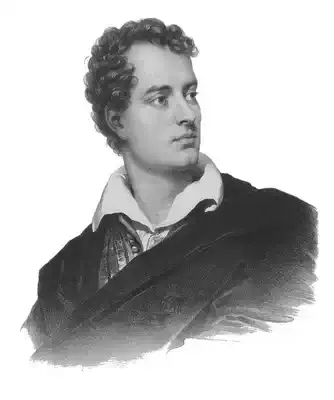
Lord Byron
Epigram
Epigram
In digging up your bones, Tom Paine,
Will. Cobbett has done well:
You visit him on earth again,
He'll visit you in hell.
In digging up your bones, Tom Paine,
Will. Cobbett has done well:
You visit him on earth again,
He'll visit you in hell.
465
Lord Byron
Elegy On Newstead Abbey
Elegy On Newstead Abbey
'It is the voice of years that are gone!
they roll before me with all their deeds.'~OSSIAN
Newstead! fastfalling,
onceresplendent
dome!
Religion's shrine! repentant HENRY's pride!
Of warriors, monks, and dames the cloister'd tomb,
Whose pensive shades around thy ruins glide,
Hail to thy pile! more honour'd in thy fall
Than modern mansions in their pillar'd state;
Proudly majestic frowns thy vaulted hall,
Scowling defiance on the blasts of fate.
No mailclad
serfs, obedient to their lord,
In grim array the crimson cross demand;
Or gay assemble round the festive board
Their chief's retainers, an immortal band:
Else might inspiting Fancy's magic eye
Retrace their progress through the lapse of time,
Marking each ardent youth, ordaln'd to die,
A votive pilgrim in Judea's clime.
But not from thee, dark pile! departs the chief;
His feudal realm in other regions lay:
In thee the wounded conscience courts relief,
Retiring from the garish blare of day.
Yes! in thy gloomy cells and shades profound
The monk abjured a world he ne'er could view;
Or bloodstain'd
guilt repenting solace found,
Or innocence from stern oppression flew.
A monarch bade thee from that wild arise,
Where Sherwood's outlaws once were wont to prowl;
And Superstition's crimes, of various dyes,
Sought shelter in the priest's protecting cowl.
Where now the grass exhales a murky dew,
The humid pail of lifeextinguish'd
clay,
In sainted fame the sacred fathers grew,
Nor raised their pious voices but to pray.
Where now the bats their wavering wings extend
Soon as the gloaming spreads her waning shade,
The choir did oft their mingling vespers blend,
Or matin orisons to Mary pald.
Years roll on years; to ages, ages yield;
Abbots to abbots, in a line, succeed;
Religion's charter their protecting shield,
Till royal sacrilege their doom decreed,
One holy HENRY rear'd the Gothic walls,
And bade the pious inmates rest in peace
Another HENRY the kind gift recalls,
And bids devotion's hallow'd echos cease.
Vain is each threat or supplicating prayer;
He drives them exiles from their blest abode,
To roam a dreary world in deep despair —
No friend, no home, no refuge, but their God.
Hark how the hall, resounding to the strain
Shakes with the martial music's novel din!
The heralds of a warrior's haughty reign,
High crested banners wave thy wails within.
Of changing sentinels the distant hum,
The mirth of feasts, the clang of burnish'd arms,
The braying trumpet and the hoarser drum,
Unite in concert with increased alarms.
An abbey once, a regal fortress now,
Encircled by insulting rebel powers,
War's dread machines o'erhang thy threat'ning brow,
And dart destruction in sulphureous showers.
Ah vain defence! the hostile traitor's siege,
Though oft repulsed, by guile o'ercomes
the brave;
His thronging foes oppress the faithful liege,
Rebellion's reeking standards o'er him wave.
Not unavenged the raging baron yields;
The blood of traitors smears the purple plain
Unconqu'r'd still, his falchion there he wields,
And days of glory yet for him remain.
Still in that hour the warrior wish'd to strew
Selfgather'd
laurel on a selfsought
grave;
But Charles' protecting genius hither flew,
The monarch's friend, the monarch's hope, to save.
Trembling, she snatch'd him ftom th' unequal strife,
In other fields the torrent to repel;
For nobler combats, here reservedhis life,
To lead the hand where godlike FALKLAND fell
From thee, poor pile! to lawless plunder given,
While dying groans their painful requiem sound,
Far different incense now ascends to heaven,
Such victims wallow on the gory ground.
There many a pale and ruthless robber's corse,
Noisome and ghast, defiles thy sacred sod;
O'er mingling man, and horse commix'd with horse,
Corruption's heap, the savage spoilers trod.
Graves, long with rank and sighing weeds o'erspread,
Ransack'd, resign perforce their mortal mould:
From ruffian fangs escape not e'en the dead,
Raked from repose in search of buried gold.
Hush'd is the harp, unstrung the warlike lyre'
The minstrel's palsied hand reclines in death;
No more he strikes the quivering chords with fire,
Or sings the glories of the martial wreath.
At length the sated murderers, gorged with prey,
Retire: the clamour of the fight is o'er;
Silence again resumes her awful sway,
And sable Horror guards the massy door.
Here Desolation holds her dreary court:
What satellites declare her dismal reign!
Shrieking their dirge, illomen'd
birds resort,
To flit their vigils in the hoary fane.
Soon a new morn's restoring beams dispel
The clouds of anarchy from Britain's skies;
The fierce usurper seeks his native hell,
And Nature triumphs as the tyrant dies.
With storms she welcomes his expiring groans
Whirlwinds, responsive, greet his labouring breath;
Earth shudders as her caves receive his bones,
Loathing the offering of so dark a death.
The legal ruler now resumes the helm,
He guides through gentle seas the prow of state
Hope cheers, with wonted smiles, the peaceful realm,
And heals the bleeding wounds of wearied hate.
The gloomy tenants, Newstead! of thy cells,
Howling, resign their violated nest;
Again the master on his tenure dwells,
Enjoy'd, from absence, with enraptured zest.
Vassals, within thy hospitable pale,
Loudly carousing, bless their lord's return.
Culture again adorns the gladdening vale,
And matrons, once lamenting, cease to mourn.
A thousand songs on tuneful echo float,
Unwonted foliage mantles o'er the trees;
And hark! the horns proclalm a mellow note,
The hunters' cry hangs lengthening on the breeze.
Beneath their coursers' hoofs the valleys shake:
What fears, what anxious hopes attend the chase!
The dying stag seeks refuge in the lake;
Exulting shouts announce the finish'd race.
Ah happy days! too happy to endure!
Such simple sports our plain forefathers knew
No splendid vices glitter'd to allure;
Their joys were many, as their cares were few.
From these descending, sons to sires succeed
Time steals along, and Death uprears the dart;
Another chief impels the foaming steed,
Another crowd pursue the panting hart.
Newstead! what saddening change of scene is thine!
Thy yawning arch betokens slow decay;
The last and youngest of a noble line
Now holds thy mouldering turrets in his sway.
Deserted now, he scans thy gray worn towers;
Thy vaults, where dead of feudal ages sleep;
Thy cloisters, pervious to the wintry showers
These, these he views, and views them but to weep.
Yet are his tears no emblem of regret:
Cherish'd affection only bids them flow.
Pride, hope, and love forbid him to forget
But warm his bosom with irnpassion'd glow.
Yet he prefers thee to the gilded domes
Or gewgaw grottos of the vainly great,
Yet lingers 'mid thy damp and mossy tombs,
Nor breathes a murmur 'gainst the will of fate.
Haply thy sun, emerging, yet may shine,
Thee to irradiate with meridian ray;
Hours splendid as the past may still be thine,
And bless thy future as thy former day.
'It is the voice of years that are gone!
they roll before me with all their deeds.'~OSSIAN
Newstead! fastfalling,
onceresplendent
dome!
Religion's shrine! repentant HENRY's pride!
Of warriors, monks, and dames the cloister'd tomb,
Whose pensive shades around thy ruins glide,
Hail to thy pile! more honour'd in thy fall
Than modern mansions in their pillar'd state;
Proudly majestic frowns thy vaulted hall,
Scowling defiance on the blasts of fate.
No mailclad
serfs, obedient to their lord,
In grim array the crimson cross demand;
Or gay assemble round the festive board
Their chief's retainers, an immortal band:
Else might inspiting Fancy's magic eye
Retrace their progress through the lapse of time,
Marking each ardent youth, ordaln'd to die,
A votive pilgrim in Judea's clime.
But not from thee, dark pile! departs the chief;
His feudal realm in other regions lay:
In thee the wounded conscience courts relief,
Retiring from the garish blare of day.
Yes! in thy gloomy cells and shades profound
The monk abjured a world he ne'er could view;
Or bloodstain'd
guilt repenting solace found,
Or innocence from stern oppression flew.
A monarch bade thee from that wild arise,
Where Sherwood's outlaws once were wont to prowl;
And Superstition's crimes, of various dyes,
Sought shelter in the priest's protecting cowl.
Where now the grass exhales a murky dew,
The humid pail of lifeextinguish'd
clay,
In sainted fame the sacred fathers grew,
Nor raised their pious voices but to pray.
Where now the bats their wavering wings extend
Soon as the gloaming spreads her waning shade,
The choir did oft their mingling vespers blend,
Or matin orisons to Mary pald.
Years roll on years; to ages, ages yield;
Abbots to abbots, in a line, succeed;
Religion's charter their protecting shield,
Till royal sacrilege their doom decreed,
One holy HENRY rear'd the Gothic walls,
And bade the pious inmates rest in peace
Another HENRY the kind gift recalls,
And bids devotion's hallow'd echos cease.
Vain is each threat or supplicating prayer;
He drives them exiles from their blest abode,
To roam a dreary world in deep despair —
No friend, no home, no refuge, but their God.
Hark how the hall, resounding to the strain
Shakes with the martial music's novel din!
The heralds of a warrior's haughty reign,
High crested banners wave thy wails within.
Of changing sentinels the distant hum,
The mirth of feasts, the clang of burnish'd arms,
The braying trumpet and the hoarser drum,
Unite in concert with increased alarms.
An abbey once, a regal fortress now,
Encircled by insulting rebel powers,
War's dread machines o'erhang thy threat'ning brow,
And dart destruction in sulphureous showers.
Ah vain defence! the hostile traitor's siege,
Though oft repulsed, by guile o'ercomes
the brave;
His thronging foes oppress the faithful liege,
Rebellion's reeking standards o'er him wave.
Not unavenged the raging baron yields;
The blood of traitors smears the purple plain
Unconqu'r'd still, his falchion there he wields,
And days of glory yet for him remain.
Still in that hour the warrior wish'd to strew
Selfgather'd
laurel on a selfsought
grave;
But Charles' protecting genius hither flew,
The monarch's friend, the monarch's hope, to save.
Trembling, she snatch'd him ftom th' unequal strife,
In other fields the torrent to repel;
For nobler combats, here reservedhis life,
To lead the hand where godlike FALKLAND fell
From thee, poor pile! to lawless plunder given,
While dying groans their painful requiem sound,
Far different incense now ascends to heaven,
Such victims wallow on the gory ground.
There many a pale and ruthless robber's corse,
Noisome and ghast, defiles thy sacred sod;
O'er mingling man, and horse commix'd with horse,
Corruption's heap, the savage spoilers trod.
Graves, long with rank and sighing weeds o'erspread,
Ransack'd, resign perforce their mortal mould:
From ruffian fangs escape not e'en the dead,
Raked from repose in search of buried gold.
Hush'd is the harp, unstrung the warlike lyre'
The minstrel's palsied hand reclines in death;
No more he strikes the quivering chords with fire,
Or sings the glories of the martial wreath.
At length the sated murderers, gorged with prey,
Retire: the clamour of the fight is o'er;
Silence again resumes her awful sway,
And sable Horror guards the massy door.
Here Desolation holds her dreary court:
What satellites declare her dismal reign!
Shrieking their dirge, illomen'd
birds resort,
To flit their vigils in the hoary fane.
Soon a new morn's restoring beams dispel
The clouds of anarchy from Britain's skies;
The fierce usurper seeks his native hell,
And Nature triumphs as the tyrant dies.
With storms she welcomes his expiring groans
Whirlwinds, responsive, greet his labouring breath;
Earth shudders as her caves receive his bones,
Loathing the offering of so dark a death.
The legal ruler now resumes the helm,
He guides through gentle seas the prow of state
Hope cheers, with wonted smiles, the peaceful realm,
And heals the bleeding wounds of wearied hate.
The gloomy tenants, Newstead! of thy cells,
Howling, resign their violated nest;
Again the master on his tenure dwells,
Enjoy'd, from absence, with enraptured zest.
Vassals, within thy hospitable pale,
Loudly carousing, bless their lord's return.
Culture again adorns the gladdening vale,
And matrons, once lamenting, cease to mourn.
A thousand songs on tuneful echo float,
Unwonted foliage mantles o'er the trees;
And hark! the horns proclalm a mellow note,
The hunters' cry hangs lengthening on the breeze.
Beneath their coursers' hoofs the valleys shake:
What fears, what anxious hopes attend the chase!
The dying stag seeks refuge in the lake;
Exulting shouts announce the finish'd race.
Ah happy days! too happy to endure!
Such simple sports our plain forefathers knew
No splendid vices glitter'd to allure;
Their joys were many, as their cares were few.
From these descending, sons to sires succeed
Time steals along, and Death uprears the dart;
Another chief impels the foaming steed,
Another crowd pursue the panting hart.
Newstead! what saddening change of scene is thine!
Thy yawning arch betokens slow decay;
The last and youngest of a noble line
Now holds thy mouldering turrets in his sway.
Deserted now, he scans thy gray worn towers;
Thy vaults, where dead of feudal ages sleep;
Thy cloisters, pervious to the wintry showers
These, these he views, and views them but to weep.
Yet are his tears no emblem of regret:
Cherish'd affection only bids them flow.
Pride, hope, and love forbid him to forget
But warm his bosom with irnpassion'd glow.
Yet he prefers thee to the gilded domes
Or gewgaw grottos of the vainly great,
Yet lingers 'mid thy damp and mossy tombs,
Nor breathes a murmur 'gainst the will of fate.
Haply thy sun, emerging, yet may shine,
Thee to irradiate with meridian ray;
Hours splendid as the past may still be thine,
And bless thy future as thy former day.
496
Lord Byron
English Bards and Scotch Reviewers (excerpt)
English Bards and Scotch Reviewers (excerpt)
Time was, ere yet in these degenerate days
Ignoble themes obtain'd mistaken praise,
When sense and wit with poesy allied,
No fabl'd graces, flourish'd side by side;
From the same fount their inspiration drew,
And, rear'd by taste, bloom'd fairer as they grew.
Then, in this happy isle, a Pope's pure strain
Sought the rapt soul to charm, nor sought in vain;
A polish'd nation's praise aspir'd to claim,
And rais'd the people's, as the poet's fame.
Like him great Dryden pour'd the tide of song,
In stream less smooth, indeed, yet doubly strong.
Then Congreve's scenes could cheer, or Otway's melt
For nature then an English audience felt.
But why these names, or greater still, retrace,
When all to feebler bards resign their place?
Yet to such times our lingering looks are cast,
When taste and reason with those times are past.
Now look around, and turn each trifling page,
Survey the precious works that please the age;
This truth at least let satire's self allow,
No dearth of bards can be complain'd of now.
The loaded press beneath her labour groans,
And printers' devils shake their weary bones;
While Southey's epics cram the creaking shelves,
And Little's lyrics shine in hotpress'd
twelves.
Thus saith the Preacher: "Nought beneath the sun
Is new"; yet still from change to change we run:
What varied wonders tempt us as they pass!
The cowpox,
tractors, galvanism and gas,
In turns appear, to make the vulgar stare,
Till the swoln bubble burstsand
all is air!
Nor less new schools of Poetry arise,
Where dull pretenders grapple for the prize:
O'er taste awhile these pseudobards
prevail;
Each country bookclub
bows the knee to Baal,
And, hurling lawful genius from the throne,
Erects a shrine and idol of its own;
Some leaden calfbut
whom it matters not,
From soaring Southey down to grovelling Stott.
Behold! in various throngs the scribbling crew,
For notice eager, pass in long review:
Each spurs his jaded Pegasus apace,
And rhyme and blank maintain an equal race;
Sonnets on sonnets crowd, and ode on ode;
And tales of terror jostle on the road;
Immeasurable measures move along;
For simpering folly loves a varied song,
To strange mysterious dulness still the friend,
Admires the strain she cannot comprehend.
Thus Lays of Minstrelsmay
they be the last!
On halfstrung
harps whine mournful to the blast.
While mountain spirits prate to river sprites,
That dames may listen to the sound at nights;
And goblin brats, of Gilpin Horner's brood,
Decoy young bordernobles
through the wood,
And skip at every step, Lord knows how high,
And frighten foolish babes, the Lord knows why;
While highborn
ladies in their magic cell,
Forbidding knights to read who cannot spell,
Despatch a courier to a wizard's grave,
And fight with honest men to shield a knave.
Next view in state, proud prancing on his roan,
The goldencrested
haughty Marmion,
Now forging scrolls, now foremost in the fight,
Not quite a felon, yet but half a knight,
The gibbet or the field prepar'd to grace;
A mighty mixture of the great and base.
And think'st thou, Scott! by vain conceit perchance,
On public taste to foist thy stale romance,
Though Murray with his Miller may combine
To yield thy muse just halfacrown
per line?
No! when the sons of song descend to trade,
Their bays are sear, their former laurels fade.
Let such forego the poet's sacred name,
Who rack their brains for lucre, not for fame:
Still for stern Mammon may they toil in vain!
And sadly gaze on gold they cannot gain!
Such be their meed, such still the just reward
Of prostituted muse and hireling bard!
For this we spurn Apollo's venal son,
And bid a long "good night to Marmion."
These are the themes that claim our plaudits now;
These are the bards to whom the muse must bow;
While Milton, Dryden, Pope, alike forgot,
Resign their hallow'd bays to Walter Scott.
The time has been, when yet the muse was young,
When Homer swept the lyre, and Maro sung,
An epic scarce ten centuries could claim,
While awestruck
nations hail'd the magic name;
The work of each immortal bard appears
The single wonder of a thousand years.
Empires have moulder'd from the face of earth,
Tongues have expir'd with those who gave them birth,
Without the glory such a strain can give,
As even in ruin bids the language live.
Not so with us, though minor bards, content
On one great work a life of labour spent:
With eagle pinion soaring to the skies,
Behold the balladmonger
Southey rise!
To him let Camoëns, Milton, Tasso yield,
Whose annual strains, like armies, take the field.
First in the ranks see Joan of Arc advance,
The scourge of England and the boast of France!
Though burnt by wicked Bedford for a witch,
Behold her statue plac'd in glory's niche;
Her fetters burst, and just releas'd from prison,
A virgin phoenix from her ashes risen.
Next see tremendous Thalaba come on,
Arabia's monstrous, wild and wondrous son:
Domdaniel's dread destroyer, who o'erthrew
More mad magicians than the world e'er knew.
Immortal hero! all thy foes o'ercome,
For ever reignthe
rival of Tom Thumb!
Since startled metre fled before thy face,
Well wert thou doom'd the last of all thy race!
Well might triumphant genii bear thee hence,
Illustrious conqueror of common sense!
Now, last and greatest, Madoc spreads his sails,
Cacique in Mexico, and prince in Wales;
Tells us strange tales, as other travellers do,
More old than Mandeville's, and not so true.
Oh Southey! Southey! cease thy varied song!
A bard may chant too often and too long:
As thou art strong in verse, in mercy, spare!
A fourth, alas! were more than we could bear.
But if, in spite of all the world can say,
Thou still wilt verseward plod thy weary way;
If still in Berkley ballads most uncivil,
Thou wilt devote old women to the devil,
The babe unborn thy dread intent may rue:
"God help thee," Southey, and thy readers too.
Next comes the dull disciple of thy school,
That mild apostate from poetic rule,
The simple Wordsworth, framer of a lay
As soft as evening in his favourite May,
Who warns his friend "to shake off toil and trouble,
And quit his books, for fear of growing double";
Who, both by precept and example, shows
That prose is verse, and verse is merely prose;
Convincing all, by demonstration plain,
Poetic souls delight in prose insane;
And Christmas stories tortur'd into rhyme
Contain the essence of the true sublime.
Thus, when he tells the tale of Betty Foy,
The idiot mother of "an idiot boy";
A moonstruck,
silly lad, who lost his way,
And, like his bard, confounded night with day;
So close on each pathetic part he dwells,
And each adventure so sublimely tells,
That all who view the "idiot in his glory"
Conceive the bard the hero of the story.
Shall gentle Coleridge pass unnotic'd here,
To turgid ode and tumid stanza dear?
Though themes of innocence amuse him best,
Yet still obscurity's a welcome guest.
If Inspiration should her aid refuse
To him who takes a pixy for a muse,
Yet none in lofty numbers can surpass
The bard who soars to elegize an ass.
So well the subject suits his noble mind,
He brays the laureat of the longear'd
kind.
Time was, ere yet in these degenerate days
Ignoble themes obtain'd mistaken praise,
When sense and wit with poesy allied,
No fabl'd graces, flourish'd side by side;
From the same fount their inspiration drew,
And, rear'd by taste, bloom'd fairer as they grew.
Then, in this happy isle, a Pope's pure strain
Sought the rapt soul to charm, nor sought in vain;
A polish'd nation's praise aspir'd to claim,
And rais'd the people's, as the poet's fame.
Like him great Dryden pour'd the tide of song,
In stream less smooth, indeed, yet doubly strong.
Then Congreve's scenes could cheer, or Otway's melt
For nature then an English audience felt.
But why these names, or greater still, retrace,
When all to feebler bards resign their place?
Yet to such times our lingering looks are cast,
When taste and reason with those times are past.
Now look around, and turn each trifling page,
Survey the precious works that please the age;
This truth at least let satire's self allow,
No dearth of bards can be complain'd of now.
The loaded press beneath her labour groans,
And printers' devils shake their weary bones;
While Southey's epics cram the creaking shelves,
And Little's lyrics shine in hotpress'd
twelves.
Thus saith the Preacher: "Nought beneath the sun
Is new"; yet still from change to change we run:
What varied wonders tempt us as they pass!
The cowpox,
tractors, galvanism and gas,
In turns appear, to make the vulgar stare,
Till the swoln bubble burstsand
all is air!
Nor less new schools of Poetry arise,
Where dull pretenders grapple for the prize:
O'er taste awhile these pseudobards
prevail;
Each country bookclub
bows the knee to Baal,
And, hurling lawful genius from the throne,
Erects a shrine and idol of its own;
Some leaden calfbut
whom it matters not,
From soaring Southey down to grovelling Stott.
Behold! in various throngs the scribbling crew,
For notice eager, pass in long review:
Each spurs his jaded Pegasus apace,
And rhyme and blank maintain an equal race;
Sonnets on sonnets crowd, and ode on ode;
And tales of terror jostle on the road;
Immeasurable measures move along;
For simpering folly loves a varied song,
To strange mysterious dulness still the friend,
Admires the strain she cannot comprehend.
Thus Lays of Minstrelsmay
they be the last!
On halfstrung
harps whine mournful to the blast.
While mountain spirits prate to river sprites,
That dames may listen to the sound at nights;
And goblin brats, of Gilpin Horner's brood,
Decoy young bordernobles
through the wood,
And skip at every step, Lord knows how high,
And frighten foolish babes, the Lord knows why;
While highborn
ladies in their magic cell,
Forbidding knights to read who cannot spell,
Despatch a courier to a wizard's grave,
And fight with honest men to shield a knave.
Next view in state, proud prancing on his roan,
The goldencrested
haughty Marmion,
Now forging scrolls, now foremost in the fight,
Not quite a felon, yet but half a knight,
The gibbet or the field prepar'd to grace;
A mighty mixture of the great and base.
And think'st thou, Scott! by vain conceit perchance,
On public taste to foist thy stale romance,
Though Murray with his Miller may combine
To yield thy muse just halfacrown
per line?
No! when the sons of song descend to trade,
Their bays are sear, their former laurels fade.
Let such forego the poet's sacred name,
Who rack their brains for lucre, not for fame:
Still for stern Mammon may they toil in vain!
And sadly gaze on gold they cannot gain!
Such be their meed, such still the just reward
Of prostituted muse and hireling bard!
For this we spurn Apollo's venal son,
And bid a long "good night to Marmion."
These are the themes that claim our plaudits now;
These are the bards to whom the muse must bow;
While Milton, Dryden, Pope, alike forgot,
Resign their hallow'd bays to Walter Scott.
The time has been, when yet the muse was young,
When Homer swept the lyre, and Maro sung,
An epic scarce ten centuries could claim,
While awestruck
nations hail'd the magic name;
The work of each immortal bard appears
The single wonder of a thousand years.
Empires have moulder'd from the face of earth,
Tongues have expir'd with those who gave them birth,
Without the glory such a strain can give,
As even in ruin bids the language live.
Not so with us, though minor bards, content
On one great work a life of labour spent:
With eagle pinion soaring to the skies,
Behold the balladmonger
Southey rise!
To him let Camoëns, Milton, Tasso yield,
Whose annual strains, like armies, take the field.
First in the ranks see Joan of Arc advance,
The scourge of England and the boast of France!
Though burnt by wicked Bedford for a witch,
Behold her statue plac'd in glory's niche;
Her fetters burst, and just releas'd from prison,
A virgin phoenix from her ashes risen.
Next see tremendous Thalaba come on,
Arabia's monstrous, wild and wondrous son:
Domdaniel's dread destroyer, who o'erthrew
More mad magicians than the world e'er knew.
Immortal hero! all thy foes o'ercome,
For ever reignthe
rival of Tom Thumb!
Since startled metre fled before thy face,
Well wert thou doom'd the last of all thy race!
Well might triumphant genii bear thee hence,
Illustrious conqueror of common sense!
Now, last and greatest, Madoc spreads his sails,
Cacique in Mexico, and prince in Wales;
Tells us strange tales, as other travellers do,
More old than Mandeville's, and not so true.
Oh Southey! Southey! cease thy varied song!
A bard may chant too often and too long:
As thou art strong in verse, in mercy, spare!
A fourth, alas! were more than we could bear.
But if, in spite of all the world can say,
Thou still wilt verseward plod thy weary way;
If still in Berkley ballads most uncivil,
Thou wilt devote old women to the devil,
The babe unborn thy dread intent may rue:
"God help thee," Southey, and thy readers too.
Next comes the dull disciple of thy school,
That mild apostate from poetic rule,
The simple Wordsworth, framer of a lay
As soft as evening in his favourite May,
Who warns his friend "to shake off toil and trouble,
And quit his books, for fear of growing double";
Who, both by precept and example, shows
That prose is verse, and verse is merely prose;
Convincing all, by demonstration plain,
Poetic souls delight in prose insane;
And Christmas stories tortur'd into rhyme
Contain the essence of the true sublime.
Thus, when he tells the tale of Betty Foy,
The idiot mother of "an idiot boy";
A moonstruck,
silly lad, who lost his way,
And, like his bard, confounded night with day;
So close on each pathetic part he dwells,
And each adventure so sublimely tells,
That all who view the "idiot in his glory"
Conceive the bard the hero of the story.
Shall gentle Coleridge pass unnotic'd here,
To turgid ode and tumid stanza dear?
Though themes of innocence amuse him best,
Yet still obscurity's a welcome guest.
If Inspiration should her aid refuse
To him who takes a pixy for a muse,
Yet none in lofty numbers can surpass
The bard who soars to elegize an ass.
So well the subject suits his noble mind,
He brays the laureat of the longear'd
kind.
565
Lord Byron
Don Juan: Canto The Thirteenth
Don Juan: Canto The Thirteenth
I now mean to be serious;it
is time,
Since laughter nowadays
is deem'd too serious.
A jest at Vice by Virtue's call'd a crime,
And critically held as deleterious:
Besides, the sad's a source of the sublime,
Although when long a little apt to weary us;
And therefore shall my lay soar high and solemn,
As an old temple dwindled to a column.
The Lady Adeline Amundeville
('Tis an old Norman name, and to be found
In pedigrees, by those who wander still
Along the last fields of that Gothic ground)
Was highborn,
wealthy by her father's will,
And beauteous, even where beauties most abound,
In Britain which
of course true patriots find
The goodliest soil of body and of mind.
I'll not gainsay them; it is not my cue;
I'll leave them to their taste, no doubt the best:
An eye's an eye, and whether black or blue,
Is no great matter, so 'tis in request,
'Tis nonsense to dispute about a hue The
kindest may be taken as a test.
The fair sex should be always fair; and no man,
Till thirty, should perceive there 's a plain woman.
And after that serene and somewhat dull
Epoch, that awkward corner turn'd for days
More quiet, when our moon's no more at full,
We may presume to criticise or praise;
Because indifference begins to lull
Our passions, and we walk in wisdom's ways;
Also because the figure and the face
Hint, that 'tis time to give the younger place.
I know that some would fain postpone this era,
Reluctant as all placemen to resign
Their post; but theirs is merely a chimera,
For they have pass'd life's equinoctial line:
But then they have their claret and Madeira
To irrigate the dryness of decline;
And county meetings, and the parliament,
And debt, and what not, for their solace sent.
And is there not religion, and reform,
Peace, war, the taxes, and what's call'd the 'Nation'?
The struggle to be pilots in a storm?
The landed and the monied speculation?
The joys of mutual hate to keep them warm,
Instead of love, that mere hallucination?
Now hatred is by far the longest pleasure;
Men love in haste, but they detest at leisure.
Rough Johnson, the great moralist, profess'd,
Right honestly, 'he liked an honest hater!'The
only truth that yet has been confest
Within these latest thousand years or later.
Perhaps the fine old fellow spoke in jest:For
my part, I am but a mere spectator,
And gaze where'er the palace or the hovel is,
Much in the mode of Goethe's Mephistopheles;
But neither love nor hate in much excess;
Though 'twas not once so. If I sneer sometimes,
It is because I cannot well do less,
And now and then it also suits my rhymes.
I should be very willing to redress
Men's wrongs, and rather check than punish crimes,
Had not Cervantes, in that too true tale
Of Quixote, shown how all such efforts fail.
Of all tales 'tis the saddest and
more sad,
Because it makes us smile: his hero 's right,
And still pursues the right;to
curb the bad
His only object, and 'gainst odds to fight
His guerdon: 'tis his virtue makes him mad!
But his adventures form a sorry sight;
A sorrier still is the great moral taught
By that real epic unto all who have thought.
Redressing injury, revenging wrong,
To aid the damsel and destroy the caitiff;
Opposing singly the united strong,
From foreign yoke to free the helpless native:Alas!
must noblest views, like an old song,
Be for mere fancy's sport a theme creative,
A jest, a riddle, Fame through thin and thick sought!
And Socrates himself but Wisdom's Quixote?
Cervantes smiled Spain's chivalry away;
A single laugh demolish'd the right arm
Of his own country;seldom
since that day
Has Spain had heroes. While Romance could charm,
The world gave ground before her bright array;
And therefore have his volumes done such harm,
That all their glory, as a composition,
Was dearly purchased by his land's perdition.
I'm 'at my old lunes'digression,
and forget
The Lady Adeline Amundeville;
The fair most fatal Juan ever met,
Although she was not evil nor meant ill;
But Destiny and Passion spread the net
(Fate is a good excuse for our own will),
And caught them;what
do they not catch, methinks?
But I 'm not OEdipus, and life's a Sphinx.
I tell the tale as it is told, nor dare
To venture a solution: 'Davus sum!'
And now I will proceed upon the pair.
Sweet Adeline, amidst the gay world's hum,
Was the Queen Bee,
the glass of all that 's fair;
Whose charms made all men speak, and women dumb.
The last's a miracle, and such was reckon'd,
And since that time there has not been a second.
Chaste was she, to detraction's desperation,
And wedded unto one she had loved well A
man known in the councils of the nation,
Cool, and quite English, imperturbable,
Though apt to act with fire upon occasion,
Proud of himself and her: the world could tell
Nought against either, and both seem'd secure She
in her virtue, he in his hauteur.
It chanced some diplomatical relations,
Arising out of business, often brought
Himself and Juan in their mutual stations
Into close contact. Though reserved, nor caught
By specious seeming, Juan's youth, and patience,
And talent, on his haughty spirit wrought,
And form'd a basis of esteem, which ends
In making men what courtesy calls friends.
And thus Lord Henry, who was cautious as
Reserve and pride could make him, and full slow
In judging men when
once his judgment was
Determined, right or wrong, on friend or foe,
Had all the pertinacity pride has,
Which knows no ebb to its imperious flow,
And loves or hates, disdaining to be guided,
Because its own good pleasure hath decided.
His friendships, therefore, and no less aversions,
Though oft well founded, which confirm'd but more
His prepossessions, like the laws of Persians
And Medes, would ne'er revoke what went before.
His feelings had not those strange fits, like tertians,
Of common likings, which make some deplore
What they should laugh at the
mere ague still
Of men's regard, the fever or the chill.
''Tis not in mortals to command success:
But do you more, Sempronius don't
deserve it,'
And take my word, you won't have any less.
Be wary, watch the time, and always serve it;
Give gently way, when there's too great a press;
And for your conscience, only learn to nerve it,
For, like a racer, or a boxer training,
'Twill make, if proved, vast efforts without paining.
Lord Henry also liked to be superior,
As most men do, the little or the great;
The very lowest find out an inferior,
At least they think so, to exert their state
Upon: for there are very few things wearier
Than solitary Pride's oppressive weight,
Which mortals generously would divide,
By bidding others carry while they ride.
In birth, in rank, in fortune likewise equal,
O'er Juan he could no distinction claim;
In years he had the advantage of time's sequel;
And, as he thought, in country much the same Because
bold Britons have a tongue and free quill,
At which all modern nations vainly aim;
And the Lord Henry was a great debater,
So that few members kept the house up later.
These were advantages: and then he thought It
was his foible, but by no means sinister That
few or none more than himself had caught
Court mysteries, having been himself a minister:
He liked to teach that which he had been taught,
And greatly shone whenever there had been a stir;
And reconciled all qualities which grace man,
Always a patriot, and sometimes a placeman.
He liked the gentle Spaniard for his gravity;
He almost honour'd him for his docility;
Because, though young, he acquiesced with suavity,
Or contradicted but with proud humility.
He knew the world, and would not see depravity
In faults which sometimes show the soil's fertility,
If that the weeds o'erlive not the first crop For
then they are very difficult to stop.
And then he talk'd with him about Madrid,
Constantinople, and such distant places;
Where people always did as they were bid,
Or did what they should not with foreign graces.
Of coursers also spake they: Henry rid
Well, like most Englishmen, and loved the races;
And Juan, like a trueborn
Andalusian,
Could back a horse, as despots ride a Russian.
And thus acquaintance grew, at noble routs,
And diplomatic dinners, or at other For
Juan stood well both with Ins and Outs,
As in freemasonry a higher brother.
Upon his talent Henry had no doubts;
His manner show'd him sprung from a high mother;
And all men like to show their hospitality
To him whose breeding matches with his quality.
At BlankBlank
Square;for
we will break no squares
By naming streets: since men are so censorious,
And apt to sow an author's wheat with tares,
Reaping allusions private and inglorious,
Where none were dreamt of, unto love's affairs,
Which were, or are, or are to be notorious,
That therefore do I previously declare,
Lord Henry's mansion was in BlankBlank
Square.
Also there bin another pious reason
For making squares and streets anonymous;
Which is, that there is scarce a single season
Which doth not shake some very splendid house
With some slight heartquake
of domestic treason A
topic scandal doth delight to rouse:
Such I might stumble over unawares,
Unless I knew the very chastest squares.
'Tis true, I might have chosen Piccadilly,
A place where peccadillos are unknown;
But I have motives, whether wise or silly,
For letting that pure sanctuary alone.
Therefore I name not square, street, place, until I
Find one where nothing naughty can be shown,
A vestal shrine of innocence of heart:
At Henry's mansion then, in BlankBlank
Square,
Was Juan a recherche, welcome guest,
As many other noble scions were;
And some who had but talent for their crest;
Or wealth, which is a passport every where;
Or even mere fashion, which indeed's the best
Recommendation; and to be well drest
Will very often supersede the rest.
And since 'there's safety in a multitude
Of counsellors,' as Solomon has said,
Or some one for him, in some sage, grave mood;Indeed
we see the daily proof display'd
In senates, at the bar, in wordy feud,
Where'er collective wisdom can parade,
Which is the only cause that we can guess
Of Britain's present wealth and happiness;
But as 'there's safety' grafted in the number
'Of counsellors' for men, thus for the sex
A large acquaintance lets not Virtue slumber;
Or should it shake, the choice will more perplex Variety
itself will more encumber.
'Midst many rocks we guard more against wrecks;
And thus with women: howsoe'er it shocks some's
Selflove,
there's safety in a crowd of coxcombs.
But Adeline had not the least occasion
For such a shield, which leaves but little merit
To virtue proper, or good education.
Her chief resource was in her own high spirit,
Which judged mankind at their due estimation;
And for coquetry, she disdain'd to wear it:
Secure of admiration, its impression
Was faint, as of an everyday
possession.
To all she was polite without parade;
To some she show'd attention of that kind
Which flatters, but is flattery convey'd
In such a sort as cannot leave behind
A trace unworthy either wife or maid;A
gentle, genial courtesy of mind,
To those who were, or pass'd for meritorious,
Just to console sad glory for being glorious;
Which is in all respects, save now and then,
A dull and desolate appendage. Gaze
Upon the shades of those distinguish'd men
Who were or are the puppetshows
of praise,
The praise of persecution; gaze again
On the most favour'd; and amidst the blaze
Of sunset halos o'er the laurelbrow'd,
What can ye recognise?a
gilded cloud.
There also was of course in Adeline
That calm patrician polish in the address,
Which ne'er can pass the equinoctial line
Of any thing which nature would express;
Just as a mandarin finds nothing fine,At
least his manner suffers not to guess
That any thing he views can greatly please.
Perhaps we have borrow'd this from the Chinese
Perhaps from Horace: his 'Nil admirari'
Was what he call'd the 'Art of Happiness;'
An art on which the artists greatly vary,
And have not yet attain'd to much success.
However, 'tis expedient to be wary:
Indifference certes don't produce distress;
And rash enthusiasm in good society
Were nothing but a moral inebriety.
But Adeline was not indifferent: for
(Now for a commonplace!)
beneath the snow,
As a volcano holds the lava more
Withinet
caetera. Shall I go on?No!
I hate to hunt down a tired metaphor,
So let the oftenused
volcano go.
Poor thing! How frequently, by me and others,
It hath been stirr'd up till its smoke quite smothers!
I'll have another figure in a trice:What
say you to a bottle of champagne?
Frozen into a very vinous ice,
Which leaves few drops of that immortal rain,
Yet in the very centre, past all price,
About a liquid glassful will remain;
And this is stronger than the strongest grape
Could e'er express in its expanded shape:
'Tis the whole spirit brought to a quintessence;
And thus the chilliest aspects may concentre
A hidden nectar under a cold presence.
And such are many though
I only meant her
From whom I now deduce these moral lessons,
On which the Muse has always sought to enter.
And your cold people are beyond all price,
When once you have broken their confounded ice.
But after all they are a NorthWest
Passage
Unto the glowing India of the soul;
And as the good ships sent upon that message
Have not exactly ascertain'd the Pole
(Though Parry's efforts look a lucky presage),
Thus gentlemen may run upon a shoal;
For if the Pole's not open, but all frost
(A chance still), 'tis a voyage or vessel lost.
And young beginners may as well commence
With quiet cruising o'er the ocean woman;
While those who are not beginners should have sense
Enough to make for port, ere time shall summon
With his grey signalflag;
and the past tense,
The dreary 'Fuimus' of all things human,
Must be declined, while life's thin thread's spun out
Between the gaping heir and gnawing gout.
But heaven must be diverted; its diversion
Is sometimes truculent but
never mind:
The world upon the whole is worth the assertion
(If but for comfort) that all things are kind:
And that same devilish doctrine of the Persian,
Of the two principles, but leaves behind
As many doubts as any other doctrine
Has ever puzzled Faith withal, or yoked her in.
The English winter ending
in July,
To recommence in August now
was done.
'Tis the postilion's paradise: wheels fly;
On roads, east, south, north, west, there is a run.
But for posthorses
who finds sympathy?
Man's pity's for himself, or for his son,
Always premising that said son at college
Has not contracted much more debt than knowledge.
The London winter's ended in July Sometimes
a little later. I don't err
In this: whatever other blunders lie
Upon my shoulders, here I must aver
My Muse a glass of weatherology;
For parliament is our barometer:
Let radicals its other acts attack,
Its sessions form our only almanack.
When its quicksilver's down at zero,lo
Coach, chariot, luggage, baggage, equipage!
Wheels whirl from Carlton palace to Soho,
And happiest they who horses can engage;
The turnpikes glow with dust; and Rotten Row
Sleeps from the chivalry of this bright age;
And tradesmen, with long bills and longer faces,
Sigh as
the postboys fasten on the traces.
They and their bills, 'Arcadians both,' are left
To the Greek kalends of another session.
Alas! to them of ready cash bereft,
What hope remains? Of hope the full possession,
Or generous draft, conceded as a gift,
At a long date till
they can get a fresh one Hawk'd
about at a discount, small or large;
Also the solace of an overcharge.
But these are trifles. Downward flies my lord,
Nodding beside my lady in his carriage.
Away! away! 'Fresh horses!' are the word,
And changed as quickly as hearts after marriage;
The obsequious landlord hath the change restored;
The postboys have no reason to disparage
Their fee; but ere the water'd wheels may hiss hence,
The ostler pleads too for a reminiscence.
'Tis granted; and the valet mounts the dickey That
gentleman of lords and gentlemen;
Also my lady's gentlewoman, tricky,
Trick'd out, but modest more than poet's pen
Can paint,'
Cosi viaggino i Ricchi!'
(Excuse a foreign slipslop now and then,
If but to show I've travell'd; and what's travel,
Unless it teaches one to quote and cavil?)
The London winter and the country summer
Were well nigh over. 'Tis perhaps a pity,
When nature wears the gown that doth become her,
To lose those best months in a sweaty city,
And wait until the nightingale grows dumber,
Listening debates not very wise or witty,
Ere patriots their true country can remember;But
there 's no shooting (save grouse) till September.
I've done with my tirade. The world was gone;
The twice two thousand, for whom earth was made,
Were vanish'd to be what they call alone That
is, with thirty servants for parade,
As many guests, or more; before whom groan
As many covers, duly, daily, laid.
Let none accuse Old England's hospitality Its
quantity is but condensed to quality.
Lord Henry and the Lady Adeline
Departed like the rest of their compeers,
The peerage, to a mansion very fine;
The Gothic Babel of a thousand years.
None than themselves could boast a longer line,
Where time through heroes and through beauties steers;
And oaks as olden as their pedigree
Told of their sires, a tomb in every tree.
A paragraph in every paper told
Of their departure: such is modern fame:
'Tis pity that it takes no farther hold
Than an advertisement, or much the same;
When, ere the ink be dry, the sound grows cold.
The Morning Post was foremost to proclaim '
Departure, for his country seat, today,
Lord H. Amundeville and Lady A.
'We understand the splendid host intends
To entertain, this autumn, a select
And numerous party of his noble friends;
'Midst whom we have heard, from sources quite correct,
With many more by rank and fashion deck'd;
Also a foreigner of high condition,
The envoy of the secret Russian mission.'
And thus we see who
doubts the Morning Post?
(Whose articles are like the 'Thirty nine,'
Which those most swear to who believe them most)Our
gay Russ Spaniard was ordain'd to shine,
Deck'd by the rays reflected from his host,
With those who, Pope says, 'greatly daring dine.'
'T is odd, but true,last
war the News abounded
More with these dinners than the kill'd or wounded;
As thus: 'On Thursday there was a grand dinner;
Present, Lords A. B. C.'Earls,
dukes, by name
Announced with no less pomp than victory's winner:
Then underneath, and in the very same
Column; date, 'Falmouth. There has lately been here
The Slapdash
regiment, so well known to fame,
Whose loss in the late action we regret:
The vacancies are fill'd up see
Gazette.'
To Norman Abbey whirl'd the noble pair,An
old, old monastery once, and now
Still older mansion; of a rich and rare
Mix'd Gothic, such as artists all allow
Few specimens yet left us can compare
Withal: it lies perhaps a little low,
Because the monks preferr'd a hill behind,
To shelter their devotion from the wind.
It stood embosom'd in a happy valley,
Crown'd by high woodlands, where the Druid oak
Stood like Caractacus in act to rally
His host, with broad arms 'gainst the thunderstroke;
And from beneath his boughs were seen to sally
The dappled foresters as
day awoke,
The branching stag swept down with all his herd,
To quaff a brook which murmur'd like a bird.
Before the mansion lay a lucid lake,
Broad as transparent, deep, and freshly fed
By a river, which its soften'd way did take
In currents through the calmer water spread
Around: the wildfowl nestled in the brake
And sedges, brooding in their liquid bed:
The woods sloped downwards to its brink, and stood
With their green faces fix'd upon the flood.
Its outlet dash'd into a deep cascade,
Sparkling with foam, until again subsiding,
Its shriller echoes like
an infant made
Quiet sank
into softer ripples, gliding
Into a rivulet; and thus allay'd,
Pursued its course, now gleaming, and now hiding
Its windings through the woods; now clear, now blue,
According as the skies their shadows threw.
A glorious remnant of the Gothic pile
(While yet the church was Rome's) stood half apart
In a grand arch, which once screen'd many an aisle.
These last had disappear'd a
loss to art:
The first yet frown'd superbly o'er the soil,
And kindled feelings in the roughest heart,
Which mourn'd the power of time's or tempest's march,
In gazing on that venerable arch.
Within a niche, nigh to its pinnacle,
Twelve saints had once stood sanctified in stone;
But these had fallen, not when the friars fell,
But in the war which struck Charles from his throne,
When each house was a fortalice, as tell
The annals of full many a line undone,The
gallant cavaliers, who fought in vain
For those who knew not to resign or reign.
But in a higher niche, alone, but crowned,
The Virgin Mother of the God born
Child,
With her Son in her blessed arms, look'd round,
Spared by some chance when all beside was spoil'd;
She made the earth below seem holy ground.
This may be superstition, weak or wild,
But even the faintest relics of a shrine
Of any worship wake some thoughts divine.
A mighty window, hollow in the centre,
Shorn of its glass of thousand colourings,
Through which the deepen'd glories once could enter,
Streaming from off the sun like seraph's wings,
Now yawns all desolate: now loud, now fainter,
The gale sweeps through its fretwork, and oft sings
The owl his anthem, where the silenced quire
Lie with their hallelujahs quench'd like fire.
But in the noontide of the moon, and when
The wind is winged from one point of heaven,
There moans a strange unearthly sound, which then
Is musical a
dying accent driven
Through the huge arch, which soars and sinks again.
Some deem it but the distant echo given
Back to the night wind by the waterfall,
And harmonised by the old choral wall:
Others, that some original shape, or form
Shaped by decay perchance, hath given the power
(Though less than that of Memnon's statue, warm
In Egypt's rays, to harp at a fix'd hour)
To this grey ruin, with a voice to charm.
Sad, but serene, it sweeps o'er tree or tower;
The cause I know not, nor can solve; but such
The fact:I
've heard it once
perhaps too much.
Amidst the court a Gothic fountain play'd,
Symmetrical, but deck'd with carvings quaint Strange
faces, like to men in masquerade,
And here perhaps a monster, there a saint:
The spring gush'd through grim mouths of granite made,
And sparkled into basins, where it spent
Its little torrent in a thousand bubbles,
Like man's vain glory, and his vainer troubles.
The mansion's self was vast and venerable,
With more of the monastic than has been
Elsewhere preserved: the cloisters still were stable,
The cells, too, and refectory, I ween:
An exquisite small chapel had been able,
Still unimpair'd, to decorate the scene;
The rest had been reform'd, replaced, or sunk,
And spoke more of the baron than the monk.
Huge halls, long galleries, spacious chambers, join'd
By no quite lawful marriage of the arts,
Might shock a connoisseur; but when combined,
Form'd a whole which, irregular in parts,
Yet left a grand impression on the mind,
At least of those whose eyes are in their hearts:
We gaze upon a giant for his stature,
Nor judge at first if all be true to nature.
Steel barons, molten the next generation
To silken rows of gay and garter'd earls,
Glanced from the walls in goodly preservation;
And Lady Marys blooming into girls,
With fair long locks, had also kept their station;
And countesses mature in robes and pearls:
Also some beauties of Sir Peter Lely,
Whose drapery hints we may admire them freely.
Judges in very formidable ermine
Were there, with brows that did not much invite
The accused to think their lordships would determine
His cause by leaning much from might to right:
Bishops, who had not left a single sermon:
Attorneys general,
awful to the sight,
As hinting more (unless our judgments warp us)
Of the 'Star Chamber' than of 'Habeas Corpus.'
Generals, some all in armour, of the old
And iron time, ere lead had ta'en the lead;
Others in wigs of Marlborough's martial fold,
Huger than twelve of our degenerate breed:
Lordlings, with staves of white or keys of gold:
Nimrods, whose canvass scarce contain'd the steed;
And here and there some stern high patriot stood,
Who could not get the place for which he sued.
But ever and anon, to soothe your vision,
Fatigued with these hereditary glories,
There rose a Carlo Dolce or a Titian,
Or wilder group of savage Salvatore's;
Here danced Albano's boys, and here the sea shone
In Vernet's ocean lights; and there the stories
Of martyrs awed, as Spagnoletto tainted
His brush with all the blood of all the sainted.
Here sweetly spread a landscape of Lorraine;
There Rembrandt made his darkness equal light,
Or gloomy Caravaggio's gloomier stain
Bronzed o'er some lean and stoic anchorite:But,
lo! a Teniers woos, and not in vain,
Your eyes to revel in a livelier sight:
His bell mouth'd
goblet makes me feel quite Danish
Or Dutch with thirst What,
ho! a flask of Rhenish.
O reader! if that thou canst read,and
know,
'T is not enough to spell, or even to read,
To constitute a reader; there must go
Virtues of which both you and I have need;Firstly,
begin with the beginning (though
That clause is hard); and secondly, proceed;
Thirdly, commence not with the end or,
sinning
In this sort, end at least with the beginning.
But, reader, thou hast patient been of late,
While I, without remorse of rhyme, or fear,
Have built and laid out ground at such a rate,
Dan Phoebus takes me for an auctioneer.
That poets were so from their earliest date,
By Homer's 'Catalogue of ships' is clear;
But a mere modern must be moderate I
spare you then the furniture and plate.
The mellow autumn came, and with it came
The promised party, to enjoy its sweets.
The corn is cut, the manor full of game;
The pointer ranges, and the sportsman beats
In russet jacket:lynx
like
is his aim;
Full grows his bag, and wonderful his feats.
Ah, nut brown
partridges! Ah, brilliant pheasants!
And ah, ye poachers!'
T is no sport for peasants.
An English autumn, though it hath no vines,
Blushing with Bacchant coronals along
The paths, o'er which the far festoon entwines
The red grape in the sunny lands of song,
Hath yet a purchased choice of choicest wines;
The claret light, and the Madeira strong.
If Britain mourn her bleakness, we can tell her,
The very best of vineyards is the cellar.
Then, if she hath not that serene decline
Which makes the southern autumn's day appear
As if 't would to a second spring resign
The season, rather than to winter drear,
Of in door
comforts still she hath a mine,The
sea coal
fires the 'earliest of the year;'
Without doors, too, she may compete in mellow,
As what is lost in green is gain'd in yellow.
And for the effeminate villeggiatura Rife
with more horns than hounds she
hath the chase,
So animated that it might allure
Saint from his beads to join the jocund race;
Even Nimrod's self might leave the plains of Dura,
And wear the Melton jacket for a space:
If she hath no wild boars, she hath a tame
Preserve of bores, who ought to be made game.
The noble guests, assembled at the Abbey,
Consisted of we
give the sex the pas The
Duchess of Fitz Fulke;
the Countess Crabby;
The Ladies Scilly, Busey;Miss
Eclat,
Miss Bombazeen, Miss Mackstay, Miss O'Tabby,
And Mrs. Rabbi, the rich banker's squaw;
Also the honourable Mrs. Sleep,
Who look'd a white lamb, yet was a black sheep:
With other Countesses of Blank but
rank;
At once the 'lie' and the 'elite' of crowds;
Who pass like water filter'd in a tank,
All purged and pious from their native clouds;
Or paper turn'd to money by the Bank:
No matter how or why, the passport shrouds
The 'passee' and the past; for good society
Is no less famed for tolerance than piety,
That is, up to a certain point; which point
Forms the most difficult in punctuation.
Appearances appear to form the joint
On which it hinges in a higher station;
And so that no explosion cry 'Aroint
Thee, witch!' or each Medea has her Jason;
Or (to the point with Horace and with Pulci)
'Omne tulit punctum, quae miscuit utile dulci.'
I can't exactly trace their rule of right,
Which hath a little leaning to a lottery.
I 've seen a virtuous woman put down quite
By the mere combination of a coterie;
Also a so so
matron boldly fight
Her way back to the world by dint of plottery,
And shine the very Siria of the spheres,
Escaping with a few slight, scarless sneers.
I have seen more than I 'll say:but
we will see
How our villeggiatura will get on.
The party might consist of thirty three
Of highest caste the
Brahmins of the ton.
I have named a few, not foremost in degree,
But ta'en at hazard as the rhyme may run.
By way of sprinkling, scatter'd amongst these,
There also were some Irish absentees.
There was Parolles, too, the legal bully,
Who limits all his battles to the bar
And senate: when invited elsewhere, truly,
He shows more appetite for words than war.
There was the young bard Rackrhyme, who had newly
Come out and glimmer'd as a six weeks' star.
There was Lord Pyrrho, too, the great freethinker;
And Sir John Pottledeep, the mighty drinker.
There was the Duke of Dash, who was a duke,
'Ay, every inch a' duke; there were twelve peers
Like Charlemagne's and
all such peers in look
And intellect, that neither eyes nor ears
For commoners had ever them mistook.
There were the six Miss Rawbolds pretty
dears!
All song and sentiment; whose hearts were set
Less on a convent than a coronet.
There were four Honourable Misters, whose
Honour was more before their names than after;
There was the preux Chevalier de la Ruse,
Whom France and Fortune lately deign'd to waft here,
Whose chiefly harmless talent was to amuse;
But the clubs found it rather serious laughter,
Because such
was his magic power to please The
dice seem'd charm'd, too, with his repartees.
There was Dick Dubious, the metaphysician,
Who loved philosophy and a good dinner;
Angle, the soi disant
mathematician;
Sir Henry Silvercup, the great race winner.
There was the Reverend Rodomont Precisian,
Who did not hate so much the sin as sinner;
And Lord Augustus Fitz Plantagenet,
Good at all things, but better at a bet.
There was jack jargon, the gigantic guardsman;
And General Fireface, famous in the field,
A great tactician, and no less a swordsman,
Who ate, last war, more Yankees than he kill'd.
There was the waggish Welsh Judge, Jefferies Hardsman,
In his grave office so completely skill'd,
That when a culprit came far condemnation,
He had his judge's joke for consolation.
Good company 's a chess board
there
are kings,
Queens, bishops, knights, rooks, pawns; the world 's a game;
Save that the puppets pull at their own strings,
Methinks gay Punch hath something of the same.
My Muse, the butterfly hath but her wings,
Not stings, and flits through ether without aim,
Alighting rarely:were
she but a hornet,
Perhaps there might be vices which would mourn it.
I had forgotten but
must not forget An
orator, the latest of the session,
Who had deliver'd well a very set
Smooth speech, his first and maidenly transgression
Upon debate: the papers echoed yet
With his debut, which made a strong impression,
And rank'd with what is every day display'd '
The best first speech that ever yet was made.'
Proud of his 'Hear hims!' proud, too, of his vote
And lost virginity of oratory,
Proud of his learning (just enough to quote),
He revell'd in his Ciceronian glory:
With memory excellent to get by rote,
With wit to hatch a pun or tell a story,
Graced with some merit, and with more effrontery,
'His country's pride,' he came down to the country.
There also were two wits by acclamation,
Longbow from Ireland, Strongbow from the Tweed,
Both lawyers and both men of education;
But Strongbow's wit was of more polish'd breed:
Longbow was rich in an imagination
As beautiful and bounding as a steed,
But sometimes stumbling over a potato,While
Strongbow's best things might have come from Cato.
Strongbow was like a new tuned
harpsichord;
But Longbow wild as an AEolian harp,
With which the winds of heaven can claim accord,
And make a music, whether flat or sharp.
Of Strongbow's talk you would not change a word:
At Longbow's phrases you might sometimes carp:
Both wits one
born so, and the other bred This
by his heart, his rival by his head.
If all these seem a heterogeneous mas
To be assembled at a country seat,
Yet think, a specimen of every class
Is better than a humdrum tete a
tete.
The days of Comedy are gone, alas!
When Congreve's fool could vie with Moliere's bete:
Society is smooth'd to that excess,
That manners hardly differ more than dress.
Our ridicules are kept in the back ground
Ridiculous
enough, but also dull;
Professions, too, are no more to be found
Professional; and there is nought to cull
Of folly's fruit; for though your fools abound,
They're barren, and not worth the pains to pull.
Society is now one polish'd horde,
Form'd of two mighty tribes, the Bores and Bored.
But from being farmers, we turn gleaners, gleaning
The scanty but right well
thresh'd ears of truth;
And, gentle reader! when you gather meaning,
You may be Boaz, and I modest
Ruth.
Farther I 'd quote, but Scripture intervening
Forbids. it great impression in my youth
Was made by Mrs. Adams, where she cries,
'That Scriptures out of church are blasphemies.'
But what we can we glean in this vile age
Of chaff, although our gleanings be not grist.
I must not quite omit the talking sage,
Kit Cat,
the famous Conversationist,
Who, in his common place
book, had a page
Prepared each morn for evenings. 'List, oh, list!''
Alas, poor ghost!'What
unexpected woes
Await those who have studied their bon mots!
Firstly, they must allure the conversation
By many windings to their clever clinch;
And secondly, must let slip no occasion,
Nor bate (abate) their hearers of an inch,
But take an ell and
make a great sensation,
If possible; and thirdly, never flinch
When some smart talker puts them to the test,
But seize the last word, which no doubt 's the best.
Lord Henry and his lady were the hosts;
The party we have touch'd on were the guests:
Their table was a board to tempt even ghosts
To pass the Styx for more substantial feasts.
I will not dwell upon ragouts or roasts,
Albeit all human history attests
That happiness for man the
hungry sinner!Since
Eve ate apples, much depends on dinner.
Witness the lands which 'flow'd with milk and honey,'
Held out unto the hungry Israelites;
To this we have added since, the love of money,
The only sort of pleasure which requites.
Youth fades, and leaves our days no longer sunny;
We tire of mistresses and parasites;
But oh, ambrosial cash! Ah! who would lose thee?
When we no more can use, or even abuse thee!
The gentlemen got up betimes to shoot,
Or hunt: the young, because they liked the sport The
first thing boys like after play and fruit;
The middle aged
to make the day more short;
For ennui is a growth of English root,
Though nameless in our language:we
retort
The fact for words, and let the French translate
That awful yawn which sleep can not abate.
The elderly walk'd through the library,
And tumbled books, or criticised the pictures,
Or saunter'd through the gardens piteously,
And made upon the hot house
several strictures,
Or rode a nag which trotted not too high,
Or on the morning papers read their lectures,
Or on the watch their longing eyes would fix,
Longing at sixty for the hour of six.
But none were 'gene:' the great hour of union
Was rung by dinner's knell; till then all were
Masters of their own time or
in communion,
Or solitary, as they chose to bear
The hours, which how to pass is but to few known.
Each rose up at his own, and had to spare
What time he chose for dress, and broke his fast
When, where, and how he chose for that repast.
The ladies some
rouged, some a little pale Met
the morn as they might. If fine, they rode,
Or walk'd; if foul, they read, or told a tale,
Sung, or rehearsed the last dance from abroad;
Discuss'd the fashion which might next prevail,
And settled bonnets by the newest code,
Or cramm'd twelve sheets into one little letter,
To make each correspondent a new debtor.
For some had absent lovers, all had friends.
The earth has nothing like a she epistle,
And hardly heaven because
it never ends.
I love the mystery of a female missal,
Which, like a creed, ne'er says all it intends,
But full of cunning as Ulysses' whistle,
When he allured poor Dolon:you
had better
Take care what you reply to such a letter.
Then there were billiards; cards, too, but no dice;Save
in the clubs no man of honour plays;Boats
when 't was water, skating when 't was ice,
And the hard frost destroy'd the scenting days:
And angling, too, that solitary vice,
Whatever Izaak Walton sings or says;
The quaint, old, cruel coxcomb, in his gullet
Should have a hook, and a small trout to pull it.
With evening came the banquet and the wine;
The conversazione; the duet,
Attuned by voices more or less divine
(My heart or head aches with the memory yet).
The four Miss Rawbolds in a glee would shine;
But the two youngest loved more to be set
Down to the harp because
to music's charms
They added graceful necks, white hands and arms.
Sometimes a dance (though rarely on field days,
For then the gentlemen were rather tired)
Display'd some sylph like
figures in its maze;
Then there was small talk
ready when required;
Flirtation but
decorous; the mere praise
Of charms that should or should not be admired.
The hunters fought their fox hunt
o'er again,
And then retreated soberly at
ten.
The politicians, in a nook apart,
Discuss'd the world, and settled all the spheres;
The wits watch'd every loophole for their art,
To introduce a bon mot
head and ears;
Small is the rest of those who would be smart,
A moment's good thing may have cost them years
Before they find an hour to introduce it;
And then, even then, some bore may make them lose it.
But all was gentle and aristocratic
In this our party; polish'd, smooth, and cold,
As Phidian forms cut out of marble Attic.
There now are no Squire Westerns as of old;
And our Sophias are not so emphatic,
But fair as then, or fairer to behold.
We have no accomplish'd blackguards, like Tom Jones,
But gentlemen in stays, as stiff as stones.
They separated at an early hour;
That is, ere midnight which
is London's noon:
But in the country ladies seek their bower
A little earlier than the waning moon.
Peace to the slumbers of each folded flower May
the rose call back its true colour soon!
Good hours of fair cheeks are the fairest tinters,
And lower the price of rouge at
least some winters.
I now mean to be serious;it
is time,
Since laughter nowadays
is deem'd too serious.
A jest at Vice by Virtue's call'd a crime,
And critically held as deleterious:
Besides, the sad's a source of the sublime,
Although when long a little apt to weary us;
And therefore shall my lay soar high and solemn,
As an old temple dwindled to a column.
The Lady Adeline Amundeville
('Tis an old Norman name, and to be found
In pedigrees, by those who wander still
Along the last fields of that Gothic ground)
Was highborn,
wealthy by her father's will,
And beauteous, even where beauties most abound,
In Britain which
of course true patriots find
The goodliest soil of body and of mind.
I'll not gainsay them; it is not my cue;
I'll leave them to their taste, no doubt the best:
An eye's an eye, and whether black or blue,
Is no great matter, so 'tis in request,
'Tis nonsense to dispute about a hue The
kindest may be taken as a test.
The fair sex should be always fair; and no man,
Till thirty, should perceive there 's a plain woman.
And after that serene and somewhat dull
Epoch, that awkward corner turn'd for days
More quiet, when our moon's no more at full,
We may presume to criticise or praise;
Because indifference begins to lull
Our passions, and we walk in wisdom's ways;
Also because the figure and the face
Hint, that 'tis time to give the younger place.
I know that some would fain postpone this era,
Reluctant as all placemen to resign
Their post; but theirs is merely a chimera,
For they have pass'd life's equinoctial line:
But then they have their claret and Madeira
To irrigate the dryness of decline;
And county meetings, and the parliament,
And debt, and what not, for their solace sent.
And is there not religion, and reform,
Peace, war, the taxes, and what's call'd the 'Nation'?
The struggle to be pilots in a storm?
The landed and the monied speculation?
The joys of mutual hate to keep them warm,
Instead of love, that mere hallucination?
Now hatred is by far the longest pleasure;
Men love in haste, but they detest at leisure.
Rough Johnson, the great moralist, profess'd,
Right honestly, 'he liked an honest hater!'The
only truth that yet has been confest
Within these latest thousand years or later.
Perhaps the fine old fellow spoke in jest:For
my part, I am but a mere spectator,
And gaze where'er the palace or the hovel is,
Much in the mode of Goethe's Mephistopheles;
But neither love nor hate in much excess;
Though 'twas not once so. If I sneer sometimes,
It is because I cannot well do less,
And now and then it also suits my rhymes.
I should be very willing to redress
Men's wrongs, and rather check than punish crimes,
Had not Cervantes, in that too true tale
Of Quixote, shown how all such efforts fail.
Of all tales 'tis the saddest and
more sad,
Because it makes us smile: his hero 's right,
And still pursues the right;to
curb the bad
His only object, and 'gainst odds to fight
His guerdon: 'tis his virtue makes him mad!
But his adventures form a sorry sight;
A sorrier still is the great moral taught
By that real epic unto all who have thought.
Redressing injury, revenging wrong,
To aid the damsel and destroy the caitiff;
Opposing singly the united strong,
From foreign yoke to free the helpless native:Alas!
must noblest views, like an old song,
Be for mere fancy's sport a theme creative,
A jest, a riddle, Fame through thin and thick sought!
And Socrates himself but Wisdom's Quixote?
Cervantes smiled Spain's chivalry away;
A single laugh demolish'd the right arm
Of his own country;seldom
since that day
Has Spain had heroes. While Romance could charm,
The world gave ground before her bright array;
And therefore have his volumes done such harm,
That all their glory, as a composition,
Was dearly purchased by his land's perdition.
I'm 'at my old lunes'digression,
and forget
The Lady Adeline Amundeville;
The fair most fatal Juan ever met,
Although she was not evil nor meant ill;
But Destiny and Passion spread the net
(Fate is a good excuse for our own will),
And caught them;what
do they not catch, methinks?
But I 'm not OEdipus, and life's a Sphinx.
I tell the tale as it is told, nor dare
To venture a solution: 'Davus sum!'
And now I will proceed upon the pair.
Sweet Adeline, amidst the gay world's hum,
Was the Queen Bee,
the glass of all that 's fair;
Whose charms made all men speak, and women dumb.
The last's a miracle, and such was reckon'd,
And since that time there has not been a second.
Chaste was she, to detraction's desperation,
And wedded unto one she had loved well A
man known in the councils of the nation,
Cool, and quite English, imperturbable,
Though apt to act with fire upon occasion,
Proud of himself and her: the world could tell
Nought against either, and both seem'd secure She
in her virtue, he in his hauteur.
It chanced some diplomatical relations,
Arising out of business, often brought
Himself and Juan in their mutual stations
Into close contact. Though reserved, nor caught
By specious seeming, Juan's youth, and patience,
And talent, on his haughty spirit wrought,
And form'd a basis of esteem, which ends
In making men what courtesy calls friends.
And thus Lord Henry, who was cautious as
Reserve and pride could make him, and full slow
In judging men when
once his judgment was
Determined, right or wrong, on friend or foe,
Had all the pertinacity pride has,
Which knows no ebb to its imperious flow,
And loves or hates, disdaining to be guided,
Because its own good pleasure hath decided.
His friendships, therefore, and no less aversions,
Though oft well founded, which confirm'd but more
His prepossessions, like the laws of Persians
And Medes, would ne'er revoke what went before.
His feelings had not those strange fits, like tertians,
Of common likings, which make some deplore
What they should laugh at the
mere ague still
Of men's regard, the fever or the chill.
''Tis not in mortals to command success:
But do you more, Sempronius don't
deserve it,'
And take my word, you won't have any less.
Be wary, watch the time, and always serve it;
Give gently way, when there's too great a press;
And for your conscience, only learn to nerve it,
For, like a racer, or a boxer training,
'Twill make, if proved, vast efforts without paining.
Lord Henry also liked to be superior,
As most men do, the little or the great;
The very lowest find out an inferior,
At least they think so, to exert their state
Upon: for there are very few things wearier
Than solitary Pride's oppressive weight,
Which mortals generously would divide,
By bidding others carry while they ride.
In birth, in rank, in fortune likewise equal,
O'er Juan he could no distinction claim;
In years he had the advantage of time's sequel;
And, as he thought, in country much the same Because
bold Britons have a tongue and free quill,
At which all modern nations vainly aim;
And the Lord Henry was a great debater,
So that few members kept the house up later.
These were advantages: and then he thought It
was his foible, but by no means sinister That
few or none more than himself had caught
Court mysteries, having been himself a minister:
He liked to teach that which he had been taught,
And greatly shone whenever there had been a stir;
And reconciled all qualities which grace man,
Always a patriot, and sometimes a placeman.
He liked the gentle Spaniard for his gravity;
He almost honour'd him for his docility;
Because, though young, he acquiesced with suavity,
Or contradicted but with proud humility.
He knew the world, and would not see depravity
In faults which sometimes show the soil's fertility,
If that the weeds o'erlive not the first crop For
then they are very difficult to stop.
And then he talk'd with him about Madrid,
Constantinople, and such distant places;
Where people always did as they were bid,
Or did what they should not with foreign graces.
Of coursers also spake they: Henry rid
Well, like most Englishmen, and loved the races;
And Juan, like a trueborn
Andalusian,
Could back a horse, as despots ride a Russian.
And thus acquaintance grew, at noble routs,
And diplomatic dinners, or at other For
Juan stood well both with Ins and Outs,
As in freemasonry a higher brother.
Upon his talent Henry had no doubts;
His manner show'd him sprung from a high mother;
And all men like to show their hospitality
To him whose breeding matches with his quality.
At BlankBlank
Square;for
we will break no squares
By naming streets: since men are so censorious,
And apt to sow an author's wheat with tares,
Reaping allusions private and inglorious,
Where none were dreamt of, unto love's affairs,
Which were, or are, or are to be notorious,
That therefore do I previously declare,
Lord Henry's mansion was in BlankBlank
Square.
Also there bin another pious reason
For making squares and streets anonymous;
Which is, that there is scarce a single season
Which doth not shake some very splendid house
With some slight heartquake
of domestic treason A
topic scandal doth delight to rouse:
Such I might stumble over unawares,
Unless I knew the very chastest squares.
'Tis true, I might have chosen Piccadilly,
A place where peccadillos are unknown;
But I have motives, whether wise or silly,
For letting that pure sanctuary alone.
Therefore I name not square, street, place, until I
Find one where nothing naughty can be shown,
A vestal shrine of innocence of heart:
At Henry's mansion then, in BlankBlank
Square,
Was Juan a recherche, welcome guest,
As many other noble scions were;
And some who had but talent for their crest;
Or wealth, which is a passport every where;
Or even mere fashion, which indeed's the best
Recommendation; and to be well drest
Will very often supersede the rest.
And since 'there's safety in a multitude
Of counsellors,' as Solomon has said,
Or some one for him, in some sage, grave mood;Indeed
we see the daily proof display'd
In senates, at the bar, in wordy feud,
Where'er collective wisdom can parade,
Which is the only cause that we can guess
Of Britain's present wealth and happiness;
But as 'there's safety' grafted in the number
'Of counsellors' for men, thus for the sex
A large acquaintance lets not Virtue slumber;
Or should it shake, the choice will more perplex Variety
itself will more encumber.
'Midst many rocks we guard more against wrecks;
And thus with women: howsoe'er it shocks some's
Selflove,
there's safety in a crowd of coxcombs.
But Adeline had not the least occasion
For such a shield, which leaves but little merit
To virtue proper, or good education.
Her chief resource was in her own high spirit,
Which judged mankind at their due estimation;
And for coquetry, she disdain'd to wear it:
Secure of admiration, its impression
Was faint, as of an everyday
possession.
To all she was polite without parade;
To some she show'd attention of that kind
Which flatters, but is flattery convey'd
In such a sort as cannot leave behind
A trace unworthy either wife or maid;A
gentle, genial courtesy of mind,
To those who were, or pass'd for meritorious,
Just to console sad glory for being glorious;
Which is in all respects, save now and then,
A dull and desolate appendage. Gaze
Upon the shades of those distinguish'd men
Who were or are the puppetshows
of praise,
The praise of persecution; gaze again
On the most favour'd; and amidst the blaze
Of sunset halos o'er the laurelbrow'd,
What can ye recognise?a
gilded cloud.
There also was of course in Adeline
That calm patrician polish in the address,
Which ne'er can pass the equinoctial line
Of any thing which nature would express;
Just as a mandarin finds nothing fine,At
least his manner suffers not to guess
That any thing he views can greatly please.
Perhaps we have borrow'd this from the Chinese
Perhaps from Horace: his 'Nil admirari'
Was what he call'd the 'Art of Happiness;'
An art on which the artists greatly vary,
And have not yet attain'd to much success.
However, 'tis expedient to be wary:
Indifference certes don't produce distress;
And rash enthusiasm in good society
Were nothing but a moral inebriety.
But Adeline was not indifferent: for
(Now for a commonplace!)
beneath the snow,
As a volcano holds the lava more
Withinet
caetera. Shall I go on?No!
I hate to hunt down a tired metaphor,
So let the oftenused
volcano go.
Poor thing! How frequently, by me and others,
It hath been stirr'd up till its smoke quite smothers!
I'll have another figure in a trice:What
say you to a bottle of champagne?
Frozen into a very vinous ice,
Which leaves few drops of that immortal rain,
Yet in the very centre, past all price,
About a liquid glassful will remain;
And this is stronger than the strongest grape
Could e'er express in its expanded shape:
'Tis the whole spirit brought to a quintessence;
And thus the chilliest aspects may concentre
A hidden nectar under a cold presence.
And such are many though
I only meant her
From whom I now deduce these moral lessons,
On which the Muse has always sought to enter.
And your cold people are beyond all price,
When once you have broken their confounded ice.
But after all they are a NorthWest
Passage
Unto the glowing India of the soul;
And as the good ships sent upon that message
Have not exactly ascertain'd the Pole
(Though Parry's efforts look a lucky presage),
Thus gentlemen may run upon a shoal;
For if the Pole's not open, but all frost
(A chance still), 'tis a voyage or vessel lost.
And young beginners may as well commence
With quiet cruising o'er the ocean woman;
While those who are not beginners should have sense
Enough to make for port, ere time shall summon
With his grey signalflag;
and the past tense,
The dreary 'Fuimus' of all things human,
Must be declined, while life's thin thread's spun out
Between the gaping heir and gnawing gout.
But heaven must be diverted; its diversion
Is sometimes truculent but
never mind:
The world upon the whole is worth the assertion
(If but for comfort) that all things are kind:
And that same devilish doctrine of the Persian,
Of the two principles, but leaves behind
As many doubts as any other doctrine
Has ever puzzled Faith withal, or yoked her in.
The English winter ending
in July,
To recommence in August now
was done.
'Tis the postilion's paradise: wheels fly;
On roads, east, south, north, west, there is a run.
But for posthorses
who finds sympathy?
Man's pity's for himself, or for his son,
Always premising that said son at college
Has not contracted much more debt than knowledge.
The London winter's ended in July Sometimes
a little later. I don't err
In this: whatever other blunders lie
Upon my shoulders, here I must aver
My Muse a glass of weatherology;
For parliament is our barometer:
Let radicals its other acts attack,
Its sessions form our only almanack.
When its quicksilver's down at zero,lo
Coach, chariot, luggage, baggage, equipage!
Wheels whirl from Carlton palace to Soho,
And happiest they who horses can engage;
The turnpikes glow with dust; and Rotten Row
Sleeps from the chivalry of this bright age;
And tradesmen, with long bills and longer faces,
Sigh as
the postboys fasten on the traces.
They and their bills, 'Arcadians both,' are left
To the Greek kalends of another session.
Alas! to them of ready cash bereft,
What hope remains? Of hope the full possession,
Or generous draft, conceded as a gift,
At a long date till
they can get a fresh one Hawk'd
about at a discount, small or large;
Also the solace of an overcharge.
But these are trifles. Downward flies my lord,
Nodding beside my lady in his carriage.
Away! away! 'Fresh horses!' are the word,
And changed as quickly as hearts after marriage;
The obsequious landlord hath the change restored;
The postboys have no reason to disparage
Their fee; but ere the water'd wheels may hiss hence,
The ostler pleads too for a reminiscence.
'Tis granted; and the valet mounts the dickey That
gentleman of lords and gentlemen;
Also my lady's gentlewoman, tricky,
Trick'd out, but modest more than poet's pen
Can paint,'
Cosi viaggino i Ricchi!'
(Excuse a foreign slipslop now and then,
If but to show I've travell'd; and what's travel,
Unless it teaches one to quote and cavil?)
The London winter and the country summer
Were well nigh over. 'Tis perhaps a pity,
When nature wears the gown that doth become her,
To lose those best months in a sweaty city,
And wait until the nightingale grows dumber,
Listening debates not very wise or witty,
Ere patriots their true country can remember;But
there 's no shooting (save grouse) till September.
I've done with my tirade. The world was gone;
The twice two thousand, for whom earth was made,
Were vanish'd to be what they call alone That
is, with thirty servants for parade,
As many guests, or more; before whom groan
As many covers, duly, daily, laid.
Let none accuse Old England's hospitality Its
quantity is but condensed to quality.
Lord Henry and the Lady Adeline
Departed like the rest of their compeers,
The peerage, to a mansion very fine;
The Gothic Babel of a thousand years.
None than themselves could boast a longer line,
Where time through heroes and through beauties steers;
And oaks as olden as their pedigree
Told of their sires, a tomb in every tree.
A paragraph in every paper told
Of their departure: such is modern fame:
'Tis pity that it takes no farther hold
Than an advertisement, or much the same;
When, ere the ink be dry, the sound grows cold.
The Morning Post was foremost to proclaim '
Departure, for his country seat, today,
Lord H. Amundeville and Lady A.
'We understand the splendid host intends
To entertain, this autumn, a select
And numerous party of his noble friends;
'Midst whom we have heard, from sources quite correct,
With many more by rank and fashion deck'd;
Also a foreigner of high condition,
The envoy of the secret Russian mission.'
And thus we see who
doubts the Morning Post?
(Whose articles are like the 'Thirty nine,'
Which those most swear to who believe them most)Our
gay Russ Spaniard was ordain'd to shine,
Deck'd by the rays reflected from his host,
With those who, Pope says, 'greatly daring dine.'
'T is odd, but true,last
war the News abounded
More with these dinners than the kill'd or wounded;
As thus: 'On Thursday there was a grand dinner;
Present, Lords A. B. C.'Earls,
dukes, by name
Announced with no less pomp than victory's winner:
Then underneath, and in the very same
Column; date, 'Falmouth. There has lately been here
The Slapdash
regiment, so well known to fame,
Whose loss in the late action we regret:
The vacancies are fill'd up see
Gazette.'
To Norman Abbey whirl'd the noble pair,An
old, old monastery once, and now
Still older mansion; of a rich and rare
Mix'd Gothic, such as artists all allow
Few specimens yet left us can compare
Withal: it lies perhaps a little low,
Because the monks preferr'd a hill behind,
To shelter their devotion from the wind.
It stood embosom'd in a happy valley,
Crown'd by high woodlands, where the Druid oak
Stood like Caractacus in act to rally
His host, with broad arms 'gainst the thunderstroke;
And from beneath his boughs were seen to sally
The dappled foresters as
day awoke,
The branching stag swept down with all his herd,
To quaff a brook which murmur'd like a bird.
Before the mansion lay a lucid lake,
Broad as transparent, deep, and freshly fed
By a river, which its soften'd way did take
In currents through the calmer water spread
Around: the wildfowl nestled in the brake
And sedges, brooding in their liquid bed:
The woods sloped downwards to its brink, and stood
With their green faces fix'd upon the flood.
Its outlet dash'd into a deep cascade,
Sparkling with foam, until again subsiding,
Its shriller echoes like
an infant made
Quiet sank
into softer ripples, gliding
Into a rivulet; and thus allay'd,
Pursued its course, now gleaming, and now hiding
Its windings through the woods; now clear, now blue,
According as the skies their shadows threw.
A glorious remnant of the Gothic pile
(While yet the church was Rome's) stood half apart
In a grand arch, which once screen'd many an aisle.
These last had disappear'd a
loss to art:
The first yet frown'd superbly o'er the soil,
And kindled feelings in the roughest heart,
Which mourn'd the power of time's or tempest's march,
In gazing on that venerable arch.
Within a niche, nigh to its pinnacle,
Twelve saints had once stood sanctified in stone;
But these had fallen, not when the friars fell,
But in the war which struck Charles from his throne,
When each house was a fortalice, as tell
The annals of full many a line undone,The
gallant cavaliers, who fought in vain
For those who knew not to resign or reign.
But in a higher niche, alone, but crowned,
The Virgin Mother of the God born
Child,
With her Son in her blessed arms, look'd round,
Spared by some chance when all beside was spoil'd;
She made the earth below seem holy ground.
This may be superstition, weak or wild,
But even the faintest relics of a shrine
Of any worship wake some thoughts divine.
A mighty window, hollow in the centre,
Shorn of its glass of thousand colourings,
Through which the deepen'd glories once could enter,
Streaming from off the sun like seraph's wings,
Now yawns all desolate: now loud, now fainter,
The gale sweeps through its fretwork, and oft sings
The owl his anthem, where the silenced quire
Lie with their hallelujahs quench'd like fire.
But in the noontide of the moon, and when
The wind is winged from one point of heaven,
There moans a strange unearthly sound, which then
Is musical a
dying accent driven
Through the huge arch, which soars and sinks again.
Some deem it but the distant echo given
Back to the night wind by the waterfall,
And harmonised by the old choral wall:
Others, that some original shape, or form
Shaped by decay perchance, hath given the power
(Though less than that of Memnon's statue, warm
In Egypt's rays, to harp at a fix'd hour)
To this grey ruin, with a voice to charm.
Sad, but serene, it sweeps o'er tree or tower;
The cause I know not, nor can solve; but such
The fact:I
've heard it once
perhaps too much.
Amidst the court a Gothic fountain play'd,
Symmetrical, but deck'd with carvings quaint Strange
faces, like to men in masquerade,
And here perhaps a monster, there a saint:
The spring gush'd through grim mouths of granite made,
And sparkled into basins, where it spent
Its little torrent in a thousand bubbles,
Like man's vain glory, and his vainer troubles.
The mansion's self was vast and venerable,
With more of the monastic than has been
Elsewhere preserved: the cloisters still were stable,
The cells, too, and refectory, I ween:
An exquisite small chapel had been able,
Still unimpair'd, to decorate the scene;
The rest had been reform'd, replaced, or sunk,
And spoke more of the baron than the monk.
Huge halls, long galleries, spacious chambers, join'd
By no quite lawful marriage of the arts,
Might shock a connoisseur; but when combined,
Form'd a whole which, irregular in parts,
Yet left a grand impression on the mind,
At least of those whose eyes are in their hearts:
We gaze upon a giant for his stature,
Nor judge at first if all be true to nature.
Steel barons, molten the next generation
To silken rows of gay and garter'd earls,
Glanced from the walls in goodly preservation;
And Lady Marys blooming into girls,
With fair long locks, had also kept their station;
And countesses mature in robes and pearls:
Also some beauties of Sir Peter Lely,
Whose drapery hints we may admire them freely.
Judges in very formidable ermine
Were there, with brows that did not much invite
The accused to think their lordships would determine
His cause by leaning much from might to right:
Bishops, who had not left a single sermon:
Attorneys general,
awful to the sight,
As hinting more (unless our judgments warp us)
Of the 'Star Chamber' than of 'Habeas Corpus.'
Generals, some all in armour, of the old
And iron time, ere lead had ta'en the lead;
Others in wigs of Marlborough's martial fold,
Huger than twelve of our degenerate breed:
Lordlings, with staves of white or keys of gold:
Nimrods, whose canvass scarce contain'd the steed;
And here and there some stern high patriot stood,
Who could not get the place for which he sued.
But ever and anon, to soothe your vision,
Fatigued with these hereditary glories,
There rose a Carlo Dolce or a Titian,
Or wilder group of savage Salvatore's;
Here danced Albano's boys, and here the sea shone
In Vernet's ocean lights; and there the stories
Of martyrs awed, as Spagnoletto tainted
His brush with all the blood of all the sainted.
Here sweetly spread a landscape of Lorraine;
There Rembrandt made his darkness equal light,
Or gloomy Caravaggio's gloomier stain
Bronzed o'er some lean and stoic anchorite:But,
lo! a Teniers woos, and not in vain,
Your eyes to revel in a livelier sight:
His bell mouth'd
goblet makes me feel quite Danish
Or Dutch with thirst What,
ho! a flask of Rhenish.
O reader! if that thou canst read,and
know,
'T is not enough to spell, or even to read,
To constitute a reader; there must go
Virtues of which both you and I have need;Firstly,
begin with the beginning (though
That clause is hard); and secondly, proceed;
Thirdly, commence not with the end or,
sinning
In this sort, end at least with the beginning.
But, reader, thou hast patient been of late,
While I, without remorse of rhyme, or fear,
Have built and laid out ground at such a rate,
Dan Phoebus takes me for an auctioneer.
That poets were so from their earliest date,
By Homer's 'Catalogue of ships' is clear;
But a mere modern must be moderate I
spare you then the furniture and plate.
The mellow autumn came, and with it came
The promised party, to enjoy its sweets.
The corn is cut, the manor full of game;
The pointer ranges, and the sportsman beats
In russet jacket:lynx
like
is his aim;
Full grows his bag, and wonderful his feats.
Ah, nut brown
partridges! Ah, brilliant pheasants!
And ah, ye poachers!'
T is no sport for peasants.
An English autumn, though it hath no vines,
Blushing with Bacchant coronals along
The paths, o'er which the far festoon entwines
The red grape in the sunny lands of song,
Hath yet a purchased choice of choicest wines;
The claret light, and the Madeira strong.
If Britain mourn her bleakness, we can tell her,
The very best of vineyards is the cellar.
Then, if she hath not that serene decline
Which makes the southern autumn's day appear
As if 't would to a second spring resign
The season, rather than to winter drear,
Of in door
comforts still she hath a mine,The
sea coal
fires the 'earliest of the year;'
Without doors, too, she may compete in mellow,
As what is lost in green is gain'd in yellow.
And for the effeminate villeggiatura Rife
with more horns than hounds she
hath the chase,
So animated that it might allure
Saint from his beads to join the jocund race;
Even Nimrod's self might leave the plains of Dura,
And wear the Melton jacket for a space:
If she hath no wild boars, she hath a tame
Preserve of bores, who ought to be made game.
The noble guests, assembled at the Abbey,
Consisted of we
give the sex the pas The
Duchess of Fitz Fulke;
the Countess Crabby;
The Ladies Scilly, Busey;Miss
Eclat,
Miss Bombazeen, Miss Mackstay, Miss O'Tabby,
And Mrs. Rabbi, the rich banker's squaw;
Also the honourable Mrs. Sleep,
Who look'd a white lamb, yet was a black sheep:
With other Countesses of Blank but
rank;
At once the 'lie' and the 'elite' of crowds;
Who pass like water filter'd in a tank,
All purged and pious from their native clouds;
Or paper turn'd to money by the Bank:
No matter how or why, the passport shrouds
The 'passee' and the past; for good society
Is no less famed for tolerance than piety,
That is, up to a certain point; which point
Forms the most difficult in punctuation.
Appearances appear to form the joint
On which it hinges in a higher station;
And so that no explosion cry 'Aroint
Thee, witch!' or each Medea has her Jason;
Or (to the point with Horace and with Pulci)
'Omne tulit punctum, quae miscuit utile dulci.'
I can't exactly trace their rule of right,
Which hath a little leaning to a lottery.
I 've seen a virtuous woman put down quite
By the mere combination of a coterie;
Also a so so
matron boldly fight
Her way back to the world by dint of plottery,
And shine the very Siria of the spheres,
Escaping with a few slight, scarless sneers.
I have seen more than I 'll say:but
we will see
How our villeggiatura will get on.
The party might consist of thirty three
Of highest caste the
Brahmins of the ton.
I have named a few, not foremost in degree,
But ta'en at hazard as the rhyme may run.
By way of sprinkling, scatter'd amongst these,
There also were some Irish absentees.
There was Parolles, too, the legal bully,
Who limits all his battles to the bar
And senate: when invited elsewhere, truly,
He shows more appetite for words than war.
There was the young bard Rackrhyme, who had newly
Come out and glimmer'd as a six weeks' star.
There was Lord Pyrrho, too, the great freethinker;
And Sir John Pottledeep, the mighty drinker.
There was the Duke of Dash, who was a duke,
'Ay, every inch a' duke; there were twelve peers
Like Charlemagne's and
all such peers in look
And intellect, that neither eyes nor ears
For commoners had ever them mistook.
There were the six Miss Rawbolds pretty
dears!
All song and sentiment; whose hearts were set
Less on a convent than a coronet.
There were four Honourable Misters, whose
Honour was more before their names than after;
There was the preux Chevalier de la Ruse,
Whom France and Fortune lately deign'd to waft here,
Whose chiefly harmless talent was to amuse;
But the clubs found it rather serious laughter,
Because such
was his magic power to please The
dice seem'd charm'd, too, with his repartees.
There was Dick Dubious, the metaphysician,
Who loved philosophy and a good dinner;
Angle, the soi disant
mathematician;
Sir Henry Silvercup, the great race winner.
There was the Reverend Rodomont Precisian,
Who did not hate so much the sin as sinner;
And Lord Augustus Fitz Plantagenet,
Good at all things, but better at a bet.
There was jack jargon, the gigantic guardsman;
And General Fireface, famous in the field,
A great tactician, and no less a swordsman,
Who ate, last war, more Yankees than he kill'd.
There was the waggish Welsh Judge, Jefferies Hardsman,
In his grave office so completely skill'd,
That when a culprit came far condemnation,
He had his judge's joke for consolation.
Good company 's a chess board
there
are kings,
Queens, bishops, knights, rooks, pawns; the world 's a game;
Save that the puppets pull at their own strings,
Methinks gay Punch hath something of the same.
My Muse, the butterfly hath but her wings,
Not stings, and flits through ether without aim,
Alighting rarely:were
she but a hornet,
Perhaps there might be vices which would mourn it.
I had forgotten but
must not forget An
orator, the latest of the session,
Who had deliver'd well a very set
Smooth speech, his first and maidenly transgression
Upon debate: the papers echoed yet
With his debut, which made a strong impression,
And rank'd with what is every day display'd '
The best first speech that ever yet was made.'
Proud of his 'Hear hims!' proud, too, of his vote
And lost virginity of oratory,
Proud of his learning (just enough to quote),
He revell'd in his Ciceronian glory:
With memory excellent to get by rote,
With wit to hatch a pun or tell a story,
Graced with some merit, and with more effrontery,
'His country's pride,' he came down to the country.
There also were two wits by acclamation,
Longbow from Ireland, Strongbow from the Tweed,
Both lawyers and both men of education;
But Strongbow's wit was of more polish'd breed:
Longbow was rich in an imagination
As beautiful and bounding as a steed,
But sometimes stumbling over a potato,While
Strongbow's best things might have come from Cato.
Strongbow was like a new tuned
harpsichord;
But Longbow wild as an AEolian harp,
With which the winds of heaven can claim accord,
And make a music, whether flat or sharp.
Of Strongbow's talk you would not change a word:
At Longbow's phrases you might sometimes carp:
Both wits one
born so, and the other bred This
by his heart, his rival by his head.
If all these seem a heterogeneous mas
To be assembled at a country seat,
Yet think, a specimen of every class
Is better than a humdrum tete a
tete.
The days of Comedy are gone, alas!
When Congreve's fool could vie with Moliere's bete:
Society is smooth'd to that excess,
That manners hardly differ more than dress.
Our ridicules are kept in the back ground
Ridiculous
enough, but also dull;
Professions, too, are no more to be found
Professional; and there is nought to cull
Of folly's fruit; for though your fools abound,
They're barren, and not worth the pains to pull.
Society is now one polish'd horde,
Form'd of two mighty tribes, the Bores and Bored.
But from being farmers, we turn gleaners, gleaning
The scanty but right well
thresh'd ears of truth;
And, gentle reader! when you gather meaning,
You may be Boaz, and I modest
Ruth.
Farther I 'd quote, but Scripture intervening
Forbids. it great impression in my youth
Was made by Mrs. Adams, where she cries,
'That Scriptures out of church are blasphemies.'
But what we can we glean in this vile age
Of chaff, although our gleanings be not grist.
I must not quite omit the talking sage,
Kit Cat,
the famous Conversationist,
Who, in his common place
book, had a page
Prepared each morn for evenings. 'List, oh, list!''
Alas, poor ghost!'What
unexpected woes
Await those who have studied their bon mots!
Firstly, they must allure the conversation
By many windings to their clever clinch;
And secondly, must let slip no occasion,
Nor bate (abate) their hearers of an inch,
But take an ell and
make a great sensation,
If possible; and thirdly, never flinch
When some smart talker puts them to the test,
But seize the last word, which no doubt 's the best.
Lord Henry and his lady were the hosts;
The party we have touch'd on were the guests:
Their table was a board to tempt even ghosts
To pass the Styx for more substantial feasts.
I will not dwell upon ragouts or roasts,
Albeit all human history attests
That happiness for man the
hungry sinner!Since
Eve ate apples, much depends on dinner.
Witness the lands which 'flow'd with milk and honey,'
Held out unto the hungry Israelites;
To this we have added since, the love of money,
The only sort of pleasure which requites.
Youth fades, and leaves our days no longer sunny;
We tire of mistresses and parasites;
But oh, ambrosial cash! Ah! who would lose thee?
When we no more can use, or even abuse thee!
The gentlemen got up betimes to shoot,
Or hunt: the young, because they liked the sport The
first thing boys like after play and fruit;
The middle aged
to make the day more short;
For ennui is a growth of English root,
Though nameless in our language:we
retort
The fact for words, and let the French translate
That awful yawn which sleep can not abate.
The elderly walk'd through the library,
And tumbled books, or criticised the pictures,
Or saunter'd through the gardens piteously,
And made upon the hot house
several strictures,
Or rode a nag which trotted not too high,
Or on the morning papers read their lectures,
Or on the watch their longing eyes would fix,
Longing at sixty for the hour of six.
But none were 'gene:' the great hour of union
Was rung by dinner's knell; till then all were
Masters of their own time or
in communion,
Or solitary, as they chose to bear
The hours, which how to pass is but to few known.
Each rose up at his own, and had to spare
What time he chose for dress, and broke his fast
When, where, and how he chose for that repast.
The ladies some
rouged, some a little pale Met
the morn as they might. If fine, they rode,
Or walk'd; if foul, they read, or told a tale,
Sung, or rehearsed the last dance from abroad;
Discuss'd the fashion which might next prevail,
And settled bonnets by the newest code,
Or cramm'd twelve sheets into one little letter,
To make each correspondent a new debtor.
For some had absent lovers, all had friends.
The earth has nothing like a she epistle,
And hardly heaven because
it never ends.
I love the mystery of a female missal,
Which, like a creed, ne'er says all it intends,
But full of cunning as Ulysses' whistle,
When he allured poor Dolon:you
had better
Take care what you reply to such a letter.
Then there were billiards; cards, too, but no dice;Save
in the clubs no man of honour plays;Boats
when 't was water, skating when 't was ice,
And the hard frost destroy'd the scenting days:
And angling, too, that solitary vice,
Whatever Izaak Walton sings or says;
The quaint, old, cruel coxcomb, in his gullet
Should have a hook, and a small trout to pull it.
With evening came the banquet and the wine;
The conversazione; the duet,
Attuned by voices more or less divine
(My heart or head aches with the memory yet).
The four Miss Rawbolds in a glee would shine;
But the two youngest loved more to be set
Down to the harp because
to music's charms
They added graceful necks, white hands and arms.
Sometimes a dance (though rarely on field days,
For then the gentlemen were rather tired)
Display'd some sylph like
figures in its maze;
Then there was small talk
ready when required;
Flirtation but
decorous; the mere praise
Of charms that should or should not be admired.
The hunters fought their fox hunt
o'er again,
And then retreated soberly at
ten.
The politicians, in a nook apart,
Discuss'd the world, and settled all the spheres;
The wits watch'd every loophole for their art,
To introduce a bon mot
head and ears;
Small is the rest of those who would be smart,
A moment's good thing may have cost them years
Before they find an hour to introduce it;
And then, even then, some bore may make them lose it.
But all was gentle and aristocratic
In this our party; polish'd, smooth, and cold,
As Phidian forms cut out of marble Attic.
There now are no Squire Westerns as of old;
And our Sophias are not so emphatic,
But fair as then, or fairer to behold.
We have no accomplish'd blackguards, like Tom Jones,
But gentlemen in stays, as stiff as stones.
They separated at an early hour;
That is, ere midnight which
is London's noon:
But in the country ladies seek their bower
A little earlier than the waning moon.
Peace to the slumbers of each folded flower May
the rose call back its true colour soon!
Good hours of fair cheeks are the fairest tinters,
And lower the price of rouge at
least some winters.
465
Lord Byron
Don Juan: Canto The Thirteenth
Don Juan: Canto The Thirteenth
I now mean to be serious;it
is time,
Since laughter nowadays
is deem'd too serious.
A jest at Vice by Virtue's call'd a crime,
And critically held as deleterious:
Besides, the sad's a source of the sublime,
Although when long a little apt to weary us;
And therefore shall my lay soar high and solemn,
As an old temple dwindled to a column.
The Lady Adeline Amundeville
('Tis an old Norman name, and to be found
In pedigrees, by those who wander still
Along the last fields of that Gothic ground)
Was highborn,
wealthy by her father's will,
And beauteous, even where beauties most abound,
In Britain which
of course true patriots find
The goodliest soil of body and of mind.
I'll not gainsay them; it is not my cue;
I'll leave them to their taste, no doubt the best:
An eye's an eye, and whether black or blue,
Is no great matter, so 'tis in request,
'Tis nonsense to dispute about a hue The
kindest may be taken as a test.
The fair sex should be always fair; and no man,
Till thirty, should perceive there 's a plain woman.
And after that serene and somewhat dull
Epoch, that awkward corner turn'd for days
More quiet, when our moon's no more at full,
We may presume to criticise or praise;
Because indifference begins to lull
Our passions, and we walk in wisdom's ways;
Also because the figure and the face
Hint, that 'tis time to give the younger place.
I know that some would fain postpone this era,
Reluctant as all placemen to resign
Their post; but theirs is merely a chimera,
For they have pass'd life's equinoctial line:
But then they have their claret and Madeira
To irrigate the dryness of decline;
And county meetings, and the parliament,
And debt, and what not, for their solace sent.
And is there not religion, and reform,
Peace, war, the taxes, and what's call'd the 'Nation'?
The struggle to be pilots in a storm?
The landed and the monied speculation?
The joys of mutual hate to keep them warm,
Instead of love, that mere hallucination?
Now hatred is by far the longest pleasure;
Men love in haste, but they detest at leisure.
Rough Johnson, the great moralist, profess'd,
Right honestly, 'he liked an honest hater!'The
only truth that yet has been confest
Within these latest thousand years or later.
Perhaps the fine old fellow spoke in jest:For
my part, I am but a mere spectator,
And gaze where'er the palace or the hovel is,
Much in the mode of Goethe's Mephistopheles;
But neither love nor hate in much excess;
Though 'twas not once so. If I sneer sometimes,
It is because I cannot well do less,
And now and then it also suits my rhymes.
I should be very willing to redress
Men's wrongs, and rather check than punish crimes,
Had not Cervantes, in that too true tale
Of Quixote, shown how all such efforts fail.
Of all tales 'tis the saddest and
more sad,
Because it makes us smile: his hero 's right,
And still pursues the right;to
curb the bad
His only object, and 'gainst odds to fight
His guerdon: 'tis his virtue makes him mad!
But his adventures form a sorry sight;
A sorrier still is the great moral taught
By that real epic unto all who have thought.
Redressing injury, revenging wrong,
To aid the damsel and destroy the caitiff;
Opposing singly the united strong,
From foreign yoke to free the helpless native:Alas!
must noblest views, like an old song,
Be for mere fancy's sport a theme creative,
A jest, a riddle, Fame through thin and thick sought!
And Socrates himself but Wisdom's Quixote?
Cervantes smiled Spain's chivalry away;
A single laugh demolish'd the right arm
Of his own country;seldom
since that day
Has Spain had heroes. While Romance could charm,
The world gave ground before her bright array;
And therefore have his volumes done such harm,
That all their glory, as a composition,
Was dearly purchased by his land's perdition.
I'm 'at my old lunes'digression,
and forget
The Lady Adeline Amundeville;
The fair most fatal Juan ever met,
Although she was not evil nor meant ill;
But Destiny and Passion spread the net
(Fate is a good excuse for our own will),
And caught them;what
do they not catch, methinks?
But I 'm not OEdipus, and life's a Sphinx.
I tell the tale as it is told, nor dare
To venture a solution: 'Davus sum!'
And now I will proceed upon the pair.
Sweet Adeline, amidst the gay world's hum,
Was the Queen Bee,
the glass of all that 's fair;
Whose charms made all men speak, and women dumb.
The last's a miracle, and such was reckon'd,
And since that time there has not been a second.
Chaste was she, to detraction's desperation,
And wedded unto one she had loved well A
man known in the councils of the nation,
Cool, and quite English, imperturbable,
Though apt to act with fire upon occasion,
Proud of himself and her: the world could tell
Nought against either, and both seem'd secure She
in her virtue, he in his hauteur.
It chanced some diplomatical relations,
Arising out of business, often brought
Himself and Juan in their mutual stations
Into close contact. Though reserved, nor caught
By specious seeming, Juan's youth, and patience,
And talent, on his haughty spirit wrought,
And form'd a basis of esteem, which ends
In making men what courtesy calls friends.
And thus Lord Henry, who was cautious as
Reserve and pride could make him, and full slow
In judging men when
once his judgment was
Determined, right or wrong, on friend or foe,
Had all the pertinacity pride has,
Which knows no ebb to its imperious flow,
And loves or hates, disdaining to be guided,
Because its own good pleasure hath decided.
His friendships, therefore, and no less aversions,
Though oft well founded, which confirm'd but more
His prepossessions, like the laws of Persians
And Medes, would ne'er revoke what went before.
His feelings had not those strange fits, like tertians,
Of common likings, which make some deplore
What they should laugh at the
mere ague still
Of men's regard, the fever or the chill.
''Tis not in mortals to command success:
But do you more, Sempronius don't
deserve it,'
And take my word, you won't have any less.
Be wary, watch the time, and always serve it;
Give gently way, when there's too great a press;
And for your conscience, only learn to nerve it,
For, like a racer, or a boxer training,
'Twill make, if proved, vast efforts without paining.
Lord Henry also liked to be superior,
As most men do, the little or the great;
The very lowest find out an inferior,
At least they think so, to exert their state
Upon: for there are very few things wearier
Than solitary Pride's oppressive weight,
Which mortals generously would divide,
By bidding others carry while they ride.
In birth, in rank, in fortune likewise equal,
O'er Juan he could no distinction claim;
In years he had the advantage of time's sequel;
And, as he thought, in country much the same Because
bold Britons have a tongue and free quill,
At which all modern nations vainly aim;
And the Lord Henry was a great debater,
So that few members kept the house up later.
These were advantages: and then he thought It
was his foible, but by no means sinister That
few or none more than himself had caught
Court mysteries, having been himself a minister:
He liked to teach that which he had been taught,
And greatly shone whenever there had been a stir;
And reconciled all qualities which grace man,
Always a patriot, and sometimes a placeman.
He liked the gentle Spaniard for his gravity;
He almost honour'd him for his docility;
Because, though young, he acquiesced with suavity,
Or contradicted but with proud humility.
He knew the world, and would not see depravity
In faults which sometimes show the soil's fertility,
If that the weeds o'erlive not the first crop For
then they are very difficult to stop.
And then he talk'd with him about Madrid,
Constantinople, and such distant places;
Where people always did as they were bid,
Or did what they should not with foreign graces.
Of coursers also spake they: Henry rid
Well, like most Englishmen, and loved the races;
And Juan, like a trueborn
Andalusian,
Could back a horse, as despots ride a Russian.
And thus acquaintance grew, at noble routs,
And diplomatic dinners, or at other For
Juan stood well both with Ins and Outs,
As in freemasonry a higher brother.
Upon his talent Henry had no doubts;
His manner show'd him sprung from a high mother;
And all men like to show their hospitality
To him whose breeding matches with his quality.
At BlankBlank
Square;for
we will break no squares
By naming streets: since men are so censorious,
And apt to sow an author's wheat with tares,
Reaping allusions private and inglorious,
Where none were dreamt of, unto love's affairs,
Which were, or are, or are to be notorious,
That therefore do I previously declare,
Lord Henry's mansion was in BlankBlank
Square.
Also there bin another pious reason
For making squares and streets anonymous;
Which is, that there is scarce a single season
Which doth not shake some very splendid house
With some slight heartquake
of domestic treason A
topic scandal doth delight to rouse:
Such I might stumble over unawares,
Unless I knew the very chastest squares.
'Tis true, I might have chosen Piccadilly,
A place where peccadillos are unknown;
But I have motives, whether wise or silly,
For letting that pure sanctuary alone.
Therefore I name not square, street, place, until I
Find one where nothing naughty can be shown,
A vestal shrine of innocence of heart:
At Henry's mansion then, in BlankBlank
Square,
Was Juan a recherche, welcome guest,
As many other noble scions were;
And some who had but talent for their crest;
Or wealth, which is a passport every where;
Or even mere fashion, which indeed's the best
Recommendation; and to be well drest
Will very often supersede the rest.
And since 'there's safety in a multitude
Of counsellors,' as Solomon has said,
Or some one for him, in some sage, grave mood;Indeed
we see the daily proof display'd
In senates, at the bar, in wordy feud,
Where'er collective wisdom can parade,
Which is the only cause that we can guess
Of Britain's present wealth and happiness;
But as 'there's safety' grafted in the number
'Of counsellors' for men, thus for the sex
A large acquaintance lets not Virtue slumber;
Or should it shake, the choice will more perplex Variety
itself will more encumber.
'Midst many rocks we guard more against wrecks;
And thus with women: howsoe'er it shocks some's
Selflove,
there's safety in a crowd of coxcombs.
But Adeline had not the least occasion
For such a shield, which leaves but little merit
To virtue proper, or good education.
Her chief resource was in her own high spirit,
Which judged mankind at their due estimation;
And for coquetry, she disdain'd to wear it:
Secure of admiration, its impression
Was faint, as of an everyday
possession.
To all she was polite without parade;
To some she show'd attention of that kind
Which flatters, but is flattery convey'd
In such a sort as cannot leave behind
A trace unworthy either wife or maid;A
gentle, genial courtesy of mind,
To those who were, or pass'd for meritorious,
Just to console sad glory for being glorious;
Which is in all respects, save now and then,
A dull and desolate appendage. Gaze
Upon the shades of those distinguish'd men
Who were or are the puppetshows
of praise,
The praise of persecution; gaze again
On the most favour'd; and amidst the blaze
Of sunset halos o'er the laurelbrow'd,
What can ye recognise?a
gilded cloud.
There also was of course in Adeline
That calm patrician polish in the address,
Which ne'er can pass the equinoctial line
Of any thing which nature would express;
Just as a mandarin finds nothing fine,At
least his manner suffers not to guess
That any thing he views can greatly please.
Perhaps we have borrow'd this from the Chinese
Perhaps from Horace: his 'Nil admirari'
Was what he call'd the 'Art of Happiness;'
An art on which the artists greatly vary,
And have not yet attain'd to much success.
However, 'tis expedient to be wary:
Indifference certes don't produce distress;
And rash enthusiasm in good society
Were nothing but a moral inebriety.
But Adeline was not indifferent: for
(Now for a commonplace!)
beneath the snow,
As a volcano holds the lava more
Withinet
caetera. Shall I go on?No!
I hate to hunt down a tired metaphor,
So let the oftenused
volcano go.
Poor thing! How frequently, by me and others,
It hath been stirr'd up till its smoke quite smothers!
I'll have another figure in a trice:What
say you to a bottle of champagne?
Frozen into a very vinous ice,
Which leaves few drops of that immortal rain,
Yet in the very centre, past all price,
About a liquid glassful will remain;
And this is stronger than the strongest grape
Could e'er express in its expanded shape:
'Tis the whole spirit brought to a quintessence;
And thus the chilliest aspects may concentre
A hidden nectar under a cold presence.
And such are many though
I only meant her
From whom I now deduce these moral lessons,
On which the Muse has always sought to enter.
And your cold people are beyond all price,
When once you have broken their confounded ice.
But after all they are a NorthWest
Passage
Unto the glowing India of the soul;
And as the good ships sent upon that message
Have not exactly ascertain'd the Pole
(Though Parry's efforts look a lucky presage),
Thus gentlemen may run upon a shoal;
For if the Pole's not open, but all frost
(A chance still), 'tis a voyage or vessel lost.
And young beginners may as well commence
With quiet cruising o'er the ocean woman;
While those who are not beginners should have sense
Enough to make for port, ere time shall summon
With his grey signalflag;
and the past tense,
The dreary 'Fuimus' of all things human,
Must be declined, while life's thin thread's spun out
Between the gaping heir and gnawing gout.
But heaven must be diverted; its diversion
Is sometimes truculent but
never mind:
The world upon the whole is worth the assertion
(If but for comfort) that all things are kind:
And that same devilish doctrine of the Persian,
Of the two principles, but leaves behind
As many doubts as any other doctrine
Has ever puzzled Faith withal, or yoked her in.
The English winter ending
in July,
To recommence in August now
was done.
'Tis the postilion's paradise: wheels fly;
On roads, east, south, north, west, there is a run.
But for posthorses
who finds sympathy?
Man's pity's for himself, or for his son,
Always premising that said son at college
Has not contracted much more debt than knowledge.
The London winter's ended in July Sometimes
a little later. I don't err
In this: whatever other blunders lie
Upon my shoulders, here I must aver
My Muse a glass of weatherology;
For parliament is our barometer:
Let radicals its other acts attack,
Its sessions form our only almanack.
When its quicksilver's down at zero,lo
Coach, chariot, luggage, baggage, equipage!
Wheels whirl from Carlton palace to Soho,
And happiest they who horses can engage;
The turnpikes glow with dust; and Rotten Row
Sleeps from the chivalry of this bright age;
And tradesmen, with long bills and longer faces,
Sigh as
the postboys fasten on the traces.
They and their bills, 'Arcadians both,' are left
To the Greek kalends of another session.
Alas! to them of ready cash bereft,
What hope remains? Of hope the full possession,
Or generous draft, conceded as a gift,
At a long date till
they can get a fresh one Hawk'd
about at a discount, small or large;
Also the solace of an overcharge.
But these are trifles. Downward flies my lord,
Nodding beside my lady in his carriage.
Away! away! 'Fresh horses!' are the word,
And changed as quickly as hearts after marriage;
The obsequious landlord hath the change restored;
The postboys have no reason to disparage
Their fee; but ere the water'd wheels may hiss hence,
The ostler pleads too for a reminiscence.
'Tis granted; and the valet mounts the dickey That
gentleman of lords and gentlemen;
Also my lady's gentlewoman, tricky,
Trick'd out, but modest more than poet's pen
Can paint,'
Cosi viaggino i Ricchi!'
(Excuse a foreign slipslop now and then,
If but to show I've travell'd; and what's travel,
Unless it teaches one to quote and cavil?)
The London winter and the country summer
Were well nigh over. 'Tis perhaps a pity,
When nature wears the gown that doth become her,
To lose those best months in a sweaty city,
And wait until the nightingale grows dumber,
Listening debates not very wise or witty,
Ere patriots their true country can remember;But
there 's no shooting (save grouse) till September.
I've done with my tirade. The world was gone;
The twice two thousand, for whom earth was made,
Were vanish'd to be what they call alone That
is, with thirty servants for parade,
As many guests, or more; before whom groan
As many covers, duly, daily, laid.
Let none accuse Old England's hospitality Its
quantity is but condensed to quality.
Lord Henry and the Lady Adeline
Departed like the rest of their compeers,
The peerage, to a mansion very fine;
The Gothic Babel of a thousand years.
None than themselves could boast a longer line,
Where time through heroes and through beauties steers;
And oaks as olden as their pedigree
Told of their sires, a tomb in every tree.
A paragraph in every paper told
Of their departure: such is modern fame:
'Tis pity that it takes no farther hold
Than an advertisement, or much the same;
When, ere the ink be dry, the sound grows cold.
The Morning Post was foremost to proclaim '
Departure, for his country seat, today,
Lord H. Amundeville and Lady A.
'We understand the splendid host intends
To entertain, this autumn, a select
And numerous party of his noble friends;
'Midst whom we have heard, from sources quite correct,
With many more by rank and fashion deck'd;
Also a foreigner of high condition,
The envoy of the secret Russian mission.'
And thus we see who
doubts the Morning Post?
(Whose articles are like the 'Thirty nine,'
Which those most swear to who believe them most)Our
gay Russ Spaniard was ordain'd to shine,
Deck'd by the rays reflected from his host,
With those who, Pope says, 'greatly daring dine.'
'T is odd, but true,last
war the News abounded
More with these dinners than the kill'd or wounded;
As thus: 'On Thursday there was a grand dinner;
Present, Lords A. B. C.'Earls,
dukes, by name
Announced with no less pomp than victory's winner:
Then underneath, and in the very same
Column; date, 'Falmouth. There has lately been here
The Slapdash
regiment, so well known to fame,
Whose loss in the late action we regret:
The vacancies are fill'd up see
Gazette.'
To Norman Abbey whirl'd the noble pair,An
old, old monastery once, and now
Still older mansion; of a rich and rare
Mix'd Gothic, such as artists all allow
Few specimens yet left us can compare
Withal: it lies perhaps a little low,
Because the monks preferr'd a hill behind,
To shelter their devotion from the wind.
It stood embosom'd in a happy valley,
Crown'd by high woodlands, where the Druid oak
Stood like Caractacus in act to rally
His host, with broad arms 'gainst the thunderstroke;
And from beneath his boughs were seen to sally
The dappled foresters as
day awoke,
The branching stag swept down with all his herd,
To quaff a brook which murmur'd like a bird.
Before the mansion lay a lucid lake,
Broad as transparent, deep, and freshly fed
By a river, which its soften'd way did take
In currents through the calmer water spread
Around: the wildfowl nestled in the brake
And sedges, brooding in their liquid bed:
The woods sloped downwards to its brink, and stood
With their green faces fix'd upon the flood.
Its outlet dash'd into a deep cascade,
Sparkling with foam, until again subsiding,
Its shriller echoes like
an infant made
Quiet sank
into softer ripples, gliding
Into a rivulet; and thus allay'd,
Pursued its course, now gleaming, and now hiding
Its windings through the woods; now clear, now blue,
According as the skies their shadows threw.
A glorious remnant of the Gothic pile
(While yet the church was Rome's) stood half apart
In a grand arch, which once screen'd many an aisle.
These last had disappear'd a
loss to art:
The first yet frown'd superbly o'er the soil,
And kindled feelings in the roughest heart,
Which mourn'd the power of time's or tempest's march,
In gazing on that venerable arch.
Within a niche, nigh to its pinnacle,
Twelve saints had once stood sanctified in stone;
But these had fallen, not when the friars fell,
But in the war which struck Charles from his throne,
When each house was a fortalice, as tell
The annals of full many a line undone,The
gallant cavaliers, who fought in vain
For those who knew not to resign or reign.
But in a higher niche, alone, but crowned,
The Virgin Mother of the God born
Child,
With her Son in her blessed arms, look'd round,
Spared by some chance when all beside was spoil'd;
She made the earth below seem holy ground.
This may be superstition, weak or wild,
But even the faintest relics of a shrine
Of any worship wake some thoughts divine.
A mighty window, hollow in the centre,
Shorn of its glass of thousand colourings,
Through which the deepen'd glories once could enter,
Streaming from off the sun like seraph's wings,
Now yawns all desolate: now loud, now fainter,
The gale sweeps through its fretwork, and oft sings
The owl his anthem, where the silenced quire
Lie with their hallelujahs quench'd like fire.
But in the noontide of the moon, and when
The wind is winged from one point of heaven,
There moans a strange unearthly sound, which then
Is musical a
dying accent driven
Through the huge arch, which soars and sinks again.
Some deem it but the distant echo given
Back to the night wind by the waterfall,
And harmonised by the old choral wall:
Others, that some original shape, or form
Shaped by decay perchance, hath given the power
(Though less than that of Memnon's statue, warm
In Egypt's rays, to harp at a fix'd hour)
To this grey ruin, with a voice to charm.
Sad, but serene, it sweeps o'er tree or tower;
The cause I know not, nor can solve; but such
The fact:I
've heard it once
perhaps too much.
Amidst the court a Gothic fountain play'd,
Symmetrical, but deck'd with carvings quaint Strange
faces, like to men in masquerade,
And here perhaps a monster, there a saint:
The spring gush'd through grim mouths of granite made,
And sparkled into basins, where it spent
Its little torrent in a thousand bubbles,
Like man's vain glory, and his vainer troubles.
The mansion's self was vast and venerable,
With more of the monastic than has been
Elsewhere preserved: the cloisters still were stable,
The cells, too, and refectory, I ween:
An exquisite small chapel had been able,
Still unimpair'd, to decorate the scene;
The rest had been reform'd, replaced, or sunk,
And spoke more of the baron than the monk.
Huge halls, long galleries, spacious chambers, join'd
By no quite lawful marriage of the arts,
Might shock a connoisseur; but when combined,
Form'd a whole which, irregular in parts,
Yet left a grand impression on the mind,
At least of those whose eyes are in their hearts:
We gaze upon a giant for his stature,
Nor judge at first if all be true to nature.
Steel barons, molten the next generation
To silken rows of gay and garter'd earls,
Glanced from the walls in goodly preservation;
And Lady Marys blooming into girls,
With fair long locks, had also kept their station;
And countesses mature in robes and pearls:
Also some beauties of Sir Peter Lely,
Whose drapery hints we may admire them freely.
Judges in very formidable ermine
Were there, with brows that did not much invite
The accused to think their lordships would determine
His cause by leaning much from might to right:
Bishops, who had not left a single sermon:
Attorneys general,
awful to the sight,
As hinting more (unless our judgments warp us)
Of the 'Star Chamber' than of 'Habeas Corpus.'
Generals, some all in armour, of the old
And iron time, ere lead had ta'en the lead;
Others in wigs of Marlborough's martial fold,
Huger than twelve of our degenerate breed:
Lordlings, with staves of white or keys of gold:
Nimrods, whose canvass scarce contain'd the steed;
And here and there some stern high patriot stood,
Who could not get the place for which he sued.
But ever and anon, to soothe your vision,
Fatigued with these hereditary glories,
There rose a Carlo Dolce or a Titian,
Or wilder group of savage Salvatore's;
Here danced Albano's boys, and here the sea shone
In Vernet's ocean lights; and there the stories
Of martyrs awed, as Spagnoletto tainted
His brush with all the blood of all the sainted.
Here sweetly spread a landscape of Lorraine;
There Rembrandt made his darkness equal light,
Or gloomy Caravaggio's gloomier stain
Bronzed o'er some lean and stoic anchorite:But,
lo! a Teniers woos, and not in vain,
Your eyes to revel in a livelier sight:
His bell mouth'd
goblet makes me feel quite Danish
Or Dutch with thirst What,
ho! a flask of Rhenish.
O reader! if that thou canst read,and
know,
'T is not enough to spell, or even to read,
To constitute a reader; there must go
Virtues of which both you and I have need;Firstly,
begin with the beginning (though
That clause is hard); and secondly, proceed;
Thirdly, commence not with the end or,
sinning
In this sort, end at least with the beginning.
But, reader, thou hast patient been of late,
While I, without remorse of rhyme, or fear,
Have built and laid out ground at such a rate,
Dan Phoebus takes me for an auctioneer.
That poets were so from their earliest date,
By Homer's 'Catalogue of ships' is clear;
But a mere modern must be moderate I
spare you then the furniture and plate.
The mellow autumn came, and with it came
The promised party, to enjoy its sweets.
The corn is cut, the manor full of game;
The pointer ranges, and the sportsman beats
In russet jacket:lynx
like
is his aim;
Full grows his bag, and wonderful his feats.
Ah, nut brown
partridges! Ah, brilliant pheasants!
And ah, ye poachers!'
T is no sport for peasants.
An English autumn, though it hath no vines,
Blushing with Bacchant coronals along
The paths, o'er which the far festoon entwines
The red grape in the sunny lands of song,
Hath yet a purchased choice of choicest wines;
The claret light, and the Madeira strong.
If Britain mourn her bleakness, we can tell her,
The very best of vineyards is the cellar.
Then, if she hath not that serene decline
Which makes the southern autumn's day appear
As if 't would to a second spring resign
The season, rather than to winter drear,
Of in door
comforts still she hath a mine,The
sea coal
fires the 'earliest of the year;'
Without doors, too, she may compete in mellow,
As what is lost in green is gain'd in yellow.
And for the effeminate villeggiatura Rife
with more horns than hounds she
hath the chase,
So animated that it might allure
Saint from his beads to join the jocund race;
Even Nimrod's self might leave the plains of Dura,
And wear the Melton jacket for a space:
If she hath no wild boars, she hath a tame
Preserve of bores, who ought to be made game.
The noble guests, assembled at the Abbey,
Consisted of we
give the sex the pas The
Duchess of Fitz Fulke;
the Countess Crabby;
The Ladies Scilly, Busey;Miss
Eclat,
Miss Bombazeen, Miss Mackstay, Miss O'Tabby,
And Mrs. Rabbi, the rich banker's squaw;
Also the honourable Mrs. Sleep,
Who look'd a white lamb, yet was a black sheep:
With other Countesses of Blank but
rank;
At once the 'lie' and the 'elite' of crowds;
Who pass like water filter'd in a tank,
All purged and pious from their native clouds;
Or paper turn'd to money by the Bank:
No matter how or why, the passport shrouds
The 'passee' and the past; for good society
Is no less famed for tolerance than piety,
That is, up to a certain point; which point
Forms the most difficult in punctuation.
Appearances appear to form the joint
On which it hinges in a higher station;
And so that no explosion cry 'Aroint
Thee, witch!' or each Medea has her Jason;
Or (to the point with Horace and with Pulci)
'Omne tulit punctum, quae miscuit utile dulci.'
I can't exactly trace their rule of right,
Which hath a little leaning to a lottery.
I 've seen a virtuous woman put down quite
By the mere combination of a coterie;
Also a so so
matron boldly fight
Her way back to the world by dint of plottery,
And shine the very Siria of the spheres,
Escaping with a few slight, scarless sneers.
I have seen more than I 'll say:but
we will see
How our villeggiatura will get on.
The party might consist of thirty three
Of highest caste the
Brahmins of the ton.
I have named a few, not foremost in degree,
But ta'en at hazard as the rhyme may run.
By way of sprinkling, scatter'd amongst these,
There also were some Irish absentees.
There was Parolles, too, the legal bully,
Who limits all his battles to the bar
And senate: when invited elsewhere, truly,
He shows more appetite for words than war.
There was the young bard Rackrhyme, who had newly
Come out and glimmer'd as a six weeks' star.
There was Lord Pyrrho, too, the great freethinker;
And Sir John Pottledeep, the mighty drinker.
There was the Duke of Dash, who was a duke,
'Ay, every inch a' duke; there were twelve peers
Like Charlemagne's and
all such peers in look
And intellect, that neither eyes nor ears
For commoners had ever them mistook.
There were the six Miss Rawbolds pretty
dears!
All song and sentiment; whose hearts were set
Less on a convent than a coronet.
There were four Honourable Misters, whose
Honour was more before their names than after;
There was the preux Chevalier de la Ruse,
Whom France and Fortune lately deign'd to waft here,
Whose chiefly harmless talent was to amuse;
But the clubs found it rather serious laughter,
Because such
was his magic power to please The
dice seem'd charm'd, too, with his repartees.
There was Dick Dubious, the metaphysician,
Who loved philosophy and a good dinner;
Angle, the soi disant
mathematician;
Sir Henry Silvercup, the great race winner.
There was the Reverend Rodomont Precisian,
Who did not hate so much the sin as sinner;
And Lord Augustus Fitz Plantagenet,
Good at all things, but better at a bet.
There was jack jargon, the gigantic guardsman;
And General Fireface, famous in the field,
A great tactician, and no less a swordsman,
Who ate, last war, more Yankees than he kill'd.
There was the waggish Welsh Judge, Jefferies Hardsman,
In his grave office so completely skill'd,
That when a culprit came far condemnation,
He had his judge's joke for consolation.
Good company 's a chess board
there
are kings,
Queens, bishops, knights, rooks, pawns; the world 's a game;
Save that the puppets pull at their own strings,
Methinks gay Punch hath something of the same.
My Muse, the butterfly hath but her wings,
Not stings, and flits through ether without aim,
Alighting rarely:were
she but a hornet,
Perhaps there might be vices which would mourn it.
I had forgotten but
must not forget An
orator, the latest of the session,
Who had deliver'd well a very set
Smooth speech, his first and maidenly transgression
Upon debate: the papers echoed yet
With his debut, which made a strong impression,
And rank'd with what is every day display'd '
The best first speech that ever yet was made.'
Proud of his 'Hear hims!' proud, too, of his vote
And lost virginity of oratory,
Proud of his learning (just enough to quote),
He revell'd in his Ciceronian glory:
With memory excellent to get by rote,
With wit to hatch a pun or tell a story,
Graced with some merit, and with more effrontery,
'His country's pride,' he came down to the country.
There also were two wits by acclamation,
Longbow from Ireland, Strongbow from the Tweed,
Both lawyers and both men of education;
But Strongbow's wit was of more polish'd breed:
Longbow was rich in an imagination
As beautiful and bounding as a steed,
But sometimes stumbling over a potato,While
Strongbow's best things might have come from Cato.
Strongbow was like a new tuned
harpsichord;
But Longbow wild as an AEolian harp,
With which the winds of heaven can claim accord,
And make a music, whether flat or sharp.
Of Strongbow's talk you would not change a word:
At Longbow's phrases you might sometimes carp:
Both wits one
born so, and the other bred This
by his heart, his rival by his head.
If all these seem a heterogeneous mas
To be assembled at a country seat,
Yet think, a specimen of every class
Is better than a humdrum tete a
tete.
The days of Comedy are gone, alas!
When Congreve's fool could vie with Moliere's bete:
Society is smooth'd to that excess,
That manners hardly differ more than dress.
Our ridicules are kept in the back ground
Ridiculous
enough, but also dull;
Professions, too, are no more to be found
Professional; and there is nought to cull
Of folly's fruit; for though your fools abound,
They're barren, and not worth the pains to pull.
Society is now one polish'd horde,
Form'd of two mighty tribes, the Bores and Bored.
But from being farmers, we turn gleaners, gleaning
The scanty but right well
thresh'd ears of truth;
And, gentle reader! when you gather meaning,
You may be Boaz, and I modest
Ruth.
Farther I 'd quote, but Scripture intervening
Forbids. it great impression in my youth
Was made by Mrs. Adams, where she cries,
'That Scriptures out of church are blasphemies.'
But what we can we glean in this vile age
Of chaff, although our gleanings be not grist.
I must not quite omit the talking sage,
Kit Cat,
the famous Conversationist,
Who, in his common place
book, had a page
Prepared each morn for evenings. 'List, oh, list!''
Alas, poor ghost!'What
unexpected woes
Await those who have studied their bon mots!
Firstly, they must allure the conversation
By many windings to their clever clinch;
And secondly, must let slip no occasion,
Nor bate (abate) their hearers of an inch,
But take an ell and
make a great sensation,
If possible; and thirdly, never flinch
When some smart talker puts them to the test,
But seize the last word, which no doubt 's the best.
Lord Henry and his lady were the hosts;
The party we have touch'd on were the guests:
Their table was a board to tempt even ghosts
To pass the Styx for more substantial feasts.
I will not dwell upon ragouts or roasts,
Albeit all human history attests
That happiness for man the
hungry sinner!Since
Eve ate apples, much depends on dinner.
Witness the lands which 'flow'd with milk and honey,'
Held out unto the hungry Israelites;
To this we have added since, the love of money,
The only sort of pleasure which requites.
Youth fades, and leaves our days no longer sunny;
We tire of mistresses and parasites;
But oh, ambrosial cash! Ah! who would lose thee?
When we no more can use, or even abuse thee!
The gentlemen got up betimes to shoot,
Or hunt: the young, because they liked the sport The
first thing boys like after play and fruit;
The middle aged
to make the day more short;
For ennui is a growth of English root,
Though nameless in our language:we
retort
The fact for words, and let the French translate
That awful yawn which sleep can not abate.
The elderly walk'd through the library,
And tumbled books, or criticised the pictures,
Or saunter'd through the gardens piteously,
And made upon the hot house
several strictures,
Or rode a nag which trotted not too high,
Or on the morning papers read their lectures,
Or on the watch their longing eyes would fix,
Longing at sixty for the hour of six.
But none were 'gene:' the great hour of union
Was rung by dinner's knell; till then all were
Masters of their own time or
in communion,
Or solitary, as they chose to bear
The hours, which how to pass is but to few known.
Each rose up at his own, and had to spare
What time he chose for dress, and broke his fast
When, where, and how he chose for that repast.
The ladies some
rouged, some a little pale Met
the morn as they might. If fine, they rode,
Or walk'd; if foul, they read, or told a tale,
Sung, or rehearsed the last dance from abroad;
Discuss'd the fashion which might next prevail,
And settled bonnets by the newest code,
Or cramm'd twelve sheets into one little letter,
To make each correspondent a new debtor.
For some had absent lovers, all had friends.
The earth has nothing like a she epistle,
And hardly heaven because
it never ends.
I love the mystery of a female missal,
Which, like a creed, ne'er says all it intends,
But full of cunning as Ulysses' whistle,
When he allured poor Dolon:you
had better
Take care what you reply to such a letter.
Then there were billiards; cards, too, but no dice;Save
in the clubs no man of honour plays;Boats
when 't was water, skating when 't was ice,
And the hard frost destroy'd the scenting days:
And angling, too, that solitary vice,
Whatever Izaak Walton sings or says;
The quaint, old, cruel coxcomb, in his gullet
Should have a hook, and a small trout to pull it.
With evening came the banquet and the wine;
The conversazione; the duet,
Attuned by voices more or less divine
(My heart or head aches with the memory yet).
The four Miss Rawbolds in a glee would shine;
But the two youngest loved more to be set
Down to the harp because
to music's charms
They added graceful necks, white hands and arms.
Sometimes a dance (though rarely on field days,
For then the gentlemen were rather tired)
Display'd some sylph like
figures in its maze;
Then there was small talk
ready when required;
Flirtation but
decorous; the mere praise
Of charms that should or should not be admired.
The hunters fought their fox hunt
o'er again,
And then retreated soberly at
ten.
The politicians, in a nook apart,
Discuss'd the world, and settled all the spheres;
The wits watch'd every loophole for their art,
To introduce a bon mot
head and ears;
Small is the rest of those who would be smart,
A moment's good thing may have cost them years
Before they find an hour to introduce it;
And then, even then, some bore may make them lose it.
But all was gentle and aristocratic
In this our party; polish'd, smooth, and cold,
As Phidian forms cut out of marble Attic.
There now are no Squire Westerns as of old;
And our Sophias are not so emphatic,
But fair as then, or fairer to behold.
We have no accomplish'd blackguards, like Tom Jones,
But gentlemen in stays, as stiff as stones.
They separated at an early hour;
That is, ere midnight which
is London's noon:
But in the country ladies seek their bower
A little earlier than the waning moon.
Peace to the slumbers of each folded flower May
the rose call back its true colour soon!
Good hours of fair cheeks are the fairest tinters,
And lower the price of rouge at
least some winters.
I now mean to be serious;it
is time,
Since laughter nowadays
is deem'd too serious.
A jest at Vice by Virtue's call'd a crime,
And critically held as deleterious:
Besides, the sad's a source of the sublime,
Although when long a little apt to weary us;
And therefore shall my lay soar high and solemn,
As an old temple dwindled to a column.
The Lady Adeline Amundeville
('Tis an old Norman name, and to be found
In pedigrees, by those who wander still
Along the last fields of that Gothic ground)
Was highborn,
wealthy by her father's will,
And beauteous, even where beauties most abound,
In Britain which
of course true patriots find
The goodliest soil of body and of mind.
I'll not gainsay them; it is not my cue;
I'll leave them to their taste, no doubt the best:
An eye's an eye, and whether black or blue,
Is no great matter, so 'tis in request,
'Tis nonsense to dispute about a hue The
kindest may be taken as a test.
The fair sex should be always fair; and no man,
Till thirty, should perceive there 's a plain woman.
And after that serene and somewhat dull
Epoch, that awkward corner turn'd for days
More quiet, when our moon's no more at full,
We may presume to criticise or praise;
Because indifference begins to lull
Our passions, and we walk in wisdom's ways;
Also because the figure and the face
Hint, that 'tis time to give the younger place.
I know that some would fain postpone this era,
Reluctant as all placemen to resign
Their post; but theirs is merely a chimera,
For they have pass'd life's equinoctial line:
But then they have their claret and Madeira
To irrigate the dryness of decline;
And county meetings, and the parliament,
And debt, and what not, for their solace sent.
And is there not religion, and reform,
Peace, war, the taxes, and what's call'd the 'Nation'?
The struggle to be pilots in a storm?
The landed and the monied speculation?
The joys of mutual hate to keep them warm,
Instead of love, that mere hallucination?
Now hatred is by far the longest pleasure;
Men love in haste, but they detest at leisure.
Rough Johnson, the great moralist, profess'd,
Right honestly, 'he liked an honest hater!'The
only truth that yet has been confest
Within these latest thousand years or later.
Perhaps the fine old fellow spoke in jest:For
my part, I am but a mere spectator,
And gaze where'er the palace or the hovel is,
Much in the mode of Goethe's Mephistopheles;
But neither love nor hate in much excess;
Though 'twas not once so. If I sneer sometimes,
It is because I cannot well do less,
And now and then it also suits my rhymes.
I should be very willing to redress
Men's wrongs, and rather check than punish crimes,
Had not Cervantes, in that too true tale
Of Quixote, shown how all such efforts fail.
Of all tales 'tis the saddest and
more sad,
Because it makes us smile: his hero 's right,
And still pursues the right;to
curb the bad
His only object, and 'gainst odds to fight
His guerdon: 'tis his virtue makes him mad!
But his adventures form a sorry sight;
A sorrier still is the great moral taught
By that real epic unto all who have thought.
Redressing injury, revenging wrong,
To aid the damsel and destroy the caitiff;
Opposing singly the united strong,
From foreign yoke to free the helpless native:Alas!
must noblest views, like an old song,
Be for mere fancy's sport a theme creative,
A jest, a riddle, Fame through thin and thick sought!
And Socrates himself but Wisdom's Quixote?
Cervantes smiled Spain's chivalry away;
A single laugh demolish'd the right arm
Of his own country;seldom
since that day
Has Spain had heroes. While Romance could charm,
The world gave ground before her bright array;
And therefore have his volumes done such harm,
That all their glory, as a composition,
Was dearly purchased by his land's perdition.
I'm 'at my old lunes'digression,
and forget
The Lady Adeline Amundeville;
The fair most fatal Juan ever met,
Although she was not evil nor meant ill;
But Destiny and Passion spread the net
(Fate is a good excuse for our own will),
And caught them;what
do they not catch, methinks?
But I 'm not OEdipus, and life's a Sphinx.
I tell the tale as it is told, nor dare
To venture a solution: 'Davus sum!'
And now I will proceed upon the pair.
Sweet Adeline, amidst the gay world's hum,
Was the Queen Bee,
the glass of all that 's fair;
Whose charms made all men speak, and women dumb.
The last's a miracle, and such was reckon'd,
And since that time there has not been a second.
Chaste was she, to detraction's desperation,
And wedded unto one she had loved well A
man known in the councils of the nation,
Cool, and quite English, imperturbable,
Though apt to act with fire upon occasion,
Proud of himself and her: the world could tell
Nought against either, and both seem'd secure She
in her virtue, he in his hauteur.
It chanced some diplomatical relations,
Arising out of business, often brought
Himself and Juan in their mutual stations
Into close contact. Though reserved, nor caught
By specious seeming, Juan's youth, and patience,
And talent, on his haughty spirit wrought,
And form'd a basis of esteem, which ends
In making men what courtesy calls friends.
And thus Lord Henry, who was cautious as
Reserve and pride could make him, and full slow
In judging men when
once his judgment was
Determined, right or wrong, on friend or foe,
Had all the pertinacity pride has,
Which knows no ebb to its imperious flow,
And loves or hates, disdaining to be guided,
Because its own good pleasure hath decided.
His friendships, therefore, and no less aversions,
Though oft well founded, which confirm'd but more
His prepossessions, like the laws of Persians
And Medes, would ne'er revoke what went before.
His feelings had not those strange fits, like tertians,
Of common likings, which make some deplore
What they should laugh at the
mere ague still
Of men's regard, the fever or the chill.
''Tis not in mortals to command success:
But do you more, Sempronius don't
deserve it,'
And take my word, you won't have any less.
Be wary, watch the time, and always serve it;
Give gently way, when there's too great a press;
And for your conscience, only learn to nerve it,
For, like a racer, or a boxer training,
'Twill make, if proved, vast efforts without paining.
Lord Henry also liked to be superior,
As most men do, the little or the great;
The very lowest find out an inferior,
At least they think so, to exert their state
Upon: for there are very few things wearier
Than solitary Pride's oppressive weight,
Which mortals generously would divide,
By bidding others carry while they ride.
In birth, in rank, in fortune likewise equal,
O'er Juan he could no distinction claim;
In years he had the advantage of time's sequel;
And, as he thought, in country much the same Because
bold Britons have a tongue and free quill,
At which all modern nations vainly aim;
And the Lord Henry was a great debater,
So that few members kept the house up later.
These were advantages: and then he thought It
was his foible, but by no means sinister That
few or none more than himself had caught
Court mysteries, having been himself a minister:
He liked to teach that which he had been taught,
And greatly shone whenever there had been a stir;
And reconciled all qualities which grace man,
Always a patriot, and sometimes a placeman.
He liked the gentle Spaniard for his gravity;
He almost honour'd him for his docility;
Because, though young, he acquiesced with suavity,
Or contradicted but with proud humility.
He knew the world, and would not see depravity
In faults which sometimes show the soil's fertility,
If that the weeds o'erlive not the first crop For
then they are very difficult to stop.
And then he talk'd with him about Madrid,
Constantinople, and such distant places;
Where people always did as they were bid,
Or did what they should not with foreign graces.
Of coursers also spake they: Henry rid
Well, like most Englishmen, and loved the races;
And Juan, like a trueborn
Andalusian,
Could back a horse, as despots ride a Russian.
And thus acquaintance grew, at noble routs,
And diplomatic dinners, or at other For
Juan stood well both with Ins and Outs,
As in freemasonry a higher brother.
Upon his talent Henry had no doubts;
His manner show'd him sprung from a high mother;
And all men like to show their hospitality
To him whose breeding matches with his quality.
At BlankBlank
Square;for
we will break no squares
By naming streets: since men are so censorious,
And apt to sow an author's wheat with tares,
Reaping allusions private and inglorious,
Where none were dreamt of, unto love's affairs,
Which were, or are, or are to be notorious,
That therefore do I previously declare,
Lord Henry's mansion was in BlankBlank
Square.
Also there bin another pious reason
For making squares and streets anonymous;
Which is, that there is scarce a single season
Which doth not shake some very splendid house
With some slight heartquake
of domestic treason A
topic scandal doth delight to rouse:
Such I might stumble over unawares,
Unless I knew the very chastest squares.
'Tis true, I might have chosen Piccadilly,
A place where peccadillos are unknown;
But I have motives, whether wise or silly,
For letting that pure sanctuary alone.
Therefore I name not square, street, place, until I
Find one where nothing naughty can be shown,
A vestal shrine of innocence of heart:
At Henry's mansion then, in BlankBlank
Square,
Was Juan a recherche, welcome guest,
As many other noble scions were;
And some who had but talent for their crest;
Or wealth, which is a passport every where;
Or even mere fashion, which indeed's the best
Recommendation; and to be well drest
Will very often supersede the rest.
And since 'there's safety in a multitude
Of counsellors,' as Solomon has said,
Or some one for him, in some sage, grave mood;Indeed
we see the daily proof display'd
In senates, at the bar, in wordy feud,
Where'er collective wisdom can parade,
Which is the only cause that we can guess
Of Britain's present wealth and happiness;
But as 'there's safety' grafted in the number
'Of counsellors' for men, thus for the sex
A large acquaintance lets not Virtue slumber;
Or should it shake, the choice will more perplex Variety
itself will more encumber.
'Midst many rocks we guard more against wrecks;
And thus with women: howsoe'er it shocks some's
Selflove,
there's safety in a crowd of coxcombs.
But Adeline had not the least occasion
For such a shield, which leaves but little merit
To virtue proper, or good education.
Her chief resource was in her own high spirit,
Which judged mankind at their due estimation;
And for coquetry, she disdain'd to wear it:
Secure of admiration, its impression
Was faint, as of an everyday
possession.
To all she was polite without parade;
To some she show'd attention of that kind
Which flatters, but is flattery convey'd
In such a sort as cannot leave behind
A trace unworthy either wife or maid;A
gentle, genial courtesy of mind,
To those who were, or pass'd for meritorious,
Just to console sad glory for being glorious;
Which is in all respects, save now and then,
A dull and desolate appendage. Gaze
Upon the shades of those distinguish'd men
Who were or are the puppetshows
of praise,
The praise of persecution; gaze again
On the most favour'd; and amidst the blaze
Of sunset halos o'er the laurelbrow'd,
What can ye recognise?a
gilded cloud.
There also was of course in Adeline
That calm patrician polish in the address,
Which ne'er can pass the equinoctial line
Of any thing which nature would express;
Just as a mandarin finds nothing fine,At
least his manner suffers not to guess
That any thing he views can greatly please.
Perhaps we have borrow'd this from the Chinese
Perhaps from Horace: his 'Nil admirari'
Was what he call'd the 'Art of Happiness;'
An art on which the artists greatly vary,
And have not yet attain'd to much success.
However, 'tis expedient to be wary:
Indifference certes don't produce distress;
And rash enthusiasm in good society
Were nothing but a moral inebriety.
But Adeline was not indifferent: for
(Now for a commonplace!)
beneath the snow,
As a volcano holds the lava more
Withinet
caetera. Shall I go on?No!
I hate to hunt down a tired metaphor,
So let the oftenused
volcano go.
Poor thing! How frequently, by me and others,
It hath been stirr'd up till its smoke quite smothers!
I'll have another figure in a trice:What
say you to a bottle of champagne?
Frozen into a very vinous ice,
Which leaves few drops of that immortal rain,
Yet in the very centre, past all price,
About a liquid glassful will remain;
And this is stronger than the strongest grape
Could e'er express in its expanded shape:
'Tis the whole spirit brought to a quintessence;
And thus the chilliest aspects may concentre
A hidden nectar under a cold presence.
And such are many though
I only meant her
From whom I now deduce these moral lessons,
On which the Muse has always sought to enter.
And your cold people are beyond all price,
When once you have broken their confounded ice.
But after all they are a NorthWest
Passage
Unto the glowing India of the soul;
And as the good ships sent upon that message
Have not exactly ascertain'd the Pole
(Though Parry's efforts look a lucky presage),
Thus gentlemen may run upon a shoal;
For if the Pole's not open, but all frost
(A chance still), 'tis a voyage or vessel lost.
And young beginners may as well commence
With quiet cruising o'er the ocean woman;
While those who are not beginners should have sense
Enough to make for port, ere time shall summon
With his grey signalflag;
and the past tense,
The dreary 'Fuimus' of all things human,
Must be declined, while life's thin thread's spun out
Between the gaping heir and gnawing gout.
But heaven must be diverted; its diversion
Is sometimes truculent but
never mind:
The world upon the whole is worth the assertion
(If but for comfort) that all things are kind:
And that same devilish doctrine of the Persian,
Of the two principles, but leaves behind
As many doubts as any other doctrine
Has ever puzzled Faith withal, or yoked her in.
The English winter ending
in July,
To recommence in August now
was done.
'Tis the postilion's paradise: wheels fly;
On roads, east, south, north, west, there is a run.
But for posthorses
who finds sympathy?
Man's pity's for himself, or for his son,
Always premising that said son at college
Has not contracted much more debt than knowledge.
The London winter's ended in July Sometimes
a little later. I don't err
In this: whatever other blunders lie
Upon my shoulders, here I must aver
My Muse a glass of weatherology;
For parliament is our barometer:
Let radicals its other acts attack,
Its sessions form our only almanack.
When its quicksilver's down at zero,lo
Coach, chariot, luggage, baggage, equipage!
Wheels whirl from Carlton palace to Soho,
And happiest they who horses can engage;
The turnpikes glow with dust; and Rotten Row
Sleeps from the chivalry of this bright age;
And tradesmen, with long bills and longer faces,
Sigh as
the postboys fasten on the traces.
They and their bills, 'Arcadians both,' are left
To the Greek kalends of another session.
Alas! to them of ready cash bereft,
What hope remains? Of hope the full possession,
Or generous draft, conceded as a gift,
At a long date till
they can get a fresh one Hawk'd
about at a discount, small or large;
Also the solace of an overcharge.
But these are trifles. Downward flies my lord,
Nodding beside my lady in his carriage.
Away! away! 'Fresh horses!' are the word,
And changed as quickly as hearts after marriage;
The obsequious landlord hath the change restored;
The postboys have no reason to disparage
Their fee; but ere the water'd wheels may hiss hence,
The ostler pleads too for a reminiscence.
'Tis granted; and the valet mounts the dickey That
gentleman of lords and gentlemen;
Also my lady's gentlewoman, tricky,
Trick'd out, but modest more than poet's pen
Can paint,'
Cosi viaggino i Ricchi!'
(Excuse a foreign slipslop now and then,
If but to show I've travell'd; and what's travel,
Unless it teaches one to quote and cavil?)
The London winter and the country summer
Were well nigh over. 'Tis perhaps a pity,
When nature wears the gown that doth become her,
To lose those best months in a sweaty city,
And wait until the nightingale grows dumber,
Listening debates not very wise or witty,
Ere patriots their true country can remember;But
there 's no shooting (save grouse) till September.
I've done with my tirade. The world was gone;
The twice two thousand, for whom earth was made,
Were vanish'd to be what they call alone That
is, with thirty servants for parade,
As many guests, or more; before whom groan
As many covers, duly, daily, laid.
Let none accuse Old England's hospitality Its
quantity is but condensed to quality.
Lord Henry and the Lady Adeline
Departed like the rest of their compeers,
The peerage, to a mansion very fine;
The Gothic Babel of a thousand years.
None than themselves could boast a longer line,
Where time through heroes and through beauties steers;
And oaks as olden as their pedigree
Told of their sires, a tomb in every tree.
A paragraph in every paper told
Of their departure: such is modern fame:
'Tis pity that it takes no farther hold
Than an advertisement, or much the same;
When, ere the ink be dry, the sound grows cold.
The Morning Post was foremost to proclaim '
Departure, for his country seat, today,
Lord H. Amundeville and Lady A.
'We understand the splendid host intends
To entertain, this autumn, a select
And numerous party of his noble friends;
'Midst whom we have heard, from sources quite correct,
With many more by rank and fashion deck'd;
Also a foreigner of high condition,
The envoy of the secret Russian mission.'
And thus we see who
doubts the Morning Post?
(Whose articles are like the 'Thirty nine,'
Which those most swear to who believe them most)Our
gay Russ Spaniard was ordain'd to shine,
Deck'd by the rays reflected from his host,
With those who, Pope says, 'greatly daring dine.'
'T is odd, but true,last
war the News abounded
More with these dinners than the kill'd or wounded;
As thus: 'On Thursday there was a grand dinner;
Present, Lords A. B. C.'Earls,
dukes, by name
Announced with no less pomp than victory's winner:
Then underneath, and in the very same
Column; date, 'Falmouth. There has lately been here
The Slapdash
regiment, so well known to fame,
Whose loss in the late action we regret:
The vacancies are fill'd up see
Gazette.'
To Norman Abbey whirl'd the noble pair,An
old, old monastery once, and now
Still older mansion; of a rich and rare
Mix'd Gothic, such as artists all allow
Few specimens yet left us can compare
Withal: it lies perhaps a little low,
Because the monks preferr'd a hill behind,
To shelter their devotion from the wind.
It stood embosom'd in a happy valley,
Crown'd by high woodlands, where the Druid oak
Stood like Caractacus in act to rally
His host, with broad arms 'gainst the thunderstroke;
And from beneath his boughs were seen to sally
The dappled foresters as
day awoke,
The branching stag swept down with all his herd,
To quaff a brook which murmur'd like a bird.
Before the mansion lay a lucid lake,
Broad as transparent, deep, and freshly fed
By a river, which its soften'd way did take
In currents through the calmer water spread
Around: the wildfowl nestled in the brake
And sedges, brooding in their liquid bed:
The woods sloped downwards to its brink, and stood
With their green faces fix'd upon the flood.
Its outlet dash'd into a deep cascade,
Sparkling with foam, until again subsiding,
Its shriller echoes like
an infant made
Quiet sank
into softer ripples, gliding
Into a rivulet; and thus allay'd,
Pursued its course, now gleaming, and now hiding
Its windings through the woods; now clear, now blue,
According as the skies their shadows threw.
A glorious remnant of the Gothic pile
(While yet the church was Rome's) stood half apart
In a grand arch, which once screen'd many an aisle.
These last had disappear'd a
loss to art:
The first yet frown'd superbly o'er the soil,
And kindled feelings in the roughest heart,
Which mourn'd the power of time's or tempest's march,
In gazing on that venerable arch.
Within a niche, nigh to its pinnacle,
Twelve saints had once stood sanctified in stone;
But these had fallen, not when the friars fell,
But in the war which struck Charles from his throne,
When each house was a fortalice, as tell
The annals of full many a line undone,The
gallant cavaliers, who fought in vain
For those who knew not to resign or reign.
But in a higher niche, alone, but crowned,
The Virgin Mother of the God born
Child,
With her Son in her blessed arms, look'd round,
Spared by some chance when all beside was spoil'd;
She made the earth below seem holy ground.
This may be superstition, weak or wild,
But even the faintest relics of a shrine
Of any worship wake some thoughts divine.
A mighty window, hollow in the centre,
Shorn of its glass of thousand colourings,
Through which the deepen'd glories once could enter,
Streaming from off the sun like seraph's wings,
Now yawns all desolate: now loud, now fainter,
The gale sweeps through its fretwork, and oft sings
The owl his anthem, where the silenced quire
Lie with their hallelujahs quench'd like fire.
But in the noontide of the moon, and when
The wind is winged from one point of heaven,
There moans a strange unearthly sound, which then
Is musical a
dying accent driven
Through the huge arch, which soars and sinks again.
Some deem it but the distant echo given
Back to the night wind by the waterfall,
And harmonised by the old choral wall:
Others, that some original shape, or form
Shaped by decay perchance, hath given the power
(Though less than that of Memnon's statue, warm
In Egypt's rays, to harp at a fix'd hour)
To this grey ruin, with a voice to charm.
Sad, but serene, it sweeps o'er tree or tower;
The cause I know not, nor can solve; but such
The fact:I
've heard it once
perhaps too much.
Amidst the court a Gothic fountain play'd,
Symmetrical, but deck'd with carvings quaint Strange
faces, like to men in masquerade,
And here perhaps a monster, there a saint:
The spring gush'd through grim mouths of granite made,
And sparkled into basins, where it spent
Its little torrent in a thousand bubbles,
Like man's vain glory, and his vainer troubles.
The mansion's self was vast and venerable,
With more of the monastic than has been
Elsewhere preserved: the cloisters still were stable,
The cells, too, and refectory, I ween:
An exquisite small chapel had been able,
Still unimpair'd, to decorate the scene;
The rest had been reform'd, replaced, or sunk,
And spoke more of the baron than the monk.
Huge halls, long galleries, spacious chambers, join'd
By no quite lawful marriage of the arts,
Might shock a connoisseur; but when combined,
Form'd a whole which, irregular in parts,
Yet left a grand impression on the mind,
At least of those whose eyes are in their hearts:
We gaze upon a giant for his stature,
Nor judge at first if all be true to nature.
Steel barons, molten the next generation
To silken rows of gay and garter'd earls,
Glanced from the walls in goodly preservation;
And Lady Marys blooming into girls,
With fair long locks, had also kept their station;
And countesses mature in robes and pearls:
Also some beauties of Sir Peter Lely,
Whose drapery hints we may admire them freely.
Judges in very formidable ermine
Were there, with brows that did not much invite
The accused to think their lordships would determine
His cause by leaning much from might to right:
Bishops, who had not left a single sermon:
Attorneys general,
awful to the sight,
As hinting more (unless our judgments warp us)
Of the 'Star Chamber' than of 'Habeas Corpus.'
Generals, some all in armour, of the old
And iron time, ere lead had ta'en the lead;
Others in wigs of Marlborough's martial fold,
Huger than twelve of our degenerate breed:
Lordlings, with staves of white or keys of gold:
Nimrods, whose canvass scarce contain'd the steed;
And here and there some stern high patriot stood,
Who could not get the place for which he sued.
But ever and anon, to soothe your vision,
Fatigued with these hereditary glories,
There rose a Carlo Dolce or a Titian,
Or wilder group of savage Salvatore's;
Here danced Albano's boys, and here the sea shone
In Vernet's ocean lights; and there the stories
Of martyrs awed, as Spagnoletto tainted
His brush with all the blood of all the sainted.
Here sweetly spread a landscape of Lorraine;
There Rembrandt made his darkness equal light,
Or gloomy Caravaggio's gloomier stain
Bronzed o'er some lean and stoic anchorite:But,
lo! a Teniers woos, and not in vain,
Your eyes to revel in a livelier sight:
His bell mouth'd
goblet makes me feel quite Danish
Or Dutch with thirst What,
ho! a flask of Rhenish.
O reader! if that thou canst read,and
know,
'T is not enough to spell, or even to read,
To constitute a reader; there must go
Virtues of which both you and I have need;Firstly,
begin with the beginning (though
That clause is hard); and secondly, proceed;
Thirdly, commence not with the end or,
sinning
In this sort, end at least with the beginning.
But, reader, thou hast patient been of late,
While I, without remorse of rhyme, or fear,
Have built and laid out ground at such a rate,
Dan Phoebus takes me for an auctioneer.
That poets were so from their earliest date,
By Homer's 'Catalogue of ships' is clear;
But a mere modern must be moderate I
spare you then the furniture and plate.
The mellow autumn came, and with it came
The promised party, to enjoy its sweets.
The corn is cut, the manor full of game;
The pointer ranges, and the sportsman beats
In russet jacket:lynx
like
is his aim;
Full grows his bag, and wonderful his feats.
Ah, nut brown
partridges! Ah, brilliant pheasants!
And ah, ye poachers!'
T is no sport for peasants.
An English autumn, though it hath no vines,
Blushing with Bacchant coronals along
The paths, o'er which the far festoon entwines
The red grape in the sunny lands of song,
Hath yet a purchased choice of choicest wines;
The claret light, and the Madeira strong.
If Britain mourn her bleakness, we can tell her,
The very best of vineyards is the cellar.
Then, if she hath not that serene decline
Which makes the southern autumn's day appear
As if 't would to a second spring resign
The season, rather than to winter drear,
Of in door
comforts still she hath a mine,The
sea coal
fires the 'earliest of the year;'
Without doors, too, she may compete in mellow,
As what is lost in green is gain'd in yellow.
And for the effeminate villeggiatura Rife
with more horns than hounds she
hath the chase,
So animated that it might allure
Saint from his beads to join the jocund race;
Even Nimrod's self might leave the plains of Dura,
And wear the Melton jacket for a space:
If she hath no wild boars, she hath a tame
Preserve of bores, who ought to be made game.
The noble guests, assembled at the Abbey,
Consisted of we
give the sex the pas The
Duchess of Fitz Fulke;
the Countess Crabby;
The Ladies Scilly, Busey;Miss
Eclat,
Miss Bombazeen, Miss Mackstay, Miss O'Tabby,
And Mrs. Rabbi, the rich banker's squaw;
Also the honourable Mrs. Sleep,
Who look'd a white lamb, yet was a black sheep:
With other Countesses of Blank but
rank;
At once the 'lie' and the 'elite' of crowds;
Who pass like water filter'd in a tank,
All purged and pious from their native clouds;
Or paper turn'd to money by the Bank:
No matter how or why, the passport shrouds
The 'passee' and the past; for good society
Is no less famed for tolerance than piety,
That is, up to a certain point; which point
Forms the most difficult in punctuation.
Appearances appear to form the joint
On which it hinges in a higher station;
And so that no explosion cry 'Aroint
Thee, witch!' or each Medea has her Jason;
Or (to the point with Horace and with Pulci)
'Omne tulit punctum, quae miscuit utile dulci.'
I can't exactly trace their rule of right,
Which hath a little leaning to a lottery.
I 've seen a virtuous woman put down quite
By the mere combination of a coterie;
Also a so so
matron boldly fight
Her way back to the world by dint of plottery,
And shine the very Siria of the spheres,
Escaping with a few slight, scarless sneers.
I have seen more than I 'll say:but
we will see
How our villeggiatura will get on.
The party might consist of thirty three
Of highest caste the
Brahmins of the ton.
I have named a few, not foremost in degree,
But ta'en at hazard as the rhyme may run.
By way of sprinkling, scatter'd amongst these,
There also were some Irish absentees.
There was Parolles, too, the legal bully,
Who limits all his battles to the bar
And senate: when invited elsewhere, truly,
He shows more appetite for words than war.
There was the young bard Rackrhyme, who had newly
Come out and glimmer'd as a six weeks' star.
There was Lord Pyrrho, too, the great freethinker;
And Sir John Pottledeep, the mighty drinker.
There was the Duke of Dash, who was a duke,
'Ay, every inch a' duke; there were twelve peers
Like Charlemagne's and
all such peers in look
And intellect, that neither eyes nor ears
For commoners had ever them mistook.
There were the six Miss Rawbolds pretty
dears!
All song and sentiment; whose hearts were set
Less on a convent than a coronet.
There were four Honourable Misters, whose
Honour was more before their names than after;
There was the preux Chevalier de la Ruse,
Whom France and Fortune lately deign'd to waft here,
Whose chiefly harmless talent was to amuse;
But the clubs found it rather serious laughter,
Because such
was his magic power to please The
dice seem'd charm'd, too, with his repartees.
There was Dick Dubious, the metaphysician,
Who loved philosophy and a good dinner;
Angle, the soi disant
mathematician;
Sir Henry Silvercup, the great race winner.
There was the Reverend Rodomont Precisian,
Who did not hate so much the sin as sinner;
And Lord Augustus Fitz Plantagenet,
Good at all things, but better at a bet.
There was jack jargon, the gigantic guardsman;
And General Fireface, famous in the field,
A great tactician, and no less a swordsman,
Who ate, last war, more Yankees than he kill'd.
There was the waggish Welsh Judge, Jefferies Hardsman,
In his grave office so completely skill'd,
That when a culprit came far condemnation,
He had his judge's joke for consolation.
Good company 's a chess board
there
are kings,
Queens, bishops, knights, rooks, pawns; the world 's a game;
Save that the puppets pull at their own strings,
Methinks gay Punch hath something of the same.
My Muse, the butterfly hath but her wings,
Not stings, and flits through ether without aim,
Alighting rarely:were
she but a hornet,
Perhaps there might be vices which would mourn it.
I had forgotten but
must not forget An
orator, the latest of the session,
Who had deliver'd well a very set
Smooth speech, his first and maidenly transgression
Upon debate: the papers echoed yet
With his debut, which made a strong impression,
And rank'd with what is every day display'd '
The best first speech that ever yet was made.'
Proud of his 'Hear hims!' proud, too, of his vote
And lost virginity of oratory,
Proud of his learning (just enough to quote),
He revell'd in his Ciceronian glory:
With memory excellent to get by rote,
With wit to hatch a pun or tell a story,
Graced with some merit, and with more effrontery,
'His country's pride,' he came down to the country.
There also were two wits by acclamation,
Longbow from Ireland, Strongbow from the Tweed,
Both lawyers and both men of education;
But Strongbow's wit was of more polish'd breed:
Longbow was rich in an imagination
As beautiful and bounding as a steed,
But sometimes stumbling over a potato,While
Strongbow's best things might have come from Cato.
Strongbow was like a new tuned
harpsichord;
But Longbow wild as an AEolian harp,
With which the winds of heaven can claim accord,
And make a music, whether flat or sharp.
Of Strongbow's talk you would not change a word:
At Longbow's phrases you might sometimes carp:
Both wits one
born so, and the other bred This
by his heart, his rival by his head.
If all these seem a heterogeneous mas
To be assembled at a country seat,
Yet think, a specimen of every class
Is better than a humdrum tete a
tete.
The days of Comedy are gone, alas!
When Congreve's fool could vie with Moliere's bete:
Society is smooth'd to that excess,
That manners hardly differ more than dress.
Our ridicules are kept in the back ground
Ridiculous
enough, but also dull;
Professions, too, are no more to be found
Professional; and there is nought to cull
Of folly's fruit; for though your fools abound,
They're barren, and not worth the pains to pull.
Society is now one polish'd horde,
Form'd of two mighty tribes, the Bores and Bored.
But from being farmers, we turn gleaners, gleaning
The scanty but right well
thresh'd ears of truth;
And, gentle reader! when you gather meaning,
You may be Boaz, and I modest
Ruth.
Farther I 'd quote, but Scripture intervening
Forbids. it great impression in my youth
Was made by Mrs. Adams, where she cries,
'That Scriptures out of church are blasphemies.'
But what we can we glean in this vile age
Of chaff, although our gleanings be not grist.
I must not quite omit the talking sage,
Kit Cat,
the famous Conversationist,
Who, in his common place
book, had a page
Prepared each morn for evenings. 'List, oh, list!''
Alas, poor ghost!'What
unexpected woes
Await those who have studied their bon mots!
Firstly, they must allure the conversation
By many windings to their clever clinch;
And secondly, must let slip no occasion,
Nor bate (abate) their hearers of an inch,
But take an ell and
make a great sensation,
If possible; and thirdly, never flinch
When some smart talker puts them to the test,
But seize the last word, which no doubt 's the best.
Lord Henry and his lady were the hosts;
The party we have touch'd on were the guests:
Their table was a board to tempt even ghosts
To pass the Styx for more substantial feasts.
I will not dwell upon ragouts or roasts,
Albeit all human history attests
That happiness for man the
hungry sinner!Since
Eve ate apples, much depends on dinner.
Witness the lands which 'flow'd with milk and honey,'
Held out unto the hungry Israelites;
To this we have added since, the love of money,
The only sort of pleasure which requites.
Youth fades, and leaves our days no longer sunny;
We tire of mistresses and parasites;
But oh, ambrosial cash! Ah! who would lose thee?
When we no more can use, or even abuse thee!
The gentlemen got up betimes to shoot,
Or hunt: the young, because they liked the sport The
first thing boys like after play and fruit;
The middle aged
to make the day more short;
For ennui is a growth of English root,
Though nameless in our language:we
retort
The fact for words, and let the French translate
That awful yawn which sleep can not abate.
The elderly walk'd through the library,
And tumbled books, or criticised the pictures,
Or saunter'd through the gardens piteously,
And made upon the hot house
several strictures,
Or rode a nag which trotted not too high,
Or on the morning papers read their lectures,
Or on the watch their longing eyes would fix,
Longing at sixty for the hour of six.
But none were 'gene:' the great hour of union
Was rung by dinner's knell; till then all were
Masters of their own time or
in communion,
Or solitary, as they chose to bear
The hours, which how to pass is but to few known.
Each rose up at his own, and had to spare
What time he chose for dress, and broke his fast
When, where, and how he chose for that repast.
The ladies some
rouged, some a little pale Met
the morn as they might. If fine, they rode,
Or walk'd; if foul, they read, or told a tale,
Sung, or rehearsed the last dance from abroad;
Discuss'd the fashion which might next prevail,
And settled bonnets by the newest code,
Or cramm'd twelve sheets into one little letter,
To make each correspondent a new debtor.
For some had absent lovers, all had friends.
The earth has nothing like a she epistle,
And hardly heaven because
it never ends.
I love the mystery of a female missal,
Which, like a creed, ne'er says all it intends,
But full of cunning as Ulysses' whistle,
When he allured poor Dolon:you
had better
Take care what you reply to such a letter.
Then there were billiards; cards, too, but no dice;Save
in the clubs no man of honour plays;Boats
when 't was water, skating when 't was ice,
And the hard frost destroy'd the scenting days:
And angling, too, that solitary vice,
Whatever Izaak Walton sings or says;
The quaint, old, cruel coxcomb, in his gullet
Should have a hook, and a small trout to pull it.
With evening came the banquet and the wine;
The conversazione; the duet,
Attuned by voices more or less divine
(My heart or head aches with the memory yet).
The four Miss Rawbolds in a glee would shine;
But the two youngest loved more to be set
Down to the harp because
to music's charms
They added graceful necks, white hands and arms.
Sometimes a dance (though rarely on field days,
For then the gentlemen were rather tired)
Display'd some sylph like
figures in its maze;
Then there was small talk
ready when required;
Flirtation but
decorous; the mere praise
Of charms that should or should not be admired.
The hunters fought their fox hunt
o'er again,
And then retreated soberly at
ten.
The politicians, in a nook apart,
Discuss'd the world, and settled all the spheres;
The wits watch'd every loophole for their art,
To introduce a bon mot
head and ears;
Small is the rest of those who would be smart,
A moment's good thing may have cost them years
Before they find an hour to introduce it;
And then, even then, some bore may make them lose it.
But all was gentle and aristocratic
In this our party; polish'd, smooth, and cold,
As Phidian forms cut out of marble Attic.
There now are no Squire Westerns as of old;
And our Sophias are not so emphatic,
But fair as then, or fairer to behold.
We have no accomplish'd blackguards, like Tom Jones,
But gentlemen in stays, as stiff as stones.
They separated at an early hour;
That is, ere midnight which
is London's noon:
But in the country ladies seek their bower
A little earlier than the waning moon.
Peace to the slumbers of each folded flower May
the rose call back its true colour soon!
Good hours of fair cheeks are the fairest tinters,
And lower the price of rouge at
least some winters.
465
Lord Byron
Don Juan: Canto The Tenth
Don Juan: Canto The Tenth
When Newton saw an apple fall, he found
In that slight startle from his contemplation'
Tis said (for I 'll not answer above ground
For any sage's creed or calculation)A
mode of proving that the earth turn'd round
In a most natural whirl, called 'gravitation;'
And this is the sole mortal who could grapple,
Since Adam, with a fall or with an apple.
Man fell with apples, and with apples rose,
If this be true; for we must deem the mode
In which Sir Isaac Newton could disclose
Through the then unpaved stars the turnpike road,
A thing to counterbalance human woes:
For ever since immortal man hath glow'd
With all kinds of mechanics, and full soon
Steamengines
will conduct him to the moon.
And wherefore this exordium?Why,
just now,
In taking up this paltry sheet of paper,
My bosom underwent a glorious glow,
And my internal spirit cut a caper:
And though so much inferior, as I know,
To those who, by the dint of glass and vapour,
Discover stars and sail in the wind's eye,
I wish to do as much by poesy.
In the wind's eye I have sail'd, and sail; but for
The stars, I own my telescope is dim:
But at least I have shunn'd the common shore,
And leaving land far out of sight, would skim
The ocean of eternity: the roar
Of breakers has not daunted my slight, trim,
But still seaworthy
skiff; and she may float
Where ships have founder'd, as doth many a boat.
We left our hero, Juan, in the bloom
Of favouritism, but not yet in the blush;
And far be it from my Muses to presume
(For I have more than one Muse at a push)
To follow him beyond the drawingroom:
It is enough that Fortune found him flush
Of youth, and vigour, beauty, and those things
Which for an instant clip enjoyment's wings.
But soon they grow again and leave their nest.
'Oh!' saith the Psalmist, 'that I had a dove's
Pinions to flee away, and be at rest!'
And who that recollects young years and loves,Though
hoary now, and with a withering breast,
And palsied fancy, which no longer roves
Beyond its dimm'd eye's sphere,but
would much rather
Sigh like his son, than cough like his grandfather?
But sighs subside, and tears (even widows') shrink,
Like Arno in the summer, to a shallow,
So narrow as to shame their wintry brink,
Which threatens inundations deep and yellow!
Such difference doth a few months make. You 'd think
Grief a rich field which never would lie fallow;
No more it doth, its ploughs but change their boys,
Who furrow some new soil to sow for joys.
But coughs will come when sighs departand
now
And then before sighs cease; for oft the one
Will bring the other, ere the lakelike
brow
Is ruffled by a wrinkle, or the sun
Of life reach'd ten o'clock: and while a glow,
Hectic and brief as summer's day nigh done,
O'erspreads the cheek which seems too pure for clay,
Thousands blaze, love, hope, die,how
happy they!
But Juan was not meant to die so soon.
We left him in the focus of such glory
As may be won by favour of the moon
Or ladies' fanciesrather
transitory
Perhaps; but who would scorn the month of June,
Because December, with his breath so hoary,
Must come? Much rather should he court the ray,
To hoard up warmth against a wintry day.
Besides, he had some qualities which fix
Middleaged
ladies even more than young:
The former know what's what; while newfledged
chicks
Know little more of love than what is sung
In rhymes, or dreamt (for fancy will play tricks)
In visions of those skies from whence Love sprung.
Some reckon women by their suns or years,
I rather think the moon should date the dears.
And why? because she's changeable and chaste.
I know no other reason, whatsoe'er
Suspicious people, who find fault in haste,
May choose to tax me with; which is not fair,
Nor flattering to 'their temper or their taste,'
As my friend Jeffrey writes with such an air:
However, I forgive him, and I trust
He will forgive himself;if
not, I must.
Old enemies who have become new friends
Should so continue'
tis a point of honour;
And I know nothing which could make amends
For a return to hatred: I would shun her
Like garlic, howsoever she extends
Her hundred arms and legs, and fain outrun her.
Old flames, new wives, become our bitterest foesConverted
foes should scorn to join with those.
This were the worst desertion:renegadoes,
Even shuffling Southey, that incarnate lie,
Would scarcely join again the 'reformadoes,'
Whom he forsook to fill the laureate's sty:
And honest men from Iceland to Barbadoes,
Whether in Caledon or Italy,
Should not veer round with every breath, nor seize
To pain, the moment when you cease to please.
The lawyer and the critic but behold
The baser sides of literature and life,
And nought remains unseen, but much untold,
By those who scour those double vales of strife.
While common men grow ignorantly old,
The lawyer's brief is like the surgeon's knife,
Dissecting the whole inside of a question,
And with it all the process of digestion.
A legal broom's a moral chimneysweeper,
And that's the reason he himself's so dirty;
The endless soot bestows a tint far deeper
Than can be hid by altering his shirt; he
Retains the sable stains of the dark creeper,
At least some twentynine
do out of thirty,
In all their habits;not
so you, I own;
As Caesar wore his robe you wear your gown.
And all our little feuds, at least all mine,
Dear Jefferson, once my most redoubted foe
(As far as rhyme and criticism combine
To make such puppets of us things below),
Are over: Here's a health to 'Auld Lang Syne!'
I do not know you, and may never know
Your facebut
you have acted on the whole
Most nobly, and I own it from my soul.
And when I use the phrase of 'Auld Lang Syne!'
'Tis not address'd to youthe
more 's the pity
For me, for I would rather take my wine
With you, than aught (save Scott) in your proud city.
But somehow,it
may seem a schoolboy's whine,
And yet I seek not to be grand nor witty,
But I am half a Scot by birth, and bred
A whole one, and my heart flies to my head,
As 'Auld Lang Syne' brings Scotland, one and all,
Scotch plaids, Scotch snoods, the blue hills, and clear streams,
The Dee, the Don, Balgounie's brig's black wall,
All my boy feelings, all my gentler dreams
Of what I then dreamt, clothed in their own pall,
Like Banquo's offspring;floating
past me seems
My childhood in this childishness of mine:
I care not'
tis a glimpse of 'Auld Lang Syne.'
And though, as you remember, in a fit
Of wrath and rhyme, when juvenile and curly,
I rail'd at Scots to show my wrath and wit,
Which must be own'd was sensitive and surly,
Yet 't is in vain such sallies to permit,
They cannot quench young feelings fresh and early:
I 'scotch'd not kill'd' the Scotchman in my blood,
And love the land of 'mountain and of flood.'
Don Juan, who was real, or ideal,For
both are much the same, since what men think
Exists when the once thinkers are less real
Than what they thought, for mind can never sink,
And 'gainst the body makes a strong appeal;
And yet 'tis very puzzling on the brink
Of what is call'd eternity, to stare,
And know no more of what is here, than there;
Don Juan grew a very polish'd RussianHow
we won't mention, why we need not say:
Few youthful minds can stand the strong concussion
Of any slight temptation in their way;
But his just now were spread as is a cushion
Smooth'd for a monarch's seat of honour; gay
Damsels, and dances, revels, ready money,
Made ice seem paradise, and winter sunny.
The favour of the empress was agreeable;
And though the duty wax'd a little hard,
Young people at his time of life should be able
To come off handsomely in that regard.
He was now growing up like a green tree, able
For love, war, or ambition, which reward
Their luckier votaries, till old age's tedium
Make some prefer the circulating medium.
About this time, as might have been anticipated,
Seduced by youth and dangerous examples,
Don Juan grew, I fear, a little dissipated;
Which is a sad thing, and not only tramples
On our fresh feelings, butas
being participated
With all kinds of incorrigible samples
Of frail humanitymust
make us selfish,
And shut our souls up in us like a shellfish.
This we pass over. We will also pass
The usual progress of intrigues between
Unequal matches, such as are, alas!
A young lieutenant's with a not old queen,
But one who is not so youthful as she was
In all the royalty of sweet seventeen.
Sovereigns may sway materials, but not matter,
And Death, the sovereign's sovereign, though the great
Gracchus of all mortality, who levels
With his Agrarian laws the high estate
Of him who feasts, and fights, and roars, and revels,
To one small grassgrown
patch (which must await
Corruption for its crop) with the poor devils
Who never had a foot of land till now,Death's
a reformer, all men must allow.
He lived (not Death, but Juan) in a hurry
Of waste, and haste, and glare, and gloss, and glitter,
In this gay clime of bearskins
black and furryWhich
(though I hate to say a thing that 's bitter)
Peep out sometimes, when things are in a flurry,
Through all the 'purple and fine linen,' fitter
For Babylon's than Russia's royal harlotAnd
neutralize her outward show of scarlet.
And this same state we won't describe: we would
Perhaps from hearsay, or from recollection;
But getting nigh grim Dante's 'obscure wood,'
That horrid equinox, that hateful section
Of human years, that halfway
house, that rude
Hut, whence wise travellers drive with circumspection
Life's sad posthorses
o'er the dreary frontier
Of age, and looking back to youth, give one tear;
I won't describe,that
is, if I can help
Description; and I won't reflect,that
is,
If I can stave off thought, whichas
a whelp
Clings to its teatsticks
to me through the abyss
Of this odd labyrinth; or as the kelp
Holds by the rock; or as a lover's kiss
Drains its first draught of lips:but,
as I said,
I won't philosophise, and will be read.
Juan, instead of courting courts, was courted,A
thing which happens rarely: this he owed
Much to his youth, and much to his reported
Valour; much also to the blood he show'd,
Like a racehorse;
much to each dress he sported,
Which set the beauty off in which he glow'd,
As purple clouds befringe the sun; but most
He owed to an old woman and his post.
He wrote to Spain:and
all his near relations,
Perceiving fie was in a handsome way
Of getting on himself, and finding stations
For cousins also, answer'd the same day.
Several prepared themselves for emigrations;
And eating ices, were o'erheard to say,
That with the addition of a slight pelisse,
Madrid's and Moscow's climes were of a piece.
His mother, Donna Inez, finding, too,
That in the lieu of drawing on his banker,
Where his assets were waxing rather few,
He had brought his spending to a handsome anchor,Replied,
'that she was glad to see him through
Those pleasures after which wild youth will hanker;
As the sole sign of man's being in his senses
Is, learning to reduce his past expenses.
'She also recommended him to God,
And no less to God's Son, as well as Mother,
Warn'd him against Greek worship, which looks odd
In Catholic eyes; but told him, too, to smother
Outward dislike, which don't look well abroad;
Inform'd him that he had a little brother
Born in a second wedlock; and above
All, praised the empress's maternal love.
'She could not too much give her approbation
Unto an empress, who preferr'd young men
Whose age, and what was better still, whose nation
And climate, stopp'd all scandal (now and then):At
home it might have given her some vexation;
But where thermometers sunk down to ten,
Or five, or one, or zero, she could never
Believe that virtue thaw'd before the river.'
Oh for a fortyparson
power to chant
Thy praise, Hypocrisy! Oh for a hymn
Loud as the virtues thou dost loudly vaunt,
Not practise! Oh for trumps of cherubim!
Or the eartrumpet
of my good old aunt,
Who, though her spectacles at last grew dim,
Drew quiet consolation through its hint,
When she no more could read the pious print.
She was no hypocrite at least, poor soul,
But went to heaven in as sincere a way
As any body on the elected roll,
Which portions out upon the judgment day
Heaven's freeholds, in a sort of doomsday scroll,
Such as the conqueror William did repay
His knights with, lotting others' properties
Into some sixty thousand new knights' fees.
I can't complain, whose ancestors are there,
Erneis, Radulphuseightandforty
manors
(If that my memory doth not greatly err)
Were their reward for following Billy's banners:
And though I can't help thinking 'twas scarce fair
To strip the Saxons of their hydes, like tanners;
Yet as they founded churches with the produce,
You'll deem, no doubt, they put it to a good use.
The gentle Juan flourish'd, though at times
He felt like other plants called sensitive,
Which shrink from touch, as monarchs do from rhymes,
Save such as Southey can afford to give.
Perhaps he long'd in bitter frosts for climes
In which the Neva's ice would cease to live
Before Mayday:
perhaps, despite his duty,
In royalty's vast arms he sigh d for beauty:
Perhapsbut,
sans perhaps, we need not seek
For causes young or old: the cankerworm
Will feed upon the fairest, freshest cheek,
As well as further drain the wither'd form:
Care, like a housekeeper, brings every week
His bills in, and however we may storm,
They must be paid: though six days smoothly run,
The seventh will bring blue devils or a dun.
I don't know how it was, but he grew sick:
The empress was alarm'd, and her physician
(The same who physick'd Peter) found the tick
Of his fierce pulse betoken a condition
Which augur'd of the dead, however quick
Itself, and show'd a feverish disposition;
At which the whole court was extremely troubled,
The sovereign shock'd, and all his medicines doubled.
Low were the whispers, manifold the rumours:
Some said he had been poison'd by Potemkin;
Others talk'd learnedly of certain tumours,
Exhaustion, or disorders of the same kin;
Some said 'twas a concoction of the humours,
Which with the blood too readily will claim kin;
Others again were ready to maintain,
''Twas only the fatigue of last campaign.'
But here is one prescription out of many:
'Sodae sulphat. 3vj. 3fs. Mannae optim.
Aq. fervent. f. 3ifs. 3ij. tinct. Sennae
Haustus' (And here the surgeon came and cupp'd him)
'Rx Pulv Com gr. iij. Ipecacuanhae'
(With more beside if Juan had not stopp'd 'em).
'Bolus Potassae Sulphuret. sumendus,
Et haustus ter in die capiendus.'
This is the way physicians mend or end us,
Secundum artem: but although we sneer
In healthwhen
ill, we call them to attend us,
Without the least propensity to jeer:
While that 'hiatus maxime deflendus'
To be fill'd up by spade or mattock's near,
Instead of gliding graciously down Lethe,
We tease mild Baillie, or soft Abernethy.
Juan demurr'd at this first notice to
Quit; and though death had threaten'd an ejection,
His youth and constitution bore him through,
And sent the doctors in a new direction.
But still his state was delicate: the hue
Of health but flicker'd with a faint reflection
Along his wasted cheek, and seem'd to gravel
The facultywho
said that he must travel.
The climate was too cold, they said, for him,
Meridianborn,
to bloom in. This opinion
Made the chaste Catherine look a little grim,
Who did not like at first to lose her minion:
But when she saw his dazzling eye wax dim,
And drooping like an eagle's with clipt pinion,
She then resolved to send him on a mission,
But in a style becoming his condition.
There was just then a kind of a discussion,
A sort of treaty or negotiation
Between the British cabinet and Russian,
Maintain'd with all the due prevarication
With which great states such things are apt to push on;
Something about the Baltic's navigation,
Hides, trainoil,
tallow, and the rights of Thetis,
Which Britons deem their 'uti possidetis.'
So Catherine, who had a handsome way
Of fitting out her favourites, conferr'd
This secret charge on Juan, to display
At once her royal splendour, and reward
His services. He kiss'd hands the next day,
Received instructions how to play his card,
Was laden with all kinds of gifts and honours,
Which show'd what great discernment was the donor's.
But she was lucky, and luck 's all. Your queens
Are generally prosperous in reigning;
Which puzzles us to know what Fortune means.
But to continue: though her years were waning
Her climacteric teased her like her teens;
And though her dignity brook'd no complaining,
So much did Juan's setting off distress her,
She could not find at first a fit successor.
But time, the comforter, will come at last;
And fourandtwenty
hours, and twice that number
Of candidates requesting to be placed,
Made Catherine taste next night a quiet slumber:Not
that she meant to fix again in haste,
Nor did she find the quantity encumber,
But always choosing with deliberation,
Kept the place open for their emulation.
While this high post of honour's in abeyance,
For one or two days, reader, we request
You'll mount with our young hero the conveyance
Which wafted him from Petersburgh: the best
Barouche, which had the glory to display once
The fair czarina's autocratic crest,
When, a new lphigene, she went to Tauris,
Was given to her favourite, and now bore his.
A bulldog,
and a bullfinch, and an ermine,
All private favourites of Don Juan;for
(Let deeper sages the true cause determine)
He had a kind of inclination, or
Weakness, for what most people deem mere vermin,
Live animals: an old maid of threescore
For cats and birds more penchant ne'er display'd,
Although he was not old, nor even a maid;
The animals aforesaid occupied
Their station: there were valets, secretaries,
In other vehicles; but at his side
Sat little Leila, who survived the parries
He made 'gainst Cossacque sabres, in the wide
Slaughter of Ismail. Though my wild Muse varies
Her note, she don't forget the infant girl
Whom he preserved, a pure and living pearl
Poor little thing! She was as fair as docile,
And with that gentle, serious character,
As rare in living beings as a fossile
Man, 'midst thy mouldy mammoths, 'grand Cuvier!'
Ill fitted was her ignorance to jostle
With this o'erwhelming world, where all must err:
But she was yet but ten years old, and therefore
Was tranquil, though she knew not why or wherefore.
Don Juan loved her, and she loved him, as
Nor brother, father, sister, daughter love.
I cannot tell exactly what it was;
He was not yet quite old enough to prove
Parental feelings, and the other class,
Call'd brotherly affection, could not move
His bosom,for
he never had a sister:
Ah! if he had, how much he would have miss'd her!
And still less was it sensual; for besides
That he was not an ancient debauchee
(Who like sour fruit, to stir their veins' salt tides,
As acids rouse a dormant alkali),
Although ('twill happen as our planet guides)
His youth was not the chastest that might be,
There was the purest Platonism at bottom
Of all his feelingsonly
he forgot 'em.
Just now there was no peril of temptation;
He loved the infant orphan he had saved,
As patriots (now and then) may love a nation;
His pride, too, felt that she was not enslaved
Owing to him;as
also her salvation
Through his means and the church's might be paved.
But one thing's odd, which here must be inserted,
The little Turk refused to be converted.
'Twas strange enough she should retain the impression
Through such a scene of change, and dread, and slaughter;
But though three bishops told her the transgression,
She show'd a great dislike to holy water:
She also had no passion for confession;
Perhaps she had nothing to confess:no
matter,
Whate'er the cause, the church made little of itShe
still held out that Mahomet was a prophet.
In fact, the only Christian she could bear
Was Juan; whom she seem'd to have selected
In place of what her home and friends once were.
He naturally loved what he protected:
And thus they form'd a rather curious pair,
A guardian green in years, a ward connected
In neither clime, time, blood, with her defender;
And yet this want of ties made theirs more tender.
They journey'd on through Poland and through Warsaw,
Famous for mines of salt and yokes of iron:
Through Courland also, which that famous farce saw
Which gave her dukes the graceless name of 'Biron.'
'Tis the same landscape which the modern Mars saw,
Who march'd to Moscow, led by Fame, the siren!
To lose by one month's frost some twenty years
Of conquest, and his guard of grenadiers.
Let this not seem an anticlimax:
'
Oh!
My guard! my old guard exclaim'd!' exclaim'd that god of day.
Think of the Thunderer's falling down below
Carotidarterycutting
Castlereagh!
Alas, that glory should be chill'd by snow!
But should we wish to warm us on our way
Through Poland, there is Kosciusko's name
Might scatter fire through ice, like Hecla's flame.
From Poland they came on through Prussia Proper,
And Konigsberg the capital, whose vaunt,
Besides some veins of iron, lead, or copper,
Has lately been the great Professor Kant.
Juan, who cared not a tobaccostopper
About philosophy, pursued his jaunt
To Germany, whose somewhat tardy millions
Have princes who spur more than their postilions.
And thence through Berlin, Dresden, and the like,
Until he reach'd the castellated Rhine:Ye
glorious Gothic scenes! how much ye strike
All phantasies, not even excepting mine;
A grey wall, a green ruin, rusty pike,
Make my soul pass the equinoctial line
Between the present and past worlds, and hover
Upon their airy confine, halfseasover.
But Juan posted on through Manheim, Bonn,
Which Drachenfels frowns over like a spectre
Of the good feudal times forever gone,
On which I have not time just now to lecture.
From thence he was drawn onwards to Cologne,
A city which presents to the inspector
Eleven thousand maidenheads of bone,
The greatest number flesh hath ever known.
From thence to Holland's Hague and Helvoetsluys,
That waterland
of Dutchmen and of ditches,
Where juniper expresses its best juice,
The poor man's sparkling substitute for riches.
Senates and sages have condemn'd its useBut
to deny the mob a cordial, which is
Too often all the clothing, meat, or fuel,
Good government has left them, seems but cruel.
Here he embark'd, and with a flowing sail
Went bounding for the island of the free,
Towards which the impatient wind blew half a gale;
High dash'd the spray, the bows dipp'd in the sea,
And seasick
passengers turn'd somewhat pale;
But Juan, season'd, as he well might be,
By former voyages, stood to watch the skiffs
Which pass'd, or catch the first glimpse of the cliffs.
At length they rose, like a white wall along
The blue sea's border; and I Don Juan feltWhat
even young strangers feel a little strong
At the first sight of Albion's chalky beltA
kind of pride that he should be among
Those haughty shopkeepers, who sternly dealt
Their goods and edicts out from pole to pole,
And made the very billows pay them toll.
I've no great cause to love that spot of earth,
Which holds what might have been the noblest nation;
But though I owe it little but my birth,
I feel a mix'd regret and veneration
For its decaying fame and former worth.
Seven years (the usual term of transportation)
Of absence lay one's old resentments level,
When a man's country 's going to the devil.
Alas! could she but fully, truly, know
How her great name is now throughout abhorr'd:
How eager all the earth is for the blow
Which shall lay bare her bosom to the sword;
How all the nations deem her their worst foe,
That worse than worst of foes, the once adored
False friend, who held out freedom to mankind,
And now would chain them, to the very mind:
Would she be proud, or boast herself the free,
Who is but first of slaves? The nations are
In prison,but
the gaoler, what is he?
No less a victim to the bolt and bar.
Is the poor privilege to turn the key
Upon the captive, freedom? He's as far
From the enjoyment of the earth and air
Who watches o'er the chain, as they who wear.
Don Juan now saw Albion's earliest beauties,
Thy cliffs, dear Dover! harbour, and hotel;
Thy customhouse,
with all its delicate duties;
Thy waiters running mucks at every bell;
Thy packets, all whose passengers are booties
To those who upon land or water dwell;
And last, not least, to strangers uninstructed,
Thy long, long bills, whence nothing is deducted.
Juan, though careless, young, and magnifique,
And rich in rubles, diamonds, cash, and credit,
Who did not limit much his bills per week,
Yet stared at this a little, though he paid it
(His Maggior Duomo, a smart, subtle Greek,
Before him summ'd the awful scroll and read it);
But doubtless as the air, though seldom sunny,
Is free, the respiration's worth the money.
On with the horses! Off to Canterbury!
Tramp, tramp o'er pebble, and splash, splash through puddle;
Hurrah! how swiftly speeds the post so merry!
Not like slow Germany, wherein they muddle
Along the road, as if they went to bury
Their fare; and also pause besides, to fuddle
With 'schnapps'sad
dogs! whom 'Hundsfot,' or 'Verflucter,'
Affect no more than lightning a conductor.
Now there is nothing gives a man such spirits,
Leavening his blood as cayenne doth a curry,
As going at full speedno
matter where its
Direction be, so 'tis but in a hurry,
And merely for the sake of its own merits;
For the less cause there is for all this flurry,
The greater is the pleasure in arriving
At the great end of travelwhich
is driving.
They saw at Canterbury the cathedral;
Black Edward's helm, and Becket's bloody stone,
Were pointed out as usual by the bedral,
In the same quaint, uninterested tone:There's
glory again for you, gentle reader! All
Ends in a rusty casque and dubious bone,
Halfsolved
into these sodas or magnesias;
Which form that bitter draught, the human species.
The effect on Juan was of course sublime:
He breathed a thousand Cressys, as he saw
That casque, which never stoop'd except to Time.
Even the bold Churchman's tomb excited awe,
Who died in the then great attempt to climb
O'er kings, who now at least must talk of law
Before they butcher. Little Leila gazed,
And ask'd why such a structure had been raised:
And being told it was 'God's house,' she said
He was well lodged, but only wonder'd how
He suffer'd Infidels in his homestead,
The cruel Nazarenes, who had laid low
His holy temples in the lands which bred
The True Believers:and
her infant brow
Was bent with grief that Mahomet should resign
A mosque so noble, flung like pearls to swine.
Oh! oh! through meadows managed like a garden,
A paradise of hops and high production;
For after years of travel by a bard in
Countries of greater heat, but lesser suction,
A green field is a sight which makes him pardon
The absence of that more sublime construction,
Which mixes up vines, olives, precipices,
Glaciers, volcanos, oranges, and ices.
And when I think upon a pot of beerBut
I won't weep!and
so drive on, postilions!
As the smart boys spurr'd fast in their career,
Juan admired these highways of free millions;
A country in all senses the most dear
To foreigner or native, save some silly ones,
Who 'kick against the pricks' just at this juncture,
And for their pains get only a fresh puncture.
What a delightful thing's a turnpike road!
So smooth, so level, such a mode of shaving
The earth, as scarce the eagle in the broad
Air can accomplish, with his wide wings waving.
Had such been cut in Phaeton's time, the god
Had told his son to satisfy his craving
With the York mail;but
onward as we roll,
'Surgit amari aliquid'the
toll
Alas, how deeply painful is all payment!
Take lives, take wives, take aught except men's purses:
As Machiavel shows those in purple raiment,
Such is the shortest way to general curses.
They hate a murderer much less than a claimant
On that sweet ore which every body nurses;Kill
a man's family, and he may brook it,
But keep your hands out of his breeches' pocket.
So said the Florentine: ye monarchs, hearken
To your instructor. Juan now was borne,
Just as the day began to wane and darken,
O'er the high hill, which looks with pride or scorn
Toward the great city.Ye
who have a spark in
Your veins of Cockney spirit, smile or mourn
According as you take things well or ill;Bold
Britons, we are now on Shooter's Hill!
The sun went down, the smoke rose up, as from
A halfunquench'd
volcano, o'er a space
Which well beseem'd the 'Devil's drawingroom,'
As some have qualified that wondrous place:
But Juan felt, though not approaching home,
As one who, though he were not of the race,
Revered the soil, of those true sons the mother,
Who butcher'd half the earth, and bullied t'other.
A mighty mass of brick, and smoke, and shipping,
Dirty and dusky, but as wide as eye
Could reach, with here and there a sail just skipping
In sight, then lost amidst the forestry
Of masts; a wilderness of steeples peeping
On tiptoe through their seacoal
canopy;
A huge, dun cupola, like a foolscap crown
On a fool's headand
there is London Town!
But Juan saw not this: each wreath of smoke
Appear'd to him but as the magic vapour
Of some alchymic furnace, from whence broke
The wealth of worlds (a wealth of tax and paper):
The gloomy clouds, which o'er it as a yoke
Are bow'd, and put the sun out like a taper,
Were nothing but the natural atmosphere,
Extremely wholesome, though but rarely clear.
He pausedand
so will I; as doth a crew
Before they give their broadside. By and by,
My gentle countrymen, we will renew
Our old acquaintance; and at least I 'll try
To tell you truths you will not take as true,
Because they are so;a
male Mrs. Fry,
With a soft besom will I sweep your halls,
And brush a web or two from off the walls.
Oh Mrs. Fry! Why go to Newgate? Why
Preach to poor rogues? And wherefore not begin
With Carlton, or with other houses? Try
Your head at harden'd and imperial sin.
To mend the people 's an absurdity,
A jargon, a mere philanthropic din,
Unless you make their betters better:Fy!
I thought you had more religion, Mrs. Fry.
Teach them the decencies of good threescore;
Cure them of tours, hussar and highland dresses;
Tell them that youth once gone returns no more,
That hired huzzas redeem no land's distresses;
Tell them Sir William Curtis is a bore,
Too dull even for the dullest of excesses,
The witless Falstaff of a hoary Hal,
A fool whose bells have ceased to ring at all.
Tell them, though it may be perhaps too late,
On life's worn confine, jaded, bloated, sated,
To set up vain pretence of being great,
'T is not so to be good; and be it stated,
The worthiest kings have ever loved least state;
And tell themBut
you won't, and I have prated
Just now enough; but by and by I'll prattle
Like Roland's horn in Roncesvalles' battle.
When Newton saw an apple fall, he found
In that slight startle from his contemplation'
Tis said (for I 'll not answer above ground
For any sage's creed or calculation)A
mode of proving that the earth turn'd round
In a most natural whirl, called 'gravitation;'
And this is the sole mortal who could grapple,
Since Adam, with a fall or with an apple.
Man fell with apples, and with apples rose,
If this be true; for we must deem the mode
In which Sir Isaac Newton could disclose
Through the then unpaved stars the turnpike road,
A thing to counterbalance human woes:
For ever since immortal man hath glow'd
With all kinds of mechanics, and full soon
Steamengines
will conduct him to the moon.
And wherefore this exordium?Why,
just now,
In taking up this paltry sheet of paper,
My bosom underwent a glorious glow,
And my internal spirit cut a caper:
And though so much inferior, as I know,
To those who, by the dint of glass and vapour,
Discover stars and sail in the wind's eye,
I wish to do as much by poesy.
In the wind's eye I have sail'd, and sail; but for
The stars, I own my telescope is dim:
But at least I have shunn'd the common shore,
And leaving land far out of sight, would skim
The ocean of eternity: the roar
Of breakers has not daunted my slight, trim,
But still seaworthy
skiff; and she may float
Where ships have founder'd, as doth many a boat.
We left our hero, Juan, in the bloom
Of favouritism, but not yet in the blush;
And far be it from my Muses to presume
(For I have more than one Muse at a push)
To follow him beyond the drawingroom:
It is enough that Fortune found him flush
Of youth, and vigour, beauty, and those things
Which for an instant clip enjoyment's wings.
But soon they grow again and leave their nest.
'Oh!' saith the Psalmist, 'that I had a dove's
Pinions to flee away, and be at rest!'
And who that recollects young years and loves,Though
hoary now, and with a withering breast,
And palsied fancy, which no longer roves
Beyond its dimm'd eye's sphere,but
would much rather
Sigh like his son, than cough like his grandfather?
But sighs subside, and tears (even widows') shrink,
Like Arno in the summer, to a shallow,
So narrow as to shame their wintry brink,
Which threatens inundations deep and yellow!
Such difference doth a few months make. You 'd think
Grief a rich field which never would lie fallow;
No more it doth, its ploughs but change their boys,
Who furrow some new soil to sow for joys.
But coughs will come when sighs departand
now
And then before sighs cease; for oft the one
Will bring the other, ere the lakelike
brow
Is ruffled by a wrinkle, or the sun
Of life reach'd ten o'clock: and while a glow,
Hectic and brief as summer's day nigh done,
O'erspreads the cheek which seems too pure for clay,
Thousands blaze, love, hope, die,how
happy they!
But Juan was not meant to die so soon.
We left him in the focus of such glory
As may be won by favour of the moon
Or ladies' fanciesrather
transitory
Perhaps; but who would scorn the month of June,
Because December, with his breath so hoary,
Must come? Much rather should he court the ray,
To hoard up warmth against a wintry day.
Besides, he had some qualities which fix
Middleaged
ladies even more than young:
The former know what's what; while newfledged
chicks
Know little more of love than what is sung
In rhymes, or dreamt (for fancy will play tricks)
In visions of those skies from whence Love sprung.
Some reckon women by their suns or years,
I rather think the moon should date the dears.
And why? because she's changeable and chaste.
I know no other reason, whatsoe'er
Suspicious people, who find fault in haste,
May choose to tax me with; which is not fair,
Nor flattering to 'their temper or their taste,'
As my friend Jeffrey writes with such an air:
However, I forgive him, and I trust
He will forgive himself;if
not, I must.
Old enemies who have become new friends
Should so continue'
tis a point of honour;
And I know nothing which could make amends
For a return to hatred: I would shun her
Like garlic, howsoever she extends
Her hundred arms and legs, and fain outrun her.
Old flames, new wives, become our bitterest foesConverted
foes should scorn to join with those.
This were the worst desertion:renegadoes,
Even shuffling Southey, that incarnate lie,
Would scarcely join again the 'reformadoes,'
Whom he forsook to fill the laureate's sty:
And honest men from Iceland to Barbadoes,
Whether in Caledon or Italy,
Should not veer round with every breath, nor seize
To pain, the moment when you cease to please.
The lawyer and the critic but behold
The baser sides of literature and life,
And nought remains unseen, but much untold,
By those who scour those double vales of strife.
While common men grow ignorantly old,
The lawyer's brief is like the surgeon's knife,
Dissecting the whole inside of a question,
And with it all the process of digestion.
A legal broom's a moral chimneysweeper,
And that's the reason he himself's so dirty;
The endless soot bestows a tint far deeper
Than can be hid by altering his shirt; he
Retains the sable stains of the dark creeper,
At least some twentynine
do out of thirty,
In all their habits;not
so you, I own;
As Caesar wore his robe you wear your gown.
And all our little feuds, at least all mine,
Dear Jefferson, once my most redoubted foe
(As far as rhyme and criticism combine
To make such puppets of us things below),
Are over: Here's a health to 'Auld Lang Syne!'
I do not know you, and may never know
Your facebut
you have acted on the whole
Most nobly, and I own it from my soul.
And when I use the phrase of 'Auld Lang Syne!'
'Tis not address'd to youthe
more 's the pity
For me, for I would rather take my wine
With you, than aught (save Scott) in your proud city.
But somehow,it
may seem a schoolboy's whine,
And yet I seek not to be grand nor witty,
But I am half a Scot by birth, and bred
A whole one, and my heart flies to my head,
As 'Auld Lang Syne' brings Scotland, one and all,
Scotch plaids, Scotch snoods, the blue hills, and clear streams,
The Dee, the Don, Balgounie's brig's black wall,
All my boy feelings, all my gentler dreams
Of what I then dreamt, clothed in their own pall,
Like Banquo's offspring;floating
past me seems
My childhood in this childishness of mine:
I care not'
tis a glimpse of 'Auld Lang Syne.'
And though, as you remember, in a fit
Of wrath and rhyme, when juvenile and curly,
I rail'd at Scots to show my wrath and wit,
Which must be own'd was sensitive and surly,
Yet 't is in vain such sallies to permit,
They cannot quench young feelings fresh and early:
I 'scotch'd not kill'd' the Scotchman in my blood,
And love the land of 'mountain and of flood.'
Don Juan, who was real, or ideal,For
both are much the same, since what men think
Exists when the once thinkers are less real
Than what they thought, for mind can never sink,
And 'gainst the body makes a strong appeal;
And yet 'tis very puzzling on the brink
Of what is call'd eternity, to stare,
And know no more of what is here, than there;
Don Juan grew a very polish'd RussianHow
we won't mention, why we need not say:
Few youthful minds can stand the strong concussion
Of any slight temptation in their way;
But his just now were spread as is a cushion
Smooth'd for a monarch's seat of honour; gay
Damsels, and dances, revels, ready money,
Made ice seem paradise, and winter sunny.
The favour of the empress was agreeable;
And though the duty wax'd a little hard,
Young people at his time of life should be able
To come off handsomely in that regard.
He was now growing up like a green tree, able
For love, war, or ambition, which reward
Their luckier votaries, till old age's tedium
Make some prefer the circulating medium.
About this time, as might have been anticipated,
Seduced by youth and dangerous examples,
Don Juan grew, I fear, a little dissipated;
Which is a sad thing, and not only tramples
On our fresh feelings, butas
being participated
With all kinds of incorrigible samples
Of frail humanitymust
make us selfish,
And shut our souls up in us like a shellfish.
This we pass over. We will also pass
The usual progress of intrigues between
Unequal matches, such as are, alas!
A young lieutenant's with a not old queen,
But one who is not so youthful as she was
In all the royalty of sweet seventeen.
Sovereigns may sway materials, but not matter,
And Death, the sovereign's sovereign, though the great
Gracchus of all mortality, who levels
With his Agrarian laws the high estate
Of him who feasts, and fights, and roars, and revels,
To one small grassgrown
patch (which must await
Corruption for its crop) with the poor devils
Who never had a foot of land till now,Death's
a reformer, all men must allow.
He lived (not Death, but Juan) in a hurry
Of waste, and haste, and glare, and gloss, and glitter,
In this gay clime of bearskins
black and furryWhich
(though I hate to say a thing that 's bitter)
Peep out sometimes, when things are in a flurry,
Through all the 'purple and fine linen,' fitter
For Babylon's than Russia's royal harlotAnd
neutralize her outward show of scarlet.
And this same state we won't describe: we would
Perhaps from hearsay, or from recollection;
But getting nigh grim Dante's 'obscure wood,'
That horrid equinox, that hateful section
Of human years, that halfway
house, that rude
Hut, whence wise travellers drive with circumspection
Life's sad posthorses
o'er the dreary frontier
Of age, and looking back to youth, give one tear;
I won't describe,that
is, if I can help
Description; and I won't reflect,that
is,
If I can stave off thought, whichas
a whelp
Clings to its teatsticks
to me through the abyss
Of this odd labyrinth; or as the kelp
Holds by the rock; or as a lover's kiss
Drains its first draught of lips:but,
as I said,
I won't philosophise, and will be read.
Juan, instead of courting courts, was courted,A
thing which happens rarely: this he owed
Much to his youth, and much to his reported
Valour; much also to the blood he show'd,
Like a racehorse;
much to each dress he sported,
Which set the beauty off in which he glow'd,
As purple clouds befringe the sun; but most
He owed to an old woman and his post.
He wrote to Spain:and
all his near relations,
Perceiving fie was in a handsome way
Of getting on himself, and finding stations
For cousins also, answer'd the same day.
Several prepared themselves for emigrations;
And eating ices, were o'erheard to say,
That with the addition of a slight pelisse,
Madrid's and Moscow's climes were of a piece.
His mother, Donna Inez, finding, too,
That in the lieu of drawing on his banker,
Where his assets were waxing rather few,
He had brought his spending to a handsome anchor,Replied,
'that she was glad to see him through
Those pleasures after which wild youth will hanker;
As the sole sign of man's being in his senses
Is, learning to reduce his past expenses.
'She also recommended him to God,
And no less to God's Son, as well as Mother,
Warn'd him against Greek worship, which looks odd
In Catholic eyes; but told him, too, to smother
Outward dislike, which don't look well abroad;
Inform'd him that he had a little brother
Born in a second wedlock; and above
All, praised the empress's maternal love.
'She could not too much give her approbation
Unto an empress, who preferr'd young men
Whose age, and what was better still, whose nation
And climate, stopp'd all scandal (now and then):At
home it might have given her some vexation;
But where thermometers sunk down to ten,
Or five, or one, or zero, she could never
Believe that virtue thaw'd before the river.'
Oh for a fortyparson
power to chant
Thy praise, Hypocrisy! Oh for a hymn
Loud as the virtues thou dost loudly vaunt,
Not practise! Oh for trumps of cherubim!
Or the eartrumpet
of my good old aunt,
Who, though her spectacles at last grew dim,
Drew quiet consolation through its hint,
When she no more could read the pious print.
She was no hypocrite at least, poor soul,
But went to heaven in as sincere a way
As any body on the elected roll,
Which portions out upon the judgment day
Heaven's freeholds, in a sort of doomsday scroll,
Such as the conqueror William did repay
His knights with, lotting others' properties
Into some sixty thousand new knights' fees.
I can't complain, whose ancestors are there,
Erneis, Radulphuseightandforty
manors
(If that my memory doth not greatly err)
Were their reward for following Billy's banners:
And though I can't help thinking 'twas scarce fair
To strip the Saxons of their hydes, like tanners;
Yet as they founded churches with the produce,
You'll deem, no doubt, they put it to a good use.
The gentle Juan flourish'd, though at times
He felt like other plants called sensitive,
Which shrink from touch, as monarchs do from rhymes,
Save such as Southey can afford to give.
Perhaps he long'd in bitter frosts for climes
In which the Neva's ice would cease to live
Before Mayday:
perhaps, despite his duty,
In royalty's vast arms he sigh d for beauty:
Perhapsbut,
sans perhaps, we need not seek
For causes young or old: the cankerworm
Will feed upon the fairest, freshest cheek,
As well as further drain the wither'd form:
Care, like a housekeeper, brings every week
His bills in, and however we may storm,
They must be paid: though six days smoothly run,
The seventh will bring blue devils or a dun.
I don't know how it was, but he grew sick:
The empress was alarm'd, and her physician
(The same who physick'd Peter) found the tick
Of his fierce pulse betoken a condition
Which augur'd of the dead, however quick
Itself, and show'd a feverish disposition;
At which the whole court was extremely troubled,
The sovereign shock'd, and all his medicines doubled.
Low were the whispers, manifold the rumours:
Some said he had been poison'd by Potemkin;
Others talk'd learnedly of certain tumours,
Exhaustion, or disorders of the same kin;
Some said 'twas a concoction of the humours,
Which with the blood too readily will claim kin;
Others again were ready to maintain,
''Twas only the fatigue of last campaign.'
But here is one prescription out of many:
'Sodae sulphat. 3vj. 3fs. Mannae optim.
Aq. fervent. f. 3ifs. 3ij. tinct. Sennae
Haustus' (And here the surgeon came and cupp'd him)
'Rx Pulv Com gr. iij. Ipecacuanhae'
(With more beside if Juan had not stopp'd 'em).
'Bolus Potassae Sulphuret. sumendus,
Et haustus ter in die capiendus.'
This is the way physicians mend or end us,
Secundum artem: but although we sneer
In healthwhen
ill, we call them to attend us,
Without the least propensity to jeer:
While that 'hiatus maxime deflendus'
To be fill'd up by spade or mattock's near,
Instead of gliding graciously down Lethe,
We tease mild Baillie, or soft Abernethy.
Juan demurr'd at this first notice to
Quit; and though death had threaten'd an ejection,
His youth and constitution bore him through,
And sent the doctors in a new direction.
But still his state was delicate: the hue
Of health but flicker'd with a faint reflection
Along his wasted cheek, and seem'd to gravel
The facultywho
said that he must travel.
The climate was too cold, they said, for him,
Meridianborn,
to bloom in. This opinion
Made the chaste Catherine look a little grim,
Who did not like at first to lose her minion:
But when she saw his dazzling eye wax dim,
And drooping like an eagle's with clipt pinion,
She then resolved to send him on a mission,
But in a style becoming his condition.
There was just then a kind of a discussion,
A sort of treaty or negotiation
Between the British cabinet and Russian,
Maintain'd with all the due prevarication
With which great states such things are apt to push on;
Something about the Baltic's navigation,
Hides, trainoil,
tallow, and the rights of Thetis,
Which Britons deem their 'uti possidetis.'
So Catherine, who had a handsome way
Of fitting out her favourites, conferr'd
This secret charge on Juan, to display
At once her royal splendour, and reward
His services. He kiss'd hands the next day,
Received instructions how to play his card,
Was laden with all kinds of gifts and honours,
Which show'd what great discernment was the donor's.
But she was lucky, and luck 's all. Your queens
Are generally prosperous in reigning;
Which puzzles us to know what Fortune means.
But to continue: though her years were waning
Her climacteric teased her like her teens;
And though her dignity brook'd no complaining,
So much did Juan's setting off distress her,
She could not find at first a fit successor.
But time, the comforter, will come at last;
And fourandtwenty
hours, and twice that number
Of candidates requesting to be placed,
Made Catherine taste next night a quiet slumber:Not
that she meant to fix again in haste,
Nor did she find the quantity encumber,
But always choosing with deliberation,
Kept the place open for their emulation.
While this high post of honour's in abeyance,
For one or two days, reader, we request
You'll mount with our young hero the conveyance
Which wafted him from Petersburgh: the best
Barouche, which had the glory to display once
The fair czarina's autocratic crest,
When, a new lphigene, she went to Tauris,
Was given to her favourite, and now bore his.
A bulldog,
and a bullfinch, and an ermine,
All private favourites of Don Juan;for
(Let deeper sages the true cause determine)
He had a kind of inclination, or
Weakness, for what most people deem mere vermin,
Live animals: an old maid of threescore
For cats and birds more penchant ne'er display'd,
Although he was not old, nor even a maid;
The animals aforesaid occupied
Their station: there were valets, secretaries,
In other vehicles; but at his side
Sat little Leila, who survived the parries
He made 'gainst Cossacque sabres, in the wide
Slaughter of Ismail. Though my wild Muse varies
Her note, she don't forget the infant girl
Whom he preserved, a pure and living pearl
Poor little thing! She was as fair as docile,
And with that gentle, serious character,
As rare in living beings as a fossile
Man, 'midst thy mouldy mammoths, 'grand Cuvier!'
Ill fitted was her ignorance to jostle
With this o'erwhelming world, where all must err:
But she was yet but ten years old, and therefore
Was tranquil, though she knew not why or wherefore.
Don Juan loved her, and she loved him, as
Nor brother, father, sister, daughter love.
I cannot tell exactly what it was;
He was not yet quite old enough to prove
Parental feelings, and the other class,
Call'd brotherly affection, could not move
His bosom,for
he never had a sister:
Ah! if he had, how much he would have miss'd her!
And still less was it sensual; for besides
That he was not an ancient debauchee
(Who like sour fruit, to stir their veins' salt tides,
As acids rouse a dormant alkali),
Although ('twill happen as our planet guides)
His youth was not the chastest that might be,
There was the purest Platonism at bottom
Of all his feelingsonly
he forgot 'em.
Just now there was no peril of temptation;
He loved the infant orphan he had saved,
As patriots (now and then) may love a nation;
His pride, too, felt that she was not enslaved
Owing to him;as
also her salvation
Through his means and the church's might be paved.
But one thing's odd, which here must be inserted,
The little Turk refused to be converted.
'Twas strange enough she should retain the impression
Through such a scene of change, and dread, and slaughter;
But though three bishops told her the transgression,
She show'd a great dislike to holy water:
She also had no passion for confession;
Perhaps she had nothing to confess:no
matter,
Whate'er the cause, the church made little of itShe
still held out that Mahomet was a prophet.
In fact, the only Christian she could bear
Was Juan; whom she seem'd to have selected
In place of what her home and friends once were.
He naturally loved what he protected:
And thus they form'd a rather curious pair,
A guardian green in years, a ward connected
In neither clime, time, blood, with her defender;
And yet this want of ties made theirs more tender.
They journey'd on through Poland and through Warsaw,
Famous for mines of salt and yokes of iron:
Through Courland also, which that famous farce saw
Which gave her dukes the graceless name of 'Biron.'
'Tis the same landscape which the modern Mars saw,
Who march'd to Moscow, led by Fame, the siren!
To lose by one month's frost some twenty years
Of conquest, and his guard of grenadiers.
Let this not seem an anticlimax:
'
Oh!
My guard! my old guard exclaim'd!' exclaim'd that god of day.
Think of the Thunderer's falling down below
Carotidarterycutting
Castlereagh!
Alas, that glory should be chill'd by snow!
But should we wish to warm us on our way
Through Poland, there is Kosciusko's name
Might scatter fire through ice, like Hecla's flame.
From Poland they came on through Prussia Proper,
And Konigsberg the capital, whose vaunt,
Besides some veins of iron, lead, or copper,
Has lately been the great Professor Kant.
Juan, who cared not a tobaccostopper
About philosophy, pursued his jaunt
To Germany, whose somewhat tardy millions
Have princes who spur more than their postilions.
And thence through Berlin, Dresden, and the like,
Until he reach'd the castellated Rhine:Ye
glorious Gothic scenes! how much ye strike
All phantasies, not even excepting mine;
A grey wall, a green ruin, rusty pike,
Make my soul pass the equinoctial line
Between the present and past worlds, and hover
Upon their airy confine, halfseasover.
But Juan posted on through Manheim, Bonn,
Which Drachenfels frowns over like a spectre
Of the good feudal times forever gone,
On which I have not time just now to lecture.
From thence he was drawn onwards to Cologne,
A city which presents to the inspector
Eleven thousand maidenheads of bone,
The greatest number flesh hath ever known.
From thence to Holland's Hague and Helvoetsluys,
That waterland
of Dutchmen and of ditches,
Where juniper expresses its best juice,
The poor man's sparkling substitute for riches.
Senates and sages have condemn'd its useBut
to deny the mob a cordial, which is
Too often all the clothing, meat, or fuel,
Good government has left them, seems but cruel.
Here he embark'd, and with a flowing sail
Went bounding for the island of the free,
Towards which the impatient wind blew half a gale;
High dash'd the spray, the bows dipp'd in the sea,
And seasick
passengers turn'd somewhat pale;
But Juan, season'd, as he well might be,
By former voyages, stood to watch the skiffs
Which pass'd, or catch the first glimpse of the cliffs.
At length they rose, like a white wall along
The blue sea's border; and I Don Juan feltWhat
even young strangers feel a little strong
At the first sight of Albion's chalky beltA
kind of pride that he should be among
Those haughty shopkeepers, who sternly dealt
Their goods and edicts out from pole to pole,
And made the very billows pay them toll.
I've no great cause to love that spot of earth,
Which holds what might have been the noblest nation;
But though I owe it little but my birth,
I feel a mix'd regret and veneration
For its decaying fame and former worth.
Seven years (the usual term of transportation)
Of absence lay one's old resentments level,
When a man's country 's going to the devil.
Alas! could she but fully, truly, know
How her great name is now throughout abhorr'd:
How eager all the earth is for the blow
Which shall lay bare her bosom to the sword;
How all the nations deem her their worst foe,
That worse than worst of foes, the once adored
False friend, who held out freedom to mankind,
And now would chain them, to the very mind:
Would she be proud, or boast herself the free,
Who is but first of slaves? The nations are
In prison,but
the gaoler, what is he?
No less a victim to the bolt and bar.
Is the poor privilege to turn the key
Upon the captive, freedom? He's as far
From the enjoyment of the earth and air
Who watches o'er the chain, as they who wear.
Don Juan now saw Albion's earliest beauties,
Thy cliffs, dear Dover! harbour, and hotel;
Thy customhouse,
with all its delicate duties;
Thy waiters running mucks at every bell;
Thy packets, all whose passengers are booties
To those who upon land or water dwell;
And last, not least, to strangers uninstructed,
Thy long, long bills, whence nothing is deducted.
Juan, though careless, young, and magnifique,
And rich in rubles, diamonds, cash, and credit,
Who did not limit much his bills per week,
Yet stared at this a little, though he paid it
(His Maggior Duomo, a smart, subtle Greek,
Before him summ'd the awful scroll and read it);
But doubtless as the air, though seldom sunny,
Is free, the respiration's worth the money.
On with the horses! Off to Canterbury!
Tramp, tramp o'er pebble, and splash, splash through puddle;
Hurrah! how swiftly speeds the post so merry!
Not like slow Germany, wherein they muddle
Along the road, as if they went to bury
Their fare; and also pause besides, to fuddle
With 'schnapps'sad
dogs! whom 'Hundsfot,' or 'Verflucter,'
Affect no more than lightning a conductor.
Now there is nothing gives a man such spirits,
Leavening his blood as cayenne doth a curry,
As going at full speedno
matter where its
Direction be, so 'tis but in a hurry,
And merely for the sake of its own merits;
For the less cause there is for all this flurry,
The greater is the pleasure in arriving
At the great end of travelwhich
is driving.
They saw at Canterbury the cathedral;
Black Edward's helm, and Becket's bloody stone,
Were pointed out as usual by the bedral,
In the same quaint, uninterested tone:There's
glory again for you, gentle reader! All
Ends in a rusty casque and dubious bone,
Halfsolved
into these sodas or magnesias;
Which form that bitter draught, the human species.
The effect on Juan was of course sublime:
He breathed a thousand Cressys, as he saw
That casque, which never stoop'd except to Time.
Even the bold Churchman's tomb excited awe,
Who died in the then great attempt to climb
O'er kings, who now at least must talk of law
Before they butcher. Little Leila gazed,
And ask'd why such a structure had been raised:
And being told it was 'God's house,' she said
He was well lodged, but only wonder'd how
He suffer'd Infidels in his homestead,
The cruel Nazarenes, who had laid low
His holy temples in the lands which bred
The True Believers:and
her infant brow
Was bent with grief that Mahomet should resign
A mosque so noble, flung like pearls to swine.
Oh! oh! through meadows managed like a garden,
A paradise of hops and high production;
For after years of travel by a bard in
Countries of greater heat, but lesser suction,
A green field is a sight which makes him pardon
The absence of that more sublime construction,
Which mixes up vines, olives, precipices,
Glaciers, volcanos, oranges, and ices.
And when I think upon a pot of beerBut
I won't weep!and
so drive on, postilions!
As the smart boys spurr'd fast in their career,
Juan admired these highways of free millions;
A country in all senses the most dear
To foreigner or native, save some silly ones,
Who 'kick against the pricks' just at this juncture,
And for their pains get only a fresh puncture.
What a delightful thing's a turnpike road!
So smooth, so level, such a mode of shaving
The earth, as scarce the eagle in the broad
Air can accomplish, with his wide wings waving.
Had such been cut in Phaeton's time, the god
Had told his son to satisfy his craving
With the York mail;but
onward as we roll,
'Surgit amari aliquid'the
toll
Alas, how deeply painful is all payment!
Take lives, take wives, take aught except men's purses:
As Machiavel shows those in purple raiment,
Such is the shortest way to general curses.
They hate a murderer much less than a claimant
On that sweet ore which every body nurses;Kill
a man's family, and he may brook it,
But keep your hands out of his breeches' pocket.
So said the Florentine: ye monarchs, hearken
To your instructor. Juan now was borne,
Just as the day began to wane and darken,
O'er the high hill, which looks with pride or scorn
Toward the great city.Ye
who have a spark in
Your veins of Cockney spirit, smile or mourn
According as you take things well or ill;Bold
Britons, we are now on Shooter's Hill!
The sun went down, the smoke rose up, as from
A halfunquench'd
volcano, o'er a space
Which well beseem'd the 'Devil's drawingroom,'
As some have qualified that wondrous place:
But Juan felt, though not approaching home,
As one who, though he were not of the race,
Revered the soil, of those true sons the mother,
Who butcher'd half the earth, and bullied t'other.
A mighty mass of brick, and smoke, and shipping,
Dirty and dusky, but as wide as eye
Could reach, with here and there a sail just skipping
In sight, then lost amidst the forestry
Of masts; a wilderness of steeples peeping
On tiptoe through their seacoal
canopy;
A huge, dun cupola, like a foolscap crown
On a fool's headand
there is London Town!
But Juan saw not this: each wreath of smoke
Appear'd to him but as the magic vapour
Of some alchymic furnace, from whence broke
The wealth of worlds (a wealth of tax and paper):
The gloomy clouds, which o'er it as a yoke
Are bow'd, and put the sun out like a taper,
Were nothing but the natural atmosphere,
Extremely wholesome, though but rarely clear.
He pausedand
so will I; as doth a crew
Before they give their broadside. By and by,
My gentle countrymen, we will renew
Our old acquaintance; and at least I 'll try
To tell you truths you will not take as true,
Because they are so;a
male Mrs. Fry,
With a soft besom will I sweep your halls,
And brush a web or two from off the walls.
Oh Mrs. Fry! Why go to Newgate? Why
Preach to poor rogues? And wherefore not begin
With Carlton, or with other houses? Try
Your head at harden'd and imperial sin.
To mend the people 's an absurdity,
A jargon, a mere philanthropic din,
Unless you make their betters better:Fy!
I thought you had more religion, Mrs. Fry.
Teach them the decencies of good threescore;
Cure them of tours, hussar and highland dresses;
Tell them that youth once gone returns no more,
That hired huzzas redeem no land's distresses;
Tell them Sir William Curtis is a bore,
Too dull even for the dullest of excesses,
The witless Falstaff of a hoary Hal,
A fool whose bells have ceased to ring at all.
Tell them, though it may be perhaps too late,
On life's worn confine, jaded, bloated, sated,
To set up vain pretence of being great,
'T is not so to be good; and be it stated,
The worthiest kings have ever loved least state;
And tell themBut
you won't, and I have prated
Just now enough; but by and by I'll prattle
Like Roland's horn in Roncesvalles' battle.
467
Lord Byron
Don Juan: Canto The Seventeenth
Don Juan: Canto The Seventeenth
The world is full of orphans: firstly, those
Who are so in the strict sense of the phrase
(But many a lonely tree the loftier grows
Than others crowded in the forest's maze);
The next are such as are not doomed to lose
Their tender parents in their budding days,
But merely their parental tenderness,
Which leaves them orphans of the heart no less.
The next are 'only children', as they are styled,
Who grow up children only, since the old saw
Pronounces that an 'only' 's a spoilt child.
But not to go too far, I hold it law
That where their education, harsh or mild,
'Transgresses the great bounds of love or awe,
The sufferers, be't in heart or intellect,
Whate'er the cause are orphans in effect.
But to return unto the stricter rule
(As far as words make rules), our common notion
Of orphans paints at once a parish school,
A halfstarved
babe, a wreck upon life's ocean,
A human (what the Italians nickname) 'mule',
A theme for pity or some worse emotion;
Yet, if examined, it might be admitted
The wealthiest orphans are to be more pitied.
Too soon they are parents to themselves; for what
Are tutors, guardians, and so forth, compared
With Nature's genial genitors, so that
A child of Chancery, that Star Chamber ward
(I'll take the likeness I can first come at),
Is like a duckling by Dame Partlett reared
And frights, especially if 'tis a daughter,
The old hen by running headlong to the water.
There is a commonplace book argument,
Which glibly glides from every vulgar tongue
When any dare a new light to present:
'If you are right, then everybody's wrong.'
Suppose the converse of this precedent
So often urged, so loudly and so long:
'If you are wrong, then everybody's right.'
Was ever everybody yet so quite?
Therefore I would solicit free discussion
Upon all points, no matter what or whose,
Because as ages upon ages push on,
The last is apt the former to accuse
Of pillowing its head on a pincushion,
Heedless of pricks because it was obtuse.
What was a paradox becomes a truth or
A something like it, as bear witness Luther.
The sacraments have been reduced to two
And witches unto none, though somewhat late
Since burning aged women (save a few,
Not witches, only bitches, who create
Mischief in families, as some know or knew,
Should still be singed, but slightly let me state)
Has been declared an act of inurbanity,
Malgé Sir Matthew Hale's great humanity.
Great Galileo was debarred the sun,
Because he fixed it, and to stop his talking
How earth could round the solar orbit run,
Found his own legs embargoed from mere walking.
The man was well nigh dead, ere men begun
To think his skull had not some need of caulking,
But now it seems he's right, his notion just,
No doubt a consolation to his dust.
Pythagoras, Locke, Socrates but
pages
Might be filled up, as vainly as before,
With the sad usage of all sorts of sages,
Who in his lifetime each was deemed a bore.
The loftiest minds outrun their tardy ages;
This they must bear with and perhaps much more.
The wise man's sure when he no more can share it, he
Will have a firm post~obit on posterity.
If such doom waits each intellectual giant,
We little people in our lesser way
To life's small rubs should surely be more pliant,
And so for one will I, as well I may.
Would that I were less bilious but
oh fie on't!
Just as I make my mind up everyday
To be a totus teres stoic, sage,
The wind shifts and I fly into a rage.
Temperate I am, yet never had a temper;
Modest I am, yet with some slight assurance;
Changeable too, yet somehow idem semper;
Patient, but not enamoured of endurance;
Cheerful, but sometimes rather apt to whimper;
Mild, but at times a sort of Hercules furens;
So that I almost think that the same skin
For one without has two or three within.
Our hero was in canto the sixteenth
Left in a tender moonlight situation,
Such as enables man to show his strength
Moral or physical On this occasion
Whether his virtue triumphed, or at length
His vice for
he was of a kindling nation Is
more than I shall venture to describe,
Unless some beauty with a kiss should bribe.
I leave the thing a problem, like all things.
The morning came, and breakfast, tea and toast,
Of which most men partake, but no one sings.
The company, whose birth, wealth, worth have cost
My trembling lyre already several strings,
Assembled with our hostess and mine host.
The guests dropped in, the last but one, Her Grace,
The latest, Juan with his virgin face.
Which best is to encounter, ghost or none,
'Twere difficult to say, but Juan looked
As if he had combated with more than one,
Being wan and worn, with eyes that hardly brooked
The light that through the Gothic windows shone.
Her Grace too had a sort of air rebuked,
Seemed pale and shivered, as if she had kept
A vigil or dreamt rather more than slept.
The world is full of orphans: firstly, those
Who are so in the strict sense of the phrase
(But many a lonely tree the loftier grows
Than others crowded in the forest's maze);
The next are such as are not doomed to lose
Their tender parents in their budding days,
But merely their parental tenderness,
Which leaves them orphans of the heart no less.
The next are 'only children', as they are styled,
Who grow up children only, since the old saw
Pronounces that an 'only' 's a spoilt child.
But not to go too far, I hold it law
That where their education, harsh or mild,
'Transgresses the great bounds of love or awe,
The sufferers, be't in heart or intellect,
Whate'er the cause are orphans in effect.
But to return unto the stricter rule
(As far as words make rules), our common notion
Of orphans paints at once a parish school,
A halfstarved
babe, a wreck upon life's ocean,
A human (what the Italians nickname) 'mule',
A theme for pity or some worse emotion;
Yet, if examined, it might be admitted
The wealthiest orphans are to be more pitied.
Too soon they are parents to themselves; for what
Are tutors, guardians, and so forth, compared
With Nature's genial genitors, so that
A child of Chancery, that Star Chamber ward
(I'll take the likeness I can first come at),
Is like a duckling by Dame Partlett reared
And frights, especially if 'tis a daughter,
The old hen by running headlong to the water.
There is a commonplace book argument,
Which glibly glides from every vulgar tongue
When any dare a new light to present:
'If you are right, then everybody's wrong.'
Suppose the converse of this precedent
So often urged, so loudly and so long:
'If you are wrong, then everybody's right.'
Was ever everybody yet so quite?
Therefore I would solicit free discussion
Upon all points, no matter what or whose,
Because as ages upon ages push on,
The last is apt the former to accuse
Of pillowing its head on a pincushion,
Heedless of pricks because it was obtuse.
What was a paradox becomes a truth or
A something like it, as bear witness Luther.
The sacraments have been reduced to two
And witches unto none, though somewhat late
Since burning aged women (save a few,
Not witches, only bitches, who create
Mischief in families, as some know or knew,
Should still be singed, but slightly let me state)
Has been declared an act of inurbanity,
Malgé Sir Matthew Hale's great humanity.
Great Galileo was debarred the sun,
Because he fixed it, and to stop his talking
How earth could round the solar orbit run,
Found his own legs embargoed from mere walking.
The man was well nigh dead, ere men begun
To think his skull had not some need of caulking,
But now it seems he's right, his notion just,
No doubt a consolation to his dust.
Pythagoras, Locke, Socrates but
pages
Might be filled up, as vainly as before,
With the sad usage of all sorts of sages,
Who in his lifetime each was deemed a bore.
The loftiest minds outrun their tardy ages;
This they must bear with and perhaps much more.
The wise man's sure when he no more can share it, he
Will have a firm post~obit on posterity.
If such doom waits each intellectual giant,
We little people in our lesser way
To life's small rubs should surely be more pliant,
And so for one will I, as well I may.
Would that I were less bilious but
oh fie on't!
Just as I make my mind up everyday
To be a totus teres stoic, sage,
The wind shifts and I fly into a rage.
Temperate I am, yet never had a temper;
Modest I am, yet with some slight assurance;
Changeable too, yet somehow idem semper;
Patient, but not enamoured of endurance;
Cheerful, but sometimes rather apt to whimper;
Mild, but at times a sort of Hercules furens;
So that I almost think that the same skin
For one without has two or three within.
Our hero was in canto the sixteenth
Left in a tender moonlight situation,
Such as enables man to show his strength
Moral or physical On this occasion
Whether his virtue triumphed, or at length
His vice for
he was of a kindling nation Is
more than I shall venture to describe,
Unless some beauty with a kiss should bribe.
I leave the thing a problem, like all things.
The morning came, and breakfast, tea and toast,
Of which most men partake, but no one sings.
The company, whose birth, wealth, worth have cost
My trembling lyre already several strings,
Assembled with our hostess and mine host.
The guests dropped in, the last but one, Her Grace,
The latest, Juan with his virgin face.
Which best is to encounter, ghost or none,
'Twere difficult to say, but Juan looked
As if he had combated with more than one,
Being wan and worn, with eyes that hardly brooked
The light that through the Gothic windows shone.
Her Grace too had a sort of air rebuked,
Seemed pale and shivered, as if she had kept
A vigil or dreamt rather more than slept.
522
Lord Byron
Don Juan: Canto The Seventeenth
Don Juan: Canto The Seventeenth
The world is full of orphans: firstly, those
Who are so in the strict sense of the phrase
(But many a lonely tree the loftier grows
Than others crowded in the forest's maze);
The next are such as are not doomed to lose
Their tender parents in their budding days,
But merely their parental tenderness,
Which leaves them orphans of the heart no less.
The next are 'only children', as they are styled,
Who grow up children only, since the old saw
Pronounces that an 'only' 's a spoilt child.
But not to go too far, I hold it law
That where their education, harsh or mild,
'Transgresses the great bounds of love or awe,
The sufferers, be't in heart or intellect,
Whate'er the cause are orphans in effect.
But to return unto the stricter rule
(As far as words make rules), our common notion
Of orphans paints at once a parish school,
A halfstarved
babe, a wreck upon life's ocean,
A human (what the Italians nickname) 'mule',
A theme for pity or some worse emotion;
Yet, if examined, it might be admitted
The wealthiest orphans are to be more pitied.
Too soon they are parents to themselves; for what
Are tutors, guardians, and so forth, compared
With Nature's genial genitors, so that
A child of Chancery, that Star Chamber ward
(I'll take the likeness I can first come at),
Is like a duckling by Dame Partlett reared
And frights, especially if 'tis a daughter,
The old hen by running headlong to the water.
There is a commonplace book argument,
Which glibly glides from every vulgar tongue
When any dare a new light to present:
'If you are right, then everybody's wrong.'
Suppose the converse of this precedent
So often urged, so loudly and so long:
'If you are wrong, then everybody's right.'
Was ever everybody yet so quite?
Therefore I would solicit free discussion
Upon all points, no matter what or whose,
Because as ages upon ages push on,
The last is apt the former to accuse
Of pillowing its head on a pincushion,
Heedless of pricks because it was obtuse.
What was a paradox becomes a truth or
A something like it, as bear witness Luther.
The sacraments have been reduced to two
And witches unto none, though somewhat late
Since burning aged women (save a few,
Not witches, only bitches, who create
Mischief in families, as some know or knew,
Should still be singed, but slightly let me state)
Has been declared an act of inurbanity,
Malgé Sir Matthew Hale's great humanity.
Great Galileo was debarred the sun,
Because he fixed it, and to stop his talking
How earth could round the solar orbit run,
Found his own legs embargoed from mere walking.
The man was well nigh dead, ere men begun
To think his skull had not some need of caulking,
But now it seems he's right, his notion just,
No doubt a consolation to his dust.
Pythagoras, Locke, Socrates but
pages
Might be filled up, as vainly as before,
With the sad usage of all sorts of sages,
Who in his lifetime each was deemed a bore.
The loftiest minds outrun their tardy ages;
This they must bear with and perhaps much more.
The wise man's sure when he no more can share it, he
Will have a firm post~obit on posterity.
If such doom waits each intellectual giant,
We little people in our lesser way
To life's small rubs should surely be more pliant,
And so for one will I, as well I may.
Would that I were less bilious but
oh fie on't!
Just as I make my mind up everyday
To be a totus teres stoic, sage,
The wind shifts and I fly into a rage.
Temperate I am, yet never had a temper;
Modest I am, yet with some slight assurance;
Changeable too, yet somehow idem semper;
Patient, but not enamoured of endurance;
Cheerful, but sometimes rather apt to whimper;
Mild, but at times a sort of Hercules furens;
So that I almost think that the same skin
For one without has two or three within.
Our hero was in canto the sixteenth
Left in a tender moonlight situation,
Such as enables man to show his strength
Moral or physical On this occasion
Whether his virtue triumphed, or at length
His vice for
he was of a kindling nation Is
more than I shall venture to describe,
Unless some beauty with a kiss should bribe.
I leave the thing a problem, like all things.
The morning came, and breakfast, tea and toast,
Of which most men partake, but no one sings.
The company, whose birth, wealth, worth have cost
My trembling lyre already several strings,
Assembled with our hostess and mine host.
The guests dropped in, the last but one, Her Grace,
The latest, Juan with his virgin face.
Which best is to encounter, ghost or none,
'Twere difficult to say, but Juan looked
As if he had combated with more than one,
Being wan and worn, with eyes that hardly brooked
The light that through the Gothic windows shone.
Her Grace too had a sort of air rebuked,
Seemed pale and shivered, as if she had kept
A vigil or dreamt rather more than slept.
The world is full of orphans: firstly, those
Who are so in the strict sense of the phrase
(But many a lonely tree the loftier grows
Than others crowded in the forest's maze);
The next are such as are not doomed to lose
Their tender parents in their budding days,
But merely their parental tenderness,
Which leaves them orphans of the heart no less.
The next are 'only children', as they are styled,
Who grow up children only, since the old saw
Pronounces that an 'only' 's a spoilt child.
But not to go too far, I hold it law
That where their education, harsh or mild,
'Transgresses the great bounds of love or awe,
The sufferers, be't in heart or intellect,
Whate'er the cause are orphans in effect.
But to return unto the stricter rule
(As far as words make rules), our common notion
Of orphans paints at once a parish school,
A halfstarved
babe, a wreck upon life's ocean,
A human (what the Italians nickname) 'mule',
A theme for pity or some worse emotion;
Yet, if examined, it might be admitted
The wealthiest orphans are to be more pitied.
Too soon they are parents to themselves; for what
Are tutors, guardians, and so forth, compared
With Nature's genial genitors, so that
A child of Chancery, that Star Chamber ward
(I'll take the likeness I can first come at),
Is like a duckling by Dame Partlett reared
And frights, especially if 'tis a daughter,
The old hen by running headlong to the water.
There is a commonplace book argument,
Which glibly glides from every vulgar tongue
When any dare a new light to present:
'If you are right, then everybody's wrong.'
Suppose the converse of this precedent
So often urged, so loudly and so long:
'If you are wrong, then everybody's right.'
Was ever everybody yet so quite?
Therefore I would solicit free discussion
Upon all points, no matter what or whose,
Because as ages upon ages push on,
The last is apt the former to accuse
Of pillowing its head on a pincushion,
Heedless of pricks because it was obtuse.
What was a paradox becomes a truth or
A something like it, as bear witness Luther.
The sacraments have been reduced to two
And witches unto none, though somewhat late
Since burning aged women (save a few,
Not witches, only bitches, who create
Mischief in families, as some know or knew,
Should still be singed, but slightly let me state)
Has been declared an act of inurbanity,
Malgé Sir Matthew Hale's great humanity.
Great Galileo was debarred the sun,
Because he fixed it, and to stop his talking
How earth could round the solar orbit run,
Found his own legs embargoed from mere walking.
The man was well nigh dead, ere men begun
To think his skull had not some need of caulking,
But now it seems he's right, his notion just,
No doubt a consolation to his dust.
Pythagoras, Locke, Socrates but
pages
Might be filled up, as vainly as before,
With the sad usage of all sorts of sages,
Who in his lifetime each was deemed a bore.
The loftiest minds outrun their tardy ages;
This they must bear with and perhaps much more.
The wise man's sure when he no more can share it, he
Will have a firm post~obit on posterity.
If such doom waits each intellectual giant,
We little people in our lesser way
To life's small rubs should surely be more pliant,
And so for one will I, as well I may.
Would that I were less bilious but
oh fie on't!
Just as I make my mind up everyday
To be a totus teres stoic, sage,
The wind shifts and I fly into a rage.
Temperate I am, yet never had a temper;
Modest I am, yet with some slight assurance;
Changeable too, yet somehow idem semper;
Patient, but not enamoured of endurance;
Cheerful, but sometimes rather apt to whimper;
Mild, but at times a sort of Hercules furens;
So that I almost think that the same skin
For one without has two or three within.
Our hero was in canto the sixteenth
Left in a tender moonlight situation,
Such as enables man to show his strength
Moral or physical On this occasion
Whether his virtue triumphed, or at length
His vice for
he was of a kindling nation Is
more than I shall venture to describe,
Unless some beauty with a kiss should bribe.
I leave the thing a problem, like all things.
The morning came, and breakfast, tea and toast,
Of which most men partake, but no one sings.
The company, whose birth, wealth, worth have cost
My trembling lyre already several strings,
Assembled with our hostess and mine host.
The guests dropped in, the last but one, Her Grace,
The latest, Juan with his virgin face.
Which best is to encounter, ghost or none,
'Twere difficult to say, but Juan looked
As if he had combated with more than one,
Being wan and worn, with eyes that hardly brooked
The light that through the Gothic windows shone.
Her Grace too had a sort of air rebuked,
Seemed pale and shivered, as if she had kept
A vigil or dreamt rather more than slept.
522
Lord Byron
Don Juan: Canto The Ninth
Don Juan: Canto The Ninth
Oh, Wellington! (or 'Villainton'for
Fame
Sounds the heroic syllables both ways;
France could not even conquer your great name,
But punn'd it down to this facetious phraseBeating
or beaten she will laugh the same),
You have obtain'd great pensions and much praise:
Glory like yours should any dare gainsay,
Humanity would rise, and thunder 'Nay!'
I don't think that you used Kinnaird quite well
In Marinet's affairin
fact, 'twas shabby,
And like some other things won't do to tell
Upon your tomb in Westminster's old abbey.
Upon the rest 'tis not worth while to dwell,
Such tales being for the teahours
of some tabby;
But though your years as man tend fast to zero,
In fact your grace is still but a young hero.
Though Britain owes (and pays you too) so much,
Yet Europe doubtless owes you greatly more:
You have repair'd Legitimacy's crutch,
A prop not quite so certain as before:
The Spanish, and the French, as well as Dutch,
Have seen, and felt, how strongly you restore;
And Waterloo has made the world your debtor
(I wish your bards would sing it rather better).
You are 'the best of cutthroats:'
do
not start;
The phrase is Shakspeare's, and not misapplied:
War's a brainspattering,
windpipeslitting
art,
Unless her cause by right be sanctified.
If you have acted once a generous part,
The world, not the world's masters, will decide,
And I shall be delighted to learn who,
Save you and yours, have gain'd by Waterloo?
I am no flattereryou
've supp'd full of flattery:
They say you like it too'
t is no great wonder.
He whose whole life has been assault and battery,
At last may get a little tired of thunder;
And swallowing eulogy much more than satire, he
May like being praised for every lucky blunder,
Call'd 'Saviour of the Nations'not
yet saved,
And 'Europe's Liberator'still
enslaved.
I've done. Now go and dine from off the plate
Presented by the Prince of the Brazils,
And send the sentinel before your gate
A slice or two from your luxurious meals:
He fought, but has not fed so well of late.
Some hunger, too, they say the people feels:There
is no doubt that you deserve your ration,
But pray give back a little to the nation.
I don't mean to reflecta
man so great as
You, my lord duke! is far above reflection:
The high Roman fashion, too, of Cincinnatus,
With modern history has but small connection:
Though as an Irishman you love potatoes,
You need not take them under your direction;
And half a million for your Sabine farm
Is rather dear!I'm
sure I mean no harm.
Great men have always scorn'd great recompenses:
Epaminondas saved his Thebes, and died,
Not leaving even his funeral expenses:
George Washington had thanks and nought beside,
Except the allcloudless
glory (which few men's is
To free his country: Pitt too had his pride,
And as a highsoul'd
minister of state is
Renown'd for ruining Great Britain gratis.
Never had mortal man such opportunity,
Except Napoleon, or abused it more:
You might have freed fallen Europe from the unity
Of tyrants, and been blest from shore to shore:
And nowwhat
is your fame? Shall the Muse tune it ye?
Nowthat
the rabble's first vain shouts are o'er?
Go! hear it in your famish'd country's cries!
Behold the world! and curse your victories!
As these new cantos touch on warlike feats,
To you the unflattering Muse deigns to inscribe
Truths, that you will not read in the Gazettes,
But which 'tis time to teach the hireling tribe
Who fatten on their country's gore, and debts,
Must be recited, andwithout
a bribe.
You did great things; but not being great in mind,
Have left undone the greatestand
mankind.
Death laughsGo
ponder o'er the skeleton
With which men image out the unknown thing
That hides the past world, like to a set sun
Which still elsewhere may rouse a brighter springDeath
laughs at all you weep for:look
upon
This hourly dread of all! whose threaten'd sting
Turns life to terror, even though in its sheath:
Mark how its lipless mouth grins without breath!
Mark how it laughs and scorns at all you are!
And yet was what you are: from ear to ear
It laughs notthere
is now no fleshy bar
So call'd; the Antic long hath ceased to hear,
But still he smiles; and whether near or far,
He strips from man that mantle (far more dear
Than even the tailor's), his incarnate skin,
White, black, or copperthe
dead bones will grin.
And thus Death laughs,it
is sad merriment,
But still it is so; and with such example
Why should not Life be equally content
With his superior, in a smile to trample
Upon the nothings which are daily spent
Like bubbles on an ocean much less ample
Than the eternal deluge, which devours
Suns as raysworlds
like atomsyears
like hours?
'To be, or not to be? that is the question,'
Says Shakspeare, who just now is much in fashion.
I am neither Alexander nor Hephaestion,
Nor ever had for abstract fame much passion;
But would much rather have a sound digestion
Than Buonaparte's cancer: could I dash on
Through fifty victories to shame or fameWithout
a stomach what were a good name?
'O dura ilia messorum!''
Oh
Ye rigid guts of reapers!' I translate
For the great benefit of those who know
What indigestion isthat
inward fate
Which makes all Styx through one small liver flow.
A peasant's sweat is worth his lord's estate:
Let this one toil for breadthat
rack for rent,
He who sleeps best may be the most content.
'To be, or not to be?'Ere
I decide,
I should be glad to know that which is being?
'T is true we speculate both far and wide,
And deem, because we see, we are allseeing:
For my part, I 'll enlist on neither side,
Until I see both sides for once agreeing.
For me, I sometimes think that life is death,
Rather than life a mere affair of breath.
'Que scaisje?'
was the motto of Montaigne,
As also of the first academicians:
That all is dubious which man may attain,
Was one of their most favourite positions.
There's no such thing as certainty, that's plain
As any of Mortality's conditions;
So little do we know what we're about in
This world, I doubt if doubt itself be doubting.
It is a pleasant voyage perhaps to float,
Like Pyrrho, on a sea of speculation;
But what if carrying sail capsize the boat?
Your wise men don't know much of navigation;
And swimming long in the abyss of thought
Is apt to tire: a calm and shallow station
Well nigh the shore, where one stoops down and gathers
Some pretty shell, is best for moderate bathers.
'But heaven,' as Cassio says, 'is above allNo
more of this, then,let
us pray!' We have
Souls to save, since Eve's slip and Adam's fall,
Which tumbled all mankind into the grave,
Besides fish, beasts, and birds. 'The sparrow's fall
Is special providence,' though how it gave
Offence, we know not; probably it perch'd
Upon the tree which Eve so fondly search'd.
Oh, ye immortal gods! what is theogony?
Oh, thou too, mortal man! what is philanthropy?
Oh, world! which was and is, what is cosmogony?
Some people have accused me of misanthropy;
And yet I know no more than the mahogany
That forms this desk, of what they mean; lykanthropy
I comprehend, for without transformation
Men become wolves on any slight occasion.
But I, the mildest, meekest of mankind,
Like Moses, or Melancthon, who have ne'er
Done anything exceedingly unkind,And
(though I could not now and then forbear
Following the bent of body or of mind)
Have always had a tendency to spare,Why
do they call me misanthrope? Because
They hate me, not I them.and
here we'll pause.
'Tis time we should proceed with our good poem,For
I maintain that it is really good,
Not only in the body but the proem,
However little both are understood
Just now,but
by and by the Truth will show 'em
Herself in her sublimest attitude:
And till she doth, I fain must be content
To share her beauty and her banishment.
Our hero (and, I trust, kind reader, yours)
Was left upon his way to the chief city
Of the immortal Peter's polish'd boors
Who still have shown themselves more brave than witty.
I know its mighty empire now allures
Much flatteryeven
Voltaire's, and that's a pity.
For me, I deem an absolute autocrat
Not a barbarian, but much worse than that.
And I will war, at least in words (andshould
My chance so happendeeds),
with all who war
With Thought;and
of Thought's foes by far most rude,
Tyrants and sycophants have been and are.
I know not who may conquer: if I could
Have such a prescience, it should be no bar
To this my plain, sworn, downright detestation
Of every depotism in every nation.
It is not that I adulate the people:
Without me, there are demagogues enough,
And infidels, to pull down every steeple,
And set up in their stead some proper stuff.
Whether they may sow scepticism to reap hell,
As is the Christian dogma rather rough,
I do not know;I
wish men to be free
As much from mobs as kingsfrom
you as me.
The consequence is, being of no party,
I shall offend all parties: never mind!
My words, at least, are more sincere and hearty
Than if I sought to sail before the wind.
He who has nought to gain can have small art: he
Who neither wishes to be bound nor bind,
May still expatiate freely, as will I,
Nor give my voice to slavery's jackal cry.
That's an appropriate simile, that jackal;I
've heard them in the Ephesian ruins howl
By night, as do that mercenary pack all,
Power's base purveyors, who for pickings prowl,
And scent the prey their masters would attack all.
However, the poor jackals are less foul
(As being the brave lions' keen providers)
Than human insects, catering for spiders.
Raise but an arm! 'twill brush their web away,
And without that, their poison and their claws
Are useless. Mind, good people! what I say
(Or rather peoples)go
on without pause!
The web of these tarantulas each day
Increases, till you shall make common cause:
None, save the Spanish fly and Attic bee,
As yet are strongly stinging to be free.
Don Juan, who had shone in the late slaughter,
Was left upon his way with the despatch,
Where blood was talk'd of as we would of water;
And carcasses that lay as thick as thatch
O'er silenced cities, merely served to flatter
Fair Catherine's pastimewho
look'd on the match
Between these nations as a main of cocks,
Wherein she liked her own to stand like rocks.
And there in a kibitka he roll'd on
(A cursed sort of carriage without springs,
Which on rough roads leaves scarcely a whole bone),
Pondering on glory, chivalry, and kings,
And orders, and on all that he had doneAnd
wishing that posthorses
had the wings
Of Pegasus, or at the least postchaises
Had feathers, when a traveller on deep ways is.
At every joltand
they were manystill
He turn'd his eyes upon his little charge,
As if he wish'd that she should fare less ill
Than he, in these sad highways left at large
To ruts, and flints, and lovely Nature's skill,
Who is no paviour, nor admits a barge
On her canals, where God takes sea and land,
Fishery and farm, both into his own hand.
At least he pays no rent, and has best right
To be the first of what we used to call
'Gentlemen farmer'a
race worn out quite,
Since lately there have been no rents at all,
And 'gentlemen' are in a piteous plight,
And 'farmers' can't raise Ceres from her fall:
She fell with BuonaparteWhat
strange thoughts
Arise, when we see emperors fall with oats!
But Juan turn'd his eyes on the sweet child
Whom he had saved from slaughterwhat
a trophy
Oh! ye who build up monuments, defiled
With gore, like Nadir Shah, that costive sophy,
Who, after leaving Hindostan a wild,
And scarce to the Mogul a cup of coffee
To soothe his woes withal, was slain, the sinner!
Because he could no more digest his dinner;
Oh ye! or we! or he! or she! reflect,
That one life saved, especially if young
Or pretty, is a thing to recollect
Far sweeter than the greenest laurels sprung
From the manure of human clay, though deck'd
With all the praises ever said or sung:
Though hymn'd by every harp, unless within
Your heart joins chorus, Fame is but a din.
Oh! ye great authors luminous, voluminous!
Ye twice ten hundred thousand daily scribes!
Whose pamphlets, volumes, newspapers, illumine us!
Whether you're paid by government in bribes,
To prove the public debt is not consuming usOr,
roughly treading on the 'courtier's kibes'
With clownish heel, your popular circulation
Feeds you by printing half the realm's starvation;
Oh, ye great authors!'
Apropos des bottes,'I
have forgotten what I meant to say,
As sometimes have been greater sages' lots;
'Twas something calculated to allay
All wrath in barracks, palaces, or cots:
Certes it would have been but thrown away,
And that's one comfort for my lost advice,
Although no doubt it was beyond all price.
But let it go:it
will one day be found
With other relics of 'a former world,'
When this world shall be former, underground,
Thrown topsyturvy,
twisted, crisp'd, and curl'd,
Baked, fried, or burnt, turn'd insideout,
or drown'd,
Like all the worlds before, which have been hurl'd
First out of, and then back again to chaos,
The superstratum which will overlay us.
So Cuvier says;and
then shall come again
Unto the new creation, rising out
From our old crash, some mystic, ancient strain
Of things destroy'd and left in airy doubt:
Like to the notions we now entertain
Of Titans, giants, fellows of about
Some hundred feet in height, not to say miles,
And mammoths, and your winged crocodiles.
Think if then George the Fourth should be dug up!
How the new worldlings of the then new East
Will wonder where such animals could sup!
(For they themselves will be but of the least:
Even worlds miscarry, when too oft they pup,
And every new creation hath decreased
In size, from overworking the materialMen
are but maggots of some huge Earth's burial.)
How willto
these young people, just thrust out
From some fresh Paradise, and set to plough,
And dig, and sweat, and turn themselves about,
And plant, and reap, and spin, and grind, and sow,
Till all the arts at length are brought about,
Especially of war and taxing,how,
I say, will these great relics, when they see 'em,
Look like the monsters of a new museum?
But I am apt to grow too metaphysical:
'The time is out of joint,'and
so am I;
I quite forget this poem's merely quizzical,
And deviate into matters rather dry.
I ne'er decide what I shall say, and this I cal
Much too poetical: men should know why
They write, and for what end; but, note or text,
I never know the word which will come next.
So on I ramble, now and then narrating,
Now pondering:it
is time we should narrate.
I left Don Juan with his horses baitingNow
we 'll get o'er the ground at a great rate.
I shall not be particular in stating
His journey, we 've so many tours of late:
Suppose him then at Petersburgh; suppose
That pleasant capital of painted snows;
Suppose him in a handsome uniform,A
scarlet coat, black facings, a long plume,
Waving, like sails new shiver'd in a storm,
Over a cock'd hat in a crowded room,
And brilliant breeches, bright as a Cairn Gorme,
Of yellow casimere we may presume,
White stocking drawn uncurdled as new milk
O'er limbs whose symmetry set off the silk;
Suppose him sword by side, and hat in hand,
Made up by youth, fame, and an army tailorThat
great enchanter, at whose rod's command
Beauty springs forth, and Nature's self turns paler,
Seeing how Art can make her work more grand
(When she don't pin men's limbs in like a gaoler),Behold
him placed as if upon a pillar! He
Seems Love turn'd a lieutenant of artillery:
His bandage slipp'd down into a cravat;
His wings subdued to epaulettes; his quiver
Shrunk to a scabbard, with his arrows at
His side as a small sword, but sharp as ever;
His bow converted into a cock'd hat;
But still so like, that Psyche were more clever
Than some wives (who make blunders no less stupid),
If she had not mistaken him for Cupid.
The courtiers stared, the ladies whisper'd, and
The empress smiled: the reigning favourite frown'dI
quite forget which of them was in hand
Just then; as they are rather numerous found,
Who took by turns that difficult command
Since first her majesty was singly crown'd:
But they were mostly nervous sixfoot
fellows,
All fit to make a Patagonian jealous.
Juan was none of these, but slight and slim,
Blushing and beardless; and yet ne'ertheless
There was a something in his turn of limb,
And still more in his eye, which seem'd to express,
That though he look'd one of the seraphim,
There lurk'd a man beneath the spirit's dress.
Besides, the empress sometimes liked a boy,
And had just buried the fairfaced
Lanskoi.
No wonder then that Yermoloff, or Momonoff,
Or Scherbatoff, or any other off
Or on, might dread her majesty had not room enough
Within her bosom (which was not too tough)
For a new flame; a thought to cast of gloom enough
Along the aspect, whether smooth or rough,
Of him who, in the language of his station,
Then held that 'high official situation.'
O, gentle ladies! should you seek to know
The import of this diplomatic phrase,
Bid Ireland's Londonderry's Marquess show
His parts of speech; and in the strange displays
Of that odd string of words, all in a row,
Which none divine, and every one obeys,
Perhaps you may pick out some queer no meaning,
Of that weak wordy harvest the sole gleaning.
I think I can explain myself without
That sad inexplicable beast of preyThat
Sphinx, whose words would ever be a doubt,
Did not his deeds unriddle them each dayThat
monstrous hieroglyphicthat
long spout
Of blood and water, leaden Castlereagh!
And here I must an anecdote relate,
But luckily of no great length or weight.
An English lady ask'd of an Italian,
What were the actual and official duties
Of the strange thing some women set a value on,
Which hovers oft about some married beauties,
Called 'Cavalier servente?'a
Pygmalion
Whose statues warm (I fear, alas! too true 'tis)
Beneath his art. The dame, press'd to disclose them,
Said'
Lady, I beseech you to suppose them.'
And thus I supplicate your supposition,
And mildest, matronlike
interpretation,
Of the imperial favourite's condition.
'T was a high place, the highest in the nation
In fact, if not in rank; and the suspicion
Of any one's attaining to his station,
No doubt gave pain, where each new pair of shoulders,
If rather broad, made stocks rise and their holders.
Juan, I said, was a most beauteous boy,
And had retain'd his boyish look beyond
The usual hirsute seasons which destroy,
With beards and whiskers, and the like, the fond
Parisian aspect which upset old Troy
And founded Doctors' Commons:I
have conn'd
The history of divorces, which, though chequer'd,
Calls Ilion's the first damages on record.
And Catherine, who loved all things (save her lord,
Who was gone to his place), and pass'd for much
Admiring those (by dainty dames abhorr'd)
Gigantic gentlemen, yet had a touch
Of sentiment; and he she most adored
Was the lamented Lanskoi, who was such
A lover as had cost her many a tear,
And yet but made a middling grenadier.
Oh thou 'teterrima causa' of all 'belli'Thou
gate of life and deaththou
nondescript!
Whence is our exit and our entrance,well
I
May pause in pondering how all souls are dipt
In thy perennial fountain:how
man fell I
Know not, since knowledge saw her branches stript
Of her first fruit; but how he falls and rises
Since, thou hast settled beyond all surmises.
Some call thee 'the worst cause of war,' but I
Maintain thou art the best: for after all
From thee we come, to thee we go, and why
To get at thee not batter down a wall,
Or waste a world? since no one can deny
Thou dost replenish worlds both great and small:
With, or without thee, all things at a stand
Are, or would be, thou sea of life's dry land!
Catherine, who was the grand epitome
Of that great cause of war, or peace, or what
You please (it causes all the things which be,
So you may take your choice of this or that)Catherine,
I say. was very glad to see
The handsome herald, on whose plumage sat
Victory; and pausing as she saw him kneel
With his despatch, forgot to break the seal.
Then recollecting the whole empress, nor
forgetting quite the woman (which composed
At least three parts of this great whole), she tore
The letter open with an air which posed
The court, that watch'd each look her visage wore,
Until a royal smile at length disclosed
Fair weather for the day. Though rather spacious,
Her face was noble, her eyes fine, mouth gracious.
Great joy was hers, or rather joys: the first
Was a ta'en city, thirty thousand slain.
Glory and triumph o'er her aspect burst,
As an East Indian sunrise on the main.
These quench'd a moment her ambition's thirstSo
Arab deserts drink in summer's rain:
In vain!As
fall the dews on quenchless sands,
Blood only serves to wash Ambition's hands!
Her next amusement was more fanciful;
She smiled at mad Suwarrow's rhymes, who threw
Into a Russian couplet rather dull
The whole gazette of thousands whom he slew.
Her third was feminine enough to annul
The shudder which runs naturally through
Our veins, when things call'd sovereigns think it best
To kill, and generals turn it into jest.
The two first feelings ran their course complete,
And lighted first her eye, and then her mouth:
The whole court look'd immediately most sweet,
Like flowers well water'd after a long drouth.
But when on the lieutenant at her feet
Her majesty, who liked to gaze on youth
Almost as much as on a new despatch,
Glanced mildly, all the world was on the watch.
Though somewhat large, exuberant, and truculent,
When wrothwhile
pleased, she was as fine a figure
As those who like things rosy, ripe, and succulent,
Would wish to look on, while they are in vigour.
She could repay each amatory look you lent
With interest, and in turn was wont with rigour
To exact of Cupid's bills the full amount
At sight, nor would permit you to discount.
With her the latter, though at times convenient,
Was not so necessary; for they tell
That she was handsome, and though fierce look'd lenient,
And always used her favourites too well.
If once beyond her boudoir's precincts in ye went,
Your 'fortune' was in a fair way 'to swell
A man' (as Giles says); for though she would widow all
Nations, she liked man as an individual.
What a strange thing is man? and what a stranger
Is woman! What a whirlwind is her head,
And what a whirlpool full of depth and danger
Is all the rest about her! Whether wed
Or widow, maid or mother, she can change her
Mind like the wind: whatever she has said
Or done, is light to what she'll say or do;The
oldest thing on record, and yet new!
Oh Catherine! (for of all interjections,
To thee both oh! and ah! belong of right
In love and war) how odd are the connections
Of human thoughts, which jostle in their flight!
Just now yours were cut out in different sections:
First Ismail's capture caught your fancy quite;
Next of new knights, the fresh and glorious batch;
And thirdly he who brought you the despatch!
Shakspeare talks of 'the herald Mercury
New lighted on a heavenkissing
hill;'
And some such visions cross'd her majesty,
While her young herald knelt before her still.
'Tis very true the hill seem'd rather high,
For a lieutenant to climb up; but skill
Smooth'd even the Simplon's steep, and by God's blessing
With youth and health all kisses are 'heavenkissing.'
Her majesty look'd down, the youth look'd upAnd
so they fell in love;she
with his face,
His grace, his Godknowswhat:
for Cupid's cup
With the first draught intoxicates apace,
A quintessential laudanum or 'black drop,'
Which makes one drunk at once, without the base
Expedient of full bumpers; for the eye
In love drinks all life's fountains (save tears) dry.
He, on the other hand, if not in love,
Fell into that no less imperious passion,
Selflovewhich,
when some sort of thing above
Ourselves, a singer, dancer, much in fashion,
Or duchess, princess, empress, 'deigns to prove'
('Tis Pope's phrase) a great longing, though a rash one,
For one especial person out of many,
Makes us believe ourselves as good as any.
Besides, he was of that delighted age
Which makes all female ages equalwhen
We don't much care with whom we may engage,
As bold as Daniel in the lion's den,
So that we can our native sun assuage
In the next ocean, which may flow just then,
To make a twilight in, just as Sol's heat is
Quench'd in the lap of the salt sea, or Thetis.
And Catherine (we must say thus much for Catherine),
Though bold and bloody, was the kind of thing
Whose temporary passion was quite flattering,
Because each lover look'd a sort of king,
Made up upon an amatory pattern,
A royal husband in all save the ringWhich,
being the damn'dest part of matrimony,
Seem'd taking out the sting to leave the honey.
And when you add to this, her womanhood
In its meridian, her blue eyes or gray
(The last, if they have soul, are quite as good,
Or better, as the best examples say:
Napoleon's, Mary's (queen of Scotland), should
Lend to that colour a transcendent ray;
And Pallas also sanctions the same hue,
Too wise to look through optics black or blue)
Her sweet smile, and her then majestic figure,
Her plumpness, her imperial condescension,
Her preference of a boy to men much bigger
(Fellows whom Messalina's self would pension),
Her prime of life, just now in juicy vigour,
With other extras, which we need not mention,All
these, or any one of these, explain
Enough to make a stripling very vain.
And that's enough, for love is vanity,
Selfish in its beginning as its end,
Except where 't is a mere insanity,
A maddening spirit which would strive to blend
Itself with beauty's frail inanity,
On which the passion's self seems to depend:
And hence some heathenish philosophers
Make love the main spring of the universe.
Besides Platonic love, besides the love
Of God, the love of sentiment, the loving
Of faithful pairs (I needs must rhyme with dove,
That good old steamboat
which keeps verses moving
'Gainst reasonReason
ne'er was handandglove
With rhyme, but always leant less to improving
The sound than sense)beside
all these pretences
To love, there are those things which words name senses;
Those movements, those improvements in our bodies
Which make all bodies anxious to get out
Of their own sandpits,
to mix with a goddess,
For such all women are at first no doubt.
How beautiful that moment! and how odd is
That fever which precedes the languid rout
Of our sensations! What a curious way
The whole thing is of clothing souls in clay!
The noblest kind of love is love Platonical,
To end or to begin with; the next grand
Is that which may be christen'd love canonical,
Because the clergy take the thing in hand;
The third sort to be noted in our chronicle
As flourishing in every Christian land,
Is when chaste matrons to their other ties
Add what may be call'd marriage in disguise.
Well, we won't analyseour
story must
Tell for itself: the sovereign was smitten,
Juan much flatter'd by her love, or lust;I
cannot stop to alter words once written,
And the two are so mix'd with human dust,
That he who names one, both perchance may hit on:
But in such matters Russia's mighty empress
Behaved no better than a common sempstress.
The whole court melted into one wide whisper,
And all lips were applied unto all ears!
The elder ladies' wrinkles curl'd much crisper
As they beheld; the younger cast some leers
On one another, and each lovely lisper
Smiled as she talk'd the matter o'er; but tears
Of rivalship rose in each clouded eye
Of all the standing army who stood by.
All the ambassadors of all the powers
Enquired, Who was this very new young man,
Who promised to be great in some few hours?
Which is full soonthough
life is but a span.
Already they beheld the silver showers
Of rubles rain, as fast as specie can,
Upon his cabinet, besides the presents
Of several ribands, and some thousand peasants.
Catherine was generous,all
such ladies are:
Love, that great opener of the heart and all
The ways that lead there, be they near or far,
Above, below, by turnpikes great or small,Love
(though she had a cursed taste for war,
And was not the best wife, unless we call
Such Clytemnestra, though perhaps 't is better
That one should die, than two drag on the fetter)
Love had made Catherine make each lover's fortune,
Unlike our own halfchaste
Elizabeth,
Whose avarice all disbursements did importune,
If history, the grand liar, ever saith
The truth; and though grief her old age might shorten,
Because she put a favourite to death,
Her vile, ambiguous method of flirtation,
And stinginess, disgrace her sex and station.
But when the levee rose, and all was bustle
In the dissolving circle, all the nations'
Ambassadors began as 'twere to hustle
Round the young man with their congratulations.
Also the softer silks were heard to rustle
Of gentle dames, among whose recreations
It is to speculate on handsome faces,
Especially when such lead to high places.
Juan, who found himself, he knew not how,
A general object of attention, made
His answers with a very graceful bow,
As if born for the ministerial trade.
Though modest, on his unembarrass'd brow
Nature had written 'gentleman.' He said
Little, but to the purpose; and his manner
Flung hovering graces o'er him like a banner.
An order from her majesty consign'd
Our young lieutenant to the genial care
Of those in office: all the world look'd kind
(As it will look sometimes with the first stare,
Which youth would not act ill to keep in mind),
As also did Miss Protasoff then there,
Named from her mystic office 'l'Eprouveuse,'
A term inexplicable to the Muse.
With her then, as in humble duty bound,
Juan retired,and
so will I, until
My Pegasus shall tire of touching ground.
We have just lit on a 'heavenkissing
hill,'
So lofty that I feel my brain turn round,
And all my fancies whirling like a mill;
Which is a signal to my nerves and brain,
To take a quiet ride in some green Lane.
Oh, Wellington! (or 'Villainton'for
Fame
Sounds the heroic syllables both ways;
France could not even conquer your great name,
But punn'd it down to this facetious phraseBeating
or beaten she will laugh the same),
You have obtain'd great pensions and much praise:
Glory like yours should any dare gainsay,
Humanity would rise, and thunder 'Nay!'
I don't think that you used Kinnaird quite well
In Marinet's affairin
fact, 'twas shabby,
And like some other things won't do to tell
Upon your tomb in Westminster's old abbey.
Upon the rest 'tis not worth while to dwell,
Such tales being for the teahours
of some tabby;
But though your years as man tend fast to zero,
In fact your grace is still but a young hero.
Though Britain owes (and pays you too) so much,
Yet Europe doubtless owes you greatly more:
You have repair'd Legitimacy's crutch,
A prop not quite so certain as before:
The Spanish, and the French, as well as Dutch,
Have seen, and felt, how strongly you restore;
And Waterloo has made the world your debtor
(I wish your bards would sing it rather better).
You are 'the best of cutthroats:'
do
not start;
The phrase is Shakspeare's, and not misapplied:
War's a brainspattering,
windpipeslitting
art,
Unless her cause by right be sanctified.
If you have acted once a generous part,
The world, not the world's masters, will decide,
And I shall be delighted to learn who,
Save you and yours, have gain'd by Waterloo?
I am no flattereryou
've supp'd full of flattery:
They say you like it too'
t is no great wonder.
He whose whole life has been assault and battery,
At last may get a little tired of thunder;
And swallowing eulogy much more than satire, he
May like being praised for every lucky blunder,
Call'd 'Saviour of the Nations'not
yet saved,
And 'Europe's Liberator'still
enslaved.
I've done. Now go and dine from off the plate
Presented by the Prince of the Brazils,
And send the sentinel before your gate
A slice or two from your luxurious meals:
He fought, but has not fed so well of late.
Some hunger, too, they say the people feels:There
is no doubt that you deserve your ration,
But pray give back a little to the nation.
I don't mean to reflecta
man so great as
You, my lord duke! is far above reflection:
The high Roman fashion, too, of Cincinnatus,
With modern history has but small connection:
Though as an Irishman you love potatoes,
You need not take them under your direction;
And half a million for your Sabine farm
Is rather dear!I'm
sure I mean no harm.
Great men have always scorn'd great recompenses:
Epaminondas saved his Thebes, and died,
Not leaving even his funeral expenses:
George Washington had thanks and nought beside,
Except the allcloudless
glory (which few men's is
To free his country: Pitt too had his pride,
And as a highsoul'd
minister of state is
Renown'd for ruining Great Britain gratis.
Never had mortal man such opportunity,
Except Napoleon, or abused it more:
You might have freed fallen Europe from the unity
Of tyrants, and been blest from shore to shore:
And nowwhat
is your fame? Shall the Muse tune it ye?
Nowthat
the rabble's first vain shouts are o'er?
Go! hear it in your famish'd country's cries!
Behold the world! and curse your victories!
As these new cantos touch on warlike feats,
To you the unflattering Muse deigns to inscribe
Truths, that you will not read in the Gazettes,
But which 'tis time to teach the hireling tribe
Who fatten on their country's gore, and debts,
Must be recited, andwithout
a bribe.
You did great things; but not being great in mind,
Have left undone the greatestand
mankind.
Death laughsGo
ponder o'er the skeleton
With which men image out the unknown thing
That hides the past world, like to a set sun
Which still elsewhere may rouse a brighter springDeath
laughs at all you weep for:look
upon
This hourly dread of all! whose threaten'd sting
Turns life to terror, even though in its sheath:
Mark how its lipless mouth grins without breath!
Mark how it laughs and scorns at all you are!
And yet was what you are: from ear to ear
It laughs notthere
is now no fleshy bar
So call'd; the Antic long hath ceased to hear,
But still he smiles; and whether near or far,
He strips from man that mantle (far more dear
Than even the tailor's), his incarnate skin,
White, black, or copperthe
dead bones will grin.
And thus Death laughs,it
is sad merriment,
But still it is so; and with such example
Why should not Life be equally content
With his superior, in a smile to trample
Upon the nothings which are daily spent
Like bubbles on an ocean much less ample
Than the eternal deluge, which devours
Suns as raysworlds
like atomsyears
like hours?
'To be, or not to be? that is the question,'
Says Shakspeare, who just now is much in fashion.
I am neither Alexander nor Hephaestion,
Nor ever had for abstract fame much passion;
But would much rather have a sound digestion
Than Buonaparte's cancer: could I dash on
Through fifty victories to shame or fameWithout
a stomach what were a good name?
'O dura ilia messorum!''
Oh
Ye rigid guts of reapers!' I translate
For the great benefit of those who know
What indigestion isthat
inward fate
Which makes all Styx through one small liver flow.
A peasant's sweat is worth his lord's estate:
Let this one toil for breadthat
rack for rent,
He who sleeps best may be the most content.
'To be, or not to be?'Ere
I decide,
I should be glad to know that which is being?
'T is true we speculate both far and wide,
And deem, because we see, we are allseeing:
For my part, I 'll enlist on neither side,
Until I see both sides for once agreeing.
For me, I sometimes think that life is death,
Rather than life a mere affair of breath.
'Que scaisje?'
was the motto of Montaigne,
As also of the first academicians:
That all is dubious which man may attain,
Was one of their most favourite positions.
There's no such thing as certainty, that's plain
As any of Mortality's conditions;
So little do we know what we're about in
This world, I doubt if doubt itself be doubting.
It is a pleasant voyage perhaps to float,
Like Pyrrho, on a sea of speculation;
But what if carrying sail capsize the boat?
Your wise men don't know much of navigation;
And swimming long in the abyss of thought
Is apt to tire: a calm and shallow station
Well nigh the shore, where one stoops down and gathers
Some pretty shell, is best for moderate bathers.
'But heaven,' as Cassio says, 'is above allNo
more of this, then,let
us pray!' We have
Souls to save, since Eve's slip and Adam's fall,
Which tumbled all mankind into the grave,
Besides fish, beasts, and birds. 'The sparrow's fall
Is special providence,' though how it gave
Offence, we know not; probably it perch'd
Upon the tree which Eve so fondly search'd.
Oh, ye immortal gods! what is theogony?
Oh, thou too, mortal man! what is philanthropy?
Oh, world! which was and is, what is cosmogony?
Some people have accused me of misanthropy;
And yet I know no more than the mahogany
That forms this desk, of what they mean; lykanthropy
I comprehend, for without transformation
Men become wolves on any slight occasion.
But I, the mildest, meekest of mankind,
Like Moses, or Melancthon, who have ne'er
Done anything exceedingly unkind,And
(though I could not now and then forbear
Following the bent of body or of mind)
Have always had a tendency to spare,Why
do they call me misanthrope? Because
They hate me, not I them.and
here we'll pause.
'Tis time we should proceed with our good poem,For
I maintain that it is really good,
Not only in the body but the proem,
However little both are understood
Just now,but
by and by the Truth will show 'em
Herself in her sublimest attitude:
And till she doth, I fain must be content
To share her beauty and her banishment.
Our hero (and, I trust, kind reader, yours)
Was left upon his way to the chief city
Of the immortal Peter's polish'd boors
Who still have shown themselves more brave than witty.
I know its mighty empire now allures
Much flatteryeven
Voltaire's, and that's a pity.
For me, I deem an absolute autocrat
Not a barbarian, but much worse than that.
And I will war, at least in words (andshould
My chance so happendeeds),
with all who war
With Thought;and
of Thought's foes by far most rude,
Tyrants and sycophants have been and are.
I know not who may conquer: if I could
Have such a prescience, it should be no bar
To this my plain, sworn, downright detestation
Of every depotism in every nation.
It is not that I adulate the people:
Without me, there are demagogues enough,
And infidels, to pull down every steeple,
And set up in their stead some proper stuff.
Whether they may sow scepticism to reap hell,
As is the Christian dogma rather rough,
I do not know;I
wish men to be free
As much from mobs as kingsfrom
you as me.
The consequence is, being of no party,
I shall offend all parties: never mind!
My words, at least, are more sincere and hearty
Than if I sought to sail before the wind.
He who has nought to gain can have small art: he
Who neither wishes to be bound nor bind,
May still expatiate freely, as will I,
Nor give my voice to slavery's jackal cry.
That's an appropriate simile, that jackal;I
've heard them in the Ephesian ruins howl
By night, as do that mercenary pack all,
Power's base purveyors, who for pickings prowl,
And scent the prey their masters would attack all.
However, the poor jackals are less foul
(As being the brave lions' keen providers)
Than human insects, catering for spiders.
Raise but an arm! 'twill brush their web away,
And without that, their poison and their claws
Are useless. Mind, good people! what I say
(Or rather peoples)go
on without pause!
The web of these tarantulas each day
Increases, till you shall make common cause:
None, save the Spanish fly and Attic bee,
As yet are strongly stinging to be free.
Don Juan, who had shone in the late slaughter,
Was left upon his way with the despatch,
Where blood was talk'd of as we would of water;
And carcasses that lay as thick as thatch
O'er silenced cities, merely served to flatter
Fair Catherine's pastimewho
look'd on the match
Between these nations as a main of cocks,
Wherein she liked her own to stand like rocks.
And there in a kibitka he roll'd on
(A cursed sort of carriage without springs,
Which on rough roads leaves scarcely a whole bone),
Pondering on glory, chivalry, and kings,
And orders, and on all that he had doneAnd
wishing that posthorses
had the wings
Of Pegasus, or at the least postchaises
Had feathers, when a traveller on deep ways is.
At every joltand
they were manystill
He turn'd his eyes upon his little charge,
As if he wish'd that she should fare less ill
Than he, in these sad highways left at large
To ruts, and flints, and lovely Nature's skill,
Who is no paviour, nor admits a barge
On her canals, where God takes sea and land,
Fishery and farm, both into his own hand.
At least he pays no rent, and has best right
To be the first of what we used to call
'Gentlemen farmer'a
race worn out quite,
Since lately there have been no rents at all,
And 'gentlemen' are in a piteous plight,
And 'farmers' can't raise Ceres from her fall:
She fell with BuonaparteWhat
strange thoughts
Arise, when we see emperors fall with oats!
But Juan turn'd his eyes on the sweet child
Whom he had saved from slaughterwhat
a trophy
Oh! ye who build up monuments, defiled
With gore, like Nadir Shah, that costive sophy,
Who, after leaving Hindostan a wild,
And scarce to the Mogul a cup of coffee
To soothe his woes withal, was slain, the sinner!
Because he could no more digest his dinner;
Oh ye! or we! or he! or she! reflect,
That one life saved, especially if young
Or pretty, is a thing to recollect
Far sweeter than the greenest laurels sprung
From the manure of human clay, though deck'd
With all the praises ever said or sung:
Though hymn'd by every harp, unless within
Your heart joins chorus, Fame is but a din.
Oh! ye great authors luminous, voluminous!
Ye twice ten hundred thousand daily scribes!
Whose pamphlets, volumes, newspapers, illumine us!
Whether you're paid by government in bribes,
To prove the public debt is not consuming usOr,
roughly treading on the 'courtier's kibes'
With clownish heel, your popular circulation
Feeds you by printing half the realm's starvation;
Oh, ye great authors!'
Apropos des bottes,'I
have forgotten what I meant to say,
As sometimes have been greater sages' lots;
'Twas something calculated to allay
All wrath in barracks, palaces, or cots:
Certes it would have been but thrown away,
And that's one comfort for my lost advice,
Although no doubt it was beyond all price.
But let it go:it
will one day be found
With other relics of 'a former world,'
When this world shall be former, underground,
Thrown topsyturvy,
twisted, crisp'd, and curl'd,
Baked, fried, or burnt, turn'd insideout,
or drown'd,
Like all the worlds before, which have been hurl'd
First out of, and then back again to chaos,
The superstratum which will overlay us.
So Cuvier says;and
then shall come again
Unto the new creation, rising out
From our old crash, some mystic, ancient strain
Of things destroy'd and left in airy doubt:
Like to the notions we now entertain
Of Titans, giants, fellows of about
Some hundred feet in height, not to say miles,
And mammoths, and your winged crocodiles.
Think if then George the Fourth should be dug up!
How the new worldlings of the then new East
Will wonder where such animals could sup!
(For they themselves will be but of the least:
Even worlds miscarry, when too oft they pup,
And every new creation hath decreased
In size, from overworking the materialMen
are but maggots of some huge Earth's burial.)
How willto
these young people, just thrust out
From some fresh Paradise, and set to plough,
And dig, and sweat, and turn themselves about,
And plant, and reap, and spin, and grind, and sow,
Till all the arts at length are brought about,
Especially of war and taxing,how,
I say, will these great relics, when they see 'em,
Look like the monsters of a new museum?
But I am apt to grow too metaphysical:
'The time is out of joint,'and
so am I;
I quite forget this poem's merely quizzical,
And deviate into matters rather dry.
I ne'er decide what I shall say, and this I cal
Much too poetical: men should know why
They write, and for what end; but, note or text,
I never know the word which will come next.
So on I ramble, now and then narrating,
Now pondering:it
is time we should narrate.
I left Don Juan with his horses baitingNow
we 'll get o'er the ground at a great rate.
I shall not be particular in stating
His journey, we 've so many tours of late:
Suppose him then at Petersburgh; suppose
That pleasant capital of painted snows;
Suppose him in a handsome uniform,A
scarlet coat, black facings, a long plume,
Waving, like sails new shiver'd in a storm,
Over a cock'd hat in a crowded room,
And brilliant breeches, bright as a Cairn Gorme,
Of yellow casimere we may presume,
White stocking drawn uncurdled as new milk
O'er limbs whose symmetry set off the silk;
Suppose him sword by side, and hat in hand,
Made up by youth, fame, and an army tailorThat
great enchanter, at whose rod's command
Beauty springs forth, and Nature's self turns paler,
Seeing how Art can make her work more grand
(When she don't pin men's limbs in like a gaoler),Behold
him placed as if upon a pillar! He
Seems Love turn'd a lieutenant of artillery:
His bandage slipp'd down into a cravat;
His wings subdued to epaulettes; his quiver
Shrunk to a scabbard, with his arrows at
His side as a small sword, but sharp as ever;
His bow converted into a cock'd hat;
But still so like, that Psyche were more clever
Than some wives (who make blunders no less stupid),
If she had not mistaken him for Cupid.
The courtiers stared, the ladies whisper'd, and
The empress smiled: the reigning favourite frown'dI
quite forget which of them was in hand
Just then; as they are rather numerous found,
Who took by turns that difficult command
Since first her majesty was singly crown'd:
But they were mostly nervous sixfoot
fellows,
All fit to make a Patagonian jealous.
Juan was none of these, but slight and slim,
Blushing and beardless; and yet ne'ertheless
There was a something in his turn of limb,
And still more in his eye, which seem'd to express,
That though he look'd one of the seraphim,
There lurk'd a man beneath the spirit's dress.
Besides, the empress sometimes liked a boy,
And had just buried the fairfaced
Lanskoi.
No wonder then that Yermoloff, or Momonoff,
Or Scherbatoff, or any other off
Or on, might dread her majesty had not room enough
Within her bosom (which was not too tough)
For a new flame; a thought to cast of gloom enough
Along the aspect, whether smooth or rough,
Of him who, in the language of his station,
Then held that 'high official situation.'
O, gentle ladies! should you seek to know
The import of this diplomatic phrase,
Bid Ireland's Londonderry's Marquess show
His parts of speech; and in the strange displays
Of that odd string of words, all in a row,
Which none divine, and every one obeys,
Perhaps you may pick out some queer no meaning,
Of that weak wordy harvest the sole gleaning.
I think I can explain myself without
That sad inexplicable beast of preyThat
Sphinx, whose words would ever be a doubt,
Did not his deeds unriddle them each dayThat
monstrous hieroglyphicthat
long spout
Of blood and water, leaden Castlereagh!
And here I must an anecdote relate,
But luckily of no great length or weight.
An English lady ask'd of an Italian,
What were the actual and official duties
Of the strange thing some women set a value on,
Which hovers oft about some married beauties,
Called 'Cavalier servente?'a
Pygmalion
Whose statues warm (I fear, alas! too true 'tis)
Beneath his art. The dame, press'd to disclose them,
Said'
Lady, I beseech you to suppose them.'
And thus I supplicate your supposition,
And mildest, matronlike
interpretation,
Of the imperial favourite's condition.
'T was a high place, the highest in the nation
In fact, if not in rank; and the suspicion
Of any one's attaining to his station,
No doubt gave pain, where each new pair of shoulders,
If rather broad, made stocks rise and their holders.
Juan, I said, was a most beauteous boy,
And had retain'd his boyish look beyond
The usual hirsute seasons which destroy,
With beards and whiskers, and the like, the fond
Parisian aspect which upset old Troy
And founded Doctors' Commons:I
have conn'd
The history of divorces, which, though chequer'd,
Calls Ilion's the first damages on record.
And Catherine, who loved all things (save her lord,
Who was gone to his place), and pass'd for much
Admiring those (by dainty dames abhorr'd)
Gigantic gentlemen, yet had a touch
Of sentiment; and he she most adored
Was the lamented Lanskoi, who was such
A lover as had cost her many a tear,
And yet but made a middling grenadier.
Oh thou 'teterrima causa' of all 'belli'Thou
gate of life and deaththou
nondescript!
Whence is our exit and our entrance,well
I
May pause in pondering how all souls are dipt
In thy perennial fountain:how
man fell I
Know not, since knowledge saw her branches stript
Of her first fruit; but how he falls and rises
Since, thou hast settled beyond all surmises.
Some call thee 'the worst cause of war,' but I
Maintain thou art the best: for after all
From thee we come, to thee we go, and why
To get at thee not batter down a wall,
Or waste a world? since no one can deny
Thou dost replenish worlds both great and small:
With, or without thee, all things at a stand
Are, or would be, thou sea of life's dry land!
Catherine, who was the grand epitome
Of that great cause of war, or peace, or what
You please (it causes all the things which be,
So you may take your choice of this or that)Catherine,
I say. was very glad to see
The handsome herald, on whose plumage sat
Victory; and pausing as she saw him kneel
With his despatch, forgot to break the seal.
Then recollecting the whole empress, nor
forgetting quite the woman (which composed
At least three parts of this great whole), she tore
The letter open with an air which posed
The court, that watch'd each look her visage wore,
Until a royal smile at length disclosed
Fair weather for the day. Though rather spacious,
Her face was noble, her eyes fine, mouth gracious.
Great joy was hers, or rather joys: the first
Was a ta'en city, thirty thousand slain.
Glory and triumph o'er her aspect burst,
As an East Indian sunrise on the main.
These quench'd a moment her ambition's thirstSo
Arab deserts drink in summer's rain:
In vain!As
fall the dews on quenchless sands,
Blood only serves to wash Ambition's hands!
Her next amusement was more fanciful;
She smiled at mad Suwarrow's rhymes, who threw
Into a Russian couplet rather dull
The whole gazette of thousands whom he slew.
Her third was feminine enough to annul
The shudder which runs naturally through
Our veins, when things call'd sovereigns think it best
To kill, and generals turn it into jest.
The two first feelings ran their course complete,
And lighted first her eye, and then her mouth:
The whole court look'd immediately most sweet,
Like flowers well water'd after a long drouth.
But when on the lieutenant at her feet
Her majesty, who liked to gaze on youth
Almost as much as on a new despatch,
Glanced mildly, all the world was on the watch.
Though somewhat large, exuberant, and truculent,
When wrothwhile
pleased, she was as fine a figure
As those who like things rosy, ripe, and succulent,
Would wish to look on, while they are in vigour.
She could repay each amatory look you lent
With interest, and in turn was wont with rigour
To exact of Cupid's bills the full amount
At sight, nor would permit you to discount.
With her the latter, though at times convenient,
Was not so necessary; for they tell
That she was handsome, and though fierce look'd lenient,
And always used her favourites too well.
If once beyond her boudoir's precincts in ye went,
Your 'fortune' was in a fair way 'to swell
A man' (as Giles says); for though she would widow all
Nations, she liked man as an individual.
What a strange thing is man? and what a stranger
Is woman! What a whirlwind is her head,
And what a whirlpool full of depth and danger
Is all the rest about her! Whether wed
Or widow, maid or mother, she can change her
Mind like the wind: whatever she has said
Or done, is light to what she'll say or do;The
oldest thing on record, and yet new!
Oh Catherine! (for of all interjections,
To thee both oh! and ah! belong of right
In love and war) how odd are the connections
Of human thoughts, which jostle in their flight!
Just now yours were cut out in different sections:
First Ismail's capture caught your fancy quite;
Next of new knights, the fresh and glorious batch;
And thirdly he who brought you the despatch!
Shakspeare talks of 'the herald Mercury
New lighted on a heavenkissing
hill;'
And some such visions cross'd her majesty,
While her young herald knelt before her still.
'Tis very true the hill seem'd rather high,
For a lieutenant to climb up; but skill
Smooth'd even the Simplon's steep, and by God's blessing
With youth and health all kisses are 'heavenkissing.'
Her majesty look'd down, the youth look'd upAnd
so they fell in love;she
with his face,
His grace, his Godknowswhat:
for Cupid's cup
With the first draught intoxicates apace,
A quintessential laudanum or 'black drop,'
Which makes one drunk at once, without the base
Expedient of full bumpers; for the eye
In love drinks all life's fountains (save tears) dry.
He, on the other hand, if not in love,
Fell into that no less imperious passion,
Selflovewhich,
when some sort of thing above
Ourselves, a singer, dancer, much in fashion,
Or duchess, princess, empress, 'deigns to prove'
('Tis Pope's phrase) a great longing, though a rash one,
For one especial person out of many,
Makes us believe ourselves as good as any.
Besides, he was of that delighted age
Which makes all female ages equalwhen
We don't much care with whom we may engage,
As bold as Daniel in the lion's den,
So that we can our native sun assuage
In the next ocean, which may flow just then,
To make a twilight in, just as Sol's heat is
Quench'd in the lap of the salt sea, or Thetis.
And Catherine (we must say thus much for Catherine),
Though bold and bloody, was the kind of thing
Whose temporary passion was quite flattering,
Because each lover look'd a sort of king,
Made up upon an amatory pattern,
A royal husband in all save the ringWhich,
being the damn'dest part of matrimony,
Seem'd taking out the sting to leave the honey.
And when you add to this, her womanhood
In its meridian, her blue eyes or gray
(The last, if they have soul, are quite as good,
Or better, as the best examples say:
Napoleon's, Mary's (queen of Scotland), should
Lend to that colour a transcendent ray;
And Pallas also sanctions the same hue,
Too wise to look through optics black or blue)
Her sweet smile, and her then majestic figure,
Her plumpness, her imperial condescension,
Her preference of a boy to men much bigger
(Fellows whom Messalina's self would pension),
Her prime of life, just now in juicy vigour,
With other extras, which we need not mention,All
these, or any one of these, explain
Enough to make a stripling very vain.
And that's enough, for love is vanity,
Selfish in its beginning as its end,
Except where 't is a mere insanity,
A maddening spirit which would strive to blend
Itself with beauty's frail inanity,
On which the passion's self seems to depend:
And hence some heathenish philosophers
Make love the main spring of the universe.
Besides Platonic love, besides the love
Of God, the love of sentiment, the loving
Of faithful pairs (I needs must rhyme with dove,
That good old steamboat
which keeps verses moving
'Gainst reasonReason
ne'er was handandglove
With rhyme, but always leant less to improving
The sound than sense)beside
all these pretences
To love, there are those things which words name senses;
Those movements, those improvements in our bodies
Which make all bodies anxious to get out
Of their own sandpits,
to mix with a goddess,
For such all women are at first no doubt.
How beautiful that moment! and how odd is
That fever which precedes the languid rout
Of our sensations! What a curious way
The whole thing is of clothing souls in clay!
The noblest kind of love is love Platonical,
To end or to begin with; the next grand
Is that which may be christen'd love canonical,
Because the clergy take the thing in hand;
The third sort to be noted in our chronicle
As flourishing in every Christian land,
Is when chaste matrons to their other ties
Add what may be call'd marriage in disguise.
Well, we won't analyseour
story must
Tell for itself: the sovereign was smitten,
Juan much flatter'd by her love, or lust;I
cannot stop to alter words once written,
And the two are so mix'd with human dust,
That he who names one, both perchance may hit on:
But in such matters Russia's mighty empress
Behaved no better than a common sempstress.
The whole court melted into one wide whisper,
And all lips were applied unto all ears!
The elder ladies' wrinkles curl'd much crisper
As they beheld; the younger cast some leers
On one another, and each lovely lisper
Smiled as she talk'd the matter o'er; but tears
Of rivalship rose in each clouded eye
Of all the standing army who stood by.
All the ambassadors of all the powers
Enquired, Who was this very new young man,
Who promised to be great in some few hours?
Which is full soonthough
life is but a span.
Already they beheld the silver showers
Of rubles rain, as fast as specie can,
Upon his cabinet, besides the presents
Of several ribands, and some thousand peasants.
Catherine was generous,all
such ladies are:
Love, that great opener of the heart and all
The ways that lead there, be they near or far,
Above, below, by turnpikes great or small,Love
(though she had a cursed taste for war,
And was not the best wife, unless we call
Such Clytemnestra, though perhaps 't is better
That one should die, than two drag on the fetter)
Love had made Catherine make each lover's fortune,
Unlike our own halfchaste
Elizabeth,
Whose avarice all disbursements did importune,
If history, the grand liar, ever saith
The truth; and though grief her old age might shorten,
Because she put a favourite to death,
Her vile, ambiguous method of flirtation,
And stinginess, disgrace her sex and station.
But when the levee rose, and all was bustle
In the dissolving circle, all the nations'
Ambassadors began as 'twere to hustle
Round the young man with their congratulations.
Also the softer silks were heard to rustle
Of gentle dames, among whose recreations
It is to speculate on handsome faces,
Especially when such lead to high places.
Juan, who found himself, he knew not how,
A general object of attention, made
His answers with a very graceful bow,
As if born for the ministerial trade.
Though modest, on his unembarrass'd brow
Nature had written 'gentleman.' He said
Little, but to the purpose; and his manner
Flung hovering graces o'er him like a banner.
An order from her majesty consign'd
Our young lieutenant to the genial care
Of those in office: all the world look'd kind
(As it will look sometimes with the first stare,
Which youth would not act ill to keep in mind),
As also did Miss Protasoff then there,
Named from her mystic office 'l'Eprouveuse,'
A term inexplicable to the Muse.
With her then, as in humble duty bound,
Juan retired,and
so will I, until
My Pegasus shall tire of touching ground.
We have just lit on a 'heavenkissing
hill,'
So lofty that I feel my brain turn round,
And all my fancies whirling like a mill;
Which is a signal to my nerves and brain,
To take a quiet ride in some green Lane.
555
Lord Byron
Don Juan: Canto The Ninth
Don Juan: Canto The Ninth
Oh, Wellington! (or 'Villainton'for
Fame
Sounds the heroic syllables both ways;
France could not even conquer your great name,
But punn'd it down to this facetious phraseBeating
or beaten she will laugh the same),
You have obtain'd great pensions and much praise:
Glory like yours should any dare gainsay,
Humanity would rise, and thunder 'Nay!'
I don't think that you used Kinnaird quite well
In Marinet's affairin
fact, 'twas shabby,
And like some other things won't do to tell
Upon your tomb in Westminster's old abbey.
Upon the rest 'tis not worth while to dwell,
Such tales being for the teahours
of some tabby;
But though your years as man tend fast to zero,
In fact your grace is still but a young hero.
Though Britain owes (and pays you too) so much,
Yet Europe doubtless owes you greatly more:
You have repair'd Legitimacy's crutch,
A prop not quite so certain as before:
The Spanish, and the French, as well as Dutch,
Have seen, and felt, how strongly you restore;
And Waterloo has made the world your debtor
(I wish your bards would sing it rather better).
You are 'the best of cutthroats:'
do
not start;
The phrase is Shakspeare's, and not misapplied:
War's a brainspattering,
windpipeslitting
art,
Unless her cause by right be sanctified.
If you have acted once a generous part,
The world, not the world's masters, will decide,
And I shall be delighted to learn who,
Save you and yours, have gain'd by Waterloo?
I am no flattereryou
've supp'd full of flattery:
They say you like it too'
t is no great wonder.
He whose whole life has been assault and battery,
At last may get a little tired of thunder;
And swallowing eulogy much more than satire, he
May like being praised for every lucky blunder,
Call'd 'Saviour of the Nations'not
yet saved,
And 'Europe's Liberator'still
enslaved.
I've done. Now go and dine from off the plate
Presented by the Prince of the Brazils,
And send the sentinel before your gate
A slice or two from your luxurious meals:
He fought, but has not fed so well of late.
Some hunger, too, they say the people feels:There
is no doubt that you deserve your ration,
But pray give back a little to the nation.
I don't mean to reflecta
man so great as
You, my lord duke! is far above reflection:
The high Roman fashion, too, of Cincinnatus,
With modern history has but small connection:
Though as an Irishman you love potatoes,
You need not take them under your direction;
And half a million for your Sabine farm
Is rather dear!I'm
sure I mean no harm.
Great men have always scorn'd great recompenses:
Epaminondas saved his Thebes, and died,
Not leaving even his funeral expenses:
George Washington had thanks and nought beside,
Except the allcloudless
glory (which few men's is
To free his country: Pitt too had his pride,
And as a highsoul'd
minister of state is
Renown'd for ruining Great Britain gratis.
Never had mortal man such opportunity,
Except Napoleon, or abused it more:
You might have freed fallen Europe from the unity
Of tyrants, and been blest from shore to shore:
And nowwhat
is your fame? Shall the Muse tune it ye?
Nowthat
the rabble's first vain shouts are o'er?
Go! hear it in your famish'd country's cries!
Behold the world! and curse your victories!
As these new cantos touch on warlike feats,
To you the unflattering Muse deigns to inscribe
Truths, that you will not read in the Gazettes,
But which 'tis time to teach the hireling tribe
Who fatten on their country's gore, and debts,
Must be recited, andwithout
a bribe.
You did great things; but not being great in mind,
Have left undone the greatestand
mankind.
Death laughsGo
ponder o'er the skeleton
With which men image out the unknown thing
That hides the past world, like to a set sun
Which still elsewhere may rouse a brighter springDeath
laughs at all you weep for:look
upon
This hourly dread of all! whose threaten'd sting
Turns life to terror, even though in its sheath:
Mark how its lipless mouth grins without breath!
Mark how it laughs and scorns at all you are!
And yet was what you are: from ear to ear
It laughs notthere
is now no fleshy bar
So call'd; the Antic long hath ceased to hear,
But still he smiles; and whether near or far,
He strips from man that mantle (far more dear
Than even the tailor's), his incarnate skin,
White, black, or copperthe
dead bones will grin.
And thus Death laughs,it
is sad merriment,
But still it is so; and with such example
Why should not Life be equally content
With his superior, in a smile to trample
Upon the nothings which are daily spent
Like bubbles on an ocean much less ample
Than the eternal deluge, which devours
Suns as raysworlds
like atomsyears
like hours?
'To be, or not to be? that is the question,'
Says Shakspeare, who just now is much in fashion.
I am neither Alexander nor Hephaestion,
Nor ever had for abstract fame much passion;
But would much rather have a sound digestion
Than Buonaparte's cancer: could I dash on
Through fifty victories to shame or fameWithout
a stomach what were a good name?
'O dura ilia messorum!''
Oh
Ye rigid guts of reapers!' I translate
For the great benefit of those who know
What indigestion isthat
inward fate
Which makes all Styx through one small liver flow.
A peasant's sweat is worth his lord's estate:
Let this one toil for breadthat
rack for rent,
He who sleeps best may be the most content.
'To be, or not to be?'Ere
I decide,
I should be glad to know that which is being?
'T is true we speculate both far and wide,
And deem, because we see, we are allseeing:
For my part, I 'll enlist on neither side,
Until I see both sides for once agreeing.
For me, I sometimes think that life is death,
Rather than life a mere affair of breath.
'Que scaisje?'
was the motto of Montaigne,
As also of the first academicians:
That all is dubious which man may attain,
Was one of their most favourite positions.
There's no such thing as certainty, that's plain
As any of Mortality's conditions;
So little do we know what we're about in
This world, I doubt if doubt itself be doubting.
It is a pleasant voyage perhaps to float,
Like Pyrrho, on a sea of speculation;
But what if carrying sail capsize the boat?
Your wise men don't know much of navigation;
And swimming long in the abyss of thought
Is apt to tire: a calm and shallow station
Well nigh the shore, where one stoops down and gathers
Some pretty shell, is best for moderate bathers.
'But heaven,' as Cassio says, 'is above allNo
more of this, then,let
us pray!' We have
Souls to save, since Eve's slip and Adam's fall,
Which tumbled all mankind into the grave,
Besides fish, beasts, and birds. 'The sparrow's fall
Is special providence,' though how it gave
Offence, we know not; probably it perch'd
Upon the tree which Eve so fondly search'd.
Oh, ye immortal gods! what is theogony?
Oh, thou too, mortal man! what is philanthropy?
Oh, world! which was and is, what is cosmogony?
Some people have accused me of misanthropy;
And yet I know no more than the mahogany
That forms this desk, of what they mean; lykanthropy
I comprehend, for without transformation
Men become wolves on any slight occasion.
But I, the mildest, meekest of mankind,
Like Moses, or Melancthon, who have ne'er
Done anything exceedingly unkind,And
(though I could not now and then forbear
Following the bent of body or of mind)
Have always had a tendency to spare,Why
do they call me misanthrope? Because
They hate me, not I them.and
here we'll pause.
'Tis time we should proceed with our good poem,For
I maintain that it is really good,
Not only in the body but the proem,
However little both are understood
Just now,but
by and by the Truth will show 'em
Herself in her sublimest attitude:
And till she doth, I fain must be content
To share her beauty and her banishment.
Our hero (and, I trust, kind reader, yours)
Was left upon his way to the chief city
Of the immortal Peter's polish'd boors
Who still have shown themselves more brave than witty.
I know its mighty empire now allures
Much flatteryeven
Voltaire's, and that's a pity.
For me, I deem an absolute autocrat
Not a barbarian, but much worse than that.
And I will war, at least in words (andshould
My chance so happendeeds),
with all who war
With Thought;and
of Thought's foes by far most rude,
Tyrants and sycophants have been and are.
I know not who may conquer: if I could
Have such a prescience, it should be no bar
To this my plain, sworn, downright detestation
Of every depotism in every nation.
It is not that I adulate the people:
Without me, there are demagogues enough,
And infidels, to pull down every steeple,
And set up in their stead some proper stuff.
Whether they may sow scepticism to reap hell,
As is the Christian dogma rather rough,
I do not know;I
wish men to be free
As much from mobs as kingsfrom
you as me.
The consequence is, being of no party,
I shall offend all parties: never mind!
My words, at least, are more sincere and hearty
Than if I sought to sail before the wind.
He who has nought to gain can have small art: he
Who neither wishes to be bound nor bind,
May still expatiate freely, as will I,
Nor give my voice to slavery's jackal cry.
That's an appropriate simile, that jackal;I
've heard them in the Ephesian ruins howl
By night, as do that mercenary pack all,
Power's base purveyors, who for pickings prowl,
And scent the prey their masters would attack all.
However, the poor jackals are less foul
(As being the brave lions' keen providers)
Than human insects, catering for spiders.
Raise but an arm! 'twill brush their web away,
And without that, their poison and their claws
Are useless. Mind, good people! what I say
(Or rather peoples)go
on without pause!
The web of these tarantulas each day
Increases, till you shall make common cause:
None, save the Spanish fly and Attic bee,
As yet are strongly stinging to be free.
Don Juan, who had shone in the late slaughter,
Was left upon his way with the despatch,
Where blood was talk'd of as we would of water;
And carcasses that lay as thick as thatch
O'er silenced cities, merely served to flatter
Fair Catherine's pastimewho
look'd on the match
Between these nations as a main of cocks,
Wherein she liked her own to stand like rocks.
And there in a kibitka he roll'd on
(A cursed sort of carriage without springs,
Which on rough roads leaves scarcely a whole bone),
Pondering on glory, chivalry, and kings,
And orders, and on all that he had doneAnd
wishing that posthorses
had the wings
Of Pegasus, or at the least postchaises
Had feathers, when a traveller on deep ways is.
At every joltand
they were manystill
He turn'd his eyes upon his little charge,
As if he wish'd that she should fare less ill
Than he, in these sad highways left at large
To ruts, and flints, and lovely Nature's skill,
Who is no paviour, nor admits a barge
On her canals, where God takes sea and land,
Fishery and farm, both into his own hand.
At least he pays no rent, and has best right
To be the first of what we used to call
'Gentlemen farmer'a
race worn out quite,
Since lately there have been no rents at all,
And 'gentlemen' are in a piteous plight,
And 'farmers' can't raise Ceres from her fall:
She fell with BuonaparteWhat
strange thoughts
Arise, when we see emperors fall with oats!
But Juan turn'd his eyes on the sweet child
Whom he had saved from slaughterwhat
a trophy
Oh! ye who build up monuments, defiled
With gore, like Nadir Shah, that costive sophy,
Who, after leaving Hindostan a wild,
And scarce to the Mogul a cup of coffee
To soothe his woes withal, was slain, the sinner!
Because he could no more digest his dinner;
Oh ye! or we! or he! or she! reflect,
That one life saved, especially if young
Or pretty, is a thing to recollect
Far sweeter than the greenest laurels sprung
From the manure of human clay, though deck'd
With all the praises ever said or sung:
Though hymn'd by every harp, unless within
Your heart joins chorus, Fame is but a din.
Oh! ye great authors luminous, voluminous!
Ye twice ten hundred thousand daily scribes!
Whose pamphlets, volumes, newspapers, illumine us!
Whether you're paid by government in bribes,
To prove the public debt is not consuming usOr,
roughly treading on the 'courtier's kibes'
With clownish heel, your popular circulation
Feeds you by printing half the realm's starvation;
Oh, ye great authors!'
Apropos des bottes,'I
have forgotten what I meant to say,
As sometimes have been greater sages' lots;
'Twas something calculated to allay
All wrath in barracks, palaces, or cots:
Certes it would have been but thrown away,
And that's one comfort for my lost advice,
Although no doubt it was beyond all price.
But let it go:it
will one day be found
With other relics of 'a former world,'
When this world shall be former, underground,
Thrown topsyturvy,
twisted, crisp'd, and curl'd,
Baked, fried, or burnt, turn'd insideout,
or drown'd,
Like all the worlds before, which have been hurl'd
First out of, and then back again to chaos,
The superstratum which will overlay us.
So Cuvier says;and
then shall come again
Unto the new creation, rising out
From our old crash, some mystic, ancient strain
Of things destroy'd and left in airy doubt:
Like to the notions we now entertain
Of Titans, giants, fellows of about
Some hundred feet in height, not to say miles,
And mammoths, and your winged crocodiles.
Think if then George the Fourth should be dug up!
How the new worldlings of the then new East
Will wonder where such animals could sup!
(For they themselves will be but of the least:
Even worlds miscarry, when too oft they pup,
And every new creation hath decreased
In size, from overworking the materialMen
are but maggots of some huge Earth's burial.)
How willto
these young people, just thrust out
From some fresh Paradise, and set to plough,
And dig, and sweat, and turn themselves about,
And plant, and reap, and spin, and grind, and sow,
Till all the arts at length are brought about,
Especially of war and taxing,how,
I say, will these great relics, when they see 'em,
Look like the monsters of a new museum?
But I am apt to grow too metaphysical:
'The time is out of joint,'and
so am I;
I quite forget this poem's merely quizzical,
And deviate into matters rather dry.
I ne'er decide what I shall say, and this I cal
Much too poetical: men should know why
They write, and for what end; but, note or text,
I never know the word which will come next.
So on I ramble, now and then narrating,
Now pondering:it
is time we should narrate.
I left Don Juan with his horses baitingNow
we 'll get o'er the ground at a great rate.
I shall not be particular in stating
His journey, we 've so many tours of late:
Suppose him then at Petersburgh; suppose
That pleasant capital of painted snows;
Suppose him in a handsome uniform,A
scarlet coat, black facings, a long plume,
Waving, like sails new shiver'd in a storm,
Over a cock'd hat in a crowded room,
And brilliant breeches, bright as a Cairn Gorme,
Of yellow casimere we may presume,
White stocking drawn uncurdled as new milk
O'er limbs whose symmetry set off the silk;
Suppose him sword by side, and hat in hand,
Made up by youth, fame, and an army tailorThat
great enchanter, at whose rod's command
Beauty springs forth, and Nature's self turns paler,
Seeing how Art can make her work more grand
(When she don't pin men's limbs in like a gaoler),Behold
him placed as if upon a pillar! He
Seems Love turn'd a lieutenant of artillery:
His bandage slipp'd down into a cravat;
His wings subdued to epaulettes; his quiver
Shrunk to a scabbard, with his arrows at
His side as a small sword, but sharp as ever;
His bow converted into a cock'd hat;
But still so like, that Psyche were more clever
Than some wives (who make blunders no less stupid),
If she had not mistaken him for Cupid.
The courtiers stared, the ladies whisper'd, and
The empress smiled: the reigning favourite frown'dI
quite forget which of them was in hand
Just then; as they are rather numerous found,
Who took by turns that difficult command
Since first her majesty was singly crown'd:
But they were mostly nervous sixfoot
fellows,
All fit to make a Patagonian jealous.
Juan was none of these, but slight and slim,
Blushing and beardless; and yet ne'ertheless
There was a something in his turn of limb,
And still more in his eye, which seem'd to express,
That though he look'd one of the seraphim,
There lurk'd a man beneath the spirit's dress.
Besides, the empress sometimes liked a boy,
And had just buried the fairfaced
Lanskoi.
No wonder then that Yermoloff, or Momonoff,
Or Scherbatoff, or any other off
Or on, might dread her majesty had not room enough
Within her bosom (which was not too tough)
For a new flame; a thought to cast of gloom enough
Along the aspect, whether smooth or rough,
Of him who, in the language of his station,
Then held that 'high official situation.'
O, gentle ladies! should you seek to know
The import of this diplomatic phrase,
Bid Ireland's Londonderry's Marquess show
His parts of speech; and in the strange displays
Of that odd string of words, all in a row,
Which none divine, and every one obeys,
Perhaps you may pick out some queer no meaning,
Of that weak wordy harvest the sole gleaning.
I think I can explain myself without
That sad inexplicable beast of preyThat
Sphinx, whose words would ever be a doubt,
Did not his deeds unriddle them each dayThat
monstrous hieroglyphicthat
long spout
Of blood and water, leaden Castlereagh!
And here I must an anecdote relate,
But luckily of no great length or weight.
An English lady ask'd of an Italian,
What were the actual and official duties
Of the strange thing some women set a value on,
Which hovers oft about some married beauties,
Called 'Cavalier servente?'a
Pygmalion
Whose statues warm (I fear, alas! too true 'tis)
Beneath his art. The dame, press'd to disclose them,
Said'
Lady, I beseech you to suppose them.'
And thus I supplicate your supposition,
And mildest, matronlike
interpretation,
Of the imperial favourite's condition.
'T was a high place, the highest in the nation
In fact, if not in rank; and the suspicion
Of any one's attaining to his station,
No doubt gave pain, where each new pair of shoulders,
If rather broad, made stocks rise and their holders.
Juan, I said, was a most beauteous boy,
And had retain'd his boyish look beyond
The usual hirsute seasons which destroy,
With beards and whiskers, and the like, the fond
Parisian aspect which upset old Troy
And founded Doctors' Commons:I
have conn'd
The history of divorces, which, though chequer'd,
Calls Ilion's the first damages on record.
And Catherine, who loved all things (save her lord,
Who was gone to his place), and pass'd for much
Admiring those (by dainty dames abhorr'd)
Gigantic gentlemen, yet had a touch
Of sentiment; and he she most adored
Was the lamented Lanskoi, who was such
A lover as had cost her many a tear,
And yet but made a middling grenadier.
Oh thou 'teterrima causa' of all 'belli'Thou
gate of life and deaththou
nondescript!
Whence is our exit and our entrance,well
I
May pause in pondering how all souls are dipt
In thy perennial fountain:how
man fell I
Know not, since knowledge saw her branches stript
Of her first fruit; but how he falls and rises
Since, thou hast settled beyond all surmises.
Some call thee 'the worst cause of war,' but I
Maintain thou art the best: for after all
From thee we come, to thee we go, and why
To get at thee not batter down a wall,
Or waste a world? since no one can deny
Thou dost replenish worlds both great and small:
With, or without thee, all things at a stand
Are, or would be, thou sea of life's dry land!
Catherine, who was the grand epitome
Of that great cause of war, or peace, or what
You please (it causes all the things which be,
So you may take your choice of this or that)Catherine,
I say. was very glad to see
The handsome herald, on whose plumage sat
Victory; and pausing as she saw him kneel
With his despatch, forgot to break the seal.
Then recollecting the whole empress, nor
forgetting quite the woman (which composed
At least three parts of this great whole), she tore
The letter open with an air which posed
The court, that watch'd each look her visage wore,
Until a royal smile at length disclosed
Fair weather for the day. Though rather spacious,
Her face was noble, her eyes fine, mouth gracious.
Great joy was hers, or rather joys: the first
Was a ta'en city, thirty thousand slain.
Glory and triumph o'er her aspect burst,
As an East Indian sunrise on the main.
These quench'd a moment her ambition's thirstSo
Arab deserts drink in summer's rain:
In vain!As
fall the dews on quenchless sands,
Blood only serves to wash Ambition's hands!
Her next amusement was more fanciful;
She smiled at mad Suwarrow's rhymes, who threw
Into a Russian couplet rather dull
The whole gazette of thousands whom he slew.
Her third was feminine enough to annul
The shudder which runs naturally through
Our veins, when things call'd sovereigns think it best
To kill, and generals turn it into jest.
The two first feelings ran their course complete,
And lighted first her eye, and then her mouth:
The whole court look'd immediately most sweet,
Like flowers well water'd after a long drouth.
But when on the lieutenant at her feet
Her majesty, who liked to gaze on youth
Almost as much as on a new despatch,
Glanced mildly, all the world was on the watch.
Though somewhat large, exuberant, and truculent,
When wrothwhile
pleased, she was as fine a figure
As those who like things rosy, ripe, and succulent,
Would wish to look on, while they are in vigour.
She could repay each amatory look you lent
With interest, and in turn was wont with rigour
To exact of Cupid's bills the full amount
At sight, nor would permit you to discount.
With her the latter, though at times convenient,
Was not so necessary; for they tell
That she was handsome, and though fierce look'd lenient,
And always used her favourites too well.
If once beyond her boudoir's precincts in ye went,
Your 'fortune' was in a fair way 'to swell
A man' (as Giles says); for though she would widow all
Nations, she liked man as an individual.
What a strange thing is man? and what a stranger
Is woman! What a whirlwind is her head,
And what a whirlpool full of depth and danger
Is all the rest about her! Whether wed
Or widow, maid or mother, she can change her
Mind like the wind: whatever she has said
Or done, is light to what she'll say or do;The
oldest thing on record, and yet new!
Oh Catherine! (for of all interjections,
To thee both oh! and ah! belong of right
In love and war) how odd are the connections
Of human thoughts, which jostle in their flight!
Just now yours were cut out in different sections:
First Ismail's capture caught your fancy quite;
Next of new knights, the fresh and glorious batch;
And thirdly he who brought you the despatch!
Shakspeare talks of 'the herald Mercury
New lighted on a heavenkissing
hill;'
And some such visions cross'd her majesty,
While her young herald knelt before her still.
'Tis very true the hill seem'd rather high,
For a lieutenant to climb up; but skill
Smooth'd even the Simplon's steep, and by God's blessing
With youth and health all kisses are 'heavenkissing.'
Her majesty look'd down, the youth look'd upAnd
so they fell in love;she
with his face,
His grace, his Godknowswhat:
for Cupid's cup
With the first draught intoxicates apace,
A quintessential laudanum or 'black drop,'
Which makes one drunk at once, without the base
Expedient of full bumpers; for the eye
In love drinks all life's fountains (save tears) dry.
He, on the other hand, if not in love,
Fell into that no less imperious passion,
Selflovewhich,
when some sort of thing above
Ourselves, a singer, dancer, much in fashion,
Or duchess, princess, empress, 'deigns to prove'
('Tis Pope's phrase) a great longing, though a rash one,
For one especial person out of many,
Makes us believe ourselves as good as any.
Besides, he was of that delighted age
Which makes all female ages equalwhen
We don't much care with whom we may engage,
As bold as Daniel in the lion's den,
So that we can our native sun assuage
In the next ocean, which may flow just then,
To make a twilight in, just as Sol's heat is
Quench'd in the lap of the salt sea, or Thetis.
And Catherine (we must say thus much for Catherine),
Though bold and bloody, was the kind of thing
Whose temporary passion was quite flattering,
Because each lover look'd a sort of king,
Made up upon an amatory pattern,
A royal husband in all save the ringWhich,
being the damn'dest part of matrimony,
Seem'd taking out the sting to leave the honey.
And when you add to this, her womanhood
In its meridian, her blue eyes or gray
(The last, if they have soul, are quite as good,
Or better, as the best examples say:
Napoleon's, Mary's (queen of Scotland), should
Lend to that colour a transcendent ray;
And Pallas also sanctions the same hue,
Too wise to look through optics black or blue)
Her sweet smile, and her then majestic figure,
Her plumpness, her imperial condescension,
Her preference of a boy to men much bigger
(Fellows whom Messalina's self would pension),
Her prime of life, just now in juicy vigour,
With other extras, which we need not mention,All
these, or any one of these, explain
Enough to make a stripling very vain.
And that's enough, for love is vanity,
Selfish in its beginning as its end,
Except where 't is a mere insanity,
A maddening spirit which would strive to blend
Itself with beauty's frail inanity,
On which the passion's self seems to depend:
And hence some heathenish philosophers
Make love the main spring of the universe.
Besides Platonic love, besides the love
Of God, the love of sentiment, the loving
Of faithful pairs (I needs must rhyme with dove,
That good old steamboat
which keeps verses moving
'Gainst reasonReason
ne'er was handandglove
With rhyme, but always leant less to improving
The sound than sense)beside
all these pretences
To love, there are those things which words name senses;
Those movements, those improvements in our bodies
Which make all bodies anxious to get out
Of their own sandpits,
to mix with a goddess,
For such all women are at first no doubt.
How beautiful that moment! and how odd is
That fever which precedes the languid rout
Of our sensations! What a curious way
The whole thing is of clothing souls in clay!
The noblest kind of love is love Platonical,
To end or to begin with; the next grand
Is that which may be christen'd love canonical,
Because the clergy take the thing in hand;
The third sort to be noted in our chronicle
As flourishing in every Christian land,
Is when chaste matrons to their other ties
Add what may be call'd marriage in disguise.
Well, we won't analyseour
story must
Tell for itself: the sovereign was smitten,
Juan much flatter'd by her love, or lust;I
cannot stop to alter words once written,
And the two are so mix'd with human dust,
That he who names one, both perchance may hit on:
But in such matters Russia's mighty empress
Behaved no better than a common sempstress.
The whole court melted into one wide whisper,
And all lips were applied unto all ears!
The elder ladies' wrinkles curl'd much crisper
As they beheld; the younger cast some leers
On one another, and each lovely lisper
Smiled as she talk'd the matter o'er; but tears
Of rivalship rose in each clouded eye
Of all the standing army who stood by.
All the ambassadors of all the powers
Enquired, Who was this very new young man,
Who promised to be great in some few hours?
Which is full soonthough
life is but a span.
Already they beheld the silver showers
Of rubles rain, as fast as specie can,
Upon his cabinet, besides the presents
Of several ribands, and some thousand peasants.
Catherine was generous,all
such ladies are:
Love, that great opener of the heart and all
The ways that lead there, be they near or far,
Above, below, by turnpikes great or small,Love
(though she had a cursed taste for war,
And was not the best wife, unless we call
Such Clytemnestra, though perhaps 't is better
That one should die, than two drag on the fetter)
Love had made Catherine make each lover's fortune,
Unlike our own halfchaste
Elizabeth,
Whose avarice all disbursements did importune,
If history, the grand liar, ever saith
The truth; and though grief her old age might shorten,
Because she put a favourite to death,
Her vile, ambiguous method of flirtation,
And stinginess, disgrace her sex and station.
But when the levee rose, and all was bustle
In the dissolving circle, all the nations'
Ambassadors began as 'twere to hustle
Round the young man with their congratulations.
Also the softer silks were heard to rustle
Of gentle dames, among whose recreations
It is to speculate on handsome faces,
Especially when such lead to high places.
Juan, who found himself, he knew not how,
A general object of attention, made
His answers with a very graceful bow,
As if born for the ministerial trade.
Though modest, on his unembarrass'd brow
Nature had written 'gentleman.' He said
Little, but to the purpose; and his manner
Flung hovering graces o'er him like a banner.
An order from her majesty consign'd
Our young lieutenant to the genial care
Of those in office: all the world look'd kind
(As it will look sometimes with the first stare,
Which youth would not act ill to keep in mind),
As also did Miss Protasoff then there,
Named from her mystic office 'l'Eprouveuse,'
A term inexplicable to the Muse.
With her then, as in humble duty bound,
Juan retired,and
so will I, until
My Pegasus shall tire of touching ground.
We have just lit on a 'heavenkissing
hill,'
So lofty that I feel my brain turn round,
And all my fancies whirling like a mill;
Which is a signal to my nerves and brain,
To take a quiet ride in some green Lane.
Oh, Wellington! (or 'Villainton'for
Fame
Sounds the heroic syllables both ways;
France could not even conquer your great name,
But punn'd it down to this facetious phraseBeating
or beaten she will laugh the same),
You have obtain'd great pensions and much praise:
Glory like yours should any dare gainsay,
Humanity would rise, and thunder 'Nay!'
I don't think that you used Kinnaird quite well
In Marinet's affairin
fact, 'twas shabby,
And like some other things won't do to tell
Upon your tomb in Westminster's old abbey.
Upon the rest 'tis not worth while to dwell,
Such tales being for the teahours
of some tabby;
But though your years as man tend fast to zero,
In fact your grace is still but a young hero.
Though Britain owes (and pays you too) so much,
Yet Europe doubtless owes you greatly more:
You have repair'd Legitimacy's crutch,
A prop not quite so certain as before:
The Spanish, and the French, as well as Dutch,
Have seen, and felt, how strongly you restore;
And Waterloo has made the world your debtor
(I wish your bards would sing it rather better).
You are 'the best of cutthroats:'
do
not start;
The phrase is Shakspeare's, and not misapplied:
War's a brainspattering,
windpipeslitting
art,
Unless her cause by right be sanctified.
If you have acted once a generous part,
The world, not the world's masters, will decide,
And I shall be delighted to learn who,
Save you and yours, have gain'd by Waterloo?
I am no flattereryou
've supp'd full of flattery:
They say you like it too'
t is no great wonder.
He whose whole life has been assault and battery,
At last may get a little tired of thunder;
And swallowing eulogy much more than satire, he
May like being praised for every lucky blunder,
Call'd 'Saviour of the Nations'not
yet saved,
And 'Europe's Liberator'still
enslaved.
I've done. Now go and dine from off the plate
Presented by the Prince of the Brazils,
And send the sentinel before your gate
A slice or two from your luxurious meals:
He fought, but has not fed so well of late.
Some hunger, too, they say the people feels:There
is no doubt that you deserve your ration,
But pray give back a little to the nation.
I don't mean to reflecta
man so great as
You, my lord duke! is far above reflection:
The high Roman fashion, too, of Cincinnatus,
With modern history has but small connection:
Though as an Irishman you love potatoes,
You need not take them under your direction;
And half a million for your Sabine farm
Is rather dear!I'm
sure I mean no harm.
Great men have always scorn'd great recompenses:
Epaminondas saved his Thebes, and died,
Not leaving even his funeral expenses:
George Washington had thanks and nought beside,
Except the allcloudless
glory (which few men's is
To free his country: Pitt too had his pride,
And as a highsoul'd
minister of state is
Renown'd for ruining Great Britain gratis.
Never had mortal man such opportunity,
Except Napoleon, or abused it more:
You might have freed fallen Europe from the unity
Of tyrants, and been blest from shore to shore:
And nowwhat
is your fame? Shall the Muse tune it ye?
Nowthat
the rabble's first vain shouts are o'er?
Go! hear it in your famish'd country's cries!
Behold the world! and curse your victories!
As these new cantos touch on warlike feats,
To you the unflattering Muse deigns to inscribe
Truths, that you will not read in the Gazettes,
But which 'tis time to teach the hireling tribe
Who fatten on their country's gore, and debts,
Must be recited, andwithout
a bribe.
You did great things; but not being great in mind,
Have left undone the greatestand
mankind.
Death laughsGo
ponder o'er the skeleton
With which men image out the unknown thing
That hides the past world, like to a set sun
Which still elsewhere may rouse a brighter springDeath
laughs at all you weep for:look
upon
This hourly dread of all! whose threaten'd sting
Turns life to terror, even though in its sheath:
Mark how its lipless mouth grins without breath!
Mark how it laughs and scorns at all you are!
And yet was what you are: from ear to ear
It laughs notthere
is now no fleshy bar
So call'd; the Antic long hath ceased to hear,
But still he smiles; and whether near or far,
He strips from man that mantle (far more dear
Than even the tailor's), his incarnate skin,
White, black, or copperthe
dead bones will grin.
And thus Death laughs,it
is sad merriment,
But still it is so; and with such example
Why should not Life be equally content
With his superior, in a smile to trample
Upon the nothings which are daily spent
Like bubbles on an ocean much less ample
Than the eternal deluge, which devours
Suns as raysworlds
like atomsyears
like hours?
'To be, or not to be? that is the question,'
Says Shakspeare, who just now is much in fashion.
I am neither Alexander nor Hephaestion,
Nor ever had for abstract fame much passion;
But would much rather have a sound digestion
Than Buonaparte's cancer: could I dash on
Through fifty victories to shame or fameWithout
a stomach what were a good name?
'O dura ilia messorum!''
Oh
Ye rigid guts of reapers!' I translate
For the great benefit of those who know
What indigestion isthat
inward fate
Which makes all Styx through one small liver flow.
A peasant's sweat is worth his lord's estate:
Let this one toil for breadthat
rack for rent,
He who sleeps best may be the most content.
'To be, or not to be?'Ere
I decide,
I should be glad to know that which is being?
'T is true we speculate both far and wide,
And deem, because we see, we are allseeing:
For my part, I 'll enlist on neither side,
Until I see both sides for once agreeing.
For me, I sometimes think that life is death,
Rather than life a mere affair of breath.
'Que scaisje?'
was the motto of Montaigne,
As also of the first academicians:
That all is dubious which man may attain,
Was one of their most favourite positions.
There's no such thing as certainty, that's plain
As any of Mortality's conditions;
So little do we know what we're about in
This world, I doubt if doubt itself be doubting.
It is a pleasant voyage perhaps to float,
Like Pyrrho, on a sea of speculation;
But what if carrying sail capsize the boat?
Your wise men don't know much of navigation;
And swimming long in the abyss of thought
Is apt to tire: a calm and shallow station
Well nigh the shore, where one stoops down and gathers
Some pretty shell, is best for moderate bathers.
'But heaven,' as Cassio says, 'is above allNo
more of this, then,let
us pray!' We have
Souls to save, since Eve's slip and Adam's fall,
Which tumbled all mankind into the grave,
Besides fish, beasts, and birds. 'The sparrow's fall
Is special providence,' though how it gave
Offence, we know not; probably it perch'd
Upon the tree which Eve so fondly search'd.
Oh, ye immortal gods! what is theogony?
Oh, thou too, mortal man! what is philanthropy?
Oh, world! which was and is, what is cosmogony?
Some people have accused me of misanthropy;
And yet I know no more than the mahogany
That forms this desk, of what they mean; lykanthropy
I comprehend, for without transformation
Men become wolves on any slight occasion.
But I, the mildest, meekest of mankind,
Like Moses, or Melancthon, who have ne'er
Done anything exceedingly unkind,And
(though I could not now and then forbear
Following the bent of body or of mind)
Have always had a tendency to spare,Why
do they call me misanthrope? Because
They hate me, not I them.and
here we'll pause.
'Tis time we should proceed with our good poem,For
I maintain that it is really good,
Not only in the body but the proem,
However little both are understood
Just now,but
by and by the Truth will show 'em
Herself in her sublimest attitude:
And till she doth, I fain must be content
To share her beauty and her banishment.
Our hero (and, I trust, kind reader, yours)
Was left upon his way to the chief city
Of the immortal Peter's polish'd boors
Who still have shown themselves more brave than witty.
I know its mighty empire now allures
Much flatteryeven
Voltaire's, and that's a pity.
For me, I deem an absolute autocrat
Not a barbarian, but much worse than that.
And I will war, at least in words (andshould
My chance so happendeeds),
with all who war
With Thought;and
of Thought's foes by far most rude,
Tyrants and sycophants have been and are.
I know not who may conquer: if I could
Have such a prescience, it should be no bar
To this my plain, sworn, downright detestation
Of every depotism in every nation.
It is not that I adulate the people:
Without me, there are demagogues enough,
And infidels, to pull down every steeple,
And set up in their stead some proper stuff.
Whether they may sow scepticism to reap hell,
As is the Christian dogma rather rough,
I do not know;I
wish men to be free
As much from mobs as kingsfrom
you as me.
The consequence is, being of no party,
I shall offend all parties: never mind!
My words, at least, are more sincere and hearty
Than if I sought to sail before the wind.
He who has nought to gain can have small art: he
Who neither wishes to be bound nor bind,
May still expatiate freely, as will I,
Nor give my voice to slavery's jackal cry.
That's an appropriate simile, that jackal;I
've heard them in the Ephesian ruins howl
By night, as do that mercenary pack all,
Power's base purveyors, who for pickings prowl,
And scent the prey their masters would attack all.
However, the poor jackals are less foul
(As being the brave lions' keen providers)
Than human insects, catering for spiders.
Raise but an arm! 'twill brush their web away,
And without that, their poison and their claws
Are useless. Mind, good people! what I say
(Or rather peoples)go
on without pause!
The web of these tarantulas each day
Increases, till you shall make common cause:
None, save the Spanish fly and Attic bee,
As yet are strongly stinging to be free.
Don Juan, who had shone in the late slaughter,
Was left upon his way with the despatch,
Where blood was talk'd of as we would of water;
And carcasses that lay as thick as thatch
O'er silenced cities, merely served to flatter
Fair Catherine's pastimewho
look'd on the match
Between these nations as a main of cocks,
Wherein she liked her own to stand like rocks.
And there in a kibitka he roll'd on
(A cursed sort of carriage without springs,
Which on rough roads leaves scarcely a whole bone),
Pondering on glory, chivalry, and kings,
And orders, and on all that he had doneAnd
wishing that posthorses
had the wings
Of Pegasus, or at the least postchaises
Had feathers, when a traveller on deep ways is.
At every joltand
they were manystill
He turn'd his eyes upon his little charge,
As if he wish'd that she should fare less ill
Than he, in these sad highways left at large
To ruts, and flints, and lovely Nature's skill,
Who is no paviour, nor admits a barge
On her canals, where God takes sea and land,
Fishery and farm, both into his own hand.
At least he pays no rent, and has best right
To be the first of what we used to call
'Gentlemen farmer'a
race worn out quite,
Since lately there have been no rents at all,
And 'gentlemen' are in a piteous plight,
And 'farmers' can't raise Ceres from her fall:
She fell with BuonaparteWhat
strange thoughts
Arise, when we see emperors fall with oats!
But Juan turn'd his eyes on the sweet child
Whom he had saved from slaughterwhat
a trophy
Oh! ye who build up monuments, defiled
With gore, like Nadir Shah, that costive sophy,
Who, after leaving Hindostan a wild,
And scarce to the Mogul a cup of coffee
To soothe his woes withal, was slain, the sinner!
Because he could no more digest his dinner;
Oh ye! or we! or he! or she! reflect,
That one life saved, especially if young
Or pretty, is a thing to recollect
Far sweeter than the greenest laurels sprung
From the manure of human clay, though deck'd
With all the praises ever said or sung:
Though hymn'd by every harp, unless within
Your heart joins chorus, Fame is but a din.
Oh! ye great authors luminous, voluminous!
Ye twice ten hundred thousand daily scribes!
Whose pamphlets, volumes, newspapers, illumine us!
Whether you're paid by government in bribes,
To prove the public debt is not consuming usOr,
roughly treading on the 'courtier's kibes'
With clownish heel, your popular circulation
Feeds you by printing half the realm's starvation;
Oh, ye great authors!'
Apropos des bottes,'I
have forgotten what I meant to say,
As sometimes have been greater sages' lots;
'Twas something calculated to allay
All wrath in barracks, palaces, or cots:
Certes it would have been but thrown away,
And that's one comfort for my lost advice,
Although no doubt it was beyond all price.
But let it go:it
will one day be found
With other relics of 'a former world,'
When this world shall be former, underground,
Thrown topsyturvy,
twisted, crisp'd, and curl'd,
Baked, fried, or burnt, turn'd insideout,
or drown'd,
Like all the worlds before, which have been hurl'd
First out of, and then back again to chaos,
The superstratum which will overlay us.
So Cuvier says;and
then shall come again
Unto the new creation, rising out
From our old crash, some mystic, ancient strain
Of things destroy'd and left in airy doubt:
Like to the notions we now entertain
Of Titans, giants, fellows of about
Some hundred feet in height, not to say miles,
And mammoths, and your winged crocodiles.
Think if then George the Fourth should be dug up!
How the new worldlings of the then new East
Will wonder where such animals could sup!
(For they themselves will be but of the least:
Even worlds miscarry, when too oft they pup,
And every new creation hath decreased
In size, from overworking the materialMen
are but maggots of some huge Earth's burial.)
How willto
these young people, just thrust out
From some fresh Paradise, and set to plough,
And dig, and sweat, and turn themselves about,
And plant, and reap, and spin, and grind, and sow,
Till all the arts at length are brought about,
Especially of war and taxing,how,
I say, will these great relics, when they see 'em,
Look like the monsters of a new museum?
But I am apt to grow too metaphysical:
'The time is out of joint,'and
so am I;
I quite forget this poem's merely quizzical,
And deviate into matters rather dry.
I ne'er decide what I shall say, and this I cal
Much too poetical: men should know why
They write, and for what end; but, note or text,
I never know the word which will come next.
So on I ramble, now and then narrating,
Now pondering:it
is time we should narrate.
I left Don Juan with his horses baitingNow
we 'll get o'er the ground at a great rate.
I shall not be particular in stating
His journey, we 've so many tours of late:
Suppose him then at Petersburgh; suppose
That pleasant capital of painted snows;
Suppose him in a handsome uniform,A
scarlet coat, black facings, a long plume,
Waving, like sails new shiver'd in a storm,
Over a cock'd hat in a crowded room,
And brilliant breeches, bright as a Cairn Gorme,
Of yellow casimere we may presume,
White stocking drawn uncurdled as new milk
O'er limbs whose symmetry set off the silk;
Suppose him sword by side, and hat in hand,
Made up by youth, fame, and an army tailorThat
great enchanter, at whose rod's command
Beauty springs forth, and Nature's self turns paler,
Seeing how Art can make her work more grand
(When she don't pin men's limbs in like a gaoler),Behold
him placed as if upon a pillar! He
Seems Love turn'd a lieutenant of artillery:
His bandage slipp'd down into a cravat;
His wings subdued to epaulettes; his quiver
Shrunk to a scabbard, with his arrows at
His side as a small sword, but sharp as ever;
His bow converted into a cock'd hat;
But still so like, that Psyche were more clever
Than some wives (who make blunders no less stupid),
If she had not mistaken him for Cupid.
The courtiers stared, the ladies whisper'd, and
The empress smiled: the reigning favourite frown'dI
quite forget which of them was in hand
Just then; as they are rather numerous found,
Who took by turns that difficult command
Since first her majesty was singly crown'd:
But they were mostly nervous sixfoot
fellows,
All fit to make a Patagonian jealous.
Juan was none of these, but slight and slim,
Blushing and beardless; and yet ne'ertheless
There was a something in his turn of limb,
And still more in his eye, which seem'd to express,
That though he look'd one of the seraphim,
There lurk'd a man beneath the spirit's dress.
Besides, the empress sometimes liked a boy,
And had just buried the fairfaced
Lanskoi.
No wonder then that Yermoloff, or Momonoff,
Or Scherbatoff, or any other off
Or on, might dread her majesty had not room enough
Within her bosom (which was not too tough)
For a new flame; a thought to cast of gloom enough
Along the aspect, whether smooth or rough,
Of him who, in the language of his station,
Then held that 'high official situation.'
O, gentle ladies! should you seek to know
The import of this diplomatic phrase,
Bid Ireland's Londonderry's Marquess show
His parts of speech; and in the strange displays
Of that odd string of words, all in a row,
Which none divine, and every one obeys,
Perhaps you may pick out some queer no meaning,
Of that weak wordy harvest the sole gleaning.
I think I can explain myself without
That sad inexplicable beast of preyThat
Sphinx, whose words would ever be a doubt,
Did not his deeds unriddle them each dayThat
monstrous hieroglyphicthat
long spout
Of blood and water, leaden Castlereagh!
And here I must an anecdote relate,
But luckily of no great length or weight.
An English lady ask'd of an Italian,
What were the actual and official duties
Of the strange thing some women set a value on,
Which hovers oft about some married beauties,
Called 'Cavalier servente?'a
Pygmalion
Whose statues warm (I fear, alas! too true 'tis)
Beneath his art. The dame, press'd to disclose them,
Said'
Lady, I beseech you to suppose them.'
And thus I supplicate your supposition,
And mildest, matronlike
interpretation,
Of the imperial favourite's condition.
'T was a high place, the highest in the nation
In fact, if not in rank; and the suspicion
Of any one's attaining to his station,
No doubt gave pain, where each new pair of shoulders,
If rather broad, made stocks rise and their holders.
Juan, I said, was a most beauteous boy,
And had retain'd his boyish look beyond
The usual hirsute seasons which destroy,
With beards and whiskers, and the like, the fond
Parisian aspect which upset old Troy
And founded Doctors' Commons:I
have conn'd
The history of divorces, which, though chequer'd,
Calls Ilion's the first damages on record.
And Catherine, who loved all things (save her lord,
Who was gone to his place), and pass'd for much
Admiring those (by dainty dames abhorr'd)
Gigantic gentlemen, yet had a touch
Of sentiment; and he she most adored
Was the lamented Lanskoi, who was such
A lover as had cost her many a tear,
And yet but made a middling grenadier.
Oh thou 'teterrima causa' of all 'belli'Thou
gate of life and deaththou
nondescript!
Whence is our exit and our entrance,well
I
May pause in pondering how all souls are dipt
In thy perennial fountain:how
man fell I
Know not, since knowledge saw her branches stript
Of her first fruit; but how he falls and rises
Since, thou hast settled beyond all surmises.
Some call thee 'the worst cause of war,' but I
Maintain thou art the best: for after all
From thee we come, to thee we go, and why
To get at thee not batter down a wall,
Or waste a world? since no one can deny
Thou dost replenish worlds both great and small:
With, or without thee, all things at a stand
Are, or would be, thou sea of life's dry land!
Catherine, who was the grand epitome
Of that great cause of war, or peace, or what
You please (it causes all the things which be,
So you may take your choice of this or that)Catherine,
I say. was very glad to see
The handsome herald, on whose plumage sat
Victory; and pausing as she saw him kneel
With his despatch, forgot to break the seal.
Then recollecting the whole empress, nor
forgetting quite the woman (which composed
At least three parts of this great whole), she tore
The letter open with an air which posed
The court, that watch'd each look her visage wore,
Until a royal smile at length disclosed
Fair weather for the day. Though rather spacious,
Her face was noble, her eyes fine, mouth gracious.
Great joy was hers, or rather joys: the first
Was a ta'en city, thirty thousand slain.
Glory and triumph o'er her aspect burst,
As an East Indian sunrise on the main.
These quench'd a moment her ambition's thirstSo
Arab deserts drink in summer's rain:
In vain!As
fall the dews on quenchless sands,
Blood only serves to wash Ambition's hands!
Her next amusement was more fanciful;
She smiled at mad Suwarrow's rhymes, who threw
Into a Russian couplet rather dull
The whole gazette of thousands whom he slew.
Her third was feminine enough to annul
The shudder which runs naturally through
Our veins, when things call'd sovereigns think it best
To kill, and generals turn it into jest.
The two first feelings ran their course complete,
And lighted first her eye, and then her mouth:
The whole court look'd immediately most sweet,
Like flowers well water'd after a long drouth.
But when on the lieutenant at her feet
Her majesty, who liked to gaze on youth
Almost as much as on a new despatch,
Glanced mildly, all the world was on the watch.
Though somewhat large, exuberant, and truculent,
When wrothwhile
pleased, she was as fine a figure
As those who like things rosy, ripe, and succulent,
Would wish to look on, while they are in vigour.
She could repay each amatory look you lent
With interest, and in turn was wont with rigour
To exact of Cupid's bills the full amount
At sight, nor would permit you to discount.
With her the latter, though at times convenient,
Was not so necessary; for they tell
That she was handsome, and though fierce look'd lenient,
And always used her favourites too well.
If once beyond her boudoir's precincts in ye went,
Your 'fortune' was in a fair way 'to swell
A man' (as Giles says); for though she would widow all
Nations, she liked man as an individual.
What a strange thing is man? and what a stranger
Is woman! What a whirlwind is her head,
And what a whirlpool full of depth and danger
Is all the rest about her! Whether wed
Or widow, maid or mother, she can change her
Mind like the wind: whatever she has said
Or done, is light to what she'll say or do;The
oldest thing on record, and yet new!
Oh Catherine! (for of all interjections,
To thee both oh! and ah! belong of right
In love and war) how odd are the connections
Of human thoughts, which jostle in their flight!
Just now yours were cut out in different sections:
First Ismail's capture caught your fancy quite;
Next of new knights, the fresh and glorious batch;
And thirdly he who brought you the despatch!
Shakspeare talks of 'the herald Mercury
New lighted on a heavenkissing
hill;'
And some such visions cross'd her majesty,
While her young herald knelt before her still.
'Tis very true the hill seem'd rather high,
For a lieutenant to climb up; but skill
Smooth'd even the Simplon's steep, and by God's blessing
With youth and health all kisses are 'heavenkissing.'
Her majesty look'd down, the youth look'd upAnd
so they fell in love;she
with his face,
His grace, his Godknowswhat:
for Cupid's cup
With the first draught intoxicates apace,
A quintessential laudanum or 'black drop,'
Which makes one drunk at once, without the base
Expedient of full bumpers; for the eye
In love drinks all life's fountains (save tears) dry.
He, on the other hand, if not in love,
Fell into that no less imperious passion,
Selflovewhich,
when some sort of thing above
Ourselves, a singer, dancer, much in fashion,
Or duchess, princess, empress, 'deigns to prove'
('Tis Pope's phrase) a great longing, though a rash one,
For one especial person out of many,
Makes us believe ourselves as good as any.
Besides, he was of that delighted age
Which makes all female ages equalwhen
We don't much care with whom we may engage,
As bold as Daniel in the lion's den,
So that we can our native sun assuage
In the next ocean, which may flow just then,
To make a twilight in, just as Sol's heat is
Quench'd in the lap of the salt sea, or Thetis.
And Catherine (we must say thus much for Catherine),
Though bold and bloody, was the kind of thing
Whose temporary passion was quite flattering,
Because each lover look'd a sort of king,
Made up upon an amatory pattern,
A royal husband in all save the ringWhich,
being the damn'dest part of matrimony,
Seem'd taking out the sting to leave the honey.
And when you add to this, her womanhood
In its meridian, her blue eyes or gray
(The last, if they have soul, are quite as good,
Or better, as the best examples say:
Napoleon's, Mary's (queen of Scotland), should
Lend to that colour a transcendent ray;
And Pallas also sanctions the same hue,
Too wise to look through optics black or blue)
Her sweet smile, and her then majestic figure,
Her plumpness, her imperial condescension,
Her preference of a boy to men much bigger
(Fellows whom Messalina's self would pension),
Her prime of life, just now in juicy vigour,
With other extras, which we need not mention,All
these, or any one of these, explain
Enough to make a stripling very vain.
And that's enough, for love is vanity,
Selfish in its beginning as its end,
Except where 't is a mere insanity,
A maddening spirit which would strive to blend
Itself with beauty's frail inanity,
On which the passion's self seems to depend:
And hence some heathenish philosophers
Make love the main spring of the universe.
Besides Platonic love, besides the love
Of God, the love of sentiment, the loving
Of faithful pairs (I needs must rhyme with dove,
That good old steamboat
which keeps verses moving
'Gainst reasonReason
ne'er was handandglove
With rhyme, but always leant less to improving
The sound than sense)beside
all these pretences
To love, there are those things which words name senses;
Those movements, those improvements in our bodies
Which make all bodies anxious to get out
Of their own sandpits,
to mix with a goddess,
For such all women are at first no doubt.
How beautiful that moment! and how odd is
That fever which precedes the languid rout
Of our sensations! What a curious way
The whole thing is of clothing souls in clay!
The noblest kind of love is love Platonical,
To end or to begin with; the next grand
Is that which may be christen'd love canonical,
Because the clergy take the thing in hand;
The third sort to be noted in our chronicle
As flourishing in every Christian land,
Is when chaste matrons to their other ties
Add what may be call'd marriage in disguise.
Well, we won't analyseour
story must
Tell for itself: the sovereign was smitten,
Juan much flatter'd by her love, or lust;I
cannot stop to alter words once written,
And the two are so mix'd with human dust,
That he who names one, both perchance may hit on:
But in such matters Russia's mighty empress
Behaved no better than a common sempstress.
The whole court melted into one wide whisper,
And all lips were applied unto all ears!
The elder ladies' wrinkles curl'd much crisper
As they beheld; the younger cast some leers
On one another, and each lovely lisper
Smiled as she talk'd the matter o'er; but tears
Of rivalship rose in each clouded eye
Of all the standing army who stood by.
All the ambassadors of all the powers
Enquired, Who was this very new young man,
Who promised to be great in some few hours?
Which is full soonthough
life is but a span.
Already they beheld the silver showers
Of rubles rain, as fast as specie can,
Upon his cabinet, besides the presents
Of several ribands, and some thousand peasants.
Catherine was generous,all
such ladies are:
Love, that great opener of the heart and all
The ways that lead there, be they near or far,
Above, below, by turnpikes great or small,Love
(though she had a cursed taste for war,
And was not the best wife, unless we call
Such Clytemnestra, though perhaps 't is better
That one should die, than two drag on the fetter)
Love had made Catherine make each lover's fortune,
Unlike our own halfchaste
Elizabeth,
Whose avarice all disbursements did importune,
If history, the grand liar, ever saith
The truth; and though grief her old age might shorten,
Because she put a favourite to death,
Her vile, ambiguous method of flirtation,
And stinginess, disgrace her sex and station.
But when the levee rose, and all was bustle
In the dissolving circle, all the nations'
Ambassadors began as 'twere to hustle
Round the young man with their congratulations.
Also the softer silks were heard to rustle
Of gentle dames, among whose recreations
It is to speculate on handsome faces,
Especially when such lead to high places.
Juan, who found himself, he knew not how,
A general object of attention, made
His answers with a very graceful bow,
As if born for the ministerial trade.
Though modest, on his unembarrass'd brow
Nature had written 'gentleman.' He said
Little, but to the purpose; and his manner
Flung hovering graces o'er him like a banner.
An order from her majesty consign'd
Our young lieutenant to the genial care
Of those in office: all the world look'd kind
(As it will look sometimes with the first stare,
Which youth would not act ill to keep in mind),
As also did Miss Protasoff then there,
Named from her mystic office 'l'Eprouveuse,'
A term inexplicable to the Muse.
With her then, as in humble duty bound,
Juan retired,and
so will I, until
My Pegasus shall tire of touching ground.
We have just lit on a 'heavenkissing
hill,'
So lofty that I feel my brain turn round,
And all my fancies whirling like a mill;
Which is a signal to my nerves and brain,
To take a quiet ride in some green Lane.
555
Lord Byron
Don Juan: Canto The Ninth
Don Juan: Canto The Ninth
Oh, Wellington! (or 'Villainton'for
Fame
Sounds the heroic syllables both ways;
France could not even conquer your great name,
But punn'd it down to this facetious phraseBeating
or beaten she will laugh the same),
You have obtain'd great pensions and much praise:
Glory like yours should any dare gainsay,
Humanity would rise, and thunder 'Nay!'
I don't think that you used Kinnaird quite well
In Marinet's affairin
fact, 'twas shabby,
And like some other things won't do to tell
Upon your tomb in Westminster's old abbey.
Upon the rest 'tis not worth while to dwell,
Such tales being for the teahours
of some tabby;
But though your years as man tend fast to zero,
In fact your grace is still but a young hero.
Though Britain owes (and pays you too) so much,
Yet Europe doubtless owes you greatly more:
You have repair'd Legitimacy's crutch,
A prop not quite so certain as before:
The Spanish, and the French, as well as Dutch,
Have seen, and felt, how strongly you restore;
And Waterloo has made the world your debtor
(I wish your bards would sing it rather better).
You are 'the best of cutthroats:'
do
not start;
The phrase is Shakspeare's, and not misapplied:
War's a brainspattering,
windpipeslitting
art,
Unless her cause by right be sanctified.
If you have acted once a generous part,
The world, not the world's masters, will decide,
And I shall be delighted to learn who,
Save you and yours, have gain'd by Waterloo?
I am no flattereryou
've supp'd full of flattery:
They say you like it too'
t is no great wonder.
He whose whole life has been assault and battery,
At last may get a little tired of thunder;
And swallowing eulogy much more than satire, he
May like being praised for every lucky blunder,
Call'd 'Saviour of the Nations'not
yet saved,
And 'Europe's Liberator'still
enslaved.
I've done. Now go and dine from off the plate
Presented by the Prince of the Brazils,
And send the sentinel before your gate
A slice or two from your luxurious meals:
He fought, but has not fed so well of late.
Some hunger, too, they say the people feels:There
is no doubt that you deserve your ration,
But pray give back a little to the nation.
I don't mean to reflecta
man so great as
You, my lord duke! is far above reflection:
The high Roman fashion, too, of Cincinnatus,
With modern history has but small connection:
Though as an Irishman you love potatoes,
You need not take them under your direction;
And half a million for your Sabine farm
Is rather dear!I'm
sure I mean no harm.
Great men have always scorn'd great recompenses:
Epaminondas saved his Thebes, and died,
Not leaving even his funeral expenses:
George Washington had thanks and nought beside,
Except the allcloudless
glory (which few men's is
To free his country: Pitt too had his pride,
And as a highsoul'd
minister of state is
Renown'd for ruining Great Britain gratis.
Never had mortal man such opportunity,
Except Napoleon, or abused it more:
You might have freed fallen Europe from the unity
Of tyrants, and been blest from shore to shore:
And nowwhat
is your fame? Shall the Muse tune it ye?
Nowthat
the rabble's first vain shouts are o'er?
Go! hear it in your famish'd country's cries!
Behold the world! and curse your victories!
As these new cantos touch on warlike feats,
To you the unflattering Muse deigns to inscribe
Truths, that you will not read in the Gazettes,
But which 'tis time to teach the hireling tribe
Who fatten on their country's gore, and debts,
Must be recited, andwithout
a bribe.
You did great things; but not being great in mind,
Have left undone the greatestand
mankind.
Death laughsGo
ponder o'er the skeleton
With which men image out the unknown thing
That hides the past world, like to a set sun
Which still elsewhere may rouse a brighter springDeath
laughs at all you weep for:look
upon
This hourly dread of all! whose threaten'd sting
Turns life to terror, even though in its sheath:
Mark how its lipless mouth grins without breath!
Mark how it laughs and scorns at all you are!
And yet was what you are: from ear to ear
It laughs notthere
is now no fleshy bar
So call'd; the Antic long hath ceased to hear,
But still he smiles; and whether near or far,
He strips from man that mantle (far more dear
Than even the tailor's), his incarnate skin,
White, black, or copperthe
dead bones will grin.
And thus Death laughs,it
is sad merriment,
But still it is so; and with such example
Why should not Life be equally content
With his superior, in a smile to trample
Upon the nothings which are daily spent
Like bubbles on an ocean much less ample
Than the eternal deluge, which devours
Suns as raysworlds
like atomsyears
like hours?
'To be, or not to be? that is the question,'
Says Shakspeare, who just now is much in fashion.
I am neither Alexander nor Hephaestion,
Nor ever had for abstract fame much passion;
But would much rather have a sound digestion
Than Buonaparte's cancer: could I dash on
Through fifty victories to shame or fameWithout
a stomach what were a good name?
'O dura ilia messorum!''
Oh
Ye rigid guts of reapers!' I translate
For the great benefit of those who know
What indigestion isthat
inward fate
Which makes all Styx through one small liver flow.
A peasant's sweat is worth his lord's estate:
Let this one toil for breadthat
rack for rent,
He who sleeps best may be the most content.
'To be, or not to be?'Ere
I decide,
I should be glad to know that which is being?
'T is true we speculate both far and wide,
And deem, because we see, we are allseeing:
For my part, I 'll enlist on neither side,
Until I see both sides for once agreeing.
For me, I sometimes think that life is death,
Rather than life a mere affair of breath.
'Que scaisje?'
was the motto of Montaigne,
As also of the first academicians:
That all is dubious which man may attain,
Was one of their most favourite positions.
There's no such thing as certainty, that's plain
As any of Mortality's conditions;
So little do we know what we're about in
This world, I doubt if doubt itself be doubting.
It is a pleasant voyage perhaps to float,
Like Pyrrho, on a sea of speculation;
But what if carrying sail capsize the boat?
Your wise men don't know much of navigation;
And swimming long in the abyss of thought
Is apt to tire: a calm and shallow station
Well nigh the shore, where one stoops down and gathers
Some pretty shell, is best for moderate bathers.
'But heaven,' as Cassio says, 'is above allNo
more of this, then,let
us pray!' We have
Souls to save, since Eve's slip and Adam's fall,
Which tumbled all mankind into the grave,
Besides fish, beasts, and birds. 'The sparrow's fall
Is special providence,' though how it gave
Offence, we know not; probably it perch'd
Upon the tree which Eve so fondly search'd.
Oh, ye immortal gods! what is theogony?
Oh, thou too, mortal man! what is philanthropy?
Oh, world! which was and is, what is cosmogony?
Some people have accused me of misanthropy;
And yet I know no more than the mahogany
That forms this desk, of what they mean; lykanthropy
I comprehend, for without transformation
Men become wolves on any slight occasion.
But I, the mildest, meekest of mankind,
Like Moses, or Melancthon, who have ne'er
Done anything exceedingly unkind,And
(though I could not now and then forbear
Following the bent of body or of mind)
Have always had a tendency to spare,Why
do they call me misanthrope? Because
They hate me, not I them.and
here we'll pause.
'Tis time we should proceed with our good poem,For
I maintain that it is really good,
Not only in the body but the proem,
However little both are understood
Just now,but
by and by the Truth will show 'em
Herself in her sublimest attitude:
And till she doth, I fain must be content
To share her beauty and her banishment.
Our hero (and, I trust, kind reader, yours)
Was left upon his way to the chief city
Of the immortal Peter's polish'd boors
Who still have shown themselves more brave than witty.
I know its mighty empire now allures
Much flatteryeven
Voltaire's, and that's a pity.
For me, I deem an absolute autocrat
Not a barbarian, but much worse than that.
And I will war, at least in words (andshould
My chance so happendeeds),
with all who war
With Thought;and
of Thought's foes by far most rude,
Tyrants and sycophants have been and are.
I know not who may conquer: if I could
Have such a prescience, it should be no bar
To this my plain, sworn, downright detestation
Of every depotism in every nation.
It is not that I adulate the people:
Without me, there are demagogues enough,
And infidels, to pull down every steeple,
And set up in their stead some proper stuff.
Whether they may sow scepticism to reap hell,
As is the Christian dogma rather rough,
I do not know;I
wish men to be free
As much from mobs as kingsfrom
you as me.
The consequence is, being of no party,
I shall offend all parties: never mind!
My words, at least, are more sincere and hearty
Than if I sought to sail before the wind.
He who has nought to gain can have small art: he
Who neither wishes to be bound nor bind,
May still expatiate freely, as will I,
Nor give my voice to slavery's jackal cry.
That's an appropriate simile, that jackal;I
've heard them in the Ephesian ruins howl
By night, as do that mercenary pack all,
Power's base purveyors, who for pickings prowl,
And scent the prey their masters would attack all.
However, the poor jackals are less foul
(As being the brave lions' keen providers)
Than human insects, catering for spiders.
Raise but an arm! 'twill brush their web away,
And without that, their poison and their claws
Are useless. Mind, good people! what I say
(Or rather peoples)go
on without pause!
The web of these tarantulas each day
Increases, till you shall make common cause:
None, save the Spanish fly and Attic bee,
As yet are strongly stinging to be free.
Don Juan, who had shone in the late slaughter,
Was left upon his way with the despatch,
Where blood was talk'd of as we would of water;
And carcasses that lay as thick as thatch
O'er silenced cities, merely served to flatter
Fair Catherine's pastimewho
look'd on the match
Between these nations as a main of cocks,
Wherein she liked her own to stand like rocks.
And there in a kibitka he roll'd on
(A cursed sort of carriage without springs,
Which on rough roads leaves scarcely a whole bone),
Pondering on glory, chivalry, and kings,
And orders, and on all that he had doneAnd
wishing that posthorses
had the wings
Of Pegasus, or at the least postchaises
Had feathers, when a traveller on deep ways is.
At every joltand
they were manystill
He turn'd his eyes upon his little charge,
As if he wish'd that she should fare less ill
Than he, in these sad highways left at large
To ruts, and flints, and lovely Nature's skill,
Who is no paviour, nor admits a barge
On her canals, where God takes sea and land,
Fishery and farm, both into his own hand.
At least he pays no rent, and has best right
To be the first of what we used to call
'Gentlemen farmer'a
race worn out quite,
Since lately there have been no rents at all,
And 'gentlemen' are in a piteous plight,
And 'farmers' can't raise Ceres from her fall:
She fell with BuonaparteWhat
strange thoughts
Arise, when we see emperors fall with oats!
But Juan turn'd his eyes on the sweet child
Whom he had saved from slaughterwhat
a trophy
Oh! ye who build up monuments, defiled
With gore, like Nadir Shah, that costive sophy,
Who, after leaving Hindostan a wild,
And scarce to the Mogul a cup of coffee
To soothe his woes withal, was slain, the sinner!
Because he could no more digest his dinner;
Oh ye! or we! or he! or she! reflect,
That one life saved, especially if young
Or pretty, is a thing to recollect
Far sweeter than the greenest laurels sprung
From the manure of human clay, though deck'd
With all the praises ever said or sung:
Though hymn'd by every harp, unless within
Your heart joins chorus, Fame is but a din.
Oh! ye great authors luminous, voluminous!
Ye twice ten hundred thousand daily scribes!
Whose pamphlets, volumes, newspapers, illumine us!
Whether you're paid by government in bribes,
To prove the public debt is not consuming usOr,
roughly treading on the 'courtier's kibes'
With clownish heel, your popular circulation
Feeds you by printing half the realm's starvation;
Oh, ye great authors!'
Apropos des bottes,'I
have forgotten what I meant to say,
As sometimes have been greater sages' lots;
'Twas something calculated to allay
All wrath in barracks, palaces, or cots:
Certes it would have been but thrown away,
And that's one comfort for my lost advice,
Although no doubt it was beyond all price.
But let it go:it
will one day be found
With other relics of 'a former world,'
When this world shall be former, underground,
Thrown topsyturvy,
twisted, crisp'd, and curl'd,
Baked, fried, or burnt, turn'd insideout,
or drown'd,
Like all the worlds before, which have been hurl'd
First out of, and then back again to chaos,
The superstratum which will overlay us.
So Cuvier says;and
then shall come again
Unto the new creation, rising out
From our old crash, some mystic, ancient strain
Of things destroy'd and left in airy doubt:
Like to the notions we now entertain
Of Titans, giants, fellows of about
Some hundred feet in height, not to say miles,
And mammoths, and your winged crocodiles.
Think if then George the Fourth should be dug up!
How the new worldlings of the then new East
Will wonder where such animals could sup!
(For they themselves will be but of the least:
Even worlds miscarry, when too oft they pup,
And every new creation hath decreased
In size, from overworking the materialMen
are but maggots of some huge Earth's burial.)
How willto
these young people, just thrust out
From some fresh Paradise, and set to plough,
And dig, and sweat, and turn themselves about,
And plant, and reap, and spin, and grind, and sow,
Till all the arts at length are brought about,
Especially of war and taxing,how,
I say, will these great relics, when they see 'em,
Look like the monsters of a new museum?
But I am apt to grow too metaphysical:
'The time is out of joint,'and
so am I;
I quite forget this poem's merely quizzical,
And deviate into matters rather dry.
I ne'er decide what I shall say, and this I cal
Much too poetical: men should know why
They write, and for what end; but, note or text,
I never know the word which will come next.
So on I ramble, now and then narrating,
Now pondering:it
is time we should narrate.
I left Don Juan with his horses baitingNow
we 'll get o'er the ground at a great rate.
I shall not be particular in stating
His journey, we 've so many tours of late:
Suppose him then at Petersburgh; suppose
That pleasant capital of painted snows;
Suppose him in a handsome uniform,A
scarlet coat, black facings, a long plume,
Waving, like sails new shiver'd in a storm,
Over a cock'd hat in a crowded room,
And brilliant breeches, bright as a Cairn Gorme,
Of yellow casimere we may presume,
White stocking drawn uncurdled as new milk
O'er limbs whose symmetry set off the silk;
Suppose him sword by side, and hat in hand,
Made up by youth, fame, and an army tailorThat
great enchanter, at whose rod's command
Beauty springs forth, and Nature's self turns paler,
Seeing how Art can make her work more grand
(When she don't pin men's limbs in like a gaoler),Behold
him placed as if upon a pillar! He
Seems Love turn'd a lieutenant of artillery:
His bandage slipp'd down into a cravat;
His wings subdued to epaulettes; his quiver
Shrunk to a scabbard, with his arrows at
His side as a small sword, but sharp as ever;
His bow converted into a cock'd hat;
But still so like, that Psyche were more clever
Than some wives (who make blunders no less stupid),
If she had not mistaken him for Cupid.
The courtiers stared, the ladies whisper'd, and
The empress smiled: the reigning favourite frown'dI
quite forget which of them was in hand
Just then; as they are rather numerous found,
Who took by turns that difficult command
Since first her majesty was singly crown'd:
But they were mostly nervous sixfoot
fellows,
All fit to make a Patagonian jealous.
Juan was none of these, but slight and slim,
Blushing and beardless; and yet ne'ertheless
There was a something in his turn of limb,
And still more in his eye, which seem'd to express,
That though he look'd one of the seraphim,
There lurk'd a man beneath the spirit's dress.
Besides, the empress sometimes liked a boy,
And had just buried the fairfaced
Lanskoi.
No wonder then that Yermoloff, or Momonoff,
Or Scherbatoff, or any other off
Or on, might dread her majesty had not room enough
Within her bosom (which was not too tough)
For a new flame; a thought to cast of gloom enough
Along the aspect, whether smooth or rough,
Of him who, in the language of his station,
Then held that 'high official situation.'
O, gentle ladies! should you seek to know
The import of this diplomatic phrase,
Bid Ireland's Londonderry's Marquess show
His parts of speech; and in the strange displays
Of that odd string of words, all in a row,
Which none divine, and every one obeys,
Perhaps you may pick out some queer no meaning,
Of that weak wordy harvest the sole gleaning.
I think I can explain myself without
That sad inexplicable beast of preyThat
Sphinx, whose words would ever be a doubt,
Did not his deeds unriddle them each dayThat
monstrous hieroglyphicthat
long spout
Of blood and water, leaden Castlereagh!
And here I must an anecdote relate,
But luckily of no great length or weight.
An English lady ask'd of an Italian,
What were the actual and official duties
Of the strange thing some women set a value on,
Which hovers oft about some married beauties,
Called 'Cavalier servente?'a
Pygmalion
Whose statues warm (I fear, alas! too true 'tis)
Beneath his art. The dame, press'd to disclose them,
Said'
Lady, I beseech you to suppose them.'
And thus I supplicate your supposition,
And mildest, matronlike
interpretation,
Of the imperial favourite's condition.
'T was a high place, the highest in the nation
In fact, if not in rank; and the suspicion
Of any one's attaining to his station,
No doubt gave pain, where each new pair of shoulders,
If rather broad, made stocks rise and their holders.
Juan, I said, was a most beauteous boy,
And had retain'd his boyish look beyond
The usual hirsute seasons which destroy,
With beards and whiskers, and the like, the fond
Parisian aspect which upset old Troy
And founded Doctors' Commons:I
have conn'd
The history of divorces, which, though chequer'd,
Calls Ilion's the first damages on record.
And Catherine, who loved all things (save her lord,
Who was gone to his place), and pass'd for much
Admiring those (by dainty dames abhorr'd)
Gigantic gentlemen, yet had a touch
Of sentiment; and he she most adored
Was the lamented Lanskoi, who was such
A lover as had cost her many a tear,
And yet but made a middling grenadier.
Oh thou 'teterrima causa' of all 'belli'Thou
gate of life and deaththou
nondescript!
Whence is our exit and our entrance,well
I
May pause in pondering how all souls are dipt
In thy perennial fountain:how
man fell I
Know not, since knowledge saw her branches stript
Of her first fruit; but how he falls and rises
Since, thou hast settled beyond all surmises.
Some call thee 'the worst cause of war,' but I
Maintain thou art the best: for after all
From thee we come, to thee we go, and why
To get at thee not batter down a wall,
Or waste a world? since no one can deny
Thou dost replenish worlds both great and small:
With, or without thee, all things at a stand
Are, or would be, thou sea of life's dry land!
Catherine, who was the grand epitome
Of that great cause of war, or peace, or what
You please (it causes all the things which be,
So you may take your choice of this or that)Catherine,
I say. was very glad to see
The handsome herald, on whose plumage sat
Victory; and pausing as she saw him kneel
With his despatch, forgot to break the seal.
Then recollecting the whole empress, nor
forgetting quite the woman (which composed
At least three parts of this great whole), she tore
The letter open with an air which posed
The court, that watch'd each look her visage wore,
Until a royal smile at length disclosed
Fair weather for the day. Though rather spacious,
Her face was noble, her eyes fine, mouth gracious.
Great joy was hers, or rather joys: the first
Was a ta'en city, thirty thousand slain.
Glory and triumph o'er her aspect burst,
As an East Indian sunrise on the main.
These quench'd a moment her ambition's thirstSo
Arab deserts drink in summer's rain:
In vain!As
fall the dews on quenchless sands,
Blood only serves to wash Ambition's hands!
Her next amusement was more fanciful;
She smiled at mad Suwarrow's rhymes, who threw
Into a Russian couplet rather dull
The whole gazette of thousands whom he slew.
Her third was feminine enough to annul
The shudder which runs naturally through
Our veins, when things call'd sovereigns think it best
To kill, and generals turn it into jest.
The two first feelings ran their course complete,
And lighted first her eye, and then her mouth:
The whole court look'd immediately most sweet,
Like flowers well water'd after a long drouth.
But when on the lieutenant at her feet
Her majesty, who liked to gaze on youth
Almost as much as on a new despatch,
Glanced mildly, all the world was on the watch.
Though somewhat large, exuberant, and truculent,
When wrothwhile
pleased, she was as fine a figure
As those who like things rosy, ripe, and succulent,
Would wish to look on, while they are in vigour.
She could repay each amatory look you lent
With interest, and in turn was wont with rigour
To exact of Cupid's bills the full amount
At sight, nor would permit you to discount.
With her the latter, though at times convenient,
Was not so necessary; for they tell
That she was handsome, and though fierce look'd lenient,
And always used her favourites too well.
If once beyond her boudoir's precincts in ye went,
Your 'fortune' was in a fair way 'to swell
A man' (as Giles says); for though she would widow all
Nations, she liked man as an individual.
What a strange thing is man? and what a stranger
Is woman! What a whirlwind is her head,
And what a whirlpool full of depth and danger
Is all the rest about her! Whether wed
Or widow, maid or mother, she can change her
Mind like the wind: whatever she has said
Or done, is light to what she'll say or do;The
oldest thing on record, and yet new!
Oh Catherine! (for of all interjections,
To thee both oh! and ah! belong of right
In love and war) how odd are the connections
Of human thoughts, which jostle in their flight!
Just now yours were cut out in different sections:
First Ismail's capture caught your fancy quite;
Next of new knights, the fresh and glorious batch;
And thirdly he who brought you the despatch!
Shakspeare talks of 'the herald Mercury
New lighted on a heavenkissing
hill;'
And some such visions cross'd her majesty,
While her young herald knelt before her still.
'Tis very true the hill seem'd rather high,
For a lieutenant to climb up; but skill
Smooth'd even the Simplon's steep, and by God's blessing
With youth and health all kisses are 'heavenkissing.'
Her majesty look'd down, the youth look'd upAnd
so they fell in love;she
with his face,
His grace, his Godknowswhat:
for Cupid's cup
With the first draught intoxicates apace,
A quintessential laudanum or 'black drop,'
Which makes one drunk at once, without the base
Expedient of full bumpers; for the eye
In love drinks all life's fountains (save tears) dry.
He, on the other hand, if not in love,
Fell into that no less imperious passion,
Selflovewhich,
when some sort of thing above
Ourselves, a singer, dancer, much in fashion,
Or duchess, princess, empress, 'deigns to prove'
('Tis Pope's phrase) a great longing, though a rash one,
For one especial person out of many,
Makes us believe ourselves as good as any.
Besides, he was of that delighted age
Which makes all female ages equalwhen
We don't much care with whom we may engage,
As bold as Daniel in the lion's den,
So that we can our native sun assuage
In the next ocean, which may flow just then,
To make a twilight in, just as Sol's heat is
Quench'd in the lap of the salt sea, or Thetis.
And Catherine (we must say thus much for Catherine),
Though bold and bloody, was the kind of thing
Whose temporary passion was quite flattering,
Because each lover look'd a sort of king,
Made up upon an amatory pattern,
A royal husband in all save the ringWhich,
being the damn'dest part of matrimony,
Seem'd taking out the sting to leave the honey.
And when you add to this, her womanhood
In its meridian, her blue eyes or gray
(The last, if they have soul, are quite as good,
Or better, as the best examples say:
Napoleon's, Mary's (queen of Scotland), should
Lend to that colour a transcendent ray;
And Pallas also sanctions the same hue,
Too wise to look through optics black or blue)
Her sweet smile, and her then majestic figure,
Her plumpness, her imperial condescension,
Her preference of a boy to men much bigger
(Fellows whom Messalina's self would pension),
Her prime of life, just now in juicy vigour,
With other extras, which we need not mention,All
these, or any one of these, explain
Enough to make a stripling very vain.
And that's enough, for love is vanity,
Selfish in its beginning as its end,
Except where 't is a mere insanity,
A maddening spirit which would strive to blend
Itself with beauty's frail inanity,
On which the passion's self seems to depend:
And hence some heathenish philosophers
Make love the main spring of the universe.
Besides Platonic love, besides the love
Of God, the love of sentiment, the loving
Of faithful pairs (I needs must rhyme with dove,
That good old steamboat
which keeps verses moving
'Gainst reasonReason
ne'er was handandglove
With rhyme, but always leant less to improving
The sound than sense)beside
all these pretences
To love, there are those things which words name senses;
Those movements, those improvements in our bodies
Which make all bodies anxious to get out
Of their own sandpits,
to mix with a goddess,
For such all women are at first no doubt.
How beautiful that moment! and how odd is
That fever which precedes the languid rout
Of our sensations! What a curious way
The whole thing is of clothing souls in clay!
The noblest kind of love is love Platonical,
To end or to begin with; the next grand
Is that which may be christen'd love canonical,
Because the clergy take the thing in hand;
The third sort to be noted in our chronicle
As flourishing in every Christian land,
Is when chaste matrons to their other ties
Add what may be call'd marriage in disguise.
Well, we won't analyseour
story must
Tell for itself: the sovereign was smitten,
Juan much flatter'd by her love, or lust;I
cannot stop to alter words once written,
And the two are so mix'd with human dust,
That he who names one, both perchance may hit on:
But in such matters Russia's mighty empress
Behaved no better than a common sempstress.
The whole court melted into one wide whisper,
And all lips were applied unto all ears!
The elder ladies' wrinkles curl'd much crisper
As they beheld; the younger cast some leers
On one another, and each lovely lisper
Smiled as she talk'd the matter o'er; but tears
Of rivalship rose in each clouded eye
Of all the standing army who stood by.
All the ambassadors of all the powers
Enquired, Who was this very new young man,
Who promised to be great in some few hours?
Which is full soonthough
life is but a span.
Already they beheld the silver showers
Of rubles rain, as fast as specie can,
Upon his cabinet, besides the presents
Of several ribands, and some thousand peasants.
Catherine was generous,all
such ladies are:
Love, that great opener of the heart and all
The ways that lead there, be they near or far,
Above, below, by turnpikes great or small,Love
(though she had a cursed taste for war,
And was not the best wife, unless we call
Such Clytemnestra, though perhaps 't is better
That one should die, than two drag on the fetter)
Love had made Catherine make each lover's fortune,
Unlike our own halfchaste
Elizabeth,
Whose avarice all disbursements did importune,
If history, the grand liar, ever saith
The truth; and though grief her old age might shorten,
Because she put a favourite to death,
Her vile, ambiguous method of flirtation,
And stinginess, disgrace her sex and station.
But when the levee rose, and all was bustle
In the dissolving circle, all the nations'
Ambassadors began as 'twere to hustle
Round the young man with their congratulations.
Also the softer silks were heard to rustle
Of gentle dames, among whose recreations
It is to speculate on handsome faces,
Especially when such lead to high places.
Juan, who found himself, he knew not how,
A general object of attention, made
His answers with a very graceful bow,
As if born for the ministerial trade.
Though modest, on his unembarrass'd brow
Nature had written 'gentleman.' He said
Little, but to the purpose; and his manner
Flung hovering graces o'er him like a banner.
An order from her majesty consign'd
Our young lieutenant to the genial care
Of those in office: all the world look'd kind
(As it will look sometimes with the first stare,
Which youth would not act ill to keep in mind),
As also did Miss Protasoff then there,
Named from her mystic office 'l'Eprouveuse,'
A term inexplicable to the Muse.
With her then, as in humble duty bound,
Juan retired,and
so will I, until
My Pegasus shall tire of touching ground.
We have just lit on a 'heavenkissing
hill,'
So lofty that I feel my brain turn round,
And all my fancies whirling like a mill;
Which is a signal to my nerves and brain,
To take a quiet ride in some green Lane.
Oh, Wellington! (or 'Villainton'for
Fame
Sounds the heroic syllables both ways;
France could not even conquer your great name,
But punn'd it down to this facetious phraseBeating
or beaten she will laugh the same),
You have obtain'd great pensions and much praise:
Glory like yours should any dare gainsay,
Humanity would rise, and thunder 'Nay!'
I don't think that you used Kinnaird quite well
In Marinet's affairin
fact, 'twas shabby,
And like some other things won't do to tell
Upon your tomb in Westminster's old abbey.
Upon the rest 'tis not worth while to dwell,
Such tales being for the teahours
of some tabby;
But though your years as man tend fast to zero,
In fact your grace is still but a young hero.
Though Britain owes (and pays you too) so much,
Yet Europe doubtless owes you greatly more:
You have repair'd Legitimacy's crutch,
A prop not quite so certain as before:
The Spanish, and the French, as well as Dutch,
Have seen, and felt, how strongly you restore;
And Waterloo has made the world your debtor
(I wish your bards would sing it rather better).
You are 'the best of cutthroats:'
do
not start;
The phrase is Shakspeare's, and not misapplied:
War's a brainspattering,
windpipeslitting
art,
Unless her cause by right be sanctified.
If you have acted once a generous part,
The world, not the world's masters, will decide,
And I shall be delighted to learn who,
Save you and yours, have gain'd by Waterloo?
I am no flattereryou
've supp'd full of flattery:
They say you like it too'
t is no great wonder.
He whose whole life has been assault and battery,
At last may get a little tired of thunder;
And swallowing eulogy much more than satire, he
May like being praised for every lucky blunder,
Call'd 'Saviour of the Nations'not
yet saved,
And 'Europe's Liberator'still
enslaved.
I've done. Now go and dine from off the plate
Presented by the Prince of the Brazils,
And send the sentinel before your gate
A slice or two from your luxurious meals:
He fought, but has not fed so well of late.
Some hunger, too, they say the people feels:There
is no doubt that you deserve your ration,
But pray give back a little to the nation.
I don't mean to reflecta
man so great as
You, my lord duke! is far above reflection:
The high Roman fashion, too, of Cincinnatus,
With modern history has but small connection:
Though as an Irishman you love potatoes,
You need not take them under your direction;
And half a million for your Sabine farm
Is rather dear!I'm
sure I mean no harm.
Great men have always scorn'd great recompenses:
Epaminondas saved his Thebes, and died,
Not leaving even his funeral expenses:
George Washington had thanks and nought beside,
Except the allcloudless
glory (which few men's is
To free his country: Pitt too had his pride,
And as a highsoul'd
minister of state is
Renown'd for ruining Great Britain gratis.
Never had mortal man such opportunity,
Except Napoleon, or abused it more:
You might have freed fallen Europe from the unity
Of tyrants, and been blest from shore to shore:
And nowwhat
is your fame? Shall the Muse tune it ye?
Nowthat
the rabble's first vain shouts are o'er?
Go! hear it in your famish'd country's cries!
Behold the world! and curse your victories!
As these new cantos touch on warlike feats,
To you the unflattering Muse deigns to inscribe
Truths, that you will not read in the Gazettes,
But which 'tis time to teach the hireling tribe
Who fatten on their country's gore, and debts,
Must be recited, andwithout
a bribe.
You did great things; but not being great in mind,
Have left undone the greatestand
mankind.
Death laughsGo
ponder o'er the skeleton
With which men image out the unknown thing
That hides the past world, like to a set sun
Which still elsewhere may rouse a brighter springDeath
laughs at all you weep for:look
upon
This hourly dread of all! whose threaten'd sting
Turns life to terror, even though in its sheath:
Mark how its lipless mouth grins without breath!
Mark how it laughs and scorns at all you are!
And yet was what you are: from ear to ear
It laughs notthere
is now no fleshy bar
So call'd; the Antic long hath ceased to hear,
But still he smiles; and whether near or far,
He strips from man that mantle (far more dear
Than even the tailor's), his incarnate skin,
White, black, or copperthe
dead bones will grin.
And thus Death laughs,it
is sad merriment,
But still it is so; and with such example
Why should not Life be equally content
With his superior, in a smile to trample
Upon the nothings which are daily spent
Like bubbles on an ocean much less ample
Than the eternal deluge, which devours
Suns as raysworlds
like atomsyears
like hours?
'To be, or not to be? that is the question,'
Says Shakspeare, who just now is much in fashion.
I am neither Alexander nor Hephaestion,
Nor ever had for abstract fame much passion;
But would much rather have a sound digestion
Than Buonaparte's cancer: could I dash on
Through fifty victories to shame or fameWithout
a stomach what were a good name?
'O dura ilia messorum!''
Oh
Ye rigid guts of reapers!' I translate
For the great benefit of those who know
What indigestion isthat
inward fate
Which makes all Styx through one small liver flow.
A peasant's sweat is worth his lord's estate:
Let this one toil for breadthat
rack for rent,
He who sleeps best may be the most content.
'To be, or not to be?'Ere
I decide,
I should be glad to know that which is being?
'T is true we speculate both far and wide,
And deem, because we see, we are allseeing:
For my part, I 'll enlist on neither side,
Until I see both sides for once agreeing.
For me, I sometimes think that life is death,
Rather than life a mere affair of breath.
'Que scaisje?'
was the motto of Montaigne,
As also of the first academicians:
That all is dubious which man may attain,
Was one of their most favourite positions.
There's no such thing as certainty, that's plain
As any of Mortality's conditions;
So little do we know what we're about in
This world, I doubt if doubt itself be doubting.
It is a pleasant voyage perhaps to float,
Like Pyrrho, on a sea of speculation;
But what if carrying sail capsize the boat?
Your wise men don't know much of navigation;
And swimming long in the abyss of thought
Is apt to tire: a calm and shallow station
Well nigh the shore, where one stoops down and gathers
Some pretty shell, is best for moderate bathers.
'But heaven,' as Cassio says, 'is above allNo
more of this, then,let
us pray!' We have
Souls to save, since Eve's slip and Adam's fall,
Which tumbled all mankind into the grave,
Besides fish, beasts, and birds. 'The sparrow's fall
Is special providence,' though how it gave
Offence, we know not; probably it perch'd
Upon the tree which Eve so fondly search'd.
Oh, ye immortal gods! what is theogony?
Oh, thou too, mortal man! what is philanthropy?
Oh, world! which was and is, what is cosmogony?
Some people have accused me of misanthropy;
And yet I know no more than the mahogany
That forms this desk, of what they mean; lykanthropy
I comprehend, for without transformation
Men become wolves on any slight occasion.
But I, the mildest, meekest of mankind,
Like Moses, or Melancthon, who have ne'er
Done anything exceedingly unkind,And
(though I could not now and then forbear
Following the bent of body or of mind)
Have always had a tendency to spare,Why
do they call me misanthrope? Because
They hate me, not I them.and
here we'll pause.
'Tis time we should proceed with our good poem,For
I maintain that it is really good,
Not only in the body but the proem,
However little both are understood
Just now,but
by and by the Truth will show 'em
Herself in her sublimest attitude:
And till she doth, I fain must be content
To share her beauty and her banishment.
Our hero (and, I trust, kind reader, yours)
Was left upon his way to the chief city
Of the immortal Peter's polish'd boors
Who still have shown themselves more brave than witty.
I know its mighty empire now allures
Much flatteryeven
Voltaire's, and that's a pity.
For me, I deem an absolute autocrat
Not a barbarian, but much worse than that.
And I will war, at least in words (andshould
My chance so happendeeds),
with all who war
With Thought;and
of Thought's foes by far most rude,
Tyrants and sycophants have been and are.
I know not who may conquer: if I could
Have such a prescience, it should be no bar
To this my plain, sworn, downright detestation
Of every depotism in every nation.
It is not that I adulate the people:
Without me, there are demagogues enough,
And infidels, to pull down every steeple,
And set up in their stead some proper stuff.
Whether they may sow scepticism to reap hell,
As is the Christian dogma rather rough,
I do not know;I
wish men to be free
As much from mobs as kingsfrom
you as me.
The consequence is, being of no party,
I shall offend all parties: never mind!
My words, at least, are more sincere and hearty
Than if I sought to sail before the wind.
He who has nought to gain can have small art: he
Who neither wishes to be bound nor bind,
May still expatiate freely, as will I,
Nor give my voice to slavery's jackal cry.
That's an appropriate simile, that jackal;I
've heard them in the Ephesian ruins howl
By night, as do that mercenary pack all,
Power's base purveyors, who for pickings prowl,
And scent the prey their masters would attack all.
However, the poor jackals are less foul
(As being the brave lions' keen providers)
Than human insects, catering for spiders.
Raise but an arm! 'twill brush their web away,
And without that, their poison and their claws
Are useless. Mind, good people! what I say
(Or rather peoples)go
on without pause!
The web of these tarantulas each day
Increases, till you shall make common cause:
None, save the Spanish fly and Attic bee,
As yet are strongly stinging to be free.
Don Juan, who had shone in the late slaughter,
Was left upon his way with the despatch,
Where blood was talk'd of as we would of water;
And carcasses that lay as thick as thatch
O'er silenced cities, merely served to flatter
Fair Catherine's pastimewho
look'd on the match
Between these nations as a main of cocks,
Wherein she liked her own to stand like rocks.
And there in a kibitka he roll'd on
(A cursed sort of carriage without springs,
Which on rough roads leaves scarcely a whole bone),
Pondering on glory, chivalry, and kings,
And orders, and on all that he had doneAnd
wishing that posthorses
had the wings
Of Pegasus, or at the least postchaises
Had feathers, when a traveller on deep ways is.
At every joltand
they were manystill
He turn'd his eyes upon his little charge,
As if he wish'd that she should fare less ill
Than he, in these sad highways left at large
To ruts, and flints, and lovely Nature's skill,
Who is no paviour, nor admits a barge
On her canals, where God takes sea and land,
Fishery and farm, both into his own hand.
At least he pays no rent, and has best right
To be the first of what we used to call
'Gentlemen farmer'a
race worn out quite,
Since lately there have been no rents at all,
And 'gentlemen' are in a piteous plight,
And 'farmers' can't raise Ceres from her fall:
She fell with BuonaparteWhat
strange thoughts
Arise, when we see emperors fall with oats!
But Juan turn'd his eyes on the sweet child
Whom he had saved from slaughterwhat
a trophy
Oh! ye who build up monuments, defiled
With gore, like Nadir Shah, that costive sophy,
Who, after leaving Hindostan a wild,
And scarce to the Mogul a cup of coffee
To soothe his woes withal, was slain, the sinner!
Because he could no more digest his dinner;
Oh ye! or we! or he! or she! reflect,
That one life saved, especially if young
Or pretty, is a thing to recollect
Far sweeter than the greenest laurels sprung
From the manure of human clay, though deck'd
With all the praises ever said or sung:
Though hymn'd by every harp, unless within
Your heart joins chorus, Fame is but a din.
Oh! ye great authors luminous, voluminous!
Ye twice ten hundred thousand daily scribes!
Whose pamphlets, volumes, newspapers, illumine us!
Whether you're paid by government in bribes,
To prove the public debt is not consuming usOr,
roughly treading on the 'courtier's kibes'
With clownish heel, your popular circulation
Feeds you by printing half the realm's starvation;
Oh, ye great authors!'
Apropos des bottes,'I
have forgotten what I meant to say,
As sometimes have been greater sages' lots;
'Twas something calculated to allay
All wrath in barracks, palaces, or cots:
Certes it would have been but thrown away,
And that's one comfort for my lost advice,
Although no doubt it was beyond all price.
But let it go:it
will one day be found
With other relics of 'a former world,'
When this world shall be former, underground,
Thrown topsyturvy,
twisted, crisp'd, and curl'd,
Baked, fried, or burnt, turn'd insideout,
or drown'd,
Like all the worlds before, which have been hurl'd
First out of, and then back again to chaos,
The superstratum which will overlay us.
So Cuvier says;and
then shall come again
Unto the new creation, rising out
From our old crash, some mystic, ancient strain
Of things destroy'd and left in airy doubt:
Like to the notions we now entertain
Of Titans, giants, fellows of about
Some hundred feet in height, not to say miles,
And mammoths, and your winged crocodiles.
Think if then George the Fourth should be dug up!
How the new worldlings of the then new East
Will wonder where such animals could sup!
(For they themselves will be but of the least:
Even worlds miscarry, when too oft they pup,
And every new creation hath decreased
In size, from overworking the materialMen
are but maggots of some huge Earth's burial.)
How willto
these young people, just thrust out
From some fresh Paradise, and set to plough,
And dig, and sweat, and turn themselves about,
And plant, and reap, and spin, and grind, and sow,
Till all the arts at length are brought about,
Especially of war and taxing,how,
I say, will these great relics, when they see 'em,
Look like the monsters of a new museum?
But I am apt to grow too metaphysical:
'The time is out of joint,'and
so am I;
I quite forget this poem's merely quizzical,
And deviate into matters rather dry.
I ne'er decide what I shall say, and this I cal
Much too poetical: men should know why
They write, and for what end; but, note or text,
I never know the word which will come next.
So on I ramble, now and then narrating,
Now pondering:it
is time we should narrate.
I left Don Juan with his horses baitingNow
we 'll get o'er the ground at a great rate.
I shall not be particular in stating
His journey, we 've so many tours of late:
Suppose him then at Petersburgh; suppose
That pleasant capital of painted snows;
Suppose him in a handsome uniform,A
scarlet coat, black facings, a long plume,
Waving, like sails new shiver'd in a storm,
Over a cock'd hat in a crowded room,
And brilliant breeches, bright as a Cairn Gorme,
Of yellow casimere we may presume,
White stocking drawn uncurdled as new milk
O'er limbs whose symmetry set off the silk;
Suppose him sword by side, and hat in hand,
Made up by youth, fame, and an army tailorThat
great enchanter, at whose rod's command
Beauty springs forth, and Nature's self turns paler,
Seeing how Art can make her work more grand
(When she don't pin men's limbs in like a gaoler),Behold
him placed as if upon a pillar! He
Seems Love turn'd a lieutenant of artillery:
His bandage slipp'd down into a cravat;
His wings subdued to epaulettes; his quiver
Shrunk to a scabbard, with his arrows at
His side as a small sword, but sharp as ever;
His bow converted into a cock'd hat;
But still so like, that Psyche were more clever
Than some wives (who make blunders no less stupid),
If she had not mistaken him for Cupid.
The courtiers stared, the ladies whisper'd, and
The empress smiled: the reigning favourite frown'dI
quite forget which of them was in hand
Just then; as they are rather numerous found,
Who took by turns that difficult command
Since first her majesty was singly crown'd:
But they were mostly nervous sixfoot
fellows,
All fit to make a Patagonian jealous.
Juan was none of these, but slight and slim,
Blushing and beardless; and yet ne'ertheless
There was a something in his turn of limb,
And still more in his eye, which seem'd to express,
That though he look'd one of the seraphim,
There lurk'd a man beneath the spirit's dress.
Besides, the empress sometimes liked a boy,
And had just buried the fairfaced
Lanskoi.
No wonder then that Yermoloff, or Momonoff,
Or Scherbatoff, or any other off
Or on, might dread her majesty had not room enough
Within her bosom (which was not too tough)
For a new flame; a thought to cast of gloom enough
Along the aspect, whether smooth or rough,
Of him who, in the language of his station,
Then held that 'high official situation.'
O, gentle ladies! should you seek to know
The import of this diplomatic phrase,
Bid Ireland's Londonderry's Marquess show
His parts of speech; and in the strange displays
Of that odd string of words, all in a row,
Which none divine, and every one obeys,
Perhaps you may pick out some queer no meaning,
Of that weak wordy harvest the sole gleaning.
I think I can explain myself without
That sad inexplicable beast of preyThat
Sphinx, whose words would ever be a doubt,
Did not his deeds unriddle them each dayThat
monstrous hieroglyphicthat
long spout
Of blood and water, leaden Castlereagh!
And here I must an anecdote relate,
But luckily of no great length or weight.
An English lady ask'd of an Italian,
What were the actual and official duties
Of the strange thing some women set a value on,
Which hovers oft about some married beauties,
Called 'Cavalier servente?'a
Pygmalion
Whose statues warm (I fear, alas! too true 'tis)
Beneath his art. The dame, press'd to disclose them,
Said'
Lady, I beseech you to suppose them.'
And thus I supplicate your supposition,
And mildest, matronlike
interpretation,
Of the imperial favourite's condition.
'T was a high place, the highest in the nation
In fact, if not in rank; and the suspicion
Of any one's attaining to his station,
No doubt gave pain, where each new pair of shoulders,
If rather broad, made stocks rise and their holders.
Juan, I said, was a most beauteous boy,
And had retain'd his boyish look beyond
The usual hirsute seasons which destroy,
With beards and whiskers, and the like, the fond
Parisian aspect which upset old Troy
And founded Doctors' Commons:I
have conn'd
The history of divorces, which, though chequer'd,
Calls Ilion's the first damages on record.
And Catherine, who loved all things (save her lord,
Who was gone to his place), and pass'd for much
Admiring those (by dainty dames abhorr'd)
Gigantic gentlemen, yet had a touch
Of sentiment; and he she most adored
Was the lamented Lanskoi, who was such
A lover as had cost her many a tear,
And yet but made a middling grenadier.
Oh thou 'teterrima causa' of all 'belli'Thou
gate of life and deaththou
nondescript!
Whence is our exit and our entrance,well
I
May pause in pondering how all souls are dipt
In thy perennial fountain:how
man fell I
Know not, since knowledge saw her branches stript
Of her first fruit; but how he falls and rises
Since, thou hast settled beyond all surmises.
Some call thee 'the worst cause of war,' but I
Maintain thou art the best: for after all
From thee we come, to thee we go, and why
To get at thee not batter down a wall,
Or waste a world? since no one can deny
Thou dost replenish worlds both great and small:
With, or without thee, all things at a stand
Are, or would be, thou sea of life's dry land!
Catherine, who was the grand epitome
Of that great cause of war, or peace, or what
You please (it causes all the things which be,
So you may take your choice of this or that)Catherine,
I say. was very glad to see
The handsome herald, on whose plumage sat
Victory; and pausing as she saw him kneel
With his despatch, forgot to break the seal.
Then recollecting the whole empress, nor
forgetting quite the woman (which composed
At least three parts of this great whole), she tore
The letter open with an air which posed
The court, that watch'd each look her visage wore,
Until a royal smile at length disclosed
Fair weather for the day. Though rather spacious,
Her face was noble, her eyes fine, mouth gracious.
Great joy was hers, or rather joys: the first
Was a ta'en city, thirty thousand slain.
Glory and triumph o'er her aspect burst,
As an East Indian sunrise on the main.
These quench'd a moment her ambition's thirstSo
Arab deserts drink in summer's rain:
In vain!As
fall the dews on quenchless sands,
Blood only serves to wash Ambition's hands!
Her next amusement was more fanciful;
She smiled at mad Suwarrow's rhymes, who threw
Into a Russian couplet rather dull
The whole gazette of thousands whom he slew.
Her third was feminine enough to annul
The shudder which runs naturally through
Our veins, when things call'd sovereigns think it best
To kill, and generals turn it into jest.
The two first feelings ran their course complete,
And lighted first her eye, and then her mouth:
The whole court look'd immediately most sweet,
Like flowers well water'd after a long drouth.
But when on the lieutenant at her feet
Her majesty, who liked to gaze on youth
Almost as much as on a new despatch,
Glanced mildly, all the world was on the watch.
Though somewhat large, exuberant, and truculent,
When wrothwhile
pleased, she was as fine a figure
As those who like things rosy, ripe, and succulent,
Would wish to look on, while they are in vigour.
She could repay each amatory look you lent
With interest, and in turn was wont with rigour
To exact of Cupid's bills the full amount
At sight, nor would permit you to discount.
With her the latter, though at times convenient,
Was not so necessary; for they tell
That she was handsome, and though fierce look'd lenient,
And always used her favourites too well.
If once beyond her boudoir's precincts in ye went,
Your 'fortune' was in a fair way 'to swell
A man' (as Giles says); for though she would widow all
Nations, she liked man as an individual.
What a strange thing is man? and what a stranger
Is woman! What a whirlwind is her head,
And what a whirlpool full of depth and danger
Is all the rest about her! Whether wed
Or widow, maid or mother, she can change her
Mind like the wind: whatever she has said
Or done, is light to what she'll say or do;The
oldest thing on record, and yet new!
Oh Catherine! (for of all interjections,
To thee both oh! and ah! belong of right
In love and war) how odd are the connections
Of human thoughts, which jostle in their flight!
Just now yours were cut out in different sections:
First Ismail's capture caught your fancy quite;
Next of new knights, the fresh and glorious batch;
And thirdly he who brought you the despatch!
Shakspeare talks of 'the herald Mercury
New lighted on a heavenkissing
hill;'
And some such visions cross'd her majesty,
While her young herald knelt before her still.
'Tis very true the hill seem'd rather high,
For a lieutenant to climb up; but skill
Smooth'd even the Simplon's steep, and by God's blessing
With youth and health all kisses are 'heavenkissing.'
Her majesty look'd down, the youth look'd upAnd
so they fell in love;she
with his face,
His grace, his Godknowswhat:
for Cupid's cup
With the first draught intoxicates apace,
A quintessential laudanum or 'black drop,'
Which makes one drunk at once, without the base
Expedient of full bumpers; for the eye
In love drinks all life's fountains (save tears) dry.
He, on the other hand, if not in love,
Fell into that no less imperious passion,
Selflovewhich,
when some sort of thing above
Ourselves, a singer, dancer, much in fashion,
Or duchess, princess, empress, 'deigns to prove'
('Tis Pope's phrase) a great longing, though a rash one,
For one especial person out of many,
Makes us believe ourselves as good as any.
Besides, he was of that delighted age
Which makes all female ages equalwhen
We don't much care with whom we may engage,
As bold as Daniel in the lion's den,
So that we can our native sun assuage
In the next ocean, which may flow just then,
To make a twilight in, just as Sol's heat is
Quench'd in the lap of the salt sea, or Thetis.
And Catherine (we must say thus much for Catherine),
Though bold and bloody, was the kind of thing
Whose temporary passion was quite flattering,
Because each lover look'd a sort of king,
Made up upon an amatory pattern,
A royal husband in all save the ringWhich,
being the damn'dest part of matrimony,
Seem'd taking out the sting to leave the honey.
And when you add to this, her womanhood
In its meridian, her blue eyes or gray
(The last, if they have soul, are quite as good,
Or better, as the best examples say:
Napoleon's, Mary's (queen of Scotland), should
Lend to that colour a transcendent ray;
And Pallas also sanctions the same hue,
Too wise to look through optics black or blue)
Her sweet smile, and her then majestic figure,
Her plumpness, her imperial condescension,
Her preference of a boy to men much bigger
(Fellows whom Messalina's self would pension),
Her prime of life, just now in juicy vigour,
With other extras, which we need not mention,All
these, or any one of these, explain
Enough to make a stripling very vain.
And that's enough, for love is vanity,
Selfish in its beginning as its end,
Except where 't is a mere insanity,
A maddening spirit which would strive to blend
Itself with beauty's frail inanity,
On which the passion's self seems to depend:
And hence some heathenish philosophers
Make love the main spring of the universe.
Besides Platonic love, besides the love
Of God, the love of sentiment, the loving
Of faithful pairs (I needs must rhyme with dove,
That good old steamboat
which keeps verses moving
'Gainst reasonReason
ne'er was handandglove
With rhyme, but always leant less to improving
The sound than sense)beside
all these pretences
To love, there are those things which words name senses;
Those movements, those improvements in our bodies
Which make all bodies anxious to get out
Of their own sandpits,
to mix with a goddess,
For such all women are at first no doubt.
How beautiful that moment! and how odd is
That fever which precedes the languid rout
Of our sensations! What a curious way
The whole thing is of clothing souls in clay!
The noblest kind of love is love Platonical,
To end or to begin with; the next grand
Is that which may be christen'd love canonical,
Because the clergy take the thing in hand;
The third sort to be noted in our chronicle
As flourishing in every Christian land,
Is when chaste matrons to their other ties
Add what may be call'd marriage in disguise.
Well, we won't analyseour
story must
Tell for itself: the sovereign was smitten,
Juan much flatter'd by her love, or lust;I
cannot stop to alter words once written,
And the two are so mix'd with human dust,
That he who names one, both perchance may hit on:
But in such matters Russia's mighty empress
Behaved no better than a common sempstress.
The whole court melted into one wide whisper,
And all lips were applied unto all ears!
The elder ladies' wrinkles curl'd much crisper
As they beheld; the younger cast some leers
On one another, and each lovely lisper
Smiled as she talk'd the matter o'er; but tears
Of rivalship rose in each clouded eye
Of all the standing army who stood by.
All the ambassadors of all the powers
Enquired, Who was this very new young man,
Who promised to be great in some few hours?
Which is full soonthough
life is but a span.
Already they beheld the silver showers
Of rubles rain, as fast as specie can,
Upon his cabinet, besides the presents
Of several ribands, and some thousand peasants.
Catherine was generous,all
such ladies are:
Love, that great opener of the heart and all
The ways that lead there, be they near or far,
Above, below, by turnpikes great or small,Love
(though she had a cursed taste for war,
And was not the best wife, unless we call
Such Clytemnestra, though perhaps 't is better
That one should die, than two drag on the fetter)
Love had made Catherine make each lover's fortune,
Unlike our own halfchaste
Elizabeth,
Whose avarice all disbursements did importune,
If history, the grand liar, ever saith
The truth; and though grief her old age might shorten,
Because she put a favourite to death,
Her vile, ambiguous method of flirtation,
And stinginess, disgrace her sex and station.
But when the levee rose, and all was bustle
In the dissolving circle, all the nations'
Ambassadors began as 'twere to hustle
Round the young man with their congratulations.
Also the softer silks were heard to rustle
Of gentle dames, among whose recreations
It is to speculate on handsome faces,
Especially when such lead to high places.
Juan, who found himself, he knew not how,
A general object of attention, made
His answers with a very graceful bow,
As if born for the ministerial trade.
Though modest, on his unembarrass'd brow
Nature had written 'gentleman.' He said
Little, but to the purpose; and his manner
Flung hovering graces o'er him like a banner.
An order from her majesty consign'd
Our young lieutenant to the genial care
Of those in office: all the world look'd kind
(As it will look sometimes with the first stare,
Which youth would not act ill to keep in mind),
As also did Miss Protasoff then there,
Named from her mystic office 'l'Eprouveuse,'
A term inexplicable to the Muse.
With her then, as in humble duty bound,
Juan retired,and
so will I, until
My Pegasus shall tire of touching ground.
We have just lit on a 'heavenkissing
hill,'
So lofty that I feel my brain turn round,
And all my fancies whirling like a mill;
Which is a signal to my nerves and brain,
To take a quiet ride in some green Lane.
555
Lord Byron
Don Juan: Canto The Ninth
Don Juan: Canto The Ninth
Oh, Wellington! (or 'Villainton'for
Fame
Sounds the heroic syllables both ways;
France could not even conquer your great name,
But punn'd it down to this facetious phraseBeating
or beaten she will laugh the same),
You have obtain'd great pensions and much praise:
Glory like yours should any dare gainsay,
Humanity would rise, and thunder 'Nay!'
I don't think that you used Kinnaird quite well
In Marinet's affairin
fact, 'twas shabby,
And like some other things won't do to tell
Upon your tomb in Westminster's old abbey.
Upon the rest 'tis not worth while to dwell,
Such tales being for the teahours
of some tabby;
But though your years as man tend fast to zero,
In fact your grace is still but a young hero.
Though Britain owes (and pays you too) so much,
Yet Europe doubtless owes you greatly more:
You have repair'd Legitimacy's crutch,
A prop not quite so certain as before:
The Spanish, and the French, as well as Dutch,
Have seen, and felt, how strongly you restore;
And Waterloo has made the world your debtor
(I wish your bards would sing it rather better).
You are 'the best of cutthroats:'
do
not start;
The phrase is Shakspeare's, and not misapplied:
War's a brainspattering,
windpipeslitting
art,
Unless her cause by right be sanctified.
If you have acted once a generous part,
The world, not the world's masters, will decide,
And I shall be delighted to learn who,
Save you and yours, have gain'd by Waterloo?
I am no flattereryou
've supp'd full of flattery:
They say you like it too'
t is no great wonder.
He whose whole life has been assault and battery,
At last may get a little tired of thunder;
And swallowing eulogy much more than satire, he
May like being praised for every lucky blunder,
Call'd 'Saviour of the Nations'not
yet saved,
And 'Europe's Liberator'still
enslaved.
I've done. Now go and dine from off the plate
Presented by the Prince of the Brazils,
And send the sentinel before your gate
A slice or two from your luxurious meals:
He fought, but has not fed so well of late.
Some hunger, too, they say the people feels:There
is no doubt that you deserve your ration,
But pray give back a little to the nation.
I don't mean to reflecta
man so great as
You, my lord duke! is far above reflection:
The high Roman fashion, too, of Cincinnatus,
With modern history has but small connection:
Though as an Irishman you love potatoes,
You need not take them under your direction;
And half a million for your Sabine farm
Is rather dear!I'm
sure I mean no harm.
Great men have always scorn'd great recompenses:
Epaminondas saved his Thebes, and died,
Not leaving even his funeral expenses:
George Washington had thanks and nought beside,
Except the allcloudless
glory (which few men's is
To free his country: Pitt too had his pride,
And as a highsoul'd
minister of state is
Renown'd for ruining Great Britain gratis.
Never had mortal man such opportunity,
Except Napoleon, or abused it more:
You might have freed fallen Europe from the unity
Of tyrants, and been blest from shore to shore:
And nowwhat
is your fame? Shall the Muse tune it ye?
Nowthat
the rabble's first vain shouts are o'er?
Go! hear it in your famish'd country's cries!
Behold the world! and curse your victories!
As these new cantos touch on warlike feats,
To you the unflattering Muse deigns to inscribe
Truths, that you will not read in the Gazettes,
But which 'tis time to teach the hireling tribe
Who fatten on their country's gore, and debts,
Must be recited, andwithout
a bribe.
You did great things; but not being great in mind,
Have left undone the greatestand
mankind.
Death laughsGo
ponder o'er the skeleton
With which men image out the unknown thing
That hides the past world, like to a set sun
Which still elsewhere may rouse a brighter springDeath
laughs at all you weep for:look
upon
This hourly dread of all! whose threaten'd sting
Turns life to terror, even though in its sheath:
Mark how its lipless mouth grins without breath!
Mark how it laughs and scorns at all you are!
And yet was what you are: from ear to ear
It laughs notthere
is now no fleshy bar
So call'd; the Antic long hath ceased to hear,
But still he smiles; and whether near or far,
He strips from man that mantle (far more dear
Than even the tailor's), his incarnate skin,
White, black, or copperthe
dead bones will grin.
And thus Death laughs,it
is sad merriment,
But still it is so; and with such example
Why should not Life be equally content
With his superior, in a smile to trample
Upon the nothings which are daily spent
Like bubbles on an ocean much less ample
Than the eternal deluge, which devours
Suns as raysworlds
like atomsyears
like hours?
'To be, or not to be? that is the question,'
Says Shakspeare, who just now is much in fashion.
I am neither Alexander nor Hephaestion,
Nor ever had for abstract fame much passion;
But would much rather have a sound digestion
Than Buonaparte's cancer: could I dash on
Through fifty victories to shame or fameWithout
a stomach what were a good name?
'O dura ilia messorum!''
Oh
Ye rigid guts of reapers!' I translate
For the great benefit of those who know
What indigestion isthat
inward fate
Which makes all Styx through one small liver flow.
A peasant's sweat is worth his lord's estate:
Let this one toil for breadthat
rack for rent,
He who sleeps best may be the most content.
'To be, or not to be?'Ere
I decide,
I should be glad to know that which is being?
'T is true we speculate both far and wide,
And deem, because we see, we are allseeing:
For my part, I 'll enlist on neither side,
Until I see both sides for once agreeing.
For me, I sometimes think that life is death,
Rather than life a mere affair of breath.
'Que scaisje?'
was the motto of Montaigne,
As also of the first academicians:
That all is dubious which man may attain,
Was one of their most favourite positions.
There's no such thing as certainty, that's plain
As any of Mortality's conditions;
So little do we know what we're about in
This world, I doubt if doubt itself be doubting.
It is a pleasant voyage perhaps to float,
Like Pyrrho, on a sea of speculation;
But what if carrying sail capsize the boat?
Your wise men don't know much of navigation;
And swimming long in the abyss of thought
Is apt to tire: a calm and shallow station
Well nigh the shore, where one stoops down and gathers
Some pretty shell, is best for moderate bathers.
'But heaven,' as Cassio says, 'is above allNo
more of this, then,let
us pray!' We have
Souls to save, since Eve's slip and Adam's fall,
Which tumbled all mankind into the grave,
Besides fish, beasts, and birds. 'The sparrow's fall
Is special providence,' though how it gave
Offence, we know not; probably it perch'd
Upon the tree which Eve so fondly search'd.
Oh, ye immortal gods! what is theogony?
Oh, thou too, mortal man! what is philanthropy?
Oh, world! which was and is, what is cosmogony?
Some people have accused me of misanthropy;
And yet I know no more than the mahogany
That forms this desk, of what they mean; lykanthropy
I comprehend, for without transformation
Men become wolves on any slight occasion.
But I, the mildest, meekest of mankind,
Like Moses, or Melancthon, who have ne'er
Done anything exceedingly unkind,And
(though I could not now and then forbear
Following the bent of body or of mind)
Have always had a tendency to spare,Why
do they call me misanthrope? Because
They hate me, not I them.and
here we'll pause.
'Tis time we should proceed with our good poem,For
I maintain that it is really good,
Not only in the body but the proem,
However little both are understood
Just now,but
by and by the Truth will show 'em
Herself in her sublimest attitude:
And till she doth, I fain must be content
To share her beauty and her banishment.
Our hero (and, I trust, kind reader, yours)
Was left upon his way to the chief city
Of the immortal Peter's polish'd boors
Who still have shown themselves more brave than witty.
I know its mighty empire now allures
Much flatteryeven
Voltaire's, and that's a pity.
For me, I deem an absolute autocrat
Not a barbarian, but much worse than that.
And I will war, at least in words (andshould
My chance so happendeeds),
with all who war
With Thought;and
of Thought's foes by far most rude,
Tyrants and sycophants have been and are.
I know not who may conquer: if I could
Have such a prescience, it should be no bar
To this my plain, sworn, downright detestation
Of every depotism in every nation.
It is not that I adulate the people:
Without me, there are demagogues enough,
And infidels, to pull down every steeple,
And set up in their stead some proper stuff.
Whether they may sow scepticism to reap hell,
As is the Christian dogma rather rough,
I do not know;I
wish men to be free
As much from mobs as kingsfrom
you as me.
The consequence is, being of no party,
I shall offend all parties: never mind!
My words, at least, are more sincere and hearty
Than if I sought to sail before the wind.
He who has nought to gain can have small art: he
Who neither wishes to be bound nor bind,
May still expatiate freely, as will I,
Nor give my voice to slavery's jackal cry.
That's an appropriate simile, that jackal;I
've heard them in the Ephesian ruins howl
By night, as do that mercenary pack all,
Power's base purveyors, who for pickings prowl,
And scent the prey their masters would attack all.
However, the poor jackals are less foul
(As being the brave lions' keen providers)
Than human insects, catering for spiders.
Raise but an arm! 'twill brush their web away,
And without that, their poison and their claws
Are useless. Mind, good people! what I say
(Or rather peoples)go
on without pause!
The web of these tarantulas each day
Increases, till you shall make common cause:
None, save the Spanish fly and Attic bee,
As yet are strongly stinging to be free.
Don Juan, who had shone in the late slaughter,
Was left upon his way with the despatch,
Where blood was talk'd of as we would of water;
And carcasses that lay as thick as thatch
O'er silenced cities, merely served to flatter
Fair Catherine's pastimewho
look'd on the match
Between these nations as a main of cocks,
Wherein she liked her own to stand like rocks.
And there in a kibitka he roll'd on
(A cursed sort of carriage without springs,
Which on rough roads leaves scarcely a whole bone),
Pondering on glory, chivalry, and kings,
And orders, and on all that he had doneAnd
wishing that posthorses
had the wings
Of Pegasus, or at the least postchaises
Had feathers, when a traveller on deep ways is.
At every joltand
they were manystill
He turn'd his eyes upon his little charge,
As if he wish'd that she should fare less ill
Than he, in these sad highways left at large
To ruts, and flints, and lovely Nature's skill,
Who is no paviour, nor admits a barge
On her canals, where God takes sea and land,
Fishery and farm, both into his own hand.
At least he pays no rent, and has best right
To be the first of what we used to call
'Gentlemen farmer'a
race worn out quite,
Since lately there have been no rents at all,
And 'gentlemen' are in a piteous plight,
And 'farmers' can't raise Ceres from her fall:
She fell with BuonaparteWhat
strange thoughts
Arise, when we see emperors fall with oats!
But Juan turn'd his eyes on the sweet child
Whom he had saved from slaughterwhat
a trophy
Oh! ye who build up monuments, defiled
With gore, like Nadir Shah, that costive sophy,
Who, after leaving Hindostan a wild,
And scarce to the Mogul a cup of coffee
To soothe his woes withal, was slain, the sinner!
Because he could no more digest his dinner;
Oh ye! or we! or he! or she! reflect,
That one life saved, especially if young
Or pretty, is a thing to recollect
Far sweeter than the greenest laurels sprung
From the manure of human clay, though deck'd
With all the praises ever said or sung:
Though hymn'd by every harp, unless within
Your heart joins chorus, Fame is but a din.
Oh! ye great authors luminous, voluminous!
Ye twice ten hundred thousand daily scribes!
Whose pamphlets, volumes, newspapers, illumine us!
Whether you're paid by government in bribes,
To prove the public debt is not consuming usOr,
roughly treading on the 'courtier's kibes'
With clownish heel, your popular circulation
Feeds you by printing half the realm's starvation;
Oh, ye great authors!'
Apropos des bottes,'I
have forgotten what I meant to say,
As sometimes have been greater sages' lots;
'Twas something calculated to allay
All wrath in barracks, palaces, or cots:
Certes it would have been but thrown away,
And that's one comfort for my lost advice,
Although no doubt it was beyond all price.
But let it go:it
will one day be found
With other relics of 'a former world,'
When this world shall be former, underground,
Thrown topsyturvy,
twisted, crisp'd, and curl'd,
Baked, fried, or burnt, turn'd insideout,
or drown'd,
Like all the worlds before, which have been hurl'd
First out of, and then back again to chaos,
The superstratum which will overlay us.
So Cuvier says;and
then shall come again
Unto the new creation, rising out
From our old crash, some mystic, ancient strain
Of things destroy'd and left in airy doubt:
Like to the notions we now entertain
Of Titans, giants, fellows of about
Some hundred feet in height, not to say miles,
And mammoths, and your winged crocodiles.
Think if then George the Fourth should be dug up!
How the new worldlings of the then new East
Will wonder where such animals could sup!
(For they themselves will be but of the least:
Even worlds miscarry, when too oft they pup,
And every new creation hath decreased
In size, from overworking the materialMen
are but maggots of some huge Earth's burial.)
How willto
these young people, just thrust out
From some fresh Paradise, and set to plough,
And dig, and sweat, and turn themselves about,
And plant, and reap, and spin, and grind, and sow,
Till all the arts at length are brought about,
Especially of war and taxing,how,
I say, will these great relics, when they see 'em,
Look like the monsters of a new museum?
But I am apt to grow too metaphysical:
'The time is out of joint,'and
so am I;
I quite forget this poem's merely quizzical,
And deviate into matters rather dry.
I ne'er decide what I shall say, and this I cal
Much too poetical: men should know why
They write, and for what end; but, note or text,
I never know the word which will come next.
So on I ramble, now and then narrating,
Now pondering:it
is time we should narrate.
I left Don Juan with his horses baitingNow
we 'll get o'er the ground at a great rate.
I shall not be particular in stating
His journey, we 've so many tours of late:
Suppose him then at Petersburgh; suppose
That pleasant capital of painted snows;
Suppose him in a handsome uniform,A
scarlet coat, black facings, a long plume,
Waving, like sails new shiver'd in a storm,
Over a cock'd hat in a crowded room,
And brilliant breeches, bright as a Cairn Gorme,
Of yellow casimere we may presume,
White stocking drawn uncurdled as new milk
O'er limbs whose symmetry set off the silk;
Suppose him sword by side, and hat in hand,
Made up by youth, fame, and an army tailorThat
great enchanter, at whose rod's command
Beauty springs forth, and Nature's self turns paler,
Seeing how Art can make her work more grand
(When she don't pin men's limbs in like a gaoler),Behold
him placed as if upon a pillar! He
Seems Love turn'd a lieutenant of artillery:
His bandage slipp'd down into a cravat;
His wings subdued to epaulettes; his quiver
Shrunk to a scabbard, with his arrows at
His side as a small sword, but sharp as ever;
His bow converted into a cock'd hat;
But still so like, that Psyche were more clever
Than some wives (who make blunders no less stupid),
If she had not mistaken him for Cupid.
The courtiers stared, the ladies whisper'd, and
The empress smiled: the reigning favourite frown'dI
quite forget which of them was in hand
Just then; as they are rather numerous found,
Who took by turns that difficult command
Since first her majesty was singly crown'd:
But they were mostly nervous sixfoot
fellows,
All fit to make a Patagonian jealous.
Juan was none of these, but slight and slim,
Blushing and beardless; and yet ne'ertheless
There was a something in his turn of limb,
And still more in his eye, which seem'd to express,
That though he look'd one of the seraphim,
There lurk'd a man beneath the spirit's dress.
Besides, the empress sometimes liked a boy,
And had just buried the fairfaced
Lanskoi.
No wonder then that Yermoloff, or Momonoff,
Or Scherbatoff, or any other off
Or on, might dread her majesty had not room enough
Within her bosom (which was not too tough)
For a new flame; a thought to cast of gloom enough
Along the aspect, whether smooth or rough,
Of him who, in the language of his station,
Then held that 'high official situation.'
O, gentle ladies! should you seek to know
The import of this diplomatic phrase,
Bid Ireland's Londonderry's Marquess show
His parts of speech; and in the strange displays
Of that odd string of words, all in a row,
Which none divine, and every one obeys,
Perhaps you may pick out some queer no meaning,
Of that weak wordy harvest the sole gleaning.
I think I can explain myself without
That sad inexplicable beast of preyThat
Sphinx, whose words would ever be a doubt,
Did not his deeds unriddle them each dayThat
monstrous hieroglyphicthat
long spout
Of blood and water, leaden Castlereagh!
And here I must an anecdote relate,
But luckily of no great length or weight.
An English lady ask'd of an Italian,
What were the actual and official duties
Of the strange thing some women set a value on,
Which hovers oft about some married beauties,
Called 'Cavalier servente?'a
Pygmalion
Whose statues warm (I fear, alas! too true 'tis)
Beneath his art. The dame, press'd to disclose them,
Said'
Lady, I beseech you to suppose them.'
And thus I supplicate your supposition,
And mildest, matronlike
interpretation,
Of the imperial favourite's condition.
'T was a high place, the highest in the nation
In fact, if not in rank; and the suspicion
Of any one's attaining to his station,
No doubt gave pain, where each new pair of shoulders,
If rather broad, made stocks rise and their holders.
Juan, I said, was a most beauteous boy,
And had retain'd his boyish look beyond
The usual hirsute seasons which destroy,
With beards and whiskers, and the like, the fond
Parisian aspect which upset old Troy
And founded Doctors' Commons:I
have conn'd
The history of divorces, which, though chequer'd,
Calls Ilion's the first damages on record.
And Catherine, who loved all things (save her lord,
Who was gone to his place), and pass'd for much
Admiring those (by dainty dames abhorr'd)
Gigantic gentlemen, yet had a touch
Of sentiment; and he she most adored
Was the lamented Lanskoi, who was such
A lover as had cost her many a tear,
And yet but made a middling grenadier.
Oh thou 'teterrima causa' of all 'belli'Thou
gate of life and deaththou
nondescript!
Whence is our exit and our entrance,well
I
May pause in pondering how all souls are dipt
In thy perennial fountain:how
man fell I
Know not, since knowledge saw her branches stript
Of her first fruit; but how he falls and rises
Since, thou hast settled beyond all surmises.
Some call thee 'the worst cause of war,' but I
Maintain thou art the best: for after all
From thee we come, to thee we go, and why
To get at thee not batter down a wall,
Or waste a world? since no one can deny
Thou dost replenish worlds both great and small:
With, or without thee, all things at a stand
Are, or would be, thou sea of life's dry land!
Catherine, who was the grand epitome
Of that great cause of war, or peace, or what
You please (it causes all the things which be,
So you may take your choice of this or that)Catherine,
I say. was very glad to see
The handsome herald, on whose plumage sat
Victory; and pausing as she saw him kneel
With his despatch, forgot to break the seal.
Then recollecting the whole empress, nor
forgetting quite the woman (which composed
At least three parts of this great whole), she tore
The letter open with an air which posed
The court, that watch'd each look her visage wore,
Until a royal smile at length disclosed
Fair weather for the day. Though rather spacious,
Her face was noble, her eyes fine, mouth gracious.
Great joy was hers, or rather joys: the first
Was a ta'en city, thirty thousand slain.
Glory and triumph o'er her aspect burst,
As an East Indian sunrise on the main.
These quench'd a moment her ambition's thirstSo
Arab deserts drink in summer's rain:
In vain!As
fall the dews on quenchless sands,
Blood only serves to wash Ambition's hands!
Her next amusement was more fanciful;
She smiled at mad Suwarrow's rhymes, who threw
Into a Russian couplet rather dull
The whole gazette of thousands whom he slew.
Her third was feminine enough to annul
The shudder which runs naturally through
Our veins, when things call'd sovereigns think it best
To kill, and generals turn it into jest.
The two first feelings ran their course complete,
And lighted first her eye, and then her mouth:
The whole court look'd immediately most sweet,
Like flowers well water'd after a long drouth.
But when on the lieutenant at her feet
Her majesty, who liked to gaze on youth
Almost as much as on a new despatch,
Glanced mildly, all the world was on the watch.
Though somewhat large, exuberant, and truculent,
When wrothwhile
pleased, she was as fine a figure
As those who like things rosy, ripe, and succulent,
Would wish to look on, while they are in vigour.
She could repay each amatory look you lent
With interest, and in turn was wont with rigour
To exact of Cupid's bills the full amount
At sight, nor would permit you to discount.
With her the latter, though at times convenient,
Was not so necessary; for they tell
That she was handsome, and though fierce look'd lenient,
And always used her favourites too well.
If once beyond her boudoir's precincts in ye went,
Your 'fortune' was in a fair way 'to swell
A man' (as Giles says); for though she would widow all
Nations, she liked man as an individual.
What a strange thing is man? and what a stranger
Is woman! What a whirlwind is her head,
And what a whirlpool full of depth and danger
Is all the rest about her! Whether wed
Or widow, maid or mother, she can change her
Mind like the wind: whatever she has said
Or done, is light to what she'll say or do;The
oldest thing on record, and yet new!
Oh Catherine! (for of all interjections,
To thee both oh! and ah! belong of right
In love and war) how odd are the connections
Of human thoughts, which jostle in their flight!
Just now yours were cut out in different sections:
First Ismail's capture caught your fancy quite;
Next of new knights, the fresh and glorious batch;
And thirdly he who brought you the despatch!
Shakspeare talks of 'the herald Mercury
New lighted on a heavenkissing
hill;'
And some such visions cross'd her majesty,
While her young herald knelt before her still.
'Tis very true the hill seem'd rather high,
For a lieutenant to climb up; but skill
Smooth'd even the Simplon's steep, and by God's blessing
With youth and health all kisses are 'heavenkissing.'
Her majesty look'd down, the youth look'd upAnd
so they fell in love;she
with his face,
His grace, his Godknowswhat:
for Cupid's cup
With the first draught intoxicates apace,
A quintessential laudanum or 'black drop,'
Which makes one drunk at once, without the base
Expedient of full bumpers; for the eye
In love drinks all life's fountains (save tears) dry.
He, on the other hand, if not in love,
Fell into that no less imperious passion,
Selflovewhich,
when some sort of thing above
Ourselves, a singer, dancer, much in fashion,
Or duchess, princess, empress, 'deigns to prove'
('Tis Pope's phrase) a great longing, though a rash one,
For one especial person out of many,
Makes us believe ourselves as good as any.
Besides, he was of that delighted age
Which makes all female ages equalwhen
We don't much care with whom we may engage,
As bold as Daniel in the lion's den,
So that we can our native sun assuage
In the next ocean, which may flow just then,
To make a twilight in, just as Sol's heat is
Quench'd in the lap of the salt sea, or Thetis.
And Catherine (we must say thus much for Catherine),
Though bold and bloody, was the kind of thing
Whose temporary passion was quite flattering,
Because each lover look'd a sort of king,
Made up upon an amatory pattern,
A royal husband in all save the ringWhich,
being the damn'dest part of matrimony,
Seem'd taking out the sting to leave the honey.
And when you add to this, her womanhood
In its meridian, her blue eyes or gray
(The last, if they have soul, are quite as good,
Or better, as the best examples say:
Napoleon's, Mary's (queen of Scotland), should
Lend to that colour a transcendent ray;
And Pallas also sanctions the same hue,
Too wise to look through optics black or blue)
Her sweet smile, and her then majestic figure,
Her plumpness, her imperial condescension,
Her preference of a boy to men much bigger
(Fellows whom Messalina's self would pension),
Her prime of life, just now in juicy vigour,
With other extras, which we need not mention,All
these, or any one of these, explain
Enough to make a stripling very vain.
And that's enough, for love is vanity,
Selfish in its beginning as its end,
Except where 't is a mere insanity,
A maddening spirit which would strive to blend
Itself with beauty's frail inanity,
On which the passion's self seems to depend:
And hence some heathenish philosophers
Make love the main spring of the universe.
Besides Platonic love, besides the love
Of God, the love of sentiment, the loving
Of faithful pairs (I needs must rhyme with dove,
That good old steamboat
which keeps verses moving
'Gainst reasonReason
ne'er was handandglove
With rhyme, but always leant less to improving
The sound than sense)beside
all these pretences
To love, there are those things which words name senses;
Those movements, those improvements in our bodies
Which make all bodies anxious to get out
Of their own sandpits,
to mix with a goddess,
For such all women are at first no doubt.
How beautiful that moment! and how odd is
That fever which precedes the languid rout
Of our sensations! What a curious way
The whole thing is of clothing souls in clay!
The noblest kind of love is love Platonical,
To end or to begin with; the next grand
Is that which may be christen'd love canonical,
Because the clergy take the thing in hand;
The third sort to be noted in our chronicle
As flourishing in every Christian land,
Is when chaste matrons to their other ties
Add what may be call'd marriage in disguise.
Well, we won't analyseour
story must
Tell for itself: the sovereign was smitten,
Juan much flatter'd by her love, or lust;I
cannot stop to alter words once written,
And the two are so mix'd with human dust,
That he who names one, both perchance may hit on:
But in such matters Russia's mighty empress
Behaved no better than a common sempstress.
The whole court melted into one wide whisper,
And all lips were applied unto all ears!
The elder ladies' wrinkles curl'd much crisper
As they beheld; the younger cast some leers
On one another, and each lovely lisper
Smiled as she talk'd the matter o'er; but tears
Of rivalship rose in each clouded eye
Of all the standing army who stood by.
All the ambassadors of all the powers
Enquired, Who was this very new young man,
Who promised to be great in some few hours?
Which is full soonthough
life is but a span.
Already they beheld the silver showers
Of rubles rain, as fast as specie can,
Upon his cabinet, besides the presents
Of several ribands, and some thousand peasants.
Catherine was generous,all
such ladies are:
Love, that great opener of the heart and all
The ways that lead there, be they near or far,
Above, below, by turnpikes great or small,Love
(though she had a cursed taste for war,
And was not the best wife, unless we call
Such Clytemnestra, though perhaps 't is better
That one should die, than two drag on the fetter)
Love had made Catherine make each lover's fortune,
Unlike our own halfchaste
Elizabeth,
Whose avarice all disbursements did importune,
If history, the grand liar, ever saith
The truth; and though grief her old age might shorten,
Because she put a favourite to death,
Her vile, ambiguous method of flirtation,
And stinginess, disgrace her sex and station.
But when the levee rose, and all was bustle
In the dissolving circle, all the nations'
Ambassadors began as 'twere to hustle
Round the young man with their congratulations.
Also the softer silks were heard to rustle
Of gentle dames, among whose recreations
It is to speculate on handsome faces,
Especially when such lead to high places.
Juan, who found himself, he knew not how,
A general object of attention, made
His answers with a very graceful bow,
As if born for the ministerial trade.
Though modest, on his unembarrass'd brow
Nature had written 'gentleman.' He said
Little, but to the purpose; and his manner
Flung hovering graces o'er him like a banner.
An order from her majesty consign'd
Our young lieutenant to the genial care
Of those in office: all the world look'd kind
(As it will look sometimes with the first stare,
Which youth would not act ill to keep in mind),
As also did Miss Protasoff then there,
Named from her mystic office 'l'Eprouveuse,'
A term inexplicable to the Muse.
With her then, as in humble duty bound,
Juan retired,and
so will I, until
My Pegasus shall tire of touching ground.
We have just lit on a 'heavenkissing
hill,'
So lofty that I feel my brain turn round,
And all my fancies whirling like a mill;
Which is a signal to my nerves and brain,
To take a quiet ride in some green Lane.
Oh, Wellington! (or 'Villainton'for
Fame
Sounds the heroic syllables both ways;
France could not even conquer your great name,
But punn'd it down to this facetious phraseBeating
or beaten she will laugh the same),
You have obtain'd great pensions and much praise:
Glory like yours should any dare gainsay,
Humanity would rise, and thunder 'Nay!'
I don't think that you used Kinnaird quite well
In Marinet's affairin
fact, 'twas shabby,
And like some other things won't do to tell
Upon your tomb in Westminster's old abbey.
Upon the rest 'tis not worth while to dwell,
Such tales being for the teahours
of some tabby;
But though your years as man tend fast to zero,
In fact your grace is still but a young hero.
Though Britain owes (and pays you too) so much,
Yet Europe doubtless owes you greatly more:
You have repair'd Legitimacy's crutch,
A prop not quite so certain as before:
The Spanish, and the French, as well as Dutch,
Have seen, and felt, how strongly you restore;
And Waterloo has made the world your debtor
(I wish your bards would sing it rather better).
You are 'the best of cutthroats:'
do
not start;
The phrase is Shakspeare's, and not misapplied:
War's a brainspattering,
windpipeslitting
art,
Unless her cause by right be sanctified.
If you have acted once a generous part,
The world, not the world's masters, will decide,
And I shall be delighted to learn who,
Save you and yours, have gain'd by Waterloo?
I am no flattereryou
've supp'd full of flattery:
They say you like it too'
t is no great wonder.
He whose whole life has been assault and battery,
At last may get a little tired of thunder;
And swallowing eulogy much more than satire, he
May like being praised for every lucky blunder,
Call'd 'Saviour of the Nations'not
yet saved,
And 'Europe's Liberator'still
enslaved.
I've done. Now go and dine from off the plate
Presented by the Prince of the Brazils,
And send the sentinel before your gate
A slice or two from your luxurious meals:
He fought, but has not fed so well of late.
Some hunger, too, they say the people feels:There
is no doubt that you deserve your ration,
But pray give back a little to the nation.
I don't mean to reflecta
man so great as
You, my lord duke! is far above reflection:
The high Roman fashion, too, of Cincinnatus,
With modern history has but small connection:
Though as an Irishman you love potatoes,
You need not take them under your direction;
And half a million for your Sabine farm
Is rather dear!I'm
sure I mean no harm.
Great men have always scorn'd great recompenses:
Epaminondas saved his Thebes, and died,
Not leaving even his funeral expenses:
George Washington had thanks and nought beside,
Except the allcloudless
glory (which few men's is
To free his country: Pitt too had his pride,
And as a highsoul'd
minister of state is
Renown'd for ruining Great Britain gratis.
Never had mortal man such opportunity,
Except Napoleon, or abused it more:
You might have freed fallen Europe from the unity
Of tyrants, and been blest from shore to shore:
And nowwhat
is your fame? Shall the Muse tune it ye?
Nowthat
the rabble's first vain shouts are o'er?
Go! hear it in your famish'd country's cries!
Behold the world! and curse your victories!
As these new cantos touch on warlike feats,
To you the unflattering Muse deigns to inscribe
Truths, that you will not read in the Gazettes,
But which 'tis time to teach the hireling tribe
Who fatten on their country's gore, and debts,
Must be recited, andwithout
a bribe.
You did great things; but not being great in mind,
Have left undone the greatestand
mankind.
Death laughsGo
ponder o'er the skeleton
With which men image out the unknown thing
That hides the past world, like to a set sun
Which still elsewhere may rouse a brighter springDeath
laughs at all you weep for:look
upon
This hourly dread of all! whose threaten'd sting
Turns life to terror, even though in its sheath:
Mark how its lipless mouth grins without breath!
Mark how it laughs and scorns at all you are!
And yet was what you are: from ear to ear
It laughs notthere
is now no fleshy bar
So call'd; the Antic long hath ceased to hear,
But still he smiles; and whether near or far,
He strips from man that mantle (far more dear
Than even the tailor's), his incarnate skin,
White, black, or copperthe
dead bones will grin.
And thus Death laughs,it
is sad merriment,
But still it is so; and with such example
Why should not Life be equally content
With his superior, in a smile to trample
Upon the nothings which are daily spent
Like bubbles on an ocean much less ample
Than the eternal deluge, which devours
Suns as raysworlds
like atomsyears
like hours?
'To be, or not to be? that is the question,'
Says Shakspeare, who just now is much in fashion.
I am neither Alexander nor Hephaestion,
Nor ever had for abstract fame much passion;
But would much rather have a sound digestion
Than Buonaparte's cancer: could I dash on
Through fifty victories to shame or fameWithout
a stomach what were a good name?
'O dura ilia messorum!''
Oh
Ye rigid guts of reapers!' I translate
For the great benefit of those who know
What indigestion isthat
inward fate
Which makes all Styx through one small liver flow.
A peasant's sweat is worth his lord's estate:
Let this one toil for breadthat
rack for rent,
He who sleeps best may be the most content.
'To be, or not to be?'Ere
I decide,
I should be glad to know that which is being?
'T is true we speculate both far and wide,
And deem, because we see, we are allseeing:
For my part, I 'll enlist on neither side,
Until I see both sides for once agreeing.
For me, I sometimes think that life is death,
Rather than life a mere affair of breath.
'Que scaisje?'
was the motto of Montaigne,
As also of the first academicians:
That all is dubious which man may attain,
Was one of their most favourite positions.
There's no such thing as certainty, that's plain
As any of Mortality's conditions;
So little do we know what we're about in
This world, I doubt if doubt itself be doubting.
It is a pleasant voyage perhaps to float,
Like Pyrrho, on a sea of speculation;
But what if carrying sail capsize the boat?
Your wise men don't know much of navigation;
And swimming long in the abyss of thought
Is apt to tire: a calm and shallow station
Well nigh the shore, where one stoops down and gathers
Some pretty shell, is best for moderate bathers.
'But heaven,' as Cassio says, 'is above allNo
more of this, then,let
us pray!' We have
Souls to save, since Eve's slip and Adam's fall,
Which tumbled all mankind into the grave,
Besides fish, beasts, and birds. 'The sparrow's fall
Is special providence,' though how it gave
Offence, we know not; probably it perch'd
Upon the tree which Eve so fondly search'd.
Oh, ye immortal gods! what is theogony?
Oh, thou too, mortal man! what is philanthropy?
Oh, world! which was and is, what is cosmogony?
Some people have accused me of misanthropy;
And yet I know no more than the mahogany
That forms this desk, of what they mean; lykanthropy
I comprehend, for without transformation
Men become wolves on any slight occasion.
But I, the mildest, meekest of mankind,
Like Moses, or Melancthon, who have ne'er
Done anything exceedingly unkind,And
(though I could not now and then forbear
Following the bent of body or of mind)
Have always had a tendency to spare,Why
do they call me misanthrope? Because
They hate me, not I them.and
here we'll pause.
'Tis time we should proceed with our good poem,For
I maintain that it is really good,
Not only in the body but the proem,
However little both are understood
Just now,but
by and by the Truth will show 'em
Herself in her sublimest attitude:
And till she doth, I fain must be content
To share her beauty and her banishment.
Our hero (and, I trust, kind reader, yours)
Was left upon his way to the chief city
Of the immortal Peter's polish'd boors
Who still have shown themselves more brave than witty.
I know its mighty empire now allures
Much flatteryeven
Voltaire's, and that's a pity.
For me, I deem an absolute autocrat
Not a barbarian, but much worse than that.
And I will war, at least in words (andshould
My chance so happendeeds),
with all who war
With Thought;and
of Thought's foes by far most rude,
Tyrants and sycophants have been and are.
I know not who may conquer: if I could
Have such a prescience, it should be no bar
To this my plain, sworn, downright detestation
Of every depotism in every nation.
It is not that I adulate the people:
Without me, there are demagogues enough,
And infidels, to pull down every steeple,
And set up in their stead some proper stuff.
Whether they may sow scepticism to reap hell,
As is the Christian dogma rather rough,
I do not know;I
wish men to be free
As much from mobs as kingsfrom
you as me.
The consequence is, being of no party,
I shall offend all parties: never mind!
My words, at least, are more sincere and hearty
Than if I sought to sail before the wind.
He who has nought to gain can have small art: he
Who neither wishes to be bound nor bind,
May still expatiate freely, as will I,
Nor give my voice to slavery's jackal cry.
That's an appropriate simile, that jackal;I
've heard them in the Ephesian ruins howl
By night, as do that mercenary pack all,
Power's base purveyors, who for pickings prowl,
And scent the prey their masters would attack all.
However, the poor jackals are less foul
(As being the brave lions' keen providers)
Than human insects, catering for spiders.
Raise but an arm! 'twill brush their web away,
And without that, their poison and their claws
Are useless. Mind, good people! what I say
(Or rather peoples)go
on without pause!
The web of these tarantulas each day
Increases, till you shall make common cause:
None, save the Spanish fly and Attic bee,
As yet are strongly stinging to be free.
Don Juan, who had shone in the late slaughter,
Was left upon his way with the despatch,
Where blood was talk'd of as we would of water;
And carcasses that lay as thick as thatch
O'er silenced cities, merely served to flatter
Fair Catherine's pastimewho
look'd on the match
Between these nations as a main of cocks,
Wherein she liked her own to stand like rocks.
And there in a kibitka he roll'd on
(A cursed sort of carriage without springs,
Which on rough roads leaves scarcely a whole bone),
Pondering on glory, chivalry, and kings,
And orders, and on all that he had doneAnd
wishing that posthorses
had the wings
Of Pegasus, or at the least postchaises
Had feathers, when a traveller on deep ways is.
At every joltand
they were manystill
He turn'd his eyes upon his little charge,
As if he wish'd that she should fare less ill
Than he, in these sad highways left at large
To ruts, and flints, and lovely Nature's skill,
Who is no paviour, nor admits a barge
On her canals, where God takes sea and land,
Fishery and farm, both into his own hand.
At least he pays no rent, and has best right
To be the first of what we used to call
'Gentlemen farmer'a
race worn out quite,
Since lately there have been no rents at all,
And 'gentlemen' are in a piteous plight,
And 'farmers' can't raise Ceres from her fall:
She fell with BuonaparteWhat
strange thoughts
Arise, when we see emperors fall with oats!
But Juan turn'd his eyes on the sweet child
Whom he had saved from slaughterwhat
a trophy
Oh! ye who build up monuments, defiled
With gore, like Nadir Shah, that costive sophy,
Who, after leaving Hindostan a wild,
And scarce to the Mogul a cup of coffee
To soothe his woes withal, was slain, the sinner!
Because he could no more digest his dinner;
Oh ye! or we! or he! or she! reflect,
That one life saved, especially if young
Or pretty, is a thing to recollect
Far sweeter than the greenest laurels sprung
From the manure of human clay, though deck'd
With all the praises ever said or sung:
Though hymn'd by every harp, unless within
Your heart joins chorus, Fame is but a din.
Oh! ye great authors luminous, voluminous!
Ye twice ten hundred thousand daily scribes!
Whose pamphlets, volumes, newspapers, illumine us!
Whether you're paid by government in bribes,
To prove the public debt is not consuming usOr,
roughly treading on the 'courtier's kibes'
With clownish heel, your popular circulation
Feeds you by printing half the realm's starvation;
Oh, ye great authors!'
Apropos des bottes,'I
have forgotten what I meant to say,
As sometimes have been greater sages' lots;
'Twas something calculated to allay
All wrath in barracks, palaces, or cots:
Certes it would have been but thrown away,
And that's one comfort for my lost advice,
Although no doubt it was beyond all price.
But let it go:it
will one day be found
With other relics of 'a former world,'
When this world shall be former, underground,
Thrown topsyturvy,
twisted, crisp'd, and curl'd,
Baked, fried, or burnt, turn'd insideout,
or drown'd,
Like all the worlds before, which have been hurl'd
First out of, and then back again to chaos,
The superstratum which will overlay us.
So Cuvier says;and
then shall come again
Unto the new creation, rising out
From our old crash, some mystic, ancient strain
Of things destroy'd and left in airy doubt:
Like to the notions we now entertain
Of Titans, giants, fellows of about
Some hundred feet in height, not to say miles,
And mammoths, and your winged crocodiles.
Think if then George the Fourth should be dug up!
How the new worldlings of the then new East
Will wonder where such animals could sup!
(For they themselves will be but of the least:
Even worlds miscarry, when too oft they pup,
And every new creation hath decreased
In size, from overworking the materialMen
are but maggots of some huge Earth's burial.)
How willto
these young people, just thrust out
From some fresh Paradise, and set to plough,
And dig, and sweat, and turn themselves about,
And plant, and reap, and spin, and grind, and sow,
Till all the arts at length are brought about,
Especially of war and taxing,how,
I say, will these great relics, when they see 'em,
Look like the monsters of a new museum?
But I am apt to grow too metaphysical:
'The time is out of joint,'and
so am I;
I quite forget this poem's merely quizzical,
And deviate into matters rather dry.
I ne'er decide what I shall say, and this I cal
Much too poetical: men should know why
They write, and for what end; but, note or text,
I never know the word which will come next.
So on I ramble, now and then narrating,
Now pondering:it
is time we should narrate.
I left Don Juan with his horses baitingNow
we 'll get o'er the ground at a great rate.
I shall not be particular in stating
His journey, we 've so many tours of late:
Suppose him then at Petersburgh; suppose
That pleasant capital of painted snows;
Suppose him in a handsome uniform,A
scarlet coat, black facings, a long plume,
Waving, like sails new shiver'd in a storm,
Over a cock'd hat in a crowded room,
And brilliant breeches, bright as a Cairn Gorme,
Of yellow casimere we may presume,
White stocking drawn uncurdled as new milk
O'er limbs whose symmetry set off the silk;
Suppose him sword by side, and hat in hand,
Made up by youth, fame, and an army tailorThat
great enchanter, at whose rod's command
Beauty springs forth, and Nature's self turns paler,
Seeing how Art can make her work more grand
(When she don't pin men's limbs in like a gaoler),Behold
him placed as if upon a pillar! He
Seems Love turn'd a lieutenant of artillery:
His bandage slipp'd down into a cravat;
His wings subdued to epaulettes; his quiver
Shrunk to a scabbard, with his arrows at
His side as a small sword, but sharp as ever;
His bow converted into a cock'd hat;
But still so like, that Psyche were more clever
Than some wives (who make blunders no less stupid),
If she had not mistaken him for Cupid.
The courtiers stared, the ladies whisper'd, and
The empress smiled: the reigning favourite frown'dI
quite forget which of them was in hand
Just then; as they are rather numerous found,
Who took by turns that difficult command
Since first her majesty was singly crown'd:
But they were mostly nervous sixfoot
fellows,
All fit to make a Patagonian jealous.
Juan was none of these, but slight and slim,
Blushing and beardless; and yet ne'ertheless
There was a something in his turn of limb,
And still more in his eye, which seem'd to express,
That though he look'd one of the seraphim,
There lurk'd a man beneath the spirit's dress.
Besides, the empress sometimes liked a boy,
And had just buried the fairfaced
Lanskoi.
No wonder then that Yermoloff, or Momonoff,
Or Scherbatoff, or any other off
Or on, might dread her majesty had not room enough
Within her bosom (which was not too tough)
For a new flame; a thought to cast of gloom enough
Along the aspect, whether smooth or rough,
Of him who, in the language of his station,
Then held that 'high official situation.'
O, gentle ladies! should you seek to know
The import of this diplomatic phrase,
Bid Ireland's Londonderry's Marquess show
His parts of speech; and in the strange displays
Of that odd string of words, all in a row,
Which none divine, and every one obeys,
Perhaps you may pick out some queer no meaning,
Of that weak wordy harvest the sole gleaning.
I think I can explain myself without
That sad inexplicable beast of preyThat
Sphinx, whose words would ever be a doubt,
Did not his deeds unriddle them each dayThat
monstrous hieroglyphicthat
long spout
Of blood and water, leaden Castlereagh!
And here I must an anecdote relate,
But luckily of no great length or weight.
An English lady ask'd of an Italian,
What were the actual and official duties
Of the strange thing some women set a value on,
Which hovers oft about some married beauties,
Called 'Cavalier servente?'a
Pygmalion
Whose statues warm (I fear, alas! too true 'tis)
Beneath his art. The dame, press'd to disclose them,
Said'
Lady, I beseech you to suppose them.'
And thus I supplicate your supposition,
And mildest, matronlike
interpretation,
Of the imperial favourite's condition.
'T was a high place, the highest in the nation
In fact, if not in rank; and the suspicion
Of any one's attaining to his station,
No doubt gave pain, where each new pair of shoulders,
If rather broad, made stocks rise and their holders.
Juan, I said, was a most beauteous boy,
And had retain'd his boyish look beyond
The usual hirsute seasons which destroy,
With beards and whiskers, and the like, the fond
Parisian aspect which upset old Troy
And founded Doctors' Commons:I
have conn'd
The history of divorces, which, though chequer'd,
Calls Ilion's the first damages on record.
And Catherine, who loved all things (save her lord,
Who was gone to his place), and pass'd for much
Admiring those (by dainty dames abhorr'd)
Gigantic gentlemen, yet had a touch
Of sentiment; and he she most adored
Was the lamented Lanskoi, who was such
A lover as had cost her many a tear,
And yet but made a middling grenadier.
Oh thou 'teterrima causa' of all 'belli'Thou
gate of life and deaththou
nondescript!
Whence is our exit and our entrance,well
I
May pause in pondering how all souls are dipt
In thy perennial fountain:how
man fell I
Know not, since knowledge saw her branches stript
Of her first fruit; but how he falls and rises
Since, thou hast settled beyond all surmises.
Some call thee 'the worst cause of war,' but I
Maintain thou art the best: for after all
From thee we come, to thee we go, and why
To get at thee not batter down a wall,
Or waste a world? since no one can deny
Thou dost replenish worlds both great and small:
With, or without thee, all things at a stand
Are, or would be, thou sea of life's dry land!
Catherine, who was the grand epitome
Of that great cause of war, or peace, or what
You please (it causes all the things which be,
So you may take your choice of this or that)Catherine,
I say. was very glad to see
The handsome herald, on whose plumage sat
Victory; and pausing as she saw him kneel
With his despatch, forgot to break the seal.
Then recollecting the whole empress, nor
forgetting quite the woman (which composed
At least three parts of this great whole), she tore
The letter open with an air which posed
The court, that watch'd each look her visage wore,
Until a royal smile at length disclosed
Fair weather for the day. Though rather spacious,
Her face was noble, her eyes fine, mouth gracious.
Great joy was hers, or rather joys: the first
Was a ta'en city, thirty thousand slain.
Glory and triumph o'er her aspect burst,
As an East Indian sunrise on the main.
These quench'd a moment her ambition's thirstSo
Arab deserts drink in summer's rain:
In vain!As
fall the dews on quenchless sands,
Blood only serves to wash Ambition's hands!
Her next amusement was more fanciful;
She smiled at mad Suwarrow's rhymes, who threw
Into a Russian couplet rather dull
The whole gazette of thousands whom he slew.
Her third was feminine enough to annul
The shudder which runs naturally through
Our veins, when things call'd sovereigns think it best
To kill, and generals turn it into jest.
The two first feelings ran their course complete,
And lighted first her eye, and then her mouth:
The whole court look'd immediately most sweet,
Like flowers well water'd after a long drouth.
But when on the lieutenant at her feet
Her majesty, who liked to gaze on youth
Almost as much as on a new despatch,
Glanced mildly, all the world was on the watch.
Though somewhat large, exuberant, and truculent,
When wrothwhile
pleased, she was as fine a figure
As those who like things rosy, ripe, and succulent,
Would wish to look on, while they are in vigour.
She could repay each amatory look you lent
With interest, and in turn was wont with rigour
To exact of Cupid's bills the full amount
At sight, nor would permit you to discount.
With her the latter, though at times convenient,
Was not so necessary; for they tell
That she was handsome, and though fierce look'd lenient,
And always used her favourites too well.
If once beyond her boudoir's precincts in ye went,
Your 'fortune' was in a fair way 'to swell
A man' (as Giles says); for though she would widow all
Nations, she liked man as an individual.
What a strange thing is man? and what a stranger
Is woman! What a whirlwind is her head,
And what a whirlpool full of depth and danger
Is all the rest about her! Whether wed
Or widow, maid or mother, she can change her
Mind like the wind: whatever she has said
Or done, is light to what she'll say or do;The
oldest thing on record, and yet new!
Oh Catherine! (for of all interjections,
To thee both oh! and ah! belong of right
In love and war) how odd are the connections
Of human thoughts, which jostle in their flight!
Just now yours were cut out in different sections:
First Ismail's capture caught your fancy quite;
Next of new knights, the fresh and glorious batch;
And thirdly he who brought you the despatch!
Shakspeare talks of 'the herald Mercury
New lighted on a heavenkissing
hill;'
And some such visions cross'd her majesty,
While her young herald knelt before her still.
'Tis very true the hill seem'd rather high,
For a lieutenant to climb up; but skill
Smooth'd even the Simplon's steep, and by God's blessing
With youth and health all kisses are 'heavenkissing.'
Her majesty look'd down, the youth look'd upAnd
so they fell in love;she
with his face,
His grace, his Godknowswhat:
for Cupid's cup
With the first draught intoxicates apace,
A quintessential laudanum or 'black drop,'
Which makes one drunk at once, without the base
Expedient of full bumpers; for the eye
In love drinks all life's fountains (save tears) dry.
He, on the other hand, if not in love,
Fell into that no less imperious passion,
Selflovewhich,
when some sort of thing above
Ourselves, a singer, dancer, much in fashion,
Or duchess, princess, empress, 'deigns to prove'
('Tis Pope's phrase) a great longing, though a rash one,
For one especial person out of many,
Makes us believe ourselves as good as any.
Besides, he was of that delighted age
Which makes all female ages equalwhen
We don't much care with whom we may engage,
As bold as Daniel in the lion's den,
So that we can our native sun assuage
In the next ocean, which may flow just then,
To make a twilight in, just as Sol's heat is
Quench'd in the lap of the salt sea, or Thetis.
And Catherine (we must say thus much for Catherine),
Though bold and bloody, was the kind of thing
Whose temporary passion was quite flattering,
Because each lover look'd a sort of king,
Made up upon an amatory pattern,
A royal husband in all save the ringWhich,
being the damn'dest part of matrimony,
Seem'd taking out the sting to leave the honey.
And when you add to this, her womanhood
In its meridian, her blue eyes or gray
(The last, if they have soul, are quite as good,
Or better, as the best examples say:
Napoleon's, Mary's (queen of Scotland), should
Lend to that colour a transcendent ray;
And Pallas also sanctions the same hue,
Too wise to look through optics black or blue)
Her sweet smile, and her then majestic figure,
Her plumpness, her imperial condescension,
Her preference of a boy to men much bigger
(Fellows whom Messalina's self would pension),
Her prime of life, just now in juicy vigour,
With other extras, which we need not mention,All
these, or any one of these, explain
Enough to make a stripling very vain.
And that's enough, for love is vanity,
Selfish in its beginning as its end,
Except where 't is a mere insanity,
A maddening spirit which would strive to blend
Itself with beauty's frail inanity,
On which the passion's self seems to depend:
And hence some heathenish philosophers
Make love the main spring of the universe.
Besides Platonic love, besides the love
Of God, the love of sentiment, the loving
Of faithful pairs (I needs must rhyme with dove,
That good old steamboat
which keeps verses moving
'Gainst reasonReason
ne'er was handandglove
With rhyme, but always leant less to improving
The sound than sense)beside
all these pretences
To love, there are those things which words name senses;
Those movements, those improvements in our bodies
Which make all bodies anxious to get out
Of their own sandpits,
to mix with a goddess,
For such all women are at first no doubt.
How beautiful that moment! and how odd is
That fever which precedes the languid rout
Of our sensations! What a curious way
The whole thing is of clothing souls in clay!
The noblest kind of love is love Platonical,
To end or to begin with; the next grand
Is that which may be christen'd love canonical,
Because the clergy take the thing in hand;
The third sort to be noted in our chronicle
As flourishing in every Christian land,
Is when chaste matrons to their other ties
Add what may be call'd marriage in disguise.
Well, we won't analyseour
story must
Tell for itself: the sovereign was smitten,
Juan much flatter'd by her love, or lust;I
cannot stop to alter words once written,
And the two are so mix'd with human dust,
That he who names one, both perchance may hit on:
But in such matters Russia's mighty empress
Behaved no better than a common sempstress.
The whole court melted into one wide whisper,
And all lips were applied unto all ears!
The elder ladies' wrinkles curl'd much crisper
As they beheld; the younger cast some leers
On one another, and each lovely lisper
Smiled as she talk'd the matter o'er; but tears
Of rivalship rose in each clouded eye
Of all the standing army who stood by.
All the ambassadors of all the powers
Enquired, Who was this very new young man,
Who promised to be great in some few hours?
Which is full soonthough
life is but a span.
Already they beheld the silver showers
Of rubles rain, as fast as specie can,
Upon his cabinet, besides the presents
Of several ribands, and some thousand peasants.
Catherine was generous,all
such ladies are:
Love, that great opener of the heart and all
The ways that lead there, be they near or far,
Above, below, by turnpikes great or small,Love
(though she had a cursed taste for war,
And was not the best wife, unless we call
Such Clytemnestra, though perhaps 't is better
That one should die, than two drag on the fetter)
Love had made Catherine make each lover's fortune,
Unlike our own halfchaste
Elizabeth,
Whose avarice all disbursements did importune,
If history, the grand liar, ever saith
The truth; and though grief her old age might shorten,
Because she put a favourite to death,
Her vile, ambiguous method of flirtation,
And stinginess, disgrace her sex and station.
But when the levee rose, and all was bustle
In the dissolving circle, all the nations'
Ambassadors began as 'twere to hustle
Round the young man with their congratulations.
Also the softer silks were heard to rustle
Of gentle dames, among whose recreations
It is to speculate on handsome faces,
Especially when such lead to high places.
Juan, who found himself, he knew not how,
A general object of attention, made
His answers with a very graceful bow,
As if born for the ministerial trade.
Though modest, on his unembarrass'd brow
Nature had written 'gentleman.' He said
Little, but to the purpose; and his manner
Flung hovering graces o'er him like a banner.
An order from her majesty consign'd
Our young lieutenant to the genial care
Of those in office: all the world look'd kind
(As it will look sometimes with the first stare,
Which youth would not act ill to keep in mind),
As also did Miss Protasoff then there,
Named from her mystic office 'l'Eprouveuse,'
A term inexplicable to the Muse.
With her then, as in humble duty bound,
Juan retired,and
so will I, until
My Pegasus shall tire of touching ground.
We have just lit on a 'heavenkissing
hill,'
So lofty that I feel my brain turn round,
And all my fancies whirling like a mill;
Which is a signal to my nerves and brain,
To take a quiet ride in some green Lane.
555
Lord Byron
Don Juan: Canto The Fifth
Don Juan: Canto The Fifth
When amatory poets sing their loves
In liquid lines mellifluously bland,
And pair their rhymes as Venus yokes her doves,
They little think what mischief is in hand;
The greater their success the worse it proves,
As Ovid's verse may give to understand;
Even Petrarch's self, if judged with due severity,
Is the Platonic pimp of all posterity.
I therefore do denounce all amorous writing,
Except in such a way as not to attract;
Plainsimpleshort,
and by no means inviting,
But with a moral to each error tack'd,
Form'd rather for instructing than delighting,
And with all passions in their turn attack'd;
Now, if my Pegasus should not be shod ill,
This poem will become a moral model.
The European with the Asian shore
Sprinkled with palaces; the ocean stream
Here and there studded with a seventyfour;
Sophia's cupola with golden gleam;
The cypress groves; Olympus high and hoar;
The twelve isles, and the more than I could dream,
Far less describe, present the very view
Which charm'd the charming Mary Montagu.
I have a passion for the name of 'Mary,'
For once it was a magic sound to me;
And still it half calls up the realms of fairy,
Where I beheld what never was to be;
All feelings changed, but this was last to vary,
A spell from which even yet I am not quite free:
But I grow sadand
let a tale grow cold,
Which must not be pathetically told.
The wind swept down the Euxine, and the wave
Broke foaming o'er the blue Symplegades;
'T is a grand sight from off 'the Giant's Grave
To watch the progress of those rolling seas
Between the Bosphorus, as they lash and lave
Europe and Asia, you being quite at ease;
There 's not a sea the passenger e'er pukes in,
Turns up more dangerous breakers than the Euxine.
'T was a raw day of Autumn's bleak beginning,
When nights are equal, but not so the days;
The Parcae then cut short the further spinning
Of seamen's fates, and the loud tempests raise
The waters, and repentance for past sinning
In all, who o'er the great deep take their ways:
They vow to amend their lives, and yet they don't;
Because if drown'd, they can'tif
spared, they won't.
A crowd of shivering slaves of every nation,
And age, and sex, were in the market ranged;
Each bevy with the merchant in his station:
Poor creatures! their good looks were sadly changed.
All save the blacks seem'd jaded with vexation,
From friends, and home, and freedom far estranged;
The negroes more philosophy display'd,Used
to it, no doubt, as eels are to be flay'd.
Juan was juvenile, and thus was full,
As most at his age are, of hope and health;
Yet I must own he looked a little dull,
And now and then a tear stole down by stealth;
Perhaps his recent loss of blood might pull
His spirit down; and then the loss of wealth,
A mistress, and such comfortable quarters,
To be put up for auction amongst Tartars,
Were things to shake a stoic; ne'ertheless,
Upon the whole his carriage was serene:
His figure, and the splendour of his dress,
Of which some gilded remnants still were seen,
Drew all eyes on him, giving them to guess
He was above the vulgar by his mien;
And then, though pale, he was so very handsome;
And thenthey
calculated on his ransom.
Like a backgammon board the place was dotted
With whites and blacks, in groups on show for sale,
Though rather more irregularly spotted:
Some bought the jet, while others chose the pale.
It chanced amongst the other people lotted,
A man of thirty rather stout and hale,
With resolution in his dark grey eye,
Next Juan stood, till some might choose to buy.
He had an English look; that is, was square
In make, of a complexion white and ruddy,
Good teeth, with curling rather dark brown hair,
And, it might be from thought or toil or study,
An open brow a little mark'd with care:
One arm had on a bandage rather bloody;
And there he stood with such sangfroid,
that greater
Could scarce be shown even by a mere spectator.
But seeing at his elbow a mere lad,
Of a high spirit evidently, though
At present weigh'd down by a doom which had
O'erthrown even men, he soon began to show
A kind of blunt compassion for the sad
Lot of so young a partner in the woe,
Which for himself he seem'd to deem no worse
Than any other scrape, a thing of course.
'My boy!' said he, 'amidst this motley crew
Of Georgians, Russians, Nubians, and what not,
All ragamuffins differing but in hue,
With whom it is our luck to cast our lot,
The only gentlemen seem I and you;
So let us be acquainted, as we ought:
If I could yield you any consolation,
'T would give me pleasure.Pray,
what is your nation?'
When Juan answer'd'
Spanish!' he replied,
'I thought, in fact, you could not be a Greek;
Those servile dogs are not so proudly eyed:
Fortune has play'd you here a pretty freak,
But that 's her way with all men, till they 're tried;
But never mind,she
'll turn, perhaps, next week;
She has served me also much the same as you,
Except that I have found it nothing new.'
'Pray, sir,' said Juan, 'if I may presume,
What brought you here?''
Oh! nothing very rareSix
Tartars and a dragchain.'
'
To this doom
But what conducted, if the question's fair,
Is that which I would learn.''
I served for some
Months with the Russian army here and there,
And taking lately, by Suwarrow's bidding,
A town, was ta'en myself instead of Widdin.'
'Have you no friends?''
I hadbut,
by God's blessing,
Have not been troubled with them lately. Now
I have answer'd all your questions without pressing,
And you an equal courtesy should show.'
'Alas!' said Juan, ''t were a tale distressing,
And long besides.''
Oh! if 't is really so,
You 're right on both accounts to hold your tongue;
A sad tale saddens doubly, when 't is long.
'But droop not: Fortune at your time of life,
Although a female moderately fickle,
Will hardly leave you (as she 's not your wife)
For any length of days in such a pickle.
To strive, too, with our fate were such a strife
As if the cornsheaf
should oppose the sickle:
Men are the sport of circumstances, when
The circumstances seem the sport of men.'
''T is not,' said Juan, 'for my present doom
I mourn, but for the past;I
loved a maid:'He
paused, and his dark eye grew full of gloom;
A single tear upon his eyelash staid
A moment, and then dropp'd; 'but to resume,
'T is not my present lot, as I have said,
Which I deplore so much; for I have borne
Hardships which have the hardiest overworn,
'On the rough deep. But this last blow'
and here
He stopp'd again, and turn'd away his face.
'Ay,' quoth his friend, 'I thought it would appear
That there had been a lady in the case;
And these are things which ask a tender tear,
Such as I, too, would shed if in your place:
I cried upon my first wife's dying day,
And also when my second ran away:
'My third'
'
Your third!' quoth Juan, turning round;
'You scarcely can be thirty: have you three?'
'Noonly
two at present above ground:
Surely 't is nothing wonderful to see
One person thrice in holy wedlock bound!'
'Well, then, your third,' said Juan; 'what did she?
She did not run away, too,did
she, sir?'
'No, faith.''
What then?''
I ran away from her.'
'You take things coolly, sir,' said Juan. 'Why,'
Replied the other, 'what can a man do?
There still are many rainbows in your sky,
But mine have vanish'd. All, when life is new,
Commence with feelings warm, and prospects high;
But time strips our illusions of their hue,
And one by one in turn, some grand mistake
Casts off its bright skin yearly like the snake.
''T is true, it gets another bright and fresh,
Or fresher, brighter; but the year gone through,
This skin must go the way, too, of all flesh,
Or sometimes only wear a week or two;Love
's the first net which spreads its deadly mesh;
Ambition, Avarice, Vengeance, Glory, glue
The glittering limetwigs
of our latter days,
Where still we flutter on for pence or praise.'
'All this is very fine, and may be true,'
Said Juan; 'but I really don't see how
It betters present times with me or you.'
'No?' quoth the other; 'yet you will allow
By setting things in their right point of view,
Knowledge, at least, is gain'd; for instance, now,
We know what slavery is, and our disasters
May teach us better to behave when masters.'
'Would we were masters now, if but to try
Their present lessons on our Pagan friends here,'
Said Juan,swallowing
a heartburning
sigh:
'Heaven help the scholar whom his fortune sends here!'
'Perhaps we shall be one day, by and by,'
Rejoin'd the other, when our bad luck mends here;
Meantime (yon old black eunuch seems to eye us)
'But after all, what is our present state?
'T is bad, and may be betterall
men's lot:
Most men are slaves, none more so than the great,
To their own whims and passions, and what not;
Society itself, which should create
Kindness, destroys what little we had got:
To feel for none is the true social art
Of the world's stoicsmen
without a heart.'
Just now a black old neutral personage
Of the third sex stept up, and peering over
The captives, seem'd to mark their looks and age,
And capabilities, as to discover
If they were fitted for the purposed cage:
No lady e'er is ogled by a lover,
Horse by a blackleg, broadcloth by a tailor,
Fee by a counsel, felon by a jailor,
As is a slave by his intended bidder.
'T is pleasant purchasing our fellowcreatures;
And all are to be sold, if you consider
Their passions, and are dext'rous; some by features
Are bought up, others by a warlike leader,
Some by a placeas
tend their years or natures;
The most by ready cashbut
all have prices,
From crowns to kicks, according to their vices.
The eunuch, having eyed them o'er with care,
Turn'd to the merchant, and begun to bid
First but for one, and after for the pair;
They haggled, wrangled, swore, tooso
they did!
As though they were in a mere Christian fair
Cheapening an ox, an ass, a lamb, or kid;
So that their bargain sounded like a battle
For this superior yoke of human cattle.
At last they settled into simple grumbling,
And pulling out reluctant purses, and
Turning each piece of silver o'er, and tumbling
Some down, and weighing others in their hand,
And by mistake sequins with paras jumbling,
Until the sum was accurately scann'd,
And then the merchant giving change, and signing
Receipts in full, began to think of dining.
I wonder if his appetite was good?
Or, if it were, if also his digestion?
Methinks at meals some odd thoughts might intrude,
And conscience ask a curious sort of question,
About the right divine how far we should
Sell flesh and blood. When dinner has opprest one,
I think it is perhaps the gloomiest hour
Which turns up out of the sad twentyfour.
Voltaire says 'No:' he tells you that Candide
Found life most tolerable after meals;
He 's wrongunless
man were a pig, indeed,
Repletion rather adds to what he feels,
Unless he 's drunk, and then no doubt he 's freed
From his own brain's oppression while it reels.
Of food I think with Philip's son, or rather
Ammon's (ill pleased with one world and one father);
I think with Alexander, that the act
Of eating, with another act or two,
Makes us feel our mortality in fact
Redoubled; when a roast and a ragout,
And fish, and soup, by some side dishes back'd,
Can give us either pain or pleasure, who
Would pique himself on intellects, whose use
Depends so much upon the gastric juice?
The other evening ('t was on Friday last)This
is a fact and no poetic fableJust
as my great coat was about me cast,
My hat and gloves still lying on the table,
I heard a shot'
t was eight o'clock scarce pastAnd,
running out as fast as I was able,
I found the military commandant
Stretch'd in the street, and able scarce to pant.
Poor fellow! for some reason, surely bad,
They had slain him with five slugs; and left him there
To perish on the pavement: so I had
Him borne into the house and up the stair,
And stripp'd and look'd toBut
why should I ad
More circumstances? vain was every care;
The man was gone: in some Italian quarrel
Kill'd by five bullets from an old gunbarrel.
I gazed upon him, for I knew him well;
And though I have seen many corpses, never
Saw one, whom such an accident befell,
So calm; though pierced through stomach, heart, and liver,
He seem'd to sleep,for
you could scarcely tell
(As he bled inwardly, no hideous river
Of gore divulged the cause) that he was dead:
So as I gazed on him, I thought or said
'Can this be death? then what is life or death?
Speak!' but he spoke not: 'Wake!' but still he slept:'
But yesterday and who had mightier breath?
A thousand warriors by his word were kept
In awe: he said, as the centurion saith,
'Go,' and he goeth; 'come,' and forth he stepp'd.
The trump and bugle till he spake were dumbAnd
now nought left him but the muffled drum.'
And they who waited once and worshipp'dthey
With their rough faces throng'd about the bed
To gaze once more on the commanding clay
Which for the last, though not the first, time bled:
And such an end! that he who many a day
Had faced Napoleon's foes until they fled,The
foremost in the charge or in the sally,
Should now be butcher'd in a civic alley.
The scars of his old wounds were near his new,
Those honourable scars which brought him fame;
And horrid was the contrast to the viewBut
let me quit the theme; as such things claim
Perhaps even more attention than is due
From me: I gazed (as oft I have gazed the same)
To try if I could wrench aught out of death
Which should confirm, or shake, or make a faith;
But it was all a mystery. Here we are,
And there we go:but
where? five bits of lead,
Or three, or two, or one, send very far!
And is this blood, then, form'd but to be shed?
Can every element our elements mar?
And airearthwaterfire
liveand
we dead?
We whose minds comprehend all things? No more;
But let us to the story as before.
The purchaser of Juan and acquaintance
Bore off his bargains to a gilded boat,
Embark'd himself and them, and off they went thence
As fast as oars could pull and water float;
They look'd like persons being led to sentence,
Wondering what next, till the caique was brought
Up in a little creek below a wall
O'ertopp'd with cypresses, darkgreen
and tall.
Here their conductor tapping at the wicket
Of a small iron door, 't was open'd, and
He led them onward, first through a low thicket
Flank'd by large groves, which tower'd on either hand:
They almost lost their way, and had to pick it
For night was dosing ere they came to land.
The eunuch made a sign to those on board,
Who row'd off, leaving them without a word.
As they were plodding on their winding way
Through orange bowers, and jasmine, and so forth
(Of which I might have a good deal to say,
There being no such profusion in the North
Of oriental plants, 'et cetera,'
But that of late your scribblers think it worth
Their while to rear whole hotbeds in their works
Because one poet travell'd 'mongst the Turks)
As they were threading on their way, there came
Into Don Juan's head a thought, which he
Whisper'd to his companion:'
t was the same
Which might have then occurr'd to you or me.
'Methinks,' said he, 'it would be no great shame
If we should strike a stroke to set us free;
Let 's knock that old black fellow on the head,
And march away'
t were easier done than said.'
'Yes,' said the other, 'and when done, what then?
How get out? how the devil got we in?
And when we once were fairly out, and when
From Saint Bartholomew we have saved our skin,
Tomorrow
'd see us in some other den,
And worse off than we hitherto have been;
Besides, I 'm hungry, and just now would take,
Like Esau, for my birthright a beefsteak.
'We must be near some place of man's abode;For
the old negro's confidence in creeping,
With his two captives, by so queer a road,
Shows that he thinks his friends have not been sleeping;
A single cry would bring them all abroad:
'T is therefore better looking before leapingAnd
there, you see, this turn has brought us through,
By Jove, a noble palace!lighted
too.'
It was indeed a wide extensive building
Which open'd on their view, and o'er the front
There seem'd to be besprent a deal of gilding
And various hues, as is the Turkish wont,A
gaudy taste; for they are little skill'd in
The arts of which these lands were once the font:
Each villa on the Bosphorus looks a screen
New painted, or a pretty operascene.
And nearer as they came, a genial savour
Of certain stews, and roastmeats,
and pilaus,
Things which in hungry mortals' eyes find favour,
Made Juan in his harsh intentions pause,
And put himself upon his good behaviour:
His friend, too, adding a new saving clause,
Said, 'In Heaven's name let's get some supper now,
And then I 'm with you, if you 're for a row.'
Some talk of an appeal unto some passion,
Some to men's feelings, others to their reason;
The last of these was never much the fashion,
For reason thinks all reasoning out of season.
Some speakers whine, and others lay the lash on,
But more or less continue still to tease on,
With arguments according to their 'forte;'
But no one dreams of ever being short.
But I digress: of all appeals,although
I grant the power of pathos, and of gold,
Of beauty, flattery, threats, a shilling,no
Method 's more sure at moments to take hold
Of the best feelings of mankind, which grow
More tender, as we every day behold,
Than that allsoftening,
overpowering knell,
The tocsin of the soulthe
dinnerbell.
Turkey contains no bells, and yet men dine;
And Juan and his friend, albeit they heard
No Christian knoll to table, saw no line
Of lackeys usher to the feast prepared,
Yet smelt roastmeat,
beheld a huge fire shine,
And cooks in motion with their clean arms bared,
And gazed around them to the left and right
With the prophetic eye of appetite.
And giving up all notions of resistance,
They follow'd close behind their sable guide,
Who little thought that his own crack'd existence
Was on the point of being set aside:
He motion'd them to stop at some small distance,
And knocking at the gate, 't was open'd wide,
And a magnificent large hall display'd
The Asian pomp of Ottoman parade.
I won't describe; description is my forte,
But every fool describes in these bright days
His wondrous journey to some foreign court,
And spawns his quarto, and demands your praiseDeath
to his publisher, to him 't is sport;
While Nature, tortured twenty thousand ways,
Resigns herself with exemplary patience
To guidebooks,
rhymes, tours, sketches, illustrations.
Along this hall, and up and down, some, squatted
Upon their hams, were occupied at chess;
Others in monosyllable talk chatted,
And some seem'd much in love with their own dress.
And divers smoked superb pipes decorated
With amber mouths of greater price or less;
And several strutted, others slept, and some
Prepared for supper with a glass of rum.
As the black eunuch enter'd with his brace
Of purchased Infidels, some raised their eyes
A moment without slackening from their pace;
But those who sate ne'er stirr'd in anywise:
One or two stared the captives in the face,
Just as one views a horse to guess his price;
Some nodded to the negro from their station,
But no one troubled him with conversation.
He leads them through the hall, and, without stopping,
On through a farther range of goodly rooms,
Splendid but silent, save in one, where, dropping,
A marble fountain echoes through the glooms
Of night which robe the chamber, or where popping
Some female head most curiously presumes
To thrust its black eyes through the door or lattice,
As wondering what the devil a noise that is.
Some faint lamps gleaming from the lofty walls
Gave light enough to hint their farther way,
But not enough to show the imperial halls,
In all the flashing of their full array;
Perhaps there 's nothingI
'll not say appals,
But saddens more by night as well as day,
Than an enormous room without a soul
To break the lifeless splendour of the whole.
Two or three seem so little, one seems nothing:
In deserts, forests, crowds, or by the shore,
There solitude, we know, has her full growth in
The spots which were her realms for evermore;
But in a mighty hall or gallery, both in
More modern buildings and those built of yore,
A kind of death comes o'er us all alone,
Seeing what 's meant for many with but one.
A neat, snug study on a winter's night,
A book, friend, single lady, or a glass
Of claret, sandwich, and an appetite,
Are things which make an English evening pass;
Though certes by no means so grand a sight
As is a theatre lit up by gas.
I pass my evenings in long galleries solely,
And that 's the reason I 'm so melancholy.
Alas! man makes that great which makes him little:
I grant you in a church 't is very well:
What speaks of Heaven should by no means be brittle,
But strong and lasting, till no tongue can tell
Their names who rear'd it; but huge houses fit illAnd
huge tombs worsemankind,
since Adam fell:
Methinks the story of the tower of Babel
Might teach them this much better than I 'm able.
Babel was Nimrod's huntingbox,
and then
A town of gardens, walls, and wealth amazing,
Where Nabuchadonosor, king of men,
Reign'd, till one summer's day he took to grazing,
And Daniel tamed the lions in their den,
The people's awe and admiration raising;
'T was famous, too, for Thisbe and for Pyramus,
And the calumniated queen Semiramis.
That injured Queen by chroniclers so coarse
Has been accused (I doubt not by conspiracy)
Of an improper friendship for her horse
(Love, like religion, sometimes runs to heresy):
This monstrous tale had probably its source
(For such exaggerations here and there I see)
In writing 'Courser' by mistake for 'Courier:'
I wish the case could come before a jury here.
But to resume,should
there be (what may not
Be in these days?) some infidels, who don't,
Because they can't find out the very spot
Of that same Babel, or because they won't
(Though Claudius Rich, Esquire, some bricks has got,
And written lately two memoirs upon't),
Believe the Jews, those unbelievers, who
Must be believed, though they believe not you,
Yet let them think that Horace has exprest
Shortly and sweetly the masonic folly
Of those, forgetting the great place of rest,
Who give themselves to architecture wholly;
We know where things and men must end at best:
A moral (like all morals) melancholy,
And 'Et sepulchri immemor struis domos'
Shows that we build when we should but entomb us.
At last they reach'd a quarter most retired,
Where echo woke as if from a long slumber;
Though full of all things which could be desired,
One wonder'd what to do with such a number
Of articles which nobody required;
Here wealth had done its utmost to encumber
With furniture an exquisite apartment,
Which puzzled Nature much to know what Art meant.
It seem'd, however, but to open on
A range or suite of further chambers, which
Might lead to heaven knows where; but in this one
The movables were prodigally rich:
Sofas 't was half a sin to sit upon,
So costly were they; carpets every stitch
Of workmanship so rare, they made you wish
You could glide o'er them like a golden fish.
The black, however, without hardly deigning
A glance at that which wrapt the slaves in wonder,
Trampled what they scarce trod for fear of staining,
As if the milky way their feet was under
With all its stars; and with a stretch attaining
A certain press or cupboard niched in yonderIn
that remote recess which you may seeOr
if you don't the fault is not in me,
I wish to be perspicuous; and the black,
I say, unlocking the recess, pull'd forth
A quantity of clothes fit for the back
Of any Mussulman, whate'er his worth;
And of variety there was no lackAnd
yet, though I have said there was no dearth,
He chose himself to point out what he thought
Most proper for the Christians he had bought.
The suit he thought most suitable to each
Was, for the elder and the stouter, first
A Candiote cloak, which to the knee might reach,
And trousers not so tight that they would burst,
But such as fit an Asiatic breech;
A shawl, whose folds in Cashmire had been nurst,
Slippers of saffron, dagger rich and handy;
In short, all things which form a Turkish Dandy.
While he was dressing, Baba, their black friend,
Hinted the vast advantages which they
Might probably attain both in the end,
If they would but pursue the proper way
Which fortune plainly seem'd to recommend;
And then he added, that he needs must say,
''T would greatly tend to better their condition,
If they would condescend to circumcision.
'For his own part, he really should rejoice
To see them true believers, but no less
Would leave his proposition to their choice.'
The other, thanking him for this excess
Of goodness, in thus leaving them a voice
In such a trifle, scarcely could express
'Sufficiently' (he said) 'his approbation
Of all the customs of this polish'd nation.
'For his own sharehe
saw but small objection
To so respectable an ancient rite;
And, after swallowing down a slight refection,
For which he own'd a present appetite,
He doubted not a few hours of reflection
Would reconcile him to the business quite.'
'Will it?' said Juan, sharply: 'Strike me dead,
But they as soon shall circumcise my head!
'Cut off a thousand heads, before'
'
Now, pray,'
Replied the other, 'do not interrupt:
You put me out in what I had to say.
Sir!as
I said, as soon as I have supt,
I shall perpend if your proposal may
Be such as I can properly accept;
Provided always your great goodness still
Remits the matter to our own freewill.'
Baba eyed Juan, and said, 'Be so good
As dress yourself'
and pointed out a suit
In which a Princess with great pleasure would
Array her limbs; but Juan standing mute,
As not being in a masquerading mood,
Gave it a slight kick with his Christian foot;
And when the old negro told him to 'Get ready,'
Replied, 'Old gentleman, I 'm not a lady.'
'What you may be, I neither know nor care,'
Said Baba; 'but pray do as I desire:
I have no more time nor many words to spare.'
'At least,' said Juan, 'sure I may enquire
The cause of this odd travesty?''
Forbear,'
Said Baba, 'to be curious; 't will transpire,
No doubt, in proper place, and time, and season:
I have no authority to tell the reason.'
'Then if I do,' said Juan, 'I 'll be'
'
Hold!'
Rejoin'd the negro, 'pray be not provoking;
This spirit 's well, but it may wax too bold,
And you will find us not top fond of joking.'
'What, sir!' said Juan, 'shall it e'er be told
That I unsex'd my dress?' But Baba, stroking
The things down, said, 'Incense me, and I call
Those who will leave you of no sex at all.
'I offer you a handsome suit of clothes:
A woman's, true; but then there is a cause
Why you should wear them.''
What, though my soul loathes
The effeminate garb?'thus,
after a short pause,
Sigh'd Juan, muttering also some slight oaths,
'What the devil shall I do with all this gauze?'
Thus he profanely term'd the finest lace
Which e'er set off a marriagemorning
face.
And then he swore; and, sighing, on he slipp'd
A pair of trousers of fleshcolour'd
silk;
Next with a virgin zone he was equipp'd,
Which girt a slight chemise as white as milk;
But tugging on his petticoat, he tripp'd,
Whichas
we sayor,
as the Scotch say, whilk
(The rhyme obliges me to this; sometimes
Monarchs are less imperative than rhymes)
Whilk, which (or what you please), was owing to
His garment's novelty, and his being awkward:
And yet at last he managed to get through
His toilet, though no doubt a little backward:
The negro Baba help'd a little too,
When some untoward part of raiment stuck hard;
And, wrestling both his arms into a gown,
He paused, and took a survey up and down.
One difficulty still remain'dhis
hair
Was hardly long enough; but Baba found
So many false long tresses all to spare,
That soon his head was most completely crown'd,
After the manner then in fashion there;
And this addition with such gems was bound
As suited the ensemble of his toilet,
While Baba made him comb his head and oil it.
And now being femininely all array'd,
With some small aid from scissors, paint, and tweezers,
He look'd in almost all respects a maid,
And Baba smilingly exclaim'd, 'You see, sirs,
A perfect transformation here display'd;
And now, then, you must come along with me, sirs,
That isthe
Lady:' clapping his hands twice,
Four blacks were at his elbow in a trice.
'You, sir,' said Baba, nodding to the one,
'Will please to accompany those gentlemen
To supper; but you, worthy Christian nun,
Will follow me: no trifling, sir; for when
I say a thing, it must at once be done.
What fear you? think you this a lion's den?
Why, 't is a palace; where the truly wise
Anticipate the Prophet's paradise.
'You fool! I tell you no one means you harm.'
'So much the better,' Juan said, 'for them;
Else they shall feel the weight of this my arm,
Which is not quite so light as you may deem.
I yield thus far; but soon will break the charm
If any take me for that which I seem:
So that I trust for everybody's sake,
That this disguise may lead to no mistake.'
'Blockhead! come on, and see,' quoth Baba; while
Don Juan, turning to his comrade, who
Though somewhat grieved, could scarce forbear a smile
Upon the metamorphosis in view,'
Farewell!' they mutually exclaim'd: 'this soil
Seems fertile in adventures strange and new;
One 's turn'd half Mussulman, and one a maid,
By this old black enchanter's unsought aid.'
'Farewell!' said Juan: 'should we meet no more,
I wish you a good appetite.''
Farewell!'
Replied the other; 'though it grieves me sore;
When we next meet we 'll have a tale to tell:
We needs must follow when Fate puts from shore.
Keep your good name; though Eve herself once fell.'
'Nay,' quoth the maid, 'the Sultan's self shan't carry me,
Unless his highness promises to marry me.
And thus they parted, each by separate doors;
Baba led Juan onward room by room
Through glittering galleries and o'er marble floors,
Till a gigantic portal through the gloom,
Haughty and huge, along the distance lowers;
And wafted far arose a rich perfume:
It seem'd as though they came upon a shrine,
For all was vast, still, fragrant, and divine.
The giant door was broad, and bright, and high,
Of gilded bronze, and carved in curious guise;
Warriors thereon were battling furiously;
Here stalks the victor, there the vanquish'd lies;
There captives led in triumph droop the eye,
And in perspective many a squadron flies:
It seems the work of times before the line
Of Rome transplanted fell with Constantine.
This massy portal stood at the wide close
Of a huge hall, and on its either side
Two little dwarfs, the least you could suppose,
Were sate, like ugly imps, as if allied
In mockery to the enormous gate which rose
O'er them in almost pyramidic pride:
The gate so splendid was in all its features,
You never thought about those little creatures,
Until you nearly trod on them, and then
You started back in horror to survey
The wondrous hideousness of those small men,
Whose colour was not black, nor white, nor grey,
But an extraneous mixture, which no pen
Can trace, although perhaps the pencil may;
They were misshapen
pigmies, deaf and dumbMonsters,
who cost a no less monstrous sum.
Their duty wasfor
they were strong, and though
They look'd so little, did strong things at timesTo
ope this door, which they could really do,
The hinges being as smooth as Rogers' rhymes;
And now and then, with tough strings of the bow,
As is the custom of those Eastern climes,
To give some rebel Pacha a cravat;
For mutes are generally used for that.
They spoke by signsthat
is, not spoke at all;
And looking like two incubi, they glared
As Baba with his fingers made them fall
To heaving back the portal folds: it scared
Juan a moment, as this pair so small
With shrinking serpent optics on him stared;
It was as if their little looks could poison
Or fascinate whome'er they fix'd their eyes on.
Before they enter'd, Baba paused to hint
To Juan some slight lessons as his guide:
'If you could just contrive,' he said, 'to stint
That somewhat manly majesty of stride,
'T would be as well, and (though there 's not much in 't)
To swing a little less from side to side,
Which has at times an aspect of the oddest;And
also could you look a little modest,
''T would be convenient; for these mutes have eyes
Like needles, which may pierce those petticoats;
And if they should discover your disguise,
You know how near us the deep Bosphorus floats;
And you and I may chance, ere morning rise,
To find our way to Marmora without boats,
Stitch'd up in sacksa
mode of navigation
A good deal practised here upon occasion.'
With this encouragement, he led the way
Into a room still nobler than the last;
A rich confusion form'd a disarray
In such sort, that the eye along it cast
Could hardly carry anything away,
Object on object flash'd so bright and fast;
A dazzling mass of gems, and gold, and glitter,
Magnificently mingled in a litter.
Wealth had done wonderstaste
not much; such things
Occur in Orient palaces, and even
In the more chasten'd domes of Western kings
(Of which I have also seen some six or seven),
Where I can't say or gold or diamond flings
Great lustre, there is much to be forgiven;
Groups of bad statues, tables, chairs, and pictures,
On which I cannot pause to make my strictures.
In this imperial hall, at distance lay
Under a canopy, and there reclined
Quite in a confidential queenly way,
A lady; Baba stopp'd, and kneeling sign'd
To Juan, who though not much used to pray,
Knelt down by instinct, wondering in his mind,
What all this meant: while Baba bow'd and bended
His head, until the ceremony ended.
The lady rising up with such an air
As Venus rose with from the wave, on them
Bent like an antelope a Paphian pair
Of eyes, which put out each surrounding gem;
And raising up an arm as moonlight fair,
She sign'd to Baba, who first kiss'd the hem
Of her deep purple robe, and speaking low,
Pointed to Juan who remain'd below.
Her presence was as lofty as her state;
Her beauty of that overpowering kind,
Whose force description only would abate:
I 'd rather leave it much to your own mind,
Than lessen it by what I could relate
Of forms and features; it would strike you blind
Could I do justice to the full detail;
So, luckily for both, my phrases fail.
Thus much however I may add,her
years
Were ripe, they might make sixandtwenty
springs;
But there are forms which Time to touch forbears,
And turns aside his scythe to vulgar things,
Such as was Mary's Queen of Scots; truetears
And love destroy; and sapping sorrow wrings
Charms from the charmer, yet some never grow
Ugly; for instanceNinon
de l'Enclos.
She spake some words to her attendants, who
Composed a choir of girls, ten or a dozen,
And were all clad alike; like Juan, too,
Who wore their uniform, by Baba chosen;
They form'd a very nymphlike
looking crew,
Which might have call'd Diana's chorus 'cousin,'
As far as outward show may correspond;
I won't be bail for anything beyond.
They bow'd obeisance and withdrew, retiring,
But not by the same door through which came in
Baba and Juan, which last stood admiring,
At some small distance, all he saw within
This strange saloon, much fitted for inspiring
Marvel and praise; for both or none things win;
And I must say, I ne'er could see the very
Great happiness of the 'Nil Admirari.'
'Not to admire is all the art I know
(Plain truth, dear Murray, needs few flowers of speech)
To make men happy, or to keep them so'
(So take it in the very words of Creech)Thus
Horace wrote we all know long ago;
And thus Pope quotes the precept to reteach
From his translation; but had none admired,
Would Pope have sung, or Horace been inspired?
Baba, when all the damsels were withdrawn,
Motion'd to Juan to approach, and then
A second time desired him to kneel down,
And kiss the lady's foot; which maxim when
He heard repeated, Juan with a frown
Drew himself up to his full height again,
And said, 'It grieved him, but he could not stoop
To any shoe, unless it shod the Pope.'
Baba, indignant at this illtimed
pride,
Made fierce remonstrances, and then a threat
He mutter'd (but the last was given aside)
About a bowstringquite
in vain; not yet
Would Juan bend, though 't were to Mahomet's bride:
There 's nothing in the world like etiquette
In kingly chambers or imperial halls,
As also at the race and county balls.
He stood like Atlas, with a world of words
About his ears, and nathless would not bend:
The blood of all his line 's Castilian lords
Boil'd in his veins, and rather than descend
To stain his pedigree a thousand swords
A thousand times of him had made an end;
At length perceiving the 'foot' could not stand,
Baba proposed that he should kiss the hand.
Here was an honourable compromise,
A halfway
house of diplomatic rest,
Where they might meet in much more peaceful guise;
And Juan now his willingness exprest
To use all fit and proper courtesies,
Adding, that this was commonest and best,
For through the South the custom still commands
The gentleman to kiss the lady's hands.
And he advanced, though with but a bad grace,
Though on more thoroughbred
or fairer fingers
No lips e'er left their transitory trace;
On such as these the lip too fondly lingers,
And for one kiss would fain imprint a brace,
As you will see, if she you love shall bring hers
In contact; and sometimes even a fair stranger's
An almost twelvemonth's constancy endangers.
The lady eyed him o'er and o'er, and bade
Baba retire, which he obey'd in style,
As if well used to the retreating trade;
And taking hints in good part all the while,
He whisper'd Juan not to be afraid,
And looking on him with a sort of smile,
Took leave, with such a face of satisfaction
As good men wear who have done a virtuous action.
When he was gone, there was a sudden change:
I know not what might be the lady's thought,
But o'er her bright brow flash'd a tumult strange,
And into her dear cheek the blood was brought,
Bloodred
as sunset summer clouds which range
The verge of Heaven; and in her large eyes wrought,
A mixture of sensations might be scann'd,
Of half voluptuousness and half command.
Her form had all the softness of her sex,
Her features all the sweetness of the devil,
When he put on the cherub to perplex
Eve, and paved (God knows how) the road to evil;
The sun himself was scarce more free from specks
Than she from aught at which the eye could cavil;
Yet, somehow, there was something somewhere wanting,
As if she rather order'd than was granting.
Something imperial, or imperious, threw
A chain o'er all she did; that is, a chain
Was thrown as 't were about the neck of you,And
rapture's self will seem almost a pain
With aught which looks like despotism in view:
Our souls at least are free, and 't is in vain
We would against them make the flesh obeyThe
spirit in the end will have its way.
Her very smile was haughty, though so sweet;
Her very nod was not an inclination;
There was a selfwill
even in her small feet,
As though they were quite conscious of her stationThey
trod as upon necks; and to complete
Her state (it is the custom of her nation),
A poniard deck'd her girdle, as the sign
She was a sultan's bride (thank Heaven, not mine!).
'To hear and to obey' had been from birth
The law of all around her; to fulfill
All phantasies which yielded joy or mirth,
Had been her slaves' chief pleasure, as her will;
Her blood was high, her beauty scarce of earth:
Judge, then, if her caprices e'er stood still;
Had she but been a Christian, I 've a notion
We should have found out the 'perpetual motion.'
Whate'er she saw and coveted was brought;
Whate'er she did not see, if she supposed
It might be seen, with diligence was sought,
And when 't was found straightway the bargain closed;
There was no end unto the things she bought,
Nor to the trouble which her fancies caused;
Yet even her tyranny had such a grace,
The women pardon'd all except her face.
Juan, the latest of her whims, had caught
Her eye in passing on his way to sale;
She order'd him directly to be bought,
And Baba, who had ne'er been known to fail
In any kind of mischief to be wrought,
At all such auctions knew how to prevail:
She had no prudence, but he had; and this
Explains the garb which Juan took amiss.
His youth and features favour'd the disguise,
And, should you ask how she, a sultan's bride,
Could risk or compass such strange phantasies,
This I must leave sultanas to decide:
Emperors are only husbands in wives' eyes,
And kings and consorts oft are mystified,
As we may ascertain with due precision,
Some by experience, others by tradition.
But to the main point, where we have been tending:She
now conceived all difficulties past,
And deem'd herself extremely condescending
When, being made her property at last,
Without more preface, in her blue eyes blending
Passion and power, a glance on him she cast,
And merely saying, 'Christian, canst thou love?'
Conceived that phrase was quite enough to move
And so it was, in proper time and place;
But Juan, who had still his mind o'erflowing
With Haidee's isle and soft Ionian face,
Felt the warm blood, which in his face was glowing,
Rush back upon his heart, which fill'd apace,
And left his cheeks as pale as snowdrops blowing;
These words went through his soul like Arabspears,
So that he spoke not, but burst into tears.
She was a good deal shock'd; not shock'd at tears,
For women shed and use them at their liking;
But there is something when man's eye appears
Wet, still more disagreeable and striking;
A woman's teardrop
melts, a man's half sears,
Like molten lead, as if you thrust a pike in
His heart to force it out, for (to be shorter)
To them 't is a relief, to us a torture.
And she would have consoled, but knew not how:
Having no equals, nothing which had e'er
Infected her with sympathy till now,
And never having dreamt what 't was to bear
Aught of a serious, sorrowing kind, although
There might arise some pouting petty care
To cross her brow, she wonder'd how so near
Her eyes another's eye could shed a tear.
But nature teaches more than power can spoil,
And, when a strong although a strange sensation
Movesfemale
hearts are such a genial soil
For kinder feelings, whatsoe'er their nation,
They naturally pour the 'wine and oil,'
Samaritans in every situation;
And thus Gulbeyaz, though she knew not why,
Felt an odd glistening moisture in her eye.
But tears must stop like all things else; and soon
Juan, who for an instant had been moved
To such a sorrow by the intrusive tone
Of one who dared to ask if 'he had loved,'
Call'd back the stoic to his eyes, which shone
Bright with the very weakness he reproved;
And although sensitive to beauty, he
Felt most indignant still at not being free.
Gulbeyaz, for the first time in her days,
Was much embarrass'd, never having met
In all her life with aught save prayers and praise;
And as she also risk'd her life to get
Him whom she meant to tutor in love's ways
Into a comfortable teteatete,
To lose the hour would make her quite a martyr,
And they had wasted now almost a quarter.
I also would suggest the fitting time
To gentlemen in any such like case,
That is to say in a meridian climeWith
us there is more law given to the chase,
But here a small delay forms a great crime:
So recollect that the extremest grace
Is just two minutes for your declarationA
moment more would hurt your reputation.
Juan's was good; and might have been still better,
But he had got Haidee into his head:
However strange, he could not yet forget her,
Which made him seem exceedingly illbred.
Gulbeyaz, who look'd on him as her debtor
For having had him to her palace led,
Began to blush up to the eyes, and then
Grow deadly pale, and then blush back again.
At length, in an imperial way, she laid
Her hand on his, and bending on him eyes
Which needed not an empire to persuade,
Look'd into his for love, where none replies:
Her brow grew black, but she would not upbraid,
That being the last thing a proud woman tries;
She rose, and pausing one chaste moment, threw
Herself upon his breast, and there she grew.
This was an awkward test, as Juan found,
But he was steel'd by sorrow, wrath, and pride:
With gentle force her white arms he unwound,
And seated her all drooping by his side,
Then rising haughtily he glanced around,
And looking coldly in her face, he cried,
'The prison'd eagle will not pair, nor
Serve a Sultana's sensual phantasy.
'Thou ask'st if I can love? be this the proof
How much I have lovedthat
I love not thee!
In this vile garb, the distaff, web, and woof,
Were fitter for me: Love is for the free!
I am not dazzled by this splendid roof,
Whate'er thy power, and great it seems to be;
Heads bow, knees bend, eyes watch around a throne,
And hands obeyour
hearts are still our own.'
This was a truth to us extremely trite;
Not so to her, who ne'er had heard such things:
She deem'd her least command must yield delight,
Earth being only made for queens and kings.
If hearts lay on the left side or the right
She hardly knew, to such perfection brings
Legitimacy its born votaries, when
Aware of their due royal rights o'er men.
Besides, as has been said, she was so fair
As even in a much humbler lot had made
A kingdom or confusion anywhere,
And also, as may be presumed, she laid
Some stress on charms, which seldom are, if e'er,
By their possessors thrown into the shade:
She thought hers gave a double 'right divine;'
And half of that opinion 's also mine.
Remember, or (if you can not) imagine,
Ye, who have kept your chastity when young,
While some more desperate dowager has been waging
Love with you, and been in the dogdays
stung
By your refusal, recollect her raging!
Or recollect all that was said or sung
On such a subject; then suppose the face
Of a young downright beauty in this case.
Suppose,but
you already have supposed,
The spouse of Potiphar, the Lady Booby,
Phaedra, and all which story has disclosed
Of good examples; pity that so few by
Poets and private tutors are exposed,
To educateye
youth of Europeyou
by!
But when you have supposed the few we know,
You can't suppose Gulbeyaz' angry brow.
A tigress robb'd of young, a lioness,
Or any interesting beast of prey,
Are similes at hand for the distress
Of ladies who can not have their own way;
But though my turn will not be served with less,
These don't express one half what I should say:
For what is stealing young ones, few or many,
To cutting short their hopes of having any?
The love of offspring 's nature's general law,
From tigresses and cubs to ducks and ducklings;
There 's nothing whets the beak, or arms the claw
Like an invasion of their babes and sucklings;
And all who have seen a human nursery, saw
How mothers love their children's squalls and chucklings;
This strong extreme effect (to tire no longer
Your patience) shows the cause must still be stronger.
If I said fire flash'd from Gulbeyaz' eyes,
'T were nothingfor
her eyes flash'd always fire;
Or said her cheeks assumed the deepest dyes,
I should but bring disgrace upon the dyer,
So supernatural was her passion's rise;
For ne'er till now she knew a check'd desire:
Even ye who know what a check'd woman is
(Enough, God knows!) would much fall short of this.
Her rage was but a minute's, and 't was wellA
moment's more had slain her; but the while
It lasted 't was like a short glimpse of hell:
Nought 's more sublime than energetic bile,
Though horrible to see yet grand to tell,
Like ocean warring 'gainst a rocky isle;
And the deep passions flashing through her form
Made her a beautiful embodied storm.
A vulgar tempest 't were to a typhoon
To match a common fury with her rage,
And yet she did not want to reach the moon,
Like moderate Hotspur on the immortal page;
Her anger pitch'd into a lower tune,
Perhaps the fault of her soft sex and ageHer
wish was but to 'kill, kill, kill,' like Lear's,
And then her thirst of blood was quench'd in tears.
A storm it raged, and like the storm it pass'd,
Pass'd without wordsin
fact she could not speak;
And then her sex's shame broke in at last,
A sentiment till then in her but weak,
But now it flow'd in natural and fast,
As water through an unexpected leak;
For she felt humbledand
humiliation
Is sometimes good for people in her station
It teaches them that they are flesh and blood,
It also gently hints to them that others,
Although of clay, are yet not quite of mud;
That urns and pipkins are but fragile brothers,
And works of the same pottery, bad or good,
Though not all born of the same sires and mothers:
It teachesHeaven
knows only what it teaches,
But sometimes it may mend, and often reaches.
Her first thought was to cut off Juan's head;
Her second, to cut only hisacquaintance;
Her third, to ask him where he had been bred;
Her fourth, to rally him into repentance;
Her fifth, to call her maids and go to bed;
Her sixth, to stab herself; her seventh, to sentence
The lash to Baba:but
her grand resource
Was to sit down again, and cry of course.
She thought to stab herself, but then she had
The dagger close at hand, which made it awkward;
For Eastern stays are little made to pad,
So that a poniard pierces if 't is stuck hard:
She thought of killing Juanbut,
poor lad!
Though he deserved it well for being so backward,
The cutting off his head was not the art
Most likely to attain her aimhis
heart.
Juan was moved; he had made up his mind
To be impaled, or quarter'd as a dish
For dogs, or to be slain with pangs refined,
Or thrown to lions, or made baits for fish,
And thus heroically stood resign'd,
Rather than sinexcept
to his own wish:
But all his great preparatives for dying
Dissolved like snow before a woman crying.
As through his palms Bob Acres' valour oozed,
So Juan's virtue ebb'd, I know not how;
And first he wonder'd why he had refused;
And then, if matters could be made up now;
And next his savage virtue he accused,
Just as a friar may accuse his vow,
Or as a dame repents her of her oath,
Which mostly ends in some small breach of both.
So he began to stammer some excuses;
But words are not enough in such a matter,
Although you borrow'd all that e'er the muses
Have sung, or even a Dandy's dandiest chatter,
Or all the figures Castlereagh abuses;
Just as a languid smile began to flatter
His peace was making, but before he ventured
Further, old Baba rather briskly enter'd.
'Bride of the Sun! and Sister of the Moon!'
('T was thus he spake) 'and Empress of the Earth!
Whose frown would put the spheres all out of tune,
Whose smile makes all the planets dance with mirth,
Your slave brings tidingshe
hopes not too soonWhich
your sublime attention may be worth:
The Sun himself has sent me like a ray,
To hint that he is coming up this way.'
'Is it,' exclaim'd Gulbeyaz, 'as you say?
I wish to heaven he would not shine till morning!
But bid my women form the milky way.
Hence, my old comet! give the stars due warningAnd,
Christian! mingle with them as you may,
And as you 'd have me pardon your past scorning'
Here they were interrupted by a humming
Sound, and then by a cry, 'The Sultan 's coming!'
First came her damsels, a decorous file,
And then his Highness' eunuchs, black and white;
The train might reach a quarter of a mile:
His majesty was always so polite
As to announce his visits a long while
Before he came, especially at night;
For being the last wife of the Emperour,
She was of course the favorite of the four.
His Highness was a man of solemn port,
Shawl'd to the nose, and bearded to the eyes,
Snatch'd from a prison to preside at court,
His lately bowstrung brother caused his rise;
He was as good a sovereign of the sort
As any mention'd in the histories
Of Cantemir, or Knolles, where few shine
Save Solyman, the glory of their line.
He went to mosque in state, and said his prayers
With more than 'Oriental scrupulosity;'
He left to his vizier all state affairs,
And show'd but little royal curiosity:
I know not if he had domestic caresNo
process proved connubial animosity;
Four wives and twice five hundred maids, unseen,
Were ruled as calmly as a Christian queen.
If now and then there happen'd a slight slip,
Little was heard of criminal or crime;
The story scarcely pass'd a single lipThe
sack and sea had settled all in time,
From which the secret nobody could rip:
The Public knew no more than does this rhyme;
No scandals made the daily press a curseMorals
were better, and the fish no worse.
He saw with his own eyes the moon was round,
Was also certain that the earth was square,
Because he had journey'd fifty miles, and found
No sign that it was circular anywhere;
His empire also was without a bound:
'T is true, a little troubled here and there,
By rebel pachas, and encroaching giaours,
But then they never came to 'the Seven Towers;'
Except in shape of envoys, who were sent
To lodge there when a war broke out, according
To the true law of nations, which ne'er meant
Those scoundrels, who have never had a sword in
Their dirty diplomatic hands, to vent
Their spleen in making strife, and safely wording
Their lies, yclep'd despatches, without risk or
The singeing of a single inky whisker.
He had fifty daughters and four dozen sons,
Of whom all such as came of age were stow'd,
The former in a palace, where like nuns
They lived till some Bashaw was sent abroad,
When she, whose turn it was, was wed at once,
Sometimes at six years oldthough
it seems odd,
'T is true; the reason is, that the Bashaw
Must make a present to his sire in law.
His sons were kept in prison, till they grew
Of years to fill a bowstring or the throne,
One or the other, but which of the two
Could yet be known unto the fates alone;
Meantime the education they went through
Was princely, as the proofs have always shown:
So that the heir apparent still was found
No less deserving to be hang'd than crown'd.
His majesty saluted his fourth spouse
With all the ceremonies of his rank,
Who clear'd her sparkling eyes and smooth'd her brows,
As suits a matron who has play'd a prank;
These must seem doubly mindful of their vows,
To save the credit of their breaking bank:
To no men are such cordial greetings given
As those whose wives have made them fit for heaven.
His Highness cast around his great black eyes,
And looking, as he always look'd, perceived
Juan amongst the damsels in disguise,
At which he seem'd no whit surprised nor grieved,
But just remark'd with air sedate and wise,
While still a fluttering sigh Gulbeyaz heaved,
'I see you 've bought another girl; 't is pity
That a mere Christian should be half so pretty.'
This compliment, which drew all eyes upon
The newbought
virgin, made her blush and shake.
Her comrades, also, thought themselves undone:
Oh! Mahomet! that his majesty should take
Such notice of a giaour, while scarce to one
Of them his lips imperial ever spake!
There was a general whisper, toss, and wriggle,
But etiquette forbade them all to giggle.
The Turks do well to shutat
least, sometimes
The women up, because, in sad reality,
Their chastity in these unhappy climes
Is not a thing of that astringent quality
Which in the North prevents precocious crimes,
And makes our snow less pure than our morality;
The sun, which yearly melts the polar ice,
Has quite the contrary effect on vice.
Thus in the East they are extremely strict,
And Wedlock and a Padlock mean the same;
Excepting only when the former 's pick'd
It ne'er can be replaced in proper frame;
Spoilt, as a pipe of claret is when prick'd:
But then their own Polygamy 's to blame;
Why don't they knead two virtuous souls for life
Into that moral centaur, man and wife?
Thus far our chronicle; and now we pause,
Though not for want of matter; but 't is time
According to the ancient epic laws,
To slacken sail, and anchor with our rhyme.
Let this fifth canto meet with due applause,
The sixth shall have a touch of the sublime;
Meanwhile, as Homer sometimes sleeps, perhaps
You 'll pardon to my muse a few short naps.
When amatory poets sing their loves
In liquid lines mellifluously bland,
And pair their rhymes as Venus yokes her doves,
They little think what mischief is in hand;
The greater their success the worse it proves,
As Ovid's verse may give to understand;
Even Petrarch's self, if judged with due severity,
Is the Platonic pimp of all posterity.
I therefore do denounce all amorous writing,
Except in such a way as not to attract;
Plainsimpleshort,
and by no means inviting,
But with a moral to each error tack'd,
Form'd rather for instructing than delighting,
And with all passions in their turn attack'd;
Now, if my Pegasus should not be shod ill,
This poem will become a moral model.
The European with the Asian shore
Sprinkled with palaces; the ocean stream
Here and there studded with a seventyfour;
Sophia's cupola with golden gleam;
The cypress groves; Olympus high and hoar;
The twelve isles, and the more than I could dream,
Far less describe, present the very view
Which charm'd the charming Mary Montagu.
I have a passion for the name of 'Mary,'
For once it was a magic sound to me;
And still it half calls up the realms of fairy,
Where I beheld what never was to be;
All feelings changed, but this was last to vary,
A spell from which even yet I am not quite free:
But I grow sadand
let a tale grow cold,
Which must not be pathetically told.
The wind swept down the Euxine, and the wave
Broke foaming o'er the blue Symplegades;
'T is a grand sight from off 'the Giant's Grave
To watch the progress of those rolling seas
Between the Bosphorus, as they lash and lave
Europe and Asia, you being quite at ease;
There 's not a sea the passenger e'er pukes in,
Turns up more dangerous breakers than the Euxine.
'T was a raw day of Autumn's bleak beginning,
When nights are equal, but not so the days;
The Parcae then cut short the further spinning
Of seamen's fates, and the loud tempests raise
The waters, and repentance for past sinning
In all, who o'er the great deep take their ways:
They vow to amend their lives, and yet they don't;
Because if drown'd, they can'tif
spared, they won't.
A crowd of shivering slaves of every nation,
And age, and sex, were in the market ranged;
Each bevy with the merchant in his station:
Poor creatures! their good looks were sadly changed.
All save the blacks seem'd jaded with vexation,
From friends, and home, and freedom far estranged;
The negroes more philosophy display'd,Used
to it, no doubt, as eels are to be flay'd.
Juan was juvenile, and thus was full,
As most at his age are, of hope and health;
Yet I must own he looked a little dull,
And now and then a tear stole down by stealth;
Perhaps his recent loss of blood might pull
His spirit down; and then the loss of wealth,
A mistress, and such comfortable quarters,
To be put up for auction amongst Tartars,
Were things to shake a stoic; ne'ertheless,
Upon the whole his carriage was serene:
His figure, and the splendour of his dress,
Of which some gilded remnants still were seen,
Drew all eyes on him, giving them to guess
He was above the vulgar by his mien;
And then, though pale, he was so very handsome;
And thenthey
calculated on his ransom.
Like a backgammon board the place was dotted
With whites and blacks, in groups on show for sale,
Though rather more irregularly spotted:
Some bought the jet, while others chose the pale.
It chanced amongst the other people lotted,
A man of thirty rather stout and hale,
With resolution in his dark grey eye,
Next Juan stood, till some might choose to buy.
He had an English look; that is, was square
In make, of a complexion white and ruddy,
Good teeth, with curling rather dark brown hair,
And, it might be from thought or toil or study,
An open brow a little mark'd with care:
One arm had on a bandage rather bloody;
And there he stood with such sangfroid,
that greater
Could scarce be shown even by a mere spectator.
But seeing at his elbow a mere lad,
Of a high spirit evidently, though
At present weigh'd down by a doom which had
O'erthrown even men, he soon began to show
A kind of blunt compassion for the sad
Lot of so young a partner in the woe,
Which for himself he seem'd to deem no worse
Than any other scrape, a thing of course.
'My boy!' said he, 'amidst this motley crew
Of Georgians, Russians, Nubians, and what not,
All ragamuffins differing but in hue,
With whom it is our luck to cast our lot,
The only gentlemen seem I and you;
So let us be acquainted, as we ought:
If I could yield you any consolation,
'T would give me pleasure.Pray,
what is your nation?'
When Juan answer'd'
Spanish!' he replied,
'I thought, in fact, you could not be a Greek;
Those servile dogs are not so proudly eyed:
Fortune has play'd you here a pretty freak,
But that 's her way with all men, till they 're tried;
But never mind,she
'll turn, perhaps, next week;
She has served me also much the same as you,
Except that I have found it nothing new.'
'Pray, sir,' said Juan, 'if I may presume,
What brought you here?''
Oh! nothing very rareSix
Tartars and a dragchain.'
'
To this doom
But what conducted, if the question's fair,
Is that which I would learn.''
I served for some
Months with the Russian army here and there,
And taking lately, by Suwarrow's bidding,
A town, was ta'en myself instead of Widdin.'
'Have you no friends?''
I hadbut,
by God's blessing,
Have not been troubled with them lately. Now
I have answer'd all your questions without pressing,
And you an equal courtesy should show.'
'Alas!' said Juan, ''t were a tale distressing,
And long besides.''
Oh! if 't is really so,
You 're right on both accounts to hold your tongue;
A sad tale saddens doubly, when 't is long.
'But droop not: Fortune at your time of life,
Although a female moderately fickle,
Will hardly leave you (as she 's not your wife)
For any length of days in such a pickle.
To strive, too, with our fate were such a strife
As if the cornsheaf
should oppose the sickle:
Men are the sport of circumstances, when
The circumstances seem the sport of men.'
''T is not,' said Juan, 'for my present doom
I mourn, but for the past;I
loved a maid:'He
paused, and his dark eye grew full of gloom;
A single tear upon his eyelash staid
A moment, and then dropp'd; 'but to resume,
'T is not my present lot, as I have said,
Which I deplore so much; for I have borne
Hardships which have the hardiest overworn,
'On the rough deep. But this last blow'
and here
He stopp'd again, and turn'd away his face.
'Ay,' quoth his friend, 'I thought it would appear
That there had been a lady in the case;
And these are things which ask a tender tear,
Such as I, too, would shed if in your place:
I cried upon my first wife's dying day,
And also when my second ran away:
'My third'
'
Your third!' quoth Juan, turning round;
'You scarcely can be thirty: have you three?'
'Noonly
two at present above ground:
Surely 't is nothing wonderful to see
One person thrice in holy wedlock bound!'
'Well, then, your third,' said Juan; 'what did she?
She did not run away, too,did
she, sir?'
'No, faith.''
What then?''
I ran away from her.'
'You take things coolly, sir,' said Juan. 'Why,'
Replied the other, 'what can a man do?
There still are many rainbows in your sky,
But mine have vanish'd. All, when life is new,
Commence with feelings warm, and prospects high;
But time strips our illusions of their hue,
And one by one in turn, some grand mistake
Casts off its bright skin yearly like the snake.
''T is true, it gets another bright and fresh,
Or fresher, brighter; but the year gone through,
This skin must go the way, too, of all flesh,
Or sometimes only wear a week or two;Love
's the first net which spreads its deadly mesh;
Ambition, Avarice, Vengeance, Glory, glue
The glittering limetwigs
of our latter days,
Where still we flutter on for pence or praise.'
'All this is very fine, and may be true,'
Said Juan; 'but I really don't see how
It betters present times with me or you.'
'No?' quoth the other; 'yet you will allow
By setting things in their right point of view,
Knowledge, at least, is gain'd; for instance, now,
We know what slavery is, and our disasters
May teach us better to behave when masters.'
'Would we were masters now, if but to try
Their present lessons on our Pagan friends here,'
Said Juan,swallowing
a heartburning
sigh:
'Heaven help the scholar whom his fortune sends here!'
'Perhaps we shall be one day, by and by,'
Rejoin'd the other, when our bad luck mends here;
Meantime (yon old black eunuch seems to eye us)
'But after all, what is our present state?
'T is bad, and may be betterall
men's lot:
Most men are slaves, none more so than the great,
To their own whims and passions, and what not;
Society itself, which should create
Kindness, destroys what little we had got:
To feel for none is the true social art
Of the world's stoicsmen
without a heart.'
Just now a black old neutral personage
Of the third sex stept up, and peering over
The captives, seem'd to mark their looks and age,
And capabilities, as to discover
If they were fitted for the purposed cage:
No lady e'er is ogled by a lover,
Horse by a blackleg, broadcloth by a tailor,
Fee by a counsel, felon by a jailor,
As is a slave by his intended bidder.
'T is pleasant purchasing our fellowcreatures;
And all are to be sold, if you consider
Their passions, and are dext'rous; some by features
Are bought up, others by a warlike leader,
Some by a placeas
tend their years or natures;
The most by ready cashbut
all have prices,
From crowns to kicks, according to their vices.
The eunuch, having eyed them o'er with care,
Turn'd to the merchant, and begun to bid
First but for one, and after for the pair;
They haggled, wrangled, swore, tooso
they did!
As though they were in a mere Christian fair
Cheapening an ox, an ass, a lamb, or kid;
So that their bargain sounded like a battle
For this superior yoke of human cattle.
At last they settled into simple grumbling,
And pulling out reluctant purses, and
Turning each piece of silver o'er, and tumbling
Some down, and weighing others in their hand,
And by mistake sequins with paras jumbling,
Until the sum was accurately scann'd,
And then the merchant giving change, and signing
Receipts in full, began to think of dining.
I wonder if his appetite was good?
Or, if it were, if also his digestion?
Methinks at meals some odd thoughts might intrude,
And conscience ask a curious sort of question,
About the right divine how far we should
Sell flesh and blood. When dinner has opprest one,
I think it is perhaps the gloomiest hour
Which turns up out of the sad twentyfour.
Voltaire says 'No:' he tells you that Candide
Found life most tolerable after meals;
He 's wrongunless
man were a pig, indeed,
Repletion rather adds to what he feels,
Unless he 's drunk, and then no doubt he 's freed
From his own brain's oppression while it reels.
Of food I think with Philip's son, or rather
Ammon's (ill pleased with one world and one father);
I think with Alexander, that the act
Of eating, with another act or two,
Makes us feel our mortality in fact
Redoubled; when a roast and a ragout,
And fish, and soup, by some side dishes back'd,
Can give us either pain or pleasure, who
Would pique himself on intellects, whose use
Depends so much upon the gastric juice?
The other evening ('t was on Friday last)This
is a fact and no poetic fableJust
as my great coat was about me cast,
My hat and gloves still lying on the table,
I heard a shot'
t was eight o'clock scarce pastAnd,
running out as fast as I was able,
I found the military commandant
Stretch'd in the street, and able scarce to pant.
Poor fellow! for some reason, surely bad,
They had slain him with five slugs; and left him there
To perish on the pavement: so I had
Him borne into the house and up the stair,
And stripp'd and look'd toBut
why should I ad
More circumstances? vain was every care;
The man was gone: in some Italian quarrel
Kill'd by five bullets from an old gunbarrel.
I gazed upon him, for I knew him well;
And though I have seen many corpses, never
Saw one, whom such an accident befell,
So calm; though pierced through stomach, heart, and liver,
He seem'd to sleep,for
you could scarcely tell
(As he bled inwardly, no hideous river
Of gore divulged the cause) that he was dead:
So as I gazed on him, I thought or said
'Can this be death? then what is life or death?
Speak!' but he spoke not: 'Wake!' but still he slept:'
But yesterday and who had mightier breath?
A thousand warriors by his word were kept
In awe: he said, as the centurion saith,
'Go,' and he goeth; 'come,' and forth he stepp'd.
The trump and bugle till he spake were dumbAnd
now nought left him but the muffled drum.'
And they who waited once and worshipp'dthey
With their rough faces throng'd about the bed
To gaze once more on the commanding clay
Which for the last, though not the first, time bled:
And such an end! that he who many a day
Had faced Napoleon's foes until they fled,The
foremost in the charge or in the sally,
Should now be butcher'd in a civic alley.
The scars of his old wounds were near his new,
Those honourable scars which brought him fame;
And horrid was the contrast to the viewBut
let me quit the theme; as such things claim
Perhaps even more attention than is due
From me: I gazed (as oft I have gazed the same)
To try if I could wrench aught out of death
Which should confirm, or shake, or make a faith;
But it was all a mystery. Here we are,
And there we go:but
where? five bits of lead,
Or three, or two, or one, send very far!
And is this blood, then, form'd but to be shed?
Can every element our elements mar?
And airearthwaterfire
liveand
we dead?
We whose minds comprehend all things? No more;
But let us to the story as before.
The purchaser of Juan and acquaintance
Bore off his bargains to a gilded boat,
Embark'd himself and them, and off they went thence
As fast as oars could pull and water float;
They look'd like persons being led to sentence,
Wondering what next, till the caique was brought
Up in a little creek below a wall
O'ertopp'd with cypresses, darkgreen
and tall.
Here their conductor tapping at the wicket
Of a small iron door, 't was open'd, and
He led them onward, first through a low thicket
Flank'd by large groves, which tower'd on either hand:
They almost lost their way, and had to pick it
For night was dosing ere they came to land.
The eunuch made a sign to those on board,
Who row'd off, leaving them without a word.
As they were plodding on their winding way
Through orange bowers, and jasmine, and so forth
(Of which I might have a good deal to say,
There being no such profusion in the North
Of oriental plants, 'et cetera,'
But that of late your scribblers think it worth
Their while to rear whole hotbeds in their works
Because one poet travell'd 'mongst the Turks)
As they were threading on their way, there came
Into Don Juan's head a thought, which he
Whisper'd to his companion:'
t was the same
Which might have then occurr'd to you or me.
'Methinks,' said he, 'it would be no great shame
If we should strike a stroke to set us free;
Let 's knock that old black fellow on the head,
And march away'
t were easier done than said.'
'Yes,' said the other, 'and when done, what then?
How get out? how the devil got we in?
And when we once were fairly out, and when
From Saint Bartholomew we have saved our skin,
Tomorrow
'd see us in some other den,
And worse off than we hitherto have been;
Besides, I 'm hungry, and just now would take,
Like Esau, for my birthright a beefsteak.
'We must be near some place of man's abode;For
the old negro's confidence in creeping,
With his two captives, by so queer a road,
Shows that he thinks his friends have not been sleeping;
A single cry would bring them all abroad:
'T is therefore better looking before leapingAnd
there, you see, this turn has brought us through,
By Jove, a noble palace!lighted
too.'
It was indeed a wide extensive building
Which open'd on their view, and o'er the front
There seem'd to be besprent a deal of gilding
And various hues, as is the Turkish wont,A
gaudy taste; for they are little skill'd in
The arts of which these lands were once the font:
Each villa on the Bosphorus looks a screen
New painted, or a pretty operascene.
And nearer as they came, a genial savour
Of certain stews, and roastmeats,
and pilaus,
Things which in hungry mortals' eyes find favour,
Made Juan in his harsh intentions pause,
And put himself upon his good behaviour:
His friend, too, adding a new saving clause,
Said, 'In Heaven's name let's get some supper now,
And then I 'm with you, if you 're for a row.'
Some talk of an appeal unto some passion,
Some to men's feelings, others to their reason;
The last of these was never much the fashion,
For reason thinks all reasoning out of season.
Some speakers whine, and others lay the lash on,
But more or less continue still to tease on,
With arguments according to their 'forte;'
But no one dreams of ever being short.
But I digress: of all appeals,although
I grant the power of pathos, and of gold,
Of beauty, flattery, threats, a shilling,no
Method 's more sure at moments to take hold
Of the best feelings of mankind, which grow
More tender, as we every day behold,
Than that allsoftening,
overpowering knell,
The tocsin of the soulthe
dinnerbell.
Turkey contains no bells, and yet men dine;
And Juan and his friend, albeit they heard
No Christian knoll to table, saw no line
Of lackeys usher to the feast prepared,
Yet smelt roastmeat,
beheld a huge fire shine,
And cooks in motion with their clean arms bared,
And gazed around them to the left and right
With the prophetic eye of appetite.
And giving up all notions of resistance,
They follow'd close behind their sable guide,
Who little thought that his own crack'd existence
Was on the point of being set aside:
He motion'd them to stop at some small distance,
And knocking at the gate, 't was open'd wide,
And a magnificent large hall display'd
The Asian pomp of Ottoman parade.
I won't describe; description is my forte,
But every fool describes in these bright days
His wondrous journey to some foreign court,
And spawns his quarto, and demands your praiseDeath
to his publisher, to him 't is sport;
While Nature, tortured twenty thousand ways,
Resigns herself with exemplary patience
To guidebooks,
rhymes, tours, sketches, illustrations.
Along this hall, and up and down, some, squatted
Upon their hams, were occupied at chess;
Others in monosyllable talk chatted,
And some seem'd much in love with their own dress.
And divers smoked superb pipes decorated
With amber mouths of greater price or less;
And several strutted, others slept, and some
Prepared for supper with a glass of rum.
As the black eunuch enter'd with his brace
Of purchased Infidels, some raised their eyes
A moment without slackening from their pace;
But those who sate ne'er stirr'd in anywise:
One or two stared the captives in the face,
Just as one views a horse to guess his price;
Some nodded to the negro from their station,
But no one troubled him with conversation.
He leads them through the hall, and, without stopping,
On through a farther range of goodly rooms,
Splendid but silent, save in one, where, dropping,
A marble fountain echoes through the glooms
Of night which robe the chamber, or where popping
Some female head most curiously presumes
To thrust its black eyes through the door or lattice,
As wondering what the devil a noise that is.
Some faint lamps gleaming from the lofty walls
Gave light enough to hint their farther way,
But not enough to show the imperial halls,
In all the flashing of their full array;
Perhaps there 's nothingI
'll not say appals,
But saddens more by night as well as day,
Than an enormous room without a soul
To break the lifeless splendour of the whole.
Two or three seem so little, one seems nothing:
In deserts, forests, crowds, or by the shore,
There solitude, we know, has her full growth in
The spots which were her realms for evermore;
But in a mighty hall or gallery, both in
More modern buildings and those built of yore,
A kind of death comes o'er us all alone,
Seeing what 's meant for many with but one.
A neat, snug study on a winter's night,
A book, friend, single lady, or a glass
Of claret, sandwich, and an appetite,
Are things which make an English evening pass;
Though certes by no means so grand a sight
As is a theatre lit up by gas.
I pass my evenings in long galleries solely,
And that 's the reason I 'm so melancholy.
Alas! man makes that great which makes him little:
I grant you in a church 't is very well:
What speaks of Heaven should by no means be brittle,
But strong and lasting, till no tongue can tell
Their names who rear'd it; but huge houses fit illAnd
huge tombs worsemankind,
since Adam fell:
Methinks the story of the tower of Babel
Might teach them this much better than I 'm able.
Babel was Nimrod's huntingbox,
and then
A town of gardens, walls, and wealth amazing,
Where Nabuchadonosor, king of men,
Reign'd, till one summer's day he took to grazing,
And Daniel tamed the lions in their den,
The people's awe and admiration raising;
'T was famous, too, for Thisbe and for Pyramus,
And the calumniated queen Semiramis.
That injured Queen by chroniclers so coarse
Has been accused (I doubt not by conspiracy)
Of an improper friendship for her horse
(Love, like religion, sometimes runs to heresy):
This monstrous tale had probably its source
(For such exaggerations here and there I see)
In writing 'Courser' by mistake for 'Courier:'
I wish the case could come before a jury here.
But to resume,should
there be (what may not
Be in these days?) some infidels, who don't,
Because they can't find out the very spot
Of that same Babel, or because they won't
(Though Claudius Rich, Esquire, some bricks has got,
And written lately two memoirs upon't),
Believe the Jews, those unbelievers, who
Must be believed, though they believe not you,
Yet let them think that Horace has exprest
Shortly and sweetly the masonic folly
Of those, forgetting the great place of rest,
Who give themselves to architecture wholly;
We know where things and men must end at best:
A moral (like all morals) melancholy,
And 'Et sepulchri immemor struis domos'
Shows that we build when we should but entomb us.
At last they reach'd a quarter most retired,
Where echo woke as if from a long slumber;
Though full of all things which could be desired,
One wonder'd what to do with such a number
Of articles which nobody required;
Here wealth had done its utmost to encumber
With furniture an exquisite apartment,
Which puzzled Nature much to know what Art meant.
It seem'd, however, but to open on
A range or suite of further chambers, which
Might lead to heaven knows where; but in this one
The movables were prodigally rich:
Sofas 't was half a sin to sit upon,
So costly were they; carpets every stitch
Of workmanship so rare, they made you wish
You could glide o'er them like a golden fish.
The black, however, without hardly deigning
A glance at that which wrapt the slaves in wonder,
Trampled what they scarce trod for fear of staining,
As if the milky way their feet was under
With all its stars; and with a stretch attaining
A certain press or cupboard niched in yonderIn
that remote recess which you may seeOr
if you don't the fault is not in me,
I wish to be perspicuous; and the black,
I say, unlocking the recess, pull'd forth
A quantity of clothes fit for the back
Of any Mussulman, whate'er his worth;
And of variety there was no lackAnd
yet, though I have said there was no dearth,
He chose himself to point out what he thought
Most proper for the Christians he had bought.
The suit he thought most suitable to each
Was, for the elder and the stouter, first
A Candiote cloak, which to the knee might reach,
And trousers not so tight that they would burst,
But such as fit an Asiatic breech;
A shawl, whose folds in Cashmire had been nurst,
Slippers of saffron, dagger rich and handy;
In short, all things which form a Turkish Dandy.
While he was dressing, Baba, their black friend,
Hinted the vast advantages which they
Might probably attain both in the end,
If they would but pursue the proper way
Which fortune plainly seem'd to recommend;
And then he added, that he needs must say,
''T would greatly tend to better their condition,
If they would condescend to circumcision.
'For his own part, he really should rejoice
To see them true believers, but no less
Would leave his proposition to their choice.'
The other, thanking him for this excess
Of goodness, in thus leaving them a voice
In such a trifle, scarcely could express
'Sufficiently' (he said) 'his approbation
Of all the customs of this polish'd nation.
'For his own sharehe
saw but small objection
To so respectable an ancient rite;
And, after swallowing down a slight refection,
For which he own'd a present appetite,
He doubted not a few hours of reflection
Would reconcile him to the business quite.'
'Will it?' said Juan, sharply: 'Strike me dead,
But they as soon shall circumcise my head!
'Cut off a thousand heads, before'
'
Now, pray,'
Replied the other, 'do not interrupt:
You put me out in what I had to say.
Sir!as
I said, as soon as I have supt,
I shall perpend if your proposal may
Be such as I can properly accept;
Provided always your great goodness still
Remits the matter to our own freewill.'
Baba eyed Juan, and said, 'Be so good
As dress yourself'
and pointed out a suit
In which a Princess with great pleasure would
Array her limbs; but Juan standing mute,
As not being in a masquerading mood,
Gave it a slight kick with his Christian foot;
And when the old negro told him to 'Get ready,'
Replied, 'Old gentleman, I 'm not a lady.'
'What you may be, I neither know nor care,'
Said Baba; 'but pray do as I desire:
I have no more time nor many words to spare.'
'At least,' said Juan, 'sure I may enquire
The cause of this odd travesty?''
Forbear,'
Said Baba, 'to be curious; 't will transpire,
No doubt, in proper place, and time, and season:
I have no authority to tell the reason.'
'Then if I do,' said Juan, 'I 'll be'
'
Hold!'
Rejoin'd the negro, 'pray be not provoking;
This spirit 's well, but it may wax too bold,
And you will find us not top fond of joking.'
'What, sir!' said Juan, 'shall it e'er be told
That I unsex'd my dress?' But Baba, stroking
The things down, said, 'Incense me, and I call
Those who will leave you of no sex at all.
'I offer you a handsome suit of clothes:
A woman's, true; but then there is a cause
Why you should wear them.''
What, though my soul loathes
The effeminate garb?'thus,
after a short pause,
Sigh'd Juan, muttering also some slight oaths,
'What the devil shall I do with all this gauze?'
Thus he profanely term'd the finest lace
Which e'er set off a marriagemorning
face.
And then he swore; and, sighing, on he slipp'd
A pair of trousers of fleshcolour'd
silk;
Next with a virgin zone he was equipp'd,
Which girt a slight chemise as white as milk;
But tugging on his petticoat, he tripp'd,
Whichas
we sayor,
as the Scotch say, whilk
(The rhyme obliges me to this; sometimes
Monarchs are less imperative than rhymes)
Whilk, which (or what you please), was owing to
His garment's novelty, and his being awkward:
And yet at last he managed to get through
His toilet, though no doubt a little backward:
The negro Baba help'd a little too,
When some untoward part of raiment stuck hard;
And, wrestling both his arms into a gown,
He paused, and took a survey up and down.
One difficulty still remain'dhis
hair
Was hardly long enough; but Baba found
So many false long tresses all to spare,
That soon his head was most completely crown'd,
After the manner then in fashion there;
And this addition with such gems was bound
As suited the ensemble of his toilet,
While Baba made him comb his head and oil it.
And now being femininely all array'd,
With some small aid from scissors, paint, and tweezers,
He look'd in almost all respects a maid,
And Baba smilingly exclaim'd, 'You see, sirs,
A perfect transformation here display'd;
And now, then, you must come along with me, sirs,
That isthe
Lady:' clapping his hands twice,
Four blacks were at his elbow in a trice.
'You, sir,' said Baba, nodding to the one,
'Will please to accompany those gentlemen
To supper; but you, worthy Christian nun,
Will follow me: no trifling, sir; for when
I say a thing, it must at once be done.
What fear you? think you this a lion's den?
Why, 't is a palace; where the truly wise
Anticipate the Prophet's paradise.
'You fool! I tell you no one means you harm.'
'So much the better,' Juan said, 'for them;
Else they shall feel the weight of this my arm,
Which is not quite so light as you may deem.
I yield thus far; but soon will break the charm
If any take me for that which I seem:
So that I trust for everybody's sake,
That this disguise may lead to no mistake.'
'Blockhead! come on, and see,' quoth Baba; while
Don Juan, turning to his comrade, who
Though somewhat grieved, could scarce forbear a smile
Upon the metamorphosis in view,'
Farewell!' they mutually exclaim'd: 'this soil
Seems fertile in adventures strange and new;
One 's turn'd half Mussulman, and one a maid,
By this old black enchanter's unsought aid.'
'Farewell!' said Juan: 'should we meet no more,
I wish you a good appetite.''
Farewell!'
Replied the other; 'though it grieves me sore;
When we next meet we 'll have a tale to tell:
We needs must follow when Fate puts from shore.
Keep your good name; though Eve herself once fell.'
'Nay,' quoth the maid, 'the Sultan's self shan't carry me,
Unless his highness promises to marry me.
And thus they parted, each by separate doors;
Baba led Juan onward room by room
Through glittering galleries and o'er marble floors,
Till a gigantic portal through the gloom,
Haughty and huge, along the distance lowers;
And wafted far arose a rich perfume:
It seem'd as though they came upon a shrine,
For all was vast, still, fragrant, and divine.
The giant door was broad, and bright, and high,
Of gilded bronze, and carved in curious guise;
Warriors thereon were battling furiously;
Here stalks the victor, there the vanquish'd lies;
There captives led in triumph droop the eye,
And in perspective many a squadron flies:
It seems the work of times before the line
Of Rome transplanted fell with Constantine.
This massy portal stood at the wide close
Of a huge hall, and on its either side
Two little dwarfs, the least you could suppose,
Were sate, like ugly imps, as if allied
In mockery to the enormous gate which rose
O'er them in almost pyramidic pride:
The gate so splendid was in all its features,
You never thought about those little creatures,
Until you nearly trod on them, and then
You started back in horror to survey
The wondrous hideousness of those small men,
Whose colour was not black, nor white, nor grey,
But an extraneous mixture, which no pen
Can trace, although perhaps the pencil may;
They were misshapen
pigmies, deaf and dumbMonsters,
who cost a no less monstrous sum.
Their duty wasfor
they were strong, and though
They look'd so little, did strong things at timesTo
ope this door, which they could really do,
The hinges being as smooth as Rogers' rhymes;
And now and then, with tough strings of the bow,
As is the custom of those Eastern climes,
To give some rebel Pacha a cravat;
For mutes are generally used for that.
They spoke by signsthat
is, not spoke at all;
And looking like two incubi, they glared
As Baba with his fingers made them fall
To heaving back the portal folds: it scared
Juan a moment, as this pair so small
With shrinking serpent optics on him stared;
It was as if their little looks could poison
Or fascinate whome'er they fix'd their eyes on.
Before they enter'd, Baba paused to hint
To Juan some slight lessons as his guide:
'If you could just contrive,' he said, 'to stint
That somewhat manly majesty of stride,
'T would be as well, and (though there 's not much in 't)
To swing a little less from side to side,
Which has at times an aspect of the oddest;And
also could you look a little modest,
''T would be convenient; for these mutes have eyes
Like needles, which may pierce those petticoats;
And if they should discover your disguise,
You know how near us the deep Bosphorus floats;
And you and I may chance, ere morning rise,
To find our way to Marmora without boats,
Stitch'd up in sacksa
mode of navigation
A good deal practised here upon occasion.'
With this encouragement, he led the way
Into a room still nobler than the last;
A rich confusion form'd a disarray
In such sort, that the eye along it cast
Could hardly carry anything away,
Object on object flash'd so bright and fast;
A dazzling mass of gems, and gold, and glitter,
Magnificently mingled in a litter.
Wealth had done wonderstaste
not much; such things
Occur in Orient palaces, and even
In the more chasten'd domes of Western kings
(Of which I have also seen some six or seven),
Where I can't say or gold or diamond flings
Great lustre, there is much to be forgiven;
Groups of bad statues, tables, chairs, and pictures,
On which I cannot pause to make my strictures.
In this imperial hall, at distance lay
Under a canopy, and there reclined
Quite in a confidential queenly way,
A lady; Baba stopp'd, and kneeling sign'd
To Juan, who though not much used to pray,
Knelt down by instinct, wondering in his mind,
What all this meant: while Baba bow'd and bended
His head, until the ceremony ended.
The lady rising up with such an air
As Venus rose with from the wave, on them
Bent like an antelope a Paphian pair
Of eyes, which put out each surrounding gem;
And raising up an arm as moonlight fair,
She sign'd to Baba, who first kiss'd the hem
Of her deep purple robe, and speaking low,
Pointed to Juan who remain'd below.
Her presence was as lofty as her state;
Her beauty of that overpowering kind,
Whose force description only would abate:
I 'd rather leave it much to your own mind,
Than lessen it by what I could relate
Of forms and features; it would strike you blind
Could I do justice to the full detail;
So, luckily for both, my phrases fail.
Thus much however I may add,her
years
Were ripe, they might make sixandtwenty
springs;
But there are forms which Time to touch forbears,
And turns aside his scythe to vulgar things,
Such as was Mary's Queen of Scots; truetears
And love destroy; and sapping sorrow wrings
Charms from the charmer, yet some never grow
Ugly; for instanceNinon
de l'Enclos.
She spake some words to her attendants, who
Composed a choir of girls, ten or a dozen,
And were all clad alike; like Juan, too,
Who wore their uniform, by Baba chosen;
They form'd a very nymphlike
looking crew,
Which might have call'd Diana's chorus 'cousin,'
As far as outward show may correspond;
I won't be bail for anything beyond.
They bow'd obeisance and withdrew, retiring,
But not by the same door through which came in
Baba and Juan, which last stood admiring,
At some small distance, all he saw within
This strange saloon, much fitted for inspiring
Marvel and praise; for both or none things win;
And I must say, I ne'er could see the very
Great happiness of the 'Nil Admirari.'
'Not to admire is all the art I know
(Plain truth, dear Murray, needs few flowers of speech)
To make men happy, or to keep them so'
(So take it in the very words of Creech)Thus
Horace wrote we all know long ago;
And thus Pope quotes the precept to reteach
From his translation; but had none admired,
Would Pope have sung, or Horace been inspired?
Baba, when all the damsels were withdrawn,
Motion'd to Juan to approach, and then
A second time desired him to kneel down,
And kiss the lady's foot; which maxim when
He heard repeated, Juan with a frown
Drew himself up to his full height again,
And said, 'It grieved him, but he could not stoop
To any shoe, unless it shod the Pope.'
Baba, indignant at this illtimed
pride,
Made fierce remonstrances, and then a threat
He mutter'd (but the last was given aside)
About a bowstringquite
in vain; not yet
Would Juan bend, though 't were to Mahomet's bride:
There 's nothing in the world like etiquette
In kingly chambers or imperial halls,
As also at the race and county balls.
He stood like Atlas, with a world of words
About his ears, and nathless would not bend:
The blood of all his line 's Castilian lords
Boil'd in his veins, and rather than descend
To stain his pedigree a thousand swords
A thousand times of him had made an end;
At length perceiving the 'foot' could not stand,
Baba proposed that he should kiss the hand.
Here was an honourable compromise,
A halfway
house of diplomatic rest,
Where they might meet in much more peaceful guise;
And Juan now his willingness exprest
To use all fit and proper courtesies,
Adding, that this was commonest and best,
For through the South the custom still commands
The gentleman to kiss the lady's hands.
And he advanced, though with but a bad grace,
Though on more thoroughbred
or fairer fingers
No lips e'er left their transitory trace;
On such as these the lip too fondly lingers,
And for one kiss would fain imprint a brace,
As you will see, if she you love shall bring hers
In contact; and sometimes even a fair stranger's
An almost twelvemonth's constancy endangers.
The lady eyed him o'er and o'er, and bade
Baba retire, which he obey'd in style,
As if well used to the retreating trade;
And taking hints in good part all the while,
He whisper'd Juan not to be afraid,
And looking on him with a sort of smile,
Took leave, with such a face of satisfaction
As good men wear who have done a virtuous action.
When he was gone, there was a sudden change:
I know not what might be the lady's thought,
But o'er her bright brow flash'd a tumult strange,
And into her dear cheek the blood was brought,
Bloodred
as sunset summer clouds which range
The verge of Heaven; and in her large eyes wrought,
A mixture of sensations might be scann'd,
Of half voluptuousness and half command.
Her form had all the softness of her sex,
Her features all the sweetness of the devil,
When he put on the cherub to perplex
Eve, and paved (God knows how) the road to evil;
The sun himself was scarce more free from specks
Than she from aught at which the eye could cavil;
Yet, somehow, there was something somewhere wanting,
As if she rather order'd than was granting.
Something imperial, or imperious, threw
A chain o'er all she did; that is, a chain
Was thrown as 't were about the neck of you,And
rapture's self will seem almost a pain
With aught which looks like despotism in view:
Our souls at least are free, and 't is in vain
We would against them make the flesh obeyThe
spirit in the end will have its way.
Her very smile was haughty, though so sweet;
Her very nod was not an inclination;
There was a selfwill
even in her small feet,
As though they were quite conscious of her stationThey
trod as upon necks; and to complete
Her state (it is the custom of her nation),
A poniard deck'd her girdle, as the sign
She was a sultan's bride (thank Heaven, not mine!).
'To hear and to obey' had been from birth
The law of all around her; to fulfill
All phantasies which yielded joy or mirth,
Had been her slaves' chief pleasure, as her will;
Her blood was high, her beauty scarce of earth:
Judge, then, if her caprices e'er stood still;
Had she but been a Christian, I 've a notion
We should have found out the 'perpetual motion.'
Whate'er she saw and coveted was brought;
Whate'er she did not see, if she supposed
It might be seen, with diligence was sought,
And when 't was found straightway the bargain closed;
There was no end unto the things she bought,
Nor to the trouble which her fancies caused;
Yet even her tyranny had such a grace,
The women pardon'd all except her face.
Juan, the latest of her whims, had caught
Her eye in passing on his way to sale;
She order'd him directly to be bought,
And Baba, who had ne'er been known to fail
In any kind of mischief to be wrought,
At all such auctions knew how to prevail:
She had no prudence, but he had; and this
Explains the garb which Juan took amiss.
His youth and features favour'd the disguise,
And, should you ask how she, a sultan's bride,
Could risk or compass such strange phantasies,
This I must leave sultanas to decide:
Emperors are only husbands in wives' eyes,
And kings and consorts oft are mystified,
As we may ascertain with due precision,
Some by experience, others by tradition.
But to the main point, where we have been tending:She
now conceived all difficulties past,
And deem'd herself extremely condescending
When, being made her property at last,
Without more preface, in her blue eyes blending
Passion and power, a glance on him she cast,
And merely saying, 'Christian, canst thou love?'
Conceived that phrase was quite enough to move
And so it was, in proper time and place;
But Juan, who had still his mind o'erflowing
With Haidee's isle and soft Ionian face,
Felt the warm blood, which in his face was glowing,
Rush back upon his heart, which fill'd apace,
And left his cheeks as pale as snowdrops blowing;
These words went through his soul like Arabspears,
So that he spoke not, but burst into tears.
She was a good deal shock'd; not shock'd at tears,
For women shed and use them at their liking;
But there is something when man's eye appears
Wet, still more disagreeable and striking;
A woman's teardrop
melts, a man's half sears,
Like molten lead, as if you thrust a pike in
His heart to force it out, for (to be shorter)
To them 't is a relief, to us a torture.
And she would have consoled, but knew not how:
Having no equals, nothing which had e'er
Infected her with sympathy till now,
And never having dreamt what 't was to bear
Aught of a serious, sorrowing kind, although
There might arise some pouting petty care
To cross her brow, she wonder'd how so near
Her eyes another's eye could shed a tear.
But nature teaches more than power can spoil,
And, when a strong although a strange sensation
Movesfemale
hearts are such a genial soil
For kinder feelings, whatsoe'er their nation,
They naturally pour the 'wine and oil,'
Samaritans in every situation;
And thus Gulbeyaz, though she knew not why,
Felt an odd glistening moisture in her eye.
But tears must stop like all things else; and soon
Juan, who for an instant had been moved
To such a sorrow by the intrusive tone
Of one who dared to ask if 'he had loved,'
Call'd back the stoic to his eyes, which shone
Bright with the very weakness he reproved;
And although sensitive to beauty, he
Felt most indignant still at not being free.
Gulbeyaz, for the first time in her days,
Was much embarrass'd, never having met
In all her life with aught save prayers and praise;
And as she also risk'd her life to get
Him whom she meant to tutor in love's ways
Into a comfortable teteatete,
To lose the hour would make her quite a martyr,
And they had wasted now almost a quarter.
I also would suggest the fitting time
To gentlemen in any such like case,
That is to say in a meridian climeWith
us there is more law given to the chase,
But here a small delay forms a great crime:
So recollect that the extremest grace
Is just two minutes for your declarationA
moment more would hurt your reputation.
Juan's was good; and might have been still better,
But he had got Haidee into his head:
However strange, he could not yet forget her,
Which made him seem exceedingly illbred.
Gulbeyaz, who look'd on him as her debtor
For having had him to her palace led,
Began to blush up to the eyes, and then
Grow deadly pale, and then blush back again.
At length, in an imperial way, she laid
Her hand on his, and bending on him eyes
Which needed not an empire to persuade,
Look'd into his for love, where none replies:
Her brow grew black, but she would not upbraid,
That being the last thing a proud woman tries;
She rose, and pausing one chaste moment, threw
Herself upon his breast, and there she grew.
This was an awkward test, as Juan found,
But he was steel'd by sorrow, wrath, and pride:
With gentle force her white arms he unwound,
And seated her all drooping by his side,
Then rising haughtily he glanced around,
And looking coldly in her face, he cried,
'The prison'd eagle will not pair, nor
Serve a Sultana's sensual phantasy.
'Thou ask'st if I can love? be this the proof
How much I have lovedthat
I love not thee!
In this vile garb, the distaff, web, and woof,
Were fitter for me: Love is for the free!
I am not dazzled by this splendid roof,
Whate'er thy power, and great it seems to be;
Heads bow, knees bend, eyes watch around a throne,
And hands obeyour
hearts are still our own.'
This was a truth to us extremely trite;
Not so to her, who ne'er had heard such things:
She deem'd her least command must yield delight,
Earth being only made for queens and kings.
If hearts lay on the left side or the right
She hardly knew, to such perfection brings
Legitimacy its born votaries, when
Aware of their due royal rights o'er men.
Besides, as has been said, she was so fair
As even in a much humbler lot had made
A kingdom or confusion anywhere,
And also, as may be presumed, she laid
Some stress on charms, which seldom are, if e'er,
By their possessors thrown into the shade:
She thought hers gave a double 'right divine;'
And half of that opinion 's also mine.
Remember, or (if you can not) imagine,
Ye, who have kept your chastity when young,
While some more desperate dowager has been waging
Love with you, and been in the dogdays
stung
By your refusal, recollect her raging!
Or recollect all that was said or sung
On such a subject; then suppose the face
Of a young downright beauty in this case.
Suppose,but
you already have supposed,
The spouse of Potiphar, the Lady Booby,
Phaedra, and all which story has disclosed
Of good examples; pity that so few by
Poets and private tutors are exposed,
To educateye
youth of Europeyou
by!
But when you have supposed the few we know,
You can't suppose Gulbeyaz' angry brow.
A tigress robb'd of young, a lioness,
Or any interesting beast of prey,
Are similes at hand for the distress
Of ladies who can not have their own way;
But though my turn will not be served with less,
These don't express one half what I should say:
For what is stealing young ones, few or many,
To cutting short their hopes of having any?
The love of offspring 's nature's general law,
From tigresses and cubs to ducks and ducklings;
There 's nothing whets the beak, or arms the claw
Like an invasion of their babes and sucklings;
And all who have seen a human nursery, saw
How mothers love their children's squalls and chucklings;
This strong extreme effect (to tire no longer
Your patience) shows the cause must still be stronger.
If I said fire flash'd from Gulbeyaz' eyes,
'T were nothingfor
her eyes flash'd always fire;
Or said her cheeks assumed the deepest dyes,
I should but bring disgrace upon the dyer,
So supernatural was her passion's rise;
For ne'er till now she knew a check'd desire:
Even ye who know what a check'd woman is
(Enough, God knows!) would much fall short of this.
Her rage was but a minute's, and 't was wellA
moment's more had slain her; but the while
It lasted 't was like a short glimpse of hell:
Nought 's more sublime than energetic bile,
Though horrible to see yet grand to tell,
Like ocean warring 'gainst a rocky isle;
And the deep passions flashing through her form
Made her a beautiful embodied storm.
A vulgar tempest 't were to a typhoon
To match a common fury with her rage,
And yet she did not want to reach the moon,
Like moderate Hotspur on the immortal page;
Her anger pitch'd into a lower tune,
Perhaps the fault of her soft sex and ageHer
wish was but to 'kill, kill, kill,' like Lear's,
And then her thirst of blood was quench'd in tears.
A storm it raged, and like the storm it pass'd,
Pass'd without wordsin
fact she could not speak;
And then her sex's shame broke in at last,
A sentiment till then in her but weak,
But now it flow'd in natural and fast,
As water through an unexpected leak;
For she felt humbledand
humiliation
Is sometimes good for people in her station
It teaches them that they are flesh and blood,
It also gently hints to them that others,
Although of clay, are yet not quite of mud;
That urns and pipkins are but fragile brothers,
And works of the same pottery, bad or good,
Though not all born of the same sires and mothers:
It teachesHeaven
knows only what it teaches,
But sometimes it may mend, and often reaches.
Her first thought was to cut off Juan's head;
Her second, to cut only hisacquaintance;
Her third, to ask him where he had been bred;
Her fourth, to rally him into repentance;
Her fifth, to call her maids and go to bed;
Her sixth, to stab herself; her seventh, to sentence
The lash to Baba:but
her grand resource
Was to sit down again, and cry of course.
She thought to stab herself, but then she had
The dagger close at hand, which made it awkward;
For Eastern stays are little made to pad,
So that a poniard pierces if 't is stuck hard:
She thought of killing Juanbut,
poor lad!
Though he deserved it well for being so backward,
The cutting off his head was not the art
Most likely to attain her aimhis
heart.
Juan was moved; he had made up his mind
To be impaled, or quarter'd as a dish
For dogs, or to be slain with pangs refined,
Or thrown to lions, or made baits for fish,
And thus heroically stood resign'd,
Rather than sinexcept
to his own wish:
But all his great preparatives for dying
Dissolved like snow before a woman crying.
As through his palms Bob Acres' valour oozed,
So Juan's virtue ebb'd, I know not how;
And first he wonder'd why he had refused;
And then, if matters could be made up now;
And next his savage virtue he accused,
Just as a friar may accuse his vow,
Or as a dame repents her of her oath,
Which mostly ends in some small breach of both.
So he began to stammer some excuses;
But words are not enough in such a matter,
Although you borrow'd all that e'er the muses
Have sung, or even a Dandy's dandiest chatter,
Or all the figures Castlereagh abuses;
Just as a languid smile began to flatter
His peace was making, but before he ventured
Further, old Baba rather briskly enter'd.
'Bride of the Sun! and Sister of the Moon!'
('T was thus he spake) 'and Empress of the Earth!
Whose frown would put the spheres all out of tune,
Whose smile makes all the planets dance with mirth,
Your slave brings tidingshe
hopes not too soonWhich
your sublime attention may be worth:
The Sun himself has sent me like a ray,
To hint that he is coming up this way.'
'Is it,' exclaim'd Gulbeyaz, 'as you say?
I wish to heaven he would not shine till morning!
But bid my women form the milky way.
Hence, my old comet! give the stars due warningAnd,
Christian! mingle with them as you may,
And as you 'd have me pardon your past scorning'
Here they were interrupted by a humming
Sound, and then by a cry, 'The Sultan 's coming!'
First came her damsels, a decorous file,
And then his Highness' eunuchs, black and white;
The train might reach a quarter of a mile:
His majesty was always so polite
As to announce his visits a long while
Before he came, especially at night;
For being the last wife of the Emperour,
She was of course the favorite of the four.
His Highness was a man of solemn port,
Shawl'd to the nose, and bearded to the eyes,
Snatch'd from a prison to preside at court,
His lately bowstrung brother caused his rise;
He was as good a sovereign of the sort
As any mention'd in the histories
Of Cantemir, or Knolles, where few shine
Save Solyman, the glory of their line.
He went to mosque in state, and said his prayers
With more than 'Oriental scrupulosity;'
He left to his vizier all state affairs,
And show'd but little royal curiosity:
I know not if he had domestic caresNo
process proved connubial animosity;
Four wives and twice five hundred maids, unseen,
Were ruled as calmly as a Christian queen.
If now and then there happen'd a slight slip,
Little was heard of criminal or crime;
The story scarcely pass'd a single lipThe
sack and sea had settled all in time,
From which the secret nobody could rip:
The Public knew no more than does this rhyme;
No scandals made the daily press a curseMorals
were better, and the fish no worse.
He saw with his own eyes the moon was round,
Was also certain that the earth was square,
Because he had journey'd fifty miles, and found
No sign that it was circular anywhere;
His empire also was without a bound:
'T is true, a little troubled here and there,
By rebel pachas, and encroaching giaours,
But then they never came to 'the Seven Towers;'
Except in shape of envoys, who were sent
To lodge there when a war broke out, according
To the true law of nations, which ne'er meant
Those scoundrels, who have never had a sword in
Their dirty diplomatic hands, to vent
Their spleen in making strife, and safely wording
Their lies, yclep'd despatches, without risk or
The singeing of a single inky whisker.
He had fifty daughters and four dozen sons,
Of whom all such as came of age were stow'd,
The former in a palace, where like nuns
They lived till some Bashaw was sent abroad,
When she, whose turn it was, was wed at once,
Sometimes at six years oldthough
it seems odd,
'T is true; the reason is, that the Bashaw
Must make a present to his sire in law.
His sons were kept in prison, till they grew
Of years to fill a bowstring or the throne,
One or the other, but which of the two
Could yet be known unto the fates alone;
Meantime the education they went through
Was princely, as the proofs have always shown:
So that the heir apparent still was found
No less deserving to be hang'd than crown'd.
His majesty saluted his fourth spouse
With all the ceremonies of his rank,
Who clear'd her sparkling eyes and smooth'd her brows,
As suits a matron who has play'd a prank;
These must seem doubly mindful of their vows,
To save the credit of their breaking bank:
To no men are such cordial greetings given
As those whose wives have made them fit for heaven.
His Highness cast around his great black eyes,
And looking, as he always look'd, perceived
Juan amongst the damsels in disguise,
At which he seem'd no whit surprised nor grieved,
But just remark'd with air sedate and wise,
While still a fluttering sigh Gulbeyaz heaved,
'I see you 've bought another girl; 't is pity
That a mere Christian should be half so pretty.'
This compliment, which drew all eyes upon
The newbought
virgin, made her blush and shake.
Her comrades, also, thought themselves undone:
Oh! Mahomet! that his majesty should take
Such notice of a giaour, while scarce to one
Of them his lips imperial ever spake!
There was a general whisper, toss, and wriggle,
But etiquette forbade them all to giggle.
The Turks do well to shutat
least, sometimes
The women up, because, in sad reality,
Their chastity in these unhappy climes
Is not a thing of that astringent quality
Which in the North prevents precocious crimes,
And makes our snow less pure than our morality;
The sun, which yearly melts the polar ice,
Has quite the contrary effect on vice.
Thus in the East they are extremely strict,
And Wedlock and a Padlock mean the same;
Excepting only when the former 's pick'd
It ne'er can be replaced in proper frame;
Spoilt, as a pipe of claret is when prick'd:
But then their own Polygamy 's to blame;
Why don't they knead two virtuous souls for life
Into that moral centaur, man and wife?
Thus far our chronicle; and now we pause,
Though not for want of matter; but 't is time
According to the ancient epic laws,
To slacken sail, and anchor with our rhyme.
Let this fifth canto meet with due applause,
The sixth shall have a touch of the sublime;
Meanwhile, as Homer sometimes sleeps, perhaps
You 'll pardon to my muse a few short naps.
563
Lord Byron
Don Juan: Canto The Fifth
Don Juan: Canto The Fifth
When amatory poets sing their loves
In liquid lines mellifluously bland,
And pair their rhymes as Venus yokes her doves,
They little think what mischief is in hand;
The greater their success the worse it proves,
As Ovid's verse may give to understand;
Even Petrarch's self, if judged with due severity,
Is the Platonic pimp of all posterity.
I therefore do denounce all amorous writing,
Except in such a way as not to attract;
Plainsimpleshort,
and by no means inviting,
But with a moral to each error tack'd,
Form'd rather for instructing than delighting,
And with all passions in their turn attack'd;
Now, if my Pegasus should not be shod ill,
This poem will become a moral model.
The European with the Asian shore
Sprinkled with palaces; the ocean stream
Here and there studded with a seventyfour;
Sophia's cupola with golden gleam;
The cypress groves; Olympus high and hoar;
The twelve isles, and the more than I could dream,
Far less describe, present the very view
Which charm'd the charming Mary Montagu.
I have a passion for the name of 'Mary,'
For once it was a magic sound to me;
And still it half calls up the realms of fairy,
Where I beheld what never was to be;
All feelings changed, but this was last to vary,
A spell from which even yet I am not quite free:
But I grow sadand
let a tale grow cold,
Which must not be pathetically told.
The wind swept down the Euxine, and the wave
Broke foaming o'er the blue Symplegades;
'T is a grand sight from off 'the Giant's Grave
To watch the progress of those rolling seas
Between the Bosphorus, as they lash and lave
Europe and Asia, you being quite at ease;
There 's not a sea the passenger e'er pukes in,
Turns up more dangerous breakers than the Euxine.
'T was a raw day of Autumn's bleak beginning,
When nights are equal, but not so the days;
The Parcae then cut short the further spinning
Of seamen's fates, and the loud tempests raise
The waters, and repentance for past sinning
In all, who o'er the great deep take their ways:
They vow to amend their lives, and yet they don't;
Because if drown'd, they can'tif
spared, they won't.
A crowd of shivering slaves of every nation,
And age, and sex, were in the market ranged;
Each bevy with the merchant in his station:
Poor creatures! their good looks were sadly changed.
All save the blacks seem'd jaded with vexation,
From friends, and home, and freedom far estranged;
The negroes more philosophy display'd,Used
to it, no doubt, as eels are to be flay'd.
Juan was juvenile, and thus was full,
As most at his age are, of hope and health;
Yet I must own he looked a little dull,
And now and then a tear stole down by stealth;
Perhaps his recent loss of blood might pull
His spirit down; and then the loss of wealth,
A mistress, and such comfortable quarters,
To be put up for auction amongst Tartars,
Were things to shake a stoic; ne'ertheless,
Upon the whole his carriage was serene:
His figure, and the splendour of his dress,
Of which some gilded remnants still were seen,
Drew all eyes on him, giving them to guess
He was above the vulgar by his mien;
And then, though pale, he was so very handsome;
And thenthey
calculated on his ransom.
Like a backgammon board the place was dotted
With whites and blacks, in groups on show for sale,
Though rather more irregularly spotted:
Some bought the jet, while others chose the pale.
It chanced amongst the other people lotted,
A man of thirty rather stout and hale,
With resolution in his dark grey eye,
Next Juan stood, till some might choose to buy.
He had an English look; that is, was square
In make, of a complexion white and ruddy,
Good teeth, with curling rather dark brown hair,
And, it might be from thought or toil or study,
An open brow a little mark'd with care:
One arm had on a bandage rather bloody;
And there he stood with such sangfroid,
that greater
Could scarce be shown even by a mere spectator.
But seeing at his elbow a mere lad,
Of a high spirit evidently, though
At present weigh'd down by a doom which had
O'erthrown even men, he soon began to show
A kind of blunt compassion for the sad
Lot of so young a partner in the woe,
Which for himself he seem'd to deem no worse
Than any other scrape, a thing of course.
'My boy!' said he, 'amidst this motley crew
Of Georgians, Russians, Nubians, and what not,
All ragamuffins differing but in hue,
With whom it is our luck to cast our lot,
The only gentlemen seem I and you;
So let us be acquainted, as we ought:
If I could yield you any consolation,
'T would give me pleasure.Pray,
what is your nation?'
When Juan answer'd'
Spanish!' he replied,
'I thought, in fact, you could not be a Greek;
Those servile dogs are not so proudly eyed:
Fortune has play'd you here a pretty freak,
But that 's her way with all men, till they 're tried;
But never mind,she
'll turn, perhaps, next week;
She has served me also much the same as you,
Except that I have found it nothing new.'
'Pray, sir,' said Juan, 'if I may presume,
What brought you here?''
Oh! nothing very rareSix
Tartars and a dragchain.'
'
To this doom
But what conducted, if the question's fair,
Is that which I would learn.''
I served for some
Months with the Russian army here and there,
And taking lately, by Suwarrow's bidding,
A town, was ta'en myself instead of Widdin.'
'Have you no friends?''
I hadbut,
by God's blessing,
Have not been troubled with them lately. Now
I have answer'd all your questions without pressing,
And you an equal courtesy should show.'
'Alas!' said Juan, ''t were a tale distressing,
And long besides.''
Oh! if 't is really so,
You 're right on both accounts to hold your tongue;
A sad tale saddens doubly, when 't is long.
'But droop not: Fortune at your time of life,
Although a female moderately fickle,
Will hardly leave you (as she 's not your wife)
For any length of days in such a pickle.
To strive, too, with our fate were such a strife
As if the cornsheaf
should oppose the sickle:
Men are the sport of circumstances, when
The circumstances seem the sport of men.'
''T is not,' said Juan, 'for my present doom
I mourn, but for the past;I
loved a maid:'He
paused, and his dark eye grew full of gloom;
A single tear upon his eyelash staid
A moment, and then dropp'd; 'but to resume,
'T is not my present lot, as I have said,
Which I deplore so much; for I have borne
Hardships which have the hardiest overworn,
'On the rough deep. But this last blow'
and here
He stopp'd again, and turn'd away his face.
'Ay,' quoth his friend, 'I thought it would appear
That there had been a lady in the case;
And these are things which ask a tender tear,
Such as I, too, would shed if in your place:
I cried upon my first wife's dying day,
And also when my second ran away:
'My third'
'
Your third!' quoth Juan, turning round;
'You scarcely can be thirty: have you three?'
'Noonly
two at present above ground:
Surely 't is nothing wonderful to see
One person thrice in holy wedlock bound!'
'Well, then, your third,' said Juan; 'what did she?
She did not run away, too,did
she, sir?'
'No, faith.''
What then?''
I ran away from her.'
'You take things coolly, sir,' said Juan. 'Why,'
Replied the other, 'what can a man do?
There still are many rainbows in your sky,
But mine have vanish'd. All, when life is new,
Commence with feelings warm, and prospects high;
But time strips our illusions of their hue,
And one by one in turn, some grand mistake
Casts off its bright skin yearly like the snake.
''T is true, it gets another bright and fresh,
Or fresher, brighter; but the year gone through,
This skin must go the way, too, of all flesh,
Or sometimes only wear a week or two;Love
's the first net which spreads its deadly mesh;
Ambition, Avarice, Vengeance, Glory, glue
The glittering limetwigs
of our latter days,
Where still we flutter on for pence or praise.'
'All this is very fine, and may be true,'
Said Juan; 'but I really don't see how
It betters present times with me or you.'
'No?' quoth the other; 'yet you will allow
By setting things in their right point of view,
Knowledge, at least, is gain'd; for instance, now,
We know what slavery is, and our disasters
May teach us better to behave when masters.'
'Would we were masters now, if but to try
Their present lessons on our Pagan friends here,'
Said Juan,swallowing
a heartburning
sigh:
'Heaven help the scholar whom his fortune sends here!'
'Perhaps we shall be one day, by and by,'
Rejoin'd the other, when our bad luck mends here;
Meantime (yon old black eunuch seems to eye us)
'But after all, what is our present state?
'T is bad, and may be betterall
men's lot:
Most men are slaves, none more so than the great,
To their own whims and passions, and what not;
Society itself, which should create
Kindness, destroys what little we had got:
To feel for none is the true social art
Of the world's stoicsmen
without a heart.'
Just now a black old neutral personage
Of the third sex stept up, and peering over
The captives, seem'd to mark their looks and age,
And capabilities, as to discover
If they were fitted for the purposed cage:
No lady e'er is ogled by a lover,
Horse by a blackleg, broadcloth by a tailor,
Fee by a counsel, felon by a jailor,
As is a slave by his intended bidder.
'T is pleasant purchasing our fellowcreatures;
And all are to be sold, if you consider
Their passions, and are dext'rous; some by features
Are bought up, others by a warlike leader,
Some by a placeas
tend their years or natures;
The most by ready cashbut
all have prices,
From crowns to kicks, according to their vices.
The eunuch, having eyed them o'er with care,
Turn'd to the merchant, and begun to bid
First but for one, and after for the pair;
They haggled, wrangled, swore, tooso
they did!
As though they were in a mere Christian fair
Cheapening an ox, an ass, a lamb, or kid;
So that their bargain sounded like a battle
For this superior yoke of human cattle.
At last they settled into simple grumbling,
And pulling out reluctant purses, and
Turning each piece of silver o'er, and tumbling
Some down, and weighing others in their hand,
And by mistake sequins with paras jumbling,
Until the sum was accurately scann'd,
And then the merchant giving change, and signing
Receipts in full, began to think of dining.
I wonder if his appetite was good?
Or, if it were, if also his digestion?
Methinks at meals some odd thoughts might intrude,
And conscience ask a curious sort of question,
About the right divine how far we should
Sell flesh and blood. When dinner has opprest one,
I think it is perhaps the gloomiest hour
Which turns up out of the sad twentyfour.
Voltaire says 'No:' he tells you that Candide
Found life most tolerable after meals;
He 's wrongunless
man were a pig, indeed,
Repletion rather adds to what he feels,
Unless he 's drunk, and then no doubt he 's freed
From his own brain's oppression while it reels.
Of food I think with Philip's son, or rather
Ammon's (ill pleased with one world and one father);
I think with Alexander, that the act
Of eating, with another act or two,
Makes us feel our mortality in fact
Redoubled; when a roast and a ragout,
And fish, and soup, by some side dishes back'd,
Can give us either pain or pleasure, who
Would pique himself on intellects, whose use
Depends so much upon the gastric juice?
The other evening ('t was on Friday last)This
is a fact and no poetic fableJust
as my great coat was about me cast,
My hat and gloves still lying on the table,
I heard a shot'
t was eight o'clock scarce pastAnd,
running out as fast as I was able,
I found the military commandant
Stretch'd in the street, and able scarce to pant.
Poor fellow! for some reason, surely bad,
They had slain him with five slugs; and left him there
To perish on the pavement: so I had
Him borne into the house and up the stair,
And stripp'd and look'd toBut
why should I ad
More circumstances? vain was every care;
The man was gone: in some Italian quarrel
Kill'd by five bullets from an old gunbarrel.
I gazed upon him, for I knew him well;
And though I have seen many corpses, never
Saw one, whom such an accident befell,
So calm; though pierced through stomach, heart, and liver,
He seem'd to sleep,for
you could scarcely tell
(As he bled inwardly, no hideous river
Of gore divulged the cause) that he was dead:
So as I gazed on him, I thought or said
'Can this be death? then what is life or death?
Speak!' but he spoke not: 'Wake!' but still he slept:'
But yesterday and who had mightier breath?
A thousand warriors by his word were kept
In awe: he said, as the centurion saith,
'Go,' and he goeth; 'come,' and forth he stepp'd.
The trump and bugle till he spake were dumbAnd
now nought left him but the muffled drum.'
And they who waited once and worshipp'dthey
With their rough faces throng'd about the bed
To gaze once more on the commanding clay
Which for the last, though not the first, time bled:
And such an end! that he who many a day
Had faced Napoleon's foes until they fled,The
foremost in the charge or in the sally,
Should now be butcher'd in a civic alley.
The scars of his old wounds were near his new,
Those honourable scars which brought him fame;
And horrid was the contrast to the viewBut
let me quit the theme; as such things claim
Perhaps even more attention than is due
From me: I gazed (as oft I have gazed the same)
To try if I could wrench aught out of death
Which should confirm, or shake, or make a faith;
But it was all a mystery. Here we are,
And there we go:but
where? five bits of lead,
Or three, or two, or one, send very far!
And is this blood, then, form'd but to be shed?
Can every element our elements mar?
And airearthwaterfire
liveand
we dead?
We whose minds comprehend all things? No more;
But let us to the story as before.
The purchaser of Juan and acquaintance
Bore off his bargains to a gilded boat,
Embark'd himself and them, and off they went thence
As fast as oars could pull and water float;
They look'd like persons being led to sentence,
Wondering what next, till the caique was brought
Up in a little creek below a wall
O'ertopp'd with cypresses, darkgreen
and tall.
Here their conductor tapping at the wicket
Of a small iron door, 't was open'd, and
He led them onward, first through a low thicket
Flank'd by large groves, which tower'd on either hand:
They almost lost their way, and had to pick it
For night was dosing ere they came to land.
The eunuch made a sign to those on board,
Who row'd off, leaving them without a word.
As they were plodding on their winding way
Through orange bowers, and jasmine, and so forth
(Of which I might have a good deal to say,
There being no such profusion in the North
Of oriental plants, 'et cetera,'
But that of late your scribblers think it worth
Their while to rear whole hotbeds in their works
Because one poet travell'd 'mongst the Turks)
As they were threading on their way, there came
Into Don Juan's head a thought, which he
Whisper'd to his companion:'
t was the same
Which might have then occurr'd to you or me.
'Methinks,' said he, 'it would be no great shame
If we should strike a stroke to set us free;
Let 's knock that old black fellow on the head,
And march away'
t were easier done than said.'
'Yes,' said the other, 'and when done, what then?
How get out? how the devil got we in?
And when we once were fairly out, and when
From Saint Bartholomew we have saved our skin,
Tomorrow
'd see us in some other den,
And worse off than we hitherto have been;
Besides, I 'm hungry, and just now would take,
Like Esau, for my birthright a beefsteak.
'We must be near some place of man's abode;For
the old negro's confidence in creeping,
With his two captives, by so queer a road,
Shows that he thinks his friends have not been sleeping;
A single cry would bring them all abroad:
'T is therefore better looking before leapingAnd
there, you see, this turn has brought us through,
By Jove, a noble palace!lighted
too.'
It was indeed a wide extensive building
Which open'd on their view, and o'er the front
There seem'd to be besprent a deal of gilding
And various hues, as is the Turkish wont,A
gaudy taste; for they are little skill'd in
The arts of which these lands were once the font:
Each villa on the Bosphorus looks a screen
New painted, or a pretty operascene.
And nearer as they came, a genial savour
Of certain stews, and roastmeats,
and pilaus,
Things which in hungry mortals' eyes find favour,
Made Juan in his harsh intentions pause,
And put himself upon his good behaviour:
His friend, too, adding a new saving clause,
Said, 'In Heaven's name let's get some supper now,
And then I 'm with you, if you 're for a row.'
Some talk of an appeal unto some passion,
Some to men's feelings, others to their reason;
The last of these was never much the fashion,
For reason thinks all reasoning out of season.
Some speakers whine, and others lay the lash on,
But more or less continue still to tease on,
With arguments according to their 'forte;'
But no one dreams of ever being short.
But I digress: of all appeals,although
I grant the power of pathos, and of gold,
Of beauty, flattery, threats, a shilling,no
Method 's more sure at moments to take hold
Of the best feelings of mankind, which grow
More tender, as we every day behold,
Than that allsoftening,
overpowering knell,
The tocsin of the soulthe
dinnerbell.
Turkey contains no bells, and yet men dine;
And Juan and his friend, albeit they heard
No Christian knoll to table, saw no line
Of lackeys usher to the feast prepared,
Yet smelt roastmeat,
beheld a huge fire shine,
And cooks in motion with their clean arms bared,
And gazed around them to the left and right
With the prophetic eye of appetite.
And giving up all notions of resistance,
They follow'd close behind their sable guide,
Who little thought that his own crack'd existence
Was on the point of being set aside:
He motion'd them to stop at some small distance,
And knocking at the gate, 't was open'd wide,
And a magnificent large hall display'd
The Asian pomp of Ottoman parade.
I won't describe; description is my forte,
But every fool describes in these bright days
His wondrous journey to some foreign court,
And spawns his quarto, and demands your praiseDeath
to his publisher, to him 't is sport;
While Nature, tortured twenty thousand ways,
Resigns herself with exemplary patience
To guidebooks,
rhymes, tours, sketches, illustrations.
Along this hall, and up and down, some, squatted
Upon their hams, were occupied at chess;
Others in monosyllable talk chatted,
And some seem'd much in love with their own dress.
And divers smoked superb pipes decorated
With amber mouths of greater price or less;
And several strutted, others slept, and some
Prepared for supper with a glass of rum.
As the black eunuch enter'd with his brace
Of purchased Infidels, some raised their eyes
A moment without slackening from their pace;
But those who sate ne'er stirr'd in anywise:
One or two stared the captives in the face,
Just as one views a horse to guess his price;
Some nodded to the negro from their station,
But no one troubled him with conversation.
He leads them through the hall, and, without stopping,
On through a farther range of goodly rooms,
Splendid but silent, save in one, where, dropping,
A marble fountain echoes through the glooms
Of night which robe the chamber, or where popping
Some female head most curiously presumes
To thrust its black eyes through the door or lattice,
As wondering what the devil a noise that is.
Some faint lamps gleaming from the lofty walls
Gave light enough to hint their farther way,
But not enough to show the imperial halls,
In all the flashing of their full array;
Perhaps there 's nothingI
'll not say appals,
But saddens more by night as well as day,
Than an enormous room without a soul
To break the lifeless splendour of the whole.
Two or three seem so little, one seems nothing:
In deserts, forests, crowds, or by the shore,
There solitude, we know, has her full growth in
The spots which were her realms for evermore;
But in a mighty hall or gallery, both in
More modern buildings and those built of yore,
A kind of death comes o'er us all alone,
Seeing what 's meant for many with but one.
A neat, snug study on a winter's night,
A book, friend, single lady, or a glass
Of claret, sandwich, and an appetite,
Are things which make an English evening pass;
Though certes by no means so grand a sight
As is a theatre lit up by gas.
I pass my evenings in long galleries solely,
And that 's the reason I 'm so melancholy.
Alas! man makes that great which makes him little:
I grant you in a church 't is very well:
What speaks of Heaven should by no means be brittle,
But strong and lasting, till no tongue can tell
Their names who rear'd it; but huge houses fit illAnd
huge tombs worsemankind,
since Adam fell:
Methinks the story of the tower of Babel
Might teach them this much better than I 'm able.
Babel was Nimrod's huntingbox,
and then
A town of gardens, walls, and wealth amazing,
Where Nabuchadonosor, king of men,
Reign'd, till one summer's day he took to grazing,
And Daniel tamed the lions in their den,
The people's awe and admiration raising;
'T was famous, too, for Thisbe and for Pyramus,
And the calumniated queen Semiramis.
That injured Queen by chroniclers so coarse
Has been accused (I doubt not by conspiracy)
Of an improper friendship for her horse
(Love, like religion, sometimes runs to heresy):
This monstrous tale had probably its source
(For such exaggerations here and there I see)
In writing 'Courser' by mistake for 'Courier:'
I wish the case could come before a jury here.
But to resume,should
there be (what may not
Be in these days?) some infidels, who don't,
Because they can't find out the very spot
Of that same Babel, or because they won't
(Though Claudius Rich, Esquire, some bricks has got,
And written lately two memoirs upon't),
Believe the Jews, those unbelievers, who
Must be believed, though they believe not you,
Yet let them think that Horace has exprest
Shortly and sweetly the masonic folly
Of those, forgetting the great place of rest,
Who give themselves to architecture wholly;
We know where things and men must end at best:
A moral (like all morals) melancholy,
And 'Et sepulchri immemor struis domos'
Shows that we build when we should but entomb us.
At last they reach'd a quarter most retired,
Where echo woke as if from a long slumber;
Though full of all things which could be desired,
One wonder'd what to do with such a number
Of articles which nobody required;
Here wealth had done its utmost to encumber
With furniture an exquisite apartment,
Which puzzled Nature much to know what Art meant.
It seem'd, however, but to open on
A range or suite of further chambers, which
Might lead to heaven knows where; but in this one
The movables were prodigally rich:
Sofas 't was half a sin to sit upon,
So costly were they; carpets every stitch
Of workmanship so rare, they made you wish
You could glide o'er them like a golden fish.
The black, however, without hardly deigning
A glance at that which wrapt the slaves in wonder,
Trampled what they scarce trod for fear of staining,
As if the milky way their feet was under
With all its stars; and with a stretch attaining
A certain press or cupboard niched in yonderIn
that remote recess which you may seeOr
if you don't the fault is not in me,
I wish to be perspicuous; and the black,
I say, unlocking the recess, pull'd forth
A quantity of clothes fit for the back
Of any Mussulman, whate'er his worth;
And of variety there was no lackAnd
yet, though I have said there was no dearth,
He chose himself to point out what he thought
Most proper for the Christians he had bought.
The suit he thought most suitable to each
Was, for the elder and the stouter, first
A Candiote cloak, which to the knee might reach,
And trousers not so tight that they would burst,
But such as fit an Asiatic breech;
A shawl, whose folds in Cashmire had been nurst,
Slippers of saffron, dagger rich and handy;
In short, all things which form a Turkish Dandy.
While he was dressing, Baba, their black friend,
Hinted the vast advantages which they
Might probably attain both in the end,
If they would but pursue the proper way
Which fortune plainly seem'd to recommend;
And then he added, that he needs must say,
''T would greatly tend to better their condition,
If they would condescend to circumcision.
'For his own part, he really should rejoice
To see them true believers, but no less
Would leave his proposition to their choice.'
The other, thanking him for this excess
Of goodness, in thus leaving them a voice
In such a trifle, scarcely could express
'Sufficiently' (he said) 'his approbation
Of all the customs of this polish'd nation.
'For his own sharehe
saw but small objection
To so respectable an ancient rite;
And, after swallowing down a slight refection,
For which he own'd a present appetite,
He doubted not a few hours of reflection
Would reconcile him to the business quite.'
'Will it?' said Juan, sharply: 'Strike me dead,
But they as soon shall circumcise my head!
'Cut off a thousand heads, before'
'
Now, pray,'
Replied the other, 'do not interrupt:
You put me out in what I had to say.
Sir!as
I said, as soon as I have supt,
I shall perpend if your proposal may
Be such as I can properly accept;
Provided always your great goodness still
Remits the matter to our own freewill.'
Baba eyed Juan, and said, 'Be so good
As dress yourself'
and pointed out a suit
In which a Princess with great pleasure would
Array her limbs; but Juan standing mute,
As not being in a masquerading mood,
Gave it a slight kick with his Christian foot;
And when the old negro told him to 'Get ready,'
Replied, 'Old gentleman, I 'm not a lady.'
'What you may be, I neither know nor care,'
Said Baba; 'but pray do as I desire:
I have no more time nor many words to spare.'
'At least,' said Juan, 'sure I may enquire
The cause of this odd travesty?''
Forbear,'
Said Baba, 'to be curious; 't will transpire,
No doubt, in proper place, and time, and season:
I have no authority to tell the reason.'
'Then if I do,' said Juan, 'I 'll be'
'
Hold!'
Rejoin'd the negro, 'pray be not provoking;
This spirit 's well, but it may wax too bold,
And you will find us not top fond of joking.'
'What, sir!' said Juan, 'shall it e'er be told
That I unsex'd my dress?' But Baba, stroking
The things down, said, 'Incense me, and I call
Those who will leave you of no sex at all.
'I offer you a handsome suit of clothes:
A woman's, true; but then there is a cause
Why you should wear them.''
What, though my soul loathes
The effeminate garb?'thus,
after a short pause,
Sigh'd Juan, muttering also some slight oaths,
'What the devil shall I do with all this gauze?'
Thus he profanely term'd the finest lace
Which e'er set off a marriagemorning
face.
And then he swore; and, sighing, on he slipp'd
A pair of trousers of fleshcolour'd
silk;
Next with a virgin zone he was equipp'd,
Which girt a slight chemise as white as milk;
But tugging on his petticoat, he tripp'd,
Whichas
we sayor,
as the Scotch say, whilk
(The rhyme obliges me to this; sometimes
Monarchs are less imperative than rhymes)
Whilk, which (or what you please), was owing to
His garment's novelty, and his being awkward:
And yet at last he managed to get through
His toilet, though no doubt a little backward:
The negro Baba help'd a little too,
When some untoward part of raiment stuck hard;
And, wrestling both his arms into a gown,
He paused, and took a survey up and down.
One difficulty still remain'dhis
hair
Was hardly long enough; but Baba found
So many false long tresses all to spare,
That soon his head was most completely crown'd,
After the manner then in fashion there;
And this addition with such gems was bound
As suited the ensemble of his toilet,
While Baba made him comb his head and oil it.
And now being femininely all array'd,
With some small aid from scissors, paint, and tweezers,
He look'd in almost all respects a maid,
And Baba smilingly exclaim'd, 'You see, sirs,
A perfect transformation here display'd;
And now, then, you must come along with me, sirs,
That isthe
Lady:' clapping his hands twice,
Four blacks were at his elbow in a trice.
'You, sir,' said Baba, nodding to the one,
'Will please to accompany those gentlemen
To supper; but you, worthy Christian nun,
Will follow me: no trifling, sir; for when
I say a thing, it must at once be done.
What fear you? think you this a lion's den?
Why, 't is a palace; where the truly wise
Anticipate the Prophet's paradise.
'You fool! I tell you no one means you harm.'
'So much the better,' Juan said, 'for them;
Else they shall feel the weight of this my arm,
Which is not quite so light as you may deem.
I yield thus far; but soon will break the charm
If any take me for that which I seem:
So that I trust for everybody's sake,
That this disguise may lead to no mistake.'
'Blockhead! come on, and see,' quoth Baba; while
Don Juan, turning to his comrade, who
Though somewhat grieved, could scarce forbear a smile
Upon the metamorphosis in view,'
Farewell!' they mutually exclaim'd: 'this soil
Seems fertile in adventures strange and new;
One 's turn'd half Mussulman, and one a maid,
By this old black enchanter's unsought aid.'
'Farewell!' said Juan: 'should we meet no more,
I wish you a good appetite.''
Farewell!'
Replied the other; 'though it grieves me sore;
When we next meet we 'll have a tale to tell:
We needs must follow when Fate puts from shore.
Keep your good name; though Eve herself once fell.'
'Nay,' quoth the maid, 'the Sultan's self shan't carry me,
Unless his highness promises to marry me.
And thus they parted, each by separate doors;
Baba led Juan onward room by room
Through glittering galleries and o'er marble floors,
Till a gigantic portal through the gloom,
Haughty and huge, along the distance lowers;
And wafted far arose a rich perfume:
It seem'd as though they came upon a shrine,
For all was vast, still, fragrant, and divine.
The giant door was broad, and bright, and high,
Of gilded bronze, and carved in curious guise;
Warriors thereon were battling furiously;
Here stalks the victor, there the vanquish'd lies;
There captives led in triumph droop the eye,
And in perspective many a squadron flies:
It seems the work of times before the line
Of Rome transplanted fell with Constantine.
This massy portal stood at the wide close
Of a huge hall, and on its either side
Two little dwarfs, the least you could suppose,
Were sate, like ugly imps, as if allied
In mockery to the enormous gate which rose
O'er them in almost pyramidic pride:
The gate so splendid was in all its features,
You never thought about those little creatures,
Until you nearly trod on them, and then
You started back in horror to survey
The wondrous hideousness of those small men,
Whose colour was not black, nor white, nor grey,
But an extraneous mixture, which no pen
Can trace, although perhaps the pencil may;
They were misshapen
pigmies, deaf and dumbMonsters,
who cost a no less monstrous sum.
Their duty wasfor
they were strong, and though
They look'd so little, did strong things at timesTo
ope this door, which they could really do,
The hinges being as smooth as Rogers' rhymes;
And now and then, with tough strings of the bow,
As is the custom of those Eastern climes,
To give some rebel Pacha a cravat;
For mutes are generally used for that.
They spoke by signsthat
is, not spoke at all;
And looking like two incubi, they glared
As Baba with his fingers made them fall
To heaving back the portal folds: it scared
Juan a moment, as this pair so small
With shrinking serpent optics on him stared;
It was as if their little looks could poison
Or fascinate whome'er they fix'd their eyes on.
Before they enter'd, Baba paused to hint
To Juan some slight lessons as his guide:
'If you could just contrive,' he said, 'to stint
That somewhat manly majesty of stride,
'T would be as well, and (though there 's not much in 't)
To swing a little less from side to side,
Which has at times an aspect of the oddest;And
also could you look a little modest,
''T would be convenient; for these mutes have eyes
Like needles, which may pierce those petticoats;
And if they should discover your disguise,
You know how near us the deep Bosphorus floats;
And you and I may chance, ere morning rise,
To find our way to Marmora without boats,
Stitch'd up in sacksa
mode of navigation
A good deal practised here upon occasion.'
With this encouragement, he led the way
Into a room still nobler than the last;
A rich confusion form'd a disarray
In such sort, that the eye along it cast
Could hardly carry anything away,
Object on object flash'd so bright and fast;
A dazzling mass of gems, and gold, and glitter,
Magnificently mingled in a litter.
Wealth had done wonderstaste
not much; such things
Occur in Orient palaces, and even
In the more chasten'd domes of Western kings
(Of which I have also seen some six or seven),
Where I can't say or gold or diamond flings
Great lustre, there is much to be forgiven;
Groups of bad statues, tables, chairs, and pictures,
On which I cannot pause to make my strictures.
In this imperial hall, at distance lay
Under a canopy, and there reclined
Quite in a confidential queenly way,
A lady; Baba stopp'd, and kneeling sign'd
To Juan, who though not much used to pray,
Knelt down by instinct, wondering in his mind,
What all this meant: while Baba bow'd and bended
His head, until the ceremony ended.
The lady rising up with such an air
As Venus rose with from the wave, on them
Bent like an antelope a Paphian pair
Of eyes, which put out each surrounding gem;
And raising up an arm as moonlight fair,
She sign'd to Baba, who first kiss'd the hem
Of her deep purple robe, and speaking low,
Pointed to Juan who remain'd below.
Her presence was as lofty as her state;
Her beauty of that overpowering kind,
Whose force description only would abate:
I 'd rather leave it much to your own mind,
Than lessen it by what I could relate
Of forms and features; it would strike you blind
Could I do justice to the full detail;
So, luckily for both, my phrases fail.
Thus much however I may add,her
years
Were ripe, they might make sixandtwenty
springs;
But there are forms which Time to touch forbears,
And turns aside his scythe to vulgar things,
Such as was Mary's Queen of Scots; truetears
And love destroy; and sapping sorrow wrings
Charms from the charmer, yet some never grow
Ugly; for instanceNinon
de l'Enclos.
She spake some words to her attendants, who
Composed a choir of girls, ten or a dozen,
And were all clad alike; like Juan, too,
Who wore their uniform, by Baba chosen;
They form'd a very nymphlike
looking crew,
Which might have call'd Diana's chorus 'cousin,'
As far as outward show may correspond;
I won't be bail for anything beyond.
They bow'd obeisance and withdrew, retiring,
But not by the same door through which came in
Baba and Juan, which last stood admiring,
At some small distance, all he saw within
This strange saloon, much fitted for inspiring
Marvel and praise; for both or none things win;
And I must say, I ne'er could see the very
Great happiness of the 'Nil Admirari.'
'Not to admire is all the art I know
(Plain truth, dear Murray, needs few flowers of speech)
To make men happy, or to keep them so'
(So take it in the very words of Creech)Thus
Horace wrote we all know long ago;
And thus Pope quotes the precept to reteach
From his translation; but had none admired,
Would Pope have sung, or Horace been inspired?
Baba, when all the damsels were withdrawn,
Motion'd to Juan to approach, and then
A second time desired him to kneel down,
And kiss the lady's foot; which maxim when
He heard repeated, Juan with a frown
Drew himself up to his full height again,
And said, 'It grieved him, but he could not stoop
To any shoe, unless it shod the Pope.'
Baba, indignant at this illtimed
pride,
Made fierce remonstrances, and then a threat
He mutter'd (but the last was given aside)
About a bowstringquite
in vain; not yet
Would Juan bend, though 't were to Mahomet's bride:
There 's nothing in the world like etiquette
In kingly chambers or imperial halls,
As also at the race and county balls.
He stood like Atlas, with a world of words
About his ears, and nathless would not bend:
The blood of all his line 's Castilian lords
Boil'd in his veins, and rather than descend
To stain his pedigree a thousand swords
A thousand times of him had made an end;
At length perceiving the 'foot' could not stand,
Baba proposed that he should kiss the hand.
Here was an honourable compromise,
A halfway
house of diplomatic rest,
Where they might meet in much more peaceful guise;
And Juan now his willingness exprest
To use all fit and proper courtesies,
Adding, that this was commonest and best,
For through the South the custom still commands
The gentleman to kiss the lady's hands.
And he advanced, though with but a bad grace,
Though on more thoroughbred
or fairer fingers
No lips e'er left their transitory trace;
On such as these the lip too fondly lingers,
And for one kiss would fain imprint a brace,
As you will see, if she you love shall bring hers
In contact; and sometimes even a fair stranger's
An almost twelvemonth's constancy endangers.
The lady eyed him o'er and o'er, and bade
Baba retire, which he obey'd in style,
As if well used to the retreating trade;
And taking hints in good part all the while,
He whisper'd Juan not to be afraid,
And looking on him with a sort of smile,
Took leave, with such a face of satisfaction
As good men wear who have done a virtuous action.
When he was gone, there was a sudden change:
I know not what might be the lady's thought,
But o'er her bright brow flash'd a tumult strange,
And into her dear cheek the blood was brought,
Bloodred
as sunset summer clouds which range
The verge of Heaven; and in her large eyes wrought,
A mixture of sensations might be scann'd,
Of half voluptuousness and half command.
Her form had all the softness of her sex,
Her features all the sweetness of the devil,
When he put on the cherub to perplex
Eve, and paved (God knows how) the road to evil;
The sun himself was scarce more free from specks
Than she from aught at which the eye could cavil;
Yet, somehow, there was something somewhere wanting,
As if she rather order'd than was granting.
Something imperial, or imperious, threw
A chain o'er all she did; that is, a chain
Was thrown as 't were about the neck of you,And
rapture's self will seem almost a pain
With aught which looks like despotism in view:
Our souls at least are free, and 't is in vain
We would against them make the flesh obeyThe
spirit in the end will have its way.
Her very smile was haughty, though so sweet;
Her very nod was not an inclination;
There was a selfwill
even in her small feet,
As though they were quite conscious of her stationThey
trod as upon necks; and to complete
Her state (it is the custom of her nation),
A poniard deck'd her girdle, as the sign
She was a sultan's bride (thank Heaven, not mine!).
'To hear and to obey' had been from birth
The law of all around her; to fulfill
All phantasies which yielded joy or mirth,
Had been her slaves' chief pleasure, as her will;
Her blood was high, her beauty scarce of earth:
Judge, then, if her caprices e'er stood still;
Had she but been a Christian, I 've a notion
We should have found out the 'perpetual motion.'
Whate'er she saw and coveted was brought;
Whate'er she did not see, if she supposed
It might be seen, with diligence was sought,
And when 't was found straightway the bargain closed;
There was no end unto the things she bought,
Nor to the trouble which her fancies caused;
Yet even her tyranny had such a grace,
The women pardon'd all except her face.
Juan, the latest of her whims, had caught
Her eye in passing on his way to sale;
She order'd him directly to be bought,
And Baba, who had ne'er been known to fail
In any kind of mischief to be wrought,
At all such auctions knew how to prevail:
She had no prudence, but he had; and this
Explains the garb which Juan took amiss.
His youth and features favour'd the disguise,
And, should you ask how she, a sultan's bride,
Could risk or compass such strange phantasies,
This I must leave sultanas to decide:
Emperors are only husbands in wives' eyes,
And kings and consorts oft are mystified,
As we may ascertain with due precision,
Some by experience, others by tradition.
But to the main point, where we have been tending:She
now conceived all difficulties past,
And deem'd herself extremely condescending
When, being made her property at last,
Without more preface, in her blue eyes blending
Passion and power, a glance on him she cast,
And merely saying, 'Christian, canst thou love?'
Conceived that phrase was quite enough to move
And so it was, in proper time and place;
But Juan, who had still his mind o'erflowing
With Haidee's isle and soft Ionian face,
Felt the warm blood, which in his face was glowing,
Rush back upon his heart, which fill'd apace,
And left his cheeks as pale as snowdrops blowing;
These words went through his soul like Arabspears,
So that he spoke not, but burst into tears.
She was a good deal shock'd; not shock'd at tears,
For women shed and use them at their liking;
But there is something when man's eye appears
Wet, still more disagreeable and striking;
A woman's teardrop
melts, a man's half sears,
Like molten lead, as if you thrust a pike in
His heart to force it out, for (to be shorter)
To them 't is a relief, to us a torture.
And she would have consoled, but knew not how:
Having no equals, nothing which had e'er
Infected her with sympathy till now,
And never having dreamt what 't was to bear
Aught of a serious, sorrowing kind, although
There might arise some pouting petty care
To cross her brow, she wonder'd how so near
Her eyes another's eye could shed a tear.
But nature teaches more than power can spoil,
And, when a strong although a strange sensation
Movesfemale
hearts are such a genial soil
For kinder feelings, whatsoe'er their nation,
They naturally pour the 'wine and oil,'
Samaritans in every situation;
And thus Gulbeyaz, though she knew not why,
Felt an odd glistening moisture in her eye.
But tears must stop like all things else; and soon
Juan, who for an instant had been moved
To such a sorrow by the intrusive tone
Of one who dared to ask if 'he had loved,'
Call'd back the stoic to his eyes, which shone
Bright with the very weakness he reproved;
And although sensitive to beauty, he
Felt most indignant still at not being free.
Gulbeyaz, for the first time in her days,
Was much embarrass'd, never having met
In all her life with aught save prayers and praise;
And as she also risk'd her life to get
Him whom she meant to tutor in love's ways
Into a comfortable teteatete,
To lose the hour would make her quite a martyr,
And they had wasted now almost a quarter.
I also would suggest the fitting time
To gentlemen in any such like case,
That is to say in a meridian climeWith
us there is more law given to the chase,
But here a small delay forms a great crime:
So recollect that the extremest grace
Is just two minutes for your declarationA
moment more would hurt your reputation.
Juan's was good; and might have been still better,
But he had got Haidee into his head:
However strange, he could not yet forget her,
Which made him seem exceedingly illbred.
Gulbeyaz, who look'd on him as her debtor
For having had him to her palace led,
Began to blush up to the eyes, and then
Grow deadly pale, and then blush back again.
At length, in an imperial way, she laid
Her hand on his, and bending on him eyes
Which needed not an empire to persuade,
Look'd into his for love, where none replies:
Her brow grew black, but she would not upbraid,
That being the last thing a proud woman tries;
She rose, and pausing one chaste moment, threw
Herself upon his breast, and there she grew.
This was an awkward test, as Juan found,
But he was steel'd by sorrow, wrath, and pride:
With gentle force her white arms he unwound,
And seated her all drooping by his side,
Then rising haughtily he glanced around,
And looking coldly in her face, he cried,
'The prison'd eagle will not pair, nor
Serve a Sultana's sensual phantasy.
'Thou ask'st if I can love? be this the proof
How much I have lovedthat
I love not thee!
In this vile garb, the distaff, web, and woof,
Were fitter for me: Love is for the free!
I am not dazzled by this splendid roof,
Whate'er thy power, and great it seems to be;
Heads bow, knees bend, eyes watch around a throne,
And hands obeyour
hearts are still our own.'
This was a truth to us extremely trite;
Not so to her, who ne'er had heard such things:
She deem'd her least command must yield delight,
Earth being only made for queens and kings.
If hearts lay on the left side or the right
She hardly knew, to such perfection brings
Legitimacy its born votaries, when
Aware of their due royal rights o'er men.
Besides, as has been said, she was so fair
As even in a much humbler lot had made
A kingdom or confusion anywhere,
And also, as may be presumed, she laid
Some stress on charms, which seldom are, if e'er,
By their possessors thrown into the shade:
She thought hers gave a double 'right divine;'
And half of that opinion 's also mine.
Remember, or (if you can not) imagine,
Ye, who have kept your chastity when young,
While some more desperate dowager has been waging
Love with you, and been in the dogdays
stung
By your refusal, recollect her raging!
Or recollect all that was said or sung
On such a subject; then suppose the face
Of a young downright beauty in this case.
Suppose,but
you already have supposed,
The spouse of Potiphar, the Lady Booby,
Phaedra, and all which story has disclosed
Of good examples; pity that so few by
Poets and private tutors are exposed,
To educateye
youth of Europeyou
by!
But when you have supposed the few we know,
You can't suppose Gulbeyaz' angry brow.
A tigress robb'd of young, a lioness,
Or any interesting beast of prey,
Are similes at hand for the distress
Of ladies who can not have their own way;
But though my turn will not be served with less,
These don't express one half what I should say:
For what is stealing young ones, few or many,
To cutting short their hopes of having any?
The love of offspring 's nature's general law,
From tigresses and cubs to ducks and ducklings;
There 's nothing whets the beak, or arms the claw
Like an invasion of their babes and sucklings;
And all who have seen a human nursery, saw
How mothers love their children's squalls and chucklings;
This strong extreme effect (to tire no longer
Your patience) shows the cause must still be stronger.
If I said fire flash'd from Gulbeyaz' eyes,
'T were nothingfor
her eyes flash'd always fire;
Or said her cheeks assumed the deepest dyes,
I should but bring disgrace upon the dyer,
So supernatural was her passion's rise;
For ne'er till now she knew a check'd desire:
Even ye who know what a check'd woman is
(Enough, God knows!) would much fall short of this.
Her rage was but a minute's, and 't was wellA
moment's more had slain her; but the while
It lasted 't was like a short glimpse of hell:
Nought 's more sublime than energetic bile,
Though horrible to see yet grand to tell,
Like ocean warring 'gainst a rocky isle;
And the deep passions flashing through her form
Made her a beautiful embodied storm.
A vulgar tempest 't were to a typhoon
To match a common fury with her rage,
And yet she did not want to reach the moon,
Like moderate Hotspur on the immortal page;
Her anger pitch'd into a lower tune,
Perhaps the fault of her soft sex and ageHer
wish was but to 'kill, kill, kill,' like Lear's,
And then her thirst of blood was quench'd in tears.
A storm it raged, and like the storm it pass'd,
Pass'd without wordsin
fact she could not speak;
And then her sex's shame broke in at last,
A sentiment till then in her but weak,
But now it flow'd in natural and fast,
As water through an unexpected leak;
For she felt humbledand
humiliation
Is sometimes good for people in her station
It teaches them that they are flesh and blood,
It also gently hints to them that others,
Although of clay, are yet not quite of mud;
That urns and pipkins are but fragile brothers,
And works of the same pottery, bad or good,
Though not all born of the same sires and mothers:
It teachesHeaven
knows only what it teaches,
But sometimes it may mend, and often reaches.
Her first thought was to cut off Juan's head;
Her second, to cut only hisacquaintance;
Her third, to ask him where he had been bred;
Her fourth, to rally him into repentance;
Her fifth, to call her maids and go to bed;
Her sixth, to stab herself; her seventh, to sentence
The lash to Baba:but
her grand resource
Was to sit down again, and cry of course.
She thought to stab herself, but then she had
The dagger close at hand, which made it awkward;
For Eastern stays are little made to pad,
So that a poniard pierces if 't is stuck hard:
She thought of killing Juanbut,
poor lad!
Though he deserved it well for being so backward,
The cutting off his head was not the art
Most likely to attain her aimhis
heart.
Juan was moved; he had made up his mind
To be impaled, or quarter'd as a dish
For dogs, or to be slain with pangs refined,
Or thrown to lions, or made baits for fish,
And thus heroically stood resign'd,
Rather than sinexcept
to his own wish:
But all his great preparatives for dying
Dissolved like snow before a woman crying.
As through his palms Bob Acres' valour oozed,
So Juan's virtue ebb'd, I know not how;
And first he wonder'd why he had refused;
And then, if matters could be made up now;
And next his savage virtue he accused,
Just as a friar may accuse his vow,
Or as a dame repents her of her oath,
Which mostly ends in some small breach of both.
So he began to stammer some excuses;
But words are not enough in such a matter,
Although you borrow'd all that e'er the muses
Have sung, or even a Dandy's dandiest chatter,
Or all the figures Castlereagh abuses;
Just as a languid smile began to flatter
His peace was making, but before he ventured
Further, old Baba rather briskly enter'd.
'Bride of the Sun! and Sister of the Moon!'
('T was thus he spake) 'and Empress of the Earth!
Whose frown would put the spheres all out of tune,
Whose smile makes all the planets dance with mirth,
Your slave brings tidingshe
hopes not too soonWhich
your sublime attention may be worth:
The Sun himself has sent me like a ray,
To hint that he is coming up this way.'
'Is it,' exclaim'd Gulbeyaz, 'as you say?
I wish to heaven he would not shine till morning!
But bid my women form the milky way.
Hence, my old comet! give the stars due warningAnd,
Christian! mingle with them as you may,
And as you 'd have me pardon your past scorning'
Here they were interrupted by a humming
Sound, and then by a cry, 'The Sultan 's coming!'
First came her damsels, a decorous file,
And then his Highness' eunuchs, black and white;
The train might reach a quarter of a mile:
His majesty was always so polite
As to announce his visits a long while
Before he came, especially at night;
For being the last wife of the Emperour,
She was of course the favorite of the four.
His Highness was a man of solemn port,
Shawl'd to the nose, and bearded to the eyes,
Snatch'd from a prison to preside at court,
His lately bowstrung brother caused his rise;
He was as good a sovereign of the sort
As any mention'd in the histories
Of Cantemir, or Knolles, where few shine
Save Solyman, the glory of their line.
He went to mosque in state, and said his prayers
With more than 'Oriental scrupulosity;'
He left to his vizier all state affairs,
And show'd but little royal curiosity:
I know not if he had domestic caresNo
process proved connubial animosity;
Four wives and twice five hundred maids, unseen,
Were ruled as calmly as a Christian queen.
If now and then there happen'd a slight slip,
Little was heard of criminal or crime;
The story scarcely pass'd a single lipThe
sack and sea had settled all in time,
From which the secret nobody could rip:
The Public knew no more than does this rhyme;
No scandals made the daily press a curseMorals
were better, and the fish no worse.
He saw with his own eyes the moon was round,
Was also certain that the earth was square,
Because he had journey'd fifty miles, and found
No sign that it was circular anywhere;
His empire also was without a bound:
'T is true, a little troubled here and there,
By rebel pachas, and encroaching giaours,
But then they never came to 'the Seven Towers;'
Except in shape of envoys, who were sent
To lodge there when a war broke out, according
To the true law of nations, which ne'er meant
Those scoundrels, who have never had a sword in
Their dirty diplomatic hands, to vent
Their spleen in making strife, and safely wording
Their lies, yclep'd despatches, without risk or
The singeing of a single inky whisker.
He had fifty daughters and four dozen sons,
Of whom all such as came of age were stow'd,
The former in a palace, where like nuns
They lived till some Bashaw was sent abroad,
When she, whose turn it was, was wed at once,
Sometimes at six years oldthough
it seems odd,
'T is true; the reason is, that the Bashaw
Must make a present to his sire in law.
His sons were kept in prison, till they grew
Of years to fill a bowstring or the throne,
One or the other, but which of the two
Could yet be known unto the fates alone;
Meantime the education they went through
Was princely, as the proofs have always shown:
So that the heir apparent still was found
No less deserving to be hang'd than crown'd.
His majesty saluted his fourth spouse
With all the ceremonies of his rank,
Who clear'd her sparkling eyes and smooth'd her brows,
As suits a matron who has play'd a prank;
These must seem doubly mindful of their vows,
To save the credit of their breaking bank:
To no men are such cordial greetings given
As those whose wives have made them fit for heaven.
His Highness cast around his great black eyes,
And looking, as he always look'd, perceived
Juan amongst the damsels in disguise,
At which he seem'd no whit surprised nor grieved,
But just remark'd with air sedate and wise,
While still a fluttering sigh Gulbeyaz heaved,
'I see you 've bought another girl; 't is pity
That a mere Christian should be half so pretty.'
This compliment, which drew all eyes upon
The newbought
virgin, made her blush and shake.
Her comrades, also, thought themselves undone:
Oh! Mahomet! that his majesty should take
Such notice of a giaour, while scarce to one
Of them his lips imperial ever spake!
There was a general whisper, toss, and wriggle,
But etiquette forbade them all to giggle.
The Turks do well to shutat
least, sometimes
The women up, because, in sad reality,
Their chastity in these unhappy climes
Is not a thing of that astringent quality
Which in the North prevents precocious crimes,
And makes our snow less pure than our morality;
The sun, which yearly melts the polar ice,
Has quite the contrary effect on vice.
Thus in the East they are extremely strict,
And Wedlock and a Padlock mean the same;
Excepting only when the former 's pick'd
It ne'er can be replaced in proper frame;
Spoilt, as a pipe of claret is when prick'd:
But then their own Polygamy 's to blame;
Why don't they knead two virtuous souls for life
Into that moral centaur, man and wife?
Thus far our chronicle; and now we pause,
Though not for want of matter; but 't is time
According to the ancient epic laws,
To slacken sail, and anchor with our rhyme.
Let this fifth canto meet with due applause,
The sixth shall have a touch of the sublime;
Meanwhile, as Homer sometimes sleeps, perhaps
You 'll pardon to my muse a few short naps.
When amatory poets sing their loves
In liquid lines mellifluously bland,
And pair their rhymes as Venus yokes her doves,
They little think what mischief is in hand;
The greater their success the worse it proves,
As Ovid's verse may give to understand;
Even Petrarch's self, if judged with due severity,
Is the Platonic pimp of all posterity.
I therefore do denounce all amorous writing,
Except in such a way as not to attract;
Plainsimpleshort,
and by no means inviting,
But with a moral to each error tack'd,
Form'd rather for instructing than delighting,
And with all passions in their turn attack'd;
Now, if my Pegasus should not be shod ill,
This poem will become a moral model.
The European with the Asian shore
Sprinkled with palaces; the ocean stream
Here and there studded with a seventyfour;
Sophia's cupola with golden gleam;
The cypress groves; Olympus high and hoar;
The twelve isles, and the more than I could dream,
Far less describe, present the very view
Which charm'd the charming Mary Montagu.
I have a passion for the name of 'Mary,'
For once it was a magic sound to me;
And still it half calls up the realms of fairy,
Where I beheld what never was to be;
All feelings changed, but this was last to vary,
A spell from which even yet I am not quite free:
But I grow sadand
let a tale grow cold,
Which must not be pathetically told.
The wind swept down the Euxine, and the wave
Broke foaming o'er the blue Symplegades;
'T is a grand sight from off 'the Giant's Grave
To watch the progress of those rolling seas
Between the Bosphorus, as they lash and lave
Europe and Asia, you being quite at ease;
There 's not a sea the passenger e'er pukes in,
Turns up more dangerous breakers than the Euxine.
'T was a raw day of Autumn's bleak beginning,
When nights are equal, but not so the days;
The Parcae then cut short the further spinning
Of seamen's fates, and the loud tempests raise
The waters, and repentance for past sinning
In all, who o'er the great deep take their ways:
They vow to amend their lives, and yet they don't;
Because if drown'd, they can'tif
spared, they won't.
A crowd of shivering slaves of every nation,
And age, and sex, were in the market ranged;
Each bevy with the merchant in his station:
Poor creatures! their good looks were sadly changed.
All save the blacks seem'd jaded with vexation,
From friends, and home, and freedom far estranged;
The negroes more philosophy display'd,Used
to it, no doubt, as eels are to be flay'd.
Juan was juvenile, and thus was full,
As most at his age are, of hope and health;
Yet I must own he looked a little dull,
And now and then a tear stole down by stealth;
Perhaps his recent loss of blood might pull
His spirit down; and then the loss of wealth,
A mistress, and such comfortable quarters,
To be put up for auction amongst Tartars,
Were things to shake a stoic; ne'ertheless,
Upon the whole his carriage was serene:
His figure, and the splendour of his dress,
Of which some gilded remnants still were seen,
Drew all eyes on him, giving them to guess
He was above the vulgar by his mien;
And then, though pale, he was so very handsome;
And thenthey
calculated on his ransom.
Like a backgammon board the place was dotted
With whites and blacks, in groups on show for sale,
Though rather more irregularly spotted:
Some bought the jet, while others chose the pale.
It chanced amongst the other people lotted,
A man of thirty rather stout and hale,
With resolution in his dark grey eye,
Next Juan stood, till some might choose to buy.
He had an English look; that is, was square
In make, of a complexion white and ruddy,
Good teeth, with curling rather dark brown hair,
And, it might be from thought or toil or study,
An open brow a little mark'd with care:
One arm had on a bandage rather bloody;
And there he stood with such sangfroid,
that greater
Could scarce be shown even by a mere spectator.
But seeing at his elbow a mere lad,
Of a high spirit evidently, though
At present weigh'd down by a doom which had
O'erthrown even men, he soon began to show
A kind of blunt compassion for the sad
Lot of so young a partner in the woe,
Which for himself he seem'd to deem no worse
Than any other scrape, a thing of course.
'My boy!' said he, 'amidst this motley crew
Of Georgians, Russians, Nubians, and what not,
All ragamuffins differing but in hue,
With whom it is our luck to cast our lot,
The only gentlemen seem I and you;
So let us be acquainted, as we ought:
If I could yield you any consolation,
'T would give me pleasure.Pray,
what is your nation?'
When Juan answer'd'
Spanish!' he replied,
'I thought, in fact, you could not be a Greek;
Those servile dogs are not so proudly eyed:
Fortune has play'd you here a pretty freak,
But that 's her way with all men, till they 're tried;
But never mind,she
'll turn, perhaps, next week;
She has served me also much the same as you,
Except that I have found it nothing new.'
'Pray, sir,' said Juan, 'if I may presume,
What brought you here?''
Oh! nothing very rareSix
Tartars and a dragchain.'
'
To this doom
But what conducted, if the question's fair,
Is that which I would learn.''
I served for some
Months with the Russian army here and there,
And taking lately, by Suwarrow's bidding,
A town, was ta'en myself instead of Widdin.'
'Have you no friends?''
I hadbut,
by God's blessing,
Have not been troubled with them lately. Now
I have answer'd all your questions without pressing,
And you an equal courtesy should show.'
'Alas!' said Juan, ''t were a tale distressing,
And long besides.''
Oh! if 't is really so,
You 're right on both accounts to hold your tongue;
A sad tale saddens doubly, when 't is long.
'But droop not: Fortune at your time of life,
Although a female moderately fickle,
Will hardly leave you (as she 's not your wife)
For any length of days in such a pickle.
To strive, too, with our fate were such a strife
As if the cornsheaf
should oppose the sickle:
Men are the sport of circumstances, when
The circumstances seem the sport of men.'
''T is not,' said Juan, 'for my present doom
I mourn, but for the past;I
loved a maid:'He
paused, and his dark eye grew full of gloom;
A single tear upon his eyelash staid
A moment, and then dropp'd; 'but to resume,
'T is not my present lot, as I have said,
Which I deplore so much; for I have borne
Hardships which have the hardiest overworn,
'On the rough deep. But this last blow'
and here
He stopp'd again, and turn'd away his face.
'Ay,' quoth his friend, 'I thought it would appear
That there had been a lady in the case;
And these are things which ask a tender tear,
Such as I, too, would shed if in your place:
I cried upon my first wife's dying day,
And also when my second ran away:
'My third'
'
Your third!' quoth Juan, turning round;
'You scarcely can be thirty: have you three?'
'Noonly
two at present above ground:
Surely 't is nothing wonderful to see
One person thrice in holy wedlock bound!'
'Well, then, your third,' said Juan; 'what did she?
She did not run away, too,did
she, sir?'
'No, faith.''
What then?''
I ran away from her.'
'You take things coolly, sir,' said Juan. 'Why,'
Replied the other, 'what can a man do?
There still are many rainbows in your sky,
But mine have vanish'd. All, when life is new,
Commence with feelings warm, and prospects high;
But time strips our illusions of their hue,
And one by one in turn, some grand mistake
Casts off its bright skin yearly like the snake.
''T is true, it gets another bright and fresh,
Or fresher, brighter; but the year gone through,
This skin must go the way, too, of all flesh,
Or sometimes only wear a week or two;Love
's the first net which spreads its deadly mesh;
Ambition, Avarice, Vengeance, Glory, glue
The glittering limetwigs
of our latter days,
Where still we flutter on for pence or praise.'
'All this is very fine, and may be true,'
Said Juan; 'but I really don't see how
It betters present times with me or you.'
'No?' quoth the other; 'yet you will allow
By setting things in their right point of view,
Knowledge, at least, is gain'd; for instance, now,
We know what slavery is, and our disasters
May teach us better to behave when masters.'
'Would we were masters now, if but to try
Their present lessons on our Pagan friends here,'
Said Juan,swallowing
a heartburning
sigh:
'Heaven help the scholar whom his fortune sends here!'
'Perhaps we shall be one day, by and by,'
Rejoin'd the other, when our bad luck mends here;
Meantime (yon old black eunuch seems to eye us)
'But after all, what is our present state?
'T is bad, and may be betterall
men's lot:
Most men are slaves, none more so than the great,
To their own whims and passions, and what not;
Society itself, which should create
Kindness, destroys what little we had got:
To feel for none is the true social art
Of the world's stoicsmen
without a heart.'
Just now a black old neutral personage
Of the third sex stept up, and peering over
The captives, seem'd to mark their looks and age,
And capabilities, as to discover
If they were fitted for the purposed cage:
No lady e'er is ogled by a lover,
Horse by a blackleg, broadcloth by a tailor,
Fee by a counsel, felon by a jailor,
As is a slave by his intended bidder.
'T is pleasant purchasing our fellowcreatures;
And all are to be sold, if you consider
Their passions, and are dext'rous; some by features
Are bought up, others by a warlike leader,
Some by a placeas
tend their years or natures;
The most by ready cashbut
all have prices,
From crowns to kicks, according to their vices.
The eunuch, having eyed them o'er with care,
Turn'd to the merchant, and begun to bid
First but for one, and after for the pair;
They haggled, wrangled, swore, tooso
they did!
As though they were in a mere Christian fair
Cheapening an ox, an ass, a lamb, or kid;
So that their bargain sounded like a battle
For this superior yoke of human cattle.
At last they settled into simple grumbling,
And pulling out reluctant purses, and
Turning each piece of silver o'er, and tumbling
Some down, and weighing others in their hand,
And by mistake sequins with paras jumbling,
Until the sum was accurately scann'd,
And then the merchant giving change, and signing
Receipts in full, began to think of dining.
I wonder if his appetite was good?
Or, if it were, if also his digestion?
Methinks at meals some odd thoughts might intrude,
And conscience ask a curious sort of question,
About the right divine how far we should
Sell flesh and blood. When dinner has opprest one,
I think it is perhaps the gloomiest hour
Which turns up out of the sad twentyfour.
Voltaire says 'No:' he tells you that Candide
Found life most tolerable after meals;
He 's wrongunless
man were a pig, indeed,
Repletion rather adds to what he feels,
Unless he 's drunk, and then no doubt he 's freed
From his own brain's oppression while it reels.
Of food I think with Philip's son, or rather
Ammon's (ill pleased with one world and one father);
I think with Alexander, that the act
Of eating, with another act or two,
Makes us feel our mortality in fact
Redoubled; when a roast and a ragout,
And fish, and soup, by some side dishes back'd,
Can give us either pain or pleasure, who
Would pique himself on intellects, whose use
Depends so much upon the gastric juice?
The other evening ('t was on Friday last)This
is a fact and no poetic fableJust
as my great coat was about me cast,
My hat and gloves still lying on the table,
I heard a shot'
t was eight o'clock scarce pastAnd,
running out as fast as I was able,
I found the military commandant
Stretch'd in the street, and able scarce to pant.
Poor fellow! for some reason, surely bad,
They had slain him with five slugs; and left him there
To perish on the pavement: so I had
Him borne into the house and up the stair,
And stripp'd and look'd toBut
why should I ad
More circumstances? vain was every care;
The man was gone: in some Italian quarrel
Kill'd by five bullets from an old gunbarrel.
I gazed upon him, for I knew him well;
And though I have seen many corpses, never
Saw one, whom such an accident befell,
So calm; though pierced through stomach, heart, and liver,
He seem'd to sleep,for
you could scarcely tell
(As he bled inwardly, no hideous river
Of gore divulged the cause) that he was dead:
So as I gazed on him, I thought or said
'Can this be death? then what is life or death?
Speak!' but he spoke not: 'Wake!' but still he slept:'
But yesterday and who had mightier breath?
A thousand warriors by his word were kept
In awe: he said, as the centurion saith,
'Go,' and he goeth; 'come,' and forth he stepp'd.
The trump and bugle till he spake were dumbAnd
now nought left him but the muffled drum.'
And they who waited once and worshipp'dthey
With their rough faces throng'd about the bed
To gaze once more on the commanding clay
Which for the last, though not the first, time bled:
And such an end! that he who many a day
Had faced Napoleon's foes until they fled,The
foremost in the charge or in the sally,
Should now be butcher'd in a civic alley.
The scars of his old wounds were near his new,
Those honourable scars which brought him fame;
And horrid was the contrast to the viewBut
let me quit the theme; as such things claim
Perhaps even more attention than is due
From me: I gazed (as oft I have gazed the same)
To try if I could wrench aught out of death
Which should confirm, or shake, or make a faith;
But it was all a mystery. Here we are,
And there we go:but
where? five bits of lead,
Or three, or two, or one, send very far!
And is this blood, then, form'd but to be shed?
Can every element our elements mar?
And airearthwaterfire
liveand
we dead?
We whose minds comprehend all things? No more;
But let us to the story as before.
The purchaser of Juan and acquaintance
Bore off his bargains to a gilded boat,
Embark'd himself and them, and off they went thence
As fast as oars could pull and water float;
They look'd like persons being led to sentence,
Wondering what next, till the caique was brought
Up in a little creek below a wall
O'ertopp'd with cypresses, darkgreen
and tall.
Here their conductor tapping at the wicket
Of a small iron door, 't was open'd, and
He led them onward, first through a low thicket
Flank'd by large groves, which tower'd on either hand:
They almost lost their way, and had to pick it
For night was dosing ere they came to land.
The eunuch made a sign to those on board,
Who row'd off, leaving them without a word.
As they were plodding on their winding way
Through orange bowers, and jasmine, and so forth
(Of which I might have a good deal to say,
There being no such profusion in the North
Of oriental plants, 'et cetera,'
But that of late your scribblers think it worth
Their while to rear whole hotbeds in their works
Because one poet travell'd 'mongst the Turks)
As they were threading on their way, there came
Into Don Juan's head a thought, which he
Whisper'd to his companion:'
t was the same
Which might have then occurr'd to you or me.
'Methinks,' said he, 'it would be no great shame
If we should strike a stroke to set us free;
Let 's knock that old black fellow on the head,
And march away'
t were easier done than said.'
'Yes,' said the other, 'and when done, what then?
How get out? how the devil got we in?
And when we once were fairly out, and when
From Saint Bartholomew we have saved our skin,
Tomorrow
'd see us in some other den,
And worse off than we hitherto have been;
Besides, I 'm hungry, and just now would take,
Like Esau, for my birthright a beefsteak.
'We must be near some place of man's abode;For
the old negro's confidence in creeping,
With his two captives, by so queer a road,
Shows that he thinks his friends have not been sleeping;
A single cry would bring them all abroad:
'T is therefore better looking before leapingAnd
there, you see, this turn has brought us through,
By Jove, a noble palace!lighted
too.'
It was indeed a wide extensive building
Which open'd on their view, and o'er the front
There seem'd to be besprent a deal of gilding
And various hues, as is the Turkish wont,A
gaudy taste; for they are little skill'd in
The arts of which these lands were once the font:
Each villa on the Bosphorus looks a screen
New painted, or a pretty operascene.
And nearer as they came, a genial savour
Of certain stews, and roastmeats,
and pilaus,
Things which in hungry mortals' eyes find favour,
Made Juan in his harsh intentions pause,
And put himself upon his good behaviour:
His friend, too, adding a new saving clause,
Said, 'In Heaven's name let's get some supper now,
And then I 'm with you, if you 're for a row.'
Some talk of an appeal unto some passion,
Some to men's feelings, others to their reason;
The last of these was never much the fashion,
For reason thinks all reasoning out of season.
Some speakers whine, and others lay the lash on,
But more or less continue still to tease on,
With arguments according to their 'forte;'
But no one dreams of ever being short.
But I digress: of all appeals,although
I grant the power of pathos, and of gold,
Of beauty, flattery, threats, a shilling,no
Method 's more sure at moments to take hold
Of the best feelings of mankind, which grow
More tender, as we every day behold,
Than that allsoftening,
overpowering knell,
The tocsin of the soulthe
dinnerbell.
Turkey contains no bells, and yet men dine;
And Juan and his friend, albeit they heard
No Christian knoll to table, saw no line
Of lackeys usher to the feast prepared,
Yet smelt roastmeat,
beheld a huge fire shine,
And cooks in motion with their clean arms bared,
And gazed around them to the left and right
With the prophetic eye of appetite.
And giving up all notions of resistance,
They follow'd close behind their sable guide,
Who little thought that his own crack'd existence
Was on the point of being set aside:
He motion'd them to stop at some small distance,
And knocking at the gate, 't was open'd wide,
And a magnificent large hall display'd
The Asian pomp of Ottoman parade.
I won't describe; description is my forte,
But every fool describes in these bright days
His wondrous journey to some foreign court,
And spawns his quarto, and demands your praiseDeath
to his publisher, to him 't is sport;
While Nature, tortured twenty thousand ways,
Resigns herself with exemplary patience
To guidebooks,
rhymes, tours, sketches, illustrations.
Along this hall, and up and down, some, squatted
Upon their hams, were occupied at chess;
Others in monosyllable talk chatted,
And some seem'd much in love with their own dress.
And divers smoked superb pipes decorated
With amber mouths of greater price or less;
And several strutted, others slept, and some
Prepared for supper with a glass of rum.
As the black eunuch enter'd with his brace
Of purchased Infidels, some raised their eyes
A moment without slackening from their pace;
But those who sate ne'er stirr'd in anywise:
One or two stared the captives in the face,
Just as one views a horse to guess his price;
Some nodded to the negro from their station,
But no one troubled him with conversation.
He leads them through the hall, and, without stopping,
On through a farther range of goodly rooms,
Splendid but silent, save in one, where, dropping,
A marble fountain echoes through the glooms
Of night which robe the chamber, or where popping
Some female head most curiously presumes
To thrust its black eyes through the door or lattice,
As wondering what the devil a noise that is.
Some faint lamps gleaming from the lofty walls
Gave light enough to hint their farther way,
But not enough to show the imperial halls,
In all the flashing of their full array;
Perhaps there 's nothingI
'll not say appals,
But saddens more by night as well as day,
Than an enormous room without a soul
To break the lifeless splendour of the whole.
Two or three seem so little, one seems nothing:
In deserts, forests, crowds, or by the shore,
There solitude, we know, has her full growth in
The spots which were her realms for evermore;
But in a mighty hall or gallery, both in
More modern buildings and those built of yore,
A kind of death comes o'er us all alone,
Seeing what 's meant for many with but one.
A neat, snug study on a winter's night,
A book, friend, single lady, or a glass
Of claret, sandwich, and an appetite,
Are things which make an English evening pass;
Though certes by no means so grand a sight
As is a theatre lit up by gas.
I pass my evenings in long galleries solely,
And that 's the reason I 'm so melancholy.
Alas! man makes that great which makes him little:
I grant you in a church 't is very well:
What speaks of Heaven should by no means be brittle,
But strong and lasting, till no tongue can tell
Their names who rear'd it; but huge houses fit illAnd
huge tombs worsemankind,
since Adam fell:
Methinks the story of the tower of Babel
Might teach them this much better than I 'm able.
Babel was Nimrod's huntingbox,
and then
A town of gardens, walls, and wealth amazing,
Where Nabuchadonosor, king of men,
Reign'd, till one summer's day he took to grazing,
And Daniel tamed the lions in their den,
The people's awe and admiration raising;
'T was famous, too, for Thisbe and for Pyramus,
And the calumniated queen Semiramis.
That injured Queen by chroniclers so coarse
Has been accused (I doubt not by conspiracy)
Of an improper friendship for her horse
(Love, like religion, sometimes runs to heresy):
This monstrous tale had probably its source
(For such exaggerations here and there I see)
In writing 'Courser' by mistake for 'Courier:'
I wish the case could come before a jury here.
But to resume,should
there be (what may not
Be in these days?) some infidels, who don't,
Because they can't find out the very spot
Of that same Babel, or because they won't
(Though Claudius Rich, Esquire, some bricks has got,
And written lately two memoirs upon't),
Believe the Jews, those unbelievers, who
Must be believed, though they believe not you,
Yet let them think that Horace has exprest
Shortly and sweetly the masonic folly
Of those, forgetting the great place of rest,
Who give themselves to architecture wholly;
We know where things and men must end at best:
A moral (like all morals) melancholy,
And 'Et sepulchri immemor struis domos'
Shows that we build when we should but entomb us.
At last they reach'd a quarter most retired,
Where echo woke as if from a long slumber;
Though full of all things which could be desired,
One wonder'd what to do with such a number
Of articles which nobody required;
Here wealth had done its utmost to encumber
With furniture an exquisite apartment,
Which puzzled Nature much to know what Art meant.
It seem'd, however, but to open on
A range or suite of further chambers, which
Might lead to heaven knows where; but in this one
The movables were prodigally rich:
Sofas 't was half a sin to sit upon,
So costly were they; carpets every stitch
Of workmanship so rare, they made you wish
You could glide o'er them like a golden fish.
The black, however, without hardly deigning
A glance at that which wrapt the slaves in wonder,
Trampled what they scarce trod for fear of staining,
As if the milky way their feet was under
With all its stars; and with a stretch attaining
A certain press or cupboard niched in yonderIn
that remote recess which you may seeOr
if you don't the fault is not in me,
I wish to be perspicuous; and the black,
I say, unlocking the recess, pull'd forth
A quantity of clothes fit for the back
Of any Mussulman, whate'er his worth;
And of variety there was no lackAnd
yet, though I have said there was no dearth,
He chose himself to point out what he thought
Most proper for the Christians he had bought.
The suit he thought most suitable to each
Was, for the elder and the stouter, first
A Candiote cloak, which to the knee might reach,
And trousers not so tight that they would burst,
But such as fit an Asiatic breech;
A shawl, whose folds in Cashmire had been nurst,
Slippers of saffron, dagger rich and handy;
In short, all things which form a Turkish Dandy.
While he was dressing, Baba, their black friend,
Hinted the vast advantages which they
Might probably attain both in the end,
If they would but pursue the proper way
Which fortune plainly seem'd to recommend;
And then he added, that he needs must say,
''T would greatly tend to better their condition,
If they would condescend to circumcision.
'For his own part, he really should rejoice
To see them true believers, but no less
Would leave his proposition to their choice.'
The other, thanking him for this excess
Of goodness, in thus leaving them a voice
In such a trifle, scarcely could express
'Sufficiently' (he said) 'his approbation
Of all the customs of this polish'd nation.
'For his own sharehe
saw but small objection
To so respectable an ancient rite;
And, after swallowing down a slight refection,
For which he own'd a present appetite,
He doubted not a few hours of reflection
Would reconcile him to the business quite.'
'Will it?' said Juan, sharply: 'Strike me dead,
But they as soon shall circumcise my head!
'Cut off a thousand heads, before'
'
Now, pray,'
Replied the other, 'do not interrupt:
You put me out in what I had to say.
Sir!as
I said, as soon as I have supt,
I shall perpend if your proposal may
Be such as I can properly accept;
Provided always your great goodness still
Remits the matter to our own freewill.'
Baba eyed Juan, and said, 'Be so good
As dress yourself'
and pointed out a suit
In which a Princess with great pleasure would
Array her limbs; but Juan standing mute,
As not being in a masquerading mood,
Gave it a slight kick with his Christian foot;
And when the old negro told him to 'Get ready,'
Replied, 'Old gentleman, I 'm not a lady.'
'What you may be, I neither know nor care,'
Said Baba; 'but pray do as I desire:
I have no more time nor many words to spare.'
'At least,' said Juan, 'sure I may enquire
The cause of this odd travesty?''
Forbear,'
Said Baba, 'to be curious; 't will transpire,
No doubt, in proper place, and time, and season:
I have no authority to tell the reason.'
'Then if I do,' said Juan, 'I 'll be'
'
Hold!'
Rejoin'd the negro, 'pray be not provoking;
This spirit 's well, but it may wax too bold,
And you will find us not top fond of joking.'
'What, sir!' said Juan, 'shall it e'er be told
That I unsex'd my dress?' But Baba, stroking
The things down, said, 'Incense me, and I call
Those who will leave you of no sex at all.
'I offer you a handsome suit of clothes:
A woman's, true; but then there is a cause
Why you should wear them.''
What, though my soul loathes
The effeminate garb?'thus,
after a short pause,
Sigh'd Juan, muttering also some slight oaths,
'What the devil shall I do with all this gauze?'
Thus he profanely term'd the finest lace
Which e'er set off a marriagemorning
face.
And then he swore; and, sighing, on he slipp'd
A pair of trousers of fleshcolour'd
silk;
Next with a virgin zone he was equipp'd,
Which girt a slight chemise as white as milk;
But tugging on his petticoat, he tripp'd,
Whichas
we sayor,
as the Scotch say, whilk
(The rhyme obliges me to this; sometimes
Monarchs are less imperative than rhymes)
Whilk, which (or what you please), was owing to
His garment's novelty, and his being awkward:
And yet at last he managed to get through
His toilet, though no doubt a little backward:
The negro Baba help'd a little too,
When some untoward part of raiment stuck hard;
And, wrestling both his arms into a gown,
He paused, and took a survey up and down.
One difficulty still remain'dhis
hair
Was hardly long enough; but Baba found
So many false long tresses all to spare,
That soon his head was most completely crown'd,
After the manner then in fashion there;
And this addition with such gems was bound
As suited the ensemble of his toilet,
While Baba made him comb his head and oil it.
And now being femininely all array'd,
With some small aid from scissors, paint, and tweezers,
He look'd in almost all respects a maid,
And Baba smilingly exclaim'd, 'You see, sirs,
A perfect transformation here display'd;
And now, then, you must come along with me, sirs,
That isthe
Lady:' clapping his hands twice,
Four blacks were at his elbow in a trice.
'You, sir,' said Baba, nodding to the one,
'Will please to accompany those gentlemen
To supper; but you, worthy Christian nun,
Will follow me: no trifling, sir; for when
I say a thing, it must at once be done.
What fear you? think you this a lion's den?
Why, 't is a palace; where the truly wise
Anticipate the Prophet's paradise.
'You fool! I tell you no one means you harm.'
'So much the better,' Juan said, 'for them;
Else they shall feel the weight of this my arm,
Which is not quite so light as you may deem.
I yield thus far; but soon will break the charm
If any take me for that which I seem:
So that I trust for everybody's sake,
That this disguise may lead to no mistake.'
'Blockhead! come on, and see,' quoth Baba; while
Don Juan, turning to his comrade, who
Though somewhat grieved, could scarce forbear a smile
Upon the metamorphosis in view,'
Farewell!' they mutually exclaim'd: 'this soil
Seems fertile in adventures strange and new;
One 's turn'd half Mussulman, and one a maid,
By this old black enchanter's unsought aid.'
'Farewell!' said Juan: 'should we meet no more,
I wish you a good appetite.''
Farewell!'
Replied the other; 'though it grieves me sore;
When we next meet we 'll have a tale to tell:
We needs must follow when Fate puts from shore.
Keep your good name; though Eve herself once fell.'
'Nay,' quoth the maid, 'the Sultan's self shan't carry me,
Unless his highness promises to marry me.
And thus they parted, each by separate doors;
Baba led Juan onward room by room
Through glittering galleries and o'er marble floors,
Till a gigantic portal through the gloom,
Haughty and huge, along the distance lowers;
And wafted far arose a rich perfume:
It seem'd as though they came upon a shrine,
For all was vast, still, fragrant, and divine.
The giant door was broad, and bright, and high,
Of gilded bronze, and carved in curious guise;
Warriors thereon were battling furiously;
Here stalks the victor, there the vanquish'd lies;
There captives led in triumph droop the eye,
And in perspective many a squadron flies:
It seems the work of times before the line
Of Rome transplanted fell with Constantine.
This massy portal stood at the wide close
Of a huge hall, and on its either side
Two little dwarfs, the least you could suppose,
Were sate, like ugly imps, as if allied
In mockery to the enormous gate which rose
O'er them in almost pyramidic pride:
The gate so splendid was in all its features,
You never thought about those little creatures,
Until you nearly trod on them, and then
You started back in horror to survey
The wondrous hideousness of those small men,
Whose colour was not black, nor white, nor grey,
But an extraneous mixture, which no pen
Can trace, although perhaps the pencil may;
They were misshapen
pigmies, deaf and dumbMonsters,
who cost a no less monstrous sum.
Their duty wasfor
they were strong, and though
They look'd so little, did strong things at timesTo
ope this door, which they could really do,
The hinges being as smooth as Rogers' rhymes;
And now and then, with tough strings of the bow,
As is the custom of those Eastern climes,
To give some rebel Pacha a cravat;
For mutes are generally used for that.
They spoke by signsthat
is, not spoke at all;
And looking like two incubi, they glared
As Baba with his fingers made them fall
To heaving back the portal folds: it scared
Juan a moment, as this pair so small
With shrinking serpent optics on him stared;
It was as if their little looks could poison
Or fascinate whome'er they fix'd their eyes on.
Before they enter'd, Baba paused to hint
To Juan some slight lessons as his guide:
'If you could just contrive,' he said, 'to stint
That somewhat manly majesty of stride,
'T would be as well, and (though there 's not much in 't)
To swing a little less from side to side,
Which has at times an aspect of the oddest;And
also could you look a little modest,
''T would be convenient; for these mutes have eyes
Like needles, which may pierce those petticoats;
And if they should discover your disguise,
You know how near us the deep Bosphorus floats;
And you and I may chance, ere morning rise,
To find our way to Marmora without boats,
Stitch'd up in sacksa
mode of navigation
A good deal practised here upon occasion.'
With this encouragement, he led the way
Into a room still nobler than the last;
A rich confusion form'd a disarray
In such sort, that the eye along it cast
Could hardly carry anything away,
Object on object flash'd so bright and fast;
A dazzling mass of gems, and gold, and glitter,
Magnificently mingled in a litter.
Wealth had done wonderstaste
not much; such things
Occur in Orient palaces, and even
In the more chasten'd domes of Western kings
(Of which I have also seen some six or seven),
Where I can't say or gold or diamond flings
Great lustre, there is much to be forgiven;
Groups of bad statues, tables, chairs, and pictures,
On which I cannot pause to make my strictures.
In this imperial hall, at distance lay
Under a canopy, and there reclined
Quite in a confidential queenly way,
A lady; Baba stopp'd, and kneeling sign'd
To Juan, who though not much used to pray,
Knelt down by instinct, wondering in his mind,
What all this meant: while Baba bow'd and bended
His head, until the ceremony ended.
The lady rising up with such an air
As Venus rose with from the wave, on them
Bent like an antelope a Paphian pair
Of eyes, which put out each surrounding gem;
And raising up an arm as moonlight fair,
She sign'd to Baba, who first kiss'd the hem
Of her deep purple robe, and speaking low,
Pointed to Juan who remain'd below.
Her presence was as lofty as her state;
Her beauty of that overpowering kind,
Whose force description only would abate:
I 'd rather leave it much to your own mind,
Than lessen it by what I could relate
Of forms and features; it would strike you blind
Could I do justice to the full detail;
So, luckily for both, my phrases fail.
Thus much however I may add,her
years
Were ripe, they might make sixandtwenty
springs;
But there are forms which Time to touch forbears,
And turns aside his scythe to vulgar things,
Such as was Mary's Queen of Scots; truetears
And love destroy; and sapping sorrow wrings
Charms from the charmer, yet some never grow
Ugly; for instanceNinon
de l'Enclos.
She spake some words to her attendants, who
Composed a choir of girls, ten or a dozen,
And were all clad alike; like Juan, too,
Who wore their uniform, by Baba chosen;
They form'd a very nymphlike
looking crew,
Which might have call'd Diana's chorus 'cousin,'
As far as outward show may correspond;
I won't be bail for anything beyond.
They bow'd obeisance and withdrew, retiring,
But not by the same door through which came in
Baba and Juan, which last stood admiring,
At some small distance, all he saw within
This strange saloon, much fitted for inspiring
Marvel and praise; for both or none things win;
And I must say, I ne'er could see the very
Great happiness of the 'Nil Admirari.'
'Not to admire is all the art I know
(Plain truth, dear Murray, needs few flowers of speech)
To make men happy, or to keep them so'
(So take it in the very words of Creech)Thus
Horace wrote we all know long ago;
And thus Pope quotes the precept to reteach
From his translation; but had none admired,
Would Pope have sung, or Horace been inspired?
Baba, when all the damsels were withdrawn,
Motion'd to Juan to approach, and then
A second time desired him to kneel down,
And kiss the lady's foot; which maxim when
He heard repeated, Juan with a frown
Drew himself up to his full height again,
And said, 'It grieved him, but he could not stoop
To any shoe, unless it shod the Pope.'
Baba, indignant at this illtimed
pride,
Made fierce remonstrances, and then a threat
He mutter'd (but the last was given aside)
About a bowstringquite
in vain; not yet
Would Juan bend, though 't were to Mahomet's bride:
There 's nothing in the world like etiquette
In kingly chambers or imperial halls,
As also at the race and county balls.
He stood like Atlas, with a world of words
About his ears, and nathless would not bend:
The blood of all his line 's Castilian lords
Boil'd in his veins, and rather than descend
To stain his pedigree a thousand swords
A thousand times of him had made an end;
At length perceiving the 'foot' could not stand,
Baba proposed that he should kiss the hand.
Here was an honourable compromise,
A halfway
house of diplomatic rest,
Where they might meet in much more peaceful guise;
And Juan now his willingness exprest
To use all fit and proper courtesies,
Adding, that this was commonest and best,
For through the South the custom still commands
The gentleman to kiss the lady's hands.
And he advanced, though with but a bad grace,
Though on more thoroughbred
or fairer fingers
No lips e'er left their transitory trace;
On such as these the lip too fondly lingers,
And for one kiss would fain imprint a brace,
As you will see, if she you love shall bring hers
In contact; and sometimes even a fair stranger's
An almost twelvemonth's constancy endangers.
The lady eyed him o'er and o'er, and bade
Baba retire, which he obey'd in style,
As if well used to the retreating trade;
And taking hints in good part all the while,
He whisper'd Juan not to be afraid,
And looking on him with a sort of smile,
Took leave, with such a face of satisfaction
As good men wear who have done a virtuous action.
When he was gone, there was a sudden change:
I know not what might be the lady's thought,
But o'er her bright brow flash'd a tumult strange,
And into her dear cheek the blood was brought,
Bloodred
as sunset summer clouds which range
The verge of Heaven; and in her large eyes wrought,
A mixture of sensations might be scann'd,
Of half voluptuousness and half command.
Her form had all the softness of her sex,
Her features all the sweetness of the devil,
When he put on the cherub to perplex
Eve, and paved (God knows how) the road to evil;
The sun himself was scarce more free from specks
Than she from aught at which the eye could cavil;
Yet, somehow, there was something somewhere wanting,
As if she rather order'd than was granting.
Something imperial, or imperious, threw
A chain o'er all she did; that is, a chain
Was thrown as 't were about the neck of you,And
rapture's self will seem almost a pain
With aught which looks like despotism in view:
Our souls at least are free, and 't is in vain
We would against them make the flesh obeyThe
spirit in the end will have its way.
Her very smile was haughty, though so sweet;
Her very nod was not an inclination;
There was a selfwill
even in her small feet,
As though they were quite conscious of her stationThey
trod as upon necks; and to complete
Her state (it is the custom of her nation),
A poniard deck'd her girdle, as the sign
She was a sultan's bride (thank Heaven, not mine!).
'To hear and to obey' had been from birth
The law of all around her; to fulfill
All phantasies which yielded joy or mirth,
Had been her slaves' chief pleasure, as her will;
Her blood was high, her beauty scarce of earth:
Judge, then, if her caprices e'er stood still;
Had she but been a Christian, I 've a notion
We should have found out the 'perpetual motion.'
Whate'er she saw and coveted was brought;
Whate'er she did not see, if she supposed
It might be seen, with diligence was sought,
And when 't was found straightway the bargain closed;
There was no end unto the things she bought,
Nor to the trouble which her fancies caused;
Yet even her tyranny had such a grace,
The women pardon'd all except her face.
Juan, the latest of her whims, had caught
Her eye in passing on his way to sale;
She order'd him directly to be bought,
And Baba, who had ne'er been known to fail
In any kind of mischief to be wrought,
At all such auctions knew how to prevail:
She had no prudence, but he had; and this
Explains the garb which Juan took amiss.
His youth and features favour'd the disguise,
And, should you ask how she, a sultan's bride,
Could risk or compass such strange phantasies,
This I must leave sultanas to decide:
Emperors are only husbands in wives' eyes,
And kings and consorts oft are mystified,
As we may ascertain with due precision,
Some by experience, others by tradition.
But to the main point, where we have been tending:She
now conceived all difficulties past,
And deem'd herself extremely condescending
When, being made her property at last,
Without more preface, in her blue eyes blending
Passion and power, a glance on him she cast,
And merely saying, 'Christian, canst thou love?'
Conceived that phrase was quite enough to move
And so it was, in proper time and place;
But Juan, who had still his mind o'erflowing
With Haidee's isle and soft Ionian face,
Felt the warm blood, which in his face was glowing,
Rush back upon his heart, which fill'd apace,
And left his cheeks as pale as snowdrops blowing;
These words went through his soul like Arabspears,
So that he spoke not, but burst into tears.
She was a good deal shock'd; not shock'd at tears,
For women shed and use them at their liking;
But there is something when man's eye appears
Wet, still more disagreeable and striking;
A woman's teardrop
melts, a man's half sears,
Like molten lead, as if you thrust a pike in
His heart to force it out, for (to be shorter)
To them 't is a relief, to us a torture.
And she would have consoled, but knew not how:
Having no equals, nothing which had e'er
Infected her with sympathy till now,
And never having dreamt what 't was to bear
Aught of a serious, sorrowing kind, although
There might arise some pouting petty care
To cross her brow, she wonder'd how so near
Her eyes another's eye could shed a tear.
But nature teaches more than power can spoil,
And, when a strong although a strange sensation
Movesfemale
hearts are such a genial soil
For kinder feelings, whatsoe'er their nation,
They naturally pour the 'wine and oil,'
Samaritans in every situation;
And thus Gulbeyaz, though she knew not why,
Felt an odd glistening moisture in her eye.
But tears must stop like all things else; and soon
Juan, who for an instant had been moved
To such a sorrow by the intrusive tone
Of one who dared to ask if 'he had loved,'
Call'd back the stoic to his eyes, which shone
Bright with the very weakness he reproved;
And although sensitive to beauty, he
Felt most indignant still at not being free.
Gulbeyaz, for the first time in her days,
Was much embarrass'd, never having met
In all her life with aught save prayers and praise;
And as she also risk'd her life to get
Him whom she meant to tutor in love's ways
Into a comfortable teteatete,
To lose the hour would make her quite a martyr,
And they had wasted now almost a quarter.
I also would suggest the fitting time
To gentlemen in any such like case,
That is to say in a meridian climeWith
us there is more law given to the chase,
But here a small delay forms a great crime:
So recollect that the extremest grace
Is just two minutes for your declarationA
moment more would hurt your reputation.
Juan's was good; and might have been still better,
But he had got Haidee into his head:
However strange, he could not yet forget her,
Which made him seem exceedingly illbred.
Gulbeyaz, who look'd on him as her debtor
For having had him to her palace led,
Began to blush up to the eyes, and then
Grow deadly pale, and then blush back again.
At length, in an imperial way, she laid
Her hand on his, and bending on him eyes
Which needed not an empire to persuade,
Look'd into his for love, where none replies:
Her brow grew black, but she would not upbraid,
That being the last thing a proud woman tries;
She rose, and pausing one chaste moment, threw
Herself upon his breast, and there she grew.
This was an awkward test, as Juan found,
But he was steel'd by sorrow, wrath, and pride:
With gentle force her white arms he unwound,
And seated her all drooping by his side,
Then rising haughtily he glanced around,
And looking coldly in her face, he cried,
'The prison'd eagle will not pair, nor
Serve a Sultana's sensual phantasy.
'Thou ask'st if I can love? be this the proof
How much I have lovedthat
I love not thee!
In this vile garb, the distaff, web, and woof,
Were fitter for me: Love is for the free!
I am not dazzled by this splendid roof,
Whate'er thy power, and great it seems to be;
Heads bow, knees bend, eyes watch around a throne,
And hands obeyour
hearts are still our own.'
This was a truth to us extremely trite;
Not so to her, who ne'er had heard such things:
She deem'd her least command must yield delight,
Earth being only made for queens and kings.
If hearts lay on the left side or the right
She hardly knew, to such perfection brings
Legitimacy its born votaries, when
Aware of their due royal rights o'er men.
Besides, as has been said, she was so fair
As even in a much humbler lot had made
A kingdom or confusion anywhere,
And also, as may be presumed, she laid
Some stress on charms, which seldom are, if e'er,
By their possessors thrown into the shade:
She thought hers gave a double 'right divine;'
And half of that opinion 's also mine.
Remember, or (if you can not) imagine,
Ye, who have kept your chastity when young,
While some more desperate dowager has been waging
Love with you, and been in the dogdays
stung
By your refusal, recollect her raging!
Or recollect all that was said or sung
On such a subject; then suppose the face
Of a young downright beauty in this case.
Suppose,but
you already have supposed,
The spouse of Potiphar, the Lady Booby,
Phaedra, and all which story has disclosed
Of good examples; pity that so few by
Poets and private tutors are exposed,
To educateye
youth of Europeyou
by!
But when you have supposed the few we know,
You can't suppose Gulbeyaz' angry brow.
A tigress robb'd of young, a lioness,
Or any interesting beast of prey,
Are similes at hand for the distress
Of ladies who can not have their own way;
But though my turn will not be served with less,
These don't express one half what I should say:
For what is stealing young ones, few or many,
To cutting short their hopes of having any?
The love of offspring 's nature's general law,
From tigresses and cubs to ducks and ducklings;
There 's nothing whets the beak, or arms the claw
Like an invasion of their babes and sucklings;
And all who have seen a human nursery, saw
How mothers love their children's squalls and chucklings;
This strong extreme effect (to tire no longer
Your patience) shows the cause must still be stronger.
If I said fire flash'd from Gulbeyaz' eyes,
'T were nothingfor
her eyes flash'd always fire;
Or said her cheeks assumed the deepest dyes,
I should but bring disgrace upon the dyer,
So supernatural was her passion's rise;
For ne'er till now she knew a check'd desire:
Even ye who know what a check'd woman is
(Enough, God knows!) would much fall short of this.
Her rage was but a minute's, and 't was wellA
moment's more had slain her; but the while
It lasted 't was like a short glimpse of hell:
Nought 's more sublime than energetic bile,
Though horrible to see yet grand to tell,
Like ocean warring 'gainst a rocky isle;
And the deep passions flashing through her form
Made her a beautiful embodied storm.
A vulgar tempest 't were to a typhoon
To match a common fury with her rage,
And yet she did not want to reach the moon,
Like moderate Hotspur on the immortal page;
Her anger pitch'd into a lower tune,
Perhaps the fault of her soft sex and ageHer
wish was but to 'kill, kill, kill,' like Lear's,
And then her thirst of blood was quench'd in tears.
A storm it raged, and like the storm it pass'd,
Pass'd without wordsin
fact she could not speak;
And then her sex's shame broke in at last,
A sentiment till then in her but weak,
But now it flow'd in natural and fast,
As water through an unexpected leak;
For she felt humbledand
humiliation
Is sometimes good for people in her station
It teaches them that they are flesh and blood,
It also gently hints to them that others,
Although of clay, are yet not quite of mud;
That urns and pipkins are but fragile brothers,
And works of the same pottery, bad or good,
Though not all born of the same sires and mothers:
It teachesHeaven
knows only what it teaches,
But sometimes it may mend, and often reaches.
Her first thought was to cut off Juan's head;
Her second, to cut only hisacquaintance;
Her third, to ask him where he had been bred;
Her fourth, to rally him into repentance;
Her fifth, to call her maids and go to bed;
Her sixth, to stab herself; her seventh, to sentence
The lash to Baba:but
her grand resource
Was to sit down again, and cry of course.
She thought to stab herself, but then she had
The dagger close at hand, which made it awkward;
For Eastern stays are little made to pad,
So that a poniard pierces if 't is stuck hard:
She thought of killing Juanbut,
poor lad!
Though he deserved it well for being so backward,
The cutting off his head was not the art
Most likely to attain her aimhis
heart.
Juan was moved; he had made up his mind
To be impaled, or quarter'd as a dish
For dogs, or to be slain with pangs refined,
Or thrown to lions, or made baits for fish,
And thus heroically stood resign'd,
Rather than sinexcept
to his own wish:
But all his great preparatives for dying
Dissolved like snow before a woman crying.
As through his palms Bob Acres' valour oozed,
So Juan's virtue ebb'd, I know not how;
And first he wonder'd why he had refused;
And then, if matters could be made up now;
And next his savage virtue he accused,
Just as a friar may accuse his vow,
Or as a dame repents her of her oath,
Which mostly ends in some small breach of both.
So he began to stammer some excuses;
But words are not enough in such a matter,
Although you borrow'd all that e'er the muses
Have sung, or even a Dandy's dandiest chatter,
Or all the figures Castlereagh abuses;
Just as a languid smile began to flatter
His peace was making, but before he ventured
Further, old Baba rather briskly enter'd.
'Bride of the Sun! and Sister of the Moon!'
('T was thus he spake) 'and Empress of the Earth!
Whose frown would put the spheres all out of tune,
Whose smile makes all the planets dance with mirth,
Your slave brings tidingshe
hopes not too soonWhich
your sublime attention may be worth:
The Sun himself has sent me like a ray,
To hint that he is coming up this way.'
'Is it,' exclaim'd Gulbeyaz, 'as you say?
I wish to heaven he would not shine till morning!
But bid my women form the milky way.
Hence, my old comet! give the stars due warningAnd,
Christian! mingle with them as you may,
And as you 'd have me pardon your past scorning'
Here they were interrupted by a humming
Sound, and then by a cry, 'The Sultan 's coming!'
First came her damsels, a decorous file,
And then his Highness' eunuchs, black and white;
The train might reach a quarter of a mile:
His majesty was always so polite
As to announce his visits a long while
Before he came, especially at night;
For being the last wife of the Emperour,
She was of course the favorite of the four.
His Highness was a man of solemn port,
Shawl'd to the nose, and bearded to the eyes,
Snatch'd from a prison to preside at court,
His lately bowstrung brother caused his rise;
He was as good a sovereign of the sort
As any mention'd in the histories
Of Cantemir, or Knolles, where few shine
Save Solyman, the glory of their line.
He went to mosque in state, and said his prayers
With more than 'Oriental scrupulosity;'
He left to his vizier all state affairs,
And show'd but little royal curiosity:
I know not if he had domestic caresNo
process proved connubial animosity;
Four wives and twice five hundred maids, unseen,
Were ruled as calmly as a Christian queen.
If now and then there happen'd a slight slip,
Little was heard of criminal or crime;
The story scarcely pass'd a single lipThe
sack and sea had settled all in time,
From which the secret nobody could rip:
The Public knew no more than does this rhyme;
No scandals made the daily press a curseMorals
were better, and the fish no worse.
He saw with his own eyes the moon was round,
Was also certain that the earth was square,
Because he had journey'd fifty miles, and found
No sign that it was circular anywhere;
His empire also was without a bound:
'T is true, a little troubled here and there,
By rebel pachas, and encroaching giaours,
But then they never came to 'the Seven Towers;'
Except in shape of envoys, who were sent
To lodge there when a war broke out, according
To the true law of nations, which ne'er meant
Those scoundrels, who have never had a sword in
Their dirty diplomatic hands, to vent
Their spleen in making strife, and safely wording
Their lies, yclep'd despatches, without risk or
The singeing of a single inky whisker.
He had fifty daughters and four dozen sons,
Of whom all such as came of age were stow'd,
The former in a palace, where like nuns
They lived till some Bashaw was sent abroad,
When she, whose turn it was, was wed at once,
Sometimes at six years oldthough
it seems odd,
'T is true; the reason is, that the Bashaw
Must make a present to his sire in law.
His sons were kept in prison, till they grew
Of years to fill a bowstring or the throne,
One or the other, but which of the two
Could yet be known unto the fates alone;
Meantime the education they went through
Was princely, as the proofs have always shown:
So that the heir apparent still was found
No less deserving to be hang'd than crown'd.
His majesty saluted his fourth spouse
With all the ceremonies of his rank,
Who clear'd her sparkling eyes and smooth'd her brows,
As suits a matron who has play'd a prank;
These must seem doubly mindful of their vows,
To save the credit of their breaking bank:
To no men are such cordial greetings given
As those whose wives have made them fit for heaven.
His Highness cast around his great black eyes,
And looking, as he always look'd, perceived
Juan amongst the damsels in disguise,
At which he seem'd no whit surprised nor grieved,
But just remark'd with air sedate and wise,
While still a fluttering sigh Gulbeyaz heaved,
'I see you 've bought another girl; 't is pity
That a mere Christian should be half so pretty.'
This compliment, which drew all eyes upon
The newbought
virgin, made her blush and shake.
Her comrades, also, thought themselves undone:
Oh! Mahomet! that his majesty should take
Such notice of a giaour, while scarce to one
Of them his lips imperial ever spake!
There was a general whisper, toss, and wriggle,
But etiquette forbade them all to giggle.
The Turks do well to shutat
least, sometimes
The women up, because, in sad reality,
Their chastity in these unhappy climes
Is not a thing of that astringent quality
Which in the North prevents precocious crimes,
And makes our snow less pure than our morality;
The sun, which yearly melts the polar ice,
Has quite the contrary effect on vice.
Thus in the East they are extremely strict,
And Wedlock and a Padlock mean the same;
Excepting only when the former 's pick'd
It ne'er can be replaced in proper frame;
Spoilt, as a pipe of claret is when prick'd:
But then their own Polygamy 's to blame;
Why don't they knead two virtuous souls for life
Into that moral centaur, man and wife?
Thus far our chronicle; and now we pause,
Though not for want of matter; but 't is time
According to the ancient epic laws,
To slacken sail, and anchor with our rhyme.
Let this fifth canto meet with due applause,
The sixth shall have a touch of the sublime;
Meanwhile, as Homer sometimes sleeps, perhaps
You 'll pardon to my muse a few short naps.
563
Lord Byron
Don Juan: Canto the Eleventh
Don Juan: Canto the Eleventh
I
When Bishop Berkeley said "there was no matter,"
And proved it'
twas no matter what he sald:
They say his system 'tis in vain to batter,
Too subtle for the airiest human head;
And yet who can believe it! I would shatter
Gladly all matters down to stone or lead,
Or adamant, to find the World a spirit,
And wear my head, denying that I wear it.II
What a sublime discovery 'twas to make the
Universe universal egotism,
That all's idealall
ourselves: I'll stake the
World (be it what you will) that that's no schism.
Oh Doubt!if
thou be'st Doubt, for which some take thee,
But which I doubt extremelythou
sole prism
Of the Truth's rays, spoil not my draught of spirit!
Heaven's brandy, though our brain can hardly bear it.III
For ever and anon comes Indigestion
(Not the most "dainty Ariel") and perplexes
Our soarings with another sort of question:
And that which after all my spirit vexes,
Is, that I find no spot where Man can rest eye on,
Without confusion of the sorts and sexes,
Of beings, stars, and this unriddled wonder,
The World, which at the worst's a glorious blunderIV
If it be chanceor,
if it be according
To the Old Text, still better: lest it should
Turn out so, we'll say nothing 'gainst the wording,
As several people think such hazards rude.
They're right; our days are too brief for affording
Space to dispute what no one ever could
Decide, and everybody one day will
Know very clearlyor
at least lie still.V
And therefore will I leave off metaphysical
Discussion, which is neither here nor there:
If I agree that what is, is; then this I call
Being quite perspicuous and extremely fair.
The truth is, I've grown lately rather phthisical:
I don't know what the reason isthe
air
Perhaps; but as I suffer from the shocks
Of illness, I grow much more orthodox.VI
The first attack at once prov'd the Divinity
(But that I never doubted, nor the Devil);
The next, the Virgin's mystical virginity;
The third, the usual Origin of Evil;
The fourth at once establish'd the whole Trinity
On so uncontrovertible a level,
That I devoutly wish'd the three were four
On purpose to believe so much the more.VII
To our theme.The
man who has stood on the Acropolis,
And look'd down over Attica; or he
Who has sail'd where picturesque Constantinople is,
Or seen Timbuctoo, or hath taken tea
In smalley'd
China's crockeryware
metropolis,
Or sat amidst the bricks of Nineveh,
May not think much of London's first appearanceBut
ask him what he thinks of it a year hence!VIII
Don Juan had got out on Shooter's Hill;
Sunset the time, the place the same declivity
Which looks along that vale of good and ill
Where London streets ferment in full activity,
While everything around was calm and still,
Except the creak of wheels, which on their pivot he
Heard, and that beelike,
bubbling, busy hum
Of cities, that boil over with their scumIX
I say, Don Juan, wrapp'd in contemplation,
Walk'd on behind his carriage, o'er the summit,
And lost in wonder of so great a nation,
Gave way to't, since he could not overcome it.
"And here," he cried, "is Freedom's chosen station;
Here peals the People's voice nor can entomb it
Racks, prisons, inquisitions; resurrection
Awaits it, each new meeting or election.X
"Here are chaste wives, pure lives; her people pay
But what they please; and if that things be dear,
'Tis only that they love to throw away
Their cash, to show how much they have ayear.
Here laws are all inviolate; none lay
Traps for the traveller; every highway's clear;
Here"he
was interrupted by a knife,
With"
Damn your eyes! your money or your life!"XI
These freeborn
sounds proceeded from four pads
In ambush laid, who had perceiv'd him loiter
Behind his carriage; and, like handy lads,
Had seiz'd the lucky hour to reconnoitre,
In which the heedless gentleman who gads
Upon the road, unless he prove a fighter
May find himself within that isle of riches
Expos'd to lose his life as well as breeches.XII
Juan, who did not understand a word
Of English, save their shibboleth, "God damn!"
And even that he had so rarely heard,
He sometimes thought 'twas only their Salam,"
Or "God be with you!"and
'tis not absurd
To think so, for half English as I am
(To my misfortune) never can I say
I heard them wish "God with you," save that wayXIII
Juan yet quickly understood their gesture,
And being somewhat choleric and sudden,
Drew forth a pocket pistol from his vesture,
And fired it into one assailant's pudding,
Who fell, as rolls an ox o'er in his pasture,
And roar'd out, as he writh'd his native mud in,
Unto his nearest follower or henchman,
"Oh Jack! I'm floor'd by that ere bloody Frenchman!"XIV
On which Jack and his train set off at speed,
And Juan's suite, late scatter'd at a distance,
Came up, all marvelling at such a deed,
And offering, as usual, late assistance.
Juan, who saw the moon's late minion bleed
As if his veins would pour out his existence,
Stood calling out for bandages and lint,
And wish'd he had been less hasty with his flint.XV
"Perhaps,"thought he,"it is the country's wont
To welcome foreigners in this way: now
I recollect some innkeepers who don't
Differ, except in robbing with a bow,
In lieu of a bare blade and brazen front.
But what is to be done? I can't allow
The fellow to lie groaning on the road:
So take him up, I'll help you with the load."XVI
But ere they could perform this pious duty,
The dying man cried, "Hold! I've got my gruel!
Oh! for a glass of max ! We've miss'd our bootyLet
me die where I am!" And as the fuel
Of life shrunk in his heart, and thick and sooty
The drops fell from his deathwound,
and he drew ill
His breath, he from his swelling throat untied
A kerchief, crying "Give Sal that!"and
died.XVII
The cravat stain'd with bloody drops fell down
Before Don Juan's feet: he could not tell
Exactly why it was before him thrown,
Nor what the meaning of the man's farewell.
Poor Tom was once a kiddy upon town,
A thorough varmint, and a real swell,
Full flash, all fancy, until fairly diddled,
His pockets first and then his body riddled.XVIII
Don Juan, having done the best he could
In all the circumstances of the case,
As soon as "Crowner's 'quest" allow'd, pursu'd
His travels to the capital apace;
Esteeming it a little hard he should
In twelve hours' time, and very little space,
Have been oblig'd to slay a freeborn
native
In selfdefence:
this made him meditative.XIX
He from the world had cut off a great man,
Who in his time had made heroic bustle.
Who in a row like Tom could lead the van,
Booze in the ken, or at the spellken hustle?
Who queer a flat? Who (spite of Bowstreet's ban)
On the high tobyspice
so flash the muzzle?
Who on a lark, with blackeyed
Sal (his blowing),
So prime, so swell, so nutty, and so knowing?XX
But Tom's no moreand
so no more of Tom.
Heroes must die; and by God's blessing 'tis
Not long before the most of them go home.
Hail! Thamis, hail! Upon thy verge it is
That Juan's chariot, rolling like a drum
In thunder, holds the way it can't well miss,
Through Kennington and all the other "tons,"
Which make us wish ourselves in town at once;XXI
Through Groves, so called as being void of trees,
(Like lucus from no light); through prospects nam'd
Mount Pleasant, as containing nought to please,
Nor much to climb; through little boxes fram'd
Of bricks, to let the dust in at your ease,
With "To be let," upon their doors proclaim'd;
Through "Rows" most modestly call'd "Paradise,"
Which Eve might quit without much sacrifice;XXII
Through coaches, drays, chok'd turnpikes, and a whirl
Of wheels, and roar of voices, and confusion;
Here taverns wooing to a pint of "purl,"
There mails fast flying off like a delusion;
There barbers' blocks with periwigs in curl
In windows; here the lamplighter's infusion
Slowly distill'd into the glimmering glass
(For in those days we had not got to gas);XXIII
Through this, and much, and more, is the approach
Of travellers to mighty Babylon:
Whether they come by horse, or chaise, or coach,
With slight exceptions, all the ways seem one.
I could say more, but do not choose to encroach
Upon the guidebook's
privilege. The sun
Had set some time, and night was on the ridge
Of twilight, as the party cross'd the bridge.XXIV
That's rather fine, the gentle sound of ThamisWho
vindicates a moment, too, his streamThough
hardly heard through multifarious "damme's":
The lamps of Westminster's more regular gleam,
The breadth of pavement, and yon shrine where Fame is
A spectral residentwhose
pallid beam
In shape of moonshine hovers o'er the pileMake
this a sacred part of Albion's Isle.XXV
The Druid's groves are goneso
much the better:
Stonehenge is notbut
what the devil is it?But
Bedlam still exists with its sage fetter,
That madmen may not bite you on a visit;
The Bench too seats or suits full many a debtor;
The Mansion House too (though some people quiz it)
To me appears a stiff yet grand erection;
But then the Abbey's worth the whole collection.XXVI
The line of lights too, up to Charing Cross,
Pall Mall, and so forth, have a coruscation
Like gold as in comparison to dross,
Match'd with the Continent's illumination,
Whose cities Night by no means deigns to gloss.
The French were not yet a lamplighting
nation,
And when they grew soon
their newfound
lantern,
Instead of wicks, they made a wicked man turn.XXVII
A row of Gentlemen along the streets
Suspended may illuminate mankind,
As also bonfires made of country seats;
But the old way is best for the purblind:
The other looks like phosphorus on sheets,
A sort of [lang l]ignis fatuus[lang e] to the mind,
Which, though 'tis certain to perplex and frighten,
Must burn more mildly ere it can enlighten.XXVIII
But London's so well lit, that if Diogenes
Could recommence to hunt his honest man
And found him not amidst the various progenies
Of this enormous city's spreading spawn,
'Twere not for want of lamps to aid his dodging his
Yet undiscover'd treasure. What I can,
I've done to find the same throughout life's journey,
But see the World is only one attorney.XXIX
Over the stones still rattling, up Pall Mall,
Through crowds and carriages, but waxing thinner
As thunder'd knockers broke the long seal'd spell
Of doors 'gainst duns, and to an early dinner
Admitted a small party as night fell,
Don Juan, our young diplomatic sinner,
Pursu'd his path, and drove past some hotels,
St. James's Palace, and St. James's "Hells."XXX
They reach'd the hotel: forth stream'd from the front door
A tide of wellclad
waiters, and around
The mob stood, and as usual several score
Of those pedestrian Paphians who abound
In decent London when the daylight's o'er;
Commodious but immoral, they are found
Useful, like Malthus, in promoting marriage:
But Juan now is stepping from his carriageXXXI
Into one of the sweetest of hotels,
Especially for foreignersand
mostly
For those whom favour or whom fortune swells,
And cannot find a bill's small items costly.
There many an envoy either dwelt or dwells
(The den of many a diplomatic lost lie),
Until to some conspicuous square they pass,
And blazon o'er the door their names in brass.XXXII
Juan, whose was a delicate commission,
Private, though publicly important, bore
No title to point out with due precision
The exact affair on which he was sent o'er.
'Twas merely known, that on a secret mission
A foreigner of rank had grac'd our shore,
Young, handsome and accomplish'd, who was said
(In whispers) to have turn'd his Sovereign's head.XXXIII
Some rumour also of some strange adventures
Had gone before him, and his wars and loves;
And as romantic heads are pretty painters,
And, above all, an Englishwoman's roves
Into the excursive, breaking the indentures
Of sober reason, wheresoe'er it moves,
He found himself extremely in the fashion,
Which serves our thinking people for a passion.XXXIV
I don't mean that they are passionless, but quite
The contrary; but then 'tis in the head;
Yet as the consequences are as bright
As if they acted with the heart instead,
What after all can signify the site
Of ladies' lucubrations? So they lead
In safety to the place for which you start,
What matters if the road be head or heart?XXXV
Juan presented in the proper place,
To proper placement, every Russ credential;
And was receiv'd with all the due grimace
By those who govern in the mood potential,
Who, seeing a handsome stripling with smooth face,
Thought (what in state affairs is most essential)
That they as easily might do the youngster,
As hawks may pounce upon a woodland songster.XXXVI
They err'd, as aged men will do; but by
And by we'll talk of that; and if we don't,
'T will be because our notion is not high
Of politicians and their double front,
Who live by lies, yet dare not boldly lie:
Now, what I love in women is, they won't
Or can't do otherwise than lie, but do it
So well, the very truth seems falsehood to it.XXXVII
And, after all, what is a lie? 'Tis but
The truth in masquerade; and I defy
Historians, heroes, lawyers, priests, to put
A fact without some leaven of a lie.
The very shadow of true Truth would shut
Up annals, revelations, poesy,
And prophecyexcept
it should be dated
Some years before the incidents related.XXXVIII
Prais'd be all liars and all lies! Who now
Can tax my mild Muse with misanthropy?
She rings the World's "Te Deum," and her brow
Blushes for those who will not: but to sigh
Is idle; let us like most others bow,
Kiss hands, feet, any part of Majesty,
After the good example of "Green Erin,"
Whose shamrock now seems rather worse for wearing.XXXIX
Don Juan was presented, and his dress
And mien excited general admiration;
I don't know which was more admir'd or less:
One monstrous diamond drew much observation,
Which Catherine in a moment of "ivresse"
(In love or brandy's fervent fermentation)
Bestow'd upon him, as the public learn'd;
And, to say truth, it had been fairly earn'd.XL
Besides the ministers and underlings,
Who must be courteous to the accredited
Diplomatists of rather wavering kings,
Until their royal riddle's fully read,
The very clerksthose
somewhat dirty springs
Of Office, or the House of Office, fed
By foul corruption into streamseven
they
Were hardly rude enough to earn their pay.XLI
And insolence no doubt is what they are
Employ'd for, since it is their daily labour,
In the dear offices of peace or war;
And should you doubt, pray ask of your next neighbour,
When for a passport, or some other bar
To freedom, he applied (a grief and a bore),
If he found not this spawn of taxborn
riches,
Like lapdogs,
the least civil sons of b{}{
}{
}{
}{
}
s.XLII
But Juan was receiv'd with much "empressement" These
phrases of refinement I must borrow
From our next neighbours' land, where, like a chessman,
There is a move set down for joy or sorrow,
Not only in mere talking, but the press. Man
In islands is, it seems, downright and thorough,
More than on continentsas
if the sea
(See Billingsgate) made even the tongue more free.XLIII
And yet the British "Damme" 's rather Attic,
Your continental oaths are but incontinent,
And turn on things which no aristocratic
Spirit would name, and therefore even I won't anent
This subject quote; as it would be schismatic
In politesse, and have a sound affronting in 't;
But "Damme" 's quite ethereal, though too daringPlatonic
blasphemy, the soul of swearing.XLIV
For downright rudeness, ye may stay at home;
For true or false politeness (and scarce that
Now) you may cross the blue deep and white foam:
The first the emblem (rarely though) of what
You leave behind, the next of much you come
To meet. However, 'tis no time to chat
On general topics: poems must confine
Themselves to Unity, like this of mine.XLV
In the great worldwhich,
being interpreted,
Meaneth the West or worst end of a city,
And about twice two thousand people bred
By no means to be very wise or witty,
But to sit up while others lie in bed,
And look down on the Universe with pityJuan,
as an inveterate patrician,
Was well receiv'd by persons of condition.XLVI
He was a bachelor, which is a matter
Of import both to virgin and to bride,
The former's hymeneal hopes to flatter;
And (should she not hold fast by love or pride)
'Tis also of some momemt to the latter:
A rib's a thorn in a wed gallant's side,
Requires decorum, and is apt to double
The horrid sinand
what's still worse the trouble.XLVII
But Juan was a bachelorof
arts,
And parts, and hearts: he danc'd and sung, and had
An air as sentimental as Mozart's
Softest of melodies; and could be sad
Or cheerful, without any "flaws or starts,"
Just at the proper time; and though a lad,
Had seen the worldwhich
is a curious sight,
And very much unlike what people write.XLVIII
Fair virgins blush'd upon him; wedded dames
Bloom'd also in less transitory hues;
For both commodities dwell by the Thames
The painting and the painted; Youth, Ceruse,
Against his heart preferr'd their usual claims,
Such as no gentleman can quite refuse;
Daughters admir'd his dress, and pious mothers
Inquir'd his income, and if he had brothers.XLIX
The milliners who furnish "drapery Misses"
Throughout the season, upon speculation
Of payment ere the Honeymoon's last kisses
Have wan'd into a crescent's coruscation,
Thought such an opportunity as this is,
Of a rich foreigner's initiation,
Not to be overlook'dand
gave such credit,
That future bridegrooms swore, and sigh'd, and paid it.L
The Blues, that tender tribe, who sigh o'er sonnets,
And with the pages of the last Review
Line the interior of their heads or bonnets,
Advanc'd in all their azure's highest hue:
They talk'd bad French or Spanish, and upon its
Late authors ask'd him for a hint or two;
And which was softest, Russian or Castilian?
And whether in his travels he saw Ilion?LI
Juan, who was a little superficial,
And not in literature a great Drawcansir,
Examin'd by this learned and especial
Jury of matrons, scarce knew what to answer:
His duties warlike, loving or official,
His steady application as a dancer,
Had kept him from the brink of Hippocrene,
Which now he found was blue instead of green.LII
However, he replied at hazard, with
A modest confidence and calm assurance,
Which lent his learned lucubrations pith,
And pass'd for arguments of good endurance.
That prodigy, Miss Araminta Smith
(Who at sixteen translated "Hercules Furens"
Into as furious English), with her best look,
Set down his sayings in her commonplace
book.LIII
Juan knew several languagesas
well
He mightand
brought them up with skill, in time
To save his fame with each accomplish'd belle,
Who still regretted that he did not rhyme.
There wanted but this requisite to swell
His qualities (with them) into sublime:
Lady FitzFrisky,
and Miss M{ae}via Mannish,
Both long'd extremely to be sung in Spanish.LIV
However, he did pretty well, and was
Admitted as an aspirant to all
The coteries, and, as in Banquo's glass,
At great assemblies or in parties small,
He saw ten thousand living authors pass,
That being about their average numeral;
Also the eighty "greatest living poets,"
As every paltry magazine can show it's .LV
In twice five years the "greatest living poet,"
Like to the champion in the fisty ring,
Is call'd on to support his claim, or show it,
Although 'tis an imaginary thing,
Even Ialbeit
I'm sure I did not know it,
Nor sought of foolscap subjects to be kingWas
reckon'd, a considerable time,
The grand Napoleon of the realms of rhyme.LVI
But Juan was my Moscow, and Faliero
My Leipsic, and my Mont Saint Jean seem Cain:
"La Belle Alliance" of dunces down at zero,
Now that the Lion's fall'n, may rise again,
But I will fall at least as fell my hero;
Nor reign at all, or as a monarch reign;
Or to some lonely isle of jailors go,
With turncoat Southey for my turnkey Lowe.LVII
Sir Walter reign'd before me; Moore and Campbell
Before and after; but now grown more holy,
The Muses upon Sion's hill must ramble
With poets almost clergymen, or wholly;
And Pegasus has a psalmodic amble
Beneath the very Reverend Rowley Powley,
Who shoes the glorious animal with stilts,
A modern Ancient Pistol"
by the hilts!"LVIII
Still he excels that artificial hard
Labourer in the same vineyard, though the vine
Yields him but vinegar for his rewardThat
neutralis'd dull Dorus of the Nine;
That swarthy Sporus, neither man nor bard;
That ox of verse, who ploughs for every line:
Cambyses' roaring Romans beat at least
The howling Hebrews of Cybele's priest.LIX
Then there's my gentle Euphues, who, they say,
Sets up for being a sort of moral me ;
He'll find it rather difficult some day
To turn out both, or either, it may be.
Some persons think that Coleridge hath the sway;
And Wordsworth has supporters, two or three;
And that deepmouth'd
Boeotian "Savage Landor"
Has taken for a swan rogue Southey's gander.LX
John Keats, who was kill'd off by one critique,
Just as he really promis'd something great,
If not intelligible, without Greek
Contriv'd to talk about the gods of late,
Much as they might have been suppos'd to speak.
Poor fellow! His was an untoward fate;
'Tis strange the mind, that very fiery particle,
Should let itself be snuff'd out by an article.LXI
The list grows long of live and dead pretenders
To that which none will gainor
none will know
The conqueror at least; who, ere Time renders
His last award, will have the long grass grow
Above his burntout
brain, and sapless cinders.
If I might augur, I should rate but low
Their chances; they're too numerous, like the thirty
Mock tyrants, when Rome's annals wax'd but dirty.LXII
This is the literary lower empire,
Where the pr{ae}torian bands take up the matter;
A "dreadful trade," like his who "gathers samphire,"
The insolent soldiery to soothe and flatter,
With the same feelings as you'd coax a vampire,
Now, were I once at home, and in good satire,
I'd try conclusions with those Janizaries,
And show them what an intellectual war is.LXIII
I think I know a trick or two, would turn
Their flanks; but it is hardly worth my while,
With such small gear to give myself concern:
Indeed I've not the necessary bile;
My natural temper's really aught but stern,
And even my Muse's worst reproof's a smile;
And then she drops a brief and modern curtsy,
And glides away, assur'd she never hurts ye.LXIV
My Juan, whom I left in deadly peril
Amongst live poets and blue ladies, pass'd
With some small profit through that field so sterile,
Being tir'd in time, and, neither least nor last,
Left it before he had been treated very ill;
And henceforth found himself more gaily class'd
Amongst the higher spirits of the day,
The sun's true son, no vapour, but a ray.LXV
His morns he pass'd in businesswhich
dissected,
Was, like all business, a laborious nothing
That leads to lassitude, the most infected
And CentaurNessus
garb of mortal clothing,
And on our sofas makes us lie dejected,
And talk in tender horrors of our loathing
All kinds of toil, save for our country's goodWhich
grows no better, though 'tis time it should.LXVI
His afternoons he pass'd in visits, luncheons,
Lounging and boxing; and the twilight hour
In riding round those vegetable puncheons
Call'd "Parks," where there is neither fruit nor flower
Enough to gratify a bee's slight munchings;
But after all it is the only "bower"
(In Moore's phrase) where the fashionable fair
Can form a slight acquaintance with fresh air.LXVII
Then dress, then dinner, then awakes the world!
Then glare the lamps, then whirl the wheels, then roar
Through street and square fast flashing chariots hurl'd
Like harness'd meteors; then along the floor
Chalk mimics painting; then festoons are twirl'd;
Then roll the brazen thunders of the door,
Which opens to the thousand happy few
An earthly Paradise of "Or Molu."LXVIII
There stands the noble hostess, nor shall sink
With the threethousandth
curtsy; there the waltz,
The only dance which teaches girls to think,
Makes one in love even with its very faults.
Saloon, room, hall, o'erflow beyond their brink,
And long the latest of arrivals halts,
'Midst royal dukes and dames condemn'd to climb,
And gain an inch of staircase at a time.LXIX
Thrice happy he who, after a survey
Of the good company, can win a corner,
A door that's in or boudoir out of the way,
Where he may fix himself like small "Jack Horner,"
And let the Babel round run as it may,
And look on as a mourner, or a scorner,
Or an approver, or a mere spectator,
Yawning a little as the night grows later.LXX
But this won't do, save by and by; and he
Who, like Don Juan, takes an active share
Must steer with care through all that glittering sea
Of gems and plumes and pearls and silks, to where
He deems it is his proper place to be;
Dissolving in the waltz to some soft air,
Or proudlier prancing with mercurial skill,
Where Science marshals forth her own quadrille.LXXI
Or, if he dance not, but hath higher views
Upon an heiress or his neighbour's bride,
Let him take care that that which he pursues
Is not at once too palpably descried.
Full many an eager gentleman oft rues
His haste; impatience is a blundering guide
Amongst a people famous for reflection,
Who like to play the fool with circumspection.LXXII
But, if you can contrive, get next at supper;
Or, if forestalled, get opposite and ogle:
Oh, ye ambrosial moments! always upper
In mind, a sort of sentimental bogle,
Which sits for ever upon Memory's crupper,
The ghost of vanish'd pleasures once in vogue! Ill
Can tender souls relate the rise and fall
Of hopes and fears which shake a single ball.LXXIII
But these precautionary hints can touch
Only the common run, who must pursue,
And watch and ward; whose plans a word too much
Or little overturns; and not the few
Or many (for the number's sometimes such)
Whom a good mien, especially if new,
Or fame, or name, for wit, war, sense or nonsense,
Permits whate'er they please, or did not long since.LXXIV
Our hero, as a hero young and handsome,
Noble, rich, celebrated, and a stranger,
Like other slaves of course must pay his ransom
Before he can escape from so much danger
As will environ a conspicuous man. Some
Talk about poetry, and "rack and manger,"
And ugliness, disease, as toil and troubleI
wish they knew the life of a young noble.LXXV
They are young, but know not youthit
is anticipated;
Handsome but wasted, rich without a sou;
Their vigour in a thousand arms is dissipated;
Their cash comes from , their wealth goes to a Jew;
Both senates see their nightly votes participated
Between the tyrant's and the tribunes' crew;
And having voted, din'd, drunk, gam'd and whor'd,
The family vault receives another lord.LXXVI
"Where is the World," cries Young, "at eighty ? Where
The World in which a man was born?" Alas!
Where is the world of eight years past? 'Twas there I
look for it'
tis gone, a Globe of Glass!
Crack'd, shiver'd, vanish'd, scarcely gaz'd on, ere
A silent change dissolves the glittering mass.
Statesmen, chiefs, orators, queens, patriots, kings,
And dandiesall
are gone on the wind's wings.LXXVII
Where is Napoleon the Grand? God knows:
Where little Castlereagh? The devil can tell:
Where Grattan, Curran, Sheridan, all those
Who bound the Bar or Senate in their spell?
Where is the unhappy Queen, with all her woes?
And where the Daughter, whom the Isles lov'd well?
Where are those martyr'd saints the Five per Cents?
And whereoh,
where the devil are the Rents?LXXVIII
Where's Brummell? Dish'd. Where's Long Pole Wellesley? Diddled.
Where's Whitbread? Romilly? Where's George the Third?
Where is his will? (That's not so soon unriddled.)
And where is "Fum" the Fourth, our "royal bird"?
Gone down, it seems, to Scotland to be fiddled
Unto by Sawney's violin, we have heard:
"Caw me, caw thee"for
six months hath been hatching
This scene of royal itch and loyal scratching.LXXIX
Where is Lord This? And where my Lady That?
The Honourable Mistresses and Misses?
Some laid aside like an old Opera hat,
Married, unmarried, and remarried (this is
An evolution oft perform'd of late).
Where are the Dublin shoutsand
London hisses?
Where are the Grenvilles? Turn'd as usual. Where
My friends the Whigs? Exactly where they were.LXXX
Where are the Lady Carolines and Franceses?
Divorc'd or doing thereanent. Ye annals
So brilliant, where the list of routs and dances is,
Thou Morning Post, sole record of the panels
Broken in carriages, and all the phantasies
Of fashion, say what streams now fill those channels?
Some die, some fly, some languish on the Continent,
Because the times have hardly left them one tenant.LXXXI
Some who once set their caps at cautious dukes,
Have taken up at length with younger brothers:
Some heiresses have bit at sharpers' hooks:
Some maids have been made wives, some merely mothers:
Others have lost their fresh and fairy looks:
In short, the list of alterations bothers.
There's little strange in this, but something strange is
The unusual quickness of these common changes.LXXXII
Talk not of seventy years as age! in seven
I have seen more changes, down from monarchs to
The humblest individuals under heaven,
Than might suffice a moderate century through.
I knew that nought was lasting, but now even
Change grows too changeable, without being new:
Nought's permanent among the human race,
Except the Whigs not getting into place.LXXXIII
I have seen Napoleon, who seem'd quite a Jupiter,
Shrink to a Saturn. I have seen a Duke
(No matter which) turn politician stupider,
If that can well be, than his wooden look.
But it is time that I should hoist my "blue Peter,"
And sail for a new theme: I have seenand
shook
To see itthe
King hiss'd, and then caress'd;
But don't pretend to settle which was best.LXXXIV
I have seen the Landholders without a rapI
have seen Joanna SouthcoteI
have seen
The House of Commons turn'd to a taxtrapI
have seen that sad affair of the late QueenI
have seen crowns worn instead of a fool's cap
I have seen a Congress doing all that's meanI
have seen some nations, like o'erloaded asses,
Kick off their burthensmeaning
the high classes.LXXXV
I have seen small poets, and great prosers, and
Interminablenot
eternal speakersI
have seen the funds at war with house and landI
have seen the country gentlemen turn squeakers
I have seen the people ridden o'er like sand
By slaves on horsebackI
have seen malt liquors
Exchang'd for "thin potations" by John BullI
have seen John half detect himself a fool.LXXXVI
But "carpe diem," Juan, "carpe, carpe!"
Tomorrow
sees another race as gay
And transient, and devour'd by the same harpy.
"Life's a poor player"then
"play out the play,
Ye villains!" and above all keep a sharp eye
Much less on what you do than what you say:
Be hypocritical, be cautious, be
Not what you seem , but always what you see .LXXXVII
But how shall I relate in other cantos
Of what befell our hero in the land,
Which 'tis the common cry and lie to vaunt as
A moral country? But I hold my handFor
I disdain to write an Atalantis;
But 'tis as well at once to understand,
You are not a moral people, and you know it,
Without the aid of too sincere a poet.LXXXVIII
What Juan saw and underwent shall be
My topic, with of course the due restriction
Which is requir'd by proper courtesy;
And recollect the work is only fiction,
And that I sing of neither mine nor me,
Though every scribe, in some slight turn of diction,
Will hint allusions never meant . Ne'er doubt
This when
I speak, I don't hint , but speak out .LXXXIX
Whether he married with the third or fourth
Offspring of some sage husbandhunting
countess,
Or whether with some virgin of more worth
(I mean in Fortune's matrimonial bounties),
He took to regularly peopling Earth,
Of which your lawful, awful wedlock fount isOr
whether he was taken in for damages,
For being too excursive in his homagesXC
Is yet within the unread events of time.
Thus far, go forth, thou Lay, which I will back
Against the same given quantity of rhyme,
For being as much the subject of attack
As ever yet was any work sublime,
By those who love to say that white is black.
So much the better!I
may stand alone,
But would not change my free thoughts for a throne.
I
When Bishop Berkeley said "there was no matter,"
And proved it'
twas no matter what he sald:
They say his system 'tis in vain to batter,
Too subtle for the airiest human head;
And yet who can believe it! I would shatter
Gladly all matters down to stone or lead,
Or adamant, to find the World a spirit,
And wear my head, denying that I wear it.II
What a sublime discovery 'twas to make the
Universe universal egotism,
That all's idealall
ourselves: I'll stake the
World (be it what you will) that that's no schism.
Oh Doubt!if
thou be'st Doubt, for which some take thee,
But which I doubt extremelythou
sole prism
Of the Truth's rays, spoil not my draught of spirit!
Heaven's brandy, though our brain can hardly bear it.III
For ever and anon comes Indigestion
(Not the most "dainty Ariel") and perplexes
Our soarings with another sort of question:
And that which after all my spirit vexes,
Is, that I find no spot where Man can rest eye on,
Without confusion of the sorts and sexes,
Of beings, stars, and this unriddled wonder,
The World, which at the worst's a glorious blunderIV
If it be chanceor,
if it be according
To the Old Text, still better: lest it should
Turn out so, we'll say nothing 'gainst the wording,
As several people think such hazards rude.
They're right; our days are too brief for affording
Space to dispute what no one ever could
Decide, and everybody one day will
Know very clearlyor
at least lie still.V
And therefore will I leave off metaphysical
Discussion, which is neither here nor there:
If I agree that what is, is; then this I call
Being quite perspicuous and extremely fair.
The truth is, I've grown lately rather phthisical:
I don't know what the reason isthe
air
Perhaps; but as I suffer from the shocks
Of illness, I grow much more orthodox.VI
The first attack at once prov'd the Divinity
(But that I never doubted, nor the Devil);
The next, the Virgin's mystical virginity;
The third, the usual Origin of Evil;
The fourth at once establish'd the whole Trinity
On so uncontrovertible a level,
That I devoutly wish'd the three were four
On purpose to believe so much the more.VII
To our theme.The
man who has stood on the Acropolis,
And look'd down over Attica; or he
Who has sail'd where picturesque Constantinople is,
Or seen Timbuctoo, or hath taken tea
In smalley'd
China's crockeryware
metropolis,
Or sat amidst the bricks of Nineveh,
May not think much of London's first appearanceBut
ask him what he thinks of it a year hence!VIII
Don Juan had got out on Shooter's Hill;
Sunset the time, the place the same declivity
Which looks along that vale of good and ill
Where London streets ferment in full activity,
While everything around was calm and still,
Except the creak of wheels, which on their pivot he
Heard, and that beelike,
bubbling, busy hum
Of cities, that boil over with their scumIX
I say, Don Juan, wrapp'd in contemplation,
Walk'd on behind his carriage, o'er the summit,
And lost in wonder of so great a nation,
Gave way to't, since he could not overcome it.
"And here," he cried, "is Freedom's chosen station;
Here peals the People's voice nor can entomb it
Racks, prisons, inquisitions; resurrection
Awaits it, each new meeting or election.X
"Here are chaste wives, pure lives; her people pay
But what they please; and if that things be dear,
'Tis only that they love to throw away
Their cash, to show how much they have ayear.
Here laws are all inviolate; none lay
Traps for the traveller; every highway's clear;
Here"he
was interrupted by a knife,
With"
Damn your eyes! your money or your life!"XI
These freeborn
sounds proceeded from four pads
In ambush laid, who had perceiv'd him loiter
Behind his carriage; and, like handy lads,
Had seiz'd the lucky hour to reconnoitre,
In which the heedless gentleman who gads
Upon the road, unless he prove a fighter
May find himself within that isle of riches
Expos'd to lose his life as well as breeches.XII
Juan, who did not understand a word
Of English, save their shibboleth, "God damn!"
And even that he had so rarely heard,
He sometimes thought 'twas only their Salam,"
Or "God be with you!"and
'tis not absurd
To think so, for half English as I am
(To my misfortune) never can I say
I heard them wish "God with you," save that wayXIII
Juan yet quickly understood their gesture,
And being somewhat choleric and sudden,
Drew forth a pocket pistol from his vesture,
And fired it into one assailant's pudding,
Who fell, as rolls an ox o'er in his pasture,
And roar'd out, as he writh'd his native mud in,
Unto his nearest follower or henchman,
"Oh Jack! I'm floor'd by that ere bloody Frenchman!"XIV
On which Jack and his train set off at speed,
And Juan's suite, late scatter'd at a distance,
Came up, all marvelling at such a deed,
And offering, as usual, late assistance.
Juan, who saw the moon's late minion bleed
As if his veins would pour out his existence,
Stood calling out for bandages and lint,
And wish'd he had been less hasty with his flint.XV
"Perhaps,"thought he,"it is the country's wont
To welcome foreigners in this way: now
I recollect some innkeepers who don't
Differ, except in robbing with a bow,
In lieu of a bare blade and brazen front.
But what is to be done? I can't allow
The fellow to lie groaning on the road:
So take him up, I'll help you with the load."XVI
But ere they could perform this pious duty,
The dying man cried, "Hold! I've got my gruel!
Oh! for a glass of max ! We've miss'd our bootyLet
me die where I am!" And as the fuel
Of life shrunk in his heart, and thick and sooty
The drops fell from his deathwound,
and he drew ill
His breath, he from his swelling throat untied
A kerchief, crying "Give Sal that!"and
died.XVII
The cravat stain'd with bloody drops fell down
Before Don Juan's feet: he could not tell
Exactly why it was before him thrown,
Nor what the meaning of the man's farewell.
Poor Tom was once a kiddy upon town,
A thorough varmint, and a real swell,
Full flash, all fancy, until fairly diddled,
His pockets first and then his body riddled.XVIII
Don Juan, having done the best he could
In all the circumstances of the case,
As soon as "Crowner's 'quest" allow'd, pursu'd
His travels to the capital apace;
Esteeming it a little hard he should
In twelve hours' time, and very little space,
Have been oblig'd to slay a freeborn
native
In selfdefence:
this made him meditative.XIX
He from the world had cut off a great man,
Who in his time had made heroic bustle.
Who in a row like Tom could lead the van,
Booze in the ken, or at the spellken hustle?
Who queer a flat? Who (spite of Bowstreet's ban)
On the high tobyspice
so flash the muzzle?
Who on a lark, with blackeyed
Sal (his blowing),
So prime, so swell, so nutty, and so knowing?XX
But Tom's no moreand
so no more of Tom.
Heroes must die; and by God's blessing 'tis
Not long before the most of them go home.
Hail! Thamis, hail! Upon thy verge it is
That Juan's chariot, rolling like a drum
In thunder, holds the way it can't well miss,
Through Kennington and all the other "tons,"
Which make us wish ourselves in town at once;XXI
Through Groves, so called as being void of trees,
(Like lucus from no light); through prospects nam'd
Mount Pleasant, as containing nought to please,
Nor much to climb; through little boxes fram'd
Of bricks, to let the dust in at your ease,
With "To be let," upon their doors proclaim'd;
Through "Rows" most modestly call'd "Paradise,"
Which Eve might quit without much sacrifice;XXII
Through coaches, drays, chok'd turnpikes, and a whirl
Of wheels, and roar of voices, and confusion;
Here taverns wooing to a pint of "purl,"
There mails fast flying off like a delusion;
There barbers' blocks with periwigs in curl
In windows; here the lamplighter's infusion
Slowly distill'd into the glimmering glass
(For in those days we had not got to gas);XXIII
Through this, and much, and more, is the approach
Of travellers to mighty Babylon:
Whether they come by horse, or chaise, or coach,
With slight exceptions, all the ways seem one.
I could say more, but do not choose to encroach
Upon the guidebook's
privilege. The sun
Had set some time, and night was on the ridge
Of twilight, as the party cross'd the bridge.XXIV
That's rather fine, the gentle sound of ThamisWho
vindicates a moment, too, his streamThough
hardly heard through multifarious "damme's":
The lamps of Westminster's more regular gleam,
The breadth of pavement, and yon shrine where Fame is
A spectral residentwhose
pallid beam
In shape of moonshine hovers o'er the pileMake
this a sacred part of Albion's Isle.XXV
The Druid's groves are goneso
much the better:
Stonehenge is notbut
what the devil is it?But
Bedlam still exists with its sage fetter,
That madmen may not bite you on a visit;
The Bench too seats or suits full many a debtor;
The Mansion House too (though some people quiz it)
To me appears a stiff yet grand erection;
But then the Abbey's worth the whole collection.XXVI
The line of lights too, up to Charing Cross,
Pall Mall, and so forth, have a coruscation
Like gold as in comparison to dross,
Match'd with the Continent's illumination,
Whose cities Night by no means deigns to gloss.
The French were not yet a lamplighting
nation,
And when they grew soon
their newfound
lantern,
Instead of wicks, they made a wicked man turn.XXVII
A row of Gentlemen along the streets
Suspended may illuminate mankind,
As also bonfires made of country seats;
But the old way is best for the purblind:
The other looks like phosphorus on sheets,
A sort of [lang l]ignis fatuus[lang e] to the mind,
Which, though 'tis certain to perplex and frighten,
Must burn more mildly ere it can enlighten.XXVIII
But London's so well lit, that if Diogenes
Could recommence to hunt his honest man
And found him not amidst the various progenies
Of this enormous city's spreading spawn,
'Twere not for want of lamps to aid his dodging his
Yet undiscover'd treasure. What I can,
I've done to find the same throughout life's journey,
But see the World is only one attorney.XXIX
Over the stones still rattling, up Pall Mall,
Through crowds and carriages, but waxing thinner
As thunder'd knockers broke the long seal'd spell
Of doors 'gainst duns, and to an early dinner
Admitted a small party as night fell,
Don Juan, our young diplomatic sinner,
Pursu'd his path, and drove past some hotels,
St. James's Palace, and St. James's "Hells."XXX
They reach'd the hotel: forth stream'd from the front door
A tide of wellclad
waiters, and around
The mob stood, and as usual several score
Of those pedestrian Paphians who abound
In decent London when the daylight's o'er;
Commodious but immoral, they are found
Useful, like Malthus, in promoting marriage:
But Juan now is stepping from his carriageXXXI
Into one of the sweetest of hotels,
Especially for foreignersand
mostly
For those whom favour or whom fortune swells,
And cannot find a bill's small items costly.
There many an envoy either dwelt or dwells
(The den of many a diplomatic lost lie),
Until to some conspicuous square they pass,
And blazon o'er the door their names in brass.XXXII
Juan, whose was a delicate commission,
Private, though publicly important, bore
No title to point out with due precision
The exact affair on which he was sent o'er.
'Twas merely known, that on a secret mission
A foreigner of rank had grac'd our shore,
Young, handsome and accomplish'd, who was said
(In whispers) to have turn'd his Sovereign's head.XXXIII
Some rumour also of some strange adventures
Had gone before him, and his wars and loves;
And as romantic heads are pretty painters,
And, above all, an Englishwoman's roves
Into the excursive, breaking the indentures
Of sober reason, wheresoe'er it moves,
He found himself extremely in the fashion,
Which serves our thinking people for a passion.XXXIV
I don't mean that they are passionless, but quite
The contrary; but then 'tis in the head;
Yet as the consequences are as bright
As if they acted with the heart instead,
What after all can signify the site
Of ladies' lucubrations? So they lead
In safety to the place for which you start,
What matters if the road be head or heart?XXXV
Juan presented in the proper place,
To proper placement, every Russ credential;
And was receiv'd with all the due grimace
By those who govern in the mood potential,
Who, seeing a handsome stripling with smooth face,
Thought (what in state affairs is most essential)
That they as easily might do the youngster,
As hawks may pounce upon a woodland songster.XXXVI
They err'd, as aged men will do; but by
And by we'll talk of that; and if we don't,
'T will be because our notion is not high
Of politicians and their double front,
Who live by lies, yet dare not boldly lie:
Now, what I love in women is, they won't
Or can't do otherwise than lie, but do it
So well, the very truth seems falsehood to it.XXXVII
And, after all, what is a lie? 'Tis but
The truth in masquerade; and I defy
Historians, heroes, lawyers, priests, to put
A fact without some leaven of a lie.
The very shadow of true Truth would shut
Up annals, revelations, poesy,
And prophecyexcept
it should be dated
Some years before the incidents related.XXXVIII
Prais'd be all liars and all lies! Who now
Can tax my mild Muse with misanthropy?
She rings the World's "Te Deum," and her brow
Blushes for those who will not: but to sigh
Is idle; let us like most others bow,
Kiss hands, feet, any part of Majesty,
After the good example of "Green Erin,"
Whose shamrock now seems rather worse for wearing.XXXIX
Don Juan was presented, and his dress
And mien excited general admiration;
I don't know which was more admir'd or less:
One monstrous diamond drew much observation,
Which Catherine in a moment of "ivresse"
(In love or brandy's fervent fermentation)
Bestow'd upon him, as the public learn'd;
And, to say truth, it had been fairly earn'd.XL
Besides the ministers and underlings,
Who must be courteous to the accredited
Diplomatists of rather wavering kings,
Until their royal riddle's fully read,
The very clerksthose
somewhat dirty springs
Of Office, or the House of Office, fed
By foul corruption into streamseven
they
Were hardly rude enough to earn their pay.XLI
And insolence no doubt is what they are
Employ'd for, since it is their daily labour,
In the dear offices of peace or war;
And should you doubt, pray ask of your next neighbour,
When for a passport, or some other bar
To freedom, he applied (a grief and a bore),
If he found not this spawn of taxborn
riches,
Like lapdogs,
the least civil sons of b{}{
}{
}{
}{
}
s.XLII
But Juan was receiv'd with much "empressement" These
phrases of refinement I must borrow
From our next neighbours' land, where, like a chessman,
There is a move set down for joy or sorrow,
Not only in mere talking, but the press. Man
In islands is, it seems, downright and thorough,
More than on continentsas
if the sea
(See Billingsgate) made even the tongue more free.XLIII
And yet the British "Damme" 's rather Attic,
Your continental oaths are but incontinent,
And turn on things which no aristocratic
Spirit would name, and therefore even I won't anent
This subject quote; as it would be schismatic
In politesse, and have a sound affronting in 't;
But "Damme" 's quite ethereal, though too daringPlatonic
blasphemy, the soul of swearing.XLIV
For downright rudeness, ye may stay at home;
For true or false politeness (and scarce that
Now) you may cross the blue deep and white foam:
The first the emblem (rarely though) of what
You leave behind, the next of much you come
To meet. However, 'tis no time to chat
On general topics: poems must confine
Themselves to Unity, like this of mine.XLV
In the great worldwhich,
being interpreted,
Meaneth the West or worst end of a city,
And about twice two thousand people bred
By no means to be very wise or witty,
But to sit up while others lie in bed,
And look down on the Universe with pityJuan,
as an inveterate patrician,
Was well receiv'd by persons of condition.XLVI
He was a bachelor, which is a matter
Of import both to virgin and to bride,
The former's hymeneal hopes to flatter;
And (should she not hold fast by love or pride)
'Tis also of some momemt to the latter:
A rib's a thorn in a wed gallant's side,
Requires decorum, and is apt to double
The horrid sinand
what's still worse the trouble.XLVII
But Juan was a bachelorof
arts,
And parts, and hearts: he danc'd and sung, and had
An air as sentimental as Mozart's
Softest of melodies; and could be sad
Or cheerful, without any "flaws or starts,"
Just at the proper time; and though a lad,
Had seen the worldwhich
is a curious sight,
And very much unlike what people write.XLVIII
Fair virgins blush'd upon him; wedded dames
Bloom'd also in less transitory hues;
For both commodities dwell by the Thames
The painting and the painted; Youth, Ceruse,
Against his heart preferr'd their usual claims,
Such as no gentleman can quite refuse;
Daughters admir'd his dress, and pious mothers
Inquir'd his income, and if he had brothers.XLIX
The milliners who furnish "drapery Misses"
Throughout the season, upon speculation
Of payment ere the Honeymoon's last kisses
Have wan'd into a crescent's coruscation,
Thought such an opportunity as this is,
Of a rich foreigner's initiation,
Not to be overlook'dand
gave such credit,
That future bridegrooms swore, and sigh'd, and paid it.L
The Blues, that tender tribe, who sigh o'er sonnets,
And with the pages of the last Review
Line the interior of their heads or bonnets,
Advanc'd in all their azure's highest hue:
They talk'd bad French or Spanish, and upon its
Late authors ask'd him for a hint or two;
And which was softest, Russian or Castilian?
And whether in his travels he saw Ilion?LI
Juan, who was a little superficial,
And not in literature a great Drawcansir,
Examin'd by this learned and especial
Jury of matrons, scarce knew what to answer:
His duties warlike, loving or official,
His steady application as a dancer,
Had kept him from the brink of Hippocrene,
Which now he found was blue instead of green.LII
However, he replied at hazard, with
A modest confidence and calm assurance,
Which lent his learned lucubrations pith,
And pass'd for arguments of good endurance.
That prodigy, Miss Araminta Smith
(Who at sixteen translated "Hercules Furens"
Into as furious English), with her best look,
Set down his sayings in her commonplace
book.LIII
Juan knew several languagesas
well
He mightand
brought them up with skill, in time
To save his fame with each accomplish'd belle,
Who still regretted that he did not rhyme.
There wanted but this requisite to swell
His qualities (with them) into sublime:
Lady FitzFrisky,
and Miss M{ae}via Mannish,
Both long'd extremely to be sung in Spanish.LIV
However, he did pretty well, and was
Admitted as an aspirant to all
The coteries, and, as in Banquo's glass,
At great assemblies or in parties small,
He saw ten thousand living authors pass,
That being about their average numeral;
Also the eighty "greatest living poets,"
As every paltry magazine can show it's .LV
In twice five years the "greatest living poet,"
Like to the champion in the fisty ring,
Is call'd on to support his claim, or show it,
Although 'tis an imaginary thing,
Even Ialbeit
I'm sure I did not know it,
Nor sought of foolscap subjects to be kingWas
reckon'd, a considerable time,
The grand Napoleon of the realms of rhyme.LVI
But Juan was my Moscow, and Faliero
My Leipsic, and my Mont Saint Jean seem Cain:
"La Belle Alliance" of dunces down at zero,
Now that the Lion's fall'n, may rise again,
But I will fall at least as fell my hero;
Nor reign at all, or as a monarch reign;
Or to some lonely isle of jailors go,
With turncoat Southey for my turnkey Lowe.LVII
Sir Walter reign'd before me; Moore and Campbell
Before and after; but now grown more holy,
The Muses upon Sion's hill must ramble
With poets almost clergymen, or wholly;
And Pegasus has a psalmodic amble
Beneath the very Reverend Rowley Powley,
Who shoes the glorious animal with stilts,
A modern Ancient Pistol"
by the hilts!"LVIII
Still he excels that artificial hard
Labourer in the same vineyard, though the vine
Yields him but vinegar for his rewardThat
neutralis'd dull Dorus of the Nine;
That swarthy Sporus, neither man nor bard;
That ox of verse, who ploughs for every line:
Cambyses' roaring Romans beat at least
The howling Hebrews of Cybele's priest.LIX
Then there's my gentle Euphues, who, they say,
Sets up for being a sort of moral me ;
He'll find it rather difficult some day
To turn out both, or either, it may be.
Some persons think that Coleridge hath the sway;
And Wordsworth has supporters, two or three;
And that deepmouth'd
Boeotian "Savage Landor"
Has taken for a swan rogue Southey's gander.LX
John Keats, who was kill'd off by one critique,
Just as he really promis'd something great,
If not intelligible, without Greek
Contriv'd to talk about the gods of late,
Much as they might have been suppos'd to speak.
Poor fellow! His was an untoward fate;
'Tis strange the mind, that very fiery particle,
Should let itself be snuff'd out by an article.LXI
The list grows long of live and dead pretenders
To that which none will gainor
none will know
The conqueror at least; who, ere Time renders
His last award, will have the long grass grow
Above his burntout
brain, and sapless cinders.
If I might augur, I should rate but low
Their chances; they're too numerous, like the thirty
Mock tyrants, when Rome's annals wax'd but dirty.LXII
This is the literary lower empire,
Where the pr{ae}torian bands take up the matter;
A "dreadful trade," like his who "gathers samphire,"
The insolent soldiery to soothe and flatter,
With the same feelings as you'd coax a vampire,
Now, were I once at home, and in good satire,
I'd try conclusions with those Janizaries,
And show them what an intellectual war is.LXIII
I think I know a trick or two, would turn
Their flanks; but it is hardly worth my while,
With such small gear to give myself concern:
Indeed I've not the necessary bile;
My natural temper's really aught but stern,
And even my Muse's worst reproof's a smile;
And then she drops a brief and modern curtsy,
And glides away, assur'd she never hurts ye.LXIV
My Juan, whom I left in deadly peril
Amongst live poets and blue ladies, pass'd
With some small profit through that field so sterile,
Being tir'd in time, and, neither least nor last,
Left it before he had been treated very ill;
And henceforth found himself more gaily class'd
Amongst the higher spirits of the day,
The sun's true son, no vapour, but a ray.LXV
His morns he pass'd in businesswhich
dissected,
Was, like all business, a laborious nothing
That leads to lassitude, the most infected
And CentaurNessus
garb of mortal clothing,
And on our sofas makes us lie dejected,
And talk in tender horrors of our loathing
All kinds of toil, save for our country's goodWhich
grows no better, though 'tis time it should.LXVI
His afternoons he pass'd in visits, luncheons,
Lounging and boxing; and the twilight hour
In riding round those vegetable puncheons
Call'd "Parks," where there is neither fruit nor flower
Enough to gratify a bee's slight munchings;
But after all it is the only "bower"
(In Moore's phrase) where the fashionable fair
Can form a slight acquaintance with fresh air.LXVII
Then dress, then dinner, then awakes the world!
Then glare the lamps, then whirl the wheels, then roar
Through street and square fast flashing chariots hurl'd
Like harness'd meteors; then along the floor
Chalk mimics painting; then festoons are twirl'd;
Then roll the brazen thunders of the door,
Which opens to the thousand happy few
An earthly Paradise of "Or Molu."LXVIII
There stands the noble hostess, nor shall sink
With the threethousandth
curtsy; there the waltz,
The only dance which teaches girls to think,
Makes one in love even with its very faults.
Saloon, room, hall, o'erflow beyond their brink,
And long the latest of arrivals halts,
'Midst royal dukes and dames condemn'd to climb,
And gain an inch of staircase at a time.LXIX
Thrice happy he who, after a survey
Of the good company, can win a corner,
A door that's in or boudoir out of the way,
Where he may fix himself like small "Jack Horner,"
And let the Babel round run as it may,
And look on as a mourner, or a scorner,
Or an approver, or a mere spectator,
Yawning a little as the night grows later.LXX
But this won't do, save by and by; and he
Who, like Don Juan, takes an active share
Must steer with care through all that glittering sea
Of gems and plumes and pearls and silks, to where
He deems it is his proper place to be;
Dissolving in the waltz to some soft air,
Or proudlier prancing with mercurial skill,
Where Science marshals forth her own quadrille.LXXI
Or, if he dance not, but hath higher views
Upon an heiress or his neighbour's bride,
Let him take care that that which he pursues
Is not at once too palpably descried.
Full many an eager gentleman oft rues
His haste; impatience is a blundering guide
Amongst a people famous for reflection,
Who like to play the fool with circumspection.LXXII
But, if you can contrive, get next at supper;
Or, if forestalled, get opposite and ogle:
Oh, ye ambrosial moments! always upper
In mind, a sort of sentimental bogle,
Which sits for ever upon Memory's crupper,
The ghost of vanish'd pleasures once in vogue! Ill
Can tender souls relate the rise and fall
Of hopes and fears which shake a single ball.LXXIII
But these precautionary hints can touch
Only the common run, who must pursue,
And watch and ward; whose plans a word too much
Or little overturns; and not the few
Or many (for the number's sometimes such)
Whom a good mien, especially if new,
Or fame, or name, for wit, war, sense or nonsense,
Permits whate'er they please, or did not long since.LXXIV
Our hero, as a hero young and handsome,
Noble, rich, celebrated, and a stranger,
Like other slaves of course must pay his ransom
Before he can escape from so much danger
As will environ a conspicuous man. Some
Talk about poetry, and "rack and manger,"
And ugliness, disease, as toil and troubleI
wish they knew the life of a young noble.LXXV
They are young, but know not youthit
is anticipated;
Handsome but wasted, rich without a sou;
Their vigour in a thousand arms is dissipated;
Their cash comes from , their wealth goes to a Jew;
Both senates see their nightly votes participated
Between the tyrant's and the tribunes' crew;
And having voted, din'd, drunk, gam'd and whor'd,
The family vault receives another lord.LXXVI
"Where is the World," cries Young, "at eighty ? Where
The World in which a man was born?" Alas!
Where is the world of eight years past? 'Twas there I
look for it'
tis gone, a Globe of Glass!
Crack'd, shiver'd, vanish'd, scarcely gaz'd on, ere
A silent change dissolves the glittering mass.
Statesmen, chiefs, orators, queens, patriots, kings,
And dandiesall
are gone on the wind's wings.LXXVII
Where is Napoleon the Grand? God knows:
Where little Castlereagh? The devil can tell:
Where Grattan, Curran, Sheridan, all those
Who bound the Bar or Senate in their spell?
Where is the unhappy Queen, with all her woes?
And where the Daughter, whom the Isles lov'd well?
Where are those martyr'd saints the Five per Cents?
And whereoh,
where the devil are the Rents?LXXVIII
Where's Brummell? Dish'd. Where's Long Pole Wellesley? Diddled.
Where's Whitbread? Romilly? Where's George the Third?
Where is his will? (That's not so soon unriddled.)
And where is "Fum" the Fourth, our "royal bird"?
Gone down, it seems, to Scotland to be fiddled
Unto by Sawney's violin, we have heard:
"Caw me, caw thee"for
six months hath been hatching
This scene of royal itch and loyal scratching.LXXIX
Where is Lord This? And where my Lady That?
The Honourable Mistresses and Misses?
Some laid aside like an old Opera hat,
Married, unmarried, and remarried (this is
An evolution oft perform'd of late).
Where are the Dublin shoutsand
London hisses?
Where are the Grenvilles? Turn'd as usual. Where
My friends the Whigs? Exactly where they were.LXXX
Where are the Lady Carolines and Franceses?
Divorc'd or doing thereanent. Ye annals
So brilliant, where the list of routs and dances is,
Thou Morning Post, sole record of the panels
Broken in carriages, and all the phantasies
Of fashion, say what streams now fill those channels?
Some die, some fly, some languish on the Continent,
Because the times have hardly left them one tenant.LXXXI
Some who once set their caps at cautious dukes,
Have taken up at length with younger brothers:
Some heiresses have bit at sharpers' hooks:
Some maids have been made wives, some merely mothers:
Others have lost their fresh and fairy looks:
In short, the list of alterations bothers.
There's little strange in this, but something strange is
The unusual quickness of these common changes.LXXXII
Talk not of seventy years as age! in seven
I have seen more changes, down from monarchs to
The humblest individuals under heaven,
Than might suffice a moderate century through.
I knew that nought was lasting, but now even
Change grows too changeable, without being new:
Nought's permanent among the human race,
Except the Whigs not getting into place.LXXXIII
I have seen Napoleon, who seem'd quite a Jupiter,
Shrink to a Saturn. I have seen a Duke
(No matter which) turn politician stupider,
If that can well be, than his wooden look.
But it is time that I should hoist my "blue Peter,"
And sail for a new theme: I have seenand
shook
To see itthe
King hiss'd, and then caress'd;
But don't pretend to settle which was best.LXXXIV
I have seen the Landholders without a rapI
have seen Joanna SouthcoteI
have seen
The House of Commons turn'd to a taxtrapI
have seen that sad affair of the late QueenI
have seen crowns worn instead of a fool's cap
I have seen a Congress doing all that's meanI
have seen some nations, like o'erloaded asses,
Kick off their burthensmeaning
the high classes.LXXXV
I have seen small poets, and great prosers, and
Interminablenot
eternal speakersI
have seen the funds at war with house and landI
have seen the country gentlemen turn squeakers
I have seen the people ridden o'er like sand
By slaves on horsebackI
have seen malt liquors
Exchang'd for "thin potations" by John BullI
have seen John half detect himself a fool.LXXXVI
But "carpe diem," Juan, "carpe, carpe!"
Tomorrow
sees another race as gay
And transient, and devour'd by the same harpy.
"Life's a poor player"then
"play out the play,
Ye villains!" and above all keep a sharp eye
Much less on what you do than what you say:
Be hypocritical, be cautious, be
Not what you seem , but always what you see .LXXXVII
But how shall I relate in other cantos
Of what befell our hero in the land,
Which 'tis the common cry and lie to vaunt as
A moral country? But I hold my handFor
I disdain to write an Atalantis;
But 'tis as well at once to understand,
You are not a moral people, and you know it,
Without the aid of too sincere a poet.LXXXVIII
What Juan saw and underwent shall be
My topic, with of course the due restriction
Which is requir'd by proper courtesy;
And recollect the work is only fiction,
And that I sing of neither mine nor me,
Though every scribe, in some slight turn of diction,
Will hint allusions never meant . Ne'er doubt
This when
I speak, I don't hint , but speak out .LXXXIX
Whether he married with the third or fourth
Offspring of some sage husbandhunting
countess,
Or whether with some virgin of more worth
(I mean in Fortune's matrimonial bounties),
He took to regularly peopling Earth,
Of which your lawful, awful wedlock fount isOr
whether he was taken in for damages,
For being too excursive in his homagesXC
Is yet within the unread events of time.
Thus far, go forth, thou Lay, which I will back
Against the same given quantity of rhyme,
For being as much the subject of attack
As ever yet was any work sublime,
By those who love to say that white is black.
So much the better!I
may stand alone,
But would not change my free thoughts for a throne.
590
Lord Byron
Dear Doctor, I have Read your Play
Dear Doctor, I have Read your Play
Dear Doctor, I have read your play,
Which is a good one in its way,
Purges the eyes, and moves the bowels,
And drenches handkerchiefs like towels
With tears that, in a flux of grief,
Afford hysterical relief
To shatter'd nerves and quicken'd pulses,
Which your catastrophe convulses.
I like your moral and machinery;
Your plot, too, has such scope for scenery!
Your dialogue is apt and smart;
The play's concoction full of art;
Your hero raves, your heroine cries,
All stab, and everybody dies;
In short, your tragedy would be
The very thing to hear and see;
And for a piece of publication,
If I decline on this occasion,
It is not that I am not sensible
To merits in themselves ostensible,
Butand
I grieve to speak itplays
Are drugsmere
drugs, Sir, nowadays.
I had a heavy loss by Manuel Too
lucky if it prove not annualAnd
Sotheby, with his damn'd Orestes
(Which, by the way, the old bore's best is),
Has lain so very long on hand
That I despair of all demand;
I've advertis'dbut
see my books,
Or only watch my shopman's looks;
Still Ivan , Ina and such lumber
My backshop
glut, my shelves encumber.
There's Byron too, who once did better,
Has sent mefolded
in a letterA
sort ofit's
no more a drama
Than Darnley , Ivan or Kehama :
So alter'd since last year his pen is,
I think he's lost his wits at Venice,
Or drain'd his brains away as stallion
To some darkeyed
and warm Italian;
In short, Sir, what with one and t'other,
I dare not venture on another.
I write in haste; excuse each blunder;
The coaches through the street so thunder!
My room's so full; we've Gifford here
Reading MSS with Hookham Frere,
Pronouncing on the nouns and particles
Of some of our forthcoming articles,
The Quarterly ah,
Sir, if you
Had but the genius to review!
A smart critique upon St. Helena,
Or if you only would but tell in a
Short compass whatbut,
to resume;
As I was saying, Sir, the roomThe
room's so full of wits and bards,
Crabbes, Campbells, Crokers, Freres and Wards,
And others, neither bards nor witsMy
humble tenement admits
All persons in the dress of Gent.,
From Mr. Hammond to Dog Dent.
A party dines with me today,
All clever men who make their way:
Crabbe, Malcolm, Hamilton and Chantrey
Are all partakers of my pantry.
They're at this moment in discussion
On poor De Sta{:e}l's late dissolution.
Her book, they say, was in advancePray
Heaven she tell the truth of France!
'Tis said she certainly was married
To Rocca, and had twice miscarried,
Nonot
miscarried, I opineBut
brought to bed at forty nine.
Some say she died a Papist; some
Are of opinion that's a hum;
I don't know thatthe
fellow, Schlegel,
Was very likely to inveigle
A dying person in compunction
To try the extremity of unction.
But peace be with her! for a woman
Her talents surely were uncommon.
Her publisher (and public too)
The hour of her demise may rue,
For never more within his shop hePraywas
she not interr'd at Coppet?
Thus run our time and tongues away;
But, to return, Sir, to your play;
Sorry, Sir, but I cannot deal,
Unless 'twere acted by O'Neill.
My hands are fullmy
head so busy,
I'm almost deadand
always dizzy;
And so, with endless truth and hurry,
Dear Doctor, I am yours,
JOHN MURRAY
Dear Doctor, I have read your play,
Which is a good one in its way,
Purges the eyes, and moves the bowels,
And drenches handkerchiefs like towels
With tears that, in a flux of grief,
Afford hysterical relief
To shatter'd nerves and quicken'd pulses,
Which your catastrophe convulses.
I like your moral and machinery;
Your plot, too, has such scope for scenery!
Your dialogue is apt and smart;
The play's concoction full of art;
Your hero raves, your heroine cries,
All stab, and everybody dies;
In short, your tragedy would be
The very thing to hear and see;
And for a piece of publication,
If I decline on this occasion,
It is not that I am not sensible
To merits in themselves ostensible,
Butand
I grieve to speak itplays
Are drugsmere
drugs, Sir, nowadays.
I had a heavy loss by Manuel Too
lucky if it prove not annualAnd
Sotheby, with his damn'd Orestes
(Which, by the way, the old bore's best is),
Has lain so very long on hand
That I despair of all demand;
I've advertis'dbut
see my books,
Or only watch my shopman's looks;
Still Ivan , Ina and such lumber
My backshop
glut, my shelves encumber.
There's Byron too, who once did better,
Has sent mefolded
in a letterA
sort ofit's
no more a drama
Than Darnley , Ivan or Kehama :
So alter'd since last year his pen is,
I think he's lost his wits at Venice,
Or drain'd his brains away as stallion
To some darkeyed
and warm Italian;
In short, Sir, what with one and t'other,
I dare not venture on another.
I write in haste; excuse each blunder;
The coaches through the street so thunder!
My room's so full; we've Gifford here
Reading MSS with Hookham Frere,
Pronouncing on the nouns and particles
Of some of our forthcoming articles,
The Quarterly ah,
Sir, if you
Had but the genius to review!
A smart critique upon St. Helena,
Or if you only would but tell in a
Short compass whatbut,
to resume;
As I was saying, Sir, the roomThe
room's so full of wits and bards,
Crabbes, Campbells, Crokers, Freres and Wards,
And others, neither bards nor witsMy
humble tenement admits
All persons in the dress of Gent.,
From Mr. Hammond to Dog Dent.
A party dines with me today,
All clever men who make their way:
Crabbe, Malcolm, Hamilton and Chantrey
Are all partakers of my pantry.
They're at this moment in discussion
On poor De Sta{:e}l's late dissolution.
Her book, they say, was in advancePray
Heaven she tell the truth of France!
'Tis said she certainly was married
To Rocca, and had twice miscarried,
Nonot
miscarried, I opineBut
brought to bed at forty nine.
Some say she died a Papist; some
Are of opinion that's a hum;
I don't know thatthe
fellow, Schlegel,
Was very likely to inveigle
A dying person in compunction
To try the extremity of unction.
But peace be with her! for a woman
Her talents surely were uncommon.
Her publisher (and public too)
The hour of her demise may rue,
For never more within his shop hePraywas
she not interr'd at Coppet?
Thus run our time and tongues away;
But, to return, Sir, to your play;
Sorry, Sir, but I cannot deal,
Unless 'twere acted by O'Neill.
My hands are fullmy
head so busy,
I'm almost deadand
always dizzy;
And so, with endless truth and hurry,
Dear Doctor, I am yours,
JOHN MURRAY
477
Lord Byron
Churchill's Grave: A Fact Literally Rendered
Churchill's Grave: A Fact Literally Rendered
I stood beside the grave of him who blazed
The comet of a season, and I saw
The humblest of all sepulchres, and gazed
With not the less of sorrow and of awe
On that neglected turf and quiet stone,
With name no clearer than the names unknown,
Which lay unread around it; and I ask'd
The Gardener of that ground, why it might be
That for this plant strangers his memory task'd,
Through the thick deaths of half a century?
And thus he answered '
Well, I do not know
Why frequent travellers turn to pilgrims so;
He died before my day of Sextonship,
And I had not the digging of this grave.'
And is this all? I thought and
do we rip
The veil of Immortality, and crave
I know not what of honour and of light
Through unborn ages, to endure this blight,
So soon, and so successless? As I said,
The Architect of all on which we tread,
For Earth is but a tombstone, did essay,
To extricate remembrance from the clay,
Whose minglings might confuse a Newton's thought,
Were it not that all life must end in one,
Of which we are but dreamers;as
he caught,
As 'twere the twilight of a former Sun,
Thus spoke he,'
I believe the man of whom
You wot, who lies in this selected tomb,
Was a most famous writer in his day,
And therefore travellers step from out their way
To pay him honour,and
myself whate'er
Your honour pleases:' then
most pleased I shook
From out my pocket's avaricious nook
Some certain coins of silver, which as 'twere
Perforce I gave this man, though I could spare
So much but inconveniently:Ye
smile,
I see ye, ye profane ones! all the while,
Because my homely phrase the truth would tell.
You are the fools, not I for
I did dwell
With a deep thought, and with a soften'd eye,
On that Old Sexton's natural homily,
In which there was Obscurity and Fame The
Glory and the Nothing of a Name.
Diodati, 1816.
I stood beside the grave of him who blazed
The comet of a season, and I saw
The humblest of all sepulchres, and gazed
With not the less of sorrow and of awe
On that neglected turf and quiet stone,
With name no clearer than the names unknown,
Which lay unread around it; and I ask'd
The Gardener of that ground, why it might be
That for this plant strangers his memory task'd,
Through the thick deaths of half a century?
And thus he answered '
Well, I do not know
Why frequent travellers turn to pilgrims so;
He died before my day of Sextonship,
And I had not the digging of this grave.'
And is this all? I thought and
do we rip
The veil of Immortality, and crave
I know not what of honour and of light
Through unborn ages, to endure this blight,
So soon, and so successless? As I said,
The Architect of all on which we tread,
For Earth is but a tombstone, did essay,
To extricate remembrance from the clay,
Whose minglings might confuse a Newton's thought,
Were it not that all life must end in one,
Of which we are but dreamers;as
he caught,
As 'twere the twilight of a former Sun,
Thus spoke he,'
I believe the man of whom
You wot, who lies in this selected tomb,
Was a most famous writer in his day,
And therefore travellers step from out their way
To pay him honour,and
myself whate'er
Your honour pleases:' then
most pleased I shook
From out my pocket's avaricious nook
Some certain coins of silver, which as 'twere
Perforce I gave this man, though I could spare
So much but inconveniently:Ye
smile,
I see ye, ye profane ones! all the while,
Because my homely phrase the truth would tell.
You are the fools, not I for
I did dwell
With a deep thought, and with a soften'd eye,
On that Old Sexton's natural homily,
In which there was Obscurity and Fame The
Glory and the Nothing of a Name.
Diodati, 1816.
506
Lord Byron
Beppo, A Venetian Story
Beppo, A Venetian Story
I.
'Tis known, at least it should be, that throughout
All countries of the Catholic persuasion,
Some weeks before Shrove Tuesday comes about,
The People take their fill of recreation,
And buy repentance, ere they grow devout,
However high their rank, or low their station,
With fiddling, feasting, dancing, drinking, masking,
And other things which may be had for asking.
II.
The moment Night with dusky mantle covers
The skies (and the more duskily the better),
The Timeless
liked by husbands than by loversBegins,
and Prudery flings aside her fetter,
And Gaiety on restless tiptoe hovers,
Giggling with all the Gallants who beset her;
And there are Songs and quavers, roaring, humming,
Guitars, and every other sort of strumming.
III.
And there are dresses, splendid but fantastical,
Masks of all times and nations, Turks and Jews,
And Harlequins and Clowns, with feats gymnastical,
Greeks, Romans, Yankeedoodles,
and Hindoos;
All kinds of dress, except the ecclesiastical,
All people, as their fancies hit, may choose,
But no one in these parts may quiz the Clergy,Therefore
take heed, ye Freethinkers! I charge ye.
IV.
You'd better walk about begirt with briars,
Instead of Coat and smallclothes, than put on
A single stitch reflecting upon Friars,
Although you swore it only was in fun;
They'd haul you o'er the coals, and stir the fires
Of Phlegethon with every mother's son,
Nor say one Mass to cool the Caldron's bubble
That boil'd your bonesunless
you paid them double.
V.
But saving this, you may put on whate'er
You like by way of doublet, cape, or cloak,
Such as in Monmouth Street, or in Rag Fair,
Would rig you out in Seriousness or Joke;
And even in Italy such places are
With prettier name in softer accents spoke,
For, bating Covent Garden, I can hit on
No place that's called 'Piazza' in Great Britain.
VI.
This feast is named the Carnival, which being
Interpreted implies 'Farewell to Flesh':
So call'd, because the name and thing agreeing,
Through Lent they live on fish, both salt and fresh.
But why they usher Lent with so much glee in
Is more than I can tell, although I guess
'Tis as we take a glass with friends at parting
In the StageCoach
or Packet, just at starting.
VII.
And thus they bid farewell to Carnal dishes,
And solid meats, and highly spiced ragouts,
To live for forty days on illdress’d
fishes,
Because they have no sauces to their stewsA
thing which causes many 'poohs' and 'pishes,'
And several oaths (which would not suit the Muse)
From travellers accustom'd from a boy
To eat their Salmon, at the least, with Soy;
VIII.
And therefore humbly I would recommend
'The Curious in FishSauce,'
before they cross
The Sea, to bid their Cook, or wife, or friend,
Walk or ride to the Strand, and buy in gross
(Or if set out beforehand these may send
By any means least liable to loss)
Ketchup, Soy, ChiliVinegar,
and Harvey,
Or, by the Lord! a Lent will well nigh starve ye.
IX.
That is to say, if your Religion's Roman,
And you at Rome would do as Romans do,
According to the proverb,although
No man
If foreign is obliged to fast, and youIf
Protestant, or sicklyor
a womanWould
rather dine in sin on a ragoutDine
and be d____d! I don't mean to be coarse,
But that's the penalty, to say no worse.
X.
Of all the places where the Carnival
Was most facetious in the days of yore,
For dance, and song, and serenade, and ball,
And Masque, and Mime, and Mystery, and more
Than I have time to tell now, or at all,
Venice the bell from every city bore,
And at the moment when I fix my story,
That Seaborn
City was in all her Glory.
XI.
They've pretty faces yet, those same Venetians,
Black eyes, arch'd brows, and sweet expressions still,
Such as of old were copied from the Grecians,
In ancient Arts by Moderns mimick'd ill;
And like so many Venuses of Titian's
(The best's at Florencesee
it, if ye will),
They look when leaning over the Balcony;
Or stepp'd from out a picture by Giorgione,
XII.
Whose tints are Truth and Beauty at their best;
And when you to Manfrini's palace go,
That Picture (howsoever fine the rest)
Is loveliest to my mind of all the show;
It may perhaps be also to your Zest,
And that's the cause I rhyme upon it so:
'Tis but a portrait of his Son and Wife
And Self; but such a Woman! Love in life!
XIII.
Love in full life and length, not Love ideal,
No, nor ideal Beauty, that fine name,
But something better still, so very real,
That the sweet Model must have been the same;
A thing that you would purchase, beg, or steal,
Were't not impossible, besides a shame;
The face recalls some face, as 'twere with pain,
You once have seen, but ne'er will see again.
XIV.
One of those forms which flit by us, when we
Are young, and fix our eyes on every face;
And, oh! the Loveliness at times we see
In momentary gliding, the soft grace,
The Youth, the Bloom, the Beauty which agree
In many a nameless being we retrace,
Whose course and home we knew not, nor shall know,
Like the lost Pleiad seen no more below.
XV.
I said that like a picture by Giorgione
Venetian women were, and so they are,
Particularly seen from a balcony
(For Beauty's sometimes best set off afar)
And there, just like a heroine of Goldoni,
They peep from out the blind, or o'er the bar;
And truth to say they're mostly very pretty,
And rather like to show it, more's the Pity!
XVI.
For glances beget ogles, ogles sighs,
Sighs wishes, wishes words, and words a letter,
Which flies on wings of lightheel'd
Mercuries,
Who do such things because they know no better;
And then, God knows! what Mischief may arise,
When Love links two young people in one fetter:
Vile assignations, and adulterous beds,
Elopements, broken vows, and hearts, and heads.
XVII.
Shakespeare described the Sex in Desdemona
As very fair, but yet suspect in fame,
And to this day from Venice to Verona
Such matters may be probably the same,
Except that since those times was never known a
Husband whom mere Suspicion could inflame
To suffocate a wife no more than twenty,
Because she had a 'Cavalier Servente.'
XVIII.
Their jealousy (if they are ever jealous)
Is of a fair complexion altogether,
Not like that sooty devil of Othello's,
Which smothers women in a bed of feather,
But worthier of these much more jolly fellows,
When weary of the matrimonial tether
His head for such a wife no mortal bothers,
But takes at once another, or another's.
XIX.
Didst ever see a Gondola? For fear
You should not, I'll describe it you exactly:
'Tis a long cover'd boat that's common here,
Carved at the prow, built lightly, but compactly,
Row'd by two rowers, each call'd 'Gondolier,'
It glides along the water looking blackly,
Just like a Coffin clapt in a Canoe,
Where none can make out what you say or do.
XX.
And up and down the long Canals they go,
And under the Rialto shoot along
By night and day, all paces, swift or slow,
And round the theatres, a sable throng,
They wait in their dusk livery of woe,But
not to them do woeful things belong,
For sometimes they contain a deal of fun,
Like Mourning Coaches when the funeral’s done.
XXI.
But to my story.'
Twas some years ago,
It may be thirty, forty, more or less,
The Carnival was at its height, and so
Were all kinds of Buffoonery and dress;
A Certain Lady went to see the show,
Her real name I know not, nor can guess,
And so we'll call her Laura, if you please,
Because it slips into my verse with ease.
XXII.
She was not old, nor young, nor at the years
Which certain people call a 'certain Age,'
Which yet the most uncertain age appears,
Because I never heard, nor could engage
A person yet by prayers, or bribes, or tears,
To name, define by speech, or write on page,
The period meant precisely by that word,Which
surely is exceedingly absurd.
XXIII.
Laura was blooming still, had made the best
Of Time, and Time return'd the compliment,
And treated her genteelly, so that, 'drest,
She look'd extremely well where'er she went;
A pretty woman is a welcome guest,
And Laura's brow a frown had rarely bent;
Indeed, she shone all Smiles, and seem'd to flatter
Mankind with her black eyes for looking at her.
XXIV.
She was a married woman; 'tis convenient,
Because in Christian countries 'tis a rule
To view their little slips with eyes more lenient;
Whereas if single ladies play the fool
(Unless within the period intervenient
A welltimed
wedding makes the scandal cool),
I don't know how they ever can get over it,
Except they manage never to discover it.
XXV.
Her husband sail'd upon the Adriatic,
And made some voyages, too, in other seas,
And when he lay in Quarantine for Pratique
(A forty days' precaution 'gainst disease),
His wife would mount, at times, her highest attic,
For thence she could discern the ship with ease;
He was a Merchant trading to Aleppo,
His name Giuseppecall'd
more briefly, Beppo.
XXVI.
He was a man as dusky as a Spaniard,
Sunburnt with travel, yet a portly figure;
Though colour'd, as it were, within a tanyard,
He was a person both of sense and vigourA
better Seaman never yet did man yard;
And She, although her manners show'd no rigour,
Was deem'd a woman of the strictest principle,
So much as to be thought almost invincible.
XXVII.
But several years elapsed since they had met;
Some people thought the ship was lost, and some
That he had somehow blunder'd into debt,
And did not like the thought of steering home;
And there were several offer'd any bet,
Or that he would, or that he would not come,
For Most Men (till by losing render'd sager)
Will back their own opinions with a wager.
XXVIII.
'Tis said that their last parting was pathetic,
As partings often are, or ought to be,
And their presentiment was quite prophetic,
That they should never more each other see,
(A sort of morbid feeling, half poetic,
Which I have known occur in two or three)
When kneeling on the shore upon her sad knee
He left this Adriatic Ariadne.
XXIX.
And Laura waited long, and wept a little,
And thought of wearing weeds, as well she might;
She almost lost all appetite for victual,
And could not sleep with ease along at night;
She deem'd the windowframes
and shutters brittle
Against a daring Housebreaker
or Sprite,
And so She thought it prudent to connect her.
With a Vicehusband,
chiefly to protect her.
XXX.
She chose, (and what is there they will not choose,
If only you will but oppose their choice?)
Till Beppo should return from his long cruise,
And bid once more her faithful heart rejoice,
A Man some women like, and yet abuseA
Coxcomb was he by the public voice;
A Count of wealth, they said, as well as quality,
And (in his pleasures) of great liberality.
XXXI.
And then he was A Count, and then he knew
Music, and dancing, fiddling, French and Tuscan;
The last not easy, be it known to you.
For few Italians speak the right Etruscan.
He was a Critic upon Operas, too,
And knew all niceties of the sock and buskin;
And no Venetian audience could endure a
Song, scene, or air, when he cried 'Seccatura!'
XXXII.
His 'Bravo' was decisive—for that sound
Hush'd 'Academie' sigh'd in silent awe;
The fiddlers trembled as he look'd around,
For fear of some false note's detected flaw;
The 'Prima Donna's' tuneful heart would bound,
Dreading the deep damnation of his 'Bah!'
Soprano, Basso, even the ContraAlto,
Wish'd him five fathom under the Rialto.
XXXIII.
He patronised the Improvisatori,
Nay, could himself extemporise some stanzas;
Wrote rhymes, sang songs, could also tell a story,
Sold pictures, and was skilful in the dance as
Italians can bethough
in this their glory
Must surely yield the palm to that which France has;
In short, he was a perfect Cavaliero,
And to his very Valet seem'd a Hero.
XXXIV.
Then he was faithful too, as well as amorous;
So that no sort of female could complainAlthough
they're now and then a little clamourous,
He never put the pretty souls in pain;
His heart was one of those which most enamour us,
Wax to receive, and Marble to retain:
He was a lover of the good old School,
Who still become more constant as they cool.
XXXV.
No wonder such accomplishments should turn
A female head, however sage and steadyWith
scarce a hope that Beppo could return,
In law he was almost as good as dead, he
Nor sent, nor wrote, nor show'd the least concern,
And she had waited several years already;
And really if a Man won't let us know
That he's alive, he's dead, or should be so.
XXXVI.
Besides, within the Alps, to every woman,
(Although, God knows! it is a grievous sin)
'Tis, I may say, permitted to have two men;
I can't tell who first brought the custom in,
But 'Cavalier Serventes' are quite common,
And no one notices nor cares a pin;
And we may call this (not to say the worst)
A Second Marriage which corrupts the First.
XXXVII.
The word was formerly a 'Cicisbeo,'
But that is now grown vulgar and indecent;
The Spaniards call the person a 'Cortejo,'
For the same Mode subsists in Spain, though recent;
In short, it reaches from the Po to Teio,
And may perhaps at last be o'er the Sea sent;
But Heaven preserve Old England from such courses!
Or what becomes of damage and divorces?
XXXVIII.
However, I still think, with all due deference
To the fair single part of the Creation,
That married ladies should preserve the preference
In têteàtête
or general conversationAnd
this I say without peculiar reference
To England, France, or any other nationBecause
they know the world, and are at ease,
And being natural, naturally please.
XXXIX.
'Tis true, your budding Miss is very charming,
But shy and awkward at first coming out,
So much alarm'd, that she is quite alarming,
All Giggle, Blushhalf
Pertness, and halfPoutAnd
glancing at Mamma, for fear there's harm in
What you, she, it, or they, may be about;
The nursery still lisps out in all they utterBesides,
they always smell of Bread and Butter.
XL.
But 'Cavalier Servente' is the phrase
Used in politest circles to express
This supernumary slave, who stays
Close to the lady as a part of dressHer
word the only law which he obeys.
His is no Sinecure, as you may guess;
Coach, Servants, Gondola, he goes to call,
And carries fan and tippet, gloves and shawl.
XLI.
With all its sinful doings, I must say,
That Italy's a pleasant place to me,
Who love to see the Sun shine every day,
And vines (not nail’d to walls) from tree to tree
Festoon'd, much like the back Scene of a play,
Or Melodrame, which people flock to see
When the first act is ended by a dance
In Vineyards copied from the South of France.
XLII.
I like on Autumn evenings to ride out,
Without being forced to bid my Groom be sure
My Cloak is round his middle strapp'd about,
Because the skies are not the most secure;
I know too that, if stopp'd upon my route
Where the green alleys windingly allure,
Reeling with grapes red waggons choke the wayIn
England 'twould be dung, dust, or a dray.
XLIII.
I also like to dine on Becaficas,
To see the Sun set, sure he'll rise tomorrow,
Not through a misty morning twinkling weak as
A drunken man's dead eye in maudlin sorrow,
But with all Heaven t' himself; the Day will break as
Beauteous as cloudless, nor be forced to borrow
That sort of farthing candlelight which glimmers
Where reeking London's smoky Caldron simmers.
XLIV.
I love the language, that soft bastard Latin,
Which melts like kisses from a female mouth,
And sounds as if it should be writ on satin,
With syllables which breathe of the sweet South,
And gentle liquids gliding all so pat in
That not a single accent seems uncouthLike
our harsh Northern whistling, grunting guttural,
Which we're obliged to hiss, and spit, and sputter all.
XLV.
I like the women too (Forgive my folly!)
From the rich peasant cheek of ruddy bronze,
And large black eyes that flash on you a volley
Of rays that say a thousand things at once,
To the high Dama's brow, more melancholy,
But clear, and with a wild and liquid Glance,
Heart on her lips, and Soul within her eyes,
Soft as her clime, and Sunny as her skies.
XLVI.
Eve of the land which still is Paradise!
Italian Beauty! didst thou not inspire
Raphael, who died in thy embrace, and vies
With all we know of Heaven, or can desire
In what he hath bequeath'd us?in
what guise,
Though flashing from the fervour of the Lyre,
Would Words describe thy past and present Glow,
While yet Canova can create below?
XLVII.
'England! with all thy faults I love thee still!'
I said at Calais, and have not forgot it;
I like to speak and lucubrate my fill;
I like the Government (but that is not it);
I like the freedom of the press and quill;
I like the Hapeas Corpus (when we've got it);
I like a parliamentary debate,
Particularly when 'tis not too late;
XLVIII.
I like the taxes, when they're not too many;
I like a seacoal
fire, when not too dear;
I like a beefsteak,
too, as well as any;
Have no objection to a pot of beer;
I like the weatherwhen
it is not rainyThat
is, I like two months of every Year;
And so God save the Regent, Church, and King!
Which means that I like all and every thing.
XLIX.
Our standing Army, and disbanded Seamen,
Poor's rate, Reform, my own, the nation's debt,
Our little Riots just to show we're free men,
Our trifling Bankruptcies in the Gazette,
Our cloudy Climate, and our chilly Women;
All these I can forgive, and those forget,
And greatly venerate our recent glories,
And wish they were not owing to the Tories.
L.
But to my tale of Laurafor
I find
Digression is a sin, that by degrees
Becomes exceeding tedious to my mind,
And, therefore, may the reader too displeaseThe
gentle readerwho
may wax unkind,
And caring little for the Author’s ease,
Insist on knowing what he means, a hard
And hapless situation for a Bard.
LI.
Oh that I had the art of easy writing
What should be easy reading! could I scale
Parnassus, where the Muses sit inditing
Those pretty poems never known to fail!
How quickly would I print (the world delighting)
A Grecian, Syrian, or Assyrian tale;
And sell you, mix'd with Western sentimentalism,
Some samples of the finest Orientalism.
LII.
But I am but a nameless sort of person
(A broken Dandy lately on my travels)
And take for Rhyme, to hook my rambling Verse on,
The first that Walker's Lexicon unravels,
And when I can't find that, I put a worse on,
Not caring as I ought for Critics' cavils;
I've half a mind to tumble down to prose,
But Verse is more in fashionso
here goes!
LIII.
The Count and Laura made their new arrangement,
Which lasted, as Arrangements sometimes do,
For half a dozen years without estrangement;
They had their little differences, too;
Those jealous whiffs, which never any change meant;
In such affairs there probably are few
Who have not had this pouting sort of squabble,
From Sinners of high station to the Rabble.
LIV.
But, on the whole, they were a happy pair,
As happy as unlawful love could make them;
The Gentleman was fond, the Lady fair,
Their chains so slight 'twas not worth while to break them;
The World beheld them with indulgent air;
The Pious only wish'd 'the Devil take them!'
He took them not; he very often waits,
And leaves old Sinners to be young ones’ baits.
LV.
But they were young; Oh! what without our youth
Would Love be! What would youth be without love!
Youth lends it joy, and sweetness, vigour, truth,
Heart, soul, and all that seems as from above;
But, languishing with years, it grows uncouthOne
of few things Experience don't improve,
Which is perhaps the reason why old fellows
Are always so preposterously jealous.
LVI.
It was the Carnival, as I have said
Some six and thirty stanzas back, and so
Laura the usual preparations made,
Which you do when your mind's made up to go
Tonight
to Mrs. Boehm's Masquerade,
Spectator, or Partaker in the show;
The only difference known between the cases
Is here, we have six weeks of 'varnish'd faces.'
LVII.
Laura, when dress'd, was (as I sang before)
A pretty woman as was ever seen,
Fresh as the Angel o'er a new Inn door,
Or frontispiece of a new Magazine,
With all the Fashions which the last month wore,
Colour'd, and silver paper leaved between
That and the titlepage,
for fear the Press
Should soil with parts of speech the parts of dress.
LVIII.
They went to the Ridotto;'
tis a hall
Where people dance, and sup, and dance againIts
proper name perhaps were a masqued Ball,
But that’s of no importance to my strain;
'Tis (on a smaller scale) like our Vauxhall,
Excepting that it can't be spoilt by Rain;
The company is 'mix'd' (the phrase I quote is
As much as saying they're below your Notice).
LIX.
For a 'mix'd company' implies that, save
Yourself and friends and half a hundred more
Whom you may bow to without looking grave,
The rest are but a vulgar setthe
Bore
Of public places, where they basely brave
The fashionable stare of twenty score
Of wellbred
persons call'd 'The World'but
I,
Although I know them, really don't know why.
LX.
This is the case in England, at least was
During the dynasty of Dandies, now
Perchance succeeded by some other class
Of imitated Imitators :how
Irreparably soon decline, alas!
The Demagogues of fashion; all below
Is frail; how easily the World is lost
By Love, or War, and now and then by Frost!
LXI.
Crush'd was Napoleon by the northern Thor,
Who knock’d his army down with icy hammer,
Stopp'd by the Elements, like a Whaler, or
A blundering Novice in his new French grammar;
Good cause had he to doubt the chance of War,
And as for Fortunebut
I dare not d___n her,
Because, were I to ponder to Infinity,
The more I should believe in her Divinity.
LXII.
She rules the present, past, and all to be yet;
She gives us luck in lotteries, love, and marriage;
I cannot say that she’s done much for me yet,
Not that I mean her bounties to disparageWe've
not yet closed accountsand
we shall see yet
How much she'll make amends for past miscarriage.
Meantime the Goddess I'll no more importune,
Unless to thank her when she's made my fortune.
LXIII.
To turnand
to return, the Devil take it!
This Story slips for ever through my fingers,
Because, just as the Stanza likes to make it,
It needs must be, and so it rather lingers:
This form of verse began, I can't well break it,
But must keep time and tune like public Singers;
But if I once get through my present measure,
I'll take another when I'm at leisure.
LXIV.
They went to the Ridotto ('tis a place
To which I mean to go myself tomorrow,
Just to divert my thoughts a little space,
Because I’m rather hippish, and may borrow
Some spirits, guessing at what kind of face
May lurk beneath each mask; and as my sorrow
Slackens its pace sometimes, I'll make or find
Something shall leave it half an hour behind).
LXV.
Now Laura moves along the joyous crowdSmiles
in her eyes, and simpers on her lipsTo
some she whispers, others speaks aloud;
To some she curtsies, and to some she dips,
Complains of warmth and, this complaint avow'd,
Her lover brings the Lemonade she sips;
She then surveys, condemns, but pities still
Her dearest friends for being dress'd so ill.
LXVI.
One has false curls, another too much paint,
A thirdwhere
did She buy that frightful turban?
A fourth's so pale she fears she's going to faint,
A fifth's look's vulgar, dowdyish, and suburban,
A sixth's white silk has got a yellow taint,
A seventh's thin Muslin surely will be her bane,
And lo! an eighth appears'
I'll see no more!'
For fear, like Banquo's kings, they reach a score.
LXVII.
Meantime, while she was thus at others gazing,
Others were leveling their looks at her;
She heard the Men's halfwhisper'd
mode of praising,
And, till ’twas done, determined not to stir;
The women only thought it quite amazing
That, at her time of Life, so many were
Admirers stillbut
Men are so debased,
Those brazen creatures always suit their taste.
LXVIII.
For my part now, I ne'er could understand
Why naughty Womenbut
I won’t discuss
A thing which is a Scandal to the land;
I only don't see why it should be thus;
And if I were but in a gown and bandwww.
PoemHunter.com The
World's Poetry Archive
Just to entitle me to make a fussI'd
preach on this till Wilberforce and Romilly
Should quote in their next speeches from my homily.
LXIX.
While Laura thus was seen, and seeing, smiling,
Talking, she knew not why, and cared not what,
So that her female friends, with envy broiling,
Beheld her airs and triumph, and all that,
And welldress'd
males still kept before her filing,
And passing bow'd and mingled with her chat;
More than the rest, one person seem'd to stare
With pertinacity that's rather rare.
LXX.
He was a Turk, the colour of mahogany;
And Laura saw him, and at first was glad,
Because the Turks so much admire Phylogyny,
Although their usage of their wives is sad;
'Tis said they use no better than a dog any
Poor woman, whom they purchase like a pad;
They have a number, though they ne'er exhibit 'em,
Four Wives by law, and Concubines 'ad libitum.'
LXXI.
They lock them up, and veil and guard them daily;
They scarcely can behold their male relations,
So that their moments do not pass so gaily
As is supposed the case with Northern nations;
Confinement, too, must make them look quite palely;
And as the Turks abhor long conversations,
Their days are either pass'd in doing nothing,
Or bathing, nursing, making love, and clothing.
LXXII.
They cannot readand
so don't lisp in Criticism;
Nor writeand
so they don't affect the Muse;
Were never caught in epigram or witticism,
Have no romances, sermons, plays, reviewsIn
harams Learning soon would make a pretty schism!
But luckily these beauties are no 'Blues;'
No bustling Botherbys have they to show 'em
'That charming passage in the last new poem!'
LXXIII.
No solemn Antique gentleman of rhyme,
Who, having angled all his life for Fame
And getting but a nibble at a time,
Still fussily keeps fishing on, the same
Small 'Triton of the Minnows,' the sublime
Of mediocrity, the furious tame,
The echo’s Echo, usher of the School
Of female Wits, boy bardsin
short, a fool!
LXXIV.
A stalking Oracle of awful phrase,
The approving 'Good!' (By no means GOOD in law)
Humming like flies around the newest blaze,
The bluest of Bluebottles you e'er saw,
Teasing with blame, excruciating with praise,
Gorging the little fame he gets all raw,
Translating tongues he knows not even by letter,
And sweating plays so middling, bad were better.
LXXV.
One hates an Author that's all Author, fellows
In foolscap uniforms turn'd up with ink,
So very anxious, clever, fine, and jealous,
One don't know what to say to them, or think,
Unless to puff them with a pair of Bellows;
Of Coxcombry's worst Coxcombs e'en the pink
Are preferable to these shreds of paper,
These unquench'd snufflings of the midnight taper.
LXXVI.
Of these same we see several, and of others,
Men of the World, who know the world like men,
Scott, Rogers, Moore, and all the better brothers
Who think of something else besides the pen;
But for the Children of the 'Mighty Mother's'The
wouldbe
Wits, and can’tbe
GentlemenI
leave them to their daily 'Tea is ready,'
Smug Coterie, and Literary Lady.
LXXVII.
The poor dear Mussulwomen whom I mention
Have none of these instructive, pleasant people,
And One would seem to them a new Invention,
Unknown as bells within a Turkish steeple;
I think 'twould almost be worth while to pension
(Though bestsown
projects very often reap ill)
A Missionary Author, just to preach
Our Christian usage of the parts of Speech.
LXXVIII.
No Chemistry for them unfolds her gases,
No Metaphysics are let loose in lectures,
No Circulating Library amasses
Religious novels, moral tales, and strictures
Upon the living manners, as they pass us;
No Exhibition glares with annual pictures;
They stare not on the Stars from out their Attics,
Nor deal (thank God for that!) in Mathematics.
LXXIX.
Why I thank God for that is no great matter;
I have my reasons, you no doubt suppose,
And as perhaps they would not highly flatter,
I'll keep them for my life (to come) in prose;
I fear I have a little turn for Satire,
And yet, methinks, the older that one grows
Inclines us more to laugh than scold, though Laughter
Leaves us no doubly serious shortly after.
LXXX.
Oh, mirth and innocence! Oh, milk and water!
Ye happy mixtures of more happy days!
In these sad centuries of sin and slaughter,
Abominable Man no more allays
His thirst with such pure beverage. No matter,
I love you both, and both shall have my praise;
Oh, for old Saturn's reign of sugarcandy!
Meantime I drink to your return in Brandy.
LXXXI.
Our Laura's Turk still kept his eyes upon her,
Less in the Mussulman than Christian way,
Which seems to say, 'Madam, I do you honour,
And while I please to stare, you'll please to stay!'
Could staring win a woman, this had won her,
But Laura could not thus be led astray;
She had stood fire too long and well, is boggle
Even at this Stranger's most outlandish Ogle.
LXXXII.
The Morning now was on the point of breaking,
A turn of time at which I would advise
Ladies who have been dancing, or partaking
In any other kind of Exercise,
To make their preparations for forsaking
The Ballroom
ere the Sun begins to rise,
Because when once the lamps and candles fail,
His Blushes make them look a little pale.
LXXXIII.
I've seen some balls and revels in my time,
And stay'd them over for some silly reason;
And then I look'd (I hope it was no crime)
To see what lady best stood out the Season;
And though I've seen some thousands in their prime,
Lovely and pleasing, and who still may please on,
I never saw but One (the stars withdrawn)
Whose bloom could, after dancing, dare the dawn.
LXXXIV.
The name of this Aurora I'll not mention,
Although I might, for She was nought to me
More than that patent work of God's invention,
A charming woman, whom we like to see;
But writing names would merit reprehension,
Yet if you like to find out this fair She,
At the next London or Parisian ball
You still may mark her cheek, outblooming
all.
LXXXV.
Laura, who knew it would not do at all
To meet the daylight after seven hours' sitting
Among three thousand people at a ball,
To make her curtsy thought it right and fitting;
The Count was at her elbow with her shawl,
And they the room were on the point of quitting,
When lo! those cursed gondoliers had got
Just in the very place where they should not.
LXXXVI.
In this they're like our Coachmen, and the cause
Is much the samethe
Crowd, and pulling, haulingWith
blasphemies enough to break their jawsThey
make a neverintermitted
bawling.
At home, our Bow Street Gem'men keep the laws,
And here a Sentry stands within your calling;
But for all that, there is a deal of swearing,
And nauseous words past mentioning or bearing.
LXXXVII.
The Count and Laura found their boat at last,
And homeward floated o'er the silent tied,
Discussing all the dances gone and past;
The Dancers and their dresses, too, beside.
Some little Scandals eke; but all aghast
(As to their palacestairs
the rowers glide)
Sate Laura by the side of her Adorer,
When lo! the Mussulman was there before her!
LXXXVIII.
'Sir!' said the Count, with brow exceeding grave,
'Your unexpected presence here will make
It necessary for myself to crave
Its importbut
perhaps 'tis a mistake.
I hope it is so, and at once to waive
All complimentI
hope so for your sake;
You understand my meaning, or you shall.'
'Sir' (quoth the Turk), ''tis no mistake at all:
LXXXIX.
'That Lady is my Wife!' Much wonder paints
The Lady's changing cheek, as well it might,
But where an Englishwoman sometimes faints,
Italian females don't do so outright;
They only call a little on their Saints,
And then come to themselves, almost or quite,
Which saves much hartshorn, salts, and sprinkling faces,
And cutting stays, as usual in such cases.
XC.
She said—what could she say? why, not a word:
But the Count courteously invited in
The Stranger, much appeased by what he heard;
'Such things perhaps we'd best discuss within,'
Said he, 'don't let us make ourselves absurd
In public, by a Scene, nor raise a din,
For then the chief and only satisfaction
Will be much quizzing on the whole transaction.'
XCI.
They enter'd, and for coffee call'd; it came,
A beverage for Turks and Christians both,
Although the way they make it's not the same.
Now Laura, much recover'd, or less loth
To speak, cries 'Beppo! what's your Pagan name?
Bless me! your beard is of amazing growth!
And how came you to keep away so long?
Are you not sensible 'twas very wrong?
XCII.
'And are you really, truly, now a Turk?
With any other women did you wive?
Is't true they use their fingers for a fork?
Well, that's the prettiest Shawlas
I'm alive!
You'll give it me? They say you eat no pork.
And how so many years did you contrive
ToBless
me! did I ever? No, I never
Saw a man grown so yellow! How’s your liver?
XCIII.
'Beppo! that beard of yours becomes you not;
It shall be shaved before you're a day older;
Why do you wear it? Oh! I had forgotPray
don't you think the weather here is colder?
How do I look? You shan't stir from this spot
In that queer dress, for fear that some beholder
Should find you out, and make the story known.
How short your hair is! Lord! how grey it’s grown!'
XCIV.
What answer Beppo made to these demands
Is more than I know. He was cast away
About where Troy stood once, and Nothing stands;
Became a Slave of course, and for his pay
Had bread and bastinadoes, till some bands
Of pirates landing in a neighbouring bay,
He join'd the rogues and prosper’d, and became
A Renegado of indifferent fame.
XCV.
But he grew rich, and with his riches grew so
Keen the desire to see his home again,
He thought himself in duty bound to do so,
And not be always thieving on the Main;
Lonely he felt at times as Robin Crusoe,
And so he hired a vessel come from Spain,
Bound for Corfu: she was a fine polacca,
Mann'd with twelve hands, and laden with tobacco.
XCVI.
Himself, and much (Heaven knows how gotten!) Cash,
He then embark'd, with risk of life and limb,
And got clear off, although the attempt was rash.
He said that Providence protected him;
For my part, I say nothinglest
we clash
In our opinionswell,
the Ship was trim,
Set sail, and kept her reckoning fairly on,
Except three days of calm when off Cape Bonn.
XCVII.
They reach'd the Island, he transferr'd his lading
And self and live stock to another bottom,
And pass'd for a true TurkeyMerchant,
trading
With goods of various namesbut
I've forgot 'em.
However, he got off by this evading,
Or else the people would perhaps have shot him;
And thus at Venice landed to reclaim
His wife, religion, house, and Christian name.
XCVIII.
His Wife received, the Patriarch rebaptised
him
(He made the Church a present, by the way);
He then threw off the Garments which disguised him
And borrow'd the Count's small clothes for a day:
His friends the more for his long absence prized him,
Finding he'd wherewithal to make them gay,
With dinnerswhere
he oft became the laugh of them;
For storiesbut
I don’t believe the half of them.
XCIX.
Whate'er his Youth had suffer'd, his old Age
With wealth and talking made him some amends;
Though Laura sometimes put him in a rage,
I've heard the Count and He were always friends.
My pen is at the bottom of a page,
Which being finish'd, here the story ends;
'Tis to be wish'd it had been sooner done,
But Stories somehow lengthen when begun.
I.
'Tis known, at least it should be, that throughout
All countries of the Catholic persuasion,
Some weeks before Shrove Tuesday comes about,
The People take their fill of recreation,
And buy repentance, ere they grow devout,
However high their rank, or low their station,
With fiddling, feasting, dancing, drinking, masking,
And other things which may be had for asking.
II.
The moment Night with dusky mantle covers
The skies (and the more duskily the better),
The Timeless
liked by husbands than by loversBegins,
and Prudery flings aside her fetter,
And Gaiety on restless tiptoe hovers,
Giggling with all the Gallants who beset her;
And there are Songs and quavers, roaring, humming,
Guitars, and every other sort of strumming.
III.
And there are dresses, splendid but fantastical,
Masks of all times and nations, Turks and Jews,
And Harlequins and Clowns, with feats gymnastical,
Greeks, Romans, Yankeedoodles,
and Hindoos;
All kinds of dress, except the ecclesiastical,
All people, as their fancies hit, may choose,
But no one in these parts may quiz the Clergy,Therefore
take heed, ye Freethinkers! I charge ye.
IV.
You'd better walk about begirt with briars,
Instead of Coat and smallclothes, than put on
A single stitch reflecting upon Friars,
Although you swore it only was in fun;
They'd haul you o'er the coals, and stir the fires
Of Phlegethon with every mother's son,
Nor say one Mass to cool the Caldron's bubble
That boil'd your bonesunless
you paid them double.
V.
But saving this, you may put on whate'er
You like by way of doublet, cape, or cloak,
Such as in Monmouth Street, or in Rag Fair,
Would rig you out in Seriousness or Joke;
And even in Italy such places are
With prettier name in softer accents spoke,
For, bating Covent Garden, I can hit on
No place that's called 'Piazza' in Great Britain.
VI.
This feast is named the Carnival, which being
Interpreted implies 'Farewell to Flesh':
So call'd, because the name and thing agreeing,
Through Lent they live on fish, both salt and fresh.
But why they usher Lent with so much glee in
Is more than I can tell, although I guess
'Tis as we take a glass with friends at parting
In the StageCoach
or Packet, just at starting.
VII.
And thus they bid farewell to Carnal dishes,
And solid meats, and highly spiced ragouts,
To live for forty days on illdress’d
fishes,
Because they have no sauces to their stewsA
thing which causes many 'poohs' and 'pishes,'
And several oaths (which would not suit the Muse)
From travellers accustom'd from a boy
To eat their Salmon, at the least, with Soy;
VIII.
And therefore humbly I would recommend
'The Curious in FishSauce,'
before they cross
The Sea, to bid their Cook, or wife, or friend,
Walk or ride to the Strand, and buy in gross
(Or if set out beforehand these may send
By any means least liable to loss)
Ketchup, Soy, ChiliVinegar,
and Harvey,
Or, by the Lord! a Lent will well nigh starve ye.
IX.
That is to say, if your Religion's Roman,
And you at Rome would do as Romans do,
According to the proverb,although
No man
If foreign is obliged to fast, and youIf
Protestant, or sicklyor
a womanWould
rather dine in sin on a ragoutDine
and be d____d! I don't mean to be coarse,
But that's the penalty, to say no worse.
X.
Of all the places where the Carnival
Was most facetious in the days of yore,
For dance, and song, and serenade, and ball,
And Masque, and Mime, and Mystery, and more
Than I have time to tell now, or at all,
Venice the bell from every city bore,
And at the moment when I fix my story,
That Seaborn
City was in all her Glory.
XI.
They've pretty faces yet, those same Venetians,
Black eyes, arch'd brows, and sweet expressions still,
Such as of old were copied from the Grecians,
In ancient Arts by Moderns mimick'd ill;
And like so many Venuses of Titian's
(The best's at Florencesee
it, if ye will),
They look when leaning over the Balcony;
Or stepp'd from out a picture by Giorgione,
XII.
Whose tints are Truth and Beauty at their best;
And when you to Manfrini's palace go,
That Picture (howsoever fine the rest)
Is loveliest to my mind of all the show;
It may perhaps be also to your Zest,
And that's the cause I rhyme upon it so:
'Tis but a portrait of his Son and Wife
And Self; but such a Woman! Love in life!
XIII.
Love in full life and length, not Love ideal,
No, nor ideal Beauty, that fine name,
But something better still, so very real,
That the sweet Model must have been the same;
A thing that you would purchase, beg, or steal,
Were't not impossible, besides a shame;
The face recalls some face, as 'twere with pain,
You once have seen, but ne'er will see again.
XIV.
One of those forms which flit by us, when we
Are young, and fix our eyes on every face;
And, oh! the Loveliness at times we see
In momentary gliding, the soft grace,
The Youth, the Bloom, the Beauty which agree
In many a nameless being we retrace,
Whose course and home we knew not, nor shall know,
Like the lost Pleiad seen no more below.
XV.
I said that like a picture by Giorgione
Venetian women were, and so they are,
Particularly seen from a balcony
(For Beauty's sometimes best set off afar)
And there, just like a heroine of Goldoni,
They peep from out the blind, or o'er the bar;
And truth to say they're mostly very pretty,
And rather like to show it, more's the Pity!
XVI.
For glances beget ogles, ogles sighs,
Sighs wishes, wishes words, and words a letter,
Which flies on wings of lightheel'd
Mercuries,
Who do such things because they know no better;
And then, God knows! what Mischief may arise,
When Love links two young people in one fetter:
Vile assignations, and adulterous beds,
Elopements, broken vows, and hearts, and heads.
XVII.
Shakespeare described the Sex in Desdemona
As very fair, but yet suspect in fame,
And to this day from Venice to Verona
Such matters may be probably the same,
Except that since those times was never known a
Husband whom mere Suspicion could inflame
To suffocate a wife no more than twenty,
Because she had a 'Cavalier Servente.'
XVIII.
Their jealousy (if they are ever jealous)
Is of a fair complexion altogether,
Not like that sooty devil of Othello's,
Which smothers women in a bed of feather,
But worthier of these much more jolly fellows,
When weary of the matrimonial tether
His head for such a wife no mortal bothers,
But takes at once another, or another's.
XIX.
Didst ever see a Gondola? For fear
You should not, I'll describe it you exactly:
'Tis a long cover'd boat that's common here,
Carved at the prow, built lightly, but compactly,
Row'd by two rowers, each call'd 'Gondolier,'
It glides along the water looking blackly,
Just like a Coffin clapt in a Canoe,
Where none can make out what you say or do.
XX.
And up and down the long Canals they go,
And under the Rialto shoot along
By night and day, all paces, swift or slow,
And round the theatres, a sable throng,
They wait in their dusk livery of woe,But
not to them do woeful things belong,
For sometimes they contain a deal of fun,
Like Mourning Coaches when the funeral’s done.
XXI.
But to my story.'
Twas some years ago,
It may be thirty, forty, more or less,
The Carnival was at its height, and so
Were all kinds of Buffoonery and dress;
A Certain Lady went to see the show,
Her real name I know not, nor can guess,
And so we'll call her Laura, if you please,
Because it slips into my verse with ease.
XXII.
She was not old, nor young, nor at the years
Which certain people call a 'certain Age,'
Which yet the most uncertain age appears,
Because I never heard, nor could engage
A person yet by prayers, or bribes, or tears,
To name, define by speech, or write on page,
The period meant precisely by that word,Which
surely is exceedingly absurd.
XXIII.
Laura was blooming still, had made the best
Of Time, and Time return'd the compliment,
And treated her genteelly, so that, 'drest,
She look'd extremely well where'er she went;
A pretty woman is a welcome guest,
And Laura's brow a frown had rarely bent;
Indeed, she shone all Smiles, and seem'd to flatter
Mankind with her black eyes for looking at her.
XXIV.
She was a married woman; 'tis convenient,
Because in Christian countries 'tis a rule
To view their little slips with eyes more lenient;
Whereas if single ladies play the fool
(Unless within the period intervenient
A welltimed
wedding makes the scandal cool),
I don't know how they ever can get over it,
Except they manage never to discover it.
XXV.
Her husband sail'd upon the Adriatic,
And made some voyages, too, in other seas,
And when he lay in Quarantine for Pratique
(A forty days' precaution 'gainst disease),
His wife would mount, at times, her highest attic,
For thence she could discern the ship with ease;
He was a Merchant trading to Aleppo,
His name Giuseppecall'd
more briefly, Beppo.
XXVI.
He was a man as dusky as a Spaniard,
Sunburnt with travel, yet a portly figure;
Though colour'd, as it were, within a tanyard,
He was a person both of sense and vigourA
better Seaman never yet did man yard;
And She, although her manners show'd no rigour,
Was deem'd a woman of the strictest principle,
So much as to be thought almost invincible.
XXVII.
But several years elapsed since they had met;
Some people thought the ship was lost, and some
That he had somehow blunder'd into debt,
And did not like the thought of steering home;
And there were several offer'd any bet,
Or that he would, or that he would not come,
For Most Men (till by losing render'd sager)
Will back their own opinions with a wager.
XXVIII.
'Tis said that their last parting was pathetic,
As partings often are, or ought to be,
And their presentiment was quite prophetic,
That they should never more each other see,
(A sort of morbid feeling, half poetic,
Which I have known occur in two or three)
When kneeling on the shore upon her sad knee
He left this Adriatic Ariadne.
XXIX.
And Laura waited long, and wept a little,
And thought of wearing weeds, as well she might;
She almost lost all appetite for victual,
And could not sleep with ease along at night;
She deem'd the windowframes
and shutters brittle
Against a daring Housebreaker
or Sprite,
And so She thought it prudent to connect her.
With a Vicehusband,
chiefly to protect her.
XXX.
She chose, (and what is there they will not choose,
If only you will but oppose their choice?)
Till Beppo should return from his long cruise,
And bid once more her faithful heart rejoice,
A Man some women like, and yet abuseA
Coxcomb was he by the public voice;
A Count of wealth, they said, as well as quality,
And (in his pleasures) of great liberality.
XXXI.
And then he was A Count, and then he knew
Music, and dancing, fiddling, French and Tuscan;
The last not easy, be it known to you.
For few Italians speak the right Etruscan.
He was a Critic upon Operas, too,
And knew all niceties of the sock and buskin;
And no Venetian audience could endure a
Song, scene, or air, when he cried 'Seccatura!'
XXXII.
His 'Bravo' was decisive—for that sound
Hush'd 'Academie' sigh'd in silent awe;
The fiddlers trembled as he look'd around,
For fear of some false note's detected flaw;
The 'Prima Donna's' tuneful heart would bound,
Dreading the deep damnation of his 'Bah!'
Soprano, Basso, even the ContraAlto,
Wish'd him five fathom under the Rialto.
XXXIII.
He patronised the Improvisatori,
Nay, could himself extemporise some stanzas;
Wrote rhymes, sang songs, could also tell a story,
Sold pictures, and was skilful in the dance as
Italians can bethough
in this their glory
Must surely yield the palm to that which France has;
In short, he was a perfect Cavaliero,
And to his very Valet seem'd a Hero.
XXXIV.
Then he was faithful too, as well as amorous;
So that no sort of female could complainAlthough
they're now and then a little clamourous,
He never put the pretty souls in pain;
His heart was one of those which most enamour us,
Wax to receive, and Marble to retain:
He was a lover of the good old School,
Who still become more constant as they cool.
XXXV.
No wonder such accomplishments should turn
A female head, however sage and steadyWith
scarce a hope that Beppo could return,
In law he was almost as good as dead, he
Nor sent, nor wrote, nor show'd the least concern,
And she had waited several years already;
And really if a Man won't let us know
That he's alive, he's dead, or should be so.
XXXVI.
Besides, within the Alps, to every woman,
(Although, God knows! it is a grievous sin)
'Tis, I may say, permitted to have two men;
I can't tell who first brought the custom in,
But 'Cavalier Serventes' are quite common,
And no one notices nor cares a pin;
And we may call this (not to say the worst)
A Second Marriage which corrupts the First.
XXXVII.
The word was formerly a 'Cicisbeo,'
But that is now grown vulgar and indecent;
The Spaniards call the person a 'Cortejo,'
For the same Mode subsists in Spain, though recent;
In short, it reaches from the Po to Teio,
And may perhaps at last be o'er the Sea sent;
But Heaven preserve Old England from such courses!
Or what becomes of damage and divorces?
XXXVIII.
However, I still think, with all due deference
To the fair single part of the Creation,
That married ladies should preserve the preference
In têteàtête
or general conversationAnd
this I say without peculiar reference
To England, France, or any other nationBecause
they know the world, and are at ease,
And being natural, naturally please.
XXXIX.
'Tis true, your budding Miss is very charming,
But shy and awkward at first coming out,
So much alarm'd, that she is quite alarming,
All Giggle, Blushhalf
Pertness, and halfPoutAnd
glancing at Mamma, for fear there's harm in
What you, she, it, or they, may be about;
The nursery still lisps out in all they utterBesides,
they always smell of Bread and Butter.
XL.
But 'Cavalier Servente' is the phrase
Used in politest circles to express
This supernumary slave, who stays
Close to the lady as a part of dressHer
word the only law which he obeys.
His is no Sinecure, as you may guess;
Coach, Servants, Gondola, he goes to call,
And carries fan and tippet, gloves and shawl.
XLI.
With all its sinful doings, I must say,
That Italy's a pleasant place to me,
Who love to see the Sun shine every day,
And vines (not nail’d to walls) from tree to tree
Festoon'd, much like the back Scene of a play,
Or Melodrame, which people flock to see
When the first act is ended by a dance
In Vineyards copied from the South of France.
XLII.
I like on Autumn evenings to ride out,
Without being forced to bid my Groom be sure
My Cloak is round his middle strapp'd about,
Because the skies are not the most secure;
I know too that, if stopp'd upon my route
Where the green alleys windingly allure,
Reeling with grapes red waggons choke the wayIn
England 'twould be dung, dust, or a dray.
XLIII.
I also like to dine on Becaficas,
To see the Sun set, sure he'll rise tomorrow,
Not through a misty morning twinkling weak as
A drunken man's dead eye in maudlin sorrow,
But with all Heaven t' himself; the Day will break as
Beauteous as cloudless, nor be forced to borrow
That sort of farthing candlelight which glimmers
Where reeking London's smoky Caldron simmers.
XLIV.
I love the language, that soft bastard Latin,
Which melts like kisses from a female mouth,
And sounds as if it should be writ on satin,
With syllables which breathe of the sweet South,
And gentle liquids gliding all so pat in
That not a single accent seems uncouthLike
our harsh Northern whistling, grunting guttural,
Which we're obliged to hiss, and spit, and sputter all.
XLV.
I like the women too (Forgive my folly!)
From the rich peasant cheek of ruddy bronze,
And large black eyes that flash on you a volley
Of rays that say a thousand things at once,
To the high Dama's brow, more melancholy,
But clear, and with a wild and liquid Glance,
Heart on her lips, and Soul within her eyes,
Soft as her clime, and Sunny as her skies.
XLVI.
Eve of the land which still is Paradise!
Italian Beauty! didst thou not inspire
Raphael, who died in thy embrace, and vies
With all we know of Heaven, or can desire
In what he hath bequeath'd us?in
what guise,
Though flashing from the fervour of the Lyre,
Would Words describe thy past and present Glow,
While yet Canova can create below?
XLVII.
'England! with all thy faults I love thee still!'
I said at Calais, and have not forgot it;
I like to speak and lucubrate my fill;
I like the Government (but that is not it);
I like the freedom of the press and quill;
I like the Hapeas Corpus (when we've got it);
I like a parliamentary debate,
Particularly when 'tis not too late;
XLVIII.
I like the taxes, when they're not too many;
I like a seacoal
fire, when not too dear;
I like a beefsteak,
too, as well as any;
Have no objection to a pot of beer;
I like the weatherwhen
it is not rainyThat
is, I like two months of every Year;
And so God save the Regent, Church, and King!
Which means that I like all and every thing.
XLIX.
Our standing Army, and disbanded Seamen,
Poor's rate, Reform, my own, the nation's debt,
Our little Riots just to show we're free men,
Our trifling Bankruptcies in the Gazette,
Our cloudy Climate, and our chilly Women;
All these I can forgive, and those forget,
And greatly venerate our recent glories,
And wish they were not owing to the Tories.
L.
But to my tale of Laurafor
I find
Digression is a sin, that by degrees
Becomes exceeding tedious to my mind,
And, therefore, may the reader too displeaseThe
gentle readerwho
may wax unkind,
And caring little for the Author’s ease,
Insist on knowing what he means, a hard
And hapless situation for a Bard.
LI.
Oh that I had the art of easy writing
What should be easy reading! could I scale
Parnassus, where the Muses sit inditing
Those pretty poems never known to fail!
How quickly would I print (the world delighting)
A Grecian, Syrian, or Assyrian tale;
And sell you, mix'd with Western sentimentalism,
Some samples of the finest Orientalism.
LII.
But I am but a nameless sort of person
(A broken Dandy lately on my travels)
And take for Rhyme, to hook my rambling Verse on,
The first that Walker's Lexicon unravels,
And when I can't find that, I put a worse on,
Not caring as I ought for Critics' cavils;
I've half a mind to tumble down to prose,
But Verse is more in fashionso
here goes!
LIII.
The Count and Laura made their new arrangement,
Which lasted, as Arrangements sometimes do,
For half a dozen years without estrangement;
They had their little differences, too;
Those jealous whiffs, which never any change meant;
In such affairs there probably are few
Who have not had this pouting sort of squabble,
From Sinners of high station to the Rabble.
LIV.
But, on the whole, they were a happy pair,
As happy as unlawful love could make them;
The Gentleman was fond, the Lady fair,
Their chains so slight 'twas not worth while to break them;
The World beheld them with indulgent air;
The Pious only wish'd 'the Devil take them!'
He took them not; he very often waits,
And leaves old Sinners to be young ones’ baits.
LV.
But they were young; Oh! what without our youth
Would Love be! What would youth be without love!
Youth lends it joy, and sweetness, vigour, truth,
Heart, soul, and all that seems as from above;
But, languishing with years, it grows uncouthOne
of few things Experience don't improve,
Which is perhaps the reason why old fellows
Are always so preposterously jealous.
LVI.
It was the Carnival, as I have said
Some six and thirty stanzas back, and so
Laura the usual preparations made,
Which you do when your mind's made up to go
Tonight
to Mrs. Boehm's Masquerade,
Spectator, or Partaker in the show;
The only difference known between the cases
Is here, we have six weeks of 'varnish'd faces.'
LVII.
Laura, when dress'd, was (as I sang before)
A pretty woman as was ever seen,
Fresh as the Angel o'er a new Inn door,
Or frontispiece of a new Magazine,
With all the Fashions which the last month wore,
Colour'd, and silver paper leaved between
That and the titlepage,
for fear the Press
Should soil with parts of speech the parts of dress.
LVIII.
They went to the Ridotto;'
tis a hall
Where people dance, and sup, and dance againIts
proper name perhaps were a masqued Ball,
But that’s of no importance to my strain;
'Tis (on a smaller scale) like our Vauxhall,
Excepting that it can't be spoilt by Rain;
The company is 'mix'd' (the phrase I quote is
As much as saying they're below your Notice).
LIX.
For a 'mix'd company' implies that, save
Yourself and friends and half a hundred more
Whom you may bow to without looking grave,
The rest are but a vulgar setthe
Bore
Of public places, where they basely brave
The fashionable stare of twenty score
Of wellbred
persons call'd 'The World'but
I,
Although I know them, really don't know why.
LX.
This is the case in England, at least was
During the dynasty of Dandies, now
Perchance succeeded by some other class
Of imitated Imitators :how
Irreparably soon decline, alas!
The Demagogues of fashion; all below
Is frail; how easily the World is lost
By Love, or War, and now and then by Frost!
LXI.
Crush'd was Napoleon by the northern Thor,
Who knock’d his army down with icy hammer,
Stopp'd by the Elements, like a Whaler, or
A blundering Novice in his new French grammar;
Good cause had he to doubt the chance of War,
And as for Fortunebut
I dare not d___n her,
Because, were I to ponder to Infinity,
The more I should believe in her Divinity.
LXII.
She rules the present, past, and all to be yet;
She gives us luck in lotteries, love, and marriage;
I cannot say that she’s done much for me yet,
Not that I mean her bounties to disparageWe've
not yet closed accountsand
we shall see yet
How much she'll make amends for past miscarriage.
Meantime the Goddess I'll no more importune,
Unless to thank her when she's made my fortune.
LXIII.
To turnand
to return, the Devil take it!
This Story slips for ever through my fingers,
Because, just as the Stanza likes to make it,
It needs must be, and so it rather lingers:
This form of verse began, I can't well break it,
But must keep time and tune like public Singers;
But if I once get through my present measure,
I'll take another when I'm at leisure.
LXIV.
They went to the Ridotto ('tis a place
To which I mean to go myself tomorrow,
Just to divert my thoughts a little space,
Because I’m rather hippish, and may borrow
Some spirits, guessing at what kind of face
May lurk beneath each mask; and as my sorrow
Slackens its pace sometimes, I'll make or find
Something shall leave it half an hour behind).
LXV.
Now Laura moves along the joyous crowdSmiles
in her eyes, and simpers on her lipsTo
some she whispers, others speaks aloud;
To some she curtsies, and to some she dips,
Complains of warmth and, this complaint avow'd,
Her lover brings the Lemonade she sips;
She then surveys, condemns, but pities still
Her dearest friends for being dress'd so ill.
LXVI.
One has false curls, another too much paint,
A thirdwhere
did She buy that frightful turban?
A fourth's so pale she fears she's going to faint,
A fifth's look's vulgar, dowdyish, and suburban,
A sixth's white silk has got a yellow taint,
A seventh's thin Muslin surely will be her bane,
And lo! an eighth appears'
I'll see no more!'
For fear, like Banquo's kings, they reach a score.
LXVII.
Meantime, while she was thus at others gazing,
Others were leveling their looks at her;
She heard the Men's halfwhisper'd
mode of praising,
And, till ’twas done, determined not to stir;
The women only thought it quite amazing
That, at her time of Life, so many were
Admirers stillbut
Men are so debased,
Those brazen creatures always suit their taste.
LXVIII.
For my part now, I ne'er could understand
Why naughty Womenbut
I won’t discuss
A thing which is a Scandal to the land;
I only don't see why it should be thus;
And if I were but in a gown and bandwww.
PoemHunter.com The
World's Poetry Archive
Just to entitle me to make a fussI'd
preach on this till Wilberforce and Romilly
Should quote in their next speeches from my homily.
LXIX.
While Laura thus was seen, and seeing, smiling,
Talking, she knew not why, and cared not what,
So that her female friends, with envy broiling,
Beheld her airs and triumph, and all that,
And welldress'd
males still kept before her filing,
And passing bow'd and mingled with her chat;
More than the rest, one person seem'd to stare
With pertinacity that's rather rare.
LXX.
He was a Turk, the colour of mahogany;
And Laura saw him, and at first was glad,
Because the Turks so much admire Phylogyny,
Although their usage of their wives is sad;
'Tis said they use no better than a dog any
Poor woman, whom they purchase like a pad;
They have a number, though they ne'er exhibit 'em,
Four Wives by law, and Concubines 'ad libitum.'
LXXI.
They lock them up, and veil and guard them daily;
They scarcely can behold their male relations,
So that their moments do not pass so gaily
As is supposed the case with Northern nations;
Confinement, too, must make them look quite palely;
And as the Turks abhor long conversations,
Their days are either pass'd in doing nothing,
Or bathing, nursing, making love, and clothing.
LXXII.
They cannot readand
so don't lisp in Criticism;
Nor writeand
so they don't affect the Muse;
Were never caught in epigram or witticism,
Have no romances, sermons, plays, reviewsIn
harams Learning soon would make a pretty schism!
But luckily these beauties are no 'Blues;'
No bustling Botherbys have they to show 'em
'That charming passage in the last new poem!'
LXXIII.
No solemn Antique gentleman of rhyme,
Who, having angled all his life for Fame
And getting but a nibble at a time,
Still fussily keeps fishing on, the same
Small 'Triton of the Minnows,' the sublime
Of mediocrity, the furious tame,
The echo’s Echo, usher of the School
Of female Wits, boy bardsin
short, a fool!
LXXIV.
A stalking Oracle of awful phrase,
The approving 'Good!' (By no means GOOD in law)
Humming like flies around the newest blaze,
The bluest of Bluebottles you e'er saw,
Teasing with blame, excruciating with praise,
Gorging the little fame he gets all raw,
Translating tongues he knows not even by letter,
And sweating plays so middling, bad were better.
LXXV.
One hates an Author that's all Author, fellows
In foolscap uniforms turn'd up with ink,
So very anxious, clever, fine, and jealous,
One don't know what to say to them, or think,
Unless to puff them with a pair of Bellows;
Of Coxcombry's worst Coxcombs e'en the pink
Are preferable to these shreds of paper,
These unquench'd snufflings of the midnight taper.
LXXVI.
Of these same we see several, and of others,
Men of the World, who know the world like men,
Scott, Rogers, Moore, and all the better brothers
Who think of something else besides the pen;
But for the Children of the 'Mighty Mother's'The
wouldbe
Wits, and can’tbe
GentlemenI
leave them to their daily 'Tea is ready,'
Smug Coterie, and Literary Lady.
LXXVII.
The poor dear Mussulwomen whom I mention
Have none of these instructive, pleasant people,
And One would seem to them a new Invention,
Unknown as bells within a Turkish steeple;
I think 'twould almost be worth while to pension
(Though bestsown
projects very often reap ill)
A Missionary Author, just to preach
Our Christian usage of the parts of Speech.
LXXVIII.
No Chemistry for them unfolds her gases,
No Metaphysics are let loose in lectures,
No Circulating Library amasses
Religious novels, moral tales, and strictures
Upon the living manners, as they pass us;
No Exhibition glares with annual pictures;
They stare not on the Stars from out their Attics,
Nor deal (thank God for that!) in Mathematics.
LXXIX.
Why I thank God for that is no great matter;
I have my reasons, you no doubt suppose,
And as perhaps they would not highly flatter,
I'll keep them for my life (to come) in prose;
I fear I have a little turn for Satire,
And yet, methinks, the older that one grows
Inclines us more to laugh than scold, though Laughter
Leaves us no doubly serious shortly after.
LXXX.
Oh, mirth and innocence! Oh, milk and water!
Ye happy mixtures of more happy days!
In these sad centuries of sin and slaughter,
Abominable Man no more allays
His thirst with such pure beverage. No matter,
I love you both, and both shall have my praise;
Oh, for old Saturn's reign of sugarcandy!
Meantime I drink to your return in Brandy.
LXXXI.
Our Laura's Turk still kept his eyes upon her,
Less in the Mussulman than Christian way,
Which seems to say, 'Madam, I do you honour,
And while I please to stare, you'll please to stay!'
Could staring win a woman, this had won her,
But Laura could not thus be led astray;
She had stood fire too long and well, is boggle
Even at this Stranger's most outlandish Ogle.
LXXXII.
The Morning now was on the point of breaking,
A turn of time at which I would advise
Ladies who have been dancing, or partaking
In any other kind of Exercise,
To make their preparations for forsaking
The Ballroom
ere the Sun begins to rise,
Because when once the lamps and candles fail,
His Blushes make them look a little pale.
LXXXIII.
I've seen some balls and revels in my time,
And stay'd them over for some silly reason;
And then I look'd (I hope it was no crime)
To see what lady best stood out the Season;
And though I've seen some thousands in their prime,
Lovely and pleasing, and who still may please on,
I never saw but One (the stars withdrawn)
Whose bloom could, after dancing, dare the dawn.
LXXXIV.
The name of this Aurora I'll not mention,
Although I might, for She was nought to me
More than that patent work of God's invention,
A charming woman, whom we like to see;
But writing names would merit reprehension,
Yet if you like to find out this fair She,
At the next London or Parisian ball
You still may mark her cheek, outblooming
all.
LXXXV.
Laura, who knew it would not do at all
To meet the daylight after seven hours' sitting
Among three thousand people at a ball,
To make her curtsy thought it right and fitting;
The Count was at her elbow with her shawl,
And they the room were on the point of quitting,
When lo! those cursed gondoliers had got
Just in the very place where they should not.
LXXXVI.
In this they're like our Coachmen, and the cause
Is much the samethe
Crowd, and pulling, haulingWith
blasphemies enough to break their jawsThey
make a neverintermitted
bawling.
At home, our Bow Street Gem'men keep the laws,
And here a Sentry stands within your calling;
But for all that, there is a deal of swearing,
And nauseous words past mentioning or bearing.
LXXXVII.
The Count and Laura found their boat at last,
And homeward floated o'er the silent tied,
Discussing all the dances gone and past;
The Dancers and their dresses, too, beside.
Some little Scandals eke; but all aghast
(As to their palacestairs
the rowers glide)
Sate Laura by the side of her Adorer,
When lo! the Mussulman was there before her!
LXXXVIII.
'Sir!' said the Count, with brow exceeding grave,
'Your unexpected presence here will make
It necessary for myself to crave
Its importbut
perhaps 'tis a mistake.
I hope it is so, and at once to waive
All complimentI
hope so for your sake;
You understand my meaning, or you shall.'
'Sir' (quoth the Turk), ''tis no mistake at all:
LXXXIX.
'That Lady is my Wife!' Much wonder paints
The Lady's changing cheek, as well it might,
But where an Englishwoman sometimes faints,
Italian females don't do so outright;
They only call a little on their Saints,
And then come to themselves, almost or quite,
Which saves much hartshorn, salts, and sprinkling faces,
And cutting stays, as usual in such cases.
XC.
She said—what could she say? why, not a word:
But the Count courteously invited in
The Stranger, much appeased by what he heard;
'Such things perhaps we'd best discuss within,'
Said he, 'don't let us make ourselves absurd
In public, by a Scene, nor raise a din,
For then the chief and only satisfaction
Will be much quizzing on the whole transaction.'
XCI.
They enter'd, and for coffee call'd; it came,
A beverage for Turks and Christians both,
Although the way they make it's not the same.
Now Laura, much recover'd, or less loth
To speak, cries 'Beppo! what's your Pagan name?
Bless me! your beard is of amazing growth!
And how came you to keep away so long?
Are you not sensible 'twas very wrong?
XCII.
'And are you really, truly, now a Turk?
With any other women did you wive?
Is't true they use their fingers for a fork?
Well, that's the prettiest Shawlas
I'm alive!
You'll give it me? They say you eat no pork.
And how so many years did you contrive
ToBless
me! did I ever? No, I never
Saw a man grown so yellow! How’s your liver?
XCIII.
'Beppo! that beard of yours becomes you not;
It shall be shaved before you're a day older;
Why do you wear it? Oh! I had forgotPray
don't you think the weather here is colder?
How do I look? You shan't stir from this spot
In that queer dress, for fear that some beholder
Should find you out, and make the story known.
How short your hair is! Lord! how grey it’s grown!'
XCIV.
What answer Beppo made to these demands
Is more than I know. He was cast away
About where Troy stood once, and Nothing stands;
Became a Slave of course, and for his pay
Had bread and bastinadoes, till some bands
Of pirates landing in a neighbouring bay,
He join'd the rogues and prosper’d, and became
A Renegado of indifferent fame.
XCV.
But he grew rich, and with his riches grew so
Keen the desire to see his home again,
He thought himself in duty bound to do so,
And not be always thieving on the Main;
Lonely he felt at times as Robin Crusoe,
And so he hired a vessel come from Spain,
Bound for Corfu: she was a fine polacca,
Mann'd with twelve hands, and laden with tobacco.
XCVI.
Himself, and much (Heaven knows how gotten!) Cash,
He then embark'd, with risk of life and limb,
And got clear off, although the attempt was rash.
He said that Providence protected him;
For my part, I say nothinglest
we clash
In our opinionswell,
the Ship was trim,
Set sail, and kept her reckoning fairly on,
Except three days of calm when off Cape Bonn.
XCVII.
They reach'd the Island, he transferr'd his lading
And self and live stock to another bottom,
And pass'd for a true TurkeyMerchant,
trading
With goods of various namesbut
I've forgot 'em.
However, he got off by this evading,
Or else the people would perhaps have shot him;
And thus at Venice landed to reclaim
His wife, religion, house, and Christian name.
XCVIII.
His Wife received, the Patriarch rebaptised
him
(He made the Church a present, by the way);
He then threw off the Garments which disguised him
And borrow'd the Count's small clothes for a day:
His friends the more for his long absence prized him,
Finding he'd wherewithal to make them gay,
With dinnerswhere
he oft became the laugh of them;
For storiesbut
I don’t believe the half of them.
XCIX.
Whate'er his Youth had suffer'd, his old Age
With wealth and talking made him some amends;
Though Laura sometimes put him in a rage,
I've heard the Count and He were always friends.
My pen is at the bottom of a page,
Which being finish'd, here the story ends;
'Tis to be wish'd it had been sooner done,
But Stories somehow lengthen when begun.
726
Lord Byron
Beppo, A Venetian Story
Beppo, A Venetian Story
I.
'Tis known, at least it should be, that throughout
All countries of the Catholic persuasion,
Some weeks before Shrove Tuesday comes about,
The People take their fill of recreation,
And buy repentance, ere they grow devout,
However high their rank, or low their station,
With fiddling, feasting, dancing, drinking, masking,
And other things which may be had for asking.
II.
The moment Night with dusky mantle covers
The skies (and the more duskily the better),
The Timeless
liked by husbands than by loversBegins,
and Prudery flings aside her fetter,
And Gaiety on restless tiptoe hovers,
Giggling with all the Gallants who beset her;
And there are Songs and quavers, roaring, humming,
Guitars, and every other sort of strumming.
III.
And there are dresses, splendid but fantastical,
Masks of all times and nations, Turks and Jews,
And Harlequins and Clowns, with feats gymnastical,
Greeks, Romans, Yankeedoodles,
and Hindoos;
All kinds of dress, except the ecclesiastical,
All people, as their fancies hit, may choose,
But no one in these parts may quiz the Clergy,Therefore
take heed, ye Freethinkers! I charge ye.
IV.
You'd better walk about begirt with briars,
Instead of Coat and smallclothes, than put on
A single stitch reflecting upon Friars,
Although you swore it only was in fun;
They'd haul you o'er the coals, and stir the fires
Of Phlegethon with every mother's son,
Nor say one Mass to cool the Caldron's bubble
That boil'd your bonesunless
you paid them double.
V.
But saving this, you may put on whate'er
You like by way of doublet, cape, or cloak,
Such as in Monmouth Street, or in Rag Fair,
Would rig you out in Seriousness or Joke;
And even in Italy such places are
With prettier name in softer accents spoke,
For, bating Covent Garden, I can hit on
No place that's called 'Piazza' in Great Britain.
VI.
This feast is named the Carnival, which being
Interpreted implies 'Farewell to Flesh':
So call'd, because the name and thing agreeing,
Through Lent they live on fish, both salt and fresh.
But why they usher Lent with so much glee in
Is more than I can tell, although I guess
'Tis as we take a glass with friends at parting
In the StageCoach
or Packet, just at starting.
VII.
And thus they bid farewell to Carnal dishes,
And solid meats, and highly spiced ragouts,
To live for forty days on illdress’d
fishes,
Because they have no sauces to their stewsA
thing which causes many 'poohs' and 'pishes,'
And several oaths (which would not suit the Muse)
From travellers accustom'd from a boy
To eat their Salmon, at the least, with Soy;
VIII.
And therefore humbly I would recommend
'The Curious in FishSauce,'
before they cross
The Sea, to bid their Cook, or wife, or friend,
Walk or ride to the Strand, and buy in gross
(Or if set out beforehand these may send
By any means least liable to loss)
Ketchup, Soy, ChiliVinegar,
and Harvey,
Or, by the Lord! a Lent will well nigh starve ye.
IX.
That is to say, if your Religion's Roman,
And you at Rome would do as Romans do,
According to the proverb,although
No man
If foreign is obliged to fast, and youIf
Protestant, or sicklyor
a womanWould
rather dine in sin on a ragoutDine
and be d____d! I don't mean to be coarse,
But that's the penalty, to say no worse.
X.
Of all the places where the Carnival
Was most facetious in the days of yore,
For dance, and song, and serenade, and ball,
And Masque, and Mime, and Mystery, and more
Than I have time to tell now, or at all,
Venice the bell from every city bore,
And at the moment when I fix my story,
That Seaborn
City was in all her Glory.
XI.
They've pretty faces yet, those same Venetians,
Black eyes, arch'd brows, and sweet expressions still,
Such as of old were copied from the Grecians,
In ancient Arts by Moderns mimick'd ill;
And like so many Venuses of Titian's
(The best's at Florencesee
it, if ye will),
They look when leaning over the Balcony;
Or stepp'd from out a picture by Giorgione,
XII.
Whose tints are Truth and Beauty at their best;
And when you to Manfrini's palace go,
That Picture (howsoever fine the rest)
Is loveliest to my mind of all the show;
It may perhaps be also to your Zest,
And that's the cause I rhyme upon it so:
'Tis but a portrait of his Son and Wife
And Self; but such a Woman! Love in life!
XIII.
Love in full life and length, not Love ideal,
No, nor ideal Beauty, that fine name,
But something better still, so very real,
That the sweet Model must have been the same;
A thing that you would purchase, beg, or steal,
Were't not impossible, besides a shame;
The face recalls some face, as 'twere with pain,
You once have seen, but ne'er will see again.
XIV.
One of those forms which flit by us, when we
Are young, and fix our eyes on every face;
And, oh! the Loveliness at times we see
In momentary gliding, the soft grace,
The Youth, the Bloom, the Beauty which agree
In many a nameless being we retrace,
Whose course and home we knew not, nor shall know,
Like the lost Pleiad seen no more below.
XV.
I said that like a picture by Giorgione
Venetian women were, and so they are,
Particularly seen from a balcony
(For Beauty's sometimes best set off afar)
And there, just like a heroine of Goldoni,
They peep from out the blind, or o'er the bar;
And truth to say they're mostly very pretty,
And rather like to show it, more's the Pity!
XVI.
For glances beget ogles, ogles sighs,
Sighs wishes, wishes words, and words a letter,
Which flies on wings of lightheel'd
Mercuries,
Who do such things because they know no better;
And then, God knows! what Mischief may arise,
When Love links two young people in one fetter:
Vile assignations, and adulterous beds,
Elopements, broken vows, and hearts, and heads.
XVII.
Shakespeare described the Sex in Desdemona
As very fair, but yet suspect in fame,
And to this day from Venice to Verona
Such matters may be probably the same,
Except that since those times was never known a
Husband whom mere Suspicion could inflame
To suffocate a wife no more than twenty,
Because she had a 'Cavalier Servente.'
XVIII.
Their jealousy (if they are ever jealous)
Is of a fair complexion altogether,
Not like that sooty devil of Othello's,
Which smothers women in a bed of feather,
But worthier of these much more jolly fellows,
When weary of the matrimonial tether
His head for such a wife no mortal bothers,
But takes at once another, or another's.
XIX.
Didst ever see a Gondola? For fear
You should not, I'll describe it you exactly:
'Tis a long cover'd boat that's common here,
Carved at the prow, built lightly, but compactly,
Row'd by two rowers, each call'd 'Gondolier,'
It glides along the water looking blackly,
Just like a Coffin clapt in a Canoe,
Where none can make out what you say or do.
XX.
And up and down the long Canals they go,
And under the Rialto shoot along
By night and day, all paces, swift or slow,
And round the theatres, a sable throng,
They wait in their dusk livery of woe,But
not to them do woeful things belong,
For sometimes they contain a deal of fun,
Like Mourning Coaches when the funeral’s done.
XXI.
But to my story.'
Twas some years ago,
It may be thirty, forty, more or less,
The Carnival was at its height, and so
Were all kinds of Buffoonery and dress;
A Certain Lady went to see the show,
Her real name I know not, nor can guess,
And so we'll call her Laura, if you please,
Because it slips into my verse with ease.
XXII.
She was not old, nor young, nor at the years
Which certain people call a 'certain Age,'
Which yet the most uncertain age appears,
Because I never heard, nor could engage
A person yet by prayers, or bribes, or tears,
To name, define by speech, or write on page,
The period meant precisely by that word,Which
surely is exceedingly absurd.
XXIII.
Laura was blooming still, had made the best
Of Time, and Time return'd the compliment,
And treated her genteelly, so that, 'drest,
She look'd extremely well where'er she went;
A pretty woman is a welcome guest,
And Laura's brow a frown had rarely bent;
Indeed, she shone all Smiles, and seem'd to flatter
Mankind with her black eyes for looking at her.
XXIV.
She was a married woman; 'tis convenient,
Because in Christian countries 'tis a rule
To view their little slips with eyes more lenient;
Whereas if single ladies play the fool
(Unless within the period intervenient
A welltimed
wedding makes the scandal cool),
I don't know how they ever can get over it,
Except they manage never to discover it.
XXV.
Her husband sail'd upon the Adriatic,
And made some voyages, too, in other seas,
And when he lay in Quarantine for Pratique
(A forty days' precaution 'gainst disease),
His wife would mount, at times, her highest attic,
For thence she could discern the ship with ease;
He was a Merchant trading to Aleppo,
His name Giuseppecall'd
more briefly, Beppo.
XXVI.
He was a man as dusky as a Spaniard,
Sunburnt with travel, yet a portly figure;
Though colour'd, as it were, within a tanyard,
He was a person both of sense and vigourA
better Seaman never yet did man yard;
And She, although her manners show'd no rigour,
Was deem'd a woman of the strictest principle,
So much as to be thought almost invincible.
XXVII.
But several years elapsed since they had met;
Some people thought the ship was lost, and some
That he had somehow blunder'd into debt,
And did not like the thought of steering home;
And there were several offer'd any bet,
Or that he would, or that he would not come,
For Most Men (till by losing render'd sager)
Will back their own opinions with a wager.
XXVIII.
'Tis said that their last parting was pathetic,
As partings often are, or ought to be,
And their presentiment was quite prophetic,
That they should never more each other see,
(A sort of morbid feeling, half poetic,
Which I have known occur in two or three)
When kneeling on the shore upon her sad knee
He left this Adriatic Ariadne.
XXIX.
And Laura waited long, and wept a little,
And thought of wearing weeds, as well she might;
She almost lost all appetite for victual,
And could not sleep with ease along at night;
She deem'd the windowframes
and shutters brittle
Against a daring Housebreaker
or Sprite,
And so She thought it prudent to connect her.
With a Vicehusband,
chiefly to protect her.
XXX.
She chose, (and what is there they will not choose,
If only you will but oppose their choice?)
Till Beppo should return from his long cruise,
And bid once more her faithful heart rejoice,
A Man some women like, and yet abuseA
Coxcomb was he by the public voice;
A Count of wealth, they said, as well as quality,
And (in his pleasures) of great liberality.
XXXI.
And then he was A Count, and then he knew
Music, and dancing, fiddling, French and Tuscan;
The last not easy, be it known to you.
For few Italians speak the right Etruscan.
He was a Critic upon Operas, too,
And knew all niceties of the sock and buskin;
And no Venetian audience could endure a
Song, scene, or air, when he cried 'Seccatura!'
XXXII.
His 'Bravo' was decisive—for that sound
Hush'd 'Academie' sigh'd in silent awe;
The fiddlers trembled as he look'd around,
For fear of some false note's detected flaw;
The 'Prima Donna's' tuneful heart would bound,
Dreading the deep damnation of his 'Bah!'
Soprano, Basso, even the ContraAlto,
Wish'd him five fathom under the Rialto.
XXXIII.
He patronised the Improvisatori,
Nay, could himself extemporise some stanzas;
Wrote rhymes, sang songs, could also tell a story,
Sold pictures, and was skilful in the dance as
Italians can bethough
in this their glory
Must surely yield the palm to that which France has;
In short, he was a perfect Cavaliero,
And to his very Valet seem'd a Hero.
XXXIV.
Then he was faithful too, as well as amorous;
So that no sort of female could complainAlthough
they're now and then a little clamourous,
He never put the pretty souls in pain;
His heart was one of those which most enamour us,
Wax to receive, and Marble to retain:
He was a lover of the good old School,
Who still become more constant as they cool.
XXXV.
No wonder such accomplishments should turn
A female head, however sage and steadyWith
scarce a hope that Beppo could return,
In law he was almost as good as dead, he
Nor sent, nor wrote, nor show'd the least concern,
And she had waited several years already;
And really if a Man won't let us know
That he's alive, he's dead, or should be so.
XXXVI.
Besides, within the Alps, to every woman,
(Although, God knows! it is a grievous sin)
'Tis, I may say, permitted to have two men;
I can't tell who first brought the custom in,
But 'Cavalier Serventes' are quite common,
And no one notices nor cares a pin;
And we may call this (not to say the worst)
A Second Marriage which corrupts the First.
XXXVII.
The word was formerly a 'Cicisbeo,'
But that is now grown vulgar and indecent;
The Spaniards call the person a 'Cortejo,'
For the same Mode subsists in Spain, though recent;
In short, it reaches from the Po to Teio,
And may perhaps at last be o'er the Sea sent;
But Heaven preserve Old England from such courses!
Or what becomes of damage and divorces?
XXXVIII.
However, I still think, with all due deference
To the fair single part of the Creation,
That married ladies should preserve the preference
In têteàtête
or general conversationAnd
this I say without peculiar reference
To England, France, or any other nationBecause
they know the world, and are at ease,
And being natural, naturally please.
XXXIX.
'Tis true, your budding Miss is very charming,
But shy and awkward at first coming out,
So much alarm'd, that she is quite alarming,
All Giggle, Blushhalf
Pertness, and halfPoutAnd
glancing at Mamma, for fear there's harm in
What you, she, it, or they, may be about;
The nursery still lisps out in all they utterBesides,
they always smell of Bread and Butter.
XL.
But 'Cavalier Servente' is the phrase
Used in politest circles to express
This supernumary slave, who stays
Close to the lady as a part of dressHer
word the only law which he obeys.
His is no Sinecure, as you may guess;
Coach, Servants, Gondola, he goes to call,
And carries fan and tippet, gloves and shawl.
XLI.
With all its sinful doings, I must say,
That Italy's a pleasant place to me,
Who love to see the Sun shine every day,
And vines (not nail’d to walls) from tree to tree
Festoon'd, much like the back Scene of a play,
Or Melodrame, which people flock to see
When the first act is ended by a dance
In Vineyards copied from the South of France.
XLII.
I like on Autumn evenings to ride out,
Without being forced to bid my Groom be sure
My Cloak is round his middle strapp'd about,
Because the skies are not the most secure;
I know too that, if stopp'd upon my route
Where the green alleys windingly allure,
Reeling with grapes red waggons choke the wayIn
England 'twould be dung, dust, or a dray.
XLIII.
I also like to dine on Becaficas,
To see the Sun set, sure he'll rise tomorrow,
Not through a misty morning twinkling weak as
A drunken man's dead eye in maudlin sorrow,
But with all Heaven t' himself; the Day will break as
Beauteous as cloudless, nor be forced to borrow
That sort of farthing candlelight which glimmers
Where reeking London's smoky Caldron simmers.
XLIV.
I love the language, that soft bastard Latin,
Which melts like kisses from a female mouth,
And sounds as if it should be writ on satin,
With syllables which breathe of the sweet South,
And gentle liquids gliding all so pat in
That not a single accent seems uncouthLike
our harsh Northern whistling, grunting guttural,
Which we're obliged to hiss, and spit, and sputter all.
XLV.
I like the women too (Forgive my folly!)
From the rich peasant cheek of ruddy bronze,
And large black eyes that flash on you a volley
Of rays that say a thousand things at once,
To the high Dama's brow, more melancholy,
But clear, and with a wild and liquid Glance,
Heart on her lips, and Soul within her eyes,
Soft as her clime, and Sunny as her skies.
XLVI.
Eve of the land which still is Paradise!
Italian Beauty! didst thou not inspire
Raphael, who died in thy embrace, and vies
With all we know of Heaven, or can desire
In what he hath bequeath'd us?in
what guise,
Though flashing from the fervour of the Lyre,
Would Words describe thy past and present Glow,
While yet Canova can create below?
XLVII.
'England! with all thy faults I love thee still!'
I said at Calais, and have not forgot it;
I like to speak and lucubrate my fill;
I like the Government (but that is not it);
I like the freedom of the press and quill;
I like the Hapeas Corpus (when we've got it);
I like a parliamentary debate,
Particularly when 'tis not too late;
XLVIII.
I like the taxes, when they're not too many;
I like a seacoal
fire, when not too dear;
I like a beefsteak,
too, as well as any;
Have no objection to a pot of beer;
I like the weatherwhen
it is not rainyThat
is, I like two months of every Year;
And so God save the Regent, Church, and King!
Which means that I like all and every thing.
XLIX.
Our standing Army, and disbanded Seamen,
Poor's rate, Reform, my own, the nation's debt,
Our little Riots just to show we're free men,
Our trifling Bankruptcies in the Gazette,
Our cloudy Climate, and our chilly Women;
All these I can forgive, and those forget,
And greatly venerate our recent glories,
And wish they were not owing to the Tories.
L.
But to my tale of Laurafor
I find
Digression is a sin, that by degrees
Becomes exceeding tedious to my mind,
And, therefore, may the reader too displeaseThe
gentle readerwho
may wax unkind,
And caring little for the Author’s ease,
Insist on knowing what he means, a hard
And hapless situation for a Bard.
LI.
Oh that I had the art of easy writing
What should be easy reading! could I scale
Parnassus, where the Muses sit inditing
Those pretty poems never known to fail!
How quickly would I print (the world delighting)
A Grecian, Syrian, or Assyrian tale;
And sell you, mix'd with Western sentimentalism,
Some samples of the finest Orientalism.
LII.
But I am but a nameless sort of person
(A broken Dandy lately on my travels)
And take for Rhyme, to hook my rambling Verse on,
The first that Walker's Lexicon unravels,
And when I can't find that, I put a worse on,
Not caring as I ought for Critics' cavils;
I've half a mind to tumble down to prose,
But Verse is more in fashionso
here goes!
LIII.
The Count and Laura made their new arrangement,
Which lasted, as Arrangements sometimes do,
For half a dozen years without estrangement;
They had their little differences, too;
Those jealous whiffs, which never any change meant;
In such affairs there probably are few
Who have not had this pouting sort of squabble,
From Sinners of high station to the Rabble.
LIV.
But, on the whole, they were a happy pair,
As happy as unlawful love could make them;
The Gentleman was fond, the Lady fair,
Their chains so slight 'twas not worth while to break them;
The World beheld them with indulgent air;
The Pious only wish'd 'the Devil take them!'
He took them not; he very often waits,
And leaves old Sinners to be young ones’ baits.
LV.
But they were young; Oh! what without our youth
Would Love be! What would youth be without love!
Youth lends it joy, and sweetness, vigour, truth,
Heart, soul, and all that seems as from above;
But, languishing with years, it grows uncouthOne
of few things Experience don't improve,
Which is perhaps the reason why old fellows
Are always so preposterously jealous.
LVI.
It was the Carnival, as I have said
Some six and thirty stanzas back, and so
Laura the usual preparations made,
Which you do when your mind's made up to go
Tonight
to Mrs. Boehm's Masquerade,
Spectator, or Partaker in the show;
The only difference known between the cases
Is here, we have six weeks of 'varnish'd faces.'
LVII.
Laura, when dress'd, was (as I sang before)
A pretty woman as was ever seen,
Fresh as the Angel o'er a new Inn door,
Or frontispiece of a new Magazine,
With all the Fashions which the last month wore,
Colour'd, and silver paper leaved between
That and the titlepage,
for fear the Press
Should soil with parts of speech the parts of dress.
LVIII.
They went to the Ridotto;'
tis a hall
Where people dance, and sup, and dance againIts
proper name perhaps were a masqued Ball,
But that’s of no importance to my strain;
'Tis (on a smaller scale) like our Vauxhall,
Excepting that it can't be spoilt by Rain;
The company is 'mix'd' (the phrase I quote is
As much as saying they're below your Notice).
LIX.
For a 'mix'd company' implies that, save
Yourself and friends and half a hundred more
Whom you may bow to without looking grave,
The rest are but a vulgar setthe
Bore
Of public places, where they basely brave
The fashionable stare of twenty score
Of wellbred
persons call'd 'The World'but
I,
Although I know them, really don't know why.
LX.
This is the case in England, at least was
During the dynasty of Dandies, now
Perchance succeeded by some other class
Of imitated Imitators :how
Irreparably soon decline, alas!
The Demagogues of fashion; all below
Is frail; how easily the World is lost
By Love, or War, and now and then by Frost!
LXI.
Crush'd was Napoleon by the northern Thor,
Who knock’d his army down with icy hammer,
Stopp'd by the Elements, like a Whaler, or
A blundering Novice in his new French grammar;
Good cause had he to doubt the chance of War,
And as for Fortunebut
I dare not d___n her,
Because, were I to ponder to Infinity,
The more I should believe in her Divinity.
LXII.
She rules the present, past, and all to be yet;
She gives us luck in lotteries, love, and marriage;
I cannot say that she’s done much for me yet,
Not that I mean her bounties to disparageWe've
not yet closed accountsand
we shall see yet
How much she'll make amends for past miscarriage.
Meantime the Goddess I'll no more importune,
Unless to thank her when she's made my fortune.
LXIII.
To turnand
to return, the Devil take it!
This Story slips for ever through my fingers,
Because, just as the Stanza likes to make it,
It needs must be, and so it rather lingers:
This form of verse began, I can't well break it,
But must keep time and tune like public Singers;
But if I once get through my present measure,
I'll take another when I'm at leisure.
LXIV.
They went to the Ridotto ('tis a place
To which I mean to go myself tomorrow,
Just to divert my thoughts a little space,
Because I’m rather hippish, and may borrow
Some spirits, guessing at what kind of face
May lurk beneath each mask; and as my sorrow
Slackens its pace sometimes, I'll make or find
Something shall leave it half an hour behind).
LXV.
Now Laura moves along the joyous crowdSmiles
in her eyes, and simpers on her lipsTo
some she whispers, others speaks aloud;
To some she curtsies, and to some she dips,
Complains of warmth and, this complaint avow'd,
Her lover brings the Lemonade she sips;
She then surveys, condemns, but pities still
Her dearest friends for being dress'd so ill.
LXVI.
One has false curls, another too much paint,
A thirdwhere
did She buy that frightful turban?
A fourth's so pale she fears she's going to faint,
A fifth's look's vulgar, dowdyish, and suburban,
A sixth's white silk has got a yellow taint,
A seventh's thin Muslin surely will be her bane,
And lo! an eighth appears'
I'll see no more!'
For fear, like Banquo's kings, they reach a score.
LXVII.
Meantime, while she was thus at others gazing,
Others were leveling their looks at her;
She heard the Men's halfwhisper'd
mode of praising,
And, till ’twas done, determined not to stir;
The women only thought it quite amazing
That, at her time of Life, so many were
Admirers stillbut
Men are so debased,
Those brazen creatures always suit their taste.
LXVIII.
For my part now, I ne'er could understand
Why naughty Womenbut
I won’t discuss
A thing which is a Scandal to the land;
I only don't see why it should be thus;
And if I were but in a gown and bandwww.
PoemHunter.com The
World's Poetry Archive
Just to entitle me to make a fussI'd
preach on this till Wilberforce and Romilly
Should quote in their next speeches from my homily.
LXIX.
While Laura thus was seen, and seeing, smiling,
Talking, she knew not why, and cared not what,
So that her female friends, with envy broiling,
Beheld her airs and triumph, and all that,
And welldress'd
males still kept before her filing,
And passing bow'd and mingled with her chat;
More than the rest, one person seem'd to stare
With pertinacity that's rather rare.
LXX.
He was a Turk, the colour of mahogany;
And Laura saw him, and at first was glad,
Because the Turks so much admire Phylogyny,
Although their usage of their wives is sad;
'Tis said they use no better than a dog any
Poor woman, whom they purchase like a pad;
They have a number, though they ne'er exhibit 'em,
Four Wives by law, and Concubines 'ad libitum.'
LXXI.
They lock them up, and veil and guard them daily;
They scarcely can behold their male relations,
So that their moments do not pass so gaily
As is supposed the case with Northern nations;
Confinement, too, must make them look quite palely;
And as the Turks abhor long conversations,
Their days are either pass'd in doing nothing,
Or bathing, nursing, making love, and clothing.
LXXII.
They cannot readand
so don't lisp in Criticism;
Nor writeand
so they don't affect the Muse;
Were never caught in epigram or witticism,
Have no romances, sermons, plays, reviewsIn
harams Learning soon would make a pretty schism!
But luckily these beauties are no 'Blues;'
No bustling Botherbys have they to show 'em
'That charming passage in the last new poem!'
LXXIII.
No solemn Antique gentleman of rhyme,
Who, having angled all his life for Fame
And getting but a nibble at a time,
Still fussily keeps fishing on, the same
Small 'Triton of the Minnows,' the sublime
Of mediocrity, the furious tame,
The echo’s Echo, usher of the School
Of female Wits, boy bardsin
short, a fool!
LXXIV.
A stalking Oracle of awful phrase,
The approving 'Good!' (By no means GOOD in law)
Humming like flies around the newest blaze,
The bluest of Bluebottles you e'er saw,
Teasing with blame, excruciating with praise,
Gorging the little fame he gets all raw,
Translating tongues he knows not even by letter,
And sweating plays so middling, bad were better.
LXXV.
One hates an Author that's all Author, fellows
In foolscap uniforms turn'd up with ink,
So very anxious, clever, fine, and jealous,
One don't know what to say to them, or think,
Unless to puff them with a pair of Bellows;
Of Coxcombry's worst Coxcombs e'en the pink
Are preferable to these shreds of paper,
These unquench'd snufflings of the midnight taper.
LXXVI.
Of these same we see several, and of others,
Men of the World, who know the world like men,
Scott, Rogers, Moore, and all the better brothers
Who think of something else besides the pen;
But for the Children of the 'Mighty Mother's'The
wouldbe
Wits, and can’tbe
GentlemenI
leave them to their daily 'Tea is ready,'
Smug Coterie, and Literary Lady.
LXXVII.
The poor dear Mussulwomen whom I mention
Have none of these instructive, pleasant people,
And One would seem to them a new Invention,
Unknown as bells within a Turkish steeple;
I think 'twould almost be worth while to pension
(Though bestsown
projects very often reap ill)
A Missionary Author, just to preach
Our Christian usage of the parts of Speech.
LXXVIII.
No Chemistry for them unfolds her gases,
No Metaphysics are let loose in lectures,
No Circulating Library amasses
Religious novels, moral tales, and strictures
Upon the living manners, as they pass us;
No Exhibition glares with annual pictures;
They stare not on the Stars from out their Attics,
Nor deal (thank God for that!) in Mathematics.
LXXIX.
Why I thank God for that is no great matter;
I have my reasons, you no doubt suppose,
And as perhaps they would not highly flatter,
I'll keep them for my life (to come) in prose;
I fear I have a little turn for Satire,
And yet, methinks, the older that one grows
Inclines us more to laugh than scold, though Laughter
Leaves us no doubly serious shortly after.
LXXX.
Oh, mirth and innocence! Oh, milk and water!
Ye happy mixtures of more happy days!
In these sad centuries of sin and slaughter,
Abominable Man no more allays
His thirst with such pure beverage. No matter,
I love you both, and both shall have my praise;
Oh, for old Saturn's reign of sugarcandy!
Meantime I drink to your return in Brandy.
LXXXI.
Our Laura's Turk still kept his eyes upon her,
Less in the Mussulman than Christian way,
Which seems to say, 'Madam, I do you honour,
And while I please to stare, you'll please to stay!'
Could staring win a woman, this had won her,
But Laura could not thus be led astray;
She had stood fire too long and well, is boggle
Even at this Stranger's most outlandish Ogle.
LXXXII.
The Morning now was on the point of breaking,
A turn of time at which I would advise
Ladies who have been dancing, or partaking
In any other kind of Exercise,
To make their preparations for forsaking
The Ballroom
ere the Sun begins to rise,
Because when once the lamps and candles fail,
His Blushes make them look a little pale.
LXXXIII.
I've seen some balls and revels in my time,
And stay'd them over for some silly reason;
And then I look'd (I hope it was no crime)
To see what lady best stood out the Season;
And though I've seen some thousands in their prime,
Lovely and pleasing, and who still may please on,
I never saw but One (the stars withdrawn)
Whose bloom could, after dancing, dare the dawn.
LXXXIV.
The name of this Aurora I'll not mention,
Although I might, for She was nought to me
More than that patent work of God's invention,
A charming woman, whom we like to see;
But writing names would merit reprehension,
Yet if you like to find out this fair She,
At the next London or Parisian ball
You still may mark her cheek, outblooming
all.
LXXXV.
Laura, who knew it would not do at all
To meet the daylight after seven hours' sitting
Among three thousand people at a ball,
To make her curtsy thought it right and fitting;
The Count was at her elbow with her shawl,
And they the room were on the point of quitting,
When lo! those cursed gondoliers had got
Just in the very place where they should not.
LXXXVI.
In this they're like our Coachmen, and the cause
Is much the samethe
Crowd, and pulling, haulingWith
blasphemies enough to break their jawsThey
make a neverintermitted
bawling.
At home, our Bow Street Gem'men keep the laws,
And here a Sentry stands within your calling;
But for all that, there is a deal of swearing,
And nauseous words past mentioning or bearing.
LXXXVII.
The Count and Laura found their boat at last,
And homeward floated o'er the silent tied,
Discussing all the dances gone and past;
The Dancers and their dresses, too, beside.
Some little Scandals eke; but all aghast
(As to their palacestairs
the rowers glide)
Sate Laura by the side of her Adorer,
When lo! the Mussulman was there before her!
LXXXVIII.
'Sir!' said the Count, with brow exceeding grave,
'Your unexpected presence here will make
It necessary for myself to crave
Its importbut
perhaps 'tis a mistake.
I hope it is so, and at once to waive
All complimentI
hope so for your sake;
You understand my meaning, or you shall.'
'Sir' (quoth the Turk), ''tis no mistake at all:
LXXXIX.
'That Lady is my Wife!' Much wonder paints
The Lady's changing cheek, as well it might,
But where an Englishwoman sometimes faints,
Italian females don't do so outright;
They only call a little on their Saints,
And then come to themselves, almost or quite,
Which saves much hartshorn, salts, and sprinkling faces,
And cutting stays, as usual in such cases.
XC.
She said—what could she say? why, not a word:
But the Count courteously invited in
The Stranger, much appeased by what he heard;
'Such things perhaps we'd best discuss within,'
Said he, 'don't let us make ourselves absurd
In public, by a Scene, nor raise a din,
For then the chief and only satisfaction
Will be much quizzing on the whole transaction.'
XCI.
They enter'd, and for coffee call'd; it came,
A beverage for Turks and Christians both,
Although the way they make it's not the same.
Now Laura, much recover'd, or less loth
To speak, cries 'Beppo! what's your Pagan name?
Bless me! your beard is of amazing growth!
And how came you to keep away so long?
Are you not sensible 'twas very wrong?
XCII.
'And are you really, truly, now a Turk?
With any other women did you wive?
Is't true they use their fingers for a fork?
Well, that's the prettiest Shawlas
I'm alive!
You'll give it me? They say you eat no pork.
And how so many years did you contrive
ToBless
me! did I ever? No, I never
Saw a man grown so yellow! How’s your liver?
XCIII.
'Beppo! that beard of yours becomes you not;
It shall be shaved before you're a day older;
Why do you wear it? Oh! I had forgotPray
don't you think the weather here is colder?
How do I look? You shan't stir from this spot
In that queer dress, for fear that some beholder
Should find you out, and make the story known.
How short your hair is! Lord! how grey it’s grown!'
XCIV.
What answer Beppo made to these demands
Is more than I know. He was cast away
About where Troy stood once, and Nothing stands;
Became a Slave of course, and for his pay
Had bread and bastinadoes, till some bands
Of pirates landing in a neighbouring bay,
He join'd the rogues and prosper’d, and became
A Renegado of indifferent fame.
XCV.
But he grew rich, and with his riches grew so
Keen the desire to see his home again,
He thought himself in duty bound to do so,
And not be always thieving on the Main;
Lonely he felt at times as Robin Crusoe,
And so he hired a vessel come from Spain,
Bound for Corfu: she was a fine polacca,
Mann'd with twelve hands, and laden with tobacco.
XCVI.
Himself, and much (Heaven knows how gotten!) Cash,
He then embark'd, with risk of life and limb,
And got clear off, although the attempt was rash.
He said that Providence protected him;
For my part, I say nothinglest
we clash
In our opinionswell,
the Ship was trim,
Set sail, and kept her reckoning fairly on,
Except three days of calm when off Cape Bonn.
XCVII.
They reach'd the Island, he transferr'd his lading
And self and live stock to another bottom,
And pass'd for a true TurkeyMerchant,
trading
With goods of various namesbut
I've forgot 'em.
However, he got off by this evading,
Or else the people would perhaps have shot him;
And thus at Venice landed to reclaim
His wife, religion, house, and Christian name.
XCVIII.
His Wife received, the Patriarch rebaptised
him
(He made the Church a present, by the way);
He then threw off the Garments which disguised him
And borrow'd the Count's small clothes for a day:
His friends the more for his long absence prized him,
Finding he'd wherewithal to make them gay,
With dinnerswhere
he oft became the laugh of them;
For storiesbut
I don’t believe the half of them.
XCIX.
Whate'er his Youth had suffer'd, his old Age
With wealth and talking made him some amends;
Though Laura sometimes put him in a rage,
I've heard the Count and He were always friends.
My pen is at the bottom of a page,
Which being finish'd, here the story ends;
'Tis to be wish'd it had been sooner done,
But Stories somehow lengthen when begun.
I.
'Tis known, at least it should be, that throughout
All countries of the Catholic persuasion,
Some weeks before Shrove Tuesday comes about,
The People take their fill of recreation,
And buy repentance, ere they grow devout,
However high their rank, or low their station,
With fiddling, feasting, dancing, drinking, masking,
And other things which may be had for asking.
II.
The moment Night with dusky mantle covers
The skies (and the more duskily the better),
The Timeless
liked by husbands than by loversBegins,
and Prudery flings aside her fetter,
And Gaiety on restless tiptoe hovers,
Giggling with all the Gallants who beset her;
And there are Songs and quavers, roaring, humming,
Guitars, and every other sort of strumming.
III.
And there are dresses, splendid but fantastical,
Masks of all times and nations, Turks and Jews,
And Harlequins and Clowns, with feats gymnastical,
Greeks, Romans, Yankeedoodles,
and Hindoos;
All kinds of dress, except the ecclesiastical,
All people, as their fancies hit, may choose,
But no one in these parts may quiz the Clergy,Therefore
take heed, ye Freethinkers! I charge ye.
IV.
You'd better walk about begirt with briars,
Instead of Coat and smallclothes, than put on
A single stitch reflecting upon Friars,
Although you swore it only was in fun;
They'd haul you o'er the coals, and stir the fires
Of Phlegethon with every mother's son,
Nor say one Mass to cool the Caldron's bubble
That boil'd your bonesunless
you paid them double.
V.
But saving this, you may put on whate'er
You like by way of doublet, cape, or cloak,
Such as in Monmouth Street, or in Rag Fair,
Would rig you out in Seriousness or Joke;
And even in Italy such places are
With prettier name in softer accents spoke,
For, bating Covent Garden, I can hit on
No place that's called 'Piazza' in Great Britain.
VI.
This feast is named the Carnival, which being
Interpreted implies 'Farewell to Flesh':
So call'd, because the name and thing agreeing,
Through Lent they live on fish, both salt and fresh.
But why they usher Lent with so much glee in
Is more than I can tell, although I guess
'Tis as we take a glass with friends at parting
In the StageCoach
or Packet, just at starting.
VII.
And thus they bid farewell to Carnal dishes,
And solid meats, and highly spiced ragouts,
To live for forty days on illdress’d
fishes,
Because they have no sauces to their stewsA
thing which causes many 'poohs' and 'pishes,'
And several oaths (which would not suit the Muse)
From travellers accustom'd from a boy
To eat their Salmon, at the least, with Soy;
VIII.
And therefore humbly I would recommend
'The Curious in FishSauce,'
before they cross
The Sea, to bid their Cook, or wife, or friend,
Walk or ride to the Strand, and buy in gross
(Or if set out beforehand these may send
By any means least liable to loss)
Ketchup, Soy, ChiliVinegar,
and Harvey,
Or, by the Lord! a Lent will well nigh starve ye.
IX.
That is to say, if your Religion's Roman,
And you at Rome would do as Romans do,
According to the proverb,although
No man
If foreign is obliged to fast, and youIf
Protestant, or sicklyor
a womanWould
rather dine in sin on a ragoutDine
and be d____d! I don't mean to be coarse,
But that's the penalty, to say no worse.
X.
Of all the places where the Carnival
Was most facetious in the days of yore,
For dance, and song, and serenade, and ball,
And Masque, and Mime, and Mystery, and more
Than I have time to tell now, or at all,
Venice the bell from every city bore,
And at the moment when I fix my story,
That Seaborn
City was in all her Glory.
XI.
They've pretty faces yet, those same Venetians,
Black eyes, arch'd brows, and sweet expressions still,
Such as of old were copied from the Grecians,
In ancient Arts by Moderns mimick'd ill;
And like so many Venuses of Titian's
(The best's at Florencesee
it, if ye will),
They look when leaning over the Balcony;
Or stepp'd from out a picture by Giorgione,
XII.
Whose tints are Truth and Beauty at their best;
And when you to Manfrini's palace go,
That Picture (howsoever fine the rest)
Is loveliest to my mind of all the show;
It may perhaps be also to your Zest,
And that's the cause I rhyme upon it so:
'Tis but a portrait of his Son and Wife
And Self; but such a Woman! Love in life!
XIII.
Love in full life and length, not Love ideal,
No, nor ideal Beauty, that fine name,
But something better still, so very real,
That the sweet Model must have been the same;
A thing that you would purchase, beg, or steal,
Were't not impossible, besides a shame;
The face recalls some face, as 'twere with pain,
You once have seen, but ne'er will see again.
XIV.
One of those forms which flit by us, when we
Are young, and fix our eyes on every face;
And, oh! the Loveliness at times we see
In momentary gliding, the soft grace,
The Youth, the Bloom, the Beauty which agree
In many a nameless being we retrace,
Whose course and home we knew not, nor shall know,
Like the lost Pleiad seen no more below.
XV.
I said that like a picture by Giorgione
Venetian women were, and so they are,
Particularly seen from a balcony
(For Beauty's sometimes best set off afar)
And there, just like a heroine of Goldoni,
They peep from out the blind, or o'er the bar;
And truth to say they're mostly very pretty,
And rather like to show it, more's the Pity!
XVI.
For glances beget ogles, ogles sighs,
Sighs wishes, wishes words, and words a letter,
Which flies on wings of lightheel'd
Mercuries,
Who do such things because they know no better;
And then, God knows! what Mischief may arise,
When Love links two young people in one fetter:
Vile assignations, and adulterous beds,
Elopements, broken vows, and hearts, and heads.
XVII.
Shakespeare described the Sex in Desdemona
As very fair, but yet suspect in fame,
And to this day from Venice to Verona
Such matters may be probably the same,
Except that since those times was never known a
Husband whom mere Suspicion could inflame
To suffocate a wife no more than twenty,
Because she had a 'Cavalier Servente.'
XVIII.
Their jealousy (if they are ever jealous)
Is of a fair complexion altogether,
Not like that sooty devil of Othello's,
Which smothers women in a bed of feather,
But worthier of these much more jolly fellows,
When weary of the matrimonial tether
His head for such a wife no mortal bothers,
But takes at once another, or another's.
XIX.
Didst ever see a Gondola? For fear
You should not, I'll describe it you exactly:
'Tis a long cover'd boat that's common here,
Carved at the prow, built lightly, but compactly,
Row'd by two rowers, each call'd 'Gondolier,'
It glides along the water looking blackly,
Just like a Coffin clapt in a Canoe,
Where none can make out what you say or do.
XX.
And up and down the long Canals they go,
And under the Rialto shoot along
By night and day, all paces, swift or slow,
And round the theatres, a sable throng,
They wait in their dusk livery of woe,But
not to them do woeful things belong,
For sometimes they contain a deal of fun,
Like Mourning Coaches when the funeral’s done.
XXI.
But to my story.'
Twas some years ago,
It may be thirty, forty, more or less,
The Carnival was at its height, and so
Were all kinds of Buffoonery and dress;
A Certain Lady went to see the show,
Her real name I know not, nor can guess,
And so we'll call her Laura, if you please,
Because it slips into my verse with ease.
XXII.
She was not old, nor young, nor at the years
Which certain people call a 'certain Age,'
Which yet the most uncertain age appears,
Because I never heard, nor could engage
A person yet by prayers, or bribes, or tears,
To name, define by speech, or write on page,
The period meant precisely by that word,Which
surely is exceedingly absurd.
XXIII.
Laura was blooming still, had made the best
Of Time, and Time return'd the compliment,
And treated her genteelly, so that, 'drest,
She look'd extremely well where'er she went;
A pretty woman is a welcome guest,
And Laura's brow a frown had rarely bent;
Indeed, she shone all Smiles, and seem'd to flatter
Mankind with her black eyes for looking at her.
XXIV.
She was a married woman; 'tis convenient,
Because in Christian countries 'tis a rule
To view their little slips with eyes more lenient;
Whereas if single ladies play the fool
(Unless within the period intervenient
A welltimed
wedding makes the scandal cool),
I don't know how they ever can get over it,
Except they manage never to discover it.
XXV.
Her husband sail'd upon the Adriatic,
And made some voyages, too, in other seas,
And when he lay in Quarantine for Pratique
(A forty days' precaution 'gainst disease),
His wife would mount, at times, her highest attic,
For thence she could discern the ship with ease;
He was a Merchant trading to Aleppo,
His name Giuseppecall'd
more briefly, Beppo.
XXVI.
He was a man as dusky as a Spaniard,
Sunburnt with travel, yet a portly figure;
Though colour'd, as it were, within a tanyard,
He was a person both of sense and vigourA
better Seaman never yet did man yard;
And She, although her manners show'd no rigour,
Was deem'd a woman of the strictest principle,
So much as to be thought almost invincible.
XXVII.
But several years elapsed since they had met;
Some people thought the ship was lost, and some
That he had somehow blunder'd into debt,
And did not like the thought of steering home;
And there were several offer'd any bet,
Or that he would, or that he would not come,
For Most Men (till by losing render'd sager)
Will back their own opinions with a wager.
XXVIII.
'Tis said that their last parting was pathetic,
As partings often are, or ought to be,
And their presentiment was quite prophetic,
That they should never more each other see,
(A sort of morbid feeling, half poetic,
Which I have known occur in two or three)
When kneeling on the shore upon her sad knee
He left this Adriatic Ariadne.
XXIX.
And Laura waited long, and wept a little,
And thought of wearing weeds, as well she might;
She almost lost all appetite for victual,
And could not sleep with ease along at night;
She deem'd the windowframes
and shutters brittle
Against a daring Housebreaker
or Sprite,
And so She thought it prudent to connect her.
With a Vicehusband,
chiefly to protect her.
XXX.
She chose, (and what is there they will not choose,
If only you will but oppose their choice?)
Till Beppo should return from his long cruise,
And bid once more her faithful heart rejoice,
A Man some women like, and yet abuseA
Coxcomb was he by the public voice;
A Count of wealth, they said, as well as quality,
And (in his pleasures) of great liberality.
XXXI.
And then he was A Count, and then he knew
Music, and dancing, fiddling, French and Tuscan;
The last not easy, be it known to you.
For few Italians speak the right Etruscan.
He was a Critic upon Operas, too,
And knew all niceties of the sock and buskin;
And no Venetian audience could endure a
Song, scene, or air, when he cried 'Seccatura!'
XXXII.
His 'Bravo' was decisive—for that sound
Hush'd 'Academie' sigh'd in silent awe;
The fiddlers trembled as he look'd around,
For fear of some false note's detected flaw;
The 'Prima Donna's' tuneful heart would bound,
Dreading the deep damnation of his 'Bah!'
Soprano, Basso, even the ContraAlto,
Wish'd him five fathom under the Rialto.
XXXIII.
He patronised the Improvisatori,
Nay, could himself extemporise some stanzas;
Wrote rhymes, sang songs, could also tell a story,
Sold pictures, and was skilful in the dance as
Italians can bethough
in this their glory
Must surely yield the palm to that which France has;
In short, he was a perfect Cavaliero,
And to his very Valet seem'd a Hero.
XXXIV.
Then he was faithful too, as well as amorous;
So that no sort of female could complainAlthough
they're now and then a little clamourous,
He never put the pretty souls in pain;
His heart was one of those which most enamour us,
Wax to receive, and Marble to retain:
He was a lover of the good old School,
Who still become more constant as they cool.
XXXV.
No wonder such accomplishments should turn
A female head, however sage and steadyWith
scarce a hope that Beppo could return,
In law he was almost as good as dead, he
Nor sent, nor wrote, nor show'd the least concern,
And she had waited several years already;
And really if a Man won't let us know
That he's alive, he's dead, or should be so.
XXXVI.
Besides, within the Alps, to every woman,
(Although, God knows! it is a grievous sin)
'Tis, I may say, permitted to have two men;
I can't tell who first brought the custom in,
But 'Cavalier Serventes' are quite common,
And no one notices nor cares a pin;
And we may call this (not to say the worst)
A Second Marriage which corrupts the First.
XXXVII.
The word was formerly a 'Cicisbeo,'
But that is now grown vulgar and indecent;
The Spaniards call the person a 'Cortejo,'
For the same Mode subsists in Spain, though recent;
In short, it reaches from the Po to Teio,
And may perhaps at last be o'er the Sea sent;
But Heaven preserve Old England from such courses!
Or what becomes of damage and divorces?
XXXVIII.
However, I still think, with all due deference
To the fair single part of the Creation,
That married ladies should preserve the preference
In têteàtête
or general conversationAnd
this I say without peculiar reference
To England, France, or any other nationBecause
they know the world, and are at ease,
And being natural, naturally please.
XXXIX.
'Tis true, your budding Miss is very charming,
But shy and awkward at first coming out,
So much alarm'd, that she is quite alarming,
All Giggle, Blushhalf
Pertness, and halfPoutAnd
glancing at Mamma, for fear there's harm in
What you, she, it, or they, may be about;
The nursery still lisps out in all they utterBesides,
they always smell of Bread and Butter.
XL.
But 'Cavalier Servente' is the phrase
Used in politest circles to express
This supernumary slave, who stays
Close to the lady as a part of dressHer
word the only law which he obeys.
His is no Sinecure, as you may guess;
Coach, Servants, Gondola, he goes to call,
And carries fan and tippet, gloves and shawl.
XLI.
With all its sinful doings, I must say,
That Italy's a pleasant place to me,
Who love to see the Sun shine every day,
And vines (not nail’d to walls) from tree to tree
Festoon'd, much like the back Scene of a play,
Or Melodrame, which people flock to see
When the first act is ended by a dance
In Vineyards copied from the South of France.
XLII.
I like on Autumn evenings to ride out,
Without being forced to bid my Groom be sure
My Cloak is round his middle strapp'd about,
Because the skies are not the most secure;
I know too that, if stopp'd upon my route
Where the green alleys windingly allure,
Reeling with grapes red waggons choke the wayIn
England 'twould be dung, dust, or a dray.
XLIII.
I also like to dine on Becaficas,
To see the Sun set, sure he'll rise tomorrow,
Not through a misty morning twinkling weak as
A drunken man's dead eye in maudlin sorrow,
But with all Heaven t' himself; the Day will break as
Beauteous as cloudless, nor be forced to borrow
That sort of farthing candlelight which glimmers
Where reeking London's smoky Caldron simmers.
XLIV.
I love the language, that soft bastard Latin,
Which melts like kisses from a female mouth,
And sounds as if it should be writ on satin,
With syllables which breathe of the sweet South,
And gentle liquids gliding all so pat in
That not a single accent seems uncouthLike
our harsh Northern whistling, grunting guttural,
Which we're obliged to hiss, and spit, and sputter all.
XLV.
I like the women too (Forgive my folly!)
From the rich peasant cheek of ruddy bronze,
And large black eyes that flash on you a volley
Of rays that say a thousand things at once,
To the high Dama's brow, more melancholy,
But clear, and with a wild and liquid Glance,
Heart on her lips, and Soul within her eyes,
Soft as her clime, and Sunny as her skies.
XLVI.
Eve of the land which still is Paradise!
Italian Beauty! didst thou not inspire
Raphael, who died in thy embrace, and vies
With all we know of Heaven, or can desire
In what he hath bequeath'd us?in
what guise,
Though flashing from the fervour of the Lyre,
Would Words describe thy past and present Glow,
While yet Canova can create below?
XLVII.
'England! with all thy faults I love thee still!'
I said at Calais, and have not forgot it;
I like to speak and lucubrate my fill;
I like the Government (but that is not it);
I like the freedom of the press and quill;
I like the Hapeas Corpus (when we've got it);
I like a parliamentary debate,
Particularly when 'tis not too late;
XLVIII.
I like the taxes, when they're not too many;
I like a seacoal
fire, when not too dear;
I like a beefsteak,
too, as well as any;
Have no objection to a pot of beer;
I like the weatherwhen
it is not rainyThat
is, I like two months of every Year;
And so God save the Regent, Church, and King!
Which means that I like all and every thing.
XLIX.
Our standing Army, and disbanded Seamen,
Poor's rate, Reform, my own, the nation's debt,
Our little Riots just to show we're free men,
Our trifling Bankruptcies in the Gazette,
Our cloudy Climate, and our chilly Women;
All these I can forgive, and those forget,
And greatly venerate our recent glories,
And wish they were not owing to the Tories.
L.
But to my tale of Laurafor
I find
Digression is a sin, that by degrees
Becomes exceeding tedious to my mind,
And, therefore, may the reader too displeaseThe
gentle readerwho
may wax unkind,
And caring little for the Author’s ease,
Insist on knowing what he means, a hard
And hapless situation for a Bard.
LI.
Oh that I had the art of easy writing
What should be easy reading! could I scale
Parnassus, where the Muses sit inditing
Those pretty poems never known to fail!
How quickly would I print (the world delighting)
A Grecian, Syrian, or Assyrian tale;
And sell you, mix'd with Western sentimentalism,
Some samples of the finest Orientalism.
LII.
But I am but a nameless sort of person
(A broken Dandy lately on my travels)
And take for Rhyme, to hook my rambling Verse on,
The first that Walker's Lexicon unravels,
And when I can't find that, I put a worse on,
Not caring as I ought for Critics' cavils;
I've half a mind to tumble down to prose,
But Verse is more in fashionso
here goes!
LIII.
The Count and Laura made their new arrangement,
Which lasted, as Arrangements sometimes do,
For half a dozen years without estrangement;
They had their little differences, too;
Those jealous whiffs, which never any change meant;
In such affairs there probably are few
Who have not had this pouting sort of squabble,
From Sinners of high station to the Rabble.
LIV.
But, on the whole, they were a happy pair,
As happy as unlawful love could make them;
The Gentleman was fond, the Lady fair,
Their chains so slight 'twas not worth while to break them;
The World beheld them with indulgent air;
The Pious only wish'd 'the Devil take them!'
He took them not; he very often waits,
And leaves old Sinners to be young ones’ baits.
LV.
But they were young; Oh! what without our youth
Would Love be! What would youth be without love!
Youth lends it joy, and sweetness, vigour, truth,
Heart, soul, and all that seems as from above;
But, languishing with years, it grows uncouthOne
of few things Experience don't improve,
Which is perhaps the reason why old fellows
Are always so preposterously jealous.
LVI.
It was the Carnival, as I have said
Some six and thirty stanzas back, and so
Laura the usual preparations made,
Which you do when your mind's made up to go
Tonight
to Mrs. Boehm's Masquerade,
Spectator, or Partaker in the show;
The only difference known between the cases
Is here, we have six weeks of 'varnish'd faces.'
LVII.
Laura, when dress'd, was (as I sang before)
A pretty woman as was ever seen,
Fresh as the Angel o'er a new Inn door,
Or frontispiece of a new Magazine,
With all the Fashions which the last month wore,
Colour'd, and silver paper leaved between
That and the titlepage,
for fear the Press
Should soil with parts of speech the parts of dress.
LVIII.
They went to the Ridotto;'
tis a hall
Where people dance, and sup, and dance againIts
proper name perhaps were a masqued Ball,
But that’s of no importance to my strain;
'Tis (on a smaller scale) like our Vauxhall,
Excepting that it can't be spoilt by Rain;
The company is 'mix'd' (the phrase I quote is
As much as saying they're below your Notice).
LIX.
For a 'mix'd company' implies that, save
Yourself and friends and half a hundred more
Whom you may bow to without looking grave,
The rest are but a vulgar setthe
Bore
Of public places, where they basely brave
The fashionable stare of twenty score
Of wellbred
persons call'd 'The World'but
I,
Although I know them, really don't know why.
LX.
This is the case in England, at least was
During the dynasty of Dandies, now
Perchance succeeded by some other class
Of imitated Imitators :how
Irreparably soon decline, alas!
The Demagogues of fashion; all below
Is frail; how easily the World is lost
By Love, or War, and now and then by Frost!
LXI.
Crush'd was Napoleon by the northern Thor,
Who knock’d his army down with icy hammer,
Stopp'd by the Elements, like a Whaler, or
A blundering Novice in his new French grammar;
Good cause had he to doubt the chance of War,
And as for Fortunebut
I dare not d___n her,
Because, were I to ponder to Infinity,
The more I should believe in her Divinity.
LXII.
She rules the present, past, and all to be yet;
She gives us luck in lotteries, love, and marriage;
I cannot say that she’s done much for me yet,
Not that I mean her bounties to disparageWe've
not yet closed accountsand
we shall see yet
How much she'll make amends for past miscarriage.
Meantime the Goddess I'll no more importune,
Unless to thank her when she's made my fortune.
LXIII.
To turnand
to return, the Devil take it!
This Story slips for ever through my fingers,
Because, just as the Stanza likes to make it,
It needs must be, and so it rather lingers:
This form of verse began, I can't well break it,
But must keep time and tune like public Singers;
But if I once get through my present measure,
I'll take another when I'm at leisure.
LXIV.
They went to the Ridotto ('tis a place
To which I mean to go myself tomorrow,
Just to divert my thoughts a little space,
Because I’m rather hippish, and may borrow
Some spirits, guessing at what kind of face
May lurk beneath each mask; and as my sorrow
Slackens its pace sometimes, I'll make or find
Something shall leave it half an hour behind).
LXV.
Now Laura moves along the joyous crowdSmiles
in her eyes, and simpers on her lipsTo
some she whispers, others speaks aloud;
To some she curtsies, and to some she dips,
Complains of warmth and, this complaint avow'd,
Her lover brings the Lemonade she sips;
She then surveys, condemns, but pities still
Her dearest friends for being dress'd so ill.
LXVI.
One has false curls, another too much paint,
A thirdwhere
did She buy that frightful turban?
A fourth's so pale she fears she's going to faint,
A fifth's look's vulgar, dowdyish, and suburban,
A sixth's white silk has got a yellow taint,
A seventh's thin Muslin surely will be her bane,
And lo! an eighth appears'
I'll see no more!'
For fear, like Banquo's kings, they reach a score.
LXVII.
Meantime, while she was thus at others gazing,
Others were leveling their looks at her;
She heard the Men's halfwhisper'd
mode of praising,
And, till ’twas done, determined not to stir;
The women only thought it quite amazing
That, at her time of Life, so many were
Admirers stillbut
Men are so debased,
Those brazen creatures always suit their taste.
LXVIII.
For my part now, I ne'er could understand
Why naughty Womenbut
I won’t discuss
A thing which is a Scandal to the land;
I only don't see why it should be thus;
And if I were but in a gown and bandwww.
PoemHunter.com The
World's Poetry Archive
Just to entitle me to make a fussI'd
preach on this till Wilberforce and Romilly
Should quote in their next speeches from my homily.
LXIX.
While Laura thus was seen, and seeing, smiling,
Talking, she knew not why, and cared not what,
So that her female friends, with envy broiling,
Beheld her airs and triumph, and all that,
And welldress'd
males still kept before her filing,
And passing bow'd and mingled with her chat;
More than the rest, one person seem'd to stare
With pertinacity that's rather rare.
LXX.
He was a Turk, the colour of mahogany;
And Laura saw him, and at first was glad,
Because the Turks so much admire Phylogyny,
Although their usage of their wives is sad;
'Tis said they use no better than a dog any
Poor woman, whom they purchase like a pad;
They have a number, though they ne'er exhibit 'em,
Four Wives by law, and Concubines 'ad libitum.'
LXXI.
They lock them up, and veil and guard them daily;
They scarcely can behold their male relations,
So that their moments do not pass so gaily
As is supposed the case with Northern nations;
Confinement, too, must make them look quite palely;
And as the Turks abhor long conversations,
Their days are either pass'd in doing nothing,
Or bathing, nursing, making love, and clothing.
LXXII.
They cannot readand
so don't lisp in Criticism;
Nor writeand
so they don't affect the Muse;
Were never caught in epigram or witticism,
Have no romances, sermons, plays, reviewsIn
harams Learning soon would make a pretty schism!
But luckily these beauties are no 'Blues;'
No bustling Botherbys have they to show 'em
'That charming passage in the last new poem!'
LXXIII.
No solemn Antique gentleman of rhyme,
Who, having angled all his life for Fame
And getting but a nibble at a time,
Still fussily keeps fishing on, the same
Small 'Triton of the Minnows,' the sublime
Of mediocrity, the furious tame,
The echo’s Echo, usher of the School
Of female Wits, boy bardsin
short, a fool!
LXXIV.
A stalking Oracle of awful phrase,
The approving 'Good!' (By no means GOOD in law)
Humming like flies around the newest blaze,
The bluest of Bluebottles you e'er saw,
Teasing with blame, excruciating with praise,
Gorging the little fame he gets all raw,
Translating tongues he knows not even by letter,
And sweating plays so middling, bad were better.
LXXV.
One hates an Author that's all Author, fellows
In foolscap uniforms turn'd up with ink,
So very anxious, clever, fine, and jealous,
One don't know what to say to them, or think,
Unless to puff them with a pair of Bellows;
Of Coxcombry's worst Coxcombs e'en the pink
Are preferable to these shreds of paper,
These unquench'd snufflings of the midnight taper.
LXXVI.
Of these same we see several, and of others,
Men of the World, who know the world like men,
Scott, Rogers, Moore, and all the better brothers
Who think of something else besides the pen;
But for the Children of the 'Mighty Mother's'The
wouldbe
Wits, and can’tbe
GentlemenI
leave them to their daily 'Tea is ready,'
Smug Coterie, and Literary Lady.
LXXVII.
The poor dear Mussulwomen whom I mention
Have none of these instructive, pleasant people,
And One would seem to them a new Invention,
Unknown as bells within a Turkish steeple;
I think 'twould almost be worth while to pension
(Though bestsown
projects very often reap ill)
A Missionary Author, just to preach
Our Christian usage of the parts of Speech.
LXXVIII.
No Chemistry for them unfolds her gases,
No Metaphysics are let loose in lectures,
No Circulating Library amasses
Religious novels, moral tales, and strictures
Upon the living manners, as they pass us;
No Exhibition glares with annual pictures;
They stare not on the Stars from out their Attics,
Nor deal (thank God for that!) in Mathematics.
LXXIX.
Why I thank God for that is no great matter;
I have my reasons, you no doubt suppose,
And as perhaps they would not highly flatter,
I'll keep them for my life (to come) in prose;
I fear I have a little turn for Satire,
And yet, methinks, the older that one grows
Inclines us more to laugh than scold, though Laughter
Leaves us no doubly serious shortly after.
LXXX.
Oh, mirth and innocence! Oh, milk and water!
Ye happy mixtures of more happy days!
In these sad centuries of sin and slaughter,
Abominable Man no more allays
His thirst with such pure beverage. No matter,
I love you both, and both shall have my praise;
Oh, for old Saturn's reign of sugarcandy!
Meantime I drink to your return in Brandy.
LXXXI.
Our Laura's Turk still kept his eyes upon her,
Less in the Mussulman than Christian way,
Which seems to say, 'Madam, I do you honour,
And while I please to stare, you'll please to stay!'
Could staring win a woman, this had won her,
But Laura could not thus be led astray;
She had stood fire too long and well, is boggle
Even at this Stranger's most outlandish Ogle.
LXXXII.
The Morning now was on the point of breaking,
A turn of time at which I would advise
Ladies who have been dancing, or partaking
In any other kind of Exercise,
To make their preparations for forsaking
The Ballroom
ere the Sun begins to rise,
Because when once the lamps and candles fail,
His Blushes make them look a little pale.
LXXXIII.
I've seen some balls and revels in my time,
And stay'd them over for some silly reason;
And then I look'd (I hope it was no crime)
To see what lady best stood out the Season;
And though I've seen some thousands in their prime,
Lovely and pleasing, and who still may please on,
I never saw but One (the stars withdrawn)
Whose bloom could, after dancing, dare the dawn.
LXXXIV.
The name of this Aurora I'll not mention,
Although I might, for She was nought to me
More than that patent work of God's invention,
A charming woman, whom we like to see;
But writing names would merit reprehension,
Yet if you like to find out this fair She,
At the next London or Parisian ball
You still may mark her cheek, outblooming
all.
LXXXV.
Laura, who knew it would not do at all
To meet the daylight after seven hours' sitting
Among three thousand people at a ball,
To make her curtsy thought it right and fitting;
The Count was at her elbow with her shawl,
And they the room were on the point of quitting,
When lo! those cursed gondoliers had got
Just in the very place where they should not.
LXXXVI.
In this they're like our Coachmen, and the cause
Is much the samethe
Crowd, and pulling, haulingWith
blasphemies enough to break their jawsThey
make a neverintermitted
bawling.
At home, our Bow Street Gem'men keep the laws,
And here a Sentry stands within your calling;
But for all that, there is a deal of swearing,
And nauseous words past mentioning or bearing.
LXXXVII.
The Count and Laura found their boat at last,
And homeward floated o'er the silent tied,
Discussing all the dances gone and past;
The Dancers and their dresses, too, beside.
Some little Scandals eke; but all aghast
(As to their palacestairs
the rowers glide)
Sate Laura by the side of her Adorer,
When lo! the Mussulman was there before her!
LXXXVIII.
'Sir!' said the Count, with brow exceeding grave,
'Your unexpected presence here will make
It necessary for myself to crave
Its importbut
perhaps 'tis a mistake.
I hope it is so, and at once to waive
All complimentI
hope so for your sake;
You understand my meaning, or you shall.'
'Sir' (quoth the Turk), ''tis no mistake at all:
LXXXIX.
'That Lady is my Wife!' Much wonder paints
The Lady's changing cheek, as well it might,
But where an Englishwoman sometimes faints,
Italian females don't do so outright;
They only call a little on their Saints,
And then come to themselves, almost or quite,
Which saves much hartshorn, salts, and sprinkling faces,
And cutting stays, as usual in such cases.
XC.
She said—what could she say? why, not a word:
But the Count courteously invited in
The Stranger, much appeased by what he heard;
'Such things perhaps we'd best discuss within,'
Said he, 'don't let us make ourselves absurd
In public, by a Scene, nor raise a din,
For then the chief and only satisfaction
Will be much quizzing on the whole transaction.'
XCI.
They enter'd, and for coffee call'd; it came,
A beverage for Turks and Christians both,
Although the way they make it's not the same.
Now Laura, much recover'd, or less loth
To speak, cries 'Beppo! what's your Pagan name?
Bless me! your beard is of amazing growth!
And how came you to keep away so long?
Are you not sensible 'twas very wrong?
XCII.
'And are you really, truly, now a Turk?
With any other women did you wive?
Is't true they use their fingers for a fork?
Well, that's the prettiest Shawlas
I'm alive!
You'll give it me? They say you eat no pork.
And how so many years did you contrive
ToBless
me! did I ever? No, I never
Saw a man grown so yellow! How’s your liver?
XCIII.
'Beppo! that beard of yours becomes you not;
It shall be shaved before you're a day older;
Why do you wear it? Oh! I had forgotPray
don't you think the weather here is colder?
How do I look? You shan't stir from this spot
In that queer dress, for fear that some beholder
Should find you out, and make the story known.
How short your hair is! Lord! how grey it’s grown!'
XCIV.
What answer Beppo made to these demands
Is more than I know. He was cast away
About where Troy stood once, and Nothing stands;
Became a Slave of course, and for his pay
Had bread and bastinadoes, till some bands
Of pirates landing in a neighbouring bay,
He join'd the rogues and prosper’d, and became
A Renegado of indifferent fame.
XCV.
But he grew rich, and with his riches grew so
Keen the desire to see his home again,
He thought himself in duty bound to do so,
And not be always thieving on the Main;
Lonely he felt at times as Robin Crusoe,
And so he hired a vessel come from Spain,
Bound for Corfu: she was a fine polacca,
Mann'd with twelve hands, and laden with tobacco.
XCVI.
Himself, and much (Heaven knows how gotten!) Cash,
He then embark'd, with risk of life and limb,
And got clear off, although the attempt was rash.
He said that Providence protected him;
For my part, I say nothinglest
we clash
In our opinionswell,
the Ship was trim,
Set sail, and kept her reckoning fairly on,
Except three days of calm when off Cape Bonn.
XCVII.
They reach'd the Island, he transferr'd his lading
And self and live stock to another bottom,
And pass'd for a true TurkeyMerchant,
trading
With goods of various namesbut
I've forgot 'em.
However, he got off by this evading,
Or else the people would perhaps have shot him;
And thus at Venice landed to reclaim
His wife, religion, house, and Christian name.
XCVIII.
His Wife received, the Patriarch rebaptised
him
(He made the Church a present, by the way);
He then threw off the Garments which disguised him
And borrow'd the Count's small clothes for a day:
His friends the more for his long absence prized him,
Finding he'd wherewithal to make them gay,
With dinnerswhere
he oft became the laugh of them;
For storiesbut
I don’t believe the half of them.
XCIX.
Whate'er his Youth had suffer'd, his old Age
With wealth and talking made him some amends;
Though Laura sometimes put him in a rage,
I've heard the Count and He were always friends.
My pen is at the bottom of a page,
Which being finish'd, here the story ends;
'Tis to be wish'd it had been sooner done,
But Stories somehow lengthen when begun.
726
Lord Byron
Address, Spoken At The Opening Of Drury-Lane Theatre. Saturday, October
Address, Spoken At The Opening Of Drury-Lane Theatre. Saturday, October
10, 1812
In one dread night our city saw, and sigh'd,
Bow'd to the dust, the Drama's tower of pride
In one short hour beheld the blazing fane,
Apollo sink, and Shakspeare cease to reign.
Ye who beheld, (oh! sight admired and mourn'd,
Whose radiance mock'd the ruin it adorn'd!)
Through clouds of fire the massy fragments riven,
Like Israel's pillar, chase the night from heaven;
Saw the long column of revolving flames
Shake its red shadow o'er the startled Thames, While thousands, throng'd around the
burning dome,
Shrank back appall'd, and trembled for their home,
As glared the volumed blaze, and ghastly shone
The skies, with lightnings awful as their own,
Till blackening ashes and the lonely wall
Usurp 'd the Muse's realm, and mark'd her fall;
Say shall
this new, nor less aspiring pile,
Rear'd where once rose the mightiest in our isle,
Know the same favour which the former knew,
A shrine for Shakspeareworthy
him and you?
Yesit
shall bethe
magic of that name
Defies the scythe of time, the torch of flame;
On the same spot still consecrates the scene,
And bids the Drama be where she hath been:
This fabric's birth attests the potent spellIndulge
our honest pride, and say, How well!
As soars this fare to emulate the last,
Oh! might we draw our omens from the past,
Some hour propitious to our prayers may boast
Names such as hallow still the dome we lost.
On Drury first your Siddons' thrilling art
O'erwhelm'd the gentlest, storm'd the sternest heart.
On Drury, Garrick's latest laurels grew;
Here your last tears retiring Roscius drew,
Sigh'd his last thanks, and wept his last adieu:
But still for living wit the wreaths may bloom,
That only waste their odours o'er the tomb.
Such Drury claim'd and claimsnor
you refuse
One tribute to revive his slumbering muse;
With garlands deck your own Menander's head,
Nor hoard your honours idly for the dead.
Dear are the days which made our annals bright,
Ere Garrick fled, or Brinsley ceased to write.
Heirs to their labours, like all highborn
heirs,
Vain of our ancestry as they of theirs;
While thus Remembrance borrows Banquo's glass
To claim the sceptred shadows as they pass,
And we the mirror hold, where imaged shine
Immortal names, emblazon'd on our line,
Pauseere
their feebler offspring you condemn,
Reflect how hard the task to rival them!
Friends of the stage! to whom both Players and Plays
Must sue alike for pardon or for praise.
Whose judging voice and eye alone direct
The boundless power to cherish or reject;
If e'er frivolity has led to fame,
And made us blush that you forbore to blame;
If e'er the sinking stage could condescend
To soothe the sickly taste it dare not mend,
All past reproach may present scenes refute,
And censure, wisely loud, be justly mute!
Oh! since your fiat stamps the Drama's laws,
Forbear to mock us with misplaced applause;
So pride shall doubly nerve the actor's powers,
And reason's voice be echo'd back by ours!
This greeting o'er, the ancient rule obey'd
The Drama's homage by her herald paid,
Receive our welcome too, whose every tone
Springs from our hearts, and fair would win your own.
The curtain risesmay
our stage unfold
Scenes not unworthy Drury's days of old!
Britons our judges, Nature for our guide,
Still may we pleaselong,
long may you preside.
10, 1812
In one dread night our city saw, and sigh'd,
Bow'd to the dust, the Drama's tower of pride
In one short hour beheld the blazing fane,
Apollo sink, and Shakspeare cease to reign.
Ye who beheld, (oh! sight admired and mourn'd,
Whose radiance mock'd the ruin it adorn'd!)
Through clouds of fire the massy fragments riven,
Like Israel's pillar, chase the night from heaven;
Saw the long column of revolving flames
Shake its red shadow o'er the startled Thames, While thousands, throng'd around the
burning dome,
Shrank back appall'd, and trembled for their home,
As glared the volumed blaze, and ghastly shone
The skies, with lightnings awful as their own,
Till blackening ashes and the lonely wall
Usurp 'd the Muse's realm, and mark'd her fall;
Say shall
this new, nor less aspiring pile,
Rear'd where once rose the mightiest in our isle,
Know the same favour which the former knew,
A shrine for Shakspeareworthy
him and you?
Yesit
shall bethe
magic of that name
Defies the scythe of time, the torch of flame;
On the same spot still consecrates the scene,
And bids the Drama be where she hath been:
This fabric's birth attests the potent spellIndulge
our honest pride, and say, How well!
As soars this fare to emulate the last,
Oh! might we draw our omens from the past,
Some hour propitious to our prayers may boast
Names such as hallow still the dome we lost.
On Drury first your Siddons' thrilling art
O'erwhelm'd the gentlest, storm'd the sternest heart.
On Drury, Garrick's latest laurels grew;
Here your last tears retiring Roscius drew,
Sigh'd his last thanks, and wept his last adieu:
But still for living wit the wreaths may bloom,
That only waste their odours o'er the tomb.
Such Drury claim'd and claimsnor
you refuse
One tribute to revive his slumbering muse;
With garlands deck your own Menander's head,
Nor hoard your honours idly for the dead.
Dear are the days which made our annals bright,
Ere Garrick fled, or Brinsley ceased to write.
Heirs to their labours, like all highborn
heirs,
Vain of our ancestry as they of theirs;
While thus Remembrance borrows Banquo's glass
To claim the sceptred shadows as they pass,
And we the mirror hold, where imaged shine
Immortal names, emblazon'd on our line,
Pauseere
their feebler offspring you condemn,
Reflect how hard the task to rival them!
Friends of the stage! to whom both Players and Plays
Must sue alike for pardon or for praise.
Whose judging voice and eye alone direct
The boundless power to cherish or reject;
If e'er frivolity has led to fame,
And made us blush that you forbore to blame;
If e'er the sinking stage could condescend
To soothe the sickly taste it dare not mend,
All past reproach may present scenes refute,
And censure, wisely loud, be justly mute!
Oh! since your fiat stamps the Drama's laws,
Forbear to mock us with misplaced applause;
So pride shall doubly nerve the actor's powers,
And reason's voice be echo'd back by ours!
This greeting o'er, the ancient rule obey'd
The Drama's homage by her herald paid,
Receive our welcome too, whose every tone
Springs from our hearts, and fair would win your own.
The curtain risesmay
our stage unfold
Scenes not unworthy Drury's days of old!
Britons our judges, Nature for our guide,
Still may we pleaselong,
long may you preside.
523
Lord Byron
A Spirit Passed Before Me [From Job]
A Spirit Passed Before Me [From Job]
A spirit passed before me: I beheld
The face of immortality unveiledDeep
sleep came down on every eye save mineAnd
there it stood,all
formlessbut
divine:
Along my bones the creeping flesh did quake;
And as my damp hair stiffened, thus it spake:
'Is man more just than God? Is man more pure
Than He who deems even Seraphs insecure?
Creatures of clayvain
dwellers in the dust!
The moth survives you, and are ye more just?
Things of a day! you wither ere the night,
Heedless and blind to Wisdom's wasted light!'
A spirit passed before me: I beheld
The face of immortality unveiledDeep
sleep came down on every eye save mineAnd
there it stood,all
formlessbut
divine:
Along my bones the creeping flesh did quake;
And as my damp hair stiffened, thus it spake:
'Is man more just than God? Is man more pure
Than He who deems even Seraphs insecure?
Creatures of clayvain
dwellers in the dust!
The moth survives you, and are ye more just?
Things of a day! you wither ere the night,
Heedless and blind to Wisdom's wasted light!'
453

Federico García Lorca
The Faithless Wife
The Faithless Wife
So I took her to the river
believing she was a maiden,
but she already had a husband.
It was on St. James night
and almost as if I was obliged to.
The lanterns went out
and the crickets lighted up.
In the farthest street corners
I touched her sleeping breasts
and they opened to me suddenly
like spikes of hyacinth.
The starch of her petticoat
sounded in my ears
like a piece of silk
rent by ten knives.
Without silver light on their foliage
the trees had grown larger
and a horizon of dogs
barked very far from the river.
Past the blackberries,
the reeds and the hawthorne
underneath her cluster of hair
I made a hollow in the earth
I took off my tie,
she too off her dress.
I, my belt with the revolver,
She, her four bodices.
Nor nard nor mother-o’-pearl
have skin so fine,
nor does glass with silver
shine with such brilliance.
Her thighs slipped away from me
like startled fish,
half full of fire,
half full of cold.
That night I ran
on the best of roads
mounted on a nacre mare
without bridle stirrups.
As a man, I won’t repeat
the things she said to me.
The light of understanding
has made me more discreet.
Smeared with sand and kisses
I took her away from the river.
The swords of the lilies
battled with the air.
I behaved like what I am,
like a proper gypsy.
I gave her a large sewing basket,
of straw-colored satin,
but I did not fall in love
for although she had a husband
she told me she was a maiden
when I took her to the river.
So I took her to the river
believing she was a maiden,
but she already had a husband.
It was on St. James night
and almost as if I was obliged to.
The lanterns went out
and the crickets lighted up.
In the farthest street corners
I touched her sleeping breasts
and they opened to me suddenly
like spikes of hyacinth.
The starch of her petticoat
sounded in my ears
like a piece of silk
rent by ten knives.
Without silver light on their foliage
the trees had grown larger
and a horizon of dogs
barked very far from the river.
Past the blackberries,
the reeds and the hawthorne
underneath her cluster of hair
I made a hollow in the earth
I took off my tie,
she too off her dress.
I, my belt with the revolver,
She, her four bodices.
Nor nard nor mother-o’-pearl
have skin so fine,
nor does glass with silver
shine with such brilliance.
Her thighs slipped away from me
like startled fish,
half full of fire,
half full of cold.
That night I ran
on the best of roads
mounted on a nacre mare
without bridle stirrups.
As a man, I won’t repeat
the things she said to me.
The light of understanding
has made me more discreet.
Smeared with sand and kisses
I took her away from the river.
The swords of the lilies
battled with the air.
I behaved like what I am,
like a proper gypsy.
I gave her a large sewing basket,
of straw-colored satin,
but I did not fall in love
for although she had a husband
she told me she was a maiden
when I took her to the river.
943
Federico García Lorca
Ode to Walt Whitman
Ode to Walt Whitman
By the East River and the Bronx
boys were singing, exposing their waists
with the wheel, with oil, leather, and the hammer.
Ninety thousand miners taking silver from the rocks
and children drawing stairs and perspectives.
But none of them could sleep,
none of them wanted to be the river,
none of them loved the huge leaves
or the shoreline's blue tongue.
By the East River and the Queensboro
boys were battling with industry
and the Jews sold to the river faun
the rose of circumcision,
and over bridges and rooftops, the mouth of the sky emptied
herds of bison driven by the wind.
But none of them paused,
none of them wanted to be a cloud,
none of them looked for ferns
or the yellow wheel of a tambourine.
As soon as the moon rises
the pulleys will spin to alter the sky;
a border of needles will besiege memory
and the coffins will bear away those who don't work.
New York, mire,
New York, mire and death.
What angel is hidden in your cheek?
Whose perfect voice will sing the truths of wheat?
Who, the terrible dream of your stained anemones?
Not for a moment, Walt Whitman, lovely old man,
have I failed to see your beard full of butterflies,
nor your corduroy shoulders frayed by the moon,
nor your thighs pure as Apollo's,
nor your voice like a column of ash,
old man, beautiful as the mist,
you moaned like a bird
with its sex pierced by a needle.
Enemy of the satyr,
enemy of the vine,
and lover of bodies beneath rough cloth...
Not for a moment, virile beauty,
who among mountains of coal, billboards, and railroads,
dreamed of becoming a river and sleeping like a river
with that comrade who would place in your breast
the small ache of an ignorant leopard.
Not for a moment, Adam of blood, Macho,
man alone at sea, Walt Whitman, lovely old man,
because on penthouse roofs,
gathered at bars,
emerging in bunches from the sewers,
trembling between the legs of chauffeurs,
or spinning on dance floors wet with absinthe,
the faggots, Walt Whitman, point you out.
He's one, too! That's right! And they land
on your luminous chaste beard,
blonds from the north, blacks from the sands,
crowds of howls and gestures,
like cats or like snakes,
the faggots, Walt Whitman, the faggots,
clouded with tears, flesh for the whip,
the boot, or the teeth of the lion tamers.
He's one, too! That's right! Stained fingers
point to the shore of your dream
when a friend eats your apple
with a slight taste of gasoline
and the sun sings in the navels
of boys who play under bridges.
But you didn't look for scratched eyes,
nor the darkest swamp where someone submerges children,
nor frozen saliva,
nor the curves slit open like a toad's belly
that the faggots wear in cars and on terraces
while the moon lashes them on the street corners of terror.
You looked for a naked body like a river.
Bull and dream who would join wheel with seaweed,
father of your agony, camellia of your death,
who would groan in the blaze of your hidden equator.
Because it's all right if a man doesn't look for his delight
in tomorrow morning's jungle of blood.
The sky has shores where life is avoided
and there are bodies that shouldn't repeat themselves in the dawn.
Agony, agony, dream, ferment, and dream.
This is the world, my friend, agony, agony.
Bodies decompose beneath the city clocks,
war passes by in tears, followed by a million gray rats,
the rich give their mistresses
small illuminated dying things,
and life is neither noble, nor good, nor sacred.
Man is able, if he wishes, to guide his desire
through a vein of coral or a heavenly naked body.
Tomorrow, loves will become stones, and Time
a breeze that drowses in the branches.
That's why I don't raise my voice, old Walt Whitman,
against the little boy who writes
the name of a girl on his pillow,
nor against the boy who dresses as a bride
in the darkness of the wardrobe,
nor against the solitary men in casinos
who drink prostitution's water with revulsion,
nor against the men with that green look in their eyes
who love other men and burn their lips in silence.
But yes against you, urban faggots,
tumescent flesh and unclean thoughts.
Mothers of mud. Harpies. Sleepless enemies
of the love that bestows crowns of joy.
Always against you, who give boys
drops of foul death with bitter poison.
Always against you,
Fairies of North America,
Pájaros of Havana,
Jotos of Mexico,
Sarasas of Cádiz,
Apios of Seville,
Cancos of Madrid,
Floras of Alicante,
Adelaidas of Portugal.
Faggots of the world, murderers of doves!
Slaves of women. Their bedroom bitches.
Opening in public squares like feverish fans
or ambushed in rigid hemlock landscapes.
No quarter given! Death
spills from your eyes
and gathers gray flowers at the mire's edge.
No quarter given! Attention!
Let the confused, the pure,
the classical, the celebrated, the supplicants
close the doors of the bacchanal to you.
And you, lovely Walt Whitman, stay asleep on the Hudson's banks
with your beard toward the pole, openhanded.
Soft clay or snow, your tongue calls for
comrades to keep watch over your unbodied gazelle.
Sleep on, nothing remains.
Dancing walls stir the prairies
and America drowns itself in machinery and lament.
I want the powerful air from the deepest night
to blow away flowers and inscriptions from the arch where you sleep,
and a black child to inform the gold-craving whites
that the kingdom of grain has arrived.
By the East River and the Bronx
boys were singing, exposing their waists
with the wheel, with oil, leather, and the hammer.
Ninety thousand miners taking silver from the rocks
and children drawing stairs and perspectives.
But none of them could sleep,
none of them wanted to be the river,
none of them loved the huge leaves
or the shoreline's blue tongue.
By the East River and the Queensboro
boys were battling with industry
and the Jews sold to the river faun
the rose of circumcision,
and over bridges and rooftops, the mouth of the sky emptied
herds of bison driven by the wind.
But none of them paused,
none of them wanted to be a cloud,
none of them looked for ferns
or the yellow wheel of a tambourine.
As soon as the moon rises
the pulleys will spin to alter the sky;
a border of needles will besiege memory
and the coffins will bear away those who don't work.
New York, mire,
New York, mire and death.
What angel is hidden in your cheek?
Whose perfect voice will sing the truths of wheat?
Who, the terrible dream of your stained anemones?
Not for a moment, Walt Whitman, lovely old man,
have I failed to see your beard full of butterflies,
nor your corduroy shoulders frayed by the moon,
nor your thighs pure as Apollo's,
nor your voice like a column of ash,
old man, beautiful as the mist,
you moaned like a bird
with its sex pierced by a needle.
Enemy of the satyr,
enemy of the vine,
and lover of bodies beneath rough cloth...
Not for a moment, virile beauty,
who among mountains of coal, billboards, and railroads,
dreamed of becoming a river and sleeping like a river
with that comrade who would place in your breast
the small ache of an ignorant leopard.
Not for a moment, Adam of blood, Macho,
man alone at sea, Walt Whitman, lovely old man,
because on penthouse roofs,
gathered at bars,
emerging in bunches from the sewers,
trembling between the legs of chauffeurs,
or spinning on dance floors wet with absinthe,
the faggots, Walt Whitman, point you out.
He's one, too! That's right! And they land
on your luminous chaste beard,
blonds from the north, blacks from the sands,
crowds of howls and gestures,
like cats or like snakes,
the faggots, Walt Whitman, the faggots,
clouded with tears, flesh for the whip,
the boot, or the teeth of the lion tamers.
He's one, too! That's right! Stained fingers
point to the shore of your dream
when a friend eats your apple
with a slight taste of gasoline
and the sun sings in the navels
of boys who play under bridges.
But you didn't look for scratched eyes,
nor the darkest swamp where someone submerges children,
nor frozen saliva,
nor the curves slit open like a toad's belly
that the faggots wear in cars and on terraces
while the moon lashes them on the street corners of terror.
You looked for a naked body like a river.
Bull and dream who would join wheel with seaweed,
father of your agony, camellia of your death,
who would groan in the blaze of your hidden equator.
Because it's all right if a man doesn't look for his delight
in tomorrow morning's jungle of blood.
The sky has shores where life is avoided
and there are bodies that shouldn't repeat themselves in the dawn.
Agony, agony, dream, ferment, and dream.
This is the world, my friend, agony, agony.
Bodies decompose beneath the city clocks,
war passes by in tears, followed by a million gray rats,
the rich give their mistresses
small illuminated dying things,
and life is neither noble, nor good, nor sacred.
Man is able, if he wishes, to guide his desire
through a vein of coral or a heavenly naked body.
Tomorrow, loves will become stones, and Time
a breeze that drowses in the branches.
That's why I don't raise my voice, old Walt Whitman,
against the little boy who writes
the name of a girl on his pillow,
nor against the boy who dresses as a bride
in the darkness of the wardrobe,
nor against the solitary men in casinos
who drink prostitution's water with revulsion,
nor against the men with that green look in their eyes
who love other men and burn their lips in silence.
But yes against you, urban faggots,
tumescent flesh and unclean thoughts.
Mothers of mud. Harpies. Sleepless enemies
of the love that bestows crowns of joy.
Always against you, who give boys
drops of foul death with bitter poison.
Always against you,
Fairies of North America,
Pájaros of Havana,
Jotos of Mexico,
Sarasas of Cádiz,
Apios of Seville,
Cancos of Madrid,
Floras of Alicante,
Adelaidas of Portugal.
Faggots of the world, murderers of doves!
Slaves of women. Their bedroom bitches.
Opening in public squares like feverish fans
or ambushed in rigid hemlock landscapes.
No quarter given! Death
spills from your eyes
and gathers gray flowers at the mire's edge.
No quarter given! Attention!
Let the confused, the pure,
the classical, the celebrated, the supplicants
close the doors of the bacchanal to you.
And you, lovely Walt Whitman, stay asleep on the Hudson's banks
with your beard toward the pole, openhanded.
Soft clay or snow, your tongue calls for
comrades to keep watch over your unbodied gazelle.
Sleep on, nothing remains.
Dancing walls stir the prairies
and America drowns itself in machinery and lament.
I want the powerful air from the deepest night
to blow away flowers and inscriptions from the arch where you sleep,
and a black child to inform the gold-craving whites
that the kingdom of grain has arrived.
761
Federico García Lorca
Ode to Walt Whitman
Ode to Walt Whitman
By the East River and the Bronx
boys were singing, exposing their waists
with the wheel, with oil, leather, and the hammer.
Ninety thousand miners taking silver from the rocks
and children drawing stairs and perspectives.
But none of them could sleep,
none of them wanted to be the river,
none of them loved the huge leaves
or the shoreline's blue tongue.
By the East River and the Queensboro
boys were battling with industry
and the Jews sold to the river faun
the rose of circumcision,
and over bridges and rooftops, the mouth of the sky emptied
herds of bison driven by the wind.
But none of them paused,
none of them wanted to be a cloud,
none of them looked for ferns
or the yellow wheel of a tambourine.
As soon as the moon rises
the pulleys will spin to alter the sky;
a border of needles will besiege memory
and the coffins will bear away those who don't work.
New York, mire,
New York, mire and death.
What angel is hidden in your cheek?
Whose perfect voice will sing the truths of wheat?
Who, the terrible dream of your stained anemones?
Not for a moment, Walt Whitman, lovely old man,
have I failed to see your beard full of butterflies,
nor your corduroy shoulders frayed by the moon,
nor your thighs pure as Apollo's,
nor your voice like a column of ash,
old man, beautiful as the mist,
you moaned like a bird
with its sex pierced by a needle.
Enemy of the satyr,
enemy of the vine,
and lover of bodies beneath rough cloth...
Not for a moment, virile beauty,
who among mountains of coal, billboards, and railroads,
dreamed of becoming a river and sleeping like a river
with that comrade who would place in your breast
the small ache of an ignorant leopard.
Not for a moment, Adam of blood, Macho,
man alone at sea, Walt Whitman, lovely old man,
because on penthouse roofs,
gathered at bars,
emerging in bunches from the sewers,
trembling between the legs of chauffeurs,
or spinning on dance floors wet with absinthe,
the faggots, Walt Whitman, point you out.
He's one, too! That's right! And they land
on your luminous chaste beard,
blonds from the north, blacks from the sands,
crowds of howls and gestures,
like cats or like snakes,
the faggots, Walt Whitman, the faggots,
clouded with tears, flesh for the whip,
the boot, or the teeth of the lion tamers.
He's one, too! That's right! Stained fingers
point to the shore of your dream
when a friend eats your apple
with a slight taste of gasoline
and the sun sings in the navels
of boys who play under bridges.
But you didn't look for scratched eyes,
nor the darkest swamp where someone submerges children,
nor frozen saliva,
nor the curves slit open like a toad's belly
that the faggots wear in cars and on terraces
while the moon lashes them on the street corners of terror.
You looked for a naked body like a river.
Bull and dream who would join wheel with seaweed,
father of your agony, camellia of your death,
who would groan in the blaze of your hidden equator.
Because it's all right if a man doesn't look for his delight
in tomorrow morning's jungle of blood.
The sky has shores where life is avoided
and there are bodies that shouldn't repeat themselves in the dawn.
Agony, agony, dream, ferment, and dream.
This is the world, my friend, agony, agony.
Bodies decompose beneath the city clocks,
war passes by in tears, followed by a million gray rats,
the rich give their mistresses
small illuminated dying things,
and life is neither noble, nor good, nor sacred.
Man is able, if he wishes, to guide his desire
through a vein of coral or a heavenly naked body.
Tomorrow, loves will become stones, and Time
a breeze that drowses in the branches.
That's why I don't raise my voice, old Walt Whitman,
against the little boy who writes
the name of a girl on his pillow,
nor against the boy who dresses as a bride
in the darkness of the wardrobe,
nor against the solitary men in casinos
who drink prostitution's water with revulsion,
nor against the men with that green look in their eyes
who love other men and burn their lips in silence.
But yes against you, urban faggots,
tumescent flesh and unclean thoughts.
Mothers of mud. Harpies. Sleepless enemies
of the love that bestows crowns of joy.
Always against you, who give boys
drops of foul death with bitter poison.
Always against you,
Fairies of North America,
Pájaros of Havana,
Jotos of Mexico,
Sarasas of Cádiz,
Apios of Seville,
Cancos of Madrid,
Floras of Alicante,
Adelaidas of Portugal.
Faggots of the world, murderers of doves!
Slaves of women. Their bedroom bitches.
Opening in public squares like feverish fans
or ambushed in rigid hemlock landscapes.
No quarter given! Death
spills from your eyes
and gathers gray flowers at the mire's edge.
No quarter given! Attention!
Let the confused, the pure,
the classical, the celebrated, the supplicants
close the doors of the bacchanal to you.
And you, lovely Walt Whitman, stay asleep on the Hudson's banks
with your beard toward the pole, openhanded.
Soft clay or snow, your tongue calls for
comrades to keep watch over your unbodied gazelle.
Sleep on, nothing remains.
Dancing walls stir the prairies
and America drowns itself in machinery and lament.
I want the powerful air from the deepest night
to blow away flowers and inscriptions from the arch where you sleep,
and a black child to inform the gold-craving whites
that the kingdom of grain has arrived.
By the East River and the Bronx
boys were singing, exposing their waists
with the wheel, with oil, leather, and the hammer.
Ninety thousand miners taking silver from the rocks
and children drawing stairs and perspectives.
But none of them could sleep,
none of them wanted to be the river,
none of them loved the huge leaves
or the shoreline's blue tongue.
By the East River and the Queensboro
boys were battling with industry
and the Jews sold to the river faun
the rose of circumcision,
and over bridges and rooftops, the mouth of the sky emptied
herds of bison driven by the wind.
But none of them paused,
none of them wanted to be a cloud,
none of them looked for ferns
or the yellow wheel of a tambourine.
As soon as the moon rises
the pulleys will spin to alter the sky;
a border of needles will besiege memory
and the coffins will bear away those who don't work.
New York, mire,
New York, mire and death.
What angel is hidden in your cheek?
Whose perfect voice will sing the truths of wheat?
Who, the terrible dream of your stained anemones?
Not for a moment, Walt Whitman, lovely old man,
have I failed to see your beard full of butterflies,
nor your corduroy shoulders frayed by the moon,
nor your thighs pure as Apollo's,
nor your voice like a column of ash,
old man, beautiful as the mist,
you moaned like a bird
with its sex pierced by a needle.
Enemy of the satyr,
enemy of the vine,
and lover of bodies beneath rough cloth...
Not for a moment, virile beauty,
who among mountains of coal, billboards, and railroads,
dreamed of becoming a river and sleeping like a river
with that comrade who would place in your breast
the small ache of an ignorant leopard.
Not for a moment, Adam of blood, Macho,
man alone at sea, Walt Whitman, lovely old man,
because on penthouse roofs,
gathered at bars,
emerging in bunches from the sewers,
trembling between the legs of chauffeurs,
or spinning on dance floors wet with absinthe,
the faggots, Walt Whitman, point you out.
He's one, too! That's right! And they land
on your luminous chaste beard,
blonds from the north, blacks from the sands,
crowds of howls and gestures,
like cats or like snakes,
the faggots, Walt Whitman, the faggots,
clouded with tears, flesh for the whip,
the boot, or the teeth of the lion tamers.
He's one, too! That's right! Stained fingers
point to the shore of your dream
when a friend eats your apple
with a slight taste of gasoline
and the sun sings in the navels
of boys who play under bridges.
But you didn't look for scratched eyes,
nor the darkest swamp where someone submerges children,
nor frozen saliva,
nor the curves slit open like a toad's belly
that the faggots wear in cars and on terraces
while the moon lashes them on the street corners of terror.
You looked for a naked body like a river.
Bull and dream who would join wheel with seaweed,
father of your agony, camellia of your death,
who would groan in the blaze of your hidden equator.
Because it's all right if a man doesn't look for his delight
in tomorrow morning's jungle of blood.
The sky has shores where life is avoided
and there are bodies that shouldn't repeat themselves in the dawn.
Agony, agony, dream, ferment, and dream.
This is the world, my friend, agony, agony.
Bodies decompose beneath the city clocks,
war passes by in tears, followed by a million gray rats,
the rich give their mistresses
small illuminated dying things,
and life is neither noble, nor good, nor sacred.
Man is able, if he wishes, to guide his desire
through a vein of coral or a heavenly naked body.
Tomorrow, loves will become stones, and Time
a breeze that drowses in the branches.
That's why I don't raise my voice, old Walt Whitman,
against the little boy who writes
the name of a girl on his pillow,
nor against the boy who dresses as a bride
in the darkness of the wardrobe,
nor against the solitary men in casinos
who drink prostitution's water with revulsion,
nor against the men with that green look in their eyes
who love other men and burn their lips in silence.
But yes against you, urban faggots,
tumescent flesh and unclean thoughts.
Mothers of mud. Harpies. Sleepless enemies
of the love that bestows crowns of joy.
Always against you, who give boys
drops of foul death with bitter poison.
Always against you,
Fairies of North America,
Pájaros of Havana,
Jotos of Mexico,
Sarasas of Cádiz,
Apios of Seville,
Cancos of Madrid,
Floras of Alicante,
Adelaidas of Portugal.
Faggots of the world, murderers of doves!
Slaves of women. Their bedroom bitches.
Opening in public squares like feverish fans
or ambushed in rigid hemlock landscapes.
No quarter given! Death
spills from your eyes
and gathers gray flowers at the mire's edge.
No quarter given! Attention!
Let the confused, the pure,
the classical, the celebrated, the supplicants
close the doors of the bacchanal to you.
And you, lovely Walt Whitman, stay asleep on the Hudson's banks
with your beard toward the pole, openhanded.
Soft clay or snow, your tongue calls for
comrades to keep watch over your unbodied gazelle.
Sleep on, nothing remains.
Dancing walls stir the prairies
and America drowns itself in machinery and lament.
I want the powerful air from the deepest night
to blow away flowers and inscriptions from the arch where you sleep,
and a black child to inform the gold-craving whites
that the kingdom of grain has arrived.
761