

Society and the World
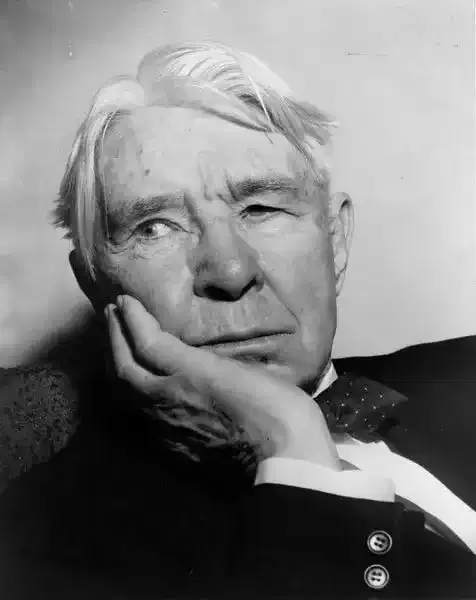
Carl Sandburg
Work Gangs
Box cars run by a mile long.
And I wonder what they say to each other
When they stop a mile long on a sidetrack.
Maybe their chatter goes:
I came from Fargo with a load of wheat up to the danger line.
I came from Omaha with a load of shorthorns and they splintered my boards.
I came from Detroit heavy with a load of fivers.
I carried apples from the Hood river last year and this year bunches of bananas from
Florida; they look for me with watermelons from Mississippi next year.
Hammers and shovels of work gangs sleep in shop corners
when the dark stars come on the sky and the night watchmen walk and look.
Then the hammer heads talk to the handles,
then the scoops of the shovels talk,
how the day’s work nicked and trimmed them,
how they swung and lifted all day,
how the hands of the work gangs smelled of hope.
In the night of the dark stars
when the curve of the sky is a work gang handle,
in the night on the mile long sidetracks,
in the night where the hammers and shovels sleep in corners,
the night watchmen stuff their pipes with dreams—
and sometimes they doze and don’t care for nothin’,
and sometimes they search their heads for meanings, stories, stars.
The stuff of it runs like this:
A long way we come; a long way to go; long rests and long deep sniffs for our lungs on
the way.
Sleep is a belonging of all; even if all songs are old songs and the singing heart is
snuffed out like a switchman’s lantern with the oil gone, even if we forget our names
and houses in the finish, the secret of sleep is left us, sleep belongs to all, sleep is the
first and last and best of all.
People singing; people with song mouths connecting with song hearts; people who
must sing or die; people whose song hearts break if there is no song mouth; these are
my people.
Carl Sandburg
Waiting
Today I will let the old boat stand
Where the sweep of the harbor tide comes in
To the pulse of a far, deep-steady sway.
And I will rest and dream and sit on the deck
Watching the world go by
And take my pay for many hard days gone I remember.
I will choose what clouds I like
In the great white fleets that wander the blue
As I lie on my back or loaf at the rail.
And I will listen as the veering winds kiss me and fold me
And put on my brow the touch of the world's great will.
Daybreak will hear the heart of the boat beat,
Engine throb and piston play
In the quiver and leap at call of life.
To-morrow we move in the gaps and heights
On changing floors of unlevel seas
And no man shall stop us and no man follow
For ours is the quest of an unknown shore
And we are husky and lusty and shouting-gay.
Carl Sandburg
Waiting
Today I will let the old boat stand
Where the sweep of the harbor tide comes in
To the pulse of a far, deep-steady sway.
And I will rest and dream and sit on the deck
Watching the world go by
And take my pay for many hard days gone I remember.
I will choose what clouds I like
In the great white fleets that wander the blue
As I lie on my back or loaf at the rail.
And I will listen as the veering winds kiss me and fold me
And put on my brow the touch of the world's great will.
Daybreak will hear the heart of the boat beat,
Engine throb and piston play
In the quiver and leap at call of life.
To-morrow we move in the gaps and heights
On changing floors of unlevel seas
And no man shall stop us and no man follow
For ours is the quest of an unknown shore
And we are husky and lusty and shouting-gay.
Carl Sandburg
Two Neighbors
Faces of two eternities keep looking at me.
One is Omar Khayam and the red stuff
wherein men forget yesterday and to-morrow
and remember only the voices and songs,
the stories, newspapers and fights of today.
One is Louis Cornaro and a slim trick
of slow, short meals across slow, short years,
letting Death open the door only in slow, short inches.
I have a neighbor who swears by Omar.
I have a neighbor who swears by Cornaro.
Both are happy.
Faces of two eternities keep looking at me.
Let them look.
Carl Sandburg
To Certain Journeymen
Undertakers, hearse drivers, grave diggers,
I speak to you as one not afraid of your business.
You handle dust going to a long country,
You know the secret behind your job is the same whether
you lower the coffin with modern, automatic machinery,
well-oiled and noiseless, or whether the
body is laid in by naked hands and then covered
by the shovels.
Your day's work is done with laughter many days of the year,
And you earn a living by those who say good-by today
in thin whispers.
Carl Sandburg
To Certain Journeymen
Undertakers, hearse drivers, grave diggers,
I speak to you as one not afraid of your business.
You handle dust going to a long country,
You know the secret behind your job is the same whether
you lower the coffin with modern, automatic machinery,
well-oiled and noiseless, or whether the
body is laid in by naked hands and then covered
by the shovels.
Your day's work is done with laughter many days of the year,
And you earn a living by those who say good-by today
in thin whispers.
Carl Sandburg
To Certain Journeymen
Undertakers, hearse drivers, grave diggers,
I speak to you as one not afraid of your business.
You handle dust going to a long country,
You know the secret behind your job is the same whether
you lower the coffin with modern, automatic machinery,
well-oiled and noiseless, or whether the
body is laid in by naked hands and then covered
by the shovels.
Your day's work is done with laughter many days of the year,
And you earn a living by those who say good-by today
in thin whispers.
Carl Sandburg
Threes
I was a boy when I heard three red words
a thousand Frenchmen died in the streets
for: Liberty, Equality, Fraternity--I asked
why men die for words.
I was older; men with mustaches, sideburns,
lilacs, told me the high golden words are:
Mother, Home, and Heaven--other older men with
face decorations said: God, Duty, Immortality
--they sang these threes slow from deep lungs.
Years ticked off their say-so on the great clocks
of doom and damnation, soup, and nuts: meteors flashed
their say-so: and out of great Russia came three
dusky syllables workmen took guns and went out to die
for: Bread, Peace, Land.
And I met a marine of the U.S.A., a leatherneck with a girl on his knee
for a memory in ports circling the earth and he said: Tell me how to say
three things and I always get by--gimme a plate of ham and eggs--how
much--and--do you love me, kid?
Carl Sandburg
Threes
I was a boy when I heard three red words
a thousand Frenchmen died in the streets
for: Liberty, Equality, Fraternity--I asked
why men die for words.
I was older; men with mustaches, sideburns,
lilacs, told me the high golden words are:
Mother, Home, and Heaven--other older men with
face decorations said: God, Duty, Immortality
--they sang these threes slow from deep lungs.
Years ticked off their say-so on the great clocks
of doom and damnation, soup, and nuts: meteors flashed
their say-so: and out of great Russia came three
dusky syllables workmen took guns and went out to die
for: Bread, Peace, Land.
And I met a marine of the U.S.A., a leatherneck with a girl on his knee
for a memory in ports circling the earth and he said: Tell me how to say
three things and I always get by--gimme a plate of ham and eggs--how
much--and--do you love me, kid?
Carl Sandburg
Threes
I was a boy when I heard three red words
a thousand Frenchmen died in the streets
for: Liberty, Equality, Fraternity--I asked
why men die for words.
I was older; men with mustaches, sideburns,
lilacs, told me the high golden words are:
Mother, Home, and Heaven--other older men with
face decorations said: God, Duty, Immortality
--they sang these threes slow from deep lungs.
Years ticked off their say-so on the great clocks
of doom and damnation, soup, and nuts: meteors flashed
their say-so: and out of great Russia came three
dusky syllables workmen took guns and went out to die
for: Bread, Peace, Land.
And I met a marine of the U.S.A., a leatherneck with a girl on his knee
for a memory in ports circling the earth and he said: Tell me how to say
three things and I always get by--gimme a plate of ham and eggs--how
much--and--do you love me, kid?
Carl Sandburg
Threes
I was a boy when I heard three red words
a thousand Frenchmen died in the streets
for: Liberty, Equality, Fraternity--I asked
why men die for words.
I was older; men with mustaches, sideburns,
lilacs, told me the high golden words are:
Mother, Home, and Heaven--other older men with
face decorations said: God, Duty, Immortality
--they sang these threes slow from deep lungs.
Years ticked off their say-so on the great clocks
of doom and damnation, soup, and nuts: meteors flashed
their say-so: and out of great Russia came three
dusky syllables workmen took guns and went out to die
for: Bread, Peace, Land.
And I met a marine of the U.S.A., a leatherneck with a girl on his knee
for a memory in ports circling the earth and he said: Tell me how to say
three things and I always get by--gimme a plate of ham and eggs--how
much--and--do you love me, kid?
Carl Sandburg
Threes
I was a boy when I heard three red words
a thousand Frenchmen died in the streets
for: Liberty, Equality, Fraternity--I asked
why men die for words.
I was older; men with mustaches, sideburns,
lilacs, told me the high golden words are:
Mother, Home, and Heaven--other older men with
face decorations said: God, Duty, Immortality
--they sang these threes slow from deep lungs.
Years ticked off their say-so on the great clocks
of doom and damnation, soup, and nuts: meteors flashed
their say-so: and out of great Russia came three
dusky syllables workmen took guns and went out to die
for: Bread, Peace, Land.
And I met a marine of the U.S.A., a leatherneck with a girl on his knee
for a memory in ports circling the earth and he said: Tell me how to say
three things and I always get by--gimme a plate of ham and eggs--how
much--and--do you love me, kid?
Carl Sandburg
The Right To Grief
To Certain Poets About to Die
Take your fill of intimate remorse, perfumed sorrow,
Over the dead child of a millionaire,
And the pity of Death refusing any check on the bank
Which the millionaire might order his secretary to
scratch off
And get cashed.
Very well,
You for your grief and I for mine.
Let me have a sorrow my own if I want to.
I shall cry over the dead child of a stockyards hunky.
His job is sweeping blood off the floor.
He gets a dollar seventy cents a day when he works
And it's many tubs of blood he shoves out with a broom
day by day.
Now his three year old daughter
Is in a white coffin that cost him a week's wages.
Every Saturday night he will pay the undertaker fifty
cents till the debt is wiped out.
The hunky and his wife and the kids
Cry over the pinched face almost at peace in the white box.
They remember it was scrawny and ran up high doctor bills.
They are glad it is gone for the rest of the family now
will have more to eat and wear.
Yet before the majesty of Death they cry around the coffin
And wipe their eyes with red bandanas and sob when
the priest says, "God have mercy on us all."
I have a right to feel my throat choke about this.
You take your grief and I mine--see?
To-morrow there is no funeral and the hunky goes back
to his job sweeping blood off the floor at a dollar
seventy cents a day.
All he does all day long is keep on shoving hog blood
ahead of him with a broom.
Carl Sandburg
The Right To Grief
To Certain Poets About to Die
Take your fill of intimate remorse, perfumed sorrow,
Over the dead child of a millionaire,
And the pity of Death refusing any check on the bank
Which the millionaire might order his secretary to
scratch off
And get cashed.
Very well,
You for your grief and I for mine.
Let me have a sorrow my own if I want to.
I shall cry over the dead child of a stockyards hunky.
His job is sweeping blood off the floor.
He gets a dollar seventy cents a day when he works
And it's many tubs of blood he shoves out with a broom
day by day.
Now his three year old daughter
Is in a white coffin that cost him a week's wages.
Every Saturday night he will pay the undertaker fifty
cents till the debt is wiped out.
The hunky and his wife and the kids
Cry over the pinched face almost at peace in the white box.
They remember it was scrawny and ran up high doctor bills.
They are glad it is gone for the rest of the family now
will have more to eat and wear.
Yet before the majesty of Death they cry around the coffin
And wipe their eyes with red bandanas and sob when
the priest says, "God have mercy on us all."
I have a right to feel my throat choke about this.
You take your grief and I mine--see?
To-morrow there is no funeral and the hunky goes back
to his job sweeping blood off the floor at a dollar
seventy cents a day.
All he does all day long is keep on shoving hog blood
ahead of him with a broom.
Carl Sandburg
The Shovel Man
On the street
Slung on his shoulder is a handle half way across,
Tied in a big knot on the scoop of cast iron
Are the overalls faded from sun and rain in the ditches;
Spatter of dry clay sticking yellow on his left sleeve
And a flimsy shirt open at the throat,
I know him for a shovel man,
A dago working for a dollar six bits a day
And a dark-eyed woman in the old country dreams of
him for one of the world's ready men with a pair
of fresh lips and a kiss better than all the wild
grapes that ever grew in Tuscany.
Carl Sandburg
The Shovel Man
On the street
Slung on his shoulder is a handle half way across,
Tied in a big knot on the scoop of cast iron
Are the overalls faded from sun and rain in the ditches;
Spatter of dry clay sticking yellow on his left sleeve
And a flimsy shirt open at the throat,
I know him for a shovel man,
A dago working for a dollar six bits a day
And a dark-eyed woman in the old country dreams of
him for one of the world's ready men with a pair
of fresh lips and a kiss better than all the wild
grapes that ever grew in Tuscany.
Carl Sandburg
The Mayor of Gary
I asked the mayor of Gary about the 12-hour day and the 7-day week.
And the mayor of Gary answered more workmen steal time on the job in Gary than any
other place in the United States.
"Go into the plants and you will see men sitting around doing nothing--machinery does
everything," said the mayor of Gary when I asked him about the 12-hour day and the
7-day week.
And he wore cool cream pants, the Mayor of Gary, and white shoes, and a barber had
fixed him up with a shampoo and a shave and he was east and imperturbable though
the government weather bureau thermometer said 96 and children were soaking their
heads at bubbling fountains on the street corners.
And I said good-bye to the Mayor of Gary and I went out from the city hall and turned
the corner into Broadway.
And I saw workmen wearing leather shoes scruffed with fire and cinders, and pitted
with little holes from running molten steel,
And some had bunches of specialized muscles around their shoulder blades hard as pig
iron, muscles of their forearms were sheet steel and they looked to me like men who
had been somewhere.
Carl Sandburg
The Mayor of Gary
I asked the mayor of Gary about the 12-hour day and the 7-day week.
And the mayor of Gary answered more workmen steal time on the job in Gary than any
other place in the United States.
"Go into the plants and you will see men sitting around doing nothing--machinery does
everything," said the mayor of Gary when I asked him about the 12-hour day and the
7-day week.
And he wore cool cream pants, the Mayor of Gary, and white shoes, and a barber had
fixed him up with a shampoo and a shave and he was east and imperturbable though
the government weather bureau thermometer said 96 and children were soaking their
heads at bubbling fountains on the street corners.
And I said good-bye to the Mayor of Gary and I went out from the city hall and turned
the corner into Broadway.
And I saw workmen wearing leather shoes scruffed with fire and cinders, and pitted
with little holes from running molten steel,
And some had bunches of specialized muscles around their shoulder blades hard as pig
iron, muscles of their forearms were sheet steel and they looked to me like men who
had been somewhere.
Carl Sandburg
The Mayor of Gary
I asked the mayor of Gary about the 12-hour day and the 7-day week.
And the mayor of Gary answered more workmen steal time on the job in Gary than any
other place in the United States.
"Go into the plants and you will see men sitting around doing nothing--machinery does
everything," said the mayor of Gary when I asked him about the 12-hour day and the
7-day week.
And he wore cool cream pants, the Mayor of Gary, and white shoes, and a barber had
fixed him up with a shampoo and a shave and he was east and imperturbable though
the government weather bureau thermometer said 96 and children were soaking their
heads at bubbling fountains on the street corners.
And I said good-bye to the Mayor of Gary and I went out from the city hall and turned
the corner into Broadway.
And I saw workmen wearing leather shoes scruffed with fire and cinders, and pitted
with little holes from running molten steel,
And some had bunches of specialized muscles around their shoulder blades hard as pig
iron, muscles of their forearms were sheet steel and they looked to me like men who
had been somewhere.
Carl Sandburg
The Noon Hour
She sits in the dust at the walls
And makes cigars,
Bending at the bench
With fingers wage-anxious,
Changing her sweat for the day’s pay.
Now the noon hour has come,
And she leans with her bare arms
On the window-sill over the river,
Leans and feels at her throat
Cool-moving things out of the free open ways:
At her throat and eyes and nostrils
The touch and the blowing cool
Of great free ways beyond the walls.
Carl Sandburg
The Noon Hour
She sits in the dust at the walls
And makes cigars,
Bending at the bench
With fingers wage-anxious,
Changing her sweat for the day’s pay.
Now the noon hour has come,
And she leans with her bare arms
On the window-sill over the river,
Leans and feels at her throat
Cool-moving things out of the free open ways:
At her throat and eyes and nostrils
The touch and the blowing cool
Of great free ways beyond the walls.
Carl Sandburg
The Noon Hour
She sits in the dust at the walls
And makes cigars,
Bending at the bench
With fingers wage-anxious,
Changing her sweat for the day’s pay.
Now the noon hour has come,
And she leans with her bare arms
On the window-sill over the river,
Leans and feels at her throat
Cool-moving things out of the free open ways:
At her throat and eyes and nostrils
The touch and the blowing cool
Of great free ways beyond the walls.
Carl Sandburg
The Hangman at Home
What does a hangman think about
When he goes home at night from work?
When he sits down with his wife and
Children for a cup of coffee and a
Plate of ham and eggs, do they ask
Him if it was a good day's work
And everything went well or do they
Stay off some topics and kill about
The weather, baseball, politics
And the comic strips in the papers
And the movies? Do they look at his
Hands when he reaches for the coffee
Or the ham and eggs? If the little
Ones say, Daddy, play horse, here's
A rope--does he answer like a joke:
I seen enough rope for today?
Or does his face light up like a
Bonfire of joy and does he say:
It's a good and dandy world we live
'In. And if a white face moon looks
In through a window where a baby girl
Sleeps and the moon-gleams mix with
Baby ears and baby hair--the hangman--
How does he act then? It must be easy
For him. Anything is easy for a hangman,
I guess.
Carl Sandburg
The Hangman at Home
What does a hangman think about
When he goes home at night from work?
When he sits down with his wife and
Children for a cup of coffee and a
Plate of ham and eggs, do they ask
Him if it was a good day's work
And everything went well or do they
Stay off some topics and kill about
The weather, baseball, politics
And the comic strips in the papers
And the movies? Do they look at his
Hands when he reaches for the coffee
Or the ham and eggs? If the little
Ones say, Daddy, play horse, here's
A rope--does he answer like a joke:
I seen enough rope for today?
Or does his face light up like a
Bonfire of joy and does he say:
It's a good and dandy world we live
'In. And if a white face moon looks
In through a window where a baby girl
Sleeps and the moon-gleams mix with
Baby ears and baby hair--the hangman--
How does he act then? It must be easy
For him. Anything is easy for a hangman,
I guess.