

Poems in this topic
Society and the World
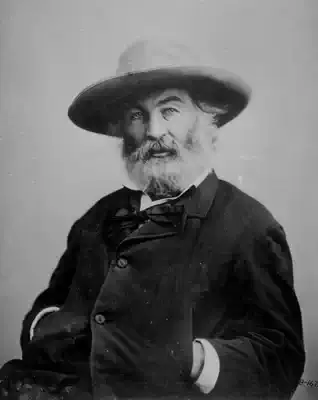
Walt Whitman
Hush'd Be the Camps Today
Hush'd Be the Camps Today
Hush'd be the camps today,
And soldiers let us drape our war-worn weapons,
And each with musing soul retire to celebrate,
Our dear commander's death.
No more for him life's stormy conflicts,
Nor victory, nor defeat--no more time's dark events,
Charging like ceaseless clouds across the sky.
But sing poet in our name,
Sing of the love we bore him--because you, dweller in camps, know it truly.
As they invault the coffin there,
Sing--as they close the doors of earth upon him--one verse,
For the heavy hearts of soldiers.
Hush'd be the camps today,
And soldiers let us drape our war-worn weapons,
And each with musing soul retire to celebrate,
Our dear commander's death.
No more for him life's stormy conflicts,
Nor victory, nor defeat--no more time's dark events,
Charging like ceaseless clouds across the sky.
But sing poet in our name,
Sing of the love we bore him--because you, dweller in camps, know it truly.
As they invault the coffin there,
Sing--as they close the doors of earth upon him--one verse,
For the heavy hearts of soldiers.
458
Walt Whitman
Give Me The Splendid, Silent Sun
Give Me The Splendid, Silent Sun
GIVE me the splendid silent sun, with all his beams full-dazzling;
Give me juicy autumnal fruit, ripe and red from the orchard;
Give me a field where the unmow'd grass grows;
Give me an arbor, give me the trellis'd grape;
Give me fresh corn and wheat--give me serene-moving animals, teaching
content;
Give me nights perfectly quiet, as on high plateaus west of the
Mississippi, and I looking up at the stars;
Give me odorous at sunrise a garden of beautiful flowers, where I can
walk undisturb'd;
Give me for marriage a sweet-breath'd woman, of whom I should never
tire;
Give me a perfect child--give me, away, aside from the noise of the
world, a rural, domestic life;
Give me to warble spontaneous songs, reliev'd, recluse by myself, for
my own ears only; 10
Give me solitude--give me Nature--give me again, O Nature, your
primal sanities!
--These, demanding to have them, (tired with ceaseless excitement,
and rack'd by the war-strife;)
These to procure, incessantly asking, rising in cries from my heart,
While yet incessantly asking, still I adhere to my city;
Day upon day, and year upon year, O city, walking your streets,
Where you hold me enchain'd a certain time, refusing to give me up;
Yet giving to make me glutted, enrich'd of soul--you give me forever
faces;
(O I see what I sought to escape, confronting, reversing my cries;
I see my own soul trampling down what it ask'd for.)
Keep your splendid, silent sun; 20
Keep your woods, O Nature, and the quiet places by the woods;
Keep your fields of clover and timothy, and your corn-fields and
orchards;
Keep the blossoming buckwheat fields, where the Ninth-month bees hum;
Give me faces and streets! give me these phantoms incessant and
endless along the trottoirs!
Give me interminable eyes! give me women! give me comrades and lovers
by the thousand!
Let me see new ones every day! let me hold new ones by the hand every
day!
Give me such shows! give me the streets of Manhattan!
Give me Broadway, with the soldiers marching--give me the sound of
the trumpets and drums!
(The soldiers in companies or regiments--some, starting away, flush'd
and reckless;
Some, their time up, returning, with thinn'd ranks--young, yet very
old, worn, marching, noticing nothing;) 30
--Give me the shores and the wharves heavy-fringed with the black
ships!
O such for me! O an intense life! O full to repletion, and varied!
The life of the theatre, bar-room, huge hotel, for me!
The saloon of the steamer! the crowded excursion for me! the torchlight
procession!
The dense brigade, bound for the war, with high piled military wagons
following;
People, endless, streaming, with strong voices, passions, pageants;
Manhattan streets, with their powerful throbs, with the beating
drums, as now;
The endless and noisy chorus, the rustle and clank of muskets, (even
the sight of the wounded;)
Manhattan crowds, with their turbulent musical chorus--with varied
chorus, and light of the sparkling eyes;
Manhattan faces and eyes forever for me. 40
GIVE me the splendid silent sun, with all his beams full-dazzling;
Give me juicy autumnal fruit, ripe and red from the orchard;
Give me a field where the unmow'd grass grows;
Give me an arbor, give me the trellis'd grape;
Give me fresh corn and wheat--give me serene-moving animals, teaching
content;
Give me nights perfectly quiet, as on high plateaus west of the
Mississippi, and I looking up at the stars;
Give me odorous at sunrise a garden of beautiful flowers, where I can
walk undisturb'd;
Give me for marriage a sweet-breath'd woman, of whom I should never
tire;
Give me a perfect child--give me, away, aside from the noise of the
world, a rural, domestic life;
Give me to warble spontaneous songs, reliev'd, recluse by myself, for
my own ears only; 10
Give me solitude--give me Nature--give me again, O Nature, your
primal sanities!
--These, demanding to have them, (tired with ceaseless excitement,
and rack'd by the war-strife;)
These to procure, incessantly asking, rising in cries from my heart,
While yet incessantly asking, still I adhere to my city;
Day upon day, and year upon year, O city, walking your streets,
Where you hold me enchain'd a certain time, refusing to give me up;
Yet giving to make me glutted, enrich'd of soul--you give me forever
faces;
(O I see what I sought to escape, confronting, reversing my cries;
I see my own soul trampling down what it ask'd for.)
Keep your splendid, silent sun; 20
Keep your woods, O Nature, and the quiet places by the woods;
Keep your fields of clover and timothy, and your corn-fields and
orchards;
Keep the blossoming buckwheat fields, where the Ninth-month bees hum;
Give me faces and streets! give me these phantoms incessant and
endless along the trottoirs!
Give me interminable eyes! give me women! give me comrades and lovers
by the thousand!
Let me see new ones every day! let me hold new ones by the hand every
day!
Give me such shows! give me the streets of Manhattan!
Give me Broadway, with the soldiers marching--give me the sound of
the trumpets and drums!
(The soldiers in companies or regiments--some, starting away, flush'd
and reckless;
Some, their time up, returning, with thinn'd ranks--young, yet very
old, worn, marching, noticing nothing;) 30
--Give me the shores and the wharves heavy-fringed with the black
ships!
O such for me! O an intense life! O full to repletion, and varied!
The life of the theatre, bar-room, huge hotel, for me!
The saloon of the steamer! the crowded excursion for me! the torchlight
procession!
The dense brigade, bound for the war, with high piled military wagons
following;
People, endless, streaming, with strong voices, passions, pageants;
Manhattan streets, with their powerful throbs, with the beating
drums, as now;
The endless and noisy chorus, the rustle and clank of muskets, (even
the sight of the wounded;)
Manhattan crowds, with their turbulent musical chorus--with varied
chorus, and light of the sparkling eyes;
Manhattan faces and eyes forever for me. 40
414
Walt Whitman
Give Me The Splendid, Silent Sun
Give Me The Splendid, Silent Sun
GIVE me the splendid silent sun, with all his beams full-dazzling;
Give me juicy autumnal fruit, ripe and red from the orchard;
Give me a field where the unmow'd grass grows;
Give me an arbor, give me the trellis'd grape;
Give me fresh corn and wheat--give me serene-moving animals, teaching
content;
Give me nights perfectly quiet, as on high plateaus west of the
Mississippi, and I looking up at the stars;
Give me odorous at sunrise a garden of beautiful flowers, where I can
walk undisturb'd;
Give me for marriage a sweet-breath'd woman, of whom I should never
tire;
Give me a perfect child--give me, away, aside from the noise of the
world, a rural, domestic life;
Give me to warble spontaneous songs, reliev'd, recluse by myself, for
my own ears only; 10
Give me solitude--give me Nature--give me again, O Nature, your
primal sanities!
--These, demanding to have them, (tired with ceaseless excitement,
and rack'd by the war-strife;)
These to procure, incessantly asking, rising in cries from my heart,
While yet incessantly asking, still I adhere to my city;
Day upon day, and year upon year, O city, walking your streets,
Where you hold me enchain'd a certain time, refusing to give me up;
Yet giving to make me glutted, enrich'd of soul--you give me forever
faces;
(O I see what I sought to escape, confronting, reversing my cries;
I see my own soul trampling down what it ask'd for.)
Keep your splendid, silent sun; 20
Keep your woods, O Nature, and the quiet places by the woods;
Keep your fields of clover and timothy, and your corn-fields and
orchards;
Keep the blossoming buckwheat fields, where the Ninth-month bees hum;
Give me faces and streets! give me these phantoms incessant and
endless along the trottoirs!
Give me interminable eyes! give me women! give me comrades and lovers
by the thousand!
Let me see new ones every day! let me hold new ones by the hand every
day!
Give me such shows! give me the streets of Manhattan!
Give me Broadway, with the soldiers marching--give me the sound of
the trumpets and drums!
(The soldiers in companies or regiments--some, starting away, flush'd
and reckless;
Some, their time up, returning, with thinn'd ranks--young, yet very
old, worn, marching, noticing nothing;) 30
--Give me the shores and the wharves heavy-fringed with the black
ships!
O such for me! O an intense life! O full to repletion, and varied!
The life of the theatre, bar-room, huge hotel, for me!
The saloon of the steamer! the crowded excursion for me! the torchlight
procession!
The dense brigade, bound for the war, with high piled military wagons
following;
People, endless, streaming, with strong voices, passions, pageants;
Manhattan streets, with their powerful throbs, with the beating
drums, as now;
The endless and noisy chorus, the rustle and clank of muskets, (even
the sight of the wounded;)
Manhattan crowds, with their turbulent musical chorus--with varied
chorus, and light of the sparkling eyes;
Manhattan faces and eyes forever for me. 40
GIVE me the splendid silent sun, with all his beams full-dazzling;
Give me juicy autumnal fruit, ripe and red from the orchard;
Give me a field where the unmow'd grass grows;
Give me an arbor, give me the trellis'd grape;
Give me fresh corn and wheat--give me serene-moving animals, teaching
content;
Give me nights perfectly quiet, as on high plateaus west of the
Mississippi, and I looking up at the stars;
Give me odorous at sunrise a garden of beautiful flowers, where I can
walk undisturb'd;
Give me for marriage a sweet-breath'd woman, of whom I should never
tire;
Give me a perfect child--give me, away, aside from the noise of the
world, a rural, domestic life;
Give me to warble spontaneous songs, reliev'd, recluse by myself, for
my own ears only; 10
Give me solitude--give me Nature--give me again, O Nature, your
primal sanities!
--These, demanding to have them, (tired with ceaseless excitement,
and rack'd by the war-strife;)
These to procure, incessantly asking, rising in cries from my heart,
While yet incessantly asking, still I adhere to my city;
Day upon day, and year upon year, O city, walking your streets,
Where you hold me enchain'd a certain time, refusing to give me up;
Yet giving to make me glutted, enrich'd of soul--you give me forever
faces;
(O I see what I sought to escape, confronting, reversing my cries;
I see my own soul trampling down what it ask'd for.)
Keep your splendid, silent sun; 20
Keep your woods, O Nature, and the quiet places by the woods;
Keep your fields of clover and timothy, and your corn-fields and
orchards;
Keep the blossoming buckwheat fields, where the Ninth-month bees hum;
Give me faces and streets! give me these phantoms incessant and
endless along the trottoirs!
Give me interminable eyes! give me women! give me comrades and lovers
by the thousand!
Let me see new ones every day! let me hold new ones by the hand every
day!
Give me such shows! give me the streets of Manhattan!
Give me Broadway, with the soldiers marching--give me the sound of
the trumpets and drums!
(The soldiers in companies or regiments--some, starting away, flush'd
and reckless;
Some, their time up, returning, with thinn'd ranks--young, yet very
old, worn, marching, noticing nothing;) 30
--Give me the shores and the wharves heavy-fringed with the black
ships!
O such for me! O an intense life! O full to repletion, and varied!
The life of the theatre, bar-room, huge hotel, for me!
The saloon of the steamer! the crowded excursion for me! the torchlight
procession!
The dense brigade, bound for the war, with high piled military wagons
following;
People, endless, streaming, with strong voices, passions, pageants;
Manhattan streets, with their powerful throbs, with the beating
drums, as now;
The endless and noisy chorus, the rustle and clank of muskets, (even
the sight of the wounded;)
Manhattan crowds, with their turbulent musical chorus--with varied
chorus, and light of the sparkling eyes;
Manhattan faces and eyes forever for me. 40
414
Walt Whitman
From Far Dakota's Canons
From Far Dakota's Canons
FROM far Dakota's cañons,
Lands of the wild ravine, the dusky Sioux, the lonesome stretch, the
silence,
Haply to-day a mournful wail, haply a trumpet-note for heroes.
The battle-bulletin,
The Indian ambuscade, the craft, the fatal environment,
The cavalry companies fighting to the last in sternest heroism,
In the midst of their little circle, with their slaughter'd horses
for breastworks,
The fall of Custer and all his officers and men.
Continues yet the old, old legend of our race,
The loftiest of life upheld by death, 10
The ancient banner perfectly maintain'd,
O lesson opportune, O how I welcome thee!
As sitting in dark days,
Lone, sulky, through the time's thick murk looking in vain for light,
for hope,
From unsuspected parts a fierce and momentary proof,
(The sun there at the centre though conceal'd,
Electric life forever at the centre,)
Breaks forth a lightning flash.
Thou of the tawny flowing hair in battle,
I erewhile saw, with erect head, pressing ever in front, bearing a
bright sword in thy hand, 20
Now ending well in death the splendid fever of thy deeds,
(I bring no dirge for it or thee, I bring a glad triumphal sonnet,)
Desperate and glorious, aye in defeat most desperate, most glorious,
After thy many battles in which never yielding up a gun or a color
Leaving behind thee a memory sweet to soldiers,
Thou yieldest up thyself.
FROM far Dakota's cañons,
Lands of the wild ravine, the dusky Sioux, the lonesome stretch, the
silence,
Haply to-day a mournful wail, haply a trumpet-note for heroes.
The battle-bulletin,
The Indian ambuscade, the craft, the fatal environment,
The cavalry companies fighting to the last in sternest heroism,
In the midst of their little circle, with their slaughter'd horses
for breastworks,
The fall of Custer and all his officers and men.
Continues yet the old, old legend of our race,
The loftiest of life upheld by death, 10
The ancient banner perfectly maintain'd,
O lesson opportune, O how I welcome thee!
As sitting in dark days,
Lone, sulky, through the time's thick murk looking in vain for light,
for hope,
From unsuspected parts a fierce and momentary proof,
(The sun there at the centre though conceal'd,
Electric life forever at the centre,)
Breaks forth a lightning flash.
Thou of the tawny flowing hair in battle,
I erewhile saw, with erect head, pressing ever in front, bearing a
bright sword in thy hand, 20
Now ending well in death the splendid fever of thy deeds,
(I bring no dirge for it or thee, I bring a glad triumphal sonnet,)
Desperate and glorious, aye in defeat most desperate, most glorious,
After thy many battles in which never yielding up a gun or a color
Leaving behind thee a memory sweet to soldiers,
Thou yieldest up thyself.
435
Walt Whitman
From Far Dakota's Canons
From Far Dakota's Canons
FROM far Dakota's cañons,
Lands of the wild ravine, the dusky Sioux, the lonesome stretch, the
silence,
Haply to-day a mournful wail, haply a trumpet-note for heroes.
The battle-bulletin,
The Indian ambuscade, the craft, the fatal environment,
The cavalry companies fighting to the last in sternest heroism,
In the midst of their little circle, with their slaughter'd horses
for breastworks,
The fall of Custer and all his officers and men.
Continues yet the old, old legend of our race,
The loftiest of life upheld by death, 10
The ancient banner perfectly maintain'd,
O lesson opportune, O how I welcome thee!
As sitting in dark days,
Lone, sulky, through the time's thick murk looking in vain for light,
for hope,
From unsuspected parts a fierce and momentary proof,
(The sun there at the centre though conceal'd,
Electric life forever at the centre,)
Breaks forth a lightning flash.
Thou of the tawny flowing hair in battle,
I erewhile saw, with erect head, pressing ever in front, bearing a
bright sword in thy hand, 20
Now ending well in death the splendid fever of thy deeds,
(I bring no dirge for it or thee, I bring a glad triumphal sonnet,)
Desperate and glorious, aye in defeat most desperate, most glorious,
After thy many battles in which never yielding up a gun or a color
Leaving behind thee a memory sweet to soldiers,
Thou yieldest up thyself.
FROM far Dakota's cañons,
Lands of the wild ravine, the dusky Sioux, the lonesome stretch, the
silence,
Haply to-day a mournful wail, haply a trumpet-note for heroes.
The battle-bulletin,
The Indian ambuscade, the craft, the fatal environment,
The cavalry companies fighting to the last in sternest heroism,
In the midst of their little circle, with their slaughter'd horses
for breastworks,
The fall of Custer and all his officers and men.
Continues yet the old, old legend of our race,
The loftiest of life upheld by death, 10
The ancient banner perfectly maintain'd,
O lesson opportune, O how I welcome thee!
As sitting in dark days,
Lone, sulky, through the time's thick murk looking in vain for light,
for hope,
From unsuspected parts a fierce and momentary proof,
(The sun there at the centre though conceal'd,
Electric life forever at the centre,)
Breaks forth a lightning flash.
Thou of the tawny flowing hair in battle,
I erewhile saw, with erect head, pressing ever in front, bearing a
bright sword in thy hand, 20
Now ending well in death the splendid fever of thy deeds,
(I bring no dirge for it or thee, I bring a glad triumphal sonnet,)
Desperate and glorious, aye in defeat most desperate, most glorious,
After thy many battles in which never yielding up a gun or a color
Leaving behind thee a memory sweet to soldiers,
Thou yieldest up thyself.
435
Walt Whitman
From Far Dakota's Canons
From Far Dakota's Canons
FROM far Dakota's cañons,
Lands of the wild ravine, the dusky Sioux, the lonesome stretch, the
silence,
Haply to-day a mournful wail, haply a trumpet-note for heroes.
The battle-bulletin,
The Indian ambuscade, the craft, the fatal environment,
The cavalry companies fighting to the last in sternest heroism,
In the midst of their little circle, with their slaughter'd horses
for breastworks,
The fall of Custer and all his officers and men.
Continues yet the old, old legend of our race,
The loftiest of life upheld by death, 10
The ancient banner perfectly maintain'd,
O lesson opportune, O how I welcome thee!
As sitting in dark days,
Lone, sulky, through the time's thick murk looking in vain for light,
for hope,
From unsuspected parts a fierce and momentary proof,
(The sun there at the centre though conceal'd,
Electric life forever at the centre,)
Breaks forth a lightning flash.
Thou of the tawny flowing hair in battle,
I erewhile saw, with erect head, pressing ever in front, bearing a
bright sword in thy hand, 20
Now ending well in death the splendid fever of thy deeds,
(I bring no dirge for it or thee, I bring a glad triumphal sonnet,)
Desperate and glorious, aye in defeat most desperate, most glorious,
After thy many battles in which never yielding up a gun or a color
Leaving behind thee a memory sweet to soldiers,
Thou yieldest up thyself.
FROM far Dakota's cañons,
Lands of the wild ravine, the dusky Sioux, the lonesome stretch, the
silence,
Haply to-day a mournful wail, haply a trumpet-note for heroes.
The battle-bulletin,
The Indian ambuscade, the craft, the fatal environment,
The cavalry companies fighting to the last in sternest heroism,
In the midst of their little circle, with their slaughter'd horses
for breastworks,
The fall of Custer and all his officers and men.
Continues yet the old, old legend of our race,
The loftiest of life upheld by death, 10
The ancient banner perfectly maintain'd,
O lesson opportune, O how I welcome thee!
As sitting in dark days,
Lone, sulky, through the time's thick murk looking in vain for light,
for hope,
From unsuspected parts a fierce and momentary proof,
(The sun there at the centre though conceal'd,
Electric life forever at the centre,)
Breaks forth a lightning flash.
Thou of the tawny flowing hair in battle,
I erewhile saw, with erect head, pressing ever in front, bearing a
bright sword in thy hand, 20
Now ending well in death the splendid fever of thy deeds,
(I bring no dirge for it or thee, I bring a glad triumphal sonnet,)
Desperate and glorious, aye in defeat most desperate, most glorious,
After thy many battles in which never yielding up a gun or a color
Leaving behind thee a memory sweet to soldiers,
Thou yieldest up thyself.
435
Walt Whitman
From Paumanok Starting
From Paumanok Starting
FROM Paumanock starting, I fly like a bird,
Around and around to soar, to sing the idea of all;
To the north betaking myself, to sing there arctic songs,
To Kanada, till I absorb Kanada in myself--to Michigan then,
To Wisconsin, Iowa, Minnesota, to sing their songs, (they are
inimitable;)
Then to Ohio and Indiana to sing theirs--to Missouri and Kansas and
Arkansas, to sing theirs,
To Tennessee and Kentucky--to the Carolinas and Georgia, to sing
theirs,
To Texas, and so along up toward California, to roam accepted
everywhere;
To sing first, (to the tap of the war-drum, if need be,)
The idea of all--of the western world, one and inseparable. 10
And then the song of each member of These States.
FROM Paumanock starting, I fly like a bird,
Around and around to soar, to sing the idea of all;
To the north betaking myself, to sing there arctic songs,
To Kanada, till I absorb Kanada in myself--to Michigan then,
To Wisconsin, Iowa, Minnesota, to sing their songs, (they are
inimitable;)
Then to Ohio and Indiana to sing theirs--to Missouri and Kansas and
Arkansas, to sing theirs,
To Tennessee and Kentucky--to the Carolinas and Georgia, to sing
theirs,
To Texas, and so along up toward California, to roam accepted
everywhere;
To sing first, (to the tap of the war-drum, if need be,)
The idea of all--of the western world, one and inseparable. 10
And then the song of each member of These States.
439
Walt Whitman
From Paumanok Starting
From Paumanok Starting
FROM Paumanock starting, I fly like a bird,
Around and around to soar, to sing the idea of all;
To the north betaking myself, to sing there arctic songs,
To Kanada, till I absorb Kanada in myself--to Michigan then,
To Wisconsin, Iowa, Minnesota, to sing their songs, (they are
inimitable;)
Then to Ohio and Indiana to sing theirs--to Missouri and Kansas and
Arkansas, to sing theirs,
To Tennessee and Kentucky--to the Carolinas and Georgia, to sing
theirs,
To Texas, and so along up toward California, to roam accepted
everywhere;
To sing first, (to the tap of the war-drum, if need be,)
The idea of all--of the western world, one and inseparable. 10
And then the song of each member of These States.
FROM Paumanock starting, I fly like a bird,
Around and around to soar, to sing the idea of all;
To the north betaking myself, to sing there arctic songs,
To Kanada, till I absorb Kanada in myself--to Michigan then,
To Wisconsin, Iowa, Minnesota, to sing their songs, (they are
inimitable;)
Then to Ohio and Indiana to sing theirs--to Missouri and Kansas and
Arkansas, to sing theirs,
To Tennessee and Kentucky--to the Carolinas and Georgia, to sing
theirs,
To Texas, and so along up toward California, to roam accepted
everywhere;
To sing first, (to the tap of the war-drum, if need be,)
The idea of all--of the western world, one and inseparable. 10
And then the song of each member of These States.
439
Walt Whitman
Facing West From California's Shores
Facing West From California's Shores
FACING west, from California's shores,
Inquiring, tireless, seeking what is yet unfound,
I, a child, very old, over waves, towards the house of maternity, the
land of migrations, look afar,
Look off the shores of my Western Sea--the circle almost circled;
For, starting westward from Hindustan, from the vales of Kashmere,
From Asia--from the north--from the God, the sage, and the hero,
From the south--from the flowery peninsulas, and the spice islands;
Long having wander'd since--round the earth having wander'd,
Now I face home again--very pleas'd and joyous;
(But where is what I started for, so long ago? 10
And why is it yet unfound?)
FACING west, from California's shores,
Inquiring, tireless, seeking what is yet unfound,
I, a child, very old, over waves, towards the house of maternity, the
land of migrations, look afar,
Look off the shores of my Western Sea--the circle almost circled;
For, starting westward from Hindustan, from the vales of Kashmere,
From Asia--from the north--from the God, the sage, and the hero,
From the south--from the flowery peninsulas, and the spice islands;
Long having wander'd since--round the earth having wander'd,
Now I face home again--very pleas'd and joyous;
(But where is what I started for, so long ago? 10
And why is it yet unfound?)
365
Walt Whitman
Ethiopia Saluting The Colors
Ethiopia Saluting The Colors
WHO are you, dusky woman, so ancient, hardly human,
With your woolly-white and turban'd head, and bare bony feet?
Why, rising by the roadside here, do you the colors greet?
('Tis while our army lines Carolina's sand and pines,
Forth from thy hovel door, thou, Ethiopia, com'st to me,
As, under doughty Sherman, I march toward the sea.)
Me, master, years a hundred, since from my parents sunder'd,
A little child, they caught me as the savage beast is caught;
Then hither me, across the sea, the cruel slaver brought.
No further does she say, but lingering all the day, 10
Her high-borne turban'd head she wags, and rolls her darkling eye,
And curtseys to the regiments, the guidons moving by.
What is it, fateful woman--so blear, hardly human?
Why wag your head, with turban bound--yellow, red and green?
Are the things so strange and marvelous, you see or have seen?
WHO are you, dusky woman, so ancient, hardly human,
With your woolly-white and turban'd head, and bare bony feet?
Why, rising by the roadside here, do you the colors greet?
('Tis while our army lines Carolina's sand and pines,
Forth from thy hovel door, thou, Ethiopia, com'st to me,
As, under doughty Sherman, I march toward the sea.)
Me, master, years a hundred, since from my parents sunder'd,
A little child, they caught me as the savage beast is caught;
Then hither me, across the sea, the cruel slaver brought.
No further does she say, but lingering all the day, 10
Her high-borne turban'd head she wags, and rolls her darkling eye,
And curtseys to the regiments, the guidons moving by.
What is it, fateful woman--so blear, hardly human?
Why wag your head, with turban bound--yellow, red and green?
Are the things so strange and marvelous, you see or have seen?
412
Walt Whitman
Ethiopia Saluting The Colors
Ethiopia Saluting The Colors
WHO are you, dusky woman, so ancient, hardly human,
With your woolly-white and turban'd head, and bare bony feet?
Why, rising by the roadside here, do you the colors greet?
('Tis while our army lines Carolina's sand and pines,
Forth from thy hovel door, thou, Ethiopia, com'st to me,
As, under doughty Sherman, I march toward the sea.)
Me, master, years a hundred, since from my parents sunder'd,
A little child, they caught me as the savage beast is caught;
Then hither me, across the sea, the cruel slaver brought.
No further does she say, but lingering all the day, 10
Her high-borne turban'd head she wags, and rolls her darkling eye,
And curtseys to the regiments, the guidons moving by.
What is it, fateful woman--so blear, hardly human?
Why wag your head, with turban bound--yellow, red and green?
Are the things so strange and marvelous, you see or have seen?
WHO are you, dusky woman, so ancient, hardly human,
With your woolly-white and turban'd head, and bare bony feet?
Why, rising by the roadside here, do you the colors greet?
('Tis while our army lines Carolina's sand and pines,
Forth from thy hovel door, thou, Ethiopia, com'st to me,
As, under doughty Sherman, I march toward the sea.)
Me, master, years a hundred, since from my parents sunder'd,
A little child, they caught me as the savage beast is caught;
Then hither me, across the sea, the cruel slaver brought.
No further does she say, but lingering all the day, 10
Her high-borne turban'd head she wags, and rolls her darkling eye,
And curtseys to the regiments, the guidons moving by.
What is it, fateful woman--so blear, hardly human?
Why wag your head, with turban bound--yellow, red and green?
Are the things so strange and marvelous, you see or have seen?
412
Walt Whitman
Drum-Taps
Drum-Taps
Aroused and angry,
I thought to beat the alarum, and urge relentless war;
But soon my fingers fail'd me, my face droop'd, and I resign'd
myself,
To sit by the wounded and soothe them, or silently watch the dead.
Drum-Taps
FIRST, O songs, for a prelude,
Lightly strike on the stretch'd tympanum, pride and joy in my city,
How she led the rest to arms--how she gave the cue,
How at once with lithe limbs, unwaiting a moment, she sprang;
(O superb! O Manhattan, my own, my peerless!
O strongest you in the hour of danger, in crisis! O truer than
steel!)
How you sprang! how you threw off the costumes of peace with
indifferent hand;
How your soft opera-music changed, and the drum and fife were heard
in their stead;
How you led to the war, (that shall serve for our prelude, songs of
soldiers,)
How Manhattan drum-taps led. 10
Forty years had I in my city seen soldiers parading;
Forty years as a pageant--till unawares, the Lady of this teeming and
turbulent city,
Sleepless amid her ships, her houses, her incalculable wealth,
With her million children around her--suddenly,
At dead of night, at news from the south,
Incens'd, struck with clench'd hand the pavement.
A shock electric--the night sustain'd it;
Till with ominous hum, our hive at day-break pour'd out its myriads.
From the houses then, and the workshops, and through all the
doorways,
Leapt they tumultuous--and lo! Manhattan arming. 20
To the drum-taps prompt,
The young men falling in and arming;
The mechanics arming, (the trowel, the jack-plane, the blacksmith's
hammer, tost aside with precipitation;)
The lawyer leaving his office, and arming--the judge leaving the
court;
The driver deserting his wagon in the street, jumping down, throwing
the reins abruptly down on the horses' backs;
The salesman leaving the store--the boss, book-keeper, porter, all
leaving;
Squads gather everywhere by common consent, and arm;
The new recruits, even boys--the old men show them how to wear their
accoutrements--they buckle the straps carefully;
Outdoors arming--indoors arming--the flash of the musket-barrels;
The white tents cluster in camps--the arm'd sentries around--the
sunrise cannon, and again at sunset; 30
Arm'd regiments arrive every day, pass through the city, and embark
from the wharves;
(How good they look, as they tramp down to the river, sweaty, with
their guns on their shoulders!
How I love them! how I could hug them, with their brown faces, and
their clothes and knapsacks cover'd with dust!)
The blood of the city up--arm'd! arm'd! the cry everywhere;
The flags flung out from the steeples of churches, and from all the
public buildings and stores;
The tearful parting--the mother kisses her son--the son kisses his
mother;
(Loth is the mother to part--yet not a word does she speak to detain
him;)
The tumultuous escort--the ranks of policemen preceding, clearing the
way;
The unpent enthusiasm--the wild cheers of the crowd for their
favorites;
The artillery--the silent cannons, bright as gold, drawn along,
rumble lightly over the stones; 40
(Silent cannons--soon to cease your silence!
Soon, unlimber'd, to begin the red business;)
All the mutter of preparation--all the determin'd arming;
The hospital service--the lint, bandages, and medicines;
The women volunteering for nurses--the work begun for, in earnest--no
mere parade now;
War! an arm'd race is advancing!--the welcome for battle--no turning
away;
War! be it weeks, months, or years--an arm'd race is advancing to
welcome it.
Mannahatta a-march!--and it's O to sing it well!
It's O for a manly life in the camp!
And the sturdy artillery! 50
The guns, bright as gold--the work for giants--to serve well the
guns:
Unlimber them! no more, as the past forty years, for salutes for
courtesies merely;
Put in something else now besides powder and wadding.
And you, Lady of Ships! you Mannahatta!
Old matron of this proud, friendly, turbulent city!
Often in peace and wealth you were pensive, or covertly frown'd amid
all your children;
But now you smile with joy, exulting old Mannahatta!
Aroused and angry,
I thought to beat the alarum, and urge relentless war;
But soon my fingers fail'd me, my face droop'd, and I resign'd
myself,
To sit by the wounded and soothe them, or silently watch the dead.
Drum-Taps
FIRST, O songs, for a prelude,
Lightly strike on the stretch'd tympanum, pride and joy in my city,
How she led the rest to arms--how she gave the cue,
How at once with lithe limbs, unwaiting a moment, she sprang;
(O superb! O Manhattan, my own, my peerless!
O strongest you in the hour of danger, in crisis! O truer than
steel!)
How you sprang! how you threw off the costumes of peace with
indifferent hand;
How your soft opera-music changed, and the drum and fife were heard
in their stead;
How you led to the war, (that shall serve for our prelude, songs of
soldiers,)
How Manhattan drum-taps led. 10
Forty years had I in my city seen soldiers parading;
Forty years as a pageant--till unawares, the Lady of this teeming and
turbulent city,
Sleepless amid her ships, her houses, her incalculable wealth,
With her million children around her--suddenly,
At dead of night, at news from the south,
Incens'd, struck with clench'd hand the pavement.
A shock electric--the night sustain'd it;
Till with ominous hum, our hive at day-break pour'd out its myriads.
From the houses then, and the workshops, and through all the
doorways,
Leapt they tumultuous--and lo! Manhattan arming. 20
To the drum-taps prompt,
The young men falling in and arming;
The mechanics arming, (the trowel, the jack-plane, the blacksmith's
hammer, tost aside with precipitation;)
The lawyer leaving his office, and arming--the judge leaving the
court;
The driver deserting his wagon in the street, jumping down, throwing
the reins abruptly down on the horses' backs;
The salesman leaving the store--the boss, book-keeper, porter, all
leaving;
Squads gather everywhere by common consent, and arm;
The new recruits, even boys--the old men show them how to wear their
accoutrements--they buckle the straps carefully;
Outdoors arming--indoors arming--the flash of the musket-barrels;
The white tents cluster in camps--the arm'd sentries around--the
sunrise cannon, and again at sunset; 30
Arm'd regiments arrive every day, pass through the city, and embark
from the wharves;
(How good they look, as they tramp down to the river, sweaty, with
their guns on their shoulders!
How I love them! how I could hug them, with their brown faces, and
their clothes and knapsacks cover'd with dust!)
The blood of the city up--arm'd! arm'd! the cry everywhere;
The flags flung out from the steeples of churches, and from all the
public buildings and stores;
The tearful parting--the mother kisses her son--the son kisses his
mother;
(Loth is the mother to part--yet not a word does she speak to detain
him;)
The tumultuous escort--the ranks of policemen preceding, clearing the
way;
The unpent enthusiasm--the wild cheers of the crowd for their
favorites;
The artillery--the silent cannons, bright as gold, drawn along,
rumble lightly over the stones; 40
(Silent cannons--soon to cease your silence!
Soon, unlimber'd, to begin the red business;)
All the mutter of preparation--all the determin'd arming;
The hospital service--the lint, bandages, and medicines;
The women volunteering for nurses--the work begun for, in earnest--no
mere parade now;
War! an arm'd race is advancing!--the welcome for battle--no turning
away;
War! be it weeks, months, or years--an arm'd race is advancing to
welcome it.
Mannahatta a-march!--and it's O to sing it well!
It's O for a manly life in the camp!
And the sturdy artillery! 50
The guns, bright as gold--the work for giants--to serve well the
guns:
Unlimber them! no more, as the past forty years, for salutes for
courtesies merely;
Put in something else now besides powder and wadding.
And you, Lady of Ships! you Mannahatta!
Old matron of this proud, friendly, turbulent city!
Often in peace and wealth you were pensive, or covertly frown'd amid
all your children;
But now you smile with joy, exulting old Mannahatta!
466
Walt Whitman
Drum-Taps
Drum-Taps
Aroused and angry,
I thought to beat the alarum, and urge relentless war;
But soon my fingers fail'd me, my face droop'd, and I resign'd
myself,
To sit by the wounded and soothe them, or silently watch the dead.
Drum-Taps
FIRST, O songs, for a prelude,
Lightly strike on the stretch'd tympanum, pride and joy in my city,
How she led the rest to arms--how she gave the cue,
How at once with lithe limbs, unwaiting a moment, she sprang;
(O superb! O Manhattan, my own, my peerless!
O strongest you in the hour of danger, in crisis! O truer than
steel!)
How you sprang! how you threw off the costumes of peace with
indifferent hand;
How your soft opera-music changed, and the drum and fife were heard
in their stead;
How you led to the war, (that shall serve for our prelude, songs of
soldiers,)
How Manhattan drum-taps led. 10
Forty years had I in my city seen soldiers parading;
Forty years as a pageant--till unawares, the Lady of this teeming and
turbulent city,
Sleepless amid her ships, her houses, her incalculable wealth,
With her million children around her--suddenly,
At dead of night, at news from the south,
Incens'd, struck with clench'd hand the pavement.
A shock electric--the night sustain'd it;
Till with ominous hum, our hive at day-break pour'd out its myriads.
From the houses then, and the workshops, and through all the
doorways,
Leapt they tumultuous--and lo! Manhattan arming. 20
To the drum-taps prompt,
The young men falling in and arming;
The mechanics arming, (the trowel, the jack-plane, the blacksmith's
hammer, tost aside with precipitation;)
The lawyer leaving his office, and arming--the judge leaving the
court;
The driver deserting his wagon in the street, jumping down, throwing
the reins abruptly down on the horses' backs;
The salesman leaving the store--the boss, book-keeper, porter, all
leaving;
Squads gather everywhere by common consent, and arm;
The new recruits, even boys--the old men show them how to wear their
accoutrements--they buckle the straps carefully;
Outdoors arming--indoors arming--the flash of the musket-barrels;
The white tents cluster in camps--the arm'd sentries around--the
sunrise cannon, and again at sunset; 30
Arm'd regiments arrive every day, pass through the city, and embark
from the wharves;
(How good they look, as they tramp down to the river, sweaty, with
their guns on their shoulders!
How I love them! how I could hug them, with their brown faces, and
their clothes and knapsacks cover'd with dust!)
The blood of the city up--arm'd! arm'd! the cry everywhere;
The flags flung out from the steeples of churches, and from all the
public buildings and stores;
The tearful parting--the mother kisses her son--the son kisses his
mother;
(Loth is the mother to part--yet not a word does she speak to detain
him;)
The tumultuous escort--the ranks of policemen preceding, clearing the
way;
The unpent enthusiasm--the wild cheers of the crowd for their
favorites;
The artillery--the silent cannons, bright as gold, drawn along,
rumble lightly over the stones; 40
(Silent cannons--soon to cease your silence!
Soon, unlimber'd, to begin the red business;)
All the mutter of preparation--all the determin'd arming;
The hospital service--the lint, bandages, and medicines;
The women volunteering for nurses--the work begun for, in earnest--no
mere parade now;
War! an arm'd race is advancing!--the welcome for battle--no turning
away;
War! be it weeks, months, or years--an arm'd race is advancing to
welcome it.
Mannahatta a-march!--and it's O to sing it well!
It's O for a manly life in the camp!
And the sturdy artillery! 50
The guns, bright as gold--the work for giants--to serve well the
guns:
Unlimber them! no more, as the past forty years, for salutes for
courtesies merely;
Put in something else now besides powder and wadding.
And you, Lady of Ships! you Mannahatta!
Old matron of this proud, friendly, turbulent city!
Often in peace and wealth you were pensive, or covertly frown'd amid
all your children;
But now you smile with joy, exulting old Mannahatta!
Aroused and angry,
I thought to beat the alarum, and urge relentless war;
But soon my fingers fail'd me, my face droop'd, and I resign'd
myself,
To sit by the wounded and soothe them, or silently watch the dead.
Drum-Taps
FIRST, O songs, for a prelude,
Lightly strike on the stretch'd tympanum, pride and joy in my city,
How she led the rest to arms--how she gave the cue,
How at once with lithe limbs, unwaiting a moment, she sprang;
(O superb! O Manhattan, my own, my peerless!
O strongest you in the hour of danger, in crisis! O truer than
steel!)
How you sprang! how you threw off the costumes of peace with
indifferent hand;
How your soft opera-music changed, and the drum and fife were heard
in their stead;
How you led to the war, (that shall serve for our prelude, songs of
soldiers,)
How Manhattan drum-taps led. 10
Forty years had I in my city seen soldiers parading;
Forty years as a pageant--till unawares, the Lady of this teeming and
turbulent city,
Sleepless amid her ships, her houses, her incalculable wealth,
With her million children around her--suddenly,
At dead of night, at news from the south,
Incens'd, struck with clench'd hand the pavement.
A shock electric--the night sustain'd it;
Till with ominous hum, our hive at day-break pour'd out its myriads.
From the houses then, and the workshops, and through all the
doorways,
Leapt they tumultuous--and lo! Manhattan arming. 20
To the drum-taps prompt,
The young men falling in and arming;
The mechanics arming, (the trowel, the jack-plane, the blacksmith's
hammer, tost aside with precipitation;)
The lawyer leaving his office, and arming--the judge leaving the
court;
The driver deserting his wagon in the street, jumping down, throwing
the reins abruptly down on the horses' backs;
The salesman leaving the store--the boss, book-keeper, porter, all
leaving;
Squads gather everywhere by common consent, and arm;
The new recruits, even boys--the old men show them how to wear their
accoutrements--they buckle the straps carefully;
Outdoors arming--indoors arming--the flash of the musket-barrels;
The white tents cluster in camps--the arm'd sentries around--the
sunrise cannon, and again at sunset; 30
Arm'd regiments arrive every day, pass through the city, and embark
from the wharves;
(How good they look, as they tramp down to the river, sweaty, with
their guns on their shoulders!
How I love them! how I could hug them, with their brown faces, and
their clothes and knapsacks cover'd with dust!)
The blood of the city up--arm'd! arm'd! the cry everywhere;
The flags flung out from the steeples of churches, and from all the
public buildings and stores;
The tearful parting--the mother kisses her son--the son kisses his
mother;
(Loth is the mother to part--yet not a word does she speak to detain
him;)
The tumultuous escort--the ranks of policemen preceding, clearing the
way;
The unpent enthusiasm--the wild cheers of the crowd for their
favorites;
The artillery--the silent cannons, bright as gold, drawn along,
rumble lightly over the stones; 40
(Silent cannons--soon to cease your silence!
Soon, unlimber'd, to begin the red business;)
All the mutter of preparation--all the determin'd arming;
The hospital service--the lint, bandages, and medicines;
The women volunteering for nurses--the work begun for, in earnest--no
mere parade now;
War! an arm'd race is advancing!--the welcome for battle--no turning
away;
War! be it weeks, months, or years--an arm'd race is advancing to
welcome it.
Mannahatta a-march!--and it's O to sing it well!
It's O for a manly life in the camp!
And the sturdy artillery! 50
The guns, bright as gold--the work for giants--to serve well the
guns:
Unlimber them! no more, as the past forty years, for salutes for
courtesies merely;
Put in something else now besides powder and wadding.
And you, Lady of Ships! you Mannahatta!
Old matron of this proud, friendly, turbulent city!
Often in peace and wealth you were pensive, or covertly frown'd amid
all your children;
But now you smile with joy, exulting old Mannahatta!
466
Walt Whitman
Debris
Debris
HE is wisest who has the most caution,
He only wins who goes far enough.
Any thing is as good as established, when that is established that
will produce it and continue it.
HE is wisest who has the most caution,
He only wins who goes far enough.
Any thing is as good as established, when that is established that
will produce it and continue it.
508
Walt Whitman
Debris
Debris
HE is wisest who has the most caution,
He only wins who goes far enough.
Any thing is as good as established, when that is established that
will produce it and continue it.
HE is wisest who has the most caution,
He only wins who goes far enough.
Any thing is as good as established, when that is established that
will produce it and continue it.
508
Walt Whitman
Crossing Brooklyn Ferry
Crossing Brooklyn Ferry
FLOOD-TIDE below me! I watch you face to face;
Clouds of the west! sun there half an hour high! I see you also face
to face.
Crowds of men and women attired in the usual costumes! how curious
you are to me!
On the ferry-boats, the hundreds and hundreds that cross, returning
home, are more curious to me than you suppose;
And you that shall cross from shore to shore years hence, are more to
me, and more in my meditations, than you might suppose.
The impalpable sustenance of me from all things, at all hours of the
day;
The simple, compact, well-join'd scheme--myself disintegrated, every
one disintegrated, yet part of the scheme:
The similitudes of the past, and those of the future;
The glories strung like beads on my smallest sights and hearings--on
the walk in the street, and the passage over the river;
The current rushing so swiftly, and swimming with me far away; 10
The others that are to follow me, the ties between me and them;
The certainty of others--the life, love, sight, hearing of others.
Others will enter the gates of the ferry, and cross from shore to
shore;
Others will watch the run of the flood-tide;
Others will see the shipping of Manhattan north and west, and the
heights of Brooklyn to the south and east;
Others will see the islands large and small;
Fifty years hence, others will see them as they cross, the sun half
an hour high;
A hundred years hence, or ever so many hundred years hence, others
will see them,
Will enjoy the sunset, the pouring in of the flood-tide, the falling
back to the sea of the ebb-tide.
It avails not, neither time or place--distance avails not; 20
I am with you, you men and women of a generation, or ever so many
generations hence;
I project myself--also I return--I am with you, and know how it is.
Just as you feel when you look on the river and sky, so I felt;
Just as any of you is one of a living crowd, I was one of a crowd;
Just as you are refresh'd by the gladness of the river and the bright
flow, I was refresh'd;
Just as you stand and lean on the rail, yet hurry with the swift
current, I stood, yet was hurried;
Just as you look on the numberless masts of ships, and the thickstem'd
pipes of steamboats, I look'd.
I too many and many a time cross'd the river, the sun half an hour
high;
I watched the Twelfth-month sea-gulls--I saw them high in the air,
floating with motionless wings, oscillating their bodies,
I saw how the glistening yellow lit up parts of their bodies, and
left the rest in strong shadow, 30
I saw the slow-wheeling circles, and the gradual edging toward the
south.
I too saw the reflection of the summer sky in the water,
Had my eyes dazzled by the shimmering track of beams,
Look'd at the fine centrifugal spokes of light around the shape of my
head in the sun-lit water,
Look'd on the haze on the hills southward and southwestward,
Look'd on the vapor as it flew in fleeces tinged with violet,
Look'd toward the lower bay to notice the arriving ships,
Saw their approach, saw aboard those that were near me,
Saw the white sails of schooners and sloops--saw the ships at anchor,
The sailors at work in the rigging, or out astride the spars, 40
The round masts, the swinging motion of the hulls, the slender
serpentine pennants,
The large and small steamers in motion, the pilots in their pilothouses,
The white wake left by the passage, the quick tremulous whirl of the
wheels,
The flags of all nations, the falling of them at sun-set,
The scallop-edged waves in the twilight, the ladled cups, the
frolicsome crests and glistening,
The stretch afar growing dimmer and dimmer, the gray walls of the
granite store-houses by the docks,
On the river the shadowy group, the big steam-tug closely flank'd on
each side by the barges--the hay-boat, the belated lighter,
On the neighboring shore, the fires from the foundry chimneys burning
high and glaringly into the night,
Casting their flicker of black, contrasted with wild red and yellow
light, over the tops of houses, and down into the clefts of
streets.
These, and all else, were to me the same as they are to you; 50
I project myself a moment to tell you--also I return.
I loved well those cities;
I loved well the stately and rapid river;
The men and women I saw were all near to me;
Others the same--others who look back on me, because I look'd forward
to them;
(The time will come, though I stop here to-day and to-night.)
What is it, then, between us?
What is the count of the scores or hundreds of years between us?
Whatever it is, it avails not--distance avails not, and place avails
not.
I too lived--Brooklyn, of ample hills, was mine; 60
I too walk'd the streets of Manhattan Island, and bathed in the
waters around it;
I too felt the curious abrupt questionings stir within me,
In the day, among crowds of people, sometimes they came upon me,
In my walks home late at night, or as I lay in my bed, they came upon
me.
I too had been struck from the float forever held in solution;
I too had receiv'd identity by my Body;
That I was, I knew was of my body--and what I should be, I knew I
should be of my body.
It is not upon you alone the dark patches fall,
The dark threw patches down upon me also;
The best I had done seem'd to me blank and suspicious; 70
My great thoughts, as I supposed them, were they not in reality
meagre? would not people laugh at me?
It is not you alone who know what it is to be evil;
I am he who knew what it was to be evil;
I too knitted the old knot of contrariety,
Blabb'd, blush'd, resented, lied, stole, grudg'd,
Had guile, anger, lust, hot wishes I dared not speak,
Was wayward, vain, greedy, shallow, sly, cowardly, malignant;
The wolf, the snake, the hog, not wanting in me,
The cheating look, the frivolous word, the adulterous wish, not
wanting,
Refusals, hates, postponements, meanness, laziness, none of these
wanting. 80
But I was Manhattanese, friendly and proud!
I was call'd by my nighest name by clear loud voices of young men as
they saw me approaching or passing,
Felt their arms on my neck as I stood, or the negligent leaning of
their flesh against me as I sat,
Saw many I loved in the street, or ferry-boat, or public assembly,
yet never told them a word,
Lived the same life with the rest, the same old laughing, gnawing,
sleeping,
Play'd the part that still looks back on the actor or actress,
The same old role, the role that is what we make it, as great as we
like,
Or as small as we like, or both great and small.
Closer yet I approach you;
What thought you have of me, I had as much of you--I laid in my
stores in advance; 90
I consider'd long and seriously of you before you were born.
Who was to know what should come home to me?
Who knows but I am enjoying this?
Who knows but I am as good as looking at you now, for all you cannot
see me?
It is not you alone, nor I alone;
Not a few races, nor a few generations, nor a few centuries;
It is that each came, or comes, or shall come, from its due emission,
From the general centre of all, and forming a part of all:
Everything indicates--the smallest does, and the largest does;
A necessary film envelopes all, and envelopes the Soul for a proper
time. 100
Now I am curious what sight can ever be more stately and admirable to
me than my mast-hemm'd Manhattan,
My river and sun-set, and my scallop-edg'd waves of flood-tide,
The sea-gulls oscillating their bodies, the hay-boat in the twilight,
and the belated lighter;
Curious what Gods can exceed these that clasp me by the hand, and
with voices I love call me promptly and loudly by my nighest
name as I approach;
Curious what is more subtle than this which ties me to the woman or
man that looks in my face,
Which fuses me into you now, and pours my meaning into you.
We understand, then, do we not?
What I promis'd without mentioning it, have you not accepted?
What the study could not teach--what the preaching could not
accomplish, is accomplish'd, is it not?
What the push of reading could not start, is started by me
personally, is it not? 110
Flow on, river! flow with the flood-tide, and ebb with the ebb-tide!
Frolic on, crested and scallop-edg'd waves!
Gorgeous clouds of the sun-set! drench with your splendor me, or the
men and women generations after me;
Cross from shore to shore, countless crowds of passengers!
Stand up, tall masts of Mannahatta!--stand up, beautiful hills of
Brooklyn!
Throb, baffled and curious brain! throw out questions and answers!
Suspend here and everywhere, eternal float of solution!
Gaze, loving and thirsting eyes, in the house, or street, or public
assembly!
Sound out, voices of young men! loudly and musically call me by my
nighest name!
Live, old life! play the part that looks back on the actor or
actress! 120
Play the old role, the role that is great or small, according as one
makes it!
Consider, you who peruse me, whether I may not in unknown ways be
looking upon you;
Be firm, rail over the river, to support those who lean idly, yet
haste with the hasting current;
Fly on, sea-birds! fly sideways, or wheel in large circles high in
the air;
Receive the summer sky, you water! and faithfully hold it, till all
downcast eyes have time to take it from you;
Diverge, fine spokes of light, from the shape of my head, or any
one's head, in the sun-lit water;
Come on, ships from the lower bay! pass up or down, white-sail'd
schooners, sloops, lighters!
Flaunt away, flags of all nations! be duly lower'd at sunset;
Burn high your fires, foundry chimneys! cast black shadows at
nightfall! cast red and yellow light over the tops of the
houses;
Appearances, now or henceforth, indicate what you are; 130
You necessary film, continue to envelop the soul;
About my body for me, and your body for you, be hung our divinest
aromas;
Thrive, cities! bring your freight, bring your shows, ample and
sufficient rivers;
Expand, being than which none else is perhaps more spiritual;
Keep your places, objects than which none else is more lasting.
We descend upon you and all things--we arrest you all;
We realize the soul only by you, you faithful solids and fluids;
Through you color, form, location, sublimity, ideality;
Through you every proof, comparison, and all the suggestions and
determinations of ourselves.
You have waited, you always wait, you dumb, beautiful ministers! you
novices! 140
We receive you with free sense at last, and are insatiate
henceforward;
Not you any more shall be able to foil us, or withhold yourselves
from us;
We use you, and do not cast you aside--we plant you permanently
within us;
We fathom you not--we love you--there is perfection in you also;
You furnish your parts toward eternity;
Great or small, you furnish your parts toward the soul.
FLOOD-TIDE below me! I watch you face to face;
Clouds of the west! sun there half an hour high! I see you also face
to face.
Crowds of men and women attired in the usual costumes! how curious
you are to me!
On the ferry-boats, the hundreds and hundreds that cross, returning
home, are more curious to me than you suppose;
And you that shall cross from shore to shore years hence, are more to
me, and more in my meditations, than you might suppose.
The impalpable sustenance of me from all things, at all hours of the
day;
The simple, compact, well-join'd scheme--myself disintegrated, every
one disintegrated, yet part of the scheme:
The similitudes of the past, and those of the future;
The glories strung like beads on my smallest sights and hearings--on
the walk in the street, and the passage over the river;
The current rushing so swiftly, and swimming with me far away; 10
The others that are to follow me, the ties between me and them;
The certainty of others--the life, love, sight, hearing of others.
Others will enter the gates of the ferry, and cross from shore to
shore;
Others will watch the run of the flood-tide;
Others will see the shipping of Manhattan north and west, and the
heights of Brooklyn to the south and east;
Others will see the islands large and small;
Fifty years hence, others will see them as they cross, the sun half
an hour high;
A hundred years hence, or ever so many hundred years hence, others
will see them,
Will enjoy the sunset, the pouring in of the flood-tide, the falling
back to the sea of the ebb-tide.
It avails not, neither time or place--distance avails not; 20
I am with you, you men and women of a generation, or ever so many
generations hence;
I project myself--also I return--I am with you, and know how it is.
Just as you feel when you look on the river and sky, so I felt;
Just as any of you is one of a living crowd, I was one of a crowd;
Just as you are refresh'd by the gladness of the river and the bright
flow, I was refresh'd;
Just as you stand and lean on the rail, yet hurry with the swift
current, I stood, yet was hurried;
Just as you look on the numberless masts of ships, and the thickstem'd
pipes of steamboats, I look'd.
I too many and many a time cross'd the river, the sun half an hour
high;
I watched the Twelfth-month sea-gulls--I saw them high in the air,
floating with motionless wings, oscillating their bodies,
I saw how the glistening yellow lit up parts of their bodies, and
left the rest in strong shadow, 30
I saw the slow-wheeling circles, and the gradual edging toward the
south.
I too saw the reflection of the summer sky in the water,
Had my eyes dazzled by the shimmering track of beams,
Look'd at the fine centrifugal spokes of light around the shape of my
head in the sun-lit water,
Look'd on the haze on the hills southward and southwestward,
Look'd on the vapor as it flew in fleeces tinged with violet,
Look'd toward the lower bay to notice the arriving ships,
Saw their approach, saw aboard those that were near me,
Saw the white sails of schooners and sloops--saw the ships at anchor,
The sailors at work in the rigging, or out astride the spars, 40
The round masts, the swinging motion of the hulls, the slender
serpentine pennants,
The large and small steamers in motion, the pilots in their pilothouses,
The white wake left by the passage, the quick tremulous whirl of the
wheels,
The flags of all nations, the falling of them at sun-set,
The scallop-edged waves in the twilight, the ladled cups, the
frolicsome crests and glistening,
The stretch afar growing dimmer and dimmer, the gray walls of the
granite store-houses by the docks,
On the river the shadowy group, the big steam-tug closely flank'd on
each side by the barges--the hay-boat, the belated lighter,
On the neighboring shore, the fires from the foundry chimneys burning
high and glaringly into the night,
Casting their flicker of black, contrasted with wild red and yellow
light, over the tops of houses, and down into the clefts of
streets.
These, and all else, were to me the same as they are to you; 50
I project myself a moment to tell you--also I return.
I loved well those cities;
I loved well the stately and rapid river;
The men and women I saw were all near to me;
Others the same--others who look back on me, because I look'd forward
to them;
(The time will come, though I stop here to-day and to-night.)
What is it, then, between us?
What is the count of the scores or hundreds of years between us?
Whatever it is, it avails not--distance avails not, and place avails
not.
I too lived--Brooklyn, of ample hills, was mine; 60
I too walk'd the streets of Manhattan Island, and bathed in the
waters around it;
I too felt the curious abrupt questionings stir within me,
In the day, among crowds of people, sometimes they came upon me,
In my walks home late at night, or as I lay in my bed, they came upon
me.
I too had been struck from the float forever held in solution;
I too had receiv'd identity by my Body;
That I was, I knew was of my body--and what I should be, I knew I
should be of my body.
It is not upon you alone the dark patches fall,
The dark threw patches down upon me also;
The best I had done seem'd to me blank and suspicious; 70
My great thoughts, as I supposed them, were they not in reality
meagre? would not people laugh at me?
It is not you alone who know what it is to be evil;
I am he who knew what it was to be evil;
I too knitted the old knot of contrariety,
Blabb'd, blush'd, resented, lied, stole, grudg'd,
Had guile, anger, lust, hot wishes I dared not speak,
Was wayward, vain, greedy, shallow, sly, cowardly, malignant;
The wolf, the snake, the hog, not wanting in me,
The cheating look, the frivolous word, the adulterous wish, not
wanting,
Refusals, hates, postponements, meanness, laziness, none of these
wanting. 80
But I was Manhattanese, friendly and proud!
I was call'd by my nighest name by clear loud voices of young men as
they saw me approaching or passing,
Felt their arms on my neck as I stood, or the negligent leaning of
their flesh against me as I sat,
Saw many I loved in the street, or ferry-boat, or public assembly,
yet never told them a word,
Lived the same life with the rest, the same old laughing, gnawing,
sleeping,
Play'd the part that still looks back on the actor or actress,
The same old role, the role that is what we make it, as great as we
like,
Or as small as we like, or both great and small.
Closer yet I approach you;
What thought you have of me, I had as much of you--I laid in my
stores in advance; 90
I consider'd long and seriously of you before you were born.
Who was to know what should come home to me?
Who knows but I am enjoying this?
Who knows but I am as good as looking at you now, for all you cannot
see me?
It is not you alone, nor I alone;
Not a few races, nor a few generations, nor a few centuries;
It is that each came, or comes, or shall come, from its due emission,
From the general centre of all, and forming a part of all:
Everything indicates--the smallest does, and the largest does;
A necessary film envelopes all, and envelopes the Soul for a proper
time. 100
Now I am curious what sight can ever be more stately and admirable to
me than my mast-hemm'd Manhattan,
My river and sun-set, and my scallop-edg'd waves of flood-tide,
The sea-gulls oscillating their bodies, the hay-boat in the twilight,
and the belated lighter;
Curious what Gods can exceed these that clasp me by the hand, and
with voices I love call me promptly and loudly by my nighest
name as I approach;
Curious what is more subtle than this which ties me to the woman or
man that looks in my face,
Which fuses me into you now, and pours my meaning into you.
We understand, then, do we not?
What I promis'd without mentioning it, have you not accepted?
What the study could not teach--what the preaching could not
accomplish, is accomplish'd, is it not?
What the push of reading could not start, is started by me
personally, is it not? 110
Flow on, river! flow with the flood-tide, and ebb with the ebb-tide!
Frolic on, crested and scallop-edg'd waves!
Gorgeous clouds of the sun-set! drench with your splendor me, or the
men and women generations after me;
Cross from shore to shore, countless crowds of passengers!
Stand up, tall masts of Mannahatta!--stand up, beautiful hills of
Brooklyn!
Throb, baffled and curious brain! throw out questions and answers!
Suspend here and everywhere, eternal float of solution!
Gaze, loving and thirsting eyes, in the house, or street, or public
assembly!
Sound out, voices of young men! loudly and musically call me by my
nighest name!
Live, old life! play the part that looks back on the actor or
actress! 120
Play the old role, the role that is great or small, according as one
makes it!
Consider, you who peruse me, whether I may not in unknown ways be
looking upon you;
Be firm, rail over the river, to support those who lean idly, yet
haste with the hasting current;
Fly on, sea-birds! fly sideways, or wheel in large circles high in
the air;
Receive the summer sky, you water! and faithfully hold it, till all
downcast eyes have time to take it from you;
Diverge, fine spokes of light, from the shape of my head, or any
one's head, in the sun-lit water;
Come on, ships from the lower bay! pass up or down, white-sail'd
schooners, sloops, lighters!
Flaunt away, flags of all nations! be duly lower'd at sunset;
Burn high your fires, foundry chimneys! cast black shadows at
nightfall! cast red and yellow light over the tops of the
houses;
Appearances, now or henceforth, indicate what you are; 130
You necessary film, continue to envelop the soul;
About my body for me, and your body for you, be hung our divinest
aromas;
Thrive, cities! bring your freight, bring your shows, ample and
sufficient rivers;
Expand, being than which none else is perhaps more spiritual;
Keep your places, objects than which none else is more lasting.
We descend upon you and all things--we arrest you all;
We realize the soul only by you, you faithful solids and fluids;
Through you color, form, location, sublimity, ideality;
Through you every proof, comparison, and all the suggestions and
determinations of ourselves.
You have waited, you always wait, you dumb, beautiful ministers! you
novices! 140
We receive you with free sense at last, and are insatiate
henceforward;
Not you any more shall be able to foil us, or withhold yourselves
from us;
We use you, and do not cast you aside--we plant you permanently
within us;
We fathom you not--we love you--there is perfection in you also;
You furnish your parts toward eternity;
Great or small, you furnish your parts toward the soul.
601
Walt Whitman
Come Up From The Fields, Father
Come Up From The Fields, Father
Come up from the fields, father, here's a letter from our Pete;
And come to the front door, mother-here's a letter from thy dear
son.
Lo, 'tis autumn;
Lo, where the trees, deeper green, yellower and redder,
Cool and sweeten Ohio's villages, with leaves fluttering in the
moderate wind;
Where apples ripe in the orchards hang, and grapes on the trellis'd
vines;
(Smell you the smell of the grapes on the vines?
Smell you the buckwheat, where the bees were lately buzzing?)
Above all, lo, the sky, so calm, so transparent after the rain, and
with wondrous clouds;
Below, too, all calm, all vital and beautiful-and the farm prospers
well. 10
Down in the fields all prospers well;
But now from the fields come, father-come at the daughter's call;
And come to the entry, mother-to the front door come, right away.
Fast as she can she hurries-something ominous-her steps trembling;
She does not tarry to smoothe her hair, nor adjust her cap.
Open the envelope quickly;
O this is not our son's writing, yet his name is sign'd;
O a strange hand writes for our dear son-O stricken mother's soul!
All swims before her eyes-flashes with black-she catches the main
words only;
Sentences broken-gun-shot wound in the breast, cavalry skirmish,
taken to hospital, 20
At present low, but will soon be better.
Ah, now, the single figure to me,
Amid all teeming and wealthy Ohio, with all its cities and farms,
Sickly white in the face, and dull in the head, very faint,
By the jamb of a door leans.
Grieve not so, dear mother, (the just-grown daughter speaks through
her sobs;
The little sisters huddle around, speechless and dismay'd ;)
See, dearest mother, the letter says Pete will soon be better.
Alas, poor boy, he will never be better, (nor may-be needs to be
better, that brave and simple soul ;)
While they stand at home at the door, he is dead already; 30
The only son is dead.
But the mother needs to be better;
She, with thin form, presently drest in black;
By day her meals untouch'd-then at night fitfully sleeping, often
waking,
In the midnight waking, weeping, longing with one deep longing,
O that she might withdraw unnoticed-silent from life, escape and
withdraw,
To follow, to seek, to be with her dear dead son.
Come up from the fields, father, here's a letter from our Pete;
And come to the front door, mother-here's a letter from thy dear
son.
Lo, 'tis autumn;
Lo, where the trees, deeper green, yellower and redder,
Cool and sweeten Ohio's villages, with leaves fluttering in the
moderate wind;
Where apples ripe in the orchards hang, and grapes on the trellis'd
vines;
(Smell you the smell of the grapes on the vines?
Smell you the buckwheat, where the bees were lately buzzing?)
Above all, lo, the sky, so calm, so transparent after the rain, and
with wondrous clouds;
Below, too, all calm, all vital and beautiful-and the farm prospers
well. 10
Down in the fields all prospers well;
But now from the fields come, father-come at the daughter's call;
And come to the entry, mother-to the front door come, right away.
Fast as she can she hurries-something ominous-her steps trembling;
She does not tarry to smoothe her hair, nor adjust her cap.
Open the envelope quickly;
O this is not our son's writing, yet his name is sign'd;
O a strange hand writes for our dear son-O stricken mother's soul!
All swims before her eyes-flashes with black-she catches the main
words only;
Sentences broken-gun-shot wound in the breast, cavalry skirmish,
taken to hospital, 20
At present low, but will soon be better.
Ah, now, the single figure to me,
Amid all teeming and wealthy Ohio, with all its cities and farms,
Sickly white in the face, and dull in the head, very faint,
By the jamb of a door leans.
Grieve not so, dear mother, (the just-grown daughter speaks through
her sobs;
The little sisters huddle around, speechless and dismay'd ;)
See, dearest mother, the letter says Pete will soon be better.
Alas, poor boy, he will never be better, (nor may-be needs to be
better, that brave and simple soul ;)
While they stand at home at the door, he is dead already; 30
The only son is dead.
But the mother needs to be better;
She, with thin form, presently drest in black;
By day her meals untouch'd-then at night fitfully sleeping, often
waking,
In the midnight waking, weeping, longing with one deep longing,
O that she might withdraw unnoticed-silent from life, escape and
withdraw,
To follow, to seek, to be with her dear dead son.
444
Walt Whitman
Cavalry Crossing A Ford
Cavalry Crossing A Ford
A LINE in long array, where they wind betwixt green islands;
They take a serpentine course--their arms flash in the sun--Hark to
the musical clank;
Behold the silvery river--in it the splashing horses, loitering, stop
to drink;
Behold the brown-faced men--each group, each person, a picture--the
negligent rest on the saddles;
Some emerge on the opposite bank--others are just entering the ford-
while,
Scarlet, and blue, and snowy white,
The guidon flags flutter gaily in the wind.
A LINE in long array, where they wind betwixt green islands;
They take a serpentine course--their arms flash in the sun--Hark to
the musical clank;
Behold the silvery river--in it the splashing horses, loitering, stop
to drink;
Behold the brown-faced men--each group, each person, a picture--the
negligent rest on the saddles;
Some emerge on the opposite bank--others are just entering the ford-
while,
Scarlet, and blue, and snowy white,
The guidon flags flutter gaily in the wind.
487
Walt Whitman
Cavalry Crossing A Ford
Cavalry Crossing A Ford
A LINE in long array, where they wind betwixt green islands;
They take a serpentine course--their arms flash in the sun--Hark to
the musical clank;
Behold the silvery river--in it the splashing horses, loitering, stop
to drink;
Behold the brown-faced men--each group, each person, a picture--the
negligent rest on the saddles;
Some emerge on the opposite bank--others are just entering the ford-
while,
Scarlet, and blue, and snowy white,
The guidon flags flutter gaily in the wind.
A LINE in long array, where they wind betwixt green islands;
They take a serpentine course--their arms flash in the sun--Hark to
the musical clank;
Behold the silvery river--in it the splashing horses, loitering, stop
to drink;
Behold the brown-faced men--each group, each person, a picture--the
negligent rest on the saddles;
Some emerge on the opposite bank--others are just entering the ford-
while,
Scarlet, and blue, and snowy white,
The guidon flags flutter gaily in the wind.
487
Walt Whitman
Cavalry Crossing A Ford
Cavalry Crossing A Ford
A LINE in long array, where they wind betwixt green islands;
They take a serpentine course--their arms flash in the sun--Hark to
the musical clank;
Behold the silvery river--in it the splashing horses, loitering, stop
to drink;
Behold the brown-faced men--each group, each person, a picture--the
negligent rest on the saddles;
Some emerge on the opposite bank--others are just entering the ford-
while,
Scarlet, and blue, and snowy white,
The guidon flags flutter gaily in the wind.
A LINE in long array, where they wind betwixt green islands;
They take a serpentine course--their arms flash in the sun--Hark to
the musical clank;
Behold the silvery river--in it the splashing horses, loitering, stop
to drink;
Behold the brown-faced men--each group, each person, a picture--the
negligent rest on the saddles;
Some emerge on the opposite bank--others are just entering the ford-
while,
Scarlet, and blue, and snowy white,
The guidon flags flutter gaily in the wind.
487
Walt Whitman
City Of Orgies
City Of Orgies
CITY of orgies, walks and joys!
City whom that I have lived and sung in your midst will one day make
you illustrious,
Not the pageants of you--not your shifting tableaux, your spectacles,
repay me;
Not the interminable rows of your houses--nor the ships at the
wharves,
Nor the processions in the streets, nor the bright windows, with
goods in them;
Nor to converse with learn'd persons, or bear my share in the soiree
or feast;
Not those--but, as I pass, O Manhattan! your frequent and swift flash
of eyes offering me love,
Offering response to my own--these repay me;
Lovers, continual lovers, only repay me.
CITY of orgies, walks and joys!
City whom that I have lived and sung in your midst will one day make
you illustrious,
Not the pageants of you--not your shifting tableaux, your spectacles,
repay me;
Not the interminable rows of your houses--nor the ships at the
wharves,
Nor the processions in the streets, nor the bright windows, with
goods in them;
Nor to converse with learn'd persons, or bear my share in the soiree
or feast;
Not those--but, as I pass, O Manhattan! your frequent and swift flash
of eyes offering me love,
Offering response to my own--these repay me;
Lovers, continual lovers, only repay me.
409
Walt Whitman
By The Bivouac's Fitful Flame
By The Bivouac's Fitful Flame
BY the bivouac's fitful flame,
A procession winding around me, solemn and sweet and slow;--but first
I note,
The tents of the sleeping army, the fields' and woods' dim outline,
The darkness, lit by spots of kindled fire--the silence;
Like a phantom far or near an occasional figure moving;
The shrubs and trees, (as I lift my eyes they seem to be stealthily
watching me;)
While wind in procession thoughts, O tender and wondrous thoughts,
Of life and death--of home and the past and loved, and of those that
are far away;
A solemn and slow procession there as I sit on the ground,
By the bivouac's fitful flame. 10
BY the bivouac's fitful flame,
A procession winding around me, solemn and sweet and slow;--but first
I note,
The tents of the sleeping army, the fields' and woods' dim outline,
The darkness, lit by spots of kindled fire--the silence;
Like a phantom far or near an occasional figure moving;
The shrubs and trees, (as I lift my eyes they seem to be stealthily
watching me;)
While wind in procession thoughts, O tender and wondrous thoughts,
Of life and death--of home and the past and loved, and of those that
are far away;
A solemn and slow procession there as I sit on the ground,
By the bivouac's fitful flame. 10
454
Walt Whitman
Carol Of Occupations
Carol Of Occupations
COME closer to me;
Push close, my lovers, and take the best I possess;
Yield closer and closer, and give me the best you possess.
This is unfinish'd business with me--How is it with you?
(I was chill'd with the cold types, cylinder, wet paper between us.)
Male and Female!
I pass so poorly with paper and types, I must pass with the contact
of bodies and souls.
American masses!
I do not thank you for liking me as I am, and liking the touch of
me--I know that it is good for you to do so.
This is the carol of occupations; 10
In the labor of engines and trades, and the labor of fields, I find the developments,
And find the eternal meanings.
Workmen and Workwomen!
Were all educations, practical and ornamental, well display'd out of
me, what would it amount to?
Were I as the head teacher, charitable proprietor, wise statesman,
what would it amount to?
Were I to you as the boss employing and paying you, would that
satisfy you?
The learn'd, virtuous, benevolent, and the usual terms;
A man like me, and never the usual terms.
Neither a servant nor a master am I;
I take no sooner a large price than a small price--I will have my
own, whoever enjoys me; 20
I will be even with you, and you shall be even with me.
If you stand at work in a shop, I stand as nigh as the nighest in the
same shop;
If you bestow gifts on your brother or dearest friend, I demand as
good as your brother or dearest friend;
If your lover, husband, wife, is welcome by day or night, I must be
personally as welcome;
If you become degraded, criminal, ill, then I become so for your
sake;
If you remember your foolish and outlaw'd deeds, do you think I
cannot remember my own foolish and outlaw'd deeds?
If you carouse at the table, I carouse at the opposite side of the
table;
If you meet some stranger in the streets, and love him or her--why I
often meet strangers in the street, and love them.
Why, what have you thought of yourself?
Is it you then that thought yourself less? 30
Is it you that thought the President greater than you?
Or the rich better off than you? or the educated wiser than you?
Because you are greasy or pimpled, or that you were once drunk, or a
thief,
Or diseas'd, or rheumatic, or a prostitute--or are so now;
Or from frivolity or impotence, or that you are no scholar, and never
saw your name in print,
Do you give in that you are any less immortal?
Souls of men and women! it is not you I call unseen, unheard,
untouchable and untouching;
It is not you I go argue pro and con about, and to settle whether you
are alive or no;
I own publicly who you are, if nobody else owns.
Grown, half-grown, and babe, of this country and every country, indoors
and out-doors, one just as much as the other, I see, 40
And all else behind or through them.
The wife--and she is not one jot less than the husband;
The daughter--and she is just as good as the son;
The mother--and she is every bit as much as the father.
Offspring of ignorant and poor, boys apprenticed to trades,
Young fellows working on farms, and old fellows working on farms,
Sailor-men, merchant-men, coasters, immigrants,
All these I see--but nigher and farther the same I see;
None shall escape me, and none shall wish to escape me.
I bring what you much need, yet always have, 50
Not money, amours, dress, eating, but as good;
I send no agent or medium, offer no representative of value, but
offer the value itself.
There is something that comes home to one now and perpetually;
It is not what is printed, preach'd, discussed--it eludes discussion
and print;
It is not to be put in a book--it is not in this book;
It is for you, whoever you are--it is no farther from you than your
hearing and sight are from you;
It is hinted by nearest, commonest, readiest--it is ever provoked by
them.
You may read in many languages, yet read nothing about it;
You may read the President's Message, and read nothing about it
there;
Nothing in the reports from the State department or Treasury
department, or in the daily papers or the weekly papers, 60
Or in the census or revenue returns, prices current, or any accounts
of stock.
The sun and stars that float in the open air;
The apple-shaped earth, and we upon it--surely the drift of them is
something grand!
I do not know what it is, except that it is grand, and that it is
happiness,
And that the enclosing purport of us here is not a speculation, or
bon-mot, or reconnoissance,
And that it is not something which by luck may turn out well for us,
and without luck must be a failure for us,
And not something which may yet be retracted in a certain
contingency.
The light and shade, the curious sense of body and identity, the
greed that with perfect complaisance devours all things, the
endless pride and out-stretching of man, unspeakable joys and
sorrows,
The wonder every one sees in every one else he sees, and the wonders
that fill each minute of time forever,
What have you reckon'd them for, camerado? 70
Have you reckon'd them for a trade, or farm-work? or for the profits
of a store?
Or to achieve yourself a position? or to fill a gentleman's leisure,
or a lady's leisure?
Have you reckon'd the landscape took substance and form that it might
be painted in a picture?
Or men and women that they might be written of, and songs sung?
Or the attraction of gravity, and the great laws and harmonious
combinations, and the fluids of the air, as subjects for the
savans?
Or the brown land and the blue sea for maps and charts?
Or the stars to be put in constellations and named fancy names?
Or that the growth of seeds is for agricultural tables, or
agriculture itself?
Old institutions--these arts, libraries, legends, collections, and
the practice handed along in manufactures--will we rate them so
high?
Will we rate our cash and business high?--I have no objection; 80
I rate them as high as the highest--then a child born of a woman and
man I rate beyond all rate.
We thought our Union grand, and our Constitution grand;
I do not say they are not grand and good, for they are;
I am this day just as much in love with them as you;
Then I am in love with you, and with all my fellows upon the earth.
We consider bibles and religions divine--I do not say they are not
divine;
I say they have all grown out of you, and may grow out of you still;
It is not they who give the life--it is you who give the life;
Leaves are not more shed from the trees, or trees from the earth,
than they are shed out of you.
When the psalm sings instead of the singer; 90
When the script preaches instead of the preacher;
When the pulpit descends and goes, instead of the carver that carved
the supporting desk;
When I can touch the body of books, by night or by day, and when they
touch my body back again;
When a university course convinces, like a slumbering woman and child
convince;
When the minted gold in the vault smiles like the night-watchman's
daughter;
When warrantee deeds loafe in chairs opposite, and are my friendly
companions;
I intend to reach them my hand, and make as much of them as I do of
men and women like you.
The sum of all known reverence I add up in you, whoever you are;
The President is there in the White House for you--it is not you who
are here for him;
The Secretaries act in their bureaus for you--not you here for
them; 100
The Congress convenes every Twelfth-month for you;
Laws, courts, the forming of States, the charters of cities, the
going and coming of commerce and mails, are all for you.
List close, my scholars dear!
All doctrines, all politics and civilization, exurge from you;
All sculpture and monuments, and anything inscribed anywhere, are
tallied in you;
The gist of histories and statistics as far back as the records
reach, is in you this hour, and myths and tales the same;
If you were not breathing and walking here, where would they all be?
The most renown'd poems would be ashes, orations and plays would be
vacuums.
All architecture is what you do to it when you look upon it;
(Did you think it was in the white or gray stone? or the lines of the
arches and cornices?) 110
All music is what awakes from you when you are reminded by the
instruments;
It is not the violins and the cornets--it is not the oboe nor the
beating drums, nor the score of the baritone singer singing
his sweet romanza--nor that of the men's chorus, nor that of
the women's chorus,
It is nearer and farther than they.
Will the whole come back then?
Can each see signs of the best by a look in the looking-glass? is
there nothing greater or more?
Does all sit there with you, with the mystic, unseen Soul?
Strange and hard that paradox true I give;
Objects gross and the unseen Soul are one.
House-building, measuring, sawing the boards;
Blacksmithing, glass-blowing, nail-making, coopering, tin-roofing,
shingle-dressing, 120
Ship-joining, dock-building, fish-curing, ferrying, flagging of sidewalks
by flaggers,
The pump, the pile-driver, the great derrick, the coal-kiln and
brick-kiln,
Coal-mines, and all that is down there,--the lamps in the darkness,
echoes, songs, what meditations, what vast native thoughts
looking through smutch'd faces,
Iron-works, forge-fires in the mountains, or by the river-banks--men
around feeling the melt with huge crowbars--lumps of ore, the
due combining of ore, limestone, coal--the blast-furnace and
the puddling-furnace, the loup-lump at the bottom of the melt
at last--the rolling-mill, the stumpy bars of pig-iron, the
strong, clean-shaped T-rail for railroads;
Oil-works, silk-works, white-lead-works, the sugar-house, steam-saws,
the great mills and factories;
Stone-cutting, shapely trimmings for façades, or window or doorlintels--
the mallet, the tooth-chisel, the jib to protect the
thumb,
Oakum, the oakum-chisel, the caulking-iron--the kettle of boiling
vault-cement, and the fire under the kettle,
The cotton-bale, the stevedore's hook, the saw and buck of the
sawyer, the mould of the moulder, the working-knife of the
butcher, the ice-saw, and all the work with ice,
The implements for daguerreotyping--the tools of the rigger,
grappler, sail-maker, block-maker,
Goods of gutta-percha, papier-maché, colors, brushes, brush-making,
glazier's implements, 130
O you robust, sacred!
I cannot tell you how I love you;
All I love America for, is contained in men and women like you.
The veneer and glue-pot, the confectioner's ornaments, the decanter
and glasses, the shears and flat-iron,
The awl and knee-strap, the pint measure and quart measure, the
counter and stool, the writing-pen of quill or metal--the
making of all sorts of edged tools,
The brewery, brewing, the malt, the vats, every thing that is done by
brewers, also by wine-makers, also vinegar-makers,
Leather-dressing, coach-making, boiler-making, rope-twisting,
distilling, sign-painting, lime-burning, cotton-picking-electro-
plating, electrotyping, stereotyping,
Stave-machines, planing-machines, reaping-machines, ploughing
machines, thrashing-machines, steam wagons,
The cart of the carman, the omnibus, the ponderous dray;
Pyrotechny, letting off color'd fire-works at night, fancy figures
and jets;
Beef on the butcher's stall, the slaughter-house of the butcher, the
butcher in his killing-clothes,
The pens of live pork, the killing-hammer, the hog-hook, the
scalder's tub, gutting, the cutter's cleaver, the packer's
maul, and the plenteous winter-work of pork-packing;
Flour-works, grinding of wheat, rye, maize, rice--the barrels and the
half and quarter barrels, the loaded barges, the high piles on
wharves and levees; 140
The men, and the work of the men, on railroads, coasters, fish-boats,
canals;
The daily routine of your own or any man's life--the shop, yard,
store, or factory;
These shows all near you by day and night--workman! whoever you are,
your daily life!
In that and them the heft of the heaviest--in them far more than you
estimated, and far less also;
In them realities for you and me--in them poems for you and me;
In them, not yourself--you and your Soul enclose all things,
regardless of estimation;
In them the development good--in them, all themes and hints.
I do not affirm what you see beyond is futile--I do not advise you to
stop;
I do not say leadings you thought great are not great;
But I say that none lead to greater, than those lead to. 150
Will you seek afar off? you surely come back at last,
In things best known to you, finding the best, or as good as the
best,
In folks nearest to you finding the sweetest, strongest, lovingest;
Happiness, knowledge, not in another place, but this place--not for
another hour, but this hour;
Man in the first you see or touch--always in friend, brother, nighest
neighbor--Woman in mother, lover, wife;
The popular tastes and employments taking precedence in poems or any
where,
You workwomen and workmen of These States having your own divine and
strong life,
And all else giving place to men and women like you.
COME closer to me;
Push close, my lovers, and take the best I possess;
Yield closer and closer, and give me the best you possess.
This is unfinish'd business with me--How is it with you?
(I was chill'd with the cold types, cylinder, wet paper between us.)
Male and Female!
I pass so poorly with paper and types, I must pass with the contact
of bodies and souls.
American masses!
I do not thank you for liking me as I am, and liking the touch of
me--I know that it is good for you to do so.
This is the carol of occupations; 10
In the labor of engines and trades, and the labor of fields, I find the developments,
And find the eternal meanings.
Workmen and Workwomen!
Were all educations, practical and ornamental, well display'd out of
me, what would it amount to?
Were I as the head teacher, charitable proprietor, wise statesman,
what would it amount to?
Were I to you as the boss employing and paying you, would that
satisfy you?
The learn'd, virtuous, benevolent, and the usual terms;
A man like me, and never the usual terms.
Neither a servant nor a master am I;
I take no sooner a large price than a small price--I will have my
own, whoever enjoys me; 20
I will be even with you, and you shall be even with me.
If you stand at work in a shop, I stand as nigh as the nighest in the
same shop;
If you bestow gifts on your brother or dearest friend, I demand as
good as your brother or dearest friend;
If your lover, husband, wife, is welcome by day or night, I must be
personally as welcome;
If you become degraded, criminal, ill, then I become so for your
sake;
If you remember your foolish and outlaw'd deeds, do you think I
cannot remember my own foolish and outlaw'd deeds?
If you carouse at the table, I carouse at the opposite side of the
table;
If you meet some stranger in the streets, and love him or her--why I
often meet strangers in the street, and love them.
Why, what have you thought of yourself?
Is it you then that thought yourself less? 30
Is it you that thought the President greater than you?
Or the rich better off than you? or the educated wiser than you?
Because you are greasy or pimpled, or that you were once drunk, or a
thief,
Or diseas'd, or rheumatic, or a prostitute--or are so now;
Or from frivolity or impotence, or that you are no scholar, and never
saw your name in print,
Do you give in that you are any less immortal?
Souls of men and women! it is not you I call unseen, unheard,
untouchable and untouching;
It is not you I go argue pro and con about, and to settle whether you
are alive or no;
I own publicly who you are, if nobody else owns.
Grown, half-grown, and babe, of this country and every country, indoors
and out-doors, one just as much as the other, I see, 40
And all else behind or through them.
The wife--and she is not one jot less than the husband;
The daughter--and she is just as good as the son;
The mother--and she is every bit as much as the father.
Offspring of ignorant and poor, boys apprenticed to trades,
Young fellows working on farms, and old fellows working on farms,
Sailor-men, merchant-men, coasters, immigrants,
All these I see--but nigher and farther the same I see;
None shall escape me, and none shall wish to escape me.
I bring what you much need, yet always have, 50
Not money, amours, dress, eating, but as good;
I send no agent or medium, offer no representative of value, but
offer the value itself.
There is something that comes home to one now and perpetually;
It is not what is printed, preach'd, discussed--it eludes discussion
and print;
It is not to be put in a book--it is not in this book;
It is for you, whoever you are--it is no farther from you than your
hearing and sight are from you;
It is hinted by nearest, commonest, readiest--it is ever provoked by
them.
You may read in many languages, yet read nothing about it;
You may read the President's Message, and read nothing about it
there;
Nothing in the reports from the State department or Treasury
department, or in the daily papers or the weekly papers, 60
Or in the census or revenue returns, prices current, or any accounts
of stock.
The sun and stars that float in the open air;
The apple-shaped earth, and we upon it--surely the drift of them is
something grand!
I do not know what it is, except that it is grand, and that it is
happiness,
And that the enclosing purport of us here is not a speculation, or
bon-mot, or reconnoissance,
And that it is not something which by luck may turn out well for us,
and without luck must be a failure for us,
And not something which may yet be retracted in a certain
contingency.
The light and shade, the curious sense of body and identity, the
greed that with perfect complaisance devours all things, the
endless pride and out-stretching of man, unspeakable joys and
sorrows,
The wonder every one sees in every one else he sees, and the wonders
that fill each minute of time forever,
What have you reckon'd them for, camerado? 70
Have you reckon'd them for a trade, or farm-work? or for the profits
of a store?
Or to achieve yourself a position? or to fill a gentleman's leisure,
or a lady's leisure?
Have you reckon'd the landscape took substance and form that it might
be painted in a picture?
Or men and women that they might be written of, and songs sung?
Or the attraction of gravity, and the great laws and harmonious
combinations, and the fluids of the air, as subjects for the
savans?
Or the brown land and the blue sea for maps and charts?
Or the stars to be put in constellations and named fancy names?
Or that the growth of seeds is for agricultural tables, or
agriculture itself?
Old institutions--these arts, libraries, legends, collections, and
the practice handed along in manufactures--will we rate them so
high?
Will we rate our cash and business high?--I have no objection; 80
I rate them as high as the highest--then a child born of a woman and
man I rate beyond all rate.
We thought our Union grand, and our Constitution grand;
I do not say they are not grand and good, for they are;
I am this day just as much in love with them as you;
Then I am in love with you, and with all my fellows upon the earth.
We consider bibles and religions divine--I do not say they are not
divine;
I say they have all grown out of you, and may grow out of you still;
It is not they who give the life--it is you who give the life;
Leaves are not more shed from the trees, or trees from the earth,
than they are shed out of you.
When the psalm sings instead of the singer; 90
When the script preaches instead of the preacher;
When the pulpit descends and goes, instead of the carver that carved
the supporting desk;
When I can touch the body of books, by night or by day, and when they
touch my body back again;
When a university course convinces, like a slumbering woman and child
convince;
When the minted gold in the vault smiles like the night-watchman's
daughter;
When warrantee deeds loafe in chairs opposite, and are my friendly
companions;
I intend to reach them my hand, and make as much of them as I do of
men and women like you.
The sum of all known reverence I add up in you, whoever you are;
The President is there in the White House for you--it is not you who
are here for him;
The Secretaries act in their bureaus for you--not you here for
them; 100
The Congress convenes every Twelfth-month for you;
Laws, courts, the forming of States, the charters of cities, the
going and coming of commerce and mails, are all for you.
List close, my scholars dear!
All doctrines, all politics and civilization, exurge from you;
All sculpture and monuments, and anything inscribed anywhere, are
tallied in you;
The gist of histories and statistics as far back as the records
reach, is in you this hour, and myths and tales the same;
If you were not breathing and walking here, where would they all be?
The most renown'd poems would be ashes, orations and plays would be
vacuums.
All architecture is what you do to it when you look upon it;
(Did you think it was in the white or gray stone? or the lines of the
arches and cornices?) 110
All music is what awakes from you when you are reminded by the
instruments;
It is not the violins and the cornets--it is not the oboe nor the
beating drums, nor the score of the baritone singer singing
his sweet romanza--nor that of the men's chorus, nor that of
the women's chorus,
It is nearer and farther than they.
Will the whole come back then?
Can each see signs of the best by a look in the looking-glass? is
there nothing greater or more?
Does all sit there with you, with the mystic, unseen Soul?
Strange and hard that paradox true I give;
Objects gross and the unseen Soul are one.
House-building, measuring, sawing the boards;
Blacksmithing, glass-blowing, nail-making, coopering, tin-roofing,
shingle-dressing, 120
Ship-joining, dock-building, fish-curing, ferrying, flagging of sidewalks
by flaggers,
The pump, the pile-driver, the great derrick, the coal-kiln and
brick-kiln,
Coal-mines, and all that is down there,--the lamps in the darkness,
echoes, songs, what meditations, what vast native thoughts
looking through smutch'd faces,
Iron-works, forge-fires in the mountains, or by the river-banks--men
around feeling the melt with huge crowbars--lumps of ore, the
due combining of ore, limestone, coal--the blast-furnace and
the puddling-furnace, the loup-lump at the bottom of the melt
at last--the rolling-mill, the stumpy bars of pig-iron, the
strong, clean-shaped T-rail for railroads;
Oil-works, silk-works, white-lead-works, the sugar-house, steam-saws,
the great mills and factories;
Stone-cutting, shapely trimmings for façades, or window or doorlintels--
the mallet, the tooth-chisel, the jib to protect the
thumb,
Oakum, the oakum-chisel, the caulking-iron--the kettle of boiling
vault-cement, and the fire under the kettle,
The cotton-bale, the stevedore's hook, the saw and buck of the
sawyer, the mould of the moulder, the working-knife of the
butcher, the ice-saw, and all the work with ice,
The implements for daguerreotyping--the tools of the rigger,
grappler, sail-maker, block-maker,
Goods of gutta-percha, papier-maché, colors, brushes, brush-making,
glazier's implements, 130
O you robust, sacred!
I cannot tell you how I love you;
All I love America for, is contained in men and women like you.
The veneer and glue-pot, the confectioner's ornaments, the decanter
and glasses, the shears and flat-iron,
The awl and knee-strap, the pint measure and quart measure, the
counter and stool, the writing-pen of quill or metal--the
making of all sorts of edged tools,
The brewery, brewing, the malt, the vats, every thing that is done by
brewers, also by wine-makers, also vinegar-makers,
Leather-dressing, coach-making, boiler-making, rope-twisting,
distilling, sign-painting, lime-burning, cotton-picking-electro-
plating, electrotyping, stereotyping,
Stave-machines, planing-machines, reaping-machines, ploughing
machines, thrashing-machines, steam wagons,
The cart of the carman, the omnibus, the ponderous dray;
Pyrotechny, letting off color'd fire-works at night, fancy figures
and jets;
Beef on the butcher's stall, the slaughter-house of the butcher, the
butcher in his killing-clothes,
The pens of live pork, the killing-hammer, the hog-hook, the
scalder's tub, gutting, the cutter's cleaver, the packer's
maul, and the plenteous winter-work of pork-packing;
Flour-works, grinding of wheat, rye, maize, rice--the barrels and the
half and quarter barrels, the loaded barges, the high piles on
wharves and levees; 140
The men, and the work of the men, on railroads, coasters, fish-boats,
canals;
The daily routine of your own or any man's life--the shop, yard,
store, or factory;
These shows all near you by day and night--workman! whoever you are,
your daily life!
In that and them the heft of the heaviest--in them far more than you
estimated, and far less also;
In them realities for you and me--in them poems for you and me;
In them, not yourself--you and your Soul enclose all things,
regardless of estimation;
In them the development good--in them, all themes and hints.
I do not affirm what you see beyond is futile--I do not advise you to
stop;
I do not say leadings you thought great are not great;
But I say that none lead to greater, than those lead to. 150
Will you seek afar off? you surely come back at last,
In things best known to you, finding the best, or as good as the
best,
In folks nearest to you finding the sweetest, strongest, lovingest;
Happiness, knowledge, not in another place, but this place--not for
another hour, but this hour;
Man in the first you see or touch--always in friend, brother, nighest
neighbor--Woman in mother, lover, wife;
The popular tastes and employments taking precedence in poems or any
where,
You workwomen and workmen of These States having your own divine and
strong life,
And all else giving place to men and women like you.
507
Walt Whitman
Carol Of Occupations
Carol Of Occupations
COME closer to me;
Push close, my lovers, and take the best I possess;
Yield closer and closer, and give me the best you possess.
This is unfinish'd business with me--How is it with you?
(I was chill'd with the cold types, cylinder, wet paper between us.)
Male and Female!
I pass so poorly with paper and types, I must pass with the contact
of bodies and souls.
American masses!
I do not thank you for liking me as I am, and liking the touch of
me--I know that it is good for you to do so.
This is the carol of occupations; 10
In the labor of engines and trades, and the labor of fields, I find the developments,
And find the eternal meanings.
Workmen and Workwomen!
Were all educations, practical and ornamental, well display'd out of
me, what would it amount to?
Were I as the head teacher, charitable proprietor, wise statesman,
what would it amount to?
Were I to you as the boss employing and paying you, would that
satisfy you?
The learn'd, virtuous, benevolent, and the usual terms;
A man like me, and never the usual terms.
Neither a servant nor a master am I;
I take no sooner a large price than a small price--I will have my
own, whoever enjoys me; 20
I will be even with you, and you shall be even with me.
If you stand at work in a shop, I stand as nigh as the nighest in the
same shop;
If you bestow gifts on your brother or dearest friend, I demand as
good as your brother or dearest friend;
If your lover, husband, wife, is welcome by day or night, I must be
personally as welcome;
If you become degraded, criminal, ill, then I become so for your
sake;
If you remember your foolish and outlaw'd deeds, do you think I
cannot remember my own foolish and outlaw'd deeds?
If you carouse at the table, I carouse at the opposite side of the
table;
If you meet some stranger in the streets, and love him or her--why I
often meet strangers in the street, and love them.
Why, what have you thought of yourself?
Is it you then that thought yourself less? 30
Is it you that thought the President greater than you?
Or the rich better off than you? or the educated wiser than you?
Because you are greasy or pimpled, or that you were once drunk, or a
thief,
Or diseas'd, or rheumatic, or a prostitute--or are so now;
Or from frivolity or impotence, or that you are no scholar, and never
saw your name in print,
Do you give in that you are any less immortal?
Souls of men and women! it is not you I call unseen, unheard,
untouchable and untouching;
It is not you I go argue pro and con about, and to settle whether you
are alive or no;
I own publicly who you are, if nobody else owns.
Grown, half-grown, and babe, of this country and every country, indoors
and out-doors, one just as much as the other, I see, 40
And all else behind or through them.
The wife--and she is not one jot less than the husband;
The daughter--and she is just as good as the son;
The mother--and she is every bit as much as the father.
Offspring of ignorant and poor, boys apprenticed to trades,
Young fellows working on farms, and old fellows working on farms,
Sailor-men, merchant-men, coasters, immigrants,
All these I see--but nigher and farther the same I see;
None shall escape me, and none shall wish to escape me.
I bring what you much need, yet always have, 50
Not money, amours, dress, eating, but as good;
I send no agent or medium, offer no representative of value, but
offer the value itself.
There is something that comes home to one now and perpetually;
It is not what is printed, preach'd, discussed--it eludes discussion
and print;
It is not to be put in a book--it is not in this book;
It is for you, whoever you are--it is no farther from you than your
hearing and sight are from you;
It is hinted by nearest, commonest, readiest--it is ever provoked by
them.
You may read in many languages, yet read nothing about it;
You may read the President's Message, and read nothing about it
there;
Nothing in the reports from the State department or Treasury
department, or in the daily papers or the weekly papers, 60
Or in the census or revenue returns, prices current, or any accounts
of stock.
The sun and stars that float in the open air;
The apple-shaped earth, and we upon it--surely the drift of them is
something grand!
I do not know what it is, except that it is grand, and that it is
happiness,
And that the enclosing purport of us here is not a speculation, or
bon-mot, or reconnoissance,
And that it is not something which by luck may turn out well for us,
and without luck must be a failure for us,
And not something which may yet be retracted in a certain
contingency.
The light and shade, the curious sense of body and identity, the
greed that with perfect complaisance devours all things, the
endless pride and out-stretching of man, unspeakable joys and
sorrows,
The wonder every one sees in every one else he sees, and the wonders
that fill each minute of time forever,
What have you reckon'd them for, camerado? 70
Have you reckon'd them for a trade, or farm-work? or for the profits
of a store?
Or to achieve yourself a position? or to fill a gentleman's leisure,
or a lady's leisure?
Have you reckon'd the landscape took substance and form that it might
be painted in a picture?
Or men and women that they might be written of, and songs sung?
Or the attraction of gravity, and the great laws and harmonious
combinations, and the fluids of the air, as subjects for the
savans?
Or the brown land and the blue sea for maps and charts?
Or the stars to be put in constellations and named fancy names?
Or that the growth of seeds is for agricultural tables, or
agriculture itself?
Old institutions--these arts, libraries, legends, collections, and
the practice handed along in manufactures--will we rate them so
high?
Will we rate our cash and business high?--I have no objection; 80
I rate them as high as the highest--then a child born of a woman and
man I rate beyond all rate.
We thought our Union grand, and our Constitution grand;
I do not say they are not grand and good, for they are;
I am this day just as much in love with them as you;
Then I am in love with you, and with all my fellows upon the earth.
We consider bibles and religions divine--I do not say they are not
divine;
I say they have all grown out of you, and may grow out of you still;
It is not they who give the life--it is you who give the life;
Leaves are not more shed from the trees, or trees from the earth,
than they are shed out of you.
When the psalm sings instead of the singer; 90
When the script preaches instead of the preacher;
When the pulpit descends and goes, instead of the carver that carved
the supporting desk;
When I can touch the body of books, by night or by day, and when they
touch my body back again;
When a university course convinces, like a slumbering woman and child
convince;
When the minted gold in the vault smiles like the night-watchman's
daughter;
When warrantee deeds loafe in chairs opposite, and are my friendly
companions;
I intend to reach them my hand, and make as much of them as I do of
men and women like you.
The sum of all known reverence I add up in you, whoever you are;
The President is there in the White House for you--it is not you who
are here for him;
The Secretaries act in their bureaus for you--not you here for
them; 100
The Congress convenes every Twelfth-month for you;
Laws, courts, the forming of States, the charters of cities, the
going and coming of commerce and mails, are all for you.
List close, my scholars dear!
All doctrines, all politics and civilization, exurge from you;
All sculpture and monuments, and anything inscribed anywhere, are
tallied in you;
The gist of histories and statistics as far back as the records
reach, is in you this hour, and myths and tales the same;
If you were not breathing and walking here, where would they all be?
The most renown'd poems would be ashes, orations and plays would be
vacuums.
All architecture is what you do to it when you look upon it;
(Did you think it was in the white or gray stone? or the lines of the
arches and cornices?) 110
All music is what awakes from you when you are reminded by the
instruments;
It is not the violins and the cornets--it is not the oboe nor the
beating drums, nor the score of the baritone singer singing
his sweet romanza--nor that of the men's chorus, nor that of
the women's chorus,
It is nearer and farther than they.
Will the whole come back then?
Can each see signs of the best by a look in the looking-glass? is
there nothing greater or more?
Does all sit there with you, with the mystic, unseen Soul?
Strange and hard that paradox true I give;
Objects gross and the unseen Soul are one.
House-building, measuring, sawing the boards;
Blacksmithing, glass-blowing, nail-making, coopering, tin-roofing,
shingle-dressing, 120
Ship-joining, dock-building, fish-curing, ferrying, flagging of sidewalks
by flaggers,
The pump, the pile-driver, the great derrick, the coal-kiln and
brick-kiln,
Coal-mines, and all that is down there,--the lamps in the darkness,
echoes, songs, what meditations, what vast native thoughts
looking through smutch'd faces,
Iron-works, forge-fires in the mountains, or by the river-banks--men
around feeling the melt with huge crowbars--lumps of ore, the
due combining of ore, limestone, coal--the blast-furnace and
the puddling-furnace, the loup-lump at the bottom of the melt
at last--the rolling-mill, the stumpy bars of pig-iron, the
strong, clean-shaped T-rail for railroads;
Oil-works, silk-works, white-lead-works, the sugar-house, steam-saws,
the great mills and factories;
Stone-cutting, shapely trimmings for façades, or window or doorlintels--
the mallet, the tooth-chisel, the jib to protect the
thumb,
Oakum, the oakum-chisel, the caulking-iron--the kettle of boiling
vault-cement, and the fire under the kettle,
The cotton-bale, the stevedore's hook, the saw and buck of the
sawyer, the mould of the moulder, the working-knife of the
butcher, the ice-saw, and all the work with ice,
The implements for daguerreotyping--the tools of the rigger,
grappler, sail-maker, block-maker,
Goods of gutta-percha, papier-maché, colors, brushes, brush-making,
glazier's implements, 130
O you robust, sacred!
I cannot tell you how I love you;
All I love America for, is contained in men and women like you.
The veneer and glue-pot, the confectioner's ornaments, the decanter
and glasses, the shears and flat-iron,
The awl and knee-strap, the pint measure and quart measure, the
counter and stool, the writing-pen of quill or metal--the
making of all sorts of edged tools,
The brewery, brewing, the malt, the vats, every thing that is done by
brewers, also by wine-makers, also vinegar-makers,
Leather-dressing, coach-making, boiler-making, rope-twisting,
distilling, sign-painting, lime-burning, cotton-picking-electro-
plating, electrotyping, stereotyping,
Stave-machines, planing-machines, reaping-machines, ploughing
machines, thrashing-machines, steam wagons,
The cart of the carman, the omnibus, the ponderous dray;
Pyrotechny, letting off color'd fire-works at night, fancy figures
and jets;
Beef on the butcher's stall, the slaughter-house of the butcher, the
butcher in his killing-clothes,
The pens of live pork, the killing-hammer, the hog-hook, the
scalder's tub, gutting, the cutter's cleaver, the packer's
maul, and the plenteous winter-work of pork-packing;
Flour-works, grinding of wheat, rye, maize, rice--the barrels and the
half and quarter barrels, the loaded barges, the high piles on
wharves and levees; 140
The men, and the work of the men, on railroads, coasters, fish-boats,
canals;
The daily routine of your own or any man's life--the shop, yard,
store, or factory;
These shows all near you by day and night--workman! whoever you are,
your daily life!
In that and them the heft of the heaviest--in them far more than you
estimated, and far less also;
In them realities for you and me--in them poems for you and me;
In them, not yourself--you and your Soul enclose all things,
regardless of estimation;
In them the development good--in them, all themes and hints.
I do not affirm what you see beyond is futile--I do not advise you to
stop;
I do not say leadings you thought great are not great;
But I say that none lead to greater, than those lead to. 150
Will you seek afar off? you surely come back at last,
In things best known to you, finding the best, or as good as the
best,
In folks nearest to you finding the sweetest, strongest, lovingest;
Happiness, knowledge, not in another place, but this place--not for
another hour, but this hour;
Man in the first you see or touch--always in friend, brother, nighest
neighbor--Woman in mother, lover, wife;
The popular tastes and employments taking precedence in poems or any
where,
You workwomen and workmen of These States having your own divine and
strong life,
And all else giving place to men and women like you.
COME closer to me;
Push close, my lovers, and take the best I possess;
Yield closer and closer, and give me the best you possess.
This is unfinish'd business with me--How is it with you?
(I was chill'd with the cold types, cylinder, wet paper between us.)
Male and Female!
I pass so poorly with paper and types, I must pass with the contact
of bodies and souls.
American masses!
I do not thank you for liking me as I am, and liking the touch of
me--I know that it is good for you to do so.
This is the carol of occupations; 10
In the labor of engines and trades, and the labor of fields, I find the developments,
And find the eternal meanings.
Workmen and Workwomen!
Were all educations, practical and ornamental, well display'd out of
me, what would it amount to?
Were I as the head teacher, charitable proprietor, wise statesman,
what would it amount to?
Were I to you as the boss employing and paying you, would that
satisfy you?
The learn'd, virtuous, benevolent, and the usual terms;
A man like me, and never the usual terms.
Neither a servant nor a master am I;
I take no sooner a large price than a small price--I will have my
own, whoever enjoys me; 20
I will be even with you, and you shall be even with me.
If you stand at work in a shop, I stand as nigh as the nighest in the
same shop;
If you bestow gifts on your brother or dearest friend, I demand as
good as your brother or dearest friend;
If your lover, husband, wife, is welcome by day or night, I must be
personally as welcome;
If you become degraded, criminal, ill, then I become so for your
sake;
If you remember your foolish and outlaw'd deeds, do you think I
cannot remember my own foolish and outlaw'd deeds?
If you carouse at the table, I carouse at the opposite side of the
table;
If you meet some stranger in the streets, and love him or her--why I
often meet strangers in the street, and love them.
Why, what have you thought of yourself?
Is it you then that thought yourself less? 30
Is it you that thought the President greater than you?
Or the rich better off than you? or the educated wiser than you?
Because you are greasy or pimpled, or that you were once drunk, or a
thief,
Or diseas'd, or rheumatic, or a prostitute--or are so now;
Or from frivolity or impotence, or that you are no scholar, and never
saw your name in print,
Do you give in that you are any less immortal?
Souls of men and women! it is not you I call unseen, unheard,
untouchable and untouching;
It is not you I go argue pro and con about, and to settle whether you
are alive or no;
I own publicly who you are, if nobody else owns.
Grown, half-grown, and babe, of this country and every country, indoors
and out-doors, one just as much as the other, I see, 40
And all else behind or through them.
The wife--and she is not one jot less than the husband;
The daughter--and she is just as good as the son;
The mother--and she is every bit as much as the father.
Offspring of ignorant and poor, boys apprenticed to trades,
Young fellows working on farms, and old fellows working on farms,
Sailor-men, merchant-men, coasters, immigrants,
All these I see--but nigher and farther the same I see;
None shall escape me, and none shall wish to escape me.
I bring what you much need, yet always have, 50
Not money, amours, dress, eating, but as good;
I send no agent or medium, offer no representative of value, but
offer the value itself.
There is something that comes home to one now and perpetually;
It is not what is printed, preach'd, discussed--it eludes discussion
and print;
It is not to be put in a book--it is not in this book;
It is for you, whoever you are--it is no farther from you than your
hearing and sight are from you;
It is hinted by nearest, commonest, readiest--it is ever provoked by
them.
You may read in many languages, yet read nothing about it;
You may read the President's Message, and read nothing about it
there;
Nothing in the reports from the State department or Treasury
department, or in the daily papers or the weekly papers, 60
Or in the census or revenue returns, prices current, or any accounts
of stock.
The sun and stars that float in the open air;
The apple-shaped earth, and we upon it--surely the drift of them is
something grand!
I do not know what it is, except that it is grand, and that it is
happiness,
And that the enclosing purport of us here is not a speculation, or
bon-mot, or reconnoissance,
And that it is not something which by luck may turn out well for us,
and without luck must be a failure for us,
And not something which may yet be retracted in a certain
contingency.
The light and shade, the curious sense of body and identity, the
greed that with perfect complaisance devours all things, the
endless pride and out-stretching of man, unspeakable joys and
sorrows,
The wonder every one sees in every one else he sees, and the wonders
that fill each minute of time forever,
What have you reckon'd them for, camerado? 70
Have you reckon'd them for a trade, or farm-work? or for the profits
of a store?
Or to achieve yourself a position? or to fill a gentleman's leisure,
or a lady's leisure?
Have you reckon'd the landscape took substance and form that it might
be painted in a picture?
Or men and women that they might be written of, and songs sung?
Or the attraction of gravity, and the great laws and harmonious
combinations, and the fluids of the air, as subjects for the
savans?
Or the brown land and the blue sea for maps and charts?
Or the stars to be put in constellations and named fancy names?
Or that the growth of seeds is for agricultural tables, or
agriculture itself?
Old institutions--these arts, libraries, legends, collections, and
the practice handed along in manufactures--will we rate them so
high?
Will we rate our cash and business high?--I have no objection; 80
I rate them as high as the highest--then a child born of a woman and
man I rate beyond all rate.
We thought our Union grand, and our Constitution grand;
I do not say they are not grand and good, for they are;
I am this day just as much in love with them as you;
Then I am in love with you, and with all my fellows upon the earth.
We consider bibles and religions divine--I do not say they are not
divine;
I say they have all grown out of you, and may grow out of you still;
It is not they who give the life--it is you who give the life;
Leaves are not more shed from the trees, or trees from the earth,
than they are shed out of you.
When the psalm sings instead of the singer; 90
When the script preaches instead of the preacher;
When the pulpit descends and goes, instead of the carver that carved
the supporting desk;
When I can touch the body of books, by night or by day, and when they
touch my body back again;
When a university course convinces, like a slumbering woman and child
convince;
When the minted gold in the vault smiles like the night-watchman's
daughter;
When warrantee deeds loafe in chairs opposite, and are my friendly
companions;
I intend to reach them my hand, and make as much of them as I do of
men and women like you.
The sum of all known reverence I add up in you, whoever you are;
The President is there in the White House for you--it is not you who
are here for him;
The Secretaries act in their bureaus for you--not you here for
them; 100
The Congress convenes every Twelfth-month for you;
Laws, courts, the forming of States, the charters of cities, the
going and coming of commerce and mails, are all for you.
List close, my scholars dear!
All doctrines, all politics and civilization, exurge from you;
All sculpture and monuments, and anything inscribed anywhere, are
tallied in you;
The gist of histories and statistics as far back as the records
reach, is in you this hour, and myths and tales the same;
If you were not breathing and walking here, where would they all be?
The most renown'd poems would be ashes, orations and plays would be
vacuums.
All architecture is what you do to it when you look upon it;
(Did you think it was in the white or gray stone? or the lines of the
arches and cornices?) 110
All music is what awakes from you when you are reminded by the
instruments;
It is not the violins and the cornets--it is not the oboe nor the
beating drums, nor the score of the baritone singer singing
his sweet romanza--nor that of the men's chorus, nor that of
the women's chorus,
It is nearer and farther than they.
Will the whole come back then?
Can each see signs of the best by a look in the looking-glass? is
there nothing greater or more?
Does all sit there with you, with the mystic, unseen Soul?
Strange and hard that paradox true I give;
Objects gross and the unseen Soul are one.
House-building, measuring, sawing the boards;
Blacksmithing, glass-blowing, nail-making, coopering, tin-roofing,
shingle-dressing, 120
Ship-joining, dock-building, fish-curing, ferrying, flagging of sidewalks
by flaggers,
The pump, the pile-driver, the great derrick, the coal-kiln and
brick-kiln,
Coal-mines, and all that is down there,--the lamps in the darkness,
echoes, songs, what meditations, what vast native thoughts
looking through smutch'd faces,
Iron-works, forge-fires in the mountains, or by the river-banks--men
around feeling the melt with huge crowbars--lumps of ore, the
due combining of ore, limestone, coal--the blast-furnace and
the puddling-furnace, the loup-lump at the bottom of the melt
at last--the rolling-mill, the stumpy bars of pig-iron, the
strong, clean-shaped T-rail for railroads;
Oil-works, silk-works, white-lead-works, the sugar-house, steam-saws,
the great mills and factories;
Stone-cutting, shapely trimmings for façades, or window or doorlintels--
the mallet, the tooth-chisel, the jib to protect the
thumb,
Oakum, the oakum-chisel, the caulking-iron--the kettle of boiling
vault-cement, and the fire under the kettle,
The cotton-bale, the stevedore's hook, the saw and buck of the
sawyer, the mould of the moulder, the working-knife of the
butcher, the ice-saw, and all the work with ice,
The implements for daguerreotyping--the tools of the rigger,
grappler, sail-maker, block-maker,
Goods of gutta-percha, papier-maché, colors, brushes, brush-making,
glazier's implements, 130
O you robust, sacred!
I cannot tell you how I love you;
All I love America for, is contained in men and women like you.
The veneer and glue-pot, the confectioner's ornaments, the decanter
and glasses, the shears and flat-iron,
The awl and knee-strap, the pint measure and quart measure, the
counter and stool, the writing-pen of quill or metal--the
making of all sorts of edged tools,
The brewery, brewing, the malt, the vats, every thing that is done by
brewers, also by wine-makers, also vinegar-makers,
Leather-dressing, coach-making, boiler-making, rope-twisting,
distilling, sign-painting, lime-burning, cotton-picking-electro-
plating, electrotyping, stereotyping,
Stave-machines, planing-machines, reaping-machines, ploughing
machines, thrashing-machines, steam wagons,
The cart of the carman, the omnibus, the ponderous dray;
Pyrotechny, letting off color'd fire-works at night, fancy figures
and jets;
Beef on the butcher's stall, the slaughter-house of the butcher, the
butcher in his killing-clothes,
The pens of live pork, the killing-hammer, the hog-hook, the
scalder's tub, gutting, the cutter's cleaver, the packer's
maul, and the plenteous winter-work of pork-packing;
Flour-works, grinding of wheat, rye, maize, rice--the barrels and the
half and quarter barrels, the loaded barges, the high piles on
wharves and levees; 140
The men, and the work of the men, on railroads, coasters, fish-boats,
canals;
The daily routine of your own or any man's life--the shop, yard,
store, or factory;
These shows all near you by day and night--workman! whoever you are,
your daily life!
In that and them the heft of the heaviest--in them far more than you
estimated, and far less also;
In them realities for you and me--in them poems for you and me;
In them, not yourself--you and your Soul enclose all things,
regardless of estimation;
In them the development good--in them, all themes and hints.
I do not affirm what you see beyond is futile--I do not advise you to
stop;
I do not say leadings you thought great are not great;
But I say that none lead to greater, than those lead to. 150
Will you seek afar off? you surely come back at last,
In things best known to you, finding the best, or as good as the
best,
In folks nearest to you finding the sweetest, strongest, lovingest;
Happiness, knowledge, not in another place, but this place--not for
another hour, but this hour;
Man in the first you see or touch--always in friend, brother, nighest
neighbor--Woman in mother, lover, wife;
The popular tastes and employments taking precedence in poems or any
where,
You workwomen and workmen of These States having your own divine and
strong life,
And all else giving place to men and women like you.
507