

Poems in this topic
Society and the World
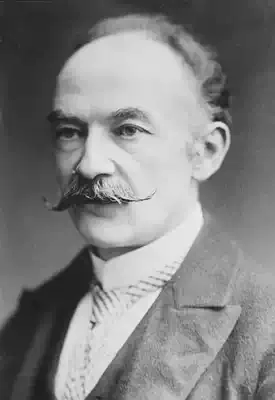
Thomas Hardy
Song of the Soldiers' Wives
Song of the Soldiers' Wives
I
At last! In sight of home again,
Of home again;
No more to range and roam again
As at that bygone time?
No more to go away from us
And stay from us? -
Dawn, hold not long the day from us,
But quicken it to prime!
II
Now all the town shall ring to them,
Shall ring to them,
And we who love them cling to them
And clasp them joyfully;
And cry, "O much we'll do for you
Anew for you,
Dear Loves!--aye, draw and hew for you,
Come back from oversea."
III
Some told us we should meet no more,
Should meet no more;
Should wait, and wish, but greet no more
Your faces round our fires;
That, in a while, uncharily
And drearily
Men gave their lives--even wearily,
Like those whom living tires.
IV
And now you are nearing home again,
Dears, home again;
No more, may be, to roam again
As at that bygone time,
Which took you far away from us
To stay from us;
Dawn, hold not long the day from us,
But quicken it to prime!
I
At last! In sight of home again,
Of home again;
No more to range and roam again
As at that bygone time?
No more to go away from us
And stay from us? -
Dawn, hold not long the day from us,
But quicken it to prime!
II
Now all the town shall ring to them,
Shall ring to them,
And we who love them cling to them
And clasp them joyfully;
And cry, "O much we'll do for you
Anew for you,
Dear Loves!--aye, draw and hew for you,
Come back from oversea."
III
Some told us we should meet no more,
Should meet no more;
Should wait, and wish, but greet no more
Your faces round our fires;
That, in a while, uncharily
And drearily
Men gave their lives--even wearily,
Like those whom living tires.
IV
And now you are nearing home again,
Dears, home again;
No more, may be, to roam again
As at that bygone time,
Which took you far away from us
To stay from us;
Dawn, hold not long the day from us,
But quicken it to prime!
221
Thomas Hardy
Satires of Circumstance in Fifteen Glimpses VIII: In the St
Satires of Circumstance in Fifteen Glimpses VIII: In the St
He enters, and mute on the edge of a chair
Sits a thin-faced lady, a stranger there,
A type of decayed gentility;
And by some small signs he well can guess
That she comes to him almost breakfastless.
"I have called -- I hope I do not err --
I am looking for a purchaser
Of some score volumes of the works
Of eminent divines I own, --
Left by my father -- though it irks
My patience to offer them." And she smiles
As if necessity were unknown;
"But the truth of it is that oftenwhiles
I have wished, as I am fond of art,
To make my rooms a little smart,
And these old books are so in the way."
And lightly still she laughs to him,
As if to sell were a mere gay whim,
And that, to be frank, Life were indeed
To her not vinegar and gall,
But fresh and honey-like; and Need
No household skeleton at all.
He enters, and mute on the edge of a chair
Sits a thin-faced lady, a stranger there,
A type of decayed gentility;
And by some small signs he well can guess
That she comes to him almost breakfastless.
"I have called -- I hope I do not err --
I am looking for a purchaser
Of some score volumes of the works
Of eminent divines I own, --
Left by my father -- though it irks
My patience to offer them." And she smiles
As if necessity were unknown;
"But the truth of it is that oftenwhiles
I have wished, as I am fond of art,
To make my rooms a little smart,
And these old books are so in the way."
And lightly still she laughs to him,
As if to sell were a mere gay whim,
And that, to be frank, Life were indeed
To her not vinegar and gall,
But fresh and honey-like; and Need
No household skeleton at all.
208
Thomas Hardy
San Sebastian
San Sebastian
With Thoughts of Sergeant M---- (Pensioner), who died -
"WHY, Sergeant, stray on the Ivel Way,
As though at home there were spectres rife?
From first to last 'twas a proud career!
And your sunny years with a gracious wife
Have brought you a daughter dear.
"I watched her to-day; a more comely maid,
As she danced in her muslin bowed with blue,
Round a Hintock maypole never gayed."
--"Aye, aye; I watched her this day, too,
As it happens," the Sergeant said.
"My daughter is now," he again began,
"Of just such an age as one I knew
When we of the Line, in the Foot-Guard van,
On an August morning--a chosen few--
Stormed San Sebastian.
"She's a score less three; so about was she--
The maiden I wronged in Peninsular days....
You may prate of your prowess in lusty times,
But as years gnaw inward you blink your bays,
And see too well your crimes!
"We'd stormed it at night, by the vlanker-light
Of burning towers, and the mortar's boom:
We'd topped the breach but had failed to stay,
For our files were misled by the baffling gloom;
And we said we'd storm by day.
"So, out of the trenches, with features set,
On that hot, still morning, in measured pace,
Our column climbed; climbed higher yet,
Past the fauss'bray, scarp, up the curtain-face,
And along the parapet.
"From the batteried hornwork the cannoneers
Hove crashing balls of iron fire;
On the shaking gap mount the volunteers
In files, and as they mount expire
Amid curses, groans, and cheers.
"Five hours did we storm, five hours re-form,
As Death cooled those hot blood pricked on;
Till our cause was helped by a woe within;
They swayed from the summit we'd leapt upon,
And madly we entered in.
"On end for plunder, 'mid rain and thunder
That burst with the lull of our cannonade,
We vamped the streets in the stifling air--
Our hunger unsoothed, our thirst unstayed--
And ransacked the buildings there.
"Down the stony steps of the house-fronts white
We rolled rich puncheons of Spanish grape,
Till at length, with the fire of the wine alight,
I saw at a doorway a fair fresh shape--
A woman, a sylph, or sprite.
"Afeard she fled, and with heated head
I pursued to the chamber she called her own;
--When might is right no qualms deter,
And having her helpless and alone
I wreaked my lust on her.
"She raised her beseeching eyes to me,
And I heard the words of prayer she sent
In her own soft language.... Seemingly
I copied those eyes for my punishment
In begetting the girl you see!
"So, to-day I stand with a God-set brand
Like Cain's, when he wandered from kindred's ken....
I served through the war that made Europe free;
I wived me in peace-year. But, hid from men,
I bear that mark on me.
"And I nightly stray on the Ivel Way
As though at home there were spectres rife;
I delight me not in my proud career;
And 'tis coals of fire that a gracious wife
Should have brought me a daughter dear!"
With Thoughts of Sergeant M---- (Pensioner), who died -
"WHY, Sergeant, stray on the Ivel Way,
As though at home there were spectres rife?
From first to last 'twas a proud career!
And your sunny years with a gracious wife
Have brought you a daughter dear.
"I watched her to-day; a more comely maid,
As she danced in her muslin bowed with blue,
Round a Hintock maypole never gayed."
--"Aye, aye; I watched her this day, too,
As it happens," the Sergeant said.
"My daughter is now," he again began,
"Of just such an age as one I knew
When we of the Line, in the Foot-Guard van,
On an August morning--a chosen few--
Stormed San Sebastian.
"She's a score less three; so about was she--
The maiden I wronged in Peninsular days....
You may prate of your prowess in lusty times,
But as years gnaw inward you blink your bays,
And see too well your crimes!
"We'd stormed it at night, by the vlanker-light
Of burning towers, and the mortar's boom:
We'd topped the breach but had failed to stay,
For our files were misled by the baffling gloom;
And we said we'd storm by day.
"So, out of the trenches, with features set,
On that hot, still morning, in measured pace,
Our column climbed; climbed higher yet,
Past the fauss'bray, scarp, up the curtain-face,
And along the parapet.
"From the batteried hornwork the cannoneers
Hove crashing balls of iron fire;
On the shaking gap mount the volunteers
In files, and as they mount expire
Amid curses, groans, and cheers.
"Five hours did we storm, five hours re-form,
As Death cooled those hot blood pricked on;
Till our cause was helped by a woe within;
They swayed from the summit we'd leapt upon,
And madly we entered in.
"On end for plunder, 'mid rain and thunder
That burst with the lull of our cannonade,
We vamped the streets in the stifling air--
Our hunger unsoothed, our thirst unstayed--
And ransacked the buildings there.
"Down the stony steps of the house-fronts white
We rolled rich puncheons of Spanish grape,
Till at length, with the fire of the wine alight,
I saw at a doorway a fair fresh shape--
A woman, a sylph, or sprite.
"Afeard she fled, and with heated head
I pursued to the chamber she called her own;
--When might is right no qualms deter,
And having her helpless and alone
I wreaked my lust on her.
"She raised her beseeching eyes to me,
And I heard the words of prayer she sent
In her own soft language.... Seemingly
I copied those eyes for my punishment
In begetting the girl you see!
"So, to-day I stand with a God-set brand
Like Cain's, when he wandered from kindred's ken....
I served through the war that made Europe free;
I wived me in peace-year. But, hid from men,
I bear that mark on me.
"And I nightly stray on the Ivel Way
As though at home there were spectres rife;
I delight me not in my proud career;
And 'tis coals of fire that a gracious wife
Should have brought me a daughter dear!"
192
Thomas Hardy
Rome: Building a New Street in the Ancient Quarter.
Rome: Building a New Street in the Ancient Quarter.
These numbered cliffs and gnarls of masonry
Outskeleton Time's central city, Rome;
Whereof each arch, entablature, and dome
Lies bare in all its gaunt anatomy.
And cracking frieze and rotten metope
Express, as though they were an open tome
Top-lined with caustic monitory gnome;
"Dunces, Learn here to spell Humanity!"
And yet within these ruins' very shade
The singing workmen shape and set and join
Their frail new mansion's stuccoed cove and quoin
With no apparent sense that years abrade,
Though each rent wall their feeble works invade
Once shamed all such in power of pier and groin.
These numbered cliffs and gnarls of masonry
Outskeleton Time's central city, Rome;
Whereof each arch, entablature, and dome
Lies bare in all its gaunt anatomy.
And cracking frieze and rotten metope
Express, as though they were an open tome
Top-lined with caustic monitory gnome;
"Dunces, Learn here to spell Humanity!"
And yet within these ruins' very shade
The singing workmen shape and set and join
Their frail new mansion's stuccoed cove and quoin
With no apparent sense that years abrade,
Though each rent wall their feeble works invade
Once shamed all such in power of pier and groin.
208
Thomas Hardy
No Buyers
No Buyers
A Load of brushes and baskets and cradles and chairs
Labours along the street in the rain:
With it a man, a woman, a pony with whiteybrown hairs. --
The man foots in front of the horse with a shambling sway
At a slower tread than a funeral train,
While to a dirge-like tune he chants his wares,
Swinging a Turk's-head brush (in a drum-major's way
When the bandsmen march and play).
A yard from the back of the man is the whiteybrown pony's nose:
He mirrors his master in every item of pace and pose:
He stops when the man stops, without being told,
And seems to be eased by a pause; too plainly he's old,
Indeed, not strength enough shows
To steer the disjointed waggon straight,
Which wriggles left and right in a rambling line,
Deflected thus by its own warp and weight,
And pushing the pony with it in each incline.
The woman walks on the pavement verge,
Parallel to the man:
She wears an apron white and wide in span,
And carries a like Turk's-head, but more in nursing-wise:
Now and then she joins in his dirge,
But as if her thoughts were on distant things,
The rain clams her apron till it clings. --
So, step by step, they move with their merchandize,
And nobody buys.
A Load of brushes and baskets and cradles and chairs
Labours along the street in the rain:
With it a man, a woman, a pony with whiteybrown hairs. --
The man foots in front of the horse with a shambling sway
At a slower tread than a funeral train,
While to a dirge-like tune he chants his wares,
Swinging a Turk's-head brush (in a drum-major's way
When the bandsmen march and play).
A yard from the back of the man is the whiteybrown pony's nose:
He mirrors his master in every item of pace and pose:
He stops when the man stops, without being told,
And seems to be eased by a pause; too plainly he's old,
Indeed, not strength enough shows
To steer the disjointed waggon straight,
Which wriggles left and right in a rambling line,
Deflected thus by its own warp and weight,
And pushing the pony with it in each incline.
The woman walks on the pavement verge,
Parallel to the man:
She wears an apron white and wide in span,
And carries a like Turk's-head, but more in nursing-wise:
Now and then she joins in his dirge,
But as if her thoughts were on distant things,
The rain clams her apron till it clings. --
So, step by step, they move with their merchandize,
And nobody buys.
238
Thomas Hardy
Neutral Tones
Neutral Tones
WE stood by a pond that winter day,
And the sun was white, as though chidden of God,
And a few leaves lay on the starving sod,
--They had fallen from an ash, and were gray.
Your eyes on me were as eyes that rove
Over tedious riddles solved years ago;
And some words played between us to and fro--
On which lost the more by our love.
The smile on your mouth was the deadest thing
Alive enough to have strength to die;
And a grin of bitterness swept thereby
Like an ominous bird a-wing....
Since then, keen lessons that love deceives,
And wrings with wrong, have shaped to me
Your face, and the God-curst sun, and a tree,
And a pond edged with grayish leaves.
WE stood by a pond that winter day,
And the sun was white, as though chidden of God,
And a few leaves lay on the starving sod,
--They had fallen from an ash, and were gray.
Your eyes on me were as eyes that rove
Over tedious riddles solved years ago;
And some words played between us to and fro--
On which lost the more by our love.
The smile on your mouth was the deadest thing
Alive enough to have strength to die;
And a grin of bitterness swept thereby
Like an ominous bird a-wing....
Since then, keen lessons that love deceives,
And wrings with wrong, have shaped to me
Your face, and the God-curst sun, and a tree,
And a pond edged with grayish leaves.
215
Thomas Hardy
Mute Opinion
Mute Opinion
I
I traversed a dominion
Whose spokesmen spake out strong
Their purpose and opinion
Through pulpit, press, and song.
I scarce had means to note there
A large-eyed few, and dumb,
Who thought not as those thought there
That stirred the heat and hum.
II
When, grown a Shade, beholding
That land in lifetime trode,
To learn if its unfolding
Fulfilled its clamoured code,
I saw, in web unbroken,
Its history outwrought
Not as the loud had spoken,
But as the mute had thought.
I
I traversed a dominion
Whose spokesmen spake out strong
Their purpose and opinion
Through pulpit, press, and song.
I scarce had means to note there
A large-eyed few, and dumb,
Who thought not as those thought there
That stirred the heat and hum.
II
When, grown a Shade, beholding
That land in lifetime trode,
To learn if its unfolding
Fulfilled its clamoured code,
I saw, in web unbroken,
Its history outwrought
Not as the loud had spoken,
But as the mute had thought.
190
Thomas Hardy
Mad Judy
Mad Judy
When the hamlet hailed a birth
Judy used to cry:
When she heard our christening mirth
She would kneel and sigh.
She was crazed, we knew, and we
Humoured her infirmity.
When the daughters and the sons
Gathered them to wed,
And we like-intending ones
Danced till dawn was red,
She would rock and mutter, "More
Comers to this stony shore!"
When old Headsman Death laid hands
On a babe or twain,
She would feast, and by her brands
Sing her songs again.
What she liked we let her do,
Judy was insane, we knew.
When the hamlet hailed a birth
Judy used to cry:
When she heard our christening mirth
She would kneel and sigh.
She was crazed, we knew, and we
Humoured her infirmity.
When the daughters and the sons
Gathered them to wed,
And we like-intending ones
Danced till dawn was red,
She would rock and mutter, "More
Comers to this stony shore!"
When old Headsman Death laid hands
On a babe or twain,
She would feast, and by her brands
Sing her songs again.
What she liked we let her do,
Judy was insane, we knew.
237
Thomas Hardy
Lines On The Loss Of The Titanic
Lines On The Loss Of The "Titanic"
In a solitude of the sea
Deep from human vanity,
And the Pride of Life that planned her, stilly couches she.
Steel chambers, late the pyres
Of her salamandrine fires,
Cold currents thrid, and turn to rhythmic tidal lyres.
Over the mirrors meant
To glass the opulent
The sea-worm crawls -- grotesque, slimed, dumb, indifferent.
Jewels in joy designed
To ravish the sensuous mind
Lie lightless, all their sparkles bleared and black and blind.
Dim moon-eyed fishes near
Gaze at the gilded gear
And query: "What does this vaingloriousness down here?" ...
Well: while was fashioning
This creature of cleaving wing,
The Immanent Will that stirs and urges everything
Prepared a sinister mate
For her -- so gaily great --
A Shape of Ice, for the time far and dissociate.
And as the smart ship grew
In stature, grace, and hue,
In shadowy silent distance grew the Iceberg too.
Alien they seemed to be;
No mortal eye could see
The intimate welding of their later history,
Or sign that they were bent
By paths coincident
On being anon twin halves of one august event,
Till the Spinner of the Years
Said "Now!" And each one hears,
And consummation comes, and jars two hemispheres.
In a solitude of the sea
Deep from human vanity,
And the Pride of Life that planned her, stilly couches she.
Steel chambers, late the pyres
Of her salamandrine fires,
Cold currents thrid, and turn to rhythmic tidal lyres.
Over the mirrors meant
To glass the opulent
The sea-worm crawls -- grotesque, slimed, dumb, indifferent.
Jewels in joy designed
To ravish the sensuous mind
Lie lightless, all their sparkles bleared and black and blind.
Dim moon-eyed fishes near
Gaze at the gilded gear
And query: "What does this vaingloriousness down here?" ...
Well: while was fashioning
This creature of cleaving wing,
The Immanent Will that stirs and urges everything
Prepared a sinister mate
For her -- so gaily great --
A Shape of Ice, for the time far and dissociate.
And as the smart ship grew
In stature, grace, and hue,
In shadowy silent distance grew the Iceberg too.
Alien they seemed to be;
No mortal eye could see
The intimate welding of their later history,
Or sign that they were bent
By paths coincident
On being anon twin halves of one august event,
Till the Spinner of the Years
Said "Now!" And each one hears,
And consummation comes, and jars two hemispheres.
370
Thomas Hardy
Lausanne, In Gibbon's Old Garden: - p.m.
Lausanne, In Gibbon's Old Garden: - p.m.
(The th anniversary of the completion of the "Decline and Fall" at the same hour
and place)
A spirit seems to pass,
Formal in pose, but grave and grand withal:
He contemplates a volume stout and tall,
And far lamps fleck him through the thin acacias.
Anon the book is closed,
With "It is finished!" And at the alley's end
He turns, and soon on me his glances bend;
And, as from earth, comes speech--small, muted, yet composed.
"How fares the Truth now?--Ill?
--Do pens but slily further her advance?
May one not speed her but in phrase askance?
Do scribes aver the Comic to be Reverend still?
"Still rule those minds on earth
At whom sage Milton's wormwood words were hurled:
'Truth like a bastard comes into the world
Never without ill-fame to him who gives her birth'?"
(The th anniversary of the completion of the "Decline and Fall" at the same hour
and place)
A spirit seems to pass,
Formal in pose, but grave and grand withal:
He contemplates a volume stout and tall,
And far lamps fleck him through the thin acacias.
Anon the book is closed,
With "It is finished!" And at the alley's end
He turns, and soon on me his glances bend;
And, as from earth, comes speech--small, muted, yet composed.
"How fares the Truth now?--Ill?
--Do pens but slily further her advance?
May one not speed her but in phrase askance?
Do scribes aver the Comic to be Reverend still?
"Still rule those minds on earth
At whom sage Milton's wormwood words were hurled:
'Truth like a bastard comes into the world
Never without ill-fame to him who gives her birth'?"
198
Thomas Hardy
Lausanne, In Gibbon's Old Garden: - p.m.
Lausanne, In Gibbon's Old Garden: - p.m.
(The th anniversary of the completion of the "Decline and Fall" at the same hour
and place)
A spirit seems to pass,
Formal in pose, but grave and grand withal:
He contemplates a volume stout and tall,
And far lamps fleck him through the thin acacias.
Anon the book is closed,
With "It is finished!" And at the alley's end
He turns, and soon on me his glances bend;
And, as from earth, comes speech--small, muted, yet composed.
"How fares the Truth now?--Ill?
--Do pens but slily further her advance?
May one not speed her but in phrase askance?
Do scribes aver the Comic to be Reverend still?
"Still rule those minds on earth
At whom sage Milton's wormwood words were hurled:
'Truth like a bastard comes into the world
Never without ill-fame to him who gives her birth'?"
(The th anniversary of the completion of the "Decline and Fall" at the same hour
and place)
A spirit seems to pass,
Formal in pose, but grave and grand withal:
He contemplates a volume stout and tall,
And far lamps fleck him through the thin acacias.
Anon the book is closed,
With "It is finished!" And at the alley's end
He turns, and soon on me his glances bend;
And, as from earth, comes speech--small, muted, yet composed.
"How fares the Truth now?--Ill?
--Do pens but slily further her advance?
May one not speed her but in phrase askance?
Do scribes aver the Comic to be Reverend still?
"Still rule those minds on earth
At whom sage Milton's wormwood words were hurled:
'Truth like a bastard comes into the world
Never without ill-fame to him who gives her birth'?"
198
Thomas Hardy
In Time Of The Breaking Of Nations
In Time Of "The Breaking Of Nations"
I
Only a man harrowing clods
In a slow silent walk
With an old horse that stumbles and nods
Half asleep as they stalk.
II
Only thin smoke without flame
From the heaps of couch-grass;
Yet this will go onwards the same
Though Dynasties pass.
III
Yonder a maid and her wight
Go whispering by:
War's annals will cloud into night
Ere their story die.
I
Only a man harrowing clods
In a slow silent walk
With an old horse that stumbles and nods
Half asleep as they stalk.
II
Only thin smoke without flame
From the heaps of couch-grass;
Yet this will go onwards the same
Though Dynasties pass.
III
Yonder a maid and her wight
Go whispering by:
War's annals will cloud into night
Ere their story die.
219
Thomas Hardy
In the Old Theatre, Fiesole (April, )
In the Old Theatre, Fiesole (April, )
I traced the Circus whose gray stones incline
Where Rome and dim Etruria interjoin,
Till came a child who showed an ancient coin
That bore the image of a Constantine.
She lightly passed; nor did she once opine
How, better than all books, she had raised for me
In swift perspective Europe's history
Through the vast years of Caesar's sceptred line.
For in my distant plot of English loam
'Twas but to delve, and straightway there to find
Coins of like impress. As with one half blind
Whom common simples cure, her act flashed home
In that mute moment to my opened mind
The power, the pride, the reach of perished Rome.
I traced the Circus whose gray stones incline
Where Rome and dim Etruria interjoin,
Till came a child who showed an ancient coin
That bore the image of a Constantine.
She lightly passed; nor did she once opine
How, better than all books, she had raised for me
In swift perspective Europe's history
Through the vast years of Caesar's sceptred line.
For in my distant plot of English loam
'Twas but to delve, and straightway there to find
Coins of like impress. As with one half blind
Whom common simples cure, her act flashed home
In that mute moment to my opened mind
The power, the pride, the reach of perished Rome.
183
Thomas Hardy
In a Wood
In a Wood
In a Wood
Pale beech and pine-tree blue,
Set in one clay,
Bough to bough cannot you
Bide out your day?
When the rains skim and skip,
Why mar sweet comradeship,
Blighting with poison-drip
Neighborly spray?
Heart-halt and spirit-lame,
City-opprest,
Unto this wood I came
As to a nest;
Dreaming that sylvan peace
Offered the harrowed ease—
Nature a soft release
From men’s unrest.
But, having entered in,
Great growths and small
Show them to men akin—
Combatants all!
Sycamore shoulders oak,
Bines the slim sapling yoke,
Ivy-spun halters choke
Elms stout and tall.
Touches from ash, O wych,
Sting you like scorn!
You, too, brave hollies, twitch
Sidelong from thorn.
Even the rank poplars bear
Illy a rival’s air,
Cankering in black despair
If overborne.
Since, then, no grace I find
Taught me of trees,
Turn I back to my kind,
Worthy as these.
There at least smiles abound,
There discourse trills around,
There, now and then, are found
Life-loyalties.
In a Wood
Pale beech and pine-tree blue,
Set in one clay,
Bough to bough cannot you
Bide out your day?
When the rains skim and skip,
Why mar sweet comradeship,
Blighting with poison-drip
Neighborly spray?
Heart-halt and spirit-lame,
City-opprest,
Unto this wood I came
As to a nest;
Dreaming that sylvan peace
Offered the harrowed ease—
Nature a soft release
From men’s unrest.
But, having entered in,
Great growths and small
Show them to men akin—
Combatants all!
Sycamore shoulders oak,
Bines the slim sapling yoke,
Ivy-spun halters choke
Elms stout and tall.
Touches from ash, O wych,
Sting you like scorn!
You, too, brave hollies, twitch
Sidelong from thorn.
Even the rank poplars bear
Illy a rival’s air,
Cankering in black despair
If overborne.
Since, then, no grace I find
Taught me of trees,
Turn I back to my kind,
Worthy as these.
There at least smiles abound,
There discourse trills around,
There, now and then, are found
Life-loyalties.
258
Thomas Hardy
Her Dilemma
Her Dilemma
THE two were silent in a sunless church,
Whose mildewed walls, uneven paving-stones,
And wasted carvings passed antique research;
And nothing broke the clock's dull monotones.
Leaning against a wormy poppy-head,
So wan and worn that he could scarcely stand,
--For he was soon to die,--he softly said,
"Tell me you love me!"--holding hard her hand.
She would have given a world to breathe "yes" truly,
So much his life seemed hanging on her mind,
And hence she lied, her heart persuaded throughly,
'Twas worth her soul to be a moment kind.
But the sad need thereof, his nearing death,
So mocked humanity that she shamed to prize
A world conditioned thus, or care for breath
Where Nature such dilemmas could devise.
THE two were silent in a sunless church,
Whose mildewed walls, uneven paving-stones,
And wasted carvings passed antique research;
And nothing broke the clock's dull monotones.
Leaning against a wormy poppy-head,
So wan and worn that he could scarcely stand,
--For he was soon to die,--he softly said,
"Tell me you love me!"--holding hard her hand.
She would have given a world to breathe "yes" truly,
So much his life seemed hanging on her mind,
And hence she lied, her heart persuaded throughly,
'Twas worth her soul to be a moment kind.
But the sad need thereof, his nearing death,
So mocked humanity that she shamed to prize
A world conditioned thus, or care for breath
Where Nature such dilemmas could devise.
276
Thomas Hardy
God-Forgotten
God-Forgotten
I towered far, and lo! I stood within
The presence of the Lord Most High,
Sent thither by the sons of earth, to win
Some answer to their cry.
--"The Earth, say'st thou? The Human race?
By Me created? Sad its lot?
Nay: I have no remembrance of such place:
Such world I fashioned not." -
--"O Lord, forgive me when I say
Thou spak'st the word, and mad'st it all." -
"The Earth of men--let me bethink me . . . Yea!
I dimly do recall
"Some tiny sphere I built long back
(Mid millions of such shapes of mine)
So named . . . It perished, surely--not a wrack
Remaining, or a sign?
"It lost my interest from the first,
My aims therefor succeeding ill;
Haply it died of doing as it durst?" -
"Lord, it existeth still." -
"Dark, then, its life! For not a cry
Of aught it bears do I now hear;
Of its own act the threads were snapt whereby
Its plaints had reached mine ear.
"It used to ask for gifts of good,
Till came its severance self-entailed,
When sudden silence on that side ensued,
And has till now prevailed.
"All other orbs have kept in touch;
Their voicings reach me speedily:
Thy people took upon them overmuch
In sundering them from me!
"And it is strange--though sad enough -
Earth's race should think that one whose call
Frames, daily, shining spheres of flawless stuff
Must heed their tainted ball! . . .
"But say'st thou 'tis by pangs distraught,
And strife, and silent suffering? -
Deep grieved am I that injury should be wrought
Even on so poor a thing!
"Thou should'st have learnt that Not to Mend
For Me could mean but Not to Know:
Hence, Messengers! and straightway put an end
To what men undergo." . . .
Homing at dawn, I thought to see
One of the Messengers standing by.
- Oh, childish thought! . . . Yet oft it comes to me
When trouble hovers nigh.
I towered far, and lo! I stood within
The presence of the Lord Most High,
Sent thither by the sons of earth, to win
Some answer to their cry.
--"The Earth, say'st thou? The Human race?
By Me created? Sad its lot?
Nay: I have no remembrance of such place:
Such world I fashioned not." -
--"O Lord, forgive me when I say
Thou spak'st the word, and mad'st it all." -
"The Earth of men--let me bethink me . . . Yea!
I dimly do recall
"Some tiny sphere I built long back
(Mid millions of such shapes of mine)
So named . . . It perished, surely--not a wrack
Remaining, or a sign?
"It lost my interest from the first,
My aims therefor succeeding ill;
Haply it died of doing as it durst?" -
"Lord, it existeth still." -
"Dark, then, its life! For not a cry
Of aught it bears do I now hear;
Of its own act the threads were snapt whereby
Its plaints had reached mine ear.
"It used to ask for gifts of good,
Till came its severance self-entailed,
When sudden silence on that side ensued,
And has till now prevailed.
"All other orbs have kept in touch;
Their voicings reach me speedily:
Thy people took upon them overmuch
In sundering them from me!
"And it is strange--though sad enough -
Earth's race should think that one whose call
Frames, daily, shining spheres of flawless stuff
Must heed their tainted ball! . . .
"But say'st thou 'tis by pangs distraught,
And strife, and silent suffering? -
Deep grieved am I that injury should be wrought
Even on so poor a thing!
"Thou should'st have learnt that Not to Mend
For Me could mean but Not to Know:
Hence, Messengers! and straightway put an end
To what men undergo." . . .
Homing at dawn, I thought to see
One of the Messengers standing by.
- Oh, childish thought! . . . Yet oft it comes to me
When trouble hovers nigh.
336
Thomas Hardy
Genoa and the Mediterranean.
Genoa and the Mediterranean.
O epic-famed, god-haunted Central Sea,
Heave careless of the deep wrong done to thee
When from Torino's track I saw thy face first flash on me.
And multimarbled Genova the Proud,
Gleam all unconscious how, wide-lipped, up-browed,
I first beheld thee clad--not as the Beauty but the Dowd.
Out from a deep-delved way my vision lit
On housebacks pink, green, ochreous--where a slit
Shoreward 'twixt row and row revealed the classic blue through it.
And thereacross waved fishwives' high-hung smocks,
Chrome kerchiefs, scarlet hose, darned underfrocks;
Since when too oft my dreams of thee, O Queen, that frippery mocks:
Whereat I grieve, Superba! . . . Afterhours
Within Palazzo Doria's orange bowers
Went far to mend these marrings of thy soul-subliming powers.
But, Queen, such squalid undress none should see,
Those dream-endangering eyewounds no more be
Where lovers first behold thy form in pilgrimage to thee.
O epic-famed, god-haunted Central Sea,
Heave careless of the deep wrong done to thee
When from Torino's track I saw thy face first flash on me.
And multimarbled Genova the Proud,
Gleam all unconscious how, wide-lipped, up-browed,
I first beheld thee clad--not as the Beauty but the Dowd.
Out from a deep-delved way my vision lit
On housebacks pink, green, ochreous--where a slit
Shoreward 'twixt row and row revealed the classic blue through it.
And thereacross waved fishwives' high-hung smocks,
Chrome kerchiefs, scarlet hose, darned underfrocks;
Since when too oft my dreams of thee, O Queen, that frippery mocks:
Whereat I grieve, Superba! . . . Afterhours
Within Palazzo Doria's orange bowers
Went far to mend these marrings of thy soul-subliming powers.
But, Queen, such squalid undress none should see,
Those dream-endangering eyewounds no more be
Where lovers first behold thy form in pilgrimage to thee.
211
Thomas Hardy
Fragment
Fragment
At last I entered a long dark gallery,
Catacomb-lined; and ranged at the side
Were the bodies of men from far and wide
Who, motion past, were nevertheless not dead.
"The sense of waiting here strikes strong;
Everyone's waiting, waiting, it seems to me;
What are you waiting for so long? --
What is to happen?" I said.
"O we are waiting for one called God," said they,
"(Though by some the Will, or Force, or Laws;
And, vaguely, by some, the Ultimate Cause;)
Waiting for him to see us before we are clay.
Yes; waiting, waiting, for God to know it." ...
"To know what?" questioned I.
"To know how things have been going on earth and below it:
It is clear he must know some day."
I thereon asked them why.
"Since he made us humble pioneers
Of himself in consciousness of Life's tears,
It needs no mighty prophecy
To tell that what he could mindlessly show
His creatures, he himself will know.
"By some still close-cowled mystery
We have reached feeling faster than he,
But he will overtake us anon,
If the world goes on."
At last I entered a long dark gallery,
Catacomb-lined; and ranged at the side
Were the bodies of men from far and wide
Who, motion past, were nevertheless not dead.
"The sense of waiting here strikes strong;
Everyone's waiting, waiting, it seems to me;
What are you waiting for so long? --
What is to happen?" I said.
"O we are waiting for one called God," said they,
"(Though by some the Will, or Force, or Laws;
And, vaguely, by some, the Ultimate Cause;)
Waiting for him to see us before we are clay.
Yes; waiting, waiting, for God to know it." ...
"To know what?" questioned I.
"To know how things have been going on earth and below it:
It is clear he must know some day."
I thereon asked them why.
"Since he made us humble pioneers
Of himself in consciousness of Life's tears,
It needs no mighty prophecy
To tell that what he could mindlessly show
His creatures, he himself will know.
"By some still close-cowled mystery
We have reached feeling faster than he,
But he will overtake us anon,
If the world goes on."
249
Thomas Hardy
Embarcation (Southampton Docks: October, )
Embarcation (Southampton Docks: October, )
Here, where Vespasian's legions struck the sands,
And Cerdic with his Saxons entered in,
And Henry's army leapt afloat to win
Convincing triumphs over neighbour lands,
Vaster battalions press for further strands,
To argue in the self-same bloody mode
Which this late age of thought, and pact, and code,
Still fails to mend.--Now deckward tramp the bands,
Yellow as autumn leaves, alive as spring;
And as each host draws out upon the sea
Beyond which lies the tragical To-be,
None dubious of the cause, none murmuring,
Wives, sisters, parents, wave white hands and smile,
As if they knew not that they weep the while.
Here, where Vespasian's legions struck the sands,
And Cerdic with his Saxons entered in,
And Henry's army leapt afloat to win
Convincing triumphs over neighbour lands,
Vaster battalions press for further strands,
To argue in the self-same bloody mode
Which this late age of thought, and pact, and code,
Still fails to mend.--Now deckward tramp the bands,
Yellow as autumn leaves, alive as spring;
And as each host draws out upon the sea
Beyond which lies the tragical To-be,
None dubious of the cause, none murmuring,
Wives, sisters, parents, wave white hands and smile,
As if they knew not that they weep the while.
179
Thomas Hardy
Embarcation (Southampton Docks: October, )
Embarcation (Southampton Docks: October, )
Here, where Vespasian's legions struck the sands,
And Cerdic with his Saxons entered in,
And Henry's army leapt afloat to win
Convincing triumphs over neighbour lands,
Vaster battalions press for further strands,
To argue in the self-same bloody mode
Which this late age of thought, and pact, and code,
Still fails to mend.--Now deckward tramp the bands,
Yellow as autumn leaves, alive as spring;
And as each host draws out upon the sea
Beyond which lies the tragical To-be,
None dubious of the cause, none murmuring,
Wives, sisters, parents, wave white hands and smile,
As if they knew not that they weep the while.
Here, where Vespasian's legions struck the sands,
And Cerdic with his Saxons entered in,
And Henry's army leapt afloat to win
Convincing triumphs over neighbour lands,
Vaster battalions press for further strands,
To argue in the self-same bloody mode
Which this late age of thought, and pact, and code,
Still fails to mend.--Now deckward tramp the bands,
Yellow as autumn leaves, alive as spring;
And as each host draws out upon the sea
Beyond which lies the tragical To-be,
None dubious of the cause, none murmuring,
Wives, sisters, parents, wave white hands and smile,
As if they knew not that they weep the while.
179
Thomas Hardy
Doom and She
Doom and She
I
There dwells a mighty pair -
Slow, statuesque, intense -
Amid the vague Immense:
None can their chronicle declare,
Nor why they be, nor whence.
,h II
Mother of all things made,
Matchless in artistry,
Unlit with sight is she. -
And though her ever well-obeyed
Vacant of feeling he.
III
The Matron mildly asks -
A throb in every word -
"Our clay-made creatures, lord,
How fare they in their mortal tasks
Upon Earth's bounded bord?
IV
"The fate of those I bear,
Dear lord, pray turn and view,
And notify me true;
Shapings that eyelessly I dare
Maybe I would undo.
V
"Sometimes from lairs of life
Methinks I catch a groan,
Or multitudinous moan,
As though I had schemed a world of strife,
Working by touch alone."
VI
"World-weaver!" he replies,
"I scan all thy domain;
But since nor joy nor pain
Doth my clear substance recognize,
I read thy realms in vain.
VII
"World-weaver! what IS Grief?
And what are Right, and Wrong,
And Feeling, that belong
To creatures all who owe thee fief?
What worse is Weak than Strong?" . . .
VIII
--Unlightened, curious, meek,
She broods in sad surmise . . .
--Some say they have heard her sighs
On Alpine height or Polar peak
When the night tempests rise.
I
There dwells a mighty pair -
Slow, statuesque, intense -
Amid the vague Immense:
None can their chronicle declare,
Nor why they be, nor whence.
,h II
Mother of all things made,
Matchless in artistry,
Unlit with sight is she. -
And though her ever well-obeyed
Vacant of feeling he.
III
The Matron mildly asks -
A throb in every word -
"Our clay-made creatures, lord,
How fare they in their mortal tasks
Upon Earth's bounded bord?
IV
"The fate of those I bear,
Dear lord, pray turn and view,
And notify me true;
Shapings that eyelessly I dare
Maybe I would undo.
V
"Sometimes from lairs of life
Methinks I catch a groan,
Or multitudinous moan,
As though I had schemed a world of strife,
Working by touch alone."
VI
"World-weaver!" he replies,
"I scan all thy domain;
But since nor joy nor pain
Doth my clear substance recognize,
I read thy realms in vain.
VII
"World-weaver! what IS Grief?
And what are Right, and Wrong,
And Feeling, that belong
To creatures all who owe thee fief?
What worse is Weak than Strong?" . . .
VIII
--Unlightened, curious, meek,
She broods in sad surmise . . .
--Some say they have heard her sighs
On Alpine height or Polar peak
When the night tempests rise.
273
Thomas Hardy
Channel Firing
Channel Firing
That night your great guns, unawares,
Shook all our coffins as we lay,
And broke the chancel window-squares,
We thought it was the judgement day
And sat upright. While drearisome
Arose the howl of wakened hounds:
The mouse let fall the altar-crumb,
The worms drew back into the mounds,
The glebe cow drooled. Till God called, "No;
It's gunnery practice out at sea
Just as before you went below;
The world is as it used to be:
"All nations striving strong to make
Red war yet redder. Mad as hatters
They do more for Christés sake
Than you who are helpless in such matters.
"That this is not the judgment hour
For some of them's a blessed thing,
For if it were they'd have to scour
Hells floor for so much threatening...
"Ha, ha. It will be warmer when
I blow the trumpet (if indeed
I ever do; for you are men,
And rest eternal sorely need)."
So down we lay again. "I wonder,
Will the world ever saner be,"
Said one, "than when He sent us under
In our indifferent century!"
And many a skeleton shook his head.
"Instead of preaching forty year,"
My neighbor Oarson Thirdly said,
"I wish I had stuck to pipes and beer."
Again the guns disturbed the hour,
Roaring their readiness to avenge,
As far inland as Stourton Tower,
And Camelot, and starlit Stonehenge.
That night your great guns, unawares,
Shook all our coffins as we lay,
And broke the chancel window-squares,
We thought it was the judgement day
And sat upright. While drearisome
Arose the howl of wakened hounds:
The mouse let fall the altar-crumb,
The worms drew back into the mounds,
The glebe cow drooled. Till God called, "No;
It's gunnery practice out at sea
Just as before you went below;
The world is as it used to be:
"All nations striving strong to make
Red war yet redder. Mad as hatters
They do more for Christés sake
Than you who are helpless in such matters.
"That this is not the judgment hour
For some of them's a blessed thing,
For if it were they'd have to scour
Hells floor for so much threatening...
"Ha, ha. It will be warmer when
I blow the trumpet (if indeed
I ever do; for you are men,
And rest eternal sorely need)."
So down we lay again. "I wonder,
Will the world ever saner be,"
Said one, "than when He sent us under
In our indifferent century!"
And many a skeleton shook his head.
"Instead of preaching forty year,"
My neighbor Oarson Thirdly said,
"I wish I had stuck to pipes and beer."
Again the guns disturbed the hour,
Roaring their readiness to avenge,
As far inland as Stourton Tower,
And Camelot, and starlit Stonehenge.
248
Thomas Hardy
Channel Firing
Channel Firing
That night your great guns, unawares,
Shook all our coffins as we lay,
And broke the chancel window-squares,
We thought it was the judgement day
And sat upright. While drearisome
Arose the howl of wakened hounds:
The mouse let fall the altar-crumb,
The worms drew back into the mounds,
The glebe cow drooled. Till God called, "No;
It's gunnery practice out at sea
Just as before you went below;
The world is as it used to be:
"All nations striving strong to make
Red war yet redder. Mad as hatters
They do more for Christés sake
Than you who are helpless in such matters.
"That this is not the judgment hour
For some of them's a blessed thing,
For if it were they'd have to scour
Hells floor for so much threatening...
"Ha, ha. It will be warmer when
I blow the trumpet (if indeed
I ever do; for you are men,
And rest eternal sorely need)."
So down we lay again. "I wonder,
Will the world ever saner be,"
Said one, "than when He sent us under
In our indifferent century!"
And many a skeleton shook his head.
"Instead of preaching forty year,"
My neighbor Oarson Thirdly said,
"I wish I had stuck to pipes and beer."
Again the guns disturbed the hour,
Roaring their readiness to avenge,
As far inland as Stourton Tower,
And Camelot, and starlit Stonehenge.
That night your great guns, unawares,
Shook all our coffins as we lay,
And broke the chancel window-squares,
We thought it was the judgement day
And sat upright. While drearisome
Arose the howl of wakened hounds:
The mouse let fall the altar-crumb,
The worms drew back into the mounds,
The glebe cow drooled. Till God called, "No;
It's gunnery practice out at sea
Just as before you went below;
The world is as it used to be:
"All nations striving strong to make
Red war yet redder. Mad as hatters
They do more for Christés sake
Than you who are helpless in such matters.
"That this is not the judgment hour
For some of them's a blessed thing,
For if it were they'd have to scour
Hells floor for so much threatening...
"Ha, ha. It will be warmer when
I blow the trumpet (if indeed
I ever do; for you are men,
And rest eternal sorely need)."
So down we lay again. "I wonder,
Will the world ever saner be,"
Said one, "than when He sent us under
In our indifferent century!"
And many a skeleton shook his head.
"Instead of preaching forty year,"
My neighbor Oarson Thirdly said,
"I wish I had stuck to pipes and beer."
Again the guns disturbed the hour,
Roaring their readiness to avenge,
As far inland as Stourton Tower,
And Camelot, and starlit Stonehenge.
248
Thomas Hardy
Departure (Southampton Docks: October, )
Departure (Southampton Docks: October, )
While the far farewell music thins and fails,
And the broad bottoms rip the bearing brine -
All smalling slowly to the gray sea line -
And each significant red smoke-shaft pales,
Keen sense of severance everywhere prevails,
Which shapes the late long tramp of mounting men
To seeming words that ask and ask again:
"How long, O striving Teutons, Slavs, and Gaels
Must your wroth reasonings trade on lives like these,
That are as puppets in a playing hand? -
When shall the saner softer polities
Whereof we dream, have play in each proud land,
And patriotism, grown Godlike, scorn to stand
Bondslave to realms, but circle earth and seas?"
While the far farewell music thins and fails,
And the broad bottoms rip the bearing brine -
All smalling slowly to the gray sea line -
And each significant red smoke-shaft pales,
Keen sense of severance everywhere prevails,
Which shapes the late long tramp of mounting men
To seeming words that ask and ask again:
"How long, O striving Teutons, Slavs, and Gaels
Must your wroth reasonings trade on lives like these,
That are as puppets in a playing hand? -
When shall the saner softer polities
Whereof we dream, have play in each proud land,
And patriotism, grown Godlike, scorn to stand
Bondslave to realms, but circle earth and seas?"
200