

Poems in this topic
Society and the World
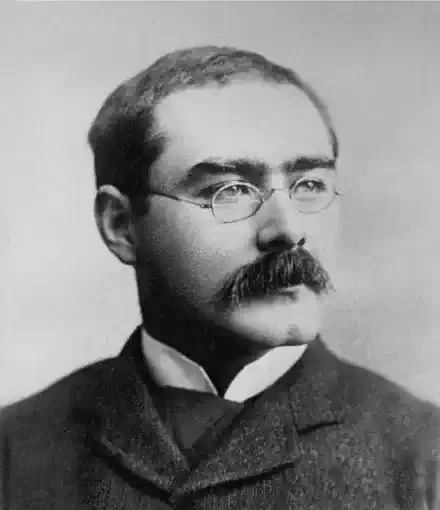
Rudyard Kipling
The Jacket
The Jacket
Through the Plagues of Egyp' we was chasin' Arabi,
Gettin' down an' shovin' in the sun;
An' you might 'ave called us dirty, an' you might ha' called us dry,
An' you might 'ave 'eard us talkin' at the gun.
But the Captain 'ad 'is jacket, an' the jacket it was new --
('Orse Gunners, listen to my song!)
An' the wettin' of the jacket is the proper thing to do,
Nor we didn't keep 'im waitin' very long.
One day they gave us orders for to shell a sand redoubt,
Loadin' down the axle-arms with case;
But the Captain knew 'is dooty, an' he took the crackers out
An' he put some proper liquor in its place.
An' the Captain saw the shrapnel, which is six-an'-thirty clear.
('Orse Gunners, listen to my song!)
"Will you draw the weight," sez 'e, "or will you draw the beer?"
An' we didn't keep 'im waitin' very long.
~For the Captain, etc.~
Then we trotted gentle, not to break the bloomin' glass,
Though the Arabites 'ad all their ranges marked;
But we dursn't 'ardly gallop, for the most was bottled Bass,
An' we'd dreamed of it since we was disembarked:
So we fired economic with the shells we 'ad in 'and,
('Orse Gunners, listen to my song!)
But the beggars under cover 'ad the impidence to stand,
An' we couldn't keep 'em waitin' very long.
~And the Captain, etc.~
So we finished 'arf the liquor (an' the Captain took champagne),
An' the Arabites was shootin' all the while;
An' we left our wounded 'appy with the empties on the plain,
An' we used the bloomin' guns for pro-jec-tile!
We limbered up an' galloped -- there were nothin' else to do --
('Orse Gunners, listen to my song!)
An' the Battery came a-boundin' like a boundin' kangaroo,
But they didn't watch us comin' very long.
~As the Captain, etc.~
We was goin' most extended -- we was drivin' very fine,
An' the Arabites were loosin' 'igh an' wide,
Till the Captain took the glassy with a rattlin' right incline,
An' we dropped upon their 'eads the other side.
Then we give 'em quarter -- such as 'adn't up and cut,
('Orse Gunners, listen to my song!)
An' the Captain stood a limberful of fizzy -- somethin' Brutt,
But we didn't leave it fizzing very long.
~For the Captain, etc.~
We might ha' been court-martialled, but it all come out all right
When they signalled us to join the main command.
There was every round expended, there was every gunner tight,
An' the Captain waved a corkscrew in 'is 'and.
~But the Captain 'ad 'is jacket, etc.~
Through the Plagues of Egyp' we was chasin' Arabi,
Gettin' down an' shovin' in the sun;
An' you might 'ave called us dirty, an' you might ha' called us dry,
An' you might 'ave 'eard us talkin' at the gun.
But the Captain 'ad 'is jacket, an' the jacket it was new --
('Orse Gunners, listen to my song!)
An' the wettin' of the jacket is the proper thing to do,
Nor we didn't keep 'im waitin' very long.
One day they gave us orders for to shell a sand redoubt,
Loadin' down the axle-arms with case;
But the Captain knew 'is dooty, an' he took the crackers out
An' he put some proper liquor in its place.
An' the Captain saw the shrapnel, which is six-an'-thirty clear.
('Orse Gunners, listen to my song!)
"Will you draw the weight," sez 'e, "or will you draw the beer?"
An' we didn't keep 'im waitin' very long.
~For the Captain, etc.~
Then we trotted gentle, not to break the bloomin' glass,
Though the Arabites 'ad all their ranges marked;
But we dursn't 'ardly gallop, for the most was bottled Bass,
An' we'd dreamed of it since we was disembarked:
So we fired economic with the shells we 'ad in 'and,
('Orse Gunners, listen to my song!)
But the beggars under cover 'ad the impidence to stand,
An' we couldn't keep 'em waitin' very long.
~And the Captain, etc.~
So we finished 'arf the liquor (an' the Captain took champagne),
An' the Arabites was shootin' all the while;
An' we left our wounded 'appy with the empties on the plain,
An' we used the bloomin' guns for pro-jec-tile!
We limbered up an' galloped -- there were nothin' else to do --
('Orse Gunners, listen to my song!)
An' the Battery came a-boundin' like a boundin' kangaroo,
But they didn't watch us comin' very long.
~As the Captain, etc.~
We was goin' most extended -- we was drivin' very fine,
An' the Arabites were loosin' 'igh an' wide,
Till the Captain took the glassy with a rattlin' right incline,
An' we dropped upon their 'eads the other side.
Then we give 'em quarter -- such as 'adn't up and cut,
('Orse Gunners, listen to my song!)
An' the Captain stood a limberful of fizzy -- somethin' Brutt,
But we didn't leave it fizzing very long.
~For the Captain, etc.~
We might ha' been court-martialled, but it all come out all right
When they signalled us to join the main command.
There was every round expended, there was every gunner tight,
An' the Captain waved a corkscrew in 'is 'and.
~But the Captain 'ad 'is jacket, etc.~
493
Rudyard Kipling
The Jacket
The Jacket
Through the Plagues of Egyp' we was chasin' Arabi,
Gettin' down an' shovin' in the sun;
An' you might 'ave called us dirty, an' you might ha' called us dry,
An' you might 'ave 'eard us talkin' at the gun.
But the Captain 'ad 'is jacket, an' the jacket it was new --
('Orse Gunners, listen to my song!)
An' the wettin' of the jacket is the proper thing to do,
Nor we didn't keep 'im waitin' very long.
One day they gave us orders for to shell a sand redoubt,
Loadin' down the axle-arms with case;
But the Captain knew 'is dooty, an' he took the crackers out
An' he put some proper liquor in its place.
An' the Captain saw the shrapnel, which is six-an'-thirty clear.
('Orse Gunners, listen to my song!)
"Will you draw the weight," sez 'e, "or will you draw the beer?"
An' we didn't keep 'im waitin' very long.
~For the Captain, etc.~
Then we trotted gentle, not to break the bloomin' glass,
Though the Arabites 'ad all their ranges marked;
But we dursn't 'ardly gallop, for the most was bottled Bass,
An' we'd dreamed of it since we was disembarked:
So we fired economic with the shells we 'ad in 'and,
('Orse Gunners, listen to my song!)
But the beggars under cover 'ad the impidence to stand,
An' we couldn't keep 'em waitin' very long.
~And the Captain, etc.~
So we finished 'arf the liquor (an' the Captain took champagne),
An' the Arabites was shootin' all the while;
An' we left our wounded 'appy with the empties on the plain,
An' we used the bloomin' guns for pro-jec-tile!
We limbered up an' galloped -- there were nothin' else to do --
('Orse Gunners, listen to my song!)
An' the Battery came a-boundin' like a boundin' kangaroo,
But they didn't watch us comin' very long.
~As the Captain, etc.~
We was goin' most extended -- we was drivin' very fine,
An' the Arabites were loosin' 'igh an' wide,
Till the Captain took the glassy with a rattlin' right incline,
An' we dropped upon their 'eads the other side.
Then we give 'em quarter -- such as 'adn't up and cut,
('Orse Gunners, listen to my song!)
An' the Captain stood a limberful of fizzy -- somethin' Brutt,
But we didn't leave it fizzing very long.
~For the Captain, etc.~
We might ha' been court-martialled, but it all come out all right
When they signalled us to join the main command.
There was every round expended, there was every gunner tight,
An' the Captain waved a corkscrew in 'is 'and.
~But the Captain 'ad 'is jacket, etc.~
Through the Plagues of Egyp' we was chasin' Arabi,
Gettin' down an' shovin' in the sun;
An' you might 'ave called us dirty, an' you might ha' called us dry,
An' you might 'ave 'eard us talkin' at the gun.
But the Captain 'ad 'is jacket, an' the jacket it was new --
('Orse Gunners, listen to my song!)
An' the wettin' of the jacket is the proper thing to do,
Nor we didn't keep 'im waitin' very long.
One day they gave us orders for to shell a sand redoubt,
Loadin' down the axle-arms with case;
But the Captain knew 'is dooty, an' he took the crackers out
An' he put some proper liquor in its place.
An' the Captain saw the shrapnel, which is six-an'-thirty clear.
('Orse Gunners, listen to my song!)
"Will you draw the weight," sez 'e, "or will you draw the beer?"
An' we didn't keep 'im waitin' very long.
~For the Captain, etc.~
Then we trotted gentle, not to break the bloomin' glass,
Though the Arabites 'ad all their ranges marked;
But we dursn't 'ardly gallop, for the most was bottled Bass,
An' we'd dreamed of it since we was disembarked:
So we fired economic with the shells we 'ad in 'and,
('Orse Gunners, listen to my song!)
But the beggars under cover 'ad the impidence to stand,
An' we couldn't keep 'em waitin' very long.
~And the Captain, etc.~
So we finished 'arf the liquor (an' the Captain took champagne),
An' the Arabites was shootin' all the while;
An' we left our wounded 'appy with the empties on the plain,
An' we used the bloomin' guns for pro-jec-tile!
We limbered up an' galloped -- there were nothin' else to do --
('Orse Gunners, listen to my song!)
An' the Battery came a-boundin' like a boundin' kangaroo,
But they didn't watch us comin' very long.
~As the Captain, etc.~
We was goin' most extended -- we was drivin' very fine,
An' the Arabites were loosin' 'igh an' wide,
Till the Captain took the glassy with a rattlin' right incline,
An' we dropped upon their 'eads the other side.
Then we give 'em quarter -- such as 'adn't up and cut,
('Orse Gunners, listen to my song!)
An' the Captain stood a limberful of fizzy -- somethin' Brutt,
But we didn't leave it fizzing very long.
~For the Captain, etc.~
We might ha' been court-martialled, but it all come out all right
When they signalled us to join the main command.
There was every round expended, there was every gunner tight,
An' the Captain waved a corkscrew in 'is 'and.
~But the Captain 'ad 'is jacket, etc.~
493
Rudyard Kipling
The Jacket
The Jacket
Through the Plagues of Egyp' we was chasin' Arabi,
Gettin' down an' shovin' in the sun;
An' you might 'ave called us dirty, an' you might ha' called us dry,
An' you might 'ave 'eard us talkin' at the gun.
But the Captain 'ad 'is jacket, an' the jacket it was new --
('Orse Gunners, listen to my song!)
An' the wettin' of the jacket is the proper thing to do,
Nor we didn't keep 'im waitin' very long.
One day they gave us orders for to shell a sand redoubt,
Loadin' down the axle-arms with case;
But the Captain knew 'is dooty, an' he took the crackers out
An' he put some proper liquor in its place.
An' the Captain saw the shrapnel, which is six-an'-thirty clear.
('Orse Gunners, listen to my song!)
"Will you draw the weight," sez 'e, "or will you draw the beer?"
An' we didn't keep 'im waitin' very long.
~For the Captain, etc.~
Then we trotted gentle, not to break the bloomin' glass,
Though the Arabites 'ad all their ranges marked;
But we dursn't 'ardly gallop, for the most was bottled Bass,
An' we'd dreamed of it since we was disembarked:
So we fired economic with the shells we 'ad in 'and,
('Orse Gunners, listen to my song!)
But the beggars under cover 'ad the impidence to stand,
An' we couldn't keep 'em waitin' very long.
~And the Captain, etc.~
So we finished 'arf the liquor (an' the Captain took champagne),
An' the Arabites was shootin' all the while;
An' we left our wounded 'appy with the empties on the plain,
An' we used the bloomin' guns for pro-jec-tile!
We limbered up an' galloped -- there were nothin' else to do --
('Orse Gunners, listen to my song!)
An' the Battery came a-boundin' like a boundin' kangaroo,
But they didn't watch us comin' very long.
~As the Captain, etc.~
We was goin' most extended -- we was drivin' very fine,
An' the Arabites were loosin' 'igh an' wide,
Till the Captain took the glassy with a rattlin' right incline,
An' we dropped upon their 'eads the other side.
Then we give 'em quarter -- such as 'adn't up and cut,
('Orse Gunners, listen to my song!)
An' the Captain stood a limberful of fizzy -- somethin' Brutt,
But we didn't leave it fizzing very long.
~For the Captain, etc.~
We might ha' been court-martialled, but it all come out all right
When they signalled us to join the main command.
There was every round expended, there was every gunner tight,
An' the Captain waved a corkscrew in 'is 'and.
~But the Captain 'ad 'is jacket, etc.~
Through the Plagues of Egyp' we was chasin' Arabi,
Gettin' down an' shovin' in the sun;
An' you might 'ave called us dirty, an' you might ha' called us dry,
An' you might 'ave 'eard us talkin' at the gun.
But the Captain 'ad 'is jacket, an' the jacket it was new --
('Orse Gunners, listen to my song!)
An' the wettin' of the jacket is the proper thing to do,
Nor we didn't keep 'im waitin' very long.
One day they gave us orders for to shell a sand redoubt,
Loadin' down the axle-arms with case;
But the Captain knew 'is dooty, an' he took the crackers out
An' he put some proper liquor in its place.
An' the Captain saw the shrapnel, which is six-an'-thirty clear.
('Orse Gunners, listen to my song!)
"Will you draw the weight," sez 'e, "or will you draw the beer?"
An' we didn't keep 'im waitin' very long.
~For the Captain, etc.~
Then we trotted gentle, not to break the bloomin' glass,
Though the Arabites 'ad all their ranges marked;
But we dursn't 'ardly gallop, for the most was bottled Bass,
An' we'd dreamed of it since we was disembarked:
So we fired economic with the shells we 'ad in 'and,
('Orse Gunners, listen to my song!)
But the beggars under cover 'ad the impidence to stand,
An' we couldn't keep 'em waitin' very long.
~And the Captain, etc.~
So we finished 'arf the liquor (an' the Captain took champagne),
An' the Arabites was shootin' all the while;
An' we left our wounded 'appy with the empties on the plain,
An' we used the bloomin' guns for pro-jec-tile!
We limbered up an' galloped -- there were nothin' else to do --
('Orse Gunners, listen to my song!)
An' the Battery came a-boundin' like a boundin' kangaroo,
But they didn't watch us comin' very long.
~As the Captain, etc.~
We was goin' most extended -- we was drivin' very fine,
An' the Arabites were loosin' 'igh an' wide,
Till the Captain took the glassy with a rattlin' right incline,
An' we dropped upon their 'eads the other side.
Then we give 'em quarter -- such as 'adn't up and cut,
('Orse Gunners, listen to my song!)
An' the Captain stood a limberful of fizzy -- somethin' Brutt,
But we didn't leave it fizzing very long.
~For the Captain, etc.~
We might ha' been court-martialled, but it all come out all right
When they signalled us to join the main command.
There was every round expended, there was every gunner tight,
An' the Captain waved a corkscrew in 'is 'and.
~But the Captain 'ad 'is jacket, etc.~
493
Rudyard Kipling
The Idiot Boy
The Idiot Boy
Wordsworth
He wandered down the moutain grade
Beyond the speed assigned--
A youth whom Justice often stayed
And generally fined.
He went alone, that none might know
If he could drive or steer.
Now he is in the ditch, and Oh!
The differential gear!
Wordsworth
He wandered down the moutain grade
Beyond the speed assigned--
A youth whom Justice often stayed
And generally fined.
He went alone, that none might know
If he could drive or steer.
Now he is in the ditch, and Oh!
The differential gear!
376
Rudyard Kipling
The Idiot Boy
The Idiot Boy
Wordsworth
He wandered down the moutain grade
Beyond the speed assigned--
A youth whom Justice often stayed
And generally fined.
He went alone, that none might know
If he could drive or steer.
Now he is in the ditch, and Oh!
The differential gear!
Wordsworth
He wandered down the moutain grade
Beyond the speed assigned--
A youth whom Justice often stayed
And generally fined.
He went alone, that none might know
If he could drive or steer.
Now he is in the ditch, and Oh!
The differential gear!
376
Rudyard Kipling
The Idiot Boy
The Idiot Boy
Wordsworth
He wandered down the moutain grade
Beyond the speed assigned--
A youth whom Justice often stayed
And generally fined.
He went alone, that none might know
If he could drive or steer.
Now he is in the ditch, and Oh!
The differential gear!
Wordsworth
He wandered down the moutain grade
Beyond the speed assigned--
A youth whom Justice often stayed
And generally fined.
He went alone, that none might know
If he could drive or steer.
Now he is in the ditch, and Oh!
The differential gear!
376
Rudyard Kipling
The Hyaenas
The Hyaenas
After the burial-parties leave
And the baffled kites have fled;
The wise hyaenas come out at eve
To take account of our dead.
How he died and why he died
Troubles them not a whit.
They snout the bushes and stones aside
And dig till they come to it.
They are only resolute they shall eat
That they and their mates may thrive,
And they know that the dead are safer meat
Than the weakest thing alive.
(For a goat may butt, and a worm may sting,
And a child will sometimes stand;
But a poor dead soldier of the King
Can never lift a hand.)
They whoop and halloo and scatter the dirt
Until their tushes white
Take good hold in the army shirt,
And tug the corpse to light,
And the pitiful face is shewn again
For an instant ere they close;
But it is not discovered to living men --
Only to God and to those
Who, being soulless, are free from shame,
Whatever meat they may find.
Nor do they defile the dead man's name --
That is reserved for his kind.
After the burial-parties leave
And the baffled kites have fled;
The wise hyaenas come out at eve
To take account of our dead.
How he died and why he died
Troubles them not a whit.
They snout the bushes and stones aside
And dig till they come to it.
They are only resolute they shall eat
That they and their mates may thrive,
And they know that the dead are safer meat
Than the weakest thing alive.
(For a goat may butt, and a worm may sting,
And a child will sometimes stand;
But a poor dead soldier of the King
Can never lift a hand.)
They whoop and halloo and scatter the dirt
Until their tushes white
Take good hold in the army shirt,
And tug the corpse to light,
And the pitiful face is shewn again
For an instant ere they close;
But it is not discovered to living men --
Only to God and to those
Who, being soulless, are free from shame,
Whatever meat they may find.
Nor do they defile the dead man's name --
That is reserved for his kind.
374
Rudyard Kipling
The Hour of the Angel
The Hour of the Angel
Sooner or late--in earnest or in jest--
(But the stakes are no jest) Ithuriel's Hour
Will spring on us, for the first time, the test
Of our sole unbacked competence and power
Up to the limit of our years and dower
Of judgment--or beyond. But here we have
Prepared long since our garland or our grave.
For, at that hour, the sum of all our past,
Act, habit, thought, and passion, shall be cast
In one addition, be it more or less,
And as that reading runs so shall we do;
Meeting, astounded, victory at the last,
Or, first and last, our own unworthiness.
And none can change us though they die to save!
Sooner or late--in earnest or in jest--
(But the stakes are no jest) Ithuriel's Hour
Will spring on us, for the first time, the test
Of our sole unbacked competence and power
Up to the limit of our years and dower
Of judgment--or beyond. But here we have
Prepared long since our garland or our grave.
For, at that hour, the sum of all our past,
Act, habit, thought, and passion, shall be cast
In one addition, be it more or less,
And as that reading runs so shall we do;
Meeting, astounded, victory at the last,
Or, first and last, our own unworthiness.
And none can change us though they die to save!
426
Rudyard Kipling
The Heritage
The Heritage
Our Fathers in a wondrous age,
Ere yet the Earth was small,
Ensured to us a heritage,
And doubted not at all
That we the children of their heart,
Which then did beat so high,
In later rime should play like part
For our posterity.
A thousand years they steadfast built,
To 'vantage us and ours,
The Walls that were a world's despair,
The sea-constraining Towers:
Yet in their midmost pride they knew,
And unto Kings made known,
Not all from these their strength they drew,
Their faith from brass or stone.
Youth's passion, manhood's fierce intent,
With age's judgment wise,
They spent, and counted not they spent,
At daily sacrifice.
Not lambs alone nor purchased doves .
Or tithe of trader's gold--
Their lives most dear, their dearer loves,
They offered up of old.
Refraining e'en from lawful things,
They bowed the neck to bear
The unadorned yoke that brings
Stark toil and sternest care.
Wherefore through them is Freedom sure;
Wherefore through them we stand,
From all but sloth and pride secure,
In a delightsome land.
Then, fretful, murmur not they gave
So great a charge to keep,
Nor dream that awestruck Time shall save
Their labour while we sleep.
Dear-bought and clear, a thousand year,
Our fathers' title runs.
Make we likewise their sacrifice,
Defrauding not our sons.
Our Fathers in a wondrous age,
Ere yet the Earth was small,
Ensured to us a heritage,
And doubted not at all
That we the children of their heart,
Which then did beat so high,
In later rime should play like part
For our posterity.
A thousand years they steadfast built,
To 'vantage us and ours,
The Walls that were a world's despair,
The sea-constraining Towers:
Yet in their midmost pride they knew,
And unto Kings made known,
Not all from these their strength they drew,
Their faith from brass or stone.
Youth's passion, manhood's fierce intent,
With age's judgment wise,
They spent, and counted not they spent,
At daily sacrifice.
Not lambs alone nor purchased doves .
Or tithe of trader's gold--
Their lives most dear, their dearer loves,
They offered up of old.
Refraining e'en from lawful things,
They bowed the neck to bear
The unadorned yoke that brings
Stark toil and sternest care.
Wherefore through them is Freedom sure;
Wherefore through them we stand,
From all but sloth and pride secure,
In a delightsome land.
Then, fretful, murmur not they gave
So great a charge to keep,
Nor dream that awestruck Time shall save
Their labour while we sleep.
Dear-bought and clear, a thousand year,
Our fathers' title runs.
Make we likewise their sacrifice,
Defrauding not our sons.
427
Rudyard Kipling
The Heritage
The Heritage
Our Fathers in a wondrous age,
Ere yet the Earth was small,
Ensured to us a heritage,
And doubted not at all
That we the children of their heart,
Which then did beat so high,
In later rime should play like part
For our posterity.
A thousand years they steadfast built,
To 'vantage us and ours,
The Walls that were a world's despair,
The sea-constraining Towers:
Yet in their midmost pride they knew,
And unto Kings made known,
Not all from these their strength they drew,
Their faith from brass or stone.
Youth's passion, manhood's fierce intent,
With age's judgment wise,
They spent, and counted not they spent,
At daily sacrifice.
Not lambs alone nor purchased doves .
Or tithe of trader's gold--
Their lives most dear, their dearer loves,
They offered up of old.
Refraining e'en from lawful things,
They bowed the neck to bear
The unadorned yoke that brings
Stark toil and sternest care.
Wherefore through them is Freedom sure;
Wherefore through them we stand,
From all but sloth and pride secure,
In a delightsome land.
Then, fretful, murmur not they gave
So great a charge to keep,
Nor dream that awestruck Time shall save
Their labour while we sleep.
Dear-bought and clear, a thousand year,
Our fathers' title runs.
Make we likewise their sacrifice,
Defrauding not our sons.
Our Fathers in a wondrous age,
Ere yet the Earth was small,
Ensured to us a heritage,
And doubted not at all
That we the children of their heart,
Which then did beat so high,
In later rime should play like part
For our posterity.
A thousand years they steadfast built,
To 'vantage us and ours,
The Walls that were a world's despair,
The sea-constraining Towers:
Yet in their midmost pride they knew,
And unto Kings made known,
Not all from these their strength they drew,
Their faith from brass or stone.
Youth's passion, manhood's fierce intent,
With age's judgment wise,
They spent, and counted not they spent,
At daily sacrifice.
Not lambs alone nor purchased doves .
Or tithe of trader's gold--
Their lives most dear, their dearer loves,
They offered up of old.
Refraining e'en from lawful things,
They bowed the neck to bear
The unadorned yoke that brings
Stark toil and sternest care.
Wherefore through them is Freedom sure;
Wherefore through them we stand,
From all but sloth and pride secure,
In a delightsome land.
Then, fretful, murmur not they gave
So great a charge to keep,
Nor dream that awestruck Time shall save
Their labour while we sleep.
Dear-bought and clear, a thousand year,
Our fathers' title runs.
Make we likewise their sacrifice,
Defrauding not our sons.
427
Rudyard Kipling
The Gods Of The Copybook Headings
The Gods Of The Copybook Headings
As I pass through my incarnations in every age and race,
I make my proper protestations to the Gods of the Market-Place.
Peering through reverent fingers I watch them flourish and fall.
And the Gods of the Copybook Headings, I notice, outlast them all.
We were living in trees when they met us. They showed us each in turn.
That water would certainly wet us, as Fire would certainly burn:
But we found them lacking in Uplift, Vision, and Breadth of Mind,
So we left them to teach the Gorilas while we followed the March of Mankind.
We moved as the Spirit listed. They never altered their pace,
Being neither clud nor wind-borne like the Gods of the Market-Place;
But they always caught up with our progress, and presently word would come
That a tribe had been wiped off its icefield, or the lights had gone out in Rome.
With the Hopes that our World is built on they were utterly out of touch.
They denied that the Moon was Stilton; they denied she was even Dutch.
They denied that Wishes were Horses; they denied that a Pig had Wings.
So we worshiped the Gods of the Market Who promiced these beautiful things.
When the Cambrian measures were forming, They promiced perpetual peace.
They swore, if we gave them our weapons, that the wars of the tribes would cease.
But when we disarmed They sold us and delivered us bound to our foe,
And the Gods of the Copybook Headings said: 'Stick to the Devil you know.'
On the first Feminian Sandstones we were promiced the Fuller Life
(Which started by loving our neighbor and ended by loving his wife)
Till our women had no more children and the men lost reason and faith,
And the Gods of the Copybook Headings said: 'The Wages of Sin is Death/'
In the Carboniferous Epoch we were promised abundance for all,
By robbing selective Peter to pay for collective Paul;
But, though we had plenty of money, there was nothing our money could buy,
And the Gods of the Copybook Headings said: 'If you don't work you die.'
The the Gods of the Market tumbled, and their smooth-tounged wizards withdrew,
And the hearts of the meanest were humbled and began to belive it was true
That All is not Gold that Glitters, and Two and Two make Four---
And the Gods of the Copybook Headings limped up to explain it once more
As it will be in the future, it was at the birth of Man---
There are only four things certain since Social Progress began:---
That the Dog returns to his Vomit and the Sow returns to her mire,
And the burnt Fool's bandaged finger goes wabbling back to the Fire;
And that after this is accomplished, and the brave new world begins
When all men are paid for existing and no man must pay for his sins,
As surely as Water will wet us, as surely as Fire will burn,
The Gods of the Copybook Headings with terror and slaughter return!
As I pass through my incarnations in every age and race,
I make my proper protestations to the Gods of the Market-Place.
Peering through reverent fingers I watch them flourish and fall.
And the Gods of the Copybook Headings, I notice, outlast them all.
We were living in trees when they met us. They showed us each in turn.
That water would certainly wet us, as Fire would certainly burn:
But we found them lacking in Uplift, Vision, and Breadth of Mind,
So we left them to teach the Gorilas while we followed the March of Mankind.
We moved as the Spirit listed. They never altered their pace,
Being neither clud nor wind-borne like the Gods of the Market-Place;
But they always caught up with our progress, and presently word would come
That a tribe had been wiped off its icefield, or the lights had gone out in Rome.
With the Hopes that our World is built on they were utterly out of touch.
They denied that the Moon was Stilton; they denied she was even Dutch.
They denied that Wishes were Horses; they denied that a Pig had Wings.
So we worshiped the Gods of the Market Who promiced these beautiful things.
When the Cambrian measures were forming, They promiced perpetual peace.
They swore, if we gave them our weapons, that the wars of the tribes would cease.
But when we disarmed They sold us and delivered us bound to our foe,
And the Gods of the Copybook Headings said: 'Stick to the Devil you know.'
On the first Feminian Sandstones we were promiced the Fuller Life
(Which started by loving our neighbor and ended by loving his wife)
Till our women had no more children and the men lost reason and faith,
And the Gods of the Copybook Headings said: 'The Wages of Sin is Death/'
In the Carboniferous Epoch we were promised abundance for all,
By robbing selective Peter to pay for collective Paul;
But, though we had plenty of money, there was nothing our money could buy,
And the Gods of the Copybook Headings said: 'If you don't work you die.'
The the Gods of the Market tumbled, and their smooth-tounged wizards withdrew,
And the hearts of the meanest were humbled and began to belive it was true
That All is not Gold that Glitters, and Two and Two make Four---
And the Gods of the Copybook Headings limped up to explain it once more
As it will be in the future, it was at the birth of Man---
There are only four things certain since Social Progress began:---
That the Dog returns to his Vomit and the Sow returns to her mire,
And the burnt Fool's bandaged finger goes wabbling back to the Fire;
And that after this is accomplished, and the brave new world begins
When all men are paid for existing and no man must pay for his sins,
As surely as Water will wet us, as surely as Fire will burn,
The Gods of the Copybook Headings with terror and slaughter return!
528
Rudyard Kipling
The Gods Of The Copybook Headings
The Gods Of The Copybook Headings
As I pass through my incarnations in every age and race,
I make my proper protestations to the Gods of the Market-Place.
Peering through reverent fingers I watch them flourish and fall.
And the Gods of the Copybook Headings, I notice, outlast them all.
We were living in trees when they met us. They showed us each in turn.
That water would certainly wet us, as Fire would certainly burn:
But we found them lacking in Uplift, Vision, and Breadth of Mind,
So we left them to teach the Gorilas while we followed the March of Mankind.
We moved as the Spirit listed. They never altered their pace,
Being neither clud nor wind-borne like the Gods of the Market-Place;
But they always caught up with our progress, and presently word would come
That a tribe had been wiped off its icefield, or the lights had gone out in Rome.
With the Hopes that our World is built on they were utterly out of touch.
They denied that the Moon was Stilton; they denied she was even Dutch.
They denied that Wishes were Horses; they denied that a Pig had Wings.
So we worshiped the Gods of the Market Who promiced these beautiful things.
When the Cambrian measures were forming, They promiced perpetual peace.
They swore, if we gave them our weapons, that the wars of the tribes would cease.
But when we disarmed They sold us and delivered us bound to our foe,
And the Gods of the Copybook Headings said: 'Stick to the Devil you know.'
On the first Feminian Sandstones we were promiced the Fuller Life
(Which started by loving our neighbor and ended by loving his wife)
Till our women had no more children and the men lost reason and faith,
And the Gods of the Copybook Headings said: 'The Wages of Sin is Death/'
In the Carboniferous Epoch we were promised abundance for all,
By robbing selective Peter to pay for collective Paul;
But, though we had plenty of money, there was nothing our money could buy,
And the Gods of the Copybook Headings said: 'If you don't work you die.'
The the Gods of the Market tumbled, and their smooth-tounged wizards withdrew,
And the hearts of the meanest were humbled and began to belive it was true
That All is not Gold that Glitters, and Two and Two make Four---
And the Gods of the Copybook Headings limped up to explain it once more
As it will be in the future, it was at the birth of Man---
There are only four things certain since Social Progress began:---
That the Dog returns to his Vomit and the Sow returns to her mire,
And the burnt Fool's bandaged finger goes wabbling back to the Fire;
And that after this is accomplished, and the brave new world begins
When all men are paid for existing and no man must pay for his sins,
As surely as Water will wet us, as surely as Fire will burn,
The Gods of the Copybook Headings with terror and slaughter return!
As I pass through my incarnations in every age and race,
I make my proper protestations to the Gods of the Market-Place.
Peering through reverent fingers I watch them flourish and fall.
And the Gods of the Copybook Headings, I notice, outlast them all.
We were living in trees when they met us. They showed us each in turn.
That water would certainly wet us, as Fire would certainly burn:
But we found them lacking in Uplift, Vision, and Breadth of Mind,
So we left them to teach the Gorilas while we followed the March of Mankind.
We moved as the Spirit listed. They never altered their pace,
Being neither clud nor wind-borne like the Gods of the Market-Place;
But they always caught up with our progress, and presently word would come
That a tribe had been wiped off its icefield, or the lights had gone out in Rome.
With the Hopes that our World is built on they were utterly out of touch.
They denied that the Moon was Stilton; they denied she was even Dutch.
They denied that Wishes were Horses; they denied that a Pig had Wings.
So we worshiped the Gods of the Market Who promiced these beautiful things.
When the Cambrian measures were forming, They promiced perpetual peace.
They swore, if we gave them our weapons, that the wars of the tribes would cease.
But when we disarmed They sold us and delivered us bound to our foe,
And the Gods of the Copybook Headings said: 'Stick to the Devil you know.'
On the first Feminian Sandstones we were promiced the Fuller Life
(Which started by loving our neighbor and ended by loving his wife)
Till our women had no more children and the men lost reason and faith,
And the Gods of the Copybook Headings said: 'The Wages of Sin is Death/'
In the Carboniferous Epoch we were promised abundance for all,
By robbing selective Peter to pay for collective Paul;
But, though we had plenty of money, there was nothing our money could buy,
And the Gods of the Copybook Headings said: 'If you don't work you die.'
The the Gods of the Market tumbled, and their smooth-tounged wizards withdrew,
And the hearts of the meanest were humbled and began to belive it was true
That All is not Gold that Glitters, and Two and Two make Four---
And the Gods of the Copybook Headings limped up to explain it once more
As it will be in the future, it was at the birth of Man---
There are only four things certain since Social Progress began:---
That the Dog returns to his Vomit and the Sow returns to her mire,
And the burnt Fool's bandaged finger goes wabbling back to the Fire;
And that after this is accomplished, and the brave new world begins
When all men are paid for existing and no man must pay for his sins,
As surely as Water will wet us, as surely as Fire will burn,
The Gods of the Copybook Headings with terror and slaughter return!
528
Rudyard Kipling
The Greek National Anthem
The Greek National Anthem
We knew thee of old,
Oh divinely restored,
By the light of thine eyes
And the light of thy Sword.
From the graves of our slain
Shall thy valour prevail
As we greet thee again --
Hail, Liberty! Hail!
Long time didst thou dwell
Mid the peoples that mourn,
Awaiting some voice
That should bid thee return.
Ah, slow broke that day
And no man dared call,
For the shadow of tyranny
Lay over all:
And we saw thee sad-eyed,
The tears on thy cheeks
While thy raiment was dyed
In the blood of the Greeks.
Yet, behold now thy sons
With impetuous breath
Go forth to the fight
Seeking Freedom or Death.
From the graves of our slain
Shall thy valour prevail
As we greet thee again
Hail, Liberty! Hail!
We knew thee of old,
Oh divinely restored,
By the light of thine eyes
And the light of thy Sword.
From the graves of our slain
Shall thy valour prevail
As we greet thee again --
Hail, Liberty! Hail!
Long time didst thou dwell
Mid the peoples that mourn,
Awaiting some voice
That should bid thee return.
Ah, slow broke that day
And no man dared call,
For the shadow of tyranny
Lay over all:
And we saw thee sad-eyed,
The tears on thy cheeks
While thy raiment was dyed
In the blood of the Greeks.
Yet, behold now thy sons
With impetuous breath
Go forth to the fight
Seeking Freedom or Death.
From the graves of our slain
Shall thy valour prevail
As we greet thee again
Hail, Liberty! Hail!
429
Rudyard Kipling
The Greek National Anthem
The Greek National Anthem
We knew thee of old,
Oh divinely restored,
By the light of thine eyes
And the light of thy Sword.
From the graves of our slain
Shall thy valour prevail
As we greet thee again --
Hail, Liberty! Hail!
Long time didst thou dwell
Mid the peoples that mourn,
Awaiting some voice
That should bid thee return.
Ah, slow broke that day
And no man dared call,
For the shadow of tyranny
Lay over all:
And we saw thee sad-eyed,
The tears on thy cheeks
While thy raiment was dyed
In the blood of the Greeks.
Yet, behold now thy sons
With impetuous breath
Go forth to the fight
Seeking Freedom or Death.
From the graves of our slain
Shall thy valour prevail
As we greet thee again
Hail, Liberty! Hail!
We knew thee of old,
Oh divinely restored,
By the light of thine eyes
And the light of thy Sword.
From the graves of our slain
Shall thy valour prevail
As we greet thee again --
Hail, Liberty! Hail!
Long time didst thou dwell
Mid the peoples that mourn,
Awaiting some voice
That should bid thee return.
Ah, slow broke that day
And no man dared call,
For the shadow of tyranny
Lay over all:
And we saw thee sad-eyed,
The tears on thy cheeks
While thy raiment was dyed
In the blood of the Greeks.
Yet, behold now thy sons
With impetuous breath
Go forth to the fight
Seeking Freedom or Death.
From the graves of our slain
Shall thy valour prevail
As we greet thee again
Hail, Liberty! Hail!
429
Rudyard Kipling
The Greek National Anthem
The Greek National Anthem
We knew thee of old,
Oh divinely restored,
By the light of thine eyes
And the light of thy Sword.
From the graves of our slain
Shall thy valour prevail
As we greet thee again --
Hail, Liberty! Hail!
Long time didst thou dwell
Mid the peoples that mourn,
Awaiting some voice
That should bid thee return.
Ah, slow broke that day
And no man dared call,
For the shadow of tyranny
Lay over all:
And we saw thee sad-eyed,
The tears on thy cheeks
While thy raiment was dyed
In the blood of the Greeks.
Yet, behold now thy sons
With impetuous breath
Go forth to the fight
Seeking Freedom or Death.
From the graves of our slain
Shall thy valour prevail
As we greet thee again
Hail, Liberty! Hail!
We knew thee of old,
Oh divinely restored,
By the light of thine eyes
And the light of thy Sword.
From the graves of our slain
Shall thy valour prevail
As we greet thee again --
Hail, Liberty! Hail!
Long time didst thou dwell
Mid the peoples that mourn,
Awaiting some voice
That should bid thee return.
Ah, slow broke that day
And no man dared call,
For the shadow of tyranny
Lay over all:
And we saw thee sad-eyed,
The tears on thy cheeks
While thy raiment was dyed
In the blood of the Greeks.
Yet, behold now thy sons
With impetuous breath
Go forth to the fight
Seeking Freedom or Death.
From the graves of our slain
Shall thy valour prevail
As we greet thee again
Hail, Liberty! Hail!
429
Rudyard Kipling
The Greek National Anthem
The Greek National Anthem
We knew thee of old,
Oh divinely restored,
By the light of thine eyes
And the light of thy Sword.
From the graves of our slain
Shall thy valour prevail
As we greet thee again --
Hail, Liberty! Hail!
Long time didst thou dwell
Mid the peoples that mourn,
Awaiting some voice
That should bid thee return.
Ah, slow broke that day
And no man dared call,
For the shadow of tyranny
Lay over all:
And we saw thee sad-eyed,
The tears on thy cheeks
While thy raiment was dyed
In the blood of the Greeks.
Yet, behold now thy sons
With impetuous breath
Go forth to the fight
Seeking Freedom or Death.
From the graves of our slain
Shall thy valour prevail
As we greet thee again
Hail, Liberty! Hail!
We knew thee of old,
Oh divinely restored,
By the light of thine eyes
And the light of thy Sword.
From the graves of our slain
Shall thy valour prevail
As we greet thee again --
Hail, Liberty! Hail!
Long time didst thou dwell
Mid the peoples that mourn,
Awaiting some voice
That should bid thee return.
Ah, slow broke that day
And no man dared call,
For the shadow of tyranny
Lay over all:
And we saw thee sad-eyed,
The tears on thy cheeks
While thy raiment was dyed
In the blood of the Greeks.
Yet, behold now thy sons
With impetuous breath
Go forth to the fight
Seeking Freedom or Death.
From the graves of our slain
Shall thy valour prevail
As we greet thee again
Hail, Liberty! Hail!
429
Rudyard Kipling
The French Wars
The French Wars
Napoleonic
The boats of Newhaven and Folkestone and Dover
To Dieppe and Boulogne and to Calais cross over;
And in each of those runs there is not a square yard
Where the English and French haven't fought and fought hard!
If the ships that were sunk could be floated once more,
They'd stretch like a raft from the shore to the shore,
And we'd see, as we crossed, every pattern and plan
Of ship that was built since sea-fighting began.
There'd be biremes and brigantines, cutters and sloops,
Cogs, carracks and galleons with gay gilded poops--
Hoys, caravels, ketches, corvettes and the rest,
As thick as regattas, from Ramsgate to Brest.
But the galley's of Caesar, the squadrons of Sluys,
And Nelson's crack frigates are hid from our eyes,
Where the high Seventy-fours of Napoleon's days
Lie down with Deal luggers and French chasse-marees.
They'll answer no signal--they rest on the ooze,
With their honey-combed guns and their skeleton crews--
And racing above them, through sunshine or gale,
The Cross-Channel packets come in with the Mail.
Then the poor sea-sick passengers, English and French,
Must open their trunks on. the Custom-house bench,
While the officers rummage for smuggled cigars
And nobody thinks of our blood-thirsty wars!
Napoleonic
The boats of Newhaven and Folkestone and Dover
To Dieppe and Boulogne and to Calais cross over;
And in each of those runs there is not a square yard
Where the English and French haven't fought and fought hard!
If the ships that were sunk could be floated once more,
They'd stretch like a raft from the shore to the shore,
And we'd see, as we crossed, every pattern and plan
Of ship that was built since sea-fighting began.
There'd be biremes and brigantines, cutters and sloops,
Cogs, carracks and galleons with gay gilded poops--
Hoys, caravels, ketches, corvettes and the rest,
As thick as regattas, from Ramsgate to Brest.
But the galley's of Caesar, the squadrons of Sluys,
And Nelson's crack frigates are hid from our eyes,
Where the high Seventy-fours of Napoleon's days
Lie down with Deal luggers and French chasse-marees.
They'll answer no signal--they rest on the ooze,
With their honey-combed guns and their skeleton crews--
And racing above them, through sunshine or gale,
The Cross-Channel packets come in with the Mail.
Then the poor sea-sick passengers, English and French,
Must open their trunks on. the Custom-house bench,
While the officers rummage for smuggled cigars
And nobody thinks of our blood-thirsty wars!
487
Rudyard Kipling
The Gift Of The Sea
The Gift Of The Sea
The dead child lay in the shroud,
And the widow watched beside;
And her mother slept, and the Channel swept
The gale in the teeth of the tide.
But the mother laughed at all.
"I have lost my man in the sea,
And the child is dead. Be still," she said,
"What more can ye do to me?"
The widow watched the dead,
And the candle guttered low,
And she tried to sing the Passing Song
That bids the poor soul go.
And "Mary take you now," she sang,
"That lay against my heart."
And "Mary smooth your crib to-night,"
But she could not say "Depart."
Then came a cry from the sea,
But the sea-rime blinded the glass,
And "Heard ye nothing, mother?" she said,
"'Tis the child that waits to pass."
And the nodding mother sighed.
"'Tis a lambing ewe in the whin,
For why should the christened soul cry out
That never knew of sin?"
"O feet I have held in my hand,
O hands at my heart to catch,
How should they know the road to go,
And how should they lift the latch?"
They laid a sheet to the door,
With the little quilt atop,
That it might not hurt from the cold or the dirt,
But the crying would not stop.
The widow lifted the latch
And strained her eyes to see,
And opened the door on the bitter shore
To let the soul go free.
There was neither glimmer nor ghost,
There was neither spirit nor spark,
And "Heard ye nothing, mother?" she said,
"'Tis crying for me in the dark."
And the nodding mother sighed:
"'Tis sorrow makes ye dull;
Have ye yet to learn the cry of the tern,
Or the wail of the wind-blown gull?"
"The terns are blown inland,
The gray gull follows the plough.
'Twas never a bird, the voice I heard,
O mother, I hear it now!"
"Lie still, dear lamb, lie still;
The child is passed from harm,
'Tis the ache in your breast that broke your rest,
And the feel of an empty arm."
She put her mother aside,
"In Mary's name let be!
For the peace of my soul I must go," she said,
And she went to the calling sea.
In the heel of the wind-bit pier,
Where the twisted weed was piled,
She came to the life she had missed by an hour,
For she came to a little child.
She laid it into her breast,
And back to her mother she came,
But it would not feed and it would not heed,
Though she gave it her own child's name.
And the dead child dripped on her breast,
And her own in the shroud lay stark;
And "God forgive us, mother," she said,
"We let it die in the dark!"
The dead child lay in the shroud,
And the widow watched beside;
And her mother slept, and the Channel swept
The gale in the teeth of the tide.
But the mother laughed at all.
"I have lost my man in the sea,
And the child is dead. Be still," she said,
"What more can ye do to me?"
The widow watched the dead,
And the candle guttered low,
And she tried to sing the Passing Song
That bids the poor soul go.
And "Mary take you now," she sang,
"That lay against my heart."
And "Mary smooth your crib to-night,"
But she could not say "Depart."
Then came a cry from the sea,
But the sea-rime blinded the glass,
And "Heard ye nothing, mother?" she said,
"'Tis the child that waits to pass."
And the nodding mother sighed.
"'Tis a lambing ewe in the whin,
For why should the christened soul cry out
That never knew of sin?"
"O feet I have held in my hand,
O hands at my heart to catch,
How should they know the road to go,
And how should they lift the latch?"
They laid a sheet to the door,
With the little quilt atop,
That it might not hurt from the cold or the dirt,
But the crying would not stop.
The widow lifted the latch
And strained her eyes to see,
And opened the door on the bitter shore
To let the soul go free.
There was neither glimmer nor ghost,
There was neither spirit nor spark,
And "Heard ye nothing, mother?" she said,
"'Tis crying for me in the dark."
And the nodding mother sighed:
"'Tis sorrow makes ye dull;
Have ye yet to learn the cry of the tern,
Or the wail of the wind-blown gull?"
"The terns are blown inland,
The gray gull follows the plough.
'Twas never a bird, the voice I heard,
O mother, I hear it now!"
"Lie still, dear lamb, lie still;
The child is passed from harm,
'Tis the ache in your breast that broke your rest,
And the feel of an empty arm."
She put her mother aside,
"In Mary's name let be!
For the peace of my soul I must go," she said,
And she went to the calling sea.
In the heel of the wind-bit pier,
Where the twisted weed was piled,
She came to the life she had missed by an hour,
For she came to a little child.
She laid it into her breast,
And back to her mother she came,
But it would not feed and it would not heed,
Though she gave it her own child's name.
And the dead child dripped on her breast,
And her own in the shroud lay stark;
And "God forgive us, mother," she said,
"We let it die in the dark!"
421
Rudyard Kipling
The Floods
The Floods
The rain it rains without a stay
In the hills above us, in the hills;
And presently the floods break way
Whose strength is in the hills.
The trees they suck from every cloud,
The valley brooks they roar aloud--
Bank-high for the lowlands, lowlands,
Lowlands under the hills!
The first wood down is sere and small,
From the hills--the brishings off the hills;
And then come by the bats and all
We cut last year in the hills;
And then the roots we tried to cleave
But found too tough and had to leave--
Polting through the lowlands, lowlands,
Lowlands under the hills!
The eye shall look, the ear shall hark
To the hills, the doings in the hills,
And rivers mating in the dark
With tokens from the hills.
Now what is weak will! surely go,
And what is strong must prove it so--
Stand Fast in the lowlands, lowlands,
Lowlands under the hills!
The floods they shall not be afraid--
Nor the hills above 'em, nor the hills--
Of any fence which man has made
Betwixt him and the hills.
The waters shall not reckon twice
For any work of man's device,
But bid it down to the lowlands, lowlands,
Lowlands under the hills!
The floods shall sweep corruption clean--
By the hills, the blessing of the hills--
That more the meadows may be green
New-mended from the hills.
The crops and cattle shall increase,
Nor little children shall not cease.
Go--plough the lowlands, lowlands,
Lowlands under the hills!
The rain it rains without a stay
In the hills above us, in the hills;
And presently the floods break way
Whose strength is in the hills.
The trees they suck from every cloud,
The valley brooks they roar aloud--
Bank-high for the lowlands, lowlands,
Lowlands under the hills!
The first wood down is sere and small,
From the hills--the brishings off the hills;
And then come by the bats and all
We cut last year in the hills;
And then the roots we tried to cleave
But found too tough and had to leave--
Polting through the lowlands, lowlands,
Lowlands under the hills!
The eye shall look, the ear shall hark
To the hills, the doings in the hills,
And rivers mating in the dark
With tokens from the hills.
Now what is weak will! surely go,
And what is strong must prove it so--
Stand Fast in the lowlands, lowlands,
Lowlands under the hills!
The floods they shall not be afraid--
Nor the hills above 'em, nor the hills--
Of any fence which man has made
Betwixt him and the hills.
The waters shall not reckon twice
For any work of man's device,
But bid it down to the lowlands, lowlands,
Lowlands under the hills!
The floods shall sweep corruption clean--
By the hills, the blessing of the hills--
That more the meadows may be green
New-mended from the hills.
The crops and cattle shall increase,
Nor little children shall not cease.
Go--plough the lowlands, lowlands,
Lowlands under the hills!
636
Rudyard Kipling
The Four Angels
The Four Angels
As Adam lay a-dreaming beneath the Apple Tree
The Angel of the Earth came down, and offered Earth in fee;
But Adam did not need it,
Nor the plough he would not speed it,
Singing: --"Earth and Water, Air and Fire,
What more can mortal man desire?"
(The Apple Tree's in bud)
As Adam lay a-dreaming beneath the Apple Tree
The Angel of the Waters offered all the Seas in fee;
But Adam would not take 'em,
Nor the ships he wouldn't make 'em,
Singing:--"Water, Earth and Air and Fire,
What more can mortal man desire? "
(The Apple Tree's in leaf.)
As Adam lay a-dreaming beneath the Apple Tree
The Angel of the Air he offered all the Air in fee;
But Adam did not crave it,
Nor the flight he wouldn't brave it,
Singing: --"Air and Water, Earth and Fire,
What more can mortal man desire:"
(The Apple Tree's in bloom.)
As Adam lay a-dreaming beneath the Apple Tree
The Angel of the Fire rose up and not a word said he;
But he wished a flame and made it,
And in Adam's heart he laid it,
Singing: --"Fire, Fire, burning Fire!
Stand up, and reach your heart's desire!"
(The Apple Blossom's set.)
As Adam was a-working outside of Eden-Wall,
He used the Earth, he used the Seas, he used the Air and all;
Till out of black disaster
He arose to be a master
Of Earth and Water, Air and Fire,
But never reached his heart's desire!
(The Apple Tree's cut down!)
As Adam lay a-dreaming beneath the Apple Tree
The Angel of the Earth came down, and offered Earth in fee;
But Adam did not need it,
Nor the plough he would not speed it,
Singing: --"Earth and Water, Air and Fire,
What more can mortal man desire?"
(The Apple Tree's in bud)
As Adam lay a-dreaming beneath the Apple Tree
The Angel of the Waters offered all the Seas in fee;
But Adam would not take 'em,
Nor the ships he wouldn't make 'em,
Singing:--"Water, Earth and Air and Fire,
What more can mortal man desire? "
(The Apple Tree's in leaf.)
As Adam lay a-dreaming beneath the Apple Tree
The Angel of the Air he offered all the Air in fee;
But Adam did not crave it,
Nor the flight he wouldn't brave it,
Singing: --"Air and Water, Earth and Fire,
What more can mortal man desire:"
(The Apple Tree's in bloom.)
As Adam lay a-dreaming beneath the Apple Tree
The Angel of the Fire rose up and not a word said he;
But he wished a flame and made it,
And in Adam's heart he laid it,
Singing: --"Fire, Fire, burning Fire!
Stand up, and reach your heart's desire!"
(The Apple Blossom's set.)
As Adam was a-working outside of Eden-Wall,
He used the Earth, he used the Seas, he used the Air and all;
Till out of black disaster
He arose to be a master
Of Earth and Water, Air and Fire,
But never reached his heart's desire!
(The Apple Tree's cut down!)
485
Rudyard Kipling
The Female of the Species
The Female of the Species
When the Himalayan peasant meets the he-bear in his pride,
He shouts to scare the monster who will often turn aside.
But the she-bear thus accosted rends the peasant tooth and nail,
For the female of the species is more deadly than the male.
When Nag, the wayside cobra, hears the careless foot of man,
He will sometimes wriggle sideways and avoid it if he can,
But his mate makes no such motion where she camps beside the trail -
For the female of the species is more deadly than the male.
When the early Jesuit fathers preached to Hurons and Choctaws,
They prayed to be delivered from the vengeance of the squaws -
'Twas the women, not the warriors, turned those stark enthusiasts pale -
For the female of the species is more deadly than the male.
Man's timid heart is bursting with the things he must not say,
For the Woman that God gave him isn't his to give away;
But when hunter meets with husband, each confirms the others tale -
The female of the species is more deadly than the male.
Man, a bear in most relations, worm and savage otherwise,
Man propounds negotiations, Man accepts the compromise;
Very rarely will he squarely push the logic of a fact
To its ultimate conclusion in unmitigated act.
Fear, or foolishness, impels him, ere he lay the wicked low,
To concede some form of trial even to his fiercest foe.
Mirth obscene diverts his anger; Doubt and Pity oft perplex
Him in dealing with an issue - to the scandal of the Sex!
But the Woman that God gave him, every fibre of her frame
Proves her launched for one sole issue, armed and engined for the same,
And to serve that single issue, lest the generations fail,
The female of the species must be deadlier than the male.
She who faces Death by torture for each life beneath her breast
May not deal in doubt or pity - must not swerve for fact or jest.
These be purely male diversions - not in these her honor dwells -
She, the Other Law we live by, is that Law and nothing else!
She can bring no more to living than the powers that make her great
As the Mother of the Infant and the Mistress of the Mate;
And when Babe and Man are lacking and she strides unclaimed to claim
Her right as femme (and baron), her equipment is the same.
She is wedded to convictions - in default of grosser ties;
Her contentions are her children, Heaven help him, who denies!
He will meet no cool discussion, but the instant, white-hot wild
Wakened female of the species warring as for spouse and child.
Unprovoked and awful charges - even so the she-bear fights;
Speech that drips, corrodes and poisons - even so the cobra bites;
Scientific vivisection of one nerve till it is raw,
And the victim writhes with anguish - like the Jesuit with the squaw!
So it comes that Man, the coward, when he gathers to confer
With his fellow-braves in council, dare not leave a place for her
Where, at war with Life and Conscience, he uplifts his erring hands
To some God of abstract justice - which no woman understands.
And Man knows it! Knows, moreover, that the Woman that God gave him
Must command but may not govern; shall enthrall but not enslave him.
And She knows, because She warns him and Her instincts never fail,
That the female of Her species is more deadly than the male!
When the Himalayan peasant meets the he-bear in his pride,
He shouts to scare the monster who will often turn aside.
But the she-bear thus accosted rends the peasant tooth and nail,
For the female of the species is more deadly than the male.
When Nag, the wayside cobra, hears the careless foot of man,
He will sometimes wriggle sideways and avoid it if he can,
But his mate makes no such motion where she camps beside the trail -
For the female of the species is more deadly than the male.
When the early Jesuit fathers preached to Hurons and Choctaws,
They prayed to be delivered from the vengeance of the squaws -
'Twas the women, not the warriors, turned those stark enthusiasts pale -
For the female of the species is more deadly than the male.
Man's timid heart is bursting with the things he must not say,
For the Woman that God gave him isn't his to give away;
But when hunter meets with husband, each confirms the others tale -
The female of the species is more deadly than the male.
Man, a bear in most relations, worm and savage otherwise,
Man propounds negotiations, Man accepts the compromise;
Very rarely will he squarely push the logic of a fact
To its ultimate conclusion in unmitigated act.
Fear, or foolishness, impels him, ere he lay the wicked low,
To concede some form of trial even to his fiercest foe.
Mirth obscene diverts his anger; Doubt and Pity oft perplex
Him in dealing with an issue - to the scandal of the Sex!
But the Woman that God gave him, every fibre of her frame
Proves her launched for one sole issue, armed and engined for the same,
And to serve that single issue, lest the generations fail,
The female of the species must be deadlier than the male.
She who faces Death by torture for each life beneath her breast
May not deal in doubt or pity - must not swerve for fact or jest.
These be purely male diversions - not in these her honor dwells -
She, the Other Law we live by, is that Law and nothing else!
She can bring no more to living than the powers that make her great
As the Mother of the Infant and the Mistress of the Mate;
And when Babe and Man are lacking and she strides unclaimed to claim
Her right as femme (and baron), her equipment is the same.
She is wedded to convictions - in default of grosser ties;
Her contentions are her children, Heaven help him, who denies!
He will meet no cool discussion, but the instant, white-hot wild
Wakened female of the species warring as for spouse and child.
Unprovoked and awful charges - even so the she-bear fights;
Speech that drips, corrodes and poisons - even so the cobra bites;
Scientific vivisection of one nerve till it is raw,
And the victim writhes with anguish - like the Jesuit with the squaw!
So it comes that Man, the coward, when he gathers to confer
With his fellow-braves in council, dare not leave a place for her
Where, at war with Life and Conscience, he uplifts his erring hands
To some God of abstract justice - which no woman understands.
And Man knows it! Knows, moreover, that the Woman that God gave him
Must command but may not govern; shall enthrall but not enslave him.
And She knows, because She warns him and Her instincts never fail,
That the female of Her species is more deadly than the male!
627
Rudyard Kipling
The Female of the Species
The Female of the Species
When the Himalayan peasant meets the he-bear in his pride,
He shouts to scare the monster who will often turn aside.
But the she-bear thus accosted rends the peasant tooth and nail,
For the female of the species is more deadly than the male.
When Nag, the wayside cobra, hears the careless foot of man,
He will sometimes wriggle sideways and avoid it if he can,
But his mate makes no such motion where she camps beside the trail -
For the female of the species is more deadly than the male.
When the early Jesuit fathers preached to Hurons and Choctaws,
They prayed to be delivered from the vengeance of the squaws -
'Twas the women, not the warriors, turned those stark enthusiasts pale -
For the female of the species is more deadly than the male.
Man's timid heart is bursting with the things he must not say,
For the Woman that God gave him isn't his to give away;
But when hunter meets with husband, each confirms the others tale -
The female of the species is more deadly than the male.
Man, a bear in most relations, worm and savage otherwise,
Man propounds negotiations, Man accepts the compromise;
Very rarely will he squarely push the logic of a fact
To its ultimate conclusion in unmitigated act.
Fear, or foolishness, impels him, ere he lay the wicked low,
To concede some form of trial even to his fiercest foe.
Mirth obscene diverts his anger; Doubt and Pity oft perplex
Him in dealing with an issue - to the scandal of the Sex!
But the Woman that God gave him, every fibre of her frame
Proves her launched for one sole issue, armed and engined for the same,
And to serve that single issue, lest the generations fail,
The female of the species must be deadlier than the male.
She who faces Death by torture for each life beneath her breast
May not deal in doubt or pity - must not swerve for fact or jest.
These be purely male diversions - not in these her honor dwells -
She, the Other Law we live by, is that Law and nothing else!
She can bring no more to living than the powers that make her great
As the Mother of the Infant and the Mistress of the Mate;
And when Babe and Man are lacking and she strides unclaimed to claim
Her right as femme (and baron), her equipment is the same.
She is wedded to convictions - in default of grosser ties;
Her contentions are her children, Heaven help him, who denies!
He will meet no cool discussion, but the instant, white-hot wild
Wakened female of the species warring as for spouse and child.
Unprovoked and awful charges - even so the she-bear fights;
Speech that drips, corrodes and poisons - even so the cobra bites;
Scientific vivisection of one nerve till it is raw,
And the victim writhes with anguish - like the Jesuit with the squaw!
So it comes that Man, the coward, when he gathers to confer
With his fellow-braves in council, dare not leave a place for her
Where, at war with Life and Conscience, he uplifts his erring hands
To some God of abstract justice - which no woman understands.
And Man knows it! Knows, moreover, that the Woman that God gave him
Must command but may not govern; shall enthrall but not enslave him.
And She knows, because She warns him and Her instincts never fail,
That the female of Her species is more deadly than the male!
When the Himalayan peasant meets the he-bear in his pride,
He shouts to scare the monster who will often turn aside.
But the she-bear thus accosted rends the peasant tooth and nail,
For the female of the species is more deadly than the male.
When Nag, the wayside cobra, hears the careless foot of man,
He will sometimes wriggle sideways and avoid it if he can,
But his mate makes no such motion where she camps beside the trail -
For the female of the species is more deadly than the male.
When the early Jesuit fathers preached to Hurons and Choctaws,
They prayed to be delivered from the vengeance of the squaws -
'Twas the women, not the warriors, turned those stark enthusiasts pale -
For the female of the species is more deadly than the male.
Man's timid heart is bursting with the things he must not say,
For the Woman that God gave him isn't his to give away;
But when hunter meets with husband, each confirms the others tale -
The female of the species is more deadly than the male.
Man, a bear in most relations, worm and savage otherwise,
Man propounds negotiations, Man accepts the compromise;
Very rarely will he squarely push the logic of a fact
To its ultimate conclusion in unmitigated act.
Fear, or foolishness, impels him, ere he lay the wicked low,
To concede some form of trial even to his fiercest foe.
Mirth obscene diverts his anger; Doubt and Pity oft perplex
Him in dealing with an issue - to the scandal of the Sex!
But the Woman that God gave him, every fibre of her frame
Proves her launched for one sole issue, armed and engined for the same,
And to serve that single issue, lest the generations fail,
The female of the species must be deadlier than the male.
She who faces Death by torture for each life beneath her breast
May not deal in doubt or pity - must not swerve for fact or jest.
These be purely male diversions - not in these her honor dwells -
She, the Other Law we live by, is that Law and nothing else!
She can bring no more to living than the powers that make her great
As the Mother of the Infant and the Mistress of the Mate;
And when Babe and Man are lacking and she strides unclaimed to claim
Her right as femme (and baron), her equipment is the same.
She is wedded to convictions - in default of grosser ties;
Her contentions are her children, Heaven help him, who denies!
He will meet no cool discussion, but the instant, white-hot wild
Wakened female of the species warring as for spouse and child.
Unprovoked and awful charges - even so the she-bear fights;
Speech that drips, corrodes and poisons - even so the cobra bites;
Scientific vivisection of one nerve till it is raw,
And the victim writhes with anguish - like the Jesuit with the squaw!
So it comes that Man, the coward, when he gathers to confer
With his fellow-braves in council, dare not leave a place for her
Where, at war with Life and Conscience, he uplifts his erring hands
To some God of abstract justice - which no woman understands.
And Man knows it! Knows, moreover, that the Woman that God gave him
Must command but may not govern; shall enthrall but not enslave him.
And She knows, because She warns him and Her instincts never fail,
That the female of Her species is more deadly than the male!
627
Rudyard Kipling
The First Chantey
The First Chantey
Mine was the woman to me, darkling I found her;
Haling her dumb from the camp, took her and bound her.
Hot rose her tribe on our track ere I had proved her;
Hearing her laugh in the gloom, greatly I loved her.
Swift through the forest we ran; none stood to guard us,
Few were my people and far; then the flood barred us --
Him we call Son of the Sea, sullen and swollen.
Panting we waited the death, stealer and stolen.
Yet ere they came to my lance laid for the slaughter,
Lightly she leaped to a log lapped in the water;
Holding on high and apart skins that arrayed her,
Called she the God of the Wind that He should aid her.
Life had the tree at that word (Praise we the Giver!)
Otter-like left he the bank for the full river.
Far fell their axes behind, flashing and ringing,
Wonder was on me and fear -- yet she was singing!
Low lay the land we had left. Now the blue bound us,
Even the Floor of the Gods level around us.
Whisper there was not, nor word, shadow nor showing,
Till the light stirred on the deep, glowing and growing.
Then did He leap to His place flaring from under,
He the Compeller, the Sun, bared to our wonder.
Nay, not a league from our eyes blinded with gazing,
Cleared He the gate of the world, huge and amazing!
This we beheld (and we live) -- the Pit of the Burning!
Then the God spoke to the tree for our returning;
Back to the beach of our flight, fearless and slowly,
Back to our slayers went he: but we were holy.
Men that were hot in that hunt, women that followed,
Babes that were promised our bones, trembled and wallowed:
Over the necks of the Tribe crouching and fawning --
Prophet and priestess we came back from the dawning!
Mine was the woman to me, darkling I found her;
Haling her dumb from the camp, took her and bound her.
Hot rose her tribe on our track ere I had proved her;
Hearing her laugh in the gloom, greatly I loved her.
Swift through the forest we ran; none stood to guard us,
Few were my people and far; then the flood barred us --
Him we call Son of the Sea, sullen and swollen.
Panting we waited the death, stealer and stolen.
Yet ere they came to my lance laid for the slaughter,
Lightly she leaped to a log lapped in the water;
Holding on high and apart skins that arrayed her,
Called she the God of the Wind that He should aid her.
Life had the tree at that word (Praise we the Giver!)
Otter-like left he the bank for the full river.
Far fell their axes behind, flashing and ringing,
Wonder was on me and fear -- yet she was singing!
Low lay the land we had left. Now the blue bound us,
Even the Floor of the Gods level around us.
Whisper there was not, nor word, shadow nor showing,
Till the light stirred on the deep, glowing and growing.
Then did He leap to His place flaring from under,
He the Compeller, the Sun, bared to our wonder.
Nay, not a league from our eyes blinded with gazing,
Cleared He the gate of the world, huge and amazing!
This we beheld (and we live) -- the Pit of the Burning!
Then the God spoke to the tree for our returning;
Back to the beach of our flight, fearless and slowly,
Back to our slayers went he: but we were holy.
Men that were hot in that hunt, women that followed,
Babes that were promised our bones, trembled and wallowed:
Over the necks of the Tribe crouching and fawning --
Prophet and priestess we came back from the dawning!
416
Rudyard Kipling
The Fall of Jock Gillespie
The Fall of Jock Gillespie
This fell when dinner-time was done --
'Twixt the first an' the second rub --
That oor mon Jock cam' hame again
To his rooms ahist the Club.
An' syne he laughed, an' syne he sang,
An' syne we thocht him fou,
An' syne he trumped his partner's trick,
An' garred his partner rue.
Then up and spake an elder mon,
That held the Spade its Ace --
God save the lad! Whence comes the licht
"That wimples on his face?"
An' Jock he sniggered, an' Jock he smiled,
An' ower the card-brim wunk: --
"I'm a' too fresh fra' the stirrup-peg,
"May be that I am drunk."
"There's whusky brewed in Galashils
"An' L. L. L. forbye;
"But never liquor lit the lowe
"That keeks fra' oot your eye.
"There's a third o' hair on your dress-coat breast,
"Aboon the heart a wee?"
"Oh! that is fra' the lang-haired Skye
"That slobbers ower me."
"Oh! lang-haired Skyes are lovin' beasts,
"An' terrier dogs are fair,
"But never yet was terrier born,
"Wi' ell-lang gowden hair!
"There's a smirch o' pouther on your breast,
"Below the left lappel?"
"Oh! that is fra' my auld cigar,
"Whenas the stump-end fell."
"Mon Jock, ye smoke the Trichi coarse,
"For ye are short o' cash,
"An' best Havanas Couldna leave
"Sae white an' pure an ash.
"This nicht ye stopped a story braid,
"An' stopped it wi' a curse.
"Last nicht ye told that tale yoursel' --
"An' capped it wi' a worse!
"Oh! we're no fou! Oh! we're no fou!
"But plainly we can ken
"Ye're fallin', fallin' fra the band
"O' cantie single men!"
An' it fell when sirris-shaws were sere,
An' the nichts were lang and mirk,
In braw new breeks, wi' a gowden ring,
Oor Jocke gaed to the Kirk!
This fell when dinner-time was done --
'Twixt the first an' the second rub --
That oor mon Jock cam' hame again
To his rooms ahist the Club.
An' syne he laughed, an' syne he sang,
An' syne we thocht him fou,
An' syne he trumped his partner's trick,
An' garred his partner rue.
Then up and spake an elder mon,
That held the Spade its Ace --
God save the lad! Whence comes the licht
"That wimples on his face?"
An' Jock he sniggered, an' Jock he smiled,
An' ower the card-brim wunk: --
"I'm a' too fresh fra' the stirrup-peg,
"May be that I am drunk."
"There's whusky brewed in Galashils
"An' L. L. L. forbye;
"But never liquor lit the lowe
"That keeks fra' oot your eye.
"There's a third o' hair on your dress-coat breast,
"Aboon the heart a wee?"
"Oh! that is fra' the lang-haired Skye
"That slobbers ower me."
"Oh! lang-haired Skyes are lovin' beasts,
"An' terrier dogs are fair,
"But never yet was terrier born,
"Wi' ell-lang gowden hair!
"There's a smirch o' pouther on your breast,
"Below the left lappel?"
"Oh! that is fra' my auld cigar,
"Whenas the stump-end fell."
"Mon Jock, ye smoke the Trichi coarse,
"For ye are short o' cash,
"An' best Havanas Couldna leave
"Sae white an' pure an ash.
"This nicht ye stopped a story braid,
"An' stopped it wi' a curse.
"Last nicht ye told that tale yoursel' --
"An' capped it wi' a worse!
"Oh! we're no fou! Oh! we're no fou!
"But plainly we can ken
"Ye're fallin', fallin' fra the band
"O' cantie single men!"
An' it fell when sirris-shaws were sere,
An' the nichts were lang and mirk,
In braw new breeks, wi' a gowden ring,
Oor Jocke gaed to the Kirk!
481