

Poems in this topic
Society and the World
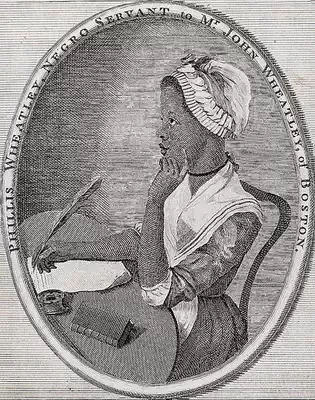
Phillis Wheatley
Isaiah Lxiii -------
Isaiah Lxiii -------
SAY, heav'nly muse, what king or mighty God,
That moves sublime from Idumea's road?
In Bosrah's dies, with martial glories join'd,
His purple vesture waves upon the wind.
Why thus enrob'd delights he to appear
In the dread image of the Pow'r of war?
Compres'd in wrath the swelling wine-press groan'd,
It bled, and pour'd the gushing purple round.
"Mine was the act," th' Almighty Saviour said,
And shook the dazzling glories of his head,
"When all forsook I trod the press alone,
"And conquer'd by omnipotence my own;
"For man's release sustain'd the pond'rous load,
"For man the wrath of an immortal God:
"To execute th' Eternal's dread command
"My soul I sacrific'd with willing hand;
"Sinless I stood before the avenging frown,
"Atoning thus for vices not my own."
His eye the ample field of battle round
Survey'd, but no created succours found;
His own omnipotence sustain'd the right,
His vengeance sunk the haughty foes in night;
Beneath his feet the prostrate troops were spread,
And round him lay the dying, and the dead.
Great God, what light'ning flashes from thine eyes?
What pow'r withstands if thou indignant rise?
Against thy Zion though her foes may rage,
And all their cunning, all their strength engage,
Yet she serenely on thy bosom lies,
Smiles at their arts, and all their force defies.
SAY, heav'nly muse, what king or mighty God,
That moves sublime from Idumea's road?
In Bosrah's dies, with martial glories join'd,
His purple vesture waves upon the wind.
Why thus enrob'd delights he to appear
In the dread image of the Pow'r of war?
Compres'd in wrath the swelling wine-press groan'd,
It bled, and pour'd the gushing purple round.
"Mine was the act," th' Almighty Saviour said,
And shook the dazzling glories of his head,
"When all forsook I trod the press alone,
"And conquer'd by omnipotence my own;
"For man's release sustain'd the pond'rous load,
"For man the wrath of an immortal God:
"To execute th' Eternal's dread command
"My soul I sacrific'd with willing hand;
"Sinless I stood before the avenging frown,
"Atoning thus for vices not my own."
His eye the ample field of battle round
Survey'd, but no created succours found;
His own omnipotence sustain'd the right,
His vengeance sunk the haughty foes in night;
Beneath his feet the prostrate troops were spread,
And round him lay the dying, and the dead.
Great God, what light'ning flashes from thine eyes?
What pow'r withstands if thou indignant rise?
Against thy Zion though her foes may rage,
And all their cunning, all their strength engage,
Yet she serenely on thy bosom lies,
Smiles at their arts, and all their force defies.
218
Phillis Wheatley
An Hymn To The Evening
An Hymn To The Evening
SOON as the sun forsook the eastern main
The pealing thunder shook the heav'nly plain;
Majestic grandeur! From the zephyr's wing,
Exhales the incense of the blooming spring.
Soft purl the streams, the birds renew their notes,
And through the air their mingled music floats.
Through all the heav'ns what beauteous dies are
spread!
But the west glories in the deepest red:
So may our breasts with ev'ry virtue glow,
The living temples of our God below!
Fill'd with the praise of him who gives the light,
And draws the sable curtains of the night,
Let placid slumbers sooth each weary mind,
At morn to wake more heav'nly, more refin'd;
So shall the labours of the day begin
More pure, more guarded from the snares of sin.
Night's leaden sceptre seals my drowsy eyes,
SOON as the sun forsook the eastern main
The pealing thunder shook the heav'nly plain;
Majestic grandeur! From the zephyr's wing,
Exhales the incense of the blooming spring.
Soft purl the streams, the birds renew their notes,
And through the air their mingled music floats.
Through all the heav'ns what beauteous dies are
spread!
But the west glories in the deepest red:
So may our breasts with ev'ry virtue glow,
The living temples of our God below!
Fill'd with the praise of him who gives the light,
And draws the sable curtains of the night,
Let placid slumbers sooth each weary mind,
At morn to wake more heav'nly, more refin'd;
So shall the labours of the day begin
More pure, more guarded from the snares of sin.
Night's leaden sceptre seals my drowsy eyes,
361
Phillis Wheatley
Goliath Of Gath
Goliath Of Gath
SAMUEL, Chap. xvii.
YE martial pow'rs, and all ye tuneful nine,
Inspire my song, and aid my high design.
The dreadful scenes and toils of war I write,
The ardent warriors, and the fields of fight:
You best remember, and you best can sing
The acts of heroes to the vocal string:
Resume the lays with which your sacred lyre,
Did then the poet and the sage inspire.
Now front to front the armies were display'd,
Here Israel rang'd, and there the foes array'd;
The hosts on two opposing mountains stood,
Thick as the foliage of the waving wood;
Between them an extensive valley lay,
O'er which the gleaming armour pour'd the day,
When from the camp of the Philistine foes,
Dreadful to view, a mighty warrior rose;
In the dire deeds of bleeding battle skill'd,
The monster stalks the terror of the field.
From Gath he sprung, Goliath was his name,
Of fierce deportment, and gigantic frame:
A brazen helmet on his head was plac'd,
A coat of mail his form terrific grac'd,
The greaves his legs, the targe his shoulders prest:
Dreadful in arms high-tow'ring o'er the rest
A spear he proudly wav'd, whose iron head,
Strange to relate, six hundred shekels weigh'd;
He strode along, and shook the ample field,
While Phoebus blaz'd refulgent on his shield:
Through Jacob's race a chilling horror ran,
When thus the huge, enormous chief began:
"Say, what the cause that in this proud array
"You set your battle in the face of day?
"One hero find in all your vaunting train,
"Then see who loses, and who wins the plain;
"For he who wins, in triumph may demand
"Perpetual service from the vanquish'd land:
"Your armies I defy, your force despise,
"By far inferior in Philistia's eyes:
"Produce a man, and let us try the fight,
"Decide the contest, and the victor's right."
Thus challeng'd he: all Israel stood amaz'd,
And ev'ry chief in consternation gaz'd;
But Jesse's son in youthful bloom appears,
And warlike courage far beyond his years:
He left the folds, he left the flow'ry meads,
And soft recesses of the sylvan shades.
Now Israel's monarch, and his troops arise,
With peals of shouts ascending to the skies;
In Elah's vale the scene of combat lies.
When the fair morning blush'd with orient red,
What David's fire enjoin'd the son obey'd,
And swift of foot towards the trench he came,
Where glow'd each bosom with the martial flame.
He leaves his carriage to another's care,
And runs to greet his brethren of the war.
While yet they spake the giant-chief arose,
Repeats the challenge, and insults his foes:
Struck with the sound, and trembling at the view,
Affrighted Israel from its post withdrew.
"Observe ye this tremendous foe, they cry'd,
"Who in proud vaunts our armies hath defy'd:
"Whoever lays him prostrate on the plain,
"Freedom in Israel for his house shall gain;
"And on him wealth unknown the king will pour,
"And give his royal daughter for his dow'r."
Then Jesse's youngest hope: "My brethren say,
"What shall be done for him who takes away
"Reproach from Jacob, who destroys the chief.
"And puts a period to his country's grief.
"He vaunts the honours of his arms abroad,
"And scorns the armies of the living God."
Thus spoke the youth, th' attentive people ey'd
The wond'rous hero, and again reply'd:
"Such the rewards our monarch will bestow,
"On him who conquers, and destroys his foe."
Eliab heard, and kindled into ire
To hear his shepherd brother thus inquire,
And thus begun: "What errand brought thee? say
"Who keeps thy flock? or does it go astray?
"I know the base ambition of thine heart,
"But back in safety from the field depart."
Eliab thus to Jesse's youngest heir,
Express'd his wrath in accents most severe.
When to his brother mildly he reply'd.
"What have I done? or what the cause to chide?
The words were told before the king, who sent
For the young hero to his royal tent:
Before the monarch dauntless he began,
"For this Philistine fail no heart of man:
"I'll take the vale, and with the giant fight:
"I dread not all his boasts, nor all his might."
When thus the king: "Dar'st thou a stripling go,
"And venture combat with so great a foe?
"Who all his days has been inur'd to fight,
"And made its deeds his study and delight:
"Battles and bloodshed brought the monster forth,
"And clouds and whirlwinds usher'd in his birth."
When David thus: "I kept the fleecy care,
"And out there rush'd a lion and a bear;
"A tender lamb the hungry lion took,
"And with no other weapon than my crook
"Bold I pursu'd, and chas d him o'er the field,
"The prey deliver'd, and the felon kill'd:
"As thus the lion and the bear I slew,
"So shall Goliath fall, and all his crew:
"The God, who sav'd me from these beasts of prey,
"By me this monster in the dust shall lay."
So David spoke. The wond'ring king reply'd;
"Go thou with heav'n and victory on thy side:
"This coat of mail, this sword gird on," he said,
And plac'd a mighty helmet on his head:
The coat, the sword, the helm he laid aside,
Nor chose to venture with those arms untry'd,
Then took his staff, and to the neighb'ring brook
Instant he ran, and thence five pebbles took.
Mean time descended to Philistia's son
A radiant cherub, and he thus begun:
"Goliath, well thou know'st thou hast defy'd
"Yon Hebrew armies, and their God deny'd:
"Rebellious wretch! audacious worm! forbear,
"Nor tempt the vengeance of their God too far:
"Them, who with his Omnipotence contend,
"No eye shall pity, and no arm defend:
"Proud as thou art, in short liv'd glory great,
"I come to tell thee thine approaching fate.
"Regard my words. The Judge of all the gods,
"Beneath whose steps the tow'ring mountain nods,
"Will give thine armies to the savage brood,
"That cut the liquid air, or range the wood.
"Thee too a well-aim'd pebble shall destroy,
"And thou shalt perish by a beardless boy:
"Such is the mandate from the realms above,
"And should I try the vengeance to remove,
"Myself a rebel to my king would prove.
"Goliath say, shall grace to him be shown,
"Who dares heav'ns Monarch, and insults his throne?"
"Your words are lost on me," the giant cries,
While fear and wrath contended in his eyes,
When thus the messenger from heav'n replies:
"Provoke no more Jehovah's awful hand
"To hurl its vengeance on thy guilty land:
"He grasps the thunder, and, he wings the storm,
"Servants their sov'reign's orders to perform."
The angel spoke, and turn'd his eyes away,
Adding new radiance to the rising day.
Now David comes: the fatal stones demand
His left, the staff engag'd his better hand:
The giant mov'd, and from his tow'ring height
Survey'd the stripling, and disdain'd the fight,
And thus began: "Am I a dog with thee?
"Bring'st thou no armour, but a staff to me?
"The gods on thee their vollied curses pour,
"And beasts and birds of prey thy flesh devour."
David undaunted thus, "Thy spear and shield
"Shall no protection to thy body yield:
"Jehovah's name------no other arms I bear,
"I ask no other in this glorious war.
"To-day the Lord of Hosts to me will give
"Vict'ry, to-day thy doom thou shalt receive;
"The fate you threaten shall your own become,
"And beasts shall be your animated tomb,
"That all the earth's inhabitants may know
"That there's a God, who governs all below:
"This great assembly too shall witness stand,
"That needs nor sword, nor spear, th' Almighty's
hand:
"The battle his, the conquest he bestows,
"And to our pow'r consigns our hated foes."
Thus David spoke; Goliath heard and came
To meet the hero in the field of fame.
Ah! fatal meeting to thy troops and thee,
But thou wast deaf to the divine decree;
Young David meets thee, meets thee not in vain;
'Tis thine to perish on th' ensanguin'd plain.
And now the youth the forceful pebble slung
Philistia trembled as it whizz'd along:
In his dread forehead, where the helmet ends,
Just o'er the brows the well-aim'd stone descends,
It pierc'd the skull, and shatter'd all the brain,
Prone on his face he tumbled to the plain:
Goliath's fall no smaller terror yields
Than riving thunders in aerial fields:
The soul still ling'red in its lov'd abode,
Till conq'ring David o'er the giant strode:
Goliath's sword then laid its master dead,
And from the body hew'd the ghastly head;
The blood in gushing torrents drench'd the plains,
The soul found passage through the spouting veins.
And now aloud th' illustrious victor said,
"Where are your boastings now your champion's
"dead?"
Scarce had he spoke, when the Philistines fled:
But fled in vain; the conqu'ror swift pursu'd:
What scenes of slaughter! and what seas of blood!
There Saul thy thousands grasp'd th' impurpled sand
In pangs of death the conquest of thine hand;
And David there were thy ten thousands laid:
Thus Israel's damsels musically play'd.
Near Gath and Edron many an hero lay,
Breath'd out their souls, and curs'd the light of day:
Their fury, quench'd by death, no longer burns,
And David with Goliath's head returns,
To Salem brought, but in his tent he plac'd
The load of armour which the giant grac'd.
His monarch saw him coming from the war,
And thus demanded of the son of Ner.
"Say, who is this amazing youth?" he cry'd,
When thus the leader of the host reply'd;
"As lives thy soul I know not whence he sprung,
"So great in prowess though in years so young:"
"Inquire whose son is he," the sov'reign said,
"Before whose conq'ring arm Philistia fled."
Before the king behold the stripling stand,
Goliath's head depending from his hand:
To him the king: "Say of what martial line
"Art thou, young hero, and what sire was thine?"
He humbly thus; "The son of Jesse I:
"I came the glories of the field to try.
"Small is my tribe, but valiant in the fight;
"Small is my city, but thy royal right."
"Then take the promis'd gifts," the monarch cry'd,
Conferring riches and the royal bride:
"Knit to my soul for ever thou remain
"With me, nor quit my regal roof again."
SAMUEL, Chap. xvii.
YE martial pow'rs, and all ye tuneful nine,
Inspire my song, and aid my high design.
The dreadful scenes and toils of war I write,
The ardent warriors, and the fields of fight:
You best remember, and you best can sing
The acts of heroes to the vocal string:
Resume the lays with which your sacred lyre,
Did then the poet and the sage inspire.
Now front to front the armies were display'd,
Here Israel rang'd, and there the foes array'd;
The hosts on two opposing mountains stood,
Thick as the foliage of the waving wood;
Between them an extensive valley lay,
O'er which the gleaming armour pour'd the day,
When from the camp of the Philistine foes,
Dreadful to view, a mighty warrior rose;
In the dire deeds of bleeding battle skill'd,
The monster stalks the terror of the field.
From Gath he sprung, Goliath was his name,
Of fierce deportment, and gigantic frame:
A brazen helmet on his head was plac'd,
A coat of mail his form terrific grac'd,
The greaves his legs, the targe his shoulders prest:
Dreadful in arms high-tow'ring o'er the rest
A spear he proudly wav'd, whose iron head,
Strange to relate, six hundred shekels weigh'd;
He strode along, and shook the ample field,
While Phoebus blaz'd refulgent on his shield:
Through Jacob's race a chilling horror ran,
When thus the huge, enormous chief began:
"Say, what the cause that in this proud array
"You set your battle in the face of day?
"One hero find in all your vaunting train,
"Then see who loses, and who wins the plain;
"For he who wins, in triumph may demand
"Perpetual service from the vanquish'd land:
"Your armies I defy, your force despise,
"By far inferior in Philistia's eyes:
"Produce a man, and let us try the fight,
"Decide the contest, and the victor's right."
Thus challeng'd he: all Israel stood amaz'd,
And ev'ry chief in consternation gaz'd;
But Jesse's son in youthful bloom appears,
And warlike courage far beyond his years:
He left the folds, he left the flow'ry meads,
And soft recesses of the sylvan shades.
Now Israel's monarch, and his troops arise,
With peals of shouts ascending to the skies;
In Elah's vale the scene of combat lies.
When the fair morning blush'd with orient red,
What David's fire enjoin'd the son obey'd,
And swift of foot towards the trench he came,
Where glow'd each bosom with the martial flame.
He leaves his carriage to another's care,
And runs to greet his brethren of the war.
While yet they spake the giant-chief arose,
Repeats the challenge, and insults his foes:
Struck with the sound, and trembling at the view,
Affrighted Israel from its post withdrew.
"Observe ye this tremendous foe, they cry'd,
"Who in proud vaunts our armies hath defy'd:
"Whoever lays him prostrate on the plain,
"Freedom in Israel for his house shall gain;
"And on him wealth unknown the king will pour,
"And give his royal daughter for his dow'r."
Then Jesse's youngest hope: "My brethren say,
"What shall be done for him who takes away
"Reproach from Jacob, who destroys the chief.
"And puts a period to his country's grief.
"He vaunts the honours of his arms abroad,
"And scorns the armies of the living God."
Thus spoke the youth, th' attentive people ey'd
The wond'rous hero, and again reply'd:
"Such the rewards our monarch will bestow,
"On him who conquers, and destroys his foe."
Eliab heard, and kindled into ire
To hear his shepherd brother thus inquire,
And thus begun: "What errand brought thee? say
"Who keeps thy flock? or does it go astray?
"I know the base ambition of thine heart,
"But back in safety from the field depart."
Eliab thus to Jesse's youngest heir,
Express'd his wrath in accents most severe.
When to his brother mildly he reply'd.
"What have I done? or what the cause to chide?
The words were told before the king, who sent
For the young hero to his royal tent:
Before the monarch dauntless he began,
"For this Philistine fail no heart of man:
"I'll take the vale, and with the giant fight:
"I dread not all his boasts, nor all his might."
When thus the king: "Dar'st thou a stripling go,
"And venture combat with so great a foe?
"Who all his days has been inur'd to fight,
"And made its deeds his study and delight:
"Battles and bloodshed brought the monster forth,
"And clouds and whirlwinds usher'd in his birth."
When David thus: "I kept the fleecy care,
"And out there rush'd a lion and a bear;
"A tender lamb the hungry lion took,
"And with no other weapon than my crook
"Bold I pursu'd, and chas d him o'er the field,
"The prey deliver'd, and the felon kill'd:
"As thus the lion and the bear I slew,
"So shall Goliath fall, and all his crew:
"The God, who sav'd me from these beasts of prey,
"By me this monster in the dust shall lay."
So David spoke. The wond'ring king reply'd;
"Go thou with heav'n and victory on thy side:
"This coat of mail, this sword gird on," he said,
And plac'd a mighty helmet on his head:
The coat, the sword, the helm he laid aside,
Nor chose to venture with those arms untry'd,
Then took his staff, and to the neighb'ring brook
Instant he ran, and thence five pebbles took.
Mean time descended to Philistia's son
A radiant cherub, and he thus begun:
"Goliath, well thou know'st thou hast defy'd
"Yon Hebrew armies, and their God deny'd:
"Rebellious wretch! audacious worm! forbear,
"Nor tempt the vengeance of their God too far:
"Them, who with his Omnipotence contend,
"No eye shall pity, and no arm defend:
"Proud as thou art, in short liv'd glory great,
"I come to tell thee thine approaching fate.
"Regard my words. The Judge of all the gods,
"Beneath whose steps the tow'ring mountain nods,
"Will give thine armies to the savage brood,
"That cut the liquid air, or range the wood.
"Thee too a well-aim'd pebble shall destroy,
"And thou shalt perish by a beardless boy:
"Such is the mandate from the realms above,
"And should I try the vengeance to remove,
"Myself a rebel to my king would prove.
"Goliath say, shall grace to him be shown,
"Who dares heav'ns Monarch, and insults his throne?"
"Your words are lost on me," the giant cries,
While fear and wrath contended in his eyes,
When thus the messenger from heav'n replies:
"Provoke no more Jehovah's awful hand
"To hurl its vengeance on thy guilty land:
"He grasps the thunder, and, he wings the storm,
"Servants their sov'reign's orders to perform."
The angel spoke, and turn'd his eyes away,
Adding new radiance to the rising day.
Now David comes: the fatal stones demand
His left, the staff engag'd his better hand:
The giant mov'd, and from his tow'ring height
Survey'd the stripling, and disdain'd the fight,
And thus began: "Am I a dog with thee?
"Bring'st thou no armour, but a staff to me?
"The gods on thee their vollied curses pour,
"And beasts and birds of prey thy flesh devour."
David undaunted thus, "Thy spear and shield
"Shall no protection to thy body yield:
"Jehovah's name------no other arms I bear,
"I ask no other in this glorious war.
"To-day the Lord of Hosts to me will give
"Vict'ry, to-day thy doom thou shalt receive;
"The fate you threaten shall your own become,
"And beasts shall be your animated tomb,
"That all the earth's inhabitants may know
"That there's a God, who governs all below:
"This great assembly too shall witness stand,
"That needs nor sword, nor spear, th' Almighty's
hand:
"The battle his, the conquest he bestows,
"And to our pow'r consigns our hated foes."
Thus David spoke; Goliath heard and came
To meet the hero in the field of fame.
Ah! fatal meeting to thy troops and thee,
But thou wast deaf to the divine decree;
Young David meets thee, meets thee not in vain;
'Tis thine to perish on th' ensanguin'd plain.
And now the youth the forceful pebble slung
Philistia trembled as it whizz'd along:
In his dread forehead, where the helmet ends,
Just o'er the brows the well-aim'd stone descends,
It pierc'd the skull, and shatter'd all the brain,
Prone on his face he tumbled to the plain:
Goliath's fall no smaller terror yields
Than riving thunders in aerial fields:
The soul still ling'red in its lov'd abode,
Till conq'ring David o'er the giant strode:
Goliath's sword then laid its master dead,
And from the body hew'd the ghastly head;
The blood in gushing torrents drench'd the plains,
The soul found passage through the spouting veins.
And now aloud th' illustrious victor said,
"Where are your boastings now your champion's
"dead?"
Scarce had he spoke, when the Philistines fled:
But fled in vain; the conqu'ror swift pursu'd:
What scenes of slaughter! and what seas of blood!
There Saul thy thousands grasp'd th' impurpled sand
In pangs of death the conquest of thine hand;
And David there were thy ten thousands laid:
Thus Israel's damsels musically play'd.
Near Gath and Edron many an hero lay,
Breath'd out their souls, and curs'd the light of day:
Their fury, quench'd by death, no longer burns,
And David with Goliath's head returns,
To Salem brought, but in his tent he plac'd
The load of armour which the giant grac'd.
His monarch saw him coming from the war,
And thus demanded of the son of Ner.
"Say, who is this amazing youth?" he cry'd,
When thus the leader of the host reply'd;
"As lives thy soul I know not whence he sprung,
"So great in prowess though in years so young:"
"Inquire whose son is he," the sov'reign said,
"Before whose conq'ring arm Philistia fled."
Before the king behold the stripling stand,
Goliath's head depending from his hand:
To him the king: "Say of what martial line
"Art thou, young hero, and what sire was thine?"
He humbly thus; "The son of Jesse I:
"I came the glories of the field to try.
"Small is my tribe, but valiant in the fight;
"Small is my city, but thy royal right."
"Then take the promis'd gifts," the monarch cry'd,
Conferring riches and the royal bride:
"Knit to my soul for ever thou remain
"With me, nor quit my regal roof again."
304
Phillis Wheatley
Goliath Of Gath
Goliath Of Gath
SAMUEL, Chap. xvii.
YE martial pow'rs, and all ye tuneful nine,
Inspire my song, and aid my high design.
The dreadful scenes and toils of war I write,
The ardent warriors, and the fields of fight:
You best remember, and you best can sing
The acts of heroes to the vocal string:
Resume the lays with which your sacred lyre,
Did then the poet and the sage inspire.
Now front to front the armies were display'd,
Here Israel rang'd, and there the foes array'd;
The hosts on two opposing mountains stood,
Thick as the foliage of the waving wood;
Between them an extensive valley lay,
O'er which the gleaming armour pour'd the day,
When from the camp of the Philistine foes,
Dreadful to view, a mighty warrior rose;
In the dire deeds of bleeding battle skill'd,
The monster stalks the terror of the field.
From Gath he sprung, Goliath was his name,
Of fierce deportment, and gigantic frame:
A brazen helmet on his head was plac'd,
A coat of mail his form terrific grac'd,
The greaves his legs, the targe his shoulders prest:
Dreadful in arms high-tow'ring o'er the rest
A spear he proudly wav'd, whose iron head,
Strange to relate, six hundred shekels weigh'd;
He strode along, and shook the ample field,
While Phoebus blaz'd refulgent on his shield:
Through Jacob's race a chilling horror ran,
When thus the huge, enormous chief began:
"Say, what the cause that in this proud array
"You set your battle in the face of day?
"One hero find in all your vaunting train,
"Then see who loses, and who wins the plain;
"For he who wins, in triumph may demand
"Perpetual service from the vanquish'd land:
"Your armies I defy, your force despise,
"By far inferior in Philistia's eyes:
"Produce a man, and let us try the fight,
"Decide the contest, and the victor's right."
Thus challeng'd he: all Israel stood amaz'd,
And ev'ry chief in consternation gaz'd;
But Jesse's son in youthful bloom appears,
And warlike courage far beyond his years:
He left the folds, he left the flow'ry meads,
And soft recesses of the sylvan shades.
Now Israel's monarch, and his troops arise,
With peals of shouts ascending to the skies;
In Elah's vale the scene of combat lies.
When the fair morning blush'd with orient red,
What David's fire enjoin'd the son obey'd,
And swift of foot towards the trench he came,
Where glow'd each bosom with the martial flame.
He leaves his carriage to another's care,
And runs to greet his brethren of the war.
While yet they spake the giant-chief arose,
Repeats the challenge, and insults his foes:
Struck with the sound, and trembling at the view,
Affrighted Israel from its post withdrew.
"Observe ye this tremendous foe, they cry'd,
"Who in proud vaunts our armies hath defy'd:
"Whoever lays him prostrate on the plain,
"Freedom in Israel for his house shall gain;
"And on him wealth unknown the king will pour,
"And give his royal daughter for his dow'r."
Then Jesse's youngest hope: "My brethren say,
"What shall be done for him who takes away
"Reproach from Jacob, who destroys the chief.
"And puts a period to his country's grief.
"He vaunts the honours of his arms abroad,
"And scorns the armies of the living God."
Thus spoke the youth, th' attentive people ey'd
The wond'rous hero, and again reply'd:
"Such the rewards our monarch will bestow,
"On him who conquers, and destroys his foe."
Eliab heard, and kindled into ire
To hear his shepherd brother thus inquire,
And thus begun: "What errand brought thee? say
"Who keeps thy flock? or does it go astray?
"I know the base ambition of thine heart,
"But back in safety from the field depart."
Eliab thus to Jesse's youngest heir,
Express'd his wrath in accents most severe.
When to his brother mildly he reply'd.
"What have I done? or what the cause to chide?
The words were told before the king, who sent
For the young hero to his royal tent:
Before the monarch dauntless he began,
"For this Philistine fail no heart of man:
"I'll take the vale, and with the giant fight:
"I dread not all his boasts, nor all his might."
When thus the king: "Dar'st thou a stripling go,
"And venture combat with so great a foe?
"Who all his days has been inur'd to fight,
"And made its deeds his study and delight:
"Battles and bloodshed brought the monster forth,
"And clouds and whirlwinds usher'd in his birth."
When David thus: "I kept the fleecy care,
"And out there rush'd a lion and a bear;
"A tender lamb the hungry lion took,
"And with no other weapon than my crook
"Bold I pursu'd, and chas d him o'er the field,
"The prey deliver'd, and the felon kill'd:
"As thus the lion and the bear I slew,
"So shall Goliath fall, and all his crew:
"The God, who sav'd me from these beasts of prey,
"By me this monster in the dust shall lay."
So David spoke. The wond'ring king reply'd;
"Go thou with heav'n and victory on thy side:
"This coat of mail, this sword gird on," he said,
And plac'd a mighty helmet on his head:
The coat, the sword, the helm he laid aside,
Nor chose to venture with those arms untry'd,
Then took his staff, and to the neighb'ring brook
Instant he ran, and thence five pebbles took.
Mean time descended to Philistia's son
A radiant cherub, and he thus begun:
"Goliath, well thou know'st thou hast defy'd
"Yon Hebrew armies, and their God deny'd:
"Rebellious wretch! audacious worm! forbear,
"Nor tempt the vengeance of their God too far:
"Them, who with his Omnipotence contend,
"No eye shall pity, and no arm defend:
"Proud as thou art, in short liv'd glory great,
"I come to tell thee thine approaching fate.
"Regard my words. The Judge of all the gods,
"Beneath whose steps the tow'ring mountain nods,
"Will give thine armies to the savage brood,
"That cut the liquid air, or range the wood.
"Thee too a well-aim'd pebble shall destroy,
"And thou shalt perish by a beardless boy:
"Such is the mandate from the realms above,
"And should I try the vengeance to remove,
"Myself a rebel to my king would prove.
"Goliath say, shall grace to him be shown,
"Who dares heav'ns Monarch, and insults his throne?"
"Your words are lost on me," the giant cries,
While fear and wrath contended in his eyes,
When thus the messenger from heav'n replies:
"Provoke no more Jehovah's awful hand
"To hurl its vengeance on thy guilty land:
"He grasps the thunder, and, he wings the storm,
"Servants their sov'reign's orders to perform."
The angel spoke, and turn'd his eyes away,
Adding new radiance to the rising day.
Now David comes: the fatal stones demand
His left, the staff engag'd his better hand:
The giant mov'd, and from his tow'ring height
Survey'd the stripling, and disdain'd the fight,
And thus began: "Am I a dog with thee?
"Bring'st thou no armour, but a staff to me?
"The gods on thee their vollied curses pour,
"And beasts and birds of prey thy flesh devour."
David undaunted thus, "Thy spear and shield
"Shall no protection to thy body yield:
"Jehovah's name------no other arms I bear,
"I ask no other in this glorious war.
"To-day the Lord of Hosts to me will give
"Vict'ry, to-day thy doom thou shalt receive;
"The fate you threaten shall your own become,
"And beasts shall be your animated tomb,
"That all the earth's inhabitants may know
"That there's a God, who governs all below:
"This great assembly too shall witness stand,
"That needs nor sword, nor spear, th' Almighty's
hand:
"The battle his, the conquest he bestows,
"And to our pow'r consigns our hated foes."
Thus David spoke; Goliath heard and came
To meet the hero in the field of fame.
Ah! fatal meeting to thy troops and thee,
But thou wast deaf to the divine decree;
Young David meets thee, meets thee not in vain;
'Tis thine to perish on th' ensanguin'd plain.
And now the youth the forceful pebble slung
Philistia trembled as it whizz'd along:
In his dread forehead, where the helmet ends,
Just o'er the brows the well-aim'd stone descends,
It pierc'd the skull, and shatter'd all the brain,
Prone on his face he tumbled to the plain:
Goliath's fall no smaller terror yields
Than riving thunders in aerial fields:
The soul still ling'red in its lov'd abode,
Till conq'ring David o'er the giant strode:
Goliath's sword then laid its master dead,
And from the body hew'd the ghastly head;
The blood in gushing torrents drench'd the plains,
The soul found passage through the spouting veins.
And now aloud th' illustrious victor said,
"Where are your boastings now your champion's
"dead?"
Scarce had he spoke, when the Philistines fled:
But fled in vain; the conqu'ror swift pursu'd:
What scenes of slaughter! and what seas of blood!
There Saul thy thousands grasp'd th' impurpled sand
In pangs of death the conquest of thine hand;
And David there were thy ten thousands laid:
Thus Israel's damsels musically play'd.
Near Gath and Edron many an hero lay,
Breath'd out their souls, and curs'd the light of day:
Their fury, quench'd by death, no longer burns,
And David with Goliath's head returns,
To Salem brought, but in his tent he plac'd
The load of armour which the giant grac'd.
His monarch saw him coming from the war,
And thus demanded of the son of Ner.
"Say, who is this amazing youth?" he cry'd,
When thus the leader of the host reply'd;
"As lives thy soul I know not whence he sprung,
"So great in prowess though in years so young:"
"Inquire whose son is he," the sov'reign said,
"Before whose conq'ring arm Philistia fled."
Before the king behold the stripling stand,
Goliath's head depending from his hand:
To him the king: "Say of what martial line
"Art thou, young hero, and what sire was thine?"
He humbly thus; "The son of Jesse I:
"I came the glories of the field to try.
"Small is my tribe, but valiant in the fight;
"Small is my city, but thy royal right."
"Then take the promis'd gifts," the monarch cry'd,
Conferring riches and the royal bride:
"Knit to my soul for ever thou remain
"With me, nor quit my regal roof again."
SAMUEL, Chap. xvii.
YE martial pow'rs, and all ye tuneful nine,
Inspire my song, and aid my high design.
The dreadful scenes and toils of war I write,
The ardent warriors, and the fields of fight:
You best remember, and you best can sing
The acts of heroes to the vocal string:
Resume the lays with which your sacred lyre,
Did then the poet and the sage inspire.
Now front to front the armies were display'd,
Here Israel rang'd, and there the foes array'd;
The hosts on two opposing mountains stood,
Thick as the foliage of the waving wood;
Between them an extensive valley lay,
O'er which the gleaming armour pour'd the day,
When from the camp of the Philistine foes,
Dreadful to view, a mighty warrior rose;
In the dire deeds of bleeding battle skill'd,
The monster stalks the terror of the field.
From Gath he sprung, Goliath was his name,
Of fierce deportment, and gigantic frame:
A brazen helmet on his head was plac'd,
A coat of mail his form terrific grac'd,
The greaves his legs, the targe his shoulders prest:
Dreadful in arms high-tow'ring o'er the rest
A spear he proudly wav'd, whose iron head,
Strange to relate, six hundred shekels weigh'd;
He strode along, and shook the ample field,
While Phoebus blaz'd refulgent on his shield:
Through Jacob's race a chilling horror ran,
When thus the huge, enormous chief began:
"Say, what the cause that in this proud array
"You set your battle in the face of day?
"One hero find in all your vaunting train,
"Then see who loses, and who wins the plain;
"For he who wins, in triumph may demand
"Perpetual service from the vanquish'd land:
"Your armies I defy, your force despise,
"By far inferior in Philistia's eyes:
"Produce a man, and let us try the fight,
"Decide the contest, and the victor's right."
Thus challeng'd he: all Israel stood amaz'd,
And ev'ry chief in consternation gaz'd;
But Jesse's son in youthful bloom appears,
And warlike courage far beyond his years:
He left the folds, he left the flow'ry meads,
And soft recesses of the sylvan shades.
Now Israel's monarch, and his troops arise,
With peals of shouts ascending to the skies;
In Elah's vale the scene of combat lies.
When the fair morning blush'd with orient red,
What David's fire enjoin'd the son obey'd,
And swift of foot towards the trench he came,
Where glow'd each bosom with the martial flame.
He leaves his carriage to another's care,
And runs to greet his brethren of the war.
While yet they spake the giant-chief arose,
Repeats the challenge, and insults his foes:
Struck with the sound, and trembling at the view,
Affrighted Israel from its post withdrew.
"Observe ye this tremendous foe, they cry'd,
"Who in proud vaunts our armies hath defy'd:
"Whoever lays him prostrate on the plain,
"Freedom in Israel for his house shall gain;
"And on him wealth unknown the king will pour,
"And give his royal daughter for his dow'r."
Then Jesse's youngest hope: "My brethren say,
"What shall be done for him who takes away
"Reproach from Jacob, who destroys the chief.
"And puts a period to his country's grief.
"He vaunts the honours of his arms abroad,
"And scorns the armies of the living God."
Thus spoke the youth, th' attentive people ey'd
The wond'rous hero, and again reply'd:
"Such the rewards our monarch will bestow,
"On him who conquers, and destroys his foe."
Eliab heard, and kindled into ire
To hear his shepherd brother thus inquire,
And thus begun: "What errand brought thee? say
"Who keeps thy flock? or does it go astray?
"I know the base ambition of thine heart,
"But back in safety from the field depart."
Eliab thus to Jesse's youngest heir,
Express'd his wrath in accents most severe.
When to his brother mildly he reply'd.
"What have I done? or what the cause to chide?
The words were told before the king, who sent
For the young hero to his royal tent:
Before the monarch dauntless he began,
"For this Philistine fail no heart of man:
"I'll take the vale, and with the giant fight:
"I dread not all his boasts, nor all his might."
When thus the king: "Dar'st thou a stripling go,
"And venture combat with so great a foe?
"Who all his days has been inur'd to fight,
"And made its deeds his study and delight:
"Battles and bloodshed brought the monster forth,
"And clouds and whirlwinds usher'd in his birth."
When David thus: "I kept the fleecy care,
"And out there rush'd a lion and a bear;
"A tender lamb the hungry lion took,
"And with no other weapon than my crook
"Bold I pursu'd, and chas d him o'er the field,
"The prey deliver'd, and the felon kill'd:
"As thus the lion and the bear I slew,
"So shall Goliath fall, and all his crew:
"The God, who sav'd me from these beasts of prey,
"By me this monster in the dust shall lay."
So David spoke. The wond'ring king reply'd;
"Go thou with heav'n and victory on thy side:
"This coat of mail, this sword gird on," he said,
And plac'd a mighty helmet on his head:
The coat, the sword, the helm he laid aside,
Nor chose to venture with those arms untry'd,
Then took his staff, and to the neighb'ring brook
Instant he ran, and thence five pebbles took.
Mean time descended to Philistia's son
A radiant cherub, and he thus begun:
"Goliath, well thou know'st thou hast defy'd
"Yon Hebrew armies, and their God deny'd:
"Rebellious wretch! audacious worm! forbear,
"Nor tempt the vengeance of their God too far:
"Them, who with his Omnipotence contend,
"No eye shall pity, and no arm defend:
"Proud as thou art, in short liv'd glory great,
"I come to tell thee thine approaching fate.
"Regard my words. The Judge of all the gods,
"Beneath whose steps the tow'ring mountain nods,
"Will give thine armies to the savage brood,
"That cut the liquid air, or range the wood.
"Thee too a well-aim'd pebble shall destroy,
"And thou shalt perish by a beardless boy:
"Such is the mandate from the realms above,
"And should I try the vengeance to remove,
"Myself a rebel to my king would prove.
"Goliath say, shall grace to him be shown,
"Who dares heav'ns Monarch, and insults his throne?"
"Your words are lost on me," the giant cries,
While fear and wrath contended in his eyes,
When thus the messenger from heav'n replies:
"Provoke no more Jehovah's awful hand
"To hurl its vengeance on thy guilty land:
"He grasps the thunder, and, he wings the storm,
"Servants their sov'reign's orders to perform."
The angel spoke, and turn'd his eyes away,
Adding new radiance to the rising day.
Now David comes: the fatal stones demand
His left, the staff engag'd his better hand:
The giant mov'd, and from his tow'ring height
Survey'd the stripling, and disdain'd the fight,
And thus began: "Am I a dog with thee?
"Bring'st thou no armour, but a staff to me?
"The gods on thee their vollied curses pour,
"And beasts and birds of prey thy flesh devour."
David undaunted thus, "Thy spear and shield
"Shall no protection to thy body yield:
"Jehovah's name------no other arms I bear,
"I ask no other in this glorious war.
"To-day the Lord of Hosts to me will give
"Vict'ry, to-day thy doom thou shalt receive;
"The fate you threaten shall your own become,
"And beasts shall be your animated tomb,
"That all the earth's inhabitants may know
"That there's a God, who governs all below:
"This great assembly too shall witness stand,
"That needs nor sword, nor spear, th' Almighty's
hand:
"The battle his, the conquest he bestows,
"And to our pow'r consigns our hated foes."
Thus David spoke; Goliath heard and came
To meet the hero in the field of fame.
Ah! fatal meeting to thy troops and thee,
But thou wast deaf to the divine decree;
Young David meets thee, meets thee not in vain;
'Tis thine to perish on th' ensanguin'd plain.
And now the youth the forceful pebble slung
Philistia trembled as it whizz'd along:
In his dread forehead, where the helmet ends,
Just o'er the brows the well-aim'd stone descends,
It pierc'd the skull, and shatter'd all the brain,
Prone on his face he tumbled to the plain:
Goliath's fall no smaller terror yields
Than riving thunders in aerial fields:
The soul still ling'red in its lov'd abode,
Till conq'ring David o'er the giant strode:
Goliath's sword then laid its master dead,
And from the body hew'd the ghastly head;
The blood in gushing torrents drench'd the plains,
The soul found passage through the spouting veins.
And now aloud th' illustrious victor said,
"Where are your boastings now your champion's
"dead?"
Scarce had he spoke, when the Philistines fled:
But fled in vain; the conqu'ror swift pursu'd:
What scenes of slaughter! and what seas of blood!
There Saul thy thousands grasp'd th' impurpled sand
In pangs of death the conquest of thine hand;
And David there were thy ten thousands laid:
Thus Israel's damsels musically play'd.
Near Gath and Edron many an hero lay,
Breath'd out their souls, and curs'd the light of day:
Their fury, quench'd by death, no longer burns,
And David with Goliath's head returns,
To Salem brought, but in his tent he plac'd
The load of armour which the giant grac'd.
His monarch saw him coming from the war,
And thus demanded of the son of Ner.
"Say, who is this amazing youth?" he cry'd,
When thus the leader of the host reply'd;
"As lives thy soul I know not whence he sprung,
"So great in prowess though in years so young:"
"Inquire whose son is he," the sov'reign said,
"Before whose conq'ring arm Philistia fled."
Before the king behold the stripling stand,
Goliath's head depending from his hand:
To him the king: "Say of what martial line
"Art thou, young hero, and what sire was thine?"
He humbly thus; "The son of Jesse I:
"I came the glories of the field to try.
"Small is my tribe, but valiant in the fight;
"Small is my city, but thy royal right."
"Then take the promis'd gifts," the monarch cry'd,
Conferring riches and the royal bride:
"Knit to my soul for ever thou remain
"With me, nor quit my regal roof again."
304
Phillis Wheatley
An Hymn to Humanity
An Hymn to Humanity
I.
Lo! for this dark terrestrial ball
Forsakes his azure-paved hall
A prince of heav'nly birth!
Divine Humanity behold,
What wonders rise, what charms unfold
At his descent to earth!
II.
The bosoms of the great and good
With wonder and delight he view'd,
And fix'd his empire there:
Him, close compressing to his breast,
The sire of gods and men address'd,
"My son, my heav'nly fair!
III.
"Descend to earth, there place thy throne;
"To succour man's afflicted son
"Each human heart inspire:
"To act in bounties unconfin'd
"Enlarge the close contracted mind,
"And fill it with thy fire."
IV.
Quick as the word, with swift career
He wings his course from star to star,
And leaves the bright abode.
The Virtue did his charms impart;
Their G-----! then thy raptur'd heart
Perceiv'd the rushing God:
V.
For when thy pitying eye did see
The languid muse in low degree,
Then, then at thy desire
Descended the celestial nine;
O'er me methought they deign'd to shine,
And deign'd to string my lyre.
VI.
Can Afric's muse forgetful prove?
Or can such friendship fail to move
A tender human heart?
Immortal Friendship laurel-crown'd
The smiling Graces all surround
With ev'ry heav'nly Art.
I.
Lo! for this dark terrestrial ball
Forsakes his azure-paved hall
A prince of heav'nly birth!
Divine Humanity behold,
What wonders rise, what charms unfold
At his descent to earth!
II.
The bosoms of the great and good
With wonder and delight he view'd,
And fix'd his empire there:
Him, close compressing to his breast,
The sire of gods and men address'd,
"My son, my heav'nly fair!
III.
"Descend to earth, there place thy throne;
"To succour man's afflicted son
"Each human heart inspire:
"To act in bounties unconfin'd
"Enlarge the close contracted mind,
"And fill it with thy fire."
IV.
Quick as the word, with swift career
He wings his course from star to star,
And leaves the bright abode.
The Virtue did his charms impart;
Their G-----! then thy raptur'd heart
Perceiv'd the rushing God:
V.
For when thy pitying eye did see
The languid muse in low degree,
Then, then at thy desire
Descended the celestial nine;
O'er me methought they deign'd to shine,
And deign'd to string my lyre.
VI.
Can Afric's muse forgetful prove?
Or can such friendship fail to move
A tender human heart?
Immortal Friendship laurel-crown'd
The smiling Graces all surround
With ev'ry heav'nly Art.
346
Phillis Wheatley
An Hymn to Humanity
An Hymn to Humanity
I.
Lo! for this dark terrestrial ball
Forsakes his azure-paved hall
A prince of heav'nly birth!
Divine Humanity behold,
What wonders rise, what charms unfold
At his descent to earth!
II.
The bosoms of the great and good
With wonder and delight he view'd,
And fix'd his empire there:
Him, close compressing to his breast,
The sire of gods and men address'd,
"My son, my heav'nly fair!
III.
"Descend to earth, there place thy throne;
"To succour man's afflicted son
"Each human heart inspire:
"To act in bounties unconfin'd
"Enlarge the close contracted mind,
"And fill it with thy fire."
IV.
Quick as the word, with swift career
He wings his course from star to star,
And leaves the bright abode.
The Virtue did his charms impart;
Their G-----! then thy raptur'd heart
Perceiv'd the rushing God:
V.
For when thy pitying eye did see
The languid muse in low degree,
Then, then at thy desire
Descended the celestial nine;
O'er me methought they deign'd to shine,
And deign'd to string my lyre.
VI.
Can Afric's muse forgetful prove?
Or can such friendship fail to move
A tender human heart?
Immortal Friendship laurel-crown'd
The smiling Graces all surround
With ev'ry heav'nly Art.
I.
Lo! for this dark terrestrial ball
Forsakes his azure-paved hall
A prince of heav'nly birth!
Divine Humanity behold,
What wonders rise, what charms unfold
At his descent to earth!
II.
The bosoms of the great and good
With wonder and delight he view'd,
And fix'd his empire there:
Him, close compressing to his breast,
The sire of gods and men address'd,
"My son, my heav'nly fair!
III.
"Descend to earth, there place thy throne;
"To succour man's afflicted son
"Each human heart inspire:
"To act in bounties unconfin'd
"Enlarge the close contracted mind,
"And fill it with thy fire."
IV.
Quick as the word, with swift career
He wings his course from star to star,
And leaves the bright abode.
The Virtue did his charms impart;
Their G-----! then thy raptur'd heart
Perceiv'd the rushing God:
V.
For when thy pitying eye did see
The languid muse in low degree,
Then, then at thy desire
Descended the celestial nine;
O'er me methought they deign'd to shine,
And deign'd to string my lyre.
VI.
Can Afric's muse forgetful prove?
Or can such friendship fail to move
A tender human heart?
Immortal Friendship laurel-crown'd
The smiling Graces all surround
With ev'ry heav'nly Art.
346
Phillis Wheatley
A Funeral Poem On The Death Of C. E. An Infant Of Twelve Months
A Funeral Poem On The Death Of C. E. An Infant Of Twelve Months
THROUGH airy roads he wings his instant flight
To purer regions of celestial light;
Enlarg'd he sees unnumber'd systems roll,
Beneath him sees the universal whole,
Planets on planets run their destin'd round,
And circling wonders fill the vast profound.
Th' ethereal now, and now th' empyreal skies
With growing splendors strike his wond'ring eyes:
The angels view him with delight unknown,
Press his soft hand, and seat him on his throne;
Then smilling thus: "To this divine abode,
"The seat of saints, of seraphs, and of God,
"Thrice welcome thou." The raptur'd babe replies,
"Thanks to my God, who snatch'd me to the skies,
"E'er vice triumphant had possess'd my heart,
"E'er yet the tempter had beguil d my heart,
"E'er yet on sin's base actions I was bent,
"E'er yet I knew temptation's dire intent;
"E'er yet the lash for horrid crimes I felt,
"E'er vanity had led my way to guilt,
"But, soon arriv'd at my celestial goal,
"Full glories rush on my expanding soul."
Joyful he spoke: exulting cherubs round
Clapt their glad wings, the heav'nly vaults resound.
Say, parents, why this unavailing moan?
Why heave your pensive bosoms with the groan?
To Charles, the happy subject of my song,
A brighter world, and nobler strains belong.
Say would you tear him from the realms above
By thoughtless wishes, and prepost'rous love?
Doth his felicity increase your pain?
Or could you welcome to this world again
The heir of bliss? with a superior air
Methinks he answers with a smile severe,
"Thrones and dominions cannot tempt me there."
But still you cry, "Can we the sigh borbear,
"And still and still must we not pour the tear?
"Our only hope, more dear than vital breath,
"Twelve moons revolv'd, becomes the prey of death;
"Delightful infant, nightly visions give
"Thee to our arms, and we with joy receive,
"We fain would clasp the Phantom to our breast,
"The Phantom flies, and leaves the soul unblest."
To yon bright regions let your faith ascend,
Prepare to join your dearest infant friend
In pleasures without measure, without end.
THROUGH airy roads he wings his instant flight
To purer regions of celestial light;
Enlarg'd he sees unnumber'd systems roll,
Beneath him sees the universal whole,
Planets on planets run their destin'd round,
And circling wonders fill the vast profound.
Th' ethereal now, and now th' empyreal skies
With growing splendors strike his wond'ring eyes:
The angels view him with delight unknown,
Press his soft hand, and seat him on his throne;
Then smilling thus: "To this divine abode,
"The seat of saints, of seraphs, and of God,
"Thrice welcome thou." The raptur'd babe replies,
"Thanks to my God, who snatch'd me to the skies,
"E'er vice triumphant had possess'd my heart,
"E'er yet the tempter had beguil d my heart,
"E'er yet on sin's base actions I was bent,
"E'er yet I knew temptation's dire intent;
"E'er yet the lash for horrid crimes I felt,
"E'er vanity had led my way to guilt,
"But, soon arriv'd at my celestial goal,
"Full glories rush on my expanding soul."
Joyful he spoke: exulting cherubs round
Clapt their glad wings, the heav'nly vaults resound.
Say, parents, why this unavailing moan?
Why heave your pensive bosoms with the groan?
To Charles, the happy subject of my song,
A brighter world, and nobler strains belong.
Say would you tear him from the realms above
By thoughtless wishes, and prepost'rous love?
Doth his felicity increase your pain?
Or could you welcome to this world again
The heir of bliss? with a superior air
Methinks he answers with a smile severe,
"Thrones and dominions cannot tempt me there."
But still you cry, "Can we the sigh borbear,
"And still and still must we not pour the tear?
"Our only hope, more dear than vital breath,
"Twelve moons revolv'd, becomes the prey of death;
"Delightful infant, nightly visions give
"Thee to our arms, and we with joy receive,
"We fain would clasp the Phantom to our breast,
"The Phantom flies, and leaves the soul unblest."
To yon bright regions let your faith ascend,
Prepare to join your dearest infant friend
In pleasures without measure, without end.
250
Phillis Wheatley
A Rebus
A Rebus
I.
A bird delicious to the taste,
On which an army once did feast,
Sent by an hand unseen;
A creature of the horned race,
Which Britain's royal standards grace;
A gem of vivid green;
II.
A town of gaiety and sport,
Where beaux and beauteous nymphs resort,
And gallantry doth reign;
A Dardan hero fam'd of old
For youth and beauty, as we're told,
And by a monarch slain;
III.
A peer of popular applause,
Who doth our violated laws,
And grievances proclaim.
Th' initials show a vanquish'd town,
That adds fresh glory and renown
To old Britannia's fame.
I.
A bird delicious to the taste,
On which an army once did feast,
Sent by an hand unseen;
A creature of the horned race,
Which Britain's royal standards grace;
A gem of vivid green;
II.
A town of gaiety and sport,
Where beaux and beauteous nymphs resort,
And gallantry doth reign;
A Dardan hero fam'd of old
For youth and beauty, as we're told,
And by a monarch slain;
III.
A peer of popular applause,
Who doth our violated laws,
And grievances proclaim.
Th' initials show a vanquish'd town,
That adds fresh glory and renown
To old Britannia's fame.
214
Phillis Wheatley
And veil her charms around.
And veil her charms around.
X.
Why, Phoebus, moves thy car so slow?
So slow thy rising ray?
Give us the famous town to view,
Thou glorious king of day!
XI.
For thee, Britannia, I resign
New-England's smiling fields;
To view again her charms divine,
What joy the prospect yields!
XII.
But thou! Temptation hence away,
With all thy fatal train,
Nor once seduce my soul away,
By thine enchanting strain.
XIII.
Thrice happy they, whose heav'nly shield
Secures their souls from harms,
And fell Temptation on the field
Of all its pow'r disarms!
X.
Why, Phoebus, moves thy car so slow?
So slow thy rising ray?
Give us the famous town to view,
Thou glorious king of day!
XI.
For thee, Britannia, I resign
New-England's smiling fields;
To view again her charms divine,
What joy the prospect yields!
XII.
But thou! Temptation hence away,
With all thy fatal train,
Nor once seduce my soul away,
By thine enchanting strain.
XIII.
Thrice happy they, whose heav'nly shield
Secures their souls from harms,
And fell Temptation on the field
Of all its pow'r disarms!
198
Phillis Wheatley
A Farewell to America
A Farewell to America
I.
Adieu, New-England's smiling meads,
Adieu, the flow'ry plain:
I leave thine op'ning charms, O spring,
And tempt the roaring main.
II.
In vain for me the flow'rets rise,
And boast their gaudy pride,
While here beneath the northern skies
I mourn for health deny'd.
III.
Celestial maid of rosy hue,
O let me feel thy reign!
I languish till thy face I view,
Thy vanish'd joys regain.
IV.
Susanna mourns, nor can I bear
To see the crystal show'r,
Or mark the tender falling tear
At sad departure's hour;
V.
Not unregarding can I see
Her soul with grief opprest:
But let no sighs, no groans for me,
Steal from her pensive breast.
VI.
In vain the feather'd warblers sing,
In vain the garden blooms,
And on the bosom of the spring
Breathes out her sweet perfumes.
VII.
While for Britannia's distant shore
We sweep the liquid plain,
And with astonish'd eyes explore
The wide-extended main.
VIII.
Lo! Health appears! celestial dame!
Complacent and serene,
With Hebe's mantle o'er her Frame,
With soul-delighting mien.
IX.
To mark the vale where London lies
With misty vapours crown'd,
Which cloud Aurora's thousand dyes,
And veil her charms around.
X.
Why, Phoebus, moves thy car so slow?
So slow thy rising ray?
Give us the famous town to view,
Thou glorious king of day!
XI.
For thee, Britannia, I resign
New-England's smiling fields;
To view again her charms divine,
What joy the prospect yields!
XII.
But thou! Temptation hence away,
With all thy fatal train,
Nor once seduce my soul away,
By thine enchanting strain.
XIII.
Thrice happy they, whose heav'nly shield
Secures their souls from harms,
And fell Temptation on the field
Of all its pow'r disarms!
I.
Adieu, New-England's smiling meads,
Adieu, the flow'ry plain:
I leave thine op'ning charms, O spring,
And tempt the roaring main.
II.
In vain for me the flow'rets rise,
And boast their gaudy pride,
While here beneath the northern skies
I mourn for health deny'd.
III.
Celestial maid of rosy hue,
O let me feel thy reign!
I languish till thy face I view,
Thy vanish'd joys regain.
IV.
Susanna mourns, nor can I bear
To see the crystal show'r,
Or mark the tender falling tear
At sad departure's hour;
V.
Not unregarding can I see
Her soul with grief opprest:
But let no sighs, no groans for me,
Steal from her pensive breast.
VI.
In vain the feather'd warblers sing,
In vain the garden blooms,
And on the bosom of the spring
Breathes out her sweet perfumes.
VII.
While for Britannia's distant shore
We sweep the liquid plain,
And with astonish'd eyes explore
The wide-extended main.
VIII.
Lo! Health appears! celestial dame!
Complacent and serene,
With Hebe's mantle o'er her Frame,
With soul-delighting mien.
IX.
To mark the vale where London lies
With misty vapours crown'd,
Which cloud Aurora's thousand dyes,
And veil her charms around.
X.
Why, Phoebus, moves thy car so slow?
So slow thy rising ray?
Give us the famous town to view,
Thou glorious king of day!
XI.
For thee, Britannia, I resign
New-England's smiling fields;
To view again her charms divine,
What joy the prospect yields!
XII.
But thou! Temptation hence away,
With all thy fatal train,
Nor once seduce my soul away,
By thine enchanting strain.
XIII.
Thrice happy they, whose heav'nly shield
Secures their souls from harms,
And fell Temptation on the field
Of all its pow'r disarms!
411
Phillis Wheatley
A Farewell to America
A Farewell to America
I.
Adieu, New-England's smiling meads,
Adieu, the flow'ry plain:
I leave thine op'ning charms, O spring,
And tempt the roaring main.
II.
In vain for me the flow'rets rise,
And boast their gaudy pride,
While here beneath the northern skies
I mourn for health deny'd.
III.
Celestial maid of rosy hue,
O let me feel thy reign!
I languish till thy face I view,
Thy vanish'd joys regain.
IV.
Susanna mourns, nor can I bear
To see the crystal show'r,
Or mark the tender falling tear
At sad departure's hour;
V.
Not unregarding can I see
Her soul with grief opprest:
But let no sighs, no groans for me,
Steal from her pensive breast.
VI.
In vain the feather'd warblers sing,
In vain the garden blooms,
And on the bosom of the spring
Breathes out her sweet perfumes.
VII.
While for Britannia's distant shore
We sweep the liquid plain,
And with astonish'd eyes explore
The wide-extended main.
VIII.
Lo! Health appears! celestial dame!
Complacent and serene,
With Hebe's mantle o'er her Frame,
With soul-delighting mien.
IX.
To mark the vale where London lies
With misty vapours crown'd,
Which cloud Aurora's thousand dyes,
And veil her charms around.
X.
Why, Phoebus, moves thy car so slow?
So slow thy rising ray?
Give us the famous town to view,
Thou glorious king of day!
XI.
For thee, Britannia, I resign
New-England's smiling fields;
To view again her charms divine,
What joy the prospect yields!
XII.
But thou! Temptation hence away,
With all thy fatal train,
Nor once seduce my soul away,
By thine enchanting strain.
XIII.
Thrice happy they, whose heav'nly shield
Secures their souls from harms,
And fell Temptation on the field
Of all its pow'r disarms!
I.
Adieu, New-England's smiling meads,
Adieu, the flow'ry plain:
I leave thine op'ning charms, O spring,
And tempt the roaring main.
II.
In vain for me the flow'rets rise,
And boast their gaudy pride,
While here beneath the northern skies
I mourn for health deny'd.
III.
Celestial maid of rosy hue,
O let me feel thy reign!
I languish till thy face I view,
Thy vanish'd joys regain.
IV.
Susanna mourns, nor can I bear
To see the crystal show'r,
Or mark the tender falling tear
At sad departure's hour;
V.
Not unregarding can I see
Her soul with grief opprest:
But let no sighs, no groans for me,
Steal from her pensive breast.
VI.
In vain the feather'd warblers sing,
In vain the garden blooms,
And on the bosom of the spring
Breathes out her sweet perfumes.
VII.
While for Britannia's distant shore
We sweep the liquid plain,
And with astonish'd eyes explore
The wide-extended main.
VIII.
Lo! Health appears! celestial dame!
Complacent and serene,
With Hebe's mantle o'er her Frame,
With soul-delighting mien.
IX.
To mark the vale where London lies
With misty vapours crown'd,
Which cloud Aurora's thousand dyes,
And veil her charms around.
X.
Why, Phoebus, moves thy car so slow?
So slow thy rising ray?
Give us the famous town to view,
Thou glorious king of day!
XI.
For thee, Britannia, I resign
New-England's smiling fields;
To view again her charms divine,
What joy the prospect yields!
XII.
But thou! Temptation hence away,
With all thy fatal train,
Nor once seduce my soul away,
By thine enchanting strain.
XIII.
Thrice happy they, whose heav'nly shield
Secures their souls from harms,
And fell Temptation on the field
Of all its pow'r disarms!
411
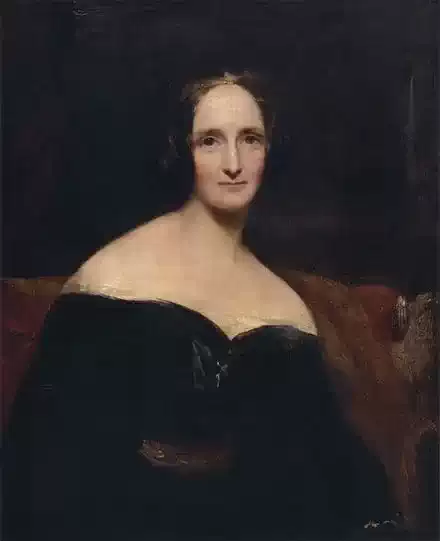
Percy Bysshe Shelley
To The Men Of England
To The Men Of England
Men of England, wherefore plough
For the lords who lay ye low?
Wherefore weave with toil and care
The rich robes your tyrants wear?
Wherefore feed and clothe and save,
From the cradle to the grave,
Those ungrateful drones who would
Drain your sweat -- nay, drink your blood?
Wherefore, Bees of England, forge
Many a weapon, chain, and scourge,
That these stingless drones may spoil
The forced produce of your toil?
Have ye leisure, comfort, calm,
Shelter, food, love's gentle balm?
Or what is it ye buy so dear
With your pain and with your fear?
The seed ye sow another reaps;
The wealth ye find another keeps;
The robes ye weave another wears;
The arms ye forge another bears.
Sow seed, -- but let no tyrant reap;
Find wealth, -- let no imposter heap;
Weave robes, -- let not the idle wear;
Forge arms, in your defence to bear.
Shrink to your cellars, holes, and cells;
In halls ye deck another dwells.
Why shake the chains ye wrought? Ye see
The steel ye tempered glance on ye.
With plough and spade and hoe and loom,
Trace your grave, and build your tomb,
And weave your winding-sheet, till fair
England be your sepulchre!
Men of England, wherefore plough
For the lords who lay ye low?
Wherefore weave with toil and care
The rich robes your tyrants wear?
Wherefore feed and clothe and save,
From the cradle to the grave,
Those ungrateful drones who would
Drain your sweat -- nay, drink your blood?
Wherefore, Bees of England, forge
Many a weapon, chain, and scourge,
That these stingless drones may spoil
The forced produce of your toil?
Have ye leisure, comfort, calm,
Shelter, food, love's gentle balm?
Or what is it ye buy so dear
With your pain and with your fear?
The seed ye sow another reaps;
The wealth ye find another keeps;
The robes ye weave another wears;
The arms ye forge another bears.
Sow seed, -- but let no tyrant reap;
Find wealth, -- let no imposter heap;
Weave robes, -- let not the idle wear;
Forge arms, in your defence to bear.
Shrink to your cellars, holes, and cells;
In halls ye deck another dwells.
Why shake the chains ye wrought? Ye see
The steel ye tempered glance on ye.
With plough and spade and hoe and loom,
Trace your grave, and build your tomb,
And weave your winding-sheet, till fair
England be your sepulchre!
438
Percy Bysshe Shelley
To The Men Of England
To The Men Of England
Men of England, wherefore plough
For the lords who lay ye low?
Wherefore weave with toil and care
The rich robes your tyrants wear?
Wherefore feed and clothe and save,
From the cradle to the grave,
Those ungrateful drones who would
Drain your sweat -- nay, drink your blood?
Wherefore, Bees of England, forge
Many a weapon, chain, and scourge,
That these stingless drones may spoil
The forced produce of your toil?
Have ye leisure, comfort, calm,
Shelter, food, love's gentle balm?
Or what is it ye buy so dear
With your pain and with your fear?
The seed ye sow another reaps;
The wealth ye find another keeps;
The robes ye weave another wears;
The arms ye forge another bears.
Sow seed, -- but let no tyrant reap;
Find wealth, -- let no imposter heap;
Weave robes, -- let not the idle wear;
Forge arms, in your defence to bear.
Shrink to your cellars, holes, and cells;
In halls ye deck another dwells.
Why shake the chains ye wrought? Ye see
The steel ye tempered glance on ye.
With plough and spade and hoe and loom,
Trace your grave, and build your tomb,
And weave your winding-sheet, till fair
England be your sepulchre!
Men of England, wherefore plough
For the lords who lay ye low?
Wherefore weave with toil and care
The rich robes your tyrants wear?
Wherefore feed and clothe and save,
From the cradle to the grave,
Those ungrateful drones who would
Drain your sweat -- nay, drink your blood?
Wherefore, Bees of England, forge
Many a weapon, chain, and scourge,
That these stingless drones may spoil
The forced produce of your toil?
Have ye leisure, comfort, calm,
Shelter, food, love's gentle balm?
Or what is it ye buy so dear
With your pain and with your fear?
The seed ye sow another reaps;
The wealth ye find another keeps;
The robes ye weave another wears;
The arms ye forge another bears.
Sow seed, -- but let no tyrant reap;
Find wealth, -- let no imposter heap;
Weave robes, -- let not the idle wear;
Forge arms, in your defence to bear.
Shrink to your cellars, holes, and cells;
In halls ye deck another dwells.
Why shake the chains ye wrought? Ye see
The steel ye tempered glance on ye.
With plough and spade and hoe and loom,
Trace your grave, and build your tomb,
And weave your winding-sheet, till fair
England be your sepulchre!
438
Percy Bysshe Shelley
To The Men Of England
To The Men Of England
Men of England, wherefore plough
For the lords who lay ye low?
Wherefore weave with toil and care
The rich robes your tyrants wear?
Wherefore feed and clothe and save,
From the cradle to the grave,
Those ungrateful drones who would
Drain your sweat -- nay, drink your blood?
Wherefore, Bees of England, forge
Many a weapon, chain, and scourge,
That these stingless drones may spoil
The forced produce of your toil?
Have ye leisure, comfort, calm,
Shelter, food, love's gentle balm?
Or what is it ye buy so dear
With your pain and with your fear?
The seed ye sow another reaps;
The wealth ye find another keeps;
The robes ye weave another wears;
The arms ye forge another bears.
Sow seed, -- but let no tyrant reap;
Find wealth, -- let no imposter heap;
Weave robes, -- let not the idle wear;
Forge arms, in your defence to bear.
Shrink to your cellars, holes, and cells;
In halls ye deck another dwells.
Why shake the chains ye wrought? Ye see
The steel ye tempered glance on ye.
With plough and spade and hoe and loom,
Trace your grave, and build your tomb,
And weave your winding-sheet, till fair
England be your sepulchre!
Men of England, wherefore plough
For the lords who lay ye low?
Wherefore weave with toil and care
The rich robes your tyrants wear?
Wherefore feed and clothe and save,
From the cradle to the grave,
Those ungrateful drones who would
Drain your sweat -- nay, drink your blood?
Wherefore, Bees of England, forge
Many a weapon, chain, and scourge,
That these stingless drones may spoil
The forced produce of your toil?
Have ye leisure, comfort, calm,
Shelter, food, love's gentle balm?
Or what is it ye buy so dear
With your pain and with your fear?
The seed ye sow another reaps;
The wealth ye find another keeps;
The robes ye weave another wears;
The arms ye forge another bears.
Sow seed, -- but let no tyrant reap;
Find wealth, -- let no imposter heap;
Weave robes, -- let not the idle wear;
Forge arms, in your defence to bear.
Shrink to your cellars, holes, and cells;
In halls ye deck another dwells.
Why shake the chains ye wrought? Ye see
The steel ye tempered glance on ye.
With plough and spade and hoe and loom,
Trace your grave, and build your tomb,
And weave your winding-sheet, till fair
England be your sepulchre!
438
Percy Bysshe Shelley
To The Men Of England
To The Men Of England
Men of England, wherefore plough
For the lords who lay ye low?
Wherefore weave with toil and care
The rich robes your tyrants wear?
Wherefore feed and clothe and save,
From the cradle to the grave,
Those ungrateful drones who would
Drain your sweat -- nay, drink your blood?
Wherefore, Bees of England, forge
Many a weapon, chain, and scourge,
That these stingless drones may spoil
The forced produce of your toil?
Have ye leisure, comfort, calm,
Shelter, food, love's gentle balm?
Or what is it ye buy so dear
With your pain and with your fear?
The seed ye sow another reaps;
The wealth ye find another keeps;
The robes ye weave another wears;
The arms ye forge another bears.
Sow seed, -- but let no tyrant reap;
Find wealth, -- let no imposter heap;
Weave robes, -- let not the idle wear;
Forge arms, in your defence to bear.
Shrink to your cellars, holes, and cells;
In halls ye deck another dwells.
Why shake the chains ye wrought? Ye see
The steel ye tempered glance on ye.
With plough and spade and hoe and loom,
Trace your grave, and build your tomb,
And weave your winding-sheet, till fair
England be your sepulchre!
Men of England, wherefore plough
For the lords who lay ye low?
Wherefore weave with toil and care
The rich robes your tyrants wear?
Wherefore feed and clothe and save,
From the cradle to the grave,
Those ungrateful drones who would
Drain your sweat -- nay, drink your blood?
Wherefore, Bees of England, forge
Many a weapon, chain, and scourge,
That these stingless drones may spoil
The forced produce of your toil?
Have ye leisure, comfort, calm,
Shelter, food, love's gentle balm?
Or what is it ye buy so dear
With your pain and with your fear?
The seed ye sow another reaps;
The wealth ye find another keeps;
The robes ye weave another wears;
The arms ye forge another bears.
Sow seed, -- but let no tyrant reap;
Find wealth, -- let no imposter heap;
Weave robes, -- let not the idle wear;
Forge arms, in your defence to bear.
Shrink to your cellars, holes, and cells;
In halls ye deck another dwells.
Why shake the chains ye wrought? Ye see
The steel ye tempered glance on ye.
With plough and spade and hoe and loom,
Trace your grave, and build your tomb,
And weave your winding-sheet, till fair
England be your sepulchre!
438
Percy Bysshe Shelley
To The Men Of England
To The Men Of England
Men of England, wherefore plough
For the lords who lay ye low?
Wherefore weave with toil and care
The rich robes your tyrants wear?
Wherefore feed and clothe and save,
From the cradle to the grave,
Those ungrateful drones who would
Drain your sweat -- nay, drink your blood?
Wherefore, Bees of England, forge
Many a weapon, chain, and scourge,
That these stingless drones may spoil
The forced produce of your toil?
Have ye leisure, comfort, calm,
Shelter, food, love's gentle balm?
Or what is it ye buy so dear
With your pain and with your fear?
The seed ye sow another reaps;
The wealth ye find another keeps;
The robes ye weave another wears;
The arms ye forge another bears.
Sow seed, -- but let no tyrant reap;
Find wealth, -- let no imposter heap;
Weave robes, -- let not the idle wear;
Forge arms, in your defence to bear.
Shrink to your cellars, holes, and cells;
In halls ye deck another dwells.
Why shake the chains ye wrought? Ye see
The steel ye tempered glance on ye.
With plough and spade and hoe and loom,
Trace your grave, and build your tomb,
And weave your winding-sheet, till fair
England be your sepulchre!
Men of England, wherefore plough
For the lords who lay ye low?
Wherefore weave with toil and care
The rich robes your tyrants wear?
Wherefore feed and clothe and save,
From the cradle to the grave,
Those ungrateful drones who would
Drain your sweat -- nay, drink your blood?
Wherefore, Bees of England, forge
Many a weapon, chain, and scourge,
That these stingless drones may spoil
The forced produce of your toil?
Have ye leisure, comfort, calm,
Shelter, food, love's gentle balm?
Or what is it ye buy so dear
With your pain and with your fear?
The seed ye sow another reaps;
The wealth ye find another keeps;
The robes ye weave another wears;
The arms ye forge another bears.
Sow seed, -- but let no tyrant reap;
Find wealth, -- let no imposter heap;
Weave robes, -- let not the idle wear;
Forge arms, in your defence to bear.
Shrink to your cellars, holes, and cells;
In halls ye deck another dwells.
Why shake the chains ye wrought? Ye see
The steel ye tempered glance on ye.
With plough and spade and hoe and loom,
Trace your grave, and build your tomb,
And weave your winding-sheet, till fair
England be your sepulchre!
438
Percy Bysshe Shelley
To The Men Of England
To The Men Of England
Men of England, wherefore plough
For the lords who lay ye low?
Wherefore weave with toil and care
The rich robes your tyrants wear?
Wherefore feed and clothe and save,
From the cradle to the grave,
Those ungrateful drones who would
Drain your sweat -- nay, drink your blood?
Wherefore, Bees of England, forge
Many a weapon, chain, and scourge,
That these stingless drones may spoil
The forced produce of your toil?
Have ye leisure, comfort, calm,
Shelter, food, love's gentle balm?
Or what is it ye buy so dear
With your pain and with your fear?
The seed ye sow another reaps;
The wealth ye find another keeps;
The robes ye weave another wears;
The arms ye forge another bears.
Sow seed, -- but let no tyrant reap;
Find wealth, -- let no imposter heap;
Weave robes, -- let not the idle wear;
Forge arms, in your defence to bear.
Shrink to your cellars, holes, and cells;
In halls ye deck another dwells.
Why shake the chains ye wrought? Ye see
The steel ye tempered glance on ye.
With plough and spade and hoe and loom,
Trace your grave, and build your tomb,
And weave your winding-sheet, till fair
England be your sepulchre!
Men of England, wherefore plough
For the lords who lay ye low?
Wherefore weave with toil and care
The rich robes your tyrants wear?
Wherefore feed and clothe and save,
From the cradle to the grave,
Those ungrateful drones who would
Drain your sweat -- nay, drink your blood?
Wherefore, Bees of England, forge
Many a weapon, chain, and scourge,
That these stingless drones may spoil
The forced produce of your toil?
Have ye leisure, comfort, calm,
Shelter, food, love's gentle balm?
Or what is it ye buy so dear
With your pain and with your fear?
The seed ye sow another reaps;
The wealth ye find another keeps;
The robes ye weave another wears;
The arms ye forge another bears.
Sow seed, -- but let no tyrant reap;
Find wealth, -- let no imposter heap;
Weave robes, -- let not the idle wear;
Forge arms, in your defence to bear.
Shrink to your cellars, holes, and cells;
In halls ye deck another dwells.
Why shake the chains ye wrought? Ye see
The steel ye tempered glance on ye.
With plough and spade and hoe and loom,
Trace your grave, and build your tomb,
And weave your winding-sheet, till fair
England be your sepulchre!
438
Percy Bysshe Shelley
Hellas
Hellas
THE world's great age begins anew,
The golden years return,
The earth doth like a snake renew
Her winter weeds outworn;
Heaven smiles, and faiths and empires gleam
Like wrecks of a dissolving dream.
A brighter Hellas rears its mountains
From waves serener far;
A new Peneus rolls his fountains
Against the morning star;
Where fairer Tempes bloom, there sleep
Young Cyclads on a sunnier deep.
A loftier Argo cleaves the main,
Fraught with a later prize;
Another Orpheus sings again,
And loves, and weeps, and dies;
A new Ulysses leaves once more
Calypso for his native shore.
O write no more the tale of Troy,
If earth Death's scroll must be--
Nor mix with Laian rage the joy
Which dawns upon the free,
Although a subtler Sphinx renew
Riddles of death Thebes never knew.
Another Athens shall arise,
And to remoter time
Bequeath, like sunset to the skies,
The splendour of its prime;
And leave, if naught so bright may live,
All earth can take or Heaven can give.
Saturn and Love their long repose
Shall burst, more bright and good
Than all who fell, than One who rose,
Than many unsubdued:
Not gold, not blood, their altar dowers,
But votive tears and symbol flowers.
O cease! must hate and death return?
Cease! must men kill and die?
Cease! drain not to its dregs the urn
Of bitter prophecy!
The world is weary of the past--
O might it die or rest at last!
THE world's great age begins anew,
The golden years return,
The earth doth like a snake renew
Her winter weeds outworn;
Heaven smiles, and faiths and empires gleam
Like wrecks of a dissolving dream.
A brighter Hellas rears its mountains
From waves serener far;
A new Peneus rolls his fountains
Against the morning star;
Where fairer Tempes bloom, there sleep
Young Cyclads on a sunnier deep.
A loftier Argo cleaves the main,
Fraught with a later prize;
Another Orpheus sings again,
And loves, and weeps, and dies;
A new Ulysses leaves once more
Calypso for his native shore.
O write no more the tale of Troy,
If earth Death's scroll must be--
Nor mix with Laian rage the joy
Which dawns upon the free,
Although a subtler Sphinx renew
Riddles of death Thebes never knew.
Another Athens shall arise,
And to remoter time
Bequeath, like sunset to the skies,
The splendour of its prime;
And leave, if naught so bright may live,
All earth can take or Heaven can give.
Saturn and Love their long repose
Shall burst, more bright and good
Than all who fell, than One who rose,
Than many unsubdued:
Not gold, not blood, their altar dowers,
But votive tears and symbol flowers.
O cease! must hate and death return?
Cease! must men kill and die?
Cease! drain not to its dregs the urn
Of bitter prophecy!
The world is weary of the past--
O might it die or rest at last!
531
Percy Bysshe Shelley
Feelings Of A Republican On The Fall Of Bonaparte
Feelings Of A Republican On The Fall Of Bonaparte
I hated thee, fallen tyrant! I did groan
To think that a most unambitious slave,
Like thou, shouldst dance and revel on the grave
Of Liberty. Thou mightst have built thy throne
Where it had stood even now: thou didst prefer
A frail and bloody pomp which Time has swept
In fragments towards Oblivion. Massacre,
For this I prayed, would on thy sleep have crept,
Treason and Slavery, Rapine, Fear, and Lust,
And stifled thee, their minister. I know
Too late, since thou and France are in the dust,
That Virtue owns a more eternal foe
Than Force or Fraud: old Custom, legal Crime,
And bloody Faith the foulest birth of Time.
I hated thee, fallen tyrant! I did groan
To think that a most unambitious slave,
Like thou, shouldst dance and revel on the grave
Of Liberty. Thou mightst have built thy throne
Where it had stood even now: thou didst prefer
A frail and bloody pomp which Time has swept
In fragments towards Oblivion. Massacre,
For this I prayed, would on thy sleep have crept,
Treason and Slavery, Rapine, Fear, and Lust,
And stifled thee, their minister. I know
Too late, since thou and France are in the dust,
That Virtue owns a more eternal foe
Than Force or Fraud: old Custom, legal Crime,
And bloody Faith the foulest birth of Time.
503
Percy Bysshe Shelley
Feelings Of A Republican On The Fall Of Bonaparte
Feelings Of A Republican On The Fall Of Bonaparte
I hated thee, fallen tyrant! I did groan
To think that a most unambitious slave,
Like thou, shouldst dance and revel on the grave
Of Liberty. Thou mightst have built thy throne
Where it had stood even now: thou didst prefer
A frail and bloody pomp which Time has swept
In fragments towards Oblivion. Massacre,
For this I prayed, would on thy sleep have crept,
Treason and Slavery, Rapine, Fear, and Lust,
And stifled thee, their minister. I know
Too late, since thou and France are in the dust,
That Virtue owns a more eternal foe
Than Force or Fraud: old Custom, legal Crime,
And bloody Faith the foulest birth of Time.
I hated thee, fallen tyrant! I did groan
To think that a most unambitious slave,
Like thou, shouldst dance and revel on the grave
Of Liberty. Thou mightst have built thy throne
Where it had stood even now: thou didst prefer
A frail and bloody pomp which Time has swept
In fragments towards Oblivion. Massacre,
For this I prayed, would on thy sleep have crept,
Treason and Slavery, Rapine, Fear, and Lust,
And stifled thee, their minister. I know
Too late, since thou and France are in the dust,
That Virtue owns a more eternal foe
Than Force or Fraud: old Custom, legal Crime,
And bloody Faith the foulest birth of Time.
503
Percy Bysshe Shelley
Feelings Of A Republican On The Fall Of Bonaparte
Feelings Of A Republican On The Fall Of Bonaparte
I hated thee, fallen tyrant! I did groan
To think that a most unambitious slave,
Like thou, shouldst dance and revel on the grave
Of Liberty. Thou mightst have built thy throne
Where it had stood even now: thou didst prefer
A frail and bloody pomp which Time has swept
In fragments towards Oblivion. Massacre,
For this I prayed, would on thy sleep have crept,
Treason and Slavery, Rapine, Fear, and Lust,
And stifled thee, their minister. I know
Too late, since thou and France are in the dust,
That Virtue owns a more eternal foe
Than Force or Fraud: old Custom, legal Crime,
And bloody Faith the foulest birth of Time.
I hated thee, fallen tyrant! I did groan
To think that a most unambitious slave,
Like thou, shouldst dance and revel on the grave
Of Liberty. Thou mightst have built thy throne
Where it had stood even now: thou didst prefer
A frail and bloody pomp which Time has swept
In fragments towards Oblivion. Massacre,
For this I prayed, would on thy sleep have crept,
Treason and Slavery, Rapine, Fear, and Lust,
And stifled thee, their minister. I know
Too late, since thou and France are in the dust,
That Virtue owns a more eternal foe
Than Force or Fraud: old Custom, legal Crime,
And bloody Faith the foulest birth of Time.
503
Percy Bysshe Shelley
English In
English In
An old, mad, blind, despised, and dying king,--
Princes, the dregs of their dull race, who
Through public scorn,--mud from a muddy spring,--
Rulers who neither see, nor feel, nor know,
But leech-like to their fainting country cling,
Till they drop, blind in blood, without a blow,--
A people starved and stabbed in the untilled field,--
An army, which liberticide and prey
Makes as a two-edged sword to all who wield,--
Golden and sanguine laws which tempt and slay;
Religion Christless, Godless--a book sealed;
A Senate, Time's worst statute unrepealed,--
Are graves, from which a glorious Phantom may
Burst, to illumine our tempestuous day.
An old, mad, blind, despised, and dying king,--
Princes, the dregs of their dull race, who
Through public scorn,--mud from a muddy spring,--
Rulers who neither see, nor feel, nor know,
But leech-like to their fainting country cling,
Till they drop, blind in blood, without a blow,--
A people starved and stabbed in the untilled field,--
An army, which liberticide and prey
Makes as a two-edged sword to all who wield,--
Golden and sanguine laws which tempt and slay;
Religion Christless, Godless--a book sealed;
A Senate, Time's worst statute unrepealed,--
Are graves, from which a glorious Phantom may
Burst, to illumine our tempestuous day.
490
Percy Bysshe Shelley
English In
English In
An old, mad, blind, despised, and dying king,--
Princes, the dregs of their dull race, who
Through public scorn,--mud from a muddy spring,--
Rulers who neither see, nor feel, nor know,
But leech-like to their fainting country cling,
Till they drop, blind in blood, without a blow,--
A people starved and stabbed in the untilled field,--
An army, which liberticide and prey
Makes as a two-edged sword to all who wield,--
Golden and sanguine laws which tempt and slay;
Religion Christless, Godless--a book sealed;
A Senate, Time's worst statute unrepealed,--
Are graves, from which a glorious Phantom may
Burst, to illumine our tempestuous day.
An old, mad, blind, despised, and dying king,--
Princes, the dregs of their dull race, who
Through public scorn,--mud from a muddy spring,--
Rulers who neither see, nor feel, nor know,
But leech-like to their fainting country cling,
Till they drop, blind in blood, without a blow,--
A people starved and stabbed in the untilled field,--
An army, which liberticide and prey
Makes as a two-edged sword to all who wield,--
Golden and sanguine laws which tempt and slay;
Religion Christless, Godless--a book sealed;
A Senate, Time's worst statute unrepealed,--
Are graves, from which a glorious Phantom may
Burst, to illumine our tempestuous day.
490
Percy Bysshe Shelley
English In
English In
An old, mad, blind, despised, and dying king,--
Princes, the dregs of their dull race, who
Through public scorn,--mud from a muddy spring,--
Rulers who neither see, nor feel, nor know,
But leech-like to their fainting country cling,
Till they drop, blind in blood, without a blow,--
A people starved and stabbed in the untilled field,--
An army, which liberticide and prey
Makes as a two-edged sword to all who wield,--
Golden and sanguine laws which tempt and slay;
Religion Christless, Godless--a book sealed;
A Senate, Time's worst statute unrepealed,--
Are graves, from which a glorious Phantom may
Burst, to illumine our tempestuous day.
An old, mad, blind, despised, and dying king,--
Princes, the dregs of their dull race, who
Through public scorn,--mud from a muddy spring,--
Rulers who neither see, nor feel, nor know,
But leech-like to their fainting country cling,
Till they drop, blind in blood, without a blow,--
A people starved and stabbed in the untilled field,--
An army, which liberticide and prey
Makes as a two-edged sword to all who wield,--
Golden and sanguine laws which tempt and slay;
Religion Christless, Godless--a book sealed;
A Senate, Time's worst statute unrepealed,--
Are graves, from which a glorious Phantom may
Burst, to illumine our tempestuous day.
490