

Poems in this topic
Nature and Elements

Henry Lawson
In Possum Land
In Possum Land
In Possum Land the nights are fair,
The streams are fresh and clear;
No dust is in the moonlit air;
No traffic jars the ear.
With Possums gambolling overhead,
'Neath western stars so grand,
Ah! would that we could make our bed
Tonight in Possum Land.
In Possum Land the nights are fair,
The streams are fresh and clear;
No dust is in the moonlit air;
No traffic jars the ear.
With Possums gambolling overhead,
'Neath western stars so grand,
Ah! would that we could make our bed
Tonight in Possum Land.
249
Henry Lawson
Hawkers
Hawkers
Dust, dust, dust and a dog –
Oh! The sheep-dog won’t be last.
When the long, long, shadow of the old bay horse
With the shadow of his mate is cast.
A brick-brown woman with the brick-brown kids,
And a man with his head half-mast,
The feed-bags hung and the bedding slung,
And the blackened bucket made fast
Where the tailboard clings to the tucker and things –
So the hawker’s van goes past.
Dust, dust, dust and a dog –
Oh! The sheep-dog won’t be last.
When the long, long, shadow of the old bay horse
With the shadow of his mate is cast.
A brick-brown woman with the brick-brown kids,
And a man with his head half-mast,
The feed-bags hung and the bedding slung,
And the blackened bucket made fast
Where the tailboard clings to the tucker and things –
So the hawker’s van goes past.
204
Henry Lawson
Grey Wolves Grey
Grey Wolves Grey
The Russian march is soft and slow,
Through dust and heat, or slush and snow,
When the Russian skies hang grey and low
To the frontiers far where the Russians go;
And they march to-night and they march to-day
Like the grey wolves grey, like the grey wolves grey.
Nor song nor sound their track reveals,
Save the ceaseless “clock” of the waggon wheels;
But a rift in the mist shows a glint of sun
On the long, dark shape of a toiling gun;
And they strain by night and they drag by day
To a distant goal, like the grey wolves grey.
As the horses toil at the ends of trains,
And the ends of roads on the Blacksoil Plains.
And Ivan digs in the frozen clay,
And he rolls the logs a bed to lay
For a gun that’s five hundred miles away,
But as sure to come as the grey wolves grey.
He is marching on with a purpose grand,
For brother Slav in another land;
Whose tongue, perchance, he cannot understand.—
But he knows the cry from the far-away,
And he smells the blood like the grey wolves grey.
And Ivan’s wife in her den at home,
While hunger looms and his lean wolves come—
With her grey-black bread like the Darling mud,
And her tea-bricks bound with the bullock’s blood—
She shields her cubs by night and day
Like the crouching sluts of the grey wolves grey.
And I march with Ivan where’er he be,
With the foreign blood that is strong in me,
And the love and the hate that is fantasy,
Like the ghosts of a father’s memory.
With the blood that is strange to us to-day
As the strange wild blood of the grey wolves grey.
Grey wolves,
Grey wolves—
The strange wild blood of the grey wolves grey.
The Russian march is soft and slow,
Through dust and heat, or slush and snow,
When the Russian skies hang grey and low
To the frontiers far where the Russians go;
And they march to-night and they march to-day
Like the grey wolves grey, like the grey wolves grey.
Nor song nor sound their track reveals,
Save the ceaseless “clock” of the waggon wheels;
But a rift in the mist shows a glint of sun
On the long, dark shape of a toiling gun;
And they strain by night and they drag by day
To a distant goal, like the grey wolves grey.
As the horses toil at the ends of trains,
And the ends of roads on the Blacksoil Plains.
And Ivan digs in the frozen clay,
And he rolls the logs a bed to lay
For a gun that’s five hundred miles away,
But as sure to come as the grey wolves grey.
He is marching on with a purpose grand,
For brother Slav in another land;
Whose tongue, perchance, he cannot understand.—
But he knows the cry from the far-away,
And he smells the blood like the grey wolves grey.
And Ivan’s wife in her den at home,
While hunger looms and his lean wolves come—
With her grey-black bread like the Darling mud,
And her tea-bricks bound with the bullock’s blood—
She shields her cubs by night and day
Like the crouching sluts of the grey wolves grey.
And I march with Ivan where’er he be,
With the foreign blood that is strong in me,
And the love and the hate that is fantasy,
Like the ghosts of a father’s memory.
With the blood that is strange to us to-day
As the strange wild blood of the grey wolves grey.
Grey wolves,
Grey wolves—
The strange wild blood of the grey wolves grey.
241
Henry Lawson
Dawgs of War
Dawgs of War
Comes the British bulldog first—solid as a log—
He’s so ugly in repose that he’s a handsome dog;
Full of mild benevolence as his years increase;
Silent as a china dog on the mantelpiece.
Rub his sides and point his nose,
Click your tongue and in he goes,
To the thick of Britain’s foes—
Enemies behind him close—
(
Silence for a while
).
Comes a very different dog—tell him at a glance.
Clipped and trimmed and frilled all round. Dandy dog of France.
(Always was a dandy dog, no matter what his age)
Now his every hair and frill is stiff as wire with rage.
Rub his sides and point his nose,
Click your tongue and in he goes,
While behind him France’s foes
Reel and surge and pack and close.
(
Silence for a while
.)
Next comes Belgium’s market dog—hard to realise.
Go-cart dog and barrow dog—he’s a great surprise.
Dog that never hurt a cat, did no person harm;
Friendly, kindly, round and fat as a “Johnny Darm.”
Rub his sides and point his nose,
Click your tongue and in he goes,
At the flank of Belgium’s foes
Who could not behind him close—
(
Silence for a while
).
Next comes Servia’s mongrel pup—mongrel dawgs can fight;
Up or down, or down or up, whether wrong or right.
He was mad the other day—he is mad today,
Hustling round and raising dust in his backyard way.
Rub his sides and point his nose,
Click your tongue and in he goes,
’Twixt the legs of Servia’s foes,
Biting tails and rearmost toes—
(
Silence for a while
.)
There are various terrier dawgs mixed up in the scrap,
Much too small for us to see, and too mad to yap.
Each one, on his frantic own—heard the row commence—
Tore with tooth and claw a hole in the backyard fence.
No one called, but in they go,
Dogs with many a nameless woe,
Tripping up their common foe—
(
Silence for a while
).
From the snows of Canada, dragging box and bale,
Comes the sledge-dog toiling on, sore-foot from the trail.
He’ll be useful in the trench, when the nose is blue—
Winter dog that knows the French and the English too.
Rub his sides and point his nose,
Click your tongue and in he goes,
At his father’s country’s foes,
And his mother’s country’s foes.
(
Silence for a while
.)
See, in sunny Southern France a dog that runs by sight,
Lean and yellow, sharp of nose, long of leg and light,
Silent and bloodthirsty, too; Distance in his eyes,
Leaping high to gain his view, the Kangaroo Dog flies!
Rub his sides and point his nose,
Click your tongue and up he goes,
Lands amongst his country’s foes—
And his country’s country’s foes;
While they sway and while they close—
(
Silence for a while
).
See across the early snow, far across the plain,
Where the clouds are grey and low and winter comes again;
By the sand-dune and the marsh—and forest black and dumb—
As dusky white as their winter’s night, the Russian wolf-hounds come!
(
Silence for a while
.)
Comes the British bulldog first—solid as a log—
He’s so ugly in repose that he’s a handsome dog;
Full of mild benevolence as his years increase;
Silent as a china dog on the mantelpiece.
Rub his sides and point his nose,
Click your tongue and in he goes,
To the thick of Britain’s foes—
Enemies behind him close—
(
Silence for a while
).
Comes a very different dog—tell him at a glance.
Clipped and trimmed and frilled all round. Dandy dog of France.
(Always was a dandy dog, no matter what his age)
Now his every hair and frill is stiff as wire with rage.
Rub his sides and point his nose,
Click your tongue and in he goes,
While behind him France’s foes
Reel and surge and pack and close.
(
Silence for a while
.)
Next comes Belgium’s market dog—hard to realise.
Go-cart dog and barrow dog—he’s a great surprise.
Dog that never hurt a cat, did no person harm;
Friendly, kindly, round and fat as a “Johnny Darm.”
Rub his sides and point his nose,
Click your tongue and in he goes,
At the flank of Belgium’s foes
Who could not behind him close—
(
Silence for a while
).
Next comes Servia’s mongrel pup—mongrel dawgs can fight;
Up or down, or down or up, whether wrong or right.
He was mad the other day—he is mad today,
Hustling round and raising dust in his backyard way.
Rub his sides and point his nose,
Click your tongue and in he goes,
’Twixt the legs of Servia’s foes,
Biting tails and rearmost toes—
(
Silence for a while
.)
There are various terrier dawgs mixed up in the scrap,
Much too small for us to see, and too mad to yap.
Each one, on his frantic own—heard the row commence—
Tore with tooth and claw a hole in the backyard fence.
No one called, but in they go,
Dogs with many a nameless woe,
Tripping up their common foe—
(
Silence for a while
).
From the snows of Canada, dragging box and bale,
Comes the sledge-dog toiling on, sore-foot from the trail.
He’ll be useful in the trench, when the nose is blue—
Winter dog that knows the French and the English too.
Rub his sides and point his nose,
Click your tongue and in he goes,
At his father’s country’s foes,
And his mother’s country’s foes.
(
Silence for a while
.)
See, in sunny Southern France a dog that runs by sight,
Lean and yellow, sharp of nose, long of leg and light,
Silent and bloodthirsty, too; Distance in his eyes,
Leaping high to gain his view, the Kangaroo Dog flies!
Rub his sides and point his nose,
Click your tongue and up he goes,
Lands amongst his country’s foes—
And his country’s country’s foes;
While they sway and while they close—
(
Silence for a while
).
See across the early snow, far across the plain,
Where the clouds are grey and low and winter comes again;
By the sand-dune and the marsh—and forest black and dumb—
As dusky white as their winter’s night, the Russian wolf-hounds come!
(
Silence for a while
.)
281
Henry Lawson
Dan Wasn’t Thrown from His Horse
Dan Wasn’t Thrown from His Horse
THEY SAY he was thrown and run over,
But that is sheer nonsense, of course:
I taught him to ride when a kiddy,
And Dan wasn’t thrown from his horse.
The horse that Dan rode was a devil—
The kind of a brute I despise,
With nasty white eyelashes fringing
A pair of red, sinister eyes.
And a queerly-shaped spot on his forehead,
Where I put a conical ball
The day that he murdered Dan Denver,
The pluckiest rider of all.
’Twas after the races were over
And Duggan (a Talbragar man)
And two of the Denvers, and Barney
Were trying a gallop with Dan.
Dan’s horse on a sudden got vicious,
And reared up an’ plunged in the race,
Then threw back his head, hitting Dan like
A sledge-hammer, full in the face.
Dan stopped and got down, stood a moment,
Then fell to the ground like a stone,
And died about ten minutes after;
But they’re liars who say he was thrown.
THEY SAY he was thrown and run over,
But that is sheer nonsense, of course:
I taught him to ride when a kiddy,
And Dan wasn’t thrown from his horse.
The horse that Dan rode was a devil—
The kind of a brute I despise,
With nasty white eyelashes fringing
A pair of red, sinister eyes.
And a queerly-shaped spot on his forehead,
Where I put a conical ball
The day that he murdered Dan Denver,
The pluckiest rider of all.
’Twas after the races were over
And Duggan (a Talbragar man)
And two of the Denvers, and Barney
Were trying a gallop with Dan.
Dan’s horse on a sudden got vicious,
And reared up an’ plunged in the race,
Then threw back his head, hitting Dan like
A sledge-hammer, full in the face.
Dan stopped and got down, stood a moment,
Then fell to the ground like a stone,
And died about ten minutes after;
But they’re liars who say he was thrown.
199
Henry Lawson
Coomera
Coomera
THERE’S a pretty little story with a touch of moonlit glory
Comes from Beenleigh on the Logan, but we don’t know if it’s true;
For we scarcely dare to credit ev’rything they say who edit
Those unhappy country papers ’twixt the ocean and Barcoo.
’Twas the man who owned the wherry at the first Coomera ferry
Who was sitting cold and lonely while he counted out his tin;
When the cloudy curtain lifting let the moonlight on a drifting
Boat, that floated down the river with a pallid form therein.
And they say that Sergeant Carey (with the man who ran the ferry),
Started down to save the body from the cruel heartless sea,
And in spite of wind and water, soon they reached the barque and caught her;
And they tied the boat behind them while they wondered “who was he?”
O the moon shone bright as ever as they towed him up the river,
And they found within the pocket that was nearest to his breast—
Just an antidote for sorrow, that would tide him o’er the morrow—
(Flask of Brandy); but we’d better draw the curtain o’er the rest.
Yet, in case the point’s too finely drawn (we know we joke divinely),
And the reader fails to see it with a magnifying glass,
We will say the man who floated, while the moonlight o’er him gloated,
Was not dead and gone to heaven—he was only drunk, alas!THERE’S a pretty little
story with a touch of moonlit glory
Comes from Beenleigh on the Logan, but we don’t know if it’s true;
For we scarcely dare to credit ev’rything they say who edit
Those unhappy country papers ’twixt the ocean and Barcoo.
’Twas the man who owned the wherry at the first Coomera ferry
Who was sitting cold and lonely while he counted out his tin;
When the cloudy curtain lifting let the moonlight on a drifting
Boat, that floated down the river with a pallid form therein.
And they say that Sergeant Carey (with the man who ran the ferry),
Started down to save the body from the cruel heartless sea,
And in spite of wind and water, soon they reached the barque and caught her;
And they tied the boat behind them while they wondered “who was he?”
O the moon shone bright as ever as they towed him up the river,
And they found within the pocket that was nearest to his breast—
Just an antidote for sorrow, that would tide him o’er the morrow—
(Flask of Brandy); but we’d better draw the curtain o’er the rest.
Yet, in case the point’s too finely drawn (we know we joke divinely),
And the reader fails to see it with a magnifying glass,
We will say the man who floated, while the moonlight o’er him gloated,
Was not dead and gone to heaven—he was only drunk, alas!
For we scarcely dare to credit ev’rything they say who edit
Those unhappy country papers ’twixt the ocean and Barcoo.
’Twas the man who owned the wherry at the first Coomera ferry
Who was sitting cold and lonely while he counted out his tin;
When the cloudy curtain lifting let the moonlight on a drifting
Boat, that floated down the river with a pallid form therein.
And they say that Sergeant Carey (with the man who ran the ferry),
Started down to save the body from the cruel heartless sea,
And in spite of wind and water, soon they reached the barque and caught her;
And they tied the boat behind them while they wondered “who was he?”
O the moon shone bright as ever as they towed him up the river,
And they found within the pocket that was nearest to his breast—
Just an antidote for sorrow, that would tide him o’er the morrow—
(Flask of Brandy); but we’d better draw the curtain o’er the rest.
Yet, in case the point’s too finely drawn (we know we joke divinely),
And the reader fails to see it with a magnifying glass,
We will say the man who floated, while the moonlight o’er him gloated,
Was not dead and gone to heaven—he was only drunk, alas!
THERE’S a pretty little story with a touch of moonlit glory
Comes from Beenleigh on the Logan, but we don’t know if it’s true;
For we scarcely dare to credit ev’rything they say who edit
Those unhappy country papers ’twixt the ocean and Barcoo.
’Twas the man who owned the wherry at the first Coomera ferry
Who was sitting cold and lonely while he counted out his tin;
When the cloudy curtain lifting let the moonlight on a drifting
Boat, that floated down the river with a pallid form therein.
And they say that Sergeant Carey (with the man who ran the ferry),
Started down to save the body from the cruel heartless sea,
And in spite of wind and water, soon they reached the barque and caught her;
And they tied the boat behind them while they wondered “who was he?”
O the moon shone bright as ever as they towed him up the river,
And they found within the pocket that was nearest to his breast—
Just an antidote for sorrow, that would tide him o’er the morrow—
(Flask of Brandy); but we’d better draw the curtain o’er the rest.
Yet, in case the point’s too finely drawn (we know we joke divinely),
And the reader fails to see it with a magnifying glass,
We will say the man who floated, while the moonlight o’er him gloated,
Was not dead and gone to heaven—he was only drunk, alas!THERE’S a pretty little
story with a touch of moonlit glory
Comes from Beenleigh on the Logan, but we don’t know if it’s true;
For we scarcely dare to credit ev’rything they say who edit
Those unhappy country papers ’twixt the ocean and Barcoo.
’Twas the man who owned the wherry at the first Coomera ferry
Who was sitting cold and lonely while he counted out his tin;
When the cloudy curtain lifting let the moonlight on a drifting
Boat, that floated down the river with a pallid form therein.
And they say that Sergeant Carey (with the man who ran the ferry),
Started down to save the body from the cruel heartless sea,
And in spite of wind and water, soon they reached the barque and caught her;
And they tied the boat behind them while they wondered “who was he?”
O the moon shone bright as ever as they towed him up the river,
And they found within the pocket that was nearest to his breast—
Just an antidote for sorrow, that would tide him o’er the morrow—
(Flask of Brandy); but we’d better draw the curtain o’er the rest.
Yet, in case the point’s too finely drawn (we know we joke divinely),
And the reader fails to see it with a magnifying glass,
We will say the man who floated, while the moonlight o’er him gloated,
Was not dead and gone to heaven—he was only drunk, alas!
For we scarcely dare to credit ev’rything they say who edit
Those unhappy country papers ’twixt the ocean and Barcoo.
’Twas the man who owned the wherry at the first Coomera ferry
Who was sitting cold and lonely while he counted out his tin;
When the cloudy curtain lifting let the moonlight on a drifting
Boat, that floated down the river with a pallid form therein.
And they say that Sergeant Carey (with the man who ran the ferry),
Started down to save the body from the cruel heartless sea,
And in spite of wind and water, soon they reached the barque and caught her;
And they tied the boat behind them while they wondered “who was he?”
O the moon shone bright as ever as they towed him up the river,
And they found within the pocket that was nearest to his breast—
Just an antidote for sorrow, that would tide him o’er the morrow—
(Flask of Brandy); but we’d better draw the curtain o’er the rest.
Yet, in case the point’s too finely drawn (we know we joke divinely),
And the reader fails to see it with a magnifying glass,
We will say the man who floated, while the moonlight o’er him gloated,
Was not dead and gone to heaven—he was only drunk, alas!
249
Henry Lawson
Coomera
Coomera
THERE’S a pretty little story with a touch of moonlit glory
Comes from Beenleigh on the Logan, but we don’t know if it’s true;
For we scarcely dare to credit ev’rything they say who edit
Those unhappy country papers ’twixt the ocean and Barcoo.
’Twas the man who owned the wherry at the first Coomera ferry
Who was sitting cold and lonely while he counted out his tin;
When the cloudy curtain lifting let the moonlight on a drifting
Boat, that floated down the river with a pallid form therein.
And they say that Sergeant Carey (with the man who ran the ferry),
Started down to save the body from the cruel heartless sea,
And in spite of wind and water, soon they reached the barque and caught her;
And they tied the boat behind them while they wondered “who was he?”
O the moon shone bright as ever as they towed him up the river,
And they found within the pocket that was nearest to his breast—
Just an antidote for sorrow, that would tide him o’er the morrow—
(Flask of Brandy); but we’d better draw the curtain o’er the rest.
Yet, in case the point’s too finely drawn (we know we joke divinely),
And the reader fails to see it with a magnifying glass,
We will say the man who floated, while the moonlight o’er him gloated,
Was not dead and gone to heaven—he was only drunk, alas!THERE’S a pretty little
story with a touch of moonlit glory
Comes from Beenleigh on the Logan, but we don’t know if it’s true;
For we scarcely dare to credit ev’rything they say who edit
Those unhappy country papers ’twixt the ocean and Barcoo.
’Twas the man who owned the wherry at the first Coomera ferry
Who was sitting cold and lonely while he counted out his tin;
When the cloudy curtain lifting let the moonlight on a drifting
Boat, that floated down the river with a pallid form therein.
And they say that Sergeant Carey (with the man who ran the ferry),
Started down to save the body from the cruel heartless sea,
And in spite of wind and water, soon they reached the barque and caught her;
And they tied the boat behind them while they wondered “who was he?”
O the moon shone bright as ever as they towed him up the river,
And they found within the pocket that was nearest to his breast—
Just an antidote for sorrow, that would tide him o’er the morrow—
(Flask of Brandy); but we’d better draw the curtain o’er the rest.
Yet, in case the point’s too finely drawn (we know we joke divinely),
And the reader fails to see it with a magnifying glass,
We will say the man who floated, while the moonlight o’er him gloated,
Was not dead and gone to heaven—he was only drunk, alas!
For we scarcely dare to credit ev’rything they say who edit
Those unhappy country papers ’twixt the ocean and Barcoo.
’Twas the man who owned the wherry at the first Coomera ferry
Who was sitting cold and lonely while he counted out his tin;
When the cloudy curtain lifting let the moonlight on a drifting
Boat, that floated down the river with a pallid form therein.
And they say that Sergeant Carey (with the man who ran the ferry),
Started down to save the body from the cruel heartless sea,
And in spite of wind and water, soon they reached the barque and caught her;
And they tied the boat behind them while they wondered “who was he?”
O the moon shone bright as ever as they towed him up the river,
And they found within the pocket that was nearest to his breast—
Just an antidote for sorrow, that would tide him o’er the morrow—
(Flask of Brandy); but we’d better draw the curtain o’er the rest.
Yet, in case the point’s too finely drawn (we know we joke divinely),
And the reader fails to see it with a magnifying glass,
We will say the man who floated, while the moonlight o’er him gloated,
Was not dead and gone to heaven—he was only drunk, alas!
THERE’S a pretty little story with a touch of moonlit glory
Comes from Beenleigh on the Logan, but we don’t know if it’s true;
For we scarcely dare to credit ev’rything they say who edit
Those unhappy country papers ’twixt the ocean and Barcoo.
’Twas the man who owned the wherry at the first Coomera ferry
Who was sitting cold and lonely while he counted out his tin;
When the cloudy curtain lifting let the moonlight on a drifting
Boat, that floated down the river with a pallid form therein.
And they say that Sergeant Carey (with the man who ran the ferry),
Started down to save the body from the cruel heartless sea,
And in spite of wind and water, soon they reached the barque and caught her;
And they tied the boat behind them while they wondered “who was he?”
O the moon shone bright as ever as they towed him up the river,
And they found within the pocket that was nearest to his breast—
Just an antidote for sorrow, that would tide him o’er the morrow—
(Flask of Brandy); but we’d better draw the curtain o’er the rest.
Yet, in case the point’s too finely drawn (we know we joke divinely),
And the reader fails to see it with a magnifying glass,
We will say the man who floated, while the moonlight o’er him gloated,
Was not dead and gone to heaven—he was only drunk, alas!THERE’S a pretty little
story with a touch of moonlit glory
Comes from Beenleigh on the Logan, but we don’t know if it’s true;
For we scarcely dare to credit ev’rything they say who edit
Those unhappy country papers ’twixt the ocean and Barcoo.
’Twas the man who owned the wherry at the first Coomera ferry
Who was sitting cold and lonely while he counted out his tin;
When the cloudy curtain lifting let the moonlight on a drifting
Boat, that floated down the river with a pallid form therein.
And they say that Sergeant Carey (with the man who ran the ferry),
Started down to save the body from the cruel heartless sea,
And in spite of wind and water, soon they reached the barque and caught her;
And they tied the boat behind them while they wondered “who was he?”
O the moon shone bright as ever as they towed him up the river,
And they found within the pocket that was nearest to his breast—
Just an antidote for sorrow, that would tide him o’er the morrow—
(Flask of Brandy); but we’d better draw the curtain o’er the rest.
Yet, in case the point’s too finely drawn (we know we joke divinely),
And the reader fails to see it with a magnifying glass,
We will say the man who floated, while the moonlight o’er him gloated,
Was not dead and gone to heaven—he was only drunk, alas!
For we scarcely dare to credit ev’rything they say who edit
Those unhappy country papers ’twixt the ocean and Barcoo.
’Twas the man who owned the wherry at the first Coomera ferry
Who was sitting cold and lonely while he counted out his tin;
When the cloudy curtain lifting let the moonlight on a drifting
Boat, that floated down the river with a pallid form therein.
And they say that Sergeant Carey (with the man who ran the ferry),
Started down to save the body from the cruel heartless sea,
And in spite of wind and water, soon they reached the barque and caught her;
And they tied the boat behind them while they wondered “who was he?”
O the moon shone bright as ever as they towed him up the river,
And they found within the pocket that was nearest to his breast—
Just an antidote for sorrow, that would tide him o’er the morrow—
(Flask of Brandy); but we’d better draw the curtain o’er the rest.
Yet, in case the point’s too finely drawn (we know we joke divinely),
And the reader fails to see it with a magnifying glass,
We will say the man who floated, while the moonlight o’er him gloated,
Was not dead and gone to heaven—he was only drunk, alas!
249
Henry Lawson
Ballad Of The Drover
Ballad Of The Drover
Across the stony ridges,
Across the rolling plain,
Young Harry Dale, the drover,
Comes riding home again.
And well his stock-horse bears him,
And light of heart is he,
And stoutly his old pack-horse
Is trotting by his knee.
Up Queensland way with cattle
He travelled regions vast;
And many months have vanished
Since home-folk saw him last.
He hums a song of someone
He hopes to marry soon;
And hobble-chains and camp-ware
Keep jingling to the tune.
Beyond the hazy dado
Against the lower skies
And yon blue line of ranges
The homestead station lies.
And thitherward the drover
Jogs through the lazy noon,
While hobble-chains and camp-ware
Are jingling to a tune.
An hour has filled the heavens
With storm-clouds inky black;
At times the lightning trickles
Around the drover's track;
But Harry pushes onward,
His horses' strength he tries,
In hope to reach the river
Before the flood shall rise.
The thunder from above him
Goes rolling o'er the plain;
And down on thirsty pastures
In torrents falls the rain.
And every creek and gully
Sends forth its little flood,
Till the river runs a banker,
All stained with yellow mud.
Now Harry speaks to Rover,
The best dog on the plains,
And to his hardy horses,
And strokes their shaggy manes;
`We've breasted bigger rivers
When floods were at their height
Nor shall this gutter stop us
From getting home to-night!'
The thunder growls a warning,
The ghastly lightnings gleam,
As the drover turns his horses
To swim the fatal stream.
But, oh! the flood runs stronger
Than e'er it ran before;
The saddle-horse is failing,
And only half-way o'er!
When flashes next the lightning,
The flood's grey breast is blank,
And a cattle dog and pack-horse
Are struggling up the bank.
But in the lonely homestead
The girl will wait in vain He'll
never pass the stations
In charge of stock again.
The faithful dog a moment
Sits panting on the bank,
And then swims through the current
To where his master sank.
And round and round in circles
He fights with failing strength,
Till, borne down by the waters,
The old dog sinks at length.
Across the flooded lowlands
And slopes of sodden loam
The pack-horse struggles onward,
To take dumb tidings home.
And mud-stained, wet, and weary,
Through ranges dark goes he;
While hobble-chains and tinware
Are sounding eerily.
The floods are in the ocean,
The stream is clear again,
And now a verdant carpet
Is stretched across the plain.
But someone's eyes are saddened,
And someone's heart still bleeds
In sorrow for the drover
Who sleeps among the reeds.
Across the stony ridges,
Across the rolling plain,
Young Harry Dale, the drover,
Comes riding home again.
And well his stock-horse bears him,
And light of heart is he,
And stoutly his old pack-horse
Is trotting by his knee.
Up Queensland way with cattle
He travelled regions vast;
And many months have vanished
Since home-folk saw him last.
He hums a song of someone
He hopes to marry soon;
And hobble-chains and camp-ware
Keep jingling to the tune.
Beyond the hazy dado
Against the lower skies
And yon blue line of ranges
The homestead station lies.
And thitherward the drover
Jogs through the lazy noon,
While hobble-chains and camp-ware
Are jingling to a tune.
An hour has filled the heavens
With storm-clouds inky black;
At times the lightning trickles
Around the drover's track;
But Harry pushes onward,
His horses' strength he tries,
In hope to reach the river
Before the flood shall rise.
The thunder from above him
Goes rolling o'er the plain;
And down on thirsty pastures
In torrents falls the rain.
And every creek and gully
Sends forth its little flood,
Till the river runs a banker,
All stained with yellow mud.
Now Harry speaks to Rover,
The best dog on the plains,
And to his hardy horses,
And strokes their shaggy manes;
`We've breasted bigger rivers
When floods were at their height
Nor shall this gutter stop us
From getting home to-night!'
The thunder growls a warning,
The ghastly lightnings gleam,
As the drover turns his horses
To swim the fatal stream.
But, oh! the flood runs stronger
Than e'er it ran before;
The saddle-horse is failing,
And only half-way o'er!
When flashes next the lightning,
The flood's grey breast is blank,
And a cattle dog and pack-horse
Are struggling up the bank.
But in the lonely homestead
The girl will wait in vain He'll
never pass the stations
In charge of stock again.
The faithful dog a moment
Sits panting on the bank,
And then swims through the current
To where his master sank.
And round and round in circles
He fights with failing strength,
Till, borne down by the waters,
The old dog sinks at length.
Across the flooded lowlands
And slopes of sodden loam
The pack-horse struggles onward,
To take dumb tidings home.
And mud-stained, wet, and weary,
Through ranges dark goes he;
While hobble-chains and tinware
Are sounding eerily.
The floods are in the ocean,
The stream is clear again,
And now a verdant carpet
Is stretched across the plain.
But someone's eyes are saddened,
And someone's heart still bleeds
In sorrow for the drover
Who sleeps among the reeds.
292
Henry Lawson
Ballad Of The Drover
Ballad Of The Drover
Across the stony ridges,
Across the rolling plain,
Young Harry Dale, the drover,
Comes riding home again.
And well his stock-horse bears him,
And light of heart is he,
And stoutly his old pack-horse
Is trotting by his knee.
Up Queensland way with cattle
He travelled regions vast;
And many months have vanished
Since home-folk saw him last.
He hums a song of someone
He hopes to marry soon;
And hobble-chains and camp-ware
Keep jingling to the tune.
Beyond the hazy dado
Against the lower skies
And yon blue line of ranges
The homestead station lies.
And thitherward the drover
Jogs through the lazy noon,
While hobble-chains and camp-ware
Are jingling to a tune.
An hour has filled the heavens
With storm-clouds inky black;
At times the lightning trickles
Around the drover's track;
But Harry pushes onward,
His horses' strength he tries,
In hope to reach the river
Before the flood shall rise.
The thunder from above him
Goes rolling o'er the plain;
And down on thirsty pastures
In torrents falls the rain.
And every creek and gully
Sends forth its little flood,
Till the river runs a banker,
All stained with yellow mud.
Now Harry speaks to Rover,
The best dog on the plains,
And to his hardy horses,
And strokes their shaggy manes;
`We've breasted bigger rivers
When floods were at their height
Nor shall this gutter stop us
From getting home to-night!'
The thunder growls a warning,
The ghastly lightnings gleam,
As the drover turns his horses
To swim the fatal stream.
But, oh! the flood runs stronger
Than e'er it ran before;
The saddle-horse is failing,
And only half-way o'er!
When flashes next the lightning,
The flood's grey breast is blank,
And a cattle dog and pack-horse
Are struggling up the bank.
But in the lonely homestead
The girl will wait in vain He'll
never pass the stations
In charge of stock again.
The faithful dog a moment
Sits panting on the bank,
And then swims through the current
To where his master sank.
And round and round in circles
He fights with failing strength,
Till, borne down by the waters,
The old dog sinks at length.
Across the flooded lowlands
And slopes of sodden loam
The pack-horse struggles onward,
To take dumb tidings home.
And mud-stained, wet, and weary,
Through ranges dark goes he;
While hobble-chains and tinware
Are sounding eerily.
The floods are in the ocean,
The stream is clear again,
And now a verdant carpet
Is stretched across the plain.
But someone's eyes are saddened,
And someone's heart still bleeds
In sorrow for the drover
Who sleeps among the reeds.
Across the stony ridges,
Across the rolling plain,
Young Harry Dale, the drover,
Comes riding home again.
And well his stock-horse bears him,
And light of heart is he,
And stoutly his old pack-horse
Is trotting by his knee.
Up Queensland way with cattle
He travelled regions vast;
And many months have vanished
Since home-folk saw him last.
He hums a song of someone
He hopes to marry soon;
And hobble-chains and camp-ware
Keep jingling to the tune.
Beyond the hazy dado
Against the lower skies
And yon blue line of ranges
The homestead station lies.
And thitherward the drover
Jogs through the lazy noon,
While hobble-chains and camp-ware
Are jingling to a tune.
An hour has filled the heavens
With storm-clouds inky black;
At times the lightning trickles
Around the drover's track;
But Harry pushes onward,
His horses' strength he tries,
In hope to reach the river
Before the flood shall rise.
The thunder from above him
Goes rolling o'er the plain;
And down on thirsty pastures
In torrents falls the rain.
And every creek and gully
Sends forth its little flood,
Till the river runs a banker,
All stained with yellow mud.
Now Harry speaks to Rover,
The best dog on the plains,
And to his hardy horses,
And strokes their shaggy manes;
`We've breasted bigger rivers
When floods were at their height
Nor shall this gutter stop us
From getting home to-night!'
The thunder growls a warning,
The ghastly lightnings gleam,
As the drover turns his horses
To swim the fatal stream.
But, oh! the flood runs stronger
Than e'er it ran before;
The saddle-horse is failing,
And only half-way o'er!
When flashes next the lightning,
The flood's grey breast is blank,
And a cattle dog and pack-horse
Are struggling up the bank.
But in the lonely homestead
The girl will wait in vain He'll
never pass the stations
In charge of stock again.
The faithful dog a moment
Sits panting on the bank,
And then swims through the current
To where his master sank.
And round and round in circles
He fights with failing strength,
Till, borne down by the waters,
The old dog sinks at length.
Across the flooded lowlands
And slopes of sodden loam
The pack-horse struggles onward,
To take dumb tidings home.
And mud-stained, wet, and weary,
Through ranges dark goes he;
While hobble-chains and tinware
Are sounding eerily.
The floods are in the ocean,
The stream is clear again,
And now a verdant carpet
Is stretched across the plain.
But someone's eyes are saddened,
And someone's heart still bleeds
In sorrow for the drover
Who sleeps among the reeds.
292
Henry Lawson
Above Lavender Bay
Above Lavender Bay
’Tis glorious morning everywhere
Save where the alleys lie—
I see the fleecy steam jets bid
“Good morning” to the sky.
The gullies of the waratah
Are near, with fall and pool,
And by the shadowed western rocks
The bays are fresh and cool.
To “points” that hint of Italy—
Of Italy and Spain—
I see the busy ferry boats
Come nosing round again.
To the toy station down below
I see the toy trains run—
(I wonder when those ferry boats
Will get their business done?)
Above the Bay called Lavender
This bard is domiciled,
Where up through rich, dark greenery
The red-tiled roofs are piled—
(At least some are—I hope that soon
They all shall be red-tiled)—
A moonlight night in middle-age
That makes one feel a child.
Close over, to the nearer left—
That feels the ocean breeze—
A full moon in a dim blue sky
A church spire and dark trees.
And, further right, the harsher heights
Of Mosman, Double Bay,
And Rose Bay, with their scattered lights,
Have softened with the day.
And fair across to where we know
The shelving sea cliffs are—
The lighthouse, with a still faint glow,
Beneath a twinkling star.
Across the harbour from the right,
And fairly in a line,
The Clock-tower on the City Hall,
A ship-mast and a pine.
The pale and bright, yet dusky blue,
And crossed by fleecy bars,
Flings out the brilliant city lights,
The moonlight and the stars—
And like a transformation scene,
On sheet glass down below,
The fairy-lighted ferry boats
Are gliding to and fro.
’Tis glorious morning everywhere
Save where the alleys lie—
I see the fleecy steam jets bid
“Good morning” to the sky.
The gullies of the waratah
Are near, with fall and pool,
And by the shadowed western rocks
The bays are fresh and cool.
To “points” that hint of Italy—
Of Italy and Spain—
I see the busy ferry boats
Come nosing round again.
To the toy station down below
I see the toy trains run—
(I wonder when those ferry boats
Will get their business done?)
Above the Bay called Lavender
This bard is domiciled,
Where up through rich, dark greenery
The red-tiled roofs are piled—
(At least some are—I hope that soon
They all shall be red-tiled)—
A moonlight night in middle-age
That makes one feel a child.
Close over, to the nearer left—
That feels the ocean breeze—
A full moon in a dim blue sky
A church spire and dark trees.
And, further right, the harsher heights
Of Mosman, Double Bay,
And Rose Bay, with their scattered lights,
Have softened with the day.
And fair across to where we know
The shelving sea cliffs are—
The lighthouse, with a still faint glow,
Beneath a twinkling star.
Across the harbour from the right,
And fairly in a line,
The Clock-tower on the City Hall,
A ship-mast and a pine.
The pale and bright, yet dusky blue,
And crossed by fleecy bars,
Flings out the brilliant city lights,
The moonlight and the stars—
And like a transformation scene,
On sheet glass down below,
The fairy-lighted ferry boats
Are gliding to and fro.
310
Henry Lawson
Above Lavender Bay
Above Lavender Bay
’Tis glorious morning everywhere
Save where the alleys lie—
I see the fleecy steam jets bid
“Good morning” to the sky.
The gullies of the waratah
Are near, with fall and pool,
And by the shadowed western rocks
The bays are fresh and cool.
To “points” that hint of Italy—
Of Italy and Spain—
I see the busy ferry boats
Come nosing round again.
To the toy station down below
I see the toy trains run—
(I wonder when those ferry boats
Will get their business done?)
Above the Bay called Lavender
This bard is domiciled,
Where up through rich, dark greenery
The red-tiled roofs are piled—
(At least some are—I hope that soon
They all shall be red-tiled)—
A moonlight night in middle-age
That makes one feel a child.
Close over, to the nearer left—
That feels the ocean breeze—
A full moon in a dim blue sky
A church spire and dark trees.
And, further right, the harsher heights
Of Mosman, Double Bay,
And Rose Bay, with their scattered lights,
Have softened with the day.
And fair across to where we know
The shelving sea cliffs are—
The lighthouse, with a still faint glow,
Beneath a twinkling star.
Across the harbour from the right,
And fairly in a line,
The Clock-tower on the City Hall,
A ship-mast and a pine.
The pale and bright, yet dusky blue,
And crossed by fleecy bars,
Flings out the brilliant city lights,
The moonlight and the stars—
And like a transformation scene,
On sheet glass down below,
The fairy-lighted ferry boats
Are gliding to and fro.
’Tis glorious morning everywhere
Save where the alleys lie—
I see the fleecy steam jets bid
“Good morning” to the sky.
The gullies of the waratah
Are near, with fall and pool,
And by the shadowed western rocks
The bays are fresh and cool.
To “points” that hint of Italy—
Of Italy and Spain—
I see the busy ferry boats
Come nosing round again.
To the toy station down below
I see the toy trains run—
(I wonder when those ferry boats
Will get their business done?)
Above the Bay called Lavender
This bard is domiciled,
Where up through rich, dark greenery
The red-tiled roofs are piled—
(At least some are—I hope that soon
They all shall be red-tiled)—
A moonlight night in middle-age
That makes one feel a child.
Close over, to the nearer left—
That feels the ocean breeze—
A full moon in a dim blue sky
A church spire and dark trees.
And, further right, the harsher heights
Of Mosman, Double Bay,
And Rose Bay, with their scattered lights,
Have softened with the day.
And fair across to where we know
The shelving sea cliffs are—
The lighthouse, with a still faint glow,
Beneath a twinkling star.
Across the harbour from the right,
And fairly in a line,
The Clock-tower on the City Hall,
A ship-mast and a pine.
The pale and bright, yet dusky blue,
And crossed by fleecy bars,
Flings out the brilliant city lights,
The moonlight and the stars—
And like a transformation scene,
On sheet glass down below,
The fairy-lighted ferry boats
Are gliding to and fro.
310
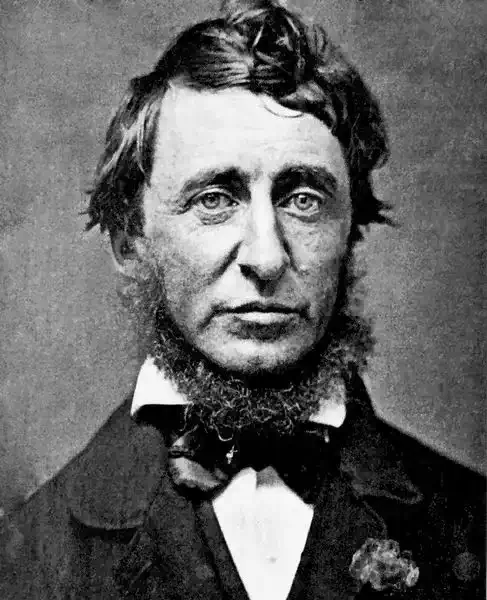
Henry David Thoreau
Winter Memories
Winter Memories
Within the circuit of this plodding life
There enter moments of an azure hue,
Untarnished fair as is the violet
Or anemone, when the spring stew them
By some meandering rivulet, which make
The best philosophy untrue that aims
But to console man for his grievences.
I have remembered when the winter came,
High in my chamber in the frosty nights,
When in the still light of the cheerful moon,
On the every twig and rail and jutting spout,
The icy spears were adding to their length
Against the arrows of the coming sun,
How in the shimmering noon of winter past
Some unrecorded beam slanted across
The upland pastures where the Johnwort grew;
Or heard, amid the verdure of my mind,
The bee's long smothered hum, on the blue flag
Loitering amidst the mead; or busy rill,
Which now through all its course stands still and dumb
Its own memorial, - purling at its play
Along the slopes, and through the meadows next,
Until its youthful sound was hushed at last
In the staid current of the lowland stream;
Or seen the furrows shine but late upturned,
And where the fieldfare followed in the rear,
When all the fields around lay bound and hoar
Beneath a thick integument of snow.
So by God's cheap economy made rich
To go upon my winter's task again.
Within the circuit of this plodding life
There enter moments of an azure hue,
Untarnished fair as is the violet
Or anemone, when the spring stew them
By some meandering rivulet, which make
The best philosophy untrue that aims
But to console man for his grievences.
I have remembered when the winter came,
High in my chamber in the frosty nights,
When in the still light of the cheerful moon,
On the every twig and rail and jutting spout,
The icy spears were adding to their length
Against the arrows of the coming sun,
How in the shimmering noon of winter past
Some unrecorded beam slanted across
The upland pastures where the Johnwort grew;
Or heard, amid the verdure of my mind,
The bee's long smothered hum, on the blue flag
Loitering amidst the mead; or busy rill,
Which now through all its course stands still and dumb
Its own memorial, - purling at its play
Along the slopes, and through the meadows next,
Until its youthful sound was hushed at last
In the staid current of the lowland stream;
Or seen the furrows shine but late upturned,
And where the fieldfare followed in the rear,
When all the fields around lay bound and hoar
Beneath a thick integument of snow.
So by God's cheap economy made rich
To go upon my winter's task again.
229
Henry David Thoreau
To a Marsh Hawk in Spring
To a Marsh Hawk in Spring
There is health in thy gray wing,
Health of nature’s furnishing.
Say, thou modern-winged antique,
Was thy mistress ever sick?
In each heaving of thy wing
Thou dost health and leisure bring,
Thou dost waive disease and pain
And resume new life again.
There is health in thy gray wing,
Health of nature’s furnishing.
Say, thou modern-winged antique,
Was thy mistress ever sick?
In each heaving of thy wing
Thou dost health and leisure bring,
Thou dost waive disease and pain
And resume new life again.
255
Henry David Thoreau
The Poet's Delay
The Poet's Delay
IN vain I see the morning rise,
In vain observe the western blaze,
Who idly look to other skies,
Expecting life by other ways.
Amidst such boundless wealth without,
I only still am poor within,
The birds have sung their summer out,
But still my spring does not begin.
Shall I then wait the autumn wind,
Compelled to seek a milder day,
And leave no curious nest behind,
No woods still echoing to my lay?
IN vain I see the morning rise,
In vain observe the western blaze,
Who idly look to other skies,
Expecting life by other ways.
Amidst such boundless wealth without,
I only still am poor within,
The birds have sung their summer out,
But still my spring does not begin.
Shall I then wait the autumn wind,
Compelled to seek a milder day,
And leave no curious nest behind,
No woods still echoing to my lay?
221
Henry David Thoreau
Song Of Nature
Song Of Nature
Mine are the night and morning,
The pits of air, the gull of space,
The sportive sun, the gibbous moon,
The innumerable days.
I hide in the solar glory,
I am dumb in the pealing song,
I rest on the pitch of the torrent,
In slumber I am strong.
No numbers have counted my tallies,
No tribes my house can fill,
I sit by the shining Fount of Life
And pour the deluge still;
And ever by delicate powers
Gathering along the centuries
From race on race the rarest flowers,
My wreath shall nothing miss.
And many a thousand summers
My gardens ripened well,
And light from meliorating stars
With firmer glory fell.
I wrote the past in characters
Of rock and fire the scroll,
The building in the coral sea,
The planting of the coal.
And thefts from satellites and rings
And broken stars I drew,
And out of spent and aged things
I formed the world anew;
What time the gods kept carnival,
Tricked out in star and flower,
And in cramp elf and saurian forms
They swathed their too much power.
Time and Thought were my surveyors,
They laid their courses well,
They boiled the sea, and piled the layers
Of granite, marl and shell.
But he, the man-child glorious, -
Where tarries he the while?
The rainbow shines his harbinger,
The sunset gleams his smile.
My boreal lights leap upward,
Forthright my planets roll,
And still the man-child is not born,
The summit of the whole.
Must time and tide forever run?
Will never my winds go sleep in the west?
Will never my wheels which whirl the sun
And satellites have rest?
Too much of donning and doffing,
Too slow the rainbow fades,
I weary of my robe of snow,
My leaves and my cascades;
I tire of globes and races,
Too long the game is played;
What without him is summer's pomp,
Or winter's frozen shade?
I travail in pain for him,
My creatures travail and wait;
His couriers come by squadrons,
He comes not to the gate.
Twice I have moulded an image,
And thrice outstretched my hand,
Made one of day and one of night
And one of the salt sea-sand.
One in a Judaean manger,
And one by Avon stream,
One over against the mouths of Nile,
And one in the Academe.
I moulded kings and saviors,
And bards o'er kings to rule; -
But fell the starry influence short,
The cup was never full.
Yet whirl the glowing wheels once more,
And mix the bowl again;
Seethe, Fate! the ancient elements,
Heat, cold, wet, dry, and peace, and pain.
Let war and trade and creeds and song
Blend, ripen race on race,
The sunburnt world a man shall breed
Of all the zones and countless days.
No ray is dimmed, no atom worn,
My oldest force is good as new,
And the fresh rose on yonder thorn
Gives back the bending heavens in dew.
Mine are the night and morning,
The pits of air, the gull of space,
The sportive sun, the gibbous moon,
The innumerable days.
I hide in the solar glory,
I am dumb in the pealing song,
I rest on the pitch of the torrent,
In slumber I am strong.
No numbers have counted my tallies,
No tribes my house can fill,
I sit by the shining Fount of Life
And pour the deluge still;
And ever by delicate powers
Gathering along the centuries
From race on race the rarest flowers,
My wreath shall nothing miss.
And many a thousand summers
My gardens ripened well,
And light from meliorating stars
With firmer glory fell.
I wrote the past in characters
Of rock and fire the scroll,
The building in the coral sea,
The planting of the coal.
And thefts from satellites and rings
And broken stars I drew,
And out of spent and aged things
I formed the world anew;
What time the gods kept carnival,
Tricked out in star and flower,
And in cramp elf and saurian forms
They swathed their too much power.
Time and Thought were my surveyors,
They laid their courses well,
They boiled the sea, and piled the layers
Of granite, marl and shell.
But he, the man-child glorious, -
Where tarries he the while?
The rainbow shines his harbinger,
The sunset gleams his smile.
My boreal lights leap upward,
Forthright my planets roll,
And still the man-child is not born,
The summit of the whole.
Must time and tide forever run?
Will never my winds go sleep in the west?
Will never my wheels which whirl the sun
And satellites have rest?
Too much of donning and doffing,
Too slow the rainbow fades,
I weary of my robe of snow,
My leaves and my cascades;
I tire of globes and races,
Too long the game is played;
What without him is summer's pomp,
Or winter's frozen shade?
I travail in pain for him,
My creatures travail and wait;
His couriers come by squadrons,
He comes not to the gate.
Twice I have moulded an image,
And thrice outstretched my hand,
Made one of day and one of night
And one of the salt sea-sand.
One in a Judaean manger,
And one by Avon stream,
One over against the mouths of Nile,
And one in the Academe.
I moulded kings and saviors,
And bards o'er kings to rule; -
But fell the starry influence short,
The cup was never full.
Yet whirl the glowing wheels once more,
And mix the bowl again;
Seethe, Fate! the ancient elements,
Heat, cold, wet, dry, and peace, and pain.
Let war and trade and creeds and song
Blend, ripen race on race,
The sunburnt world a man shall breed
Of all the zones and countless days.
No ray is dimmed, no atom worn,
My oldest force is good as new,
And the fresh rose on yonder thorn
Gives back the bending heavens in dew.
269
Henry David Thoreau
Song Of Nature
Song Of Nature
Mine are the night and morning,
The pits of air, the gull of space,
The sportive sun, the gibbous moon,
The innumerable days.
I hide in the solar glory,
I am dumb in the pealing song,
I rest on the pitch of the torrent,
In slumber I am strong.
No numbers have counted my tallies,
No tribes my house can fill,
I sit by the shining Fount of Life
And pour the deluge still;
And ever by delicate powers
Gathering along the centuries
From race on race the rarest flowers,
My wreath shall nothing miss.
And many a thousand summers
My gardens ripened well,
And light from meliorating stars
With firmer glory fell.
I wrote the past in characters
Of rock and fire the scroll,
The building in the coral sea,
The planting of the coal.
And thefts from satellites and rings
And broken stars I drew,
And out of spent and aged things
I formed the world anew;
What time the gods kept carnival,
Tricked out in star and flower,
And in cramp elf and saurian forms
They swathed their too much power.
Time and Thought were my surveyors,
They laid their courses well,
They boiled the sea, and piled the layers
Of granite, marl and shell.
But he, the man-child glorious, -
Where tarries he the while?
The rainbow shines his harbinger,
The sunset gleams his smile.
My boreal lights leap upward,
Forthright my planets roll,
And still the man-child is not born,
The summit of the whole.
Must time and tide forever run?
Will never my winds go sleep in the west?
Will never my wheels which whirl the sun
And satellites have rest?
Too much of donning and doffing,
Too slow the rainbow fades,
I weary of my robe of snow,
My leaves and my cascades;
I tire of globes and races,
Too long the game is played;
What without him is summer's pomp,
Or winter's frozen shade?
I travail in pain for him,
My creatures travail and wait;
His couriers come by squadrons,
He comes not to the gate.
Twice I have moulded an image,
And thrice outstretched my hand,
Made one of day and one of night
And one of the salt sea-sand.
One in a Judaean manger,
And one by Avon stream,
One over against the mouths of Nile,
And one in the Academe.
I moulded kings and saviors,
And bards o'er kings to rule; -
But fell the starry influence short,
The cup was never full.
Yet whirl the glowing wheels once more,
And mix the bowl again;
Seethe, Fate! the ancient elements,
Heat, cold, wet, dry, and peace, and pain.
Let war and trade and creeds and song
Blend, ripen race on race,
The sunburnt world a man shall breed
Of all the zones and countless days.
No ray is dimmed, no atom worn,
My oldest force is good as new,
And the fresh rose on yonder thorn
Gives back the bending heavens in dew.
Mine are the night and morning,
The pits of air, the gull of space,
The sportive sun, the gibbous moon,
The innumerable days.
I hide in the solar glory,
I am dumb in the pealing song,
I rest on the pitch of the torrent,
In slumber I am strong.
No numbers have counted my tallies,
No tribes my house can fill,
I sit by the shining Fount of Life
And pour the deluge still;
And ever by delicate powers
Gathering along the centuries
From race on race the rarest flowers,
My wreath shall nothing miss.
And many a thousand summers
My gardens ripened well,
And light from meliorating stars
With firmer glory fell.
I wrote the past in characters
Of rock and fire the scroll,
The building in the coral sea,
The planting of the coal.
And thefts from satellites and rings
And broken stars I drew,
And out of spent and aged things
I formed the world anew;
What time the gods kept carnival,
Tricked out in star and flower,
And in cramp elf and saurian forms
They swathed their too much power.
Time and Thought were my surveyors,
They laid their courses well,
They boiled the sea, and piled the layers
Of granite, marl and shell.
But he, the man-child glorious, -
Where tarries he the while?
The rainbow shines his harbinger,
The sunset gleams his smile.
My boreal lights leap upward,
Forthright my planets roll,
And still the man-child is not born,
The summit of the whole.
Must time and tide forever run?
Will never my winds go sleep in the west?
Will never my wheels which whirl the sun
And satellites have rest?
Too much of donning and doffing,
Too slow the rainbow fades,
I weary of my robe of snow,
My leaves and my cascades;
I tire of globes and races,
Too long the game is played;
What without him is summer's pomp,
Or winter's frozen shade?
I travail in pain for him,
My creatures travail and wait;
His couriers come by squadrons,
He comes not to the gate.
Twice I have moulded an image,
And thrice outstretched my hand,
Made one of day and one of night
And one of the salt sea-sand.
One in a Judaean manger,
And one by Avon stream,
One over against the mouths of Nile,
And one in the Academe.
I moulded kings and saviors,
And bards o'er kings to rule; -
But fell the starry influence short,
The cup was never full.
Yet whirl the glowing wheels once more,
And mix the bowl again;
Seethe, Fate! the ancient elements,
Heat, cold, wet, dry, and peace, and pain.
Let war and trade and creeds and song
Blend, ripen race on race,
The sunburnt world a man shall breed
Of all the zones and countless days.
No ray is dimmed, no atom worn,
My oldest force is good as new,
And the fresh rose on yonder thorn
Gives back the bending heavens in dew.
269
Henry David Thoreau
Tall Ambrosia
Tall Ambrosia
Among the signs of autumn I perceive
The Roman wormwood (called by learned men
Ambrosia elatior, food for gods,—
For to impartial science the humblest weed
Is as immortal once as the proudest flower—)
Sprinkles its yellow dust over my shoes
As I cross the now neglected garden.
—We trample under foot the food of gods
And spill their nectar in each dropp of dew—
My honest shoes, fast friends that never stray
Far from my couch, thus powdered, countryfied,
Bearing many a mile the marks of their adventure,
At the post-house disgrace the Gallic gloss
Of those well dressed ones who no morning dew
Nor Roman wormwood ever have been through,
Who never walk but are transported rather—
For what old crime of theirs I do not gather.
Among the signs of autumn I perceive
The Roman wormwood (called by learned men
Ambrosia elatior, food for gods,—
For to impartial science the humblest weed
Is as immortal once as the proudest flower—)
Sprinkles its yellow dust over my shoes
As I cross the now neglected garden.
—We trample under foot the food of gods
And spill their nectar in each dropp of dew—
My honest shoes, fast friends that never stray
Far from my couch, thus powdered, countryfied,
Bearing many a mile the marks of their adventure,
At the post-house disgrace the Gallic gloss
Of those well dressed ones who no morning dew
Nor Roman wormwood ever have been through,
Who never walk but are transported rather—
For what old crime of theirs I do not gather.
214
Henry David Thoreau
Tall Ambrosia
Tall Ambrosia
Among the signs of autumn I perceive
The Roman wormwood (called by learned men
Ambrosia elatior, food for gods,—
For to impartial science the humblest weed
Is as immortal once as the proudest flower—)
Sprinkles its yellow dust over my shoes
As I cross the now neglected garden.
—We trample under foot the food of gods
And spill their nectar in each dropp of dew—
My honest shoes, fast friends that never stray
Far from my couch, thus powdered, countryfied,
Bearing many a mile the marks of their adventure,
At the post-house disgrace the Gallic gloss
Of those well dressed ones who no morning dew
Nor Roman wormwood ever have been through,
Who never walk but are transported rather—
For what old crime of theirs I do not gather.
Among the signs of autumn I perceive
The Roman wormwood (called by learned men
Ambrosia elatior, food for gods,—
For to impartial science the humblest weed
Is as immortal once as the proudest flower—)
Sprinkles its yellow dust over my shoes
As I cross the now neglected garden.
—We trample under foot the food of gods
And spill their nectar in each dropp of dew—
My honest shoes, fast friends that never stray
Far from my couch, thus powdered, countryfied,
Bearing many a mile the marks of their adventure,
At the post-house disgrace the Gallic gloss
Of those well dressed ones who no morning dew
Nor Roman wormwood ever have been through,
Who never walk but are transported rather—
For what old crime of theirs I do not gather.
214
Henry David Thoreau
Pray to What Earth Does This Sweet Cold Belong
Pray to What Earth Does This Sweet Cold Belong
Pray to what earth does this sweet cold belong,
Which asks no duties and no conscience?
The moon goes up by leaps, her cheerful path
In some far summer stratum of the sky,
While stars with their cold shine bedot her way.
The fields gleam mildly back upon the sky,
And far and near upon the leafless shrubs
The snow dust still emits a silver light.
Under the hedge, where drift banks are their screen,
The titmice now pursue their downy dreams,
As often in the sweltering summer nights
The bee doth drop asleep in the flower cup,
When evening overtakes him with his load.
By the brooksides, in the still, genial night,
The more adventurous wanderer may hear
The crystals shoot and form, and winter slow
Increase his rule by gentlest summer means.
Pray to what earth does this sweet cold belong,
Which asks no duties and no conscience?
The moon goes up by leaps, her cheerful path
In some far summer stratum of the sky,
While stars with their cold shine bedot her way.
The fields gleam mildly back upon the sky,
And far and near upon the leafless shrubs
The snow dust still emits a silver light.
Under the hedge, where drift banks are their screen,
The titmice now pursue their downy dreams,
As often in the sweltering summer nights
The bee doth drop asleep in the flower cup,
When evening overtakes him with his load.
By the brooksides, in the still, genial night,
The more adventurous wanderer may hear
The crystals shoot and form, and winter slow
Increase his rule by gentlest summer means.
177
Henry David Thoreau
Pray to What Earth Does This Sweet Cold Belong
Pray to What Earth Does This Sweet Cold Belong
Pray to what earth does this sweet cold belong,
Which asks no duties and no conscience?
The moon goes up by leaps, her cheerful path
In some far summer stratum of the sky,
While stars with their cold shine bedot her way.
The fields gleam mildly back upon the sky,
And far and near upon the leafless shrubs
The snow dust still emits a silver light.
Under the hedge, where drift banks are their screen,
The titmice now pursue their downy dreams,
As often in the sweltering summer nights
The bee doth drop asleep in the flower cup,
When evening overtakes him with his load.
By the brooksides, in the still, genial night,
The more adventurous wanderer may hear
The crystals shoot and form, and winter slow
Increase his rule by gentlest summer means.
Pray to what earth does this sweet cold belong,
Which asks no duties and no conscience?
The moon goes up by leaps, her cheerful path
In some far summer stratum of the sky,
While stars with their cold shine bedot her way.
The fields gleam mildly back upon the sky,
And far and near upon the leafless shrubs
The snow dust still emits a silver light.
Under the hedge, where drift banks are their screen,
The titmice now pursue their downy dreams,
As often in the sweltering summer nights
The bee doth drop asleep in the flower cup,
When evening overtakes him with his load.
By the brooksides, in the still, genial night,
The more adventurous wanderer may hear
The crystals shoot and form, and winter slow
Increase his rule by gentlest summer means.
177
Henry David Thoreau
Pray to What Earth Does This Sweet Cold Belong
Pray to What Earth Does This Sweet Cold Belong
Pray to what earth does this sweet cold belong,
Which asks no duties and no conscience?
The moon goes up by leaps, her cheerful path
In some far summer stratum of the sky,
While stars with their cold shine bedot her way.
The fields gleam mildly back upon the sky,
And far and near upon the leafless shrubs
The snow dust still emits a silver light.
Under the hedge, where drift banks are their screen,
The titmice now pursue their downy dreams,
As often in the sweltering summer nights
The bee doth drop asleep in the flower cup,
When evening overtakes him with his load.
By the brooksides, in the still, genial night,
The more adventurous wanderer may hear
The crystals shoot and form, and winter slow
Increase his rule by gentlest summer means.
Pray to what earth does this sweet cold belong,
Which asks no duties and no conscience?
The moon goes up by leaps, her cheerful path
In some far summer stratum of the sky,
While stars with their cold shine bedot her way.
The fields gleam mildly back upon the sky,
And far and near upon the leafless shrubs
The snow dust still emits a silver light.
Under the hedge, where drift banks are their screen,
The titmice now pursue their downy dreams,
As often in the sweltering summer nights
The bee doth drop asleep in the flower cup,
When evening overtakes him with his load.
By the brooksides, in the still, genial night,
The more adventurous wanderer may hear
The crystals shoot and form, and winter slow
Increase his rule by gentlest summer means.
177
Henry David Thoreau
Nature
Nature
O Nature! I do not aspire
To be the highest in thy choir, -
To be a meteor in thy sky,
Or comet that may range on high;
Only a zephyr that may blow
Among the reeds by the river low;
Give me thy most privy place
Where to run my airy race.
In some withdrawn, unpublic mead
Let me sigh upon a reed,
Or in the woods, with leafy din,
Whisper the still evening in:
Some still work give me to do, -
Only - be it near to you!
For I'd rather be thy child
And pupil, in the forest wild,
Than be the king of men elsewhere,
And most sovereign slave of care;
To have one moment of thy dawn,
Than share the city's year forlorn.
O Nature! I do not aspire
To be the highest in thy choir, -
To be a meteor in thy sky,
Or comet that may range on high;
Only a zephyr that may blow
Among the reeds by the river low;
Give me thy most privy place
Where to run my airy race.
In some withdrawn, unpublic mead
Let me sigh upon a reed,
Or in the woods, with leafy din,
Whisper the still evening in:
Some still work give me to do, -
Only - be it near to you!
For I'd rather be thy child
And pupil, in the forest wild,
Than be the king of men elsewhere,
And most sovereign slave of care;
To have one moment of thy dawn,
Than share the city's year forlorn.
223
Henry David Thoreau
Nature
Nature
O Nature! I do not aspire
To be the highest in thy choir, -
To be a meteor in thy sky,
Or comet that may range on high;
Only a zephyr that may blow
Among the reeds by the river low;
Give me thy most privy place
Where to run my airy race.
In some withdrawn, unpublic mead
Let me sigh upon a reed,
Or in the woods, with leafy din,
Whisper the still evening in:
Some still work give me to do, -
Only - be it near to you!
For I'd rather be thy child
And pupil, in the forest wild,
Than be the king of men elsewhere,
And most sovereign slave of care;
To have one moment of thy dawn,
Than share the city's year forlorn.
O Nature! I do not aspire
To be the highest in thy choir, -
To be a meteor in thy sky,
Or comet that may range on high;
Only a zephyr that may blow
Among the reeds by the river low;
Give me thy most privy place
Where to run my airy race.
In some withdrawn, unpublic mead
Let me sigh upon a reed,
Or in the woods, with leafy din,
Whisper the still evening in:
Some still work give me to do, -
Only - be it near to you!
For I'd rather be thy child
And pupil, in the forest wild,
Than be the king of men elsewhere,
And most sovereign slave of care;
To have one moment of thy dawn,
Than share the city's year forlorn.
223
Henry David Thoreau
Mist
Mist
Low-anchored cloud,
Newfoundland air,
Fountain head and source of rivers,
Dew-cloth, dream drapery,
And napkin spread by fays;
Drifting meadow of the air,
Where bloom the dasied banks and violets,
And in whose fenny labyrinth
The bittern booms and heron wades;
Spirit of the lake and seas and rivers,
Bear only purfumes and the scent
Of healing herbs to just men's fields!
Low-anchored cloud,
Newfoundland air,
Fountain head and source of rivers,
Dew-cloth, dream drapery,
And napkin spread by fays;
Drifting meadow of the air,
Where bloom the dasied banks and violets,
And in whose fenny labyrinth
The bittern booms and heron wades;
Spirit of the lake and seas and rivers,
Bear only purfumes and the scent
Of healing herbs to just men's fields!
230