

Poems in this topic
Others
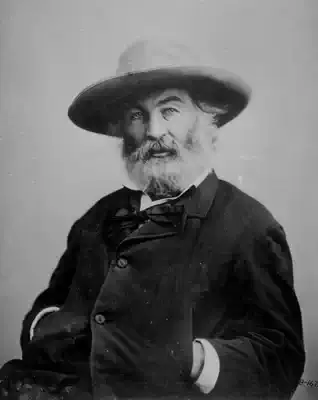
Walt Whitman
Scented Herbage Of My Breast
Scented Herbage Of My Breast
SCENTED herbage of my breast,
Leaves from you I yield, I write, to be perused best afterwards,
Tomb-leaves, body-leaves, growing up above me, above death,
Perennial roots, tall leaves--O the winter shall not freeze you,
delicate leaves,
Every year shall you bloom again--out from where you retired, you
shall emerge again;
O I do not know whether many, passing by, will discover you, or
inhale your faint odor--but I believe a few will;
O slender leaves! O blossoms of my blood! I permit you to tell, in
your own way, of the heart that is under you;
O burning and throbbing--surely all will one day be accomplish'd;
O I do not know what you mean, there underneath yourselves--you are
not happiness,
You are often more bitter than I can bear--you burn and sting me, 10
Yet you are very beautiful to me, you faint-tinged roots--you make me
think of Death,
Death is beautiful from you--(what indeed is finally beautiful,
except Death and Love?)
--O I think it is not for life I am chanting here my chant of
lovers--I think it must be for Death,
For how calm, how solemn it grows, to ascend to the atmosphere of
lovers,
Death or life I am then indifferent--my Soul declines to prefer,
I am not sure but the high Soul of lovers welcomes death most;
Indeed, O Death, I think now these leaves mean precisely the same as
you mean;
Grow up taller, sweet leaves, that I may see! grow up out of my
breast!
Spring away from the conceal'd heart there!
Do not fold yourself so in your pink-tinged roots, timid leaves! 20
Do not remain down there so ashamed, herbage of my breast!
Come, I am determin'd to unbare this broad breast of mine--I have
long enough stifled and choked:
--Emblematic and capricious blade, I leave you--now you serve me not;
Away! I will say what I have to say, by itself,
I will escape from the sham that was proposed to me,
I will sound myself and comrades only--I will never again utter a
call, only their call,
I will raise, with it, immortal reverberations through The States,
I will give an example to lovers, to take permanent shape and will
through The States;
Through me shall the words be said to make death exhilarating;
Give me your tone therefore, O Death, that I may accord with it, 30
Give me yourself--for I see that you belong to me now above all, and
are folded inseparably together--you Love and Death are;
Nor will I allow you to balk me any more with what I was calling
life,
For now it is convey'd to me that you are the purports essential,
That you hide in these shifting forms of life, for reasons--and that
they are mainly for you,
That you, beyond them, come forth, to remain, the real reality,
That behind the mask of materials you patiently wait, no matter how
long,
That you will one day, perhaps, take control of all,
That you will perhaps dissipate this entire show of appearance,
That may-be you are what it is all for--but it does not last so very
long;
But you will last very long. 40
SCENTED herbage of my breast,
Leaves from you I yield, I write, to be perused best afterwards,
Tomb-leaves, body-leaves, growing up above me, above death,
Perennial roots, tall leaves--O the winter shall not freeze you,
delicate leaves,
Every year shall you bloom again--out from where you retired, you
shall emerge again;
O I do not know whether many, passing by, will discover you, or
inhale your faint odor--but I believe a few will;
O slender leaves! O blossoms of my blood! I permit you to tell, in
your own way, of the heart that is under you;
O burning and throbbing--surely all will one day be accomplish'd;
O I do not know what you mean, there underneath yourselves--you are
not happiness,
You are often more bitter than I can bear--you burn and sting me, 10
Yet you are very beautiful to me, you faint-tinged roots--you make me
think of Death,
Death is beautiful from you--(what indeed is finally beautiful,
except Death and Love?)
--O I think it is not for life I am chanting here my chant of
lovers--I think it must be for Death,
For how calm, how solemn it grows, to ascend to the atmosphere of
lovers,
Death or life I am then indifferent--my Soul declines to prefer,
I am not sure but the high Soul of lovers welcomes death most;
Indeed, O Death, I think now these leaves mean precisely the same as
you mean;
Grow up taller, sweet leaves, that I may see! grow up out of my
breast!
Spring away from the conceal'd heart there!
Do not fold yourself so in your pink-tinged roots, timid leaves! 20
Do not remain down there so ashamed, herbage of my breast!
Come, I am determin'd to unbare this broad breast of mine--I have
long enough stifled and choked:
--Emblematic and capricious blade, I leave you--now you serve me not;
Away! I will say what I have to say, by itself,
I will escape from the sham that was proposed to me,
I will sound myself and comrades only--I will never again utter a
call, only their call,
I will raise, with it, immortal reverberations through The States,
I will give an example to lovers, to take permanent shape and will
through The States;
Through me shall the words be said to make death exhilarating;
Give me your tone therefore, O Death, that I may accord with it, 30
Give me yourself--for I see that you belong to me now above all, and
are folded inseparably together--you Love and Death are;
Nor will I allow you to balk me any more with what I was calling
life,
For now it is convey'd to me that you are the purports essential,
That you hide in these shifting forms of life, for reasons--and that
they are mainly for you,
That you, beyond them, come forth, to remain, the real reality,
That behind the mask of materials you patiently wait, no matter how
long,
That you will one day, perhaps, take control of all,
That you will perhaps dissipate this entire show of appearance,
That may-be you are what it is all for--but it does not last so very
long;
But you will last very long. 40
381
Walt Whitman
Shut Not Your Doors, &c.
Shut Not Your Doors, &c.
SHUT not your doors to me, proud libraries,
For that which was lacking on all your well-fill'd shelves, yet
needed most, I bring;
Forth from the army, the war emerging--a book I have made,
The words of my book nothing--the drift of it everything;
A book separate, not link'd with the rest, nor felt by the intellect,
But you, ye untold latencies, will thrill to every page;
Through Space and Time fused in a chant, and the flowing, eternal
Identity,
To Nature, encompassing these, encompassing God--to the joyous,
electric All,
To the sense of Death--and accepting, exulting in Death, in its turn,
the same as life,
The entrance of Man I sing. 10
SHUT not your doors to me, proud libraries,
For that which was lacking on all your well-fill'd shelves, yet
needed most, I bring;
Forth from the army, the war emerging--a book I have made,
The words of my book nothing--the drift of it everything;
A book separate, not link'd with the rest, nor felt by the intellect,
But you, ye untold latencies, will thrill to every page;
Through Space and Time fused in a chant, and the flowing, eternal
Identity,
To Nature, encompassing these, encompassing God--to the joyous,
electric All,
To the sense of Death--and accepting, exulting in Death, in its turn,
the same as life,
The entrance of Man I sing. 10
320
Walt Whitman
Shut Not Your Doors, &c.
Shut Not Your Doors, &c.
SHUT not your doors to me, proud libraries,
For that which was lacking on all your well-fill'd shelves, yet
needed most, I bring;
Forth from the army, the war emerging--a book I have made,
The words of my book nothing--the drift of it everything;
A book separate, not link'd with the rest, nor felt by the intellect,
But you, ye untold latencies, will thrill to every page;
Through Space and Time fused in a chant, and the flowing, eternal
Identity,
To Nature, encompassing these, encompassing God--to the joyous,
electric All,
To the sense of Death--and accepting, exulting in Death, in its turn,
the same as life,
The entrance of Man I sing. 10
SHUT not your doors to me, proud libraries,
For that which was lacking on all your well-fill'd shelves, yet
needed most, I bring;
Forth from the army, the war emerging--a book I have made,
The words of my book nothing--the drift of it everything;
A book separate, not link'd with the rest, nor felt by the intellect,
But you, ye untold latencies, will thrill to every page;
Through Space and Time fused in a chant, and the flowing, eternal
Identity,
To Nature, encompassing these, encompassing God--to the joyous,
electric All,
To the sense of Death--and accepting, exulting in Death, in its turn,
the same as life,
The entrance of Man I sing. 10
320
Walt Whitman
Rise, O Days
Rise, O Days
RISE, O days, from your fathomless deeps, till you loftier, fiercer
sweep!
Long for my soul, hungering gymnastic, I devour'd what the earth gave
me;
Long I roam'd the woods of the north--long I watch'd Niagara pouring;
I travel'd the prairies over, and slept on their breast--I cross'd
the Nevadas, I cross'd the plateaus;
I ascended the towering rocks along the Pacific, I sail'd out to sea;
I sail'd through the storm, I was refresh'd by the storm;
I watch'd with joy the threatening maws of the waves;
I mark'd the white combs where they career'd so high, curling over;
I heard the wind piping, I saw the black clouds;
Saw from below what arose and mounted, (O superb! O wild as my heart,
and powerful!) 10
Heard the continuous thunder, as it bellow'd after the lightning;
Noted the slender and jagged threads of lightning, as sudden and fast
amid the din they chased each other across the sky;
--These, and such as these, I, elate, saw--saw with wonder, yet
pensive and masterful;
All the menacing might of the globe uprisen around me;
Yet there with my soul I fed--I fed content, supercilious.
'Twas well, O soul! 'twas a good preparation you gave me!
Now we advance our latent and ampler hunger to fill;
Now we go forth to receive what the earth and the sea never gave us;
Not through the mighty woods we go, but through the mightier cities;
Something for us is pouring now, more than Niagara pouring; 20
Torrents of men, (sources and rills of the Northwest, are you indeed
inexhaustible?)
What, to pavements and homesteads here--what were those storms of the
mountains and sea?
What, to passions I witness around me to-day? Was the sea risen?
Was the wind piping the pipe of death under the black clouds?
Lo! from deeps more unfathomable, something more deadly and savage;
Manhattan, rising, advancing with menacing front--Cincinnati,
Chicago, unchain'd;
--What was that swell I saw on the ocean? behold what comes here!
How it climbs with daring feet and hands! how it dashes!
How the true thunder bellows after the lightning! how bright the
flashes of lightning!
How DEMOCRACY, with desperate vengeful port strides on, shown through
the dark by those flashes of lightning! 30
(Yet a mournful wail and low sob I fancied I heard through the dark,
In a lull of the deafening confusion.)
Thunder on! stride on, Democracy! strike with vengeful stroke!
And do you rise higher than ever yet, O days, O cities!
Crash heavier, heavier yet, O storms! you have done me good;
My soul, prepared in the mountains, absorbs your immortal strong
nutriment;
--Long had I walk'd my cities, my country roads, through farms, only
half-satisfied;
One doubt, nauseous, undulating like a snake, crawl'd on the ground
before me,
Continually preceding my steps, turning upon me oft, ironically
hissing low;
--The cities I loved so well, I abandon'd and left--I sped to the
certainties suitable to me; 40
Hungering, hungering, hungering, for primal energies, and Nature's
dauntlessness,
I refresh'd myself with it only, I could relish it only;
I waited the bursting forth of the pent fire--on the water and air I
waited long;
--But now I no longer wait--I am fully satisfied--I am glutted;
I have witness'd the true lightning--I have witness'd my cities
electric;
I have lived to behold man burst forth, and warlike America rise;
Hence I will seek no more the food of the northern solitary wilds,
No more on the mountains roam, or sail the stormy sea.
RISE, O days, from your fathomless deeps, till you loftier, fiercer
sweep!
Long for my soul, hungering gymnastic, I devour'd what the earth gave
me;
Long I roam'd the woods of the north--long I watch'd Niagara pouring;
I travel'd the prairies over, and slept on their breast--I cross'd
the Nevadas, I cross'd the plateaus;
I ascended the towering rocks along the Pacific, I sail'd out to sea;
I sail'd through the storm, I was refresh'd by the storm;
I watch'd with joy the threatening maws of the waves;
I mark'd the white combs where they career'd so high, curling over;
I heard the wind piping, I saw the black clouds;
Saw from below what arose and mounted, (O superb! O wild as my heart,
and powerful!) 10
Heard the continuous thunder, as it bellow'd after the lightning;
Noted the slender and jagged threads of lightning, as sudden and fast
amid the din they chased each other across the sky;
--These, and such as these, I, elate, saw--saw with wonder, yet
pensive and masterful;
All the menacing might of the globe uprisen around me;
Yet there with my soul I fed--I fed content, supercilious.
'Twas well, O soul! 'twas a good preparation you gave me!
Now we advance our latent and ampler hunger to fill;
Now we go forth to receive what the earth and the sea never gave us;
Not through the mighty woods we go, but through the mightier cities;
Something for us is pouring now, more than Niagara pouring; 20
Torrents of men, (sources and rills of the Northwest, are you indeed
inexhaustible?)
What, to pavements and homesteads here--what were those storms of the
mountains and sea?
What, to passions I witness around me to-day? Was the sea risen?
Was the wind piping the pipe of death under the black clouds?
Lo! from deeps more unfathomable, something more deadly and savage;
Manhattan, rising, advancing with menacing front--Cincinnati,
Chicago, unchain'd;
--What was that swell I saw on the ocean? behold what comes here!
How it climbs with daring feet and hands! how it dashes!
How the true thunder bellows after the lightning! how bright the
flashes of lightning!
How DEMOCRACY, with desperate vengeful port strides on, shown through
the dark by those flashes of lightning! 30
(Yet a mournful wail and low sob I fancied I heard through the dark,
In a lull of the deafening confusion.)
Thunder on! stride on, Democracy! strike with vengeful stroke!
And do you rise higher than ever yet, O days, O cities!
Crash heavier, heavier yet, O storms! you have done me good;
My soul, prepared in the mountains, absorbs your immortal strong
nutriment;
--Long had I walk'd my cities, my country roads, through farms, only
half-satisfied;
One doubt, nauseous, undulating like a snake, crawl'd on the ground
before me,
Continually preceding my steps, turning upon me oft, ironically
hissing low;
--The cities I loved so well, I abandon'd and left--I sped to the
certainties suitable to me; 40
Hungering, hungering, hungering, for primal energies, and Nature's
dauntlessness,
I refresh'd myself with it only, I could relish it only;
I waited the bursting forth of the pent fire--on the water and air I
waited long;
--But now I no longer wait--I am fully satisfied--I am glutted;
I have witness'd the true lightning--I have witness'd my cities
electric;
I have lived to behold man burst forth, and warlike America rise;
Hence I will seek no more the food of the northern solitary wilds,
No more on the mountains roam, or sail the stormy sea.
462
Walt Whitman
Proud Music Of The Storm
Proud Music Of The Storm
PROUD music of the storm!
Blast that careers so free, whistling across the prairies!
Strong hum of forest tree-tops! Wind of the mountains!
Personified dim shapes! you hidden orchestras!
You serenades of phantoms, with instruments alert,
Blending, with Nature's rhythmus, all the tongues of nations;
You chords left us by vast composers! you choruses!
You formless, free, religious dances! you from the Orient!
You undertone of rivers, roar of pouring cataracts;
You sounds from distant guns, with galloping cavalry! 10
Echoes of camps, with all the different bugle-calls!
Trooping tumultuous, filling the midnight late, bending me powerless,
Entering my lonesome slumber-chamber--Why have you seiz'd me?
Come forward, O my Soul, and let the rest retire;
Listen--lose not--it is toward thee they tend;
Parting the midnight, entering my slumber-chamber,
For thee they sing and dance, O Soul.
A festival song!
The duet of the bridegroom and the bride--a marriage-march,
With lips of love, and hearts of lovers, fill'd to the brim with
love; 20
The red-flush'd cheeks, and perfumes--the cortege swarming, full of
friendly faces, young and old,
To flutes' clear notes, and sounding harps' cantabile.
Now loud approaching drums!
Victoria! see'st thou in powder-smoke the banners torn but flying?
the rout of the baffled?
Hearest those shouts of a conquering army?
(Ah, Soul, the sobs of women--the wounded groaning in agony,
The hiss and crackle of flames--the blacken'd ruins--the embers of
cities,
The dirge and desolation of mankind.)
Now airs antique and medieval fill me!
I see and hear old harpers with their harps, at Welsh festivals: 30
I hear the minnesingers, singing their lays of love,
I hear the minstrels, gleemen, troubadours, of the feudal ages.
Now the great organ sounds,
Tremulous--while underneath, (as the hid footholds of the earth,
On which arising, rest, and leaping forth, depend,
All shapes of beauty, grace and strength--all hues we know,
Green blades of grass, and warbling birds--children that gambol and
play--the clouds of heaven above,)
The strong base stands, and its pulsations intermits not,
Bathing, supporting, merging all the rest--maternity of all the rest;
And with it every instrument in multitudes, 40
The players playing--all the world's musicians,
The solemn hymns and masses, rousing adoration,
All passionate heart-chants, sorrowful appeals,
The measureless sweet vocalists of ages,
And for their solvent setting, Earth's own diapason,
Of winds and woods and mighty ocean waves;
A new composite orchestra--binder of years and climes--ten-fold
renewer,
As of the far-back days the poets tell--the Paradiso,
The straying thence, the separation long, but now the wandering done,
The journey done, the Journeyman come home, 50
And Man and Art, with Nature fused again.
Tutti! for Earth and Heaven!
The Almighty Leader now for me, for once has signal'd with his wand.
The manly strophe of the husbands of the world,
And all the wives responding.
The tongues of violins!
(I think, O tongues, ye tell this heart, that cannot tell itself;
This brooding, yearning heart, that cannot tell itself.)
Ah, from a little child,
Thou knowest, Soul, how to me all sounds became music; 60
My mother's voice, in lullaby or hymn;
(The voice--O tender voices--memory's loving voices!
Last miracle of all--O dearest mother's, sister's, voices;)
The rain, the growing corn, the breeze among the long-leav'd corn,
The measur'd sea-surf, beating on the sand,
The twittering bird, the hawk's sharp scream,
The wild-fowl's notes at night, as flying low, migrating north or
south,
The psalm in the country church, or mid the clustering trees, the
open air camp-meeting,
The fiddler in the tavern--the glee, the long-strung sailor-song,
The lowing cattle, bleating sheep--the crowing cock at dawn. 70
All songs of current lands come sounding 'round me,
The German airs of friendship, wine and love,
Irish ballads, merry jigs and dances--English warbles,
Chansons of France, Scotch tunes--and o'er the rest,
Italia's peerless compositions.
Across the stage, with pallor on her face, yet lurid passion,
Stalks Norma, brandishing the dagger in her hand.
I see poor crazed Lucia's eyes' unnatural gleam;
Her hair down her back falls loose and dishevell'd.
I see where Ernani, walking the bridal garden, 80
Amid the scent of night-roses, radiant, holding his bride by the
hand,
Hears the infernal call, the death-pledge of the horn.
To crossing swords, and grey hairs bared to heaven,
The clear, electric base and baritone of the world,
The trombone duo--Libertad forever!
From Spanish chestnut trees' dense shade,
By old and heavy convent walls, a wailing song,
Song of lost love--the torch of youth and life quench'd in despair,
Song of the dying swan--Fernando's heart is breaking.
Awaking from her woes at last, retriev'd Amina sings; 90
Copious as stars, and glad as morning light, the torrents of her joy.
(The teeming lady comes!
The lustrious orb--Venus contralto--the blooming mother,
Sister of loftiest gods--Alboni's self I hear.)
I hear those odes, symphonies, operas;
I hear in the William Tell, the music of an arous'd and angry people;
I hear Meyerbeer's Huguenots, the Prophet, or Robert;
Gounod's Faust, or Mozart's Don Juan.
I hear the dance-music of all nations,
The waltz, (some delicious measure, lapsing, bathing me in
bliss;) 100
The bolero, to tinkling guitars and clattering castanets.
I see religious dances old and new,
I hear the sound of the Hebrew lyre,
I see the Crusaders marching, bearing the cross on high, to the
martial clang of cymbals;
I hear dervishes monotonously chanting, interspers'd with frantic
shouts, as they spin around, turning always towards Mecca;
I see the rapt religious dances of the Persians and the Arabs;
Again, at Eleusis, home of Ceres, I see the modern Greeks dancing,
I hear them clapping their hands, as they bend their bodies,
I hear the metrical shuffling of their feet.
I see again the wild old Corybantian dance, the performers wounding
each other; 110
I see the Roman youth, to the shrill sound of flageolets, throwing
and catching their weapons,
As they fall on their knees, and rise again.
I hear from the Mussulman mosque the muezzin calling;
I see the worshippers within, (nor form, nor sermon, argument, nor
word,
But silent, strange, devout--rais'd, glowing heads--extatic faces.)
I hear the Egyptian harp of many strings,
The primitive chants of the Nile boatmen;
The sacred imperial hymns of China,
To the delicate sounds of the king, (the stricken wood and stone;)
Or to Hindu flutes, and the fretting twang of the vina, 120
A band of bayaderes.
Now Asia, Africa leave me--Europe, seizing, inflates me;
To organs huge, and bands, I hear as from vast concourses of voices,
Luther's strong hymn, Eine feste Burg ist unser Gott;
Rossini's Stabat Mater dolorosa;
Or, floating in some high cathedral dim, with gorgeous color'd
windows,
The passionate Agnus Dei, or Gloria in Excelsis.
Composers! mighty maestros!
And you, sweet singers of old lands--Soprani! Tenori! Bassi!
To you a new bard, carolling free in the west,
Obeisant, sends his love. 130
(Such led to thee, O Soul!
All senses, shows and objects, lead to thee,
But now, it seems to me, sound leads o'er all the rest.)
I hear the annual singing of the children in St. Paul's Cathedral;
Or, under the high roof of some colossal hall, the symphonies,
oratorios of Beethoven, Handel, or Haydn;
The Creation, in billows of godhood laves me.
Give me to hold all sounds, (I, madly struggling, cry,)
Fill me with all the voices of the universe,
Endow me with their throbbings--Nature's also,
The tempests, waters, winds--operas and chants--marches and
dances, 140
Utter--pour in--for I would take them all.
Then I woke softly,
And pausing, questioning awhile the music of my dream,
And questioning all those reminiscences--the tempest in its fury,
And all the songs of sopranos and tenors,
And those rapt oriental dances, of religious fervor,
And the sweet varied instruments, and the diapason of organs,
And all the artless plaints of love, and grief and death,
I said to my silent, curious Soul, out of the bed of the slumber
chamber,
Come, for I have found the clue I sought so long, 150
Let us go forth refresh'd amid the day,
Cheerfully tallying life, walking the world, the real,
Nourish'd henceforth by our celestial dream.
And I said, moreover,
Haply, what thou hast heard, O Soul, was not the sound of winds,
Nor dream of raging storm, nor sea-hawk's flapping wings, nor harsh
scream,
Nor vocalism of sun-bright Italy,
Nor German organ majestic--nor vast concourse of voices--nor layers
of harmonies;
Nor strophes of husbands and wives--nor sound of marching soldiers,
Nor flutes, nor harps, nor the bugle-calls of camps; 160
But, to a new rhythmus fitted for thee,
Poems, bridging the way from Life to Death, vaguely wafted in night
air, uncaught, unwritten,
Which, let us go forth in the bold day, and write.
PROUD music of the storm!
Blast that careers so free, whistling across the prairies!
Strong hum of forest tree-tops! Wind of the mountains!
Personified dim shapes! you hidden orchestras!
You serenades of phantoms, with instruments alert,
Blending, with Nature's rhythmus, all the tongues of nations;
You chords left us by vast composers! you choruses!
You formless, free, religious dances! you from the Orient!
You undertone of rivers, roar of pouring cataracts;
You sounds from distant guns, with galloping cavalry! 10
Echoes of camps, with all the different bugle-calls!
Trooping tumultuous, filling the midnight late, bending me powerless,
Entering my lonesome slumber-chamber--Why have you seiz'd me?
Come forward, O my Soul, and let the rest retire;
Listen--lose not--it is toward thee they tend;
Parting the midnight, entering my slumber-chamber,
For thee they sing and dance, O Soul.
A festival song!
The duet of the bridegroom and the bride--a marriage-march,
With lips of love, and hearts of lovers, fill'd to the brim with
love; 20
The red-flush'd cheeks, and perfumes--the cortege swarming, full of
friendly faces, young and old,
To flutes' clear notes, and sounding harps' cantabile.
Now loud approaching drums!
Victoria! see'st thou in powder-smoke the banners torn but flying?
the rout of the baffled?
Hearest those shouts of a conquering army?
(Ah, Soul, the sobs of women--the wounded groaning in agony,
The hiss and crackle of flames--the blacken'd ruins--the embers of
cities,
The dirge and desolation of mankind.)
Now airs antique and medieval fill me!
I see and hear old harpers with their harps, at Welsh festivals: 30
I hear the minnesingers, singing their lays of love,
I hear the minstrels, gleemen, troubadours, of the feudal ages.
Now the great organ sounds,
Tremulous--while underneath, (as the hid footholds of the earth,
On which arising, rest, and leaping forth, depend,
All shapes of beauty, grace and strength--all hues we know,
Green blades of grass, and warbling birds--children that gambol and
play--the clouds of heaven above,)
The strong base stands, and its pulsations intermits not,
Bathing, supporting, merging all the rest--maternity of all the rest;
And with it every instrument in multitudes, 40
The players playing--all the world's musicians,
The solemn hymns and masses, rousing adoration,
All passionate heart-chants, sorrowful appeals,
The measureless sweet vocalists of ages,
And for their solvent setting, Earth's own diapason,
Of winds and woods and mighty ocean waves;
A new composite orchestra--binder of years and climes--ten-fold
renewer,
As of the far-back days the poets tell--the Paradiso,
The straying thence, the separation long, but now the wandering done,
The journey done, the Journeyman come home, 50
And Man and Art, with Nature fused again.
Tutti! for Earth and Heaven!
The Almighty Leader now for me, for once has signal'd with his wand.
The manly strophe of the husbands of the world,
And all the wives responding.
The tongues of violins!
(I think, O tongues, ye tell this heart, that cannot tell itself;
This brooding, yearning heart, that cannot tell itself.)
Ah, from a little child,
Thou knowest, Soul, how to me all sounds became music; 60
My mother's voice, in lullaby or hymn;
(The voice--O tender voices--memory's loving voices!
Last miracle of all--O dearest mother's, sister's, voices;)
The rain, the growing corn, the breeze among the long-leav'd corn,
The measur'd sea-surf, beating on the sand,
The twittering bird, the hawk's sharp scream,
The wild-fowl's notes at night, as flying low, migrating north or
south,
The psalm in the country church, or mid the clustering trees, the
open air camp-meeting,
The fiddler in the tavern--the glee, the long-strung sailor-song,
The lowing cattle, bleating sheep--the crowing cock at dawn. 70
All songs of current lands come sounding 'round me,
The German airs of friendship, wine and love,
Irish ballads, merry jigs and dances--English warbles,
Chansons of France, Scotch tunes--and o'er the rest,
Italia's peerless compositions.
Across the stage, with pallor on her face, yet lurid passion,
Stalks Norma, brandishing the dagger in her hand.
I see poor crazed Lucia's eyes' unnatural gleam;
Her hair down her back falls loose and dishevell'd.
I see where Ernani, walking the bridal garden, 80
Amid the scent of night-roses, radiant, holding his bride by the
hand,
Hears the infernal call, the death-pledge of the horn.
To crossing swords, and grey hairs bared to heaven,
The clear, electric base and baritone of the world,
The trombone duo--Libertad forever!
From Spanish chestnut trees' dense shade,
By old and heavy convent walls, a wailing song,
Song of lost love--the torch of youth and life quench'd in despair,
Song of the dying swan--Fernando's heart is breaking.
Awaking from her woes at last, retriev'd Amina sings; 90
Copious as stars, and glad as morning light, the torrents of her joy.
(The teeming lady comes!
The lustrious orb--Venus contralto--the blooming mother,
Sister of loftiest gods--Alboni's self I hear.)
I hear those odes, symphonies, operas;
I hear in the William Tell, the music of an arous'd and angry people;
I hear Meyerbeer's Huguenots, the Prophet, or Robert;
Gounod's Faust, or Mozart's Don Juan.
I hear the dance-music of all nations,
The waltz, (some delicious measure, lapsing, bathing me in
bliss;) 100
The bolero, to tinkling guitars and clattering castanets.
I see religious dances old and new,
I hear the sound of the Hebrew lyre,
I see the Crusaders marching, bearing the cross on high, to the
martial clang of cymbals;
I hear dervishes monotonously chanting, interspers'd with frantic
shouts, as they spin around, turning always towards Mecca;
I see the rapt religious dances of the Persians and the Arabs;
Again, at Eleusis, home of Ceres, I see the modern Greeks dancing,
I hear them clapping their hands, as they bend their bodies,
I hear the metrical shuffling of their feet.
I see again the wild old Corybantian dance, the performers wounding
each other; 110
I see the Roman youth, to the shrill sound of flageolets, throwing
and catching their weapons,
As they fall on their knees, and rise again.
I hear from the Mussulman mosque the muezzin calling;
I see the worshippers within, (nor form, nor sermon, argument, nor
word,
But silent, strange, devout--rais'd, glowing heads--extatic faces.)
I hear the Egyptian harp of many strings,
The primitive chants of the Nile boatmen;
The sacred imperial hymns of China,
To the delicate sounds of the king, (the stricken wood and stone;)
Or to Hindu flutes, and the fretting twang of the vina, 120
A band of bayaderes.
Now Asia, Africa leave me--Europe, seizing, inflates me;
To organs huge, and bands, I hear as from vast concourses of voices,
Luther's strong hymn, Eine feste Burg ist unser Gott;
Rossini's Stabat Mater dolorosa;
Or, floating in some high cathedral dim, with gorgeous color'd
windows,
The passionate Agnus Dei, or Gloria in Excelsis.
Composers! mighty maestros!
And you, sweet singers of old lands--Soprani! Tenori! Bassi!
To you a new bard, carolling free in the west,
Obeisant, sends his love. 130
(Such led to thee, O Soul!
All senses, shows and objects, lead to thee,
But now, it seems to me, sound leads o'er all the rest.)
I hear the annual singing of the children in St. Paul's Cathedral;
Or, under the high roof of some colossal hall, the symphonies,
oratorios of Beethoven, Handel, or Haydn;
The Creation, in billows of godhood laves me.
Give me to hold all sounds, (I, madly struggling, cry,)
Fill me with all the voices of the universe,
Endow me with their throbbings--Nature's also,
The tempests, waters, winds--operas and chants--marches and
dances, 140
Utter--pour in--for I would take them all.
Then I woke softly,
And pausing, questioning awhile the music of my dream,
And questioning all those reminiscences--the tempest in its fury,
And all the songs of sopranos and tenors,
And those rapt oriental dances, of religious fervor,
And the sweet varied instruments, and the diapason of organs,
And all the artless plaints of love, and grief and death,
I said to my silent, curious Soul, out of the bed of the slumber
chamber,
Come, for I have found the clue I sought so long, 150
Let us go forth refresh'd amid the day,
Cheerfully tallying life, walking the world, the real,
Nourish'd henceforth by our celestial dream.
And I said, moreover,
Haply, what thou hast heard, O Soul, was not the sound of winds,
Nor dream of raging storm, nor sea-hawk's flapping wings, nor harsh
scream,
Nor vocalism of sun-bright Italy,
Nor German organ majestic--nor vast concourse of voices--nor layers
of harmonies;
Nor strophes of husbands and wives--nor sound of marching soldiers,
Nor flutes, nor harps, nor the bugle-calls of camps; 160
But, to a new rhythmus fitted for thee,
Poems, bridging the way from Life to Death, vaguely wafted in night
air, uncaught, unwritten,
Which, let us go forth in the bold day, and write.
524
Walt Whitman
Proud Music Of The Storm
Proud Music Of The Storm
PROUD music of the storm!
Blast that careers so free, whistling across the prairies!
Strong hum of forest tree-tops! Wind of the mountains!
Personified dim shapes! you hidden orchestras!
You serenades of phantoms, with instruments alert,
Blending, with Nature's rhythmus, all the tongues of nations;
You chords left us by vast composers! you choruses!
You formless, free, religious dances! you from the Orient!
You undertone of rivers, roar of pouring cataracts;
You sounds from distant guns, with galloping cavalry! 10
Echoes of camps, with all the different bugle-calls!
Trooping tumultuous, filling the midnight late, bending me powerless,
Entering my lonesome slumber-chamber--Why have you seiz'd me?
Come forward, O my Soul, and let the rest retire;
Listen--lose not--it is toward thee they tend;
Parting the midnight, entering my slumber-chamber,
For thee they sing and dance, O Soul.
A festival song!
The duet of the bridegroom and the bride--a marriage-march,
With lips of love, and hearts of lovers, fill'd to the brim with
love; 20
The red-flush'd cheeks, and perfumes--the cortege swarming, full of
friendly faces, young and old,
To flutes' clear notes, and sounding harps' cantabile.
Now loud approaching drums!
Victoria! see'st thou in powder-smoke the banners torn but flying?
the rout of the baffled?
Hearest those shouts of a conquering army?
(Ah, Soul, the sobs of women--the wounded groaning in agony,
The hiss and crackle of flames--the blacken'd ruins--the embers of
cities,
The dirge and desolation of mankind.)
Now airs antique and medieval fill me!
I see and hear old harpers with their harps, at Welsh festivals: 30
I hear the minnesingers, singing their lays of love,
I hear the minstrels, gleemen, troubadours, of the feudal ages.
Now the great organ sounds,
Tremulous--while underneath, (as the hid footholds of the earth,
On which arising, rest, and leaping forth, depend,
All shapes of beauty, grace and strength--all hues we know,
Green blades of grass, and warbling birds--children that gambol and
play--the clouds of heaven above,)
The strong base stands, and its pulsations intermits not,
Bathing, supporting, merging all the rest--maternity of all the rest;
And with it every instrument in multitudes, 40
The players playing--all the world's musicians,
The solemn hymns and masses, rousing adoration,
All passionate heart-chants, sorrowful appeals,
The measureless sweet vocalists of ages,
And for their solvent setting, Earth's own diapason,
Of winds and woods and mighty ocean waves;
A new composite orchestra--binder of years and climes--ten-fold
renewer,
As of the far-back days the poets tell--the Paradiso,
The straying thence, the separation long, but now the wandering done,
The journey done, the Journeyman come home, 50
And Man and Art, with Nature fused again.
Tutti! for Earth and Heaven!
The Almighty Leader now for me, for once has signal'd with his wand.
The manly strophe of the husbands of the world,
And all the wives responding.
The tongues of violins!
(I think, O tongues, ye tell this heart, that cannot tell itself;
This brooding, yearning heart, that cannot tell itself.)
Ah, from a little child,
Thou knowest, Soul, how to me all sounds became music; 60
My mother's voice, in lullaby or hymn;
(The voice--O tender voices--memory's loving voices!
Last miracle of all--O dearest mother's, sister's, voices;)
The rain, the growing corn, the breeze among the long-leav'd corn,
The measur'd sea-surf, beating on the sand,
The twittering bird, the hawk's sharp scream,
The wild-fowl's notes at night, as flying low, migrating north or
south,
The psalm in the country church, or mid the clustering trees, the
open air camp-meeting,
The fiddler in the tavern--the glee, the long-strung sailor-song,
The lowing cattle, bleating sheep--the crowing cock at dawn. 70
All songs of current lands come sounding 'round me,
The German airs of friendship, wine and love,
Irish ballads, merry jigs and dances--English warbles,
Chansons of France, Scotch tunes--and o'er the rest,
Italia's peerless compositions.
Across the stage, with pallor on her face, yet lurid passion,
Stalks Norma, brandishing the dagger in her hand.
I see poor crazed Lucia's eyes' unnatural gleam;
Her hair down her back falls loose and dishevell'd.
I see where Ernani, walking the bridal garden, 80
Amid the scent of night-roses, radiant, holding his bride by the
hand,
Hears the infernal call, the death-pledge of the horn.
To crossing swords, and grey hairs bared to heaven,
The clear, electric base and baritone of the world,
The trombone duo--Libertad forever!
From Spanish chestnut trees' dense shade,
By old and heavy convent walls, a wailing song,
Song of lost love--the torch of youth and life quench'd in despair,
Song of the dying swan--Fernando's heart is breaking.
Awaking from her woes at last, retriev'd Amina sings; 90
Copious as stars, and glad as morning light, the torrents of her joy.
(The teeming lady comes!
The lustrious orb--Venus contralto--the blooming mother,
Sister of loftiest gods--Alboni's self I hear.)
I hear those odes, symphonies, operas;
I hear in the William Tell, the music of an arous'd and angry people;
I hear Meyerbeer's Huguenots, the Prophet, or Robert;
Gounod's Faust, or Mozart's Don Juan.
I hear the dance-music of all nations,
The waltz, (some delicious measure, lapsing, bathing me in
bliss;) 100
The bolero, to tinkling guitars and clattering castanets.
I see religious dances old and new,
I hear the sound of the Hebrew lyre,
I see the Crusaders marching, bearing the cross on high, to the
martial clang of cymbals;
I hear dervishes monotonously chanting, interspers'd with frantic
shouts, as they spin around, turning always towards Mecca;
I see the rapt religious dances of the Persians and the Arabs;
Again, at Eleusis, home of Ceres, I see the modern Greeks dancing,
I hear them clapping their hands, as they bend their bodies,
I hear the metrical shuffling of their feet.
I see again the wild old Corybantian dance, the performers wounding
each other; 110
I see the Roman youth, to the shrill sound of flageolets, throwing
and catching their weapons,
As they fall on their knees, and rise again.
I hear from the Mussulman mosque the muezzin calling;
I see the worshippers within, (nor form, nor sermon, argument, nor
word,
But silent, strange, devout--rais'd, glowing heads--extatic faces.)
I hear the Egyptian harp of many strings,
The primitive chants of the Nile boatmen;
The sacred imperial hymns of China,
To the delicate sounds of the king, (the stricken wood and stone;)
Or to Hindu flutes, and the fretting twang of the vina, 120
A band of bayaderes.
Now Asia, Africa leave me--Europe, seizing, inflates me;
To organs huge, and bands, I hear as from vast concourses of voices,
Luther's strong hymn, Eine feste Burg ist unser Gott;
Rossini's Stabat Mater dolorosa;
Or, floating in some high cathedral dim, with gorgeous color'd
windows,
The passionate Agnus Dei, or Gloria in Excelsis.
Composers! mighty maestros!
And you, sweet singers of old lands--Soprani! Tenori! Bassi!
To you a new bard, carolling free in the west,
Obeisant, sends his love. 130
(Such led to thee, O Soul!
All senses, shows and objects, lead to thee,
But now, it seems to me, sound leads o'er all the rest.)
I hear the annual singing of the children in St. Paul's Cathedral;
Or, under the high roof of some colossal hall, the symphonies,
oratorios of Beethoven, Handel, or Haydn;
The Creation, in billows of godhood laves me.
Give me to hold all sounds, (I, madly struggling, cry,)
Fill me with all the voices of the universe,
Endow me with their throbbings--Nature's also,
The tempests, waters, winds--operas and chants--marches and
dances, 140
Utter--pour in--for I would take them all.
Then I woke softly,
And pausing, questioning awhile the music of my dream,
And questioning all those reminiscences--the tempest in its fury,
And all the songs of sopranos and tenors,
And those rapt oriental dances, of religious fervor,
And the sweet varied instruments, and the diapason of organs,
And all the artless plaints of love, and grief and death,
I said to my silent, curious Soul, out of the bed of the slumber
chamber,
Come, for I have found the clue I sought so long, 150
Let us go forth refresh'd amid the day,
Cheerfully tallying life, walking the world, the real,
Nourish'd henceforth by our celestial dream.
And I said, moreover,
Haply, what thou hast heard, O Soul, was not the sound of winds,
Nor dream of raging storm, nor sea-hawk's flapping wings, nor harsh
scream,
Nor vocalism of sun-bright Italy,
Nor German organ majestic--nor vast concourse of voices--nor layers
of harmonies;
Nor strophes of husbands and wives--nor sound of marching soldiers,
Nor flutes, nor harps, nor the bugle-calls of camps; 160
But, to a new rhythmus fitted for thee,
Poems, bridging the way from Life to Death, vaguely wafted in night
air, uncaught, unwritten,
Which, let us go forth in the bold day, and write.
PROUD music of the storm!
Blast that careers so free, whistling across the prairies!
Strong hum of forest tree-tops! Wind of the mountains!
Personified dim shapes! you hidden orchestras!
You serenades of phantoms, with instruments alert,
Blending, with Nature's rhythmus, all the tongues of nations;
You chords left us by vast composers! you choruses!
You formless, free, religious dances! you from the Orient!
You undertone of rivers, roar of pouring cataracts;
You sounds from distant guns, with galloping cavalry! 10
Echoes of camps, with all the different bugle-calls!
Trooping tumultuous, filling the midnight late, bending me powerless,
Entering my lonesome slumber-chamber--Why have you seiz'd me?
Come forward, O my Soul, and let the rest retire;
Listen--lose not--it is toward thee they tend;
Parting the midnight, entering my slumber-chamber,
For thee they sing and dance, O Soul.
A festival song!
The duet of the bridegroom and the bride--a marriage-march,
With lips of love, and hearts of lovers, fill'd to the brim with
love; 20
The red-flush'd cheeks, and perfumes--the cortege swarming, full of
friendly faces, young and old,
To flutes' clear notes, and sounding harps' cantabile.
Now loud approaching drums!
Victoria! see'st thou in powder-smoke the banners torn but flying?
the rout of the baffled?
Hearest those shouts of a conquering army?
(Ah, Soul, the sobs of women--the wounded groaning in agony,
The hiss and crackle of flames--the blacken'd ruins--the embers of
cities,
The dirge and desolation of mankind.)
Now airs antique and medieval fill me!
I see and hear old harpers with their harps, at Welsh festivals: 30
I hear the minnesingers, singing their lays of love,
I hear the minstrels, gleemen, troubadours, of the feudal ages.
Now the great organ sounds,
Tremulous--while underneath, (as the hid footholds of the earth,
On which arising, rest, and leaping forth, depend,
All shapes of beauty, grace and strength--all hues we know,
Green blades of grass, and warbling birds--children that gambol and
play--the clouds of heaven above,)
The strong base stands, and its pulsations intermits not,
Bathing, supporting, merging all the rest--maternity of all the rest;
And with it every instrument in multitudes, 40
The players playing--all the world's musicians,
The solemn hymns and masses, rousing adoration,
All passionate heart-chants, sorrowful appeals,
The measureless sweet vocalists of ages,
And for their solvent setting, Earth's own diapason,
Of winds and woods and mighty ocean waves;
A new composite orchestra--binder of years and climes--ten-fold
renewer,
As of the far-back days the poets tell--the Paradiso,
The straying thence, the separation long, but now the wandering done,
The journey done, the Journeyman come home, 50
And Man and Art, with Nature fused again.
Tutti! for Earth and Heaven!
The Almighty Leader now for me, for once has signal'd with his wand.
The manly strophe of the husbands of the world,
And all the wives responding.
The tongues of violins!
(I think, O tongues, ye tell this heart, that cannot tell itself;
This brooding, yearning heart, that cannot tell itself.)
Ah, from a little child,
Thou knowest, Soul, how to me all sounds became music; 60
My mother's voice, in lullaby or hymn;
(The voice--O tender voices--memory's loving voices!
Last miracle of all--O dearest mother's, sister's, voices;)
The rain, the growing corn, the breeze among the long-leav'd corn,
The measur'd sea-surf, beating on the sand,
The twittering bird, the hawk's sharp scream,
The wild-fowl's notes at night, as flying low, migrating north or
south,
The psalm in the country church, or mid the clustering trees, the
open air camp-meeting,
The fiddler in the tavern--the glee, the long-strung sailor-song,
The lowing cattle, bleating sheep--the crowing cock at dawn. 70
All songs of current lands come sounding 'round me,
The German airs of friendship, wine and love,
Irish ballads, merry jigs and dances--English warbles,
Chansons of France, Scotch tunes--and o'er the rest,
Italia's peerless compositions.
Across the stage, with pallor on her face, yet lurid passion,
Stalks Norma, brandishing the dagger in her hand.
I see poor crazed Lucia's eyes' unnatural gleam;
Her hair down her back falls loose and dishevell'd.
I see where Ernani, walking the bridal garden, 80
Amid the scent of night-roses, radiant, holding his bride by the
hand,
Hears the infernal call, the death-pledge of the horn.
To crossing swords, and grey hairs bared to heaven,
The clear, electric base and baritone of the world,
The trombone duo--Libertad forever!
From Spanish chestnut trees' dense shade,
By old and heavy convent walls, a wailing song,
Song of lost love--the torch of youth and life quench'd in despair,
Song of the dying swan--Fernando's heart is breaking.
Awaking from her woes at last, retriev'd Amina sings; 90
Copious as stars, and glad as morning light, the torrents of her joy.
(The teeming lady comes!
The lustrious orb--Venus contralto--the blooming mother,
Sister of loftiest gods--Alboni's self I hear.)
I hear those odes, symphonies, operas;
I hear in the William Tell, the music of an arous'd and angry people;
I hear Meyerbeer's Huguenots, the Prophet, or Robert;
Gounod's Faust, or Mozart's Don Juan.
I hear the dance-music of all nations,
The waltz, (some delicious measure, lapsing, bathing me in
bliss;) 100
The bolero, to tinkling guitars and clattering castanets.
I see religious dances old and new,
I hear the sound of the Hebrew lyre,
I see the Crusaders marching, bearing the cross on high, to the
martial clang of cymbals;
I hear dervishes monotonously chanting, interspers'd with frantic
shouts, as they spin around, turning always towards Mecca;
I see the rapt religious dances of the Persians and the Arabs;
Again, at Eleusis, home of Ceres, I see the modern Greeks dancing,
I hear them clapping their hands, as they bend their bodies,
I hear the metrical shuffling of their feet.
I see again the wild old Corybantian dance, the performers wounding
each other; 110
I see the Roman youth, to the shrill sound of flageolets, throwing
and catching their weapons,
As they fall on their knees, and rise again.
I hear from the Mussulman mosque the muezzin calling;
I see the worshippers within, (nor form, nor sermon, argument, nor
word,
But silent, strange, devout--rais'd, glowing heads--extatic faces.)
I hear the Egyptian harp of many strings,
The primitive chants of the Nile boatmen;
The sacred imperial hymns of China,
To the delicate sounds of the king, (the stricken wood and stone;)
Or to Hindu flutes, and the fretting twang of the vina, 120
A band of bayaderes.
Now Asia, Africa leave me--Europe, seizing, inflates me;
To organs huge, and bands, I hear as from vast concourses of voices,
Luther's strong hymn, Eine feste Burg ist unser Gott;
Rossini's Stabat Mater dolorosa;
Or, floating in some high cathedral dim, with gorgeous color'd
windows,
The passionate Agnus Dei, or Gloria in Excelsis.
Composers! mighty maestros!
And you, sweet singers of old lands--Soprani! Tenori! Bassi!
To you a new bard, carolling free in the west,
Obeisant, sends his love. 130
(Such led to thee, O Soul!
All senses, shows and objects, lead to thee,
But now, it seems to me, sound leads o'er all the rest.)
I hear the annual singing of the children in St. Paul's Cathedral;
Or, under the high roof of some colossal hall, the symphonies,
oratorios of Beethoven, Handel, or Haydn;
The Creation, in billows of godhood laves me.
Give me to hold all sounds, (I, madly struggling, cry,)
Fill me with all the voices of the universe,
Endow me with their throbbings--Nature's also,
The tempests, waters, winds--operas and chants--marches and
dances, 140
Utter--pour in--for I would take them all.
Then I woke softly,
And pausing, questioning awhile the music of my dream,
And questioning all those reminiscences--the tempest in its fury,
And all the songs of sopranos and tenors,
And those rapt oriental dances, of religious fervor,
And the sweet varied instruments, and the diapason of organs,
And all the artless plaints of love, and grief and death,
I said to my silent, curious Soul, out of the bed of the slumber
chamber,
Come, for I have found the clue I sought so long, 150
Let us go forth refresh'd amid the day,
Cheerfully tallying life, walking the world, the real,
Nourish'd henceforth by our celestial dream.
And I said, moreover,
Haply, what thou hast heard, O Soul, was not the sound of winds,
Nor dream of raging storm, nor sea-hawk's flapping wings, nor harsh
scream,
Nor vocalism of sun-bright Italy,
Nor German organ majestic--nor vast concourse of voices--nor layers
of harmonies;
Nor strophes of husbands and wives--nor sound of marching soldiers,
Nor flutes, nor harps, nor the bugle-calls of camps; 160
But, to a new rhythmus fitted for thee,
Poems, bridging the way from Life to Death, vaguely wafted in night
air, uncaught, unwritten,
Which, let us go forth in the bold day, and write.
524
Walt Whitman
Proud Music Of The Storm
Proud Music Of The Storm
PROUD music of the storm!
Blast that careers so free, whistling across the prairies!
Strong hum of forest tree-tops! Wind of the mountains!
Personified dim shapes! you hidden orchestras!
You serenades of phantoms, with instruments alert,
Blending, with Nature's rhythmus, all the tongues of nations;
You chords left us by vast composers! you choruses!
You formless, free, religious dances! you from the Orient!
You undertone of rivers, roar of pouring cataracts;
You sounds from distant guns, with galloping cavalry! 10
Echoes of camps, with all the different bugle-calls!
Trooping tumultuous, filling the midnight late, bending me powerless,
Entering my lonesome slumber-chamber--Why have you seiz'd me?
Come forward, O my Soul, and let the rest retire;
Listen--lose not--it is toward thee they tend;
Parting the midnight, entering my slumber-chamber,
For thee they sing and dance, O Soul.
A festival song!
The duet of the bridegroom and the bride--a marriage-march,
With lips of love, and hearts of lovers, fill'd to the brim with
love; 20
The red-flush'd cheeks, and perfumes--the cortege swarming, full of
friendly faces, young and old,
To flutes' clear notes, and sounding harps' cantabile.
Now loud approaching drums!
Victoria! see'st thou in powder-smoke the banners torn but flying?
the rout of the baffled?
Hearest those shouts of a conquering army?
(Ah, Soul, the sobs of women--the wounded groaning in agony,
The hiss and crackle of flames--the blacken'd ruins--the embers of
cities,
The dirge and desolation of mankind.)
Now airs antique and medieval fill me!
I see and hear old harpers with their harps, at Welsh festivals: 30
I hear the minnesingers, singing their lays of love,
I hear the minstrels, gleemen, troubadours, of the feudal ages.
Now the great organ sounds,
Tremulous--while underneath, (as the hid footholds of the earth,
On which arising, rest, and leaping forth, depend,
All shapes of beauty, grace and strength--all hues we know,
Green blades of grass, and warbling birds--children that gambol and
play--the clouds of heaven above,)
The strong base stands, and its pulsations intermits not,
Bathing, supporting, merging all the rest--maternity of all the rest;
And with it every instrument in multitudes, 40
The players playing--all the world's musicians,
The solemn hymns and masses, rousing adoration,
All passionate heart-chants, sorrowful appeals,
The measureless sweet vocalists of ages,
And for their solvent setting, Earth's own diapason,
Of winds and woods and mighty ocean waves;
A new composite orchestra--binder of years and climes--ten-fold
renewer,
As of the far-back days the poets tell--the Paradiso,
The straying thence, the separation long, but now the wandering done,
The journey done, the Journeyman come home, 50
And Man and Art, with Nature fused again.
Tutti! for Earth and Heaven!
The Almighty Leader now for me, for once has signal'd with his wand.
The manly strophe of the husbands of the world,
And all the wives responding.
The tongues of violins!
(I think, O tongues, ye tell this heart, that cannot tell itself;
This brooding, yearning heart, that cannot tell itself.)
Ah, from a little child,
Thou knowest, Soul, how to me all sounds became music; 60
My mother's voice, in lullaby or hymn;
(The voice--O tender voices--memory's loving voices!
Last miracle of all--O dearest mother's, sister's, voices;)
The rain, the growing corn, the breeze among the long-leav'd corn,
The measur'd sea-surf, beating on the sand,
The twittering bird, the hawk's sharp scream,
The wild-fowl's notes at night, as flying low, migrating north or
south,
The psalm in the country church, or mid the clustering trees, the
open air camp-meeting,
The fiddler in the tavern--the glee, the long-strung sailor-song,
The lowing cattle, bleating sheep--the crowing cock at dawn. 70
All songs of current lands come sounding 'round me,
The German airs of friendship, wine and love,
Irish ballads, merry jigs and dances--English warbles,
Chansons of France, Scotch tunes--and o'er the rest,
Italia's peerless compositions.
Across the stage, with pallor on her face, yet lurid passion,
Stalks Norma, brandishing the dagger in her hand.
I see poor crazed Lucia's eyes' unnatural gleam;
Her hair down her back falls loose and dishevell'd.
I see where Ernani, walking the bridal garden, 80
Amid the scent of night-roses, radiant, holding his bride by the
hand,
Hears the infernal call, the death-pledge of the horn.
To crossing swords, and grey hairs bared to heaven,
The clear, electric base and baritone of the world,
The trombone duo--Libertad forever!
From Spanish chestnut trees' dense shade,
By old and heavy convent walls, a wailing song,
Song of lost love--the torch of youth and life quench'd in despair,
Song of the dying swan--Fernando's heart is breaking.
Awaking from her woes at last, retriev'd Amina sings; 90
Copious as stars, and glad as morning light, the torrents of her joy.
(The teeming lady comes!
The lustrious orb--Venus contralto--the blooming mother,
Sister of loftiest gods--Alboni's self I hear.)
I hear those odes, symphonies, operas;
I hear in the William Tell, the music of an arous'd and angry people;
I hear Meyerbeer's Huguenots, the Prophet, or Robert;
Gounod's Faust, or Mozart's Don Juan.
I hear the dance-music of all nations,
The waltz, (some delicious measure, lapsing, bathing me in
bliss;) 100
The bolero, to tinkling guitars and clattering castanets.
I see religious dances old and new,
I hear the sound of the Hebrew lyre,
I see the Crusaders marching, bearing the cross on high, to the
martial clang of cymbals;
I hear dervishes monotonously chanting, interspers'd with frantic
shouts, as they spin around, turning always towards Mecca;
I see the rapt religious dances of the Persians and the Arabs;
Again, at Eleusis, home of Ceres, I see the modern Greeks dancing,
I hear them clapping their hands, as they bend their bodies,
I hear the metrical shuffling of their feet.
I see again the wild old Corybantian dance, the performers wounding
each other; 110
I see the Roman youth, to the shrill sound of flageolets, throwing
and catching their weapons,
As they fall on their knees, and rise again.
I hear from the Mussulman mosque the muezzin calling;
I see the worshippers within, (nor form, nor sermon, argument, nor
word,
But silent, strange, devout--rais'd, glowing heads--extatic faces.)
I hear the Egyptian harp of many strings,
The primitive chants of the Nile boatmen;
The sacred imperial hymns of China,
To the delicate sounds of the king, (the stricken wood and stone;)
Or to Hindu flutes, and the fretting twang of the vina, 120
A band of bayaderes.
Now Asia, Africa leave me--Europe, seizing, inflates me;
To organs huge, and bands, I hear as from vast concourses of voices,
Luther's strong hymn, Eine feste Burg ist unser Gott;
Rossini's Stabat Mater dolorosa;
Or, floating in some high cathedral dim, with gorgeous color'd
windows,
The passionate Agnus Dei, or Gloria in Excelsis.
Composers! mighty maestros!
And you, sweet singers of old lands--Soprani! Tenori! Bassi!
To you a new bard, carolling free in the west,
Obeisant, sends his love. 130
(Such led to thee, O Soul!
All senses, shows and objects, lead to thee,
But now, it seems to me, sound leads o'er all the rest.)
I hear the annual singing of the children in St. Paul's Cathedral;
Or, under the high roof of some colossal hall, the symphonies,
oratorios of Beethoven, Handel, or Haydn;
The Creation, in billows of godhood laves me.
Give me to hold all sounds, (I, madly struggling, cry,)
Fill me with all the voices of the universe,
Endow me with their throbbings--Nature's also,
The tempests, waters, winds--operas and chants--marches and
dances, 140
Utter--pour in--for I would take them all.
Then I woke softly,
And pausing, questioning awhile the music of my dream,
And questioning all those reminiscences--the tempest in its fury,
And all the songs of sopranos and tenors,
And those rapt oriental dances, of religious fervor,
And the sweet varied instruments, and the diapason of organs,
And all the artless plaints of love, and grief and death,
I said to my silent, curious Soul, out of the bed of the slumber
chamber,
Come, for I have found the clue I sought so long, 150
Let us go forth refresh'd amid the day,
Cheerfully tallying life, walking the world, the real,
Nourish'd henceforth by our celestial dream.
And I said, moreover,
Haply, what thou hast heard, O Soul, was not the sound of winds,
Nor dream of raging storm, nor sea-hawk's flapping wings, nor harsh
scream,
Nor vocalism of sun-bright Italy,
Nor German organ majestic--nor vast concourse of voices--nor layers
of harmonies;
Nor strophes of husbands and wives--nor sound of marching soldiers,
Nor flutes, nor harps, nor the bugle-calls of camps; 160
But, to a new rhythmus fitted for thee,
Poems, bridging the way from Life to Death, vaguely wafted in night
air, uncaught, unwritten,
Which, let us go forth in the bold day, and write.
PROUD music of the storm!
Blast that careers so free, whistling across the prairies!
Strong hum of forest tree-tops! Wind of the mountains!
Personified dim shapes! you hidden orchestras!
You serenades of phantoms, with instruments alert,
Blending, with Nature's rhythmus, all the tongues of nations;
You chords left us by vast composers! you choruses!
You formless, free, religious dances! you from the Orient!
You undertone of rivers, roar of pouring cataracts;
You sounds from distant guns, with galloping cavalry! 10
Echoes of camps, with all the different bugle-calls!
Trooping tumultuous, filling the midnight late, bending me powerless,
Entering my lonesome slumber-chamber--Why have you seiz'd me?
Come forward, O my Soul, and let the rest retire;
Listen--lose not--it is toward thee they tend;
Parting the midnight, entering my slumber-chamber,
For thee they sing and dance, O Soul.
A festival song!
The duet of the bridegroom and the bride--a marriage-march,
With lips of love, and hearts of lovers, fill'd to the brim with
love; 20
The red-flush'd cheeks, and perfumes--the cortege swarming, full of
friendly faces, young and old,
To flutes' clear notes, and sounding harps' cantabile.
Now loud approaching drums!
Victoria! see'st thou in powder-smoke the banners torn but flying?
the rout of the baffled?
Hearest those shouts of a conquering army?
(Ah, Soul, the sobs of women--the wounded groaning in agony,
The hiss and crackle of flames--the blacken'd ruins--the embers of
cities,
The dirge and desolation of mankind.)
Now airs antique and medieval fill me!
I see and hear old harpers with their harps, at Welsh festivals: 30
I hear the minnesingers, singing their lays of love,
I hear the minstrels, gleemen, troubadours, of the feudal ages.
Now the great organ sounds,
Tremulous--while underneath, (as the hid footholds of the earth,
On which arising, rest, and leaping forth, depend,
All shapes of beauty, grace and strength--all hues we know,
Green blades of grass, and warbling birds--children that gambol and
play--the clouds of heaven above,)
The strong base stands, and its pulsations intermits not,
Bathing, supporting, merging all the rest--maternity of all the rest;
And with it every instrument in multitudes, 40
The players playing--all the world's musicians,
The solemn hymns and masses, rousing adoration,
All passionate heart-chants, sorrowful appeals,
The measureless sweet vocalists of ages,
And for their solvent setting, Earth's own diapason,
Of winds and woods and mighty ocean waves;
A new composite orchestra--binder of years and climes--ten-fold
renewer,
As of the far-back days the poets tell--the Paradiso,
The straying thence, the separation long, but now the wandering done,
The journey done, the Journeyman come home, 50
And Man and Art, with Nature fused again.
Tutti! for Earth and Heaven!
The Almighty Leader now for me, for once has signal'd with his wand.
The manly strophe of the husbands of the world,
And all the wives responding.
The tongues of violins!
(I think, O tongues, ye tell this heart, that cannot tell itself;
This brooding, yearning heart, that cannot tell itself.)
Ah, from a little child,
Thou knowest, Soul, how to me all sounds became music; 60
My mother's voice, in lullaby or hymn;
(The voice--O tender voices--memory's loving voices!
Last miracle of all--O dearest mother's, sister's, voices;)
The rain, the growing corn, the breeze among the long-leav'd corn,
The measur'd sea-surf, beating on the sand,
The twittering bird, the hawk's sharp scream,
The wild-fowl's notes at night, as flying low, migrating north or
south,
The psalm in the country church, or mid the clustering trees, the
open air camp-meeting,
The fiddler in the tavern--the glee, the long-strung sailor-song,
The lowing cattle, bleating sheep--the crowing cock at dawn. 70
All songs of current lands come sounding 'round me,
The German airs of friendship, wine and love,
Irish ballads, merry jigs and dances--English warbles,
Chansons of France, Scotch tunes--and o'er the rest,
Italia's peerless compositions.
Across the stage, with pallor on her face, yet lurid passion,
Stalks Norma, brandishing the dagger in her hand.
I see poor crazed Lucia's eyes' unnatural gleam;
Her hair down her back falls loose and dishevell'd.
I see where Ernani, walking the bridal garden, 80
Amid the scent of night-roses, radiant, holding his bride by the
hand,
Hears the infernal call, the death-pledge of the horn.
To crossing swords, and grey hairs bared to heaven,
The clear, electric base and baritone of the world,
The trombone duo--Libertad forever!
From Spanish chestnut trees' dense shade,
By old and heavy convent walls, a wailing song,
Song of lost love--the torch of youth and life quench'd in despair,
Song of the dying swan--Fernando's heart is breaking.
Awaking from her woes at last, retriev'd Amina sings; 90
Copious as stars, and glad as morning light, the torrents of her joy.
(The teeming lady comes!
The lustrious orb--Venus contralto--the blooming mother,
Sister of loftiest gods--Alboni's self I hear.)
I hear those odes, symphonies, operas;
I hear in the William Tell, the music of an arous'd and angry people;
I hear Meyerbeer's Huguenots, the Prophet, or Robert;
Gounod's Faust, or Mozart's Don Juan.
I hear the dance-music of all nations,
The waltz, (some delicious measure, lapsing, bathing me in
bliss;) 100
The bolero, to tinkling guitars and clattering castanets.
I see religious dances old and new,
I hear the sound of the Hebrew lyre,
I see the Crusaders marching, bearing the cross on high, to the
martial clang of cymbals;
I hear dervishes monotonously chanting, interspers'd with frantic
shouts, as they spin around, turning always towards Mecca;
I see the rapt religious dances of the Persians and the Arabs;
Again, at Eleusis, home of Ceres, I see the modern Greeks dancing,
I hear them clapping their hands, as they bend their bodies,
I hear the metrical shuffling of their feet.
I see again the wild old Corybantian dance, the performers wounding
each other; 110
I see the Roman youth, to the shrill sound of flageolets, throwing
and catching their weapons,
As they fall on their knees, and rise again.
I hear from the Mussulman mosque the muezzin calling;
I see the worshippers within, (nor form, nor sermon, argument, nor
word,
But silent, strange, devout--rais'd, glowing heads--extatic faces.)
I hear the Egyptian harp of many strings,
The primitive chants of the Nile boatmen;
The sacred imperial hymns of China,
To the delicate sounds of the king, (the stricken wood and stone;)
Or to Hindu flutes, and the fretting twang of the vina, 120
A band of bayaderes.
Now Asia, Africa leave me--Europe, seizing, inflates me;
To organs huge, and bands, I hear as from vast concourses of voices,
Luther's strong hymn, Eine feste Burg ist unser Gott;
Rossini's Stabat Mater dolorosa;
Or, floating in some high cathedral dim, with gorgeous color'd
windows,
The passionate Agnus Dei, or Gloria in Excelsis.
Composers! mighty maestros!
And you, sweet singers of old lands--Soprani! Tenori! Bassi!
To you a new bard, carolling free in the west,
Obeisant, sends his love. 130
(Such led to thee, O Soul!
All senses, shows and objects, lead to thee,
But now, it seems to me, sound leads o'er all the rest.)
I hear the annual singing of the children in St. Paul's Cathedral;
Or, under the high roof of some colossal hall, the symphonies,
oratorios of Beethoven, Handel, or Haydn;
The Creation, in billows of godhood laves me.
Give me to hold all sounds, (I, madly struggling, cry,)
Fill me with all the voices of the universe,
Endow me with their throbbings--Nature's also,
The tempests, waters, winds--operas and chants--marches and
dances, 140
Utter--pour in--for I would take them all.
Then I woke softly,
And pausing, questioning awhile the music of my dream,
And questioning all those reminiscences--the tempest in its fury,
And all the songs of sopranos and tenors,
And those rapt oriental dances, of religious fervor,
And the sweet varied instruments, and the diapason of organs,
And all the artless plaints of love, and grief and death,
I said to my silent, curious Soul, out of the bed of the slumber
chamber,
Come, for I have found the clue I sought so long, 150
Let us go forth refresh'd amid the day,
Cheerfully tallying life, walking the world, the real,
Nourish'd henceforth by our celestial dream.
And I said, moreover,
Haply, what thou hast heard, O Soul, was not the sound of winds,
Nor dream of raging storm, nor sea-hawk's flapping wings, nor harsh
scream,
Nor vocalism of sun-bright Italy,
Nor German organ majestic--nor vast concourse of voices--nor layers
of harmonies;
Nor strophes of husbands and wives--nor sound of marching soldiers,
Nor flutes, nor harps, nor the bugle-calls of camps; 160
But, to a new rhythmus fitted for thee,
Poems, bridging the way from Life to Death, vaguely wafted in night
air, uncaught, unwritten,
Which, let us go forth in the bold day, and write.
524
Walt Whitman
Poems Of Joys
Poems Of Joys
O TO make the most jubilant poem!
Even to set off these, and merge with these, the carols of Death.
O full of music! full of manhood, womanhood, infancy!
Full of common employments! full of grain and trees.
O for the voices of animals! O for the swiftness and balance of
fishes!
O for the dropping of rain-drops in a poem!
O for the sunshine, and motion of waves in a poem.
O the joy of my spirit! it is uncaged! it darts like lightning!
It is not enough to have this globe, or a certain time--I will have
thousands of globes, and all time.
O the engineer's joys! 10
To go with a locomotive!
To hear the hiss of steam--the merry shriek--the steam-whistle--the
laughing locomotive!
To push with resistless way, and speed off in the distance.
O the gleesome saunter over fields and hill-sides!
The leaves and flowers of the commonest weeds--the moist fresh
stillness of the woods,
The exquisite smell of the earth at day-break, and all through the
forenoon.
O the horseman's and horsewoman's joys!
The saddle--the gallop--the pressure upon the seat--the cool gurgling
by the ears and hair.
O the fireman's joys!
I hear the alarm at dead of night, 20
I hear bells--shouts!--I pass the crowd--I run!
The sight of the flames maddens me with pleasure.
O the joy of the strong-brawn'd fighter, towering in the arena, in
perfect condition, conscious of power, thirsting to meet his
opponent.
O the joy of that vast elemental sympathy which only the human Soul
is capable of generating and emitting in steady and limitless
floods.
O the mother's joys!
The watching--the endurance--the precious love--the anguish--the
patiently yielded life.
O the joy of increase, growth, recuperation;
The joy of soothing and pacifying--the joy of concord and harmony.
O to go back to the place where I was born!
To hear the birds sing once more! 30
To ramble about the house and barn, and over the fields, once more,
And through the orchard and along the old lanes once more.
O male and female!
O the presence of women! (I swear there is nothing more exquisite to
me than the mere presence of women;)
O for the girl, my mate! O for the happiness with my mate!
O the young man as I pass! O I am sick after the friendship of him
who, I fear, is indifferent to me.
O the streets of cities!
The flitting faces--the expressions, eyes, feet, costumes! O I cannot
tell how welcome they are to me.
O to have been brought up on bays, lagoons, creeks, or along the
coast!
O to continue and be employ'd there all my life! 40
O the briny and damp smell--the shore--the salt weeds exposed at low
water,
The work of fishermen--the work of the eel-fisher and clam-fisher.
O it is I!
I come with my clam-rake and spade! I come with my eel-spear;
Is the tide out? I join the group of clam-diggers on the flats,
I laugh and work with them--I joke at my work, like a mettlesome
young man.
In winter I take my eel-basket and eel-spear and travel out on foot
on the ice--I have a small axe to cut holes in the ice;
Behold me, well-clothed, going gaily, or returning in the afternoon-my
brood of tough boys accompaning me,
My brood of grown and part-grown boys, who love to be with no one
else so well as they love to be with me,
By day to work with me, and by night to sleep with me. 50
Or, another time, in warm weather, out in a boat, to lift the
lobster-pots, where they are sunk with heavy stones, (I know
the buoys;)
O the sweetness of the Fifth-month morning upon the water, as I row,
just before sunrise, toward the buoys;
I pull the wicker pots up slantingly--the dark-green lobsters are
desperate with their claws, as I take them out--I insert wooden
pegs in the joints of their pincers,
I go to all the places, one after another, and then row back to the
shore,
There, in a huge kettle of boiling water, the lobsters shall be
boil'd till their color becomes scarlet.
Or, another time, mackerel-taking,
Voracious, mad for the hook, near the surface, they seem to fill the
water for miles:
Or, another time, fishing for rock-fish, in Chesapeake Bay--I one of
the brown-faced crew:
Or, another time, trailing for blue-fish off Paumanok, I stand with
braced body,
My left foot is on the gunwale--my right arm throws the coils of
slender rope, 60
In sight around me the quick veering and darting of fifty skiffs, my
companions.
O boating on the rivers!
The voyage down the Niagara, (the St. Lawrence,)--the superb
scenery--the steamers,
The ships sailing--the Thousand Islands--the occasional timber-raft,
and the raftsmen with long-reaching sweep-oars,
The little huts on the rafts, and the stream of smoke when they cook
their supper at evening.
O something pernicious and dread!
Something far away from a puny and pious life!
Something unproved! Something in a trance!
Something escaped from the anchorage, and driving free.
O to work in mines, or forging iron! 70
Foundry casting--the foundry itself--the rude high roof--the ample
and shadow'd space,
The furnace--the hot liquid pour'd out and running.
O to resume the joys of the soldier:
To feel the presence of a brave general! to feel his sympathy!
To behold his calmness! to be warm'd in the rays of his smile!
To go to battle! to hear the bugles play, and the drums beat!
To hear the crash of artillery! to see the glittering of the bayonets
and musket-barrels in the sun!
To see men fall and die, and not complain!
To taste the savage taste of blood! to be so devilish!
To gloat so over the wounds and deaths of the enemy. 80
O the whaleman's joys! O I cruise my old cruise again!
I feel the ship's motion under me--I feel the Atlantic breezes
fanning me,
I hear the cry again sent down from the mast-head--There--she blows!
--Again I spring up the rigging, to look with the rest--We see--we
descend, wild with excitement,
I leap in the lower'd boat--We row toward our prey, where he lies,
We approach, stealthy and silent--I see the mountainous mass,
lethargic, basking,
I see the harpooneer standing up--I see the weapon dart from his
vigorous arm:
O swift, again, now, far out in the ocean, the wounded whale,
settling, running to windward, tows me;
--Again I see him rise to breathe--We row close again,
I see a lance driven through his side, press'd deep, turn'd in the
wound, 90
Again we back off--I see him settle again--the life is leaving him
fast,
As he rises, he spouts blood--I see him swim in circles narrower and
narrower, swiftly cutting the water--I see him die;
He gives one convulsive leap in the centre of the circle, and then
falls flat and still in the bloody foam.
O the old manhood of me, my joy!
My children and grand-children--my white hair and beard,
My largeness, calmness, majesty, out of the long stretch of my life.
O the ripen'd joy of womanhood!
O perfect happiness at last!
I am more than eighty years of age--my hair, too, is pure white--I am
the most venerable mother;
How clear is my mind! how all people draw nigh to me! 100
What attractions are these, beyond any before? what bloom, more than
the bloom of youth?
What beauty is this that descends upon me, and rises out of me?
O the orator's joys!
To inflate the chest--to roll the thunder of the voice out from the
ribs and throat,
To make the people rage, weep, hate, desire, with yourself,
To lead America--to quell America with a great tongue.
O the joy of my soul leaning pois'd on itself--receiving identity
through materials, and loving them--observing characters, and
absorbing them;
O my soul, vibrated back to me, from them--from facts, sight,
hearing, touch, my phrenology, reason, articulation,
comparison, memory, and the like;
The real life of my senses and flesh, transcending my senses and
flesh;
My body, done with materials--my sight, done with my material
eyes; 110
Proved to me this day, beyond cavil, that it is not my material
eyes which finally see,
Nor my material body which finally loves, walks, laughs, shouts,
embraces, procreates.
O the farmer's joys!
Ohioan's, Illinoisian's, Wisconsinese', Kanadian's, Iowan's,
Kansian's, Missourian's, Oregonese' joys;
To rise at peep of day, and pass forth nimbly to work,
To plow land in the fall for winter-sown crops,
To plough land in the spring for maize,
To train orchards--to graft the trees--to gather apples in the fall.
O the pleasure with trees!
The orchard--the forest--the oak, cedar, pine, pekan-tree, 120
The honey-locust, black-walnut, cottonwood, and magnolia.
O Death! the voyage of Death!
The beautiful touch of Death, soothing and benumbing a few moments,
for reasons;
Myself, discharging my excrementitious body, to be burn'd, or
render'd to powder, or buried,
My real body doubtless left to me for other spheres,
My voided body, nothing more to me, returning to the purifications,
further offices, eternal uses of the earth.
O to bathe in the swimming-bath, or in a good place along shore!
To splash the water! to walk ankle-deep--to race naked along the
shore.
O to realize space!
The plenteousness of all--that there are no bounds; 130
To emerge, and be of the sky--of the sun and moon, and the flying
clouds, as one with them.
O the joy of a manly self-hood!
Personality--to be servile to none--to defer to none--not to any
tyrant, known or unknown,
To walk with erect carriage, a step springy and elastic,
To look with calm gaze, or with a flashing eye,
To speak with a full and sonorous voice, out of a broad chest,
To confront with your personality all the other personalities of the
earth.
Know'st thou the excellent joys of youth?
Joys of the dear companions, and of the merry word, and laughing
face?
Joys of the glad, light-beaming day--joy of the wide-breath'd
games? 140
Joy of sweet music--joy of the lighted ball-room, and the dancers?
Joy of the friendly, plenteous dinner--the strong carouse, and
drinking?
Yet, O my soul supreme!
Know'st thou the joys of pensive thought?
Joys of the free and lonesome heart--the tender, gloomy heart?
Joy of the solitary walk--the spirit bowed yet proud--the suffering
and the struggle?
The agonistic throes, the extasies--joys of the solemn musings, day
or night?
Joys of the thought of Death--the great spheres Time and Space?
Prophetic joys of better, loftier love's ideals--the Divine Wife--the
sweet, eternal, perfect Comrade?
Joys all thine own, undying one--joys worthy thee, O Soul. 150
O, while I live, to be the ruler of life--not a slave,
To meet life as a powerful conqueror,
No fumes--no ennui--no more complaints, or scornful criticisms.
O me repellent and ugly!
To these proud laws of the air, the water, and the ground, proving my
interior Soul impregnable,
And nothing exterior shall ever take command of me.
O to attract by more than attraction!
How it is I know not--yet behold! the something which obeys none of
the rest,
It is offensive, never defensive--yet how magnetic it draws.
O joy of suffering! 160
To struggle against great odds! to meet enemies undaunted!
To be entirely alone with them! to find how much one can stand!
To look strife, torture, prison, popular odium, death, face to face!
To mount the scaffold! to advance to the muzzles of guns with perfect
nonchalance!
To be indeed a God!
O, to sail to sea in a ship!
To leave this steady, unendurable land!
To leave the tiresome sameness of the streets, the sidewalks and the
houses;
To leave you, O you solid motionless land, and entering a ship,
To sail, and sail, and sail! 170
O to have my life henceforth a poem of new joys!
To dance, clap hands, exult, shout, skip, leap, roll on, float on,
To be a sailor of the world, bound for all ports,
A ship itself, (see indeed these sails I spread to the sun and air,)
A swift and swelling ship, full of rich words--full of joys.
O TO make the most jubilant poem!
Even to set off these, and merge with these, the carols of Death.
O full of music! full of manhood, womanhood, infancy!
Full of common employments! full of grain and trees.
O for the voices of animals! O for the swiftness and balance of
fishes!
O for the dropping of rain-drops in a poem!
O for the sunshine, and motion of waves in a poem.
O the joy of my spirit! it is uncaged! it darts like lightning!
It is not enough to have this globe, or a certain time--I will have
thousands of globes, and all time.
O the engineer's joys! 10
To go with a locomotive!
To hear the hiss of steam--the merry shriek--the steam-whistle--the
laughing locomotive!
To push with resistless way, and speed off in the distance.
O the gleesome saunter over fields and hill-sides!
The leaves and flowers of the commonest weeds--the moist fresh
stillness of the woods,
The exquisite smell of the earth at day-break, and all through the
forenoon.
O the horseman's and horsewoman's joys!
The saddle--the gallop--the pressure upon the seat--the cool gurgling
by the ears and hair.
O the fireman's joys!
I hear the alarm at dead of night, 20
I hear bells--shouts!--I pass the crowd--I run!
The sight of the flames maddens me with pleasure.
O the joy of the strong-brawn'd fighter, towering in the arena, in
perfect condition, conscious of power, thirsting to meet his
opponent.
O the joy of that vast elemental sympathy which only the human Soul
is capable of generating and emitting in steady and limitless
floods.
O the mother's joys!
The watching--the endurance--the precious love--the anguish--the
patiently yielded life.
O the joy of increase, growth, recuperation;
The joy of soothing and pacifying--the joy of concord and harmony.
O to go back to the place where I was born!
To hear the birds sing once more! 30
To ramble about the house and barn, and over the fields, once more,
And through the orchard and along the old lanes once more.
O male and female!
O the presence of women! (I swear there is nothing more exquisite to
me than the mere presence of women;)
O for the girl, my mate! O for the happiness with my mate!
O the young man as I pass! O I am sick after the friendship of him
who, I fear, is indifferent to me.
O the streets of cities!
The flitting faces--the expressions, eyes, feet, costumes! O I cannot
tell how welcome they are to me.
O to have been brought up on bays, lagoons, creeks, or along the
coast!
O to continue and be employ'd there all my life! 40
O the briny and damp smell--the shore--the salt weeds exposed at low
water,
The work of fishermen--the work of the eel-fisher and clam-fisher.
O it is I!
I come with my clam-rake and spade! I come with my eel-spear;
Is the tide out? I join the group of clam-diggers on the flats,
I laugh and work with them--I joke at my work, like a mettlesome
young man.
In winter I take my eel-basket and eel-spear and travel out on foot
on the ice--I have a small axe to cut holes in the ice;
Behold me, well-clothed, going gaily, or returning in the afternoon-my
brood of tough boys accompaning me,
My brood of grown and part-grown boys, who love to be with no one
else so well as they love to be with me,
By day to work with me, and by night to sleep with me. 50
Or, another time, in warm weather, out in a boat, to lift the
lobster-pots, where they are sunk with heavy stones, (I know
the buoys;)
O the sweetness of the Fifth-month morning upon the water, as I row,
just before sunrise, toward the buoys;
I pull the wicker pots up slantingly--the dark-green lobsters are
desperate with their claws, as I take them out--I insert wooden
pegs in the joints of their pincers,
I go to all the places, one after another, and then row back to the
shore,
There, in a huge kettle of boiling water, the lobsters shall be
boil'd till their color becomes scarlet.
Or, another time, mackerel-taking,
Voracious, mad for the hook, near the surface, they seem to fill the
water for miles:
Or, another time, fishing for rock-fish, in Chesapeake Bay--I one of
the brown-faced crew:
Or, another time, trailing for blue-fish off Paumanok, I stand with
braced body,
My left foot is on the gunwale--my right arm throws the coils of
slender rope, 60
In sight around me the quick veering and darting of fifty skiffs, my
companions.
O boating on the rivers!
The voyage down the Niagara, (the St. Lawrence,)--the superb
scenery--the steamers,
The ships sailing--the Thousand Islands--the occasional timber-raft,
and the raftsmen with long-reaching sweep-oars,
The little huts on the rafts, and the stream of smoke when they cook
their supper at evening.
O something pernicious and dread!
Something far away from a puny and pious life!
Something unproved! Something in a trance!
Something escaped from the anchorage, and driving free.
O to work in mines, or forging iron! 70
Foundry casting--the foundry itself--the rude high roof--the ample
and shadow'd space,
The furnace--the hot liquid pour'd out and running.
O to resume the joys of the soldier:
To feel the presence of a brave general! to feel his sympathy!
To behold his calmness! to be warm'd in the rays of his smile!
To go to battle! to hear the bugles play, and the drums beat!
To hear the crash of artillery! to see the glittering of the bayonets
and musket-barrels in the sun!
To see men fall and die, and not complain!
To taste the savage taste of blood! to be so devilish!
To gloat so over the wounds and deaths of the enemy. 80
O the whaleman's joys! O I cruise my old cruise again!
I feel the ship's motion under me--I feel the Atlantic breezes
fanning me,
I hear the cry again sent down from the mast-head--There--she blows!
--Again I spring up the rigging, to look with the rest--We see--we
descend, wild with excitement,
I leap in the lower'd boat--We row toward our prey, where he lies,
We approach, stealthy and silent--I see the mountainous mass,
lethargic, basking,
I see the harpooneer standing up--I see the weapon dart from his
vigorous arm:
O swift, again, now, far out in the ocean, the wounded whale,
settling, running to windward, tows me;
--Again I see him rise to breathe--We row close again,
I see a lance driven through his side, press'd deep, turn'd in the
wound, 90
Again we back off--I see him settle again--the life is leaving him
fast,
As he rises, he spouts blood--I see him swim in circles narrower and
narrower, swiftly cutting the water--I see him die;
He gives one convulsive leap in the centre of the circle, and then
falls flat and still in the bloody foam.
O the old manhood of me, my joy!
My children and grand-children--my white hair and beard,
My largeness, calmness, majesty, out of the long stretch of my life.
O the ripen'd joy of womanhood!
O perfect happiness at last!
I am more than eighty years of age--my hair, too, is pure white--I am
the most venerable mother;
How clear is my mind! how all people draw nigh to me! 100
What attractions are these, beyond any before? what bloom, more than
the bloom of youth?
What beauty is this that descends upon me, and rises out of me?
O the orator's joys!
To inflate the chest--to roll the thunder of the voice out from the
ribs and throat,
To make the people rage, weep, hate, desire, with yourself,
To lead America--to quell America with a great tongue.
O the joy of my soul leaning pois'd on itself--receiving identity
through materials, and loving them--observing characters, and
absorbing them;
O my soul, vibrated back to me, from them--from facts, sight,
hearing, touch, my phrenology, reason, articulation,
comparison, memory, and the like;
The real life of my senses and flesh, transcending my senses and
flesh;
My body, done with materials--my sight, done with my material
eyes; 110
Proved to me this day, beyond cavil, that it is not my material
eyes which finally see,
Nor my material body which finally loves, walks, laughs, shouts,
embraces, procreates.
O the farmer's joys!
Ohioan's, Illinoisian's, Wisconsinese', Kanadian's, Iowan's,
Kansian's, Missourian's, Oregonese' joys;
To rise at peep of day, and pass forth nimbly to work,
To plow land in the fall for winter-sown crops,
To plough land in the spring for maize,
To train orchards--to graft the trees--to gather apples in the fall.
O the pleasure with trees!
The orchard--the forest--the oak, cedar, pine, pekan-tree, 120
The honey-locust, black-walnut, cottonwood, and magnolia.
O Death! the voyage of Death!
The beautiful touch of Death, soothing and benumbing a few moments,
for reasons;
Myself, discharging my excrementitious body, to be burn'd, or
render'd to powder, or buried,
My real body doubtless left to me for other spheres,
My voided body, nothing more to me, returning to the purifications,
further offices, eternal uses of the earth.
O to bathe in the swimming-bath, or in a good place along shore!
To splash the water! to walk ankle-deep--to race naked along the
shore.
O to realize space!
The plenteousness of all--that there are no bounds; 130
To emerge, and be of the sky--of the sun and moon, and the flying
clouds, as one with them.
O the joy of a manly self-hood!
Personality--to be servile to none--to defer to none--not to any
tyrant, known or unknown,
To walk with erect carriage, a step springy and elastic,
To look with calm gaze, or with a flashing eye,
To speak with a full and sonorous voice, out of a broad chest,
To confront with your personality all the other personalities of the
earth.
Know'st thou the excellent joys of youth?
Joys of the dear companions, and of the merry word, and laughing
face?
Joys of the glad, light-beaming day--joy of the wide-breath'd
games? 140
Joy of sweet music--joy of the lighted ball-room, and the dancers?
Joy of the friendly, plenteous dinner--the strong carouse, and
drinking?
Yet, O my soul supreme!
Know'st thou the joys of pensive thought?
Joys of the free and lonesome heart--the tender, gloomy heart?
Joy of the solitary walk--the spirit bowed yet proud--the suffering
and the struggle?
The agonistic throes, the extasies--joys of the solemn musings, day
or night?
Joys of the thought of Death--the great spheres Time and Space?
Prophetic joys of better, loftier love's ideals--the Divine Wife--the
sweet, eternal, perfect Comrade?
Joys all thine own, undying one--joys worthy thee, O Soul. 150
O, while I live, to be the ruler of life--not a slave,
To meet life as a powerful conqueror,
No fumes--no ennui--no more complaints, or scornful criticisms.
O me repellent and ugly!
To these proud laws of the air, the water, and the ground, proving my
interior Soul impregnable,
And nothing exterior shall ever take command of me.
O to attract by more than attraction!
How it is I know not--yet behold! the something which obeys none of
the rest,
It is offensive, never defensive--yet how magnetic it draws.
O joy of suffering! 160
To struggle against great odds! to meet enemies undaunted!
To be entirely alone with them! to find how much one can stand!
To look strife, torture, prison, popular odium, death, face to face!
To mount the scaffold! to advance to the muzzles of guns with perfect
nonchalance!
To be indeed a God!
O, to sail to sea in a ship!
To leave this steady, unendurable land!
To leave the tiresome sameness of the streets, the sidewalks and the
houses;
To leave you, O you solid motionless land, and entering a ship,
To sail, and sail, and sail! 170
O to have my life henceforth a poem of new joys!
To dance, clap hands, exult, shout, skip, leap, roll on, float on,
To be a sailor of the world, bound for all ports,
A ship itself, (see indeed these sails I spread to the sun and air,)
A swift and swelling ship, full of rich words--full of joys.
602
Walt Whitman
Pensive On Her Dead Gazing, I Heard The Mother Of All
Pensive On Her Dead Gazing, I Heard The Mother Of All
PENSIVE, on her dead gazing, I heard the Mother of All,
Desperate, on the torn bodies, on the forms covering the battle
fields gazing;
(As the last gun ceased--but the scent of the powder-smoke linger'd;)
As she call'd to her earth with mournful voice while she stalk'd:
Absorb them well, O my earth, she cried--I charge you, lose not my
sons! lose not an atom;
And you streams, absorb them well, taking their dear blood;
And you local spots, and you airs that swim above lightly,
And all you essences of soil and growth--and you, my rivers' depths;
And you, mountain sides--and the woods where my dear children's
blood, trickling, redden'd;
And you trees, down in your roots, to bequeath to all future
trees, 10
My dead absorb--my young men's beautiful bodies absorb--and their
precious, precious, precious blood;
Which holding in trust for me, faithfully back again give me, many a
year hence,
In unseen essence and odor of surface and grass, centuries hence;
In blowing airs from the fields, back again give me my darlings--give
my immortal heroes;
Exhale me them centuries hence--breathe me their breath--let not an
atom be lost;
O years and graves! O air and soil! O my dead, an aroma sweet!
Exhale them perennial, sweet death, years, centuries hence.
PENSIVE, on her dead gazing, I heard the Mother of All,
Desperate, on the torn bodies, on the forms covering the battle
fields gazing;
(As the last gun ceased--but the scent of the powder-smoke linger'd;)
As she call'd to her earth with mournful voice while she stalk'd:
Absorb them well, O my earth, she cried--I charge you, lose not my
sons! lose not an atom;
And you streams, absorb them well, taking their dear blood;
And you local spots, and you airs that swim above lightly,
And all you essences of soil and growth--and you, my rivers' depths;
And you, mountain sides--and the woods where my dear children's
blood, trickling, redden'd;
And you trees, down in your roots, to bequeath to all future
trees, 10
My dead absorb--my young men's beautiful bodies absorb--and their
precious, precious, precious blood;
Which holding in trust for me, faithfully back again give me, many a
year hence,
In unseen essence and odor of surface and grass, centuries hence;
In blowing airs from the fields, back again give me my darlings--give
my immortal heroes;
Exhale me them centuries hence--breathe me their breath--let not an
atom be lost;
O years and graves! O air and soil! O my dead, an aroma sweet!
Exhale them perennial, sweet death, years, centuries hence.
393
Walt Whitman
Over The Carnage
Over The Carnage
OVER the carnage rose prophetic a voice,
Be not dishearten'd--Affection shall solve the problems of Freedom
yet;
Those who love each other shall become invincible--they shall yet
make Columbia victorious.
Sons of the Mother of All! you shall yet be victorious!
You shall yet laugh to scorn the attacks of all the remainder of the
earth.
No danger shall balk Columbia's lovers;
If need be, a thousand shall sternly immolate themselves for one.
One from Massachusetts shall be a Missourian's comrade;
From Maine and from hot Carolina, and another, an Oregonese, shall be
friends triune,
More precious to each other than all the riches of the earth. 10
To Michigan, Florida perfumes shall tenderly come;
Not the perfumes of flowers, but sweeter, and wafted beyond death.
It shall be customary in the houses and streets to see manly
affection;
The most dauntless and rude shall touch face to face lightly;
The dependence of Liberty shall be lovers,
The continuance of Equality shall be comrades.
These shall tie you and band you stronger than hoops of iron;
I, extatic, O partners! O lands! with the love of lovers tie you.
(Were you looking to be held together by the lawyers?
Or by an agreement on a paper? or by arms? 20
--Nay--nor the world, nor any living thing, will so cohere.)
OVER the carnage rose prophetic a voice,
Be not dishearten'd--Affection shall solve the problems of Freedom
yet;
Those who love each other shall become invincible--they shall yet
make Columbia victorious.
Sons of the Mother of All! you shall yet be victorious!
You shall yet laugh to scorn the attacks of all the remainder of the
earth.
No danger shall balk Columbia's lovers;
If need be, a thousand shall sternly immolate themselves for one.
One from Massachusetts shall be a Missourian's comrade;
From Maine and from hot Carolina, and another, an Oregonese, shall be
friends triune,
More precious to each other than all the riches of the earth. 10
To Michigan, Florida perfumes shall tenderly come;
Not the perfumes of flowers, but sweeter, and wafted beyond death.
It shall be customary in the houses and streets to see manly
affection;
The most dauntless and rude shall touch face to face lightly;
The dependence of Liberty shall be lovers,
The continuance of Equality shall be comrades.
These shall tie you and band you stronger than hoops of iron;
I, extatic, O partners! O lands! with the love of lovers tie you.
(Were you looking to be held together by the lawyers?
Or by an agreement on a paper? or by arms? 20
--Nay--nor the world, nor any living thing, will so cohere.)
500
Walt Whitman
Out of the Cradle Endlessly Rocking
Out of the Cradle Endlessly Rocking
Out of the cradle endlessly rocking,
Out of the mocking-bird's throat, the musical shuttle,
Out of the Ninth-month midnight,
Over the sterile sands and the fields beyond, where the child
leaving his bed wander'd alone, bareheaded, barefoot,
Down from the shower'd halo,
Up from the mystic play of shadows twining and twisting as
if they were alive,
Out from the patches of briers and blackberries,
From the memories of the bird that chanted to me,
From your memories sad brother, from the fitful risings and
fallings I heard,
From under that yellow half-moon late-risen and swollen as
if with tears,
From those beginning notes of yearning and love there in
the mist,
From the thousand responses of my heart never to cease,
From the myriad thence-arous'd words,
From the word stronger and more delicious than any,
From such as now they start the scene revisiting,
As a flock, twittering, rising, or overhead passing,
Borne hither, ere all eludes me, hurriedly,
A man, yet by these tears a little boy again,
Throwing myself on the sand, confronting the waves,
I, chanter of pains and joys, uniter of here and hereafter,
Taking all hints to use them, but swiftly leaping beyond them,
A reminiscence sing.
Once Paumanok,
When the lilac-scent was in the air and Fifth-month grass
was growing,
Up this seashore in some briers,
Two feather'd guests from Alabama, two together,
And their nest, and four light-green eggs spotted with brown,
And every day the he-bird to and fro near at hand,
And every day the she-bird crouch'd on her nest, silent, with
bright eyes,
And every day I, a curious boy, never too close, never
disturbing them,
Cautiously peering, absorbing, translating.
Shine! shine! shine!
Pour down your warmth, great sun!
While we bask, we two together.
Two together!
Winds blow south, or winds blow north,
Day come white, or niqht come black,
Home, or rivers and mountains from home,
Singing all time, minding no time,
While we two keep together.
Till of a sudden,
May-be kill'd, unknown to her mate,
One forenoon the she-bird crouch'd not on the nest,
Nor return'd that afternoon, nor the next,
Nor ever appear'd again.
And thenceforward all summer in the sound of the sea,
And at night under the full of the moon in calmer weather,
Over the hoarse surging of the sea,
Or flitting from brier to brier by day,
I saw, I heard at intervals the remaining one, the he-bird,
The solitary guest from Alabama.
Blow! blow! blow!
Blow up sea-winds along Paumanok's shore;
I wait and I wait till you blow my mate to me.
Yes, when the stars glisten'd,
All night long on the prong of a moss-scallop'd stake,
Down almost amid the slapping waves,
Sat the lone singer wonderful causing tears.
He call'd on his mate,
He pour'd forth the meanings which I of all men know.
Yes my brother I know,
The rest might not, but I have treasur'd every note,
For more than once dimly down to the beach gliding,
Silent, avoiding the moonbeams, blending myself with the
shadows,
Recalling now the obscure shapes, the echoes, the sounds
and sights after their sorts,
The white arms out in the breakers tirelessly tossing,
I, with bare feet, a child, the wind wafting my hair,
Listen'd long and long.
Listen'd to keep, to sing, now translating the notes,
Following you my brother.
Soothe! soothe! soothe!
Close on its wave soothes the wave behind,
And again another behind embracing and lapping, every one close,
But my love soothes not me, not me.
Low hangs the moon, it rose late,
It is lagging--O I think it is heavy with love, with love.
O madly the sea pushes upon the land,
With love, with love.
O night! do I not see my love fluttering out among the breakers?
What is that little black thing I see there in the white?
Loud! loud! loud!
Loud I call to you, my love!
Hiqh and clear I shoot my voice over the waves,
Surely you must know who is here, is here,
You must know who I am, my love.
Low-hanging moon!
What is that dusky spot in your brown yellow?
O it is the shape, the shape of my mate!
O moon do not keep her from me any longer.
Land! land! O land!
Whichever way I turn, 0 I think you could give me my mate
back again if you only would,
For I am almost sure I see her dimly whichever way I look.
O rising stars!
Perhaps the one I want so much will rise, will rise with some of you.
O throat! 0 trembling throat!
Sound clearer through the atmosphere!
Pierce the woods, the earth,
Somewhere listening to catch you must be the one I want.
Shake out carols!
Solitary here, the niqht's carols!
Carols of lonesome love! death's carols!
Carols under that lagging, yellow, waning moon!
O under that moon where she droops almost down into the sea!
O reckless despairing carols.
But soft! sink low!
Soft! let me just murmur,
And do you wait a moment you husky-nois'd sea,
For somewhere I believe I heard my mate responding to me,
So faint, I must be still, be still to listen,
But not altogether still, for then she miqht not come immediately
to me.
Hither my love!
Here I am! here!
With this just-sustain'd note I announce myself to you,
This gentle call is for you my love, for you.
Do not be decoy'd elsewhere,
That is the whistle of the wind, it is not my voice,
That is the fluttering, the fluttering of the spray,
Those are the shadows of leaves.
O darkness! 0 in vain!
0 I am very sick and sorrowful.
O brown halo in the sky near the moon, drooping upon the sea!
O troubled reflection in the sea!
O throat! 0 throbbing heart!
And I singing uselessly, uselessly all the niqht.
0 past! 0 happy life! 0 songs of joy!
In the air, in the woods, over fields,
Loved! loved! loved! loved! loved!
But my mate no more, no more with me!
We two together no more.
The aria sinking,
All else continuing, the stars shining,
The winds blowing, the notes of the bird continuous echoing,
With angry moans the fierce old mother incessantly moaning,
On the sands of Paumanok's shore gray and rustling,
The yellow half-moon enlarged, sagging down, drooping,
the face of the sea almost touching,
The boy ecstatic, with his bare feet the waves, with his hair
the atmosphere dallying,
The love in the heart long pent, now loose, now at last
tumultuously bursting,
The aria's meaning, the ears, the soul, swiftly depositing,
The strange tears down the cheeks coursing,
The colloquy there, the trio, each uttering,
The undertone, the savage old mother incessantly crying,
To the boy's soul's questions sullenly timing, some drown'd
secret hissing,
To the outsetting bard.
Demon or bird! (said the boy's soul,)
Is it indeed toward your mate you sing? or is it really to me?
For I, that was a child, my tongue's use sleeping, now I
have heard you,
Now in a moment I know what I am for, I awake,
And already a thousand singers, a thousand songs, clearer,
louder and more sorrowful than yours,
A thousand warbling echoes have started to life within me,
never to die.
O you singer solitary, singing by yourself, projecting me,
O solitary me listening, never more shall I cease
perpetuating you,
Never more shall I escape, never more the reverberations,
Never more the cries of unsatisfied love be absent from me,
Never again leave me to be the peaceful child I was before
what there in the night,
By the sea under the yellow and sagging moon,
The messenger there arous'd, the fire, the sweet hell within,
The unknown want, the destiny of me.
O give me the clew! (it lurks in the night here somewhere,)
O if I am to have so much, let me have more!
A word then, (for I will conquer it,)
The word final, superior to all,
Subtle, sent up--what is it?--I listen;
Are you whispering it, and have been all the time, you seawaves?
Is that it from your liquid rims and wet sands?
Whereto answering, the sea,
Delaying not, hurrying not,
Whisper'd me through the night, and very plainly before
daybreak,
Lisp'd to me the low and delicious word death,
And again death, death, death, death,
Hissing melodious, neither like the bird nor like my arous'd
child's heart,
But edging near as privately for me rustling at my feet,
Creeping thence steadily up to my ears and laving me softly
all over,
Death, death, death, death, death.
Which I do not forget,
But fuse the song of my dusky demon and brother,
That he sang to me in the moonlight on Paumanok's gray
beach,
With the thousand responsive songs at random,
My own songs awaked from that hour,
And with them the key, the word up from the waves,
The word of the sweetest song and all songs,
That strong and delicious word which, creeping to my feet,
(Or like some old crone rocking the cradle, swathed in sweet
garments, bending aside,)
The sea whisper'd me.
Out of the cradle endlessly rocking,
Out of the mocking-bird's throat, the musical shuttle,
Out of the Ninth-month midnight,
Over the sterile sands and the fields beyond, where the child
leaving his bed wander'd alone, bareheaded, barefoot,
Down from the shower'd halo,
Up from the mystic play of shadows twining and twisting as
if they were alive,
Out from the patches of briers and blackberries,
From the memories of the bird that chanted to me,
From your memories sad brother, from the fitful risings and
fallings I heard,
From under that yellow half-moon late-risen and swollen as
if with tears,
From those beginning notes of yearning and love there in
the mist,
From the thousand responses of my heart never to cease,
From the myriad thence-arous'd words,
From the word stronger and more delicious than any,
From such as now they start the scene revisiting,
As a flock, twittering, rising, or overhead passing,
Borne hither, ere all eludes me, hurriedly,
A man, yet by these tears a little boy again,
Throwing myself on the sand, confronting the waves,
I, chanter of pains and joys, uniter of here and hereafter,
Taking all hints to use them, but swiftly leaping beyond them,
A reminiscence sing.
Once Paumanok,
When the lilac-scent was in the air and Fifth-month grass
was growing,
Up this seashore in some briers,
Two feather'd guests from Alabama, two together,
And their nest, and four light-green eggs spotted with brown,
And every day the he-bird to and fro near at hand,
And every day the she-bird crouch'd on her nest, silent, with
bright eyes,
And every day I, a curious boy, never too close, never
disturbing them,
Cautiously peering, absorbing, translating.
Shine! shine! shine!
Pour down your warmth, great sun!
While we bask, we two together.
Two together!
Winds blow south, or winds blow north,
Day come white, or niqht come black,
Home, or rivers and mountains from home,
Singing all time, minding no time,
While we two keep together.
Till of a sudden,
May-be kill'd, unknown to her mate,
One forenoon the she-bird crouch'd not on the nest,
Nor return'd that afternoon, nor the next,
Nor ever appear'd again.
And thenceforward all summer in the sound of the sea,
And at night under the full of the moon in calmer weather,
Over the hoarse surging of the sea,
Or flitting from brier to brier by day,
I saw, I heard at intervals the remaining one, the he-bird,
The solitary guest from Alabama.
Blow! blow! blow!
Blow up sea-winds along Paumanok's shore;
I wait and I wait till you blow my mate to me.
Yes, when the stars glisten'd,
All night long on the prong of a moss-scallop'd stake,
Down almost amid the slapping waves,
Sat the lone singer wonderful causing tears.
He call'd on his mate,
He pour'd forth the meanings which I of all men know.
Yes my brother I know,
The rest might not, but I have treasur'd every note,
For more than once dimly down to the beach gliding,
Silent, avoiding the moonbeams, blending myself with the
shadows,
Recalling now the obscure shapes, the echoes, the sounds
and sights after their sorts,
The white arms out in the breakers tirelessly tossing,
I, with bare feet, a child, the wind wafting my hair,
Listen'd long and long.
Listen'd to keep, to sing, now translating the notes,
Following you my brother.
Soothe! soothe! soothe!
Close on its wave soothes the wave behind,
And again another behind embracing and lapping, every one close,
But my love soothes not me, not me.
Low hangs the moon, it rose late,
It is lagging--O I think it is heavy with love, with love.
O madly the sea pushes upon the land,
With love, with love.
O night! do I not see my love fluttering out among the breakers?
What is that little black thing I see there in the white?
Loud! loud! loud!
Loud I call to you, my love!
Hiqh and clear I shoot my voice over the waves,
Surely you must know who is here, is here,
You must know who I am, my love.
Low-hanging moon!
What is that dusky spot in your brown yellow?
O it is the shape, the shape of my mate!
O moon do not keep her from me any longer.
Land! land! O land!
Whichever way I turn, 0 I think you could give me my mate
back again if you only would,
For I am almost sure I see her dimly whichever way I look.
O rising stars!
Perhaps the one I want so much will rise, will rise with some of you.
O throat! 0 trembling throat!
Sound clearer through the atmosphere!
Pierce the woods, the earth,
Somewhere listening to catch you must be the one I want.
Shake out carols!
Solitary here, the niqht's carols!
Carols of lonesome love! death's carols!
Carols under that lagging, yellow, waning moon!
O under that moon where she droops almost down into the sea!
O reckless despairing carols.
But soft! sink low!
Soft! let me just murmur,
And do you wait a moment you husky-nois'd sea,
For somewhere I believe I heard my mate responding to me,
So faint, I must be still, be still to listen,
But not altogether still, for then she miqht not come immediately
to me.
Hither my love!
Here I am! here!
With this just-sustain'd note I announce myself to you,
This gentle call is for you my love, for you.
Do not be decoy'd elsewhere,
That is the whistle of the wind, it is not my voice,
That is the fluttering, the fluttering of the spray,
Those are the shadows of leaves.
O darkness! 0 in vain!
0 I am very sick and sorrowful.
O brown halo in the sky near the moon, drooping upon the sea!
O troubled reflection in the sea!
O throat! 0 throbbing heart!
And I singing uselessly, uselessly all the niqht.
0 past! 0 happy life! 0 songs of joy!
In the air, in the woods, over fields,
Loved! loved! loved! loved! loved!
But my mate no more, no more with me!
We two together no more.
The aria sinking,
All else continuing, the stars shining,
The winds blowing, the notes of the bird continuous echoing,
With angry moans the fierce old mother incessantly moaning,
On the sands of Paumanok's shore gray and rustling,
The yellow half-moon enlarged, sagging down, drooping,
the face of the sea almost touching,
The boy ecstatic, with his bare feet the waves, with his hair
the atmosphere dallying,
The love in the heart long pent, now loose, now at last
tumultuously bursting,
The aria's meaning, the ears, the soul, swiftly depositing,
The strange tears down the cheeks coursing,
The colloquy there, the trio, each uttering,
The undertone, the savage old mother incessantly crying,
To the boy's soul's questions sullenly timing, some drown'd
secret hissing,
To the outsetting bard.
Demon or bird! (said the boy's soul,)
Is it indeed toward your mate you sing? or is it really to me?
For I, that was a child, my tongue's use sleeping, now I
have heard you,
Now in a moment I know what I am for, I awake,
And already a thousand singers, a thousand songs, clearer,
louder and more sorrowful than yours,
A thousand warbling echoes have started to life within me,
never to die.
O you singer solitary, singing by yourself, projecting me,
O solitary me listening, never more shall I cease
perpetuating you,
Never more shall I escape, never more the reverberations,
Never more the cries of unsatisfied love be absent from me,
Never again leave me to be the peaceful child I was before
what there in the night,
By the sea under the yellow and sagging moon,
The messenger there arous'd, the fire, the sweet hell within,
The unknown want, the destiny of me.
O give me the clew! (it lurks in the night here somewhere,)
O if I am to have so much, let me have more!
A word then, (for I will conquer it,)
The word final, superior to all,
Subtle, sent up--what is it?--I listen;
Are you whispering it, and have been all the time, you seawaves?
Is that it from your liquid rims and wet sands?
Whereto answering, the sea,
Delaying not, hurrying not,
Whisper'd me through the night, and very plainly before
daybreak,
Lisp'd to me the low and delicious word death,
And again death, death, death, death,
Hissing melodious, neither like the bird nor like my arous'd
child's heart,
But edging near as privately for me rustling at my feet,
Creeping thence steadily up to my ears and laving me softly
all over,
Death, death, death, death, death.
Which I do not forget,
But fuse the song of my dusky demon and brother,
That he sang to me in the moonlight on Paumanok's gray
beach,
With the thousand responsive songs at random,
My own songs awaked from that hour,
And with them the key, the word up from the waves,
The word of the sweetest song and all songs,
That strong and delicious word which, creeping to my feet,
(Or like some old crone rocking the cradle, swathed in sweet
garments, bending aside,)
The sea whisper'd me.
663
Walt Whitman
Other May Praise What They Like
Other May Praise What They Like
OTHERS may praise what they like;
But I, from the banks of the running Missouri, praise nothing, in
art, or aught else,
Till it has well inhaled the atmosphere of this river--also the
western prairie-scent,
And fully exudes it again.
OTHERS may praise what they like;
But I, from the banks of the running Missouri, praise nothing, in
art, or aught else,
Till it has well inhaled the atmosphere of this river--also the
western prairie-scent,
And fully exudes it again.
329
Walt Whitman
One's Self I Sing
One's Self I Sing
ONE'S-SELF I sing--a simple, separate Person;
Yet utter the word Democratic, the word En-masse.
Of Physiology from top to toe I sing;
Not physiognomy alone, nor brain alone, is worthy for the muse--I say
the Form complete is worthier far;
The Female equally with the male I sing.
Of Life immense in passion, pulse, and power,
Cheerful--for freest action form'd, under the laws divine,
The Modern Man I sing.
ONE'S-SELF I sing--a simple, separate Person;
Yet utter the word Democratic, the word En-masse.
Of Physiology from top to toe I sing;
Not physiognomy alone, nor brain alone, is worthy for the muse--I say
the Form complete is worthier far;
The Female equally with the male I sing.
Of Life immense in passion, pulse, and power,
Cheerful--for freest action form'd, under the laws divine,
The Modern Man I sing.
328
Walt Whitman
Once I Pass'd Through A Populous City
Once I Pass'd Through A Populous City
ONCE I pass'd through a populous city, imprinting my brain, for
future use, with its shows, architecture, customs, and
traditions;
Yet now, of all that city, I remember only a woman I casually met
there, who detain'd me for love of me;
Day by day and night by night we were together,--All else has long
been forgotten by me;
I remember, I say, only that woman who passionately clung to me;
Again we wander--we love--we separate again;
Again she holds me by the hand--I must not go!
I see her close beside me, with silent lips, sad and tremulous.
ONCE I pass'd through a populous city, imprinting my brain, for
future use, with its shows, architecture, customs, and
traditions;
Yet now, of all that city, I remember only a woman I casually met
there, who detain'd me for love of me;
Day by day and night by night we were together,--All else has long
been forgotten by me;
I remember, I say, only that woman who passionately clung to me;
Again we wander--we love--we separate again;
Again she holds me by the hand--I must not go!
I see her close beside me, with silent lips, sad and tremulous.
394
Walt Whitman
One Song, America, Before I Go
One Song, America, Before I Go
ONE song, America, before I go,
I'd sing, o'er all the rest, with trumpet sound,
For thee--the Future.
I'd sow a seed for thee of endless Nationality;
I'd fashion thy Ensemble, including Body and Soul;
I'd show, away ahead, thy real Union, and how it may be accomplish'd.
(The paths to the House I seek to make,
But leave to those to come, the House itself.)
Belief I sing--and Preparation;
As Life and Nature are not great with reference to the Present
only, 10
But greater still from what is yet to come,
Out of that formula for Thee I sing.
ONE song, America, before I go,
I'd sing, o'er all the rest, with trumpet sound,
For thee--the Future.
I'd sow a seed for thee of endless Nationality;
I'd fashion thy Ensemble, including Body and Soul;
I'd show, away ahead, thy real Union, and how it may be accomplish'd.
(The paths to the House I seek to make,
But leave to those to come, the House itself.)
Belief I sing--and Preparation;
As Life and Nature are not great with reference to the Present
only, 10
But greater still from what is yet to come,
Out of that formula for Thee I sing.
490
Walt Whitman
On Journeys Through The States
On Journeys Through The States
ON journeys through the States we start,
(Ay, through the world--urged by these songs,
Sailing henceforth to every land--to every sea;)
We, willing learners of all, teachers of all, and lovers of all.
We have watch'd the seasons dispensing themselves, and passing on,
We have said, Why should not a man or woman do as much as the
seasons, and effuse as much?
We dwell a while in every city and town;
We pass through Kanada, the north-east, the vast valley of the
Mississippi, and the Southern States;
We confer on equal terms with each of The States,
We make trial of ourselves, and invite men and women to hear; 10
We say to ourselves, Remember, fear not, be candid, promulge the body
and the Soul;
Dwell a while and pass on--Be copious, temperate, chaste, magnetic,
And what you effuse may then return as the seasons return,
And may be just as much as the seasons.
ON journeys through the States we start,
(Ay, through the world--urged by these songs,
Sailing henceforth to every land--to every sea;)
We, willing learners of all, teachers of all, and lovers of all.
We have watch'd the seasons dispensing themselves, and passing on,
We have said, Why should not a man or woman do as much as the
seasons, and effuse as much?
We dwell a while in every city and town;
We pass through Kanada, the north-east, the vast valley of the
Mississippi, and the Southern States;
We confer on equal terms with each of The States,
We make trial of ourselves, and invite men and women to hear; 10
We say to ourselves, Remember, fear not, be candid, promulge the body
and the Soul;
Dwell a while and pass on--Be copious, temperate, chaste, magnetic,
And what you effuse may then return as the seasons return,
And may be just as much as the seasons.
443
Walt Whitman
On The Beach At Night
On The Beach At Night
ON the beach, at night,
Stands a child, with her father,
Watching the east, the autumn sky.
Up through the darkness,
While ravening clouds, the burial clouds, in black masses spreading,
Lower, sullen and fast, athwart and down the sky,
Amid a transparent clear belt of ether yet left in the east,
Ascends, large and calm, the lord-star Jupiter;
And nigh at hand, only a very little above,
Swim the delicate brothers, the Pleiades. 10
From the beach, the child, holding the hand of her father,
Those burial-clouds that lower, victorious, soon to devour all,
Watching, silently weeps.
Weep not, child,
Weep not, my darling,
With these kisses let me remove your tears;
The ravening clouds shall not long be victorious,
They shall not long possess the sky--shall devour the stars only in
apparition:
Jupiter shall emerge--be patient--watch again another night--the
Pleiades shall emerge,
They are immortal--all those stars, both silvery and golden, shall
shine out again, 20
The great stars and the little ones shall shine out again--they
endure;
The vast immortal suns, and the long-enduring pensive moons, shall
again shine.
Then, dearest child, mournest thou only for Jupiter?
Considerest thou alone the burial of the stars?
Something there is,
(With my lips soothing thee, adding, I whisper,
I give thee the first suggestion, the problem and indirection,)
Something there is more immortal even than the stars,
(Many the burials, many the days and nights, passing away,)
Something that shall endure longer even than lustrous Jupiter, 30
Longer than sun, or any revolving satellite,
Or the radiant brothers, the Pleiades.
ON the beach, at night,
Stands a child, with her father,
Watching the east, the autumn sky.
Up through the darkness,
While ravening clouds, the burial clouds, in black masses spreading,
Lower, sullen and fast, athwart and down the sky,
Amid a transparent clear belt of ether yet left in the east,
Ascends, large and calm, the lord-star Jupiter;
And nigh at hand, only a very little above,
Swim the delicate brothers, the Pleiades. 10
From the beach, the child, holding the hand of her father,
Those burial-clouds that lower, victorious, soon to devour all,
Watching, silently weeps.
Weep not, child,
Weep not, my darling,
With these kisses let me remove your tears;
The ravening clouds shall not long be victorious,
They shall not long possess the sky--shall devour the stars only in
apparition:
Jupiter shall emerge--be patient--watch again another night--the
Pleiades shall emerge,
They are immortal--all those stars, both silvery and golden, shall
shine out again, 20
The great stars and the little ones shall shine out again--they
endure;
The vast immortal suns, and the long-enduring pensive moons, shall
again shine.
Then, dearest child, mournest thou only for Jupiter?
Considerest thou alone the burial of the stars?
Something there is,
(With my lips soothing thee, adding, I whisper,
I give thee the first suggestion, the problem and indirection,)
Something there is more immortal even than the stars,
(Many the burials, many the days and nights, passing away,)
Something that shall endure longer even than lustrous Jupiter, 30
Longer than sun, or any revolving satellite,
Or the radiant brothers, the Pleiades.
520
Walt Whitman
Of The Terrible Doubt Of Apperarances
Of The Terrible Doubt Of Apperarances
OF the terrible doubt of appearances,
Of the uncertainty after all--that we may be deluded,
That may-be reliance and hope are but speculations after all,
That may-be identity beyond the grave is a beautiful fable only,
May-be the things I perceive--the animals, plants, men, hills,
shining and flowing waters,
The skies of day and night--colors, densities, forms--May-be these
are, (as doubtless they are,) only apparitions, and the real
something has yet to be known;
(How often they dart out of themselves, as if to confound me and mock
me!
How often I think neither I know, nor any man knows, aught of them;)
May-be seeming to me what they are, (as doubtless they indeed but
seem,) as from my present point of view--And might prove, (as
of course they would,) naught of what they appear, or naught
any how, from entirely changed points of view;
--To me, these, and the like of these, are curiously answer'd by my
lovers, my dear friends; 10
When he whom I love travels with me, or sits a long while holding me
by the hand,
When the subtle air, the impalpable, the sense that words and reason
hold not, surround us and pervade us,
Then I am charged with untold and untellable wisdom--I am silent--I
require nothing further,
I cannot answer the question of appearances, or that of identity
beyond the grave;
But I walk or sit indifferent--I am satisfied,
He ahold of my hand has completely satisfied me.
OF the terrible doubt of appearances,
Of the uncertainty after all--that we may be deluded,
That may-be reliance and hope are but speculations after all,
That may-be identity beyond the grave is a beautiful fable only,
May-be the things I perceive--the animals, plants, men, hills,
shining and flowing waters,
The skies of day and night--colors, densities, forms--May-be these
are, (as doubtless they are,) only apparitions, and the real
something has yet to be known;
(How often they dart out of themselves, as if to confound me and mock
me!
How often I think neither I know, nor any man knows, aught of them;)
May-be seeming to me what they are, (as doubtless they indeed but
seem,) as from my present point of view--And might prove, (as
of course they would,) naught of what they appear, or naught
any how, from entirely changed points of view;
--To me, these, and the like of these, are curiously answer'd by my
lovers, my dear friends; 10
When he whom I love travels with me, or sits a long while holding me
by the hand,
When the subtle air, the impalpable, the sense that words and reason
hold not, surround us and pervade us,
Then I am charged with untold and untellable wisdom--I am silent--I
require nothing further,
I cannot answer the question of appearances, or that of identity
beyond the grave;
But I walk or sit indifferent--I am satisfied,
He ahold of my hand has completely satisfied me.
383
Walt Whitman
O Sun Of Real Peace
O Sun Of Real Peace
O SUN of real peace! O hastening light!
O free and extatic! O what I here, preparing, warble for!
O the sun of the world will ascend, dazzling, and take his height-
and you too, O my Ideal, will surely ascend!
O so amazing and broad--up there resplendent, darting and burning!
O vision prophetic, stagger'd with weight of light! with pouring
glories!
O lips of my soul, already becoming powerless!
O ample and grand Presidentiads! Now the war, the war is over!
New history! new heroes! I project you!
Visions of poets! only you really last! sweep on! sweep on!
O heights too swift and dizzy yet! 10
O purged and luminous! you threaten me more than I can stand!
(I must not venture--the ground under my feet menaces me--it will not
support me:
O future too immense,)--O present, I return, while yet I may, to you.
O SUN of real peace! O hastening light!
O free and extatic! O what I here, preparing, warble for!
O the sun of the world will ascend, dazzling, and take his height-
and you too, O my Ideal, will surely ascend!
O so amazing and broad--up there resplendent, darting and burning!
O vision prophetic, stagger'd with weight of light! with pouring
glories!
O lips of my soul, already becoming powerless!
O ample and grand Presidentiads! Now the war, the war is over!
New history! new heroes! I project you!
Visions of poets! only you really last! sweep on! sweep on!
O heights too swift and dizzy yet! 10
O purged and luminous! you threaten me more than I can stand!
(I must not venture--the ground under my feet menaces me--it will not
support me:
O future too immense,)--O present, I return, while yet I may, to you.
524
Walt Whitman
O Me! O Life!
O Me! O Life!
O ME! O life!... of the questions of these recurring;
Of the endless trains of the faithless--of cities fill'd with the
foolish;
Of myself forever reproaching myself, (for who more foolish than I,
and who more faithless?)
Of eyes that vainly crave the light--of the objects mean--of the
struggle ever renew'd;
Of the poor results of all--of the plodding and sordid crowds I see
around me;
Of the empty and useless years of the rest--with the rest me
intertwined;
The question, O me! so sad, recurring--What good amid these, O me, O
life?
Answer.
That you are here--that life exists, and identity;
That the powerful play goes on, and you will contribute a verse.
O ME! O life!... of the questions of these recurring;
Of the endless trains of the faithless--of cities fill'd with the
foolish;
Of myself forever reproaching myself, (for who more foolish than I,
and who more faithless?)
Of eyes that vainly crave the light--of the objects mean--of the
struggle ever renew'd;
Of the poor results of all--of the plodding and sordid crowds I see
around me;
Of the empty and useless years of the rest--with the rest me
intertwined;
The question, O me! so sad, recurring--What good amid these, O me, O
life?
Answer.
That you are here--that life exists, and identity;
That the powerful play goes on, and you will contribute a verse.
482
Walt Whitman
O Bitter Sprig! Confession Sprig!
O Bitter Sprig! Confession Sprig!
O BITTER sprig! Confession sprig!
In the bouquet I give you place also--I bind you in,
Proceeding no further till, humbled publicly,
I give fair warning, once for all.
I own that I have been sly, thievish, mean, a prevaricator, greedy,
derelict,
And I own that I remain so yet.
What foul thought but I think it--or have in me the stuff out of
which it is thought?
What in darkness in bed at night, alone or with a companion?
O BITTER sprig! Confession sprig!
In the bouquet I give you place also--I bind you in,
Proceeding no further till, humbled publicly,
I give fair warning, once for all.
I own that I have been sly, thievish, mean, a prevaricator, greedy,
derelict,
And I own that I remain so yet.
What foul thought but I think it--or have in me the stuff out of
which it is thought?
What in darkness in bed at night, alone or with a companion?
368
Walt Whitman
Not Heaving From My Ribb'd Breast Only
Not Heaving From My Ribb'd Breast Only
NOT heaving from my ribb'd breast only;
Not in sighs at night, in rage, dissatisfied with myself;
Not in those long-drawn, ill-supprest sighs;
Not in many an oath and promise broken;
Not in my wilful and savage soul's volition;
Not in the subtle nourishment of the air;
Not in this beating and pounding at my temples and wrists;
Not in the curious systole and diastole within, which will one day
cease;
Not in many a hungry wish, told to the skies only;
Not in cries, laughter, defiances, thrown from me when alone, far in
the wilds; 10
Not in husky pantings through clench'd teeth;
Not in sounded and resounded words--chattering words, echoes, dead
words;
Not in the murmurs of my dreams while I sleep,
Nor the other murmurs of these incredible dreams of every day;
Nor in the limbs and senses of my body, that take you and dismiss you
continually--Not there;
Not in any or all of them, O adhesiveness! O pulse of my life!
Need I that you exist and show yourself, any more than in these
songs.
NOT heaving from my ribb'd breast only;
Not in sighs at night, in rage, dissatisfied with myself;
Not in those long-drawn, ill-supprest sighs;
Not in many an oath and promise broken;
Not in my wilful and savage soul's volition;
Not in the subtle nourishment of the air;
Not in this beating and pounding at my temples and wrists;
Not in the curious systole and diastole within, which will one day
cease;
Not in many a hungry wish, told to the skies only;
Not in cries, laughter, defiances, thrown from me when alone, far in
the wilds; 10
Not in husky pantings through clench'd teeth;
Not in sounded and resounded words--chattering words, echoes, dead
words;
Not in the murmurs of my dreams while I sleep,
Nor the other murmurs of these incredible dreams of every day;
Nor in the limbs and senses of my body, that take you and dismiss you
continually--Not there;
Not in any or all of them, O adhesiveness! O pulse of my life!
Need I that you exist and show yourself, any more than in these
songs.
368
Walt Whitman
Not Heaving From My Ribb'd Breast Only
Not Heaving From My Ribb'd Breast Only
NOT heaving from my ribb'd breast only;
Not in sighs at night, in rage, dissatisfied with myself;
Not in those long-drawn, ill-supprest sighs;
Not in many an oath and promise broken;
Not in my wilful and savage soul's volition;
Not in the subtle nourishment of the air;
Not in this beating and pounding at my temples and wrists;
Not in the curious systole and diastole within, which will one day
cease;
Not in many a hungry wish, told to the skies only;
Not in cries, laughter, defiances, thrown from me when alone, far in
the wilds; 10
Not in husky pantings through clench'd teeth;
Not in sounded and resounded words--chattering words, echoes, dead
words;
Not in the murmurs of my dreams while I sleep,
Nor the other murmurs of these incredible dreams of every day;
Nor in the limbs and senses of my body, that take you and dismiss you
continually--Not there;
Not in any or all of them, O adhesiveness! O pulse of my life!
Need I that you exist and show yourself, any more than in these
songs.
NOT heaving from my ribb'd breast only;
Not in sighs at night, in rage, dissatisfied with myself;
Not in those long-drawn, ill-supprest sighs;
Not in many an oath and promise broken;
Not in my wilful and savage soul's volition;
Not in the subtle nourishment of the air;
Not in this beating and pounding at my temples and wrists;
Not in the curious systole and diastole within, which will one day
cease;
Not in many a hungry wish, told to the skies only;
Not in cries, laughter, defiances, thrown from me when alone, far in
the wilds; 10
Not in husky pantings through clench'd teeth;
Not in sounded and resounded words--chattering words, echoes, dead
words;
Not in the murmurs of my dreams while I sleep,
Nor the other murmurs of these incredible dreams of every day;
Nor in the limbs and senses of my body, that take you and dismiss you
continually--Not there;
Not in any or all of them, O adhesiveness! O pulse of my life!
Need I that you exist and show yourself, any more than in these
songs.
368
Walt Whitman
Miracles
Miracles
WHY! who makes much of a miracle?
As to me, I know of nothing else but miracles,
Whether I walk the streets of Manhattan,
Or dart my sight over the roofs of houses toward the sky,
Or wade with naked feet along the beach, just in the edge of the
water,
Or stand under trees in the woods,
Or talk by day with any one I love--or sleep in the bed at night with
any one I love,
Or sit at table at dinner with my mother,
Or look at strangers opposite me riding in the car,
Or watch honey-bees busy around the hive, of a summer forenoon, 10
Or animals feeding in the fields,
Or birds--or the wonderfulness of insects in the air,
Or the wonderfulness of the sun-down--or of stars shining so quiet
and bright,
Or the exquisite, delicate, thin curve of the new moon in spring;
Or whether I go among those I like best, and that like me best-
mechanics, boatmen, farmers,
Or among the savans--or to the soiree--or to the opera,
Or stand a long while looking at the movements of machinery,
Or behold children at their sports,
Or the admirable sight of the perfect old man, or the perfect old
woman,
Or the sick in hospitals, or the dead carried to burial, 20
Or my own eyes and figure in the glass;
These, with the rest, one and all, are to me miracles,
The whole referring--yet each distinct, and in its place.
To me, every hour of the light and dark is a miracle,
Every cubic inch of space is a miracle,
Every square yard of the surface of the earth is spread with the
same,
Every foot of the interior swarms with the same;
Every spear of grass--the frames, limbs, organs, of men and women,
and all that concerns them,
All these to me are unspeakably perfect miracles.
To me the sea is a continual miracle; 30
The fishes that swim--the rocks--the motion of the waves--the ships,
with men in them,
What stranger miracles are there?
WHY! who makes much of a miracle?
As to me, I know of nothing else but miracles,
Whether I walk the streets of Manhattan,
Or dart my sight over the roofs of houses toward the sky,
Or wade with naked feet along the beach, just in the edge of the
water,
Or stand under trees in the woods,
Or talk by day with any one I love--or sleep in the bed at night with
any one I love,
Or sit at table at dinner with my mother,
Or look at strangers opposite me riding in the car,
Or watch honey-bees busy around the hive, of a summer forenoon, 10
Or animals feeding in the fields,
Or birds--or the wonderfulness of insects in the air,
Or the wonderfulness of the sun-down--or of stars shining so quiet
and bright,
Or the exquisite, delicate, thin curve of the new moon in spring;
Or whether I go among those I like best, and that like me best-
mechanics, boatmen, farmers,
Or among the savans--or to the soiree--or to the opera,
Or stand a long while looking at the movements of machinery,
Or behold children at their sports,
Or the admirable sight of the perfect old man, or the perfect old
woman,
Or the sick in hospitals, or the dead carried to burial, 20
Or my own eyes and figure in the glass;
These, with the rest, one and all, are to me miracles,
The whole referring--yet each distinct, and in its place.
To me, every hour of the light and dark is a miracle,
Every cubic inch of space is a miracle,
Every square yard of the surface of the earth is spread with the
same,
Every foot of the interior swarms with the same;
Every spear of grass--the frames, limbs, organs, of men and women,
and all that concerns them,
All these to me are unspeakably perfect miracles.
To me the sea is a continual miracle; 30
The fishes that swim--the rocks--the motion of the waves--the ships,
with men in them,
What stranger miracles are there?
733