

Poems in this topic
Others
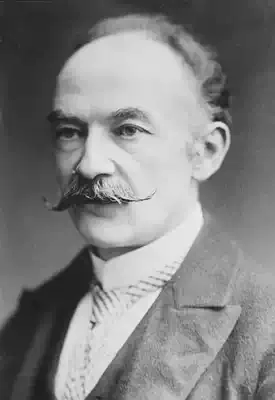
Thomas Hardy
Rome: The Vatican--Sala Delle Muse ()
Rome: The Vatican--Sala Delle Muse ()
I sat in the Muses' Hall at the mid of the day,
And it seemed to grow still, and the people to pass away,
And the chiselled shapes to combine in a haze of sun,
Till beside a Carrara column there gleamed forth One.
She was nor this nor that of those beings divine,
But each and the whole--an essence of all the Nine;
With tentative foot she neared to my halting-place,
A pensive smile on her sweet, small, marvellous face.
"Regarded so long, we render thee sad?" said she.
"Not you," sighed I, "but my own inconstancy!
I worship each and each; in the morning one,
And then, alas! another at sink of sun.
"To-day my soul clasps Form; but where is my troth
Of yesternight with Tune: can one cleave to both?"
- "Be not perturbed," said she. "Though apart in fame,
As I and my sisters are one, those, too, are the same.
- "But my loves go further--to Story, and Dance, and Hymn,
The lover of all in a sun-sweep is fool to whim -
Is swayed like a river-weed as the ripples run!"
- "Nay, wight, thou sway'st not. These are but phases of one;
"And that one is I; and I am projected from thee,
One that out of thy brain and heart thou causest to be -
Extern to thee nothing. Grieve not, nor thyself becall,
Woo where thou wilt; and rejoice thou canst love at all!
I sat in the Muses' Hall at the mid of the day,
And it seemed to grow still, and the people to pass away,
And the chiselled shapes to combine in a haze of sun,
Till beside a Carrara column there gleamed forth One.
She was nor this nor that of those beings divine,
But each and the whole--an essence of all the Nine;
With tentative foot she neared to my halting-place,
A pensive smile on her sweet, small, marvellous face.
"Regarded so long, we render thee sad?" said she.
"Not you," sighed I, "but my own inconstancy!
I worship each and each; in the morning one,
And then, alas! another at sink of sun.
"To-day my soul clasps Form; but where is my troth
Of yesternight with Tune: can one cleave to both?"
- "Be not perturbed," said she. "Though apart in fame,
As I and my sisters are one, those, too, are the same.
- "But my loves go further--to Story, and Dance, and Hymn,
The lover of all in a sun-sweep is fool to whim -
Is swayed like a river-weed as the ripples run!"
- "Nay, wight, thou sway'st not. These are but phases of one;
"And that one is I; and I am projected from thee,
One that out of thy brain and heart thou causest to be -
Extern to thee nothing. Grieve not, nor thyself becall,
Woo where thou wilt; and rejoice thou canst love at all!
230
Thomas Hardy
Rome: At the Pyramid of Cestius. (Near the graves of Shelley & Keats)
Rome: At the Pyramid of Cestius. (Near the graves of Shelley & Keats)
Who, then, was Cestius,
And what is he to me? -
Amid thick thoughts and memories multitudinous
One thought alone brings he.
I can recall no word
Of anything he did;
For me he is a man who died and was interred
To leave a pyramid
Whose purpose was exprest
Not with its first design,
Nor till, far down in Time, beside it found their rest
Two countrymen of mine.
Cestius in life, maybe,
Slew, breathed out threatening;
I know not. This I know: in death all silently
He does a kindlier thing,
In beckoning pilgrim feet
With marble finger high
To where, by shadowy wall and history-haunted street,
Those matchless singers lie . . .
--Say, then, he lived and died
That stones which bear his name
Should mark, through Time, where two immortal Shades abide;
It is an ample fame.
Who, then, was Cestius,
And what is he to me? -
Amid thick thoughts and memories multitudinous
One thought alone brings he.
I can recall no word
Of anything he did;
For me he is a man who died and was interred
To leave a pyramid
Whose purpose was exprest
Not with its first design,
Nor till, far down in Time, beside it found their rest
Two countrymen of mine.
Cestius in life, maybe,
Slew, breathed out threatening;
I know not. This I know: in death all silently
He does a kindlier thing,
In beckoning pilgrim feet
With marble finger high
To where, by shadowy wall and history-haunted street,
Those matchless singers lie . . .
--Say, then, he lived and died
That stones which bear his name
Should mark, through Time, where two immortal Shades abide;
It is an ample fame.
213
Thomas Hardy
Rome: At the Pyramid of Cestius. (Near the graves of Shelley & Keats)
Rome: At the Pyramid of Cestius. (Near the graves of Shelley & Keats)
Who, then, was Cestius,
And what is he to me? -
Amid thick thoughts and memories multitudinous
One thought alone brings he.
I can recall no word
Of anything he did;
For me he is a man who died and was interred
To leave a pyramid
Whose purpose was exprest
Not with its first design,
Nor till, far down in Time, beside it found their rest
Two countrymen of mine.
Cestius in life, maybe,
Slew, breathed out threatening;
I know not. This I know: in death all silently
He does a kindlier thing,
In beckoning pilgrim feet
With marble finger high
To where, by shadowy wall and history-haunted street,
Those matchless singers lie . . .
--Say, then, he lived and died
That stones which bear his name
Should mark, through Time, where two immortal Shades abide;
It is an ample fame.
Who, then, was Cestius,
And what is he to me? -
Amid thick thoughts and memories multitudinous
One thought alone brings he.
I can recall no word
Of anything he did;
For me he is a man who died and was interred
To leave a pyramid
Whose purpose was exprest
Not with its first design,
Nor till, far down in Time, beside it found their rest
Two countrymen of mine.
Cestius in life, maybe,
Slew, breathed out threatening;
I know not. This I know: in death all silently
He does a kindlier thing,
In beckoning pilgrim feet
With marble finger high
To where, by shadowy wall and history-haunted street,
Those matchless singers lie . . .
--Say, then, he lived and died
That stones which bear his name
Should mark, through Time, where two immortal Shades abide;
It is an ample fame.
213
Thomas Hardy
Rome: Building a New Street in the Ancient Quarter.
Rome: Building a New Street in the Ancient Quarter.
These numbered cliffs and gnarls of masonry
Outskeleton Time's central city, Rome;
Whereof each arch, entablature, and dome
Lies bare in all its gaunt anatomy.
And cracking frieze and rotten metope
Express, as though they were an open tome
Top-lined with caustic monitory gnome;
"Dunces, Learn here to spell Humanity!"
And yet within these ruins' very shade
The singing workmen shape and set and join
Their frail new mansion's stuccoed cove and quoin
With no apparent sense that years abrade,
Though each rent wall their feeble works invade
Once shamed all such in power of pier and groin.
These numbered cliffs and gnarls of masonry
Outskeleton Time's central city, Rome;
Whereof each arch, entablature, and dome
Lies bare in all its gaunt anatomy.
And cracking frieze and rotten metope
Express, as though they were an open tome
Top-lined with caustic monitory gnome;
"Dunces, Learn here to spell Humanity!"
And yet within these ruins' very shade
The singing workmen shape and set and join
Their frail new mansion's stuccoed cove and quoin
With no apparent sense that years abrade,
Though each rent wall their feeble works invade
Once shamed all such in power of pier and groin.
209
Thomas Hardy
Rom: On the Palatine (April, )
Rom: On the Palatine (April, )
We walked where Victor Jove was shrined awhile,
And passed to Livia's rich red mural show,
Whence, thridding cave and Criptoportico,
We gained Caligula's dissolving pile.
And each ranked ruin tended to beguile
The outer sense, and shape itself as though
It wore its marble hues, its pristine glow
Of scenic frieze and pompous peristyle.
When lo, swift hands, on strings nigh over-head,
Began to melodize a waltz by Strauss:
It stirred me as I stood, in Caesar's house,
Raised the old routs Imperial lyres had led,
And blended pulsing life with lives long done,
Till Time seemed fiction, Past and Present one.
We walked where Victor Jove was shrined awhile,
And passed to Livia's rich red mural show,
Whence, thridding cave and Criptoportico,
We gained Caligula's dissolving pile.
And each ranked ruin tended to beguile
The outer sense, and shape itself as though
It wore its marble hues, its pristine glow
Of scenic frieze and pompous peristyle.
When lo, swift hands, on strings nigh over-head,
Began to melodize a waltz by Strauss:
It stirred me as I stood, in Caesar's house,
Raised the old routs Imperial lyres had led,
And blended pulsing life with lives long done,
Till Time seemed fiction, Past and Present one.
214
Thomas Hardy
My spirit will not haunt the mound
My spirit will not haunt the mound
My spirit will not haunt the mound
Above my breast,
But travel, memory-possessed,
To where my tremulous being found
Life largest, best.
My phantom-footed shape will go
When nightfall grays
Hither and thither along the ways
I and another used to know
In backward days.
And there you'll find me, if a jot
You still should care
For me, and for my curious air;
If otherwise, then I shall not,
For you, be there.
My spirit will not haunt the mound
Above my breast,
But travel, memory-possessed,
To where my tremulous being found
Life largest, best.
My phantom-footed shape will go
When nightfall grays
Hither and thither along the ways
I and another used to know
In backward days.
And there you'll find me, if a jot
You still should care
For me, and for my curious air;
If otherwise, then I shall not,
For you, be there.
285
Thomas Hardy
Mismet
Mismet
He was leaning by a face,
He was looking into eyes,
And he knew a trysting-place,
And he heard seductive sighs;
But the face,
And the eyes,
And the place,
And the sighs,
Were not, alas, the right ones--the ones meet for him--
Though fine and sweet the features, and the feelings all abrim.
II
She was looking at a form,
She was listening for a tread,
She could feel a waft of charm
When a certain name was said;
But the form,
And the tread,
And the charm,
And name said,
Were the wrong ones for her, and ever would be so,
While the heritor of the right it would have saved her soul to know!
He was leaning by a face,
He was looking into eyes,
And he knew a trysting-place,
And he heard seductive sighs;
But the face,
And the eyes,
And the place,
And the sighs,
Were not, alas, the right ones--the ones meet for him--
Though fine and sweet the features, and the feelings all abrim.
II
She was looking at a form,
She was listening for a tread,
She could feel a waft of charm
When a certain name was said;
But the form,
And the tread,
And the charm,
And name said,
Were the wrong ones for her, and ever would be so,
While the heritor of the right it would have saved her soul to know!
264
Thomas Hardy
Let Me Enjoy
Let Me Enjoy
Minor Key
I
Let me enjoy the earth no less
Because the all-enacting Might
That fashioned forth its loveliness
Had other aims than my delight.
II
About my path there flits a Fair,
Who throws me not a word or sign;
I'll charm me with her ignoring air,
And laud the lips not meant for mine.
III
From manuscripts of moving song
Inspired by scenes and dreams unknown
I'll pour out raptures that belong
To others, as they were my own.
IV
And some day hence, towards Paradise
And all its blest -- if such should be --
I will lift glad, afar-off eyes
Though it contain no place for me.
Minor Key
I
Let me enjoy the earth no less
Because the all-enacting Might
That fashioned forth its loveliness
Had other aims than my delight.
II
About my path there flits a Fair,
Who throws me not a word or sign;
I'll charm me with her ignoring air,
And laud the lips not meant for mine.
III
From manuscripts of moving song
Inspired by scenes and dreams unknown
I'll pour out raptures that belong
To others, as they were my own.
IV
And some day hence, towards Paradise
And all its blest -- if such should be --
I will lift glad, afar-off eyes
Though it contain no place for me.
236
Thomas Hardy
Lausanne, In Gibbon's Old Garden: - p.m.
Lausanne, In Gibbon's Old Garden: - p.m.
(The th anniversary of the completion of the "Decline and Fall" at the same hour
and place)
A spirit seems to pass,
Formal in pose, but grave and grand withal:
He contemplates a volume stout and tall,
And far lamps fleck him through the thin acacias.
Anon the book is closed,
With "It is finished!" And at the alley's end
He turns, and soon on me his glances bend;
And, as from earth, comes speech--small, muted, yet composed.
"How fares the Truth now?--Ill?
--Do pens but slily further her advance?
May one not speed her but in phrase askance?
Do scribes aver the Comic to be Reverend still?
"Still rule those minds on earth
At whom sage Milton's wormwood words were hurled:
'Truth like a bastard comes into the world
Never without ill-fame to him who gives her birth'?"
(The th anniversary of the completion of the "Decline and Fall" at the same hour
and place)
A spirit seems to pass,
Formal in pose, but grave and grand withal:
He contemplates a volume stout and tall,
And far lamps fleck him through the thin acacias.
Anon the book is closed,
With "It is finished!" And at the alley's end
He turns, and soon on me his glances bend;
And, as from earth, comes speech--small, muted, yet composed.
"How fares the Truth now?--Ill?
--Do pens but slily further her advance?
May one not speed her but in phrase askance?
Do scribes aver the Comic to be Reverend still?
"Still rule those minds on earth
At whom sage Milton's wormwood words were hurled:
'Truth like a bastard comes into the world
Never without ill-fame to him who gives her birth'?"
198
Thomas Hardy
Lausanne, In Gibbon's Old Garden: - p.m.
Lausanne, In Gibbon's Old Garden: - p.m.
(The th anniversary of the completion of the "Decline and Fall" at the same hour
and place)
A spirit seems to pass,
Formal in pose, but grave and grand withal:
He contemplates a volume stout and tall,
And far lamps fleck him through the thin acacias.
Anon the book is closed,
With "It is finished!" And at the alley's end
He turns, and soon on me his glances bend;
And, as from earth, comes speech--small, muted, yet composed.
"How fares the Truth now?--Ill?
--Do pens but slily further her advance?
May one not speed her but in phrase askance?
Do scribes aver the Comic to be Reverend still?
"Still rule those minds on earth
At whom sage Milton's wormwood words were hurled:
'Truth like a bastard comes into the world
Never without ill-fame to him who gives her birth'?"
(The th anniversary of the completion of the "Decline and Fall" at the same hour
and place)
A spirit seems to pass,
Formal in pose, but grave and grand withal:
He contemplates a volume stout and tall,
And far lamps fleck him through the thin acacias.
Anon the book is closed,
With "It is finished!" And at the alley's end
He turns, and soon on me his glances bend;
And, as from earth, comes speech--small, muted, yet composed.
"How fares the Truth now?--Ill?
--Do pens but slily further her advance?
May one not speed her but in phrase askance?
Do scribes aver the Comic to be Reverend still?
"Still rule those minds on earth
At whom sage Milton's wormwood words were hurled:
'Truth like a bastard comes into the world
Never without ill-fame to him who gives her birth'?"
198
Thomas Hardy
Lausanne, In Gibbon's Old Garden: - p.m.
Lausanne, In Gibbon's Old Garden: - p.m.
(The th anniversary of the completion of the "Decline and Fall" at the same hour
and place)
A spirit seems to pass,
Formal in pose, but grave and grand withal:
He contemplates a volume stout and tall,
And far lamps fleck him through the thin acacias.
Anon the book is closed,
With "It is finished!" And at the alley's end
He turns, and soon on me his glances bend;
And, as from earth, comes speech--small, muted, yet composed.
"How fares the Truth now?--Ill?
--Do pens but slily further her advance?
May one not speed her but in phrase askance?
Do scribes aver the Comic to be Reverend still?
"Still rule those minds on earth
At whom sage Milton's wormwood words were hurled:
'Truth like a bastard comes into the world
Never without ill-fame to him who gives her birth'?"
(The th anniversary of the completion of the "Decline and Fall" at the same hour
and place)
A spirit seems to pass,
Formal in pose, but grave and grand withal:
He contemplates a volume stout and tall,
And far lamps fleck him through the thin acacias.
Anon the book is closed,
With "It is finished!" And at the alley's end
He turns, and soon on me his glances bend;
And, as from earth, comes speech--small, muted, yet composed.
"How fares the Truth now?--Ill?
--Do pens but slily further her advance?
May one not speed her but in phrase askance?
Do scribes aver the Comic to be Reverend still?
"Still rule those minds on earth
At whom sage Milton's wormwood words were hurled:
'Truth like a bastard comes into the world
Never without ill-fame to him who gives her birth'?"
198
Thomas Hardy
In Vision I Roamed
In Vision I Roamed
IN vision I roamed the flashing Firmament,
So fierce in blazon that the Night waxed wan,
As though with an awed sense of such ostent;
And as I thought my spirit ranged on and on
In footless traverse through ghast heights of sky,
To the last chambers of the monstrous Dome,
Where stars the brightest here to darkness die:
Then, any spot on our own Earth seemed Home!
And the sick grief that you were far away
Grew pleasant thankfulness that you were near,
Who might have been, set on some outstep sphere,
Less than a Want to me, as day by day
I lived unware, uncaring all that lay
Locked in that Universe taciturn and drear.
IN vision I roamed the flashing Firmament,
So fierce in blazon that the Night waxed wan,
As though with an awed sense of such ostent;
And as I thought my spirit ranged on and on
In footless traverse through ghast heights of sky,
To the last chambers of the monstrous Dome,
Where stars the brightest here to darkness die:
Then, any spot on our own Earth seemed Home!
And the sick grief that you were far away
Grew pleasant thankfulness that you were near,
Who might have been, set on some outstep sphere,
Less than a Want to me, as day by day
I lived unware, uncaring all that lay
Locked in that Universe taciturn and drear.
275
Thomas Hardy
In Tenebris
In Tenebris
Wintertime nighs;
But my bereavement-pain
It cannot bring again:
Twice no one dies.
Flower-petals flee;
But since it once hath been,
No more that severing scene
Can harrow me.
Birds faint in dread:
I shall not lose old strength
In the lone frost's black length:
Strength long since fled!
Leaves freeze to dun;
But friends cannot turn cold
This season as of old
For him with none.
Tempests may scath;
But love cannot make smart
Again this year his heart
Who no heart hath.
Black is night's cope;
But death will not appal
One, who past doubtings all,
Waits in unhope.
Wintertime nighs;
But my bereavement-pain
It cannot bring again:
Twice no one dies.
Flower-petals flee;
But since it once hath been,
No more that severing scene
Can harrow me.
Birds faint in dread:
I shall not lose old strength
In the lone frost's black length:
Strength long since fled!
Leaves freeze to dun;
But friends cannot turn cold
This season as of old
For him with none.
Tempests may scath;
But love cannot make smart
Again this year his heart
Who no heart hath.
Black is night's cope;
But death will not appal
One, who past doubtings all,
Waits in unhope.
222
Thomas Hardy
In a Wood
In a Wood
In a Wood
Pale beech and pine-tree blue,
Set in one clay,
Bough to bough cannot you
Bide out your day?
When the rains skim and skip,
Why mar sweet comradeship,
Blighting with poison-drip
Neighborly spray?
Heart-halt and spirit-lame,
City-opprest,
Unto this wood I came
As to a nest;
Dreaming that sylvan peace
Offered the harrowed ease—
Nature a soft release
From men’s unrest.
But, having entered in,
Great growths and small
Show them to men akin—
Combatants all!
Sycamore shoulders oak,
Bines the slim sapling yoke,
Ivy-spun halters choke
Elms stout and tall.
Touches from ash, O wych,
Sting you like scorn!
You, too, brave hollies, twitch
Sidelong from thorn.
Even the rank poplars bear
Illy a rival’s air,
Cankering in black despair
If overborne.
Since, then, no grace I find
Taught me of trees,
Turn I back to my kind,
Worthy as these.
There at least smiles abound,
There discourse trills around,
There, now and then, are found
Life-loyalties.
In a Wood
Pale beech and pine-tree blue,
Set in one clay,
Bough to bough cannot you
Bide out your day?
When the rains skim and skip,
Why mar sweet comradeship,
Blighting with poison-drip
Neighborly spray?
Heart-halt and spirit-lame,
City-opprest,
Unto this wood I came
As to a nest;
Dreaming that sylvan peace
Offered the harrowed ease—
Nature a soft release
From men’s unrest.
But, having entered in,
Great growths and small
Show them to men akin—
Combatants all!
Sycamore shoulders oak,
Bines the slim sapling yoke,
Ivy-spun halters choke
Elms stout and tall.
Touches from ash, O wych,
Sting you like scorn!
You, too, brave hollies, twitch
Sidelong from thorn.
Even the rank poplars bear
Illy a rival’s air,
Cankering in black despair
If overborne.
Since, then, no grace I find
Taught me of trees,
Turn I back to my kind,
Worthy as these.
There at least smiles abound,
There discourse trills around,
There, now and then, are found
Life-loyalties.
258
Thomas Hardy
In A Eweleaze Near Weatherbury
In A Eweleaze Near Weatherbury
THE years have gathered grayly
Since I danced upon this leaze
With one who kindled gayly
Love's fitful ecstasies!
But despite the term as teacher,
I remain what I was then
In each essential feature
Of the fantasies of men.
Yet I note the little chisel
Of ever-napping Time,
Defacing ghast and grizzel
The blazon of my prime.
When at night he thinks me sleeping,
I feel him boring sly
Within my bones, and heaping
Quaintest pains for by-and-by.
Still, I'd go the world with Beauty,
I would laugh with her and sing,
I would shun divinest duty
To resume her worshipping.
But she'd scorn my brave endeavor,
She would not balm the breeze
By murmuring, "Thine for ever!"
As she did upon this leaze.
THE years have gathered grayly
Since I danced upon this leaze
With one who kindled gayly
Love's fitful ecstasies!
But despite the term as teacher,
I remain what I was then
In each essential feature
Of the fantasies of men.
Yet I note the little chisel
Of ever-napping Time,
Defacing ghast and grizzel
The blazon of my prime.
When at night he thinks me sleeping,
I feel him boring sly
Within my bones, and heaping
Quaintest pains for by-and-by.
Still, I'd go the world with Beauty,
I would laugh with her and sing,
I would shun divinest duty
To resume her worshipping.
But she'd scorn my brave endeavor,
She would not balm the breeze
By murmuring, "Thine for ever!"
As she did upon this leaze.
220
Thomas Hardy
In A Eweleaze Near Weatherbury
In A Eweleaze Near Weatherbury
THE years have gathered grayly
Since I danced upon this leaze
With one who kindled gayly
Love's fitful ecstasies!
But despite the term as teacher,
I remain what I was then
In each essential feature
Of the fantasies of men.
Yet I note the little chisel
Of ever-napping Time,
Defacing ghast and grizzel
The blazon of my prime.
When at night he thinks me sleeping,
I feel him boring sly
Within my bones, and heaping
Quaintest pains for by-and-by.
Still, I'd go the world with Beauty,
I would laugh with her and sing,
I would shun divinest duty
To resume her worshipping.
But she'd scorn my brave endeavor,
She would not balm the breeze
By murmuring, "Thine for ever!"
As she did upon this leaze.
THE years have gathered grayly
Since I danced upon this leaze
With one who kindled gayly
Love's fitful ecstasies!
But despite the term as teacher,
I remain what I was then
In each essential feature
Of the fantasies of men.
Yet I note the little chisel
Of ever-napping Time,
Defacing ghast and grizzel
The blazon of my prime.
When at night he thinks me sleeping,
I feel him boring sly
Within my bones, and heaping
Quaintest pains for by-and-by.
Still, I'd go the world with Beauty,
I would laugh with her and sing,
I would shun divinest duty
To resume her worshipping.
But she'd scorn my brave endeavor,
She would not balm the breeze
By murmuring, "Thine for ever!"
As she did upon this leaze.
220
Thomas Hardy
I have lived with Shades
I have lived with Shades
I
I have lived with Shades so long,
So long have talked to them,
I sped to street and throng,
That sometimes they
In their dim style
Will pause awhile
To hear my say;
II
And take me by the hand,
And lead me through their rooms
In the To-Be, where Dooms
Half-wove and shapeless stand:
And show from there
The dwindled dust
And rot and rust
Of things that were.
III
"Now turn," they said to me
One day: "Look whence we came,
And signify his name
Who gazes thence at thee" --
-- "Nor name nor race
Know I, or can,"
I said, "Of man
So commonplace."
IV
"He moves me not at all:
I note no ray or jot
Of rareness in his lot,
Or star exceptional.
Into the dim
Dead throngs around
He'll sink, nor sound
Be left of him."
V
"Yet," said they, "his frail speech,
Hath accents pitched like thine --
Thy mould and his define
A likeness each to each --
But go! Deep pain
Alas, would be
His name to thee,
And told in vain!"
I
I have lived with Shades so long,
So long have talked to them,
I sped to street and throng,
That sometimes they
In their dim style
Will pause awhile
To hear my say;
II
And take me by the hand,
And lead me through their rooms
In the To-Be, where Dooms
Half-wove and shapeless stand:
And show from there
The dwindled dust
And rot and rust
Of things that were.
III
"Now turn," they said to me
One day: "Look whence we came,
And signify his name
Who gazes thence at thee" --
-- "Nor name nor race
Know I, or can,"
I said, "Of man
So commonplace."
IV
"He moves me not at all:
I note no ray or jot
Of rareness in his lot,
Or star exceptional.
Into the dim
Dead throngs around
He'll sink, nor sound
Be left of him."
V
"Yet," said they, "his frail speech,
Hath accents pitched like thine --
Thy mould and his define
A likeness each to each --
But go! Deep pain
Alas, would be
His name to thee,
And told in vain!"
220
Thomas Hardy
I said to Love
I said to Love
I said to Love,
"It is not now as in old days
When men adored thee and thy ways
All else above;
Named thee the Boy, the Bright, the One
Who spread a heaven beneath the sun,"
I said to Love.
I said to him,
"We now know more of thee than then;
We were but weak in judgment when,
With hearts abrim,
We clamoured thee that thou would'st please
Inflict on us thine agonies,"
I said to him.
I said to Love,
"Thou art not young, thou art not fair,
No elfin darts, no cherub air,
Nor swan, nor dove
Are thine; but features pitiless,
And iron daggers of distress,"
I said to Love.
"Depart then, Love!
Man's race shall perish, threatenest thou,
WIthout thy kindling coupling-vow?
The age to come the man of now
Know nothing of?
We fear not such a threat from thee;
We are too old in apathy!
Mankind shall cease.. -
So let it be,"
I said to Love.
I said to Love,
"It is not now as in old days
When men adored thee and thy ways
All else above;
Named thee the Boy, the Bright, the One
Who spread a heaven beneath the sun,"
I said to Love.
I said to him,
"We now know more of thee than then;
We were but weak in judgment when,
With hearts abrim,
We clamoured thee that thou would'st please
Inflict on us thine agonies,"
I said to him.
I said to Love,
"Thou art not young, thou art not fair,
No elfin darts, no cherub air,
Nor swan, nor dove
Are thine; but features pitiless,
And iron daggers of distress,"
I said to Love.
"Depart then, Love!
Man's race shall perish, threatenest thou,
WIthout thy kindling coupling-vow?
The age to come the man of now
Know nothing of?
We fear not such a threat from thee;
We are too old in apathy!
Mankind shall cease.. -
So let it be,"
I said to Love.
285
Thomas Hardy
Heredity
Heredity
I am the family face;
Flesh perishes, I live on,
Projecting trait and trace
Through time to times anon,
And leaping from place to place
Over oblivion.
The years-heired feature that can
In curve and voice and eye
Despise the human span
Of durance -- that is I;
The eternal thing in man,
That heeds no call to die
I am the family face;
Flesh perishes, I live on,
Projecting trait and trace
Through time to times anon,
And leaping from place to place
Over oblivion.
The years-heired feature that can
In curve and voice and eye
Despise the human span
Of durance -- that is I;
The eternal thing in man,
That heeds no call to die
200
Thomas Hardy
Her Dilemma
Her Dilemma
THE two were silent in a sunless church,
Whose mildewed walls, uneven paving-stones,
And wasted carvings passed antique research;
And nothing broke the clock's dull monotones.
Leaning against a wormy poppy-head,
So wan and worn that he could scarcely stand,
--For he was soon to die,--he softly said,
"Tell me you love me!"--holding hard her hand.
She would have given a world to breathe "yes" truly,
So much his life seemed hanging on her mind,
And hence she lied, her heart persuaded throughly,
'Twas worth her soul to be a moment kind.
But the sad need thereof, his nearing death,
So mocked humanity that she shamed to prize
A world conditioned thus, or care for breath
Where Nature such dilemmas could devise.
THE two were silent in a sunless church,
Whose mildewed walls, uneven paving-stones,
And wasted carvings passed antique research;
And nothing broke the clock's dull monotones.
Leaning against a wormy poppy-head,
So wan and worn that he could scarcely stand,
--For he was soon to die,--he softly said,
"Tell me you love me!"--holding hard her hand.
She would have given a world to breathe "yes" truly,
So much his life seemed hanging on her mind,
And hence she lied, her heart persuaded throughly,
'Twas worth her soul to be a moment kind.
But the sad need thereof, his nearing death,
So mocked humanity that she shamed to prize
A world conditioned thus, or care for breath
Where Nature such dilemmas could devise.
277
Thomas Hardy
Her Initals
Her Initals
UPON a poet's page I wrote
Of old two letters of her name;
Part seemed she of the effulgent thought
Whence that high singer's rapture came.
--When now I turn the leaf the same
Immortal light illumes the lay
But from the letters of her name
The radiance has died away.
UPON a poet's page I wrote
Of old two letters of her name;
Part seemed she of the effulgent thought
Whence that high singer's rapture came.
--When now I turn the leaf the same
Immortal light illumes the lay
But from the letters of her name
The radiance has died away.
149
Thomas Hardy
Heiress And Architect
Heiress And Architect
For A. W. B.
SHE sought the Studios, beckoning to her side
An arch-designer, for she planned to build.
He was of wise contrivance, deeply skilled
In every intervolve of high and wide--
Well fit to be her guide.
"Whatever it be,"
Responded he,
With cold, clear voice, and cold, clear view,
"In true accord with prudent fashionings
For such vicissitudes as living brings,
And thwarting not the law of stable things,
That will I do."
"Shape me," she said, "high walls with tracery
And open ogive-work, that scent and hue
Of buds, and travelling bees, may come in through,
The note of birds, and singings of the sea,
For these are much to me."
"An idle whim!"
Broke forth from him
Whom nought could warm to gallantries:
"Cede all these buds and birds, the zephyr's call,
And scents, and hues, and things that falter all,
And choose as best the close and surly wall,
For winter's freeze."
"Then frame," she cried, "wide fronts of crystal glass,
That I may show my laughter and my light--
Light like the sun's by day, the stars' by night--
Till rival heart-queens, envying, wail, 'Alas,
Her glory!' as they pass."
"O maid misled!"
He sternly said,
Whose facile foresight pierced her dire;
"Where shall abide the soul when, sick of glee,
It shrinks, and hides, and prays no eye may see?
Those house them best who house for secrecy,
For you will tire."
"A little chamber, then, with swan and dove
Ranged thickly, and engrailed with rare device
Of reds and purples, for a Paradise
Wherein my Love may greet me, I my Love,
When he shall know thereof?"
"This, too, is ill,"
He answered still,
The man who swayed her like a shade.
"An hour will come when sight of such sweet nook
Would bring a bitterness too sharp to brook,
When brighter eyes have won away his look;
For you will fade."
Then said she faintly: "O, contrive some way--
Some narrow winding turret, quite mine own,
To reach a loft where I may grieve alone!
It is a slight thing; hence do not, I pray,
This last dear fancy slay!"
"Such winding ways
Fit not your days,"
Said he, the man of measuring eye;
"I must even fashion as my rule declares,
To wit: Give space (since life ends unawares)
To hale a coffined corpse adown the stairs;
For you will die."
For A. W. B.
SHE sought the Studios, beckoning to her side
An arch-designer, for she planned to build.
He was of wise contrivance, deeply skilled
In every intervolve of high and wide--
Well fit to be her guide.
"Whatever it be,"
Responded he,
With cold, clear voice, and cold, clear view,
"In true accord with prudent fashionings
For such vicissitudes as living brings,
And thwarting not the law of stable things,
That will I do."
"Shape me," she said, "high walls with tracery
And open ogive-work, that scent and hue
Of buds, and travelling bees, may come in through,
The note of birds, and singings of the sea,
For these are much to me."
"An idle whim!"
Broke forth from him
Whom nought could warm to gallantries:
"Cede all these buds and birds, the zephyr's call,
And scents, and hues, and things that falter all,
And choose as best the close and surly wall,
For winter's freeze."
"Then frame," she cried, "wide fronts of crystal glass,
That I may show my laughter and my light--
Light like the sun's by day, the stars' by night--
Till rival heart-queens, envying, wail, 'Alas,
Her glory!' as they pass."
"O maid misled!"
He sternly said,
Whose facile foresight pierced her dire;
"Where shall abide the soul when, sick of glee,
It shrinks, and hides, and prays no eye may see?
Those house them best who house for secrecy,
For you will tire."
"A little chamber, then, with swan and dove
Ranged thickly, and engrailed with rare device
Of reds and purples, for a Paradise
Wherein my Love may greet me, I my Love,
When he shall know thereof?"
"This, too, is ill,"
He answered still,
The man who swayed her like a shade.
"An hour will come when sight of such sweet nook
Would bring a bitterness too sharp to brook,
When brighter eyes have won away his look;
For you will fade."
Then said she faintly: "O, contrive some way--
Some narrow winding turret, quite mine own,
To reach a loft where I may grieve alone!
It is a slight thing; hence do not, I pray,
This last dear fancy slay!"
"Such winding ways
Fit not your days,"
Said he, the man of measuring eye;
"I must even fashion as my rule declares,
To wit: Give space (since life ends unawares)
To hale a coffined corpse adown the stairs;
For you will die."
272
Thomas Hardy
Heiress And Architect
Heiress And Architect
For A. W. B.
SHE sought the Studios, beckoning to her side
An arch-designer, for she planned to build.
He was of wise contrivance, deeply skilled
In every intervolve of high and wide--
Well fit to be her guide.
"Whatever it be,"
Responded he,
With cold, clear voice, and cold, clear view,
"In true accord with prudent fashionings
For such vicissitudes as living brings,
And thwarting not the law of stable things,
That will I do."
"Shape me," she said, "high walls with tracery
And open ogive-work, that scent and hue
Of buds, and travelling bees, may come in through,
The note of birds, and singings of the sea,
For these are much to me."
"An idle whim!"
Broke forth from him
Whom nought could warm to gallantries:
"Cede all these buds and birds, the zephyr's call,
And scents, and hues, and things that falter all,
And choose as best the close and surly wall,
For winter's freeze."
"Then frame," she cried, "wide fronts of crystal glass,
That I may show my laughter and my light--
Light like the sun's by day, the stars' by night--
Till rival heart-queens, envying, wail, 'Alas,
Her glory!' as they pass."
"O maid misled!"
He sternly said,
Whose facile foresight pierced her dire;
"Where shall abide the soul when, sick of glee,
It shrinks, and hides, and prays no eye may see?
Those house them best who house for secrecy,
For you will tire."
"A little chamber, then, with swan and dove
Ranged thickly, and engrailed with rare device
Of reds and purples, for a Paradise
Wherein my Love may greet me, I my Love,
When he shall know thereof?"
"This, too, is ill,"
He answered still,
The man who swayed her like a shade.
"An hour will come when sight of such sweet nook
Would bring a bitterness too sharp to brook,
When brighter eyes have won away his look;
For you will fade."
Then said she faintly: "O, contrive some way--
Some narrow winding turret, quite mine own,
To reach a loft where I may grieve alone!
It is a slight thing; hence do not, I pray,
This last dear fancy slay!"
"Such winding ways
Fit not your days,"
Said he, the man of measuring eye;
"I must even fashion as my rule declares,
To wit: Give space (since life ends unawares)
To hale a coffined corpse adown the stairs;
For you will die."
For A. W. B.
SHE sought the Studios, beckoning to her side
An arch-designer, for she planned to build.
He was of wise contrivance, deeply skilled
In every intervolve of high and wide--
Well fit to be her guide.
"Whatever it be,"
Responded he,
With cold, clear voice, and cold, clear view,
"In true accord with prudent fashionings
For such vicissitudes as living brings,
And thwarting not the law of stable things,
That will I do."
"Shape me," she said, "high walls with tracery
And open ogive-work, that scent and hue
Of buds, and travelling bees, may come in through,
The note of birds, and singings of the sea,
For these are much to me."
"An idle whim!"
Broke forth from him
Whom nought could warm to gallantries:
"Cede all these buds and birds, the zephyr's call,
And scents, and hues, and things that falter all,
And choose as best the close and surly wall,
For winter's freeze."
"Then frame," she cried, "wide fronts of crystal glass,
That I may show my laughter and my light--
Light like the sun's by day, the stars' by night--
Till rival heart-queens, envying, wail, 'Alas,
Her glory!' as they pass."
"O maid misled!"
He sternly said,
Whose facile foresight pierced her dire;
"Where shall abide the soul when, sick of glee,
It shrinks, and hides, and prays no eye may see?
Those house them best who house for secrecy,
For you will tire."
"A little chamber, then, with swan and dove
Ranged thickly, and engrailed with rare device
Of reds and purples, for a Paradise
Wherein my Love may greet me, I my Love,
When he shall know thereof?"
"This, too, is ill,"
He answered still,
The man who swayed her like a shade.
"An hour will come when sight of such sweet nook
Would bring a bitterness too sharp to brook,
When brighter eyes have won away his look;
For you will fade."
Then said she faintly: "O, contrive some way--
Some narrow winding turret, quite mine own,
To reach a loft where I may grieve alone!
It is a slight thing; hence do not, I pray,
This last dear fancy slay!"
"Such winding ways
Fit not your days,"
Said he, the man of measuring eye;
"I must even fashion as my rule declares,
To wit: Give space (since life ends unawares)
To hale a coffined corpse adown the stairs;
For you will die."
272
Thomas Hardy
Genoa and the Mediterranean.
Genoa and the Mediterranean.
O epic-famed, god-haunted Central Sea,
Heave careless of the deep wrong done to thee
When from Torino's track I saw thy face first flash on me.
And multimarbled Genova the Proud,
Gleam all unconscious how, wide-lipped, up-browed,
I first beheld thee clad--not as the Beauty but the Dowd.
Out from a deep-delved way my vision lit
On housebacks pink, green, ochreous--where a slit
Shoreward 'twixt row and row revealed the classic blue through it.
And thereacross waved fishwives' high-hung smocks,
Chrome kerchiefs, scarlet hose, darned underfrocks;
Since when too oft my dreams of thee, O Queen, that frippery mocks:
Whereat I grieve, Superba! . . . Afterhours
Within Palazzo Doria's orange bowers
Went far to mend these marrings of thy soul-subliming powers.
But, Queen, such squalid undress none should see,
Those dream-endangering eyewounds no more be
Where lovers first behold thy form in pilgrimage to thee.
O epic-famed, god-haunted Central Sea,
Heave careless of the deep wrong done to thee
When from Torino's track I saw thy face first flash on me.
And multimarbled Genova the Proud,
Gleam all unconscious how, wide-lipped, up-browed,
I first beheld thee clad--not as the Beauty but the Dowd.
Out from a deep-delved way my vision lit
On housebacks pink, green, ochreous--where a slit
Shoreward 'twixt row and row revealed the classic blue through it.
And thereacross waved fishwives' high-hung smocks,
Chrome kerchiefs, scarlet hose, darned underfrocks;
Since when too oft my dreams of thee, O Queen, that frippery mocks:
Whereat I grieve, Superba! . . . Afterhours
Within Palazzo Doria's orange bowers
Went far to mend these marrings of thy soul-subliming powers.
But, Queen, such squalid undress none should see,
Those dream-endangering eyewounds no more be
Where lovers first behold thy form in pilgrimage to thee.
211