

Poems in this topic
Others
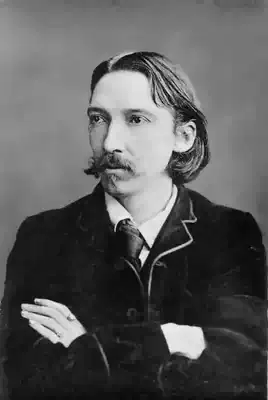
Robert Louis Stevenson
Looking-Glass River
Looking-Glass River
Smooth it glides upon its travel,
Here a wimple, there a gleam--
O the clean gravel!
O the smooth stream!
Sailing blossoms, silver fishes,
Pave pools as clear as air--
How a child wishes
To live down there!
We can see our colored faces
Floating on the shaken pool
Down in cool places,
Dim and very cool;
Till a wind or water wrinkle,
Dipping marten, plumping trout,
Spreads in a twinkle
And blots all out.
See the rings pursue each other;
All below grows black as night,
Just as if mother
Had blown out the light!
Patience, children, just a minute--
See the spreading circles die;
The stream and all in it
Will clear by-and-by.
Smooth it glides upon its travel,
Here a wimple, there a gleam--
O the clean gravel!
O the smooth stream!
Sailing blossoms, silver fishes,
Pave pools as clear as air--
How a child wishes
To live down there!
We can see our colored faces
Floating on the shaken pool
Down in cool places,
Dim and very cool;
Till a wind or water wrinkle,
Dipping marten, plumping trout,
Spreads in a twinkle
And blots all out.
See the rings pursue each other;
All below grows black as night,
Just as if mother
Had blown out the light!
Patience, children, just a minute--
See the spreading circles die;
The stream and all in it
Will clear by-and-by.
368
Robert Louis Stevenson
Let Love Go, If Go She Will
Let Love Go, If Go She Will
LET love go, if go she will.
Seek not, O fool, her wanton flight to stay.
Of all she gives and takes away
The best remains behind her still.
The best remains behind; in vain
Joy she may give and take again,
Joy she may take and leave us pain,
If yet she leave behind
The constant mind
To meet all fortunes nobly, to endure
All things with a good heart, and still be pure,
Still to be foremost in the foremost cause,
And still be worthy of the love that was.
Love coming is omnipotent indeed,
But not Love going. Let her go. The seed
Springs in the favouring Summer air, and grows,
And waxes strong; and when the Summer goes,
Remains, a perfect tree.
Joy she may give and take again,
Joy she may take and leave us pain.
O Love, and what care we?
For one thing thou hast given, O Love, one thing
Is ours that nothing can remove;
And as the King discrowned is still a King,
The unhappy lover still preserves his love.
LET love go, if go she will.
Seek not, O fool, her wanton flight to stay.
Of all she gives and takes away
The best remains behind her still.
The best remains behind; in vain
Joy she may give and take again,
Joy she may take and leave us pain,
If yet she leave behind
The constant mind
To meet all fortunes nobly, to endure
All things with a good heart, and still be pure,
Still to be foremost in the foremost cause,
And still be worthy of the love that was.
Love coming is omnipotent indeed,
But not Love going. Let her go. The seed
Springs in the favouring Summer air, and grows,
And waxes strong; and when the Summer goes,
Remains, a perfect tree.
Joy she may give and take again,
Joy she may take and leave us pain.
O Love, and what care we?
For one thing thou hast given, O Love, one thing
Is ours that nothing can remove;
And as the King discrowned is still a King,
The unhappy lover still preserves his love.
300
Robert Louis Stevenson
Lo! In Thine Honest Eyes I Read
Lo! In Thine Honest Eyes I Read
LO! in thine honest eyes I read
The auspicious beacon that shall lead,
After long sailing in deep seas,
To quiet havens in June ease.
Thy voice sings like an inland bird
First by the seaworn sailor heard;
And like road sheltered from life's sea
Thine honest heart is unto me.
LO! in thine honest eyes I read
The auspicious beacon that shall lead,
After long sailing in deep seas,
To quiet havens in June ease.
Thy voice sings like an inland bird
First by the seaworn sailor heard;
And like road sheltered from life's sea
Thine honest heart is unto me.
275
Robert Louis Stevenson
Know You The River NEar To Grez
Know You The River NEar To Grez
KNOW you the river near to Grez,
A river deep and clear?
Among the lilies all the way,
That ancient river runs to-day
From snowy weir to weir.
Old as the Rhine of great renown,
She hurries clear and fast,
She runs amain by field and town
From south to north, from up to down,
To present on from past.
The love I hold was borne by her;
And now, though far away,
My lonely spirit hears the stir
Of water round the starling spur
Beside the bridge at Grez.
So may that love forever hold
In life an equal pace;
So may that love grow never old,
But, clear and pure and fountain-cold,
Go on from grace to grace.
KNOW you the river near to Grez,
A river deep and clear?
Among the lilies all the way,
That ancient river runs to-day
From snowy weir to weir.
Old as the Rhine of great renown,
She hurries clear and fast,
She runs amain by field and town
From south to north, from up to down,
To present on from past.
The love I hold was borne by her;
And now, though far away,
My lonely spirit hears the stir
Of water round the starling spur
Beside the bridge at Grez.
So may that love forever hold
In life an equal pace;
So may that love grow never old,
But, clear and pure and fountain-cold,
Go on from grace to grace.
366
Robert Louis Stevenson
Katherine
Katherine
We see you as we see a face
That trembles in a forest place
Upon the mirror of a pool
Forever quiet, clear and cool;
And in the wayward glass, appears
To hover between smiles and tears,
Elfin and human, airy and true,
And backed by the reflected blue.
We see you as we see a face
That trembles in a forest place
Upon the mirror of a pool
Forever quiet, clear and cool;
And in the wayward glass, appears
To hover between smiles and tears,
Elfin and human, airy and true,
And backed by the reflected blue.
306
Robert Louis Stevenson
Katherine
Katherine
We see you as we see a face
That trembles in a forest place
Upon the mirror of a pool
Forever quiet, clear and cool;
And in the wayward glass, appears
To hover between smiles and tears,
Elfin and human, airy and true,
And backed by the reflected blue.
We see you as we see a face
That trembles in a forest place
Upon the mirror of a pool
Forever quiet, clear and cool;
And in the wayward glass, appears
To hover between smiles and tears,
Elfin and human, airy and true,
And backed by the reflected blue.
306
Robert Louis Stevenson
In the Highlands
In the Highlands
IN the highlands, in the country places,
Where the old plain men have rosy faces,
And the young fair maidens
Quiet eyes;
Where essential silence cheers and blesses,
And for ever in the hill-recesses
Her more lovely music
Broods and dies--
O to mount again where erst I haunted;
Where the old red hills are bird-enchanted,
And the low green meadows
Bright with sward;
And when even dies, the million-tinted,
And the night has come, and planets glinted,
Lo, the valley hollow
Lamp-bestarr'd!
O to dream, O to awake and wander
There, and with delight to take and render,
Through the trance of silence,
Quiet breath!
Lo! for there, among the flowers and grasses,
Only the mightier movement sounds and passes;
Only winds and rivers,
Life and death.
IN the highlands, in the country places,
Where the old plain men have rosy faces,
And the young fair maidens
Quiet eyes;
Where essential silence cheers and blesses,
And for ever in the hill-recesses
Her more lovely music
Broods and dies--
O to mount again where erst I haunted;
Where the old red hills are bird-enchanted,
And the low green meadows
Bright with sward;
And when even dies, the million-tinted,
And the night has come, and planets glinted,
Lo, the valley hollow
Lamp-bestarr'd!
O to dream, O to awake and wander
There, and with delight to take and render,
Through the trance of silence,
Quiet breath!
Lo! for there, among the flowers and grasses,
Only the mightier movement sounds and passes;
Only winds and rivers,
Life and death.
341
Robert Louis Stevenson
In Lupum
In Lupum
BEYOND the gates thou gav'st a field to till;
I have a larger on my window-sill.
A farm, d'ye say? Is this a farm to you,
Where for all woods I spay one tuft of rue,
And that so rusty, and so small a thing,
One shrill cicada hides it with a wing;
Where one cucumber covers all the plain;
And where one serpent rings himself in vain
To enter wholly; and a single snail
Eats all and exit fasting to the pool?
Here shall my gardener be the dusty mole.
My only ploughman the . . . mole.
Here shall I wait in vain till figs be set,
And till the spring disclose the violet.
Through all my wilds a tameless mouse careers,
And in that narrow boundary appears,
Huge as the stalking lion of Algiers,
Huge as the fabled boar of Calydon.
And all my hay is at one swoop impresst
By one low-flying swallow for her nest,
Strip god Priapus of each attribute
Here finds he scarce a pedestal to foot.
The gathered harvest scarcely brims a spoon;
And all my vintage drips in a cocoon.
Generous are you, but I more generous still:
Take back your farm and stand me half a gill!
BEYOND the gates thou gav'st a field to till;
I have a larger on my window-sill.
A farm, d'ye say? Is this a farm to you,
Where for all woods I spay one tuft of rue,
And that so rusty, and so small a thing,
One shrill cicada hides it with a wing;
Where one cucumber covers all the plain;
And where one serpent rings himself in vain
To enter wholly; and a single snail
Eats all and exit fasting to the pool?
Here shall my gardener be the dusty mole.
My only ploughman the . . . mole.
Here shall I wait in vain till figs be set,
And till the spring disclose the violet.
Through all my wilds a tameless mouse careers,
And in that narrow boundary appears,
Huge as the stalking lion of Algiers,
Huge as the fabled boar of Calydon.
And all my hay is at one swoop impresst
By one low-flying swallow for her nest,
Strip god Priapus of each attribute
Here finds he scarce a pedestal to foot.
The gathered harvest scarcely brims a spoon;
And all my vintage drips in a cocoon.
Generous are you, but I more generous still:
Take back your farm and stand me half a gill!
401
Robert Louis Stevenson
In Port
In Port
Last, to the chamber where I lie
My fearful footsteps patter nigh,
And come out from the cold and gloom
Into my warm and cheerful room.
There, safe arrived, we turn about
To keep the coming shadows out,
And close the happy door at last
On all the perils that we past.
Then, when mamma goes by to bed,
She shall come in with tip-toe tread,
And see me lying warm and fast
And in the land of Nod at last.
Last, to the chamber where I lie
My fearful footsteps patter nigh,
And come out from the cold and gloom
Into my warm and cheerful room.
There, safe arrived, we turn about
To keep the coming shadows out,
And close the happy door at last
On all the perils that we past.
Then, when mamma goes by to bed,
She shall come in with tip-toe tread,
And see me lying warm and fast
And in the land of Nod at last.
323
Robert Louis Stevenson
If This Were Faith
If This Were Faith
God, if this were enough,
That I see things bare to the buff
And up to the buttocks in mire;
That I ask nor hope nor hire,
Nut in the husk,
Nor dawn beyond the dusk,
Nor life beyond death:
God, if this were faith!
Having felt thy wind in my face
Spit sorrow and disgrace,
Having seen thine evil doom
In Golgotha and Khartoum,
And the brutes, the work of thine hands,
Fill with injustice lands
And stain with blood the sea:
If still in my veins the glee
Of the black night and the sun
And the lost battle, run:
If, an adept,
The iniquitous lists I still accept
With joy, and joy to endure and be withstood,
And still to battle and perish for a dream of good:
God, if that were enough!
If to feel, in the ink of the slough,
And the sink of the mire,
Veins of glory and fire
Run through and transpierce and transpire,
And a secret purpose of glory in every part,
And the answering glory of battle fill my heart;
To thrill with the joy of girded men
To go on for ever and fail and go on again,
And be mauled to the earth and arise,
And contend for the shade of a word and a thing
not seen with the eyes:
With the half of a broken hope for a pillow at night
That somehow the right is the right
And the smooth shall bloom from the rough:
Lord, if that were enough!
God, if this were enough,
That I see things bare to the buff
And up to the buttocks in mire;
That I ask nor hope nor hire,
Nut in the husk,
Nor dawn beyond the dusk,
Nor life beyond death:
God, if this were faith!
Having felt thy wind in my face
Spit sorrow and disgrace,
Having seen thine evil doom
In Golgotha and Khartoum,
And the brutes, the work of thine hands,
Fill with injustice lands
And stain with blood the sea:
If still in my veins the glee
Of the black night and the sun
And the lost battle, run:
If, an adept,
The iniquitous lists I still accept
With joy, and joy to endure and be withstood,
And still to battle and perish for a dream of good:
God, if that were enough!
If to feel, in the ink of the slough,
And the sink of the mire,
Veins of glory and fire
Run through and transpierce and transpire,
And a secret purpose of glory in every part,
And the answering glory of battle fill my heart;
To thrill with the joy of girded men
To go on for ever and fail and go on again,
And be mauled to the earth and arise,
And contend for the shade of a word and a thing
not seen with the eyes:
With the half of a broken hope for a pillow at night
That somehow the right is the right
And the smooth shall bloom from the rough:
Lord, if that were enough!
413
Robert Louis Stevenson
I WHo All The Winter Through
I WHo All The Winter Through
I WHO all the winter through
Cherished other loves than you,
And kept hands with hoary policy in marriage-bed and pew;
Now I know the false and true,
For the earnest sun looks through,
And my old love comes to meet me in the dawning and the dew.
Now the hedged meads renew
Rustic odour, smiling hue,
And the clean air shines and tinkles as the world goes wheeling through;
And my heart springs up anew,
Bright and confident and true,
And my old love comes to meet me in the dawning and the dew.
I WHO all the winter through
Cherished other loves than you,
And kept hands with hoary policy in marriage-bed and pew;
Now I know the false and true,
For the earnest sun looks through,
And my old love comes to meet me in the dawning and the dew.
Now the hedged meads renew
Rustic odour, smiling hue,
And the clean air shines and tinkles as the world goes wheeling through;
And my heart springs up anew,
Bright and confident and true,
And my old love comes to meet me in the dawning and the dew.
293
Robert Louis Stevenson
I Love To Be Warm By The Red Fireside
I Love To Be Warm By The Red Fireside
I LOVE to be warm by the red fireside,
I love to be wet with rain:
I love to be welcome at lamplit doors,
And leave the doors again.
I LOVE to be warm by the red fireside,
I love to be wet with rain:
I love to be welcome at lamplit doors,
And leave the doors again.
234
Robert Louis Stevenson
I Dreamed Of Forest Alleys fair
I Dreamed Of Forest Alleys fair
I.
I DREAMED of forest alleys fair
And fields of gray-flowered grass,
Where by the yellow summer moon
My Jenny seemed to pass.
I dreamed the yellow summer moon,
Behind a cedar wood,
Lay white on fields of rippling grass
Where I and Jenny stood.
I dreamed - but fallen through my dream,
In a rainy land I lie
Where wan wet morning crowns the hills
Of grim reality.
II.
I am as one that keeps awake
All night in the month of June,
That lies awake in bed to watch
The trees and great white moon.
For memories of love are more
Than the white moon there above,
And dearer than quiet moonshine
Are the thoughts of her I love.
III.
Last night I lingered long without
My last of loves to see.
Alas! the moon-white window-panes
Stared blindly back on me.
To-day I hold her very hand,
Her very waist embrace -
Like clouds across a pool, I read
Her thoughts upon her face.
And yet, as now, through her clear eyes
I seek the inner shrine -
I stoop to read her virgin heart
In doubt if it be mine -
O looking long and fondly thus,
What vision should I see?
No vision, but my own white face
That grins and mimics me.
IV.
Once more upon the same old seat
In the same sunshiny weather,
The elm-trees' shadows at their feet
And foliage move together.
The shadows shift upon the grass,
The dial point creeps on;
The clear sun shines, the loiterers pass,
As then they passed and shone.
But now deep sleep is on my heart,
Deep sleep and perfect rest.
Hope's flutterings now disturb no more
The quiet of my breast.
I.
I DREAMED of forest alleys fair
And fields of gray-flowered grass,
Where by the yellow summer moon
My Jenny seemed to pass.
I dreamed the yellow summer moon,
Behind a cedar wood,
Lay white on fields of rippling grass
Where I and Jenny stood.
I dreamed - but fallen through my dream,
In a rainy land I lie
Where wan wet morning crowns the hills
Of grim reality.
II.
I am as one that keeps awake
All night in the month of June,
That lies awake in bed to watch
The trees and great white moon.
For memories of love are more
Than the white moon there above,
And dearer than quiet moonshine
Are the thoughts of her I love.
III.
Last night I lingered long without
My last of loves to see.
Alas! the moon-white window-panes
Stared blindly back on me.
To-day I hold her very hand,
Her very waist embrace -
Like clouds across a pool, I read
Her thoughts upon her face.
And yet, as now, through her clear eyes
I seek the inner shrine -
I stoop to read her virgin heart
In doubt if it be mine -
O looking long and fondly thus,
What vision should I see?
No vision, but my own white face
That grins and mimics me.
IV.
Once more upon the same old seat
In the same sunshiny weather,
The elm-trees' shadows at their feet
And foliage move together.
The shadows shift upon the grass,
The dial point creeps on;
The clear sun shines, the loiterers pass,
As then they passed and shone.
But now deep sleep is on my heart,
Deep sleep and perfect rest.
Hope's flutterings now disturb no more
The quiet of my breast.
337
Robert Louis Stevenson
I Am Like One That For Long Days Had Sate
I Am Like One That For Long Days Had Sate
I AM like one that for long days had sate,
With seaward eyes set keen against the gale,
On some lone foreland, watching sail by sail,
The portbound ships for one ship that was late;
And sail by sail, his heart burned up with joy,
And cruelly was quenched, until at last
One ship, the looked-for pennant at its mast,
Bore gaily, and dropt safely past the buoy;
And lo! the loved one was not there - was dead.
Then would he watch no more; no more the sea
With myriad vessels, sail by sail, perplex
His eyes and mock his longing. Weary head,
Take now thy rest; eyes, close; for no more me
Shall hopes untried elate, or ruined vex.
For thus on love I waited; thus for love
Strained all my senses eagerly and long;
Thus for her coming ever trimmed my song;
Till in the far skies coloured as a dove,
A bird gold-coloured flickered far and fled
Over the pathless waterwaste for me;
And with spread hands I watched the bright bird flee
And waited, till before me she dropped dead.
O golden bird in these dove-coloured skies
How long I sought, how long with wearied eyes
I sought, O bird, the promise of thy flight!
And now the morn has dawned, the morn has died,
The day has come and gone; and once more night
About my lone life settles, wild and wide.
I AM like one that for long days had sate,
With seaward eyes set keen against the gale,
On some lone foreland, watching sail by sail,
The portbound ships for one ship that was late;
And sail by sail, his heart burned up with joy,
And cruelly was quenched, until at last
One ship, the looked-for pennant at its mast,
Bore gaily, and dropt safely past the buoy;
And lo! the loved one was not there - was dead.
Then would he watch no more; no more the sea
With myriad vessels, sail by sail, perplex
His eyes and mock his longing. Weary head,
Take now thy rest; eyes, close; for no more me
Shall hopes untried elate, or ruined vex.
For thus on love I waited; thus for love
Strained all my senses eagerly and long;
Thus for her coming ever trimmed my song;
Till in the far skies coloured as a dove,
A bird gold-coloured flickered far and fled
Over the pathless waterwaste for me;
And with spread hands I watched the bright bird flee
And waited, till before me she dropped dead.
O golden bird in these dove-coloured skies
How long I sought, how long with wearied eyes
I sought, O bird, the promise of thy flight!
And now the morn has dawned, the morn has died,
The day has come and gone; and once more night
About my lone life settles, wild and wide.
331
Robert Louis Stevenson
God Gave To Me A Child In Part
God Gave To Me A Child In Part
GOD gave to me a child in part,
Yet wholly gave the father's heart:
Child of my soul, O whither now,
Unborn, unmothered, goest thou?
You came, you went, and no man wist;
Hapless, my child, no breast you kist;
On no dear knees, a privileged babbler, clomb,
Nor knew the kindly feel of home.
My voice may reach you, O my dear-
A father's voice perhaps the child may hear;
And, pitying, you may turn your view
On that poor father whom you never knew.
Alas! alone he sits, who then,
Immortal among mortal men,
Sat hand in hand with love, and all day through
With your dear mother wondered over you.
GOD gave to me a child in part,
Yet wholly gave the father's heart:
Child of my soul, O whither now,
Unborn, unmothered, goest thou?
You came, you went, and no man wist;
Hapless, my child, no breast you kist;
On no dear knees, a privileged babbler, clomb,
Nor knew the kindly feel of home.
My voice may reach you, O my dear-
A father's voice perhaps the child may hear;
And, pitying, you may turn your view
On that poor father whom you never knew.
Alas! alone he sits, who then,
Immortal among mortal men,
Sat hand in hand with love, and all day through
With your dear mother wondered over you.
311
Robert Louis Stevenson
frag
frag
Tall as a guardsman, pale as the east at dawn,
Who strides in strange apparel on the lawn?
Rails for his breakfast? routs his vassals out
(Like boys escaped from school) with song and shout?
Kind and unkind, his Maker's final freak,
Part we deride the child, part dread the antique!
See where his gang, like frogs, among the dew
Crouch at their duty, an unquiet crew;
Adjust their staring kilts; and their swift eyes
Turn still to him who sits to supervise.
He in the midst, perched on a fallen tree,
Eyes them at labour; and, guitar on knee,
Now ministers alarm, now scatters joy,
Now twangs a halting chord, now tweaks a boy.
Thorough in all, my resolute vizier
Plays both the despot and the volunteer,
Exacts with fines obedience to my laws,
And for his music, too, exacts applause.
Tall as a guardsman, pale as the east at dawn,
Who strides in strange apparel on the lawn?
Rails for his breakfast? routs his vassals out
(Like boys escaped from school) with song and shout?
Kind and unkind, his Maker's final freak,
Part we deride the child, part dread the antique!
See where his gang, like frogs, among the dew
Crouch at their duty, an unquiet crew;
Adjust their staring kilts; and their swift eyes
Turn still to him who sits to supervise.
He in the midst, perched on a fallen tree,
Eyes them at labour; and, guitar on knee,
Now ministers alarm, now scatters joy,
Now twangs a halting chord, now tweaks a boy.
Thorough in all, my resolute vizier
Plays both the despot and the volunteer,
Exacts with fines obedience to my laws,
And for his music, too, exacts applause.
389
Robert Louis Stevenson
For Richmond's Garden Wall
For Richmond's Garden Wall
WHEN Thomas set this tablet here,
Time laughed at the vain chanticleer;
And ere the moss had dimmed the stone,
Time had defaced that garrison.
Now I in turn keep watch and ward
In my red house, in my walled yard
Of sunflowers, sitting here at ease
With friends and my bright canvases.
But hark, and you may hear quite plain
Time's chuckled laughter in the lane.
WHEN Thomas set this tablet here,
Time laughed at the vain chanticleer;
And ere the moss had dimmed the stone,
Time had defaced that garrison.
Now I in turn keep watch and ward
In my red house, in my walled yard
Of sunflowers, sitting here at ease
With friends and my bright canvases.
But hark, and you may hear quite plain
Time's chuckled laughter in the lane.
326
Robert Louis Stevenson
Fixed Is The Doom
Fixed Is The Doom
FIXED is the doom; and to the last of years
Teacher and taught, friend, lover, parent, child,
Each walks, though near, yet separate; each beholds
His dear ones shine beyond him like the stars.
We also, love, forever dwell apart;
With cries approach, with cries behold the gulph,
The Unvaulted; as two great eagles that do wheel in air
Above a mountain, and with screams confer,
Far heard athwart the cedars.
Yet the years
Shall bring us ever nearer; day by day
Endearing, week by week, till death at last
Dissolve that long divorce. By faith we love,
Not knowledge; and by faith, though far removed,
Dwell as in perfect nearness, heart to heart.
We but excuse
Those things we merely are; and to our souls
A brave deception cherish.
So from unhappy war a man returns
Unfearing, or the seaman from the deep;
So from cool night and woodlands to a feast
May someone enter, and still breathe of dews,
And in her eyes still wear the dusky night.
FIXED is the doom; and to the last of years
Teacher and taught, friend, lover, parent, child,
Each walks, though near, yet separate; each beholds
His dear ones shine beyond him like the stars.
We also, love, forever dwell apart;
With cries approach, with cries behold the gulph,
The Unvaulted; as two great eagles that do wheel in air
Above a mountain, and with screams confer,
Far heard athwart the cedars.
Yet the years
Shall bring us ever nearer; day by day
Endearing, week by week, till death at last
Dissolve that long divorce. By faith we love,
Not knowledge; and by faith, though far removed,
Dwell as in perfect nearness, heart to heart.
We but excuse
Those things we merely are; and to our souls
A brave deception cherish.
So from unhappy war a man returns
Unfearing, or the seaman from the deep;
So from cool night and woodlands to a feast
May someone enter, and still breathe of dews,
And in her eyes still wear the dusky night.
401
Robert Louis Stevenson
Come, Here Is Adieu To The City
Come, Here Is Adieu To The City
COME, here is adieu to the city
And hurrah for the country again.
The broad road lies before me
Watered with last night's rain.
The timbered country woos me
With many a high and bough;
And again in the shining fallows
The ploughman follows the plough.
The whole year's sweat and study,
And the whole year's sowing time,
Comes now to the perfect harvest,
And ripens now into rhyme.
For we that sow in the Autumn,
We reap our grain in the Spring,
And we that go sowing and weeping
Return to reap and sing.
COME, here is adieu to the city
And hurrah for the country again.
The broad road lies before me
Watered with last night's rain.
The timbered country woos me
With many a high and bough;
And again in the shining fallows
The ploughman follows the plough.
The whole year's sweat and study,
And the whole year's sowing time,
Comes now to the perfect harvest,
And ripens now into rhyme.
For we that sow in the Autumn,
We reap our grain in the Spring,
And we that go sowing and weeping
Return to reap and sing.
344
Robert Louis Stevenson
At Last She Comes
At Last She Comes
AT last she comes, O never more
In this dear patience of my pain
To leave me lonely as before,
Or leave my soul alone again.
AT last she comes, O never more
In this dear patience of my pain
To leave me lonely as before,
Or leave my soul alone again.
325
Robert Louis Stevenson
As In Their Flight The Birds Of Song
As In Their Flight The Birds Of Song
AS in their flight the birds of song
Halt here and there in sweet and sunny dales,
But halt not overlong;
The time one rural song to sing
They pause; then following bounteous gales
Steer forward on the wing:
Sun-servers they, from first to last,
Upon the sun they wait
To ride the sailing blast.
So he awhile in our contested state,
Awhile abode, not longer, for his Sun -
Mother we say, no tenderer name we know -
With whose diviner glow
His early days had shone,
Now to withdraw her radiance had begun.
Or lest a wrong I say, not she withdrew,
But the loud stream of men day after day
And great dust columns of the common way
Between them grew and grew:
And he and she for evermore might yearn,
But to the spring the rivulets not return
Nor to the bosom comes the child again.
And he (O may we fancy so!),
He, feeling time forever flow
And flowing bear him forth and far away
From that dear ingle where his life began
And all his treasure lay -
He, waxing into man,
And ever farther, ever closer wound
In this obstreperous world's ignoble round,
From that poor prospect turned his face away.
AS in their flight the birds of song
Halt here and there in sweet and sunny dales,
But halt not overlong;
The time one rural song to sing
They pause; then following bounteous gales
Steer forward on the wing:
Sun-servers they, from first to last,
Upon the sun they wait
To ride the sailing blast.
So he awhile in our contested state,
Awhile abode, not longer, for his Sun -
Mother we say, no tenderer name we know -
With whose diviner glow
His early days had shone,
Now to withdraw her radiance had begun.
Or lest a wrong I say, not she withdrew,
But the loud stream of men day after day
And great dust columns of the common way
Between them grew and grew:
And he and she for evermore might yearn,
But to the spring the rivulets not return
Nor to the bosom comes the child again.
And he (O may we fancy so!),
He, feeling time forever flow
And flowing bear him forth and far away
From that dear ingle where his life began
And all his treasure lay -
He, waxing into man,
And ever farther, ever closer wound
In this obstreperous world's ignoble round,
From that poor prospect turned his face away.
330
Robert Louis Stevenson
Air Of Diabelli's
Air Of Diabelli's
CALL it to mind, O my love.
Dear were your eyes as the day,
Bright as the day and the sky;
Like the stream of gold and the sky above,
Dear were your eyes in the grey.
We have lived, my love, O, we have lived, my love!
Now along the silent river, azure
Through the sky's inverted image,
Softly swam the boat that bore our love,
Swiftly ran the shallow of our love
Through the heaven's inverted image,
In the reedy mazes round the river.
See along the silent river,
See of old the lover's shallop steer.
Berried brake and reedy island,
Heaven below and only heaven above.
Through the sky's inverted image
Swiftly swam the boat that bore our love.
Berried brake and reedy island,
Mirrored flower and shallop gliding by.
All the earth and all the sky were ours,
Silent sat the wafted lovers,
Bound with grain and watched by all the sky,
Hand to hand and eye to . . . eye.
Days of April, airs of Eden,
Call to mind how bright the vanished angel hours,
Golden hours of evening,
When our boat drew homeward filled with flowers.
O darling, call them to mind; love the past, my love.
Days of April, airs of Eden.
How the glory died through golden hours,
And the shining moon arising;
How the boat drew homeward filled with flowers.
Age and winter close us slowly in.
Level river, cloudless heaven,
Islanded reed mazes, silver weirs;
How the silent boat with silver
Threads the inverted forest as she goes,
Broke the trembling green of mirrored trees.
O, remember, and remember
How the berries hung in garlands.
Still in the river see the shallop floats.
Hark! Chimes the falling oar.
Still in the mind
Hark to the song of the past!
Dream, and they pass in their dreams.
Those that loved of yore, O those that loved of yore!
Hark through the stillness, O darling, hark!
Through it all the ear of the mind
Knows the boat of love. Hark!
Chimes the falling oar.
O half in vain they grew old.
Now the halcyon days are over,
Age and winter close us slowly round,
And these sounds at fall of even
Dim the sight and muffle all the sound.
And at the married fireside, sleep of soul and sleep of fancy,
Joan and Darby.
Silence of the world without a sound;
And beside the winter faggot
Joan and Darby sit and dose and dream and wake -
Dream they hear the flowing, singing river,
See the berries in the island brake;
Dream they hear the weir,
See the gliding shallop mar the stream.
Hark! in your dreams do you hear?
Snow has filled the drifted forest;
Ice has bound the . . . stream.
Frost has bound our flowing river;
Snow has whitened all our island brake.
Berried brake and reedy island,
Heaven below and only heaven above azure
Through the sky's inverted image
Safely swam the boat that bore our love.
Dear were your eyes as the day,
Bright ran the stream, bright hung the sky above.
Days of April, airs of Eden.
How the glory died through golden hours,
And the shining moon arising,
How the boat drew homeward filled with flowers.
Bright were your eyes in the night:
We have lived, my love;
O, we have loved, my love.
Now the . . . days are over,
Age and winter close us slowly round.
Vainly time departs, and vainly
Age and winter come and close us round.
Hark the river's long continuous sound.
Hear the river ripples in the reeds.
Lo, in dreams they see their shallop
Run the lilies down and drown the weeds
Mid the sound of crackling faggots.
So in dreams the new created
Happy past returns, to-day recedes,
And they hear once more,
From the old years,
Yesterday returns, to-day recedes,
And they hear with aged hearing warbles
Love's own river ripple in the weeds.
And again the lover's shallop;
Lo, the shallop sheds the streaming weeds;
And afar in foreign countries
In the ears of aged lovers.
And again in winter evens
Starred with lilies . . . with stirring weeds.
In these ears of aged lovers
Love's own river ripples in the reeds.
CALL it to mind, O my love.
Dear were your eyes as the day,
Bright as the day and the sky;
Like the stream of gold and the sky above,
Dear were your eyes in the grey.
We have lived, my love, O, we have lived, my love!
Now along the silent river, azure
Through the sky's inverted image,
Softly swam the boat that bore our love,
Swiftly ran the shallow of our love
Through the heaven's inverted image,
In the reedy mazes round the river.
See along the silent river,
See of old the lover's shallop steer.
Berried brake and reedy island,
Heaven below and only heaven above.
Through the sky's inverted image
Swiftly swam the boat that bore our love.
Berried brake and reedy island,
Mirrored flower and shallop gliding by.
All the earth and all the sky were ours,
Silent sat the wafted lovers,
Bound with grain and watched by all the sky,
Hand to hand and eye to . . . eye.
Days of April, airs of Eden,
Call to mind how bright the vanished angel hours,
Golden hours of evening,
When our boat drew homeward filled with flowers.
O darling, call them to mind; love the past, my love.
Days of April, airs of Eden.
How the glory died through golden hours,
And the shining moon arising;
How the boat drew homeward filled with flowers.
Age and winter close us slowly in.
Level river, cloudless heaven,
Islanded reed mazes, silver weirs;
How the silent boat with silver
Threads the inverted forest as she goes,
Broke the trembling green of mirrored trees.
O, remember, and remember
How the berries hung in garlands.
Still in the river see the shallop floats.
Hark! Chimes the falling oar.
Still in the mind
Hark to the song of the past!
Dream, and they pass in their dreams.
Those that loved of yore, O those that loved of yore!
Hark through the stillness, O darling, hark!
Through it all the ear of the mind
Knows the boat of love. Hark!
Chimes the falling oar.
O half in vain they grew old.
Now the halcyon days are over,
Age and winter close us slowly round,
And these sounds at fall of even
Dim the sight and muffle all the sound.
And at the married fireside, sleep of soul and sleep of fancy,
Joan and Darby.
Silence of the world without a sound;
And beside the winter faggot
Joan and Darby sit and dose and dream and wake -
Dream they hear the flowing, singing river,
See the berries in the island brake;
Dream they hear the weir,
See the gliding shallop mar the stream.
Hark! in your dreams do you hear?
Snow has filled the drifted forest;
Ice has bound the . . . stream.
Frost has bound our flowing river;
Snow has whitened all our island brake.
Berried brake and reedy island,
Heaven below and only heaven above azure
Through the sky's inverted image
Safely swam the boat that bore our love.
Dear were your eyes as the day,
Bright ran the stream, bright hung the sky above.
Days of April, airs of Eden.
How the glory died through golden hours,
And the shining moon arising,
How the boat drew homeward filled with flowers.
Bright were your eyes in the night:
We have lived, my love;
O, we have loved, my love.
Now the . . . days are over,
Age and winter close us slowly round.
Vainly time departs, and vainly
Age and winter come and close us round.
Hark the river's long continuous sound.
Hear the river ripples in the reeds.
Lo, in dreams they see their shallop
Run the lilies down and drown the weeds
Mid the sound of crackling faggots.
So in dreams the new created
Happy past returns, to-day recedes,
And they hear once more,
From the old years,
Yesterday returns, to-day recedes,
And they hear with aged hearing warbles
Love's own river ripple in the weeds.
And again the lover's shallop;
Lo, the shallop sheds the streaming weeds;
And afar in foreign countries
In the ears of aged lovers.
And again in winter evens
Starred with lilies . . . with stirring weeds.
In these ears of aged lovers
Love's own river ripples in the reeds.
366
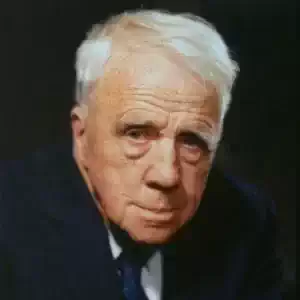
Robert Frost
Two Look at Two
Two Look at Two
Love and forgetting might have carried them
A little further up the mountain side
With night so near, but not much further up.
They must have halted soon in any case
With thoughts of a path back, how rough it was
With rock and washout, and unsafe in darkness;
When they were halted by a tumbled wall
With barbed-wire binding. They stood facing this,
Spending what onward impulse they still had
In One last look the way they must not go,
On up the failing path, where, if a stone
Or earthslide moved at night, it moved itself;
No footstep moved it. 'This is all,' they sighed,
Good-night to woods.' But not so; there was more.
A doe from round a spruce stood looking at them
Across the wall, as near the wall as they.
She saw them in their field, they her in hers.
The difficulty of seeing what stood still,
Like some up-ended boulder split in two,
Was in her clouded eyes; they saw no fear there.
She seemed to think that two thus they were safe.
Then, as if they were something that, though strange,
She could not trouble her mind with too long,
She sighed and passed unscared along the wall.
'This, then, is all. What more is there to ask?'
But no, not yet. A snort to bid them wait.
A buck from round the spruce stood looking at them
Across the wall as near the wall as they.
This was an antlered buck of lusty nostril,
Not the same doe come back into her place.
He viewed them quizzically with jerks of head,
As if to ask, 'Why don't you make some motion?
Or give some sign of life? Because you can't.
I doubt if you're as living as you look."
Thus till he had them almost feeling dared
To stretch a proffering hand -- and a spell-breaking.
Then he too passed unscared along the wall.
Two had seen two, whichever side you spoke from.
'This must be all.' It was all. Still they stood,
A great wave from it going over them,
As if the earth in one unlooked-for favour
Had made them certain earth returned their love.
Love and forgetting might have carried them
A little further up the mountain side
With night so near, but not much further up.
They must have halted soon in any case
With thoughts of a path back, how rough it was
With rock and washout, and unsafe in darkness;
When they were halted by a tumbled wall
With barbed-wire binding. They stood facing this,
Spending what onward impulse they still had
In One last look the way they must not go,
On up the failing path, where, if a stone
Or earthslide moved at night, it moved itself;
No footstep moved it. 'This is all,' they sighed,
Good-night to woods.' But not so; there was more.
A doe from round a spruce stood looking at them
Across the wall, as near the wall as they.
She saw them in their field, they her in hers.
The difficulty of seeing what stood still,
Like some up-ended boulder split in two,
Was in her clouded eyes; they saw no fear there.
She seemed to think that two thus they were safe.
Then, as if they were something that, though strange,
She could not trouble her mind with too long,
She sighed and passed unscared along the wall.
'This, then, is all. What more is there to ask?'
But no, not yet. A snort to bid them wait.
A buck from round the spruce stood looking at them
Across the wall as near the wall as they.
This was an antlered buck of lusty nostril,
Not the same doe come back into her place.
He viewed them quizzically with jerks of head,
As if to ask, 'Why don't you make some motion?
Or give some sign of life? Because you can't.
I doubt if you're as living as you look."
Thus till he had them almost feeling dared
To stretch a proffering hand -- and a spell-breaking.
Then he too passed unscared along the wall.
Two had seen two, whichever side you spoke from.
'This must be all.' It was all. Still they stood,
A great wave from it going over them,
As if the earth in one unlooked-for favour
Had made them certain earth returned their love.
445