

Poems in this topic
Ethics and Morality
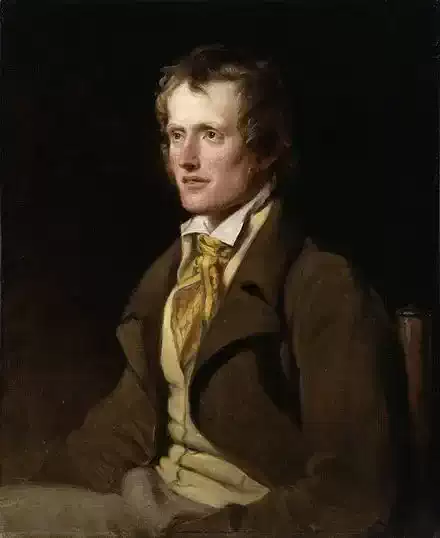
John Clare
From The Parish: A Satire
From The Parish: A Satire
I
In politics and politicians' lies
The modern farmer waxes wondrous wise;
Opinionates with wisdom all compact,
And een could tell a nation how to act;
Throws light on darkness with excessive skill,
Knows who acts well and whose designs are ill,
Proves half the members nought but bribery's tools,
And calls the past a dull dark age of fools.
As wise as Solomon they read the news,
Not with their blind forefathers' simple views,
Who read of wars, and wished that wars would cease,
And blessed the King, and wished his country peace;
Who marked the weight of each fat sheep and ox,
The price of grain and rise and fall of stocks;
Who thought it learning how to buy and sell,
And him a wise man who could manage well.
No, not with such old-fashioned, idle views
Do these newsmongers traffic with the news.
They read of politics and not of grain,
And speechify and comment and explain,
And know so much of Parliament and state
You'd think they're members when you heard them prate;
And know so little of their farms the while
They can but urge a wiser man to smile.
II
A thing all consequence here takes the lead,
Reigning knight-errant oer this dirty breed--
A bailiff he, and who so great to brag
Of law and all its terrors as Bumtagg;
Fawning a puppy at his master's side
And frowning like a wolf on all beside;
Who fattens best where sorrow worst appears
And feeds on sad misfortune's bitterest tears?
Such is Bumtagg the bailiff to a hair,
The worshipper and demon of despair,
Who waits and hopes and wishes for success
At every nod and signal of distress,
Happy at heart, when storms begin to boil,
To seek the shipwreck and to share the spoil.
Brave is this Bumtagg, match him if you can;
For there's none like him living--save his man.
As every animal assists his kind
Just so are these in blood and business joined;
Yet both in different colours hide their art,
And each as suits his ends transacts his part.
One keeps the heart-bred villain full in sight,
The other cants and acts the hypocrite,
Smoothing the deed where law sharks set their gin
Like a coy dog to draw misfortune in.
But both will chuckle oer their prisoners' sighs
And are as blest as spiders over flies.
Such is Bumtagg, whose history I resign,
As other knaves wait room to stink and shine;
And, as the meanest knave a dog can brag,
Such is the lurcher that assists Bumtagg.
I
In politics and politicians' lies
The modern farmer waxes wondrous wise;
Opinionates with wisdom all compact,
And een could tell a nation how to act;
Throws light on darkness with excessive skill,
Knows who acts well and whose designs are ill,
Proves half the members nought but bribery's tools,
And calls the past a dull dark age of fools.
As wise as Solomon they read the news,
Not with their blind forefathers' simple views,
Who read of wars, and wished that wars would cease,
And blessed the King, and wished his country peace;
Who marked the weight of each fat sheep and ox,
The price of grain and rise and fall of stocks;
Who thought it learning how to buy and sell,
And him a wise man who could manage well.
No, not with such old-fashioned, idle views
Do these newsmongers traffic with the news.
They read of politics and not of grain,
And speechify and comment and explain,
And know so much of Parliament and state
You'd think they're members when you heard them prate;
And know so little of their farms the while
They can but urge a wiser man to smile.
II
A thing all consequence here takes the lead,
Reigning knight-errant oer this dirty breed--
A bailiff he, and who so great to brag
Of law and all its terrors as Bumtagg;
Fawning a puppy at his master's side
And frowning like a wolf on all beside;
Who fattens best where sorrow worst appears
And feeds on sad misfortune's bitterest tears?
Such is Bumtagg the bailiff to a hair,
The worshipper and demon of despair,
Who waits and hopes and wishes for success
At every nod and signal of distress,
Happy at heart, when storms begin to boil,
To seek the shipwreck and to share the spoil.
Brave is this Bumtagg, match him if you can;
For there's none like him living--save his man.
As every animal assists his kind
Just so are these in blood and business joined;
Yet both in different colours hide their art,
And each as suits his ends transacts his part.
One keeps the heart-bred villain full in sight,
The other cants and acts the hypocrite,
Smoothing the deed where law sharks set their gin
Like a coy dog to draw misfortune in.
But both will chuckle oer their prisoners' sighs
And are as blest as spiders over flies.
Such is Bumtagg, whose history I resign,
As other knaves wait room to stink and shine;
And, as the meanest knave a dog can brag,
Such is the lurcher that assists Bumtagg.
358
John Clare
Farewell And Defiance To Love
Farewell And Defiance To Love
Love and thy vain employs, away
From this too oft deluded breast!
No longer will I court thy stay,
To be my bosom's teazing guest.
Thou treacherous medicine, reckoned pure,
Thou quackery of the harassed heart,
That kills what it pretends to cure,
Life's mountebank thou art.
With nostrums vain of boasted powers,
That, ta'en, a worse disorder leave;
An asp hid in a group of flowers,
That bites and stings when few perceive;
Thou mock-truce to the troubled mind,
Leading it more in sorrow's way,
Freedom, that leaves us more confined,
I bid thee hence away.
Dost taunt, and deem thy power beyond
The resolution reason gave?
Tut! Falsity hath snapt each bond,
That kept me once thy quiet slave,
And made thy snare a spider's thread,
Which een my breath can break in twain;
Nor will I be, like Sampson, led
To trust thy wiles again.
I took thee as my staff to guide
Me on the road I did pursue,
And when my weakness most relied
Upon its strength it broke in two.
I took thee as my friendly host
That counsel might in dangers show,
But when I needed thee the most
I found thou wert my foe.
Tempt me no more with rosy cheeks,
Nor daze my reason with bright eyes;
I'm wearied with thy painted freaks,
And sicken at such vanities:
Be roses fine as eer they will,
They, with the meanest, fade and die,
And eyes, though thronged with darts to kill,
Share like mortality.
Feed the young bard, that madly sips
His nectar-draughts from folly's flowers,
Bright eyes, fair cheeks, and ruby lips,
Till muses melt to honey showers;
Lure him to thrum thy empty lays,
While flattery listens to the chimes,
Till words themselves grow sick with praise
And stop for want of rhymes.
Let such be still thy paramours,
And chaunt love's old and idle tune,
Robbing the spring of all its flowers,
And heaven of all her stars and moon,
To gild with dazzling similes
Blind folly's vain and empty lay:
I'm sobered from such phantasies,
So get thee hence away.
Nor bid me sigh for mine own cost,
Nor count its loss, for mine annoy,
Nor say my stubbornness hath lost
A paradise of dainty joy:
I'll not believe thee, till I know
That sober reason turns an ape,
And acts the harlequin, to show
That cares in every shape,
Heart-achings, sighs, and grief-wrung tears,
Shame-blushes at betrayed distress,
Dissembled smiles, and jealous fears,
Are nought but real happiness:
Then will I mourn what now I brave,
And suffer Celia's quirks to be
(Like a poor fate-bewilder'd slave,)
The rulers of my destiny.
I'll weep and sigh wheneer she wills
To frown, and when she deigns to smile
It shall be cure for all my ills,
And, foolish still, I'll laugh the while;
But till that comes, I'll bless the rules
Experience taught, and deem it wise
To hold thee as the game of fools,
And all thy tricks despise.
Love and thy vain employs, away
From this too oft deluded breast!
No longer will I court thy stay,
To be my bosom's teazing guest.
Thou treacherous medicine, reckoned pure,
Thou quackery of the harassed heart,
That kills what it pretends to cure,
Life's mountebank thou art.
With nostrums vain of boasted powers,
That, ta'en, a worse disorder leave;
An asp hid in a group of flowers,
That bites and stings when few perceive;
Thou mock-truce to the troubled mind,
Leading it more in sorrow's way,
Freedom, that leaves us more confined,
I bid thee hence away.
Dost taunt, and deem thy power beyond
The resolution reason gave?
Tut! Falsity hath snapt each bond,
That kept me once thy quiet slave,
And made thy snare a spider's thread,
Which een my breath can break in twain;
Nor will I be, like Sampson, led
To trust thy wiles again.
I took thee as my staff to guide
Me on the road I did pursue,
And when my weakness most relied
Upon its strength it broke in two.
I took thee as my friendly host
That counsel might in dangers show,
But when I needed thee the most
I found thou wert my foe.
Tempt me no more with rosy cheeks,
Nor daze my reason with bright eyes;
I'm wearied with thy painted freaks,
And sicken at such vanities:
Be roses fine as eer they will,
They, with the meanest, fade and die,
And eyes, though thronged with darts to kill,
Share like mortality.
Feed the young bard, that madly sips
His nectar-draughts from folly's flowers,
Bright eyes, fair cheeks, and ruby lips,
Till muses melt to honey showers;
Lure him to thrum thy empty lays,
While flattery listens to the chimes,
Till words themselves grow sick with praise
And stop for want of rhymes.
Let such be still thy paramours,
And chaunt love's old and idle tune,
Robbing the spring of all its flowers,
And heaven of all her stars and moon,
To gild with dazzling similes
Blind folly's vain and empty lay:
I'm sobered from such phantasies,
So get thee hence away.
Nor bid me sigh for mine own cost,
Nor count its loss, for mine annoy,
Nor say my stubbornness hath lost
A paradise of dainty joy:
I'll not believe thee, till I know
That sober reason turns an ape,
And acts the harlequin, to show
That cares in every shape,
Heart-achings, sighs, and grief-wrung tears,
Shame-blushes at betrayed distress,
Dissembled smiles, and jealous fears,
Are nought but real happiness:
Then will I mourn what now I brave,
And suffer Celia's quirks to be
(Like a poor fate-bewilder'd slave,)
The rulers of my destiny.
I'll weep and sigh wheneer she wills
To frown, and when she deigns to smile
It shall be cure for all my ills,
And, foolish still, I'll laugh the while;
But till that comes, I'll bless the rules
Experience taught, and deem it wise
To hold thee as the game of fools,
And all thy tricks despise.
414
John Clare
Braggart
Braggart
With careful step to keep his balance up
He reels on warily along the street,
Slabbering at mouth and with a staggering stoop
Mutters an angry look at all he meets.
Bumptious and vain and proud he shoulders up
And would be something if he knew but how;
To any man on earth he will not stoop
But cracks of work, of horses and of plough.
Proud of the foolish talk, the ale he quaffs,
He never heeds the insult loud that laughs:
With rosy maid he tries to joke and play,--
Who shrugs and nettles deep his pomp and pride.
And calls him 'drunken beast' and runs away--
King to himself and fool to all beside.
With careful step to keep his balance up
He reels on warily along the street,
Slabbering at mouth and with a staggering stoop
Mutters an angry look at all he meets.
Bumptious and vain and proud he shoulders up
And would be something if he knew but how;
To any man on earth he will not stoop
But cracks of work, of horses and of plough.
Proud of the foolish talk, the ale he quaffs,
He never heeds the insult loud that laughs:
With rosy maid he tries to joke and play,--
Who shrugs and nettles deep his pomp and pride.
And calls him 'drunken beast' and runs away--
King to himself and fool to all beside.
401
John Clare
Bonny Lassie O!
Bonny Lassie O!
O the evening's for the fair, bonny lassie O!
To meet the cooler air and walk an angel there,
With the dark dishevelled hair,
Bonny lassie O!
The bloom's on the brere, bonny lassie O!
Oak apples on the tree; and wilt thou gang to see
The shed I've made for thee,
Bonny lassie O!
Tis agen the running brook, bonny lassie O!
In a grassy nook hard by, with a little patch of sky,
And a bush to keep us dry,
Bonny lassie O!
There's the daisy all the year, bonny lassie O!
There's the king-cup bright as gold, and the speedwell never cold,
And the arum leaves unrolled,
Bonny lassie O!
O meet me at the shed, bonny lassie O!
With a woodbine peeping in, and the roses like thy skin
Blushing, thy praise to win,
Bonny lassie O!
I will meet thee there at e'en, bonny lassie O!
When the bee sips in the bean, and grey willow branches lean,
And the moonbeam looks between,
Bonny lassie O!
O the evening's for the fair, bonny lassie O!
To meet the cooler air and walk an angel there,
With the dark dishevelled hair,
Bonny lassie O!
The bloom's on the brere, bonny lassie O!
Oak apples on the tree; and wilt thou gang to see
The shed I've made for thee,
Bonny lassie O!
Tis agen the running brook, bonny lassie O!
In a grassy nook hard by, with a little patch of sky,
And a bush to keep us dry,
Bonny lassie O!
There's the daisy all the year, bonny lassie O!
There's the king-cup bright as gold, and the speedwell never cold,
And the arum leaves unrolled,
Bonny lassie O!
O meet me at the shed, bonny lassie O!
With a woodbine peeping in, and the roses like thy skin
Blushing, thy praise to win,
Bonny lassie O!
I will meet thee there at e'en, bonny lassie O!
When the bee sips in the bean, and grey willow branches lean,
And the moonbeam looks between,
Bonny lassie O!
386
John Clare
A World For Love
A World For Love
Oh, the world is all too rude for thee, with much ado and care;
Oh, this world is but a rude world, and hurts a thing so fair;
Was there a nook in which the world had never been to sear,
That place would prove a paradise when thou and Love were near.
And there to pluck the blackberry, and there to reach the sloe,
How joyously and happily would Love thy partner go;
Then rest when weary on a bank, where not a grassy blade
Had eer been bent by Trouble's feet, and Love thy pillow made.
For Summer would be ever green, though sloes were in their prime,
And Winter smile his frowns to Spring, in beauty's happy clime;
And months would come, and months would go, and all in sunny mood,
And everything inspired by thee grow beautifully good.
And there to make a cot unknown to any care and pain,
And there to shut the door alone on singing wind and rain--
Far, far away from all the world, more rude than rain or wind,
Oh, who could wish a sweeter home, or better place to find?
Than thus to love and live with thee, thou beautiful delight!
Than thus to live and love with thee the summer day and night!
The Earth itself, where thou hadst rest, would surely smile to see
Herself grow Eden once again, possest of Love and thee
Oh, the world is all too rude for thee, with much ado and care;
Oh, this world is but a rude world, and hurts a thing so fair;
Was there a nook in which the world had never been to sear,
That place would prove a paradise when thou and Love were near.
And there to pluck the blackberry, and there to reach the sloe,
How joyously and happily would Love thy partner go;
Then rest when weary on a bank, where not a grassy blade
Had eer been bent by Trouble's feet, and Love thy pillow made.
For Summer would be ever green, though sloes were in their prime,
And Winter smile his frowns to Spring, in beauty's happy clime;
And months would come, and months would go, and all in sunny mood,
And everything inspired by thee grow beautifully good.
And there to make a cot unknown to any care and pain,
And there to shut the door alone on singing wind and rain--
Far, far away from all the world, more rude than rain or wind,
Oh, who could wish a sweeter home, or better place to find?
Than thus to love and live with thee, thou beautiful delight!
Than thus to live and love with thee the summer day and night!
The Earth itself, where thou hadst rest, would surely smile to see
Herself grow Eden once again, possest of Love and thee
410
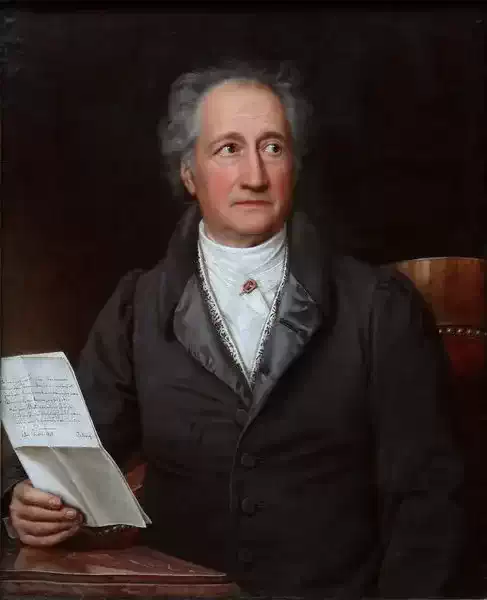
Johann Wolfgang von Goethe
With A Painted Ribbon
With A Painted Ribbon
LITTLE leaves and flow'rets too,
Scatter we with gentle hand,
Kind young spring-gods to the view,
Sporting on an airy band.
Zephyr, bear it on the wing,
Twine it round my loved one's dress;
To her glass then let her spring,
Full of eager joyousness.
Roses round her let her see,
She herself a youthful rose.
Grant, dear life, one look to me!
'Twill repay me all my woes,
What this bosom feels, feel thou.
Freely offer me thy hand;
Let the band that joins us now
Be no fragile rosy band!
LITTLE leaves and flow'rets too,
Scatter we with gentle hand,
Kind young spring-gods to the view,
Sporting on an airy band.
Zephyr, bear it on the wing,
Twine it round my loved one's dress;
To her glass then let her spring,
Full of eager joyousness.
Roses round her let her see,
She herself a youthful rose.
Grant, dear life, one look to me!
'Twill repay me all my woes,
What this bosom feels, feel thou.
Freely offer me thy hand;
Let the band that joins us now
Be no fragile rosy band!
430
Johann Wolfgang von Goethe
Valediction
Valediction
I ONCE was fond of fools,
And bid them come each day;
Then each one brought his tools
The carpenter to play;
The roof to strip first choosing,
Another to supply,
The wood as trestles using,
To move it by-and-by,
While here and there they ran,
And knock'd against each other;
To fret I soon began,
My anger could not smother,
So cried, "Get out, ye fools!"
At this they were offended
Then each one took his tools,
And so our friendship ended.
Since that, I've wiser been,
And sit beside my door;
When one of them is seen,
I cry, "Appear no more!"
"Hence, stupid knave!" I bellow:
At this he's angry too:
"You impudent old fellow!
And pray, sir, who are you?
Along the streets we riot,
And revel at the fair;
But yet we're pretty quiet,
And folks revile us ne'er.
Don't call us names, then, please!"--
At length I meet with ease,
For now they leave my door-
'Tis better than before!
I ONCE was fond of fools,
And bid them come each day;
Then each one brought his tools
The carpenter to play;
The roof to strip first choosing,
Another to supply,
The wood as trestles using,
To move it by-and-by,
While here and there they ran,
And knock'd against each other;
To fret I soon began,
My anger could not smother,
So cried, "Get out, ye fools!"
At this they were offended
Then each one took his tools,
And so our friendship ended.
Since that, I've wiser been,
And sit beside my door;
When one of them is seen,
I cry, "Appear no more!"
"Hence, stupid knave!" I bellow:
At this he's angry too:
"You impudent old fellow!
And pray, sir, who are you?
Along the streets we riot,
And revel at the fair;
But yet we're pretty quiet,
And folks revile us ne'er.
Don't call us names, then, please!"--
At length I meet with ease,
For now they leave my door-
'Tis better than before!
381
Johann Wolfgang von Goethe
To The Husbandman
To The Husbandman
SMOOTHLY and lightly the golden seed by the furrow is cover'd;
Yet will a deeper one, friend, cover thy bones at the last.
Joyously plough'd and sow'd! Here food all living is budding,
E'en from the side of the tomb Hope will not vanish away.
SMOOTHLY and lightly the golden seed by the furrow is cover'd;
Yet will a deeper one, friend, cover thy bones at the last.
Joyously plough'd and sow'd! Here food all living is budding,
E'en from the side of the tomb Hope will not vanish away.
383
Johann Wolfgang von Goethe
Three Palinodias - 03 Rain And Rainbow
Three Palinodias - 03 Rain And Rainbow
DURING a heavy storm it chanced
That from his room a cockney glanced
At the fierce tempest as it broke,
While to his neighbour thus he spoke:
"The thunder has our awe inspired,
Our barns by lightning have been fired,--
Our sins to punish, I suppose;
But in return, to soothe our woes,
See how the rain in torrents fell,
Making the harvest promise well!
But it's a rainbow that I spy
Extending o'er the dark-grey sky?
With it I'm sure we may dispense,
The colour'd cheat! The vain pretence!"
Dame Iris straightway thus replied:
"Dost dare my beauty to deride?
In realms of space God station'd me
A type of better worlds to be
To eyes that from life's sorrows rove
In cheerful hope to Heav'n above,
And, through the mists that hover here
God and his precepts blest revere.
Do thou, then, grovel like the swine,
And to the ground thy snout confine,
But suffer the enlighten'd eye
To feast upon my majesty."
DURING a heavy storm it chanced
That from his room a cockney glanced
At the fierce tempest as it broke,
While to his neighbour thus he spoke:
"The thunder has our awe inspired,
Our barns by lightning have been fired,--
Our sins to punish, I suppose;
But in return, to soothe our woes,
See how the rain in torrents fell,
Making the harvest promise well!
But it's a rainbow that I spy
Extending o'er the dark-grey sky?
With it I'm sure we may dispense,
The colour'd cheat! The vain pretence!"
Dame Iris straightway thus replied:
"Dost dare my beauty to deride?
In realms of space God station'd me
A type of better worlds to be
To eyes that from life's sorrows rove
In cheerful hope to Heav'n above,
And, through the mists that hover here
God and his precepts blest revere.
Do thou, then, grovel like the swine,
And to the ground thy snout confine,
But suffer the enlighten'd eye
To feast upon my majesty."
415
Johann Wolfgang von Goethe
Three Palinodias - 01
Three Palinodias - 01
"Incense is hut a tribute for the gods,--
To mortals 'tis but poison."
THE smoke that from thine altar blows,
Can it the gods offend?
For I observe thou hold'st thy nose--
Pray what does this portend?
Mankind deem incense to excel
Each other earthly thing,
So he that cannot bear its smell,
No incense e'er should bring.
With unmoved face by thee at least
To dolls is homage given;
If not obstructed by the priest,
The scent mounts up to heaven.
"Incense is hut a tribute for the gods,--
To mortals 'tis but poison."
THE smoke that from thine altar blows,
Can it the gods offend?
For I observe thou hold'st thy nose--
Pray what does this portend?
Mankind deem incense to excel
Each other earthly thing,
So he that cannot bear its smell,
No incense e'er should bring.
With unmoved face by thee at least
To dolls is homage given;
If not obstructed by the priest,
The scent mounts up to heaven.
372
Johann Wolfgang von Goethe
Thoughts On Jesus Christ's Decent Into Hell
Thoughts On Jesus Christ's Decent Into Hell
WHAT wondrous noise is heard around!
Through heaven exulting voices sound,
A mighty army marches on
By thousand millions follow'd, lo,
To yon dark place makes haste to go
God's Son, descending from His throne!
He goes--the tempests round Him break,
As Judge and Hero cometh He;
He goes--the constellations quake,
The sun, the world quake fearfully.
I see Him in His victor-car,
On fiery axles borne afar,
Who on the cross for us expired.
The triumph to yon realms He shows,--
Remote from earth, where star ne'er glows,
The triumph He for us acquired.
He cometh, Hell to extirpate,
Whom He, by dying, wellnigh kill'd;
He shall pronounce her fearful fate
Hark! now the curse is straight fulfill'd.
Hell sees the victor come at last,
She feels that now her reign is past,
She quakes and fears to meet His sight;
She knows His thunders' terrors dread,
In vain she seeks to hide her head,
Attempts to fly, but vain is flight;
Vainly she hastes to 'scape pursuit
And to avoid her Judge's eye;
The Lord's fierce wrath restrains her foot
Like brazen chains,--she cannot fly.
Here lies the Dragon, trampled down,
He lies, and feels God's angry frown,
He feels, and grinneth hideously;
He feels Hell's speechless agonies,
A thousand times he howls and sighs:
"Oh, burning flames! quick, swallow me!"
There lies he in the fiery waves,
By torments rack'd and pangs infernal,
Instant annihilation craves,
And hears, those pangs will be eternal.
Those mighty squadrons, too, are here,
The partners of his cursed career,
Yet far less bad than he were they.
Here lies the countless throng combined,
In black and fearful crowds entwined,
While round him fiery tempests play;
He sees how they the Judge avoid,
He sees the storm upon them feed,
Yet is not at the sight o'erjoy'd,
Because his pangs e'en theirs exceed.
The Son of Man in triumph passes
Down to Hell's wild and black morasses,
And there unfolds His majesty.
Hell cannot bear the bright array,
For, since her first created day.
Darkness alone e'er govern'd she.
She lay remote from ev'ry light
With torments fill'd in Chaos here;
God turn'd for ever from her sight
His radiant features' glory clear.
Within the realms she calls her own,
She sees the splendour of the Son,
His dreaded glories shining forth;
She sees Him clad in rolling thunder,
She sees the rocks all quake with wonder,
When God before her stands in wrath.
She sees He comes her Judge to be,
She feels the awful pangs inside her,
Herself to slay endeavours she,
But e'en this comfort is denied her.
Now looks she back, with pains untold,
Upon those happy times of old,
When those glories gave her joy;
When yet her heart revered the truth,
When her glad soul, in endless youth
And rapture dwelt, without alloy.
She calls to mind with madden'd thought
How over man her wiles prevail'd;
To take revenge on God she sought,
And feels the vengeance it entail'd.
God was made man, and came to earth.
Then Satan cried with fearful mirth:
"E'en He my victim now shall be!"
He sought to slay the Lord Most High,
The world's Creator now must die;
But, Satan, endless woe to thee!
Thou thought'st to overcome Him then,
Rejoicing in His suffering;
But he in triumph comes again
To bind thee: Death! where is thy sting?
Speak, Hell! where is thy victory?
Thy power destroy'd and scatter'd see!
Know'st thou not now the Highest's might?
See, Satan, see thy rule o'erthrown!
By thousand-varying pangs weigh'd down,
Thou dwell'st in dark and endless night.
As though by lightning struck thou liest,
No gleam of rapture far or wide;
In vain! no hope thou there decriest,--
For me alone Messiah died!
A howling rises through the air,
A trembling fills each dark vault there,
When Christ to Hell is seen to come.
She snarls with rage, but needs must cower
Before our mighty hero's power;
He signs--and Hell is straightway dumb.
Before his voice the thunders break,
On high His victor-banner blows;
E'en angels at His fury quake,
When Christ to the dread judgment goes.
Now speaks He, and His voice is thunder,
He speaks, the rocks are rent in sunder,
His breath is like devouring flames.
Thus speaks He: "Tremble, ye accurs'd!
He who from Eden hurl'd you erst,
Your kingdom's overthrow proclaims.
Look up! My children once were ye,
Your arms against Me then ye turn'd,
Ye fell, that ye might sinners be,
Ye've now the wages that ye earn'd.
"My greatest foeman from that day,
Ye led my dearest friends astray,--
As ye had fallen, man must fall.
To kill him evermore ye sought,
'They all shall die the death,' ye thought;
But howl! for Me I won them all.
For them alone did I descend,
For them pray'd, suffer'd, perish'd I.
Ye ne'er shall gain your wicked end;
Who trusts in Me shall never die.
"In endless chains here lie ye now,
Nothing can save you from the slough.
Not boldness, not regret for crime.
Lie, then, and writhe in brimstone fire!
'Twas ye yourselves drew down Mine ire,
Lie and lament throughout all time!
And also ye, whom I selected,
E'en ye forever I disown,
For ye My saving grace rejected
Ye murmur? blame yourselves alone!
"Ye might have lived with Me in bliss,
For I of yore had promis'd this;
Ye sinn'd, and all My precepts slighted
Wrapp'd in the sleep of sin ye dwelt,
Now is My fearful judgment felt,
By a just doom your guilt requited."--
Thus spake He, and a fearful storm
From Him proceeds, the lightnings glow,
The thunders seize each wicked form,
And hurl them in the gulf below.
The God-man closeth Hell's sad doors,
In all His majesty He soars
From those dark regions back to light.
He sitteth at the Father's side;
Oh, friends, what joy doth this betide!
For us, for us He still will fight!
The angels sacred quire around
Rejoice before the mighty Lord,
So that all creatures hear the sound:
"Zebaoth's God be aye ador'd!"
WHAT wondrous noise is heard around!
Through heaven exulting voices sound,
A mighty army marches on
By thousand millions follow'd, lo,
To yon dark place makes haste to go
God's Son, descending from His throne!
He goes--the tempests round Him break,
As Judge and Hero cometh He;
He goes--the constellations quake,
The sun, the world quake fearfully.
I see Him in His victor-car,
On fiery axles borne afar,
Who on the cross for us expired.
The triumph to yon realms He shows,--
Remote from earth, where star ne'er glows,
The triumph He for us acquired.
He cometh, Hell to extirpate,
Whom He, by dying, wellnigh kill'd;
He shall pronounce her fearful fate
Hark! now the curse is straight fulfill'd.
Hell sees the victor come at last,
She feels that now her reign is past,
She quakes and fears to meet His sight;
She knows His thunders' terrors dread,
In vain she seeks to hide her head,
Attempts to fly, but vain is flight;
Vainly she hastes to 'scape pursuit
And to avoid her Judge's eye;
The Lord's fierce wrath restrains her foot
Like brazen chains,--she cannot fly.
Here lies the Dragon, trampled down,
He lies, and feels God's angry frown,
He feels, and grinneth hideously;
He feels Hell's speechless agonies,
A thousand times he howls and sighs:
"Oh, burning flames! quick, swallow me!"
There lies he in the fiery waves,
By torments rack'd and pangs infernal,
Instant annihilation craves,
And hears, those pangs will be eternal.
Those mighty squadrons, too, are here,
The partners of his cursed career,
Yet far less bad than he were they.
Here lies the countless throng combined,
In black and fearful crowds entwined,
While round him fiery tempests play;
He sees how they the Judge avoid,
He sees the storm upon them feed,
Yet is not at the sight o'erjoy'd,
Because his pangs e'en theirs exceed.
The Son of Man in triumph passes
Down to Hell's wild and black morasses,
And there unfolds His majesty.
Hell cannot bear the bright array,
For, since her first created day.
Darkness alone e'er govern'd she.
She lay remote from ev'ry light
With torments fill'd in Chaos here;
God turn'd for ever from her sight
His radiant features' glory clear.
Within the realms she calls her own,
She sees the splendour of the Son,
His dreaded glories shining forth;
She sees Him clad in rolling thunder,
She sees the rocks all quake with wonder,
When God before her stands in wrath.
She sees He comes her Judge to be,
She feels the awful pangs inside her,
Herself to slay endeavours she,
But e'en this comfort is denied her.
Now looks she back, with pains untold,
Upon those happy times of old,
When those glories gave her joy;
When yet her heart revered the truth,
When her glad soul, in endless youth
And rapture dwelt, without alloy.
She calls to mind with madden'd thought
How over man her wiles prevail'd;
To take revenge on God she sought,
And feels the vengeance it entail'd.
God was made man, and came to earth.
Then Satan cried with fearful mirth:
"E'en He my victim now shall be!"
He sought to slay the Lord Most High,
The world's Creator now must die;
But, Satan, endless woe to thee!
Thou thought'st to overcome Him then,
Rejoicing in His suffering;
But he in triumph comes again
To bind thee: Death! where is thy sting?
Speak, Hell! where is thy victory?
Thy power destroy'd and scatter'd see!
Know'st thou not now the Highest's might?
See, Satan, see thy rule o'erthrown!
By thousand-varying pangs weigh'd down,
Thou dwell'st in dark and endless night.
As though by lightning struck thou liest,
No gleam of rapture far or wide;
In vain! no hope thou there decriest,--
For me alone Messiah died!
A howling rises through the air,
A trembling fills each dark vault there,
When Christ to Hell is seen to come.
She snarls with rage, but needs must cower
Before our mighty hero's power;
He signs--and Hell is straightway dumb.
Before his voice the thunders break,
On high His victor-banner blows;
E'en angels at His fury quake,
When Christ to the dread judgment goes.
Now speaks He, and His voice is thunder,
He speaks, the rocks are rent in sunder,
His breath is like devouring flames.
Thus speaks He: "Tremble, ye accurs'd!
He who from Eden hurl'd you erst,
Your kingdom's overthrow proclaims.
Look up! My children once were ye,
Your arms against Me then ye turn'd,
Ye fell, that ye might sinners be,
Ye've now the wages that ye earn'd.
"My greatest foeman from that day,
Ye led my dearest friends astray,--
As ye had fallen, man must fall.
To kill him evermore ye sought,
'They all shall die the death,' ye thought;
But howl! for Me I won them all.
For them alone did I descend,
For them pray'd, suffer'd, perish'd I.
Ye ne'er shall gain your wicked end;
Who trusts in Me shall never die.
"In endless chains here lie ye now,
Nothing can save you from the slough.
Not boldness, not regret for crime.
Lie, then, and writhe in brimstone fire!
'Twas ye yourselves drew down Mine ire,
Lie and lament throughout all time!
And also ye, whom I selected,
E'en ye forever I disown,
For ye My saving grace rejected
Ye murmur? blame yourselves alone!
"Ye might have lived with Me in bliss,
For I of yore had promis'd this;
Ye sinn'd, and all My precepts slighted
Wrapp'd in the sleep of sin ye dwelt,
Now is My fearful judgment felt,
By a just doom your guilt requited."--
Thus spake He, and a fearful storm
From Him proceeds, the lightnings glow,
The thunders seize each wicked form,
And hurl them in the gulf below.
The God-man closeth Hell's sad doors,
In all His majesty He soars
From those dark regions back to light.
He sitteth at the Father's side;
Oh, friends, what joy doth this betide!
For us, for us He still will fight!
The angels sacred quire around
Rejoice before the mighty Lord,
So that all creatures hear the sound:
"Zebaoth's God be aye ador'd!"
301
Johann Wolfgang von Goethe
The Reckoning
The Reckoning
LEADER.
LET no cares now hover o'er us
Let the wine unsparing run!
Wilt thou swell our merry chorus?
Hast thou all thy duty done?
SOLO.
Two young folks--the thing is curious--
Loved each other; yesterday
Both quite mild, to-day quite furious,
Next day, quite the deuce to pay!
If her neck she there was stooping,
He must here needs pull his hair.
I revived their spirits drooping,
And they're now a happy pair.
CHORUS.
Surely we for wine may languish!
Let the bumper then go round!
For all sighs and groans of anguish
Thou to-day in joy hast drown'd.
SOLO.
Why, young orphan, all this wailing?
"Would to heaven that I were dead!
For my guardian's craft prevailing
Soon will make me beg my bread."
Knowing well the rascal genus,
Into court I dragg'd the knave;
Fair the judges were between us,
And the maiden's wealth did save.
CHORUS.
Surely we for wine may languish!
Let the bumper then go round!
For all sighs and groans of anguish
Thou to-day in joy hast drown'd.
SOLO.
To a little fellow, quiet,
Unpretending and subdued,
Has a big clown, running riot,
Been to-day extremely rude.
I bethought me of my duty,
And my courage swell'd apace,
So I spoil'd the rascal's beauty,
Slashing him across the face.
CHORUS.
Surely we for wine may languish!
Let the bumper then go round!
For all sighs and groans of anguish
Thou to-day in joy hast drown'd.
SOLO.
Brief must be my explanation,
For I really have done nought.
Free from trouble and vexation,
I a landlord's business bought.
There I've done, with all due ardour,
All that duty order'd me;
Each one ask'd me for the larder,
And there was no scarcity.
CHORUS.
Surely we for wine may languish!
Let the bumper then go round!
For all sighs and groans of anguish
Thou to-day in joy hast drown'd.
LEADER.
Each should thus make proclamation
Of what he did well to-day!
That's the match whose conflagration
Should inflame our tuneful lay.
Let it be our precept ever
To admit no waverer here!
For to act the good endeavour,
None but rascals meek appear.
CHORUS.
Surely we for wine may languish!
Let the bumper then go round!
For all sighs and groans of anguish
We have now in rapture drown'd.
TRIO.
Let each merry minstrel enter,
He's right welcome to our hall!
'Tis but with the selfÄtormentor
That we are not liberal;
For we fear that his caprices,
That his eye-brows dark and sad,
That his grief that never ceases
Hide an empty heart, or bad.
CHORUS.
No one now for wine shall languish!
Here no minstrel shall be found,
Who all sighs and groans of anguish,
Has not first in rapture drown'd!
LEADER.
LET no cares now hover o'er us
Let the wine unsparing run!
Wilt thou swell our merry chorus?
Hast thou all thy duty done?
SOLO.
Two young folks--the thing is curious--
Loved each other; yesterday
Both quite mild, to-day quite furious,
Next day, quite the deuce to pay!
If her neck she there was stooping,
He must here needs pull his hair.
I revived their spirits drooping,
And they're now a happy pair.
CHORUS.
Surely we for wine may languish!
Let the bumper then go round!
For all sighs and groans of anguish
Thou to-day in joy hast drown'd.
SOLO.
Why, young orphan, all this wailing?
"Would to heaven that I were dead!
For my guardian's craft prevailing
Soon will make me beg my bread."
Knowing well the rascal genus,
Into court I dragg'd the knave;
Fair the judges were between us,
And the maiden's wealth did save.
CHORUS.
Surely we for wine may languish!
Let the bumper then go round!
For all sighs and groans of anguish
Thou to-day in joy hast drown'd.
SOLO.
To a little fellow, quiet,
Unpretending and subdued,
Has a big clown, running riot,
Been to-day extremely rude.
I bethought me of my duty,
And my courage swell'd apace,
So I spoil'd the rascal's beauty,
Slashing him across the face.
CHORUS.
Surely we for wine may languish!
Let the bumper then go round!
For all sighs and groans of anguish
Thou to-day in joy hast drown'd.
SOLO.
Brief must be my explanation,
For I really have done nought.
Free from trouble and vexation,
I a landlord's business bought.
There I've done, with all due ardour,
All that duty order'd me;
Each one ask'd me for the larder,
And there was no scarcity.
CHORUS.
Surely we for wine may languish!
Let the bumper then go round!
For all sighs and groans of anguish
Thou to-day in joy hast drown'd.
LEADER.
Each should thus make proclamation
Of what he did well to-day!
That's the match whose conflagration
Should inflame our tuneful lay.
Let it be our precept ever
To admit no waverer here!
For to act the good endeavour,
None but rascals meek appear.
CHORUS.
Surely we for wine may languish!
Let the bumper then go round!
For all sighs and groans of anguish
We have now in rapture drown'd.
TRIO.
Let each merry minstrel enter,
He's right welcome to our hall!
'Tis but with the selfÄtormentor
That we are not liberal;
For we fear that his caprices,
That his eye-brows dark and sad,
That his grief that never ceases
Hide an empty heart, or bad.
CHORUS.
No one now for wine shall languish!
Here no minstrel shall be found,
Who all sighs and groans of anguish,
Has not first in rapture drown'd!
370
Johann Wolfgang von Goethe
The Maid Of The Mill's Treachery
The Maid Of The Mill's Treachery
WHENCE comes our friend so hastily,
When scarce the Eastern sky is grey?
Hath he just ceased, though cold it be,
In yonder holy spot to pray?
The brook appears to hem his path,
Would he barefooted o'er it go?
Why curse his orisons in wrath,
Across those heights beclad with snow?
Alas! his warm bed he bath left,
Where he had look'd for bliss, I ween;
And if his cloak too, had been reft,
How fearful his disgrace had been!
By yonder villain sorely press'd,
His wallet from him has been torn;
Our hapless friend has been undress'd,
Left well nigh naked as when born.
The reason why he came this road,
Is that he sought a pair of eyes,
Which, at the mill, as brightly glow'd
As those that are in Paradise.
He will not soon again be there;
From out the house he quickly hied,
And when he gain'd the open air,
Thus bitterly and loudly cried
'Within her gaze, so dazzling bright,
No word of treachery I could read;
She seem'd to see me with delight,
Yet plann'd e'en then this cruel deed!
Could I, when basking in her smile,
Dream of the treason in her breast?
She bade kind Cupid stay awhile,
And he was there, to make us blest.
'To taste of love's sweet ecstasy
Throughout the night, that endless seem'd,
And for her mother's help to cry
Only when morning sunlight beam'd!
A dozen of her kith and kin,
A very human flood, in-press'd
Her cousins came, her aunts peer'd in,
And uncles, brothers, and the rest.
'Then what a tumult, fierce and loud!
Each seem'd a beast of prey to be;
The maiden's honour all the crowd,
With fearful shout, demand of me.
Why should they, madmen-like, begin
To fall upon a guiltless youth?
For he who such a prize would win,
Far nimbler needs must be, in truth.
'The way to follow up with skill
His freaks, by love betimes is known:
He ne'er will leave, within a mill,
Sweet flowers for sixteen years alone.-
They stole my clothes away,-yes, all!
And tried my cloak besides to steal.
How strange that any house so small
So many rascals could conceal!
'Then I sprang up, and raved, and swore,
To force a passage through them there.
I saw the treacherous maid once more,
And she was still, alas, so fair
They all gave way before my wrath,
Wild outcries flew about pell-mell;
At length I managed to rush forth,
With voice of thunder, from that hell.
'As maidens of the town we fly,
We'll shun you maidens of the village;
Leave it to those of quality
Their humble worshippers to pillage.
Yet if ye are of practised skill,
And of all tender ties afraid,
Exchange your lovers, if ye will,
But never let them be betray'd.'
Thus sings he in the winter-night,
While not a blade of grass was green.
I laugh'd to see his piteous plight,
For it was well-deserved, I ween.
And may this be the fate of all,
Who treat by day their true loves ill,
And, with foolhardy daring, crawl
By night to Cupid's treacherous mill!
WHENCE comes our friend so hastily,
When scarce the Eastern sky is grey?
Hath he just ceased, though cold it be,
In yonder holy spot to pray?
The brook appears to hem his path,
Would he barefooted o'er it go?
Why curse his orisons in wrath,
Across those heights beclad with snow?
Alas! his warm bed he bath left,
Where he had look'd for bliss, I ween;
And if his cloak too, had been reft,
How fearful his disgrace had been!
By yonder villain sorely press'd,
His wallet from him has been torn;
Our hapless friend has been undress'd,
Left well nigh naked as when born.
The reason why he came this road,
Is that he sought a pair of eyes,
Which, at the mill, as brightly glow'd
As those that are in Paradise.
He will not soon again be there;
From out the house he quickly hied,
And when he gain'd the open air,
Thus bitterly and loudly cried
'Within her gaze, so dazzling bright,
No word of treachery I could read;
She seem'd to see me with delight,
Yet plann'd e'en then this cruel deed!
Could I, when basking in her smile,
Dream of the treason in her breast?
She bade kind Cupid stay awhile,
And he was there, to make us blest.
'To taste of love's sweet ecstasy
Throughout the night, that endless seem'd,
And for her mother's help to cry
Only when morning sunlight beam'd!
A dozen of her kith and kin,
A very human flood, in-press'd
Her cousins came, her aunts peer'd in,
And uncles, brothers, and the rest.
'Then what a tumult, fierce and loud!
Each seem'd a beast of prey to be;
The maiden's honour all the crowd,
With fearful shout, demand of me.
Why should they, madmen-like, begin
To fall upon a guiltless youth?
For he who such a prize would win,
Far nimbler needs must be, in truth.
'The way to follow up with skill
His freaks, by love betimes is known:
He ne'er will leave, within a mill,
Sweet flowers for sixteen years alone.-
They stole my clothes away,-yes, all!
And tried my cloak besides to steal.
How strange that any house so small
So many rascals could conceal!
'Then I sprang up, and raved, and swore,
To force a passage through them there.
I saw the treacherous maid once more,
And she was still, alas, so fair
They all gave way before my wrath,
Wild outcries flew about pell-mell;
At length I managed to rush forth,
With voice of thunder, from that hell.
'As maidens of the town we fly,
We'll shun you maidens of the village;
Leave it to those of quality
Their humble worshippers to pillage.
Yet if ye are of practised skill,
And of all tender ties afraid,
Exchange your lovers, if ye will,
But never let them be betray'd.'
Thus sings he in the winter-night,
While not a blade of grass was green.
I laugh'd to see his piteous plight,
For it was well-deserved, I ween.
And may this be the fate of all,
Who treat by day their true loves ill,
And, with foolhardy daring, crawl
By night to Cupid's treacherous mill!
407
Johann Wolfgang von Goethe
The Godlike
The Godlike
NOBLE be man,
Helpful and good!
For that alone
Distinguisheth him
From all the beings
Unto us known.
Hail to the beings,
Unknown and glorious,
Whom we forebode!
From his example
Learn we to know them!
For unfeeling
Nature is ever:
On bad and on good
The sun alike shineth;
And on the wicked,
As on the best,
The moon and stars gleam.
Tempest and torrent,
Thunder and hail,
Roar on their path,
Seizing the while,
As they haste onward,
One after another.
Even so, fortune
Gropes 'mid the throng--
Innocent boyhood's
Curly head seizing,--
Seizing the hoary
Head of the sinner.
After laws mighty,
Brazen, eternal,
Must all we mortals
Finish the circuit
Of our existence.
Man, and man only
Can do the impossible;
He 'tis distinguisheth,
Chooseth and judgeth;
He to the moment
Endurance can lend.
He and he only
The good can reward,
The bad can he punish,
Can heal and can save;
All that wanders and strays
Can usefully blend.
And we pay homage
To the immortals
As though they were men,
And did in the great,
What the best, in the small,
Does or might do.
Be the man that is noble,
Both helpful and good.
Unweariedly forming
The right and the useful,
A type of those beings
Our mind hath foreshadow'd!
NOBLE be man,
Helpful and good!
For that alone
Distinguisheth him
From all the beings
Unto us known.
Hail to the beings,
Unknown and glorious,
Whom we forebode!
From his example
Learn we to know them!
For unfeeling
Nature is ever:
On bad and on good
The sun alike shineth;
And on the wicked,
As on the best,
The moon and stars gleam.
Tempest and torrent,
Thunder and hail,
Roar on their path,
Seizing the while,
As they haste onward,
One after another.
Even so, fortune
Gropes 'mid the throng--
Innocent boyhood's
Curly head seizing,--
Seizing the hoary
Head of the sinner.
After laws mighty,
Brazen, eternal,
Must all we mortals
Finish the circuit
Of our existence.
Man, and man only
Can do the impossible;
He 'tis distinguisheth,
Chooseth and judgeth;
He to the moment
Endurance can lend.
He and he only
The good can reward,
The bad can he punish,
Can heal and can save;
All that wanders and strays
Can usefully blend.
And we pay homage
To the immortals
As though they were men,
And did in the great,
What the best, in the small,
Does or might do.
Be the man that is noble,
Both helpful and good.
Unweariedly forming
The right and the useful,
A type of those beings
Our mind hath foreshadow'd!
468
Johann Wolfgang von Goethe
The Garlands
The Garlands
KLOPSTOCK would lead us away from Pindus; no longer for laurel
May we be eager--the homely acorn alone must content us;
Yet he himself his more-than-epic crusade is conducting
High on Golgotha's summit, that foreign gods he may honour!
Yet, on what hill he prefers, let him gather the angels together,
Suffer deserted disciples to weep o'er the grave of the just one:
There where a hero and saint hath died, where a bard breath'd his numbers,
Both for our life and our death an ensample of courage resplendent
And of the loftiest human worth to bequeath,--ev'ry nation
There will joyously kneel in devotion ecstatic, revering
Thorn and laurel garland, and all its charms and its tortures.
KLOPSTOCK would lead us away from Pindus; no longer for laurel
May we be eager--the homely acorn alone must content us;
Yet he himself his more-than-epic crusade is conducting
High on Golgotha's summit, that foreign gods he may honour!
Yet, on what hill he prefers, let him gather the angels together,
Suffer deserted disciples to weep o'er the grave of the just one:
There where a hero and saint hath died, where a bard breath'd his numbers,
Both for our life and our death an ensample of courage resplendent
And of the loftiest human worth to bequeath,--ev'ry nation
There will joyously kneel in devotion ecstatic, revering
Thorn and laurel garland, and all its charms and its tortures.
450
Johann Wolfgang von Goethe
The Fox And The Crane
The Fox And The Crane
ONCE two persons uninvited
Came to join my dinner table;
For the nonce they lived united,
Fox and crane yclept in fable.
Civil greetings pass'd between us
Then I pluck'd some pigeons tender
For the fox of jackal-genius,
Adding grapes in full-grown splendour.
Long-neck'd flasks I put as dishes
For the crane, without delaying,
Fill'd with gold and silver fishes,
In the limpid water playing.
Had ye witness'd Reynard planted
At his flat plate, all demurely,
Ye with envy must have granted:
"Ne'er was such a gourmand, surely!"
While the bird with circumspection
On one foot, as usual, cradled,
From the flasks his fish-refection
With his bill and long neck ladled.
One the pigeons praised,--the other,
As they went, extoll'd the fishes,
Each one scoffing at his brother
For preferring vulgar dishes.
*
If thou wouldst preserve thy credit,
When thou askest folks to guzzle
At thy hoard, take care to spread it
Suited both for bill and muzzle.
ONCE two persons uninvited
Came to join my dinner table;
For the nonce they lived united,
Fox and crane yclept in fable.
Civil greetings pass'd between us
Then I pluck'd some pigeons tender
For the fox of jackal-genius,
Adding grapes in full-grown splendour.
Long-neck'd flasks I put as dishes
For the crane, without delaying,
Fill'd with gold and silver fishes,
In the limpid water playing.
Had ye witness'd Reynard planted
At his flat plate, all demurely,
Ye with envy must have granted:
"Ne'er was such a gourmand, surely!"
While the bird with circumspection
On one foot, as usual, cradled,
From the flasks his fish-refection
With his bill and long neck ladled.
One the pigeons praised,--the other,
As they went, extoll'd the fishes,
Each one scoffing at his brother
For preferring vulgar dishes.
*
If thou wouldst preserve thy credit,
When thou askest folks to guzzle
At thy hoard, take care to spread it
Suited both for bill and muzzle.
391
Johann Wolfgang von Goethe
The Dilettante And The Critic
The Dilettante And The Critic
A BOY a pigeon once possess'd,
In gay and brilliant plumage dress'd;
He loved it well, and in boyish sport
Its food to take from his mouth he taught,
And in his pigeon he took such pride,
That his joy to others he needs must confide.
An aged fox near the place chanc'd to dwell,
Talkative, clever, and learned as well;
The boy his society used to prize,
Hearing with pleasure his wonders and lies.
"My friend the fox my pigeon must see
He ran, and stretch'd 'mongst the bushes lay he
"Look, fox, at my pigeon, my pigeon so fair!
His equal I'm sure thou hast look'd upon ne'er!"
"Let's see!"--The boy gave it.--"'Tis really not bad;
And yet, it is far from complete, I must add.
The feathers, for, instance, how short! 'Tis absurd!"
So he set to work straightway to pluck the poor bird.
The boy screamed.--"Thou must now stronger pinions supply,
Or else 'twill be ugly, unable to fly."--
Soon 'twas stripp'd--oh, the villain!--and torn all to pieces.
The boy was heart-broken,--and so my tale ceases.
He who sees in the boy shadow'd forth his own case,
Should be on his guard 'gainst the fox's whole race.
A BOY a pigeon once possess'd,
In gay and brilliant plumage dress'd;
He loved it well, and in boyish sport
Its food to take from his mouth he taught,
And in his pigeon he took such pride,
That his joy to others he needs must confide.
An aged fox near the place chanc'd to dwell,
Talkative, clever, and learned as well;
The boy his society used to prize,
Hearing with pleasure his wonders and lies.
"My friend the fox my pigeon must see
He ran, and stretch'd 'mongst the bushes lay he
"Look, fox, at my pigeon, my pigeon so fair!
His equal I'm sure thou hast look'd upon ne'er!"
"Let's see!"--The boy gave it.--"'Tis really not bad;
And yet, it is far from complete, I must add.
The feathers, for, instance, how short! 'Tis absurd!"
So he set to work straightway to pluck the poor bird.
The boy screamed.--"Thou must now stronger pinions supply,
Or else 'twill be ugly, unable to fly."--
Soon 'twas stripp'd--oh, the villain!--and torn all to pieces.
The boy was heart-broken,--and so my tale ceases.
He who sees in the boy shadow'd forth his own case,
Should be on his guard 'gainst the fox's whole race.
389
Johann Wolfgang von Goethe
The Country Schoolmaster
The Country Schoolmaster
I.
A MASTER of a country school
Jump'd up one day from off his stool,
Inspired with firm resolve to try
To gain the best society;
So to the nearest baths he walk'd,
And into the saloon he stalk'd.
He felt quite. startled at the door,
Ne'er having seen the like before.
To the first stranger made he now
A very low and graceful bow,
But quite forgot to bear in mind
That people also stood behind;
His left-hand neighbor's paunch he struck
A grievous blow, by great ill luck;
Pardon for this he first entreated,
And then in haste his bow repeated.
His right hand neighbor next he hit,
And begg'd him, too, to pardon it;
But on his granting his petition,
Another was in like condition;
These compliments he paid to all,
Behind, before, across the hall;
At length one who could stand no more,
Show'd him impatiently the door.
May many, pond'ring on their crimes,
A moral draw from this betimes!
II.
As he proceeded on his way
He thought, "I was too weak to-day;
To bow I'll ne'er again be seen;
For goats will swallow what is green."
Across the fields he now must speed,
Not over stumps and stones, indeed,
But over meads and cornfields sweet,
Trampling down all with clumsy feet.
A farmer met him by-and-by,
And didn't ask him: how? or why?
But with his fist saluted him.
"I feel new life in every limb!"
Our traveller cried in ecstasy.
"Who art thou who thus gladden'st me?
May Heaven such blessings ever send!
Ne'er may I want a jovial friend!"
I.
A MASTER of a country school
Jump'd up one day from off his stool,
Inspired with firm resolve to try
To gain the best society;
So to the nearest baths he walk'd,
And into the saloon he stalk'd.
He felt quite. startled at the door,
Ne'er having seen the like before.
To the first stranger made he now
A very low and graceful bow,
But quite forgot to bear in mind
That people also stood behind;
His left-hand neighbor's paunch he struck
A grievous blow, by great ill luck;
Pardon for this he first entreated,
And then in haste his bow repeated.
His right hand neighbor next he hit,
And begg'd him, too, to pardon it;
But on his granting his petition,
Another was in like condition;
These compliments he paid to all,
Behind, before, across the hall;
At length one who could stand no more,
Show'd him impatiently the door.
May many, pond'ring on their crimes,
A moral draw from this betimes!
II.
As he proceeded on his way
He thought, "I was too weak to-day;
To bow I'll ne'er again be seen;
For goats will swallow what is green."
Across the fields he now must speed,
Not over stumps and stones, indeed,
But over meads and cornfields sweet,
Trampling down all with clumsy feet.
A farmer met him by-and-by,
And didn't ask him: how? or why?
But with his fist saluted him.
"I feel new life in every limb!"
Our traveller cried in ecstasy.
"Who art thou who thus gladden'st me?
May Heaven such blessings ever send!
Ne'er may I want a jovial friend!"
355
Johann Wolfgang von Goethe
The Critic
The Critic
I HAD a fellow as my guest,
Not knowing he was such a pest,
And gave him just my usual fare;
He ate his fill of what was there,
And for desert my best things swallow'd,
Soon as his meal was o'er, what follow'd?
Led by the Deuce, to a neighbour he went,
And talk'd of my food to his heart's content:
"The soup might surely have had more spice,
The meat was ill-brown'd, and the wine wasn't nice."
A thousand curses alight on his head!
'Tis a critic, I vow! Let the dog be struck dead!
I HAD a fellow as my guest,
Not knowing he was such a pest,
And gave him just my usual fare;
He ate his fill of what was there,
And for desert my best things swallow'd,
Soon as his meal was o'er, what follow'd?
Led by the Deuce, to a neighbour he went,
And talk'd of my food to his heart's content:
"The soup might surely have had more spice,
The meat was ill-brown'd, and the wine wasn't nice."
A thousand curses alight on his head!
'Tis a critic, I vow! Let the dog be struck dead!
409
Johann Wolfgang von Goethe
Rules For Monarchs
Rules For Monarchs
IF men are never their thoughts to employ,
Take care to provide them a life full of joy;
But if to some profit and use thou wouldst bend them,
Take care to shear them, and then defend them.
IF men are never their thoughts to employ,
Take care to provide them a life full of joy;
But if to some profit and use thou wouldst bend them,
Take care to shear them, and then defend them.
389
Johann Wolfgang von Goethe
Poetry
Poetry
GOD to his untaught children sent
Law, order, knowledge, art, from high,
And ev'ry heav'nly favour lent,
The world's hard lot to qualify.
They knew not how they should behave,
For all from Heav'n stark-naked came;
But Poetry their garments gave,
And then not one had cause for shame.
GOD to his untaught children sent
Law, order, knowledge, art, from high,
And ev'ry heav'nly favour lent,
The world's hard lot to qualify.
They knew not how they should behave,
For all from Heav'n stark-naked came;
But Poetry their garments gave,
And then not one had cause for shame.
356
Johann Wolfgang von Goethe
Neither This Nor That
Neither This Nor That
IF thou to be a slave shouldst will,
Thou'lt get no pity, but fare ill;
And if a master thou wouldst be,
The world will view it angrily;
And if in status quo thou stay,
That thou art but a fool, they'll say.
IF thou to be a slave shouldst will,
Thou'lt get no pity, but fare ill;
And if a master thou wouldst be,
The world will view it angrily;
And if in status quo thou stay,
That thou art but a fool, they'll say.
386
Johann Wolfgang von Goethe
Legend
Legend
THERE lived in the desert a holy man
To whom a goat-footed Faun one day
Paid a visit, and thus began
To his surprise: 'I entreat thee to pray
That grace to me and my friends may be given,
That we may be able to mount to Heaven,
For great is our thirst for heav'nly bliss.'
The holy man made answer to this:
'Much danger is lurking in thy petition,
Nor will it be easy to gain admission;
Thou dost not come with an angel's salute;
For I see thou wearest a cloven foot.'
The wild man paused, and then answer'd he:
'What doth my goat's foot matter to thee?
Full many I've known into heaven to pass
Straight and with ease, with the head of an ass!'
THERE lived in the desert a holy man
To whom a goat-footed Faun one day
Paid a visit, and thus began
To his surprise: 'I entreat thee to pray
That grace to me and my friends may be given,
That we may be able to mount to Heaven,
For great is our thirst for heav'nly bliss.'
The holy man made answer to this:
'Much danger is lurking in thy petition,
Nor will it be easy to gain admission;
Thou dost not come with an angel's salute;
For I see thou wearest a cloven foot.'
The wild man paused, and then answer'd he:
'What doth my goat's foot matter to thee?
Full many I've known into heaven to pass
Straight and with ease, with the head of an ass!'
451
Johann Wolfgang von Goethe
Hermann And Dorothea - IX. Urania
Hermann And Dorothea - IX. Urania
CONCLUSION.
O YE Muses, who gladly favour a love that is heartfelt,
Who on his way the excellent youth have hitherto guided,
Who have press'd the maid to his bosom before their betrothal,
Help still further to perfect the bonds of a couple so loving,
Drive away the clouds which over their happiness hover!
But begin by saying what now in the house has been passing.
For the third time the mother impatiently enter'd the chamber
Where the men were sitting, which she had anxiously quitted,
Speaking of the approaching storm, and the loss of the moon's light,
Then of her son's long absence, and all the perils that night brings.
Strongly she censured their friends for having so soon left the youngster,
For not even addressing the maiden, or seeking to woo her.
'Make not the worst of the mischief,' the father peevishly answer'd;
'For you see we are waiting ourselves, expecting the issue.'
But the neighbour sat still, and calmly address'd them as follows:-'
In uneasy moments like these, I always feel grateful
To my late father, who when I was young all seeds of impatience
In my mind uprooted, and left no fragment remaining,
And I learnt how to wait, as well as the best of the wise men.
'Tell us what legerdemain he employ'd,' the pastor made answer.
'I will gladly inform you, and each one may gain by the lesson,'
Answer'd the neighbour. 'When I was a boy, I was standing one Sunday
In a state of impatience, eagerly waiting the carriage
Which was to carry us out to the fountain under the lime-trees;
But it came not; I ran like a weasel now hither, now thither,
Up and down the stairs, and from the door to the window;
Both my hands were prickling, I scratch'd away at the tables,
Stamping and trotting about, and scarcely refrain'd I from crying.
All this the calm man composedly saw; but finally when I
Carried my folly too far, by the arm he quietly took me,
Led me up to the window, and used this significant language
'See you up yonder the joiner's workshop, now closed for the Sunday?
'Twill be re-open'd to-morrow, and plane and saw will be working.
Thus will the busy hours be pass'd from morning till evening.
But remember this: the rimming will soon be arriving,
When the master, together with all his men, will be busy
In preparing and finishing quickly and deftly your coffin,
And they will carefully bring over here that house made of boards, which
Will at length receive the patient as well as impatient,
And which is destined to carry a roof that's unpleasantly heavy.
All that he mention'd I forthwith saw taking place in my mind's eye,
Saw the boards join'd together, and saw the black cover made ready,
Patiently then I sat, and meekly awaited the carriage.
And I always think of the coffin whenever I see men
Running about in a state of doubtful and wild expectation.'
Smilingly answered the pastor:--'Death's stirring image is neither
Unto the wise a cause of alarm,--or an end to the pious.
Back into life it urges the former, and teaches him action,
And, for the weal of the latter, it strengthens his hope in affliction.
Death is a giver of life unto both. Your father did wrongly
When to the sensitive boy he pointed out death in its own form.
Unto the youth should be shown the worth of a noble and ripen'd
Age, and unto the old man, youth, that both may rejoice in
The eternal circle, and life may in life be made perfect!'
Here the door was open'd. The handsome couple appear'd there,
And the friends were amazed, the loving parents astonish'd
At the form of the bride, the form of the bridegroom resembling.
Yes! the door appear'd too small to admit the tall figures
Which now cross'd the threshold, in company walking together.
To his parents Hermann presented her, hastily saying:-'
Here is a maiden just of the sort you are wishing to have here,
Welcome her kindly, dear father! she fully deserves it, and you too,
Mother dear, ask her questions as to her housekeeping knowledge,
That you may see how well she deserves to form one of our party.'
Then he hastily took on one side the excellent pastor,
Saying:--' Kind sir, I entreat you to help me out of this trouble
Quickly, and loosen the knot, whose unravelling I am so dreading;
For I have not ventured to woo as my bride the fair maiden,
But she believes she's to be a maid in the house, and I fear me
She will in anger depart, as soon as we talk about marriage.
But it must be decided at once! no longer in error
Shall she remain, and I no longer this doubt can put up with.
Hasten and once more exhibit that wisdom we all hold in honour.'
So the pastor forthwith turn'd round to the rest of the party,
But the maiden's soul was, unhappily, troubled already
By the talk of the father, who just had address'd her as follows,
Speaking good humour'dly, and in accents pleasant and lively
'Yes, I'm well satisfied, child! I joyfully see that my son has
Just as good taste as his father, who in his younger days show'd it,
Always leading the fairest one out in the dance, and then lastly
Taking the fairest one home as his wife--'twas your dear little mother!
For by the bride whom a man selects, we may easily gather
What kind of spirit his is, and whether he knows his own value.
But you will surely need but a short time to form your decision,
For I verily think he will find it full easy to follow.'
Hermann but partially heard the words; the whole of his members
Inwardly quivered, and all the circle were suddenly silent.
But the excellent maiden, by words of such irony wounded,
(As she esteem'd them to be) and deeply distress'd in her spirit,
Stood, while a passing flush from her cheeks as far as her neck was
Spreading, but she restrain'd herself, and collected her thoughts soon;
Then to the old man she said, not fully concealing her sorrow
'Truly I was not prepared by your son for such a reception,
When he described his father's nature,--that excellent burgher,
And I know I am standing before you, a person of culture,
Who behaves himself wisely to all, in a suitable manner.
But it would seem that you feel not pity enough for the poor thing
Who has just cross'd your threshold, prepared to enter your service
Else you would not seek to point out, with ridicule bitter,
How far removed my lot from your son's and that of yourself is.
True, with a little bundle, and poor, I have enter'd your dwelling,
Which it is the owner's delight to furnish with all things.
But I know myself well, and feel the whole situation.
Is it generous thus to greet me with language so jeering,
Which was well nigh expelled me the house, when just on the threshold?'
Hermann uneasily moved about, and signed to the pastor
To interpose without delay, and clear up the error.
Quickly the wise man advanced to the spot, and witness'd the maiden's
Silent vexation and tearful eyes and scarce-restrain'd sorrow.
Then his spirit advised him to solve not at once the confusion,
But, on the contrary, prove the excited mind of the maiden.
So, in words framed to try her, the pastor address'd her as follows:-'
Surely, my foreign maiden, you did not fully consider,
When you made up your mind to serve a stranger so quickly,
What it really is to enter the house of a master;
For a shake of the hand decides your fate for a twelvemonth,
And a single word Yes to much endurance will bind you.
But the worst part of the service is not the wearisome habits,
Nor the bitter toil of the work, which seems never-ending;
For the active freeman works hard as well as the servant.
But to suffer the whims of the master, who blames you unjustly,
Or who calls for this and for that, not knowing his own mind,
And the mistress's violence, always so easily kindled,
With the children's rough and supercilious bad manners,--
This is indeed hard to bear, whilst still fulfilling your duties
Promptly and actively, never becoming morose or ill-natured;
Yet for such work you appear little fit, for already the father's
Jokes have offended you deeply; yet nothing more commonly happens
Than to tease a maiden about her liking a youngster.'
Thus he spoke, and the maiden felt the weight of his language,
And no more restrain'd herself; mightily all her emotions
Show'd themselves, her bosom heaved, and a deep sigh escaped her,
And whilst shedding burning tears, she answer'd as follows:-'
Ne'er does the clever man, who seeks to advise us in sorrow,
Think how little his chilling words our hearts can deliver
From the pangs which an unseen destiny fastens upon us.
You are happy and merry. How then should a jest ever wound you?
But the slightest touch gives torture to those who are suff'ring.
Even dissimulation would nothing avail me at present.
Let me at once disclose what later would deepen my sorrow,
And consign me perchance to agony mute and consuming.
Let me depart forthwith! No more in this house dare I linger;
I must hence and away, and look once more for my poor friends
Whom I left in distress, when seeking to better my fortunes.
This is my firm resolve; and now I may properly tell you
That which had else been buried for many a year in my bosom.
Yes, the father's jest has wounded me deeply, I own it,
Not that I'm proud and touchy, as ill becometh a servant,
But because in truth in my heart a feeling has risen
For the youth, who to-day has fill'd the part of my Saviour.
For when first in the road he left me, his image remain'd still
Firmly fix'd in my mind; and I thought of the fortunate maiden
Whom, as his betroth'd one, he cherish'd perchance in his bosom.
And when I found him again at the well, the sight of him charm'd me
Just as if I had-seen an angel descending from heaven.
And I follow'd him willingly, when as a servant he sought me,
But by my heart in truth I was flatter'd (I need must confess it),
As I hitherward came, that I might possibly win him,
If I became in the house an indispensable pillar.
But, alas, I now see the dangers I well nigh fell into,
When I bethought me of living so near a silently-loved one.
Now for the first time I feel how far removed a poor maiden
Is from a richer youth, however clever she may be.
I have told you all this, that you my heart may mistake not,
Which an event that in thought I foreshadow has wounded already.
For I must have expected, my secret wishes concealing,
That, ere much time had elapsed, I should see him bringing his bride home.
And how then could I have endured my hidden affliction!
Happily I am warn'd in time, and out of my bosom
Has my secret escaped, whilst curable still is the evil.
But no more of the subject! I now must tarry no longer
In this house, where I now am standing in pain and confusion,
All my foolish hopes and my feelings freely confessing.
Not the night which, with sinking clouds, is spreading around us,
Not the rolling thunder (I hear it already) shall stop me,
Not the falling rain, which outside is descending in torrents,
Not the blustering storm. All this I had to encounter
In that sorrowful flight, while the enemy follow'd behind Us.
And once more I go on my way, as I long have been wont to,
Seized by the whirlpool of time, and parted from all that I care for.
So farewell! I'll tarry no longer. My fate is accomplish'd!'
Thus she spoke, and towards the door she hastily turn'd her,
Holding under her arm the bundle she brought when arriving.
But the mother seized by both of her arms the fair maiden,
Clasping her round the body, and cried with surprise and amazement
'Say, what signifies this? These fruitless tears, what denote they?
No, I'll not leave you alone! You're surely my dear son's betroth'd one!'
But the father stood still, and show'd a great deal of reluctance,
Stared at the weeping girl, and peevishly spoke then as follows
'This, then, is all the indulgence my friends are willing to give me,
That at the close of the day the most unpleasant thing happens!
For there is nothing I hate so much as the tears of a woman,
And their passionate cries, set up with such heat and excitement,
Which a little plain sense would show to be utterly needless.
Truly, I find the sight of these whimsical doings a nuisance.
Matters must shift for themselves; as for me, I think it is bed-time.'
So he quickly turn'd round, and hasten'd to go to the chamber
Where the marriage-bed stood, in which he slept for the most part.
But his son held him back, and spoke in words of entreaty
'Father, don't go in a hurry, and be not amniote with the maiden!
I alone have to bear the blame of all this confusion,
Which our friend has increased by his unexpected dissembling.
Speak then, honour'd Sir! for to you the affair I confided;
Heap not up pain and annoyance, but rather complete the whole matter;
For I surely in future should not respect you so highly,
If you play practical jokes, instead of displaying true wisdom.'
Thereupon the worthy pastor smilingly answer'd
'What kind of wisdom could have extracted the charming confession
Of this good maiden, and so have reveal'd all her character to us?
Is not your care converted at once to pleasure and rapture?
Speak out, then, for yourself! Why need explanations from others
Hermann then stepped forward, and gently address'd her as follows
'Do not repent of your tears, nor yet of your passing affliction;
For they perfect my happiness; yours too, I fain would consider.
I came not to the fountain, to hire so noble a maiden
As a servant, I came to seek to win you affections.
But, alas! my timid gaze had not strength to discover
Your heart's leanings; it saw in your eye but a friendly expression,
When you greeted it out of the tranquil fountain's bright mirror.
Merely to bring you home, made half of my happiness certain
But you now make it complete! May every blessing be yours, then!'
Then the maiden look'd on the youth with heartfelt emotion,
And avoided not kiss or embrace, the summit of rapture,
When they also are to the loving the long-wish'd-for pledges
Of approaching bliss in a life which now seems to them endless.
Then the pastor told the others the whole of the story;
But the maiden came and gracefully bent o'er the father,
Kissing the while his hand, which he to draw back attempted.
And she said:--' I am sure that you will forgive the surprised one,
First for her tears of sorrow, and then for her tears of true rapture.
O forgive the emotions by which they both have been prompted,
And let me fully enjoy the bliss that has now been vouchsafed me!
Let the first vexation, which my confusion gave rise to,
Also be the last! The loving service which lately
Was by the servant promised, shall now by the daughter be render'd.'
And the father, his tears concealing, straightway embraced her;
Lovingly came the mother in turn, and heartily kiss'd her,
Warmly shaking her hand; and silently wept they together.
Then in a hasty manner, the good and sensible pastor
Seized the hand of the father, his wedding-ring off from his finger
Drawing (not easily though; so plump was the member that held it)
Then he took the mother's ring, and betroth'd the two children,
Saying:--'Once more may it be these golden hoops' destination
Firmly to fasten a bond altogether resembling the old one!
For this youth is deeply imbued with love for the maiden,
And the maiden confesses that she for the youth has a liking.
Therefore, I now betroth you, and wish you all blessings hereafter,
With the parents' consent, and with our friend here as a witness.'
And the neighbour bent forward, and added his own benediction;
But when the clergyman placed the gold ring on the hand of the maiden,
He with astonishment saw the one which already was on it,
And which Hermann before at the fountain had anxiously noticed.
Whereupon he spoke in words at once friendly and jesting
'What! You are twice engaging yourself? I hope that the first one
May not appear at the altar, unkindly forbidding the banns there!'
But she said in reply:--'O let me devote but one moment
To this mournful remembrance! For well did the good youth deserve it,
Who, when departing, presented the ring, but never return'd home.
All was by him foreseen, when freedom's love of a sudden,
And a desire to play his part in the new-found Existence,
Drove him to go to Paris, where prison and death were his portion.
'Farewell,' said he, 'I go; for all things on earth are in motion
At this moment, and all things appear in a state of disunion.
Fundamental laws in the steadiest countries are loosen'd,
And possessions are parted from those who used to possess them,
Friends are parted from friends, and love is parted from love too.
I now leave you here, and whether I ever shall see you
Here again,--who can tell? Perchance these words will our last be.
Man is a stranger here upon earth, the proverb informs us;
Every person has now become more a stranger than ever.
Ours the soil is no longer; our treasures are fast flying from us;
All the sacred old vessels of gold and silver are melted,
All is moving, as though the old-fashion'd world would roll backwards
Into chaos and night, in order anew to be fashion'd.
You of my heart have possession, and if we shall ever here-after
Meet again over the wreck of the world, it will be as new creatures,
All remodell'd and free and independent of fortune;
For what fetters can bind down those who survive such a period!
But if we are destined not to escape from these dangers,
If we are never again to embrace each other with raptures
O then fondly keep in your thoughts my hovering image,
That you may be prepared with like courage for good and ill fortune!
If a new home or a new alliance should chance to allure you,
Then enjoy with thanks whatever your destiny offers,
Purely loving the loving, and grateful to him who thus loves you.
But remember always to tread with a circumspect footstep,
For the fresh pangs of a second loss will behind you be lurking.
Deem each day as sacred; but value not life any higher
Than any other possession, for all possessions are fleeting.'
Thus he spoke; and the noble youth and I parted for ever:
Meanwhile I ev'rything lost, and a thousand times thought of his warning.
Once more I think of his words, now that love is sweetly preparing
Happiness for me anew, and the brightest of hopes is unfolding.
Pardon me, dearest friend, for trembling e'en at the moment
When I am clasping your arm! For thus, on first landing, the sailor
Fancies that even the solid ground is shaking beneath him.'
Thus she spoke, and she placed the rings by the side of each other.
But the bridegroom answer'd, with noble and manly emotion
'All the firmer, amidst the universal disruption,
Be, Dorothea, our union! We'll show ourselves bold and enduring,
Firmly hold our own, and firmly retain our possessions.
For the man who in wav'ring times is inclined to be wav'ring
Only increases the evil, and spreads it wider and wider;
But the man of firm decision the universe fashions.
'Tis not becoming the Germans to further this fearful commotion,
And in addition to waver uncertainly hither and thither.
'This is our own!' we ought to say, and so to maintain it!
For the world will ever applaud those resolute nations
Who for God and the Law, their wives, and parents, and children
Struggle, and fall when contending against the foeman together.
You are mine; and now what is mine, is mine more than ever.
Not with anxiety will I preserve it, or timidly use it,
But with courage and strength. And if the enemy threaten
Now or hereafter, I'll hold myself ready, and reach down my weapons.
If I know that the house and my parents by you are protected,
I shall expose my breast to the enemy, void of all terror;
And if all others thought thus, then might against might should be measured,
And in the early prospect of peace we should all be rejoicing.'
CONCLUSION.
O YE Muses, who gladly favour a love that is heartfelt,
Who on his way the excellent youth have hitherto guided,
Who have press'd the maid to his bosom before their betrothal,
Help still further to perfect the bonds of a couple so loving,
Drive away the clouds which over their happiness hover!
But begin by saying what now in the house has been passing.
For the third time the mother impatiently enter'd the chamber
Where the men were sitting, which she had anxiously quitted,
Speaking of the approaching storm, and the loss of the moon's light,
Then of her son's long absence, and all the perils that night brings.
Strongly she censured their friends for having so soon left the youngster,
For not even addressing the maiden, or seeking to woo her.
'Make not the worst of the mischief,' the father peevishly answer'd;
'For you see we are waiting ourselves, expecting the issue.'
But the neighbour sat still, and calmly address'd them as follows:-'
In uneasy moments like these, I always feel grateful
To my late father, who when I was young all seeds of impatience
In my mind uprooted, and left no fragment remaining,
And I learnt how to wait, as well as the best of the wise men.
'Tell us what legerdemain he employ'd,' the pastor made answer.
'I will gladly inform you, and each one may gain by the lesson,'
Answer'd the neighbour. 'When I was a boy, I was standing one Sunday
In a state of impatience, eagerly waiting the carriage
Which was to carry us out to the fountain under the lime-trees;
But it came not; I ran like a weasel now hither, now thither,
Up and down the stairs, and from the door to the window;
Both my hands were prickling, I scratch'd away at the tables,
Stamping and trotting about, and scarcely refrain'd I from crying.
All this the calm man composedly saw; but finally when I
Carried my folly too far, by the arm he quietly took me,
Led me up to the window, and used this significant language
'See you up yonder the joiner's workshop, now closed for the Sunday?
'Twill be re-open'd to-morrow, and plane and saw will be working.
Thus will the busy hours be pass'd from morning till evening.
But remember this: the rimming will soon be arriving,
When the master, together with all his men, will be busy
In preparing and finishing quickly and deftly your coffin,
And they will carefully bring over here that house made of boards, which
Will at length receive the patient as well as impatient,
And which is destined to carry a roof that's unpleasantly heavy.
All that he mention'd I forthwith saw taking place in my mind's eye,
Saw the boards join'd together, and saw the black cover made ready,
Patiently then I sat, and meekly awaited the carriage.
And I always think of the coffin whenever I see men
Running about in a state of doubtful and wild expectation.'
Smilingly answered the pastor:--'Death's stirring image is neither
Unto the wise a cause of alarm,--or an end to the pious.
Back into life it urges the former, and teaches him action,
And, for the weal of the latter, it strengthens his hope in affliction.
Death is a giver of life unto both. Your father did wrongly
When to the sensitive boy he pointed out death in its own form.
Unto the youth should be shown the worth of a noble and ripen'd
Age, and unto the old man, youth, that both may rejoice in
The eternal circle, and life may in life be made perfect!'
Here the door was open'd. The handsome couple appear'd there,
And the friends were amazed, the loving parents astonish'd
At the form of the bride, the form of the bridegroom resembling.
Yes! the door appear'd too small to admit the tall figures
Which now cross'd the threshold, in company walking together.
To his parents Hermann presented her, hastily saying:-'
Here is a maiden just of the sort you are wishing to have here,
Welcome her kindly, dear father! she fully deserves it, and you too,
Mother dear, ask her questions as to her housekeeping knowledge,
That you may see how well she deserves to form one of our party.'
Then he hastily took on one side the excellent pastor,
Saying:--' Kind sir, I entreat you to help me out of this trouble
Quickly, and loosen the knot, whose unravelling I am so dreading;
For I have not ventured to woo as my bride the fair maiden,
But she believes she's to be a maid in the house, and I fear me
She will in anger depart, as soon as we talk about marriage.
But it must be decided at once! no longer in error
Shall she remain, and I no longer this doubt can put up with.
Hasten and once more exhibit that wisdom we all hold in honour.'
So the pastor forthwith turn'd round to the rest of the party,
But the maiden's soul was, unhappily, troubled already
By the talk of the father, who just had address'd her as follows,
Speaking good humour'dly, and in accents pleasant and lively
'Yes, I'm well satisfied, child! I joyfully see that my son has
Just as good taste as his father, who in his younger days show'd it,
Always leading the fairest one out in the dance, and then lastly
Taking the fairest one home as his wife--'twas your dear little mother!
For by the bride whom a man selects, we may easily gather
What kind of spirit his is, and whether he knows his own value.
But you will surely need but a short time to form your decision,
For I verily think he will find it full easy to follow.'
Hermann but partially heard the words; the whole of his members
Inwardly quivered, and all the circle were suddenly silent.
But the excellent maiden, by words of such irony wounded,
(As she esteem'd them to be) and deeply distress'd in her spirit,
Stood, while a passing flush from her cheeks as far as her neck was
Spreading, but she restrain'd herself, and collected her thoughts soon;
Then to the old man she said, not fully concealing her sorrow
'Truly I was not prepared by your son for such a reception,
When he described his father's nature,--that excellent burgher,
And I know I am standing before you, a person of culture,
Who behaves himself wisely to all, in a suitable manner.
But it would seem that you feel not pity enough for the poor thing
Who has just cross'd your threshold, prepared to enter your service
Else you would not seek to point out, with ridicule bitter,
How far removed my lot from your son's and that of yourself is.
True, with a little bundle, and poor, I have enter'd your dwelling,
Which it is the owner's delight to furnish with all things.
But I know myself well, and feel the whole situation.
Is it generous thus to greet me with language so jeering,
Which was well nigh expelled me the house, when just on the threshold?'
Hermann uneasily moved about, and signed to the pastor
To interpose without delay, and clear up the error.
Quickly the wise man advanced to the spot, and witness'd the maiden's
Silent vexation and tearful eyes and scarce-restrain'd sorrow.
Then his spirit advised him to solve not at once the confusion,
But, on the contrary, prove the excited mind of the maiden.
So, in words framed to try her, the pastor address'd her as follows:-'
Surely, my foreign maiden, you did not fully consider,
When you made up your mind to serve a stranger so quickly,
What it really is to enter the house of a master;
For a shake of the hand decides your fate for a twelvemonth,
And a single word Yes to much endurance will bind you.
But the worst part of the service is not the wearisome habits,
Nor the bitter toil of the work, which seems never-ending;
For the active freeman works hard as well as the servant.
But to suffer the whims of the master, who blames you unjustly,
Or who calls for this and for that, not knowing his own mind,
And the mistress's violence, always so easily kindled,
With the children's rough and supercilious bad manners,--
This is indeed hard to bear, whilst still fulfilling your duties
Promptly and actively, never becoming morose or ill-natured;
Yet for such work you appear little fit, for already the father's
Jokes have offended you deeply; yet nothing more commonly happens
Than to tease a maiden about her liking a youngster.'
Thus he spoke, and the maiden felt the weight of his language,
And no more restrain'd herself; mightily all her emotions
Show'd themselves, her bosom heaved, and a deep sigh escaped her,
And whilst shedding burning tears, she answer'd as follows:-'
Ne'er does the clever man, who seeks to advise us in sorrow,
Think how little his chilling words our hearts can deliver
From the pangs which an unseen destiny fastens upon us.
You are happy and merry. How then should a jest ever wound you?
But the slightest touch gives torture to those who are suff'ring.
Even dissimulation would nothing avail me at present.
Let me at once disclose what later would deepen my sorrow,
And consign me perchance to agony mute and consuming.
Let me depart forthwith! No more in this house dare I linger;
I must hence and away, and look once more for my poor friends
Whom I left in distress, when seeking to better my fortunes.
This is my firm resolve; and now I may properly tell you
That which had else been buried for many a year in my bosom.
Yes, the father's jest has wounded me deeply, I own it,
Not that I'm proud and touchy, as ill becometh a servant,
But because in truth in my heart a feeling has risen
For the youth, who to-day has fill'd the part of my Saviour.
For when first in the road he left me, his image remain'd still
Firmly fix'd in my mind; and I thought of the fortunate maiden
Whom, as his betroth'd one, he cherish'd perchance in his bosom.
And when I found him again at the well, the sight of him charm'd me
Just as if I had-seen an angel descending from heaven.
And I follow'd him willingly, when as a servant he sought me,
But by my heart in truth I was flatter'd (I need must confess it),
As I hitherward came, that I might possibly win him,
If I became in the house an indispensable pillar.
But, alas, I now see the dangers I well nigh fell into,
When I bethought me of living so near a silently-loved one.
Now for the first time I feel how far removed a poor maiden
Is from a richer youth, however clever she may be.
I have told you all this, that you my heart may mistake not,
Which an event that in thought I foreshadow has wounded already.
For I must have expected, my secret wishes concealing,
That, ere much time had elapsed, I should see him bringing his bride home.
And how then could I have endured my hidden affliction!
Happily I am warn'd in time, and out of my bosom
Has my secret escaped, whilst curable still is the evil.
But no more of the subject! I now must tarry no longer
In this house, where I now am standing in pain and confusion,
All my foolish hopes and my feelings freely confessing.
Not the night which, with sinking clouds, is spreading around us,
Not the rolling thunder (I hear it already) shall stop me,
Not the falling rain, which outside is descending in torrents,
Not the blustering storm. All this I had to encounter
In that sorrowful flight, while the enemy follow'd behind Us.
And once more I go on my way, as I long have been wont to,
Seized by the whirlpool of time, and parted from all that I care for.
So farewell! I'll tarry no longer. My fate is accomplish'd!'
Thus she spoke, and towards the door she hastily turn'd her,
Holding under her arm the bundle she brought when arriving.
But the mother seized by both of her arms the fair maiden,
Clasping her round the body, and cried with surprise and amazement
'Say, what signifies this? These fruitless tears, what denote they?
No, I'll not leave you alone! You're surely my dear son's betroth'd one!'
But the father stood still, and show'd a great deal of reluctance,
Stared at the weeping girl, and peevishly spoke then as follows
'This, then, is all the indulgence my friends are willing to give me,
That at the close of the day the most unpleasant thing happens!
For there is nothing I hate so much as the tears of a woman,
And their passionate cries, set up with such heat and excitement,
Which a little plain sense would show to be utterly needless.
Truly, I find the sight of these whimsical doings a nuisance.
Matters must shift for themselves; as for me, I think it is bed-time.'
So he quickly turn'd round, and hasten'd to go to the chamber
Where the marriage-bed stood, in which he slept for the most part.
But his son held him back, and spoke in words of entreaty
'Father, don't go in a hurry, and be not amniote with the maiden!
I alone have to bear the blame of all this confusion,
Which our friend has increased by his unexpected dissembling.
Speak then, honour'd Sir! for to you the affair I confided;
Heap not up pain and annoyance, but rather complete the whole matter;
For I surely in future should not respect you so highly,
If you play practical jokes, instead of displaying true wisdom.'
Thereupon the worthy pastor smilingly answer'd
'What kind of wisdom could have extracted the charming confession
Of this good maiden, and so have reveal'd all her character to us?
Is not your care converted at once to pleasure and rapture?
Speak out, then, for yourself! Why need explanations from others
Hermann then stepped forward, and gently address'd her as follows
'Do not repent of your tears, nor yet of your passing affliction;
For they perfect my happiness; yours too, I fain would consider.
I came not to the fountain, to hire so noble a maiden
As a servant, I came to seek to win you affections.
But, alas! my timid gaze had not strength to discover
Your heart's leanings; it saw in your eye but a friendly expression,
When you greeted it out of the tranquil fountain's bright mirror.
Merely to bring you home, made half of my happiness certain
But you now make it complete! May every blessing be yours, then!'
Then the maiden look'd on the youth with heartfelt emotion,
And avoided not kiss or embrace, the summit of rapture,
When they also are to the loving the long-wish'd-for pledges
Of approaching bliss in a life which now seems to them endless.
Then the pastor told the others the whole of the story;
But the maiden came and gracefully bent o'er the father,
Kissing the while his hand, which he to draw back attempted.
And she said:--' I am sure that you will forgive the surprised one,
First for her tears of sorrow, and then for her tears of true rapture.
O forgive the emotions by which they both have been prompted,
And let me fully enjoy the bliss that has now been vouchsafed me!
Let the first vexation, which my confusion gave rise to,
Also be the last! The loving service which lately
Was by the servant promised, shall now by the daughter be render'd.'
And the father, his tears concealing, straightway embraced her;
Lovingly came the mother in turn, and heartily kiss'd her,
Warmly shaking her hand; and silently wept they together.
Then in a hasty manner, the good and sensible pastor
Seized the hand of the father, his wedding-ring off from his finger
Drawing (not easily though; so plump was the member that held it)
Then he took the mother's ring, and betroth'd the two children,
Saying:--'Once more may it be these golden hoops' destination
Firmly to fasten a bond altogether resembling the old one!
For this youth is deeply imbued with love for the maiden,
And the maiden confesses that she for the youth has a liking.
Therefore, I now betroth you, and wish you all blessings hereafter,
With the parents' consent, and with our friend here as a witness.'
And the neighbour bent forward, and added his own benediction;
But when the clergyman placed the gold ring on the hand of the maiden,
He with astonishment saw the one which already was on it,
And which Hermann before at the fountain had anxiously noticed.
Whereupon he spoke in words at once friendly and jesting
'What! You are twice engaging yourself? I hope that the first one
May not appear at the altar, unkindly forbidding the banns there!'
But she said in reply:--'O let me devote but one moment
To this mournful remembrance! For well did the good youth deserve it,
Who, when departing, presented the ring, but never return'd home.
All was by him foreseen, when freedom's love of a sudden,
And a desire to play his part in the new-found Existence,
Drove him to go to Paris, where prison and death were his portion.
'Farewell,' said he, 'I go; for all things on earth are in motion
At this moment, and all things appear in a state of disunion.
Fundamental laws in the steadiest countries are loosen'd,
And possessions are parted from those who used to possess them,
Friends are parted from friends, and love is parted from love too.
I now leave you here, and whether I ever shall see you
Here again,--who can tell? Perchance these words will our last be.
Man is a stranger here upon earth, the proverb informs us;
Every person has now become more a stranger than ever.
Ours the soil is no longer; our treasures are fast flying from us;
All the sacred old vessels of gold and silver are melted,
All is moving, as though the old-fashion'd world would roll backwards
Into chaos and night, in order anew to be fashion'd.
You of my heart have possession, and if we shall ever here-after
Meet again over the wreck of the world, it will be as new creatures,
All remodell'd and free and independent of fortune;
For what fetters can bind down those who survive such a period!
But if we are destined not to escape from these dangers,
If we are never again to embrace each other with raptures
O then fondly keep in your thoughts my hovering image,
That you may be prepared with like courage for good and ill fortune!
If a new home or a new alliance should chance to allure you,
Then enjoy with thanks whatever your destiny offers,
Purely loving the loving, and grateful to him who thus loves you.
But remember always to tread with a circumspect footstep,
For the fresh pangs of a second loss will behind you be lurking.
Deem each day as sacred; but value not life any higher
Than any other possession, for all possessions are fleeting.'
Thus he spoke; and the noble youth and I parted for ever:
Meanwhile I ev'rything lost, and a thousand times thought of his warning.
Once more I think of his words, now that love is sweetly preparing
Happiness for me anew, and the brightest of hopes is unfolding.
Pardon me, dearest friend, for trembling e'en at the moment
When I am clasping your arm! For thus, on first landing, the sailor
Fancies that even the solid ground is shaking beneath him.'
Thus she spoke, and she placed the rings by the side of each other.
But the bridegroom answer'd, with noble and manly emotion
'All the firmer, amidst the universal disruption,
Be, Dorothea, our union! We'll show ourselves bold and enduring,
Firmly hold our own, and firmly retain our possessions.
For the man who in wav'ring times is inclined to be wav'ring
Only increases the evil, and spreads it wider and wider;
But the man of firm decision the universe fashions.
'Tis not becoming the Germans to further this fearful commotion,
And in addition to waver uncertainly hither and thither.
'This is our own!' we ought to say, and so to maintain it!
For the world will ever applaud those resolute nations
Who for God and the Law, their wives, and parents, and children
Struggle, and fall when contending against the foeman together.
You are mine; and now what is mine, is mine more than ever.
Not with anxiety will I preserve it, or timidly use it,
But with courage and strength. And if the enemy threaten
Now or hereafter, I'll hold myself ready, and reach down my weapons.
If I know that the house and my parents by you are protected,
I shall expose my breast to the enemy, void of all terror;
And if all others thought thus, then might against might should be measured,
And in the early prospect of peace we should all be rejoicing.'
358