

Poems in this topic
Marriage
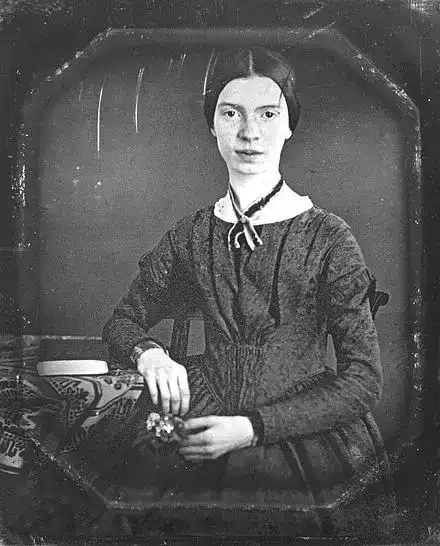
Emily Dickinson
She rose to His Requirement
She rose to His Requirement
732
She rose to His Requirement-dropt
The Playthings of Her Life
To take the honorable Work
Of Woman, and of Wife-
If ought She missed in Her new Day,
Of Amplitude, or Awe-
Or first Prospective-Or the Gold
In using, wear away,
It lay unmentioned-as the Sea
Develop Pearl, and Weed,
But only to Himself-be known
The Fathoms they abide-
732
She rose to His Requirement-dropt
The Playthings of Her Life
To take the honorable Work
Of Woman, and of Wife-
If ought She missed in Her new Day,
Of Amplitude, or Awe-
Or first Prospective-Or the Gold
In using, wear away,
It lay unmentioned-as the Sea
Develop Pearl, and Weed,
But only to Himself-be known
The Fathoms they abide-
800
Emily Dickinson
I'm wife-I've finished that
I'm "wife"-I've finished that
199
I'm "wife"-I've finished that-
That other stateI'm
Czar-I'm "Woman" nowIt's
safer so-
How odd the Girl's life looks
Behind this soft Eclipse-
I think that Earth feels so
To folks in Heaven-now-
This being comfort-then
That other kind-was pain-
But why compare?
I'm "Wife"! Stop there!
199
I'm "wife"-I've finished that-
That other stateI'm
Czar-I'm "Woman" nowIt's
safer so-
How odd the Girl's life looks
Behind this soft Eclipse-
I think that Earth feels so
To folks in Heaven-now-
This being comfort-then
That other kind-was pain-
But why compare?
I'm "Wife"! Stop there!
277
Emily Dickinson
Her Sweet turn to leave the Homestead
Her Sweet turn to leave the Homestead
649
Her Sweet turn to leave the Homestead
Came the Darker WayCarriages-
Be Sure-and Guests-too-
But for Holiday
'Tis more pitiful Endeavor
Than did Loaded Sea
O'er the Curls attempt to caper
It had cast away-
Never Bride had such Assembling-
Never kinsmen kneeled
To salute so fair a Forehead-
Garland be indeed-
Fitter Feet-of Her before us-
Than whatever Brow
Art of Snow-or Trick of Lily
Possibly bestow
Of Her Father-Whoso ask Her-
He shall seek as high
As the Palm-that serve the Desert-
To obtain the Sky
Distance-be Her only Motion-
If 'tis Nay-or YesAcquiescence-
or Demurral-
Whosoever guess
He-must pass the Crystal Angle
That obscure Her faceHe-
must have achieved in person
Equal Paradise-
649
Her Sweet turn to leave the Homestead
Came the Darker WayCarriages-
Be Sure-and Guests-too-
But for Holiday
'Tis more pitiful Endeavor
Than did Loaded Sea
O'er the Curls attempt to caper
It had cast away-
Never Bride had such Assembling-
Never kinsmen kneeled
To salute so fair a Forehead-
Garland be indeed-
Fitter Feet-of Her before us-
Than whatever Brow
Art of Snow-or Trick of Lily
Possibly bestow
Of Her Father-Whoso ask Her-
He shall seek as high
As the Palm-that serve the Desert-
To obtain the Sky
Distance-be Her only Motion-
If 'tis Nay-or YesAcquiescence-
or Demurral-
Whosoever guess
He-must pass the Crystal Angle
That obscure Her faceHe-
must have achieved in person
Equal Paradise-
316
Emily Dickinson
Given in Marriage unto Thee
Given in Marriage unto Thee
817
Given in Marriage unto Thee
Oh thou Celestial Host-
Bride of the Father and the Son
Bride of the Holy Ghost.
Other Betrothal shall dissolve-
Wedlock of Will, decay-
Only the Keeper of this Ring
Conquer Mortality-
817
Given in Marriage unto Thee
Oh thou Celestial Host-
Bride of the Father and the Son
Bride of the Holy Ghost.
Other Betrothal shall dissolve-
Wedlock of Will, decay-
Only the Keeper of this Ring
Conquer Mortality-
285
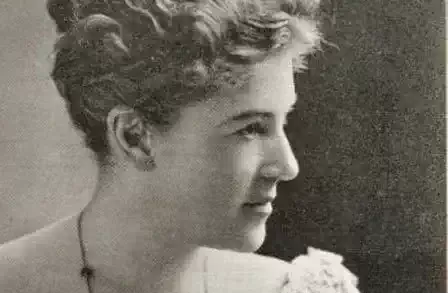
Ella Wheeler Wilcox
The Needle and Thread
The Needle and Thread
The Needle and Thread one day were wed,
The Thimble acted as priest,
A paper of Pins, and the Scissors twins
Were among the guests at the feast.
That dandy trim the Bodkin slim
Danced with Miss Tape-measure,
But he stepped on her trail, and she called him 'a whale,'
And that put an end to their pleasure.
Wrinkled and fat the Beeswax sat
And talked with the Needle-case.
'I am glad,' she said, 'that my niece, the Thread,
Has married into this race.
'Her mother, the Spool, was a dull old fool,
And the Needle and Thread were shy;
The result you see came all through me,
I taught her to catch his eye.'
The Emery-ball just there had a fall-
She had danced too long at one time,
And that put a stop to the merry hop,
And that brings an end to my rhyme.
The groom and the bride took their wedding ride
Down a long white-seam to the shore,
And the guests all said there never was wed
So fair a couple before.
The Needle and Thread one day were wed,
The Thimble acted as priest,
A paper of Pins, and the Scissors twins
Were among the guests at the feast.
That dandy trim the Bodkin slim
Danced with Miss Tape-measure,
But he stepped on her trail, and she called him 'a whale,'
And that put an end to their pleasure.
Wrinkled and fat the Beeswax sat
And talked with the Needle-case.
'I am glad,' she said, 'that my niece, the Thread,
Has married into this race.
'Her mother, the Spool, was a dull old fool,
And the Needle and Thread were shy;
The result you see came all through me,
I taught her to catch his eye.'
The Emery-ball just there had a fall-
She had danced too long at one time,
And that put a stop to the merry hop,
And that brings an end to my rhyme.
The groom and the bride took their wedding ride
Down a long white-seam to the shore,
And the guests all said there never was wed
So fair a couple before.
381
Ella Wheeler Wilcox
Shovel And Tongs
Shovel And Tongs
The Poker proposed to the shovel
That they should be man and wife,
'I think,' said he, 'that we could agree
As we journey along through life.'
The Shovel blushed as she answered,
'I thank you kindly, Mister,
But my promise belongs to the faithful Tongs,
So I only can be your sister.'
And when the couple were married
The Stove gave the Shovel away;
And it seemed too bad that the Poker, poor lad,
Was the Tongs' best man on that day.
But the Poker soon after was wedded
To the hearth broom, slender and slick;
And 'twas whispered about Mrs. Tongs was put out
Because he found comfort so quick.
The Poker proposed to the shovel
That they should be man and wife,
'I think,' said he, 'that we could agree
As we journey along through life.'
The Shovel blushed as she answered,
'I thank you kindly, Mister,
But my promise belongs to the faithful Tongs,
So I only can be your sister.'
And when the couple were married
The Stove gave the Shovel away;
And it seemed too bad that the Poker, poor lad,
Was the Tongs' best man on that day.
But the Poker soon after was wedded
To the hearth broom, slender and slick;
And 'twas whispered about Mrs. Tongs was put out
Because he found comfort so quick.
415
Ella Wheeler Wilcox
Rich And Poor
Rich And Poor
By the castle-gate my lady stands,
Viewing broad acres and spreading lands.
Hill and valley and mead and plain
Are all her own, with their wealth of grain.
In the richest of rich robes she is dressed,
A jewel blazes upon her breast;
And her brow is decked with a diadem
That glitters with many a precious gem.
But what to the Lady Wendoline
Rich satin garments or jewels fine?
Or ripening harvests, or spreading lands-
See! she is wringing her milk-white hands!
And her finger is stained with crimson dew
Where the ring with the diamond star cut through.
And a look of pain and wild despair
Rests on the face, so young and fair.
To-morrow will be her bridal day,
And she will barter herself away
For added wealth and a titled name;
'Tis the curse of her station, and whose the blame!
She loathes the man who will call her wife,
And moans o'er her hapless, loveless life.
The joys of wooing she cannot know;
My lord, her father, has willed it so.
She's a piece of merchandise, bought and sold
For name, position, and bags of gold.
But people must wed in their own degree,
Though hearts may break in their agony.
Under the hill, in the castle's shade,
At a cottage door sits an humble maid;
In her cheek the blushes come and go
As she stitches away on a robe like snow;
And she sings aloud in her happiness-
In a joy she cannot hide or repress.
Close at her side her lover stands,
Watching the nimble, sun-browned hands
As they draw the needle to and fro
Through the robe as white as drift of snow.
Both hearts are singing a wordless lay,
For the morrow will be their bridal day.
They have only their hands, their love, their health,
In place of title, position, and wealth.
But which is the rich, and which the poor,
The maid at the gate, or the maid in the door?
By the castle-gate my lady stands,
Viewing broad acres and spreading lands.
Hill and valley and mead and plain
Are all her own, with their wealth of grain.
In the richest of rich robes she is dressed,
A jewel blazes upon her breast;
And her brow is decked with a diadem
That glitters with many a precious gem.
But what to the Lady Wendoline
Rich satin garments or jewels fine?
Or ripening harvests, or spreading lands-
See! she is wringing her milk-white hands!
And her finger is stained with crimson dew
Where the ring with the diamond star cut through.
And a look of pain and wild despair
Rests on the face, so young and fair.
To-morrow will be her bridal day,
And she will barter herself away
For added wealth and a titled name;
'Tis the curse of her station, and whose the blame!
She loathes the man who will call her wife,
And moans o'er her hapless, loveless life.
The joys of wooing she cannot know;
My lord, her father, has willed it so.
She's a piece of merchandise, bought and sold
For name, position, and bags of gold.
But people must wed in their own degree,
Though hearts may break in their agony.
Under the hill, in the castle's shade,
At a cottage door sits an humble maid;
In her cheek the blushes come and go
As she stitches away on a robe like snow;
And she sings aloud in her happiness-
In a joy she cannot hide or repress.
Close at her side her lover stands,
Watching the nimble, sun-browned hands
As they draw the needle to and fro
Through the robe as white as drift of snow.
Both hearts are singing a wordless lay,
For the morrow will be their bridal day.
They have only their hands, their love, their health,
In place of title, position, and wealth.
But which is the rich, and which the poor,
The maid at the gate, or the maid in the door?
409
Ella Wheeler Wilcox
One Woman's History
One Woman's History
'The maiden free, the maiden wed.
Can never, never be the same,
A new life springs from out the dead.
And with the speaking of a name-
A breath upon the marriage bed,
She finds herself a something new.
'Where lay the shallows of the maid
No plummet line the wife can sound;
Where round the sunny islands played
The pulses of the great profound
Lies low the treacherous everglade.
'A wife is like an unknown sea,
Least known to him who thinks he knows
Where all the shores of Promise be,
And where the islands of Repose-
And where the rocks that he must flee.'
'The maiden free, the maiden wed.
Can never, never be the same,
A new life springs from out the dead.
And with the speaking of a name-
A breath upon the marriage bed,
She finds herself a something new.
'Where lay the shallows of the maid
No plummet line the wife can sound;
Where round the sunny islands played
The pulses of the great profound
Lies low the treacherous everglade.
'A wife is like an unknown sea,
Least known to him who thinks he knows
Where all the shores of Promise be,
And where the islands of Repose-
And where the rocks that he must flee.'
415
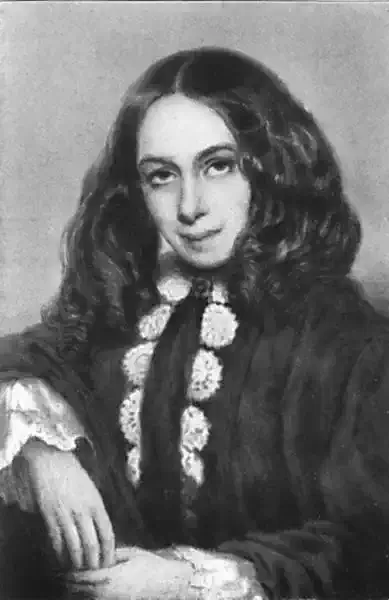
Elizabeth Barrett Browning
A Man's Requirements
A Man's Requirements
I
Love me Sweet, with all thou art,
Feeling, thinking, seeing;
Love me in the lightest part,
Love me in full being.
II
Love me with thine open youth
In its frank surrender;
With the vowing of thy mouth,
With its silence tender.
III
Love me with thine azure eyes,
Made for earnest grantings;
Taking colour from the skies,
Can Heaven's truth be wanting?
IV
Love me with their lids, that fall
Snow-like at first meeting;
Love me with thine heart, that all
Neighbours then see beating.
V
Love me with thine hand stretched out
Freely -- open-minded:
Love me with thy loitering foot, --
Hearing one behind it.
VI
Love me with thy voice, that turns
Sudden faint above me;
Love me with thy blush that burns
When I murmur 'Love me!'
VII
Love me with thy thinking soul,
Break it to love-sighing;
Love me with thy thoughts that roll
On through living -- dying.
VIII
Love me in thy gorgeous airs,
When the world has crowned thee;
Love me, kneeling at thy prayers,
With the angels round thee.
IX
Love me pure, as muses do,
Up the woodlands shady:
Love me gaily, fast and true,
As a winsome lady.
X
Through all hopes that keep us brave,
Farther off or nigher,
Love me for the house and grave,
And for something higher.
XI
Thus, if thou wilt prove me, Dear,
Woman's love no fable,
I will love thee -- half a year --
As a man is able.
I
Love me Sweet, with all thou art,
Feeling, thinking, seeing;
Love me in the lightest part,
Love me in full being.
II
Love me with thine open youth
In its frank surrender;
With the vowing of thy mouth,
With its silence tender.
III
Love me with thine azure eyes,
Made for earnest grantings;
Taking colour from the skies,
Can Heaven's truth be wanting?
IV
Love me with their lids, that fall
Snow-like at first meeting;
Love me with thine heart, that all
Neighbours then see beating.
V
Love me with thine hand stretched out
Freely -- open-minded:
Love me with thy loitering foot, --
Hearing one behind it.
VI
Love me with thy voice, that turns
Sudden faint above me;
Love me with thy blush that burns
When I murmur 'Love me!'
VII
Love me with thy thinking soul,
Break it to love-sighing;
Love me with thy thoughts that roll
On through living -- dying.
VIII
Love me in thy gorgeous airs,
When the world has crowned thee;
Love me, kneeling at thy prayers,
With the angels round thee.
IX
Love me pure, as muses do,
Up the woodlands shady:
Love me gaily, fast and true,
As a winsome lady.
X
Through all hopes that keep us brave,
Farther off or nigher,
Love me for the house and grave,
And for something higher.
XI
Thus, if thou wilt prove me, Dear,
Woman's love no fable,
I will love thee -- half a year --
As a man is able.
574

Edward Lear
The Pelican Chorus
The Pelican Chorus
King and Queen of the Pelicans we;
No other Birds so grand we see!
None but we have feet like fins!
With lovely leathery throats and chins!
Ploffskin, Pluffskin, Pelican jee!
We think no birds so happy as we!
Plumpskin, Ploshkin, Pelican jill!
We think so then, and we thought so still!
We live on the Nile. The Nile we love.
By night we sleep on the cliffs above.
By day we fish, and at eve we stand
On long bare islands of yellow sand.
And when the sun sinks slowly down
And the great rock walls grow dark and brown,
Where the purple river rolls fast and dim
And the ivory Ibis starlike skim,
Wing to wing we dance around, -
Stamping our feet with a flumpy sound, -
Opening our mouths as Pelicans ought,
And this is the song we nightly snort:
Ploffskin, Pluffskin, Pelican jee!
We think no Birds so happy as we!
Plumpskin, Ploshkin, Pelican jill!
We think so then, and we thought so still.
Last year came out our Daughter, Dell;
And all the Birds received her well.
To do her honour, a feast we made
For every bird that can swim or wade.
Herons and Gulls, and Cormorants black,
Cranes, and Flamingoes with scarlet back,
Plovers and Storks, and Geese in clouds,
Swans and Dilberry Ducks in crowds.
Thousands of Birds in wondrous flight!
They ate and drank and danced all night,
And echoing back from the rocks you heard
Multitude-echoes from Bird and Bird, -
Ploffskin, Pluffskin, Pelican jee!
We think no Birds so happy as we!
Plumpskin, Ploshkin, Pelican jill!
We think so then, and we thought so still!
Yes, they came; and among the rest,
The king of the Cranes all grandly dressed.
Such a lovely tail! Its feathers float
Between the ends of his blue dress-coat;
With pea-green trowsers all so neat,
And a delicate frill to hide his feet, (
For though no one speaks of it, everyone knows,
He has got no webs between his toes!)
As soon as he saw our Daughter Dell,
In violent love that Crane King fell,
On seeing her waddling form so fair,
With a wreath of shrimps in her short white hair,
And before the end of the next long day,
Our Dell had given her heart away;
For the King of the Cranes had won that heart,
With a Crocodile's egg and a large fish-tart.
She vowed to marry the King of the Cranes,
Leaving the Nile for stranger plains;
And away they flew in a gathering crowd
Of endless birds in a lengthening cloud.
Ploffskin, Pluffskin, Pelican jee!
We think no Birds so happy as we!
Plumpskin, Ploshkin, Pelican jill!
We think so then, and we thought so still!
And far away in the twilight sky,
We heard them singing in a lessening cry, -
Farther and farther till out of sight,
And we stood alone in the silent night!
Often since, in the nights of June,
We sit on the sand and watch the moon;
-She dwells by the streams of the Chankly Bore,
And we probably never shall see her more.
Ploffskin, Pluffskin, Pelican jee!
We think no Birds so happy as we!
Plumpskin, Ploshkin, Pelican jill!
We think so then, and we thought so still!
King and Queen of the Pelicans we;
No other Birds so grand we see!
None but we have feet like fins!
With lovely leathery throats and chins!
Ploffskin, Pluffskin, Pelican jee!
We think no birds so happy as we!
Plumpskin, Ploshkin, Pelican jill!
We think so then, and we thought so still!
We live on the Nile. The Nile we love.
By night we sleep on the cliffs above.
By day we fish, and at eve we stand
On long bare islands of yellow sand.
And when the sun sinks slowly down
And the great rock walls grow dark and brown,
Where the purple river rolls fast and dim
And the ivory Ibis starlike skim,
Wing to wing we dance around, -
Stamping our feet with a flumpy sound, -
Opening our mouths as Pelicans ought,
And this is the song we nightly snort:
Ploffskin, Pluffskin, Pelican jee!
We think no Birds so happy as we!
Plumpskin, Ploshkin, Pelican jill!
We think so then, and we thought so still.
Last year came out our Daughter, Dell;
And all the Birds received her well.
To do her honour, a feast we made
For every bird that can swim or wade.
Herons and Gulls, and Cormorants black,
Cranes, and Flamingoes with scarlet back,
Plovers and Storks, and Geese in clouds,
Swans and Dilberry Ducks in crowds.
Thousands of Birds in wondrous flight!
They ate and drank and danced all night,
And echoing back from the rocks you heard
Multitude-echoes from Bird and Bird, -
Ploffskin, Pluffskin, Pelican jee!
We think no Birds so happy as we!
Plumpskin, Ploshkin, Pelican jill!
We think so then, and we thought so still!
Yes, they came; and among the rest,
The king of the Cranes all grandly dressed.
Such a lovely tail! Its feathers float
Between the ends of his blue dress-coat;
With pea-green trowsers all so neat,
And a delicate frill to hide his feet, (
For though no one speaks of it, everyone knows,
He has got no webs between his toes!)
As soon as he saw our Daughter Dell,
In violent love that Crane King fell,
On seeing her waddling form so fair,
With a wreath of shrimps in her short white hair,
And before the end of the next long day,
Our Dell had given her heart away;
For the King of the Cranes had won that heart,
With a Crocodile's egg and a large fish-tart.
She vowed to marry the King of the Cranes,
Leaving the Nile for stranger plains;
And away they flew in a gathering crowd
Of endless birds in a lengthening cloud.
Ploffskin, Pluffskin, Pelican jee!
We think no Birds so happy as we!
Plumpskin, Ploshkin, Pelican jill!
We think so then, and we thought so still!
And far away in the twilight sky,
We heard them singing in a lessening cry, -
Farther and farther till out of sight,
And we stood alone in the silent night!
Often since, in the nights of June,
We sit on the sand and watch the moon;
-She dwells by the streams of the Chankly Bore,
And we probably never shall see her more.
Ploffskin, Pluffskin, Pelican jee!
We think no Birds so happy as we!
Plumpskin, Ploshkin, Pelican jill!
We think so then, and we thought so still!
313
Edward Lear
Mr and Mrs Discobbolos
Mr and Mrs Discobbolos
First Part
Mr and Mrs Discobbolos
Climbed to the top of a wall,
And they sat to watch the sunset sky
And to hear the Nupiter Piffkin cry
And the Biscuit Buffalo call.
They took up a roll and some Chamomile tea,
And both were as happy as happy could be -
Till Mrs Discobbolos said, '
Oh! W! X! Y! Z!
It has just come into my head -
Suppose we should happen to fall!!!!!
Darling Mr Discobbolos?
'Suppose we should fall down flumpetty
Just like two pieces of stone!
On to the thorns, - or into the moat!
What would become of your new green coat?
And might you not break a bone?
It never occurred to me before -
That perhaps we shall never go down any more!'
And Mrs Discobbolos said '
Oh! W! X! Y! Z!
What put it into your head
To climb up this wall? - my own
Darling Mr Discobbolos?'
Mr Discobbolos answered, '
At first it gave me pain, -
And I felt my ears turn perfectly pink
When your exclamation made me think
We might never get down again!
But now I believe it is wiser far
To remain for ever just where we are.' -
And Mr Discobbolos said,
'Oh! W! X! Y! Z!
It has just come into my head '-
We shall never go down again -
Dearest Mrs Discobbolos.!'
So Mr and Mrs Discobbolos
Stood up, and began to sing,
'Far away from hurry and strife
Here we will pass the rest of life,
Ding a dong, ding dong, ding!
We want no knives nor forks nor chairs,
No tables nor carpets nor household cares,
From worry of life we've fled '
Oh! W! X! Y! Z!
There is no more trouble ahead
Sorrow or any such thing -
For Mr and Mrs Discobbolos!'
Second Part.
Mr and Mrs Discobbolos
Lived on the top of the wall
For twenty years, a month and a day,
Till their hair had grown all pearly gray,
And their teeth began to fall.
They never were ill, or at all dejected,
By all admired, and by some respected,
Till Mrs Discobbolos said,
'Oh! W! X! Y! Z!
It has just come into my head,
We have no more room at all -
Darling Mr Discobbolos!
Look at our six fine boys!
And our six sweet girls so fair!
Upon this wall they have all been born,
And not one of the twelve has happened to fall
Through my maternal care!
Surely they should not pass their lives
Without any chance of husbands or wives!'
And Mrs Discobbolos said,
'Oh! W! X! Y! Z!
Did it never come into your head
That our lives must be lived elsewhere,
Dearest Mr Discobbolos?
'They have never been at a ball,
Nor have even seen a bazaar!
Nor have heard folks say in a tone all hearty,
'What loves of girls (at a garden party)
Those Misses Discobbolos are!'
Morning and night it drives me wild
To think of the fate of each darling child!'
But Mr Discobbolos said,
'Oh! W! X! Y! Z!
What has come to your fiddledum head!
What a runcible goose you are!
Octopod Mrs Discobbolos!'
Suddenly Mr Discobbolos
Slid from the top of the wall;
And beneath it he dug a dreadful trench,
And filled it with dynamite, gunpowder gench,
And aloud he began to call '
Let the wild bee sing,
And the blue bird hum!
For the end of your lives has certainly come!'
And Mrs Discobbolos said,
'Oh! W! X! Y! Z!
We shall presently all be dead,
On this ancient runcible wall,
Terrible Mr Discobbolos!'
Pensively, Mr Discobbolos
Sat with his back to the wall;
He lighted a match, and fired the train,
And the mortified mountain echoed again
To the sound of an awful fall!
And all the Discobbolos family flew
In thousands of bits to the sky so blue,
And no one was left to have said,
'Oh! W! X! Y! Z!
Has it come into anyone's head
That the end has happened to all
Of the whole of the Clan Discobbolos?'
First Part
Mr and Mrs Discobbolos
Climbed to the top of a wall,
And they sat to watch the sunset sky
And to hear the Nupiter Piffkin cry
And the Biscuit Buffalo call.
They took up a roll and some Chamomile tea,
And both were as happy as happy could be -
Till Mrs Discobbolos said, '
Oh! W! X! Y! Z!
It has just come into my head -
Suppose we should happen to fall!!!!!
Darling Mr Discobbolos?
'Suppose we should fall down flumpetty
Just like two pieces of stone!
On to the thorns, - or into the moat!
What would become of your new green coat?
And might you not break a bone?
It never occurred to me before -
That perhaps we shall never go down any more!'
And Mrs Discobbolos said '
Oh! W! X! Y! Z!
What put it into your head
To climb up this wall? - my own
Darling Mr Discobbolos?'
Mr Discobbolos answered, '
At first it gave me pain, -
And I felt my ears turn perfectly pink
When your exclamation made me think
We might never get down again!
But now I believe it is wiser far
To remain for ever just where we are.' -
And Mr Discobbolos said,
'Oh! W! X! Y! Z!
It has just come into my head '-
We shall never go down again -
Dearest Mrs Discobbolos.!'
So Mr and Mrs Discobbolos
Stood up, and began to sing,
'Far away from hurry and strife
Here we will pass the rest of life,
Ding a dong, ding dong, ding!
We want no knives nor forks nor chairs,
No tables nor carpets nor household cares,
From worry of life we've fled '
Oh! W! X! Y! Z!
There is no more trouble ahead
Sorrow or any such thing -
For Mr and Mrs Discobbolos!'
Second Part.
Mr and Mrs Discobbolos
Lived on the top of the wall
For twenty years, a month and a day,
Till their hair had grown all pearly gray,
And their teeth began to fall.
They never were ill, or at all dejected,
By all admired, and by some respected,
Till Mrs Discobbolos said,
'Oh! W! X! Y! Z!
It has just come into my head,
We have no more room at all -
Darling Mr Discobbolos!
Look at our six fine boys!
And our six sweet girls so fair!
Upon this wall they have all been born,
And not one of the twelve has happened to fall
Through my maternal care!
Surely they should not pass their lives
Without any chance of husbands or wives!'
And Mrs Discobbolos said,
'Oh! W! X! Y! Z!
Did it never come into your head
That our lives must be lived elsewhere,
Dearest Mr Discobbolos?
'They have never been at a ball,
Nor have even seen a bazaar!
Nor have heard folks say in a tone all hearty,
'What loves of girls (at a garden party)
Those Misses Discobbolos are!'
Morning and night it drives me wild
To think of the fate of each darling child!'
But Mr Discobbolos said,
'Oh! W! X! Y! Z!
What has come to your fiddledum head!
What a runcible goose you are!
Octopod Mrs Discobbolos!'
Suddenly Mr Discobbolos
Slid from the top of the wall;
And beneath it he dug a dreadful trench,
And filled it with dynamite, gunpowder gench,
And aloud he began to call '
Let the wild bee sing,
And the blue bird hum!
For the end of your lives has certainly come!'
And Mrs Discobbolos said,
'Oh! W! X! Y! Z!
We shall presently all be dead,
On this ancient runcible wall,
Terrible Mr Discobbolos!'
Pensively, Mr Discobbolos
Sat with his back to the wall;
He lighted a match, and fired the train,
And the mortified mountain echoed again
To the sound of an awful fall!
And all the Discobbolos family flew
In thousands of bits to the sky so blue,
And no one was left to have said,
'Oh! W! X! Y! Z!
Has it come into anyone's head
That the end has happened to all
Of the whole of the Clan Discobbolos?'
299
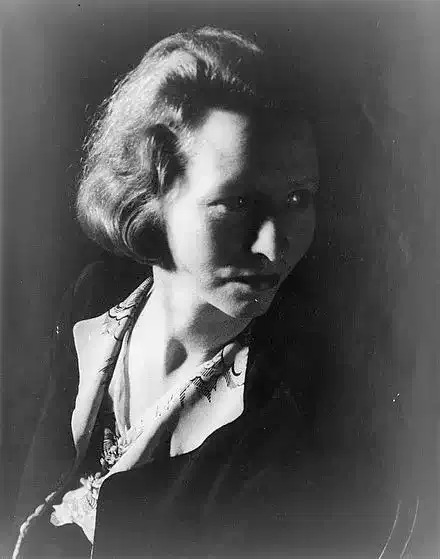
Edna St. Vincent Millay
The Return From Town
The Return From Town
As I sat down by Saddle Stream
To bathe my dusty feet there,
A boy was standing on the bridge
Any girl would meet there.
As I went over Woody Knob
A youth was coming up the hill
Any maid would follow.
Then in I turned at my own gate,—
And nothing to be sad for—
To such a man as any WIFE
Would pass a pretty lad for.
As I sat down by Saddle Stream
To bathe my dusty feet there,
A boy was standing on the bridge
Any girl would meet there.
As I went over Woody Knob
A youth was coming up the hill
Any maid would follow.
Then in I turned at my own gate,—
And nothing to be sad for—
To such a man as any WIFE
Would pass a pretty lad for.
363
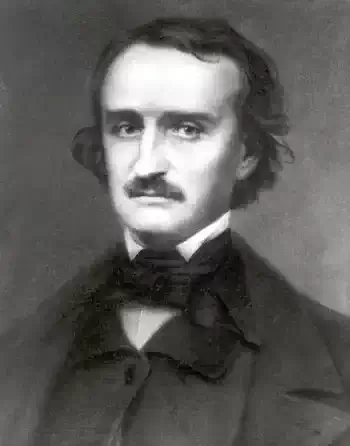
Edgar Allan Poe
Bridal Ballad
Bridal Ballad
The ring is on my hand,
And the wreath is on my brow;
Satin and jewels grand
Are all at my command,
And I am happy now.
And my lord he loves me well;
But, when first he breathed his vow,
I felt my bosom swellFor
the words rang as a knell,
And the voice seemed his who fell
In the battle down the dell,
And who is happy now.
But he spoke to re-assure me,
And he kissed my pallid brow,
While a reverie came o'er me,
And to the church-yard bore me,
And I sighed to him before me,
Thinking him dead D'Elormie,
"Oh, I am happy now!"
And thus the words were spoken,
And this the plighted vow,
And, though my faith be broken,
And, though my heart be broken,
Here is a ring, as token
That I am happy now!
Would God I could awaken!
For I dream I know not how!
And my soul is sorely shaken
Lest an evil step be taken,
Lest the dead who is forsaken
May not be happy now.
The ring is on my hand,
And the wreath is on my brow;
Satin and jewels grand
Are all at my command,
And I am happy now.
And my lord he loves me well;
But, when first he breathed his vow,
I felt my bosom swellFor
the words rang as a knell,
And the voice seemed his who fell
In the battle down the dell,
And who is happy now.
But he spoke to re-assure me,
And he kissed my pallid brow,
While a reverie came o'er me,
And to the church-yard bore me,
And I sighed to him before me,
Thinking him dead D'Elormie,
"Oh, I am happy now!"
And thus the words were spoken,
And this the plighted vow,
And, though my faith be broken,
And, though my heart be broken,
Here is a ring, as token
That I am happy now!
Would God I could awaken!
For I dream I know not how!
And my soul is sorely shaken
Lest an evil step be taken,
Lest the dead who is forsaken
May not be happy now.
343
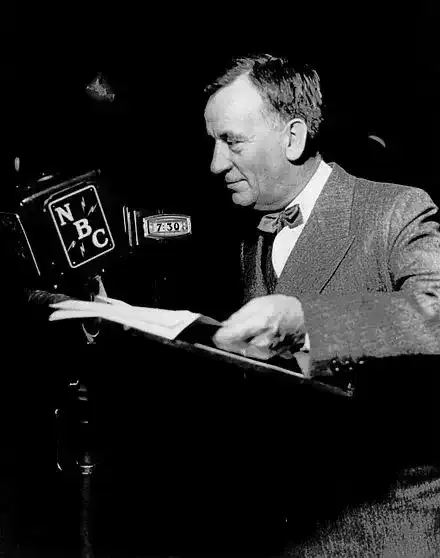
Edgar Albert Guest
The Bachelor's Soliloquy
The Bachelor's Soliloquy
To wed, or not to wed; that is the question;
Whether 'tis nobler in the mind to suffer
The bills and house rent of a wedded fortune,
Or to say "nit" when she proposes,
And by declining cut her. To wed; to smoke
No more; And have a wife at home to mend
The holes in socks and shirts
And underwear and so forth. 'Tis a consummation
Devoutly to be wished. To wed for life;
To wed; perchance to fight; ay, there's the rub;
For in that married life what fights may come,
When we have honeymooning ceased
Must give us pause; there's the respect
That makes the joy of single life.
For who would bear her mother's scornful tongue,
Canned goods for tea, the dying furnace fire;
The pangs of sleepless nights when baby cries;
The pain of barking shins upon a chair and
Closing waists that button down the back,
When he himself might all these troubles shirk
With a bare refusal? Who would bundles bear,
And grunt and sweat under a shopping load?
Who would samples match; buy rats for hair,
Cart cheese and crackers home to serve at night
For lunch to feed your friends; play pedro
After tea; sing rag time songs, amusing
Friendly neighbors. Buy garden tools
To lend unto the same. Stay home at nights
In smoking coat and slippers and slink to bed
At ten o'clock to save the light bills?
Thus duty does make cowards of us all,
And thus the native hue of matrimony
Is sicklied o'er with the pale cast of chores;
And thus the gloss of marriage fades away,
And loses its attraction.
To wed, or not to wed; that is the question;
Whether 'tis nobler in the mind to suffer
The bills and house rent of a wedded fortune,
Or to say "nit" when she proposes,
And by declining cut her. To wed; to smoke
No more; And have a wife at home to mend
The holes in socks and shirts
And underwear and so forth. 'Tis a consummation
Devoutly to be wished. To wed for life;
To wed; perchance to fight; ay, there's the rub;
For in that married life what fights may come,
When we have honeymooning ceased
Must give us pause; there's the respect
That makes the joy of single life.
For who would bear her mother's scornful tongue,
Canned goods for tea, the dying furnace fire;
The pangs of sleepless nights when baby cries;
The pain of barking shins upon a chair and
Closing waists that button down the back,
When he himself might all these troubles shirk
With a bare refusal? Who would bundles bear,
And grunt and sweat under a shopping load?
Who would samples match; buy rats for hair,
Cart cheese and crackers home to serve at night
For lunch to feed your friends; play pedro
After tea; sing rag time songs, amusing
Friendly neighbors. Buy garden tools
To lend unto the same. Stay home at nights
In smoking coat and slippers and slink to bed
At ten o'clock to save the light bills?
Thus duty does make cowards of us all,
And thus the native hue of matrimony
Is sicklied o'er with the pale cast of chores;
And thus the gloss of marriage fades away,
And loses its attraction.
599
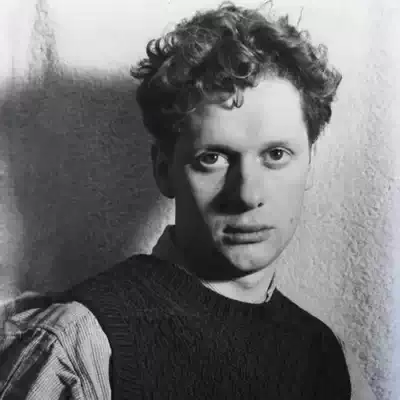
Dylan Thomas
On The Marriage Of A Virgin
On The Marriage Of A Virgin
Waking alone in a multitude of loves when morning's light
Surprised in the opening of her nightlong eyes
His golden yesterday asleep upon the iris
And this day's sun leapt up the sky out of her thighs
Was miraculous virginity old as loaves and fishes,
Though the moment of a miracle is unending lightning
And the shipyards of Galilee's footprints hide a navy of doves.
No longer will the vibrations of the sun desire on
Her deepsea pillow where once she married alone,
Her heart all ears and eyes, lips catching the avalanche
Of the golden ghost who ringed with his streams her mercury bone,
Who under the lids of her windows hoisted his golden luggage,
For a man sleeps where fire leapt down and she learns through his arm
That other sun, the jealous coursing of the unrivalled blood.
Waking alone in a multitude of loves when morning's light
Surprised in the opening of her nightlong eyes
His golden yesterday asleep upon the iris
And this day's sun leapt up the sky out of her thighs
Was miraculous virginity old as loaves and fishes,
Though the moment of a miracle is unending lightning
And the shipyards of Galilee's footprints hide a navy of doves.
No longer will the vibrations of the sun desire on
Her deepsea pillow where once she married alone,
Her heart all ears and eyes, lips catching the avalanche
Of the golden ghost who ringed with his streams her mercury bone,
Who under the lids of her windows hoisted his golden luggage,
For a man sleeps where fire leapt down and she learns through his arm
That other sun, the jealous coursing of the unrivalled blood.
241
Dylan Thomas
On a Wedding Anniversary
On a Wedding Anniversary
The sky is torn across
This ragged anniversary of two
Who moved for three years in tune
Down the long walks of their vows.
Now their love lies a loss
And Love and his patients roar on a chain;
From every tune or crater
Carrying cloud, Death strikes their house.
Too late in the wrong rain
They come together whom their love parted:
The windows pour into their heart
And the doors burn in their brain.
The sky is torn across
This ragged anniversary of two
Who moved for three years in tune
Down the long walks of their vows.
Now their love lies a loss
And Love and his patients roar on a chain;
From every tune or crater
Carrying cloud, Death strikes their house.
Too late in the wrong rain
They come together whom their love parted:
The windows pour into their heart
And the doors burn in their brain.
386

Christina Rossetti
A Ring Upon Her Finger
A Ring Upon Her Finger
A ring upon her finger,
Walks the bride,
With the bridegroom tall and handsome
At her side.
A veil upon her forehead
Walks the bride,
With the bridegroom proud and merry
At her side.
Fling flowers beneath the footsteps
Of the bride;
Fling flowers before the bridegroom
At her side.
A ring upon her finger,
Walks the bride,
With the bridegroom tall and handsome
At her side.
A veil upon her forehead
Walks the bride,
With the bridegroom proud and merry
At her side.
Fling flowers beneath the footsteps
Of the bride;
Fling flowers before the bridegroom
At her side.
232
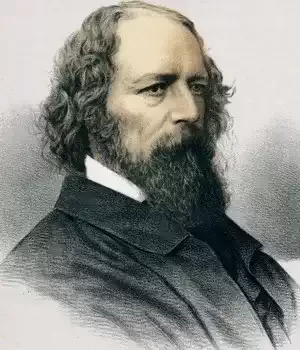
Alfred Lord Tennyson
O true and tried
O true and tried
O true and tried, so well and long,
Demand not thou a marriage lay;
In that it is thy marriage day
Is music more than any song.
Nor have I felt so much of bliss
Since first he told me that he loved
A daughter of our house; nor proved
Since that dark day a day like this;
Tho’ I since then have number’d o’er
Some thrice three years: they went and came,
Remade the blood and changed the frame,
And yet is love not less, but more;
No longer caring to embalm
In dying songs a dead regret,
But like a statue solid-set,
And moulded in colossal calm.
Regret is dead, but love is more
Than in the summers that are flown,
For I myself with these have grown
To something greater than before;
Which makes appear the songs I made
As echoes out of weaker times,
As half but idle brawling rhymes,
The sport of random sun and shade.
But where is she, the bridal flower,
That must he made a wife ere noon?
She enters, glowing like the moon
Of Eden on its bridal bower:
On me she bends her blissful eyes
And then on thee; they meet thy look
And brighten like the star that shook
Betwixt the palms of paradise.
O when her life was yet in bud,
He too foretold the perfect rose.
For thee she grew, for thee she grows
For ever, and as fair as good.
And thou art worthy; full of power;
As gentle; liberal-minded, great,
Consistent; wearing all that weight
Of learning lightly like a flower.
But now set out: the noon is near,
And I must give away the bride;
She fears not, or with thee beside
And me behind her, will not fear.
For I that danced her on my knee,
That watch’d her on her nurse’s arm,
That shielded all her life from harm
At last must part with her to thee;
Now waiting to be made a wife,
Her feet, my darling, on the dead;
Their pensive tablets round her head,
And the most living words of life
Breathed in her ear. The ring is on,
The ‘wilt thou’ answer’d, and again
The ‘wilt thou’ ask’d, till out of twain
Her sweet ‘I will’ has made you one.
Now sign your names, which shall be read,
Mute symbols of a joyful morn,
By village eyes as yet unborn;
The names are sign’d, and overhead
Begins the clash and clang that tells
The joy to every wandering breeze;
The blind wall rocks, and on the trees
The dead leaf trembles to the bells.
O happy hour, and happier hours
Await them. Many a merry face
Salutes them–maidens of the place,
That pelt us in the porch with flowers.
O happy hour, behold the bride
With him to whom her hand I gave.
They leave the porch, they pass the grave
That has to-day its sunny side.
To-day the grave is bright for me,
For them the light of life increased,
Who stay to share the morning feast,
Who rest to-night beside the sea.
Let all my genial spirits advance
To meet and greet a whiter sun;
My drooping memory will not shun
The foaming grape of eastern France.
It circles round, and fancy plays,
And hearts are warm’d and faces bloom,
As drinking health to bride and groom
We wish them store of happy days.
Nor count me all to blame if I
Conjecture of a stiller guest,
Perchance, perchance, among the rest,
And, tho’ in silence, wishing joy.
But they must go, the time draws on,
And those white-favour’d horses wait;
They rise, but linger; it is late;
Farewell, we kiss, and they are gone.
A shade falls on us like the dark
From little cloudlets on the grass,
But sweeps away as out we pass
To range the woods, to roam the park,
Discussing how their courtship grew,
And talk of others that are wed,
And how she look’d, and what he said,
And back we come at fall of dew.
Again the feast, the speech, the glee,
The shade of passing thought, the wealth
Of words and wit, the double health,
The crowning cup, the three-times-three,
And last the dance;–till I retire:
Dumb is that tower which spake so loud,
And high in heaven the streaming cloud,
And on the downs a rising fire:
And rise, O moon, from yonder down,
Till over down and over dale
All night the shining vapour sail
And pass the silent-lighted town,
The white-faced halls, the glancing rills,
And catch at every mountain head,
And o’er the friths that branch and spread
Their sleeping silver thro’ the hills;
And touch with shade the bridal doors,
With tender gloom the roof, the wall;
And breaking let the splendour fall
To spangle all the happy shores
By which they rest, and ocean sounds,
And, star and system rolling past,
A soul shall draw from out the vast
And strike his being into bounds,
And, moved thro’ life of lower phase,
Result in man, be born and think,
And act and love, a closer link
Betwixt us and the crowning race
Of those that, eye to eye, shall look
On knowledge; under whose command
Is Earth and Earth’s, and in their hand
Is Nature like an open book;
No longer half-akin to brute,
For all we thought and loved and did,
And hoped, and suffer’d, is but seed
Of what in them is flower and fruit;
Whereof the man, that with me trod
This planet, was a noble type
Appearing ere the times were ripe,
That friend of mine who lives in God,
That God, which ever lives and loves,
One God, one law, one element,
And one far-off divine event,
To which the whole creation moves.
O true and tried, so well and long,
Demand not thou a marriage lay;
In that it is thy marriage day
Is music more than any song.
Nor have I felt so much of bliss
Since first he told me that he loved
A daughter of our house; nor proved
Since that dark day a day like this;
Tho’ I since then have number’d o’er
Some thrice three years: they went and came,
Remade the blood and changed the frame,
And yet is love not less, but more;
No longer caring to embalm
In dying songs a dead regret,
But like a statue solid-set,
And moulded in colossal calm.
Regret is dead, but love is more
Than in the summers that are flown,
For I myself with these have grown
To something greater than before;
Which makes appear the songs I made
As echoes out of weaker times,
As half but idle brawling rhymes,
The sport of random sun and shade.
But where is she, the bridal flower,
That must he made a wife ere noon?
She enters, glowing like the moon
Of Eden on its bridal bower:
On me she bends her blissful eyes
And then on thee; they meet thy look
And brighten like the star that shook
Betwixt the palms of paradise.
O when her life was yet in bud,
He too foretold the perfect rose.
For thee she grew, for thee she grows
For ever, and as fair as good.
And thou art worthy; full of power;
As gentle; liberal-minded, great,
Consistent; wearing all that weight
Of learning lightly like a flower.
But now set out: the noon is near,
And I must give away the bride;
She fears not, or with thee beside
And me behind her, will not fear.
For I that danced her on my knee,
That watch’d her on her nurse’s arm,
That shielded all her life from harm
At last must part with her to thee;
Now waiting to be made a wife,
Her feet, my darling, on the dead;
Their pensive tablets round her head,
And the most living words of life
Breathed in her ear. The ring is on,
The ‘wilt thou’ answer’d, and again
The ‘wilt thou’ ask’d, till out of twain
Her sweet ‘I will’ has made you one.
Now sign your names, which shall be read,
Mute symbols of a joyful morn,
By village eyes as yet unborn;
The names are sign’d, and overhead
Begins the clash and clang that tells
The joy to every wandering breeze;
The blind wall rocks, and on the trees
The dead leaf trembles to the bells.
O happy hour, and happier hours
Await them. Many a merry face
Salutes them–maidens of the place,
That pelt us in the porch with flowers.
O happy hour, behold the bride
With him to whom her hand I gave.
They leave the porch, they pass the grave
That has to-day its sunny side.
To-day the grave is bright for me,
For them the light of life increased,
Who stay to share the morning feast,
Who rest to-night beside the sea.
Let all my genial spirits advance
To meet and greet a whiter sun;
My drooping memory will not shun
The foaming grape of eastern France.
It circles round, and fancy plays,
And hearts are warm’d and faces bloom,
As drinking health to bride and groom
We wish them store of happy days.
Nor count me all to blame if I
Conjecture of a stiller guest,
Perchance, perchance, among the rest,
And, tho’ in silence, wishing joy.
But they must go, the time draws on,
And those white-favour’d horses wait;
They rise, but linger; it is late;
Farewell, we kiss, and they are gone.
A shade falls on us like the dark
From little cloudlets on the grass,
But sweeps away as out we pass
To range the woods, to roam the park,
Discussing how their courtship grew,
And talk of others that are wed,
And how she look’d, and what he said,
And back we come at fall of dew.
Again the feast, the speech, the glee,
The shade of passing thought, the wealth
Of words and wit, the double health,
The crowning cup, the three-times-three,
And last the dance;–till I retire:
Dumb is that tower which spake so loud,
And high in heaven the streaming cloud,
And on the downs a rising fire:
And rise, O moon, from yonder down,
Till over down and over dale
All night the shining vapour sail
And pass the silent-lighted town,
The white-faced halls, the glancing rills,
And catch at every mountain head,
And o’er the friths that branch and spread
Their sleeping silver thro’ the hills;
And touch with shade the bridal doors,
With tender gloom the roof, the wall;
And breaking let the splendour fall
To spangle all the happy shores
By which they rest, and ocean sounds,
And, star and system rolling past,
A soul shall draw from out the vast
And strike his being into bounds,
And, moved thro’ life of lower phase,
Result in man, be born and think,
And act and love, a closer link
Betwixt us and the crowning race
Of those that, eye to eye, shall look
On knowledge; under whose command
Is Earth and Earth’s, and in their hand
Is Nature like an open book;
No longer half-akin to brute,
For all we thought and loved and did,
And hoped, and suffer’d, is but seed
Of what in them is flower and fruit;
Whereof the man, that with me trod
This planet, was a noble type
Appearing ere the times were ripe,
That friend of mine who lives in God,
That God, which ever lives and loves,
One God, one law, one element,
And one far-off divine event,
To which the whole creation moves.
524
Alfred Lord Tennyson
Marriage Morning
Marriage Morning
Light, so low upon earth,
You send a flash to the sun.
Here is the golden close of love,
All my wooing is done.
Oh, the woods and the meadows,
Woods where we hid from the wet,
Stiles where we stay'd to be kind,
Meadows in which we met!
Light, so low in the vale
You flash and lighten afar,
For this is the golden morning of love,
And you are his morning start.
Flash, I am coming, I come,
By meadow and stile and wood,
Oh, lighten into my eyes and heart,
Into my heart and my blood!
Heart, are you great enough
For a love that never tires?
O' heart, are you great enough for love?
I have heard of thorns and briers,
Over the meadow and stiles,
Over the world to the end of it
Flash for a million miles.
Light, so low upon earth,
You send a flash to the sun.
Here is the golden close of love,
All my wooing is done.
Oh, the woods and the meadows,
Woods where we hid from the wet,
Stiles where we stay'd to be kind,
Meadows in which we met!
Light, so low in the vale
You flash and lighten afar,
For this is the golden morning of love,
And you are his morning start.
Flash, I am coming, I come,
By meadow and stile and wood,
Oh, lighten into my eyes and heart,
Into my heart and my blood!
Heart, are you great enough
For a love that never tires?
O' heart, are you great enough for love?
I have heard of thorns and briers,
Over the meadow and stiles,
Over the world to the end of it
Flash for a million miles.
462
Alfred Lord Tennyson
In Memoriam 131: O Living Will That Shalt Endure
In Memoriam 131: O Living Will That Shalt Endure
O living will that shalt endure
When all that seems shall suffer shock,
Rise in the spiritual rock,
Flow thro' our deeds and make them pure,
That we may lift from out of dust
A voice as unto him that hears,
A cry above the conquer'd years
To one that with us works, and trust,
With faith that comes of self-control,
The truths that never can be proved
Until we close with all we loved,
And all we flow from, soul in soul.
O true and tried, so well and long,
Demand not thou a marriage lay;
In that it is thy marriage day
Is music more than any song.
Nor have I felt so much of bliss
Since first he told me that he loved
A daughter of our house; nor proved
Since that dark day a day like this;
Tho' I since then have number'd o'er
Some thrice three years: they went and came,
Remade the blood and changed the frame,
And yet is love not less, but more;
No longer caring to embalm
In dying songs a dead regret,
But like a statue solid-set,
And moulded in colossal calm.
Regret is dead, but love is more
Than in the summers that are flown,
For I myself with these have grown
To something greater than before;
Which makes appear the songs I made
As echoes out of weaker times,
As half but idle brawling rhymes,
The sport of random sun and shade.
But where is she, the bridal flower,
That must be made a wife ere noon?
She enters, glowing like the moon
Of Eden on its bridal bower:
On me she bends her blissful eyes
And then on thee; they meet thy look
And brighten like the star that shook
Betwixt the palms of paradise.
O when her life was yet in bud,
He too foretold the perfect rose.
For thee she grew, for thee she grows
For ever, and as fair as good.
And thou art worthy; full of power;
As gentle; liberal-minded, great,
Consistent; wearing all that weight
Of learning lightly like a flower.
But now set out: the noon is near,
And I must give away the bride;
She fears not, or with thee beside
And me behind her, will not fear.
For I that danced her on my knee,
That watch'd her on her nurse's arm,
That shielded all her life from harm
At last must part with her to thee;
Now waiting to be made a wife,
Her feet, my darling, on the dead;
Their pensive tablets round her head,
And the most living words of life
Breathed in her ear. The ring is on,
The "wilt thou" answer'd, and again
The "wilt thou" ask'd, till out of twain
Her sweet "I will" has made you one.
Now sign your names, which shall be read,
Mute symbols of a joyful morn,
By village eyes as yet unborn;
The names are sign'd, and overhead
Begins the clash and clang that tells
The joy to every wandering breeze;
The blind wall rocks, and on the trees
The dead leaf trembles to the bells.
O happy hour, and happier hours
Await them. Many a merry face
Salutes them--maidens of the place,
That pelt us in the porch with flowers.
O happy hour, behold the bride
With him to whom her hand I gave.
They leave the porch, they pass the grave
That has to-day its sunny side.
To-day the grave is bright for me,
For them the light of life increased,
Who stay to share the morning feast,
Who rest to-night beside the sea.
Let all my genial spirits advance
To meet and greet a whiter sun;
My drooping memory will not shun
The foaming grape of eastern France.
It circles round, and fancy plays,
And hearts are warm'd and faces bloom,
As drinking health to bride and groom
We wish them store of happy days.
Nor count me all to blame if I
Conjecture of a stiller guest,
Perchance, perchance, among the rest,
And, tho' in silence, wishing joy.
But they must go, the time draws on,
And those white-favour'd horses wait;
They rise, but linger; it is late;
Farewell, we kiss, and they are gone.
A shade falls on us like the dark
From little cloudlets on the grass,
But sweeps away as out we pass
To range the woods, to roam the park,
Discussing how their courtship grew,
And talk of others that are wed,
And how she look'd, and what he said,
And back we come at fall of dew.
Again the feast, the speech, the glee,
The shade of passing thought, the wealth
Of words and wit, the double health,
The crowning cup, the three-times-three,
And last the dance,--till I retire:
Dumb is that tower which spake so loud,
And high in heaven the streaming cloud,
And on the downs a rising fire:
And rise, O moon, from yonder down,
Till over down and over dale
All night the shining vapour sail
And pass the silent-lighted town,
The white-faced halls, the glancing rills,
And catch at every mountain head,
And o'er the friths that branch and spread
Their sleeping silver thro' the hills;
And touch with shade the bridal doors,
With tender gloom the roof, the wall;
And breaking let the splendour fall
To spangle all the happy shores
By which they rest, and ocean sounds,
And, star and system rolling past,
A soul shall draw from out the vast
And strike his being into bounds,
And, moved thro' life of lower phase,
Result in man, be born and think,
And act and love, a closer link
Betwixt us and the crowning race
Of those that, eye to eye, shall look
On knowledge; under whose command
Is Earth and Earth's, and in their hand
Is Nature like an open book;
No longer half-akin to brute,
For all we thought and loved and did,
And hoped, and suffer'd, is but seed
Of what in them is flower and fruit;
Whereof the man, that with me trod
This planet, was a noble type
Appearing ere the times were ripe,
That friend of mine who lives in God,
That God, which ever lives and loves,
One God, one law, one element,
And one far-off divine event,
To which the whole creation moves.
O living will that shalt endure
When all that seems shall suffer shock,
Rise in the spiritual rock,
Flow thro' our deeds and make them pure,
That we may lift from out of dust
A voice as unto him that hears,
A cry above the conquer'd years
To one that with us works, and trust,
With faith that comes of self-control,
The truths that never can be proved
Until we close with all we loved,
And all we flow from, soul in soul.
O true and tried, so well and long,
Demand not thou a marriage lay;
In that it is thy marriage day
Is music more than any song.
Nor have I felt so much of bliss
Since first he told me that he loved
A daughter of our house; nor proved
Since that dark day a day like this;
Tho' I since then have number'd o'er
Some thrice three years: they went and came,
Remade the blood and changed the frame,
And yet is love not less, but more;
No longer caring to embalm
In dying songs a dead regret,
But like a statue solid-set,
And moulded in colossal calm.
Regret is dead, but love is more
Than in the summers that are flown,
For I myself with these have grown
To something greater than before;
Which makes appear the songs I made
As echoes out of weaker times,
As half but idle brawling rhymes,
The sport of random sun and shade.
But where is she, the bridal flower,
That must be made a wife ere noon?
She enters, glowing like the moon
Of Eden on its bridal bower:
On me she bends her blissful eyes
And then on thee; they meet thy look
And brighten like the star that shook
Betwixt the palms of paradise.
O when her life was yet in bud,
He too foretold the perfect rose.
For thee she grew, for thee she grows
For ever, and as fair as good.
And thou art worthy; full of power;
As gentle; liberal-minded, great,
Consistent; wearing all that weight
Of learning lightly like a flower.
But now set out: the noon is near,
And I must give away the bride;
She fears not, or with thee beside
And me behind her, will not fear.
For I that danced her on my knee,
That watch'd her on her nurse's arm,
That shielded all her life from harm
At last must part with her to thee;
Now waiting to be made a wife,
Her feet, my darling, on the dead;
Their pensive tablets round her head,
And the most living words of life
Breathed in her ear. The ring is on,
The "wilt thou" answer'd, and again
The "wilt thou" ask'd, till out of twain
Her sweet "I will" has made you one.
Now sign your names, which shall be read,
Mute symbols of a joyful morn,
By village eyes as yet unborn;
The names are sign'd, and overhead
Begins the clash and clang that tells
The joy to every wandering breeze;
The blind wall rocks, and on the trees
The dead leaf trembles to the bells.
O happy hour, and happier hours
Await them. Many a merry face
Salutes them--maidens of the place,
That pelt us in the porch with flowers.
O happy hour, behold the bride
With him to whom her hand I gave.
They leave the porch, they pass the grave
That has to-day its sunny side.
To-day the grave is bright for me,
For them the light of life increased,
Who stay to share the morning feast,
Who rest to-night beside the sea.
Let all my genial spirits advance
To meet and greet a whiter sun;
My drooping memory will not shun
The foaming grape of eastern France.
It circles round, and fancy plays,
And hearts are warm'd and faces bloom,
As drinking health to bride and groom
We wish them store of happy days.
Nor count me all to blame if I
Conjecture of a stiller guest,
Perchance, perchance, among the rest,
And, tho' in silence, wishing joy.
But they must go, the time draws on,
And those white-favour'd horses wait;
They rise, but linger; it is late;
Farewell, we kiss, and they are gone.
A shade falls on us like the dark
From little cloudlets on the grass,
But sweeps away as out we pass
To range the woods, to roam the park,
Discussing how their courtship grew,
And talk of others that are wed,
And how she look'd, and what he said,
And back we come at fall of dew.
Again the feast, the speech, the glee,
The shade of passing thought, the wealth
Of words and wit, the double health,
The crowning cup, the three-times-three,
And last the dance,--till I retire:
Dumb is that tower which spake so loud,
And high in heaven the streaming cloud,
And on the downs a rising fire:
And rise, O moon, from yonder down,
Till over down and over dale
All night the shining vapour sail
And pass the silent-lighted town,
The white-faced halls, the glancing rills,
And catch at every mountain head,
And o'er the friths that branch and spread
Their sleeping silver thro' the hills;
And touch with shade the bridal doors,
With tender gloom the roof, the wall;
And breaking let the splendour fall
To spangle all the happy shores
By which they rest, and ocean sounds,
And, star and system rolling past,
A soul shall draw from out the vast
And strike his being into bounds,
And, moved thro' life of lower phase,
Result in man, be born and think,
And act and love, a closer link
Betwixt us and the crowning race
Of those that, eye to eye, shall look
On knowledge; under whose command
Is Earth and Earth's, and in their hand
Is Nature like an open book;
No longer half-akin to brute,
For all we thought and loved and did,
And hoped, and suffer'd, is but seed
Of what in them is flower and fruit;
Whereof the man, that with me trod
This planet, was a noble type
Appearing ere the times were ripe,
That friend of mine who lives in God,
That God, which ever lives and loves,
One God, one law, one element,
And one far-off divine event,
To which the whole creation moves.
477
Previous
Page 3