

Poems in this topic
Disillusionment and Lost Love
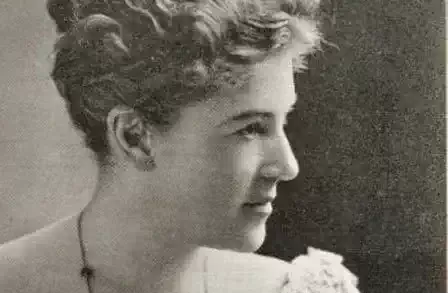
Ella Wheeler Wilcox
After the Engagement
After the Engagement
Well, Mabel, 'tis over and ended---
The ball I wrote was to be;
And oh! it was perfectly splendid---
If you could have been here to see.
I've a thousand things to write you
That I know you are wanting to hear,
And one, that is sure to delight you---
I am wearing Joe's diamond, my dear!
Yes, mamma is quite ecstatic
That I am engaged to Joe;
She thinks I am rather erratic,
And feared that I might say "no."
But, Mabel, I'm twenty-seven
(Though nobody dreams it, dear),
And a fortune like Joe's isn't given
To lay at one's feet each year.
You know my old fancy for Harry---
Or, at least, I am certain you guessed
That it took all my sense not to marry
And go with that fellow out west.
But that was my very first season---
And Harry was poor as could be,
And mamma's good practical reason
Took all the romance out of me.
She whisked me off over the ocean,
And had me presented at court,
And got me all out of the notion
That ranch life out west was my forte.
Of course I have never repented--I'm
not such a goose of a thing;
But after I had consented
To Joe---and he gave me the ring---
I felt such a queer sensation.
I seemed to go into a trance,
Away from the music's pulsation,
Away from the lights and the dance.
And the wind o'er the wild prairie
Seemed blowing strong and free,
And it seemed not Joe, but Harry
Who was standing there close to me.
And the funniest feverish feeling
Went up from my feet to my head,
With little chills after it stealing---
And my hands got as numb as the dead.
A moment, and then it was over:
The diamond blazed up in my eyes,
And I saw in the face of my lover
A questioning, strange surprise.
Maybe 'twas the scent of the flowers,
That heavy with fragrance bloomed near,
But I didn't feel natural for hours;
It was odd now, wasn't it, dear?
Write soon to your fortunate Clara
Who has carried the prize away,
And say you'll come on when I marry;
I think it will happen in May.
Well, Mabel, 'tis over and ended---
The ball I wrote was to be;
And oh! it was perfectly splendid---
If you could have been here to see.
I've a thousand things to write you
That I know you are wanting to hear,
And one, that is sure to delight you---
I am wearing Joe's diamond, my dear!
Yes, mamma is quite ecstatic
That I am engaged to Joe;
She thinks I am rather erratic,
And feared that I might say "no."
But, Mabel, I'm twenty-seven
(Though nobody dreams it, dear),
And a fortune like Joe's isn't given
To lay at one's feet each year.
You know my old fancy for Harry---
Or, at least, I am certain you guessed
That it took all my sense not to marry
And go with that fellow out west.
But that was my very first season---
And Harry was poor as could be,
And mamma's good practical reason
Took all the romance out of me.
She whisked me off over the ocean,
And had me presented at court,
And got me all out of the notion
That ranch life out west was my forte.
Of course I have never repented--I'm
not such a goose of a thing;
But after I had consented
To Joe---and he gave me the ring---
I felt such a queer sensation.
I seemed to go into a trance,
Away from the music's pulsation,
Away from the lights and the dance.
And the wind o'er the wild prairie
Seemed blowing strong and free,
And it seemed not Joe, but Harry
Who was standing there close to me.
And the funniest feverish feeling
Went up from my feet to my head,
With little chills after it stealing---
And my hands got as numb as the dead.
A moment, and then it was over:
The diamond blazed up in my eyes,
And I saw in the face of my lover
A questioning, strange surprise.
Maybe 'twas the scent of the flowers,
That heavy with fragrance bloomed near,
But I didn't feel natural for hours;
It was odd now, wasn't it, dear?
Write soon to your fortunate Clara
Who has carried the prize away,
And say you'll come on when I marry;
I think it will happen in May.
425
Ella Wheeler Wilcox
A Meeting
A Meeting
Quite carelessly I turned the newsy sheet;
A song I sang, full many a year ago,
Smiled up at me, as in a busy street
One meets an old-time friend he used to know.
So full it was, that simple little song,
Of all the hope, the transport, and the truth,
Which to the impetuous morn of life belong,
That once again I seemed to grasp my youth.
So full it was of that sweet, fancied pain
We woo and cherish ere we meet with woe,
I felt as one who hears a plaintive strain
His mother sang him in the long ago.
Up from the grave the years that lay between
That song's birthday and my stern present came
Like phantom forms and swept across the scene,
Bearing their broken dreams of love and fame.
Fair hopes and bright ambitions that I knew
In that old time, with their ideal grace,
Shone for a moment, then were lost to view
Behind the dull clouds of the commonplace.
With trembling hands I put the sheet away;
Ah, little song! the sad and bitter truth
Struck like an arrow when we met that day!
My life has missed the promise of its youth.
Quite carelessly I turned the newsy sheet;
A song I sang, full many a year ago,
Smiled up at me, as in a busy street
One meets an old-time friend he used to know.
So full it was, that simple little song,
Of all the hope, the transport, and the truth,
Which to the impetuous morn of life belong,
That once again I seemed to grasp my youth.
So full it was of that sweet, fancied pain
We woo and cherish ere we meet with woe,
I felt as one who hears a plaintive strain
His mother sang him in the long ago.
Up from the grave the years that lay between
That song's birthday and my stern present came
Like phantom forms and swept across the scene,
Bearing their broken dreams of love and fame.
Fair hopes and bright ambitions that I knew
In that old time, with their ideal grace,
Shone for a moment, then were lost to view
Behind the dull clouds of the commonplace.
With trembling hands I put the sheet away;
Ah, little song! the sad and bitter truth
Struck like an arrow when we met that day!
My life has missed the promise of its youth.
370
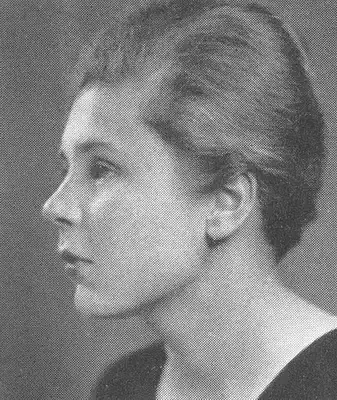
Elizabeth Bishop
Songs for a Colored Singer
Songs for a Colored Singer
I
A washing hangs upon the line,
but it's not mine.
None of the things that I can see
belong to me.
The neighbors got a radio with an aerial;
we got a little portable.
They got a lot of closet space;
we got a suitcase.
I say, "Le Roy, just how much are we owing?
Something I can't comprehend,
the more we got the more we spend...."
He only answers, "Let's get going."
Le Roy, you're earning too much money now.
I sit and look at our backyard
and find it very hard.
What have we got for all his dollars and cents?
--A pile of bottles by the fence.
He's faithful and he's kind
but he sure has an inquiring mind.
He's seen a lot; he's bound to see the rest,
and if I protest
Le Roy answers with a frown,
"Darling, when I earns I spends.
The world is wide; it still extends....
I'm going to get a job in the next town."
Le Roy, you're earning too much money now.
II
The time has come to call a halt;
and so it ends.
He's gone off with his other friends.
He needn't try to make amends,
this occasion's all his fault.
Through rain and dark I see his face
across the street at Flossie's place.
He's drinking in the warm pink glow
to th' accompaniment of the piccolo.
The time has come to call a halt.
I met him walking with Varella
and hit him twice with my umbrella.
Perhaps that occasion was my fault,
but the time has come to call a halt.
Go drink your wine and go get tight.
Let the piccolo play.
I'm sick of all your fussing anyway.
Now I'm pursuing my own way.
I'm leaving on the bus tonight.
Far down the highway wet and black
I'll ride and ride and not come back.
I'm going to go and take the bus
and find someone monogamous.
The time has come to call a halt.
I've borrowed fifteen dollars fare
and it will take me anywhere.
For this occasion's all his fault.
The time has come to call a halt.
III
Lullaby.
Adult and child
sink to their rest.
At sea the big ship sinks and dies,
lead in its breast.
Lullaby.
Let mations rage,
let nations fall.
The shadow of the crib makes an enormous cage
upon the wall.
Lullaby.
Sleep on and on,
war's over soon.
Drop the silly, harmless toy,
pick up the moon.
Lullaby.
If they should say
you have no sense,
don't you mind them; it won't make
much difference.
Lullaby.
Adult and child
sink to their rest.
At sea the big ship sinks and dies,
lead in its breast.
IV
What's that shining in the leaves,
the shadowy leaves,
like tears when somebody grieves,
shining, shining in the leaves?
Is it dew or is it tears,
dew or tears,
hanging there for years and years
like a heavy dew of tears?
Then that dew begins to fall,
roll down and fall,
Maybe it's not tears at all.
See it, see it roll and fall.
Hear it falling on the ground,
hear, all around.
That is not a tearful sound,
beating, beating on the ground.
See it lying there like seeds,
like black seeds.
see it taking root like weeds,
faster, faster than the weeds,
all the shining seeds take root,
conspiring root,
and what curious flower or fruit
will grow from that conspiring root?
fruit or flower? It is a face.
Yes, a face.
In that dark and dreary place
each seed grows into a face.
Like an army in a dream
the faces seem,
darker, darker, like a dream.
They're too real to be a dream.
I
A washing hangs upon the line,
but it's not mine.
None of the things that I can see
belong to me.
The neighbors got a radio with an aerial;
we got a little portable.
They got a lot of closet space;
we got a suitcase.
I say, "Le Roy, just how much are we owing?
Something I can't comprehend,
the more we got the more we spend...."
He only answers, "Let's get going."
Le Roy, you're earning too much money now.
I sit and look at our backyard
and find it very hard.
What have we got for all his dollars and cents?
--A pile of bottles by the fence.
He's faithful and he's kind
but he sure has an inquiring mind.
He's seen a lot; he's bound to see the rest,
and if I protest
Le Roy answers with a frown,
"Darling, when I earns I spends.
The world is wide; it still extends....
I'm going to get a job in the next town."
Le Roy, you're earning too much money now.
II
The time has come to call a halt;
and so it ends.
He's gone off with his other friends.
He needn't try to make amends,
this occasion's all his fault.
Through rain and dark I see his face
across the street at Flossie's place.
He's drinking in the warm pink glow
to th' accompaniment of the piccolo.
The time has come to call a halt.
I met him walking with Varella
and hit him twice with my umbrella.
Perhaps that occasion was my fault,
but the time has come to call a halt.
Go drink your wine and go get tight.
Let the piccolo play.
I'm sick of all your fussing anyway.
Now I'm pursuing my own way.
I'm leaving on the bus tonight.
Far down the highway wet and black
I'll ride and ride and not come back.
I'm going to go and take the bus
and find someone monogamous.
The time has come to call a halt.
I've borrowed fifteen dollars fare
and it will take me anywhere.
For this occasion's all his fault.
The time has come to call a halt.
III
Lullaby.
Adult and child
sink to their rest.
At sea the big ship sinks and dies,
lead in its breast.
Lullaby.
Let mations rage,
let nations fall.
The shadow of the crib makes an enormous cage
upon the wall.
Lullaby.
Sleep on and on,
war's over soon.
Drop the silly, harmless toy,
pick up the moon.
Lullaby.
If they should say
you have no sense,
don't you mind them; it won't make
much difference.
Lullaby.
Adult and child
sink to their rest.
At sea the big ship sinks and dies,
lead in its breast.
IV
What's that shining in the leaves,
the shadowy leaves,
like tears when somebody grieves,
shining, shining in the leaves?
Is it dew or is it tears,
dew or tears,
hanging there for years and years
like a heavy dew of tears?
Then that dew begins to fall,
roll down and fall,
Maybe it's not tears at all.
See it, see it roll and fall.
Hear it falling on the ground,
hear, all around.
That is not a tearful sound,
beating, beating on the ground.
See it lying there like seeds,
like black seeds.
see it taking root like weeds,
faster, faster than the weeds,
all the shining seeds take root,
conspiring root,
and what curious flower or fruit
will grow from that conspiring root?
fruit or flower? It is a face.
Yes, a face.
In that dark and dreary place
each seed grows into a face.
Like an army in a dream
the faces seem,
darker, darker, like a dream.
They're too real to be a dream.
573
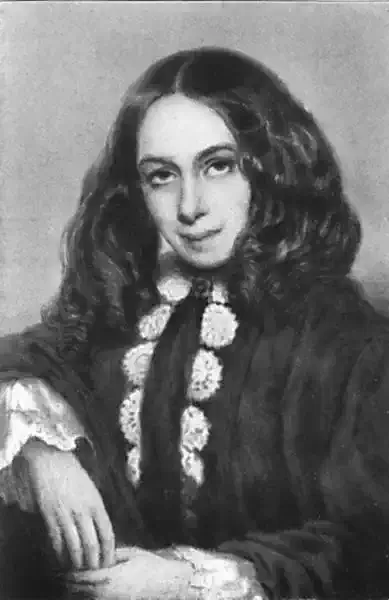
Elizabeth Barrett Browning
XXXV
XXXV
If I leave all for thee, wilt thou exchange
And be all to me ? Shall I never miss
Home-talk and blessing and the common kiss
That comes to each in turn, nor count it strange,
When I look up, to drop on a new range
Of walls and floors, another home than this ?
Nay, wilt thou fill that place by me which is
Filled by dead eyes too tender to know change ?
That 's hardest. If to conquer love, has tried,
To conquer grief, tries more, as all things prove;
For grief indeed is love and grief beside.
Alas, I have grieved sol am hard to love.
Yet love me--wilt thou ? Open thine heart wide,
And fold within the wet wings of thy dove.
If I leave all for thee, wilt thou exchange
And be all to me ? Shall I never miss
Home-talk and blessing and the common kiss
That comes to each in turn, nor count it strange,
When I look up, to drop on a new range
Of walls and floors, another home than this ?
Nay, wilt thou fill that place by me which is
Filled by dead eyes too tender to know change ?
That 's hardest. If to conquer love, has tried,
To conquer grief, tries more, as all things prove;
For grief indeed is love and grief beside.
Alas, I have grieved sol am hard to love.
Yet love me--wilt thou ? Open thine heart wide,
And fold within the wet wings of thy dove.
391
Elizabeth Barrett Browning
XI
XI
And therefore if to love can be desert,
I am not all unworthy. Cheeks as pale
As these you see, and trembling knees that fail
To bear the burden of a heavy heart,--
This weary minstrel-life that once was girt
To climb Aornus, and can scarce avail
To pipe now 'gainst the valley nightingale
A melancholy music,--why advert
To these things ? O Beloved, it is plain
I am not of thy worth nor for thy place !
And yet, because I love thee, I obtain
From that same love this vindicating grace,
To live on still in love, and yet in vain,--
To bless thee, yet renounce thee to thy face.
And therefore if to love can be desert,
I am not all unworthy. Cheeks as pale
As these you see, and trembling knees that fail
To bear the burden of a heavy heart,--
This weary minstrel-life that once was girt
To climb Aornus, and can scarce avail
To pipe now 'gainst the valley nightingale
A melancholy music,--why advert
To these things ? O Beloved, it is plain
I am not of thy worth nor for thy place !
And yet, because I love thee, I obtain
From that same love this vindicating grace,
To live on still in love, and yet in vain,--
To bless thee, yet renounce thee to thy face.
445
Elizabeth Barrett Browning
The Lady's Yes
The Lady's Yes
'Yes,' I answered you last night;
'No,' this morning, Sir, I say.
Colours seen by candlelight,
Will not look the same by day.
When the viols played their best,
Lamps above, and laughs below---
Love me sounded like a jest,
Fit for Yes or fit for No.
Call me false, or call me free--Vow,
whatever light may shine,
No man on your face shall see
Any grief for change on mine.
Yet the sin is on us both--Time
to dance is not to woo---
Wooer light makes fickle troth--Scorn
of me recoils on you.
Learn to win a lady's faith
Nobly, as the thing is high;
Bravely, as for life and death--With
a loyal gravity.
Lead her from the festive boards,
Point her to the starry skies,
Guard her, by your truthful words,
Pure from courtship's flatteries.
By your truth she shall be true--Ever
true, as wives of yore---
And her Yes, once said to you,
SHALL be Yes for evermore.
'Yes,' I answered you last night;
'No,' this morning, Sir, I say.
Colours seen by candlelight,
Will not look the same by day.
When the viols played their best,
Lamps above, and laughs below---
Love me sounded like a jest,
Fit for Yes or fit for No.
Call me false, or call me free--Vow,
whatever light may shine,
No man on your face shall see
Any grief for change on mine.
Yet the sin is on us both--Time
to dance is not to woo---
Wooer light makes fickle troth--Scorn
of me recoils on you.
Learn to win a lady's faith
Nobly, as the thing is high;
Bravely, as for life and death--With
a loyal gravity.
Lead her from the festive boards,
Point her to the starry skies,
Guard her, by your truthful words,
Pure from courtship's flatteries.
By your truth she shall be true--Ever
true, as wives of yore---
And her Yes, once said to you,
SHALL be Yes for evermore.
359
Elizabeth Barrett Browning
Sonnet XXX: I See Thine Image
Sonnet XXX: I See Thine Image
I see thine image through my tears to-night,
And yet to-day I saw thee smiling. How
Refer the cause?--Beloved, is it thou
Or I, who makes me sad? The acolyte
Amid the chanted joy and thankful rite
May so fall flat, with pale insensate brow,
On the altar-stair. I hear thy voice and vow,
Perplexed, uncertain, since thou art out of sight,
As he, in his swooning ears, the choir's amen.
Beloved, dost thou love? or did I see all
The glory as I dreamed, and fainted when
Too vehement light dilated my ideal,
For my soul's eyes? Will that light come again,
As now these tears come--falling hot and real?
I see thine image through my tears to-night,
And yet to-day I saw thee smiling. How
Refer the cause?--Beloved, is it thou
Or I, who makes me sad? The acolyte
Amid the chanted joy and thankful rite
May so fall flat, with pale insensate brow,
On the altar-stair. I hear thy voice and vow,
Perplexed, uncertain, since thou art out of sight,
As he, in his swooning ears, the choir's amen.
Beloved, dost thou love? or did I see all
The glory as I dreamed, and fainted when
Too vehement light dilated my ideal,
For my soul's eyes? Will that light come again,
As now these tears come--falling hot and real?
651
Elizabeth Barrett Browning
Sonnet XV: Accuse Me Not
Sonnet XV: Accuse Me Not
Accuse me not, beseech thee, that I wear
Too calm and sad a face in front of thine;
For we two look two ways, and cannot shine
With the same sunlight on our brow and hair.
On me thou lookest with no doubting care,
As on a bee in a crystalline;
Since sorrow hath shut me safe in love's divine
And to spread wing and fly in the outer air
Were most impossible failure, if I strove
To fail so. But I look on thee--on thee--
Beholding, besides love, the end of love,
Hearing oblivion beyond memory;
As one who sits and gazes from above,
Over the rivers to the bitter sea.
Accuse me not, beseech thee, that I wear
Too calm and sad a face in front of thine;
For we two look two ways, and cannot shine
With the same sunlight on our brow and hair.
On me thou lookest with no doubting care,
As on a bee in a crystalline;
Since sorrow hath shut me safe in love's divine
And to spread wing and fly in the outer air
Were most impossible failure, if I strove
To fail so. But I look on thee--on thee--
Beholding, besides love, the end of love,
Hearing oblivion beyond memory;
As one who sits and gazes from above,
Over the rivers to the bitter sea.
384
Elizabeth Barrett Browning
Sonnet VI: Go From Me
Sonnet VI: Go From Me
Go from me. Yet I feel that I shall stand
Henceforth in thy shadow. Nevermore
Alone upon the threshold of my door
Of individual life, I shall command
The uses of my soul, nor lift my hand
Serenely in the sunshine as before,
Without the sense of that which I forbore--
Thy touch upon the palm. The widest land
Doom takes to part us, leaves thy heart in mine
With pulses that beat double. What I do
And what I dream include thee, as the wine
Must taste of its own grapes. And when I sue
God for myself, He hears that name of thine,
And sees within my eyes the tears of two.
Go from me. Yet I feel that I shall stand
Henceforth in thy shadow. Nevermore
Alone upon the threshold of my door
Of individual life, I shall command
The uses of my soul, nor lift my hand
Serenely in the sunshine as before,
Without the sense of that which I forbore--
Thy touch upon the palm. The widest land
Doom takes to part us, leaves thy heart in mine
With pulses that beat double. What I do
And what I dream include thee, as the wine
Must taste of its own grapes. And when I sue
God for myself, He hears that name of thine,
And sees within my eyes the tears of two.
399
Elizabeth Barrett Browning
Sonnet 28 - My letters! all dead paper, mute and white!
Sonnet 28 - My letters! all dead paper, mute and white!
XXVIII
My letters! all dead paper, mute and white!
And yet they seem alive and quivering
Against my tremulous hands which loose the string
And let them drop down on my knee to-night.
This said,-he wished to have me in his sight
Once, as a friend: this fixed a day in spring
To come and touch my hand . . . a simple thing,
Yet I wept for it!-this, . . . the paper's light . . .
Said, Dear, I love thee; and I sank and quailed
As if God's future thundered on my past.
This said, I am thine-and so its ink has paled
With Iying at my heart that beat too fast.
And this . . . O Love, thy words have ill availed
If, what this said, I dared repeat at last!
XXVIII
My letters! all dead paper, mute and white!
And yet they seem alive and quivering
Against my tremulous hands which loose the string
And let them drop down on my knee to-night.
This said,-he wished to have me in his sight
Once, as a friend: this fixed a day in spring
To come and touch my hand . . . a simple thing,
Yet I wept for it!-this, . . . the paper's light . . .
Said, Dear, I love thee; and I sank and quailed
As if God's future thundered on my past.
This said, I am thine-and so its ink has paled
With Iying at my heart that beat too fast.
And this . . . O Love, thy words have ill availed
If, what this said, I dared repeat at last!
451
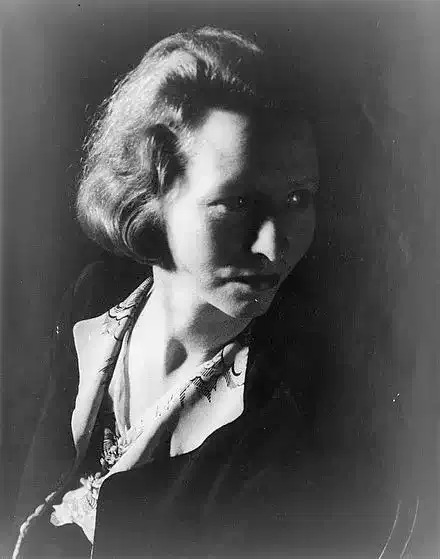
Edna St. Vincent Millay
The Spring And The Fall
The Spring And The Fall
In the spring of the year, in the spring of the year,
I walked the road beside my dear.
The trees were black where the bark was wet.
I see them yet, in the spring of the year.
He broke me a bough of the blossoming peach
That was out of the way and hard to reach.
In the fall of the year, in the fall of the year,
I walked the road beside my dear.
The rooks went up with a raucous trill.
I hear them still, in the fall of the year.
He laughed at all I dared to praise,
And broke my heart, in little ways.
Year be springing or year be falling,
The bark will drip and the birds be calling.
There's much that's fine to see and hear
In the spring of a year, in the fall of a year.
'Tis not love's going hurt my days.
But that it went in little ways.
In the spring of the year, in the spring of the year,
I walked the road beside my dear.
The trees were black where the bark was wet.
I see them yet, in the spring of the year.
He broke me a bough of the blossoming peach
That was out of the way and hard to reach.
In the fall of the year, in the fall of the year,
I walked the road beside my dear.
The rooks went up with a raucous trill.
I hear them still, in the fall of the year.
He laughed at all I dared to praise,
And broke my heart, in little ways.
Year be springing or year be falling,
The bark will drip and the birds be calling.
There's much that's fine to see and hear
In the spring of a year, in the fall of a year.
'Tis not love's going hurt my days.
But that it went in little ways.
443
Edna St. Vincent Millay
Sonnets 04: Only Until This Cigarette Is Ended
Sonnets 04: Only Until This Cigarette Is Ended
Only until this cigarette is ended,
A little moment at the end of all,
While on the floor the quiet ashes fall,
And in the firelight to a lance extended,
Bizarrely with the jazzing music blended,
The broken shadow dances on the wall,
I will permit my memory to recall
The vision of you, by all my dreams attended.
And then adieu,—farewell!—the dream is done.
Yours is a face of which I can forget
The color and the features, every one,
The words not ever, and the smiles not yet;
But in your day this moment is the sun
Upon a hill, after the sun has set.
Only until this cigarette is ended,
A little moment at the end of all,
While on the floor the quiet ashes fall,
And in the firelight to a lance extended,
Bizarrely with the jazzing music blended,
The broken shadow dances on the wall,
I will permit my memory to recall
The vision of you, by all my dreams attended.
And then adieu,—farewell!—the dream is done.
Yours is a face of which I can forget
The color and the features, every one,
The words not ever, and the smiles not yet;
But in your day this moment is the sun
Upon a hill, after the sun has set.
253
Edna St. Vincent Millay
Sonnets (1923)
Sonnets (1923)
VIII8.
Oh, oh, you will be sorry for that word!
.
Give back my book and take my kiss instead.
.
Was it my enemy or my friend I heard,
.
"What a big book for such a little head!"
.
Come, I will show you now my newest hat,
.
And you may watch me purse my mouth and prink!
.
Oh, I shall love you still, and all of that.
.
I never again shall tell you what I think.
.
I shall be sweet and crafty, soft and sly;
.
You will not catch me reading any more:
.
I shall be called a wife to pattern by;
.
And some day when you knock and push the door,
.
Some sane day, not too bright and not too stormy,
.
I shall be gone, and you may whistle for me. IX9.
Here is a wound that never will heal, I know,
.
Being wrought not of a dearness and a death,
.
But of a love turned ashes and the breath
.
Gone out of beauty; never again will grow
.
The grass on that scarred acre, though I sow
.
Young seed there yearly and the sky bequeath
.
Its friendly weathers down, far underneath
.
Shall be such bitterness of an old woe.
.
That April should be shattered by a gust,
.
That August should be levelled by a rain,
.
I can endure, and that the lifted dust
.
Of man should settle to the earth again;
.
But that a dream can die, will be a thrust
.
Between my ribs forever of hot pain. XVIII18.
I, being born a woman and distressed
.
By all the needs and notions of my kind,
.
Am urged by your propinquity to find
.
Your person fair, and feel a certain zest
.
To bear your body's weight upon my breast:
.
So subtly is the fume of life designed,
.
To clarify the pulse and cloud the mind,
.
And leave me once again undone, possessed.
.
Think not for this, however, the poor treason
.
Of my stout blood against my staggering brain,
.
I shall remember you with love, or season
.
My scorn with pity, -- let me make it plain:
.
I find this frenzy insufficient reason
.
For conversation when we meet again. XIX19.
What lips my lips have kissed, and where, and why,
.
I have forgotten, and what arms have lain
.
Under my head till morning; but the rain
.
Is full of ghosts to-night, that tap and sigh
.
Upon the glass and listen for reply,
.
And in my heart there stirs a quiet pain
.
For unremembered lads that not again
.
Will turn to me at midnight with a cry.
.
Thus in the winter stands the lonely tree,
.
Nor knows what birds have vanished one by one,
.
Yet knows its boughs more silent than before:
.
I cannot say what loves have come and gone,
.
I only know that summer sang in me
.
A little while, that in me sings no more.
VIII8.
Oh, oh, you will be sorry for that word!
.
Give back my book and take my kiss instead.
.
Was it my enemy or my friend I heard,
.
"What a big book for such a little head!"
.
Come, I will show you now my newest hat,
.
And you may watch me purse my mouth and prink!
.
Oh, I shall love you still, and all of that.
.
I never again shall tell you what I think.
.
I shall be sweet and crafty, soft and sly;
.
You will not catch me reading any more:
.
I shall be called a wife to pattern by;
.
And some day when you knock and push the door,
.
Some sane day, not too bright and not too stormy,
.
I shall be gone, and you may whistle for me. IX9.
Here is a wound that never will heal, I know,
.
Being wrought not of a dearness and a death,
.
But of a love turned ashes and the breath
.
Gone out of beauty; never again will grow
.
The grass on that scarred acre, though I sow
.
Young seed there yearly and the sky bequeath
.
Its friendly weathers down, far underneath
.
Shall be such bitterness of an old woe.
.
That April should be shattered by a gust,
.
That August should be levelled by a rain,
.
I can endure, and that the lifted dust
.
Of man should settle to the earth again;
.
But that a dream can die, will be a thrust
.
Between my ribs forever of hot pain. XVIII18.
I, being born a woman and distressed
.
By all the needs and notions of my kind,
.
Am urged by your propinquity to find
.
Your person fair, and feel a certain zest
.
To bear your body's weight upon my breast:
.
So subtly is the fume of life designed,
.
To clarify the pulse and cloud the mind,
.
And leave me once again undone, possessed.
.
Think not for this, however, the poor treason
.
Of my stout blood against my staggering brain,
.
I shall remember you with love, or season
.
My scorn with pity, -- let me make it plain:
.
I find this frenzy insufficient reason
.
For conversation when we meet again. XIX19.
What lips my lips have kissed, and where, and why,
.
I have forgotten, and what arms have lain
.
Under my head till morning; but the rain
.
Is full of ghosts to-night, that tap and sigh
.
Upon the glass and listen for reply,
.
And in my heart there stirs a quiet pain
.
For unremembered lads that not again
.
Will turn to me at midnight with a cry.
.
Thus in the winter stands the lonely tree,
.
Nor knows what birds have vanished one by one,
.
Yet knows its boughs more silent than before:
.
I cannot say what loves have come and gone,
.
I only know that summer sang in me
.
A little while, that in me sings no more.
366
Edna St. Vincent Millay
Pity Me Not Because The Light Of Day
Pity Me Not Because The Light Of Day
Pity me not because the light of day
At close of day no longer walks the sky;
Pity me not for beauties passed away
From field and thicket as the the year goes by;
Pity me not the waning of the moon,
Nor that the ebbing tide goes out to sea,
Nor that a man's desire is hushed so soon,
And you no longer look with love on me.
This have I known always: Love is no more
Than the wide blossom which the wind assails,
Than the great tide that treads the shifting shore,
Strewing fresh wreckage gathered in the gales:
Pity me that the heart is slow to learn
What the swift mind beholds at ever turn.
Pity me not because the light of day
At close of day no longer walks the sky;
Pity me not for beauties passed away
From field and thicket as the the year goes by;
Pity me not the waning of the moon,
Nor that the ebbing tide goes out to sea,
Nor that a man's desire is hushed so soon,
And you no longer look with love on me.
This have I known always: Love is no more
Than the wide blossom which the wind assails,
Than the great tide that treads the shifting shore,
Strewing fresh wreckage gathered in the gales:
Pity me that the heart is slow to learn
What the swift mind beholds at ever turn.
307
Edna St. Vincent Millay
Passer Mortuus Est
Passer Mortuus Est
Death devours all lovely things;
Lesbia with her sparrow
Shares the darkness,—presently
Every bed is narrow.
Unremembered as old rain
Dries the sheer libation,
And the little petulant hand
Is an annotation.
After all, my erstwhile dear,
My no longer cherished,
Need we say it was not love,
Now that love is perished?
Death devours all lovely things;
Lesbia with her sparrow
Shares the darkness,—presently
Every bed is narrow.
Unremembered as old rain
Dries the sheer libation,
And the little petulant hand
Is an annotation.
After all, my erstwhile dear,
My no longer cherished,
Need we say it was not love,
Now that love is perished?
393
Edna St. Vincent Millay
Humoresque
Humoresque
"Heaven bless the babe!" they said.
"What queer books she must have read!"
(Love, by whom I was beguiled,
Grant I may not bear a child.)
"Little does she guess to-day
What the world may be!" they say.
(Snow, drift deep and cover
Till the spring my murdered lover.)
"Heaven bless the babe!" they said.
"What queer books she must have read!"
(Love, by whom I was beguiled,
Grant I may not bear a child.)
"Little does she guess to-day
What the world may be!" they say.
(Snow, drift deep and cover
Till the spring my murdered lover.)
357
Edna St. Vincent Millay
Fontaine, Je Ne Boirai Pas De Ton Eau!
Fontaine, Je Ne Boirai Pas De Ton Eau!
I know I might have lived in such a way
As to have suffered only pain:
Loving not man nor dog;
Not money, even; feeling
Toothache perhaps, but never more than an hour away
From skill and novocaine;
Making no contacts, dealing with life through Agents, drinking
one cocktail, betting two dollars, wearing raincoats in the
rain.
Betrayed at length by no one but the fog
Whispering to the wing of the plane.
"Fountain," I have cried to that unbubbling well, "I will not
drink of thy water!" Yet I thirst
For a mouthful of—not to swallow, only to rinse my mouth in
—peace.
And while the eyes of the past condemn,
The eyes of the present narrow into assignation. And—
worst—
The young are so old, they are born with their fingers crossed;
I shall get no help from them.
I know I might have lived in such a way
As to have suffered only pain:
Loving not man nor dog;
Not money, even; feeling
Toothache perhaps, but never more than an hour away
From skill and novocaine;
Making no contacts, dealing with life through Agents, drinking
one cocktail, betting two dollars, wearing raincoats in the
rain.
Betrayed at length by no one but the fog
Whispering to the wing of the plane.
"Fountain," I have cried to that unbubbling well, "I will not
drink of thy water!" Yet I thirst
For a mouthful of—not to swallow, only to rinse my mouth in
—peace.
And while the eyes of the past condemn,
The eyes of the present narrow into assignation. And—
worst—
The young are so old, they are born with their fingers crossed;
I shall get no help from them.
308
Edna St. Vincent Millay
And do you think that love itself
And do you think that love itself
And do you think that love itself,
Living in such an ugly house,
Can prosper long?
We meet and part;
Our talk is all of heres and nows,
Our conduct likewise; in no act
Is any future, any past;
Under our sly, unspoken pact,
I KNOW with whom I saw you last,
But I say nothing; and you know
At six-fifteen to whom I go—
Can even love be treated so?
I KNOW, but I do not insist,
Having stealth and tact, thought not enough,
What hour your eye is on your wrist.
No wild appeal, no mild rebuff
Deflates the hour, leaves the wine flat—
Yet if YOU drop the picked-up book
To intercept my clockward look—
Tell me, can love go on like that?
Even the bored, insulted heart,
That signed so long and tight a lease,
Can BREAK it CONTRACT, slump in peace.
And do you think that love itself,
Living in such an ugly house,
Can prosper long?
We meet and part;
Our talk is all of heres and nows,
Our conduct likewise; in no act
Is any future, any past;
Under our sly, unspoken pact,
I KNOW with whom I saw you last,
But I say nothing; and you know
At six-fifteen to whom I go—
Can even love be treated so?
I KNOW, but I do not insist,
Having stealth and tact, thought not enough,
What hour your eye is on your wrist.
No wild appeal, no mild rebuff
Deflates the hour, leaves the wine flat—
Yet if YOU drop the picked-up book
To intercept my clockward look—
Tell me, can love go on like that?
Even the bored, insulted heart,
That signed so long and tight a lease,
Can BREAK it CONTRACT, slump in peace.
345
Edna St. Vincent Millay
And we are done forever
And we are done forever; by and by
I shall forget you, as I said, but now,
If you entreat me with your loveliest lie
I will protest you with my favorite vow.
I would indeed that love were longer-lived,
And vows were not so brittle as they are,
But so it is, and nature has contrived
To struggle on without a break thus far, -
Whether or not we find what we are seeking
Is idle, biologically speaking.
I shall forget you, as I said, but now,
If you entreat me with your loveliest lie
I will protest you with my favorite vow.
I would indeed that love were longer-lived,
And vows were not so brittle as they are,
But so it is, and nature has contrived
To struggle on without a break thus far, -
Whether or not we find what we are seeking
Is idle, biologically speaking.
106
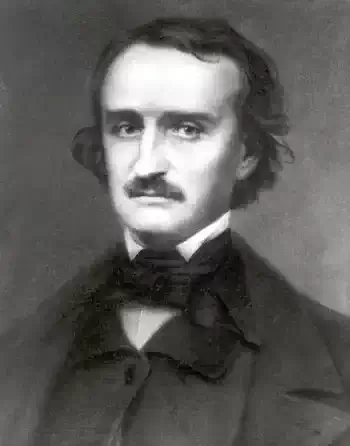
Edgar Allan Poe
Bridal Ballad
Bridal Ballad
The ring is on my hand,
And the wreath is on my brow;
Satin and jewels grand
Are all at my command,
And I am happy now.
And my lord he loves me well;
But, when first he breathed his vow,
I felt my bosom swellFor
the words rang as a knell,
And the voice seemed his who fell
In the battle down the dell,
And who is happy now.
But he spoke to re-assure me,
And he kissed my pallid brow,
While a reverie came o'er me,
And to the church-yard bore me,
And I sighed to him before me,
Thinking him dead D'Elormie,
"Oh, I am happy now!"
And thus the words were spoken,
And this the plighted vow,
And, though my faith be broken,
And, though my heart be broken,
Here is a ring, as token
That I am happy now!
Would God I could awaken!
For I dream I know not how!
And my soul is sorely shaken
Lest an evil step be taken,
Lest the dead who is forsaken
May not be happy now.
The ring is on my hand,
And the wreath is on my brow;
Satin and jewels grand
Are all at my command,
And I am happy now.
And my lord he loves me well;
But, when first he breathed his vow,
I felt my bosom swellFor
the words rang as a knell,
And the voice seemed his who fell
In the battle down the dell,
And who is happy now.
But he spoke to re-assure me,
And he kissed my pallid brow,
While a reverie came o'er me,
And to the church-yard bore me,
And I sighed to him before me,
Thinking him dead D'Elormie,
"Oh, I am happy now!"
And thus the words were spoken,
And this the plighted vow,
And, though my faith be broken,
And, though my heart be broken,
Here is a ring, as token
That I am happy now!
Would God I could awaken!
For I dream I know not how!
And my soul is sorely shaken
Lest an evil step be taken,
Lest the dead who is forsaken
May not be happy now.
342
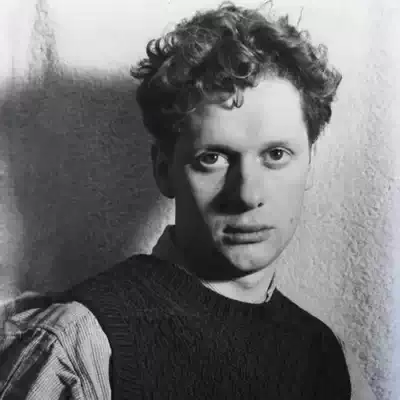
Dylan Thomas
Out Of The Sighs
Out Of The Sighs
Out of the sighs a little comes,
But not of grief, for I have knocked down that
Before the agony; the spirit grows,
Forgets, and cries;
A little comes, is tasted and found good;
All could not disappoint;
There must, be praised, some certainty,
If not of loving well, then not,
And that is true after perpetual defeat.
After such fighting as the weakest know,
There's more than dying;
Lose the great pains or stuff the wound,
He'll ache too long
Through no regret of leaving woman waiting
For her soldier stained with spilt words
That spill such acrid blood.
Were that enough, enough to ease the pain,
Feeling regret when this is wasted
That made me happy in the sun,
How much was happy while it lasted,
Were vagueness enough and the sweet lies plenty,
The hollow words could bear all suffering
And cure me of ills.
Were that enough, bone, blood, and sinew,
The twisted brain, the fair-formed loin,
Groping for matter under the dog's plate,
Man should be cured of distemper.
For all there is to give I offer:
Crumbs, barn, and halter.
Out of the sighs a little comes,
But not of grief, for I have knocked down that
Before the agony; the spirit grows,
Forgets, and cries;
A little comes, is tasted and found good;
All could not disappoint;
There must, be praised, some certainty,
If not of loving well, then not,
And that is true after perpetual defeat.
After such fighting as the weakest know,
There's more than dying;
Lose the great pains or stuff the wound,
He'll ache too long
Through no regret of leaving woman waiting
For her soldier stained with spilt words
That spill such acrid blood.
Were that enough, enough to ease the pain,
Feeling regret when this is wasted
That made me happy in the sun,
How much was happy while it lasted,
Were vagueness enough and the sweet lies plenty,
The hollow words could bear all suffering
And cure me of ills.
Were that enough, bone, blood, and sinew,
The twisted brain, the fair-formed loin,
Groping for matter under the dog's plate,
Man should be cured of distemper.
For all there is to give I offer:
Crumbs, barn, and halter.
274
Dylan Thomas
On a Wedding Anniversary
On a Wedding Anniversary
The sky is torn across
This ragged anniversary of two
Who moved for three years in tune
Down the long walks of their vows.
Now their love lies a loss
And Love and his patients roar on a chain;
From every tune or crater
Carrying cloud, Death strikes their house.
Too late in the wrong rain
They come together whom their love parted:
The windows pour into their heart
And the doors burn in their brain.
The sky is torn across
This ragged anniversary of two
Who moved for three years in tune
Down the long walks of their vows.
Now their love lies a loss
And Love and his patients roar on a chain;
From every tune or crater
Carrying cloud, Death strikes their house.
Too late in the wrong rain
They come together whom their love parted:
The windows pour into their heart
And the doors burn in their brain.
386
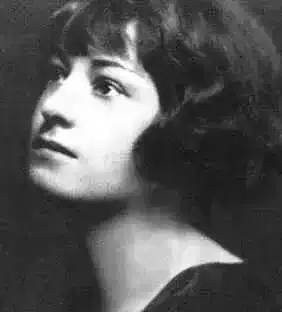
Dorothy Parker
To A Much Too Unfortunate Lady
To A Much Too Unfortunate Lady
He will love you presently
If you be the way you be.
Send your heart a-skittering.
He will stoop, and lift the thing.
Be your dreams as thread, to tease
Into patterns he shall please.
Let him see your passion is
Ever tenderer than his....
Go and bless your star above,
Thus are you, and thus is Love.
He will leave you white with woe,
If you go the way you go.
If your dreams were thread to weave
He will pluck them from his sleeve.
If your heart had come to rest,
He will flick it from his breast.
Tender though the love he bore,
You had loved a little more....
Lady, go and curse your star,
Thus Love is, and thus you are.
He will love you presently
If you be the way you be.
Send your heart a-skittering.
He will stoop, and lift the thing.
Be your dreams as thread, to tease
Into patterns he shall please.
Let him see your passion is
Ever tenderer than his....
Go and bless your star above,
Thus are you, and thus is Love.
He will leave you white with woe,
If you go the way you go.
If your dreams were thread to weave
He will pluck them from his sleeve.
If your heart had come to rest,
He will flick it from his breast.
Tender though the love he bore,
You had loved a little more....
Lady, go and curse your star,
Thus Love is, and thus you are.
382