

Poems in this topic
Pain and Despair
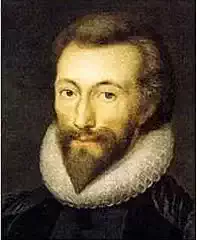
John Donne
Elegy XII
Elegy XII
COME Fates ; I fear you not ! All whom I owe
Are paid, but you ; then 'rest me ere I go.
But Chance from you all sovereignty hath got ;
Love woundeth none but those whom Death dares not ;
True if you were, and just in equity,
I should have vanquish'd her, as you did me ;
Else lovers should not brave Death's pains, and live ;
But 'tis a rule, “ Death comes not to relieve.”
Or, pale and wan Death's terrors, are they laid
So deep in lovers, they make Death afraid ?
Or—the least comfort—have I company ?
O'ercame she Fates, Love, Death, as well as me ?
Yes, Fates do silk unto her distaff pay,
For ransom, which tax they on us do lay.
Love gives her youth—which is the reason why
Youths, for her sake, some wither and some die.
Poor Death can nothing give ; yet, for her sake,
Still in her turn, he doth a lover take.
And if Death should prove false, she fears him not ;
Our Muses, to redeem her, she hath got.
That fatal night we last kiss'd, I thus pray'd,
—Or rather, thus despair'd, I should have said—
Kisses, and yet despair ! The forbid tree
Did promise (and deceive) no more than she.
Like lambs, that see their teats, and must eat hay,
A food, whose taste hath made me pine away.
Dives, when thou saw'st bliss, and craved'st to touch
A drop of water, thy great pains were such.
Here grief wants a fresh wit, for mine being spent,
And my sighs weary, groans are all my rent.
Unable longer to endure the pain,
They break like thunder, and do bring down rain.
Thus till dry tear solder my eye, I weep ;
And then, I dream, how you securely sleep,
And in your dreams do laugh at me. I hate,
And pray Love all may ; he pities my state,
But says, I therein no revenge shall find ;
The sun would shine, though all the world were blind.
Yet, to try my hate, Love show'd me your tear ;
And I had died, had not your smile been there.
Your frown undoes me ; your smile is my wealth ;
And as you please to look, I have my health.
Methought, Love pitying me, when he saw this,
Gave me your hands, the backs and palms to kiss.
That cured me not, but to bear pain gave strength ;
And what is lost in force, is took in length.
I call'd on Love again, who fear'd you so,
That his compassion still proved greater woe ;
For, then I dream'd I was in bed with you,
But durst not feel, for fear it should not be true.
This merits not your anger, had it been ;
The queen of chastity was naked seen ;
And in bed not to feel, the pain I took,
Was more than for Actæon not to look ;
And that breast which lay ope, I did not know,
But for the clearness, from a lump of snow ;
Nor that sweet teat which on the top it bore
From the rose-bud which for my sake you wore.
These griefs to issue forth, by verse I prove ;
Or turn their course by travel and new love.
All would not do ; the best at last I tried ;
Unable longer to hold out, I died.
And then I found I lost life, death by flying ;
Who hundreds live, are but so long in dying.
Charon did let me pass ; I'll him requite.
To mark the groves or shades wrongs my delight ;
I'll speak but of those ghosts I found alone,
Those thousand ghosts, whereof myself made one,
All images of thee ; I asked them why ?
The judge told me, all they for thee did die,
And therefore had for their Elysian bliss,
In one another their own loves to kiss.
O here I miss'd not blissh, but being dead ;
For lo ! I dreamt, I dreamt, and waking said,
“ Heaven, if who are in thee there must dwell,
How is't I now was there, and now I fell ?”
COME Fates ; I fear you not ! All whom I owe
Are paid, but you ; then 'rest me ere I go.
But Chance from you all sovereignty hath got ;
Love woundeth none but those whom Death dares not ;
True if you were, and just in equity,
I should have vanquish'd her, as you did me ;
Else lovers should not brave Death's pains, and live ;
But 'tis a rule, “ Death comes not to relieve.”
Or, pale and wan Death's terrors, are they laid
So deep in lovers, they make Death afraid ?
Or—the least comfort—have I company ?
O'ercame she Fates, Love, Death, as well as me ?
Yes, Fates do silk unto her distaff pay,
For ransom, which tax they on us do lay.
Love gives her youth—which is the reason why
Youths, for her sake, some wither and some die.
Poor Death can nothing give ; yet, for her sake,
Still in her turn, he doth a lover take.
And if Death should prove false, she fears him not ;
Our Muses, to redeem her, she hath got.
That fatal night we last kiss'd, I thus pray'd,
—Or rather, thus despair'd, I should have said—
Kisses, and yet despair ! The forbid tree
Did promise (and deceive) no more than she.
Like lambs, that see their teats, and must eat hay,
A food, whose taste hath made me pine away.
Dives, when thou saw'st bliss, and craved'st to touch
A drop of water, thy great pains were such.
Here grief wants a fresh wit, for mine being spent,
And my sighs weary, groans are all my rent.
Unable longer to endure the pain,
They break like thunder, and do bring down rain.
Thus till dry tear solder my eye, I weep ;
And then, I dream, how you securely sleep,
And in your dreams do laugh at me. I hate,
And pray Love all may ; he pities my state,
But says, I therein no revenge shall find ;
The sun would shine, though all the world were blind.
Yet, to try my hate, Love show'd me your tear ;
And I had died, had not your smile been there.
Your frown undoes me ; your smile is my wealth ;
And as you please to look, I have my health.
Methought, Love pitying me, when he saw this,
Gave me your hands, the backs and palms to kiss.
That cured me not, but to bear pain gave strength ;
And what is lost in force, is took in length.
I call'd on Love again, who fear'd you so,
That his compassion still proved greater woe ;
For, then I dream'd I was in bed with you,
But durst not feel, for fear it should not be true.
This merits not your anger, had it been ;
The queen of chastity was naked seen ;
And in bed not to feel, the pain I took,
Was more than for Actæon not to look ;
And that breast which lay ope, I did not know,
But for the clearness, from a lump of snow ;
Nor that sweet teat which on the top it bore
From the rose-bud which for my sake you wore.
These griefs to issue forth, by verse I prove ;
Or turn their course by travel and new love.
All would not do ; the best at last I tried ;
Unable longer to hold out, I died.
And then I found I lost life, death by flying ;
Who hundreds live, are but so long in dying.
Charon did let me pass ; I'll him requite.
To mark the groves or shades wrongs my delight ;
I'll speak but of those ghosts I found alone,
Those thousand ghosts, whereof myself made one,
All images of thee ; I asked them why ?
The judge told me, all they for thee did die,
And therefore had for their Elysian bliss,
In one another their own loves to kiss.
O here I miss'd not blissh, but being dead ;
For lo ! I dreamt, I dreamt, and waking said,
“ Heaven, if who are in thee there must dwell,
How is't I now was there, and now I fell ?”
337
John Donne
Crucifying
Crucifying
By miracles exceeding power of man,
He faith in some, envy in some begat,
For, what weak spirits admire, ambitious hate :
In both affections many to Him ran.
But O ! the worst are most, they will and can,
Alas ! and do, unto th' Immaculate,
Whose creature Fate is, now prescribe a fate,
Measuring self-life's infinity to span,
Nay to an inch. Lo ! where condemned He
Bears His own cross, with pain, yet by and by
When it bears him, He must bear more and die.
Now Thou art lifted up, draw me to Thee,
And at Thy death giving such liberal dole,
Moist with one drop of Thy blood my dry soul.
By miracles exceeding power of man,
He faith in some, envy in some begat,
For, what weak spirits admire, ambitious hate :
In both affections many to Him ran.
But O ! the worst are most, they will and can,
Alas ! and do, unto th' Immaculate,
Whose creature Fate is, now prescribe a fate,
Measuring self-life's infinity to span,
Nay to an inch. Lo ! where condemned He
Bears His own cross, with pain, yet by and by
When it bears him, He must bear more and die.
Now Thou art lifted up, draw me to Thee,
And at Thy death giving such liberal dole,
Moist with one drop of Thy blood my dry soul.
442
John Donne
A Valediction: of Weeping
A Valediction: of Weeping
Let me pour forth
My tears before thy face, whil'st I stay here,
For thy face coins them, and thy stamp they bear,
And by this Mintage they are something worth,
For thus they be
Pregnant of thee;
Fruits of much grief they are, emblems of more,
When a tear falls, that thou falls which it bore,
So thou and I are nothing then, when on a divers shore.
On a round ball
A workman that hath copies by, can lay
An Europe, Afrique, and an Asia,
And quickly make that, which was nothing, All,
So doth each tear,
Which thee doth wear,
A globe, yea world by that impression grow,
Till thy tears mixt with mine do overflow
This world, by waters sent from thee, my heaven dissolved so.
O more than Moon,
Draw not up seas to drown me in thy sphere,
Weep me not dead, in thine arms, but forbear
To teach the sea, what it may do too soon;
Let not the wind
Example find,
To do me more harm, than it purposeth;
Since thou and I sigh one another's breath,
Who e'r sighs most, is cruellest, and hastes the other's death.
Let me pour forth
My tears before thy face, whil'st I stay here,
For thy face coins them, and thy stamp they bear,
And by this Mintage they are something worth,
For thus they be
Pregnant of thee;
Fruits of much grief they are, emblems of more,
When a tear falls, that thou falls which it bore,
So thou and I are nothing then, when on a divers shore.
On a round ball
A workman that hath copies by, can lay
An Europe, Afrique, and an Asia,
And quickly make that, which was nothing, All,
So doth each tear,
Which thee doth wear,
A globe, yea world by that impression grow,
Till thy tears mixt with mine do overflow
This world, by waters sent from thee, my heaven dissolved so.
O more than Moon,
Draw not up seas to drown me in thy sphere,
Weep me not dead, in thine arms, but forbear
To teach the sea, what it may do too soon;
Let not the wind
Example find,
To do me more harm, than it purposeth;
Since thou and I sigh one another's breath,
Who e'r sighs most, is cruellest, and hastes the other's death.
366
John Donne
A Valediction Of Weeping
A Valediction Of Weeping
Let me pour forth
My tears before thy face, whilst I stay here,
For thy face coins them, and thy stamp they bear,
And by this mintage they are something worth,
For thus they be
Pregnant of thee;
Fruits of much grief they are, emblems of more,
When a tear falls, that thou falls which it bore,
So thou and I are nothing then, when on a diverse shore.
On a round ball
A workman that hath copies by, can lay
An Europe, Afric, and an Asia,
And quickly make that, which was nothing, all;
So doth each tear
Which thee doth wear,
A globe, yea world, by that impression grow,
Till thy tears mix'd with mine do overflow
This world; by waters sent from thee, my heaven dissolved so.
O more than moon,
Draw not up seas to drown me in thy sphere,
Weep me not dead, in thine arms, but forbear
To teach the sea what it may do too soon;
Let not the wind
Example find,
To do me more harm than it purposeth;
Since thou and I sigh one another's breath,
Whoe'er sighs most is cruellest, and hastes the other's death.
Let me pour forth
My tears before thy face, whilst I stay here,
For thy face coins them, and thy stamp they bear,
And by this mintage they are something worth,
For thus they be
Pregnant of thee;
Fruits of much grief they are, emblems of more,
When a tear falls, that thou falls which it bore,
So thou and I are nothing then, when on a diverse shore.
On a round ball
A workman that hath copies by, can lay
An Europe, Afric, and an Asia,
And quickly make that, which was nothing, all;
So doth each tear
Which thee doth wear,
A globe, yea world, by that impression grow,
Till thy tears mix'd with mine do overflow
This world; by waters sent from thee, my heaven dissolved so.
O more than moon,
Draw not up seas to drown me in thy sphere,
Weep me not dead, in thine arms, but forbear
To teach the sea what it may do too soon;
Let not the wind
Example find,
To do me more harm than it purposeth;
Since thou and I sigh one another's breath,
Whoe'er sighs most is cruellest, and hastes the other's death.
431
John Donne
A Litany
A Litany
I.
THE FATHER.
FATHER of Heaven, and Him, by whom
It, and us for it, and all else for us,
Thou madest, and govern'st ever, come
And re-create me, now grown ruinous:
My heart is by dejection, clay,
And by self-murder, red.
From this red earth, O Father, purge away
All vicious tinctures, that new-fashioned
I may rise up from death, before I'm dead.
II.
THE SON.
O Son of God, who, seeing two things,
Sin and Death, crept in, which were never made,
By bearing one, tried'st with what stings
The other could Thine heritage invade ;
O be Thou nail'd unto my heart,
And crucified again ;
Part not from it, though it from Thee would part,
But let it be by applying so Thy pain,
Drown'd in Thy blood, and in Thy passion slain.
III.
THE HOLY GHOST.
O Holy Ghost, whose temple I
Am, but of mud walls , and condensèd dust,
And being sacrilegiously
Half wasted with youth's fires of pride and lust,
Must with new storms be weather-beat,
Double in my heart Thy flame,
Which let devout sad tears intend, and let—
Though this glass lanthorn, flesh, do suffer maim—
Fire, sacrifice, priest, altar be the same.
IV.
THE TRINITY.
O blessed glorious Trinity,
Bones to philosophy, but milk to faith,
Which, as wise serpents, diversely
Most slipperiness, yet most entanglings hath,
As you distinguish'd, undistinct,
By power, love, knowledge be,
Give me a such self different instinct,
Of these let all me elemented be,
Of power, to love, to know you unnumbered three.
V.
THE VIRGIN MARY.
For that fair blessed mother-maid,
Whose flesh redeem'd us, that she-cherubin,
Which unlock'd paradise, and made
One claim for innocence, and disseizèd sin,
Whose womb was a strange heaven, for there
God clothed Himself, and grew,
Our zealous thanks we pour. As her deeds were
Our helps, so are her prayers ; nor can she sue
In vain, who hath such titles unto you.
VI.
THE ANGELS.
And since this life our nonage is,
And we in wardship to Thine angels be,
Native in heaven's fair palaces
Where we shall be but denizen'd by Thee ;
As th' earth conceiving by the sun,
Yields fair diversity,
Yet never knows what course that light doth run ;
So let me study that mine actions be
Worthy their sight, though blind in how they see.
VII.
THE PATRIARCHS.
And let Thy patriarchs' desire,
—Those great grandfathers of Thy Church, which saw
More in the cloud than we in fire,
Whom nature clear'd more, than us grace and law,
And now in heaven still pray, that we
May use our new helps right—
Be satisfied, and fructify in me ;
Let not my mind be blinder by more light,
Nor faith by reason added lose her sight.
VIII.
THE PROPHETS.
Thy eagle-sighted prophets too,
—Which were Thy Church's organs, and did sound
That harmony which made of two
One law, and did unite, but not confound ;
Those heavenly poets which did see
Thy will, and it express
In rhythmic feet—in common pray for me,
That I by them excuse not my excess
In seeking secrets, or poeticness.
IX.
THE APOSTLES.
And thy illustrious zodiac
Of twelve apostles, which engirt this All,
—From whom whosoever do not take
Their light, to dark deep pits throw down and fall ;—
As through their prayers Thou'st let me know
That their books are divine,
May they pray still, and be heard, that I go
Th' old broad way in applying ; O decline
Me, when my comment would make Thy word mine.
X.
THE MARTYRS.
And since Thou so desirously
Didst long to die, that long before Thou couldst,
And long since Thou no more couldst die,
Thou in thy scatter'd mystic body wouldst
In Abel die, and ever since
In Thine ; let their blood come
To beg for us a discreet patience
Of death, or of worse life ; for O, to some
Not to be martyrs, is a martyrdom.
XI.
THE CONFESSORS.
Therefore with Thee triumpheth there
A virgin squadron of white confessors,
Whose bloods betroth'd not married were,
Tender'd, not taken by those ravishers.
They know, and pray that we may know,
In every Christian
Hourly tempestuous persecutions grow ;
Temptations martyr us alive ; a man
Is to himself a Diocletian.
XII.
THE VIRGINS.
The cold white snowy nunnery,
Which, as Thy Mother, their high abbess, sent
Their bodies back again to Thee,
As Thou hadst lent them, clean and innocent ;
Though they have not obtain'd of Thee,
That or Thy Church or I
Should keep, as they, our first integrity,
Divorce Thou sin in us, or bid it die,
And call chaste widowhead virginity.
XIII.
THE DOCTORS.
The sacred academy above
Of Doctors, whose pains have unclasp'd, and taught
Both books of life to us—for love
To know Thy scriptures tells us, we are wrote
In Thy other book—pray for us there,
That what they have misdone
Or missaid, we to that may not adhere.
Their zeal may be our sin. Lord, let us run
Mean ways, and call them stars, but not the sun.
XIV.
And whilst this universal quire,
That Church in triumph, this in warfare here,
Warm'd with one all-partaking fire
Of love, that none be lost, which cost Thee dear,
Prays ceaselessly, and Thou hearken too
—Since to be gracious
Our task is treble, to pray, bear, and do—
Hear this prayer, Lord ; O Lord, deliver us
From trusting in those prayers, though pour'd out
thus.
XV.
From being anxious, or secure,
Dead clods of sadness, or light squibs of mirth,
From thinking that great courts immure
All, or no happiness, or that this earth
Is only for our prison framed,
Or that Thou'rt covetous
To them whom Thou lovest, or that they are maim'd
From reaching this world's sweet who seek Thee
thus,
With all their might, good Lord, deliver us.
XVI.
From needing danger, to be good,
From owing Thee yesterday's tears to-day,
From trusting so much to Thy blood
That in that hope we wound our soul away,
From bribing Thee with alms, to excuse
Some sin more burdenous,
From light affecting, in religion, news,
From thinking us all soul, neglecting thus
Our mutual duties, Lord, deliver us.
XVII.
From tempting Satan to tempt us,
By our connivance, or slack company,
From measuring ill by vicious
Neglecting to choke sin's spawn, vanity,
From indiscreet humility,
Which might be scandalous
And cast reproach on Christianity,
From being spies, or to spies pervious,
From thirst or scorn of fame, deliver us.
XVIII.
Deliver us through Thy descent
Into the Virgin, whose womb was a place
Of middle kind ; and Thou being sent
To ungracious us, stay'dst at her full of grace ;
And through Thy poor birth, where first Thou
Glorified'st poverty ;
And yet soon after riches didst allow,
By accepting kings' gifts in th' Epiphany ;
Deliver us, and make us to both ways free.
XIX.
And through that bitter agony,
Which is still th' agony of pious wits,
Disputing what distorted Thee,
And interrupted evenness with fits ;
And through Thy free confession,
Though thereby they were then
Made blind, so that Thou mightst from them have gone ;
Good Lord, deliver us, and teach us when
We may not, and we may, blind unjust men.
XX.
Through Thy submitting all, to blows
Thy face, Thy robes to spoil, Thy fame to scorn,
All ways, which rage, or justice knows,
And by which Thou couldst show that Thou wast born ;
And through Thy gallant humbleness
Which Thou in death didst show,
Dying before Thy soul they could express ;
Deliver us from death, by dying so
To this world, ere this world do bid us go.
XXI.
When senses, which Thy soldiers are,
We arm against Thee, and they fight for sin ;
When want, sent but to tame, doth war,
And work despair a breach to enter in ;
When plenty, God's image, and seal,
Makes us idolatrous,
And love it, not him, whom it should reveal ;
When we are moved to seem religious
Only to vent wit ; Lord, deliver us.
XXII.
In churches, when th' infirmity
Of him which speaks, diminishes the word ;
When magistrates do misapply
To us, as we judge, lay or ghostly sword ;
When plague, which is Thine angel, reigns,
Or wars, Thy champions, sway ;
When heresy, Thy second deluge, gains ;
In th' hour of death, th' eve of last Judgment day ;
Deliver us from the sinister way.
XXIII.
Hear us, O hear us, Lord; to Thee
A sinner is more music, when he prays,
Than spheres' or angels' praises be,
In panegyric alleluias ;
Hear us, for till Thou hear us, Lord,
We know not what to say ;
Thine ear to our sighs, tears, thoughts, gives voice and word ;
O Thou, who Satan heard'st in Job's sick day,
Hear Thyself now, for Thou in us dost pray.
XXIV.
That we may change to evenness
This intermitting aguish piety ;
That snatching cramps of wickedness
And apoplexies of fast sin may die ;
That music of Thy promises,
Not threats in thunder may
Awaken us to our just offices ;
What in Thy book Thou dost, or creatures say,
That we may hear, Lord, hear us when we pray.
XXV.
That our ears' sickness we may cure,
And rectify those labyrinths aright,
That we by heark'ning not procure
Our praise, nor others' dispraise so invite ;
That we get not a slipp'riness
And senselessly decline,
From hearing bold wits jest at kings' excess,
To admit the like of majesty divine ;
That we may lock our ears, Lord, open Thine.
XXVI.
That living law, the magistrate,
Which to give us, and make us physic, doth
Our vices often aggravate ;
That preachers taxing sin, before her growth ;
That Satan, and envenom'd men—
Which will, if we starve, dine—
When they do most accuse us, may see then
Us to amendment hear them, Thee decline ;
That we may open our ears, Lord, lock Thine.
XXVII.
That learning, Thine ambassador,
From Thine allegiance we never tempt ;
That beauty, paradise's flower
For physic made, from poison be exempt ;
That wit—born apt high good to do—
By dwelling lazily
On nature's nothing be not nothing too ;
That our affections kill us not, nor die ;
Hear us, weak echoes, O, Thou Ear and Eye.
XXVIII.
Son of God, hear us, and since Thou
By taking our blood, owest it us again,
Gain to Thyself, or us allow ;
And let not both us and Thyself be slain ;
O Lamb of God, which took'st our sin,
Which could not stick to Thee,
O let it not return to us again ;
But patient and physician being free,
As sin is nothing, let it nowhere be.
I.
THE FATHER.
FATHER of Heaven, and Him, by whom
It, and us for it, and all else for us,
Thou madest, and govern'st ever, come
And re-create me, now grown ruinous:
My heart is by dejection, clay,
And by self-murder, red.
From this red earth, O Father, purge away
All vicious tinctures, that new-fashioned
I may rise up from death, before I'm dead.
II.
THE SON.
O Son of God, who, seeing two things,
Sin and Death, crept in, which were never made,
By bearing one, tried'st with what stings
The other could Thine heritage invade ;
O be Thou nail'd unto my heart,
And crucified again ;
Part not from it, though it from Thee would part,
But let it be by applying so Thy pain,
Drown'd in Thy blood, and in Thy passion slain.
III.
THE HOLY GHOST.
O Holy Ghost, whose temple I
Am, but of mud walls , and condensèd dust,
And being sacrilegiously
Half wasted with youth's fires of pride and lust,
Must with new storms be weather-beat,
Double in my heart Thy flame,
Which let devout sad tears intend, and let—
Though this glass lanthorn, flesh, do suffer maim—
Fire, sacrifice, priest, altar be the same.
IV.
THE TRINITY.
O blessed glorious Trinity,
Bones to philosophy, but milk to faith,
Which, as wise serpents, diversely
Most slipperiness, yet most entanglings hath,
As you distinguish'd, undistinct,
By power, love, knowledge be,
Give me a such self different instinct,
Of these let all me elemented be,
Of power, to love, to know you unnumbered three.
V.
THE VIRGIN MARY.
For that fair blessed mother-maid,
Whose flesh redeem'd us, that she-cherubin,
Which unlock'd paradise, and made
One claim for innocence, and disseizèd sin,
Whose womb was a strange heaven, for there
God clothed Himself, and grew,
Our zealous thanks we pour. As her deeds were
Our helps, so are her prayers ; nor can she sue
In vain, who hath such titles unto you.
VI.
THE ANGELS.
And since this life our nonage is,
And we in wardship to Thine angels be,
Native in heaven's fair palaces
Where we shall be but denizen'd by Thee ;
As th' earth conceiving by the sun,
Yields fair diversity,
Yet never knows what course that light doth run ;
So let me study that mine actions be
Worthy their sight, though blind in how they see.
VII.
THE PATRIARCHS.
And let Thy patriarchs' desire,
—Those great grandfathers of Thy Church, which saw
More in the cloud than we in fire,
Whom nature clear'd more, than us grace and law,
And now in heaven still pray, that we
May use our new helps right—
Be satisfied, and fructify in me ;
Let not my mind be blinder by more light,
Nor faith by reason added lose her sight.
VIII.
THE PROPHETS.
Thy eagle-sighted prophets too,
—Which were Thy Church's organs, and did sound
That harmony which made of two
One law, and did unite, but not confound ;
Those heavenly poets which did see
Thy will, and it express
In rhythmic feet—in common pray for me,
That I by them excuse not my excess
In seeking secrets, or poeticness.
IX.
THE APOSTLES.
And thy illustrious zodiac
Of twelve apostles, which engirt this All,
—From whom whosoever do not take
Their light, to dark deep pits throw down and fall ;—
As through their prayers Thou'st let me know
That their books are divine,
May they pray still, and be heard, that I go
Th' old broad way in applying ; O decline
Me, when my comment would make Thy word mine.
X.
THE MARTYRS.
And since Thou so desirously
Didst long to die, that long before Thou couldst,
And long since Thou no more couldst die,
Thou in thy scatter'd mystic body wouldst
In Abel die, and ever since
In Thine ; let their blood come
To beg for us a discreet patience
Of death, or of worse life ; for O, to some
Not to be martyrs, is a martyrdom.
XI.
THE CONFESSORS.
Therefore with Thee triumpheth there
A virgin squadron of white confessors,
Whose bloods betroth'd not married were,
Tender'd, not taken by those ravishers.
They know, and pray that we may know,
In every Christian
Hourly tempestuous persecutions grow ;
Temptations martyr us alive ; a man
Is to himself a Diocletian.
XII.
THE VIRGINS.
The cold white snowy nunnery,
Which, as Thy Mother, their high abbess, sent
Their bodies back again to Thee,
As Thou hadst lent them, clean and innocent ;
Though they have not obtain'd of Thee,
That or Thy Church or I
Should keep, as they, our first integrity,
Divorce Thou sin in us, or bid it die,
And call chaste widowhead virginity.
XIII.
THE DOCTORS.
The sacred academy above
Of Doctors, whose pains have unclasp'd, and taught
Both books of life to us—for love
To know Thy scriptures tells us, we are wrote
In Thy other book—pray for us there,
That what they have misdone
Or missaid, we to that may not adhere.
Their zeal may be our sin. Lord, let us run
Mean ways, and call them stars, but not the sun.
XIV.
And whilst this universal quire,
That Church in triumph, this in warfare here,
Warm'd with one all-partaking fire
Of love, that none be lost, which cost Thee dear,
Prays ceaselessly, and Thou hearken too
—Since to be gracious
Our task is treble, to pray, bear, and do—
Hear this prayer, Lord ; O Lord, deliver us
From trusting in those prayers, though pour'd out
thus.
XV.
From being anxious, or secure,
Dead clods of sadness, or light squibs of mirth,
From thinking that great courts immure
All, or no happiness, or that this earth
Is only for our prison framed,
Or that Thou'rt covetous
To them whom Thou lovest, or that they are maim'd
From reaching this world's sweet who seek Thee
thus,
With all their might, good Lord, deliver us.
XVI.
From needing danger, to be good,
From owing Thee yesterday's tears to-day,
From trusting so much to Thy blood
That in that hope we wound our soul away,
From bribing Thee with alms, to excuse
Some sin more burdenous,
From light affecting, in religion, news,
From thinking us all soul, neglecting thus
Our mutual duties, Lord, deliver us.
XVII.
From tempting Satan to tempt us,
By our connivance, or slack company,
From measuring ill by vicious
Neglecting to choke sin's spawn, vanity,
From indiscreet humility,
Which might be scandalous
And cast reproach on Christianity,
From being spies, or to spies pervious,
From thirst or scorn of fame, deliver us.
XVIII.
Deliver us through Thy descent
Into the Virgin, whose womb was a place
Of middle kind ; and Thou being sent
To ungracious us, stay'dst at her full of grace ;
And through Thy poor birth, where first Thou
Glorified'st poverty ;
And yet soon after riches didst allow,
By accepting kings' gifts in th' Epiphany ;
Deliver us, and make us to both ways free.
XIX.
And through that bitter agony,
Which is still th' agony of pious wits,
Disputing what distorted Thee,
And interrupted evenness with fits ;
And through Thy free confession,
Though thereby they were then
Made blind, so that Thou mightst from them have gone ;
Good Lord, deliver us, and teach us when
We may not, and we may, blind unjust men.
XX.
Through Thy submitting all, to blows
Thy face, Thy robes to spoil, Thy fame to scorn,
All ways, which rage, or justice knows,
And by which Thou couldst show that Thou wast born ;
And through Thy gallant humbleness
Which Thou in death didst show,
Dying before Thy soul they could express ;
Deliver us from death, by dying so
To this world, ere this world do bid us go.
XXI.
When senses, which Thy soldiers are,
We arm against Thee, and they fight for sin ;
When want, sent but to tame, doth war,
And work despair a breach to enter in ;
When plenty, God's image, and seal,
Makes us idolatrous,
And love it, not him, whom it should reveal ;
When we are moved to seem religious
Only to vent wit ; Lord, deliver us.
XXII.
In churches, when th' infirmity
Of him which speaks, diminishes the word ;
When magistrates do misapply
To us, as we judge, lay or ghostly sword ;
When plague, which is Thine angel, reigns,
Or wars, Thy champions, sway ;
When heresy, Thy second deluge, gains ;
In th' hour of death, th' eve of last Judgment day ;
Deliver us from the sinister way.
XXIII.
Hear us, O hear us, Lord; to Thee
A sinner is more music, when he prays,
Than spheres' or angels' praises be,
In panegyric alleluias ;
Hear us, for till Thou hear us, Lord,
We know not what to say ;
Thine ear to our sighs, tears, thoughts, gives voice and word ;
O Thou, who Satan heard'st in Job's sick day,
Hear Thyself now, for Thou in us dost pray.
XXIV.
That we may change to evenness
This intermitting aguish piety ;
That snatching cramps of wickedness
And apoplexies of fast sin may die ;
That music of Thy promises,
Not threats in thunder may
Awaken us to our just offices ;
What in Thy book Thou dost, or creatures say,
That we may hear, Lord, hear us when we pray.
XXV.
That our ears' sickness we may cure,
And rectify those labyrinths aright,
That we by heark'ning not procure
Our praise, nor others' dispraise so invite ;
That we get not a slipp'riness
And senselessly decline,
From hearing bold wits jest at kings' excess,
To admit the like of majesty divine ;
That we may lock our ears, Lord, open Thine.
XXVI.
That living law, the magistrate,
Which to give us, and make us physic, doth
Our vices often aggravate ;
That preachers taxing sin, before her growth ;
That Satan, and envenom'd men—
Which will, if we starve, dine—
When they do most accuse us, may see then
Us to amendment hear them, Thee decline ;
That we may open our ears, Lord, lock Thine.
XXVII.
That learning, Thine ambassador,
From Thine allegiance we never tempt ;
That beauty, paradise's flower
For physic made, from poison be exempt ;
That wit—born apt high good to do—
By dwelling lazily
On nature's nothing be not nothing too ;
That our affections kill us not, nor die ;
Hear us, weak echoes, O, Thou Ear and Eye.
XXVIII.
Son of God, hear us, and since Thou
By taking our blood, owest it us again,
Gain to Thyself, or us allow ;
And let not both us and Thyself be slain ;
O Lamb of God, which took'st our sin,
Which could not stick to Thee,
O let it not return to us again ;
But patient and physician being free,
As sin is nothing, let it nowhere be.
419
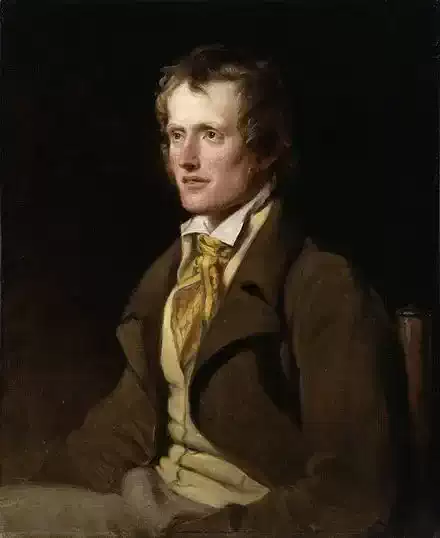
John Clare
To Anna Three Years Old
To Anna Three Years Old
My Anna, summer laughs in mirth,
And we will of the party be,
And leave the crickets in the hearth
For green fields' merry minstrelsy.
I see thee now with little hand
Catch at each object passing bye,
The happiest thing in all the land
Except the bee and butterfly.
* * * * *
And limpid brook that leaps along,
Gilt with the summer's burnished gleam,
Will stop thy little tale or song
To gaze upon its crimping stream.
Thou'lt leave my hand with eager speed
The new discovered things to see--
The old pond with its water weed
And danger-daring willow tree,
Who leans an ancient invalid
Oer spots where deepest waters be.
In sudden shout and wild surprise
I hear thy simple wonderment,
As new things meet thy childish eyes
And wake some innocent intent;
As bird or bee or butterfly
Bounds through the crowd of merry leaves
And starts the rapture of thine eye
To run for what it neer achieves.
But thou art on the bed of pain,
So tells each poor forsaken toy.
Ah, could I see that happy hour
When these shall be thy heart's employ,
And see thee toddle oer the plain,
And stoop for flowers, and shout for joy.
My Anna, summer laughs in mirth,
And we will of the party be,
And leave the crickets in the hearth
For green fields' merry minstrelsy.
I see thee now with little hand
Catch at each object passing bye,
The happiest thing in all the land
Except the bee and butterfly.
* * * * *
And limpid brook that leaps along,
Gilt with the summer's burnished gleam,
Will stop thy little tale or song
To gaze upon its crimping stream.
Thou'lt leave my hand with eager speed
The new discovered things to see--
The old pond with its water weed
And danger-daring willow tree,
Who leans an ancient invalid
Oer spots where deepest waters be.
In sudden shout and wild surprise
I hear thy simple wonderment,
As new things meet thy childish eyes
And wake some innocent intent;
As bird or bee or butterfly
Bounds through the crowd of merry leaves
And starts the rapture of thine eye
To run for what it neer achieves.
But thou art on the bed of pain,
So tells each poor forsaken toy.
Ah, could I see that happy hour
When these shall be thy heart's employ,
And see thee toddle oer the plain,
And stoop for flowers, and shout for joy.
365
John Clare
The Stranger
The Stranger
When trouble haunts me, need I sigh?
No, rather smile away despair;
For those have been more sad than I,
With burthens more than I could bear;
Aye, gone rejoicing under care
Where I had sunk in black despair.
When pain disturbs my peace and rest,
Am I a hopeless grief to keep,
When some have slept on torture's breast
And smiled as in the sweetest sleep,
Aye, peace on thorns, in faith forgiven,
And pillowed on the hope of heaven?
Though low and poor and broken down,
Am I to think myself distrest?
No, rather laugh where others frown
And think my being truly blest;
For others I can daily see
More worthy riches worse than me.
Aye, once a stranger blest the earth
Who never caused a heart to mourn,
Whose very voice gave sorrow mirth--
And how did earth his worth return?
It spurned him from its lowliest lot,
The meanest station owned him not;
An outcast thrown in sorrow's way,
A fugitive that knew no sin,
Yet in lone places forced to stray--
Men would not take the stranger in.
Yet peace, though much himself he mourned,
Was all to others he returned.
* * * * *
His presence was a peace to all,
He bade the sorrowful rejoice.
Pain turned to pleasure at his call,
Health lived and issued from his voice.
He healed the sick and sent abroad
The dumb rejoicing in the Lord.
The blind met daylight in his eye,
The joys of everlasting day;
The sick found health in his reply;
The cripple threw his crutch away.
Yet he with troubles did remain
And suffered poverty and pain.
Yet none could say of wrong he did,
And scorn was ever standing bye;
Accusers by their conscience chid,
When proof was sought, made no reply.
Yet without sin he suffered more
Than ever sinners did before.
When trouble haunts me, need I sigh?
No, rather smile away despair;
For those have been more sad than I,
With burthens more than I could bear;
Aye, gone rejoicing under care
Where I had sunk in black despair.
When pain disturbs my peace and rest,
Am I a hopeless grief to keep,
When some have slept on torture's breast
And smiled as in the sweetest sleep,
Aye, peace on thorns, in faith forgiven,
And pillowed on the hope of heaven?
Though low and poor and broken down,
Am I to think myself distrest?
No, rather laugh where others frown
And think my being truly blest;
For others I can daily see
More worthy riches worse than me.
Aye, once a stranger blest the earth
Who never caused a heart to mourn,
Whose very voice gave sorrow mirth--
And how did earth his worth return?
It spurned him from its lowliest lot,
The meanest station owned him not;
An outcast thrown in sorrow's way,
A fugitive that knew no sin,
Yet in lone places forced to stray--
Men would not take the stranger in.
Yet peace, though much himself he mourned,
Was all to others he returned.
* * * * *
His presence was a peace to all,
He bade the sorrowful rejoice.
Pain turned to pleasure at his call,
Health lived and issued from his voice.
He healed the sick and sent abroad
The dumb rejoicing in the Lord.
The blind met daylight in his eye,
The joys of everlasting day;
The sick found health in his reply;
The cripple threw his crutch away.
Yet he with troubles did remain
And suffered poverty and pain.
Yet none could say of wrong he did,
And scorn was ever standing bye;
Accusers by their conscience chid,
When proof was sought, made no reply.
Yet without sin he suffered more
Than ever sinners did before.
444
John Clare
The Maid Of Ocram, Or, Lord Gregory
The Maid Of Ocram, Or, Lord Gregory
Gay was the Maid of Ocram
As lady eer might be
Ere she did venture past a maid
To love Lord Gregory.
Fair was the Maid of Ocram
And shining like the sun
Ere her bower key was turned on two
Where bride bed lay for none.
And late at night she sought her love--
The snow slept on her skin--
Get up, she cried, thou false young man,
And let thy true love in.
And fain would he have loosed the key
All for his true love's sake,
But Lord Gregory then was fast asleep,
His mother wide awake.
And up she threw the window sash,
And out her head put she:
And who is that which knocks so late
And taunts so loud to me?
It is the Maid of Ocram,
Your own heart's next akin;
For so you've sworn, Lord Gregory,
To come and let me in.
O pause not thus, you know me well,
Haste down my way to win.
The wind disturbs my yellow locks,
The snow sleeps on my skin.--
If you be the Maid of Ocram,
As much I doubt you be,
Then tell me of three tokens
That passed with you and me.--
O talk not now of tokens
Which you do wish to break;
Chilled are those lips you've kissed so warm,
And all too numbed to speak.
You know when in my father's bower
You left your cloak for mine,
Though yours was nought but silver twist
And mine the golden twine.--
If you're the lass of Ocram,
As I take you not to be,
The second token you must tell
Which past with you and me.--
O know you not, O know you not
Twas in my father's park,
You led me out a mile too far
And courted in the dark?
When you did change your ring for mine
My yielding heart to win,
Though mine was of the beaten gold
Yours but of burnished tin,
Though mine was all true love without,
Yours but false love within?
O ask me no more tokens
For fast the snow doth fall.
Tis sad to strive and speak in vain,
You mean to break them all.--
If you are the Maid of Ocram,
As I take you not to be,
You must mention the third token
That passed with you and me.--
Twas when you stole my maidenhead;
That grieves me worst of all.--
Begone, you lying creature, then
This instant from my hall,
Or you and your vile baby
Shall in the deep sea fall;
For I have none on earth as yet
That may me father call.--
O must none close my dying feet,
And must none close my hands,
And may none bind my yellow locks
As death for all demands?
You need not use no force at all,
Your hard heart breaks the vow;
You've had your wish against my will
And you shall have it now.
And must none close my dying feet,
And must none close my hands,
And will none do the last kind deeds
That death for all demands?--
Your sister, she may close your feet,
Your brother close your hands,
Your mother, she may wrap your waist
In death's fit wedding bands;
Your father, he may tie your locks
And lay you in the sands.--
My sister, she will weep in vain,
My brother ride and run,
My mother, she will break her heart;
And ere the rising sun
My father will be looking out-
But find me they will none.
I go to lay my woes to rest,
None shall know where I'm gone.
God must be friend and father both,
Lord Gregory will be none.--
Lord Gregory started up from sleep
And thought he heard a voice
That screamed full dreadful in his ear,
And once and twice and thrice.
Lord Gregory to his mother called:
O mother dear, said he,
I've dreamt the Maid of Ocram
Was floating on the sea.
Lie still, my son, the mother said,
Tis but a little space
And half an hour has scarcely passed
Since she did pass this place.--
O cruel, cruel mother,
When she did pass so nigh
How could you let me sleep so sound
Or let her wander bye?
Now if she's lost my heart must break-I'll
seek her till I die.
He sought her east, he sought her west,
He sought through park and plain;
He sought her where she might have been
But found her not again.
I cannot curse thee, mother,
Though thine's the blame, said he
I cannot curse thee, mother,
Though thou'st done worse to me.
Yet do I curse thy pride that aye
So tauntingly aspires;
For my love was a gay knight's heir,
And my father was a squire's.
And I will sell my park and hall;
And if ye wed again
Ye shall not wed for titles twice
That made ye once so vain.
So if ye will wed, wed for love,
As I was fain to do;
Ye've gave to me a broken heart,
And I'll give nought to you.
Your pride has wronged your own heart's blood;
For she was mine by grace,
And now my lady love is gone
None else shall take her place.
I'll sell my park and sell my hall
And sink my titles too.
Your pride's done wrong enough as now
To leave it more to do.
She owneth none that owned them all
And would have graced them well;
None else shall take the right she missed
Nor in my bosom dwell.--
And then he took and burnt his will
Before his mother's face,
And tore his patents all in two,
While tears fell down apace--
But in his mother's haughty look
Ye nought but frowns might trace.
And then he sat him down to grieve,
But could not sit for pain.
And then he laid him on the bed
And ne'er got up again.
Gay was the Maid of Ocram
As lady eer might be
Ere she did venture past a maid
To love Lord Gregory.
Fair was the Maid of Ocram
And shining like the sun
Ere her bower key was turned on two
Where bride bed lay for none.
And late at night she sought her love--
The snow slept on her skin--
Get up, she cried, thou false young man,
And let thy true love in.
And fain would he have loosed the key
All for his true love's sake,
But Lord Gregory then was fast asleep,
His mother wide awake.
And up she threw the window sash,
And out her head put she:
And who is that which knocks so late
And taunts so loud to me?
It is the Maid of Ocram,
Your own heart's next akin;
For so you've sworn, Lord Gregory,
To come and let me in.
O pause not thus, you know me well,
Haste down my way to win.
The wind disturbs my yellow locks,
The snow sleeps on my skin.--
If you be the Maid of Ocram,
As much I doubt you be,
Then tell me of three tokens
That passed with you and me.--
O talk not now of tokens
Which you do wish to break;
Chilled are those lips you've kissed so warm,
And all too numbed to speak.
You know when in my father's bower
You left your cloak for mine,
Though yours was nought but silver twist
And mine the golden twine.--
If you're the lass of Ocram,
As I take you not to be,
The second token you must tell
Which past with you and me.--
O know you not, O know you not
Twas in my father's park,
You led me out a mile too far
And courted in the dark?
When you did change your ring for mine
My yielding heart to win,
Though mine was of the beaten gold
Yours but of burnished tin,
Though mine was all true love without,
Yours but false love within?
O ask me no more tokens
For fast the snow doth fall.
Tis sad to strive and speak in vain,
You mean to break them all.--
If you are the Maid of Ocram,
As I take you not to be,
You must mention the third token
That passed with you and me.--
Twas when you stole my maidenhead;
That grieves me worst of all.--
Begone, you lying creature, then
This instant from my hall,
Or you and your vile baby
Shall in the deep sea fall;
For I have none on earth as yet
That may me father call.--
O must none close my dying feet,
And must none close my hands,
And may none bind my yellow locks
As death for all demands?
You need not use no force at all,
Your hard heart breaks the vow;
You've had your wish against my will
And you shall have it now.
And must none close my dying feet,
And must none close my hands,
And will none do the last kind deeds
That death for all demands?--
Your sister, she may close your feet,
Your brother close your hands,
Your mother, she may wrap your waist
In death's fit wedding bands;
Your father, he may tie your locks
And lay you in the sands.--
My sister, she will weep in vain,
My brother ride and run,
My mother, she will break her heart;
And ere the rising sun
My father will be looking out-
But find me they will none.
I go to lay my woes to rest,
None shall know where I'm gone.
God must be friend and father both,
Lord Gregory will be none.--
Lord Gregory started up from sleep
And thought he heard a voice
That screamed full dreadful in his ear,
And once and twice and thrice.
Lord Gregory to his mother called:
O mother dear, said he,
I've dreamt the Maid of Ocram
Was floating on the sea.
Lie still, my son, the mother said,
Tis but a little space
And half an hour has scarcely passed
Since she did pass this place.--
O cruel, cruel mother,
When she did pass so nigh
How could you let me sleep so sound
Or let her wander bye?
Now if she's lost my heart must break-I'll
seek her till I die.
He sought her east, he sought her west,
He sought through park and plain;
He sought her where she might have been
But found her not again.
I cannot curse thee, mother,
Though thine's the blame, said he
I cannot curse thee, mother,
Though thou'st done worse to me.
Yet do I curse thy pride that aye
So tauntingly aspires;
For my love was a gay knight's heir,
And my father was a squire's.
And I will sell my park and hall;
And if ye wed again
Ye shall not wed for titles twice
That made ye once so vain.
So if ye will wed, wed for love,
As I was fain to do;
Ye've gave to me a broken heart,
And I'll give nought to you.
Your pride has wronged your own heart's blood;
For she was mine by grace,
And now my lady love is gone
None else shall take her place.
I'll sell my park and sell my hall
And sink my titles too.
Your pride's done wrong enough as now
To leave it more to do.
She owneth none that owned them all
And would have graced them well;
None else shall take the right she missed
Nor in my bosom dwell.--
And then he took and burnt his will
Before his mother's face,
And tore his patents all in two,
While tears fell down apace--
But in his mother's haughty look
Ye nought but frowns might trace.
And then he sat him down to grieve,
But could not sit for pain.
And then he laid him on the bed
And ne'er got up again.
419
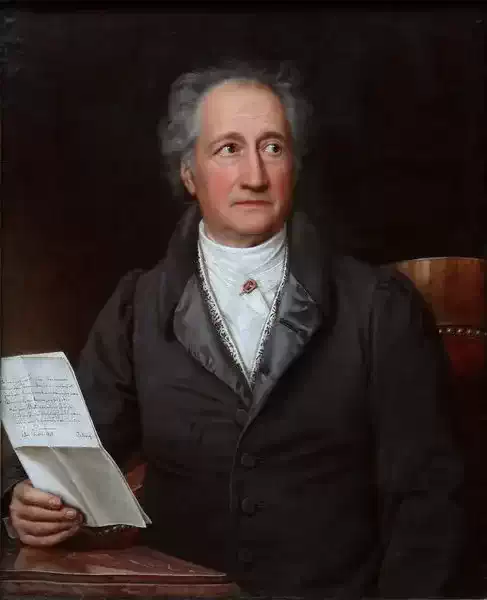
Johann Wolfgang von Goethe
Winter Journey Over The Hartz Mountain
Winter Journey Over The Hartz Mountain
LIKE the vulture
Who on heavy morning clouds
With gentle wing reposing
Looks for his prey,--
Hover, my song!
For a God hath
Unto each prescribed
His destined path,
Which the happy one
Runs o'er swiftly
To his glad goal:
He whose heart cruel
Fate hath contracted,
Struggles but vainly
Against all the barriers
The brazen thread raises,
But which the harsh shears
Must one day sever.
Through gloomy thickets
Presseth the wild deer on,
And with the sparrows
Long have the wealthy
Settled themselves in the marsh.
Easy 'tis following the chariot
That by Fortune is driven,
Like the baggage that moves
Over well-mended highways
After the train of a prince.
But who stands there apart?
In the thicket, lost is his path;
Behind him the bushes
Are closing together,
The grass springs up again,
The desert engulphs him.
Ah, who'll heal his afflictions,
To whom balsam was poison,
Who, from love's fullness,
Drank in misanthropy only?
First despised, and now a despiser,
He, in secret, wasteth
All that he is worth,
In a selfishness vain.
If there be, on thy psaltery,
Father of Love, but one tone
That to his ear may be pleasing,
Oh, then, quicken his heart!
Clear his cloud-enveloped eyes
Over the thousand fountains
Close by the thirsty one
In the desert.
Thou who createst much joy,
For each a measure o'erflowing,
Bless the sons of the chase
When on the track of the prey,
With a wild thirsting for blood,
Youthful and joyous
Avenging late the injustice
Which the peasant resisted
Vainly for years with his staff.
But the lonely one veil
Within thy gold clouds!
Surround with winter-green,
Until the roses bloom again,
The humid locks,
Oh Love, of thy minstrel!
With thy glimmering torch
Lightest thou him
Through the fords when 'tis night,
Over bottomless places
On desert-like plains;
With the thousand colours of morning
Gladd'nest his bosom;
With the fierce-biting storm
Bearest him proudly on high;
Winter torrents rush from the cliffs,--
Blend with his psalms;
An altar of grateful delight
He finds in the much-dreaded mountain's
Snow-begirded summit,
Which foreboding nations
Crown'd with spirit-dances.
Thou stand'st with breast inscrutable,
Mysteriously disclosed,
High o'er the wondering world,
And look'st from clouds
Upon its realms and its majesty,
Which thou from the veins of thy brethren
Near thee dost water.
LIKE the vulture
Who on heavy morning clouds
With gentle wing reposing
Looks for his prey,--
Hover, my song!
For a God hath
Unto each prescribed
His destined path,
Which the happy one
Runs o'er swiftly
To his glad goal:
He whose heart cruel
Fate hath contracted,
Struggles but vainly
Against all the barriers
The brazen thread raises,
But which the harsh shears
Must one day sever.
Through gloomy thickets
Presseth the wild deer on,
And with the sparrows
Long have the wealthy
Settled themselves in the marsh.
Easy 'tis following the chariot
That by Fortune is driven,
Like the baggage that moves
Over well-mended highways
After the train of a prince.
But who stands there apart?
In the thicket, lost is his path;
Behind him the bushes
Are closing together,
The grass springs up again,
The desert engulphs him.
Ah, who'll heal his afflictions,
To whom balsam was poison,
Who, from love's fullness,
Drank in misanthropy only?
First despised, and now a despiser,
He, in secret, wasteth
All that he is worth,
In a selfishness vain.
If there be, on thy psaltery,
Father of Love, but one tone
That to his ear may be pleasing,
Oh, then, quicken his heart!
Clear his cloud-enveloped eyes
Over the thousand fountains
Close by the thirsty one
In the desert.
Thou who createst much joy,
For each a measure o'erflowing,
Bless the sons of the chase
When on the track of the prey,
With a wild thirsting for blood,
Youthful and joyous
Avenging late the injustice
Which the peasant resisted
Vainly for years with his staff.
But the lonely one veil
Within thy gold clouds!
Surround with winter-green,
Until the roses bloom again,
The humid locks,
Oh Love, of thy minstrel!
With thy glimmering torch
Lightest thou him
Through the fords when 'tis night,
Over bottomless places
On desert-like plains;
With the thousand colours of morning
Gladd'nest his bosom;
With the fierce-biting storm
Bearest him proudly on high;
Winter torrents rush from the cliffs,--
Blend with his psalms;
An altar of grateful delight
He finds in the much-dreaded mountain's
Snow-begirded summit,
Which foreboding nations
Crown'd with spirit-dances.
Thou stand'st with breast inscrutable,
Mysteriously disclosed,
High o'er the wondering world,
And look'st from clouds
Upon its realms and its majesty,
Which thou from the veins of thy brethren
Near thee dost water.
398
Johann Wolfgang von Goethe
Trilogy Of Passion 01 To Werther
Trilogy Of Passion 01 To Werther
ONCE more, then, much-wept shadow, thou dost dare
Boldly to face the day's clear light,
To meet me on fresh blooming meadows fair,
And dost not tremble at my sight.
Those happy times appear return'd once more.
When on one field we quaff'd refreshing dew,
And, when the day's unwelcome toils were o'er,
The farewell sunbeams bless'd our ravish'd view;
Fate bade thee go,--to linger here was mine,--
Going the first, the smaller loss was thine.
The life of man appears a glorious fate:
The day how lovely, and the night how great!
And we 'mid Paradise-like raptures plac'd,
The sun's bright glory scarce have learn'd to taste.
When strange contending feelings dimly cover,
Now us, and now the forms that round us hover;
One's feelings by no other are supplied,
'Tis dark without, if all is bright inside;
An outward brightness veils my sadden'd mood,
When Fortune smiles,--how seldom understood!
Now think we that we know her, and with might
A woman's beauteous form instils delight;
The youth, as glad as in his infancy,
The spring-time treads, as though the spring were he
Ravish'd, amazed, he asks, how this is done?
He looks around, the world appears his own.
With careless speed he wanders on through space,
Nor walls, nor palaces can check his race;
As some gay flight of birds round tree-tops plays,
So 'tis with him who round his mistress strays;
He seeks from AEther, which he'd leave behind him,
The faithful look that fondly serves to bind him.
Yet first too early warn'd, and then too late,
He feels his flight restrain'd, is captur'd straight
To meet again is sweet, to part is sad,
Again to meet again is still more glad,
And years in one short moment are enshrin'd;
But, oh, the harsh farewell is hid behind!
Thou smilest, friend, with fitting thoughts inspired;
By a dread parting was thy fame acquired,
Thy mournful destiny we sorrow'd o'er,
For weal and woe thou left'st us evermore,
And then again the passions' wavering force
Drew us along in labyrinthine course;
And we, consumed by constant misery,
At length must part--and parting is to die!
How moving is it, when the minstrel sings,
To 'scape the death that separation brings!
Oh grant, some god, to one who suffers so,
To tell, half-guilty, his sad tale of woe.
ONCE more, then, much-wept shadow, thou dost dare
Boldly to face the day's clear light,
To meet me on fresh blooming meadows fair,
And dost not tremble at my sight.
Those happy times appear return'd once more.
When on one field we quaff'd refreshing dew,
And, when the day's unwelcome toils were o'er,
The farewell sunbeams bless'd our ravish'd view;
Fate bade thee go,--to linger here was mine,--
Going the first, the smaller loss was thine.
The life of man appears a glorious fate:
The day how lovely, and the night how great!
And we 'mid Paradise-like raptures plac'd,
The sun's bright glory scarce have learn'd to taste.
When strange contending feelings dimly cover,
Now us, and now the forms that round us hover;
One's feelings by no other are supplied,
'Tis dark without, if all is bright inside;
An outward brightness veils my sadden'd mood,
When Fortune smiles,--how seldom understood!
Now think we that we know her, and with might
A woman's beauteous form instils delight;
The youth, as glad as in his infancy,
The spring-time treads, as though the spring were he
Ravish'd, amazed, he asks, how this is done?
He looks around, the world appears his own.
With careless speed he wanders on through space,
Nor walls, nor palaces can check his race;
As some gay flight of birds round tree-tops plays,
So 'tis with him who round his mistress strays;
He seeks from AEther, which he'd leave behind him,
The faithful look that fondly serves to bind him.
Yet first too early warn'd, and then too late,
He feels his flight restrain'd, is captur'd straight
To meet again is sweet, to part is sad,
Again to meet again is still more glad,
And years in one short moment are enshrin'd;
But, oh, the harsh farewell is hid behind!
Thou smilest, friend, with fitting thoughts inspired;
By a dread parting was thy fame acquired,
Thy mournful destiny we sorrow'd o'er,
For weal and woe thou left'st us evermore,
And then again the passions' wavering force
Drew us along in labyrinthine course;
And we, consumed by constant misery,
At length must part--and parting is to die!
How moving is it, when the minstrel sings,
To 'scape the death that separation brings!
Oh grant, some god, to one who suffers so,
To tell, half-guilty, his sad tale of woe.
370
Johann Wolfgang von Goethe
To Mignon
To Mignon
OVER vale and torrent far
Rolls along the sun's bright car.
Ah! he wakens in his course
Mine, as thy deep-seated smart
In the heart.
Ev'ry morning with new force.
Scarce avails night aught to me;
E'en the visions that I see
Come but in a mournful guise;
And I feel this silent smart
In my heart
With creative pow'r arise.
During many a beauteous year
I have seen ships 'neath me steer,
As they seek the shelt'ring bay;
But, alas, each lasting smart
In my heart
Floats not with the stream away.
I must wear a gala dress,
Long stored up within my press,
For to-day to feasts is given;
None know with what bitter smart
Is my heart
Fearfully and madly riven.
Secretly I weep each tear,
Yet can cheerful e'en appear,
With a face of healthy red;
For if deadly were this silent smart
In my heart,
Ah, I then had long been dead!
THE MOUNTAIN CASTLE.
THERE stands on yonder high mountain
A castle built of yore,
Where once lurked horse and horseman
In rear of gate and of door.
Now door and gate are in ashes,
And all around is so still;
And over the fallen ruins
I clamber just as I will.
Below once lay a cellar,
With costly wines well stor'd;
No more the glad maid with her pitcher
Descends there to draw from the hoard.
No longer the goblet she places
Before the guests at the feast;
The flask at the meal so hallow'd
No longer she fills for the priest.
No more for the eager squire
The draught in the passage is pour'd;
No more for the flying present
Receives she the flying reward.
For all the roof and the rafters,
They all long since have been burn'd,
And stairs and passage and chapel
To rubbish and ruins are turn'd.
Yet when with lute and with flagon,
When day was smiling and bright,
I've watch'd my mistress climbing
To gain this perilous height,
Then rapture joyous and radiant
The silence so desolate brake,
And all, as in days long vanish'd,
Once more to enjoyment awoke;
As if for guests of high station
The largest rooms were prepared;
As if from those times so precious
A couple thither had fared;
As if there stood in his chapel
The priest in his sacred dress,
And ask'd: "Would ye twain be united?"
And we, with a smile, answer'd, "Yes!"
And songs that breath'd a deep feeling,
That touched the heart's innermost chord,
The music-fraught mouth of sweet echo,
Instead of the many, outpour'd.
And when at eve all was hidden
In silence unbroken and deep,
The glowing sun then look'd upwards,
And gazed on the summit so steep.
And squire and maiden then glitter'd
As bright and gay as a lord,
She seized the time for her present,
And he to give her reward.
OVER vale and torrent far
Rolls along the sun's bright car.
Ah! he wakens in his course
Mine, as thy deep-seated smart
In the heart.
Ev'ry morning with new force.
Scarce avails night aught to me;
E'en the visions that I see
Come but in a mournful guise;
And I feel this silent smart
In my heart
With creative pow'r arise.
During many a beauteous year
I have seen ships 'neath me steer,
As they seek the shelt'ring bay;
But, alas, each lasting smart
In my heart
Floats not with the stream away.
I must wear a gala dress,
Long stored up within my press,
For to-day to feasts is given;
None know with what bitter smart
Is my heart
Fearfully and madly riven.
Secretly I weep each tear,
Yet can cheerful e'en appear,
With a face of healthy red;
For if deadly were this silent smart
In my heart,
Ah, I then had long been dead!
THE MOUNTAIN CASTLE.
THERE stands on yonder high mountain
A castle built of yore,
Where once lurked horse and horseman
In rear of gate and of door.
Now door and gate are in ashes,
And all around is so still;
And over the fallen ruins
I clamber just as I will.
Below once lay a cellar,
With costly wines well stor'd;
No more the glad maid with her pitcher
Descends there to draw from the hoard.
No longer the goblet she places
Before the guests at the feast;
The flask at the meal so hallow'd
No longer she fills for the priest.
No more for the eager squire
The draught in the passage is pour'd;
No more for the flying present
Receives she the flying reward.
For all the roof and the rafters,
They all long since have been burn'd,
And stairs and passage and chapel
To rubbish and ruins are turn'd.
Yet when with lute and with flagon,
When day was smiling and bright,
I've watch'd my mistress climbing
To gain this perilous height,
Then rapture joyous and radiant
The silence so desolate brake,
And all, as in days long vanish'd,
Once more to enjoyment awoke;
As if for guests of high station
The largest rooms were prepared;
As if from those times so precious
A couple thither had fared;
As if there stood in his chapel
The priest in his sacred dress,
And ask'd: "Would ye twain be united?"
And we, with a smile, answer'd, "Yes!"
And songs that breath'd a deep feeling,
That touched the heart's innermost chord,
The music-fraught mouth of sweet echo,
Instead of the many, outpour'd.
And when at eve all was hidden
In silence unbroken and deep,
The glowing sun then look'd upwards,
And gazed on the summit so steep.
And squire and maiden then glitter'd
As bright and gay as a lord,
She seized the time for her present,
And he to give her reward.
511
Johann Wolfgang von Goethe
Thoughts On Jesus Christ's Decent Into Hell
Thoughts On Jesus Christ's Decent Into Hell
WHAT wondrous noise is heard around!
Through heaven exulting voices sound,
A mighty army marches on
By thousand millions follow'd, lo,
To yon dark place makes haste to go
God's Son, descending from His throne!
He goes--the tempests round Him break,
As Judge and Hero cometh He;
He goes--the constellations quake,
The sun, the world quake fearfully.
I see Him in His victor-car,
On fiery axles borne afar,
Who on the cross for us expired.
The triumph to yon realms He shows,--
Remote from earth, where star ne'er glows,
The triumph He for us acquired.
He cometh, Hell to extirpate,
Whom He, by dying, wellnigh kill'd;
He shall pronounce her fearful fate
Hark! now the curse is straight fulfill'd.
Hell sees the victor come at last,
She feels that now her reign is past,
She quakes and fears to meet His sight;
She knows His thunders' terrors dread,
In vain she seeks to hide her head,
Attempts to fly, but vain is flight;
Vainly she hastes to 'scape pursuit
And to avoid her Judge's eye;
The Lord's fierce wrath restrains her foot
Like brazen chains,--she cannot fly.
Here lies the Dragon, trampled down,
He lies, and feels God's angry frown,
He feels, and grinneth hideously;
He feels Hell's speechless agonies,
A thousand times he howls and sighs:
"Oh, burning flames! quick, swallow me!"
There lies he in the fiery waves,
By torments rack'd and pangs infernal,
Instant annihilation craves,
And hears, those pangs will be eternal.
Those mighty squadrons, too, are here,
The partners of his cursed career,
Yet far less bad than he were they.
Here lies the countless throng combined,
In black and fearful crowds entwined,
While round him fiery tempests play;
He sees how they the Judge avoid,
He sees the storm upon them feed,
Yet is not at the sight o'erjoy'd,
Because his pangs e'en theirs exceed.
The Son of Man in triumph passes
Down to Hell's wild and black morasses,
And there unfolds His majesty.
Hell cannot bear the bright array,
For, since her first created day.
Darkness alone e'er govern'd she.
She lay remote from ev'ry light
With torments fill'd in Chaos here;
God turn'd for ever from her sight
His radiant features' glory clear.
Within the realms she calls her own,
She sees the splendour of the Son,
His dreaded glories shining forth;
She sees Him clad in rolling thunder,
She sees the rocks all quake with wonder,
When God before her stands in wrath.
She sees He comes her Judge to be,
She feels the awful pangs inside her,
Herself to slay endeavours she,
But e'en this comfort is denied her.
Now looks she back, with pains untold,
Upon those happy times of old,
When those glories gave her joy;
When yet her heart revered the truth,
When her glad soul, in endless youth
And rapture dwelt, without alloy.
She calls to mind with madden'd thought
How over man her wiles prevail'd;
To take revenge on God she sought,
And feels the vengeance it entail'd.
God was made man, and came to earth.
Then Satan cried with fearful mirth:
"E'en He my victim now shall be!"
He sought to slay the Lord Most High,
The world's Creator now must die;
But, Satan, endless woe to thee!
Thou thought'st to overcome Him then,
Rejoicing in His suffering;
But he in triumph comes again
To bind thee: Death! where is thy sting?
Speak, Hell! where is thy victory?
Thy power destroy'd and scatter'd see!
Know'st thou not now the Highest's might?
See, Satan, see thy rule o'erthrown!
By thousand-varying pangs weigh'd down,
Thou dwell'st in dark and endless night.
As though by lightning struck thou liest,
No gleam of rapture far or wide;
In vain! no hope thou there decriest,--
For me alone Messiah died!
A howling rises through the air,
A trembling fills each dark vault there,
When Christ to Hell is seen to come.
She snarls with rage, but needs must cower
Before our mighty hero's power;
He signs--and Hell is straightway dumb.
Before his voice the thunders break,
On high His victor-banner blows;
E'en angels at His fury quake,
When Christ to the dread judgment goes.
Now speaks He, and His voice is thunder,
He speaks, the rocks are rent in sunder,
His breath is like devouring flames.
Thus speaks He: "Tremble, ye accurs'd!
He who from Eden hurl'd you erst,
Your kingdom's overthrow proclaims.
Look up! My children once were ye,
Your arms against Me then ye turn'd,
Ye fell, that ye might sinners be,
Ye've now the wages that ye earn'd.
"My greatest foeman from that day,
Ye led my dearest friends astray,--
As ye had fallen, man must fall.
To kill him evermore ye sought,
'They all shall die the death,' ye thought;
But howl! for Me I won them all.
For them alone did I descend,
For them pray'd, suffer'd, perish'd I.
Ye ne'er shall gain your wicked end;
Who trusts in Me shall never die.
"In endless chains here lie ye now,
Nothing can save you from the slough.
Not boldness, not regret for crime.
Lie, then, and writhe in brimstone fire!
'Twas ye yourselves drew down Mine ire,
Lie and lament throughout all time!
And also ye, whom I selected,
E'en ye forever I disown,
For ye My saving grace rejected
Ye murmur? blame yourselves alone!
"Ye might have lived with Me in bliss,
For I of yore had promis'd this;
Ye sinn'd, and all My precepts slighted
Wrapp'd in the sleep of sin ye dwelt,
Now is My fearful judgment felt,
By a just doom your guilt requited."--
Thus spake He, and a fearful storm
From Him proceeds, the lightnings glow,
The thunders seize each wicked form,
And hurl them in the gulf below.
The God-man closeth Hell's sad doors,
In all His majesty He soars
From those dark regions back to light.
He sitteth at the Father's side;
Oh, friends, what joy doth this betide!
For us, for us He still will fight!
The angels sacred quire around
Rejoice before the mighty Lord,
So that all creatures hear the sound:
"Zebaoth's God be aye ador'd!"
WHAT wondrous noise is heard around!
Through heaven exulting voices sound,
A mighty army marches on
By thousand millions follow'd, lo,
To yon dark place makes haste to go
God's Son, descending from His throne!
He goes--the tempests round Him break,
As Judge and Hero cometh He;
He goes--the constellations quake,
The sun, the world quake fearfully.
I see Him in His victor-car,
On fiery axles borne afar,
Who on the cross for us expired.
The triumph to yon realms He shows,--
Remote from earth, where star ne'er glows,
The triumph He for us acquired.
He cometh, Hell to extirpate,
Whom He, by dying, wellnigh kill'd;
He shall pronounce her fearful fate
Hark! now the curse is straight fulfill'd.
Hell sees the victor come at last,
She feels that now her reign is past,
She quakes and fears to meet His sight;
She knows His thunders' terrors dread,
In vain she seeks to hide her head,
Attempts to fly, but vain is flight;
Vainly she hastes to 'scape pursuit
And to avoid her Judge's eye;
The Lord's fierce wrath restrains her foot
Like brazen chains,--she cannot fly.
Here lies the Dragon, trampled down,
He lies, and feels God's angry frown,
He feels, and grinneth hideously;
He feels Hell's speechless agonies,
A thousand times he howls and sighs:
"Oh, burning flames! quick, swallow me!"
There lies he in the fiery waves,
By torments rack'd and pangs infernal,
Instant annihilation craves,
And hears, those pangs will be eternal.
Those mighty squadrons, too, are here,
The partners of his cursed career,
Yet far less bad than he were they.
Here lies the countless throng combined,
In black and fearful crowds entwined,
While round him fiery tempests play;
He sees how they the Judge avoid,
He sees the storm upon them feed,
Yet is not at the sight o'erjoy'd,
Because his pangs e'en theirs exceed.
The Son of Man in triumph passes
Down to Hell's wild and black morasses,
And there unfolds His majesty.
Hell cannot bear the bright array,
For, since her first created day.
Darkness alone e'er govern'd she.
She lay remote from ev'ry light
With torments fill'd in Chaos here;
God turn'd for ever from her sight
His radiant features' glory clear.
Within the realms she calls her own,
She sees the splendour of the Son,
His dreaded glories shining forth;
She sees Him clad in rolling thunder,
She sees the rocks all quake with wonder,
When God before her stands in wrath.
She sees He comes her Judge to be,
She feels the awful pangs inside her,
Herself to slay endeavours she,
But e'en this comfort is denied her.
Now looks she back, with pains untold,
Upon those happy times of old,
When those glories gave her joy;
When yet her heart revered the truth,
When her glad soul, in endless youth
And rapture dwelt, without alloy.
She calls to mind with madden'd thought
How over man her wiles prevail'd;
To take revenge on God she sought,
And feels the vengeance it entail'd.
God was made man, and came to earth.
Then Satan cried with fearful mirth:
"E'en He my victim now shall be!"
He sought to slay the Lord Most High,
The world's Creator now must die;
But, Satan, endless woe to thee!
Thou thought'st to overcome Him then,
Rejoicing in His suffering;
But he in triumph comes again
To bind thee: Death! where is thy sting?
Speak, Hell! where is thy victory?
Thy power destroy'd and scatter'd see!
Know'st thou not now the Highest's might?
See, Satan, see thy rule o'erthrown!
By thousand-varying pangs weigh'd down,
Thou dwell'st in dark and endless night.
As though by lightning struck thou liest,
No gleam of rapture far or wide;
In vain! no hope thou there decriest,--
For me alone Messiah died!
A howling rises through the air,
A trembling fills each dark vault there,
When Christ to Hell is seen to come.
She snarls with rage, but needs must cower
Before our mighty hero's power;
He signs--and Hell is straightway dumb.
Before his voice the thunders break,
On high His victor-banner blows;
E'en angels at His fury quake,
When Christ to the dread judgment goes.
Now speaks He, and His voice is thunder,
He speaks, the rocks are rent in sunder,
His breath is like devouring flames.
Thus speaks He: "Tremble, ye accurs'd!
He who from Eden hurl'd you erst,
Your kingdom's overthrow proclaims.
Look up! My children once were ye,
Your arms against Me then ye turn'd,
Ye fell, that ye might sinners be,
Ye've now the wages that ye earn'd.
"My greatest foeman from that day,
Ye led my dearest friends astray,--
As ye had fallen, man must fall.
To kill him evermore ye sought,
'They all shall die the death,' ye thought;
But howl! for Me I won them all.
For them alone did I descend,
For them pray'd, suffer'd, perish'd I.
Ye ne'er shall gain your wicked end;
Who trusts in Me shall never die.
"In endless chains here lie ye now,
Nothing can save you from the slough.
Not boldness, not regret for crime.
Lie, then, and writhe in brimstone fire!
'Twas ye yourselves drew down Mine ire,
Lie and lament throughout all time!
And also ye, whom I selected,
E'en ye forever I disown,
For ye My saving grace rejected
Ye murmur? blame yourselves alone!
"Ye might have lived with Me in bliss,
For I of yore had promis'd this;
Ye sinn'd, and all My precepts slighted
Wrapp'd in the sleep of sin ye dwelt,
Now is My fearful judgment felt,
By a just doom your guilt requited."--
Thus spake He, and a fearful storm
From Him proceeds, the lightnings glow,
The thunders seize each wicked form,
And hurl them in the gulf below.
The God-man closeth Hell's sad doors,
In all His majesty He soars
From those dark regions back to light.
He sitteth at the Father's side;
Oh, friends, what joy doth this betide!
For us, for us He still will fight!
The angels sacred quire around
Rejoice before the mighty Lord,
So that all creatures hear the sound:
"Zebaoth's God be aye ador'd!"
300
Johann Wolfgang von Goethe
The Hunter's Even-Song
The Hunter's Even-Song
THE plain with still and wand'ring feet,
And gun full-charged, I tread,
And hov'ring see thine image sweet,
Thine image dear, o'er head.
In gentle silence thou dost fare
Through field and valley dear;
But doth my fleeting image ne'er
To thy mind's eye appear?
His image, who, by grief oppress'd,
Roams through the world forlorn,
And wanders on from east to west,
Because from thee he's torn?
When I would think of none but thee,
Mine eyes the moon survey;
A calm repose then steals o'er me,
But how, 'twere hard to say.
THE plain with still and wand'ring feet,
And gun full-charged, I tread,
And hov'ring see thine image sweet,
Thine image dear, o'er head.
In gentle silence thou dost fare
Through field and valley dear;
But doth my fleeting image ne'er
To thy mind's eye appear?
His image, who, by grief oppress'd,
Roams through the world forlorn,
And wanders on from east to west,
Because from thee he's torn?
When I would think of none but thee,
Mine eyes the moon survey;
A calm repose then steals o'er me,
But how, 'twere hard to say.
305
Johann Wolfgang von Goethe
The Bliss Of Sorrow
The Bliss Of Sorrow
NEVER dry, never dry,
Tears that eternal love sheddeth!
How dreary, how dead doth the world still appear,
When only half-dried on the eye is the tear!
Never dry, never dry,
Tears that unhappy love sheddeth!
NEVER dry, never dry,
Tears that eternal love sheddeth!
How dreary, how dead doth the world still appear,
When only half-dried on the eye is the tear!
Never dry, never dry,
Tears that unhappy love sheddeth!
306
Johann Wolfgang von Goethe
Sicilian Song
Sicilian Song
YE black and roguish eyes,
If ye command.
Each house in ruins lies,
No town can stand.
And shall my bosom's chain,--
This plaster wall,
To think one moment, deign,--
Shall I not fall?
YE black and roguish eyes,
If ye command.
Each house in ruins lies,
No town can stand.
And shall my bosom's chain,--
This plaster wall,
To think one moment, deign,--
Shall I not fall?
312
Johann Wolfgang von Goethe
Paulo Post Futuri
Paulo Post Futuri
WEEP ye not, ye children dear,
That as yet ye are unborn:
For each sorrow and each tear
Makes the father's heart to mourn.
Patient be a short time to it,
Unproduced, and known to none;
If your father cannot do it,
By your mother 'twill be done.
WEEP ye not, ye children dear,
That as yet ye are unborn:
For each sorrow and each tear
Makes the father's heart to mourn.
Patient be a short time to it,
Unproduced, and known to none;
If your father cannot do it,
By your mother 'twill be done.
311
Johann Wolfgang von Goethe
Love's Distresses
Love's Distresses
WHO will hear me? Whom shall I lament to?
Who would pity me that heard my sorrows?
Ah, the lip that erst so many raptures
Used to taste, and used to give responsive,
Now is cloven, and it pains me sorely;
And it is not thus severely wounded
By my mistress having caught me fiercely,
And then gently bitten me, intending
To secure her friend more firmly to her:
No, my tender lip is crack'd thus, only
By the winds, o'er rime and frost proceeding,
Pointed, sharp, unloving, having met me.
Now the noble grape's bright juice commingled
With the bee's sweet juice, upon the fire
Of my hearth, shall ease me of my torment.
Ah, what use will all this be, if with it
Love adds not a drop of his own balsam?
WHO will hear me? Whom shall I lament to?
Who would pity me that heard my sorrows?
Ah, the lip that erst so many raptures
Used to taste, and used to give responsive,
Now is cloven, and it pains me sorely;
And it is not thus severely wounded
By my mistress having caught me fiercely,
And then gently bitten me, intending
To secure her friend more firmly to her:
No, my tender lip is crack'd thus, only
By the winds, o'er rime and frost proceeding,
Pointed, sharp, unloving, having met me.
Now the noble grape's bright juice commingled
With the bee's sweet juice, upon the fire
Of my hearth, shall ease me of my torment.
Ah, what use will all this be, if with it
Love adds not a drop of his own balsam?
379
Johann Wolfgang von Goethe
From Faust - VII. MARGARET, Placing Fresh Flowers In The Flower-Pots.
From Faust - VII. MARGARET, Placing Fresh Flowers In The Flower-Pots.
O THOU well-tried in grief,
Grant to thy child relief,
And view with mercy this unhappy one!
The sword within thy heart,
Speechless with bitter smart,
Thou Lookest up towards thy dying son.
Thou look'st to God on high,
And breathest many a sigh
O'er his and thy distress, thou holy One!
Who e'er can know
The depth of woe
Piercing my very bone?
The sorrows that my bosom fill,
Its trembling, its aye-yearning will,
Are known to thee, to thee alone!
Wherever I may go,
With woe, with woe, with woe,
My bosom sad is aching!
I scarce alone can creep,
I weep, I weep, I weep,
My very heart is breaking.
The flowers at my window
My falling tears bedewed,
When I, at dawn of morning,
For thee these flow'rets strewed.
When early to my chamber
The cheerful sunbeams stole,
I sat upon my pallet,
In agony of soul.
Help! rescue me from death and misery!
Oh, thou well-tried in grief,
Grant to thy child relief,
And view with mercy my deep agony!
O THOU well-tried in grief,
Grant to thy child relief,
And view with mercy this unhappy one!
The sword within thy heart,
Speechless with bitter smart,
Thou Lookest up towards thy dying son.
Thou look'st to God on high,
And breathest many a sigh
O'er his and thy distress, thou holy One!
Who e'er can know
The depth of woe
Piercing my very bone?
The sorrows that my bosom fill,
Its trembling, its aye-yearning will,
Are known to thee, to thee alone!
Wherever I may go,
With woe, with woe, with woe,
My bosom sad is aching!
I scarce alone can creep,
I weep, I weep, I weep,
My very heart is breaking.
The flowers at my window
My falling tears bedewed,
When I, at dawn of morning,
For thee these flow'rets strewed.
When early to my chamber
The cheerful sunbeams stole,
I sat upon my pallet,
In agony of soul.
Help! rescue me from death and misery!
Oh, thou well-tried in grief,
Grant to thy child relief,
And view with mercy my deep agony!
321
Johann Wolfgang von Goethe
From Faust - V. Margaret At Her Spinning-Wheel
From Faust - V. Margaret At Her Spinning-Wheel
MY heart is sad,
My peace is o'er;
I find it never
And nevermore.
When gone is he,
The grave I see;
The world's wide all
Is turned to gall.
Alas, my head
Is well-nigh crazed;
My feeble mind
Is sore amazed.
My heart is sad,
My peace is o'er;
I find it never
And nevermore.
For him from the window
Alone I spy;
For him alone
From home go I.
His lofty step,
His noble form,
His mouth's sweet smile,
His glances warm,
His voice so fraught
With magic bliss,
His hand's soft pressure,
And, ah, his kiss!
My heart is sad,
My peace is o'er;
I find it never
And nevermore.
My bosom yearns
For his form so fair;
Ah, could I clasp him
And hold him there!
My kisses sweet
Should stop his breath,
And 'neath his kisses
I'd sink in death!
MY heart is sad,
My peace is o'er;
I find it never
And nevermore.
When gone is he,
The grave I see;
The world's wide all
Is turned to gall.
Alas, my head
Is well-nigh crazed;
My feeble mind
Is sore amazed.
My heart is sad,
My peace is o'er;
I find it never
And nevermore.
For him from the window
Alone I spy;
For him alone
From home go I.
His lofty step,
His noble form,
His mouth's sweet smile,
His glances warm,
His voice so fraught
With magic bliss,
His hand's soft pressure,
And, ah, his kiss!
My heart is sad,
My peace is o'er;
I find it never
And nevermore.
My bosom yearns
For his form so fair;
Ah, could I clasp him
And hold him there!
My kisses sweet
Should stop his breath,
And 'neath his kisses
I'd sink in death!
324
Johann Wolfgang von Goethe
From
From
EV'RY youth for love's sweet portion sighs,
Ev'ry maiden sighs to win man's love;
Why, alas! should bitter pain arise
From the noblest passion that we prove?
Thou, kind soul, bewailest, lov'st him well,
From disgrace his memory's saved by thee;
Lo, his spirit signs from out its cell:
BE A MAN, NOR SEEK TO FOLLOW ME.
EV'RY youth for love's sweet portion sighs,
Ev'ry maiden sighs to win man's love;
Why, alas! should bitter pain arise
From the noblest passion that we prove?
Thou, kind soul, bewailest, lov'st him well,
From disgrace his memory's saved by thee;
Lo, his spirit signs from out its cell:
BE A MAN, NOR SEEK TO FOLLOW ME.
317
Johann Wolfgang von Goethe
From
From
My grief no mortals know,
Except the yearning!
Alone, a prey to woe,
All pleasure spurning,
Up tow'rds the sky I throw
A gaze discerning.
He who my love can know
Seems ne'er returning;
With strange and fiery glow
My heart is burning.
My grief no mortals know,
Except the yearning!
My grief no mortals know,
Except the yearning!
Alone, a prey to woe,
All pleasure spurning,
Up tow'rds the sky I throw
A gaze discerning.
He who my love can know
Seems ne'er returning;
With strange and fiery glow
My heart is burning.
My grief no mortals know,
Except the yearning!
455
Johann Wolfgang von Goethe
Book Of Love - Love's Torments
Book Of Love - Love's Torments
LOVE's torments sought a place of rest,
Where all might drear and lonely be;
They found ere long my desert breast,
And nestled in its vacancy.
LOVE's torments sought a place of rest,
Where all might drear and lonely be;
They found ere long my desert breast,
And nestled in its vacancy.
303
Johann Wolfgang von Goethe
Blindman's Buff
Blindman's Buff
OH, my Theresa dear!
Thine eyes, I greatly fear,
Can through the bandage see!
Although thine eyes are bound,
By thee I'm quickly found,
And wherefore shouldst thou catch but me?
Ere long thou held'st me fast,
With arms around me cast,
Upon thy breast I fell;
Scarce was thy bandage gone,
When all my joy was flown,
Thou coldly didst the blind repel.
He groped on ev'ry side,
His limbs he sorely tried,
While scoffs arose all round;
If thou no love wilt give,
In sadness I shall live,
As if mine eyes remain'd still bound.
OH, my Theresa dear!
Thine eyes, I greatly fear,
Can through the bandage see!
Although thine eyes are bound,
By thee I'm quickly found,
And wherefore shouldst thou catch but me?
Ere long thou held'st me fast,
With arms around me cast,
Upon thy breast I fell;
Scarce was thy bandage gone,
When all my joy was flown,
Thou coldly didst the blind repel.
He groped on ev'ry side,
His limbs he sorely tried,
While scoffs arose all round;
If thou no love wilt give,
In sadness I shall live,
As if mine eyes remain'd still bound.
396