

Poems in this topic
Seasons (Spring, Summer, Autumn, Winter)

Dylan Thomas
Why East Wind Chills
Why East Wind Chills
Why east wind chills and south wind cools
Shall not be known till windwell dries
And west's no longer drowned
In winds that bring the fruit and rind
Of many a hundred falls;
Why silk is soft and the stone wounds
The child shall question all his days,
Why night-time rain and the breast's blood
Both quench his thirst he'll have a black reply.
When cometh Jack Frost? the children ask.
Shall they clasp a comet in their fists?
Not till, from high and low, their dust
Sprinkles in children's eyes a long-last sleep
And dusk is crowded with the children's ghosts,
Shall a white answer echo from the rooftops.
All things are known: the stars' advice
Calls some content to travel with the winds,
Though what the stars ask as they round
Time upon time the towers of the skies
Is heard but little till the stars go out.
I hear content, and 'Be Content'
Ring like a handbell through the corridors,
And 'Know no answer,' and I know
No answer to the children's cry
Of echo's answer and the man of frost
And ghostly comets over the raised fists.
Why east wind chills and south wind cools
Shall not be known till windwell dries
And west's no longer drowned
In winds that bring the fruit and rind
Of many a hundred falls;
Why silk is soft and the stone wounds
The child shall question all his days,
Why night-time rain and the breast's blood
Both quench his thirst he'll have a black reply.
When cometh Jack Frost? the children ask.
Shall they clasp a comet in their fists?
Not till, from high and low, their dust
Sprinkles in children's eyes a long-last sleep
And dusk is crowded with the children's ghosts,
Shall a white answer echo from the rooftops.
All things are known: the stars' advice
Calls some content to travel with the winds,
Though what the stars ask as they round
Time upon time the towers of the skies
Is heard but little till the stars go out.
I hear content, and 'Be Content'
Ring like a handbell through the corridors,
And 'Know no answer,' and I know
No answer to the children's cry
Of echo's answer and the man of frost
And ghostly comets over the raised fists.
292
Dylan Thomas
Poem In October
Poem In October
It was my thirtieth year to heaven
Woke to my hearing from harbour and neighbour wood
And the mussel pooled and the heron
Priested shore
The morning beckon
With water praying and call of seagull and rook
And the knock of sailing boats on the net webbed wall
Myself to set foot
That second
In the still sleeping town and set forth.
My birthday began with the water-
Birds and the birds of the winged trees flying my name
Above the farms and the white horses
And I rose
In rainy autumn
And walked abroad in a shower of all my days.
High tide and the heron dived when I took the road
Over the border
And the gates
Of the town closed as the town awoke.
A springful of larks in a rolling
Cloud and the roadside bushes brimming with whistling
Blackbirds and the sun of October
Summery
On the hill's shoulder,
Here were fond climates and sweet singers suddenly
Come in the morning where I wandered and listened
To the rain wringing
Wind blow cold
In the wood faraway under me.
Pale rain over the dwindling harbour
And over the sea wet church the size of a snail
With its horns through mist and the castle
Brown as owls
But all the gardens
Of spring and summer were blooming in the tall tales
Beyond the border and under the lark full cloud.
There could I marvel
My birthday
Away but the weather turned around.
It turned away from the blithe country
And down the other air and the blue altered sky
Streamed again a wonder of summer
With apples
Pears and red currants
And I saw in the turning so clearly a child's
Forgotten mornings when he walked with his mother
Through the parables
Of sun light
And the legends of the green chapels
And the twice told fields of infancy
That his tears burned my cheeks and his heart moved in mine.
These were the woods the river and sea
Where a boy
In the listening
Summertime of the dead whispered the truth of his joy
To the trees and the stones and the fish in the tide.
And the mystery
Sang alive
Still in the water and singingbirds.
And there could I marvel my birthday
Away but the weather turned around. And the true
Joy of the long dead child sang burning
In the sun.
It was my thirtieth
Year to heaven stood there then in the summer noon
Though the town below lay leaved with October blood.
O may my heart's truth
Still be sung
On this high hill in a year's turning.
It was my thirtieth year to heaven
Woke to my hearing from harbour and neighbour wood
And the mussel pooled and the heron
Priested shore
The morning beckon
With water praying and call of seagull and rook
And the knock of sailing boats on the net webbed wall
Myself to set foot
That second
In the still sleeping town and set forth.
My birthday began with the water-
Birds and the birds of the winged trees flying my name
Above the farms and the white horses
And I rose
In rainy autumn
And walked abroad in a shower of all my days.
High tide and the heron dived when I took the road
Over the border
And the gates
Of the town closed as the town awoke.
A springful of larks in a rolling
Cloud and the roadside bushes brimming with whistling
Blackbirds and the sun of October
Summery
On the hill's shoulder,
Here were fond climates and sweet singers suddenly
Come in the morning where I wandered and listened
To the rain wringing
Wind blow cold
In the wood faraway under me.
Pale rain over the dwindling harbour
And over the sea wet church the size of a snail
With its horns through mist and the castle
Brown as owls
But all the gardens
Of spring and summer were blooming in the tall tales
Beyond the border and under the lark full cloud.
There could I marvel
My birthday
Away but the weather turned around.
It turned away from the blithe country
And down the other air and the blue altered sky
Streamed again a wonder of summer
With apples
Pears and red currants
And I saw in the turning so clearly a child's
Forgotten mornings when he walked with his mother
Through the parables
Of sun light
And the legends of the green chapels
And the twice told fields of infancy
That his tears burned my cheeks and his heart moved in mine.
These were the woods the river and sea
Where a boy
In the listening
Summertime of the dead whispered the truth of his joy
To the trees and the stones and the fish in the tide.
And the mystery
Sang alive
Still in the water and singingbirds.
And there could I marvel my birthday
Away but the weather turned around. And the true
Joy of the long dead child sang burning
In the sun.
It was my thirtieth
Year to heaven stood there then in the summer noon
Though the town below lay leaved with October blood.
O may my heart's truth
Still be sung
On this high hill in a year's turning.
355
Dylan Thomas
Here In This spring
Here In This spring
Here in this spring, stars float along the void;
Here in this ornamental winter
Down pelts the naked weather;
This summer buries a spring bird.
Symbols are selected from the years'
Slow rounding of four seasons' coasts,
In autumn teach three seasons' fires
And four birds' notes.
I should tell summer from the trees, the worms
Tell, if at all, the winter's storms
Or the funeral of the sun;
I should learn spring by the cuckooing,
And the slug should teach me destruction.
A worm tells summer better than the clock,
The slug's a living calendar of days;
What shall it tell me if a timeless insect
Says the world wears away?
Here in this spring, stars float along the void;
Here in this ornamental winter
Down pelts the naked weather;
This summer buries a spring bird.
Symbols are selected from the years'
Slow rounding of four seasons' coasts,
In autumn teach three seasons' fires
And four birds' notes.
I should tell summer from the trees, the worms
Tell, if at all, the winter's storms
Or the funeral of the sun;
I should learn spring by the cuckooing,
And the slug should teach me destruction.
A worm tells summer better than the clock,
The slug's a living calendar of days;
What shall it tell me if a timeless insect
Says the world wears away?
360
Dylan Thomas
Especially When the October Wind
Especially When the October Wind
Especially when the October wind
With frosty fingers punishes my hair,
Caught by the crabbing sun I walk on fire
And cast a shadow crab upon the land,
By the sea's side, hearing the noise of birds,
Hearing the raven cough in winter sticks,
My busy heart who shudders as she talks
Sheds the syllabic blood and drains her words.
Shut, too, in a tower of words, I mark
On the horizon walking like the trees
The wordy shapes of women, and the rows
Of the star-gestured children in the park.
Some let me make you of the vowelled beeches,
Some of the oaken voices, from the roots
Of many a thorny shire tell you notes,
Some let me make you of the water's speeches.
Behind a pot of ferns the wagging clock
Tells me the hour's word, the neural meaning
Flies on the shafted disk, declaims the morning
And tells the windy weather in the cock.
Some let me make you of the meadow's signs;
The signal grass that tells me all I know
Breaks with the wormy winter through the eye.
Some let me tell you of the raven's sins.
Especially when the October wind
(Some let me make you of autumnal spells,
The spider-tongued, and the loud hill of Wales)
With fists of turnips punishes the land,
Some let me make you of the heartless words.
The heart is drained that, spelling in the scurry
Of chemic blood, warned of the coming fury.
By the sea's side hear the dark-vowelled birds.
Especially when the October wind
With frosty fingers punishes my hair,
Caught by the crabbing sun I walk on fire
And cast a shadow crab upon the land,
By the sea's side, hearing the noise of birds,
Hearing the raven cough in winter sticks,
My busy heart who shudders as she talks
Sheds the syllabic blood and drains her words.
Shut, too, in a tower of words, I mark
On the horizon walking like the trees
The wordy shapes of women, and the rows
Of the star-gestured children in the park.
Some let me make you of the vowelled beeches,
Some of the oaken voices, from the roots
Of many a thorny shire tell you notes,
Some let me make you of the water's speeches.
Behind a pot of ferns the wagging clock
Tells me the hour's word, the neural meaning
Flies on the shafted disk, declaims the morning
And tells the windy weather in the cock.
Some let me make you of the meadow's signs;
The signal grass that tells me all I know
Breaks with the wormy winter through the eye.
Some let me tell you of the raven's sins.
Especially when the October wind
(Some let me make you of autumnal spells,
The spider-tongued, and the loud hill of Wales)
With fists of turnips punishes the land,
Some let me make you of the heartless words.
The heart is drained that, spelling in the scurry
Of chemic blood, warned of the coming fury.
By the sea's side hear the dark-vowelled birds.
292
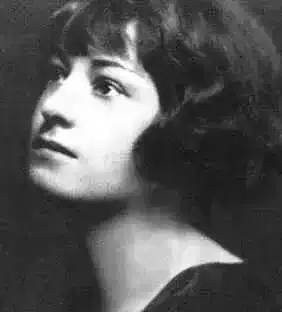
Dorothy Parker
August
August
When my eyes are weeds,
And my lips are petals, spinning
Down the wind that has beginning
Where the crumpled beeches start
In a fringe of salty reeds;
When my arms are elder-bushes,
And the rangy lilac pushes
Upward, upward through my heart;
Summer, do your worst!
Light your tinsel moon, and call on
Your performing stars to fall on
Headlong through your paper sky;
Nevermore shall I be cursed
By a flushed and amorous slattern,
With her dusty laces' pattern
Trailing, as she straggles by.
When my eyes are weeds,
And my lips are petals, spinning
Down the wind that has beginning
Where the crumpled beeches start
In a fringe of salty reeds;
When my arms are elder-bushes,
And the rangy lilac pushes
Upward, upward through my heart;
Summer, do your worst!
Light your tinsel moon, and call on
Your performing stars to fall on
Headlong through your paper sky;
Nevermore shall I be cursed
By a flushed and amorous slattern,
With her dusty laces' pattern
Trailing, as she straggles by.
384

D.H. Lawrence
Trees in the Garden
Trees in the Garden
Ah in the thunder air
how still the trees are!
And the lime-tree, lovely and tall, every leaf silent
hardly looses even a last breath of perfume.
And the ghostly, creamy coloured little tree of leaves
white, ivory white among the rambling greens
how evanescent, variegated elder, she hesitates on the green grass
as if, in another moment, she would disappear
with all her grace of foam!
And the larch that is only a column, it goes up too tall to see:
and the balsam-pines that are blue with the grey-blue blueness of
things from the sea,
and the young copper beech, its leaves red-rosy at the ends
how still they are together, they stand so still
in the thunder air, all strangers to one another
as the green grass glows upwards, strangers in the silent garden.
Ah in the thunder air
how still the trees are!
And the lime-tree, lovely and tall, every leaf silent
hardly looses even a last breath of perfume.
And the ghostly, creamy coloured little tree of leaves
white, ivory white among the rambling greens
how evanescent, variegated elder, she hesitates on the green grass
as if, in another moment, she would disappear
with all her grace of foam!
And the larch that is only a column, it goes up too tall to see:
and the balsam-pines that are blue with the grey-blue blueness of
things from the sea,
and the young copper beech, its leaves red-rosy at the ends
how still they are together, they stand so still
in the thunder air, all strangers to one another
as the green grass glows upwards, strangers in the silent garden.
267
D.H. Lawrence
The Enkindled Spring
The Enkindled Spring
This spring as it comes bursts up in bonfires green,
Wild puffing of emerald trees, and flame-filled bushes,
Thorn-blossom lifting in wreaths of smoke between
Where the wood fumes up and the watery, flickering rushes.
I am amazed at this spring, this conflagration
Of green fires lit on the soil of the earth, this blaze
Of growing, and sparks that puff in wild gyration,
Faces of people streaming across my gaze.
And I, what fountain of fire am I among
This leaping combustion of spring? My spirit is tossed
About like a shadow buffeted in the throng
Of flames, a shadow that’s gone astray, and is lost.
This spring as it comes bursts up in bonfires green,
Wild puffing of emerald trees, and flame-filled bushes,
Thorn-blossom lifting in wreaths of smoke between
Where the wood fumes up and the watery, flickering rushes.
I am amazed at this spring, this conflagration
Of green fires lit on the soil of the earth, this blaze
Of growing, and sparks that puff in wild gyration,
Faces of people streaming across my gaze.
And I, what fountain of fire am I among
This leaping combustion of spring? My spirit is tossed
About like a shadow buffeted in the throng
Of flames, a shadow that’s gone astray, and is lost.
232
D.H. Lawrence
Craving for Spring
Craving for Spring
I wish it were spring in the world.
Let it be spring!
Come, bubbling, surging tide of sap!
Come, rush of creation!
Come, life! surge through this mass of mortification!
Come, sweep away these exquisite, ghastly first-flowers,
which are rather last-flowers!
Come, thaw down their cool portentousness, dissolve them:
snowdrops, straight, death-veined exhalations of white and purple crocuses,
flowers of the penumbra, issue of corruption, nourished in mortification,
jets of exquisite finality;
Come, spring, make havoc of them!
I trample on the snowdrops, it gives me pleasure to tread down the jonquils,
to destroy the chill Lent lilies;
for I am sick of them, their faint-bloodedness,
slow-blooded, icy-fleshed, portentous.
I want the fine, kindling wine-sap of spring,
gold, and of inconceivably fine, quintessential brightness,
rare almost as beams, yet overwhelmingly potent,
strong like the greatest force of world-balancing.
This is the same that picks up the harvest of wheat
and rocks it, tons of grain, on the ripening wind;
the same that dangles the globe-shaped pleiads of fruit
temptingly in mid-air, between a playful thumb and finger;
oh, and suddenly, from out of nowhere, whirls the pear-bloom,
upon us, and apple- and almond- and apricot- and quince-blossom,
storms and cumulus clouds of all imaginable blossom
about our bewildered faces,
though we do not worship.
I wish it were spring
cunningly blowing on the fallen sparks, odds and ends of the old, scattered fire,
and kindling shapely little conflagrations
curious long-legged foals, and wide-eared calves, and naked sparrow-bubs.
I wish that spring
would start the thundering traffic of feet
new feet on the earth, beating with impatience.
I wish it were spring, thundering
delicate, tender spring.
I wish these brittle, frost-lovely flowers of passionate, mysterious corruption
were not yet to come still more from the still-flickering discontent.
Oh, in the spring, the bluebell bows him down for very exuberance,
exulting with secret warm excess,
bowed down with his inner magnificence!
Oh, yes, the gush of spring is strong enough
to toss the globe of earth like a ball on a water-jet
dancing sportfully;
as you see a tiny celluloid ball tossing on a squirt of water
for men to shoot at, penny-a-time, in a booth at a fair.
The gush of spring is strong enough
to play with the globe of earth like a ball on a fountain;
At the same time it opens the tiny hands of the hazel
with such infinite patience.
The power of the rising, golden, all-creative sap could take the earth
and heave it off among the stars, into the invisible;
the same sets the throstle at sunset on a bough
singing against the blackbird;
comes out in the hesitating tremor of the primrose,
and betrays its candour in the round white strawberry flower,
is dignified in the foxglove, like a Red-Indian brave.
Ah come, come quickly, spring!
come and lift us towards our culmination, we myriads;
we who have never flowered, like patient cactuses.
Come and lift us to our end, to blossom, bring us to our summer
we who are winter-weary in the winter of the of the world.
Come making the chaffinch nests hollow and cosy,
come and soften the willow buds till they are puffed and furred,
then blow them over with gold.
Coma and cajole the gawky colt’s-foot flowers.
Come quickly, and vindicate us.
against too much death.
Come quickly, and stir the rotten globe of the world from within,
burst it with germination, with world anew.
Come now, to us, your adherents, who cannot flower from the ice.
All the world gleams with the lilies of death the Unconquerable,
but come, give us our turn.
Enough of the virgins and lilies, of passionate, suffocating perfume of corruption,
no more narcissus perfume, lily harlots, the blades of sensation
piercing the flesh to blossom of death.
Have done, have done with this shuddering, delicious business
of thrilling ruin in the flesh, of pungent passion, of rare, death-edged ecstasy.
Give us our turn, give us a chance, let our hour strike,
O soon, soon!
Let the darkness turn violet with rich dawn.
Let the darkness be warmed, warmed through to a ruddy violet,
incipient purpling towards summer in the world of the heart of man.
Are the violets already here!
Show me! I tremble so much to hear it, that even now
on the threshold of spring, I fear I shall die.
Show me the violets that are out.
Oh, if it be true, and the living darkness of the blood of man is purpling with violets,
if the violets are coming out from under the rack of men, winter-rotten and fallen,
we shall have spring.
Pray not to die on this Pisgah blossoming with violets.
Pray to live through.
If you catch a whiff of violets from the darkness of the shadow of man
it will be spring in the world,
it will be spring in the world of the living;
wonderment organising itself, heralding itself with the violets,
stirring of new seasons.
Ah, do not let me die on the brink of such anticipation!
Worse, let me not deceive myself.
I wish it were spring in the world.
Let it be spring!
Come, bubbling, surging tide of sap!
Come, rush of creation!
Come, life! surge through this mass of mortification!
Come, sweep away these exquisite, ghastly first-flowers,
which are rather last-flowers!
Come, thaw down their cool portentousness, dissolve them:
snowdrops, straight, death-veined exhalations of white and purple crocuses,
flowers of the penumbra, issue of corruption, nourished in mortification,
jets of exquisite finality;
Come, spring, make havoc of them!
I trample on the snowdrops, it gives me pleasure to tread down the jonquils,
to destroy the chill Lent lilies;
for I am sick of them, their faint-bloodedness,
slow-blooded, icy-fleshed, portentous.
I want the fine, kindling wine-sap of spring,
gold, and of inconceivably fine, quintessential brightness,
rare almost as beams, yet overwhelmingly potent,
strong like the greatest force of world-balancing.
This is the same that picks up the harvest of wheat
and rocks it, tons of grain, on the ripening wind;
the same that dangles the globe-shaped pleiads of fruit
temptingly in mid-air, between a playful thumb and finger;
oh, and suddenly, from out of nowhere, whirls the pear-bloom,
upon us, and apple- and almond- and apricot- and quince-blossom,
storms and cumulus clouds of all imaginable blossom
about our bewildered faces,
though we do not worship.
I wish it were spring
cunningly blowing on the fallen sparks, odds and ends of the old, scattered fire,
and kindling shapely little conflagrations
curious long-legged foals, and wide-eared calves, and naked sparrow-bubs.
I wish that spring
would start the thundering traffic of feet
new feet on the earth, beating with impatience.
I wish it were spring, thundering
delicate, tender spring.
I wish these brittle, frost-lovely flowers of passionate, mysterious corruption
were not yet to come still more from the still-flickering discontent.
Oh, in the spring, the bluebell bows him down for very exuberance,
exulting with secret warm excess,
bowed down with his inner magnificence!
Oh, yes, the gush of spring is strong enough
to toss the globe of earth like a ball on a water-jet
dancing sportfully;
as you see a tiny celluloid ball tossing on a squirt of water
for men to shoot at, penny-a-time, in a booth at a fair.
The gush of spring is strong enough
to play with the globe of earth like a ball on a fountain;
At the same time it opens the tiny hands of the hazel
with such infinite patience.
The power of the rising, golden, all-creative sap could take the earth
and heave it off among the stars, into the invisible;
the same sets the throstle at sunset on a bough
singing against the blackbird;
comes out in the hesitating tremor of the primrose,
and betrays its candour in the round white strawberry flower,
is dignified in the foxglove, like a Red-Indian brave.
Ah come, come quickly, spring!
come and lift us towards our culmination, we myriads;
we who have never flowered, like patient cactuses.
Come and lift us to our end, to blossom, bring us to our summer
we who are winter-weary in the winter of the of the world.
Come making the chaffinch nests hollow and cosy,
come and soften the willow buds till they are puffed and furred,
then blow them over with gold.
Coma and cajole the gawky colt’s-foot flowers.
Come quickly, and vindicate us.
against too much death.
Come quickly, and stir the rotten globe of the world from within,
burst it with germination, with world anew.
Come now, to us, your adherents, who cannot flower from the ice.
All the world gleams with the lilies of death the Unconquerable,
but come, give us our turn.
Enough of the virgins and lilies, of passionate, suffocating perfume of corruption,
no more narcissus perfume, lily harlots, the blades of sensation
piercing the flesh to blossom of death.
Have done, have done with this shuddering, delicious business
of thrilling ruin in the flesh, of pungent passion, of rare, death-edged ecstasy.
Give us our turn, give us a chance, let our hour strike,
O soon, soon!
Let the darkness turn violet with rich dawn.
Let the darkness be warmed, warmed through to a ruddy violet,
incipient purpling towards summer in the world of the heart of man.
Are the violets already here!
Show me! I tremble so much to hear it, that even now
on the threshold of spring, I fear I shall die.
Show me the violets that are out.
Oh, if it be true, and the living darkness of the blood of man is purpling with violets,
if the violets are coming out from under the rack of men, winter-rotten and fallen,
we shall have spring.
Pray not to die on this Pisgah blossoming with violets.
Pray to live through.
If you catch a whiff of violets from the darkness of the shadow of man
it will be spring in the world,
it will be spring in the world of the living;
wonderment organising itself, heralding itself with the violets,
stirring of new seasons.
Ah, do not let me die on the brink of such anticipation!
Worse, let me not deceive myself.
209

Dante Alighieri
Autumn Song
Autumn Song
Know'st thou not at the fall of the leaf
How the heart feels a languid grief
Laid on it for a covering,
And how sleep seems a goodly thing
In Autumn at the fall of the leaf?
And how the swift beat of the brain
Falters because it is in vain,
In Autumn at the fall of the leaf
Knowest thou not? and how the chief
Of joys seems--not to suffer pain?
Know'st thou not at the fall of the leaf
How the soul feels like a dried sheaf
Bound up at length for harvesting,
And how death seems a comely thing
In Autumn at the fall of the leaf?
Know'st thou not at the fall of the leaf
How the heart feels a languid grief
Laid on it for a covering,
And how sleep seems a goodly thing
In Autumn at the fall of the leaf?
And how the swift beat of the brain
Falters because it is in vain,
In Autumn at the fall of the leaf
Knowest thou not? and how the chief
Of joys seems--not to suffer pain?
Know'st thou not at the fall of the leaf
How the soul feels like a dried sheaf
Bound up at length for harvesting,
And how death seems a comely thing
In Autumn at the fall of the leaf?
282

Claude Mckay
To One Coming North
To One Coming North
At first you'll joy to see the playful snow,
Like white moths trembling on the tropic air,
Or waters of the hills that softly flow
Gracefully falling down a shining stair.
And when the fields and streets are covered white
And the wind-worried void is chilly, raw,
Or underneath a spell of heat and light
The cheerless frozen spots begin to thaw,
Like me you'll long for home, where birds' glad song
Means flowering lanes and leas and spaces dry,
And tender thoughts and feelings fine and strong,
Beneath a vivid silver-flecked blue sky.
But oh! more than the changeless southern isles,
When Spring has shed upon the earth her charm,
You'll love the Northland wreathed in golden smiles
By the miraculous sun turned glad and warm.
At first you'll joy to see the playful snow,
Like white moths trembling on the tropic air,
Or waters of the hills that softly flow
Gracefully falling down a shining stair.
And when the fields and streets are covered white
And the wind-worried void is chilly, raw,
Or underneath a spell of heat and light
The cheerless frozen spots begin to thaw,
Like me you'll long for home, where birds' glad song
Means flowering lanes and leas and spaces dry,
And tender thoughts and feelings fine and strong,
Beneath a vivid silver-flecked blue sky.
But oh! more than the changeless southern isles,
When Spring has shed upon the earth her charm,
You'll love the Northland wreathed in golden smiles
By the miraculous sun turned glad and warm.
494
Claude Mckay
Spring in New Hampshire
Spring in New Hampshire
Too green the springing April grass,
Too blue the silver-speckled sky,
For me to linger here, alas,
While happy winds go laughing by,
Wasting the golden hours indoors,
Washing windows and scrubbing floors.
Too wonderful the April night,
Too faintly sweet the first May flowers,
The stars too gloriously bright,
For me to spend the evening hours,
When fields are fresh and streams are leaping,
Wearied, exhausted, dully sleeping.
Too green the springing April grass,
Too blue the silver-speckled sky,
For me to linger here, alas,
While happy winds go laughing by,
Wasting the golden hours indoors,
Washing windows and scrubbing floors.
Too wonderful the April night,
Too faintly sweet the first May flowers,
The stars too gloriously bright,
For me to spend the evening hours,
When fields are fresh and streams are leaping,
Wearied, exhausted, dully sleeping.
424
Claude Mckay
Flame-Heart
Flame-Heart
So much have I forgotten in ten years,
So much in ten brief years! I have forgot
What time the purple apples come to juice,
And what month brings the shy forget-me-not.
I have forgot the special, startling season
Of the pimento's flowering and fruiting;
What time of year the ground doves brown the fields
And fill the noonday with their curious fluting.
I have forgotten much, but still remember
The poinsettia's red, blood-red in warm December.
I still recall the honey-fever grass,
But cannot recollect the high days when
We rooted them out of the ping-wing path
To stop the mad bees in the rabbit pen.
I often try to think in what sweet month
The languid painted ladies used to dapple
The yellow by-road mazing from the main,
Sweet with the golden threads of the rose-apple.
I have forgotten--strange--but quite remember
The poinsettia's red, blood-red in warm December.
What weeks, what months, what time of the mild year
We cheated school to have our fling at tops?
What days our wine-thrilled bodies pulsed with joy
Feasting upon blackberries in the copse?
Oh some I know! I have embalmed the days,
Even the sacred moments when we played,
All innocent of passion, uncorrupt,
At noon and evening in the flame-heart's shade.
We were so happy, happy, I remember,
Beneath the poinsettia's red in warm December.
So much have I forgotten in ten years,
So much in ten brief years! I have forgot
What time the purple apples come to juice,
And what month brings the shy forget-me-not.
I have forgot the special, startling season
Of the pimento's flowering and fruiting;
What time of year the ground doves brown the fields
And fill the noonday with their curious fluting.
I have forgotten much, but still remember
The poinsettia's red, blood-red in warm December.
I still recall the honey-fever grass,
But cannot recollect the high days when
We rooted them out of the ping-wing path
To stop the mad bees in the rabbit pen.
I often try to think in what sweet month
The languid painted ladies used to dapple
The yellow by-road mazing from the main,
Sweet with the golden threads of the rose-apple.
I have forgotten--strange--but quite remember
The poinsettia's red, blood-red in warm December.
What weeks, what months, what time of the mild year
We cheated school to have our fling at tops?
What days our wine-thrilled bodies pulsed with joy
Feasting upon blackberries in the copse?
Oh some I know! I have embalmed the days,
Even the sacred moments when we played,
All innocent of passion, uncorrupt,
At noon and evening in the flame-heart's shade.
We were so happy, happy, I remember,
Beneath the poinsettia's red in warm December.
414
Claude Mckay
A Memory of June
A Memory of June
When June comes dancing o'er the death of May,
With scarlet roses tinting her green breast,
And mating thrushes ushering in her day,
And Earth on tiptoe for her golden guest,
I always see the evening when we met--
The first of June baptized in tender rain--
And walked home through the wide streets, gleaming wet,
Arms locked, our warm flesh pulsing with love's pain.
I always see the cheerful little room,
And in the corner, fresh and white, the bed,
Sweet scented with a delicate perfume,
Wherein for one night only we were wed;
Where in the starlit stillness we lay mute,
And heard the whispering showers all night long,
And your brown burning body was a lute
Whereon my passion played his fevered song.
When June comes dancing o'er the death of May,
With scarlet roses staining her fair feet,
My soul takes leave of me to sing all day
A love so fugitive and so complete.
When June comes dancing o'er the death of May,
With scarlet roses tinting her green breast,
And mating thrushes ushering in her day,
And Earth on tiptoe for her golden guest,
I always see the evening when we met--
The first of June baptized in tender rain--
And walked home through the wide streets, gleaming wet,
Arms locked, our warm flesh pulsing with love's pain.
I always see the cheerful little room,
And in the corner, fresh and white, the bed,
Sweet scented with a delicate perfume,
Wherein for one night only we were wed;
Where in the starlit stillness we lay mute,
And heard the whispering showers all night long,
And your brown burning body was a lute
Whereon my passion played his fevered song.
When June comes dancing o'er the death of May,
With scarlet roses staining her fair feet,
My soul takes leave of me to sing all day
A love so fugitive and so complete.
380

Christina Rossetti
Winter Rain
Winter Rain
Every valley drinks,
Every dell and hollow;
Where the kind rain sinks and sinks,
Green of Spring will follow.
Yet a lapse of weeks
Buds will burst their edges,
Strip their wool-coats, glue-coats, streaks,
In the woods and hedges;
Weave a bower of love
For birds to meet each other,
Weave a canopy above
Nest and egg and mother.
But for fattening rain
We should have no flowers,
Never a bud or leaf again
But for soaking showers;
Never a mated bird
In the rocking tree-tops,
Never indeed a flock or herd
To graze upon the lea-crops.
Lambs so woolly white,
Sheep the sun-bright leas on,
They could have no grass to bite
But for rain in season.
We should find no moss
In the shadiest places,
Find no waving meadow grass
Pied with broad-eyed daisies:
But miles of barren sand,
With never a son or daughter,
Not a lily on the land,
Or lily on the water.
Every valley drinks,
Every dell and hollow;
Where the kind rain sinks and sinks,
Green of Spring will follow.
Yet a lapse of weeks
Buds will burst their edges,
Strip their wool-coats, glue-coats, streaks,
In the woods and hedges;
Weave a bower of love
For birds to meet each other,
Weave a canopy above
Nest and egg and mother.
But for fattening rain
We should have no flowers,
Never a bud or leaf again
But for soaking showers;
Never a mated bird
In the rocking tree-tops,
Never indeed a flock or herd
To graze upon the lea-crops.
Lambs so woolly white,
Sheep the sun-bright leas on,
They could have no grass to bite
But for rain in season.
We should find no moss
In the shadiest places,
Find no waving meadow grass
Pied with broad-eyed daisies:
But miles of barren sand,
With never a son or daughter,
Not a lily on the land,
Or lily on the water.
269
Christina Rossetti
Who Hath Despised The Day Of Small Things?
Who Hath Despised The Day Of Small Things?
As violets so be I recluse and sweet,
Cheerful as daisies unaccounted rare,
Still sunward-gazing from a lowly seat,
Still sweetening wintry air.
While half-awakened Spring lags incomplete,
While lofty forest trees tower bleak and bare,
Daisies and violets own remotest heat
And bloom and make them fair.
As violets so be I recluse and sweet,
Cheerful as daisies unaccounted rare,
Still sunward-gazing from a lowly seat,
Still sweetening wintry air.
While half-awakened Spring lags incomplete,
While lofty forest trees tower bleak and bare,
Daisies and violets own remotest heat
And bloom and make them fair.
224
Christina Rossetti
Venus's Looking-Glass
Venus's Looking-Glass
I marked where lovely Venus and her court
With song and dance and merry laugh went by;
Weightless, their wingless feet seemed made to fly,
Bound from the ground and in mid air to sport.
Left far behind I heard the dolphins snort,
Tracking their goddess with a wistful eye,
Around whose head white doves rose, wheeling high
Or low, and cooed after their tender sort.
All this I saw in Spring. Through Summer heat
I saw the lovely Queen of Love no more.
But when flushed Autumn through the woodlands went
I spied sweet Venus walk amid the wheat:
Whom seeing, every harvester gave o'er
His toil, and laughed and hoped and was content.
I marked where lovely Venus and her court
With song and dance and merry laugh went by;
Weightless, their wingless feet seemed made to fly,
Bound from the ground and in mid air to sport.
Left far behind I heard the dolphins snort,
Tracking their goddess with a wistful eye,
Around whose head white doves rose, wheeling high
Or low, and cooed after their tender sort.
All this I saw in Spring. Through Summer heat
I saw the lovely Queen of Love no more.
But when flushed Autumn through the woodlands went
I spied sweet Venus walk amid the wheat:
Whom seeing, every harvester gave o'er
His toil, and laughed and hoped and was content.
231
Christina Rossetti
Twilight Calm
Twilight Calm
Oh, pleasant eventide!
Clouds on the western side
Grow grey and greyer, hiding the warm sun:
The bees and birds, their happy labours done,
Seek their close nests and bide.
Screened in the leafy wood
The stock-doves sit and brood:
The very squirrel leaps from bough to bough
But lazily; pauses; and settles now
Where once he stored his food.
One by one the flowers close,
Lily and dewy rose
Shutting their tender petals from the moon:
The grasshoppers are still; but not so soon
Are still the noisy crows.
The dormouse squats and eats
Choice little dainty bits
Beneath the spreading roots of a broad lime
Nibbling his fill he stops from time to time
And listens where he sits.
From far the lowings come
Of cattle driven home:
From farther still the wind brings fitfully
The vast continual murmur of the sea,
Now loud, now almost dumb.
The gnats whirl in the air,
The evening gnats; and there
The owl opes broad his eyes and wings to sail
For prey; the bat wakes; and the shell-less snail
Comes forth, clammy and bare.
Hark! that's the nightingale,
Telling the selfsame tale
Her song told when this ancient earth was young:
So echoes answered when her song was sung
In the first wooded vale.
We call it love and pain
The passion of her strain;
And yet we little understand or know:
Why should it not be rather joy that so
Throbs in each throbbing vein?
In separate herds the deer
Lie; here the bucks, and here
The does, and by its mother sleeps the fawn:
Through all the hours of night until the dawn
They sleep, forgetting fear.
The hare sleeps where it lies,
With wary half-closed eyes;
The cock has ceased to crow, the hen to cluck:
Only the fox is out, some heedless duck
Or chicken to surprise.
Remote, each single star
Comes out, till there they are
All shining brightly: how the dews fall damp!
While close at hand the glow-worm lights her lamp,
Or twinkles from afar.
But evening now is done
As much as if the sun
Day-giving had arisen in the East:
For night has come; and the great calm has ceased,
The quiet sands have run.
Oh, pleasant eventide!
Clouds on the western side
Grow grey and greyer, hiding the warm sun:
The bees and birds, their happy labours done,
Seek their close nests and bide.
Screened in the leafy wood
The stock-doves sit and brood:
The very squirrel leaps from bough to bough
But lazily; pauses; and settles now
Where once he stored his food.
One by one the flowers close,
Lily and dewy rose
Shutting their tender petals from the moon:
The grasshoppers are still; but not so soon
Are still the noisy crows.
The dormouse squats and eats
Choice little dainty bits
Beneath the spreading roots of a broad lime
Nibbling his fill he stops from time to time
And listens where he sits.
From far the lowings come
Of cattle driven home:
From farther still the wind brings fitfully
The vast continual murmur of the sea,
Now loud, now almost dumb.
The gnats whirl in the air,
The evening gnats; and there
The owl opes broad his eyes and wings to sail
For prey; the bat wakes; and the shell-less snail
Comes forth, clammy and bare.
Hark! that's the nightingale,
Telling the selfsame tale
Her song told when this ancient earth was young:
So echoes answered when her song was sung
In the first wooded vale.
We call it love and pain
The passion of her strain;
And yet we little understand or know:
Why should it not be rather joy that so
Throbs in each throbbing vein?
In separate herds the deer
Lie; here the bucks, and here
The does, and by its mother sleeps the fawn:
Through all the hours of night until the dawn
They sleep, forgetting fear.
The hare sleeps where it lies,
With wary half-closed eyes;
The cock has ceased to crow, the hen to cluck:
Only the fox is out, some heedless duck
Or chicken to surprise.
Remote, each single star
Comes out, till there they are
All shining brightly: how the dews fall damp!
While close at hand the glow-worm lights her lamp,
Or twinkles from afar.
But evening now is done
As much as if the sun
Day-giving had arisen in the East:
For night has come; and the great calm has ceased,
The quiet sands have run.
252
Christina Rossetti
Three Seasons
Three Seasons
'A cup for hope!' she said,
In springtime ere the bloom was old:
The crimson wine was poor and cold
By her mouth's richer red.
'A cup for love!' how low,
How soft the words; and all the while
Her blush was rippling with a smile
Like summer after snow.
'A cup for memory!'
Cold cup that one must drain alone:
While autumn winds are up and moan
Across the barren sea.
Hope, memory, love:
Hope for fair morn, and love for day,
And memory for the evening grey
And solitary dove.
'A cup for hope!' she said,
In springtime ere the bloom was old:
The crimson wine was poor and cold
By her mouth's richer red.
'A cup for love!' how low,
How soft the words; and all the while
Her blush was rippling with a smile
Like summer after snow.
'A cup for memory!'
Cold cup that one must drain alone:
While autumn winds are up and moan
Across the barren sea.
Hope, memory, love:
Hope for fair morn, and love for day,
And memory for the evening grey
And solitary dove.
226
Christina Rossetti
There Is But One May In The Year,
There Is But One May In The Year,
There is but one May in the year,
And sometimes May is wet and cold;
There is but one May in the year
Before the year grows old.
Yet though it be the chilliest May,
With least of sun and most of showers,
Its wind and dew, its night and day,
Bring up the flowers.
There is but one May in the year,
And sometimes May is wet and cold;
There is but one May in the year
Before the year grows old.
Yet though it be the chilliest May,
With least of sun and most of showers,
Its wind and dew, its night and day,
Bring up the flowers.
219
Christina Rossetti
Spring Quiet
Spring Quiet
Gone were but the Winter,
Come were but the Spring,
I would go to a covert
Where the birds sing;
Where in the whitethorn
Singeth a thrush,
And a robin sings
In the holly-bush.
Full of fresh scents
Are the budding boughs
Arching high over
A cool green house:
Full of sweet scents,
And whispering air
Which sayeth softly:
"We spread no snare;
"Here dwell in safety,
Here dwell alone,
With a clear stream
And a mossy stone.
"Here the sun shineth
Most shadily;
Here is heard an echo
Of the far sea,
Though far off it be."
Gone were but the Winter,
Come were but the Spring,
I would go to a covert
Where the birds sing;
Where in the whitethorn
Singeth a thrush,
And a robin sings
In the holly-bush.
Full of fresh scents
Are the budding boughs
Arching high over
A cool green house:
Full of sweet scents,
And whispering air
Which sayeth softly:
"We spread no snare;
"Here dwell in safety,
Here dwell alone,
With a clear stream
And a mossy stone.
"Here the sun shineth
Most shadily;
Here is heard an echo
Of the far sea,
Though far off it be."
287
Christina Rossetti
Summer
Summer
Winter is cold-hearted
Spring is yea and nay,
Autumn is a weather-cock
Blown every way:
Summer days for me
When every leaf is on its tree;
When Robin's not a beggar,
And Jenny Wren's a bride,
And larks hang singing, singing, singing,
Over the wheat-fields wide,
And anchored lilies ride,
And the pendulum spider
Swings from side to side,
And blue-black beetles transact business,
And gnats fly in a host,
And furry caterpillars hasten
That no time be lost,
And moths grow fat and thrive,
And ladybirds arrive.
Before green apples blush,
Before green nuts embrown,
Why, one day in the country
Is worth a month in town;
Is worth a day and a year
Of the dusty, musty, lag-last fashion
That days drone elsewhere.
Winter is cold-hearted
Spring is yea and nay,
Autumn is a weather-cock
Blown every way:
Summer days for me
When every leaf is on its tree;
When Robin's not a beggar,
And Jenny Wren's a bride,
And larks hang singing, singing, singing,
Over the wheat-fields wide,
And anchored lilies ride,
And the pendulum spider
Swings from side to side,
And blue-black beetles transact business,
And gnats fly in a host,
And furry caterpillars hasten
That no time be lost,
And moths grow fat and thrive,
And ladybirds arrive.
Before green apples blush,
Before green nuts embrown,
Why, one day in the country
Is worth a month in town;
Is worth a day and a year
Of the dusty, musty, lag-last fashion
That days drone elsewhere.
236
Christina Rossetti
Songs In A Cornfield
Songs In A Cornfield
A song in a cornfield
Where corn begins to fall,
Where reapers are reaping,
Reaping one, reaping all.
Sing pretty Lettice,
Sing Rachel, sing May;
Only Marian cannot sing
While her sweetheart's away.
Where is he gone to
And why does he stay?
He came across the green sea
But for a day,
Across the deep green sea
To help with the hay.
His hair was curly yellow
And his eyes were grey,
He laughed a merry laugh
And said a sweet say.
Where is he gone to
That he comes not home?
To-day or to-morrow
He surely will come.
Let him haste to joy
Lest he lag for sorrow,
For one weeps to-day
Who'll not weep to-morrow:
To-day she must weep
For gnawing sorrow,
To-night she may sleep
And not wake to-morrow.
May sang with Rachel
In the waxing warm weather,
Lettice sang with them,
They sang all together:—
'Take the wheat in your arm
Whilst day is broad above,
Take the wheat to your bosom,
But not a false love.
Out in the fields
Summer heat gloweth,
Out in the fields
Summer wind bloweth,
Out in the fields
Summer friend showeth,
Out in the fields
Summer wheat groweth;
But in the winter
When summer heat is dead
And summer wind has veered
And summer friend has fled,
Only summer wheat remaineth,
White cakes and bread.
Take the wheat, clasp the wheat
That's food for maid and dove;
Take the wheat to your bosom,
But not a false false love.'
A silence of full noontide heat
Grew on them at their toil:
The farmer's dog woke up from sleep,
The green snake hid her coil.
Where grass stood thickest, bird and beast
Sought shadows as they could,
The reaping men and women paused
And sat down where they stood;
They ate and drank and were refreshed,
For rest from toil is good.
While the reapers took their ease,
Their sickles lying by,
Rachel sang a second strain,
And singing seemed to sigh:—
'There goes the swallow—
Could we but follow!
Hasty swallow stay,
Point us out the way;
Look back swallow, turn back swallow, stop swallow.
'There went the swallow—
Too late to follow:
Lost our note of way,
Lost our chance to-day;
Good bye swallow, sunny swallow, wise swallow.
'After the swallow
All sweet things follow:
All things go their way,
Only we must stay,
Must not follow; good bye swallow, good swallow.'
Then listless Marian raised her head
Among the nodding sheaves;
Her voice was sweeter than that voice;
She sang like one who grieves:
Her voice was sweeter than its wont
Among the nodding sheaves;
All wondered while they heard her sing
Like one who hopes and grieves:—
'Deeper than the hail can smite,
Deeper than the frost can bite,
Deep asleep through day and night,
Our delight.
'Now thy sleep no pang can break,
No to-morrow bid thee wake,
Not our sobs who sit and ache
For thy sake.
'Is it dark or light below?
Oh, but is it cold like snow?
Dost thou feel the green things grow
Fast or slow?
'Is it warm or cold beneath,
Oh, but is it cold like death?
Cold like death, without a breath,
Cold like death?'
If he comes to-day
He will find her weeping;
If he comes to-morrow
He will find her sleeping;
If he comes the next day
He'll not find her at all,
He may tear his curling hair,
Beat his breast and call.
A song in a cornfield
Where corn begins to fall,
Where reapers are reaping,
Reaping one, reaping all.
Sing pretty Lettice,
Sing Rachel, sing May;
Only Marian cannot sing
While her sweetheart's away.
Where is he gone to
And why does he stay?
He came across the green sea
But for a day,
Across the deep green sea
To help with the hay.
His hair was curly yellow
And his eyes were grey,
He laughed a merry laugh
And said a sweet say.
Where is he gone to
That he comes not home?
To-day or to-morrow
He surely will come.
Let him haste to joy
Lest he lag for sorrow,
For one weeps to-day
Who'll not weep to-morrow:
To-day she must weep
For gnawing sorrow,
To-night she may sleep
And not wake to-morrow.
May sang with Rachel
In the waxing warm weather,
Lettice sang with them,
They sang all together:—
'Take the wheat in your arm
Whilst day is broad above,
Take the wheat to your bosom,
But not a false love.
Out in the fields
Summer heat gloweth,
Out in the fields
Summer wind bloweth,
Out in the fields
Summer friend showeth,
Out in the fields
Summer wheat groweth;
But in the winter
When summer heat is dead
And summer wind has veered
And summer friend has fled,
Only summer wheat remaineth,
White cakes and bread.
Take the wheat, clasp the wheat
That's food for maid and dove;
Take the wheat to your bosom,
But not a false false love.'
A silence of full noontide heat
Grew on them at their toil:
The farmer's dog woke up from sleep,
The green snake hid her coil.
Where grass stood thickest, bird and beast
Sought shadows as they could,
The reaping men and women paused
And sat down where they stood;
They ate and drank and were refreshed,
For rest from toil is good.
While the reapers took their ease,
Their sickles lying by,
Rachel sang a second strain,
And singing seemed to sigh:—
'There goes the swallow—
Could we but follow!
Hasty swallow stay,
Point us out the way;
Look back swallow, turn back swallow, stop swallow.
'There went the swallow—
Too late to follow:
Lost our note of way,
Lost our chance to-day;
Good bye swallow, sunny swallow, wise swallow.
'After the swallow
All sweet things follow:
All things go their way,
Only we must stay,
Must not follow; good bye swallow, good swallow.'
Then listless Marian raised her head
Among the nodding sheaves;
Her voice was sweeter than that voice;
She sang like one who grieves:
Her voice was sweeter than its wont
Among the nodding sheaves;
All wondered while they heard her sing
Like one who hopes and grieves:—
'Deeper than the hail can smite,
Deeper than the frost can bite,
Deep asleep through day and night,
Our delight.
'Now thy sleep no pang can break,
No to-morrow bid thee wake,
Not our sobs who sit and ache
For thy sake.
'Is it dark or light below?
Oh, but is it cold like snow?
Dost thou feel the green things grow
Fast or slow?
'Is it warm or cold beneath,
Oh, but is it cold like death?
Cold like death, without a breath,
Cold like death?'
If he comes to-day
He will find her weeping;
If he comes to-morrow
He will find her sleeping;
If he comes the next day
He'll not find her at all,
He may tear his curling hair,
Beat his breast and call.
313
Christina Rossetti
Song IV
Song IV
Oh roses for the flush of youth,
And laurel for the perfect prime;
But pluck an ivy branch for me
Grown old before my time.
Oh violets for the grave of youth,
And bay for those dead in their prime;
Give me the withered leaves I chose
Before in the old time.
Oh roses for the flush of youth,
And laurel for the perfect prime;
But pluck an ivy branch for me
Grown old before my time.
Oh violets for the grave of youth,
And bay for those dead in their prime;
Give me the withered leaves I chose
Before in the old time.
211
Christina Rossetti
Seasons
Seasons
Oh the cheerful Budding-time!
When thorn-hedges turn to green,
When new leaves of elm and lime
Cleave and shed their winter screen;
Tender lambs are born and 'baa,'
North wind finds no snow to bring,
Vigorous Nature laughs 'Ha, ha,'
In the miracle of spring.
Oh the gorgeous Blossom-days!
When broad flag-flowers drink and blow,
In and out in summer-blaze
Dragon-flies flash to and fro;
Ashen branches hang out keys,
Oaks put forth the rosy shoot,
Wandering herds wax sleek at ease,
Lovely blossoms end in fruit.
Oh the shouting Harvest-weeks!
Mother earth grown fat with sheaves
Thrifty gleaner finds who seeks;
Russet-golden pomp of leaves
Crowns the woods, to fall at length;
Bracing winds are felt to stir,
Ocean gathers up her strength,
Beasts renew their dwindled fur.
Oh the starving Winter-lapse!
Ice-bound, hunger-pinched and dim;
Dormant roots recall their saps,
Empty nests show black and grim,
Short-lived sunshine gives no heat,
Undue buds are nipped by frost,
Snow sets forth a winding-sheet,
And all hope of life seems lost.
Oh the cheerful Budding-time!
When thorn-hedges turn to green,
When new leaves of elm and lime
Cleave and shed their winter screen;
Tender lambs are born and 'baa,'
North wind finds no snow to bring,
Vigorous Nature laughs 'Ha, ha,'
In the miracle of spring.
Oh the gorgeous Blossom-days!
When broad flag-flowers drink and blow,
In and out in summer-blaze
Dragon-flies flash to and fro;
Ashen branches hang out keys,
Oaks put forth the rosy shoot,
Wandering herds wax sleek at ease,
Lovely blossoms end in fruit.
Oh the shouting Harvest-weeks!
Mother earth grown fat with sheaves
Thrifty gleaner finds who seeks;
Russet-golden pomp of leaves
Crowns the woods, to fall at length;
Bracing winds are felt to stir,
Ocean gathers up her strength,
Beasts renew their dwindled fur.
Oh the starving Winter-lapse!
Ice-bound, hunger-pinched and dim;
Dormant roots recall their saps,
Empty nests show black and grim,
Short-lived sunshine gives no heat,
Undue buds are nipped by frost,
Snow sets forth a winding-sheet,
And all hope of life seems lost.
272