

Poems in this topic
Faith, Spirituality and Religion

Robert Browning
Saul
Saul
I.
Said Abner, ``At last thou art come! Ere I tell, ere thou speak,
``Kiss my cheek, wish me well!'' Then I wished it, and did kiss his cheek.
And he, ``Since the King, O my friend, for thy countenance sent,
``Neither drunken nor eaten have we; nor until from his tent
``Thou return with the joyful assurance the King liveth yet,
``Shall our lip with the honey be bright, with the water be wet.
``For out of the black mid-tent's silence, a space of three days,
``Not a sound hath escaped to thy servants, of prayer nor of praise,
``To betoken that Saul and the Spirit have ended their strife,
``And that, faint in his triumph, the monarch sinks back upon life.
II.
``Yet now my heart leaps, O beloved! God's child with his dew
``On thy gracious gold hair, and those lilies still living and blue
``Just broken to twine round thy harp-strings, as if no wild beat
``Were now raging to torture the desert!''
III.
Then I, as was meet,
Knelt down to the God of my fathers, and rose on my feet,
And ran o'er the sand burnt to powder. The tent was unlooped;
I pulled up the spear that obstructed, and under I stooped
Hands and knees on the slippery grass-patch, all withered and gone,
That extends to the second enclosure, I groped my way on
Till I felt where the foldskirts fly open. Then once more I prayed,
And opened the foldskirts and entered, and was not afraid
But spoke, ``Here is David, thy servant!'' And no voice replied.
At the first I saw nought but the blackness but soon I descried
A something more black than the blackness---the vast, the upright
Main prop which sustains the pavilion: and slow into sight
Grew a figure against it, gigantic and blackest of all.
Then a sunbeam, that burst thro' the tent-roof, showed Saul.
IV.
He stood as erect as that tent-prop, both arms stretched out wide
On the great cross-support in the centre, that goes to each side;
He relaxed not a muscle, but hung there as, caught in his pangs
And waiting his change, the king-serpent all heavily hangs,
Far away from his kind, in the pine, till deliverance come
With the spring-time,---so agonized Saul, drear and stark, blind and dumb.
V.
Then I tuned my harp,---took off the lilies we twine round its chords
Lest they snap 'neath the stress of the noon-tide---those sunbeams like swords!
And I first played the tune all our sheep know, as, one after one,
So docile they come to the pen-door till folding be done.
They are white and untorn by the bushes, for lo, they have fed
Where the long grasses stifle the water within the stream's bed;
And now one after one seeks its lodging, as star follows star
Into eve and the blue far above us,---so blue and so far!
VI.
---Then the tune, for which quails on the cornland will each leave his mate
To fly after the player; then, what makes the crickets elate
Till for boldness they fight one another: and then, what has weight
To set the quick jerboa<*> amusing outside his sand house---
There are none such as he for a wonder, half bird and half mouse!
God made all the creatures and gave them our love and our fear,
To give sign, we and they are his children, one family here.
VII.
Then I played the help-tune of our reapers, their wine-song, when hand
Grasps at hand, eye lights eye in good friendship, and great hearts expand
And grow one in the sense of this world's life.---And then, the last song
When the dead man is praised on his journey---``Bear, bear him along
``With his few faults shut up like dead flowerets! Are balm-seeds not here
``To console us? The land has none left such as he on the bier.
``Oh, would we might keep thee, my brother!''---And then, the glad chaunt
Of the marriage,---first go the young maidens, next, she whom we vaunt
As the beauty, the pride of our dwelling.---And then, the great march
Wherein man runs to man to assist him and buttress an arch
Nought can break; who shall harm them, our friends?---Then, the chorus intoned
As the Levites go up to the altar in glory enthroned.
But I stopped here: for here in the darkness Saul groaned.
VIII.
And I paused, held my breath in such silence, and listened apart;
And the tent shook, for mighty Saul shuddered: and sparkles 'gan dart
From the jewels that woke in his turban, at once with a start,
All its lordly male-sapphires, and rubies courageous at heart.
So the head: but the body still moved not, still hung there erect.
And I bent once again to my playing, pursued it unchecked,
As I sang,---
IX.
``Oh, our manhood's prime vigour! No spirit feels waste,
``Not a muscle is stopped in its playing nor sinew unbraced.
``Oh, the wild joys of living! the leaping from rock up to rock,
``The strong rending of boughs from the fir-tree, the cool silver shock
``Of the plunge in a pool's living water, the hunt of the bear,
``And the sultriness showing the lion is couched in his lair.
``And the meal, the rich dates yellowed over with gold dust divine,
``And the locust-flesh steeped in the pitcher, the full draught of wine,
``And the sleep in the dried river-channel where bulrushes tell
``That the water was wont to go warbling so softly and well.
``How good is man's life, the mere living! how fit to employ
``All the heart and the soul and the senses for ever in joy!
``Hast thou loved the white locks of thy father, whose sword thou didst guard
``When he trusted thee forth with the armies, for glorious reward?
``Didst thou see the thin hands of thy mother, held up as men sung
``The low song of the nearly-departed, and bear her faint tongue
``Joining in while it could to the witness, `Let one more attest,
`` `I have lived, seen God's hand thro'a lifetime, and all was for best'?
``Then they sung thro' their tears in strong triumph, not much, but the rest.
``And thy brothers, the help and the contest, the working whence grew
``Such result as, from seething grape-bundles, the spirit strained true:
``And the friends of thy boyhood---that boyhood of wonder and hope,
``Present promise and wealth of the future beyond the eye's scope,---
``Till lo, thou art grown to a monarch; a people is thine;
``And all gifts, which the world offers singly, on one head combine!
``On one head, all the beauty and strength, love and rage (like the throe
``That, a-work in the rock, helps its labour and lets the gold go)
``High ambition and deeds which surpass it, fame crowning them,---all
``Brought to blaze on the head of one creature---King Saul!''
X.
And lo, with that leap of my spirit,---heart, hand, harp and voice,
Each lifting Saul's name out of sorrow, each bidding rejoice
Saul's fame in the light it was made for---as when, dare I say,
The Lord's army, in rapture of service, strains through its array,
And up soareth the cherubim-chariot---``Saul!'' cried I, and stopped,
And waited the thing that should follow. Then Saul, who hung propped
By the tent's cross-support in the centre, was struck by his name.
Have ye seen when Spring's arrowy summons goes right to the aim,
And some mountain, the last to withstand her, that held (he alone,
While the vale laughed in freedom and flowers) on a broad bust of stone
A year's snow bound about for a breastplate,---leaves grasp of the sheet?
Fold on fold all at once it crowds thunderously down to his feet,
And there fronts you, stark, black, but alive yet, your mountain of old,
With his rents, the successive bequeathings of ages untold---
Yea, each harm got in fighting your battles, each furrow and scar
Of his head thrust 'twixt you and the tempest---all hail, there they are!
---Now again to be softened with verdure, again hold the nest
Of the dove, tempt the goat and its young to the green on his crest
For their food in the ardours of summer. One long shudder thrilled
All the tent till the very air tingled, then sank and was stilled
At the King's self left standing before me, released and aware.
What was gone, what remained? All to traverse, 'twixt hope and despair;
Death was past, life not come: so he waited. Awhile his right hand
Held the brow, helped the eyes left too vacant forthwith to remand
To their place what new objects should enter: 'twas Saul as before.
I looked up and dared gaze at those eyes, nor was hurt any more
Than by slow pallid sunsets in autumn, ye watch from the shore,
At their sad level gaze o'er the ocean---a sun's slow decline
Over hills which, resolved in stern silence, o'erlap and entwine
Base with base to knit strength more intensely: so, arm folded arm
O'er the chest whose slow heavings subsided.
XI.
What spell or what charm,
(For, awhile there was trouble within me) what next should I urge
To sustain him where song had restored him?---Song filled to the verge
His cup with the wine of this life, pressing all that it yields
Of mere fruitage, the strength and the beauty: beyond, on what fields,
Glean a vintage more potent and perfect to brighten the eye
And bring blood to the lip, and commend them the cup they put by?
He saith, ``It is good;'' still he drinks not: he lets me praise life,
Gives assent, yet would die for his own part.
XII.
Then fancies grew rife
Which had come long ago on the pasture, when round me the sheep
Fed in silence---above, the one eagle wheeled slow as in sleep;
And I lay in my hollow and mused on the world that might lie
'Neath his ken, though I saw but the strip 'twixt the hill and the sky:
And I laughed---``Since my days are ordained to be passed with my flocks,
``Let me people at least, with my fancies, the plains and the rocks,
``Dream the life I am never to mix with, and image the show
``Of mankind as they live in those fashions I hardly shall know!
``Schemes of life, its best rules and right uses, the courage that gains,
``And the prudence that keeps what men strive for.'' And now these old trains
Of vague thought came again; I grew surer; so, once more the string
Of my harp made response to my spirit, as thus---
XIII.
``Yea, my King,''
I began---``thou dost well in rejecting mere comforts that spring
``From the mere mortal life held in common by man and by brute:
``In our flesh grows the branch of this life, in our soul it bears fruit.
``Thou hast marked the slow rise of the tree,---how its stem trembled first
``Till it passed the kid's lip, the stag's antler then safely outburst
``The fan-branches all round; and thou mindest when these too, in turn
``Broke a-bloom and the palm-tree seemed perfect: yet more was to learn,
``E'en the good that comes in with the palm-fruit. Our dates shall we slight,
``When their juice brings a cure for all sorrow? or care for the plight
``Of the palm's self whose slow growth produced them? Not so! stem and branch
``Shall decay, nor be known in their place, while the palm-wine shall staunch
``Every wound of man's spirit in winter. I pour thee such wine.
``Leave the flesh to the fate it was fit for! the spirit be thine!
``By the spirit, when age shall o'ercome thee, thou still shalt enjoy
``More indeed, than at first when inconscious, the life of a boy.
``Crush that life, and behold its wine running! Each deed thou hast done
``Dies, revives, goes to work in the world; until e'en as the sun
``Looking down on the earth, though clouds spoil him, though tempests efface,
``Can find nothing his own deed produced not, must everywhere trace
``The results of his past summer-prime'---so, each ray of thy will,
``Every flash of thy passion and prowess, long over, shall thrill
``Thy whole people, the countless, with ardour, till they too give forth
``A like cheer to their sons, who in turn, fill the South and the North
``With the radiance thy deed was the germ of. Carouse in the past!
``But the license of age has its limit; thou diest at last:
``As the lion when age dims his eyeball, the rose at her height
``So with man---so his power and his beauty for ever take flight.
``No! Again a long draught of my soul-wine! Look forth o'er the years!
``Thou hast done now with eyes for the actual; begin with the seer's!
``Is Saul dead? In the depth of the vale make his tomb---bid arise
``A grey mountain of marble heaped four-square, till, built to the skies,
``Let it mark where the great First King slumbers: whose fame would ye know?
``Up above see the rock's naked face, where the record shall go
``In great characters cut by the scribe,---Such was Saul, so he did;
``With the sages directing the work, by the populace chid,---
``For not half, they'll affirm, is comprised there! Which fault to amend,
``In the grove with his kind grows the cedar, whereon they shall spend
``(See, in tablets 'tis level before them) their praise, and record
``With the gold of the graver, Saul's story,---the statesman's great word
``Side by side with the poet's sweet comment. The river's a-wave
``With smooth paper-reeds grazing each other when prophet-winds rave:
``So the pen gives unborn generations their due and their part
``In thy being! Then, first of the mighty, thank God that thou art!''
XIV.
And behold while I sang ... but O Thou who didst grant me that day,
And before it not seldom hast granted thy help to essay,
Carry on and complete an adventure,---my shield and my sword
In that act where my soul was thy servant, thy word was my word,---
Still be with me, who then at the summit of human endeavour
And scaling the highest, man's thought could, gazed hopeless as ever
On the new stretch of heaven above me---till, mighty to save,
Just one lift of thy hand cleared that distance---God's throne from man's grave!
Let me tell out my tale to its ending---my voice to my heart
Which can scarce dare believe in what marvels last night I took part,
As this morning I gather the fragments, alone with my sheep,
And still fear lest the terrible glory evanish like sleep!
For I wake in the grey dewy covert, while Hebron<*> upheaves
The dawn struggling with night on his shoulder, and Kidron<*> retrieves
Slow the damage of yesterday's sunshine.
XV.
I say then,---my song
While I sang thus, assuring the monarch, and ever more strong
Made a proffer of good to console him---he slowly resumed
His old motions and habitudes kingly. The right-hand replumed
His black locks to their wonted composure, adjusted the swathes
Of his turban, and see---the huge sweat that his countenance bathes,
He wipes off with the robe; and he girds now his loins as of yore,
And feels slow for the armlets of price, with the clasp set before.
He is Saul, ye remember in glory,---ere error had bent
The broad brow from the daily communion; and still, though much spent
Be the life and the bearing that front you, the same, God did choose,
To receive what a man may waste, desecrate, never quite lose.
So sank he along by the tent-prop till, stayed by the pile
Of his armour and war-cloak and garments, he leaned there awhile,
And sat out my singing,---one arm round the tent-prop, to raise
His bent head, and the other hung slack---till I touched on the praise
I foresaw from all men in all time, to the man patient there;
And thus ended, the harp falling forward. Then first I was 'ware
That he sat, as I say, with my head just above his vast knees
Which were thrust out on each side around me, like oak-roots which please
To encircle a lamb when it slumbers. I looked up to know
If the best I could do had brought solace: he spoke not, but slow
Lifted up the hand slack at his side, till he laid it with care
Soft and grave, but in mild settled will, on my brow: thro' my hair
The large fingers were pushed, and he bent back my bead, with kind power---
All my face back, intent to peruse it, as men do a flower.
Thus held he me there with his great eyes that scrutinized mine---
And oh, all my heart how it loved him! but where was the sign?
I yearned---``Could I help thee, my father, inventing a bliss,
``I would add, to that life of the past, both the future and this;
``I would give thee new life altogether, as good, ages hence,
``As this moment,---had love but the warrant, love's heart to dispense!''
XVI.
Then the truth came upon me. No harp more---no song more! outbroke---
XVII.
``I have gone the whole round of creation: I saw and I spoke:
``I, a work of God's hand for that purpose, received in my brain
``And pronounced on the rest of his hand-work---returned him again
``His creation's approval or censure: I spoke as I saw:
``I report, as a man may of God's work---all's love, yet all's law.
``Now I lay down the judgeship he lent me. Each faculty tasked
``To perceive him, has gained an abyss, where a dewdrop was asked.
``Have I knowledge? confounded it shrivels at Wisdom laid bare.
``Have I forethought? how purblind, how blank, to the Infinite Care!
``Do I task any faculty highest, to image success?
``I but open my eyes,---and perfection, no more and no less,
``In the kind I imagined, full-fronts me, and God is seen God
``In the star, in the stone, in the flesh, in the soul and the clod.
``And thus looking within and around me, I ever renew
``(With that stoop of the soul which in bending upraises it too)
``The submission of man's nothing-perfect to God's all-complete,
``As by each new obeisance in spirit, I climb to his feet.
``Yet with all this abounding experience, this deity known,
``I shall dare to discover some province, some gift of my own.
``There's a faculty pleasant to exercise, hard to hoodwink,
``I am fain to keep still in abeyance, (I laugh as I think)
``Lest, insisting to claim and parade in it, wot ye, I worst
``E'en the Giver in one gift.---Behold, I could love if I durst!
``But I sink the pretension as fearing a man may o'ertake
``God's own speed in the one way of love: I abstain for love's sake.
``---What, my soul? see thus far and no farther? when doors great and small,
``Nine-and-ninety flew ope at our touch, should the hundredth appal?
``In the least things have faith, yet distrust in the greatest of all?
``Do I find love so full in my nature, God's ultimate gift,
``That I doubt his own love can compete with it? Here, the parts shift?
``Here, the creature surpass the Creator,---the end, what Began?
``Would I fain in my impotent yearning do all for this man,
``And dare doubt he alone shall not help him, who yet alone can?
``Would it ever have entered my mind, the bare will, much less power,
``To bestow on this Saul what I sang of, the marvellous dower
``Of the life he was gifted and filled with? to make such a soul,
``Such a body, and then such an earth for insphering the whole?
``And doth it not enter my mind (as my warm tears attest)
``These good things being given, to go on, and give one more, the best?
``Ay, to save and redeem and restore him, maintain at the height
``This perfection,---succeed with life's day-spring, death's minute of night?
``Interpose at the difficult minute, snatch Saul the mistake,
``Saul the failure, the ruin he seems now,---and bid him awake
``From the dream, the probation, the prelude, to find himself set
``Clear and safe in new light and new life,---a new harmony yet
``To be run, and continued, and ended---who knows?---or endure!
``The man taught enough, by life's dream, of the rest to make sure;
``By the pain-throb, triumphantly winning intensified bliss,
``And the next world's reward and repose, by the struggles in this.
XVIII.
``I believe it! 'Tis thou, God, that givest, 'tis I who receive:
``In the first is the last, in thy will is my power to believe.
``All's one gift: thou canst grant it moreover, as prompt to my prayer
``As I breathe out this breath, as I open these arms to the air.
``From thy will, stream the worlds, life and nature, thy dread Sabaoth:
``_I_ will?---the mere atoms despise me! Why am I not loth
``To look that, even that in the face too? Why is it I dare
``Think but lightly of such impuissance? What stops my despair?
``This;---'tis not what man Does which exalts him, but what man Would do!
``See the King---I would help him but cannot, the wishes fall through.
``Could I wrestle to raise him from sorrow, grow poor to enrich,
``To fill up his life, starve my own out, I would---knowing which,
``I know that my service is perfect. Oh, speak through me now!
``Would I suffer for him that I love? So wouldst thou---so wilt thou!
``So shall crown thee the topmost, ineffablest, uttermost crown---
``And thy love fill infinitude wholly, nor leave up nor down
``One spot for the creature to stand in! It is by no breath,
``Turn of eye, wave of hand, that salvation joins issue with death!
``As thy Love is discovered almighty, almighty be proved
``Thy power, that exists with and for it, of being Beloved!
``He who did most, shall bear most; the strongest shall stand the most weak.
``'Tis the weakness in strength, that I cry for! my flesh, that I seek
``In the Godhead! I seek and I find it. O Saul, it shall be
``A Face like my face that receives thee; a Man like to me,
``Thou shalt love and be loved by, for ever: a Hand like this hand
``Shall throw open the gates of new life to thee! See the Christ stand!''
XIX.
I know not too well how I found my way home in the night.
There were witnesses, cohorts about me, to left and to right,
Angels, powers, the unuttered, unseen, the alive, the aware:
I repressed, I got through them as hardly, as strugglingly there,
As a runner beset by the populace famished for news---
Life or death. The whole earth was awakened, hell loosed with her crews;
And the stars of night beat with emotion, and tingled and shot
Out in fire the strong pain of pent knowledge: but I fainted not,
For the Hand still impelled me at once and supported, suppressed
All the tumult, and quenched it with quiet, and holy behest,
Till the rapture was shut in itself, and the earth sank to rest.
Anon at the dawn, all that trouble had withered from earth---
Not so much, but I saw it die out in the day's tender birth;
In the gathered intensity brought to the grey of the hills;
In the shuddering forests' held breath; in the sudden wind-thrills;
In the startled wild beasts that bore off, each with eye sidling still
Though averted with wonder and dread; in the birds stiff and chill
That rose heavily, as I approached them, made stupid with awe:
E'en the serpent that slid away silent,---he felt the new law.
The same stared in the white humid faces upturned by the flowers;
The same worked in the heart of the cedar and moved the vine-bowers:
And the little brooks witnessing murmured, persistent and low,
With their obstinate, all but hushed voices---``E'en so, it is so!''
* The jumping hare.
* One of the three cities of Refuge.
* A brook in Jerusalem.
I.
Said Abner, ``At last thou art come! Ere I tell, ere thou speak,
``Kiss my cheek, wish me well!'' Then I wished it, and did kiss his cheek.
And he, ``Since the King, O my friend, for thy countenance sent,
``Neither drunken nor eaten have we; nor until from his tent
``Thou return with the joyful assurance the King liveth yet,
``Shall our lip with the honey be bright, with the water be wet.
``For out of the black mid-tent's silence, a space of three days,
``Not a sound hath escaped to thy servants, of prayer nor of praise,
``To betoken that Saul and the Spirit have ended their strife,
``And that, faint in his triumph, the monarch sinks back upon life.
II.
``Yet now my heart leaps, O beloved! God's child with his dew
``On thy gracious gold hair, and those lilies still living and blue
``Just broken to twine round thy harp-strings, as if no wild beat
``Were now raging to torture the desert!''
III.
Then I, as was meet,
Knelt down to the God of my fathers, and rose on my feet,
And ran o'er the sand burnt to powder. The tent was unlooped;
I pulled up the spear that obstructed, and under I stooped
Hands and knees on the slippery grass-patch, all withered and gone,
That extends to the second enclosure, I groped my way on
Till I felt where the foldskirts fly open. Then once more I prayed,
And opened the foldskirts and entered, and was not afraid
But spoke, ``Here is David, thy servant!'' And no voice replied.
At the first I saw nought but the blackness but soon I descried
A something more black than the blackness---the vast, the upright
Main prop which sustains the pavilion: and slow into sight
Grew a figure against it, gigantic and blackest of all.
Then a sunbeam, that burst thro' the tent-roof, showed Saul.
IV.
He stood as erect as that tent-prop, both arms stretched out wide
On the great cross-support in the centre, that goes to each side;
He relaxed not a muscle, but hung there as, caught in his pangs
And waiting his change, the king-serpent all heavily hangs,
Far away from his kind, in the pine, till deliverance come
With the spring-time,---so agonized Saul, drear and stark, blind and dumb.
V.
Then I tuned my harp,---took off the lilies we twine round its chords
Lest they snap 'neath the stress of the noon-tide---those sunbeams like swords!
And I first played the tune all our sheep know, as, one after one,
So docile they come to the pen-door till folding be done.
They are white and untorn by the bushes, for lo, they have fed
Where the long grasses stifle the water within the stream's bed;
And now one after one seeks its lodging, as star follows star
Into eve and the blue far above us,---so blue and so far!
VI.
---Then the tune, for which quails on the cornland will each leave his mate
To fly after the player; then, what makes the crickets elate
Till for boldness they fight one another: and then, what has weight
To set the quick jerboa<*> amusing outside his sand house---
There are none such as he for a wonder, half bird and half mouse!
God made all the creatures and gave them our love and our fear,
To give sign, we and they are his children, one family here.
VII.
Then I played the help-tune of our reapers, their wine-song, when hand
Grasps at hand, eye lights eye in good friendship, and great hearts expand
And grow one in the sense of this world's life.---And then, the last song
When the dead man is praised on his journey---``Bear, bear him along
``With his few faults shut up like dead flowerets! Are balm-seeds not here
``To console us? The land has none left such as he on the bier.
``Oh, would we might keep thee, my brother!''---And then, the glad chaunt
Of the marriage,---first go the young maidens, next, she whom we vaunt
As the beauty, the pride of our dwelling.---And then, the great march
Wherein man runs to man to assist him and buttress an arch
Nought can break; who shall harm them, our friends?---Then, the chorus intoned
As the Levites go up to the altar in glory enthroned.
But I stopped here: for here in the darkness Saul groaned.
VIII.
And I paused, held my breath in such silence, and listened apart;
And the tent shook, for mighty Saul shuddered: and sparkles 'gan dart
From the jewels that woke in his turban, at once with a start,
All its lordly male-sapphires, and rubies courageous at heart.
So the head: but the body still moved not, still hung there erect.
And I bent once again to my playing, pursued it unchecked,
As I sang,---
IX.
``Oh, our manhood's prime vigour! No spirit feels waste,
``Not a muscle is stopped in its playing nor sinew unbraced.
``Oh, the wild joys of living! the leaping from rock up to rock,
``The strong rending of boughs from the fir-tree, the cool silver shock
``Of the plunge in a pool's living water, the hunt of the bear,
``And the sultriness showing the lion is couched in his lair.
``And the meal, the rich dates yellowed over with gold dust divine,
``And the locust-flesh steeped in the pitcher, the full draught of wine,
``And the sleep in the dried river-channel where bulrushes tell
``That the water was wont to go warbling so softly and well.
``How good is man's life, the mere living! how fit to employ
``All the heart and the soul and the senses for ever in joy!
``Hast thou loved the white locks of thy father, whose sword thou didst guard
``When he trusted thee forth with the armies, for glorious reward?
``Didst thou see the thin hands of thy mother, held up as men sung
``The low song of the nearly-departed, and bear her faint tongue
``Joining in while it could to the witness, `Let one more attest,
`` `I have lived, seen God's hand thro'a lifetime, and all was for best'?
``Then they sung thro' their tears in strong triumph, not much, but the rest.
``And thy brothers, the help and the contest, the working whence grew
``Such result as, from seething grape-bundles, the spirit strained true:
``And the friends of thy boyhood---that boyhood of wonder and hope,
``Present promise and wealth of the future beyond the eye's scope,---
``Till lo, thou art grown to a monarch; a people is thine;
``And all gifts, which the world offers singly, on one head combine!
``On one head, all the beauty and strength, love and rage (like the throe
``That, a-work in the rock, helps its labour and lets the gold go)
``High ambition and deeds which surpass it, fame crowning them,---all
``Brought to blaze on the head of one creature---King Saul!''
X.
And lo, with that leap of my spirit,---heart, hand, harp and voice,
Each lifting Saul's name out of sorrow, each bidding rejoice
Saul's fame in the light it was made for---as when, dare I say,
The Lord's army, in rapture of service, strains through its array,
And up soareth the cherubim-chariot---``Saul!'' cried I, and stopped,
And waited the thing that should follow. Then Saul, who hung propped
By the tent's cross-support in the centre, was struck by his name.
Have ye seen when Spring's arrowy summons goes right to the aim,
And some mountain, the last to withstand her, that held (he alone,
While the vale laughed in freedom and flowers) on a broad bust of stone
A year's snow bound about for a breastplate,---leaves grasp of the sheet?
Fold on fold all at once it crowds thunderously down to his feet,
And there fronts you, stark, black, but alive yet, your mountain of old,
With his rents, the successive bequeathings of ages untold---
Yea, each harm got in fighting your battles, each furrow and scar
Of his head thrust 'twixt you and the tempest---all hail, there they are!
---Now again to be softened with verdure, again hold the nest
Of the dove, tempt the goat and its young to the green on his crest
For their food in the ardours of summer. One long shudder thrilled
All the tent till the very air tingled, then sank and was stilled
At the King's self left standing before me, released and aware.
What was gone, what remained? All to traverse, 'twixt hope and despair;
Death was past, life not come: so he waited. Awhile his right hand
Held the brow, helped the eyes left too vacant forthwith to remand
To their place what new objects should enter: 'twas Saul as before.
I looked up and dared gaze at those eyes, nor was hurt any more
Than by slow pallid sunsets in autumn, ye watch from the shore,
At their sad level gaze o'er the ocean---a sun's slow decline
Over hills which, resolved in stern silence, o'erlap and entwine
Base with base to knit strength more intensely: so, arm folded arm
O'er the chest whose slow heavings subsided.
XI.
What spell or what charm,
(For, awhile there was trouble within me) what next should I urge
To sustain him where song had restored him?---Song filled to the verge
His cup with the wine of this life, pressing all that it yields
Of mere fruitage, the strength and the beauty: beyond, on what fields,
Glean a vintage more potent and perfect to brighten the eye
And bring blood to the lip, and commend them the cup they put by?
He saith, ``It is good;'' still he drinks not: he lets me praise life,
Gives assent, yet would die for his own part.
XII.
Then fancies grew rife
Which had come long ago on the pasture, when round me the sheep
Fed in silence---above, the one eagle wheeled slow as in sleep;
And I lay in my hollow and mused on the world that might lie
'Neath his ken, though I saw but the strip 'twixt the hill and the sky:
And I laughed---``Since my days are ordained to be passed with my flocks,
``Let me people at least, with my fancies, the plains and the rocks,
``Dream the life I am never to mix with, and image the show
``Of mankind as they live in those fashions I hardly shall know!
``Schemes of life, its best rules and right uses, the courage that gains,
``And the prudence that keeps what men strive for.'' And now these old trains
Of vague thought came again; I grew surer; so, once more the string
Of my harp made response to my spirit, as thus---
XIII.
``Yea, my King,''
I began---``thou dost well in rejecting mere comforts that spring
``From the mere mortal life held in common by man and by brute:
``In our flesh grows the branch of this life, in our soul it bears fruit.
``Thou hast marked the slow rise of the tree,---how its stem trembled first
``Till it passed the kid's lip, the stag's antler then safely outburst
``The fan-branches all round; and thou mindest when these too, in turn
``Broke a-bloom and the palm-tree seemed perfect: yet more was to learn,
``E'en the good that comes in with the palm-fruit. Our dates shall we slight,
``When their juice brings a cure for all sorrow? or care for the plight
``Of the palm's self whose slow growth produced them? Not so! stem and branch
``Shall decay, nor be known in their place, while the palm-wine shall staunch
``Every wound of man's spirit in winter. I pour thee such wine.
``Leave the flesh to the fate it was fit for! the spirit be thine!
``By the spirit, when age shall o'ercome thee, thou still shalt enjoy
``More indeed, than at first when inconscious, the life of a boy.
``Crush that life, and behold its wine running! Each deed thou hast done
``Dies, revives, goes to work in the world; until e'en as the sun
``Looking down on the earth, though clouds spoil him, though tempests efface,
``Can find nothing his own deed produced not, must everywhere trace
``The results of his past summer-prime'---so, each ray of thy will,
``Every flash of thy passion and prowess, long over, shall thrill
``Thy whole people, the countless, with ardour, till they too give forth
``A like cheer to their sons, who in turn, fill the South and the North
``With the radiance thy deed was the germ of. Carouse in the past!
``But the license of age has its limit; thou diest at last:
``As the lion when age dims his eyeball, the rose at her height
``So with man---so his power and his beauty for ever take flight.
``No! Again a long draught of my soul-wine! Look forth o'er the years!
``Thou hast done now with eyes for the actual; begin with the seer's!
``Is Saul dead? In the depth of the vale make his tomb---bid arise
``A grey mountain of marble heaped four-square, till, built to the skies,
``Let it mark where the great First King slumbers: whose fame would ye know?
``Up above see the rock's naked face, where the record shall go
``In great characters cut by the scribe,---Such was Saul, so he did;
``With the sages directing the work, by the populace chid,---
``For not half, they'll affirm, is comprised there! Which fault to amend,
``In the grove with his kind grows the cedar, whereon they shall spend
``(See, in tablets 'tis level before them) their praise, and record
``With the gold of the graver, Saul's story,---the statesman's great word
``Side by side with the poet's sweet comment. The river's a-wave
``With smooth paper-reeds grazing each other when prophet-winds rave:
``So the pen gives unborn generations their due and their part
``In thy being! Then, first of the mighty, thank God that thou art!''
XIV.
And behold while I sang ... but O Thou who didst grant me that day,
And before it not seldom hast granted thy help to essay,
Carry on and complete an adventure,---my shield and my sword
In that act where my soul was thy servant, thy word was my word,---
Still be with me, who then at the summit of human endeavour
And scaling the highest, man's thought could, gazed hopeless as ever
On the new stretch of heaven above me---till, mighty to save,
Just one lift of thy hand cleared that distance---God's throne from man's grave!
Let me tell out my tale to its ending---my voice to my heart
Which can scarce dare believe in what marvels last night I took part,
As this morning I gather the fragments, alone with my sheep,
And still fear lest the terrible glory evanish like sleep!
For I wake in the grey dewy covert, while Hebron<*> upheaves
The dawn struggling with night on his shoulder, and Kidron<*> retrieves
Slow the damage of yesterday's sunshine.
XV.
I say then,---my song
While I sang thus, assuring the monarch, and ever more strong
Made a proffer of good to console him---he slowly resumed
His old motions and habitudes kingly. The right-hand replumed
His black locks to their wonted composure, adjusted the swathes
Of his turban, and see---the huge sweat that his countenance bathes,
He wipes off with the robe; and he girds now his loins as of yore,
And feels slow for the armlets of price, with the clasp set before.
He is Saul, ye remember in glory,---ere error had bent
The broad brow from the daily communion; and still, though much spent
Be the life and the bearing that front you, the same, God did choose,
To receive what a man may waste, desecrate, never quite lose.
So sank he along by the tent-prop till, stayed by the pile
Of his armour and war-cloak and garments, he leaned there awhile,
And sat out my singing,---one arm round the tent-prop, to raise
His bent head, and the other hung slack---till I touched on the praise
I foresaw from all men in all time, to the man patient there;
And thus ended, the harp falling forward. Then first I was 'ware
That he sat, as I say, with my head just above his vast knees
Which were thrust out on each side around me, like oak-roots which please
To encircle a lamb when it slumbers. I looked up to know
If the best I could do had brought solace: he spoke not, but slow
Lifted up the hand slack at his side, till he laid it with care
Soft and grave, but in mild settled will, on my brow: thro' my hair
The large fingers were pushed, and he bent back my bead, with kind power---
All my face back, intent to peruse it, as men do a flower.
Thus held he me there with his great eyes that scrutinized mine---
And oh, all my heart how it loved him! but where was the sign?
I yearned---``Could I help thee, my father, inventing a bliss,
``I would add, to that life of the past, both the future and this;
``I would give thee new life altogether, as good, ages hence,
``As this moment,---had love but the warrant, love's heart to dispense!''
XVI.
Then the truth came upon me. No harp more---no song more! outbroke---
XVII.
``I have gone the whole round of creation: I saw and I spoke:
``I, a work of God's hand for that purpose, received in my brain
``And pronounced on the rest of his hand-work---returned him again
``His creation's approval or censure: I spoke as I saw:
``I report, as a man may of God's work---all's love, yet all's law.
``Now I lay down the judgeship he lent me. Each faculty tasked
``To perceive him, has gained an abyss, where a dewdrop was asked.
``Have I knowledge? confounded it shrivels at Wisdom laid bare.
``Have I forethought? how purblind, how blank, to the Infinite Care!
``Do I task any faculty highest, to image success?
``I but open my eyes,---and perfection, no more and no less,
``In the kind I imagined, full-fronts me, and God is seen God
``In the star, in the stone, in the flesh, in the soul and the clod.
``And thus looking within and around me, I ever renew
``(With that stoop of the soul which in bending upraises it too)
``The submission of man's nothing-perfect to God's all-complete,
``As by each new obeisance in spirit, I climb to his feet.
``Yet with all this abounding experience, this deity known,
``I shall dare to discover some province, some gift of my own.
``There's a faculty pleasant to exercise, hard to hoodwink,
``I am fain to keep still in abeyance, (I laugh as I think)
``Lest, insisting to claim and parade in it, wot ye, I worst
``E'en the Giver in one gift.---Behold, I could love if I durst!
``But I sink the pretension as fearing a man may o'ertake
``God's own speed in the one way of love: I abstain for love's sake.
``---What, my soul? see thus far and no farther? when doors great and small,
``Nine-and-ninety flew ope at our touch, should the hundredth appal?
``In the least things have faith, yet distrust in the greatest of all?
``Do I find love so full in my nature, God's ultimate gift,
``That I doubt his own love can compete with it? Here, the parts shift?
``Here, the creature surpass the Creator,---the end, what Began?
``Would I fain in my impotent yearning do all for this man,
``And dare doubt he alone shall not help him, who yet alone can?
``Would it ever have entered my mind, the bare will, much less power,
``To bestow on this Saul what I sang of, the marvellous dower
``Of the life he was gifted and filled with? to make such a soul,
``Such a body, and then such an earth for insphering the whole?
``And doth it not enter my mind (as my warm tears attest)
``These good things being given, to go on, and give one more, the best?
``Ay, to save and redeem and restore him, maintain at the height
``This perfection,---succeed with life's day-spring, death's minute of night?
``Interpose at the difficult minute, snatch Saul the mistake,
``Saul the failure, the ruin he seems now,---and bid him awake
``From the dream, the probation, the prelude, to find himself set
``Clear and safe in new light and new life,---a new harmony yet
``To be run, and continued, and ended---who knows?---or endure!
``The man taught enough, by life's dream, of the rest to make sure;
``By the pain-throb, triumphantly winning intensified bliss,
``And the next world's reward and repose, by the struggles in this.
XVIII.
``I believe it! 'Tis thou, God, that givest, 'tis I who receive:
``In the first is the last, in thy will is my power to believe.
``All's one gift: thou canst grant it moreover, as prompt to my prayer
``As I breathe out this breath, as I open these arms to the air.
``From thy will, stream the worlds, life and nature, thy dread Sabaoth:
``_I_ will?---the mere atoms despise me! Why am I not loth
``To look that, even that in the face too? Why is it I dare
``Think but lightly of such impuissance? What stops my despair?
``This;---'tis not what man Does which exalts him, but what man Would do!
``See the King---I would help him but cannot, the wishes fall through.
``Could I wrestle to raise him from sorrow, grow poor to enrich,
``To fill up his life, starve my own out, I would---knowing which,
``I know that my service is perfect. Oh, speak through me now!
``Would I suffer for him that I love? So wouldst thou---so wilt thou!
``So shall crown thee the topmost, ineffablest, uttermost crown---
``And thy love fill infinitude wholly, nor leave up nor down
``One spot for the creature to stand in! It is by no breath,
``Turn of eye, wave of hand, that salvation joins issue with death!
``As thy Love is discovered almighty, almighty be proved
``Thy power, that exists with and for it, of being Beloved!
``He who did most, shall bear most; the strongest shall stand the most weak.
``'Tis the weakness in strength, that I cry for! my flesh, that I seek
``In the Godhead! I seek and I find it. O Saul, it shall be
``A Face like my face that receives thee; a Man like to me,
``Thou shalt love and be loved by, for ever: a Hand like this hand
``Shall throw open the gates of new life to thee! See the Christ stand!''
XIX.
I know not too well how I found my way home in the night.
There were witnesses, cohorts about me, to left and to right,
Angels, powers, the unuttered, unseen, the alive, the aware:
I repressed, I got through them as hardly, as strugglingly there,
As a runner beset by the populace famished for news---
Life or death. The whole earth was awakened, hell loosed with her crews;
And the stars of night beat with emotion, and tingled and shot
Out in fire the strong pain of pent knowledge: but I fainted not,
For the Hand still impelled me at once and supported, suppressed
All the tumult, and quenched it with quiet, and holy behest,
Till the rapture was shut in itself, and the earth sank to rest.
Anon at the dawn, all that trouble had withered from earth---
Not so much, but I saw it die out in the day's tender birth;
In the gathered intensity brought to the grey of the hills;
In the shuddering forests' held breath; in the sudden wind-thrills;
In the startled wild beasts that bore off, each with eye sidling still
Though averted with wonder and dread; in the birds stiff and chill
That rose heavily, as I approached them, made stupid with awe:
E'en the serpent that slid away silent,---he felt the new law.
The same stared in the white humid faces upturned by the flowers;
The same worked in the heart of the cedar and moved the vine-bowers:
And the little brooks witnessing murmured, persistent and low,
With their obstinate, all but hushed voices---``E'en so, it is so!''
* The jumping hare.
* One of the three cities of Refuge.
* A brook in Jerusalem.
468
Robert Browning
Prospice
Prospice
Fear death?---to feel the fog in my throat,
The mist in my face,
When the snows begin, and the blasts denote
I am nearing the place,
The power of the night, the press of the storm,
The post of the foe;
Where he stands, the Arch Fear in a visible form;
Yet the strong man must go:
For the journey is done and the summit attained,
And the barriers fall,
Though a battle's to fight ere the guerdon be gained,
The reward of it all.
I was ever a fighter, so---one fight more,
The best and the last!
I would hate that Death bandaged my eyes, and forbore,
And made me creep past.
No! let me taste the whole of it, fare like my peers,
The heroes of old,
Bear the brunt, in a minute pay glad life's arrears
Of pain, darkness and cold.
For sudden the worst turns the best to the brave.
The black minute's at end,
And the elements' rage, the fiend voices that rave,
Shall dwindle, shall blend,
Shall change, shall become first a peace out of pain.
Then a light, then thy breat,
O thou soul of my soul! I shall clasp thee again,
And with God be the rest!
Fear death?---to feel the fog in my throat,
The mist in my face,
When the snows begin, and the blasts denote
I am nearing the place,
The power of the night, the press of the storm,
The post of the foe;
Where he stands, the Arch Fear in a visible form;
Yet the strong man must go:
For the journey is done and the summit attained,
And the barriers fall,
Though a battle's to fight ere the guerdon be gained,
The reward of it all.
I was ever a fighter, so---one fight more,
The best and the last!
I would hate that Death bandaged my eyes, and forbore,
And made me creep past.
No! let me taste the whole of it, fare like my peers,
The heroes of old,
Bear the brunt, in a minute pay glad life's arrears
Of pain, darkness and cold.
For sudden the worst turns the best to the brave.
The black minute's at end,
And the elements' rage, the fiend voices that rave,
Shall dwindle, shall blend,
Shall change, shall become first a peace out of pain.
Then a light, then thy breat,
O thou soul of my soul! I shall clasp thee again,
And with God be the rest!
585
Robert Browning
Overhead the Tree-Tops Meet
Overhead the Tree-Tops Meet
Overhead the tree-tops meet,
Flowers and grass spring 'neath one's feet;
There was nought above me, and nought below,
My childhood had not learned to know:
For what are the voices of birds
—Ay, and of beasts,—but words—our words,
Only so much more sweet?
The knowledge of that with my life begun!
But I had so near made out the sun,
And counted your stars, the Seven and One,
Like the fingers of my hand:
Nay, I could all but understand
Wherefore through heaven the white moon ranges,
And just when out of her soft fifty changes
No unfamiliar face might overlook me—
Suddenly God took me!
Overhead the tree-tops meet,
Flowers and grass spring 'neath one's feet;
There was nought above me, and nought below,
My childhood had not learned to know:
For what are the voices of birds
—Ay, and of beasts,—but words—our words,
Only so much more sweet?
The knowledge of that with my life begun!
But I had so near made out the sun,
And counted your stars, the Seven and One,
Like the fingers of my hand:
Nay, I could all but understand
Wherefore through heaven the white moon ranges,
And just when out of her soft fifty changes
No unfamiliar face might overlook me—
Suddenly God took me!
275
Robert Browning
Man I Am and Man Would Be, Love
Man I Am and Man Would Be, Love
Man I am and man would be, Love--merest man and nothing more.
Bid me seem no other! Eagles boast of pinions--let them soar!
I may put forth angel's plumage, once unmanned, but not before.
Now on earth to stand suffices,--nay, if kneeling serves, to kneel:
Here you front me, here I find the all of heaven that earth can feel:
Sense looks straight,--not over,under,--perfect sees beyond appeal.
Good you are and wise, full circle: what to me were more outside?
Wiser wisdom, better goodness? Ah, such want the angel's wide
Sense to take and hold and keep them! Mine at least has never tried.
Man I am and man would be, Love--merest man and nothing more.
Bid me seem no other! Eagles boast of pinions--let them soar!
I may put forth angel's plumage, once unmanned, but not before.
Now on earth to stand suffices,--nay, if kneeling serves, to kneel:
Here you front me, here I find the all of heaven that earth can feel:
Sense looks straight,--not over,under,--perfect sees beyond appeal.
Good you are and wise, full circle: what to me were more outside?
Wiser wisdom, better goodness? Ah, such want the angel's wide
Sense to take and hold and keep them! Mine at least has never tried.
281
Robert Browning
Home Thoughts, from the Sea
Home Thoughts, from the Sea
Nobly, nobly Cape Saint Vincent to the North-west died away;
Sunset ran, one glorious blood-red, reeking into Cadiz Bay;
Bluish 'mid the burning water, full in face Trafalgar lay;
In the dimmest North-east distance dawned Gibraltar grand and grey;
"Here and here did England help me: how can I help England?" -say,
Whoso turns as I, this evening, turn to God to praise and pray,
While Jove's planet rises yonder, silent over Africa.
Nobly, nobly Cape Saint Vincent to the North-west died away;
Sunset ran, one glorious blood-red, reeking into Cadiz Bay;
Bluish 'mid the burning water, full in face Trafalgar lay;
In the dimmest North-east distance dawned Gibraltar grand and grey;
"Here and here did England help me: how can I help England?" -say,
Whoso turns as I, this evening, turn to God to praise and pray,
While Jove's planet rises yonder, silent over Africa.
279
Robert Browning
From 'Pauline'
From 'Pauline'
O God, where does this tend—these struggling aims?
What would I have? What is this ‘sleep’, which seems
To bound all? can there be a ‘waking’ point
Of crowning life? The soul would never rule—
It would be first in all things—it would have
Its utmost pleasure filled,—but that complete
Commanding for commanding sickens it.
The last point I can trace is, rest beneath
Some better essence than itself—in weakness;
This is ‘myself’—not what I think should be
And what is that I hunger for but God?
My God, my God! let me for once look on thee
As tho’ nought else existed: we alone.
And as creation crumbles, my soul’s spark
Expands till I can say, ‘Even from myself
I need thee, and I feel thee, and I love thee;
I do not plead my rapture in thy works
For love of thee—or that I feel as one
Who cannot die—but there is that in me
Which turns to thee, which loves, or which should love.’
Why have I girt myself with this hell-dress?
Why have I laboured to put out my life?
Is it not in my nature to adore,
And e’en for all my reason do I not
Feel him, and thank him, and pray to him—now?
Can I forgo the trust that he loves me?
Do I not feel a love which only ONE…
O thou pale form, so dimly seen, deep-eyed,
I have denied thee calmly—do I not
Pant when I read of thy consummate deeds,
And burn to see thy calm pure truths out-flash
The brightest gleams of earth’s philosophy?
Do I not shake to hear aught question thee?
If I am erring save me, madden me,
Take from me powers and pleasures—let me die.
Ages, so I see thee: I am knit round
As with a charm, by sin and lust and pride,
Yet tho’ my wandering dreams have seen all shapes
Of strange delight, oft have I stood by thee—
Have I been keeping lonely watch with thee
In the damp night by weeping Olivet,
Or leaning on thy bosom, proudly less—
Or dying with thee on the lonely cross—
Or witnessing thy bursting from the tomb!
O God, where does this tend—these struggling aims?
What would I have? What is this ‘sleep’, which seems
To bound all? can there be a ‘waking’ point
Of crowning life? The soul would never rule—
It would be first in all things—it would have
Its utmost pleasure filled,—but that complete
Commanding for commanding sickens it.
The last point I can trace is, rest beneath
Some better essence than itself—in weakness;
This is ‘myself’—not what I think should be
And what is that I hunger for but God?
My God, my God! let me for once look on thee
As tho’ nought else existed: we alone.
And as creation crumbles, my soul’s spark
Expands till I can say, ‘Even from myself
I need thee, and I feel thee, and I love thee;
I do not plead my rapture in thy works
For love of thee—or that I feel as one
Who cannot die—but there is that in me
Which turns to thee, which loves, or which should love.’
Why have I girt myself with this hell-dress?
Why have I laboured to put out my life?
Is it not in my nature to adore,
And e’en for all my reason do I not
Feel him, and thank him, and pray to him—now?
Can I forgo the trust that he loves me?
Do I not feel a love which only ONE…
O thou pale form, so dimly seen, deep-eyed,
I have denied thee calmly—do I not
Pant when I read of thy consummate deeds,
And burn to see thy calm pure truths out-flash
The brightest gleams of earth’s philosophy?
Do I not shake to hear aught question thee?
If I am erring save me, madden me,
Take from me powers and pleasures—let me die.
Ages, so I see thee: I am knit round
As with a charm, by sin and lust and pride,
Yet tho’ my wandering dreams have seen all shapes
Of strange delight, oft have I stood by thee—
Have I been keeping lonely watch with thee
In the damp night by weeping Olivet,
Or leaning on thy bosom, proudly less—
Or dying with thee on the lonely cross—
Or witnessing thy bursting from the tomb!
329
Robert Browning
Abt Vogler
Abt Vogler
Would that the structure brave, the manifold music I build,
Bidding my organ obey, calling its keys to their work,
Claiming each slave of the sound, at a touch, as when Solomon willed
Armies of angels that soar, legions of demons that lurk,
Man, brute, reptile, fly,--alien of end and of aim,
Adverse, each from the other heaven-high, hell-deep removed,--
Should rush into sight at once as he named the ineffable Name,
And pile him a palace straight, to pleasure the princess he loved!
Would it might tarry like his, the beautiful building of mine,
This which my keys in a crowd pressed and importuned to raise!
Ah, one and all, how they helped, would dispart now and now combine,
Zealous to hasten the work, heighten their master his praise!
And one would bury his brow with a blind plunge down to hell,
Burrow awhile and build, broad on the roots of things,
Then up again swim into sight, having based me my palace well,
Founded it, fearless of flame, flat on the nether springs.
And another would mount and march, like the excellent minion he was,
Ay, another and yet another, one crowd but with many a crest,
Raising my rampired walls of gold as transparent as glass,
Eager to do and die, yield each his place to the rest:
For higher still and higher (as a runner tips with fire,
When a great illumination surprises a festal night--
Outlining round and round Rome's dome from space to spire)
Up, the pinnacled glory reached, and the pride of my soul was in sight.
In sight? Not half! for it seemed, it was certain, to match man's birth,
Nature in turn conceived, obeying an impulse as I;
And the emulous heaven yearned down, made effort to reach the earth,
As the earth had done her best, in my passion, to scale the sky:
Novel splendours burst forth, grew familiar and dwelt with mine,
Not a point nor peak but found and fixed its wandering star;
Meteor-moons, balls of blaze: and they did not pale nor pine,
For earth had attained to heaven, there was no more near nor far.
Nay more; for there wanted not who walked in the glare and glow,
Presences plain in the place; or, fresh from the Protoplast,
Furnished for ages to come, when a kindlier wind should blow,
Lured now to begin and live, in a house to their liking at last;
Or else the wonderful Dead who have passed through the body and gone,
But were back once more to breathe in an old world worth their new:
What never had been, was now; what was, as it shall be anon;
And what is,--shall I say, matched both? for I was made perfect too.
All through my keys that gave their sounds to a wish of my soul,
All through my soul that praised as its wish flowed visibly forth,
All through music and me! For think, had I painted the whole,
Why, there it had stood, to see, nor the process so wonder-worth:
Had I written the same, made verse--still, effect proceeds from cause,
Ye know why the forms are fair, ye hear how the tale is told;
It is all triumphant art, but art in obedience to laws,
Painter and poet are proud in the artist-list enrolled:--
But here is the finger of God, a flash of the will that can,
Existent behind all laws, that made them and, lo, they are!
And I know not if, save in this, such gift be allowed to man,
That out of three sounds he frame, not a fourth sound, but a star.
Consider it well: each tone of our scale in itself is nought;
It is everywhere in the world--loud, soft, and all is said:
Give it to me to use! I mix it with two in my thought:
And, there! Ye have heard and seen: consider and bow the head!
Well, it is gone at last, the palace of music I reared;
Gone! and the good tears start, the praises that come too slow;
For one is assured at first, one scarce can say that he feared,
That he even gave it a thought, the gone thing was to go.
Never to be again! But many more of the kind
As good, nay, better, perchance: is this your comfort to me?
To me, who must be saved because I cling with my mind
To the same, same self, same love, same God: ay, what was, shall be.
Therefore to whom turn I but to thee, the ineffable Name?
Builder and maker, thou, of houses not made with hands!
What, have fear of change from thee who art ever the same?
Doubt that thy power can fill the heart that thy power expands?
There shall never be one lost good! What was, shall live as before;
The evil is null, is nought, is silence implying sound;
What was good shall be good, with, for evil, so much good more;
On the earth the broken arcs; in the heaven, a perfect round.
All we have willed or hoped or dreamed of good shall exist;
Not its semblance, but itself; no beauty, nor good, nor power
Whose voice has gone forth, but each survives for the melodist
When eternity affirms the conception of an hour.
The high that proved too high, the heroic for earth too hard,
The passion that left the ground to lose itself in the sky,
Are music sent up to God by the lover and the bard;
Enough that he heard it once: we shall hear it by and by.
And what is our failure here but a triumph's evidence
For the fulness of the days? Have we withered or agonized?
Why else was the pause prolonged but that singing might issue thence?
Why rushed the discords in, but that harmony should be prized?
Sorrow is hard to bear, and doubt is slow to clear,
Each sufferer says his say, his scheme of the weal and woe:
But God has a few of us whom he whispers in the ear;
The rest may reason and welcome; 'tis we musicians know.
Well, it is earth with me; silence resumes her reign:
I will be patient and proud, and soberly acquiesce.
Give me the keys. I feel for the common chord again,
Sliding by semitones till I sink to the minor,--yes,
And I blunt it into a ninth, and I stand on alien ground,
Surveying awhile the heights I rolled from into the deep;
Which, hark, I have dared and done, for my resting-place is found,
The C Major of this life: so, now I will try to sleep.
Would that the structure brave, the manifold music I build,
Bidding my organ obey, calling its keys to their work,
Claiming each slave of the sound, at a touch, as when Solomon willed
Armies of angels that soar, legions of demons that lurk,
Man, brute, reptile, fly,--alien of end and of aim,
Adverse, each from the other heaven-high, hell-deep removed,--
Should rush into sight at once as he named the ineffable Name,
And pile him a palace straight, to pleasure the princess he loved!
Would it might tarry like his, the beautiful building of mine,
This which my keys in a crowd pressed and importuned to raise!
Ah, one and all, how they helped, would dispart now and now combine,
Zealous to hasten the work, heighten their master his praise!
And one would bury his brow with a blind plunge down to hell,
Burrow awhile and build, broad on the roots of things,
Then up again swim into sight, having based me my palace well,
Founded it, fearless of flame, flat on the nether springs.
And another would mount and march, like the excellent minion he was,
Ay, another and yet another, one crowd but with many a crest,
Raising my rampired walls of gold as transparent as glass,
Eager to do and die, yield each his place to the rest:
For higher still and higher (as a runner tips with fire,
When a great illumination surprises a festal night--
Outlining round and round Rome's dome from space to spire)
Up, the pinnacled glory reached, and the pride of my soul was in sight.
In sight? Not half! for it seemed, it was certain, to match man's birth,
Nature in turn conceived, obeying an impulse as I;
And the emulous heaven yearned down, made effort to reach the earth,
As the earth had done her best, in my passion, to scale the sky:
Novel splendours burst forth, grew familiar and dwelt with mine,
Not a point nor peak but found and fixed its wandering star;
Meteor-moons, balls of blaze: and they did not pale nor pine,
For earth had attained to heaven, there was no more near nor far.
Nay more; for there wanted not who walked in the glare and glow,
Presences plain in the place; or, fresh from the Protoplast,
Furnished for ages to come, when a kindlier wind should blow,
Lured now to begin and live, in a house to their liking at last;
Or else the wonderful Dead who have passed through the body and gone,
But were back once more to breathe in an old world worth their new:
What never had been, was now; what was, as it shall be anon;
And what is,--shall I say, matched both? for I was made perfect too.
All through my keys that gave their sounds to a wish of my soul,
All through my soul that praised as its wish flowed visibly forth,
All through music and me! For think, had I painted the whole,
Why, there it had stood, to see, nor the process so wonder-worth:
Had I written the same, made verse--still, effect proceeds from cause,
Ye know why the forms are fair, ye hear how the tale is told;
It is all triumphant art, but art in obedience to laws,
Painter and poet are proud in the artist-list enrolled:--
But here is the finger of God, a flash of the will that can,
Existent behind all laws, that made them and, lo, they are!
And I know not if, save in this, such gift be allowed to man,
That out of three sounds he frame, not a fourth sound, but a star.
Consider it well: each tone of our scale in itself is nought;
It is everywhere in the world--loud, soft, and all is said:
Give it to me to use! I mix it with two in my thought:
And, there! Ye have heard and seen: consider and bow the head!
Well, it is gone at last, the palace of music I reared;
Gone! and the good tears start, the praises that come too slow;
For one is assured at first, one scarce can say that he feared,
That he even gave it a thought, the gone thing was to go.
Never to be again! But many more of the kind
As good, nay, better, perchance: is this your comfort to me?
To me, who must be saved because I cling with my mind
To the same, same self, same love, same God: ay, what was, shall be.
Therefore to whom turn I but to thee, the ineffable Name?
Builder and maker, thou, of houses not made with hands!
What, have fear of change from thee who art ever the same?
Doubt that thy power can fill the heart that thy power expands?
There shall never be one lost good! What was, shall live as before;
The evil is null, is nought, is silence implying sound;
What was good shall be good, with, for evil, so much good more;
On the earth the broken arcs; in the heaven, a perfect round.
All we have willed or hoped or dreamed of good shall exist;
Not its semblance, but itself; no beauty, nor good, nor power
Whose voice has gone forth, but each survives for the melodist
When eternity affirms the conception of an hour.
The high that proved too high, the heroic for earth too hard,
The passion that left the ground to lose itself in the sky,
Are music sent up to God by the lover and the bard;
Enough that he heard it once: we shall hear it by and by.
And what is our failure here but a triumph's evidence
For the fulness of the days? Have we withered or agonized?
Why else was the pause prolonged but that singing might issue thence?
Why rushed the discords in, but that harmony should be prized?
Sorrow is hard to bear, and doubt is slow to clear,
Each sufferer says his say, his scheme of the weal and woe:
But God has a few of us whom he whispers in the ear;
The rest may reason and welcome; 'tis we musicians know.
Well, it is earth with me; silence resumes her reign:
I will be patient and proud, and soberly acquiesce.
Give me the keys. I feel for the common chord again,
Sliding by semitones till I sink to the minor,--yes,
And I blunt it into a ninth, and I stand on alien ground,
Surveying awhile the heights I rolled from into the deep;
Which, hark, I have dared and done, for my resting-place is found,
The C Major of this life: so, now I will try to sleep.
717
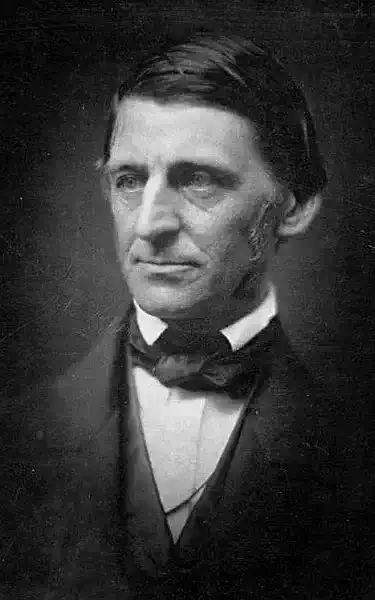
Ralph Waldo Emerson
Uriel.
Uriel.
IT fell in the ancient periods
Which the brooding soul surveys,
Or ever the wild Time coin'd itself
Into calendar months and days.
This was the lapse of Uriel,
Which in Paradise befell.
Once, among the Pleiads walking,
Sayd overheard the young gods talking;
And the treason, too long pent,
To his ears was evident.
The young deities discuss'd
Laws of form, and metre just,
Orb, quintessence, and sunbeams,
What subsisteth, and what seems.
One, with low tones that decide,
And doubt and reverend use defied,
With a look that solved the sphere,
And stirr'd the devils everywhere,
Gave his sentiment divine
Against the being of a line.
'Line in nature is not found;
Unit and universe are round;
In vain produced, all rays return;
Evil will bless, and ice will burn.'
As Uriel spoke with piercing eye,
A shudder ran around the sky;
The stern old war-gods shook their heads;
The seraphs frown'd from myrtle-beds;
Seem'd to the holy festival
The rash word boded ill to all;
The balance-beam of Fate was bent;
The bounds of good and ill were rent;
Strong Hades could not keep his own,
But all slid to confusion.
A sad self-knowledge withering fell
On the beauty of Uriel;
In heaven once eminent, the god
Withdrew that hour into his cloud;
Whether doom'd to long gyration
In the sea of generation,
Or by knowledge grown too bright
To hit the nerve of feebler sight.
Straightway a forgetting wind
Stole over the celestial kind,
And their lips the secret kept,
If in ashes the fire-seed slept.
But, now and then, truth-speaking things
Shamed the angels' veiling wings;
And, shrilling from the solar course,
Or from fruit of chemic force,
Procession of a soul in matter,
Or the speeding change of water,
Or out of the good of evil born,
Came Uriel's voice of cherub scorn,
And a blush tinged the upper sky,
And the gods shook, they knew not why
IT fell in the ancient periods
Which the brooding soul surveys,
Or ever the wild Time coin'd itself
Into calendar months and days.
This was the lapse of Uriel,
Which in Paradise befell.
Once, among the Pleiads walking,
Sayd overheard the young gods talking;
And the treason, too long pent,
To his ears was evident.
The young deities discuss'd
Laws of form, and metre just,
Orb, quintessence, and sunbeams,
What subsisteth, and what seems.
One, with low tones that decide,
And doubt and reverend use defied,
With a look that solved the sphere,
And stirr'd the devils everywhere,
Gave his sentiment divine
Against the being of a line.
'Line in nature is not found;
Unit and universe are round;
In vain produced, all rays return;
Evil will bless, and ice will burn.'
As Uriel spoke with piercing eye,
A shudder ran around the sky;
The stern old war-gods shook their heads;
The seraphs frown'd from myrtle-beds;
Seem'd to the holy festival
The rash word boded ill to all;
The balance-beam of Fate was bent;
The bounds of good and ill were rent;
Strong Hades could not keep his own,
But all slid to confusion.
A sad self-knowledge withering fell
On the beauty of Uriel;
In heaven once eminent, the god
Withdrew that hour into his cloud;
Whether doom'd to long gyration
In the sea of generation,
Or by knowledge grown too bright
To hit the nerve of feebler sight.
Straightway a forgetting wind
Stole over the celestial kind,
And their lips the secret kept,
If in ashes the fire-seed slept.
But, now and then, truth-speaking things
Shamed the angels' veiling wings;
And, shrilling from the solar course,
Or from fruit of chemic force,
Procession of a soul in matter,
Or the speeding change of water,
Or out of the good of evil born,
Came Uriel's voice of cherub scorn,
And a blush tinged the upper sky,
And the gods shook, they knew not why
626
Ralph Waldo Emerson
The Problem
The Problem
I like the church; I like a cowl;
I love a prophet of the soul;
And on my heart monastic aisles
Fall like sweet strains, or pensive smiles;
Yet not for all his faith can see
Would I that cowlèd churchman be.
Why should the vest on him allure,
Which I could not on me endure?
Not from a vain or shallow thought
His awful Jove young Phidias brought;
Never from lips of cunning fell
The thrilling Delphic oracle;
Out from the heart of nature rolled
The burdens of the Bible old;
The litanies of nations came,
Like the volcano's tongue of flame,
Up from the burning core below,--
The canticles of love and woe:
The hand that rounded Peter's dome
And groined the aisles of Christian Rome
Wrought in a sad sincerity;
Himself from God he could not free;
He builded better than he knew;--
The conscious stone to beauty grew.
Knowst thou what wove yon wood bird's nest
Of leaves and feathers from her breast?
Or how the fish outbuilt her shell,
Painting with morn each annual cell?
Or how the sacred pine tree adds
To her old leaves new myriads?
Such and so grew these holy piles,
Whilst love and terror laid the tiles.
Earth proudly wears the Parthenon,
As the best gem upon her zone,
And Morning opes with haste her lids
To gaze upon the Pyramids;
O'er England's abbeys bends the sky,
As on its friends, with kindred eye;
For out of Thought's interior sphere
These wonders rose to upper air;
And Nature gladly gave them place,
Adopted them into her race,
And granted them an equal date
With Andes and with Ararat.
These temples grew as grows the grass;
Art might obey, but not surpass.
The passive Master lent his hand
To the vast soul that o'er him planned;
And the same power that reared the shrine
Bestrode the tribes that knelt within.
Ever the fiery Pentecost
Girds with one flame the countless host,
Trances the heart through chanting choirs,
And through the priest the mind inspires.
The word unto the prophet spoken
Was writ on tables yet unbroken;
The word by seers or sibyls told,
In groves of oak, or fames of gold,
Still floats upon the morning wind,
Still whispters to the willing mind.
One accent of the Holy Ghost
The heedless world hath never lost.
I know what say the fathers wise,--
The Book itself before me lies,
Old Chrysostom, best Augustine,
And he who blent both in his line,
The younger Golden Lips or mines,
Taylor, the Shakespeare of divines.
His words are music in my ear.
I see his cowlèd portrait dear;
And yet, for all his faith could see,
I would not the good bishop be.
I like the church; I like a cowl;
I love a prophet of the soul;
And on my heart monastic aisles
Fall like sweet strains, or pensive smiles;
Yet not for all his faith can see
Would I that cowlèd churchman be.
Why should the vest on him allure,
Which I could not on me endure?
Not from a vain or shallow thought
His awful Jove young Phidias brought;
Never from lips of cunning fell
The thrilling Delphic oracle;
Out from the heart of nature rolled
The burdens of the Bible old;
The litanies of nations came,
Like the volcano's tongue of flame,
Up from the burning core below,--
The canticles of love and woe:
The hand that rounded Peter's dome
And groined the aisles of Christian Rome
Wrought in a sad sincerity;
Himself from God he could not free;
He builded better than he knew;--
The conscious stone to beauty grew.
Knowst thou what wove yon wood bird's nest
Of leaves and feathers from her breast?
Or how the fish outbuilt her shell,
Painting with morn each annual cell?
Or how the sacred pine tree adds
To her old leaves new myriads?
Such and so grew these holy piles,
Whilst love and terror laid the tiles.
Earth proudly wears the Parthenon,
As the best gem upon her zone,
And Morning opes with haste her lids
To gaze upon the Pyramids;
O'er England's abbeys bends the sky,
As on its friends, with kindred eye;
For out of Thought's interior sphere
These wonders rose to upper air;
And Nature gladly gave them place,
Adopted them into her race,
And granted them an equal date
With Andes and with Ararat.
These temples grew as grows the grass;
Art might obey, but not surpass.
The passive Master lent his hand
To the vast soul that o'er him planned;
And the same power that reared the shrine
Bestrode the tribes that knelt within.
Ever the fiery Pentecost
Girds with one flame the countless host,
Trances the heart through chanting choirs,
And through the priest the mind inspires.
The word unto the prophet spoken
Was writ on tables yet unbroken;
The word by seers or sibyls told,
In groves of oak, or fames of gold,
Still floats upon the morning wind,
Still whispters to the willing mind.
One accent of the Holy Ghost
The heedless world hath never lost.
I know what say the fathers wise,--
The Book itself before me lies,
Old Chrysostom, best Augustine,
And he who blent both in his line,
The younger Golden Lips or mines,
Taylor, the Shakespeare of divines.
His words are music in my ear.
I see his cowlèd portrait dear;
And yet, for all his faith could see,
I would not the good bishop be.
344
Ralph Waldo Emerson
The Park
The Park
The prosperous and beautiful
To me seem not to wear
The yoke of conscience masterful,
Which galls me everywhere.
I cannot shake off the god;
On my neck he makes his seat;
I look at my face in the glass,
My eyes his eye-balls meet.
Enchanters! enchantresses!
Your gold makes you seem wise:
The morning mist within your grounds
More proudly rolls, more softly lies.
Yet spake yon purple mountain,
Yet said yon ancient wood,
That night or day, that love or crime
Lead all souls to the Good.
The prosperous and beautiful
To me seem not to wear
The yoke of conscience masterful,
Which galls me everywhere.
I cannot shake off the god;
On my neck he makes his seat;
I look at my face in the glass,
My eyes his eye-balls meet.
Enchanters! enchantresses!
Your gold makes you seem wise:
The morning mist within your grounds
More proudly rolls, more softly lies.
Yet spake yon purple mountain,
Yet said yon ancient wood,
That night or day, that love or crime
Lead all souls to the Good.
367
Ralph Waldo Emerson
Sursum Corda
Sursum Corda
Seek not the Spirit, if it hide,
Inexorable to thy zeal:
Baby, do not whine and chide;
Art thou not also real?
Why should'st thou stoop to poor excuse?
Turn on the Accuser roundly; say,
"Here am I, here will I remain
Forever to myself soothfast,
Go thou, sweet Heaven, or, at thy pleasure stay."—
Already Heaven with thee its lot has cast,
For it only can absolutely deal.
Seek not the Spirit, if it hide,
Inexorable to thy zeal:
Baby, do not whine and chide;
Art thou not also real?
Why should'st thou stoop to poor excuse?
Turn on the Accuser roundly; say,
"Here am I, here will I remain
Forever to myself soothfast,
Go thou, sweet Heaven, or, at thy pleasure stay."—
Already Heaven with thee its lot has cast,
For it only can absolutely deal.
384
Ralph Waldo Emerson
Grace
Grace
How much, preventing God! how much I owe
To the defenses thou hast round me set:
Example, custom, fear, occasional slow,
These scorned bondmen were my parapet.
I dare not peep over this parapet
To gauge with glance the roaring gulf beelow,
The depths of sin to which I had descended,
Had not these me against myself defended.
How much, preventing God! how much I owe
To the defenses thou hast round me set:
Example, custom, fear, occasional slow,
These scorned bondmen were my parapet.
I dare not peep over this parapet
To gauge with glance the roaring gulf beelow,
The depths of sin to which I had descended,
Had not these me against myself defended.
388
Ralph Waldo Emerson
Dæmonic Love
Dæmonic Love
Man was made of social earth,
Child and brother from his birth;
Tethered by a liquid cord
Of blood through veins of kindred poured,
Next his heart the fireside band
Of mother, father, sister, stand;
Names from awful childhood heard,
Throbs of a wild religion stirred,
Their good was heaven, their harm was vice,
Till Beauty came to snap all ties,
The maid, abolishing the past,
With lotus-wine obliterates
Dear memory's stone-incarved traits,
And by herself supplants alone
Friends year by year more inly known.
When her calm eyes opened bright,
All were foreign in their light.
It was ever the self-same tale,
The old experience will not fail,—
Only two in the garden walked,
And with snake and seraph talked.
But God said;
I will have a purer gift,
There is smoke in the flame;
New flowerets bring, new prayers uplift,
And love without a name.
Fond children, ye desire
To please each other well;
Another round, a higher,
Ye shall climb on the heavenly stair,
And selfish preference forbear;
And in right deserving,
And without a swerving
Each from your proper state,
Weave roses for your mate.
Deep, deep are loving eyes,
Flowed with naphtha fiery sweet,
And the point is Paradise
Where their glances meet:
Their reach shall yet be more profound,
And a vision without bound:
The axis of those eyes sun-clear
Be the axis of the sphere;
Then shall the lights ye pour amain
Go without check or intervals,
Through from the empyrean walls,
Unto the same again.
Close, close to men,
Like undulating layer of air,
Right above their heads,
The potent plain of Dæmons spreads.
Stands to each human soul its own,
For watch, and ward, and furtherance
In the snares of nature's dance;
And the lustre and the grace
Which fascinate each human heart,
Beaming from another part,
Translucent through the mortal covers,
Is the Dæmon's form and face.
To and fro the Genius hies,
A gleam which plays and hovers
Over the maiden's head,
And dips sometimes as low as to her eyes.
Unknown, — albeit lying near, —
To men the path to the Dæmon sphere,
And they that swiftly come and go,
Leave no track on the heavenly snow.
Sometimes the airy synod bends,
And the mighty choir descends,
And the brains of men thenceforth,
In crowded and in still resorts,
Teem with unwonted thoughts.
As when a shower of meteors
Cross the orbit of the earth,
And, lit by fringent air,
Blaze near and far.
Mortals deem the planets bright
Have slipped their sacred bars,
And the lone seaman all the night
Sails astonished amid stars.
Beauty of a richer vein,
Graces of a subtler strain,
Unto men these moon-men lend,
And our shrinking sky extend.
So is man's narrow path
By strength and terror skirted,
Also (from the song the wrath
Of the Genii be averted!
The Muse the truth uncolored speaking),
The Dæmons are self-seeking;
Their fierce and limitary will
Draws men to their likeness still.
The erring painter made Love blind,
Highest Love who shines on all;
Him radiant, sharpest-sighted god
None can bewilder;
Whose eyes pierce
The Universe,
Path-finder, road-builder,
Mediator, royal giver,
Rightly-seeing, rightly-seen,
Of joyful and transparent mien.
'Tis a sparkle passing
From each to each, from me to thee,
Perpetually,
Sharing all, daring all,
Levelling, misplacing
Each obstruction, it unites
Equals remote, and seeming opposites.
And ever and forever Love
Delights to build a road;
Unheeded Danger near him strides,
Love laughs, and on a lion rides.
But Cupid wears another face
Born into Dæmons less divine,
His roses bleach apace,
His nectar smacks of wine.
The Dæmon ever builds a wall,
Himself incloses and includes,
Solitude in solitudes:
In like sort his love doth fall.
He is an oligarch,
He prizes wonder, fame, and mark,
He loveth crowns,
He scorneth drones;
He doth elect
The beautiful and fortunate,
And the sons of intellect,
And the souls of ample fate,
Who the Future's gates unbar,
Minions of the Morning Star.
In his prowess he exults,
And the multitude insults.
His impatient looks devour
Oft the humble and the poor,
And, seeing his eye glare,
They drop their few pale flowers
Gathered with hope to please
Along the mountain towers,
Lose courage, and despair.
He will never be gainsaid,
Pitiless, will not be stayed.
His hot tyranny
Burns up every other tie;
Therefore comes an hour from Jove
Which his ruthless will defies,
And the dogs of Fate unties.
Shiver the palaces of glass,
Shrivel the rainbow-colored walls
Where in bright art each god and sibyl dwelt
Secure as in the Zodiack's belt;
And the galleries and halls
Wherein every Siren sung,
Like a meteor pass.
For this fortune wanted root
In the core of God's abysm,
Was a weed of self and schism:
And ever the Dæmonic Love
Is the ancestor of wars,
And the parent of remorse.
Man was made of social earth,
Child and brother from his birth;
Tethered by a liquid cord
Of blood through veins of kindred poured,
Next his heart the fireside band
Of mother, father, sister, stand;
Names from awful childhood heard,
Throbs of a wild religion stirred,
Their good was heaven, their harm was vice,
Till Beauty came to snap all ties,
The maid, abolishing the past,
With lotus-wine obliterates
Dear memory's stone-incarved traits,
And by herself supplants alone
Friends year by year more inly known.
When her calm eyes opened bright,
All were foreign in their light.
It was ever the self-same tale,
The old experience will not fail,—
Only two in the garden walked,
And with snake and seraph talked.
But God said;
I will have a purer gift,
There is smoke in the flame;
New flowerets bring, new prayers uplift,
And love without a name.
Fond children, ye desire
To please each other well;
Another round, a higher,
Ye shall climb on the heavenly stair,
And selfish preference forbear;
And in right deserving,
And without a swerving
Each from your proper state,
Weave roses for your mate.
Deep, deep are loving eyes,
Flowed with naphtha fiery sweet,
And the point is Paradise
Where their glances meet:
Their reach shall yet be more profound,
And a vision without bound:
The axis of those eyes sun-clear
Be the axis of the sphere;
Then shall the lights ye pour amain
Go without check or intervals,
Through from the empyrean walls,
Unto the same again.
Close, close to men,
Like undulating layer of air,
Right above their heads,
The potent plain of Dæmons spreads.
Stands to each human soul its own,
For watch, and ward, and furtherance
In the snares of nature's dance;
And the lustre and the grace
Which fascinate each human heart,
Beaming from another part,
Translucent through the mortal covers,
Is the Dæmon's form and face.
To and fro the Genius hies,
A gleam which plays and hovers
Over the maiden's head,
And dips sometimes as low as to her eyes.
Unknown, — albeit lying near, —
To men the path to the Dæmon sphere,
And they that swiftly come and go,
Leave no track on the heavenly snow.
Sometimes the airy synod bends,
And the mighty choir descends,
And the brains of men thenceforth,
In crowded and in still resorts,
Teem with unwonted thoughts.
As when a shower of meteors
Cross the orbit of the earth,
And, lit by fringent air,
Blaze near and far.
Mortals deem the planets bright
Have slipped their sacred bars,
And the lone seaman all the night
Sails astonished amid stars.
Beauty of a richer vein,
Graces of a subtler strain,
Unto men these moon-men lend,
And our shrinking sky extend.
So is man's narrow path
By strength and terror skirted,
Also (from the song the wrath
Of the Genii be averted!
The Muse the truth uncolored speaking),
The Dæmons are self-seeking;
Their fierce and limitary will
Draws men to their likeness still.
The erring painter made Love blind,
Highest Love who shines on all;
Him radiant, sharpest-sighted god
None can bewilder;
Whose eyes pierce
The Universe,
Path-finder, road-builder,
Mediator, royal giver,
Rightly-seeing, rightly-seen,
Of joyful and transparent mien.
'Tis a sparkle passing
From each to each, from me to thee,
Perpetually,
Sharing all, daring all,
Levelling, misplacing
Each obstruction, it unites
Equals remote, and seeming opposites.
And ever and forever Love
Delights to build a road;
Unheeded Danger near him strides,
Love laughs, and on a lion rides.
But Cupid wears another face
Born into Dæmons less divine,
His roses bleach apace,
His nectar smacks of wine.
The Dæmon ever builds a wall,
Himself incloses and includes,
Solitude in solitudes:
In like sort his love doth fall.
He is an oligarch,
He prizes wonder, fame, and mark,
He loveth crowns,
He scorneth drones;
He doth elect
The beautiful and fortunate,
And the sons of intellect,
And the souls of ample fate,
Who the Future's gates unbar,
Minions of the Morning Star.
In his prowess he exults,
And the multitude insults.
His impatient looks devour
Oft the humble and the poor,
And, seeing his eye glare,
They drop their few pale flowers
Gathered with hope to please
Along the mountain towers,
Lose courage, and despair.
He will never be gainsaid,
Pitiless, will not be stayed.
His hot tyranny
Burns up every other tie;
Therefore comes an hour from Jove
Which his ruthless will defies,
And the dogs of Fate unties.
Shiver the palaces of glass,
Shrivel the rainbow-colored walls
Where in bright art each god and sibyl dwelt
Secure as in the Zodiack's belt;
And the galleries and halls
Wherein every Siren sung,
Like a meteor pass.
For this fortune wanted root
In the core of God's abysm,
Was a weed of self and schism:
And ever the Dæmonic Love
Is the ancestor of wars,
And the parent of remorse.
328
Ralph Waldo Emerson
Brahma
Brahma
If the red slayer think he slays,
Or if the slain think he is slain,
They know not well the subtle ways
I keep, and pass, and turn again.
Far or forgot to me is near;
Shadow and sunlight are the same;
The vanished gods to me appear;
And one to me are shame and fame.
They reckon ill who leave me out;
When me they fly, I am the wings;
I am the doubter and the doubt,
And I the hymn the Brahmin sings.
The strong gods pine for my abode,
And pine in vain the sacred Seven;
But thou, meek lover of the good!
Find me, and turn thy back on heaven.
If the red slayer think he slays,
Or if the slain think he is slain,
They know not well the subtle ways
I keep, and pass, and turn again.
Far or forgot to me is near;
Shadow and sunlight are the same;
The vanished gods to me appear;
And one to me are shame and fame.
They reckon ill who leave me out;
When me they fly, I am the wings;
I am the doubter and the doubt,
And I the hymn the Brahmin sings.
The strong gods pine for my abode,
And pine in vain the sacred Seven;
But thou, meek lover of the good!
Find me, and turn thy back on heaven.
412
Rabindranath Tagore
The Gardener X: Let Your Work Be, Bride
The Gardener X: Let Your Work Be, Bride
Let your work be, bride. Listen, the
guest has come.
Do you hear, he is gently shaking
the chain which fastens the door?
See that your anklets make no loud
noise, and that your step is not overhurried
at meeting him.
Let your work be, bride, the guest
had come in the evening.
No, it is not the ghostly wind, bride,
do not be frightened.
It is the full moon on a night of
April; shadows are pale in the courtyard;
the sky overhead is bright.
Draw your veil over your face if
you must, carry the lamp to the door
if you fear.
No, it is not the ghostly wind, bride,
do not be frightened.
Have no word with him if you are
shy; stand aside by the door when you
meet him.
If he asks you questions, and if
you wish to, you can lower you eyes
in silence.
Do not let your bracelets jingle
when, lamp in hand, you lead him in.
Have no words with him if your are
shy.
Have you not finished you work yet,
bride? Listen, the guest has come.
Have you not lit the lamp in the
cowshed?
Have you not got ready the offering
basket for the evening service?
Have you not put the red lucky
mark at the parting of your hair, and
done your toilet for the night?
O bride, do you hear, the guest has
come?
Let your work be!
Let your work be, bride. Listen, the
guest has come.
Do you hear, he is gently shaking
the chain which fastens the door?
See that your anklets make no loud
noise, and that your step is not overhurried
at meeting him.
Let your work be, bride, the guest
had come in the evening.
No, it is not the ghostly wind, bride,
do not be frightened.
It is the full moon on a night of
April; shadows are pale in the courtyard;
the sky overhead is bright.
Draw your veil over your face if
you must, carry the lamp to the door
if you fear.
No, it is not the ghostly wind, bride,
do not be frightened.
Have no word with him if you are
shy; stand aside by the door when you
meet him.
If he asks you questions, and if
you wish to, you can lower you eyes
in silence.
Do not let your bracelets jingle
when, lamp in hand, you lead him in.
Have no words with him if your are
shy.
Have you not finished you work yet,
bride? Listen, the guest has come.
Have you not lit the lamp in the
cowshed?
Have you not got ready the offering
basket for the evening service?
Have you not put the red lucky
mark at the parting of your hair, and
done your toilet for the night?
O bride, do you hear, the guest has
come?
Let your work be!
526
Rabindranath Tagore
Still Heart
Still Heart
When I give up the helm
I know that the time has come for thee to take it.
What there is to do will be instantly done.
Vain is this struggle.
Then take away your hands
and silently put up with your defeat, my heart,
and think it your good fortune to sit perfectly still
where you are placed.
These my lamps are blown out at every little puff of wind,
and trying to light them I forget all else again and again.
But I shall be wise this time and wait in the dark,
spreading my mat on the floor;
and whenever it is thy pleasure, my lord,
come silently and take thy seat here.
When I give up the helm
I know that the time has come for thee to take it.
What there is to do will be instantly done.
Vain is this struggle.
Then take away your hands
and silently put up with your defeat, my heart,
and think it your good fortune to sit perfectly still
where you are placed.
These my lamps are blown out at every little puff of wind,
and trying to light them I forget all else again and again.
But I shall be wise this time and wait in the dark,
spreading my mat on the floor;
and whenever it is thy pleasure, my lord,
come silently and take thy seat here.
521
Rabindranath Tagore
Signet of Eternity
Signet of Eternity
The day was when I did not keep myself in readiness for thee;
and entering my heart unbidden even as one of the common crowd,
unknown to me, my king, thou didst press the signet of eternity upon
many a fleeting moment of my life.
And today when by chance I light upon them and see thy signature,
I find they have lain scattered in the dust mixed with the memory of
joys and sorrows of my trivial days forgotten.
Thou didst not turn in contempt from my childish play among dust,
and the steps that I heard in my playroom
are the same that are echoing from star to star.
The day was when I did not keep myself in readiness for thee;
and entering my heart unbidden even as one of the common crowd,
unknown to me, my king, thou didst press the signet of eternity upon
many a fleeting moment of my life.
And today when by chance I light upon them and see thy signature,
I find they have lain scattered in the dust mixed with the memory of
joys and sorrows of my trivial days forgotten.
Thou didst not turn in contempt from my childish play among dust,
and the steps that I heard in my playroom
are the same that are echoing from star to star.
508
Rabindranath Tagore
Salutation
Salutation
In one salutation to thee, my God,
let all my senses spread out and touch this world at thy feet.
Like a rain-cloud of July
hung low with its burden of unshed showers
let all my mind bend down at thy door in one salutation to thee.
Let all my songs gather together their diverse strains into a single current
and flow to a sea of silence in one salutation to thee.
Like a flock of homesick cranes flying night and day
back to their mountain nests
let all my life take its voyage to its eternal home
in one salutation to thee.
In one salutation to thee, my God,
let all my senses spread out and touch this world at thy feet.
Like a rain-cloud of July
hung low with its burden of unshed showers
let all my mind bend down at thy door in one salutation to thee.
Let all my songs gather together their diverse strains into a single current
and flow to a sea of silence in one salutation to thee.
Like a flock of homesick cranes flying night and day
back to their mountain nests
let all my life take its voyage to its eternal home
in one salutation to thee.
493
Rabindranath Tagore
Roaming Cloud
Roaming Cloud
I am like a remnant of a cloud of autumn
uselessly roaming in the sky, O my sun ever-glorious!
Thy touch has not yet melted my vapor,
making me one with thy light,
and thus I count months and years separated from thee.
If this be thy wish and if this be thy play,
then take this fleeting emptiness of mine,
paint it with colors, gild it with gold,
float it on the wanton wind and spread it in varied wonders.
And again when it shall be thy wish to end this play at night,
I shall melt and vanish away in the dark,
or it may be in a smile of the white morning,
in a coolness of purity transparent.
I am like a remnant of a cloud of autumn
uselessly roaming in the sky, O my sun ever-glorious!
Thy touch has not yet melted my vapor,
making me one with thy light,
and thus I count months and years separated from thee.
If this be thy wish and if this be thy play,
then take this fleeting emptiness of mine,
paint it with colors, gild it with gold,
float it on the wanton wind and spread it in varied wonders.
And again when it shall be thy wish to end this play at night,
I shall melt and vanish away in the dark,
or it may be in a smile of the white morning,
in a coolness of purity transparent.
605
Rabindranath Tagore
Poems On Man
Poems On Man
Man goes into the noisy crowd
to drown his own clamour of silence.
Man is immortal; therefore he must die endlessly.
For life is a creative idea;
it can only find itself in changing forms.
Man's abiding happiness is not in getting anything
but in giving himself up to what is greater than himself,
to ideas which are larger than his individual life,
the idea of his country,
of humanity,
of God.
Man goes into the noisy crowd
to drown his own clamour of silence.
Man is immortal; therefore he must die endlessly.
For life is a creative idea;
it can only find itself in changing forms.
Man's abiding happiness is not in getting anything
but in giving himself up to what is greater than himself,
to ideas which are larger than his individual life,
the idea of his country,
of humanity,
of God.
475
Rabindranath Tagore
Passing Breeze
Passing Breeze
Yes, I know, this is nothing but thy love,
O beloved of my heart---this golden light that dances upon the leaves,
these idle clouds sailing across the sky,
this passing breeze leaving its coolness upon my forehead.
The morning light has flooded my eyes---this is thy message to my heart.
Thy face is bent from above, thy eyes look down on my eyes,
and my heart has touched thy feet.
Yes, I know, this is nothing but thy love,
O beloved of my heart---this golden light that dances upon the leaves,
these idle clouds sailing across the sky,
this passing breeze leaving its coolness upon my forehead.
The morning light has flooded my eyes---this is thy message to my heart.
Thy face is bent from above, thy eyes look down on my eyes,
and my heart has touched thy feet.
506
Rabindranath Tagore
Old And New
Old And New
Thou hast made me known to friends whom I knew not.
Thou hast given me seats in homes not my own.
Thou hast brought the distant near and made a brother of the stranger.
I am uneasy at heart when I have to leave my accustomed shelter;
I forget that there abides the old in the new,
and that there also thou abidest.
Through birth and death, in this world or in others,
wherever thou leadest me it is thou, the same,
the one companion of my endless life
who ever linkest my heart with bonds of joy to the unfamiliar.
When one knows thee, then alien there is none, then no door is shut.
Oh, grant me my prayer that I may never lose
the bliss of the touch of the one
in the play of many.
Thou hast made me known to friends whom I knew not.
Thou hast given me seats in homes not my own.
Thou hast brought the distant near and made a brother of the stranger.
I am uneasy at heart when I have to leave my accustomed shelter;
I forget that there abides the old in the new,
and that there also thou abidest.
Through birth and death, in this world or in others,
wherever thou leadest me it is thou, the same,
the one companion of my endless life
who ever linkest my heart with bonds of joy to the unfamiliar.
When one knows thee, then alien there is none, then no door is shut.
Oh, grant me my prayer that I may never lose
the bliss of the touch of the one
in the play of many.
532
Rabindranath Tagore
My Polar Star
My Polar Star
I have made You the polar star of my
existence; never again can I lose my way in the
voyage of life.
Wherever I go, You are always there to
shower your benefience all around me. Your face
is ever present before my mind's eyes.
If I lose sight of You even for a moment, I
almost lose my mind.
Whenever my heart is about to go astray, just
a glance of You makes it feel ashamed of itself.
I have made You the polar star of my
existence; never again can I lose my way in the
voyage of life.
Wherever I go, You are always there to
shower your benefience all around me. Your face
is ever present before my mind's eyes.
If I lose sight of You even for a moment, I
almost lose my mind.
Whenever my heart is about to go astray, just
a glance of You makes it feel ashamed of itself.
537
Rabindranath Tagore
O Fool
O Fool
O Fool, try to carry thyself upon thy own shoulders!
O beggar, to come beg at thy own door!
Leave all thy burdens on his hands who can bear all,
and never look behind in regret.
Thy desire at once puts out the light from the lamp it touches with its breath.
It is unholy---take not thy gifts through its unclean hands.
Accept only what is offered by sacred love.
O Fool, try to carry thyself upon thy own shoulders!
O beggar, to come beg at thy own door!
Leave all thy burdens on his hands who can bear all,
and never look behind in regret.
Thy desire at once puts out the light from the lamp it touches with its breath.
It is unholy---take not thy gifts through its unclean hands.
Accept only what is offered by sacred love.
522