

Poems in this topic
Death and Mourning
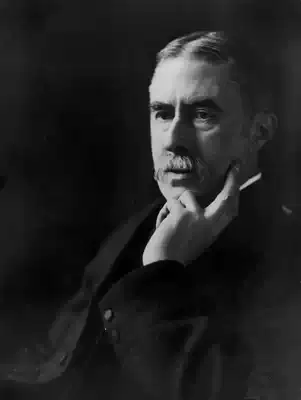
Alfred Edward Housman
The True Lover
The True Lover
The lad came to the door at night,
When lovers crown their vows,
And whistled soft and out of sight
In shadow of the boughs.
"I shall not vex you with my face
Henceforth, my love, for aye;
So take me in your arms a space
Before the cast is grey.
"When I from hence away am past
I shall not find a bride,
And you shall be the first and last
I ever lay beside."
She heard and went and knew not why;
Her heart to his she laid;
Light was the air beneath the sky
But dark under the shade.
"Oh do you breathe, lad, that your breast
Seems not to rise and fall,
And here upon my bosom prest
There beats no heart at all?"
"Oh loud, my girl, it once would knock,
You should have felt it then;
But since for you I stopped the clock
It never goes again."
"Oh lad, what is it, lad, that drips
Wet from your neck on mine?
What is it falling on my lips,
My lad, that tastes of brine?"
"Oh like enough 'tis blood, my dear,
For when the knife was slit,
The throat across from ear to ear
'Twill bleed because of it."
Under the stars the air was light
But dark below the boughs,
The still air of the speechless night,
When lovers crown their vows.
The lad came to the door at night,
When lovers crown their vows,
And whistled soft and out of sight
In shadow of the boughs.
"I shall not vex you with my face
Henceforth, my love, for aye;
So take me in your arms a space
Before the cast is grey.
"When I from hence away am past
I shall not find a bride,
And you shall be the first and last
I ever lay beside."
She heard and went and knew not why;
Her heart to his she laid;
Light was the air beneath the sky
But dark under the shade.
"Oh do you breathe, lad, that your breast
Seems not to rise and fall,
And here upon my bosom prest
There beats no heart at all?"
"Oh loud, my girl, it once would knock,
You should have felt it then;
But since for you I stopped the clock
It never goes again."
"Oh lad, what is it, lad, that drips
Wet from your neck on mine?
What is it falling on my lips,
My lad, that tastes of brine?"
"Oh like enough 'tis blood, my dear,
For when the knife was slit,
The throat across from ear to ear
'Twill bleed because of it."
Under the stars the air was light
But dark below the boughs,
The still air of the speechless night,
When lovers crown their vows.
467
Alfred Edward Housman
The Isle of Portland
The Isle of Portland
The star-filled seas are smooth to-night
From France to England strown;
Black towers above the Portland light
The felon-quarried stone.
On yonder island, not to rise,
Never to stir forth free,
Far from his folk a dead lad lies
That once was friends with me.
Lie you easy, dream you light,
And sleep you fast for aye;
And luckier may you find the night
Than ever you found the day.
The star-filled seas are smooth to-night
From France to England strown;
Black towers above the Portland light
The felon-quarried stone.
On yonder island, not to rise,
Never to stir forth free,
Far from his folk a dead lad lies
That once was friends with me.
Lie you easy, dream you light,
And sleep you fast for aye;
And luckier may you find the night
Than ever you found the day.
514
Alfred Edward Housman
Shot? So Quick, So Clean an Ending?
Shot? So Quick, So Clean an Ending?
Shot? so quick, so clean an ending?
Oh that was right, lad, that was brave:
Yours was not an ill for mending,
'Twas best to take it to the grave.
Oh you had forethought, you could reason,
And saw your road and where it led,
And early wise and brave in season
Put the pistol to your head.
Oh soon, and better so than later
After long disgrace and scorn,
You shot dead the household traitor,
The soul that should not have been born.
Right you guessed the rising morrow
And scorned to tread the mire you must:
Dust's your wages, son of sorrow,
But men may come to worse than dust.
Souls undone, undoing others,--
Long time since the tale began.
You would not live to wrong your brothers:
Oh lad, you died as fits a man.
Now to your grave shall friend and stranger
With ruth and some with envy come:
Undishonoured, clear of danger,
Clean of guilt, pass hence and home.
Turn safe to rest, no dreams, no waking;
And here, man, here's the wreath I've made:
'Tis not a gift that's worth the taking,
But wear it and it will not fade.
Shot? so quick, so clean an ending?
Oh that was right, lad, that was brave:
Yours was not an ill for mending,
'Twas best to take it to the grave.
Oh you had forethought, you could reason,
And saw your road and where it led,
And early wise and brave in season
Put the pistol to your head.
Oh soon, and better so than later
After long disgrace and scorn,
You shot dead the household traitor,
The soul that should not have been born.
Right you guessed the rising morrow
And scorned to tread the mire you must:
Dust's your wages, son of sorrow,
But men may come to worse than dust.
Souls undone, undoing others,--
Long time since the tale began.
You would not live to wrong your brothers:
Oh lad, you died as fits a man.
Now to your grave shall friend and stranger
With ruth and some with envy come:
Undishonoured, clear of danger,
Clean of guilt, pass hence and home.
Turn safe to rest, no dreams, no waking;
And here, man, here's the wreath I've made:
'Tis not a gift that's worth the taking,
But wear it and it will not fade.
450
Alfred Edward Housman
On Your Midnight Pallet Lying
On Your Midnight Pallet Lying
On your midnight pallet lying,
Listen, and undo the door:
Lads that waste the light in sighing
In the dark should sigh no more;
Night should ease a lover's sorrow;
Therefore, since I go to-morrow,
Pity me before.
In the land to which I travel,
The far dwelling, let me say--
Once, if here the couch is gravel,
In a kinder bed I lay,
And the breast the darnel smothers
Rested once upon another's
When it was not clay.
On your midnight pallet lying,
Listen, and undo the door:
Lads that waste the light in sighing
In the dark should sigh no more;
Night should ease a lover's sorrow;
Therefore, since I go to-morrow,
Pity me before.
In the land to which I travel,
The far dwelling, let me say--
Once, if here the couch is gravel,
In a kinder bed I lay,
And the breast the darnel smothers
Rested once upon another's
When it was not clay.
479
Alfred Edward Housman
Is My Team Ploughing
Is My Team Ploughing
"Is my team ploughing,
That I was used to drive
And hear the harness jingle
When I was man alive?"
Ay, the horses trample,
The harness jingles now;
No change though you lie under
The land you used to plough.
"Is football playing
Along the river shore,
With lads to chase the leather,
Now I stand up no more?"
Ay, the ball is flying,
The lads play heart and soul;
The goal stands up, the keeper
Stands up to keep the goal.
"Is my girl happy,
That I thought hard to leave,
And has she tired of weeping
As she lies down at eve?"
Ay, she lies down lightly,
She lies not down to weep,
Your girl is well contented.
Be still, my lad, and sleep.
"Is my friend hearty,
Now I am thin and pine,
And has he found to sleep in
A better bed than mine?"
Yes, lad, I lie easy,
I lie as lads would choose;
I cheer a dead man's sweetheart,
Never ask me whose.
"Is my team ploughing,
That I was used to drive
And hear the harness jingle
When I was man alive?"
Ay, the horses trample,
The harness jingles now;
No change though you lie under
The land you used to plough.
"Is football playing
Along the river shore,
With lads to chase the leather,
Now I stand up no more?"
Ay, the ball is flying,
The lads play heart and soul;
The goal stands up, the keeper
Stands up to keep the goal.
"Is my girl happy,
That I thought hard to leave,
And has she tired of weeping
As she lies down at eve?"
Ay, she lies down lightly,
She lies not down to weep,
Your girl is well contented.
Be still, my lad, and sleep.
"Is my friend hearty,
Now I am thin and pine,
And has he found to sleep in
A better bed than mine?"
Yes, lad, I lie easy,
I lie as lads would choose;
I cheer a dead man's sweetheart,
Never ask me whose.
628
Alfred Edward Housman
If Truth in Hearts That Perish
If Truth in Hearts That Perish
If truth in hearts that perish
Could move the powers on high,
I think the love I bear you
Should make you not to die.
Sure, sure, if stedfast meaning,
If single thought could save,
The world might end to-morrow,
You should not see the grave.
This long and sure-set liking,
This boundless will to please,
--Oh, you should live for ever,
If there were help in these.
But now, since all is idle,
To this lost heart be kind,
Ere to a town you journey
Where friends are ill to find.
If truth in hearts that perish
Could move the powers on high,
I think the love I bear you
Should make you not to die.
Sure, sure, if stedfast meaning,
If single thought could save,
The world might end to-morrow,
You should not see the grave.
This long and sure-set liking,
This boundless will to please,
--Oh, you should live for ever,
If there were help in these.
But now, since all is idle,
To this lost heart be kind,
Ere to a town you journey
Where friends are ill to find.
457
Alfred Edward Housman
Farewell to Barn and Stack and Tree
Farewell to Barn and Stack and Tree
"Farewell to barn and stack and tree,
Farewell to Severn shore.
Terence, look your last at me,
For I come home no more.
"The sun burns on the half-mown hill,
By now the blood is dried;
And Maurice amongst the hay lies still
And my knife is in his side.
"My mother thinks us long away;
'Tis time the field were mown.
She had two sons at rising day,
To-night she'll be alone.
"And here's a bloody hand to shake,
And oh, man, here's good-bye;
We'll sweat no more on scythe and rake,
My bloody hands and I.
"I wish you strength to bring you pride,
And a love to keep you clean,
And I wish you luck, come Lammastide,
At racing on the green.
"Long for me the rick will wait,
And long will wait the fold,
And long will stand the empty plate,
And dinner will be cold."
"Farewell to barn and stack and tree,
Farewell to Severn shore.
Terence, look your last at me,
For I come home no more.
"The sun burns on the half-mown hill,
By now the blood is dried;
And Maurice amongst the hay lies still
And my knife is in his side.
"My mother thinks us long away;
'Tis time the field were mown.
She had two sons at rising day,
To-night she'll be alone.
"And here's a bloody hand to shake,
And oh, man, here's good-bye;
We'll sweat no more on scythe and rake,
My bloody hands and I.
"I wish you strength to bring you pride,
And a love to keep you clean,
And I wish you luck, come Lammastide,
At racing on the green.
"Long for me the rick will wait,
And long will wait the fold,
And long will stand the empty plate,
And dinner will be cold."
769
Alfred Edward Housman
From Far, From Eve and Morning
From Far, From Eve and Morning
From far, from eve and morning
And yon twelve-winded sky,
The stuff of life to knit me
Blew hither: here am I.
Now-- for a breath I tarry
Nor yet disperse apart--
Take my hand quick and tell me,
What have you in your heart.
Speak now, and I will answer;
How shall I help you, say;
Ere to the wind's twelve quarters
I take my endless way.
From far, from eve and morning
And yon twelve-winded sky,
The stuff of life to knit me
Blew hither: here am I.
Now-- for a breath I tarry
Nor yet disperse apart--
Take my hand quick and tell me,
What have you in your heart.
Speak now, and I will answer;
How shall I help you, say;
Ere to the wind's twelve quarters
I take my endless way.
486
Alfred Edward Housman
Diffugere Nives
Diffugere Nives
Horace, Odes, iv, 7
The snows are fled away, leaves on the shaws
And grasses in the mead renew their birth,
The river to the river-bed withdraws,
And altered is the fashion of the earth.
The Nymphs and Graces three put off their fear
And unapparelled in the woodland play.
The swift hour and the brief prime of the year
Say to the soul, Thou wast not born for aye.
Thaw follows frost; hard on the heel of spring
Treads summer sure to die, for hard on hers
Comes autumn with his apples scattering;
Then back to wintertide, when nothing stirs.
But oh, whate'er the sky-led seasons mar,
Moon upon moon rebuilds it with her beams;
Come we where Tullus and where Ancus are
And good Aeneas, we are dust and dreams.
Torquatus, if the gods in heaven shall add
The morrow to the day, what tongue has told?
Feast then thy heart, for what thy heart has had
The fingers of no heir will ever hold.
When thou descendest once the shades among,
The stern assize and equal judgment o'er,
Not thy long lineage nor thy golden tongue,
No, nor thy righteousness, shall friend thee more.
Night holds Hippolytus the pure of stain,
Diana steads him nothing, he must stay;
And Theseus leafves Pirithous in the chain
The love of comrades cannot take away.
Horace, Odes, iv, 7
The snows are fled away, leaves on the shaws
And grasses in the mead renew their birth,
The river to the river-bed withdraws,
And altered is the fashion of the earth.
The Nymphs and Graces three put off their fear
And unapparelled in the woodland play.
The swift hour and the brief prime of the year
Say to the soul, Thou wast not born for aye.
Thaw follows frost; hard on the heel of spring
Treads summer sure to die, for hard on hers
Comes autumn with his apples scattering;
Then back to wintertide, when nothing stirs.
But oh, whate'er the sky-led seasons mar,
Moon upon moon rebuilds it with her beams;
Come we where Tullus and where Ancus are
And good Aeneas, we are dust and dreams.
Torquatus, if the gods in heaven shall add
The morrow to the day, what tongue has told?
Feast then thy heart, for what thy heart has had
The fingers of no heir will ever hold.
When thou descendest once the shades among,
The stern assize and equal judgment o'er,
Not thy long lineage nor thy golden tongue,
No, nor thy righteousness, shall friend thee more.
Night holds Hippolytus the pure of stain,
Diana steads him nothing, he must stay;
And Theseus leafves Pirithous in the chain
The love of comrades cannot take away.
498
Alfred Edward Housman
Bring, In This Timeless Grave to Throw
Bring, In This Timeless Grave to Throw
Bring, in this timeless grave to throw,
No cypress, sombre on the snow;
Snap not from the bitter yew
His leaves that live December through;
Break no rosemary, bright with rime
And sparkling to the cruel clime;
Nor plod the winter land to look
For willows in the icy brook
To cast them leafless round him: bring
No spray that ever buds in spring.
But if the Christmas field has kept
Awns the last gleaner overstept,
Or shrivelled flax, whose flower is blue
A single season, never two;
Or if one haulm whose year is o'er
Shivers on the upland frore,
--Oh, bring from hill and stream and plain
Whatever will not flower again,
To give him comfort: he and those
Shall bide eternal bedfellows
Where low upon the couch he lies
Whence he never shall arise.
Bring, in this timeless grave to throw,
No cypress, sombre on the snow;
Snap not from the bitter yew
His leaves that live December through;
Break no rosemary, bright with rime
And sparkling to the cruel clime;
Nor plod the winter land to look
For willows in the icy brook
To cast them leafless round him: bring
No spray that ever buds in spring.
But if the Christmas field has kept
Awns the last gleaner overstept,
Or shrivelled flax, whose flower is blue
A single season, never two;
Or if one haulm whose year is o'er
Shivers on the upland frore,
--Oh, bring from hill and stream and plain
Whatever will not flower again,
To give him comfort: he and those
Shall bide eternal bedfellows
Where low upon the couch he lies
Whence he never shall arise.
531
Alfred Edward Housman
Along The Field as We Came By
Along The Field as We Came By
ALONG the field as we came by
A year ago, my love and I,
The aspen over stile and stone
Was talking to itself alone.
‘Oh who are these that kiss and pass?
A country lover and his lass;
Two lovers looking to be wed;
And time shall put them both to bed,
But she shall lie with earth above,
And he beside another love.’
And sure enough beneath the tree
There walks another love with me,
And overhead the aspen heaves
Its rainy-sounding silver leaves;
And I spell nothing in their stir,
But now perhaps they speak to her,
And plain for her to understand
They talk about a time at hand
When I shall sleep with clover clad,
And she beside another lad.
ALONG the field as we came by
A year ago, my love and I,
The aspen over stile and stone
Was talking to itself alone.
‘Oh who are these that kiss and pass?
A country lover and his lass;
Two lovers looking to be wed;
And time shall put them both to bed,
But she shall lie with earth above,
And he beside another love.’
And sure enough beneath the tree
There walks another love with me,
And overhead the aspen heaves
Its rainy-sounding silver leaves;
And I spell nothing in their stir,
But now perhaps they speak to her,
And plain for her to understand
They talk about a time at hand
When I shall sleep with clover clad,
And she beside another lad.
474

Alexander Pope
Winter - The Fourth Pastoral, or Daphne
Winter - The Fourth Pastoral, or Daphne
Lycidas.
Thyrsis, the music of that murm'ring spring,
Is not so mournful as the strains you sing.
Nor rivers winding thro' the vales below,
So sweetly warble, or so smoothly flow.
Now sleeping flocks on their soft fleeces lie,
The moon, serene in glory, mounts the sky,
Wile silent birds forget their tuneful lays,
Oh sing of Daphne's fate, and Daphne's praise!
Thyrsis.
Behold the groves that shine with silver frost,
Their beauty wither'd, and their verdure lost.
Here shall I try the sweet Alexis' strain,
That call'd the list'ning Dryads to the plain?
Thames heard the numbers as he flow'd along,
And bade his willows learn the moving song.
Lycidas.
So may kind rains their vital moisture yield,
And swell the future harvest of the field.
Begin; this charge the dying Daphne gave,
And said; 'Ye shepherds, sing around my grave!
Sing, while beside the shaded tomb I mourn,
And with fresh bays her rural shrine adorn.'
Thyrsis.
Ye gentle Muses, leave your crystal spring,
Let Nymphs and Sylvans cypress garlands bring;
Ye weeping Loves, the stream with myrtles hide,
And break your vows, as when Adonis died;
And with your golden darts, now useless grown,
Inscribe a verse on this relenting stone:
'Let nature change, let heav'n and earth deplore,
Fair Daphne's dead, and love is now no more!'
'Tis done, and nature's various charms decay,
See gloomy clouds obscure the cheerful day!
Now hung with pearls the dropping trees appear,
Their faded honours scatter'd on her bier.
See, where on earth the flow'ry glories lie,
With her they flourish'd, and with her they die.
Ah what avail the beauties nature wore?
Fair Daphne's dead, and beauty is no more!
For her the flocks refuse their verdant food,
Nor thirsty heifers seek the gliding flood.
The silver swans her hapless fate bemoan,
In notes more sad than when they sing their own;
In hollow caves sweet Echo silent lies,
Silent, or only to her name replies;
Her name with pleasure once she taught the shore,
Now Daphne's dead, and pleasure is no more!
No grateful dews descend from ev'ning skies,
Nor morning odours from the flow'rs arise;
No rich perfumes refresh the fruitful field,
Nor fragrant herbs their native incense yield.
The balmy Zephyrs, silent since her death,
Lament the ceasing of a sweeter breath;
Th' industrious bees neglect their golden store;
Fair Daphne's dead, and sweetness is no more!
No more the mounting larks, while Daphne sings,
Shall list'ning in mid air suspend their wings;
No more the birds shall imitate her lays,
Or hush'd with wonder, hearken from the sprays;
No more the streams their murmur shall forbear,
A sweeter music than their own to hear,
But tell the reeds, and tell the vocal shore,
Fair Daphne's dead, and music is no more!
Her fate is whisper'd by the gentle breeze,
And told in sighs to all the trembling trees;
The trembling trees, in ev'ry plain and wood,
Her fate remurmur to the silver flood;
The silver flood, so lately calm, appears
Swell'd with new passion, and o'erflows with tears;
The winds and trees and floods her death deplore,
Daphne, our grief! our glory now no more!
But see! where Daphne wond'ring mounts on high
Above the clouds, above the starry sky!
Eternal beauties grace the shining scene,
Fields ever fresh, and groves for ever green!
There while you rest in Amaranthine bow'rs,
Or from those meads select unfading flow'rs,
Behold us kindly, who your name implore,
Daphne, our Goddess, and our grief no more!
Lycidas.
How all things listen, while thy Muse complains!
Such silence waits on Philomela's strains,
In some still ev'ning, when the whisp'ring breeze
Pants on the leaves, and dies upon the trees.
To thee, bright goddess, oft a lamb shall bleed,
If teeming ewes increase my fleecy breed.
While plants their shade, or flow'rs their odours give,
Thy name, thy honour, and thy praise shall live!
Thyrsis.
But see, Orion sheds unwholesome dews,
Arise, the pines a noxious shade diffuse;
Sharp Boreas blows, and Nature feels decay,
Time conquers all, and we must Time obey.
Adieu, ye vales, ye mountains, streams and groves,
Adieu, ye shepherd's rural lays and loves;
Adieu, my flocks, farewell ye sylvan crew,
Daphne, farewell, and all the world adieu!
Lycidas.
Thyrsis, the music of that murm'ring spring,
Is not so mournful as the strains you sing.
Nor rivers winding thro' the vales below,
So sweetly warble, or so smoothly flow.
Now sleeping flocks on their soft fleeces lie,
The moon, serene in glory, mounts the sky,
Wile silent birds forget their tuneful lays,
Oh sing of Daphne's fate, and Daphne's praise!
Thyrsis.
Behold the groves that shine with silver frost,
Their beauty wither'd, and their verdure lost.
Here shall I try the sweet Alexis' strain,
That call'd the list'ning Dryads to the plain?
Thames heard the numbers as he flow'd along,
And bade his willows learn the moving song.
Lycidas.
So may kind rains their vital moisture yield,
And swell the future harvest of the field.
Begin; this charge the dying Daphne gave,
And said; 'Ye shepherds, sing around my grave!
Sing, while beside the shaded tomb I mourn,
And with fresh bays her rural shrine adorn.'
Thyrsis.
Ye gentle Muses, leave your crystal spring,
Let Nymphs and Sylvans cypress garlands bring;
Ye weeping Loves, the stream with myrtles hide,
And break your vows, as when Adonis died;
And with your golden darts, now useless grown,
Inscribe a verse on this relenting stone:
'Let nature change, let heav'n and earth deplore,
Fair Daphne's dead, and love is now no more!'
'Tis done, and nature's various charms decay,
See gloomy clouds obscure the cheerful day!
Now hung with pearls the dropping trees appear,
Their faded honours scatter'd on her bier.
See, where on earth the flow'ry glories lie,
With her they flourish'd, and with her they die.
Ah what avail the beauties nature wore?
Fair Daphne's dead, and beauty is no more!
For her the flocks refuse their verdant food,
Nor thirsty heifers seek the gliding flood.
The silver swans her hapless fate bemoan,
In notes more sad than when they sing their own;
In hollow caves sweet Echo silent lies,
Silent, or only to her name replies;
Her name with pleasure once she taught the shore,
Now Daphne's dead, and pleasure is no more!
No grateful dews descend from ev'ning skies,
Nor morning odours from the flow'rs arise;
No rich perfumes refresh the fruitful field,
Nor fragrant herbs their native incense yield.
The balmy Zephyrs, silent since her death,
Lament the ceasing of a sweeter breath;
Th' industrious bees neglect their golden store;
Fair Daphne's dead, and sweetness is no more!
No more the mounting larks, while Daphne sings,
Shall list'ning in mid air suspend their wings;
No more the birds shall imitate her lays,
Or hush'd with wonder, hearken from the sprays;
No more the streams their murmur shall forbear,
A sweeter music than their own to hear,
But tell the reeds, and tell the vocal shore,
Fair Daphne's dead, and music is no more!
Her fate is whisper'd by the gentle breeze,
And told in sighs to all the trembling trees;
The trembling trees, in ev'ry plain and wood,
Her fate remurmur to the silver flood;
The silver flood, so lately calm, appears
Swell'd with new passion, and o'erflows with tears;
The winds and trees and floods her death deplore,
Daphne, our grief! our glory now no more!
But see! where Daphne wond'ring mounts on high
Above the clouds, above the starry sky!
Eternal beauties grace the shining scene,
Fields ever fresh, and groves for ever green!
There while you rest in Amaranthine bow'rs,
Or from those meads select unfading flow'rs,
Behold us kindly, who your name implore,
Daphne, our Goddess, and our grief no more!
Lycidas.
How all things listen, while thy Muse complains!
Such silence waits on Philomela's strains,
In some still ev'ning, when the whisp'ring breeze
Pants on the leaves, and dies upon the trees.
To thee, bright goddess, oft a lamb shall bleed,
If teeming ewes increase my fleecy breed.
While plants their shade, or flow'rs their odours give,
Thy name, thy honour, and thy praise shall live!
Thyrsis.
But see, Orion sheds unwholesome dews,
Arise, the pines a noxious shade diffuse;
Sharp Boreas blows, and Nature feels decay,
Time conquers all, and we must Time obey.
Adieu, ye vales, ye mountains, streams and groves,
Adieu, ye shepherd's rural lays and loves;
Adieu, my flocks, farewell ye sylvan crew,
Daphne, farewell, and all the world adieu!
444
Alexander Pope
The Dying Christian to His Soul
The Dying Christian to His Soul
Vital spark of heav’nly flame!
Quit, O quit this mortal frame:
Trembling, hoping, ling’ring, flying,
O the pain, the bliss of dying!
Cease, fond Nature, cease thy strife,
And let me languish into life.
Hark! they whisper; angels say,
Sister Spirit, come away!
What is this absorbs me quite?
Steals my senses, shuts my sight,
Drowns my spirits, draws my breath?
Tell me, my soul, can this be death?
The world recedes; it disappears!
Heav’n opens on my eyes! my ears
With sounds seraphic ring!
Lend, lend your wings! I mount! I fly!
O Grave! where is thy victory?
O Death! where is thy sting?
Vital spark of heav’nly flame!
Quit, O quit this mortal frame:
Trembling, hoping, ling’ring, flying,
O the pain, the bliss of dying!
Cease, fond Nature, cease thy strife,
And let me languish into life.
Hark! they whisper; angels say,
Sister Spirit, come away!
What is this absorbs me quite?
Steals my senses, shuts my sight,
Drowns my spirits, draws my breath?
Tell me, my soul, can this be death?
The world recedes; it disappears!
Heav’n opens on my eyes! my ears
With sounds seraphic ring!
Lend, lend your wings! I mount! I fly!
O Grave! where is thy victory?
O Death! where is thy sting?
331
Alexander Pope
The Iliad: Book VI (excerpt)
The Iliad: Book VI (excerpt)
He said, and pass'd with sad presaging heart
To seek his spouse, his soul's far dearer part;
At home he sought her, but he sought in vain:
She, with one maid of all her menial train,
Had thence retir'd; and, with her second joy,
The young Astyanax, the hope of Troy,
Pensive she stood on Ilion's tow'ry height,
Beheld the war, and sicken'd at the sight;
There her sad eyes in vain her lord explore,
Or weep the wounds her bleeding country bore.
But he, who found not whom his soul desir'd,
Whose virtue charm'd him as her beauty fir'd,
Stood in the gates, and ask'd what way she bent
Her parting steps; if to the fane she went,
Where late the mourning matrons made resort,
Or sought her sisters in the Trojan court.
"Not to the court" replied th' attendant train,
"Nor, mixed with matrons, to Minerva's fane;
To Ilion's steepy tow'r she bent her way,
To mark the fortunes of the doubtful day.
Troy fled, she heard, before the Grecian sword;
She heard, and trembled for her absent lord.
Distracted with surprise, she seem'd to fly,
Fear on her cheek and sorrow in her eye.
The nurse attended with her infant boy,
The young Astyanax, the hope of Troy."
Hector, this heard, return'd without delay;
Swift through the town he trod his former way
Through streets of palaces and walks of state,
And met the mourner at the Scæan gate.
With haste to meet him sprung the joyful fair,
His blameless wife, E{"e}tion's wealthy heir
(Cilician Thebè great E{"e}tion sway'd,
And Hippoplacus' wide-extended shade);
The nurse stood near, in whose embraces prest
His only hope hung smiling at her breast,
Whom each soft charm and early grace adorn,
Fair as the new-born star that gilds the morn.
To this lov'd infant Hector gave the name
Scamandrius, from Scamander's honour'd stream;
Astyanax the Trojans call'd the boy,
From his great father, the defence of Troy.
Silent the warrior smil'd, and pleas'd, resign'd
To tender passions all his mighty mind:
His beauteous princess cast a mournful look,
Hung on his hand, and then dejected spoke;
Her bosom labour'd with a boding sigh,
And the big tear stood trembling in her eye.
"Too daring prince! ah whither dost thou run?
Ah, too forgetful of thy wife and son!
And think'st thou not how wretched we shall be,
A widow I, a helpless orphan he!
For sure such courage length of life denies,
And thou must fall, thy virtue's sacrifice.
Greece in her single heroes strove in vain;
Now hosts oppose thee, and thou must be slain!
Oh, grant me, gods! e'er Hector meets his doom,
All I can ask of heav'n, an early tomb!
So shall my days in one sad tenor run,
And end with sorrows as they first begun.
No parent now remains, my griefs to share,
No father's aid, no mother's tender care.
The fierce Achilles wrapp'd our walls in fire,
Laid Thebè waste, and slew my warlike sire!
His fate compassion in the victor bred;
Stern as he was, he yet rever'd the dead,
His radiant arms preserv'd from hostile spoil,
And laid him decent on the fun'ral pile;
Then rais'd a mountain where his bones were burn'd:
The mountain nymphs the rural tomb adorn'd;
Jove's sylvan daughters bade their elms bestow
A barren shade, and in his honour grow.
"By the same arm my sev'n brave brothers fell;
In one sad day beheld the gates of hell:
While the fat herds and snowy flocks they fed,
Amid their fields the hapless heroes bled!
My mother liv'd to bear the victor's bands,
The queen of Hippoplacia's sylvan lands;
Redeem'd too late, she scarce beheld again
Her pleasing empire and her native plain,
When, ah! oppress'd by life-consuming woe,
She fell a victim to Diana's bow.
"Yet while my Hector still survives, I see
My father, mother, brethren, all, in thee:
Alas! my parents, brothers, kindred, all,
Once more will perish if my Hector fall.
Thy wife, thy infant, in thy danger share:
Oh, prove a husband's and a father's care!
That quarter most the skilful Greeks annoy,
Where yon wild fig-trees join the wall of Troy:
Thou from this tow'r defend th' important post
There Agamemnon points his dreadful host,
That pass Tydides, Ajax, strive to gain,
And there the vengeful Spartan fires his train.
Thrice our bold foes the fierce attack have giv'n,
Or led by hopes, or dictated from heav'n.
Let others in the field their arms employ,
But stay my Hector here, and guard his Troy."
The chief replied: "That post shall be my care,
Not that alone, but all the works of war.
How would the sons of Troy, in arms renown'd,
And Troy's proud dames, whose garments sweep the ground,
Attaint the lustre of my former name,
Should Hector basely quit the field of fame?
My early youth was bred to martial pains,
My soul impels me to th' embattled plains:
Let me be foremost to defend the throne,
And guard my father's glories, and my own.
Yet come it will, the day decreed by fates,
(How my heart trembles while my tongue relates!)
The day when thou, imperial Troy! must bend,
And see thy warriors fall, thy glories end.
And yet no dire presage so wounds my mind,
My mother's death, the ruin of my kind,
Not Priam's hoary hairs defil'd with gore,
Not all my brothers gasping on the shore,
As thine, Andromache! thy griefs I dread;
I see thee trembling, weeping, captive led.
In Argive looms our battles to design,
And woes, of which so large a part was thine!
To bear the victor's hard commands, or bring
The weight of waters from Hyperia's spring!
There, while you groan beneath the load of life,
They cry, 'Behold the mighty Hector's wife!'
Some haughty Greek, who lives thy tears to see,
Embitters all thy woes by naming me.
The thoughts of glory past and present shame,
A thousand griefs, shall waken at the name!
May I lie cold before that dreadful day,
Press'd with a load of monumental clay!
Thy Hector, wrapp'd in everlasting sleep,
Shall neither hear thee sigh, nor see thee weep."
Thus having spoke, th' illustrious chief of Troy
Stretch'd his fond arms to clasp the lovely boy.
The babe clung crying to his nurse's breast,
Scar'd at the dazzling helm and nodding crest.
With secret pleasure each fond parent smil'd,
And Hector hasted to relieve his child;
The glitt'ring terrors from his brows unbound,
And plac'd the beaming helmet on the ground.
Then kiss'd the child, and, lifting high in air,
Thus to the gods preferr'd a father's pray'r:
"O thou! whose glory fills th' ethereal throne,
And all ye deathless pow'rs! protect my son!
Grant him, like me, to purchase just renown,
To guard the Trojans, to defend the crown,
Against his country's foes the war to wage,
And rise the Hector of the future age!
So when, triumphant from successful toils,
Of heroes slain he bears the reeking spoils,
Whole hosts may hail him with deserv'd acclaim,
And say, 'This chief transcends his father's fame':
While pleas'd, amidst the gen'ral shouts of Troy,
His mother's conscious heart o'erflows with joy."
He spoke, and fondly gazing on her charms,
Restor'd the pleasing burthen to her arms;
Soft on her fragrant breast the babe she laid,
Hush'd to repose, and with a smile survey'd.
The troubled pleasure soon chastis'd by fear,
She mingled with the smile a tender tear.
The soften'd chief with kind compassion view'd,
And dried the falling drops, and thus pursu'd:
"Andromache! my soul's far better part,
Why with untimely sorrows heaves thy heart?
No hostile hand can antedate my doom,
Till fate condemns me to the silent tomb.
Fix'd is the term to all the race of earth,
And such the hard condition of our birth.
No force can then resist, no flight can save;
All sink alike, the fearful and the brave.
No more--but hasten to thy tasks at home,
There guide the spindle, and direct the loom;
Me glory summons to the martial scene,
The field of combat is the sphere for men.
Where heroes war, the foremost place I claim,
The first in danger as the first in fame."
He said, and pass'd with sad presaging heart
To seek his spouse, his soul's far dearer part;
At home he sought her, but he sought in vain:
She, with one maid of all her menial train,
Had thence retir'd; and, with her second joy,
The young Astyanax, the hope of Troy,
Pensive she stood on Ilion's tow'ry height,
Beheld the war, and sicken'd at the sight;
There her sad eyes in vain her lord explore,
Or weep the wounds her bleeding country bore.
But he, who found not whom his soul desir'd,
Whose virtue charm'd him as her beauty fir'd,
Stood in the gates, and ask'd what way she bent
Her parting steps; if to the fane she went,
Where late the mourning matrons made resort,
Or sought her sisters in the Trojan court.
"Not to the court" replied th' attendant train,
"Nor, mixed with matrons, to Minerva's fane;
To Ilion's steepy tow'r she bent her way,
To mark the fortunes of the doubtful day.
Troy fled, she heard, before the Grecian sword;
She heard, and trembled for her absent lord.
Distracted with surprise, she seem'd to fly,
Fear on her cheek and sorrow in her eye.
The nurse attended with her infant boy,
The young Astyanax, the hope of Troy."
Hector, this heard, return'd without delay;
Swift through the town he trod his former way
Through streets of palaces and walks of state,
And met the mourner at the Scæan gate.
With haste to meet him sprung the joyful fair,
His blameless wife, E{"e}tion's wealthy heir
(Cilician Thebè great E{"e}tion sway'd,
And Hippoplacus' wide-extended shade);
The nurse stood near, in whose embraces prest
His only hope hung smiling at her breast,
Whom each soft charm and early grace adorn,
Fair as the new-born star that gilds the morn.
To this lov'd infant Hector gave the name
Scamandrius, from Scamander's honour'd stream;
Astyanax the Trojans call'd the boy,
From his great father, the defence of Troy.
Silent the warrior smil'd, and pleas'd, resign'd
To tender passions all his mighty mind:
His beauteous princess cast a mournful look,
Hung on his hand, and then dejected spoke;
Her bosom labour'd with a boding sigh,
And the big tear stood trembling in her eye.
"Too daring prince! ah whither dost thou run?
Ah, too forgetful of thy wife and son!
And think'st thou not how wretched we shall be,
A widow I, a helpless orphan he!
For sure such courage length of life denies,
And thou must fall, thy virtue's sacrifice.
Greece in her single heroes strove in vain;
Now hosts oppose thee, and thou must be slain!
Oh, grant me, gods! e'er Hector meets his doom,
All I can ask of heav'n, an early tomb!
So shall my days in one sad tenor run,
And end with sorrows as they first begun.
No parent now remains, my griefs to share,
No father's aid, no mother's tender care.
The fierce Achilles wrapp'd our walls in fire,
Laid Thebè waste, and slew my warlike sire!
His fate compassion in the victor bred;
Stern as he was, he yet rever'd the dead,
His radiant arms preserv'd from hostile spoil,
And laid him decent on the fun'ral pile;
Then rais'd a mountain where his bones were burn'd:
The mountain nymphs the rural tomb adorn'd;
Jove's sylvan daughters bade their elms bestow
A barren shade, and in his honour grow.
"By the same arm my sev'n brave brothers fell;
In one sad day beheld the gates of hell:
While the fat herds and snowy flocks they fed,
Amid their fields the hapless heroes bled!
My mother liv'd to bear the victor's bands,
The queen of Hippoplacia's sylvan lands;
Redeem'd too late, she scarce beheld again
Her pleasing empire and her native plain,
When, ah! oppress'd by life-consuming woe,
She fell a victim to Diana's bow.
"Yet while my Hector still survives, I see
My father, mother, brethren, all, in thee:
Alas! my parents, brothers, kindred, all,
Once more will perish if my Hector fall.
Thy wife, thy infant, in thy danger share:
Oh, prove a husband's and a father's care!
That quarter most the skilful Greeks annoy,
Where yon wild fig-trees join the wall of Troy:
Thou from this tow'r defend th' important post
There Agamemnon points his dreadful host,
That pass Tydides, Ajax, strive to gain,
And there the vengeful Spartan fires his train.
Thrice our bold foes the fierce attack have giv'n,
Or led by hopes, or dictated from heav'n.
Let others in the field their arms employ,
But stay my Hector here, and guard his Troy."
The chief replied: "That post shall be my care,
Not that alone, but all the works of war.
How would the sons of Troy, in arms renown'd,
And Troy's proud dames, whose garments sweep the ground,
Attaint the lustre of my former name,
Should Hector basely quit the field of fame?
My early youth was bred to martial pains,
My soul impels me to th' embattled plains:
Let me be foremost to defend the throne,
And guard my father's glories, and my own.
Yet come it will, the day decreed by fates,
(How my heart trembles while my tongue relates!)
The day when thou, imperial Troy! must bend,
And see thy warriors fall, thy glories end.
And yet no dire presage so wounds my mind,
My mother's death, the ruin of my kind,
Not Priam's hoary hairs defil'd with gore,
Not all my brothers gasping on the shore,
As thine, Andromache! thy griefs I dread;
I see thee trembling, weeping, captive led.
In Argive looms our battles to design,
And woes, of which so large a part was thine!
To bear the victor's hard commands, or bring
The weight of waters from Hyperia's spring!
There, while you groan beneath the load of life,
They cry, 'Behold the mighty Hector's wife!'
Some haughty Greek, who lives thy tears to see,
Embitters all thy woes by naming me.
The thoughts of glory past and present shame,
A thousand griefs, shall waken at the name!
May I lie cold before that dreadful day,
Press'd with a load of monumental clay!
Thy Hector, wrapp'd in everlasting sleep,
Shall neither hear thee sigh, nor see thee weep."
Thus having spoke, th' illustrious chief of Troy
Stretch'd his fond arms to clasp the lovely boy.
The babe clung crying to his nurse's breast,
Scar'd at the dazzling helm and nodding crest.
With secret pleasure each fond parent smil'd,
And Hector hasted to relieve his child;
The glitt'ring terrors from his brows unbound,
And plac'd the beaming helmet on the ground.
Then kiss'd the child, and, lifting high in air,
Thus to the gods preferr'd a father's pray'r:
"O thou! whose glory fills th' ethereal throne,
And all ye deathless pow'rs! protect my son!
Grant him, like me, to purchase just renown,
To guard the Trojans, to defend the crown,
Against his country's foes the war to wage,
And rise the Hector of the future age!
So when, triumphant from successful toils,
Of heroes slain he bears the reeking spoils,
Whole hosts may hail him with deserv'd acclaim,
And say, 'This chief transcends his father's fame':
While pleas'd, amidst the gen'ral shouts of Troy,
His mother's conscious heart o'erflows with joy."
He spoke, and fondly gazing on her charms,
Restor'd the pleasing burthen to her arms;
Soft on her fragrant breast the babe she laid,
Hush'd to repose, and with a smile survey'd.
The troubled pleasure soon chastis'd by fear,
She mingled with the smile a tender tear.
The soften'd chief with kind compassion view'd,
And dried the falling drops, and thus pursu'd:
"Andromache! my soul's far better part,
Why with untimely sorrows heaves thy heart?
No hostile hand can antedate my doom,
Till fate condemns me to the silent tomb.
Fix'd is the term to all the race of earth,
And such the hard condition of our birth.
No force can then resist, no flight can save;
All sink alike, the fearful and the brave.
No more--but hasten to thy tasks at home,
There guide the spindle, and direct the loom;
Me glory summons to the martial scene,
The field of combat is the sphere for men.
Where heroes war, the foremost place I claim,
The first in danger as the first in fame."
410
Previous
Page 35